United States Securities and Exchange Commission
Washington, D.C. 20549
NOTICE OF EXEMPT SOLICITATION
Pursuant to Rule 14a-103
Name of the Registrant: JPMorgan Chase & Co.
Name of persons relying on exemption: National Legal and Policy Center
Address of persons relying on exemption: 107 Park Washington Court, Falls Church, VA 22046
Written materials are submitted pursuant to Rule 14a-6(g) (1) promulgated under the Securities Exchange Act of 1934. Filer of this notice does not beneficially own more than $5 million of securities in the Registrant company. Submission is not required of this filer under the terms of the Rule but is made voluntarily in the interest of public disclosure and consideration of these important issues.
PROXY MEMORANDUM
TO: Shareholders of JPMorgan Chase & Co.
RE: The case for voting FOR Proposal 4 on the 2025 Proxy Ballot (“Support for an independent board chairman”)
This is not a solicitation of authority to vote your proxy. Please DO NOT send us your proxy card; National Legal and Policy Center is not able to vote your proxies, nor does this communication contemplate such an event. NLPC urges shareholders to vote for Proposal 4 following the instructions provided on management's proxy mailing.
The following information should not be construed as investment advice.
Photo credits follow at the end of the report.
1
National Legal and Policy Center (“NLPC”) urges shareholders to vote FOR Proposal 4, sponsored by John Chevedden (“Proponent”), on the 2025 proxy ballot of JPMorgan Chase & Co. (“JPMorgan” or the “Company”).1 The “Resolved” clause of the proposal states:
Shareholders request that the Board of Directors adopt an enduring policy, and amend the governing documents as necessary in order that 2 separate people hold the office of the Chairman and the office of the CEO as follows.
Selection of the Chairman of the Board requires the separation of the offices of the Chairman of the Board and the Chief Executive Officer.
Whenever possible, the Chairman of the Board shall be an Independent Director.
The Board has the discretion to select a Temporary Chairman of the Board who is not an Independent Director to serve while the Board is seeking an Independent Chairman of the Board on an accelerated basis.
Introduction
One person occupying both the Chair and CEO roles at the same time infuses that leader with an inordinate amount of insufficiently checked power. The CFA Institute Research and Policy Center states, “Combining [Chairman and CEO] positions may give undue influence to executive board members and impair the ability and willingness of board members to exercise their independent judgment … Many jurisdictions consider the separation of the chair and CEO positions a best practice because it ensures that the board agenda is set by an independent voice uninfluenced by the CEO.”2
As the legendary late ITT Corporation CEO Harold Geneen wrote in his 1984 book Managing:3
If the board of directors is really there to represent the interests of the stockholders, what is the chief executive doing on the board? Doesn’t he have a conflict of interest? He’s the professional manager. He cannot represent the shareholders and impartially sit in judgment of himself.
And as two business law professors, Joseph Mandato and William Devine, argued in the Harvard Business Review, “letting the CEO chair the board can compromise board discussion quality, weakening the corporation’s risk management ability.”4
1 JPMorgan Chase & Co. “Proxy Statement 2025.” See https://www.jpmorganchase.com/content/dam/jpmc/jpmorgan-chase-and-co/investor-relations/documents/proxy-statement2025.pdf
2 CFA Institute. “The Corporate Governance of Listed Companies,” 2018. See https://rpc.cfainstitute.org/-/media/documents/article/position-paper/corporate-governance-of-listed-companies-3rd-edition.pdf
3 Geneen, Harold. Managing, Doubleday, January 1, 1984.
4 Mandato, Joseph and Devine, William. “Why the CEO Shouldn’t Also Be the Board Chair,” Harvard Business Review, March 4, 2020. See https://hbr.org/2020/03/why-the-ceo-shouldnt-also-be-the-board-chair
2
“A CEO feedback session whose import is underscored by having the CEO’s organizational equal—i.e., the board chair—conduct it is not possible, of course, when the board chair is the CEO,” the co-authors wrote. “This makes it harder to check a top exec steering the corporation astray.”
Lastly, the California Public Employees’ Retirement System (CalPERS), the nation’s largest pension, states that the “board should be chaired by an independent director” who “should ensure a culture of openness and constructive debate that allows a range of views to be expressed.”5 |
|
| |
While JPMorgan believes that combining the roles of CEO and Board Chair allows “for effective execution on strategic priorities,” we | |
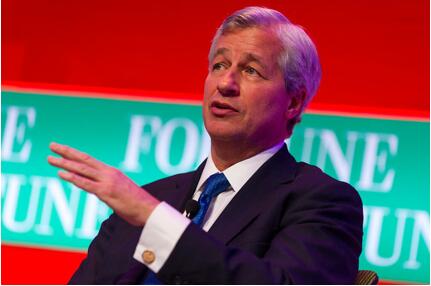
contend the opposite is the case. Further, we believe this Proposal is more important than ever given current Chair/CEO Jamie Dimon’s politicized leadership and loose cannon rhetoric. Shareholders should separate the Chair and CEO positions to restore accountability to the C-Suite and to strengthen integrity on the Board of Directors. | |
JPMorgan’s response to the Proposal
JPMorgan claims in its opposition that the CEO and Board Chair roles should continue to be consolidated based on the following rationale:
-The need for “flexibility” in Board structure
-Existing “strong” and “independent” Board oversight
-Adherence to industry standards
The need for “flexibility” in Board structure
In its statement of opposition, the Company’s board of directors characterizes the Proposal as unnecessary, emphasizing the need for flexibility to design a leadership structure that best fits JPMorgan’s circumstances at any given time. The Board argues that mandating a permanent separation of the roles could limit its ability to respond effectively to evolving challenges.
We disagree. While flexibility may be important, it should never come at the expense of transparency, accountability, and sound corporate governance. Analogous to the United States government, where powers are clearly delineated to prevent unchecked authority, corporate leadership should similarly separate executive and oversight responsibilities. JPMorgan’s preference for flexibility undermines transparency and creates potential for excessive power concentration, compromising accountability.
5 CalPERS. “CalPERS’ Governance & Sustainability Principles,” September 2019. See https://www.calpers.ca.gov/docs/forms-publications/governance-and-sustainability-principles.pdf
3
Existing “strong” and “independent” Board oversight
| JPMorgan asserts it already maintains independent oversight, with “robustness,” through the presence of a Lead Independent Director, who allegedly provides a “strong counterbalance to the CEO” (who is also Chairman). |
| |
This claim rings hollow. The Lead Independent Director, in practice, appears more as a supportive role rather than as one capable of challenging the CEO effectively if necessary. The Company claims the lead | |
director exercises “robust responsibilities and independent authority, including the facilitation of independent oversight of management and promotion of open dialogue among independent directors during Board meetings, at executive sessions without the presence of the CEO, and in between Board meetings.” | |

Mr. Dimon’s executive assistant could also handle these allegedly “robust” duties.
The reality remains that true independence and effective oversight can only be assured through a complete separation of the CEO and Chairman positions. JPMorgan’s current structure inherently diminishes the independence and objectivity of its board.
Adherence to industry standards
JPMorgan further argues there is no clear empirical evidence demonstrating that combining the Chair and CEO roles negatively affects company performance. This assertion ignores the growing consensus within corporate governance circles that separating these roles is considered best practice.
The CFA Institute rejects JPMorgan’s policy and states that “Good corporate governance not only protects the interests of investors and improves their trust in capital markets, but also acts as a key driver of investment performance.”6 The CFA Institute insists that “board independence is a key cornerstone of corporate governance” and that “the same person should not perform the roles of Chair and CEO and that the chair should be an independent director.”7 Separating these roles is good corporate governance and is becoming best practice within the industry.
The 2024 Spencer Stuart Board Index8 offers fresh insights that underscore the critical need for independent board leadership at JPMorgan. The latest trends reveal that separating the roles of
6 “CFA Institute pushes for more independence and diversity on company boards,” CFA Institute, September 14, 2021. See https://www.cfainstitute.org/en/about/press-releases/2021/independent-directors-in-Asia-Pacific
7 Ibid.
8 Spencer Stuart. “2024 US Spencer Stuart Board Index,” 2024. https://www.spencerstuart.com/-/media/2024/09/ssbi2024/2024_us_spencer_stuart_board_index.pdf
4
CEO and Chair continues to gain momentum among S&P 500 companies. Specifically, 60% of boards now separate the roles of Chair and CEO, compared to 47% in 2014, highlighting an upward trajectory in the recognition of independent oversight’s role in mitigating risks and enhancing corporate governance. Additionally, the representation of independent chairs has seen a notable increase, with 39% of S&P 500 boards appointing an independent chair—an uptick from 28% in 2014. This increase in independent chair appointments is a clear indication of the growing recognition of the importance of objective leadership in the boardroom.
As many corporate counterparts abandon the less effective Chair/CEO model, JPMorgan must adapt. For this reason, we find the technicalities upon which JPMorgan asserts that this Proposal has not received majority support in years past irrelevant. That the likes of major asset managers such as BlackRock, Vanguard, State Street, Schwab, and other similar firms vote their customers’ shares in league with the Company is not a persuasive argument. Support for an independent chair is clearly rising, and we believe that this Proposal is as important as ever. Further, given the heightened scrutiny of Mr. Dimon’s leadership, the need for this Proposal is evident.
The dangers of too much concentrated power
The unchecked concentration of power within the dual role of Chair and CEO at JPMorgan presents risks that are antithetical to the fundamental principles of sound corporate governance and the long-term interests of its shareholders. It contradicts the established governance standards that underscore the independence and objective oversight necessary for a board to effectively protect shareholder value and ensure corporate accountability.
The potential for conflict of interest is significant: a CEO who also serves as Chair is less likely to be held accountable for the company’s missteps or to receive the critical oversight needed to prevent them. This dynamic has been observed not only in corporate history but also in contemporary governance discourse.
In an example about Boeing cited by Mandato and Devine, the co-authors reference former Chair/CEO Dennis Muilenburg’s three-year tenure, during which the company successfully lobbied to ease government oversight of new airplane designs.9 A subsequent series of events “is suspected to have led to two plane crashes and the tragic loss of 346 lives, the grounding of almost 500 planes worldwide, and company losses that will exceed $18 billion” (as of March 2020).
“Boeing might have benefitted from a board chair initiating a closed executive session that considered Muilenburg’s fixation on global and interplanetary aspirations,” Mandato and Devine wrote. “Perhaps those aspirations could have been identified as what they turned out to be: signals that the corporation’s priorities had veered dangerously out of alignment.” Boeing continues to be a cautionary tale to this day.
Questioning Mr. Dimon’s leadership as Chair and CEO
9 Mandato, Joseph and Devine, William. “Why the CEO Shouldn’t Also Be the Board Chair,” Harvard Business Review, March 4, 2020. See https://hbr.org/2020/03/why-the-ceo-shouldnt-also-be-the-board-chair.
5
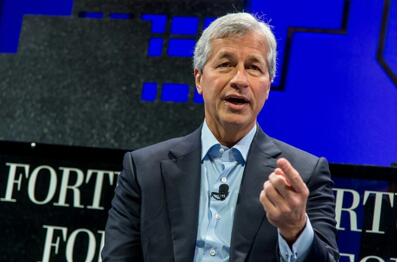
Under Mr. Dimon’s leadership as both Chairman and CEO, JPMorgan Chase until recently (upon President Trump’s second victory) increasingly embraced progressive initiatives that prioritized political correctness over shareholder value and sound business practices. His approach manifested in the bank’s unwavering commitment to Diversity, Equity, and Inclusion (DEI) and Environmental, Social, and Governance (ESG) policies, even as other corporations have now reevaluated such strategies. |
|
DEI and ESG: Ideological Pursuits Over Shareholder Interests
Despite a growing backlash against DEI programs, JPMorgan has doubled down on these initiatives. The bank recently rebranded its DEI efforts to “Diversity, Opportunity & Inclusion” (DOI),10 a move that is more cosmetic than substantive. While some training programs have been reduced, the core emphasis on identity-based policies remains.
Although many companies have moved away from DEI programs,11 recognizing their divisive nature and potential to distract from core business goals, JPMorgan is accelerating its commitment under Mr. Dimon’s leadership.12 JPMorgan’s rebranding of its DEI initiative signifies not a retreat, but rather a deeper institutionalization of these policies. No one is fooled, and the gambit will only damage JPMorgan’s reputation in the long run. Mr. Dimon’s persistence, particularly amid significant shareholder and societal pushback, reveals his desire to prioritize progressive-minded race- and gender-based head-counting over meritocracy and productivity, raising concerns about the potential long-term impact on shareholder value and employee cohesion.
In the environmental arena, JPMorgan’s ESG commitments have drawn substantial scrutiny from shareholders and policy analysts alike. The bank’s enthusiastic participation in climate-focused initiatives, such as ambitious carbon neutrality targets and investment in renewable energy
10 Anand, Nupar. “JPMorgan makes changes to its diversity programs, memo says,” Reuters, March 21, 2025. See https://www.reuters.com/business/finance/jpmorgan-makes-changes-its-diversity-programs-memo-says-2025-03-21/
11 Bohannon, Molly; Murray, Connor. “IBM Reportedly Walks Back Diversity Policies, Citing ‘Inherent Tensions’: Here Are All The Companies Rolling Back DEI Programs,” Forbes, April 11, 2025. See https://www.forbes.com/sites/conormurray/2025/04/11/ibm-reportedly-walks-back-diversity-policies-citing-inherent-tensions-here-are-all-the-companies-rolling-back-dei-programs/
12 Reuters. “JPMorgan CEO Jamie Dimon reaffirms DEI commitment despite industry shift, CNBC reports,” February 24, 2025. See https://www.reuters.com/business/finance/jpmorgan-ceo-jamie-dimon-reaffirms-dei-commitment-despite-industry-shift-cnbc-2025-02-24/
6
| projects,13 has prompted critics to question whether these measures align with JPMorgan’s fiduciary obligations. Rather than strictly focus on investments and activities that enhance profitability and shareholder returns, the bank would rather divert substantial resources toward climate projects driven by political motivations, rather than those justified both scientifically and economically.14 Such initiatives mostly yield marginal environmental benefits, if any,15 |
while they significantly raise operational costs and regulatory exposure, ultimately placing shareholder interests at risk. | |

Moreover, JPMorgan’s aggressive climate strategy exemplifies a broader trend where corporations make sweeping environmental commitments that are more symbolic than substantive. Given that global greenhouse gas emissions have risen significantly, largely driven by developing economies and sectors which rely on hydrocarbon energy too heavily to be influenced by banking activities,16 17 18 19 JPMorgan’s unilateral efforts represent virtue signaling rather than meaningful environmental progress. Shareholders should note the impracticality and futility of a single financial institution’s climate actions to have even the slightest impact on global emission levels. Thus, these commitments serve primarily to appease agenda-driven activist stakeholders and “greenwash” the Company’s reputation rather than achieve tangible environmental outcomes, further calling into question whether such initiatives represent prudent management of shareholder capital.
Dismissive Attitude Toward Shareholder Concerns
When confronted with shareholder activism challenging the Company’s DEI policies,20 Mr. Dimon’s response has been dismissive. In a CNBC interview at the World Economic Forum in
13 JPMorgan Chase. “Environmental sustainability.” See https://www.jpmorganchase.com/impact/environmental-sustainability
14 Hausfather, Z., & Peters, G. P. “Emissions – the ‘business as usual’ story is misleading,” Nature Publishing Group, January 29, 2020. See https://www.nature.com/articles/d41586-020-00177-3
15 Zycher, Benjamin. “The Trouble with ‘renewable’ Energy,” American Enterprise Institute, October 10, 2019. See https://www.aei.org/articles/the-trouble-with-renewable-energy/
16 Shan, Lee Ying. “IEA says developing nations are the No. 1 casualty of the energy crisis,” CNBC, October 25, 2022. See https://www.cnbc.com/2022/10/26/iea-developing-nations-the-number-one-casualty-of-the-energy-crisis.html
17 IEA. “Access to Electricity.” See https://www.iea.org/reports/sdg7-data-and-projections/access-to-electricity
18 Tongia, Rahul. “It is unfair to push poor countries to reach zero carbon emissions too early,” Brookings Institution, October 26, 2022. See https://www.brookings.edu/articles/it-is-unfair-to-push-poor-countries-to-reach-zero-carbon-emissions-too-early/
19 Baker, Arthur; Ramachandran, Vijaya. “Let Them Eat Carbon,” the Breakthrough Institute, March 29, 2022. See https://thebreakthrough.org/journal/no-16-spring-2022/let-them-eat-carbon
20 Andriotis, AnnaMaria; Saeedy, Alexander. “Anti-DEI Activists Target Goldman Sachs and JPMorgan Chase,” January 22, 2025. See https://www.wsj.com/finance/banking/dei-banking-finance-goldman-sachs-jp-morgan-257a17c7
7
Davos, he addressed critics with a curt “bring them on,”21 signaling a reluctance to engage in meaningful dialogue about the bank’s strategic direction. This attitude raises concerns about the concentration of power in his dual role and the potential suppression of dissenting viewpoints within the organization.
Controversial Personal Political Opinions
In unguarded moments Mr. Dimon has shared controversial views, sometimes to the detriment of JPMorgan’s reputation, with which the powerful Chairman/CEO’s identity has now been entrenched. Following the 2022 U.S. election, Bloomberg reported that Mr. Dimon attended a party of former JPMorgan executives where he “began bluntly dispensing opinions.”22 The news syndicate cited attendees who claimed Mr. Dimon “lit into former President Donald Trump, unleashing obscenities as he discussed the Jan. 6 insurrection.”
“Some guests,” Bloomberg reported, “no strangers to his swagger, were surprised by the ferocity of his performance.”
Not long after that article published, Mr. Dimon said in another election assessment, “I thought the election was good because on both parties…the wing nuts didn’t get elected.”23
Shareholders should question whether Mr. Dimon’s political comments have more to do with his ego and/or political aspirations than the best interests of JPMorgan’s investors.24 His celebrity CEO status has made him less accountable, making clear that an independent chair policy is needed.
Debanking of Conservative Political Opponents
Given Mr. Dimon’s aforementioned political opinions and defense of progressive human resources initiatives, it should be no surprise that he has used the power afforded him as CEO and Chairman of JPMorgan to advance his personal political agenda. Many of the voices he identifies as “wing nuts” – who are often, although not always, mainstream conservative voices that seem to be disfavored by Mr. Dimon – have been targeted by JPMorgan for debanking.
Under Mr. Dimon’s leadership, JPMorgan cooperated with the Department of Justice’s “Operation Choke Point” initiative to close the accounts of legally operating businesses and
21 Squawk Box. “CNBC Transcript: JPMorgan Chase Chairman & CEO Jamie Dimon Speaks with CNBC’s ‘Squawk Box’ from the World Economic Forum in Davos, Switzerland Today,” CNBC, January 22, 2025. See https://www.cnbc.com/2025/01/22/cnbc-transcript-jpmorgan-chase-chairman-ceo-jamie-dimon-speaks-with-cnbcs-squawk-box-from-the-world-economic-forum-in-davos-switzerland-today.html
22 “Jamie Dimon is more crucial than ever to the bank he's run for 17 years,” Bloomberg, Dec. 21, 2022. See https://www.businesstimes.com.sg/companies-markets/jamie-dimon-more-crucial-ever-bank-hes-run-17-years.
23 Betz, Bradford. “JPMorgan Chase CEO Jamie Dimon says he’s thankful ‘wing nuts’ in both parties weren’t elected,” FoxBusiness.com, Dec. 11, 2022. See https://www.foxbusiness.com/politics/jpmorgan-chase-ceo-jamie-dimon-says-hes-thankful-wing-nuts-both-parties-werent-elected.
24 Pringle, Eleanor. “Jamie Dimon says he didn’t run for president because he wouldn’t have seen his family for four years—and jokes his wife wouldn’t have moved into the White House,” Fortune, February 5, 2025. See https://fortune.com/2025/02/05/jamie-dimon-presidential-run-family-jpmorgan/
8
organizations that were politically disfavored by the executive administration at the time. Owners of such businesses were “de-banked,” by the administration “exerting back-room pressure on banks and other regulated financial institutions to terminate their relationships” with the victimized customers.25
On May 22, 2019, two major payday lending companies announced that they “reached a settlement with the Federal Deposit Insurance Corporation (FDIC) regarding Operation Choke Point, the FDIC program that pressured banks to cut ties with certain categories of lawful businesses….”26 “We uncovered how some FDIC leaders and officials executed a campaign motivated by personal scorn for our industry, contempt for our millions of customers, and blatant disregard for due process,” said Jessica Rustin, chief legal officer for Advance America. “This settlement will help to prevent this disenfranchisement from happening again – to our business or any other legal, regulated business.”
The lesson of Operation Choke Point did not deter JPMorgan and its de-banking practices, unfortunately. In early 2019, the Company shut down the accounts of several conservative activists within weeks of each other.27
| |
Brownback enjoys a sterling reputation across the political spectrum, having formerly served as a U.S. Congressman and Senator, and as Governor, representing the state of Kansas. | |
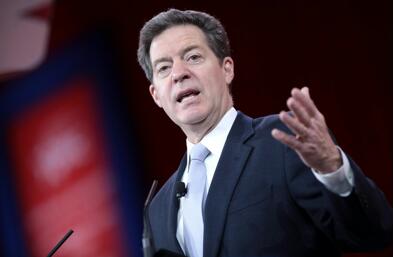
The disturbing incident caught the attention of members of Congress who are concerned about the growing trend of politically-motivated pressure applied to financial institutions. In a letter to Mr. Dimon, inquiring about the bank’s treatment of NCRF, then-Sen. Marco Rubio wrote:28
25 “Payday lenders sue US regulators over ‘Operation Choke Point,’ Reuters, June 6, 2014. See https://www.cnbc.com/2014/06/06/payday-lenders-sue-us-regulators-over-operation-choke-point.html.
26 “Federal Deposit Insurance Corporation Agrees to Settlement in Operation Choke Point Lawsuit,” PR Newswire, May 22, 2019. See https://www.prnewswire.com/news-releases/federal-deposit-insurance-corporation-agrees-to-settlement-in-operation-choke-point-lawsuit-300855421.html.
27 Byrne, John Aidan. “JPMorgan Chase accused of purging accounts of conservative activists,” New York Post, May 25, 2019. See https://nypost.com/2019/05/25/jpmorgan-chase-accused-of-purging-accounts-of-conservative-activists/.
28 Rubio, Sen. Marco. “Rubio Raises Concerns About Chase Bank Politically Motivated De-Banking,” Oct. 25, 2022. See https://www.rubio.senate.gov/public/index.cfm?p=Press-Releases&id=1F3CDDE5-9419-46B7-A0EB-18F0B4554674.
9
In recent weeks, Chase appears to have not only denied credit to a credit-worthy religious liberty non-profit without any explanation, but also suggested the decision could be reconsidered if the organization provided Chase with a list of its donors and its decision-making criteria for funding outside groups. Millions of Americans who are concerned about religious and political discrimination deserve a response for this concerning behavior, and any discriminatory actions taken by your bank must stop.
Back in August 2021, the Company also cancelled the credit card of the wife of former National Security Advisor General Michael Flynn, “because continuing the relationship creates possible reputational risk to our company.” Following a public outcry, the Company reversed its decision and apologized. Nonetheless the episode illustrates how susceptible JPMorgan has been to political influence under Mr. Dimon.
Meanwhile, JPMorgan Chase Continued to Service Jeffrey Epstein
| While the Company was rooting out undesirable religious freedom organizations from its financial services, under Mr. Dimon’s leadership JPMorgan continued to allow convicted sex predator Jeffrey Epstein to continue banking. |
| |
According to information in a federal lawsuit by the government of the Virgin Islands against Chase, as early as 2006 the bank’s Global Corporate Security Division flagged “[s]everal newspaper articles . . . that detail the indictment of | |
Jeffrey Epstein in Florida on felony charges of soliciting underage prostitutes.” According to a report by LawAndCrime.com, four years later Chase’s risk management division raised questions in an internal email about fresh accusations against Epstein:29 “See below new allegations of an investigation related to child trafficking – are you still comfortable with this client who is now a registered sex offender[?]” The concerns were dismissed and Epstein’s accounts at JPMorgan remained open. | |
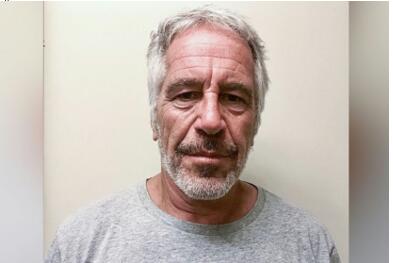
The Virgin Islands lawsuit also revealed that one of JPMorgan’s senior executives, Jes Staley, had a close friendship with Epstein and communicated often with him from his corporate email account. “Between 2008 and 2012, Staley exchanged approximately 1,200 emails with Epstein from his JPMorgan email account,” the lawsuit stated. “These communications show a close personal relationship and ‘profound’ friendship between the two men and even suggest that Staley may have been involved in Epstein’s sex-trafficking operation.”
JPMorgan reached a settlement with the Virgin Islands for $75 million in September 2023, which at the time brought the grand total of the Company’s settlements for keeping Epstein as a
29 Klasfeld, Adam. “Explosive details of Jeffrey Epstein-related lawsuit against JPMorgan unsealed, revealing ‘Snow White’ messages with former top exec,” Law&Crime.com, Feb. 15, 2023. See https://lawandcrime.com/live-trials/live-trials-current/jeffrey-epstein/explosive-details-of-jeffrey-epstein-related-lawsuit-against-jpmorgan-unsealed-revealing-snow-white-messages-with-former-top-exec/.
10
customer to $365 million.30 31
It is difficult to believe that Mr. Dimon would not have known that his fellow Manhattan socialite banked at his company.
Business Ties to the Chinese Communist Party
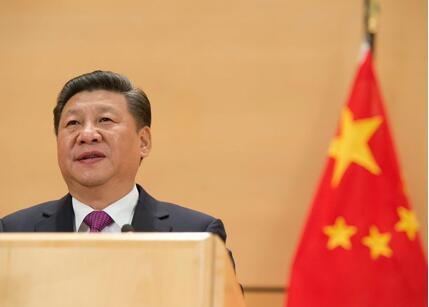
JPMorgan Chase maintains extensive and troubling business relationships within Communist China,32 raising significant concerns regarding potential risks to shareholder value, corporate reputation, and alignment with stated corporate principles. Given the aggressive geopolitical stance of the Chinese Communist Party33 34 and the recent tensions between China and the United States,35 these business ties warrant close scrutiny by shareholders. |
|
| |
Communist China poses unique and substantial | |
threats due to its size, growing geopolitical ambitions, and disturbing record of human rights abuses.36 The CCP is notorious for its repressive policies, including the mass surveillance of its citizens,37 widespread censorship,38 and severe persecution of ethnic minorities.39 According to the U.S. State Department’s Trafficking in Persons Report, the Chinese government engages in “widespread forced labor,” particularly targeting ethnic Uyghurs | |
30 Benoit, David. “JPMorgan Paying $75 Million to Settle Suit Over Jeffrey Epstein Ties,” Wall Street Journal, Sept. 26, 2023. See https://www.wsj.com/finance/banking/jpmorgan-paying-75-million-to-settle-suit-over-jeffrey-epstein-ties-545e7824.
31 Cohen, Luc. “JPMorgan’s $290 million settlement with Epstein accusers approved by US judge,” Reuters, November 9, 2023. See https://www.reuters.com/legal/us-judge-weigh-jpmorgans-290-million-settlement-with-epstein-accusers-2023-11-09/
32 JPMorgan Chase. “Growing with China. Invested in China.” See https://www.jpmorgan.com/investment-banking/china-centennial-en
33 Jinping, Xi. “Full text of Xi Jinping’s report at 19th CPC National Congress,” China Daily, Oct. 17, 2018. See http://www.chinadaily.com.cn/china/19thcpcnationalcongress/2017-11/04/content_34115212.htm
34 NPR Morning Edition. “China repeatedly threatens to invade Taiwan. What would an invasion look like?” October 18, 2024. See https://www.npr.org/2024/10/18/nx-s1-5147096/china-repeatedly-threatens-to-invade-taiwan-what-would-an-invasion-look-like
35 Li, Katherine; Tangalakis-Lippert, Katherine. “Trump says China trade deal is weeks away. But does Beijing have the upper hand?” Business Insider, April 17, 2025. See https://www.businessinsider.com/experts-weigh-who-has-upper-hand-us-china-trade-war-2025-4
36 US Department of State. “Trafficking in Persons Report: July 2022,” Jul. 2022. See https://www.state.gov/wp-content/uploads/2022/04/337308-2022-TIP-REPORT-inaccessible.pdf
37 Krozik, Aaron; Mozur, Paul. “A Surveillance Net Blankets China’s Cities, Giving Police Vast Powers,” New York Times, Dec. 17, 2019. See https://www.nytimes.com/2019/12/17/technology/china-surveillance.html
38 Zhou, Qijia. “Building the (Fire) Wall: Internet Censorship in the United States and China,” Harvard International Review, Dec. 28, 2020. See https://hir.harvard.edu/building-the-fire-wall/
39 Bureau of International Labor Affairs. “Against Their Will: The Situation in Xinjiang,” Department of Labor. See https://www.dol.gov/agencies/ilab/against-their-will-the-situation-in-xinjiang
11
Moreover, JPMorgan’s significant investments40 and business operations41 within China expose shareholders to material operational risks. Given the CCP’s authoritarian nature, political instability or geopolitical conflict – especially regarding Taiwan – could severely disrupt JPMorgan’s operations, revenue streams, and investments. Companies with extensive Chinese exposure have already faced considerable economic damage when geopolitical tensions escalate, as recently demonstrated during Russia’s invasion of Ukraine. The magnitude of potential disruptions arising from China’s aggressive stance toward Taiwan could far exceed those recently experienced elsewhere.
A Bloomberg analysis ranks JPMorgan fifth among U.S. banks this year for Asia equity and equity-linked deal activity excluding Japan – much of which of course means China.42 As the recent trade war shows, Mr. Dimon’s ability to manage the Company’s risk exposure is significantly less effective than he or the Company have advertised, and greater accountability must be introduced to his role.
Additional Concerns: Governance and Accountability
Beyond political issues, Mr. Dimon’s leadership has faced criticism on other fronts. Leaked audio of him discussing the end of work-from-home policies,43 unpopular with many bank employees, was highly unprofessional and highlighted the downsides of Mr. Dimon’s careless rhetoric.
The cumulative effect of these policies and attitudes under Mr. Dimon’s leadership underscores the need for a reevaluation of JPMorgan’s governance structure. Separating the roles of Chairman and CEO would introduce necessary checks and balances, and ensure that the bank’s strategic decisions align more closely with shareholder interests and foundational business principles.
40 Anand, Nupar. “JPMorgan asset and wealth head sees China's economic outlook improving,” Reuters, June 21, 2024. See https://www.reuters.com/world/china/jpmorgan-wealth-head-sees-chinas-economic-outlook-improving-2024-06-21/
41 Chen, Lulu Yilun; Man, Yvonne. “JPMorgan Asset Management Says China Remains ‘Irreplaceable’,” Bloomberg, March 7, 2024. See https://www.bloomberg.com/news/articles/2024-03-08/jpmorgan-asset-management-says-china-remains-irreplaceable
42 Sebastian, Dave & Fioretti, Julia. “CATL Shares Drop as House Panel Demands US Banks Quit Share Sale,” Bloomberg, April 17, 2025. See https://www.bloomberg.com/news/articles/2025-04-17/us-house-china-committee-urges-bank-of-america-jpmorgan-to-drop-catl-listing.
43 Brownstein, Emmalyse; Whitehouse, Kaja. “Jamie Dimon's viral WFH comments draw haters — and fans,” Business Insider, February 14, 2025. See https://www.businessinsider.com/jamie-dimons-viral-remote-work-criticisms-draw-supporters-haters-2025-2
12
Conclusion
In conclusion, separating the roles of Chairman and CEO at JPMorgan is critical to restoring accountability, transparency, and integrity to the company. Jamie Dimon exemplifies how an excessively empowered leader has led JPMorgan to adopt contentious political stances, questionable ESG and DEI initiatives, unawareness of troubling debanking practices while banking unsavory characters, and troubling business relationships with communist dictatorships, exposing the company to unnecessary reputational, operational, and financial risks. Consolidating power in one individual hampers effective oversight and contradicts best practices in corporate governance.
Thus, we urge our fellow shareholders to VOTE FOR Proposal 4, supporting an independent board chairman policy, at JPMorgan’s annual meeting on May 20, 2025.
Photo credits:
Page 3: Jamie Dimon – Fortune Live Media/Creative Commons
Page 4: Chase bank branch - Digiart2001-Jason-Kuffer/Creative Commons
Page 6: Jamie Dimon – Fortune Global Forum/Creative Commons
Page 7: Wind turbines in Beaver Co., Utah – arbyreed/Creative Commons
Page 9: Sam Brownback – Gage Skidmore/Creative Commons
Page 10: Jeffrey Epstein
Page 11: Chinese Communist Party Chairman Xi Jinping – UN Geneva/Creative Commons
THE FOREGOING INFORMATION MAY BE DISSEMINATED TO SHAREHOLDERS VIA TELEPHONE, U.S. MAIL, E-MAIL, CERTAIN WEBSITES AND CERTAIN SOCIAL MEDIA VENUES, AND SHOULD NOT BE CONSTRUED AS INVESTMENT ADVICE OR AS A SOLICITATION OF AUTHORITY TO VOTE YOUR PROXY.
THE COST OF DISSEMINATING THE FOREGOING INFORMATION TO SHAREHOLDERS IS BEING BORNE ENTIRELY BY THE FILERS.
THE INFORMATION CONTAINED HEREIN HAS BEEN PREPARED FROM SOURCES BELIEVED RELIABLE BUT IS NOT GUARANTEED BY US AS TO ITS TIMELINESS OR ACCURACY, AND IS NOT A COMPLETE SUMMARY OR STATEMENT OF ALL AVAILABLE DATA. THIS PIECE IS FOR INFORMATIONAL PURPOSES AND SHOULD NOT BE CONSTRUED AS A RESEARCH REPORT.
PROXY CARDS WILL NOT BE ACCEPTED BY US. PLEASE DO NOT SEND YOUR PROXY TO US. TO VOTE YOUR PROXY, PLEASE FOLLOW THE INSTRUCTIONS ON YOUR PROXY CARD.
For questions regarding National Legal and Policy Center’s endorsement of JPMorgan Chase & Company – Proposal 4 – the Stockholder Proposal regarding “Support for an independent board chairman,” sponsored by John Chevedden, please contact Luke Perlot, associate director of NLPC’s Corporate Integrity Project, via email at lperlot@nlpc.org.
13