APPENDIX
Forward-Looking Statements/Non-GAAP Financial Measures
This Proxy Statement contains statements regarding expectations of our performance or other matters that may affect our business, results of operations, or financial condition are, or may be deemed to be, “forward-looking statements” as defined by the “safe harbor” provisions in the Private Securities Litigation Reform Act of 1995. Such statements are made in reliance on the safe harbor provisions of Section 27A of the Securities Act of 1933 and Section 21E of the Securities Exchange Act of 1934. All statements, other than statements of historical fact, included or incorporated in this document, including statements regarding our strategy, financial position, guidance, funding for continued operations, cash reserves, liquidity, projected costs, plans, projects, awards and contracts, and objectives of management, among others, are forward-looking statements. Words such as “expect,” “anticipate,” “should,” “believe,” “hope,” “target,” “continued,” “project,” “plan,” “goals,” “opportunity,” “appeal,” “estimate,” “potential,” “predict,” “demonstrates,” “may,” “will,” “might,” “could,” “intend,” “shall,” “possible,” “would,” “approximately,” “likely,” “outlook,” “schedule,” “on track,” “poised,” “pipeline,” and variations of these terms or the negative of these terms and similar expressions are intended to identify these forward-looking statements, but the absence of these words does not mean that a statement is not forward-looking. These forward-looking statements are not guarantees of future performance, conditions or results. Forward-looking statements are based on management’s expectations, certain assumptions, and currently available information. Readers are cautioned not to place undue reliance on these forward-looking statements, which speak only as of the date hereof and are based on various assumptions as to future events, the occurrence of which necessarily are subject to uncertainties. These forward-looking statements are made subject to certain risks, uncertainties, and other factors, which could cause CTS’ actual results, performance, or achievements to differ materially from those presented in the forward-looking statements. Examples of factors that may affect future operating results and financial condition include, but are not limited to: supply chain disruptions (including, but not limited to, the availability and cost of rare earth elements, minerals and metals); changes in the economy generally, including inflationary and/or recessionary conditions and increased tariffs, and in respect to the business in which CTS operates; unanticipated issues in integrating acquisitions; the funding of contracts by the U.S. Government; the results of actions to reposition CTS’ business; rapid technological change; general market conditions in the transportation, as well as conditions in the industrial, aerospace and defense, and medical markets; reliance on key customers; unanticipated public health crises, natural disasters or other events; environmental compliance and remediation expenses; the ability to protect CTS’ intellectual property; pricing pressures and demand for CTS’ products; risks associated with CTS’ international operations, including trade and tariff barriers, exchange rates and political and geopolitical risks (including, without limitation, the impact of tariffs on China, Canada, Mexico, and other nations); the potential impact of U.S./China relations and the impact of the geopolitical conflicts may have on our business, results of operations and financial condition; write offs of goodwill on our balance sheet, the amount and timing of any share repurchases; and the effect of any cybersecurity incidents on our business. Many of these, and other risks and uncertainties, are discussed in further detail in Item 1A. of CTS’ most recent Annual Report on Form 10-K and other filings made with the SEC. CTS undertakes no obligation to publicly update CTS’ forward-looking statements to reflect new information or events or circumstances that arise after the date hereof, including market or industry changes.
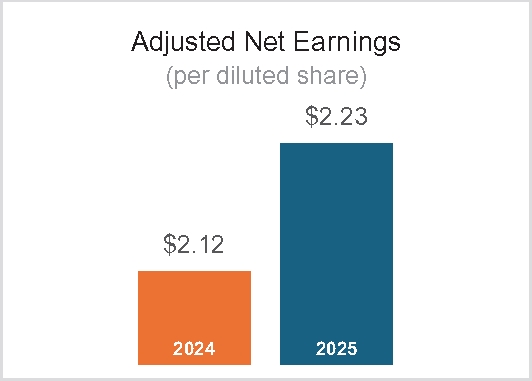
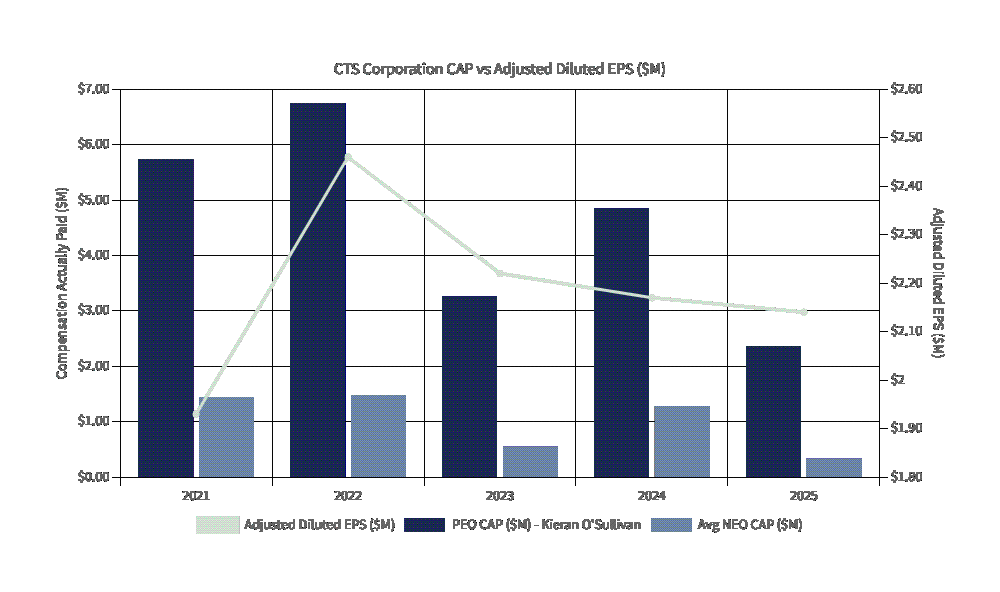
The information included in this Proxy Statement includes the non-GAAP financial measure of adjusted diluted EPS. CTS believes that adjusted diluted EPS provides useful information to investors regarding its operational performance because it enhances an investor’s overall understanding of CTS’ core financial performance and facilitates comparisons to historical results of operations, by excluding items that are not related directly to the underlying performance of CTS’ fundamental business operations or were not part of CTS’ business operations during a comparable period. In addition, CTS’ management uses this measure, as well as others, when assessing the performance of the business and for business planning purposes. This non-GAAP financial measure is intended to supplement, not replace, CTS’ presentation of its financial results in accordance with U.S. GAAP. References to our website or other publications are provided for convenience only. The information contained on our website or other publications, including our 2024 Sustainability Report, is not a part of this Proxy Statement or any of our other filings with the Securities and Exchange Commission