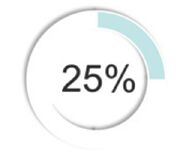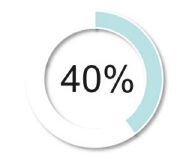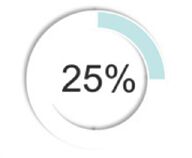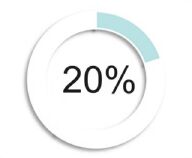
☐ |
Preliminary Proxy Statement | |
☐ |
Confidential, for Use of the Commission Only (as permitted by Rule 14a-6(e)(2)) | |
☒ |
Definitive Proxy Statement | |
☐ |
Definitive Additional Materials | |
☐ |
Soliciting Material under §240.14a-12 | |
☒ |
No fee required | |||
☐ |
Fee paid previously with preliminary materials | |||
☐ |
Fee computed on table in exhibit required by Item 25(b) per Exchange Act Rules 14a-6(i)(1) and 0-11 | |||

A Letter from our Chairman and Chief Executive Officer
March 16, 2026
Dear Fellow Shareholders,
You are invited to attend the Annual Meeting of Shareholders of Truist Financial Corporation on April 28, 2026, at 11:00 a.m. Eastern Time. This year’s meeting will be held in a virtual-only format, and the accompanying 2026 Proxy Statement provides instructions for attending, voting, and submitting questions.
Across Truist, our teammates remained steadfast in our purpose—to inspire and build better lives and communities. Throughout the year, we delivered solid financial results and meaningfully advanced our strategic priorities. In doing so, we kept our focus on the interests of clients, communities, teammates, and shareholders, which helped to build the strong momentum we have entering 2026.
Our teams strengthened core businesses, deepened client relationships, and advanced our digital capabilities to simplify and modernize the client experience across all channels. We generated broad-based consumer and wholesale loan growth, achieved positive operating leverage through revenue growth and disciplined expense management, continued making targeted investments in talent, technology, and risk infrastructure, and maintained strong asset quality.
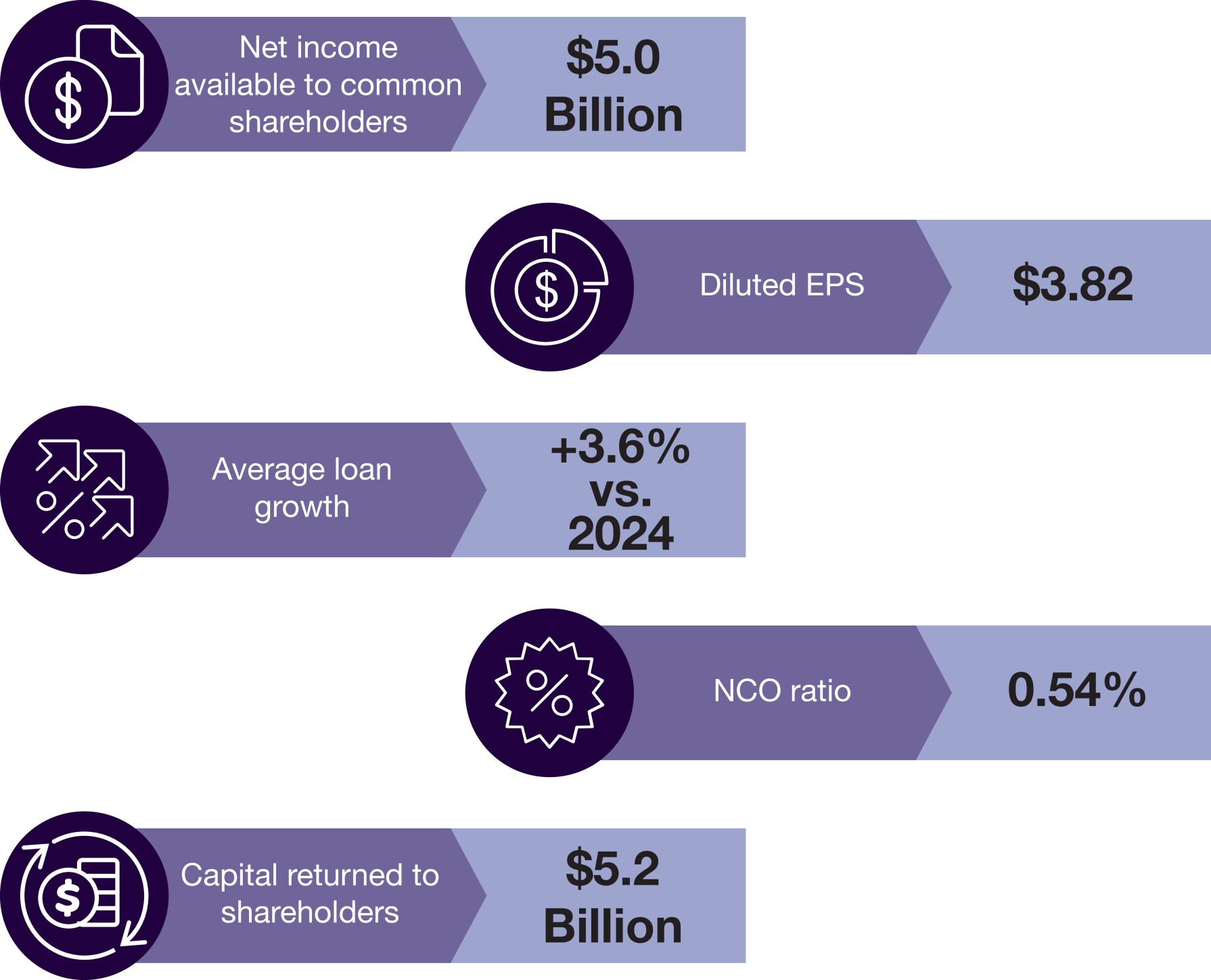
We returned $5.2 billion in capital to shareholders through $2.7 billion in common stock dividends and $2.5 billion in share repurchases. In December 2025, our Board authorized a new share-repurchase program of up to $10 billion, underscoring our commitment to prudent capital stewardship in a dynamic environment.
Our strong 2025 results provide a foundation for accelerated growth and profitability in 2026. Looking ahead, we will continue to deploy capital and resources with discipline, prioritizing high-return investments that support sustainable performance and long-term competitiveness. We remain confident in our ability to execute on our strategic objectives, maintain strong risk discipline, and achieve our targeted return on tangible common equity. We enter 2026 with clarity, momentum, and a resilient sense of purpose.
I encourage you to review the accompanying 2026 Proxy Statement, our 2025 Annual Report, and our 2025 Form 10-K for additional information about our performance, governance, and priorities. Whether or not you plan to attend the Annual Meeting, please vote your shares promptly to ensure your voice is heard.
In closing, I want to express particular appreciation for the contributions of Steven Voorhees, who retired from the Board at the end of 2025 after many years of dedicated service. His purposeful leadership enriched Truist in countless ways. I also want to recognize Jonathan Pruzan, who joined the Board last year and is already providing meaningful value to our strategic advancement.
On behalf of our Board of Directors and more than 38,000 Truist teammates, thank you for your continued trust and investment.
Sincerely,
William H. Rogers, Jr.
Chairman and Chief Executive Officer
A Letter from our Lead Independent Director
March 16, 2026
Dear Fellow Shareholders,
As Truist’s Lead Independent Director, I am pleased to share the Board’s perspective on our oversight priorities and ongoing commitment to strong governance and accountability on behalf of shareholders.
Throughout 2025, the Board worked closely with management to oversee the execution of Truist’s strategy, monitor performance, and support decision-making consistent with sound risk management, capital strength, and shareholder interests.
Oversight and Governance
The Board is deeply engaged in overseeing Truist’s creation of long-term value for shareholders. During the year, demonstrable progress was evident in the growth of wholesale and consumer loans, strong credit results, risk discipline, and positive operating leverage. At the same time, forward-looking investments were made in products and services, talent, technology, and risk infrastructure to reinforce the strength of the company’s diversified businesses. We also approved a significant increase in the return of capital to shareholders, with $5.2 billion of common stock dividends and share repurchase in 2025 and the approval in December of a new share-repurchase program of up to $10 billion.
Board Refreshment and Committee Leadership
We believe effective governance requires a strong Board with directors who possess the right mix of skills, experiences, and perspectives to guide Truist through a changing environment.
In 2025, Jonathan Pruzan was welcomed to the Board, where he brings current experience as co-president of a specialized investment firm after nearly 30 years at Morgan Stanley in roles that included chief operating officer and chief financial officer. We also acknowledged the retirement of Steven Voorhees, who served Truist with distinction for many years and made significant contributions to advancing our purpose and strengthening our governance.
The Board undertook a thoughtful review of committee composition in 2025 as well. We appointed new independent chairs for three of our committees — the Risk Committee, the Compensation and Human Capital Committee, and the Trust Committee — and refreshed the membership of nearly every standing committee. These changes introduced fresh perspectives to our committees while matching director expertise with key areas such as risk management and technology.
Engagement and Accountability
Our independent directors maintain active engagement with shareholders so that your perspectives are heard and reflected in our oversight and decision-making processes. After many years of strong shareholder support, our say-on-pay vote passed with a disappointing level of approval at our 2025 annual meeting. In response, we strengthened our engagement program and expanded our outreach efforts to better understand investor concerns, discuss our compensation program, and clarify the strong alignment between pay and performance. As Lead Independent Director and the incoming Chair of the Compensation and Human Capital Committee, I personally led several of our meetings with shareholders. The views and observations received during this engagement informed the Compensation and Human Capital Committee’s decision to implement enhancements to our compensation program and disclosures, resulting in further alignment with shareholder preferences and expectations. We value these ongoing discussions as integral to maintaining transparency, trust, and continuous improvement in our compensation and governance practices.
We remain confident that Truist is executing its strategy with discipline and focus and that our governance framework supports sustainable performance and long-term shareholder value. On behalf of the Board, thank you for your continued trust and engagement. We look forward to building on the progress made in 2025 as we advance Truist’s purpose in the years ahead.
Sincerely,

Thomas E. Skains
Lead Independent Director
NOTICE OF 2026 ANNUAL MEETING OF SHAREHOLDERS OF
TRUIST FINANCIAL CORPORATION
|
Date and Time: April 28, 2026 11:00 a.m. Eastern Time |
Location: Webcast in a virtual format at www.virtualshareholdermeeting.com/TFC2026
| |
| Item of Business | Board of Directors Recommendation | |
| 1. Election of directors | ☑ FOR each director nominee | |
| 2. Advisory vote to approve Truist’s executive-compensation program | ☑ FOR | |
| 3. Ratification of the appointment of PricewaterhouseCoopers LLP as Truist’s independent registered public accounting firm for 2026 | ☑ FOR | |
| 4. Approval of the amendment and restatement of the Truist Financial Corporation 2022 Incentive Plan | ☑ FOR | |
| 5. Shareholder proposal regarding a report on risks from misalignment between Company policies and customer base, if properly presented | ☒ AGAINST | |
| 6. Any other business that may properly be brought before the 2026 annual meeting of shareholders | ||
|
You can vote at the 2026 annual meeting if you were a shareholder of record at the close of business on February 19, 2026.
Your vote is important. Whether or not you plan to attend the virtual-meeting internet webcast, please vote in advance as promptly as possible. You may vote your shares through the internet, by telephone, by mail, or at the 2026 annual meeting as described more fully in the proxy statement beginning on page 104.
To attend and submit your questions for the 2026 annual meeting as a registered shareholder or beneficial owner, you will need to log in at www.virtualshareholdermeeting.com/TFC2026 using your name, a valid email address, and the unique 16-digit control number found on your proxy card, voting instruction form, or Notice of Internet Availability.
|
| By Order of the Board of Directors,
|
|
|
|
|
|
Scott A. Stengel |
|
Senior Executive Vice President, Chief Legal Officer, Head of Government Affairs, and Corporate Secretary |
|
March 16, 2026 |
Important Notice Regarding the Availability of Proxy Materials for the Annual Meeting to Be Held on April 28, 2026
The solicitation of the enclosed proxy is made on behalf of the Board of Directors for use at the annual meeting of shareholders to be held on April 28, 2026. A copy of this proxy statement, our 2025 Annual Report, and our 2025 Annual Report on Form 10-K are available at: www.proxyvote.com.
Cautionary Note Regarding Forward-Looking Statements
Certain statements contained in this proxy statement are or may constitute “forward-looking” statements within the meaning of the Private Securities Litigation Reform Act of 1995, as amended. These statements can be identified by the fact that they do not relate strictly to historical or current facts. Forward-looking statements often use words such as “believe,” “expect,” “anticipate,” “intend,” “pursue,” “seek,” “continue,” “estimate,” “project,” “outlook,” “forecast,” “potential,” “target,” “objective,” “trend,” “plan,” “goal,” “initiative,” “priorities,” or other words of comparable meaning or future-tense or conditional verbs such as “may,” “will,” “should,” “would,” or “could.” Forward-looking statements convey our current expectations, intentions, or forecasts about future events, circumstances, or results. In particular, forward looking statements include statements about (1) Truist’s Purpose, Mission, and Values serving as a competitive advantage that strengthens its ability to provide financial products and services to clients in its markets; (2) steps taken that will position Truist for sustainable growth; (3) our strategic and financial objectives; and (4) Truist aiming to lend to a diverse client base that is geographically dispersed.
All forward-looking statements, by their nature, are subject to assumptions, risks, and uncertainties, which may change over time and many of which are beyond our control. You should not rely on any forward-looking statement as a prediction or guarantee about the future. Actual future objectives, strategies, plans, prospects, performance, conditions, and results may differ materially from those set forth in any forward-looking statement. You should consider the uncertainties and risks discussed in our most recent Annual Report on Form 10-K and subsequent Securities and Exchange Commission (“SEC”) filings. The forward-looking statements in this proxy statement are made as of the date of this proxy statement, unless otherwise indicated, and Truist undertakes no obligation to revise or update any forward-looking statements, except to the extent required by applicable law or regulation. Website references throughout this document are provided for convenience only, and the content on the referenced websites is not incorporated by reference into this proxy statement. The Corporate Responsibility and Sustainability Report, similar reports, and our Board committee charters, policies, and governance documents referred to in this proxy statement are not incorporated by reference herein.
Table of Contents
| 1 | ||||
| 15 | ||||
| 15 | ||||
| 17 | ||||
| 23 | ||||
| 23 | ||||
| 24 | ||||
| 24 | ||||
| 25 | ||||
| 25 | ||||
| 26 | ||||
| 26 | ||||
| 27 | ||||
| Policies and Procedures for Approving Related Person Transactions |
27 | |||
| 28 | ||||
| 28 | ||||
| 29 | ||||
| 32 | ||||
| 37 | ||||
| 37 | ||||
| 37 | ||||
| 38 | ||||
| 38 | ||||
| 39 | ||||
| 40 | ||||
| Proposal 2 — Advisory Vote to Approve Truist’s Executive-Compensation Program |
42 | |||
| 43 | ||||
| Section 1—Executive-Compensation Alignment to Shareholder Feedback and Interests |
44 | |||
| 48 | ||||
| 49 | ||||
| 50 | ||||
| 53 | ||||
| 64 | ||||
| 68 | ||||
| Compensation and Human Capital Committee Report on Executive Compensation |
70 | |||
| 71 | ||||
| 71 | ||||
| 73 | ||||
| 74 | ||||
| 75 | ||||
| 76 |
| 76 | ||||
| 78 | ||||
| 78 | ||||
| 79 | ||||
| Narrative to Potential Payments Upon Termination or Change of Control Table |
81 | |||
| 83 | ||||
| 84 | ||||
| Proposal 3—Ratification of the Appointment of Our Independent Registered Public Accounting Firm |
89 | |||
| 89 | ||||
| 89 | ||||
| 90 | ||||
| 91 | ||||
| 99 | ||||
| Statement of the Board of Directors in Opposition to the Shareholder Proposal |
100 | |||
| 102 | ||||
| 103 | ||||
| 104 | ||||
| 104 | ||||
| 104 | ||||
| 104 | ||||
| 105 | ||||
| 105 | ||||
| 106 | ||||
| 106 | ||||
| 106 | ||||
| 107 | ||||
| 108 | ||||
| Annex B—Truist Financial Corporation 2022 Incentive Plan (amended and restated as of April 28, 2026) |
112 |
Truist Financial Corporation
214 N. Tryon Street
Charlotte, NC 28202
PROXY STATEMENT SUMMARY
This summary highlights information contained elsewhere in this proxy statement for Truist Financial Corporation, which is sometimes referred to as the “Company,” “Truist,” “we,” or “us.” This summary does not contain all of the information that you should consider, and you should read this entire proxy statement carefully before you vote. Additional information regarding our 2025 performance can be found in our Annual Report on Form 10-K for the year ended December 31, 2025 (the “2025 Form 10-K”). The proxy materials were first made available on March 16, 2026, to shareholders of record of our common stock at the close of business on February 19, 2026 (the “Record Date”).
The 2026 Annual Meeting of Shareholders of Truist Financial Corporation (the “Annual Meeting”) will be a virtual-only meeting.
2026 Annual Meeting of Shareholders
| Time and Date April 28, 2026 11:00 a.m. Eastern Time |
Virtual Location www.virtualshareholdermeeting.com/TFC2026 |
Record Date Close of business on February 19, 2026 | ||
Proposals and Voting Recommendations
Shareholders will vote on the following five proposals:
| Proposal No. |
Description | Votes Required | Board Recommendation | Page | ||||||
| 1 | Election of directors | Majority of votes cast for each nominee |
VOTE FOR EACH NOMINEE
|
15 | ||||||
| 2 | Advisory vote to approve Truist’s executive-compensation program |
Majority of votes cast | VOTE FOR
|
42 | ||||||
| 3 | Ratification of the appointment of PricewaterhouseCoopers LLP as our independent registered public accounting firm for 2026 |
Majority of votes cast | VOTE FOR
|
89 | ||||||
| 4 | Approval of the amendment and restatement of the Truist Financial Corporation 2022 Incentive Plan |
Majority of votes cast | VOTE FOR
|
91 | ||||||
| 5 | Shareholder proposal regarding a |
Majority of votes cast | VOTE AGAINST ☒ |
99 | ||||||
|
|
2026 Proxy Statement | |
1 |
Proxy Statement Summary
How to Vote
Proxy Voting Methods

|

|

|

| |||||||||
| Internet | Telephone | During the Annual Meeting |
||||||||||
| Go to www.proxyvote.com and follow the instructions on the website. |
Call 1-800-690-6903 and follow the instructions on the proxy card or your voting instruction form. |
While we encourage you to vote before the meeting, shareholders may vote online during the meeting by following the instructions on page 104. |
Sign, date, and mail your proxy card or voting instruction form. | |||||||||
Attending the Annual Meeting
The Annual Meeting will be a virtual-only meeting. If you are a registered shareholder or beneficial owner on the Record Date or are a duly authorized proxy holder of such a registered shareholder or beneficial owner, you may attend the Annual Meeting and submit questions online before and during the Annual Meeting. You will be able to do so by visiting www.virtualshareholdermeeting.com/TFC2026 and logging in with your name, a valid email address, and the 16-digit control number found on your proxy card, voting instruction form, or Notice of Internet Availability, as applicable. You may log in to and attend the Annual Meeting online beginning at 10:45 a.m. Eastern Time on April 28, 2026. The Annual Meeting will begin promptly at 11:00 a.m. Eastern Time.
For additional information on voting, attendance, and submitting questions for the Annual Meeting, see Voting and Other Information on page 104.
Even if you plan to attend the Annual Meeting, we encourage you to vote your shares in advance online or, if you received or requested printed copies of the proxy materials, by phone or by mail to ensure that your shares will be represented at the Annual Meeting.
No recording of the Annual Meeting is permitted, including audio and video recording.
| 2 | | 2026 Proxy Statement |
|
Proxy Statement Summary
Truist’s Purpose
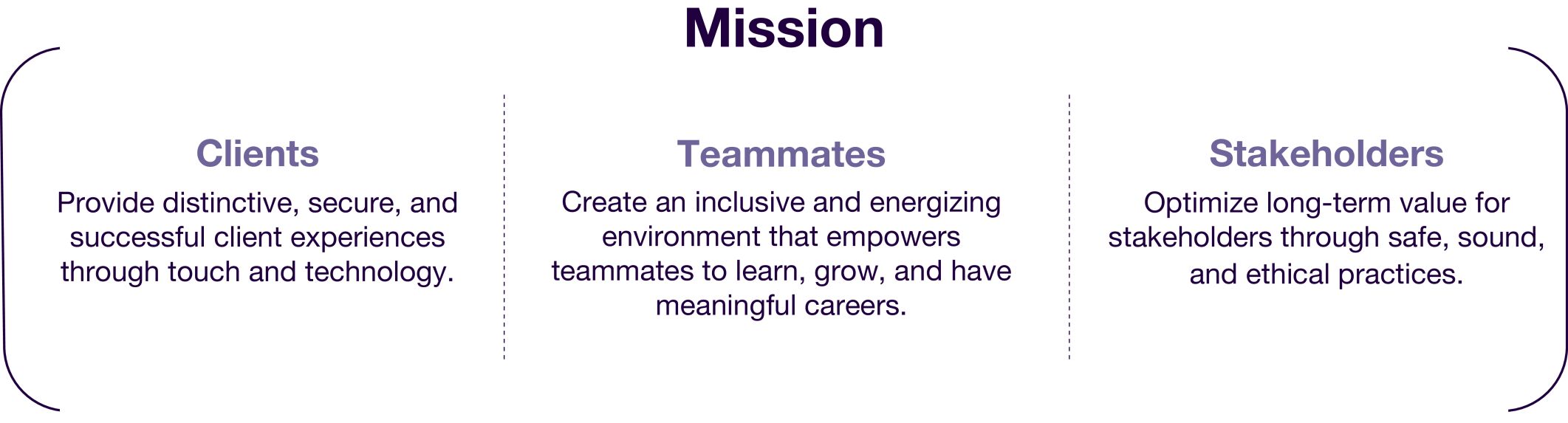
Truist is a purpose-driven financial-services company committed to inspiring and building better lives and communities.
Purpose
Inspire and build better lives and communities.

Business Overview
Headquartered in Charlotte, North Carolina, Truist has leading market share in many of the high-growth markets in the United States and offers a wide range of financial solutions and services through wholesale and consumer businesses, including:
◾ Premier and small business
◾ Digital and branch banking
◾ National consumer lending
◾ Commercial and corporate banking |
◾ Investment banking and capital markets
◾ Commercial real estate
◾ Payments
◾ Wealth management | |
Truist Bank, the largest subsidiary of Truist Financial Corporation, was chartered in 1872 and is the oldest bank headquartered in North Carolina. Truist Bank is among the 10 largest commercial banks in the United States and provides banking and trust services for clients through 1,927 offices as of December 31, 2025, and its mobile and online platforms.
|
|
2026 Proxy Statement | |
3 |
Proxy Statement Summary
2025 Business Performance
In 2025, Truist delivered strong, purpose-driven results, growing earnings, strengthening client relationships, and making significant progress across our five enterprise strategic priorities: executing on strategic growth initiatives, driving positive operating leverage, investing in talent, technology, and our risk infrastructure, maintaining strong credit and risk discipline, and returning capital to our shareholders. Our performance in 2025 provides a foundation for accelerated growth and profitability improvement in 2026 and beyond.
| 4 | | 2026 Proxy Statement |
|
Proxy Statement Summary
Positive Momentum Within Our Business Segments
Consumer and Small Business Banking (“CSBB”)
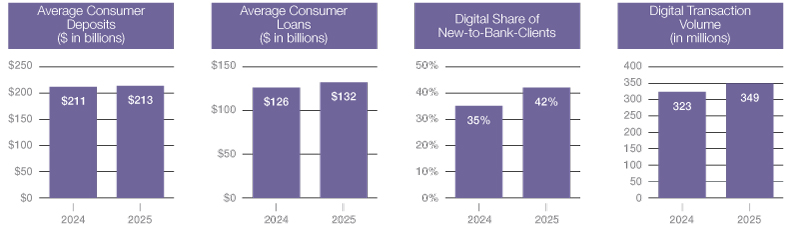
CSBB prioritized growing deposits with an emphasis on the Premier offering, increasing client acquisition, deepening client relationships, and expanding digital acquisition and engagement—leveraging technology to meet clients where they are.
Wholesale Banking
Wholesale Banking prioritized capturing more of the market with an industry banking strategy, continuing momentum in Investment Banking and Capital Markets (which saw meaningful improvement in the second half of 2025), generating additional Wealth fee income from existing clients, and deepening with Wholesale Payments.
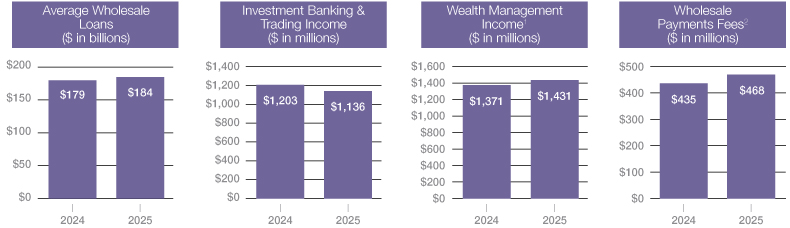
| (1) | Excludes the impact of the divestiture of Sterling Capital Management on July 2, 2024. |
| (2) | Wholesale Payments fees include merchant services, commercial card, and treasury management fees. |
|
|
2026 Proxy Statement | |
5 |
Proxy Statement Summary
Truist Board of Director Nominees
The Board of Directors of Truist (the “Board”) has nominated the following slate of 12 individuals for election as directors to serve until the next annual meeting of shareholders in 2027 or until their successors are duly elected and qualified. This slate comprises all of the current directors of Truist. We value the skills, experiences, and perspectives that these nominees bring to Truist as well as their dedication to our purpose and the creation of long-term shareholder value. See Director Nominee Criteria on page 24 for additional information.
| Age | Independent | Principal Occupation | Standing Board Committee Memberships | |||||||||

|
William H. Rogers, Jr.
|
|
68
|
|
Chairman and Chief Executive Officer of Truist
|
◾ Executive (Chair)
| ||||||

|
Thomas E. Skains
|
|
69
|
|

|
Lead Independent Director of Truist
Retired Chairman, President, and CEO of Piedmont Natural Gas Company, Inc.
|
◾ Compensation and Human Capital (Chair)
◾ Executive
◾ Nominating and Governance | |||||

|
Jennifer S. Banner
|
|
66
|
|
|
Executive Director of Management Forum of, and Consultant with Special Appointment to, the University of Tennessee’s Haslam College of Business
|
◾ Audit
◾ Technology
| |||||
|
K. David Boyer, Jr.
|
|
74
|
|
|
CEO of GlobalWatch Technologies, Inc.
|
◾ Technology
| |||||

|
Agnes Bundy Scanlan
|
|
68
|
|
|
President of The Cambridge Group LLC
|
◾ Executive
◾ Nominating and Governance (Chair)
◾ Risk | |||||
| 6 | | 2026 Proxy Statement |
|
Proxy Statement Summary
| Age | Independent | Principal Occupation | Standing Board Committee Memberships | |||||||||

|
Dallas S. Clement
|
|
60
|
|
|
President and CFO of Cox Enterprises, Inc.
|
◾ Audit (Chair)
◾ Executive
◾ Nominating and Governance | |||||

|
Linnie M. Haynesworth
|
|
68
|
|
|
Retired Sector Vice President and General Manager, Northrop Grumman Corporation
|
◾ Risk
◾ Technology
◾ Trust*
| |||||

|
Donna S. Morea
|
|
71
|
|
|
Chairman and CEO of Adesso Group, LLC
|
◾ Risk
◾ Technology (Chair) | |||||

|
Charles A. Patton
|
|
69
|
|
|
Managing Member of Patton Holdings, LLC and PATCO Investments, LLC
|
◾ Audit
◾ Trust* (Chair)
| |||||

|
Jonathan M. Pruzan
|
|
57
|
|
|
Co-president of Pretium Partners
|
◾ Compensation and Human Capital
◾ Risk | |||||

|
Laurence Stein
|
|
58
|
|
|
Retired EVP and COO, Asset & Wealth Management, of The Goldman Sachs Group, Inc.
|
◾ Executive
◾ Risk (Chair)
◾ Trust*
| |||||
|
|
2026 Proxy Statement | |
7 |
Proxy Statement Summary
| Age | Independent | Principal Occupation | Standing Board Committee Memberships | |||||||||

|
Bruce L. Tanner
|
|
67
|
|
|
Retired EVP and CFO of Lockheed Martin Corporation
|
◾ Audit
◾ Compensation and Human Capital | |||||
| * | The Trust Committee is a committee of the Board of Directors of Truist Bank. |
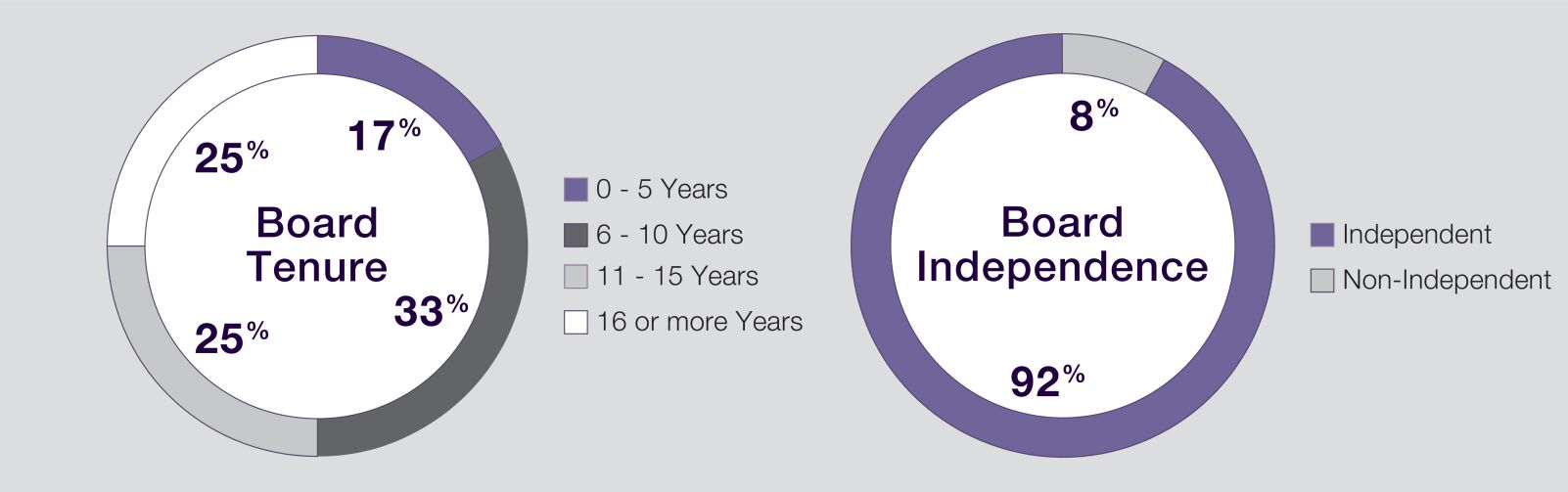
Tenure
| 8 | | 2026 Proxy Statement |
|
Proxy Statement Summary
Continuing Commitment to Sound Corporate Governance
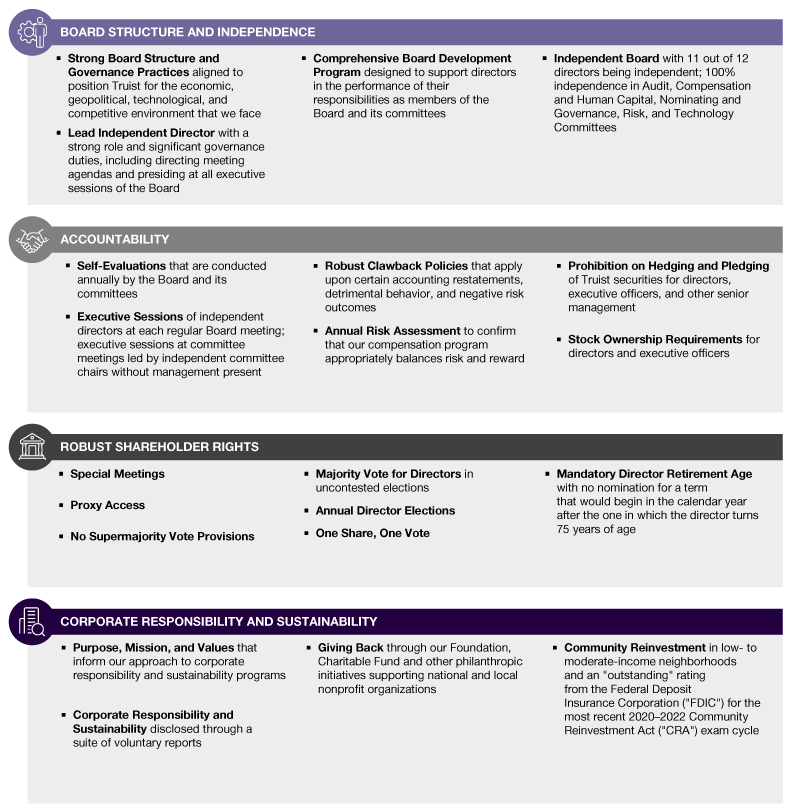
Our Board has adopted governance practices that strengthen independent leadership in the boardroom, enrich its composition, and enhance its effectiveness in overseeing management and strategy, while also providing shareholders with meaningful rights that promote accountability.
Retirement
For a detailed discussion of our corporate governance framework, see Board and Committee Governance Matters on page 23.
|
|
2026 Proxy Statement | |
9 |
Proxy Statement Summary
Ongoing Board Refreshment

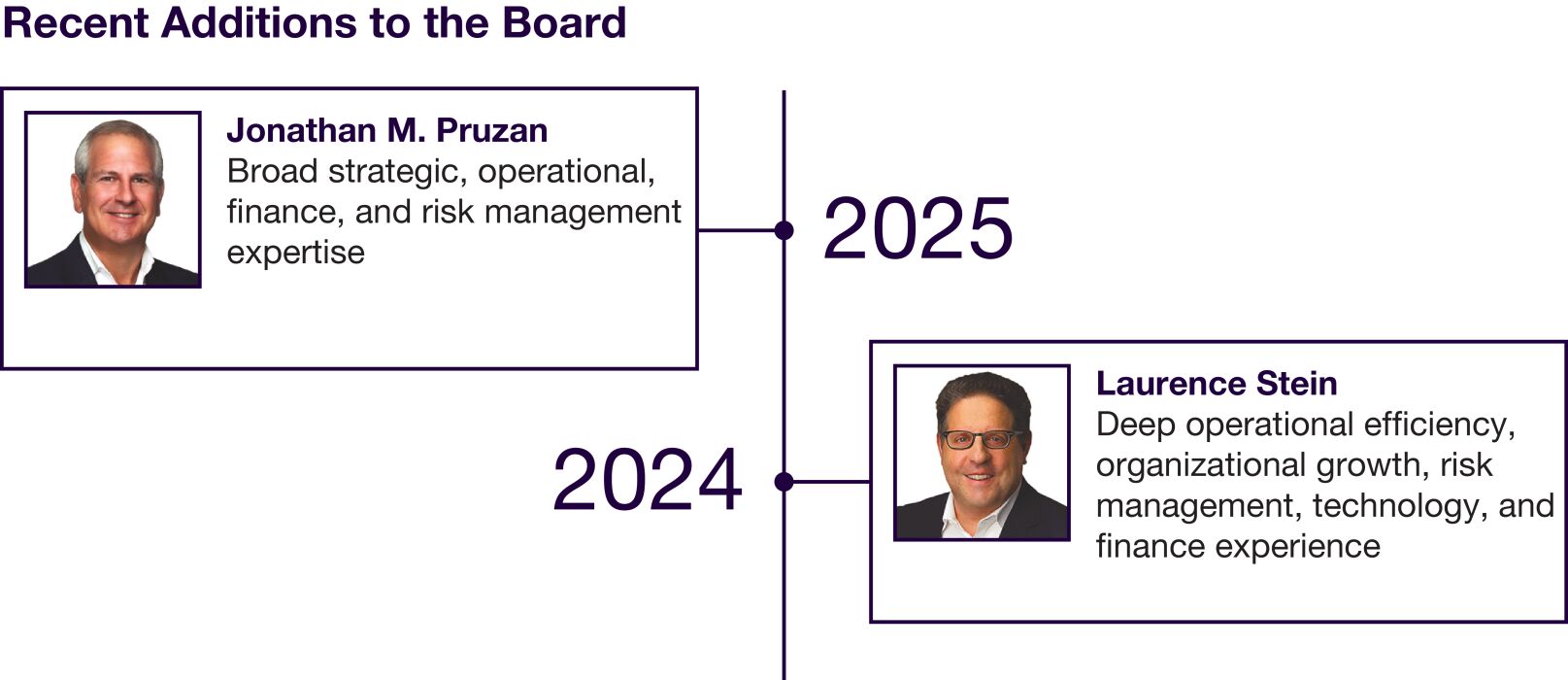
Since 2023, our Board has actively advanced its refreshment efforts to both right-size and renew its composition. Through deliberate down-sizing with the departure of 11 directors in the wake of the integration of the two heritage firms, the Board has improved accountability, responsiveness, dialogue, and committee agility and has sharpened its focus on effective oversight and informed, independent challenge of management. In addition, the Board has added two new directors, introducing fresh perspectives as well as significant finance and risk management expertise to align with the Company’s long-term strategy. Further, the Board has thoughtfully adjusted committee membership and chair assignments to deepen engagement while maintaining appropriate continuity. These complementary actions have strengthened the Board’s capabilities in areas critical to the creation of long-term shareholder value while preserving institutional knowledge through orderly transitions.
Shareholder Outreach
We believe in robust engagement with our shareholders. Actions are taken throughout the year to seek, evaluate, and incorporate feedback on our business, performance, corporate governance, executive compensation, corporate responsibility and sustainability practices, and other areas of importance to our shareholders. This engagement program includes meetings with our largest shareholders led by senior management and, in certain cases, our Lead Independent Director or the Chairs of the Compensation and Human Capital Committee and the Nominating and Governance Committee. Through this process, we complement the work performed by our Investor Relations team in regularly communicating with shareholders, including through investor conferences and meetings and quarterly earnings calls.
| 10 | | 2026 Proxy Statement |
|
Proxy Statement Summary
The following discussion provides a snapshot of our shareholder engagement program and outcomes.
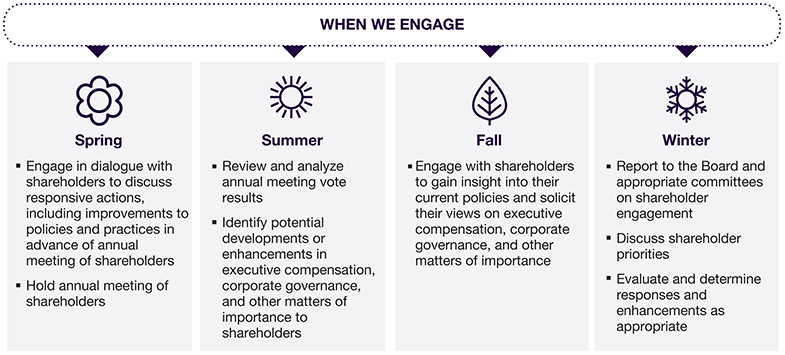
Shareholder Engagement Process
At our 2025 annual meeting of shareholders, approximately 59% of the votes cast supported our advisory say-on-pay proposal. The Board was disappointed with this result, which stood in stark contrast to the average of 93% support we had received for our say-on-pay proposals from 2020 to 2024.
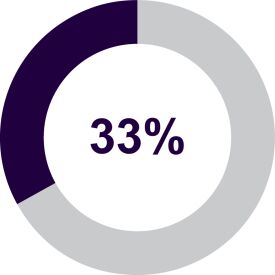
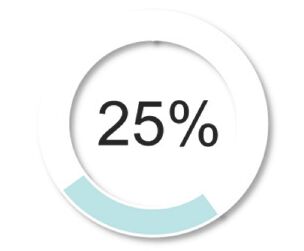
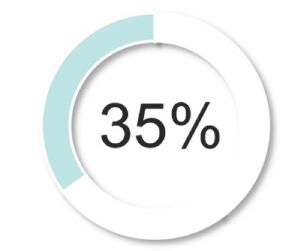
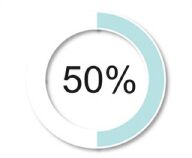
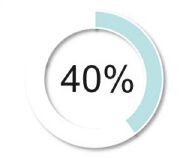
In response, during the fall of last year, we prioritized discussions of executive compensation in our shareholder engagement program to better understand investor concerns and perspectives. Outreach was made to 33 shareholders representing approximately 50% of outstanding shares, and 11 shareholders agreed to meet with us. The majority of those 11 shareholders did not support our say-on-pay proposal in 2025. A number of investors declined our offer to meet, with shareholders representing approximately 14% of outstanding shares indicating that a meeting was unnecessary due to their support of Truist’s approach to compensation and governance and lack of concerns.
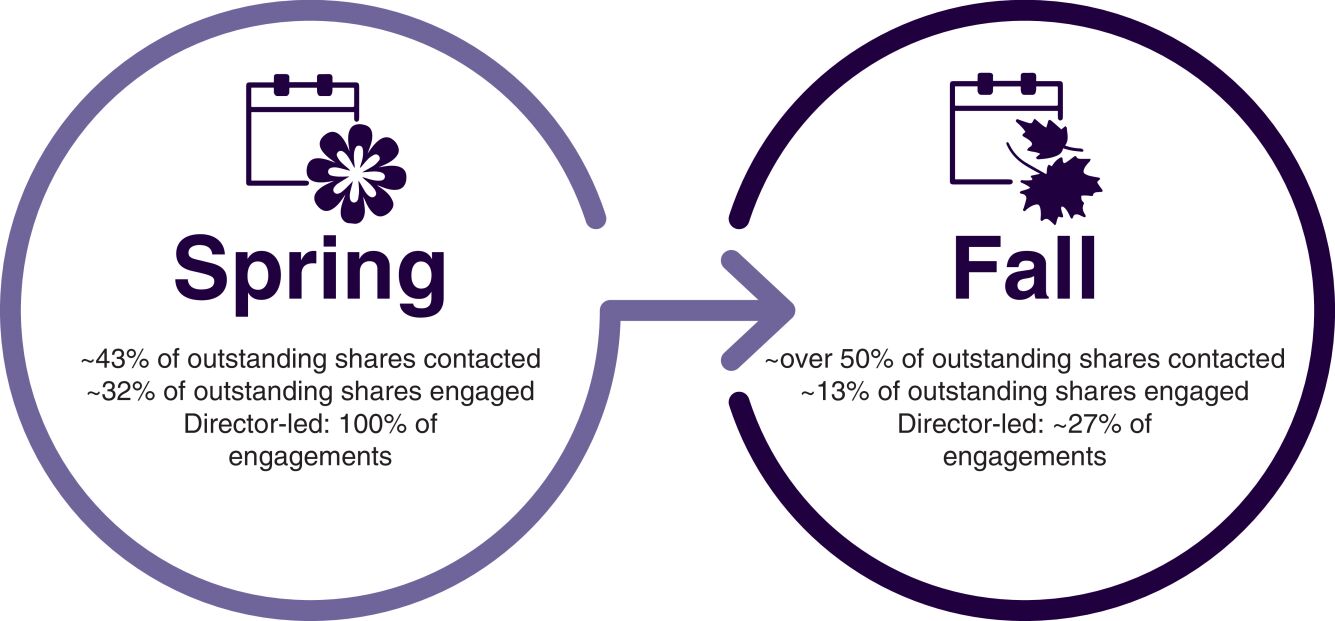
These meetings also addressed the Board’s composition and governance practices, Truist’s strategy and performance, matters related to artificial intelligence, and other topics. Through this process, we identified opportunities to enhance our disclosures regarding the Board’s evaluation of Company performance and executive compensation, our leadership structure and succession planning, director orientation and training, and the Board’s oversight of risk management and artificial intelligence. This feedback directly informed enhancements made to both our executive-compensation program and the disclosures in this proxy statement.
|
|
2026 Proxy Statement | |
11 |
Proxy Statement Summary
Our Response to Key Topics Discussed Following the 2025 Annual Meeting
| Board Composition and Refreshment |
Executive Compensation | |||||||
| Continued interest in the Board’s composition and refreshment process
◾ Two new directors have been added to the Board over the past two years, including one appointed in 2025.
◾ The Board updated committee membership and chair assignments during 2025 utilizing feedback obtained through the self-assessment process. See Director Refreshment and Committee Membership Rotation on page 24 for additional information.
|
◾ In response to receiving 59% support for our say-on-pay proposal at the 2025 annual meeting, we prioritized discussions of executive compensation in our shareholder engagement program to better understand investor concerns and perspectives.
◾ Mr. Skains, our Lead Independent Director and the incoming Chair of our Compensation and Human Capital Committee, led several of these engagement meetings. Overall, investors expressed understanding and support of our program’s design and the use of structured scorecards for the Annual Incentive Performance (“AIP”) award program, while also explaining the discrete factors that drove some “against” say-on-pay votes in 2025.
◾ Informed by this feedback and in consideration of investor preferences, the Compensation and Human Capital Committee has implemented key enhancements to our executive-compensation program and related disclosures:
○ Disclosed our philosophy on the limited use of one-time awards and did not grant any one-time awards to our Named Executive Officers (“NEOs”) in 2025;
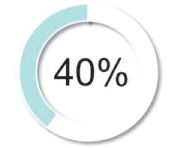
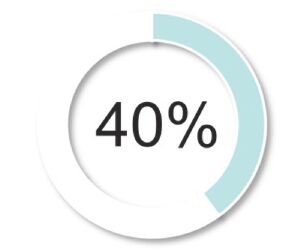
○ Simplified the financial measures for the 2025 AIP award program and added new weightings of 60% for financial measures and 40% for strategic priorities; and
○ Provided greater insights into the design and implementation of the AIP award program (including the assessment and impact of individual performance results) and new and enhanced disclosures (including realized pay).
◾ See Section 1—Executive-Compensation Alignment to Shareholder Feedback and Interests on page 44 for additional information on our 2025 shareholder engagement. | |||||||
| Management Succession Planning |
||||||||
| Interest in Chief Executive Officer and senior management succession planning
◾ The Board continues to actively drive and oversee succession planning for the Chief Executive Officer and other senior management throughout the year.
◾ We enhanced our disclosure on succession planning, describing the Board’s role and the leadership development process that extends several levels below the Chief Executive Officer. See Board’s Oversight of Succession Planning on page 33 for additional information.
|
||||||||
| Board Oversight of Artificial Intelligence |
||||||||
| Interest in how we manage opportunities and risks related to artificial intelligence
◾ We added disclosure on the Board’s oversight of artificial intelligence, which we are deploying in a responsible manner that supports our strategic priorities, as well as our business, governance, and risk management processes. See Spotlight on Artificial Intelligence on page 35 for additional information.
|
||||||||
| Corporate Responsibility and Sustainability |
||||||||
|
◾ Investors appreciated our efforts to reduce water use and Scope 1 and 2 emissions and to increase disclosures on Scope 3 emissions.
◾ We look forward to the release of our 2025 Corporate Responsibility and Sustainability Report in the second half of 2026.
|
Executive-Compensation Highlights
Compensation Philosophy
Our executive-compensation program is designed to align the interests of our senior management and our shareholders, drive long-term value creation for the Company, and account for the safety and soundness of Truist commensurate with its structure, risk profile, complexity, activities, and size.
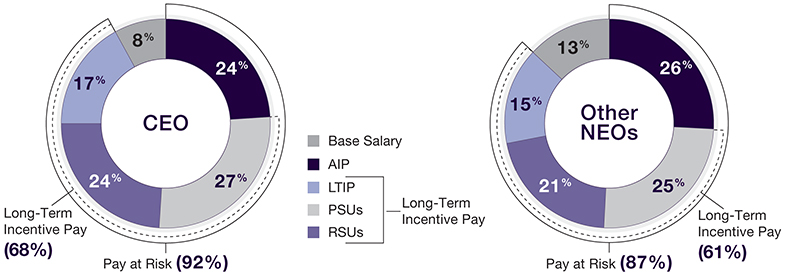
We compensate our NEOs through a mix of (1) base salary; (2) AIP awards; and (3) long-term incentive awards, composed of performance stock units (“PSUs”), restricted stock units (“RSUs”), and cash long-term incentive plan (“LTIP”) awards. The majority of this compensation is forfeitable and at-risk based on achievement of financial and non-financial measures, occurrence of an aggregate operating loss, and certain capital events and significant negative risk outcomes.
| 12 | | 2026 Proxy Statement |
|
Proxy Statement Summary
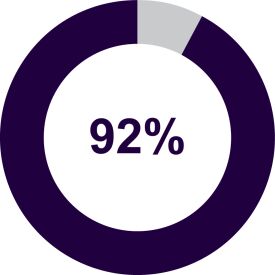
In 2025, 92% and 87% of target annual compensation for our Chief Executive Officer and average for all other NEOs,(1) respectively, were forfeitable and at-risk, as illustrated below.
| (1) | Includes all NEOs actively employed as of December 31, 2025. |
Connection to Business Strategy
We put our compensation philosophy into practice by linking the compensation paid to our NEOs with the Company’s short- and long-term performance against a diverse set of financial measures and strategic priorities that collectively support achievement of our strategic plan.
| Elements of Executive Compensation in 2025 | ||||
| Base Salary | ◾ Reflects scope of leadership responsibilities, experience, performance, skills, knowledge, and market competitiveness
◾ Provides fixed income to attract and retain senior management and drive balanced risk-taking | |||
| Short-Term Incentive Compensation |
AIP Awards | ◾ Incentivizes execution of short-term goals based on financial measures and strategic priorities that support Truist’s strategic plan
◾ Cash award; payment determined based on Company and individual performance, including risk management execution | ||
| Long-Term Incentive Compensation |
PSU and LTIP Awards | ◾ Aligns compensation with achievement of long-term goals based on 3-year absolute cumulative adjusted earnings per share* (“EPS”), 3-year absolute adjusted average return on tangible common equity* (“ROTCE”), and 3-year relative total shareholder return (“TSR”), which generate shareholder value and correlate to achievement of Truist’s strategic plan
◾ Stock and cash-settled awards with a 3-year performance period; payment determined based on Company performance and subject to reduction or forfeiture in the event of certain capital events, an aggregate operating loss, or significant negative risk outcome | ||
| RSU Awards | ◾ Rewards long-term, sustained appreciation of Truist’s stock price
◾ Stock-settled award with a 4-year, back-loaded vesting period; subject to reduction or forfeiture in the event of an aggregate operating loss or significant negative risk outcomes | |||
| * | Represents a non-GAAP financial measure. See Annex A for further discussion of these metrics. For purposes of incentive compensation, these metrics may reflect additional adjustments for the effects of different selected items compared to those reported in quarterly earnings materials, as set forth in Annex A. |
Additionally, our executive-compensation program is rooted in strong corporate governance and risk management practices:
| ◾ | The Compensation and Human Capital Committee, which is entirely composed of independent Board members, approves the compensation of our Chief Executive Officer and other senior management. |
| ◾ | The Compensation and Human Capital Committee retains an independent compensation consultant which advises on the executive-compensation program, including compensation governance. |
|
|
2026 Proxy Statement | |
13 |
Proxy Statement Summary
| ◾ | The Risk Committee and Audit Committee also review and approve the compensation of our Chief Risk Officer and Chief Audit Officer, respectively. |
| ◾ | The Compensation and Human Capital Committee reviews and approves performance goals and performance outcomes under our incentive-compensation programs. |
| ◾ | Effective risk management is featured as a strategic priority under the AIP award program. |
| ◾ | The Compensation and Human Capital Committee considers the results of annual risk assessments and recommendations from the Chief Risk Officer when determining the impact of individual performance on AIP award payments for executive officers. |
| ◾ | Long-term incentive awards are subject to reduction or forfeiture for an aggregate operating loss, significant negative risk outcome, and, for the PSU and LTIP awards, certain capital events. |
| ◾ | The Company maintains robust clawback, insider trading, hedging, and pledging policies and stock ownership requirements for executive officers and directors. |
See Risk Considerations in Setting Compensation on page 67 for additional information on our risk management program, and Section 7—Related Policies and Practices on page 68 for additional information on our compensation-related policies and practices.
Realized Pay
We seek to directly link the value our NEOs actually realize each year with shareholder interests by selecting performance metrics for our long-term incentive awards that closely align with shareholder value creation. Accordingly, the compensation our Chief Executive Officer actually realizes in a given year is directly tied to achievement of our long-term financial goals. From 2022-2025, which corresponds to Mr. Rogers’s first full year as Chief Executive Officer through the most recently completed fiscal year, his Realized Pay was 60% of his Target Pay in the aggregate. Mr. Rogers’s below-target compensation was driven by not meeting threshold performance under our 2023-2025 PSU and LTIP awards and market movement in share price, thus demonstrating the clear alignment between Mr. Rogers’s compensation and our shareholders’ interests. See Realized Pay on page 47 for additional information.
For purposes of this section, the following definitions apply:
| ◾ | “Target Pay” is the sum of (1) base salary, (2) target AIP award, (3) target LTIP award, and (4) grant date value of RSU and PSU awards, in each case, for the applicable year. |
| ◾ | “Realized Pay” is the sum of (1) base salary and AIP award paid for the applicable year, plus (2) the amount reportable as income upon vesting of RSU, PSU, and LTIP awards during the applicable year. |
This information is provided as a supplement to the information included in the 2025 Summary Compensation Table on page 71, and is not intended as a substitute for the information included in either section.
| 14 | | 2026 Proxy Statement |
|
Proposal 1—Election of Directors
We are asking you to elect each of the 12 director nominees named in this proxy statement to serve on the Board for a one-year term expiring at the annual meeting of shareholders in 2027 or until their successors are duly elected and qualified. Each candidate has agreed to be nominated and named in this proxy statement and to serve if elected. Although our Board expects that each of the nominees will be available for election, if a vacancy in the slate of nominees occurs, shares of Truist common stock represented by proxies will be voted for the election of a substitute nominee designated by the Board. Alternatively, the Board may reduce the number of persons to be elected by the number of directors unable to serve.
Our Board’s Composition and Qualifications
Our Board is made up of highly skilled leaders with substantial experience in their respective fields. The Nominating and Governance Committee regularly reviews the composition of the Board and its committees to determine the skills, experience, and perspectives that will support the Company’s near-term priorities and long-term growth. These reviews and related strategic planning for refreshment and succession, together with our mandatory retirement age for directors, are intended to maintain an appropriate mix of independence, expertise, and tenure for effective oversight.
| Qualifications, Attributes, Skills, and Experience Represented on the Board
| ||||||
| Financial Services Experience in the financial services industry is valuable in overseeing our strategy and operations, including opportunities and risks facing our businesses. This attribute may include significant leadership roles at financial services companies or service on relevant boards that enables directors to gain insights and expertise that will enhance their support of the business and affairs of Truist. |
|
Human Capital Management Maintaining a skilled and motivated workforce is a critical component of Truist’s future success. Directors with experience in areas that include employee benefits, compensation programs, succession oversight, career development, and employee engagement are increasingly important in retaining and acquiring talented teammates and reinforcing Truist’s culture. |
| |||
| Executive Leadership We seek directors who have served in significant leadership positions, preferably at a company with complex businesses, operations, or risk profiles or at a sizeable governmental entity, and who possess strong abilities to motivate and manage others. This includes the ability to identify, evaluate, and develop leadership qualities in others. Current or recent experience as a Chair, CEO, President, CFO, or other senior executive are strong indicators of skill and expertise in this category. |
|
Sustainability Truist recognizes that sustainability issues are important to our shareholders and other stakeholders, and we continue to be focused on and transparent about our efforts in these areas. We seek leaders with experience in sustainability and community investment and development. |
| |||
| Client and Consumer Interfaces and Trends Expertise in client services or a consumer-focused industry is important for reaching clients who are increasingly seeking convenience in the delivery of financial services. |
|
Cybersecurity and Information Security We are advantaged by directors who have experience with managing or overseeing enterprise technology, related industry trends, and emerging risks in information security, data privacy, and cybersecurity. |
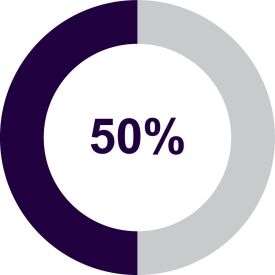
| |||
| Accounting/Finance Experience in accounting, finance, internal controls and monitoring internal and external auditors enables directors to analyze our financial statements and capital structure and to oversee our accounting and financial reporting processes. |
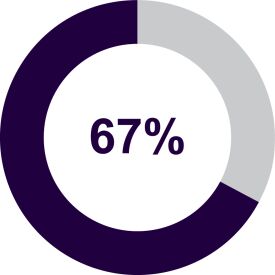
|
Technology and Digital Innovation Technological innovation and digital competitiveness, including an understanding of how technology drives competitive advantage, customer experience and operational efficiency, is key to serving our existing clients and reaching new ones. Leaders with knowledge in these areas can help Truist improve its development and delivery of products and services through digital platforms. |
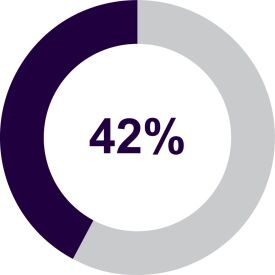
| |||
|
|
2026 Proxy Statement | |
15 |
Proposal 1—Election of Directors
| Qualifications, Attributes, Skills, and Experience Represented on the Board
| ||||||
| Risk Management Robust risk management is fundamental to operating in the financial services sector and is embedded throughout our strategic plan. Directors with experience overseeing risk management, including financial and non-financial risks, enhance the Board’s ability to provide effective oversight of the broad and evolving risks facing Truist. |
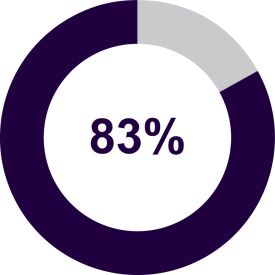
|
Strategic Planning, Transformation, and Disruption Truist directly benefits from leaders who have experience with defining and driving strategic direction and growth and managing operations of a complex business or large organization. Such leaders can provide insight into organizational agility and resiliency to address emerging needs and challenges for our businesses. |
| |||
| Corporate Governance and Public Board Service Directors with experience serving on and leading the boards of other large corporations or professional experience in the corporate governance field, board practices, and corporate responsibility, can support the Company’s goals around transparency, disclosure, and accountability. |
|
Regulatory, Government, and Public Policy Directors with experience in governmental and regulatory affairs, including experience acquired through positions in a regulated industry or with government/regulatory bodies, can deliver insights that help Truist to navigate the complex regulatory landscape in which we operate. |
| |||
| 16 | | 2026 Proxy Statement |
|
Proposal 1—Election of Directors
Nominees for Election as Directors
The Board has nominated the following individuals to serve as directors of Truist until the 2027 annual meeting of shareholders or until their successors are duly elected and qualified. The nominees for election to our Board and their key qualifications, skills, professional highlights, and other leadership experience and service are set forth below.

|
THE BOARD OF DIRECTORS RECOMMENDS A VOTE “FOR” EACH OF THE DIRECTOR NOMINEES NAMED BELOW.
|
|||||

|
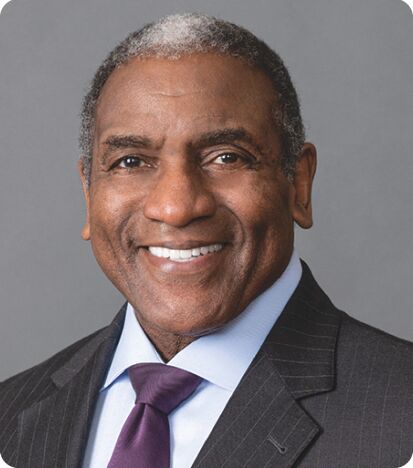
JENNIFER S. BANNER INDEPENDENT DIRECTOR AUDIT COMMITTEE FINANCIAL EXPERT |
|
K. DAVID BOYER, JR. INDEPENDENT DIRECTOR |
|
Tenure: ◾ Since 2003
Age: 66
Board Committees: ◾ Audit ◾ Technology
Other Current Public-Company Directorship: ◾ Elme Communities
Other Public-Company Directorship in the Past Five Years: ◾ Uniti Group Inc.
Qualifications and Skills:
◾ Brings extensive accounting, tax, and financial reporting experience with 22 years practicing as a certified public accountant, supporting effective oversight of the Company’s financial controls and audit processes
◾ Deep insight into financial services, corporate governance, regulatory, and risk management from her prior service on the boards of directors of First Vantage Bank and First Virginia Banks, Inc. and prior service on the board of the Federal Reserve Bank of Atlanta—Nashville branch
◾ Significant knowledge of technology innovation and digital transformation through formal training and research participation as an Industry Research Fellow with the MIT Center for Information Research (MIT CISR) where she has co-authored articles addressing the importance of technology, AI, and digital skills in the boardroom
Professional Highlights:
◾ Consultant with special appointment to the University of Tennessee Haslam College of Business, working in the Integrated Business and Engineering Program, the Executive MBA Program, and the Department of Management and Entrepreneurship (since 2024)
◾ Executive Director of the Management Forum of the University of Tennessee Haslam College of Business (since 2019)
◾ Industry Research Fellow (formerly referred to as Honorary Research Fellow) at MIT CISR, which provides chief information officers, digital leaders, and boards with insights into technology and digital innovation (since 2019)
◾ Former Chief Executive Officer of the Schaad Family Office, LLC, a diversified holding company (2012-2018) and Former Chief Executive Officer of its affiliate, Schaad Companies, LLC (2008-2018)
◾ Former President and Chief Executive Officer of Schaadsource, LLC, a privately held managerial and strategic services company (2006-2019)
Other Leadership Experience and Service:
◾ Advisory board member to the University of Tennessee Department of Management and Entrepreneurship
◾ Trustee at Clarence Brown Theatre, a nonprofit professional theatre connected to the University of Tennessee
|
Tenure: ◾ Since 2009
Age: 74
Board Committees: ◾ Technology
Qualifications and Skills:
◾ Relevant financial services experience gained from service as a Truist director, a former chair of the Trust and Executive Committees, and prior service for more than 11 years on Truist Bank’s local advisory board in Washington, D.C., providing our Board with a unique perspective on the Company’s banking organization and its values and culture
◾ Significant experience with accounting, and finance, as well as information technology, information management, cybersecurity, and data analytics
Professional Highlights:
◾ Chief Executive Officer of GlobalWatch Technologies, Inc., a privately-held business intelligence, cybersecurity, information assurance, governance, and compliance firm (since 2004)
◾ Former Senior Advisor and Director of Global Development Alliance for USAID (2008-2009)
◾ Former Chairman and Chief Executive Officer of TROY Systems, Inc., an internet technology and assurance provider of advanced weapons systems for the U.S. Armed Forces and information security to critical government agencies (1983-2001)
Other Leadership Experience and Service:
◾ Director of Virginia Community Development Corporation, a tax credit fund manager supporting economic development in Richmond
◾ Member of the Presidential Counselors for Pennsylvania State University
◾ Certified National Association of Corporate Directors (NACD) Board Leadership Fellow
◾ Former Treasury board member for the Commonwealth of Virginia |
|
|
2026 Proxy Statement | |
17 |
Proposal 1—Election of Directors

|
AGNES BUNDY SCANLAN INDEPENDENT DIRECTOR RISK MANAGEMENT EXPERT |

|
DALLAS S. CLEMENT INDEPENDENT DIRECTOR AUDIT COMMITTEE FINANCIAL EXPERT |
|
Tenure: ◾ Since 2017
Age: 68
Board Committees: ◾ Executive ◾ Nominating and Governance (Chair) ◾ Risk
Other Current Public-Company Directorship: ◾ AppFolio, Inc.
Other Public-Company Directorship in the Past Five Years: ◾ R1 RCM Inc.
Qualifications and Skills:
◾ Over 30 years of legal, governance, and government affairs experience, equipping our Board with the skills needed to oversee the Company’s complex and evolving governance and risk environment
◾ Extensive financial services as well as regulatory and compliance experience honed through service as the Northeast Regional Director of Supervision Examination at the Consumer Financial Protection Bureau (CFPB) and in other senior roles overseeing regulatory and compliance related functions
◾ Recognized leader across information security with credentials in technology innovation and digital transformation, artificial intelligence, and cybersecurity through earning the CERT certificate from the Universities of Cambridge and Oxford Programs in Digital Transformation and Disruptive Technologies, a certificate in artificial intelligence and a certificate in cybersecurity from MIT, two certificates in cybersecurity oversight from Harvard, and a certificate in cybersecurity and oversight from Carnegie Mellon
Professional Highlights:
◾ President of The Cambridge Group LLC, a regulatory advisory firm (since 2020)
◾ Former Senior Advisor for Treliant Risk Advisors, counseling financial services firms on risk management, strategic, and other regulatory matters (2017-2020) and (2012-2015)
◾ Former Northeast Regional Director of Supervision Examination for the Consumer Financial Protection Bureau (2015-2017)
◾ Former Chief Regulatory Officer, Chief Compliance Officer, Chief Privacy Officer, Regulatory Relations Executive, and Director of Corporate Community Development for, and as legal counsel to, a number of banks and financial services firms, and as legal counsel to the United States Senate Budget Committee (1994-2012)
Other Leadership Experience and Service:
◾ AI Ethics Council Member of Dayforce, Inc. a publicly traded human-resources software and services company
◾ Director of Institutional Capital Network, Inc., a privately-held global fintech platform
|
Tenure: ◾ Since 2015
Age: 60
Board Committees: ◾ Audit (Chair) ◾ Executive ◾ Nominating and Governance
Qualifications and Skills:
◾ Extensive audit, accounting, and financial reporting experience developed through service as President and Chief Financial Officer and in other senior financial leadership roles at Cox Enterprises, Inc., supporting our Board in overseeing financial reporting integrity, risk, and internal controls
◾ Deep executive leadership experience in corporate strategy and business development across multiple industries
◾ Broad enterprise risk oversight, including responsibility for information technology, cybersecurity, and other operational functions, providing a comprehensive perspective on risk management and emerging technology trends
Professional Highlights:
◾ President and Chief Financial Officer of Cox Enterprises, Inc. (since 2022)
◾ Former Executive Vice President and Chief Financial Officer of Cox Enterprises (2015-2022)
◾ Former Executive Vice President and Chief Financial Officer of Cox Automotive (2014-2015)
◾ Former Chief Financial Officer of Autotrader Group (2011-2015)
◾ Various roles at Cox Communications (1980-2011, including Executive Vice President and Chief Strategy and Product Management Officer
Other Leadership Experience and Service:
◾ Director of Atlanta History Center
◾ Director of Georgia Research Alliance
◾ Director of Junior Achievement of Georgia, Inc
◾ Director of Metro Atlanta Chamber
◾ Director of Woods Hole Oceanographic Institution |
| 18 | | 2026 Proxy Statement |
|
Proposal 1—Election of Directors

|
LINNIE M. HAYNESWORTH INDEPENDENT DIRECTOR |

|
DONNA S. MOREA INDEPENDENT DIRECTOR | |||||||
|
Tenure: ◾ Since 2019
Age: 68
Board Committees: ◾ Risk ◾ Technology ◾ Trust—Truist Bank
Other Current Public-Company Directorships: ◾ Automatic Data Processing, Inc. ◾ Micron Technology, Inc. ◾ Eastman Chemical Company
Qualifications and Skills:
◾ Enterprise risk management expertise, with oversight of large, complex technology programs and system deployments—supporting our Board’s oversight of operational resilience and technology risk
◾ Deep background in cybersecurity governance, large-scale system development, and technology innovation and digital transformation, including insight into artificial intelligence as an emerging technology, gained through oversight of cyber, multi-enterprise data management, and mission-enabling intelligence solutions
◾ Significant corporate governance experience from public-company board service at a human-resources and payroll-solutions company, a computer-memory and storage-products company, and a special materials company
Professional Highlights:
◾ Former Sector Vice President and General Manager of the Cyber and Intelligence Mission Solutions Division for Northrop Grumman Corporation (“NGC”)’s Mission Systems Sector (2016-2019)
◾ Former Sector Vice President and General Manager of the ISR Division within the Information Systems sector of NGC, as well as former leader of NGC’s Federal and Defense Technologies Division (2014-2015)
Other Leadership Experience and Service:
◾ Member of the board of councilors for USC Viterbi School for Engineering
◾ Leadership council member of No Kid Hungry—Share Our Strength
◾ Former member of the board of directors of the Northern Virginia Technology Council
◾ Former advisory board member of the U.S. Department of Defense Business Board
|
Tenure: ◾ Since 2012
Age: 71
Board Committees: ◾ Risk ◾ Technology (Chair)
Other Current Public-Company Directorship: ◾ Science Applications International Corporation
Other Public-Company Directorship in the Past Five Years: ◾ KLDiscovery Inc.
Qualifications and Skills:
◾ Significant risk oversight experience, including service on the risk committee of another public-company and prior board-level leadership of risk governance within a financial institution, providing valuable perspective on enterprise risk frameworks and regulatory engagement to our Board
◾ Broad experience in managing information technology and business process services for large and regulated enterprises with expertise in technology innovation and digital transformation, including artificial intelligence
◾ Extensive executive management background given Ms. Morea’s former role as President, U.S., Europe, and Asia Pacific of CGI Technology Solutions, Inc., one of the largest global technology firms
Professional Highlights:
◾ Chairman and Chief Executive Officer of Adesso Group, LLC, which provides consulting and advisory services, with an emphasis on strategic growth opportunities (since 2012)
◾ Operating Executive of The Carlyle Group, an American multinational company with operations in private equity, alternative asset management, and financial services (since 2016)
◾ Various leadership roles including President, U.S., Europe, and Asia Pacific (2004-2011), and member of the board, of CGI Technology Solutions, Inc. (2012-2013)
Other Leadership Experience and Service:
◾ Chair Emeritus of the Northern Virginia Technology Council
| |||||||||
|
|
2026 Proxy Statement | |
19 |
Proposal 1—Election of Directors

|
CHARLES A. PATTON INDEPENDENT DIRECTOR AUDIT COMMITTEE FINANCIAL EXPERT |

|
JONATHAN M. PRUZAN INDEPENDENT DIRECTOR RISK MANAGEMENT EXPERT |
|
Tenure: ◾ Since 2013
Age: 69
Board Committees: ◾ Audit ◾ Trust—Truist Bank (Chair)
|
Tenure: ◾ Since 2025
Age: 57
Board Committees: ◾ Compensation and Human Capital ◾ Risk | |||||
| Qualifications and Skills:
◾ Extensive executive leadership and oversight experience gained from serving as President and Chief Executive Officer of Virginia First Savings Bank, a publicly traded financial institution, providing valuable insight into large-scale operations and strategic execution that supports the Company’s long-term growth objectives
◾ Deep knowledge of corporate governance and regulatory and risk management specific to the financial industry
◾ Long-term perspective and significant institutional knowledge of Truist derived from years of service on our Board and its committees
Professional Highlights:
◾ Consultant and managing member of Patton Holdings, LLC, a real estate holding company (since 2007)
◾ Consultant and managing member of PATCO Investments, LLC, which emphasizes specialty lending and equity participations (since 1998)
◾ President and Chief Executive Officer of Virginia First Savings (1979-1997)
Other Leadership Experience and Service:
◾ Former member of the board of visitors of Richard Bland College (formerly the College of William & Mary)
◾ Former board Chairman of Richard Bland College Foundation, Inc. |
Qualifications and Skills:
◾ Broad strategic and operational experience leading finance, operations, technology, and corporate strategy in a highly regulated environment at Morgan Stanley, strengthening the Board’s oversight of business transformation, risk management, and effective execution
◾ Three decades of financial services, banking, and capital markets expertise, including senior executive roles as Chief Operating Officer and Chief Financial Officer and Head of Corporate Strategy at Morgan Stanley
◾ Enterprise risk oversight experience, having served on firm-wide risk committees
Professional Highlights:
◾ Co-President of Pretium Partners, LLC, an alternative investment manager with a differentiated, scaled approach to residential real estate and corporate and structured credit investment strategies (since 2023)
◾ Former Executive Vice President and Chief Operating Officer at Morgan Stanley (2021-2023)
◾ Former Executive Vice President and Chief Financial Officer (2015-2021), and Head of Corporate Strategy (2016 - 2021) at Morgan Stanley
◾ Former Managing Director and Co-Head of Morgan Stanley’s Global Financial Institutions Group (2010-2015)
◾ Former Investment banker at Morgan Stanley (1994-2015)
◾ Various positions with PaineWebber (1990-1994)
Other Leadership Experience and Service:
◾ Director of Tufts University
◾ Director of Peterson Institute of International Economics
◾ Director of The American Ditchley Foundation
◾ Life Trustee of New York-Presbyterian Hospital
◾ Member of the Council on Foreign Relations
|
| 20 | | 2026 Proxy Statement |
|
Proposal 1—Election of Directors

|
WILLIAM H. ROGERS, JR. CHAIRMAN AND CHIEF EXECUTIVE OFFICER |

|
THOMAS E. SKAINS LEAD INDEPENDENT DIRECTOR |
|
Tenure: ◾ Since 2011
Age: 68
Board Committee: ◾ Executive (Chair)
Qualifications and Skills:
◾ Extensive financial services experience and deep knowledge of Truist and our industry, supporting Mr. Rogers’s effective leadership as Chair and Chief Executive Officer
◾ Strong leadership capabilities in setting strategic vision and aligning business priorities with evolving industry dynamics
◾ Corporate governance, risk management, and regulatory experience from more than 40 years tenure at Truist and as a former member of the Sixth District representative on the Federal Advisory Counsel of the Board of Governors of the Federal Reserve System
Professional Highlights:
◾ Chief Executive Officer of Truist and Truist Bank (since 2021) and Chairman of the Board of Truist and Truist Bank (since 2022)
◾ Former President and Chief Operating Officer of Truist and Truist Banks (2019-2021)
◾ Former Chairman of SunTrust Banks, Inc. (2012- 2019)
◾ Former Chief Executive Officer of SunTrust Banks, Inc. (2011-2019)
Other Leadership Experience and Service:
◾ Member of the Bank Policy Institute
◾ Chair of the board of the Boys & Girls Clubs of America
◾ Member of the board of Charlotte Center City Partners
◾ Member of the Charlotte Executive Leadership Council
◾ Member of the Emory University Board of Trustees
◾ Member of the Global Board of Advisors for Operation HOPE, Inc.
◾ Former representative on the Federal Advisory Council of the Board of Governors of the Federal Reserve System
|
Tenure: ◾ Since 2009
Age: 69
Board Committees: ◾ Compensation and Human Capital (Chair) ◾ Executive ◾ Nominating and Governance
Other Current Public-Company Directorships: ◾ Duke Energy Corporation ◾ National Fuel Gas Company
Qualifications and Skills:
◾ Extensive corporate governance expertise maintaining Board and management accountability, bringing—as Lead Independent Director—strong independent oversight and effective leadership for our Board
◾ Considerable executive leadership and strategic planning skills through his experience as Chairman, President and Chief Executive Officer of Piedmont Natural Gas Company, Inc. (now part of Duke Energy Corporation), a major natural gas utility in the Southeast
◾ Comprehensive risk management experience in a highly regulated industry
◾ Valuable perspective on government and public policy matters developed from prior service on several prominent civic and business associations
Professional Highlights:
◾ Former Chairman, President and Chief Executive Officer of Piedmont Natural Gas Company, Inc. (2003-2016), its President and Chief Operating Officer (2002-2003), and its Senior Vice President - Marketing and Supply Services (1995-2002)
◾ Former Senior Vice President (1989-1995), Vice President (1986-1989) and Attorney at Law (1981-1986) of Transcontinental Gas Pipeline Corporation
Other Leadership Experience and Service:
◾ Previous chair of the board of the Charlotte Chamber of Commerce
◾ Previous chair of the board of the American Gas Association | |||||
|
|
2026 Proxy Statement | |
21 |
Proposal 1—Election of Directors

|
LAURENCE STEIN INDEPENDENT DIRECTOR RISK MANAGEMENT EXPERT |

|
BRUCE L. TANNER INDEPENDENT DIRECTOR AUDIT COMMITTEE FINANCIAL EXPERT |
|
Tenure: ◾ Since 2024
Age: 58
Board Committees: ◾ Executive ◾ Risk (Chair) ◾ Trust—Truist Bank
Qualifications and Skills:
◾ Substantial experience with improving efficiency, streamlining large-scale operations, and driving strategic growth while maintaining strong risk management and controls, supporting our Board’s focus on balancing performance with sound risk practices
◾ Over 27 years of leadership across operations, finance, and technology, driving strategy and execution in asset management, investment banking, and wealth management at The Goldman Sachs Groups, Inc., a large financial institution
Professional Highlights:
◾ Former Executive Vice President and Chief Operating Officer, Asset & Wealth Management, at The Goldman Sachs Group, Inc. (2022-2023)
◾ Member of The Goldman Sachs Group, Inc.’s Management Committee (2018-2023)
◾ Former Chief Administrative Officer at The Goldman Sachs Group, Inc., (2018-2021)
◾ Various senior leadership roles at The Goldman Sachs Group, Inc., including serving as the Global Head of the Operations Division, the Chief Operating Officer of the Securities Division, and the Chief Financial Officer of the Investment Banking Division (1996-2021)
◾ Various roles at Ernst & Young (1992-1996)
Other Leadership Experience and Service:
◾ Member of the board of directors of Athos Therapeutics, Inc., a privately-held AI software and clinical stage biotechnology company
◾ Member of the Business School Council of Tulane University
|
Tenure: ◾ Since 2015
Age: 67
Board Committees: ◾ Audit ◾ Compensation and Human Capital
Other Current Public-Company Directorship: ◾ American Tower Corporation
Qualifications and Skills:
◾ Comprehensive oversight of enterprise finance, encompassing capital structure, financial planning and analysis, treasury, internal controls, compliance, and program finance, strengthening the Board’s insight into financial discipline, risk oversight, and organizational resilience
◾ Deep financial and accounting expertise, having steered the finance function at Lockheed Martin Aeronautics, a Fortune 100 global enterprise, through an extended period of sustained growth
Professional Highlights:
◾ Former Executive Vice President and Strategic Advisor for Lockheed Martin Corporation (2019)
◾ Former Executive Vice President and Chief Financial Officer for Lockheed Martin Corporation (2007-2019)
◾ Former Vice President of Finance and Business Operations for Lockheed Martin Aeronautics (2006-2007)
◾ Former Vice President of Finance and Business Operations, Lockheed Martin Electric Systems (2002-2006)
◾ Various roles at Lockheed Martin Corporation (1982-2002)
Other Leadership Experience and Service:
◾ Member of the President’s Advisory Board for the University of Texas at Arlington | |||||
| 22 | | 2026 Proxy Statement |
|
Board and Committee Governance Matters
Effective Board Leadership Structure
Our Board is led by Mr. Rogers, our Chairman and Chief Executive Officer, and Mr. Skains, our Lead Independent Director. The Board currently believes that having a unified Chairman and Chief Executive Officer contributes to a more efficient and effective Board, enables unity of vision for the Company, and creates a firm link between management and the Board that promotes the development and implementation of the Company’s strategy. At the same time, with such an approach, the Board recognizes that a strong Lead Independent Director with clearly defined responsibilities is paramount for effective oversight.
In February 2026, the independent directors re-elected Mr. Skains to serve as our Lead Independent Director. The independent directors considered how Mr. Skains had performed in that role since March 2022, his strength in purposeful leadership, his ability to serve as an independent counterbalance to the Chairman, and his facilitation of open dialogue among the independent directors during and in between Board meetings.
The Board has not adopted a policy on separating the positions of Chairman and Chief Executive Officer in the belief that its leadership structure should be addressed in the context of succession planning for the Chief Executive Officer and the evolving best interests of the Board and Truist. Our amended and restated bylaws (the “Bylaws”) and Corporate Governance Guidelines state that, when the position of Chairman is not held by an independent director, the independent directors will annually elect a lead director who is independent.
|
Chairman and Chief Executive Officer |
Key Responsibilities
|
|||
◾ Implements Truist’s Purpose, Mission, and Values
◾ Leads the development and execution of the Company’s strategies—both short and long-term
◾ Presides at Board and shareholder meetings
◾ Coordinates with the Lead Independent Director on schedules, agendas, and materials for meetings or executive sessions of the Board and its committees
◾ Supports the Board in carrying out its oversight responsibilities, including with respect to the Company’s enterprise risk management (“ERM”) framework and financial and operational resiliency |
||||
| Lead Independent Director |
Key Responsibilities
◾ Serves as a liaison between independent directors and senior management, including the Chairman and Chief Executive Officer
◾ Presides at Board meetings when the Chairman requests, is not present, or has a conflict
◾ Presides at executive sessions of the Board
◾ May convene a special meeting of the Board or a meeting of independent directors
◾ Directs schedules, agendas, and the kind and nature of information provided for meetings or executive sessions of the Board, its committees, or independent directors
◾ Remains reasonably available for consultation and direct communication with major shareholders
◾ Serves as a member of the Executive Committee and performs specified duties if the Chairman serves as Chair of the Executive Committee
◾ Works with the Compensation and Human Capital Committee to oversee the annual evaluation of the Chief Executive Officer’s performance
◾ Leads with the Chief Executive Officer the succession planning efforts for that office
◾ Meets with the Chief Executive Officer after each executive session of independent directors to discuss matters arising out of the session
|
|||
|
|
2026 Proxy Statement | |
23 |
Board and Committee Governance Matters
Director Nominations and Refreshment
Board refreshment is an important element of sustaining long-term effectiveness and aligning oversight with Truist’s strategy and risk profile in a dynamic environment. At the same time, the Board recognizes that directors with longer tenures offer invaluable institutional knowledge, continuity, and nuanced understanding of Truist’s business and operations.
The Nominating and Governance Committee is responsible for assisting the Board in overseeing its composition and structure, including by identifying, evaluating, and recommending candidates for election or appointment to the Board. The Nominating and Governance Committee may consider existing directors for renomination and may use search firms and other resources to identify other potential director candidates. The Nominating and Governance Committee also considers potential director candidates who are recommended by shareholders in compliance with the Bylaws and applicable law and listing standards. The Nominating and Governance Committee and the Board use the same criteria to evaluate all potential director candidates regardless of how they have been identified. Shareholder recommendations for candidates to the Board must be received in writing at the following address: Corporate Secretary, Truist Financial Corporation, 214 N. Tryon Street, 43rd Floor, Mail Code 500-93-43-13, Charlotte, North Carolina 28202.
Director Nominee Criteria
When refreshment is appropriate, the Board considers the following to be minimum qualifications for new director candidates:
| ◾ | The highest integrity, character, and alignment with Truist’s Purpose, Mission, and Values |
| ◾ | Senior executive or management experience, preferably at a company with complex businesses, operations, or risk profiles or at a sizeable governmental entity |
| ◾ | Business, financial, risk management, or professional experience that is relevant to understanding, overseeing, and directing the business and affairs of Truist |
| ◾ | An ability to think and act independently, collaborate in a cohesive and constructive manner, and effectively challenge management |
| ◾ | An absence of any conflict that would inhibit decision-making in the balanced and best interests of Truist’s shareholders as a whole and consistent with the fiduciary duties of a director |
| ◾ | An ability and willingness to devote sufficient time and attention to Truist for a meaningful period of time |
| ◾ | An appropriate fit within the existing mix of director qualifications so that the Board possesses a broad array of skills, backgrounds, and expertise that, taken as a whole, create a strong and effective governing body for Truist. |
Director Refreshment and Committee Membership Rotation
In recent years, the Nominating and Governance Committee has been actively engaged in refreshment. Since 2023, 11 directors have departed the Board in the wake of the integration of the two heritage firms, and two directors—Messrs. Stein and Pruzan—have been added. The result has been improved effectiveness of the Board as a whole, including in its oversight of Truist’s safety and soundness and financial and operational strength and resilience. Messrs. Stein and Pruzan in particular have brought deep experience in high-performance cultures with global systemically important banks that are extensively regulated, and their constructive support and challenge of management has helped to further accelerate the execution of the Company’s strategy and advancement of its risk culture.
In 2025, the Nominating and Governance Committee also assisted the Board in a holistic assessment of committee membership and chair assignments to align skill sets and institutional knowledge with evolving needs. New independent chairs were appointed for three of our committees—the Risk Committee, the Compensation and Human Capital Committee, and the Trust Committee—and the composition of nearly every standing committee was refreshed to balance workloads, broaden perspectives, and enhance leadership rotation. Collectively, these changes enabled the Board to maintain well-rounded committees that appropriately combine stability with dynamism in an increasingly competitive environment.
Director Independence
11 of 12
Director Nominees are Independent
Under the listing standards of the New York Stock Exchange (“NYSE”), no director qualifies as independent unless the Board affirmatively determines that the director has no material relationship with Truist either directly or as a partner, shareholder, or officer of an organization that has a relationship with Truist. Independence determinations are made by the Board with assistance from the Nominating and Governance Committee. For more details on our independence requirements, see our Corporate Governance Guidelines, which can be found on the Investor Relations page of our website at https://ir.truist.com under “Governance & Responsibility”—“Corporate Governance.”
| 24 | | 2026 Proxy Statement |
|
Board and Committee Governance Matters
In making independence determinations in advance of the Annual Meeting, the Board considered information regarding each director’s occupation and other directorships. Transactions, relationships, and arrangements between each director or any related person and the Company or any of its subsidiaries were also assessed together with any other relevant direct and indirect relationships that may affect director independence. Specifically, our Board considered the following ordinary course, non-preferential relationships that existed during the preceding three years and determined that all of these relationships satisfy the NYSE’s bright line standards of independence and were immaterial under our Board’s categorical standards of independence set forth in the Corporate Governance Guidelines:
| ◾ | Truist or its subsidiaries provided ordinary-course banking or financial products and services to certain of our directors, some of their immediate family members, and certain entities affiliated with the directors and their immediate family members, all of which were on substantially similar terms as those available at the time for comparable transactions with unrelated parties in similar circumstances. |
| ◾ | Truist or its subsidiaries purchased products or services from, or provided products or services to, entities affiliated with some of our directors or their immediate family members. In each case, the transactions were made on substantially similar terms as those available at the time for comparable transactions with unrelated parties in similar circumstances. |
After reviewing the information presented to it and considering the recommendation of the Nominating and Governance Committee, the Board determined that the following nominees are independent: Jennifer S. Banner, K. David Boyer, Jr., Agnes Bundy Scanlan, Dallas S. Clement, Linnie M. Haynesworth, Donna S. Morea, Charles A. Patton, Jonathan M. Pruzan, Thomas E. Skains, Laurence Stein, and Bruce L. Tanner.
William H. Rogers, Jr. was not determined to be independent due to his role as Chief Executive Officer of Truist.
All directors who serve on the Audit Committee and the Compensation and Human Capital Committee were also determined to meet the additional independence and qualitative criteria of the NYSE listing standards applicable to directors serving on those committees.
Changes in Principal Occupation or Related Responsibilities
If a non-management director has a significant change in the director’s principal occupation or related responsibilities, the director must notify the Chairman, the Lead Independent Director, the Chair of the Nominating and Governance Committee, and the Corporate Secretary of the change and offer to resign from the Board. The Nominating and Governance Committee will consider facts, circumstances, and factors that in its judgment are relevant and recommend to the Board whether to accept the offer of resignation or request the director’s continued service on the Board, and the Board will act on the recommendation. A director whose offer of resignation is under consideration will abstain from participating in any related deliberation, recommendation, or decision.
Limits on Other Board and Government Entity Service
A director must notify the Chairman, the Lead Independent Director, the Chair of the Nominating and Governance Committee, and the Corporate Secretary before accepting an invitation to serve on the board of another for-profit company (whether publicly or privately held) or with a governmental entity. An invitation to serve on another public-company board or with a governmental entity will be reviewed by the Nominating and Governance Committee for any adverse impact on Truist, and the director will not accept such an invitation without the prior approval of the Nominating and Governance Committee.
Our Corporate Governance Guidelines further establish the following limits on each director’s service on other boards.
| Director Category | Limit | |
| All directors | 4 public-company boards (including Truist) | |
| Director who is the Chief Executive Officer of Truist or an executive officer of a public-company | 2 public-company boards (including Truist) | |
| Directors who serve on the Audit Committee | 3 public-company audit committees (including Truist) | |
All director nominees comply with these limits.
|
|
2026 Proxy Statement | |
25 |
Board and Committee Governance Matters
Board Orientation and Development
Directors are encouraged to attend director development programs and conferences that are designed to support the performance of their responsibilities as members of the Board and its committees. In addition, directors participate in a comprehensive orientation program upon joining the Board, and directors newly appointed to any Board committee receive an orientation to the committee’s role and responsibilities.
| New Director Orientation |
Ongoing Professional Development | |||||||
| All new directors participate in an orientation to Truist, with the program tailored to their professional background, interests, and committee assignments. The orientation includes:
◾ An overview of the Company’s culture, organizational and leadership structure, business lines and corporate functions, and governance framework
◾ Discussions with senior management on our strategic plan, risk profile, financial performance, and other significant matters
◾ Business reviews with appropriate business-line leaders
◾ Opportunities to learn about recent and near-term key areas of focus of the Board and its committees
|
Development sessions, conferences, and other opportunities are identified throughout the year by directors and management. Development opportunities occur through sessions developed and administered by management and conferences and other opportunities provided by external organizations. These opportunities may cover:
◾ Corporate governance
◾ Compliance, regulatory, and other legal updates
◾ Artificial intelligence, cybersecurity, and other technology updates
◾ Risk management
◾ Financial oversight, internal controls, and audit subjects
|
Board Meeting Preparation
Governance practices have been established to support directors in obtaining information from management that is sufficient in scope, detail, and analysis to enable the Board and its committees to make sound, well-informed decisions, and consider potential risks. These practices help to enable directors to prepare for meetings in advance and to actively participate in the meetings.
| ◾ | The Chairman and the Lead Independent Director coordinate on schedules, agendas, and the kind and nature of information provided for meetings or executive sessions of the Board, its committees, or independent directors. |
| ◾ | Each committee chair reviews the agenda for the next meeting with management liaisons and discusses the kind and nature of associated materials for the meeting. |
| ◾ | Management liaisons, discussion leaders, and members of the Office of the Corporate Secretary refine materials for the Board and its committees through dynamic processes prior to distribution. |
| ◾ | Materials for meetings of the Board and its committees are distributed sufficiently in advance to enable adequate preparation, subject to circumstances that prevent or limit the extent of advance distribution. |
| 26 | | 2026 Proxy Statement |
|
Board and Committee Governance Matters
Board and Committee Self-Assessments
CADENCE AND PROCESS
On an annual basis, the Board and its committees evaluate their performance and other attributes of their effectiveness and identify areas of focus for the coming year. The Nominating and Governance Committee is responsible for overseeing these self-assessments and recommends a process that is approved by the Board. In 2025, the self-assessment process included written surveys that were completed by the members of the Board and each committee together with individual meetings between the Chairman and each director.
TOPICS
The self-assessments are designed to support the Board and its committees in adapting their structures and practices as opportunities for enhancement are identified and as Truist’s size, scope of operations, risk profile, and other characteristics change over time. Topics covered in the self-assessments generally include the following.
Strategy and risk appetite
General oversight
Succession and accountability for the Chief Executive Officer and other select members of senior management
Information needs of the Board and its committees
Director development
Stature of the independent functions
Composition and governance structure of the Board and its committees
Matters particular to each committee’s remit
Future areas of focus for the Board and its committees
REVIEW OF RESULTS AND ENHANCEMENTS IN RESPONSE
Results of the self-assessments are discussed by the directors in executive sessions of the Board and each committee and, as appropriate, are conveyed to senior management to support effective oversight by the Board and its committees. In response to previous self-assessments, enhancements have been made to reviews of strategic performance, insights into technology investments, management reporting, and leadership development and succession.
Policies and Procedures for Approving Related Person Transactions
Related person transactions are referred to the Nominating and Governance Committee for review and approval or, if advance review and approval is not feasible, ratification at its next meeting in accordance with the Related Person Transactions Policy.
The term “related person transaction” under the Related Person Transactions Policy generally means any transaction, arrangement, or relationship or proposed transaction, arrangement, or relationship (including a series of similar transactions, arrangements, or relationships) in which Truist was, is, or will be a participant, the amount involved exceeds $120,000, and any related person had, has, or will have a direct or indirect material interest. A “related person” under the Related Person Transactions Policy generally means our directors, executive officers, more-than-5% shareholders, and any of their immediate family members.
Even if not considered to be a related person transaction, a charitable contribution by Truist is referred to the Nominating and Governance Committee for review and approval if it is in excess of $5 million and it is made to a charitable or nonprofit organization where a director or executive officer of Truist serves as a director, trustee, executive officer, advisory board member, or in any similar leadership capacity. In addition, charitable contributions of this kind between $500,000 and $5 million are reported to the Nominating and Governance Committee.
Our Related Person Transactions Policy provides that, in addition to other exceptions specified in Item 404(a) of Regulation S-K, no review, approval, or ratification is required for a transaction, arrangement, or relationship:
| ◾ | where the rates or charges involved are determined by competitive bids; |
| ◾ | involving the rendering of services as a common or contract carrier or a public utility at rates or charges fixed in conformity with law or governmental authority; |
|
|
2026 Proxy Statement | |
27 |
Board and Committee Governance Matters
| ◾ | involving services as a bank depository of funds, transfer agent, registrar, trustee under a trust indenture, or similar services; |
| ◾ | where the interest of the related person arises solely from the ownership of a class of Truist’s equity securities and all holders of that class of equity securities receive the same benefit on a pro rata basis; and |
| ◾ | involving indebtedness extended by any of Truist’s banking or broker-dealer subsidiaries if the extension of credit was made in the ordinary course of business, was made on substantially the same terms (including interest rates and collateral) as those prevailing at the time for comparable transactions with unrelated persons, and did not involve more than the normal risk of collectability or present other unfavorable features. |
TRANSACTIONS WITH DIRECTORS, EXECUTIVE OFFICERS, AND 5% SHAREHOLDERS
A number of our directors, executive officers, and their immediate family members and affiliated entities are or have been clients or counterparties of our banking or other subsidiaries. Any banking or financial products, transactions and services, including extensions of credit, to or with the foregoing persons and entities (1) were made in the ordinary course of business, (2) were made on substantially the same terms (including, if applicable, interest rates and collateral) as those prevailing at the time for comparable transactions with persons and entities not related to Truist, and (3) in the case of extensions of credit, did not involve more than the normal risk of collectability or present other unfavorable features.
Based on information contained in separate Schedule 13G/A or Form 13F-HR filings with the SEC, each of BlackRock, Inc. (“BlackRock”), Capital International Investors, and Vanguard Group, Inc. (“Vanguard”) reported that it or its affiliates beneficially owned or had investment discretion over more than 5% of the outstanding shares of our common stock as of December 31, 2025. In the ordinary course of business during 2025, certain of these entities and their affiliates were customers of, or had transactions with or involving, Truist or our banking or other subsidiaries, including the purchase of certain technology products from BlackRock and its affiliates. These and other routine business transactions between us or our banking or other subsidiaries and our more-than-5% shareholders and their affiliates were entered into on an arm’s-length basis and contain customary terms and conditions. Truist and its banking or other subsidiaries may also, in the ordinary course, invest in BlackRock, Capital International Investors, and Vanguard funds or other products or buy or sell assets to or from BlackRock, Capital International Investors, and Vanguard funds and separate accounts.
Majority Voting and Director Resignation Policy
Our articles of incorporation provide for majority voting in an uncontested election of directors and plurality voting in a contested election. Under North Carolina law, an incumbent director who fails to receive a majority of the votes cast in an uncontested election remains in office until the director’s successor is elected and qualified (including the election of a successor by the Board), the size of the Board is reduced (including a reduction by the Board), or the director resigns or is otherwise removed.
An incumbent director who fails to receive a majority of the votes cast in an uncontested election will promptly tender to the Board through the Corporate Secretary the director’s resignation, which will be conditioned on the Board’s acceptance of it. The Nominating and Governance Committee will consider facts, circumstances, and factors that in its judgment are relevant and recommend to the Board whether to accept, reject, or otherwise act on the tendered resignation. The Board will act on the Nominating and Governance Committee’s recommendation within 90 days after certification of the shareholder vote and will publicly disclose its decision within this 90-day timeframe. A director whose resignation is under consideration will abstain from participating in any related deliberation, recommendation, or decision. If a director’s resignation is not accepted, the director will continue to serve until the next annual meeting of shareholders and until the director’s successor is elected and qualified, the size of the Board is reduced, or the director resigns or is otherwise removed.
Board of Directors and Committee Meetings
During the year ended December 31, 2025, each incumbent director attended 75% or more of the aggregate of (1) the total number of meetings of our Board held during the period when the director was serving in that capacity and (2) the total number of meetings held by all committees of our Board on which the director served during the periods when the director served on the committees.
Under our Corporate Governance Guidelines, directors are expected to attend the Board meetings, the meetings of the Board committees on which they serve, and the annual meeting of shareholders. All of our directors then serving in that capacity attended the 2025 annual meeting of shareholders.
| 28 | | 2026 Proxy Statement |
|
Board and Committee Governance Matters
Number of Board and Committee Meetings Held in 2025
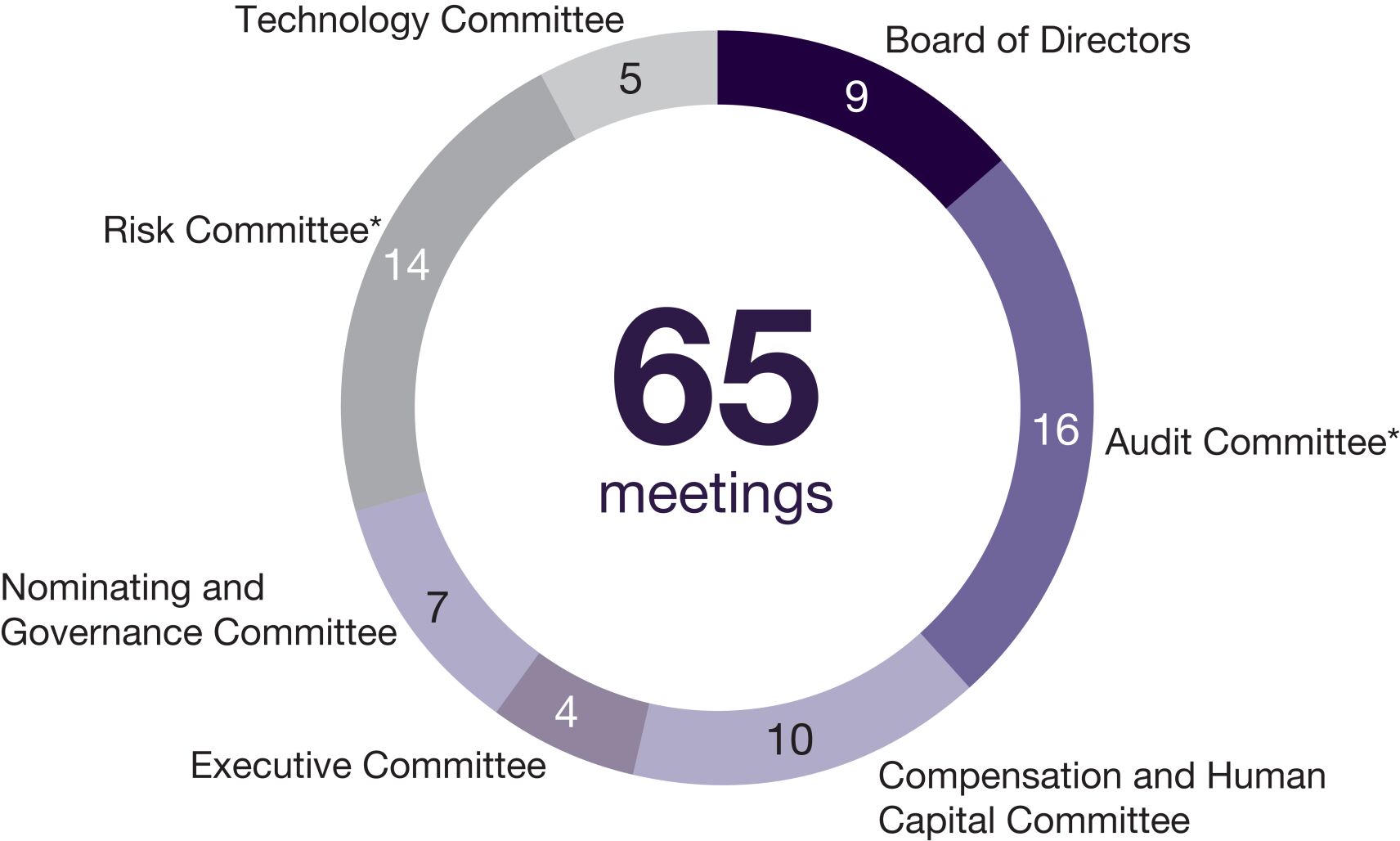
| * | Includes one joint meeting of the Risk Committee and the Audit Committee. |
Committees of the Board
Committees of the Board assist it in overseeing and directing the business and affairs of Truist. Our Board has six standing committees whose charters are accessible on the Investor Relations page of our website at https://ir.truist.com under “Governance & Responsibility”—“Board Committees.” Upon the recommendation of the Nominating and Governance Committee, the Board is responsible for approving the structure, charters, leadership, and membership of its committees. See Director Nominations and Refreshment on page 24 for additional information.
The following pages provide detail on the responsibilities of each standing committee of the Board, including the current members, the principal functions, and the number of meetings held in 2025.
AUDIT COMMITTEE
|
Committee Members
|
Key Committee Responsibilities: | |
|
Dallas S. Clement (Chair) Jennifer S. Banner Charles A. Patton Bruce L. Tanner
All members are independent
All members qualify as an audit committee financial expert, as defined in the applicable SEC rules.
16 Meetings in 2025 (includes one joint meeting with the Risk Committee) |
◾ Helps the Board oversee the integrity of Truist’s financial statements and management’s responsibilities for accounting, financial reporting, and internal controls and procedures.
◾ Reviews Truist’s major financial risk exposures and the steps management has taken to monitor and control these exposures, review and discuss policies and guidelines with respect to financial and accounting risk assessments and related risk management, and as necessary or appropriate, meet jointly or communicate with the Risk Committee about these matters and any other matters of common interest.
◾ Oversees the qualifications, independence, and performance of the independent registered public accounting firm.
◾ Responsible for (1) the appointment, compensation, retention, replacement, and oversight of the work of the independent registered public accounting firm for the purpose of preparing or issuing an audit report or performing other audit, review, or attest services and (2) the resolution of any disagreements between management and the independent registered public accounting firm regarding financial reporting.
◾ Oversees the stature and performance of Truist’s internal audit function.
◾ Approves the appointment, evaluation, removal, and replacement of the Chief Audit Officer in consultation with the Chief Executive Officer.
◾ Oversees Truist’s compliance with applicable legal and regulatory requirements.
◾ Reviews and discusses with the Corporation’s Chief Legal Officer litigation, investigations, and other legal matters that may have a material impact on the financial statements, internal controls over financial reporting, and related disclosures.
◾ Meets independently with the independent registered public accounting firm, the Chief Audit Officer, and other senior management in executive sessions as appropriate.
|
|
|
2026 Proxy Statement | |
29 |
Board and Committee Governance Matters
COMPENSATION AND HUMAN CAPITAL COMMITTEE
|
Committee Members |
Key Committee Responsibilities: | |
|
Thomas E. Skains (Chair) Jonathan M. Pruzan Bruce L. Tanner
All members are independent
10 Meetings in 2025 |
◾ Assists the Board in overseeing Truist’s compensation philosophy and the design and governance of the compensation and benefits plans.
◾ Reviews and recommends to the Board all equity and equity-based incentive plans.
◾ Oversees all benefits plans covering Truist’s employees.
◾ Reviews and approves policies applicable to the Chief Executive Officer and other senior management on minimum stock ownership, and the forfeiture and recoupment of compensation.
◾ Oversees Truist’s human-capital strategy and other significant matters involving compensation and human capital at Truist.
◾ Approves goals and objectives relevant to the compensation of the Chief Executive Officer.
◾ Sets the compensation for the Chief Executive Officer and other senior management and non-management directors.
◾ Coordinates with the Risk Committee to review and discuss the results of executive risk outcomes assessments (“EROA”) and any related matters involving the relationship among risk, risk management, and incentive compensation.
◾ Coordinates with the Audit Committee to review and approve the Chief Audit Officer’s non-financial performance objectives and compensation.
◾ Oversees the engagement, termination, compensation, and work of the Compensation and Human Capital Committee’s independent compensation consultant.
|
EXECUTIVE COMMITTEE
|
Committee Members |
Key Committee Responsibilities: | |
|
William H. Rogers, Jr. (Chair) Agnes Bundy Scanlan Dallas S. Clement Thomas E. Skains Laurence Stein
4 Meetings in 2025
|
◾ Authorized to act on behalf of the Board in overseeing Truist’s business between Board meetings, to the extent allowed by law.
|
| 30 | | 2026 Proxy Statement |
|
Board and Committee Governance Matters
NOMINATING AND GOVERNANCE COMMITTEE
|
Committee Members |
Key Committee Responsibilities: | |
|
Agnes Bundy Scanlan (Chair) Dallas S. Clement Thomas E. Skains
All members are independent
7 Meetings in 2025 |
◾ Reviews and recommends to the Board general criteria for director candidates.
◾ Identifies and evaluates candidates for election or appointment to the Board, and recommends nominees and appointees to the Board.
◾ Reviews and provides to the Board determinations on the eligibility of directors and director candidates, and reviews and recommends to the Board determinations on the independence of directors and director candidates.
◾ Makes recommendations to the Board about its size, committee structure, the charters and membership of the Board’s committees, and the Board’s leadership.
◾ Develops and oversees the annual assessment of the performance of the Board and its committees.
◾ Reviews and makes recommendations on director orientation and development.
◾ Evaluates and recommends to the Board whether to accept a resignation tendered or offered by a director who fails to receive the required number of votes for re-election or has a significant change in the director’s principal occupation or related responsibilities.
◾ Assists the Board in fulfilling its responsibility to plan the emergency succession of the Chief Executive Officer.
◾ Evaluates and decides whether to approve a director’s request to serve on another public-company board or with a governmental entity.
◾ Assesses and, as appropriate, refers to the Board any potential or alleged violation by a director of the Code of Ethics, the Corporate Governance Guidelines, or another requirement related to the director’s service to Truist.
◾ Oversees governance-related initiatives, including corporate responsibility, sustainability, political contributions and lobbying, and related-person transactions.
◾ Reviews and recommends changes to Truist’s governance documents, including the Code of Ethics.
◾ Reviews and recommends to the Board Truist’s proxy statement for the annual meeting of shareholders.
◾ Oversees Truist’s annual shareholder engagement program.
|
RISK COMMITTEE
|
Committee Members |
Key Committee Responsibilities: | |
|
Laurence Stein (Chair) Agnes Bundy Scanlan Linnie M. Haynesworth Donna S. Morea Jonathan M. Pruzan
All members are independent
Each of Ms. Bundy Scanlan and Messrs. Pruzan and Stein satisfy the risk expertise requirements for directors of a risk committee under the Federal Reserve Board’s Enhanced Prudential Standards
14 Meetings in 2025 (includes one joint meeting with the Audit Committee)
|
◾ Helps the Board oversee management’s responsibility to establish and implement (a) an effective ERM framework commensurate with Truist’s structure, risk profile, complexity, activities, and size and (b) risk management policies reasonably designed to identify, assess, measure, monitor, manage, and report on significant risks to Truist.
◾ Oversees the stature and performance of the Risk Management Organization.
◾ Annually reviews Truist’s risk taxonomy, including credit, market, liquidity, strategic, operational, technology, compliance, financial crimes, and other significant risks to Truist.
◾ Reviews and approves quantitative and qualitative statements of Truist’s risk appetite and significant changes to these risk-appetite statements, and reviews and discusses with management reports on business, financial, operational, and other results against these risk-appetite statements.
◾ Approves the appointment, evaluation, removal, and replacement of the Chief Risk Officer in consultation with the Chief Executive Officer.
◾ Coordinates with the Compensation and Human Capital Committee on EROA.
◾ Coordinates with the Audit Committee on major financial risk exposures and related risk management.
◾ Coordinates with the Technology Committee on cybersecurity and other technology risk matters.
◾ Approves and further recommends to the Board for approval the annual capital plan, the comprehensive capital analysis and review and stress-test submissions to supervisory authorities, and the resolution plans.
|
|
|
2026 Proxy Statement | |
31 |
Board and Committee Governance Matters
TECHNOLOGY COMMITTEE
|
Committee Members |
Key Committee Responsibilities: | |
|
Donna S. Morea (Chair) Jennifer S. Banner K. David Boyer Linnie M. Haynesworth
All members are independent
5 Meetings in 2025 |
◾ Reviews reports on Truist’s technology strategy and operations, significant technology investments and related technological progress, and trends that may affect Truist’s technology strategy and operations.
◾ Reviews reports on Truist’s strategies for capitalizing on industry changes and new distribution channels for products and services created by digital technologies.
◾ Reviews and discusses with management significant technology policies, standards, and controls.
◾ Reviews and recommends to the Board for approval, when appropriate, technology strategies and significant technology investments.
◾ Coordinates with the Risk Committee on cybersecurity and other technology risk matters.
|
Board’s Oversight
The business and affairs of Truist are managed by its officers and teammates under the oversight and direction of the Board. The Board oversees the development of, reviews, approves, and periodically monitors Truist’s strategy and risk appetite with a long-term perspective on risks and rewards that is consistent with the capacity of Truist’s ERM framework. The Board is also responsible for selecting and planning for the succession of the Chief Executive Officer. Other features of the Board’s oversight and direction are designed to support effective governance, including in connection with the information needs of the Board, the accountability of senior management, the independence and stature of independent risk management and internal audit, a capable composition and governance structure of the Board, and a tone at the top aligned with Truist’s Purpose, Mission, and Values. In doing so, the Board considers factors such as Truist’s asset size, complexity, scope of operations, and risk profile.
BOARD’S OVERSIGHT OF STRATEGIC DIRECTION AND PLANNING
One of our Board’s primary responsibilities is to provide oversight and direction to senior management on the formulation and implementation of Truist’s strategic plan. This occurs year-round through presentations and discussions covering enterprise, business, and operational strategies, planning, and growth initiatives.
Management’s approach to developing a strategic plan for discussion, consideration, and approval by the Board consists of the following.
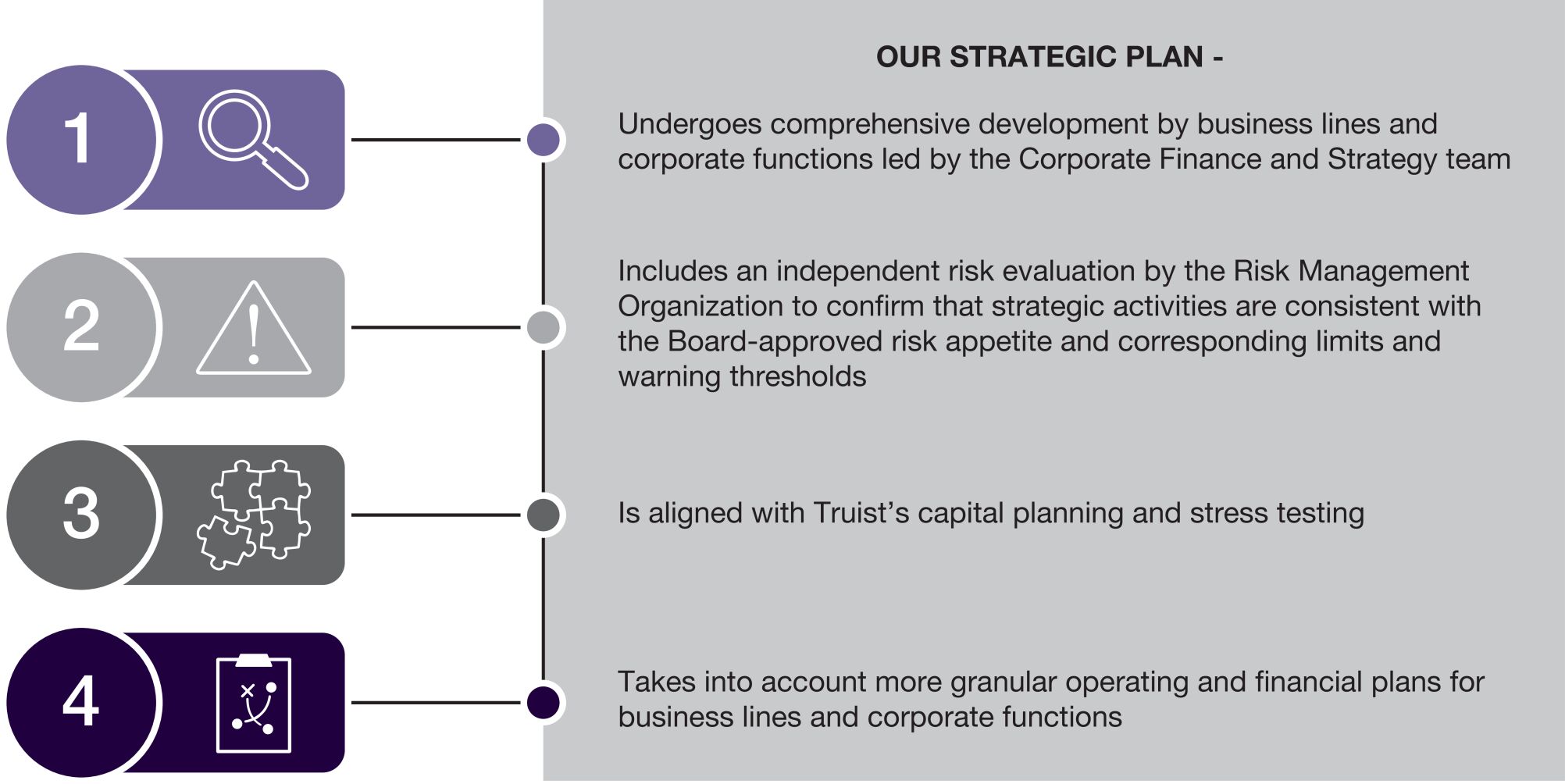
| 32 | | 2026 Proxy Statement |
|
Board and Committee Governance Matters
After approval by the Board, implementation of the strategic plan is monitored by management’s Enterprise Strategy and Execution Committee and through regular reviews by and discussions with the Board.
Throughout 2025, our Board regularly engaged with senior management and other leaders across our business lines and corporate functions on the initiatives supporting Truist’s long-term strategy. The Board also held frequent discussions with management on key enablers of Truist’s strategy, including capital and funding considerations, technology modernization and data-and-digital investments, and the complementary risk infrastructure. These discussions informed the Board’s ongoing oversight of Truist’s strategic direction and created alignment between near-term results and long-term value creation.
BOARD’S OVERSIGHT OF SUCCESSION PLANNING
The Board believes that a robust and thoughtful leadership succession plan for the Chief Executive Officer is a critical responsibility. The Board, under the leadership of the Lead Independent Director and the Chairman, reviews and assesses the capabilities, development plans, and readiness of possible candidates. In doing so, a range of factors are considered, such as leadership ability, strategic vision, operational and risk acumen, cultural fit, and near-term and long-term business and financial objectives. Succession planning for the Chief Executive Officer is discussed at least annually and generally more frequently by the Board.
Emergency Succession
The Nominating and Governance Committee assists the Board in fulfilling its responsibility to plan for the emergency succession of the Chief Executive Officer, which is related to but distinct from general succession planning. The Board considers an emergency succession plan for the Chief Executive Officer at least annually.
Integration with Senior Management Succession
The Board discusses succession planning for other key members of senior management to monitor the talent pipeline for critical executive roles. Our Chief Executive Officer leads the preparation of these succession plans and presents them to the Board for consideration at least annually and generally more frequently. In addition to this formal review, the Board receives updates on the development of senior leaders during the course of the year, and opportunities are created for directors to periodically engage with members of management in more informal settings.
BOARD’S OVERSIGHT OF RISK MANAGEMENT
Truist seeks to maintain a comprehensive ERM framework supported by people, processes, and systems designed to identify, assess, measure, monitor, control, mitigate, govern, and report on risks arising from exposures and business activities. Primary risk types are defined across eight categories comprising credit, market, liquidity, strategic, operational, technology, compliance, and financial crimes. Through this ERM framework, Truist promotes the execution of strategic goals and objectives in alignment with its risk appetite to realize its Purpose, Mission, and Values.
The Risk Committee assists the Board in overseeing management’s responsibility to establish and implement the ERM framework commensurate with Truist’s structure, risk profile, complexity, activities, and size. The Risk Committee also assists the Board in overseeing the stature and performance of the Risk Management Organization and the Company’s ERM framework and policies, including quantitative and qualitative statements of the Company’s risk appetite and risk limits, thresholds, and other parameters designed to supplement them. In addition, the Risk Committee reviews and recommends to the Board the annual capital plan and the acceptable level of liquidity risk that Truist may assume in connection with its operating strategies. Management of the program for compliance risk management is overseen by the Risk Committee as well. Through these and other activities, the Risk Committee sets a tone at the top for risk governance across Truist.
|
|
2026 Proxy Statement | |
33 |
Board and Committee Governance Matters
The following graphic illustrates our risk management governance structure of our committees.
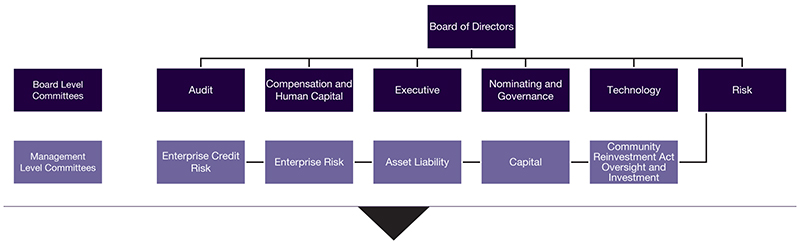
In addition to this committee structure, the Risk Committee reviews and approves the appointment, evaluation, removal, and replacement of the Chief Risk Officer in consultation with the Chief Executive Officer, with the Chief Risk Officer directly reporting to the Risk Committee functionally and to the Chief Executive Officer administratively.
Similarly, the Audit Committee assists the Board by overseeing the stature and performance of Truist Audit Services (“TAS”), the internal audit function within Truist. The Audit Committee reviews and approves the appointment, evaluation, removal, and replacement of the Chief Audit Officer in consultation with the Chief Executive Officer, with the Chief Audit Officer directly reporting to the Audit Committee functionally and to the Chief Executive Officer administratively. The Audit Committee also reviews and approves the charter of TAS and its internal audit plan, including the risk-assessment methodology used in preparing the internal audit plan as well as budget and staffing requirements for TAS. Additionally, the Audit Committee reviews and discusses Truist’s major financial risk exposures, the steps management has taken to monitor and control these exposures, and policies and guidelines with respect to financial and accounting risk assessments and related risk management. The Audit Committee meets jointly or communicates with the Risk Committee as appropriate.
The Compensation and Human Capital Committee assists the Board in overseeing Truist’s compensation philosophy and the design and governance of Truist’s compensation and benefits plans by reviewing and approving a statement of our compensation philosophy and principles, including provisions that (1) promote sound risk management, compliance with laws, and safety and soundness, (2) align long-term incentive compensation with the interests of shareholders and the creation of long-term value, and (3) do not encourage excessive, inappropriate, or unnecessary risk-taking. The Compensation and Human Capital Committee or its chair also meets jointly or communicates with the Risk Committee or its chair to review and discuss the results of EROA and any related matters involving the relationship among risk, risk management, and incentive compensation.
The Technology Committee assists the Board in overseeing Truist’s technology strategy and operations, including significant investments in support of Truist’s strategy and operations, all within Truist’s risk appetite. Additionally, the Technology Committee or its chair meets jointly or communicates with the Risk Committee or its chair to review and discuss Truist’s cybersecurity and other technology risks.
While each of these Board committees exercises oversight responsibilities in connection with risk management, the Board is regularly updated by these committees and management on current and emerging risks, which are considered in overseeing and directing the execution of the strategic plan. Further, in fulfilling its oversight function, the Board and its standing committees provide effective challenge on the management of risks at Truist, with a particular focus on those that could materially impact Truist’s strategic objectives, financial performance, or compliance with laws. Through this effective challenge, directors are able to better evaluate whether and how senior management’s conclusions and recommendations align with and support Truist’s strategy and risk appetite.

Role of Management in Overseeing Risk
The Risk Management Organization is led by our Chief Risk Officer and is responsible for the ERM framework, including the identification, assessment, measurement, monitoring, management, and reporting of risks in a comprehensive and independent manner. Specifically, the Risk Management Organization engages in the following:
| ◾ | the establishment and monitoring of enterprise-wide risk limits; |
| ◾ | the implementation and monitoring of compliance with risk management policies and procedures; and |
| ◾ | independent views of the management of risks, controls, monitoring, and testing by business lines and corporate functions as appropriate. |
| 34 | | 2026 Proxy Statement |
|
Board and Committee Governance Matters
We have several management-level committees embedded within our ERM framework, including the Enterprise Risk Committee chaired by our Chief Risk Officer. The Enterprise Risk Committee provides broad strategic oversight of all risk types and establishes an integrated view of risks across Truist at the enterprise-level. The Enterprise Risk Committee is responsible for maintaining the ERM framework and monitoring its adoption and execution across the enterprise. The membership of the Enterprise Risk Committee includes the Chief Executive Officer, the Chief Financial Officer, the Chief Audit Officer, and other designated members of Truist management.
The ERM framework is supported by a three-lines-of-defense structure with unique roles and responsibilities for executing risk management activities, maintaining independent oversight, and providing independent assurance, as described below.
| First Line of Defense | ||
| The first line of defense comprises the business units that originate the risks and are responsible for managing them through risk management activities. Centralized first-line risk execution and management has been standardized across the Company in partnership with the business units and enterprise functions. Dedicated first line of defense risk partners provide risk advice and oversight, issues management, testing, reporting, and business continuity expertise. First line of defense coordinates closely with the Risk Management Organization in executing these responsibilities.
| ||
| Second Line of Defense | ||
| The second line of defense is the independent risk management oversight and challenge function provided by the Risk Management Organization. The second line of defense is led by the Chief Risk Officer and is responsible for providing independent risk management, oversight, and effective challenge of the first line of defense. The key responsibilities of the second line of defense include (1) establishing policies and procedures to guide and oversee the execution of risk management framework requirements across Truist, (2) overseeing first line of defense identification and assessment of current and emerging risks, as well as the effectiveness of governance, processes, and controls to mitigate risks, (3) controlling the selection of key risk indicators and the establishment of risk limits to measure and monitor risk exposures relative to the Company’s established risk appetite, (4) independently identifying and escalating issues, including opportunities to strengthen the internal control environment, and (5) acting in a consultative role to assist the first line of defense with identifying, monitoring, and mitigating risks.
| ||
| Third Line of Defense | ||
| The third line of defense is the independent assurance function provided by TAS. As the third line of defense, TAS provides independent and objective assurance for Truist. TAS independently evaluates the adequacy and effectiveness of Truist’s risk management, governance, and oversight, consistent with regulatory expectations and Truist’s size, complexity, and risk profile. TAS is led by the Chief Audit Officer, who reports functionally to the Audit Committee and administratively to the Chief Executive Officer.
|
BOARD’S OVERSIGHT OF CYBERSECURITY
Our Board oversees the development of, and reviews, approves, and periodically monitors, Truist’s strategy and risk appetite with a long-term perspective on risks and rewards that is consistent with the capacity of our risk management framework.
The Risk Committee assists the Board in overseeing our cybersecurity framework and, in doing so, utilizes management-reporting processes designed to provide directors with information that is sufficient in scope, detail, and analysis to enable them to consider cybersecurity risks. For example, the Risk Committee receives and discusses regular reports from our Chief Risk Officer and Chief Security Officer and also meets periodically with outside advisers to gain additional perspectives on the cybersecurity landscape. Further, the Risk Committee or its chair meets jointly or communicates with the Technology Committee or its chair to review and discuss Truist’s cybersecurity and other technology risks. Management discusses cybersecurity developments with the chairs of the Risk Committee and the Technology Committee, as appropriate, between Board and committee meetings as well. The Board receives, as required by the Gramm-Leach-Bliley Act, an update at least annually on Truist’s Corporate Information Security Program, and the Board annually reviews and approves that program. The Risk Committee annually reviews and approves our Corporate Information Policy.
Truist provides ongoing development and education to its directors with respect to cybersecurity, including presentations at Board meetings on special topics, such as updates on cybersecurity legislation and regulation, as warranted. The Board also conducts a cybersecurity tabletop exercise at least every other year to simulate Truist’s analysis and response to hypothetical cybersecurity incidents. In addition, Truist provides directors with a Board Cybersecurity Handbook that provides details on key Truist practices, resources, and protocols relating to cybersecurity protection, response, and preparedness. For more information on our management of cybersecurity risks, see the Cybersecurity section of our 2025 Form 10-K.
|
Spotlight on Artificial Intelligence
Artificial intelligence continues to be an area of focus for our stakeholders. The Board and its committees regularly engage on this subject as we expand our capabilities through strengthened governance and teammate training and implement artificial intelligence to support our enterprise strategic priorities and our business and risk management processes.
Truist’s artificial intelligence program is foundationally based on the National Institute of Standards and Technology Artificial Intelligence Risk Management Framework Core, which provides outcomes and actions that enable dialogue, understanding, and activities to manage artificial intelligence risks and develop trustworthy artificial intelligence systems. Oversight of Truist’s artificial intelligence program is a regular focus of the Board, the Risk Committee and the Technology Committee. The Board receives and discusses reports on Truist’s approach to artificial intelligence, including policies and procedures governing the use of artificial intelligence, the results of our application of the technology, and emerging opportunities. The Board is also provided educational sessions on artificial intelligence with a focus on trends and competitive impact, strategy, and risk management.
|
|
|
2026 Proxy Statement | |
35 |
Board and Committee Governance Matters
STATEMENT OF POLITICAL ENGAGEMENT
Our executive officers have direct responsibility for our political activities, while our Nominating and Governance Committee oversees the Company’s policies and practices relating to political contributions and lobbying. A copy of Truist’s Statement of Political Engagement may be found in our annual Political Contributions Report, which is available on the Investor Relations page of our website at https://ir.truist.com under “Governance & Responsibility”—“Corporate Governance.” Truist participates in policy debates on issues to support our interests. Truist does not use corporate funds to contribute to federal, state, or local political candidates, political parties, or political committees organized for the advancement of a political candidate, including super political action committees, or otherwise employ its resources, including in-kind resources, for the benefit of any of the foregoing. In some cases, Truist may contribute corporate funds to 501(c) tax-exempt organizations that engage in advocacy and education to promote a robust financial services industry and a vibrant, growing economy. Truist may also occasionally make corporate contributions to ballot measure committees where permitted by law. Truist discloses any ballot measure contributions in its annual political contributions reporting. As part of Truist’s involvement in the public policy process, Truist regularly expresses its views on policy matters to elected officials and their staff, as well as the principals and staff of various regulatory organizations. Truist generally does not engage in grassroots lobbying, which consists of directly communicating with the public advocating action with respect to specific legislation. If Truist does engage in grassroots lobbying, Truist will disclose such activity where and as required by law.
Truist sponsors nonprofit, unincorporated political action committees (“PACs”), which allow directors and teammates to voluntarily pool their financial resources to support federal and state candidates who drive policies to help financial institutions continue to innovate, serve our communities, and advance the success and prosperity of our clients. Political contributions from the Truist PACs are designated for core banking, business, and economic advocacy without regard to party affiliation. All PAC expenditures are a matter of public record and are available for review on the websites of the Federal Election Commission and various state election offices. The political spending of Truist’s PACs is also disclosed in our annual Political Contributions Report, which is available on the Investor Relations page of our website at https://ir.truist.com under “Governance & Responsibility”—“Corporate Governance.” The Truist PACs are governed by a board of directors, which is composed of Truist teammates, that is charged with oversight of PAC activities as well as the development of policies governing contributions, solicitations, and communications.
| 36 | | 2026 Proxy Statement |
|
Other Corporate Policies and Practices
The Nominating and Governance Committee and the Board regularly review the material elements of Truist’s corporate governance, taking into account industry and other practices, recent developments, and the requirements of applicable statutes, regulations, and other laws.
The Board is committed to sound and effective corporate governance that conforms to the highest standards of business ethics and integrity, provides for the robust oversight of management, and promotes the long-term interests of our shareholders. To this end, the Board has adopted Corporate Governance Guidelines to provide a governance framework for our directors and management to effectively pursue our strategic objectives for the benefit of our shareholders. The Board reviews and approves the Corporate Governance Guidelines and the charters of the Board committees at least annually while taking into account the evolving needs of Truist, best practices in corporate governance, and the results of the annual self-assessments of the Board and its committees. See Board and Committee Governance Matters on page 23 for additional information.
Our Corporate Governance Documents
| Key Corporate Governance Documents |
|
Corporate Governance Guidelines
Articles of Incorporation and Bylaws
Charters for each of the Company’s standing Board committees
Code of Ethics
Accounting and Legal Violations Policy
Shareholders may also request a copy of any of these documents by contacting our Corporate Secretary at:
Truist Financial Corporation Attn: Corporate Secretary 214 N. Tryon Street 43rd Floor, Mail Code 500-93-43-13 Charlotte, North Carolina 28202
|
Additional corporate governance information, including these corporate governance documents, can be found on the Investor Relations page of our website at https://ir.truist.com under “Governance & Responsibility.”
Communications with the Board
Any shareholder or other interested party may contact the Board, any member of the Board, or the independent directors as a group by written communication mailed to:
|
Board of Directors Attention: Corporate Secretary (if intended for the entire Board) or specific member or members of the Board (if not intended for the entire Board) Truist Financial Corporation 214 N. Tryon Street 43rd Floor, Mail Code 500-93-43-13 Charlotte, North Carolina 28202
|
The Corporate Secretary will relay correspondence relating to a director’s duties or responsibilities to the specified recipient. Correspondence that is unrelated to a director’s duties and responsibilities may be discarded or otherwise addressed by the Corporate Secretary. Any correspondence that expresses a concern about any governance, conduct, ethical, accounting, financial-reporting, or internal-control matter may be addressed to the Chair of the Audit Committee, the Chair of the Risk Committee, or the Chair of the Nominating and Governance Committee or may be submitted anonymously through Truist’s ethics hotline.
|
|
2026 Proxy Statement | |
37 |
Other Corporate Policies and Practices
Ethics at Truist
CODE OF ETHICS
Ethics matter at Truist. We believe the ultimate success of Truist is directly related to the extent that each one of our teammates lives and works every day by adhering to our Purpose, Mission, and Values. We are keenly focused on doing what is right in interactions with our clients, teammates, and other stakeholders. Our Board has adopted an enterprise Code of Ethics that applies to our teammates and directors. All Truist teammates and directors are required to read, understand, and comply with the Code of Ethics, which addresses subjects such as complying with the law, reporting concerns, handling confidential information, understanding and avoiding conflicts, dealing with clients, dealing with Truist and its property, and dealing with market participants (including by avoiding insider trading and evaluating outside business opportunities). We will post any amendment to the Code of Ethics, as well as any waiver that is required to be disclosed under applicable SEC rules or NYSE listing standards, on the Investor Relations page of our website at https://ir.truist.com under “Governance & Responsibility”—“Code of Ethics.”
Truist also maintains a distinct Supplier Code of Conduct, which provides general guidance about the standards of integrity and business conduct that we expect of our suppliers.
ETHICS HOTLINE AND REPORTING CONCERNS
Honesty and transparency are foundational to our Code of Ethics. Truist is committed to maintaining a workplace where teammates feel supported in raising concerns, and we believe in the benefit of preventing mistakes or wrongdoing by asking the right questions at the right time. Truist encourages teammates to raise concerns with their managers as well as through the internal Reporting Teammate Concerns intranet reporting system and Truist’s Anonymous Action Hotline. The Anonymous Action Hotline is managed by an independent third party and is available 24 hours a day, seven days a week. Our Enterprise Ethics Office independently reviews and monitors teammate concern activity for trends and provides reports to the Board. Acts of retaliation against teammates for reporting concerns violate the Code of Ethics and are not tolerated.
Accounting and Legal Violations Policy
Our Chief Legal Officer, with oversight from the Audit Committee, receives and assesses complaints or concerns addressed by our Accounting and Legal Violations Policy. Covered accounting and legal matters include the following:
|
◾ Accounting, internal accounting controls, or auditing matters that are or are suspected of being questionable, inappropriate, or illegal. |
◾ Actual or suspected material violations or breaches of:
◾ applicable federal or state securities laws,
◾ fiduciary duties arising under applicable federal or state laws, or
◾ similar federal or state laws.
|
Our Chief Legal Officer is responsible for assessing and, if reasonably possible and appropriate in the judgment of the Chief Legal Officer, overseeing the investigation of these reported matters. The Audit Committee periodically reviews and approves the Accounting and Legal Violations Policy and receives reports on both substantiated and non-substantiated matters.
| 38 | | 2026 Proxy Statement |
|
Corporate Responsibility and Sustainability
Truist’s purpose—to inspire and build better lives and communities—informs our approach to corporate responsibility and sustainability programs. In addition to sound business practices and our efforts to recruit, retain, and develop our teammates, we strive to empower individuals and strengthen communities across our footprint by offering financial resources and education programs for people from all walks of life.
Some of these initiatives include CRA philanthropic giving to organizations that address affordable housing and workforce development as well as financial and technical support for small businesses. Truist also invests in community development lending for affordable housing, lending to nonprofits that support low- to moderate-income populations, and mortgage lending for such borrowers. We are proud to have received an “outstanding” rating from the FDIC for the most recent CRA exam cycle covering 2020–2022.
Our purpose-driven strategy creates meaningful impact for shareholders, clients, communities, and teammates while managing risks and advancing responsible business and sustainability practices.
CURRENT PRACTICES AND ACCOMPLISHMENTS
Community Impact, Financial Inclusion, and Financial Education
In addition to the CRA program, Truist supports communities through:
| ◾ | Truist Foundation, Inc., a 501(c)(3) nonprofit organization established in 2020; |
| ◾ | the Truist Charitable Fund, a donor-advised fund; |
| ◾ | corporate philanthropy; |
| ◾ | Truist Community Capital; |
| ◾ | teammate volunteerism and giving; and |
| ◾ | in-kind leadership development programs hosted by the Truist Leadership Institute. |
Truist collaborates with large, national organizations that can address issues at scale across our footprint as well as local and smaller organizations that can address issues tailored to a particular region. Truist offers inclusive financial education programs covering affordable home ownership, emergency savings, investing for retirement, creating career opportunities, expanding access to capital, and other topics that help people become more financially secure and knowledgeable about managing their money.
Sustainability
Truist helps commercial clients of all sizes and across all industries achieve their goals. Because these goals vary, we continue to pursue a balanced and inclusive approach to sustainability that positions us to support our clients where they are and where they want to go. Within Truist, we remain focused on conserving or minimizing consumption of energy and other resources and reducing our enterprise operational emissions. Truist manages risks associated with these activities according to our existing ERM framework and legal requirements.
Corporate Responsibility and Sustainability Reporting
In addition to business practices and accomplishments highlighted in regulatory and other legal disclosures, Truist produces a suite of voluntary corporate responsibility and sustainability reports. These voluntary disclosures highlight our annual progress on corporate responsibility and sustainability programs. To find our latest reports, visit the Investor Relations page of our website at https://ir.truist.com under “Governance & Responsibility”—“Corporate Responsibility and Sustainability.”
GOVERNANCE, RISK MANAGEMENT, AND OVERSIGHT
Committees of the Board assist in oversight of corporate responsibility and sustainability programs, risks, and disclosures. The Nominating and Governance Committee oversees significant strategies, programs, initiatives, and activities involving corporate responsibility and sustainability. Related SEC filings generally fall within the purview of the Audit Committee. The Compensation and Human Capital Committee oversees the human capital strategies of the Company, including in connection with talent management and engagement, and the Risk Committee reviews our climate-related risks and related risk management practices. The Board receives reports from all of these committees as well as periodic updates from management on key developments.
MORE INFORMATION
For more information, see the Investor Relations page of our website at https://ir.truist.com under “Governance & Responsibility”—“Corporate Responsibility and Sustainability.”
|
|
2026 Proxy Statement | |
39 |
Compensation of Directors
The purpose of our director compensation program is to appropriately compensate our non-management directors for their time, expertise, and effort in serving as a director of a large and complex financial services company, and to align the interests of our directors and shareholders.
Director Compensation Program. Set forth below is the compensation our non-management directors were eligible to receive for service as a member of the Boards of the Company and Truist Bank in 2025. Mr. Rogers receives no additional compensation for his service as a director.
For 2025, each non-management director was eligible to receive an annual cash retainer of $100,000. The Lead Independent Director, certain committee chairs, and non-chair members of the Audit Committee and Risk Committee were also eligible to receive the additional cash retainers set forth below.
| Additional Cash Retainer | Position | |
| $50,000 | ◾ Lead Independent Director | |
| $45,000 | ◾ Chair of the Audit Committee
◾ Chair of the Risk Committee
◾ Chair of the Technology Committee | |
| $30,000 | ◾ Chair of the Compensation and Human Capital Committee
◾ Chair of the Nominating and Governance Committee | |
| $20,000 | ◾ Chair of the Truist Bank Trust Committee | |
| $15,000 | ◾ All non-chair members of the Audit and Risk Committees | |
For 2025, each non-management director was also eligible to receive an equity compensation award valued at $180,000 at the time of grant. The awards were issued in the form of RSUs that cliff vest at the end of the year in which they are granted (subject to any deferral election, as described below).
| ◾ | If Board service is terminated due to death or disability, all unvested RSUs become fully vested. |
| ◾ | If Board service is terminated for any other reason, all unvested RSUs are forfeited. |
| ◾ | Upon a change of control, all unvested RSUs become fully vested. |
Annual Review. On an annual basis, the Compensation and Human Capital Committee reviews the compensation paid to our directors and makes recommendations to the Board regarding any changes. Working with its independent compensation consultant, the Compensation and Human Capital Committee annually assesses the competitiveness of Truist’s director compensation program.
In 2025, the Compensation and Human Capital Committee reviewed (1) all components of director cash and equity compensation, (2) forecasted market data, and (3) total Board compensation cost, equity grant practices, stock ownership guidelines, and Board governance practices; with a comparative view against our peer group and the broader market. Following this review, the Compensation and Human Capital Committee increased the annual cash retainer by $10,000 to $110,000 and the grant value of the equity compensation award from $180,000 to $200,000. These changes went into effect in 2026.
Truist Directors’ Deferred Compensation Plan. The Truist Financial Corporation Amended and Restated Non-Employee Directors’ Deferred Compensation Plan (the “Truist DDCP”) permits participating non-management directors to elect to defer 50% or 100% of their cash retainer fees and 100% of their equity compensation awards into a deferred compensation account. Deferred retainer fees and equity awards are fully vested at all times and payable in lump sum or in a series of installment payments, depending on the directors’ previous election, following the earlier of a director’s death or termination of service on the Board. Deferred retainer fees are paid in cash and deferred equity awards are settled in shares of Truist’s common stock.
Frozen Deferred Compensation Plans. The SunTrust Banks, Inc. Directors Deferred Compensation Plan (the “SunTrust DDCP”) permitted participating non-management directors to elect to defer 100% of their cash retainer fees and 100% of their equity compensation awards into a deferred compensation account. The BB&T of Virginia Directors Deferred Compensation Plan (the “BB&T DDCP”) permitted participating non-management directors to elect to defer 50% or 100% of their cash retainer fees, regular meeting fees, and any other forms of compensation into a deferred compensation account. The deferred compensation is fully vested at all times and payable in lump sum or in a series of installment payments, depending on the director’s previous election, following termination of service on the Board. Under the SunTrust DDCP, deferred compensation is paid in cash. Ms. Bundy Scanlan and Messrs. Clement, Tanner, and Voorhees elected to defer compensation under the SunTrust DDCP prior to the date the plan was frozen. Under the BB&T DDCP, deferred compensation is settled in shares of Truist’s common stock. Mr. Patton elected to defer compensation under the BB&T DDCP prior to the date the plan was frozen.
| 40 | | 2026 Proxy Statement |
|
Compensation of Directors
Stock Ownership Requirements. Stock ownership requirements for non-management directors are set forth in our Bylaws. Throughout the full term of such a director’s service, the director is required to maintain ownership of shares of common stock with a market value approximately equal to 5x the average annual cash retainer paid by Truist for the director’s services. All shares held or controlled by the director are considered in determining compliance with the ownership requirement, including direct holdings, shares in nonqualified individual account plans sponsored by Truist, and unvested but not forfeited RSUs and restricted shares (but not stock options) granted by Truist. All non-management directors are expected to meet this ownership requirement by the later of (1) five years following initial appointment as a director or (2) such period of time as it may take for the director to reach the ownership requirement threshold by holding all shares and RSUs granted by Truist pursuant to its equity compensation arrangements for directors. As of December 31, 2025, each non-management director was compliant with the stock ownership requirements.
Director Pay Limit. Subject to shareholder approval of Proposal 4, the amendment and restatement of the Truist Financial Corporation 2022 Incentive Plan will limit the maximum number of shares that may be awarded to a non-management director in a calendar year, together with any cash fees paid to that director, to $750,000 in total value (or $1,000,000 in total value, in the event the Board retained a non-Executive Chair). See Proposal 4 on page 91 for additional information.
2025 Director Compensation Table
The following table shows compensation paid to our non-management directors for their service in 2025.
| Name |
Fees Earned or Paid in Cash(1) ($) |
Stock Awards(2) ($) |
All Other Compensation(3) ($) |
Total ($) | ||||||||||||||||
| Jennifer S. Banner |
115,000 | 173,869 | — | 288,869 | ||||||||||||||||
| K. David Boyer, Jr. |
120,000 | 173,869 | — | 293,869 | ||||||||||||||||
| Agnes Bundy Scanlan |
145,000 | 173,869 | 1,500 | 320,369 | ||||||||||||||||
| Dallas S. Clement |
145,000 | 173,869 | 5,000 | 323,869 | ||||||||||||||||
| Linnie M. Haynesworth |
115,000 | 173,869 | — | 288,869 | ||||||||||||||||
| Donna S. Morea |
160,000 | 173,869 | — | 333,869 | ||||||||||||||||
| Charles A. Patton |
145,000 | 173,869 | — | 318,869 | ||||||||||||||||
| Jonathan M. Pruzan |
69,000 | 107,664 | — | 176,664 | ||||||||||||||||
| Thomas E. Skains |
155,342 | 173,869 | 5,000 | 334,211 | ||||||||||||||||
| Laurence Stein |
120,342 | 173,869 | — | 294,211 | ||||||||||||||||
| Bruce L. Tanner |
115,000 | 173,869 | — | 288,869 | ||||||||||||||||
| Steven C. Voorhees (Retired) |
145,000 | 173,869 | 10,000 | 328,869 | ||||||||||||||||
| (1) | In May 2025, Mr. Pruzan was appointed to the Board and received pro-rata cash retainers for his annual and Risk Committee service. |
| In October 2025, following the Board’s annual self-assessment process, the Board decided to rotate certain committee chairs and memberships. As a result, Messrs. Skains and Stein agreed to serve as Chair of the Compensation and Human Capital Committee and Chair of the Risk Committee, respectively, and each received a pro-rata cash retainer of $5,342 for such service. |
| (2) | In February 2025, each then-serving non-management director was granted an award of 3,986 RSUs for service in 2025. In May 2025, Mr. Pruzan was appointed to the Board and was granted a pro-rata award of 2,697 RSUs. Each non-management director RSU award vested on December 31, 2025. The amounts in this column reflect the grant date fair value of the RSU awards, calculated in accordance with FASB ASC Topic 718. The grant date fair value was determined based on our closing stock price per share on the applicable grant date, less the present value of expected dividends that will not be received during the vesting period. The assumptions used in the calculation of these amounts for awards granted in 2025 are included in Note 15. Benefit Plans in the Notes to Consolidated Financial Statements included within Truist’s 2025 Form 10-K. As of December 31, 2025, none of our non-management directors held outstanding stock awards. See Stock Ownership Information on page 102 for additional information on our directors’ beneficial ownership of Truist shares as of February 19, 2026. |
| (3) | Our directors are eligible to participate in two matching gifts programs: (1) the Truist Foundation matching gifts program, under which our charitable foundation matches up to $2,500 per year to approved charitable organizations; and (2) the Company-sponsored political action committee (“PAC”) matching gifts program, under which our Company-sponsored PAC matches up to $5,000 per year in PAC contributions in donations to approved charitable organizations. Eligibility for matching gifts under both programs is based on the year the charitable donation or PAC contribution, as applicable, was made by the director, although the match may be completed in a subsequent year. The Truist Foundation matching gift program is available to directors and all regular full-time and part-time teammates. The PAC matching gifts program is only available to directors. The values in this column reflect the amounts that were donated to charities in 2025 on behalf of directors under both programs. The following amounts match director donations made under Truist Foundation matching gifts program in 2025: Ms. Bundy Scanlan, $1,500. The following amounts match director PAC contributions in 2025: Mr. Clement, $5,000, and Mr. Skains, $5,000. |
| A $10,000 charitable gift was made on behalf of Mr. Voorhees to recognize his retirement from our Board, his service on the Audit, Compensation and Human Capital, and Executive Committees, and his service as the Chair of the Compensation and Human Capital Committee. |
| This column excludes the perquisites received by a director to the extent the total value of such perquisites was less than $10,000 in the aggregate, as permitted under SEC rules. |
|
|
2026 Proxy Statement | |
41 |
Proposal 2—Advisory Vote to Approve Truist’s Executive-
Compensation Program
In accordance with Section 14A of the Securities Exchange Act of 1934, as amended (the “Exchange Act”), we are asking our shareholders to approve our executive-compensation program through a say-on-pay advisory vote. The Compensation and Human Capital Committee and the Board believe that our executive-compensation program, as described in the Compensation Discussion and Analysis, reflects a pay-for-performance culture at Truist that is rooted in our Purpose, Mission, and Values. The Compensation and Human Capital Committee and the Board also believe that the executive-compensation program is well designed and effective in aligning the interests of our NEOs with the long-term interests of our shareholders, while minimizing incentives for inappropriate, unnecessary, or excessive risk-taking, consistent with applicable banking and other laws.
In making a decision on whether to approve our executive-compensation program, we ask that you consider the Compensation Discussion and Analysis, the executive-compensation tables, and the related narrative disclosures in this proxy statement. The say-on-pay advisory vote is not intended to address any specific item of compensation but rather the overall compensation of our NEOs and the compensation philosophy, policies, and practices described in this proxy statement.
The Board asks shareholders to support our executive-compensation program through the following resolution:
“Resolved, that the shareholders approve, on an advisory basis, the compensation paid to Truist’s NEOs, as described in the Compensation Discussion and Analysis, the compensation tables, and the related narrative disclosures in the Company’s 2026 Proxy Statement.”
This say-on-pay vote is advisory and, therefore, not binding on the Company, the Compensation and Human Capital Committee, or the Board. The Compensation and Human Capital Committee and the Board, however, greatly value the perspectives of shareholders, and to the extent that there is a significant vote against the executive-compensation program as disclosed in this proxy statement, the Compensation and Human Capital Committee will consider the concerns of shareholders and evaluate whether any actions are necessary to address those concerns.
After considering the results of our 2023 advisory vote on the frequency of say-on-pay votes, the Board determined to hold annual say-on-pay votes. Accordingly, we expect the next say-on-pay vote following the Annual Meeting to be held at the 2027 annual meeting.
|
|
THE BOARD OF DIRECTORS RECOMMENDS A VOTE “FOR” PROPOSAL 2—ADVISORY VOTE TO APPROVE TRUIST’S EXECUTIVE-COMPENSATION PROGRAM. | |
| 42 | | 2026 Proxy Statement |
|
Compensation Discussion and Analysis
This Compensation Discussion and Analysis describes our executive-compensation philosophy and program as applicable to our named executive officers (“NEOs”) for 2025.
|
NAMED EXECUTIVE OFFICERS
| ||||||||
|
William H. Rogers, Jr.
|
Michael B. Maguire
|
Kristin Lesher
|
Dontá L. Wilson
|
Bradley D. Bender
| ||||
| Chairman and Chief Executive Officer |
Senior Executive Vice President and Chief Financial Officer |
Senior Executive Vice President and Chief Wholesale Banking Officer |
Senior Executive Vice President and Chief Consumer and Small Business Banking Officer | Senior Executive Vice President and Chief Risk Officer | ||||
For 2025, our NEOs also include Hugh S. Cummins III, who served as Vice Chair and Chief Operating Officer of Truist until his resignation for Good Reason on January 13, 2025. See Cessation of Employment of Hugh S. Cummins III on page 82 for additional information. Mr. Cummins was not eligible to participate in our executive-compensation program for 2025 and has therefore been excluded from the sections of this Compensation Discussion and Analysis that are specific to the 2025 executive-compensation program.
The Compensation Discussion and Analysis is organized into the following sections.
|
EXECUTIVE COMPENSATION
|
PAGE
|
|||
| 1—EXECUTIVE-COMPENSATION ALIGNMENT TO SHAREHOLDER FEEDBACK AND INTERESTS |
44 | |||
| Overview of the actions and outcomes that reflect the Compensation and Human Capital Committee’s responsiveness to shareholder feedback and its commitment to aligning pay outcomes with shareholder interests |
||||
| 2—PERFORMANCE |
48 | |||
| Highlights of our performance in 2025 that influenced executive-compensation decisions |
||||
| 3—EXECUTIVE-COMPENSATION FRAMEWORK |
49 | |||
| Summary of our compensation philosophy and goals, and incentive program design |
||||
| 4—ELEMENTS OF EXECUTIVE COMPENSATION IN 2025 |
50 | |||
| Outline of the key features of our executive-compensation program and related compensation and governance practices |
||||
| 5—EXECUTIVE-COMPENSATION DECISIONS |
53 | |||
| Insight into the Compensation and Human Capital Committee’s decisions on 2025 compensation for our NEOs |
||||
| 6—PROCESS |
64 | |||
| The roles of the Compensation and Human Capital Committee, management, and our independent compensation consultant; compensation decision timing; and considerations influencing executive-compensation determinations, including our peer group and risk considerations |
||||
| 7—RELATED POLICIES AND PRACTICES |
68 | |||
| Policies related to compensation governance, such as our clawback policies and practices, stock ownership requirements, timing of equity awards, and insider trading, hedging, and pledging restrictions |
||||
|
|
2026 Proxy Statement | |
43 |
Compensation Discussion and Analysis
Section 1—Executive-Compensation Alignment to Shareholder Feedback and Interests
Response to Say-On-Pay Results
We have an established history of strong shareholder support for our Company’s executive-compensation program and pay decisions, with an average of 93% support for our say-on-pay proposals from 2020 to 2024. However, at our 2025 annual meeting of shareholders, approximately 59% of the votes cast were in favor of our say-on-pay proposal. Our Board was disappointed by this level of support and took action to better understand and address shareholder perspectives and concerns. Our Board also decided to add Mr. Pruzan as a new member to the Compensation and Human Capital Committee (which we refer to in this Compensation Discussion and Analysis as the “Committee”), to provide another independent voice with a background in the compensation programs of global systemically important banks.
Shareholder Engagement on Executive Compensation
In light of our 2025 say-on-pay vote result, we made our executive-compensation program and disclosures a priority topic for our 2025 shareholder engagement efforts, welcoming dialogue with both those who supported and those who did not support our say-on-pay proposal at the 2025 annual meeting of shareholders. In the fall of last year, we reached out to 33 institutional shareholders, representing approximately 50% of outstanding shares. Ultimately, we held 11 meetings with shareholders, more than half of which were with shareholders who did not support our 2025 say-on-pay proposal. We also met with major proxy advisory firms.
During our outreach efforts, a number of shareholders declined engagement or did not respond. Shareholders representing approximately 14% of outstanding shares explained that they affirmatively declined our engagement because they did not have concerns with our approach to corporate governance or our executive-compensation program.
Management from our Human Resources, Investor Relations, Legal, and Sustainability groups attended the meetings. Our Lead Independent Director and the incoming Chair of the Committee, Mr. Skains, led approximately 27% of the meetings with shareholders, as well as each of the meetings with the major proxy advisory firms. Following the meetings, shareholder feedback was reviewed and discussed by the Committee, the Nominating and Governance Committee, and the Board.
Although shareholders generally expressed understanding and support for our overall executive-compensation program, we did receive specific input on two key areas that contributed to a lower say-on-pay vote result in 2025:
| (1) | One-time awards made in 2024: Some shareholders shared that the one-time awards granted to certain NEOs in 2024 (which did not include our Chief Executive Officer) triggered or contributed to their decision to vote “against” our 2025 say-on-pay proposal. These shareholders generally understood the awards supported the stability and strategic repositioning of the Company following the sale of Truist Insurance Holdings (“TIH”) and other transformative actions and indicated that related votes “against” say-on-pay would not carry forward to subsequent annual meetings. |
| (2) | Insights into our 2024 annual incentive performance (“AIP”) award program design and implementation: Certain shareholders sought greater insight into the AIP award program’s structure and decision-making process. |
The input we received on these two key areas, along with the range of perspectives and suggestions we received during our shareholder engagement in 2025, informed the Committee’s decision to implement enhancements to our 2025 compensation program and our 2026 Proxy Statement disclosures.
Feedback and Responsive Actions
The following table provides a summary of what we heard from shareholders after our 2025 say-on-pay vote and responsive actions we have taken related to our executive-compensation program.
|
|
What We Heard |
How We Responded | ||
| One-Time Awards |
◾ Most common reason cited for voting “against” our say-on-pay proposal, as a matter of policy.
◾ Understanding of the specific business needs that drove the decision to grant one-time awards to certain NEOs (which did not include our Chief Executive Officer) in 2024 and indication that related votes “against” say-on-pay would not carry forward.
◾ Some shareholders specifically asked that the Company not constrain itself with a formal commitment limiting future awards, and no shareholder requested such a commitment.
◾ Interest in additional information on the Committee’s philosophy for one-time awards to understand when they may be considered in the future. |
◾ The Committee disclosed its philosophy on the use of one-time awards, including that they only be used infrequently and in limited circumstances to achieve business objectives beyond what could be achieved through the annual compensation process. See Philosophy on One-Time Awards on page 49 for additional information.
◾ No one-time awards were granted to NEOs in 2025. | ||
| 44 | | 2026 Proxy Statement |
|
Compensation Discussion and Analysis
|
|
What We Heard |
How We Responded | ||
| AIP Award Program |
◾ General appreciation that the Committee’s use of business judgment is an important part of the pay determination process given the highly-regulated nature of a large bank.
◾ Interest in a better understanding of the AIP award program design, including the Committee’s analysis and selection of financial measures thereunder.
◾ Desire for additional weightings and structure within the AIP award program.
◾ Request for insight into how performance against the AIP award program’s structured scorecards and the Committee’s judgment are used to align award amounts with Company and individual performance and shareholder interests. |
◾ The Committee enhanced the structure used for the 2025 AIP award program:
◾ Disclosed new weightings for determining performance under the scorecard – 60% for financial measures and 40% for strategic priorities. See Annual Incentive Performance Awards on page 53 for additional information.
◾ Moved to a significantly simplified list of financial measures considered under the structured scorecards for 2025 performance. See 2025 AIP Structured Scorecards on page 54 for additional information.
◾ The Committee provided greater insight into the design and implementation of the AIP award program, including:
◾ Selection of financial measures and determination of Company performance based on the structured scorecards. See Annual Incentive Performance Awards on page 53 for additional information.
◾ Our individual performance assessment for NEOs and its impact on AIP award amounts. See Individual Performance on page 56 for additional information. | ||
| Other New and Enhanced Disclosures | ||
| For 2025, the Committee has provided other new and enhanced disclosures in response to perspectives and suggestions received during our shareholder engagement, reflecting the Committee’s commitment to incorporation of shareholder feedback. The additional enhancements are summarized below.
| ||
| Realized Pay Disclosure |
◾ Expanded discussion on the alignment between pay and performance, including new disclosure on realized pay to show compensation amounts actually realized by our Chief Executive Officer and to better explain the relationship among compensation outcomes, target compensation, and the SEC rules-based disclosures in the Summary Compensation Table of this proxy statement. See Realized Pay on page 47 for additional information.
| |
| Forward- Looking Goals |
◾ The Company has not previously described its rationale for not disclosing forward-looking goals related to its long-term incentive compensation program. The Committee has determined not to disclose these goals because the Company does not provide public guidance on all of the particular performance measures underlying the goals. Choosing not to disclose this information benefits both the Company and its shareholders by preventing competitors from using this information to the Company’s detriment.
| |
|
|
2026 Proxy Statement | |
45 |
Compensation Discussion and Analysis
2025 Incentive-Compensation Program Outcomes
For 2025, the Committee approved incentive-compensation programs designed to drive long-term value creation for the Company, and account for the safety and soundness of Truist commensurate with its structure, risk profile, complexity, activities, and size. By design, our short- and long-term incentive compensation plans utilize different metrics and timeframes. As a result, such plans may have significantly different outcomes in the same year, as they did in 2025. These outcomes were consistent with our results as we performed at expectations for 2025, but our 3-year performance lagged our expectations.
Based on our 2025 results, our incentive plans paid out as follows:
2025 AIP AWARDS
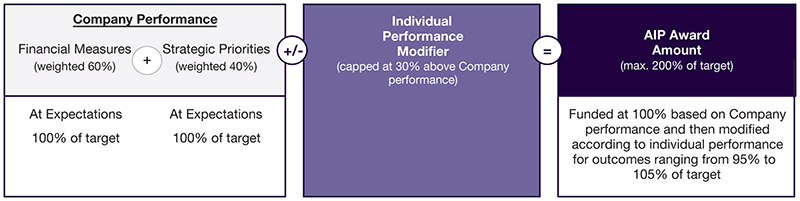
2023–2025 PERFORMANCE STOCK UNIT (“PSU”) AND LONG-TERM INCENTIVE PLAN (“LTIP”) AWARDS
| Metric | Metric Weight | Performance | Final Payment as a % of Target | |||
|
Relative 3-Year Average Adjusted ROCE*
|
100%
|
Below Threshold
|
No awards earned | |||
|
Relative Total Shareholder Return (“TSR”)
|
Modifier (+/- 20%)
|
N/A
| ||||
| * | Represents a non-GAAP financial measure. For purposes of incentive compensation, adjusted metrics may reflect additional adjustments for the effects of different selected items compared to those reported in quarterly earnings materials, as set forth in Annex A. |
| 46 | | 2026 Proxy Statement |
|
Compensation Discussion and Analysis
Realized Pay
We have designed our executive-compensation program to align compensation outcomes with Truist’s overall performance, as demonstrated by our Chief Executive Officer’s target compensation, which was 92% at-risk and 51% equity-based for 2025. We also seek to directly link the value our NEOs actually realize each year with shareholder interests by selecting performance metrics for our long-term incentive awards that closely align with shareholder value creation. Accordingly, the compensation our Chief Executive Officer actually realizes in a given year is directly tied to achievement of our long-term financial goals, and may differ significantly from the pay reported in the Summary Compensation Table, which reflects the accounting value of our restricted stock unit (“RSU”) and PSU awards at the time of grant.
As a result, we believe it is useful to compare Mr. Rogers’s Realized Pay for 2022 to 2025, which corresponds to his first full year as Chief Executive Officer through the most recently completed fiscal year, with his Target Pay, as illustrated below. During this period, Mr. Rogers’s Realized Pay was 60% of his Target Pay in the aggregate. Mr. Rogers’s below-target compensation was driven by not meeting threshold performance under our 2023-2025 PSU and LTIP awards and market movement in share price, thus demonstrating the clear alignment between Mr. Rogers’s compensation and our shareholders’ interests.
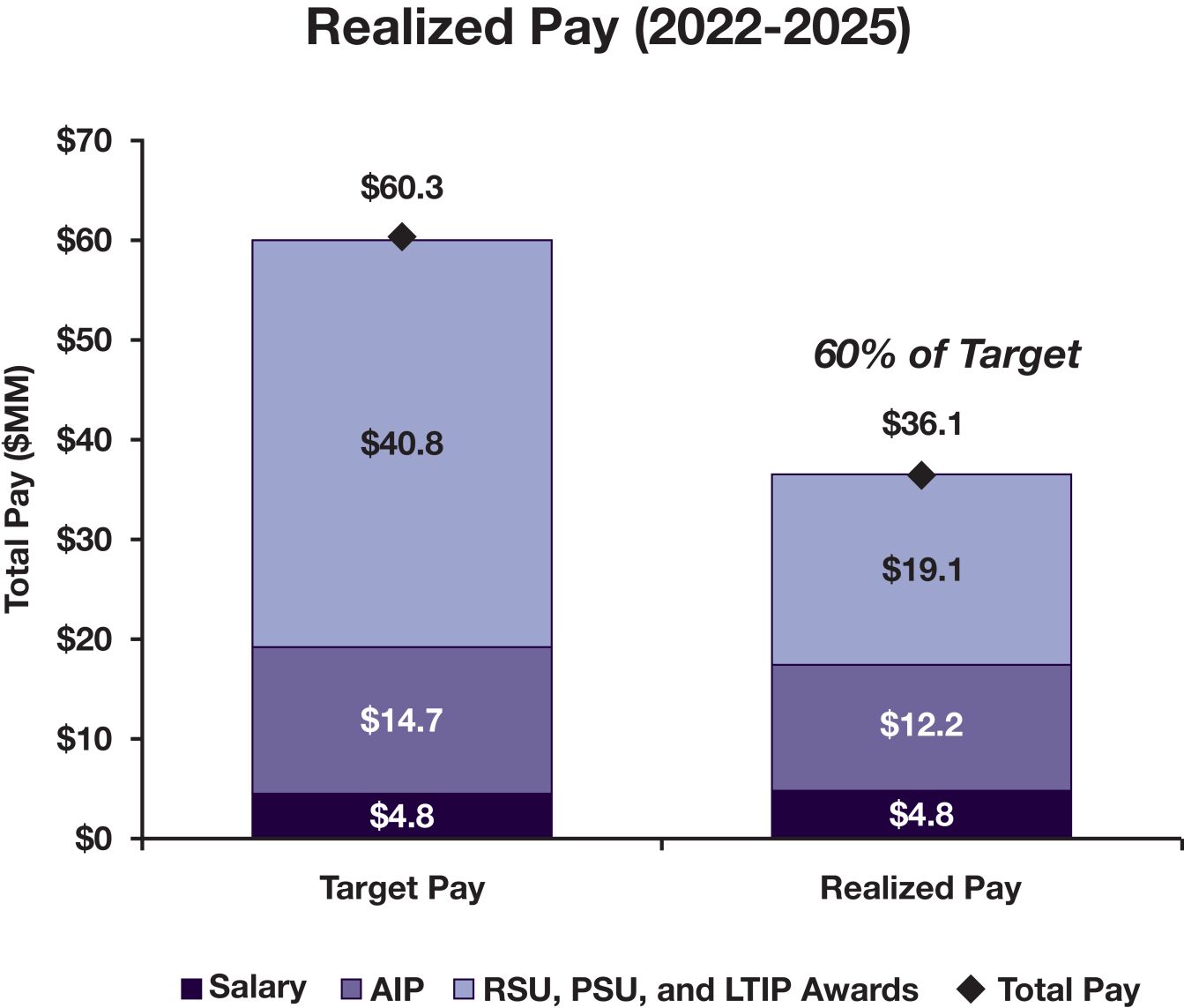
For purposes of this section, the following definitions apply:
| ◾ | “Target Pay” is the sum of (1) base salary, (2) target AIP award, (3) target LTIP award, and (4) grant date value of RSU and PSU awards, in each case, for the applicable year. |
| ◾ | “Realized Pay” is the sum of (1) base salary and AIP award paid for the applicable year, plus (2) the amount reportable as income upon vesting of RSU, PSU, and LTIP awards during the applicable year. |
|
|
2026 Proxy Statement | |
47 |
Compensation Discussion and Analysis
Section 2—Performance
Key Financial and Operational Accomplishments in 2025
During 2025, we made meaningful progress across our enterprise strategic priorities, delivering strong financial results for our shareholders, as illustrated below. Continuing to execute on our enterprise strategic priorities is central to achieving both short- and long-term goals for Truist, including our target of reaching 15% return on tangible common equity* (“ROTCE”) in 2027. For a presentation of net income available to common shareholders, see 2025 Business Performance on page 4.
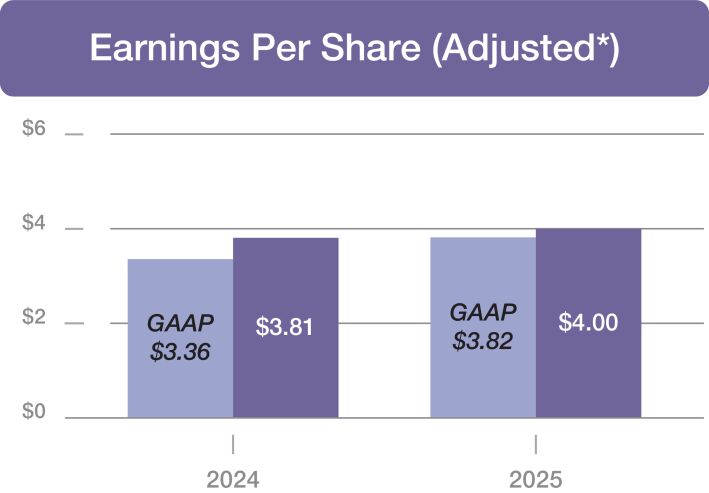
|
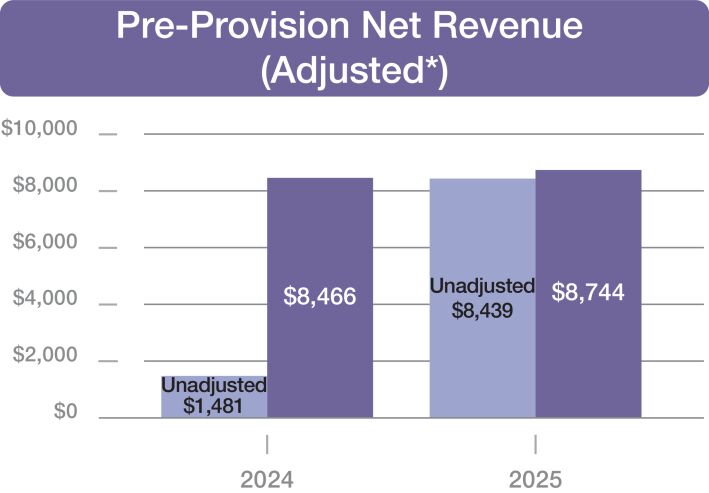
|
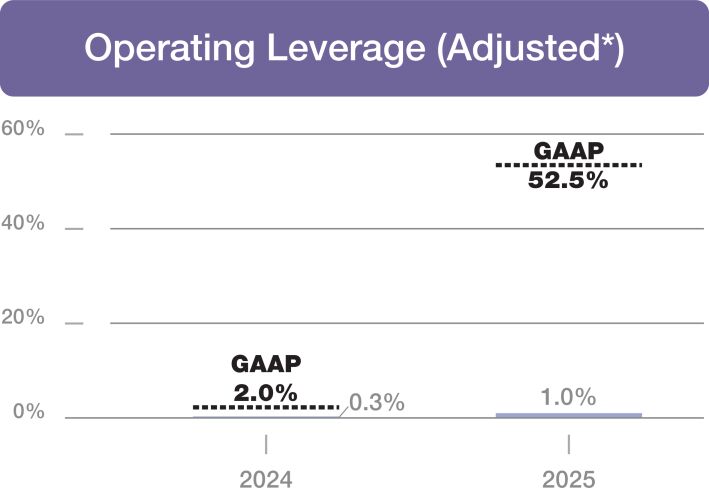
| ||
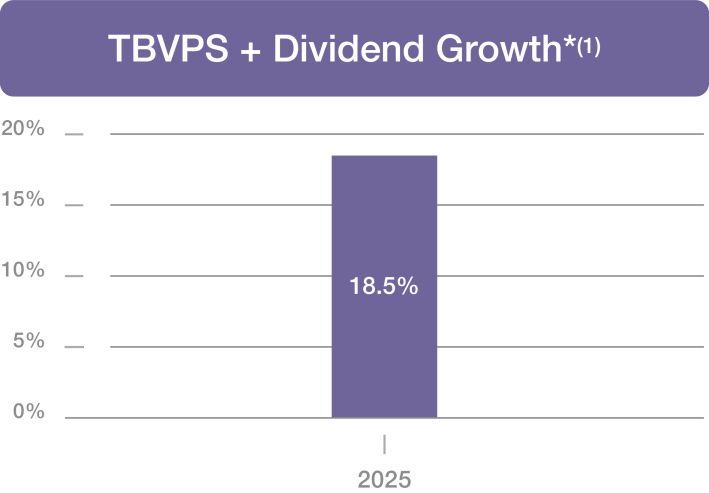
|
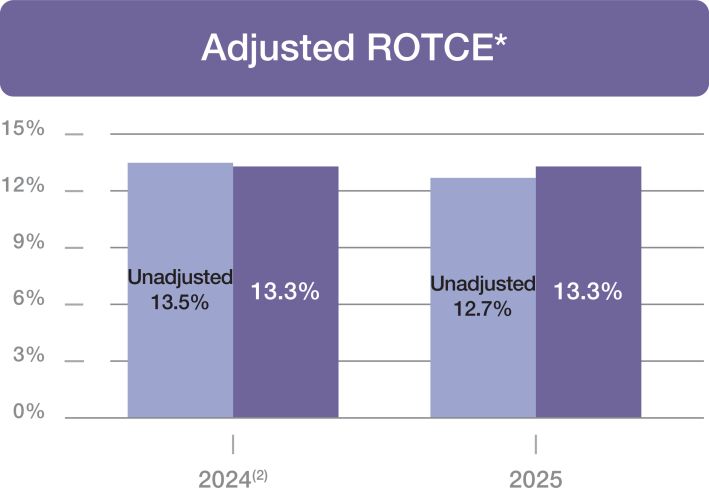
|
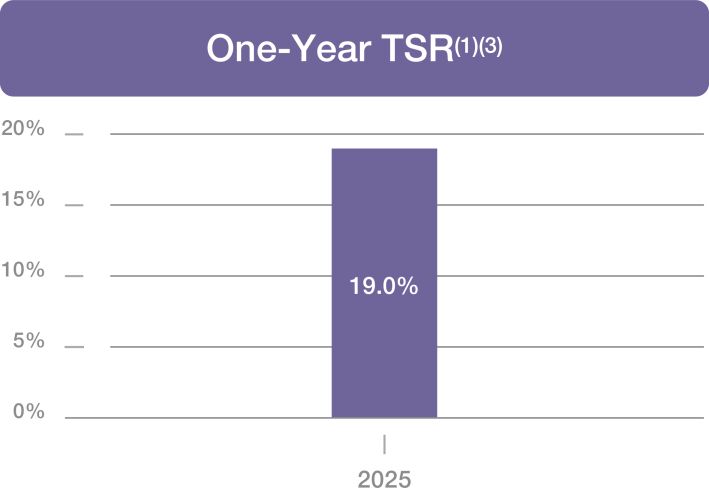
|
| * | Represents or includes a comparison to a non-GAAP financial measure. See Annex A for further discussion of these metrics. For purposes of incentive compensation, adjusted metrics may reflect additional adjustments for the effects of different selected items compared to those reported in quarterly earnings materials, as set forth in Annex A. |
| (1) | Only 2025 performance is shown for Tangible Book Value per Share (“TBVPS”) + Dividend Growth and One-Year TSR since they are not assessed on year-over-year performance under the AIP award program. See 2025 AIP Structured Scorecards on page 54 for additional information. |
| (2) | Represents ROTCE in the second half of 2024, following the sale of TIH. |
| (3) | TSR shows the actual return of the stock price, with dividends reinvested. |
Corporate Responsibility and Sustainability in 2025
We continued to live our purpose to inspire and build better lives and communities while creating long-term value for shareholders consistent with prudent risk management. During 2025, our purposeful activities included:
| ◾ | We deployed more than $250 million through the Truist Cares for Western North Carolina initiative, a 3-year $725 million commitment to support critical small-business, housing, and infrastructure recovery and rebuilding efforts in communities impacted by Hurricane Helene. Truist teammates also provided nearly 5,000 hours of volunteer service to support long-term recovery, resiliency, and ongoing needs in Western North Carolina. |
| ◾ | We committed nearly $2 billion to support 6,830 units of affordable housing, 22,538 new jobs, and projects that will serve 306,565 people in low- and moderate-income communities over time. |
| ◾ | We renewed our $20 million investment into our 10+ year partnership with Operation HOPE to accelerate financial confidence—offering free financial empowerment resources and coaching on critical topics such as credit, money management, small business, and home ownership through Operation HOPE Inside Coach partners in more than 700 Truist branches. |
Additionally, we received the highest possible overall rating of “Outstanding” from the Federal Deposit Insurance Corporation for the most recent Community Reinvestment Act (“CRA”) examination period from 2020–2022. The CRA encourages banks to help meet the credit needs of communities in which they operate, including low- to moderate-income neighborhoods, consistent with safe and sound banking operations.
| 48 | | 2026 Proxy Statement |
|
Compensation Discussion and Analysis
Section 3—Executive-Compensation Framework
Compensation Philosophy and Goals
The Committee believes our executive-compensation program should be aligned with the interests of shareholders, drive long-term value creation for the Company, and account for the safety and soundness of Truist commensurate with its structure, risk profile, complexity, activities, and size. To support this philosophy, the Committee designed our executive-compensation program around the following key goals.
◾ Reward performance, support and drive achievement of our strategic priorities, and produce positive business results over the longer term.
◾ Award total compensation based on results assessed against a mix of performance goals; align with shareholder interests by providing a significant percentage of equity-based compensation.
◾ Promote balanced risk-taking and discourage imprudent risk-taking by creating compensation programs that are compatible with effective controls and risk management, and supported by strong corporate governance. |
◾ Attract and retain executives who are critical to our long-term success by establishing total compensation opportunities relative to organizations with which we compete for talent.
◾ Include both absolute and relative performance measures within incentive compensation programs so they are aligned with our internal performance and risk management.
◾ Promote alignment between management’s interests and those of our shareholders by requiring management to meet significant stock ownership requirements.
◾ Support our Purpose, Mission, and Values.
|
Incentive Program Design
In the context of the Committee’s compensation philosophy and key goals, the Committee considers the following guiding principles when determining the design for the Company’s short- and long-term incentive programs for senior management.
| Short-Term Incentive Program |
|
◾ Program provides a framework to comprehensively evaluate annual performance relative to strategic initiatives and financial goals by:
○ Measuring annual Company and individual performance.
○ Leveraging metrics reflective of shareholder interests.
○ Supporting strategic- and risk management decisions that are in the long-term interests of the Company’s shareholders within the context of the current economic and competitive environment. |
| Long-Term Incentive Programs |
◾ Programs should be aligned with sustainable long-term success and shareholder value creation by:
○ Delivering results consistent with appropriate risk management for a highly-regulated financial institution.
○ Emphasizing long-term success over short-term goals.
○ Aligning to medium- and long-term investor expectations and the Company’s strategy.
◾ Programs are designed to provide market-competitive compensation opportunities in line with the institutions with which Truist competes for talent. |
PHILOSOPHY ON ONE-TIME AWARDS
The Committee believes that one-time awards should be used infrequently and in limited circumstances to achieve business objectives beyond those covered by the annual compensation process. The Committee follows an approach aligned with the following principles:
| ◾ | One-time awards may be appropriate in limited circumstances to attract and retain senior management, for succession planning, or in other exceptional circumstances that support driving business results and long-term shareholder value. |
| ◾ | The use of one-time awards may allow for the application of award provisions distinct from annual awards. |
| ◾ | Granting one-time awards outside of the annual compensation program helps to reinforce that these awards should not be expected in subsequent years. |
| ◾ | If a one-time award is granted to a NEO, clear and transparent disclosure should be provided to shareholders for the rationale and design of the award. |
Based on input received from our shareholders following the say-on-pay vote in April 2025, the Committee will continue to follow this approach. No one-time awards were granted to NEOs in 2025.
|
|
2026 Proxy Statement | |
49 |
Compensation Discussion and Analysis
Section 4—Elements of Executive Compensation in 2025
Summary
| Long-Term Incentive Compensation | ||||||||||||||||
| Base Salary | AIP Awards | PSU and LTIP Awards | RSU Awards | |||||||||||||
| Purpose | Fixed income reflecting scope of leadership responsibilities, experience, performance, skills, knowledge, and market competitiveness | Short-term incentive program that incentivizes execution of short-term goals based on financial measures and strategic priorities that support Truist’s strategic plan | Long-term incentives that align compensation with achievement of long-term goals that generate shareholder value and correlate to achievement of Truist’s strategic plan | Long-term incentive that rewards long-term, sustained appreciation of Truist’s stock price |
||||||||||||
| Performance or Vesting Period |
— | 1 Year (January 1, 2025— December 31, 2025) |
3 Years (January 1, 2025— December 31, 2027) |
4 Years (February 2025— March 2029) |
||||||||||||
| Key Features | Fixed cash compensation | Cash award
Funding based on the Company’s performance against structured scorecards
◾ Financial measures (absolute and relative), weighted 60%
◾ Strategic areas of focus, weighted 40%
Modifier based on individual performance, including risk management execution (capped at 30% above Company performance outcome) |
Equity and cash awards
Award amount based on achievement of goals tied to 3-year absolute cumulative adjusted EPS* (50%), 3-year absolute adjusted average ROTCE* (25%), and 3-year relative TSR (25%) performance
Conditioned on achieving a common equity tier 1 (“CET1”) capital ratio in excess of the minimum capital requirement plus stress capital buffer
Subject to reduction or forfeiture in the event of an aggregate operating loss or a significant negative risk outcome |
Equity award
Vests in three equal, back-loaded installments on March 15 of 2027, 2028, and 2029
Subject to reduction or forfeiture in the event of an aggregate operating loss or a significant negative risk outcome |
||||||||||||
| Award Opportunity | — | 0% to 200% of target | 0% to 150% of target | — | ||||||||||||
| * | Represents a non-GAAP financial measure. For purposes of incentive compensation, adjusted EPS and ROTCE may reflect additional adjustments for the effects of different selected items compared to those reported in quarterly earnings materials, as set forth in Annex A. |
| 50 | | 2026 Proxy Statement |
|
Compensation Discussion and Analysis
Pay Mix
The following charts illustrate how each element of our executive-compensation program is reflected within the target annual compensation for our Chief Executive Officer, Mr. Rogers, and the average target annual compensation for our other NEOs in 2025.
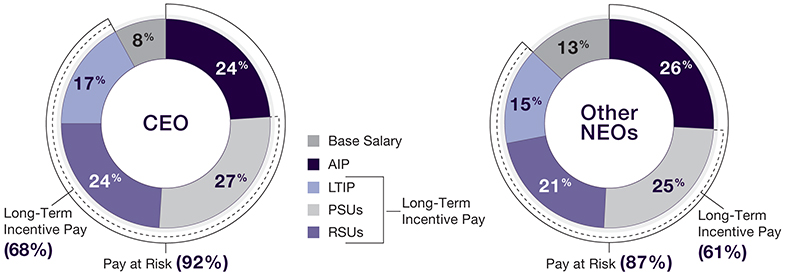
92%
87%
Process
The following graphic provides a high-level overview of the annual process with respect to our executive-compensation program. See Section 6—Process on page 64 for additional information.
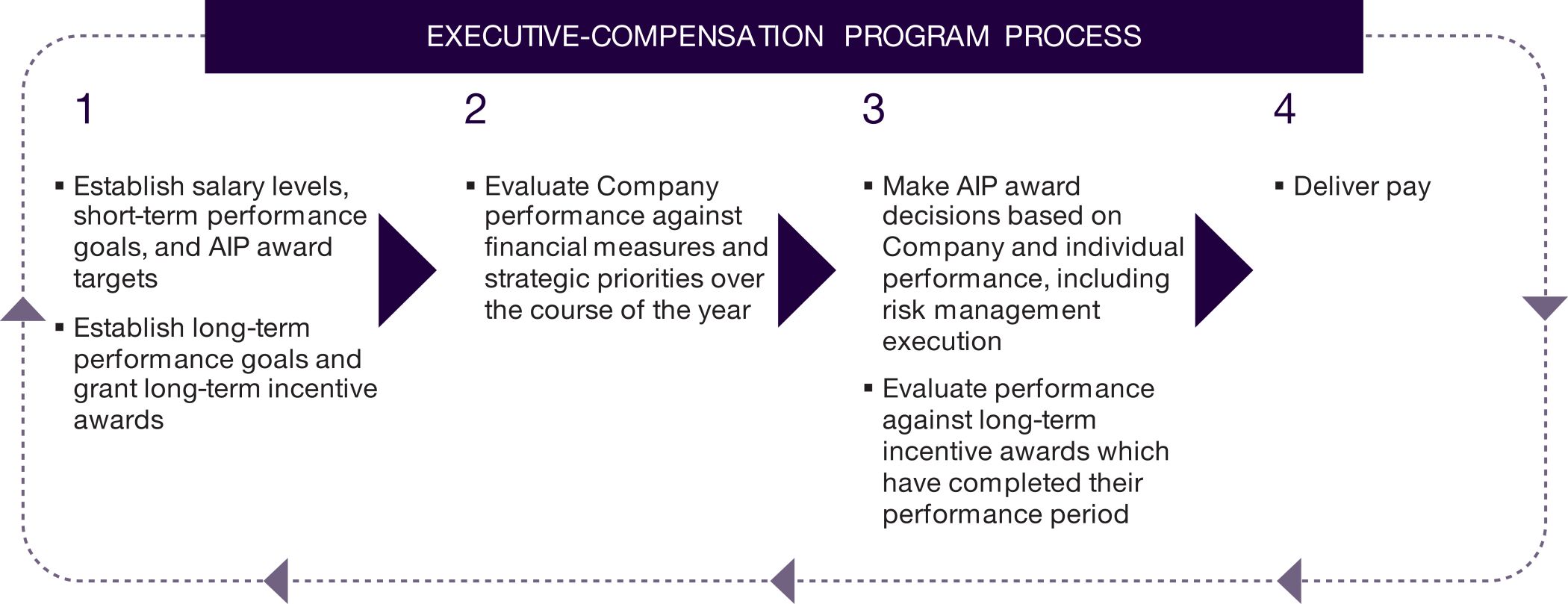
|
|
2026 Proxy Statement | |
51 |
Compensation Discussion and Analysis
Executive-Compensation Practices
Highlighted below are the key features of our executive-compensation program, including the pay practices we have implemented to align the interests of our senior management with those of our shareholders, drive long-term value creation for the Company, and account for the safety and soundness of Truist. We also identify certain pay practices we have not implemented because we believe they would not advance these objectives.
| What We Do | ||
| ✓ | Pay for Performance: Approximately 92% and 87% of target annual compensation for the Chief Executive Officer and the other NEOs, respectively, is forfeitable, at-risk pay. | |
| ✓ | Balance Multiple Performance Metrics: We consider multiple quantitative and qualitative factors in measuring performance, and consider both absolute and relative performance. | |
| ✓ | Tie Long-Term Incentives to Performance: Approximately 65% of long-term incentive compensation for our NEOs is subject to performance. | |
| ✓ | Grant Long-Term Incentives with Retentive Vesting Schedules: Our PSUs and LTIPs vest over three years and our RSUs vest over four years in three equal, back-loaded installments, strengthening their retentive value. | |
| ✓ | Consider Peer Group Pay Levels and Practices: In making compensation decisions, we review market data from our peers as well as other financial services firms with which we compete for talent. | |
| ✓ | Seek Shareholder Feedback: We have a formal shareholder engagement program, and consider shareholder feedback when making compensation decisions. | |
| ✓ | Require Minimum Stock Ownership: We maintain stock ownership requirements for our executive officers and directors. | |
| ✓ | Conduct Annual Risk Assessment: To appropriately balance risk and reward, we conduct an annual risk assessment and retain the right to decrease AIP award amounts based on the results of the assessment. | |
| ✓ | Retain an Independent Compensation Consultant: The Committee engages an independent compensation consultant to advise on its assessments and determinations. | |
| ✓ | Provide a Broad-Based Pension Plan: We provide a broad-based pension plan for eligible teammates, and our NEOs participate on the same basis as other similarly situated teammates to encourage a long-term orientation and the retention of talent. | |
| ✓ | Maintain Robust Clawback Policies: We have robust clawback policies that apply upon certain accounting restatements, detrimental behavior, and negative risk outcomes. | |
| What We Don’t Do | ||
| ✗ | No Guaranteed Incentive Payments: We don’t provide absolute or guaranteed incentive payments to our NEOs. | |
| ✗ | No Stock Options: We don’t award options to acquire shares of the Company’s stock. | |
| ✗ | No Stock Option Repricing: Although no stock options are currently outstanding, our policies prohibit repricing of future stock option awards, if granted. | |
| ✗ | No Dividends or Dividend Equivalent Rights Paid on Unvested Awards: Dividends and dividend equivalent rights granted in relation to awards are subject to the same vesting and payment terms as the underlying award. | |
| ✗ | No Excise Tax Gross-Ups: We don’t gross-up payments for “golden parachute” excise taxes. | |
| ✗ | No Hedging and Pledging: We prohibit the hedging or pledging of Truist stock by our executive officers and directors. | |
| ✗ | No Excessive Perquisites: We do not offer excessive perquisites, only those necessary to remain competitive in attracting and retaining executive talent. | |
| ✗ | No Employment Agreements: We don’t enter into employment agreements with senior management (excluding offer letters upon hire). | |
| 52 | | 2026 Proxy Statement |
|
Compensation Discussion and Analysis
Section 5—Executive-Compensation Decisions
Salary
Base salaries provide the foundational component of executive pay and reflect each NEO’s position, responsibilities, experience, performance, skills, and knowledge. Each year, the Committee approves the NEOs’ base salaries after considering these factors as well as market pay practices for similar roles at peer institutions and at other financial-services firms with which we compete for talent.
Following this annual review, the Committee determined 2025 base salaries for our NEOs, effective March 1, 2025, as reflected in the table below. Despite not having increased his base salary since his appointment as Chief Executive Officer, the Committee maintained Mr. Rogers’s base salary for 2025 to continue prioritizing his incentive compensation targets. The Committee increased Mr. Maguire’s base salary in recognition of the expansion in his duties and responsibilities; all other base salary increases were to remain market competitive.
| Name |
2024 Base Salary ($) |
2025 Base Salary ($) |
Change (%) | ||||||||||||
| William H. Rogers, Jr. |
1,200,000 | 1,200,000 | 0.0 | ||||||||||||
| Michael B. Maguire |
700,000 | 775,000 | 10.7 | ||||||||||||
| Kristin Lesher |
750,000 | 775,000 | 3.3 | ||||||||||||
| Dontá L. Wilson |
750,000 | 775,000 | 3.3 | ||||||||||||
| Bradley D. Bender |
655,000 | 680,000 | 3.8 | ||||||||||||
Annual Incentive Performance Awards
The purpose of the AIP award program is to incentivize the execution of short-term goals based on financial measures and strategic priorities that support Truist’s strategic plan. Award amounts are determined based on Company and individual performance, including risk management execution. All amounts are paid in cash following the conclusion of the performance year.
Our approach to determining each NEO’s AIP award amount under the AIP program consists of the following:
| ◾ | Each NEO’s target AIP award amount, which the Committee sets as a percentage of base salary; |
| ◾ | Company performance, which establishes the initial funding level for AIP awards and is determined based on the Company’s achievement of financial measures and strategic priorities, weighted at 60% and 40%, respectively; and |
| ◾ | The Committee’s assessment of each NEO’s individual performance, including risk management execution, pursuant to which the Committee may modify Company performance results to determine final AIP award amounts. When modifying awards for individual performance, the Committee may not add more than 30% to the amount achieved based on overall Company performance. The maximum amount payable under the AIP award program is 200% of target. |

TARGET 2025 AIP AWARD AMOUNTS
Each year, the Committee sets target AIP award amounts for NEOs as a percentage of annual base salary. Such percentages are determined based on market competitiveness, internal equity, level of responsibility, and other factors. For 2025, the Committee approved each NEO’s target AIP award amount on a preliminary basis on February 24, 2025 with the general teammate population, and then finalized the amounts on February 28, 2025. Each NEO’s target AIP award amount for 2025 is shown below.
| Name |
Base Salary ($) |
Target Percentage (%) |
Target AIP Award Amount ($) | ||||||||||||
| William H. Rogers, Jr. |
1,200,000 | 325 | 3,900,000 | ||||||||||||
| Michael B. Maguire(1) |
775,000 | 205.15 | 1,589,918 | ||||||||||||
| Kristin Lesher |
775,000 | 225 | 1,743,750 | ||||||||||||
| Dontá L. Wilson |
775,000 | 215 | 1,666,250 | ||||||||||||
| Bradley D. Bender |
680,000 | 180 | 1,224,000 | ||||||||||||
| (1) | Mr. Maguire’s target AIP percentage was pro-rated for 2025, based on an increase from 180% to 210% as of March 1, 2025. |
|
|
2026 Proxy Statement | |
53 |
Compensation Discussion and Analysis
2025 AIP STRUCTURED SCORECARDS
The framework for the AIP award program is a structured scorecard, which the Committee uses to comprehensively evaluate annual performance relative to strategic initiatives and financial goals that support decision-making in the long-term interests of our shareholders within the context of the current economic and competitive environment. This approach balances the benefit of structural constraints with the value derived from the Committee’s informed judgment in driving performance that accounts for appropriate risk management and safety and soundness, which are integral to long-term value creation in a highly-regulated financial institution like Truist.
At the beginning of the year, the Committee reviews the enterprise strategic priorities, and determines which performance metrics should be included in the financial measures category of the scorecard. Next, the Committee reviews modeling based on quantitative analyses of historical Truist and peer group performance to determine targets for the financial measures that are consistent with the Company’s annual profit plan. The Committee believes that a data-driven approach to target-setting results in performance goals that are challenging but achievable.
In response to shareholder feedback, the Committee selected 6 financial measures for review under the financial scorecard for 2025, resulting in a significantly streamlined design compared to the 2024 scorecard, which had 8 primary and 5 secondary financial measures. The Committee also added weightings of 60% (financial measures) and 40% (strategic priorities).
| Category |
Weighting | Performance Metrics | Why Each Metric Was Chosen for 2025 | |||
|
Financial Measures |
|
◾ Adjusted EPS*
◾ Adjusted Pre-Provision Net Revenue (“PPNR”)*
◾ Adjusted Operating Leverage*
◾ TBVPS + Dividend Growth*
◾ Adjusted ROTCE*
◾ One-Year TSR |
◾ Adjusted EPS and adjusted PPNR directly reflect profitability and the generation of earnings, which enable us to grow the Company. Growth in these metrics has a high correlation with TSR.
◾ Adjusted PPNR and adjusted Operating Leverage measure Truist’s effectiveness at growing revenue through loans, deposits, and fees and maintaining expense discipline.
◾ Adjusted Operating Leverage measures improvement in operational efficiency.
◾ TBVPS comprehensively measures growth in shareholder value generated from earnings, changes in securities and pension valuations, and capital allocation decisions.
◾ Adjusted ROTCE measures Truist’s effectiveness in converting shareholders’ tangible equity into sustainable earnings, and it is also correlated to TSR.
◾ One-Year TSR directly captures the short-term return to shareholders, which maintains a focus on our incremental progress in long-term value creation. | |||
|
Strategic Priorities |
|
◾ Build the top super regional bank through focused growth
◾ Deliver on our purpose and grow with our clients with care
◾ Effectively manage risk and controls |
◾ Our strategic priorities reflect our commitment to delivering profitable growth, executing on our strategy in alignment with our culture, and maintaining strong risk management as required of a highly-regulated financial institution. These priorities serve as the foundation for our long-term success. | |||
| * | Represents a non-GAAP financial measure. See Annex A for further discussion of these metrics. For purposes of incentive compensation, adjusted metrics may reflect additional adjustments for the effects of different selected items compared to those reported in quarterly earnings materials, as set forth in Annex A. |
PERFORMANCE AGAINST FINANCIAL MEASURES
The structured scorecard below presents the Company’s achievement against financial measures for the 2025 AIP award program. The Committee reviewed our actual performance for 2025 primarily in light of our annual performance against the financial measure targets established at the beginning of the year, with consideration of year-over-year performance against prior year results and relative performance against peers.
| 54 | | 2026 Proxy Statement |
|
Compensation Discussion and Analysis
|
Annual Performance |
Year-over-Year Performance |
Committee
| ||||||||||||||||||||||||||||||||||||||
| Performance Metric |
2025 Target |
2025 Actual |
Results | 2024 Actual |
2025 Actual |
Year-over-Year Growth | ||||||||||||||||||||||||||||||||||
| Adjusted EPS* |
$ | 4.03 | $ | 4.00 | (0.7 | %) | $ | 3.81 | $ | 4.00 | 4.9 | % | |
At Expectations (90-110%) |
||||||||||||||||||||||||||
| Adjusted PPNR* ($ in millions) |
$ | 8,921 | $ | 8,744 | (2.0 | %) | $ | 8,466 | $ | 8,744 | 3.3 | % | |
At Expectations (90-110%) |
||||||||||||||||||||||||||
| Adjusted Operating Leverage* |
1.5 | % | 1.0 | % | (0.5 | %) | 0.3 | % | 1.0 | % | 0.7 | % | |
At Expectations (90-110%) |
||||||||||||||||||||||||||
| TBVPS + Dividend Growth*(1) |
13.0 | % | 18.5 | % | 5.5 | % | — | — | — | |
Exceeds Expectations (110-150%) |
|||||||||||||||||||||||||||||
| Adjusted ROTCE* |
13.8 | % | 13.3 | % | (0.5 | %) | 13.3 | %(2) | 13.3 | % | 0.0 | % | |
At Expectations (90-110%) |
||||||||||||||||||||||||||
| One-Year TSR(3) |
— | 19.0 | % | — | — | — | |
At Expectations (90-110%) |
||||||||||||||||||||||||||||||||
| * | Represents a non-GAAP financial measure. See Annex A for further discussion of these metrics. For purposes of incentive compensation, adjusted metrics may reflect additional adjustments for the effects of different selected items compared to those reported in quarterly earnings materials, as set forth in Annex A. |
| (1) | TBVPS + Dividend Growth is a growth rate, so it is only assessed based on annual and relative performance. A review of year-over-year targets and performance would not be relevant given the sale of TIH in 2024. |
| (2) | Represents ROTCE in the second half of 2024, following the sale of TIH. |
| (3) | One-Year TSR is only assessed relative to peers. |
In addition to using the structured scorecard above, the Committee also reviewed the Company’s performance against financial measures relative to the performance of our peer group by comparing how Truist performed against peers in 2025 to how the Committee initially projected Truist would perform against peers at the beginning of 2025. The Committee determined that relative performance was below expectations, but viewed this as offset by the strength of the Company’s annual and year-over-year performance, as shown in the scorecard above. Based on this assessment, the Committee determined that financial performance was achieved at 100% of target for the 60% of Company performance determined based on financial performance.
PERFORMANCE AGAINST STRATEGIC PRIORITIES
The structured scorecard below presents the Company’s achievement against strategic priorities for the 2025 AIP award program. The Committee evaluated performance against strategic priorities by reviewing our performance relative to internal targets and goals set at the beginning of the performance period, prior year performance, peers, and risk appetite. For 2025, the Committee assessed overall performance against strategic priorities as “at expectations,” and determined that performance was achieved at 100% of target for the 40% of Company performance determined based on strategic priorities, as illustrated below.
| Strategic Priority |
2025 Performance | Committee Assessment v. Expectations (funding ranges) | ||
| Build the top super regional bank through focused growth |
◾ Average loans held for investment grew 3.6% versus 2024, reflecting broad-based growth in the Wholesale and Consumer businesses.
◾ Average client deposits grew 1.6% versus 2024.
◾ Consumer primary checking accounts grew 0.4% versus 2024.
◾ Wholesale Payments penetration was 50.1%, up from 42.8% in 2024.
◾ Adjusted noninterest income grew consistent with Truist’s expectations, despite significant market volatility in the first half of 2025. Excluding investment banking and trading income, noninterest income outperformed Truist’s profit plan.
◾ Adjusted noninterest expense grew 1.0%*, which was lower than full-year outlook of 1.5%. |
At Expectations (90-110%) | ||
|
|
2026 Proxy Statement | |
55 |
Compensation Discussion and Analysis
| Strategic Priority |
2025 Performance | Committee Assessment v. Expectations (funding ranges) | ||
| Deliver on our purpose and grow with our clients with care |
◾ Consumer and Wholesale Banking client satisfaction trended favorably.
◾ Teammate turnover improved slightly from 2024. |
At Expectations (90-110%) | ||
|
Effectively manage risk and controls |
◾ Total net charge-offs improved by 5 basis points from 2024.
◾ Maintained CET1 capital ratio and liquidity coverage ratios within Truist’s risk appetite while returning $5.2 billion of capital to shareholders through $2.7 billion in common stock dividends and $2.5 billion in share repurchases in 2025.
◾ Truist demonstrated progress in the execution of the enterprise risk management (“ERM”) framework. |
At Expectations (90-110%) | ||
| * | Represents a non-GAAP financial measure. See Annex A for further discussion. |
INDIVIDUAL PERFORMANCE
Following the close of the performance year, the Committee and our Chief Executive Officer, as applicable, assesses each NEO’s individual performance, including against risk management execution. The Committee then determines the final award amount for each NEO by modifying the weighted Company performance results by the individual performance assessment. When modifying awards, the Committee may not increase the awards by adding more than 30% to the Company performance level (subject to the overall limit of 200% of target).
William H. Rogers
Chief Executive Officer
Under the leadership of Mr. Rogers, Truist delivered strong financial and operational results during 2025 and continued to advance its long-term strategic priorities, strengthening the Company’s position for sustainable growth and improved profitability. The Committee concluded that Mr. Rogers’s individual leadership contributions towards Truist’s financial results, strategic priorities, risk posture, and cultural alignment during 2025 warranted a positive adjustment to the overall Company performance results under the AIP.
Financial and Strategic Performance
| In 2025, Truist delivered:
◾ Positive operating leverage, driven by higher revenue and continued expense discipline, while investing in talent, technology, and risk infrastructure.
◾ Stable credit quality, reflecting disciplined risk management despite a dynamic operating environment.
◾ Strong capital return, supported by robust capital levels and consistent earnings generation.
◾ Purpose-driven growth, with meaningful progress in deepening client relationships and enhancing digital engagement across the consumer and small business banking (“CSBB”) and Wholesale segments. |
In particular, the Committee noted that Mr. Rogers:
◾ Demonstrated sustained momentum on Truist’s strategic priorities, advancing initiatives that enhance competitiveness, elevate client experience, and position the Company to achieve its multi-year goals.
◾ Provided leadership in driving performance improvement while maintaining financial strength and balance sheet resiliency.
◾ Offered clear direction and oversight as the Company prioritized high-return growth opportunities, strengthened risk and control frameworks, and managed the organization through a complex competitive and regulatory landscape. | |
Risk Management Effectiveness
| Strong, consistent leadership in risk management and governance remained a central focus for Mr. Rogers throughout the year. The Committee recognized his role in:
◾ Reinforcing a risk-aware culture through demonstrable accountability, improved controls, and enhanced reporting across all lines of business.
◾ Advancing the Company’s risk management and governance agenda across all three lines of defense.
◾ Maintaining solid asset quality amid shifting macroeconomic conditions. | ||
| 56 | | 2026 Proxy Statement |
|
Compensation Discussion and Analysis
Leadership and Culture
| The Committee considered Mr. Rogers’s leadership in building a purpose-driven culture, developing senior leadership depth, and strengthening succession planning. This included:
◾ Enhancing teammate engagement and maintaining an inclusive environment in line with Truist’s Purpose, Mission, and Values.
◾ Advancing leadership development initiatives aligned with long-term succession needs.
◾ Positioning the senior leadership team to execute Truist’s next phase of growth. |
The Committee noted strong director confidence in Mr. Rogers’s leadership, strategic clarity, and ability to mobilize the organization around shared goals, including his effectiveness in:
◾ Communicating strategy, performance, and long-term objectives to shareholders and other external stakeholders.
◾ Enhancing market understanding of Truist’s progress on its transformation and growth agenda.
◾ Reinforcing confidence among investors and other stakeholders through consistent, transparent, and purpose-driven messaging.
| |
| Michael B. Maguire Chief Financial Officer |
Kristin Lesher Chief Wholesale Banking Officer | |||
|
◾ Under Mr. Maguire’s leadership, Truist delivered a strengthened financial foundation, including clearer alignment among the long-range strategic plan, annual operating plans, and capital deployment decisions. He championed a more disciplined performance management rhythm across the CFO organization—deepening accountability, sharpening analytics, and positioning the Company to meet medium-term profitability and return objectives.
◾ Mr. Maguire enhanced Truist’s treasury and balance-sheet management discipline, advancing a more integrated capital, liquidity, and funding framework that will improve flexibility and resilience across market environments.
◾ Under Mr. Maguire’s direction, the Finance organization evolved Truist’s control, reporting, and risk-execution environment, modernizing Sarbanes-Oxley Act operations, elevating reporting governance, and driving the automation of critical processes.
◾ Mr. Maguire advanced a strong modernization and effectiveness agenda to improve scalability, reduce operational risk, and deliver meaningful cost efficiencies.
◾ Mr. Maguire elevated Truist’s external financial narrative and strategic positioning and strengthened investor communications around Truist’s growth aspirations and return targets. |
|
◾ Ms. Lesher delivered substantial progress in the strategic repositioning of Commercial and Corporate Banking, successfully launching six industry verticals and expanding the sales teams across key segments and practice groups. These efforts are driving stronger client acquisition and deeper relationship growth. She also supported ongoing momentum in Wholesale Payments, with delivery of a series of product enhancements and increased revenue.
◾ Under Ms. Lesher’s leadership, Wholesale delivered meaningful progress in strengthening sales discipline, client coverage, and strategic execution, including strong year-over-year loan growth that contributed to an increase in average loans across Truist. However, full-year revenue and fee income growth remained modest year-over-year, given market volatility experienced in investment banking in the first half of the year, highlighting the opportunity to continue strengthening and diversifying fee growth.
◾ Ms. Lesher continued to embed operating rigor, sales discipline, and technology-enabled scale throughout the platform, including advancing modernization in credit processes and driving enterprise repricing efforts expected to contribute to stronger results in 2026.
◾ Under Ms. Lesher’s leadership, Wholesale has made progress across key client segments, as demonstrated by broad-based commercial loan demand and an increase in average Wholesale deposits year-over-year. While this deposit growth marks important progress, it also indicates that deposit levels remain below their full potential and will require further improvement. |
|
|
2026 Proxy Statement | |
57 |
Compensation Discussion and Analysis
| Dontá L. Wilson Chief Consumer and Small Business Banking Officer |
Bradley D. Bender Chief Risk Officer | |||
|
◾ Led by Mr. Wilson, CSBB delivered growth across its portfolio, supported by continued momentum in Truist’s national consumer lending platforms.
◾ Mr. Wilson drove scaled and integrated digital capabilities to deepen engagement and expand access, broadening distribution, improving efficiency, and enhancing clients’ digital borrowing experience.
◾ Under Mr. Wilson’s leadership, CSBB has improved Premier Banking deposit productivity; however, overall deposit levels still need to grow, underscoring the continued focus required as the Company navigates an important transition period.
◾ CSBB also strengthened client acquisition and relationship primacy, including another year of net new checking account growth and meaningful momentum among younger demographics. Relationship primacy increased, reflecting deeper engagement and Truist’s success in positioning itself as clients’ primary financial partner.
◾ Mr. Wilson positioned CSBB for future growth through long-term strategic investments, including plans for new insights-driven branches, renovation of more than 300 locations, expanded Premier advisor staffing, and enhanced digital capabilities. At the same time, these efforts come at a time when Truist is focused on growth and performance based on existing investments, and continued execution will remain paramount while new investments are made. |
◾ Under Mr. Bender’s leadership, Truist strengthened its risk execution and governance foundation, advanced enterprise-wide programs at an accelerated pace, drove tangible progress across non-financial risk management, and developed and implemented a new ERM framework.
◾ Mr. Bender drove meaningful modernization of Truist’s risk capabilities and technology, championing efforts such as the rollout of an integrated AI governance and oversight framework, simplification of the data supply chain, and development of unified reporting capabilities to deliver near real-time risk insights for executive decision-making.
◾ Under Mr. Bender’s direction, the Risk Management Organization delivered high-quality, proactive oversight that demonstrably improved elements of Truist’s risk posture, including through rigorous issues-management oversight.
◾ Mr. Bender fostered a strong risk culture across Truist, aligning senior leaders and teammates around accountability, early escalation, and consistent execution. This cultural leadership contributed to measurable improvements in teammate engagement, strengthened management practices, and elevated strategic clarity, supporting a healthier and more resilient Risk Management Organization.
◾ Mr. Bender advanced enterprise-level collaboration across the lines of defense, enabling more standardized risk assessment criteria, improved integration of risk partners into planning and decision-making routines, and enhanced thematic challenge. |
See Section 6—Process on page 64 for additional information on the annual assessment of NEO individual performance.
FINAL 2025 AIP AWARDS
Based on its assessment of Company performance against the financial measures and strategic priorities set forth in the structured scorecards, the Committee determined that weighted Company performance was achieved at 100% of target for 2025. The Committee then applied individual performance results, including risk management execution, to determine the final 2025 AIP award amounts for each NEO, as follows. The final award amounts ranged from 95% to 105% of target.
| Name |
Target AIP Award Amount ($) |
X | Company + Individual Performance (%) |
= | AIP Award Amount ($) | ||||||||||||||||||||
| William H. Rogers, Jr. |
3,900,000 | 105 | 4,095,000 | ||||||||||||||||||||||
| Michael B. Maguire |
1,589,918 | 105 | 1,669,414 | ||||||||||||||||||||||
| Kristin Lesher |
1,743,750 | 95 | 1,656,563 | ||||||||||||||||||||||
| Dontá L. Wilson |
1,666,250 | 97 | 1,616,263 | ||||||||||||||||||||||
| Bradley D. Bender |
1,224,000 | 105 | 1,285,200 | ||||||||||||||||||||||
2026 AIP AWARD PROGRAM
In early 2026, the Committee considered the enterprise strategic priorities, as well as shareholder feedback, and determined to maintain the performance metrics and weightings for the 2026 AIP structured scorecards. Additional information on the 2026 AIP award program will be provided in the Compensation Discussion and Analysis, Summary Compensation Table, and Grants of Plan-Based Awards sections in our 2027 proxy statement.
| 58 | | 2026 Proxy Statement |
|
Compensation Discussion and Analysis
Long-Term Incentive Awards
The purpose of the long-term incentive program is to incentivize the execution of long-term strategic goals by tying a significant portion of each NEO’s compensation to the Company’s long-term performance and value creation for shareholders.
Similar to the AIP award program, each year, the Committee sets target long-term incentive program amounts for NEOs based on internal equity, level of responsibility, current and projected contributions to Truist’s long-term success, market competitiveness, and other factors. For 2025, the Committee approved each NEO’s target long-term incentive program amount on a preliminary basis on February 24, 2025 with the general teammate population, and then finalized the amounts on February 28, 2025. Each NEO’s target long-term incentive program award amount for 2025 is shown below.
| Name |
Target Long-Term Incentive Program Amount ($) | ||||
| William H. Rogers, Jr. |
11,000,000 | ||||
| Michael B. Maguire |
3,425,000 | ||||
| Kristin Lesher |
5,315,000 | ||||
| Dontá L. Wilson |
3,820,000 | ||||
| Bradley D. Bender |
2,475,000 | ||||
Once each NEO’s target long-term incentive program amount is established, that amount is split between three different long-term incentive compensation vehicles—PSUs, LTIP awards, and RSUs. As described in more detail below, PSU and LTIP awards vest and become payable based on achievement of performance metrics that align NEO compensation with achievement of Truist’s strategic plan. RSU awards vest and become payable over a 4-year period in three equal, back-loaded installments.
2025 LONG-TERM INCENTIVE PROGRAM
Each of our NEOs received the same mix of long-term incentive program awards for 2025, as described below.
| Award Type |
Payment | Portion of Target Long-Term Incentive Program Amount |
Potential Award Amount |
Vesting | ||||
| PSU | Stock |
|
0% to 150% of target | Cliff vesting based on performance over a 3-year performance period (January 1, 2025 – December 31, 2027) | ||||
| LTIP | Cash |
|
0% to 150% of target | Cliff vesting based on performance over a 3-year performance period (January 1, 2025 – December 31, 2027) | ||||
| RSU | Stock |
|
N/A | 4-year vesting in three equal, back-loaded installments on March 15 of 2027, 2028, and 2029 | ||||
Award amounts reflected in the 2025–2027 PSU and LTIP Awards and 2025 RSU Awards sections below reflect the grant date values for NEO long-term incentive program awards for 2025. These values differ from the grant date fair values of the awards for accounting purposes, as reflected in the 2025 Summary Compensation Table and 2025 Grants of Plan-Based Awards sections on pages 71 and 73, respectively. The grant date fair value for awards may differ based on the applicable data, assumptions, and estimates used in their valuations.
Consistent with previous long-term incentive awards, the 2025–2027 PSU, RSU, and LTIP awards are subject to reduction or forfeiture in the event of an aggregate operating loss, significant negative risk outcome as a result of Company or individual action, and, for PSU and LTIP awards, certain capital events.
|
|
2026 Proxy Statement | |
59 |
Compensation Discussion and Analysis
No dividends or dividend equivalent rights are paid on unvested long-term incentive program awards for the NEOs.
2025–2027 PSU AND LTIP AWARDS
The target award amounts and units, as applicable, granted for the 2025–2027 PSU and LTIP awards are provided below. For PSU awards, the number of units granted under each award was determined by dividing the target award amount by the closing price of our common stock on the grant date, and rounding down to the nearest whole number. For LTIP awards, the target award amounts reflected are based on each NEO’s base salary as of the grant date. Actual award amounts payable upon completion of the performance period will be determined based on the NEO’s average base salary over the course of the performance period.
| Target Long-Term |
PSU Awards | LTIP Awards | ||||||||||||||||||||||||||||
| Name |
Percentage (%) |
Target Award Amount ($) |
Units Granted (#) |
Percentage (%) |
Target Award Amount ($) | |||||||||||||||||||||||||
| William H. Rogers, Jr. |
11,000,000 | 40 | 4,400,000 | 97,044 | 25 | 2,750,000 | ||||||||||||||||||||||||
| Michael B. Maguire |
3,425,000 | 40 | 1,370,000 | 30,183 | 25 | 856,250 | ||||||||||||||||||||||||
| Kristin Lesher |
5,315,000 | 40 | 2,126,000 | 46,844 | 25 | 1,328,750 | ||||||||||||||||||||||||
| Dontá L. Wilson |
3,820,000 | 40 | 1,528,000 | 33,669 | 25 | 955,000 | ||||||||||||||||||||||||
| Bradley D. Bender |
2,475,000 | 40 | 990,000 | 21,811 | 25 | 618,750 | ||||||||||||||||||||||||
The 2025–2027 PSU and LTIP awards were granted with the same award opportunity (0%—150% of target), performance period (January 1, 2025 – December 31, 2027), metrics, weightings, targets, and payout curves. Information on the metrics and weightings is provided below.
| Weighting |
Performance Metric | Why Metric Was Chosen | Detail | |||
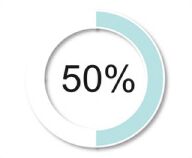
|
3-Year Absolute Cumulative Adjusted EPS* | ◾ EPS directly reflects profitability and the generation of earnings, is correlated with TSR, and is used as a primary financial income statement metric for banks and public companies. |
◾ Adjusted EPS and ROTCE are calculated based on GAAP net income available to common shareholders, adjusted for the impact of significant unusual items and substituting net charge-offs for any provision benefit or expense. In the case of adjusted ROTCE, adjustments also include amortization of intangibles, net of tax. | |||
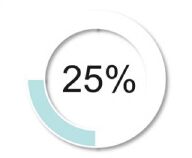
|
3-Year Absolute Adjusted Average ROTCE* |
◾ ROTCE measures Truist’s effectiveness in converting shareholders’ tangible equity into sustainable earnings, is also correlated with TSR, and is consistent with the Company’s long-term focus on returns. | ||||
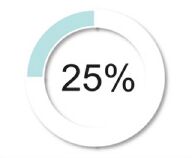
|
3-Year Relative TSR | ◾ TSR directly measures shareholder value and maintains a focus on long-term value creation. |
◾ TSR reflects change in common stock price during the performance period plus the value of dividends paid during the performance period.
◾ Truist’s 3-Year TSR is compared to the 3-Year TSR of each member of our peer group to determine our percentile rank. | |||
| * | Represents a non-GAAP financial measure. For purposes of incentive compensation, these metrics may reflect additional adjustments for the effects of different selected items compared to those reported in quarterly earnings materials, as set forth on Annex A. |
In addition, consistent with previous PSU and LTIP awards, Truist must achieve a CET1 capital ratio above the minimum capital requirement, including the stress capital buffer, as of the last day of the performance period in order for the awards to vest and become payable.
To determine the financial targets and payout curves for the 3-year performance period associated with PSU and LTIP awards, the Committee reviews modeling based on quantitative analyses of historical and projected Truist and peer group performance with statistical assumptions for the distribution of metric growth rate and market uncertainties. The Committee believes that a data-driven approach to target-setting results in performance goals that are challenging but achievable.
| 60 | | 2026 Proxy Statement |
|
Compensation Discussion and Analysis
Based on our performance against target over the 2025–2027 PSU and LTIP award performance period, our NEOs will be eligible to receive the following for each underlying financial metric.
| Award Achievement (% of Target Award Amount) | ||||||||||||||||||||
| Performance Level |
Metric Achievement (% of Metric) |
3-Year Absolute Cumulative Adjusted EPS* |
3-Year Absolute Adjusted Average ROTCE* |
3-Year Relative TSR | ||||||||||||||||
| Threshold(1) |
50 | 25 | 12.5 | 12.5 | ||||||||||||||||
| Target |
100 | 50 | 25 | 25 | ||||||||||||||||
| Maximum |
150 | 75 | 37.5 | 37.5 | ||||||||||||||||
| * | Represents a non-GAAP financial measure. For purposes of incentive compensation, these metrics may reflect additional adjustments for the effects of different selected items compared to those reported in quarterly earnings materials, as set forth on Annex A. |
| (1) | If threshold performance is not achieved for 3-Year Absolute Cumulative Adjusted EPS or 3-Year Absolute Adjusted Average ROTCE, but EPS Compound Annual Growth Rate (“EPS CAGR”) is achieved within 10 basis points or above the median of EPS CAGR for the peer group at the end of the performance period, then performance will be deemed achieved at threshold for the applicable measure. EPS CAGR means the 3-year annualized percentage change to Absolute Cumulative Adjusted EPS over the performance period. |
2025–2027 PSU and LTIP awards also generally vest contingent on continued employment. See Potential Payments Upon Termination or Change of Control on page 79 for additional information on vesting and payment of awards upon cessation of employment.
Forward-Looking Goals. The Committee has determined not to disclose the actual goals under the 2025–2027 PSU and LTIP awards because the Company does not provide public guidance on the performance measures underlying the goals. Choosing not to disclose this information benefits both the Company and its shareholders by preventing competitors from using this information to the Company’s detriment.
2025 RSU AWARDS
The target award amounts and units granted for the 2025 RSU awards are provided below. The number of units granted under each award was determined by dividing the award amount by the closing price of our common stock on the grant date, and rounding down to the nearest whole number.
| Name |
Target Long-Term Incentive Program Amount ($) |
Percentage (%) |
Award Amount ($) |
Units Granted (#) | ||||||||||||||||
| William H. Rogers, Jr. |
11,000,000 | 35 | 3,850,000 | 84,913 | ||||||||||||||||
| Michael B. Maguire |
3,425,000 | 35 | 1,198,750 | 26,410 | ||||||||||||||||
| Kristin Lesher |
5,315,000 | 35 | 1,860,250 | 40,985 | ||||||||||||||||
| Dontá L. Wilson |
3,820,000 | 35 | 1,337,000 | 29,454 | ||||||||||||||||
| Bradley D. Bender |
2,475,000 | 35 | 866,250 | 19,085 | ||||||||||||||||
2025 RSU awards vest over a 4-year period in three equal, back-loaded installments on March 15 of 2027, 2028, and 2029. Vesting is generally contingent on continued employment. See Potential Payments Upon Termination or Change of Control on page 79 for additional information on vesting and payment of awards upon cessation of employment.
2026 LONG-TERM INCENTIVE PROGRAM
Based on a review of enterprise strategic priorities and shareholder feedback, the Committee assessed its long-term incentive compensation design in early 2026 and made certain targeted refinements to performance metric weightings under the 2026–2028 PSU and LTIP awards. As illustrated below, the Committee increased the weighting of ROTCE from 25% to 40% and correspondingly reduced the weighting of adjusted EPS from 50% to 40%. The relative TSR weighting was reduced from 25% to 20% to allow greater weight to be applied to ROTCE, which the Committee believes is correlated to TSR and consistent with the Company’s long-term focus on return.
The Committee determined that increasing the emphasis on ROTCE from 25% to 40% for the 2026–2028 PSU and LTIP awards, consistent with the Company’s publicly communicated focus on this financial measure, more directly reinforces management’s accountability for disciplined balance sheet deployment, capital efficiency, and profitability—core drivers of long-term shareholder value—while continuing to recognize the importance of earnings growth through the retained adjusted EPS component. See Section 2—Performance on page 48 for additional information on our performance and long-term goals.
|
|
2026 Proxy Statement | |
61 |
Compensation Discussion and Analysis
| Performance Metric | 2025 Weighting |
2026 Weighting |
||||||
| 3-Year Absolute Cumulative Adjusted EPS* |
|
|
|
|
|
| ||
| 3-Year Absolute Adjusted Average ROTCE* |
|
|
|
|
|
| ||
| 3-Year Relative TSR |
|
|
|
|
|
| ||
| * | Represents a non-GAAP financial measure. For purposes of incentive compensation, these metrics may reflect additional adjustments for the effects of different selected items compared to those reported in quarterly earnings materials, as set forth on Annex A. |
Additional information on the 2026 long-term incentive award program will be provided in the Compensation Discussion and Analysis, Summary Compensation Table, and Grants of Plan-Based Awards sections in our 2027 proxy statement.
2023–2025 PSU AND LTIP AWARD RESULTS
The 2023–2025 PSU and LTIP awards were granted to Messrs. Rogers, Maguire, Wilson, and Cummins. These awards measured Truist’s adjusted relative return on common equity* (“ROCE”), with a TSR modifier, over the course of a January 1, 2023 to December 31, 2025 performance period. They were also subject to reduction or forfeiture if there was an aggregate operating loss or capital event during the performance period, or the Committee determined that there had been a significant negative risk outcome as a result of Company or individual action.
In early 2026, the Committee reviewed our 3-year average adjusted ROCE against the 3-year average ROCE of our peer group and determined that threshold performance was not achieved. Based on this, no payments or distributions were made to our NEOs for the 2023–2025 PSU and LTIP awards, as illustrated below.
| PSU Awards | LTIP Awards | ||||||||||||||||||||||||
| Name |
Award Achievement (% of Target Award Amount) |
Target Units Granted (#) |
Actual Units Received (#) |
Target Payment Amount ($) |
Actual Payment Amount ($) | ||||||||||||||||||||
| William H. Rogers, Jr. |
0 | 88,494 | 0 | 2,544,000 | 0 | ||||||||||||||||||||
| Michael B. Maguire |
0 | 22,571 | 0 | 684,791 | 0 | ||||||||||||||||||||
| Dontá L. Wilson |
0 | 23,759 | 0 | 738,889 | 0 | ||||||||||||||||||||
| Hugh S. Cummins III |
0 | 41,917 | 0 | 829,909 | 0 | ||||||||||||||||||||
| * | Represents a non-GAAP financial measure. For purposes of incentive compensation, this metric may reflect additional adjustments for the effects of different selected items compared to those reported in quarterly earnings materials, as set forth on Annex A. |
Other Compensation Benefits and Elements
PERQUISITES AND OTHER PERSONAL BENEFITS
Our NEOs receive certain perquisites and other personal benefits that the Committee believes are reasonable, consistent with our overall executive-compensation program, and necessary to remain competitive in attracting and retaining executive talent. Such perquisites may include residential security services, executive physical wellness examinations, occasional use of sports tickets, gifts and spousal participation in certain corporate events, and limited personal use of the Company aircraft and ground transportation. However, we require our Chief Executive Officer to use Company aircraft for all business and personal air travel for his personal safety. We also agreed to provide certain relocation benefits, including related tax gross-up, to Ms. Lesher as part of her offer of employment.
See the 2025 Summary Compensation Table on page 71 for additional information on the perquisites and other personal benefits provided to our NEOs. See also Other Executive Agreements on page 63 for additional information on Ms. Lesher’s offer letter.
| 62 | | 2026 Proxy Statement |
|
Compensation Discussion and Analysis
HEALTH AND WELFARE BENEFIT PLANS
During 2025, we maintained teammate health and welfare benefit plans that constitute a portion of the total compensation package available to our NEOs and all eligible teammates of Truist. These plans consist of the following:
◾ a medical plan that provides coverage for all eligible teammates
◾ disability insurance that pays a teammate 50% of their monthly compensation in the event of disability, subject to a cap of $35,000 per month (excluding executive officers)
◾ certain other teammate benefits (such as sick leave, vacation, dental and vision coverage, etc.) |
These teammate benefits are determined by the same criteria applicable to all of our teammates, unless otherwise noted. In general, health and welfare benefits are designed to provide a safety net of protection against the financial catastrophes that can result from illness, disability, or death. These benefits are part of the strong value proposition we offer our teammates and help keep us competitive in attracting and retaining teammates. We believe that our teammate health and welfare benefits are generally on par with our peer group and consistent with industry standards.
RETIREMENT BENEFIT PLANS
We provide our NEOs the opportunity to save for their retirement through participation in the Truist Financial Corporation Pension Plan (the “Pension Plan”) and the Truist Financial Corporation 401(k) Savings Plan (the “401(k) Plan”) on the same terms as other U.S.-based salaried teammates. The Pension Plan and 401(k) Plan provide security to our teammates in retirement and also help us to attract and retain talent.
The NEOs and certain other senior-level teammates also participate in the Truist Financial Corporation Non-Qualified Defined Contribution Plan (the “NQDC Plan”) and the Truist Financial Corporation Non-Qualified Defined Benefit Plan (the “NQDB Plan”). The NQDC Plan is a supplemental benefit plan designed to augment the benefits payable under the 401(k) Plan by providing for employee and employer contributions to the extent the Internal Revenue Code (“IRC”) limits the amounts that may be contributed to a participant’s 401(k) Plan account. Similarly, the NQDB Plan is a supplemental benefit plan designed to augment the benefits payable under the Pension Plan to the extent such benefits are curtailed by Internal Revenue Service (“IRS”) limits. Certain NEOs also participate in various frozen nonqualified plans.
See 2025 Non-Qualified Deferred Compensation on page 78 for additional information on the NQDC Plan and 2025 Pension Benefits on page 76 for additional information on the Pension Plan, NQDB Plan, and various frozen nonqualified plans, including amounts payable to Mr. Cummins following his resignation for Good Reason on January 13, 2025.
SEVERANCE AND CHANGE OF CONTROL ARRANGEMENTS
The Company maintains the Amended and Restated Management Change of Control, Severance and Noncompetition Plan (the “Severance Plan”), which covers executive officers, including each of our NEOs, and provides for certain payments and benefits upon triggering termination of employment and change of control events. Payments and benefits may also be provided to NEOs pursuant to equity award agreements upon such triggering events. See Potential Payments Upon Termination or Change of Control on page 79 for additional information on estimated amounts payable to NEOs under the Severance Plan and award agreements.
Mr. Cummins qualified for payments and benefits under the Severance Plan and his outstanding equity award agreements upon his resignation for Good Reason on January 13, 2025. See the All Other Compensation column of the 2025 Summary Compensation Table on page 71 for the amounts he earned or accrued under the Severance Plan in 2025, and Cessation of Employment of Hugh S. Cummins III on page 82 for all amounts payable to him in connection with his resignation for Good Reason.
OTHER EXECUTIVE AGREEMENTS
The Company generally does not enter into employment agreements with its senior management, but may from time to time include contractual provisions in offer letters in connection with the commencement of their employment. Ms. Lesher joined Truist in 2024 and her offer letter provides for a base salary of no less than $750,000, a target AIP award of no less than 225% of base salary, and a target long-term incentive program amount of 675% of base salary for fiscal year 2024. As part of her hire, the Company granted her certain awards in 2024, including a one-time RSU award with a grant date value of approximately $5,800,000 and a cash sign-on bonus of $3,500,000, to incentivize her to accept our offer of employment and compensate her for cash and equity awards she forfeited upon joining Truist. The one-time RSU award vests in equal, annual installments over three years. The Company also agreed to provide Ms. Lesher with certain relocation benefits, including temporary housing and travel accommodations, and related tax gross-up.
|
|
2026 Proxy Statement | |
63 |
Compensation Discussion and Analysis
Section 6—Process
Who Makes Executive-Compensation Decisions
ROLE OF COMPENSATION AND HUMAN CAPITAL COMMITTEE
The Committee administers Truist’s compensation program for our NEOs in a manner consistent with our Purpose, Mission, Values, and our compensation philosophy. The Committee’s authority and responsibilities are set forth in its charter and include:
◾ Overseeing the design and governance of Truist’s compensation and benefits plans
◾ Reviewing and approving the compensation for our NEOs and other senior management
◾ Approving goals and objectives relevant to the compensation of the Chief Executive Officer, evaluating the Chief Executive Officer in light of these goals and objectives, and determining and approving the total compensation of the Chief Executive Officer based on this evaluation
◾ Reviewing and approving Truist’s compensation philosophy and principles—including provisions that (1) promote sound risk management, compliance with laws, and safety and soundness; (2) align long-term incentive compensation with the interests of shareholders and the creation of long-term value; and (3) do not encourage excessive, inappropriate, or unnecessary risk-taking
◾ Reviewing and recommending to the Board the compensation of non-management directors |
In making compensation decisions, the Committee uses several resources and tools, including the services of an independent compensation consultant. The Committee engaged Farient Advisors LLC (the “compensation consultant”) as the Committee’s independent compensation advisor for 2025. The Committee also considers summary analyses of total compensation delineating each compensation element (sometimes referred to as “tally sheets”), an assessment of executive risk outcomes and competitive benchmarking.
The Committee determines compensation for our Chief Executive Officer each year, but the entire Board is involved in his performance review. This review entails a comprehensive assessment of his achievement of strategic goals established by the Committee at the beginning of the year, which cover financial, operational, regulatory, risk, technology, and human capital considerations. Based on the results of this review, the Committee applies its informed judgment to assess our Chief Executive Officer’s individual performance, and to determine his individual compensation elements and total compensation.
Performance Adjustments. The financial measures the Committee approves reflect adjustments to GAAP results so that the NEOs are compensated for core financial, business, and operational performance relative to planned levels and are not penalized or rewarded for non-core events and other factors that do not reflect the ongoing management of the Company. The Committee also believes that these adjustments enhance the comparability of the Company’s results with prior periods. In addition, to facilitate assessments of performance relative to peers, comparable adjustments are made to their results.
◾ Throughout the year, the Committee reviews projected results, including possible adjustments. At the beginning of each year, the Committee receives final performance information for the prior year, which have historically incorporated adjustments to our reported results so that the applicable compensatory plans fairly compensate participants for core Truist performance.
◾ A reconciliation of adjustments for the purposes of evaluating Truist’s 2025 performance is included in Annex A to this proxy statement. | ||
ROLE OF MANAGEMENT
The Committee receives reports relating to the executive-compensation program from our Chief Audit Officer or other members of our internal audit function. The Committee also receives reports from our Chief Risk Officer and the Risk Committee on our executive risk outcomes assessment for the Company and individual NEOs and other senior management as well as other significant matters involving risk management and the executive-compensation program.
Our Chief Executive Officer is also involved in compensation determinations for the NEOs other than himself. Each year, he reviews the performance of the other NEOs, considering both overall performance and risk management outcomes tied to their respective responsibilities. He then briefs the Committee on his evaluations and solicits their perspectives. Incorporating the Committee’s feedback, he completes his performance assessments of the other NEOs and shares them with the Committee. Based on the results of these assessments and our Company performance, with consideration of the business and operating environment in which results were achieved, the Committee then applies its informed judgment to approve the individual compensation elements and total compensation of each NEO. In addition, the Risk Committee approves the performance assessment and the compensation of Mr. Bender as Chief Risk Officer.
| 64 | | 2026 Proxy Statement |
|
Compensation Discussion and Analysis
ROLE OF INDEPENDENT COMPENSATION CONSULTANT
The Committee engaged the compensation consultant as an advisor during 2025. The compensation consultant serves at the request of, and reports directly to, the Committee. The Committee has the sole authority to approve the compensation consultant’s fees and other retention terms, including the authority to limit the amount of fees the compensation consultant may earn from other services provided to Truist. The compensation consultant performs a review of our executive-compensation programs, provides peer group analyses, and advises on regulatory developments, corporate governance, and best practice trends.
The Committee reviewed whether the compensation consultant is independent and whether the engagement presented any conflicts of interest. In conducting this review, the Committee noted that the compensation consultant (1) provides no services to Truist other than compensation consulting, (2) has no personal or business relationships with members of our Board or executive officers, (3) does not directly own any shares of Truist stock, and (4) retains a written policy designed to avoid conflicts of interest that may arise. The compensation consultant determined that it was independent from our management and confirmed this in a written statement provided to the Chair of the Committee.
During 2025, the compensation consultant provided the following services to the Committee:
◾ Reviewed Truist’s total compensation philosophy for reasonableness and appropriateness
◾ Reviewed overall compensation levels
◾ Reviewed our executive-compensation program relative to peers and advised the Committee of plans or practices that may be changed to improve effectiveness
◾ Provided market and peer data and recommendations on executive compensation
◾ Reviewed and advised the Committee on the composition of our peer group
◾ Reviewed public disclosure on compensation, including compensation disclosures in this proxy statement
◾ Advised the Committee regarding the compensation of outside directors | ||
In order for the compensation consultant to provide effective advice, the Committee expects it to interact with our management from time to time. These interactions generally involve:
◾ Obtaining compensation and benefits data and other relevant information that is not available from public sources
◾ Working to understand the scope of the various job responsibilities for NEOs and other senior management in order to provide accurate benchmarking
◾ Conferring with management to understand our business strategy and circumstances | ||
When Executive-Compensation Decisions are Made
First Quarter
| ◾ | Review executive risk outcomes assessment for the prior year |
| ◾ | Receive confirmation from the Chief Audit Officer regarding risk management and internal control effectiveness in the prior year |
| ◾ | Review individual performance results for senior management |
| ◾ | Approve financial results for incentive plans for the prior year |
| ◾ | Determine payments/vesting for incentive plans with performance periods completed in the prior year (AIP, PSU, LTIP, and RSU awards) |
| ◾ | Set company financial targets and performance measures for the current year to determine AIP, PSU, and LTIP award terms |
| ◾ | Set target compensation for current year for senior management – base salary, short-term, and long-term incentive targets |
| ◾ | Review perquisite and other benefit programs applicable to senior management |
Second Quarter
| ◾ | Review results of annual say-on-pay vote, as well as shareholder feedback and industry trends |
| ◾ | Review and approve peer group for upcoming year |
| ◾ | Review projected financial results for incentive plans |
|
|
2026 Proxy Statement | |
65 |
Compensation Discussion and Analysis
Third Quarter
| ◾ | Conduct a mid-year review of current executive risk outcomes assessment |
| ◾ | Review projected financial results for incentive plans |
| ◾ | Review of competitive pay and market conditions |
| ◾ | Review compensation of senior management relative to the market |
Fourth Quarter
| ◾ | Review shareholder feedback on the executive-compensation program and human-capital matters |
| ◾ | Review projected financial results for incentive plans |
| ◾ | Review non-management director compensation |
Key Considerations for Executive-Compensation Decisions
PEER GROUP AND COMPETITIVE ANALYSES
The Committee uses a peer group to perform competitive assessments of executive compensation as well as to measure performance under our short- and long-term incentive plans. The Committee approves a group of publicly-traded banks or financial services firms each year to serve as the peer group. The Committee may also review market data for other financial services firms with whom we compete for talent.
In evaluating the peer group, the Committee considers industry and business mix, regulatory oversight, assets, revenues, and key competitors for talent, among other factors. The Committee believes it is important for the peer group to primarily comprise other banks for performance comparisons and as competitors for executive talent. However, the Committee recognizes that there are currently only two regional banks similar to our size and business mix. To create a reasonable sample size for pay and performance comparisons, the Committee determined it appropriate to include additional companies that provide a balance of larger and smaller banks. Based on its comprehensive review, the Committee approved maintaining the same peer group in 2025 as for 2024, which consists of the 10 companies set forth below. Given the wide range in sizes among the peer banks, the Committee uses its judgment in evaluating pay levels relative to the market data and, in the aggregate, seeks to pay within a competitive range relative to peers.
| Truist 2025 Peer Group | |||||
| Company |
Assets(1) ($ in billions) | ||||
| JPMorgan Chase & Co. (NYSE: JPM) |
4,425 | ||||
| Bank of America Corporation (NYSE: BAC) |
3,412 | ||||
| Wells Fargo & Company (NYSE: WFC) |
2,149 | ||||
| U.S. Bancorp (NYSE: USB) |
692 | ||||
| PNC Financial Services Group, Inc. (NYSE: PNC) |
574 | ||||
| Truist Financial Corporation (NYSE: TFC) |
548 | ||||
| Citizens Financial Group, Inc. (NYSE: CFG) |
226 | ||||
| Fifth Third Bancorp (NASDAQ: FITB) |
214 | ||||
| M&T Bank Corporation (NYSE: MTB) |
214 | ||||
| KeyCorp (NYSE: KEY) |
184 | ||||
| Regions Financial Corporation (NYSE: RF) |
159 | ||||
| Truist Financial Corporation - Percentile Ranking |
55 | % | |||
| (1) | Data sourced from S&P Global Market Intelligence as of December 31, 2025 and rounded to the nearest whole number. |
In establishing target pay opportunities, the Committee generally compares each element of compensation as well as total compensation relative to the peer group. The Committee also reviews market data from other financial services firms beyond the peer group. The Committee establishes pay levels for members of senior management that are appropriate based on market data as well as other critical factors, including each individual’s specific role, performance, experience, expertise, internal pay comparisons, and relative responsibilities.
| 66 | | 2026 Proxy Statement |
|
Compensation Discussion and Analysis
SHAREHOLDER FEEDBACK
The Committee considers feedback from shareholders in its oversight of Truist’s executive-compensation program, including perspectives conveyed during our annual shareholder engagement outreach and the results of the annual say-on-pay vote. See Section 1—Executive-Compensation Alignment to Shareholder Feedback and Interests on page 44 for additional information on our 2025 shareholder engagement.
RISK CONSIDERATIONS IN SETTING COMPENSATION
We expect our NEOs to exhibit the highest levels of ethics and demonstrate best practices in risk management when conducting activities on behalf of Truist. The Committee routinely considers whether our executive-compensation program encourages inappropriate, unnecessary, or excessive risk-taking, with the goal of designing and implementing an executive-compensation program that drives performance to create long-term value for shareholders in a highly-regulated financial institution like Truist.
Banking regulators have influenced the compensation practices and incentive compensation structures at the largest financial institutions in the United States, focusing on the risks intrinsic to the design and implementation of compensation plans, as well as the reasonableness of each element of compensation. Regulatory guidance, including the Interagency Guidance on Sound Incentive Compensation Policies, is considered in the design and implementation of our executive-compensation program. The Committee assesses our pay practices to balance risks and meet stakeholder expectations while adhering to our commitment to link NEO pay to our performance and maintain an executive-compensation program that is market competitive and shareholder aligned.
Balanced Compensation Elements. The Committee believes that having market-competitive fixed base salaries discourages inappropriate risk-taking. In addition, the NEOs have a significant proportion of compensation provided in the form of PSU, LTIP, and RSU awards that have performance and vesting features extending over several years. These features are designed to encourage our NEOs to focus on long-term performance, rather than just annual results, and therefore reduce risk-taking that is likely to produce only short-term benefits. Such a design also enables meaningful time to pass for risk outcomes to emerge.
Performance Measures that Adjust for Risk. Under our incentive programs, we use performance metrics that closely correlate to shareholder return. Similarly, our incentive programs include measures that adjust for risk, including the use of the executive risk outcomes assessment for short-term incentive compensation.
Responsible Equity Grant Practices. Generally, the timing of our annual equity awards is determined months in advance of the actual grants in order to coincide with the regularly scheduled February meetings of the Board and the Committee. The grant date is established when the grants and all key terms are approved by the Board or the Committee, as the case may be. For the 2025–2027 PSU and 2025 RSU awards, the number of units granted under each award was determined by dividing the award amount by the closing price of our common stock on the grant date and rounding down to the nearest whole number. In addition, the 2022 Incentive Plan includes prohibitions on the repricing of stock options without shareholder approval. We are required to recognize the expense of all share-based awards (such as PSUs and RSUs) in our income statement over the award’s minimum required service period.
Executive Risk Outcomes Assessment / Risk Adjustments. We utilize an executive risk outcomes assessment process, which the Committee may use to modify the amount of short-term incentive compensation otherwise payable to an NEO, in order to align compensation outcomes with responsible risk management practices. The executive risk outcomes assessment includes an independent qualitative risk management effectiveness assessment supported by data and conducted by the Chief Risk Officer and business unit Chief Risk Officers as a key component of the performance management process. In conducting the qualitative assessments of risk management effectiveness, the Chief Risk Officer and business unit Chief Risk Officers evaluate factors based on impact to the risk profile of the enterprise and relevant areas of management control and influence.
The executive risk outcomes assessment:
◾ provides for evaluation of both Company and individual results in the context of factors impacting the risk profile of the enterprise and relevant management areas
◾ presents the positive and negative risk outcomes that have influenced risk management effectiveness, if necessary, and includes recommended actions with respect to significant negative outcomes
◾ reinforces a culture of accountability
◾ aligns performance and short-term incentive compensation with the expectations and outcomes for key elements of risk management effectiveness
◾ informs the recommendations of the Chief Risk Officer, the Chief Executive Officer, and the Committee’s own insight and evaluation
◾ informs our risk review process, in which short-term incentive compensation for our NEOs and senior management for 2025 was subject to potential adjustment
◾ is reviewed by the compensation consultant | ||
The Committee believes that the executive risk outcomes assessment is an important element to appropriately balance incentive compensation based on risk.
|
|
2026 Proxy Statement | |
67 |
68 |
| 2026 Proxy Statement |
 |
| |
2026 Proxy Statement | |
69 |
Compensation and Human Capital Committee Report on Executive Compensation
This Compensation and Human Capital Committee Report on Executive Compensation is required by the SEC and, in accordance with the SEC’s rules, will not be deemed to be part of or incorporated by reference by any general statement incorporating by reference this proxy statement into any filing under the Securities Act of 1933, as amended (“Securities Act”) or the Exchange Act, except to the extent that we specifically incorporate this information by reference, and will not otherwise be deemed “soliciting material” or “filed” under either the Securities Act or the Exchange Act.
The Compensation Discussion and Analysis section of this proxy statement is management’s report on Truist’s executive-compensation program and, among other things, explains the material elements of the compensation paid to the Chief Executive Officer and the other NEOs. The Compensation and Human Capital Committee has reviewed and discussed the Compensation Discussion and Analysis section of this proxy statement with management. Based on this review and discussion, the Compensation and Human Capital Committee recommended on February 23, 2026 to the Board that the Compensation Discussion and Analysis be included in this proxy statement and incorporated by reference into our 2025 Form 10-K.
Submitted by the Compensation and Human Capital Committee of the Board as of February 23, 2026:
| Thomas E. Skains (Chair) |
| Jonathan M. Pruzan |
| Bruce L. Tanner |
| 70 | | 2026 Proxy Statement |
|
Compensation of Named Executive Officers
2025 Summary Compensation Table
The following table shows compensation paid, accrued, or awarded to our NEOs during the years indicated.
| Name and Principal Position |
Year | Salary ($) |
Bonus(1) ($) |
Stock Awards(2) ($) |
Non-Equity Incentive Plan Compensation(3) ($) |
Change in Pension Value & Non-Qualified Deferred Compensation Earnings(4) ($) |
All Other Compensation(5) ($) |
Total ($) | ||||||||||||||||||||||||||||||||
| William H. Rogers, Jr. |
2025 | 1,200,000 | — | 7,275,126 | 4,095,000 | 1,282,068 | 461,576 | 14,313,770 | ||||||||||||||||||||||||||||||||
| Chairman and Chief |
2024 | 1,200,000 | — | 6,488,339 | 5,867,640 | — | 395,564 | 13,951,543 | ||||||||||||||||||||||||||||||||
| Executive Officer |
2023 | 1,200,000 | — | 6,843,578 | 2,650,167 | 1,107,866 | 599,979 | 12,401,590 | ||||||||||||||||||||||||||||||||
| Michael B. Maguire |
2025 | 762,500 | — | 2,265,039 | 1,669,414 | 247,315 | 100,379 | 5,044,647 | ||||||||||||||||||||||||||||||||
| Senior Executive Vice President and Chief |
2024 | 700,000 | — | 5,789,664 | 1,746,972 | 31,318 | 89,081 | 8,357,035 | ||||||||||||||||||||||||||||||||
| Financial Officer |
2023 | 700,000 | — | 1,796,711 | 899,677 | 183,568 | 115,642 | 3,695,598 | ||||||||||||||||||||||||||||||||
| Kristin Lesher(6) |
2025 | 770,833 | — | 3,515,080 | 1,656,563 | 279,265 | 313,165 | 6,534,906 | ||||||||||||||||||||||||||||||||
| Senior Executive Vice President and Chief |
2024 | 667,614 | 3,500,000 | 8,374,422 | 1,882,090 | — | 207,396 | 14,631,522 | ||||||||||||||||||||||||||||||||
| Wholesale Banking Officer |
||||||||||||||||||||||||||||||||||||||||
| Dontá L. Wilson |
2025 | 770,833 | 1,334 | |
2,526,373 |
1,616,263 | 1,245,844 | 126,864 | 6,287,512 | |||||||||||||||||||||||||||||||
| Senior Executive Vice President and Chief |
2024 | 750,000 | — | 6,412,734 | 2,399,440 | 9,160 | 98,332 | 9,669,666 | ||||||||||||||||||||||||||||||||
| Consumer and Small Business Banking Officer |
2023 | 695,833 | — | 1,891,301 | 993,454 | 1,050,453 | 139,846 | 4,770,887 | ||||||||||||||||||||||||||||||||
| Bradley D. Bender(7) |
2025 | 675,833 | — | 1,636,762 | 1,285,200 | 305,509 | 14,000 | 3,917,304 | ||||||||||||||||||||||||||||||||
| Senior Executive Vice President and Chief |
||||||||||||||||||||||||||||||||||||||||
| Risk Officer |
||||||||||||||||||||||||||||||||||||||||
| Hugh S. Cummins III(8) |
2025 | 54,965 | — | — | — | 449,453 | 6,188,702 | 6,693,120 | ||||||||||||||||||||||||||||||||
| Former Vice Chair and Chief Operating |
2024 | 800,000 | — | 3,132,295 | 3,459,547 | 480,156 | 152,553 | 8,024,551 | ||||||||||||||||||||||||||||||||
| Officer |
2023 | 800,000 | — | 3,328,958 | 1,668,600 | 701,917 | 221,535 | 6,721,010 | ||||||||||||||||||||||||||||||||
| (1) | In 2025, Mr. Wilson received cash bonus compensation under our Patent Rewards Program, based on his successful patent of inventions on behalf of Truist. In 2024, Ms. Lesher received a cash new-hire award to compensate her for the outstanding cash and equity awards she forfeited upon joining Truist. |
| (2) | The amounts reflect the grant date fair value of the PSU and RSU awards granted in 2025, calculated in accordance with FASB ASC Topic 718. In 2025, these awards were granted to the NEOs on February 24, 2025 and February 28, 2025, as applicable. |
| ◾ | 2025–2027 PSU Awards: The grant date fair value for the TSR portion of the awards was determined based on a Monte Carlo simulation and the grant date fair value for the adjusted EPS and ROTCE portion of the awards was determined based on our closing stock price per share on the applicable grant date, less the present value of expected dividends that will not be received during the vesting period. For the 2025–2027 PSU awards, the grant date fair value assuming maximum performance is: Mr. Rogers, $5,876,499; Mr. Maguire, $1,829,312; Ms. Lesher, $2,838,867; Mr. Wilson, $2,040,395; and Mr. Bender, $1,321,880. Amounts are included in the table based on the assumption that target performance is probable. |
| ◾ | 2025 RSU Awards: The grant date fair value was determined based on our closing stock price per share on the applicable grant date, less the present value of expected dividends that will not be received during the vesting period. |
| As discussed in the Compensation Discussion and Analysis, the Committee grants PSU and RSU awards based on a grant date value which differs from the grant date fair value of the awards for accounting purposes, which is included in the table above. Additionally, our outstanding PSU and RSU awards remain subject to vesting criteria and the NEO may never receive any value from such awards. The assumptions used in the calculation of these amounts for awards granted in 2025 are included in Note 15. Benefit Plans in the Notes to Consolidated Financial Statements included within Truist’s 2025 Form 10-K. See also the 2025 Grants of Plan-Based Awards section on page 73 for additional information. |
| (3) | The amounts reflect AIP awards earned by the NEOs for performance in 2025. See Annual Incentive Performance Awards on page 53 for additional information. See also Pay Mix on page 51 for additional information on base salary and target AIP award amounts in proportion to the target annual compensation granted to our Chief Executive Officer and other NEOs in 2025. No payments were made with respect to the completion of the 2023–2025 LTIP awards in 2025. See 2023–2025 PSU and LTIP Award Results on page 62 for additional information. |
| (4) | The amounts listed are attributable to changes in the present value of benefits under our defined benefit pension plans and supplemental executive retirement plan, as applicable, for each of the NEOs. The benefits the NEOs may receive under the Truist Financial Corporation Pension Plan and the Truist Financial Corporation Non-Qualified Defined Benefit Plan are calculated in the same manner as all plan participants. Consistent with all plan participants, the calculations for benefits generally reference the highest levels of compensation over a consecutive five-year period in the ten-year period before retirement. See 2025 Pension Benefits on page 76 for additional information. |
|
|
2026 Proxy Statement | |
71 |
Compensation of Named Executive Officers
| (5) | The following table shows amounts included in the “All Other Compensation” column for each NEO in 2025.* |
| Name |
401(k) Matching Contribution ($) |
NQDC Matching Contribution ($) |
PAC Donation Matching Contribution ($) |
Tax Gross-Up ($) |
Severance ($) |
Perquisites ($) | ||||||||||||||||||||||||
| William H. Rogers, Jr. |
14,000 | 268,706 | 4,992 | — | — | 173,879 | ||||||||||||||||||||||||
| Michael B. Maguire |
14,000 | 86,379 | — | — | — | — | ||||||||||||||||||||||||
| Kristin Lesher |
10,248 | — | — | 134,335 | — | 168,582 | ||||||||||||||||||||||||
| Bradley D. Bender |
14,000 | — | — | — | — | — | ||||||||||||||||||||||||
| Dontá L. Wilson |
14,000 | 112,864 | — | — | — | — | ||||||||||||||||||||||||
| Hugh S. Cummins III |
14,000 | — | — | — | 6,174,702 | — | ||||||||||||||||||||||||
| * | Pursuant to SEC rules, we have not reported perquisites to those NEOs where the value of the perquisites, in the aggregate, is less than $10,000. Mr. Rogers’s perquisites for 2025 consisted of personal use of Company aircraft (in the amount of $151,312), a driver for personal travel, and the maintenance of a residential security system, in each case, provided for his personal safety. Ms. Lesher’s perquisites for 2025 consisted of relocation benefits, including temporary housing (in the amount of $103,660) and transportation (in the amount of $55,662), limited personal use of Company aircraft, and gifts and spousal travel in relation to a corporate event. The Company determines the amount associated with personal use of its aircraft by calculating the incremental cost to it for each flight by summing (i) (x) the total of aircraft fuel used on each flight multiplied by (y) the fuel’s cost per gallon, and (ii) the flight’s remaining variable operating costs, which include: (1) landing, parking, terminal, passenger ground transportation, flight planning, and weather services expenses; (2) supplies, catering, and crew travel and meal expenses; and (3) any customs, foreign permit, and similar fees. Fixed costs that do not change based on usage, such as pilot salaries, depreciation of aircraft, and maintenance costs, are not included in the calculation of variable operating cost. See Perquisites and Other Personal Benefits on page 62 for additional information on our perquisite and personal benefit programs. |
| In 2025, our NEOs also received the following non-perquisite compensation items: |
| ◾ | Certain of our NEOs received matching contributions pursuant to our 401(k) Plan and NQDC Plan. See Retirement Benefit Plans and 2025 Non-Qualified Deferred Compensation on pages 63 and 78, respectively, for additional information. |
| ◾ | Mr. Rogers had a donation made on his behalf pursuant to the Company-sponsored PAC matching gifts program. See footnote (3) to the 2025 Director Compensation Table on page 41 for additional information. |
| ◾ | Ms. Lesher received tax gross-ups in relation to her relocation benefits, including $73,549 in relation to temporary housing and $60,786 in relation to transportation. See Other Executive Agreements on page 63 for additional information on Ms. Lesher’s offer letter. |
| ◾ | Mr. Cummins received severance following his resignation for Good Reason on January 13, 2025. See Cessation of Employment of Hugh S. Cummins III on page 82 for additional information. |
| (6) | Ms. Lesher first became a NEO for 2024. |
| (7) | Mr. Bender first became a NEO for 2025. |
| (8) | Mr. Cummins resigned for Good Reason from his employment with Truist effective January 13, 2025. |
| 72 | | 2026 Proxy Statement |
|
Compensation of Named Executive Officers
2025 Grants of Plan-Based Awards
The following table shows additional information related to the equity and non-equity incentive plan awards granted to our NEOs for 2025. See Section 5—Executive-Compensation Decisions on page 53 for additional information. Mr. Cummins was not eligible to receive incentive compensation for 2025.
|
|
Estimated Future Payouts Under |
|
|
Estimated Future Payouts Under |
|
|
All Other Stock Awards: Number of Shares of Stock or Units (#) |
|
|
Grant Date Fair Value of Stock Awards(3) ($) |
| |||||||||||||||||||||||||||||
| Name |
Grant |
Threshold |
Target |
Maximum |
Threshold |
Target |
Maximum |
|||||||||||||||||||||||||||||||||
| William H. Rogers Jr. |
||||||||||||||||||||||||||||||||||||||||
| 2025 RSUs(4) |
2/24/2025 | 84,913 | 3,357,460 | |||||||||||||||||||||||||||||||||||||
| 2025–2027 PSUs(5) |
2/24/2025 | 12,130 | 97,044 | 145,566 | 3,917,666 | |||||||||||||||||||||||||||||||||||
| 2025–2027 LTIP(6) |
2/24/2025 | 343,750 | 2,750,000 | 4,125,000 | ||||||||||||||||||||||||||||||||||||
| 2025 AIP Award(7) |
2/24/2025 | — | 3,600,000 | 7,200,000 | ||||||||||||||||||||||||||||||||||||
| Michael B. Maguire |
||||||||||||||||||||||||||||||||||||||||
| 2025 RSUs(4) |
2/24/2025 | 25,165 | 995,024 | |||||||||||||||||||||||||||||||||||||
| 2/28/2025 | 1,245 | 50,460 | ||||||||||||||||||||||||||||||||||||||
| 2025–2027 PSUs(5) |
2/24/2025 | 3,595 | 28,760 | 43,140 | 1,161,041 | |||||||||||||||||||||||||||||||||||
| 2/28/2025 | 177 | 1,423 | 2,134 | 58,514 | ||||||||||||||||||||||||||||||||||||
| 2025–2027 LTIP(6) |
2/24/2025 | 101,875 | 815,000 | 1,222,500 | ||||||||||||||||||||||||||||||||||||
| 2/28/2025 | 5,156 | 41,250 | 61,875 | |||||||||||||||||||||||||||||||||||||
| 2025 AIP Award(7) |
2/24/2025 | — | 1,538,630 | 3,077,260 | ||||||||||||||||||||||||||||||||||||
| 2/28/2025 | — | 51,288 | 102,575 | |||||||||||||||||||||||||||||||||||||
| Kristin Lesher |
||||||||||||||||||||||||||||||||||||||||
| 2025 RSUs(4) |
2/24/2025 | 39,038 | 1,543,563 | |||||||||||||||||||||||||||||||||||||
| 2/28/2025 | 1,947 | 78,912 | ||||||||||||||||||||||||||||||||||||||
| 2025–2027 PSUs(5) |
2/24/2025 | 5,603 | 44,827 | 67,240 | 1,809,666 | |||||||||||||||||||||||||||||||||||
| 2/28/2025 | 252 | 2,017 | 3,025 | 82,939 | ||||||||||||||||||||||||||||||||||||
| 2025–2027 LTIP(6) |
2/24/2025 | 157,500 | 1,260,000 | 1,890,000 | ||||||||||||||||||||||||||||||||||||
| 2/28/2025 | 8,594 | 68,750 | 103,125 | |||||||||||||||||||||||||||||||||||||
| 2025 AIP Award(7) |
2/24/2025 | — | 1,687,500 | 3,375,000 | ||||||||||||||||||||||||||||||||||||
| 2/28/2025 | — | 56,250 | 112,500 | |||||||||||||||||||||||||||||||||||||
| Dontá L. Wilson |
||||||||||||||||||||||||||||||||||||||||
| 2025 RSUs(4) |
2/24/2025 | 27,955 | 1,105,341 | |||||||||||||||||||||||||||||||||||||
| 2/28/2025 | 1,499 | 60,754 | ||||||||||||||||||||||||||||||||||||||
| 2025–2027 PSUs(5) |
2/24/2025 | 4,032 | 32,256 | 48,384 | 1,302,175 | |||||||||||||||||||||||||||||||||||
| 2/28/2025 | 176 | 1,413 | 2,119 | 58,103 | ||||||||||||||||||||||||||||||||||||
| 2025–2027 LTIP(6) |
2/24/2025 | 113,438 | 907,500 | 1,361,250 | ||||||||||||||||||||||||||||||||||||
| 2/28/2025 | 5,938 | 47,500 | 71,250 | |||||||||||||||||||||||||||||||||||||
| 2025 AIP Award(7) |
2/24/2025 | — | 1,612,500 | 3,225,000 | ||||||||||||||||||||||||||||||||||||
| 2/28/2025 | — | 53,750 | 107,500 | |||||||||||||||||||||||||||||||||||||
| Bradley D. Bender |
||||||||||||||||||||||||||||||||||||||||
| 2025 RSUs(4) |
2/24/2025 | 18,202 | 719,707 | |||||||||||||||||||||||||||||||||||||
| 2/28/2025 | 883 | 35,788 | ||||||||||||||||||||||||||||||||||||||
| 2025–2027 PSUs(5) |
2/24/2025 | 2,600 | 20,802 | 31,203 | 839,777 | |||||||||||||||||||||||||||||||||||
| 2/28/2025 | 126 | 1,009 | 1,513 | 41,490 | ||||||||||||||||||||||||||||||||||||
| 2025–2027 LTIP(6) |
2/24/2025 | 73,688 | 589,500 | 884,250 | ||||||||||||||||||||||||||||||||||||
| 2/28/2025 | 3,656 | 29,250 | 43,875 | |||||||||||||||||||||||||||||||||||||
| 2025 AIP Award(7) |
2/24/2025 | — | 1,179,000 | 2,358,000 | ||||||||||||||||||||||||||||||||||||
| 2/28/2025 | — | 45,000 | 90,000 | |||||||||||||||||||||||||||||||||||||
|
|
2026 Proxy Statement | |
73 |
Compensation of Named Executive Officers
| (1) | Amounts illustrate the award opportunity under the 2025 AIP and 2025–2027 LTIP awards, based on performance. See Annual Incentive Performance Awards and Long-Term Incentive Awards on pages 53 and 59, respectively, for additional information. |
| (2) | Amounts illustrate the award opportunity under the 2025–2027 PSU awards. See Long-Term Incentive Awards on page 59 for additional information. |
| (3) | Amounts in this column reflect the grant date fair value of the 2025 RSU and 2025–2027 PSU awards, computed in accordance with FASB ASC Topic 718. The assumptions used in the calculation of these amounts are included in Note 15. Benefit Plans in the Notes to Consolidated Financial Statements included within Truist’s 2025 Form 10-K. See footnote (2) to the 2025 Summary Compensation Table on page 71 for additional information. |
| (4) | RSU award granted as part of 2025 long-term incentive compensation, vesting over a 4-year period in three equal, back-loaded installments on March 15 of 2027, 2028, and 2029. See Long-Term Incentive Awards on page 59 for additional information. |
| (5) | PSU award granted as part of 2025 long-term incentive compensation, with a 3-year performance period of January 1, 2025 to December 31, 2027. Depending on whether or to what extent the respective performance criteria are met, the number of shares for which the PSU award is settled may range from 0% to 150% of target. See Long-Term Incentive Awards on page 59 for additional information. |
| (6) | Cash LTIP award granted as part of 2025 long-term incentive compensation, with a 3-year performance period of January 1, 2025 to December 31, 2027. When the threshold, target, and maximum payments were established in 2025 for the awards, such payments were based on each NEO’s annual base salary for 2025. Depending on whether or to what extent the respective performance criteria are met, actual payments will be based on the actual average salary over the 3-year performance period and may range from 0% to 150% of target. See Long-Term Incentive Awards on page 59 for additional information. |
| (7) | Cash AIP award granted as 2025 short-term incentive compensation. Depending on Company and individual performance in 2025, including risk management execution, actual payment amounts may range from 0% to 200% of target. See Annual Incentive Performance Awards on page 53 for additional information. |
2025 Outstanding Equity Awards at Fiscal Year-End
The following table shows certain information about unvested RSU and PSU awards held by our NEOs as of December 31, 2025.
| Stock Awards | ||||||||||||||||||||
| Name |
Number of Shares or Units of Stock that Have Not Vested(1) (#) |
Market Value of Shares or Units of Stock That Have Not Vested(2) ($) |
Equity Incentive Plan Awards: Number of Unearned Shares, Units or Other Rights That Have Not Vested(3) (#) |
Equity Incentive Plan Awards: Market or Payout Value of Unearned Shares, Units or Other Rights that Have Not Vested(2) ($) | ||||||||||||||||
| William H. Rogers, Jr. |
215,549 | 10,607,166 | 257,200 | 12,656,812 | ||||||||||||||||
| Michael B. Maguire |
137,318 | 6,757,431 | 69,266 | 3,408,580 | ||||||||||||||||
| Kristin Lesher |
105,705 | 5,201,743 | 201,905 | 9,935,745 | ||||||||||||||||
| Dontá L. Wilson |
152,345 | 7,496,910 | 84,338 | 4,150,273 | ||||||||||||||||
| Bradley D. Bender |
21,811 | 1,073,319 | 56,797 | 2,794,980 | ||||||||||||||||
| Hugh S. Cummins III |
57,225 | 2,816,042 | 78,931 | 3,884,195 | ||||||||||||||||
| (1) | Includes the RSU awards set forth below. Annual RSU awards and the 2022 RSU (Promotion) award vest over a 4-year period in three equal, back-loaded installments. The 2023 RSU (Retention) award cliff vests at the end of a 3-year period. The 2024 RSU (New Hire) award vests over a 3-year period in three equal installments. The 2022 RSU (Promotion) and 2023 RSU (Retention) awards were granted to Mr. Bender prior to his becoming a NEO. See Long-Term Incentive Awards on page 59 for additional information on the Company’s RSU award program. See Other Executive Agreements on page 63 for additional information on the 2024 RSU (New Hire) award granted to Ms. Lesher in 2024. See also the Narrative to Potential Payments Upon Termination or Change of Control Table on page 81 for additional information on vesting treatment applicable to our RSU awards. |
| Award |
Vesting Date(s) | Mr. Rogers | Mr. Maguire | Ms. Lesher | Mr. Wilson | Mr. Bender | Mr. Cummins | |||||||||||||||||||||||||
| 2022 RSU |
March 15, 2026 | 17,690 | 2,729 | — | 4,318 | 803 | 8,276 | |||||||||||||||||||||||||
| 2022 RSU (Promotion) |
February 15, 2026 | — | — | — | — | 2,604 | — | |||||||||||||||||||||||||
| 2023 RSU |
March 15, 2026 and 2027 | 51,383 | 13,165 | — | 13,859 | 5,790 | 22,849 | |||||||||||||||||||||||||
| 2023 RSU (Retention) |
June 1, 2026 | — | — | — | — | 16,149 | — | |||||||||||||||||||||||||
| 2024 RSU |
March 15, 2026, 2027, and 2028 | 103,214 | 26,962 | 51,259 | 36,707 | 12,366 | 47,806 | |||||||||||||||||||||||||
| 2024 RSU (New Hire) |
February 12, 2026 and 2027 | — | — | 109,661 | — | — | — | |||||||||||||||||||||||||
| 2025 RSU |
March 15, 2027, 2028, and 2029 | 84,913 | 26,410 | 40,985 | 29,454 | 19,085 | — | |||||||||||||||||||||||||
| (2) | The value of RSU and PSU awards was determined by multiplying the number of outstanding units under each award by $49.21, our closing stock price on December 31, 2025. |
| (3) | Includes the PSU awards set forth below. PSU awards vest, to the extent earned based on performance, in the year immediately following the completion of the |
| 74 | | 2026 Proxy Statement |
|
Compensation of Named Executive Officers
| applicable 3-year performance period. The vesting date is March 15 for annual PSU awards and September 15 for the 2024 PSU (Leadership) awards. In early 2026, the Committee reviewed and determined that we did not achieve threshold performance for the 2023–2025 PSU awards, and no payments were made to our NEOs with respect thereto. 2023–2025 PSU awards are therefore reflected based on not achieving threshold performance for the performance period. 2024–2026 PSU and 2025–2027 PSU awards are reflected based on target performance through December 31, 2025, plus assumed target performance for the remainder of the performance period. 2024 PSU (Leadership) awards are reflected based on threshold performance through December 31, 2025, plus assumed target performance for the remainder of the performance period. See Long-Term Incentive Awards on page 59 for additional information on the Company’s PSU award program. See also the Narrative to Potential Payments Upon Termination or Change of Control Table on page 81 for additional information on vesting treatment applicable to our PSU awards. |
| Award |
Vesting Date | Mr. Rogers | Mr. Maguire | Ms. Lesher | Mr. Wilson | Mr. Bender | Mr. Cummins | |||||||||||||||||||||||||
| 2023–2025 PSU |
March 15, 2026 | 0 | 0 | 0 | 0 | — | 0 | |||||||||||||||||||||||||
| 2024–2026 PSU |
March 15, 2027 | 118,505 | 30,813 | 58,861 | 42,354 | — | 57,225 | |||||||||||||||||||||||||
| 2024 PSU (Leadership) |
September 15, 2027 | — | 76,322 | — | 76,322 | — | — | |||||||||||||||||||||||||
| 2025–2027 PSU |
March 15, 2028 | 97,044 | 30,183 | 46,844 | 33,669 | 21,811 | — | |||||||||||||||||||||||||
Stock Vested in 2025
The following table shows information regarding the value of RSU and PSU awards that vested during 2025. As of December 31, 2025, no NEO held outstanding stock options (“Options”), stock appreciation rights (“SARs”), or similar instruments.
| Stock Awards | ||||||||||
| Name |
Number of Shares Acquired on Vesting(1) (#) |
Value Realized on Vesting(2) | ||||||||
| William H. Rogers, Jr. |
118,747 | 4,815,191 | ||||||||
| Michael B. Maguire |
21,332 | 865,013 | ||||||||
| Kristin Lesher |
54,831 | 2,543,062 | ||||||||
| Dontá L. Wilson |
29,786 | 1,207,822 | ||||||||
| Bradley D. Bender |
20,218 | 844,413 | ||||||||
| Hugh S. Cummins III |
121,954 | 4,955,721 | ||||||||
| (1) | Reflects the gross number of RSUs and PSUs which vested during 2025, without accounting for shares withheld upon vesting for payment of taxes. |
| (2) | Represents the gross number of RSUs and PSUs which vested, multiplied by the closing price of our common stock on the applicable vesting date, including the value of shares withheld upon vesting for payment of taxes. Shares acquired by our NEOs are subject to our stock ownership requirements. See Stock Ownership Requirements on page 68 for additional information. |
|
|
2026 Proxy Statement | |
75 |
Compensation of Named Executive Officers
2025 Pension Benefits
The following table provides information regarding the retirement benefits our NEOs may receive under our defined benefit pension plans and supplemental executive retirement plan as of December 31, 2025. Two of the plans have been frozen, meaning that benefits are no longer accruing for compensation or service after the plan freeze date.
| Name |
Plan Name(1) | Number of Years Credited Service(2) (#) |
Present Value of Accumulated Benefit(3) ($) |
Payments During Last Fiscal Year(4) ($) | |||||||||||||
| William H. Rogers, Jr. |
Pension Plan | 6 | 1,460,264 | — | |||||||||||||
| NQDB Plan | 6 | 5,136,908 | — | ||||||||||||||
| Frozen Excess Plan | 31 | 963,963 | — | ||||||||||||||
| Frozen SERP | 31 | 3,868,891 | — | ||||||||||||||
| Michael B. Maguire |
Pension Plan | 6 | 182,148 | — | |||||||||||||
| NQDB Plan | 6 | 647,215 | — | ||||||||||||||
| Kristin Lesher |
Pension Plan | 2 | 58,716 | — | |||||||||||||
| NQDB Plan | 2 | 601,229 | — | ||||||||||||||
| Dontá L. Wilson |
Pension Plan | 27 | 927,127 | — | |||||||||||||
| NQDB Plan | 27 | 4,825,993 | — | ||||||||||||||
| Bradley D. Bender |
Pension Plan | 21 | 351,439 | — | |||||||||||||
| NQDB Plan | 21 | 632,449 | — | ||||||||||||||
| Hugh S. Cummins III |
Pension Plan | 5 | 373,470 | — | |||||||||||||
| NQDB Plan | 5 | 2,613,153 | 186,843 | ||||||||||||||
| Frozen Excess Plan | 6 | 49,068 | 3,675 | ||||||||||||||
| (1) | Pension Plan = Truist Financial Corporation Pension Plan |
| NQDB Plan = Truist Financial Corporation Non-Qualified Defined Benefit Plan |
| Frozen Excess Plan = SunTrust Banks, Inc. ERISA Excess Retirement Plan |
| Frozen SERP = SunTrust Banks, Inc. Supplemental Executive Retirement Plan |
| (2) | The Pension Plan and NQDB Plan each limit years of credited service to a maximum of 35 years. The years of credited service for Messrs. Rogers, Maguire, and Cummins under the Pension Plan and the NQDB Plan are less than their actual years of service with us, which on December 31, 2025, were as follows: Mr. Rogers, 45 years of service, and Mr. Maguire, 23 years of service. Mr. Cummins had 19 years of service as of his resignation for Good Reason on January 13, 2025. In addition, the years of credited service for Messrs. Rogers and Cummins under the Frozen Excess Plan and the Frozen SERP, as applicable, are less than their years of credited service under the Pension Plan because those plans were frozen in 2011. Messrs. Maguire, Wilson, and Bender and Ms. Lesher were not eligible to participate in the Frozen Excess Plan or the Frozen SERP. Mr. Cummins was not eligible to participate in the Frozen SERP. |
| (3) | The present value of accumulated plan benefits was determined using the measurement date, interest rate, and mortality rate assumptions consistent with those used in Truist’s financial statements. See Note 15. Benefit Plans in the Notes to Consolidated Financial Statements included within Truist’s 2025 Form 10-K. |
| (4) | Mr. Cummins became eligible to receive plan distributions following his resignation for Good Reason on January 13, 2025. |
NARRATIVE TO 2025 PENSION BENEFITS TABLE
We maintain the Pension Plan and the NQDB Plan. For a discussion of the valuation methods and material assumptions applied in quantifying the present value of the current accrued benefit under each of these plans, as set forth in the table above, please refer to Note 15. Benefit Plans in the Notes to Consolidated Financial Statements included within Truist’s 2025 Form 10-K. A discussion of each of these plans is set forth below.
Messrs. Rogers and Cummins participated in plans assumed in the merger of equals between SunTrust and BB&T that created Truist. Those plans have provisions which differ from the Truist Pension Plan and NQDB Plan, as discussed below. The Company merged the SunTrust qualified pension plan into the Pension Plan in 2020. Mr. Rogers continues to participate in the Frozen Excess Plan and the Frozen SERP, although any future benefit accruals will come only from the Pension Plan and NQDB Plan as benefit accruals under these heritage plans were frozen prior to the merger. Mr. Cummins participated in the Frozen Excess Plan until his resignation, when he became eligible to receive plan distributions in accordance with the terms of the Frozen Excess Plan.
| 76 | | 2026 Proxy Statement |
|
Compensation of Named Executive Officers
Pension Plan. The Pension Plan is a tax-qualified defined benefit pension plan for eligible teammates. The purpose of the Pension Plan is to provide security to our teammates in retirement and to help us attract and retain talent. Most teammates of Truist and its subsidiaries who have attained age 21 are eligible to participate in the Pension Plan after completing one year of service. Our contributions to the Pension Plan are computed on an actuarial basis. No participant contributions are permitted. Except as described below for teammates hired or rehired on or after January 1, 2024, a participant’s annual normal retirement benefit under the Pension Plan at age 65 is an amount equal to 1.0% of the participant’s final average compensation plus 0.5% of the participant’s final average compensation in excess of Social Security covered compensation, multiplied by the number of years of creditable service completed up to a maximum of 35 years. A participant’s final average compensation is his or her average annual cash compensation, including salary, wages, overtime, bonuses, and nonequity incentive compensation, for the five consecutive years in the last ten years in which he or she receives compensation that produces the highest average.
Effective January 1, 2024, the formula for the Pension Plan was modified for new hires and rehires. Each of those participant’s annual normal retirement benefit under the Pension Plan is an amount equal to 0.94% of the participant’s final average compensation plus 0.47% of the participant’s final average compensation in excess of Social Security covered compensation, multiplied by the number of years of creditable service completed up to a maximum of 35 years. The new formula requires these participants to work two additional years in order to receive the same benefit as under the formula for participants already existing prior to January 1, 2024, in essence, moving full retirement benefits to 67 years of age.
NQDB Plan. The NQDB Plan is an excess benefit plan designed to provide supplemental pension benefits for certain highly compensated teammates, including the NEOs, to the extent that their benefits under the Pension Plan are curtailed due to IRS compensation and benefit limitations. Benefits under the NQDB Plan are included in the table above.
Benefits under the NQDB Plan are determined based on the excess of the amount the participant would have received under the Pension Plan if the IRC did not place annual limits on compensation and benefits and the Pension Plan included non-qualified deferred compensation in its assessment of compensation. A participant’s interest in the NQDB Plan is subject to vesting limits which are satisfied on the date a participant completes five years of service or reaches age 65.
Frozen Excess Plan. The purpose of this plan was to provide benefits that would have been provided under the SunTrust Banks, Inc. Retirement Plan (the “SunTrust Retirement Plan”) if the IRC did not place annual limits on compensation and benefits. The Frozen Excess Plan was frozen to future benefit accruals effective as of December 31, 2011 (though accrued benefits continue to earn interest credits).
Benefits under the Frozen Excess Plan were determined based on the excess of the amount the participant would have received under the SunTrust Retirement Plan if the IRC did not place annual limits on compensation and benefits, up to an annual compensation limit. A participant’s interest in the Frozen Excess Plan was subject to certain vesting limits consistent with the SunTrust Retirement Plan. Benefits under the Frozen Excess Plan are normally paid in a lump sum as soon as practicable following a participant’s termination of employment, unless otherwise elected by the participant.
Frozen SERP. This plan was designed to provide a targeted level of post-retirement income to a highly select group of key executives who had a significant impact on SunTrust’s long-term growth and profitability. The Frozen SERP was frozen to future benefit accruals effective as of December 31, 2011 (though accrued benefits continue to earn interest credits).
Benefits under the Frozen SERP were determined in part based on a participant’s average compensation over three of the 10 calendar years immediately preceding January 1, 2012 that would produce the largest amount. For purposes of such calculation, compensation included annual base salary actually paid and certain cash bonuses earned during such year. A participant’s interest in the Frozen SERP was subject to vesting limitations which, unless otherwise specified in the plan, were satisfied on the date a participant completed 10 years of service and reached age 60. Benefits under the Frozen SERP are paid in a consistent time and form as the Frozen Excess Plan.
Retirement. Messrs. Rogers and Cummins have met the requirements for retirement under the Pension Plan, the NQDB Plan, the Frozen Excess Plan and (solely with respect to Mr. Rogers) the Frozen SERP.
While the general retirement age with respect to the Pension Plan and NQDB Plan is 65, teammates with at least 10 years of service who have attained age 55 are eligible to retire and begin receiving a reduced pension immediately. If a teammate begins pension payments prior to the normal retirement age of 65, the payments are reduced based on a plan-specified reduction schedule ranging from receipt of 50% at age 55, increasing until reaching 98% at age 64, with the increases weighted more heavily toward the earlier years. Generally, pension benefits under each plan are paid to qualifying participants in the form of a life annuity for non-married participants and a joint and 50% survivor annuity for married participants.
With respect to the Frozen Excess Plan, the general retirement requirement is termination following the later of five years’ service or age 65, although participants who have attained age 55 are eligible to retire and receive reduced benefits calculated in the same manner as under the SunTrust Retirement Plan. With respect to the Frozen SERP, the general retirement requirement is age 65, although participants who terminate early are eligible to retire and receive reduced benefits, the calculation of which varies based on the participant’s tier level within the plan or individual designation.
|
|
2026 Proxy Statement | |
77 |
Compensation of Named Executive Officers
2025 Non-Qualified Deferred Compensation
The following table provides information on the participation of our NEOs in the Truist Financial Corporation Non-Qualified Defined Contribution Plan (the “NQDC Plan”) in 2025.
| Name |
Executive Contributions in 2025(1) ($) |
Truist Contributions in 2025(2) ($) |
Aggregate Earnings in 2025(3) ($) |
Aggregate Withdrawals/ Distributions(4) ($) |
Aggregate Balance at 12/31/2025(5) ($) | ||||||||||||||||||||
| William H. Rogers, Jr. |
403,916 | 268,706 | 1,844,066 | 105,662 | 13,658,333 | ||||||||||||||||||||
| Michael B. Maguire |
90,979 | 86,379 | 97,324 | 46,877 | 1,010,535 | ||||||||||||||||||||
| Kristin Lesher |
— | — | — | — | — | ||||||||||||||||||||
| Dontá L. Wilson |
176,196 | 112,864 | 302,753 | — | 2,462,385 | ||||||||||||||||||||
| Bradley D. Bender |
— | — | — | — | — | ||||||||||||||||||||
| Hugh S. Cummins III |
— | — | 1,370,718 | 1,131,095 | 9,521,607 | ||||||||||||||||||||
| (1) | Reflects amounts deferred from base salary and AIP awards for 2025, per each NEO’s deferral elections. Although deferred, these amounts are included in the “Salary” and “Non-Equity Incentive Plan Compensation” columns of the 2025 Summary Compensation Table, as applicable. |
| (2) | Represents Truist’s matching contributions credited to the accounts of the NEOs during 2025 in respect of the NEO’s contributions. These values are also reflected in the “All Other Compensation” column of the 2025 Summary Compensation Table. |
| (3) | Reflects earnings (or losses) on plan balances in 2025. Earnings may increase or decrease depending on the performance of each NEO’s notional investment elections. These earnings are not above-market or preferential and thus are not reported in the 2025 Summary Compensation Table. |
| (4) | In 2025, Messrs. Rogers and Maguire received in-service distributions pursuant to their prior elections under a heritage component of the NQDC plan. Mr. Cummins became eligible to receive plan distributions following his resignation for Good Reason on January 13, 2025. |
| (5) | Represents each NEO’s year-end balance. These balances include the following amounts which were reported as compensation to our NEOs in our Summary Compensation Table in prior years: $4,366,859 for Mr. Rogers, $524,488 for Mr. Maguire, $831,877 for Mr. Wilson, and $5,773,981 for Mr. Cummins. Amounts in this column also include earnings that were not reported in our Summary Compensation Table in prior years, because they were not above-market or preferential. |
NARRATIVE TO 2025 NON-QUALIFIED DEFERRED COMPENSATION TABLE
The NQDC Plan is an excess benefit plan that provides supplemental benefits to certain highly-compensated teammates, including the NEOs, to the extent that their benefits under the 401(k) Plan are curtailed due to the application of certain IRS benefit and compensation limitations. During 2025, eligible teammates were permitted to defer, on a pre-tax basis, up to 50% of their cash compensation into the NQDC Plan, with certain participants (including each NEO), eligible to receive a matching contribution. The matching contribution is up to 4% of “compensation” as defined by the 401(k) Plan, determined without regard to the IRC Section 401(a)(17) limit ($350,000 for 2025), and also including any amounts contributed by the participant into the NQDC Plan. All cash compensation is eligible for deferral unless prohibited under IRC Section 409A. Plan participants may select notional investment funds under the NQDC Plan that are identical to the investment funds offered under the 401(k) Plan with the exception that no deemed investments in Truist common stock are permitted. Participants make an election upon entering the NQDC Plan regarding the timing and form of plan distributions. The allowable distribution elections are distribution upon cessation of employment or based on a selected age (not to exceed age 65) following cessation of employment, and distributions may be in lump sum or in a series of installment payments. The NQDC Plan also allows for in-service hardship distributions based on facts and circumstances that meet IRS guidelines.
Additionally, Messrs. Rogers and Maguire each participate in a heritage SunTrust component of the NQDC plan. Under the heritage component, participants were previously able to elect to receive in-service distributions of amounts deferred prior to June 1, 2020.
| 78 | | 2026 Proxy Statement |
|
Compensation of Named Executive Officers
Potential Payments Upon Termination or Change of Control
The table below shows the estimated value of the payments each NEO would have been eligible to receive pursuant to existing plans and arrangements in the event of his or her termination or a change of control as of December 31, 2025, with the exception of Mr. Cummins. The values reported are based on the terms of the Severance Plan, the BB&T Corporation 2012 Incentive Plan (the “2012 Incentive Plan”), the 2022 Incentive Plan, and the LTIP, PSU, and RSU award agreements applicable to each NEO as in effect on December 31, 2025. The values do not include amounts that would be provided to our NEOs under plans and arrangements that are generally available to all salaried teammates or benefits and payments reported in the 2025 Pension Benefits and 2025 Non-Qualified Deferred Compensation sections on pages 76 and 78, respectively, above.
See Cessation of Employment of Hugh S. Cummins III on page 82 for additional information on the amounts payable to Mr. Cummins in relation to his resignation for Good Reason on January 13, 2025.
| Name |
Retirement(1) ($) |
Death or Disability ($) |
Involuntary Termination not for Cause or Resignation for Good Reason ($) |
Qualifying Termination following a Change of Control ($) | ||||||||||||||||
| William H. Rogers, Jr. |
||||||||||||||||||||
| Severance |
— | — | 10,200,000 | 10,200,000 | ||||||||||||||||
| Annual Bonus(2) |
3,900,000 | 3,900,000 | 3,900,000 | 3,900,000 | ||||||||||||||||
| LTIP(3) |
5,294,400 | 5,294,400 | 5,294,400 | 5,294,400 | ||||||||||||||||
| PSUs(3) |
10,607,166 | 10,607,166 | 10,607,166 | 10,607,166 | ||||||||||||||||
| RSUs(4) |
12,656,812 | 12,656,812 | 12,656,812 | 12,656,812 | ||||||||||||||||
| Welfare Benefits(5) |
— | — | 35,192 | 35,192 | ||||||||||||||||
| Total |
32,458,378 | 32,458,378 | 42,693,570 | 42,693,570 | ||||||||||||||||
| Michael B. Maguire |
||||||||||||||||||||
| Severance |
— | — | 4,729,836 | 4,729,836 | ||||||||||||||||
| Annual Bonus(2) |
— | 1,589,918 | 1,589,918 | 1,589,918 | ||||||||||||||||
| LTIP(3) |
— | 1,560,312 | 1,560,312 | 1,560,312 | ||||||||||||||||
| PSUs(3) |
— | 8,009,370 | 8,009,370 | 8,009,370 | ||||||||||||||||
| RSUs(4) |
— | 3,408,580 | 3,408,580 | 3,408,580 | ||||||||||||||||
| Welfare Benefits(5) |
— | — | 36,457 | 36,457 | ||||||||||||||||
| Total |
— | 14,568,180 | 19,334,473 | 19,334,473 | ||||||||||||||||
| Kristin Lesher |
||||||||||||||||||||
| Severance |
— | — | 5,037,500 | 5,037,500 | ||||||||||||||||
| Annual Bonus(2) |
— | 1,743,750 | 1,743,750 | 1,743,750 | ||||||||||||||||
| LTIP(3) |
— | 2,566,274 | 2,566,274 | 2,566,274 | ||||||||||||||||
| PSUs(3) |
— | 5,201,743 | 5,201,743 | 5,201,743 | ||||||||||||||||
| RSUs(4) |
— | 9,935,745 | 9,935,745 | 9,935,745 | ||||||||||||||||
| Welfare Benefits(5) |
— | — | 39,114 | 39,114 | ||||||||||||||||
| Total |
— | 19,447,512 | 24,524,126 | 24,524,126 | ||||||||||||||||
| Dontá L. Wilson |
||||||||||||||||||||
| Severance |
— | — | 4,882,500 | 4,882,500 | ||||||||||||||||
| Annual Bonus(2) |
— | 1,666,250 | 1,666,250 | 1,666,250 | ||||||||||||||||
| LTIP(3) |
— | 1,879,075 | 1,879,075 | 1,879,075 | ||||||||||||||||
| PSUs(3) |
— | 8,748,849 | 8,748,849 | 8,748,849 | ||||||||||||||||
| RSUs(4) |
— | 4,150,273 | 4,150,273 | 4,150,273 | ||||||||||||||||
| Welfare Benefits(5) |
— | — | 50,316 | 50,316 | ||||||||||||||||
| Total |
— | 16,444,447 | 21,377,263 | 21,377,263 | ||||||||||||||||
|
|
2026 Proxy Statement | |
79 |
Compensation of Named Executive Officers
| Name |
Retirement(1) ($) |
Death or Disability ($) |
Involuntary Termination not for Cause or Resignation for Good Reason ($) |
Qualifying Termination following a Change of Control ($) | ||||||||||||||||
| Bradley D. Bender |
||||||||||||||||||||
| Severance |
— | — | 3,808,000 | 3,808,000 | ||||||||||||||||
| Annual Bonus(2) |
— | 1,224,000 | 1,224,000 | 1,224,000 | ||||||||||||||||
| LTIP(3) |
— | 617,536 | 617,536 | 617,536 | ||||||||||||||||
| PSUs(3) |
— | 1,073,319 | 1,073,319 | 1,073,319 | ||||||||||||||||
| RSUs(4) |
— | 2,794,980 | 2,794,980 | 2,794,980 | ||||||||||||||||
| Welfare Benefits(5) |
— | — | 33,209 | 33,209 | ||||||||||||||||
| Total |
— | 5,709,835 | 9,551,044 | 9,551,044 | ||||||||||||||||
| (1) | As of December 31, 2025, only Mr. Rogers was eligible for Retirement under the terms of our incentive plans and award agreements. Pursuant to Ms. Lesher’s offer letter, she is credited with five additional years’ service for purposes of determining Retirement eligibility under our incentive plans and award agreements. |
| (2) | Under the terms of the AIP award program, if an NEO terminates employment on or after March 31, 2025 due to Retirement, death, disability, involuntary termination not for Cause, or resignation for Good Reason, the NEO will be eligible to receive a pro-rata AIP award for the year of termination based on the Company’s actual, weighted performance level at the end of the performance year, and subject to reduction for individual risk management effectiveness results. The table reflects AIP award amounts based on the Company’s actual, weighted performance at 100% of target for 2025 and does not apply pro-ration, as it assumes a termination of employment on December 31, 2025. See Annual Incentive Performance Awards on page 53 for additional information on the 2025 AIP award program. |
| (3) | Amounts have been determined based on actual performance for the 2023–2025 PSU and LTIP awards and target performance for the 2024–2026 PSU and LTIP awards and 2025–2027 PSU and LTIP awards. However, these are forward-looking statements that may not be representative of actual performance. Upon a qualifying termination in connection with a change of control, performance for PSU and LTIP awards is based on actual results for completed calendar year(s) and target performance for any remaining uncompleted calendar year(s). LTIP awards are then calculated based on the average of the NEO’s salary prior to the change of control, and the salary in place as of the change of control for the remaining portion of the performance period. PSU award values were determined by multiplying the number of PSUs that would vest by $49.21, the closing price of our common stock on December 31, 2025. See the Narrative to Potential Payments Upon Termination or Change of Control Table on page 81 for additional information on vesting treatment applicable to our PSU and LTIP awards. |
| (4) | RSU award values were determined by multiplying the number of RSUs that would vest by $49.21, the closing price of our common stock on December 31, 2025. See also the Narrative to Potential Payments Upon Termination or Change of Control Table on page 81 for additional information on vesting treatment applicable to our RSU awards. |
| (5) | Amounts include medical, dental, and vision benefits to be paid under the applicable plan. |
| 80 | | 2026 Proxy Statement |
|
Compensation of Named Executive Officers
NARRATIVE TO POTENTIAL PAYMENTS UPON TERMINATION OR CHANGE OF CONTROL TABLE
Severance Plan
Each NEO participates in the Severance Plan, which provides that upon the NEO’s termination of employment not for Cause or resignation for Good Reason (in each case, a “Qualifying Termination”), both of which are forms of involuntary termination of employment under the Severance Plan, the NEO will be eligible to receive the following.
| (i) | Severance in the form of a lump sum cash payment equal to two times the sum of the NEO’s (1) annual base salary, plus (2) annual cash bonus at target for the year of termination. |
| (ii) | A welfare benefit, payable as a lump sum cash payment equal to the product of (1) 24, multiplied by (2) the difference between (i) the monthly COBRA premium as of the date of termination for the NEO’s coverage under the Company’s medical, dental, and vision plans, and (ii) the monthly premium the NEO would have paid to Truist for such coverage as of the date of termination. |
Each NEO will also be eligible to receive the same severance and welfare benefit payments upon a Qualifying Termination within 24 months following a “Change of Control” (as defined in the Severance Plan).
Release and Covenants. The Severance Plan conditions the receipt of severance and welfare benefit payments on executing a release in favor of the Company, compliance with certain confidentiality, continued cooperation, non-disparagement, 12-month non-competition, and 12-month non-solicitation covenants. The non-solicitation covenant applies to Truist’s employees, customers, and other recipients of Truist’s banking or financial products or services.
NEOs are also required to provide three months’ advance written notice prior to any resignation of employment (whether for Good Reason or otherwise). The value of the severance and welfare benefit payments an NEO may receive under the Severance Plan is subject to reduction for the value of base salary and annual cash bonus payments, and medical, dental, and vision plan benefits received during any such notice period.
“Best Net” Provision. The Severance Plan provides that in the event the amounts payable to an NEO under the Severance Plan upon a Qualifying Termination related to a Change of Control trigger an excise tax under Section 4999 of the Code by exceeding certain statutory limits, the compensation and benefits payable to the NEO upon the Qualifying Termination will be reduced to the maximum amount that does not trigger the excise tax, unless the NEO would receive a greater value (on an after-tax, net basis) by receiving all such compensation and benefits and paying applicable excise and income taxes.
Cause. For purposes of the Severance Plan, a termination for “Cause” means an involuntary termination due to a NEO’s: (1) dishonesty, theft, or embezzlement; (2) refusal or failure to perform the NEO’s assigned duties for the Company or any of its affiliates in a satisfactory manner; or (3) engaging in any conduct that could be materially damaging to the Company or any of its affiliates without a reasonable good faith belief that such conduct was in the best interest of the Company or any of its affiliates; provided, however, that if capable of cure, a termination for Cause under clauses (2) or (3) will only be effective if the NEO fails to cure the circumstances giving rise to termination for Cause within 30 days following receipt of a notice of termination by the Company.
Good Reason. The Severance Plan defines an involuntary termination for “Good Reason” as a resignation when one or more of the following conditions has occurred without the NEO’s express written consent:
| (1) | a material diminution in the NEO’s position, authority, duties, or responsibilities (including the assignment to the NEO of any duties or responsibilities materially and adversely inconsistent with the NEO’s position, authority, duties, or responsibilities then in effect, excluding for this purpose an isolated, insubstantial, and inadvertent action not taken in bad faith and which is remedied by the Company promptly after receipt of notice thereof given by the NEO); |
| (2) | a material reduction (other than pursuant to a uniform reduction applicable to other similarly situated executives of the Company) in the base salary or annual target bonus opportunity of the NEO; |
| (3) | the Company’s requirement that the NEO relocate the NEO’s principal business office to any location more than 35 miles from its then-current location; or |
| (4) | the Company’s failure to obtain the assumption of the Severance Plan by any successor (whether direct or indirect, by purchase, merger, consolidation, or otherwise) to all or substantially all of the business or assets of the Company, or any business of the Company for which the NEO’s services are principally performed. |
In order to claim “Good Reason,” the NEO must deliver a notice of termination to the Company within 90 days of actual knowledge of the act or omission constituting Good Reason and the Company must fail to cure within 30 days of receipt thereof.
2012 Incentive Plan, 2022 Incentive Plan, and Award Agreements
All PSU, RSU, and LTIP awards outstanding as of a NEO’s cessation of employment will either be forfeited or vest under the terms of the incentive plans and award agreements pursuant to which they were granted, depending on the circumstances of the cessation of employment and whether the NEO is eligible for Retirement.
|
|
2026 Proxy Statement | |
81 |
Compensation of Named Executive Officers
RSU Awards. Upon a NEO’s termination of employment due to death or disability, RSU awards will vest in full as of the applicable termination date. Upon a NEO’s termination of employment not for Cause or resignation for Good Reason, the RSU awards will continue to vest on the original schedule (or, in the event of a qualifying termination of employment in connection with a Change of Control, the later of the Change of Control or such termination), subject to the effectiveness of a release of claims, which may include non-solicitation covenants. Upon an NEO’s Retirement, if the NEO has completed at least 6 months of service after the grant date of an RSU award, the RSU award will continue to vest on the original schedule. If the NEO has not completed such service at the time of the NEO’s Retirement, the RSU award will be forfeited.
PSU and LTIP Awards. Upon a NEO’s termination of employment not for Cause or due to death or disability, or resignation for Good Reason or due to Retirement, the NEO’s PSU and LTIP awards will continue to vest, subject to achievement of applicable performance conditions (and, in the case of termination not for Cause, resignation for Good Reason, or due to Retirement, subject to the effectiveness of a release of claims, which may include non-solicitation covenants). In the event of a qualifying termination in connection with a Change of Control, the performance period applicable to the PSU and LTIP Awards will end, and the awards will vest based on the sum of (1) actual performance for completed years in the applicable performance period, and (2) target performance for remaining years in the performance period.
For purposes of the Company’s incentive plans and related award agreements, “Disability” means: (1) the NEO incurs a separation from service for disability under a disability insurance program of Truist or an affiliate in which the NEO participates, (2) if the NEO is not a participant in a disability insurance program of Truist or an affiliate, if the NEO suffers from any medically determinable physical or mental impairment that can be expected to result in death or can be expected to last for a continuous period of not less than six months, where such impairment causes the individual to be unable to perform the duties of employment or any substantially similar position of employment and the NEO incurs a “separation from service,” within the meaning of IRC Section 409A, from Truist and its affiliates, and (3) with respect to any incentive option, the “permanent and total disability” of the NEO as defined in IRC Section 22(e)(3).
For purposes of the award agreements for awards granted on and after 2025, a termination for “Cause” means an involuntary termination due to a NEO’s: (1) conviction or plea of guilty or nolo contendere to a felony; (2) dishonesty, theft, or embezzlement; (3) failure to substantially perform the NEO’s duties; or (4) material breach of any obligation under any material written agreement or covenant with the Company or any material written policy, program, or code of the Company. For purposes of the award agreements for awards granted prior to 2025, a termination for “Cause” means an involuntary termination due to a NEO’s: (1) dishonesty, theft, or embezzlement; (2) refusal or failure to perform the NEO’s assigned duties in a satisfactory manner; or (3) engaging in any conduct that could be materially damaging to the Company without a reasonable good faith belief that such conduct was in the best interest of the Company.
For purposes of the Company’s incentive plans and award agreements, “Retirement” means a “separation from service” on or after the NEO’s attainment of age 60 with at least 10 years of service (or age 60 with at least 5 years of service, for Ms. Lesher).
The definition provided for “Good Reason” under the Severance Plan also applies under the Company’s incentive plans and award agreements.
Cessation of Employment of Hugh S. Cummins III
Mr. Cummins resigned on January 13, 2025 due to the material changes to his role and responsibilities following the completion of several strategic initiatives in which he played a key role, including the sale of TIH and the development of Truist’s strategic direction after that transaction. Mr. Cummins’s resignation was for Good Reason, a form of involuntary termination of employment under the Severance Plan, entitling him to $6,174,702 in severance pay (including $14,702 in welfare benefits), subject to his executing a release in favor of the Company and compliance with certain confidentiality, continued cooperation, non-disparagement, 12-month non-competition, and 12-month non-solicitation covenants, as described under Severance Plan above. Mr. Cummins also remained eligible for a 2024 AIP award in the amount of $2,313,131, based on Company performance for 2024 with reduction for his oversight of risk management processes, and received outplacement benefits from Truist in the amount of $75,000. In connection with Mr. Cummins’s resignation, the Company exercised its right to waive the general written notice and Good Reason notice periods otherwise applicable under the Severance Plan.
Upon his resignation, Mr. Cummins’s unvested PSU, LTIP, and RSU awards remained subject to the terms and conditions of the incentive plans and award agreements under which they were granted. Mr. Cummins’s termination was a resignation for Good Reason under the terms of his outstanding PSU, LTIP, and RSU award agreements. Based on this, his unvested PSU and LTIP awards will continue to vest based on the Company’s actual performance. The value of the PSU awards which Mr. Cummins will continue to receive following his cessation of employment was $8,279,256, according to the closing price of our common stock on January 13, 2025, $43.12 per share. The value of the LTIP awards which Mr. Cummins will continue to receive following his cessation of employment was $3,594,416. These values reflect actual performance for the 2022–2024 PSU and LTIP awards and target performance for the 2023–2025 PSU and LTIP awards and the 2024–2026 PSU and LTIP awards. In early 2026, the Committee reviewed and determined that we did not achieve threshold performance for the 2023–2025 PSU and LTIP awards, and therefore no payments were made to Mr. Cummins or any of our other NEOs with respect to these awards.
Additionally, Mr. Cummins’s outstanding RSU awards will continue to vest on the same schedule, except the RSU awards granted to him on September 1, 2021, which were forfeited upon his resignation for Good Reason as they do not provide for continued vesting upon a resignation for Good Reason. The value of the RSU awards which Mr. Cummins will continue to receive following his cessation of employment was $4,571,495, according to the closing price of our common stock on January 13, 2025, $43.12 per share.
Mr. Cummins’s continued receipt of the PSU, LTIP, and RSU awards was subject to his execution of a release which included a reaffirmation of the restrictive covenants under the Severance Plan, including a 12-month non-solicitation covenant.
See the Potential Payments Upon Termination or Change of Control section on page 72 of our 2025 Proxy Statement for additional information on Mr. Cummins’s payments and benefits, valued as of December 31, 2024.
| 82 | | 2026 Proxy Statement |
|
Pay Ratio Disclosure
SEC rules require us to disclose the ratio of the annual total compensation of our Chief Executive Officer to the annual total compensation of our median employee (teammate). For 2025, Mr. Rogers’s annual total compensation was $14,333,032, and our median teammate’s annual total compensation was $104,397. These amounts are determined in the same manner as compensation included in the Summary Compensation Table, plus the value of certain non-discriminatory benefits. Based upon this information, the ratio of the annual total compensation of our Chief Executive Officer to the median teammate was 137 to 1 for 2025.
For purposes of identifying our median teammate for 2025, we examined our teammate population, excluding our Chief Executive Officer, as of December 31, 2025. As permitted by SEC rules, we excluded 39 Canada-based teammates, which account for 5% or less of our total teammate population (38,711 U.S. and non-U.S. teammates as of December 31, 2025). The median teammate was determined as of December 31, 2025 by reviewing wages, tips, and other compensation on payroll records for our teammate population, as reported to the IRS on Form W-2.
The pay ratio identified above is a reasonable estimate calculated in a manner consistent with SEC rules. Pay ratios that are reported by our peers may not be directly comparable to ours because of differences in the composition of each company’s workforce, as well as the assumptions and methodologies used in calculating the pay ratio as permitted by SEC rules.
|
|
2026 Proxy Statement | |
83 |
Year |
Summary Compensation Table Total for PEO (1) ($) |
|
Compensation Actually Paid to PEO (2) ($) |
Average Summary Compensation Table Total for Non-PEO NEOs (1) ($) |
Average Compensation Actually Paid to Non-PEO NEOs (2) ($) |
Value of Initial Fixed $100 Investment Based On: |
Net Income (Loss) (5) ($ in millions) |
Earnings Per Share (6) ($) | |||||||||||||||||||||||||||||||||||||||||||||||
| |
Total Shareholder Return (3) ($) |
Peer Group Total Shareholder Return (4) ($) | |||||||||||||||||||||||||||||||||||||||||||||||||||||
Kelly S. King |
William H. Rogers, Jr. |
|
Kelly S. King |
William H. Rogers, Jr. | |||||||||||||||||||||||||||||||||||||||||||||||||||
2025 |
|||||||||||||||||||||||||||||||||||||||||||||||||||||||
2024 |
|||||||||||||||||||||||||||||||||||||||||||||||||||||||
2023 |
( |
) | |||||||||||||||||||||||||||||||||||||||||||||||||||||
2022 |
|||||||||||||||||||||||||||||||||||||||||||||||||||||||
2021 |
|||||||||||||||||||||||||||||||||||||||||||||||||||||||
| (1) | The PEO for each reporting year was non-PEO NEOs for each reporting year are as follows: |
◾ |
2025: Michael B. Maguire, Kristin Lesher, Dontá L. Wilson, Bradley D. Bender, and Hugh S. Cummins III |
◾ |
2024: Michael B. Maguire, Kristin Lesher, Dontá L. Wilson, and Hugh S. Cummins III |
◾ |
2023: Michael B. Maguire, Dontá L. Wilson, Hugh S. Cummins III, Clarke R. Starnes III, and John M. Howard |
◾ |
2022: Daryl N. Bible, Michael B. Maguire, Dontá L. Wilson, Hugh S. Cummins III, and Clarke R. Starnes III |
◾ |
2021: Daryl N. Bible, Hugh S. Cummins III, Clarke R. Starnes III, John M. Howard, and Christopher L. Henson |
| (2) | SEC rules require certain adjustments be made to the amount of total compensation reported in the “Total” column of the Summary Compensation Table for the PEO and non-PEO NEOs to determine compensation actually paid for the applicable reporting year. For 2025, these adjustments are as set forth below, provided as an average for the non-PEO NEOs: |
Year |
Executive(s) |
Reported Summary Compensation Table Total ($) |
Minus Reported Value of Equity Awards (a) ($) |
Plus Equity Award Adjustments (b) ($) |
Minus Reported Change in Actuarial Present Value of Pension Benefits (c) ($) |
Plus Pension Benefit Adjustments (d) ($) |
Equals Compensation Actually Paid ($) | ||||||||||||||||||||||||||||
2025 |
PEO | ( |
) | ( |
) | ||||||||||||||||||||||||||||||
Non-PEO NEOs |
( |
) | ( |
) | |||||||||||||||||||||||||||||||
| (a) | Represents the grant date fair value of equity awards reported in the “Stock Awards” column in the 2025 Summary Compensation Table . |
| (b) | Amounts provided in the “Equity Award Adjustments” column were determined as set forth below. There were no equity awards granted to NEOs in 2025 which vested on or before December 31, 2025, and no dividends, dividend equivalents, or other earnings paid to NEOs on unvested equity awards. The valuation assumptions used to calculate fair values did not materially differ from those disclosed at the time of grant, except that the 2024 PSU (Leadership) awards are valued based on the assumption that threshold performance is probable. Values are provided as an average for the non-PEO NEOs. |
Year |
Executive(s) |
Value as of 2025 Year-End of 2025 Equity Awards Outstanding as of Year-End ($) |
Plus Change in Value as of 2025 Year-End for Prior Year Awards Outstanding as of Year-End ($) |
Plus Change in Value as of Vesting Date for Prior Year Awards That Vested in 2025 ($) |
Minus Value as of 2024 Year-End of Prior Year Awards That Failed to Vest in 2025 ($) |
Equals Equity Award Adjustments ($) | ||||||||||||||||||||||||
2025 |
PEO | ( |
) | |||||||||||||||||||||||||||
Non-PEO NEOs |
( |
) | ||||||||||||||||||||||||||||
| (c) | Represents the aggregate change in actuarial present value of accumulated benefits under defined benefit and actuarial pension plans reported in the “Change in Pension Value & Non-Qualified Deferred Compensation Earnings” column of the 2025 Summary Compensation Table . |
84 |
| 2026 Proxy Statement |
|
| (d) | Amounts provided in the “Pension Benefit Adjustments” column were determined as set forth below. “Service cost” refers to the actuarially determined present value of plan benefits attributable to services rendered during 2025. “Prior service cost” refers to the entire cost of plan benefits granted (or credit for benefits reduced) in a plan amendment (or initiation) during 2025 that are attributable under the plan benefit formula to services rendered in periods prior to the plan amendment or initiation. Both service cost and prior service cost are calculated in accordance with U.S. GAAP. Values are provided as an average for the non-PEO NEOs. |
Year |
Executive(s) |
Service Cost ($) |
Plus Prior Service Cost ($) |
Equals Pension Benefit Adjustments ($) | ||||||||||||||||
2025 |
PEO | |||||||||||||||||||
Non-PEO NEOs |
||||||||||||||||||||
| (3) | TSR is calculated by dividing (1) the sum of (A) the cumulative amount of dividends for the measurement period, assuming dividend reinvestment, and (B) the difference between the Company’s share price at the end and the beginning of the measurement period, by (2) the Company’s share price at the beginning of the measurement period. |
| (4) |
| (5) | The dollar amounts reported represent the net income (or loss) reflected in the Company’s audited financial statements for the applicable year, calculated in accordance with U.S. GAAP. |
| (6) | non-core performance items as determined by the Committee, by the average number of fully diluted common shares outstanding during the year. Because the method of calculating adjusted EPS for 2024 and 2025 differed from the approach used in prior years, the adjusted EPS values for 2021–2023 have been recalculated for purposes of this Pay Versus Performance (“PvP”) table to be consistent with the method of calculation for 2024 and 2025. While the Company uses numerous financial and non-financial performance measures for the purpose of evaluating performance for the Company’s compensation programs, the Company has determined that adjusted EPS is the financial performance measure that, in the Company’s assessment, represents the most important performance measure (that is not otherwise required to be disclosed in the table above) used by the Company to link compensation actually paid to the Company’s NEOs, for the most recently completed fiscal year, to Company performance. Adjusted EPS for purposes of our incentive-compensation programs is a non-GAAP financial measure and excludes securities (gains) losses, goodwill impairments, charitable contributions, FDIC special assessments, discrete tax benefits, legal accruals, and certain other selected items. |
◾ ◾ ◾ ◾ ◾ ◾ ◾ |
| |
2026 Proxy Statement | |
85 |
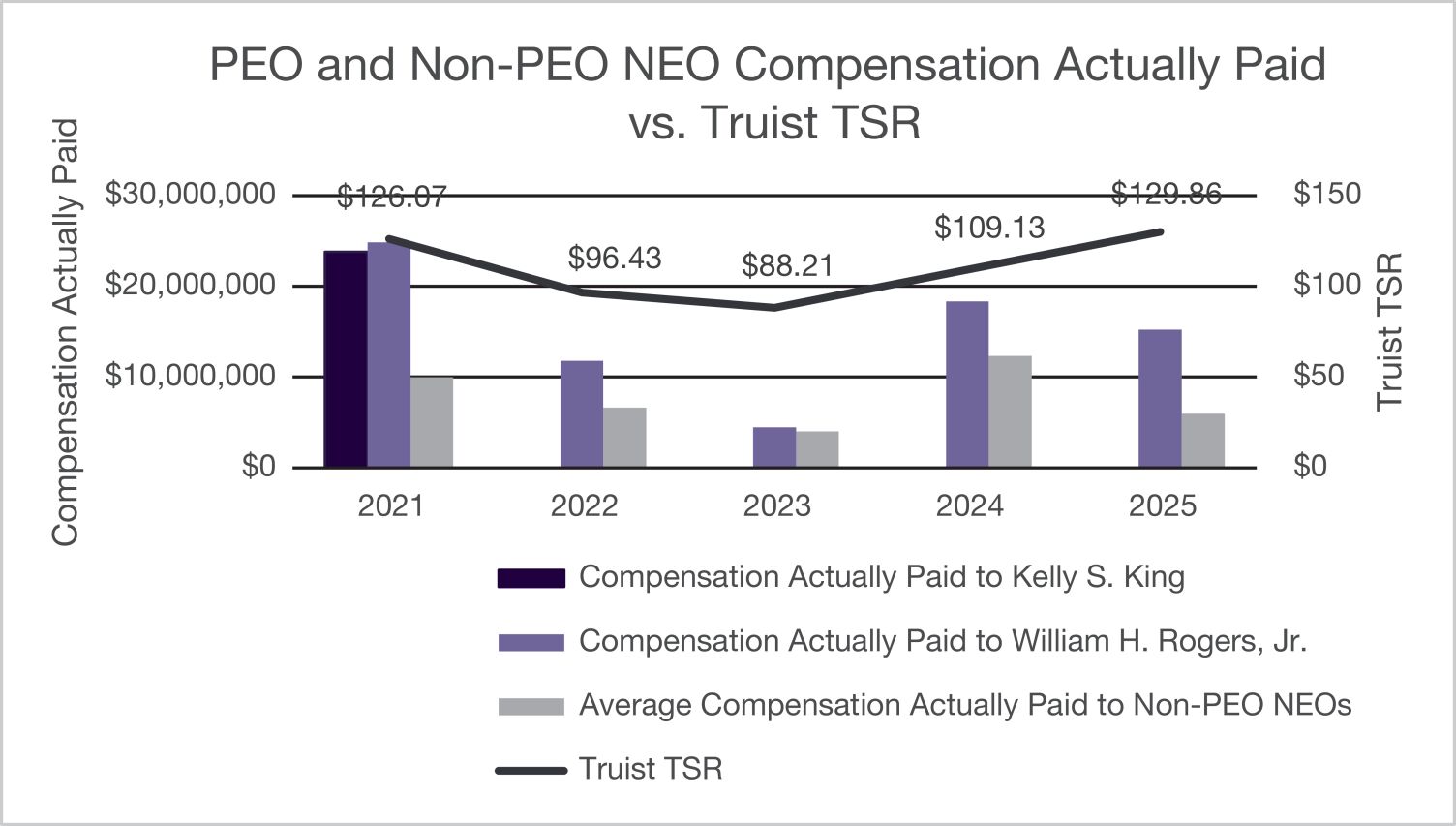
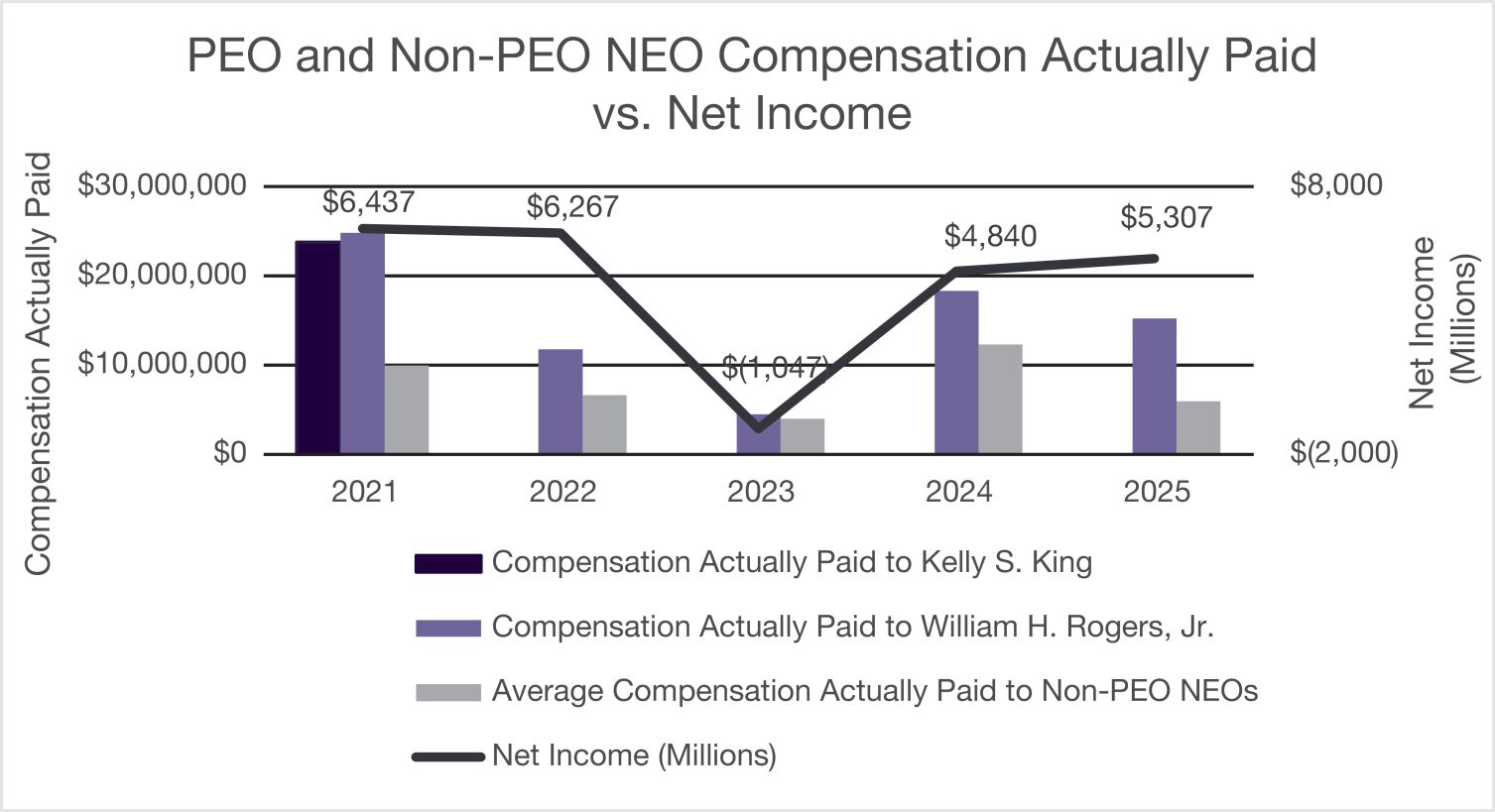
86 |
| 2026 Proxy Statement |
|
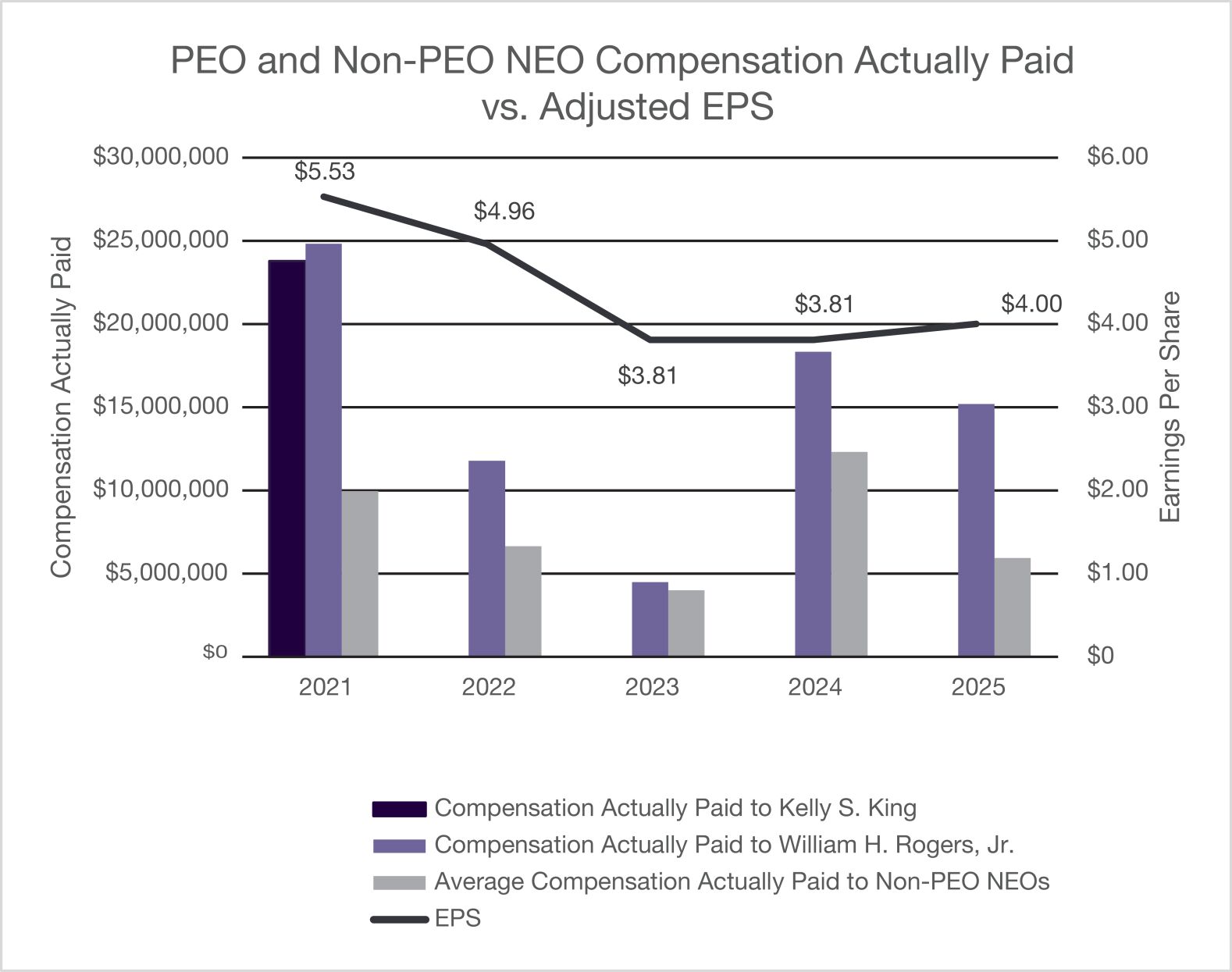
| |
2026 Proxy Statement | |
87 |
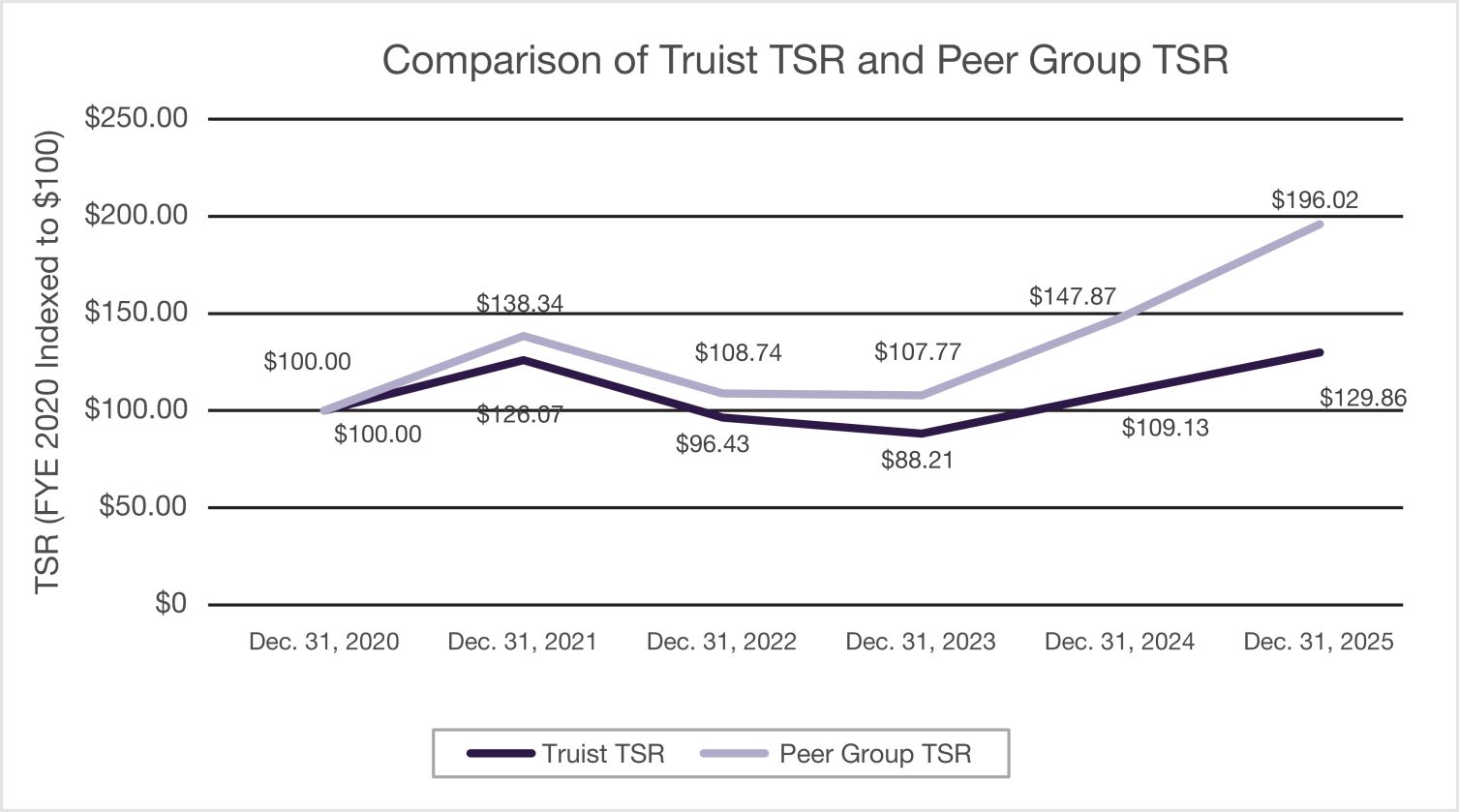
88 |
| 2026 Proxy Statement |
|
Proposal 3—Ratification of the Appointment of our Independent
Registered Public Accounting Firm
RESPONSIBILITIES
The Audit Committee is directly responsible for the appointment, compensation, retention, replacement, and oversight of the work of our independent registered public accounting firm. To execute on this responsibility, the Audit Committee engages in a comprehensive annual evaluation of the independent registered public accounting firm’s qualifications, performance, and independence. The Audit Committee has carefully considered the selection of PricewaterhouseCoopers LLP (“PwC”) as the independent registered public accounting firm to audit and report on the consolidated financial statements of Truist and the effectiveness of our internal control over financial reporting.
SHAREHOLDER RATIFICATION
Our shareholders are being asked to ratify the appointment of PwC for 2026 because we believe that this is a matter of good corporate governance and value our shareholders’ views on the independent registered public accounting firm. Representatives of PwC are expected to be present at the Annual Meeting, will have an opportunity to make a statement if they so desire, and are expected to be available to respond to questions posed by shareholders. The Audit Committee, however, will retain its sole authority over the appointment, compensation, retention, replacement, and oversight of the work of our independent registered public accounting firm. In the event that the engagement of PwC is not ratified by shareholders, the Audit Committee will consider that action in the ongoing exercise of its authority over the independent registered public accounting firm but will not be obligated to engage a new one. In addition, even if the engagement is ratified, the Audit Committee will retain its discretion to terminate the appointment at any time during the year, to engage a new independent registered public accounting firm, and to take any other related action if judged by the Audit Committee to be in the best interests of the Company.
|
|
THE BOARD OF DIRECTORS RECOMMENDS A VOTE “FOR” PROPOSAL 3 — RATIFICATION OF THE APPOINTMENT OF PRICEWATERHOUSECOOPERS LLP AS OUR INDEPENDENT REGISTERED PUBLIC ACCOUNTING FIRM FOR 2026.
| |
Fees to Independent Registered Public Accounting Firm
The following table shows the aggregate fees incurred by the Company for professional services by PwC for fiscal years 2025 and 2024:
| 2025 ($) |
2024 ($) |
|||||||
| Audit Fees |
28,228,000 | 25,077,000 | ||||||
| Audit-Related Fees |
3,507,000 | 3,627,000 | ||||||
| Tax Fees |
184,000 | 229,000 | ||||||
| All Other Fees |
10,000 | 185,000 | ||||||
| Total |
31,929,000 | 29,118,000 | ||||||
Audit Fees. This category includes fees billed or expected to be billed for professional services for the integrated audits of our consolidated financial statements, including the audit of the effectiveness of internal control over financial reporting. This category also includes reviews of our quarterly reports on Form 10-Q, statutory audits, or other financial statement audits of subsidiaries, and comfort letters and consents related to SEC registration statements.
Audit-Related Fees. This category includes fees billed or expected to be billed for assurance and other services that are reasonably related to the performance of the audits that are not reported under the audit fees category above. These services consist of service organization control reports, other audit and attest services, services provided in connection with certain agreed upon procedures and other attestation reports, financial accounting, reporting and compliance matters, and risk and internal control reviews.
Tax Fees. This category includes fees billed or expected to be billed for tax-related services, including tax compliance, tax planning, and tax advice.
All Other Fees. This category includes fees billed or expected to be billed for non-audit services and subscription-based services, including software licenses, benchmarking services, training, and other advisory services.
Audit Committee Pre-Approval Policy
Under its charter, the Audit Committee’s policy is that it must preapprove all audit and permitted non-audit services of the independent registered public accounting firm to the extent required and consistent with applicable law. In 2025 and 2024, all of the services provided by our independent registered public accounting firm were reviewed and approved by the Audit Committee.
|
|
2026 Proxy Statement | |
89 |
Proposal 3—Ratification of the Appointment of our Independent Registered Public Accounting Firm
Audit Committee Report
This report of the Audit Committee is required by the SEC and, in accordance with the SEC’s rules, will not be deemed to be part of or incorporated by reference by any general statement incorporating by reference this proxy statement into any filing under the Securities Act of 1933, as amended (the “Securities Act”), or under the Securities Exchange Act of 1934, as amended (the “Exchange Act”), except to the extent that we specifically incorporate this information by reference, and will not otherwise be deemed “soliciting material” or “filed” under either the Securities Act or the Exchange Act.
The Audit Committee is currently composed of four independent directors and operates under a charter adopted by our Board. The primary duties and responsibilities of the Audit Committee are to assist the Board in overseeing (1) the integrity of the financial statements of the Company and management’s responsibilities for accounting, financial reporting, and internal controls and procedures, (2) compliance with applicable legal and regulatory requirements, (3) the qualifications, independence, and performance of the Company’s independent registered public accounting firm, and (4) the stature and performance of TAS.
While the Audit Committee has the duties and responsibilities set forth in its charter, our management is responsible for the Company’s internal controls over financial reporting, preparation of the consolidated financial statements, and overall accounting and financial-reporting processes. The independent registered public accounting firm (PwC) is responsible for performing an integrated audit of our consolidated financial statements and of the effectiveness of our internal controls over financial reporting in accordance with standards established by the Public Company Accounting Oversight Board and for issuing a report on this audit.
In the performance of its oversight function, the Audit Committee has performed the duties and responsibilities set forth in its charter, including reviewing and discussing with management, the independent registered public accounting firm, and TAS the annual audited consolidated financial statements. The Audit Committee has also discussed with the independent registered public accounting firm the matters required to be discussed by the applicable requirements of the Public Company Accounting Oversight Board and the SEC.
The Audit Committee has received the written disclosures and the letters from the independent registered public accounting firm required by applicable requirements of the Public Company Accounting Oversight Board, as currently in effect, regarding the independent registered public accounting firm’s communications with the Audit Committee concerning independence. The Audit Committee has discussed with the independent registered public accounting firm its independence and has considered whether the provision of any non-audit services by the independent registered public accounting firm is compatible with maintaining this independence.
Based on these reviews and discussions, including the review of the representations of management and the report of the independent registered public accounting firm, the Audit Committee recommended on February 23, 2026, to the Board that the audited financial statements be included in our 2025 Form 10-K, filed with the SEC on February 24, 2026.
Submitted by the Audit Committee as of February 23, 2026:
| Dallas S. Clement, Chair | Charles A. Patton | |
| Jennifer S. Banner | Bruce L. Tanner | |
| 90 | | 2026 Proxy Statement |
|
Proposal 4—Approval of the Amendment and Restatement of the Truist
Financial Corporation 2022 Incentive Plan
BACKGROUND
On February 24, 2026, the Board, upon recommendation of the Compensation and Human Capital Committee, approved the amendment and restatement of the Truist Financial Corporation 2022 Incentive Plan (the “A&R Plan”), subject to and effective upon shareholder approval at the 2026 Annual Meeting on April 28, 2026 (the “Effective Date”). The A&R Plan will amend and restate the Truist Financial Corporation 2022 Incentive Plan (the “Current Plan”), which was originally approved by our shareholders on April 26, 2022, and apply to awards granted on or after the Effective Date. Upon the Effective Date, no additional awards will be granted under the Current Plan, and the A&R Plan will govern the grant of equity- and cash-based incentive awards going forward.
The A&R Plan provides for the issuance of shares for equity-based awards covering up to (1) 31 million shares, plus (2) the number of shares that were previously authorized for awards under the Current Plan and not previously issued or subject to outstanding awards and (3) the number of shares that are subject to outstanding awards under the Current Plan as of the Effective Date that thereafter expire, or are cancelled, forfeited or otherwise terminated without the issuance of shares, or are settled in cash rather than shares. The A&R Plan also makes certain other changes, as discussed in more detail below. This Proposal 4 asks our shareholders to approve the A&R Plan.
PURPOSE OF THE PROPOSAL
We believe that our future success and our ability to remain competitive are dependent on our continuing efforts to recruit, retain and motivate highly-qualified individuals. We operate in a competitive market for talent. A cornerstone of our method for attracting and retaining top talent has been our cash- and equity-based incentive programs. Providing employees, non-management directors and independent contractors with the opportunity to participate in stock ownership, and in turn, our long-term future performance, helps align the objectives of such persons and our shareholders, and is important in recruiting, motivating and retaining the highly skilled individuals that are essential to our success.
We do not have sufficient shares of common stock reserved and available under the Current Plan to cover our anticipated equity-based incentive program needs for 2027. To remedy this issue, the A&R Plan, if approved by our shareholders, will allow an additional 31 million shares of common stock to be issued as equity-based incentive awards. If our shareholders do not approve the A&R Plan, the Current Plan will continue in full force and effect in its current form, but we will have an insufficient number of shares to continue to provide equity-based incentives, placing Truist at a significant disadvantage with respect to recruiting, retaining, and motivating highly-qualified individuals who are critical to our growth and profitability. Limitations on our ability to grant equity-based awards could force us to increase cash compensation to remain competitive.
The number of shares requested pursuant to the A&R Plan was determined in consultation with our compensation consultant and based on an analysis of various factors, including potential dilution, anticipated equity-based incentive needs, and best practice for equity-compensation plans from governance and shareholder perspectives. See Key Data Relating to Outstanding Equity Awards and Shares Available on page 92 for additional information. We anticipate that the requested share pool will last for approximately four years, allowing us to continue to provide equity-based incentives to eligible individuals who are selected to receive awards under the A&R Plan. The shares reserved may, however, last for greater or fewer years depending on currently unknown factors, such as the number of grant recipients, future grant practices, and our stock price.
In addition to the proposed share request described above, the A&R Plan (1) extends the term to the ten (10) year anniversary of shareholder approval of the A&R Plan, (2) updates the change of control definition and treatment of outstanding awards in relation to a change of control for alignment with market practice, (3) increases the Incentive Option limit in proportion to the proposed share request, (4) specifies application of share pool limits to assumed and substituted awards, as well as dividends, (5) clarifies, streamlines, and modernizes tax and administrative provisions, and (6) otherwise updates the Current Plan for best practices and changes since 2022.
POSITIVE A&R PLAN FEATURES
The A&R Plan includes a number of features intended to protect the interests of our shareholders and further reinforce and promote alignment of interests between our employees, non-management directors and independent contractors with the interests of our shareholders. These features include the following:
| ✓ | No liberal share recycling. Shares retained by or delivered to the Company to pay the exercise price for Options or SARs, or to satisfy tax withholding obligations in connection with any award count against the number of shares which remain available under the A&R Plan. |
| ✓ | Minimum vesting requirements (the A&R Plan clarifies application to equity-based awards and adds market exceptions). Awards are subject to a minimum vesting period of at least one year from the date of grant, with certain limited, market exceptions. |
| ✓ | Limit on non-management director awards (also includes cash compensation and a new non-Executive Chair limit under the A&R Plan). The A&R Plan provides that the aggregate value a non-management director may receive in any fiscal year, including both equity- and cash-based compensation, is $750,000 (or $1,000,000 for any non-Executive Chair). |
|
|
2026 Proxy Statement | |
91 |
Proposal 4—Approval of the Amendment and Restatement of the Truist Financial Corporation 2022 Incentive Plan
| ✓ | No dividends or dividend equivalents paid on unvested awards (now includes Restricted Stock under the A&R Plan). Dividends and dividend equivalents are not payable until the underlying award vests, and no dividends or dividend equivalents may be granted or paid with respect to Options and SARs. |
| ✓ | No evergreen provision. Shares authorized for awards under the A&R Plan are not automatically replenished. |
| ✓ | Robust clawback policies. All awards granted under the A&R Plan (time- and performance-based) are subject to the Company’s Executive Compensation Recoupment Policy and Incentive Compensation Policy, as well as any other incentive compensation recoupment policy adopted by the Company from time to time. |
| ✓ | Limited discretion to accelerate vesting of awards. The A&R Plan provides that the Administrator does not have discretion to accelerate the vesting of an Award except in the event of the Participant’s death or disability. |
| ✓ | No single-trigger vesting upon change of control. Under the A&R Plan, we do not automatically accelerate vesting of awards in connection with a change of control of the Company. |
| ✓ | No discounted Options or SARs. Options and SARs may not be granted with exercise or base prices lower than the fair market value of the underlying shares on the grant date. |
| ✓ | Prohibition on repricing, exchange, cash-out, and reload (application to in-the-money Options and SARs is clarified under the A&R Plan). The exercise or base price of an Option or SAR may not be reduced, directly or indirectly, without the prior approval of shareholders. Also, cash-out of Options and SARs is prohibited, except for in-the-money Options and SARs upon a change of control. Grants of reload Options and SARs are prohibited under the A&R Plan. |
| ✓ | No tax gross-ups. The A&R Plan does not provide for any tax gross-ups. |
KEY DATA RELATED TO OUTSTANDING AWARDS AND SHARES AVAILABLE
Overhang and Potential Dilution. The following table includes information regarding outstanding equity awards and shares available for future awards under the Current Plan as of February 25, 2026 (and without giving effect to the proposed amendment and restatement):
|
|
Current Plan (as of February 25, 2026) | ||||
| Total shares underlying outstanding Options and SARs |
0 | ||||
| Weighted average exercise price of outstanding Options and SARs |
0 | ||||
| Weighted average remaining contractual life of outstanding Options and SARs |
0 | ||||
| Total shares underlying outstanding full-value awards(1) |
31,944,353 | ||||
| Total shares currently available for grant |
6,870,374 | ||||
| (1) | Includes RSUs, PSUs, and restricted stock awards (“Restricted Stock”). PSUs are shown at the target number of shares issuable upon conversion of the PSUs, assuming target achievement of all performance goals. |
The aggregate shares shown above represent a fully-diluted overhang of approximately 3.0% based on the 1,241,031,717 shares of common stock outstanding as of February 25, 2026. If the A&R Plan is approved, the shares available for issuance would increase the overhang to approximately 5.5%. This assumes PSU awards are earned and paid at target performance. We calculate the fully diluted “overhang” as the total of (1) shares underlying outstanding awards plus shares available for issuance under future equity awards, divided by (2) the total number of shares outstanding, shares underlying outstanding awards and shares available for issuance under future equity awards. The fair market value of a share of our common stock as of February 25, 2026 was $50.57.
Burn Rate. The following table includes the necessary information to calculate our burn rate under the Current Plan for the last three fiscal years:
| Year ended December 31, |
2023 | 2024 | 2025 | |||||||||
| Number of Options granted |
0 | 0 | 0 | |||||||||
| Number of RSUs granted(1) |
8,242,502 | 11,352,823 | 8,804,244 | |||||||||
| Number of PSUs granted(2) |
303,374 | 749,401 | 291,555 | |||||||||
| Number of PSUs earned(3) |
190,199 | 346,985 | 0 | |||||||||
| Total share usage under the Current Plan(4) |
8,432,701 | 11,699,808 | 8,804,244 | |||||||||
| Weighted average common shares outstanding (000s) |
1,331,963 | 1,331,087 | 1,286,788 | |||||||||
| Burn rate |
0.63 | % | 0.88 | % | 0.68 | % | ||||||
| (1) | Represents RSUs granted both to employees and non-management directors during the applicable year. |
| 92 | | 2026 Proxy Statement |
|
Proposal 4—Approval of the Amendment and Restatement of the Truist Financial Corporation 2022 Incentive Plan
| (2) | Includes the number of shares issuable upon conversion of performance awards assuming target achievement of all performance goals. |
| (3) | Represents the number of shares earned and paid (before tax withholding) for PSUs earned for performance periods ending as of the last day of the indicated fiscal year (e.g., for 2023, the number of shares paid out before taxes for the 2021–2023 PSU awards). |
| (4) | Total share usage is based on the sum of RSUs granted and PSUs earned for the year. |
SUMMARY OF THE A&R PLAN
A summary of the A&R Plan is set forth below. This summary is qualified in its entirety by reference to the text of the A&R Plan, which is attached to this proxy statement as Annex B.
Purpose and Eligibility. The A&R Plan is intended to advance the interests of Truist by enhancing its ability to recruit, retain, and motivate eligible individuals with ability and initiative by enabling them to contribute to and participate in Truist’s future success and to align their interests with those of Truist and its shareholders. The basis for participation in the A&R Plan is the Administrator’s grant of an award to such an eligible individual to fulfill such purposes. All employees, non-management directors, and independent contractors who provide services to Truist or its affiliates are eligible to participate in the A&R Plan. As of February 19, 2026, approximately 38,651 employees, 11 non-management directors, and 818 independent contractors would have been eligible to receive awards under the A&R Plan. For purposes of the following summary, an eligible person who has been granted an award under the A&R Plan is referred to as a “Participant.” Incentive Options may only be granted to employees of Truist or its affiliates.
Administration. The Administrator of the A&R Plan shall be the Board, or, to the extent delegated by the Board, the “Committee” (as described below). The Committee, for purposes of the A&R Plan, means either (1) the Compensation and Human Capital Committee of the Board or (2) a committee of the Board composed of not less than two “non-employee directors” within the meaning of Rule 16b-3 under the Exchange Act. The term “Administrator,” as used herein, shall refer to the Committee, unless otherwise indicated.
Among other things, the Administrator will have full authority, in its discretion, to determine the selection of employees, non-management directors and independent contractors of Truist and its affiliates who will receive awards, the types of awards to be granted, the time of grant, the number of shares of Truist’s common stock subject to the awards and the terms and conditions of awards. The Administrator also has authority to prescribe the forms of award agreements, establish, amend and rescind rules and regulations for the administration of the A&R Plan, construe and interpret the A&R Plan and any awards or agreements thereunder and make all other determinations deemed necessary or advisable for administering the A&R Plan. However, the Administrator will only have the discretion to accelerate vesting of awards in the case of death or disability.
Subject to applicable law and the rules of any stock exchange or quotation system, the Administrator may delegate all or some of its authority to a subcommittee of the Committee, one or more senior executive officers of Truist, or other employees of Truist or its affiliates who are not subject to Section 16 of the Exchange Act, and may revoke any such delegation at any time.
All determinations and decisions of the Board or the Committee with respect to the A&R Plan or any awards granted thereunder need not be uniform and will be final, binding and conclusive on all persons.
In order to comply with foreign law, the Administrator may also modify the terms of awards granted to foreign Participants, establish subplans related to such Participants, and take any other action that it deems advisable, provided that no subplans or modifications may increase the number of shares available for grant under the A&R Plan nor any action taken pursuant to such authority result in a violation of applicable law. To the extent required by applicable law, such actions will be subject to shareholder approval.
Shares Available for Awards. The A&R Plan permits the issuance of up to (1) 31 million shares, plus (2) the number of shares that were previously authorized for awards under the Current Plan and not previously issued or subject to outstanding awards, and (3) the number of shares that are subject to outstanding awards under the Current Plan as of the Effective Date that thereafter expire, or are cancelled, forfeited or otherwise terminated without the issuance of shares, or are settled in cash rather than shares. Up to 31 million shares may be granted under the A&R Plan as Incentive Options.
Shares retained by or delivered to the Company to (1) pay the exercise price for Options or SARs, or (2) satisfy tax withholding obligations in connection with any award will, in each case, count against the number of shares which remain available under the A&R Plan. The total number of shares covering stock-settled SARs or net-settled Options will be counted against the A&R Plan’s share reserve, not just the net shares issued upon exercise. The Administrator may grant awards under the A&R Plan in substitution for awards held by employees, non-management directors, or consultants of another entity who become employees, non-management directors, or consultants of the Company as a result of a business combination, and such substitute awards will not count against the plan share reserve. However, dividends (including dividend equivalents), awards settled in cash rather than the issuance of shares, and awards that are forfeited, cancelled, terminated, expire or lapse without the issuance of shares will not apply against the A&R Plan’s share limitations.
Non-Management Director Compensation Limits. Non-management directors are eligible to receive any type of award offered under the A&R Plan except Incentive Options and AIP awards. Under the A&R Plan, the aggregate value of compensation granted to a non-management director in any fiscal year, including both equity- and cash-based awards, may not exceed $750,000, with a higher annual limit of $1,000,000 for a non-management director serving as non-Executive Chair of the Board.
|
|
2026 Proxy Statement | |
93 |
Proposal 4—Approval of the Amendment and Restatement of the Truist Financial Corporation 2022 Incentive Plan
Minimum Vesting. Equity-based incentive awards under the A&R Plan generally may not vest earlier than the one-year anniversary of the date of grant, subject to limited exceptions. Such exceptions include (1) awards granted to non-management directors that vest on the earlier of the one-year anniversary of the grant date and the next Annual Meeting of the shareholders occurring at least 50 weeks after the prior year’s Annual Meeting, (2) awards assumed, converted, or substituted in connection with an acquisition, (3) shares delivered in lieu of fully-vested cash incentive awards, (4) awards accelerated upon death or disability, and (5) equity-based incentive awards granted by the Administrator covering up to five percent (5%) of shares authorized for issuance under the A&R Plan.
Awards. The Administrator may grant cash- or stock-based awards to eligible Participants, including Options, SARs, Restricted Stock, RSUs, performance shares (“Performance Shares”), PSUs, LTIP awards, AIP awards, and phantom stock awards (“Phantom Stock Awards”), as described in more detail below.
Options. The A&R Plan provides for the grant of Incentive Options within the meaning of IRC Section 422 and non-qualified Options that do not qualify as Incentive Options (“Nonqualified Options”). Incentive Options may be granted only to employees of Truist or its affiliates. Nonqualified Options may be granted to employees, non-management directors, and independent contractors of Truist or its affiliates.
The Administrator determines the terms of each Option award, provided that Incentive Options are subject to the limitations of IRC Section 422, including the $100,000 annual exercisability limit, and may not be granted after the tenth anniversary of the adoption of the A&R Plan or the Effective Date, whichever occurs earlier. The Administrator also determines the exercise price of each Option granted under the A&R Plan, provided that the exercise price of an Option may not be less than 100% of the fair market value of our common stock on the date of grant (or 110% in the case of Incentive Options granted to ten percent shareholders), and in no event less than par value. Finally, the Administrator determines the terms of each Option, which may not exceed ten years from the date of grant (or five years in the case of certain Incentive Options granted to ten percent shareholders).
Following a Participant’s separation from service, vested Options generally may be exercised for the period specified in the applicable award agreement, but in no event later than the Option’s expiration date. Options may not be repriced or exchanged for Options with a lower exercise price without shareholder approval and may not include automatic reload provisions.
Stock Appreciation Rights. SARs mean the right to receive payment in cash, shares of common stock, or a combination thereof, in an amount equal to the excess of the fair market value of a share of Truist’s common stock on the date of exercise over the base price of the SAR, multiplied by the number of shares subject to the SAR. SARs granted under the A&R Plan may be granted either in connection with an Option (“Related SARs”) or independently of an Option (“Freestanding SARs”). The base price of a SAR is determined by the Administrator but may not be less than 100% of the fair market value of Truist’s common stock on the date of grant. The term of each SAR is determined by the Administrator and may not exceed ten years from the date of grant (or, in the case of a Related SAR, such shorter term as may apply to the related Option). SARs do not include any automatic reload or deferral features, and the base price of a SAR may not be reduced after the date of grant, except as permitted under the A&R Plan or with shareholder approval.
Restricted Stock. Restricted Stock awards under the A&R Plan represent shares of Truist’s common stock issued to Participants that are subject to vesting conditions and restrictions determined by the Administrator, which may include continued employment or service, attainment of specific performance goals, retirement, disability, death, or other conditions and, in the case of awards based on performance measures (or a combination of performance measures and continued service), the applicable performance measures and performance goals determined by the Administrator. Restricted Stock may be granted in such numbers, upon such terms and at such times as determined by the Administrator. As soon as practicable following grant, shares of Restricted Stock are issued in the Participant’s name subject to the applicable restrictions, which lapse upon satisfaction of the vesting conditions. A Participant holding Restricted Stock, whether vested or unvested, generally has the rights of a shareholder with respect to the shares subject to the award, including voting and liquidation rights.
Restricted Stock Units. RSUs represent the right to receive shares of Truist’s common stock, cash equal to the fair market value of such shares, or a combination thereof, as determined by the Administrator. RSUs may be granted in such numbers, upon such terms and conditions, and at such times as determined by the Administrator. RSUs may be subject to conditions that must be satisfied for the RSUs to vest or be earned and no longer subject to forfeiture, which may include continued service, attainment of performance goals, retirement, disability or death, and, in the case of RSUs based on performance measures (or a combination of performance measures and continued service), the applicable performance measures and performance goals determined by the Administrator.
Upon vesting, RSUs may be payable in cash, shares of common stock, or a combination thereof, as determined by the Administrator. Unless otherwise provided in the applicable award agreement, payments will be made in a lump sum within two and one-half (2 1⁄2) months following the end of the restriction period. A holder of RSUs has no shareholder rights unless and until shares are issued. RSUs are generally nontransferable except by will, intestacy, or beneficiary designation. If provided by the Administrator, RSUs may earn dividend equivalents, which will be subject to the same vesting provisions as the underlying award and will not be paid until the applicable vesting conditions are satisfied.
Performance Awards. Performance Awards represent the right to receive shares (or cash equal to the fair market value of such shares or a combination thereof) over a designated performance period and may take the form of Performance Shares, PSUs, or LTIP awards. Performance Shares represent the right to receive shares of Truist’s common stock (or cash equal to the fair market value of such shares, or a combination thereof), PSUs represent the right to receive shares of common stock (or cash equal to the fair market value of
| 94 | | 2026 Proxy Statement |
|
Proposal 4—Approval of the Amendment and Restatement of the Truist Financial Corporation 2022 Incentive Plan
such shares or a combination thereof) in the future and LTIP awards represent the right to receive cash (or shares of common stock with a fair market value equal to the cash value of the award), in each case contingent on the achievement of specified performance or other objectives during the applicable performance period.
The Administrator may grant Performance Awards in such amounts, upon such terms and conditions, and at such times as determined by the Administrator. Following the achievement of the applicable performance conditions, payment will be made in a lump sum within two and one-half (2 1⁄2) months following the end of the applicable performance period, unless an applicable award agreement provides otherwise. Unless otherwise determined by the Administrator in an applicable award agreement, Performance Awards that are not earned will be forfeited upon a Participant’s separation from service.
Annual Incentive Performance Awards. AIP awards represent incentive awards available to eligible employees that are based on the achievement of specified performance goals over an annual performance period. Employees selected by the Administrator may be eligible to receive AIP awards, with individual incentive opportunities established by the Administrator either as target awards or as a percentage of an annual corporate incentive pool. The Administrator determines the applicable performance goals and, following the end of the performance period, determines the amount of each Participant’s AIP award based on actual performance results, and may increase or decrease such amount in its discretion. Except as otherwise determined by the Administrator, a Participant must be employed on the last day of the applicable performance period to be eligible to receive an AIP award; provided, however, that a Participant whose employment terminates during a performance period due to death, disability or retirement may be eligible to receive an award in the Administrator’s discretion. AIP awards are payable in cash, RSUs, or a combination thereof, as determined by the Administrator, and are generally paid between January 1 and March 15 of the fiscal year following the end of the applicable performance period. Any portion of an AIP award that is not earned will be forfeited in accordance with the terms of the A&R Plan and the applicable award agreement.
Phantom Stock Awards. Phantom Stock Awards granted under the A&R Plan represent hypothetical share units with a value based on the fair market value of Truist’s common stock. Upon vesting and satisfaction of any applicable conditions, a Participant will be entitled to receive a payment equal to the fair market value of one share of Truist’s common stock for each vested hypothetical share unit, as determined on the vesting date or such other date specified in the applicable award agreement. Payment may be made in cash, shares of common stock, or a combination thereof, as determined by the Administrator. Phantom stock awards are generally nontransferable and do not confer on any shareholder rights unless and until shares of common stock are issued, if applicable. Any portion of a Phantom Stock Award that does not vest will be forfeited in accordance with the terms of the A&R Plan and the applicable award agreement.
Performance Measures. The Administrator may establish performance goals based on one or more performance measures for awards under the A&R Plan. Performance measures may be based on such corporate, business unit, division, and/or individual performance factors and criteria as the Administrator determines appropriate. For AIP awards, performance goals may be based on such individual and/or business performance goals as established by the Administrator.
Restrictions on Dividends and Dividend Equivalents. Except with respect to Options and SARs, the Administrator may provide that equity-based incentive awards earn dividends or dividend equivalents. Any such dividends or dividend equivalents will be subject to the same vesting provisions as the underlying award and will not be paid or distributed until the award becomes vested, in accordance with the A&R Plan and applicable law. No dividends or dividend equivalents may be granted with respect to Options or SARs.
Change of Control.
Awards not assumed or substituted by successor entity. In the event of a change of control of the Company in which a successor entity fails to assume or otherwise equitably convert or substitute awards under the A&R Plan:
| ◾ | Outstanding Options and SARs become fully exercisable; |
| ◾ | Time-based vesting conditions on outstanding awards will lapse; |
| ◾ | Performance-based vesting conditions on awards other than AIP awards will be deemed earned as of the effective date of the change of control based on the greater of target performance and actual performance achieved as of the effective date of the change of control; and |
| ◾ | Performance-based vesting conditions on AIP awards will be deemed earned as of the effective date of the change of control based on the target level of performance, payable pro-rata based on the length of time of the performance period that elapsed prior to the effective date of the change of control. |
Awards assumed or substituted by successor entity. Unless otherwise provided in an award agreement, in the event of a change of control of the Company in which a successor entity does assume or otherwise equitably convert or substitute awards under the A&R Plan, performance-based vesting conditions underlying awards other than AIP awards will be deemed satisfied based on the greater of target performance and actual performance achieved as of the effective date of the change of control, and will continue to be subject to applicable time-based vesting conditions according to their original vesting schedules.
|
|
2026 Proxy Statement | |
95 |
Proposal 4—Approval of the Amendment and Restatement of the Truist Financial Corporation 2022 Incentive Plan
If, within two years after the effective date of the change of control, a Participant’s employment is terminated without cause (as defined in the A&R Plan and award agreement), the Participant’s awards will be treated as follows:
| ◾ | Outstanding Options and SARs become fully exercisable; |
| ◾ | Time-based vesting conditions on outstanding awards will lapse; and |
| ◾ | AIP awards will be deemed earned based on the actual level of performance achieved through the end of the performance period and payable pro-rata based on the length of time of the performance period that elapsed prior to the date of termination. |
Adjustments. In the event of any merger, consolidation, reorganization, recapitalization, stock dividend, stock split, reverse stock split, spin-off, combination, or reclassification of Truist’s common stock or other similar change in Truist’s capital structure that affects the common stock, which the Administrator determines affects the common stock such that an adjustment or substitution is appropriate, the number of shares of common stock reserved for issuance under the A&R Plan will be correspondingly adjusted and the Administrator will make such substitutions or adjustments to the terms of awards and the terms of the A&R Plan as it deems equitable to prevent dilution or enlargement of awards or as otherwise may be advised.
Notwithstanding the foregoing, unless the Administrator determines otherwise, the issuance by Truist of shares of stock or securities convertible into shares for cash, property, labor, or services, either upon direct sale or upon the exercise of rights or warrants, or upon conversion of shares or obligations of Truist convertible into such shares or other securities, will not affect outstanding awards. Any adjustments will be consistent with IRC Section 424 and otherwise in a manner compliant with IRC Section 409A.
Amendment and Termination. The A&R Plan will have a term of ten (10) years following the date of shareholder approval and therefore, no awards may be granted under the A&R Plan after April 27, 2036. The A&R Plan may be amended, altered or terminated at any time by the Board, subject to applicable law and any required shareholder approval, including where required by the rules or regulations of the applicable stock exchange.
If the A&R Plan is terminated, it will remain in effect with respect to any awards granted thereunder that are outstanding at the time of its termination. Subject to IRC Section 409A, the Administrator may amend, alter or terminate outstanding awards under the A&R Plan, prospectively or retroactively; provided that, except as otherwise provided in the A&R Plan, any such amendment may not, without the Participant’s consent, materially adversely affect (as determined in the sole discretion of the Administrator), the Participant’s rights with respect to the award.
Non-Transferability of Awards. Except as otherwise permitted under the A&R Plan or applicable law, awards granted under the A&R Plan are generally non-transferable and may not be sold, assigned, pledged, hypothecated, or otherwise transferred, other than by will, the laws of intestate succession or beneficiary designation and may be exercised during a Participant’s lifetime only by the Participant or the Participant’s permitted legal representative.
Clawback. Awards granted under the A&R Plan, including any shares of common stock subject to or issued under an award or the value received pursuant to an award, are subject to recovery, recoupment, clawback, and/or forfeiture pursuant to any clawback policy adopted by Truist from time to time, including the Executive Compensation Recoupment Policy and as required by applicable law. This applies to both performance- and time-based awards.
Prohibition on Repricing, Exchange, and Cash-Out. Except for adjustments permitted under the A&R Plan or with shareholder approval, the Option price of an outstanding Option or the base price of an outstanding SAR may not be reduced after the date of grant, nor may any outstanding Option or SAR be surrendered to Truist as consideration for the grant of a new Option or SAR with a lower Option price or base price. Options and SARs may not be cashed out without shareholder approval, except for in-the-money Options and SARs in connection with a change of control.
Miscellaneous. Awards do not give Participants shareholder rights unless and until shares of common stock are issued to such Participants. Awards do not entitle any employee of other service provider to continue in the service of the Company or its affiliates. Awards are subject to the Company’s stock ownership requirements and insider trading, hedging, and pledging policies, to the extent applicable.
FEDERAL INCOME TAX CONSEQUENCES
The following is a brief description of the current U.S. federal income tax treatment generally arising with respect to grants of awards under the A&R Plan. This summary is not intended to constitute tax advice, is not intended to be exhaustive and, among other things, does not describe state, local, or foreign tax consequences. Tax laws are subject to change.
Nonqualified Options and SARs. A Participant generally is not required to recognize income upon the grant or vesting of Nonqualified Options or SARs. Instead, ordinary income generally is required to be recognized on the date the Nonqualified Option or SAR is exercised. In general, the amount of ordinary income required to be recognized is: (1) in the case of a Nonqualified Option, an amount equal to the excess, if any, of the aggregate fair market value of the shares underlying the Option exercised over the aggregate exercise price, and (2) in the case of a SAR, the amount of cash or the fair market value of any shares received upon exercise, in each case including the amount of cash or the fair market value of any shares that were withheld in satisfaction of any applicable taxes due upon the exercise of the award.
| 96 | | 2026 Proxy Statement |
|
Proposal 4—Approval of the Amendment and Restatement of the Truist Financial Corporation 2022 Incentive Plan
Incentive Options. A Participant is not taxed at the time an Incentive Option is granted. The tax consequences upon exercise and later disposition depend upon whether the Participant holds the shares received upon exercise of an Incentive Option for more than one year after exercise and two years after the date of grant of the Incentive Option. If the Participant satisfies these holding periods, for regular tax purposes the Participant will not realize income upon exercise of the Incentive Option, and Truist will not be allowed an income tax deduction at any time with respect to the Incentive Option. The difference between the exercise price and the amount realized upon disposition of the shares by the Participant will constitute a long-term capital gain or a long-term capital loss, as the case may be. If the Participant fails to meet the holding period (other than by reason of death), a disqualifying disposition occurs and the Participant generally recognizes as ordinary income, in the year of the disqualifying disposition, an amount equal to the excess of the fair market value of the shares at the date of exercise over the exercise price. With respect to a subsequent sale of shares received on exercise of the Incentive Option, any excess of the sales price over the fair market value at the date of exercise will be recognized by the Participant as long-term or short-term capital gain, depending on the length of time the shares were held after the Incentive Option was exercised. If, however, the sales price is less than the fair market value at the date of exercise, then the Participant will recognize a capital loss in an amount equal to the excess of the fair market value at the date of exercise over the sales price. In both situations, Truist’s tax deduction is limited to the amount of ordinary income recognized by the Participant. Different consequences apply for a Participant subject to the alternative minimum tax.
RSU and Phantom Stock Awards. A Participant generally is not required to recognize income upon the grant of RSUs or Phantom Stock Awards. Instead, ordinary income generally is required to be recognized upon the issuance of shares or receipt of cash pursuant to the terms of the award. In general, the amount of ordinary income required to be recognized is equal to the amount of cash or the fair market value of any shares received in respect thereof, including the amount of cash or the fair market value of any shares that were withheld in satisfaction of any applicable taxes due on the vesting or payment of such awards.
Restricted Stock. A Participant generally is not required to recognize ordinary income on the award of Restricted Stock. Instead, on the date the shares vest (i.e., become transferable and no longer subject to forfeiture), the Participant will be required to recognize ordinary income in an amount equal to the excess, if any, of the fair market value of the shares on such date over the amount, if any, paid for such shares. Any dividends received upon the vesting of the Restricted Stock generally will be treated as compensation that is taxable as ordinary income to the recipient. If permitted by the applicable award agreement, a Participant may make an election under IRC Section 83(b) to instead recognize ordinary income on the date the Restricted Stock is granted in an amount equal to the excess (if any) of the fair market value of the shares over any amount paid for such shares.
Performance Awards. The U.S. federal income tax consequences of Performance Awards will depend upon the specific terms of each award.
Disposition of Shares. Unless stated otherwise above, upon the subsequent disposition of shares acquired under any of the preceding awards, a Participant will recognize capital gain or loss based upon the difference between the amount realized on such disposition and the Participant’s basis in the shares, and such amount will be long-term capital gain or loss if such shares were held for more than 12 months. Capital gain is generally taxed at a maximum rate of 20% if the property is held more than one year.
Tax Withholding. Under the A&R Plan, Truist may require the Participant to remit any withholding amount to Truist or cause shares of common stock to be withheld upon settlement of awards in order to satisfy tax withholding obligations. If shares of common stock are withheld to satisfy a Participant’s tax withholding obligations, the Participant will be treated as having received such shares for purposes of the discussion above.
Tax Consequences to the Company. Generally, all amounts taxable as ordinary income to Participants under the A&R Plan in respect of awards are expected to be deductible by the Company as compensation at the same time the Participant recognizes the ordinary income, subject to certain caps on the deductibility of executive compensation imposed by IRC Section 162(m).
Effect of Change of Control. Under the “golden parachute” provisions of IRC Section 280G, the accelerated vesting, exercisability or payment of awards under the A&R Plan in connection with a change of control may be required to be valued and taken into account in determining whether Participants have received compensatory payments contingent upon the change of control in excess of certain limits. If these limits are exceeded, a portion of the amounts payable to the Participants may be subject to an additional 20% federal tax and may be nondeductible to Truist.
Section 409A. Certain awards under the A&R Plan may constitute nonqualified deferred compensation under IRC Section 409A. Failure to satisfy the applicable requirements under Section 409A for awards considered deferred compensation would result in the acceleration of income and additional income tax liability to the recipient, including certain penalties. Awards under the A&R Plan are intended to be designed and administered so that they comply with, or are exempt from, Section 409A to avoid the imposition of additional tax, penalties, and interest on the Participant.
ERISA Information. The A&R Plan is not subject to the provisions of the Employee Retirement Income Security Act of 1974, as amended.
|
|
2026 Proxy Statement | |
97 |
Proposal 4—Approval of the Amendment and Restatement of the Truist Financial Corporation 2022 Incentive Plan
NEW PLAN BENEFITS
Awards under the A&R Plan are determined by the Administrator in its discretion, and it is therefore not possible to predict the number, name or positions of the persons who will benefit from the A&R Plan if it is approved by shareholders, or the terms of any such benefits. See 2025 Grants of Plan-Based Awards on page 73 and 2025 Director Compensation Table on page 41 for information on awards granted under the Current Plan during the most recently completed fiscal year.
EQUITY COMPENSATION PLAN INFORMATION
The following table provides information concerning outstanding equity-based incentive awards as of December 31, 2025.
| Plan category |
(a) Number of securities to be (#) |
(b) Weighted-average exercise ($) |
(c) Number of securities (#) | ||||||||||||
| Equity compensation plans approved by security holders |
24,195,183 | (2) | 32.10 | 15,001,419 | |||||||||||
| Equity compensation plans not approved by security holders |
3,362 | (3) | 35.19 | — | |||||||||||
| Total |
24,198,545 | 32.17 | 15,001,419 | ||||||||||||
| (1) | Excludes RSUs and PSUs because they do not have an exercise price. |
| (2) | Includes 24,039,628 RSUs and PSUs in plans approved by security holders. |
| (3) | Consists of options with a weighted-average exercise price of $35.19 issued under the National Penn Bancshares, Inc. 2014 Long-Term Incentive Compensation Plan and assumed by the Company on April 1, 2016 in connection with mergers and acquisitions. |
|
|
THE BOARD OF DIRECTORS RECOMMENDS A VOTE “FOR” PROPOSAL 4 — APPROVAL OF THE AMENDMENT AND RESTATEMENT OF THE TRUIST FINANCIAL CORPORATION 2022 INCENTIVE PLAN. | |
| 98 | | 2026 Proxy Statement |
|
Proposal 5—Shareholder Proposal Regarding a Report on Risks from
Misalignment Between Company Policies and Customer Base
We engage with our investors year-round on matters of interest to them, including our business performance with clients and our human-capital strategies for teammates, as detailed under Shareholder Outreach on page 10. When a shareholder proposal is received, we communicate with the proponent in an effort to discuss any concern and explore the potential for a mutually agreeable solution. Sometimes this results in the withdrawal of the proposal before our proxy statement is made available to shareholders. This year, we also took the step of submitting a letter to the SEC to exclude one proposal where we believe that a reasonable basis exists to do so based on the provisions of Rule 14a-8, prior published guidance, or judicial decisions. After receiving no objection from SEC staff to its exclusion, only the following proposal remained unresolved. While we have included it in the proxy statement, this should not be taken as an indication that we believe the proposal is not also excludable on the same basis.
The following proposal was submitted on behalf of proponent The Heritage Foundation, by its representative Bowyer Research, Inc., and will be voted on if properly presented at the Annual Meeting. The Company is not responsible for the accuracy or content of the proposal and the supporting statement, which appear in the form received from the proponent. Our Board recommends that you vote AGAINST the proposal for the reasons set forth after the proponent’s supporting statement.
Report on Risks from Misalignment Between Company Policies and Customer Base
Supporting Statement:
Truist Financial Corporation is a major financial institution with a diverse customer base and a fiduciary duty to its shareholders. Despite the company’s prominence and even its recent steps1 toward depoliticization, however, Truist still maintains policies and public positions that reflect controversial ideological commitments at odds with the values of large segments of its customers.
These include politicized company stances, including millions of dollars2 in corporate donations which Truist described3 as efforts at “[f]urthering the implementation and integration of racial equity principles,” along with divisive DEI trainings on topics like “unconscious bias.”4 The company’s healthcare practices, as described by the Human Rights Campaign (on whose Corporate Equality Index5 the company receives a perfect score), include “equal health coverage for transgender individuals without exclusion for medically necessary care,” with no explanation of whether the company also covers areas such as detransition care. The company additionally maintains emissions reductions goals,6 and ongoing partnerships with anti-fossil fuel networks such as the Ceres Company Network,7 despite the politicized nature of such commitments and their dubious consistency with Truist’s fiduciary duty.
This misalignment has triggered backlash and reputational damage. According to the Viewpoint Diversity Score Business Index,8 the company scores a mere 6% due to concerns including lack of stated viewpoint protections and exclusions9 of certain religious organizations from its philanthropy policies. According to 1792 Exchange’s Corporate Bias Ratings,10 the company is High Risk for corporate bias. Despite Truist’s stated pride in11 the “diversity that exists in the… perspectives, and views of its clients and teammates,” this pride has not extended to real political neutrality in company policies. Such side-taking alienates employees and customers and exposes Truist to litigation and regulatory scrutiny.
Recent examples, including Target & Cracker Barrel, exemplify the potential damage created by brand politicization. In the financial sector, concerns over debanking have sparked greater calls for political neutrality at the institutions controlling our nation’s finances. For Truist, threats to brand value caused by politicized company policies & positions can significantly impact consumer trust and long-term growth prospects. Brand value estimates using FactSet analysis place Truist’s brand value at an estimated $2 billion, a large portion of the company’s ~$57B market cap.12 The risk of reputational damage has become a critical concern for shareholders.
Truist shareholders deserve clarity on how ideological positioning may be undermining enterprise value—and how the company intends to mitigate these risks moving forward.
Resolved:
Shareholders request the Board of Directors of Truist Financial Corporation conduct an evaluation and issue a report within the next year, at reasonable cost and excluding proprietary information and disclosure of anything that would constitute an admission of pending litigation, evaluating how Truist’s policies, public statements, and corporate partnerships may be misaligned with the values of its customer base, and how such misalignment may expose the company to significant legal, regulatory, and reputational risk.
| [1] | https://www.charlotteobserver.com/news/business/article301059144.html |
| [2] | https://dc.claremont.org/blm-funding-database/ |
| [3] | https://web.archive.org/web/20241113092556/https://www.truist.com/purpose/truist-foundation/stories/purpose-built-communities |
| [4] | https://filecache.investorroom.com/mr5ir_truist/474/Truist%202020%20CSR%20and%20ESG%20Report%2009022021.pdf |
| [5] | https://www.hrc.org/resources/corporations/truist-financial |
| [6] | https://www.truist.com/resources/commercial-corporate-institutional/strategic-advice/articles/the-cost- to-reach-net-zero |
| [7] | https://www.ceres.org/networks/company |
| [8] | https://www.viewpointdiversityscore.org/company/truist-financial |
| [9] | https://storage.googleapis.com/vds_storage/document/2025-evidence-items/truist-financial/PC3(1)_Truist-Foundation-Grant-Application-Truist_Apply-for-a-Truist-Foundation-Grant.png |
| [10] | https://1792exchange.com/spotlight-reports/corporate-bias-ratings/?c_id=780 |
| [11] | https://filecache.investorroom.com/mr5ir_truist/864/2024-Truist-Proxy-Statement.pdf |
| [12] | https://finance.yahoo.com/quote/TFC/ |
|
|
2026 Proxy Statement | |
99 |
Proposal 5—Shareholder Proposal
STATEMENT OF THE BOARD OF DIRECTORS IN OPPOSITION TO THE
SHAREHOLDER PROPOSAL
The Board recommends that shareholders vote AGAINST this proposal for the following reasons:
| ◾ | Strong Board Oversight: Our Board and its committees provide objective, independent oversight of our policies and practices, including under our Code of Ethics. |
| ◾ | Nondiscriminatory Policies and Practices in Place: We are committed to treating all clients and teammates fairly. |
| ◾ | The Proposal Would Not Add Value: The requested report would be duplicative of existing Board oversight and Company policies and practices, offering no decision-useful information to shareholders and diverting resources from strategic priorities. |
Our Board and its committees provide objective, independent oversight of our policies and practices, including under our Code of Ethics.
Our Board and its committees play an active role in setting a tone at the top for fair access and fair treatment. Oversight is robust, with ethical standards and policies in place that are designed to protect the Company’s assets and business and to support the diverse customers and communities we serve.
For example, our Code of Ethics—which is approved by the Board—clearly articulates our commitment to creating a fair and non-discriminatory workplace for teammates. Equally straightforward is our promise to clients: “Consistent with our Enterprise Fair Access Policy and Enterprise Fair Lending Policy, teammates should never deny, restrict, or cancel services to, or otherwise discriminate against, current or potential clients on the basis of their race, color, ethnicity, political opinions, religion, or any other prohibited basis as further described in those Policies.” See Ethics at Truist on page 38 for additional information.
Similarly, under the oversight of the Nominating and Governance Committee, our Statement of Political Engagement provides that contributions from Truist PACs are made to promote the interests of the Company without regard to party affiliation or the personal political preferences of the boards of the PACs or the Company’s management. See Statement of Political Engagement on page 36 for additional information.
Our exposure to risks of the kinds referenced in the proposal are subject to rigorous review by the Board and its committees. In particular, the Risk Committee assists the Board in overseeing Truist’s ERM framework, including quantitative and qualitative statements of Truist’s risk appetite, risk limits and thresholds that supplement risk appetite statements, and management of the program for compliance risk management. Through these and other activities, the Risk Committee sets a tone at the top for risk governance across Truist. Likewise, the Compensation and Human Capital Committee is responsible for assisting the Board in its oversight of our human-capital strategy including in connection with programs for performance management and talent development and engagement. See Board’s Oversight of Risk Management on page 33 for additional information.
We are committed to treating all clients and teammates fairly.
As reflected in the policies and practices overseen by the Board and its committees, Truist is committed to treating all clients and teammates fairly. Our footprint is vast and strikingly diverse, and the performance that we have demonstrated would not be possible if we did not strive to live out this commitment every day. See 2025 Business Performance on page 4 for additional information.
This is evident in our community engagement and charitable giving as well. For example, we support employee-focused initiatives that enable teammates to contribute to eligible nonprofit organizations serving community needs throughout our regions. Many religious and faith-based organizations are among the thousands of organizations eligible under this program. See Corporate Responsibility and Sustainability on page 39 for additional information.
Similarly, the Company’s total rewards programs are structured to attract and retain a broad array of talented and engaged teammates and are designed to provide pay and benefits without impermissible distinctions based on protected characteristics in compliance with applicable law. These policies apply consistently across the Company and are overseen through established governance and risk management processes.
Our Enterprise Fair Access Policy and Enterprise Fair Lending Policy reflect our aim to reach every potential client and serve their financial needs. For example, the equal and fair treatment of all credit applicants and clients in all aspects of a credit transaction, without regard to any prohibited characteristics, is an integral part of Truist’s fundamental mission to help our clients achieve economic success and financial security.
The requested report would be duplicative of existing Board oversight and Company policies and practices, offering no decision-useful information to shareholders and diverting resources from strategic priorities.
As described in the two previous sections, what the proposal seeks in a report is already amply covered through existing oversight by the Board and current policies and practices of the Company.
Moreover, we publicly disclose key elements of this governance and our activities through our Annual Report on Form 10-K and other periodic SEC filings, proxy statements, corporate responsibility and sustainability reports, media releases, and other disclosures. These
| 100 | | 2026 Proxy Statement |
|
Proposal 5—Shareholder Proposal
provide shareholders with a transparent view of how the Company meaningfully engages with clients, teammates, and communities across the footprint and identifies, assesses, manages, and otherwise addresses risks to our businesses and the rest of the enterprise.
The report described in the proposal would divert management and the Board from established oversight routines that further the achievement of our strategic objectives and directly support compliance with laws and operational effectiveness. Equally, this would distract attention away from building on recent performance gains and accelerating the creation of long-term value for shareholders.
For all of these reasons, the proposal would not enhance performance or transparency, strengthen risk management, or provide incremental insight for shareholders and, therefore, should be rejected.

|
THE BOARD OF DIRECTORS RECOMMENDS A VOTE “AGAINST” PROPOSAL 5 — SHAREHOLDER PROPOSAL REGARDING A REPORT ON RISKS FROM MISALIGNMENT BETWEEN COMPANY POLICIES AND CUSTOMER BASE | |
|
|
2026 Proxy Statement | |
101 |
Stock Ownership Information
The table below sets forth the beneficial ownership of Truist common stock as of February 19, 2026 (except as otherwise indicated in the footnotes below) by (1) our directors, (2) our NEOs, (3) all of our directors and executive officers as a group, and (4) each person who is known by Truist to be the beneficial owner of more than five percent of our common stock (as determined under SEC rules). Unless otherwise indicated, all persons listed below have sole voting and investment authority over all shares beneficially owned.
| Nature of Beneficial Ownership | ||||||||||||||||||||
| Name of Beneficial Owner |
Shares of Common Stock(1) (#) |
Unvested Common Stock Units(2) (#) |
Total(3) (#) |
Percent of Class (%) | ||||||||||||||||
| Directors |
||||||||||||||||||||
| Jennifer S. Banner |
27,969 | — | 27,969 | * | ||||||||||||||||
| K. David Boyer, Jr. |
14,250 | — | 14,250 | * | ||||||||||||||||
| Agnes Bundy Scanlan |
10,194 | — | 10,194 | * | ||||||||||||||||
| Dallas S. Clement |
2,923 | — | 2,923 | * | ||||||||||||||||
| Linnie M. Haynesworth |
2,923 | — | 2,923 | * | ||||||||||||||||
| Donna S. Morea(4) |
38,351 | — | 38,351 | * | ||||||||||||||||
| Charles A. Patton(5) |
74,607 | — | 74,607 | * | ||||||||||||||||
| Jonathan M. Pruzan |
2,697 | — | 2,697 | * | ||||||||||||||||
| Thomas E. Skains(6) |
31,891 | — | 31,891 | * | ||||||||||||||||
| Laurence Stein |
7,189 | — | 7,189 | * | ||||||||||||||||
| Bruce L. Tanner |
20,868 | — | 20,868 | * | ||||||||||||||||
| Named Executive Officers |
||||||||||||||||||||
| William H. Rogers, Jr.(7) |
1,207,379 | 77,787 | 1,285,166 | * | ||||||||||||||||
| Michael B. Maguire |
74,323 | 18,300 | 92,623 | * | ||||||||||||||||
| Kristin Lesher |
61,866 | 17,087 | 78,953 | * | ||||||||||||||||
| Dontá L. Wilson |
62,919 | 23,484 | 86,403 | * | ||||||||||||||||
| Bradley D. Bender |
2,263 | 7,821 | 10,084 | * | ||||||||||||||||
| Hugh S. Cummins III(8) |
327,582 | 37,042 | 364,624 | * | ||||||||||||||||
| All Directors and Current Executive Officers as a |
1,650,682 | 151,387 | 1,802,069 | * | ||||||||||||||||
| Certain Beneficial Owners |
||||||||||||||||||||
| BlackRock, Inc.(10) |
97,460,660 | — | 97,460,660 | 7.9 | % | |||||||||||||||
| Capital International Investors(11) |
106,759,501 | — | 106,759,501 | 8.6 | % | |||||||||||||||
| Vanguard Group, Inc.(12) |
117,898,632 | — | 117,898,632 | 9.5 | % | |||||||||||||||
| * | Less than 1%. |
| (1) | Ownership amounts are as reported to Truist by the directors and executive officers, and include shares held by spouses, minor children, Individual Retirement Accounts (“IRAs”), affiliated companies, partnerships, limited liability companies, and trusts as to which each such person has beneficial ownership. With respect to executive officers, also includes shares allocated to such persons’ individual accounts under the Truist Financial Corporation 401(k) Savings Plan. Our Corporate Insider Trading Policy prohibits pledging and hedging of Truist securities by directors and executive officers. |
| (2) | Amount includes outstanding RSU awards that vest within sixty days of February 19, 2026 and are therefore treated as beneficially owned under SEC rules. |
| (3) | Amount includes shares of common stock, and phantom shares and outstanding RSU awards that are treated as beneficially owned under SEC rules, as described herein. |
| (4) | Ms. Morea beneficially owns 3,890 shares of common stock with respect to which she shares voting and investment authority with her spouse. |
| (5) | Mr. Patton beneficially owns 20,918 shares of common stock with respect to which he shares voting and investment authority with his spouse. His amount also includes 297 outstanding phantom shares under the BB&T DDCP which would be settled in common stock within sixty days following his separation from service, and are therefore treated as beneficially owned under SEC rules. In addition to his common stock holdings, Mr. Patton owns 5,000 depositary shares representing fractional interests in Truist’s Series I Perpetual Preferred Stock. |
| (6) | Mr. Skains beneficially owns 31,891 shares of common stock with respect to which he shares voting and investment authority with his spouse. This amount includes 2,500 shares held in an IRA. |
| 102 | | 2026 Proxy Statement |
|
Stock Ownership Information
| (7) | Mr. Rogers beneficially owns 270,570 shares of common stock with respect to which he shares voting and investment authority with his spouse. Amount includes 85,570 shares held by a grantor-retained annuity trust (“GRAT”) for which Mr. Rogers’s spouse is the trustee and Mr. Rogers is the sole recipient of the annuity payments made by the GRAT. Amount also includes 185,000 shares held by an irrevocable trust for which Mr. Rogers’s spouse is the trustee and his spouse and descendants are the beneficiaries. |
| (8) | Mr. Cummins resigned for Good Reason on January 13, 2025 and is therefore no longer required to report on his ownership of the Company’s equity securities. The amount included for him reflects his ownership of the Company’s equity securities based on information reasonably available to the Company. |
| (9) | Our directors and current executive officers collectively have sole voting and investment authority over 1,474,800 shares of common stock and shared voting and investment authority over 327,269 shares of common stock. Also, as of February 19, 2026, a director owned 5,000 depositary shares representing fractional interests in Truist’s Series I Perpetual Preferred Stock. |
| (10) | Consists of common stock held by BlackRock, Inc., 50 Hudson Yards, New York, NY 10001. According to a Schedule 13G/A filed with the SEC on January 26, 2024, BlackRock (or its subsidiary institutional investment managers) had sole voting power over 88,337,156 shares, and sole dispositive power over 97,460,660 shares, as of December 31, 2023. |
| (11) | Consists of common stock held by Capital International Investors, 333 South Hope Street, 55th Floor, Los Angeles, CA 90071. According to a Schedule 13G/A filed with the SEC on May 13, 2025, Capital International Investors had sole voting power over 106,302,460 shares and sole dispositive power over 106,759,501 shares as of March 31, 2025. |
| (12) | Consists of common stock held by The Vanguard Group, Inc., 100 Vanguard Blvd., Malvern, PA 19355. According to a Schedule 13G/A filed with the SEC on February 13, 2024, The Vanguard Group, Inc. (or its affiliated institutional investment managers) had shared voting power over 1,754,788 shares, sole dispositive power over 111,924,227 shares, and shared dispositive power over 5,974,405 shares as of December 31, 2023. |
Director Phantom Shares
Certain of our non-management directors have deferred annual equity awards or cash fees payable to them under the terms of the Truist DDCP, SunTrust DDCP, or BB&T DDCP. These deferred awards and fees are considered “phantom shares” since they are treated as if they were invested in shares of Truist common stock, with payment on a one-for-one basis in shares or the cash value of shares on a particular date, in either case, after the director’s retirement or other separation from the Board depending on the director’s election and the terms of the plan pursuant to which the awards or fees were deferred. The phantom shares do not carry voting rights, and are generally not deemed to be common stock beneficially owned as of February 19, 2026 under applicable SEC rules, except as set forth under the Stock Ownership Information table above. However, phantom shares achieve the same objective of creating long-term alignment with shareholder interests. Accordingly, the table below sets forth the number of phantom shares held by Truist’s non-management directors pursuant to the Truist DDCP, SunTrust DDCP, and BB&T DDCP which were not considered common stock beneficially owned as of February 19, 2026. See Compensation of Directors on page 40 for additional information.
| Name of Director |
Phantom Shares Settled in Cash (#) |
Phantom Shares Settled in Stock (#) | ||||||||
| Jennifer S. Banner |
— | 19,515 | ||||||||
| K. David Boyer, Jr. |
— | — | ||||||||
| Agnes Bundy Scanlan |
3,835 | 15,529 | ||||||||
| Dallas S. Clement |
30,200 | 19,515 | ||||||||
| Linnie M. Haynesworth |
— | 19,515 | ||||||||
| Donna S. Morea |
— | 19,515 | ||||||||
| Charles A. Patton |
— | 20,702 | ||||||||
| Johnathan M. Pruzan |
— | — | ||||||||
| Thomas E. Skains |
— | 19,515 | ||||||||
| Laurence Stein |
— | — | ||||||||
| Bruce L. Tanner |
29,488 | — | ||||||||
|
|
2026 Proxy Statement | |
103 |
Voting and Other Information
Record Date and Shares Entitled to Vote at the Meeting
If you are a registered shareholder on the Record Date (that is, shareholders who own Truist common stock directly and not through a bank, brokerage or other nominee) or are a duly authorized proxy holder of such a registered shareholder, you will be allowed to vote your shares before and during the Annual Meeting. If you are a beneficial owner of shares held for you by a broker, bank or other nominee, you may direct that your shares be voted in accordance with voting instructions provided to your broker, bank or other nominee. Only one class of our common stock exists, and each share issued and outstanding on the Record Date is entitled to one vote on each proposal at the Annual Meeting. As of the close of business on the Record Date, there were 1,241,009,752 shares of our common stock issued and outstanding and, therefore, entitled to be voted at the Annual Meeting.
Quorum Requirements
In order to obtain a quorum for action to be taken at the Annual Meeting, a majority of the shares of our common stock issued and outstanding on the Record Date must be present. Shares of holders who attend the virtual meeting or deliver valid proxies will be counted as present in determining whether a quorum exists. Once a share is represented for any purpose at the meeting, it is deemed present for quorum purposes for the remainder of the meeting and for any adjournment of the meeting, unless a new record date is or must be set for the adjourned meeting. In accordance with our Bylaws and North Carolina law, votes to abstain and “broker non-votes” (explained below) are counted as present for purposes of determining whether a quorum exists. In the event of an adjournment, postponement, or emergency that changes the time, date, or location of the Annual Meeting, we will make an announcement, issue a press release, or post information on our Investor Relations website, https://ir.truist.com, under the heading “Newsroom” to notify shareholders.
How to Vote
Proxies are being solicited on behalf of the Board for use at the Annual Meeting. To be validly cast, your vote must be received by the deadline specified on your proxy card, voting instruction form, or Notice of Internet Availability. Registered shareholders can vote their shares held on the Record Date by using one of the following four methods, except as described below:
| Online, prior to the Annual Meeting: ◾ Go to www.proxyvote.com and follow the instructions on the website.
Online, during the Annual Meeting: ◾ Registered shareholders attending the Annual Meeting virtually may vote by going to www.virtualshareholdermeeting.com/TFC2026 and logging in with your name, a valid email address, and the 16-digit control number found on your proxy card, voting instruction form, or Notice of Internet Availability, as applicable. This control number will grant you access to the meeting, including the ability to vote and submit questions. |
Mail: ◾ Sign, date, and mail the proxy card or the voting instruction form you received.
Telephone: ◾ Call toll-free 1-800-690-6903 and following the instructions on the proxy card or voting instruction form. | |
We encourage you to vote your shares prior to the Annual Meeting. If you vote via the internet or by telephone, please do not return your proxy card. A registered shareholder who votes via the internet may incur costs, such as telephone and internet access charges, for which the shareholder is responsible. The availability of internet and telephone voting will close for registered shareholders at 11:59 p.m. ET on Monday, April 27, 2026 and for Truist 401(k) Plan participants at 1:00 a.m. ET on Friday, April 24, 2026.
If you are a beneficial owner of shares held for you by a broker, bank or other nominee, you will receive voting materials from your broker, bank, or other nominee with instructions on how to submit your voting instructions.
Shares held in a fiduciary capacity by Truist Bank and certain other of our affiliates may only be voted in accordance with the instruments creating the fiduciary capacity. If you hold shares of our common stock through the 401(k) Plan, you must provide voting instructions to the plan trustee as and when described on your proxy card, voting instruction form, or Notice of Internet Availability. If you hold shares through the 401(k) Plan and also in other accounts, you may receive one proxy card, voting instruction form, or Notice of Internet Availability covering all of the shares in your accounts.
After the applicable deadline, you will not be able to submit voting instructions or change prior voting instructions for any shares. A proxy submitted by a registered shareholder may be revoked at any time before it is exercised by submitting to the Corporate Secretary of Truist an instrument revoking it, submitting a duly executed proxy bearing a later date (including a proxy given over the internet or by telephone), or by attending the virtual Annual Meeting and electing to vote using the virtual platform.
If you are a beneficial owner with your shares held through a bank, broker or other nominee, we recommend that you contact your broker, bank or other nominee for instructions on how to change or revoke your vote.
Three of our executive officers, William H. Rogers, Jr., Michael B. Maguire, and Scott A. Stengel, are designated in the accompanying proxy card as the proxies to cast the votes of our shareholders at the Annual Meeting. If you submit a valid proxy card that does not contain voting instructions, your shares will be voted in accordance with our Board’s recommendations for each proposal. If any other matter requiring a vote of shareholders is properly brought before the Annual Meeting, these proxies may vote your shares in accordance with their discretion.
If you have questions or need assistance in voting your shares, please call our proxy solicitor, Georgeson LLC, at (888) 613-3524 (toll free).
Your vote as a shareholder is important. Please vote as soon as possible to ensure that your shares are represented.
| 104 | | 2026 Proxy Statement |
|
Voting and Other Information
How to Attend the Annual Meeting
If you are a registered shareholder or beneficial owner on the Record Date or are a duly authorized proxy holder of such a registered shareholder or beneficial owner, you may attend the Annual Meeting and submit questions online before and during the Annual Meeting. You will be able to do so by visiting www.virtualshareholdermeeting.com/TFC2026 and logging in with your name, a valid email address, and the 16-digit control number found on your proxy card, voting instruction form, or Notice of Internet Availability, as applicable. You may log in to and attend the Annual Meeting online beginning at 10:45 a.m. Eastern Time on April 28, 2026. The Annual Meeting will begin promptly at 11:00 a.m. Eastern Time.
If you lost your 16-digit control number or are not a shareholder, you will be able to attend the meeting by visiting www.virtualshareholdermeeting.com/TFC2026 and registering as a guest. If you enter the meeting as a guest, you will not be able to vote shares, examine our list of shareholders, or submit questions during the meeting. To submit questions in advance of the Annual Meeting, visit www.proxyvote.com before 11:59 p.m. ET on April 27, 2026, and enter your name, email address, and 16-digit control number.
Please note that participation in the virtual Annual Meeting is subject to capacity limits of the virtual meeting platform provider and access to the meeting will be granted on a first-come, first-served basis. Additional information regarding the rules and procedures for participating in our Annual Meeting will be provided in our meeting rules of conduct, which shareholders can view during the meeting on the meeting website.
Votes Required, Non-Votes, Abstentions
| Proposal |
Board Recommendation |
Vote Requirement(1) |
Effect of Abstentions |
Effect of Broker Non-Votes(2) | ||||
| 1—Election of Directors |
FOR each director nominee | Majority of votes cast for each nominee |
No effect |
No effect | ||||
| 2—Advisory vote to approve Truist’s executive-compensation program |
FOR | Majority of votes cast |
No effect | No effect | ||||
| 3—Ratification of the appointment of PricewaterhouseCoopers LLP as Truist’s independent registered public accounting firm for 2026 |
FOR | Majority of votes cast |
No effect | Not applicable | ||||
| 4—Approval of the amendment and restatement of the Truist Financial Corporation 2022 Incentive Plan |
FOR | Majority of votes cast |
No effect | No effect | ||||
| 5—Shareholder Proposal Regarding a Report on Risks from Misalignment Between Company Policies and Customer Base |
AGAINST | Majority of votes cast |
No effect | No effect | ||||
| (1) | Majority of the votes cast means the number of shares cast “for” the election of a director or a proposal must exceed the number of votes cast “against” the election of that director or proposal; provided that neither abstentions nor “broker non-votes” will be deemed to be votes “for” or “against” a director’s election or proposal. Holders of our common stock do not have cumulative voting rights in the election of directors. Votes to abstain and broker non-votes are counted as present for purposes of determining whether a quorum exists. |
| (2) | If you are a beneficial owner of shares, your broker, bank, or other nominee may generally vote your shares without instruction on routine matters but not on non-routine matters. A “broker non-vote” occurs when your broker, bank, or other nominee submits a proxy for your shares but does not indicate a vote for a non-routine matter because a voting instruction has not been received from you. Brokers, banks, and other nominees are expected to have discretionary voting power only for Proposal 3, the ratification of the appointment of PricewaterhouseCoopers LLP as Truist’s independent registered public accounting firm for 2026, but not for any other proposals. As a result, if you do not provide specific voting instructions, NYSE rules will allow your broker, bank, or other nominee to vote only on Proposal 3 and not on Proposals 1, 2, 4, or 5. |
|
|
2026 Proxy Statement | |
105 |
Voting and Other Information
When this proxy statement was printed, we did not know of any matter to be presented at the Annual Meeting other than these five proposals. We currently do not anticipate that any other matter will be presented at the Annual Meeting. Even if you plan to attend the virtual Annual Meeting, you are encouraged to vote your shares in advance by proxy.
Delivering Proxy Materials
We deliver proxy materials primarily through the internet in accordance with SEC rules, which reduces paper use and lowers mailing costs. Registered shareholders receive proxy materials or a Notice of Internet Availability at their mailing address or electronically if they have previously consented to email delivery. Beneficial owners receive these materials from the bank, broker or other nominee that holds their shares.
If you received only a Notice of Internet Availability, you will not receive printed proxy materials unless you request them by following the instructions on the notice. The notice also explains how to access the materials online and how to vote over the internet.
Consistent with SEC rules, we sent proxy materials or a Notice of Internet Availability on March 16, 2026, to registered shareholders as of the close of business on February 19, 2026. To reduce duplicative mailings, we deliver a single set of proxy materials to shareholders who share an address unless we receive instructions to the contrary. Each shareholder at a shared address will continue to receive a separate proxy card.
For future meetings, a registered shareholder may request separate copies of proxy materials, or request a single set if receiving multiple copies, by calling our transfer agent at 1-800-213-4314 or writing to: Computershare Trust Company N.A., P.O. Box 43078, Providence, RI 02940-3078. Beneficial owners whose shares are held in street name may contact Broadridge Investor Communication Solutions, Inc., Householding Department, 51 Mercedes Way, Edgewood, NY 11717, or call 1-866-540-7095.
How to Request and Receive a Paper or Email Copy
A shareholder may obtain a copy of this proxy statement, our 2025 Annual Report, and our 2025 Form 10-K (including the financial statements and financial statement footnotes, but excluding the exhibits), without charge, by contacting Broadridge Investor Communication Solutions, Inc. or their bank, broker, or other nominee.
When requesting a copy from Broadridge Investor Communication Solutions, you will need to include your 16-digit control number found on your proxy card, voting instruction form, or Notice of Internet Availability. There is NO charge for requesting a copy. Please choose one of the following methods to make your request:
◾ By Internet: www.proxyvote.com |
◾ By Telephone: 1-800-579-1639 |
◾ By Email: sendmaterial@proxyvote.com | ||
Proxy Costs
All expenses incurred in the solicitation of proxies for the Annual Meeting will be paid by Truist. Your proxy may be solicited by mail, over the internet, by telephone, or in person by us or by our directors, officers, and teammates without additional compensation. We also have engaged Georgeson LLC to act as our proxy solicitor and have agreed to pay it $23,000 plus (1) itemized charges based on the number of calls made and votes received by Georgeson and (2) reasonable expenses for these services. Brokers, banks, and other nominees are requested to forward the proxy materials to beneficial owners and to obtain voting instructions from them. Upon request, we will reimburse these parties for their reasonable expenses in forwarding proxy materials to beneficial owners.
| 106 | | 2026 Proxy Statement |
|
Voting and Other Information
Proposals for the 2027 Annual Meeting of Shareholders
Shareholder proposals for inclusion in our proxy statement. Under SEC Rule 14a-8, a shareholder desiring to make a proposal to be included in our proxy statement for the 2027 annual meeting of shareholders must deliver the proposal in writing to the following address: Corporate Secretary, Truist Financial Corporation, 214 N. Tryon Street, 43rd Floor, Mail Code 500-93-43-13, Charlotte, North Carolina 28202. Such a proposal must be received no later than the close of business on November 16, 2026, and must comply with SEC Rule 14a-8 in order for the proposal to be considered for inclusion in our proxy statement. We recommend that such a proposal be delivered by means that provide proof of the date of delivery, such as certified mail (postage prepaid and return receipt requested).
Director nominations under Proxy Access. As set forth in our Bylaws, a shareholder or group of up to 20 shareholders that owns and has owned, for at least three years, shares representing at least 3% of the voting power of Truist’s stock entitled to vote in the election of directors, is able to submit director nominees for up to the greater of two directors or 25% of the number of directors in office as of the last day such nominations may be delivered under Article II Section 14 of our Bylaws, for inclusion in our proxy statement if the shareholder(s) and nominee(s) satisfy the requirements specified in our Bylaws and notice is received at least 120 days, but not earlier than 150 days, before the anniversary of the date we commenced mailing of the proxy statement for the prior year’s annual meeting. In order for a nominee to be considered for inclusion in our proxy statement for the 2027 annual meeting of shareholders, a shareholder must deliver notice in writing to the Corporate Secretary (at the address above) no earlier than October 17, 2026, and no later than November 16, 2026. The notice must contain the specific information required by Article II, Section 14 of our Bylaws.
Other shareholder proposals and director nominations (Advance Notice Provisions). Our Bylaws also allow shareholders to submit nominations for director or other business proposals to be considered at a meeting of shareholders where such proposals or nominees will not be included in our proxy materials (including any shareholder proposal not submitted under Rule 14a-8 or any director nomination not made pursuant to the proxy access Bylaw, which are subject to their own requirements). Under the advance notice provisions of our Bylaws, for business to be properly brought before an annual meeting by a shareholder, a shareholder must deliver timely notice in writing to our Corporate Secretary (at the address above) at least 120 days, but no more than 150 days, in advance of the first anniversary of the date of our proxy statement for the preceding year’s annual meeting (for the 2027 annual meeting of shareholders, no earlier than October 17, 2026 and no later than November 16, 2026). The notice must contain the information required by Article II, Section 10 of our Bylaws.
The chairman of the meeting will declare that the nomination will be disregarded or such other business will not be transacted if notice thereof is not received within the applicable deadlines or the nomination or other business was not made or proposed in compliance with the Bylaws.
In addition, shareholders who intend to solicit proxies in support of director nominees, other than the Company’s nominees, must comply with the requirements of Rule 14a-19.
|
|
2026 Proxy Statement | |
107 |
Annex A—Non-GAAP Financial Measures
For the purposes of measuring Truist’s performance under Truist’s compensation plans, the Compensation and Human Capital Committee approves financial measures which reflect adjustments to Truist’s GAAP or otherwise reported non-GAAP financial measures. Such financial measures are typically adjusted for items such as gains or losses on sales of businesses, restructuring charges, and similar non-core performance items. These adjustments are made so that participants are compensated for Truist’s core performance in comparison to planned levels and are neither penalized nor rewarded for non-core charges, unusual gains, or similar non-core events. As a result of different adjustments applied, adjusted EPS, adjusted PPNR, adjusted Operating Leverage, and adjusted ROTCE for compensation purposes presented in this proxy statement may differ from those measures presented in quarterly earnings materials. In addition, to facilitate assessments of Truist’s performance relative to peers, comparable adjustments are made to their results. These measures are not necessarily comparable to similar measures that may be presented by other companies.
The adjustments affect the adjusted EPS, PPNR, Operating Leverage, and ROTCE performance metrics for the 2025 AIP awards and the 3-year average adjusted ROCE for 2023-2025 PSU and LTIP purposes. Each of these adjusted financial measures is determined by methods other than in accordance with GAAP and are thus non-GAAP metrics. The adjusted EPS, PPNR, Operating Leverage, and ROTCE measures include adjustments as shown in the tables below. In addition, the calculation of adjusted EPS uses a different number of weighted average shares outstanding than the calculation of GAAP earnings per share for periods ended with a net loss available to common shareholders from continuing operations, which was the case in 2024, as described in footnote (2) to the table below.
Tangible common equity per common share, which is a component of a primary financial metric assessed in the AIP award program TBVPS plus dividend growth, is a non-GAAP financial measure that excludes the impact of intangible assets, net of deferred taxes. A reconciliation from common shareholders’ equity to tangible common shareholders’ equity is shown in the third table below.
Please refer to the 2023-2025 PSU and LTIP description below for additional detail on the adjustments included in adjusted ROCE.
2025 Adjusted Financial Metrics for Annual Incentive Performance Award
|
|
Year Ended | |||||||||
| Adjusted Net Income and Adjusted EPS ($ in millions, except per share data; shares in thousands) |
Dec. 31, 2025 | Dec. 31, 2024 | ||||||||
| Net income (loss) available to common shareholders from continuing operations |
$ | 4,974 | $ | (394 | ) | |||||
| Securities (gains) losses |
15 | 5,090 | ||||||||
| Charitable contribution |
— | 115 | ||||||||
| FDIC special assessment |
— | 49 | ||||||||
| Legal accrual |
99 | — | ||||||||
| Restructuring charges |
119 | 92 | ||||||||
| Adjusted net income available to common shareholders from continuing operations(1) |
$ | 5,207 | $ | 4,952 | ||||||
| Net income available to common shareholders from discontinued operations |
$ | — | $ | 4,863 | ||||||
| Restructuring charges |
— | 62 | ||||||||
| Accelerated TIH equity compensation expense |
— | 76 | ||||||||
| Gain on sale of TIH |
— | (4,830 | ) | |||||||
| Adjusted net income available to common shareholders from discontinued operations(1) |
$ | — | $ | 171 | ||||||
| Net income (loss) available to common shareholders |
$ | 4,974 | $ | 4,469 | ||||||
| Adjusted net income available to common shareholders(1) |
5,207 | 5,123 | ||||||||
| Weighted average shares outstanding—diluted (GAAP net income (loss) available to common shareholders)(2) |
1,302,700 | 1,331,087 | ||||||||
| Weighted average shares outstanding—diluted (adjusted net income available to common |
1,344,912 | |||||||||
| GAAP earnings per share(2) |
3.82 | 3.36 | ||||||||
| Adjusted EPS(1)(2) |
4.00 | 3.81 | ||||||||
| (1) | Adjusted net income available to common shareholders and adjusted EPS are non-GAAP in that these measures exclude selected items, net of tax. |
| (2) | For periods ended with a net loss available to common shareholders from continuing operations, the calculation of GAAP diluted earnings per share uses the basic weighted average shares outstanding. GAAP EPS and adjusted EPS calculations include the impact of outstanding equity-based awards for all periods. |
| 108 | | 2026 Proxy Statement |
|
Annex A—Non-GAAP Financial Measures
|
|
Year Ended | |||||||||
| PPNR and Operating Leverage ($ in millions) |
Dec. 31, 2025 | Dec. 31, 2024 | ||||||||
| GAAP Revenue (A) |
$ | 20,319 | $ | 13,278 | ||||||
| Taxable equivalent adjustment (B) |
196 | 212 | ||||||||
| Securities (gains) losses |
19 | 6,651 | ||||||||
| Adjusted revenue (C) |
$ | 20,534 | $ | 20,141 | ||||||
| Noninterest expense (D) |
$ | 12,076 | $ | 12,009 | ||||||
| Legal accrual |
(130 | ) | — | |||||||
| Restructuring charges |
(156 | ) | (120 | ) | ||||||
| Charitable contribution |
— | (150 | ) | |||||||
| FDIC special assessment |
— | (64 | ) | |||||||
| Adjusted Noninterest expense (E) |
$ | 11,790 | $ | 11,675 | ||||||
| PPNR(1) (A+B-D) |
$ | 8,439 | $ | 1,481 | ||||||
| Adjusted PPNR(1) (C-E) |
$ | 8,744 | $ | 8,466 | ||||||
| Operating Leverage |
52.5 | % | 2.0 | % | ||||||
| Adjusted Operating Leverage(2) |
1.0 | % | 0.3 | % | ||||||
| (1) | PPNR is a non-GAAP measure that modifies net income determined in accordance with GAAP to exclude the impact of the provision for credit losses and the provision for income taxes. Adjusted PPNR is a non-GAAP measure that additionally excludes securities gains (losses) and certain non-interest expenses, including legal accrual, restructuring charges, charitable contribution, and FDIC special assessment. |
| (2) | Adjusted operating leverage is a non-GAAP measure in that it excludes securities gains (losses) and certain non-interest expenses, including legal accrual, restructuring charges, charitable contribution, and FDIC special assessment. |
|
|
Year Ended | |||||||||
| TBVPS ($ in millions, except per share data; shares in thousands) |
Dec. 31, 2025 | Dec. 31, 2024 | ||||||||
| Common shareholders’ equity |
$ | 60,273 | $ | 57,772 | ||||||
| Less: Intangible assets, net of deferred taxes |
18,009 | 18,274 | ||||||||
| Tangible common shareholders’ equity(1) |
$ | 42,264 | $ | 39,498 | ||||||
| Outstanding shares at end of period |
1,262,470 | 1,315,936 | ||||||||
| TBVPS(1) |
$ | 33.48 | $ | 30.01 | ||||||
| (1) | Tangible common equity is a non-GAAP measure that excludes the impact of intangible assets, net of deferred taxes. |
|
|
2026 Proxy Statement | |
109 |
Annex A—Non-GAAP Financial Measures
|
|
Year Ended | |||||||||
| ROTCE ($ in millions) |
Dec. 31, 2025 | Dec. 31, 2024 | ||||||||
| GAAP Net Income (Loss) Available to Common Shareholders(1) |
$ | 4,974 | $ | 2,552 | ||||||
| Amortization of intangibles, net of tax |
221 | 128 | ||||||||
| Net Income for (Loss) ROTCE (A) |
$ | 5,195 | $ | 2,680 | ||||||
| GAAP Net Income (Loss) Available to Common Shareholders(1) |
$ | 4,974 | $ | 2,552 | ||||||
| Adjustments: |
||||||||||
| Restructuring charges |
156 | 36 | ||||||||
| Legal accrual |
130 | — | ||||||||
| FDIC special assessment |
— | (24 | ) | |||||||
| Gain on sale of TIH |
— | (36 | ) | |||||||
| Adjustments Subtotal |
286 | (24 | ) | |||||||
| Tax Effect of Adjustments(2) |
(68 | ) | 17 | |||||||
| Adjusted Net Income Available to Common Shareholders |
$ | 5,192 | $ | 2,521 | ||||||
| Amortization of intangibles, net of tax |
221 | 128 | ||||||||
| Adjusted Net Income for Adjusted ROTCE (B) |
$ | 5,413 | $ | 2,649 | ||||||
| Average Common Shareholders’ Equity |
$ | 58,902 | $ | 58,211 | ||||||
| Less: Average Intangible Assets |
18,144 | 18,358 | ||||||||
| Average Tangible Common Shareholders’ Equity (C) |
$ | 40,758 | $ | 39,853 | ||||||
| ROTCE(1) (A/C) |
12.7 | % | 13.5 | % | ||||||
| Adjusted ROTCE(1) (B/C) |
13.3 | % | 13.3 | % | ||||||
| (1) | The Compensation and Human Capital Committee uses GAAP net income available to common shareholders to calculate return on common equity and ROTCE performance as this reflects income attributable to common equity. 2024 results are July 1, 2024, through December 31, 2024 reflecting post-TIH divestiture performance using an annualization factor of 2. ROTCE is a non-GAAP metric in that it excludes the impact of intangible assets. Adjusted ROTCE is a non-GAAP measure in that it excludes the impact of intangible assets as well as other selected items. |
| (2) | GAAP net income includes the effect of applicable taxes. Adjustments made are pre-tax items, provided the adjustment is not solely a tax-related item. Accordingly, the tax effect of the adjustments, if any, has been deducted to accurately reflect the impact of the adjustments on net income. |
| 110 | | 2026 Proxy Statement |
|
Annex A—Non-GAAP Financial Measures
2023-2025 PSU and LTIP Adjustments
Truist’s 2023–2025 PSU and LTIP awards reference Truist’s 3-year adjusted ROCE. Truist derives GAAP ROCE from its GAAP net income available to common shareholders for each year of the performance period. Truist derives the adjusted ROCE non-GAAP performance metric from its non-GAAP adjusted net income that excludes goodwill impairment, securities gains (losses), gain on sale of business, and certain non-interest expenses, including legal accrual, restructuring charges, charitable contribution, and certain other items.
|
|
2026 Proxy Statement | |
111 |
Annex B—Truist Financial Corporation 2022 Incentive Plan
(amended and restated as of April 28, 2026)
Article 1
Establishment, Purpose and Duration
1.1. Amendment and Restatement. Truist Financial Corporation (“Truist”), a North Carolina corporation, hereby amends and restates the Truist Financial Corporation 2022 Incentive Plan, as set forth in this document (the “Plan”). The Plan, as amended and restated hereby, will be effective upon its approval by the shareholders of Truist (as defined in Article 15, the “Effective Date”), and shall remain in effect as provided in Section 1.3. The Plan, as amended and restated hereby, is intended to replace the “Prior Plan” (as defined in Article 15, the Truist Financial Corporation 2022 Incentive Plan), and no further awards will be granted under the Prior Plan on and after the Effective Date. For the avoidance of doubt, the Plan shall only apply to Awards granted on or after the Effective Date; awards granted prior to the Effective Date shall continue to be governed by the terms of the Prior Plan and the applicable award agreements thereunder.
1.2. Purpose. The Plan is intended to advance the interests of Truist by enhancing its ability to recruit, retain, and motivate eligible individuals with ability and initiative by enabling them to contribute to and participate in Truist’s future success and to align their interests with those of Truist and its shareholders. In furtherance of this purpose, the Plan authorizes the grant of Awards, including Options (including Incentive Options and Nonqualified Options), Stock Appreciation Rights (“SARs”) (including Related SARs and Freestanding SARs), Restricted Awards (including Restricted Stock Awards and Restricted Stock Unit Awards), Performance Awards (including Performance Share Awards, Performance Unit Awards and Long-Term Incentive Performance Awards), Annual Incentive Performance Awards, and Phantom Stock Awards, to selected eligible individuals.
1.3. Duration. Unless sooner terminated as provided herein, the Plan shall terminate on the ten (10) year anniversary of the Effective Date. After the Plan is terminated, no Awards may be granted; provided, however, that Awards previously granted shall remain outstanding in accordance with their applicable terms and conditions and the Plan’s terms and conditions.
Article 2
Eligibility and Participation
2.1. General. An Award may be granted only to an individual who satisfies all of the following eligibility requirements on the date the Award is granted:
(a) The individual is either (i) an Employee of Truist or an Affiliate, or (ii) a Director of Truist or an Affiliate, or (iii) an Independent Contractor providing services to Truist or an Affiliate.
(b) With respect to the grant of Incentive Options, the individual is otherwise eligible to participate under this Article 2 and is an Employee; provided, however, an Employee who is a Ten Percent Shareholder may only be granted an Incentive Option if the Option Price is at least one hundred ten percent (110%) of the Fair Market Value of the Common Stock, and the Option Period does not exceed five (5) years.
(c) With respect to the grant of substitute Awards or assumption of awards in connection with a merger, consolidation, acquisition, reorganization, or other transaction involving Truist or an Affiliate, the Administrator may grant Awards upon such terms and conditions as it determines to be appropriate; provided that the recipient is otherwise eligible to receive the Award and the terms of the Award are consistent with the Plan and applicable laws, rules, and regulations (including, to the extent necessary, the federal securities laws registration provisions and Section 409A, and Sections 422(b) and 424(a) of the Code).
(d) The individual, being otherwise eligible under this Section 2.1 is selected by the Administrator as a Participant in the Plan.
2.2. Grants; Award Agreements. The Administrator will designate individuals to whom Awards are to be made and will specify the number of shares of Common Stock, if any, subject to each Award and the other terms and conditions of Awards. With the exception of Annual Incentive Performance Awards under Article 9 and as otherwise determined by the Administrator, each Award granted under the Plan shall be evidenced by an Agreement which shall contain such terms, conditions, and restrictions as may be determined by the Administrator, subject to the terms of the Plan.
2.3. Minimum Vesting Requirement. Notwithstanding any other provision of the Plan to the contrary, equity-based Awards shall vest no earlier than the one (1) year anniversary of the date on which the Award is granted; provided, that the following equity-based Awards shall not be subject to the foregoing minimum one (1) year vesting requirement: (i) equity-based Awards granted to Directors that vest on the earlier of the one (1) year anniversary of the date of grant and the next annual meeting of Truist’s shareholders which is at least fifty (50) weeks after the immediately preceding year’s annual shareholders’ meeting, (ii) Awards that are assumed, converted, or substituted under the Plan as a result of Truist’s or an Affiliate’s acquisition of another company (including by way of merger, combination or similar transaction), (iii) Shares delivered in lieu of fully vested cash incentive awards, and (iv) any equity-based Awards the Administrator may grant, up to a maximum of five percent (5%) of the available shares of Common Stock authorized for issuance under the Plan pursuant to Section 3.1 (subject to adjustment under Section 3.4); and, provided, further, that the foregoing one (1) year restriction does not apply to accelerated vesting of an equity-based Award in case of death or Disability pursuant to the terms of an Award Agreement or otherwise, and provided, further, that the foregoing one (1) year restriction does not apply to any accelerated vesting of equity-based Awards under the terms of the Plan.
| 112 | | 2026 Proxy Statement |
|
Annex B—Truist Financial Corporation 2022 Incentive Plan (amended and restated as of April 28, 2026)
Article 3
Shares Subject to Plan and Award Limitations
3.1. Shares Available for Awards. Subject to adjustments as provided in Section 3.4, the aggregate number of shares of Common Stock that may be issued pursuant to Awards granted under the Plan shall be the sum of (i) 31,000,000 (thirty-one million) new shares of Common Stock not previously authorized for issuance under any plan, plus (ii) the number of shares of Common Stock previously authorized for awards under the Prior Plan and not previously issued under or currently subject to any outstanding award under the Prior Plan as of the Effective Date, plus (iii) the number of shares of Common Stock currently subject to outstanding awards under the Prior Plan as of the Effective Date that thereafter expire, or are cancelled, forfeited or otherwise terminated without the issuance of shares of Common Stock, or are settled in cash rather than the issuance of shares of Common Stock, after the Effective Date. Shares of Common Stock subject to Awards that are assumed, converted, or substituted under the Plan as a result of Truist’s or an Affiliate’s acquisition of another company (including by way of merger, combination or similar transaction) shall not count against the aggregate number of shares of Common Stock available for issuance under the Plan. Available shares under a stockholder-approved plan of an acquired company (as appropriately adjusted to reflect the transaction) may be used for Awards under the Plan and will not reduce the maximum number of Shares available for grant under the Plan, subject to applicable stock exchange requirements. The aggregate number of shares of Common Stock with respect to which Incentive Options may be granted under the Plan shall be 31,000,000 (thirty-one million) shares. Shares of Common Stock delivered under the Plan shall be authorized but unissued shares or shares purchased on the open market or by private purchase. Truist hereby reserves sufficient authorized shares of Common Stock to meet the grant of Awards hereunder.
3.2. Fiscal Year Award Limits.
(a) Subject to the overall limitations of Section 3.1 above, during any Fiscal Year, a non-Employee Director who is a member of the Board may not be granted compensation (including both equity- and cash-based fees) with a value in excess of $750,000, with the value of any equity-based Awards based on the Award date Fair Market Value. Notwithstanding the foregoing, during any Fiscal Year, a non-Employee Director serving as non-Executive Chair of the Board may not be granted compensation (including both equity- and cash-based fees) with a value in excess of $1,000,000.
(b) Subject to adjustment as provided in Section 3.4, the maximum number of shares of Common Stock subject to Awards that may be granted in a Fiscal Year to any Participant, other than a Director who is a member of the Board, is one million (1,000,000) shares.
3.3. Shares Not Subject to Limitations. The following will not be applied to the share limitations of Section 3.1 above:
(a) Dividends, including dividends paid in shares of Common Stock, or dividend equivalents paid in connection with Awards;
(b) Awards which are settled in cash rather than the issuance of shares of Common Stock; and
(c) Any shares of Common Stock subject to an Award under the Plan which Award is forfeited, cancelled, terminated, expires or lapses for any reason without the issuance of shares of Common Stock underlying the Award. However, any shares of Common Stock surrendered by a Participant or withheld by Truist to pay the Option Price or purchase price for an Award or used to satisfy any tax withholding requirement in connection with the exercise, vesting, or earning of an Award (if in accordance with the terms of the Plan, a Participant pays such Option Price or purchase price or satisfies such tax withholding by either tendering previously owned shares of Common Stock or having Truist withhold shares) shall be subject to the share limitations of Section 3.1 above.
3.4. Adjustments and Substitution of Awards. If there is any change in the outstanding shares of Common Stock because of a merger, consolidation, reorganization, recapitalization, stock dividend, stock split, reverse stock split, spin-off, combination or reclassification of the Common Stock, or if there is a similar change in the capital stock structure of Truist affecting the Common Stock, which the Administrator determines affects the Common Stock such that an adjustment or substitution is appropriate, the number of shares of Common Stock reserved for issuance under the Plan shall be correspondingly adjusted, and the Administrator shall make such substitutions or adjustments to the terms of Awards and to any provisions of the Plan as the Administrator deems equitable to prevent dilution or enlargement of Awards or as may otherwise be advisable. Notwithstanding the foregoing, unless the Administrator determines otherwise, the issuance by Truist of shares of stock of any class, or securities convertible into shares of stock of any class, for cash or property, or for labor or services, either upon direct sale or upon the exercise of rights or warrants to subscribe therefor, or upon conversion of shares or obligations of Truist convertible into such shares or other securities, shall not affect, and no adjustment by reason thereof, shall be made with respect to, outstanding Awards. All adjustments and substitutions shall be made (i) consistent with Section 424 of the Code in the case of Incentive Options so as not to result in any disqualification, modification, extension, or renewal of any Incentive Option, and (ii) otherwise in a manner compliant with Section 409A.
3.5. Foreign Holders. Notwithstanding any provision of the Plan to the contrary, in order to comply with the laws in countries other than the United States in which Truist and/or any of its Affiliates operate or have Employees, Directors, or Independent Contractors, in order to comply with the requirements of any foreign securities exchange or other applicable law, or to otherwise ensure the viability of the benefits from Awards granted to Employees, Directors, and Independent Contractors performing services in such countries and to meet the objectives of the Plan, the Administrator, in its discretion, shall have the power and authority to: (i) modify the terms and conditions of
|
|
2026 Proxy Statement | |
113 |
Annex B—Truist Financial Corporation 2022 Incentive Plan (amended and restated as of April 28, 2026)
any Award granted to Employees, Directors, and Independent Contractors outside the United States to comply with applicable law (including, without limitation, applicable foreign laws or listing requirements of any foreign securities exchange); (ii) establish subplans and modify exercise procedures and other terms and procedures, to the extent such actions may be necessary or advisable; provided, however, that no such subplans and/or modifications shall increase the share limitations contained in Section 3.1; and (iii) take any action, before or after an Award is made, that it deems advisable to obtain approval or comply with any necessary local governmental regulatory exemptions or approvals or listing requirements of any foreign securities exchange.
Article 4
Options
4.1. Grant of Options. Subject to the terms of the Plan, the Administrator may in its sole and absolute discretion grant Options to such eligible individuals in such numbers, subject to such terms and conditions, and at such times as the Administrator shall determine. Both Incentive Options and Nonqualified Options may be granted under the Plan, as determined by the Administrator; provided, however, that Incentive Options (i) shall only be granted to Employees and (ii) shall not be granted after the ten (10) year anniversary of the date the Plan is adopted or the Effective Date, whichever is earlier. To the extent that an Option is designated as an Incentive Option but does not qualify as such under Section 422 of the Code, the Option (or portion thereof) shall be treated as a Nonqualified Option. An Option may be granted with or without a Related SAR.
4.2. Option Agreement. Each Option grant shall be evidenced by an Agreement that shall specify the date of grant, the Option Price, the term of the Option, the number of shares of Common Stock to which the Option pertains, whether the Option is an Incentive Option or a Nonqualified Option, the conditions upon which the Option shall become vested and exercisable, and such other provisions as the Administrator shall determine that are not inconsistent with the terms of the Plan.
4.3. Option Price; Repricing; No Reloads. The Option Price shall be established by the Administrator and stated in the Agreement evidencing the grant of the Option; provided, that (i) the Option Price of an Option shall be no less than one hundred percent (100%) of the Fair Market Value per share of the Common Stock on the date the Option is granted (or one hundred ten percent (110%) of the Fair Market Value with respect to Incentive Options granted to a Ten Percent Shareholder); and (ii) in no event shall the Option Price per share of any Option be less than the par value per share of the Common Stock. As provided in Section 12.4(a) of the Plan, except for adjustments made pursuant to Section 3.4, the Option Price for any outstanding Option may not be decreased after the date of grant, nor may any outstanding Option granted under the Plan be surrendered to Truist as consideration for the grant of a new Option with a lower Option Price than the original Option, without shareholder approval of any such action. No Option may include provisions that entitle a Participant to the automatic “reload” grant of additional Options in connection with the exercise or expiration of the original Option.
4.4. Option Period; Exercise of Options. The Option Period shall be determined by the Administrator at the time the Option is granted, shall be stated in the Agreement, and shall not extend more than ten (10) years from the date on which the Option is granted (or five (5) years with respect to Incentive Options granted to a Ten Percent Shareholder). Any Option or portion thereof not exercised before expiration of the Option Period shall terminate.
4.5. No Deferral Feature. No Option shall have any feature that would allow for the deferral of compensation (within the meaning of Section 409A) other than the deferral of recognition of income until the later of the exercise or disposition of the Option or the time the shares acquired subject to the exercise of the Option first become substantially vested (as defined in Treasury Regulation Section 1.83-3(b)).
4.6. Exercise of Options.
(a) The period or periods during which, and conditions pursuant to which, an Option may become exercisable shall be determined by the Administrator in its discretion, subject to the terms of the Plan. An Option granted under the Plan that is exercisable may be exercised with respect to any number of whole shares less than the full number of whole shares for which the Option could be exercised. A partial exercise of an Option shall not affect the right to exercise the Option from time to time in accordance with the Plan and the applicable Agreement with respect to remaining shares subject to the Option or Related SAR.
(b) An Option that is exercisable may be exercised by giving notice of exercise specifying the number of shares of Common Stock to be purchased. The notice of exercise shall be in such form, made in such manner, and shall comply with such terms, conditions, and restrictions as may be established by the Administrator or its designee, which terms, conditions, and restrictions need not be the same for each grant or for each Participant.
(c) To the extent required under Section 422 of the Code, in no event shall there first become exercisable by an Employee in any one (1) calendar year Incentive Options granted by Truist or an Affiliate with respect to shares having an aggregate Fair Market Value (determined at the time an Incentive Option is granted) greater than One Hundred Thousand Dollars ($100,000).
4.7. Payment. Unless an Agreement provides otherwise, payment upon exercise of an Option shall be in the form of cash or cash equivalent; provided that, where permitted by the Administrator and applicable laws, rules, and regulations, payment may also be made:
(a) By delivery (by either actual delivery or attestation) of shares of Common Stock owned by the Participant for a time period determined by the Administrator and otherwise acceptable to the Administrator;
| 114 | | 2026 Proxy Statement |
|
Annex B—Truist Financial Corporation 2022 Incentive Plan (amended and restated as of April 28, 2026)
(b) By shares of Common Stock withheld upon exercise;
(c) By delivery of notice of exercise to Truist or its designee and delivery to a broker of notice of exercise and irrevocable instructions to promptly deliver to Truist the amount of sale or loan proceeds to pay the Option Price;
(d) By such other payment methods as may be approved by the Administrator and which are acceptable under applicable law; or
(e) By any combination of the foregoing methods.
Shares of Common Stock tendered or withheld in payment on the exercise of an Option shall be valued at their Fair Market Value.
4.8. Nontransferability. Except as otherwise permitted by Section 422 of the Code, an Incentive Option granted to a Participant shall be exercisable, prior to its expiration date, during the Participant’s lifetime solely by such Participant. Incentive Options shall not be transferable (including by sale, assignment, pledge, or hypothecation) except by will, the laws of intestate succession or beneficiary designation (in accordance with Section 422 of the Code and related regulations, and registration provisions of the Securities Act). A Nonqualified Option granted to a Participant shall be exercisable, prior to its expiration date, during the Participant’s lifetime solely by such Participant (or in the event such Participant’s legal incapacity or incompetency, such Participant’s guardian or legal representative). Nonqualified Options shall not be transferable (including by sale, assignment, pledge, or hypothecation) except by will, the laws of intestate succession or beneficiary designation (in accordance with applicable law, including the Code and registration provisions of the Securities Act). No right or interest of a Participant in any Option shall be liable for, or subject to, any lien, obligation, or liability of such Participant. The designation of a beneficiary in accordance with Section 14.9 shall not constitute a prohibited transfer.
4.9. Disqualifying Dispositions. If shares of Common Stock acquired upon exercise of an Incentive Option are disposed of within two (2) years following the date of grant or one (1) year following the transfer of such shares to a Participant upon exercise, the Participant shall, promptly following such disposition, notify Truist in writing of the date and terms of such disposition and provide such other information regarding the disposition as the Administrator may reasonably require.
4.10. Administrative Determination. Subject to the terms of the Plan and applicable law and consistent with Article 13, the Administrator shall have the sole authority and discretion to determine whether, to what extent and under what circumstances an Award (or any portion thereof), including an Option, shall become vested, earned, exercisable, forfeited, settled or payable (in each case to the extent applicable).
Article 5
Stock Appreciation Rights
5.1. Grant of SARs; Repricing; No Reloads. Subject to the terms of the Plan, the Administrator may in its discretion grant SARs to Participants, in such numbers, upon such terms, and at such times as the Administrator shall determine. SARs may be granted with respect to all or a portion of the shares of Common Stock subject to an Option as Related SARs, or may be granted separately and independently of an Option as Freestanding SARs. The base price per share of an SAR shall never be less than one hundred percent (100%) of the Fair Market Value per share of the Common Stock on the date the SAR is granted. As provided in Section 12.4(a) of the Plan, except for adjustments made pursuant to Section 3.4, the base price of any outstanding SAR granted under the Plan may not be decreased after the date of grant, nor may any outstanding SAR granted under the Plan be surrendered to Truist as consideration for the grant of a new SAR with a lower base price than the original SAR without shareholder approval of any such action. No SAR may include provisions that entitle a Participant to the automatic “reload” grant of additional SARs in connection with the exercise or expiration of the original SAR.
5.2. SAR Award Agreement. Each Award of an SAR shall be evidenced by an Agreement that shall specify the exercise price, the term of the SAR, the number of shares of Common Stock to which the SAR pertains, the conditions upon which the SAR shall become vested and exercisable, and such other provisions as the Administrator shall determine that are not inconsistent with the terms of the Plan.
5.3. Related SARs. A Related SAR shall be granted concurrently with the grant of the related Option. Related SARs shall be exercisable only at the time and to the extent that the related Option is exercisable, and in no event after the complete termination or full exercise of the related Option. Upon the exercise of a Related SAR, the Option shall be canceled to the extent of the number of shares as to which the Related SAR is exercised, and upon the exercise of a related Option, the Related SAR shall be canceled to the extent of the number of shares as to which the related Option is exercised or surrendered.
5.4. Freestanding SARs. A Freestanding SAR may be granted without relationship to an Option and, in such case, will be exercisable upon such terms and subject to such conditions as may be determined by the Administrator, subject to the terms of the Plan.
5.5. No Deferral Feature. No SAR shall have any feature that would allow for the deferral of compensation (within the meaning of Section 409A) other than the deferral of recognition of income until the exercise of the SAR.
|
|
2026 Proxy Statement | |
115 |
Annex B—Truist Financial Corporation 2022 Incentive Plan (amended and restated as of April 28, 2026)
5.6. Exercise of SARs.
(a) Subject to the terms of the Plan, SARs shall be exercisable in whole or in part upon such terms and conditions as may be established by the Administrator and stated in the applicable Agreement. The period during which an SAR may be exercisable shall not exceed ten (10) years from the date of grant or, in the case of Related SARs, such shorter Option Period as may apply to the related Option. Any SAR or portion thereof not exercised before expiration of the period established by the Administrator shall terminate.
(b) SARs may be exercised by giving notice of exercise specifying the number of SARs being exercised. The notice of exercise shall be in such form, made in such manner, and comply with such terms, conditions, and restrictions as may be established by the Administrator or its designee, which terms, conditions, and restrictions need not be the same for each grant or for each Participant.
5.7. Payment Upon Exercise. Subject to the limitations of the Plan, upon the exercise of an SAR, a Participant shall receive payment from Truist in an amount determined by multiplying (i) the difference between the Fair Market Value of a share of Common Stock on the date of exercise of the SAR over the base price of the SAR by (ii) the number of shares of Common Stock with respect to which the SAR is being exercised. Such consideration shall be paid in cash, shares of Common Stock (valued at Fair Market Value on the date of exercise of the SAR), or a combination of cash and shares of Common Stock, as determined by the Administrator. Cash payments shall be made within fifteen (15) business days of exercise; provided that if such fifteen- (15-) day period begins in one (1) calendar year and ends in another calendar year, the Participant shall have no right to designate the calendar year of payment. Shares shall be issued in accordance with Section 14.1. Unless otherwise provided in the applicable Agreement, no fractional shares of Common Stock will be issuable upon exercise of the SAR, and the Participant will receive cash in lieu of fractional shares of Common Stock.
5.8. Nontransferability. SARs shall not be transferable (including by sale, assignment, pledge, or hypothecation) other than by will, the laws of intestate succession, or beneficiary designation; and SARs may be exercised during the Participant’s lifetime only by the Participant (or in the event of such Participant’s legal incapacity or incompetency, such Participant’s guardian or legal representative). The designation of a beneficiary in accordance with Section 14.9 shall not constitute a prohibited transfer.
5.9. Administrative Determination. Subject to the terms of the Plan and applicable law and consistent with Article 13, the Administrator shall have the sole authority and discretion to determine whether, to what extent and under what circumstances an Award (or any portion thereof), including a SAR, shall become vested, earned, exercisable, forfeited, settled or payable (in each case to the extent applicable).
Article 6
Restricted Stock
6.1. Grant of Restricted Stock. Subject to the terms and provisions of the Plan, Restricted Stock may be granted to a Participant in such number, upon such terms, and at any time as shall be determined by the Administrator, in its sole discretion. As determined by the Administrator, each Restricted Stock Award shall be evidenced by an Agreement that specifies the number of shares of Restricted Stock granted, the Restriction Period, and such other provisions as the Administrator shall determine that are not inconsistent with the terms of the Plan. Such Restricted Stock Awards may be subject to certain conditions, which conditions must be met in order for the Restricted Stock Award to vest or be earned (in whole or in part) and no longer subject to forfeiture. The Administrator shall determine the Restriction Period, and shall determine the conditions which must be met in order for a Restricted Stock Award to vest or be earned (in whole or in part), which conditions may include, but are not limited to, payment of a stipulated purchase price for the Restricted Stock, attainment of Performance Goals, continued service or employment for a certain period of time (or combination of attainment of Performance Goals and continued service), retirement, Disability, death, or any combination of such conditions. In the case of Restricted Stock Awards based upon Performance Measures, or a combination of Performance Measures and continued service, the Administrator shall determine the Performance Measures and Performance Goals applicable to such Restricted Stock Awards.
6.2. Share Issuance. As soon as practicable following the grant of the Restricted Stock Award, the shares of Restricted Stock shall be registered in the Participant’s name in book-entry form (or permissible electronic form), with the restrictions thereon placed on the book-entry registration (or permissible electronic form). As soon as practicable following the end of the Restriction Period (after all applicable tax withholding obligations have been satisfied by the Participant), the shares shall be registered in the Participant’s name in book-entry form (or permissible electronic form) with the restrictions (except for restrictions that may be imposed pursuant to Section 12.3) removed.
6.3. Share Custody. The Administrator shall have the right to retain custody of the shares subject to a Restricted Stock Award and to require the Participant to deliver to Truist a stock power, endorsed in blank, with respect to such Award, until such time as the Restricted Stock Award vests or is forfeited.
6.4. Administrative Determination. Subject to the terms of the Plan and applicable law and consistent with Article 13, the Administrator shall have the sole authority and discretion to determine whether, to what extent and under what circumstances an Award (or any portion thereof), including a Restricted Stock Award, shall become vested, earned, exercisable, forfeited, settled or payable (in each case to the extent applicable).
| 116 | | 2026 Proxy Statement |
|
Annex B—Truist Financial Corporation 2022 Incentive Plan (amended and restated as of April 28, 2026)
6.5. Nontransferability. Restricted Stock Awards shall not be transferable (including by sale, assignment, pledge, or hypothecation) other than by will, the laws of intestate succession or beneficiary designation; and shares of Restricted Stock may not be sold, transferred, assigned, pledged or otherwise encumbered until the restrictions thereon lapse. The designation of a beneficiary in accordance with Section 14.9 shall not constitute a prohibited transfer.
Article 7
Restricted Stock Units
7.1. Grant of Restricted Stock Unit Awards. Subject to the terms of the Plan, the Administrator may in its discretion grant Restricted Stock Unit Awards to Participants in such numbers, upon such terms and conditions, and at such times as the Administrator shall determine. Each grant of Restricted Stock Units shall be evidenced by an Agreement that shall specify the number of Restricted Stock Units granted, the Restriction Period, and such other provisions as the Administrator shall determine that are not inconsistent with the terms of the Plan. Such Restricted Stock Units may be subject to certain conditions, which conditions must be met in order for the Restricted Stock Unit Award to vest or be earned (in whole or in part) and no longer subject to forfeiture. The Administrator shall determine the Restriction Period, and shall determine the conditions which must be met in order for a Restricted Stock Unit Award to vest or be earned (in whole or in part), which conditions may include, but are not limited to, payment of a stipulated purchase price for the Restricted Stock Unit Award, attainment of Performance Goals, continued service or employment for a certain period of time (or a combination of attainment of Performance Goals and continued service), retirement, Disability, death, or any combination of such conditions. In the case of Restricted Stock Unit Awards based upon Performance Measures, or a combination of Performance Measures and continued service, the Administrator shall determine the Performance Measures and Performance Goals applicable to such Restricted Stock Unit Awards.
7.2. Administrative Determination. Subject to the terms of the Plan and applicable law and consistent with Article 13, the Administrator shall have the sole authority and discretion to determine whether, to what extent and under what circumstances an Award (or any portion thereof), including a Restricted Stock Unit Award, shall become vested, earned, exercisable, forfeited, settled or payable (in each case to the extent applicable).
7.3. Time and Form of Payment. Restricted Stock Units shall be payable in cash or whole shares of Common Stock, or partly in cash and partly in whole shares of Common Stock, in accordance with the terms of the Plan and in the discretion of the Administrator. Subject to Section 7.4 and Section 14.4, in the absence of other payment arrangements in the Agreement in accordance with Section 409A, payments related to Restricted Stock Units shall be made in a lump sum within two and one-half (2 1⁄2) months of the end of the Restriction Period; provided that if such two and one-half (2 1⁄2) month period begins in one (1) calendar year and ends in another calendar year, the Participant shall have no right to designate the calendar year of payment. Issuance of shares shall be made in accordance with Section 14.1.
7.4. Nontransferability. Restricted Stock Unit Awards shall not be transferable (including by sale, assignment, pledge, or hypothecation) other than by will, the laws of intestate succession, or beneficiary designation. The designation of a beneficiary in accordance with Section 14.9 shall not constitute a prohibited transfer.
Article 8
Performance Awards
8.1. Grant of Performance Awards. Subject to the terms of the Plan, the Administrator may in its discretion grant Performance Awards to such Participants in such amounts, upon such terms and conditions and at such times as the Administrator shall determine. The Administrator shall determine the nature, length, and starting date of the Performance Period during which a Performance Award may be earned, and shall determine the conditions which must be met in order for a Performance Award to vest or be earned (in whole or in part), which conditions may include but are not limited to specified Performance Goals, continued service or employment for a certain period of time, or a combination of such conditions. In the case of Performance Awards based upon Performance Measures, or a combination of Performance Measures and continued service, the Administrator shall determine the Performance Measures and Performance Goals applicable to such Performance Awards.
8.2. Performance Awards. Performance Awards may be in the form of Performance Shares, Performance Units, and/or long-term incentive performance (“LTIP”) Awards. As specified in an Agreement, (i) an Award of a Performance Share is a grant of a right to receive shares of Common Stock (or cash equal to the Fair Market Value thereof or a combination thereof) which is contingent upon the achievement of performance or other objectives (including, without limitation, Performance Goals) during a specified period (including, without limitation, a Performance Period) and which has a value on the date of grant equal to the Fair Market Value of a share of Common Stock; and (ii) an Award of a Performance Unit is a grant of a right to receive shares of Common Stock (or cash equal to the Fair Market Value thereof, or a combination thereof) in the future, which is contingent upon the achievement of performance or other objectives (including, without limitation, Performance Goals) during a specified period (including, without limitation, a Performance
|
|
2026 Proxy Statement | |
117 |
Annex B—Truist Financial Corporation 2022 Incentive Plan (amended and restated as of April 28, 2026)
Period), and which has an initial value determined in a dollar amount established by the Administrator at the time of grant, and (iii) an LTIP Award is a grant of the right to receive cash (or shares of Common Stock with a Fair Market Value equal to the cash value of the Award) which is contingent upon the achievement of performance or other objectives (including, without limitation, Performance Goals) during a specified period (including, without limitation, a Performance Period).
8.3. Time and Form of Payment. Payment upon earning a Performance Award shall be made in cash, shares of Common Stock, or a combination of cash and shares of Common Stock, as determined by the Administrator in its sole discretion. Subject to Section 8.4 and Section 14.4, in the absence of other payment arrangements in the Agreement in accordance with Section 409A, payments related to Performance Awards shall be made in a lump sum within two and one-half (2 1⁄2) months of the end of the Performance Period; provided that if such two and one-half (2 1⁄2) month period begins in one (1) calendar year and ends in another calendar year, the Participant shall have no right to designate the calendar year of payment. Any issuance of shares shall be made in accordance with Section 14.1.
8.4. Administrative Determination. Subject to the terms of the Plan and applicable law and consistent with Article 13, the Administrator shall have the sole authority and discretion to determine whether, to what extent and under what circumstances an Award (or any portion thereof), including a Performance Award, shall become vested, earned, exercisable, forfeited, settled or payable (in each case to the extent applicable).
8.5. Nontransferability. Performance Awards shall not be transferable (including by sale, assignment, pledge, or hypothecation) other than by will, the laws of intestate succession, or beneficiary designation; and shares of Common Stock subject to a Performance Award may not be sold, transferred, assigned, pledged, or otherwise encumbered until the Performance Period has expired and all conditions to earning the Award have been met. The designation of a beneficiary in accordance with Section 14.9 shall not constitute a prohibited transfer.
Article 9
Annual Incentive Performance Awards for Employees
9.1. Eligibility. Employees selected by the Administrator will be eligible to receive Annual Incentive Performance Awards under this Article 9.
9.2. Performance Goals. No later than a date after the commencement of each Performance Period as is determined by the Plan Administrator or required under Section 409A, if applicable, the Administrator shall establish, in writing, Performance Goals for the Performance Period.
9.3. Individual Incentive Opportunities. No later than a date after the commencement of each Performance Period as is determined by the Administrator or required under Section 409A, if applicable, the Administrator shall, in writing, establish Individual Incentive Opportunities, either as target awards or as a percentage share of an Annual Corporate Incentive Pool, for Participants who are eligible under Section 9.1.
9.4. Administrator’s Annual Incentive Performance Award Determination. After the end of each Performance Period, the Administrator shall determine the actual amount of the Participant’s Annual Incentive Performance Award based upon the achievement of the Performance Goals for such Performance Period. The Administrator will then determine whether the Participant shall receive all of the Participant’s Individual Incentive Opportunity for such Performance Period or a lesser or greater amount. The Administrator may, in its discretion, increase or decrease the amount of compensation otherwise payable under this Article 9. To be eligible to receive an Annual Incentive Performance Award under this Article 9, except as the Administrator shall otherwise determine, a Participant must be employed by Truist or an Affiliate on the date that Annual Incentive Performance Awards are paid to other Employees. Notwithstanding the foregoing, if a Participant’s employment with Truist and its Affiliates is terminated prior to such date by reason of death, Disability, or retirement, and the Participant has been actively employed by Truist or its Affiliates during a portion of such Performance Period, such Participant may be eligible for an Annual Incentive Performance Award under this Article 9 in the discretion of the Administrator. The determination of any such Award shall be made by the Administrator in accordance with the provisions of this Article 9.
9.5. Time and Form of Payments. Annual Incentive Performance Awards determined by the Administrator to be paid to Participants shall be paid between January 1 and March 15 of the Fiscal Year following the end of the Performance Period applicable to the Award in either cash, Restricted Stock Units, or a combination thereof as determined by the Administrator.
Article 10
Phantom Stock Awards
10.1. Grant of Phantom Stock Awards. Subject to the terms of the Plan, the Administrator may in its discretion grant Phantom Stock Awards to Participants, in such numbers, upon such terms, and at such times as the Administrator shall determine. Each Phantom Stock Award shall be evidenced by an Agreement containing such provisions as the Administrator shall determine that are not inconsistent with the terms of the Plan.
| 118 | | 2026 Proxy Statement |
|
Annex B—Truist Financial Corporation 2022 Incentive Plan (amended and restated as of April 28, 2026)
10.2. Administrative Determination. Subject to the terms of the Plan and applicable law and consistent with Article 13, the Administrator shall have the sole authority and discretion to determine whether, to what extent and under what circumstances an Award (or any portion thereof), including a Phantom Stock Award, shall become vested, earned, exercisable, forfeited, settled or payable (in each case to the extent applicable).
10.3. Amount of Payment. Upon vesting of all or a part of a Phantom Stock Award and satisfaction of such other terms and conditions as may be established by the Administrator, the Participant shall receive payment of an amount equal to the Fair Market Value (on the date(s) of vesting (or other date or dates) set forth in the Agreement) of one (1) share of Common Stock with respect to each such hypothetical share unit which has vested. The Administrator may, however, establish a limitation on the amount payable in respect of each hypothetical share unit.
10.4. Time and Form of Payment. Payment may be made, in the discretion of the Administrator, in cash or in shares of Common Stock (or in a combination thereof) valued at Fair Market Value on the applicable vesting date or dates (or other date or dates) set forth in the Agreement. Subject to Sections 14.1 and 14.4, in the absence of payment arrangements in the Agreement in accordance with Section 409A, payments will be made in a lump sum payment within two and one-half (2 1⁄2) months of the end of the vesting period; provided, however, that if such two and one-half (2 1⁄2) month period begins in one (1) calendar year and ends in another calendar year, the Participant shall not have the right to designate the calendar year of payment.
10.5. Nontransferability. Unless the Administrator determines otherwise in accordance with applicable law, including the Code, (i) Phantom Stock Awards shall not be transferable (including by sale, assignment, pledge, or hypothecation) other than by will, the laws of intestate succession, or beneficiary designation; (ii) Phantom Stock Awards may be exercised during the Participant’s lifetime only by the Participant (or in the event of such Participant’s legal incapacity or incompetency, such Participant’s guardian or legal representative); and (iii) shares of Common Stock (if any) subject to a Phantom Stock Award may not be sold, transferred, assigned, pledged, or otherwise encumbered until the Phantom Stock Award has vested and all other conditions established by the Administrator have been met. The designation of a beneficiary in accordance with Section 14.9 shall not constitute a transfer.
Article 11
Change of Control
11.1. Awards Not Assumed or Substituted By Surviving Entity. Notwithstanding any provision in the Plan to the contrary, upon the occurrence of a Change of Control, and except as provided in Section 11.2 with respect to any Awards assumed by the surviving entity or otherwise equitably converted or substituted in connection with the Change of Control in a manner approved by the Administrator or the Board, (i) outstanding Options, SARs, and other Awards in the nature of rights that may be exercised shall become fully exercisable, (ii) all time-based vesting conditions on outstanding Awards shall lapse, (iii) with respect to Annual Incentive Performance Awards, all applicable performance-based vesting conditions shall be deemed satisfied as of the effective date of the Change of Control at the target level of performance as established by the Administrator pursuant to Article 9 and such Awards shall become payable to Participants on a pro-rata basis based on the length of time of the Performance Period that elapsed prior to the effective date of the Change of Control, and (iv) with respect to Performance Awards, all applicable performance-based vesting conditions shall be deemed satisfied as of the effective date of the Change of Control at the greater of (a) the target level of performance and (b) the actual level of performance achieved as of the effective date of the Change of Control. Any amounts payable or Shares deliverable pursuant to such Awards shall be paid or delivered in accordance with the applicable Award Agreement, or as provided under Article 9 with respect to Annual Incentive Performance Awards, and subject to compliance with Section 409A. To the extent that this provision causes Incentive Options to exceed the $100,000 dollar limitation set forth in Section 422 of the Code, the excess Options shall be Nonqualified Options.
11.2. Awards Assumed or Substituted By Surviving Entity. With respect to Performance Awards assumed by the surviving entity or otherwise equitably converted or substituted in connection with a Change of Control, except as otherwise set forth in the applicable Award Agreement, all applicable performance-based vesting conditions shall be deemed satisfied as of the effective date of the Change of Control at the greater of (a) the target level of performance and (b) the actual level of performance achieved as of the effective date of the Change of Control, but such Awards shall continue to be subject to any applicable time-based vesting conditions in accordance with their original vesting schedules. With respect to Awards assumed by the surviving entity or otherwise equitably converted or substituted in connection with a Change of Control, except as otherwise set forth in the applicable Award Agreement, if within two (2) years after the effective date of the Change of Control, a Participant’s employment is terminated without cause, then (i) all of that Participant’s outstanding Options, SARs and other Awards in the nature of rights that may be exercised shall become fully exercisable, (ii) all time-based vesting conditions on the Participant’s outstanding Awards shall lapse, and (iii) all applicable performance-based vesting conditions with respect to the Participant’s Annual Incentive Performance Award shall be earned based on the actual level of performance achieved through the end of the Performance Period and such Award shall become payable to the Participant on a pro-rata basis based on the length of time of the Performance Period that elapsed prior to the date of termination. Any amount payable pursuant to an Annual Incentive Performance Award shall be paid as provided under Article 9, and subject to compliance with Section 409A. To the extent that this provision causes Incentive Options to exceed the $100,000 dollar limitation set forth in Section 422 of the Code, the excess Options shall be Nonqualified Options.
|
|
2026 Proxy Statement | |
119 |
Annex B—Truist Financial Corporation 2022 Incentive Plan (amended and restated as of April 28, 2026)
11.3. Termination, Amendment and Modification of Change of Control Provisions. Notwithstanding any other provision of this Plan or any Award Agreement provision to the contrary, the provisions of this Article 11 may not be terminated, amended, or modified on or after the date of a Change of Control to affect adversely any Award granted under the Plan prior to the Change of Control without the prior written consent of the Participant to whom the Award was made; except that no action shall be permitted under this Section 11.3 that would impermissibly accelerate or postpone payment of an Award subject to Section 409A.
Article 12
Generally Applicable Provisions
12.1. Dividends and Dividend Equivalents. Except with regard to Options and SARs, the Administrator may, in its sole discretion and subject to compliance with applicable law including Section 409A, provide that equity-based Awards granted under the Plan earn dividends or dividend equivalents. Any such dividends and dividend equivalents (i) will be deemed to have been reinvested in additional shares of Common Stock or otherwise reinvested, which shall be subject to the same vesting provisions as provided for the Award, or (ii) will be credited to an account for the Participant and accumulated without interest until the date upon which the Award becomes vested (and any such dividends or dividend equivalents accrued with respect to forfeited Awards will be reconveyed to Truist or cancelled without further consideration or any act or action by the Participant); and except in the case of Performance Awards, will be paid or distributed to the Participant as accrued no later than the fifteenth (15th) day of the third (3rd) month following the first (1st) calendar year in which the Participant’s right to such dividends and dividend equivalents is no longer subject to a substantial risk of forfeiture or are otherwise vested. In no event shall dividends or dividend equivalents with respect to a Performance Award be paid or distributed until the performance-based conditions of the Performance Award are met, and thereafter shall be paid or distributed no later than the fifteenth (15th) day of the third (3rd) month following the first calendar year in which the Participant’s right to such dividends and dividend equivalents is no longer subject to a substantial risk of forfeiture or are otherwise vested. No dividends or dividend equivalents shall be granted with respect to Options or SARs.
12.2. Effect of Termination. The Administrator shall determine the extent, if any, to which a Participant shall have any rights with respect to an Award (including but not limited to the right to exercise all or part of an Option or SAR or the timing for all or part of an Annual Incentive Performance Award, Performance Award, Phantom Stock Award, or Restricted Award to vest or be earned) following the Participant’s Separation from Service with Truist or an Affiliate. Such provisions will be determined in the sole discretion of the Administrator (subject to Section 409A), shall be included in the Agreement relating to such Award, need not be uniform among all Awards issued under the Plan, and may reflect distinctions based on the reasons for Separation from Service.
12.3. Restrictions on Awards and Shares. Truist may impose such restrictions on Awards and shares or any other benefits underlying Awards hereunder as it may deem advisable, including without limitation restrictions under the Code and federal securities laws, the requirements of any stock exchange or similar organization, and any blue sky, state, or foreign securities laws applicable to such securities. Notwithstanding any other Plan provision to the contrary, Truist shall not be obligated to issue, deliver, or transfer shares of Common Stock under the Plan, make any other distribution of benefits under the Plan, or take any other action, unless such delivery, distribution, or action is in compliance with all applicable laws, rules, and regulations (including but not limited to the requirements of the Code and the Securities Act). Truist may cause a restrictive legend to be placed on any shares of Common Stock issued pursuant to an Award hereunder in such form as may be prescribed from time to time by applicable laws and regulations or as may be advised by legal counsel.
12.4. Amendment and Termination of the Plan.
(a) The Plan may be amended, altered, or terminated at any time by the Board; provided, that (i) approval of an amendment to the Plan by the shareholders of Truist shall be required to the extent, if any, that shareholder approval of such amendment is required by applicable law, rule, or regulation of the applicable stock exchange; (ii) except for adjustments made pursuant to Section 3.4, the Option Price for any outstanding Option or base price of any outstanding SAR granted under the Plan may not be decreased after the date of grant, nor may any outstanding Option or SAR granted under the Plan be surrendered to Truist as consideration for the grant of a new Option or SAR with a lower Option Price or base price than the original Option or SAR, as the case may be, without shareholder approval of any such action; and (iii) there shall be no cash-outs of Options or SARs without shareholder approval thereof, except in-the-money Options and SARs in connection with a Change of Control pursuant to Article 11.
(b) Subject to Section 409A, the Administrator may amend, alter, or terminate any Award granted under the Plan, prospectively or retroactively; provided, however, except as otherwise provided in Section 14.19 and 14.20 of the Plan, such amendment, alteration, or termination of an Award shall not, without the consent of the recipient of an outstanding Award, materially adversely affect (in the aggregate as determined in the sole discretion of the Administrator) the rights of the recipient with respect to the Award.
12.5. Adjustment of Awards upon the Occurrence of Certain Events. Subject to compliance with the provisions of the Plan, the Administrator shall have authority to make adjustments to the terms and conditions of Awards in recognition of certain events (including the events described in Section 3.4 hereof) affecting Truist or any Affiliate, or the financial statements of Truist or any Affiliate, or of changes in applicable laws, regulations, or accounting principles, if the Administrator determines that such adjustments are appropriate in order to prevent dilution or enlargement of the benefits or potential benefits intended to be made available under the Plan or necessary
| 120 | | 2026 Proxy Statement |
|
Annex B—Truist Financial Corporation 2022 Incentive Plan (amended and restated as of April 28, 2026)
or appropriate to comply with applicable laws, rules, or regulations; provided, however, that all adjustments shall be made in a manner compliant with Section 409A.
12.6. Cash Settlement. Notwithstanding any provision of the Plan (other than Section 12.4(a)(iii)), an Award or an Agreement to the contrary, the Administrator may cause any Award granted under the Plan to be canceled in consideration of a substitute award or cash payment of an equivalent cash value, as determined by the Administrator, made to the holder of such canceled Award; provided that the Administrator shall consider the effect of Section 409A and Section 424(a) of the Code.
12.7. Acceleration for Death and Disability. The Plan Administrator shall not have discretion to accelerate the vesting of an Award except in the event of the Participant’s death or Disability.
Article 13
Administration
13.1. General. Subject to the provisions of the Plan, the Administrator shall have full and final authority in its discretion to take any action with respect to the Plan including, without limitation, the authority:
(a) to determine all matters relating to Awards, including selection of individuals to be granted Awards, the types of Awards, the number of shares of Common Stock, if any, subject to an Award, and all provisions (including terms, conditions, restrictions, and limitations) of an Award, which need not be identical;
(b) to prescribe the form or forms of the Agreements evidencing any Awards granted under the Plan;
(c) to establish, amend, and rescind rules and regulations for the administration of the Plan; and
(d) to construe and interpret the Plan, Awards, and Agreements made under the Plan; to establish, amend, and revoke rules and regulations for the Plan’s administration; and to interpret rules and regulations for administering the Plan, and to make all other determinations deemed necessary or advisable for administering the Plan (including, without limitation, the determination of Fair Market Value).
The express grant in the Plan of any specific power to the Administrator shall not be construed as limiting any power or authority of the Administrator. The Administrator may make non-uniform and selective Awards, determinations, amendments and adjustments, and enter into non-uniform and selective Agreements. Any decision made, or action taken, by the Administrator in connection with the administration of the Plan shall be final and conclusive.
The Administrator shall also have authority, in its sole discretion (except to the extent precluded by Section 409A and as otherwise prohibited by the Plan, and subject to Section 12.7):
(i) to accelerate the date on which any Award which was not otherwise exercisable, vested, or earned shall become exercisable, vested, or earned in whole or in part without any obligation to accelerate such date with respect to any other Award granted to any recipient;
(ii) to modify or extend the terms and conditions for exercise, vesting, or earning of an Award, and to correct any defect, omission, or inconsistency in any Award;
(iii) to specify in an Agreement that a Participant’s rights, payments, and/or benefits with respect to an Award (including but not limited to any shares issued or issuable and/or cash paid or payable with respect to an Award) shall be subject to reduction, cancellation, forfeiture, or recoupment upon the occurrence of certain specified events, in addition to any otherwise applicable vesting or performance conditions of an Award. Such events may include, but shall not be limited to, Separation from Service for cause; violation of Truist or Affiliate policies; breach of non-solicitation, noncompetition, confidentiality or other restrictive covenants that may apply to the Participant; or other conduct by the Participant that is determined by the Administrator to be detrimental to the business or reputation of Truist or any Affiliate; and
(iv) to establish terms and conditions of Awards (including but not limited to the establishment of subplans) as the Administrator determines to be necessary or appropriate to conform to the applicable requirements or practices of jurisdictions outside of the United States.
In addition to action taken by meeting in accordance with applicable laws, any action of the Administrator with respect to the Plan may be taken by a written instrument signed by all of the members of the Board or Committee, as appropriate, and any such action so taken by written consent shall be as fully effective as if it had been taken by a majority of the members at a meeting duly held and called. No member of the Board or Committee, as applicable, shall be liable for any action or determination made in good faith with respect to the Plan, an Award, or an Agreement. The members of the Board or Committee, as applicable, shall be entitled to indemnification and reimbursement in the manner provided in Truist’s articles of incorporation or bylaws or pursuant to applicable law. All expenses of administering the Plan shall be borne by Truist.
|
|
2026 Proxy Statement | |
121 |
Annex B—Truist Financial Corporation 2022 Incentive Plan (amended and restated as of April 28, 2026)
13.2. Delegation of Authority. Notwithstanding the other provisions of Article 13, to the extent permitted by applicable law, the Administrator may delegate, within limits it may establish from time to time, to (i) a subcommittee of the Committee, or (ii) one or more senior executive officers of Truist, or (iii) Employees who are not subject to Section 16 of the Exchange Act, the authority to grant Awards, and to make any or all of the determinations reserved for the Administrator in the Plan with respect to such Awards (subject to any restrictions imposed by applicable laws, rules, and regulations and such terms and conditions as may be established by the Administrator in accordance with the Plan); provided, however, that, to the extent required to comply with Rule 16b-3, the Participant, at the time of such grant or other determination, is not deemed to be an officer or director of Truist within the meaning of Section 16 of the Exchange Act. To the extent that the Administrator has delegated authority to grant Awards pursuant to this Section 13.2 to a subcommittee of the Committee, or to one or more senior executive officers of Truist, or to Employees who are not subject to Section 16(b) of the Exchange Act, references to the Administrator shall include references to such subcommittee or such senior executive officer or officers, or such Employees, subject, however, to the requirements of the Plan, Rule 16b-3 and other applicable laws, rules, and regulations. The Administrator may revoke or amend the terms of a delegation at any time, but such action shall not invalidate any prior actions of the Administrator’s delegate or delegates that were consistent with the terms of the Plan.
Article 14
Miscellaneous
14.1. Shareholder Rights. Except as otherwise determined by the Administrator (and subject to the provisions of the Plan), a Participant (and the Participant’s legal representative, legatees, or distributees) shall not be deemed to be the holder of any shares of Common Stock subject to an Award and shall not have any rights of a shareholder unless and until such shares of Common Stock have been issued to her, him or them under the Plan. Shares of Common Stock acquired upon exercise of an Option or SAR shall be issued in the name of the Participant (or the Participant’s beneficiary) and distributed to the Participant (or the Participant’s beneficiary) as soon as practicable following receipt of notice of exercise and, with respect to Options, payment of the purchase price (except as may otherwise be determined by Truist in the event of payment of the Option Price pursuant to Section 4.7 herein); provided that such shares of Common Stock shall be issued within thirty (30) business days of notice of exercise (and if such thirty- (30-) day period begins in one (1) calendar year and ends in another, the Participant shall have no right to designate the calendar year of issuance). Except as otherwise provided in the Plan or in an Agreement in accordance with Section 409A, any shares of Common Stock issuable pursuant to a Performance Award, Phantom Stock Award or Restricted Stock shall be issued in the name of the Participant (or the Participant’s beneficiary); provided that such shares of Common Stock shall be registered within the time required for payment pursuant to Articles 6, 7, 8 and 10.
14.2. Taxes. The recipient of an Award or of any Award payment is responsible for the payment of all applicable taxes thereon. Truist and its Affiliates shall withhold all required local, state, federal, foreign, and other taxes and any other amount required to be withheld by any governmental authority or law from any amount payable in cash with respect to an Award, and all payments or distributions pursuant to the Plan may be made net of any applicable taxes. Prior to the issuance and delivery of shares of Common Stock or any other benefit conferred under the Plan, Truist shall require any recipient of an Award to pay to Truist in cash the amount of any tax or other amount required by any governmental authority to be withheld and paid over by Truist to such authority for the account of such recipient. Notwithstanding the foregoing, the Administrator may establish procedures to permit a recipient to satisfy such obligation in whole or in part, and any local, state, federal, foreign, or other income tax obligations relating to such an Award, by electing (the “election”) to have Truist withhold shares of Common Stock from the total number of shares the recipient would otherwise receive. The number of shares to be withheld shall have a Fair Market Value as of the date that the amount of tax to be withheld is determined as nearly equal as possible to the amount of such obligations being satisfied. Each election must be made in writing to the Administrator in accordance with election procedures established by the Administrator, including, without limitation, procedures established by the Administrator after Truist’s adoption of ASU 2016-09, Compensation – Stock Compensation (Topic 718) dated March 2016. The Administrator, in its discretion but subject to applicable law including, without limitation, Section 409A, may apply any amounts payable under the Plan as a setoff to satisfy any liabilities owed by the recipient to Truist and its Affiliates.
14.3. Section 16(b) Compliance. To the extent that any Participants in the Plan are subject to Section 16(b) of the Exchange Act, it is the general intention of Truist that transactions under the Plan shall comply with Rule 16b-3 and that the Plan shall be construed in favor of such Plan transactions meeting the requirements of Rule 16b-3 or any successor rules thereto. Notwithstanding anything in the Plan to the contrary, the Administrator, in its sole and absolute discretion, may bifurcate the Plan so as to restrict, limit, or condition the use of any provision of the Plan to Participants who are officers or directors subject to Section 16 of the Exchange Act without so restricting, limiting, or conditioning the Plan with respect to other Participants.
14.4. Section 409A. To the extent applicable, Truist intends that the Plan comply with Section 409A, and the Plan shall be construed in a manner to comply with Section 409A. Should any provision be found not in compliance with Section 409A, Participants shall be contractually obligated to execute any and all amendments to Awards deemed necessary and required by legal counsel for Truist to achieve compliance with Section 409A. By acceptance of an Award, Participants irrevocably waive any objections they may have to the amendments required by Section 409A. Participants also agree that in no event shall any payment required to be made pursuant to the Plan that is considered “nonqualified deferred compensation” within the meaning of Section 409A be accelerated in violation of Section 409A.
| 122 | | 2026 Proxy Statement |
|
Annex B—Truist Financial Corporation 2022 Incentive Plan (amended and restated as of April 28, 2026)
Without limiting the generality of the foregoing, and to the extent required to comply with Section 409A:
(a) any payment due upon a Participant’s termination of employment will be paid only upon such Participant’s “separation from service” from the Company Group within the meaning of Section 409A;
(b) any payment due upon a Change of Control of Truist will be paid only if such Change of Control constitutes a “change in ownership” or “change in effective control” within the meaning of Section 409A, and in the event that such Change of Control does not constitute a “change in ownership” or “change in effective control” within the meaning of Section 409A, such Award will vest upon the Change of Control and any payment will be delayed until the first compliant date under Section 409A;
(c) Awards payable upon a Separation from Service of a Specified Employee, solely to the extent they constitute nonqualified deferred compensation subject to Section 409A, shall not be paid or issued until within the thirty- (30-) day period commencing with the first day of the seventh month following the month of the Specified Employee’s Separation from Service (provided that if such thirty- (30-) day period begins in one (1) calendar year and ends in another calendar year, the Participant shall have no right to designate the calendar year of payment), and any such payments that would be paid during such six- (6-) month period in a single lump sum shall be made on such date that is within the thirty- (30-) day period commencing with the first day of the seventh month after the month of the Participant’s Separation from Service. All remaining installment payments shall be made or provided as they would ordinarily have been under the provisions of the Agreement.
(d) if the Award includes a “series of installment payments” (within the meaning of Section 1.409A-2(b)(2)(iii) of the Treasury Regulations), the Participant’s right to the series of installment payments will be treated as a right to a series of separate payments and not as a right to a single payment; and
(e) if the Award includes “dividend equivalents” (within the meaning of Section 1.409A-3(e) of the Treasury Regulations), the Participant’s right to the dividend equivalents will be treated separately from the right to other amounts under the Award.
Notwithstanding any other provision of the Plan, the tax treatment of Awards under the Plan shall not be, and is not, warranted or guaranteed. Neither Truist, any Affiliate, the Board, the Committee, Administrator, nor any of their delegatees shall be held liable for any taxes, penalties, or other monetary amounts owed by a Participant, his beneficiary, or other person as a result of the grant, modification, or amendment of an Award or the adoption, modification, amendment, or administration of the Plan.
14.5. No Right or Obligation of Continued Employment or Service. Neither the Plan, the grant of an Award, nor any other action related to the Plan shall confer upon any individual any right to continue in the service of Truist or an Affiliate as an Employee, Director, or Independent Contractor or affect in any way with the right of Truist or an Affiliate to terminate an individual’s employment or service at any time.
14.6. Unfunded Plan; No Effect on Other Plans.
(a) The Plan shall be unfunded, and Truist shall not be required to create a trust or segregate any assets that may at any time be represented by Awards under the Plan. The Plan shall not establish any fiduciary relationship between Truist or any Affiliate and any Participant or other person. Neither a Participant nor any other person shall, by reason of the Plan, acquire any right in or title to any assets, funds, or property of Truist or any Affiliate, including, without limitation, any specific funds, assets, or other property which Truist or any Affiliate, in its discretion, may set aside in anticipation of a liability under the Plan. A Participant shall have only a contractual right to the Common Stock, cash, or other amounts, if any, payable under the Plan, unsecured by any assets of Truist or any Affiliate. Nothing contained in the Plan shall constitute a guarantee that the assets of such entities shall be sufficient to pay any amounts to any person.
(b) The amount of any compensation deemed to be received by a Participant pursuant to an Award shall not constitute compensation with respect to which any other employee benefits of such Participant are determined, including, without limitation, benefits under any bonus, pension, profit sharing, life insurance, or salary continuation plan, except as otherwise specifically provided by the terms of such plan or as may be determined by the Administrator.
(c) The adoption of the Plan shall not affect any other stock incentive or other compensation plans maintained by Truist or any Affiliate, nor shall the Plan preclude Truist from establishing any other forms of stock incentive or other compensation for employees or service providers of Truist or any Affiliate.
14.7. Applicable Law. The Plan shall be governed by and construed in accordance with the laws of the State of North Carolina, without regard to the conflict of laws provisions of any state, and in accordance with applicable United States federal laws.
14.8. Deferrals. Except as otherwise provided in the Plan, the Administrator may permit or require, at the time an Award is granted, a Participant to defer receipt of the delivery of shares of Common Stock, the payment of cash, or the provision of any other benefit that would otherwise be due pursuant to the exercise, vesting, or earning of an Award. If any such deferral is required or permitted, the Administrator shall, in its discretion, establish rules and procedures in writing for such deferrals in accordance with Section 409A.
14.9. Beneficiary Designation. Except with respect to Annual Incentive Performance Awards payable pursuant to Article 9, or as otherwise impermissible under applicable law, a Participant shall have the right to designate a beneficiary or beneficiaries to whom any benefit, or settlement of Awards, under the Plan is to be paid in case of the Participant’s death before the Participant receives any or all
|
|
2026 Proxy Statement | |
123 |
Annex B—Truist Financial Corporation 2022 Incentive Plan (amended and restated as of April 28, 2026)
of such benefit or settlement of Awards; and to amend or revoke such designation at any time in writing. Such designation, amendment or revocation shall be effective upon receipt by the Administrator. The Administrator shall have sole discretion to approve and interpret the form or forms of such beneficiary designation. If no beneficiary designation is made, or if the beneficiary designation is held invalid, or if no beneficiary survives the Participant and benefits are determined to be payable following the Participant’s death, the Administrator shall direct that payment of benefits be made to the Participant’s estate.
14.10. Payments on Behalf of Incapacitated Individuals. The Administrator, upon the receipt of satisfactory evidence of the physical, mental, or legal incapacity of any individual entitled to receive a payment under the Plan and satisfactory evidence that another person or institution is legally authorized to act on behalf of such incapacitated individual, may cause any payment otherwise payable to the individual to be made to such person or institution. Payment to such person or institution shall be in full satisfaction of all claims by or through such incapacitated individual to the extent of the amount thereof and shall completely discharge Truist, the Administrator and the Plan of all further obligations hereunder.
14.11. Notices. Each Participant and each beneficiary shall be responsible for furnishing the Administrator with their current address (including email address) for the mailing of notices, reports, and benefit payments; provided, however, that the Administrator may use the last address on file with it as a valid address. Any notice required or permitted to be given to any such Participant or beneficiary shall be deemed given if directed to such address and mailed by regular United States mail, first class, postage prepaid, or by overnight courier, or facsimile, or email. If any check mailed to such address is returned as undeliverable to the addressee, mailing of checks will be suspended until the Participant or beneficiary furnishes the proper address (and the Participant or beneficiary may incur additional taxes and penalties under Section 409A). This provision shall not be construed as requiring the mailing of any notice or notification otherwise permitted to be given by posting or by other publication.
14.12. Lost Distributees. An Award shall be deemed forfeited if the Administrator is unable after a reasonable period of time to locate the Participant or beneficiary to whom payment is due, or, if located, the Participant or beneficiary does not provide documentation required for a distribution or payment. Unless escheated to a Participant’s or beneficiary’s state of domicile pursuant to applicable escheat laws, such Award shall, subject to the approval of the Administrator, be reinstated if a valid claim is made by or on behalf of the Participant or beneficiary for the forfeited Award, although the payments may be subject to additional taxes and penalties under Section 409A.
14.13. Reliance on Data. The Administrator shall have the right to rely on any data provided by the Participant or by any beneficiary or representative of the Participant or beneficiary. Representations of such data shall be binding upon any party seeking to claim a benefit through a Participant, and the Administrator shall have no obligation to inquire into the accuracy of any representation made at any time by a Participant or beneficiary.
14.14. Electronic Documents. To the extent permitted by applicable law, Truist and the Administrator or its designee may (i) deliver by email or other electronic means (including posting on a web site maintained by Truist or by a third party under contract with Truist) all documents relating to the Plan or any Award thereunder (including without limitation, prospectuses required by the SEC) and all other documents that Truist or the Administrator or its designee is required to deliver to its security holders (including without limitation, annual reports and proxy statements), and (ii) permit Participants to electronically execute applicable Plan documents (including, but not limited to, Agreements) and notices in a manner prescribed by the Administrator.
14.15. Gender and Number. Except where otherwise indicated by the context, words in any gender shall include any other gender, words in the singular shall include the plural and the plural shall include the singular.
14.16. Severability. If any provision of the Plan shall be held illegal or invalid for any reason, such illegality or invalidity shall not affect the remaining parts of the Plan, and the Plan shall be construed and enforced as if the illegal or invalid provision had not been included.
14.17. Rules of Construction. Headings are given to the articles and sections of the Plan solely as a convenience to facilitate reference. The reference to any statute, regulation or other provision of law shall be construed to refer to any amendment to or successor of such provision of law.
14.18. Successors and Assigns. The Plan shall be binding upon Truist, its successors and assigns, and Participants, their executors, administrators, permitted transferees, and beneficiaries.
14.19. Clawback Policy. Awards, including any shares of Common Stock subject to or issued under an Award or the value received pursuant to an Award, as appropriate, notwithstanding any contrary provision of the Plan, shall be recovered, recouped, clawed back and/or forfeited pursuant to any clawback policy adopted by Truist from time to time, including the Executive Compensation Recoupment Policy. By entering into Agreements or otherwise participating in the Plan, each Participant acknowledges and agrees to the provisions of this Section 14.19, and acknowledges and agrees that the provisions of this Section 14.19 may be applied, without liability to any Participant (or any Participant’s beneficiary) by the Administrator on a retroactive basis regardless of the Participant’s employment or service status with Truist or its Affiliates at the time of such recovery, recoupment, clawback or other action by the Administrator. Notwithstanding anything contained in the Plan to the contrary, the Administrator, in order to comply with applicable law (including, without limitation, the Dodd-Frank Wall Street Reform and Consumer Protection Act) and any risk management requirements and/or policies adopted by Truist, retains the right at all times to decrease or terminate all Awards and payments under the Plan, and any
| 124 | | 2026 Proxy Statement |
|
Annex B—Truist Financial Corporation 2022 Incentive Plan (amended and restated as of April 28, 2026)
and all amounts payable under the Plan or paid under the Plan shall be subject to recovery, clawback, forfeiture, and reduction to the extent determined by the Administrator as necessary to comply with applicable law.
14.20. Legislative and/or Regulatory Restrictions. Notwithstanding anything contained in the Plan to the contrary, in the event any legislation, regulation(s), or formal or informal guidance require(s) any compensation payable under the Plan (including, without limitation, any incentive-based compensation) to be deferred, reduced, eliminated, paid in a different form or subjected to vesting or other restrictions, such compensation shall be deferred, reduced, eliminated, paid in a different form or subjected to vesting or other restrictions as, and solely to the extent, required by such legislation, regulation(s), or formal or informal guidance.
Article 15
Definitions
In addition to other terms defined herein, the following terms shall have the meanings given below:
15.1. Administrator shall mean the Board, and, upon its delegation of all or part of its authority to administer the Plan to the Committee, the Committee; provided, however, that with respect to Employees subject to Rule 16b-3, the term “Administrator” used in the Plan shall always mean the Committee; and provided further, however, that except with respect to Employees subject to Rule 16b-3 and Directors, the term “Administrator” shall also mean the delegate or delegates to whom authority has been delegated pursuant to Section 13.2.
15.2. Affiliate means any employer with which Truist would be considered a single employer under Section 414(b) or 414(c) of the Code, applied using fifty percent (50%) as the percentage of ownership required under such Code sections; provided, however, that the term “Affiliate” shall be construed in a manner in accordance with the registration provisions of applicable federal securities laws.
15.3. Agreement and Award Agreement mean any agreement, document, or other instrument (which may be in written or electronic or Internet form, in the Administrator’s discretion and which includes, as permitted under Section 409A, any amendment or supplement thereto and any related forms) between Truist and a Participant specifying the terms, conditions, and restrictions of an Award granted to the Participant in accordance with the Plan. An Agreement may also state such other terms, conditions, and restrictions, including but not limited to terms, conditions, and restrictions applicable to shares of Common Stock subject to an Award, as may be established by the Administrator in accordance with the Plan.
15.4. Annual Corporate Incentive Pool means the aggregate dollar amount, if any, determined by the Administrator for Annual Incentive Performance Awards for a Performance Period under Article 9.
15.5. Annual Incentive Performance Award means an annual incentive performance award under Article 9.
15.6. Award means, individually or collectively, a grant under the Plan of an Option (including an Incentive Option or a Nonqualified Option), a Stock Appreciation Right (including a Related SAR or a Freestanding SAR), a Restricted Award (including a Restricted Stock Award or a Restricted Stock Unit Award), a Performance Award (including a Performance Share Award, a Performance Unit Award, or an LTIP Award), a Phantom Stock Award, an Annual Incentive Performance Award, or any other award granted under the Plan.
15.7. Board means the Board of Directors of Truist.
15.8. Change of Control means, except as otherwise defined in an applicable Agreement and subject to Section 14.4(c), the earliest to occur of the following dates:
(a) during any period of not more than 36 months, individuals who constitute the Board as of the beginning of such period (the “Incumbent Directors”) cease for any reason to constitute at least a majority of the Board; provided that any person becoming a Director subsequent to the beginning of such period, whose election or nomination for election was approved by a vote of at least two-thirds (2/3) of the Incumbent Directors then on the Board (either by a specific vote or by approval of the proxy statement of Truist in which such person is named as a nominee for Director, without written objection to such nomination) will be an Incumbent Director; provided, however, that no individual initially elected or nominated as a Director as a result of an actual or publicly threatened election contest with respect to Directors or as a result of any other actual or publicly threatened solicitation of proxies by or on behalf of any person other than the Board will be deemed to be an Incumbent Director;
(b) any “person” (as such term is defined in Section 3(a)(9) of the Exchange Act and as used in Sections 13(d)(3) and 14(d)(2) of the Exchange Act), is or becomes a “beneficial owner” (as defined in Rule 13d-3 under the Exchange Act), directly or indirectly, of securities of Truist representing thirty percent (30%) or more of the combined voting power of Truist’s then-outstanding securities eligible to vote for the election of the Board (“Company Voting Securities”); provided, however, that the event described in this paragraph (b) will not be deemed to be a Change of Control by virtue of the ownership or acquisition of Company Voting Securities: (A) by Truist or any Affiliate (B) by any employee benefit plan (or related trust) sponsored or maintained by Truist or any Affiliate, (C) by any underwriter temporarily holding securities pursuant to an offering of such securities, (D) pursuant to a Non-Qualifying Transaction (as defined in paragraph (c) of this definition) or (E) by any private investor from Truist or an Affiliate;
(c) the consummation of a merger, consolidation, statutory share exchange or similar form of corporate transaction involving Truist that requires the approval of Truist’s shareholders, whether for such transaction or the issuance of securities in the transaction (a
|
|
2026 Proxy Statement | |
125 |
Annex B—Truist Financial Corporation 2022 Incentive Plan (amended and restated as of April 28, 2026)
“Business Combination”), unless immediately following such Business Combination: (A) more than fifty percent (50 %) of the total voting power of (x) the entity resulting from such Business Combination (the “Surviving Entity”), or (y) if applicable, the ultimate parent corporation that directly or indirectly has beneficial ownership of at least 95% of the voting power, is represented by Company Voting Securities that were outstanding immediately prior to such Business Combination (or, if applicable, is represented by securities into which such Company Voting Securities were converted pursuant to such Business Combination), and such voting power among the holders thereof is in substantially the same proportion as the voting power of such Company Voting Securities among the holders thereof immediately prior to the Business Combination, (B) no person (other than any employee benefit plan (or related trust) sponsored or maintained by the Surviving Entity or the parent), is or becomes the beneficial owner, directly or indirectly, of thirty percent (30%) or more of the total voting power of the outstanding voting securities eligible to elect directors of the parent (or, if there is no parent, the Surviving Entity) and (C) at least a majority of the members of the board of directors of the parent (or, if there is no parent, the Surviving Entity) following the consummation of the Business Combination were Incumbent Directors at the time of the Board’s approval of the execution of the initial agreement providing for such Business Combination (any Business Combination which satisfies all of the criteria specified in (A), (B) and (C) of this paragraph (c) will be deemed to be a “Non-Qualifying Transaction”);
(d) the consummation of a sale of all or substantially all of Truist’s assets (other than to an affiliate of Truist); or
(e) the Company’s shareholders approve a plan of complete liquidation or dissolution of Truist.
Notwithstanding the foregoing, (i) a Change of Control will not be deemed to occur solely because any person acquires beneficial ownership of more than thirty percent (30%) of the Company Voting Securities as a result of the acquisition of Company Voting Securities by Truist or any Affiliate which reduces the number of Company Voting Securities outstanding; provided that if after such acquisition by Truist or any Affiliate such person becomes the beneficial owner of additional Company Voting Securities that increases the percentage of outstanding Company Voting Securities beneficially owned by such person, a Change of Control will then occur, and (ii) if any Award or payment pursuant to an Award is “nonqualified deferred compensation” under Section 409A to which an exception to Section 409A does not apply, and the payment of such Award is triggered by a Change of Control, Change of Control means a change in ownership or effective control of Truist, or a change in the ownership of a substantial portion of the assets of Truist, as described under Section 409A-3(a)(5).
15.9. Code means the Internal Revenue Code of 1986, as amended.
15.10. Committee means either (i) the Compensation and Human Capital Committee of the Board appointed to administer the Plan, or (ii) a committee of the Board designated by the Board to administer the Plan and, a subcommittee designated by the Board composed of not less than two (2) Directors of the Board, each of whom is required to be a “nonemployee director” (within the meaning of Rule 16b-3) to the extent Rule 16b-3 is applicable to Truist and the Plan.
15.11. Common Stock means the common stock of Truist Financial Corporation, $5.00 par value per share.
15.12. Director means a member of the Board or a member of the board of directors of an Affiliate.
15.13. Disability means:
(i) If the Participant is a participant in a disability insurance program of Truist or an Affiliate, that the Participant incurs a Separation from Service for disability under such program; or
(ii) If the Participant is not a participant in a disability insurance program of Truist or an Affiliate, that such Participant suffers from any medically determinable physical or mental impairment that can be expected to result in death or can be expected to last for a continuous period of not less than six (6) months, where such impairment causes the individual to be unable to perform the duties of the Participant’s employment or any substantially similar position of employment and that the Participant incurs a Separation from Service.
(iii) Notwithstanding the foregoing, with respect to any Incentive Option, “Disability” shall mean “permanent and total disability” as defined in Section 22(e)(3) of the Code, and to the extent the vesting or payment of any Award hereunder is accelerated by reason of a Participant’s Disability, no such acceleration shall occur until the Participant experiences a Separation from Service.
15.14. Effective Date means the date upon which the Plan is approved by Truist’s shareholders.
15.15. Employee means any person who is an employee of Truist or any Affiliate (including entities which become Affiliates after the Effective Date of the Plan); provided, however, that with respect to Incentive Options, “Employee” means any person who is considered an employee of Truist or any Affiliate for purposes of Treasury Regulation Section 1.421- 1(h) (or any successor provision related thereto).
15.16. Exchange Act means the Securities Exchange Act of 1934, as amended.
15.17. Fair Market Value per share of the Common Stock shall be, to the extent applicable to an Award, the closing sales price per share on the New York Stock Exchange or the American Stock Exchange (as applicable) on the date an Award is granted or other determination is made (each, a “valuation date”), or, if there is no transaction on such date, then on the trading date nearest preceding the valuation date for which closing sales price information is available. In the absence of any such markets for the Common Stock, the Fair Market Value shall be determined by the Board in good faith in accordance with Section 409A.
| 126 | | 2026 Proxy Statement |
|
Annex B—Truist Financial Corporation 2022 Incentive Plan (amended and restated as of April 28, 2026)
15.18. Fiscal Year means Truist’s fiscal year, which is the calendar year beginning each January 1, and ending the following December 31.
15.19. Freestanding SAR means an SAR that is granted without relation to an Option, as provided in Section 5.1.
15.20. Incentive Option means an Option that is designated by the Administrator as an Incentive Option and intended to meet the requirements of “incentive stock options” under Section 422 of the Code and related regulations.
15.21. Independent Contractor means an independent contractor, consultant, or advisor providing services to Truist or an Affiliate.
15.22. Individual Incentive Opportunity means either a Participant’s target award or allocable percentage share of an Annual Corporate Incentive Pool under Article 9.
15.23. LTIP Award means a long-term incentive performance award granted under Article 8.
15.24. Nonqualified Option means an Option that is not an Incentive Option.
15.25. Option means a stock option granted under Article 4.
15.26. Option Period means the term of the Option as provided in Section 4.4.
15.27. Option Price means the price per share at which an Option may be exercised as provided in Section 4.3.
15.28. Participant means an individual employed by, or providing services to, Truist or an Affiliate who satisfies the requirements of Article 2 and is selected by the Administrator to receive an Award under the Plan.
15.29. Performance Award means a Performance Share Award, a Performance Unit Award and/or an LTIP Award as provided in Article 8.
15.30. Performance Goals means (i) for a Performance Period, one (1) or more goals as may be established in writing by the Administrator for the Performance Period based upon the achievement (measured on an absolute or relative basis) of one (1) or more Performance Measures, and (ii) for purposes of Annual Incentive Performance Awards, such individual and/or business performance goal or goals based upon such performance measure(s) and/or Performance Measures as the Administrator establishes for a Performance Period.
15.31. Performance Measures mean one (1) or more (either alone or in combination) performance factors which may be established by the Administrator with respect to an Award. Performance factors may be based on such corporate, business unit or division and/or individual performance factors and criteria as the Administrator in its discretion may deem appropriate (including, but not limited to, one (1) or more designated external or internal indices or benchmarks, or designated comparison group or entity or groups or entities).
15.32. Performance Period means the one (1) or more periods of time over which the attainment of one (1) or more Performance Goals will be measured for purposes of determining a Participant’s right to and the payment of a Performance Award, an Annual Incentive Performance Award, a Restricted Award, or any other Award for which the Administrator determines a measuring period is appropriate. Subject to the foregoing, for purposes of Annual Incentive Performance Awards under Articles 9 and 11, the Performance Period shall be the Fiscal Year, unless otherwise determined by the Administrator.
15.33. Performance Share means an Award of shares of Common Stock which is contingent upon the achievement of performance or other objectives granted under Article 8.
15.34. Performance Unit means an Award of a right to receive shares of Common Stock (or cash equal to the Fair Market Value thereof, or a combination thereof) which is contingent upon the achievement of performance or other objectives granted under Article 8.
15.35. Phantom Stock Award means an Award, granted under Section 10.2, to a Participant of a number of hypothetical share units with respect to shares of Common Stock, with a value based on the Fair Market Value of a share of Common Stock.
15.36. Plan means this Truist Financial Corporation 2022 Incentive Plan (amended and restated as of April 28, 2026).
15.37. Prior Plan means the Truist Financial Corporation 2022 Incentive Plan.
15.38. Related SAR means an SAR granted under Section 5.1 that is granted in relation to a particular Option and that can be exercised only upon the surrender to Truist, unexercised, of that portion of the Option to which the SAR relates.
15.39. Restricted Award means either a Restricted Stock Award or a Restricted Stock Unit Award.
15.40. Restricted Stock and Restricted Stock Award mean shares of Common Stock subject to restrictions awarded to a Participant under Article 6.
15.41. Restricted Stock Unit and Restricted Stock Unit Award mean a right to receive shares of Common Stock (or cash equal to the Fair Market Value thereof, or a combination thereof) granted to a Participant under Article 7.
15.42. Restriction Period means the nature, length, and starting date of the period during which a Restricted Award may be earned by a Participant.
|
|
2026 Proxy Statement | |
127 |
Annex B—Truist Financial Corporation 2022 Incentive Plan (amended and restated as of April 28, 2026)
15.43. Rule 16b-3 means Rule 16b-3 as promulgated and interpreted by the SEC under the Exchange Act, or any successor rule or regulation thereto as in effect from time to time.
15.44. SAR and Stock Appreciation Right means a stock appreciation right granted under Section 5.1. References to “SARs” include both Related SARs and Freestanding SARs, unless the context requires otherwise.
15.45. SEC means the Securities and Exchange Commission or any successor thereto.
15.46. Section 409A means Section 409A of the Code and the guidance issued thereunder by the United States Department of the Treasury and/or Internal Revenue Service.
15.47. Securities Act means the Securities Act of 1933, as amended.
15.48. Separation from Service means a “separation from service,” within the meaning of Section 409A, from Truist and its Affiliates. In accordance with Section 409A, bona fide leaves of absence up to six (6) months (or longer if the individual retains a right to reemployment under an applicable statute or by contract) for governmental or military service, illness, temporary disability or other reasons shall not be deemed Separations from Service.
15.49. Specified Employee means a “specified employee” within the meaning of Section 409A and any “specified employee” identification policy of Truist. Ten Percent Shareholder means an individual who, at the time an Option is granted, owns stock possessing more than ten percent (10%) of the total combined voting power of all classes of stock of Truist or an Affiliate. For this purpose, an individual will be deemed to own stock which is attributable to the individual under Section 424(d) of the Code.
15.50. Truist means Truist Financial Corporation, a North Carolina corporation, or any successor thereto.
REST OF PAGE INTENTIONALLY LEFT BLANK
| 128 | | 2026 Proxy Statement |
|
Annex B—Truist Financial Corporation 2022 Incentive Plan (amended and restated as of April 28, 2026)
IN WITNESS WHEREOF, this Truist Financial Corporation 2022 Incentive Plan (amended and restated as of April 28, 2026) is, by the authority of the Board of Directors of Truist Financial Corporation, executed on behalf of Truist Financial Corporation, the 24th day of February, 2026.
| TRUIST FINANCIAL CORPORATION | ||
| By: |
||
| Name: |
||
| Title: |
|
|
2026 Proxy Statement | |
129 |

|
|

| |
| TRUIST FINANCIAL CORPORATION 214 N. TRYON STREET CHARLOTTE, NC 28202 |
VOTE BY INTERNET Before The Meeting - Go to www.proxyvote.com or scan the QR Barcode above
Use the Internet to transmit your voting instructions and for electronic delivery of information up until 11:59 p.m. Eastern Time the day before the meeting date (or 1:00 a.m., Eastern Time, April 24, 2026 for 401(k) plan participants). Have your proxy card in hand when you access the website and follow the instructions to obtain your records and to create an electronic voting instruction form. | |
| During The Meeting - Go to www.virtualshareholdermeeting.com/TFC2026
| ||
| You may attend the Meeting via the Internet and vote during the Meeting. Have the information that is printed in the box marked by the arrow available and follow the instructions. | ||
| VOTE BY PHONE - 1-800-690-6903 | ||
| Use any touch-tone telephone to transmit your voting instructions up until 11:59 p.m. Eastern Time the day before the meeting date (or 1:00 a.m., Eastern Time, April 24, 2026 for 401(k) plan participants). Have your proxy card in hand when you call and then follow the instructions. | ||
| VOTE BY MAIL | ||
| Mark, sign, and date your proxy card and return it in the postage-paid envelope we have provided or return it to Vote Processing, c/o Broadridge, 51 Mercedes Way, Edgewood, NY 11717. | ||
| TO VOTE, MARK BLOCKS BELOW IN BLUE OR BLACK INK AS FOLLOWS: | ||||
| V83195-P41322-Z91622 KEEP THIS PORTION FOR YOUR RECORDS | ||||
| — — — — — — — — — — — — — — — — — — — — — — — — — — — — — — — — — — — — — — — — — — — — — — — — — — | ||||
| DETACH AND RETURN THIS PORTION ONLY | ||||
THIS PROXY CARD IS VALID ONLY WHEN SIGNED AND DATED.
| TRUIST FINANCIAL CORPORATION |
||||||||||||||||||||
| The Board of Directors recommends a vote FOR each of the director nominees in Proposal 1. |
||||||||||||||||||||
| 1. | The election of twelve directors, each for a one-year term expiring at the 2027 Annual Meeting of Shareholders. | For | Against | Abstain | ||||||||||||||||
| 1a. | Jennifer S. Banner |
☐ | ☐ | ☐ | ||||||||||||||||
| 1b. | K. David Boyer, Jr. |
☐ | ☐ | ☐ | ||||||||||||||||
| 1c. | Agnes Bundy Scanlan |
☐ | ☐ | ☐ | ||||||||||||||||
| 1d. | Dallas S. Clement |
☐ | ☐ | ☐ | ||||||||||||||||
| 1e. | Linnie M. Haynesworth |
☐ | ☐ | ☐ | ||||||||||||||||
| 1f. | Donna S. Morea |
☐ | ☐ | ☐ | ||||||||||||||||
| 1g. | Charles A. Patton |
☐ | ☐ | ☐ | ||||||||||||||||
| 1h. | Jonathan M. Pruzan |
☐ | ☐ | ☐ | ||||||||||||||||
| 1i. | William H. Rogers, Jr. |
☐ | ☐ | ☐ | ||||||||||||||||
| 1j. | Thomas E. Skains |
☐ | ☐ | ☐ | ||||||||||||||||
| 1k. | Laurence Stein |
☐ | ☐ | ☐ | ||||||||||||||||
| 1l. | Bruce L. Tanner |
☐ | ☐ | ☐ | ||||||||||||||||
|
|
||||||||||||
| Management Proposals — The Board of Directors recommends a vote FOR Proposals 2, 3 and 4. | For | Against | Abstain | |||||||||
| 2. Advisory vote to approve Truist’s executive compensation program. |
☐ | ☐ | ☐ | |||||||||
| 3. Ratification of the appointment of PricewaterhouseCoopers LLP as Truist’s independent registered public accounting firm for 2026. |
☐ | ☐ | ☐ | |||||||||
| 4. Approval of the amendment and restatement of the Truist Financial Corporation 2022 Incentive Plan. |
☐ | ☐ | ☐ | |||||||||
| Shareholder Proposal — The Board of Directors recommends a vote AGAINST Proposal 5. | For | Against | Abstain | |||||||||
| 5. Shareholder proposal regarding a report on risks from misalignment between Company policies and customer base, if properly presented. |
☐ | ☐ | ☐ | |||||||||
| NOTE: Designated proxies are authorized to transact such other business as may properly come before the meeting or any adjournment or postponement thereof. | ||||||||||||
Please sign exactly as your name(s) appear(s) hereon. When signing as attorney, executor, administrator, or other fiduciary, please give full title as such. Joint owners should each sign personally. All holders must sign. If a corporation or partnership, please sign in full corporate or partnership name by authorized officer.
| Signature [PLEASE SIGN WITHIN BOX]
|
Date | Signature (Joint Owners) | Date |

Important Notice Regarding the Availability of Proxy Materials for the Annual Meeting:
The 2026 Proxy Statement, Annual Report, and Form 10-K are available at www.proxyvote.com.
— — — — — — — — — — — — — — — — — — — — — — — — — — — — — — — — — — — — — — — — — — — — — — — — —
V83196-P41322-Z91622
|
|
||||
| Proxy — TRUIST FINANCIAL CORPORATION | ||||
|
ANNUAL MEETING — APRIL 28, 2026 THIS PROXY IS SOLICITED BY THE BOARD OF DIRECTORS OF TRUIST FINANCIAL CORPORATION
The undersigned shareholder of Truist Financial Corporation, a North Carolina corporation (“Truist”), appoints William H. Rogers, Jr., Michael B. Maguire, and Scott A. Stengel, or any of them, with full power to act alone, the true and lawful proxies of the undersigned, with full power of substitution and revocation, to vote all shares of common stock of Truist that the undersigned is entitled to vote at the Annual Meeting of Shareholders of Truist to be held virtually at www.virtualshareholdermeeting.com/TFC2026, on Tuesday, April 28, 2026 at 11:00 a.m. Eastern Time and at any adjournment thereof, with all powers the undersigned would possess if personally present, as stated on the reverse side hereof.
THIS PROXY WILL BE VOTED IN ACCORDANCE WITH THE DIRECTIONS OF THE UNDERSIGNED. IF THE CARD IS SIGNED BUT NO INSTRUCTIONS ARE GIVEN, SHARES WILL BE VOTED IN ACCORDANCE WITH THE RECOMMENDATIONS OF THE BOARD OF DIRECTORS:
• “FOR” EACH OF THE NOMINEES FOR DIRECTOR DESCRIBED IN PROPOSAL 1 • “FOR” PROPOSALS 2, 3 AND 4 • “AGAINST” PROPOSAL 5
IF ANY OTHER BUSINESS IS PRESENTED AT THE ANNUAL MEETING, THIS PROXY WILL BE VOTED IN ACCORDANCE WITH THE DISCRETION OF THE NAMED PROXIES.
The undersigned acknowledges receipt of the Notice of the Truist Annual Meeting and 2026 Proxy Statement.
NOTICE TO 401(k) PLAN PARTICIPANTS:
This card also constitutes voting instructions for participants in the Truist Financial Corporation 401(k) SAVINGS PLAN (the “Plan”). Plan participants should mark their voting instructions on the reverse side hereof and sign and date this card. If voting instructions are not marked or received, the trustee will vote the shares allocated to the participant’s account in the same proportion on each nominee or proposal as it votes those shares that reflect all participants’ interests in the Truist Common Stock Fund (in the aggregate) for which it received voting instructions from participants. Voting instructions from 401(k) plan participants must be received by 1:00 a.m., Eastern Time, on Friday, April 24, 2026 to allow sufficient time for processing. |
||||
|
(To be marked on other side)
|