Management’s Statement of Responsibility for Financial Reporting
The management of Suncor Energy Inc. is responsible for the presentation and preparation of the accompanying consolidated financial statements of Suncor Energy Inc. and all related financial information contained in the Annual Report, including Management’s Discussion and Analysis.
The consolidated financial statements have been prepared in accordance with International Financial Reporting Standards as issued by the International Accounting Standards Board. They include certain amounts that are based on estimates and judgments.
In management’s opinion, the consolidated financial statements have been properly prepared within reasonable limits of materiality and within the framework of the material accounting policies adopted by management. If alternate accounting methods exist, management has chosen those policies it deems the most appropriate in the circumstances. In discharging its responsibilities for the integrity and reliability of the financial statements, management maintains and relies upon a system of internal controls designed to ensure that transactions are properly authorized and recorded, assets are safeguarded against unauthorized use or disposition and liabilities are recognized. These controls include quality standards in hiring and training of employees, formalized policies and procedures, a corporate code of conduct and associated compliance program designed to establish and monitor conflicts of interest, the integrity of accounting records and financial information, among others, and employee and management accountability for performance within appropriate and well-defined areas of responsibility.
The system of internal controls is further supported by the professional staff of an internal audit function who conduct periodic audits of the company’s financial reporting.
The Audit Committee of the Board of Directors, currently composed of four independent directors, reviews the effectiveness of the company’s financial reporting systems, management information systems, internal control systems and internal auditors. It recommends to the Board of Directors the external auditor to be appointed by the shareholders at each annual meeting and reviews the independence and effectiveness of their work. In addition, it reviews with management and the external auditor any significant financial reporting issues, the presentation and impact of significant risks and uncertainties, and key estimates and judgments of management that may be material for financial reporting purposes. The Audit Committee appoints the independent reserve consultants. The Audit Committee meets at least quarterly to review and approve interim financial statements prior to their release, as well as annually to review Suncor’s annual financial statements and Management’s Discussion and Analysis, Annual Information Form/Form 40-F, and annual reserves estimates, and recommend their approval to the Board of Directors. The internal auditors and the external auditor, KPMG LLP, have unrestricted access to the company, the Audit Committee and the Board of Directors.
| ||||
|
| |||
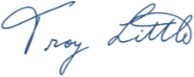
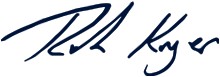
Rich Kruger | Troy Little | |||
President and Chief Executive Officer | Chief Financial Officer | |||
February 25, 2026
The following report is provided by management in respect of the company’s internal control over financial reporting (as defined in Rule 13a-15(f) and 15d-15(f) under the U.S. Securities Exchange Act of 1934):
Management’s Report on Internal Control Over Financial Reporting
| 1. | Management is responsible for establishing and maintaining adequate internal control over the company’s financial reporting. |
| 2. | Management has used the Committee of Sponsoring Organizations of the Treadway Commission (COSO) framework (2013) in Internal Control – Integrated Framework to evaluate the effectiveness of the company’s internal control over financial reporting. |
| 3. | Management has assessed the effectiveness of the company’s internal control over financial reporting as at December 31, 2025, and has concluded that such internal control over financial reporting was effective as of that date. In addition, based on this assessment, management determined that there were no material weaknesses in internal control over financial reporting as at December 31, 2025. Because of inherent limitations, systems of internal control over financial reporting may not prevent or detect misstatements and even those systems determined to be effective can provide only reasonable assurance with respect to financial statement preparation and presentation. |
| 4. | The effectiveness of the company’s internal control over financial reporting as at December 31, 2025, has been audited by KPMG LLP, independent public accountant, as stated in their report which appears herein. |
| ||||
|
| |||
Rich Kruger | Troy Little | |||
President and Chief Executive Officer | Chief Financial Officer | |||
February 25, 2026
Report of Independent Registered Public Accounting Firm
To the Shareholders and Board of Directors of Suncor Energy Inc.
Opinions on the Consolidated Financial Statements and Internal Control Over Financial Reporting
We have audited the accompanying consolidated balance sheets of Suncor Energy Inc. and subsidiaries (the Company) as of December 31, 2025 and 2024, the related consolidated statements of comprehensive income, changes in equity, and cash flows for each of the years then ended and the related notes (collectively, the consolidated financial statements). We also have audited the Company’s internal control over financial reporting as of December 31, 2025, based on criteria established in Internal Control – Integrated Framework (2013) issued by the Committee of Sponsoring Organizations of the Treadway Commission.
In our opinion, the consolidated financial statements referred to above present fairly, in all material respects, the financial position of the Company as of December 31, 2025 and 2024, and the results of its financial performance and its cash flows for each of the years then ended, in conformity with International Financial Reporting Standards (IFRS) as issued by the International Accounting Standards Board (IASB). Also in our opinion, the Company maintained, in all material respects, effective internal control over financial reporting as of December 31, 2025 based on criteria established in Internal Control – Integrated Framework (2013) issued by the Committee of Sponsoring Organizations of the Treadway Commission.
Basis for Opinions
The Company’s management is responsible for these consolidated financial statements, for maintaining effective internal control over financial reporting, and for its assessment of the effectiveness of internal control over financial reporting, included in the accompanying Management’s Report on Internal Control Over Financial Reporting. Our responsibility is to express an opinion on the Company’s consolidated financial statements and an opinion on the Company’s internal control over financial reporting based on our audits. We are a public accounting firm registered with the Public Company Accounting Oversight Board (United States) (PCAOB) and are required to be independent with respect to the Company in accordance with the U.S. federal securities laws and the applicable rules and regulations of the Securities and Exchange Commission and the PCAOB.
We conducted our audits in accordance with the standards of the PCAOB. Those standards require that we plan and perform the audits to obtain reasonable assurance about whether the consolidated financial statements are free of material misstatement, whether due to error or fraud, and whether effective internal control over financial reporting was maintained in all material respects.
Our audits of the consolidated financial statements included performing procedures to assess the risks of material misstatement of the consolidated financial statements, whether due to error or fraud, and performing procedures that respond to those risks. Such procedures included examining, on a test basis, evidence regarding the amounts and disclosures in the consolidated financial statements. Our audits also included evaluating the accounting principles used and significant estimates made by management, as well as evaluating the overall presentation of the consolidated financial statements. Our audit of internal control over financial reporting included obtaining an understanding of internal control over financial reporting, assessing the risk that a material weakness exists, and testing and evaluating the design and operating effectiveness of internal control based on the assessed risk. Our audits also included performing such other procedures as we considered necessary in the circumstances. We believe that our audits provide a reasonable basis for our opinions.
Definition and Limitations of Internal Control Over Financial Reporting
A company’s internal control over financial reporting is a process designed to provide reasonable assurance regarding the reliability of financial reporting and the preparation of financial statements for external purposes in accordance with generally accepted accounting principles. A company’s internal control over financial reporting includes those policies and procedures that (1) pertain to the maintenance of records that, in reasonable detail, accurately and fairly reflect the transactions and dispositions of the assets of the company; (2) provide reasonable assurance that transactions are recorded as necessary to permit preparation of financial statements in accordance with generally accepted accounting principles, and that receipts and expenditures of the company are being made only in accordance with authorizations of management and directors of the company; and (3) provide reasonable assurance regarding prevention or timely detection of unauthorized acquisition, use, or disposition of the company’s assets that could have a material effect on the financial statements.
Because of its inherent limitations, internal control over financial reporting may not prevent or detect misstatements. Also, projections of any evaluation of effectiveness to future periods are subject to the risk that controls may become inadequate because of changes in conditions, or that the degree of compliance with the policies or procedures may deteriorate.
Critical Audit Matter
The critical audit matter communicated below is a matter arising from the current period audit of the consolidated financial statements that was communicated or required to be communicated to the audit committee and that: (1) relates to accounts or disclosures that are material to the consolidated financial statements and (2) involved our especially challenging, subjective, or complex judgments. The communication of a critical audit matter does not alter in any way our opinion on the consolidated financial statements, taken as a whole, and we are not, by communicating the critical audit matter below, providing a separate opinion on the critical audit matter or on the accounts or disclosures to which it relates.
Assessment of indicators of impairment related to Oil Sands and Canadian Exploration and Production property, plant and equipment.
As discussed in Note 3(h) to the consolidated financial statements, when circumstances indicate that a cash generating unit (“CGU”) may be impaired, the Company compares the carrying amount of the CGU to its recoverable amount. The Company analyzes indicators of impairment quarterly, such as significant decreases in proved and probable reserves. The determination of proved and probable oil reserves includes assumptions related to forecasted production volumes, commodity prices, capital expenditures and operating costs (collectively, “reserve assumptions”). The estimation of reserve assumptions requires the expertise of independent qualified reserves evaluators. The Company engages independent qualified reserves evaluators to evaluate the Company’s proved and probable oil reserves.
We identified the evaluation of the assessment of indicators of impairment related to the Oil Sands and Canadian Exploration and Production property, plant and equipment as a critical audit matter. A high degree of subjective auditor judgment was required to evaluate the reserve assumptions used by the Company in their assessment.
68 Annual Report 2025 Suncor Energy Inc. |
The following are the primary procedures we performed to address this critical audit matter. We evaluated the design and tested the operating effectiveness of certain internal controls related to the critical audit matter. This included controls related to the Company’s assessment of indicators of impairment, including controls related to the reserve assumptions. We evaluated the Company’s reserve assumptions by comparing the current year externally evaluated proved and probable oil reserves to historical results. We compared the Company’s current year actual production volumes, capital expenditures and operating costs to those respective assumptions used in the prior year externally evaluated proved oil reserves, and for certain reserve assumptions proved and probable oil reserves, to assess the Company’s ability to accurately forecast. We evaluated the Company’s future commodity price estimates by comparing to publicly available external price curves for the same benchmark pricing. We evaluated the competence, capabilities, and objectivity of the independent qualified reserves evaluators engaged by the Company, who evaluated the proved and probable oil reserves. We evaluated the methodology used by the independent qualified reserves evaluators to evaluate proved and probable oil reserves for compliance with regulatory standards.

Chartered Professional Accountants | |
We have served as the Company’s auditor since 2019. | |
Calgary, Canada | |
February 25, 2026 |
Annual Report 2025 Suncor Energy Inc. 69 |
Consolidated Statements of Comprehensive Income
For the years ended December 31 ($ millions) | | Notes | | 2025 | | 2024 |
Revenues and Other Income |
| |
| |
| |
Gross revenues |
|
| |
| | |
Less: royalties |
| ( | ( | |||
Other income |
| 7 |
| |
| |
|
| |
| | ||
| ||||||
Expenses |
| |||||
Purchases of crude oil and products |
|
| |
| | |
Operating, selling and general |
| 8 and 25 |
| |
| |
Transportation and distribution |
|
| |
| | |
Depreciation, depletion and amortization |
| 15 |
| |
| |
Exploration |
|
| |
| | |
Gain on disposal of assets |
|
| ( |
| ( | |
Financing expenses |
| 9 |
| |
| |
|
| |
| | ||
Earnings before Income Taxes |
|
| |
| | |
Income Tax Expense (Recovery) |
| |||||
Current |
| 10 |
| |
| |
Deferred |
| 10 |
| |
| ( |
|
| |
| | ||
Net Earnings |
|
| |
| | |
| ||||||
Other Comprehensive Income |
| |||||
Items That May be Subsequently Reclassified to Earnings: |
| |||||
Foreign currency translation adjustment |
|
| ( |
| | |
Items That Will Not be Reclassified to Earnings: |
| |||||
Actuarial gain on employee retirement benefit plans, net of income taxes |
| |
| | ||
| ||||||
Other Comprehensive Income |
|
| |
| | |
| ||||||
Total Comprehensive Income |
|
| |
| | |
| ||||||
Per Common Share (dollars) |
| 11 | ||||
Net earnings – basic and diluted |
|
| |
| | |
Cash dividends |
|
| |
| |
The accompanying notes are an integral part of the consolidated financial statements.
70 Annual Report 2025 Suncor Energy Inc. |
Consolidated Balance Sheets
December 31 | December 31 | |||||
($ millions) | | Notes | | 2025 | | 2024 |
Assets |
| |||||
Current assets |
| |||||
Cash and cash equivalents |
| 12 |
| |
| |
Accounts receivable |
|
| |
| | |
Inventories |
| 14 |
| |
| |
Income taxes receivable |
|
| |
| | |
Total current assets |
|
| |
| | |
Property, plant and equipment, net |
| 15 and 16 |
| |
| |
Exploration and evaluation |
| 17 |
| |
| |
Other assets |
| 18 |
| |
| |
Goodwill and other intangible assets |
| 19 |
| |
| |
Deferred income taxes |
| 10 |
| |
| |
Total assets |
|
| |
| | |
| ||||||
Liabilities and Shareholders’ Equity |
| |||||
Current liabilities |
| |||||
Current portion of long-term debt |
| 20 |
| |
| |
Current portion of long-term lease liabilities |
| 16 | | | ||
Accounts payable and accrued liabilities |
|
| |
| | |
Current portion of provisions |
| 23 |
| |
| |
Income taxes payable |
|
| |
| | |
Total current liabilities |
|
| |
| | |
Long-term debt |
| 20 |
| |
| |
Long-term lease liabilities |
| 16 | | | ||
Other long-term liabilities |
| 21 |
| |
| |
Provisions |
| 23 |
| |
| |
Deferred income taxes |
| 10 |
| |
| |
Equity |
|
| |
| | |
Total liabilities and shareholders’ equity |
|
| |
| |
The accompanying notes are an integral part of the consolidated financial statements.
Approved on behalf of the Board of Directors:
|
|
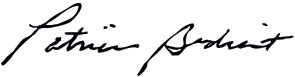
Rich Kruger | Patricia M. Bedient |
Director | Director |
February 25, 2026
Annual Report 2025 Suncor Energy Inc. 71 |
Consolidated Statements of Cash Flows
For the years ended December 31 ($ millions) | | Notes | | 2025 | | 2024 |
Operating Activities |
| |||||
Net earnings |
|
| |
| | |
Adjustments for: |
| |||||
Depreciation, depletion and amortization |
|
| |
| | |
Deferred income tax expense (recovery) |
| 10 |
| |
| ( |
Accretion |
| 9 |
| |
| |
Unrealized foreign exchange (gain) loss on U.S. dollar denominated debt |
| 9 |
| ( |
| |
Change in fair value of financial instruments and trading inventory |
|
| ( |
| ( | |
Gain on disposal of assets |
|
| ( |
| ( | |
Loss on extinguishment of long-term debt |
| 9 and 20 |
| — | | |
Share-based compensation |
| 25 |
| |
| ( |
Settlement of decommissioning and restoration liabilities |
| 23 |
| ( |
| ( |
Other |
|
| |
| | |
(Increase) decrease in non-cash working capital |
| 13 |
| ( |
| |
Cash flow provided by operating activities |
|
| |
| | |
| ||||||
Investing Activities |
| |||||
Capital expenditures |
|
| ( |
| ( | |
Proceeds from disposal of assets |
|
| |
| | |
Other investments |
|
| ( |
| ( | |
(Increase) decrease in non-cash working capital |
| 13 |
| ( |
| |
Cash flow used in investing activities |
|
| ( |
| ( | |
| ||||||
Financing Activities |
| |||||
Net decrease in short-term debt |
|
| — |
| ( | |
Repayment of long-term debt |
| 20 |
| ( |
| ( |
Issuance of long-term debt |
| 20 | | — | ||
Lease liability payments |
| 16 |
| ( |
| ( |
Issuance of common shares under share option plans |
|
| |
| | |
Repurchase of common shares(1) |
| 24 |
| ( |
| ( |
Distributions relating to non-controlling interest |
| ( | ( | |||
Dividends paid on common shares |
|
| ( |
| ( | |
Cash flow used in financing activities |
|
| ( |
| ( | |
| ||||||
Increase in Cash and Cash Equivalents |
|
| |
| | |
Effect of foreign exchange on cash and cash equivalents |
|
| ( |
| | |
Cash and cash equivalents at beginning of year |
|
| |
| | |
Cash and Cash Equivalents at End of Year |
|
| |
| | |
| ||||||
Supplementary Cash Flow Information |
| |||||
Interest paid |
|
| |
| | |
Income taxes paid |
|
| |
| |
| (1) |
The accompanying notes are an integral part of the consolidated financial statements.
72 Annual Report 2025 Suncor Energy Inc. |
Consolidated Statements of Changes in Equity
Accumulated | Number of | |||||||||||||
Other | Common | |||||||||||||
Share | Contributed | Comprehensive | Retained | Shares | ||||||||||
($ millions) | | Notes | | Capital | | Surplus | | Income | | Earnings | | Total | | (thousands) |
At December 31, 2023 |
|
| |
| |
| |
| |
| |
| | |
Net earnings |
|
| — |
| — |
| — |
| |
| |
| — | |
Foreign currency translation adjustment |
|
| — |
| — |
| |
| — |
| |
| — | |
Actuarial gain on employee retirement benefit plans, net of income taxes of $ |
| 22 |
| — |
| — |
| — |
| |
| |
| — |
Total comprehensive income |
|
| — |
| — |
| |
| |
| |
| — | |
Issued under share option plans |
|
| |
| ( |
| — |
| — |
| |
| | |
Repurchase of common shares for cancellation(1) |
| 24 |
| ( |
| — |
| — |
| ( |
| ( |
| ( |
Change in liability for share purchase commitment |
| 24 |
| ( |
| — |
| — |
| ( |
| ( |
| — |
Share-based compensation |
| 25 |
| — |
| |
| — |
| — |
| |
| — |
Dividends paid on common shares |
|
| — |
| — |
| — |
| ( |
| ( |
| — | |
At December 31, 2024 |
|
| |
| |
| |
| |
| |
| | |
Net earnings |
| — |
| — | — | | | — | ||||||
Foreign currency translation adjustment |
|
| — |
| — |
| ( |
| — |
| ( |
| — | |
Actuarial gain on employee retirement benefit plans, net of income taxes of $ |
| 22 | — | — | — | | | — | ||||||
Total comprehensive income |
|
| — |
| — |
| ( |
| |
| |
| — | |
Issued under share option plans |
|
| | ( |
| — |
| — |
| |
| | ||
Repurchase of common shares for cancellation(1) |
| 24 |
| ( | — | — | ( |
| ( |
| ( | |||
Change in liability for share purchase commitment |
| 24 |
| | — | — | ( |
| ( |
| — | |||
Share-based compensation |
| 25 |
| — |
| |
| — |
| — |
| |
| — |
Dividends paid on common shares |
|
| — |
| — |
| — |
| ( |
| ( |
| — | |
At December 31, 2025 |
|
| |
| |
| |
| |
| |
| |
| (1) |
The accompanying notes are an integral part of the consolidated financial statements.
Annual Report 2025 Suncor Energy Inc. 73 |
Notes to the Consolidated Financial Statements
1. Reporting Entity and Description of the Business
Suncor Energy is Canada’s leading integrated energy company. Suncor’s operations span the full energy value chain, including oil sands mining and in situ operations, upgrading, offshore production, petroleum refining in Canada and the U.S., marketing and trading, and nationwide Petro-Canada™ retail and wholesale networks – delivering reliable energy that fuels economic growth and meets the needs of customers across Canada and globally. With an unwavering focus on safety, operational excellence, and profitability, Suncor is committed to delivering industry-leading performance and long-term shareholder value. Suncor’s common shares (symbol: SU) are listed on the Toronto Stock Exchange (TSX) and New York Stock Exchange (NYSE).
The address of the company’s registered office is 150 – 6th Avenue S.W., Calgary, Alberta, Canada, T2P 3E3.
2. Basis of Preparation
(a) Statement of Compliance
These consolidated financial statements have been prepared in accordance with International Financial Reporting Standards (IFRS) as issued by the International Accounting Standards Board (IASB) (the “IFRS Accounting Standards”).
Suncor’s accounting policies are based on IFRS issued and outstanding for all periods presented in these consolidated financial statements. These consolidated financial statements were approved by the Board of Directors on February 25, 2026.
(b) Basis of Measurement
The consolidated financial statements are prepared on a historical cost basis except as detailed in the accounting policies disclosed in note 3. The accounting policies described in note 3 have been applied consistently to all periods presented in these consolidated financial statements.
(c) Functional Currency and Presentation Currency
These consolidated financial statements are presented in Canadian dollars, which is the company’s functional currency.
(d) Use of Estimates, Assumptions and Judgments
The timely preparation of financial statements requires that management make estimates and assumptions and use judgment. Accordingly, actual results may differ from estimated amounts as future confirming events occur. Significant estimates and judgments used in the preparation of the consolidated financial statements are described in note 4.
3. Summary of Material Accounting Policies
(a) Joint Arrangements
The classification of joint arrangements considers the contractual rights and obligations of each investor and whether the legal structure of the joint arrangement gives the entity direct rights to the assets and obligations for the liabilities.
(b) Foreign Currency Translation
Functional currencies of the company’s individual entities are the currency of the primary economic environment in which the entity operates.
If the company or any of its entities disposes of its entire interest in a foreign operation, or loses control, joint control or significant influence over a foreign operation, the accumulated foreign currency translation gains or losses related to the foreign operation are recognized in net earnings.
(c) Revenues
Revenue from the sale of hydrocarbons and power represent the company’s contractual arrangements with customers. Revenue is recorded when control passes to the customer, in accordance with specified contract terms. All operating revenue is earned at a point in time and is based on the consideration that the company expects to receive for the transfer of the goods to the customer. Revenues are normally collected in the month following delivery except retail products, which are due upon delivery and, accordingly, the company does not adjust consideration for the effects of a financing component.
(d) Inventories
Inventories of crude oil and refined products, other than inventories held for trading purposes, are valued at the lower of cost, using the first-in, first-out method, and net realizable value. Cost of inventory consists of purchase costs, direct production costs, direct overhead and depreciation, depletion and amortization. Materials and supplies are valued at the lower of average cost and net realizable value.
74 Annual Report 2025 Suncor Energy Inc. |
Inventories held for trading purposes are carried at fair value less costs to sell and any changes in fair value are recognized in Other Income within the respective reporting segment to which the trading activity relates.
(e) Exploration and Evaluation Assets
The costs to acquire non-producing oil and gas properties or licences to explore, drill exploratory wells and the costs to evaluate the commercial potential of underlying resources, including related borrowing costs, are initially capitalized as Exploration and Evaluation assets. Exploration and Evaluation assets are not subject to depreciation.
Exploration and Evaluation assets are subject to technical, commercial and management review to confirm the continued intent to develop and extract the underlying resources. If an area or exploration well is no longer considered commercially viable, the related capitalized costs are expensed.
When management determines with reasonable certainty that an Exploration and Evaluation asset will be developed, as evidenced by the appropriate internal and external approvals and classification of proved and probable reserves, the asset is tested for impairment, after which the remaining carrying value, is transferred to Property, Plant and Equipment.
Certain exploration costs, including geological, geophysical and seismic expenditures and delineation on oil sands properties, are charged to Exploration expense as incurred.
(f) Property, Plant and Equipment
The costs to acquire and to develop oil and gas properties, including completing geological and geophysical surveys and drilling development wells, and the costs to construct and install development infrastructure are capitalized as oil and gas properties within Property, Plant and Equipment.
The costs to construct, install and commission, or acquire, oil and gas production equipment are capitalized as plant and equipment within Property, Plant and Equipment.
Stripping activity required to access oil sands mining resources incurred in the initial development phase of a mine, mine extension or pit is capitalized as part of the construction cost of the mine. Stripping costs incurred in the production phase are charged to expense as they normally relate to production for the current period.
The costs of planned major inspection, overhaul and turnaround activities that maintain Property, Plant and Equipment and benefit future years of operations are capitalized. Recurring planned maintenance activities performed on shorter intervals are expensed as operating costs. Replacements outside of a major inspection, overhaul or turnaround are capitalized when it is probable that future economic benefits will be realized by the company and the associated carrying amount of the replaced component is derecognized.
Borrowing costs relating to assets that take over one year to construct are capitalized as part of the asset. Capitalization of borrowing costs ceases when the asset is in the location and condition necessary for its intended use, and is suspended when construction of an asset is ceased for extended periods.
(g) Depreciation, Depletion and Amortization
Once Exploration and Evaluation are transferred to oil and gas properties within Property, Plant and Equipment and commercial production commences, these costs are depleted on a unit-of-production basis over proved developed reserves, with the exception of costs associated with oil sands mines, which are depreciated on a straight-line basis over the life of the mine, and property acquisition costs, which are depleted over proved reserves.
Capital expenditures are not depreciated or depleted until assets are substantially complete and ready for their intended use.
Costs to develop oil and gas properties other than certain oil sands mining assets, including costs of dedicated infrastructure, such as well pads and wellhead equipment, are depleted on a unit-of-production basis over proved developed reserves. A portion of these costs may not be depleted if they relate to undeveloped reserves. Costs related to offshore facilities are depleted over proved and probable reserves. Costs to develop and construct oil sands mines are depreciated on a straight-line basis over the life of the mine.
Major components of Property, Plant and Equipment are depreciated on a straight line basis over their expected useful lives.
Oil sands upgraders | | |
Oil sands extraction plants and mine facilities | ||
Oil sands mine equipment |
| |
Oil sands in situ processing facilities |
| |
Power generation and utility plants |
| |
Refineries and other processing plants |
| |
Marketing and other distribution assets |
|
The costs of major inspection, overhaul and turnaround activities that are capitalized are depreciated on a straight line basis over the period to the next scheduled activity, which varies from to
Depreciation, depletion and amortization rates are reviewed annually or when events or conditions occur that impact capitalized costs, reserves or estimated service lives.
Notes to the Consolidated Financial Statements
Right-of-use assets within Property, Plant and Equipment are depreciated on a straight-line basis over the shorter of the estimated useful life of the right-of-use asset or the lease term.
(h) Impairment of Assets
Non-Financial Assets
Property, Plant and Equipment and Exploration and Evaluation assets are reviewed quarterly to assess whether there is any indication of impairment. Goodwill is tested for impairment annually. Exploration and Evaluation assets are also tested for impairment immediately prior to being transferred to Property, Plant and Equipment.
If any indication of impairment exists, an estimate of the asset’s recoverable amount is calculated as the higher of the fair value less costs of disposal and value-in-use. In determining fair value less costs of disposal, recent market transactions are considered, if available. In the absence of such transactions, an appropriate valuation model is used. Value-in-use is assessed using the present value of the expected future cash flows of the relevant asset. If the asset does not generate cash inflows that are largely independent of those from other assets or groups of assets, the asset is tested as part of a cash generating unit (CGU), which is the smallest identifiable group of assets that generates cash inflows that are largely independent of the cash inflows from other assets or groups of assets. An impairment loss is the amount by which the carrying amount of the individual asset or CGU exceeds its recoverable amount.
Impairments may be reversed for all CGUs and individual assets, other than goodwill, if there has been a change in the estimates and judgments used to determine the asset’s recoverable amount since the last impairment loss was recognized. If such indication exists, the carrying amount of the CGU or asset is increased to its revised recoverable amount, which cannot exceed the carrying amount that would have been determined, net of depletion, depreciation and amortization, had no impairment been recognized.
Impairments and impairment reversals are recognized within Depreciation, Depletion, Amortization and Impairment.
Financial Assets
At each reporting date, the company assesses the expected credit losses associated with its financial assets measured at amortized cost. Expected credit losses are measured as the difference between the cash flows that are due to the company and the cash flows that the company expects to receive, discounted at the effective interest rate determined at initial recognition. For trade accounts receivables, the company applies the simplified approach permitted by IFRS 9 Financial Instruments, which requires lifetime expected credit losses to be recognized from initial recognition of the receivables. To measure expected credit losses, accounts receivables are grouped based on the number of days the receivables have been outstanding and the internal credit assessments of the customers. Credit risk for longer term receivables is assessed based on an external credit rating of the counterparty.
(i) Provisions
Provisions are recognized for decommissioning and restoration obligations associated with the company’s Exploration and Evaluation assets and Property, Plant and Equipment. Provisions for decommissioning and restoration obligations are measured at the present value of management’s best estimate of the future cash flows required to settle the present obligation, using the credit-adjusted risk-free interest rate. The value of the obligation is added to the carrying amount of the associated asset and amortized over the useful life of the asset. The provision is accreted over time through Financing Expense with actual expenditures charged against the accumulated obligation. Changes in the future cash flow estimates resulting from revisions to the estimated timing or amount of undiscounted cash flows are recognized as a change in the decommissioning and restoration provision and related asset.
(j) Income Taxes
The company follows the liability method of accounting for income taxes whereby deferred income taxes are recorded for the effect of differences between the accounting and income tax basis of an asset or liability. Deferred income tax assets and liabilities are measured using enacted or substantively enacted income tax rates as at the balance sheet date that are anticipated to apply to taxable income in the years in which temporary differences are expected to be recovered or settled. Changes to these balances are recognized in net earnings or in other comprehensive income in the period they occur. Investment tax credits are recorded as a reduction to the related expenditures.
The company recognizes the impact of a tax filing position when it is probable, based on the technical merits, that the position will be sustained upon audit. If it is determined a tax filing position is not considered probable, the company assesses the possible outcomes and their associated probabilities and records a tax provision based on the best estimate of the amount of tax payable.
(k) Pensions and Other Post Retirement Benefits
The company sponsors defined benefit pension plans, defined contribution pension plans and other post-retirement benefits.
The cost of pension benefits earned by employees in the defined contribution pension plan is expensed as incurred. The cost of defined benefit pension plans and other post-retirement benefits are actuarially determined using the projected unit credit method based on present pay levels and management’s best estimates of demographic and financial assumptions.
The net liability or asset recognized on the balance sheet is the present value of the defined benefit obligations less the fair value of plan assets and are presented in Other Long-term Liabilities or Other Assets.
Pension benefits earned during the current year are recorded in Operating, Selling and General expense. Interest costs on the net unfunded obligation are recorded in Financing Expense. Any actuarial gains or losses related to the plan assets and the defined benefit obligation, as well as the change in the asset ceiling and any minimum liability, are recognized immediately through other comprehensive income and transferred directly to retained earnings.
76 Annual Report 2025 Suncor Energy Inc. |
(l) Emissions Obligations and Rights
Emissions rights and credits that are purchased are measured at the lower of historical cost or net realizable value. Credits received from government grants, including those received from blending activities, are recorded at a nominal amount.
Emissions obligations are measured at the best estimate of the expenditure required to settle the obligation at the reporting date and are expensed in Purchases of Crude Oil and Products or Operating, Selling and General expense.
Emission rights and obligations are presented net in other assets or liabilities and are derecognized upon settling the liability with the respective regulator.
(m) Leases
The company has elected not to recognize right-of-use assets and lease liabilities for leases with a term of twelve months or less. The lease payments are recognized as an expense when incurred over the lease term. For leases that are longer than one year, the lease liability is initially measured at the present value of the future lease payments, discounted using the interest rate implicit in the lease or, if that rate cannot be readily determined, the company’s incremental borrowing rate. Lease payments include fixed payments, as well as variable payments that are based on an index or rate.
The lease liability is remeasured when there is a change in future lease payments arising from a change in lease term, index or rate, or the company’s estimate of the amount expected to be payable under a residual value guarantee, or if the company changes its assessment of whether it will exercise a purchase, extension or termination option. When the lease liability is remeasured in this way, a corresponding adjustment is made to the carrying amount of the right-of-use asset, or is recorded in profit or loss if the carrying amount of the right-of-use asset has been reduced to zero.
Right-of-use assets are presented within Property, Plant and Equipment.
4. Significant and Other Accounting Estimates and Judgments
The preparation of financial statements in accordance with IFRS requires management to make estimates and judgments that affect reported assets, liabilities, revenues, expenses, gains, losses and disclosures of contingencies. These estimates and judgments are subject to change based on experience and new information.
Oil and Gas Reserves
The company’s estimate of oil and gas reserves is considered in the measurement of depletion, depreciation, impairment, decommissioning and restoration obligations and business combinations. The estimation of proved and probable reserves is an inherently complex process and involves professional judgment. All reserves have been evaluated at December 31, 2025, by independent qualified reserves evaluators. Oil and gas reserves estimates are based on a range of geological, technical and economic factors, including projected future rates of production, projected future commodity prices, engineering data, and the timing and amount of future expenditures, all of which are subject to uncertainty. Estimates reflect market and regulatory conditions existing at December 31, 2025, which could differ significantly from future periods.
Exploration and Evaluation Costs
Certain exploration and evaluation costs are initially capitalized with the intent to establish commercially viable reserves. The company is required to make judgments about future events and circumstances and applies estimates to assess the economic viability of extracting the underlying resources. The costs are subject to technical, commercial and management review to confirm the continued intent to develop the project. The level of drilling success or changes to project economics, resource quantities, expected production techniques, production costs and required capital expenditures are important judgments when making this determination. Management uses judgment to determine when these costs are reclassified to Property, Plant and Equipment based on several factors, including the existence of reserves, appropriate approvals from regulatory bodies, joint arrangement partners and the company’s internal project approval process.
Determination of Cash Generating Units (CGUs)
A CGU is the lowest grouping of integrated assets that generates identifiable cash inflows that are largely independent of the cash inflows of other assets or groups of assets. The allocation of assets into CGUs requires significant judgment and interpretations with respect to the integration between assets, the existence of active markets, similar exposure to market risks, shared infrastructure and the way in which management monitors the operations.
Asset Impairment
Management applies judgment in assessing the existence of impairment and impairment reversal indicators based on various internal and external factors, such as significant increases or decreases in forecasted production volumes, commodity prices, capital expenditures and operating costs, and impacts of energy transition.
The recoverable amount of CGUs and individual assets is determined based on the higher of fair value less costs of disposal or value-in-use calculations. The key estimates the company applies to determine the recoverable amount normally include estimated future commodity prices, discount rates, expected production volumes, future operating costs, including greenhouse gas (GHG) costs and development costs, income taxes and refining margins. In determining the recoverable amount, management may also be required to make judgments regarding the likelihood of occurrence of a future event. Changes to these estimates and judgments will affect the recoverable amounts of CGUs and individual assets and may then require a material adjustment to their related carrying value.
Annual Report 2025 Suncor Energy Inc. 77 |
Notes to the Consolidated Financial Statements
Decommissioning and Restoration Costs
For decommissioning and restoration provisions, management applies judgment in assessing the future regulatory requirements, the existence and extent as well as the expected method of reclamation of the company’s decommissioning and restoration obligations at the end of each reporting period. Management also uses judgment to determine whether the nature of the activities performed is related to decommissioning and restoration activities or normal operating activities.
Actual costs are uncertain, and estimates may vary as a result of changes to relevant laws and regulations, the emergence of new technology, operating experience, prices and closure plans. The estimated timing of future decommissioning and restoration may change due to certain factors, including reserves life. Changes to estimates related to future expected costs, discount rates, inflation assumptions and timing may have a material impact on the amounts presented. Payments to settle the decommissioning and restoration provisions are aligned with the estimated life of the underlying asset, with energy transition considerations discussed below.
Climate Change
Climate change, global energy demand, and the transition to a low-emissions economy were considered in preparing these consolidated financial statements. These factors primarily affect assumptions for commodity prices, asset valuation, reserves estimates, and the timing of reclamation activities. They may also influence future assets and liabilities. Suncor incorporates estimated GHG emissions costs into its operational planning and project evaluations, and these estimates are continuously monitored and updated as required.
Tariffs
The government of the United States of America has continued to either implement or propose tariffs on various Canadian products. The company is closely monitoring these developments and will continue to assess the impacts of such tariffs and measures. To date, the implemented and proposed tariff changes have not had a material impact to the company’s input costs. The impact of potential future tariffs on the company’s financial results is subject to significant uncertainty, as such the impact cannot be quantified at this time.
Employee Future Benefits
The company provides benefits to employees, including pensions and other post-retirement benefits. The cost of defined benefit pension plans and other post-retirement benefits received by employees is estimated based on actuarial valuation methods that require professional judgment. Estimates typically used in determining these amounts include, as applicable, rates of employee turnover, future claim costs, discount rates, future salary and benefit levels, the return on plan assets, mortality rates and future medical costs. Changes to these estimates may have a material impact on the amounts presented.
5. New IFRS Standards
Recently Announced Accounting Pronouncements
The standards, amendments and interpretations that are issued, but not yet effective up to the date of authorization of the company’s consolidated financial statements, and that may have an impact on the disclosures and financial position of the company, are disclosed below. The company intends to adopt these standards, amendments and interpretations when they become effective.
In April 2024, the IASB issued IFRS 18 Presentation and Disclosure in Financial Statements which will replace IAS 1 Presentation of Financial Statements. The new standard introduces two new mandatory subtotals and defined categories of income and expenses in the consolidated statements of comprehensive income, along with enhanced requirements for the grouping of information in the consolidated financial statements. Management-defined performance measures will also be required to be disclosed within the notes to the consolidated financial statements.
As a result of the new standards and other amendments, a new operating profit subtotal is required under IFRS 18, to be used as the starting point for determining cash flows provided by operating activities under the indirect method. The new standard and amendments are effective for annual periods beginning on or after January 1, 2027, and will be applied retrospectively, with certain transition provisions. The company is currently evaluating the impact of adopting IFRS 18 and other amendments on the consolidated financial statements.
In May 2024, the IASB issued amendments to IFRS 9 Financial Instruments and IFRS 7 Financial Instruments: Disclosures to clarify the date of recognition and derecognition of some financial assets and liabilities, with a new exception for some financial liabilities settled using an electronic payment system. The amendments are effective January 1, 2026, with early adoption permitted. The company does not anticipate any significant impact from these amendments on the consolidated financial statements as a result of the initial application.
78 Annual Report 2025 Suncor Energy Inc. |
6. Segmented Information
The company’s operating segments are reported based on the nature of their products and services and management responsibility as follows:
| ● | Oil Sands includes the company’s operations in Northern Alberta to explore, develop and produce bitumen, synthetic crude oil and related products from mining and in situ operations. This segment includes Oil Sands operations (Base Mine and In Situ) and Fort Hills and the company’s joint interest in Syncrude. |
| ● | Exploration and Production (E&P) includes offshore activity in East Coast Canada, with interests in the Terra Nova, White Rose, Hibernia and Hebron oilfields. International onshore assets include the company’s working interests in Libya. |
| ● | Refining and Marketing includes the refining of crude oil products, and the distribution, marketing and transportation of refined and petrochemical products, and other purchased products through the retail and wholesale networks located in Canada and the United States (U.S.). The segment also includes trading of crude oil, refined products, natural gas and power. |
The company reports energy trading and risk management activities in each respective segment.
The company also reports activities not directly attributable to an operating segment under Corporate and Eliminations. Corporate activities include Suncor’s debt and borrowing costs and expenses not allocated to the company’s businesses.
Exploration | Refining and | Corporate and | ||||||||||||||||||
For the years ended December 31 | | Oil Sands | and Production | Marketing | Eliminations | Total | ||||||||||||||
($ millions) | | 2025 | | 2024 | | 2025 | | 2024 | | 2025 | | 2024 | | 2025 | | 2024 | | 2025 | | 2024 |
Revenues and Other Income |
|
|
| |||||||||||||||||
Gross revenues |
| |
| |
| |
| |
| |
| |
| |
| ( |
| |
| |
Intersegment revenues |
| |
| |
| — |
| — |
| |
| |
| ( |
| ( |
| — |
| — |
Less: Royalties |
| ( |
| ( |
| ( |
| ( |
| — |
| — |
| — |
| — |
| ( |
| ( |
Operating revenues, net of royalties |
| |
| |
| |
| |
| |
| |
| ( |
| ( |
| |
| |
Other income (loss) |
| |
| |
| ( |
| |
| |
| |
| |
| ( |
| |
| |
| |
| |
| |
| |
| |
| |
| ( |
| ( |
| |
| | |
Expenses |
| |
| |
| |
| |
|
| |
|
| |
| |
| | ||
Purchases of crude oil and products |
| |
| |
| — |
| — |
| |
| |
| ( |
| ( |
| |
| |
Operating, selling and general |
| |
| |
| |
| |
| |
| |
| |
| |
| |
| |
Transportation and distribution |
| |
| |
| |
| |
| |
| |
| ( |
| ( |
| |
| |
Depreciation, depletion and amortization |
| |
| |
| |
| |
| |
| |
| |
| |
| |
| |
Exploration |
| |
| |
| |
| |
| — |
| — |
| — |
| — |
| |
| |
Gain on disposal of assets |
| ( |
| ( |
| — |
| — |
| ( |
| ( |
| — |
| ( |
| ( |
| ( |
Financing expenses |
| |
| |
| |
| |
| |
| |
| |
| |
| |
| |
| |
| |
| |
| |
| |
| |
| ( |
| ( |
| |
| | |
Earnings (Loss) before Income Taxes |
| |
| |
| |
| |
| |
| |
| ( |
| ( |
| |
| |
Income Tax Expense (Recovery) |
| |
| |
| |
| |
|
| |
|
|
| |
| | |||
Current |
| — |
| — |
| — |
| — |
| — |
| — |
| — |
| — |
| |
| |
Deferred |
| — |
| — |
| — |
| — |
| — |
| — |
| — |
| — |
| |
| ( |
| — |
| — |
| — |
| — |
| — |
| — |
| — |
| — |
| |
| | |
Net Earnings |
| — |
| — |
| — |
| — |
| — |
| — |
| — |
| — |
| |
| |
Capital Expenditures |
| |
| |
| |
| |
| |
| |
| |
| |
| |
| |
Annual Report 2025 Suncor Energy Inc. 79 |
Notes to the Consolidated Financial Statements
Disaggregation of Revenue from Contracts with Customers and Intersegment Revenue
The company’s revenues are from the following major commodities and geographical regions:
For the years ended December 31 | 2025 | 2024 | ||||||||||
($ millions) | | North America | | International | | Total | | North America | | International | | Total |
Oil Sands |
| |||||||||||
Synthetic crude oil and diesel |
| | — | | | — | | |||||
Bitumen |
| | — | | | — | | |||||
| | — | | | — | | ||||||
Exploration and Production |
| |||||||||||
Crude oil and natural gas liquids |
| | | | | | | |||||
| | | | | | | ||||||
Refining and Marketing |
| |||||||||||
Gasoline |
| | — | | | — | | |||||
Distillate |
| | — | | | — | | |||||
Other |
| | — | | | — | | |||||
| | — | | | — | | ||||||
Corporate and Eliminations |
| |||||||||||
| ( | — | ( | ( | — | ( | ||||||
Total Gross Revenue from Contracts with Customers |
| | | | | | | |||||
Geographical Information
Operating revenues, net of royalties and assets are attributed based on the geographic location of the assets.
Operating Revenues, net of Royalties
($ millions) | | 2025 | | 2024 |
Canada |
| |
| |
United States |
| |
| |
Other foreign |
| |
| |
| |
| |
Non-Current Assets(1)
December 31 | | December 31 | ||
($ millions) | | 2025 | 2024 | |
Canada |
| |
| |
United States |
| |
| |
Other foreign |
| |
| |
| |
| |
| (1) | Excludes deferred income tax assets. |
80 Annual Report 2025 Suncor Energy Inc. |
7. Other Income
Other income consists of the following:
($ millions) | | 2025 | | 2024 |
Risk management and energy trading |
| | | |
Investment and interest income(1) |
| | | |
Insurance proceeds and other(2) |
| |
| |
| |
| |
| (1) | 2025 includes $ |
| (2) | 2024 includes $ |
8. Operating, Selling and General Expense
Operating, Selling and General expense consists of the following:
($ millions) | | 2025 | | 2024 |
Employee and contract service costs |
| |
| |
Materials and equipment |
| |
| |
Commodities |
| |
| |
Travel, marketing and other |
| |
| |
| |
| |
9. Financing Expenses
Financing expenses consist of the following:
($ millions) | | 2025 | | 2024 |
Interest on debt |
| | | |
Interest on lease liabilities |
| |
| |
Capitalized interest at |
| ( |
| ( |
Interest expense |
| |
| |
Interest on partnership liability |
| | | |
Interest on pension and other post-retirement benefits |
| ( |
| |
Accretion |
| |
| |
Foreign exchange (gain) loss on U.S. dollar denominated debt and leases |
| ( |
| |
Operational foreign exchange and other |
| |
| ( |
Loss on extinguishment of long-term debt |
| — | | |
| |
| |
Annual Report 2025 Suncor Energy Inc. 81 |
Notes to the Consolidated Financial Statements
10. Income Taxes
Income Tax Expense (Recovery)
($ millions) | | 2025 | | 2024 |
Current: |
| |||
Current year |
| |
| |
Adjustments in respect of current income tax of prior years |
| ( |
| ( |
Deferred: |
| |||
Origination and reversal of temporary differences |
| ( |
| ( |
Adjustments in respect of deferred income tax of prior years |
| |
| |
Changes in tax rates and legislation |
| — |
| |
Movement in unrecognized deferred income tax assets |
| ( |
| |
Total income tax expense |
| |
| |
Reconciliation of Effective Tax Rate
The provision for income taxes reflects an effective tax rate that differs from the statutory tax rate. A reconciliation of the difference is as follows:
($ millions) | | 2025 | | 2024 |
Earnings before income tax |
| |
| |
Canadian statutory tax rate |
| |||
Statutory tax |
| |
| |
Add (deduct) the tax effect of: |
| |||
Non-taxable component of capital (gains) losses |
| ( |
| |
Share-based compensation and other permanent items |
| |
| |
Assessments and adjustments |
| |
| ( |
Impact of income tax rates and legislative changes |
| — |
| |
Foreign tax rate differential |
| |
| |
Movement in unrecognized deferred income tax assets |
| ( |
| |
Other |
| |
| ( |
Total income tax expense |
| |
| |
Effective tax rate |
|
|
82 Annual Report 2025 Suncor Energy Inc. |
Deferred Income Tax Balances
The significant components of the company’s deferred income tax (assets) liabilities and deferred income tax expense (recovery) are comprised of the following:
Deferred Income Tax Expense | Deferred Income Tax Liability | |||||||
(Recovery) | (Asset) | |||||||
December 31 | December 31 | |||||||
($ millions) | | 2025 | | 2024 | | 2025 | | 2024 |
Property, plant and equipment |
| ( |
| ( |
| |
| |
Decommissioning and restoration provision |
| |
| ( |
| ( |
| ( |
Employee retirement benefit plans |
| ( |
| ( |
| ( |
| ( |
Tax loss carry-forwards |
| |
| ( |
| ( |
| ( |
Other |
| |
| ( |
| ( |
| ( |
Net deferred income tax expense / (recovery) and liability |
| |
| ( |
| |
| |
Change in Deferred Income Tax Balances
($ millions) | | 2025 | | 2024 |
Net deferred income tax liability, beginning of year |
| |
| |
Recognized in deferred income tax expense / (recovery) |
| |
| ( |
Recognized in other comprehensive income |
| |
| |
Foreign exchange, acquisition, disposition and other |
| ( |
| |
Net deferred income tax liability, end of year |
| |
| |
Deferred Tax in Shareholders’ Equity
($ millions) | | 2025 | | 2024 |
Deferred Tax in Other Comprehensive Income |
| |||
Actuarial gain on employment retirement benefit plans |
| |
| |
Total income tax expense reported in equity |
| |
| |
Deferred income tax assets are recognized for tax loss carry-forwards to the extent that the realization of the related tax benefit is probable based on estimated future earnings. Suncor has not recognized a $
deferred tax liability has been recognized at December 31, 2025, on unremitted net earnings of foreign subsidiaries, as the company is able to control the timing and amount of distributions and is not expected to incur any taxes associated with future distributions.
Annual Report 2025 Suncor Energy Inc. 83 |
Notes to the Consolidated Financial Statements
11. Earnings per Common Share
($ millions) | | 2025 | | 2024 |
Net earnings |
| |
| |
| ||||
(millions of common shares) |
| |||
Weighted average number of common shares |
| |
| |
Dilutive securities: |
| |||
Effect of share options |
| |
| |
Weighted average number of diluted common shares |
| |
| |
| ||||
(dollars per common share) |
| |||
Basic and diluted earnings per share |
| |
| |
12. Cash and Cash Equivalents
December 31 | | December 31 | ||
($ millions) |
| 2025 |
| 2024 |
Cash |
| |
| |
Cash equivalents |
| |
| |
| |
| |
13. Supplemental Cash Flow Information
The (increase) decrease in non-cash working capital is comprised of:
($ millions) | | 2025 | | 2024 |
Accounts receivable |
| |
| |
Inventories |
| ( |
| |
Accounts payable and accrued liabilities |
| ( |
| |
Current portion of provisions |
| |
| ( |
Income taxes payable (net) |
| |
| |
| ( |
| | |
Relating to: |
| |||
Operating activities |
| ( |
| |
Investing activities |
| ( |
| |
| ( |
| |
84 Annual Report 2025 Suncor Energy Inc. |
Reconciliation of movements of liabilities to cash flows arising from financing activities:
Current Portion | Current Portion | |||||||||||||
Short-Term | of Long-Term | Long-Term | of Long-Term | Long-Term | Partnership | Dividends | ||||||||
($ millions) | | Debt | | Lease Liabilities | | Lease Liabilities | | Debt | | Debt | | Liability | | Payable |
At December 31, 2023 |
| | | | — | | | — | ||||||
Changes from financing cash flows: |
| |||||||||||||
Net issuance of commercial paper |
| ( | — | — | — | — | — | — | ||||||
Repayment of long-term debt |
| — | — | — | — | ( | — | — | ||||||
Loss on extinguishment of long-term debt | — | — | — | — | | — | — | |||||||
Realized foreign exchange losses |
| | — | — | — | | — | — | ||||||
Dividends paid on common shares |
| — | — | — | — | — | — | ( | ||||||
Lease liability payments |
| — | ( | — | — | — | — | — | ||||||
Distributions to non-controlling interest |
| — | — | — | — | — | ( | — | ||||||
Other |
| — | — | — | — | | — | — | ||||||
Non-cash changes: |
| |||||||||||||
Dividends declared on common shares |
| — | — | — | — | — | — | | ||||||
Unrealized foreign exchange gains |
| | | | — | | — | — | ||||||
Reclassification of long-term debt | — | — | — | | ( | — | — | |||||||
Lease derecognition |
| — | — | ( | — | — | — | — | ||||||
Reclassification of lease obligations |
| — | | ( | — | — | — | — | ||||||
New lease liabilities |
| — | — | | — | — | — | — | ||||||
At December 31, 2024 |
| — | | | | | | — | ||||||
Changes from financing cash flows: |
| |||||||||||||
Repayment of long-term debt |
| — | — | — | ( | — | — | — | ||||||
Issuance of long-term debt |
| — | — | — | — | | — | — | ||||||
Dividends paid on common shares |
| — | — | — | — | — | — | ( | ||||||
Lease liability payments |
| — | ( | — | — | — | — | — | ||||||
Distributions to non-controlling interest |
| — | — | — | — | — | ( | — | ||||||
Other |
| — | — | — | — | ( | — | — | ||||||
Non-cash changes: |
| |||||||||||||
Dividends declared on common shares |
| — | — | — | — | — | — | | ||||||
Unrealized foreign exchange (gains) losses |
| — | — | ( | | ( | — | — | ||||||
Reclassification of long-term debt |
| — | — | — | | ( | — | — | ||||||
Lease derecognition |
| — | — | ( | — | — | — | — | ||||||
Reclassification of lease obligations |
| — | | ( | — | — | — | — | ||||||
New lease liabilities |
| — | — | | — | — | — | — | ||||||
At December 31, 2025 |
| — | | | | | | — |
14. Inventories
December 31 | | December 31 | ||
($ millions) |
| 2025 | 2024 | |
Crude oil(1) |
| |
| |
Refined products |
| |
| |
Materials, supplies and merchandise |
| |
| |
| |
| |
| (1) | Includes $ |
During 2025, produced and purchased inventories of $
Annual Report 2025 Suncor Energy Inc. 85 |
Notes to the Consolidated Financial Statements
15. Property, Plant and Equipment
| Oil and Gas | | Plant and | | ||
($ millions) |
| Properties | Equipment | Total | ||
Cost |
| |
| |
| |
At December 31, 2023 |
| |
| |
| |
Additions |
| | | | ||
Transfers |
| ( | | — | ||
Changes in decommissioning and restoration |
| | | | ||
Disposals and derecognition |
| ( | ( | ( | ||
Foreign exchange adjustments |
| | | | ||
At December 31, 2024 |
| |
| |
| |
Additions |
| | | | ||
Changes in decommissioning and restoration |
| | | | ||
Disposals and derecognition |
| ( | ( | ( | ||
Foreign exchange adjustments |
| ( | ( | ( | ||
At December 31, 2025 |
| |
| |
| |
Accumulated provision |
| |||||
At December 31, 2023 |
| ( |
| ( |
| ( |
Depreciation, depletion and amortization |
| ( | ( | ( | ||
Disposals and derecognition |
| | | | ||
Foreign exchange adjustments |
| ( | ( | ( | ||
At December 31, 2024 |
| ( |
| ( |
| ( |
Depreciation, depletion and amortization |
| ( | ( | ( | ||
Disposals and derecognition |
| | | | ||
Foreign exchange adjustments |
| | | | ||
At December 31, 2025 |
| ( |
| ( |
| ( |
Net property, plant and equipment |
| |||||
December 31, 2024 |
| | | | ||
December 31, 2025 |
| | | |
December 31, 2025 | | December 31, 2024 | ||||||||||
Accumulated | Net Book | Accumulated | Net Book | |||||||||
($ millions) | | Cost | | Provision | | Value | | Cost | | Provision | | Value |
Oil Sands |
| | ( |
| |
| | ( |
| | ||
Exploration and Production |
| | ( |
| |
| | ( |
| | ||
Refining and Marketing |
| | ( |
| |
| | ( |
| | ||
Corporate and Eliminations |
| | ( |
| |
| | ( |
| | ||
| |
| ( |
| |
| |
| ( |
| | |
At December 31, 2025, the balance of assets under construction and not subject to depreciation or depletion was $
86 Annual Report 2025 Suncor Energy Inc. |
16. Leases
Right-of-use Assets:
Right-of-use assets are presented within Property, Plant and Equipment.
ROU assets by asset class:
Plant and | ||
($ millions) | | Equipment |
Cost |
| |
At December 31, 2023 |
| |
Additions and adjustments |
| |
Disposals |
| ( |
Foreign exchange |
| |
At December 31, 2024 |
| |
Additions and adjustments |
| |
Disposals |
| ( |
Foreign exchange |
| ( |
At December 31, 2025 |
| |
Accumulated provision |
| |
At December 31, 2023 |
| ( |
Depreciation |
| ( |
Disposals |
| |
Foreign exchange |
| ( |
At December 31, 2024 |
| ( |
Depreciation |
| ( |
Disposals |
| |
Foreign exchange |
| |
At December 31, 2025 |
| ( |
Net ROU assets |
| |
At December 31, 2024 |
| |
At December 31, 2025 |
| |
Lease Liabilities:
December 31 | December 31 | |||
($ millions) | | 2025 | | 2024 |
Total lease liabilities(1)(2) |
| | | |
Current portion of long-term lease liabilities |
| ( | ( | |
Long-term lease liabilities |
| | |
| (1) | Lease liabilities include $ |
| (2) | Interest rates range from |
Other lease-related items recognized in the Consolidated Statements of Comprehensive Income:
There were no leases with residual value guarantees. For the year ended December 31, 2025, total cash outflow for leases was $
Annual Report 2025 Suncor Energy Inc. 87 |
Notes to the Consolidated Financial Statements
17. Exploration and Evaluation Assets
December 31 | | December 31 | ||
($ millions) | | 2025 | | 2024 |
Beginning of year |
| |
| |
Disposals and derecognition |
|
| ( | |
End of year |
| |
| |
18. Other Assets
| December 31 | | December 31 | |
($ millions) | | 2025 | | 2024 |
Investments(1) |
| |
| |
Long-term third party receivable(1) |
| | | |
Pensions (note 22) |
| | | |
Other(1) |
| |
| |
| |
| |
| (1) | Prior period amounts have been reclassified to align with current period presentation of Investments, Long-term third party receivable and Other. |
19. Goodwill and Other Intangible Assets
| | Refining and | | Digital | | |||
Oil Sands | Marketing | Applications | ||||||
($ millions) | | Goodwill | Goodwill | and Other | Total | |||
At December 31, 2023 |
| |
| |
| |
| |
Additions |
| — | — | | | |||
Amortization |
| — | — | ( | ( | |||
At December 31, 2024 |
| |
| |
| |
| |
Additions |
| — | — | | | |||
Amortization |
| — | — | ( | ( | |||
At December 31, 2025 |
| |
| |
| |
| |
The company performed a goodwill impairment test at December 31, 2025 on the CGUs in the Oil Sands and Refining and Marketing segments. Recoverable amounts were based on fair value less costs of disposal calculated using the present value of expected future cash flows.
For the Oil Sands segment the cash flow forecasts are based on past experience, historical trends, third-party evaluations of the company’s reserves and resources to estimate production profiles and volumes, and estimates of operating costs and capital expenditures. These also reflect current market assessments of key assumptions, including GHG costs, long-term forecasts of commodity prices, inflation rates, foreign exchange rates and discount rates (Level 3 fair value inputs note 26). The future cash flow estimates are discounted using an after-tax risk-adjusted rate of
For the Refining and Marketing segment, the discounted cash flow forecasts are based on historical results adjusted for current production plans and business environment forecasts.
88 Annual Report 2025 Suncor Energy Inc. |
20. Debt and Credit Facilities
Debt and credit facilities are comprised of the following:
Long-Term Debt
| December 31 | | December 31 | |
($ millions) | | 2025 | 2024 | |
Fixed-term debt(1)(2) |
| |||
— | | |||
| |
| | |
| |
| | |
| | | ||
| |
| | |
| — | |||
| |
| | |
| | | ||
| | | ||
| — | |||
| |
| | |
| |
| | |
| |
| | |
| |
| | |
| |
| | |
| |
| | |
| |
| | |
| |
| | |
| |
| | |
| | | ||
| |
| | |
| | | ||
| |
| | |
Total unsecured long-term debt |
| |
| |
Deferred financing costs |
| ( |
| ( |
| |
| | |
Current portion of long-term debt |
| ( | ( | |
Total long-term debt |
| |
| |
| (1) | Prior period amounts have been reclassified to align with current period presentation of total unsecured long-term debt. |
| (2) | Certain securities are redeemable at the option of the company. |
In the fourth quarter of 2025, the company extended the maturity of its syndicated credit facilities from October 2027 and October 2028, to December 2028 and December 2029, respectively.
In the fourth quarter of 2025, the company issued $
In the fourth quarter of 2024, the company extended the maturity of its syndicated credit facilities from June 2026 to October 2027 and October 2028.
In the fourth quarter of 2024, the company executed a debt tender offer pursuant to which it repaid $
Annual Report 2025 Suncor Energy Inc. 89 |
Notes to the Consolidated Financial Statements
charges of $
| ● |
| ● |
| ● |
| ● |
| ● |
| ● |
In the third quarter of 2024, the company completed two partial redemptions, resulting in a debt extinguishment loss of $
| ● |
| ● |
Scheduled Debt Repayments
Scheduled principal repayments for long-term debt are as follows:
($ millions) | | Repayment |
2026 |
| |
2027 |
| |
2028 |
| |
2029 |
| |
2030 |
| |
Thereafter |
| |
| |
Credit Facilities
A summary of available and unutilized credit facilities is as follows:
($ millions) | | 2025 |
Fully revolving and expiring in 2029 |
| |
Fully revolving and expiring in 2028 |
| |
Can be terminated at any time at the option of the lenders |
| |
Total credit facilities |
| |
Credit facilities supporting standby letters of credit |
| ( |
Total unutilized credit facilities(1) |
| |
90 Annual Report 2025 Suncor Energy Inc. |
21. Other Long-Term Liabilities
| December 31 | | December 31 | |
($ millions) |
| 2025 | 2024 | |
Pensions and other post-retirement benefits (note 22) |
| |
| |
Share-based compensation plans (note 25) |
| |
| |
Partnership liability (note 26)(1) |
| | | |
Emissions obligations |
| |
| |
Other(2) |
| |
| |
| |
| |
| (1) | The company paid $ |
| (2) | Prior period amounts have been reclassified to align with current period presentation of Other. |
22. Pensions and Other Post-Retirement Benefits
The company’s defined benefit pension plans provide pension benefits at retirement based on years of service and final average earnings (if applicable). These obligations are met through funded registered retirement plans and through unregistered supplementary pensions that are funded through retirement compensation arrangements, and/or paid directly to recipients. The company’s contributions to the funded plans are deposited with independent trustees who act as custodians of the plans’ assets, as well as the disbursing agents of the benefits to recipients. Plan assets are managed by a pension committee on behalf of beneficiaries. The committee retains independent managers and advisors.
Asset-liability matching studies are performed by a third-party consultant to set the asset mix by quantifying the risk-and-return characteristics of possible asset mix strategies. Investment and contribution policies are integrated within this study, and areas of focus include asset mix as well as interest rate sensitivity.
Funding of the registered retirement plans complies with applicable regulations that require actuarial valuations of the pension funds at least once every three years in Canada, and every year in the United States and Germany. The most recent valuations for the registered Canadian plans were performed as at December 31, 2024. The company uses a measurement date of December 31 to value the plan assets and remeasure the accrued benefit obligation for accounting purposes.
The company’s other post-retirement benefits programs are unfunded and include certain health care, life insurance along with other long-term employee benefits, such as long-term disability benefits provided to retired employees and eligible surviving dependents.
The company reports its share of Syncrude’s defined benefit and defined contribution pension plans and Syncrude’s other post-retirement benefits plan.
The company also provides a number of defined contribution plans, including a U.S. 401(k) savings plan, that provide for an annual contribution of
Annual Report 2025 Suncor Energy Inc. 91 |
Notes to the Consolidated Financial Statements
Defined Benefit Obligations and Funded Status
Other | ||||||||
Post-Retirement | ||||||||
Pension Benefits | Benefits | |||||||
($ millions) | | 2025 | | 2024 | | 2025 | | 2024 |
Change in benefit obligation |
| |
| |
| |
| |
Benefit obligation at beginning of year |
| |
| |
| |
| |
Current service costs |
| |
| |
| |
| |
Plan participants’ contributions |
| |
| |
| — |
| — |
Benefits paid |
| ( |
| ( |
| ( |
| ( |
Interest costs |
| |
| |
| |
| |
Foreign exchange |
| ( |
| |
| ( |
| |
Settlements |
| |
| |
| — |
| — |
Termination benefits |
| — | — | |||||
Actuarial remeasurement: |
| |||||||
Experience loss (gain) arising on plan liabilities |
| |
| |
| |
| ( |
Actuarial gain arising from changes in demographic assumptions |
| ( |
| ( |
| ( |
| |
Actuarial gain arising from changes in financial assumptions |
| ( |
| ( |
| ( |
| ( |
Benefit obligation at end of year |
| |
| |
| |
| |
| ||||||||
Change in plan assets |
| |||||||
Fair value of plan assets at beginning of year |
| |
| |
| — |
| — |
Employer contributions |
| ( |
| ( |
| — |
| — |
Plan participants’ contributions |
| |
| |
| — |
| — |
Benefits paid |
| ( |
| ( |
| — |
| — |
Foreign exchange |
| ( |
| |
| — |
| — |
Settlements |
| |
| |
| — |
| — |
Administrative costs |
| ( |
| ( |
| — |
| — |
Income on plan assets |
| |
| |
| — |
| — |
Actuarial remeasurement: |
| |||||||
Return on plan assets greater / (less) than discount rate |
| |
| |
| — |
| — |
Fair value of plan assets at end of year |
| |
| |
| — |
| — |
| ||||||||
Net surplus / (unfunded obligation) at end of year |
| |
| |
| ( |
| ( |
The defined benefit asset (liability) is included as follows in the Consolidated Balance Sheet:
December 31 | December 31 | |||
($ millions) | | 2025 | | 2024 |
Amounts charged to |
| |||
Other assets (note 18) |
| |
| |
Accounts payable and accrued liabilities |
| ( | ( | |
Other long-term liabilities (note 21) |
| ( |
| ( |
| |
| |
In 2023, the company entered into another contribution holiday for both the defined benefit plans and defined contribution plans, with the company anticipating to resume cash contributions in late 2027.
92 Annual Report 2025 Suncor Energy Inc. |
Of the total net surplus as at December 31, 2025,
Other | ||||||||
Post-Retirement | ||||||||
Pension Benefits | Benefits | |||||||
($ millions) | | 2025 | | 2024 | | 2025 | | 2024 |
Analysis of amount charged to earnings: |
| |
| |
| | ||
Current service costs |
| |
| |
| |
| |
Interest (income) costs |
| ( |
| ( |
| |
| |
Defined benefit plans expense |
| |
| |
| |
| |
Defined contribution plans expense |
| |
| |
| — |
| — |
Total benefit plans expense charged to earnings |
| |
| |
| |
| |
Components of defined benefit costs recognized in Other Comprehensive Income:
Other | ||||||||
Post-Retirement | ||||||||
Pension Benefits | Benefits | |||||||
($ millions) | | 2025 | | 2024 | | 2025 | | 2024 |
Actuarial loss (gain) arising from changes in experience |
| |
| |
| |
| ( |
Actuarial gain arising from changes in demographic assumptions |
| ( |
| ( |
| ( |
| ( |
Actuarial (gain) loss arising from changes in financial assumptions |
| ( |
| ( |
| ( |
| |
Return on plan assets (greater) / less than discount rate (excluding amounts included in net interest expense) |
| ( | ( | — | — | |||
Actuarial gain recognized in other comprehensive income |
| ( |
| ( |
| ( |
| ( |
Actuarial Assumptions
The cost of the defined benefit pension plans and other post-retirement benefits received by employees is actuarially determined using the projected unit credit method of valuation that includes employee service to date and present pay levels, as well as the projection of salaries and service to retirement.
The significant weighted average actuarial assumptions were as follows:
Other | ||||||||
Post-Retirement | ||||||||
| Pension Benefits | Benefits | ||||||
| December 31 | | December 31 | | December 31 | | December 31 | |
(%) | | 2025 | 2024 | 2025 | 2024 | |||
Discount rate |
| |
| |
| |
| |
Rate of compensation increase | | | | | ||||
Rate of health care cost increase |
| – |
| – |
| |
| |
The discount rate assumption is based on the interest rate on high-quality bonds with maturity terms equivalent to the benefit obligations.
The defined benefit obligation reflects the best estimate of the mortality of plan participants both during and after their employment. The mortality assumption is based on a standard mortality table adjusted for actual experience over the past
Assumed discount rates and health care cost trend rates may have a significant effect on the amounts reported for pensions and other post-retirement benefits obligations for the company’s Canadian plans. A change in these assumptions would have the following effects:
| Pension Benefits | |||
($ millions) | | Increase | | Decrease |
| ||||
Effect on the aggregate service and interest costs |
| ( |
| |
Effect on the benefit obligations |
| ( |
| |
Annual Report 2025 Suncor Energy Inc. 93 |
Notes to the Consolidated Financial Statements
Other | ||||
Post-Retirement | ||||
| Benefits | |||
($ millions) | | Increase | | Decrease |
| |
| | |
Effect on the benefit obligations |
| ( | | |
| |
| | |
Effect on the aggregate service and interest costs |
| | ( | |
Effect on the benefit obligations |
| | ( | |
Plan Assets and Investment Objectives
The company’s long-term investment objective is to secure the defined pension benefits while managing the variability and level of its contributions. The portfolio is rebalanced periodically, as required, to the plans’ target asset allocation as prescribed in the Statement of Investment Policies and Procedures approved by the Board of Directors. Plan assets are restricted to those permitted by legislation, where applicable. Investments are made through pooled, mutual, segregated or exchange traded funds.
The company’s weighted average pension plan asset allocations, based on market values as at December 31, are as follows:
(%) | | 2025 | | 2024 |
Equities |
| |
| |
Fixed income |
| |
| |
Real assets |
| |
| |
Private debt and equity |
| |
| |
Total |
| |
| |
Equity securities do not include any direct investments in Suncor shares. The fair value of equity and fixed income securities is based on the trading price of the underlying fund. The fair value of real estate investments is based on independent third-party appraisals.
23. Provisions
| Decommissioning | | | | ||||
($ millions) | | and Restoration | Royalties | Other | Total | |||
At December 31, 2023 |
| |
| |
| |
| |
Liabilities incurred |
| | | | | |||
Change in discount rate |
| | — | — | | |||
Changes in estimates |
| ( | | | ( | |||
Liabilities settled |
| ( | ( | ( | ( | |||
Accretion |
| | — | — | | |||
Foreign exchange |
| | — | | | |||
At December 31, 2024 |
| |
| |
| |
| |
Less: current portion |
| ( | ( | ( | ( | |||
| |
| — |
| |
| | |
At December 31, 2024 |
| |
| |
| |
| |
Liabilities incurred |
| | | | | |||
Change in discount rate |
| ( | — | — | ( | |||
Changes in estimates |
| | | ( | | |||
Liabilities settled |
| ( | ( | ( | ( | |||
Accretion |
| | — | — | | |||
Foreign exchange |
| | — | — | | |||
At December 31, 2025 |
| |
| |
| |
| |
Less: current portion |
| ( | ( | ( | ( | |||
| |
| — |
| |
| |
94 Annual Report 2025 Suncor Energy Inc. |
Decommissioning and restoration provisions are associated with the retirement of Property, Plant and Equipment and Exploration and Evaluation assets. The total undiscounted and uninflated amount of estimated future cash flows required to settle the obligations at December 31, 2025 was approximately $
Sensitivities
Changes to the discount rate would have the following impact on Decommissioning and Restoration liabilities:
As at December 31 | | 2025 | | 2024 |
| ( |
| ( | |
| |
| |
24. Share Capital
Authorized
Common Shares
The company is authorized to issue an unlimited number of common shares without nominal or par value.
Preferred Shares
The company is authorized to issue an unlimited number of senior and junior preferred shares in series, without nominal or par value.
Share Repurchase Programs
Share repurchase activities during the year:
($ millions, except as noted) | | 2025 | | 2024 |
Share repurchase activities (thousands of common shares) |
| |
| |
Shares repurchased |
| |
| |
Amounts charged to |
| |||
Share capital |
| |
| |
Retained earnings |
| |
| |
Share repurchase cost before tax |
| |
| |
Retained earnings - share buyback tax | | | ||
Share repurchase cost | | | ||
Average repurchase cost per share |
| |
| |
Under an automatic repurchase plan agreement with an independent broker, the company has recorded the following liability for share repurchases that may take place during its internal blackout period:
December 31 | December 31 | |||
($ millions) | | 2025 | | 2024 |
Amounts charged to |
| |||
Share capital |
| |
| |
Retained earnings |
| |
| |
Liability for share purchase commitment |
| |
| |
Dividends Declared
During 2025, the company declared dividends of $
Annual Report 2025 Suncor Energy Inc. 95 |
Notes to the Consolidated Financial Statements
25. Share-Based Compensation
Share-Based Compensation Expense
Included in the Consolidated Statements of Comprehensive Income within Operating, Selling and General expense are the following share-based compensation amounts:
($ millions) | | 2025 | | 2024 |
Equity-settled plans |
| |
| |
Cash-settled plans |
| |
| |
Total share-based compensation expense |
| |
| |
Liability Recognized for Share-Based Compensation
Included in the Consolidated Balance Sheets within accounts payable and accrued liabilities and other long-term liabilities are the following fair value amounts for the company’s cash-settled plans:
| December 31 | | December 31 | |
($ millions) | | 2025 | | 2024 |
Current liability |
| |
| |
Long-term liability (note 21) |
| |
| |
Total Liability |
| |
| |
The intrinsic value of the vested awards at December 31, 2025 was $
Stock Option Plans
Suncor grants stock option awards as a form of retention and incentive compensation.
Stock options granted by the company provide the holder with the right to purchase common shares at the market price on the grant date, subject to fulfilling vesting terms. Options granted have a -year life, vest annually over a -year period and are accounted for as equity-settled awards.
The weighted average fair value of options granted during the period and the weighted average assumptions used in their determination are noted below:
| 2025 | | 2024 | |||
Annual dividend per share (dollars) |
| |
| | ||
Risk-free interest rate |
| |||||
Expected life |
|
| ||||
Expected volatility |
|
| ||||
Weighted average fair value per option (dollars) |
| | | |||
The expected life is based on historical stock option exercise data and current expectations. The expected volatility considers the historical volatility in the price of Suncor’s common shares over a period consistent with the expected life of the options.
96 Annual Report 2025 Suncor Energy Inc. |
Stock option plan activities:
2025 | 2024 | |||||||
| Weighted | | | Weighted | ||||
Average | Average | |||||||
Number | Exercise Price | Number | Exercise Price | |||||
| (thousands) | ($) | (thousands) | ($) | ||||
Outstanding, beginning of year |
| | |
| | | ||
Granted |
| | |
| | | ||
Exercised as options for common shares |
| ( | |
| ( | | ||
Forfeited/expired |
| ( | |
| ( | | ||
Outstanding, end of year |
| |
| |
| |
| |
Exercisable, end of year |
| |
| |
| |
| |
For the options outstanding at December 31, 2025, the exercise price ranges and weighted average remaining contractual lives are shown below:
Outstanding | Exercisable | |||||||||
Weighted | | |||||||||
Average | Weighted | Weighted | ||||||||
Remaining | Average | Average | ||||||||
Number | Contractual Life | Exercise | Number | Exercise | ||||||
Exercise Prices ($) | | (thousands) | | (years) | | Price ($) | | (thousands) | | Price ($) |
| | | | | ||||||
| | | | | ||||||
| | | | | ||||||
| | | | | ||||||
| | | | | ||||||
Total |
| | | |
| | ||||
Common shares authorized for issuance by the Board of Directors that remain available for the granting of future options:
(thousands) | | 2025 | | 2024 |
| |
| |
Share Unit Plans
Suncor grants share units as a form of retention and incentive compensation. Share unit plans are accounted for as cash-settled awards.
(a) Performance Share Units (PSUs)
A PSU, including climate change PSUs, are a time-vested award entitling employees to receive varying degrees of cash (
(b) Restricted Share Units (RSUs)
A RSU is a time-vested award entitling employees to receive cash calculated based on an average of the company’s share price leading up to vesting. RSUs vest approximately
(c) Deferred Share Units (DSUs)
A DSU is redeemable for cash or a common share for a period of time after a unitholder ceases employment or Board membership. The DSU Plan is limited to executives and members of the Board of Directors. Members of the Board of Directors receive an annual grant of DSUs as part of their compensation and may elect to receive their fees in cash only or in increments of
Annual Report 2025 Suncor Energy Inc. 97 |
Notes to the Consolidated Financial Statements
The following table presents a summary of the activity related to Suncor’s share unit plans:
(thousands) | | PSU | | RSU | | DSU |
Outstanding, December 31, 2023 |
| |
| |
| |
Granted |
| | | | ||
Redeemed for cash |
| ( | ( | ( | ||
Forfeited/expired |
| ( | ( | — | ||
Outstanding, December 31, 2024 |
| |
| |
| |
Granted |
| | | | ||
Redeemed for cash |
| ( | ( | ( | ||
Forfeited/expired |
| ( | ( | — | ||
Outstanding, December 31, 2025 |
| |
| |
| |
26. Financial Instruments and Risk Management
The company’s financial instruments consist of cash and cash equivalents, accounts receivable, derivative contracts, substantially all accounts payable and accrued liabilities, debt, and certain portions of other assets and other long-term liabilities.
Non-Derivative Financial Instruments
The fair values of cash and cash equivalents, accounts receivable, and accounts payable and accrued liabilities approximate their carrying values due to the short-term maturities of those instruments.
The company’s long-term debt and long-term financial liabilities are recorded at amortized cost using the effective interest method. At December 31, 2025, the carrying value of fixed-term debt accounted for under amortized cost was $
Suncor has a partnership with Fort McKay First Nation (FMFN) and Mikisew Cree First Nation (MCFN) where FMFN and MCFN own a combined
Derivative Financial Instruments
(a) Non-Designated Derivative Financial Instruments
The company uses derivative financial instruments, such as physical and financial contracts, to manage certain exposures to fluctuations in interest rates, commodity prices and foreign currency exchange rates, as part of its overall risk management program, as well as for trading purposes.
The changes in the fair value of non-designated derivatives are as follows:
($ millions) | | 2025 | | 2024 |
Fair value outstanding, beginning of year |
| |
| ( |
Changes in fair value recognized in earnings during the year (note 7) |
| | | |
Contracts realized during the year - (gain) |
| ( | ( | |
Fair value outstanding, end of year |
| |
| |
(b) Fair Value Hierarchy
To estimate the fair value of derivatives, the company uses quoted market prices when available, or third-party models and valuation methodologies that utilize observable market data. In addition to market information, the company incorporates transaction-specific details that market participants would utilize in a fair value measurement, including the impact of non-performance risk. However, these fair value estimates may not necessarily be indicative of the amounts that could be realized or settled in a current market transaction. The company characterizes inputs used in determining fair value using a hierarchy that prioritizes inputs depending on the degree to which they are observable. The three levels of the fair value hierarchy are as follows:
| ● | Level 1 consists of instruments with a fair value determined by an unadjusted quoted price in an active market for identical assets or liabilities. An active market is characterized by readily and regularly available quoted prices where the prices are representative of actual and regularly occurring market transactions to assure liquidity. |
98 Annual Report 2025 Suncor Energy Inc. |
| ● | Level 2 consists of instruments with a fair value that is determined by quoted prices in an inactive market, prices with observable inputs, or prices with insignificant non-observable inputs. The fair value of these positions is determined using observable inputs from exchanges, pricing services, third-party independent broker quotes, and published transportation tolls. The observable inputs may be adjusted using certain methods, which include extrapolation over the quoted price term and quotes for comparable assets and liabilities. |
| ● | Level 3 consists of instruments with a fair value that is determined by prices with significant unobservable inputs. As at December 31, 2025, the company does not have any derivative instruments measured at fair value Level 3. |
In forming estimates, the company utilizes the most observable inputs available for valuation purposes. If a fair value measurement reflects inputs of different levels within the hierarchy, the measurement is categorized based upon the lowest level of input that is significant to the fair value measurement.
The following table presents the company’s derivative financial instrument assets and liabilities measured at fair value for each hierarchy level as at December 31, 2025 and 2024.
($ millions) | | Level 1 | | Level 2 | | Level 3 | | Total Fair Value |
Accounts receivable |
| | | — | | |||
Accounts payable |
| ( | ( | — | ( | |||
Balance at December 31, 2024 |
| |
| |
| — |
| |
Accounts receivable |
| | | — | | |||
Accounts payable |
| ( | ( | — | ( | |||
Balance at December 31, 2025 |
| |
| |
| — |
| |
During the year ended December 31, 2025, there were no transfers between Level 1 and Level 2 fair value measurements.
Offsetting Financial Assets and Liabilities
The company enters into arrangements that allow for offsetting of derivative financial instruments and accounts receivable (payable), which are presented on a net basis on the balance sheet, as shown in the table below as at December 31, 2025 and 2024.
Financial Assets
| Gross | | ||||
Gross | Liabilities | Net Amounts | ||||
($ millions) | | Assets | Offset | Presented | ||
Fair value of derivative assets |
| | ( | | ||
Accounts receivable |
| | ( | | ||
Balance at December 31, 2024 |
| |
| ( |
| |
Fair value of derivative assets |
| | ( | | ||
Accounts receivable |
| | ( | | ||
Balance at December 31, 2025 |
| |
| ( |
| |
Financial Liabilities
| Gross | | ||||
Gross | Assets | Net Amounts | ||||
($ millions) | | Liabilities | Offset | Presented | ||
Fair value of derivative liabilities |
| ( | | ( | ||
Accounts payable |
| ( | | ( | ||
Balance at December 31, 2024 |
| ( |
| |
| ( |
Fair value of derivative liabilities |
| ( | | ( | ||
Accounts payable |
| ( | | ( | ||
Balance at December 31, 2025 |
| ( |
| |
| ( |
Risk Management
The company is exposed to a number of different risks arising from financial instruments. These risk factors include market risks as well as liquidity risk and credit risk.
A formal governance process, overseen by the Commodity Risk Management Committee (CRMC) under the Board of Directors, monitors limits, ensures policy compliance and reviews risk methodologies.
Annual Report 2025 Suncor Energy Inc. 99 |
Notes to the Consolidated Financial Statements
1) Market Risk
Market risk is the risk or uncertainty arising from market price movements that could adversely affect the value of the company’s financial assets, liabilities and expected future cash flows.
(a) Commodity Price Risk
Suncor’s financial performance is closely linked to crude oil and refined product prices (including pricing differentials for various product types) and, to a lesser extent, natural gas and electricity prices. The company may reduce its exposure to commodity price risk through various strategies including the use of derivative contracts to limit exposure to fluctuations in crude oil and refined product prices during transportation.
An increase or decrease of US$
(b) Foreign Currency Exchange Risk
The company is exposed to foreign currency exchange risk on revenues, capital expenditures or financial instruments that are denominated in a currency other than the company’s functional currency (Canadian dollars).
To manage the company’s exposure to foreign exchange rate volatility, the company may periodically enter into foreign exchange rate derivative contracts to fix the foreign exchange rate. As at December 31, 2025, the company had
As crude oil is priced in U.S. dollars, fluctuations in US$/Cdn$ exchange rates may have a significant impact on revenues. This exposure is partially offset through the issuance of U.S. dollar denominated debt. A $
(c) Interest Rate Risk
The company is exposed to interest rate risk as changes in interest rates may affect future cash flows and the fair values of its financial instruments. The primary exposure is related to its revolving-term debt of commercial paper and future debt issuances.
The company’s net earnings are sensitive to changes in interest rates on the floating rate portion of the company’s debt, which are offset by cash balances. To the extent interest expense is not capitalized, if interest rates applicable to floating rate instruments increased by
2) Liquidity Risk
Liquidity risk is the risk that Suncor will not be able to meet its financial obligations when due. The company mitigates this risk by forecasting spending requirements as well as cash flow from operating activities, and maintaining sufficient cash, credit facilities, and debt shelf prospectuses to meet these requirements. The company believes it has sufficient funding through the use of these facilities and access to capital markets to meet its future capital requirements.
Surplus cash is invested into a range of short-dated money market securities. Investments are only permitted in high credit quality government or corporate securities. Diversification of these investments is managed through counterparty credit limits.
The following table shows the timing of cash outflows related to trade and other payables and debt.
| December 31, 2024 | |||||||
Trade and | | Gross Derivative | | | Lease | |||
($ millions) | | Other Payables(1) | Liabilities(2) | Debt(3) | Liabilities | |||
Within one year |
| | |
| | | ||
2 to 3 years |
| — |
| |
| | | |
4 to 5 years |
| — |
| — |
| | | |
Over 5 years |
| — |
| — |
| | | |
| |
| |
| | | ||
December 31, 2025 | ||||||||
Trade and | | Gross Derivative | | | Lease | |||
($ millions) | | Other Payables(1) | Liabilities(2) | Debt(3) |
| Liabilities | ||
Within one year |
| | |
| | | ||
2 to 3 years |
| — |
| |
| | | |
4 to 5 years |
| — |
| — |
| | | |
Over 5 years |
| — |
| — |
| | | |
| |
| |
| | | ||
| (1) | Trade and other payables exclude net derivative liabilities of $ |
| (2) | Gross derivative liabilities of $ |
| (3) | Debt includes long-term debt and interest payments on fixed-term debt. |
100 Annual Report 2025 Suncor Energy Inc. |
3) Credit Risk
Credit risk is the chance a customer or counterparty fails to meet its obligations. The company assesses each new party’s creditworthiness, assigns limits, and continuously monitors exposures. Credit limits are reduced if risk increases, and regular reporting plus quarterly Credit Committee reviews ensure compliance with the credit policy.
A substantial portion of the company’s accounts receivable are with customers in the oil and gas industry and are subject to normal industry credit risk. At December 31, 2025, substantially all of the company’s trade receivables were current.
The company may be exposed to certain losses in the event that counterparties to derivative financial instruments are unable to meet the terms of the contracts. The company’s exposure is limited to those counterparties holding derivative contracts owing to the company at the reporting date. At December 31, 2025, the company’s net exposure was $
27. Capital Structure Financial Policies
The company’s primary capital management strategy is to maintain a conservative balance sheet, which supports a solid investment grade credit rating profile. This objective affords the company the financial flexibility and access to the capital it requires to maximize shareholder returns.
The company’s capital is primarily monitored by reviewing the ratios of net debt and lease liabilities to adjusted funds from operations(2) and total debt and lease liabilities to total debt and lease liabilities plus shareholders’ equity.
Net debt and lease liabilities to adjusted funds from operations(2) is calculated as short-term debt plus total long-term debt less cash and cash equivalents, divided by adjusted funds from operations for the year then ended.
Total debt and lease liabilities to total debt and lease liabilities plus shareholders’ equity is calculated as short-term debt plus total long-term debt divided by short-term debt plus total long-term debt plus shareholders’ equity. This financial covenant under the company’s various banking and debt agreements shall not be greater than
The company’s financial covenant is reviewed regularly, and controls are in place to maintain compliance with the covenant. The company complied with financial covenants for the years ended December 31, 2025 and 2024. The company’s financial measures, as set out in the following schedule, were unchanged from 2024. The company believes that achieving its capital target helps to provide the company with access to capital at a reasonable cost by maintaining solid investment grade credit ratings. Total debt and lease liabilities to total debt and lease liabilities plus shareholders’ equity was
Capital | | | ||||
Measure | December 31 | December 31 | ||||
($ millions) | | Target | 2025 | 2024 | ||
Components of ratios |
| |
| |
| |
Short-term debt |
| |
|
| ||
Current portion of long-term debt |
| |
| |
| |
Long-term debt |
| | | |||
Total debt(1) |
| | | |||
Current portion of long-term lease liabilities |
| |
| |
| |
Long-term lease liabilities |
| | | |||
Total debt and lease liabilities(1) |
| |
| |
| |
Less: Cash and cash equivalents |
| |
| |
| |
Net debt and lease liabilities(1) |
| | | |||
Net debt(1) |
| |
| |
| |
Shareholders’ equity |
| |
| |
| |
Total capitalization (total debt and lease liabilities plus shareholders’ equity) |
| |
| |
| |
Adjusted funds from operations(2) |
| |
| |
| |
Net debt and lease liabilities to adjusted funds from operations |
|
| |
| | |
Total debt and lease liabilities to total debt and lease liabilities plus shareholders’ equity |
|
| (1) | Total debt, total debt and lease liabilities, net debt and lease liabilities and net debt are non-GAAP financial measures. |
| (2) | Adjusted funds from operations is calculated as cash flow from operating activities before changes in non-cash working capital, and is a non-GAAP financial measure. |
Annual Report 2025 Suncor Energy Inc. 101 |
Notes to the Consolidated Financial Statements
28. Joint Arrangements
Joint Operations
The company’s material joint operations as at December 31 are set out below:
| Country of | | | |||||
Incorporation and | ||||||||
Principal Place of | Ownership % | Ownership % | ||||||
Material Joint Operations | | Principal Activity | Business | 2025 | 2024 | |||
Oil Sands |
| |
| |
| |
| |
Operated by Suncor: |
| |
| |
| |
| |
Syncrude |
| Oil sands development | | | ||||
Exploration and Production |
| |
| |
|
| ||
Operated by Suncor: |
| |
| |
|
| ||
Terra Nova |
| Oil and gas production |
|
| |
| | |
Non-operated: |
| |
| |
|
| ||
Hibernia and the Hibernia South Extension Unit |
| Oil and gas production | ||||||
Hebron |
| Oil and gas production | | | ||||
White Rose and the White Rose Extensions |
| Oil and gas production |
|
|
|
Joint Ventures and Associates
The company does not have any joint ventures or associates that are considered individually material. Summarized aggregate financial information of the joint ventures and associates, which are all included in the company’s Refining and Marketing operations and Corporate segment, are shown below:
| Joint ventures | Associates | ||||||
($ millions) | | 2025 | | 2024 | | 2025 | | 2024 |
Net earnings |
| |
| |
| |
| |
Total comprehensive earnings |
| |
| |
| |
| |
Carrying amount as at December 31 |
| |
| |
| | | |
29. Subsidiaries
Material wholly owned subsidiaries, either directly or indirectly, by the company as at December 31, 2025 are shown below:
Material Subsidiaries |
| Principal Activity |
Canadian Operations | ||
Suncor Energy Oil Sands Limited Partnership | This partnership holds most of the company’s Oil Sands operations assets. | |
Suncor Energy Products Partnership | This partnership holds substantially all of the company’s Canadian refining and marketing assets. | |
Suncor Energy Marketing Inc. | This subsidiary markets production from the company’s upstream Canadian operations, manages energy trading activities, and markets and procures select products for the downstream business. | |
Canadian Oil Sands Partnership #1 | This partnership holds the | |
Fort Hills Energy Limited Partnership | This partnership holds the company’s Fort Hills operations assets. | |
U.S. Operations | ||
Suncor Energy (U.S.A.) Marketing Inc. | A subsidiary that procures, markets and trades crude oil, in addition to procuring crude oil feedstock for the company’s refining operations. | |
Suncor Energy (U.S.A.) Inc. | A subsidiary through which the company’s U.S. refining and marketing operations are conducted. |
The table does not include wholly owned subsidiaries that are immediate holding companies of the operating subsidiaries. For certain foreign operations of the company, there are restrictions on the sale or transfer of production licences, which would require approval of the applicable foreign government.
102 Annual Report 2025 Suncor Energy Inc. |
30. Related Party Disclosures
Related Party Transactions
The company enters into transactions with related parties in the normal course of business, which includes purchases of feedstock, distribution of refined products, and the sale of refined products and byproducts. These transactions are with joint ventures and associated entities in the company’s Refining and Marketing operations, including pipeline, refined product and petrochemical companies.
($ millions) | | 2025 | | 2024 |
Sales(1) |
| |
| |
Purchases |
| |
| |
Accounts receivable |
| |
| |
Accounts payable and accrued liabilities |
| — |
| — |
| (1) | Includes sales to Petroles Cadeko Inc. of $ |
Compensation of Key Management Personnel
Compensation of the company’s Board of Directors and members of the Executive Leadership Team for the years ended December 31 is as follows:
($ millions) | | 2025 | | 2024 |
Salaries and other short-term benefits |
| |
| |
Pension and other post-retirement benefits |
| |
| |
Share based compensation |
| |
| |
| |
| |
31. Commitments, Contingencies and Guarantees
(a) Commitments
Future payments under the company’s commitments, including service arrangements for pipeline transportation agreements and for other property and equipment, are as follows:
| Payment Due by Period | |||||||||||||
($ millions) | | 2026 | | 2027 | | 2028 | | 2029 | | 2030 | | Thereafter | | Total |
Commitments |
| |||||||||||||
Product transportation and storage |
| | | | | | |
| | |||||
Energy services & other long-term contracts |
| | | | | | |
| | |||||
Exploration work commitments |
| — | — | — | — | — | |
| | |||||
| |
| |
| |
| |
| |
| |
| | |
In addition to the commitments in the above table, the company has other obligations for goods and services and raw materials entered into in the normal course of business, which may terminate on short notice. Such obligations include commodity purchase obligations which are transacted at market prices.
(b) Contingencies
Legal and Environmental Contingent Liabilities and Assets
The company is defendant and plaintiff in a number of legal actions that arise in the normal course of business. The company believes that any liabilities or assets that might arise pertaining to such matters would not have a material effect on its consolidated financial position.
The company may also have environmental contingent liabilities, beyond decommissioning and restoration liabilities (recognized in note 23), which are reviewed individually and are reflected in the company’s consolidated financial statements if material and more likely than not to be incurred. These contingent environmental liabilities primarily relate to the mitigation of contamination at sites where the company has had operations. For any unrecognized environmental contingencies, the company believes that any liabilities that might arise pertaining to such matters would not have a material effect on its consolidated financial position.
Annual Report 2025 Suncor Energy Inc. 103 |
Notes to the Consolidated Financial Statements
Costs attributable to these commitments and contingencies are expected to be incurred over an extended period of time and to be funded from the company’s cash flow from operating activities. Although the ultimate impact of these matters on net earnings cannot be determined at this time, the impact is not expected to be material.
(c) Guarantees
At December 31, 2025, the company has provided loan guarantees to certain retail licensees and wholesale marketers. Suncor’s maximum potential amount payable under these loan guarantees is $
The company has also agreed to indemnify holders of all notes and debentures and the company’s credit facility lenders (see note 20) for added costs relating to withholding taxes. Similar indemnity terms apply to certain facility and equipment leases. There is no limit to the maximum amount payable under these indemnification agreements. The company is unable to determine the maximum potential amount payable as government regulations and legislation are subject to change without notice. Under these agreements, the company has the option to redeem or terminate these contracts if additional costs are incurred.
The company also has guaranteed its working-interest share of certain joint operation undertakings related to transportation services agreements entered into with third parties. The guaranteed amount is limited to the company’s share in the joint arrangement. As at December 31, 2025, the probability is remote that these guarantee commitments will impact the company.
104 Annual Report 2025 Suncor Energy Inc. |