2026 Annual Information Form March 26, 2026 | Magna International Inc.
2026 Annual Information Form March 26, 2026 | Magna International Inc.
Contents
| Important Information About this Document |
1 | |||
|
|
||||
| Forward-Looking Statements |
2 | |||
|
|
||||
| Corporate Structure |
4 | |||
|
|
||||
| Issuer |
4 | |||
|
|
||||
| About Magna |
4 | |||
|
|
||||
| Overview |
4 | |||
|
|
||||
| Our Corporate Culture |
5 | |||
|
|
||||
| Our Industry |
6 | |||
|
|
||||
| General |
6 | |||
|
|
||||
| Automotive Production Markets |
7 | |||
|
|
||||
| Customers |
7 | |||
|
|
||||
| Competition |
7 | |||
|
|
||||
| Our Business & Strategy |
9 | |||
|
|
||||
| Business Drivers |
9 | |||
|
|
||||
| Macroeconomic, Political and Other Trends |
10 | |||
|
|
||||
| Industry Trends |
12 | |||
|
|
||||
| Our Corporate Strategy |
13 | |||
|
|
||||
| Risk Factors |
16 | |||
|
|
||||
| Description of the Business |
26 | |||
|
|
||||
| Customers |
26 | |||
|
|
||||
| Manufacturing, Sustainability & Engineering |
27 | |||
|
|
||||
| Products & Services |
30 | |||
|
|
||||
| Innovation and Research & Development |
40 | |||
|
|
||||
| Focus on Innovation and Technology |
40 | |||
|
|
||||
| Our Research and Development Process |
40 | |||
|
|
||||
| Intellectual Property |
41 | |||
|
|
||||
| Innovations & Industry Recognition |
41 | |||
|
|
||||
| Capital Structure, Financings & Credit Ratings |
43 | |||
|
|
||||
| Capital Structure Approach |
43 | |||
|
|
||||
| Authorized Share Capital |
43 | |||
|
|
||||
| Common Shares |
44 | |||
|
|
||||
| Preference Shares |
44 | |||
|
|
||||
| Amendments to Share Provisions and Other Matters |
44 | |||
|
|
||||
| Dividends |
44 | |||
|
|
||||
| Financings and Securities/Corporate Transactions |
45 | |||
|
|
||||
| Directors & Executive Officers |
48 | |||
|
|
||||
| Directors |
48 | |||
|
|
||||
| Executive Officers |
50 | |||
|
|
||||
| Legal Proceedings |
51 | |||
|
|
||||
| Warranty, Product Liability and Recall Claims |
51 | |||
|
|
||||
| Other Information |
52 | |||
|
|
||||
| Interests in Material Transactions |
52 | |||
|
|
||||
| Transfer Agent & Registrar |
52 | |||
|
|
||||
| Interests of Experts |
52 | |||
|
|
||||
| Additional Information |
52 | |||
|
|
||||
| Schedules |
53 | |||
|
|
||||
| Schedule A: Principal Subsidiaries and Investments |
53 | |||
|
|
||||
| Schedule B: Acquisitions and Divestitures |
55 | |||
|
|
||||
| Schedule C: Market for Securities |
56 | |||
|
|
||||
| Appendix 1 — Sustainability Report FY 2025 |
A-1 | |||
Important Information
About this Document
This Annual Information Form (“AIF”) provides information about Magna International Inc. (“Magna”), including its industry, corporate structure, strategy, risk factors relating to its business and operations, products and services, sustainability activities, and other information related to its business activities.
Readers should note that in this AIF:
| • | we use the terms “you” and “your” to refer to the shareholder, potential investor, or reader while “we”, “us”, “our”, “company” and “Magna” refer to Magna International Inc. and, where applicable, its subsidiaries; |
| • | we use the term “Executive Management” to refer to our Chief Executive Officer, together with our corporate Executive Vice-Presidents; |
| • | we use the term “Operating Group management” to refer to the senior management within each of our product-based business units corresponding to the capabilities described in “Description of the Business — Products & Services” in this AIF; |
| • | dollar amounts in this AIF are stated in U.S. dollars, unless otherwise indicated; |
| • | a reference to “fiscal year” is a reference to the fiscal or financial year from January 1 to December 31 of the year stated; |
| • | sales figures disclosed have been prepared in accordance with United States Generally Accepted Accounting Principles; |
| • | where we have referred to specific customers or competitors, the reference includes the customers’ or competitors’ operating divisions and subsidiaries, unless otherwise stated; |
| • | facility and employee figures include certain equity-accounted operations, unless otherwise indicated; |
| • | references to our “Circular” refer to our Management Information Circular/Proxy Statement dated March 26, 2026 for our virtual-only 2026 Annual Meeting of Shareholders to be held on May 4, 2026 (the “Meeting”); and |
| • | information is current as of March 26, 2026, unless otherwise indicated. |
2026 Annual Information Form | 1
Forward-Looking
Statements
We disclose “forward-looking information” or “forward-looking statements” (collectively, “forward-looking statements”) to provide information about management’s current expectations and plans. Such forward-looking statements may not be appropriate for other purposes.
Forward-looking statements may include financial and other projections, as well as statements regarding our future plans, strategic objectives or economic performance, or the assumptions underlying any of the foregoing, and other statements that are not recitations of historical fact. We use words such as “may”, “would”, “could”, “should”, “will”, “likely”, “expect”, “anticipate”, “assume”, “believe”, “intend”, “plan”, “aim”, “forecast”, “outlook”, “project”, “potential”, “estimate”, “future”, “target” and similar expressions suggesting future outcomes or events to identify forward-looking statements.
Forward-looking statements in this AIF include, but are not limited to, statements relating to:
| • | implementation of our business strategy; |
| • | implementation of our segment-specific strategic initiatives; |
| • | implementation of our sustainability strategy and initiatives, and achievement of sustainability targets/ commitments; |
| • | our approach to capital structure, including: maintenance of a strong balance sheet; preservation of solid |
| investment-grade ratings; delivering strong Return on Invested Capital; investing for profitable growth; achieving our target leverage ratio; future returns of capital to our shareholders through dividends; and repurchasing shares with excess liquidity; |
| • | implementation of our supply chain initiatives; and |
| • | estimates of future environmental clean-up and remediation costs. |
Forward-looking statements are based on information currently available to us and are based on assumptions and analyses made by us in light of our experience and our perception of historical trends, current conditions, and expected future developments, as well as other factors we believe are appropriate in the circumstances.
While we believe we have a reasonable basis for making such forward-looking statements, they are not a guarantee of future performance or outcomes. Whether actual results and developments conform to our expectations and predictions is subject to a number of risks, assumptions, and uncertainties, many of which are beyond our control, and the effects of which can be difficult to predict, including, without limitation:
Macroeconomic, Geopolitical and Other Risks
| • | geopolitical crises and military conflicts; |
| • | threats to free trade agreements; |
| • | international trade disputes; |
| • | planning and forecasting challenges; |
| • | interest rate levels; |
Risks Related to the Automotive Industry
| • | pace of EV adoption; |
| • | North American EV program deferrals, cancellations and volume reductions; |
| • | economic cyclicality; |
| • | regional production volumes; |
| • | deteriorating vehicle affordability; |
| • | intense competition; |
2 | 2026 Annual Information Form
Strategic Risks
| • | evolution of the vehicle; |
| • | evolving business risk profile; |
| • | technology and innovation; |
| • | investments in mobility and technology companies; |
Customer-Related Risks
| • | customer concentration; |
| • | market shifts; |
| • | evolving original equipment manufacturers (“OEM”) competitive landscape; |
| • | dependence on outsourcing; |
| • | customer cooperation and consolidation; |
| • | consumer take rates shifts; |
| • | nature of customer blanket purchase orders; |
| • | potential OEM production-related disruptions; |
Supply Chain Risks
| • | supply chain disruptions; |
| • | regional energy supply and pricing; |
| • | financial condition of supply base; |
| • | supplier claims; |
Manufacturing/Operational Risks
| • | product launch; |
| • | operational underperformance; |
| • | restructuring costs; |
| • | impairments; |
| • | skilled labour attraction/retention; |
| • | leadership expertise and succession; |
Pricing Risks
| • | quote/pricing assumptions; |
| • | customer pricing pressure/contractual arrangements; |
| • | commodity price volatility; |
| • | scrap steel/aluminum price volatility; |
Warranty/Recall Risks
| • | repair/replacement costs; |
| • | warranty provisions; |
| • | product liability; |
IT Security/Cybersecurity Risks
| • | IT/cybersecurity breach; |
| • | product cybersecurity breach; |
| • | risks related to the use of artificial intelligence; |
Acquisition Risks
| • | inherent merger and acquisition risks; |
| • | acquisition integration and synergies; |
Other Business Risks
| • | joint ventures; |
| • | intellectual property; |
| • | risks of doing business in foreign markets; |
| • | pension risks; |
| • | tax risks; |
| • | relative foreign exchange rates; |
| • | returns on capital investments; |
| • | financial flexibility; |
| • | credit ratings changes; |
| • | stock price fluctuation; |
| • | changes to dividends; |
Legal, Regulatory and Other Risks
| • | legal and regulatory proceedings; |
| • | changes in laws; |
| • | environmental compliance; |
Climate Change Risks
| • | transition risks and physical risks; and |
| • | strategic and other risks. |
In evaluating forward-looking statements, we caution readers not to place undue reliance on any forward-looking statement, and readers should specifically consider the various factors which could cause actual events or results to differ materially from those indicated by such forward-looking statements, including the risks, assumptions, and uncertainties above that are discussed in greater detail in this AIF under “Risk Factors”.
2026 Annual Information Form | 3
Corporate Structure
Issuer
Magna was originally incorporated under the laws of the Province of Ontario, Canada on November 16, 1961. Our charter documents currently consist of amended and restated articles of incorporation dated December 31, 2017, which were issued pursuant to the Business Corporations Act (Ontario).
Our registered and head office is located at 337 Magna Drive, Aurora, Ontario L4G 7K1, Canada. Our Common Shares trade on the Toronto Stock Exchange (“TSX”) under the trading symbol “MG”, and the New York Stock Exchange (“NYSE”) under the trading symbol “MGA”. For a list of our principal subsidiaries and investments, please refer to Schedule A.
About Magna
Overview
Magna is one of the world’s largest suppliers and a trusted partner to automakers in the industry’s most critical markets – North America, Europe, and China. We bring unmatched scale, trusted reliability, and proven execution through our team of approximately 156,000 employees(1) across 330 manufacturing operations and 103 product development, engineering, and sales (“PDE&S”) centres(2) spanning 28 countries, as follows:
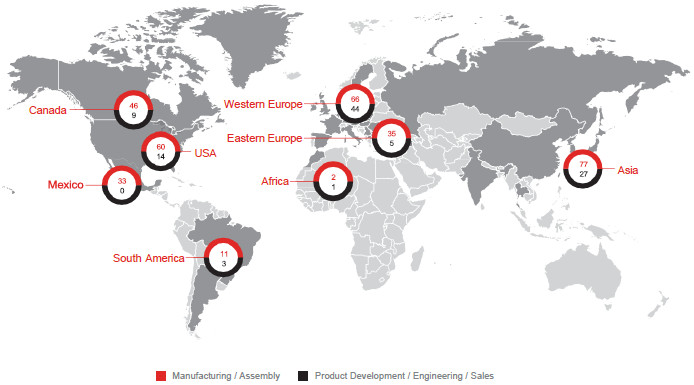
| 1 | Number of employees includes approximately 144,000 employees at our wholly owned or controlled entities and approximately 12,000 employees at certain operations accounted for under the equity method. |
| 2 | Manufacturing operations and PDES centres include certain operations accounted for under the equity method. |
4 | 2026 Annual Information Form
Our business is managed under four operating segments which have been determined on the basis of technological opportunities, product similarities, as well as market and operating factors, as follows:
| • | Body Exteriors & Structures |
| • | Power & Vision |
| • | Seating Systems |
| • | Complete Vehicles |
Our internal financial reporting is aligned with the way our business is managed. Accordingly, we present key internal operating performance measures for the reporting segments described above to our chief operating decision maker to use in the assessment of operating performance, allocation of resources, and to help plan our long-term strategic direction and future global growth.
Our Corporate Culture
Magna’s corporate culture supports disciplined execution, accountability, responsibility, and operational excellence. Our approach is designed to enable decisions close to operations while maintaining clear enterprise strategy and governance, shared standards and alignment across the organization. The key elements of our culture are as follows:
Entrepreneurial Operating Model and Enterprise Alignment
We follow a corporate policy designed to enable functional and operational decision making close to our manufacturing and engineering activities, which we believe supports flexibility, customer responsiveness, and productivity.
| • | Our manufacturing and assembly operations are conducted through “Divisions”, each of which is an autonomous business unit operating under set guidelines. Each Division is a separate profit centre under the authority of a general manager, who has the discretion to determine rates of pay, hours of work, and sources of supply, within the framework of our Employee’s Charter, our Global Labour Standards Policy, and our Operational Principles (each as described below and available on our website at www.magna.com), as well as our corporate policies. |
| • | Divisions are aligned globally by product area in Operating Groups. Operating Group management is responsible for overseeing the Divisions within its product area(s), including approval of Divisional business plans and preparation of Operating Group business plans for presentation to Executive Management. Our Operating Groups are aligned under four reporting segments overseen by members of Executive Management to enable the Operating Groups to: take advantage of cross-Group synergies; share research and development and best practices; and embrace technological trends that impact our business and our customers. |
| • | Our Executive Management team, led by our Chief Executive Officer, interfaces with the investment community and is responsible for our long-term strategic planning and future growth, as well as monitoring the performance of Operating Group management. In addition, our Executive Management: allocates capital; oversees mergers, acquisitions, dispositions and strategic alliances; manages global marketing and customer strategies; develops employee policies and programs; manages leadership training, development, and succession planning; oversees and supports our sustainability, environmental, social, and governance strategy; develops targets and global initiatives; and develops common finance, internal controls, compliance, IT, quality, labour and employment, environmental, health & safety, ergonomics, and other policies, programs and global standards. |
Employee’s Charter & Global Labour Standards Policy
Magna’s Employee’s Charter provides direction for the company’s approach to employee relations, including expectations related to fairness, respect, and a safe and rewarding workplace. Our Global Labour Standards Policy further reinforces our commitment to responsible business practices and sets out key commitments related to labour and human rights standards across our operations. See “Appendix 1 — Sustainability Report — Section 3.2 Fairness and Concern for Our Employees” for a description of our human resource principles, including our Employee’s Charter, as well as the details of our Global Labour Standards Policy and the key commitments that it sets out.
2026 Annual Information Form | 5
Core Values
Magna’s culture is grounded in core values that guide how we conduct business and make decisions. Our core values are the cornerstone of our organization, driving our commitment to our employees and enabling us to deliver exceptional value to all our stakeholders. Our values of “Think Big”, “Never Settle”, “Be Collaborative”, and “Take Responsibility” guide our actions, decisions and interactions, fostering a culture of integrity and excellence.
Operational Excellence
We believe Magna’s operational excellence mindset fosters a culture of solid execution, continuous improvement, and accountability. We take an innovative, team-driven approach to refining processes and systems, aimed at delivering value to our customers and stakeholders. Our people-first approach helps drive innovation and craftsmanship, creating a safe, respectful, and rewarding workplace. Linked to our Magna Factory Concept (“MAFACT”) assessment system (detailed in “Description of the Business — Manufacturing, Sustainability & Engineering — Operational Excellence” in this AIF), these principles help enable consistent measurement and improvement, resulting in reduced waste, enhanced efficiency, and quality products. By integrating advanced manufacturing technologies and Factory of the Future initiatives, we are shaping a smarter, more sustainable future for mobility.
Incentive-Based Management Compensation
We maintain an incentive-based compensation system for management, which directly links short-term incentive compensation to the operational performance of an applicable business unit. In the case of our Divisions and Operating Groups, the short-term incentive formula is based on Divisional or Operating Group EBIT, after taking into account a funds employed charge. For our Executive Management, the short-term incentive is linked to Magna’s Adjusted EBIT and Free Cash Flow. Members of our Operating Group management and Executive Management also receive performance-conditioned equity-based incentives. Our approach to executive compensation is described in further detail in the sections of our Circular titled “Compensation and Performance Report” and “Compensation Discussion & Analysis”.
Our Industry
General
The global automotive sector is rapidly evolving in response to societal, mobility-related, and economic trends, including the transition to a lower carbon economy, which has led to a shift from internal combustion to electric propulsion in some markets. These trends are detailed in “Our Business & Strategy — Industry Trends”. Tier 1 automotive suppliers (“Tier 1 Suppliers”) design, engineer and manufacture components, assemblies, systems, subsystems, and modules for original equipment manufacturers (“OEMs” or “automobile manufacturers”) of vehicles and light trucks. Tier 1 Suppliers source subcomponents from Tier 2 suppliers and other sub-suppliers, which are integrated into the products sold by Tier 1 Suppliers directly to OEMs.
The global automotive industry is cyclical and is sensitive to a broad range of macroeconomic, political, and other trends as discussed in “Our Business & Strategy” in this AIF. Throughout 2025, the automotive industry continued to experience a number of macroeconomic and industry challenges, including:
| • | reduced vehicle production volumes, including in certain key markets; |
| • | continuing trade protectionism; and |
| • | consumer uncertainty related to electric vehicles (“EV”) including in connection with EV range, charging infrastructure, electricity pricing, and availability of government rebates. |
See “Our Business & Strategy — Macroeconomic, Political and Other Trends” and “Industry Trends” for details of how these trends affect Magna and the automotive industry. See also “Industry Trends” in our Management’s Discussion & Analysis of Results of Operations and Financial Position for the year ended December 31, 2025 (“MD&A”).
6 | 2026 Annual Information Form
Automotive Production Markets
OEMs have historically built their vehicles in the regions where those vehicles are primarily sold and, as a result, many OEMs have established manufacturing facilities in multiple countries. Some China-based, EV-focused OEMs have recently established manufacturing plants in Europe. While this has occurred in part due to trade and tariff policies, we see the trend towards localization of manufacturing to meet changing and volatile demand continuing on a global basis. See “Description of the Business — Manufacturing, Sustainability & Engineering” of this AIF for details of Magna’s global manufacturing footprint.
China, Europe, North America, Japan, India, and South Korea represent the largest automotive production markets in the world, accounting for approximately 90% of vehicles produced globally.(1) China’s approximate 35% share of global production led all countries in 2025, followed by the United States and Japan, with 11% and 9% shares, respectively.(1)
Customers
OEMs produced over 93 million light vehicles in 2025.(1) The top 15 OEMs, representing approximately 75% or approximately 70 million vehicles based on 2025 light vehicle production, were:(1)
| 1. Toyota Motor Corporation (“Toyota”)
2. Volkswagen Group (“Volkswagen”)
3. Hyundai Motor Group (“Hyundai”)
4. Stellantis N.V. (“Stellantis”)
5. BYD Auto (“BYD”)
6. General Motors Company (“General Motors”)
7. Zhejiang Geely Holding Group (“Geely”)
8. Ford Motor Company (“Ford”) |
9. Honda Motor Corporation (“Honda”)
10. Suzuki Motor Corporation (“Suzuki”)
11. Nissan Motor Corporation
12. Chery Automobile (“Chery”)
13. BMW AG (“BMW”)
14. Renault S.A.
15. Mercedes-Benz Group AG (“Mercedes-Benz”) |
Note: 1 S&P Global
The considerable growth of the Chinese automotive market over the past decade has led to the significant growth of several Chinese OEMs, including BYD Auto, Geely, and Chery, as listed above. See “Risk Factors — Evolving OEM Competitive Landscape” in this AIF.
For a list of our top customers on a consolidated basis and within each reporting segment, see “Description of the Business — Products & Services” in this AIF.
Competition
In spite of high barriers to entry in many product areas, as well as the high capital intensity of the global Tier 1 automotive supply industry, competition is fierce from many different sources. For most of our Operating Groups, competition comes primarily from automobile manufacturers and from other “traditional” Tier 1 Suppliers, including ones in which one or more automobile manufacturers may have direct or indirect investments. With the importance of electrification and electronics in the automotive value chain, a number of established electronics and semiconductor chip companies have also entered or expanded their presence in the automotive industry, becoming direct competitors to Tier 1 Suppliers, including us. Additionally, disruptive technology innovators are changing the competitive landscape of the automotive industry through the development of high-value product and service offerings, particularly in areas related to vehicle electrification, vehicle autonomy, and connectivity, which traditional automotive suppliers may not be able to match. As a result of these trends, some suppliers seek to enhance their competitive positioning by entering into strategic partnerships, joint ventures, or collaborations with technology and software companies.
2026 Annual Information Form | 7
The basis on which automobile manufacturers select automotive suppliers for particular programs is determined by a number of factors, which may include, among other factors: price; overall relationship, including historical performance with respect to innovation, quality/warranty, launch execution, and timeliness of delivery; manufacturing footprint; proprietary technologies; financial strength; ability to test and validate new technologies for application in the automotive industry; scope of in-house engineering and tooling capabilities; carbon footprint and alignment with the customer’s sustainability/ESG goals and targets; and existing agreements.
The number of competitors that are asked by automobile manufacturers to bid on any individual product has been reduced in many cases. We expect further reductions as a result of the increasing preference of automobile manufacturers to deal with fewer suppliers and reward those suppliers with earlier and deeper involvement.
Based on 2024 global automotive parts sales to OEMs, the top 10 Tier 1 Suppliers globally were:(1)
| Supplier |
Key Automotive Products(2) | |
| 1. Bosch Group |
Powertrain solutions, chassis systems control, electrical drives, car multimedia, electronics, aftermarket products, steering | |
| 2. Denso Corporation(3) |
Thermal systems, powertrain systems, electrification systems, mobility electronics, sensor system & semiconductors | |
| 3. Magna International Inc. |
Body and chassis, exteriors, powertrain, active driver assistance, electronics, mirrors and lighting, mechatronics, seating systems, vehicle engineering and manufacturing, roof systems | |
| 4. ZF Friedrichshafen AG |
Electrified powertrain, chassis, driveline, braking systems, steering wheel, autonomous transport systems, electronics & advanced driver assistance systems, active & passive safety systems | |
| 5. Contemporary Amperex Technology Co., Limited |
Electric vehicle battery modules, cells and management systems, battery materials | |
| 6. Hyundai Mobis(3) |
In-vehicle infotainment systems, braking, steering, lamps, safety, suspension, autonomous driving, electrification systems, advanced driver assistance systems | |
| 7. Aisin Corporation(3) |
Powertrain, chassis and vehicle safety systems, body electronics, vehicle navigation systems | |
| 8. Forvia |
Seating, interiors, clean mobility (exhaust systems), lighting, hydrogen mobility, electrification and energy management, cockpit, electronics & software integration | |
| 9. Continental AG |
Autonomous mobility, passive safety, brake, chassis, motion and motion-controlled systems, tires, rubber, electric mobility, connected mobility | |
| 10. Lear Corp. |
Seating, electrical distribution and connection systems, battery disconnect systems, electronic systems, software and connected services, electronic control modules, electrification products, connectivity products | |
Notes:
1 Automotive News (supplement) (June 22, 2025).
2 Key automotive product descriptions are based on information from each Tier 1 Supplier’s website.
3 OEM subsidiary or OEM investee.
While no single Tier 1 Supplier currently supplies a full range of products which compete with ours, a number of Tier 1 Suppliers can produce some or many of the same types of components, assemblies, modules, and systems that we currently produce. Some of our competitors may have greater technical or other resources than we do and some of them may be stronger in markets in which we operate. A list of our key competitors within each product capability in our reporting segments can be found in “Description of the Business — Products & Services” in this AIF. See also the risk factors related to “Intense Competition” and “Technology and Innovation” under “Risk Factors” in this AIF.
8 | 2026 Annual Information Form
Our Business & Strategy
Business Drivers
Our business and operating results are dependent on light vehicle production by our customers in three key regions — North America, Europe, and China. Ordinarily, OEM vehicle production levels are aligned with vehicle sales levels and thus affected by changes in such levels. More recently, the automotive industry has faced headwinds, including lower vehicle production volumes in some of our key markets, along with macroeconomic, geopolitical, trade/tariff and other risks. While we supply systems and components to many OEMs globally, we do not supply systems and components for every vehicle, nor is the value of our content consistent from one vehicle to the next. As a result, customer and program mix relative to market trends, as well as the value of our content on specific vehicle production programs, are important drivers of our performance. Key factors impacting production volumes, product/customer mix and content, as well as legislative/regulatory trends are listed below.
| Growth Driver | Factors Potentially Impacting Growth Driver | |
| Vehicle Production Volumes | • Vehicle sales levels, which are affected by: | |
| – Consumer confidence levels, which may be affected by: inflation; consumer perceptions; general trends related to the job, housing, and stock markets; general macroeconomic and political conditions; and military conflict | ||
| – Vehicle affordability | ||
| – Interest rates and/or availability of credit | ||
| – Fuel and energy prices | ||
| – Relative currency values | ||
| – Considerations applicable to EVs, including EV range, charging infrastructure, electricity pricing, and availability of government rebates | ||
• OEM, supplier or sub-supplier production disruptions | ||
• Supply chains and infrastructure | ||
• Free trade arrangements | ||
• The imposition of tariffs on vehicles or components or materials incorporated therein | ||
• Availability and relative cost of skilled labour | ||
• Labour disruptions | ||
• Commodities prices | ||
• Regulatory considerations, including environmental, emissions, and safety standards | ||
| Customer Mix | • OEM outsourcing strategies, as well as their supplier preferences and relationships | |
• Alignment between our portfolio and OEMs’ requirements | ||
• Business relations between us and each of our OEM customers | ||
• Our ability to supply products and systems from multiple production locations for global vehicle platforms | ||
• Competitiveness of our products | ||
• Exclusivity of our products and systems due to intellectual property rights | ||
• OEM cooperation and consolidation | ||
• Our ability to grow sales to emerging and growing OEMs, in particular to China-based OEMs | ||
2026 Annual Information Form | 9
| Growth Driver | Factors Potentially Impacting Growth Driver | |
| Program Mix | • OEM outsourcing strategies, as well as their supplier preferences and relationships | |
• Our ability to supply products and systems from multiple production locations for global vehicle platforms | ||
• Alignment between our portfolio and OEM requirements | ||
• Our capital allocation decisions | ||
• The technological and cost competitiveness of our products and systems compared to our peers | ||
• Our customers’ perception of our reputation for product quality, as well as timeliness of delivery | ||
• Our product engineering capabilities | ||
• Our continued ability to innovate and develop competitive, technically advanced products for our customers | ||
• Our ability to finance pre-production engineering costs | ||
• Consumer “take rates” for products and systems we sell | ||
• Collaboration among our Operating Groups | ||
| Legislative/Regulatory Trends Promoting Sustainability and Safety |
• Regulatory actions mandating higher fuel efficiency, lower carbon emissions and/or enhanced safety features | |
• Timeline of regulations related to the phase-out of vehicles with internal combustion engines | ||
Macroeconomic, Political and Other Trends
The global automotive industry is cyclical and, as noted above, vehicle production and/or sales may be affected by a broad range of macroeconomic, political, and other factors. Some such factors which are currently affecting the industry are discussed below.
| Trend | Description | Potential Impact on Magna | ||
| Geopolitical Conflicts | • Deteriorating U.S. relations with its largest trading partners including China, Mexico, Canada, and Europe
• Political pressure to manufacture and source from countries that are geopolitical allies |
• Weakening of economic growth and consumer confidence
• Increasing trade protectionism
| ||
• Disruption to supply of and/or increased costs of: steel, aluminum, resin, and energy supplies (particularly natural gas and oil); shipping/transportation and logistics; vehicle production; and/or supply chains | ||||
• Increased export control and sanctions restrictions | ||||
• Planning and investment uncertainty | ||||
• Elevated interest rates | ||||
• Reduced demand for and production of vehicles | ||||
• Commodity price volatility | ||||
• Relative foreign exchange rate volatility | ||||
• Increased physical and cybersecurity threats | ||||
10 | 2026 Annual Information Form
| Trend | Description | Potential Impact on Magna | ||
| Military Conflicts | • Military conflicts in Ukraine/Russia and the Middle East/Persian Gulf |
• Inflation and/or weakening of economic growth and consumer confidence | ||
• Disruption to supply of and/or increased costs of: steel, aluminum, resin, and energy supplies (particularly natural gas and oil); shipping/ transportation and logistics; vehicle production; and/or supply chains | ||||
• Planning and investment uncertainty | ||||
• Increased physical and cybersecurity threats | ||||
| Trade Protectionism | • Disruption to free trade agreements, particularly in North America pursuant to the United States-Mexico- Canada Agreement (“USMCA”)
• The imposition or threat of new or higher tariffs on goods imported into the United States from Canada, Mexico, Europe and China, together with any retaliatory countermeasures enacted by these countries, will significantly interfere with existing automotive supply chains
• Increased trade investigations and customs audits in the jurisdictions in which we operate
• Government pressure on OEMs to localize production of vehicles in markets in which they are sold
• Tier 1 Suppliers may also increase localization to meet changing and volatile demand |
• Inability of automotive suppliers and vehicle manufacturers to make efficient long-term investment decisions
• Production inefficiencies
• Unrecoverable costs impacting profitability
• Decreased vehicle affordability leading to reduced demand for and production of vehicles
• Disruption to supply, or pricing distortion, of commodities
• Increased volatility in relative foreign exchange rates and the stock market
• Increased regulatory complexity and compliance costs
• Loss of future business
• Suboptimal inventory levels
• Pricing pressure from sub-suppliers
• Challenges in retaining employees due to production volatility
• Financial stress on supply base | ||
| Elevated Interest Rates | • Key consumer borrowing rates in North America and Europe remain elevated compared to levels experienced prior to 2020
• Availability and cost of credit are both factors affecting consumer confidence, which is a critical driver of vehicle sales and thus automotive production
|
• Higher borrowing costs if interest rates remain elevated for a prolonged period of time
• Lower sales as a result of a decrease in consumer demand for vehicles, and in turn, lower production | ||
2026 Annual Information Form | 11
| Trend | Description | Potential Impact on Magna | ||
| Supply Chain Disruptions |
• Supply chain disruptions and inefficiencies caused by trade disputes, as well as geopolitical crises and military conflicts
• Supply chain disruptions caused by extreme weather events growing in frequency
• Supply chain disruptions caused by shortages of parts and/or materials (including as a result of competing demand for semiconductor chips from non-automotive sectors) |
• Lower sales
• Unrecoverable costs impacting profitability
• Production inefficiencies from our production lines being stopped/restarted
• Penalties or business interruption claims from customers
• Loss of future business
• Reputational damage
• Suboptimal inventory levels
• Pricing pressures from sub-suppliers
• Financial stress on supply base
• Challenges in retaining employees due to production volatility | ||
| Regulatory Focus on Climate Impact |
• Government regulation limiting the sale of new vehicles with ICE engines by certain future dates
• Governmental authorities, customers, equity investors, lenders, rating agencies, employees and other stakeholders increasing scrutiny of companies’ impact on and resilience to climate change
• Focus on energy reduction and transition to renewable / carbon neutral energy sources
• Increasing expectations regarding disclosures of ESG metrics
• Growth in investment demand for companies demonstrating sustainable strategy and operations
• Heightened focus on and concern for risk of supply chain disruptions from climate-related events |
• Increased capital expenditures associated with certain long-term product portfolio changes
• Focus on energy reduction opportunities to reduce energy costs
• Decarbonization strategies / commitments could require increased capital spending and/or involve higher operating costs, including higher costs to purchase renewable energy
• Potential for increased / decreased demand for Magna’s Common Shares, based on market views as to sustainability of the company
• Risk of disruption to automotive supply chains, transportation routes and electricity grids from climate-related events | ||
Industry Trends
The automotive industry is being defined by a number of trends, which are discussed below together with their potential impact on Magna.
| Trend | Description | Potential Impact on Magna | ||
| Growth of Chinese OEMs |
• Rapid growth and development of Chinese OEMs
• Increasing number of Chinese OEMs seeking to export vehicles to, or localize production in, Europe and other parts of the world |
• Potential loss of sales to the extent Chinese OEMs adversely impact traditional OEMs in China, Europe, and other regions (to the extent lost sales are not offset by new sales to Chinese OEMs)
• Potential for new business opportunities with Chinese OEMs | ||
| Chinese Policies Aimed at Growing High-Value Domestic Development/ Production |
• Continuing Chinese government focus on increasing engineering, development and manufacturing of high-value, high-tech products in China |
• Continued localization of engineering, development, and manufacturing
• Uncertainty regarding whether Chinese domestic companies will be preferred over foreign-owned companies operating in China
• Potential for increased export control restrictions in the U.S. and Western Europe relating to strategically important and/or technologically advanced products and technology | ||
12 | 2026 Annual Information Form
| Trend | Description | Potential Impact on Magna | ||
| Pace of EV Adoption | • Pace of transition varies by region, vehicle segment and OEM
• Certain OEMs, primarily in North America, have been deferring or cancelling planned EV programs and/or reducing production volumes
• Number of EVs sold globally growing, but rate of growth has moderated in some markets with a misalignment between EV production/supply and consumer demand for certain models |
• Increased management attention to pursue commercial recoveries related to investments made in support of EV programs
• Incurrence of potentially unrecoverable pre-production, tooling, engineering, and other costs incurred in advance of production
• Production inefficiencies, including as a result of unutilized or underutilized production capacity and/or disruptions to our workforce plans at affected facilities
• Significant development and engineering costs for OEMs may increase collaboration among OEMs and impact outsourcing strategies | ||
| Continued Growth in Demand for ADAS Features and Systems |
• Increased regulatory requirements related to vehicle safety in recent years have spurred growth of advanced driver assistance systems (“ADAS”) features and systems
• Enhancing ADAS capabilities requires significant investment, with uncertain returns on investment due to intense competition, including from established technology companies |
• Opportunities to grow Magna content, particularly in our Power & Vision segment
• Potential challenges in attracting and retaining highly skilled engineers and software personnel
• Potential inability to achieve desired scale and competitive positioning | ||
| Continuing Elevated Product Warranty Expectations and Product Recall Levels |
• Over the last decade, OEMs have become more inclined to recall vehicles with potentially faulty products
• Increased frequency and severity of recalls, together with other factors, have impacted coverage and pricing for recall insurance |
• Increased OEM pricing pressure, including pressure to assume greater warranty responsibility
• Elevated product recall and related product replacement cost risk, even where root cause is not agreed with OEM or cannot be determined
• Higher self-insured retentions and, reduced coverage limits on recall insurance, as well as increased reluctance by certain sub-suppliers to absorb the full cost of warranty/recall expenses relating to the failure of their components, create greater net exposure | ||
| Regulatory Focus on Reducing CO2 Emissions |
• Sustainability considerations have driven regulatory action for reduced vehicle emissions and the transition to EVs in recent years
• Despite trend in recent years, regulatory context may shift based on political and other changes in North America and Europe |
• Continuing opportunities to support OEM customers’ efforts through lightweighting, more efficient drivetrains, electrification, and active aerodynamics
• Magna’s diversified portfolio is largely agnostic to powertrain choice | ||
| OEM Cooperative Alliances / Consolidation |
• Joint platform development, powertrain sharing, and/or purchasing
• Regional joint ventures
• Partnerships expanding to new areas of vehicle ecosystem (raw materials/batteries; components/ software; infrastructure/aftersales)
• OEM consolidation from time to time |
• Increased OEM pricing pressure
• Increase in sales, where Magna has strong relationship with lead OEM
• Decrease in sales, where Magna has weaker relationship with lead OEM | ||
2026 Annual Information Form | 13
Our Corporate Strategy
Magna operates in a rapidly evolving, highly competitive, cyclical, lean, global manufacturing industry. To drive long-term success, we are focused on the following key areas:
| Product Portfolio | Magna’s approach to product involves viewing our portfolio through the lens of a long-term owner. As a starting point for this approach, each of our businesses must:
• operate in meaningful or growing markets with significant profit opportunities;
• have strong market positioning and profitable growth, or a path toward both; and
• possess sustainable competitive advantages.
These requirements for our product portfolio have already delivered scale and market leading positioning across a number of different businesses and markets. For example, our portfolio reflects:
• global leadership in body and chassis, all-wheel drive/four wheel-drive, transmissions, latches, mirrors and contract vehicle assembly;
• top five global positioning in ADAS;
• North American leadership in exteriors and top three market positioning in seating; and
• top five European market positioning in both exteriors and seating.
Employing strategic portfolio management, we seek to achieve strong performance in leading markets. |
| Practically, this involves managing all our businesses for continuous improvement, while deploying capital investments to areas that are most aligned with our long-term portfolio priorities.
One such priority has been to focus on businesses that can deliver profitable growth while remaining agnostic to the vehicle’s method of propulsion.
However, we believe that electrification provides growth opportunities, even though the pace of adoption may not be linear. As the proportion of vehicles on our roads transitions from ICE to EV, Magna is strategically positioned to increase the content and value we can deliver to our customers. | ||
| Customer Strategy | Although we supply products and systems to every major vehicle manufacturer, the majority of our sales are currently to six OEM customers. While continuing to support these customers, we have increased focus and strengthened relationships with a number of other OEM customers across the globe to diversify sales. In the case of OEMs which do not traditionally outsource business outside their established supplier networks, we seek strategic growth opportunities based on standard criteria.
Given the rapid evolution of the automotive industry, we continue to regularly assess the alignment between our strategy and our OEM customers, leveraging our cross-group activity both to identify and pursue strategic business awards, as well as to assess and strengthen risk mitigation. | |
| Operational Excellence |
As a manufacturer of highly engineered automotive products, we are committed to continuous improvement and operational excellence. Our approach to operational excellence is based on three elements:
• Executing on the Fundamentals — reinforcing solid execution with respect to program launches, product quality and warranty management;
• Improving our Most Impactful Divisions — focusing attention on long-term margin transformation for operating divisions with the highest impact to Magna overall; and
• Leveraging our Smart Factory initiatives — new manufacturing processes developed from our Factory of the Future initiatives and our MAFACT operating system are distilled into use cases which are scaled across Operating Groups to leverage common opportunities. | |
| Capital Allocation | A disciplined and balanced approach to capital allocation is a foundational principle. This broad principle is distilled down to three fundamental components:
• Maintain a Strong Balance Sheet — maintaining a strong balance sheet is critical to preserving financial flexibility and solid investment-grade credit ratings.
• Invest and Manage for Profitable Growth — we are focused on accretive investments to support long-term Free Cash Flow generation. This primarily consists of organic (investments in our business), but may include inorganic (M&A) opportunities that provide advantageous product capabilities, customer diversification or geographic footprint in areas where we require additional capacity. We are willing to exit businesses that are not aligned with our geographic footprint, business requirements, and product portfolio strategy, and have | |
14 | 2026 Annual Information Form
| done so in recent years, including through the sale of certain exteriors business units in Germany (2021), seating operations in Brazil (2021), a powertrain business in France (2023), our former divisions in Russia (2023), and a body and chassis business in India (2024). Overall, we aim to maintain a sustainable competitive advantage through innovation, cutting edge technology and manufacturing, and use our investments to support achievement of this objective.
• Return Capital to Shareholders — we believe in providing a competitive dividend to shareholders. Dividends are supplemented by additional returns of capital through share repurchases, which we fund with excess liquidity. | ||
| People and Talent | We are committed to an operating philosophy based on fairness and concern for people. This philosophy is part of a culture in which employees and management share the responsibility to help enable our success. Our Employee’s Charter sets out this philosophy through the following fundamental principles:
• job security;
• safe and healthful workplace;
• fair treatment;
• competitive wages and benefits;
• employee equity and profit participation;
• communication and information; and
• an employee hotline. | |
2026 Annual Information Form | 15
Risk Factors
The industry in which we compete and the business we conduct are subject to a number of risks and uncertainties. Our short and medium-term operational success, as well as our ability to create long-term value through our corporate strategy, are subject to a number of risks and uncertainties. These risks and uncertainties, together with a number of assumptions, underlie the forward-looking statements made in this AIF. In order to fully understand these risks, uncertainties, and assumptions, you should carefully consider the following risk factors in addition to other information included in this AIF:
Macroeconomic, Geopolitical and Other Risks
| • | Geopolitical Crises and Military Conflicts: Geopolitical crises and/or military conflicts (including in Ukraine/Russia and the Middle East/Persian Gulf) could create a number of risks, including: disruption to the supply of and/or increased costs of steel, aluminum, resin, and energy supplies (particularly natural gas and oil), shipping/transportation and logistics, vehicle production, and/or supply chains; weakening economic growth and consumer confidence; increasing inflation; increasing physical or cybersecurity threats; and/or worsening other risks described elsewhere in this AIF, such as with respect to commodity prices, relative foreign exchange rates, and risks of doing business in foreign markets. An expansion or worsening of existing geopolitical crises or military conflicts, or the occurrence of significant new geopolitical crises or military conflicts, could have a material adverse effect on our business and operations. |
| • | Threats to Free Trade Agreements: Historical growth in the automotive industry has been aided by the free movement of goods, services, people and capital through bilateral and regional trade agreements, particularly in North America pursuant to the North American Free Trade Agreement (1994 – 2020) and the United States-Mexico-Canada Agreement (2020 – Present). Measures implemented by the current U.S administration, together with court challenges and judicial decisions related to these measures have created an uncertain trade environment. The overall climate of trade and tariff uncertainty presents a number of challenges for the entire automotive supply chain, including: |
| – | Disruption of integrated supply chains: U.S. tariff and trade policies risk disrupting integrated global and regional automotive supply chains, given the stated aim of repatriating manufacturing to the U.S. Continuing uncertainty appears to be impacting OEM and supply chain production/footprint decision-making and presents industry-wide challenges with planning, forecasting and efficient capital allocation. |
| – | Input costs: U.S. tariffs, together with retaliatory measures, risk increasing our input costs, the prices paid by our customers for our products, as well as the price consumers pay for vehicles. Significant or sustained unmitigated tariff cost increases which are not recovered from our customers could have a material adverse effect on our profitability. |
| – | Vehicle affordability: to the extent tariffs erode vehicle affordability, consumer demand for vehicles may decline, prompting a reduction in vehicle production volumes, which is a material driver of our operations, sales and profitability. |
| • | International Trade Disputes: International trade disputes, uncertainty and unpredictability could, among other things: erode vehicle affordability reducing the demand for and production of vehicles; increase our input costs, the prices paid by our customers for our products, as well as the price consumers pay for vehicles; disrupt global supply chains; distort commodity pricing; impair the ability of automotive suppliers and vehicle manufacturers to make efficient long-term investment decisions; create volatility in relative foreign exchange rates; and contribute to stock market volatility. The imposition of sanctions, tariffs and/or the escalation of trade disputes which interfere with automotive supply chains could have an adverse effect on our operations, profitability and ability to effectively execute our corporate strategy. |
| • | Planning and Forecasting Challenges: Macroeconomic and geopolitical uncertainty, together with unpredictable government policy-making, including with respect to trade and tariffs, continue to present operational planning and forecasting challenges for OEMs, Tier 1 suppliers, and other automotive suppliers. In recent years, OEMs have taken actions such as: unplanned shutdowns of production lines and/or plants; reductions in their vehicle production plans; and changes to their product mix. Such OEM actions can result in a number of direct and indirect consequences for automotive suppliers like |
16 | 2026 Annual Information Form
| Magna, including: lower sales; significant production inefficiencies resulting from our production lines being stopped/ restarted unexpectedly; and unrecoverable costs and changes, including from sub-suppliers that have been adversely affected by production inefficiencies. If prolonged, the occurrence/recurrence of any such actions could have a material adverse effect on our operations, sales and profitability. Additionally, planning and forecasting uncertainty could result in greater variability between market expectations and our actual financial and operating results which, in turn, could increase volatility in our stock price. |
| • | Interest Rates: Key consumer borrowing rates in North America and Europe remain elevated compared to levels experienced prior to 2020. The availability and cost of credit are both factors affecting consumer confidence, which is a critical driver of vehicle sales and thus automotive production. A material, sustained decrease in consumer demand for vehicles could result in reductions to vehicle production from levels assumed in our business plan, which could have a material adverse effect on our profitability and financial condition. Higher interest rates will also have an adverse effect on our borrowing costs and, if prolonged, could have an adverse effect on our profitability. |
Risks Related to the Automotive Industry
| • | Pace of EV Adoption: Although the number of EVs sold globally continues to grow, the rate of growth has moderated in some markets due to consumer hesitancy related to issues such as: vehicle affordability; reduced availability of government rebates for the purchase of EVs; concerns regarding evolving battery technologies; anxiety regarding driving range; inadequacy of charging infrastructure; new EV OEMs and models with little or no operating and warranty history; and rapid depreciation and deterioration in residual values for EVs. If planned production volumes for EV programs do not materialize, we may not be able to recover our capital investments related to such programs, or to recover such investments within the timeframes contemplated, which could have a material adverse effect on our profitability and financial condition. |
| • | North American EV Program Deferrals, Cancellations and Volume Reductions: Certain OEMs, primarily in North America, continue updating their EV strategies by deferring or cancelling planned EV programs and/or reducing production volumes below the levels at which we previously quoted. We are pursuing commercial recoveries from our customers as a result of these actions, but we may be unable to fully recover various pre-production, tooling, engineering, capital, and other costs incurred in advance of production, or unable to recover them within the timeframe originally contemplated in our business plan. We may also experience production inefficiencies, including as a result of unutilized or underutilized production capacity and/or disruptions to our workforce plans at affected facilities. The deferral or cancellation of EV programs, or reduction in planned production volumes, combined with the failure to secure commercial recoveries from our customers to fully offset associated costs and inefficiencies, may have a material adverse effect on our profitability. |
| • | Economic Cyclicality: Ordinarily, the global automotive industry is cyclical, with potential for regional differences in the timing of expansion and contraction of economic cycles. In normal industry cycles, lower consumer confidence typically translates to lower vehicle sales and production volumes. Examples of factors which often reduce consumer confidence include: worsening economic, political, and other conditions; consumer perceptions and general trends related to the job, housing, and stock markets; military conflict; increasing inflation (particularly fuel and energy prices); and rising interest rates. A significant decline in vehicle production volumes from levels assumed in our business plan could have a material adverse effect on our profitability and financial condition. |
| • | Regional Production Volumes: North America, Europe and China are key automotive producing regions for us, and our operating results are primarily dependent on car and light truck production by our customers in these regions. A significant or sustained decline in vehicle production volumes in any or all these geographic regions could have a material adverse effect on our operations, sales, and profitability. |
| • | Deteriorating Vehicle Affordability: Higher vehicle prices continue to create affordability challenges for consumers. Factors contributing to higher vehicle prices include: costs related to advanced electronic systems, as well as components such as semiconductor and memory (DRAM) chips; elevated vehicle finance costs; increased commodity costs; changes in relative foreign exchange rates; and tariffs. A material, sustained decrease in consumer demand for vehicles due to deteriorating |
2026 Annual Information Form | 17
| vehicle affordability could result in reductions to vehicle production from levels assumed in our business plan, which could have a material adverse effect on our profitability and financial condition. |
| • | Intense Competition: The automotive supply industry is highly competitive. Some of our competitors have higher or more rapidly growing market share than we do in certain product or geographic markets. Additionally, a number of established electronics and semiconductor chip companies have entered or expanded their presence in the automotive industry. At the same time, disruptive technology innovators continue introducing novel product and service solutions which traditional automotive suppliers may not be able to match. Failure to successfully compete with existing or new competitors could affect our ability to fully implement our corporate strategy. |
Strategic Risks
| • | Evolution of the Vehicle: The success of our corporate strategy is correlated to our ability to grow our business and capabilities in product areas which demonstrate long-term growth. Some systems in our product portfolio are expected to decline over the long-term, including manual transmissions, mechanical all-wheel drive/four-wheel drive systems, and fuel tank systems. The failure to grow our sales of higher growth products (such as ADAS) at or above the industry rates of growth for such products could have a material adverse effect on our profitability and financial condition. |
| • | Evolving Business Risk Profile: The risk profile of our business continues to evolve due to our exposure to product areas such as battery enclosures, electrified powertrains, and ADAS and electronics. As a result, we may face new or heightened risks, including: forecasting, planning and capital allocation risks due to uncertainties regarding the shift from ICE to EV production volumes and unrecovered capital and engineering costs; take-rates for ADAS systems and/or features offered to consumers as optional items; reduction in demand for certain products which are unique to ICE vehicles; challenges in quoting for profitable returns on products with leading-edge technologies; rigorous testing and validation requirements from OEM customers for complex new products; increased warranty and recall risks on new products and leading-edge technologies; increased product liability risks; increased cybersecurity risk; increased competition in the development of leading-edge technologies; increased regulatory complexity and compliance costs; increased counterparty risk; heightened risk of technological obsolescence of some of our products, processes and/or assets; and difficulties in attracting or retaining employees with critical skills in high-demand areas. Realization of one or more such risks could have a material adverse effect on our operations, profitability, or financial condition. |
| • | Technology and Innovation: While we continue to invest in technology and innovation which we believe will be critical to our long-term growth, the automotive industry is experiencing significant electrical, electronic, and software-driven change and disruption. Our ability to anticipate changes in technology and to successfully develop and introduce new and enhanced products and/or manufacturing processes on a timely basis will be significant factors in our ability to remain competitive. Additionally, our success is dependent on our ability to attract, develop and retain employees with the required technical and/or software skills. If we are unsuccessful or are less successful than our competitors in consistently developing innovative products and/or processes, we may be placed at a competitive disadvantage in bidding for new business and may not be able to recover some or all our engineering, research and development costs, which could have a material adverse effect on our profitability and financial condition and ability to fully implement our corporate strategy. |
| • | Investments in Mobility and Technology Companies: In addition to our development activities, we have invested in various mobility and technology companies, as well as funds that invest in such companies, and may continue to do so in the future. However, investing in such companies involves a high degree of risk, including the potential loss of some or all of our investment value and/or supply continuity risks to the extent we have supply relations with them. There is currently no public market for the shares or units of some of these investments and, as a result, we may be unable to monetize such investments in the future. In some cases, we may have equity in technology-driven suppliers with which we have commercial supply relations; while the value of such equity may be affected by the commercial prospects of such programs, our ability to exit our investments may be impaired by the existence of our commercial supply relationship. Investments in companies or funds which are currently or subsequently become publicly traded are “marked-to-market” quarterly, which may result in us |
18 | 2026 Annual Information Form
| recording unrealized gains or losses in any given quarter. The realization of any of the foregoing investment-related risks could have an adverse effect on our profitability and financial condition. |
Customer-Related Risks
| • | Customer Concentration: Although we supply parts to all major OEMs, a significant majority of our sales are to six customers: General Motors, Mercedes-Benz, Ford, BMW, Volkswagen and Stellantis. Additionally, growth rates of OEMs differ by region and segment, with significant growth by some other EV-focused OEMs in certain markets, such as China. Shifts in market share away from our top customers could have a material adverse effect on our profitability to the extent we are unable to offset such lost sales with sufficient sales growth to alternative OEMs. |
| • | Market Shifts: While we supply parts for a wide variety of vehicles produced globally, we do not supply parts for all vehicles produced, nor is the number or value of parts evenly distributed among the vehicles for which we do supply parts. Additionally, in recent years, we have experienced a concentration in content on certain EV models. Shifts in market shares away from vehicles on which we have significant content, as well as vehicle segments in which our sales may be more heavily concentrated, could have a material adverse effect on our sales and profitability. |
| • | Evolving OEM Competitive Landscape: A number of China-based OEMs (“COEMs”), including BYD, Chery, GAC, Geely, Huawei, Nio, Xiaomi, and XPeng, have demonstrated significant commercial success in China in recent years and some are seeking to export vehicles to, or localize production in, Europe and other parts of the world. While we have existing relationships and are targeting growth with COEMs, these relationships may not yet be as well established as those with our traditional customers. The failure to sufficiently grow our sales to those COEMs which achieve significant commercial success could adversely impact our ability to execute our corporate strategy. Additionally, to the extent COEMs win market share from our traditional customers, our profitability may be adversely affected if we are unable to offset lost sales by winning sufficient business with such COEMs. |
| • | Dependence on Outsourcing: We depend on outsourcing by OEMs, including the outsourcing of complete vehicle assembly to our contract vehicle manufacturing business. The extent of such outsourcing is based on a number of factors, including: the cost, quality, and timeliness of outsourced production relative to in-house production by an OEM; the degree of unutilized capacity at an OEM’s facilities; collective bargaining agreements and labour relations between OEMs and labour unions; impact of tariffs on OEMs’ manufacturing footprints; and other factors. Currently, many OEMs have excess vehicle assembly capacity, particularly in Europe and China. Additionally, since EVs have fewer components than vehicles with internal combustion engines, some OEMs may insource production of certain components or systems to maintain employment levels committed to in collective bargaining agreements and/or in connection with government incentives. A reduction in outsourcing by OEMs, or the loss of any material production or assembly programs combined with the failure to secure alternative programs with sufficient volumes and margins, could have a material adverse effect on our profitability. |
| • | Customer Cooperation and Consolidation: Competing OEMs have cooperated and collaborated in different ways to save costs, including through: joint purchasing activities; platform sharing; powertrain sharing; joint R&D; and regional joint ventures. Additionally, the automotive industry has previously experienced OEM consolidation. While OEM cooperation and consolidation may present opportunities, they also present a risk that we could lose future business or experience even greater pricing pressure on certain production programs, either of which could have an adverse effect on our profitability. |
| • | Consumer Take Rate Shifts: Shifts in consumer preferences may impact “take rates” for certain types of products we sell. Examples of such products include: all-wheel drive systems; power liftgates; active aerodynamics systems; ADAS; and complete vehicles with certain option packages or option choices. Where shifts in consumer preferences result in higher “take rates” for products that we do not sell or for products we sell at a lower margin, our profitability may be adversely affected. |
| • | Nature of Customer Blanket Purchase Orders: Contracts from our customers consist of blanket purchase orders which generally provide for the supply of a customer’s annual requirements rather than a specific quantity of products and can be terminated by a customer at any time. We may have various tooling, engineering, dedicated program capital, and other costs |
2026 Annual Information Form | 19
| incurred in advance of production which cannot be easily recovered from our customers if a purchase order is terminated and/or if forecast production volumes fail to materialize within the timeframe contemplated in our business plan. We may also experience production inefficiencies, including as a result of unutilized or underutilized production capacity and/or disruptions to our workforce plans at facilities affected by the cancellation or reduction of production volumes. The failure to secure commercial recoveries from customers to offset such costs and other operating inefficiencies may have a material adverse effect on our profitability. |
| • | Potential OEM Production-Related Disruptions: Any significant OEM production disruptions, including as a result of labour unrest at customer or sub-supplier facilities, parts shortages or natural disasters, would lead to disruptions to our production, which could have a material adverse effect on our sales and profitability. |
Supply Chain Risks
| • | Supply Chain Disruptions: OEMs and Tier 1 automotive suppliers may experience supply disruptions, constraints and/or price increases on critical manufacturing inputs (including steel, aluminum, and resin, as well as semiconductor and memory (DRAM) chips), for a number of different reasons, including: competing demand from non-automotive sectors; government regulation or intervention; trade and tariff disputes; geopolitical and/or military conflict; interruption of shipping or other transportation routes; natural catastrophes; labour disruptions; shortages of parts and/or materials; intellectual property claims; and pandemics. Supply chain disruptions which threaten or prevent us from the timely supply of products to our customers could result in a range of potential adverse consequences, including: unrecoverable price increases; elevated, unrecoverable costs such as those for premium freight or re-sourcing of supply; penalties, business interruption claims, or other commercial claims by our customers and suppliers; loss of future business; and reputational damage. The impacts of prolonged supply chain disruptions or constraints could have a material adverse effect on our operations and profitability. |
| • | Regional Energy Supply and Pricing: Regional energy supplies have from time to time been disrupted due to geopolitical and military conflict, supply/demand imbalances, government regulation, severe weather events, and challenges related to the transition to renewable energy generation. Unforeseen supply disruptions, demand spikes, prolonged energy disruptions and/or significant energy price increases (including as a result of the conflict in the Middle East/Persian Gulf) could have a material adverse effect on our operations and profitability. |
| • | Financial Condition of Supply Base: We rely on a number of suppliers to supply us with a wide range of components required in connection with our business. The financial health of automotive suppliers is impacted by a number of factors, including economic conditions and production volumes. A significant worsening of economic conditions or reduction in production volumes could deteriorate the financial condition of our supply base, which could lead to, among other things: disruptions in the supply of critical components to us or our customers; and/or temporary shutdowns of our production line(s) or the production line(s) of our customers. The occurrence of any such factors could have a material adverse effect on our profitability. |
| • | Supplier Claims: Input cost increases, shortfalls in vehicle production volumes, program deferrals or cancellations, intellectual property claims, tariff costs, and other factors could give rise to commercial or legal cost recovery claims against us by our suppliers, which could have an adverse effect on our profitability. |
Manufacturing/Operational Risks
| • | Product Launch: The launch of production is a complex process, the success of which depends on a wide range of factors, including: the timing and frequency of design changes by our customers relative to the start of production; product maturity and complexity; production readiness of our own, as well as our customers’ and suppliers’ manufacturing facilities; robustness of manufacturing and validation processes; launch volumes; quality and production readiness of tooling and equipment; sufficiency of skilled employees; and initial product quality. Failure by us to successfully launch a new product or complete vehicle could result in commercial or litigation claims against us which could have a material adverse effect on our profitability. Additionally, a significant product or program launch failure could adversely affect our reputation, future business prospects with one or more customers, and/or ability to execute our corporate strategy. |
20 | 2026 Annual Information Form
| • | Operational Underperformance: From time to time, we may have operating divisions which are not performing at expected levels of profitability. The size and complexity of automotive manufacturing operations often makes it difficult to achieve a quick turnaround of underperforming divisions. Significant or prolonged underperformance at any of our operating divisions could have a material adverse effect on our profitability and operations. |
| • | Restructuring Costs: We may sell some product lines and/or downsize, close, or sell some of our operating divisions. By taking such actions, we may incur restructuring, downsizing and/or other significant non-recurring costs. These costs may be higher in some countries than others and could have a material adverse effect on our profitability. |
| • | Impairments: We have recorded significant impairment charges related to equity interests in joint ventures, goodwill, and long-lived assets in the past and may do so again in the future. The occurrence of any of a number of potential scenarios could result in indicators of impairment, including: the early termination, loss, renegotiation of the terms of, or delay in the implementation of, any significant production contract; the technological obsolescence of any of our products or production assets; production volumes that are lower than expected; and the insolvency of a customer. In conducting our impairment analysis, we make forward-looking assumptions regarding: the impact of turnaround plans on underperforming operations; new business opportunities; program price and cost assumptions on current and future business; the timing and success of new program launches; and forecast production volumes. To the extent such forward-looking assumptions are not met, any resulting impairment loss could have a material adverse effect on our profitability. |
| • | Skilled Labour Attraction/Retention: Our business is based on successfully attracting, developing, and retaining employees at all levels of the company from “shop-floor” to Executive Management. The markets for highly skilled workers, as well as talented professionals and leaders in our industry are extremely competitive, particularly in the major global automotive and technology centres in which many of our operations are located. The inability to meet our needs for skilled workers and talented professionals and leaders, whether through recruitment or internal training, development activities, and retention could impact our ability to profitably conduct business and/or effectively implement our corporate strategy. |
| • | Leadership Expertise and Succession: Effective succession planning programs and practices are critical elements of our overall talent management strategy. While we believe that our leadership development and succession programs have been effective in facilitating leadership transitions to date, our ability to profitably conduct business and/or successfully implement our corporate strategy could be impacted by the failure to: identify, train, develop and support high-performing leaders; ensure effective knowledge transfers from transitioning leaders to successors; and/or otherwise promote organizational robustness and resilience through leadership transitions in critical roles. |
Pricing Risks
| • | Quote/Pricing Assumptions: The time between award of new production business and start of production typically ranges between two and four years. Since product pricing is typically determined at the time of award, we are subject to significant pricing risk due to changes in input costs, tariff costs, variance in production volumes, and other quote assumptions from the time of award through the start of production. The inability to quote effectively, or the occurrence of a material change in input costs, tariff costs, production volumes or other quote assumptions between program award and production, could have a material adverse effect on our profitability. |
| • | Customer Pricing Pressure/Contractual Arrangements: We face ongoing pricing pressure from OEMs, including through: quoting pre-requirements; long-term supply agreements with mutually agreed price reductions over the life of the agreement; non-contractual annual price concession demands; pressure to absorb costs related to product design, engineering and tooling, and/or amortize such costs through the piece price for the product; pressure to assume incremental warranty costs; and OEM refusal to fully offset inflationary price increases and/or tariff costs. OEMs possess significant leverage over their suppliers due to their purchasing power and the highly competitive nature of the automotive supply industry. As a result of the broad portfolio of parts we supply to our largest OEM customers, such customers may be able to exert greater leverage over us as compared to our competitors. We attempt to offset price concessions and costs in a number of ways, including through commercial negotiations with our customers, improved operating efficiencies and cost reduction efforts. |
2026 Annual Information Form | 21
| Our inability to fully offset and/or fully recover any such incremental costs over the life of production, could have a material adverse effect on our profitability. Moreover, while we attempt to negotiate contractual terms with our suppliers that align with the contractual terms between us and our OEM customers, we may not always be successful in doing so. Any such gaps between our customer and supplier contract terms could, in certain circumstances, have an adverse effect on our profitability. |
| • | Commodity Price Volatility: Prices for certain key raw materials and commodities used in our parts, including steel, aluminum, resin, and energy can be volatile. In some cases, our risk is mitigated because we purchase steel, aluminum, and to a more limited extent, resin under customer resale programs. Where such commodity purchases are not made under customer resale programs, we seek to offset commodity price increases by: passing such increases to our customers; engineering products with reduced commodity content; implementing hedging strategies; or otherwise. To the extent we are unable to offset commodity price increases, such additional commodity costs could have an adverse effect on our profitability. |
| • | Scrap Steel/Aluminum Price Volatility: Some of our manufacturing facilities generate a significant amount of engineered scrap steel and/or aluminum in their manufacturing processes but recover some of the value through the sale of such scrap. Scrap steel and scrap aluminum prices can also be volatile and do not necessarily move in the same direction as steel or aluminum prices. Declines in scrap steel/aluminum prices from time to time could have an adverse effect on our profitability. |
Warranty/Recall Risks
| • | Repair/Replacement Costs: We are responsible for the repair and replacement costs associated with any defective products that we supply to our customers. Certain of our products, such as transmissions and battery enclosures, typically have a higher unit and labour service cost in the event of replacement. Other products, such as cameras, radars, and side door latches, are supplied in multiple units for a single vehicle, which could result in significant cost in the event all such products need to be replaced. OEMs and/or government regulators can initiate recalls of safety or regulated products, which could place us at risk for the administrative costs of the recall, in addition to the repair/replacement costs of defective products, even in situations where we dispute the need for a recall or the responsibility for any alleged defect. For example, refer to the claim disclosed in “Legal Proceedings” in this AIF. The obligation to repair or replace defective products could have a material adverse effect on our operations and profitability. To the extent such obligation arises as a result of a product recall, we may face reputational damage, and the combination of administrative and repair/replacement costs could have a material adverse effect on our profitability. |
| • | Warranty Provisions: In certain circumstances, we are at risk for warranty, product liability and recall costs. We are currently experiencing increased customer pressure to assume greater warranty responsibility. Certain customers seek to impose partial responsibility for warranty costs where the underlying root cause of a product or system failure cannot be determined, or where the root cause is disputed, as in the case of the claim disclosed in “Legal Proceedings” in this AIF. Warranty provisions for our products are based on our best estimate of the amounts necessary to settle existing or probable claims related to product defects. Warranty claims which exceed warranty provisions could have a material adverse effect on our profitability. In addition, warranty provisions for our powertrain systems, electronics and complete vehicle programs are also established based on our or our customers’ warranty experience with the applicable type of product and, in some cases, the terms in the applicable customer agreements. Actual warranty experience which results in costs that exceed our warranty provisions, could have a material adverse effect on our profitability. |
| • | Product Liability: We cannot guarantee that the design, engineering, testing, validation, and manufacturing measures we employ to ensure high-quality products will be completely effective, particularly as electronic content and product complexity increases and/or as we enter newer product areas such as eDrives or ADAS. If our products fail to perform as expected or as required by governmental regulations, and/or to the extent any such failure results in, or is alleged to result in, bodily injury and/or property damage or other losses, our customers or government regulators may initiate a product recall of such products and/or third party product liability claims may be brought against us, as is the case in the claim disclosed in this AIF under “Legal Proceedings”. The defense of product liability claims, particularly class action claims in North America, may be costly and judgments against us could impair our reputation and have a material adverse effect on our profitability. |
22 | 2026 Annual Information Form
IT Security/Cybersecurity Risks
| • | IT/Cybersecurity Breach: Although we have established and continue to enhance security controls intended to protect our IT systems and infrastructure, there is no guarantee that such security measures will be effective in preventing unauthorized physical access or cyber-attacks. A significant breach of our IT systems could: result in theft of funds; cause disruptions in our manufacturing operations; lead to the loss, destruction, or inappropriate use of sensitive data, including employees’ personal data; or result in theft of our, our customers’ or our suppliers’ intellectual property or confidential information. The occurrence of any of the foregoing could adversely affect our operations and/or reputation and could lead to claims against us that could have a material adverse effect on our profitability. |
| • | Product Cybersecurity: The risk of vehicle cyber-attacks has risen with the proliferation of technology designed to connect vehicles to external networks. Although vehicle and systems-level cybersecurity controls and protections are typically managed and/or specified by our OEM customers, we cannot provide assurance that such controls and protections will be effective in preventing cyber intrusion through one of our products. Furthermore, an OEM customer may still seek to hold us financially responsible, even where the OEM specified the cybersecurity controls and protections. Any such cyber intrusion could cause reputational damage and lead to claims against us that have an adverse effect on our profitability. |
| • | Risks Related to the Use of Artificial Intelligence: We use, and expect to increasingly rely on, artificial intelligence (“AI”) and machine learning technologies in our operations, which expose us to risks, including those relating to data quality, model accuracy, system reliability, potential biases, cybersecurity, and/or privacy compliance. The rapid pace of AI development and the evolving regulatory landscape may create uncertainty, increase compliance costs, constrain our use of AI technologies, or result in investigations, enforcement actions, or litigation. The AI systems we deploy may require significant investment, specialized expertise, and ongoing monitoring to remain effective, and may introduce additional operational, contractual, and intellectual property risks. Failure to effectively implement, govern, or oversee AI technologies, or the occurrence of errors, misuse, or disruptions involving AI systems, could adversely affect our business, operations, and reputation. In addition, failure to timely realize planned efficiencies from the use of AI technologies could adversely affect our profitability. |
Acquisition Risks
| • | Inherent Merger and Acquisition Risks: Acquisitions are subject to a range of inherent risks, including the assumption of incremental regulatory/compliance, pricing, supply chain, commodities, labour relations, litigation, environmental, pensions, warranty, recall, IT, tax, or other risks. While due diligence on an acquisition target is intended to mitigate such risks, these efforts may not always prove to be sufficient in identifying all risks and liabilities related to the acquisition, including as a result of: limited access to information; time constraints for conducting due diligence; inability to access target company facilities and/or personnel; or other limitations in the due diligence process. Additionally, we may identify risks and liabilities that we are not able to sufficiently mitigate through appropriate contractual indemnities or other protections. The realization of any such risks could have a material adverse effect on our profitability. |
| • | Acquisition Integration and Synergies: We may not be able to successfully integrate or achieve anticipated synergies from our acquisitions and/or such acquisitions may be dilutive in the short to medium term. Either of these outcomes could have a material adverse effect on our profitability. |
Other Business Risks
| • | Joint Ventures: We conduct certain of our operations through joint ventures with contractual arrangements under which we share management responsibilities with our joint venture partner(s). Joint venture operations carry a range of risks, including those relating to: failure of our joint venture partner(s) to satisfy contractual obligations; potential conflicts between us and our joint venture partner(s); strategic objectives of joint venture partners that may differ from our own; potential delays in decision-making; a limited ability to implement some or all of our policies, practices and controls, or to control legal and regulatory compliance, within the joint venture(s); and other risks inherent to non-wholly owned operations. The likelihood of such occurrences and their potential effect on us varies depending on the joint venture arrangement, however, the occurrence of any such risks could have an adverse effect on our operations, profitability, and reputation. |
2026 Annual Information Form | 23
| • | Intellectual Property: We own intellectual property that is important to our business and product portfolio. Our intellectual property is an important factor in protecting our innovation activities and maintaining our competitive advantage. From time to time, our intellectual property rights may be challenged, including through the assertion of intellectual property infringement claims which could result in us: being prevented from producing and selling certain products; having to license the infringed product/technology; and/or incurring monetary damages. The foregoing consequences could have an adverse effect on our sales, profitability, and ability to fully implement our corporate strategy. |
| • | Risks of Doing Business in Foreign Markets: Conducting business in markets outside our traditional markets of North America and Europe carries a number of potential risks, including those relating to: political, civil and economic instability and uncertainty; military conflict; corruption risks; high inflation and our ability to recover inflation-related cost increases; trade, customs and tax risks; potential sanctions and export control risk; expropriation risks; currency exchange rates; currency controls; limitations on the repatriation of funds; insufficient infrastructure; competition to attract and retain qualified employees; and other risks associated with conducting business internationally. The likelihood of such occurrences and their potential effect on us vary from country to country and are unpredictable, however, the occurrence of any such risks could have an adverse effect on our operations, profitability, and financial condition. |
| • | Pension Risks: Some of our current and former employees in Canada, the United States and Germany participate in defined benefit pension plans. Although such plans in North America have been closed to new participants, existing participants in Canada continue to accrue benefits. Our defined benefit pension plans in Germany are not funded and plans in Canada and the United States may not be fully funded. Our pension funding obligations in North America could increase significantly due to a reduction in plan funding status caused by a variety of factors, including: weak performance of capital markets; declining interest rates; failure to achieve sufficient investment returns; investment risks inherent in the investment portfolios of the plans; and other factors. A significant increase in our pension funding obligations could have an adverse effect on our profitability and financial condition. |
| • | Tax Risks: At any given time, we may face tax exposures arising out of changes in tax or transfer pricing laws (including changes to the enforcement or interpretation of existing laws), adverse court rulings, tax reassessments or otherwise. To the extent we cannot implement measures to offset these exposures, they may have an adverse effect on our profitability. We have incurred losses in some countries which we may not be able to fully or partially offset against income we have earned in those countries. In some cases, we may not be able to utilize these losses at all if we cannot generate profits in those countries and/or if we have ceased conducting business in those countries altogether. Our inability to utilize tax losses could adversely affect our profitability. |
| • | Relative Foreign Exchange Rates: Our profitability is affected by movements of our U.S. dollar reporting currency against the Canadian dollar, the euro, the Chinese renminbi, and other currencies in which we generate revenues and incur expenses. Significant long-term fluctuations in relative currency values, in particular a significant change in the relative values of the U.S. dollar, Canadian dollar, euro, or Chinese renminbi, could have an adverse effect on our profitability and financial condition, and any sustained change in such relative currency values could adversely impact our competitiveness in certain geographic regions. |
| • | Returns on Capital Investments: In recent years, we have invested significant amounts of money in our business through capital expenditures to support new facilities, expansion of existing facilities, purchases of production equipment, acquisitions, |
| electrification, and the car of the future. Returns achieved on such investments in the past are not necessarily indicative of the returns we may achieve on future investments, and our inability to achieve returns on future investments which equal or exceed returns on past investments could have a material adverse effect on our level of profitability. |
| • | Financial Flexibility: The occurrence of an economic shock not contemplated in our business plan, a rapid deterioration of conditions or a prolonged recession could result in the depletion of our cash resources, which could have a material adverse effect on our operations and financial condition. |
| • | Credit Ratings Changes: There is no assurance that any credit rating currently assigned to us will remain in effect for any period of time or that any rating will not be revised or withdrawn entirely by a rating agency in the future. A downgrade in the |
24 | 2026 Annual Information Form
| credit ratings assigned to us or our industry by one or more agencies could increase our cost of borrowing or impact our ability to negotiate loans, which could have an adverse effect on our profitability, financial condition, and the trading price of our Common Shares. |
| • | Stock Price Fluctuation: Trading prices of our Common Shares cannot be predicted and may fluctuate significantly due to a variety of factors, many of which are outside of our control. |
| • | Changes to Dividends: Our Board of Directors (“Board”) may in certain circumstances determine that it is in the best interests of the company to reduce or suspend our dividend. In such event, the trading price of our Common Shares may be materially affected. |
Legal, Regulatory and Other Risks
| • | Legal and Regulatory Proceedings: From time to time, we may become involved in regulatory proceedings, or become liable for legal, contractual, and other claims by various parties, including customers, suppliers, former employees, class action plaintiffs and others. Depending on the nature or duration of any potential proceedings or claims, we may incur substantial costs and expenses, be required to devote significant management time and resources to the matters and suffer reputational damage. On an ongoing basis, we attempt to assess the likelihood of any adverse judgments or outcomes to these proceedings or claims, although it is difficult to predict final outcomes with any degree of certainty. Except as disclosed in the “Legal Proceedings” section of this AIF, and from time to time in our consolidated financial statements and/or our MD&A, we do not believe that any of the proceedings or claims to which we are currently a party will have a material adverse effect on our profitability; however, we cannot provide any assurance to this effect. |
| • | Changes in Laws: A significant change in the current regulatory environment in our principal markets, including changes in laws or the enforcement or interpretation of existing laws, the imposition of tariffs and trade barriers, stricter regulatory approaches to CO2 emissions, employment and labour standards, software and data privacy, artificial intelligence governance, sourcing of electrical components, and access to rare earth minerals, and other laws which impose additional costs on automotive manufacturers or consumers, could have an adverse effect on our profitability. |
| • | Environmental Compliance: While we regularly attempt to estimate environmental clean-up liabilities, such an exercise is complex. In addition, environmental laws and regulations are complex, change frequently and have tended to become more stringent and expensive over time. In certain circumstances, we could be named as a Potentially Responsible Party (“PRP”) with respect to a contaminated site. Costs associated with being a PRP could be material depending on site conditions and the number of participating PRPs. As a result, we may incur material costs or liabilities significantly in excess of amounts we have reserved, which could have an adverse effect on our operations, profitability, financial condition, or reputation. |
Climate Change Risks
| • | Transition Risks and Physical Risks: Our Sustainability Report, which is appended to this AIF, contains a detailed discussion of transitional and physical climate change risks, along with our efforts to mitigate them. Readers are encouraged to review such climate risk disclosures. |
| • | Strategic and Other Risks: A number of the risk factors discussed in this section contain detailed discussions of strategic and other risks related to the automotive industry and our business within the context of the transition to electromobility, including: Pace of EV Adoption; North American EV Program Deferrals, Cancellations and Volume Reductions; Evolution of the Vehicle; Evolving Business Risk Profile; Customer Concentration; Market Shifts; Evolving OEM Competitive Landscape; and Dependence on Outsourcing. Readers are encouraged to review this Risk Factors section in its entirety. |
2026 Annual Information Form | 25
Description of the Business
Customers
Major Customers
While we supply products and services to a large number of customers worldwide, sales to our six largest customers represented the following proportions of our consolidated sales in 2025 and 2024:
| Proportion of Magna Sales | ||||||||
| Magna Sales Ranking(1) | OEM Ranking(2) | Customer | 2025 | 2024 | ||||
| 1 | 6 | General Motors | 15% | 16% | ||||
| 2 | 15 | Mercedes-Benz | 15% | 13% | ||||
| 3 | 8 | Ford | 12% | 12% | ||||
| 4 | 13 | BMW | 12% | 12% | ||||
| 5 | 2 | Volkswagen | 11% | 10% | ||||
| 6 | 4 | Stellantis | 11% | 10% | ||||
| Other | 24% | 27% | ||||||
| TOTAL | 100% | 100% | ||||||
Note:
| 1 | Based on 2025 Magna Total Sales. Refer to Note 25[d] of our consolidated financial statements as at and for the year ended December 31, 2025. |
| 2 | Based on 2025 global light vehicle production. |
Customer Management Offices
We have a globally structured sales, engineering, and marketing team spread across multiple global locations where our customers maintain engineering, commercial, and/or manufacturing facilities. The various internal operating divisions and subsidiaries of the automobile manufacturers normally initiate many of their own purchasing decisions. As a result, an automobile manufacturer may effectively constitute multiple customers.
Purchase Orders
Our sales are generated through customer requests to quote on particular products, as well as the tools and dies required to produce parts. Purchase orders for our products are typically for one or more models, and typically extend over the life of each model, which is generally four to seven years. However, purchase orders issued by our automobile manufacturer customers typically do not require them to purchase any minimum number of our products. Releases under such purchase orders, which authorize us to supply specific quantities of products, are issued for planning, raw material, and production purposes, which is typically over a one to four month period in advance of anticipated delivery dates. The actual number of products that we supply under purchase orders in any given year is dependent upon the number of vehicles produced by the automobile manufacturers of the specific models in which those products are incorporated.
It has been our experience that once we receive purchase orders for products for a particular vehicle model or program, we will usually continue to supply those products until the end of that model or program; although most of our customers’ purchase orders allow them to terminate the purchase order for convenience. In addition, as part of our purchase contracts, we are generally required to supply service parts for up to 15 years after the end of production of any model, provided that we are the contracted supplier at the time production ceases. Automobile manufacturers could cease sourcing their production requirements from us for a number of reasons, including if we refuse to accept demands for price reductions or other concessions, and/or if the vehicle is not meeting their sales targets. Should the latter occur, we are still required to provide service parts for up to 15 years, although we may be able to negotiate that this be supplied as a one-time up front purchase.
26 | 2026 Annual Information Form
Manufacturing, Sustainability & Engineering
Operational Excellence
We are committed to performing with efficiency, speed, and quality, aimed at delivering value to our stakeholders. To measure and enhance performance, we utilize the Magna Factory Concept or “MAFACT” assessment process that focuses on critical elements of operational excellence in accordance with our Operational Principles. This system enables us to track progress, identify opportunities, and implement consistent improvements across our operations.
Sustainability
We are committed to being a responsible corporate citizen that conducts business in a manner that balances profits, people and planet. Magna accepts the reality of climate change and the importance of addressing sustainability in our operations. To this end, we are committed to decarbonization of our operations and have committed to near-term (by 2030) and net-zero (by 2050) science-based targets with respect to Scopes 1, 2 and 3 GHG emissions. In support of these targets, we have achieved 100% renewable electricity usage in our European operations, and are committed to achieving 100% renewable electricity usage by 2028 in our Canadian operations, and by 2030 globally. For a full description of our sustainability strategy, initiatives, targets, and achievements to date, see “Appendix 1 — Sustainability Report”.
Factory of the Future Initiatives
We continue to look at ways to integrate leading edge manufacturing trends into our operations, including data analytics, as well as AI capabilities designed to, among other things: increase information available to human operators to enhance decision making; automate certain processes to increase efficiency and safety; optimize material and process flows; and perform predictive maintenance on equipment. Specifically, a number of our global facilities have implemented a combination of new technological applications, software, and processes in order to benefit from more efficient and effective factory solutions, which is known as our Factory of the Future (“FoF”) approach. Supporting these initiatives are investments in underlying foundational “Industry 4.0” connectivity infrastructure, which is the integration of digital and automated technologies into manufacturing to improve efficiency, quality, and real-time decision-making. Magna has made significant progress in establishing common data collection, pipeline, governance structure, and analytics building blocks that support efficient adoption of FoF solutions at scale. Through 2025, our Smart Factory Solutions Marketplace enables Divisions globally to identify and plan to implement proven solutions. Hundreds of implementations from 30 standard solution types have been implemented, and even more have been identified for future implementation. A few examples of our FoF activities are set out below.
| Advanced Robots & Digital Twin |
Collaborative and Fenceless Robot System |
Condition Based Monitoring / Predictive Maintenance | ||
• With partners and preferred vendors, our Corporate R&D team has developed Advanced Robotics Systems for high volume production using state-of-the-art 2D/3D vision systems and advanced robotics trajectory planning with AI supporting simplified, rapid implementation.
• The system has been launched in more than 30 Magna facilities with over 100 systems in high volume production. As part of our planned “scaled implementation” approach, the system continues to scale in other facilities across all Magna Operating Groups for cost optimization.
• The advanced robotics platform allows continuous upgrades in performance and continues to introduce lower cost hardware enabled by software functionality. |
• Our Corporate R&D team is working with several robotics companies, startups, research labs and universities to develop enabling technologies that can be scaled across Magna. Key focus areas include part to part assembly operations not presently possible with robots.
• Collaborative robots enable automation alongside people, while fenceless enables industrial robots to be slowed/ stopped when people approach.
• Elimination of fencing and guarding of robot cells takes up less floor space and allows freedom of movement and access for human workers.
• The insight gained from the fenceless robot system is allowing Magna to co-develop, test, and validate the next generation of fenceless robotics for high volume automotive production in a safe, collaborative, and efficient way. |
• Divisions across all our Operating Groups have actively implemented predictive maintenance of injection moulding machines, presses, weld, machining cells among others. Data from a machine controller, as well as additional sensors, is collected and processed in real time allowing emerging maintenance issues to be pinpointed and addressed before they develop into larger issues.
• These activities allow for production and efficiency improvements, including reduced equipment downtime, as well as avoidance of unexpected equipment failures.
• This flexible hardware and software platform works within Magna’s standard Industry 4.0 infrastructure, enabling rapid scaling and reuse of key building blocks. |
2026 Annual Information Form | 27
| Vision Inspection and Augmented Reality |
Data Analytics & Digital Infrastructure | Autonomous Mobile Robots | ||
• Our Corporate R&D team, working with vendor partners, is implementing multiple use cases of AI-enabled vision systems using low cost cameras to identify defects, track quality and process conditions to allow real-time process monitoring and feedback.
• Magna works with multiple vendors, but also develops in-house capabilities to support future scaling of use cases and improving technology.
• In-house capability and standard infrastructure enables rapid scaling and solution development across multiple use cases. |
• Our Corporate IT team, Operating Groups, Divisions, and Corporate R&D teams are implementing data format, visualization and analysis standards and data connectivity across the enterprise.
• Standardized digital infrastructure enables faster, more intelligent analytics solutions, ultimately aiding decision making.
• Standardized digital infrastructure also enables lower cost, faster implementation of shop floor solutions responsive to Industry 4.0 — which defines the rapid change to technology, industries, and society due to increasing interconnectivity and smart automation. |
• Our New Mobility, R&D and Operating Group/Divisional teams are developing and implementing mobile robots for material handling in multiple Divisions.
• A combination of in-house and vendor partner hardware and software solutions support planning, simulation, route optimization, and robot hardware and software.
• These solutions enable improved labour efficiency, better utilization of floor and rack space as well as optimization of material inventory and tracking. |
Facilities
As at December 31, 2025, we had the following manufacturing and PDE&S facilities in each designated geographic region:
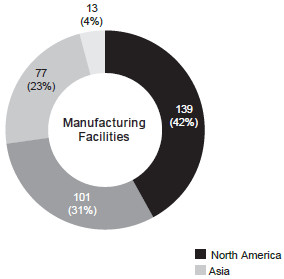
|
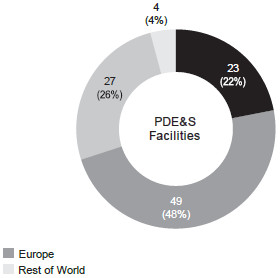
|
Our manufacturing and PDE&S facilities occupied approximately 81.6 million and 4.2 million square feet, respectively. These facilities were broken down between third party leases, and those owned by us as set out below. At this time, the largest percentage of properties leased (by square footage) from any single landlord is approximately 14%.
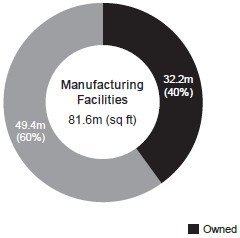
|
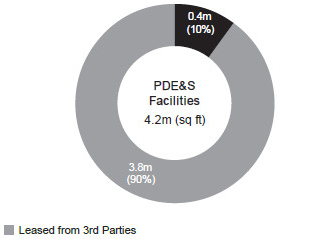
|
28 | 2026 Annual Information Form
Our facility leases typically have terms of at least five years with one or more options to renew. Among other terms, our leases typically require us to return the facilities to the condition in which we received them at start of the lease (reasonable wear and tear excepted). From time to time, the cost of doing so may be significant due to such factors as the length of the lease period, the nature of the manufacturing operations, the extent of modifications made to the leased properties over the term of the lease, and other factors.
We are also subject to environmental laws and regulations both as tenant and owner of our properties. Our leases with third party landlords generally provide that we must maintain the leased properties in accordance with all applicable laws, including environmental laws. Magna routinely conducts Phase 1 Environmental Assessments, and if necessary Phase 2 Site Investigations, at manufacturing, assembly, and warehousing locations prior to or at the start of occupancy to identify any actual and potential pre-existing environmental concerns at leased or owned sites. Magna is responsible for addressing certain environmental impacts arising at our properties, including exacerbations of existing impacts as defined by lease terms or regulatory requirements. Our leases with third party landlords generally also contain indemnities in favour of the landlord with respect to environmental matters and those indemnities may survive the termination of the leases.
Key Components and Raw Materials
Our key purchased components include: stampings, electronics, semiconductor chips, molded parts, die casting, forging, coverstock, and wire harnesses. Our key purchased raw materials are steel, resin, and aluminum. While we endeavour to purchase the majority of these components and raw materials from regional suppliers located where we do business, factors such as price, quality, transportation costs, warehousing costs, duties, tariffs, availability of supply, timeliness of delivery, and customer requirements have an impact on the decision to source from certain suppliers. In some cases, we are directed by our OEM customers to source components or commodities from specific suppliers, as is largely the case for leather we purchase for use in the automotive seats we produce. We also purchase some key components and raw materials offshore when shortages occur, or when we choose to source one supplier for a global program. Prices for our raw materials used in our production of parts, like steel, resin, aluminum, natural gas, and electricity continue to be volatile.
Approximately two-thirds of our combined steel and aluminum is acquired through resale programs operated by OEMs and the balance is generally acquired through annual or six-month contracts that fluctuate with market indices. Such resale programs involve the purchase by us of steel or aluminum on fixed pricing and other terms negotiated by our applicable OEM customer with steel and aluminum suppliers. Since pricing is fixed, we are not exposed to steel and aluminum price volatility for purchases under the resale program, thus helping to manage our production costs. Certain of our operations generate steel and aluminum scrap, which we typically sell at prices that fluctuate with published market indices. Most of our resin purchases fluctuate directly with market indices, although we do participate in some customer resale programs on approximately one quarter of our resin purchases. In some cases, our customers direct us to buy certain other raw materials from specified suppliers, at specified prices. Consistent with lean manufacturing principles, we do not typically carry inventories of key raw materials or finished products significantly in excess of those reasonably required to meet production and shipping schedules.
2026 Annual Information Form | 29
Products & Services
Top Programs
Our top fifteen programs/platforms based on 2025 production and vehicle assembly sales were:
| Capabilities | ||||||||||||||||||||||||||
| Body Exteriors & Structures |
Power & Vision | Seating
Systems |
Complete
Vehicles |
|||||||||||||||||||||||
| Customer
|
Vehicle
|

|

|

|

|

|

|

|

|
|
||||||||||||||||
| Mercedes-Benz | Mercedes-Benz G-Class | ● | ● | ● | ● | ● | ● | ● | ● | |||||||||||||||||
| General Motors | Full-Size SUV’s & Pick-up Trucks | ● | ● | ● | ● | ● | ● | ● | ||||||||||||||||||
| General Motors | GMC Acadia, Chevrolet Traverse & Blazer, Buick Enclave | ● | ● | ● | ● | ● | ● | ● | ● | |||||||||||||||||
| Stellantis | Jeep Grand Cherokee | ● | ● | ● | ● | ● | ● | ● | ||||||||||||||||||
| Ford | Ford Transit | ● | ● | ● | ● | ● | ● | ● | ||||||||||||||||||
| BMW | BMW X1 | ● | ● | ● | ● | ● | ● | ● | ||||||||||||||||||
| Stellantis | RAM Pick-up Trucks | ● | ● | ● | ● | ● | ● | |||||||||||||||||||
| BMW | BMW X5 | ● | ● | ● | ● | ● | ● | ● | ● | |||||||||||||||||
| Stellantis | Chrysler Pacifica & Voyager | ● | ● | ● | ● | ● | ● | |||||||||||||||||||
| Ford | Ford F-Series Super Duty | ● | ● | ● | ● | ● | ● | |||||||||||||||||||
| Mercedes-Benz | Mercedes-Benz GLE/GLE Coupe, Mercedes-Benz GLS | ● | ● | ● | ● | ● | ● | ● | ||||||||||||||||||
| Ford | Ford Expedition, Lincoln Navigator | ● | ● | ● | ● | ● | ● | |||||||||||||||||||
| Ford | Ford Escape, Ford Kuga, Lincoln Corsair | ● | ● | ● | ● | ● | ● | |||||||||||||||||||
| Mercedes-Benz | Mercedes-Benz GLC/GLC Coupe | ● | ● | ● | ● | ● | ||||||||||||||||||||
| Stellantis | Jeep Wrangler | ● | ● | ● | ● | ● | ● | |||||||||||||||||||
Note: Capabilities represented may not be on each vehicle or each trim level of each vehicle. Additionally, our capabilities in each product area range from components to full systems, only some of which may be represented on any particular program. Our Roof Systems capabilities are not present on the programs/platforms listed.
Product Portfolio
We continue to evolve our product portfolio consistent with the strategy described under “Our Business & Strategy — Our Corporate Strategy” in this AIF. Magna’s approach to product involves viewing our portfolio through the lens of a long-term owner. Our businesses must operate in meaningful or growing markets with significant profit opportunities, have strong market positioning and profitable growth, or a path toward both, and possess sustainable competitive advantages. This involves managing all our businesses for continuous improvement, while deploying capital investments to areas that are most aligned with our long-term portfolio priorities.
Product Segments
A description of our product and service capabilities, principal geographic markets, processes, top customers, and key competitors by reporting segment follow. Our joint venture facilities are included in the number of manufacturing facilities and PDE&S centres listed below.
30 | 2026 Annual Information Form
|
Body Exteriors & Structures
|
Our Body Exteriors & Structures segment includes our body and chassis systems, and exterior systems operations. This segment’s principal geographic markets based on 2025 sales are North America and Europe.
|
147* |
22* |
20 |
58,575 |
$16.6B | ||||
| Manufacturing Facilities | PDE&S Centres | Countries | Employees | 2025 Sales |
| * | Figure includes certain manufacturing facilities and PDE&S centres shared with other reporting segments. |
Top Segment Programs
| Customer |
Program | |||
| 1. General Motors
|
Full-Size SUVs & Pick-up Trucks
| |||
| 2. Ford
|
Ford F-Series Super Duty
| |||
| 3. General Motors
|
GMC Acadia, Chevrolet Traverse & Blazer, Buick Enclave
| |||
| 4. Ford
|
Ford Bronco Sport
| |||
| 5. Mercedes-Benz
|
Mercedes-Benz GLE/GLE Coupe, GLS
|
Segment Trends and Strategic Focus
Within our Body Exteriors & Structures segment, we aim to support our customers’ efforts to deliver vehicles which consume less fuel and reduce their CO2 footprint, particularly through lower vehicle weight, as well as smarter materials and processes. Beyond lightweight design, we supply components that support all powertrain options (internal combustion, hybrid, plug-in hybrid, and fully electric).
Product Capabilities
| Body and Chassis
|
||||||
| Products | • body systems |
|||||
• chassis systems |
||||||
• battery enclosures |
||||||
• engineering and testing
|
||||||
| Key Processes | Forming technologies: | Finishing technologies: | ||||
• hydroforming |
• e-coating | |||||
• cold stamping, including high-strength |
• high temperature wax coating | |||||
• heat treatment | ||||||
• hot stamping |
• machining | |||||
• roll forming |
• powder coating | |||||
• high-pressure aluminum casting |
• conversion coating for aluminum | |||||
• advanced welding & joining | ||||||
• sealing and adhesive bonding |
||||||
• stretch bending of aluminum extrusions
|
||||||
| Top Customers |
• BMW |
• Mercedes-Benz | ||||
• Ford |
• Stellantis | |||||
• General Motors
|
• Volkswagen | |||||
| Key Competitors | • Benteler International AG |
• Martinrea International Inc. | ||||
• Flex-N-Gate Corporation |
• Metalsa, S.A. de C.V. | |||||
• F-Tech Inc. |
• Minth Group Ltd. | |||||
• Georg Fischer Ltd. |
• Nemak, S.A.B. de C.V. | |||||
• Gestamp Automoción S.L. |
• Autokiniton US Holdings, Inc. | |||||
2026 Annual Information Form | 31
| Exteriors
|
||||||
| Products | • fascia |
|||||
• exterior trim |
||||||
• body panels & liftgates |
||||||
• engineered glass |
||||||
• step assists |
||||||
• greenhouse surrounds
|
||||||
| Key Processes | • molding technologies |
|||||
• large tonnage molding |
||||||
• compression molding |
||||||
• specialty molding |
||||||
• painting |
||||||
• assembly, joining and |
||||||
• co-extruded moldings |
||||||
• glass encapsulation |
||||||
• complimentary metal forming
|
||||||
| Top Customers | • BMW |
|||||
• Ford |
||||||
• General Motors |
||||||
• Honda |
||||||
• Stellantis |
||||||
• Volkswagen
|
||||||
| Key Competitors | • ABC Technologies |
|||||
• Flex-N-Gate Corporation |
||||||
• OP Mobility |
||||||
• Samvardhana Motherson |
||||||
• RESRG Automotive |
||||||
• Minth Group LTD |
||||||
32 | 2026 Annual Information Form
|
Power & Vision
|
Our Power and Vision segment comprises our global operations producing: powertrain systems; electronics systems; mechatronics, mirrors and lighting systems; and roof systems. This segment’s principal geographic markets based on 2025 sales are North America, Europe, and Asia.
|
110* |
60* |
23 |
53,700 |
$15.2B | ||||
| Manufacturing Facilities | PDE&S Centres | Countries | Employees | 2025 Sales |
| * | Figure includes certain manufacturing facilities and PDE&S centres shared with other reporting segments. |
Top Segment Programs
| Customer
|
Program
| |||
| 1. General Motors
|
Full-Size SUVs & Pick-up Trucks
| |||
| 2. BMW
|
BMW X1
| |||
| 3. Chery
|
Chery Tiggo 7 & 8 Series
| |||
| 4. Mercedes-Benz
|
Mercedes-Benz GLC & GLC Coupe
| |||
| 5. Stellantis
|
RAM Pick-up Trucks
|
Segment Trends and Strategic Focus
In our Power and Vision segment, we seek to realize opportunities presented by trends toward electrification, hybridization, and advanced driver assistance systems. We believe that our powertrain business is well-positioned to benefit from the shift toward electrification by leveraging the investments we have made in high-voltage technologies, including highly integrated primary and secondary electric drive systems for battery electric and hybrid electric vehicles, as well as individual components such as electric traction motors and inverters through our joint venture with LG Electronics Inc. While investing in electrified technologies we continue to optimize operations in our market-leading traditional products such as 4WD/AWD systems and transmissions. Our Vision Systems and ADAS business is currently a leading supplier of radar and camera-based driver assistance systems, and we continue to invest in ADAS technologies to expand the assisted driving systems expertise we can offer customers. We continue to leverage our expertise in supplying and integrating the sensor suite to create seamless functionality of features, software, and middleware. Vehicle connectivity is also an area of focus, and we develop advanced systems that enable seamless communication between vehicles, infrastructure, and other devices. These investments include both in-house research and development, as well as venture capital investments in, and strategic relationships with, mobility and technology companies.
2026 Annual Information Form | 33
Product Capabilities
| Powertrain |
||
| Products |
• high-voltage electric drive systems for electric vehicles, and related components and modules (including eMotors*, inverters, onboard chargers*, gearboxes, e-clutches, and mechatronic modules) • traditional powertrain products (including hybrid dual clutch, dual clutch and manual transmissions, and AWD/4WD products such as transfer cases and rear drive modules metal-forming products)
* through our joint venture with LG Electronics Inc. | |
| Key Processes |
• powertrain systems assembly and final testing | |
• flow-forming, | ||
• stamping and spinning | ||
• grob, roller & cam die spline forming | ||
• precision heavy stamping | ||
• profilator processing | ||
• in-die fine cutting | ||
• soft and hard processing of gears and shafts | ||
• CNC machining & broaching | ||
• rotary swaging | ||
• heat treating | ||
• welding, including laser, electron beam (EB), capacitor discharge (CD), inertia, resistance & metal inert gas (MIG)/tungsten inert gas (TIG) | ||
• assembly & final test of eMotors*, inverters, and on-board chargers* | ||
| * through our joint venture with LG Electronics Inc. | ||
| Top Customers |
• BMW | |
• Chery | ||
• Ford | ||
• General Motors | ||
• Mercedes-Benz | ||
• Nissan | ||
• Renault | ||
• Stellantis | ||
• Volkswagen | ||
| Key Competitors |
• Aisin Group | |
• Blue Nexus | ||
• BorgWarner Inc. | ||
• BYD / Fin Dreams | ||
• Dana Inc. | ||
• Dauch Corporation | ||
• EnPower Electronics | ||
• Hitachi Astemo | ||
• Innovance | ||
• JATCO Ltd. | ||
• Linamar Corporation | ||
• Nidec Corporation | ||
• Robert Bosch GmbH | ||
• Schaeffler AG | ||
• Valeo S.A. | ||
• ZF Group | ||
34 | 2026 Annual Information Form
| Electronics |
||
| Products |
• camera modules (mono and stereo cameras) | |
• remote camera heads | ||
• interior sensing cameras | ||
• Interior and exterior radars | ||
• thermal sensing | ||
• domain controllers | ||
| Key Processes |
• printed circuit board assembly | |
• high volume flash programming | ||
• automated image & machine vision camera assembly capability | ||
• in-circuit and functional testing | ||
• complete ADAS engineering services; systems, electrical design, software design, cybersecurity, functional safety, mechanical design and validation | ||
| Top Customers |
• General Motors | |
• Mercedes-Benz | ||
• Stellantis | ||
• Subaru | ||
• Volkswagen | ||
• Geely | ||
• BMW | ||
| Key Competitors |
• Aptiv PLC | |
• Aumovio | ||
• Denso Corporation | ||
• Forvia Group | ||
• Robert Bosch GmbH | ||
• Valeo S.A. | ||
• ZF Group | ||
| Mirrors |
||
| Products |
• interior mirrors | |
• exterior mirrors | ||
• camera monitoring systems | ||
• driver/occupant monitoring systems | ||
• smart actuators | ||
• charge port doors | ||
• door handles | ||
| Key Processes |
• electronics integration | |
• injection molding | ||
• painting | ||
• manual and automated assembly | ||
| Top Customers |
• BMW | |
• Ford | ||
• General Motors | ||
• Mercedes-Benz | ||
• Stellantis | ||
• Volkswagen | ||
| Key Competitors |
• Ficosa International S.A. | |
• Gentex Corporation | ||
• SMR Automotive | ||
• ADAC Automotive | ||
2026 Annual Information Form | 35
| Lighting |
||
| Products |
• forward lighting | |
• rear lighting | ||
• lit grilles/panels | ||
| Key Processes |
• electronics integration | |
• injection molding | ||
• hardcoating/anti-fog treatment | ||
• metallizing | ||
• manual and automated assembly | ||
| Top Customers |
• General Motors | |
• Stellantis | ||
• Volkswagen | ||
• BMW | ||
• Geely | ||
| Key Competitors |
• Hella KGaA Hueck & Co. (now part of Forvia Group) | |
• Koito Manufacturing Co. | ||
• Marelli Automotive Lighting | ||
• Valeo S.A. | ||
• Changzhou Xingyu Automotive Lighting System Co, Ltd. | ||
| Mechatronics |
||
| Products |
• latching systems | |
• door modules | ||
• power systems | ||
• hinges | ||
| Key Processes |
• electronics integration | |
• light stamping | ||
• injection molding | ||
• manual and automated assembly | ||
| Top Customers |
• Ford | |
• General Motors | ||
• Stellantis | ||
• Mercedes-Benz | ||
• BMW | ||
| Key Competitors |
• Aisin Corporation | |
• Brose Fahrzeugteile GmbH & Co. KG | ||
• Inteva Products, LLC | ||
• Kiekert AG | ||
| Roof Systems |
||
| Products |
• modular roofs | |
• hard tops and soft tops | ||
• textile folding roofs | ||
| Key Processes |
• “cut and sew” of complete fabric covers | |
• backlight encapsulation | ||
• manual and automated complete roof assembly | ||
| Top Customers |
• BMW | |
• Mercedes-Benz | ||
• Stellantis | ||
• Toyota | ||
• Volkswagen | ||
• Ford | ||
| Key Competitors |
• Valmet Automotive Inc. | |
• Webasto Group | ||
36 | 2026 Annual Information Form
|
Seating Systems
|
Our Seating Systems segment comprises our global seating systems operations. This segment’s principal geographic markets based on 2025 sales are North America and Europe.
|
64* |
9* |
16 |
29,650 |
$5.9B | ||||
| Manufacturing Facilities | PDE&S Centres | Countries | Employees | 2025 Sales |
* Figure includes certain manufacturing facilities and PDE&S centres shared with other reporting segments.
Top Segment Programs
| Customer | Program | |||
| 1. Stellantis | Jeep Grand Cherokee | |||
| 2. Stellantis | Chrysler Pacifica & Voyager | |||
| 3. BMW | BMW X5 | |||
| 4. Ford | Ford Expedition & Lincoln Navigator | |||
| 5. Ford | Ford Escape | |||
Segment Trends and Strategic Focus
We believe our Seating Systems group continues to retain and win new business due to our expertise in seat complete integration, based on disciplined design standards and a focus on innovative seating solutions. Capitalizing on our Seating Systems group strength in seat mechanisms and vertical integration, we are developing and supplying reconfigurable seating solutions that help consumers to use their vehicle cabin more efficiently. With an enhanced focus on sustainability, we are growing our portfolio of disruptive seating solutions, using the circular economy as our framework.
Product Capabilities
| Seating Systems |
||
| Products |
• complete seating systems | |
• seat structures, mechanism & hardware solutions | ||
• foam & trim products, including sustainable seating solutions | ||
| Key Processes |
• traditional “cut and sew” technology | |
• manual and automated assembly | ||
| Top Customers |
• BMW | |
• Chang’an | ||
• BYD | ||
• Ford | ||
• Geely | ||
• General Motors | ||
• Stellantis | ||
• Volkswagen | ||
| Key Competitors |
• Adient plc | |
• Forvia Group | ||
• Lear Corporation | ||
2026 Annual Information Form | 37
|
Complete Vehicles
|
Our Complete Vehicles segment comprises our global complete vehicle engineering and manufacturing operations. This segment’s principal geographic market based on 2025 sales is Europe.
|
12* |
28* |
10 |
11,400 |
$4.8B | ||||
| Manufacturing Facilities | PDE&S Centres | Countries | Employees | 2025 Sales |
* Figure includes certain manufacturing facilities and PDE&S centres shared with other reporting segments.
Top Segment Programs
| Customer | Program | |||
| 1. Mercedes-Benz | Mercedes-Benz G-Class | |||
| 2. BMW | BMW Z4 Coupe | |||
| 3. Toyota | Toyota Supra | |||
| 4. XPENG | XPENG G6 & G9 | |||
| 5. GAC | AION V
| |||
Segment Trends and Strategic Focus
Our Complete Vehicles business continues to provide OEM-level expertise to traditional customers, new market entrants, and mobility players seeking a trusted outsource partner. Traditional OEMs currently represent a material part of our Complete Vehicles group business customers. However, our sales with non-traditional customers, including COEMs, continues to grow. Mobility players, other than OEMs, also represent a source of new opportunities since they typically do not have the vehicle development, engineering, integration, and assembly capabilities of traditional OEMs, and thus require outsource partners to commercialize their concepts. In this segment, we also focus on leveraging our expertise in complete vehicle solutions. In addition, we continue to focus on integration and testing of ADAS, including autonomous driving systems, and we support our customers with a versatile test environment for highly automated vehicles.
Product Capabilities
| Vehicle Engineering & Manufacturing | ||
| Products |
• complete vehicle manufacturing | |
• engineering services | ||
| Key Processes |
• body-in-white | |
• paint | ||
• assembly | ||
| Top Customers |
• Mercedes-Benz | |
• BMW | ||
• Toyota | ||
• Tata | ||
| Key Competitors |
• traditional and new OEMs | |
• contract manufacturers | ||
• Valmet Automotive | ||
• engineering services | ||
• Bertrandt Group | ||
• EDAG Engineering GmbH | ||
• IAV GmbH | ||
38 | 2026 Annual Information Form
Tooling & Engineering
As part of our production programs, we design, engineer, and manufacture tooling for our own use, as well as for sale to our customers. Tooling used in our production programs is often purchased by us from third parties and sold to our customers on a pass-through basis. In addition, we manufacture tooling for our customers on a standalone basis, which is tooling sold separately and not part of a production arrangement.
We also provide engineering services both independent of our production programs, as well as for programs for which we have production sales.
Acquisitions & Divestitures
For further details of our acquisitions and divestitures in the last three fiscal years, refer to “Schedule B — Acquisitions and Divestitures” of this AIF.
2026 Annual Information Form | 39
Innovation and Research & Development
Focus on Innovation and Technology
We continue to invest significant resources to develop and commercialize innovative technologies, which help us maintain our competitive advantage in the industry and provide differentiated value to our customers. We expect that our involvement with automobile manufacturers and manufacturing technology partners in the development of innovative product and process technologies will increase as such manufacturers and partners further involve suppliers like us in the overall vehicle concept, development, and manufacturing process.
Our Research and Development Process
Our research and development (“R&D”) activities take place at our Division/Operating Group level and at the corporate level. Our Divisional/Operating Groups work with our customers to identify product and technology gaps. Magna’s Corporate R&D team, under the global direction of our Senior Vice President, Corporate R&D, analyzes the key megatrends that are expected to drive future mobility and automotive development. As part of these efforts, our Corporate R&D team engages with the advanced engineering and product development teams of our current and potential OEM customers to understand their product strategies and better align our own product strategy and technology development with customer needs.
All of our R&D projects follow an Innovation Development Process (IDP) — a multi-stage process aimed at turning ideas into innovations that can ultimately be commercialized and scaled. The initial phase of the process is designed to foster the generation of ideas and includes, among other things: identification of key customer (internal or external) needs; identification of potential technologies and industrial or academic partners; understanding of and analysis of societal, digital, demographic, regulatory, industry, and other trends which may create demand for and thus drive development of new automotive and mobility technologies; review of academic research; collecting and screening ideas submitted through innovation programs; review of emerging technologies in non-automotive industries; and automotive customer input.
Concepts that progress past this initial stage are further evaluated, including with respect to fit with our strategy. Selected innovations then progress through subsequent stages towards product or process realization, validation, and eventually, product launch.
Our R&D initiatives are supported by, and involve close collaboration with, our Corporate R&D group. Our Division/Operating Group R&D teams work together with our Corporate R&D group on technology development, and where necessary, specific working groups are established to discuss and develop technological solutions.
As a result of our innovation activities, we have developed a number of product, process and materials innovations, some of which are described later in this Section under “Innovations and Innovation Awards”.
As a key part of our own innovation efforts and to gain further access to innovative thinking outside of our company, we also partner with start-ups and early stage companies, inventors, entrepreneurs, universities, technical institutions, and the venture capital community to help bring innovative ideas to market. We also look for innovative ideas from other industries and apply them to mobility—a process we call “auto-qualifying”. As part of our continuing efforts to develop innovative solutions to the technology challenges of new mobility and the automotive industry, we are continuously evaluating potential innovations, many of which have led to active projects. Such projects include: novel sensor and software technologies supporting ADAS features; efficiency and performance technologies related to electric drives and power electronics; and artificial intelligence solutions enabling generative engineering tools, advanced robotics, inspection systems, digital twin/simulation, and data analytics technologies supporting our strategic focus on operational excellence.
40 | 2026 Annual Information Form
Intellectual Property
We own and use numerous patents, trademarks, and other intellectual property in connection with our operations. In addition, certain of our Operating Groups license their technology to third parties on a limited basis. We also license and use patents owned by others. From time to time, claims of intellectual property infringement are made by us or against us. At present, we believe that the outcome of any pending claim, whether positive or negative, will not have a material adverse effect on us. While in the aggregate our intellectual property and licenses are considered important in the operation of our business, we do not consider them of such importance that the expiry of any one patent or license would materially affect our business. See “Risk Factors — Intellectual Property” in this AIF for a discussion of risks related to our intellectual property.
Innovations & Industry Recognition
We believe that innovation has been the foundation of Magna’s success and an important factor in our competitiveness. Some examples of recent innovations are as follows:
Innovations
|
|
AI-ENABLED ADVANCEMENTS IN ADAS AND AUTONOMOUS DRIVING
Magna is collaborating with NVIDIA to integrate the next-generation NVIDIA DRIVE AGX Thor system-on-a-chip into future advanced driver assistance and autonomous driving solutions. The platform consolidates significant computing capability to support L2+ through L4 systems, interior sensing, and cabin-AI applications. By leveraging accelerated compute performance, the collaboration is intended to advance the development of scalable, software-defined vehicle architectures. Magna’s experience in launching adaptive cruise control, driver monitoring, automated highway navigation and other ADAS features complements this next-generation platform. A demonstration vehicle is expected in 2026, supporting development, integration, and validation workflows for future active safety and autonomy programs. | |
|
|
NEXT GENERATION 800V ELECTRIC DRIVE
Magna’s next generation 800v e-Drive solution (“e-Drive”) is a drop-in solution that incorporates several advanced technologies, resulting in significant reductions in weight and size, enhanced performance, extended driving range and greater sustainability. The innovation offers enhanced flexibility due to its lightweight (75 kg) design and 20% reduction in height from Magna’s prior generation e-Drive. A key technology and a supplier industry-first advancement is the ability to rotate the e-Drive 90 degrees around the drive axis, which allows improved system integration in the front and rear vehicle space. Delivering peak power of 250 kW and a peak axle torque of 5,000 Nm, the system also achieves up to 93% efficiency in real-world driving (including Worldwide harmonized Light vehicles Test Cycles (WLTC) and highway driving), which significantly improves efficiency across a wide range of vehicle speeds. The e-Drive system requires less aluminum and heavy rare earth materials, resulting in a significant reduction of CO2 emissions during production by approximately 20% compared to previous generation e-Drives. | |
|
|
DRIVER AND OCCUPANT MONITORING SYSTEM GLOBAL DEPLOYMENT
Magna is entering its first full year of scaled global production of its mirror-integrated Driver Monitoring System (DMS), initially launched with a German-based OEM in China. The system uses advanced camera and sensor technologies to assess driver attention and behavior in real time, supporting compliance with emerging global safety regulations. Its compact architecture enables discreet packaging within the interior mirror, reducing system complexity while offering OEMs styling flexibility. With anticipated annual production volumes reaching several million units, this program represents one of Magna’s largest sensing-technology deployments. The system’s scalable design also incorporates occupant detection capabilities, supporting future interior sensing and regulatory requirements associated with next-generation safety technologies. |
2026 Annual Information Form | 41
|
|
DEDICATED HYBRID DRIVE SYSTEM
Magna continues to accelerate hybrid innovation with its first dedicated hybrid drive system award, designed to meet the evolving needs of global automakers. This innovative system combines electric motor technology with internal combustion engine efficiency, delivering a seamless transition between electric and hybrid modes The system, which includes Magna’s DHD Duo System (a longitudinal front drive solution featuring an advanced dual e-motor and multi-speed design), offers enhanced performance, improved fuel efficiency, and reduced emissions, making it an adaptable solution for multiple vehicle platforms without the need for structural modifications. By leveraging advanced engineering and design, the dedicated drive system underscores Magna’s commitment to providing scalable, flexible powertrain solutions for the hybrid market.
| |

|
SUSTAINABLE DOOR CARRIER
Magna’s Sustainable Door Carrier demonstrates how material and process innovation can work together to significantly reduce the environmental impact of a high-volume vehicle component without compromising performance, quality, or manufacturability. While traditional door carriers use glass-fiber-reinforced polypropylene (GFPP), a material that delivers strong mechanical performance but carries a high environmental footprint. Magna’s alternative replaces conventional GFPP with a combination of natural and plant-based fibers, including flax, hemp, basalt, and bamboo, reinforced with a plant-based polyurethane spray. This approach enables a lighter, lower-emissions structure while maintaining structural integrity and durability. Early development results show the potential for up to 65% lower CO2 emissions and a 40% weight reduction compared to conventional GFPP door carriers. In parallel, Magna’s embedded mesh inlay design has delivered up to 400% improvement in impact resistance, demonstrating that sustainability gains can be achieved alongside enhanced performance. The sustainability benefits extend beyond materials. Magna’s low-tonnage, single-stage molding process replaces traditional high-tonnage injection molding, reducing energy consumption by up to 50% and enabling simpler, more cost-efficient tooling.
| |
|
|
ADVANCING OCCUPANT MONITORING SAFETY THROUGH INTERIOR SENSING
Magna continues to advance vehicle safety through its integrated interior sensing systems, which monitor occupants and driver behavior in real time to support safer, more responsive mobility. Combining interior cameras and radar, the system detects driver attentiveness, seat occupancy, seatbelt use, vital signs and environmental conditions, helping prevent accidents while maintaining a positive driving experience. A key feature is Child Presence Detection (CPD), designed to identify unattended children and reduce heat-related risks for vulnerable passengers. Over the past 18 months, the technology has been awarded or entered production on five OEM programs across North America, Europe and Asia, reflecting increasing industry adoption as safety regulations and rating requirements evolve. By delivering scalable, regulatory-ready solutions, Magna is helping set new benchmarks for occupant protection and intelligent vehicle safety. | |
Industry Recognition
A number of Magna product and process innovations have received recent accolades and awards, including:

|
• 2025 Automotive News PACEpilot Award winner for our AI-Based Thermal Sensing Technology, which uses infrared imaging and convolutional neural networks to enhance object detection in low-visibility environments. The system improves detection range, accuracy, and classification performance, supporting next-generation safety features and seamless integration within centralized or distributed vehicle architectures.
| |
• Recognized as 2025 Automotive News PACEpilot finalists for two pre-commercial innovations: | ||

|
– OptiForm™ One-Piece Battery Enclosure, the industry’s first deep-drawn, single-component enclosure that enhances leak-tightness, increases usable battery space, and reduces manufacturing complexity by eliminating welds and fasteners; and
| |
| – SmartAccess™ B-Pillarless Power Door System, which integrates the B-pillar into the door structure to enable wider openings, improved ingress and egress, and greater design flexibility for future mobility applications. | ||

|
• Awarded in 2025, 2024 General Motors Supplier of the Year and Overdrive Award recipient, recognizing Magna’s performance in quality, innovation, and operational excellence across multiple disciplines. The Overdrive Award highlights suppliers that exceeded expectations in delivering solutions that supported GM’s objectives in 2024. | |
|
• 2025 Volkswagen Group Product Award recipient for Magna Heavy Stamping’s contribution to the MEB battery system. Magna developed an innovative production approach, including prototyping tools that enabled the integration of thermal-propagation fleece material to enhance battery safety and system reliability. The solution supported a highly automated production line capable of delivering up to 10,000 parts per week, demonstrating the team’s engineering ingenuity, flexibility, and collaborative execution. | |
42 | 2026 Annual Information Form
Capital Structure,
Financings
& Credit Ratings
Capital Structure Approach
We aim to maintain the company’s financial flexibility in order to remain in a position to advance our strategy through industry cycles and withstand a downturn, including by:
| • | Maintaining a strong balance sheet: Maintaining a strong balance sheet is critical to preserving financial flexibility and solid investment-grade credit ratings. |
| • | Investing and managing for profitable growth: We are focused on accretive investments to support long-term Free Cash Flow generation. This consists of organic (investments in our business) and inorganic (M&A) opportunities that provide advantageous product capabilities, customer diversification, and/or geographic footprint in areas where we require additional capacity. We are willing to exit businesses that are not aligned with our product portfolio strategy and have done so in recent years. Overall, we aim to maintain a sustainable competitive advantage through innovation, cutting edge technology, and manufacturing, and we use our investments to support the achievement of this objective. |
| • | Returning capital to shareholders: We believe in providing a competitive dividend to shareholders. Dividends are supplemented by additional returns of capital through share repurchases, which we fund with excess liquidity. |
In light of the above strategy, we have made significant levels of investment in our business in recent years and have also returned significant amounts of capital to our shareholders in the form of dividends and share repurchases. We had a Credit Rating Adjusted Debt(1) ratio of 1.59 times Adjusted EBITDA(1) at the end of 2025. We expect to be within our target range of 1.0 – 1.5 times for Credit Rating Adjusted Debt to Adjusted EBITDA in 2026.
Note:
| 1 | Credit Rating Adjusted Debt is calculated by taking our long- and short-term debt and operating lease liabilities and adding pension obligations and certain other Moody’s Investor Services’ adjustments. Adjusted EBITDA is calculated by taking our Adjusted Earnings before Interest and Taxes and adding back Depreciation, operating lease expense, and interest income, and adding adjustments relating to the cash portion of Other Expense, net and pension obligation expenses. In each case, such adjustments reflect a methodology for calculating such ratios used by Moody’s Investor Services. |
Authorized Share Capital
Our authorized share capital consists of an unlimited number of Common Shares and 99,760,000 Preference Shares, issuable in series, all with no par value. As of March 16, 2026, the Record Date for our Meeting, a total of 276,429,106 Common Shares were issued and outstanding. No Preference Shares have been issued or are outstanding.
The following is a brief description of the significant attributes of our authorized share capital and is qualified in its entirety by reference to the detailed provisions in our charter documents, that set out the attributes of our Common Shares and our Preference Shares.
2026 Annual Information Form | 43
Common Shares
The holders of our Common Shares are entitled to:
| • | one vote for each Common Share held at all meetings of our shareholders, other than meetings of the holders of another class or series of shares; |
| • | receive any dividends that may be declared by our Board, subject to the preferential rights attaching to any shares ranking in priority to our Common Shares; and |
| • | receive, after the payment of our liabilities and subject to the rights of the holders of any shares ranking in priority to our Common Shares, all our property and assets available for distribution in the event of our liquidation, dissolution or winding-up, whether voluntary or involuntary, or any other distribution of assets among our shareholders for the purpose of winding-up our affairs. |
For further details of the market for our securities, refer to “Schedule C — Market for Securities” of this AIF.
Preference Shares
Our Board may, without the approval of any of our shareholders, fix the number of shares in, and determine the attributes of, an individual series of Preference Shares and issue shares of such series from time to time. The shares of each such series will be entitled to a preference over our Common Shares, but will rank equally with the Preference Shares of every other series with respect to the payment of dividends and in the distribution of all our property and assets available for distribution in the event of our liquidation, dissolution, or winding-up, whether voluntary or involuntary, or any other distribution of assets among our shareholders for the purpose of winding-up our affairs. No Preference Shares have been issued or are outstanding and we do not currently anticipate issuing any such shares. In the event we do issue Preference Shares in the future, we would expect to issue them solely for legitimate financing purposes and not to block a change of control transaction.
Amendments to Share Provisions and Other Matters
The provisions attaching to our Preference Shares, to a series of our Preference Shares, and to our Common Shares may not be deleted or varied without the approval of the holders of the class or series concerned. In addition, no shares of a class ranking prior to or on a parity with our Preference Shares, or our Common Shares, may be created without the approval of the holders of the class or each series of the class concerned. Any approval required to be given must be given by two-thirds of the votes cast by those present or voting at a meeting of the holders of the class or series concerned duly called for that purpose, in addition to any other consent or approval required by law.
Dividends
The following table sets forth the cash dividends paid and payable on our Common Shares in respect of each quarter for the last three years.
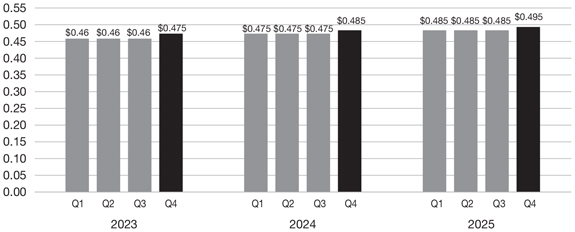
44 | 2026 Annual Information Form
We intend to continue paying a quarterly dividend from our cash flow from operations, with the aim of regularly increasing the dividend consistent with our practice since 2010. Magna’s quarterly dividend has increased for sixteen consecutive years. The declaration and payment of dividends, including the dividend rate, is reviewed quarterly by our Board and is subject to the Board’s discretion taking into account our earnings, cash flow, financial condition, and other factors they consider relevant. See “Risk Factors” in this AIF.
Dividend Reinvestment Plan
Since 1994, we have maintained a dividend reinvestment plan in which registered shareholders have the option to purchase additional Common Shares by investing the cash dividends paid on their shares.
Financings and Securities/Corporate Transactions
Senior Unsecured Notes
We currently have the following senior unsecured notes outstanding:
| Issuance Date | Amount Outstanding |
Interest Rate | Maturity Date | |||
| September 25, 2017 | €600,000,000 | 1.500% | September 25, 2027 | |||
| June 15, 2020 | $750,000,000 | 2.450% | June 15, 2030 | |||
| March 10, 2023 | C$350,000,000 | 4.950% | January 31, 2031 | |||
| March 17, 2023 | €550,000,000 | 4.375% | March 17, 2032 | |||
| March 21, 2023 | $500,000,000 | 5.500% | March 21, 2033 | |||
| March 14, 2024 | $400,000,000 | 5.050% | March 14, 2029 | |||
| May 30, 2024 | C$450,000,000 | 4.800% | May 30, 2029 | |||
| May 21, 2025 | €575,000,000 | 3.625% | May 21, 2031 | |||
| May 22, 2025 | $400,000,000 | 5.875% | June 1, 2035 | |||
The prospectus supplements (or in the case of the 4.950% and 4.800% Canadian dollar-denominated notes, the offering memorandums) which describe each of the notes above have been filed and are available on SEDAR+ (www.sedarplus.ca).
On May 23, 2025, we redeemed our U.S. dollar-denominated 5.980% senior unsecured note originally issued in March 2023. On September 24, 2025, we redeemed our U.S. dollar-denominated 4.150% senior unsecured note originally issued in September 2015.
Credit Facilities
We maintain a $2.7 billion syndicated revolving credit facility (the “Global Credit Facility”), which we amended in March 2025 to extend the maturity date from June 25, 2029, to June 25, 2030. The Global Credit Facility includes a $150 million Mexican tranche and a tranche for Canada, U.S., and Europe, which is fully transferable between jurisdictions and can be drawn in U.S. dollars, Canadian dollars, or euros. As at December 31, 2025, no amounts were outstanding under the Global Credit Facility.
We also maintain an $800 million, 364-day syndicated revolving credit facility that expires on June 24, 2026, and can be drawn in U.S. dollars or Canadian dollars. As at December 31, 2025, no amounts were outstanding under the 364-day facility.
During 2025, we also maintained a syndicated term loan credit facility (the “Term Loan”) with a 3-year tranche of US$100 million, a 5-year tranche of US$300 million, and 3-year delayed-draw tranche of US$650 million (which was reduced to US$350 million in July 2025). As at December 31, 2025, we fully repaid any amounts outstanding under the Term Loan. The Term Loan expired on January 12, 2026.
2026 Annual Information Form | 45
Commercial Paper Programs
We maintain a euro-commercial paper program (the “ECP Program”) and a U.S. commercial paper program (the “USCP Program”), each backstopped by our Global Credit Facility. Under the ECP Program, one of our indirect wholly owned subsidiaries may, from time to time, issue euro-commercial paper notes, subject to an aggregate maximum of €1 billion or its equivalent in alternative currencies (increased from €500 million in September 2024). Under the USCP Program, we may, from time to time, issue commercial paper notes, subject to an aggregate maximum of $2 billion or its equivalent in alternative currencies (increased from $1 billion in March 2023). As at December 31, 2025, we had no outstanding issues under the ECP Program and the USCP Program.
Normal Course Issuer Bid / Share Repurchase Program
On November 5, 2025, the TSX accepted our Notice of Intention to establish a new Normal Course Issuer Bid relating to the purchase of up to 25,300,000 Magna Common Shares (the “2026 NCIB”), representing approximately 10% of our “public float” of Common Shares. The primary purposes of the 2026 NCIB are purchases for cancellation and purchases to fund our stock-based compensation awards or programs. The 2026 NCIB commenced on November 7, 2025 and will terminate no later than November 6, 2026.
Purchases of Common Shares under the 2026 NCIB as of the date of this AIF have been made by our designated broker on the TSX, in accordance with the rules and policies of the TSX; on the NYSE, in compliance with Rule 10b-18 under the U.S. Securities Exchange Act of 1934; and on other published markets, as permitted under the 2026 NCIB. Purchases under the 2026 NCIB have been made at the prevailing market price at the time of purchase.
As at March 16, 2026, we have purchased the following Common Shares pursuant to the 2026 NCIB, and pursuant to our prior NCIB, which commenced on November 7, 2024 and terminated on November 6, 2025 (the “2025 NCIB”), for the purposes described below:
| 2026 NCIB | 2025 NCIB | |||
| Shares purchased for cancellation |
6,750,837 | 6,408,537 | ||
| Shares purchased and retained for stock-based compensation awards or programs and/or deferred profit sharing plans | 220,460 | 135,270 | ||
| Total |
6,971,297 | 6,543,807 | ||
Ratings
As of the date of this AIF, we have been assigned the ratings(1) in the table below:
| Credit Rating Agency |
Issuer Rating |
Senior Debt Rating |
Short-Term Debt Rating |
Outlook/ Trend | ||||
| Dominion Bond Rating Service (DBRS)(2) | A (low) | A (low) | R-1 (low) | Stable | ||||
| Moody’s Investor Services (Moody’s)(3) | A3 | A3 | P-2 | Negative | ||||
| Standard & Poor’s (S&P)(4) | A– | A– | A-2 | Negative | ||||
Notes:
| 1 | Credit ratings are intended to provide investors with an independent measure of the credit quality of debt and securities. The credit ratings assigned to us or our senior debt by the rating agencies are not recommendations to purchase, hold or sell our debt or securities, since such ratings do not address market price or suitability for a particular investor. There is no assurance that any rating will remain in effect for any given period of time or that any rating will not be revised or withdrawn entirely by a rating agency in the future, if in its judgment, circumstances warrant. See “Risk Factors — Credit Ratings Changes” in this AIF. We have made payments in the ordinary course to the rating agencies listed above in connection with the assignment of ratings on our securities. In addition, we made payments to Moody’s and S&P in connection with the confirmation of our ratings in respect of the issuance of our Senior Notes and continued issuances under our ECP Program and USCP Program. |
46 | 2026 Annual Information Form
| 2 | DBRS’s issuer and senior debt ratings are based on its long-term rating scale that ranges from “AAA” to “D” which represents the range from an issuer with the highest credit quality to one that has filed under bankruptcy, insolvency or winding up legislation or failed to satisfy an obligation after exhausting grace periods. A rating in the “A” rating category is in the third highest category of the relevant scale of eight major categories and is considered by DBRS to be of good credit quality, with substantial capacity for payment of financial obligations. “High” and “low” grades are used to indicate the relative standing of credit within a particular rating category. The absence of one of these designations indicates a rating which is in the middle of the category, excluding the AAA and D categories for which the “high”, “middle” or “low” designations are not used. The DBRS rating trends provide guidance in respect of DBRS’ opinion regarding the outlook for the rating in question, with rating trends falling into one of three categories — “Positive”, “Stable” or “Negative”. The rating trend indicates the direction in which DBRS considers the rating is headed should present tendencies continue, or in some cases, unless challenges are addressed. A “Positive” or “Negative” does not necessarily indicate a rating change is imminent, but rather the trend represents an indication that there is a greater likelihood that the rating could change in the future versus if a “Stable” trend was assigned. DBRS’s short-term debt rating is based on its commercial paper and short-term debt rating scale that ranges from “R-1 (high)” to “D” which represents the range from an issuer with the highest credit quality to one that has filed under bankruptcy, insolvency or winding up legislation or failed to satisfy an obligation after exhausting grace periods. A rating in the “R-1 (low)” category represents the third highest category of the relevant scale of ten major categories and is considered by DBRS to be of good credit quality, with substantial capacity for payment of financial obligations. |
| 3 | Moody’s senior unsecured issuer rating is an opinion as to our future relative creditworthiness. The credit rating is based on a rating scale that, for global automotive suppliers, ranges from “Aaa” to “C”, which represents the range from those obligations with minimal credit risk to those obligations that are in default with little prospect of recovery. Issuers in the “A” rating category are in the third highest category of the relevant scale of nine major categories and are considered by Moody’s to be subject to low credit risk. The determination of the overall rating assigned to a global automotive supplier is based on an assessment of an issuer’s performance in five broad weighted categories, some of which are further broken down into a number of weighted sub-factors each of which maps to a specific letter rating in the range above. The indicated rating category for each sub-factor (i.e., Aaa, Aa, etc.) is then converted into a numeric value, which is then multiplied by the weight for that sub-factor with the results then totaled to produce a composite weighted-factor score, that is itself then mapped back to an alphanumeric rating based on the ratings range from Aaa to C. Moody’s appends the numerical modifiers 1, 2, or 3 to each generic rating classification from Aa through Caa. The modifiers 1, 2 and 3 indicate that the obligation ranks in the higher end, mid-range, or lower end of its generic rating category, respectively. The Moody’s rating outlook is an opinion regarding the likely direction of an issuer’s rating over the medium term, and fall into one of four categories: Positive, Negative, Stable or Developing. |
| 4 | S&P’s issuer credit rating is a current opinion of our overall financial capacity (i.e. credit worthiness) to pay our financial obligations in full and on time. This credit rating is based on a rating scale that ranges from “AAA” to “D”, which represents the range from extremely strong capacity to meet financial obligations to a failure to pay one or more financial obligations when it came due. An issuer with a long-term issuer rating in the “A” rating category is in the third highest category of the relevant scale of ten major categories and is considered by S&P to have a strong capacity to meet its financial commitments but is somewhat more susceptible to the adverse effects of changes in circumstances and economic conditions than issuers in higher-rated categories. The ratings from “AA” to “CCC” may be modified by the addition of a plus (+) or minus (–) sign to show relative standing within the major rating categories. The lack of one of these designations indicates a rating that is in the middle of the category. The S&P rating outlook assesses the potential direction of a credit rating over the intermediate term (typically six months to two years) but is not necessarily a precursor to a rating change. |
2026 Annual Information Form | 47
Directors
& Executive Officers
Directors
Our Board currently consists of the following members:
| Name & Municipality of Residence | Director Since | Principal Occupation | ||
| Mary S. Chan(1) Arizona, U.S.A. |
August 10, 2017 | Managing Partner, VectoIQ LLP and Corporate Director | ||
| Hon. V. Peter Harder Ontario, Canada |
January 10, 2020 | Senator and Corporate Director | ||
| Jan R. Hauser(2) Massachusetts, U.S.A. |
August 1, 2022 | Corporate Director | ||
| Seetarama (Swamy) Kotagiri Michigan, U.S.A. |
January 1, 2021 | President & Chief Executive Officer of Magna | ||
| Jay K. Kunkel Tokyo, Japan |
May 11, 2023 | Corporate Director | ||
| Robert F. MacLellan(3) Ontario, Canada |
May 10, 2018 | Chairman, Northleaf Capital Partners, and Corporate Director | ||
| Mary Lou Maher Ontario, Canada |
May 6, 2021 | Corporate Director | ||
| William A. Ruh Montana, U.S.A. |
May 11, 2017 | Chief Executive Officer, Lifestyle Solutions Real Estate and Corporate Director | ||
| Dr. Indira V. Samarasekera British Columbia, Canada |
May 8, 2014 | Corporate Director | ||
| Peter Sklar Ontario, Canada |
February 14, 2025 | Corporate Director | ||
| Matthew Tsien Washington, U.S.A. |
May 11, 2023 | Corporate Director | ||
| Dr. Thomas Weber Baden-Württemberg, Germany |
January 1, 2022 | President, acatech and Corporate Director | ||
| Lisa S. Westlake Florida, U.S.A. |
May 9, 2019 | Corporate Director |
Notes:
| 1 | Ms. Chan was Chief Operating Officer of Nikola Corporation (“Nikola”) when it filed a voluntary petition for bankruptcy protection under Chapter 11 of the U.S. Bankruptcy Code on February 19, 2025. Ms. Chan completed her position as Chief Operating Officer in April 2025. |
| 2 | Ms. Hauser was a director of Proterra Inc. (“Proterra”) when it filed a voluntary petition for bankruptcy protection under Chapter 11 of the U.S. Bankruptcy Code on August 7, 2023. Ms. Hauser’s term as a director of Proterra ended effective March 13, 2024, when it emerged from bankruptcy protection. |
| 3 | Chairman of the Board. |
All of our directors were elected to their present terms of office by our shareholders at our Annual and Special Meeting of Shareholders held on May 8, 2025. The term of office for each director expires at the conclusion of the next annual meeting of our shareholders. Each of our current directors, except Dr. Indira V. Samarasekera (who is retiring from the Board on May 4, 2026), is being nominated for election at the Meeting.
All of the directors have held the principal occupations identified above (or another position with the same employer) for not less than five years, except as follows:
| • | Ms. Chan was the Chief Operating Officer of Nikola Corporation from October 2023 to April 2025; |
| • | Mr. Ruh was Chief Executive Officer, Digital of Lendlease Group from January 2019 to December 2023; and |
| • | Mr. Sklar was an Equity Research Analyst for BMO Capital Markets from January 1993 to May 2023. |
With the exception of Mr. Kotagiri, our Chief Executive Officer, all other directors have been determined by our Board to be “independent directors” within the meaning of such term under applicable law.
48 | 2026 Annual Information Form
Board Committees
Our Board has four standing committees: Audit Committee; Governance, Nominating and Sustainability Committee (“GNSC”); Talent Oversight and Compensation Committee (“TOCC”); and Technology Committee.
A copy of our Board Charter, Audit Committee Charter, as well as the charters of our other Board Committees are available on our website (www.magna.com), have been filed on SEDAR+ (www.sedarplus.ca), and EDGAR (www.sec.gov/edgar) and are incorporated by reference into this AIF. Additional information about our Audit Committee is contained under “Corporate Governance — Report of the Audit Committee” in our Circular for our Meeting, which is incorporated by reference into this AIF.
Membership of these Committees as of the date of this AIF are as follows:
| Name | Audit Committee |
Governance, Nominating & Sustainability Committee |
Talent Oversight & Compensation Committee |
Technology Committee | ||||
| Mary S. Chan | ∎ | ∎ | ||||||
|
Hon. V. Peter Harder |

|
∎ | ∎ | |||||
| Jan R. Hauser | ∎ | ∎ | ||||||
| Jay K. Kunkel | ∎ | ∎ | ||||||
| Robert F. MacLellan(1) | ∎ | |||||||
|
Mary Lou Maher |

|
∎ | ||||||
|
William A. Ruh |
∎ |
| ||||||
|
Dr. Indira V. Samarasekera |
|
∎ | ||||||
| Peter Sklar | ∎ | ∎ | ||||||
| Matthew Tsien | ∎ | ∎ | ||||||
| Dr. Thomas Weber | ∎ | ∎ | ||||||
| Lisa S. Westlake | ∎ | ∎ | ||||||
∎ Committee Member
Committee Chair
Notes:
| 1 | Chairman of the Board |
Additional details regarding our Committee structure can be found in the “Corporate Governance” section of our Circular.
2026 Annual Information Form | 49
Executive Officers
Our executive officers currently consist of the following persons:
|
Name & Municipality of Residence |
Principal Occupation | |
| Seetarama (Swamy) Kotagiri Michigan, U.S.A. |
President and Chief Executive Officer (since January 2021) | |
| Philip D. Fracassa Michigan, U.S.A. |
Executive Vice-President and Chief Financial Officer (since September 2025) | |
| John H. Farrell Ontario, Canada |
Executive Vice-President and Chief Operating Officer (since December 2024) | |
| Tom J. Rucker Michigan, U.S.A. |
Executive Vice-President and Chief People and Business Transformation Officer (since December 2024) | |
| Bruce R. Cluney Ontario, Canada |
Executive Vice-President and Chief Legal Officer (since July 2020) | |
| Uwe Geissinger Hesse, Germany |
Executive Vice-President (since February 2021) and President of Magna Europe (since May 2023) | |
| Boris Shulkin Michigan, U.S.A. |
Executive Vice-President (since February 2021) and Chief Digital & Information Officer (since April 2022) | |
| Eric J. Wilds Michigan, U.S.A. |
Executive Vice-President and Chief Strategy & Commercial Officer (since November 2024) |
To the extent that our executive officers have not held the offices identified above for the last five years, they have held the following offices or positions with us and/or have had the following principal occupations during the last five years:
| • | Mr. Fracassa was Executive Vice-President and Chief Financial Officer at The Timken Company from February 2014 to September 2025; |
| • | Mr. Farrell was President (Cosma, Exteriors and Seating) from January 2023 to November 2024 and President of Cosma International from January 2013 to December 2022; |
| • | Mr. Rucker was President (MPT, MML, Electronics and Complete Vehicles) from January 2023 to November 2024; |
| • | Mr. Geissinger was Executive Vice President, Operational Efficiency from February 2021 to May 2023; |
| • | Mr. Shulkin was Executive Vice President, Technology & Investments from February 2021 to March 2022; and |
| • | Mr. Wilds was Chief Sales & Marketing Officer from January 2020 to October 2024. |
Beneficial Ownership of Securities
As at March 16, 2026, we had 276,429,106 Common Shares issued and outstanding. All our directors and executive officers (as a group 20 persons) owned beneficially or exercised control or direction over 516,591 Common Shares representing approximately 0.2% of the class, as at March 16, 2026. Our issued and outstanding Common Shares are held as follows:
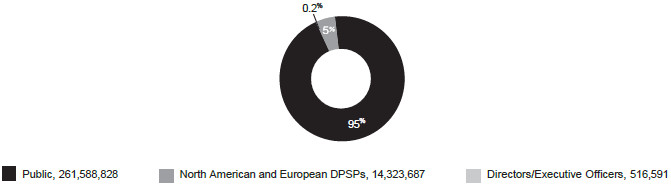
50 | 2026 Annual Information Form
Legal Proceedings
From time to time, we may become involved in regulatory proceedings, or become liable for legal, contractual and other claims by various parties, including customers, suppliers, former employees, class action plaintiffs, and others. On an ongoing basis, we attempt to assess the likelihood of any adverse judgments or outcomes to these proceedings or claims, together with potential ranges of probable costs and losses. A determination of the provision required, if any, for these contingencies is made after analysis of each individual issue. The required provision may change in the future due to new developments in each matter or changes in approach, such as a change in settlement strategy in dealing with these matters.
Warranty, Product Liability and Recall Claims
In certain circumstances, we are at risk for warranty, product liability and recall claims, and are currently experiencing increased customer pressure to assume greater warranty responsibility. Certain customers seek to impose partial responsibility for warranty costs where the underlying root cause of product or system failure cannot be determined. Due to the nature of the costs, we make our best estimate of the expected future costs, however, the ultimate amount of such costs could be materially different. For most types of products, we only account for existing or probable claims on product defect issues when amounts related to such issues are probable and reasonably estimable. However, for certain complete vehicle assembly, powertrain systems, and electronics contracts, we record an estimate of future warranty-related costs based on the terms of the specific customer agreements and/or our warranty experience. Product liability and recall provisions are established based on our best estimate of the amounts necessary to settle existing claims, which typically take into account: the number of units that may be returned; the cost of the product being replaced; labour to remove and replace the defective part; and the customer’s administrative costs relating to the recall. In making this estimate, judgment is also required as to the ultimate negotiated sharing of the cost between us, the customer, and, in some cases, a supplier. Where applicable, insurance recoveries related to such provisions are also recorded.
In December 2023, we received a notification letter from Ford informing us as to its initial determination that one of Magna’s Operating Groups bore responsibility for costs totaling $352 million related to two product recalls. The notification letter triggered negotiations regarding financial allocation of the total costs for the two recalls. During the fourth quarter of 2025, Magna reached a commercial resolution with respect to this matter, which resulted in a payment to Ford of $132 million.
In the third quarter of 2025, Ford initiated recalls covering approximately 3.8 million vehicles equipped with rearview cameras or image processing modules supplied by us. Ford also announced a new 15-year extended warranty program for up to approximately 14.9 million vehicles also equipped with rearview cameras supplied by us. Ford is claiming approximately $288 million in costs related to these recalls and warranty claims. Additional recalls and/or extended warranty programs remain possible. Magna is in technical and commercial discussions with Ford, however, at this time, root cause determinations have not been made and/or confirmed for the vehicles covered by Ford’s recalls and warranty extension program. Even after root cause(s) have been determined, other challenges make it difficult to fully quantify our potential financial exposure, if any. These challenges include: integration with other vehicle systems and non-camera components; age of affected vehicles; duration of the original warranty; number of affected vehicles brought to Ford’s dealers for inspection; and dealer discretion to determine the nature of the remedy to be applied, which may range from software upgrades, inspection of the rearview camera and other components, repairs, or replacement of the rearview camera. In the absence of certainty as to the scope of potentially affected vehicles, the root cause(s) of the alleged product failures, and/or the related costs of service actions, we are unable to fully estimate our potential exposure, if any, for recall-related costs and the extension of product warranties by Ford to affected vehicle owners. If we are determined to be fully or partially responsible for defective rearview cameras, the related recall and extended warranty costs could be material to our profitability in the period(s) in which such costs are recognized or provided for.
As a result of the bankruptcy of Fisker, Inc., owners of Fisker Ocean SUVs have asserted claims for alleged vehicle defects and breaches of state “lemon laws” against J.P. Morgan Chase, N.A. (“Chase”), the direct financer of approximately 2,000 such vehicles in the United States. Chase has indicated that it will seek indemnification from us, as contract manufacturer, for damages and legal costs incurred with the resolution of these claims. As the particulars of these claims are all currently unknown, it is too early to determine our potential liability, if any, at this time.
2026 Annual Information Form | 51
Other Information
Interests of Management & Others in Material Transactions
Reference is made to “Interests of Management and Other Insiders in Material Transactions” in our Circular for our Meeting, which is incorporated by reference into this AIF.
Transfer Agent & Registrar
The transfer agent and registrar for our Common Shares is TSX Trust Company, at its principal offices in Toronto, Ontario, set out below. The co-transfer agent and co-registrar for our Common Shares in the United States is Continental Stock Transfer & Trust Co., at its offices in New York, NY, set out below.
| TSX Trust Company 301 – 100 Adelaide St. West Toronto, ON M5H 4H1 |
Continental Stock Transfer & Trust Co. 1 State Street, 30th Floor New York, NY 10004 | |||
| Telephone: +1 800 387 0825 or +1 416 682 3860 Fax: +1 416 361 0470 Email: shareholderinquiries@tmx.com |
||||
Interests of Experts
Our independent auditor for the 2025 fiscal year is Deloitte LLP. Deloitte LLP is independent within the meaning of the Rules of Professional Conduct of the Chartered Professional Accountants of Ontario, and the applicable rules and regulations adopted by the Securities and Exchange Commission (SEC) and the Public Company Accounting Oversight Board (United States) (PCAOB). Additional information regarding the fees paid to our independent auditors is contained under “Business of the Meeting — Reappointment of Deloitte LLP as Magna’s Independent Auditor” in our Circular, which is incorporated by reference into this AIF.
Additional Information
Our Circular contains the following additional information:
| • | our directors’ and named executive officers’ remuneration; |
| • | our voting securities and their principal holders; |
| • | securities authorized for issuance under our equity-based compensation plans. |
Additional financial information about us is provided in our consolidated financial statement as at and for the year ended December 31, 2025, and in our MD&A. These documents and additional information about us may be found on SEDAR+, at www.sedarplus.ca, on EDGAR at www.sec.gov/edgar and on our website, at www.magna.com.
52 | 2026 Annual Information Form
Schedules
Schedule A: Principal Subsidiaries and Investments
Subsidiaries
A list of our principal subsidiaries and each of their jurisdictions of incorporation as of December 31, 2025, is set out below. Our legal structure (including that of our subsidiaries) is not necessarily indicative of our operational structure.
| Subsidiary(1)(2) |
Voting |
Jurisdiction of Incorporation | ||
| 1305290 Ontario Inc. |
100% | Ontario | ||
| Magna International Investments S.A. |
100% | Luxembourg | ||
| Magna International Europe GmbH |
100% | Austria | ||
| Magna Automotive Europe GmbH |
100% | Austria | ||
| Magna Automotive Holding GmbH |
100% | Austria | ||
| Magna Presstec GmbH |
100% | Austria | ||
| Magna Metalforming GmbH |
100% | Austria | ||
| Magna Steyr GmbH & Co KG |
100% | Austria | ||
| Magna Steyr Fahrzeugtechnik GmbH & Co. KG |
100% | Austria | ||
| Engineering Center Steyr GmbH |
100% | Austria | ||
| Magna Powertrain GmbH |
100% | Austria | ||
| Magna PT Beteilgungs GmbH |
100% | Austria | ||
| Magna Electronics Foreign HoldCo AB |
100% | Sweden | ||
| Magna Electronics AB |
100% | Sweden | ||
| Magna Automotive Holding (Germany) GmbH |
100% | Germany | ||
| Magna PT Holding GmbH |
100% | Germany | ||
| Magna PT B.V. & Co. KGaA |
100% | Germany | ||
| Magna Financing Luxembourg Canada ULC |
100% | Alberta | ||
| Magna US Holding, Inc. |
100% | Delaware | ||
| Cosma International of America, Inc. |
100% | Michigan | ||
| Intier Automotive of America, Inc. |
100% | Delaware | ||
| Intier Automotive of America Holdings, Inc. |
100% | Delaware | ||
| Magna Seating of America, Inc. |
100% | Delaware | ||
| Magna Exteriors Holdings, Inc. |
100% | Delaware | ||
| Magna Exteriors of America, Inc. |
100% | Delaware | ||
| Magna Mirrors of America, Inc. |
100% | Michigan | ||
| Magna International (Hong Kong) Limited |
100% | Hong Kong | ||
| Magna Exteriors Inc. |
100% | Ontario | ||
| Magna Powertrain de Mexico, S.A. de C.V. |
100% | Mexico | ||
| Magna Seating Inc. |
100% | Ontario | ||
| Magna Internacional de Mexico, S.A. de C.V. |
100% | Mexico | ||
| Magna Powertrain Inc. |
100% | Ontario |
Notes:
| 1 | The table shows the percentages of the votes attached to all voting securities and of each class of non-voting securities, owned by us or over which control or direction is exercised by us. Parent/subsidiary relationships are identified by indentations. Percentages represent the total equity interest in a subsidiary, which is not necessarily indicative of percentage voting control. |
| 2 | Subsidiaries not shown each represent less than 10% of our total consolidated revenues and total consolidated assets (although not all subsidiaries shown necessarily each represent more than 10% of our total consolidated assets and total consolidated sales) and, if considered in aggregate as a single subsidiary, represent less than 20% of our total consolidated revenues and total consolidated assets. |
2026 Annual Information Form | 53
Investments
Our principal equity method investments are the following:
| Joint Venture |
Magna Equity |
Partner(s) | Reporting Segment | |||
| Litens Automotive Partnership |
76.7% (non-controlling 50% voting interest) |
Current and retired members of senior Litens management | Power & Vision | |||
| Hubei HAPM MAGNA Seating Systems Co., Ltd. |
49.9% | Hubei Aviation Precision Machinery Co., Ltd. | Seating Systems | |||
| LG Magna e-Powertrain Co., Ltd. |
49.0% | LG Electronics Inc. | Power & Vision | |||
| BAIC Bluepark Magna Automobile Co., Ltd. |
49.0% | Blue Sky New Energy Industry Investment Co., Ltd. | Complete Vehicles |
54 | 2026 Annual Information Form
Schedule B: Acquisitions and Divestitures
We have completed a number of acquisitions, divestitures, financings, and securities/corporate transactions in the last three fiscal years, including those listed below. None of these acquisitions constitutes a “significant acquisition” within the meaning of such term in National Instrument 51-102 — Continuous Disclosure Obligations of the Canadian Securities Administrators. Additional information about the acquisitions and/or divestitures listed below can be found in Notes 7 and 8 of our consolidated financial statements as at and for the year ended December 31, 2025, Note 7 of our consolidated financial statements as at and for the year ended December 31, 2024, and Note 7 of our consolidated financial statements as at and for the year ended December 31, 2023.
Acquisitions
| Year |
Acquisition | |
| 2025 | 100% of the equity interests not already owned by Magna of Magna Hongli Automotive Systems Group Co., Ltd. (“Hongli”), bringing Magna’s ownership interest to 100% in Hongli. Hongli designs, developments, manufactures and sells automobile seats in China. | |
| 2024 | 100% of the common shares and voting interests of HE System Electronic. HES develops and produces micro-electronic assemblies and electronic systems. | |
| 2023 | 100% of the common shares and voting interests of the entities holding the Veoneer Active Safety Business. Veoneer AS supplies active safety products globally including active safety integration systems, radar, camera systems, internal cabin sensing, thermal sensing, and light detection. |
Divestitures
| Year | Divestiture | |
| 2025 | None | |
| 2024 | Divestiture of the Company’s Body Exteriors & Structures operations in India(1) | |
| 2023 | Sale of the Company’s divisions in Russia |
Note:
| 1 | Additional information can be found in Note 4 of our unaudited financial statements for the three months ended September 30, 2024. |
2026 Annual Information Form | 55
Schedule C: Market for Securities
Our Common Shares are listed and posted for trading on the TSX under the trading symbol “MG”, and on the NYSE under the trading symbol “MGA”.
The high and low sale prices and volume of shares traded for our Common Shares, as reported by the TSX and NYSE, respectively, for the months during the year ended December 31, 2025 were as follows:
| Month | TSX High (C$) |
TSX Low (C$) |
TSX Volume |
NYSE High ($) |
NYSE Low ($) |
NYSE Volume | ||||||
| January |
61.11 | 56.05 | 20,623,707 | 42.66 | 38.97 | 25,935,763 | ||||||
| February |
57.33 | 51.34 | 43,556,475 | 40.26 | 35.05 | 43,496,555 | ||||||
| March |
55.86 | 47.75 | 39,505,246 | 38.75 | 33.28 | 40,745,339 | ||||||
| April |
49.83 | 43.25 | 32,705,826 | 35.06 | 30.39 | 46,573,470 | ||||||
| May |
52.40 | 44.85 | 52,852,461 | 37.58 | 32.55 | 49,168,838 | ||||||
| June |
53.30 | 48.50 | 28,922,213 | 39.03 | 35.34 | 27,390,467 | ||||||
| July |
59.30 | 54.30 | 20,473,172 | 43.64 | 38.50 | 28,647,015 | ||||||
| August |
64.78 | 56.26 | 18,187,107 | 46.75 | 40.75 | 26,460,599 | ||||||
| September |
66.29 | 61.97 | 22,419,305 | 47.79 | 44.83 | 35,207,225 | ||||||
| October |
69.47 | 60.67 | 20,704,698 | 49.80 | 43.11 | 33,606,270 | ||||||
| November |
71.14 | 63.93 | 25,749,552 | 50.77 | 45.33 | 30,610,227 | ||||||
| December |
76.30 | 67.05 | 21,439,260 | 55.42 | 48.55 | 29,228,292 | ||||||
56 | 2026 Annual Information Form
Appendix 1
Sustainability
Report
FY 2025

2026 Annual Information Form | A-1
Contents
Sustainability Report
| Summary Sustainability Metrics |
A-6 | |||
| Introduction |
A-9 | |||
| Environmental Stewardship & Climate Action |
A-18 | |||
| Social Responsibility |
A-44 | |||
| Good Governance & Corporate Responsibility |
A-62 | |||
| Sustainability Metrics |
A-67 | |||
| Annex I: Sustainability Accounting Standards Board (SASB) Alignment Index |
A-72 | |||
| Annex II: ISSB Standards & TCFD Alignment Index |
A-73 | |||
A-2 | 2026 Annual Information Form
A Message from our Chief Executive Officer
Swamy Kotagiri
|
|
Sustainability and operational excellence remain central to Magna’s long-term success. In 2025, we made meaningful progress that strengthens our competitiveness and demonstrates how deeply sustainability is embedded in our strategy.
While we’re seeing tangible results, we operate in a dynamic environment. Shifts in production, geopolitical uncertainties and a bumpy EV transition mean some facilities face the challenge of operating more efficiently. Yet our teams are ready for even more stretch goals as we accelerate the shift to safer, smarter and greener mobility.
By fostering a culture of accountability and continuous improvement, we are reducing our environmental footprint, enhancing operational performance and delivering long-term value for customers, shareholders and the communities we serve.
| |
A Message from our Global Director, Sustainability and Energy
Ahmed Elganzouri
|
|
We continue to shape a more sustainable future by tapping
• Achieved major 2025 sustainability
milestones, including
• Surpassed Phase 1 goals of the Energy
Cost Optimization
• Advanced sustainable mobility through
Magna’s four
• Expanded impact across the supply chain
through
• Continued prioritizing people by
strengthening employee
The work we are doing creates value on every front, it
| |
Our Commitment to a Sustainable Future
Magna’s decarbonization targets are built on principles of operational excellence and innovation. As a global leader in the automotive industry, Magna has set ambitious net-zero targets. Magna has approved near- and long-term science-based emission reduction targets with the Science Based Targets Initiative (“SBTi”), and the SBTi has verified Magna’s net-zero science-based target by 2050.
Magna’s Decarbonization and Energy Targets
| Target |
Target Year |
Status | ||
| 5% energy savings in implemented energy projects (Compared to 2022 absolute energy usage) |
2024 | Achieved | ||
| 10% energy intensity reduction (Compared to 2022) |
2024 | Achieved | ||
| 4% energy savings in implemented energy projects or Low Carbon on-site technology (Compared to 2023 absolute energy usage) |
2025 | Achieved | ||
| Environmental, Social and Governance (ESG) scoring for 90% of supplier spend |
2025 | Achieved | ||
| 100% renewable electricity in European operations |
2025 | Achieved | ||
| 7% energy savings from implemented energy projects or Low Carbon on-site energy technology (Compared to 2024) |
2026 | On Track | ||
| 20% energy intensity reduction (Compared to 2022) |
2027 | On Track | ||
| 3.5% energy savings from implemented energy projects or Low Carbon on-site energy technology (Compared to 2026) |
2028 | On Track | ||
| 100% renewable electricity in Canadian operations |
2028 | On Track | ||
| 3.5% energy savings from implemented energy projects or Low Carbon on-site energy technology (Compared to 2027) |
2029 | On Track | ||
| 25% energy intensity reduction (Compared to 2022) |
2030 | On Track | ||
| 100% renewable electricity in global operations |
2030 | On Track | ||
| 25% reduction in value chain (Scope 3) emissions from 2021 baseline (Near-term science-based target) |
2030 | On Track | ||
| 42% reduction in global operational (Scope 1 & 2) emissions from 2021 baseline (Near-term science-based target) |
2030 | On Track | ||
| 30% reduction in Scope 1 emissions focusing on comfort heating |
2040 | On Track | ||
| Net-zero emissions reduction (90% absolute reduction in Scopes 1, 2 & 3) (Long-term science-based target) |
2050 | On Track |
Our Renewable Electricity Progress
| Where We Are |
Year Over Year Progress |
Where We Are Going | ||||
| % of global electricity used that is renewable electricity |
~39% | +1560 bps | 100% Expected by end of 2030 | |||
| Divisions using renewable electricity |
192 (~58%) |
+52 | 100% Expected by end of 2030 | |||
| Divisions with 100% renewable electricity |
132 (~40%) |
+42 | 100% Expected by end of 2030 | |||
| Divisions with on-site solar generation |
40 (~12%) |
+4 | ~ 49 In progress or currently investigating |
2026 Annual Information Form | A-5
Summary Sustainability
Metrics
Magna GHG Emissions (Scopes 1, 2 & 3, Metric Tons (t) CO2e)
| Metric | 2025 | 2024 | 2023 | 2021 Baseline |
CHANGE FROM 2021 BASELINE(3) | |||||
| Scope 1 Emissions |
415,416* | 418,963* | 424,561* | 436,267* | q 4.8% | |||||
| Scope 2 (Market- Based) Emissions |
889,810* | 1,158,866* | 1,150,656* | 1,089,730* | q 18.3% | |||||
| Scope 3 Emissions |
Not available(1) | 55,969,512(2) | 57,842,606 | 58,655,441 | q4.6%(4) |
Magna GHG Emissions (Scope 3, by Category, Metric Tons (t) CO2e)
| Scope 3 Emissions by Category(5) | 2024 | 2023 |
2021 Baseline |
CHANGE FROM 2021 BASELINE(4) | ||||||||||||||||
| 1 Purchased Goods & Services |
28,870,543 | 30,165,695 | 22,762,020 | p 26.8 | % | |||||||||||||||
| 2 Capital Goods |
577,943 | 533,363 | 372,331 | p 55.2 | % | |||||||||||||||
| 3 Fuel- and Energy-Related Activities |
313,898 | * | 319,890 | * | 318,366 | q 1.4 | % | |||||||||||||
| 4 Upstream Transportation & Distribution |
736,426 | 959,848 | 791,049 | q 6.9 | % | |||||||||||||||
| 5 Waste Generated in Operations |
358,930 | * | 318,272 | * | 306,063 | p 17.3 | % | |||||||||||||
| 6 Business Travel |
42,947 | 43,955 | 26,924 | p 59.5 | % | |||||||||||||||
| 7 Employee Commuting |
161,552 | 136,815 | 132,015 | p 22.4 | % | |||||||||||||||
| 8 Upstream Leased Assets |
Not relevant to Magna | |||||||||||||||||||
| 9 Downstream Transportation & Distribution |
640,569 | 771,287 | 910,907 | q 6.9 | % | |||||||||||||||
| 10 Processing of Sold Products |
707,057 | 759,782 | 1,047,424 | q 32.5 | % | |||||||||||||||
| 11 Use of Sold Products |
22,830,834 | 23,160,992 | 31,362,035 | q 27.2 | % | |||||||||||||||
| 12 End-of-Life Treatment of Sold Products |
591,503 | 585,007 | 529,872 | p 11.6 | % | |||||||||||||||
| 13 Downstream Leased Assets |
Not relevant to Magna | |||||||||||||||||||
| 14 Franchises |
Not relevant to Magna | |||||||||||||||||||
| 15 Investments |
137,310 | 87,700 | 96,435 | p 42.4 | % | |||||||||||||||
| Total |
55,969,512 | 57,842,606 | 58,655,441 | q4.6 | % | |||||||||||||||
| * | denotes that this metric has been verified by an independent third-party verification firm. |
Notes:
| 1 | 2025 Scope 3 emissions inventory not available at time of preparation of this Sustainability Report. These emissions will be reported in our annual CDP submission. |
| 2 | Our Scope 3 data is based on completed inventories for the applicable year. Our Scope 3 emissions data includes twelve relevant categories. Scope 3 categories 8, 13 and 14 are not relevant to Magna. |
| 3 | We have used a 2021 baseline for our emissions reporting in the tables above, in line with our science-based near-term and net-zero targets. |
| 4 | 2024 Scope 3 emissions compared to 2021 baseline. |
| 5 | Improvements in data collection or changes in methodology used to calculate Scope 3 emissions (e.g., availability of primary data to replace secondary data such as industry averages) can result in fluctuations in Scope 3 inventory. |
A-6 | 2026 Annual Information Form
Non-Climate Metrics
| TOPIC | METRIC | UNIT OF MEASURE | 2025(1) | CHANGE FROM 2019 BASELINE(2) | ||||
| Energy Management |
Aggregate amount of energy consumed | Gigajoules (GJ) MegaWatt hours (MWh) |
19,854,065 GJ / 5,515,018 MWh |
q13.8% | ||||
| % of energy consumed supplied from electrical grid | Percentage (%) | 58.2% | 320 bps | |||||
| % of energy consumed that is renewable energy | Percentage (%) | 23% | — | |||||
| Energy intensity | MegaWatt hours (MWh) / Sales (USDm) |
131 MWh / USDm | q17.9% | |||||
| Energy intensity reduction | MegaWatt hours (MWh) / Sales (USDm) |
No Material change (YoY) | — | |||||
| Waste Management |
Aggregate amount of waste generated from manufacturing operations | Metric Tons (t) | 1,211,227 t | — | ||||
| % of waste generated that is hazardous | Percentage (%) | 4.6% | — | |||||
| % of waste generated that was recycled | Percentage (%) | 89.7% | — | |||||
| % hazardous waste diverted from landfill | Percentage (%) | 92.4% | — | |||||
| Waste diversion from landfill | Percentage (%) | Target: ≥95% p.a. Actual: 96.7% |
— | |||||
| Water Management |
Annual water withdrawals | Megalitres (ML) | 6,236 ML* | q18.2% | ||||
| Water reduction | Percentage (%) | Target: 1.5% p.a. 15% by 2030 (vs. 2019) Actual: 2.7% YoY |
||||||
| Annual remediation expenses | Reporting Currency (USD) | <$1.5m | No Material Change | |||||
| Aggregate remediation balance for known events | Reporting Currency (USD) | $21.2m | No Material Change | |||||
| Environmental violations > $10,000 USD | Number | 0 | — | |||||
| Amount paid as a result of such environmental violations | Reporting Currency (USD) | 0 | — | |||||
| Health and Safety |
Accident frequency rate | 1.0 = 1 lost time injury / illness per 100 employees working 40 hours/week, 50 weeks/year |
0.40 | q61.5% | ||||
| Accident severity rate | 10.0 = 10 lost work days / 100 employees working 40 hours/week, 50 weeks/year |
8.82 | q28.6% | |||||
| Environmental & Health and Safety Certifications |
ISO 14001 Certified Divisions | Number | 280(3) | — | ||||
| ISO 50001 Certified Divisions | Number | 26(3) | — | |||||
| ISO 45001 Certified Divisions | Number | 201(3) | — | |||||
| Competitive Behaviour |
Total amount of monetary losses incurred as a result of legal proceedings associated with anti-competitive behaviour regulations | Reporting Currency (USD) | 100,000(4) | — | ||||
| Gender Diversity |
% of employees who are women(4) | Percentage (%) | 29.4%(5) | — | ||||
| % Women in Critical Positions | Percentage (%) | 21.5% | — | |||||
| % Women on the Board of Magna | Percentage (%) | 38%(6) | q400 bps |
| * | denotes that this metric has been verified by an independent third-party verification firm. |
Notes:
| 1 | Energy Management, Waste Management, and Health and Safety Data is preliminary. |
| 2 | Items indicated by a dash were not tracked in baseline year. We have used a 2019 baseline for other metrics consistent with our previous sustainability reports. |
| 3 | Percentage of Magna facilities with the applicable certification is: ISO 14001 (~71%), ISO 50001 (~7%), and ISO 45001 (~51%). |
| 4 | In order to avoid the additional expense and disruption of litigation, in July 2025, Magna elected to settle a Canadian class action lawsuit alleging anticompetitive conduct in the market for door latches and closure systems. Magna made no admissions of guilt or wrongdoing through the settlement. |
| 5 | Wholly owned operations only. |
| 6 | Assuming the election of all Board nominees at Magna’s annual meeting of shareholders on May 4, 2026, the percentage of women on the Board will be 33% (40% three-year gender parity average as of 2025). |
2026 Annual Information Form | A-7
2025 Key ESG Ratings & Recognition
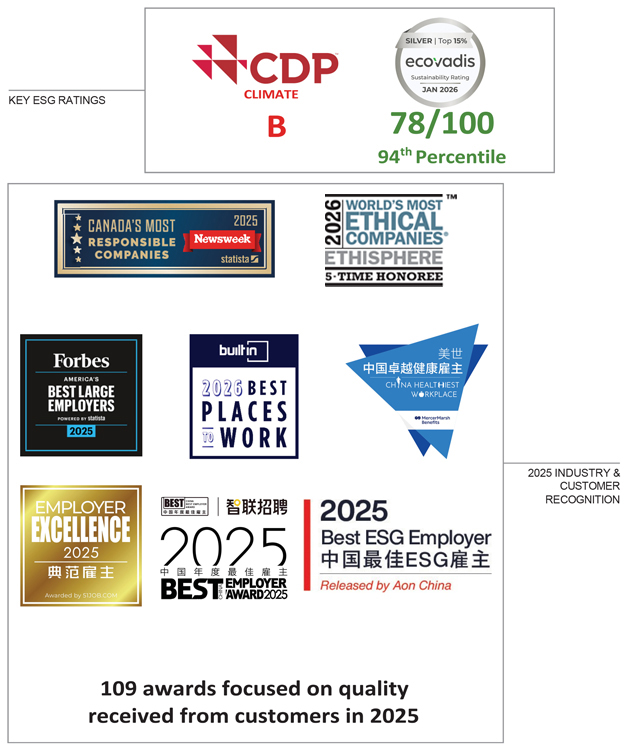
A-8 | 2026 Annual Information Form
Introduction
At Magna we are committed to making a difference through our products and processes, as well as continuing to demonstrate care and concern for our people and the communities in which they live.
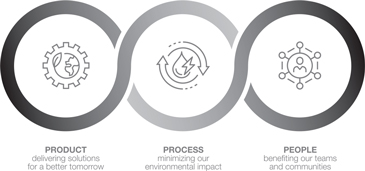
Magna was recognized as one of Canada’s Most Responsible Companies for 2025 by Newsweek/Statista. The award recognizes select companies from among Canada’s 700 largest private and public companies across 13 industries for their commitment to the climate, social welfare and responsible governance.
Magna’s Climate Change Commitment
We recognize the reality of climate change and its impact on the planet. As a result, we are focused on doing the right things today so that our corporate interests do not come at the expense of the viability of life for the generations that follow. Although combating climate change requires a collective global response, Magna is determined to play its part in addressing this existential threat to our planet. In 2024, we received approval by the SBTi of Magna’s near-term and net-zero emission reduction targets and the verification by SBTi of Magna’s net-zero science-based target by 2050.
The details of Magna’s net-zero commitment are outlined in Section 2.1.1 of this Sustainability Report.
Approach to Sustainable Value Creation
Overall, our approach to sustainable value creation involves:
| • | designing, engineering, manufacturing and delivering innovative product solutions for our customers, which achieve shared goals of reduced weight, lower fuel consumption and reduced carbon emissions; |
| • | optimizing and innovating our manufacturing processes for resource and input efficiency, as well as product quality; |
| • | enhancing the energy efficiency of our plants and transitioning our operations to 100% renewable energy by 2030 to achieve our SBT requirement to reduce scope 1 and 2 emissions by 42% from a 2021 SBT baseline; |
| • | engaging our supply chain to reduce Scope 3 emissions 25% by 2030 from a 2021 SBT baseline; |
| • | staying focused on our net-zero commitment to reduce Scope 1, 2 and 3 emissions 90% by 2050 from a 2021 SBT baseline; |
| • | treating our employees fairly and looking out for their health, safety and general well-being; |
| • | serving as a good community partner, particularly in the communities in which our employees live and work; and |
| • | enhancing the sustainability of our supply chain with respect to human rights and working conditions through communication, monitoring, and where necessary, corrective action. |
2026 Annual Information Form | A-9
Report Structure & Boundary
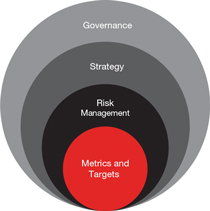
|
This Sustainability Report aims to provide our stakeholders with a better understanding of how we approach the creation of sustainable, long-term value and our management of sustainability-related risks. The report has been structured to align with the Task Force on Climate-related Financial Disclosures (“TCFD”) and its replacement standard the International Sustainability Standards Board (“ISSB”) IFRS S1 and S2 Climate Related Disclosures Standards. We also align with the Sustainability Accounting Standards, Board’s (“SASB”) Auto Parts accounting standard, where possible; and include key disclosures initially completed in 2024, and reassessed in 2025, that are aligned with the European Sustainability Reporting Standard (“ESRS”). This includes, an outline of the results of our ESRS-aligned double materiality assessment (“DMA”), and disclosure of the scenarios utilized to complete qualitative and quantitative climate scenario analysis. While this report may not currently provide stakeholders with all the information sought through the ISSB, SASB, and ESRS frameworks; we continue to evolve and enhance our disclosure as our collection and validation of the applicable data improves. While the ISSB and SASB Auto Parts frameworks primarily address climate-related factors, this Sustainability Report aims to go beyond such items to give stakeholders a better understanding of the broad range of environmental, social and governance (“ESG”) initiatives that define our |
approach to sustainable value creation. The boundary of this disclosure reflects activities from Magna’s 2025 reporting year which is January 1, 2025 to December 31, 2025 and includes all 330 operating divisions, unless otherwise indicated.
Double Materiality Assessment
Magna has conducted a comprehensive DMA in alignment with the European Union’s (“E.U.”) Corporate Sustainability Reporting Directive (“CSRD”) and the ESRS. The DMA evaluates how our operations and value chain could impact people and the environment (impact materiality) and identifies sustainability issues with potentially significant financial implications for the Company (financial materiality). This process helps identify impacts, risks, and opportunities (“IROs”), and assess their materiality.
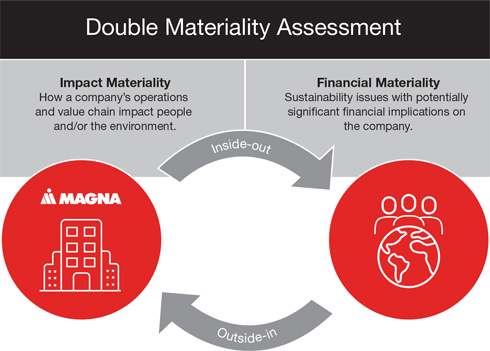
A-10 | 2026 Annual Information Form
Our DMA was led by an internal team in collaboration with a third-party consulting firm and followed four steps:
|
Define the Assessment Landscape
|
g | Initial Plan Assessment
|
g | Assess Identified Topics
|
g | Consolidate and Validate
| ||||||
◾ The first step in the DMA was to establish a landscape of topics — a list of sustainability-related topics, sub-topics and sub-sub-topics (i.e., sustainability matters) that are used to identify IROs in the subsequent stages of the assessment. The universe of topics consists of ESRS matters and entity-specific topics related to Magna’s own operations, the regions in which we operate and an assessment of our upstream and downstream value chain. The output of this step was identification of ESG-related topics and the corresponding actual and potential IROs, and a high-level map of our value chain. |
◾ To assess the IROs, a scoring framework that considered qualitative and quantitative criteria was established. The framework was used to assess the severity and likelihood of the identified IROs.
◾ Severity: Considers scale, scope and irremediability (When an impact is negative)
◾ Likelihood: Considers the odds of the impact occurring
◾ The initial assessment was completed by Subject Matter Experts and Leaders at the corporate level. After the initial scores were established, a stakeholder engagement plan was created to engage with affected stakeholders.
|
◾ The scoring methodology was used to assess the IROs statements for financial materiality, based on size and likelihood. Those that met or exceeded the threshold were identified as material. Engaging with affected stakeholders is central to the materiality assessment, to help inform the identification and assessment of material IROs. Our internal project team engaged stakeholder groups to provide insight and input into each ESRS and entity-specific sub-topics to refine and assess the IROs.
◾ Stakeholders were provided with detailed material and documentation outlining the scoring methodology prior to in person and virtual workshops. They were also trained on documentation and methodology, and given the opportunity to ask questions at the start of each workshop. Internal stakeholders who maintain consistent relationships with external stakeholders were interviewed and given the opportunity to provide input and insight on each ESRS and entity-specific sub-topics to refine and assess the IROs.
|
◾ Once the assessment was complete, the results were consolidated. The results of the initial assessment were adjusted based on the feedback received from the impacted stakeholder groups. The materiality scoring threshold was set after the IRO assessments had been consolidated. The outcome of this analysis set the current universe of material topics and will steer the future of ESRS aligned reporting at Magna subject to the reperformance of the DMA process, if and as necessary.
| |||||||||
2026 Annual Information Form | A-11
|
Double Materiality Assessment – Material Topics(1)
|
||||||||

|
Environment |
|||||||
|
• Climate change adaptation
|
||||||||
• Climate change mitigation
|
||||||||
• Energy
|
||||||||
• Fuel efficiency
|
||||||||
• Water
|
||||||||
• Direct impact drivers of biodiversity loss(2)
|
||||||||
• Resource inflows, including resource use
|
||||||||
• Resource outflows related to products and services |
||||||||

|
Social |
|||||||
|
• Working conditions (own workforce and value chain)
|
||||||||
• Equal treatment and opportunities for all (own workforce)
|
||||||||
• Other work-related rights (own workforce and value chain)
|
||||||||
• Personal safety of consumers and/or end-users |
||||||||

|
Governance |
|||||||
|
• Corporate culture |
||||||||
| 1 Certain topics, such as cybersecurity and anti-competitive practices, did not meet applicable materiality threshholds under our DMA methodology. Nonetheless, they remain significant priorities for Magna and our activities in these areas are disclosed in this Sustainability Report. | ||||||||
| 2 This category addresses biodiversity, including deforestation as well as phytosanitation. |
||||||||
Magna’s DMA aligns with the CSRD and enhances transparency and accountability in our sustainability reporting. The DMA will also help further focus our sustainability risk management activities and inform relevant strategic priority areas.
We reviewed the structure of our business and the outcome of the 2024 double materiality assessment in 2025. It was determined that there were no material changes that would warrant completing an in depth DMA in the current reporting year.
A-12 | 2026 Annual Information Form
1. Sustainability
Governance
1.1 Board Oversight
Magna’s Board of Directors is the company’s highest decision-making body, except to the extent certain rights have been reserved for shareholders under applicable law or Magna’s articles of incorporation or by-laws. As such, the Board is responsible for the overall stewardship of the company by: supervising the management of the business and affairs of Magna in accordance with the legal requirements set out in applicable company law (Business Corporations Act (Ontario)), as well as other applicable law; and, jointly with Management, seeking to create long-term shareholder value. The Board operates under a written Board Charter, in addition to applicable law, our articles of incorporation and by-laws. The Board Charter, which has been filed with securities regulatory authorities on SEDAR+ (www.sedarplus.ca), and is available in the Leadership & Governance section of Magna’s website (www.magna.com), delineates Board oversight responsibilities including with respect to a number of areas relevant to sustainability such as: corporate culture; corporate governance; strategy; risk; shareholder engagement; and fundamental corporate actions.
The Board takes an integrated and coordinated approach to oversight (including climate-related issues). This includes oversight of:
| • | the Company’s corporate culture, including its commitment to innovation/R&D, as well as its overall approach to corporate governance; |
| • | long-term strategy, including sustainability strategy and near-term business plans; |
| • | fundamental corporate actions, including acquisitions/divestitures and capital allocation; |
| • | major corporate policies; |
| • | enterprise risk management, including sustainability risks and climate related issues; |
| • | our overall system of compensation of Executive Management, which drives desired management behaviours that are central to our climate strategy, including operational efficiency. |
| • | material public disclosures (including this Sustainability Report); |
| • | preparedness of the Company to comply with emerging sustainability/ESG related legislation; and |
| • | shareholder engagement, including on sustainability/ESG topics. |
Climate-related and other sustainability issues are typically considered by the Board at least annually through the Board’s strategic planning process. Typically, Magna’s most senior corporate R&D executive identifies and analyses material trends impacting the automotive industry, including automotive and mobility trends arising from climate-related issues. Significant opportunities and risks are then addressed at the annual Board strategy meeting. Guidance, feedback and other outputs from the strategy meeting are incorporated and integrated into Operating Group business plans for the next business planning meeting. Climate and other sustainability issues may also arise before the Board in connection with its oversight of fundamental corporate actions such as review/approval of material acquisitions/divestitures, three-year business plans and capital expenditures. Additionally, the Board annually monitors our progress in reducing our carbon footprint and reviews/approves the company’s material public disclosures, such as our Annual Information Form / Annual Report on Form 40-F incorporating this Sustainability Report. The Board also reviews/approves other public disclosures such as our Fighting Against Forced Labour and Child Labour in Supply Chains Report (“Fighting Modern Slavery Report”), and reviews the Corporation’s progress in preparing for emerging sustainability reporting, most notably the CSRD.
2026 Annual Information Form | A-13
1.1.1 GNSC and TOCC Roles
The Board carries out its duties in part through standing committees composed solely of independent directors. One such committee, the Governance, Nominating and Sustainability Committee (“GNSC”), supports the Board’s oversight of the company’s approach to sustainability and climate change issues, including alignment with Magna’s overall strategy, stakeholder expectations, regulatory and voluntary frameworks, market norms and best practices. The GNSC assesses Magna’s overall approach to reducing its carbon footprint, the effectiveness of our environmental compliance program, the Company’s approach to human rights and supply chain due diligence, the continued effectiveness of the climate elements of the Company’s ESG program, as well as Magna’s actions to identify, monitor and mitigate any material risk exposures relating to such areas. The Board’s Talent Oversight and Compensation Committee (“TOCC”) also supports the Board’s sustainability oversight activities by assessing Magna’s approach to certain non-climate elements of sustainability, including its approach to advancing diversity and inclusion in our workplace, and occupational health and safety compliance, as well as Magna’s actions to identify, monitor and mitigate any material risk exposures relating to such areas.
Like the Board, each of the GNSC and TOCC maintains a written charter which outlines its specific roles and responsibilities. The GNSC and TOCC Charters have been filed on SEDAR+ and are available in the Leadership & Governance section of Magna’s website (www.magna.com). Matters under the GNSC’s responsibility include: corporate governance, sustainability, and other matters. The scope of the GNSC’s oversight role with respect to sustainability includes climate-related issues generally, as well as related elements such as environmental management and compliance. As Magna defines “sustainability” in a broad and inclusive manner to include areas that go beyond climate-related issues, the GNSC’s role also extends to matters such as supply chain sustainability. The GNSC periodically reviews Magna’s policies, practices and public disclosures relating to sustainability topics, and makes recommendations to the Board regarding such items.
During 2025, the GNSC received updates, among other things, on Magna’s enterprise risk management program, Magna’s evolving sustainability and ESG strategy, including the ESG Reporting Overview, ESG regulatory developments, ESG ratings and rankings performance, and the Fighting Modern Slavery Report.
In addition, the GNSC reviewed, provided input into, and approved the organization’s Sustainability Report and other governance- related disclosures, including Board and Committee Charters and Proxy Circular segments. The Committee also received reporting relating to Magna’s environmental compliance through the Annual Environmental Report and engaged in discussions on the future of ESG at Magna.
The TOCC’s responsibilities include: talent management and succession planning, executive and incentive compensation, employee health and safety, and other matters.
During 2025, the TOCC received updates on, among other things, Magna’s occupational health and safety program through the Annual Health & Safety Update, ongoing leadership development initiatives, and the company’s human resources and talent management strategy, including HR strategy and priorities, culture and employee engagement, and HR complaints and investigations.
1.1.2 Other Board Committees
In addition to the GNSC and TOCC, the Board maintains two other standing committees — the Audit Committee and the Technology Committee. While neither of these committees have specific sustainability responsibilities, each may have a role with respect to sustainability risks and opportunities that arise indirectly out of the committee’s primary role and responsibilities.
Magna’s Audit Committee supports the Board through its oversight of financial and audit-related matters, including financial risks and disclosures. To the extent that climate-related or other sustainability risks are or could be financially material, the Audit Committee would be involved through its consideration of the financial statement or other disclosure of the nature and scale of the risk.
A-14 | 2026 Annual Information Form
During 2025, the Audit Committee received updates on, among other things, Magna’s Ethics and Legal Compliance Program, and the annual review of the Ethics & Legal Compliance Charter.
The Technology Committee supports the Board’s oversight duties by advising it on technology trends, related opportunities and risks, R&D and innovation, and technology-focused acquisitions, as well as the alignment between the company’s technology and its strategic priorities. As such, the scope of the Technology Committee’s role includes products and processes that seek to realize opportunities created by climate-related challenges. In this regard, the Technology Committee engaged in “deep dive” reviews of technology trends, opportunities and risks, including large castings technology landscape, integrated systems, powertrain electrification trends, and autonomous mobile robot technology and market. In addition, the Technology Committee reviewed Magna’s R&D/innovation initiatives in relation to Magna’s overall strategy.
1.2 Management
Climate-related issues are part of the CEO’s responsibility. As Magna’s highest-ranking member of management, the CEO guides and directs Executive Management and Operating Group Presidents with respect to product portfolio and strategic planning, business planning, capital expenditures, innovation/R&D, manufacturing productivity and efficiency, as well as other critical areas, including the setting of, and progress in meeting, Magna’s near-term and net-zero commitments. The CEO is also the highest executive responsible for customer management, shareholder engagement/investor relations, as well as talent management. The criticality of climate sustainability to the future of the automotive industry generally means that climate-related issues are interwoven through all of the foregoing areas of the CEO’s responsibilities. At the same time, the importance of making demonstrable progress with climate sustainability goals requires CEO-level engagement and direction to drive organizational alignment.
To assist our CEO, Magna’s Chief Operating Officer functions as an executive “champion” for climate-related and other sustainability matters (the “Sustainability Champion”). The Sustainability Champion reports directly to Magna’s CEO on sustainability matters and helps coordinate and align sustainability priorities across the company’s Operating Groups. Operating Group management is responsible for development of product strategies to address, industry and other trends, and business opportunities and risks, including those which arise due to climate-related challenges.
We also have a bottom-up sustainability structure (See Magna’s Sustainability Group Organizational Structure below) with representatives at each of our three main management levels (Divisional, Operating Group and Corporate). Our minimum requirement is that all manufacturing divisions have an Energy Team that includes an Energy Champion. The divisional Energy Teams collaborate with our Global Energy Team to identify and implement high-priority energy management projects. The Global Energy Team functions across all of our Divisions and Operating Groups to share energy efficiency/management case studies and best practices. Each Operating Group’s day-to-day sustainability activities are coordinated through a Group sustainability “lead”. Operating Group sustainability leads routinely interact with our Global Director, Sustainability & Energy who oversees and tracks key sustainability metrics and KPIs, such as the energy reduction goals, as well as progress towards our near-term and net-zero commitments. The Global Director, who reports directly to the Sustainability Champion, collaborates with Operating Group sustainability leads and cross-functional corporate leaders, including operational improvement, research and development, environmental, purchasing, legal, finance, and real estate, to develop Magna’s long-term sustainability and decarbonization strategy and near-term goals. In connection with our evolving sustainability strategy and our commitment to reaching our near-term and net-zero targets, our energy reduction progress and initiatives are reported to our Sustainability Champion, helping to increase the visibility of these initiatives across our Operating Groups through the Sustainability Champion’s regular interaction with Operating Group Presidents.
A number of initiatives intended to help us achieve our near-term and net-zero targets are underway, including energy optimization initiatives at most of our operating Divisions and a phased in transition to renewable electricity globally. We previously launched new initiatives within our Operating Groups focused on Life Cycle Assessments (“LCA”), Sustainable
2026 Annual Information Form | A-15
Materials and Supply Chain Decarbonization. Each initiative is led by an Operating Group-level champion in their respective subject matter that directly supports the execution of our decarbonization strategy. LCA Champions oversee Operating Group LCA processes and requirements, including understanding frameworks governing LCAs and customer requirements. Sustainable Materials Champions assist in the development of sustainable materials sourcing plans, identify potential sustainable materials relevant to current and future products, identify and oversee participation in sustainable materials certification schemes, and support our purchasing team in communicating with OEM customers and suppliers on relevant sustainable materials topics. Supply Chain Sustainability Champions assist on all ESG related supply chain topics for their Operating Groups and support supplier ESG monitoring, including through third-party audits and, where necessary, corrective action. They will also oversee Operating Group compliance with our ESG nomination criteria (discussed in Section 3.5.1).
Magna’s Sustainability Group organizational structure is as follows:
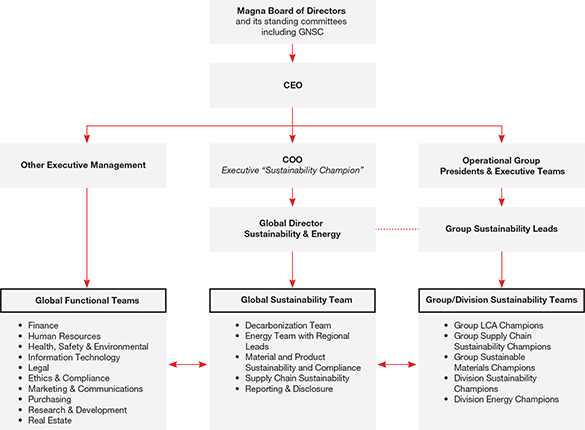
Aspects of sustainability beyond climate change concerns are typically managed through a matrix structure in which corporate-wide functions support initiatives implemented or managed by Operating Groups and Divisions. Examples of functional areas managed in this manner include: environmental management and compliance; occupational health and safety; quality and operational improvement; talent management, including diversity and inclusion; ethics and legal compliance; lobbying and political engagement; cybersecurity; data privacy; supply chain management; and materials compliance.
A-16 | 2026 Annual Information Form
1.3 Key Updates to Our Sustainability Program
In 2025 and to date in 2026, our Sustainability program evolved in a number of ways, including:
Energy Efficiency and Decarbonization
| • | Successfully completed Energy Cost Optimization (“ECO50”) Phase 1 with $50m annual energy cost savings as at the end of 2025 |
| • | Rolled out ECO50 Phase 2 with the goal to save an additional $50m in energy costs by the end of 2026 |
| • | Launched a Downtime Challenge to focus on energy reduction during non-production times |
| • | Launched three AI Energy Management pilot projects to analyze opportunities to reduce the energy consumption of HVAC systems |
| • | Rolled out a ZERO Cost Case Study Campaign to share best practices between plants and implement projects without any capital investment |
Training and Capacity Building
| • | Implemented a new training and certification program to train our energy champions in five different modules covering different aspects of energy management. 422 Energy Champions have completed this training to date |
| • | Conducted dedicated Scope 3 emissions accounting training for Magna Divisions globally to better understand how Scope 3 emissions are quantified and calculated and strategies for reducing such emissions |
| • | Developed new tools to track sustainability events, biodiversity projects, circularity & recycling projects and other UN SDG-relevant sustainability projects completed at Magna Divisions to highlight Divisional efforts that extend beyond energy reduction and renewable electricity |
| • | Continued our collaboration with the automotive industry as a founding member of Transform: Auto which aims to educate participants through introductory webinars, learning pathways and courses |
Responsible Supply Chain Initiatives
| • | Expanded supply chain activities, including launching a new Supplier ESG (“S-ESG”) pillar in our supplier scorecard process and mandatory Magna Minimum Requirements (“MMR”) for our suppliers (discussed in Section 3.5.1) |
| • | Introduced a Supplier Environmental Performance (“S-EP”) disclosure program for suppliers to support our science-based targets. This S-EP program will contribute to our decarbonization activities and enhance our transparency into our supply chain’s Scope 3 emissions, as discussed in Section 2.1.5 |
| • | We worked with Suppliers Partnership for the Environment (“SP”) to launch Transform Auto, a program to support the automotive supply chain procure renewable energy across North America. In 2025, its second year of activity, Transform: Auto has reached 800+ supplier participants and counting. The program is set to be expanded to all 27 countries in the E.U., as well as in the United Kingdom, Türkiye, and Morocco |
| • | Material Compliance: We developed and launched our approach to material compliance which is built on the following four pillars: |
| – | Circular Materials & Recycled Content in Products |
| – | Renewable Materials |
| – | End of Life Recyclability |
| – | Products/Design Supporting Vehicle Efficiency |
2026 Annual Information Form | A-17
| 2. | Environmental |
| Stewardship & |
| Climate Action |
2.1 Climate Action & Magna’s Net-Zero Committment
2.1.1 Science-Based Targets
As a global leader within the industry, Magna has set ambitious targets as discussed under Magna’s Climate Change Commitment on page A-9.
Magna prides itself on continuous improvement and innovation. For almost 70 years, we have showcased our commitment to design by delivering some of the most sophisticated mobility solutions; and we continue to leverage this ingenuity and entrepreneurial spirit to tackle one of our world’s most pressing challenges: climate change. Focus is needed on true decarbonization and elimination of carbon to keep global warming below 1.5 degrees according to the latest Intergovernmental Panel on Climate Change (“IPCC”) Sixth Assessment Report (2023). To meet our communities’, customers’, and stakeholder expectations, Magna has made science-based near-term and 2050 net-zero commitments.
Magna’s pursuit of net-zero begins with our near-term commitment of 42% reduction in Scopes 1 and 2 emissions, and 25% reduction in Scope 3 emissions by 2030, each from a 2021 baseline. Our near-term commitments are the launch point towards our net-zero by 2050 commitment which requires 90% reduction in Scope 1, 2 and 3 emissions from a 2021 baseline, as required by the SBTi Net-Zero Standard.
2.1.2 Roadmap for Fulfilling Our Commitment
Achieving net-zero is an ambitious and complex challenge. We have taken the first step to indicate our commitment and outline our net-zero emissions strategy. We have also developed a framework through collaboration with internal and external stakeholders. By leveraging experts across all Operating Groups and Divisions to identify the most appropriate technical solutions, while monitoring emerging technologies, we will continue to progress towards our net-zero goal. Our strategy and roadmap will continue to evolve, including through our climate scenario analysis, development of a formal climate transition plan, and our growing LCA activities, as discussed in Section 2.1.4.
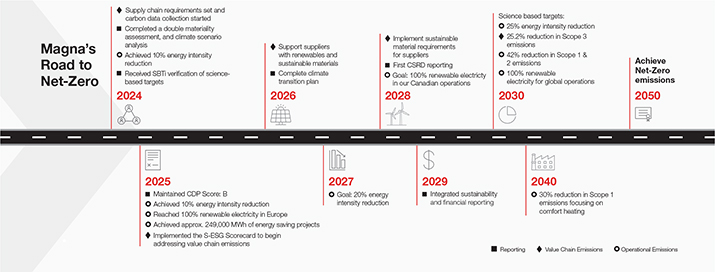
A-18 | 2026 Annual Information Form
We are focused on the following four pillars as we continue to evolve our net-zero roadmap:
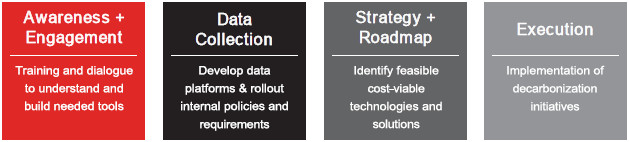
As Magna carries out activities within each pillar, with support from Operating Groups and Divisions, our focus will continue to be on energy conservation and reduction. In the near-term, our net-zero commitment is supported by our goal of achieving 100% renewable electricity in Canada by 2028, and globally by 2030. In 2025 we met a key milestone by achieving 100% renewable electricity in Europe, including Türkiye and the UK. To support this effort, Magna’s Global Energy Leads have been integrated directly into our global sustainability organization. Each Division’s Energy Champion is critical to achieving our net-zero commitments by working to deliver emission reductions, as well as cost savings and risk minimization. Progress is already being made in our manufacturing operations which implemented approximately 249,000 MWh of energy saving projects in 2025.
2025 Emissions and Energy Performance
In 2025, our absolute Scope 1 and Scope 2 (market based) emissions decreased by 1% and 23%, respectively. Over the last 2 years, our Divisions have implemented energy reduction projects providing over 513,000 MWh of annual energy savings. Having achieved our 100% renewable electricity goal in our European operations, approximately 39% of our global electricity procurement in 2025 was renewable and we remain on track for 100% by 2030. Our onsite renewable energy generation also increased to 81,595 MWh — a tenfold increase compared to 2023. We remain confident in achieving our SBTi near-term 2030 commitment — 42% reduction in scope 1 and 2 by 2030 — through continued energy reduction efforts combined with increases in renewable electricity usage in jurisdictions beyond Europe.
2.1.3 Climate Scenario Analysis
In 2024 we conducted detailed qualitative and quantitative Climate Scenario Analysis to identify our risks & opportunities to help manage uncertainty, test business resilience, and inform our strategy. This analysis aligns with the CSRD, and ISSB’s IFRS S2 climate-related disclosure standards. The Climate Scenario Analysis identified key climate risks and opportunities that could impact Magna’s operations and value chain and will help Magna align its climate initiatives to relevant risks and opportunities to drive sustainable growth.
The Climate Scenario Analysis involved evaluating two “storylines” or scenarios comprising both physical and transition risks:
| 1) | Net-Zero (NZE) Storyline: This represents a low emissions scenario consistent with a 1.5°C rise in temperature above pre-industrial levels in 2100. In this scenario, the world has massively transformed to limit climate change. The storyline derives transition scenarios from the International Energy Agency (“IEA”) and World Energy Outlook’s (“WEO”) Net-Zero by 2050 Scenario, and uses physical scenarios based on the IPCC SSP1-RCP 2.6 scenario from their 6th Assessment Report. |
| 2) | STEPS Storyline: This represents a moderate emissions scenario where current measures continue but fall short of limiting warming, and the global temperature rise is on track for 2.4°C above pre-industrial levels in 2100. In this scenario, the world makes only a moderate effort to limit climate change. The storyline is based on the IEA and WEO’s IEA Stated Policies Scenario (STEPS) for transition scenarios, and on the IPCC SSP2-RCP 4.5 scenario from their 6th Assessment Report for physical scenarios. |
2026 Annual Information Form | A-19
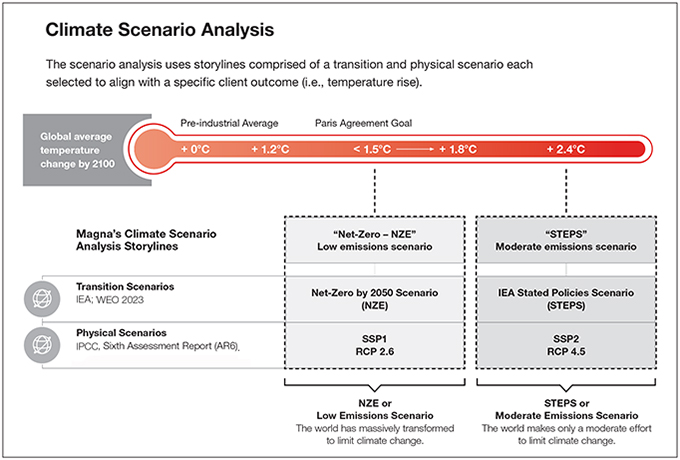
These storylines were selected for the following reasons:
|
Regulatory Compliance |
Satisfy framework and regulatory requirements. | |
|
Industry Alignment |
Aligned to the industry we operate in. | |
|
Transparency and Relevance |
Provide transparent and relevant data, as they are based on scenarios developed by globally recognized authorities. | |
|
Practical Future Trajectories |
STEPS offers a status quo based on current global environment policies, while NZE represents an ambitious outlook capturing steps to achieve Net-Zero emissions by 2050. | |
Going forward, we are working with key internal stakeholders to identify opportunities to integrate our climate scenario analysis into our existing risk management framework.
2.1.4 Sustainable Materials and Life Cycle Assessments
We are committed to advancing sustainability through the strategic use of sustainable materials and comprehensive LCAs. During 2025, we completed 120 LCAs and Product Carbon Footprints (“PCFs”) for our products at the request of our OEM customers with approximately 33% third-party verified. Our approach is designed to support our engineering and other departments in processing sustainable materials, setting internal targets, and meeting OEM customer requirements.
A-20 | 2026 Annual Information Form
LCAs are a growing part of our sustainability efforts, providing a comprehensive evaluation of the environmental impacts associated with all stages of a product’s life. This includes raw material extraction, manufacturing, distribution, use, and end-of-life disposal. By conducting thorough LCAs, we can identify opportunities for improvement, reduce our carbon footprint, and enhance the overall sustainability of our products.
At Magna, we are also part of the Catena-X initiative and are launching initiatives and pilot projects together with customers specifically for the Catena-X PCF use case to standardize and obtain high-quality data from our supply chain in support of our decarbonization goals to calculate a more accurate carbon footprint for our products.
Our sustainable materials strategy is built around four key pillars:
|
Circular materials / Recycled content in products
|
g | Renewable Materials
|
g | End-of-Life Recyclability
|
g | Products / design supporting vehicle efficiency
| ||||||
◾ Increase the recycled content of the input material of top commodities in our products |
◾ Increase the use of renewable materials in our products
◾ Exploring renewable materials such as biomethane or bio-naphtha, bamboo in various applications |
◾ Improving product recyclability for easier dismantling at the end of the life cycle
◾ Increasing recyclability of other material groups like plastics, rubber, glass and textiles
|
◾ Fully implemented eco-design and environmental compliance activities in our complete vehicle applications to drive fuel efficiency and overall vehicle sustainability
| |||||||||
This strategy involves the development and implementation of a roadmap that guides our organization in making informed decisions about sustainable materials. By leveraging our collective expertise, knowledge, and innovation, we aim to accelerate the transition to a low-carbon economy.
2.1.5 Addressing Scope 3 Emissions
Magna has established near-term energy saving goals (details in Section 2.2.3) and renewable electricity goals (details in Sections 2.1.2 and 2.2.3) to address our Scope 1 and 2 emissions. For Scope 3 emissions, our near-term and net-zero targets are reductions of 25% by 2030 and reductions of 90% by 2050, respectively, taking into account all 15 emissions categories (only 12 of which are relevant to Magna). While Magna intends to work on reducing the impact in all relevant categories; there will be significant focus on category 1 (Purchased Goods and Services) and category 11 (Use of Sold Product) which account for approximately 92% of our Scope 3 emissions based on our current Scope 3 emissions inventory.
Scope 3 Category 1: Purchased Goods and Services
Magna is pursuing Scope 3 Category 11 emissions reduction as part of our broader sustainability and decarbonization strategy. Purchased goods and services represent approximately 52% of our carbon footprint; and in pursuit of our SBTi targets Magna has embedded supply chain decarbonization into our operational planning and strategic decision-making. The company has set ambitious science-based targets, verified by the SBTi, with the goal of achieving net-zero emissions by 2050. To address Scope 3 Category 11 specifically, Magna is increasing supply chain transparency, refining our approach to responsible sourcing, and launching the Energy Optimization Playbook as part of the Supplier Partnership for the Environment SP working group to engage suppliers in emission reduction efforts. These initiatives are designed to optimize resource use, enhance energy efficiency, and foster collaboration across the value chain, helping to integrate environmental stewardship into manufacturing and procurement processes.
Scope 3 Category 11: Use of Sold Products
Magna’s approach to reducing Scope 3 Category 11 emissions focuses on supporting product electrification, improving data transparency, and collaborating across the value chain. These emissions are generated during the use phase of our sold products and account for approximately 40% of our carbon footprint. The tactics used to support our approach include mapping product sales to EV, ICE, and hybrid platforms, prioritizing electrified powertrain systems, where possible, and leveraging lifecycle assessments to identify high-impact components. Magna is also implementing AI supported dashboards for emission
2026 Annual Information Form | A-21
forecasting and scenario modeling. We are also engaging suppliers to provide auditable emissions data in 2026, this will include a requirement for certain suppliers to meet ISO 14067, which requires verification. These efforts align with Magna’s commitment to achieve a 25% reduction in Scope 3 emissions by 2030 and support the decarbonization efforts across the automotive industry.
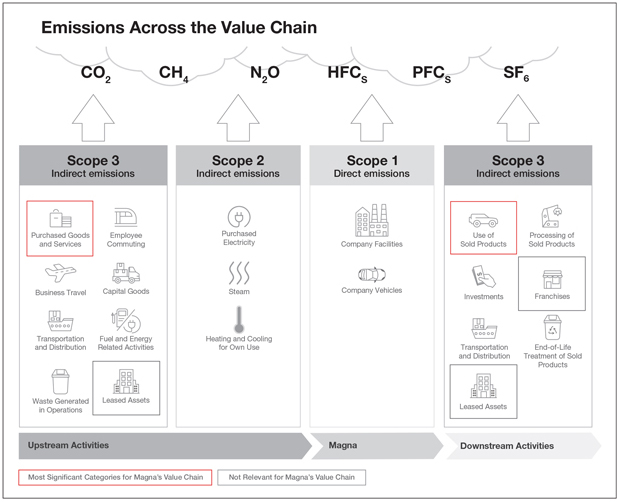
We maintain two working groups — Sustainable Materials, and Supply Chain Sustainability — that focus on supply chain decarbonization. In 2025 these cross-functional groups continued to contribute in-depth knowledge on commodities and technologies that will be instrumental in executing our net-zero strategy.
We took a number of actions to assist our suppliers in their decarbonization efforts:
Scope 3 Data Collection
We are committed to reducing carbon emissions and improving the impact of our products. These efforts cannot be achieved without the significant involvement of our supply chain. To assist our suppliers in improving their own environmental performance, we have introduced an environmental disclosure requirement for our supply base. We expect all our key suppliers to submit an Environmental Performance Disclosure. A failure to provide the disclosure could negatively impact the supplier’s rating.
A-22 | 2026 Annual Information Form
Transform: Auto Initiative
As a founding member of the Transform: Auto initiative, Magna has collaborated with OEMs across the automotive industry to support decarbonization. This initiative is designed to support the automotive sector in its transition to renewable energy and it supports Magna’s decarbonization goals, given that our supplier’s Scope 2 emissions make up a significant portion of Magna’s Scope 3 emissions.
The Transform: Auto initiative is a comprehensive program aimed at promoting renewable energy adoption and sustainability practices among automotive suppliers. The initiative focuses on several key areas, including (i) community solar projects - to provide an opportunity for suppliers to access renewable energy without the need for on-site installations; (ii) green tariff programs; (iii) utility-scale renewable energy procurement such as power purchase agreements; and increasing decarbonization education throughout the supply chain in the form of webinars, learning pathways, and courses. By engaging with suppliers and stakeholders, Magna aims to create a collaborative environment that fosters innovation and sustainable development.
2.2 Climate-Related Opportunities
2.2.1 Corporate Strategy
To drive long-term success, Magna is focused on a number of key areas as part of its corporate strategy. One strategic area critical to climate-related opportunities is Magna’s product portfolio.
Magna’s approach to product involves viewing our portfolio through the lens of a long-term owner. As a starting point for this approach, each of our businesses must meet the following requirements:
| • | operating in meaningful or growing markets with significant profit opportunities; |
| • | having strong market positioning and profitable growth, or a path toward both; |
| • | possessing sustainable competitive advantages. |
These requirements for our product portfolio have already delivered scale and market leading positioning across a number of different businesses and markets. For example, our portfolio reflects:
| • | global leadership in body and chassis, all-wheel drive/front wheel-drive, transmissions, latches, mirrors and contract vehicle assembly; |
| • | top five global positioning in ADAS; |
| • | North American leadership in exteriors and top three market positioning in seating; and |
| • | top five European market positioning in both exteriors and seating. |
Employing strategic portfolio management, we seek to achieve strong performance in leading markets. Practically, this involves managing all our businesses for continuous improvement, while deploying capital investments to areas that are most aligned with our long-term portfolio priorities.
One such priority has been to focus on businesses that can deliver profitable growth while remaining agnostic to the vehicle’s method of propulsion.
However, we believe that electrification provides growth opportunities, even though the pace of adoption may not be linear. As the proportion of vehicles on our roads transitions from ICE to EV, Magna is strategically positioned to increase the content and value we can deliver to our customers.
For a detailed description of Magna’s corporate strategy, see the “Our Corporate Strategy” in our Annual Information Form
2026 Annual Information Form | A-23
2.2.2 Markets & Products
The transition to a lower-carbon economy has provided, and is expected to continue to provide, opportunities to enter new product and service markets. Some recent new products developed to take advantage of opportunities from such transition include:
|
|
NEXT GENERATION 800V ELECTRIC DRIVE
| |
| Magna’s next generation 800v e-Drive solution (“e-Drive”) is a drop-in solution that incorporates several advanced technologies, resulting in significant reductions in weight and size, enhanced performance, extended driving range and greater sustainability. The innovation offers enhanced flexibility due to its lightweight (75 kg) design and 20% reduction in height from Magna’s prior generation e-Drive. A key technology and a supplier industry-first advancement is the ability to rotate the e-Drive 90 degrees around the drive axis, which allows improved system integration in the front and rear vehicle space. Delivering peak power of 250 kW and a peak axle torque of 5,000 Nm, the system also achieves up to 93% efficiency in real-world driving (including Worldwide harmonized Light vehicles Test Cycles (WLTC) and highway driving), which significantly improves efficiency across a wide range of vehicle speeds. The e-Drive system requires less aluminum and heavy rare earth materials, resulting in a significant reduction of CO2 emissions during production by approximately 20% compared to previous generation e-Drives.
| ||

|
DEDICATED HYBRID DRIVE SYSTEM
| |
| Magna continues to accelerate hybrid innovation with its first dedicated hybrid drive system award, designed to meet the evolving needs of global automakers. This innovative system combines electric motor technology with internal combustion engine efficiency, delivering a seamless transition between electric and hybrid modes. The system, which includes Magna’s DHD Duo System (a longitudinal front drive solution featuring an advanced dual e-motor and multi-speed design), offers enhanced performance, improved fuel efficiency, and reduced emissions, making it an adaptable solution for multiple vehicle platforms without the need for structural modifications. By leveraging advanced engineering and design, the dedicated drive system underscores Magna’s commitment to providing scalable and flexible powertrain solutions for the hybrid market. |
2.2.3 Resource Efficiency
Energy
Our aggregate global energy spend in 2025 amounted to approximately $ 477 million broken down by type as follows:
| • | Electricity — approximately $ 394 million |
| • | Natural Gas — approximately $ 62 million |
| • | Other (Propane; Liquid Petrol; Diesel; District Heat; Steam; Coal Gas) — approximately $ 21 million |
As part of our sustainability and operational efficiency efforts, we are focused on optimizing energy use, which may result in savings in overall energy costs. However, as we continue to forecast growth in Sales and number of facilities over the medium-term, we anticipate that our aggregate energy consumption may increase. Accordingly, we are focused on becoming more energy efficient (measured by energy consumption relative to Sales) so that, at minimum, our rate of increase in energy consumption slows.
In connection with our efforts to promote energy efficiency and to continue to make progress on our science based targets (which have a 2021 baseline year), we periodically establish short term energy reduction targets for each of our Operating Groups, as illustrated below.
In 2025 we achieved a 4% energy reduction from our 2023 operating year, marking the first milestone toward our broader science based reduction targets through 2030. We are continuing this trajectory with planned energy reductions of 7% in 2026 and 3.5% in 2027. From 2028 to 2030, we aim to sustain an annual reduction of 3%. Together, these targets demonstrate our ongoing commitment to lowering our environmental impact and driving continuous improvement in energy performance across all operations.
A-24 | 2026 Annual Information Form
2025 – 2030 Energy Reduction Targets
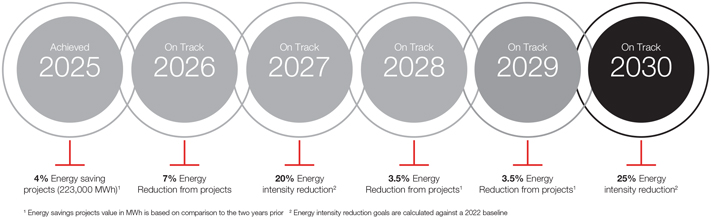
1 Energy savings projects value in MWh is based on comparison to the two years prior 2 Energy intensity reduction goals are calculated against a 2022 baseline
Our phased-in renewable energy strategy focused on Europe first (now 100% renewable electricity usage), followed by Canada, and then the other markets in which we operate. In 2025, 38.6% of our global electricity consumed was from renewable energy sources evidenced by renewable Energy Attribute Certificates (“EACs”) or from on-site generation from photovoltaic (solar panel) or solar thermal systems, where feasible. At the end of 2025, 192 of our facilities use renewable electricity in some form, with 132 such Divisions using 100% renewable electricity.
Renewable Electricity Purchases
In 2025, we purchased approximately 1,190,000 MWh of renewable electricity, an approximately 159 percent increase since 2021. In the near — and medium terms, adoption of renewable energy may increase our overall energy costs, but we are working to offset the impact of such increases through energy use reductions. Our renewable electricity efforts are bolstered by strategic partnerships, such as our agreement with Ontario Power Generation to have 100% renewable electricity in our Canadian facilities by 2028.
On-Site Renewable Electricity
We generated 81,595 MWh of on-site solar energy in 2025 — a ~53% increase compared to 2024. Our renewable energy self-generation has grown over time, however, self-generation represents a more limited opportunity for us compared to the purchase of EACs, since the vast majority of our facilities are leased, as well as other factors such as, footprint constraints for solar panels at certain owned facilities, and/or facilities in locations with relatively clean electrical grids that may make self-generation economically unfeasible.
To support the acceleration of our renewable energy transition, Magna is actively integrating renewable electricity solutions across its global Divisions, reinforcing our commitment to sustainability and operational excellence. In addition to cutting carbon emissions and air pollution, we view renewable electricity as a smart investment — lowering operational costs and leading to long-term cost savings. In 2025, we achieved 100% renewable electricity in Europe, including Türkiye and the UK. Looking ahead, we are committed to achieving 100% renewable electricity in Canada by 2028, and globally by 2030.
Energy Efficiency Activities
Nearly all of our Divisions — approximately 99% — maintain active energy teams dedicated to driving efficiency improvements. These teams work in close collaboration with our Global Energy Team, which provides strategic support through training programs, regional benchmarking sessions, newsletters, an internal collaboration platform, and best practice sharing to accelerate energy reduction initiatives.
2026 Annual Information Form | A-25
Our Divisions continue to implement a wide range of measures to reduce energy consumption and improve operational efficiency, including:
| • | Installation of LED lighting and integration of lighting controls into building management systems; |
| • | Optimized equipment start-up, shut-down, and idling procedures to minimize energy use during downtime; |
| • | Compressed air leak detection and repair programs; |
| • | Ceiling fans to balance air temperatures across production areas; |
| • | Computer-controlled utility and HVAC systems for improved performance and reduced energy demand; |
| • | Energy metering and monitoring systems, now standard across all manufacturing facilities; |
| • | Door and dock seal repairs to prevent heat loss; |
| • | High-efficiency chiller and compressor upgrades; |
| • | Integration of air economizers and heat recovery units into HVAC systems; |
| • | Software-managed and occupancy-sensor-controlled lighting retrofits; |
| • | Deployment of solar panels at selected facilities; |
| • | Insulation mattresses on equipment and heating units; |
| • | Waste heat recovery from high-temperature processes for reuse in other areas; |
| • | Variable frequency drives on motors and pumps; and |
| • | Participation in utility-sponsored energy savings and incentive programs. |
| • | Launch of AI pilot projects to optimize infrastructure systems and enhance energy data analytics for improved efficiency. |
After introducing the Global Energy Efficiency Tracker in 2024, we enabled real-time visibility into improvement activities across all sites and implemented a scoring system to drive continuous progress.
Our efforts to reduce energy consumption and operate facilities on a more energy efficient basis forms part of our formal MAFACT system — the primary operational assessment audit tool used to support our operational excellence. The MAFACT system establishes standards for achieving operational efficiencies, identifies benchmarks and promotes best practice sharing among Divisions in Magna. The integration of energy management elements into a core operational assessment tool such as MAFACT is intended to reinforce the importance of energy management throughout the organization and help realize potential cost savings. In 2025, we implemented 1,270 energy saving projects across all of our Operating Groups which saved approximately 249,000 MWh and resulted in approximately 67,144 tons of Carbon Dioxide Equivalent (“CO2e”) in annual savings using the location-based method.
Recognizing the critical role of energy optimization in achieving our net-zero targets, we created a dedicated approval category for energy efficiency and sustainability-related capital investments. In parallel, we launched the ECO50 initiative in 2024, targeting $50 million annual energy costs avoidance through energy reduction projects and on-site renewable generation. By October 2025, ECO50 successfully achieved its goal. Building on this momentum, we initiated Phase 2, aiming for an additional $50 million annual energy costs savings by the end of 2026.
To further accelerate progress, we introduced two global campaigns in 2025:
| • | Downtime Challenge: Engaging all plants to reduce energy consumption during non-production hours. |
| • | ZERO Cost Case Study Campaign: Sharing and evaluating innovative projects from across our network that deliver measurable savings without requiring monetary investment. |
Recent project highlights include:
| • | Implementation of a smart retrofit solution for compressed air leaks, saving 1.65 million kWh annually in a U.S. Division. |
A-26 | 2026 Annual Information Form
| • | Introduction of a tubular daylighting system in the workshop in one of our Chinese Divisions, replacing daytime LED lighting with natural light. The system, combined with sensor-controlled switching, saves 14,400 kWh per year and provides uniform, glare-free illumination, improving both energy efficiency and working conditions. |
| • | Deployment of machine idle shutdown and monitoring alarms on injection molding machines at a Canadian Division, reducing energy waste by 1,134,388 kWh per year. |
These initiatives reflect our commitment to embedding energy efficiency and sustainability into every aspect of our operations and driving continuous improvement toward our long-term goals.
2.3 Climate-Related Risks and Risk Mitigation
Magna maintains both top-down and bottom-up processes for identifying and assessing sustainability-related risks within the governance structure described in “Section 1 — Sustainability Governance” of this Sustainability Report. In order to fully understand the risks set out below, you should also carefully consider the risk factors set out in “Risk Factors” in our AIF.
2.3.1 Transition Risks and Risk Mitigation
Regulatory Policy Actions
Applicable near-term policy actions related to climate change generally fall into one of the following categories, each of which may have an indirect effect on Magna:
| • | Average Fleet Emissions or Fuel Efficiency Regulations: Governments in key auto producing regions have set challenging average vehicle fleet emissions or fuel efficiency targets which OEMs must meet, including the E.U., China, Canada, and the U.S., as detailed below. We regularly monitor changes in regulation relating to emissions and fuel efficiency as part of our strategic planning processes: |
European Union: E.U. regulations generally require OEMs to achieve E.U. fleet-wide average emissions of 93.6 g CO2/km for cars from 2025 to 2029 (153.9 g CO2/km for vans), and 49.5 g CO2/km (90.6 for g CO2/km vans) from 2030 – 2034, each based on the Worldwide Harmonized Light Vehicles Test Procedure (“WLTP”). As part of the E.U.’s approved “Fit for 55” legislation, the target is a 100% reduction from 2035 onwards, meaning 0g CO2/km for both cars and vans. In April 2025 the European Commission proposed a one-time flexibility measure allowing car and van manufacturers to meet 2025–2027 CO2 targets over a three-year average rather than annually. Vehicle manufacturers with an average fleet economy in excess of the target must pay an excess emissions penalty for each vehicle registered within the E.U. Penalties levied on non-compliant OEMs may be passed on to vehicle-buying consumers, which could impact demand for such vehicles and thus demand for Magna products supplied for such programs. Additionally, E.U. regulations contain incentives aimed at promoting the development of Zero- and low-emission vehicles (“ZLEVs”). The CO2 emissions targets applying to any particular OEM will be relaxed if its share of ZLEVs registered within the E.U. in any year exceeds 25% from 2025 to 2029; however, such incentives will be eliminated under the Fit for 55 legislation from 2030 onwards.
China: China has maintained stringent (China VI) emissions regulations addressing particulate emissions since 2021. In 2023, a new phase of China’s emission standards, known as China VI-B, was implemented whereby non-compliant vehicles are no longer allowed to be produced, imported, or sold in China (subject to a 6-month grace period that ended December 31, 2023). China is accelerating the development of the China VII vehicle emission standards, with the official standards expected to be released in 2026. These standards are expected to drastically reduce vehicle NOx, particulate matter, and CO2 emissions.
United States: U.S. Environmental Protection Agency (“EPA”) vehicle emissions standards for passenger cars and light-duty trucks with model years 2023 – 2026 would result in a fleetwide average fuel economy of approximately 40 mpg (miles
2026 Annual Information Form | A-27
per gallon) in 2026. In March 2024, the EPA issued its new emissions standards that would increase in stringency each year from model year 2027 to model year 2032. If maintained, the new standards would result in an industry-wide average target of:
| • | 85 grams/mile of CO2 for light-duty vehicles by 2032, representing a 50% reduction in projected fleet average GHG emissions compared to 2026 model year standards, and |
| • | 274 grams/mile of CO2 for medium-duty vehicles by 2032, representing a 44% reduction in projected fleet average GHG emissions compared to 2026 model year standards. |
In addition, in June 2024, the U.S. National Highway Traffic Safety Administration announced the final corporate Average Fuel Economy (“CAFE”) standards — regulating how far vehicles must travel on a gallon of fuel for 2027 to 2031 model year vehicles. The standards would effectively bring the average light-duty vehicle fuel economy up to approximately 50.4 miles per gallon by model year 2031. However, in December 2025, under the current U.S. administration, a proposal was unveiled by the U.S. Department of Transportation to relax fuel economy standards by setting the industry-wide average for light-duty vehicles at roughly 34.5 miles per gallon through the 2031 model year. The proposed standards will also eliminate the CAFE credit trading program starting in model year 2028, which previously allowed auto makers to trade compliance credits.
The current U.S. administration has also taken steps to roll back policies supporting electric vehicles (“EVs”). In addition to the proposed roll back of tailpipe emissions standards discussed above, the administration has eliminated EV purchase incentives, revoked the prior administration’s executive order targeting 50% of new vehicle sales to be zero-emission by 2030, and halted funding for EV infrastructure that had been earmarked in the U.S. Inflation Reduction Act of 2022 and the Infrastructure Investments and Jobs Act. The U.S. EPA has also recently rescinded its 2009 Endangerment Finding for greenhouse gases, which forms the basis for the regulation of motor vehicle emissions standards.
Globally, the EV market continues to grow, with nearly one in five cars sold in 2025 being electric. China and certain countries in Europe are leading the charge with strong government support and incentives. Norway is a global leader in EV adoption with 92% of total passenger vehicle sales being EV in 2024. China was a leader in volume of EVs sold based on 48% of vehicle sales being EVs in 2024. Meanwhile, United States lags other major markets with EVs comprising approximately 10% of total car sales in 2024. At a global level, tightening emissions standards are intended to promote the transition to ZEVs. OEMs have been spending significant sums in R&D in order to meet the higher regulatory standards. Although production of ZLEVs/ZEVs is accelerating due to regulatory requirements, to the extent that ZLEVs/ZEVs do not sell at the levels expected, including as a result of governmental policy reversals, production volumes may need to be reduced. Lower than forecast production may impact our ability to recover various pre-production, tooling, engineering, and other costs incurred in advance of production, or to recover them within the timeframe initially contemplated in our business plan. Additionally, we may experience production inefficiencies, including as a result of unutilized or underutilized production capacity and/or disruptions to our workforce plans at affected facilities.
| • | Phase-Out of New ICE Vehicles: In addition to more stringent fleet emissions and fuel efficiency standards, the number of national and subnational jurisdictions committing to, or accelerating existing commitments to, phase-out of the sale or registration of new ICE engines is growing. As part of its ‘Fit for 55’ legislation, the E.U. will require 100% reduction in CO2 emissions by 2035 effectively banning the sale of new gasoline and diesel fueled vehicles in E.U. member countries by that date, with an interim reduction of 55% by 2030. |
The United Kingdom introduced new regulations (the Zero Emission Vehicle (“ZEV”) Mandate) in January 2024 requiring 22% of all new cars and vans sold by OEMs in the UK to be zero emission. However, some flexibilities were introduced which effectively brought down the target to 18%, and which the auto industry met with 19.6% EV sales in 2024. For 2025, the headline target is 28% but with flexibilities this works out to just over 22%, with the percentage rising to 80% by 2030, and culminating in the complete ban on the sale of new ICE vehicles by 2035.
In North America, Canada is advancing vehicle electrification through a revised regulatory and industrial strategy announced in February 2026. The federal government is repealing the Electric Vehicle Availability Standard and replacing it with greenhouse gas emissions standards for light-duty vehicles. These standards are intended to place Canada on a pathway
A-28 | 2026 Annual Information Form
toward approximately 75% electric vehicle sales by 2035 and 90% by 2040, while providing manufacturers flexibility to comply using a range of technologies, including battery-electric vehicles, plug-in hybrids, and other high-efficiency vehicles. Complementary measures include investments in domestic vehicle and battery manufacturing, clean electricity and charging infrastructure, and renewed consumer incentives to support affordability and accelerate zero-emission vehicle adoption.
In the U.S., the State of California’s, California Air Resources Board (“CARB”) had adopted the Advanced Clean Cars II regulations in 2022. The regulations ban ICE-powered vehicles in California by 2035, and include progressive targets for ZLEVs in the intervening years. Several U.S. States and the District of Columbia have existing laws that require state emissions policies to mirror those of California. Currently 17 U.S. states have adopted all or part of California’s low-emissions or zero-emission vehicle regulations. In addition, the following U.S. states have adopted California’s Advanced Clean Cars II regulations: Colorado; Delaware; Maryland; Massachusetts; New Jersey; New Mexico; New York; Oregon; Rhode Island; Vermont; Washington and the District of Columbia. In May 2025, the EPA waivers granted to California were rescinded, including the Clean Air Act waiver underpinning the Advanced Clean Cars II regulations. California has challenged the revocation and it is currently under judicial review.
Given the lead times for vehicle development such regulation and proposed regulation are expected to increasingly impact OEM and automotive supplier product planning and development this decade, and have led to several OEM establishing EV targets for specific brands or their complete vehicle offerings. Although the number of EVs sold globally continues to grow, the rate of growth has moderated in some markets due to consumer hesitancy related to issues such as: vehicle affordability; reduced availability of government rebates for the purchase of EVs; concerns regarding evolving battery technologies; anxiety regarding driving range; inadequacy of charging infrastructure; new EV OEMs and models with little or no operating and warranty history; and rapid depreciation and deterioration in residual values for EVs. As a result, Certain OEMs, primarily in North America, continue updating their EV strategies by deferring or cancelling planned EV programs and/or reducing production volumes below the levels at which we previously quoted. Where possible, we are pursuing commercial recoveries from our customers as a result of these actions, but we may be unable to fully recover various pre-production, tooling, engineering, and other costs incurred in advance of production, or unable to recover them within the timeframe originally contemplated in our business plan. We may also experience production inefficiencies, including as a result of unutilized or underutilized production capacity. Despite the current pace of EV adoption and the program deferrals discussed above, each of our top six customers maintains targets for greater EV production by the 2030-2035 period. BEVs accounted for approximately 16% of total of global light vehicle production in 2025, and are projected to reach 28% by 2030 (41% by 2035) based on current S&P Global (Autobase) light vehicle production forecasts.
| • | Vehicle Restrictions in Congested Urban Centres: municipal governments in a number of cities around the world have introduced restrictions on personal-use vehicles in congested urban centres, in an effort to reduce CO2 emissions and improve urban air quality. Examples of the types of restrictions include: car-free zones; toll charges; and use restrictions by license plate. Continued expansion of such initiatives could reduce the demand for personal-use vehicles, which could affect our profitability. |
We attempt to mitigate applicable policy risks relating to climate change-related regulation in a number of ways, including:
| • | monitoring and evaluating global regulatory developments; |
| • | early-stage interaction with our OEM customers to understand their product priorities and regulatory compliance requirements; |
| • | in-house R&D, including our ongoing analysis of industry and other trends, combined with investment strategies in mobility and technology start-ups; and |
| • | strategic planning processes at both Operating Group and Corporate levels, including Board oversight of strategic plans. |
In terms of direct policy actions affecting our operations, we anticipate continued strengthening of environmental regulations related to industrial emissions and discharge of pollutants to air, water and ground. We currently face strict environmental regulations in the countries where we operate and have developed a global environmental management program in order to comply with or exceed regulatory standards. Our environmental management program is regularly updated to address
2026 Annual Information Form | A-29
changing environmental laws and regulations. Refer to “Section 2.5.1 — Environmental Stewardship” in this Sustainability Report for a description of the program.
In considering the potential impact of the above or other climate-related policy actions, readers are encouraged to review the following risk factors in “Risk Factors” in our AIF:
| • | Geopolitical Crises and Military Conflicts |
| • | Threats to Free Trade Agreements |
| • | International Trade Disputes |
| • | Pace of EV Adoption |
| • | North American Electric Vehicle Program Deferrals, Cancellations and Volume Reductions |
| • | Regional Volume Declines |
| • | Deteriorating Vehicle Affordability |
| • | Consumer Take Rate Shifts |
| • | Evolution of the Vehicle |
| • | Evolving OEM Competitive Landscape |
| • | Restructuring Costs and Impairment Charges |
| • | Changes in Laws |
| • | Market Shifts |
| • | Customer Purchase Orders |
| • | Customer Pricing Pressure/Contractual Arrangements |
| • | Environmental Compliance |
Over the medium-to long-term, carbon pricing initiatives may present a risk to our profitability. According to the World Bank, in 2025 there were 113 carbon pricing initiatives including Emissions Trading Scheme (“ETS”), Carbon Tax, and Governmental Crediting mechanisms, implemented or scheduled for implementation in 55 countries and 44 sub-national jurisdictions, which would cover emissions representing 28% of global GHG emissions.
Currently, some of our operations are impacted by two emissions trading schemes:
| • | E.U. ETS: Our Magna Steyr complete vehicle assembly operation participates in the E.U. Emissions Trading Scheme which works on the ‘cap and trade’ principle. A cap is set on the total amount of certain GHG that can be emitted by the operators covered by the system. The cap is reduced over time so that total emissions fall. Within the cap, operators purchase or receive emissions allowances, which they can trade with one another as needed. The limit on the total number of allowances available aims to maintain their value. The price signal incentivizes emission reductions and promotes investment in innovative, low-carbon technologies, while trading brings flexibility so that emissions are cut where it costs least to do so. After each year, an operator must surrender enough allowances to cover fully its emissions, otherwise heavy fines are imposed. If an installation reduces its emissions, it can keep the spare allowances to cover its future needs or else sell them to another operator that is short of allowances. |
| • | Ontario Emission Performance Standards (“EPS”) Program: While none of our facilities are currently mandated to join the EPS Program, two of our facilities in Ontario voluntarily participate in the Program, and several other of our Ontario facilities may also voluntarily opt in. The Province of Ontario Emissions Performance Standards Regulation is used to determine an emissions limit that industrial facilities must meet each year, with the intent of, among other things, encouraging Ontario’s industrial sector to reduce greenhouse gas emissions. Facilities registered under the Ontario EPS must quantify and report their GHG emissions data to the authorities, have such emissions data verified and must comply with their emissions limits. The compliance obligation for a facility under the Ontario EPS program is the difference between its verified total emissions and its verified total annual emissions limit imposed by the Ontario EPS program. A facility can satisfy its compliance obligation either by reducing its GHG emissions or submitting a compliance instrument. The two compliance instruments available are (i) excess emissions units (“EEUs”) where the facility pays a carbon price per tons of CO2e for exceeding the annual emissions limit; and (ii) emissions performance units, which are credits earned by a facility for emitting less GHG that its annual emissions limit under the Program. The Program aligns carbon prices for future years with Canada’s federal benchmark, which will result in the price of EEUs to increase annually. |
The carbon pricing schemes discussed above have not significantly impacted our profitability to date. We are pursuing energy reduction measures and developing decarbonization strategies for our manufacturing facilities as detailed in this Sustainability
A-30 | 2026 Annual Information Form
Report. However, over the medium- to long-term, carbon pricing initiatives could affect our profitability to the extent we are unable to implement cost-saving or energy reduction measures within a timeframe and/or at a cost which enables us to offset or avoid the cost of carbon pricing initiatives.
Customer-Driven Policy Actions
A number of our OEM customers have set carbon reduction targets and are challenging Tier 1 Suppliers to support such targets. Some such OEM targets and expectations are more aggressive than our own decarbonization targets. In some cases, we are being asked to quote the supply of future programs based on 100% renewable energy use for production. Although we expect to meet or exceed our customers’ expectations, the inability to do so within the timeframes expected could result in the loss of some future business.
Climate-Related Litigation
We do not currently believe that climate-change related litigation represents a significant legal risk for us. However, if OEMs are adversely impacted by climate-change litigation, there is a possibility that Tier 1 Suppliers like Magna could face additional pricing pressure. Readers are encouraged to review the “Customer Pricing Pressure/Contractual Arrangements” risk factor in “Risk Factors” in our AIF.
Technology
Investments in automotive technologies that support the transition to ZLEVs can be significant, particularly in product areas such as battery systems for hybrid and EVs. While our product strategy does not currently include battery systems or other components which generate or store energy for ZLEVs, we have been awarded several battery enclosure programs and currently offer a range of electrified drivetrain products, hybrid dual-clutch transmissions (“HDTs”), dedicated hybrid transmissions (“DHTs”), as well as complete e-Drive systems. We have also expanded our product offering into other areas relevant to ZLEVs — for example, in conjunction with a joint venture partner, we can offer customers a complete EV platform. Our R&D spending for electrification solutions has been significant over the last few years and is expected to continue to be in coming years as electrification-related technologies continue to evolve. Additionally, our OEM customers are making significant investments in the development of ZLEVs, which is impacting their profitability and could lead to increased pricing pressure on us.
As ZLEVs increase their proportion of the overall vehicle market over the medium-to-long-term, we expect our sales of manual transmissions and traditional DCTs to decline, and sales of HDTs, DHTs and e-Drive systems to increase. The increasing adoption of electrified drivetrain solutions adversely impacts our AWD and 4WD businesses over the long term, since it is possible to achieve AWD through the use of electric motors in hybrid or fully-electrified drivetrains. However, OEM product plans show mechanical AWD and 4WD programs extending out for approximately the next decade. We seek to offset displacement of mechanical AWD and 4WD systems through increased sales of electrified product offerings such as e-Drive systems.
Overall, we believe that the range of products we offer our OEM customers provides us with a competitive advantage and an effective hedge against the market uncertainties associated with the transition to ZLEVs. As illustrated below, a substantial majority of our products are “agnostic” with respect to the type of vehicle propulsion system used, and therefore remain relevant to ZLEVs.
In the case of drivetrain products, we view the know-how gained from our mechanical drivetrain expertise as being critical to our ability to deliver innovative electrified solutions that meet our customers’ needs. In addition to continuing to offer a range of mechanical and electrified drivetrain products, we aim to mitigate technology transition risks through:
| • | early-stage interaction with our OEM customers to understand their product priorities and regulatory compliance requirements; |
| • | in-house R&D including our ongoing analysis of industry and other trends, combined with investment strategies in mobility and technology start-ups; and |
2026 Annual Information Form | A-31
| • | strategic planning processes at both Operating Group and Corporate levels, including Board oversight of strategic plans. |
In considering the potential impact of the above or other climate-related policy actions, readers are encouraged to review the following risk factors in “Risk Factors” in our AIF:
| • | Intense Competition |
| • | Consumer Take Rate Shifts |
| • | Evolving OEM Competitive Landscape |
| • | Deteriorating Vehicle Affordability |
| • | Pace of EV Adoption |
| • | Evolution of the Vehicle |
| • | Customer Purchase Orders |
| • | Restructuring Costs and Impairment Charges |
| • | Technology and Innovation |
| • | Changes in Laws |
| • | Market Shifts |
| • | Dependence on Outsourcing |
| • | Customer Pricing Pressure/Contractual Arrangements |
| • | Investments in Mobility and Technology Companies |
| • | Intellectual Property |
Market
Some of the risks impacting the market for our products in the transition to a lower carbon economy are described above under “Regulatory Policy Actions” and “Technology”. Additionally, there are potential risks to the demand for personal mobility vehicles, and thus for our products, from technology-driven shared mobility solutions such as ride hailing and ride sharing. To date, such shared mobility solutions have not had a material impact on the demand for new vehicles and no such adverse effect is expected in the near- to medium-term. In any event, our own strategy related to new mobility seeks to mitigate risks to our business and realize opportunities based on the breadth of capabilities we can offer new mobility customers.
Additionally, in order to enhance our understanding of potential shifts in consumer behavior, we conduct our own analysis of various factors that are expected to drive future personal and shared mobility trends, including through:
| • | monitoring and analysis of social, digital, demographic, regulatory, industry, geopolitical and other trends which may create demand for and drive development of new automotive and mobility technologies; |
| • | review of academic research; |
| • | collection and screening of ideas submitted through innovation programs; and |
| • | early-stage interaction with our OEM customers and new mobility market entrants to understand their product priorities. |
We do not currently anticipate long-term supply constraints on key commodities required by us in our business, including steel, aluminum or resin. However, production processes for steel and aluminum are carbon intensive, with relatively scarce supply of low-carbon alternatives. As the entire industry’s decarbonization and net-zero efforts increase, the price of low- carbon steel and aluminum may increase in the near- and medium-terms until the supply of low-carbon product is sufficient to meet growing demand. In the near- and medium-term, the increasing production of ZLEVs may also strain supplies of the rare earth minerals and other metals required for vehicle battery systems, which we do not supply, including nickel, cobalt and lithium used in EV batteries, copper for EV charging infrastructure and rare earth metals for EV motor magnets. Geopolitical events and trade disputes, can also significantly impact the supply of rare earth minerals by creating uncertainties and volatility in global markets. Such disputes often result in tariffs, export restrictions, or other measures that can strain supplies of critical materials. However, such supply constraints could help spur the development of alternative battery technologies or low carbon fuels and/or promote technological breakthroughs that could facilitate market penetration of hydrogen fuel cell or other technologies. We intend to continue developing and offering solutions such as e-Drive systems which are neutral as to electric power source (battery or hydrogen fuel cell stack) in order to mitigate potential risks related to supply constraints of rare earth minerals or other commodities needed for current ZLEV power source technologies.
A-32 | 2026 Annual Information Form
In considering the potential impact of market risks, readers are encouraged to review the following risk factors in “Risk Factors” in our AIF:
| • | North American Electric Vehicle Program Deferrals, Cancellations and Volume Reductions |
| • | Interest Rates |
| • | Intense Competition |
| • | Consumer Take Rate Shifts |
| • | Pace of EV Adoption |
| • | Evolution of the Vehicle |
| • | Deteriorating Vehicle Affordability |
| • | Evolving OEM Competitive Landscape |
| • | Supply Chain Disruptions |
| • | Quote/Pricing Assumptions |
| • | Commodity Price Volatility |
| • | Technology and Innovation |
| • | Market Shifts |
| • | Dependence on Outsourcing |
| • | Customer Pricing Pressure/Contractual Arrangements |
| • | Investments in Mobility and Technology Companies |
Reputation
Since light vehicles are contributors to global GHG emissions, Tier 1 suppliers like Magna may face reputational risks from participation in the automotive industry. Examples of such risk types include potential loss of business from sustainability-focused customers, reduced investor demand for our shares, and challenges attracting talent. A number of our OEM customers are embedding sustainability criteria in their sourcing decisions and could reduce purchases from us if they perceive Magna to lag other suppliers with respect to sustainability. Stakeholders, including investors and employees, as well as prospective employees are increasingly focused on companies’ sustainability efforts. Investors may sell shares of investee companies perceived to be less sustainable. In addition, younger workforce demographics want to work in companies they perceive as sustainable, making it difficult for companies to attract such talent if the company is perceived as lagging. However, OEMs and Tier 1 Suppliers have been proactively adapting to climate change and transitioning to a lower carbon economy, as evidenced by the significant spending on R&D and technological innovation to reduce CO2 emissions, particularly through electrification and powertrain efficiency, as well as the setting of decarbonization targets in their own operations. At the same time, particular OEMs may be viewed as more or less sustainable based on their sustainability strategies and commitment to transitioning to a lower-carbon economy. Equally, particular vehicle models or even entire vehicle segments may be perceived to be more or less sustainable. As a supplier of a broad range of systems to all major OEMs, we do not anticipate any consequences to our reputation by virtue of the fact that we may supply to any particular OEM, vehicle or vehicle segment. In any event, we believe that our R&D and technological innovation, which is focused on lightweighting, improved fuel economy and lower emissions, together with our sustainability strategy, including our net-zero commitments, and respectable ESG ratings, serve to mitigate potential reputational risks.
2.3.2 Physical Risks and Risk Mitigation
Acute Physical Risks
With the increased frequency and severity of extreme weather events associated with Climate change, including floods, windstorms, wildfires, tornados, tsunamis, hailstorms and other natural weather hazards, we face the risk that such an event could cause significant damage to one or more of our facilities or those of our customers and/or sub-suppliers. While our primary concern in an acute climate event affecting one of our facilities would be the safety and well-being of our employees, property damage and business interruption would represent the primary financial risk.
An acute climate event that significantly damages one of our facilities, could disrupt our production and/or prevent us from supplying products to our customers. Such an event could lead to us incurring a number of costs, many of which may be unrecoverable, including: costs related to the physical repair of any damage to our facility; costs related to premium freight or re-sourcing of supply; penalties or business interruption claims by our customers; loss of future business and reputational damage; and higher insurance costs going forward. Extreme climate events could also disrupt supply chains for the entire
2026 Annual Information Form | A-33
industry over the near-, medium- and long-term. The National Centers for Environmental Information, a U.S. federal agency, estimates that the number of billion-dollar weather and climate disasters in the United States has risen significantly to an annual average of 23 in the last five years, from an annual average of three per year in the 1980s. In recent years, a number of supply disruptions resulting from extreme weather have occurred around the world, including:
| • | A hurricane in the U.S. Gulf Coast that caused delays in automotive component deliveries and production halts. |
| • | Typhoons in Southeast Asia that damaged infrastructure and logistics networks in Vietnam and Thailand, impacting the supply of automotive components. |
| • | Flooding in India and Bangladesh that disrupted production and delivery of raw materials needed for automotive manufacturing. |
| • | Flooding in Brazil that halted production of major automotive OEMs. |
| • | Low water levels on major water ways causing disruption in shipments critical to German automotive parts suppliers. |
Such events can cause shortages of critical materials, which in turn drives prices higher. Efforts to mitigate the impact of such events often result in higher near-term costs until disruption of the affected material has been resolved, due to factors such as premium freight costs for substitute materials. As the frequency of such events increases, we may be forced to maintain higher inventories of various materials and components required for production, to minimize potential disruptions.
We maintain a global property risk control (“PRC”) program to support our efforts to mitigate risks to our employees’ safety, physical property risks and potential for business interruption due to extreme weather events. The program, which includes risk engineering with support from a third party property risk engineering consulting firm, includes the following elements to promote the physical resiliency of our facilities and minimize the risk of disruption to our operations: pre-screening of facility site selection; acquisition risk assessments; periodic facility inspections; facility construction and improvement design review and recommendations; training and education. Our third party risk engineering consultant typically engages in over 170 physical on-site assessments annually to evaluate various risks, including those relating to natural hazards and also conducts targeted analysis of areas of concern. Using the Swiss Re CatNet and Munich Re natural catastrophe databases, the advisor has analyzed over 400 unique Magna locations, including our 330 manufacturing Divisions, to assess climate related exposures, including: flood, wind, storm surge, wildfire, tornado, tsunami, hailstorm, lightning, temperature change, precipitation, sea level rise risk and water security. The results of the analysis form the basis of discussions with our PRC group regarding potential risk control recommendations to be implemented in our facilities.
In certain circumstances, the program extends the risk assessment to our direct suppliers by identifying and evaluating potential exposures to our direct supply chain (including natural hazards) which could potentially disrupt business operations. To augment our monitoring capabilities, we use a third party software platform that, among other things, includes live monitoring of supply chain risks, including weather events such as drought, floods, earthquakes, landslides, and tropical storms. Where such supply chain exposures are identified, a more detailed assessment may be performed to better understand the supply chain risk, including further on-site assessment, where practicable.
In considering the potential impact of acute physical risks, readers are encouraged to review the following risk factors in “Risk Factors” in our AIF:
| • | Supply Chain Disruptions |
| • | Semiconductor chip supply disruptions and price increases |
| • | Regional Energy Supply and Pricing |
| • | Legal and Regulatory Proceedings |
| • | Climate Change Risks — Transition and Physical Risks |
An extreme weather event that damages any of our manufacturing Divisions and results in injuries or fatalities among employees at such Division could have a material adverse effect on our reputation and could result in legal claims being brought against us.
A-34 | 2026 Annual Information Form
Climate change considerations may impact the availability of insurance capacity and increase premiums for insurance coverage in general, and in particular, for properties in high-risk locations. Additionally, we may need to self-insure a higher level of risk, which could result in a material adverse effect on profitability in the event of an extreme weather event which causes damage to one or more of our facilities.
Chronic Physical Risks
As part of our PRC program, we have retained an advisor to map our global footprint against identified earthquake, wind exposed/ hurricane, flood exposed and wildfire zones, as well as areas with low water security, in order to assist us with footprint planning, as well as our understanding of, and efforts to address, potential risks associated with such types of natural catastrophes. This footprint mapping exercise provided the following conclusions:
| • | Property Risk Concentrations: The top ten geographic regions in which we have large concentrations of property/asset risk, meaning multiple locations within a 35 km radius, comprise approximately 44% of the total insured value (“TIV”) under the property risk program. These geographic regions are located in Austria, Canada, Germany, Mexico and the U.S. All of the regions of concentrated property/asset value are considered to be “Low” seismic hazard zones and are not exposed to tropical cyclones. |
| • | Seismic Zones: Scientific research is increasingly linking the effects of climate change on seismic activity. More specifically, it is believed that changes in climate that alter ice and water loads could lead to more frequent fault movements and earthquakes due to rapidly changing stress conditions. We have operations in Austria, Morocco, Portugal, India, Türkiye, Japan, Italy, Romania, North Macedonia, Serbia, China, the U.S., and Mexico comprising approximately 5.5% of the TIV under our property risk program, which are located in regions of “moderately high” or greater seismic hazard. There are no Magna operations in regions where the seismic hazard is considered “Very High” or “Extreme”. |
| • | Tropical Cyclone Zones: Operations in certain parts of Mexico, Japan, China, India, and the U.S. comprising approximately 4.2% of the TIV under our property risk program are located in hurricane risk Zone 1 to Zone 5, with 2 locations in Mexico, 1 location in China, 1 location in India and 1 in the U.S. falling in Zone 3, as per Munich Re’s Natural Hazards Assessment Network (NATHAN) categorization. TIV by Tropical Cyclone Zones are as follows: |
| Munich Re (NATHAN) Tropical Cyclone Zone | Proportion of TIV | |
| Zone 5: > 300 km/h |
NIL | |
| Zone 4: 252-300 km/h |
NIL | |
| Zone 3: 213-251 km/h |
0.5% | |
| Zone 2: 185-212 km/h |
0.3% | |
| Zone 1: 142-184 km/h |
3.4% | |
| Zone 0: 76-141 km/h |
23.5% | |
| No hazard: < 76 km/h |
72.3% | |
| • | Flood Zones: Flood risk is typically categorized as 50-year, 100-year, 200-year and 500-year flood risks. Definitions of these categories based on Swiss Re’s CatNet Global Flood Zone (GFZ) categorization showing the number of our locations and the proportion by TIV for each category are as follows. The information provides insights into possible flood hazards across the property portfolio. Site specific flood hazard determination requires highly precise geocoding, digital local authority |
2026 Annual Information Form | A-35
| flood maps, site finished floor elevation and other related construction details. In many cases, site-level review and validation were completed to confirm the exposure: |
| Category | Flood Probability |
Number of Locations |
Proportion of TIV | |||
| 50 year |
1 in 50 (2%) chance of occurring in a year | 17 | 1.4% | |||
| 100 year |
1 in 100 (1%) chance of occurring in a year | 65 | 9.2% | |||
| 200 year |
1 in 200 (0.5%) chance of occurring in a year | 58 | 11.2% | |||
| 500 year |
1 in 500 (0.2%) chance of occurring in a year | 32 | 2.8% | |||
| Outside |
Outside recognized flood zones | 518 | 75.4% | |||
Climate change is associated with a rise in sea levels as well as an increase in the frequency and severity of flooding, which places properties located within a five kilometres radius of the current coastline at greater risk of coastal flooding. A total of thirteen (13) of our Divisions are located five kilometres or closer to a coastline or body of water and thus may be at higher risk from the effects of climate-change related sea rise or flooding:
| No. of Divisions | Location(s) | Body of Water | ||||
| 2 | Michigan, U.S. | Lake Michigan | ||||
| 1 | Ohio, U.S. | Lake Erie | ||||
| 1 | California, U.S. | San Pedro Creek | ||||
| 1 | Ontario, Canada | Lake Ontario | ||||
| 1 | Liverpool, U.K. | River Mersey | ||||
| 1 | Bari, Italy | Adriatic Sea | ||||
| 1 | Kocaeli, Türkiye | Lake Sapanca | ||||
| 1 | Tangier, Morocco | Atlantic Ocean | ||||
| 1 | Santa Catarina, Brazil | Rio Piral | ||||
| 1 | Hangzhou, China | East China Sea | ||||
| 1 | Taizhou, China | East China Sea | ||||
| 1 | Kanagawa, Japan | Onda River | ||||
Two of such Divisions, one in Türkiye and one in China, representing less than 0.1% of TIV are located within one kilometre of a coastline.
| • | Wildfires: One division located in Brazil and one in the United States, representing less than 1% of TIV, are considered as being exposed to significant wildfire risk. All other wildfire risk is considered moderate to negligible. Wildfire risk is reviewed based on proximity to forests and grasslands with consideration of topography and climate conditions. |
| • | Tornados: The review of tornado hazard is based on the historical occurrence and the intensity of F2 to F5 (see F-Scale below) events based on meteorological data. Approximately 81% of property values fall within the moderate to “no tornado observed” categories, based on Swiss Re’s hazard data. The other 19% fall within the significant, high and very high categories, and represent various locations in the U.S. and one location in Canada. |
Fujita Scale (F-Scale)
| F0 | < 73 MPH | |
| F1 | 73 to 112 MPH | |
| F2 | 113 to 157 MPH | |
| F3 | 158 to 206 MPH | |
| F4 | 207 to 260 MPH | |
| F5 | 261+ MPH | |
A-36 | 2026 Annual Information Form
| Category | F2 – F5 Tornados per year (per 2,500 sq km) |
Number of Locations |
Proportion of TIV | |||
| Very High | > 0.75 Tornados per year | 1 | < 1% | |||
| High | > 0.5 to < 0.75 Tornados per year | 22 | 7.7% | |||
| Significant | > 0.35 to < 0.5 Tornados per year | 71 | 11.9% | |||
| Moderate | > 0.2 to < 0.35 Tornados per year | 110 | 17.0% | |||
| Low | > 0.1 to < 0.2 Tornados per year | 20 | 2.0% | |||
| Very Low | < 0.1 Tornados per year | 432 | 53.9% | |||
| No Observation | Not in tornado zones | 34 | 7.5% | |||
| • | Water Security: Water scarcity is a chronic condition in a number of regions of the world, and it is expected to be amplified due to the effects of climate change. |
Increasing temperature in addition to changes in precipitation patterns can cause drier weather conditions and more intense and frequent water scarcity and drought events.
As part of our Property Risk Management program, we conducted an assessment of water scarcity risk in 2025. Water scarcity suggests the absence of a reliable or acceptable quantity and quality of water. Water is a critical input in many production processes as well as the lifeblood of sprinkler protection systems. A reduction or failure of water supply could cause a significant impact on operations in the affected region. The methodology for determining water scarcity exposure was based on the Coupled Model Intercomparison Project Phase 6 (CMIP6) of the IPCC. CMIP6 models make use of climate change scenarios based on “Shared Socioeconomic Pathways” (“SSPs”), which include, socioeconomic factors. The SSP framework provides a set of detailed narratives/scenarios describing different paths society could take during the 21st century in response to climate change, with regards to economic, technological, social and geopolitical factors. These narratives/scenarios can help organizations anticipate risks to their businesses in an integrated, holistic manner.
The water scarcity index resulting from the assessment describes the hazard of a location facing a deficit in the availability of freshwater supply on a scale of 1 (very low) to 5 (very high). Of the locations assessed in 2025, there are currently 21 Magna locations with a high or very high exposure to water scarcity, this number represents approximately 7% of the portfolio assessed and includes locations in China, India, Italy, Mexico, Spain, and Morocco. Mexico represents the most significant region in terms of exposure to water scarcity risks, as approximately 50% of the affected locations currently exposed are in Mexico. Using the SSP1 (Sustainability) scenario, the number of Magna locations with a high or very high water scarcity exposure increases to 27 in 2030 with locations in Canada and Turkey added. When reviewing the water scarcity variables (such as water stress, water depletion and interannual variability), certain Magna Divisions in Mexico consistently appear in the analysis, confirming the high exposure to water scarcity in these regions. While we currently attempt to mitigate the impact of water scarcity risks through water reduction and re-use activities, including the use of treated waste water for irrigation of green areas on a site, the water scarcity analysis is used for additional discussions with specific Divisions and our risk engineering consultant, including potential additional recommendations for action plans to mitigate water scarcity risks in the affected regions.
In considering the potential impact of chronic physical risks, readers are encouraged to review the following risk factors in “Risk Factors” in our AIF:
| • | Supply Chain Disruptions |
| • | Regional Energy Shortages and Pricing |
| • | Climate Change Risks — Transition and Physical Risks |
2026 Annual Information Form | A-37
2.4 Water, Waste & Biodiversity
2.4.1 Water
We have implemented a 1.5% per year water reduction target, with the aim of reducing water use 15% by 2030, in each case referencing 2019 as the baseline year. To date, we have met this target, having achieved a reduction of over 18% at the end of 2025. While we are not a significant water user, achievement of water reductions would be expected to result in cost savings, potentially by offsetting (in whole or in part) any increase in the rates charged by applicable water utilities. Overall, we do not anticipate that any savings will be material. This strategy reflects our dedication to responsible water management across operations and the supply chain. The components of the strategy are the following:
Risk Assessment
Magna has completed a water risk assessment using the WWF Water Risk Filter. The 30 sites with the highest risk scores were identified as an entry point to our water stewardship strategy, with the intention to expand the strategy to other Magna sites. Sites with the highest water risk scores are located mostly in: India, China and Mexico. As a risk score sub-category, the WWF Water Risk Filter assesses Water Availability. For Magna, Mexico has the most divisions with High Risk and Very High Risk scores in this sub-category.
Water Stewardship
Magna’s water strategy is to reduce impact on water resources in our local communities and contribute globally to a resilient, sustainable water future through water conservation, water quality, supply chain, and transparency. Building upon a foundation of strong environmental performance, Magna will continue its commitment to water conservation with a 1.5% annual water reduction target, aiming to reduce water use by 15% by 2030, with 2019 serving as the baseline year. We achieved an over 18% reduction at the end of 2025.
Targets & Actions
We maintain the following targets with respect to water:
| • | 1.5% annual reduction |
| • | 15% overall water reduction by 2030 v. 2019 baseline |
| • | All Magna Divisions must meet Magna’s Global Effluent Guideline |
Magna’s water stewardship strategy is aligned with Magna’s Environmental Principles (“MEPs”). Additionally, Divisions with programs aligned with Magna’s water stewardship strategy will see higher MAFACT operational assessment scores.
Progress toward the goals and water conservation plans is continually monitored. Divisions are directed to use the Water Use Inventory and Management Plan which is aligned to Magna’s MEPS and MAFACT assessment process. Divisions are required to follow Magna’s Global Effluent Guidelines for sanitary (including process) and stormwater, found in the MEPs, emphasizing commitment to water quality.
Support is offered to the divisions by the Corporate Sustainability team through water-saving idea sharing and through Suppliers Partnership water stewardship resources, including Core Water Metrics for Automotive Operations, the Water Stewardship Strategy Framework, and a Water Stewardship Action Matrix.
Supply Chain
Magna is committed to water stewardship along the supply chain. Magna utilizes a third-party platform to record supply chain water reduction targets and metrics. Additionally, the mandatory NQC SAQ for key suppliers indicates a supplier’s CDP Water score, and whether a supplier has a commitment to water quality, consumption, and management within their
A-38 | 2026 Annual Information Form
CSR/Sustainability requirements. As Magna continues to enhance its water stewardship activities, we intend to implement a supplier water risk assessment and follow similar steps to the internal practices to promote water stewardship among suppliers.
2.4.2 Waste
We have also implemented a zero waste to landfill (“ZWTL”) target. Waste sent to landfill bears both an economic cost borne by Magna, and an environmental cost borne by society as a whole. Although achievement of our ZWTL target will help reduce or eliminate the economic cost, we do not anticipate any such savings will be material. In 2025 we diverted 96.7% of waste generated away from landfill.
In 2025, Magna introduced a comprehensive waste strategy to minimize waste generation across our operations and product lifecycle. The strategy focuses on minimizing waste generation across our operations and product lifecycle, increasing recycling and reuse, and integrating sustainable materials throughout the product lifecycle. It also strengthens engagement with our supply chain and emphasizes transparency in reporting. Building on our progress toward Zero Waste to Landfill and alignment with Magna’s Environmental Principles, the strategy sets targets and actions to drive continuous improvement across operations and products. Centered on four key pillars: Operational Waste, Product Circular Economy, Supply Chain, and Transparency, the components of the strategy are the following:
Targets & Actions: Operational Waste
We maintain the following targets with respect to operational waste:
| • | 95% ZWTL(1) by 2030 |
| • | Increase recycling with a reduction in landfill/incineration |
| 1 | The current definition for ZWTL used by Magna includes energy from waste. In line with the 2028 MEPs update, the ZWTL definition will be updated to 90% waste diversion NOT including energy from waste. |
Magna’s waste strategy is aligned with Magna’s MEPs. Divisions aligned with Magna’s waste strategy will see improvement in MAFACT scores. MAFACT assessments require divisions to report waste reduction projects and metrics and to utilize the Waste Inventory and Reduction Planning Guidance and the Waste Balance Tracking Sheet Template & Waste Reduction Plan Checklist. These resources are aligned with Magna MEPs focused on waste inventory, reduction planning, and waste disposal.
Targets & Actions: Circular Economy
The Magna Sustainable Materials Roadmap is structured under four pillars: Circular Materials/Recycled Content in Products, Renewable Materials, End-of-Life Recyclability, and Products/Design Supporting Vehicle Efficiency. The roadmap references the OEM Material and Recycled Content targets. These targets serve as a guide for groups and divisions to align with targets and become leaders in automotive material sustainability.
Support will be offered from the Sustainability team on Product Carbon Footprint and Life Cycle Assessment, leading to long-term waste reduction for Magna products. Additionally, Suppliers Partnership Circular Economy resources will be made available to the divisions on topics such as Sustainable Materials and Sustainable Packaging. Suppliers Partnership has also published Core Waste Metrics for Automotive Operations, which will be provided for use by the divisions.
Supply Chain
Magna is committed to waste reduction along the supply chain. Magna uses a third-party platform to monitor waste metrics and utilizes the mandatory NQC SAQ for key suppliers to determine if suppliers have a waste reduction plan included in their CSR/ Sustainability requirements. As Magna progresses on its own waste reduction journey, similar best practices and resource sharing will be made available to suppliers.
2026 Annual Information Form | A-39
2.4.3 Biodiversity
In 2025, Magna completed a biodiversity risk assessment using the Integrated Biodiversity Assessment Tool (“IBAT”). This report identified Magna sites located within the boundaries of Key Biodiversity Areas and Protected Areas. The IBAT report assigns two biodiversity significance scores to the sites. These scores provide an understanding of the potential for biodiversity restoration and the reduction of threats to species by location. Following this report, a working group within the Sustainability and Environmental teams has begun to develop a strategy and potential targets for biodiversity.
Magna will also continue to contribute to the SP Nature-Based Solutions Working group to aid in the development of industry-wide biodiversity guidance and resources.
We maintain a phytosanitation program aimed at preventing the introduction and spread of plant diseases (i.e., pests and mold) through the cross-border import/export process. Our phytosanitation policy which applies to suppliers and shippers aligns with the International Plant Protection Convention standard for treatment of wood packaging material (e.g., wooden pallets), and includes the requirements of ISPM-15 (International Standards for Phytosanitary Measures). Our phytosanitation program includes training sessions for internal employees and suppliers, as well as reviews aimed at confirming compliance with our policy.
2.4.4 Packaging and Shipping
Enhanced in 2025, Magna’s Global Packaging and Shipping Guidelines are designed to promote safe and efficient packaging and shipping of materials to Magna facilities worldwide. These guidelines emphasize part quality, ergonomic considerations, and the use of sustainable materials to minimize environmental impact. Our suppliers are responsible for complying with these standards and ensuring material quality throughout the shipping process. The guidelines detail the development and approval process for packaging, outlining the responsibilities of both Magna and its suppliers. This includes defining preferred packaging systems, approving packaging plans, and ensuring compliance with local regulations. Specific requirements cover pricing, design, container selection, ergonomic considerations, and testing. Sustainability is a key focus, with guidelines promoting the use of recyclable materials and reducing waste. Magna encourages the use of resin identification codes for plastic packaging to facilitate recycling and discourages wasteful, excessive, or non-recyclable packaging. The guidelines follow a hierarchy of waste elimination: reduce, reuse, and recycle. Suppliers are expected to continuously identify and correct wasteful packaging practices, ensuring that all materials used are recyclable and contribute to a circular economy.
As a member of SP, Magna worked alongside other SP member companies to create a voluntary guidance document-Automotive Packaging Materials Collection and Handling Practices-designed to advance sustainable packaging practices in the automotive industry. Building on previously published SP Sustainable Packaging Guidelines and related resources, this new guidance, released in July 2025, represents the latest in a series of initiatives aimed at promoting packaging circularity across the sector.
Magna collaborated with the industry in development of this guidance document by:
| • | Co-chairing the collaborative process with Toyota Motor North America. |
| • | Inviting input for the guidance document from leading OEMs — including Ford Motor Company, General Motors, Honda Development & Manufacturing America, Stellantis, and Toyota — along with tiered suppliers, packaging providers, and recyclers. |
| • | Communicating, building and expanding shared solutions that carry the potential for impact across the value chain. |
| • | Supporting RecycleMax with drafting the guidance document which offers practical recommendations for material-specific handling and sorting, space planning, signage design, and implementation strategies. |
The best practices discussed in the resource help OEMs and suppliers maximize recyclable material recovery, reduce landfill waste, and minimize contamination in recycling streams. Spearheaded by RecycleMax and shaped by feedback from automakers,
A-40 | 2026 Annual Information Form
suppliers, packaging companies, and recyclers, the guidance emphasizes operationally tested solutions that can be adapted to facilities of varying sizes and locations — supporting industry-wide goals for circularity and sustainability.
2.4.5 Resilience
The automotive industry as a whole is investing in innovations aimed at adapting mobility products and service solutions to a lower carbon economy. The risk mitigation factors below in “Section 2.3 — Climate-Related Risks and Risk Mitigation” and initiatives to realize opportunities discussed in this Section of the Sustainability Report, are expected to promote our ability to adapt and succeed in a lower carbon economy.
2.5 Environmental Compliance
2.5.1 Environmental Stewardship
| 28
FACILITIES ISO 14001 CERTIFIED
25+ FACILITIES ISO 50001 CERTIFIED
|
Magna strives to be an industry leader in health, safety and environmental practices in all operations through technological innovation and process efficiencies to minimize the impact of our operations on the environment and to provide safe and healthful working conditions. In furtherance of this objective, Magna’s Health, Safety and Environmental Policy (“HSE Policy”) commits Magna to, among other things:
• complying with, and exceeding where reasonably possible, all applicable health, safety and environmental laws and regulations and conforming with our internal standards based on generally accepted environmental practices and industry codes of practice;
• regularly evaluating and monitoring past and present business activities impacting on health, safety and environmental matters;
• improving the efficient use of natural resources, including energy and water;
• minimizing waste streams and emissions, including CO2e;
• implementing environmental sustainability targets as defined in the Magna Environmental Principles which are available on our website; |
| • | utilizing innovative design and engineering to reduce the environmental impact of our products during vehicle operation and at end of life; |
| • | ensuring that a systematic review program is implemented and monitored at all times for each of our operations, with a goal of continuous improvement in health, safety and environmental matters and zero accidents or environmental incidents; and |
| • | reporting to the Board at least annually. |
The full text of the HSE Policy is located on Magna’s website (www.magna.com).
In August 2025, the Division HSE Peer Support Network program was launched to strengthen Magna’s Health, Safety, & Environmental (HSE) culture through a collaborative and supportive peer network. The goals of the program are to:
| • | Foster connection & collaboration |
| • | Support Professional Growth & Employee Retention |
| • | Optimize HSE Effectiveness |
2026 Annual Information Form | A-41
2.5.2 Environmental Compliance
Magna is subject to a wide range of environmental laws and regulations relating to emissions, soil and ground water quality, wastewater discharge, waste management and storage of hazardous substances. Magna maintains a global environmental program which consists of both internal and third party audits and inspections of our facilities for compliance with local regulations, internal corporate environmental requirements and industry best practices as detailed below:
| Audits & Inspections
|
g | Risk Assessment & Action Plan
|
g | Oversight, Performance Tracking & Reporting
|
||||||||
◾ Each finding identified in an audit or inspection is assigned a risk score, with the risk scores of all findings combined to establish an overall environmental performance rating for the Division
◾ The Division is provided a report containing recommendations which are prioritized based on the level of risk identified in the risk assessment
◾ The Division is required to develop a corrective action plan to address the identified risk
|
◾ Magna’s Environmental Department provides ongoing assistance to Division personnel in resolving action plan items, including by reviewing and approving action plans that have been submitted to close-out identified risks
◾ Audit/Inspection findings are also communicated to our Operating Group management to enhance oversight and commitment to resolving action items
◾ A performance review takes place quarterly with Operating Group management
◾ An escalation process is in place to deal with findings that are not being resolved on a timely basis, with additional environmental risk awareness training provided to the relevant Division, where necessary
◾ Magna’s Environmental Department provides periodic environmental compliance updates to the GNSC
|
General environmental awareness training is provided to employees by Division management as well as Magna’s Environmental Department as part of ISO 14001 certification compliance. Health and Safety Trainings are regularly completed in each Magna facility by both office staff and divisional staff, based on relevant regulation, identified risk and Magna HS Standards, and their completion is verified through a system of regular compliance audits and inspections This training covers among other topics:
| • | Health and safety orientation |
| • | Ergonomics awareness |
| • | Health & safety responsibilities, |
| • | Lockout/tagout procedures |
| • | Workplace violence & harassment |
| • | Forklift safety |
| • | Crane safety |
| • | Workplace hazard awareness |
A-42 | 2026 Annual Information Form
In addition, Magna’s Environmental Department holds regular conferences for representatives of our manufacturing facilities in order to:
| • | reinforce Magna’s commitment to environmental responsibility; |
| • | communicate changes in local and regional regulations; and |
| • | share best practices with respect to environmental protection, compliance and sustainability initiatives. |
2.5.3 Hazardous Waste and Industrial Emissions
We operate a number of manufacturing facilities that use environmentally-sensitive processes and hazardous materials. We believe that all of these operations meet, in all material respects, applicable governmental standards for management of hazardous waste and industrial emissions. Occasionally our operations may receive a notice of violation or similar communication from local regulators during routine reviews. We have in the past and will continue in the future to address any such notices promptly. Based on our preliminary data, approximately five percent of the aggregate waste generated by Magna in 2025 was hazardous, similar to 2024. We attempt to reduce the amount of hazardous waste that ends up in secure landfills through: recycling, reuse or energy recovery initiatives. Approximately 92% of the hazardous waste generated by Magna in 2025 was diverted from secure landfills through such initiatives.
2.5.4 Air Emissions Management
Air pollutants are tracked and managed at the Divisional level in accordance with the Magna Environmental Principles. Each Division maintains an inventory and layout of emission sources, including roof plans identifying emission points, their type and characteristics, and associated airborne pollutants. In addition, Divisions implement air quality management plans aimed at limiting emissions of pollutants of concern including noise. These plans include annual reviews of emission inventories, identification of uncontrolled processes, and evaluation and implementation of technically and economically feasible controls. Compliance is verified annually, with any deviations addressed by Corporate Environmental.
2026 Annual Information Form | A-43
3. Social Responsibility
3.1 Human Rights & Working Conditions In Our Operations and Supply Chain
3.1.1 Magna’s Values and Commitment to Respecting Human Rights
Respect for human rights is a part of our core company values and we recognize our responsibility with respect to preventing forced/child labour and promoting socially responsible business practices. We are committed to conducting business in a legal and ethical manner globally and we seek to fully comply with all applicable labour and other laws in all jurisdictions in which we operate. While such jurisdictions have a range of different laws, Magna’s policy framework applies equally to all our operations across the globe to establish a common and consistent baseline for the fair treatment of our own employees, as well as those in our supply chain. We hold our own employees to high ethical standards and expect the same commitment of our suppliers, vendors, consultants, independent contractors, agents, or any third party engaged on our behalf (collectively, “suppliers”). We expect Magna personnel and suppliers to act with integrity by obeying the letter and spirit of laws, regulations, standards and Magna policies that apply to them, wherever they do business. A failure by any of our suppliers to do so can result in the termination by Magna of the supply relationship.
3.1.2 Governance
In addition to setting the “tone from the top” regarding our commitment to human rights and working conditions, Executive Management approves the implementation of the policies, procedures, systems, and tools described in this Sustainability Report, including through the Magna Compliance Council, which provides regular and ad-hoc updates on measures implemented to comply with relevant laws and regulations covering social risks.
Several of Magna’s Corporate functions centrally manage policies and, in some cases, implementation of activities aimed at social risks generally, and forced/child labour risk in particular. These include:
| • | Magna’s global Human Resources function (including Magna’s Health, Safety and Environmental department), is responsible for ensuring respect for working conditions and employment standards compliance, human rights, safety and employee wellness, as well as environmental standards, within our own business, as well as managing various due diligence and audit processes, including those described in Section 3.5; |
| • | a Human Rights Officer (“HRO”) oversees our compliance with the German Supply Chain Due Diligence Act (Lieferkettensorgfaltspflichtengesetz (LkSG)) (the “German Act”). We also have a global advisory board comprised of senior Magna leadership that provides guidance and receives periodic reports on the activities of the HRO and the German Act compliance team; |
| • | Magna’s global Procurement and Supplier Management function is responsible for directing due diligence processes within the supplier base, as described below. The Supplier Management team leads a cross-functional working group that includes representation from legal, ethics and compliance, human resources, sustainability and other functions that determines Magna’s standards for its suppliers and oversees global implementation of key due diligence and other supply chain activities; |
| • | our Ethics and Compliance function oversees our ethics and compliance program, updates to key policies such as our Code of Conduct, and Supplier Code (each discussed below), and Ethics and Compliance training, as well as related investigations and remedial action; |
| • | other specialist functions provide regular and ad-hoc reports to their function leadership; and |
| • | our global Sustainability team that provides overall support for ESG policy, practices and initiatives. |
We maintain cross-functional working groups to coordinate implementation of activities to meet obligations under laws and regulations addressing human rights and social risks, including the German Act, Canadian Forced Labour Act, the U.S. Uyghur
A-44 | 2026 Annual Information Form
Forced Labor Prevention Act, the E.U. Corporate Sustainability Due Diligence Directive (“CSDDD”); and E.U. Regulation on Prohibiting Products Made with Forced Labour on the Union Market.
Magna’s Compliance Council supervises our ethics and compliance program, by satisfying itself that the required elements of our compliance Program are being carried out globally by our cross-functional Operating Group Compliance Committees.
Day-to-day responsibility for effective implementation and execution of compliance activities relating to human rights are managed by each of Magna’s Operating Groups and their respective business divisions and partners within our overall policy framework and with the support of the Magna Corporate functions referred to above.
Board-level oversight is provided by its standing committee, the GNSC (with respect to supply chain risks) and the Talent Oversight and Compensation Committee (with respect to health and safety risks and social risks related to our own workforce). Our Audit Committee oversees our global compliance program.
We annually report our activities with respect forced labour/child labour pursuant to Canada’s Fighting Against Forced Labour and Child Labour in Supply Chains Act (the “Canadian Forced Labour Act”). The report is available on our website (www.magna.com).
3.1.3 Our Policy & Supplier Contracting Framework
We maintain a number of policies designed to reinforce our rigorous expectations regarding, among other things, ethical behaviour and respect for human rights and working conditions for both our employees and our suppliers. These include:
| • | Our Code of Conduct and related policies which are discussed in greater detail in Section 4.1.1 |
| • | Our Global Labour Standards. All Magna employees and suppliers are required to abide by our Global Labour Standards, which articulate our commitment to various internationally recognized frameworks that govern workers’ rights, including the UN Universal Declaration of Human Rights, International Labour Organization (“ILO”) Fundamental Conventions (which include conventions prohibiting forced and child labour-related practices), and ILO Declaration on Fundamental Principles and Rights at Work. The Global Labour Standards have been incorporated into our Supplier Code of Conduct (“Supplier Code”). |
| • | Our Human Rights & Environmental Statement (the “Human Rights Statement”), a comprehensive summary of Magna’s values and commitment regarding human rights and environmental standards, and internal and supply chain requirements. The Human Rights Statement outlines our human rights and environmental risks identification and assessment processes, as well as the manner in which we control, prevent, and if necessary, remediate issues. |
| • | Our Supplier Code — a foundational document in our business relationships with suppliers. It outlines the principles we apply internally at Magna through our Code, as well as expectations we have for every company that supplies goods or services to Magna, relating to, among other things: |
| – | ethical business conduct, such as compliance with antitrust/competition, anti-corruption/bribery and export controls laws; conflict minerals reporting; avoidance and reporting of conflicts of interest; and protection of Magna intellectual property and confidential information; |
| – | employee rights, including those rights set out in our Employee’s Charter, Global Working Conditions and Global Labour Standards Policy; and |
| – | environmental responsibility and compliance. |
Our Supplier Code is a mandatory contractual requirement for all of our suppliers. This aligns our suppliers with Magna’s core values and ethical standards, reinforcing our shared responsibility for sustainable business practices. This policy framework forms an integral part of our overall contractual relationship with our suppliers. It articulates our fair enterprise culture and serves as a general endorsement of the human rights and international labour standards reflected in the United Nations Universal Declaration of Human Rights, ILO Fundamental Conventions, and ILO Declaration on Fundamental Principles and Rights at Work. The framework also reflects an express and unequivocal prohibition on the use of forced or child labour — both internally
2026 Annual Information Form | A-45
and by suppliers. Pursuant to these policies, as well as applicable Purchasing Terms and Conditions, our suppliers are required to cooperate with audit and investigation activities to validate their adherence to these standards. In accordance with the Supplier Code, suppliers should also require the establishment of similar policies in their own supply chains to facilitate a consistent commitment.
We expect the standards set out in the Supplier Code, Global Labour Standards, and Human Rights Statement to be met by our suppliers, even in jurisdictions where meeting such standards may not be considered part of the usual business culture and a failure to do so can result in the termination by Magna of the supply relationship. The full texts of these policies are available on our website (www.magna.com).
3.1.4 Oversight & Due Diligence
We maintain a number of oversight and due diligence practices relating to suppliers. With respect to our own operations, we maintain:
| • | a global policy on “Doing Business with Staffing Agencies and Third-Party Service Providers” that sets out best practices when doing business with Third-Party vendors supplying labour-related services to Magna, including: due diligence requirements; prohibition on the use of fees or worker debt arrangements that might result in conditions leading to debt bondage; requirements for transparent employment terms; and conducting checks on contract workers for the purposes of verifying ethical and legally compliant employment conditions; |
| • | service agreement templates for use with Third-Party labour suppliers so that contingent workers are subject to the same ethical standards applicable to Magna’s regular full-time employees. The service agreement templates include, among other things, robust audit and investigation provisions; |
| • | a system for reporting non-compliant suppliers designed to help prevent business with prohibited suppliers; |
| • | a program of ‘manpower’ audits of labour related suppliers; |
| • | a global Labour and Employment Audit program designed to assess HR compliance-related issues, policies, and practices at the local Divisional level and adherence to both Magna policy and local laws, in a variety of areas, including fair working conditions and prevention of forced and child labour. |
With respect to our production suppliers, we maintain a robust supplier risk assessment and monitoring program that includes and supply chain mapping, supplier reviews, supplier ratings, and where necessary, supplier audits, as detailed in Section 3.5 of this Sustainability Report.
3.1.5 Training & Capacity Building
Given the importance of human rights, we implemented mandatory enhanced compliance training for designated categories of employees on responsible sourcing and global supply chain laws, covering such issues such as child labour, human trafficking, forced labour, and the responsible use of third party labour brokers. The training is mandatory for employees across various functional areas with responsibility for hiring and supplier/vendor selection and oversight, such as Human Resources, Purchasing, Legal, and Quality, as well as other functional leadership. Additional detail regarding each training module, as well as number of trainees who completed the training in 2025, can be found in Section 3.2.5.
To aid effective implementation of our sustainable procurement practices, Magna provides targeted training to buyers across all locations. In the reporting period, 1,500 buyers were identified, with 30% having completed training on sustainable procurement. This training equips our teams to make informed, responsible sourcing decisions.
3.2 Fairness and Concern for Our Employees
3.2.1 Our Commitment to Magna Employees
We are committed to an operating philosophy based on fairness and concern for people. This philosophy is one in which employees and management share in the responsibility of ensuring our company’s success. Our Employee’s Charter, a foundational document in our business, sets out this philosophy through the following principles:
A-46 | 2026 Annual Information Form
| • | Job Security — Being competitive by making a better product for a better price is the best way to enhance job security. Magna is committed to working together with employees to help protect their job security. To assist employees Magna will provide job counselling and training, as well as employee and family assistance programs. |
| • | A Safe & Healthful Workplace — Magna is committed to providing employees with a working environment which is safe and healthful. |
| • | Fair Treatment — Magna offers equal opportunities based on an individual’s qualifications and performance, free from discrimination or favouritism. |
| • | Competitive Wages & Benefits — Magna provides employees with information which enables them to compare their total compensation, including wages and benefits, with those earned by employees of their direct competitors and local companies their Division competes with for people. If total compensation is found not to be competitive, it will be adjusted. |
| • | Employee Equity & Profit Participation — Magna believes that every employee should share in the financial success of the company. |
| • | Communication & Information — Through regular monthly meetings between management and employees, continuous improvement meetings and through various publications and videos, we keep our employees informed about company and industry developments. We also conduct regular employee opinion surveys to help facilitate employee engagement and to receive valuable feedback from employees to help drive continuous improvement. |
| • | The Hotline — Should an employee have a problem, or feel the above principles are not being met, we encourage them to contact the Hotline to register their complaint(s). Those using the Hotline do not have to give their name, but if they choose to do so, it will be held in strict confidence. Hotline Investigators will respond to those using the Hotline. The Hotline is committed to investigating and resolving all concerns or complaints and must report the outcome to Magna’s Global Human Resources Department. We also maintain a confidential and anonymous whistle-blower hotline for employees and other stakeholders that is overseen by our Audit Committee. See Section 4.1 — “Corporate Ethics and Compliance” below for further details. |
We also maintain a Global Labour Standards Policy, which codifies our existing practices consistent with our Fair Enterprise culture. This Policy provides a framework for our commitment to fundamental human rights and international standards that help support positive employee relations, including:
| • | promoting the importance of diversity, inclusion, and respect for one another, regardless of personal differences; |
| • | not tolerating harassment of any kind, including physical, sexual, psychological or verbal abuse; |
| • | ensuring employees do not face discrimination in accordance with the protections afforded by applicable law, including discrimination based on race, nationality or social origin, colour, sex, religion, gender identity, disability or sexual orientation; |
| • | condemning child labour; |
| • | rejecting forced or compulsory labour; |
| • | maintaining safe and healthy workplaces; and |
| • | providing employees with appropriate rest and leisure time. |
We publish a Slavery and Human Trafficking Statement setting out the steps Magna has taken to address the risk of slavery and human trafficking in our operations and supply chain. The statement can be found in the “Financial Reports & Public Filings” section of our website, at www.magna.com.
Our commitment to our employees continued to garner industry and customer recognition, as shown on Page A-8.
3.2.2 Collective Rights
We are committed to providing workplace environments that promote the dignified, ethical, and respectful treatment of our employees, as reflected in the standards contained in our Global Labour Standards Policy and our Code.
2026 Annual Information Form | A-47
Our Global Labour Standards Policy articulates our respect for employees’ right to associate freely and to choose for themselves whether or not they wish to be represented by a third party in accordance with local laws. We operate both unionized and non- unionized facilities across multiple regions, as well as having facilities where other forms of representative structures exist, such as works councils, and/or where industry-wide tariff agreements apply. In our core regions such as the Americas, Europe and Asia, we have a number of locations formally represented by trade unions, where local collective bargaining agreements are in place. Where such arrangements exist, we strive to maintain positive and productive business relationships with these organizations, resulting in competitive industry agreements.
Employees in our unrepresented facilities benefit from a system of progressive and people-focused human resources policies, coupled with consultative concern resolution programs which include our Fairness Committee, Employee Advocates, Employee Opinion Survey, Open- Door Process and our Hotline, all designed to proactively address individual and workplace issues in a constructive and respectful manner.
3.2.3 Magna’s Open-Door Process
Magna maintains a comprehensive Open-Door Process, whereby employees are empowered to bring issues and concerns forward to leadership at all levels of the organization, without fear of retaliation. This process enables management and employees to collaborate on resolving workplace issues together. This process includes regular use of Employee Opinion Surveys, focus groups, and local continuous improvement action plans, focused on maintaining a positive workplace environment.
As a part of our Open-Door Process, we maintain Fairness Committees in many of our North American and European manufacturing facilities, as well as at various manufacturing facilities in India and China. These Fairness Committees enable employees to have many of their concerns resolved by a peer review committee comprised of both management and fellow employees. Most of our North American manufacturing facilities also have an Employee Advocate who works with our employees and management to help address any concerns that arise in the workplace quickly and in accordance with our Employee’s Charter, Global Labour Standards Policy and Operational Principles.
3.2.4 Leadership Development / Talent Management
Our talent management strategy is closely aligned with our current business objectives and the ongoing transformation in the automotive industry. Recognizing the increasing need for a lean and digitally adept workforce, we focus on building such an employee base through targeted attraction and recruitment, professional development and succession planning.
Central to our talent management strategy is our continuously evolving Leadership Development System designed to identify, train and develop future leaders with the skills and expertise needed to manage a rapidly transforming, complex, global business. This development framework is built on best practices in the business and manufacturing environment that includes multiple levels of programs, including our flagship Operations Management Accelerator (“OMA”) program.
The OMA program is designed to cultivate a talent pool of future General Managers and Assistant General Managers for our Divisions. The year-long program integrates instruction from university faculty with practical learning opportunities led by Magna’s leadership team. Participants, who must meet stringent acceptance criteria, engage in comprehensive modules covering finance, manufacturing, and supply chain management, each consisting of virtual, in-person, and self-directed study components. The program also includes immersive in-plant learning sessions, providing hands-on experience in real-world settings. A key feature of the OMA program is the capstone project, where participants address a realistic problem or opportunity within their Division, ensuring that their learning is applied to tangible business challenges.
3.2.5 Employee Training & Learning Ecosystem
The training modules in the table below represent required baseline, Corporate-led training completed in 2025 by designated categories of employees — generally white collar employees with computer/email access — representing approximately 32% of our total workforce:
A-48 | 2026 Annual Information Form
| Course | Course Objective | Trainees (2025)
|
| |||||||
|
|
Ethics & Legal Compliance: Code of Conduct & Ethics
|
Reinforce the importance of Magna’s Code of Conduct and Ethics and related policies, including scenarios based on working with customers, vendors and colleagues. | ~39,800 | |||||||
| Ethics & Legal Compliance: Compliance Training
|
Topics are updated annually and cover such topics as Conflicts of Interest, Speaking Up, Debunking Compliance Myths and other compliance relevant topics. | ~43,400 | ||||||||
| Labour, Human Rights and Environmental Compliance in the Global Supply Chain: Introduction to Global Supply Chain Laws
|
Provide overview of global supply chain laws and the implications for managing operations and global supply chains, as well as responsible sourcing related risk management practices and legal and regulatory risks associated with doing business with non-compliant suppliers. | ~24,000(1) | ||||||||
| Labour, Human Rights and Environmental Compliance in the Global Supply Chain: Third Party Service Providers, Staffing Agencies & Labour Brokers — Reducing Forced Labour Risks
|
|
Review potential risks associated with in-sourcing contingent workers from third-party service providers, staffing agencies and labour brokers, as well as understanding of non- compliant labour practices, how to structure such arrangements in a lawful manner, and recognizing the warning signs of forced labour scenarios. | ~23,500(1) | |||||||
| Labour, Human Rights and Environmental Compliance in the Global Supply Chain: The Ethical Employment of Young Workers & Preventing Child Labour
|
Understanding international treaty and regulatory requirements surrounding the lawful employment of young workers, including the legal framework and obligations associated with employing young workers, ensuring compliance with appropriate terms of employment and conditions for training, apprenticeship, and educational programs. | ~23,700(1) | ||||||||
| Information Security Risk: Mid-Year Training
|
Reinforces employees’ role in securing Magna’s information, including handling, classification and sharing of sensitive information and data privacy and protection | ~45,900 | ||||||||
| Information Security Risk: Think Before You Trust
|
Reviews, risks, policies and best practice relating to cybersecurity such as strong passwords, software compliance, electronic business communication guidance, and data privacy and protection | ~42,500 | ||||||||
| 1 | Training completed during 2024 and partially during 2025 |
In addition to the foregoing training, we continue to promote a culture of sustainability through dedicated training that focused on our sustainability objectives and priorities. The Sustainability training was completed by ~4,800 employees in 2025. We have also developed a carbon literacy webinar series to help educate Magna employees on carbon emissions as detailed in Section 1.3. In addition, we conducted dedicated Scope 3 emissions accounting training to help Magna Divisions globally better understand how Scope 3 emissions are quantified and calculated so that they can better understand strategies for reducing such emissions.
All new employees are required to receive compliance on-boarding training on the Code and related topics as part of their on- boarding process when joining the company and all new people managers receive advanced ethics training. All customer- facing employees receive advanced antitrust training upon hiring.
Based on the training modules currently tracked in our Learning Management System, Magna employees completed over 487,593 hours of training in 2025 (an average of 8.3 hours per tracked employee). However, the vast majority of training provided to Magna employees occurs at the plant level through Operating Group/Divisional personnel or members of Magna’s departmental subject matter experts. Although this plant-level training is not currently tracked globally, we aim to improve such tracking going forward as more of our training activities are centrally recorded in our Learning Management System. This plant- level training generally consists of, among other topics:
| • | Industrial hygiene; |
| • | Use of equipment and compliance with safety protocols; |
| • | General safety and awareness; |
| • | Quality and product safety; |
2026 Annual Information Form | A-49
| • | Current and emerging legal requirements; |
| • | Sustainability; |
| • | Energy efficiency; and |
| • | Employee health and wellness. |
We also:
| • | Maintain continuous learning opportunities supported by a global team, with localized resources in our major footprint locations in the following areas for employees on the shop floor to senior management: |
| – | Manufacturing operations, technical skills, and apprenticeships; |
| – | Business and functional knowledge and skills; |
| – | Leadership skills, interpersonal skills, mentoring, and coaching. |
| • | provide a Leadership Excellence Program targeted to each level of leadership, built on best practices in the business and manufacturing environment |
In addition to the structured training described above, Magna’s training and development ecosystem makes available a vast range of on-demand training and development resources for employees to enhance and future proof their technical and other skills through self-customized learning. Employees have access to a centralized learner dashboard which gives them access to different types of learning content, including mobile access for flexible learning; and provides personalized learning recommendations based on the employee job profiles. Over 83,000 items of learning content, in multiple languages, are available in Magna’s Learning Hub catalogue covering: Culture and Engagement, Diversity & Inclusion, Engineering & R&D, Environment and Sustainability, Ethics, Legal and Compliance, Finance, Healthy & Safety, Human Resources, IT & Software, Leadership, MAFACT, Manufacturing, Professional Skills, Quality, Sales & Business Development and Supply Chain & Purchasing.
3.3 Diversity and Inclusion in our Workplaces
Magna is committed to attracting, retaining and developing under-represented talent across the globe. In order to pursue this commitment, Magna’s identified strategic pillars for Diversity and Inclusion (“D&I”) initiatives are reviewed and approved by our Executive Management through the Chairs of our Diversity and Inclusion Council. Periodic updates are provided to the Board of Directors about how the company is progressing the D&I strategy.
Our key D&I priorities are accelerating diversity, cultivating an inclusive culture, ensuring talent fairness, and being a company of choice as discussed below:
3.3.1 Accelerating Diversity
Our Executive Management continues to reinforce the importance of an inclusive and diverse organization. We continue to roll out facilitated workshops to all leadership levels to better equip leaders with tools and resources to drive inclusive behaviour. We have provided D&I training for employees and have made various D&I tools and resources available for all employees. To further advance our D&I progress, we have implemented three employee-led, volunteer resource communities: Race & Ethnicity (EDGE); LGTBQ+ and Allies (PRIDE); and the Women’s eXchange. These communities support the execution of Magna’s D&I strategy, raise awareness and help foster a more inclusive environment. The employee resource communities provide, among other things, opportunities for mentoring and career development.
3.3.2 Cultivating an Inclusive Culture
All of our employees are critical stakeholders in our business. We also recognize that the diversity of our employees helps us drive operational excellence. The principle of Fair Treatment, outlined in our Employee’s Charter — one which we reinforce
A-50 | 2026 Annual Information Form
through employee meetings, training and communications — has been a key element in fostering an inclusive workplace at Magna. Any employee who feels that we are not living up to the principles of the Charter can seek redress through the Magna Hotline.
We seek to abide by all applicable labour and employment laws, including those prohibiting discrimination and harassment and those providing for the reasonable accommodation of differences. We are committed to providing equal employment and career advancement opportunities, without discrimination based on sex, race, ethnic background, religion, disability or any other personal characteristic protected by law. This is addressed in our Code of Conduct documentation and training, which all Magna employees must complete. Building on the foundation of awareness, education, and constructive dialogue established at Magna, we continue to prioritize inclusion programs to support our employees along additional dimensions of diversity.
3.3.3 Talent Fairness
Our goal is to provide all employees with equal opportunities to join and grow in the organization, as promised in our Employee’s Charter. To drive progress, we seek to embed relevant inclusion practices through our talent attraction and management processes. As part of our succession planning program, we continue to identify high-potential candidates and equip them with development plans to support their progression to advanced roles. We have put in place guidance for talent and succession discussions with the goal of providing succession-eligible candidates receive proper focus. We also provide relevant D&I training for employees and have made various D&I tools and resources available.
3.3.4 Company of Choice
We are focused on being a company of choice and key contributor to society, communities and the planet. We are advancing our initiatives in this area through strategic partnerships, and by working with D&I thought leaders, associations and non-profit organizations dedicated to the advancement of women, racial minorities, and employees of diverse backgrounds; promotion of inclusive work cultures; as well as strategies and actions to address the needs of a diverse workforce. These partnerships help us to benchmark our activities and progress, as well as provide insight into best practices and emerging topics for our D&I agenda. Recognizing the importance of improving gender diversity within key technical career streams and to support the development of the next generation of the talent in science, technology, engineering, and mathematics (STEM), we have formed strategic partnerships with a number of organizations that promote gender diversity in technical career streams. Our current strategic partnerships include: Automotive Women’s Alliance; Build a Dream; Centre for Automotive Diversity, Inclusion & Advancement (CADIA); Catalyst; FIRST Robotics — Girls in STEM; her Career; Institute of Electrical and Electronic Engineers (IEEE); Indspire; Inforum; KnowledgeStart; National Society of Black Engineers (NSBE); Queen’s University Engineering Society; Society of Hispanic Professional Engineers; Society of Women Engineers (SWE); WISE (Women in Science and Engineering); and Women in Manufacturing. We also participate in various automotive advisory groups to help keep the focus on Diversity and Inclusion in the industry strong. We are leveraging the experience of organizations focused on inclusion so that Magna continues to be positioned as a company of choice.
3.3.5 Gender Diversity
We are continuing to progress our agenda to increase the number of women in Magna. On a global basis, 29.4% of the employees in our wholly owned operations are women. A total of approximately 9,523 employees in our wholly owned operations occupy critical roles with 2,043 of such employees, or 21.5% being women. While the percentage of women in our wholly owned operations remained relatively flat, women in critical roles increased by 250 bps compared to the previous year. Underrepresentation of women in our workforce is most pronounced in IT, operations, and product engineering career streams, which is a consistent trend throughout the automotive industry. We recognize that there are improvements to be made and we are pursuing strategies to accelerate the progression of women, in director and managerial level roles, and in our most critical operational and technical roles, where there is the greatest level of underrepresentation.
In addition, the Board as a whole continues to advocate for improved gender representation and other diversity in leadership and other critical roles, as well as STEM career streams. In addition to their strong advocacy, the female directors of the Board,
2026 Annual Information Form | A-51
currently representing 38% of our Board of Directors, have also sought opportunities to mentor and share their experiences with the company’s high-performing female employees. Recognizing the important example set by the Board with respect to its own composition, the Board maintains a Board Diversity Policy (located in the Board Charter). Consistent with the recommendations of the Canadian Coalition for Good Governance, gender parity is achieved if the balance between male and female directors ranges between 40% and 60% over a rolling three-year time frame. Assuming election of all Board nominees at Magna’s annual meeting of shareholders on May 4, 2026, the percentage of women on the Board will be 33% (40% three-year gender parity average as of 2025). In addition to the Board gender representation discussed above, 25% of nominees for election at Magna’s annual meeting of shareholders are diverse nominees (self-identifying as members of the LGBTQ+ community or as an underrepresented minority in their home country).
3.4 Occupational Health and Safety
3.4.1 Health and Safety Standards and Compliance
| 201 FACILITIES ISO 45001 CERTIFIED |
Our health and safety program at our Divisions must include specific areas of risk assessment and evaluation that at a minimum includes: machinery and equipment safety; incident and accident management; personal protective equipment; emergency preparedness policies and action plans; fire protection; ergonomics; mental health/stress; industrial hygiene and handling of chemical/biological substances; and working at heights and confined space.
| |||
| Our commitment to providing a safe and healthful work environment is fulfilled through a regular program of health and safety audits and inspections of our global facilities. These audits and inspections cover the specific minimum topics listed above. Audits are designed to address documentation requirements, while inspections assess physical hazards. Audits and inspections are conducted | ||||
| on-site and followed with a report requiring the facility to develop an action plan to address deficiencies or best practices. The action plans are reviewed quarterly by senior Operating Group management. | ||||
The compliance program incorporates international and regional standards, including: ISO 45001, Canadian Standards Association (CSA), American National Standards Institute (ANSI), Conformité Européenne (CE), as well as country-specific standards. Audits and inspections are conducted by specialists with knowledge of Magna’s standards and country-specific requirements. Legislative changes, accident trends and changes to industry standards are incorporated into the program as part of the annual review of the program and updates of audit requirements are conducted every three years. The key elements of the program are detailed below:
A-52 | 2026 Annual Information Form
| Audits & Inspections
|
g | Risk Assessment & Action Plan
|
g | Oversight, Performance Tracking & Reporting
|
||||||||
◾ Each action item identified in an audit or inspection is assigned a risk score, with the risk scores of all action items combined to establish an overall health and safety performance rating for the Division
◾ The Division is provided a report containing recommendations which are prioritized based on the level of risk identified in the risk assessment
◾ The Division is required to develop a corrective action plan to address the identified risk
|
◾ Magna’s Health and Safety Department provides ongoing assistance to Division personnel in resolving action plan items and also reviewing action items that have been submitted for closure from Divisions
◾ Audit/Inspection findings are also communicated to our Operating Group management to enhance oversight and commitment to resolving action items
◾ A performance review takes place quarterly with Operating Group management
◾ An escalation process is in place to deal with action items that are not being resolved on a timely basis, with additional health and safety risk awareness training provided to the relevant Division, where necessary
◾ Magna’s Health and Safety Department provides periodic health and safety compliance updates to the TOCC
|
Our Health and Safety Department holds regular conferences with representatives of our Divisions to reinforce our commitment to providing a safe and healthful work environment, as well as to share best practices with respect to occupational health and safety. An employee who believes we have not fulfilled our promise to provide a safe and healthful working environment can seek redress through the Magna Hotline.
3.4.2 Ergonomics Program
Magna is committed to minimizing and eliminating ergonomics risk factors. A key program for supporting employee well-being is our ergonomics program which aims to reduce the risk of musculoskeletal injuries. Managed by each Division’s ergonomic committee and with the support and guidance of corporate ergonomists, the program regularly evaluates Division ergonomics against a set of established criteria.
3.5 Supply Chain Responsibility
Requirements for transparent, sustainable, and responsible supply chains are rapidly evolving. More rigorous laws and regulations have been, and continue to be, introduced in jurisdictions around the world. The evolving regulatory landscape includes more extensive obligations regarding due diligence, supply chain mapping, commodities/product tracing, and reporting.
Magna is committed to responsible and ethical sourcing in its supply chain, and aims to implement sustainable, long term sourcing strategies. Magna’s commitment is supported by its governance structure, comprehensive policy/contractual framework, supplier engagement activities, and supplier risk monitoring and analysis through live monitoring, supplier self-assessment questionnaires (“SAQs”), and where necessary, supplier audits.
Magna communicates the standards expected of its suppliers through a variety of mechanisms, including: supplier conferences/ roundtables; direct buyer interactions; correspondence with suppliers; our Corporate website and Supplier information portal;
2026 Annual Information Form | A-53
and corrective action plans generated from self-assessment questionnaires or audits we request suppliers to complete (as discussed in Section 3.5).
The corrective action plans address key sustainability areas, including company management, human rights and working conditions, health and safety, business ethics, environment, responsible supply chain management, and responsible sourcing of raw materials. In 2025, 7% of our assessed suppliers engaged in corrective actions.
Magna actively engages suppliers through targeted ESG awareness and capacity-building initiatives. We host webinars and launched training sessions focused on SAQ completion and ESG compliance. These programs aim to strengthen suppliers understanding of sustainability requirements and improve overall performance.
We also continue to support and participate in industry efforts to develop common standards relating to business ethics, environmental standards, working conditions and employee rights. We will continue to engage with our suppliers to raise awareness of the importance of sustainability and compliance with regulatory standards and compliance with regulatory standards and compliance with regulatory standards and Magna’s core values. For example, we are a member company of the German automotive industry dialogue (“Branchendialog Automobilindustrie”), a multi-stakeholder forum consisting of relevant participants from the automotive industry as well as civil society with expertise on human rights risks in automotive supply and value chains. As an active member of SP, Magna contributes to the development and dissemination of industry-aligned resources that support suppliers in meeting evolving sustainability expectations. Notably, SP’s recent collaboration with the MEMA Center for Sustainability has resulted in the release of practical tools and educational materials designed to streamline supplier sustainability reporting and engagement, reducing administrative burdens and promoting consistent disclosure practices. Magna has also played a leadership role in the creation of the SP Energy Optimization Playbook, which provides step-by-step guidance and real-world case studies, including examples from Magna facilities, to empower manufacturers in identifying, prioritizing, and implementing impactful energy optimization projects. These collective efforts, developed through SP’s cross-industry working groups, reinforce Magna’s commitment to fostering transparency, efficiency, and measurable progress on environmental objectives throughout our supply chain.
3.5.1 Supply Chain Management
Our supply chain management system is designed to to improve the supply chain resilience; enhance transparency into our supply chain; improve supplier sustainability performance; and meet regulatory requirements.
General
Magna’s supply chain management group focuses on a number of elements that we believe are integral to world class supply chain management, such as: standardized supplier quality and delivery performance ratings; specific roles and responsibilities; processes and standards; global training; and risk management. The supplier quality and delivery performance ratings have been established to help optimize business award decisions. We use cross-functional sourcing teams, in the majority of our sourcing decisions, to help support compliance with our internal standards when we place new business within our supply base. In order to promote awareness of the key elements of our supply chain risk management program, including the requirements in our Supplier Code, we provide global on-line training on an ongoing basis to internal purchasing employees.
We continue to increase digitization of our supply chain management, including focusing on spend analytics and online transportation risk tracking, as well as electronic tagging and tracing of certain assets.
As part of our strategy to improve sustainability performance across our supply chain, we are developing an ESG component for our program award criteria, as discussed under “Supplier Reviews” below.
A-54 | 2026 Annual Information Form
Our governance framework and key activities with respect to supply chain ESG risk management is set forth below:
| Supply Chain Governance
|
| Cross-functional team led by Supplier Management, a function supporting Procurement, with cross-functional representation from legal, ethics and compliance, human resources, sustainability and other functions, that determines Magna standards and oversees global implementation and execution of key due diligence and other supply chain activities |
| Policies | Engagement |
Assessment & Monitoring
|
Investigation & Remediation
| |||||||||
• Supplier Code
• Global Labour Standards
• Human Rights and Environmental Standard
• Terms & Conditions
• Sourcing Requirements |
|
• Day-to-day direct interactions with suppliers
• Dedicated Supplier ESG Roundtables
• Communications through Supplier portal
• Integrated Supply Management with Operating Group Procurement leaders
• Live “All supplier” communications |
|
• SAQs
• Third-party AI platform for supply chain mapping, supplier scoring, and live alert monitoring
• Supplier emissions reporting platform
• Other third party tools and databases
• RSCI on-site audits, where necessary
• Internal or customer initiated risk assessments
• Grievance mechanism (“Magna Hotline”) with dedicated supplier tier
• Internal Supplier ratings to support sourcing/desourcing decisions
|
|
• Investigation and case management system to gather information and execute control and oversight of any necessary mitigating actions
• Corrective action plans generated through SAQs and on-site audits
• Potential desourcing of supplier, where warranted | ||||||
Risk Assessment, Monitoring and Supply Chain Mapping
We identify, evaluate and prioritize risks based on the likelihood of the risk occurring, severity of the impact should a risk materialize, and the extent of our contribution to the risk, if any. Within our supply chain, prioritization of certain risks may also include considerations relating to our proximity to the risk and our ability to influence mitigation of the risk by a supplier. Our analysis and prioritization of supply chain risk incorporates a number of inputs, including: expertise from internal function experts; information and trends derived from due diligence tools we utilize, such as our third-party live alert risk monitoring platform; regulatory areas of focus, including regulations/enforcement activity aimed at specific entities, geographies and/or commodities; supplier-specific information from SAQs and audits, and public sources, such as independent reports or databases (i.e., human rights indices).
Our risk analysis and due diligence activities are informed by global or industry standards and frameworks, including: the UN Guiding Principles for Business and Human Rights, the UN Universal Declaration of Human Rights, the OECD Due Diligence Guidelines for Multinational Enterprises, the ILO conventions/declarations referenced in our Global Labour Standards; and the AIAG/Drive Sustainability’s Automotive Industry Guiding Principles to Enhance Sustainability Performance in the Supply Chain (its Automotive Sustainability Practical Guidance).
We have implemented a third party supply chain risk monitoring and mapping tool (Prewave), which monitors and provides real- time alerts affecting supply chains covering 34 categories, including: human rights risks (i.e. forced/child labour), operational
2026 Annual Information Form | A-55
issues, financial or legal issues, CSR incidents (i.e., environmental incidents, poor working conditions), industrial accidents, product incidents (i.e., recalls), cyber risks, natural disasters, governance risks (i.e., corporate wrongdoing), labour unrest, and political unrest. Through the tool’s supply chain mapping capabilities, Magna is able to conduct a periodic analysis of specific risk areas through bottom-up mapping over and above the day-to-day live supply chain risk monitoring conducted through the platform. In 2025 we expanded on our 2024 activities and implemented standard routines for supply chain mapping. We carried out a specific supplier engagement activity for entities identified on the UFLPA Entity list and we furthermore expanded our supply chain mapping activities and initiated mapping related to identify potential exposure to U. S. “Country Group D” list. Mapping activities covering key commodities (e. g. semiconductors) continued in 2025 and rare earth metals were included in the analysis during the year.
To evaluate and improve the sustainability performance of our suppliers, Magna regularly conducts sustainability assessments on suppliers targeted by Prewave. During the reporting period, 8,047 suppliers were targeted for assessment, with 100% having a sustainability assessment. These assessments help identify strengths and areas for improvement, supporting our continuous improvement approach.
Supplier Reviews
Magna’s review process for production suppliers is designed to assess their overall operational, performance and financial health. We use a scorecard to provide ongoing monitoring and assessment of suppliers, which tracks (among other things) whether suppliers have certain industry- recognized environmental and health and safety certifications, such as ISO 14001 and ISO 18001. In 2025 the supplier review scorecard was enhanced to include a mandatory S-ESG rating. This fourth rating pillar establishes key ESG elements as a minimum requirement for future business with Magna. The S-ESG rating is based on supplier scores received in the industry-aligned third party SAQs (discussed in detail below) and MMRs for human rights and working conditions. The S-ESG assesses our suppliers’ environmental impact and commitment to sustainability, including evaluating suppliers’ labour practices, human rights, and occupational health and safety standards, as well as corporate governance structures, compliance with global regulations, and responsible supply chain management. The S-ESG score is mandatory for all existing and potential new direct material suppliers.
Additionally, in 2025, disclosure of environmental performance (such as emissions, waste and water consumption) will become an essential prerequisite for participation in RFQ processes and awarding of future business. This represents a critical step to enhancing our Scope 3 emissions inventory and facilitating Magna’s activities for reducing Scope 3 emissions in order to meet our near-term and net-zero science-based targets.
Suppliers that do not achieve a sufficient S-ESG rating, or with deviations or violations are required to undertake a number of steps, including, among other things: providing additional information to Magna to verify findings; participation in an onsite audit; and/or implementing corrective action plan/timeline for improvement. A deviation from the MMRs can result in termination of the supply relationship. No production suppliers were terminated in 2025 as a result of a violation of working conditions or human rights.
Assessing and Auditing Suppliers
In support of our new S-ESG rating, we invited approximately 5,800 suppliers (representing approximately 80% procurement spend) to complete the NQC SAQ, a third party supply chain management and auditing organization that collects and analyzes supplier responses and grades their overall performance via their SupplierAssurance platform. The self-assessment questionnaires (currently SAQ 5.0) is a standard automotive industry sustainability questionnaire developed by global OEMs. The SAQ which Magna Divisions also complete for requesting OEM customers annually, requires information, including documentation, relating to several topics, including, among other things: sustainability management; working conditions and human rights; health and safety; business ethics; environmental compliance; supplier management; and responsible sourcing of raw materials, as well as questions specifically addressed to compliance with specific legislative requirements, such as the German Act. In addition to requiring supplier completion of the SAQ, each of Magna’s own operating Divisions complete the self-assessment.
A-56 | 2026 Annual Information Form
In addition to the SAQ scoring process, all of Magna’s production suppliers are included in our Prewave third party risk monitoring and mapping tool. Each supplier has a risk scorecard that includes an overall rating and ratings for each of the 34 categories monitored in the platform.
With respect to audits, Magna is a founding member of the Responsible Supply Chain Initiative (“RSCI”), an association of automotive OEMs, Tier 1 Suppliers and industry associations, which has established a standardized assessment program for due diligence in the automotive supply chain relating to social compliance, occupational safety and environmental protection. Thirteen (13) suppliers completed the full RSCI initial audit in 2025. Three suppliers received an Interim Label, one supplier achieved a Full Label, and the remaining suppliers did not qualify for a label. Magna is working closely with these suppliers to implement and close corrective action plans and to conduct the follow-up audits throughout 2026. Magna expects to continue growing its audit program in 2026, with a focus on key commodities and critical geographies.
Supplier Grievance Mechanism
We maintain a whistleblower mechanism, the Magna Hotline (discussed in detail in section 4.1.3). The Hotline includes a separate submission tier for our supply chain. Following investigation, corrective measures to eliminate and remediate would be initiated if a violation is confirmed.
3.5.2 Responsible Materials
Magna is focused on responsible raw materials sourcing, and management of substances of concern to comply with applicable regulations, meet customer and industry specifications, and reduce environmental and social risks associated with raw materials extraction/processing. To this end, we have implemented due diligence and reporting practices aimed at meeting obligations relating to responsible sourcing of raw materials, as well as responsible management of chemical substances in our products.
Raw Materials Compliance
Conflict Minerals / Extended Minerals
Pursuant to U.S. Securities and Exchange Commission (“SEC”) rules, we are required to report annually regarding our due diligence activities relating to “conflict minerals” (tin, tantalum, tungsten and gold, also known as 3TG) that originated in the Democratic Republic of Congo or an adjoining country. Consistent with the approach taken by our customers, suppliers and other industries, we are engaged in an annual process of determining whether any products which we make or buy contain such “conflict minerals”. We request all relevant suppliers to report to us using a standardized Conflict Minerals Reporting Template, including identifying smelters and refiners of 3TG in our supply chain. Our suppliers are requested to cascade the same requirement throughout their supply chain.
We have designed our conflict minerals activities in accordance with the OECD Due Diligence Guidance for Responsible Supply Chains of Minerals from Conflict-Affected and High-Risk Areas. In 2025, our conflict minerals program was enhanced with the introduction of a new process supported by the Magna Conflict Minerals to improve supplier response rates and further enhance our red flag analysis and remediation capabilities. Our activities with respect to extended minerals currently include collecting information regarding Cobalt and Mica. Our Extended Minerals diligence program has been extended in 2025 to include collecting information regarding copper, natural graphite, lithium and nickel.
2026 Annual Information Form | A-57
The full details of our Conflict Minerals Program can be found in our latest conflict minerals report, available on our website www.magna.com and on the SEC’s EDGAR website (www.sec.gov/edgar). We continue to engage with our suppliers to increase awareness, and accuracy, of “conflict minerals” reporting requirements and, through our membership in the Responsible Minerals Initiative (“RMI”), support continuing cross-industry efforts to identify and validate conflict-free smelters and refiners.
E.U. Deforestation Regulation (“EUDR”)
The EUDR aims to prevent products consumed within the E.U. from contributing to deforestation or forest degradation globally. The Regulation prohibits the placing on the E.U. market, the supply and export of certain raw materials and related products unless such commodities/products are “deforestation-free”, and comply with the relevant legislation of the production country. For Magna, the most relevant commodities/products covered by the EUDR are leather and natural rubber, as well as, potentially timber.
Magna is currently working on implementation of systems and processes aimed at compliance with the EUDR’s stringent risk assessment, due diligence, traceability and reporting requirements which become effective December 2026.
Responsible Management of Substances in Products
REACH and Other Chemicals Legislation
Magna has implemented a comprehensive program aimed at compliance with the E.U.’s REACH (Registration, Evaluation, Authorization, and Restriction of Chemicals) regulation and other global chemicals regulation, including the E.U. End-of-Life Vehicle Directive, the Stockholm Convention on Persistent Organic Pollutants, US Toxic Substances Control Act (TOSCA), the Canadian Chemicals Management Plan, Japan Chemical Substances Control Law, US Proposition 65). This program focuses on identifying and managing the use of chemicals in products and processes, and ensuring that they meet the stringent requirements set forth by chemicals management regulations. Magna’s approach to chemicals management, includes risk assessments, continuous monitoring, and collaboration with suppliers and OEM customers for the safe use of chemicals in automotive products.
PFAS
Per- and polyfluoroalkyl substances (“PFAS”) (also known as “forever chemicals”) are a group of approximately 10,000 synthetic chemicals with unique properties (low friction, heat resistance, chemical/fuel stability, low permeation and durability). Such chemicals do not break down easily, and stay in the environment for long periods of time. As a result, they can pose significant risks to human health and ecosystems. PFAS regulations vary significantly across different countries, reflecting diverse approaches to managing the risks associated with these persistent chemicals. Some jurisdictions, such as Canada has imposed stringent reporting requirements for PFAS with a view to establishing baseline data to support future regulatory actions. Other jurisdictions such as the US and Europe have, or have proposed, regulations banning or phasing-out PFAS in certain products. In addition to compliance with existing reporting obligations, Magna currently monitors current and emerging PFAS regulations, and is developing tools and processes to allow our Operating Groups to assess and address the potential impact of PFAS regulations on its product portfolio and to commence substitution activities in cooperation with our supply chain, where alternatives are available.
3.5.3 Supplier Diversity
To support the supplier diversity efforts which form part of our supply chain management program, we participate as a corporate member of several industry-recognized suppler diversity organizations, including:
| • | National Minority Supplier Development Council (NMSDC) |
| • | Canadian Aboriginal and Minority Supplier Council (CAMSC) |
| • | Women Business Enterprises Canada Council (WBE Canada) |
| • | Michigan Minority Supplier Development Council (MMSDC) |
| • | National Veteran Business Development Council (NVBDC) |
| • | National LGBT Chamber of Commerce (NGLCC) |
A-58 | 2026 Annual Information Form
| • | Great Lakes Women’s Business Council (GL-WBC) |
| • | Women’s Business Enterprise National Council (WBENC) |
| • | Disability: IN |
| • | WEConnect International |
In addition, we are supporters of the Michigan Hispanic Chamber of Commerce (MHCC), the Asian Pacific American Chamber of Commerce (APACC), the Detroit LGBT Chamber of Commerce, the Upstate SC LGBT+ Chamber of Commerce, the Veteran Owned Business Roundtable (VOBRT), the Council of Supplier Diversity Professionals (CSDP). We are also involved with a number of supplier diversity advocacy events, conferences, and procurement fairs, including many organized by our OEM customers, such as GM Supplier Inclusion Board, Stellantis MatchMaker, BMW Supplier Diversity Conference, Toyota Opportunity Exchange and Honda Network Partnership.
3.6 Contributing to Communities in Which We Operate
3.6.1 Commitment to Communities and Society
In 2025 we updated our Corporate Social Responsibility (“CSR”) Policy which governs Magna’s global CSR initiatives, including but not limited to all donations, sponsorships, community investment initiatives, employee volunteering programs, or other activities that are charitable in nature. We believe in creating a better world of mobility, responsibly; and are committed to supporting the basic fabric of society through charitable activities in the communities in which we operate, to support our long-term goal of becoming a key contributor to society, communities, and the planet.
Our approach is guided by Magna’s three Strategic Giving Priorities:

|
Industry & Innovation
| |
| Funding that fuels innovation and develops the next generation of talent by supporting educational institutions (ex: universities, colleges), robotics teams and competitions, research projects, and mobility-related technologies or charitable initiatives that help move people and ideas forward. | ||

|
Operational Excellence
| |
| Funding that drives operational excellence by promoting sustainability, responsible resource use, workforce development, skilled trades competitions, and workplace safety to build stronger, more resilient communities. | ||

|
People & Culture
| |
| Funding to care for people who need it most, by fighting food insecurity and poverty, promoting well-being and healthcare, and championing fairness and inclusion, so we thrive together as a company and community. | ||
3.6.2 UN Sustainable Development Goals
We have identified seven United Nations Sustainable Development Goals that most directly relate to our business. Examples of Magna’s activities and accomplishments with respect to each relevant Development Goal are as follows:
| SDG
|
Magna Strategic Giving Priority
|
Key Activities
| ||

|
People & Culture | • Magna has contributed over $25M toward medical infrastructure and over $1M to the Red Cross and other organizations to aid with global disaster relief efforts. Magna’s Employee Disaster Relief Fund provides financial assistance to eligible employees and their families in the event they are victims of a disaster. In 2025, the program helped 35 employees in Austria, Canada, China, Czech Republic, France, Germany, Italy, Japan, Mexico, Poland, Serbia, Slovakia, Türkiye, and the United States. |
2026 Annual Information Form | A-59
| SDG | Magna Strategic Giving Priority |
Key Activities | ||

|
Operational Excellence; Industry & Innovation | • Magna contributes to the advancement of skilled trades by sponsoring global skills competitions and organizations like WorldSkills, Skills USA, and Skills Ontario, as well as partnering with universities and technical institutions around the world like Instituto Tecnológico Salesiano, Hefei University of Technology, and Technische Universität Graz to develop a robust talent pipeline. | ||
|
• We also enhance STEM learning through our support of Relay Education’s Renewable Energy workshops, which provide hands-on experiences to over 7,000 students across 7 countries Magna operates in, inspiring the next generation of environmental leaders. | ||||
|
• Magna promotes STEM learning, engineering excellence, and robotics innovation through a wide range of global programs that engage students from middle school through university, such as FIRST Robotics, Baja SAE, Formula Student, and VEX Robotics. Capstone research projects at institutions like University of Waterloo, Massachusetts Institute of Technology, and Instituto Tecnologico de Estudios Superiores de Monterrey that drive industry-aligned advancements. | ||||
|
• In addition to these partnerships, Magna invests directly in the academic growth of employees’ families through two scholarship programs: the FIRST Robotics Fund, which encourages early interest in STEM and robotics among high school students connected to Magna employees, and the Don Walker Scholarship Program, which supports children of Magna employees pursuing post-secondary education in STEM and skilled trades. In 2025, 273 scholarships were awarded across both programs. | ||||

|
People & Culture | • Magna’s Women’s eXchange Employee Resource Community strives to empower, develop and recognize its female employees and encourage students to pursue STEM careers. In 2025, members of Wx were more likely to be promoted and more likely stay with Magna than their peers. | ||
|
• Magna’s Board maintains a Board Diversity Policy targeting gender parity (achieved if the balance between male and female directors ranges between 40% and 60%, assessed over a three-year timeframe). Currently, 38% of our Board members are women (33%, assuming election of all Board nominees at Magna’s annual meeting of shareholders on May 4, 2026; 40% three-year gender parity average as of 2025). | ||||
|
• Since 2016, Magna has spent more than $2.63 billion with women-owned businesses/suppliers as part of its overall supplier diversity program. | ||||
|
• Magna celebrates and honours the many contributions of women around the world, including annually celebrating International Women’s Day through live global events for employees to connect with and honour outstanding women in the company. | ||||

|
Industry & Innovation; Operational Excellence | • Since 2017, more than $2.3M has been raised from employee donations and Magna’s Match program through annual participation in the World Vision Global 6K for Water, which implements water infrastructure systems to bring life-changing clean water to communities in need. | ||
|
• Magna completed 1,270 energy saving projects in 2025, resulting in significant and ongoing energy, emission, and costs savings throughout its global operations. | ||||
|
• In 2025, we implemented approximately 249,000 MWh of energy saving projects. | ||||
|
• We also sponsored the development of The Scanlon Creek Nature Centre in Ontario. Based on universal design and net-zero carbon principles, construction of this new building will create a community hub where people of all ages and abilities can access award-winning, innovative programming that connects them to nature while building environmental knowledge and awareness. | ||||
A-60 | 2026 Annual Information Form
| SDG | Magna Strategic Giving Priority |
Key Activities | ||

|
People & Culture | • Magna’s race and ethnicity-focused (EDGE), LGTBQ+ and Allies (PRIDE) Employee, and Women’s eXchange Resource Communities, support employee- led learning opportunities to foster open dialogue and understanding, as well as opportunities for mentoring and career development. | ||
• 25% of Board nominees for election at Magna’s annual meeting of shareholders are diverse nominees (self-identifying as members of the LGBTQ+ community or as an underrepresented minority in their home country). | ||||
• Since 2016, Magna has spent more than $4.52 billion with Minority-owned businesses/suppliers as part of its overall supplier diversity program. | ||||
• Magna partners with various organizations around the world to support poverty-reduction, alleviate food insecurity, and provide vital services for people experiencing homelessness. | ||||
| Operational Excellence | Magna: | |||

|
• has implemented a “zero waste to landfill” target. Approximately, 94% of total waste outputs from operations in 2025 were diverted from landfills through recycling or reuse. This number rises to approximately 97% if energy recovery is included. | |||
|
• consumed 38.6% of its global electricity from renewable electricity sources (approximately 23% of our global energy purchase was renewable). | ||||
|
• achieved 4% energy savings based on implemented energy projects or Low-Carbon on-site technology compared to 2023 energy usage | ||||
|
• met its long-term (2030) water use reduction target, having achieved a 18% reduction in water withdrawals in 2025 against our 2019 baseline. | ||||
• has received Performance Standard certification from the Aluminum Stewardship Initiative (ASI) for six of its Divisions in Europe. ASI is the only voluntary sustainability standard for the aluminum value chain. ASI’s independent third-party certification focuses on material stewardship, including as it relates to product design, life cycle assessments, management of process scrap, and recycling of products at end-of-life. | ||||

|
Industry & Innovation; Operational Excellence; People & Culture |
Magna: | ||
• has approved near- and long-term science-based emission reduction targets with the SBTi, and the SBTi has verified our net-zero science-based target by 2050. | ||||
• has achieved 100% renewable electricity usage in its European operations. | ||||
• is committed to achieving 100% renewable electricity usage by 2028 in its Canadian operations, and by 2030 in its global operations. 192 Divisions currently use renewable electricity, with 132 such Divisions at 100% renewable electricity. | ||||
• is a financial sponsor of the Technical Office of the International Sustainability Standards. | ||||
2026 Annual Information Form | A-61
4. Good Governance &
Corporate Responsibility
4.1 Corporate Ethics and Compliance
4.1.1 Code of Conduct and Ethics
We are committed to conducting business in a legal and ethical manner globally. Our Code, which applies equally to all our directors, executive officers and employees, articulates our compliance-oriented values and expectations. The principles of the Code have been and continue to be reinforced by our Chief Executive Officer, Executive Management, Operating Group management and the Board.
The Code addresses standards of conduct in a number of specific areas, including:
| • | how to report suspected violations of the Code, and prohibiting retaliation against persons who report such violations in good faith; |
| • | respect for human rights, diversity and inclusion; |
| • | conducting business with integrity, fairness and respect; |
| • | complying with all laws and regulations, including anti-corruption/bribery, sanctions/trade controls and antitrust/competition laws; |
| • | lobbying and political contributions; |
| • | full, accurate and timely public disclosures, including financial and sustainability reporting; |
| • | prohibiting insider trading; |
| • | compliance with environmental, and occupational health and safety laws; |
| • | protecting personal data and confidential information, and communicating carefully; |
| • | managing conflicts of interest; |
| • | giving and receiving gifts and entertainment; and |
| • | compliance with related corporate policies. |
The Code, which is disclosed on the “For Employees” section of our website (www.magna.com) and posted on our employee intranet in 28 different languages, is reviewed regularly with all amendments approved by the Board. We have also supplemented the requirements of the Code through the adoption of policies covering specific topics, including: bribery and improper payments, tooling practices, gifts and entertainment, anti-retaliation, careful communication, conflicts of interest, sanctions and trade embargoes, antitrust and competition, data privacy, and the conduct of internal ethics investigations (all of which are also available on our website (www.magna.com)).
4.1.2 Global Compliance Program
In order to help our employees understand the values, standards and principles underlying our Code, we have implemented a global compliance program (the “Compliance Program”) overseen by the Audit Committee, which includes training of employees through different modalities (e-learning live in-person, and virtual instructor-led) on various topics relating to compliance and ethics. We also provide specialized compliance training modules which target specific functional audiences and high-risk regions. In addition to providing training on compliance and ethics topics generally, these specialized modules are designed to be
A-62 | 2026 Annual Information Form
interactive and incorporate real-life scenarios and exercises, which we believe amplify our Compliance Program expectations and resonate more powerfully with participants.
The Compliance Program is supervised by the Magna Compliance Council (“Compliance Council”), a body that includes key corporate officers representing our finance, legal, human resources, operations, internal audit, sales and marketing, technology, information, research and development, and compliance functions. The Compliance Council is tasked with, among other things, providing overall direction for our Program, approving key initiatives and satisfying itself that the required elements of our Program are being carried out globally by our cross-functional Operating Group Compliance Committees.
In 2026, for the fifth year in a row, Magna was selected as a World’s Most Ethical Companies Honoree® by Ethisphere, a global leader in defining and advancing standards of ethical business practice.

4.1.3 Magna Hotline
We maintain a confidential and anonymous whistle-blowing line known as the Magna Hotline. The Hotline is confidential and reporters can remain anonymous (except where local law requires disclosure of a reporter’s identity), and is available for employees and other stakeholders such as customers and suppliers at all levels of our supply chain to make reports by phone or online at any time in 29+ languages. Reports are received and tracked by an independent third party service provider. Reports to the Magna Hotline (other than reports of an HR nature) are reviewed by our Internal Audit Department and, when appropriate, an investigation is conducted in accordance with our Policy on Internal Ethics Investigations. Investigations are conducted by Magna’s Internal Audit Department, Corporate Security team, In-House lawyers and/or external counsel (where applicable). We maintain an Investigations Oversight Committee, a sub-committee of the Compliance Council, which meets quarterly (and on an ad hoc basis, as needed) to review such investigations to maintain consistency of discipline and promote early awareness and oversight. The Audit Committee receives quarterly presentations from the Vice-President, Internal Audit regarding Magna Hotline activity and details of compliance, fraud, financial reporting, and other investigations (other than HR-related investigations).
4.2 Product Quality and End User Safety
4.2.1 Our Ambition
Magna’s ambition is to lead the automotive industry in product quality and end user safety. We are committed to delivering innovative, reliable and safe products that exceed customer expectations and contribute to a sustainable future. Our integrated management system aims to embed quality and safety in every stage of our product lifecycle, from design and development to manufacturing and delivery.
Our overarching goal is to achieve zero recalls. We aim to eliminate product defects and enhance the reliability of our products through continuous improvement, rigorous testing, and proactive risk management. By focusing on quality and safety, we strive to protect the end user and maintain our customer’s trust in our brand.
4.2.2 Product Compliance
Our product design and development processes incorporate all relevant local, national, and international regulations and standards. Our commitment to compliance is reflected in our continuous monitoring and improvement efforts, where we regularly evaluate and update our compliance measures to incorporate the latest technological advancements and industry best practices.
2026 Annual Information Form | A-63
Maintaining certifications such as IATF 16949, ISO 9001, and ISO 45001 is part of our commitment to high-quality standards. At the end of 2024, all Divisions that supply products to OEMs were IATF certified. We also work closely with our suppliers to support their adherence to our stringent compliance requirements.
4.2.3 Integrated Product Management System
Ensuring the safety of our products is paramount at Magna. Our comprehensive approach to product safety includes:
| • | Safety Management Systems: Implementing proactive and robust systems that include risk assessment, hazard identification through error proofing, and mitigation strategies to prevent accidents and promote product safety throughout its lifecycle. In support of our ambition we use the following systems: |
| – | Error proofing technology to proactively identify issues; |
| – | Crisis management systems are in place and supported by appropriate senior management oversight; |
| – | Our Global Warranty Management System (GWMS) identifies customer claims data to monitor trends, anomalies, and potential field escapes. We work collaboratively with our customers on end user safety. |
| • | Incident and Recall Management: Establishing efficient incident and recall management processes to swiftly address any safety concerns, minimize risk to end users, and prevent recurrence via benchmarking, read across and lessons learned activities. |
| • | Annual Employee Training: Providing ongoing training for employees and suppliers on safety standards to support a thorough understanding and consistent application of best practices. Every year we train over 100,000 employees on risk mitigation and safety compliance. |
| • | Customer Engagement: Actively engaging with customers on product safety and performance, and then using this information to drive continuous improvement and innovation. We continuously track our performance against customer- specific requirements. The strength of our engagement program is demonstrated by the 109 customer awards focused on delivery quality that we received last year. |
4.3 Lobbying & Political Engagement
Magna is committed to upholding the highest standards of integrity in our lobbying activities and political engagement. Our approach to conducting such activities in accordance with applicable law and ethical norms, and in alignment with our sustainability commitments, is as follows:
4.3.1 Core Commitments
Our core commitments in this area are:
| • | Lobbying: to comply with applicable law and uphold the highest levels of integrity in all lobbying efforts. Our lobbying strategies and practices are designed with the best interests of our stakeholders in mind. We are committed to honest and ethical engagement with policymakers. |
| • | Political Engagement: a commitment to being a responsible corporate citizen, which includes ensuring compliance with applicable law regarding political contributions and expenditures. |
Our commitment to integrity in lobbying is holistic, encompassing all areas of our business and supported by senior management. A dedicated governance structure supports adherence to this strategy, with accountability assigned at the corporate level.
Our strategy supports Magna’s interest in promoting public policies relevant to Magna and educating policymakers about our business, while complying with all relevant laws and regulations governing lobbying and political contributions, and expenditures involving government officials, including the reporting and disclosure of such amounts.
A-64 | 2026 Annual Information Form
4.3.2 Implementation Measures
In order to give effect to our commitments we undertake a number of measures:
| • | Disclosure: Detailed information about our lobbying activities as required by law. |
| • | Approval Procedures: Magna has established a pre-approval procedure (“Disclose It” reporting system) for expenditures involving government officials. |
| • | Stakeholder Engagement: While our strategy is comprehensive and supported by senior management, we recognize the importance of involving stakeholders in the implementation of our lobbying strategies at the corporate level. Efforts to enhance stakeholder involvement are ongoing. |
Magna aims to comply with all applicable laws and regulations governing campaign finance, political contributions, and other related expenditures, including reporting and disclosure requirements. Magna regularly consults internal and external legal counsel regarding compliance of its political expenditures and other political and lobbying activities with applicable law. Magna’s lobbying strategy is subject to regular review and updates to reflect changes in legal requirements, and industry best practices.
4.4 Data Security, Cybersecurity and Privacy
4.4.1 Enterprise Cybersecurity
Our enterprise cybersecurity strategy is developed and executed by our Information Security, Risk and Compliance Department (“ISRC”) which ultimately reports to our EVP and Chief Digital and Information Officer. The strategy has been designed using guiding principles from our Code as well as enterprise risk considerations and aligns with industry standards including the National Institute of Standards and Technology, relevant ISO standards, and applicable customer requirements. Our Board has risk oversight responsibility for Magna’s enterprise IT/information security systems and cybersecurity program and receives reports regarding the program at periodic meetings.
Our cybersecurity initiatives are based on five key considerations:
| • | Identify — develop an organizational understanding of cybersecurity risk to systems, people, assets, data, and capabilities; |
| • | Protect — develop and implement appropriate safeguards against cybersecurity risk and continue to deliver critical services; |
| • | Detect — internal and external 24 × 7 for malicious activites, including identity/data theft, malware, etc; |
| • | Respond — our Security Operations Centre has appropriate incident response plans/processes, capabilities, resources and expertise to respond to detected threats; and |
| • | Recover — our Security Operations Centre works with IT operations to recover as quickly as possible by rebuilding affected systems and restoring data back-ups. |
We are committed to working with our customers and other stakeholders so that appropriate cybersecurity standards and requirements are continually monitored and implemented as required. In addition, we aim to comply with all governmental rules and regulations regarding cybersecurity or privacy regulations (such as those discussed in Section 4.4.3), which directly affect cybersecurity requirements. Our selection process for third party (e.g. Cloud-based) services includes a due diligence approach so that such services are evaluated using industry standard security assurance approaches to assess and address the risks associated with third party technology services and aligns with our overall approach to cybersecurity.
We regularly evaluate and adjust our information security management strategy based on a variety of considerations including risk assessments, continuous monitoring and periodic independent cybersecurity maturity evaluations. This enables the ISRC to identify and prioritize responses to residual risk arising from changes to our business or the ever-changing threat landscape. Magna has developed and implemented centralized enterprise cybersecurity policies, compliance measures, as well as training and awareness programs designed to support execution of our cybersecurity strategy to minimize our exposure.
2026 Annual Information Form | A-65
Day-to-Day governance of cybersecurity over our shared global telecommunications and computer infrastructure is centralized under the ISRC. The ISRC facilitates identification of our risk exposures and mandates the implementation of appropriate security controls. We have processes in place for upgrading our IT systems, including patching and other protective measures, in a timely manner.
In alignment with our enterprise-wide commitment to safeguarding data, ensuring operational resilience, and supporting responsible technology adoption, we have introduced Magna’s new Responsible AI Policy and Framework. This policy reinforces our cybersecurity strategy by establishing clear standards for the ethical, secure, and transparent use of artificial intelligence across our global operations. As AI becomes an increasingly integral part of our digital ecosystem, these guidelines provide strong governance and oversight, respect for people, and robust protection of Magna’s information assets. The policy emphasizes responsible data handling, human accountability in all AI-supported decisions, and adherence to applicable laws and Magna policies, including confidentiality, data privacy, and intellectual-property requirements. Alongside secure use, the policy encourages innovation through approved AI tools while ensuring that employees are equipped with the training, resources, and governance structure needed to apply AI safely and effectively. By embedding these principles into our cybersecurity and risk- management practices, Magna supports a culture of continuous learning, secure adoption of emerging technologies, and proactive management of AI-related risks.
4.4.2 Product-Embedded and Solution Software Cybersecurity
The ISRC facilitates industry standard processes and tooling for risk management for embedded software in Magna products. This standards-based approach assists our Operating Groups in continuously assessing their respective product cybersecurity risk and maturity. Our Divisions and Operating Groups are then able to determine appropriate cyber solutions that may be required. Our Technology Committee supports the Board through the committee’s risk oversight responsibility for Magna’s product-embedded or solution software cybersecurity.
4.4.3 Privacy
Magna is committed to preserving the privacy of our stakeholders in accordance with applicable laws. Our Code articulates our approach to the privacy of our employees and protection of their personal information. We only collect, use and disclose personal information for legitimate business or employment purposes, as required by law, or with an individual’s consent. In addition, like any other asset, confidential information which includes trade secrets and proprietary information is a valuable part of our business and we aim to safeguard it.
Magna has established a data privacy organization and program in our divisions in the Europe, Morocco, Brazil, Thailand, China, and India. The program includes the issuance of policies and procedures, employee training, gap assessments and the implementation of a data privacy management system.
In addition to our general privacy and confidentiality commitments, our Global Data Privacy Policy (the “Privacy Policy”) has been established. The Privacy Policy is designed to guide our compliance with, among others, the E.U. General Data Protection Regulation, China’s Personal Information Protection Law, the Brazilian General Data Protection Law, Thailand’s Personal Data Protection Act (PDPA) and India’s Digital Personal Data Protection Act.
The Privacy Policy sets out general data protection principles, responsibilities of data controllers and processors, circumstances under which personal data can be transferred, rights of data subjects and actions that must be taken in case of data breach, as well as addressing data retention periods. The Privacy Policy is accompanied by a variety of formal and comprehensive procedures, developed and overseen by our Compliance Council.
A training program has been implemented to address general data privacy awareness for all employees and provide more specific rules for those employees who are handling personal data as part of their daily work. Finally, those employees across our organization responsible for handling privacy requests by data subjects or for addressing data breaches have been provided with the tailored training and resources to carry out such responsibilities.
Furthermore, Magna continues to monitor legislative and regulatory developments in the fast-changing data privacy landscape in other regions with Magna operations.
A-66 | 2026 Annual Information Form
5. Sustainability Metrics
In this Sustainability Report we report according to the SASB framework, the TCFD and the ISSB IFRS S2 Climate Related Disclosures Standard in relation to Scope 1, 2 and 3 emissions. SASB establishes and maintains industry-specific standards that assist companies in disclosing sustainability information to investors. SASB metrics indicated below are identified by the relevant SASB Auto Parts Sustainability Accounting Standard code. We currently obtain independent, third party validation of our Scope 1 and 2 emissions data, as well as our water withdrawal data. We are committed to continuing to enhance both the data collection/validation processes and thus the quality of the data, in the coming years.
5.1 Energy Management and Emissions
5.1.1 Energy
Energy management data is set out below.
| SASB Accounting Metric (TR-AP-130a.1) |
2025(1) | 2024 | 2023 | |||
| Aggregate amount of energy consumed by Magna |
19,854,065 GJ / 5,515,018 MWh |
20,243,182 GJ / 5,623,106 MWh |
20,077,657 GJ 5,577,127 MWh | |||
| Percentage of energy consumed by Magna that was supplied from grid electricity |
58.2% | 58.8% | 59.0% | |||
| Percentage of energy consumed by Magna that is renewable energy |
23.0%(2) | 14.0%(2) | 12.9%(2) | |||
Notes:
| 1 | Preliminary data. |
| 2 | The percentage of renewable electricity used in 2025 was ~39% (23% in 2024; 22% in 2023). |
Energy intensity relative to Sales is as follows:
| Description |
2025 | 2024 | 2023 | |||
| Energy Intensity (MWh/Sales (USDm)) |
131 MWh/USDm
|
131 MWh/USDm
|
130 MWh/USDm
| |||
In connection with our efforts to promote energy efficiency, we developed the energy reduction targets as detailed in Section 2.2.3 above.
5.1.2 Emissions
Energy consumed can be converted to CO2 emissions based on regional conversion factors. In order to help us and our stakeholders better assess trends related to the emissions we generate, we track emissions “intensity” on the basis of total sales, employee headcount and aggregate square footage of our facilities and offices. These intensity metrics assist us in determining whether we are becoming more efficient by normalizing emissions on a per dollar of sales, per employee and per square footage basis. The raw data for Scope1&2 emissions, together with intensity metrics are set out below. Magna adheres to the GHG Protocol Corporate Accounting and Reporting Standard (“GHG Protocol”) for its Scope 1 and 2 reporting. Magna adheres to the GHG Protocol Corporate Value Chain (Scope 3) Standard and guidance from the SBTi for its Scope 3 reporting. We use commonly accepted emission factors such as those available from the GHG Protocol, IEA, EPA, including its eGrid database, United Kingdom Department for Energy Security and Net-Zero, ecoinvent and CEDA (Comprehensive Environmental Data Archive), as well as other local or regional references. Our Scope 1 and 2 emissions data is verified annually by an independent third party verification firm.
2026 Annual Information Form | A-67
| ISSB S2, 29(a)(i) | 2025 | 2024 | 2023 | |||||||||
| Scope 1 Emissions (metric tons) |
415,416 | 418,963 | 424,561 | |||||||||
| Scope 2 Emissions (metric tons)(1) |
889,810 | 1,158,907 | 1,150,656 | |||||||||
| Scope1&2 Emissions (metric tons)(2) |
1,305,226 | 1,577,870 | 1,575,217 | |||||||||
| Sales (USD, millions) |
42,010 | 42,836 | 42,797 | |||||||||
| Sales Intensity (CO2 metric tons/$ Sales) |
0.0000311 | 0.0000368 | 0.0000368 | |||||||||
| Employees |
156,000 | 170,000 | 179,000 | |||||||||
| Employee Intensity (metric tons/employee) |
8.4 | 9.3 | 8.8 | |||||||||
| Square Footage (million sq. ft) |
85.8 | 85.3 | 83.8 | |||||||||
| Square Footage Intensity (metric tons/sq. ft.) |
0.0152 | 0.0185 | 0.0188 | |||||||||
| Scope 3 Emissions (metric tons) |
—(3) | 55,969,512 | 57,842,606 | |||||||||
Notes:
| 1 | Market-based emissions calculation method. |
| 2 | Sales Intensity, Employee Intensity and Square Footage Intensity are calculated based on combined Scope 1 and 2 Emissions. |
| 3 | 2025 Scope 3 emissions inventory not available at time of preparation of this Sustainability Report. These emissions will be reported in our annual CDP submission. |
In connection with our net-zero commitment and submission of near-term and net-zero targets to SBTi for validation, we submitted our scope 1, 2 and 3 baseline emissions for 2021 as per the table below:
| Emission Type | 2021 Baseline Year | |||
| Scope 1 (tCO2e) |
436,267 | |||
| Scope 2 (tCO2e) |
1,089,730 | |||
| Scope 3 (tCO2e) |
58,655,441 | |||
| Total |
60,181,438 | |||
5.2 Water and Waste Management
5.2.1 Water
We have implemented a 1.5% per year water reduction target, with the aim of reducing water use 15% by 2030, in each case referencing 2019 as the baseline year in which we withdrew 7,740 ML of water. Our water withdrawals in 2025 represent a 18.2% reduction from our 2019 baseline, exceeding our overall 2030 target. Water withdrawal data is verified annually by an independent third party verification firm. Water withdrawal data is set out below:
| Description | 2025 | 2024 | 2023 | |||||||||
| Water withdrawals (ML) |
6,236 | 6,409 | 6,571 | |||||||||
5.2.2 Waste Management
Waste reduction and scrap elimination are important considerations in our manufacturing activities, including as part of our efforts to achieve operational excellence in our facilities globally. We have implemented a zero waste to landfill target, with the aim of eliminating landfill-bound waste.
A-68 | 2026 Annual Information Form
Waste data is set out below:
| SASB Accounting Metric (TR-AP-150a.1) | 2025(1) | 2024 | 2023 | |||||||||
| Aggregate amount of waste generated from manufacturing by Magna |
1,211,227 t | 1,520,274 t | 1,365,712 t | |||||||||
| Percentage of waste generated by Magna that is hazardous |
4.6 | %(2) | 4.0 | %(2) | 3.9 | %(2) | ||||||
| Percentage of waste generated by Magna that was recycled |
89.7 | %(3) | 89.2 | %(3) | 91.8 | %(3) | ||||||
Notes:
| 1 | Preliminary data. |
| 2 | Approximately 93% of such hazardous waste was diverted from secure landfills through recycling, reuse, or energy recovery initiatives in 2025 (94% in 2024; 92% in 2023). |
| 3 | For 2025, this figure would be 96.7% if waste reused and energy recovery were also included as a category of recycled waste (96.1% in 2024; 96.2% in 2023). |
5.3 Environmental Remediation
The aggregate costs incurred in complying with environmental laws and regulations, including the costs of clean-up and remediation, have not had a material adverse effect on Magna to date and are set out below.
| Description | 2025 | 2024 | 2023 | |||
| Annual remediation expenses |
<$1.5m | <1.5m | <$1.0m | |||
| Aggregate remediation balance for known events |
$21.2m | $20.0m | $18.8m | |||
| Environmental Violations > $10,000 USD |
0 | 0 | 1 | |||
| Amount paid (in USD) as a result of such Environmental Violations |
N/A | N/A | $30,000 | |||
5.4 Product Safety
Magna is at risk for product warranty, product liability and recall costs, and is currently experiencing increased customer pressure to assume greater warranty responsibility. Certain customers seek to impose partial responsibility for warranty costs where the underlying root cause of a product or system failure cannot be determined. For most types of products, we only account for existing or probable product warranty claims. However, for certain complete vehicle assembly, powertrain systems and electronics contracts, Magna also records an estimate of future warranty-related costs based on the terms of the specific customer agreements and/or Magna’s warranty experience. Product liability and recall provisions are established based on Magna’s best estimate of the amounts necessary to settle existing claims, which typically take into account: the number of units that may be returned; the cost of the product being replaced; labour to remove and replace the defective part; and the customer’s administrative costs relating to the recall. Where applicable, such provisions are booked net of recoveries from sub-suppliers and along with related insurance recoveries. Due to the uncertain nature of the net costs, actual product liability costs could be materially different from our best estimates of future costs. In 2025, our warranty expense (net) increased by $10 million compared to 2024. See Note 16 of our consolidated financial statements for the year ended December 31, 2025, which have been filed on SEDAR+ www.sedarplus.ca and are on Magna’s website ( www.magna.com).
For a description of our activities relating to quality and end user safety, see Section 4.2.
5.5 Fuel Efficiency
Our product strategy, which is discussed in “Our Business & Strategy — Our Corporate Strategy” of our AIF, includes as a core element the supply of product solutions which support our customers’ objectives of increased fuel efficiency and reduced vehicle CO2 emissions.
We are currently examining the requirements using the E.U. Taxonomy for environmentally sustainable economic activities, in connection with upcoming reporting obligations under the E.U. CSRD reporting regime. Our preliminary analysis indicates that the potentially relevant categories under the E.U. Taxonomy are: (i) 3.18: “Manufacture, repair, maintenance, retrofit, reuse and
2026 Annual Information Form | A-69
upgrade of mobility components for zero-emission personal mobility aids”. This would include components we produce that are “essential for providing and improving the environmental performance of the vehicle”, namely our electrified powertrains produced by our Magna Powertrain operating Group. Our high voltage portfolio covers the entire range for pure electric vehicles, from single components to complete systems — from eAxles and e-Drive transmissions up to highly integrated e-Drives; (ii) 3.3: “Production of low-carbon technologies for transport”, which could include complete Electric Vehicle assembly by our Magna Steyr operating Group; and (iii) 3.4: “Manufacture of batteries”, which could include manufacture of respective components such as battery casings/enclosures via our body and chassis group. Our current efforts are concentrated on evaluating eligibility and alignment for the three activities above, which represent the most material aspects of our sustainability impact.
5.6 Materials Sourcing
The SASB Auto Parts Standard identifies critical materials as defined by the U.S. National Research Council (NRC) of which cobalt, magnesium, tantalum and tungsten are most relevant to our products. We do not purchase such materials in their raw form, however, they may be present in components and sub-assemblies that we purchase. Our key purchased raw materials are steel, resin and aluminum, and our key purchased components include: stampings, electronics, chips, molded parts, die casting, forging, coverstock, and wire harnesses. See the discussion in “Description of the Business — Manufacturing & Engineering — Key Components and Raw Materials” of our AIF.
We address strategic risks regarding critical materials with more limited supply and key commodities/raw materials in a number of ways, including: diversification of suppliers; carrying excess inventory, where appropriate; and, designing and engineering our products to minimize the use of scarce/limited materials, where not constrained by customer specifications.
We are a member of the Aluminum Stewardship Initiative (“ASI”), and six of our Divisions have received certification under ASI’s Performance Standard, which supports responsible aluminium supply chains by among other things: providing a common standard for assessing ESG performance in the aluminium value chain, and establishing requirements that can be independently audited to provide objective evidence for meeting the criteria for certification, including product design, life cycle assessments, management of process scrap, and recycling of products at end-of-life. Additionally we are exploring certification against the ASI Chain of Custody standard, which represents a higher level of commitment, and we are part of Catena-X, a collaborative initiative aimed at implementing standardized processes for sustainable materials across our supply chain.
With respect to reputational risk related to critical materials, we maintain a conflict minerals program, including an annual process of determining whether any of our products contain conflict minerals, and through our membership in the RMI supporting continuing cross-industry efforts to identify conflict-free smelters and refiners. We also report to requesting OEM customers with respect to Cobalt and Mica.
5.7 Competitive Behaviour
Magna’s policy is to comply with all applicable laws, including antitrust and competition laws and we have implemented a robust compliance training program to mitigate against the risk of an antitrust violation. Our Global Compliance Program is described in Section 4.5 — “Corporate Ethics and Compliance” of this Sustainability Report.
| SASB Accounting Metric (TR-AP-520a.1) | 2025 | 2024 | 2023 | |||||
| Total amount of monetary losses incurred as a result of legal proceedings associated with anti-competitive behaviour regulations |
$100,000(1) | NIL | NIL | |||||
Note:
| 1 | In order to avoid the additional expense and disruption of litigation, in July 2025, Magna elected to settle a Canadian class action lawsuit alleging anti- competitive conduct in the market for door latches and closure systems. Magna made no admissions of guilt or wrongdoing through the settlement. |
A-70 | 2026 Annual Information Form
5.8 Health & Safety
We are committed to providing a safe and healthful workplace for our employees. This commitment is fulfilled through a regular program of health and safety audits and inspections of our global facilities. In connection with our health and safety program we track the frequency and severity of workplace accidents and conduct post-accident reviews to develop action plans to reduce/ eliminate similar accidents in the future.
| Description | 2025(1) | 2024 | 2023 | |||||
| Accident Frequency Rate(2)(4) |
0.40 | 0.52 | 0.56 | |||||
| Accident Severity Rate(3)(4) |
8.82 | 13.34 | 14.10 | |||||
Notes:
| 1 | Preliminary data. |
| 2 | Frequency 1.0 translates to 1 injury or illness per 100 employees working 40 hours/week, 50 weeks/year. |
| 3 | Severity 10.0 translates to 10 lost work days per 100 employees working 40 hours/week, 50 weeks/year. Severity Rate is reported as of February 13, 2026, but could change, including as a result of employees who continue to accrue lost work days in relation to an accident. |
| 4 | Global production facilities and certain engineering locations. |
The occurrence of injuries and fatalities is a matter of significant concern for both management and the Board. The TOCC reviews the circumstances related to significant injuries and all fatalities of employees or third parties on Magna properties and reports same to the Board. There were no employee fatalities at Magna facilities in 2025.
5.9 Diversity
Diversity within our employee population is important to us and we strive to create an inclusive work environment throughout our company. As part of our efforts to promote an inclusive workplace, we track metrics relating to gender diversity in our workforce.
| Description | 2025 | 2024 | 2023 | |||||
| Percentage of global employees who are women (wholly owned operations) |
29.4% | 29.0% | 28.0% | |||||
| Women in critical roles |
21.5%(1) | 19.0% | 18.0% | |||||
| Women on the Board of Magna |
38.0% | 42.0% | 38.0% | |||||
Notes:
| 1 | 2,043 women in critical roles out of 9,523 such roles. |
5.10 Other Sustainability Reporting
In addition to this Sustainability Report, other key sustainability-related public reports, include an:
| • | Annual CDP report which provides investors and customers with information relating to corporate GHG emissions, water use, deforestation risk and perceived corporate risk due to climate change. |
| • | Annual conflict minerals report, in accordance with SEC requirements, |
| • | Annual report on fighting against slave labour and child labour in supply chains. |
Each of these reports is available on our website, at www.magna.com.
Magna also provides ESG information directly to our customers. These assessments are supplier requirements and typically follow common reporting templates approved by automotive industry associations in North America (Automotive Industry Action Group) and Europe (CSR Europe/Drive Sustainability) or third party platforms such as Ecovadis and NQC’s Self-Assessment Questionnaire.
We also continue to prepare for the ESRS and CSRD which will include extensive ESG reporting requirements for Magna based on our DMA.
2026 Annual Information Form | A-71
Annex 1: Sustainability Accounting Standards Board (SASB) Alignment Index
| TOPIC | METRIC | CATEGORY | UNIT OF MEASURE |
CODE | 2025 VALUE | SR PAGE # |
NOTES | |||||||
| Energy Management |
(1) Total energy consumed, (2) percentage grid electricity and (3) percentage renewable |
Quantitative | Gigajoules (GJ), Percentage (%) | TR-AP-130a.1 | (1) 19,854,065 GJ (5,515,018 MWh), (2) 58.2%, (3) 23% |
A-7, A-67 |
13.8% reduction vs 2019 baseline (Scope 1 + 2). Target: ≥4% energy savings in implemented energy projects (compared to 2023 absolute energy usage). See Environmental, Health & Safety Policy. | |||||||
| Waste Management |
(1) Total amount of waste from manufacturing, (2) percentage hazardous, (3) percentage recycled |
Quantitative | Metric tonnes (t), Percentage (%) | TR-AP-150a.1 | (1) 1,211,227 t, (2) 4.6%, (3) 94.01% |
A-7, A-69 |
96.7% diverted from landfill (≥ 95% target achieved). See Environmental, Health & Safety Policy. The percentage of waste recycled, as reported on page A-69, was 89.7%. When waste that is recycled and reused is included - consistent with the SASB definition, the figure increases to 96.7%. | |||||||
| Product Safety |
Number of vehicles recalled | Quantitative | Number | TR-AP-250a.1 | Not Applicable | — | Magna supplies components to OEMs | |||||||
| Design for Fuel Efficiency |
Revenue from products designed to increase fuel efficiency or reduce emissions | Quantitative | Presentation currency | TR-AP-410a.1 | Not Tracked | — | Products such as e-drive and lightweight systems support OEM fuel efficiency; revenue not currently quantified. | |||||||
| Materials Sourcing |
Description of the management of risks associated with the use of critical materials | Discussion and Analysis | n/a | TR-AP-440a.1 | Critical materials include aluminum, magnesium, and rare earths used in EV and lightweight systems. Magna Conflict Minerals & Critical Raw Materials Policy and Magna Conflict Minerals & Critical Raw Materials Standard enforce responsible sourcing; due diligence conducted through the Responsible Minerals Initiative (RMI) and enterprise- risk reviews. |
A-70 | Managed through Magna Conflict Minerals & Critical Raw Materials Policy and Magna Conflict Minerals & Critical Raw Materials Standard; due diligence via RMI and internal risk reviews. | |||||||
| Materials Efficiency |
Percentage of products sold that are recyclable | Quantitative | Percentage (%) | TR-AP-440b.1 | Not Tracked | — | Not Tracked — Recyclability considered in product design. | |||||||
| Materials Efficiency |
Percentage of input materials from recycled or remanufactured content | Quantitative | Percentage (%) | TR-AP-440b.2 | Not Tracked | — | Not Tracked — Recycled and remanufactured content used where feasible and permitted by Customer Specifications. | |||||||
| Competitive Behaviour |
Total amount of monetary losses as a result of legal proceedings associated with anti-competitive behaviour regulations | Quantitative | Presentation currency |
TR-AP-520a.1 | $100,000(1) | A-7, A-70 |
Magna’s Code of Conduct and Legal Compliance Policy govern fair competition; all relevant employees receive annual training and certify compliance with the Code.
| |||||||
Notes:
| 1 | In order to avoid the additional expense and disruption of litigation, in July 2025, Magna elected to settle a Canadian class action lawsuit alleging anticompetitive conduct in the market for door latches and closure systems. Magna made no admissions of guilt or wrongdoing through the settlement. |
A-72 | 2026 Annual Information Form
Annex II: ISSB Standards & TCFD Alignment Index
| Disclosure Topic | Recommended disclosure | SR page no. | ||
| Governance:
The organization’s governance around climate-related risks and opportunities. |
G(a.) Board’s oversight of climate-related risks and opportunities.
|
A-13 – A-15: Sustainability Governance: Board Oversight | ||
| G(b.) Management’s role in assessing and managing climate-related risks and opportunities.
|
A-15 – A-16: Sustainability Governance: Management | |||
| Strategy:
The actual and potential impacts of climate-related risks and opportunities on the organization’s businesses, strategy, and financial planning where such information is material. |
S(a.) The climate-related risks and opportunities the organization has identified over the short, medium, and long term.
|
A-23 – A38: Climate Related Opportunities, Climate Related Risks and Risk Mitigation | ||
| S(b.) The impact of climate-related risks and opportunities on the organization’s businesses, strategy, and financial planning.
|
A-23 – A38: Climate Related Opportunities, Climate Related Risks and Risk Mitigation | |||
| S(c.) The resilience of the organization’s strategy, taking into consideration different climate-related scenarios, including a 2°C or lower scenario.
|
A-19 – A-21: Climate Scenario Analysis, Sustainable Materials and Life Cycle Assessments | |||
| Risk Management:
How the organization identifies, assesses, and manages climate- related risks. |
RM(a.) The organization’s processes for identifying and assessing climate-related risks.
|
A-19 – A-20: Climate Scenario Analysis | ||
| RM(b.) The organization’s processes for managing climate- related risks.
|
A-18 – A-41: Environmental Stewardship & Climate Action | |||
| RM(c.) How the processes for identifying, assessing, and managing climate-related risks are integrated into the organization’s overall risk management.
|
A-13: Board Oversight, A-15: Management | |||
| Metrics & Targets:
The metrics and targets used to assess and manage relevant climate-related risks and opportunities where such information is material. |
M(a.) The metrics used by the organization to assess climate-related risks and opportunities in line with its strategy and risk management process. |
A-5: Magna’s Decarbonization and Energy Targets, A-25: Energy Reduction Targets, A-67: Energy Management and Emissions, A-68: Water and Waste Management, A-68: Environmental Remediation, A-69: Fuel Efficiency
| ||
| M(b.) Disclosure on Scope 1, Scope 2 and, if appropriate, Scope 3 greenhouse gas (GHG) emissions and the related risks. |
A-25: Climate Related Risks and Risk Mitigation, A-67: Energy Management and Emissions
| |||
| M(c.) The targets used by the organization to manage climate-related risks and opportunities and performance against targets. |
A-5: Magna’s Decarbonization and Energy Targets, A-25: Energy Reduction Targets, A-67: Energy Management and Emissions, A-68: Water and Waste Management, A-68: Environmental Remediation, A-69: Fuel Efficiency
| |||
2026 Annual Information Form | A-73

Magna International Inc.
337 Magna Drive,
Aurora, Ontario
Canada L4G 7K1
Telephone: +1 905 726 2462
CONNECT WITH MAGNA

magna.com