Please wait
0000915389DEF 14AFALSEiso4217:USD00009153892025-01-012025-12-3100009153892024-01-012024-12-3100009153892023-01-012023-12-3100009153892022-01-012022-12-3100009153892021-01-012021-12-310000915389ecd:AggtChngPnsnValInSummryCompstnTblForAplblYrMemberecd:PeoMember2025-01-012025-12-310000915389ecd:EqtyAwrdsInSummryCompstnTblForAplblYrMemberecd:PeoMember2025-01-012025-12-310000915389ecd:AggtPnsnAdjsSvcCstMemberecd:PeoMember2025-01-012025-12-310000915389ecd:EqtyAwrdsAdjsExclgValRprtdInSummryCompstnTblMemberecd:PeoMember2025-01-012025-12-310000915389ecd:AggtChngPnsnValInSummryCompstnTblForAplblYrMemberecd:NonPeoNeoMember2025-01-012025-12-310000915389ecd:EqtyAwrdsInSummryCompstnTblForAplblYrMemberecd:NonPeoNeoMember2025-01-012025-12-310000915389ecd:AggtPnsnAdjsSvcCstMemberecd:NonPeoNeoMember2025-01-012025-12-310000915389ecd:EqtyAwrdsAdjsExclgValRprtdInSummryCompstnTblMemberecd:NonPeoNeoMember2025-01-012025-12-310000915389ecd:YrEndFrValOfEqtyAwrdsGrntdInCvrdYrOutsdngAndUnvstdMemberecd:PeoMember2025-01-012025-12-310000915389ecd:ChngInFrValOfOutsdngAndUnvstdEqtyAwrdsGrntdInPrrYrsMemberecd:PeoMember2025-01-012025-12-310000915389ecd:VstngDtFrValOfEqtyAwrdsGrntdAndVstdInCvrdYrMemberecd:PeoMember2025-01-012025-12-310000915389ecd:ChngInFrValAsOfVstngDtOfPrrYrEqtyAwrdsVstdInCvrdYrMemberecd:PeoMember2025-01-012025-12-310000915389ecd:FrValAsOfPrrYrEndOfEqtyAwrdsGrntdInPrrYrsFldVstngCondsDrngCvrdYrMemberecd:PeoMember2025-01-012025-12-310000915389ecd:DvddsOrOthrErngsPdOnEqtyAwrdsNtOthrwsRflctdInTtlCompForCvrdYrMemberecd:PeoMember2025-01-012025-12-310000915389ecd:YrEndFrValOfEqtyAwrdsGrntdInCvrdYrOutsdngAndUnvstdMemberecd:NonPeoNeoMember2025-01-012025-12-310000915389ecd:ChngInFrValOfOutsdngAndUnvstdEqtyAwrdsGrntdInPrrYrsMemberecd:NonPeoNeoMember2025-01-012025-12-310000915389ecd:VstngDtFrValOfEqtyAwrdsGrntdAndVstdInCvrdYrMemberecd:NonPeoNeoMember2025-01-012025-12-310000915389ecd:ChngInFrValAsOfVstngDtOfPrrYrEqtyAwrdsVstdInCvrdYrMemberecd:NonPeoNeoMember2025-01-012025-12-310000915389ecd:FrValAsOfPrrYrEndOfEqtyAwrdsGrntdInPrrYrsFldVstngCondsDrngCvrdYrMemberecd:NonPeoNeoMember2025-01-012025-12-310000915389ecd:DvddsOrOthrErngsPdOnEqtyAwrdsNtOthrwsRflctdInTtlCompForCvrdYrMemberecd:NonPeoNeoMember2025-01-012025-12-31000091538912025-01-012025-12-31000091538922025-01-012025-12-31000091538932025-01-012025-12-31000091538942025-01-012025-12-31
UNITED STATES
SECURITIES AND EXCHANGE COMMISSION
WASHINGTON, D.C. 20549
___________________________________
SCHEDULE 14A
Proxy Statement Pursuant to Section 14(a) of
the Securities Exchange Act of 1934
___________________________________
Filed by the Registrant ☒
Filed by a Party other than the Registrant ☐
Check the appropriate box:
| | | | | |
| ☐ | Preliminary Proxy Statement |
| |
| ☐ | Confidential, for Use of the Commission Only (as permitted by Rule 14a-6(e)(2)) |
| |
| ☒ | Definitive Proxy Statement |
| |
| ☐ | Definitive Additional Materials |
| |
| ☐ | Soliciting Material Pursuant to §240.14a-12 |
EASTMAN CHEMICAL COMPANY
_________________________________________________________________________________________________
(Name of Registrant as Specified In Its Charter)
_________________________________________________________________________________________________
(Name of Person(s) Filing Proxy Statement, if other than the Registrant)
Payment of Filing Fee (Check the appropriate box):
| | | | | | | | | | | | | | |
| ☒ | | No fee required. |
| ☐ | | Fee computed on table below per Exchange Act Rules 14a-6(i)(1) and 0-11 |
| ☐ | | Fee paid previously with preliminary materials. |


| | | | | | | | |
“Despite the challenging environment in 2025, we not only endured but also laid the groundwork for stronger years ahead through disciplined execution, unwavering focus on cash generation, and a steadfast commitment to our innovation-led strategy." | | March 24, 2026 Dear fellow Stockholders: On behalf of the Eastman Board of Directors, I invite you to attend the 2026 Annual Meeting of Stockholders. Our meeting will be held virtually on May 7, 2026, at 11:30 a.m. (EDT) via live webcast, though stockholders may log-in beginning at 11:15 a.m. (EDT). We encourage you to access the Annual Meeting prior to the start time. The business to be considered and voted upon at the meeting is explained in this proxy statement. A copy of Eastman’s 2025 Annual Report to Stockholders is also included with these materials. 2025 in Review
Despite the challenging environment in 2025, our resilience validated the core elements of our strategic focus: prioritizing cash, investing in sustainable growth platforms, maintaining strong commercial execution, and tightly managing costs. I am grateful for the perseverance, teamwork, and purposeful leadership that defined Eastman in 2025, and I am optimistic about what we will achieve together in 2026.
In 2025, we generated operating cash flow approaching $1 billion, a clear validation of our disciplined approach to cost and working capital management. Our commercial teams were able to defend the value of our products, and we accelerated our structural cost reductions throughout the year to protect margins and preserve competitiveness.
We continued to prioritize stockholder returns and raised the dividend for the 16th consecutive year. In total, we returned approximately $500 million through dividends and share repurchases. We also advanced our strategic growth initiatives, including achieving our Kingsport methanolysis operational goals, as we produced greater than 2.5 times the recycled content versus 2024 and delivered approximately $60 million of incremental earnings. Continued Safety Improvement Management continues to drive workplace safety improvements by focusing on leadership's commitment to personal safety, process safety, and asset integrity. Building on the significant progress we made on our safety performance in 2024, we set ambitious continuous improvement targets for 2025, and achieved our best-ever results across critical safety metrics, including serious injury and fatality rates, days away from work, and OSHA recordable injuries.
|
* See Annex B for reconciliation of financial measures under GAAP to non-GAAP measures.
| | |
| Letter from our CEO and Board Chair |
2025 Performance Highlights
| | | | | | | | |
| | |
| •Generated operating cash flow approaching $1 billion. •Exceeded cost reduction goals, with aggressive actions that achieved approximately $100 million in savings versus our target of greater than $75 million. •Achieved Kingsport methanolysis facility operational goals, producing greater than 2.5 times production quantities and delivered approximately $60 million of incremental earnings in 2025 versus 2024. •Raised dividend for the 16th consecutive year and returned approximately $500 million to stockholders in 2025 through dividends and share repurchases. | |
| | |
2026 and Beyond - Strategic Priorities
We enter 2026 with a diverse portfolio, strong cash-generation capability, and a winning team that is well-positioned to drive earnings growth, improve our cost structure, and capture recovery-driven upside as market conditions improve. Given the continued macro uncertainty, which has been a headwind for our industry for over four years, we remain focused on self-help measures that we expect to deliver value in 2026. More specifically, we are increasing our cost structure reduction efforts that build upon the actions taken in 2025. In addition, we continue to benefit from our innovation model and portfolio that are creating growth opportunities, which are headlined by our Kingsport methanolysis facility. We are excited about our strategic plans to optimize performance, create new growth opportunities and deliver stockholder value in 2026 and beyond.
Your Vote is Important for this Year’s Annual Meeting
We encourage you to participate in this year’s Annual Meeting by attending the meeting virtually or voting your shares in advance for each of the items on this year’s agenda. Signing and returning a proxy card or submitting your proxy by Internet or telephone in advance of the meeting will not prevent you from voting electronically during the meeting if you attend virtually, but will assure that your vote is counted if you are unable to attend the meeting online. Whether you choose to vote by mail, online, or by telephone, I encourage you to vote as soon as possible.
We are grateful for the opportunity to represent our stockholders and serve the Company as we continue to strategically focus on sustainable long-term growth. We welcome and appreciate your input and support for our voting recommendations at our Annual Meeting on May 7, 2026.
Sincerely,
Mark J. Costa
CEO and Board Chair

| | | | | | | | | | | |
|
"As we look ahead, we remain steadfast in our dedication to creating sustainable value for our stockholders. We are excited about the future and confident that our solid foundation and innovation-driven growth model positions us well for future growth and long-term value creation." | | March 24, 2026 Dear Stockholders: On behalf of the entire Board, I want to thank you for your continued support and investment in Eastman. I am honored that my fellow directors have entrusted me as Lead Independent Director to help guide the Board in its oversight of the Company over the past three years. In this role, I serve with a dedicated group of directors who work closely with senior management to execute our strategic priorities to grow the Company and advance the interest of stockholders. As we approach our 2026 Annual Meeting, I would like to take the opportunity to provide an overview of the Board’s efforts to effectively administer its oversight responsibilities and drive accountability. In 2025, the Company made solid progress advancing its strategic initiatives as it emphasized cash generation, continued to drive innovation, enhanced operational efficiencies, and delivered record safety results. The Company’s strong balance sheet also enabled us to increase the annual dividend for the 16th consecutive year and return approximately $500 million to stockholders through dividends and share repurchases. Board Oversight of Strategy and Risk. The Board continues to prioritize critical oversight responsibilities including those related to strategy, risk, and leadership accountability. Key to these responsibilities is ensuring the Board is actively assessing and overseeing both current and emerging risks. The Board remains focused on management’s execution of, and accountability for: (i) the Company’s innovation-driven business model, and (ii) operational efficiencies essential to creation of long-term sustainable value for stockholders. Stockholder Engagement. Stockholder engagement remains an important input in the Board’s decision-making processes. In 2025, I had the privilege of participating in the Company’s fall engagement program. During these meetings, I had the opportunity to share the Board’s perspectives while gaining a better understanding of stockholder priorities. Topics discussed include, among others, corporate strategy, capital allocation, executive compensation, succession planning, risk oversight, board composition, and sustainability. The feedback from stockholders helps inform our decisions on Company’s policies, practices, and disclosures described throughout these proxy materials.
|
| | |
| Letter from our Lead Director |
Succession Planning. Succession planning continues to be one of the most important priorities of this Board. We understand the importance of strong stewardship, leadership continuity and talent development—both at the board and management level. At the Board level, we endeavor to maintain a robust board succession planning and refreshment process. Since 2022, we have added four new directors to the Board. At the management level, the Board believes Eastman has a deep bench of senior leaders who have built a culture that is relentlessly focused on executing the Company’s innovation driven growth model. In addition, we remain focused on continued employee efforts to ensure that we have the talent and bench strength to meet tomorrow’s opportunities and challenges.
Thank You for Your Continued Support. On behalf of the Board, I invite you to please join us for our Annual Meeting of Stockholders on May 7, 2026 at 11:30 a.m. (EDT). Your vote is very important, and we encourage you to submit your voting instructions by proxy as described in this document. Thank you for your continued support of Eastman.
Sincerely,
Brett D. Begemann
Lead Director
| | | | | | | | |
| |
| | |
| |
| |
| |
| |
| | |
| |
| |
| |
| |
| | |
| | |
Approval of the 2026 Omnibus Stock
Compensation Plan | 82 |
| | |
| |
| | |
| Advisory Vote on Stockholder Proposal Regarding Lowering the Threshold for Calling Special Shareholder Meetings to 10% | 90 |
| | |
| |
| | |
| |
| |
| | |
| |
| Annex A | 101 |
| |
| | |
| |
| | |
| | | | | | | | |
| | |
Frequently Requested Information | | |
| 8 | |
| 10 | |
| 21 | |
| | |
| | |
| | |
| | |
| | |
Note about forward-looking statements
Certain statements made in this proxy statement are “forward-looking statements” within the meaning of the Private Securities Litigation Reform Act (Section 27A of the Securities Act of 1933, as amended, and Section 21E of the Securities and Exchange Act of 1934, as amended (the “Exchange Act”)), including statements relating to our executive compensation programs; expectations, strategies, and plans for businesses and for the whole of Eastman; capital allocation; future financial results; environmental matters and opportunities (including potential risks associated with physical impacts of climate change and related voluntary and regulatory carbon requirements); and our sustainability objectives and plans, including our engagement efforts. In some cases, you can identify forward-looking statements by terminology such as “anticipates”, “believes”, “estimates”, “expects”, “intends”, “may”, “plans”, “projects”, “forecasts”, “will”, “would”, “could”, and similar expressions or expressions of the negative of these terms.
Forward-looking statements are based upon certain underlying assumptions as of the date such statements were made. Such assumptions are based upon internal estimates and other analyses of current market conditions and trends, management expectations, plans, and strategies, economic conditions, and other factors. Forward-looking statements and the assumptions underlying them are necessarily subject to risks and uncertainties inherent in projecting future conditions and results. Actual results could differ materially from expectations expressed in the forward-looking statements if one or more of the underlying assumptions and expectations proves to be inaccurate or is unrealized. The known material factors, risks, and uncertainties that could cause actual results to differ materially from those in the forward-looking statements are identified and discussed in the Risk Factors section of our most recent Annual Report on Form 10-K and in subsequent filings with the U.S. Securities and Exchange Commission (the “SEC”).
The Company cautions you not to place undue reliance on forward-looking statements, which speak only as of the date of this proxy statement. Except as may be required by law, the Company undertakes no obligation to publicly update or alter these forward-looking statements, whether as a result of new information, future events, or otherwise. Investors are advised, however, to consult any further public Company disclosures (such as filings with the SEC, Company press releases, or pre-noticed public investor presentations) on related subjects. We include our website address (www.eastman.com) in this proxy statement only as an inactive textual reference and do not intend it to be an active link to our website. The contents of our website are not incorporated into and do not constitute part of this proxy statement.
To our Stockholders:
The 2026 Annual Meeting of Stockholders of Eastman Chemical Company will be held virtually on May 7, 2026 at 11:30 a.m. (EDT) via live webcast at https://register.proxypush.com/emn.
Meeting information
| | | | | | | | | | | | | | | | | | | | | | | |
| DATE: Thursday, May 7, 2026 | | | TIME: 11:30 a.m. (EDT) | | | LOCATION: Virtually at https://register.proxypush.com/emn |
Voting items
| | | | | | | | |
| 1 | Election of Directors. To elect eleven directors to serve until the 2027 Annual Meeting of Stockholders and their successors are duly elected and qualified. | The Board recommends a vote FOR each director nominee |
| | |
| 2 | Ratify appointment of independent registered public accounting firm. To ratify the appointment of PricewaterhouseCoopers LLP as the independent registered public accounting firm for the Company for the year ending December 31, 2026. | The Board recommends a vote FOR this proposal |
| | |
| 3 | Advisory approval of executive compensation. To approve, on an advisory basis, the compensation of certain of the Company’s executive officers. | The Board recommends a vote FOR this proposal |
| | |
| 4 | Approval of the 2026 Omnibus Stock Compensation Plan. To vote on a proposal to approve the 2026 Omnibus Stock Compensation Plan. | The Board recommends a vote FOR this proposal |
| | |
| 5 | Advisory vote on stockholder proposal. To vote on a proposal submitted by a stockholder, if properly presented at the meeting, regarding lowering the threshold for calling special shareholder meetings to 10%.
| The Board recommends a vote AGAINST this proposal |
Transact Any Other Business. To transact such other business as may properly come before the meeting.
| | | | | | | | | | | | | | |
How to vote by proxy Only stockholders of record at the close of business on March 16, 2026, are entitled to notice of, and to vote at, the meeting. It is important that your shares be represented and voted at the meeting. Please vote by proxy in one of these ways: | | By order of the Board of Directors, IKÉ G. ADEYEMI Senior Vice President, Chief Legal Officer and Corporate Secretary March 24, 2026 This Notice and Proxy Statement are first being sent to stockholders on or about March 24, 2026. Our 2025 Annual Report on Form 10-K is being sent with this Notice and Proxy Statement. |
| | | |
| BY INTERNET | By Internet at the web address shown on your proxy card, electronic form of proxy, or voting instruction form (if you received the proxy materials by mail from a broker or bank). | |
| | | |
| | | |
| BY PHONE | Use the toll-free telephone number shown on your proxy card, electronic form of proxy, or voting instruction form (if you received the proxy materials by mail from a broker or bank). | |
| | | |
| | | |
| BY MAIL | Mark, sign, date, and promptly return or submit your proxy card, electronic form of proxy, or voting instruction form (in the postage-paid envelope provided if you are returning a paper proxy card). | |
| | | | |
Signing and returning the proxy card or submitting your proxy electronically by Internet or telephone does not affect your right to vote electronically during the meeting if you attend the meeting virtually.
Eastman Chemical Company (“Eastman” or the “Company”) is a global specialty materials company that produces a broad range of products found in items people use every day.
Our strategy is founded in our commitment to innovating sustainable solutions and maintaining our social license to operate. Our purpose, leadership, and actions continue to guide us toward carbon neutrality, circularity, and caring for society. This “triple challenge,” and our expertise in material science, provide the world’s largest industries — like packaging, automotive, and architecture — with high-quality sustainable solutions that address those complex global issues we collectively face.
Eastman at a Glance
| | | | | | | | | | | | | | |
| | | | |
| | 100+ years Innovation | | |
| | | | |
| | ~13,000 Global team members | | |
| | | | |
| | Delaware (1993) Incorporated | | |
| | | | |
| | $8.8 Billion Total 2025 revenue | | |
| | | | |
| | NYSE (EMN) Publicly traded | | |
| | | | |
| | 56% Revenue outside of North America. | | |
| | | | |
| | Kingsport, Tennessee Global headquarters | | |
| | | | |
| | 100+ countries Customers served | | |
| | | | |
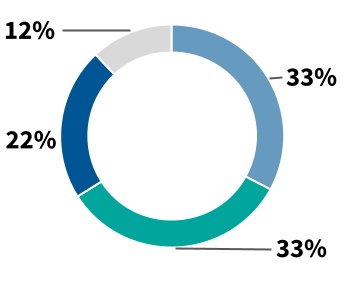
2025 Sales Revenue by Operating Segment
| | | | | | | | | | | |
| | | |
| Advanced Materials | | Chemical Intermediates |
| Additives & Functional Products | | Fibers |
| | | |
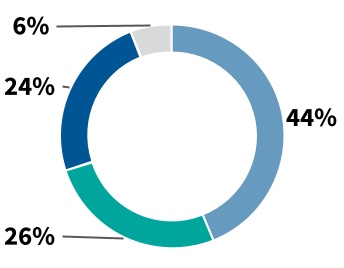
2025 Sales Revenue by Region
| | | | | | | | | | | |
| | | |
| North America | | Asia Pacific |
| Europe, Middle East, Africa | | Latin America |
| | | |
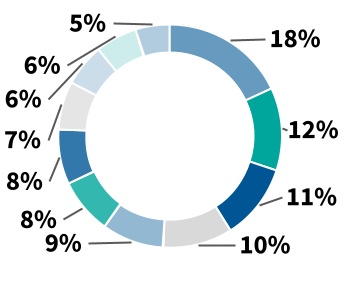
2025 Company Revenue by End-Use Market
| | | | | | | | | | | | | | | | | |
| Transportation | | Food, Feed, and Agriculture | | Water Treatment and Energy |
| Building and Construction | |
| Consumables | |
| Durables and Electronics | | | Other Markets |
| Personal Care and Wellness | |
| Filter Media | | |
| Medical and Pharma | | |
| Industrial Chemicals | | |
Eastman Growth Strategy
| | |
|
Our innovation-driven growth model is delivering results. |
| We are introducing products with higher margins and upgrading product mix in existing and new markets. |
|
|
Circular economy is a new vector of growth. |
We can deliver attractive growth, address the plastic waste crisis, and reshore jobs to the U.S. through our advanced circular recycling technologies – carbon renewal and polyester renewal. |
|
|
Strengthening execution to convert growth to value. |
We are transforming our operations by modernizing and digitizing our capabilities to improve reliability and cost competitiveness. |
|
|
Sustainability is integrated into our growth strategy. |
We have solidified our position as a leader in mainstreaming circularity. We have committed to be carbon neutral by 2050 and our technology platforms and key product lines are linked to sustainable macro trends. |
|
|
A strong balance sheet and cash flow are integral to our growth strategy. |
By maintaining a strong balance sheet and generating consistent cash flow, we are able to continue investing in our strategic growth initiatives and return cash to stockholders. |
Growth platforms
2025 Performance Highlights
In 2025, Eastman delivered revenue and earnings growth while continuing to advance our innovation programs and transformational initiatives, while achieving key milestones towards our sustainability goals.
| | | | | | | | | | | | | | | | | | | | | | | | | | |
| | | | | | | | |
| $8.8B Sales | | $776M Earnings before interest and taxes (“EBIT”) | | $930M Adjusted EBIT* | | $474M Net earnings | |
| | | | | | | | |
| | | | | | | | |
| $4.10 Diluted earnings per share | | $5.42 Adjusted diluted earnings per share* | | $970M Net cash provided by operating activities | | Approx. $500M Returned to stockholders (through dividends and share repurchases) | |
| | | | | | | | |
Sustainability Highlights
Eastman has made sustainability integral to our strategy, driven by innovation and focused on people. Sustainable innovation drives our approach to mainstreaming circularity, mitigating climate change and caring for society. For more information about Eastman’s sustainability progress, see our 2025 Sustainability Report, "A Better Circle," which can be found in the sustainability section of the Company’s website. Any references in this proxy statement to our website or our 2025 Sustainability Report, and any materials accessible through our website, are not incorporated by reference herein.
Our goals:
Sustainability Risk / Materiality Assessment
Eastman uses a data-driven approach to proactively identify and monitor sustainability risks and opportunities. Our materiality matrix is based on the importance a diverse set of external and internal Eastman stakeholders place on identified sustainability issues. We use the sustainability materiality assessment to identify areas of focus and refine our commitments. All 31 factors in this listening tool are important. We prioritize and effectively manage these issues and opportunities by integrating them into our strategy, business models, risk management and governance to drive continuous progress.
This summary highlights important information you will find in this proxy statement. As it is only a summary, please review the complete proxy statement before you vote.
| | | | | | | | | | | | | | |
| | | | |
ITEM 1 | Election of Directors | | |
| | | |
| | | |
| The board recommends a vote “FOR” each nominee. | | |
| | | |
Based on the recommendation of our independent Nominating and Corporate Governance Committee (the “NCG Committee”), our Board of Directors has nominated the following eleven (11) directors to serve a one-year term expiring at the 2027 Annual Meeting of Stockholders. The individuals possess a broad range of qualifications and skills that facilitate strong oversight of Eastman's management and strategy.
| | | | | | | | | | | |
| | | |
| •Humberto P. Alfonso | •Mark J. Costa | •Kim Ann Mink |
| •Damon J. Audia | •Linnie M. Haynesworth | •James J. O'Brien |
| •Brett D. Begemann | •Julie F. Holder | •Donald W. Slager |
| •Eric L. Butler | •Renée J. Hornbaker | |
| | | |
Board Attributes and Composition

| | | | | | | | | | | | | | | | | | | | | | | | | | | | | |
| | | | | Committees* |
| | Name:
Title: | Age:
Director Since: | Other Public Boards: | AUD | CMDC | ESS | FIN | NCGC |
| | | | | | | | | |
0 – 6
Years | | Damon J. Audia SVP and CFO AGCO Corporation | 55 6/2025 | None | ò | | ò | ò | |
| Donald W. Slager Retired CEO Republic Services, Inc. | 64 5/2024 | Martin Marietta
Materials Inc.
| ò | | ò | ò | |
| Linnie M. Haynesworth Retired Sector VP and GM Northrop Grumman Corp | 68 2/2023 | Automatic Data Processing, Inc. Micron Technology, Inc. Truist Financial Corporation | ò | | ò | ò | |
| Eric L. Butler Retired EVP and CAO Union Pacific Corporation | 65 8/2022 | NiSource, Inc.
West Fraser Timber Co. Ltd | ò | | ò | ò | |
6 – 12
Years | | Kim Ann Mink Retired President and CEO Innophos Holdings, Inc. | 66 7/2018 | Avient Corporation
Air Liquide | | ò | ò | ò | ò |
| James J. O’Brien Retired Chair and CEO Ashland Inc. | 71 2/2016 | Albemarle Corporation | | ò | ò | ò | ò |
12+
Years | | Mark J. Costa CEO and Board Chair Eastman | 60 5/2013 | International Flavors & Fragrances Inc. | | | | | |
| Julie F. Holder Retired Senior VP The Dow Chemical Company | 73 11/2011 | None | | ò | ò | ò | ò |
| Brett D. Begemann Retired COO Bayer AG - Crop Science Division | 65 2/2011 | None | | ò | ò | ò | ò |
| Humberto P. Alfonso Retired EVP and CFO Information Services Group | 68 1/2011 | The Kraft Heinz Company | ò | | ò | ò | |
| Renée J. Hornbaker Retired EVP and CFO Stream Energy | 73 9/2003 | Deep Isolation Nuclear, Inc. | | ò | ò | ò | ò |
ò Committee Chair
* COMMITTEES:
Audit Committee - AUD
Compensation and Management Development Committee - CMDC
Environmental, Safety and Sustainability Committee - ESS
Finance Committee - FIN
Nominating and Corporate Governance Committee - NCGC
| | | | | | | | | | | | | | |
| | | | |
ITEM 2 | Ratification of Appointment of Independent Registered Public Accounting Firm |
| | | |
| | | |
| The board recommends a vote “FOR” this proposal. | | |
| | | |
In accordance with applicable rules on partner rotation, PricewaterhouseCoopers LLP's ("PwC") lead partner for our audit was changed in 2026, while PwC’s engagement quality review partner for our audit was most recently changed in 2022. The Audit Committee is involved in the selection of PwC’s primary engagement partner when there is a rotation, which typically occurs every five years.
PwC served as the Company’s independent registered public accounting firm for the years ended December 31, 2024 and 2025, and has billed the Company the following amounts for fees and related expenses for professional services rendered during 2024 and 2025:
| | | | | | | | |
($ IN THOUSANDS) | For the
Year Ended
December 31, 2024 | For the
Year Ended
December 31, 2025 |
Audit Fees and Expenses | $6,347 | $5,956 |
Audit-Related Fees and Expenses | 40 | | 125 | |
Tax Fees and Expenses | 1,161 | | 929 | |
All Other Fees and Expenses | 223 | | 298 | |
| Total | $7,771 | $7,308 |
| | | | | | | | | | | | | | |
| | | | |
ITEM 3 | Advisory Approval of Executive Compensation |
| | | |
| | | |
| The board recommends a vote “FOR” this proposal. | | |
| | | |
Eastman is providing stockholders with the opportunity to vote on an advisory resolution, commonly known as “Say on Pay,” considering approval of the compensation of Eastman's Named Executive Officers. The Compensation and Management Development Committee of the Board believes that our philosophy and practices have resulted in executive compensation decisions that are aligned with company performance and are appropriate in value.
| | | | | | | | | | | | | | |
| | | | |
| Principles | | Implementation | |
| | | | |
| | | | |
| Total direct compensation levels should be sufficiently competitive to attract, motivate and retain the highest quality executives. | | •Establish target total direct compensation (salary, short-term incentive and long-term incentive) at appropriate levels relative to our peer comparison group. •Total direct compensation opportunity (i.e., maximum achievable compensation) should increase with position and responsibility. | |
| | | | |
| | | | |
| Performance-based and “at-risk” incentive compensation should constitute a substantial portion of total compensation. | | •Foster a pay-for-performance culture with a significant portion of total direct compensation being performance-based and/or “at risk.” •Greater percentage of total compensation in the form of performance-based and/or “at risk” compensation for senior executives. | |
| | | | |
| | | | |
| Long-term incentive compensation should align executives’ interests with our stockholders’ interests to further the creation of long-term stockholder value. | | •Focus on ensuring that executive compensation includes a high proportion of long-term performance-based equity compensation. •Equity-based compensation encourages executives to focus on our long-term growth and incentivize executives to manage our company from the perspective of owners with a meaningful stake. | |
| | | | |
| | | | | | | | | | | | | | |
| | | | |
ITEM 4 | Approval of the 2026 Omnibus Stock Compensation Plan |
| | | |
| | | |
| The board recommends a vote “FOR” this proposal. | | PAGE 82 |
| | | |
| | | | | | | | | | | | | | |
| | | | |
ITEM 5 | |
| | | |
| | | |
| The board recommends a vote “AGAINST” this proposal. | | PAGE 90 |
| | | |
| | | | | | | | |
| | |
ITEM 1 Election of Directors | |
| | |
| | |
Stockholders are being asked to vote on the election of eleven directors to serve until the 2027 Annual Meeting of Stockholders and their successors are duly elected and qualified. The terms of office of all current directors will expire at the 2026 Annual Meeting of Stockholders (the “Annual Meeting”), and each of those directors has been nominated for re-election for a one-year term. If any nominee is unable or unwilling to serve (which we do not anticipate), the persons designated as proxies will vote your shares for the remaining nominees and for another nominee proposed by the Board of Directors (the “Board”) or, as an alternative, the Board could reduce the number of directors to be elected at the Annual Meeting. Majority vote standard for Election of Directors. The Company’s amended and restated bylaws (the “Bylaws”) provide that directors are elected by a majority of votes cast by stockholders. If a nominee who is serving as a director is not re-elected by a majority of votes cast at a meeting, under Delaware law, the director would continue to serve on the Board as a “holdover director.” However, under the director election provision of our Bylaws, any incumbent director who is a holdover director whose successor has not been elected by stockholders would be required to offer to resign from the Board. The Nominating and Corporate Governance Committee would then make a recommendation to the Board whether to accept or reject the resignation, or whether other action should be taken. The Board would act on the recommendation and publicly disclose its decision and rationale within 90 days from the date the election results are certified. The director who tenders his or her resignation would not participate in the Board’s decision. Under Delaware law, if a nominee who was not already serving as a director is not elected by a majority of votes cast by stockholders at an annual meeting, such nominee would not become a director. |
| | |
| | |
| The nominees have been recommended to the Board by the Nominating and Corporate Governance Committee of the Board. The Board recommends that you vote “FOR” the election of each of the eleven nominees as described under “Director Nominees.” | |
| | |
| | | | | | | | | | | | | | |
| | | | |
91% Independent | | 66.2 years Average Age | | 9.7 years Average Tenure |
| | | | |
| | | | |
4 New Non-employee Directors Since 2022 | | 34 Board (7) and Committee (27) Meetings in 2025 | | 99% Director Nominees Average Attendance at Board and Committee Meetings in 2025 |
| | |
| Item 1 Election of Directors |
The Board of Directors
The Board is elected by the stockholders to oversee management and to ensure that the long-term interests of the stockholders are being served. The primary role of the Board is to maximize stockholder value over the long-term. Eastman’s business is conducted by its employees, managers, and officers, under the direction of the Chief Executive Officer and with the oversight of the Board.
Board Composition and Refreshment
Under the Eastman Corporate Governance Guidelines, the desired attributes of individual directors are:
| | | | | | | | | | | |
| | | |
 Integrity, honesty, and demonstrated adherence to high ethical standards; Integrity, honesty, and demonstrated adherence to high ethical standards; Business acumen, experience with business administration processes and principles, and the ability to exercise sound judgment in matters that relate to the current and long-term objectives of the Company; Knowledge, experience, and skills in at least one specialty area, for example: | | The ability to devote sufficient time to prepare for and attend Board meetings; Willingness and ability to work with other members of the Board in an open and constructive manner; The ability to express opinions, raise difficult questions, and make informed, independent judgments; and The ability to communicate clearly and persuasively. |
| | |
•Accounting or finance; •Global operational leadership; •Digital transformation; •Chemical / materials industry; •Product innovation; | •Risk management; •Technology / cybersecurity; •Sustainability; •Supply chain logistics; or •Regulatory compliance expertise. | |
| | |
| | | | | | | | | | | | | | | | | | | | | | | | | | | | | | | | | | | | | | |
Enhanced Board Leadership Skills | | | | | | | | |
| | | | | | | |
| | | | | | | | | | | | |
| Skills further enhanced through Board refreshment over the past 3 years | | | |
| | Cybersecurity | | Supply Chain
Logistics | | Risk
Management | | Environmental | | | Financial |
| | | | | | | | | | | | |
Director Independence
The Board determines the independence of our directors by applying the independence standards established by the New York Stock Exchange (“NYSE”) and the U.S. Securities and Exchange Commission (“SEC”). Under those standards, a director is independent only if the Board of Directors affirmatively determines that the director has no material relationship with the company or any relationship, which, in the opinion of the Board, would interfere with the exercise of independent judgment in carrying out the responsibilities of a director. The standards also specify various relationships that preclude a determination of director independence, which may include commercial, industrial, consulting, legal, accounting, charitable, family and other business, professional, and personal relationships.
The Board and its NCG Committee have reviewed: (i) the standards for director independence; (ii) the Company’s Corporate Governance Guidelines; and (iii) the relationships of directors with the Company and its management. Based upon this review and evaluation, the Board has determined that none of the non-employee members of the Board (that is, all directors but Mr. Costa) has or had a relationship with the Company or its management that would interfere with such director’s exercise of independent judgment, and that each non-employee member of the Board is an independent director. In addition, each non-employee member of the Board meets the heightened independence standards for our Audit, Compensation and Management Development, and NCG Committees. In making these determinations, the NCG Committee and the Board reviewed and evaluated all direct and indirect transactions and relationships between the Company and the non-employee directors and their affiliates and immediate family members.
| | |
| Item 1 Election of Directors |
Director Nominations
The NCG Committee is responsible for reviewing and recommending to the Board potential directors who possess the skills, knowledge, and understanding necessary to be valued members of the Board. The NCG Committee considers not only an individual director’s or possible nominee’s qualities, performance, and professional responsibilities, but also the then-current composition of the Board to ensure that the Board is comprised of a group of members who, individually and collectively, best serve the needs of the Company and its stockholders. The NCG Committee annually evaluates the Board’s composition to ensure we have the right mix of skills, experience and expertise to oversee our business, including innovation, supply chain, human capital management, emerging markets, safety and changes in the chemicals industry.
The NCG Committee will consider persons nominated by stockholders and recommend to the full Board whether such nominee should be included with the Board’s nominees for election by stockholders. Our Bylaws contain provisions that address the process (including the required information and deadlines) by which a stockholder or group of stockholders may nominate an individual for consideration by the NCG Committee to stand for election at an annual meeting of stockholders.
In addition, the proxy access provision in our Bylaws provides that, under certain circumstances, a stockholder, or a group of up to 20 stockholders, may nominate and include director nominees constituting up to 20% of the number of directors then serving on the Board, provided that: (i) such stockholder(s) own in aggregate 3% or more of our outstanding common stock continuously for at least three years as of the date the nomination is received by the Company; and (ii) the stockholder(s) and nominee(s) satisfy the disclosure and other requirements set forth in our Bylaws.
Nomination Process
| | | | | | | | |
1 | Assess the Board’s needs |
| | |
| | The NCG Committee annually reviews the composition and size of our Board, ensuring the directors possess the skills, knowledge, and understanding necessary for the Board to successfully perform its role in corporate governance. The Committee considers both the short-term and long-term strategies of the Company to determine what skills and experiences are required of the Board. |
| | |
2 | Identify candidates |
| | |
| | If the NCG Committee determines that there is a need for a new candidate either in the event of an open seat or to supplement the existing Board skill-set based on Company strategy or evolving Board and Committee responsibilities, individuals may be identified through a variety of methods, including by our directors, management, stockholders, and/or an independent search firm. |
| | |
3 | Review and evaluate candidates |
| | |
| | The NCG Committee will consider not only an individual's qualities, performance, and professional responsibilities, but also the then current composition of the Board and the challenges and needs of the Board as a whole at that time. |
| | |
4 | Interview candidates |
| | |
| | The NCG Committee and the CEO review candidate profiles to identify candidates' skills, experience, and background that best align with the Company's strategy and would add value to the Board. Candidates are initially interviewed by the NCG Committee Chair and the Lead Director and if selected to advance, with the NCG Committee members and CEO. Due diligence is performed, including background, conflict, and reference checks, and review of director commitment levels. |
| | |
5 | Recommend candidate to the Board |
| | |
| | The NCG Committee recommends to the Board the candidate that best fits the needs of the Board. The Board reviews the recommendation and approves the candidate's appointment to the Board. Following Board approval, the new director will complete an onboarding process and will stand for election by stockholders at the next annual meeting. |
| | |
| Item 1 Election of Directors |
Skills and Experience
| | | | | | | | | | | | | | | | | | | | | | | | | | | | | | | | | | | | | | | | | |
| | | |
| Skills and Experience | Total |
| INTL | International / Emerging Markets Facilitates an understanding of diverse business environments and economic conditions associated with our global business. | ò | ò | ò | ò | ò | ò | ò | ò | ò | ò | ò | 11 |
| ACCT | Accounting / Financial Reporting Builds the skills necessary to oversee and help facilitate accurate, transparent, and reliable financial reporting and development of effective internal controls. | ò | ò | | ò | | | | ò | ò | ò | | 6 |
| IT | Information Technology / Cybersecurity Provides critical insight into information technology systems and solutions and risks associated with technology and cybersecurity matters. | | | | | | ò | | ò | ò | | | 3 |
| ERM | ERM / Risk Management Enables directors to understand, effectively anticipate, and oversee the most significant risks facing the Company. | ò | ò | ò | ò | ò | ò | ò | ò | ò | ò | ò | 11 |
| HCM | Human Capital / Talent Management Develops organizational perspective on effective approaches to attracting, training, developing and retaining a global workforce. |
| ò | ò | ò | ò | | ò | | ò | ò | ò | 8 |
| LOGI | Logistics / Global Supply Chain Fosters an understanding of the importance of global supply chain management on manufacturing and distribution capabilities. | ò | | ò | ò | ò | ò | | | ò | | ò | 7 |
| INDR | Chemicals Industry Builds a foundation for understanding the complexity of the Company’s products, competitive environment, and regulatory challenges. |
| | ò | | ò | | ò | | ò | ò | | 5 |
| INNO | R&D / Innovation Assists in understanding the complexities and costs of developing and bringing new products to market. |
| | ò | | ò | | | | ò | | | 3 |
| MFG | Manufacturing / Operations Safety Experience with complex, global manufacturing operations helps drive processes to ensure the safety of our employees and communities in which we operate. | | ò | ò | ò | ò | | | ò | ò | ò | ò | 8 |
| GOVT | Government / Regulatory Familiarity with highly regulated industries provides critical insight into navigating the challenges of operating in complex global political and regulatory environments. | | | ò | | ò | ò | ò | | ò | ò | ò | 7 |
| M&A | Mergers & Acquisitions / Capital Markets Experience with capital markets, capital allocation, and complex strategic transactions aids in the development and implementation of strategic objectives. | ò | ò | ò | ò | ò | | | ò | ò | ò | ò | 9 |
| ENV | Sustainability / Environment Facilitates an understanding of environmental challenges and solutions necessary to design and execute a long-term strategy focused on a circular economy. | | | | ò | ò | | ò | | ò | | ò | 5 |
| LEAD | Executive Leadership Enables an understanding of the numerous challenges, opportunities, and risks associated with managing a large- scale, global organization. | ò | ò | ò | ò | ò | ò | ò | ò | ò | ò | ò | 11 |
| | |
| Item 1 Election of Directors |
Director Nominees
| | | | | | | | | | | | | | | | | | | | |
| | | | | | |
| | | Humberto P. Alfonso Retired Executive Vice President and Chief Financial Officer, Information Services Group | |
| | | | | |
| | | | | |
| | Director: Since January 2011 Age: 68 Committees: •Audit (Chair) •Environmental, Safety and Sustainability •Finance | | |
| | Skills and Experience: INTL | ACCT | ERM | LOGI | M&A | LEAD | |
| | | |
| | | | | | |
| | | | | | |
| Skills and expertise: Mr. Alfonso’s experience includes various senior financial positions held during his career that provide a solid platform for his service to lead the Audit Committee’s oversight of the Company’s financial reporting process and its internal and disclosure controls and of the work of the independent registered public accounting firm. In addition, Mr. Alfonso’s substantial senior level management experience brings significant operational insight to the Board. Background: •Information Services Group, a global technology research and advisory firm •2021 – 2023 (retired): Executive Vice President and Chief Financial Officer •Yowie Group Ltd., a confectionary company •2017 – 2018: Director •2016 – 2018: Chief Executive Officer, Global •The Hershey Company, a chocolate and cocoa products company •2013 – 2015 (retired): President, International | •2011 - 2013: Executive Vice President, Chief Financial Officer, and Chief Administrative Officer •2007 - 2011: Senior Vice President and Chief Financial Officer •2006 - 2007: Vice President, Finance and Planning, North American Commercial Group •2006 (joined Hershey) - 2006: Vice President, Finance and Planning, U.S. Commercial Group •Cadbury Schweppes, a multi-national confectionary company •held a variety of finance positions •2005 - 2006: Executive Vice President Finance and Chief Financial Officer of Cadbury Schweppes Americas Beverages •2003 - 2005: Vice President Finance, Global Supply Chain •Pfizer, Inc., a biopharmaceutical company •held a number of senior financial positions Other Current Public Company Directorships •The Kraft Heinz Company | |
| | | | | | |
| | | | | | | | | | | | | | | | | | | | |
| | | | | | |
| | | Damon J. Audia Senior Vice President and Chief Financial Officer of AGCO Corporation | |
| | |
| | | | | |
| | Director: Since June 2025 Age: 55 Committees: •Audit •Environmental, Safety and Sustainability •Finance | | |
| | Skills and Experience: INTL | ACCT | ERM | HCM | MFG | M&A | LEAD | |
| | | |
| | | | | | |
| | | | | | |
| Skills and expertise: Mr. Audia's experience includes various senior financial positions held throughout his career. He currently serves as the Senior Vice President and Chief Financial Officer of a global leader in the design, manufacture, and distribution of agricultural machinery. Prior to joining his current company in 2022, Mr. Audia served as the Senior Vice President and Chief Financial Officer for leading public companies in the industrial technology and specialty materials sectors. His extensive history of senior management leadership ensures the Board has access to significant operational insight. Background: •AGCO Corporation, a leading global manufacturer and distributor of agricultural machinery and precision agricultural technology •2022 - Present: Senior Vice President and Chief Financial Officer
| •Kennametal, Inc., manufacturer of high-performance cutting tools and engineered components •2018 - 2022: Vice President and Chief Financial Officer •Carpenter Technology Corporation, a manufacturer and distributor of specialty alloy-based materials •2015 - 2018: Senior Vice President and Chief Financial Officer •The Goodyear Tire & Rubber Company, one of the world's largest tire manufacturers •2004 -2015: Held a variety of positions including Senior Vice President of the North America Division
| |
| | |
| Item 1 Election of Directors |
| | | | | | | | | | | | | | | | | | | | |
| | | | | | |
| | | Brett D. Begemann Retired Chief Operating Officer of Crop Science Division of Bayer AG | |
| | | | | |
| | | | | |
| | Director: Since February 2011 Lead Director: Since May 2023 Age: 65 Committees: •Compensation and Management Development •Environmental, Safety and Sustainability •Finance •Nominating and Corporate Governance | | |
| | Skills and Experience: INTL | ERM | HCM | LOGI | INDR | MFG | GOVT | M&A | LEAD | INNO | |
| | | | | | |
| | | | | | |
| Skills and expertise: Mr. Begemann’s substantial and varied experience as an executive of an international public company brings to the Board a significant depth of knowledge in global biotechnology and chemicals businesses. His wide-ranging experience and knowledge allow him to contribute to the Board and its Committees significant insight into a number of functional areas critical to Eastman, including but not limited to industry expertise, employee safety, operations and leadership. Background: •Bayer AG, a German global life sciences company •2018 - 2021 (retired): Chief Operating Officer for the Crop Science Division, with core competencies in the areas of health care and agriculture | •Monsanto Company, an agrochemical company •2013 - 2018 (acquired by Bayer AG): President and Chief Operating Officer, responsible for worldwide sales and operations, corporate affairs, and global business organization •2012 - 2013: President and Chief Commercial Officer •2009 - 2012: Executive Vice President and Chief Commercial Officer •2007 - 2009: Executive Vice President, Global Commercial •1983 - 2007: Served in the company’s sales and marketing organization | |
| | | | | | |
| | | | | | | | | | | | | | | | | | | | |
| | | | | | |
| | | Eric L. Butler Retired Executive Vice President and Chief Administrative Officer of Union Pacific Corporation | |
| | | | | |
| | | | | |
| | Director: Since August 2022 Age: 65 Committees: •Audit •Environmental, Safety and Sustainability •Finance | | |
| | Skills and Experience: INTL | ACCT | ERM | HCM | LOGI | MFG | M&A | ENV | LEAD | |
| | | |
| | | | | | |
| | | | | | |
| Skills and expertise: Mr. Butler’s substantial senior level management experience, including his previous position as a chief administrative officer, and his background in sales and marketing, supply chain logistics, procurement and purchasing, and industrial engineering enable him to bring significant operational insight to the Board. In addition, he also has experience leading human resources, labor relations, and corporate governance functions. Mr. Butler’s extensive experience in the freight transportation industry also allows him to provide the Board with unique perspectives on developing a safety-first business culture, customer service, logistics, supply chain, and risk management. Background: •Aswani-Butler Investment Associates, a private equity investment firm •Founder and CEO •Union Pacific Corporation (“Union Pacific”), one of the largest freight rail providers in North America | •During his 32-year career, he led a wide variety of company functions and initiatives, including marketing and sales, purchasing and supply chain, financial planning and analysis, strategic planning, human resources, industrial engineering and transportation research •2016 - 2018 (retired): Executive Vice President and Chief Administrative Officer •2012 - 2016: Executive Vice President, Sales and Marketing and Chief Marketing Officer •Federal Reserve Bank of Kansas City, Omaha Branch •2013 – 2019: Board appointee •2018 – 2020: Chair of the Board Other Current Public Company Directorships •NiSource, Inc. •West Fraser Timber Co. Ltd Certifications / Continuing Director Education •Deloitte Audit Committee symposium | |
| | | | | | |
| | |
| Item 1 Election of Directors |
| | | | | | | | | | | | | | | | | | | | |
| | | | | | |
| | | Mark J. Costa Chief Executive Officer and Chair of the Board of Directors of Eastman Chemical Company | |
| | | | | |
| | | | | |
| | Director: Since May 2013 Age: 60 Committees: •None | | |
| | Skills and Experience: INTL | ERM | HCM | LOGI | INDR | INNO | MFG | GOVT | M&A | ENV | LEAD | |
| | | |
| | | | | | |
| | | | | | |
| Skills and expertise: Since he joined the Company, Mr. Costa has led a variety of business, marketing, functional, and strategic areas and initiatives. Mr. Costa has senior management, corporate transformation, portfolio management, and business and marketing capability experience and expertise from both his years with the Company and previously as a consultant. We believe the perspective of the Chief Executive Officer of the Company is critical for the Board in order to effectively oversee the affairs of the Company and its strategy for growth. Mr. Costa’s unique knowledge of the opportunities and challenges associated with our business and familiarity with the Company, as well as of the chemical industry and various market participants, make him uniquely qualified to lead and advise the Board as Chair. Background: •Eastman Chemical Company •2014 – Present: Chief Executive Officer | •2014 – Present: Board of Directors Chair •2013 –2014: President •2009 - 2012: Executive Vice President, Specialty Polymers, Coatings and Adhesives, and Chief Marketing Officer •2008 - 2009: Executive Vice President, Polymers Business Group and Chief Marketing Officer •2006 – 2008: Senior Vice President, Corporate Strategy and Marketing •Monitor Group, a global management consulting firm •1988 – 2006: Senior Partner; played a crucial role in developing Monitor’s techniques in corporate transformations and portfolio management and designing client business and marketing capability building programs Other Current Public Company Directorships • International Flavors & Fragrances Inc. | |
| | | | | | |
| | | | | | | | | | | | | | | | | | | | |
| | | | | | |
| | | Linnie M. Haynesworth Retired Sector Vice President and General Manager of Northrop Grumman Corporation | |
| | | | | |
| | | | | |
| | Director: Since February 2023 Age: 68 Committees: •Audit •Environmental, Safety and Sustainability •Finance | | |
| | Skills and Experience: INTL | IT | ERM | LOGI | GOVT | LEAD | |
| | | |
| | | | | | |
| | | | | | |
| Skills and expertise: Ms. Haynesworth provides the Eastman Board expertise in technology integration, cybersecurity governance, enterprise strategy, risk management, large complex system development, and disruptive technology integration. She formerly served on the board of directors of the Intelligence and National Security Alliance and the Northern Virginia Technology Council. Background: •Northrop Grumman Corporation (“NOC”), an aerospace and defense technology company •2016 – 2019 (retired): Mission Systems Sector Vice President and General Manager of the Cyber and Intelligence Mission Solutions Division; had executive responsibility for the overall growth and program activities for the division’s business portfolio, including full spectrum cyber, multi-enterprise data management and integration, as well as mission enabling intelligence, surveillance and reconnaissance (ISR) solutions supporting domestic and international customers | •2013 - 2016: Sector Vice President and General Manager of the ISR Division within the former Information Systems sector; led NGC’s Federal and Defense Technologies Division •United States Department of Defense •2021 - 2025: Member of the Defense Business Board Other Current Public Company Directorships •Automatic Data Processing, Inc. •Micron Technology, Inc. •Truist Financial Corporation Certifications / Continuing Director Education •Certificate in Cybersecurity Oversight | |
| | | | | | |
| | |
| Item 1 Election of Directors |
| | | | | | | | | | | | | | | | | | | | | | | |
| | | | | | | |
| | | Julie F. Holder Retired Senior Vice President of The Dow Chemical Company | |
| | |
| | Director: Since November 2011 Age: 73 Committees: •Compensation and Management Development •Environmental, Safety and Sustainability •Finance •Nominating and Corporate Governance (Chair) | | |
| | Skills and Experience: INTL | ERM | HCM | INDR | GOVT | ENV | LEAD | |
| | | |
| | | | | | | |
| | | | | | | |
| Skills and expertise: Ms. Holder brings to the Board substantial corporate management experience and deep expertise in international sales and marketing within the chemical industry, developed through her senior leadership roles at The Dow Chemical Company (“Dow”). Her long tenure at Dow provided broad functional experience across commercial, operational, and corporate disciplines, equipping her to offer meaningful management and operational insight. She contributes to the Board an informed perspective on the strategic opportunities and competitive challenges facing complex global industrial businesses. Background: •JFH Insights LLC, a consulting firm (primarily dedicated to leadership coaching for high potential women executives) •2009 – Present: Chief Executive Officer; develops and teaches executive education courses designed to help women be more successful in their careers and help senior leadership build a more inclusive corporate culture | | •The Dow Chemical Company, a diversified, worldwide manufacturer and supplier of products used primarily as raw materials in the manufacture of customer products and services •2007 – 2009 (retired): Senior Vice President, Chief Marketing, Sales and Reputation Officer, U.S. Area Executive Oversight •2006 – 2007: Vice President, Human Resources, Public Affairs and Diversity and Inclusion, Latin America Executive Oversight •1975 - 2006: various positions with increasing seniority •W. R. Grace & Co., a global supplier of catalysts and engineered materials •2016 – 2021: Board of Directors member Certifications / Continuing Director Education •Diligent Climate Leadership Certification | |
| | | | | | | |
| | | | | | | | | | | | | | | | | | | | |
| | | | | | |
| | | Renée J. Hornbaker Retired Executive Vice President and Chief Financial Officer of Stream Energy | |
| | | | | |
| | Director: Since September 2003 Age: 73 Committees: •Compensation and Management Development •Environmental, Safety and Sustainability •Finance (Chair) •Nominating and Corporate Governance | | |
| | Skills and Experience: INTL | ACCT | IT | ERM | MFG | M&A | LEAD | |
| | | |
| | | | | | |
| | | | | | |
| Skills and expertise: Ms. Hornbaker’s expertise in a variety of financial and accounting roles, experience in business development, strategy and technology, and service with large global businesses make her a valuable member of the Board. Ms. Hornbaker’s previous service as a chief financial officer and as a senior manager at an accounting firm provide a solid platform for her to advise and consult with the Board on financial and audit-related matters. Background: •Storey & Gates LLC, a consulting firm providing business advisory services including executive coaching and board governance training for boards •2018 – Present: Chief Executive Officer •Stream Energy, a retail energy, wireless, and protective services provider •2017 – 2019 (sold): Board of Directors member, Board Chair and Compensation Committee Chair •2015 – 2017: Chief Financial Officer
| •Shared Technologies, Inc., a provider of converged voice and data networking solutions •2006 – 2011: Chief Financial Officer •CompuCom Systems, Inc., an information technology services provider •2005 – 2006: Consultant to the Chief Executive Officer •Flowserve Corporation, a global provider of industrial flow management products and services •1997 - 2004: Vice President and Chief Financial Officer •1997 – 1998: Vice President, Chief Information and Development Officer Other Current Public Company Directorships •Deep Isolation Nuclear, Inc. Certifications / Continuing Director Education | |
| •Certified Public Accountant •NACD Director Certified •NACD Board Leadership Fellow •NACD - AI Oversight for Directors
| •NACD Cybersecurity Oversight •NACD Climate Oversight •KPMG Board Leadership Conf.
| |
| | |
| Item 1 Election of Directors |
| | | | | | | | | | | | | | | | | | | | |
| | | | | | |
| | | Kim Ann Mink Retired President and Chief Executive Officer of Innophos Holdings, Inc. | |
| | | | | |
| | | | | |
| | Director: Since July 2018 Age: 66 Committees: •Compensation and Management Development •Environmental, Safety and Sustainability (Chair) •Finance •Nominating and Corporate Governance | Skills and Experience: INTL | ACCT | IT | ERM | HCM | LOGI | INDR | INNO | MFG | GOVT | M&A | ENV | LEAD | |
| | |
| | | |
| | | | | | |
| | | | | | |
| Skills and expertise: Dr. Mink provides valuable guidance to the Board with her extensive background and past experience as an executive in the specialty chemical industry and as a chief executive officer overseeing business and developing growth initiatives. Dr. Mink brings specialty materials experience and technical expertise to the Board. Dr. Mink’s proven leadership and deep understanding of key end markets enhance the Board’s innovation-driven growth strategy. Background: •Innophos Holdings, Inc., a leading international producer of performance-critical and nutritional functional ingredients, with applications in food, health, nutrition and industrial specialties markets •2015 - 2020 (sold to a private equity firm): President and Chief Executive Officer •2016 - 2020: Director | •2017 - February 2020: Chair of the Board •The Dow Chemical Company •2012 - 2015: Business President, Elastomers, Electrical and Telecommunications •2009 – 2012: Global General Manager, Performance Materials; President and Chief Executive Officer of ANGUS Chemical Co. (then a subsidiary of Dow) •Rohm and Haas Company, a chemical manufacturing company (acquired by Dow) •1988 - 2009: held roles of increasing responsibility for more than 20 years, including corporate vice president and general manager for the Ion Exchange Resins business Other Current Public Company Directorships •Avient Corporation •Air Liquide | |
| | | | | | |
| | | | | | |
| | | | | | | | | | | | | | | | | | | | |
| | | | | | |
| | | James J. O’Brien Retired Chairman of the Board and Chief Executive Officer of Ashland Inc. | |
| | | | | |
| | | | | |
| | Director: Since February 2016 Age: 71 Committees: •Compensation and Management Development (Chair) •Environmental, Safety and Sustainability •Finance •Nominating and Corporate Governance | | |
| | Skills and Experience: INTL | ACCT | ERM | HCM | INDR | MFG | GOVT | M&A | LEAD | |
| | | |
| | | | | | |
| | | | | | |
| Skills and expertise: Mr. O’Brien brings to the Board extensive knowledge of the chemical industry and substantial experience as a former executive of an international public company that allows him to offer management insight and understanding of industry challenges to the Board. Under his leadership, Ashland was transformed to a global specialty chemical company. His significant experience serving on other public company boards provides valuable insight. Background: •Ashland Inc., a leading global specialty chemical company –2002 - 2014: Chairman of the Board and Chief Executive Officer | •2001 - 2002: President and Chief Operating Officer; Senior Vice President and Group Operating Officer •1976 (joined Ashland) - 2000: served in various positions with increasing responsibility and seniority •Humana Inc., a health insurance company •2006 – 2023: Board of Directors member Other Current Public Company Directorships •Albemarle Corporation | |
| | | | | | |
| | |
| Item 1 Election of Directors |
| | | | | | | | | | | | | | | | | | | | |
| | | | | | |
| | | Donald W. Slager Retired Chief Executive Officer of Republic Services, Inc. | |
| | | | | |
| | | | | |
| | Director: Since May 2024 Age: 64 Committees: •Audit •Environmental, Safety and Sustainability •Finance | | |
| | Skills and Experience: INTL | ERM | HCM | LOGI | MFG | GOVT | M&A | ENV | LEAD | |
| | | |
| | | | | | |
| | | | | | |
| Skills and expertise: Mr. Slager provides a depth of experience in environmental services to our Board and its Environmental, Safety and Sustainability Committee. Given his professional experience, Mr. Slager has unique capabilities and insight with respect to future strategic challenges and opportunities. His substantial experience serving on the boards of directors of publicly traded companies and his corporate management and leadership experience enable him to provide valuable insight with respect to critical oversight responsibilities, and related actions in the Board environment. Background: •Republic Services, Inc. an environmental services company •2019 – 2021 (retired): Chief Executive Officer | •2010 - 2021: Director •2011 - 2019: President and Chief Executive Officer •2008 - 2011: President and Chief Operating Officer •Allied Waste Industries, Inc. •2005 - 2008: President and Chief Operating Officer •2002 - 2005: Chief Operating Officer Other Current Public Company Directorships •Martin Marietta Materials, Inc. | |
| | | | | | |
| | |
| Item 1 Election of Directors |
Corporate Governance
Corporate Governance Highlights
Our commitment to good corporate governance is evidenced by the following practices:
| | | | | | | | | | | | | | |
| | | | |
| Board structure and governance | | | Sustainability |
| | | | |
•Active Board oversight of risk •Lead Director and strong Committee Chair roles with clearly articulated responsibilities •10 out of 11 director nominees are independent •Mandatory director retirement age •Annual Board and Committee self-evaluation process, including individual director evaluations •Executive sessions at each Board meeting led by the Lead Director without the CEO or other management present | | •Long-standing commitment to sustainability •Comprehensive Sustainability Report in alignment with the Global Reporting Initiative, Sustainability Accounting Standards Board and the Task Force on Climate-Related Financial Disclosures frameworks •Established climate strategy and 2030 Commitments, including greenhouse gas emission ("GHG") reduction targets
|
| | | | |
| | | | |
| | | | |
| Stockholder rights and engagement | | | Stock ownership |
| | | | |
•Annual election of directors •Majority voting for directors •Stockholder proxy access •Active and responsive stockholder engagement process •No stockholder rights plan •No supermajority voting provisions | | •Stock ownership guidelines of 5x base salary for CEO •Stock ownership guidelines of 5x annual retainer fee for non-employee directors •Stock ownership guidelines of 2.5x base salary for our other executive officers •No hedging or pledging of Company stock by directors, executive officers, or employees •Executive Incentive Pay Clawback Policy |
| | | | |
| | |
| Item 1 Election of Directors |
Board Leadership Structure
In order to ensure effective, independent leadership on the Board and appropriate oversight of management, Eastman’s Bylaws and Corporate Governance Guidelines require an independent Lead Director when the same person holds the CEO and Board Chair positions or if the Board Chair is not otherwise independent. Our Corporate Governance Guidelines provide the Board the flexibility to determine whether or not the separation or combination of the Board Chair and Chief Executive Officer roles is in the best interests of the Company. The decision as to whom should serve as Board Chair and CEO, and whether the roles should be combined or separated, is properly the responsibility of the Board, to be exercised from time to time in appropriate consideration of then existing facts and circumstances. The Board possesses considerable experience and unique knowledge of the challenges and opportunities the Company may face and is in the best position to evaluate the Company’s needs and the capabilities of our directors and senior executives to meet those needs.
As this point in time, the Board believes that combining the roles of Chair and CEO helps ensure that the CEO, with his extensive knowledge of the Company and full-time focus on the business affairs of the Company, can effectively and efficiently manage implementation of the Board's strategy, recommendations and decisions.
| | | | | | | | | | | | | | |
| | | | |
| Mark J. Costa Board Chair | | | Brett D. Begemann Lead Director |
| | | | |
| | | | |
Duties and Responsibilities: •Providing leadership and working with the Board to define its structure and activities for the fulfillment of its responsibilities; •Chairing all Board meetings, setting agendas, managing discussions, and guiding the Board towards consensus on key issues; •Leading the Board's development and implementation of the Company's long-term strategic plan; •Fostering open communication between the Board, management, and stakeholders; •Playing a key role in overseeing succession planning for senior management and the Board of Directors; •Overseeing the identification and mitigation of key risks facing the company; and •Ensuring the Board operates with ethical and compliant practices, adhering to relevant regulations. Considerations in Selecting this Leader: Mark J. Costa has served as Board Chair since 2014. Mr. Costa has extensive industry and company knowledge as he has served in a variety of senior leadership positions at Eastman since 2006, and as its Chief Executive Officer since 2014. His unique knowledge of the opportunities and challenges facing the business, chemical industry and various market participants make him uniquely qualified to serve as Chair. | | Duties and Responsibilities: •Calling, setting agendas for, and presiding over executive sessions of the non-employee, independent directors at meetings of the Board; •Briefing the Board Chair on any issues arising from the executive sessions, as appropriate; •Calling special meetings of the full Board or the non-employee, independent directors; •Presiding over Board meetings in the absence of the Board Chair; •Collaborating and consulting with the Board Chair and CEO, the Corporate Secretary, and other senior management on agendas, schedules, and materials for Board meetings; •Acting as a liaison between the independent directors and the Board Chair; and •Being available with the Board Chair for consultation and direct communication with stockholders. Considerations in Selecting this Leader: Brett D. Begemann has served as Lead Director since May 2023. Mr. Begemann’s experience on the Eastman Board and Board committees since 2011 give him a well-informed perspective as he acts as a liaison between the directors and the Chair. He also brings a significant depth of knowledge in the global biotechnology and chemicals business that provides valuable insights in a number of functional areas critical to Eastman. |
| | | | |
| | |
| Item 1 Election of Directors |
Board Committees
The Board has an Audit Committee, a Compensation and Management Development Committee, a Nominating and Corporate Governance Committee, an Environmental, Safety and Sustainability Committee, and a Finance Committee. All committee members are non-employee, independent directors.
In addition to the Lead Director providing independent leadership of the Board, certain key Company functions have completely independent Board oversight. As described below, the Finance Committee and the Environmental, Safety and Sustainability Committees consist of all the non-employee, independent directors and are chaired by an independent director. Under this hybrid leadership structure with two Board “committees of the whole,” the Company’s finance functions and health, safety, environmental, security, and sustainability functions are overseen by all of the independent directors under independent director leadership.
We believe that the foregoing structure, policies, and practices, when combined with the Company’s other governance policies, procedures, and practices described below, provide appropriate oversight, discussion, and evaluation of decisions and direction from the Board.
| | | | | | | | |
Audit Committee |
| | |
Members: Humberto P. Alfonso (Chair) Damon J. Audia Eric L. Butler Linnie M. Haynesworth Donald W. Slager Meetings in 2025: 9 | | Duties and Responsibilities The purpose of the Audit Committee is to assist the Board in fulfilling the Board’s oversight responsibilities relating to: •the integrity of the financial statements of the Company and the Company’s system of internal controls over financial reporting and disclosure controls and procedures; •the Company’s management of and compliance with legal and regulatory requirements; •the Company’s internal audit function's performance in conformity with its charter; •the qualifications, independence, and performance of the Company’s independent registered public accounting firm; •the retention and termination of the Company’s independent registered public accounting firm, including the approval of fees and other terms of their engagement and the approval of non-audit relationships with the independent registered public accounting firm; and •risk assessment and risk management, including cybersecurity and artificial intelligence risks. The Board has determined that each member of the Audit Committee is “independent” and “financially literate,” and that Messrs. Alfonso and Audia are “audit committee financial experts” under applicable provisions of the NYSE listing standards and the Exchange Act. A copy of the charter is available on the “Investors — Governance” section of the Company’s website. |
| | |
| | |
| Item 1 Election of Directors |
| | | | | | | | |
Compensation and Management Development Committee |
| | |
Members: James J. O’Brien (Chair) Brett D. Begemann Julie F. Holder Renée J. Hornbaker Kim Ann Mink Meetings in 2025: 7
| | Duties and Responsibilities The purpose of the Compensation and Management Development Committee (the “Compensation Committee”) is to: •establish, administer, and oversee the Company’s policies, programs, and procedures for evaluating, developing, and compensating the Company’s executive officers, including oversight of management succession and risk assessment of compensation programs and practices; •oversee the Company’s efforts to attract, develop, and retain talent, including review of engagement initiatives, talent development, succession planning, employee engagement, culture, and retention programs; •oversee the Company’s management development and compensation and benefits philosophy and strategy; and •determine the compensation of the Company’s executive officers, review management’s executive compensation disclosures, approve adoption of cash and equity-based incentive compensation plans, and oversee management’s administration of the Company’s benefits plans. The Compensation Committee has exclusive authority to grant stock-based incentive awards under the 2021 Omnibus Stock Compensation Plan and has delegated to the Board Chair and Chief Executive Officer authority to make certain limited stock-based compensation awards to employees other than executive officers. The Compensation Committee receives input from its independent compensation consultant and Company management on compensation and benefits matters, and considers such input in establishing and overseeing management’s compensation programs and in determining executive compensation. The Board has determined that each member of the Compensation Committee is “independent” under applicable provisions of the NYSE listing standards. A copy of the charter is available on the “Investors — Governance” section of the Company’s website. |
| | |
Compensation Committee Interlocks and Insider Participation
No member of the Compensation and Management Development Committee is, or in 2025 was, an officer or former officer or employee of the Company or any of its subsidiaries. In addition, none of our executive officers has served as a member of the board of directors, or as a member of the compensation or similar committee, of any entity that has one or more executive officers who served on the Board or Compensation Committee during 2025.
| | |
| Item 1 Election of Directors |
| | | | | | | | |
Nominating and Corporate Governance Committee |
| | |
Members: Julie F. Holder (Chair) Brett D. Begemann Renée J. Hornbaker Kim Ann Mink James J. O’Brien
Meetings in 2025: 4
| | Duties and Responsibilities The purpose of the Nominating and Corporate Governance Committee is to: •identify individuals qualified to become Board members; •recommend to the Board candidates to fill Board vacancies and newly-created director positions; •recommend to the Board whether incumbent directors should be nominated for re-election to the Board upon the expiration of their terms; •review, develop, and recommend to the Board corporate governance principles and practices, and regularly review and evaluate corporate governance guidelines, principles, and practices in light of evolving trends and developments; •monitor applicable federal, state, and international legislative and regulatory initiatives, lobbying and other political activities, significant matters of public policy, and philanthropic spending; •review and make recommendations to the Board regarding director compensation (see “Director Compensation”); •oversee the Board’s evaluations; and •recommend committee structures, membership, and chairs and, if the Board Chair is not an independent director, the independent director to serve as Lead Director. The Board has determined that each member of the Nominating and Corporate Governance Committee is “independent” under applicable provisions of the NYSE listing standards. A copy of the charter is available on the “Investors — Governance” section of the Company’s website. |
| | |
| | |
| Item 1 Election of Directors |
| | | | | | | | |
Environmental, Safety and Sustainability Committee |
| | |
Members: Kim Ann Mink (Chair) Humberto P. Alfonso Damon J. Audia Brett D. Begemann Eric L. Butler Linnie M. Haynesworth Julie F. Holder Renée J. Hornbaker James J. O’Brien Donald W. Slager Meetings in 2025: 2
| | Duties and Responsibilities The purpose of the Environmental, Safety and Sustainability Committee is to review with management and, where appropriate, make recommendations to the Board regarding: •the Company’s policies and practices concerning health, safety, environmental matters, security, and sustainability; •the Company’s sustainability strategy, including decarbonization, greenhouse gas emission reduction goals and related climate disclosures; and •philanthropy, public policy, and political activities matters. A copy of the charter is available on the “Investors — Governance” section of the Company’s website. |
| | |
| | | | | | | | |
Finance Committee |
| | |
Members: Renée J. Hornbaker (Chair) Humberto P. Alfonso Damon J. Audia Brett D. Begemann Eric L. Butler Linnie M. Haynesworth Julie F. Holder Kim Ann Mink James J. O’Brien Donald W. Slager Meetings in 2025: 5
| | Duties and Responsibilities The purpose of the Finance Committee is to review with management and, where appropriate, make recommendations to the Board regarding: •the Company’s financial position and financing activities, including consideration of the Company’s financing plans and strategies; •cost of capital; •significant corporate transactions (including acquisitions, divestitures, and joint ventures); •capital expenditures; •financial status of the Company’s defined benefit pension plans; •payment of dividends and issuance and repurchase of stock; and •use of financial instruments, commodity purchasing, insurance, and hedging arrangements and strategies to manage exposure to financial and market risks. A copy of the charter is available on the “Investors — Governance” section of the Company’s website. |
| | |
| | |
| Item 1 Election of Directors |
Key Areas of Board Oversight
Corporate Strategy and Business Performance
With the leadership of the Board Chair and CEO, the Board actively oversees development, implementation and performance of management’s corporate growth and business strategy, including the current innovation-driven growth model. Corporate strategy, business and financial results, expectations, prospects, and opportunities are reviewed and discussed at each Board meeting and at meetings of the Audit, Compensation and Management Development, Finance, and Environmental, Safety and Sustainability Committees, including in separate private (or “executive”) sessions with the CEO and other individual executive and senior managers.
Succession Planning
Recognizing the importance of effective leadership and on-going succession planning, the Lead Director and the Chair of the Compensation and Management Development Committee (the "Compensation Committee") routinely review CEO and senior management succession plans with the independent directors. The Compensation Committee utilizes a framework for executive succession planning under which the Compensation Committee has defined specific criteria for, and responsibilities of, each of the CEO, CFO and other senior executive roles. The Compensation Committee reviews the succession plan for the CEO in preparation for discussion by the Board, with such discussion guided by the Lead Independent Director. These discussions occur with and without the CEO, and include consideration of recommendations, evaluations and development plans for potential CEO successors. The process includes consideration of organizational and operational needs, competitive challenges, leadership and management potential and development, and emergency situations.
The Board oversees workforce and senior management development primarily through its Compensation Committee. In its oversight of senior management evaluation, development and compensation, as well as its evaluation of executive officer performance and determination of executive compensation, the Compensation Committee regularly reviews with management and the Board the Company’s efforts to attract, develop and retain talent, specific talent and leadership development programs, employee engagement, and the competitive environment for talent. In addition, the Compensation Committee regularly reviews management and employee engagement programs and initiatives.
Eastman’s Board succession planning process focuses on alignment with long-term strategic priorities, bringing forward-looking expertise to address emerging industry trends, technological change, regulatory developments, and competitive challenges, while also fitting the company’s values and governance culture. The Board maintains a current and actionable skills inventory that allows the Board to compare existing capabilities against strategic requirements. This evaluation process is also informed by regular performance reviews that assess each director’s contribution and effectiveness. For example, as part of its succession planning process, it considers the needs for specific skills sets such as financial expertise, digital transformation, product innovation, and global operational leadership experience.
| | |
| Item 1 Election of Directors |
Risk Oversight
A fundamental part of risk management is not only understanding the risks the Company faces and what steps management is taking to manage those risks, but also understanding what level of risk is appropriate for the Company. During the Company’s risk management review process, risk is assessed throughout our entire business, and is reported to a management corporate risk committee comprised of members of various business units and control functions. Risks that are identified as “high-level” risks are reported to the Audit Committee and thereafter assigned, as appropriate, to various Board’s Committees, or to the Board as a whole, for further review, analysis, and development of appropriate plans for risk management and mitigation.
| | | | | | | | | | | | | | | | | | | | | | | | | | | | | |
| | Board | | |
| | | |
| | | | | | | | | |
| | | | | | | | | |
| •The Board maintains oversight responsibility for the management of the Company’s risks, and oversees an enterprise-wide approach to risk management, designed to provide a holistic view of organizational objectives, including strategic objectives, to improve long-term organizational performance, to prioritize and manage identified risks, and to enhance stockholder value. •The full Board reviews with management its process for managing enterprise risk. •While the Board maintains the ultimate oversight responsibility for risk management and for oversight of certain specific risks, each of the various Committees of the Board have been assigned responsibility for risk management oversight of specific identified areas. | |
| | | | | | | | | |
| | | | | | | | | |
| | | | | | | | | |
| | | | | | | | | |
| | | | | | | | | |
| Compensation Committee | | Finance Committee | | Environmental, Safety and Sustainability Committee | |
| •The Compensation Committee: (i) strives to develop an executive compensation program, including incentives, that encourages an appropriate level of risk-taking behavior consistent with the Company’s long-term business strategy; and (ii) regularly reviews management development as part of the Company’s succession planning process. | | •The Finance Committee has oversight responsibility related to the Company’s financial position and financing activities, including such areas as capital structure, raw material and energy costs, availability, and price volatility and hedging, large capital projects, pension obligations and funding, and acquisitions, divestitures, and joint ventures. | | •The Environmental, Safety and Sustainability Committee assists the Board in fulfilling its oversight responsibility with respect to health, safety, environmental matters, security, public policy and political activities, and the Company’s sustainability strategy, GHG emission reduction goals and related climate disclosures. | |
| | | | | | | | | |
| | | | | | | | | |
| | | | | | | | | |
| Audit Committee | | | The Nominating and Corporate
Governance Committee | |
| •The Audit Committee is charged with overseeing our risk assessment and management process each year to: (i) ensure that management has instituted processes to identify major risks and has developed plans to manage such risks; and (ii) review with management the most significant risks identified and management’s plans for addressing and mitigating the potential effects of such risks. •The Audit Committee maintains responsibility for overseeing risks related to the Company’s financial reporting, audit process, internal controls over financial reporting and disclosure controls and procedures. •As describe further below, the Audit Committee also has primary responsibility for oversight of cybersecurity and artificial intelligence-related risks. | | | •The Nominating and Corporate Governance Committee conducts an annual assessment of nominees to our Board and is charged with developing and recommending to the Board corporate governance principles and policies and Board Committees structure, leadership, and membership, including those related to, affecting, or concerning the Board’s and its Committees’ risk oversight. •The NCG Committee is also responsible for monitoring certain legislative and regulatory developments relevant to Eastman's operations and strategy, including oversight of the Company's global advocacy efforts to ensure Eastman has a voice at the table on key topics. | |
| | | | | | | | | |
| | | | | | | | | |
| | |
| Item 1 Election of Directors |
| | |
|
Oversight of Cybersecurity and Artificial Intelligence Risks The Audit Committee, is also responsible for the oversight of cybersecurity risk, use and risks related to artificial intelligence ("AI"), risk mitigation strategies and the overall resiliency of the Company’s technology infrastructure. As part of their overall risk oversight responsibilities, the Board and Audit Committee periodically review third-party assessments of information security standards, any incidents that could have a material impact on the Company’s network, and potential cybersecurity risk disclosures. With respect to AI, the Audit Committee also has oversight responsibilities with respect to the Companies policies and procedures for AI usage and governance. The Company has a dedicated Chief Information Officer (“CIO”) and an Information Security Director who are supported by a team of cybersecurity professionals that are responsible for leading the Company-wide cybersecurity program and risk mitigation efforts. Eastman's information security standards and procedures are externally audited as part of the Company's ISO 27001:2022 certification process, which is a formal process to implement and document an information security management system, have it independently audited to confirm it meets the standard, and receive certification if the audit shows the controls and procedures effectively manage information security risks. The Company's internal audit team provides independent assurance on the overall operations of the Company's cybersecurity program. Eastman also engages multiple external parties to conduct cybersecurity maturity and risk assessments. In addition, the Company has a third-party information security risk management program to regularly assess business relationships involving information security assets. The Company ensures that all employees, including part-time and temporary employees, undergo cybersecurity training and compliance programs at least annually. |
|
Human Capital and Company Culture
The Board believes that effective attraction, development, and retention of our employees (or “human capital”), including workforce and management development, engagement, succession planning, corporate culture, and compensation and benefits, are vital to the success of Eastman’s innovation-driven growth strategy. The Board regularly evaluates Eastman’s culture, employee morale, and talent and leadership development through: (i) one-on-one meetings with key senior managers, (ii) senior manager presentations at Board and Committees meetings, and (iii) other meetings before and after Board and Committees meetings. Additional detail around human capital management can be found under “Human Capital” in the Company’s Annual Report on Form 10-K for the year ended December 31, 2025 (the “2025 Form 10-K”).
Workplace Safety
The safety of our employees remains central to who we are. As part of our oversight responsibilities, the Board works with management to ensure we have the appropriate processes, leadership and resources in place to enable Eastman to continue to drive workplace safety. Management continues to drive workplace safety improvements by focusing on leadership's commitment to personal safety, process safety, and asset integrity. These actions continue to drive critical personal and process safety performance improvements. In 2025, we achieved our best-ever performance in both personal and process safety, building on the significant progress we made in 2024.
Sustainability
At the highest level, the Board provides oversight of our growth strategy, which is founded on a model of innovating for a sustainable future. Chaired by Dr. Kim Ann Mink, the Environmental, Safety and Sustainability Committee is a Board Committee comprised entirely of independent directors that oversee our sustainability strategy, initiatives, and performance. Eastman’s Chief Sustainability Officer meets regularly with the Environmental, Safety and Sustainability Committee to review sustainability initiatives and progress.
| | |
| Item 1 Election of Directors |
Board Practices, Processes, and Policies
Board Meetings and Attendance
The Board held seven meetings during 2025. Each Board meeting included one or more “executive sessions” led by the Lead Director without the Chief Executive Officer or other management present. Each director nominee attended 100% of the aggregate of the total number of meetings of the Board and the total number of meetings held by all Committees of the Board on which he or she served. The Board meets immediately before each annual meeting of stockholders, and the directors in attendance at such Board meeting attend the annual meeting of stockholders. All director nominees then serving on the Board attended the 2025 virtual Annual Meeting of Stockholders.
Board and Committee Performance Evaluations
Board and Committee evaluations play an important role in ensuring that the Board and its Committees function effectively and in the best interest of our stockholders. Each year, the Board and its Committees evaluate their performance against the requirements of the Corporate Governance Guidelines and the applicable Committee charter. In 2025, the Board engaged a third-party facilitator to conduct the Board, committee and director evaluation process. This process was designed to provide external perspective and insight on individual director performance and overall Board culture. To lead the process, the Board selected an independent, third-party governance expert with relevant experience in leading board effectiveness reviews for public companies. The process involved one-on-one interviews with the directors and active participation by the Nominating and Corporate Governance Committee chair. The feedback from the interviews was then reviewed with the Board and each individual director. The Board plans to continue utilizing the third-party facilitator process periodically in the future.
| | | | | | | | | | | |
1 | Evaluation Framework Planning |
| | | |
| | The Lead Director and Chair of the NCG Committee establish the framework for the annual performance evaluation based on the needs of the Board and its Committees as well as changes in corporate governance best practices. | |
| | | |
2 | Identify Evaluation Discussion Topics |
| | | |
| | The NCG Chair and Lead Director then identify relevant topics for discussion, which evolve from year to year. The topics typically include, among others, Board composition and structure, business strategy and operations oversight, risk management, Board and Committee meeting materials and conduct, and interactions with management. | |
| | | |
3 | Review of Director Performance Evaluations and Feedback |
| | | |
| | The Lead Director and Chair of the NCG Committee then review the feedback provided by each of the directors on the discussion topics, which are designed to elicit candid feedback from the directors. | |
| | | |
4 | Findings Reviewed by Lead Director and Board Chair |
| | | |
| | The NCG Chair compiles the feedback into a comprehensive written narrative report, which is shared with the Lead Director and Board Chair for additional feedback prior to discussion with the Committees and full Board. | |
| | | |
5 | Feedback Evaluated |
| | | |
| | The Lead Director and NCG Chair share the results with the full Board and facilitate an in-depth discussion of the performance evaluations, feedback, and recommended actions aligning on improvement opportunities and timing for implementation. In years where a third-party facilitator is utilized, each director receives direct feedback from the facilitator. | |
| | | |
6 | Action Items |
| | | |
| | In response to the 2025 Board and Committee evaluations, the Board committed to: (i) facilitating additional opportunities for Committee rotation; (ii) continuing its ongoing Board refreshment process with a focus on supplementing key skill-sets identified through the Board succession planning process; and (iii) continued evolution of the onboarding and orientation process for new directors. | |
| | |
| Item 1 Election of Directors |
Outside the Boardroom
As part of the Company’s efforts to ensure directors have the necessary resources to fulfill their responsibilities to stakeholders, the Company provides continuing education opportunities for directors to stay informed on trends and developments relevant to Eastman and our industry. To support these efforts, the Company engages third-party experts to provide the Board with updates on various topics including, but not limited to, corporate governance, risk oversight, cybersecurity, artificial intelligence, executive compensation, capital markets, sustainability, and legislative and regulatory matters. Directors also periodically participate in visits to Eastman operating facilities, including a visit by directors in 2025 to the Company's operating facilities in Longview, Texas, which is Eastman's second largest manufacturing facility. These visits provide opportunities for directors to observe Company culture and develop a deeper understanding of the complexities of the Company’s manufacturing operations. Directors also regularly interact with non-executive management employees outside of the boardroom as part of the Board’s ongoing succession planning process. In addition, directors receive valuable input from stockholders that helps inform the Board's strategic planning efforts.
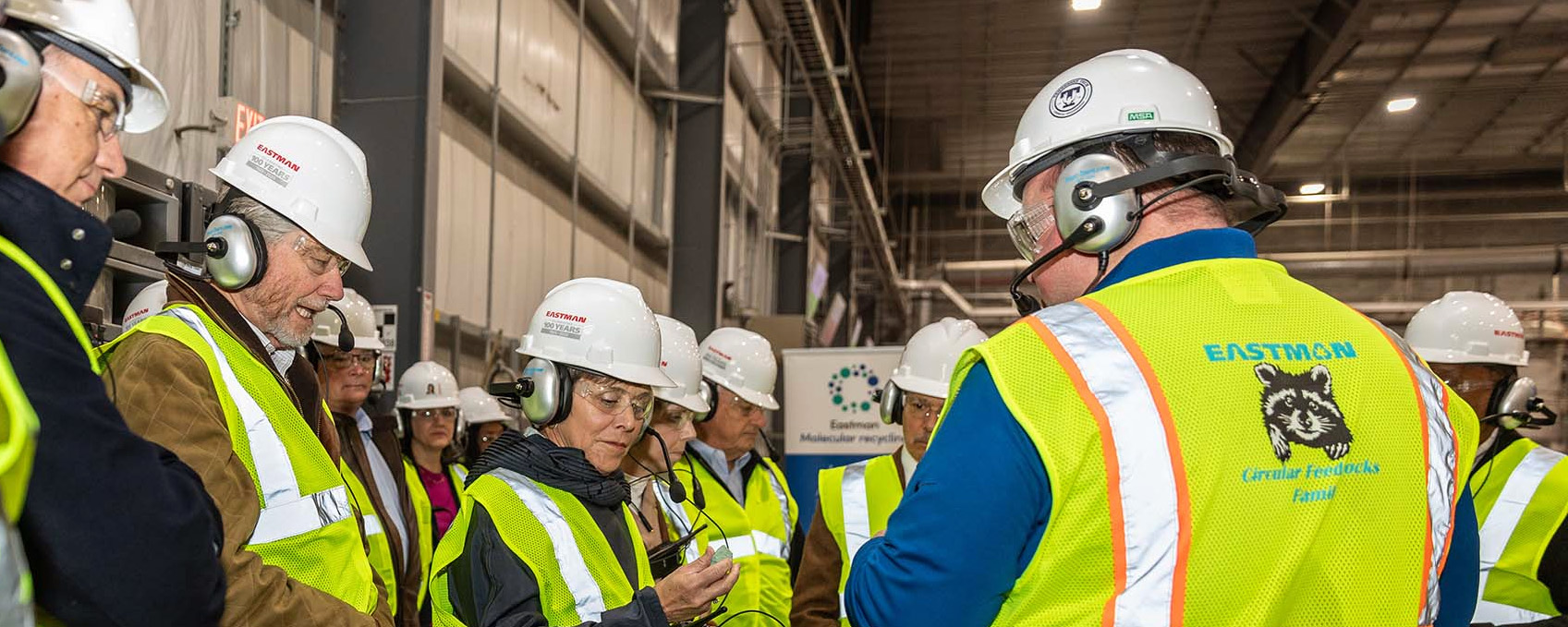
| | | | | | | | | | | | | | | | | |
| | | | | |
| Talent Development | | | | Stockholder Engagement |
| | | | | |
| | | | | |
| The Board believes that talent management and employee development are vital to the success of Eastman’s innovation-driven growth strategy. Accordingly, the Board regularly monitors leadership quality, employee morale, and talent development through one-on-one meetings with key senior managers, senior management presentations at Board and Committees meetings, and other meetings before and after Board and Committees meetings. | | | The Board values input from stockholders on all matters related to Eastman. To create opportunities for directors to receive feedback from the Company’s stockholders, directors may engage directly with stockholders of the Company from time to time. In addition to the direct engagement by the Board or its members, the Board also receives periodic updates from management on regular and on-going engagement efforts that provide further insight to stockholder interests and concerns. |
| | | | | |
| | | | | |
| | | | | |
| Director Orientation | | | | Continuing Education |
| | | | | |
| | | | | |
All new directors take part in a director orientation, which includes written material and presentations, and individual meetings with fellow directors, key leaders and employees, to familiarize such directors with, among other things, the Company’s business, strategic plans, internal controls, risk management processes, compliance programs, Code of Business Conduct and Ethics, corporate governance guidelines, independent auditors and advisors, and securities trading and reporting responsibilities. | | | The Board encourages all directors to stay abreast of developing trends for directors by attending director development programs and conferences that relate to director fiduciary duties, corporate governance topics or other topics relevant to the work of the Board. The Company compensates directors for attendance at such courses and pays the reasonable expenses thereof. |
| | |
| Item 1 Election of Directors |
Transactions with Directors, Executive Officers, and Related Persons
The Board reviews and evaluates transactions involving the Company in which non-employee directors, executive officers, and any of their collective affiliates (including immediate family members and other firms, corporations, or entities with which such person has a relationship) have or had a direct or indirect interest. Written Company policies: (i) require approval by the Board (in the case of the Chief Executive Officer) or senior management (in the case of all other employees) of each Company transaction in which an employee has a direct or indirect financial or other personal interest, and (ii) restrict reporting relationships between immediate family members. In the most recent review, the Board considered purchases and sales of products and services in the ordinary course of business to and from companies of which non-employee directors are or were directors. Each such transaction was determined by the Board not to be a material transaction or relationship.
The Board also reviewed employment by the Company of three immediate family members of executive officers. Two immediate family members (husband and brother-in-law) of Michelle R. Stewart, the Company’s Vice President, Chief Accounting Officer and Corporate Controller (principal accounting officer) and the spouse of B. Travis Smith, Executive Vice President, Additives & Functional Products, Manufacturing, WWE&C and HSE, are employed by Eastman. Each of these three individuals is employed in a non-executive officer position and each received total compensation for 2025 of less than $250,000. The terms of the employment of Ms. Stewart’s and Mr. Smith’s immediate family members, including compensation and benefits, were in all respects according to standard Company employment policies and practices applicable to professional employees with comparable qualifications and responsibilities and holding similar positions. None of these three individuals works in the same internal organization, nor are they in the line of management, of their respective family member executive. In each case, neither Ms. Stewart nor Mr. Smith made, and will not make, any hiring, compensation, promotion, or evaluation decisions regarding their family members. Consistent with our related person transaction policy as described above, our NCG Committee and Board reviewed this matter.
Board Corporate Governance Guidelines and Committee Charters; Code of Business Conduct and Ethics; and Insider Trading Policy
The NCG Committee of the Board periodically reviews and assesses the Board’s Corporate Governance Guidelines and governance practices, and each Committee reviews and assesses its charter, and recommends any changes to the Board. We make available free of charge, through the “Investors — Governance” section of the Eastman website, the Board’s Corporate Governance Guidelines, the charters of each of the Committees of the Board, and the Codes of Business Conduct and Ethics for our directors, officers, and employees. Such materials are also available in print upon written request of any stockholder to Eastman Chemical Company, P.O. Box 431, Kingsport, Tennessee 37662-0431, Attention: Investor Relations.
The Company has adopted an insider trading policy governing the purchase, sale, and/or other dispositions of its securities by its directors, officers, employees, and independent consultants and contractors. This policy is designed to promote compliance with insider trading laws, rules and regulations, and the exchange listing standards applicable to the Company. It is the Company’s policy to comply with all applicable securities and state laws when engaging in transactions in the Company’s securities.
Board Stockholder Communication and Engagement Policy
We have adopted a Board Stockholder Communication and Engagement Policy to facilitate communication between stockholders and other interested parties and the Board. Stockholders and other interested parties may send communications to the Board, any individual director, or the independent directors as a group in writing by mail or email to: Board of Directors, Eastman Chemical Company, c/o Corporate Secretary, P.O. Box 1976, Kingsport, Tennessee 37662-1976, email: corpsecy@eastman.com and leaddirector@eastman.com. Stockholders should indicate in the “ATTN:” line of the envelope or the subject line of the email, as applicable, whether the communication is directed to the Board, an individual director, or the independent directors as a group. The Board Stockholder Communication and Engagement Policy is available on the “Investors — Governance” section of the Company’s website.
Compensation Philosophy for Directors
Director compensation is determined by the Board based upon the recommendation of the NCG Committee and its compensation consultant. The Board uses a combination of cash and stock-based compensation to attract and retain qualified candidates to serve as directors. In setting the compensation of non-employee directors, the NCG Committee and the Board consider the significant amount of time that the Board and its Committees are expected to expend, the skills, knowledge, and understanding needed for service on the Board, and the types and amounts of director pay of similar public companies. Cash retainers and event fees, as described below, are paid in two semi-annual payments.
The NCG Committee and the Board annually review non-employee director compensation, and the Board, upon the recommendation of the NCG Committee, approves amounts and forms of director compensation to make the value of total non-employee director compensation consistent with competitive peer data. In late 2024, the NCG Committee concluded that non-employee director total pay was in line with external market comparisons, and accordingly the Board made no changes to non-employee director compensation for 2025.
2025 Director Compensation
| | | | | | | | | | | | | | | | | | | | | | | |
| Cash Retainer | | | | Restricted Stock Awards | | |
| Cash fees for 2025 were as follows: | | | | | | |
| | | | | | | |
| Non-Employee Director Annual Retainer | $125,000 | | | Non-Employee Director Annual Award | $120,000 | |
| Lead Director Retainer | $45,000 | | | Director (one-time award upon initial election to the Board) | $10,000 | |
| Chair Retainer — Audit Committee | $25,000 | | | | |
| Chair Retainer — Compensation and Management Development Committee | $20,000 | | | | | |
| Chair Retainer — Nominating and Corporate Governance Committee | $15,000 | | | Deferred Compensation | | |
| Chair Retainer — Finance Committee | $15,000 | | | Automatic annual deferral into Eastman Stock Fund | $60,000 | |
| Chair Retainer — Environmental, Safety and Sustainability Committee | $15,000 | | | | | |
| “Event” Fee (Per Event)* | $1,500 | | | | | |
| | | | | | | |
* Event fees are paid in connection with significant time spent outside Board or Committee meetings for director training, interviewing director candidates, meeting with Company management, meeting with external auditors, meeting with investors and management, or other meetings or activities as directed by the Board or one of its Committees.
Each non-employee director receives an annual award of restricted shares of common stock having a fair market value equal to $120,000 made on the date of the Annual Meeting of Stockholders, which vests if the director is still serving as a director immediately prior to the election of directors at the next annual meeting of stockholders. In addition, upon initial election to the Board, a director receives a one-time award of restricted shares having a fair market value equal to $10,000. The restricted shares are generally not transferable and are subject to a one-year vesting period. During the restricted period, the director has all of the rights of a stockholder with respect to the restricted shares (other than the right to transfer the shares), including voting and dividend rights.
Directors’ Deferred Compensation Plan
The Directors’ Deferred Compensation Plan (the “DDCP”) is an unfunded, nonqualified, deferred compensation plan under which each non-employee director may elect to defer compensation received as a director until he or she ceases to serve as a director. Prior to the start of each year, non-employee directors may make an irrevocable, annual election to defer compensation for services to be rendered the following year. Compensation that may be deferred includes: (i) all or a portion of cash compensation for service as a director, including retainer and event fees; and/or (ii) the annual restricted stock award for service as a director.
If a director elects to defer the annual restricted stock award, the value of the award is first converted to an unvested deferred cash equivalent amount in the director's Eastman phantom stock account of the DDCP, which is subject to forfeiture until it vests, after which it remains deferred until the end of service as a director. In addition, $62,500 of each non-employee director's annual cash retainer is automatically deferred into the director’s Eastman phantom stock account of the DDCP. Upon completion of service as a director, the value of the director’s DDCP account is paid, in cash, in a single lump sum or in up to ten annual installments as elected in advance by the director.
For 2025, there were no preferential or above-market earnings on amounts in individual hypothetical investment accounts (defined as appreciation in value and dividend equivalents earned at a rate higher than appreciation in value and dividends on the underlying common stock or interest on amounts deferred at a rate exceeding 120% of the federal long-term rate). Eastman does not have a director pension plan.
Director Compensation Table
The following table provides information concerning compensation paid to the Company’s non-employee directors for 2025. The only director who is an employee of the Company (Mr. Costa, our CEO) received no additional compensation for his service on the Board.
| | | | | | | | | | | | | | |
Name | Fees Earned or Paid in Cash ($)(1) | Stock Awards ($)(2) | All Other Compensation ($)(3) | Total
($) |
|
| | | | |
Humberto P. Alfonso Audit Committee Chair | $154,500 | | $120,047 | | $60,000 | | $334,547 | |
| | | | |
| | | | |
Damon J. Audia | $62,500 | | $10,060 | | $30,000 | | $102,560 | |
| | | | |
| | | | |
Brett D. Begemann Lead Independent Director | $170,000 | | $120,047 | | $60,000 | | $350,047 | |
| | | | |
| | | | |
Eric L. Butler | $131,000 | | $120,047 | | $60,000 | | $311,047 | |
| | | | |
| | | | |
| Linnie M. Haynesworth | $126,500 | | $120,047 | | $60,000 | | $306,547 | |
| | | | |
| | | | |
Julie F. Holder Nominating and Corporate Governance Committee Chair | $146,000 | | $120,047 | | $60,000 | | $326,047 | |
| | | | |
| | | | |
Renée J. Hornbaker Finance Committee Chair | $149,000 | | $120,047 | | $60,000 | | $329,047 | |
| | | | |
| | | | |
Kim Ann Mink Environmental, Safety and Sustainability Committee Chair | $144,500 | | $120,047 | | $60,000 | | $324,547 | |
| | | | |
| | | | |
James J. O’Brien Compensation and Management Development Committee Chair | $145,000 | | $120,047 | | $60,000 | | $325,047 | |
| | | | |
| | | | |
David W. Raisbeck4 | $62,500 | | 0 | $30,000 | | $92,500 | |
| | | | |
| | | | |
Donald W. Slager | $128,000 | | $120,047 | | $60,000 | | $308,047 | |
| | | | |
(1)Compensation in this column consists of director retainer fees and, where applicable, Lead Director or Committee Chair retainer fees, as well as event fees paid in 2025 to Mr. Alfonso ($4,500), Mr. Butler ($6,000), Ms. Haynesworth ($1,500), Ms. Holder ($6,000), Ms. Hornbaker ($9,000), Dr. Mink ($4,500) and Mr. Slager ($3,000).
(2)Represents the grant date fair value, computed in accordance with the Financial Accounting Standards Board (“FASB”) Accounting Standards Codification (“ASC”) Topic 718 (Stock Compensation). See note 18 to the Company’s consolidated financial statements in the Annual Report to Stockholders for 2025, mailed and delivered electronically with this proxy statement, for a description of the assumptions made in the valuation of stock awards under FASB ASC Topic 718.
Messrs. Alfonso, Begemann, and Ms. Haynesworth, and Dr. Mink each elected to receive the annual restricted stock award as deferred phantom stock units pursuant to the DDCP.
Mr. Audia held 132 restricted shares, and Messrs. Butler, O’Brien and Slager, and Mses. Holder, and Hornbaker each held 1,575 restricted shares as of December 31, 2025.
(3)Amount of annual retainer not included in the “Fees Earned or Paid in Cash” column that was automatically deferred into the director’s Eastman phantom stock investment account of the DDCP. The value of non-employee director perquisites and personal benefits that have an incremental cost to the Company (personal liability insurance and Company-provided insurance for non-employee director travel) are not reported for 2025 since the total amount per individual was less than $10,000.
(4)Mr. Raisbeck retired effective May 1, 2025.
| | | | | | | | |
| | |
ITEM 2 Ratification of Appointment of Independent Registered Public Accounting Firm | |
| | |
| | |
The Audit Committee of the Board has appointed PricewaterhouseCoopers LLP (“PwC”) to serve as the Company’s independent registered public accounting firm for the year ending December 31, 2026. In making this appointment, the Audit Committee has determined that the retention of PwC continues to be in the best interests of Eastman and its stockholders. Although PwC has served as the Company’s independent auditor since 1993, the Sarbanes-Oxley Act of 2002 requires the lead engagement partner on an audit of a public company to rotate off the engagement every five years. The Audit Committee believes PwC’s tenure as the Company’s independent registered public accounting firm has provided the firm with a deep understanding of the Company's business. PwC's tenure and knowledge of the Company's business has served to enhance the audit processes and overall audit quality, which are aided by: •Robust auditor independence controls; •Deep Company and industry knowledge; and •Annual evaluation of independence, performance, and qualifications. The stockholders are being asked to ratify the Audit Committee’s appointment of PricewaterhouseCoopers LLP as the Company’s independent registered public accounting firm for the year ending December 31, 2026. If the stockholders fail to ratify this appointment, the Audit Committee may, but is not required to, reconsider whether to retain that firm. Even if the appointment is ratified, the Audit Committee, in its discretion, may direct the appointment of a different accounting firm at any time during the year if it determines that such a change would be in the best interests of the Company and its stockholders. A representative of PwC is expected to attend the Annual Meeting and will have the opportunity to make a statement on behalf of the firm if he desires to do so. The representative is also expected to be available to respond to appropriate questions from stockholders. |
| | |
| | |
| The Board of Directors recommends that you vote “FOR” ratification of the appointment of PricewaterhouseCoopers LLP as Eastman’s independent registered public accounting firm for the year ending December 31, 2026. | |
| | |
| | |
Item 2 Ratification of appointment of independent registered public accounting firm |
Independence of PricewaterhouseCoopers LLP
To ensure continued auditor independence, the Audit Committee considered factors that continue to support PwC’s independence, such as oversight by the Public Company Accounting Oversight Board (“PCAOB”) through audit, quality, ethics, and independence standards and audit inspections, and PCAOB requirements for audit partner rotation. Under the auditor independence rules, PwC reviews its independence each year and delivers to the Audit Committee a letter addressing matters prescribed under those rules.
Regular Rotation of Primary Engagement Partner
In accordance with applicable rules on partner rotation, PwC’s lead partner for our audit was changed in 2026, while PwC’s engagement quality review partner for our audit was most recently changed in 2022. The Audit Committee is involved in the selection of PwC’s primary engagement partner when there is a rotation, which typically occurs every five years.
PwC served as the Company’s independent registered public accounting firm for the years ended December 31, 2024 and 2025, and has billed the Company the following amounts for fees and related expenses for professional services rendered during 2024 and 2025:
| | | | | | | | |
($ IN THOUSANDS) | For the Year Ended December 31, 2024 | For the Year Ended December 31, 2025 |
Audit Fees and Expenses(1) | $6,347 | | $5,956 | |
Audit-Related Fees and Expenses(2) | 40 | 125 |
Tax Fees and Expenses(3) | 1,161 | | 929 | |
All Other Fees and Expenses(4) | 223 | 298 |
| Total | $7,771 | | $7,308 | |
(1)Audit fees and expenses represent fees and expenses for professional services rendered for the audits of the consolidated financial statements of the Company (including the audit of internal controls over financial reporting), review of financial statements included in quarterly reports, statutory and subsidiary audits, issuance of comfort letters, and assistance with review of documents filed with the SEC.
(2)Audit-related fees and expenses consist primarily of assurance and related services, including audit and related procedures for possible mergers, acquisitions, and divestitures, and consultations concerning application of and compliance with financial accounting and reporting standards.
(3)Tax fees and expenses consist primarily of services related to domestic and international tax planning, tax compliance, including preparation of tax returns and claims for refunds, tax advice, assistance with respect to tax audits, and requests for rulings for technical advice from tax authorities.
(4)All other fees and expenses principally include ESG assurance and cybersecurity advisory services.
As described below under “Report of the Audit Committee,” all audit and non-audit services provided to the Company by PwC were pre-approved by the Audit Committee or by the Chair of the Audit Committee pursuant to delegated authority.
| | |
Item 2 Ratification of appointment of independent registered public accounting firm |
Report of the Audit Committee
| | | | | | | | | | | | | | | | | |
| | | | | |
| The Audit Committee evaluates the performance of the independent registered public accounting firm, including the lead engagement partner, each year and determines whether to reengage the current independent registered public accounting firm or consider other independent registered public accounting firms. In doing so, the Audit Committee considers the quality and efficiency of the services provided by the firm, the firm’s global capabilities, and the firm’s technical expertise, tenure as the Company’s independent registered public accounting firm, and knowledge of the Company’s global operations and industry. Based on this evaluation, the Audit Committee decided to retain PricewaterhouseCoopers LLP ("PwC") to serve as independent registered public accounting firm for the year ending December 31, 2026. Although the Audit Committee has the sole authority to appoint the independent registered public accounting firm, the Audit Committee has continued its long-standing practice of recommending that the Board ask stockholders to ratify the appointment of the independent registered public accounting firm at the Annual Meeting (see “Item 2 — Ratification of Appointment of Independent Registered Public Accounting Firm”). | | | | |
| | | | | |
ROLES AND RESPONSIBILITIES. On behalf of the Board, the Audit Committee oversees the Company’s financial reporting process and its internal control over financial reporting and related disclosure controls and procedures, areas for which management has the primary responsibility. The independent registered public accounting firm is responsible for expressing an opinion on the conformity of the Company’s financial statements with accounting principles generally accepted in the United States and the Company’s internal control over financial reporting. At the beginning of the year, the Audit Committee or the Chair of the Audit Committee, pursuant to delegated authority, reviews and pre-approves all known audit and permissible non-audit services and fees to be provided by and paid to PwC, the Company’s independent registered public accounting firm. During the year, specific audit and permissible non-audit services or fees not previously approved by the Audit Committee were approved in advance by the Audit Committee or by the Chair of the Audit Committee pursuant to delegated authority.
MEETINGS AND EXECUTIVE SESSIONS. The Audit Committee had nine (9) meetings during 2025, five (5) of which were regular meetings that included separate private (or “executive”) sessions of the Audit Committee with the Company’s independent registered public accounting firm and with Company management, including the Director of Corporate Audit Services, the Chief Legal Officer, the Chief Financial Officer, the Chief Accounting Officer and Corporate Controller, the Managing Director of Global Corporate Compliance, the Chief Information Officer, the Chief Information Security Officer, and other employees from finance and legal. These executive sessions included discussion of specific financial management, legal, accounting, internal and external audit findings, internal controls and disclosure controls, corporate compliance, and risk management matters. As part of its oversight of the Company’s risk management process, the Audit Committee reviewed and discussed management’s risk assessment and risk management program, including individual areas of risk and the overall risk management process. See “Risk Oversight” earlier in this proxy statement.
REVIEW OF DISCLOSURES AND FINANCIAL REPORTING. Four of the Audit Committee’s meetings included a review of the Company’s planned public disclosures of quarterly financial results. These meetings, conducted with management and PwC, covered the financial statements and Management’s Discussion & Analysis in the Company’s Annual Report on Form 10‑K and Quarterly Reports on Form 10‑Q (prior to SEC filing) and matters relating to the Company’s internal control over financial reporting and disclosure controls and procedures for such filings. Management discussed with the Audit Committee the audited financial statements and related disclosures in the Company’s Annual Report on Form 10‑K for the year ended December 31, 2025, including the quality of accounting principles used, the reasonableness of significant accounting judgments and estimates, the clarity of disclosures in and concerning the financial statements, related internal controls and disclosure controls and procedures that support management's judgments, and the certifications of the Chief Executive Officer and Chief Financial Officer regarding fair presentation of the Company’s financial condition, results of operations, and cash flows.
| | |
Item 2 Ratification of appointment of independent registered public accounting firm |
Throughout the year, the Audit Committee reviewed with the Company’s financial management, PwC, and the Director of Corporate Audit Services the overall audit scope and plans, the results of internal and external audit examinations, evaluations by management and PwC of the Company’s internal controls over financial reporting, and the quality of the Company’s financial reporting.
DISCUSSIONS WITH EXTERNAL AUDITORS. In meetings with PwC, the Audit Committee discussed the matters required to be discussed by PCAOB Auditing Standard 1301—Communications with Audit Committees, including significant accounting judgments or estimates made by management, the fair presentation in the financial statements of the Company’s financial position and performance in accordance with generally accepted accounting principles and SEC disclosure requirements, and the implementation and adequacy of the Company's internal controls and related audit procedures. The Audit Committee received from PwC the written disclosures and letter required by PCAOB Rule 3526—Communication with Audit Committees Concerning Independence, reviewed PwC’s independence from the Company and management, and discussed PwC’s internal quality control procedures.
RECOMMENDATIONS AND APPROVALS. In reliance on these reviews and discussions, and the reports of PwC, the Audit Committee has recommended to the Board, and the Board has approved, that the audited financial statements be included in the Company’s Annual Report on Form 10-K for the year ended December 31, 2025, filed with the SEC.
This report shall not be deemed soliciting material or filed with the U.S. Securities and Exchange Commission, nor incorporated by reference into any filing under the Securities Act of 1933 or the Securities Exchange Act of 1934, except to the extent that the Company specifically incorporates it by reference.
AUDIT COMMITTEE:
| | | | | | | | | | | | | | |
| | | | |
| | | | |
Humberto P. Alfonso (Chair) | Damon J. Audia | Eric L. Butler | Linnie M. Haynesworth | Donald W. Slager |
| | | | |
| | | | | | | | |
| | |
ITEM 3 Advisory Approval of Executive Compensation | |
| | |
| | |
The Dodd-Frank Wall Street Reform and Consumer Protection Act of 2010 (the “Dodd-Frank Act”) provides stockholders with the right to vote to approve, on an advisory (nonbinding) basis, the compensation of the Company’s named executive officers ("NEOs") as disclosed pursuant to the compensation disclosure rules of the SEC. This advisory vote is commonly referred to as the “say-on-pay” vote. The Compensation Committee considers the outcome of this vote in its establishment and oversight of the compensation of the executive officers, as further discussed in “Executive Compensation — Compensation Discussion and Analysis.” The Compensation Committee also considers input from investors as it designs and makes decisions with respect to the Company's executive compensation programs as described in “Executive Compensation — Compensation Discussion and Analysis —Stockholder Engagement.” The Company’s strategy for business and financial growth from sustainable innovation, market engagement, and differentiated technologies and applications development leverages the capabilities of our employees to innovate and execute our growth strategy while remaining committed to maintaining a strong financial position with appropriate financial flexibility and liquidity. Our pay-for-performance compensation philosophy supports this strategy by stressing the importance of corporate and individual performance: (i) in meeting strategic and business goals for growth; (ii) creating value through innovation; and (iii) driving financial strength and flexibility, while remaining able to meet changing employee, business, and market conditions. Our executive compensation program is designed to attract and retain a talented and creative team of executives who will provide disciplined leadership for the Company’s success in dynamic, competitive markets. The Company seeks to accomplish this by motivating executives with an appropriate mix of compensation elements to drive value for stockholders. Please read the “Executive Compensation — Compensation Discussion and Analysis” section of this proxy statement for additional details about our executive compensation philosophy and programs, including information about the compensation of our NEOs for 2025, as detailed in the tables and narrative. The say-on-pay vote gives stockholders the opportunity to indicate their views on the compensation of our NEOs. This vote is not intended to address any specific item of compensation, but rather the overall compensation of our NEOs and the philosophy, objectives, and practices described in this proxy statement. Stockholders are being asked to approve the compensation of the NEOs as disclosed in the “Executive Compensation” section of this proxy statement, including the Compensation Discussion and Analysis, compensation tables, and related narrative disclosure. Because this vote is advisory, it will not be binding on the Compensation and Management Development Committee (the “Compensation Committee”), the Board, or the Company. However, the Compensation Committee and the Board value the opinions of the Company’s stockholders, and the Compensation Committee will consider the outcome of the vote in its establishment and oversight of the compensation of the executive officers. |
| | |
| | |
| The Board recommends that you vote “FOR” the advisory approval of the compensation of the Company’s named executive officers as disclosed in this proxy statement. | |
| | |
| | |
| Item 3 Advisory Approval of Executive Compensation |
| | | | | | | | | | | | | | | | | | | | |
| | | | | | |
| Letter from the Compensation and Management Development Committee | |
| | | | | | |
| | | | | | |
| As members of the Compensation and Management Development Committee of the Board of Directors (the “Compensation Committee”), we wanted to provide additional insight into the factors that impact our deliberations and efforts to design a well-structured compensation program for Eastman executives. Compensation Philosophy Our compensation philosophy is designed to influence executive decision-making in ways that enhance financial performance, operational excellence, sustainability and innovation. By balancing short-term accountability with long-term incentives tied to clear strategic goals, the Compensation Committee seeks to align management actions with the interests of stockholders. As part of our design philosophy, we target market competitive total compensation and emphasize performance-based elements so that a meaningful portion of pay is contingent on measurable company and individual performance, and on stockholder returns. Through careful design and oversight, the Compensation Committee seeks to incentivize sustainable growth and long-term value creation for stockholders while preserving the Company’s ability to secure and develop top executive talent. Alignment of Pay and Performance We strive to design a program that: (i) balances short- and long-term incentives; (ii) emphasizes alignment between pay and performance; and (iii) drives behaviors that create sustained financial and strategic value. Our process considers market data and trends, short- and long-term strategic growth plans and initiatives, talent management strategy, economic environment, the state of the industry, key market trends, and global regulatory and trade developments. As we weigh these and other factors in designing an effective compensation program, we are constantly driven by our overarching goals of aligning compensation with performance and stockholder interests. Talent Management - Attraction, Retention and Continuity: The Compensation Committee recognizes that high-performing talent and leadership are primary drivers of long-term value creation. As such, a well-designed compensation program serves as an integral component of our broader talent management framework that enables the Company to attract, retain and motivate high-performing executives for the purpose of developing and executing upon a growth strategy that creates long-term value for stockholders. Short- and long-term incentive compensation including equity awards with multi year vesting and performance conditions are key tools to retaining critical leadership through periods of strategic execution. These instruments align executives’ financial interests with sustained company performance and provide continuity in leadership that supports long-term strategic growth initiatives. Pay structures are designed to motivate behaviors that support both immediate operational excellence and long- term strategic outcomes. Governance and Oversight The Compensation Committee regularly reviews our executive compensation program structure and outcomes, engages with stockholders, consults with independent advisors for benchmarking and best practices, and incorporates stockholder feedback to strengthen alignment and transparency. We encourage you to review the detailed disclosures in the "Compensation Discussion and Analysis" section of this Proxy Statement for additional information about specific metrics, targets and program outcomes. We welcome stockholder feedback and remain committed to evolving our approach as necessary to support the Company’s strategy and long term success. Thank you for your continued trust and investment in Eastman.
| |
| | | | | | |
| | |
| Item 3 Advisory Approval of Executive Compensation |
Report of the Compensation and Management Development Committee
The Compensation and Management Development Committee has reviewed and discussed with management the below “Compensation Discussion and Analysis.” Based on this review and discussion, the Compensation and Management Development Committee recommended to the Board that the “Compensation Discussion and Analysis” be included in this Proxy Statement and incorporated by reference into the Company’s Annual Report on Form 10-K for the year ended December 31, 2025.
COMPENSATION AND MANAGEMENT DEVELOPMENT COMMITTEE:
| | | | | | | | | | | | | | |
| | | | |
| | | | |
James J. O’Brien (Chair) | Brett D. Begemann | Julie F. Holder | Renée J. Hornbaker | Kim Ann Mink |
| | | | |
Compensation Discussion and Analysis (CD&A)
This CD&A provides compensation information for our named executive officers (“NEOs”) listed below.
| | | | | | | | | | | | | | |
| | | | |
| | | | |
Mark J. Costa Chief Executive Officer ("CEO") | William T. McLain, Jr. Executive Vice President and Chief Financial Officer ("CFO") | Brad A. Lich Executive Vice President and Chief Commercial Officer ("CCO") | B. Travis Smith Executive Vice President, Additives & Functional Products, Manufacturing, WWE&C and HSE* | Christopher M. Killian Senior Vice President Chief Technology Officer ("CTO") and Chief Sustainability Officer ("CSO")** |
* WWE&C refers to Worldwide Engineering & Construction and HSE refers to Health, Safety and Environment. |
| ** Retired effective December 31, 2025 |
Table of Contents
| | | | | | | | | | | | | | | | | |
| | | | | |
| | | | | |
| | | | "The Compensation Committee recognizes that high-performing talent and leadership are primary drivers of long-term value creation. As such, we have designed our executive compensation program to enable the Company to attract, retain and motivate high-performing executives for the purpose of developing and executing upon a growth strategy that delivers sustainable, long-term value for stockholders." - James J. O'Brien Compensation and Management Development Committee Chair | |
| | | | |
| | | | |
| | | | |
| | | | |
| | | | |
| | | | |
Elements of our Executive Compensation Program | | | | |
| | | | |
| | | | |
| | | | |
| | | | |
| | | | |
| | | | |
| | | | |
| | | | | |
| | | |
Executive Summary
2025 Performance Highlights*
| | | | | | | | | | | | | | | | | |
Despite a challenging operating environment in 2025, our team demonstrated the resilience of our portfolio and the strength of our cash generation. In 2025, we generated cash from operating activities approaching $1 billion, which reflects our disciplined approach to capital and cost management. Our commercial teams were able to effectively defend the value of our products while we remained focused on structural cost discipline throughout the year to protect margins and preserve competitiveness in challenging market conditions. We continued to prioritize shareholder returns and raised the dividend for the 16th consecutive year. In total, we returned approximately $500 million through dividends and share repurchases. We also advanced our strategic growth initiatives, which included achieving our Kingsport methanolysis operational goals and producing more than 2.5 times the recycled content versus 2024. | | | | | |
| Revenue: $8.75B | | EBIT: $776M Adj. EBIT: $930M* | |
| | | | |
| | | | |
| | | | |
| EPS: $4.10 Adj. EPS: $5.42* | | Operating Cash Flow: $970M | |
| | | | |
| | | | |
| Returned approx. $500M to stockholders through dividends and share repurchases | |
| | | | |
| | | | |
| The Company achieved its best ever personal and process safety performance | |
| | | | |
*See Annex B for reconciliation of financial measures under U.S. GAAP to non-GAAP financial measures. | | | | | | | | | | | | | | | | | | | | | | | |
| | | | | | | |
Key Changes to the Company’s Compensation Program in 2024 and 2025: | | | | | |
| | | | | | | |
Annual Incentive Plan: | | •Adjusted the weighting of the primary financial performance measures to enhance focus on cash generation for 2025 to drive a disciplined approach to capital and cost management. •Refined to include strategic and operational goals to focus on improvements in safety, new business from innovation, and Company culture to provide better alignment with Company strategy. | | | | | |
| | | | | | | |
| | | | | | | |
Long-Term Incentive Plan: | | •Introduced restricted stock units (20%), along with performance share awards (60%) and stock options (20%), to provide resilience across business cycles and varying market conditions. •Replaced the matrix multiplier table with separate formulas for relative total shareholder return and return on invested capital metrics to provide a simple and direct framework for measuring and communicating our performance award objectives. •Included strategic performance metrics in the annual incentive plan and eliminated the payout modifier used for performance share award payouts in the long-term incentive plan. The underlying strategic performance metrics are generally considered more actionable and effective over a shorter time horizon allowing plan participants to more quickly respond to macroeconomic, geopolitical and global trade developments. | | | | | |
| | | | | | | |
| | | | | | | |
Peer Group: | | •Further refined our compensation peer group to focus on specialty chemical and advanced materials companies driving innovation, sustainable solutions, and the circular economy. •We selected peers that have a high-level of market and geographic complexity similar to Eastman. | | | | | |
| | | | | | | |
| | | | | | | |
| Clawback Policy: | | •Adopted a separate policy (beyond the Dodd Frank required policy) that provides for the clawback of incentive compensation for senior executives in the event of detrimental conduct. | | | |
Overview of Executive Compensation Program
The table below describes each principal element of the Company's executive compensation program, how the Compensation Committee determines the amount or size of such compensation, and the primary compensation objectives applicable to each type of compensation.
| | | | | | | | | | | | | | |
| Component | Vesting Period | How Pay is Determined | Why We Pay Each Component |
| | | | |
| Annual Base Salary | Ongoing | Scope of responsibilities Work experience Individual performance Comparable pay for similar jobs at peer group companies Comparable pay of other Eastman executives and for other Eastman jobs | Recognize job responsibilities and contributions Attract and retain executive talent |
| | | |
| | | |
Annual Incentive Compensation Opportunity | 1 year | Target awards are set as a percent of salary based on competitive data for similar jobs Payouts based on business and individual performance compared to pre-set goals and targets | Motivate attainment of short-term business objectives and individual performance commitments consistent with long-term strategic plans |
| | | | |
| | | | |
| Long-Term Incentive Compensation Opportunity | 3 years •performance shares (60%) •restricted stock units (20%) ________________________ stock options (20%) graduated vesting period with full vesting over 3 years | Awards reflect a targeted dollar value based on competitive data; individual payouts based on business and individual performance, contribution, and long-term potential Payouts and appreciation based on long-term capital returns and stock price appreciation | Motivate attainment of long-term corporate performance resulting in stock price appreciation Encourage ownership mindset by aligning interests with stockholders Attract and retain executive talent |
| | | | |
2025 CEO Earned or Accrued Compensation
We have included the tabular disclosure below to provide additional transparency around the compensation earned or accrued by the CEO in 2025, and the important distinctions from the “Summary Compensation Table” ("SCT") required disclosures. The difference in values for total compensation is solely attributable to the different valuation methodologies for the 2025 Performance Share Awards ("PSAs"), 2025 Restricted Stock Unit Awards ("RSUs"), and the 2025 Option Grant. The 2025 CEO Earned or Accrued Pay is designed to reflect: (i) the value of the 2025 PSAs and RSUs based on performance against financial targets to-date and year-end stock price and (ii) the value of the Option Grant based on the difference between the exercise price and stock price as of year-end. The value of our CEO's approved target total direct compensation ("TDC") was approximately 50% of the approved target as of December 31, 2025, which includes an annual incentive compensation payout of 47% of target for 2025.
The “Summary Compensation Table” reflects values for the 2025 PSAs, RSUs, and Option Grant based on accounting and actuarial financial models to estimate the grant date fair value of the awards. The table below shows the compensation earned by or accrued for the CEO for 2025, and the estimated worth of the PSAs, RSUs, and stock options granted in 2025, based on the differences between the grant date price and the stock price as of year-end. The year-end share price was $63.83; the grant date share price of the PSAs was $101.28; the grant date share price of the RSUs was $100.56; and the exercise price of the stock options was $100.56.
| | | | | | | | | | | | | | |
| | | | |
| | The graphic below reflects the strong alignment between Eastman's executive compensation plan and our CEO compensation for 2025. | | |
| |
| |
| |
| | | | |
1 - In-the-money value at exercise price of $100.56.
2 - 20-day average (last 10 business days of 2024 and first 10 business days of 2025) used to derive number of 2025 performance shares granted.
3 - Grant Date price.
4 - Monte-Carlo simulation value used for 2025 performance shares in accordance with FASB Topic 718.
5 - Black-Scholes value of option used for 2025 options in accordance with FASB Topic 718.
6 - Actual closing price of Eastman stock on December 31, 2025.
Stockholder Engagement
| | | | | | | | | | | | | | | | | | | | |
| | | | | | |
| Our Board and management believe that proactive, transparent engagement with stockholders is essential to understanding stockholder priorities and concerns, which helps inform our decision-making processes. We strive to maintain an ongoing dialogue with stockholders and incorporate their feedback into our Board and committee deliberations. Insights gathered through engagement are shared with the Board and its committees for assessment and response, helping to ensure that our governance practices and executive compensation program remain aligned with stockholder interests and promote long-term value creation. We continue to solicit input from stockholders on executive compensation, corporate governance, sustainability, and other matters, with particular focus on any concerns and potential enhancements that could further strengthen alignment between pay and performance, reinforce accountability, and advance our governance practices. | |
| |
| |
| |
| | | | | | |
| | | | | | |
| | | | | | | | | | | | | | | | | | | | |
| | | | | | |
| 2025 Stockholder Engagement | | | |
| | | | | | |
| January Q4 2024 and FY2024 earnings call
| | June Deutsche Bank Global Industrials, Materials & Building Products Conference
| | | Our primary engagement team: •Lead Independent Director •Chief Executive Officer and Board Chair •Chief Financial Officer •Investor Relations (Vice President - Investor Relations) •Human Resources (Chief Human Resource Officer) •Sustainability team (Chief Sustainability Officer) •Chief Legal Officer and Corporate Secretary |
| February Barclays Industrial Select Conference | August Q2 2025 earnings call | | |
| March JP Morgan Industrial Conference | | September Morgan Stanley 13th Annual Laguna Conference | | |
| | | | | | |
| April Q1 2025 earnings call | | November Q3 earnings call Fall engagement program | | | How we interact with stockholders •In-person or virtual meetings •Investor conferences •Annual stockholder meeting •Stockholder proposals •Written correspondence with investors throughout the year |
|
| May Annual Meeting of Stockholders | | December Citi Basic Materials Conference | | |
How to communicate with Eastman
Stockholders and other interested parties may send communications to the Board, any individual director, or the independent directors as a group in writing by mail or email to: Board of Directors, Eastman Chemical Company, c/o Corporate Secretary, P.O. Box 1976, Kingsport, Tennessee 37662-1976, email: corpsecy@eastman.com and leaddirector@eastman.com.
| | | | | | | | | | | |
| | | |
| WHAT WE HEARD | HOW WE RESPONDED | HOW WE RESPONDED |
| | | |
| | | |
| Incentive Compensation Plan Design We received requests for additional insight into the Committee's process for structuring the short- and long-term incentive compensation programs to ensure alignment with the Company's strategy when considering industry volatility and cyclicality. | •We have included additional disclosures in this CD&A that describe the Committee's deliberations regarding the design of incentive compensation programs that align with both the Company's short- and long-term strategic business plans and incent behaviors that not only drive performance necessary to deliver on strategic goals, but also create stockholder value.
| |
| | | |
| | | |
| Perquisites and Executive Security We received requests for information regarding the Company's perquisite program and how the Company thinks about executive security in the current environment. | •We have provided additional disclosures regarding the Board's process for assessing and determining appropriate executive security protocols based on the results of an independent third-party assessment of risk. See "Perquisites" disclosure. | |
| | | |
| | | |
| Recent Changes to Compensation Programs Investors expressed support for recent changes to the Company's executive compensation program and appreciation for the Company's responsiveness to stockholder feedback. | •The Company is committed to on-going stockholder engagement and dialogue, which provides valuable feedback on executive compensation, corporate governance, sustainability and other topics that help inform our decision-making processes. | |
| | | |
| | | |
| Board Tenure and Composition Investors requested additional insight into how the Board evaluates the alignment of director skills and experience with current strategic priorities. Investors were appreciative of the Board refresh process and balance of Board tenure given industry cycle and investment horizons. | •We have provided additional disclosures regarding the Board's approach to director succession planning, which includes a focus on strategy, evolving business needs, and overall tenure. See the “Key Areas of Board Oversight" section of this proxy statement.
| |
| | | |
| | | |
| Board Oversight of Strategy and Risk Investors requested more information about how the Board tracks and oversees topics such as geo-politics, supply chain resilience, strategy execution and climate matters. | •We have provided additional disclosures regarding the Board risk oversight responsibilities in the "Key Areas of Board Oversight" section of this proxy statement. | |
| | | |
Over the last year, we have received support and constructive feedback from our stockholders regarding our Compensation Committee’s actions, responsiveness, and intentions. To maintain and deepen that constructive dialogue, we engage proactively and transparently with our largest institutional holders, governance-focused investors, and other stakeholders through one‑on‑one meetings, investor days, regular investor relations outreach, and targeted written updates—particularly in advance of proxy season and when material compensation changes are contemplated.
Compensation Best Practices
Our compensation program incorporates the following practices and features:
Eastman Compensation Objectives, Philosophy and Program
| | | | | | | | |
| | |
| Alignment of Executive Compensation with Performance The Compensation Committee believes that a significant portion of our executive's total compensation should be performance-based with measurable goals that drive sustained value creation for the Company and its stockholders. Accordingly, the Compensation Committee designs total compensation so that a meaningful portion is at risk and earned only when pre‑defined business and individual performance thresholds are met. Pay decisions reward demonstrated, measurable contributions to strategic priorities, long‑term enterprise value, and prudent risk management. This philosophy ensures that higher performance leads to higher realized pay, reinforcing accountability, long‑term focus, and alignment between executive actions and stockholder outcomes.
Key principles
•Performance‑based: Incentives (short‑ and long‑term) are tied to clear, quantifiable metrics—financial (e.g., revenue, profit, ROIC), strategic (e.g., market share, product milestones), and individual objectives—set and calibrated to reflect expected contribution and stretch performance. •Balanced time horizon: The program blends short‑term incentives to drive near‑term results with long‑term, equity‑based awards that vest on multi‑year performance and/or service conditions to encourage sustainable decision‑making. •Stockholder alignment: A significant portion of executive pay is equity‑based so realized compensation reflects realized stockholder value over time. •Risk‑aware design: Metrics, weightings, and governance are chosen to encourage appropriate risk‑taking and avoid incentives for excessive or short‑term risk. •Transparent governance: The Compensation Committee sets targets, reviews outcomes, and applies consistent calibration, and clawback policies if appropriate to preserve fairness and integrity.
| |
| | |
The Company’s strategy for growth from innovation, market development, and differentiated technologies leverages the capabilities of our employees while remaining committed to maintaining strong financial flexibility and liquidity to drive value for stockholders. Our pay-for-performance͏ compensation philosophy supports this strategy by stressing the importance of compensation for:
| | | | | | | | | | | | | | | | | | | | | | | |
| | | | | | | |
| Performance | | | Value Creation | | | Financial Strength |
| | | | | | | |
Corporate and individual performance in meeting strategic and business goals for growth | | Innovation that converts market complexity into sustainable value | | Financial strength and flexibility, while remaining able to meet changing employee, business, and market conditions |
| | | | | | | |
Our Compensation Objectives. In designing the Company’s compensation program, the Compensation Committee’s primary objectives are to:
| | | | | | | | | | | | | | |
| | | | |
| Provide Competitive Target Compensation | Attract and Retain Highly-Qualified Executives | Reward Performance for Achievement of Goals | Set Challenging Performance Targets | Design Programs with Appropriate Risk Tolerance |
| | | | |
 Leverage all major components of compensation to provide competitive total target executive compensation levels Leverage all major components of compensation to provide competitive total target executive compensation levels | Attract and retain highly-qualified executives to drive strategic business objectives | Provide appropriate short-term and long-term incentives to reward corporate and individual performance for achievement of goals that align with stockholder interests | Ensure performance targets are appropriately challenging and aligned with business strategy and stockholder interests | Maintain balance between compensation performance goals and appropriate levels of risk |
| | | | |
The Compensation Committee has designed the executive compensation program to provide a strong link between executive compensation, Company performance, and each executive's individual performance using rigorous goal-setting. Eastman recognizes employee contributions to business and financial performance through competitive total pay. For all employees, including executives, incentives and rewards are dependent on contributions to business objectives and successes. This includes:
| | | | | | | | | | | | | | | | | | | | | | | | | | | | | | | | |
| | | | | | | | | | |
| Quantified Performance | | | Engagement | | | Environment, Health and Safety | | | Stockholder Interest |
| | | | | | | | | | |
| | | | | | | | | | |
Quantified corporate financial and business performance | | Eastman’s commitment to building, supporting and maintaining an engaged workforce | | Promoting a strong culture of safety and sustainability | | Creating long-term value for all stockholders |
| | | | | | | | | | |
| | | | | | |
| | | | | | | | |
| | |
| Role of the Compensation Committee | |
| | |
| | |
| The Compensation Committee reviews the overall compensation of the CEO and the other NEOs and determines each component of NEO compensation. For 2025, the Compensation Committee: •Reviewed the design, terms, and value of each type of compensation and benefit for each NEO, including salary, annual incentive pay opportunities, and long-term stock-based compensation awards, perquisites and personal benefits, deferred accounts, and retirement plans; •Considered the estimated value of outstanding unvested, unexercised, and unrealized stock-based awards in its review of the types and values of each NEO's compensation; and •Determined the design, terms, amount, and forms of compensation considering: •Company and individual performance; •compensation relative to that for similar positions in other peer companies; •the mix of short- and long-term compensation, and total compensation, relative to other Eastman executive officers; •the types of corporate performance being incented, the levels and types of risk they encourage, and whether the compensation encourages managers to take unnecessary risks; •recommendations from the independent compensation consultant engaged by the Compensation Committee; and •the recommendations of the CEO regarding pay for the other executive officers (the CEO does not participate in discussions or decisions regarding his compensation). | |
| | |
| | | | | | | | |
| | |
| Role of the Compensation Consultant | |
| | |
| | |
| The Compensation Committee has directly engaged Aon plc ("Aon") as its independent compensation consultant. Aon reports to, and receives its direction from, the Compensation Committee. Aon provides the Compensation Committee with: •proprietary peer group and competitive market information, and third-party survey information used in setting short- and long-term compensation levels; •perspective on emerging compensation issues and trends; and •expertise in incentive compensation structure, terms, and design. Aon also provides such services to the NCG Committee for its recommendations to the Board regarding non-employee director compensation. Any other services provided by Aon and its affiliates to Eastman are approved by the Compensation Committee. Consistent with SEC requirements, the Compensation Committee evaluated Aon's independence and concluded that Aon is independent of the Compensation Committee and of Company management, and has no conflicts of interest in its performance of services to the Compensation Committee. | |
| | |
Compensation Peer Group
Each year, the Compensation Committee uses data derived from a group of peer companies (the "Peer Group") as a key input for determining: (i) total target compensation opportunities including base salary, annual target incentive pay opportunities, and total target levels of equity granted; and (ii) annual incentive design including selection and weighting of performance measures; and (iii) the mix of long-term stock-based incentive pay opportunity levels.
| | | | | | | | |
| | |
| Compensation Peer Group Selection Methodology: Eastman is a complex chemical and specialty materials manufacturer with global operations focusing on innovations, sustainability, and circularity. In 2025, the Company generated approximately 56% of its revenue from outside North America and served customers in more than 100 countries. We compete for talent with companies of similar complexity and strategic focus. Considering these factors, the Compensation Committee used the following criteria to determine the compensation Peer Group for 2025: •Industry. Starting with chemical companies, the Compensation Committee focused on a broad range of specialty chemical and advanced materials companies with operations supporting the circular economy and other industrial companies with which we compete for executive talent. •Strategy. The Compensation Committee seeks to use companies with similar innovation-driven strategies, which results in the selection of companies in specialty chemical and circular economy businesses. •Company Complexity. This includes three criteria: •Size. The Compensation Committee uses revenues as the primary size criteria to select the compensation peer group companies. The purpose is to reflect the correlation of revenues to target compensation levels. Market capitalization, operating income, total assets and enterprise value are used as additional size criteria. •Degree of Globalization. This is measured through percent of revenue outside the US, whether the company manufactures outside the US and whether it has a global workforce. •Degree of End Market Complexity. The Committee considers the wide variety of products and diverse nature of industries and applications in which a company’s products are used. | |
| | |
| | | | | | | | |
| | |
| Rationale for Peer Group Changes: In 2025, we continued to realign our Peer Group to focus on specialty chemical and advanced materials companies driving innovation, sustainable solutions, and the circular economy. While the new Peer Group did contain several companies that had a market capitalization significantly larger than Eastman’s, we believe revenue is better correlated to executive compensation than market capitalization, which can fluctuate with business / economic cycles and business model changes. For these reasons, we focused on utilizing companies with similar business focus, business model, and revenue characteristics. For purposes of determining 2025 compensation, the Compensation Committee revised the Peer Group to add Huntsman Corporation and remove Eaton Corporation Plc. The Compensation Committee believes Huntsman Corporation is a better overall fit because it manufactures and sells diversified organic chemical products and is more closely aligned with the Compensation Committee's Peer Group selection criteria. | |
| | |
| | | | | | | | | | | | | | |
| | | | |
| 2025 Proxy Peers | |
| |
| | | | |
| | | | |
| | | | |
| •Air Products and Chemicals, Inc. •Albemarle Corporation •Ashland Global Holdings Inc. •Axalta Coatings Systems Ltd. •Ball Corporation •Celanese Corporation •Corteva, Inc.
| •Dover Corporation •DuPont de Nemours •Ecolab Inc. •FMC Corporation •Huntsman Corporation •International Flavors and Fragrances Inc.
| •Parker-Hannifin Corporation •PPG Industries Inc. •RPM International Inc. •Sealed Air Corporation •The Sherwin-Williams Company •Trane Technologies Plc | |
| | | | |
| | | | |
Elements of our Executive Compensation Program
Primary Components of our Executive Compensation Program
Our executive compensation program has three primary components:
(i) annual base salary;
(ii) annual cash incentives; and
(iii) long-term equity-based incentives.
The Compensation Committee, with input from management and the Compensation Committee’s independent compensation consultant, designs, administers, and assesses the effectiveness of all three elements of executive compensation considering the market and our overall compensation philosophy and objectives. The Compensation Committee’s assessment includes a review of the value of each element of compensation and of total compensation on a recognized and realizable basis.
The Committee seeks to align executive compensation with performance and accountability for driving the Company's strategic objectives and creating long-term value. To do so, the Committee utilizes a balanced pay architecture that emphasizes performance‑based and equity‑linked incentives, multi‑year vesting periods, and outcome-driven metric selection and rigorous target‑setting. Our short‑term and long‑term incentive programs link payouts to outcomes investors care about—such as relative total shareholder return, free cash flow, ROIC, and strategic execution milestones—while embedding governance safeguards like clawbacks, anti‑hedging rules, minimum ownership guidelines, and independent benchmarking. Performance metrics and calibration ranges (threshold/target/stretch) are documented in our disclosures so stockholders can see the nexus between pay and performance. The Compensation Committee also conducts annual pay‑for‑performance reviews and stress tests to ensure incentives drive prudent decision‑making and long‑term value creation.
2025 Compensation Overview
Compensation Mix
The Compensation Committee believes that our mix of executive compensation components strikes an appropriate balance between the short- and long-term incentives for performance and risk-taking. Eastman believes this mix aligns the interests of executive officers with those of other stockholders. For 2025, 90% of total target CEO compensation and 80% of total target compensation of the other NEOs was at-risk and dependent on corporate and individual performance, and total stockholder return.
| | | | | |
| |
CEO Target Compensation Mix | Other NEO Target Compensation Mix |
| |
| |
How Total Compensation Pay Levels Are Determined. The Compensation Committee works with its independent compensation consultant to design a target total direct compensation (base salary, short-term incentives, and long-term equity) that aligns with company strategy and the creations of long-term shareholder value. The Compensation Committee sets target compensation using multi-metric comparisons (e.g., peer median total direct compensation with ranges for scale) of compensation at Peer Group companies while emphasizing pay for performance through measurable financial and strategic metrics and a balanced mix of cash and equity to drive retention and alignment. The Compensation Committee also integrates risk assessment and clawback/forfeiture provisions, calibrates incentive curves and vesting schedules to avoid undue risk-taking.
For NEOs, targeted total cash compensation and long-term incentive compensation are intended to be competitive with comparable pay levels for similar positions at Peer Group companies when target levels of Eastman corporate, business, functional organization, and individual performance are achieved. Depending upon Company, business, functional unit, and individual performance, executive officers could receive more or less than their target amount.
As part of its decision making process, the Compensation Committee reviewed:
•analyses of the total compensation for executives with similar positions at the Peer Group companies;
•general market cash and equity compensation practices and trends; and
•the competitive market for executive talent, comparative pay levels of other executive officers, relative cash compensation of other jobs in the Company, and differences between the Company’s executive positions and those of the comparator companies.
In setting total targeted compensation for the NEOs for 2025, the Compensation Committee considered individual performance, scope of responsibilities, critical needs and skill sets, leadership potential, competitive environment for talent, retention and succession planning. Understanding and evaluating the competitive talent environment enables the Compensation Committee to identify strategic pay differentials and design awards that drive performance, equity, and long-term organizational competitiveness.
Base Salary
In early 2025, the Compensation Committee approved NEO base salaries for 2025 after considering the performance of the Company's executives and reviewing market competitive pay levels and the targeted total cash compensation for each of the NEOs. In addition to external comparisons, the Compensation Committee considered the cash compensation levels of each executive officer relative to the cash compensation of each other executive officer. The Compensation Committee approved base salary increases for the NEOs ranging from 0% for Mr. Costa to 7.5% for Mr. Killian. The base salary amounts reported in the “Salary” column of the “Summary Compensation Table” were determined by the Compensation Committee based on the Compensation Committee’s target total cash compensation decisions for 2025.
Annual Incentive Compensation
Eastman maintains an annual incentive plan for executives known as the Unit Performance Plan (“UPP”). All NEOs participate in the UPP as well as employees through the manager level. The plan is designed to motivate and reward executives and other participants for driving short-term (annual) performance related to their function/unit and the Company as a whole.
How the UPP works
| | | | | | | | | | | | | | |
At the start of the year | } | Throughout the year | } | After year-end |
| | |
Compensation Committee establishes corporate performance measures, targets and individual executive performance goals | Compensation Committee tracks corporate and individual performance | Compensation Committee evaluates corporate performance achievements; Compensation Committee evaluates individual performance, payout funded and individual awards distributed |
| | |
In February 2025, the Compensation Committee approved the following for the UPP:
•a target incentive opportunity defined as a percentage of base salary;
•a range of potential payouts (0% to 200% of target opportunities);
•objective metrics for Company-wide performance, both financial (80%) and strategic (20%); and
•a range of performance goals for the measures including Threshold, Target and Maximum levels that relate to corresponding payout levels from 0% to 200% of the Target levels.
2025 UPP Target Opportunities for NEOs. UPP target incentive opportunities (expressed as a percentage of base salary) are established at the beginning of the performance year based on job responsibilities, relative targets for other Company positions, and comparable company practices. For the NEOs, the annual UPP target incentive opportunities for 2025 were as follows:
| | | | | | | | |
Name | Title | Target UPP Opportunity
as % of Base Salary |
Mark J. Costa | Chief Executive Officer | 150 | % |
William T. McLain, Jr. | Executive Vice President and Chief Financial Officer | 100 | % |
Brad A. Lich | Executive Vice President and Chief Commercial Officer | 100 | % |
B. Travis Smith | Executive Vice President, AFP, Manufacturing, WWE&C and HSE | 90 | % |
| Christopher M. Killian | Senior Vice President, Chief Technology Officer and Chief Sustainability Officer | 85% |
2025 UPP Company Performance Measures. The Compensation Committee designed the 2025 UPP, including the performance measures and related weightings, to reflect the strategy and priorities of the Company as approved by the Board. The financial and strategic performance metrics include Adjusted EBIT, and Modified Operating Cash Flow, and Strategic and Operational Objectives. For 2025, the Committee changed the weightings for Adjusted EBIT and Modified Operating Cash Flow to more heavily weight the latter to drive focus on cash generation. The rationale for each measure is shown below.
| | | | | | | | | | | | | | |
| | | | |
| Adjusted EBIT (30%) | | •Focus management on the overall profitability of the Company during implementation of important strategic initiatives (e.g., moving to address the circular economy through new product development) and to drive stockholder value | |
| | | | |
| | | | |
| Modified Operating Cash Flow (50%) | | •Recognize operational efficiency and the need for additional capital to fund increased capacity and growth of new products | |
| | | | |
| | | | |
| Strategic and Operational Objectives (20%) | | •Safety - drive continued safety focus and performance across the organization •New Business from Innovation - focus on converting innovation into near-term revenue opportunities •Inclusion - enhance employee engagement and Company culture | |
| | | | |
2025 UPP Company Performance Targets, Achievements and Payout. Shown below for the 2025 UPP are are the metrics, weighting and possible payout range. The actual performance and total calculated payout was 47%. The 2025 targets, actual performance, and corresponding payout multiples for each of the strategic and execution measures are also shown below. Based on overall Company performance for the year, including performance against targets for adjusted EBIT and modified OCF, the Committee approved a downward adjustment reducing the UPP payout from 57% to 47% of target.
| | | | | | | | | | | | | | | | | | | | |
2025 Financial Performance Measures (80%) | | Threshold / Target / Maximum Performance Target: | | Actual Performance | | Payout Factor |
•Adjusted EBIT (30%)1 | | $480 million / $1.20 billion / $1.38 billion | | $930 million | | 48% |
•Modified Operating Cash Flow (50%)2 | | $480 million / $1.20 billion / $1.38 billion | | $970 million | | 52% |
2025 Strategic and Execution Measures (20%) |
•Safety | | | | | | |
–OSHA recordable | | 14% reduction | | Exceeded | | |
–Tier 1 PSE | | 33% reduction | | Exceeded | | |
–Tier 2 PSE | | 10% reduction | | Exceeded | | |
–Serious Injuries and Fatalities | | Zero | | Achieved | | |
•New Business from Market Development and Innovation | | $400 million | | Partially Achieved | | |
•Engagement Scorecard Performance | | •Culture and Engagement Perceptions •Talent Trends for Leadership and Professionals •Health of Talent Practices | | Exceeded Partially Achieved Achieved | | |
2025 Strategic and Execution Measures | | | | 83% |
| Total Weighted Payout as a Percentage of Target: | | | | 57% |
| FINAL PAYOUT | | (REFLECTS DOWNWARD ADJUSTMENT) | | | | 47% |
(1) See Annex B of this proxy statement for a reconciliation of financial measures under U.S. GAAP to non-GAAP financial measures, description of excluded items, and related information.
(2) Modified OCF under the 2025 UPP is GAAP cash provided by operating activities.
2025 Performance Targets and Payout Formula. The adjusted EBIT target was set at $1.20 billion, which was slightly below the 2024 actual adjusted EBIT of $1.298 billion in response to continued industry weakness and anticipated impacts from global tariffs and trade disruption. The modified OCF target was also set at $1.20 billion for 2025 (slightly below the 2024 actual of $1.287 billion) primarily due to an anticipated increase in working capital requirements and higher tax expectations for 2025.
| | | | | | | | | | | | | | | | | | | | | | | | | | |
| | | | | | | | |
NEO UPP Payout | = | NEO UPP Target Opportunity Percentage | x | Corporate Payout Percentage | x | Individual Performance Factor | x | Base Salary |
| | | | | | | | |
Based on individual performance for the year, the Compensation Committee may increase or decrease a particular executive’s UPP payout. For the CEO, the Compensation Committee has approved payouts each year of his tenure consistent with the UPP formula and has not made any such adjustments. UPP payouts for 2025 were approved by the Compensation Committee and paid as outlined below with an adjustment for B. Travis Smith based on his performance against individual performance commitments. Mr. Smith provided leadership for the Additives and Functional Products segment that drove: (i) strong EBIT and cash outcomes; (ii) outstanding safety results; and (iii) favorable outcomes across the segment's growth and innovation programs.
| | | | | | | | | | | | | | | | | | | | |
Executive | Target
Base Salary ($) | Target UPP (%) | Target UPP ($) | Corporate Payout (%) | Individual Adjustment Factor | Payout ($) |
| Mark J. Costa | 1,400,000 | | 150% | 2,100,000 | | 47% | 1.0 | 987,000 |
| William T. McLain, Jr. | 850,000 | 100% | 850,000 | 47% | 1.0 | 399,500 |
| Brad A. Lich | 881,000 | 100% | 881,000 | 47% | 1.0 | 414,070 |
| B. Travis Smith | 721,000 | 90% | 648,900 | 47% | 1.4 | 426,976 |
| Christopher M. Killian | 660,000 | 85% | 561,000 | 47% | 1.0 | 263,670 |
The chart below shows the percentages of target UPP payouts for each of the last five years.
UPP Payout Percentage 2021-2025
Long-term Incentive Compensation
The Compensation Committee utilizes equity-based compensation as a key component of the Company’s overall executive compensation program. Important elements of the executive equity-based compensation program include performance share awards ("PSAs"), stock options and restricted stock units ("RSUs"). Under the Company’s long-term incentive compensation program, NEOs receive PSAs, stock options, and RSUs to directly link future compensation to stockholder and capital returns and as a retention incentive.
How Stock-Based Incentive Pay Levels Are Determined. The Compensation Committee establishes the annual value and mix of total stock-based incentive pay opportunities by considering long-term compensation survey data for Peer Group companies. The Compensation Committee reviews analyses of Peer Group total target compensation, long-term stock-based compensation, and general market stock-based incentive compensation practices and trends. The Compensation Committee also regularly reviews the potential realizable value of each NEO’s outstanding unvested, unexercised, and unrealized stock-based awards compared to similar pay of executives at the Peer Group companies in determining stock-based incentive pay opportunity levels.
2025-2027 Long-term Compensation Awards and Performance Metrics
In February 2025, the Compensation Committee approved the equity mix and performance metrics for the 2025-2027 long-term incentive compensation plan applicable to each of the NEOs, as detailed in the table below.
| | | | | | | | | | | | | | |
| | | | |
| PSAs (60%) | | PSAs comprised approximately 60% of the equity mix. While the performance share mix allocation decreased slightly year-over-year, it remains in line with peer data. Performance shares are paid out in the form of Eastman common stock based on the Company’s multi-year performance on the following two measures: •Relative total shareholder return (“rTSR”)1 - 60% •Return on invested capital (“ROIC”)2 - 40% | |
| | | | |
| | | | |
| Stock Options (20%) | | Stock options comprised approximately 20% of the equity mix. The stock options time-vest over three years with an exercise price equal to the market price of the underlying stock on the grant date. In determining the size and terms of option awards, the Compensation Committee derives the value of options using a variation of the Black-Scholes option-pricing model. | |
| | | | |
| | | | |
| RSUs (20%) | | RSUs comprised approximately 20% of the value of their respective long-term incentive compensation awards. RSUs were added to the equity mix to provide resilience across business cycles and varying market conditions. RSUs are paid out in unrestricted shares of Eastman common stock upon satisfaction of the three-year vesting period. | |
| | | | |
The 2025-2027 long-term incentive compensation utilizes separate formulas for rTSR and ROIC metrics to provide a simple and direct framework for measuring and communicating our performance award objectives. This structure and the weighting of the two metrics significantly reduce the possibility of an above target payout with below median rTSR performance absent a significant out-performance on the ROIC metric. The ROIC target was selected to help drive performance and efficiency on corporate and strategic business initiatives, and planned capital projects for the performance period.
(1) rTSR is determined based on our TSR during the performance period relative to the TSRs of the comparison companies during the performance period. Performance share TSR means total stockholder return. With respect to the rTSR metric, the comparison companies for the 2025-2027 performance share awards include the group of 42 companies within the S&P 1500 “Materials Sector” that are classified by Standard & Poor’s as chemical companies, excluding the Chemours Company and Rayonier Advanced Materials and including Celanese Corporation, Westlake Chemical Corporation, and Huntsman Corporation (the “Comparison Companies”).
(2) ROIC is our earnings from continuing operations, adjusted to exclude the same non-core or unusual items as are excluded from earnings in the Company’s non-GAAP financial measures, divided by the average capital employed. ROIC performance is determined based on the arithmetic average for each of the years during the performance period. For more information, see "Reconciliation of Non-GAAP Financial Measures" in Annex B.
2023-2025 Performance Share Payouts
In early 2025, the Compensation Committee reviewed performance results and approved a payout of PSAs to the NEOs for the 2023-2025 performance period. These payouts are reported in the “Stock Awards” column of the “2025 Option Exercises and Stock Vested” table. The following tables show the targets and the payout matrix for the 2023-2025 performance shares:
| | | | | | | | | | | |
| Performance Years | Target Return on Capital | Actual Return on Capital | Total Stockholder Return (“TSR”) Target Quintile |
2023, 2024, and 2025 | 8.75% | 8.91 | % | 3rd Quintile 40 — 49% |
| | | | | | | | | | | | | | | | | | | | |
Eastman TSR Relative
to Comparison Companies | Weighted Return on Capital |
| ≥ 7.26 to 8.00% | 8.01 to 8.75% | 8.76 to 9.50% | 9.51 to 10.25% | 10.26 to 11.00% | > 11.01% |
| 0-19% (5th quintile) | 0.00 | | 0.00 | | 0.00 | | 0.20 | | 0.30 | | 0.40 | |
| 20-39% (4th quintile) | 0.00 | | 0.20 | | 0.40 | | 0.60 | | 0.80 | | 0.90 | |
| 40-49% (3rd quintile) | 0.40 | | 0.60 | | 0.80 | | 1.00 | | 1.20 | | 1.40 | |
| 50-59% (3rd quintile) | 0.60 | | 0.80 | | 1.00 | | 1.30 | | 1.50 | | 1.70 | |
| 60-79% (2nd quintile) | 1.00 | | 1.20 | | 1.40 | | 1.70 | | 1.90 | | 2.10 | |
| 80-99% (1st quintile) | 1.00 | | 1.80 | | 2.00 | | 2.30 | | 2.40 | | 2.50 | |
For the Company’s 2023-2025 performance share award long-term incentives, the Committee approved a modifier designed to hold leaders accountable for driving strategic corporate goals (the “Modifier”). The Modifier provided for 10% upward adjustment or -5% downward adjustment based on performance outcomes for the following measures:
| | | | | | | | | | | |
| Goal | Target | Outcome | Modifier Earned |
Climate Change: Decrease Actual Greenhouse Gas Emissions | •Reduce by 17.1% or better from 2017 baseline target | •Did not meet | 0 |
Circularity: Millions of Pounds of Waste Plastic Recycled | •215 – 250 million pounds or better | •Did not meet | 0 |
Business and Technical Leadership: Population Goals Across Two Criteria | •Criteria 1: 21% - 25% or higher •Criteria 2: 41% - 42% or higher | •Did not meet •Did not meet | 0 |
| | Total
Earned / (Deducted) | (5.00%) |
For the 2023-2025 PSAs, the Committee approved an overall PSA payout for the NEOs at 75% of target award levels (of a possible 250% of the target award). The PSA payout included: (i) an 80% payout based on the Company’s three-year (2023-2025) TSR ranking in the 3rd quintile (48%) of comparison companies and the Company attaining an average ROIC of 8.91% (compared to a target return goal of 8.75%), and (ii) a 5% reduction in the PSA payout based on the performance against the strategic corporate goals under the Modifier.1
Over the last five performance cycles the actual performance share payouts have been:
| | | | | | | | | | | | | | | | | |
| Performance Share Award Cycle | 2019-2021 | 2020-2022 | 2021-2023 | 2022-2024 | 2023-2025 |
| Year of Payout | 2022 | 2023 | 2024 | 2025 | 2026 |
| Payout Percentage of Target | 100% | 100% | 80% | 135% | 75% |
(1) Measurement of ROIC for the PSAs was based on non-GAAP earnings excluding the same items as excluded in the Company's publicly disclosed non-GAAP financial measures for 2025, 2024, and 2023. See Annex B of this proxy statement for reconciliation of financial measures under accounting principles generally accepted in the United States (“GAAP”) to non-GAAP financial measures, description of excluded items, and related information.
Stock Option Granting Practices
We provide the following discussion of the timing of option awards in relation to the disclosure of material nonpublic information, as required by Item 402(x) of Regulation S-K. The Company’s practice is to grant long-term incentive equity awards to executive officers in February each year at the first in-person meeting of the Compensation Committee. The Compensation Committee reviews and approves the value and amount of the equity compensation to be awarded (inclusive of RSUs, PSAs, and stock options) to executive officers. The February meeting of the Compensation Committee typically occurs two weeks after the Company’s release of the financial results for the prior fiscal year through the filing of a Current Report on Form 8-K and accompanying earnings release and earnings call, but before the filing of the Company’s Annual Report on Form 10-K for that fiscal year. In 2025, the stock options approved by the Committee were effective six days after the filing of the Form 10-K.
The timing and terms of equity award grants in 2025 were not based on or otherwise related to business or operational milestones, strategic planning, market performance, or any other source that could be considered material nonpublic information. Instead, the timing of grants was in accordance with the yearly compensation cycle, with awards granted at the start of the new fiscal year to incentivize the executives to deliver on the Company’s strategic objectives. Moreover, the Company does not time the disclosure of material nonpublic information for the purpose of affecting the value of executive compensation.
Other Compensation and Benefits
The Company’s NEOs also participate in benefit plans generally available to all other employees, including the Eastman Investment Plan, a 401(k) retirement plan, a plan for U.S. employees with pay above Internal Revenue Code limits, and a deferred compensation plan for management-level employees. These benefits are intended to keep Eastman competitive in attracting and retaining executive and other management-level employees. We have also entered into a severance agreement, as described below, and limited change-in-control severance agreements with certain of our executive officers and provide a modest program of executive perquisites and personal benefits. For more information, see narrative disclosures under “Compensation Tables — Summary Compensation Table,” “Executive perquisites and personal benefits,” and “Executive termination and change-in-control agreements” below.
The Company provides only limited perquisites to our NEOs, and those perquisites are designed to provide specific benefits. The Compensation Committee annually reviews the types and amounts of perquisites provided to executive officers and the tax treatment of those perquisites for both the Company and executive officers. There are no tax gross-up payments made by the Company for any imputed income to the executive officers on perquisites or personal benefits.
| | | | | | | | |
| | |
| Perquisites provided to executive officers for 2025 included the following: •Personal umbrella liability insurance coverage; •Home security system; •When the corporate aircraft is otherwise being used for Company business, the option for executives to include: (i) their families and other invited guests when seats are available, and (ii) an added destination when the plane is in reasonable proximity to such destination; •Financial planning services; and •Supplemental long-term disability insurance for a portion of executives’ annual cash compensation not replaced in the event of their disability under the Company's general long-term disability insurance plan. | |
| | |
In addition, for the benefit of the Company, the Compensation Committee has determined that it is appropriate that the CEO use corporate aircraft whenever possible for both business and personal travel. This is: (i) for security, health, and safety reasons (consistent with recommendations of a periodic, third-party Personal Vulnerability Security Assessment); (ii) to allow travel time to be used productively for the Company; and (iii) to ensure that Mr. Costa can be immediately available to respond to business priorities from any location around the world. This personal use is reviewed by the Compensation Committee periodically throughout the year. See “Summary Compensation Table — All Other Compensation” for a summary of the aggregate incremental costs to the Company of Mr. Costa’s personal aircraft use in 2025. The NCG Committee has also authorized the Company to enter into an aircraft time-sharing agreement (the “Agreement”) with Mr. Costa. Under the Agreement, Mr. Costa is permitted to utilize Company aircraft from time-to-time on an “as needed and as available” basis subject to his reimbursement to the Company of the cost of such use under the Agreement. All personal flights not reimbursed under the Agreement are included in the “Summary Compensation Table” as a perquisite.
Executive Termination and Change-in-Control Agreements
The Company recognizes that the occurrence, or potential occurrence, of a change-in-control transaction can create uncertainty regarding the continued employment of our executive officers. Accordingly, the Compensation Committee has approved and the Company has entered into change-in-control severance agreements with the NEOs and certain other executive officers that provide for payments of no more than three-times base salary plus target annual variable cash compensation for the CEO and two-times base salary plus target annual variable cash compensation for other executive officers, neither of which provide for any tax “gross-up” payments to executives. For more information, see "Termination and Change-in-Control Arrangements" below.
| | | | | | | | |
| | |
| Analysis of Executive Compensation Risk | |
| | |
| | |
| The Compensation Committee has focused our management compensation program on aligning compensation with the long-term interests of Eastman and its stockholders, and has designed the elements of our executive compensation program to discourage management decisions that could pose inappropriate long-term risks to the Company and its stockholders. In 2025, Aon, the Compensation Committee’s independent compensation consultant, conducted an assessment of risk related to our compensation policies, programs, and practices, including executive compensation and broad-based compensation programs for all employees. Based on the results of Aon’s assessment, the Compensation Committee concluded that the Company’s compensation programs and practices are well-aligned with corporate strategy, contain appropriate risk balancing and mitigation features, and are not structured in a way that should incent risk-taking that is reasonably likely to have a material adverse effect on the Company. | |
| | |
Compensation Recoupment “Clawback” Policies
The Compensation Committee has adopted an executive clawback policy (the "Clawback Policy") that is compliant with the Dodd-Frank Wall Street Reform and Consumer Protection Act of 2010, and requires that, if the Company is required to prepare an accounting restatement due to material noncompliance with financial reporting requirements, then any current and former executive officers (as defined in Rule 16a-1(f) of the Exchange Act) would be required to repay the amount of incentive-based compensation paid or granted to that executive within three years before the accounting restatement that was in excess of the amount that would have been paid or granted to that executive if the restated financial statements had originally been prepared and disclosed.
The Compensation Committee also adopted a separate policy allowing the clawback of incentive-based compensation from an executive in the event of conduct by the executive that is detrimental to the Company (“Detrimental Conduct Policy”). The Detrimental Conduct Policy goes beyond the requirements of the Clawback Policy described above. The Clawback Policy and the Detrimental Conduct Policy are both available on the “Investors — Governance” section of the Company’s website.
Compensation Tables
The following Summary Compensation Table provides information concerning compensation of the individuals serving as Eastman’s Chief Executive Officer and Chief Financial Officer during 2025, and the Company’s three other most highly compensated executive officers who were serving as executive officers at December 31, 2025, who are collectively the “named executive officers” (“NEOs”).
Summary Compensation Table
| | | | | | | | | | | | | | | | | | | | | | | | | | | | | |
Name and Principal Position | Year | Salary
($) | Bonus ($) | Stock Awards ($)1,2,3 | Option Awards ($)2 | Non-Equity Incentive Plan Compensation ($)4 | Change in Pension Value And Nonqualified Deferred Compensation Earnings ($)5 | All Other Compensation ($)6 | Total
($) |
Mark J. Costa CEO1 | 2025 | 1,406,958 | | 0 | 12,682,200 | | 3,278,151 | | 987,000 | | 621,666 | | 522,991 | | 19,498,966 |
| 2024 | 1,397,355 | 0 | 9,079,982 | 2,288,221 | 2,226,000 | 360,523 | 587,721 | 15,939,802 |
| 2023 | 1,360,810 | 0 | 11,208,310 | 2,472,937 | 1,597,050 | 543,510 | 415,273 | 17,597,890 |
William T. McLain, Jr. EVP and CFO | 2025 | 845,405 | 0 | 3,019,689 | 780,524 | 399,500 | 299,439 | 115,398 | 5,459,955 |
| 2024 | 817,164 | 0 | 2,246,716 | 566,157 | 874,500 | 152,484 | 102,873 | 4,759,894 |
| 2023 | 795,266 | 0 | 2,773,258 | 611,874 | 686,400 | 250,610 | 88,267 | 5,205,675 |
Brad A. Lich EVP and CCO | 2025 | 878,148 | 0 | 3,442,373 | 889,806 | 414,070 | 332,862 | 139,833 | 6,097,092 |
| 2024 | 852,289 | 0 | 2,667,898 | 672,317 | 906,300 | 158,325 | 123,982 | 5,381,111 |
| 2023 | 827,160 | 0 | 3,293,234 | 726,595 | 647,400 | 294,210 | 63,256 | 5,851,855 |
B. Travis Smith EVP - AFP, MFG, WWE&C and HSE | 2025 | 717,130 | 0 | 2,536,477 | 655,641 | 426,976 | 553,898 | 99,675 | 4,989,797 |
| 2024 | 680,016 | 0 | 1,778,740 | 448,211 | 767,970 | 270,522 | 75,498 | 4,020,957 |
| 2023 | 615,689 | 0 | 1,848,839 | 407,916 | 411,060 | 171,295 | 44,353 | 3,499,152 |
Christopher M. Killian SVP - CTO and CSO | 2025 | 648,253 | 0 | 1,932,705 | 499,531 | 263,670 | 276,581 | 75,286 | 3,696,226 |
| | | | | | | | |
| | | | | | | | |
| 2025 | | | | | | | | |
| | | | | | | | | |
(1)Mr. Costa's total target compensation for 2025 as approved by the Compensation Committee was $14,000,000, which was comprised of: target base salary of $1,400,000; target annual incentive compensation of $2,100,000; stock options of $2,100,000; performance share awards ("PSAs") of $6,300,000; and RSUs of $2,100,000. Mr. Costa's total target compensation for 2024 was $13,200,000. For more information, see "2025 CEO Earned or Accrued Compensation" on page 52.
(2)Grant date fair value of awards of RSUs, performance shares (reported in the “Stock Awards” column) and options (reported in the “Option Awards” column) made in the year indicated, computed in accordance with FASB ASC Topic 718. The grant date fair values of performance share awards uses predictive financial models of the Company's relative stock price and financial performance, including assumptions of potential of achievement of relative TSR and ROIC targets underlying the awards, calculated in accordance with FASB ASC Topic 718 based on a multi-factor Monte Carlo simulation. See Note 18 to the Company’s consolidated financial statements in the Annual Report to Stockholders for 2025 mailed and delivered electronically with this proxy statement for a description of the assumptions made in the valuation of 2025 stock awards under FASB ASC Topic 718. For more information about stock and option awards, see “2025 Grants of Plan-Based Awards” and “2025 Option Exercises and Stock Vested” tables.
(3)Value of contingent stock awards (“performance shares” and “restricted stock units”) with future payment subject to satisfaction of continued employment for specified time periods and the achievement of specified performance-based conditions. Performance share awards were made for performance periods beginning January 1, 2023 and ending December 31, 2025, beginning January 1, 2024 and ending December 31, 2026, and beginning January 1, 2025 and ending December 31, 2027, respectively. The potential maximum grant date value of the performance share awards assuming the highest level of performance, computed in accordance with FASB ASC Topic 718, were: Mr. Costa ((2025 — $22,988,563, 2024 — $15,030,682, 2023 — $13,120,888); Mr. McLain (2025 — $5,473,812, 2024 — $3,719,062, 2023 — $3,246,482); Mr. Lich (2025 — $6,239,805, 2024 — $4,416,400, 2023 — $3,855,231); Mr. Smith (2025 — $4,597,842, 2024 — $2,944,444, 2023 — $2,164,321); and Mr. Killian (2025 — $3,503,230).
(4)Cash payments made in the following year for performance in the year indicated under the UPP. As described in the “Compensation Discussion and Analysis” preceding these tables and in the “2025 Grants of Plan-Based Awards” table below, the UPP is the Company’s annual incentive pay program under which a portion of the total annual compensation of executive officers and other management-level employees is dependent upon corporate, organizational, and individual performance.
(5)“Change in Pension Value” is the aggregate change in actuarial present value of the NEO’s accumulated benefit under all defined benefit and actuarial retirement plans, which are the Company’s tax-qualified defined benefit pension plan (the Eastman Retirement Assistance Plan, or “ERAP”) and unfunded, nonqualified retirement plans supplemental to the ERAP that provide benefits in excess of those allowed under the ERAP (the Eastman Unfunded Retirement Income Plan, or “URIP”, and the Eastman Excess Retirement Income Plan, or “ERIP”). These changes in present value are not directly related to final payout potential, and can vary significantly year-over-year based on (i) promotions and corresponding changes in salary; (ii) other one-time adjustments to salary or other reasons; (iii) actual age versus predicted age at retirement; (iv) the interest (or “discount”) rate used to determine present value of benefit; and (v) other relevant factors. A decrease in the discount rate results in an increase in the present value of the accumulated benefit without any increase in the benefits payable to the NEOs at retirement and an increase in the discount rate has the opposite effect.
The aggregate increase in actuarial value of the pension plans is computed as of the same pension plan measurement date used for financial statement reporting purposes with respect to the Company’s financial statements for 2025, 2024, and 2023. The actuarial present value calculations are based on prescribed Internal Revenue Service (“IRS”) mortality tables and assume individual compensation and service through December 31, 2025, December 31, 2024 and December 31, 2023, respectively, with benefit commencement at the normal retirement age of 65. Benefits were discounted using a 5.26% discount rate for the ERAP and a 5.17% discount rate for the ERIP/URIP for the 2025 calculation, a 5.64% discount rate for the ERAP and 5.60% for the ERIP/URIP for the 2024 calculation, a 5.22% discount rate for the ERAP, and 5.21% for the ERIP/URIP for the 2023 calculation. See the “Pension Benefits” table for additional information about the NEOs' participation in and benefits under the pension plans.
“Nonqualified Deferred Compensation Earnings” refers to above-market or preferential earnings on compensation that is deferred on a basis that is not tax-qualified, including such earnings on amounts in nonqualified defined contribution plans. The Company maintains the Executive Deferred Compensation Plan ("EDCP"), an unfunded, nonqualified deferred compensation plan into which executive officers can defer compensation until retirement or termination from the Company. For 2025, 2024, and 2023, there were no preferential or above-market earnings on amounts in individual EDCP accounts (defined as appreciation in value and dividend equivalents earned at a rate higher than appreciation in value and dividends on common stock and interest on amounts deferred at a rate exceeding 120% of the federal long-term rate). See the “2025 Nonqualified Deferred Compensation” table for additional information about the NEOs’ EDCP accounts.
(6)The items of “All Other Compensation” reported for the NEOs for 2025 are identified and quantified below:
•Annual Company contributions to defined contribution plans. The amounts reported for 2025 are the total annual Company contributions to the accounts of Messrs. Costa ($181,300), McLain ($85,888), Lich ($89,015), Smith ($74,166), and Killian ($59,744) in the Eastman Investment Plan, a 401(k) retirement plan, and in the EDCP. Contributions to the Eastman Investment Plan equaled $17,500 for each NEO, with the remaining Company contributions to their respective EDCP accounts. See the “2025 Nonqualified Deferred Compensation” table for additional information about Company contributions into the NEOs’ EDCP accounts. Annual Company contributions were based upon actual compensation paid during the calendar year.
•Perquisites and other personal benefits. The amounts reported for 2025 are the aggregate values, based on the incremental cost to the Company, of perquisites and personal benefits to the NEOs (described in “Compensation Discussion and Analysis — Other Compensation and Benefits”) as quantified in the following table:
Perquisites and Other Personal Benefits
| | | | | | | | | | | | | | | | | |
| Name | Non-Business
Use of
Corporate
Aircraft
($) | Personal
Umbrella
Liability
Insurance
($) | Home
Security
System
($) | Financial
Counseling
($) | Supplemental
Long-Term
Disability
Insurance
($) |
M. J. Costa | 298,046 | | 9,544 | | 0 | | 0 | | 34,101 | |
W. T. McLain, Jr. | 0 | | 2,930 | | 1,056 | | 9,135 | | 16,389 | |
B. A. Lich | 14,157 | | 2,930 | | 3,555 | | 9,135 | | 21,041 | |
B. T. Smith | 0 | | 2,930 | | 0 | | 9,135 | | 13,444 | |
| C. M. Killian | 0 | | 2,930 | | 1,083 | | 0 | | 11,499 | |
•Eastman provides certain personal security services to our executive officers based on continuous risk assessment. This is supplemented by an independent third-party risk assessment focused on the CEO. With respect to our CEO, the Board of Directors requires him to use Eastman corporate aircraft for all travel, including personal travel. Eastman’s executive security protocols are responsive to risk which informs the level of personal security provided to the CEO, and other executive officers. These are an integral part of our risk management program and a necessary and appropriate business expense. However, because certain of the security protocols may be viewed as conveying a personal benefit under applicable SEC disclosure rules, we have reported the aggregate incremental costs of such measures in the “All Other Compensation” column of the "Summary Compensation Table.”
•The aggregate incremental cost to the Company for operating the corporate aircraft for non-business flights, including non-business added destination portions of business flights, is based upon calculation of direct operating costs including fuel, fuel additives, lubricants, maintenance, reserves for engine restoration and overhaul, landing and parking expenses, crew expenses, and miscellaneous supplies and catering (including for any “deadhead” segments of such flights when the aircraft flies empty before picking up or dropping off the executive). The aggregate incremental cost to the Company for flying additional passengers on business flights is a de minimis amount, and no amount is included for any such flights for purposes of determining “All Other Compensation.” The aggregate incremental costs to the Company of the umbrella liability insurance, the home security system, financial counseling and supplemental long-term disability insurance are the actual amounts paid by the Company.
The following table provides certain information regarding the 2025 award opportunities under the UPP and equity incentive awards made in 2025 to the individuals named in the “Summary Compensation Table.”
2025 Grants of Plan-Based Awards
| | | | | | | | | | | | | | | | | | | | | | | | | | | | | | | | | | | | | | | | | |
Name | Approval Date(1) | Grant Date(2) | Estimated Possible Payouts Under Non-Equity Incentive Plan Awards(3) | | Estimated Future Payouts Under Equity Incentive Plan Awards(4) | All Other Stock Awards: Number of Shares of Stock or Units
(#)(5) | All Other Option Awards: Number of Securities Underlying Options
(#)(5) | Exercise or Base Price of Option Awards ($)(6) | Grant Date Fair Value of Stock and Option Awards($)(7) |
Threshold
($) | Target
($) | Maximum
($) | | Threshold (#) | Target
(#) | Maximum
(#) |
| M. J. Costa | | 1/1/2025 | 525,000 | | 2,100,000 | | 4,200,000 | | | | | | | | | |
| 2/12/2025 | 1/1/2025 | | | | | 8,350 | | 69,583 | | 173,958 | | | | | 10,349,711 | |
| 2/12/2025 | 2/20/2025 | | | | | | | | 23,195 | | | | 2,332,489 | |
| 2/12/2025 | 2/20/2025 | | | | | | | | | 121,458 | | 100.56 | | 3,278,151 | |
| W.T. McLain, Jr. | | | | | | | | | | | | | |
| 1/1/2025 | 212,500 | | 850,000 | | 1,700,000 | | | | | | | | | |
| 2/12/2025 | 1/1/2025 | | | | | 1,988 | | 16,568 | | 41,421 | | | | | 2,464,296 | |
| 2/12/2025 | 2/20/2025 | | | | | | | | 5,523 | | | 555,393 |
| 2/12/2025 | 2/20/2025 | | | | | | | | | 28,919 | | 100.56 | | 780,524 | |
| B. A. Lich | | 1/1/2025 | 220,250 | | 881,000 | | 1,762,000 | | | | | | | | | |
| 2/12/2025 | 1/1/2025 | | | | | 2,266 | | 18,887 | | 47,218 | | | | | 2,809,248 | |
| 2/12/2025 | 2/20/2025 | | | | | | | | 6,296 | | | | 633,126 | |
| 2/12/2025 | 2/20/2025 | | | | | | | | | 32,968 | | 100.56 | | 889,806 | |
| B.T. Smith | | 1/1/2025 | 162,225 | | 648,900 | | 1,297,800 | | | | | | | | | |
| 2/12/2025 | 1/1/2025 | | | | | 1,670 | | 13,917 | | 34,793 | | | | | 2,069,979 | |
| 2/12/2025 | 2/20/2025 | | | | | | | | 4,639 | | | | 466,498 | |
| 2/12/2025 | 2/20/2025 | | | | | | | | | 24,292 | | 100.56 | | 655,641 | |
| C.M. Killian | | 1/1/2025 | 140,250 | | 561,000 | 1,122,000 | | | | | | | | | |
| 2/12/2025 | 1/1/2025 | | | | | 1,272 | | 10,604 | | 26,510 | | | | | 1,577,225 | |
| 2/12/2025 | 2/20/2025 | | | | | | | | 3,535 | | | | 355,480 | |
| 2/12/2025 | 2/20/2025 | | | | | | | | | 18,508 | | 100.56 | | 499,531 |
(1)The Compensation Committee made stock option, restricted stock unit and performance share awards for the 2025-2027 performance period in February 2025.
(2)Performance share awards for 2025-2027 were effective as of the beginning of the performance period on January 1, 2025. The UPP award opportunities relate to 2025 performance.
(3)Estimated possible payouts for 2025 under the UPP are as follows: the “Threshold” column reflects the 25% payout level if performance is at minimum of 40% of target levels. The “Target” column reflects the 100% payout level if performance is at 100% of target levels. The “Maximum” column reflects the 200% payout level if performance is at or above 115% of target levels for specified above-goal performance. Based on the Company’s performance against pre-established financial measures for 2025, the Compensation Committee approved a cash payout of 47% for the 2025 UPP. See “Compensation Discussion and Analysis” for a description of the UPP.
(4)Estimated future share payouts at threshold, target, and maximum levels for performance shares for the 2025-2027 performance period, assuming performance conditions are satisfied. See also “Compensation Discussion and Analysis” for a description of how performance share payouts are determined, “Outstanding Equity Awards at 2025 Fiscal Year-End” table, and “Termination and Change-in-Control Arrangements.”
(5)Restricted stock units, representing the right to receive unrestricted shares of common stock on February 21, 2028, the third anniversary of the initial award date, subject to continued employment (other than termination by reason of death or disability) and, an amount equal to cash dividends paid during the period that the restricted stock units are outstanding and unvested with respect to shares underlying restricted stock units, which is payable in cash on the vesting date of the restricted stock units.
(6)Nonqualified stock options granted during 2025. Options granted in 2025 have an exercise price equal to the closing price on the NYSE of the underlying common stock on the date of grant. The stock options vest and become exercisable in one-third increments on each of the first three anniversaries of the grant date, with acceleration of vesting if, following a “change in control”, (i) the grantee’s employment is terminated other than due to death, disability, cause, resignation, or retirement, or (ii) the award cannot be continued or replaced with an award for another public company stock because Eastman common stock (or the stock of the successor company) ceases to be publicly traded in a national securities market. For more information about these “change in control” provisions, see “Omnibus Stock Compensation Plans” under “Termination and Change-in-Control Arrangements.” Stock options generally expire ten years from the date of grant. Upon termination by reason of death, disability, or retirement, the stock options remain exercisable for the lesser of five years following the date of termination or the expiration date. If an employee resigns, the stock options remain exercisable for the lesser of 90 days or the expiration date. Stock options not previously exercised are canceled and forfeited upon termination for cause. See “Summary Compensation Table,” “Outstanding Equity Awards at 2025 Fiscal Year-End” and “2025 Option Exercises and Stock Vested” tables, and “Termination and Change-in-Control Arrangements.”
(7)Per-share exercise prices of the stock options granted in 2025. The exercise price is the closing price of common stock on the NYSE on the grant date.
(8)Grant date fair value of each stock-based award was computed in accordance with FASB ASC Topic 718.
The following table summarizes aggregate values realized upon exercise of options by, and payouts of vested stock for 2025 to, the individuals named in the “Summary Compensation Table.”
2025 Option Exercises and Stock Vested
| | | | | | | | | | | | | | | | | |
| | Options | | Stock Awards(1) |
| Name | Shares
Acquired on
Exercise # | Value Realized on Exercise $ | | Shares
Acquired on
Vesting # | Value Realized on Vesting $ |
M. J. Costa | 4,834 | | 102,382 | | | 64,192 | | 5,152,050 | |
W. T. McLain, Jr. | 1,963 | | 31,597 | | | 15,883 | | 1,274,770 | |
B. A. Lich | 0 | | 0 | | | 18,861 | | 1,513,784 | |
B. T. Smith | 0 | | 0 | | | 10,589 | | 849,873 | |
C. M. Killian | 0 | | 0 | | | 9,596 | | 770,175 | |
(1)Number of shares received by each NEO upon payout under 2023-2025 performance share award and the aggregate value of such shares of common stock (including dividend equivalents) based upon the per share closing price of the common stock on the NYSE on the payout date.
The following table provides information regarding outstanding option grants and stock awards as of December 31, 2025, held by individuals named in the “Summary Compensation Table.”
Outstanding Equity Awards at 2025 Fiscal Year-End
| | | | | | | | | | | | | | | | | | | | | | | | | | | | | |
| Name | Number of
Securities
Underlying
Unexercised
Options(#)
Exercisable | Number of
Securities
Underlying
Unexercised
Options(#)
Unexercisable | Equity
Incentive
Plan Awards:
Number of
Securities
Underlying
Unearned
Options (#) | Option
Exercise
Price
($) | Option
Expiration
Date | Number of
Shares
or Units
of Stock
That
Have Not
Vested
(#) | Market Value of Shares or Units of Stock That Have Not Vested ($)(1) | Equity Incentive Plan Awards: Number of Unearned Shares, Units or Other Rights That Have Not Vested (#)(2) | Equity Incentive Plan Awards: Market or Payout Value of Unearned Shares,Units or Other Rights That Have Not Vested ($)(3) |
M. J. Costa | 48,649 | | | 65.16 | 2/25/2026 | | | | |
| 167,959 | | | | 80.25 | | 2/27/2027 | | | | |
| 185,310 | | | | 104.21 | | 2/25/2028 | | | | |
| 201,343 | | | | 82.69 | 2/27/2029 | | | | |
| 185,759 | | | | 61.51 | | 2/27/2030 | | | | |
| 131,312 | | | | 109.26 | | 2/25/2031 | | | | |
| 100,665 | | | | 120.80 | | 2/24/2032 | | | | |
| 76,079 | | 38,039(4) | | 83.84 | | 2/23/2033 | | | | |
| 36,046 | | 72,093(5) | | 86.15 | | 2/26/2034 | | | | |
| — | | 121,458(6) | | 100.56 | 2/20/2035 | 45,082 | | 2,877,584 | | | |
| | | | | | | | 84,095 | | 5,367,754 | |
W. T. McLain, Jr. | 3,013 | | | | 65.16 | | 2/25/2026 | | | | |
| 3,618 | | | | 80.25 | | 2/27/2027 | | | | |
| 11,850 | | | | 80.25 | | 2/27/2027 | | | | |
| 5,167 | | | | 104.21 | | 2/25/2028 | | | | |
| 5,513 | | | | 82.69 | | 2/27/2029 | | | | |
| 29,025 | | | | 61.51 | | 2/27/2030 | | | | |
| 27,569 | | | | 109.26 | | 2/25/2031 | | | | |
| 23,870 | | | | 120.80 | | 2/24/2032 | | | | |
| 18,824 | | 9,412 (4) | | 83.84 | | 2/23/2033 | | | | |
| 8,918 | | 17,838(5) | | 86.15 | 2/26/2034 | | | | |
| — | | 28,919(6) | | 100.56 | 2/20/2035 | 10,939 | | 698,236 | | | |
| | | | | | | | 20,470 | | 1,306,604 | |
B. A. Lich | 38,760 | | | | 80.25 | | 2/27/2027 | | | | |
| 44,924 | | | | 104.21 | | 2/25/2028 | | | | |
| 50,336 | | | | 82.69 | | 2/27/2029 | | | | |
| 46,440 | | | | 61.51 | | 2/27/2030 | | | | |
| 33,373 | | | | 109.26 | | 2/25/2031 | | | | |
| 23,869 | |
| | 120.80 | | 2/24/2032 | | | | |
| 22,354 | | 11,176 (4) | | 83.84 | | 2/23/2033 | | | | |
| 10,591 | | 21,182 (5) | | 86.15 | 2/26/2034 | | | | |
| — | | 32,968 (6) | | 100.56 | 2/20/2035 | 12,727 | 812,364 | | |
| | | | | | | | 23,899 | | 1,525,448 | |
B. T. Smith | 7,520 | | | | 104.21 | | 2/25/2028 | | | | |
| 2,862 | | | | 82.69 | | 2/27/2029 | | | | |
| 10,289 | | | | 72.92 | | 10/14/2029 | | | | |
| 4,794 | | | | 61.51 | | 2/27/2030 | | | | |
| 5,608 | | | | 109.26 | | 2/25/2031 | | | | |
| 5,178 | | | | 120.80 | | 2/24/2032 | | | | |
| 12,549 | | 6,275 (4) | | 83.84 | | 2/23/2033 | | | | |
| 7,060 | | 14,122 (5) | | 86.15 | | 2/26/2034 | | | | |
| — | | 24,292 (6) | | 100.56 | 2/20/2035 | 8,972 | 569,810 | | |
| | | | | | | | 16,622 | | 1,060,998 | |
C. M. Killian | 2,420 | | | | 82.69 | | 2/27/2029 | | | | |
| 3,440 | | | | 72.92 | | 10/14/2029 | | | | |
| 7,259 | | | | 61.51 | | 2/27/2030 | | | | |
| 5,435 | | | | 109.26 | | 2/25/2031 | | | | |
| 14,529 | | | | 120.80 | | 2/24/2032 | | | | |
| 11,372 | | 5,687 (4) | | 83.84 | | 2/23/2033 | | | | |
| 5,388 | | 10,777 (5) | | 86.15 | | 2/26/2034 | | | | |
| — | | 18,508 (6) | | 100.56 | | 2/20/2035 | 6,807 | | 434,491 | | | |
| | | | | | | | 12,676 | | 809,115 | |
(1)Market value of shares of common stock payable under restricted stock units, based on the per share closing price of the common stock on the NYSE on December 31, 2025, the last trading day of 2025.
(2)Number of shares of common stock to be paid under outstanding performance share awards, based upon the higher of threshold or actual performance through 2025, for 2024-2026 and 2025-2027 performance periods. See “Compensation Discussion and Analysis” for a description of how performance share payouts are determined. If earned, the awards will be paid after the end of the performance period in unrestricted shares of common stock (subject to proration if the executive’s employment is terminated during the performance period because of retirement, death, or disability, and to cancellation in the event of resignation or termination for cause).
(3)Value of shares of common stock to be paid under outstanding performance share awards, based upon higher of threshold or actual performance through 2025, for 2024-2026 and 2025-2027 performance periods, assuming a market value equal to the closing price of the Company’s common stock on the NYSE on December 31, 2025. Any payments under these performance share awards will be determined based on actual performance through 2026 and 2027, respectively, and not on any interim measure of performance.
(4)Option became exercisable as to the remaining shares on February 24, 2026.
(5)Option became exercisable as to one-half of the shares on February 27, 2026, and remaining shares become exercisable on February 27, 2027.
(6)Option became exercisable as to one-third of the shares on February 21, 2026, one-third of the shares become exercisable on February 21, 2027, and one-third of the shares become exercisable on February 21, 2028.
The following table summarizes the portion of post-employment benefits payable to the individuals named in the “Summary Compensation Table” from Company pension plans as of December 31, 2025.
Pension Benefits
| | | | | | | | | | | | | | |
Name | Plan Name(1)(2) | Number of
Years of Credited
Service (#) | Present Value of Accumulated Benefit ($)(3) | Payments During Last Fiscal Year($) |
M. J. Costa | ERAP | 20 | 435,742 | | 0 | |
| ERIP/URIP | 20 | 4,786,496 | | 0 | |
| W. T. McLain, Jr. | ERAP | 25 | 440,677 | | 0 | |
| ERIP/URIP | 25 | 1,856,679 | | 0 | |
| B. A. Lich | ERAP | 24 | 530,629 | | 0 | |
| ERIP/URIP | 24 | 2,405,265 | | 0 | |
B. T. Smith | ERAP | 33 | 488,199 | | 0 | |
| ERIP/URIP | 33 | 1,255,553 | | 0 | |
C. M. Killian | ERAP | 29 | 594,347 | | 0 | |
| ERIP/URIP | 29 | 1,221,477 | | 0 | |
(1)The ERAP is a tax-qualified, non-contributory defined benefit pension plan that generally covers employees who became employed on or before December 31, 2006. A participant’s total ERAP benefit consists of his or her “Pre-2000 Benefit” and “Pension Equity Benefit,” as described below:
Pre-2000 Benefit. Prior to 2000, the ERAP used a traditional pension formula which gave each participant a life annuity commencing at age 65. A participant is eligible for an unreduced Pre-2000 Benefit when such participant’s aggregate age plus years of eligible service totals 85, or at age 65. At retirement, the actuarial present value of the future annual Pre-2000 Benefit payments may at the election of the participant be paid in a lump sum. Benefits earned during 1998 and 1999, upon the election of the participant, may be payable over five years. The Pre-2000 Benefits payable upon retirement are based upon the participant’s years of service with the Company and “average participating compensation,” which is the average of three years of those earnings described in the ERAP as “participating compensation.” “Participating compensation,” in the case of the NEOs, consists of salary, bonus, and non-equity incentive plan compensation, including an allowance in lieu of salary for authorized periods of absence, such as illness, vacation, and holidays. To the extent that any participant’s annual Pre-2000 Benefit exceeds the amount payable under the ERAP, such excess will be paid from one or more unfunded, supplementary plans.
Pension Equity Benefit. Effective January 1, 2000, the Company redesigned the ERAP to use a pension equity formula. Under the pension equity formula, beginning January 1, 2000, a participant earns a certain percentage of final average earnings each year based upon age and total service with the Company. When a participant terminates employment, he or she is entitled to a pension amount, payable over five years. The amount may also be converted to various forms of annuities. To the extent that any participant’s Pension Equity Benefit exceeds the amount payable under the ERAP, such excess will be paid from one or more unfunded, supplementary plans.
(2)The Company maintains two unfunded, nonqualified plans, the URIP and the ERIP. The ERIP and the URIP will restore to participants in the ERAP benefits that cannot be paid under the ERAP because of applicable tax law limits, and benefits that are not accrued under the ERAP because of a voluntary deferral by the participant of compensation that would otherwise be counted for benefit calculation under the ERAP.
(3)Actuarial present value of the accumulated benefit, computed as of the same pension plan measurement date used for financial statement reporting purposes with respect to the Company’s audited financial statements for 2025. The actuarial present value calculation is based on the prescribed IRS mortality tables, and assumes individual compensation and service through December 31, 2025, with benefit commencement at normal retirement age of 65. Benefits are discounted to present value using a 5.26% discount rate for the ERAP and 5.17% for the ERIP/URIP.
The following table is a summary of participation by the individuals named in the “Summary Compensation Table” in the EDCP, an unfunded, nonqualified deferred compensation plan into which executive officers and other management-level employees can defer compensation until retirement or termination from the Company. Annual base salary and incentive cash compensation, stock and stock-based awards, which are payable in cash, are allowed to be deferred into the EDCP. Compensation deferred into the EDCP is credited at the election of the employee to multiple hypothetical investment alternatives, including an Eastman stock fund. Amounts deferred into the Eastman stock account increase or decrease in value depending on the market price of Eastman common stock. When cash dividends are declared on Eastman common stock, each stock account receives a dividend equivalent, which is used to hypothetically “purchase” additional shares. Upon retirement or termination of employment, the value of a participant’s EDCP account is paid, in cash, in a single lump sum or in up to ten annual installments as elected in advance by the participant. The EDCP also provides for early withdrawal by a participant of amounts in his or her EDCP account in certain limited circumstances.
All amounts in the following table have been previously earned by the NEOs and reported by the Company as compensation in this proxy statement or in annual meeting proxy statements for previous years, and are not new or additional compensation to the NEOs.
2025 Nonqualified Deferred Compensation
| | | | | | | | | | | | | | | | | |
| Name | Executive
Contributions
in Last
Fiscal Year
($) | Company Contributions in Last Fiscal Year ($)(1) | Aggregate Earnings (Loss) in Last Fiscal Year ($)(2) | Aggregate
Withdrawals/
Distributions
($) | Aggregate Balance at Last Fiscal Year-End ($)(3) |
M. J. Costa | 0 | | 163,800 | | 39,581 | | 0 | | 1,683,886 | |
W.T. McLain, Jr. | 0 | | 68,388 | | 52,286 | | 0 | | 360,976 | |
B. A. Lich | 0 | | 71,515 | | 198,603 | | 0 | | 2,809,173 | |
| B. T. Smith | 0 | | 56,666 | | 61,003 | | 0 | | 396,097 | |
| C.M. Killian | 41,198 | | 42,274 | | 52,504 | | 0 | | 523,770 | |
(1)Annual Company contributions were made to the accounts of each NEO in the Eastman Investment Plan, a 401(k) retirement plan, and in the EDCP. Amounts shown are the amounts before provision for certain taxes contributed into the EDCP and represent amounts that could not be contributed into the 401(k) retirement plan of the individuals due to Internal Revenue Code restrictions. The total amount of the contributions for each NEO in the Eastman Investment Plan and the EDCP was 5% of their 2025 eligible compensation. In addition, for individuals who do not participate in the pension plan, a Company match of 50% of the amount of employee contribution up to 7% up to IRS limits is contributed. These contributions are included in the “Summary Compensation Table” in the “All Other Compensation” column.
(2)Aggregate amounts credited to participant EDCP accounts during 2025. No earnings on deferred amounts are included in the “Summary Compensation Table” in the “Change in Pension Value and Nonqualified Deferred Compensation Earnings” column because there were no preferential or above-market earnings on any of the hypothetical investments. Quarterly dividend equivalents of 83 cents per hypothetical share for the first, second, and third quarters and of 84 cents per hypothetical share for the fourth quarter were credited to amounts in individual Eastman stock accounts.
(3)Balance in individual EDCP accounts as of December 31, 2025. The portions of the balances from annual Company contributions after provision for certain taxes ($1,457,836 for Mr. Costa, $258,982 for Mr. McLain, $541,205 for Mr. Lich, $149,128 for Smith, and $160,903 for Mr. Killian) were reported as “All Other Compensation” in the “Summary Compensation Table” in this and applicable prior proxy statements; the portions of the balances from deferred salary ($54,027 for Mr. Smith and $175,498 for Mr. Killian) were included in the amounts reported as “Salary” in the “Summary Compensation Table” in this and prior applicable proxy statements; the applicable portions of the balances from deferred annual incentive compensation and bonuses ($859,450 for Mr. Lich, $59,934 for Mr. Smith, and $59,934 for Mr. Killian) were included in the amounts reported as “Non-Equity Incentive Plan Compensation” in the “Summary Compensation Table” in this and applicable prior proxy statements; the portions of the balances from deferred stock-based awards are not reported in the “Summary Compensation Table” in this or certain prior proxy statements but were previously reported as “Long-Term Incentive Plan Payouts” in the “Summary Compensation Table” in certain prior proxy statements. The portions of the balances from earnings on deferred amounts were not reported in the “Summary Compensation Table” in this proxy statement or in the proxy statements for previous years because there were no preferential or above-market earnings on any individual EDCP hypothetical investments. Amounts in the “Company Contributions in Last Year” column were paid in February 2025, and are not included in the aggregate balance as of December 31, 2025.
Termination and Change-in-Control Arrangements
The Company’s Change-in-Control Agreements and the Omnibus Long-Term Compensation Plans, provide for compensation and benefits in certain circumstances upon or following termination of the NEO or a change-in-control of the Company, as further described below.
Change-in-Control and Severance Agreements. The Company has entered into Change-in-Control Agreements (the “CIC Agreements”) with the NEOs. The CIC Agreements provide for specified compensation and benefits following a “change-in-control” of the Company, which is generally defined to include the following, subject to certain exceptions: (i) the acquisition by a person of 35% or more of the voting stock of the Company; (ii) the incumbent Board members (and subsequent directors approved by them) ceasing to constitute a majority of the Board; (iii) approval by the Company’s stockholders of a reorganization or merger unless, after such proposed transaction, the former stockholders of the Company will own more than 50% of the resulting corporation’s voting stock, no person will own 35% or more of the resulting corporation’s voting stock, and the incumbent Board members will continue to constitute at least a majority of the Board of the resulting corporation; or (iv) approval by the Company’s stockholders of a complete liquidation or dissolution of the Company. The Company may terminate the CIC Agreements unilaterally with approximately two years’ advance notice.
Under the CIC Agreements, in the event of a change-in-control, the Company will continue to employ the executive for a period of two years after the occurrence of such change-in-control (the “Employment Period”). During the Employment Period, the executive would be entitled to an annual base salary, annual bonus, and continued participation in benefits plans.
If, during the Employment Period, an executive’s employment were to be terminated by the Company for any reason other than for cause, death or disability or by the executive for good reason, the Company would be required to: (i) pay to the executive a lump sum cash payment equal to his or her “accrued obligations” (unpaid base salary through the date of termination, a prorated target bonus for the year of termination, and any accrued vacation pay); (ii) pay to the executive a lump sum severance payment equal to three-times (in the case of the CEO) or two-times (in the case of the other executives) the sum of his or her then-current annual base salary plus the amount of his or her target annual bonus for the year in which the termination occurs; (iii) continue to provide all health and welfare benefits to the executive and his or her eligible dependents, subject to certain limitations, for 18 months following termination; and (iv) accelerate the vesting of the executive’s unvested benefits under the Company’s retirement plans, and pay to the executive a lump sum cash payment equal to the value of such unvested benefits.
In February 2025, the Company entered into a severance agreement (the "Agreement") with Mr. Lich pursuant to which Mr. Lich will be eligible to receive severance benefits in the event of certain qualifying terminations of employment. If Mr. Lich (i) is terminated "Without Cause" (as such term is defined in the Company’s 2021 Omnibus Stock Compensation Plan), or (ii) resigns from his employment after March 1, 2027 for “Good Reason” (as defined in the Agreement), he shall receive the following:
•a cash severance payment in the amount of $2 million plus any cash severance amounts Mr. Lich would otherwise be eligible to receive under the Company’s severance plans or programs then in effect; and
•up to four months of continued healthcare coverage paid by the Company.
Except as described in “Executive termination and change-in-control agreements,” severance eligibility for all Company employees is determined by the Company in its sole discretion on a case-by-case basis, but has historically not exceeded the employee’s annual base salary.
Omnibus Stock Compensation Plans. The Omnibus Plan (like its predecessor plans, collectively referred to as the “Omnibus Plans”) provides for grants to employees of nonqualified and incentive stock options, stock appreciation rights, stock awards, performance shares, and other stock and stock-based awards (collectively, “awards”).
Under the Omnibus Plans, and unless otherwise determined by the Compensation Committee, if, following a “change-in-control” (as defined, generally involving circumstances in which the Company is acquired by another entity or its controlling ownership is changed), (i) a participant’s employment terminates within two years other than due to death, disability, cause, resignation (other than as a result of certain actions by the Company and any successor) or retirement, or (ii) Eastman common stock (or the stock of any successor company received in exchange for Eastman common stock) is no longer publicly traded on a national securities market, all then-outstanding unvested awards will automatically become 100% vested. Any payouts of performance awards for which performance has not yet been determined earned (pro rata for the number of completed performance months) will be based on: (i) the target level of performance if the change in control occurs during the first half of the performance period, or (ii) based on actual performance through the end of the last quarter prior to the change in control if the change in control occurs during the second half of the performance period.
Potential Payments Under the Omnibus Plans and Change-in-Control Arrangements. The following table shows, for each of the NEOs employed at December 31, 2025, the payments and benefits that generally would have been provided under the Change-in-Control Agreements and the Omnibus Plans if the executive had been terminated without “cause” or had resigned for “good reason” on December 31, 2025 following a change-in-control (or, in the case of awards under the Omnibus Plans, Eastman common stock or the stock of its successor is no longer publicly traded on a national securities exchange following the change-in-control).
| | | | | | | | | | | | | | | | | |
| Form of Payment | M.J. Costa
($) | W.T. McLain, Jr.
($) | B. A. Lich
($) | B. T. Smith
($) | C.M. Killian
($) |
Cash severance(1) | 10,500,000 | | 3,400,000 | | 3,524,000 | | 2,739,800 | | 2,442,000 | |
Value of unvested stock-based awards at target(2) | 10,921,681 | | 2,680,676 | | 3,156,932 | | 2,013,842 | | 1,639,464 | |
Health and welfare continuation(3) | 44,173 | | 33,748 | | 38,725 | | 35,864 | | 35,958 | |
Total Payments | 21,465,854 | | 6,114,424 | | 6,719,657 | | 4,789,506 | | 4,117,422 | |
(1)Lump sum cash severance payment under the Change-in-Control Agreement equal to three times the sum of annual base salary and the target UPP payout for Mr. Costa and two times the sum of annual base salary and the target UPP payout for the other NEOs.
(2)Value of unvested awards at target, assuming the awards vest and are paid out under the Omnibus Plans following a change-in-control where there is a qualifying termination or the change in control results in Eastman common stock (or the stock of the successor) no longer being publicly traded on a national securities market. Awards are valued as of year-end 2025 based upon the closing price of Eastman common stock on the NYSE on December 31, 2025.
(3)Value of continuation of health and welfare benefits for 18 months following termination under the Change-in-Control Agreement.
In addition to the payments described above, the NEOs would also receive the following payments for amounts already earned or vested as the result of participation in compensation or benefit plans on the same basis as other Company employees:
•value of outstanding vested stock-based awards (see the “Outstanding Equity Awards at 2025 Fiscal Year-End” table);
•earned UPP payout (see “Estimated Future Payouts Under Non-Equity Incentive Plan Awards” column in the “2025 Grants of Plan-Based Awards” table);
•earned Company contribution to vested and unvested defined contribution plans (see “All Other Compensation” column in the “Summary Compensation Table”);
•account balance in the Eastman Investment Plan, a 401(k) retirement plan, and the employee stock ownership plan;
•account balance in the Executive Deferred Compensation Plan (see “Aggregate Balance at Last Fiscal Year-End” column in the “2025 Nonqualified Deferred Compensation” table); and
•lump sum present value of pension under the Company’s qualified and non-qualified pension arrangements (see “Present Value of Accumulated Benefit” column in the “Pension Benefits” table).
Pay Ratio
In accordance with SEC rules, we are providing the ratio of the annual total compensation of the Chief Executive Officer (the "CEO") to the median of the annual total compensation of our employees (other than the CEO). For 2025, the annual total compensation of the CEO was $19,498,966 and the median of the annual total compensation of all employees (other than the CEO) was $109,024. Accordingly, the CEO’s annual total compensation was approximately 179 times that of the median of the annual total compensation of all employees. This calculated “pay ratio” is a reasonable estimate determined in a manner consistent with SEC pay ratio disclosure requirements. We refer to the employee who received the median of the annual total compensation of all employees as the “median employee.”
We used the following methodology to make the determinations for calculating the pay ratio:
•As of October 31, 2025, our employee population consisted of 13,684 individuals (13,383 full-time and 301 other employees) working at our parent Company and consolidated subsidiaries, with 72% of these individuals located in the United States, 14% located in Europe (primarily Belgium, the Netherlands, and Germany), 11% located in Asia (primarily China, Malaysia, and Singapore), and 3% located in Latin America (primarily Mexico and Brazil).
•We selected October 31, 2025, as the date upon which we would identify the median employee to allow sufficient time to identify the median employee given the global scope of our operations.
•To identify the median employee from our employee population, we conducted an analysis of our population of employees.
•Given the distribution of our employee population, we use a variety of pay elements to structure the compensation arrangements of our employees including participation in several annual cash short-term incentive plans. For purposes of measuring the compensation of all employees to determine the median employee, we selected total cash compensation (base salary for salaried employees and wages for hourly employees plus the most recent actual cash incentive payment for both hourly and salaried employees) as a consistently applied compensation measure that reasonably reflects the annual compensation of our employees.
•In making this determination, we annualized the compensation of all permanent employees who were employed in 2025.
•Using this methodology, we determined that the median employee was a full-time, hourly, technology employee with total compensation for 2025 consisting of wages, overtime pay, cash incentive payment, and annual Company contribution to a defined contribution retirement plan determined and calculated in the same manner as compensation of the executive officers in the “Summary Compensation Table” earlier in this proxy statement.
•The annual total compensation of the CEO is the amount reported for 2025 in the “Total” column of the “Summary Compensation Table.”
The SEC’s rules for identifying the median employee and calculating the pay ratio based on that employee’s annual total compensation allow companies to adopt a variety of methodologies, to apply certain exclusions, and to make reasonable estimates and assumptions that reflect their employee populations and compensation practices. As a result, the pay ratio reported by other companies may not be comparable to the pay ratio reported above, as other companies have different employee populations and compensation practices and may utilize different methodologies, exclusions, estimates, and assumptions in calculating their own pay ratios.
Pay Versus Performance
In accordance with rules adopted by the SEC pursuant to the Dodd-Frank Wall Street Reform and Consumer Protection Act of 2010, we provide the following disclosure regarding executive compensation for our principal executive officer (“PEO”) and our Non-PEO named executive officers (“Other NEOs”) and Company performance for the fiscal years listed below. The following tables and related disclosures provide information about: (i) the “total compensation” of our PEO and our Other NEOs as presented in the “Summary Compensation Table” on page 68, (ii) the compensation actually paid ("CAP") to our PEO and our Other NEOs, as calculated pursuant to the SEC’s pay-versus-performance rules, (iii) certain financial performance measures, and (iv) the relationship of the compensation actually paid to those financial performance measures.
This disclosure has been prepared in accordance with Item 402(v) of Regulation S-K under the Exchange Act and does not necessarily reflect value actually realized by the executives or how our Compensation Committee evaluates compensation decisions in light of Company or individual performance. The Compensation Committee did not consider this pay versus performance disclosure below in making its pay decisions for any of the years shown. For discussion of how our Compensation Committee seeks to align pay with performance when making compensation decisions, please review the CD&A beginning on page 49.
| | | | | | | | | | | | | | | | | | | | | | | | | | |
| | | | | Value of Initial Fixed $100 Investment Based On: | | |
Year (a) | Summary Compensation Table Total for PEO (b)1 | Compensation Actually Paid to PEO (c)1, 2 | Average Summary Compensation Table Total for Other NEOs (d)1 | Average Compensation Actually Paid to Other NEOs (e)1,2 | Total Shareholder Return (f) | Peer Group Total Shareholder Return (g)3 | Net Income ($ millions) (h) | Adjusted EBIT ($ millions) (i)4 |
| 2025 | $19,498,966 | | ($5,788,579) | | $5,060,767 | | ($580,533) | | $75.81 | $119.03 | $475 | $930 |
2024 | 15,939,802 | | 22,784,616 | | 4,602,991 | | 6,057,996 | | 103.62 | | 122.34 | | 908 | | 1,298 | |
2023 | 17,597,890 | | 16,978,885 | | 4,812,940 | | 4,655,315 | | 98.59 | 123.66 | | 896 | 1,097 | |
2022 | 17,068,131 | (12,049,295) | 4,384,699 | (1,407,170) | 86.06 | 111.31 | | 796 | 1,339 | |
2021 | 17,798,861 | 33,704,535 | 5,398,736 | 8,450,911 | 123.58 | 125.94 | | 867 | 1,635 | |
| | | | | | | | |
(1)Mark J. Costa was our PEO for each year presented. The individuals comprising the Other NEOs for each year presented are listed below.
| | | | | | | | | | | | | | |
| 2021 | 2022 | 2023 | 2024 | 2025 |
William T. McLain, Jr. | William T. McLain, Jr. | William T. McLain, Jr. | William T. McLain, Jr. | William T. McLain, Jr. |
Brad A. Lich | Brad A. Lich | Brad A. Lich | Brad A. Lich | Brad A. Lich |
Lucian Boldea | Stephen G. Crawford | Stephen G. Crawford | Stephen G. Crawford | B. Travis Smith |
Stephen G. Crawford | Perry Stuckey III | B. Travis Smith | B. Travis Smith | Christopher M. Killian |
(2) The amounts shown for CAP have been calculated in accordance with Item 402(v) of Regulation S-K and do not reflect compensation actually earned, realized, or received by the Company’s NEOs. These amounts reflect the “Summary Compensation Table” Total with exclusions and inclusions of certain amounts for the PEO and the Other NEOs as prescribed by SEC rules and as set forth below. Equity values are calculated in accordance with FASB ASC Topic 718. Amounts in the Exclusion of Stock Awards and Option Awards columns are the totals from the Stock Awards and Option Awards columns set forth in the “Summary Compensation Table.” Amounts in the Exclusion of Change in Pension Value column reflect the amounts attributable to the Change in Pension Value reported in the “Summary Compensation Table.” Amounts in the Inclusion of Pension Service Cost are based on the service cost for services rendered during the listed year.
(3) The Peer Group TSR set forth in this table utilizes the Company’s peer group, the S&P 1500 Chemicals Industry Index, which we also utilize in the stock performance graph required by Item 201(e) of Regulation S-K included in our Annual Report for the year ended December 31, 2025. The comparison assumes $100 was invested for the period starting December 31, 2020, through the end of the listed year in the Company and in the S&P 1500 Chemicals Industry Index. Historical stock performance is not necessarily indicative of future stock performance.
(4) We determined Adjusted EBIT, a Non-GAAP measure, to be the most important financial performance measure used to link Company performance to Compensation Actually Paid to our PEO and Other NEOs in 2025. Adjusted EBIT is defined as set forth above under “Compensation Discussion and Analysis — Elements of Our Executive Compensation Program.” See Annex B of this proxy statement for a reconciliation of financial measures under accounting principles generally accepted in the United States (“GAAP”) to Adjusted EBIT, a description of excluded items, and related information.
The following table describes the adjustments, each of which is prescribed by SEC rule, to calculate the CAP amounts from the “Summary Compensation Table” amounts.
| | | | | | | | | | | | | | | | | | | | |
Year | Summary Compensation Table Total for Mark J. Costa ($) | Exclusion of Change in Pension Value for Mark J. Costa ($) | Exclusion of Stock Awards and Option Awards for Mark J. Costa ($) | Inclusion of Pension Service Cost for Mark J. Costa ($) | Inclusion of Equity Values for Mark J. Costa ($) | Compensation Actually Paid to Mark J. Costa ($) |
| 2025 | 19,498,966 | | (621,666) | | (15,960,351) | | 268,839 | | (8,974,367) | | (5,788,579) | |
| | | | | | |
Year | Average Summary Compensation Table Total for Other NEOs ($) | Average Exclusion of Change in Pension Value for Other NEOs ($) | Average Exclusion of Stock Awards and Options Awards for Other NEOs ($) | Average Inclusion of Pension Service Cost for Other NEOs ($) | Average Inclusion of Equity Values for Other NEOs ($) | Average Compensation Actually Paid to Other NEOs ($) |
| 2025 | 5,060,767 | | (365,694) | | (3,439,187) | | 117,159 | | (1,953,578) | | (580,533) | |
The amounts in the Inclusion of Equity Values in the table above are derived from the amounts set forth in the following tables.
| | | | | | | | | | | | | | | | | | | | | | | |
Year | Year-End Fair Value of Equity Awards Granted During Covered Fiscal Year That Remained Unvested as of Last Day of Covered Fiscal Year for Mark J. Costa ($) | Change in Fair Value from Last Day of Prior Fiscal Year to Last Day of Covered Fiscal Year of Unvested Equity Awards Granted in Any Prior Fiscal Year for Mark J. Costa ($) | Vesting-Date Fair Value of Equity Awards Granted During Year that Vested During Year for Mark J. Costa ($) | Change in Fair Value from Last Day of Prior Fiscal Year to Vesting Date of Unvested Equity Awards Granted in Any Prior Fiscal Year that Vested During Covered Fiscal Year for Mark J. Costa ($) | Fair Value at Last Day of Prior Fiscal Year of Equity Awards Forfeited During Covered Fiscal Year for Mark J. Costa ($) | Value of Dividends or Other Earnings Paid on Stock or Option Awards During the Covered Fiscal Year Prior to the Vesting Date Not Otherwise Included for Mark J. Costa ($) | Total - Inclusion of Equity Values for Mark J. Costa ($) |
| 2025 | 7,041,592 | | (7,095,536) | | 0 | (8,920,423) | | 0 | 0 | (8,974,367) | |
| | | | | | | |
Year | Average Year-End Fair Value of Equity Awards Granted During Covered Fiscal Year That Remained Unvested as of Last Day of Covered Fiscal Year for Other NEOs ($) | Average Change in Fair Value from Last Day of Prior Fiscal Year to Last Day of Covered Fiscal Year of Unvested Equity Awards Granted in Any Prior Fiscal Year for Other NEOs ($) | Average Vesting-Date Fair Value of Equity Awards Granted During Year that Vested During Year for Other NEOs ($) | Average Change in Fair Value from Last Day of Prior Fiscal Year to Vesting Date of Unvested Equity Awards Granted in Any Prior Fiscal Year that Vested During Covered Fiscal Year for Other NEOs ($) | Average Fair Value at Last Day of Prior Fiscal Year of Equity Awards Forfeited During Covered Fiscal Year for Other NEOs ($) | Average Value of Dividends or Other Earnings Paid on Stock or Option Awards During the Covered Fiscal Year Prior to the Vesting Date Not Otherwise Included for Other NEOs ($) | Total - Average Inclusion of Equity Values for Other NEOs ($) |
| 2025 | 1,517,363 | | (1,567,089) | | 0 | (1,903,852) | | 0 | 0 | (1,953,578) | |
Tabular list of most important financial performance measures
The following table presents the financial performance measures that the Company considered the most important in linking Compensation Actually Paid to our PEO and Other NEOs for 2025 to Company performance. The measures in this table are not ranked.
| | |
Adjusted Earnings Before Interest and Taxes (EBIT) |
Operating Cash Flow |
Relative Total Shareholder Return |
Return on Invested Capital |
Relationship between PEO and Other NEO compensation actually paid and TSR
The following chart sets forth the relationship between Compensation Actually Paid to our PEO, the average of Compensation Actually Paid to our Other NEOs, the Company’s cumulative TSR, and the Peer Group’s cumulative TSR over the five most recently completed fiscal years.
Relationship between PEO and Other NEO compensation actually paid and net income
The following chart sets forth the relationship between Compensation Actually Paid to our PEO, the average of Compensation Actually Paid to our Other NEOs, and our Net Income during the five most recently completed fiscal years.
Relationship between PEO and Other NEO compensation actually paid and adjusted EBIT
The following chart sets forth the relationship between Compensation Actually Paid to our PEO, the average of Compensation Actually Paid to our Other NEOs, and our Adjusted EBIT during the five most recently completed fiscal years.
| | | | | | | | |
| | |
ITEM 4 Approval of the 2026 Omnibus Stock Compensation Plan | |
| | |
Overview
We are asking our stockholders to approve a new equity compensation plan, the 2026 Omnibus Stock Compensation Plan (the “2026 Plan”), to replace our existing stock-based incentive compensation plan, the 2021 Omnibus Stock Compensation Plan (the “2021 Plan”), which expires by its terms on May 6, 2026. We are seeking approval of the 2026 Plan in order to provide for future stock-based incentive awards to our employees, officers, or directors over the next five years.
We believe that it is important to the Company’s success and long-term value to be able to continue to provide stock-based incentive compensation to our employees, officers, and directors. Such awards link the recipients’ personal interests to those of our stockholders, provide our employees, officers, and directors with an incentive for outstanding performance, and motivate, attract, and retain the services of those employees, officers, and directors upon whose judgment, interest, and special effort the successful conduct of the Company’s operation is dependent.
Accordingly, the Board has adopted and recommends that stockholders approve the 2026 Plan to replace the 2021 Plan at the 2026 Annual Meeting. The 2026 Plan will become effective on the date it is approved by the stockholders. No additional awards will be made under the 2021 Plan once the 2026 Plan becomes effective.
The 2026 Plan reserves 7,500,000 new shares of our common stock for future stock-based incentive awards. In addition, the 2026 Plan will reserve additional shares for future awards with respect to any shares of our common stock previously reserved under the 2021 Plan that have not yet been used under the 2021 Plan and that are not currently subject to any outstanding award under the 2021 Plan, the 2017 Omnibus Stock Compensation Plan (the “2017 Plan”), or the 2012 Omnibus Stock Compensation Plan (the “2012 Plan”) as of the date the 2026 Plan is approved by stockholders, plus any shares currently subject to outstanding awards under the 2021 Plan, the 2017 Plan or the 2012 Plan as of the date the 2026 Plan is approved by our stockholders that subsequently expire, are cancelled, forfeited, or otherwise terminated without issuance of any shares after such date.
As of March 2, 2026, there were (i) 973,559 shares remaining available for issuance under the 2021 Plan that were not subject to outstanding awards and (ii) 6,315,119 shares subject to outstanding equity awards under the Company’s existing equity compensation plans. Assuming no changes in these numbers prior to the date of the 2026 Annual Meeting and that all currently outstanding awards under the 2021 Plan, the 2017 Plan and the 2012 Plan subsequently expire or are cancelled, forfeited, or otherwise terminated without the issuance of any shares after the date the 2026 Plan. If stockholders approve the 2026 Plan, the shares available for future awards would consist of the 7,500,000 new shares requested plus 973,559 shares reserved under prior plans, for a total of 8,473,559 shares available for future grants. Based on our historical grant practices and our current share value, we anticipate this share reserve will be sufficient to allow us to continue to grant stock-based incentive awards to our employees, officers, and directors for at least four (4) years.
The following table sets forth information regarding outstanding equity awards payable in shares under the 2021 Plan, the 2017 Plan and the 2012 Plan and shares available for future equity awards under the 2021 Plan as of March 2, 2026:
| | | | | |
| Total shares underlying outstanding stock options | 4,530,114 |
| Weighted average exercise price of outstanding stock options (per share) | $86.08 |
| Weighted average remaining life of outstanding stock options (years) | 5.80 |
| Total shares underlying outstanding full-value awards (RSUs + PSAs at target) | 1,785,005 |
| Total shares available for award under 2021 Plan | 973,559 |
Considerations in Adopting the 2026 Omnibus Stock Compensation Plan
The Compensation Committee recommended, and the Board approved, the number of shares to be authorized under the 2026 Plan based upon management’s recommendation. In developing such recommendation, management considered various factors, including potential dilution (both overall and on an annual basis) of ownership of outstanding shares caused by issuance of new shares, “burn rate,” “overhang,” and the Company’s historical grant practices.
The number of shares subject to equity awards is commonly expressed as a percentage of total shares outstanding and referred to as “burn rate.” Burn rate is a measure of dilution that shows how rapidly a company is depleting its shares reserved for equity compensation plans, and differs from annual dilution because it does not consider cancellations and other shares returned to the reserve. We have calculated the burn rate under our equity compensation program for the past three years as set forth in the following table:
| | | | | | | | | | | | | | | | | |
| Year | Option
Grants | "Full-Value" Share Awards(1) | Weighted Average Number
of Common Shares Outstanding | Burn
Rate | |
| 2025 | 408,500 | 508,000 | 114,700,000 | 0.80% | |
| 2024 | 390,900 | 615,000 | 116,700,000 | 0.86% | |
| 2023 | 409,300 | 550,000 | 118,600,000 | 0.81% | |
(1) Full-value awards consist of restricted stock units, performance share awards, and other full-value awards.
An additional metric that is used to measure the cumulative impact of a company’s equity compensation program is “overhang,” which is the number of shares subject to equity awards outstanding but not exercised or settled, plus number of shares available to be awarded, divided by total common shares outstanding at the end of the year. Our overhang as of December 31, 2025 was 7.30%. If the 2026 Plan is approved, our overhang as of that date would increase to approximately 12.96%.
The Company estimates that the availability of 7,500,000 new shares under the 2026 Plan would provide enough shares to enable us to continue to grant awards at historical rates for at least the next 4 years. However, there can be no certainty as to the future use of shares under the 2026 Plan, if approved by stockholders, as the Company may grant a different mix of equity awards than in the past, and other factors such as the Company’s stock price may affect the rate at which shares are utilized under the 2026 Plan.
If the stockholders approve the 2026 Plan, all future stock and stock-based awards to our employees, officers, and directors will be made under the 2026 Plan, and we will not grant any additional awards under the 2021 Plan. Previous awards under the 2021 Plan, the 2017 Plan, and the 2012 Plan that are outstanding as of the date the 2026 Plan becomes effective will continue in effect in accordance with their terms.
A summary of the 2026 Plan follows. This summary is qualified in its entirety by the full text of the 2026 Plan, which is included as Annex A to this proxy statement.
Summary of the 2026 Omnibus Stock Compensation Plan
Purpose. The purpose of the 2026 Plan is to promote the Company’s success by linking the personal interests of our employees, officers, and directors to those of our stockholders, and by providing participants with an incentive for outstanding performance.
Permissible Awards. The 2026 Plan authorizes the granting of awards in any of the following forms:
•options to purchase shares of our common stock, which may be nonqualified stock options or incentive stock
options under the Internal Revenue Code;
•stock appreciation rights (“SARs”), which give the holder the right to receive the difference between the fair market value per share of our common stock on the date of exercise over the grant price;
•restricted stock, which is subject to restrictions on transferability and subject to forfeiture;
•restricted or deferred stock units, which represent the right to receive shares of our common stock (or an equivalent value in cash or other property, as specified in the award notice) in the future, based upon the attainment of stated vesting or performance criteria in the case of restricted stock units;
•performance awards, which are payable in stock upon the attainment of specified performance goals;
•dividend equivalents, which entitle the participant to payments (or an equivalent value payable in stock or other property) equal to any dividends paid on the shares of stock underlying such award, payable only if and when the underlying award vests; and
•other stock-based awards, including unrestricted stock grants but subject (along with all other awards) to the one-year minimum vesting requirement for employee awards described below.
Shares Available for Awards. Subject to adjustment as provided in the 2026 Plan, the aggregate number of shares of our common stock reserved and available for issuance pursuant to awards granted under the 2026 Plan is the sum of (i) 7,500,000 shares not previously authorized for issuance under any other plan, plus (ii) any shares previously authorized for issuance under the 2021 Plan, the 2017 Plan and the 2012 Plan, and not previously issued under or currently subject to any outstanding award under the 2021 Plan, 2017 Plan or the 2012 Plan as of the effective date of the 2026 Plan, plus (iii) any shares currently subject to outstanding awards under the 2021 Plan, the 2017 Plan or 2012 Plan as of the effective date of the 2026 Plan, to the extent such awards may expire, be cancelled, forfeited, or otherwise terminated without the issuance of shares after the effective date of the 2026 Plan. Option and SAR awards will be counted against the share reserve as 1 share for 1 share subject to the award while restricted stock, restricted stock unit and other “full value” awards will count against the share reserve as 2.5 shares for every 1 share subject to the award. Shares subject to awards under the 2026 Plan that expire, are cancelled, forfeited, or otherwise terminated, or that are settled in cash instead of any shares, will be added back to the shares available under the 2026 Plan. Shares awarded to persons who become Eastman employees as a result of a merger or acquisition and to substitute for stock awards that they hold from their prior employer (“substitute awards”) will not be counted against the shares available for issuance under the 2026 Plan. Shares not issued or delivered as a result of the net settlement of an option or SAR, shares delivered to or withheld by the Company to pay the exercise price of or the withholding taxes with respect to an award, and shares repurchased on the open market with the proceeds from the payment of the exercise price of an option will not be added to the share reserve and may not be used for future awards under the 2026 Plan. The maximum number of shares that may be issued as incentive stock options under the 2026 Plan is 7,500,000.
The Company’s common stock is traded on the New York Stock Exchange. The last reported sales price of the Company’s common stock as of March 16, 2026 was $69.57 per share.
Limitations on Individual Awards. The maximum aggregate number of shares of our common stock subject to stock-based awards under the 2026 Plan to any one participant in any year is as follows:
| | | | | |
| Type of Award | Shares |
| Options | 600,000 | |
| Stock Appreciation Rights | 600,000 | |
| Restricted Stock or Restricted Stock Units | 400,000 | |
| Performance Awards | 400,000 | |
| Other Stock-Based Awards | 400,000 | |
Eligibility. Any employee, officer, or director of the Company or any affiliate may receive an award under the 2026 Plan. The Compensation and Management Development Committee of the Board (the “Compensation Committee”) has the sole power and discretion to select which employees and officers receive awards based on such criteria as it deems appropriate, and the Board has such power and discretion as to awards to non-employee directors under a subplan to the 2026 Plan. As of December 31, 2025, there were approximately 13,000 employees (including approximately 800 management-level employees) and 10 non-employee directors who would be eligible to participate in the 2026 Plan.
Administration. Except with respect to non-employee directors, the 2026 Plan will be administered by the Compensation Committee. The Compensation Committee will have the authority to designate participants; determine the type or types of awards to be granted to each participant and the number, terms, and conditions thereof; establish, adopt, or revise any rules and regulations as it may deem advisable to administer the 2026 Plan; and make all other decisions and determinations that may be required under the 2026 Plan. For awards to non-employee directors, the Nominating and Corporate Governance Committee will administer the 2026 Plan. The Board may at any time administer the 2026 Plan. If it does so, it will have all the powers of the Compensation and the Nominating and Corporate Governance Committees under the 2026 Plan. Only those members of the Board who meet applicable independence requirements can participate in administration of the plan.
Awards to Non-Employee Directors. The 2026 Plan provides for awards to our non-employee directors according to the parameters of a separate subplan, program, or policy for the compensation of non-employee directors as in effect from time to time. Any shares issued pursuant to such separate plan would come from the 2026 Plan. Neither the Board nor the Nominating and Corporate Governance Committee is authorized to make other discretionary grants to non-employee directors under the 2026 Plan. The maximum aggregate grant-date value of awards under the 2026 Plan in any year to each non-employee director is $250,000.
Stock Options and SARs. The exercise price of any stock option or SAR granted under the 2026 Plan may not be less than 100 percent of the fair market value per share of the common stock covered by the option or SAR on the date the option or SAR is granted. Fair market value is the closing price per share of our common stock as reported by the New York Stock Exchange on the date on which such value is to be determined (or if that date is not a trading day, on the immediately preceding trading day). Options and SARs may be exercised at the times specified by the Compensation Committee. The Compensation Committee may allow for the purchase price of an option to be paid in cash, shares of our common stock or other property, by having us withhold shares from the option sufficient to pay the exercise price, or by exercising in a broker-assisted transaction.
Minimum Vesting Requirements. All awards under the 2026 Plan are subject to a minimum vesting period of one year. The minimum vesting restrictions will not apply with respect to a maximum of 5% of the authorized shares under the 2026 Plan, including any substitute awards or awards granted as an inducement to join the Company as a new employee to replace forfeited awards from a former employer.
Limitations on Transfer; Beneficiaries. While awards are generally not assignable or transferable by a participant other than by will or the laws of descent and distribution, the Compensation Committee may permit other transfers (other than transfers for value) where it concludes that such transferability does not result in accelerated taxation, is consistent with securities offerings registered under the Securities Act of 1933, does not cause any option intended to be an incentive stock option to fail to qualify as such, and is otherwise appropriate and desirable, taking into account any factors deemed relevant, including without limitation, any state, federal, or foreign tax or securities laws or regulations applicable to transferable awards.
Treatment of Awards upon Termination of Service. Unless otherwise provided in an award notice, upon the termination of a participant’s service for a reason other than death, disability, retirement, or any other approved reason, all unexercised, unearned, or unpaid awards, including awards earned but not yet paid, all unpaid dividends and dividend equivalents, and all interest accrued on such awards will be canceled or forfeited. The Compensation Committee has the authority to promulgate rules and regulations to (i) determine what events constitute retirement or termination for an approved reason for purposes of the 2026 Plan, and (ii) determine the treatment of a participant under the 2026 Plan in the event of such participant’s death, disability, retirement, or termination for an approved reason.
Treatment of Awards upon a Change in Ownership. Unless otherwise provided by the Compensation Committee, if Eastman experiences a change in control that results in Eastman stock ceasing to be publicly traded (a “change in ownership”) and if Eastman is not the surviving entity in such change in ownership and if the acquiring entity (or its parent entity) does not agree to assume or substitute for outstanding awards under the 2026 Plan, the following will occur:
• all of the conditions, restrictions, and limitations in effect on any unexercised, unearned, unpaid, or deferred awards, or any other outstanding award, will lapse and such awards will become immediately vested as of the effective date of the change in ownership;
•the payout opportunities attainable under all outstanding performance awards will vest based on target or actual performance (depending on the time during the performance period in which the change in ownership occurs) and the awards will pay out on a pro rata basis, based on the time elapsed prior to the change in ownership; and
•all unpaid dividends and dividend equivalents and all interest accrued thereon, if any, will be treated and paid in the identical manner and time as the award with respect to which such dividends or dividend equivalents have been credited.
Treatment of Awards upon a Change in Control. Unless otherwise provided by the Compensation Committee, upon a participant’s termination of employment within two years after the effective date of a change in control other than termination due to (i) death, (ii) disability, (iii) cause, (iv) resignation other than (A) resignation from a declined reassignment to a job that is not reasonably equivalent in responsibility or compensation, or that is not in the same geographic area, or (B) resignation within thirty (30) days following a reduction in base pay, or (v) retirement entitling the participant to benefits under his or her employer’s retirement plan, then:
•all of the conditions, restrictions, and limitations in effect on any unexercised, unearned, unpaid or deferred awards, or any other outstanding award, will lapse and such awards will become immediately vested as of the date of termination;
• the payout opportunities attainable under all outstanding performance awards will vest based on target or actual performance (depending on the time during the performance period in which termination occurs) and the awards will pay out on a pro rata basis, based on the time elapsed prior to termination; and
•all unpaid dividends and dividend equivalents and all interest accrued thereon, if any, will be treated and paid in the identical manner and time as the award with respect to which such dividends or dividend equivalents have been credited.
Forfeiture Events. The Compensation Committee may specify in an award notice that the participants’ rights, payments, and benefits with respect to an award will be subject to reduction, cancellation, forfeiture, or recoupment upon the occurrence of certain specified events, including, but not limited to, termination of employment for cause, violation of Company policies, breach of applicable non-competition, confidentiality or other restrictive covenants, or other conduct by the participant that is detrimental to the business or reputation of the Company.
If we are required to prepare an accounting restatement due to the material noncompliance of the Company with any financial reporting requirement, awards granted under the 2026 Plan will be subject to any applicable law or Company policy requiring reimbursement to the Company of certain incentive-based compensation.
Adjustments. In the event of a nonreciprocal transaction between the Company and its stockholders that causes the per-share value of the common stock to change (including, without limitation, any stock dividend, stock split, spin-off, rights offering, or large nonrecurring cash dividend), the share authorization limits under the 2026 Plan will be adjusted proportionately, and the Compensation Committee must make such adjustments to the 2026 Plan and awards as it deems necessary, in its sole discretion, to prevent dilution or enlargement of rights immediately resulting from such transaction. In the event of a stock-split, a stock dividend, or a combination or consolidation of the outstanding common stock into a lesser number of shares, the authorization limits under the 2026 Plan will automatically be adjusted proportionately, and the shares then subject to each award will automatically be adjusted proportionately without any change in the aggregate purchase price.
Termination and Amendment. The Board may, at any time and from time to time, terminate or amend the 2026 Plan, but if an amendment would constitute a material amendment requiring stockholder approval under applicable listing requirements, laws, policies, or regulations, then such amendment will be subject to stockholder approval. In addition, the Board may condition any amendment on the approval of stockholders for any other reason. No termination or amendment of the 2026 Plan may, without the written consent of the participant, reduce or diminish the value of an award determined as if the award had been exercised, vested, cashed in, or otherwise settled on the date of such amendment or termination. The 2026 Plan will automatically terminate on the fifth anniversary of the date on which it is approved by stockholders, unless earlier terminated by the Board.
The Board or the Compensation Committee may amend or terminate outstanding awards. However, such amendments may require the consent of the participant and, unless approved by the stockholders, the exercise price of an outstanding option may not be reduced, directly or indirectly, and the original term of an option may not be extended.
Prohibition on Repricing and Reloading. Outstanding stock options and SARs cannot be repriced, directly or indirectly, without the prior consent of the Company’s stockholders. The exchange of an “underwater” option or SAR (i.e., an option or SAR having an exercise price in excess of the current market value of the underlying stock) for another award or for cash would be considered a repricing and would, therefore, require the prior consent of the Company’s stockholders. No option or SAR may include provisions that “reload” the option or SAR upon exercise or that extend the term of the SAR beyond what is the maximum period specified in the option or SAR.
Certain Federal Tax Consequences
Nonqualified Stock Options. There will be no federal income tax consequences to the optionee or to us upon the grant of a nonqualified stock option under the 2026 Plan. When the optionee exercises a nonqualified option, however, he or she will recognize ordinary income in an amount equal to the excess of the fair market value of the common stock received upon exercise of the option at the time of exercise over the exercise price, and the Company will be allowed a corresponding federal income tax deduction. Any gain that the optionee realizes when he or she later sells or disposes of the option shares will be short-term or long-term capital gain, depending on how long the shares were held.
Incentive Stock Options. There will be no federal income tax consequences to the optionee or to the Company upon the grant of an incentive stock option under the 2026 Plan. If the optionee holds the option shares for the required holding period of at least two years after the date the option was granted and one year after exercise, the difference between the exercise price and the amount realized upon sale or disposition of the option shares will be long-term capital gain or loss, and the Company will not be entitled to a federal income tax deduction. If the optionee disposes of the option shares in a sale, exchange, or other disqualifying disposition before the required holding period ends, he or she will recognize taxable ordinary income in an amount equal to the excess of the fair market value of the option shares at the time of exercise over the exercise price, and the Company will be allowed a federal income tax deduction equal to such amount. While the exercise of an incentive stock option will not result in current taxable income, the excess of the fair market value of the option shares at the time of exercise over the exercise price will be an item of adjustment for purposes of determining the optionee’s alternative minimum taxable income.
Stock Appreciation Rights. A participant receiving a SAR under the 2026 Plan will not recognize income, and the Company will not be allowed a tax deduction, at the time the award is granted. When the participant exercises the SAR, he or she will recognize ordinary income in an amount equal to the excess of the amount received on exercise over the fair market value of underlying shares and the Company will be allowed a corresponding federal income tax deduction at that time.
Restricted Stock. Unless a participant makes an election to accelerate recognition of the income to the date of award as described below, a participant will not recognize income, and the Company will not be allowed a tax deduction, at the time of a restricted stock award under the 2026 Plan, provided that the award is nontransferable and is subject to a substantial risk of forfeiture. When the restrictions lapse, the participant will recognize ordinary income equal to the fair market value of the common stock as of that date (less any amount he or she paid for the stock), and the Company will be allowed a corresponding federal income tax deduction at that time, subject to any applicable limitations under Internal Revenue Code Section 162(m). If the participant files an election under Internal Revenue Code Section 83(b) within 30 days after the date of grant of the restricted stock under the 2026 Plan, he or she will recognize ordinary income as of the date of grant equal to the fair market value of the stock as of that date (less any amount paid for the stock), and the Company will be allowed a corresponding federal income tax deduction at that time, subject to any applicable limitations under Section 162(m). Any future appreciation in the stock will be taxable to the participant at capital gains rates. However, if the stock is later forfeited, the participant will not be able to recover the tax previously paid pursuant to the Section 83(b) election.
Restricted or Deferred Stock Units. A participant will not recognize income, and the Company will not be allowed a tax deduction, at the time a stock unit award is made under the 2026 Plan. Upon receipt of shares of common stock (or the equivalent value in cash or other property) in settlement of a stock unit award, a participant will recognize ordinary income equal to the fair market value of the common stock or other property as of that date (less any amount he or she paid for the stock or property), and the Company will be allowed a corresponding federal income tax deduction at that time, subject to any applicable limitations under Section 162(m).
Performance Awards. A participant generally will not recognize income, and the Company will not be allowed a tax deduction, at the time performance awards are made under the 2026 Plan. Upon receipt of shares of stock or other property in settlement of a performance award, the fair market value of the stock or other property will be ordinary income to the participant, and the Company will be allowed a corresponding federal income tax deduction at that time, subject to any applicable limitations under Section 162(m).
Internal Revenue Code Section 409A. The 2026 Plan permits the grant of various types of incentive awards, which may or may not be exempt from Internal Revenue Code Section 409A. If an award is subject to Section 409A, and if the requirements of Section 409A are not met, the taxable events as described above could apply earlier than described, and could result in the imposition of additional taxes and penalties. Awards that comply with the terms of the 2026 Plan are designed to be exempt from the application of Section 409A. If not exempt, such awards must be specially designed to meet the requirements of Section 409A in order to avoid early taxation and penalties.
The above description of tax consequences is general in nature and does not purport to be complete. Moreover, statutory provisions and the rules and regulations promulgated thereunder are subject to change, as are their interpretations, and their application may vary in individual circumstances. Additionally, the consequences under applicable state and local income tax laws, rules, and regulations may not be the same as under federal income tax laws, rules, and regulations.
Benefits to Named Executive Officers and Others
No awards may be granted under the 2026 Plan until it becomes effective upon approval by stockholders. Awards will be made to (i) employees at the discretion of the Compensation Committee or pursuant to authority delegated to the Company's executive officers and (ii) non-employee directors under the terms of a separate plan, program, or policy approved by the Board under the 2026 Plan. Therefore, it is not presently possible to determine the benefits or amounts that will be received by such persons or groups pursuant to the 2026 Plan in the future.
Equity Compensation Plan Information
The following table gives information about our common stock that may be issued under all of our equity compensation plans as of December 31, 2025.
| | | | | | | | | | | | | | | | | |
| | | | | |
| Plan Category | Number of Securities to be Issued Upon Exercise of Outstanding Options(#) (a) | Weighted-Average Exercise Price of Outstanding Options ($) (b) | Number of Securities Remaining Available for Future Issuance Under Equity Compensation Plans (Excluding Securities Reflected in Column (a)) (#) (c) | |
| | | | | |
| Equity compensation plans approved by stockholders | 3,791,000 | 91 | 3,473,888 | | |
| Equity compensation plans not approved by stockholders | 0 | 0 | 0 | |
| Total | 3,791,000 | 91 | 3,473,888 | | |
No additional shares will be awarded under the 2021 Plan, the 2017 Plan or the 2012 Plan other than those that may be issued upon exercise of already outstanding options indicated in column “(a)” of the table above and shares that may be issued upon payout of previously awarded performance shares and restricted stock units from the shares in column “(c)” of the table above.
| | | | | | | | |
| | |
| The Board of Directors recommends that you vote “FOR” this proposal. | |
| | |
| | | | | | | | |
| | |
ITEM 5 Advisory Vote on Stockholder Proposal Regarding Lowering the Threshold for Calling Special Shareholder Meetings to 10% |
| | |
Stockholder John Chevedden, 2215 Nelson Avenue, No. 205, Redondo Beach, California 90278, owner of 50 shares of Eastman common stock, has given notice that he intends to submit the following proposal and supporting statement. The Company has reproduced the proposal and supporting statement as provided to the Company by stockholder John Chevedden and has not sought to correct or address the statements with which the Company disagrees: |
| | |
Proposal 5 - Give Shareholders a Reasonable Ability to Call for a Special Shareholder Meeting Shareholders ask our Board of Directors to take the steps necessary to amend the appropriate company governing documents to give the owners of a combined 10% of our outstanding common stock the power to call a special shareholder meeting (which can be an online shareholder meeting) or the owners of the lowest percentage of shareholders, as governed by state law, the power to call a special shareholder meeting. There shall be no poison pill discriminatory rule to require ownership of shares for a specific period of time in order for shares to participate in calling for a special shareholder meeting. There is no concern that allowing 10% of shares to call for a special shareholder meeting, as called for in this proposal, is too easy. It is almost unheard of for any special shareholder meeting, called for by shareholders, to ever occur at any company even though a significant number of companies allow 10% of shareholders to call for a special shareholder meeting. In the vast majority of cases, once a special meeting is called for by shareholders, the issues behind calling for a special shareholder meeting are quickly resolved. Shareholders may especially seek a reasonable right to call for a special shareholder meeting after unfavorable news reports. Eastman Chemical reported a significant miss on both its earnings per share and revenue targets for the second quarter of 2025. This led to a sharp drop in stock price and downward revisions of future earnings estimates by analysts. In August 2025 Eastman lowered its outlook for the second half of the year, citing a challenging global economy, increased tariffs, and weak market demand. S&P Global Ratings revised its outlook on Eastman from "stable" to "negative" in October 2025. The agency cited a roughly 33% risk that the company's credit metrics could weaken below its rating standards over the next 2-years. Citing the loss of a $350 million federal grant, Eastman delayed the construction of a large molecular recycling plant in Harrison County, Texas. The company's stock underperformed the broader market, falling 17% in 52 weeks, compared to a 13% gain for the S&P 500 in the same period. A federal lawsuit was filed against Eastman in July 2025 by residents near its Longview, Texas, plant. The lawsuit alleges that the company's emissions of ethylene oxide, a cancer-causing gas led to breast cancer. In a controversial move the Trump administration granted Eastman a 2-year exemption from a new EPA regulation designed to limit carcinogenic emissions. Activists expressed concerns that the exemption could threaten the health of nearby residents. In August 2025, the Tennessee Department of Environment and Conservation (TDEC) fined Eastman for exceeding emission limits for sulfur dioxide and carbon-monoxide. Please vote yes: Give Shareholders a Reasonable Ability to Call for a Special Shareholder Meeting - Proposal 5
|
| | |
| | |
Item 4 Advisory Vote on Stockholder Proposal |
Response of the Company
| | | | | | | | | | | | | | | | | | | | |
| | | | | | |
| THE BOARD OF DIRECTORS UNANIMOUSLY RECOMMENDS A VOTE AGAINST THIS PROPOSAL | |
| | |
| | | | | | |
| The Board of Directors has carefully considered the stockholder proposal asking that the Board take action to decrease the threshold for stockholders to call a special meeting from 25% to 10%, and unanimously believes that the action requested by this proposal is unnecessary and not in the best interests of the Company or its stockholders.
The Board believes that stockholders already have a meaningful right to call special meetings and robust opportunities for engagement. A policy to decrease the threshold for stockholders to call a special meeting would go against leading market practices and would require substantial resource expenditures. | |
| | | | | | |
| | | | | | |
The Board recommends AGAINST this proposal for the following reasons:
Eastman stockholders already have a meaningful right to call a special meeting. The Board recognizes the importance of giving stockholders a meaningful right to call special meetings in appropriate circumstances. The Board believes that the Company already provides a meaningful and balanced right for stockholders to call a special meeting. The Company’s Certificate of Incorporation and Bylaws permit record holders of 25% or more of outstanding shares to request special meetings of stockholders. This right provides a meaningful opportunity for our stockholders to raise appropriate issues and deliberate and vote on those issues between annual meetings. The proposed decrease in the percentage of shares required to call a special meeting is neither necessary nor in the best interests of the Company and its stockholders.
The Board believes special meetings should be reserved for time-sensitive topics of concern to a sufficiently large percentage of our stockholders. Our current threshold of 25% can be met by as few as three of our stockholders acting together, whereas the proposed 10% threshold could be met by just one stockholder acting alone, meaning a single stockholder could use the special meeting mechanism to pursue its own narrow agenda or short-term interests that do not benefit the greater stockholder base. A single stockholder or minority group of stockholders has no duty to act in the best interest of Eastman or other stockholders.
We regularly engage with and value the views of our stockholders. We regularly engage with our stockholders to discuss corporate governance, executive compensation, sustainability and other matters, to ensure that management and the Board understand and address issues that are important to our stockholders. In addition, our annual stockholder meeting allows direct feedback through voting on director nominees, executive compensation, auditor selection, and other matters, as well as engagement with management and the Board. Stockholder feedback through these channels has directly influenced governance enhancements over time, demonstrating that our engagement program functions effectively to address concerns without the disruption and expense of unnecessary special meetings.
Our current 25% special meeting threshold is consistent with that of other leading public companies. According to FactSet data, approximately three-quarters of the S&P 500 companies provide stockholders with a right to call special stockholders meetings. Among those S&P 500 companies that provide such a right, approximately half set the threshold at or above 25%. Approximately 17% of the S&P 500 companies who provide stockholders with such a right set the threshold at 10% as the stockholder proponent advocates, which would place Eastman in a stark minority of S&P 500 companies if the stockholder’s advisory proposal is approved and acted upon by the Board.
Special meetings require substantial resources and can be disruptive. Preparing for and holding a special meeting requires the expenditure of considerable time, effort, and resources. Regardless of whether conducted in person or virtually, special meetings require:
•Preparing and filing SEC disclosure materials;
•Printing and mailing proxy statements;
•Soliciting proxies and tabulating votes; and
•Engaging service providers and covering associated hosting costs.
| | |
Item 4 Advisory vote on stockholder proposal |
These efforts require the attention of the Board, senior management, and employees, and can detract from executing strategic initiatives aimed at long-term stockholder value creation. A lower threshold increases the likelihood of special meetings being called for matters that could appropriately be addressed at the annual meeting, leading to unnecessary expense and distraction.
Accordingly, special meetings should be limited to circumstances where stockholders holding a meaningful minority of the Company’s common stock believe a matter is sufficiently urgent or extraordinary to justify holding a special meeting to consider such matters between annual meetings. Eastman stockholders previously voted against a substantially similar proposal from this proponent at our 2022 Annual Meeting.
The Company has implemented strong corporate governance practices. In addition to the above factors, we have a long-standing commitment to best-in-class corporate governance that fosters accountability, transparency, and responsiveness to our stockholders. Among other features, our governance framework includes:
•Annual election of directors;
•Majority voting standard in uncontested director elections and a director resignation policy;
•Independent Board leadership;
•100% independent Audit, Compensation, and Nominating & Governance Committees;
•Proxy access consistent with market practice;
•Existing right of stockholders to call special meetings; and
•Regular Board and committee self-evaluations and a strong director refreshment process.
These practices ensure that all stockholders have meaningful opportunities to influence the Company’s governance and strategic direction without imposing the burdens and risks associated with frequent special meetings.
The Board believes that the Company’s existing special meeting right, its regular, meaningful stockholder engagement, and robust corporate governance framework provide stockholders ample opportunity to raise and address important matters, without incurring the costs, disruption, and risk of misuse associated with a lower special meeting threshold.
For these reasons, the Board UNANIMOUSLY recommends a vote AGAINST this proposal.
| | | | | | | | |
| | |
| The Board of Directors recommends that you vote “AGAINST” this proposal. | |
| | |
Stock Ownership of Directors and Executive Officers
Unless otherwise noted, the table below sets forth certain information regarding the beneficial ownership of Eastman common stock as of March 2, 2026, by each director (which includes each director nominee) and by each executive officer named in the “Summary Compensation Table” (under “Executive Compensation — Compensation Tables” earlier in this proxy statement, referred to as the “NEOs”) and by the directors and executive officers as a group. | | | | | | | | | | | |
| Name | Number of Shares of Common Stock Beneficially Owned(1)(2) | | Percent of Class |
| Mark J. Costa | 1,700,202 | (3) | 1.4% |
| William T. McLain, Jr. | 278,434 | (4) | * |
| Brad A. Lich | 404,032 | (5) | * |
| B. Travis Smith | 101,528 | (6) | * |
| Christopher M. Killian | 88,859 | (7) | * |
| Humberto P. Alfonso | 9,878 | | * |
| Damon J. Audia | 1,597 | | * |
| Brett D. Begemann | 9,520 | | * |
| Eric L. Butler | 9,330 | (8) | * |
| Linnie M. Haynesworth | 1,507 | | * |
| Julie F. Holder | 17,546 | (8) | * |
| Renée J. Hornbaker | 24,240 | (8) | * |
| Kim A. Mink | 2,840 | | * |
| James J. O’Brien | 7,850 | (8) | * |
Donald W. Slager | 1,675 | | | * |
| Directors and executive officers as a group (20 persons) | 3,011,937 | (9) | 2.6% |
* Represents beneficial ownership of less than 1% of our outstanding shares of common stock.
(1)Information relating to beneficial ownership is based upon information furnished by each person using “beneficial ownership” concepts set forth in rules of the SEC. Under those rules, a person is deemed to be a “beneficial owner” of a security if that person has or shares “voting power,” which includes the power to vote or to direct the voting of such security, or “investment power,” which includes the power to dispose of, or to direct the disposition of, such security. A person is also deemed to be the beneficial owner of any security of which that person has a right to acquire beneficial ownership (such as by exercise of options) within 60 days (on or before April 29, 2026). Under such rules, more than one person may be deemed to be a beneficial owner of the same securities, and a person may be deemed to be a beneficial owner of securities as to which he or she may disclaim any beneficial interest. Except as indicated in other notes to this table, directors, NEOs and other executive officers possessed sole voting and investment power with respect to all of their respective shares of common stock in the table.
| | |
| Information about stock ownership |
(2)The total number of shares of common stock beneficially owned by the directors and executive officers as a group is 2.6% of the shares of common stock outstanding as of March 2, 2026. The number of shares beneficially owned by each director and NEO other than Mr. Costa (who beneficially owned approximately 1.4% of the outstanding shares), is less than one percent of the shares of common stock outstanding as of March 2, 2026. Shares not outstanding that are subject to options exercisable within 60 days by persons in the group or a named individual are deemed to be outstanding for the purpose of computing the percentage of outstanding shares of common stock owned by each individual and the group.
(3)Includes 1,199,044 shares that may be acquired upon exercise of options.
(4)Includes 162,323 shares that may be acquired upon exercise of options. Also includes 50,798 shares owned by the Eastman Foundation (the “Foundation”), of which shares Mr. McLain may also be deemed a beneficial owner by virtue of his shared voting and investment power as a director of the Foundation, but in which he had no pecuniary interest.
(5)Includes 303,403 shares that may be acquired upon exercise of options.
(6)Includes 77,293 shares that may be acquired upon exercise of options.
(7)The number reflects ownership as of December 31, 2025, which was Mr. Killian's effective retirement date.
(8)Includes 1,575 restricted shares held by Messrs. Butler, O'Brien, Slager and Mses. Holder and Hornbaker that generally vest in May 2026, but as to which the director has voting powers.
(9)Includes a total of 2,027,743 shares that may be acquired upon exercise of options and 6,300 restricted shares as to which directors had voting power but no investment power. Also includes 50,798 shares owned by the Foundation, of which two executive officers, including Messrs. McLain, each may have been deemed a beneficial owner by virtue of shared voting and investment power as a director of the Foundation but as to which they have no pecuniary interest.
Director and executive stock ownership expectations; no hedging or pledging of company stock
Eastman has stock ownership expectations for its directors and executive officers. These persons are expected to acquire and maintain a stake in the Company valued at five times the annual retainer fee for directors, five times annual base pay for the CEO, and two and one-half times annual base pay for the other executive officers. Directors and executive officers are expected to attain these levels of stock ownership within five years of first becoming a director or an executive officer. Hypothetical units of the Eastman common stock fund that are credited to an executive’s account under the Executive Deferred Compensation Plan (“EDCP”) and to a director’s account under the DDCP are counted with shares of common stock actually owned for purposes of determining stock ownership under the director and executive ownership expectations. See “Director Compensation — Directors’ Deferred Compensation Plan” and “Executive Compensation — Compensation Tables — 2025 Nonqualified Deferred Compensation.”
Company directors and executive officers, and all employees, are prohibited by Eastman policies from use of derivative financial instruments to hedge or mitigate their exposure to changes in the market price of Eastman common stock. In addition, directors and executive officers are prohibited from pledging Eastman common stock as security or collateral for loans or in margin brokerage accounts.
| | |
| Information about stock ownership |
The table below shows the number of shares of common stock and EDCP and DDCP common stock units owned under the ownership expectations as of March 2, 2026, by each director and each NEO. All directors and NEOs have met or are on schedule to meet their ownership expectations within the required timeframe.
| | | | | |
| Name | Number of Shares of Common Stock
and Common Stock Units Owned |
Mark J. Costa | 501,158 |
William T. McLain, Jr. | 65,313 |
Brad A. Lich | 103,559 |
B. Travis Smith | 26,493 |
C. M. Killian(1) | 21,772 |
Humberto P. Alfonso | 63,886 |
| Damon J. Audia | 2,968 |
Brett D. Begemann | 65,780 |
Eric L. Butler | 12,120 |
Linnie M. Haynesworth | 6,699 |
Julie F. Holder | 32,035 |
Renée J. Hornbaker | 74,405 |
Kim A. Mink | 17,940 |
James J. O’Brien | 25,392 |
| Donald W. Slager | 2,952 |
| |
(1) The number reflects ownership as of December 31, 2025, which was Mr. Killian's effective retirement date.
Principal Stockholders
Unless otherwise noted, the table below sets forth certain information regarding the beneficial ownership of Eastman common stock as of March 2, 2026, by persons we know to be the beneficial owners of more than five percent of Eastman common stock.
| | | | | | | | |
| Name and Address of Beneficial Owner | Amount and Nature of Beneficial Ownership | Percent of Class |
| | |
The Vanguard Group 100 Vanguard Boulevard Malvern, Pennsylvania 19355 | 14,323,259(1) | 12.52% |
| | |
| | |
BlackRock, Inc. 50 Hudson Yards New York, New York 10001 | 13,598,433(2) | 11.9% |
| | |
| | |
(1)Based solely on a Schedule 13G/A filed with the SEC on February 13, 2024 by The Vanguard Group, Inc., an investment adviser. According to the Schedule 13G/A, The Vanguard Group has sole dispositive power with respect to 14,323,259 of such shares, shared dispositive power with respect to 516,419 of such shares, and shared voting power with respect to 152,639 of such shares.
(2)Based solely on a Schedule 13G/A filed with the SEC on December 4, 2025 by BlackRock, Inc. as parent holding company of certain broker-dealer and investment adviser entities, including certain non-U.S. institutions. According to the Schedule 13G/A, BlackRock and such affiliated entities together have sole dispositive power with respect to 13,598,433 shares and sole voting power with respect to 13,254,753 shares.
| | | | | |
| |
| Q | What Is A Proxy Statement, and How Do I Attend and Vote at the Annual Meeting? |
| |
A. This proxy statement is dated March 24, 2026, and is first being mailed and delivered electronically to Eastman stockholders, and made available on the Internet at the Company’s website (www.eastman.com) and at www.ReadMaterial.com/EMN, on or about March 24, 2026. Our Board is furnishing you this proxy statement in connection with its solicitation of proxies to be voted at the Annual Meeting of the Company to be held on May 7, 2026, and at any adjournments or postponements of the meeting. A proxy statement is a document that SEC regulations require us to give you when we ask you to vote your stock by proxy. At the meeting, stockholders will be asked to consider and vote on the items of business listed and described in this proxy statement.
We have decided to hold our Annual Meeting virtually on the Internet via live webcast. Stockholders will be able to attend and participate online. We have structured our virtual meeting to provide stockholders the same rights as if the meeting were held in person, including the ability to vote shares electronically during the meeting and submit questions in advance of and during the meeting in accordance with the rules of conduct for the meeting. The rules of the meeting and other information about participation and voting will be available in the Annual Meeting section of our website. As always, we encourage you to submit a proxy to vote your shares prior to the Annual Meeting so that your shares will be represented and voted at the meeting whether or not you attend virtually.
To attend the Annual Meeting virtually, stockholders must register using their control number and other information to identify such stockholder at https://register.proxypush.com/emn. Upon completing registration, stockholders will receive further instructions by e-mail, including links that will allow them to access the Annual Meeting, vote online, and submit questions. If you are a beneficial stockholder, you may contact the bank, broker, or other institution where you hold your account if you have questions about obtaining your control number.
The Annual Meeting will begin promptly at 11:30 a.m. (EDT) on May 7, 2026, although stockholders may log-in beginning at 11:15 a.m. (EDT). We encourage you to access the Annual Meeting prior to the start time.
The Annual Meeting virtual platform is fully supported across browsers (Edge, Firefox, Chrome, and Safari) and devices (desktops, laptops, tablets, and cell phones) running the most updated version of applicable software and plugins. Stockholders should ensure that they have a strong internet connection if they intend to attend or vote at the Annual Meeting. Attendees should allow plenty of time to log-in and ensure that they can hear streaming audio prior to the start of the Annual Meeting. Additional information regarding the rules of conduct and other materials for the Annual Meeting will be available, via link, during the Annual Meeting. In addition, we will make available a list of stockholders of record as of the record date for inspection by stockholders for any purpose germane to the Annual Meeting for ten days preceding the Annual Meeting. To access the stockholders of record list during this time, please send your request, and proof of Eastman stock ownership, by email to corpsecy@eastman.com.
If you encounter technical or logistical issues, including any difficulties accessing the virtual Annual Meeting during the log-in or meeting time, please refer to the FAQ page linked in the e-mailed instructions where you will find answers to common questions as well as a live support number.
| | |
| Additional information about the annual meeting |
| | | | | |
| |
| Q | What is a Proxy, and How do I Vote by Proxy at the Annual Meeting? |
| |
A. A proxy is a legal designation of another person to vote stock you own. That other person is called a proxy. If you designate someone as your proxy in a written or electronic document, that document is also called a proxy, a proxy card, or a form of proxy.
By completing and returning your proxy (either by returning the paper proxy card, by submitting your proxy electronically by Internet, or by telephone), you appoint William T. McLain, Jr., the Company’s Chief Financial Officer, and Iké G. Adeyemi, the Company’s Chief Legal Officer and Corporate Secretary, to represent you at the Annual Meeting and direct them to vote your shares at the Annual Meeting. Shares of common stock represented by proxy will be voted by the proxy holders at the Annual Meeting in accordance with your instructions as indicated in the proxy. If you properly execute and return your proxy (in paper form, electronically by the Internet, or by telephone) but do not indicate any voting instructions, your shares will be voted in accordance with the recommendations of the Board as to the matters identified in this proxy statement and in the best judgment of the proxy holders as to any other matters.
If your shares are registered in your name, you are a stockholder of record. Stockholders of record may vote by proxy in one of three ways:
| | | | | | | | | | | | | | | | | | | | |
| | | | | | |
By Internet: visit the website www.cesvote.com and follow the instructions on your proxy card or electronic form of proxy. | | | By telephone: call (888) 693-8683 and follow the instructions on your proxy card or electronic form of proxy. | | | By mail (if you received a paper proxy card): mark, sign, date, and mail your proxy card in the enclosed postage-paid envelope. |
| | | | | | |
If you received the “Important Notice Regarding the Availability of Proxy Materials,” follow the instructions on that notice to access an electronic form of proxy. Internet and telephone voting procedures are designed to authenticate stockholder identities, to allow stockholders to give voting instructions, and to confirm that stockholders’ instructions have been recorded properly.
If your shares are held in “street name” through a broker, bank, or other holder of record, you will receive instructions from that registered holder that you must follow in order for your shares to be voted for you by that record holder. Telephone and Internet voting may be offered to stockholders who own their shares through certain brokers or banks.
If stockholders submit a proxy to vote their shares prior to the Annual Meeting, their shares will be voted at the Annual Meeting according to their instructions and they do not need to vote their shares at the Annual Meeting. Whether or not you plan to attend the Annual Meeting, we urge you to vote in advance of the Annual Meeting by proxy in one of the ways described above.
| | | | | |
| |
| Q | How Do I Revoke My Proxy? |
| |
A. Stockholders of Record: If you give a proxy, you may revoke it at any time before its exercise at the meeting by:
•giving written notice of revocation to the Corporate Secretary of the Company;
•executing and delivering a later-dated, signed proxy card or submitting a later-dated proxy by Internet or by telephone before the meeting; or
•voting in person virtually at the meeting.
All written notices of revocation or other communications with respect to revocation of proxies should be sent to Eastman Chemical Company, P.O. Box 431, Kingsport, Tennessee 37662-0431, Attention: Corporate Secretary, so that they are received before the Annual Meeting.
Beneficial Owners: If you are a beneficial owner of your shares, you must contact the bank, broker, or other nominee holding your shares and follow their instructions for revoking or changing your vote.
| | |
| Additional information about the annual meeting |
| | | | | |
| |
| Q | What is the Record Date for the Annual Meeting? Which Stockholders Are Entitled to Vote? |
| |
A. The record date for the Annual Meeting is March 16, 2026. Stockholders of record of common stock at the close of business on the record date are entitled to receive notice of the meeting and to vote at the meeting. The record date is established by the Board as required by Delaware law. If your shares are held in “street name” through a broker, bank, or other holder of record, you must obtain a proxy, executed in your favor, from the holder of record to be able to vote in person virtually at the meeting.
On the record date, there were 114,349,911 shares of common stock issued and outstanding. Holders of common stock are entitled to one vote on each of the eleven director nominees and one vote on each other matter voted upon at the Annual Meeting for each share of common stock they hold of record on the record date.
| | | | | |
| |
| Q | What is A Quorum to Conduct Business at the Annual Meeting? How Are Abstentions and Broker Non-Votes Counted at the Annual Meeting? |
| |
A. The presence, in person virtually or by proxy, of the holders of a majority of the shares of common stock entitled to vote at the Annual Meeting is necessary to constitute a quorum to conduct business. Abstentions and “broker non-votes” will be counted as present and entitled to vote for purposes of determining a quorum. A “broker non-vote” occurs when a registered holder holding shares in “street name” for a beneficial owner does not vote on a particular proposal because the registered holder does not have discretionary voting power for that particular item and has not received voting instructions from the beneficial owner. Brokers which have not received voting instructions from their clients cannot vote on their clients’ behalf on the election of directors, the advisory approval of executive compensation or the advisory vote on the stockholder proposal, but may, although they are not required to, vote their clients’ shares on the ratification of the appointment of the independent registered public accounting firm.
| | | | | |
| |
| Q | What Votes Are Required for Approval of the Matters to be Considered at the Annual Meeting? |
| |
A. Each director nominee who receives a majority of votes cast (number of shares voted “for” exceeds 50% of the number of votes cast with respect to that director’s election) will be elected as a director. With respect to the election of directors, stockholders may (1) vote “for” all eleven of the nominees, (2) vote “against” all eleven of the nominees, (3) vote “against” any individual nominee or nominees but vote “for” the other nominee(s), or (4) “abstain” from voting on one or more nominees. Shares not present, in person or by proxy, at the Annual Meeting and abstentions will have no effect on the outcome of the election of directors. Similarly, broker non-votes will not be considered to be votes cast and therefore will have no effect on the outcome of the election of directors.
The affirmative vote of a majority of the votes cast is required for the ratification of the appointment of the independent registered public accounting firm, the advisory approval of executive compensation, the approval of the 2026 Omnibus Compensation Plan, and the advisory vote on the stockholder proposal regarding lowering the threshold for calling special shareholder meetings to 10%. With respect to each of these items, stockholders may (1) vote “for,” (2) vote “against,” or (3) “abstain” from voting. Abstentions and broker non-votes will not be considered to be votes cast and therefore will have no effect on the outcome of the vote on these matters.
| | | | | |
| |
| Q | What Are Proxy Solicitation Costs, and Who Pays Them? |
| |
A. We will bear the cost of soliciting proxies and the cost of the Annual Meeting. In addition to the solicitation of stockholders by mail and electronic means, proxies may be solicited by telephone, facsimile, personal contact, and similar means by our directors, officers, or employees, none of whom will be specially compensated for these activities. We have also contacted brokerage houses, banks, nominees, custodians, and fiduciaries which can be identified as record holders of common stock. Such holders, after inquiry by us, have provided certain information concerning beneficial owners not objecting to the disclosure of such information and the quantities of proxy materials and annual reports needed to supply such materials to beneficial owners, and we will reimburse such record holders for the expense of providing such beneficial ownership information and of mailing or otherwise delivering proxy materials and annual reports to beneficial owners. We have retained Innisfree M&A Incorporated to assist with the solicitation of proxies and vote projections for a fee of $25,000 plus reimbursement of out-of-pocket expenses.
| | |
| Additional information about the annual meeting |
| | | | | |
| |
| Q | What About Matters Not Included in This Proxy Statement? |
| |
A. We do not expect any business to be acted upon at the Annual Meeting other than as described in this proxy statement. If, however, other matters are properly brought before the Annual Meeting, the persons appointed as proxies will have the discretion to vote or act on those matters for you according to their best judgment.
| | | | | |
| |
| Q | What Is the Deadline for Submission of Stockholder Proposals for the 2027 Annual Meeting of Stockholders? |
| |
A. In accordance with the rules of the SEC, if you wish to submit a proposal for presentation at Eastman’s 2027 Annual Meeting of Stockholders, it must be received by the Company at its principal executive offices no later than November 24, 2026, in order to be included in the Company’s proxy materials for its 2027 Annual Meeting of Stockholders under SEC Rule 14a-8. Any such proposal should be sent to Eastman Chemical Company, P.O. Box 431, Kingsport, Tennessee 37662-0431, Attention: Corporate Secretary.
In addition, our Bylaws require that other proposals to be submitted by a stockholder for a vote of the Company’s stockholders at an annual meeting of stockholders must be preceded by adequate and timely notice to the Corporate Secretary of the Company. To be adequate, the notice must set forth certain information specified in our Bylaws about the stockholder and the proposal. The Bylaws are available through the “Investors — Governance” section of the Company’s website and also will be provided to any stockholder upon written request to Eastman Chemical Company, P.O. Box 431, Kingsport, Tennessee 37662-0431, Attention: Investor Relations. To be timely, the notice must be delivered to the Corporate Secretary of the Company no earlier than 150 days and not later than 120 days prior to the day of the month on which the notice of the immediately preceding year’s annual meeting of stockholders was first sent to the stockholders of the Company. If, as expected, notice of the Annual Meeting is first sent to stockholders on March 24, 2026, then such advance notice must be delivered no earlier than October 25, 2026, and not later than November 24, 2026.
| | | | | |
| |
| Q | What Are the Requirements for Nominations by Stockholders for Election to the Board of Directors and Stockholder Nomination Proxy Access? |
| |
A. Our Bylaws provide that nominations by stockholders of persons for election to the Board may be made by giving adequate and timely notice to the Corporate Secretary of the Company. To be adequate, the nomination notice or the notice of proxy access nomination, as applicable, must set forth certain information specified in our Bylaws about each stockholder submitting a nomination and each person being nominated, including, as applicable, the information required by Rule 14a-19. The Bylaws are available through the “Investors — Corporate Governance” section of the Company’s website, and also will be provided to any stockholder upon written request to Eastman Chemical Company, P.O. Box 431, Kingsport, Tennessee 37662-0431, Attention: Investor Relations. To be timely, the nomination notice and the notice of proxy access nomination each must be delivered to the Corporate Secretary of the Company no earlier than 150 days and not later than 120 days prior to the day of the month on which the notice of the immediately preceding year’s annual meeting of stockholders was first sent to the stockholders of the Company. If, as expected, notice of the 2026 Annual Meeting is first sent to stockholders on March 24, 2026, then such notice must be delivered no earlier than October 25, 2026, and not later than November 24, 2026.
| | | | | |
| |
| Q | Q. How Do I Access the Company’s Annual Report to Stockholders and Annual Report on
Form 10-K? |
| |
A. Our Annual Report to Stockholders for 2025, including our consolidated financial statements for the year ended December 31, 2025, is being mailed and delivered electronically to stockholders, and made available on the Internet at the Company’s website (www.eastman.com) and at www.ReadMaterial.com/EMN, concurrently with this proxy statement. The Company’s Annual Report on Form 10-K for the year ended December 31, 2025, as filed with the SEC is also available on the Internet on the Company’s website and on the SEC’s website (www.sec.gov).
| | |
| Additional information about the annual meeting |
Householding of Proxy Materials
We have adopted a procedure called “householding.” Under this procedure, stockholders of record who have the same address and last name and do not participate in electronic delivery of proxy materials will receive only one copy of the Notice of Internet Availability of Proxy Materials or the printed proxy materials, unless we have received contrary instructions from one or all of such stockholders. This procedure reduces our printing costs and postage fees and is environmentally friendly.
If you and another stockholder of record with whom you share an address are receiving multiple copies of the Notice of Internet Availability of Proxy Materials or the printed proxy materials, you can request to receive a single copy of the printed proxy materials in the future by calling (423) 229-4647 or writing to Investor Relations at Eastman Chemical Company, P.O. Box 431, Kingsport, Tennessee 37662-0431, Attention: Investor Relations. If you and another stockholder of record with whom you share an address wish to receive a separate Notice of Internet Availability of Proxy Materials or separate printed proxy materials, we will promptly deliver them to you if you request them by contacting us in the same manner described above.
Stockholders who participate in householding and who receive printed proxy materials will continue to receive separate proxy cards. If you are a street name stockholder, you can request householding by contacting your bank, broker or other holder of record through which you hold your shares.
| | |
| Additional information about the annual meeting |
Eastman Chemical Company
2026 Omnibus Stock Compensation Plan
Effective May 7, 2026
Article 1
Purpose
1.1. GENERAL. The purpose of the Eastman Chemical Company 2026 Omnibus Stock Compensation Plan (the “Plan”) is to promote the success, and enhance the value, of Eastman Chemical Company (the “Company”) by linking the personal interests of employees, officers, and directors of the Company or any Affiliate (as defined below) to those of Company stockholders and by providing such persons with an incentive for outstanding performance. The Plan is further intended to provide flexibility to the Company in its ability to motivate, attract, and retain the services of employees, officers, and directors upon whose judgment, interest, and special effort the successful conduct of the Company’s operation is largely dependent. Accordingly, the Plan permits the grant of incentive awards from time to time to selected employees, officers, and directors of the Company and its Affiliates.
1.2. EFFECT ON 2021 PLAN. Once the Plan is effective, the Company’s 2021 Omnibus Stock Compensation Plan (the “2021 Plan”) will terminate and no further awards will be granted under the 2021 Plan. Existing awards previously granted under the 2021 Plan will continue in effect in accordance with their terms.
Article 2
Definitions
2.1. DEFINITIONS. When a word or phrase appears in this Plan with the initial letter capitalized, and the word or phrase does not commence a sentence, the word or phrase shall generally be given the meaning ascribed to it in this Section or in Section 1.1 unless a clearly different meaning is required by the context. The following words and phrases shall have the following meanings:
(a) “Affiliate” means (i) any Subsidiary or Parent, or (ii) an entity that directly or through one or more intermediaries controls, is controlled by or is under common control with, the Company, as determined by the Committee.
(b) “Award” means any Option, Stock Appreciation Right, Restricted Stock Award, Restricted Stock Unit Award, Deferred Stock Unit Award, Performance Award, Dividend Equivalent Award, or Other Stock-Based Award awarded or granted to a Participant under the Plan.
(c) “Award Notice” means a written document, in such form as the Committee prescribes from time to time, setting forth the terms and conditions of an Award. Award Notices may be in the form of individual award notices, agreements or certificates or a program document describing the terms and provisions of an Award or series of Awards under the Plan. The Committee may provide for the use of electronic, internet or other non-paper Award Notices, and the use of electronic, internet or other non-paper means for the acceptance thereof and actions thereunder by a Participant.
(d) “Beneficial Owner” shall have the meaning given such term in Rule 13d-3 of the 1934 Act.
(e) “Board” means the Board of Directors of the Company.
| | |
| Additional information about the annual meeting |
(f) “Cause” as a reason for a Participant’s termination of employment shall have the meaning assigned such term in the employment, severance or similar agreement, if any, between such Participant and the Company or an Affiliate, provided, however that if there is no such employment, severance or similar agreement in which such term is defined, and unless otherwise defined in the applicable Award Notice, “Cause” shall mean any of the following acts by the Participant, as determined by the Committee: gross neglect of duty, prolonged absence from duty without the consent of the Company, material breach by the Participant of any published Company code of conduct or code of ethics; or willful misconduct, misfeasance or malfeasance of duty which is reasonably determined to be detrimental to the Company, or, with respect to Participants employed outside the United States, such other definition as may be codified under local laws, rules and regulations. With respect to a Participant’s termination of Board directorship, “Cause” means an act or failure to act that constitutes cause for removal of a director under applicable Delaware law. The determination of the Committee as to the existence of “Cause” shall be conclusive on the Participant and the Company.
(g) “Change in Control” means and includes the occurrence of any one of the following events:
(i) individuals who, on the Effective Date, constituted the Board of Directors of the Company (the “Incumbent Directors”) cease for any reason to constitute at least a majority of such Board, provided that any person becoming a director after the Effective Date and whose election or nomination for election was approved by a vote of at least a majority of the Incumbent Directors then on the Board shall be an Incumbent Director; provided, however, that no individual initially elected or nominated as a director of the Company as a result of an actual or threatened election contest with respect to the election or removal of directors (“Election Contest”) or other actual or threatened solicitation of proxies or consents by or on behalf of any Person other than the Board (“Proxy Contest”), including by reason of any agreement intended to avoid or settle any Election Contest or Proxy Contest, shall be deemed an Incumbent Director; or
(ii) any person becomes a Beneficial Owner, directly or indirectly, of either (A) 35% or more of the then-outstanding shares of Stock or (B) securities of the Company representing 35% or more of the combined voting power of the Company’s then outstanding securities eligible to vote for the election of directors (the “Company Voting Securities”); provided, however, that for purposes of this subsection (ii), the following acquisitions of Stock or Company Voting Securities shall not constitute a Change in Control: (w) an acquisition directly from the Company, (x) an acquisition by the Company or a Subsidiary, (y) an acquisition by any employee benefit plan (or related trust) sponsored or maintained by the Company or any Subsidiary, or (z) an acquisition pursuant to a Non-Qualifying Transaction (as defined in subsection (iii) below); or
(iii) the consummation of a reorganization, merger, consolidation, statutory share exchange or similar form of corporate transaction involving the Company or a Subsidiary (a “Reorganization”), or the sale or other disposition of all or substantially all of the Company’s assets (a “Sale”) or the acquisition of assets or stock of another corporation or other entity (an “Acquisition”), unless immediately following such Reorganization, Sale or Acquisition: (A) all or substantially all of the individuals and entities who were the Beneficial Owners, respectively, of the outstanding Stock and outstanding Company Voting Securities immediately prior to such Reorganization, Sale or Acquisition beneficially own, directly or indirectly, more than 50% of, respectively, the then outstanding shares of common stock and the combined voting power of the then outstanding voting securities entitled to vote generally in the election of directors, as the case may be, of the entity resulting from such Reorganization, Sale or Acquisition (including, without limitation, an entity which as a result of such transaction owns the Company or all or substantially all of the Company’s assets or stock either directly or through one or more subsidiaries, the “Surviving Entity”) in substantially the same proportions as their ownership, immediately prior to such Reorganization, Sale or Acquisition, of the outstanding Stock and the outstanding Company Voting Securities, as the case may be, and (B) no person (other than (x) the Company or any Subsidiary, (y) the Surviving Entity or its ultimate parent entity, or (z) any employee benefit plan (or related trust) sponsored or maintained by any of the foregoing) is the Beneficial Owner, directly or indirectly, of 35% or more of the total common stock or 35% or more of the total voting power of the outstanding voting securities eligible to elect directors of the Surviving Entity, and (C) at least a majority of the members of the board of directors of the Surviving Entity were Incumbent Directors at the time of the Board’s approval of the execution of the initial agreement providing for such Reorganization, Sale or Acquisition (any Reorganization, Sale or Acquisition which satisfies all of the criteria specified in (A), (B) and (C) above shall be deemed to be a “Non-Qualifying Transaction”); or
(iv) a complete liquidation or dissolution of the Company.
(h) “Change in Ownership” means a Change in Control that results directly or indirectly in the Stock (or the stock of any successor to the Company received in exchange for Stock) ceasing to be publicly traded in a national securities market.
(i) “Code” means the U.S. Internal Revenue Code of 1986, as amended from time to time. For purposes of this Plan, references to sections of the Code shall be deemed to include references to any applicable regulations thereunder and any successor or similar provision, and will also include any proposed, temporary or final regulations, or any other guidance, promulgated with respect to such Section by the U.S. Department of the Treasury or Internal Revenue Service.
(j) “Committee” means the committee or committees of the Board described in Article 4.
(k) “Company” means Eastman Chemical Company, a Delaware corporation, or any successor corporation.
| | |
| Additional information about the annual meeting |
(l) “Continuous Status as a Participant” means the absence of any interruption or termination of service as an employee, officer, or director of the Company or any Affiliate, as applicable; provided, however, that for purposes of an Incentive Stock Option “Continuous Status as a Participant” means the absence of any interruption or termination of service as an employee of the Company or any Parent or Subsidiary, as applicable, pursuant to applicable tax regulations. Continuous Status as a Participant shall not be considered interrupted in the following cases: (ii) a Participant transfers employment between the Company and an Affiliate or between Affiliates, or (ii) in the discretion of the Committee as specified at or prior to such occurrence, in the case of a spin-off, sale or disposition of the Participant’s employer from the Company or any Affiliate, or (iii) any leave of absence authorized in writing by the Company prior to its commencement; provided, however, that for purposes of Incentive Stock Options, no such leave may exceed 90 days, unless reemployment upon expiration of such leave is guaranteed by statute or contract. If reemployment upon expiration of a leave of absence approved by the Company is not so guaranteed, on the 91st day of such leave any Incentive Stock Option held by the Participant shall cease to be treated as an Incentive Stock Option and shall be treated for tax purposes as a Nonstatutory Stock Option. Whether military, government or other service or other leave of absence shall constitute a termination of employment shall be determined in each case by the Committee for executive officers, or the Committee’s delegate for other employees, and any determination by the Committee or the Committee’s delegate shall be final and conclusive.
(m) “Deferred Stock Unit” means a right granted to a Participant under Article 9 to receive Shares of Stock (or the equivalent value in cash or other property if the Committee so provides) at a future time as determined by the Committee, or as determined by the Participant within guidelines established by the Committee in the case of voluntary deferral elections.
(n) “Disability” of a Participant means that the Participant (i) is unable to engage in any substantial gainful activity by reason of any medically determinable physical or mental impairment which can be expected to result in death or can be expected to last for a continuous period of not less than 12 months, (ii) is, by reason of any medically determinable physical or mental impairment which can be expected to result in death or can be expected to last for a continuous period of not less than 12 months, receiving income replacement benefits for a period of not less than three months under an accident and health plan covering employees of the Participant’s employer, or (iii) with respect to Participants employed outside of the United States, such other definition as may be codified under local laws, rules and regulations. If the determination of Disability relates to an Incentive Stock Option, Disability means Permanent and Total Disability as defined in Section 22(e)(3) of the Code. In the event of a dispute, the determination whether a Participant is Disabled will be made by the Committee for executive officers and directors, or the Committee’s delegate for other employees, and may be supported by the advice of a physician competent in the area to which such Disability relates.
(o) “Dividend Equivalent” means a right granted to a Participant under Article 11.
(p) “Effective Date” has the meaning assigned such term in Section 3.1.
(q) “Eligible Participant” means an employee, officer, or director of the Company or any Affiliate.
(r) “Exchange” means the New York Stock Exchange or any national securities exchange on which the Stock may from time to time be listed or traded.
(s) “Fair Market Value” means the closing sales price per share of Stock on the Exchange on which Stock has the highest trading volume on the Grant Date or any other date for which the value of Stock must be determined under the Plan or, in the absence of reported sales on such date, the closing sales price on the immediately preceding date on which sales were reported.
(t) “Full Value Award” means an Award other than in the form of an Option or SAR, and which is settled by the issuance of Stock.
(u) “Grant Date” of an Award means the first date on which all necessary corporate action has been taken to approve the grant of the Award as provided in the Plan, or such later date as is determined and specified as part of that authorization process. Notice of the grant shall be provided to the grantee within a reasonable time after the Grant Date.
(v) “Incentive Stock Option” means an Option that is intended to be an incentive stock option and meets the requirements of Section 422 of the Code or any successor provision.
(w) “Independent Director” means a member of the Board of Directors who qualifies at any given time as an “independent” director under applicable Exchange requirements and a “non-employee” director under Rule 16b-3 of the 1934 Act.
(x) “Non-Employee Director” means a director of the Company who is not a common law employee of the Company or an Affiliate.
(y) “Nonstatutory Stock Option” means an Option that is not an Incentive Stock Option.
(z) “Option” means a right granted to a Participant under Article 7 of the Plan to purchase Stock at a specified price during specified time periods. An Option may be either an Incentive Stock Option or a Nonstatutory Stock Option.
(aa) “Other Stock-Based Award” means a right, granted to a Participant under Article 12 that relates to or is valued by reference to Stock or other Awards relating to Stock.
(bb) “Parent” means a corporation, limited liability company, partnership or other entity which owns or beneficially owns a majority of the outstanding voting stock or voting power of the Company. Notwithstanding the above, with respect to an Incentive Stock Option, Parent shall have the meaning set forth in Section 424(e) of the Code.
(cc) “Participant” means a person who, as an employee, officer, or director of the Company or any Affiliate, has been granted an Award under the Plan; provided that in the case of the death or Disability of a Participant, the term “Participant” refers to the Participant’s estate or other legal representative acting in a fiduciary capacity on behalf of the Participant under applicable state law and court supervision.
| | |
| Additional information about the annual meeting |
(dd) “Performance Award” means an Award under Article 10 herein and subject to the terms of this Plan, denominated in Shares, the value of which at the time it is payable is determined as a function of the extent to which corresponding performance criteria have been achieved.
(ee) “Person” means any individual, entity or group, within the meaning of Section 3(a)(9) of the 1934 Act and as used in Section 13(d)(3) or 14(d)(2) of the 1934 Act.
(ff) “Plan” means this Eastman Chemical Company 2026 Omnibus Stock Compensation Plan, as amended from time to time.
(gg) “Repricing” means, with respect to an Option or Stock Appreciation Right, any of the following: (i) the lowering of the exercise price after the Grant Date; (ii) the taking of any other action that is treated as a repricing under generally accepted accounting principles; or (iii) the cancellation of the Option or Stock Appreciation Right at a time when its exercise price (or, with respect to the Stock Appreciation Right, the Fair Market Value of the Stock covered by the Stock Appreciation Right on the Grant Date) exceeds the Fair Market Value of the underlying Stock in exchange for any other Award or for cash, unless the cancellation and exchange occurs in connection with a merger, acquisition, spin-off or other similar corporate transaction.
(hh) “Restricted Stock Award” means Stock granted to a Participant under Article 9 that is subject to certain restrictions and to risk of forfeiture.
(ii) “Restricted Stock Unit Award” means the right granted to a Participant under Article 9 to receive shares of Stock (or the equivalent Fair Market Value in cash or other property if the Committee so provides) in the future, which right is subject to certain restrictions and to risk of forfeiture.
(jj) “Shares” means shares of the Company’s Stock. If there has been an adjustment or substitution pursuant to Article 14, the term “Shares” shall also include any shares of stock or other securities that are substituted for Shares or into which Shares are adjusted pursuant to Article 14.
(kk) “Stock” means the $0.01 par value common stock of the Company and such other securities of the Company as may be substituted for Stock pursuant to Article 14.
(ll) “Stock Appreciation Right” or “SAR” means a right granted to a Participant under Article 8 to receive a payment equal to the excess of the Fair Market Value of a Share as of the date of exercise of the SAR over the base price of the SAR, all as determined pursuant to Article 8.
(mm) “Subsidiary” means any corporation, limited liability company, partnership or other entity, domestic or foreign, of which a majority of the outstanding voting stock or voting power is beneficially owned directly or indirectly by the Company. Notwithstanding the above, with respect to an Incentive Stock Option, Subsidiary shall have the meaning set forth in Section 424(f) of the Code.
(nn) “Taxable Year” means the fiscal period used by the Company for reporting taxes on its income under the Code.
(oo) “1933 Act” means the Securities Act of 1933, as amended from time to time.
(pp) “1934 Act” means the Securities Exchange Act of 1934, as amended from time to time.
(qq) “2012 Plan” means the Company’s 2012 Omnibus Stock Compensation Plan.
(rr) “2017 Plan” means the Company’s 2017 Omnibus Stock Compensation Plan.
(ss) “2021 Plan” has the meaning set forth in Section 1.2.
Article 3
Effective Term of Plan
3.1. EFFECTIVE DATE. The Plan shall be effective as of the date it is approved by the stockholders of the Company (the “Effective Date”).
3.2. TERMINATION OF PLAN. The Plan shall terminate on the fifth anniversary of the Effective Date unless earlier terminated as provided herein. The termination of the Plan on such date shall not affect the validity of any Award outstanding on the date of termination, which shall continue to be governed by the applicable terms and conditions of this Plan.
| | |
| Additional information about the annual meeting |
Article 4
Administration
4.1. COMMITTEE. The Plan shall be administered by a Committee appointed by the Board (which Committee shall consist solely of Independent Directors) or, at the discretion of the Board from time to time, the Plan may be administered by the Board. If any members of the Committee do not qualify as Independent Directors, such members shall abstain from participating in any decision to make or administer Awards that are made to Eligible Participants who at the time of consideration for such Award are persons subject to the short-swing profit rules of Section 16 of the 1934 Act. However, the mere fact that a Committee member shall fail to qualify as an Independent Director or shall fail to abstain from such action shall not invalidate any Award made by the Committee which Award is otherwise validly made under the Plan. The members of the Committee shall be appointed by, and may be changed at any time and from time to time in the discretion of, the Board. Unless and until changed by the Board, the Compensation and Management Development Committee of the Board is designated as the Committee to administer the Plan; provided that in the case of Awards to Non-Employee Directors, the Nominating and Corporate Governance Committee of the Board is designated as the Committee to administer the Plan with respect to such Awards. The Board may reserve to itself any or all of the authority and responsibility of the Committee under the Plan or may act as administrator of the Plan for any and all purposes. To the extent the Board has reserved any authority and responsibility or during any time that the Board is acting as administrator of the Plan, it shall have all the powers of the Committee hereunder, and any reference herein to the Committee (other than in this Section 4.1) shall include the Board; provided, however, that only those directors who qualify as Independent Directors shall act as the Board for this purpose. To the extent any action of the Board under the Plan conflicts with actions taken by the Committee, the actions of the Board shall control.
4.2. ACTION AND INTERPRETATIONS BY THE COMMITTEE. For purposes of administering the Plan, the Committee may from time to time adopt rules, regulations, guidelines and procedures for carrying out the provisions and purposes of the Plan and make such other determinations, not inconsistent with the Plan, as the Committee may deem appropriate. The Committee’s interpretation of the Plan, any Awards granted under the Plan, any Award Notice and all decisions and determinations by the Committee with respect to the Plan are final, binding, and conclusive on all parties. Each member of the Committee is entitled to, in good faith, rely or act upon any report or other information furnished to that member by any officer or other employee of the Company or any Affiliate, the Company’s or an Affiliate’s independent certified public accountants, Company counsel or any executive compensation consultant or other professional retained by the Company or the Committee to assist in the administration of the Plan.
4.3. AUTHORITY OF COMMITTEE. Except as provided in Section 4.1 and 4.4 hereof, the Committee has the exclusive power, authority and discretion to:
(a) Grant Awards;
(b) Designate Participants;
(c) Determine the type or types of Awards to be granted to each Participant;
(d) Determine the number of Awards to be granted and the number of Shares or dollar amount to which an Award will relate;
(e) Determine the terms and conditions of any Award granted under the Plan;
(f) Accelerate the vesting, exercisability or lapse of restrictions of any outstanding Award upon a Participant’s death or Disability or upon a Change in Control as described in Article 14 subject to and in accordance with Section 5.5 and Article 13;
(g) Determine whether, to what extent, and under what circumstances an Award may be settled in, or the exercise price of an Award may be paid in, cash, Stock, other Awards, or other property, or an Award may be canceled, forfeited, or surrendered;
(h) Prescribe the form of each Award Notice, which need not be identical for each Participant;
(i) Decide all other matters that must be determined in connection with an Award;
(j) Establish, adopt or revise any rules, regulations, guidelines or procedures as it may deem necessary or advisable to administer the Plan;
(k) Make all other decisions and determinations that may be required under the Plan or as the Committee deems necessary or advisable to administer the Plan;
(l) Amend the Plan or any Award Notice as provided herein;
(m) Grant Awards to Eligible Participants who are foreign nationals, who are employed outside the United States or who are not compensated from a payroll maintained in the United States, or who are otherwise subject to (or could cause the Company or any Affiliate to be subject to) legal, regulatory or tax provisions of countries or jurisdictions outside the United States, on such terms and conditions different from those specified in the Plan as may, in the judgment of the Committee, be necessary or desirable to foster and promote achievement of the purposes of the Plan (and may, for purposes of the foregoing, establish sub-plans of the Plan or adopt such other modifications and procedures to effectuate the grant of Awards outside of the United States);
(n) Establish or verify the extent of satisfaction of any performance goals with respect to Performance Awards, or other conditions applicable to the grant, issuance, exercisability, vesting and/or ability to retain any Award;
(o) Prescribe and amend the terms of the Award Notice or other documents evidencing Awards made under this Plan
(which need not be identical);
| | |
| Additional information about the annual meeting |
(p) Determine whether, and the extent to which, adjustments are required pursuant to Article 15;
(q) Interpret and construe this Plan, any subplans, programs and policies under this Plan and the terms and conditions of any Award granted hereunder, and to make exceptions to any provisions for the benefit of the Company; and
(r) Make all other determinations deemed necessary or advisable for the administration of this Plan.
Notwithstanding the foregoing, Awards to Non-Employee Directors hereunder shall be made only in accordance with the terms, conditions and parameters of a subplan to this Plan, program, or policy for the compensation of Non-Employee Directors adopted by the Board as in effect from time to time, and the Committee may not make grants hereunder to Non-Employee Directors outside of the terms of such a subplan, program, or policy. The terms of any such subplan, program or policy may allow for the deferral of any Awards to Non-Employee Directors, including Restricted Stock Awards.
4.4. DELEGATION.
(a) Administrative Duties. The Committee may delegate to one or more of its members or to one or more officers of the Company or an Affiliate or to one or more agents or advisors such administrative duties or powers as it may deem advisable, and the Committee or any individuals to whom it has delegated duties or powers as aforesaid may employ one or more individuals to render advice with respect to any responsibility the Committee or such individuals may have under this Plan. For the avoidance of doubt, any delegation hereunder shall include the right to modify Awards as necessary to accommodate changes in applicable laws, rules or regulations, including in jurisdictions outside the United States.
(b) Special Committee. The Board or the Compensation and Management Development Committee of the Board may, by resolution, expressly delegate to a special committee, consisting of one or more directors who are also officers of the Company, the authority, within specified parameters as to the number and terms of Awards, to (i) designate officers or employees of the Company or any of its Affiliates to be recipients of Awards under the Plan, and (ii) to determine the number of such Awards to be received by any such Participants; provided, however, that such delegation of duties and responsibilities to an officer of the Company may not be made with respect to the grant of Awards to eligible participants who are subject to Section 16(a) of the 1934 Act at the Grant Date. The acts of such delegates shall be treated hereunder as acts of the Board or the Compensation and Management Development Committee of the Board and such delegates shall report regularly to the Board or the Compensation and Management Development Committee of the Board regarding the delegated duties and responsibilities and any Awards so granted.
4.5. AWARD NOTICES. Each Award shall be evidenced by an Award Notice. Each Award Notice shall include such provisions, not inconsistent with the Plan, as may be specified by the Committee.
Article 5
Shares Subject to the Plan
5.1. NUMBER OF SHARES. Subject to adjustment as provided in Section 5.2 and Article 14, the aggregate number of Shares reserved and available for issuance under the Plan shall be the sum of (i) 7,500,000 new Shares not previously authorized for issuance under any plan, plus (ii) any Shares currently subject to outstanding awards under the 2012 Plan, the 2017 Plan, or the 2021 Plan as of the Effective Date, unless and until such awards expire, or are cancelled, forfeited or otherwise terminated without the issuance of Shares after the Effective Date. When an award granted under the 2012 Plan, the 2017 Plan, or the 2021 Plan and denominated in Stock (or any portion thereof) expires, is cancelled, is forfeited or is otherwise terminated without the issuance of Shares, or is settled in cash or consideration other than Shares, then the Shares previously counted against the total number of Shares available for issuance or delivery under such 2012 Plan, 2017 Plan, or 2021 Plan on account of such award (or portion thereof) will not be added to the total number of Shares available for issuance or delivery under this Plan. The maximum number of Shares that may be issued upon exercise of Incentive Stock Options granted under the Plan shall be 7,500.000.
5.2. SHARE COUNTING. The number of Shares covered by an Award shall be counted against the Plan’s Share reserve as of the Grant Date; provided, however, that the Shares covered by each Full Value Award will be counted against the total number of Shares available for issuance or delivery under the Plan as 2.5 Shares for every one Share covered by such Award. The following rules shall apply for the purpose of determining the number of Shares remaining available for issuance under the Plan:
(a) To the extent that an Award is canceled, terminates, expires, is forfeited or lapses for any reason, any unissued or forfeited Shares subject to the Award will again be available for issuance pursuant to Awards granted under the Plan.
(b) Shares subject to Awards that are settled in cash or other property will again be available for issuance pursuant to Awards granted under the Plan.
(c) Substitute awards granted pursuant to Section 14.8 of the Plan shall not count against the Shares otherwise available for issuance under the Plan under Section 5.1.
(d) Notwithstanding the rest of this Section 5.2 the following Shares will not be added to the total number of Shares available or be made available again for issuance under this Plan: (i) Shares not issued or delivered as a result of the net settlement of an Option or Stock Appreciation Right; (ii) Shares delivered to or withheld by the Company to pay the exercise price of or the withholding taxes with respect to an Award; and (iii) shares repurchased on the open market with the proceeds from the payment of the exercise price of an Option.
| | |
| Additional information about the annual meeting |
5.3. STOCK DISTRIBUTED. Any Stock distributed pursuant to an Award may consist, in whole or in part, of authorized and unissued Stock, treasury Stock or Stock purchased on the open market.
5.4. LIMITATION ON AWARDS. Notwithstanding any provision in the Plan to the contrary (but subject to adjustment as provided in Article 15):
(a) Options. The maximum aggregate number of Shares subject to Options granted under the Plan in any Taxable Year
to any one Participant shall be 600,000.
(b) SARs. The maximum number of Shares subject to Stock Appreciation Rights granted under the Plan in any Taxable
Year to any one Participant shall be 600,000.
(c) Restricted Stock or Restricted Stock Units. The maximum aggregate grant of Awards of Restricted Stock or Restricted Stock Units under the Plan in any Taxable Year to any one Participant shall be 400,000.
(d) Performance Awards. The maximum aggregate number of Shares that a Participant may receive in any Taxable Year under a Performance Award under the Plan shall be 400,000 Shares, determined as of the date of vesting or payout, as applicable.
(e) Other Stock-Based Awards. The maximum aggregate grant with respect to Other Stock-Based Awards under the Plan
in any Taxable Year to any one Participant shall be 400,000 Shares.
(f) Non-Employee Director Awards. The maximum aggregate grant-date value with respect to any Awards granted under the Plan or any subplan (excluding any Other Stock-Based Awards initially paid or payable solely in cash) in any Taxable Year to any Non-Employee Director shall be $250,000.
5.5. MINIMUM VESTING REQUIREMENTS. All Awards granted under the Plan shall be subject to a minimum vesting period of one year. For purposes of Awards to Non-Employee Directors, a vesting period will be deemed to be one year if it begins on the date of one annual meeting of the Company’s stockholders and ends on the date of the Company’s next succeeding annual meeting of stockholders. Notwithstanding the foregoing, the minimum-vesting restrictions of this Section 5.5 shall not apply with respect to a maximum of 5% of the Shares authorized to be issued under the Plan, including any substitute Awards granted pursuant to Section 13.8 or Awards granted as an inducement to join the Company or an Affiliate as a new employee to replace forfeited awards from a former employer.
Article 6
Eligibility
6.1. GENERAL. Awards may be granted only to Eligible Participants. Incentive Stock Options may be granted only to Eligible Participants who are employees of the Company or a Parent or Subsidiary as defined in Section 424(e) and (f) of the Code. Eligible Participants who are employees of an Affiliate may only be granted Options or SARs to the extent that the Affiliate is part of: (i) the Company’s controlled group of corporations, or (ii) a trade or business under common control with the Company, as of the Grant Date, as determined within the meaning of Code Section 414(b) or 414(c), and substituting for this purpose ownership of at least 50% (or 20% in the case of an Option or SAR granted to an employee of a joint venture partner based on “legitimate business criteria” within the meaning of Code Section 409A), of the Affiliate to determine the members of the controlled group of corporations and the entities under common control.
Article 7
Stock Options
7.1. GENERAL. The Committee is authorized to grant Options to Participants on the following terms and conditions:
(a) EXERCISE PRICE. The exercise price per Share under an Option shall be determined by the Committee, provided that the exercise price for any Option (other than an Option issued as a substitute Award pursuant to Section 13.8) shall not be less than the Fair Market Value as of the Grant Date.
(b) PROHIBITION ON REPRICING OR RELOADING. The Committee is prohibited from Repricing any Option without the prior approval of the stockholders of the Company with respect to the proposed Repricing. No Option may include provisions that “reload” the Option upon exercise or that extend the term of the Option beyond what is the maximum period specified in the Plan and/or Award Notice.
(c) TIME AND CONDITIONS OF EXERCISE. The Committee shall determine the time or times at which an Option may be exercised in whole or in part, subject to Section 7.1(e). The Committee shall also determine the performance or other conditions, if any, that must be satisfied before all or part of an Option may be exercised or vested.
(d) PAYMENT. The Committee shall determine the methods by which the exercise price of an Option may be paid, the
form of payment, including, without limitation, cash, Shares, or other property (including “brokered or other cashless
exercise” arrangements), and the methods by which Shares shall be delivered or deemed to be delivered to Participants.
(e) EXERCISE TERM. The term of each Option shall be fixed by the Committee but shall not exceed 10 years; provided that
the Committee may provide for a longer term to accommodate regulations in non-U.S. jurisdictions that require a
minimum exercise or vesting period following a Participant’s death to achieve favorable tax results or comply with local
law.
| | |
| Additional information about the annual meeting |
(f) NO DEFERRAL FEATURE. No Option shall provide for any feature for the deferral of compensation other than the
deferral of recognition of income until the later of the exercise or disposition of the Option, or the time the Stock acquired
pursuant to the exercise of the Option first becomes substantially vested.
(g) OTHER TERMS. All Options shall be evidenced by an Award Notice. Subject to the limitations of this Article 7, the
terms, methods of exercise, methods of settlement, form of consideration payable in settlement, and any other terms
and conditions of any Option shall be determined by the Committee at the time of the grant of the Option and shall be
reflected in the Award Notice.
7.2. INCENTIVE STOCK OPTIONS. The terms of any Incentive Stock Options granted under the Plan must comply with the requirements of Section 422 of the Code. If all of the requirements of Section 422 of the Code are not met, the Option shall automatically become a Nonstatutory Stock Option. Options that are intended to qualify as Incentive Stock Options shall, by their terms, be exercisable in any calendar year only to the extent that the aggregate Fair Market Value (determined as of the Grant Date) of the Stock with respect to which Incentive Stock Options are exercisable for the first time during the calendar year does not exceed $100,000 (the “Limitation Amount”). Incentive Stock Options granted under the Plan and all other plans of the Company and any Parent or Subsidiary shall be aggregated for purposes of determining whether the Limitation Amount has been exceeded. The Committee may impose any conditions as it deems appropriate on an Incentive Stock Option to ensure that the foregoing requirement is met. If Incentive Stock Options that first become exercisable in a Plan Year exceed the Limitation Amount, the excess Options shall be treated as Nonstatutory Stock Options to the extent permitted by law.
Article 8
Stock Appreciation Rights
8.1. GRANT OF STOCK APPRECIATION RIGHTS. The Committee is authorized to grant Stock Appreciation Rights to Participants on the following terms and conditions:
(a) STAND-ALONE AND TANDEM STOCK APPRECIATION RIGHTS. Stock Appreciation Rights granted under the Plan may, in the discretion of the Committee, be granted either alone or in tandem with an Option granted under the Plan.
(b) RIGHT TO PAYMENT. Upon the exercise of a SAR, the Participant to whom it is granted has the right to receive, for each Share with respect to which the SAR is being exercised, the excess, if any, of:
(1) The Fair Market Value of one Share on the date of exercise; over
(2) The base price of the SAR as determined by the Committee, which shall not be less than the Fair Market Value of one Share on the Grant Date.
Shares of Stock issued upon the exercise of a Stock Appreciation Right shall be valued at their Fair Market Value on the date of exercise.
(c) PROHIBITION ON REPRICING OR RELOADING. The Committee is prohibited from Repricing any SAR without the prior approval of the stockholders of the Company with respect to the proposed Repricing. No SAR may include provisions that “reload” the SAR upon exercise or that extend the term of the SAR beyond what is the maximum period specified in the Plan and/or Award Notice.
(d) EXERCISE TERM. The term of each SAR shall be fixed by the Committee but shall not exceed 10 years; provided that the Committee may provide for a longer term to accommodate regulations in non-U.S. jurisdictions that require a minimum exercise or vesting period following a Participant’s death to achieve favorable tax results or comply with local law.
(e) NO DEFERRAL FEATURE. No SAR shall provide for any feature for the deferral of compensation other than the deferral of recognition of income until the later of the exercise of the SAR, or the time any Stock acquired pursuant to the exercise of the SAR first becomes substantially vested.
(f) OTHER TERMS. All SARs shall be evidenced by an Award Notice. Subject to the limitations of this Article 8, the terms, methods of exercise, methods of settlement, form of consideration payable in settlement, and any other terms and conditions of any SAR shall be determined by the Committee at the time of the grant of the Award and shall be reflected in the Award Notice.
| | |
| Additional information about the annual meeting |
Article 9
Restricted Stock, Restricted Stock Units and Deferred Stock Units
9.1. GRANT OF RESTRICTED STOCK, RESTRICTED STOCK UNITS AND DEFERRED STOCK UNITS. The Committee is authorized to make Awards of Restricted Stock, Restricted Stock Units or Deferred Stock Units to Participants in such amounts and subject to such terms and conditions as may be selected by the Committee. An Award of Restricted Stock, Restricted Stock Units or Deferred Stock Units shall be evidenced by an Award Notice setting forth the terms, conditions, and restrictions applicable to the Award.
9.2. ISSUANCE AND RESTRICTIONS. Restricted Stock, Restricted Stock Units or Deferred Stock Units shall be subject to such restrictions on transferability and other restrictions as the Committee may impose (including, without limitation, limitations on the right to vote Restricted Stock or the right to receive dividends on the Restricted Stock). These restrictions may lapse separately or in combination at such times, under such circumstances, in such installments, upon the satisfaction of performance goals or otherwise, as the Committee determines at the time of the grant of the Award or thereafter. Except as otherwise provided in an Award Notice or any special Plan document governing an Award, the Participant shall have all of the rights of a stockholder with respect to the Restricted Stock, and the Participant shall have none of the rights of a stockholder with respect to Restricted Stock Units or Deferred Stock Units until such time as Shares of Stock are paid in settlement of the Restricted Stock Units or Deferred Stock Units. Unless otherwise provided in the applicable Award Agreement, Awards of Restricted Stock will be entitled to full dividend rights, and any dividends paid thereon will be paid or distributed to the holder no later than the 15th day of the 3rd month following the later of (i) the calendar year in which the corresponding dividends were paid to stockholders, or (ii) the first calendar year in which the Participant’s right to such dividends is no longer subject to a substantial risk of forfeiture.
9.3. FORFEITURE. Except as otherwise determined by the Committee at the time of the grant of the Award or thereafter, upon termination of Continuous Status as a Participant during the applicable restriction period or upon failure to satisfy a performance goal during the applicable restriction period, Restricted Stock or Restricted Stock Units that are at that time subject to restrictions shall be forfeited.
9.4. DELIVERY OF RESTRICTED STOCK. Shares of Restricted Stock shall be delivered to the Participant at the time of grant either by book-entry registration or by delivering to the Participant, or a custodian or escrow agent (including, without limitation, the Company or one or more of its employees) designated by the Committee, a stock certificate or certificates registered in the name of the Participant. If physical certificates representing shares of Restricted Stock are registered in the name of the Participant, such certificates must bear an appropriate legend referring to the terms, conditions, and restrictions applicable to such Restricted Stock.
Article 10
Performance Awards
10.1. GRANT OF PERFORMANCE AWARDS. The Committee is authorized to grant Performance Awards to Participants on such terms and conditions as may be selected by the Committee. The Committee shall have the complete discretion to determine the number of Performance Awards granted to each Participant, subject to Section 5.4, and to designate the provisions of such Performance Awards as provided in Section 4.3. All Performance Awards shall be evidenced by an Award Notice or a written program established by the Committee, pursuant to which Performance Awards are awarded under the Plan under uniform terms, conditions and restrictions set forth in such written program.
10.2. PERFORMANCE GOALS. The Committee may establish performance goals for Performance Awards which may be based on any criteria selected by the Committee. Such performance goals may be described in terms of Company-wide objectives or in terms of objectives that relate to the performance of the Participant, an Affiliate or a division, region, department or function within the Company or an Affiliate, and may relate to relative performance as compared to an outside reference or peer group. If the Committee determines that a change in the business, operations, corporate structure or capital structure of the Company or the manner in which the Company or an Affiliate conducts its business, or other events or circumstances render performance goals to be unsuitable, the Committee may modify such performance goals in whole or in part, as the Committee deems appropriate. If a Participant is promoted, demoted or transferred to a different business unit or function during a performance period, the Committee may determine that the performance goals or performance period are no longer appropriate and may (i) adjust, change or eliminate the performance goals or the applicable performance period as it deems appropriate to make such goals and period comparable to the initial goals and period, or (ii) make a cash payment to the participant equivalent in value to all or a portion of the Shares covered by the award, as determined by the Committee.
10.3. RIGHT TO PAYMENT. The grant of a Performance Award to a Participant will entitle the Participant to receive at a specified later time a specified number of Shares if the performance goals established by the Committee are achieved and the other terms and conditions thereof are satisfied. The Committee shall set performance goals and other terms or conditions to payment of the Performance Awards in its discretion which, depending on the extent to which they are met, will determine the number or value of the Performance Awards that will be paid to the Participant.
| | |
| Additional information about the annual meeting |
Article 11
Dividend Equivalents
11.1. GRANT OF DIVIDEND EQUIVALENTS. The Committee is authorized to grant Dividend Equivalents to Participants with respect to Awards other than Options or Stock Appreciation Rights. Dividend Equivalents shall be subject to such terms and conditions as may be selected by the Committee. Dividend Equivalents shall entitle the Participant to receive payments equal to dividends with respect to all or a portion of the number of Shares subject to an Award, as determined by the Committee. Dividend Equivalents shall not be paid or distributed unless and until the underlying Award ceases to be subject to a substantial risk of forfeiture. The Committee may provide that Dividend Equivalents will be accrued in cash or be deemed to have been reinvested in additional Shares, or otherwise reinvested. Unless otherwise provided in the applicable Award Agreement, Dividend Equivalents will be paid or distributed no later than the 15th day of the 3rd month following the later of (i) the calendar year in which the corresponding dividends were paid to stockholders, or (ii) the first calendar year in which the Participant’s right to such Dividends Equivalents is no longer subject to a substantial risk of forfeiture.
Article 12
Stock or Other Stock-Based Awards
12.1. GRANT OF STOCK OR OTHER STOCK-BASED AWARDS. The Committee is authorized, subject to limitations under applicable law, to grant to Participants such other Awards that are payable in, valued in whole or in part by reference to, or otherwise based on or related to Shares, as deemed by the Committee to be consistent with the purposes of the Plan, including without limitation Shares awarded purely as a “bonus” and not subject to any restrictions or conditions (subject to the 5% limit on Awards without a minimum one-year vesting requirement as set forth in Section 5.5 above), debt securities convertible or exchangeable into Shares, other rights convertible or exchangeable into Shares, and Awards valued by reference to book value of Shares or the value of securities of or the performance of specified Parents or Subsidiaries. The Committee shall determine the terms and conditions of such Awards.
Article 13
Provisions Applicable to Awards
13.1. PAYMENT OF AWARDS. Payment of Awards shall be made in Stock, except that in special circumstances where deemed necessary or expedient, the Committee may in its discretion provides that an Award may be settled in cash or any other form of property, or a fixed combination of Stock or cash or other property as provided in the Award Notice. The amount of cash or other property payable with respect to an Award shall be determined based on the Fair Market Value as of the date of payment of the Shares subject to the Award. In addition, payment of Awards may include such terms, conditions, restrictions and/or limitations, if any, as the Committee deems appropriate, including, restrictions on transfer and forfeiture provisions. Further, payment of Awards may be made in the form of a lump sum, or in installments, as determined by the Committee; provided, however, that no payment of Awards shall be made earlier than the first date that such payment may be made without causing the Participant to incur an excise tax under Section 409A of the Code.
13.2. LIMITS ON TRANSFER. No right or interest of a Participant in any Award may be pledged, encumbered, or hypothecated to or in favor of any party other than the Company or an Affiliate, or shall be subject to any lien, obligation, or liability of such Participant to any other party other than the Company or an Affiliate. No Award shall be assignable or transferable by a Participant other than by will or the laws of descent and distribution; provided, however, that the Committee may (but need not) permit other transfers (other than transfers for value) where the Committee concludes that such transferability (i) does not result in accelerated taxation, (ii) is consistent with securities offerings registered on Form S-8, (iii) does not cause any Option intended to be an Incentive Stock Option to fail to be described in Section 422(b) of the Code, and (iv) is otherwise appropriate and desirable, taking into account any factors deemed relevant, including without limitation, state, federal or foreign tax or securities laws applicable to transferable Awards.
13.3. STOCK TRADING RESTRICTIONS. All Stock issuable under the Plan is subject to any stop-transfer orders and other restrictions as the Committee deems necessary or advisable to comply with federal or state securities laws, rules and regulations and the rules of any national securities exchange or automated quotation system on which the Stock is listed, quoted, or traded. The Committee may place legends on any Stock certificate or issue instructions to the transfer agent to reference restrictions applicable to the Stock.
13.4. FORFEITURE UPON TERMINATION OF SERVICE. If a person’s Continuous Status as a Participant terminates for a reason other than death, Disability, retirement, or any other approved reason, all unexercised, unearned, or unpaid Awards, including without limitation, Awards earned but not yet paid, all unpaid dividends and Dividend Equivalents, and all interest accrued on the foregoing shall be canceled or forfeited, as the case may be, unless the applicable Award Notice provides otherwise. Subject to Section 16.3, the Committee shall have the authority to promulgate rules and regulations to (i) determine what events constitute retirement or termination for an approved reason for purposes of the Plan, and (ii) determine the treatment of a Participant under the Plan in the event of such Participant’s death, Disability, retirement or termination for an approved reason. Notwithstanding the foregoing to the contrary, the Committee shall not have the discretion to accelerate the vesting of an Award other than on account of a Participant’s death or Disability or upon a Change in Control as described in Article 13.6.
| | |
| Additional information about the annual meeting |
13.5. CHANGE IN OWNERSHIP.
(a) Vesting and Lapse of Restrictions. Upon a Change in Ownership in which the Company is not the surviving entity and the acquiring entity (or its parent entity) does not agree to assume or substitute for the outstanding Awards, (i) the terms of this Section 13.5 shall immediately become operative, without further action or consent by any person or entity, (ii) all of the conditions, restrictions, and limitations in effect on any unexercised, unearned, unpaid or deferred Awards, or any other outstanding Award, shall immediately lapse as of effective date of the Change in Ownership; (iii) no other terms, conditions, restrictions and/or limitations shall be imposed upon any Awards on or after such date, and in no event shall an Award be forfeited on or after such date; and (iv) subject to Section 13.5(c) below, all unexercised, unvested, unearned and/or unpaid Awards, or any other outstanding Awards, shall automatically become one hundred percent (100%) vested as of the effective date of the Change in Ownership. Any Awards shall thereafter continue or lapse in accordance with the other provisions of the Plan and the Award Notice. To the extent that this provision causes Incentive Stock Options to exceed the Limitation Amount (as set forth in Section 7.2), the excess Options shall be deemed to be Nonstatutory Stock Options.
(b) Dividends and Dividend Equivalents. Upon a Change in Ownership described in Section 13.5(a), all unpaid dividends and Dividend Equivalents and all interest accrued thereon, if any, shall be treated and paid under this Section 13.5 in the identical manner and time as the Award with respect to which such dividends or dividend equivalents have been credited. For example, if upon a Change in Ownership, an Award under this Section 13.5 is to be paid in a prorated fashion, all unpaid dividends and Dividend Equivalents with respect to such Award shall be paid according to the same formula used to determine the amount of such prorated Award.
(c) Treatment of Performance Awards. If a Change in Ownership described in Section 13.5(a) occurs during the term of one or more performance periods under outstanding Performance Awards (“current performance periods”) the term of each current performance period shall be treated as terminating upon the date of the Change in Ownership, and for each such current performance period and each completed performance period for which the Committee has not on or before such date made a determination as to whether and to what degree the performance objectives for such period have been attained (hereinafter a “completed performance period”), the payout opportunities shall be deemed to have been met as of the Change in Ownership based upon (A) an assumed achievement of all relevant performance goals at the “target” level if the Change in Ownership occurs during the first half of the applicable performance period, or (B) the actual level of achievement of all relevant performance goals against target, calculated as of the end of the last calendar quarter prior to the Change in Ownership, if the Change in Ownership occurs during the second half of the applicable performance period. If a Participant is participating in one or more performance periods, he or she shall be considered to have earned and, therefore, be entitled to receive, a prorated portion of the Performance Awards for each such performance period, calculated as set forth above. Such prorated portion shall be determined based on the total number of whole and partial months (with each partial month being treated as a whole month) that have elapsed as of the Change in Ownership since the beginning of the performance period, divided by the total number of months in such performance period.
(d) Valuation and Payment of Awards. Upon a Change in Ownership described in Section 13.5(a), for any Awards that (pursuant to their terms, the terms hereof or Section 14.2 below) are to be settled in cash upon such Change in Ownership, each Participant, whether or not still employed by the Company or an Affiliate, shall be paid, in a single lump-sum cash payment, on or as soon as practicable but not later than seventy-five (75) days after the effective date of the Change in Ownership (unless a later date is required by Section 16.3 hereof), the value of all of such Participant’s outstanding and/or deferred Awards (including those earned as a result of the application of Section 13.5(c) above). The cash-out value of Awards for purposes of this Section 13.5 shall be determined based on the Fair Market Value as of the date of the Change in Ownership of the Shares subject to such Awards.
(e) Legal Fees. The Company shall pay all reasonable legal fees and related expenses incurred by a Participant in seeking to obtain or enforce any payment, benefit or right such Participant may be entitled to under the Plan after a Change in Ownership; provided, however, the Participant shall be required to repay any such amounts to the Company to the extent a court of competent jurisdiction issues a final and non-appealable order setting forth the determination that the position taken by the Participant was frivolous or advanced in bad faith.
(f) Adjustment to Provisions. Notwithstanding that a Change in Ownership has occurred, the Committee may elect to deal with Awards in a manner different from that contained in this Section 13.5, in which case the provisions of this Section 13.5 shall not apply and such alternate terms shall apply. Such Committee action shall be effective only if it is made by the Committee prior to the occurrence of an event that is a Change in Ownership or after such event if made by the Committee a majority of which is composed of directors who were members of the Board immediately prior to the event that is a Change in Ownership.
(g) Non-Employee Director Subplan. Notwithstanding the foregoing provisions of this Section 13.5, any subplan for Non-Employee Directors may contain alternative vesting provisions upon a Change in Ownership for any Awards granted under such subplan, and the terms of such subplan shall control over any contrary provisions hereof.
13.6. CHANGE IN CONTROL.
(a) Eligibility. All Participants shall be eligible for the treatment afforded by this Section 13.6 if their employment or directorship terminates within two years following a Change in Control in a Qualifying Termination. For purposes hereof, unless otherwise provided in an individual Award Notice, a “Qualifying Termination” shall include any termination of employment or directorship, unless the termination is due to (i) death, (ii) Disability, (iii) Cause, (iv) resignation other than (A) resignation from a declined reassignment to a job that is not reasonably equivalent in responsibility or compensation (as defined in the Company’s termination allowance plan, if any), or that is not in the same geographic area (as defined in the Company’s termination allowance plan, if any), or (B) resignation within thirty (30) days following a reduction in base pay, or (v) retirement entitling the Participant to benefits under his or her employer’s retirement plan.
| | |
| Additional information about the annual meeting |
(b) Vesting and Lapse of Restrictions. If a Participant is eligible for treatment under this Section 13.6, (i) all of the conditions, restrictions, and limitations in effect on any of such Participant’s unexercised, unearned, unpaid and/or deferred Awards (or any other of such Participant’s outstanding Awards) shall immediately lapse as of the date of termination of employment or directorship; (ii) no other terms, conditions, restrictions or limitations shall be imposed upon any of such Participant’s Awards on or after such date, and in no event shall any of such Participant’s Awards be forfeited on or after such date; and (iii) subject to Section 13.6(c) below, all of such Participant’s unexercised, unvested, unearned and/or unpaid Awards (or any other of such Participant’s outstanding Awards) shall automatically become one hundred percent (100%) vested immediately upon termination of employment or directorship. Any Awards shall thereafter continue or lapse in accordance with the other provisions of the Plan and the Award Notice. To the extent that this provision causes Incentive Stock Options to exceed the dollar limitation set forth in Section 422(d) of the Code, the excess Options shall be deemed to be Nonstatutory Stock Options.
(c) Dividends and Dividend Equivalents. All unpaid dividends and Dividend Equivalents and all interest accrued thereon, if any, shall be treated and paid under this Section 13.6 in the identical manner and time as the Award with respect to which such dividends or Dividend Equivalents have been credited. For example, if an Award is to be paid under this Section 13.6 in a prorated fashion, all unpaid dividends and Dividend Equivalents with respect to such Award shall be paid according to the same formula used to determine the amount of such prorated Award.
(d) Treatment of Performance Awards. If a Participant holding Performance Awards is terminated under the conditions above, the provisions of this Section 13.6 shall determine the manner in which such Performance Awards shall be paid to such Participant. For purposes of making such payment, each current performance period shall be treated as terminating upon the date of the Participant’s termination, and for each such current performance period and each completed performance period for which the Committee has not on or before such date made a determination as to whether and to what degree the performance objectives for such period have been attained, the payout opportunities shall be deemed to have been met as of the date of termination based upon (A) an assumed achievement of all relevant performance goals at the “target” level if the date of termination occurs during the first half of the applicable performance period, or (B) the actual level of achievement of all relevant performance goals against target, calculated as of the end of the last calendar quarter prior to the date of termination, if the termination occurs during the second half of the applicable performance period. If a Participant is participating in one or more performance periods, he or she shall be considered to have earned and, therefore, be entitled to receive, a prorated portion of the Performance Awards for each such performance period, calculated as set forth above. Such prorated portion shall be determined based on the total number of whole and partial months (with each partial month being treated as a whole month) that have elapsed as of the date of termination since the beginning of the performance period, divided by the total number of months in such performance period.
(e) Valuation and Payment of Awards. If a Participant is eligible for treatment under this Section 13.6, then, for any Awards that (pursuant to their terms, the terms hereof or Section 14.2 below) are to be settled in cash upon such Qualifying Termination, such Participant shall be paid, in a single lump-sum cash payment, on or as soon as practicable but not later than seventy-five (75) days after the date of such Participant’s termination (unless a later date is required by Section 16.3 hereof), the value of all of such Participant’s outstanding and/or deferred Awards (including those earned as a result of the application of Section 13.6(c) above). The cash-out value of Awards for purposes of this Section 13.6 shall be determined based on the Fair Market Value as of the date of termination of the Shares subject to such Awards.
(f) Legal Fees. The Company shall pay all reasonable legal fees and related expenses incurred by a Participant in seeking to obtain or enforce any payment, benefit or right such Participant may be entitled to under the Plan after a Change in Control; provided, however, the Participant shall be required to repay any such amounts to the Company to the extent a court of competent jurisdiction issues a final and non-appealable order setting forth the determination that the position taken by the Participant was frivolous or advanced in bad faith.
(g) Adjustment to Provisions. Notwithstanding that a Change in Control has occurred, the Committee may elect to deal with Awards in a manner different from that contained in this Section 13.6, in which case the provisions of this Section 13.6 shall not apply and such alternate terms shall apply. Such Committee action shall be effective only if it is made by the Committee prior to the occurrence of an event that is a Change in Control or after such event if made by the Committee a majority of which is composed of directors who were members of the Board immediately prior to the event that is a Change in Control.
(h) Non-Employee Director Subplan. Notwithstanding the foregoing provisions of this Section 13.6, any subplan for Non-Employee Directors may contain alternative vesting provisions upon a Change in Control for any Awards granted under such subplan, and the terms of such subplan shall control over any contrary provisions hereof.
13.7. FORFEITURE EVENTS.
(a) The Committee may specify in an Award Notice that the Participant’s rights, payments and benefits with respect to an Award shall be subject to reduction, cancellation, forfeiture or recoupment upon the occurrence of certain specified events, in addition to any otherwise applicable vesting or performance conditions of an Award. Such events shall include, but shall not be limited to, termination of employment for Cause, violation of material Company or Affiliate policies, breach of non-competition, confidentiality or other restrictive covenants that may apply to the Participant, or other conduct by the Participant that is detrimental to the business or reputation of the Company or any Affiliate.
(b) Awards granted under the Plan are subject to any applicable law or Company policy requiring reimbursement to the Company of certain incentive-based compensation following an accounting restatement due to material non-compliance by the Company with any financial reporting requirement or due to other events or conditions.
| | |
| Additional information about the annual meeting |
13.8. SUBSTITUTE AWARDS. The Committee may grant Awards under the Plan in substitution for stock and stock-based awards held by employees of another entity who become employees of the Company or an Affiliate as a result of a merger or consolidation of the former employing entity with the Company or an Affiliate or the acquisition by the Company or an Affiliate of property or stock of the former employing corporation. The Committee may direct that the substitute Awards be granted on such terms and conditions as the Committee considers appropriate in the circumstances.
13.9. PAPERLESS ADMINISTRATION. In the event that the Company establishes, for itself or using the services of a third party, an automated system for the documentation, granting or exercise of Awards, such as a system using an internet website, intranet or interactive voice response, then the paperless documentation, granting or exercise of Awards by a Participant may be permitted through the use of such an automated system.
13.10. NO OTHER RIGHTS. Except as expressly provided in the Plan, no Participant shall have any rights by reason of any subdivision or consolidation of Stock of any class, the payment of any dividend, any increase or decrease in the number of Stock of any class or any dissolution, liquidation, merger, or consolidation of the Company or any other corporation. Except as expressly provided in the Plan or pursuant to action of the Committee under the Plan, no issuance by the Company of Stock of any class, or securities convertible into Stock of any class, shall affect, and no adjustment by reason thereof shall be made with respect to, the number of Stock subject to an Award or the grant or the exercise price of any Award.
Article 14
Changes In Capital Structure
14.1. MANDATORY ADJUSTMENTS. In the event of a nonreciprocal transaction between the Company and its stockholders that causes the per-share value of the Stock to change (including, without limitation, any stock dividend, stock split, spin-off, rights offering, or large nonrecurring cash dividend), the Share authorization limits under Section 5.1 and 5.4 shall be adjusted proportionately, and the Committee shall make such adjustments to the Plan and Awards as it deems necessary, in its sole discretion, to prevent dilution or enlargement of rights immediately resulting from such transaction. Action by the Committee may include: (i) adjustment of the number and kind of Shares that may be delivered under the Plan; (ii) adjustment of the number and kind of Shares subject to outstanding Awards; (iii) adjustment of the exercise price of outstanding Awards or the measure to be used to determine the amount of the benefit payable on an Award; and (iv) any other adjustments that the Committee determines to be equitable. Without limiting the foregoing, in the event of a subdivision of the outstanding Stock (stock-split), a declaration of a dividend payable in Shares, or a combination or consolidation of the outstanding Stock into a lesser number of Shares, the authorization limits under Section 5.1 and 5.4 shall automatically be adjusted proportionately, and the Shares then subject to each Award shall automatically, without the necessity for any additional action by the Committee, be adjusted proportionately without any change in the aggregate purchase price therefor.
14.2. DISCRETIONARY ADJUSTMENTS. Upon the occurrence or in anticipation of any corporate event or transaction involving the Company (including, without limitation, any merger, reorganization, recapitalization, combination or exchange of shares, or any transaction described in Section 14.1), the Committee may, in its sole discretion, provide (i) that Awards will be settled in cash rather than Stock in accordance with Section 13.1, (ii) that Awards will become immediately vested and exercisable and will expire after a designated period of time to the extent not then exercised, (iii) that Awards will be assumed by another party to a transaction or otherwise be equitably converted or substituted in connection with such transaction, (iv) that outstanding Awards may be settled by payment in cash or cash equivalents equal to the excess of the Fair Market Value of the underlying Stock, as of a specified date associated with the transaction, over the exercise price of the Award, (v) that performance targets and performance periods for Performance Awards will be modified, or (vi) any combination of the foregoing. The Committee’s determination need not be uniform and may be different for different Participants whether or not such Participants are similarly situated.
14.3. GENERAL. Any discretionary adjustments made pursuant to this Article 14 shall be subject to the provisions of Section 15.2. To the extent that any adjustments made pursuant to this Article 14 cause Incentive Stock Options to cease to qualify as Incentive Stock Options, such Options shall be deemed to be Nonstatutory Stock Options.
Article 15
Amendment, Modification and Termination
15.1. AMENDMENT, MODIFICATION AND TERMINATION. The Board may, at any time and from time to time, amend, modify or terminate the Plan without stockholder approval; provided, however, that if an amendment to the Plan would, in the reasonable opinion of the Board, either (i) materially increase the number of Shares available under the Plan, (ii) expand the types of awards under the Plan, (iii) materially expand the class of participants eligible to participate in the Plan, (iv) materially extend the term of the Plan, or (v) otherwise constitute a material change requiring stockholder approval under applicable laws, policies or regulations or the applicable listing or other requirements of an Exchange, then such amendment shall be subject to stockholder approval; and provided, further, that the Board may condition any other amendment or modification on the approval of stockholders of the Company for any reason, including by reason of such approval being necessary or deemed advisable (i) to comply with the listing or other requirements of the Exchange, or (ii) to satisfy any other tax, securities or other applicable laws, policies or regulations.
| | |
| Additional information about the annual meeting |
15.2. AWARDS PREVIOUSLY GRANTED. At any time and from time to time, the Board may amend, modify or terminate any outstanding Award without approval of the Participant; provided, however:
(a) Subject to the terms of the applicable Award Notice, such amendment, modification or termination shall not, without the Participant’s consent, reduce or diminish the value of such Award determined as if the Award had been exercised, vested, cashed in or otherwise settled on the date of such amendment or termination (with the per-share value of an Option or SAR for this purpose being calculated as the excess, if any, of the Fair Market Value as of the date of such amendment or termination over the exercise or base price of such Award);
(b) The original term of an Option or SAR may not be extended without the prior approval of the stockholders of the Company;
(c) Except as otherwise provided in Article 14, the exercise price of an Option or SAR may not be reduced, directly or indirectly, without the prior approval of the stockholders of the Company; and
(d) No termination, amendment, or modification of the Plan shall adversely affect any Award previously granted under the Plan, without the written consent of the Participant affected thereby. An outstanding Award shall not be deemed to be “adversely affected” by a Plan amendment if such amendment would not reduce or diminish the value of such Award determined as if the Award had been exercised, vested, cashed in or otherwise settled on the date of such amendment (with the per-share value of an Option or SAR for this purpose being calculated as the excess, if any, of the Fair Market Value as of the date of such amendment over the exercise or base price of such Award).
15.3. COMPLIANCE AMENDMENTS. Notwithstanding anything in the Plan or in any Award Notice to the contrary, the Board may amend the Plan or an Award Notice, to take effect retroactively or otherwise, as deemed necessary or advisable for the purpose of conforming the Plan or Award Notice to any present or future law relating to plans of this or similar nature (including, but not limited to, Section 409A of the Code), and to the administrative regulations and rulings promulgated thereunder. By accepting an Award under this Plan, a Participant agrees to any amendment made pursuant to this Section 15.3 to any Award granted under the Plan without further consideration or action.
Article 16
General Provisions
16.1. RIGHTS OF PARTICIPANTS.
(a) No Participant or any Eligible Participant shall have any claim to be granted any Award under the Plan. Neither the Company, its Affiliates nor the Committee is obligated to treat Participants or Eligible Participants uniformly, and determinations made under the Plan may be made by the Committee selectively among Eligible Participants who receive, or are eligible to receive, Awards (whether or not such Eligible Participants are similarly situated).
(b) Nothing in the Plan, any Award Notice or any other document or statement made with respect to the Plan, shall interfere with or limit in any way the right of the Company or any Affiliate to terminate any Participant’s employment or status as an officer, or any Participant’s service as a director, at any time, nor confer upon any Participant any right to continue as an employee, officer, or director of the Company or any Affiliate, whether for the duration of a Participant’s Award or otherwise.
(c) Neither an Award nor any benefits arising under this Plan shall constitute an employment contract with the Company or any Affiliate and, accordingly, subject to Article 15, this Plan and the benefits hereunder may be terminated at any time in the sole and exclusive discretion of the Committee without giving rise to any liability on the part of the Company or an of its Affiliates.
(d) No Award gives a Participant any of the rights of a stockholder of the Company unless and until Shares are in fact issued to such person in connection with such Award.
16.2. TAX WITHHOLDING. The Company or any Affiliate, as applicable, shall have the authority and the right to deduct or withhold, or to require a Participant to remit to the Company or any Affiliate, an amount sufficient to satisfy the obligation for any U.S. federal, state, and/or local taxes and any taxes imposed by a jurisdiction outside of the United States (including, without limitation, income tax, social insurance contributions, payment on account, employment tax obligations, stamp taxes and any other taxes required by law to be withheld and any employer tax liability for which the Participant is liable (“Tax-Related Items”) with respect to any taxable or tax withholding event concerning a Participant arising as a result of the Participant’s participation in the Plan or to take such other action as may be necessary or appropriate in the opinion of the Company or an Affiliate, as applicable, to satisfy the tax withholding obligations for the payment of Tax-Related Items by one or a combination of the following: (a) withholding from the Participant’s wages or other cash compensation; (b) withholding from the proceeds of sale of Stock underlying an Award, either through a voluntary sale or a mandatory sale arranged by the Company on the Participant’s behalf, without need of further authorization; or (c) in the Committee’s sole discretion, by withholding Stock otherwise issuable under an Award (or allowing the return of Stock) sufficient, as determined by the Committee in its sole discretion, to satisfy such Tax-Related Items. No Stock shall be delivered pursuant to an Award to any Participant or other person until the Participant or such other person has made arrangements acceptable to the Committee to satisfy the obligations for Tax-Related Items with respect to any taxable or tax withholding event concerning the Participant or such other person arising as a result of an Award.
| | |
| Additional information about the annual meeting |
16.3. SPECIAL PROVISIONS RELATED TO SECTION 409A OF THE CODE.
(a) This Plan and the individual Awards granted under the Plan are intended to comply with any applicable requirements of Section 409A of the Code and shall be interpreted in accordance with such requirements. If any provision of the Plan conflicts with any applicable requirement of Section 409A of the Code, then that provision of the Plan shall be void and of no effect.
(b) Notwithstanding anything in the Plan or in any Award Notice to the contrary, to the extent that any amount or benefit that would constitute “nonqualified deferred compensation” for purposes of Section 409A of the Code would otherwise be payable or distributable under the Plan or any Award Notice by reason of the occurrence of a Change in Control, Change in Ownership, or the Participant’s Disability or separation from service, such amount or benefit will not be payable or distributable to the Participant by reason of such circumstance unless (i) the circumstances giving rise to such Change in Control, Change in Ownership, Disability or separation from service meet the description or definition of “change in control event”, “disability” or “separation from service”, as the case may be, in Section 409A of the Code, or (ii) the payment or distribution of such amount or benefit would be exempt from the application of Section 409A of the Code. This provision does not prohibit the vesting of any Award or the vesting of any right to eventual payment or distribution of any amount or benefit under the Plan or any Award Notice.
(c) Notwithstanding anything in Plan or in any Award Notice to the contrary, if any amount or benefit that would constitute “nonqualified deferred compensation” for purposes of Section 409A of the Code would otherwise be payable or distributable under this Plan or any Award Notice by reason of a Participant’s separation from service during a period in which the Participant is a Specified Employee (as defined below), then if and to the extent necessary to comply with Section 409A of the Code:
(i) if the payment or distribution is payable in a lump sum, the Participant’s right to receive payment or distribution of such non-exempt deferred compensation will be delayed until earlier of the Participant’s death or the first day of the seventh month following the Participant’s separation from service (subject to exceptions specified Section 409A of the Code); and
(ii) if the payment or distribution is payable over time, the amount of such non-exempt deferred compensation that would otherwise be payable during the six-month period immediately following the Participant’s separation from service will be accumulated and the Participant’s right to receive payment or distribution of such accumulated amount will be delayed until the earlier of the Participant’s death or the first day of the seventh month following the Participant’s separation from service (subject to exceptions specified in Section 409A of the Code), whereupon the accumulated amount will be paid or distributed to the Participant and the normal payment or distribution schedule for any remaining payments or distributions will resume.
For purposes of this Plan, the term “Specified Employee” has the meaning given such term in Section 409A of the Code, provided, however, that, as permitted under Section 409A of the Code, the Company’s Specified Employees and its application of the six-month delay rule of Section 409A(a)(2)(B)(i) of the Code shall be determined in accordance with rules adopted by the Board, which shall be applied consistently with respect to all “nonqualified deferred compensation plans” of the Company, including this Plan.
16.4. UNFUNDED STATUS OF AWARDS. The Plan is intended to be an “unfunded” plan for incentive and deferred compensation. With respect to any payments not yet made to a Participant pursuant to an Award, nothing contained in the Plan or any Award Notice shall give the Participant any rights that are greater than those of a general creditor of the Company or any Affiliate. This Plan is not intended to be subject to the Employee Retirement Income Security Act of 1974, as amended. Participants shall have no right, title, or interest whatsoever in or to any investments that the Company and or its Affiliates may make to aid it in meeting its obligations under this Plan. Nothing contained in this Plan, and no action taken pursuant to its provisions, shall create or be construed to create a trust of any kind, or a fiduciary relationship between the Company and any Participant, beneficiary, legal representative, or any other individual.
16.5. RELATIONSHIP TO OTHER BENEFIT PLANS. No payment under the Plan shall be taken into account in determining any benefits under any pension, retirement, savings, profit sharing, group insurance, welfare or benefit plan of the Company or any Affiliate unless provided otherwise in such other plan. Furthermore, nothing contained in the Plan will be deemed in any way to limit or restrict the Company or any Affiliate from making any award or payment to any person under any other plan, arrangement or understanding, whether now existing or hereafter in effect.
16.6. EXPENSES. The expenses of administering the Plan shall be borne by the Company and its Affiliates.
16.7. TITLES AND HEADINGS. The titles and headings of the Sections in the Plan are for convenience of reference only, and in the event of any conflict, the text of the Plan, rather than such titles or headings, shall control.
16.8. GENDER AND NUMBER. Except where otherwise indicated by the context, any masculine term used herein also shall include the feminine; the plural shall include the singular and the singular shall include the plural.
16.9. FRACTIONAL SHARES. No fractional Shares shall be issued and the Committee shall determine, in its discretion, whether cash shall be given in lieu of fractional Shares or whether such fractional Shares shall be eliminated by rounding up or down.
16.10. UNCERTIFICATED SHARES. To the extent that this Plan provides for issuance of certificates to reflect the transfer of Shares, the transfer of such Shares may be affected on a noncertificated basis, to the extent not prohibited by applicable law or the rules of any Exchange.
| | |
| Additional information about the annual meeting |
16.11. CONTINUING SECURITIES LAW COMPLIANCE.
(a) Notwithstanding any other provision of the Plan, no Participant who acquires Shares pursuant to the Plan may, during any period of time that such Participant is an affiliate of the Company (within the meaning of the rules and regulations of the Securities and Exchange Commission under the 1933 Act), sell such Shares, unless such offer and sale is made (i) pursuant to an effective registration statement under the 1933 Act, which is current and includes the Shares to be sold, or (ii) pursuant to an appropriate exemption from the registration requirement of the 1933 Act, such as that set forth in Rule 144 promulgated under the 1933 Act.
(b) Notwithstanding any other provision of the Plan, if at any time the Committee shall determine that the registration, listing or qualification of the Shares covered by an Award upon any Exchange or under any foreign, federal, state or local law or practice, or the consent or approval of any governmental regulatory body, is necessary or desirable as a condition of, or in connection with, the granting of such Award or the purchase or receipt of Shares thereunder, no Shares may be purchased, delivered or received pursuant to such Award unless and until such registration, listing, qualification, consent or approval shall have been effected or obtained free of any condition not acceptable to the Committee. Any Participant receiving or purchasing Shares pursuant to an Award shall make such representations and agreements and furnish such information as the Committee may request to assure compliance with the foregoing or any other applicable legal requirements. The Company shall not be required to issue or deliver any certificate or certificates for Shares under the Plan prior to the Committee’s determination that all related requirements have been fulfilled. The Company shall in no event be obligated to register any securities pursuant to the 1933 Act or applicable state or foreign law or to take any other action in order to cause the issuance and delivery of such certificates to comply with any such law.
16.12. GOVERNING LAW. To the extent not governed by federal law, the Plan and all Award Notices shall be construed in accordance with and governed by the laws of the State of Delaware.
16.13. ADDITIONAL PROVISIONS. Each Award Notice may contain such other terms and conditions as the Committee may determine; provided that such other terms and conditions are not inconsistent with the provisions of the Plan.
16.14. NO LIMITATIONS ON RIGHTS OF COMPANY. The grant of any Award shall not in any way affect the right or power of the Company to make adjustments, reclassification or changes in its capital or business structure or to merge, consolidate, dissolve, liquidate, sell or transfer all or any part of its business or assets. The Plan shall not restrict the authority of the Company, for proper corporate purposes, to draft or assume awards, other than under the Plan, to or with respect to any person. If the Committee so directs, the Company may issue or transfer Shares to an Affiliate, for such lawful consideration as the Committee may specify, upon the condition or understanding that the Affiliate will transfer such Shares to a Participant in accordance with the terms of an Award granted to such Participant and specified by the Committee pursuant to the provisions of the Plan.
16.15. INDEMNIFICATION. Each person who is or shall have been a member of the Committee, or of the Board, or an officer of the Company to whom authority was delegated in accordance with Article 4 shall be indemnified and held harmless by the Company against and from any loss, cost, liability, or expense that may be imposed upon or reasonably incurred by him or her in connection with or resulting from any claim, action, suit, or proceeding to which he or she may be a party or in which he or she may be involved by reason of any action taken or failure to act under the Plan and against and from any and all amounts paid by him or her in settlement thereof, with the Company’s approval, or paid by him or her in satisfaction of any judgment in any such action, suit, or proceeding against him or her, provided he or she shall give the Company an opportunity, at its own expense, to handle and defend the same before he or she undertakes to handle and defend it on his or her own behalf, unless such loss, cost, liability, or expense is a result of his or her own willful misconduct or except as expressly provided by statute. The foregoing right of indemnification shall not be exclusive of any other rights of indemnification to which such persons may be entitled under the Company’s charter or bylaws, by contract, as a matter of law, or otherwise, or any power that the Company may have to indemnify them or hold them harmless.
16.16. LIMITATIONS APPLICABLE TO SECTION 16 PERSONS. Notwithstanding any other provision of the Plan, the Plan, and any Award granted or awarded to any Participant who is then subject to Section 16 of the Exchange Act, shall be subject to any additional limitations set forth in any applicable exemptive rule under Section 16 of the Exchange Act (including any amendment to Rule 16b-3 under the Exchange Act) that are requirements for the application of such exemptive rule. To the extent permitted by applicable law, the Plan and Awards granted or awarded hereunder shall be deemed amended to the extent necessary to conform to such applicable exemptive rule.
| | |
| Additional information about the annual meeting |
16.17. GOVERNMENT AND OTHER REGULATIONS. The obligation of the Company to make payment of Awards in Stock or otherwise shall be subject to all applicable laws of the United States and jurisdictions outside the United States, and to such approvals by government agencies, including government agencies in jurisdictions outside of the United States, in each case as may be required or as the Company deems necessary or advisable. Without limiting the foregoing, the Company shall have no obligation to issue or deliver evidence of title for Stock subject to Awards granted hereunder prior to: (i) obtaining any approvals from governmental agencies that the Company determines are necessary or advisable, and (ii) completion of any registration or other qualification with respect to the Stock under any applicable law in the United States or in a jurisdiction outside of the United States or ruling of any governmental body that the Company determines to be necessary or advisable or at a time when any such registration or qualification is not current, has been suspended or otherwise has ceased to be effective. The inability or impracticability of the Company to obtain or maintain authority from any regulatory body having jurisdiction, which authority is deemed by the Company’s counsel to be necessary to the lawful issuance and sale of any Stock hereunder, shall relieve the Company of any liability in respect of the failure to issue or sell such Stock as to which such requisite authority shall not have been obtained and shall constitute circumstances in which the Committee may determine to amend or cancel Awards pertaining to such Stock, with or without consideration to the affected Participant. The Company shall be under no obligation to register pursuant to the Securities Act any of the Shares paid pursuant to the Plan. If the Stock paid pursuant to the Plan may in certain circumstances be exempt from registration pursuant to the Securities Act, the Company may restrict the transfer of such Stock in such manner as it deems advisable to ensure the availability of any such exemption.
16.18. NO REPRESENTATIONS OR COVENANTS WITH RESPECT TO TAX QUALIFICATION. Although the Company may endeavor to (1) qualify an Award for favorable or specific tax treatment under the laws of the United States or jurisdictions outside of the United States (e.g., incentive stock options under Section 422 of the Code or French-qualified stock options) or (2) avoid adverse tax treatment (e.g., under Section 409A of the Code), the Company makes no representation to that effect and expressly disavows any covenant to maintain favorable or avoid unfavorable tax treatment, anything to the contrary in this Plan, including Section 16.3 hereof, notwithstanding. The Company shall be unconstrained in its corporate activities without regard to the potential negative tax impact on holders of Awards under the Plan. Nothing in this Plan or in an Award Notice shall provide a basis for any person to take any action against the Company or any Affiliate based on matters covered by Section 409A of the Code, including the tax treatment of any Awards, and neither the Company nor any Affiliate will have any liability under any circumstances to the Participant or any other party if the Award that is intended to be exempt from, or compliant with, Section 409A of the Code, is not so exempt or compliant or for any action taken by the Committee with respect thereto.
16.19. SEVERABILITY. If any provision of the Plan or the application of any provision hereof to any person or circumstance is held to be invalid or unenforceable, the remainder of the Plan and the application of such provision to any other person or circumstance shall not be affected, and the provisions so held to be unenforceable shall be reformed to the extent (and only to the extent) necessary to make it enforceable and valid.
| | |
| Additional information about the annual meeting |
Reconciliation of Non-GAAP Financial Measures
Company GAAP and non-GAAP performance 2025 versus 2024
Non-GAAP financial measures, and the accompanying reconciliations of the non-GAAP financial measures to the most comparable GAAP measures, are presented below.
| | | | | | | | | | | |
(In millions, except per share amounts) | 2025 | 2024 | 2023 |
| Sales revenue | $ | 8,752 | | $ | 9,382 | | $ | 9,210 | |
| Earnings before interest and taxes (“EBIT”) | 776 | | 1,278 | | 1,302 | |
| Adjusted EBIT* | 930 | | 1,298 | | 1,097 | |
| Earnings per diluted share | 4.10 | 7.67 | 7.49 |
| Adjusted earnings per diluted share* | 5.42 | 7.89 | 6.40 |
| Net cash provided by operating activities | $ | 970 | | $ | 1,287 | | $ | 1,374 | |
* For non-core or unusual items excluded from adjusted earnings and for adjusted provision for income taxes, and reconciliations to reported company earnings for all periods presented, see Tables 1 and 2 below.
We provide non-GAAP financial measures in the proxy statement, and the related reconciliations to the most comparable GAAP financial measures, because we believe our stockholders use these metrics in evaluating longer-term period-over-period performance, and to allow stockholders to better understand and evaluate the information used by us to assess the Company’s performance, make resource allocation decisions, and evaluate organizational and individual performances in determining certain performance-based compensation. Non-GAAP financial measures do not have definitions under GAAP, and may be defined differently by, and not be comparable to, similarly titled measures used by other companies. As a result, we caution stockholders not to place undue reliance on any non-GAAP financial measure, but to consider such measures alongside the most directly comparable GAAP financial measure.
Because non-core, unusual, or non-recurring transactions, costs, and losses or gains may materially affect the Company’s financial condition or results in a specific period in which they are recognized, management believes it is appropriate to evaluate the financial measures prepared and calculated in accordance with both GAAP and the related non-GAAP financial measures excluding the effect on the Company’s results of these non-core, unusual, or non-recurring items. In addition to using such measures to evaluate results in a specific period, management evaluates such non-GAAP measures, and believes that investors may also evaluate such measures, because such measures may provide more complete and consistent comparisons of the Company’s, and its segments’, operational performance on a period-over-period historical basis and, as a result, provide a better indication of expected future trends.
Non-core items or any unusual or non-recurring items excluded from non-GAAP earnings
In addition to evaluating Eastman’s financial condition, results of operations, liquidity, and cash flows as reported in accordance with GAAP, management also evaluates Company and operating segment performance, and makes resource allocation and performance evaluation decisions, excluding the effect of transactions, costs, and losses or gains that do not directly result from Eastman’s normal, or “core”, business, and operations, or are otherwise of an unusual or non-recurring nature.
Non-GAAP financial measures — non-core or unusual items excluded from earnings
| | | | | | | | | | | |
(Dollars in millions) | 2025 | 2024 | 2023 |
| Non-core items impacting EBIT: | | | |
Cost of sales impact from restructuring activities | $ | 2 | | $ | 7 | | $ | 23 | |
Asset impairments, restructuring, and other charges, net | 96 | 51 | 37 |
Mark-to-market pension and other postretirement benefits (gain) loss, net | (6) | | (54) | | 53 |
Environmental and other costs | 62 | 16 | 13 |
Net (gain) loss on divested business | — | | — | | (323) | |
| | | |
| Unusual item impacting EBIT: | | | |
Steam line incident (insurance proceeds) costs, net | — | | — | | (8) | |
Total non-core items impacting EBIT | 154 | | 20 | | (205) | |
| Less: Items impacting provision for income taxes: | | | |
Tax effect for non-core items | 34 | | 1 | | (74) | |
Income tax related items | (33) | | (7) | | — | |
Total items impacting provision for income taxes | 1 | | (6) | | (74) | |
Total items impacting net earnings attributable to Eastman | $ | 153 | | $ | 26 | | $ | (131) | |
Table 1: Non-GAAP earnings before interest and taxes reconciliation
| | | | | | | | | | | |
(Dollars in millions, unaudited) | 2025 | 2024 | 2023 |
Earnings before interest and taxes | $ | 776 | | $ | 1,278 | | $ | 1,302 | |
Cost of sales impact from restructuring activities | 2 | | 7 | | 23 | |
Steam line incident (insurance proceeds) costs, net | — | | — | | (8) | |
Asset impairments, restructuring, and other charges, net | 96 | | 51 | | 37 | |
Mark-to-market pension and other postretirement benefits (gain) loss, net | (6) | | (54) | | 53 | |
Environmental and other costs | 62 | | 16 | | 13 | |
Net (gain) loss on divested business | — | | — | | (323) | |
| | | |
Total earnings before interest and taxes excluding non-core and unusual items | $ | 930 | | $ | 1,298 | | $ | 1,097 | |
| | | |
| Non-GAAP Earnings Before Interest and Taxes Reconciliations by Line Items | | | |
Earnings before interest and taxes | $ | 776 | | $ | 1,278 | | $ | 1,302 | |
Costs of sales | 2 | | 7 | | 15 | |
| | | |
Asset impairments, restructuring, and other charges, net | 96 | | 51 | | 37 | |
Other components of post-employment (benefit) cost, net | (6) | | (54) | | 53 | |
Other (income) charges, net | 62 | | 16 | | 13 | |
Net (gain) loss on divested businesses | — | | — | | (323) | |
Total earnings before interest and taxes excluding non-core and unusual items | $ | 930 | | $ | 1,298 | | $ | 1,097 | |
Table 2: Non-GAAP earnings before interest and taxes, net earnings, and earnings per share reconciliations
| | | | | | | | | | | | | | | | | | | | |
| | 2025 |
| (Dollars in millions, except per share amounts, unaudited) | Earnings Before Interest and Taxes | Earnings Before Income Taxes | Provision for Income Taxes | Effective Income Tax Rate | Net Earnings Attributable to Eastman |
After Tax | Per Diluted Share |
| As reported (GAAP) | $ | 776 | | $ | 568 | | $ | 93 | | 16 | % | $ | 474 | | $ | 4.10 | |
| Non-Core or Unusual Items: | | | | | | |
Cost of sales impact from restructuring activities | 2 | | 2 | | 1 | | | 1 | | 0.01 | |
Asset impairments, restructuring, and other charges, net | 96 | | 96 | | 21 | | | 75 | | 0.65 | |
Mark-to-market pension and other postretirement benefits (gain) loss, net | (6) | | (6) | | (3) | | | (3) | | (0.03) | |
| Environmental and other costs | 62 | | 62 | | 15 | | | 47 | | 0.41 | |
Income tax related items | — | | — | | (33) | | | 33 | | 0.28 | |
| Non-GAAP (Excluding non-core and unusual items) | $ | 930 | | $ | 722 | | $ | 94 | | 13 | % | $ | 627 | | $ | 5.42 | |
| | | | | | |
| | | | | | |
| | | | | | |
| | | | | | |
| | | | | | | | | | | | | | | | | | | | |
| 2024 |
| (Dollars in millions, except per share amounts, unaudited) | Earnings Before Interest and Taxes | Earnings Before Income Taxes | Provision for Income Taxes | Effective Income Tax Rate | Net Earnings Attributable to Eastman |
After Tax | Per Diluted Share |
| As reported (GAAP) | $ | 1,278 | | $ | 1,078 | | $ | 170 | | 16 | % | $ | 905 | | $ | 7.67 | |
| Non-Core or Unusual Items: | | | | | | |
Cost of sales impact from restructuring activities | 7 | | 7 | | 2 | | | 5 | | 0.04 | |
Asset impairments, restructuring, and other charges, net | 51 | | 51 | | 10 | | | 41 | | 0.36 | |
Mark-to-market pension and other postretirement benefits (gain) loss, net | (54) | | (54) | | (14) | | | (40) | | (0.34) | |
| Environmental and other costs | 16 | | 16 | | 3 | | | 13 | | 0.10 | |
Income tax related items | — | | — | | (7) | | | 7 | | 0.06 | |
| Non-GAAP (Excluding non-core and unusual items) | $ | 1,298 | | $ | 1,098 | | $ | 164 | | 15 | % | $ | 931 | | $ | 7.89 | |
| | | | | | | | | | | | | | | | | | | | |
| 2023 |
| (Dollars in millions, except per share amounts, unaudited) | Earnings Before Interest and Taxes | Earnings Before Income Taxes | Provision for Income Taxes | Effective Income Tax Rate | Net Earnings Attributable to Eastman |
After Tax | Per Diluted Share |
| As reported (GAAP) | $ | 1,302 | | $ | 1,087 | | $ | 191 | | 18 | % | $ | 894 | | $ | 7.49 | |
| Non-Core or Unusual Items: | | | | | | |
| | | | | | |
| Steam line incident (insurance proceeds) costs, net | (8) | | (8) | | (2) | | | (6) | | (0.05) | |
Asset impairments, restructuring, and other charges, net | 37 | | 37 | | 5 | | | 32 | | 0.26 | |
Mark-to-market pension and other postretirement benefits (gain) loss, net | 53 | | 53 | | 14 | | | 39 | | 0.33 | |
| Environmental and other costs | 13 | | 13 | | 4 | | | 9 | | 0.08 | |
Net gain on divested business | (323) | | (323) | | (98) | | | (225) | | (1.88) | |
| Non-GAAP (Excluding non-core and unusual items) | $ | 1,097 | | $ | 882 | | $ | 117 | | 13 | % | $ | 763 | | $ | 6.40 | |
[FORM OF PAPER PROXY - PAGE 1]
c/o Corporate Election Services
P. O. Box 1150
Pittsburgh PA 15230-1150
 Vote by Telephone or Internet
Quick Easy Immediate
Your telephone or Internet vote authorizes the named proxies to vote your shares in the same manner as if you marked, signed and returned your proxy card.
| | | | | |
| To Vote by Phone: | Call anytime toll free 1-888-693-8683 |
| | There is no charge for this call. |
| | Follow the simple instructions to record your vote. |
| To Vote by Internet or | Access www.cesvote.com |
| Review the Proxy Statement | Follow the simple instructions presented to record your vote. |
IF YOU VOTE BY TELEPHONE OR INTERNET, DO NOT MAIL THE PROXY CARD.
| | | | | | | | |
PROXY | EASTMAN CHEMICAL COMPANY | PROXY |
THIS PROXY IS SOLICITED ON BEHALF OF THE BOARD OF DIRECTORS
FOR THE ANNUAL MEETING OF STOCKHOLDERS TO BE HELD ON MAY 7, 2026.
The undersigned hereby appoints William T. McLain, Jr. and Iké G. Adeyemi as proxies with power to act without the other and with power of substitution, and hereby authorizes them to represent and vote, as designated on the other side of this proxy card, all the shares of stock of Eastman Chemical Company held of record as of March 16, 2026 by the undersigned with all the powers that the undersigned would possess if present at the Annual Meeting of Stockholders of the Company to be held May 7, 2026, or any adjournment or postponement thereof.
SAID PROXIES WILL VOTE ON THE PROPOSALS SET FORTH IN THE NOTICE OF ANNUAL MEETING AND PROXY STATEMENT AS SPECIFIED ON THE REVERSE SIDE OF THIS CARD AND ARE AUTHORIZED TO VOTE IN THEIR DISCRETION, AS PERMITTED BY APPLICABLE LAW, ON ANY OTHER BUSINESS THAT MAY PROPERLY COME BEFORE THE MEETING. IF A VOTE IS NOT SPECIFIED, SAID PROXIES WILL VOTE FOR EACH OF THE NOMINEES IN ITEM 1, FOR ITEMS 2, 3, AND 4, AND AGAINST ITEM 5.
| | | | | |
| Signature(s) |
| |
|
| Signature(s) |
| | |
| Date: | |
| Please sign exactly as your name(s) appears on this proxy. If shares are held jointly, all joint owners should sign. If signing as executor, administrator, attorney, trustee, guardian, or in any other representative capacity, please also give your full title. |
MARK (ON THE OTHER SIDE), SIGN AND DATE YOUR PROXY CARD AND RETURN IT PROMPTLY IN THE ENCLOSED ENVELOPE.
[FORM OF PAPER PROXY - PAGE 2]
EASTMAN CHEMICAL COMPANY
Annual Meeting of Stockholders
Thursday, May 7, 2026
11:30 a.m. (EDT)
Virtually Via Live Webcast at https://register.proxypush.com/emn
Important Notice Regarding Internet Availability of Proxy Materials for the Stockholder Meeting To Be Held on May 7, 2026: The proxy materials, including the 2026 Proxy Statement and 2025 Annual Report, are available at www.ReadMaterial.com/EMN.
| | | | | | | | |
| Please fold and detach card at perforation before mailing. | |
THIS PROXY WILL BE VOTED IN ACCORDANCE WITH THE SPECIFICATIONS INDICATED. IF NO SPECIFICATION IS MADE, IT WILL BE VOTED FOR EACH OF THE NOMINEES IN ITEM 1, FOR ITEMS 2, 3, AND 4, AND AGAINST ITEM 5.
THE BOARD OF DIRECTORS RECOMMENDS A VOTE FOR EACH OF THE NOMINEES IN ITEM 1.
1. Elect Directors:
Nominees for election of eleven directors to serve until the Annual Meeting of Stockholders in 2027 and their successors are duly elected and qualified:
| | | | | | | | | | | | | | | | | | | | | | | | | | | | | |
| | | FOR | AGAINST | ABSTAIN | | | FOR | AGAINST | ABSTAIN |
| (1) | HUMBERTO P. ALFONSO | ❑ | ❑ | ❑ | (7) | JULIE F. HOLDER | ❑ | ❑ | ❑ |
| (2) | DAMON J. AUDIA | ❑ | ❑ | ❑ | (8) | RENÉE J. HORNBAKER | ❑ | ❑ | ❑ |
| (3) | BRETT D. BEGEMANN | ❑ | ❑ | ❑ | (9) | KIM ANN MINK | ❑ | ❑ | ❑ |
| (4) | ERIC L. BUTLER | ❑ | ❑ | ❑ | (10) | JAMES J. O’BRIEN | ❑ | ❑ | ❑ |
| (5) | MARK J. COSTA | ❑ | ❑ | ❑ | (11) | DONALD W. SLAGER | ❑ | ❑ | ❑ |
| (6) | LINNIE M. HAYNESWORTH | ❑ | ❑ | ❑ | | | | | |
THE BOARD OF DIRECTORS RECOMMENDS A VOTE FOR ITEMS 2, 3 and 4.
2. Ratify Appointment of PricewaterhouseCoopers LLP as the Company's Independent Registered Public Accounting Firm for the Year Ending December 31, 2026
| | | | | | | | |
❑ FOR | ❑ AGAINST | ❑ ABSTAIN |
3. Advisory Approval of Executive Compensation as Disclosed in Proxy Statement
| | | | | | | | |
❑ FOR | ❑ AGAINST | ❑ ABSTAIN |
4. Approval of the 2026 Omnibus Stock Compensation Plan
| | | | | | | | |
❑ FOR | ❑ AGAINST | ❑ ABSTAIN |
THE BOARD OF DIRECTORS RECOMMENDS A VOTE AGAINST ITEM 5.
5. Advisory Vote on Stockholder Proposal Regarding Lowering the Threshold for
Calling Special Shareholder Meetings to 10%
| | | | | | | | |
❑ FOR | ❑ AGAINST | ❑ ABSTAIN |
(CONTINUED, AND TO BE SIGNED AND DATED, ON THE OTHER SIDE.)
























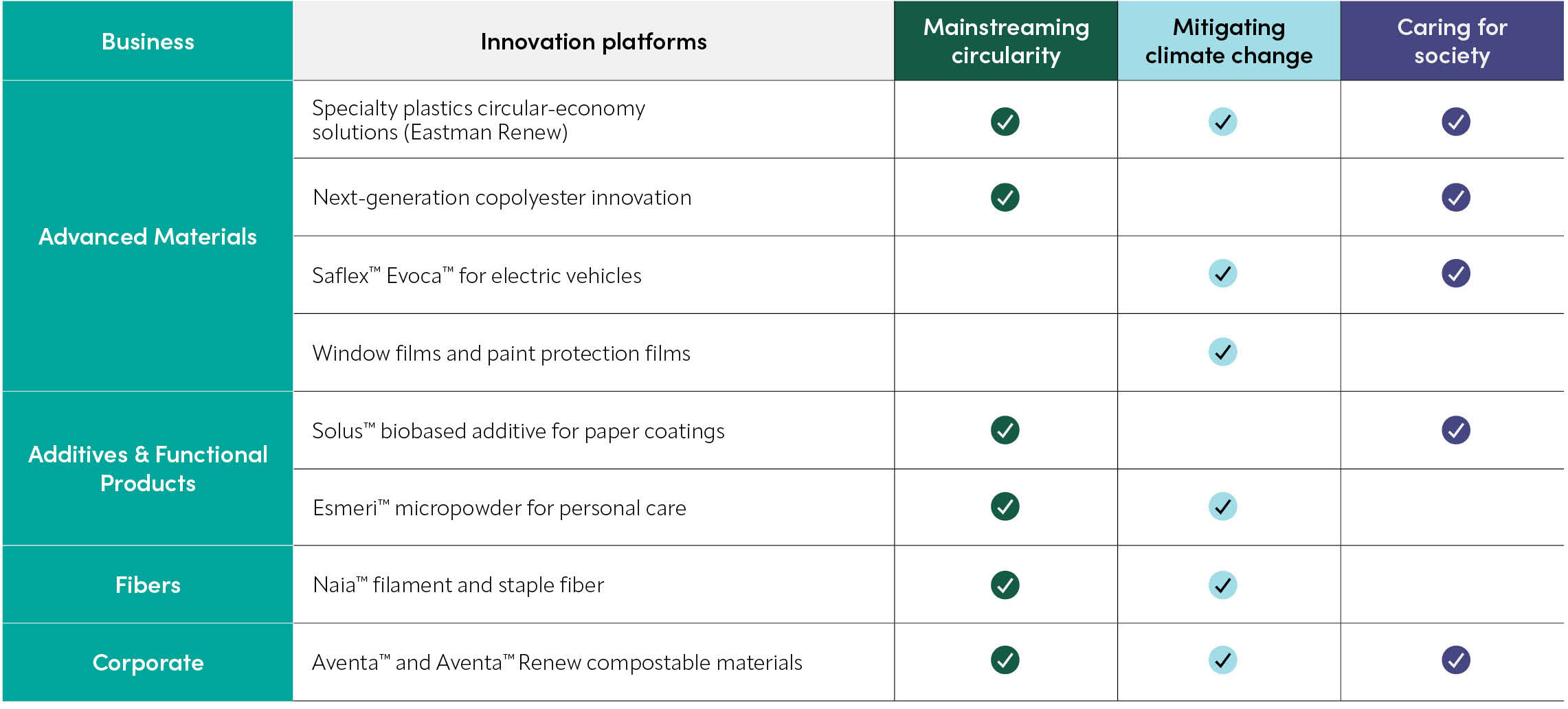
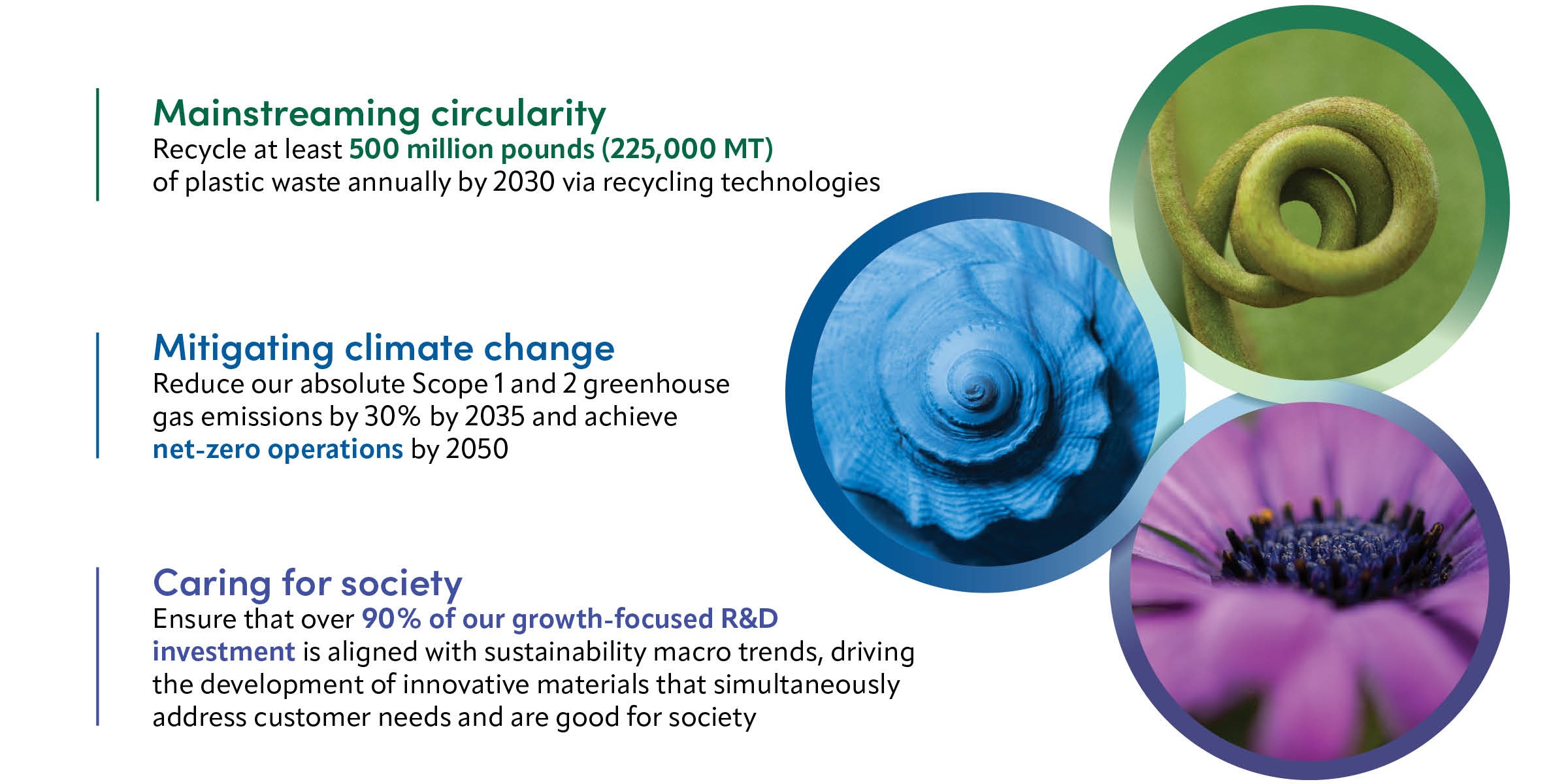
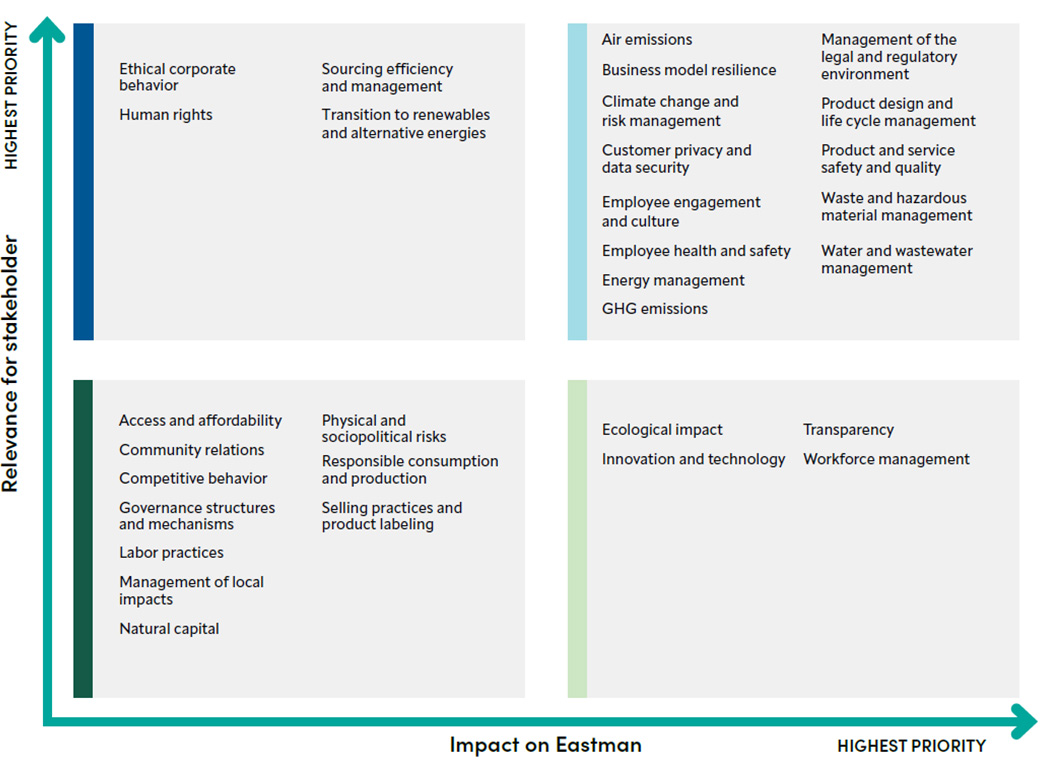















































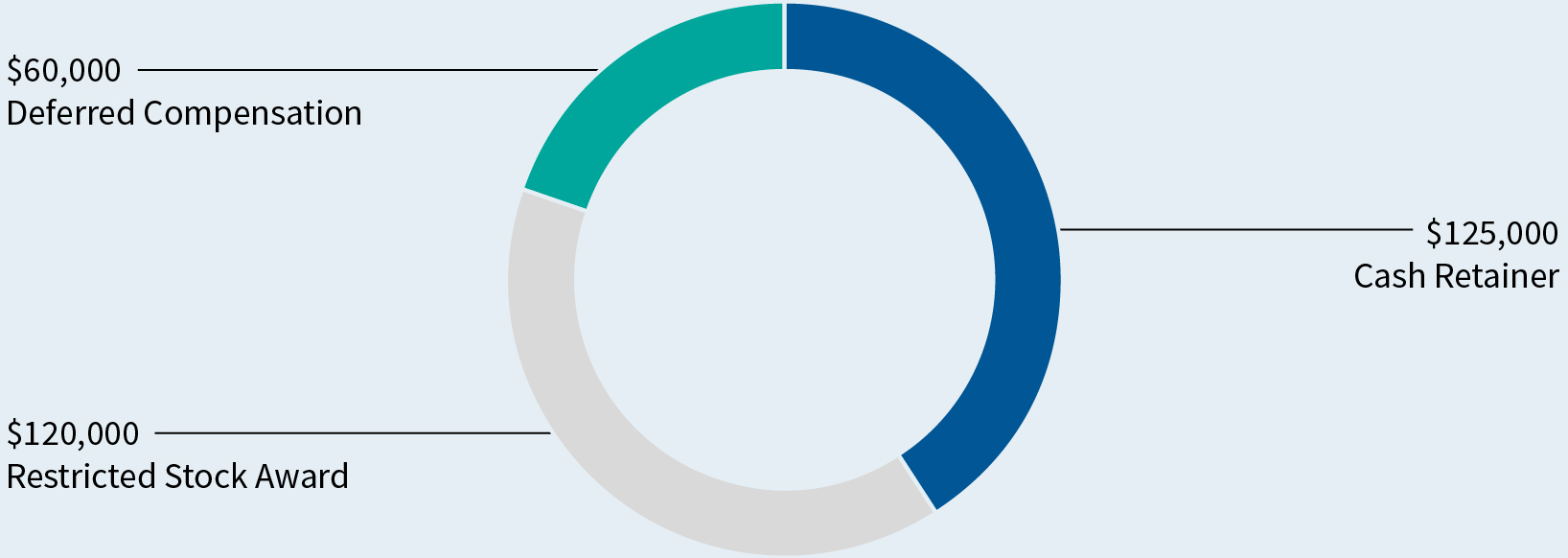
 Require directors to hold 5 x their annual retainer in Eastman shares.
 Pay fees for attending Board or Committee meetings.











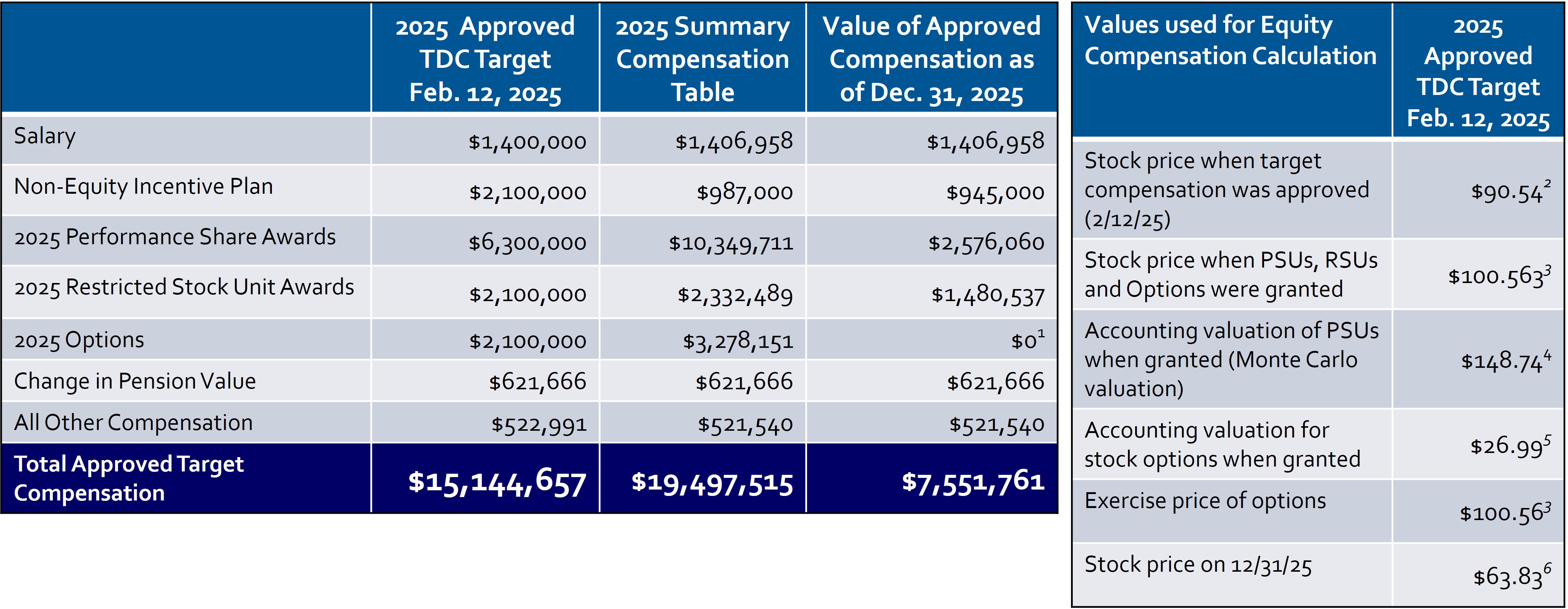


 Engage an independent compensation consultant to support the Compensation Committee.
 Target a specific percentile of competitive peer company pay to set executive pay.