Please wait
UNITED STATES
SECURITIES AND EXCHANGE COMMISSION
Washington, D.C. 20549
SCHEDULE 14A
Proxy Statement Pursuant to Section 14(a)
of the Securities Exchange Act of 1934
|
|
|
| |
|
|
| Filed by the Registrant þ
|
|
Filed by a Party other than the Registrant o |
Check the appropriate box:
o Preliminary Proxy Statement
o Confidential, for Use of the Commission Only (as permitted by Rule 14a-6(e)(2))
þ Definitive Proxy Statement
o Definitive Additional Materials
o Soliciting Material Pursuant to § 240.14a-12
Sapient Corporation
(Name of Registrant as Specified In Its Charter)
(Name of Person(s) Filing Proxy Statement, if other than the Registrant)
Payment of Filing Fee (Check the appropriate box):
þ No fee required.
o Fee computed on table below per Exchange Act Rules 14a-6(i)(1) and 0-11.
| |
(1) |
|
Title of each class of securities to which transaction applies: |
| |
| |
(2) |
|
Aggregate number of securities to which transaction applies: |
| |
| |
(3) |
|
Per unit price or other underlying value of transaction computed pursuant to Exchange Act
Rule 0-11 (set forth the amount on which the filing fee is calculated and state how it was
determined): |
| |
| |
(4) |
|
Proposed maximum aggregate value of transaction: |
| |
| |
(5) |
|
Total fee paid: |
| o |
|
Fee paid previously with preliminary materials. |
| |
| o |
|
Check box if any part of the fee is offset as provided by Exchange Act Rule 0-11(a)(2) and
identify the filing for which the offsetting fee was paid previously. Identify the previous
filing by registration statement number, or the Form or Schedule and the date of its filing. |
| |
(1) |
|
Amount Previously Paid: |
| |
| |
(2) |
|
Form, Schedule or Registration Statement No.: |
| |
| |
(3) |
|
Filing Party: |
| |
| |
(4) |
|
Date Filed: |
April 28,
2009
Alan J.
Herrick
President and Chief Executive Officer
Dear Stockholder,
We invite you to join us at the Annual Meeting of Stockholders
of Sapient Corporation, a Delaware corporation. The meeting will
be held on Thursday, June 4, 2009 at 9:00 a.m. local
time at the Company’s headquarters located at 131 Dartmouth
Street, Boston, Massachusetts 02116.
This booklet describes how you may participate in our Annual
Meeting, whether or not in person, and includes the Notice of
Annual Meeting of Stockholders and Sapient’s 2009 Proxy
Statement, which describe the formal agenda for the meeting.
In addition to addressing the specific agenda items at the
meeting, we will present a general overview of our operations
and ongoing strategy, and will be happy to respond to
stockholder questions properly brought before the meeting.
For your convenience, our 2009 Proxy Statement and our Annual
Report on
Form 10-K
for the year ended December 31, 2008 are available at
http://www.proxyvote.com.
Alan J. Herrick
President and Chief Executive Officer
SAPIENT
CORPORATION
131 Dartmouth Street
Boston, Massachusetts 02116
NOTICE OF ANNUAL MEETING OF
STOCKHOLDERS
The 2009 Annual Meeting of the Stockholders of Sapient
Corporation (the “Annual Meeting”) will be held at the
offices of Sapient Corporation (“Sapient” or the
“Company”), located at 131 Dartmouth Street, Boston,
Massachusetts on Thursday, June 4, 2009, at 9:00 a.m.
(local time).
The purpose of the Annual Meeting is to take action on the
following proposals:
|
|
|
| |
One:
|
To elect eight directors to serve on our Board of Directors
until our 2010 Annual Meeting of Stockholders;
|
| |
| |
Two:
|
To ratify the Audit Committee’s selection of
PricewaterhouseCoopers LLP as our independent registered public
accounting firm for the fiscal year ending December 31,
2009; and
|
|
|
|
| |
Three:
|
To act on any additional business that may properly come before
the Annual Meeting.
|
If the Annual Meeting is adjourned or postponed for any reason,
any action remaining to be taken on the above matters will be
resumed on the date to which the meeting is adjourned or
postponed.
The record date for the Annual Meeting is April 10, 2009.
Only stockholders of record as of the close of business on the
record date are entitled to vote at the Annual Meeting and any
adjournment or postponement thereof.
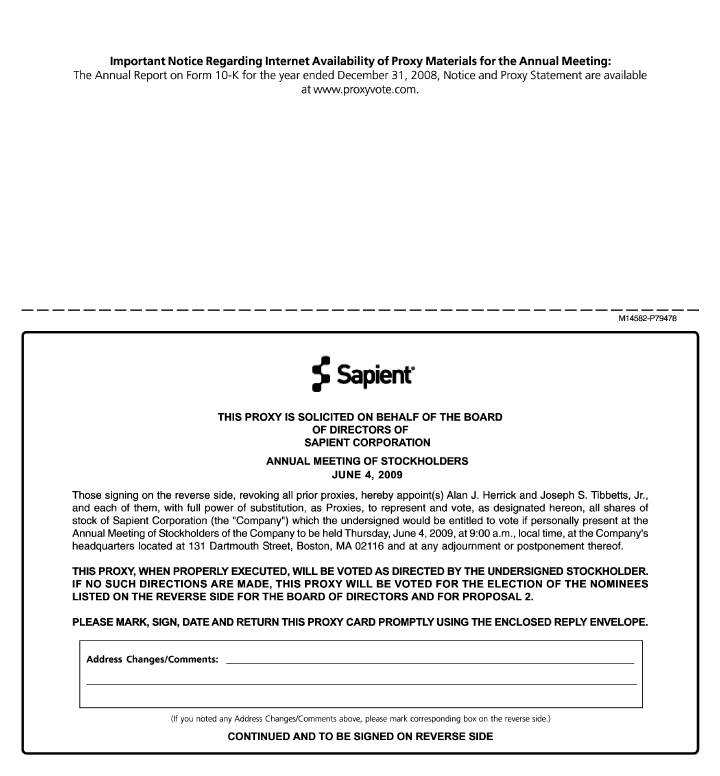
Your vote is very important and is being solicited by our
Board of Directors. Instructions on how to vote,
a discussion of the above proposals, and significant information
about the Company may be found in our 2009 Proxy Statement (our
“Proxy Statement”) attached to this Notice. Please
carefully review the Proxy Statement and submit your vote at
your earliest opportunity using any of the methods available to
you as described on the accompanying proxy card and voting
instructions. If you plan to attend the Annual Meeting in
person, please check the appropriate box on your proxy card
prior to submission.
We are pleased to take advantage of rules of the Securities and
Exchange Commission (the “SEC”) that allow us to
furnish these proxy materials and our 2008 Annual Report on
Form 10-K
(our “Annual Report”) to stockholders on the Internet.
We believe posting these materials on the Internet enables us to
provide stockholders with necessary information more quickly,
lowers costs of printing and delivery and reduces the
environmental impact of our annual meetings of stockholders.
By Order of the Board of Directors,
Kyle A. Bettigole
Assistant Secretary
Boston, Massachusetts
April 28, 2009
IMPORTANT NOTICE
This Proxy Statement, proxy card and voting instructions,
together with our Annual Report (without exhibits), are being
distributed to our stockholders of record on or about
April 28, 2009. A complete set of these proxy materials is
available on the Internet at
http://www.proxyvote.com.
TABLE OF
CONTENTS
| |
|
|
|
|
|
|
|
|
1
|
|
|
|
|
|
3
|
|
|
|
|
|
3
|
|
|
|
|
|
3
|
|
|
|
|
|
4
|
|
|
|
|
|
5
|
|
|
|
|
|
5
|
|
|
|
|
|
6
|
|
|
|
|
|
7
|
|
|
|
|
|
7
|
|
|
|
|
|
9
|
|
|
|
|
|
9
|
|
|
|
|
|
9
|
|
|
|
|
|
9
|
|
|
|
|
|
10
|
|
|
|
|
|
10
|
|
|
|
|
|
10
|
|
|
|
|
|
11
|
|
|
|
|
|
11
|
|
|
|
|
|
12
|
|
|
|
|
|
13
|
|
|
|
|
|
13
|
|
|
|
|
|
15
|
|
|
|
|
|
16
|
|
|
|
|
|
18
|
|
|
|
|
|
18
|
|
|
|
|
|
18
|
|
|
|
|
|
37
|
|
|
|
|
|
38
|
|
|
|
|
|
39
|
|
|
|
|
|
40
|
|
|
|
|
|
42
|
|
|
|
|
|
43
|
|
|
|
|
|
44
|
|
|
|
|
|
46
|
|
|
|
|
|
46
|
|
|
|
|
|
46
|
|
|
|
|
|
46
|
|
|
|
|
|
47
|
|
|
|
|
|
47
|
|
SAPIENT
CORPORATION
131 Dartmouth Street
Boston, Massachusetts 02116
PROXY
STATEMENT
For
the Annual Meeting of Stockholders
To Be Held on June 4, 2009
Information
About the Annual Meeting
Why did I
receive these proxy materials?
You received this proxy statement (this “Proxy
Statement”), accompanying proxy card or voting instruction
form, and our Annual Report on
Form 10-K
for the year ended December 31, 2008 (without exhibits)
(our “Annual Report”) because the Board of Directors
of Sapient Corporation is soliciting your proxy to vote at our
2009 Annual Meeting of Stockholders (the “Annual
Meeting”). In these materials, we refer to Sapient
Corporation as “Sapient,” “Company,”
“we,” “us,” and “our.”
What
proposals are being considered at the Annual Meeting?
The proposals listed in the Notice of Annual Meeting of
Stockholders are the matters that will be voted on at the Annual
Meeting.
How many
votes are needed to approve the proposals?
|
|
|
| |
Proposal One:
|
The eight nominees who receive the greatest number of votes cast
will be elected as directors.
|
|
|
|
| |
Proposal Two:
|
The ratification of the selection of our independent registered
public accounting firm requires that votes cast “For”
the proposal exceed votes cast “Against” the proposal.
|
If you vote to withhold authority to vote for any individual
director nominee(s) or if you vote to “Abstain” from
Proposal Two, your votes will not be included in the vote
tally for such proposal and will have no effect on the results
of the vote.
Who may
vote at the Annual Meeting?
Only stockholders of record as of the close of business on
April 10, 2009, the record date, will be entitled to vote
at the Annual Meeting.
Stockholder of Record — If you own shares of
our common stock and those shares are registered directly in
your name with our transfer agent, American Stock
Transfer & Trust Company, you are a stockholder
of record, or a “record holder.” As a record holder,
you may vote in person at the Annual Meeting or by proxy.
Beneficial Owner — If your shares are held in
an account at a brokerage firm, bank or other nominee, then you
are the “beneficial owner” of shares held in
“street name,” and these proxy materials have been or
will be forwarded to you by your broker, bank or other nominee.
For purposes of voting at the Annual Meeting, the broker, bank
or other nominee holding your account is considered to be the
record holder, but as a beneficial owner you have the right to
direct your broker, bank or other nominee on how to vote the
shares in your account.
If you are a beneficial owner, you are invited to attend the
Annual Meeting but may not vote your shares in person unless you
request and obtain a valid proxy issued in your name from your
broker, bank or other nominee. To vote your shares in person at
the Annual Meeting, you are required to present the following
items to the Corporate Secretary before the voting begins:
(a) picture identification; (b) an account statement
or letter from the record holder, indicating that you owned the
stated shares as of the record date; and (c) a proxy from
the record holder issued in your name.
How do I
vote my shares?
You are entitled to one vote for each share of our common stock
owned by you as of the record date. Whether or not you plan to
attend the Annual Meeting, please carefully review this Proxy
Statement and submit your proxy promptly by one of the methods
available to you, as described below.
|
|
|
| |
•
|
Stockholders of record are requested to submit a proxy by
telephone or Internet, or by completing, signing, dating and
returning the accompanying proxy card in the enclosed
postage-prepaid envelope.
|
| |
| |
•
|
Beneficial owners are requested to submit voting instructions to
the broker, bank or other nominee via telephone, Internet, or as
otherwise specified on the voting instruction form provided by
your broker, bank or other nominee.
|
If you vote by telephone or the Internet, you do not need to
return your proxy card or voting instruction form. Instead,
please follow the instructions on your proxy card or voting
instruction form for telephone and Internet voting. So long as
your proxy is received prior to the vote at the Annual Meeting
and not revoked, your shares will be voted as directed on your
proxy. To make certain that your vote will be received in
time, please cast your vote, by your choice of available means,
at your earliest opportunity.
If you plan to attend the Annual Meeting and need directions to
the Company’s headquarters, please contact our Investor
Relations department at the address listed on the Notice of
Annual Meeting of Stockholders or by email at
ir@sapient.com.
How will
my shares be voted if I submit my proxy but don’t provide
specific instructions?
If you submit a properly executed proxy and do not provide
specific instructions, the proxy will be voted for
the election of each of the director nominees, and
for the ratification of the selection of
PricewaterhouseCoopers LLP as our independent registered public
accounting firm for the current fiscal year. If other matters
are presented at the Annual Meeting, proxies will be voted on
such other matters in accordance with the discretion of the
proxy holders. At this time, we do not know of any other matters
that will be presented at the Annual Meeting.
May I
change my vote after submitting my proxy or voting instruction
form?
|
|
|
| |
•
|
If you are a stockholder of record, you may revoke a proxy at
any time before it has been exercised at the Annual Meeting by
filing a written revocation with the Secretary of the Company at
our headquarters located at 131 Dartmouth Street, Boston,
Massachusetts 02116; by filing a duly executed proxy bearing a
later date; or by appearing in person and voting by ballot at
the Annual Meeting.
|
| |
| |
•
|
If you voted by telephone or the Internet, you may change your
vote with a timely and valid later telephone or Internet vote,
as the case may be.
|
| |
| |
•
|
Any stockholder of record attending the Annual Meeting may vote
in person, whether or not a proxy has previously been submitted.
The presence of a stockholder at the Annual Meeting (without
further action) will not constitute revocation of a previously
submitted proxy.
|
| |
| |
•
|
If you are the beneficial owner of your shares, you may change
previously delivered voting instructions by following the
procedure set forth in the voting instruction form provided by
your broker, bank or other nominee.
|
2
What is a
quorum requirement?
To be valid, the Annual Meeting must have a quorum of
stockholders present. A quorum of stockholders will be deemed
present if at least a majority of the total number of shares of
common stock outstanding and entitled to vote as of the close of
business on the record date is present or represented by proxy
at the Annual Meeting. For purposes of a quorum, abstentions,
votes withheld from a director nominee, and “broker
non-votes” will be counted as present. As of the close of
business on the record date, 127,408,685 shares of our
common stock were outstanding and entitled to vote. Thus, for a
quorum to exist, 63,704,344 shares must be present or
represented by proxy at our Annual Meeting.
A “broker non-vote” is a proxy submitted by a broker
or other nominee for a matter over which the broker or other
nominee does not have discretionary voting power and for which
such broker or other nominee has not received instructions from
the beneficial owner or other person entitled to vote the shares
represented by the proxy. Because a broker or other nominee may
vote shares for the election of directors and for the
ratification of the independent registered public accounting
firm without receiving instructions from the beneficial owners,
there will not be any “broker non-votes” on these
proposals.
Important
Notice Regarding the Availability of Proxy Materials for the
Sapient Corporation Annual Meeting of Stockholders to be Held on
June 4, 2009
This Proxy Statement and our Annual Report are available free
of charge at
http://www.proxyvote.com.
You may also find a copy of this Proxy Statement and our Annual
Report (with exhibits) on the SEC website at
http://www.sec.gov.
We will, upon written request and without charge, send
you additional copies of our Annual Report (with or without
exhibits) and this Proxy Statement. To request additional
copies, please send your request by mail to Sapient Corporation
Investor Relations Department,
c/o Sapient
Corporation, 131 Dartmouth Street, Boston, Massachusetts 02116;
or by e-mail
to ir@sapient.com.
Electronic
Delivery of Future Stockholder Communications
We are pleased to offer our stockholders the opportunity to
receive stockholder communications electronically. By opting for
electronic delivery of documents, you will receive stockholder
communications such as our Proxy Statement and Annual Report as
soon as they become available, and may vote via Internet on the
matters to be decided at the Annual Meeting. Choosing electronic
delivery reduces the number of bulky documents in your mail,
conserves natural resources, and reduces our printing and
mailing costs.
To obtain electronic delivery of future mailings, visit
http://www.icsdelivery.com/sape
and enter information for all of your Sapient stockholdings.
Your enrollment will be effective until you cancel it by
following the instructions provided on the website. If you have
questions about electronic delivery, please contact our Investor
Relations department by mail at the address noted above or by
e-mail at
ir@sapient.com.
Householding
of Proxy Materials
Some companies, brokers, banks, and other nominee record holders
participate in a practice commonly known as
“householding,” where a single copy of our Proxy
Statement and Annual Report is sent to one address for the
benefit of two or more stockholders sharing that address.
Householding is permitted under rules adopted by the SEC as a
means of satisfying the delivery requirements for proxy
statements and annual reports, potentially resulting in extra
convenience for stockholders and cost savings for companies. We
will promptly deliver a separate copy of either document to you
if you contact our Investor Relations department at the address
or website listed above or call us at
(617) 621-0200.
If you are receiving multiple copies of our Proxy Statement and
Annual Report at your household and wish to receive only one,
please notify your bank, broker, or other nominee record holder,
or contact our Investor Relations department at the mail or
e-mail
address listed above.
3
PROPOSAL 1 —
ELECTION OF DIRECTORS
The first proposal for consideration at our Annual Meeting is
the election of eight directors. Upon the recommendation of our
Governance and Nominating Committee, the Board of Directors has
nominated James M. Benson, Hermann Buerger, Darius W.
Gaskins, Jr., Alan J. Herrick, J. Stuart Moore, Bruce D.
Parker, Ashok Shah and Vijay Singal for election as directors
(collectively, the “director nominees”), each of whom
currently serves as a director of the Company. Information about
our director nominees can be found on page 7 of this Proxy
Statement.
If elected, each director nominee will serve as a director until
our 2010 Annual Meeting, until his successor is duly elected and
qualified, or until his death, resignation or removal.
Each of the director nominees has indicated his willingness to
serve as a member of our Board of Directors, if elected.
However, if any of the director nominees should be unwilling or
unable to stand for election, the person acting under the proxy
may vote the proxy “FOR” a substitute nominee
designated by the Board of Directors. The Board of Directors has
no reason to believe that any of the director nominees will be
unable to serve if elected.
The eight director nominees receiving the highest number of
“FOR” votes by the shares entitled to be voted
will be elected. The persons named in the enclosed proxy card
will vote each proxy “FOR” the election of the
director nominees unless authority to vote for the election of
one or more of the nominees is withheld by marking the proxy
card to that effect. Broker non-votes will be voted
“FOR” the election of each of the eight
director nominees.
For more information about our Board of Directors and its
Committees, including the nomination process, see
“Information About Our Directors and Corporate
Governance” beginning on page 7 of this Proxy
Statement.
THE BOARD OF DIRECTORS UNANIMOUSLY RECOMMENDS OUR STOCKHOLDERS
VOTE “FOR” THE ELECTION OF EACH OF THE EIGHT
DIRECTOR NOMINEES.
4
PROPOSAL 2 —
RATIFICATION OF SELECTION OF PRICEWATERHOUSECOOPERS LLP AS THE
COMPANY’S INDEPENDENT REGISTERED PUBLIC ACCOUNTING
FIRM
The second proposal for consideration at our Annual Meeting is
to ratify the selection, made by the Audit Committee of our
Board of Directors, of PricewaterhouseCoopers LLP
(“PwC”) as our independent registered public
accounting firm for the year ending December 31, 2009.
PwC has served as our independent registered public accounting
firm since 1999 and is independent with respect to the Company
and its subsidiaries. We have been advised by PwC that it is an
independent registered public accounting firm with the Public
Company Accounting Oversight Board (the “PCAOB”) and
complies with the auditing, quality control and independence
standards and rules of the PCAOB and the SEC. A representative
of PwC is expected to be present at the Annual Meeting to answer
appropriate questions, and to make a statement if he or she so
desires.
Statement
of Independent Registered Public Accounting Firm Fees and
Services
The professional services provided by PwC and the aggregate fees
for those services rendered to Sapient during the years ended
December 31, 2008 and 2007 were as follows:
| |
|
|
|
|
|
|
|
|
|
|
|
2008*
|
|
|
2007
|
|
|
|
|
Fees for Services Rendered
|
|
|
|
|
|
|
|
|
|
Audit Fees(1)
|
|
|
$2,567,000
|
|
|
|
$2,759,000
|
|
|
Audit-Related Fees(2)
|
|
|
$261,400
|
|
|
|
—
|
|
|
Tax Fees(3)
|
|
|
$134,100
|
|
|
|
—
|
|
|
All Other Fees(4)
|
|
|
$3,000
|
|
|
|
$23,800
|
|
|
|
|
|
|
|
|
|
|
|
|
Total
|
|
|
$2,965,500
|
|
|
|
$2,782,800
|
|
|
|
|
|
|
|
|
|
|
|
|
|
|
|
* |
|
All PwC services provided in 2008 were pre-approved by the Audit
Committee. |
| |
|
(1) |
|
Audit Fees. These fees include services
performed by PwC in connection with the audit of our annual
financial statements included in our Annual Report on
Form 10-K;
the review of our interim financial statements as included in
our Quarterly Reports on
Form 10-Q;
the audit of our internal controls over financial reporting; and
services that are normally provided by PwC in connection with
statutory and regulatory filings or engagements. |
| |
|
(2) |
|
Audit-Related Fees. These fees are for
services provided by PwC such as accounting consultations and
any other audit and attestation services not required by
applicable law. |
| |
|
(3) |
|
Tax Fees. These fees include all services
performed by PwC for non-audit related tax advice, planning and
compliance services. |
| |
|
(4) |
|
All Other Fees. These fees include licenses to
web-based accounting and finance reference materials. |
Although stockholder approval of the Audit Committee’s
selection of PwC is not required by law, the Board of Directors
believes it is advisable to afford stockholders an opportunity
to ratify this selection. Even if the selection of PwC is
ratified, the Audit Committee may, in its discretion, direct the
appointment of a different independent registered public
accounting firm or firms, in whole or in part, at any time
during the year, should it determine that such a change is in
the best interests of the Company and its stockholders.
Unless contrary instructions are given, shares represented by
proxies solicited by the Board of Directors will be voted
“FOR” the ratification of the selection of PwC
as the Company’s independent registered public accounting
firm for the fiscal year ending December 31, 2009. If this
proposal is not approved at the Annual Meeting, the Audit
Committee will reconsider its selection of PwC, although it may
elect to continue to retain PwC. Broker non-votes will be voted
“FOR” the ratification of the selection of PwC
as our independent registered public accounting firm.
THE BOARD OF DIRECTORS UNANIMOUSLY RECOMMENDS OUR STOCKHOLDERS
VOTE “FOR” THE RATIFICATION OF THE SELECTION OF
PRICEWATERHOUSECOOPERS LLP AS THE COMPANY’S INDEPENDENT
REGISTERED PUBLIC ACCOUNTING FIRM FOR THE YEAR ENDING DECEMBER
31, 2009.
5
Report
of the Audit Committee of the Board of Directors
The report by this Committee is not “soliciting
material,” is not deemed “filed” with the SEC and
is not to be incorporated by reference into any filing of the
Company under the Securities Act of 1933 or the Securities
Exchange Act of 1934, both as amended.
On behalf of the Company’s Board of Directors, the Audit
Committee oversees the operation of a comprehensive system of
internal controls designed to ensure the integrity of
Sapient’s financial statements and reports; compliance with
laws, regulations and corporate policies; and the independent
registered public accounting firm’s qualifications,
performance and independence.
Consistent with this oversight responsibility, the Committee has
reviewed and discussed with management the audited financial
statements for the year ended December 31, 2008 and
management’s assessment of internal controls over financial
reporting as of December 31, 2008. PwC, the Company’s
independent registered public accounting firm in 2008, issued
its report on the Company’s financial statements and the
operating effectiveness of the Company’s internal control
over financial reporting, the details of which are set forth in
the Company’s Annual Report.
Additionally, the Committee has discussed with PwC the matters
required to be discussed in accordance with Statement on
Auditing Standards No. 61, Communication with Audit
Committees. The Committee also has received the written
disclosures and the letter from PwC required by the Public
Company Accounting Oversight Board, and discussed PwC’s
independence from the Company and its management.
Based on these reviews and discussions, the Committee
recommended to the Board of Directors that the Company’s
audited financial statements for the year ended
December 31, 2008 be included in the Company’s Annual
Report.
The members of the Committee are not professionally engaged in
the practice of accounting or auditing, however the Board of
Directors has determined that Hermann Buerger, Committee
Chairperson, and Committee member Vijay Singal are each an
“audit committee financial expert” within the meaning
of SEC rules and regulations and applicable Nasdaq listing
standards. The Committee’s oversight is intended to provide
direction on the basis of the Committee members’ financial
and accounting experience and information it receives from, and
discussions with, the auditors and Company management. In order
to provide this oversight, Committee members rely on the
information provided to them and on the representations made by
management, internal auditors and the Company’s independent
registered public accounting firm. As a result, the Committee
does not assure that the audit of the Company’s financial
statements has been carried out in accordance with generally
accepted auditing standards, that the financial statements are
presented in accordance with generally accepted accounting
principles or that PwC is, in fact, “independent.”
Hermann Buerger, Chairperson
Darius W. Gaskins, Jr.
Vijay Singal
6
Information
About Our Directors and Corporate Governance
Director
Nominees
Our director nominees are listed below, with their principal
occupation and business experience for at least the last five
years, the names of other publicly held companies of which they
serve as a director, and their age and length of service as a
member of our Board of Directors, as applicable.
| |
|
|
|
|
|
|
|
|
|
|
|
|
|
Director
|
|
Principal Occupation, Other Business Experience
|
|
Name
|
|
Age
|
|
Since
|
|
and Directorships During Past Five Years
|
|
|
|
James M. Benson
|
|
|
62
|
|
|
2007
|
|
Mr. Benson has been a director since August 2007 and currently
serves as Risk Committee chair. Mr. Benson is the Chief
Executive Officer of Clark Benson LLC (“Clark
Benson”), a position he has held since January 2006, and a
principal of its parent company, Clark Wamberg, LLC, a position
he has held since the company’s formation in February 2007.
Mr. Benson served as a director of Clark, Inc., the former
parent company of Clark Benson, from January 2006 until March
2007.
|
|
|
|
|
|
|
|
|
|
Prior to joining Clark Benson, Mr. Benson served as President
and Chief Executive Officer of John Hancock Life Insurance
Company, a division of Manulife Financial, from 2002 to 2006.
From 1997 to 2002, Mr. Benson served as President of
MetLife’s Individual Business enterprise, as well as
Chairman, President and Chief Executive Officer of two separate
MetLife affiliates: New England Financial and GenAmerica
Financial Corporation.
|
|
Hermann Buerger
|
|
|
65
|
|
|
2006
|
|
Mr. Buerger has been a director and Audit Committee chair since
June 2006. Mr. Buerger was employed by Commerzbank AG from 1972
through 2004, holding a variety of senior executive positions,
focusing on commercial lending for multinational businesses.
Mr. Buerger retired from Commerzbank AG as Chief Executive
Officer and regional board member for the Americas. Mr. Buerger
currently is a director and chairman of the audit committee of
EMS Technologies. Mr. Buerger also is a director and member of
the audit committee of Alpha Natural Resources.
|
|
Darius W. Gaskins, Jr.
|
|
|
69
|
|
|
1995
|
|
Mr. Gaskins has been a director since September 1995, and has
served as Chairman of the Board of Directors and Governance and
Nominating Committee chair since June 2008. Mr. Gaskins is a
founding partner of Norbridge, Inc., formerly Carlisle, Fagan,
Gaskins & Wise, Inc., a management consulting firm.
|
|
Alan J. Herrick
|
|
|
43
|
|
|
2006
|
|
Mr. Herrick has served as a director and Sapient’s
President and Chief Executive Officer since October 2006. Prior
to his current position, Mr. Herrick served as Executive Vice
President in charge of Sapient North America and Europe. Mr.
Herrick joined Sapient in 1995. Prior to joining Sapient, Mr.
Herrick held management positions at PSE&G, Prudential,
Home Holdings (a division of Zurich Insurance) and several other
financial services institutions.
|
|
J. Stuart Moore
|
|
|
47
|
|
|
1991
|
|
Mr. Moore co-founded Sapient Corporation in 1991 and served as
the Company’s Co-Chairman of the Board of Directors and
Co-Chief Executive Officer from the Company’s inception
until June 1, 2006, at which point Mr. Moore stepped down as
Co-Chief Executive Officer. Mr. Moore continued to serve as the
Co-Chairman of the Board of Directors until he elected to step
down on October 16, 2006 to allow for an independent chairman.
|
7
| |
|
|
|
|
|
|
|
|
|
|
|
|
|
Director
|
|
Principal Occupation, Other Business Experience
|
|
Name
|
|
Age
|
|
Since
|
|
and Directorships During Past Five Years
|
|
|
|
Bruce D. Parker
|
|
|
61
|
|
|
1995
|
|
Mr. Parker has been a director since September 1995 and
currently serves as Compensation Committee chair. He served as
Executive Vice President of Sapient from December 1999 until his
retirement in July 2002. Mr. Parker served as the Chairman, CEO
and President of AirNet Systems, Inc., an Express Cargo Airline,
from December 2006 until completion of the sale of AirNet
Systems, Inc. to a private equity fund in 2008. Mr. Parker
resigned from the Board of Directors of AirNet Systems, Inc. in
February 2009. He also serves as President of the IT Management
Group LLC, a consulting company he founded after retiring from
Sapient in 2002.
|
|
|
|
|
|
|
|
|
|
Prior to joining Sapient, Mr. Parker served as Senior Vice
President and Chief Information Officer at United Airlines, Inc.
from December 1997 until December 1999. From September 1994 to
December 1997, Mr. Parker was Senior Vice President —
Management Information Systems and Chief Information Officer at
Ryder System, Inc., a transportation company. Prior to joining
Ryder System, Inc., Mr. Parker was an officer of American
Airlines and Sabre Computer Services Ltd.
|
|
Ashok Shah
|
|
|
57
|
|
|
2008
|
|
Mr. Shah has been a director since June 2008. Currently,
Mr. Shah is Managing Partner of CEPS Consulting, LLC, a
consulting firm founded by Mr. Shah that provides advisory
services to IT/Telecom services and software firms and
enterprise clients. From November 2003 to March 2008, Mr. Shah
was Vice President and Managing Partner of the Global
Professional Business Division of Alcatel-Lucent. Prior to
joining Alcatel-Lucent, Mr. Shah held various positions with
Digital Equipment, Compaq Computer Corporation and
Hewlett-Packard, including: General Manager of IT Services (New
York); Subsidiary Manager of IT Services (Iran); Country Manager
for the Software Division (India); Asia Pacific Manager for the
Systems Integration Division (Hong Kong and Singapore); and Vice
President of Professional Services Division for North America
Compaq (Houston). Mr. Shah currently serves on the Engineering
Leadership Board of the University of Houston Cullen College of
Engineering. Mr. Shah also serves as a member of the Executive
Advisory Council for the College of Business Administration at
Rider University in New Jersey.
|
|
Vijay Singal
|
|
|
54
|
|
|
2008
|
|
Dr. Singal has been a director since June 2008. Currently,
Dr. Singal is the Department Head of the Department of
Finance at Pamplin College of Business, Virginia Polytechnic
Institute and State University, a position he has held since
2003. Dr. Singal has served as a J. Gray Ferguson Professor
of Finance at the university since 2002, and held other academic
positions there beginning in 1992. Prior to joining academia,
Dr. Singal was at the Oil and Natural Gas Corporation
(India) for a period of ten years in various positions, finally
as a Joint Director of Finance.
|
|
|
|
|
|
|
|
|
|
Additionally, Dr. Singal served as a member of the Board of
Trustees and a member of the Audit Committee of New River Funds,
a fund complex comprising two funds, from 2003 to 2008.
Dr. Singal has also provided his services as a consultant
and partner to a New Jersey-based securities trading company
since 2005.
|
8
Independence
of our Board of Directors and its Committees
The listing rules established by Nasdaq require that a majority
of the members of a listed company’s board of directors
qualify as “independent,” as affirmatively determined
by the Board. This means that each independent director has no
relationship that would interfere with his exercise of
independent judgment. Our Board of Directors consults with legal
counsel to ensure that our Board’s determination with
respect to the definition of “independent” is
consistent with current Nasdaq listing rules.
Our Board of Directors reviewed all relevant transactions or
relationships between each director, or any of his family
members, and Sapient, and our senior management, and the Board
has affirmatively determined that each of our current directors,
other than Alan J. Herrick (our President and Chief Executive
Officer) and J. Stuart Moore (a current director and our former
co-chief executive officer and co-founder), is an independent
director under the applicable guidelines noted above. The Board
specifically reviewed a related party transaction involving
James M. Benson, a director nominee, and Pearl Meyer &
Partners, a company that formerly provided Sapient compensation
consulting services, and has affirmatively determined that the
former relationship does not interfere with
Mr. Benson’s independent judgment. See “Benson
Relationship to Company Consultant” on page 46 of
this Proxy Statement for specific information concerning this
relationship.
Our Board of Directors has four committees: the Audit Committee,
the Compensation Committee, the Governance and Nominating
Committee and the Risk Committee. Other than the Risk Committee,
each of these committees consists solely of Board members who
meet the standards for independence required under current
Nasdaq listing rules, SEC rules and applicable securities laws
and regulations.
Board and
Committee Meetings
Our Board of Directors, together with its committees, meets
periodically throughout the year, as needed, to direct
management of the Company. In 2008, the Board of Directors held
ten meetings and took action without a formal meeting by
unanimous written consent once. Each director attended at least
82% of the aggregate of the meetings of the Board and of the
regular meetings of the committees on which he served.
Mr. Cunningham served as Chairman of the Board until the
Company’s 2008 Annual Meeting on June 5, 2008, at
which time Darius W. Gaskins, Jr. became Chairman of the
Board. Our independent directors met in regularly scheduled
executive sessions at which only independent directors were
present.
Director
Attendance at Annual Meetings
We encourage, but do not require, our directors to attend our
Annual Meetings. All directors attended the Company’s 2008
Annual Meeting.
Audit
Committee
The Audit Committee of our Board of Directors, among other
responsibilities, reviews our auditing, accounting, financial
reporting and internal control functions, and selects our
independent registered public accounting firm. See
“Report of the Audit Committee of the Board of
Directors” on page 6 of this Proxy Statement. The
Audit Committee met nine times and took action without a formal
meeting by unanimous written consent once in 2008.
The current members of the Audit Committee are Hermann Buerger,
Darius W. Gaskins, Jr. and Vijay Singal, each of whom is an
independent director within the meaning of applicable Nasdaq
listing rules, SEC rules and applicable securities laws and
regulations, and each of whom is able to read and understand the
Company’s financial statements and has not participated in
the preparation of the Company’s or its subsidiaries’
financial statements in the last three years as required by the
applicable Nasdaq listing standards. Mr. Buerger serves as
the Chairperson of the committee. Our Board of Directors has
determined that each of Mr. Buerger and Dr. Singal is
an “audit committee financial expert” within the
meaning of the rules and regulations of the SEC and have the
requisite financial sophistication required by the applicable
Nasdaq listing standards.
9
Under its charter, the committee may form and delegate authority
to subcommittees consisting of one or more members of the
committee, as appropriate. Unless otherwise specifically
determined by the committee, its Chairperson will serve as a
one-person subcommittee with the discretionary authority to act
on the committee’s behalf during the periods between its
meetings. The committee may request reports of the actions of
any subcommittee at subsequent meetings. The committee’s
responsibilities are more fully described in its charter, a copy
of which may be found on the Investors portion of our website,
http://www.sapient.com,
under “Corporate Governance.”
Pre-Approval
Policies and Procedures
The Audit Committee is required to review and approve the
proposed retention of an independent registered public
accounting firm to perform any proposed permissible
audit-related and non-audit services, as outlined in its
charter. The committee has specified certain types of prohibited
“non-audit” services that the Company is not
authorized to obtain from PwC, as well as types of audit-related
and “non-audit” services that are permitted and
pre-approved pursuant to the terms of the Audit and Non-Audit
Services Pre-Approval Policy adopted by the committee in June
2008. Under this policy, any proposed services anticipated to
exceed $250,000 in the aggregate require specific pre-approval
by the committee. All PwC services provided in 2008 were
pre-approved by the Audit Committee.
Risk
Committee
The Risk Committee, established on June 5, 2008, is
responsible for, among other duties, identifying, evaluating and
mitigating strategic, operational and external environmental
risks the Company may encounter. The committee’s primary
role is to ensure Company management has instituted adequate
processes to identify and evaluate major risks and has
developed, where merited, credible plans to mitigate such risks.
From time to time, the committee determines the topmost few
risks it believes merit increased Board-level, strategic
oversight focus, and ensures such focus occurs, as appropriate.
The committee met once in 2008 and currently comprises James M.
Benson, J. Stuart Moore and Vijay Singal. Mr. Benson and
Dr. Singal meet the criterion for independence required
under applicable Nasdaq listing rules, SEC rules, and applicable
securities laws and regulations. Currently, Mr. Benson
serves as the Chairperson of the committee.
Under its charter, the committee may form and delegate authority
to subcommittees consisting of two members of the committee, as
appropriate. Subcommittees have the authority to act on the
committee’s behalf during the periods between committee
meetings, and the committee may request reports of the actions
of any subcommittee at subsequent meetings. The committee’s
responsibilities are more fully described in its charter, a copy
of which may be found on the Investors portion of our website,
http://www.sapient.com,
under “Corporate Governance.”
Compensation
Committee
The Compensation Committee of our Board of Directors is
responsible for reviewing our overall compensation policies and,
with the input of the Chief Executive Officer, setting the
compensation of our executive officers.
However, our Chief Executive Officer may not participate in or
be present during any deliberations or determinations of the
committee regarding his own compensation or individual
performance objectives.
The committee meets at least three times annually, and with
greater frequency if necessary. The committee met ten times and
took action without a formal meeting by unanimous written
consent once in 2008. The current members of the committee are
Darius W. Gaskins, Jr., Bruce D. Parker and Ashok Shah,
each of whom meets the criteria for independence required under
Nasdaq listing rules, Internal Revenue Service rules, SEC rules
and applicable securities laws and regulations. Currently,
Mr. Parker serves as the Chairperson of the committee.
Although it regularly meets in executive session, from time to
time the committee invites various members of management, other
employees and outside advisors or consultants to
10
join its meeting to make presentations, provide financial or
other background information or advice, or otherwise
participate. The committee also retains outside consultants
periodically to provide advice regarding trends in compensation
practices and comparative benchmarking data.
Under its charter, the committee may form and delegate authority
to subcommittees consisting of one or more of its members, as
appropriate. Unless specifically determined otherwise by the
committee, its Chairperson serves as a one-person subcommittee
with the discretionary authority to act on the committee’s
behalf during the periods between its meetings. The committee
may request reports of the actions of any subcommittee at
subsequent meetings. The committee’s responsibilities are
more fully described in its charter, a copy of which may be
found on the Investors portion of our website,
http://www.sapient.com,
under “Corporate Governance.”
More detailed information related to our compensation
philosophies and goals, as well as the committee’s specific
determinations concerning executive compensation, may be found
under “Compensation Discussion and Analysis,”
beginning on page 18 of this Proxy Statement.
Governance
and Nominating Committee
The Governance and Nominating Committee is, among other things,
responsible for identifying and evaluating potential candidates
for our Board of Directors and making recommendations regarding
such candidates to our Board of Directors. The committee also
provides counsel to our Board of Directors regarding principles
and practices applicable to governance of the Company, and may
engage search firms or other third parties to assist in the
identification or evaluation of potential director nominees.
The committee met four times in 2008 and currently comprises
Hermann Buerger, Darius W. Gaskins, Jr. and Bruce D.
Parker, each of whom meets the criterion for independence
required under applicable Nasdaq listing rules, SEC rules, and
applicable securities laws and regulations. Mr. Gaskins
serves as the Chairperson of the committee.
Under its charter, the committee may form and delegate authority
to subcommittees consisting of one or more of its members, as
appropriate. Unless specifically determined otherwise by the
committee, its Chairperson serves as a one-person subcommittee
with the discretionary authority to act on the committee’s
behalf during the periods between its meetings. The committee
may request reports of the actions of any subcommittee at
subsequent meetings. The committee’s responsibilities are
more fully described in its charter, a copy of which may be
found on the Investors portion of our website,
http://www.sapient.com,
under “Corporate Governance.”
Policy
Regarding Stockholder Candidates for Nomination as a
Director
The Governance and Nominating Committee will consider and
evaluate director candidates recommended by eligible
stockholders. Candidates nominated by eligible stockholders will
be considered and evaluated on the same basis as candidates
recommended by other sources. In evaluating all candidates for
director, the committee strives to develop a Board and Board
committees that are diverse in nature and comprise experienced
and seasoned advisers. To achieve this goal, the committee
considers a number of factors that it deems relevant, including
judgment, skill, diversity, integrity, education, experience,
availability, commitment, and the interplay of the
nominee’s experience with the experience of other directors.
Pursuant to our Policy Regarding Stockholder Candidates for
Nomination as a Director, a stockholder is eligible to submit
such a recommendation if the stockholder, either individually or
as a member of a group, has beneficially owned 1% or more of our
common stock for at least one year prior to the nomination date
(the “Nominating Stockholder”). A Nominating
Stockholder may submit only one candidate for consideration
11
per year, and the aggregate number of candidates that the
committee will be required to consider and evaluate under this
policy regarding any Annual Meeting is limited to the number as
set forth below:
| |
|
|
|
|
|
|
|
Number of
|
|
|
Number of Board Members
|
|
Candidates
|
|
|
|
|
8 or fewer
|
|
|
1
|
|
|
More than 8 but fewer than 20
|
|
|
2
|
|
|
20 or more
|
|
|
3
|
|
If we receive more than the maximum number of candidate
recommendations as set forth above, the committee will review
and evaluate for possible nomination candidates recommended by
those Nominating Stockholders with the highest level of
beneficial ownership of our common stock, until the committee
has evaluated the maximum number of candidates referenced above.
A Nominating Stockholder should submit a nomination in writing,
delivered (by first class United States mail, postage
prepaid) to our Board of Directors, in care of our Corporate
Secretary, at the address listed on the Notice of Annual Meeting
of Stockholders. To be considered for our 2010 Annual Meeting,
nominations must be received not less than 60 nor more than
90 days prior to the meeting, or no later than
April 2, 2010, assuming our 2010 Annual Meeting will be
held on June 3, 2010.
In the event that notice of the date of our 2010 Annual Meeting
is provided to our stockholders less than 70 days before
the meeting and without prior public disclosure, we must receive
your request no later than the close of business on the
10th day (or if such day is not a business day, the close
of business on the preceding business day) following the date on
which such notice of the date of the meeting was mailed or
public disclosure was made, whichever occurs first.
Each nomination by a Nominating Stockholder must contain the
following information:
|
|
|
| |
•
|
Name of the nominee and all information regarding the nominee,
as required under SEC rules to be disclosed in a proxy statement
soliciting proxies for the election of directors;
|
| |
| |
•
|
Confirmation that the nominee meets the standard for
independence required under Nasdaq listing rules, or, if not, a
description of the reasons why the nominee does not meet
applicable standards;
|
| |
| |
•
|
Name, address and number of shares beneficially owned by the
Nominating Stockholder submitting the nomination;
|
| |
| |
•
|
A representation that the Nominating Stockholder will remain a
beneficial owner of 1% or more of our common stock through the
date of the next annual meeting. A Nominating Stockholder who is
not a registered holder of common stock must provide evidence of
eligibility as provided in SEC Exchange Act
Rule 14a-8(b)(2); and
|
| |
| |
•
|
A description of all relationships, arrangements or
understandings (whether written or oral) between the Nominating
Stockholder (or any member of a qualifying group of
stockholders) and the nominee, or any person or entity regarding
the nominee.
|
Each nomination submitted by a Nominating Stockholder must
contain additional information as required by our Policy
Regarding Stockholder Candidates for Nomination as a Director,
located on the Investors portion of our website,
http://www.sapient.com,
under “Corporate Governance.”
Policy
Regarding Stockholder Communications with our Board of
Directors
Our stockholders may submit correspondence to our Board of
Directors. The correspondence should be submitted in writing and
delivered (by registered mail, signature required, where
available) to the Board of Directors, in care of our General
Counsel, at the address listed on the Notice of Annual Meeting
of Stockholders. Our General Counsel will forward each
submission, without editing or alteration, to the chairman of
the Board (or to the independent director having the longest
tenure of Board service if the Board does not have a chairman at
the time of submission), no later than the next scheduled
meeting of the Board. Correspondence to the Board must contain
the information listed in the Company’s Policy Regarding
12
Stockholder Communications with Directors, located on the
Investor portion of our website,
http://www.sapient.com,
under “Corporate Governance.”
Code of
Ethics and Conduct
On November 29, 2006, our Board of Directors approved the
amended Sapient Corporation Code of Ethics and Conduct, which
covers all employees, directors and independent contractors of
the Company, including our Chief Executive Officer and our Chief
Financial Officer. A current copy of our Code of Ethics and
Conduct may be found on the Investors portion of our website,
http://www.sapient.com,
under “Corporate Governance.” Any future
amendments to the Code of Ethics and Conduct, and any waivers
thereto involving our executive officers, also will be posted on
our website. A printed copy of these documents will be made
available upon request.
Director
Compensation — 2008
The following table sets forth in summary form information
concerning the compensation that we paid during the year ended
December 31, 2008 to each of our non-employee directors
other than J. Stuart Moore. Mr. Moore receives no
compensation for his service as a director other than as noted
on Page 15 of this Proxy Statement.
| |
|
|
|
|
|
|
|
|
|
|
|
|
|
|
|
|
|
|
|
Fees Earned or
|
|
|
|
|
|
|
|
|
|
|
|
|
|
Paid in Cash
|
|
|
Stock Awards
|
|
|
Option Awards
|
|
|
|
|
|
Name
|
|
($)(1)
|
|
|
($)(2)(3)
|
|
|
($)(3)
|
|
|
Total ($)
|
|
|
|
|
James M. Benson
|
|
|
$44,125
|
|
|
|
$41,689
|
|
|
|
—
|
|
|
|
$85,814
|
|
|
Hermann Buerger
|
|
|
$78,625
|
|
|
|
$65,024
|
|
|
|
—
|
|
|
|
$143,649
|
|
|
Jeffrey M. Cunningham(4)
|
|
|
$37,542
|
|
|
|
$30,056
|
|
|
|
$(6,776
|
)
|
|
|
$60,822
|
|
|
Darius W. Gaskins, Jr.
|
|
|
$89,875
|
|
|
|
$47,927
|
|
|
|
—
|
|
|
|
$137,802
|
|
|
Gary S. McKissock(4)
|
|
|
$22,250
|
|
|
|
$30,056
|
|
|
|
—
|
|
|
|
$52,306
|
|
|
Bruce D. Parker
|
|
|
$54,542
|
|
|
|
$47,927
|
|
|
|
—
|
|
|
|
$102,469
|
|
|
Ashok Shah
|
|
|
$26,208
|
|
|
|
$10,729
|
|
|
|
—
|
|
|
|
$36,937
|
|
|
Vijay Singal
|
|
|
$27,958
|
|
|
|
$10,729
|
|
|
|
—
|
|
|
|
$38,687
|
|
|
|
|
|
(1) |
|
Amount includes all payments made in 2008 for meeting
attendance, and, where applicable, service as Board Chairman
and/or a committee chair. |
| |
|
(2) |
|
Amounts reflect the compensation cost of the restricted stock
held by our non-employee directors for the year ended
December 31, 2008, calculated in accordance with Statement
of Financial Accounting Standard No. 123R (revised 2004)
(“SFAS No. 123R”) expensed over the vesting
period of the restricted stock, but do not include any assumed
forfeitures. See footnote (15) in the Notes to Consolidated
Financial Statements section of our Annual Report. |
| |
|
|
|
On June 5, 2008, all non-employee directors other than
Mr. Shah and Dr. Singal received a restricted stock
unit (“RSU”) grant with a fair market value of $40,000
that “cliff” vests 100% on June 5, 2009. On
June 5, 2008, Mr. Shah and Dr. Singal each
received an RSU grant with a fair market value of $75,000 that
vests 25% per year for four years. |
13
|
|
|
|
(3) |
|
As of December 31, 2008, our non-employee directors had the
following RSUs and stock options outstanding: |
| |
|
|
|
|
|
|
|
|
|
|
|
RSUs
|
|
|
Options
|
|
|
Director
|
|
Outstanding
|
|
|
Outstanding
|
|
|
|
|
James M. Benson
|
|
|
15,008
|
|
|
|
—
|
|
|
Hermann Buerger
|
|
|
11,915
|
|
|
|
—
|
|
|
Darius W. Gaskins, Jr.
|
|
|
5,665
|
|
|
|
79,100
|
|
|
Bruce D. Parker
|
|
|
5,665
|
|
|
|
549,396
|
|
|
Ashok Shah
|
|
|
10,623
|
|
|
|
—
|
|
|
Vijay Singal
|
|
|
10,623
|
|
|
|
—
|
|
|
|
|
|
(4) |
|
Messrs. Cunningham and McKissock ended their term of
service on the Board of Directors immediately prior to our 2008
Annual Meeting. The Compensation Committee approved acceleration
of the vesting period of 6,644 RSUs granted to each of
Messrs. Cunningham and McKissock in connection with their
service as directors in 2008 that otherwise would have been
forfeited. Based on the grant date, the aggregate fair value of
these RSUs is $80,000. As a result of this modification, the
total incremental compensation cost to the Company was $9,200,
calculated in accordance with SFAS No. 123R.
Mr. Cunningham had an option grant that was unvested as of
the end of his service as a director, resulting in a forfeiture
of the unvested shares and a reversal of $6,776 in compensation
cost to the Company, as calculated in accordance with
SFAS No. 123R. |
As consideration for their service on the Board, we pay each of
our non-employee directors an annual retainer of $25,000 and the
following additional retainers, as applicable:
| |
|
|
|
|
|
• Chairman
|
|
|
$60,000
|
|
|
• Chairman of the Audit Committee
|
|
|
$30,000
|
|
|
• Chairman of the Compensation Committee
|
|
|
$20,000
|
|
|
• Chairman of the Risk Committee
|
|
|
$15,000
|
|
|
• Chairman of the Nominating and
Governance Committee
|
|
|
$5,000
|
|
All annual retainers are paid in four equal quarterly
installments, provided that the director continues to serve in
such capacity. Additionally, we pay non-employee directors the
following attendance fees:
| |
|
|
|
|
|
• Attendance in person at a Board meeting
|
|
|
$2,000
|
|
|
• Attendance in person at an Audit
Committee meeting
|
|
|
$1,000
|
|
|
• Attendance in person at a Committee
meeting
|
|
|
$750
|
|
|
• Attendance in person at a Special
Committee meeting (if applicable)
|
|
|
$1,000
|
|
If a director participates in either a Board or committee
meeting by telephone, rather than in person, or if the committee
meeting is held on the same day and at the same location as a
Board meeting, the director receives one-half of the applicable
meeting fees. Additionally, we reimburse each non-employee
director for expenses incurred in connection with his meeting
attendance.
14
Pursuant to our 1998 Stock Incentive Plan, and under the revised
Board compensation plan approved by our directors effective as
of October 16, 2008, each of our non-employee directors is
granted the following equity grants in connection with his
service on the Board:
| |
|
|
|
|
|
Board Membership Status
|
|
Equity Grants(1)
|
|
Vesting Schedule
|
|
|
|
Initial election to our Board of Directors:
|
|
RSU grant in the amount equal to the number of shares of Sapient
common stock having an aggregate fair market value of $75,000
(but in no event exceeding 12,500 units) (an “Initial
Grant”).
|
|
Vests in four equal annual installments (provided that the RSU
holder is serving as a director on each vest date).
|
|
Re-election to our Board of Directors:
|
|
RSU grant in the amount equal to the number of shares of Sapient
common stock having an aggregate fair market value of $40,000
(an “Annual Grant”).
|
|
Vests in full on the first anniversary of the date of the grant
(provided that the RSU holder is serving as a director on the
vest date).
|
|
|
|
|
(1) |
|
The fair market value of the equity grants is calculated based
on the last reported sale price per share of our common stock on
the date of grant, as listed on the Nasdaq Global Select Market. |
Although he is a non-employee director, J. Stuart Moore, our
former co-Chairman and co-Chief Executive Officer, receives the
following in lieu of the Board compensation as described above:
|
|
|
| |
•
|
COBRA Benefits Continuation. The Company will
continue to pay Mr. Moore’s COBRA medical insurance
premiums until the 15th anniversary of the date of his
resignation as co-Chief Executive Officer (i.e., until
June 1, 2021) and paid his COBRA dental insurance
premiums for the
18-month
period following his resignation date (i.e., for the period
ended January 31, 2008).
|
| |
| |
•
|
Business-Related Expenses. Mr. Moore is
reimbursed by the Company for Company-related travel and
expenses.
|
| |
| |
•
|
Office and Support Services. The Company
provides Mr. Moore with the following office and support
services:
|
|
|
|
| |
•
|
office space at Company headquarters
|
| |
| |
•
|
e-mail and
Company intranet access
|
| |
| |
•
|
laptop and IT support
|
| |
| |
•
|
business cards reflecting his continuing role as Board member
and Co-Founder
|
| |
| |
•
|
administrative support from his prior executive assistant (or
her successor)
|
Our directors receive no other compensation in exchange for
their service as directors other than as outlined above.
Change in
Control Arrangements in Director Equity
Certain equity awards granted to our directors are subject to
acceleration of vesting upon a “change in control” of
Sapient, such that the next scheduled vesting date will be
deemed to have occurred on the date of a change in control of
the Company. The following table summarizes the number of units
underlying RSU
15
awards outstanding as of December 31, 2008 for which
vesting would be accelerated assuming a change in control on
that date:
| |
|
|
|
|
|
|
|
Number of Restricted
|
|
|
Director
|
|
Stock Units
|
|
|
|
|
James M. Benson
|
|
|
8,780
|
|
|
Hermann Buerger
|
|
|
8,790
|
|
|
Darius W. Gaskins, Jr.
|
|
|
5,665
|
|
|
Bruce D. Parker
|
|
|
5,665
|
|
|
Ashok Shah
|
|
|
2,656
|
|
|
Vijay Singal
|
|
|
2,656
|
|
Information
about Ownership of Our Common Stock
The following table sets forth information as of April 10,
2009 regarding the beneficial ownership of shares of our common
stock by: (i) each person, or group of affiliated persons,
known by us to beneficially own more than five percent of our
common stock, (ii) each director and director nominee,
(iii) each of our executive officers named in the Summary
Compensation Table included in this Proxy Statement, and
(iv) all of our current executive officers and directors as
a group. The table is based on information supplied to us by our
officers, directors, 5% stockholders, and a review of Schedules
13G, as filed with the SEC.
The number of shares beneficially owned includes any shares that
may be acquired by exercising stock options that are either
immediately exercisable or will become exercisable on or before
June 9, 2009 (60 days from April 10,
2009) as well as any RSUs that have not yet vested but will
have vested as of that date. These shares are deemed to be
outstanding and beneficially owned by the person holding those
options for the purpose of computing the person’s
percentage ownership, but they are not treated as outstanding
for purposes of computing the percentage ownership of any other
person. Applicable percentages are based on
127,408,685 shares of common stock outstanding as of
April 10, 2009.
| |
|
|
|
|
|
|
|
|
|
|
|
|
|
|
|
|
|
|
|
Amount and Nature of Beneficial Ownership(1)
|
|
|
|
|
|
|
|
Number of
|
|
|
|
|
|
|
|
|
|
|
|
|
|
Stock Options
|
|
|
|
|
|
Percentage of
|
|
|
|
|
|
|
|
Exercisable / RSUs
|
|
|
|
|
|
Outstanding
|
|
|
|
|
Number of Shares
|
|
|
Releasable
|
|
|
|
|
|
Common Stock
|
|
|
|
|
Beneficially
|
|
|
On or Before
|
|
|
|
|
|
Beneficially
|
|
|
Name of Beneficial Owner
|
|
Owned
|
|
|
06/09/09
|
|
|
Total
|
|
|
Owned
|
|
|
|
|
5% Stockholders
|
|
|
|
|
|
|
|
|
|
|
|
|
|
|
|
|
|
Jerry A. Greenberg(2)
|
|
|
13,507,889
|
|
|
|
—
|
|
|
|
13,507,889
|
|
|
|
10.60
|
%
|
|
c/o Bowditch &
Dewey, LLP
One International Place
Boston, MA
02110-2602
|
|
|
|
|
|
|
|
|
|
|
|
|
|
|
|
|
|
J. Stuart Moore(3)
|
|
|
15,245,360
|
|
|
|
—
|
|
|
|
15,245,360
|
|
|
|
11.97
|
%
|
|
c/o Sapient
Corporation
131 Dartmouth Street
Boston, MA 02116
|
|
|
|
|
|
|
|
|
|
|
|
|
|
|
|
|
|
Samuel C. Sichko (as trustee)(4)
|
|
|
13,131,896
|
|
|
|
—
|
|
|
|
13,131,896
|
|
|
|
10.31
|
%
|
|
Bowditch & Dewey, LLP
One International Place 44th Floor
Boston, MA 02110
|
|
|
|
|
|
|
|
|
|
|
|
|
|
|
|
|
|
Paul E. George (as trustee)(5)
|
|
|
6,482,404
|
|
|
|
—
|
|
|
|
6,482,404
|
|
|
|
5.09
|
%
|
|
Kellogg & George, P.C
8 Grove Street
Wellesley, MA 02482
|
|
|
|
|
|
|
|
|
|
|
|
|
|
|
|
|
16
| |
|
|
|
|
|
|
|
|
|
|
|
|
|
|
|
|
|
|
|
Amount and Nature of Beneficial Ownership(1)
|
|
|
|
|
|
|
|
Number of
|
|
|
|
|
|
|
|
|
|
|
|
|
|
Stock Options
|
|
|
|
|
|
Percentage of
|
|
|
|
|
|
|
|
Exercisable / RSUs
|
|
|
|
|
|
Outstanding
|
|
|
|
|
Number of Shares
|
|
|
Releasable
|
|
|
|
|
|
Common Stock
|
|
|
|
|
Beneficially
|
|
|
On or Before
|
|
|
|
|
|
Beneficially
|
|
|
Name of Beneficial Owner
|
|
Owned
|
|
|
06/09/09
|
|
|
Total
|
|
|
Owned
|
|
|
|
|
Wellington Management Company, LLP(6)
|
|
|
17,764,474
|
|
|
|
—
|
|
|
|
17,764,474
|
|
|
|
13.94
|
%
|
|
75 State Street
Boston, MA 02109
|
|
|
|
|
|
|
|
|
|
|
|
|
|
|
|
|
|
Directors and Director Nominees
|
|
|
|
|
|
|
|
|
|
|
|
|
|
|
|
|
|
James M. Benson
|
|
|
3,115
|
|
|
|
5,665
|
|
|
|
8,780
|
|
|
|
*
|
|
|
Hermann Buerger
|
|
|
37,894
|
|
|
|
8,790
|
|
|
|
46,684
|
|
|
|
*
|
|
|
Darius W. Gaskins, Jr.
|
|
|
158,370
|
|
|
|
84,765
|
|
|
|
243,135
|
|
|
|
*
|
|
|
Alan J. Herrick
|
|
See “Named Executive Officers” below
|
|
J. Stuart Moore
|
|
See “5% Stockholders” above
|
|
Bruce D. Parker
|
|
|
16,273
|
|
|
|
555,061
|
|
|
|
571,334
|
|
|
|
*
|
|
|
Ashok Shah
|
|
|
2,000
|
|
|
|
2,656
|
|
|
|
4,656
|
|
|
|
*
|
|
|
Vijay Singal
|
|
|
20,000
|
|
|
|
2,656
|
|
|
|
22,656
|
|
|
|
*
|
|
|
Named Executive Officers
|
|
|
|
|
|
|
|
|
|
|
|
|
|
|
|
|
|
Alan J. Herrick
|
|
|
210,932
|
|
|
|
306,000
|
|
|
|
516,932
|
|
|
|
*
|
|
|
Joseph S. Tibbetts, Jr.
|
|
|
86,763
|
|
|
|
25,000
|
|
|
|
111,763
|
|
|
|
*
|
|
|
Alan M. Wexler
|
|
|
30,867
|
|
|
|
78,661
|
|
|
|
109,528
|
|
|
|
*
|
|
|
Christian Oversohl
|
|
|
161,348
|
|
|
|
142,854
|
|
|
|
304,202
|
|
|
|
*
|
|
|
Jane E. Owens
|
|
|
59,422
|
|
|
|
182,500
|
|
|
|
241,922
|
|
|
|
*
|
|
|
All Executive Officers and Directors, as a Group
(14 persons)(7)
|
|
|
16,363,901
|
|
|
|
1,656,468
|
|
|
|
18,020,369
|
|
|
|
14.14
|
%
|
|
|
|
|
* |
|
Less than 1% |
| |
|
(1) |
|
To the best of our knowledge, each stockholder possesses sole
voting and investment power with respect to the shares listed,
except as otherwise noted, and subject to community property
laws where applicable. |
| |
|
(2) |
|
Based on Schedule 13G and Form 5 filed with the SEC on
February 12, 2009, includes (i) 6,263,040 shares
owned by Mr. Greenberg, (ii) 3,298,542 shares
held by two trusts of which Mr. Greenberg and Samuel C.
Sichko are co-trustees and share voting or investment power,
(iii) 22,262 shares held by a trust of which
Mr. Sichko is trustee and over which Mr. Greenberg
does not have voting or investment power, but in which his wife
and children are beneficiaries, and
(iv) 3,923,765 shares held by three trusts of which
Mr. Sichko is trustee and to which Mr. Greenberg, as
beneficiary, has a pecuniary interest but does not have voting
or investment power. Mr. Greenberg disclaims beneficial
ownership of the shares held by any of the trusts except to the
extent of his pecuniary interests therein. In addition,
Mr. Greenberg’s wife has sole voting and investment
power over 280 shares reported in this table that are held
in a revocable trust of which she is the sole trustee and sole
beneficiary, and of which Mr. Greenberg disclaims any and
all beneficial ownership. |
| |
|
(3) |
|
Based on Schedule 13G and Form 5 filed with the SEC on
February 17, 2009, includes (i) 8,602,956 shares
owned by Mr. Moore and 160,000 shares held by Eaglis
Aggressive Growth, LLC, a Massachusetts limited liability
company of which Mr. Moore is the manager and over which
Mr. Moore has sole voting and investment control,
(ii) 595,077 shares held by a trust of which
Mr. Moore’s wife and Paul E. George are a co-trustees
and in which his wife and children are beneficiaries, over which
his wife shares voting and investment power, and
(iii) 5,887,327 shares held by two trusts of which
Samuel C. Sichko and Mr. George are co-trustees and over
which Mr. Moore does not have voting or investment power,
but in which his |
17
|
|
|
|
|
|
children are beneficiaries. Mr. Moore disclaims beneficial
ownership of the shares held by any of the trusts except to the
extent of his pecuniary interest therein. |
| |
|
(4) |
|
Based on Schedule 13G filed with the SEC on
February 12, 2009, Mr. Sichko serves as trustee or
co-trustee of certain trusts established by
Messrs. Greenberg and Moore. The shares listed in the above
table represent shares of common stock over which
Mr. Sichko maintains sole voting or investment control
(3,946,027 shares) and shares voting or investment control
(9,185,869 shares) as trustee or co-trustee of these
trusts. Mr. Sichko has disclaimed beneficial ownership of,
and any pecuniary interest in, all shares of common stock held
by these trusts. See footnotes (2) and (3) above. |
| |
|
(5) |
|
Based on Schedule 13G filed with the SEC on
February 12, 2009, Mr. George is a co-trustee of
certain trusts established by Mr. Moore. The
6,482,404 shares listed in the above table represent shares
of common stock over which Mr. George shares voting or
investment control in his capacity as co-trustee.
Mr. George does not maintain sole voting or investment
control with respect to any of the shares of common stock held
by these trusts, and has disclaimed beneficial ownership of, and
any pecuniary interest in, all such shares. See footnote
(3) above. |
| |
|
(6) |
|
Based on Schedule 13G filed with the SEC on
February 17, 2009, Wellington Management Company, LLP
(“Wellington Management”), in its capacity as an
investment adviser, reported that as of December 31, 2008,
it may be deemed to beneficially own 17,764,474 shares of
common stock that are held of record by clients of Wellington
Management. Of the 17,764,474 shares, Wellington Management
shares the power to vote 11,706,620 shares and has shared
power to dispose or to direct the disposition of
17,371,474 shares. |
| |
|
(7) |
|
Includes 331,557 shares (and 261,860 shares subject to
options exercisable and/or RSUs that have not yet vested but
will have vested within 60 days of April 10,
2009) held as of April 10, 2009 by two officers not
required to be named in this table. |
Section 16(a)
Beneficial Ownership Reporting Compliance
Our directors, executive officers and persons holding more than
10% of our common stock, are required under Section 16(a)
of the Securities Exchange Act of 1934, as amended, to file
initial reports of ownership and reports of changes in ownership
of our common stock and other equity securities with the SEC,
and to provide us with a copy of any such filings. Based on a
review of the copies of such reports provided to us, and written
representations that no other reports were required, we believe
that our directors, officers and other persons holding more than
10% of our common stock complied with all Section 16(a)
filing requirements during 2008, except as set forth below:
Administrative oversight led to the late filing of a Statement
of Changes of Beneficial Ownership of Securities
(Form 4) for (i) Alan J. Herrick, reporting an
anniversary award granted to Mr. Herrick per the terms of
his July 21, 2007 Employment Agreement with Sapient, and
(ii) Stephen A. Sarno, reporting the number of shares
withheld for taxes upon the vesting of an RSU award.
Executive
Compensation
Compensation
Discussion and Analysis
This Compensation Discussion and Analysis
(“CD&A”) describes Sapient’s executive
compensation program (“Executive Program”) and
explains analysis and approach that the Compensation Committee
of our Board of Directors (the “Committee”) applied in
making compensation decisions for the following Named Executive
Officers (“NEOs”) for 2008: Alan J. Herrick,
President & Chief Executive Officer (the
“CEO”); Joseph S. Tibbetts, Jr., Senior Vice
President & Chief Financial Officer (the
“CFO”); and our three other most highly compensated
executive officers, Alan M. Wexler, Senior Vice President, North
America (the “SVP NA”); Dr. Christian Oversohl,
Senior Vice President, Europe (the “SVP Europe”); and
Jane E. Owens, Senior Vice President & General Counsel
(the “GC”). The compensation for our NEOs is listed in
the tables following this CD&A.
18
Our Executive Program, which we use to motivate and reward our
NEOs and other members of our senior leadership team,
principally comprises the following pay elements:
| |
|
|
|
|
|
|
|
Pay Element
|
|
|
Objective
|
|
|
Key Features
|
|
Fixed Compensation
|
|
Base Salaries
|
|
|
Provide a fixed level of cash compensation for executives’
performance of day-to-day responsibilities
|
|
|
Amounts are dependent on market demand for particular talent,
the executive’s experience, responsibilities and
contributions to Sapient
|
|
Benefits
|
|
|
Provide reasonable, market comparable benefits intended to
attract and retain high performing executives
|
|
|
Executives participate in health and welfare, retirement and paid time-off benefit plans that are generally available to all eligible employees (including medical, dental, disability and life insurance plans, a retirement savings plan and paid time off programs)
Continuation of health benefits may occur as part of severance upon certain employment termination events
No additional perquisites are routinely offered to executives
|
|
|
|
At-Risk and Variable Compensation
|
|
Annual Incentives/Bonuses
|
|
|
Provide annual performance-based cash compensation intended to
reward and motivate executives to achieve critical annual
financial, operational and individual performance objectives
|
|
|
Formula-based cash or equity payments based on company and
individual performance and attainment of short-term annual
business and financial goals; promotion of/contribution to
achievement of Sapient’s business strategy and Strategic
Context (defined as our company purpose, core company values,
vision, goals and client value proposition)
|
|
Long-Term Incentives
|
|
|
Provide compensation reward focused on long-term company performance and align the interests of executives and shareholders
Provide balance to short-term focus of annual bonus
Reward executives for retention and long-term commitment to Sapient
|
|
|
Time-based restricted stock unit (“RSU”) awards
|
|
|
|
|
|
|
|
|
19
Compensation
Objectives and Strategy
The primary purpose of our Executive Program is to establish a
meaningful reward system within an appropriate cost structure
that aligns executive compensation with our shareholders’
interests. The objectives and strategy of our Executive Program
are to:
|
|
|
| |
•
|
Administer clear, understandable rewards that enable Sapient to
attract and retain top management talent critical to improving
our performance and building long-term shareholder value.
|
| |
| |
•
|
Promote a performance-based culture that rewards executives for
both overall company performance and individual performance by
placing a significant portion of executive compensation at risk
in the form of variable pay.
|
| |
| |
•
|
Encourage individual performance and achievement by weighing
individual accomplishments and contributions significantly in
determining the executive’s base salary, bonus pay and
equity-based awards.
|
| |
| |
•
|
Administer short-term (e.g., annual cash bonus) incentives to
promote Sapient’s short-term operational objectives, such
as business unit performance, and long-term (e.g., equity-based)
incentives to promote Sapient’s long-term strategic goals
as well as executive recruitment and retention.
|
| |
| |
•
|
Promote equality and fairness in our compensation approach on a
company-wide basis by offering the same or similar compensation
components to both our executives and non-executive employees,
and comparing pay among our NEOs and in relation to our other
executives and our next lower tier of management.
|
Role
of the Compensation Committee
The Committee approves and oversees the framework for our
Executive Program, including the elements and amounts of
compensation for our executive officers. The Committee consists
of three non-employee directors of Sapient, each of whom is an
independent director under the Nasdaq listing requirements. The
Committee met ten times in 2008 and typically convenes two
meetings each year to approve executive compensation. In the
first quarter of each year, the Committee meets to approve our
senior leadership team’s annual bonus payments for the
prior year. Typically, in the third quarter of each year, the
Committee meets to consider that year’s base salary
changes, set annual bonus targets, and make equity awards for
our senior leadership team except for our CEO, whose
compensation package the Committee determines in the first
quarter of each year. The Committee also meets at other times,
as warranted, to approve compensation adjustments for our
executives based on the factors described in Compensation
Decision-Making, below.
The Committee’s Charter, which our Board of Directors has
approved, describes the Committee’s functions in greater
detail, and is available via the Investors section of our
website at http://www.sapient.com.
Role
of Management and Outside Advisors in Compensation
Determinations
The Committee’s executive compensation decisions are
informed by consultation with Mr. Herrick, who provides
detailed input regarding our executives’ job performance
(other than his own performance), including their
accomplishments, leadership, strengths and areas for personal
development, their promotion and contributions to the
achievement of our business strategy and Strategic Context.
Additionally, Mr. Herrick provides specific compensation
recommendations for the executives based on the factors
described in Compensation Decision-Making, below.
Mr. Herrick as well as our Vice President —
People Success (who oversees our human resources functions)
typically attend Committee meetings at which the Committee
reviews the financial and operational performance of the Company
and individual executives (other than themselves) and approves
the compensation for those executives. Additionally, other
members of management and our Board of Directors may, by
Committee invitation, participate in the executive compensation
review and approval process. Nonetheless, the Committee retains
ultimate authority over the compensation decisions for our
executives, and only the Committee members (and no members of
management) may approve executive compensation.
20
From late 2006 through mid-2008, the Committee engaged Exequity,
LLP, an outside compensation advisor (the “CEO Compensation
Advisor”), to advise it concerning Mr. Herrick’s
compensation, including his 2008 compensation package. The CEO
Compensation Advisor counseled the Committee only on issues
associated with CEO pay and had no other financial or business
relationship with the Company. The CEO Compensation Advisor was
hired by, and performed all work directly for, the Committee.
Additionally, the Committee authorized all projects and
associated consulting fees in connection with the CEO
Compensation Advisor’s work for the Committee.
Additionally, in June 2008 management retained Mercer (US) Inc.
(“Mercer”), an outside consulting firm, to assess the
competitiveness of our Executive Program across base salary,
actual total cash compensation, target total cash compensation,
long-term incentives and actual total direct compensation.
Mercer also helped the Committee evaluate and develop proposed
2008 compensation packages for our NEOs and other senior
leadership team members (except Mr. Herrick). Subsequently,
in August 2008, after performing a competitive review of three
potential compensation advisors, the Committee retained Mercer
to be the Committee’s advisor for the Executive Program
(the “Executive Compensation Advisor”).
Compensation
Decision-Making
To determine our executive officers’ compensation packages
and ensure that compensation decisions are consistent with and
promote our compensation objectives and strategy, the Committee
relies on multiple inputs, which include our target market
(described below), individual performance and objectives,
individual compensation history, internal pay equity and tally
sheet analysis. The Committee determines executive pay levels
based on several factors, including an individual’s
experience and role, responsibilities and performance at
Sapient, and comparative pay levels for peers within Sapient and
in similar job functions in the marketplace.
|
|
|
1.
|
Target
Market Development
|
The Committee uses competitive assessments to acquire an
understanding of executive pay programs, pay levels and mix
among similarly situated companies and to assess the overall
market competitiveness of our Executive Program.
Relative to an assessment of competitive market practices, and
consistent with our emphasis on the “at risk” portion
of executive pay and rewarding our executives for Company and
individual performance, the Committee aims to establish
executive base salaries equal to or as much as 15% below market
median of each of the CEO Peer Group and Industry Peer Group
described below (the “Median”), with Total Cash
(defined as base salary plus cash bonus eligibility)
compensation targeted at the Median, and total executive
compensation (inclusive of equity-based incentive compensation)
targeted above the Median by as much as 15%. However, pay levels
for specific individuals
and/or job
functions may vary from these targets based on market demand for
particular talent, among other factors. As a result of our
emphasis on “pay for performance,” actual total
compensation in a given year may vary well above or well below
our targeted compensation relative to Median levels, based
primarily on the Company’s attainment of its financial and
operating goals and individual performance achievement. Relative
to the Median for each of the CEO Peer Group and Industry Peer
Group, Sapient’s performance across several financial
measures (e.g., revenue growth, net income growth, net profit
margin, and total shareholder return) as of the end of 2007
(which was the most recent fiscal year data available at the
time of our 2008 competitive assessment for our Executive
Program) was in the top quartile on a
1-year basis
and approximated the Median on a
3-year basis.
To assess the market competitiveness of our Executive Program,
we determined the competitive market against which to compare
Sapient, as follows:
CEO Competitive Market. Regarding
Mr. Herrick’s 2008 compensation package, in early 2008
the Committee defined the competitive market based on a review
of chief executive officer pay at 16 peer
21
companies (the “CEO Peer Group”) selected for
benchmarking because they compete with Sapient for the same
executive talent pool:
| |
|
|
|
|
|
|
|
|
|
|
|
|
|
|
|
|
|
|
Market
|
|
|
|
|
|
Net Revenue
|
|
|
|
Capitalization
|
|
|
CEO Peer Group Company Name
|
|
|
($ million)*
|
|
|
|
($ million)**
|
|
|
Accenture Ltd.
|
|
|
|
$21,453
|
|
|
|
|
$21,549
|
|
|
Computer Sciences Corp.
|
|
|
|
$14,855
|
|
|
|
|
$8,380
|
|
|
Omnicom Group
|
|
|
|
$12,694
|
|
|
|
|
$15,538
|
|
|
Interpublic Group Of Companies
|
|
|
|
$6,554
|
|
|
|
|
$3,823
|
|
|
BearingPoint Inc.
|
|
|
|
$3,444
|
|
|
|
|
N/A
|
|
|
Perot Systems Corp.
|
|
|
|
$2,586
|
|
|
|
|
$1,666
|
|
|
Cognizant Technology Solutions
|
|
|
|
$2,136
|
|
|
|
|
$9,852
|
|
|
Mantech Intl Corp.
|
|
|
|
$1,448
|
|
|
|
|
$1,502
|
|
|
Gartner Inc.
|
|
|
|
$1,189
|
|
|
|
|
$1,832
|
|
|
Ciber Inc.
|
|
|
|
$1,082
|
|
|
|
|
$373
|
|
|
Parametric Technology Corp.
|
|
|
|
$941
|
|
|
|
|
$2,047
|
|
|
Maximus Inc.
|
|
|
|
$739
|
|
|
|
|
$857
|
|
|
Ness Technologies Inc.
|
|
|
|
$562
|
|
|
|
|
$362
|
|
|
Covansys Corp.ˆ
|
|
|
|
$455
|
|
|
|
|
N/A
|
|
|
Aquantive Inc.ˆ
|
|
|
|
$442
|
|
|
|
|
N/A
|
|
|
Diamond Management & Technology
|
|
|
|
$190
|
|
|
|
|
$223
|
|
|
75th Percentile
|
|
|
|
$4,222
|
|
|
|
|
$8,380
|
|
|
Median
|
|
|
|
$1,319
|
|
|
|
|
$1,832
|
|
|
25th Percentile
|
|
|
|
$695
|
|
|
|
|
$857
|
|
|
Regressed Value
|
|
|
|
$546
|
|
|
|
|
N/A
|
|
|
Sapient
|
|
|
|
$546
|
|
|
|
|
$1,108
|
|
|
|
|
|
|
|
|
|
|
|
|
|
|
|
|
|
* |
|
Represents annual net revenue as of 12/31/07 |
| |
|
** |
|
Represents the number of common shares outstanding multiplied by
the closing stock price on 12/31/07 |
| |
|
ˆ |
|
Historical market cap information unavailable as company has
been acquired or liquidated |
As the median revenues of the CEO Peer Group were significantly
larger than Sapient’s revenue, the CEO Compensation Advisor
regressed1
the peer companies’ pay level data to Sapient’s size
to enable a meaningful comparison between Sapient and the peer
companies’ executive compensation levels. In addition to
compiling CEO Peer Group data to determine the competitive
market, the CEO Compensation Advisor reviewed CEO pay in general
for professional service companies. This information enabled the
Committee to benchmark Mr. Herrick’s proposed total
compensation relative to CEO compensation within the CEO Peer
Group firms and determine, based on the Committee’s
executive compensation objectives and strategy, and
considerations of Mr. Herrick’s performance, an
appropriate pay package relative to his industry peers.
1 In
“regressing” the CEO Peer Group pay level data, the
Compensation Advisor used a statistical model to analyze the
correlation between the CEO Peer Group companies’ 2007
revenues and executive pay levels and, based on that
correlation, predict what the Peer Group companies’ 2007
executive pay levels would be if those companies’ 2007
revenues matched Sapient’s 2007 revenue.
22
For purposes of our 2009 Executive Program, including
establishing Mr. Herrick’s 2009 compensation package
(described below), the Committee engaged the Executive
Compensation Advisor in Q3 2008 to propose a new benchmark peer
group against which the Committee could compare the market
competitiveness of our executive compensation packages. This new
“Compensation Peer Group,” which includes companies
similar to Sapient in terms of structure, organization, selling
capacities, revenue
and/or
market capitalization, comprises the following companies:
| |
|
|
|
|
|
|
|
|
|
|
|
|
|
|
Net Revenue
|
|
|
|
Market Capitalization
|
|
|
Company Name
|
|
|
($ million)*
|
|
|
|
($ million)**
|
|
|
Analysts International Corp.
|
|
|
|
$315
|
|
|
|
|
$12
|
|
|
Cognizant Technology Solutions
|
|
|
|
$2,663
|
|
|
|
|
$5,591
|
|
|
Corporate Executive Board Co.
|
|
|
|
$558
|
|
|
|
|
$785
|
|
|
CRA International Inc.
|
|
|
|
$377
|
|
|
|
|
$316
|
|
|
Diamond Management & Technology
|
|
|
|
$181
|
|
|
|
|
$113
|
|
|
Exponent Inc.
|
|
|
|
$229
|
|
|
|
|
$417
|
|
|
Gartner Inc.
|
|
|
|
$1,279
|
|
|
|
|
$1,445
|
|
|
Hackett Group Inc.
|
|
|
|
$188
|
|
|
|
|
$118
|
|
|
Huron Consulting Group Inc.
|
|
|
|
$640
|
|
|
|
|
$1,086
|
|
|
iGATE Corp.
|
|
|
|
$219
|
|
|
|
|
$330
|
|
|
Navigant Consulting Inc.
|
|
|
|
$820
|
|
|
|
|
$917
|
|
|
Ness Technologies Inc.
|
|
|
|
$665
|
|
|
|
|
$187
|
|
|
Perot Systems Corp.
|
|
|
|
$2,779
|
|
|
|
|
$1,508
|
|
|
Syntel Inc.
|
|
|
|
$410
|
|
|
|
|
$997
|
|
|
Valueclick Inc.
|
|
|
|
$676
|
|
|
|
|
$535
|
|
|
VSE Corp.
|
|
|
|
$945
|
|
|
|
|
$171
|
|
|
Watson Wyatt Worldwide Inc.
|
|
|
|
$1,774
|
|
|
|
|
$1,716
|
|
|
75th Percentile
|
|
|
|
$945
|
|
|
|
|
$1,086
|
|
|
Median
|
|
|
|
$640
|
|
|
|
|
$535
|
|
|
25th Percentile
|
|
|
|
$315
|
|
|
|
|
$187
|
|
|
Sapient
|
|
|
|
$662
|
|
|
|
|
$562
|
|
|
|
|
|
|
|
|
|
|
|
|
|
|
|
|
|
* |
|
Represents the annual net revenue as of 12/31/08 |
| |
|
** |
|
Represents the number of common shares outstanding multiplied by
the closing stock price on 12/31/08 |
Other NEO Competitive Market. Regarding its
assessment of the 2008 compensation packages for the NEOs other
than the CEO, the Committee defined the competitive market as
follows:
|
|
|
| |
•
|
Industry Peer Group. In June 2008, the
Committee referred to an “Industry Peer Group”
consisting of companies that are similar to Sapient in the
following manner: (i) technology and marketing-oriented;
(ii) publicly traded; (iii) comparable annual revenue;
and (iv) comparable market capitalization. To attain a
sample size large enough to ensure statistically reliable data
and avoid the influence of outlier data, the Committee included
14 companies in the Industry Peer Group. This group
comprises the same industry peer companies against which we
benchmarked our NEO compensation in 2007, with the following
exceptions: Covansys Corp. was acquired by a third party and,
therefore, excluded, and three
|
23
|
|
|
| |
|
CEO Peer Group peer companies were added (Gartner, Inc., Ness
Technologies, Inc., and Mantech International Corp.).
|
| |
|
|
|
|
|
|
|
|
|
|
|
|
|
|
Net Revenue
|
|
|
|
Market Capitalization
|
|
|
Industry Peer Company Name
|
|
|
($ million)*
|
|
|
|
($ million)**
|
|
|
Mantech International
|
|
|
|
$1,579
|
|
|
|
|
$982
|
|
|
Gartner, Inc.
|
|
|
|
$1,189
|
|
|
|
|
$2,200
|
|
|
Ciber, Inc.
|
|
|
|
$1,117
|
|
|
|
|
$376
|
|
|
Maximus, Inc.
|
|
|
|
$779
|
|
|
|
|
$701
|
|
|
ValueClick, Inc.
|
|
|
|
$665
|
|
|
|
|
$1,945
|
|
|
Ness Technologies, Inc.
|
|
|
|
$596
|
|
|
|
|
$356
|
|
|
Red Hat, Inc.
|
|
|
|
$523
|
|
|
|
|
$3,921
|
|
|
SI International, Inc.
|
|
|
|
$531
|
|
|
|
|
$303
|
|
|
Analysts International Corp.
|
|
|
|
$353
|
|
|
|
|
$38
|
|
|
Syntel, Inc.
|
|
|
|
$361
|
|
|
|
|
$1,382
|
|
|
Computer Task Group, Inc.
|
|
|
|
$332
|
|
|
|
|
$96
|
|
|
iGATE Corporation
|
|
|
|
$312
|
|
|
|
|
$436
|
|
|
Diamond Mgmt. & Tech.
|
|
|
|
$205
|
|
|
|
|
$183
|
|
|
Hackett Group
|
|
|
|
$181
|
|
|
|
|
$170
|
|
|
75th Percentile
|
|
|
|
$751
|
|
|
|
|
$1,282
|
|
|
Median
|
|
|
|
$527
|
|
|
|
|
$406
|
|
|
25th Percentile
|
|
|
|
$337
|
|
|
|
|
$213
|
|
|
Sapient
|
|
|
|
$579
|
|
|
|
|
$901
|
|
|
|
|
|
|
|
|
|
|
|
|
|
|
|
|
|
* |
|
Represents trailing twelve months revenue as of 3/31/08 |
| |
|
** |
|
Represents the number of common shares outstanding multiplied by
the closing stock price on 5/30/08 |
|
|
|
| |
•
|
Published Survey Data. To attain a broader
industry perspective on executive compensation, the Executive
Compensation Advisor also used published survey data consisting
of professional service companies
and/or
high-technology and marketing firms similar in size to Sapient.
The primary survey used was: 2007 Mercer Americas Executive
Remuneration Database. Additionally, the Compensation Committee
referred to publicly available survey data on general counsel
compensation (the “GC Survey Data”) to assess
Ms. Owens’ compensation package.
|
| |
| |
•
|
CEO Peer Group. To ensure consistency of
compensation levels between our CEO and other NEOs, the
Committee reviewed and analyzed the CEO Peer Group as an
additional data point in setting other NEO pay.
|
Further, the Committee has referenced, and will continue to
reference, a broader group of companies to review compensation
programs generally, for purposes of designing incentive programs
and equity usage under them.
|
|
|
2.
|
Individual
Performance and Objectives
|
In addition to using competitive assessments and peer
benchmarking, the Committee weighs individual performance
against established and
agreed-upon
objectives in determining base salaries, bonus targets and
24
payouts, and long-term incentives for our executives. The
Committee’s key considerations regarding executive
performance include the following:
|
|
|
| |
•
|
Individual contribution toward achievement of annual revenue and
profitability
and/or cost
savings (i.e., reduction in general and administrative costs)
targets that are established early in, or prior to, the
applicable measurement year.
|
| |
| |
•
|
Assessment of leadership qualities including: mentorship,
coaching skills, ability to build high-performing teams, ability
to be a change advocate, integrity, and promotion and
contributions to the achievement of our Strategic Context and
competencies.
|
| |
| |
•
|
Achievement of agreed upon individual objectives. Each executive
other than our CEO, in consultation with and subject to the
approval of our CEO — and our CEO in consultation with
the Committee — establishes individual objectives in
the first quarter of each year. In the first quarter of the
following year, the Committee measures the executive’s
performance against those objectives to inform its
decision-making concerning the executive’s annual bonus
payment (paid annually in March) and base salary, bonus target
changes and equity awards (determined annually in March for our
CEO, and typically in July for our other executives). Executive
objectives include a mix of quantifiable (e.g., business unit
profitability and revenue improvement, in the case of business
unit leads; cost savings and efficiencies achieved, in the case
of our Chief Financial Officer and General Counsel) and
qualitative objectives. Additionally, all executives are
accountable for reducing turnover, improving processes and
efficiencies, reducing operating costs and other objectives
specific to their domains.
|
In determining our executives’ compensation packages, and
awarding annual or long-term incentives, the Committee does not
weigh a specific performance area more heavily than another, but
rather assesses the totality of the individual’s
performance against all performance areas to determine that
individual’s compensation.
|
|
|
3.
|
Individual
Compensation History
|
The Committee reviews each executive’s compensation
history, including historical equity awards and salary
progression, to inform its current year compensation decisions.
In considering compensation changes for our executives in 2008,
the Committee reviewed Sapient’s 2007 financial performance
and each executive’s base salary for the prior two years,
the number and “in the money” value of equity awards
in the prior ten years (or fewer years for those executives who
have worked at Sapient less than ten years) and actual and
target bonuses in the prior year. Through this information, the
Committee observes trends in our compensation approaches for
each executive and, based on these observations and the other
considerations described in this CD&A, may approve
compensation adjustments for the executives.
While the Committee relies on survey data and comparative
analysis through peer group benchmarking to compare compensation
levels and assess the market competitiveness of our Executive
Program, we believe that internal pay equity among our
executives is equally critical to ensuring fairness in our
Executive Program. Accordingly, the Committee’s decisions
concerning each executive’s compensation include a careful
review of the executive’s pay components and levels
relative to other executives in similar roles, seniority
and/or
levels of responsibility. Based on its internal pay equity
assessment for 2008, the Committee determined that the
compensation packages for our NEOs were equitable. Consequently,
although the Committee approved changes to certain NEOs’
compensation packages in 2008, no adjustments were made for
reasons of internal pay equity.
The Committee began using tally sheets in the fourth quarter of
2008 to observe the relationship between each compensation
element and project how current compensation decisions may
affect an executive’s future wealth accumulation. The tally
sheets include the value of each compensation element that an
executive could
25
potentially receive in scenarios of continuing employment,
termination and retirement. The tally sheets also summarize each
executive’s potential total remuneration, including total
cash compensation, the future value of equity awards, the value
of any deferred compensation and retirement benefits.
Additionally, the tally sheets detail our executives’ past
compensation, including amounts realized or realizable from
equity awards granted in the last five years. The Committee used
the tally sheets to review and determine the equity component of
Mr. Herrick’s 2009 compensation package (discussed
below). Specifically, the Committee considered
Mr. Herrick’s stock-based compensation in the prior
five years, and the average annual unrealized gains and the
average annual realized gains as a component of his total direct
compensation value, in establishing his 2009 long-term incentive
award. The Committee anticipates that it will use the tally
sheets to assist it in determining the 2009 compensation
packages for our other NEOs.
Pay
Mix
The Committee believes strongly in the importance of assessing
each pay element in relation to the other pay elements that the
Executive Program comprises. To determine optimal pay mix, the
Committee reviews executive salary progression, historic equity
grants, target and actual bonus levels by year, experience
levels, job responsibilities and contributions to the
organization, and general market information. Consistent with
our compensation philosophy to tie total compensation closely
to — and make it heavily dependent upon —
achievement of Company goals and individual performance, we
emphasize “variable” compensation (i.e., bonus and
equity-based awards) over “fixed” compensation (i.e.,
base salary). Accordingly, actual total compensation in a given
year may vary well above or well below our targeted compensation
relative to Median levels, based principally on the
Company’s attainment of its financial and operating goals
and individual performance achievement.
As we aim to make the variable portion of executive pay a larger
proportion of our executives’ total compensation, relative
to industry norms, the Committee established 2008 compensation
packages for our NEOs that resulted in the following pay mixes:
| |
|
|
|
|
|
|
|
|
|
|
|
|
|
|
|
|
|
|
|
% of Total Compensation By Pay
Element — 2008
|
|
|
|
|
|
|
|
|
|
Actual Annual
|
|
|
|
|
|
|
|
|
|
|
|
|
|
Incentive Paid
|
|
|
|
Long-Term Incentive
|
|
|
Executive
|
|
|
Base Salary
|
|
|
|
(Annual Bonus)
|
|
|
|
(RSUs)
|
|
|
Herrick
|
|
|
|
17
|
%
|
|
|
|
16
|
%
|
|
|
|
67
|
%
|
|
|
|
|
|
|
|
|
|
|
|
|
|
|
|
|
|
|
Tibbetts
|
|
|
|
36
|
%
|
|
|
|
22
|
%
|
|
|
|
42
|
%
|
|
|
|
|
|
|
|
|
|
|
|
|
|
|
|
|
|
|
Wexler
|
|
|
|
28
|
%
|
|
|
|
20
|
%
|
|
|
|
52
|
%
|
|
|
|
|
|
|
|
|
|
|
|
|
|
|
|
|
|
|
Oversohl
|
|
|
|
36
|
%
|
|
|
|
25
|
%
|
|
|
|
39
|
%
|
|
|
|
|
|
|
|
|
|
|
|
|
|
|
|
|
|
|
Owens
|
|
|
|
45
|
%
|
|
|
|
20
|
%
|
|
|
|
35
|
%
|
|
|
|
|
|
|
|
|
|
|
|
|
|
|
|
|
|
By comparison, the pay mix for the CEO Peer Group and Industry
Peer Group is as follows:
| |
|
|
|
|
|
|
|
|
|
|
|
|
|
|
|
|
|
|
|
% of Total Compensation By Pay Element
|
|
|
|
|
|
|
|
|
|
Actual Annual
|
|
|
|
|
|
|
|
|
|
|
|
|
|
Incentive Paid
|
|
|
|
Long-Term Incentive
|
|
|
Executive/Peer Group
|
|
|
Base Salary
|
|
|
|
(Annual Bonus)
|
|
|
|
(RSUs)
|
|
CEO
CEO Peer Group
(Regressed Data)
|
|
|
|
19
|
%
|
|
|
|
18
|
%
|
|
|
|
63
|
%
|
|
|
|
|
|
|
|
|
|
|
|
|
|
|
|
|
|
Other NEOs
Industry Peer Group
(Median)
|
|
|
|
40
|
%
|
|
|
|
22
|
%
|
|
|
|
38
|
%
|
|
|
|
|
|
|
|
|
|
|
|
|
|
|
|
|
|
26
Pay
Elements
Base
Salaries
As noted, base salaries provide a fixed level of cash
compensation for the individual’s performance of day-to-day
responsibilities. Our executives’ base pay levels are
reviewed and changes are determined annually in the first
quarter of the year (for our CEO) and typically in July (for our
other NEOs) based upon numerous factors, including individual
performance, job responsibilities, impact on the development and
achievement of our strategic initiatives, the then-current state
of the labor market, benchmarking data and our ability to
attract and retain critical executives. For 2008, our NEOs’
salaries collectively increased over their 2007 salaries by an
average of approximately 9.6%. The Committee approved these
increases in light of its review of base salary competitive data
for comparable roles and salary progression (e.g., the base
salaries for Mr. Wexler and Ms. Owens had not
increased since 2006) and the other factors stated above.
Additionally, the 2008 base salaries for our NEOs represented
between 17% and 45% of total direct compensation for these
individuals.
Annual
Incentive/Bonus Program
We use our annual incentive program to create a strong link
between pay and performance. This program rewards participants
for their achievement of short-term financial and operational
goals (through generating revenue, improving profitability
and/or
creating efficiencies and cost savings for Sapient) as well as
their promotion, and contributions toward the achievement, of
our Strategic Context. We use the annual bonus plan as a means
to focus our people on the achievement of annual performance
goals. Unlike the non-discretionary, objective,
performance-based metrics for Mr. Herrick’s annual
incentive (described below), many of the metrics used to assess
our other executives’ performance are qualitative and
require the Committee to exercise significant discretion in
assessing proposed payments.
We pay our annual incentives in cash or equity under our Global
Performance Bonus Plan (the “Global Plan”) as well as
our 1998 Stock Incentive Plan (the “1998 Plan”).
Within the first quarter of our fiscal year, Sapient management
sets business and financial objectives that our Board of
Directors reviews. These objectives translate into our financial
targets, and associated bonus pool funding under the 1998 Plan
and the Global Plan, for the payment of NEO and other Sapient
employee bonuses. While our NEOs’ 2008 target annual
incentive opportunities ranged from 43% to 91% of their base
salaries, actual 2008 incentive payments for our NEOs (other
than Mr. Herrick) ranged between approximately 78% and 84%
of the executives’ annual incentive targets, and
Mr. Herrick’s 2008 incentive payment was 83.3% of his
annual incentive target.
The Committee has the ability to make bonus payments, additional
to our annual incentive payments, to any of our NEOs based on
criteria and conditions as the Committee may determine in its
discretion. In 2008, the Committee did not authorize any such
additional bonuses.
Long-Term
Incentive Program
We use long-term incentives to balance the short-term focus of
our annual incentive program by tying rewards to executive
performance over multi-year periods. We grant time-based RSUs
for long-term incentive compensation because we believe they
serve as a valuable incentive to attract, retain, and promote
and reward high performance by, company leaders, and
simultaneously enable us to administer our equity-based
incentive programs in an efficient, simple and cost effective
manner. In 2008, we granted an aggregate of
570,0002
RSU awards to our NEOs.
We believe our use of RSUs is appropriate, particularly given
our general philosophy of linking compensation to actual
performance and de-emphasizing “fixed” compensation by
positioning executive base salaries at or below the Median. With
the exception of the market-based vesting RSUs that we granted
to Mr. Tibbetts in connection with him joining Sapient in
October 2006, our RSU awards are time-based vesting equity
awards. We deem RSUs to be a form of
“performance-based” compensation because the actual
number
2 This
amount includes 150,000 RSUs awarded to Mr. Herrick on
February 1, 2008 per the terms of his July 21, 2007
employment agreement (the “CEO Employment Agreement”).
27
of RSUs granted to any participant can vary greatly depending on
the individual’s performance, and, further, the value of
the underlying shares is tied to company financial performance.
We typically grant equity awards to our executives once per
year, on a pre-determined grant date that occurs shortly after
the Committee approves the executive equity grants. The
Committee reviews and approves the annual equity award for our
CEO in the first quarter, and each other executive at a
scheduled meeting, usually held in July (although Committee
approval for our executives’ 2009 RSU awards occurred in
March 2009). The RSU awards typically are granted on the first
Nasdaq trading day of the month immediately following the
Committee’s award approval date. In 2008, our executive
equity awards consisted solely of time-based RSUs, as specified
below. However, the Committee has the authority, and may elect,
to grant other types of equity-based awards in the future.
Our current executive long-term incentive granting framework
involves developing RSU grant ranges for our senior leadership
team and, within those ranges, allocating awards to our
executives based on company and individual performance during
the prior year, cash compensation, amount of equity needed to
achieve our pay mix and market targeting goals, and historical
equity grants. Further, the Committee maintains discretion to
make adjustments (upward or downward) to an executive’s
incentive compensation if Sapient’s
and/or
individual goals are not achieved. The Committee believes this
framework ensures not only that each executive receives
appropriate awards, but also that the awards are equitably
determined for all members of our senior leadership team.
The “at risk” component of the long-term incentive
program is higher for our executives in more senior roles.
Specifically, the targeted value of the long-term incentive
component for our NEOs averaged approximately 100% of their base
salaries, while, for the next tier of executives, such values
averaged approximately 80% of their base salaries. Thus, the
ratio of RSUs to cash varies by level of participant, with our
more senior executives receiving a higher percentage of their
total compensation in the form of RSUs.
Benefits
and Perquisites
Our executives are eligible to participate in all
Company-sponsored benefit programs on the same basis as other
full-time employees, including health and welfare benefits
(e.g., medical/dental plans, disability plans and life
insurance) and our 401(k) Plan (or its equivalent for senior
leadership team members located outside of the United States).
We do not offer any special “tax advantaged” programs
for our executives. Additionally, while our executives from time
to time receive certain immaterial personal benefits from
Sapient, in 2008 the value of these perquisites did not exceed
$10,000 for any executive. Consistent with our company-wide
philosophy of promoting internal equity among all of our
employees and not affording certain compensatory benefits only
to an exclusive group of employees, and except as noted below
regarding Dr. Oversohl, we do not offer any supplemental
executive health and welfare or retirement programs, or provide
any other supplemental benefits or perquisites, to our
executives.
CEO
Compensation Determination
With the assistance of the CEO Compensation Advisor, the
Committee developed a 2008 compensation package for
Mr. Herrick intended to be comparable to the CEO Peer Group
(as regressed to match Sapient’s size) for both pay levels
and mix.
The Committee assessed Mr. Herrick’s base salary and
other compensation components based on a consideration of CEO
pay within the CEO Peer Group companies. Further, the Committee
assessed Mr. Herrick’s proposed compensation package
for general conformity with market norms for pay mix, and
confirmed that Mr. Herrick’s proposed pay mix was
generally consistent with such norms. Additionally, the
Committee considered company performance and
Mr. Herrick’s performance against individual
objectives.
28
Ultimately, Mr. Herrick’s 2008 compensation package
resulted in the following changes to his 2007 compensation
levels:
| |
|
|
|
|
|
|
|
|
|
|
|
|
|
|
|
|
|
|
|
|
|
|
|
|
|
|
|
|
|
|
|
Total Direct
|
|
|
|
|
|
|
|
|
|
|
|
|
|
|
|
|
Compensation (Base
|
|
|
|
|
|
|
|
|
|
|
Total Cash (Base
|
|
|
|
|
|
Salary, Annual Target
|
CEO
|
|
|
|
|
|
Annual Target
|
|
|
Salary + Target
|
|
|
Long-Term Incentive
|
|
|
Bonus and Long-Term
|
|
Compensation Element
|
|
|
Base Salary
|
|
|
Bonus
|
|
|
Bonus)
|
|
|
(RSUs)
|
|
|
Incentive Value*)
|
|
2008 Amount
|
|
|
$550,000
|
|
|
$500,000
|
|
|
$1,050,000
|
|
|
300,000ˆ ($2,166,000 market value*) vests
331/3%
per year over 3 years
|
|
|
$3,216,000
|
|
2007 Amount
|
|
|
$475,000
|
|
|
$425,000
|
|
|
$900,000
|
|
|
150,000ˆˆ ($1,084,500 million market value*) vests
331/3%
per year over 3 years
|
|
|
$1,984,500
|
|
Change
|
|
|
$75,000
|
|
|
$75,000
|
|
|
$150,000
|
|
|
$1,081,500
|
|
|
$1,231,500
|
|
|
|
|
|
|
|
|
|
|
|
|
|
|
|
|
|
|
|
|
|
ˆ |
|
Includes 150,000 RSUs awarded to Mr. Herrick on
February 1, 2008 per the terms of the CEO Employment
Agreement. |
| |
|
ˆˆ |
|
Represents 150,000 RSUs awarded to Mr. Herrick on
August 1, 2007 per the terms of the CEO Employment
Agreement. |
| |
|
* |
|
Long-Term Incentive/Market value (used solely for benchmark
comparison purposes and not for purposes of determining the
actual accounting treatment/value of the long-term incentive) is
based on the number of RSUs awarded multiplied by the closing
price of Sapient stock on the award date. |
Regarding Mr. Herrick’s 2008 annual bonus target, the
Committee determined, consistent with Mr. Herrick’s
2007 bonus target metric, that the payment should directly
correlate with our financial performance. In light of this goal,
and to qualify Mr. Herrick’s 2008 annual incentive as
performance-based compensation under Section 162(m) of the
Internal Revenue Code (“Section 162(m)”), the
Committee established a performance-based, non-discretionary
bonus target tied to Sapient’s 2008 non-GAAP operating
profit. We define “non-GAAP operating profit” as
income from our operations, as reported in our publicly filed
financial statements on
Form 10-K,
adjusted to add back certain expenses identified as
“non-GAAP” in our earnings release financial
statements or other public disclosures. Mr. Herrick’s
2008 annual incentive target of $500,000 (the “2008
Incentive Target”), was payable in full if Sapient achieved
a non-GAAP operating profit target of approximately
$94.85 million (the “2008 Profit Target”).
Depending on actual profit achievement as a percentage of the
2008 Profit Target (the “Profit Achievement
Percentage”), Mr. Herrick was eligible to receive an
annual incentive payment equal to the result obtained by
multiplying the 2008 Incentive Target by the Profit Achievement
Percentage. The potential incentive payment was capped at
$2 million, and Mr. Herrick was ineligible to receive
an incentive payment if the Profit Achievement Percentage was
less than 20% (i.e., $18.97 million). Based on our actual
2008 non-GAAP operating profit of
$79 million3
and a Profit Achievement Percentage of 83.3%, Mr. Herrick
received a 2008 annual incentive payment equal to 83.3% of his
2008 Incentive Target, or $416,500.
Regarding Mr. Herrick’s 2008 long-term incentive, the
CEO Compensation Advisor reviewed CEO Peer Group data to
determine Median long-term incentive awards for chief executive
officers. Then, consistent with our pay-for-performance
philosophy and desire to put more of Mr. Herrick’s
compensation at risk to promote retention and high performance,
and taking into account Mr. Herrick’s strong
performance in the CEO role to date, the Committee approved a
grant of 150,000 time-based RSUs that began vesting
January 1, 2008 in
3 For
purposes of calculating Mr. Herrick’s 2008 annual
incentive payment, the Committee excluded from Sapient’s
2008 non-GAAP operating profit results approximately
$3.7 million attributable to our August 2008 acquisition of
the Derivatives Consulting Group. As a result, the Committee
determined Mr. Herrick’s 2008 annual incentive based
on non-GAAP operating profit of $79 million (rather than
$82.7 million, our publicly reported 2008 non-GAAP
operating profit).
29
equal increments of
331/3%
per year over three years. This amount is in addition to the
150,000 RSUs awarded to Mr. Herrick on February 1,
2008 per the terms of the CEO Employment Agreement.
On February 3, 2009, the Committee approved a new
compensation package for Mr. Herrick based on the Executive
Compensation Advisor’s assessment of the market
competitiveness of, and recommendation concerning changes to,
Mr. Herrick’s 2008 compensation package. To develop
its compensation recommendations for Mr. Herrick, the
Executive Compensation Advisor benchmarked
Mr. Herrick’s compensation against the Compensation
Peer Group. Additionally, the Executive Compensation Advisor
evaluated Mr. Herrick’s compensation in light of our
overall compensation objectives and strategy as well as the
current economic climate and Sapient’s business outlook for
2009.
Based on the foregoing considerations — and
Mr. Herrick’s request that, in light of current
economic conditions, his base salary and bonus target not
increase in 2009 — the Committee decided to maintain
Mr. Herrick’s base salary and bonus target at the
current (2008) levels. However, in recognition of his
strong 2008 performance, and Compensation Peer Group data
concerning long-term incentive awards, the Committee award
Mr. Herrick 150,000 RSUs that will vest in equal
installments over a four-year period. Accordingly,
Mr. Herrick’s 2009 compensation package, as compared
to his 2008 compensation packages, is as follows:
| |
|
|
|
|
|
|
|
|
|
|
|
|
|
|
|
|
|
|
|
|
|
|
|
|
|
|
|
|
|
|
|
|
|
|
|
|
|
|
|
|
|
|
Total Direct
|
|
|
|
|
|
|
|
|
|
|
|
|
|
|
|
|
|
|
|
|
Compensation (Base
|
|
|
|
|
|
|
|
|
|
Annual
|
|
|
|
Total Cash (Base
|
|
|
|
|
|
|
Salary, Target
|
|
CEO
|
|
|
|
|
|
|
Target
|
|
|
|
Salary + Target
|
|
|
|
|
|
|
Bonus and Long-Term
|
|
|
Compensation Element
|
|
|
Base Salary
|
|
|
|
Bonus
|
|
|
|
Bonus)
|
|
|
|
Long-Term Incentive (RSUs)
|
|
|
Incentive Value*)
|
|
|
|
|
|
|
|
|
|
|
|
|
|
|
|
|
|
|
|
|
300,000ˆ ($1,179,000 market value*), of which:
• 150,000 (approved in February 2009) vest 25% per
year over 4 years; and
|
|
|
|
|
|
|
2009 Amount
|
|
|
|
$550,000
|
|
|
|
|
$500,000
|
|
|
|
|
$1,050,000
|
|
|
|
• 150,000 (approved per the CEO Employment Agreement)
vest
331/3%
per year over 3 years
|
|
|
|
$2,229,000
|
|
|
|
|
|
|
|
|
|
|
|
|
|
|
|
|
|
|
|
|
|
|
|
|
|
|
|
2008 Amount
|
|
|
|
$550,000
|
|
|
|
|
$500,000
|
|
|
|
|
$1,050,000
|
|
|
|
300,000ˆ ($2,166,000 market value*), vests
331/3%
per year over 3 years
|
|
|
|
$3,216,000
|
|
|
|
|
|
|
|
|
|
|
|
|
|
|
|
|
|
|
|
|
|
|
|
|
|
|
|
Change
|
|
|
|
—
|
|
|
|
|
—
|
|
|
|
|
—
|
|
|
|
$(987,000)
|
|
|
|
$(987,000
|
)
|
|
|
|
|
|
|
|
|
|
|
|
|
|
|
|
|
|
|
|
|
|
|
|
|
|
|
|
|
|
* |
|
Long-Term Incentive/Market value (used solely for benchmark
comparison purposes and not for purposes of determining the
actual accounting treatment/value of the long-term incentive) is
based on the number of RSUs awarded multiplied by the closing
price of Sapient stock on the award date. |
| |
|
ˆ |
|
Includes 150,000 RSUs awarded to Mr. Herrick on
February 2, 2009 per the terms of the CEO Employment
Agreement. |
| |
|
ˆˆ |
|
Includes 150,000 RSUs awarded to Mr. Herrick on
February 1, 2008 per the terms of the CEO Employment
Agreement. |
NEO
Compensation Determinations
The Executive Compensation Advisor provided broad
recommendations concerning changes to compensation levels for
our other NEOs based both on its assessment of Sapient’s
performance relative to the market and Sapient’s stated
compensation philosophy. The Committee used the Executive
Compensation Advisor’s
30
analysis and recommendations, and factored in the other
compensation decision-making inputs described above, to make the
following 2008 compensation determinations for these executives:
| |
|
|
|
|
|
|
|
|
|
|
|
|
|
|
|
|
|
|
|
|
|
|
|
|
|
|
|
|
|
|
|
|
|
|
|
|
Actual
|
|
|
|
|
|
|
|
|
|
2008 Annual
|
|
|
|
|
|
|
|
Incentive/Bonus Pay
|
|
|
|
|
|
2008 Base
|
|
|
|
Incentive/Bonus
|
|
|
|
2008 Actual Annual
|
|
|
|
as% of Target
|
|
|
Named Executive Officer
|
|
|
Salary
|
|
|
|
Target
|
|
|
|
Incentive/Bonus Paid
|
|
|
|
Incentive
|
|
|
Joseph Tibbetts
|
|
|
|
$350,000
|
|
|
|
|
$192,500
|
|
|
|
|
$152,268
|
|
|
|
|
79.1
|
%
|
|
Alan Wexler
|
|
|
|
$350,000
|
|
|
|
|
$250,000
|
|
|
|
|
$195,250
|
|
|
|
|
78.1
|
%
|
|
Christian
Oversohlˆ
|
|
|
|
$353,122
|
|
|
|
|
$242,771
|
|
|
|
|
$204,413
|
|
|
|
|
84.2
|
%
|
|
Jane Owens
|
|
|
|
$290,000
|
|
|
|
|
$125,000
|
|
|
|
|
$98,875
|
|
|
|
|
79.1
|
%
|
|
|
|
|
|
|
|
|
|
|
|
|
|
|
|
|
|
|
|
|
|
|
|
|
|
|
ˆ |
|
As Dr. Oversohl is compensated in Euros, for purposes of
this table his compensation was converted from Euros to U.S.
Dollars (“USD”) using an average of the 2008 Euro to
USD exchange rate of $1.47134 (the “2008 Euro Exchange
Rate”). |
Mr. Tibbetts,
SVP, CFO
The Committee determined that, in light of the Industry Peer
Group compensation data, particularly the data concerning CFO
compensation and internal pay parity, Mr. Tibbetts’
2007 base salary (which was established per the terms of his
October 16, 2006 employment agreement (the “CFO
Employment Agreement”)) continued to be competitive and
appropriate. Therefore, the Committee made no changes to
Mr. Tibbetts’ base salary in 2008.
Concerning his 2008 bonus target, while Mr. Tibbetts’
Total Cash was at the Median of the Industry Peer Group, in
light of his individual performance, contributions, skills and
overall value to Sapient, the Committee decided to increase his
2008 bonus target from $175,000 to $210,000, which resulted in
Total Cash approaching the 75th percentile of the Industry
Peer Group. Regarding Mr. Tibbetts’ actual 2008 bonus
payment, the Committee considered several factors, including:
Sapient’s 2008 performance against company-wide revenue and
profit growth goals; Mr. Tibbetts’ achievement of
company-wide goals pertaining to people retention and morale,
among others; his performance against various individually
established goals and objectives for 2008 pertaining to
Sapient’s finance function; and his contributions to our
senior leadership team and the achievement of our Strategic
Context. Based on these factors, in addition to Sapient’s
achievement of 93.8% of its 2008 revenue target of
$706 million and 87.2% of its non-GAAP operating profit
target of $94.85 million, Mr. Tibbetts’ annual
incentive pay as a percentage of his bonus target was 79.1%.
Mr. Tibbetts’ long-term incentive awards were
established per the CFO Employment Agreement and resulted from a
negotiation between Mr. Tibbetts and our Board of Directors
at the time of his hiring. With the assistance of the CEO
Compensation Advisor (who advised our Board of Directors in 2006
concerning Mr. Tibbetts’ initial compensation
package), our Board determined that Mr. Tibbetts’
proposed long-term incentive award was consistent with our
overall pay objectives and market norms. To align
Mr. Tibbetts’ compensation with company performance,
however, the Board determined that a significant portion of
Mr. Tibbetts’ total equity incentives should be
market-based awards, which vest if our stock achieves the levels
described below. As a result, Mr. Tibbetts received a
combination of time-based and market-based RSU awards. The
time-based RSU awards consist of three grants of 75,000 RSUs
each (225,000 RSUs in the aggregate), which occurred on the
following dates: November 1, 2006; November 1, 2007;
and November 1, 2008. Mr. Tibbetts’ market-based
award consisted of 400,000 RSUs. The market-based RSUs vest in
increments of 100,000 units when/if the average
30-day
closing price of our stock equals or exceeds each of the
following targets: $5.00; $10.00; $15.00; and $20.00. Any
market-based units that have not vested as of the fourth
anniversary of the RSU grant date will be forfeited. In December
2006, the first 100,000 share increment of
Mr. Tibbetts’ market-based RSU award vested; the
remaining 300,000 market-based RSUs have not yet vested. In
2008, the Committee did not award Mr. Tibbetts any equity
additional to the awards described in the CFO Employment
Agreement.
31
Based on the foregoing, and taking into account
Mr. Herrick’s compensation recommendations and our
compensation objectives and strategy, the Committee approved the
following pay elements for Mr. Tibbetts:
| |
|
|
|
|
|
|
|
|
|
|
|
|
|
|
|
|
|
|
|
|
|
|
|
|
|
|
|
|
|
|
|
|
|
|
|
|
|
|
|
|
|
|
Total Direct
|
|
|
|
|
|
|
|
|
|
|
|
|
|
|
|
|
|
|
|
|
Compensation (Base
|
|
CFO
|
|
|
|
|
|
|
|
|
|
|
Total Cash (Base
|
|
|
|
|
|
|
Salary, Annual Target
|
|
Compensation
|
|
|
|
|
|
|
Annual Target
|
|
|
|
Salary + Target
|
|
|
|
Long-Term Incentive
|
|
|
Bonus and Long-Term
|
|
|
Element
|
|
|
Base Salary
|
|
|
|
Bonus
|
|
|
|
Bonus)
|
|
|
|
(RSUs)
|
|
|
Incentive Value*)
|
|
|
2008 Amount
|
|
|
|
$350,000
|
|
|
|
|
$210,000
|
|
|
|
|
$560,000
|
|
|
|
75,000ˆ RSUs ($411,750 market value*)
331/3%
vest 18 months from, and 66 2/3% vest at 3rd anniversary
of, award date
|
|
|
|
$971,750
|
|
|
2007 Amount
|
|
|
|
$350,000
|
|
|
|
|
$175,000
|
|
|
|
|
$525,000
|
|
|
|
75,000 RSUs ($504,000 market value*)
331/3%
vest 18 months from, and 66 2/3% vest at 3rd anniversary
of, award date
|
|
|
|
$1,029,000
|
|
|
Change
|
|
|
|
—
|
|
|
|
|
$35,000
|
|
|
|
|
$35,000
|
|
|
|
$(92,250)
|
|
|
|
$(57,250
|
)
|
|
|
|
|
|
|
|
|
|
|
|
|
|
|
|
|
|
|
|
|
|
|
|
|
|
|
|
|
|
ˆ |
|
Represents 75,000 RSUs awarded to Mr. Tibbetts on
November 1, 2008 per the terms of the CFO Employment
Agreement. |
| |
|
* |
|
Long-Term Incentive/Market value (used solely for benchmark
comparison purposes and not for purposes of determining the
actual accounting treatment/value of the long-term incentive) is
based on the number of RSUs awarded multiplied by the closing
price of Sapient stock on the award date. |
Mr. Wexler,
SVP, North America Business Unit
In determining appropriate pay levels for Mr. Wexler, the
Committee considered the Executive Compensation Advisor’s
compensation recommendations as well as Mr. Wexler’s
experience, role, responsibilities, performance against
individual objectives and internal pay parity among the
executives and within our senior leadership team generally.
Additionally, regarding Mr. Wexler’s base salary, the
Committee considered that, while he had been serving as the head
of our North American business for the past eighteen months, his
salary had remained unchanged since 2006.
Further, the Committee determined Mr. Wexler’s 2008
bonus based principally on his 2008 performance against revenue
and profit growth goals within North America. Specifically,
Mr. Wexler’s actual 2008 annual incentive pay as a
percentage of his annual target incentive was 78.1%, based on
his achievement of 90% revenue (against a revenue target of
$485 million) and 81% profit achievement (against a profit
target of $131.7 million) for our North America and
Government Services Business Units combined. Additionally, the
Committee weighed Mr. Wexler’s leadership and
achievements against individual objectives in determining his
2008 bonus.
To determine Mr. Wexler’s long-term incentive awards
for 2008, the Committee considered several factors, including
the strong performance and growth potential of the North America
business unit, his performance against company financial goals
and individual objectives, our pay-for-performance philosophy,
market comparisons (particularly comparisons to the Industry
Peer Group), historical equity grants made to Mr. Wexler in
each year since he joined Sapient, and internal pay parity
between Mr. Wexler and Dr. Oversohl and among all of
our leadership team members. Further, while
Mr. Wexler’s total direct compensation relative
32
to the Industry Peer Group was at Median, in light of his strong
performance and the growth potential our North American business
unit, among other factors, the Committee decided to grant
Mr. Wexler a long-term incentive award that resulted in
total direct compensation at approximately the
75th percentile in the Industry Peer Group.
Based on the foregoing, and taking into account
Mr. Herrick’s compensation recommendations and our
compensation objectives and strategy, the Committee approved the
following pay elements for Mr. Wexler:
| |
|
|
|
|
|
|
|
|
|
|
|
|
|
|
|
|
|
|
|
|
|
|
|
|
|
|
|
|
|
|
|
|
|
|
|
|
|
|
|
|
|
|
Total Direct
|
|
|
|
|
|
|
|
|
|
|
|
|
|
|
|
|
|
|
|
|
Compensation (Base
|
|
|
|
|
|
|
|
|
|
|
|
|
|
Total Cash (Base
|
|
|
|
|
|
|
Salary, Annual Target
|
|
SVP NA Compensation
|
|
|
|
|
|
|
Annual Target
|
|
|
|
Salary + Target
|
|
|
|
Long-Term Incentive
|
|
|
Bonus and Long-Term
|
|
|
Element
|
|
|
Base Salary
|
|
|
|
Bonus
|
|
|
|
Bonus)
|
|
|
|
(RSUs)
|
|
|
Incentive Value*)
|
|
|
2008 Amount
|
|
|
|
$350,000
|
|
|
|
|
$250,000
|
|
|
|
|
$600,000
|
|
|
|
100,000 RSUs ($645,000 market value*)
|
|
|
|
$1,245,000
|
|
|
2007 Amount
|
|
|
|
$300,000
|
|
|
|
|
$225,000
|
|
|
|
|
$525,000
|
|
|
|
50,000 RSUs ($361,500 market value*)
|
|
|
|
$886,500
|
|
|
Change
|
|
|
|
$50,000
|
|
|
|
|
$25,000
|
|
|
|
|
$75,000
|
|
|
|
$283,500
|
|
|
|
$358,500
|
|
|
|
|
|
|
|
|
|
|
|
|
|
|
|
|
|
|
|
|
|
|
|
|
|
|
|
|
|
|
* |
|
Long-Term Incentive/Market value (used solely for benchmark
comparison purposes and not for purposes of determining the
actual accounting treatment/value of the long-term incentive) is
based on the number of RSUs awarded multiplied by the closing
price of Sapient stock on the award date. |
Dr. Oversohl,
SVP, Europe Business Unit
In determining appropriate pay levels for Dr. Oversohl, the
Committee considered the Executive Compensation Advisor’s
compensation recommendations as well as Dr. Oversohl’s
experience, role, responsibilities, performance against
individual objectives and internal pay parity among the
executives as well as our senior leadership team.
Because Dr. Oversohl had signed a new employment contract
in early 2008 that established, among other things, a new base
salary (retroactive to July 1, 2007), the Committee elected
not to increase his base salary in 2008.
The Committee determined Dr. Oversohl’s 2008 bonus
based primarily on his revenue and profit achievement against
established goals for our European business. Specifically,
Dr. Oversohl’s actual 2008 bonus payment, as a
percentage of his bonus target, was 84.2%, based on the Europe
Business Unit’s revenue achievement of 96% (against a
revenue target of $217 million) and profit achievement of
85% (against a profit target of $67 million). Additionally,
the Committee considered Dr. Oversohl’s performance
against individual and strategic leadership objectives in
determining his 2008 bonus.
In determining Dr. Oversohl’s long-term incentive
awards for 2008, the Committee considered several factors,
including the strong performance and growth potential of the
Europe Business Unit, his performance against company financial
goals and individual objectives, our pay-for-performance
philosophy, market comparisons to the Industry Peer Group,
historical equity grants made to Dr. Oversohl in each year
since he joined Sapient, and internal pay parity between
Dr. Oversohl and Mr. Wexler and among all of our
leadership team members.
33
Based on the foregoing, and taking into account
Mr. Herrick’s compensation recommendations and our
compensation objectives and strategy, the Committee approved the
following pay elements for Dr. Oversohl:
| |
|
|
|
|
|
|
|
|
|
|
|
|
|
|
|
|
|
|
|
|
|
|
|
|
|
|
|
|
|
|
|
Total Direct
|
|
|
|
|
|
|
|
|
|
|
|
|
|
|
|
|
Compensation (Base
|
|
|
|
|
|
|
|
|
|
|
Total Cash (Base
|
|
|
|
|
|
Salary, Annual Target
|
SVP Europe
|
|
|
|
|
|
Annual Target
|
|
|
Salary + Target
|
|
|
Long-Term Incentive
|
|
|
Bonus and Long-Term
|
|
Compensation Element
|
|
|
Base Salary+,ˆ
|
|
|
Bonus+,ˆˆ
|
|
|
Bonus)+
|
|
|
(RSUs)+
|
|
|
Incentive Value*)
|
|
2008 Amount
|
|
|
$353,122
|
|
|
$242,771
|
|
|
$595,893
|
|
|
60,000 RSUs ($387,000 market value*)
|
|
|
$982,893
|
|
2007 Amount
|
|
|
$328,978
|
|
|
$205,611
|
|
|
$534,589
|
|
|
40,000 RSUs ($268,800 market value*)
|
|
|
$803,389
|
|
|
|
|
|
|
|
|
|
|
|
|
|
|
|
|
|
|
|
|
|
+ |
|
Dr. Oversohl’s compensation elements are converted
from Euros to USD based on the 2008 Euro Exchange Rate for
purposes of his 2008 compensation, and an average of the 2007
Euro to USD exchange rate of $1.37074 for purposes of his 2007
compensation. |
| |
|
ˆ |
|
Dr. Oversohl’s 2007 base salary of €240,000 did
not change in 2008. |
| |
|
ˆˆ |
|
Dr. Oversohl’s annual target bonus increased from
€150,000 in 2007 to €165,000 in 2008. |
| |
|
* |
|
Long-Term Incentive/Market value (used solely for benchmark
comparison purposes and not for purposes of determining the
actual accounting treatment/value of the long-term incentive) is
based on the number of RSUs awarded multiplied by the closing
price of Sapient stock on the award date. |
Ms. Owens,
SVP, General Counsel
In determining appropriate pay levels for Ms. Owens, the
Committee considered the Executive Compensation Advisor’s
compensation recommendations as well as Ms. Owens’
experience, role, responsibilities, performance against
individual objectives and internal pay parity among the
executives as well as our senior leadership team generally.
Additionally, the Committee based its compensation decision, in
part, on a comparison of Ms. Owens’ compensation
components and levels to the GC Survey Data.
Concerning Ms. Owens’ 2008 base salary adjustment, the
Committee considered, among other factors, that her salary had
not increased since 2006.
Additionally, the Committee determined Ms. Owens’ 2008
bonus based upon several considerations, including
Sapient’s 2008 performance against company-wide revenue and
profit growth goals, her achievement of company-wide goals
pertaining to people retention and morale, among others,
performance against various individually established goals and
objectives for 2008 pertaining to Sapient’s legal function,
and contributions to our senior leadership team and the
achievement of our Strategic Context. Based on these factors and
Sapient’s achievement of 93.8% of its 2008 revenue target
of $706 million, and achievement of 87.2% of its non-GAAP
operating profit target of $94.85 million,
Ms. Owens’ annual incentive pay as a percentage of her
bonus target was 79.1%.
Finally, in determining Ms. Owens’ 2008 long-term
incentive award, the Committee considered Ms. Owens’
strong performance as our chief legal officer, her achievement
of individual objectives, our pay-for-performance philosophy,
market comparisons to the GC Survey Data, historical equity
grants made to her since joining Sapient and pay parity within
our senior leadership team.
34
Based on the foregoing, and taking into account
Mr. Herrick’s compensation recommendations and our
compensation objectives and strategy, the Committee approved the
following pay elements for Ms. Owens:
| |
|
|
|
|
|
|
|
|
|
|
|
|
|
|
|
|
|
|
|
|
|
|
|
|
|
|
|
|
|
|
|
Total Direct
|
|
|
|
|
|
|
|
|
|
|
|
|
|
|
|
|
Compensation (Base
|
|
|
|
|
|
|
|
|
|
|
Total Cash (Base
|
|
|
|
|
|
Salary, Annual Target
|
GC Compensation
|
|
|
|
|
|
Annual Target
|
|
|
Salary + Target
|
|
|
Long-Term Incentive
|
|
|
Bonus and Long-Term
|
|
Element
|
|
|
Base Salary
|
|
|
Bonus
|
|
|
Bonus)
|
|
|
(RSUs)
|
|
|
Incentive Value*)
|
|
2008 Amount
|
|
|
$290,000
|
|
|
$125,000
|
|
|
$415,000
|
|
|
35,000 RSUs ($225,750 market value*)
|
|
|
$640,750
|
|
2007 Amount
|
|
|
$250,000
|
|
|
$125,000
|
|
|
$375,000
|
|
|
25,000 RSUs ($180,750 market value*)
|
|
|
$555,750
|
|
Change
|
|
|
$40,000
|
|
|
—
|
|
|
$40,000
|
|
|
$45,000
|
|
|
$85,000
|
|
|
|
|
|
|
|
|
|
|
|
|
|
|
|
|
|
|
|
|
|
* |
|
Long-Term Incentive/Market value (used solely for benchmark
comparison purposes and not for purposes of determining the
actual accounting treatment/value of the long-term incentive) is
based on the number of RSUs awarded multiplied by the closing
price of Sapient stock on the award date. |
Employment
Contracts
The Company maintains employment agreements with
Messrs. Herrick, Tibbetts, Wexler and Oversohl that contain
severance arrangements and other terms of employment. Further,
Messrs. Herrick and Tibbetts’ employment agreements
contain provisions that provide each executive certain financial
benefits in the case of a change in control of Sapient. The
employment contracts and change in control provisions for the
foregoing officers, as well as an estimate of the termination or
change in control amounts that would be payable to the
executives if such payments were triggered at year-end 2008, are
summarized on pages 43 to 46. Additionally, all of our
executives have agreed to covenants that protect Sapient against
the executives joining a competitor
and/or
soliciting Sapient clients and employees.
While we do not routinely enter into executive employment
agreements, in limited circumstances we have negotiated
employment agreements with our senior executives and other
company leaders. Consistent with market practice, we implemented
employment agreements with Messrs. Herrick and Tibbetts to
provide them post-termination benefits that are consistent with
our overall pay objectives and typical market practice. These
benefits are intended to enable each executive to focus on his
present responsibilities and be fully committed to Sapient for
the duration of his employment. Further, regarding
Messrs. Herrick and Tibbetts’ change in control
arrangements, we believe these arrangements are important for
the foregoing reasons and because they align our senior
executives’ interests to our stockholders’ interests.
Additionally, providing change in control benefits helps ensure
the objectivity of executives in reviewing potential change in
control transactions and contributes to an overall pay program
that is consistent with typical pay practices in this regard.
We entered into an employment agreement with Mr. Wexler in
2002 that provides a post-termination severance benefit equal to
one year’s base pay and bonus pay. We implemented this
arrangement with Mr. Wexler to promote his retention and
commitment to Sapient during a time when the economic climate,
and the market for our services, was less certain, and retention
of senior leaders was critical.
For competitive
reasons,4
and to promote Dr. Oversohl’s retention and commitment
to Sapient by conferring on him the benefits described below, we
entered into a new employment agreement with Dr. Oversohl
effective as of July 1, 2007 (Dr. Oversohl had
previously entered into an employment agreement with Sapient
that expired on June 30, 2007) that includes, among
other features, various supplemental and severance benefits.
Dr. Oversohl’s supplemental benefits include:
(1) a company premium contribution in the
4 Within
Germany, employment agreements and post termination benefits of
the type we have provided to Dr. Oversohl are standard
features of executive compensation packages.
35
amount of 20,000 Euros per year into a retirement support fund
for the benefit of Dr. Oversohl which is a legally
independent fund and thus not subject to the control of
Germany’s Insurance Supervisory Authority (BaFin) (the
“Support Fund”); and (2) in lieu of receiving a
company car, a monthly payment in the amount of 1,200 Euros per
month, retroactive to July 1, 2007. In considering these
benefits for Dr. Oversohl, we engaged two international
benefits consulting firms: Sentinel Benefits Group, Inc. and
Towers Perrin (together, the “International
Consultants”). The International Consultants advised that
German employers commonly make payments into retirement support
funds for the benefit of their employees, particularly
executives/managing directors, and that the executive payments
typically are at an amount equal to 10% of an executive’s
base salary. Additionally, the International Consultants advised
that German executives/managing directors routinely receive an
automobile allowance in the range of 1,200 to 1,800 Euros per
month. In light of these benefits norms within Germany,
Dr. Oversohl’s senior executive position within
Sapient, and our desire to provide Dr. Oversohl
industry-standard benefits intended to promote his retention and
continued commitment to Sapient, the Committee deemed it
appropriate to make payments into a Support Fund for
Dr. Oversohl in an amount equal to 8% of his base salary
and pay an automobile allowance at the low end of the standard
range for that benefit. Regarding Dr. Oversohl’s
severance arrangement, under which he is entitled to severance
compensation in an amount equal to 12 months of base salary
payments upon specified termination events, we determined the
size of this benefit based, in part, on a comparison to, and
desire to ensure parity with, Mr. Wexler’s severance
benefit.
We have not formally benchmarked our executives’
post-termination benefits against our industry peers. However,
based on compensation data available from general industry
resources, we believe the benefits are market competitive and
not excessive.
Impact
of Tax and Accounting on Compensation Decisions
In 2007, our shareholders approved an amendment to the 1998 Plan
to enable cash and equity awards granted under the plan to
qualify for tax benefits available under Section 162(m).
Because, historically, total compensation levels for our
executive officers (other than Messrs. Herrick and Tibbetts
and, in 2008, Mr. Wexler) have not exceeded the
$1 million threshold for which it would be desirable to
qualify performance-based compensation for tax benefits under
Section 162(m), we have qualified only
Mr. Herrick’s performance-based compensation for these
tax benefits. Currently, Mr. Herrick’s bonus is paid
pursuant to our 1998 Plan and our other NEOs’ bonuses are
paid pursuant to our Global Performance Bonus Plan. Pursuant to
the 1998 Plan, and regarding awards intended to satisfy the
performance-based exception under Section 162(m), the
Committee maintains the subjective discretion to reduce, but not
increase, incentive awards payouts below established annual
incentive target levels. Further, notwithstanding the existence
of the 1998 Plan and Mr. Herrick’s eligibility for an
award thereunder, Sapient has reserved the right to make 2009
awards to its employees, including Mr. Herrick, outside of
the 1998 Plan and subject to such criteria and conditions as the
Compensation Committee may determine in its discretion. The
Committee continues to monitor aggregate compensation levels
among each of our executive officers in light of
Section 162(m)’s tax benefits. Regarding those
executives whose total compensation is anticipated to exceed
$1 million in a given year, the Committee may opt in the
future to structure compensation arrangements with the
executives in a manner that qualifies elements of their
compensation for Section 162(m) tax benefits.
When determining amounts of equity grants to executives and
employees under our long-term incentive program, the Committee
examines the accounting cost associated with the grants. Under
SFAS No. 123R, grants of stock options, restricted
stock, RSUs and other share-based payments result in an
accounting charge for Sapient. The accounting charge is equal to
the fair value of the instruments being issued. For RSUs, the
cost is equal to the fair value of the stock on the grant date
times the number of stock units granted. For stock options (if
granted with time-based vesting), the cost is equal to the fair
value of the option on the grant date using a Black-Scholes
option pricing model times the number of options granted. RSUs
granted with market-based vesting are valued using a lattice
model. Regarding both RSUs and stock options, this expense is
amortized over the requisite service or vesting period.
36
2009
Executive Program Changes
Consistent with the Committee’s decision to keep
Mr. Herrick’s base salary and annual incentive target
at 2008 levels in light of current and forecasted global
economic conditions, the Committee anticipates that it will,
similarly, freeze the current base salaries and annual incentive
targets for Sapient’s other NEOs and senior leadership team
members when it determines their 2009 compensation packages
later this year. Further, the Committee will enhance its review
of the Executive Program in an effort to ensure that no
components of the program will encourage executives to take
unnecessary or excessive risks that could threaten the value of
Sapient. Additionally, while Mr. Herrick’s annual
bonus and other performance-based compensation is subject to
recoupment (“clawback”) under circumstances where
Sapient materially fails to comply with a financial reporting
requirement in connection with material misconduct by
Mr. Herrick or any U.S. employee whom he supervises,
Sapient does not have an executive compensation clawback policy.
The Committee will consider in 2009 whether to adopt a policy
that authorizes executive compensation clawbacks where Sapient
must make a financial restatement or recalculate a financial
metric applicable to an annual bonus payment or a long-term
incentive award. Finally, while we do not have stock ownership
guidelines for our NEOs, the Committee has reviewed and is
comfortable with the current level of NEO stock ownership. The
Committee will continue to monitor the stock holdings of our
NEOs.
Report
of the Compensation Committee on Executive
Compensation
The report by this Committee is not “soliciting
material,” is not deemed “filed” with the SEC,
and is not to be incorporated by reference into any filing of
Sapient Corporation under the Securities Act of 1933 or the
Securities Exchange Act of 1934, both as amended.
The Compensation Committee has reviewed and discussed with
management the Compensation Discussion and Analysis contained in
this Proxy Statement. Based on this review and discussion, the
Compensation Committee has recommended to our Board of Directors
that the Compensation Discussion and Analysis be included in
this Proxy Statement.
Bruce D. Parker, Chairperson
Darius W. Gaskins, Jr.
Ashok Shah
37
Summary
Compensation Table — 2006, 2007 & 2008
The following table sets forth NEO compensation for the fiscal
years ended December 31, 2008, 2007 and 2006.
| |
|
|
|
|
|
|
|
|
|
|
|
|
|
|
|
|
|
|
|
|
|
|
|
|
|
|
|
|
|
|
|
|
|
|
|
|
|
|
|
Non-Equity
|
|
|
|
|
|
|
|
|
|
|
|
|
|
|
|
Incentive
|
|
|
|
|
|
|
|
|
|
|
|
Stock
|
|
Option
|
|
Plan
|
|
All Other
|
|
|
|
|
|
|
|
|
|
Awards
|
|
Awards
|
|
Compensation
|
|
Compensation
|
|
|
|
Name and Principal Position
|
|
Year
|
|
Salary ($)
|
|
($)(1)(2)
|
|
($)(1)
|
|
($)
|
|
($)(3)
|
|
Total ($)
|
|
|
|
Alan J. Herrick
|
|
|
2008
|
|
|
|
$531,250
|
|
|
|
$1,677,067
|
|
|
|
$45,378
|
|
|
|
$416,500
|
|
|
|
$1,250
|
|
|
|
$2,690,195
|
|
|
President and Chief Executive
Officer
|
|
|
2007
|
|
|
|
$475,000
|
|
|
|
$843,395
|
|
|
|
$125,103
|
|
|
|
$350,753
|
|
|
|
$1,250
|
|
|
|
$1,795,501
|
|
|
|
|
|
2006
|
|
|
|
$300,000
|
|
|
|
$251,003
|
|
|
|
$104,528
|
|
|
|
$255,844
|
|
|
|
$1,250
|
|
|
|
$912,625
|
|
|
Joseph S. Tibbetts, Jr.
|
|
|
2008
|
|
|
|
$350,000
|
|
|
|
$631,268
|
|
|
|
—
|
|
|
|
$152,268
|
|
|
|
$1,250
|
|
|
|
$1,134,786
|
|
|
Senior Vice President and Chief
|
|
|
2007
|
|
|
|
$350,000
|
|
|
|
$1,012,791
|
|
|
|
—
|
|
|
|
$140,525
|
|
|
|
$1,250
|
|
|
|
$1,504,566
|
|
|
Financial Officer
|
|
|
2006
|
|
|
|
$61,026
|
|
|
|
$706,238
|
|
|
|
—
|
|
|
|
$29,225
|
|
|
|
$1,250
|
|
|
|
$797,739
|
|
|
Alan M. Wexler
|
|
|
2008
|
|
|
|
$323,000
|
|
|
|
$303,161
|
|
|
|
$37,852
|
|
|
|
$195,250
|
|
|
|
$1,250
|
|
|
|
$887,513
|
|
|
Senior Vice President, North America
|
|
|
2007
|
|
|
|
$300,000
|
|
|
|
$192,225
|
|
|
|
$64,321
|
|
|
|
$159,928
|
|
|
|
$1,250
|
|
|
|
$737,724
|
|
|
|
|
|
2006
|
|
|
|
$255,000
|
|
|
|
$88,845
|
|
|
|
$91,654
|
|
|
|
$200,486
|
|
|
|
$1,250
|
|
|
|
$637,235
|
|
|
Christian Oversohl(4)
|
|
|
2008
|
|
|
|
$353,122
|
|
|
|
$156,063
|
|
|
|
$28,701
|
|
|
|
$204,413
|
|
|
|
$65,180
|
(5)
|
|
|
$807,479
|
|
|
Senior Vice President, Europe
|
|
|
2007
|
|
|
|
$308,417
|
|
|
|
$104,462
|
|
|
|
$60,490
|
|
|
|
$205,611
|
|
|
|
$37,696
|
|
|
|
$716,676
|
|
|
|
|
|
2006
|
|
|
|
$263,766
|
|
|
|
$92,311
|
|
|
|
$57,434
|
|
|
|
$93,371
|
|
|
|
—
|
|
|
|
$506,882
|
|
|
Jane E. Owens(6)
|
|
|
2008
|
|
|
|
$283,333
|
|
|
|
$122,774
|
|
|
|
$7,281
|
|
|
|
$98,875
|
|
|
|
$1,250
|
|
|
|
$520,180
|
|
|
Senior Vice President, General Counsel and Secretary
|
|
|
|
|
|
|
|
|
|
|
|
|
|
|
|
|
|
|
|
|
|
|
|
|
|
|
|
|
|
|
|
|
(1) |
|
Amounts reflect the 2008 compensation cost of awards held by the
NEO, calculated in accordance with SFAS No. 123R
expensed over the vesting period of the award, but do not
include any assumed forfeitures. See footnote (15) in the
Notes to Consolidated Financial Statements section of our Annual
Report. |
| |
|
(2) |
|
The compensation cost associated with stock awards granted to
Mr. Herrick includes an award accounted for as of an
initial grant date but which commences vesting after
December 31, 2008. See footnote (4) to the table
entitled “Outstanding Equity Awards at Fiscal
Year-End — 2008” on page 40 of this
Proxy Statement. |
| |
|
(3) |
|
Other than as noted in footnote (5) below, this column only
includes the value of the Company’s 401(k) contributions
for each executive in 2008. The NEOs from time to time received
certain immaterial personal benefits from the Company in 2008;
however, the value of these perquisites for each executive did
not exceed $10,000. |
| |
|
(4) |
|
As Dr. Oversohl is compensated in Euros, for purposes of
this table his compensation was converted from Euros to American
Dollars using an average of the 2008 Euro to USD exchange rate
of $1.47134. |
| |
|
(5) |
|
As part of his overall compensation, Dr. Oversohl received
a car allowance in the amount of $1,766 per month for the year
ended December 31, 2008, as well as an annual Internet
allowance in the amount of $441. Additionally, the Company
contributed $29,427 into a Support Fund for Dr. Oversohl.
These amounts were converted from Euros to American Dollars
using an average of the 2008 Euro to USD exchange rate of
$1.47134. |
| |
|
(6) |
|
Ms. Owens’ compensation for the years ended
December 31, 2007 and December 31, 2006 is not
included in this table as she was not a NEO prior to 2008. |
38
Grants of
Plan-Based Awards — 2008
The following table provides information regarding plan-based
awards granted to each of the NEOs as of December 31, 2008.
| |
|
|
|
|
|
|
|
|
|
|
|
|
|
|
|
|
|
|
|
|
|
|
|
|
|
|
|
|
|
|
|
(c)
|
|
|
|
|
|
|
|
|
|
|
|
|
|
Estimated Future
|
|
(d)
|
|
(e)
|
|
|
|
|
|
|
|
|
|
Payouts
|
|
All Other Stock
|
|
Fair Value
|
|
|
|
|
|
|
|
|
|
Under Non-Equity
|
|
Awards:
|
|
of Stock at
|
|
(f)
|
|
|
|
|
|
|
|
Incentive Plan
|
|
Number of
|
|
Closing on
|
|
Total Fair Value
|
|
|
|
(a)
|
|
(b)
|
|
Awards(3)
|
|
Shares of
|
|
Date of Grant
|
|
of Equity
|
|
Name
|
|
Grant Date(1)
|
|
Approval Date(2)
|
|
Target ($)
|
|
Stock or Units (#)
|
|
($/Sh)(4)
|
|
Award ($)(5)
|
|
|
|
Alan J. Herrick(6)
|
|
|
|
|
|
|
|
|
|
|
$500,000
|
|
|
|
|
|
|
|
|
|
|
|
|
|
|
|
|
|
4/1/2008
|
|
|
|
3/28/2008
|
|
|
|
|
|
|
|
50,000
|
|
|
|
$7.14
|
|
|
|
$357,000
|
|
|
|
|
|
5/1/2008
|
|
|
|
4/22/2008
|
|
|
|
|
|
|
|
100,000
|
|
|
|
$7.47
|
|
|
|
$747,000
|
|
|
Joseph S. Tibbetts, Jr.(7)
|
|
|
|
|
|
|
|
|
|
|
$192,500
|
|
|
|
|
|
|
|
|
|
|
|
|
|
|
Alan M. Wexler
|
|
|
|
|
|
|
|
|
|
|
$250,000
|
|
|
|
|
|
|
|
|
|
|
|
|
|
|
|
|
|
8/1/2008
|
|
|
|
7/7/2008
|
|
|
|
|
|
|
|
100,000
|
|
|
|
$6.45
|
|
|
|
$645,000
|
|
|
Christian Oversohl(8)
|
|
|
|
|
|
|
|
|
|
|
$242,771
|
|
|
|
|
|
|
|
|
|
|
|
|
|
|
|
|
|
8/1/2008
|
|
|
|
7/7/2008
|
|
|
|
|
|
|
|
60,000
|
|
|
|
$6.45
|
|
|
|
$387,000
|
|
|
Jane E. Owens
|
|
|
|
|
|
|
|
|
|
|
$125,000
|
|
|
|
|
|
|
|
|
|
|
|
|
|
|
|
|
|
8/1/2008
|
|
|
|
7/7/2008
|
|
|
|
|
|
|
|
35,000
|
|
|
|
$6.45
|
|
|
|
$225,750
|
|
|
|
|
|
(1) |
|
This column shows the SFAS No. 123R date of the grant. |
| |
|
(2) |
|
This column shows the date on which the Compensation Committee
approved the grants referenced in column (a). Consistent
with past practice, the Compensation Committee set the grant
date for each award to be the first Nasdaq trading day in the
month following approval. |
| |
|
(3) |
|
These targets reflect 43 — 91% of the NEOs’ base
salaries. |
| |
|
(4) |
|
These prices represent Sapient’s closing stock price on the
RSU grant date referenced in column (a) of the table. |
| |
|
(5) |
|
The Total Fair Value is determined by multiplying the number of
RSUs granted in 2008 by the price listed in column (d) of
this table. |
| |
|
(6) |
|
Under his July 21, 2007 Employment Agreement,
Mr. Herrick was awarded 150,000 RSUs on February 1,
2008, which commenced vesting on January 1, 2008. Since the
SFAS No 123R grant date for these RSUs is August 1,
2007, they were disclosed in the “Grants of Plan-Based
Awards” table of the Proxy Statement for the 2008 Annual
Meeting. An additional committed 150,000 RSUs commence vesting
on January 1, 2009. |
| |
|
(7) |
|
Under his October 16, 2006 Employment Agreement,
Mr. Tibbetts was awarded 75,000 RSUs on November 1,
2008, which commenced vesting on that date. Since the
SFAS No 123R grant date for these RSUs is November 1,
2006, they were disclosed in the “Grants of Plan-Based
Awards” table of the proxy statement for the 2007 Annual
Meeting of the Stockholders of the Company. |
| |
|
(8) |
|
As Dr. Oversohl is compensated in Euros, his target of
€165,000 was converted to $242,771 using an average of the
2008 Euro to USD exchange rate of $1.47134. |
39
Outstanding
Equity Awards at Fiscal Year-End — 2008
The following table provides information regarding all
outstanding equity awards held by each of the NEOs as of
December 31, 2008.
| |
|
|
|
|
|
|
|
|
|
|
|
|
|
|
|
|
|
|
|
|
|
|
|
|
|
|
|
|
|
|
|
|
|
|
|
Option Awards
|
|
Stock Awards
|
|
|
|
|
|
|
|
|
|
|
|
|
|
|
|
Equity Incentive Plan
|
|
|
|
|
|
|
|
|
|
|
|
|
|
|
|
|
|
Plan
|
|
|
|
|
|
|
|
|
|
|
|
|
|
|
|
|
|
Awards:
|
|
|
|
|
|
|
|
|
|
|
|
|
|
|
|
Plan
|
|
Market
|
|
|
|
|
|
|
|
|
|
|
|
|
|
|
|
Awards:
|
|
or Payout
|
|
|
|
|
|
|
|
|
|
|
|
|
|
|
|
Number of
|
|
Value of
|
|
|
|
|
|
|
|
|
|
|
|
|
|
Market
|
|
Unearned
|
|
Unearned
|
|
|
|
|
|
|
|
|
|
|
|
|
|
Value of
|
|
Shares,
|
|
Shares,
|
|
|
|
Number of
|
|
Number of
|
|
|
|
|
|
Number of
|
|
Shares or
|
|
Units or
|
|
Units or
|
|
|
|
Securities
|
|
Securities
|
|
|
|
|
|
Shares or
|
|
Units of
|
|
Other
|
|
Other
|
|
|
|
Underlying
|
|
Underlying
|
|
|
|
|
|
Units of
|
|
Stock That
|
|
Rights
|
|
Rights
|
|
|
|
Unexercised
|
|
Unexercised
|
|
Option
|
|
Option
|
|
Stock That
|
|
Have Not
|
|
That
|
|
That
|
|
|
|
Options (#)
|
|
Options (#)
|
|
Exercise
|
|
Expiration
|
|
Have Not
|
|
Vested
|
|
Have Not
|
|
Have Not
|
|
Name
|
|
Exercisable
|
|
Unexercisable
|
|
Price ($)
|
|
Date
|
|
Vested (#)
|
|
($)(1)
|
|
Vested (#)
|
|
Vested ($)(1)
|
|
|
|
Alan J. Herrick
|
|
|
—
|
|
|
|
—
|
|
|
|
—
|
|
|
|
—
|
|
|
|
7,850(2
|
)
|
|
|
$34,854
|
|
|
|
—
|
|
|
|
—
|
|
|
|
|
|
—
|
|
|
|
—
|
|
|
|
—
|
|
|
|
—
|
|
|
|
150,750(3
|
)
|
|
|
$669,330
|
|
|
|
—
|
|
|
|
—
|
|
|
|
|
|
—
|
|
|
|
—
|
|
|
|
—
|
|
|
|
—
|
|
|
|
400,000(4
|
)
|
|
|
$1,776,000
|
|
|
|
—
|
|
|
|
—
|
|
|
|
|
|
—
|
|
|
|
—
|
|
|
|
—
|
|
|
|
—
|
|
|
|
50,000(5
|
)
|
|
|
$222,000
|
|
|
|
—
|
|
|
|
—
|
|
|
|
|
|
—
|
|
|
|
—
|
|
|
|
—
|
|
|
|
—
|
|
|
|
100,000(6
|
)
|
|
|
$444,000
|
|
|
|
—
|
|
|
|
—
|
|
|
|
|
|
60,000
|
|
|
|
—
|
|
|
|
$34.55
|
|
|
|
11/1/2009
|
|
|
|
—
|
|
|
|
—
|
|
|
|
—
|
|
|
|
—
|
|
|
|
|
|
1,000
|
|
|
|
—
|
|
|
|
$35.75
|
|
|
|
2/28/2010
|
|
|
|
—
|
|
|
|
—
|
|
|
|
—
|
|
|
|
—
|
|
|
|
|
|
10,000
|
|
|
|
—
|
|
|
|
$10.31
|
|
|
|
3/15/2011
|
|
|
|
—
|
|
|
|
—
|
|
|
|
—
|
|
|
|
—
|
|
|
|
|
|
10,000
|
|
|
|
—
|
|
|
|
$10.90
|
|
|
|
5/15/2011
|
|
|
|
—
|
|
|
|
—
|
|
|
|
—
|
|
|
|
—
|
|
|
|
|
|
15,000
|
|
|
|
—
|
|
|
|
$5.93
|
|
|
|
12/3/2011
|
|
|
|
—
|
|
|
|
—
|
|
|
|
—
|
|
|
|
—
|
|
|
|
|
|
7,500
|
|
|
|
—
|
|
|
|
$7.00
|
*
|
|
|
12/3/2011
|
|
|
|
—
|
|
|
|
—
|
|
|
|
—
|
|
|
|
—
|
|
|
|
|
|
22,500
|
|
|
|
—
|
|
|
|
$7.25
|
|
|
|
1/2/2012
|
|
|
|
—
|
|
|
|
—
|
|
|
|
—
|
|
|
|
—
|
|
|
|
|
|
18,150
|
|
|
|
—
|
|
|
|
$1.47
|
|
|
|
5/31/2012
|
|
|
|
—
|
|
|
|
—
|
|
|
|
—
|
|
|
|
—
|
|
|
|
|
|
18,150
|
|
|
|
—
|
|
|
|
$1.76
|
*
|
|
|
5/31/2012
|
|
|
|
—
|
|
|
|
—
|
|
|
|
—
|
|
|
|
—
|
|
|
|
|
|
18,700
|
|
|
|
—
|
|
|
|
$1.55
|
|
|
|
6/18/2012
|
|
|
|
—
|
|
|
|
—
|
|
|
|
—
|
|
|
|
—
|
|
|
|
|
|
15,000
|
|
|
|
—
|
|
|
|
$2.82
|
|
|
|
6/16/2013
|
|
|
|
—
|
|
|
|
—
|
|
|
|
—
|
|
|
|
—
|
|
|
|
|
|
45,000
|
|
|
|
—
|
|
|
|
$3.14
|
*
|
|
|
6/16/2013
|
|
|
|
—
|
|
|
|
—
|
|
|
|
—
|
|
|
|
—
|
|
|
|
|
|
50,000
|
|
|
|
—
|
|
|
|
$6.04
|
|
|
|
6/1/2014
|
|
|
|
—
|
|
|
|
—
|
|
|
|
—
|
|
|
|
—
|
|
|
|
|
|
15,000
|
|
|
|
—
|
|
|
|
$7.92
|
|
|
|
12/17/2014
|
|
|
|
—
|
|
|
|
—
|
|
|
|
—
|
|
|
|
—
|
|
|
Joseph S. Tibbetts, Jr.(7)
|
|
|
—
|
|
|
|
—
|
|
|
|
—
|
|
|
|
—
|
|
|
|
200,000
|
|
|
|
$888,000
|
|
|
|
300,000
|
|
|
|
$1,332,000
|
|
|
Alan M. Wexler
|
|
|
—
|
|
|
|
—
|
|
|
|
—
|
|
|
|
—
|
|
|
|
6,000(8
|
)
|
|
|
$26,640
|
|
|
|
—
|
|
|
|
—
|
|
|
|
|
|
—
|
|
|
|
—
|
|
|
|
—
|
|
|
|
—
|
|
|
|
20,100(9
|
)
|
|
|
$89,244
|
|
|
|
—
|
|
|
|
—
|
|
|
|
|
|
—
|
|
|
|
—
|
|
|
|
—
|
|
|
|
—
|
|
|
|
13,400(10
|
)
|
|
|
$59,496
|
|
|
|
—
|
|
|
|
—
|
|
|
|
|
|
—
|
|
|
|
—
|
|
|
|
—
|
|
|
|
—
|
|
|
|
50,000(11
|
)
|
|
|
$222,000
|
|
|
|
—
|
|
|
|
—
|
|
|
|
|
|
—
|
|
|
|
—
|
|
|
|
—
|
|
|
|
—
|
|
|
|
100,000(12
|
)
|
|
|
$444,000
|
|
|
|
—
|
|
|
|
—
|
|
|
|
|
|
12,000
|
|
|
|
—
|
|
|
|
$16.31
|
|
|
|
4/13/2009
|
|
|
|
—
|
|
|
|
—
|
|
|
|
—
|
|
|
|
—
|
|
|
|
|
|
20,000
|
|
|
|
—
|
|
|
|
$53.63
|
|
|
|
1/14/2010
|
|
|
|
—
|
|
|
|
—
|
|
|
|
—
|
|
|
|
—
|
|
|
|
|
|
3,660
|
|
|
|
—
|
|
|
|
$35.75
|
|
|
|
2/28/2010
|
|
|
|
—
|
|
|
|
—
|
|
|
|
—
|
|
|
|
—
|
|
|
|
|
|
7,500
|
|
|
|
—
|
|
|
|
$10.31
|
|
|
|
3/15/2011
|
|
|
|
—
|
|
|
|
—
|
|
|
|
—
|
|
|
|
—
|
|
|
|
|
|
7,500
|
|
|
|
—
|
|
|
|
$10.90
|
|
|
|
5/15/2011
|
|
|
|
—
|
|
|
|
—
|
|
|
|
—
|
|
|
|
—
|
|
|
|
|
|
1
|
|
|
|
—
|
|
|
|
$5.93
|
|
|
|
12/3/2011
|
|
|
|
—
|
|
|
|
—
|
|
|
|
—
|
|
|
|
—
|
|
|
|
|
|
20,000
|
|
|
|
—
|
|
|
|
$3.14
|
*
|
|
|
6/16/2013
|
|
|
|
—
|
|
|
|
—
|
|
|
|
—
|
|
|
|
—
|
|
|
|
|
|
20,000
|
|
|
|
—
|
|
|
|
$7.92
|
|
|
|
12/17/2014
|
|
|
|
—
|
|
|
|
—
|
|
|
|
—
|
|
|
|
—
|
|
|
Christian Oversohl
|
|
|
—
|
|
|
|
—
|
|
|
|
—
|
|
|
|
—
|
|
|
|
2,125(13
|
)
|
|
|
$9,435
|
|
|
|
—
|
|
|
|
—
|
|
|
|
|
|
—
|
|
|
|
—
|
|
|
|
—
|
|
|
|
—
|
|
|
|
14,740(14
|
)
|
|
|
$65,446
|
|
|
|
—
|
|
|
|
—
|
|
|
|
|
|
—
|
|
|
|
—
|
|
|
|
—
|
|
|
|
—
|
|
|
|
40,000(15
|
)
|
|
|
$177,600
|
|
|
|
—
|
|
|
|
—
|
|
|
|
|
|
—
|
|
|
|
—
|
|
|
|
—
|
|
|
|
—
|
|
|
|
60,000(16
|
)
|
|
|
$266,400
|
|
|
|
—
|
|
|
|
—
|
|
|
|
|
|
65,354
|
|
|
|
—
|
|
|
|
$28.69
|
|
|
|
11/13/2010
|
|
|
|
—
|
|
|
|
—
|
|
|
|
—
|
|
|
|
—
|
|
|
|
|
|
7,500
|
|
|
|
—
|
|
|
|
$5.93
|
|
|
|
12/3/2011
|
|
|
|
—
|
|
|
|
—
|
|
|
|
—
|
|
|
|
—
|
|
|
|
|
|
7,500
|
|
|
|
—
|
|
|
|
$7.25
|
|
|
|
1/2/2012
|
|
|
|
—
|
|
|
|
—
|
|
|
|
—
|
|
|
|
—
|
|
|
|
|
|
20,000
|
|
|
|
—
|
|
|
|
$2.82
|
|
|
|
6/16/2013
|
|
|
|
—
|
|
|
|
—
|
|
|
|
—
|
|
|
|
—
|
|
|
|
|
|
42,500
|
|
|
|
—
|
|
|
|
$6.04
|
|
|
|
6/1/2014
|
|
|
|
—
|
|
|
|
—
|
|
|
|
—
|
|
|
|
—
|
|
40
| |
|
|
|
|
|
|
|
|
|
|
|
|
|
|
|
|
|
|
|
|
|
|
|
|
|
|
|
|
|
|
|
|
|
|
|
Option Awards
|
|
Stock Awards
|
|
|
|
|
|
|
|
|
|
|
|
|
|
|
|
Equity Incentive Plan
|
|
|
|
|
|
|
|
|
|
|
|
|
|
|
|
|
|
Plan
|
|
|
|
|
|
|
|
|
|
|
|
|
|
|
|
|
|
Awards:
|
|
|
|
|
|
|
|
|
|
|
|
|
|
|
|
Plan
|
|
Market
|
|
|
|
|
|
|
|
|
|
|
|
|
|
|
|
Awards:
|
|
or Payout
|
|
|
|
|
|
|
|
|
|
|
|
|
|
|
|
Number of
|
|
Value of
|
|
|
|
|
|
|
|
|
|
|
|
|
|
Market
|
|
Unearned
|
|
Unearned
|
|
|
|
|
|
|
|
|
|
|
|
|
|
Value of
|
|
Shares,
|
|
Shares,
|
|
|
|
Number of
|
|
Number of
|
|
|
|
|
|
Number of
|
|
Shares or
|
|
Units or
|
|
Units or
|
|
|
|
Securities
|
|
Securities
|
|
|
|
|
|
Shares or
|
|
Units of
|
|
Other
|
|
Other
|
|
|
|
Underlying
|
|
Underlying
|
|
|
|
|
|
Units of
|
|
Stock That
|
|
Rights
|
|
Rights
|
|
|
|
Unexercised
|
|
Unexercised
|
|
Option
|
|
Option
|
|
Stock That
|
|
Have Not
|
|
That
|
|
That
|
|
|
|
Options (#)
|
|
Options (#)
|
|
Exercise
|
|
Expiration
|
|
Have Not
|
|
Vested
|
|
Have Not
|
|
Have Not
|
|
Name
|
|
Exercisable
|
|
Unexercisable
|
|
Price ($)
|
|
Date
|
|
Vested (#)
|
|
($)(1)
|
|
Vested (#)
|
|
Vested ($)(1)
|
|
|
|
Jane E Owens
|
|
|
—
|
|
|
|
—
|
|
|
|
—
|
|
|
|
—
|
|
|
|
1,875(17
|
)
|
|
|
$8,325
|
|
|
|
—
|
|
|
|
—
|
|
|
|
|
|
—
|
|
|
|
—
|
|
|
|
—
|
|
|
|
—
|
|
|
|
13,400(18
|
)
|
|
|
$59,496
|
|
|
|
—
|
|
|
|
—
|
|
|
|
|
|
—
|
|
|
|
—
|
|
|
|
—
|
|
|
|
—
|
|
|
|
25,000(19
|
)
|
|
|
$111,000
|
|
|
|
—
|
|
|
|
—
|
|
|
|
|
|
—
|
|
|
|
—
|
|
|
|
—
|
|
|
|
—
|
|
|
|
35,000(20
|
)
|
|
|
$155,400
|
|
|
|
—
|
|
|
|
—
|
|
|
|
|
|
50,000
|
|
|
|
—
|
|
|
|
$41.81
|
|
|
|
9/25/2010
|
|
|
|
—
|
|
|
|
—
|
|
|
|
—
|
|
|
|
—
|
|
|
|
|
|
17,500
|
|
|
|
—
|
|
|
|
$10.31
|
|
|
|
3/15/2011
|
|
|
|
—
|
|
|
|
—
|
|
|
|
—
|
|
|
|
—
|
|
|
|
|
|
17,500
|
|
|
|
—
|
|
|
|
$10.90
|
|
|
|
5/15/2011
|
|
|
|
—
|
|
|
|
—
|
|
|
|
—
|
|
|
|
—
|
|
|
|
|
|
3,333
|
|
|
|
—
|
|
|
|
$6.46
|
*
|
|
|
12/3/2011
|
|
|
|
—
|
|
|
|
—
|
|
|
|
—
|
|
|
|
—
|
|
|
|
|
|
6,667
|
|
|
|
—
|
|
|
|
$5.93
|
|
|
|
12/3/2011
|
|
|
|
—
|
|
|
|
—
|
|
|
|
—
|
|
|
|
—
|
|
|
|
|
|
10,000
|
|
|
|
—
|
|
|
|
$7.25
|
|
|
|
1/2/2012
|
|
|
|
—
|
|
|
|
—
|
|
|
|
—
|
|
|
|
—
|
|
|
|
|
|
18,425
|
|
|
|
—
|
|
|
|
$1.47
|
|
|
|
5/31/2012
|
|
|
|
—
|
|
|
|
—
|
|
|
|
—
|
|
|
|
—
|
|
|
|
|
|
9,075
|
|
|
|
—
|
|
|
|
$1.76
|
*
|
|
|
5/31/2012
|
|
|
|
—
|
|
|
|
—
|
|
|
|
—
|
|
|
|
—
|
|
|
|
|
|
8,750
|
|
|
|
—
|
|
|
|
$2.82
|
|
|
|
6/16/2013
|
|
|
|
—
|
|
|
|
—
|
|
|
|
—
|
|
|
|
—
|
|
|
|
|
|
26,250
|
|
|
|
—
|
|
|
|
$3.14
|
*
|
|
|
6/16/2013
|
|
|
|
—
|
|
|
|
—
|
|
|
|
—
|
|
|
|
—
|
|
|
|
|
|
15,000
|
|
|
|
—
|
|
|
|
$6.04
|
|
|
|
6/1/2014
|
|
|
|
—
|
|
|
|
—
|
|
|
|
—
|
|
|
|
—
|
|
|
|
|
|
* |
|
Options were amended to avoid the adverse tax consequences of
Section 409A of the Internal Revenue Code of 1986, as
amended, by increasing the exercise price of the affected
portion of the option award to the fair market value on the date
of grant. |
| |
|
(1) |
|
Assumes a stock price of $4.44 as of December 31, 2008 to
calculate the in-the-money value of unvested equity. |
| |
|
(2) |
|
7,850 shares of restricted stock vest on July 1, 2009. |
| |
|
(3) |
|
150,750 shares of restricted stock vest on July 17,
2009. |
| |
|
(4) |
|
100,000 of the RSUs vest in equal installments on each of
January 1, 2009, and January 1, 2010. Of the remaining
300,000 RSUs, 150,000 were awarded to Mr. Herrick on
February 1, 2008 and the other 150,000 will be awarded on
the first Nasdaq trading day of February in 2009, provided
Mr. Herrick is still employed by the Company. Each of these
awards vests in three equal annual installments commencing on
January 1. These RSUs have a SFAS No 123R grant date
of August 1, 2007. |
| |
|
(5) |
|
50,000 of the RSUs vest in equal installments on each of
January 1, 2009, January 1, 2010 and January 1,
2011. |
| |
|
(6) |
|
100,000 of the RSUs vest in equal installments on each of
January 1, 2009, January 1, 2010 and January 1,
2011. |
| |
|
(7) |
|
Of the 200,000 RSUs subject to time-based vesting and valued at
$888,000 in this table, 75,000 RSUs were awarded to
Mr. Tibbetts on each of the first and second anniversary of
the date of grant of the Initial Grant, November 1, 2006.
The 300,000 RSUs listed on this table and valued at $1,332,000
are the unvested portion of an RSU grant that vests in the
following amounts if and when the average
30-day
closing price of the Company’s common stock as listed on
the Nasdaq Global Select Market equals or exceeds the following
per share prices, provided Mr. Tibbetts is still employed
by the Company on each such vesting date: 100,000 shares at
$10.00 per share; 100,000 shares at $15.00 per share; and
100,000 shares at $20.00 per share. |
| |
|
(8) |
|
6,000 shares of restricted stock vest on July 1, 2009. |
| |
|
(9) |
|
20,100 shares of restricted stock vest on July 17,
2009. |
41
|
|
|
|
(10) |
|
13,400 shares of restricted stock vest on October 2,
2009. |
| |
|
(11) |
|
16,500 shares of restricted stock vested on
February 1, 2009, and 33,500 shares of restricted
stock vest on August 1, 2010. |
| |
|
(12) |
|
100,000 RSUs vest in equal installments on each of
August 1, 2009, August 1, 2010, and August 1,
2011 and August 1, 2012. |
| |
|
(13) |
|
2,125 shares of restricted stock vest on July 1, 2009. |
| |
|
(14) |
|
14,740 shares of restricted stock vest on October 2,
2009. |
| |
|
(15) |
|
13,200 shares of restricted stock vested on
February 1, 2009, and 26,800 shares of restricted
stock vest on August 1, 2010. |
| |
|
(16) |
|
60,000 RSUs vest in equal installments on each of August 1,
2009, August 1, 2010, and August 1, 2011 and
August 1, 2012. |
| |
|
(17) |
|
1,875 shares of restricted stock vest on July 1, 2009. |
| |
|
(18) |
|
13,400 shares of restricted stock vest on July 17,
2009. |
| |
|
(19) |
|
8,250 shares of restricted stock vested on February 1,
2009, and 16,750 shares of restricted stock vest on
August 1, 2010. |
| |
|
(20) |
|
35,000 RSUs vest in equal installments on each of August 1,
2009, August 1, 2010, and August 1, 2011 and
August 1, 2012. |
Option
Exercises and Stock Vested — 2008
The following table provides information regarding the number of
shares of common stock acquired and the value realized pursuant
to the vesting of stock awards during fiscal 2008 by each of the
NEOs.
| |
|
|
|
|
|
|
|
|
|
|
|
|
|
|
|
|
|
|
|
Option Awards
|
|
|
Stock Awards
|
|
|
|
|
|
|
|
|
|
|
Number of
|
|
|
|
|
|
|
|
Number of
|
|
|
Value
|
|
|
Shares
|
|
|
|
|
|
|
|
Shares
|
|
|
Realized
|
|
|
Acquired on
|
|
|
Value
|
|
|
|
|
Acquired on
|
|
|
Upon
|
|
|
Vesting
|
|
|
Realized on
|
|
|
Name
|
|
Exercise (#)
|
|
|
Exercise ($)
|
|
|
(#)
|
|
|
Vesting ($)
|
|
|
|
|
Alan J. Herrick
|
|
|
—
|
|
|
|
—
|
|
|
|
50,000
|
|
|
|
$440,500
|
|
|
|
|
|
—
|
|
|
|
—
|
|
|
|
74,250
|
|
|
|
$502,673
|
|
|
|
|
|
—
|
|
|
|
—
|
|
|
|
7,850
|
|
|
|
$52,454
|
|
|
Joseph S. Tibbetts, Jr.
|
|
|
—
|
|
|
|
—
|
|
|
|
25,000
|
|
|
|
$178,000
|
|
|
Alan M. Wexler(1)
|
|
|
24,750
|
|
|
|
$135,539
|
|
|
|
9,900
|
|
|
|
$67,023
|
|
|
|
|
|
7,500
|
|
|
|
$16,135
|
|
|
|
6,600
|
|
|
|
$47,038
|
|
|
|
|
|
250
|
|
|
|
$1,983
|
|
|
|
6,000
|
|
|
|
$40,092
|
|
|
|
|
|
10,000
|
|
|
|
$33,614
|
|
|
|
—
|
|
|
|
—
|
|
|
|
|
|
5,000
|
|
|
|
$16,807
|
|
|
|
—
|
|
|
|
—
|
|
|
Christian Oversohl
|
|
|
—
|
|
|
|
—
|
|
|
|
7,260
|
|
|
|
$51,742
|
|
|
|
|
|
—
|
|
|
|
—
|
|
|
|
2,125
|
|
|
|
$14,199
|
|
|
Jane E. Owens
|
|
|
—
|
|
|
|
—
|
|
|
|
6,600
|
|
|
|
$44,682
|
|
|
|
|
|
—
|
|
|
|
—
|
|
|
|
1,875
|
|
|
|
$12,529
|
|
|
|
|
|
(1) |
|
Mr. Wexler exercised stock options in 2008 as follows: |
| |
|
|
|
|
|
|
|
|
|
|
|
|
|
Shares
|
|
Exercise Date
|
|
|
Closing Price
|
|
|
Exercise Price
|
|
|
|
|
24,750
|
|
|
3/3/2008
|
|
|
|
$7.06
|
|
|
|
$1.76
|
|
|
7,500
|
|
|
8/28/2008
|
|
|
|
$9.43
|
|
|
|
$7.25
|
|
|
250
|
|
|
8/28/2008
|
|
|
|
$9.43
|
|
|
|
$1.47
|
|
|
10,000
|
|
|
8/28/2008
|
|
|
|
$9.43
|
|
|
|
$6.04
|
|
|
5,000
|
|
|
8/28/2008
|
|
|
|
$9.43
|
|
|
|
$6.04
|
|
42
Pension
Benefits
We have no pension plans.
Nonqualified
Defined Contribution and Other Nonqualified Deferred
Compensation Plans
We have no nonqualified defined contribution or deferred
compensation plans.
Employment,
Severance and Change in Control Agreements
Employment
Agreements
The Company has entered into employment agreements with certain
of its NEOs, as described below. Additionally, all of our
executives have agreed to covenants that protect Sapient against
the executives joining a competitor,
and/or
soliciting Sapient clients and employees.
Alan J. Herrick. On July 21, 2007, the
Company and Mr. Herrick entered into an agreement under
which the parties agree that Mr. Herrick will serve as
Sapient’s President and Chief Executive Officer. The
agreement, which commenced on November 1, 2006, has an
initial term of three years (the “Initial Term”) and
will automatically renew for successive one-year terms, unless
either the Company or Mr. Herrick provides written notice,
at least 60 days prior to the expiration of the term, that
the Agreement shall not be renewed. Under the agreement,
Mr. Herrick’s annual base salary was $475,000 and he
was eligible for an annual performance bonus with a target of
$425,000. The Compensation Committee will establish the target
each year, and the amount paid to Mr. Herrick for that year
will be based upon objective performance metrics. The agreement
further provides that Mr. Herrick will receive a grant of
150,000 RSUs in each of 2007, 2008 and 2009. The grant date for
the 2007 grant was the first Nasdaq trading date of August 2007.
The grant dates for the 2008 grant was the first Nasdaq trading
day of February 2008 and the 2009 grant is the first Nasdaq
trading date of February 2009. All of these RSUs will vest
331/3%
annually on January 1 of each of the first three years following
the year in which the grant was made, so long as
Mr. Herrick is still employed as President and CEO on that
date.
Mr. Herrick will receive severance benefits if (i) the
Company terminates him for a reason other than for cause,
because of a disability, or on account of his death;
(ii) he terminates his employment with good reason; or
(iii) the Company elects not the renew his agreement at the
end of the Initial Term. In each of these situations,
Mr. Herrick would be entitled to receive a lump-sum payment
equal to 100% of his base salary and target bonus amounts in the
year of termination and acceleration of a pro rata portion of
his unvested equity awards. Mr. Herrick is also entitled to
receive change in control benefits if he is terminated within
two years following a change in control of the Company for a
reason other than for cause or by him for good reason. In either
instance, Mr. Herrick would be entitled to receive a
lump-sum payment equal to 150% of his base salary and target
bonus amounts, the acceleration of all issued but unvested
equity awards, and a
24-month
continuation of certain benefits. See “Potential
Payments on Termination or Change in Control” below.
Joseph S. Tibbetts, Jr. On
October 16, 2006, the Company and Mr. Tibbetts entered
into an agreement under which the parties agree that
Mr. Tibbetts will serve as Sapient’s Senior Vice
President and Chief Financial Officer. The agreement has no term
and indicates that Mr. Tibbetts’ employment is on an
“at-will” basis. Under the agreement,
Mr. Tibbetts’ annual base salary was $350,000 and he
was entitled to a prorated performance bonus with a target of
$175,000 for 2006, and was eligible for a performance bonus with
a target of not less than $175,000 for 2007. Mr. Tibbetts
was awarded 625,000 RSUs, of which 400,000 are subject to
performance-based vesting, and 225,000 are subject to time-based
vesting. The 400,000 performance-based RSUs vest in four equal
installments, if and when the average
30-day
closing price of the Company’s common stock on the Nasdaq
Global Select Market equals or exceeds $5.00, $10.00, $15.00,
and $20.00, respectively, provided he is still employed by the
Company at the time such vesting occurs. Of the 225,000 RSUs
subject to time-based vesting, 75,000 were granted upon
employment (the “Initial Grant”), with 24,750 vesting
18 months from the date of grant of the Initial Grant, and
50,250 vesting on the third anniversary of the Initial Grant.
Further, Mr. Tibbetts received an additional 150,000 RSUs
under his agreement, 75,000 of which commenced vesting on the
first anniversary of the Initial Grant, and 75,000 of which
commenced vesting on
43
the second anniversary of the Initial Grant, each with vesting
terms identical to the vesting terms of the Initial Grant.
If Mr. Tibbetts’ employment is terminated by the
Company without Cause, or by him for Good Reason, and other than
pursuant to a Change in Control (as these terms are defined in
the agreement), the Company is required to provide
Mr. Tibbetts compensation equal to 150% of his base salary
and target bonus amount, benefits continuation, and the
acceleration of certain outstanding RSUs. In the event of a
Change in Control, all outstanding RSUs held by
Mr. Tibbetts shall become fully vested. Should
Mr. Tibbetts be terminated within the two-year period
following such Change in Control, he will be paid a lump-sum
payment equal to 200% of his base salary and target bonus
amount. See “Potential Payments on Termination or Change
in Control,” below.
Alan M. Wexler. On April 1, 2002, the
Company entered into a letter agreement with Alan M. Wexler,
pursuant to which Mr. Wexler is entitled to severance
compensation in an amount equal to one year of base salary and
bonus payments if he is terminated by the Company without cause.
See “Potential Payments on Termination or Change in
Control,” below.
Christian Oversohl. On March 15, 2008,
Sapient GmbH, a Company subsidiary of which the Company is the
sole stockholder, entered into an agreement with
Dr. Oversohl, under which it is agreed that
Dr. Oversohl, a Senior Vice President of the Company, will
continue to serve as Managing Director of Sapient GmbH. The
agreement is effective July 1, 2007 and expires on
August 31, 2010. Pursuant to the agreement,
Dr. Oversohl’s annual base salary is €240,000,
retroactive to July 1, 2007, and he was eligible for an
annual performance bonus with a target of €150,000 for 2007
and €165,000 for 2008, and is eligible for a minimum target
bonus of €165,000 in 2009. Dr. Oversohl also was
granted 40,000 RSUs that are subject to time-based vesting over
three years, beginning August 1, 2007. Thirty-three percent
of the RSUs vested on February 1, 2009 and 67% of the RSUs
will vest on August 1, 2010, so long as Dr. Oversohl
is still employed on the applicable vest date. Additionally,
under the agreement, the Company shall contribute a premium of
€20,000 per annum to a Support Fund for the benefit of
Dr. Oversohl. In lieu of Dr. Oversohl being provided a
Company car (customary practice for European Managing
Directors), he receives an additional monthly payment of
€1,200, retroactive to July 1, 2007, payable in
accordance with the normal payroll schedule of Sapient GmbH. As
part of his overall compensation, Dr. Oversohl also
receives a monthly Internet allowance of €25.
Dr. Oversohl is entitled to severance compensation in an
amount equal to 12 months of base salary payments. In
return for abiding by his covenant not to compete against the
Company for the 12 month period following termination of
the agreement, Dr. Oversohl will receive monthly
compensation during the 12 month period equal to 50% of the
amount of his last monthly base salary in effect at the time of
his termination. The Company may waive this covenant at any time
by providing Dr. Oversohl with at least six months prior
written notice. See “Potential Payments Upon Termination
or Change in Control,” below.
Jane E. Owens. The Company has not entered
into an employment agreement with Ms. Owens.
Potential
Payments Upon Termination or Change in Control
As described under “Employment Agreements,”
above, the Company is required to make certain payments to
certain of the NEOs upon termination of their employment. The
following information summarizes those payments, assuming a
termination date of or a change in control on December 31,
2008.
44
Alan J.
Herrick
| |
|
|
|
|
|
|
|
|
|
|
|
|
|
|
|
|
|
|
|
|
|
|
|
|
|
|
|
|
|
Value of
|
|
|
|
|
|
|
|
|
|
|
Cash Severance
|
|
|
Accelerated
|
|
|
|
|
|
|
|
|
|
|
Base
|
|
|
|
|
|
Unvested Equity
|
|
|
Benefits
|
|
|
|
|
|
|
|
Salary ($)
|
|
|
Bonus ($)
|
|
|
($)(3)
|
|
|
Continuation
|
|
|
Total
|
|
|
|
|
Termination by the Company Without Cause; Termination as a
Result of Death, Disability, or by the NEO with Good Reason
|
|
|
$550,000
|
(1)
|
|
|
$500,000
|
(1)
|
|
|
$1,669,704
|
(4)
|
|
|
$16,905
|
(6)
|
|
|
$2,736,609
|
|
|
Termination by the Company Without Cause; or by the NEO with
Good Reason Following a Change in Control
|
|
|
$825,000
|
(2)
|
|
|
$750,000
|
(2)
|
|
|
$3,146,184
|
(5)
|
|
|
$16,905
|
(6)
|
|
|
$4,738,089
|
|
|
|
|
|
(1) |
|
The multiple used for purposes of these calculations is 1.0. |
| |
|
(2) |
|
The multiple used for purposes of these calculations is 1.5. |
| |
|
(3) |
|
Represents the value of all accelerated equity, based on a stock
price of $4.44, the closing price of Sapient stock on
December 31, 2008. |
| |
|
(4) |
|
Reflects the value of a pro rata portion of all unvested equity.
Such pro rated portion is calculated, for each applicable RSU,
based on a fraction, the numerator of which is the number of
monthly anniversaries of the “vesting start”
measurement date (each a “monthly anniversary”) that
have occurred on or before the December 31, 2008 and the
denominator of which is the total number of monthly
anniversaries required to occur for each particular
“tranche” of shares underlying such RSU to vest. |
| |
|
(5) |
|
Reflects the value of all unvested equity as of
December 31, 2008. |
| |
|
(6) |
|
Reflects value of benefits continuation for the
24-month
period following termination without “Cause,” as a
result of death, disability, or for “Good Reason.” |
Joseph S.
Tibbetts, Jr.
| |
|
|
|
|
|
|
|
|
|
|
|
|
|
|
|
|
|
|
|
|
|
|
|
|
|
|
|
|
|
|
|
|
|
Value of
|
|
|
|
|
|
|
|
|
|
|
|
|
|
Cash Severance
|
|
|
Accelerated
|
|
|
|
|
|
|
|
|
|
|
|
|
|
Base
|
|
|
|
|
|
Unvested
|
|
|
Prorated
|
|
|
Benefits
|
|
|
|
|
|
|
|
Salary ($)
|
|
|
Bonus ($)
|
|
|
Equity ($)(3)
|
|
|
Bonus(4)
|
|
|
Continuation
|
|
|
Total
|
|
|
|
|
Termination by the Company Without Cause or by the NEO with
Good Reason
|
|
|
$525,000
|
(1)
|
|
|
$288,750
|
(1)
|
|
|
$444,000
|
(5)
|
|
|
$192,500
|
|
|
|
$12,678
|
(7)
|
|
|
$1,462,928
|
|
|
Change in Control (Without Termination)
|
|
|
—
|
|
|
|
—
|
|
|
|
$2,220,000
|
(6)
|
|
|
—
|
|
|
|
—
|
|
|
|
$2,220,000
|
|
|
Termination by the Company Without Cause or by the NEO with
Good Reason Following a Change in Control
|
|
|
$700,000
|
(2)
|
|
|
$385,000
|
(2)
|
|
|
$2,220,000
|
(6)
|
|
|
—
|
|
|
|
—
|
|
|
|
$3,305,000
|
|
|
|
|
|
(1) |
|
The multiple used for purposes of these calculations is 1.5. |
| |
|
(2) |
|
The multiple used for purposes of these calculations is 2.0. |
| |
|
(3) |
|
Represents the value of all accelerated equity, based on a stock
price of $4.44, the closing price of Sapient stock on
December 31, 2008. |
| |
|
(4) |
|
Assumes that all bonus amounts provided under Sapient’s
annual incentive bonus plan were earned in full in 2008. |
| |
|
(5) |
|
Any unvested RSUs subject to performance-based vesting will
continue to vest during the
90-day
period following termination. Outstanding time-based RSUs will
be subject to accelerated vesting such that the next scheduled
vesting date will be deemed to have occurred on the date of
termination. Mr. Tibbetts will be entitled to the value of
100,000 time-based RSUs as a result of accelerated vesting. |
45
|
|
|
|
(6) |
|
Reflects the value of all unvested time-based RSUs
(200,000 shares) and all unvested performance-based RSUs
(300,000 shares). |
| |
|
(7) |
|
Reflects value of benefits continuation for the
18-month
period following termination without “Cause” or for
“Good Reason.” |
Alan M.
Wexler
If Mr. Wexler had been terminated without cause as of
December 31, 2008, the Company would have been required to
pay him $600,000, which represents the sum of his 2008 base
salary (as of December 31, 2008) and his 2008 bonus
payment. Mr. Wexler’s employment agreement does not
contain any change in control provisions.
Christian
Oversohl
If Dr. Oversohl had been terminated without cause as of
December 31, 2008, the Company would have been required to
pay him $353,122, which represents his 2008 base salary (as of
December 31, 2008), using an average of the 2008 Euro to
USD exchange rate of $1.47134. Dr. Oversohl’s
employment agreement does not contain any change in control
provisions.
Certain
Relationships and Related Transactions
Greenberg
Consulting Agreement
In October 2006, in connection with his resignation as Chief
Executive Officer, Jerry A. Greenberg and Sapient entered into a
consulting agreement under which Mr. Greenberg may provide
consulting services to the Company in respect of long-term
strategic planning, ongoing client relations and general
business development. The initial consulting agreement,
effective October 16, 2006, had an initial term of one year
and could be terminated by either party upon written notice. In
November 2007, the agreement term was extended for a two-year
period and will expire on November 8, 2009. The amounts
earned under this arrangement were $200,000 for 2008, $150,000
for 2007 and $70,000 for 2006.
Benson
Relationship to Company Consultant
From November 2006 through March 31, 2008, the Company
received compensation consulting services from Pearl
Meyer & Partners, a compensation consultancy
(“Pearl Meyer”). Mr. Benson, who joined
Sapient’s Board of Directors in August 2007, is a principal
of and holder of a 17.5% ownership interest in
Clark Wamberg, LLC (“Clark Wamberg”), the parent
of Pearl Meyer. Fees paid to Pearl Meyer for services rendered
in each of 2006, 2007, and 2008 were $69,000, $402,000, and
$6,000, respectively. Aggregate fees paid by the Company to
Pearl Meyer since the beginning of its engagement were
approximately $477,000. As of January 1, 2009, the Company
no longer receives consulting services from nor has any
obligation to Pearl Meyer.
Pre-Approval
Policy Regarding Related Party Transactions
The Company’s Audit Committee has the responsibility for
the review and prior approval of all transactions between the
Company and its officers, directors, or any related parties or
affiliates of the Company’s officers.
46
Stockholder
Proposals
Our Stockholders may submit a proposal to be considered for a
vote at our 2010 Annual Meeting. If you wish to submit a
proposal for consideration, you should adhere to the following
procedures prescribed in
Rule 14a-8
under the Securities Exchange Act of 1934 and our bylaws:
If you wish to submit a proposal to be considered at the 2010
Annual Meeting and would like the proposal to be included in our
2010 proxy statement, you must have held at least $2,000 in
market value, or 1%, of the Company’s common stock entitled
to be voted at the meeting for at least one year prior to the
date you submit your proposal, and you must hold those
securities through the date of the meeting. Also, you must
deliver a proposal made pursuant to
Rule 14a-8
to our Corporate Secretary at the Company’s headquarters no
later than December 21, 2009.
If you wish to submit a proposal to be considered at the 2010
Annual Meeting but do not want the proposal to be included in
our proxy materials for that meeting, you must provide your
written request not less than 60 nor more than 90 days
prior to the meeting, or no later than April 2, 2010,
assuming our 2010 Annual Meeting will be held on June 3,
2010.
In the event that notice of the date of our 2010 Annual Meeting
is provided to stockholders less than 70 days beforehand,
and without prior public disclosure, your request must be
received no later than the close of business on the
10th day
(or if such day is not a business day, the close of business on
the preceding business day) following the date on which such
notice of the date of the meeting was mailed or public
disclosure was made, whichever occurs first. Proposals that do
not comply with these notice provisions will not be considered
at the 2010 Annual Meeting.
Other
Matters
The Board of Directors knows of no business that will be
presented for consideration at the Annual Meeting other than
those items described above. However, if any other matters are
properly presented at the Annual Meeting, it is the intention of
the persons named in the accompanying proxy to vote, or
otherwise act, in accordance with their judgment on such matters.
We will pay the costs of soliciting proxies. In addition to
solicitations by mail, our directors, officers and regular
employees may, without additional remuneration, solicit proxies
by telephone, telegraph, facsimile,
e-mail and
personal interviews. We reserve the right to retain outside
agencies for the purpose of soliciting proxies. We may also
request brokerage houses, custodians, nominees and fiduciaries
to forward copies of proxy materials to those persons for whom
they hold shares and request instructions for voting the
proxies. If applicable, we will reimburse them for their
out-of-pocket expenses in connection with this distribution to
beneficial owners of our common stock.
47
| Important Notice Regarding Internet Availability of Proxy Materials for the Annual Meeting: |
| The Annual Report on Form 10-K for the year ended December 31, 2008, Notice and Proxy Statement are
available at www.proxyvote.com. |
| THIS PROXY IS SOLICITED ON BEHALF OF THE BOARD |
| OF DIRECTORS OF
SAPIENT CORPORATION |
| ANNUAL MEETING OF STOCKHOLDERS |
| Those signing on the reverse side, revoking all prior proxies, hereby appoint(s) Alan J. Herrick
and Joseph S. Tibbetts, Jr., and each of them, with full power of substitution, as Proxies, to
represent and vote, as designated hereon, all shares of stock of Sapient Corporation (the
“Company”) which the undersigned would be entitled to vote if personally present at the Annual
Meeting of Stockholders of the Company to be held Thursday, June 4, 2009, at 9:00 a.m., local time,
at the Company’s headquarters located at 131 Dartmouth Street, Boston, MA 02116 and at any
adjournment or postponement thereof.
THIS PROXY, WHEN PROPERLY EXECUTED, WILL BE VOTED AS DIRECTED BY THE UNDERSIGNED STOCKHOLDER. IF NO
SUCH DIRECTIONS ARE MADE, THIS PROXY WILL BE VOTED FOR THE ELECTION OF THE NOMINEES LISTED ON THE
REVERSE SIDE FOR THE BOARD OF DIRECTORS AND FOR PROPOSAL 2.
PLEASE MARK, SIGN, DATE AND RETURN THIS PROXY CARD PROMPTLY USING THE ENCLOSED REPLY ENVELOPE. |
Address Changes/Comments:
___
___
___ |
| (If you noted any Address Changes/Comments above, please mark corresponding box
on the reverse side.) |
| CONTINUED AND TO BE SIGNED ON REVERSE SIDE |
| 131 DARTMOUTH STREET
BOSTON, MA 02116 |
| VOTE BY INTERNET -
www.proxyvote.com |
| Use the Internet to transmit your voting instructions and for electronic delivery of
information up until 11:59 P.M. Eastern Time the day before the cut-off date or meeting
date. Have your proxy card in hand when you access the web site and follow the
instructions to obtain your records and to create an 131 DARTMOUTH STREET electronic
voting instruction form. |
| BOSTON, MA 02116 ELECTRONIC DELIVERY OF FUTURE SHAREHOLDER COMMUNICATIONS |
| If you would like to reduce the
environmental impact and costs
associated with mailing proxy
materials, you can consent to
receiving all future proxy
statements, proxy cards and
annual reports electronically
via e-mail or the Internet. To
sign up for electronic
delivery, please follow the
instructions above to vote
using the Internet and, when
prompted, indicate that you
agree to receive or access
shareholder communications
electronically in future years.
VOTE BY PHONE — 1-800-690-6903
Use any touch-tone telephone to
transmit your voting
instructions up until 11:59
P.M. Eastern Time the day
before the cut-off date or
meeting date. Have your proxy
card in hand when you call and
then follow the instructions.
VOTE BY MAIL
Mark, sign and date your proxy
card and return it in the
postage-paid envelope we have
provided or return it to
Sapient Corporation, c/o
Broadridge, 51 Mercedes Way,
Edgewood, NY 11717. |
TO VOTE, MARK BLOCKS BELOW IN BLUE OR BLACK INK AS FOLLOWS: M14581-P79478 KEEP THIS PORTION FOR
YOUR RECORDS
DETACH AND RETURN THIS PORTION ONLY |
| THIS PROXY CARD IS VALID ONLY WHEN SIGNED AND DATED. |
| SAPIENT CORPORATION For Withhold For All To withhold authority to vote for any individual All All
Except nominee(s), mark “For All Except” and write the Vote on Directors number(s) of the
nominee(s) on the line below. |
| 1. To elect 01) James M. Benson, 02) Hermann
Buerger, 0 0 0 03) Darius W. Gaskins, Jr., 04) Alan J.
Herrick, 05) J. Stuart Moore, 06) Bruce D. Parker, 07)
Ashok Shah, and 08) Vijay Singal, as directors of the
Company for a one-year term. |
| For Against Abstain Vote on Proposal |
| 2. To ratify the selection of PricewaterhouseCoopers LLP as the independent registered
public accounting firm of the Company for 2009. 0 0 0 |
| 3. To transact such other business as may properly come before the Annual Meeting or any
adjournment or postponement thereof. |
| The shares represented by this proxy, when properly executed, will be voted in the manner
directed herein by the undersigned Stockholder(s). If no direction is made, this proxy will be
voted FOR items 1 and 2. If any other matters properly come before the meeting, or if
cumulative voting is required, the person named in this proxy will vote in their discretion.
For address changes and/or comments, please check this box
and write them on 0 the back where indicated.
(NOTE: Please sign exactly as your name(s) appear(s)
hereon. All holders must sign. When signing as attorney,
executor, administrator, or other fiduciary, please give
full title as such. Joint owners should each sign
personally. If a corporation, please sign in full corporate
name, by authorized officer. If a partnership, please sign
in partnership name by authorized person.)
Signature [PLEASE SIGN WITHIN BOX] Date Signature (Joint Owners) Date |