ESG Report 2025
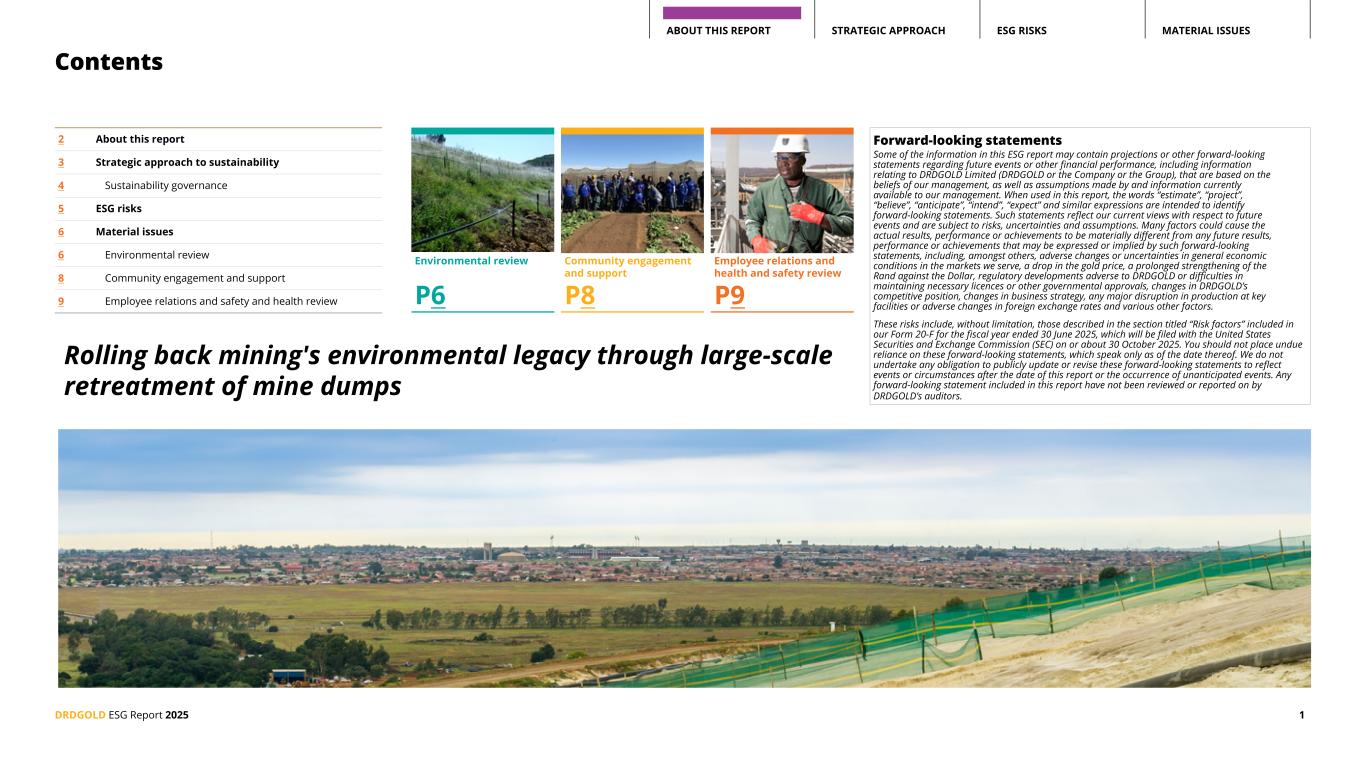
2 About this report 3 Strategic approach to sustainability 4 Sustainability governance 5 ESG risks 6 Material issues 6 Environmental review 8 Community engagement and support 9 Employee relations and safety and health review Environmental review Community engagement and support Employee relations and health and safety review P6 P8 P9 Forward-looking statements Some of the information in this ESG report may contain projections or other forward-looking statements regarding future events or other financial performance, including information relating to DRDGOLD Limited (DRDGOLD or the Company or the Group), that are based on the beliefs of our management, as well as assumptions made by and information currently available to our management. When used in this report, the words “estimate”, “project”, “believe”, “anticipate”, “intend”, “expect” and similar expressions are intended to identify forward-looking statements. Such statements reflect our current views with respect to future events and are subject to risks, uncertainties and assumptions. Many factors could cause the actual results, performance or achievements to be materially different from any future results, performance or achievements that may be expressed or implied by such forward-looking statements, including, amongst others, adverse changes or uncertainties in general economic conditions in the markets we serve, a drop in the gold price, a prolonged strengthening of the Rand against the Dollar, regulatory developments adverse to DRDGOLD or difficulties in maintaining necessary licences or other governmental approvals, changes in DRDGOLD’s competitive position, changes in business strategy, any major disruption in production at key facilities or adverse changes in foreign exchange rates and various other factors. These risks include, without limitation, those described in the section titled “Risk factors” included in our Form 20-F for the fiscal year ended 30 June 2025, which will be filed with the United States Securities and Exchange Commission (SEC) on or about 30 October 2025. You should not place undue reliance on these forward-looking statements, which speak only as of the date thereof. We do not undertake any obligation to publicly update or revise these forward-looking statements to reflect events or circumstances after the date of this report or the occurrence of unanticipated events. Any forward-looking statement included in this report have not been reviewed or reported on by DRDGOLD’s auditors. ABOUT THIS REPORT STRATEGIC APPROACH ESG RISKS MATERIAL ISSUES Contents DRDGOLD ESG Report 2025 1 Rolling back mining's environmental legacy through large-scale retreatment of mine dumps
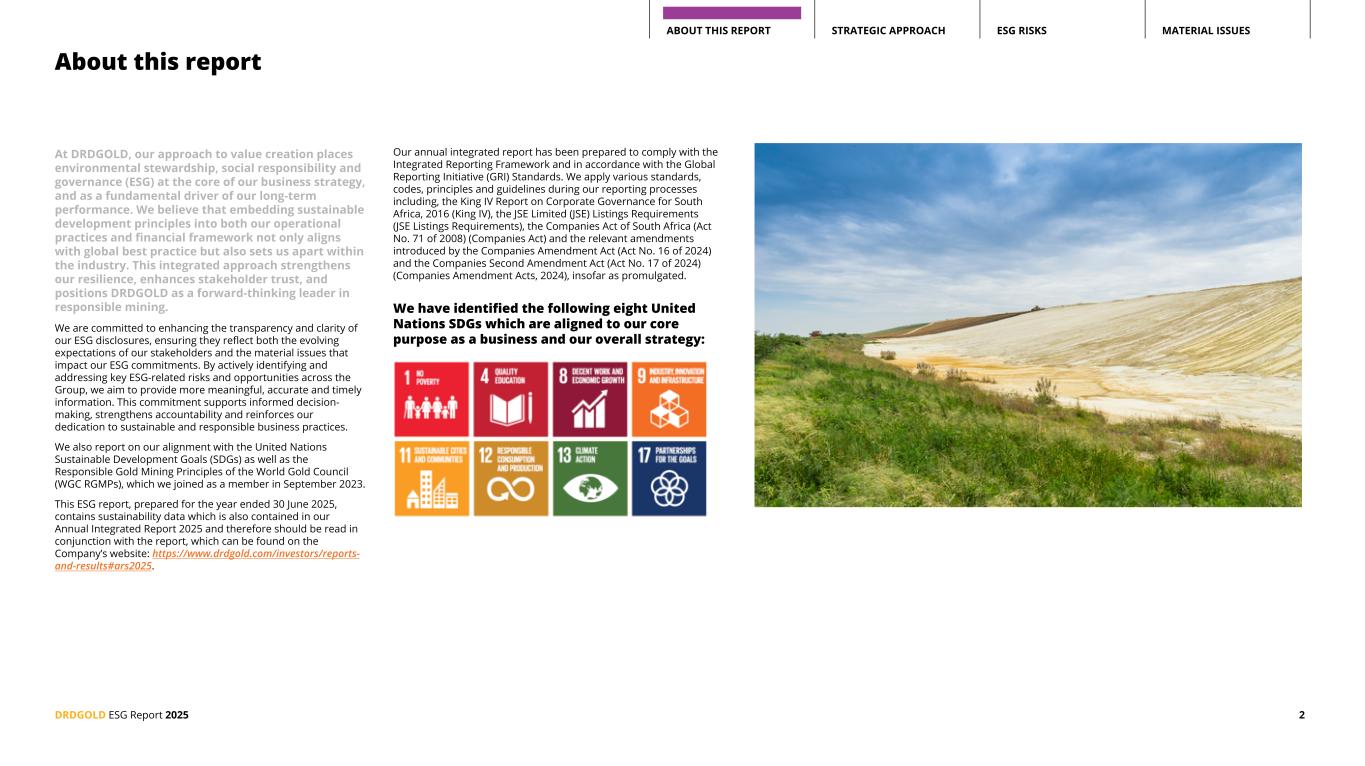
At DRDGOLD, our approach to value creation places environmental stewardship, social responsibility and governance (ESG) at the core of our business strategy, and as a fundamental driver of our long-term performance. We believe that embedding sustainable development principles into both our operational practices and financial framework not only aligns with global best practice but also sets us apart within the industry. This integrated approach strengthens our resilience, enhances stakeholder trust, and positions DRDGOLD as a forward-thinking leader in responsible mining. We are committed to enhancing the transparency and clarity of our ESG disclosures, ensuring they reflect both the evolving expectations of our stakeholders and the material issues that impact our ESG commitments. By actively identifying and addressing key ESG-related risks and opportunities across the Group, we aim to provide more meaningful, accurate and timely information. This commitment supports informed decision- making, strengthens accountability and reinforces our dedication to sustainable and responsible business practices. We also report on our alignment with the United Nations Sustainable Development Goals (SDGs) as well as the Responsible Gold Mining Principles of the World Gold Council (WGC RGMPs), which we joined as a member in September 2023. This ESG report, prepared for the year ended 30 June 2025, contains sustainability data which is also contained in our Annual Integrated Report 2025 and therefore should be read in conjunction with the report, which can be found on the Company’s website: https://www.drdgold.com/investors/reports- and-results#ars2025. Our annual integrated report has been prepared to comply with the Integrated Reporting Framework and in accordance with the Global Reporting Initiative (GRI) Standards. We apply various standards, codes, principles and guidelines during our reporting processes including, the King IV Report on Corporate Governance for South Africa, 2016 (King IV), the JSE Limited (JSE) Listings Requirements (JSE Listings Requirements), the Companies Act of South Africa (Act No. 71 of 2008) (Companies Act) and the relevant amendments introduced by the Companies Amendment Act (Act No. 16 of 2024) and the Companies Second Amendment Act (Act No. 17 of 2024) (Companies Amendment Acts, 2024), insofar as promulgated. We have identified the following eight United Nations SDGs which are aligned to our core purpose as a business and our overall strategy: ABOUT THIS REPORT STRATEGIC APPROACH ESG RISKS MATERIAL ISSUES About this report DRDGOLD ESG Report 2025 2
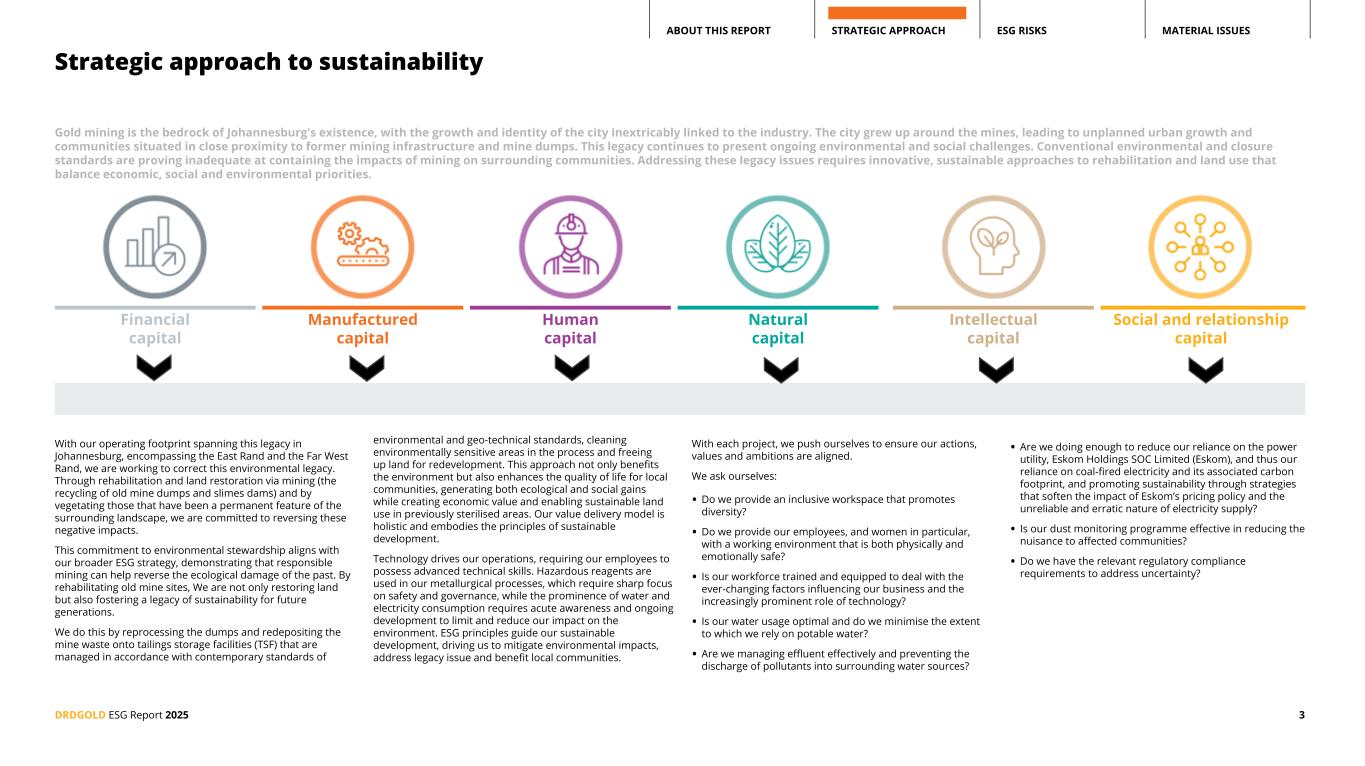
Gold mining is the bedrock of Johannesburg's existence, with the growth and identity of the city inextricably linked to the industry. The city grew up around the mines, leading to unplanned urban growth and communities situated in close proximity to former mining infrastructure and mine dumps. This legacy continues to present ongoing environmental and social challenges. Conventional environmental and closure standards are proving inadequate at containing the impacts of mining on surrounding communities. Addressing these legacy issues requires innovative, sustainable approaches to rehabilitation and land use that balance economic, social and environmental priorities. Financial capital Manufactured capital Human capital Natural capital Intellectual capital Social and relationship capital With our operating footprint spanning this legacy in Johannesburg, encompassing the East Rand and the Far West Rand, we are working to correct this environmental legacy. Through rehabilitation and land restoration via mining (the recycling of old mine dumps and slimes dams) and by vegetating those that have been a permanent feature of the surrounding landscape, we are committed to reversing these negative impacts. This commitment to environmental stewardship aligns with our broader ESG strategy, demonstrating that responsible mining can help reverse the ecological damage of the past. By rehabilitating old mine sites, We are not only restoring land but also fostering a legacy of sustainability for future generations. We do this by reprocessing the dumps and redepositing the mine waste onto tailings storage facilities (TSF) that are managed in accordance with contemporary standards of environmental and geo-technical standards, cleaning environmentally sensitive areas in the process and freeing up land for redevelopment. This approach not only benefits the environment but also enhances the quality of life for local communities, generating both ecological and social gains while creating economic value and enabling sustainable land use in previously sterilised areas. Our value delivery model is holistic and embodies the principles of sustainable development. Technology drives our operations, requiring our employees to possess advanced technical skills. Hazardous reagents are used in our metallurgical processes, which require sharp focus on safety and governance, while the prominence of water and electricity consumption requires acute awareness and ongoing development to limit and reduce our impact on the environment. ESG principles guide our sustainable development, driving us to mitigate environmental impacts, address legacy issue and benefit local communities. With each project, we push ourselves to ensure our actions, values and ambitions are aligned. We ask ourselves: • Do we provide an inclusive workspace that promotes diversity? • Do we provide our employees, and women in particular, with a working environment that is both physically and emotionally safe? • Is our workforce trained and equipped to deal with the ever-changing factors influencing our business and the increasingly prominent role of technology? • Is our water usage optimal and do we minimise the extent to which we rely on potable water? • Are we managing effluent effectively and preventing the discharge of pollutants into surrounding water sources? • Are we doing enough to reduce our reliance on the power utility, Eskom Holdings SOC Limited (Eskom), and thus our reliance on coal-fired electricity and its associated carbon footprint, and promoting sustainability through strategies that soften the impact of Eskom’s pricing policy and the unreliable and erratic nature of electricity supply? • Is our dust monitoring programme effective in reducing the nuisance to affected communities? • Do we have the relevant regulatory compliance requirements to address uncertainty? ABOUT THIS REPORT STRATEGIC APPROACH ESG RISKS MATERIAL ISSUES Strategic approach to sustainability DRDGOLD ESG Report 2025 3
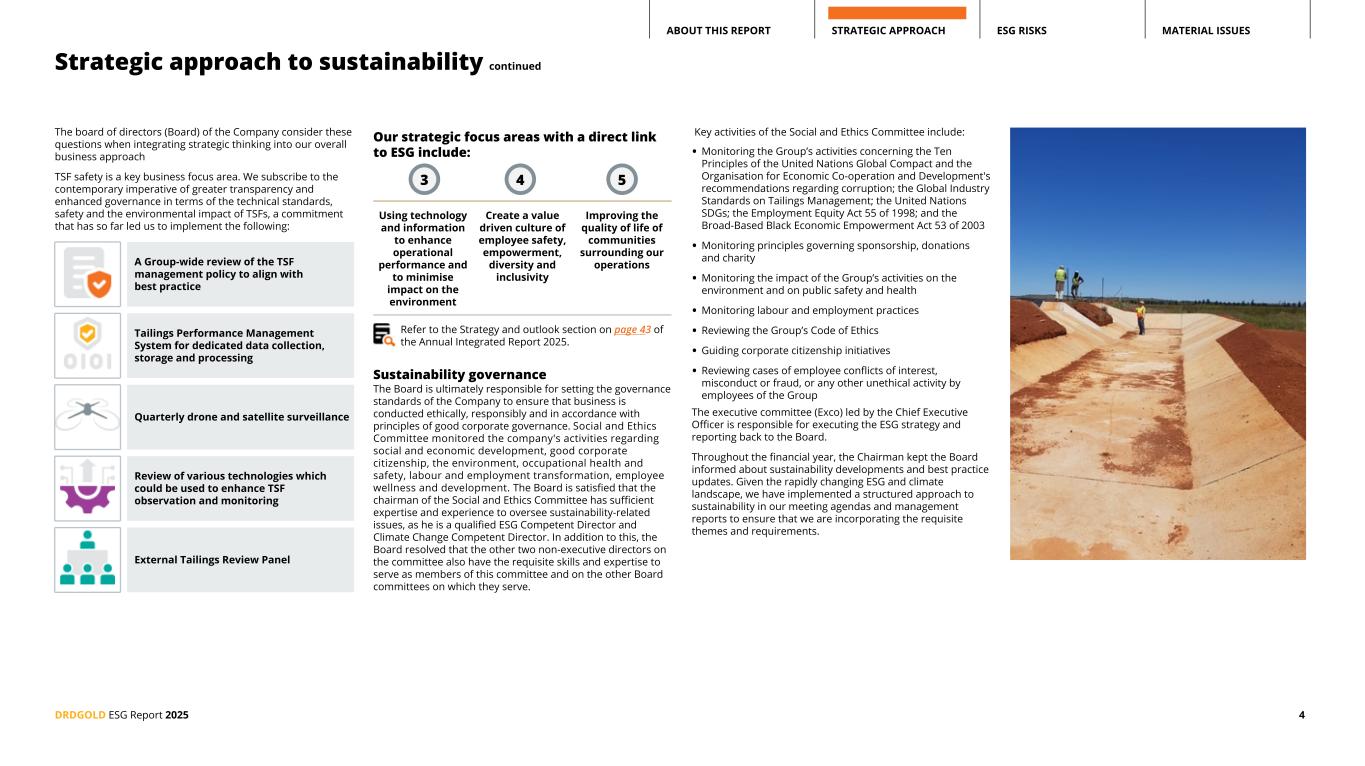
The board of directors (Board) of the Company consider these questions when integrating strategic thinking into our overall business approach TSF safety is a key business focus area. We subscribe to the contemporary imperative of greater transparency and enhanced governance in terms of the technical standards, safety and the environmental impact of TSFs, a commitment that has so far led us to implement the following: A Group-wide review of the TSF management policy to align with best practice Tailings Performance Management System for dedicated data collection, storage and processing Quarterly drone and satellite surveillance Review of various technologies which could be used to enhance TSF observation and monitoring External Tailings Review Panel Our strategic focus areas with a direct link to ESG include: Using technology and information to enhance operational performance and to minimise impact on the environment Create a value driven culture of employee safety, empowerment, diversity and inclusivity Improving the quality of life of communities surrounding our operations Refer to the Strategy and outlook section on page 43 of the Annual Integrated Report 2025. Sustainability governance The Board is ultimately responsible for setting the governance standards of the Company to ensure that business is conducted ethically, responsibly and in accordance with principles of good corporate governance. Social and Ethics Committee monitored the company's activities regarding social and economic development, good corporate citizenship, the environment, occupational health and safety, labour and employment transformation, employee wellness and development. The Board is satisfied that the chairman of the Social and Ethics Committee has sufficient expertise and experience to oversee sustainability-related issues, as he is a qualified ESG Competent Director and Climate Change Competent Director. In addition to this, the Board resolved that the other two non-executive directors on the committee also have the requisite skills and expertise to serve as members of this committee and on the other Board committees on which they serve. Key activities of the Social and Ethics Committee include: • Monitoring the Group’s activities concerning the Ten Principles of the United Nations Global Compact and the Organisation for Economic Co-operation and Development's recommendations regarding corruption; the Global Industry Standards on Tailings Management; the United Nations SDGs; the Employment Equity Act 55 of 1998; and the Broad-Based Black Economic Empowerment Act 53 of 2003 • Monitoring principles governing sponsorship, donations and charity • Monitoring the impact of the Group’s activities on the environment and on public safety and health • Monitoring labour and employment practices • Reviewing the Group’s Code of Ethics • Guiding corporate citizenship initiatives • Reviewing cases of employee conflicts of interest, misconduct or fraud, or any other unethical activity by employees of the Group The executive committee (Exco) led by the Chief Executive Officer is responsible for executing the ESG strategy and reporting back to the Board. Throughout the financial year, the Chairman kept the Board informed about sustainability developments and best practice updates. Given the rapidly changing ESG and climate landscape, we have implemented a structured approach to sustainability in our meeting agendas and management reports to ensure that we are incorporating the requisite themes and requirements. ABOUT THIS REPORT STRATEGIC APPROACH ESG RISKS MATERIAL ISSUES Strategic approach to sustainability continued DRDGOLD ESG Report 2025 4 3 4 5
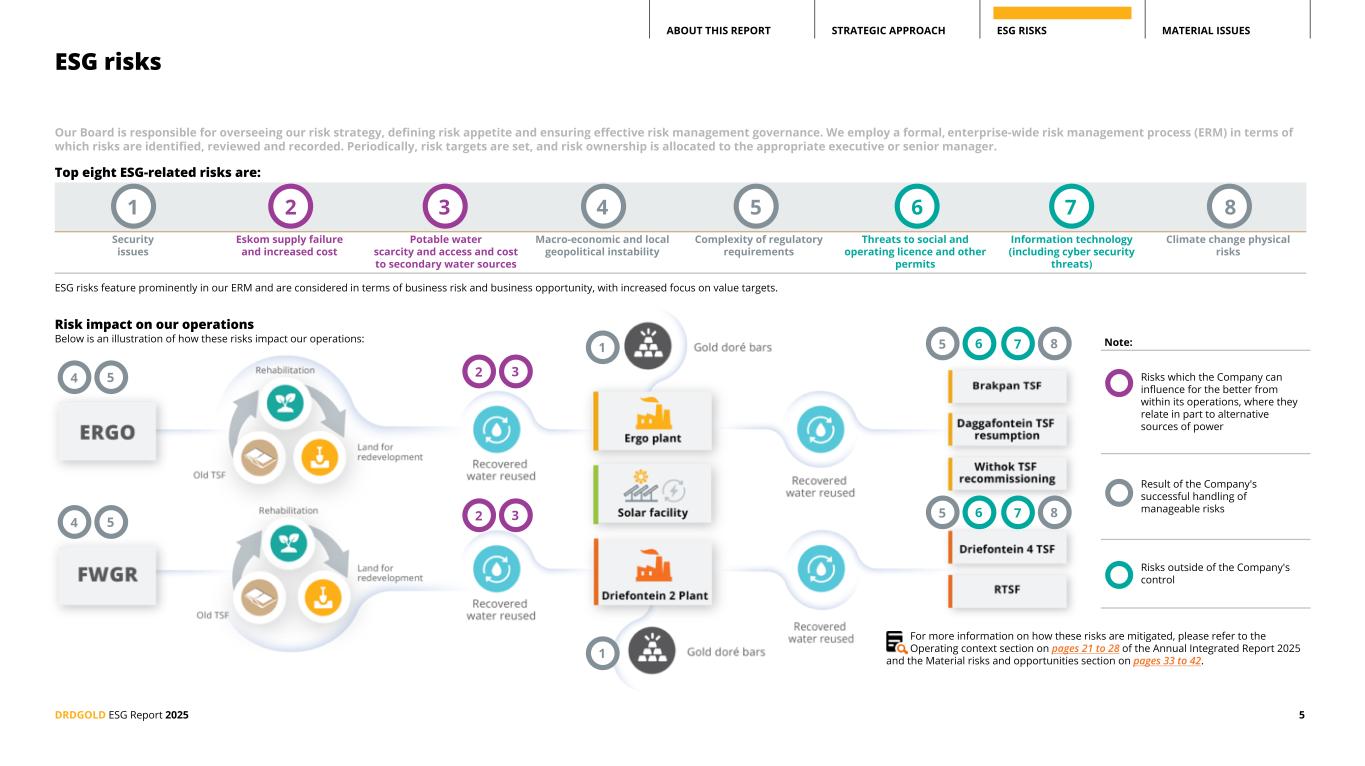
Our Board is responsible for overseeing our risk strategy, defining risk appetite and ensuring effective risk management governance. We employ a formal, enterprise-wide risk management process (ERM) in terms of which risks are identified, reviewed and recorded. Periodically, risk targets are set, and risk ownership is allocated to the appropriate executive or senior manager. Top eight ESG-related risks are: 1 2 3 4 5 6 7 8 Security issues Eskom supply failure and increased cost Potable water scarcity and access and cost to secondary water sources Macro-economic and local geopolitical instability Complexity of regulatory requirements Threats to social and operating licence and other permits Information technology (including cyber security threats) Climate change physical risks ESG risks feature prominently in our ERM and are considered in terms of business risk and business opportunity, with increased focus on value targets. Risk impact on our operations Below is an illustration of how these risks impact our operations: ABOUT THIS REPORT STRATEGIC APPROACH ESG RISKS MATERIAL ISSUES ESG risks DRDGOLD ESG Report 2025 5 For more information on how these risks are mitigated, please refer to the Operating context section on pages 21 to 28 of the Annual Integrated Report 2025 and the Material risks and opportunities section on pages 33 to 42. 1 2 3 4 5 6 7 8 Note: Risks which the Company can influence for the better from within its operations, where they relate in part to alternative sources of power Result of the Company's successful handling of manageable risks Risks outside of the Company's control 4 5 4 5 2 3 2 3 1 1 7 85 6 7 85 6
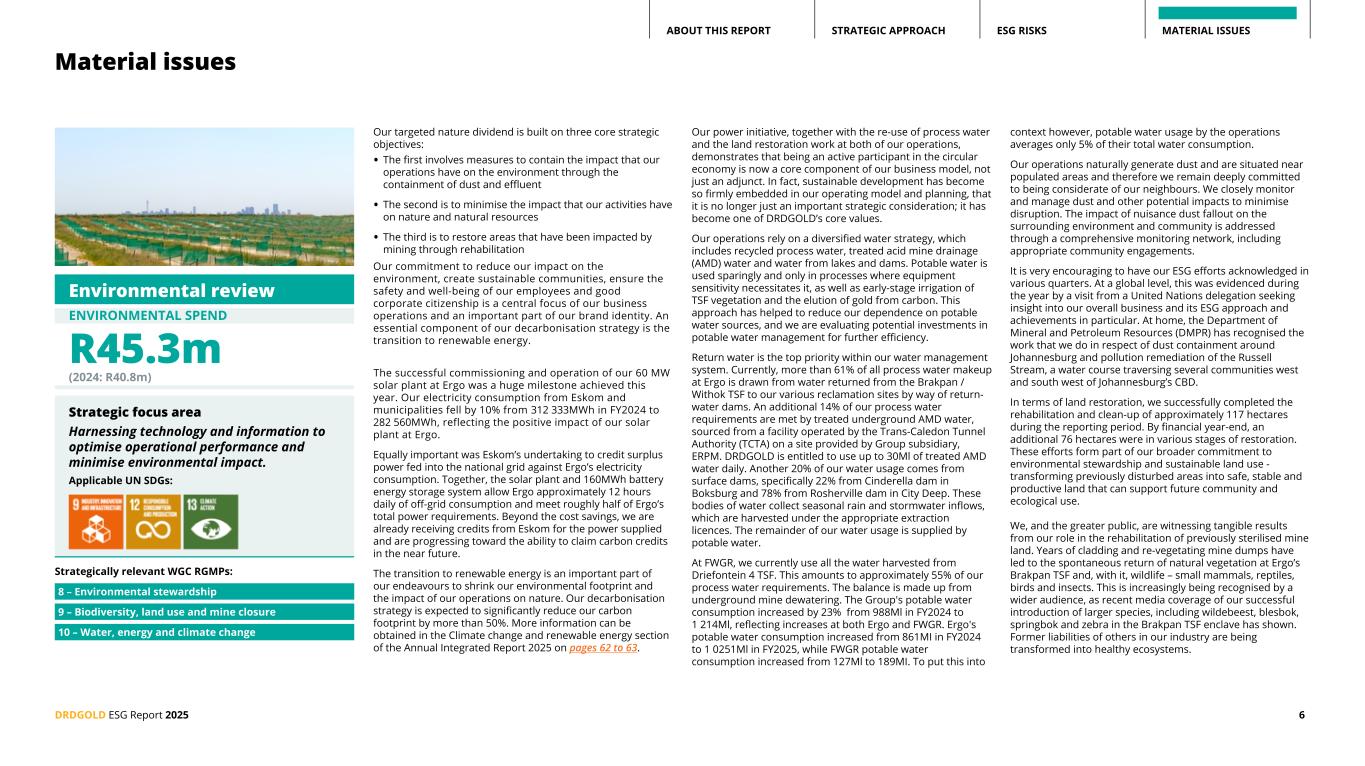
Environmental review ENVIRONMENTAL SPEND R45.3m (2024: R40.8m) Strategic focus area Harnessing technology and information to optimise operational performance and minimise environmental impact. Applicable UN SDGs: Strategically relevant WGC RGMPs: 8 – Environmental stewardship 9 – Biodiversity, land use and mine closure 10 – Water, energy and climate change Our targeted nature dividend is built on three core strategic objectives: • The first involves measures to contain the impact that our operations have on the environment through the containment of dust and effluent • The second is to minimise the impact that our activities have on nature and natural resources • The third is to restore areas that have been impacted by mining through rehabilitation Our commitment to reduce our impact on the environment, create sustainable communities, ensure the safety and well-being of our employees and good corporate citizenship is a central focus of our business operations and an important part of our brand identity. An essential component of our decarbonisation strategy is the transition to renewable energy. The successful commissioning and operation of our 60 MW solar plant at Ergo was a huge milestone achieved this year. Our electricity consumption from Eskom and municipalities fell by 10% from 312 333MWh in FY2024 to 282 560MWh, reflecting the positive impact of our solar plant at Ergo. Equally important was Eskom’s undertaking to credit surplus power fed into the national grid against Ergo’s electricity consumption. Together, the solar plant and 160MWh battery energy storage system allow Ergo approximately 12 hours daily of off-grid consumption and meet roughly half of Ergo’s total power requirements. Beyond the cost savings, we are already receiving credits from Eskom for the power supplied and are progressing toward the ability to claim carbon credits in the near future. The transition to renewable energy is an important part of our endeavours to shrink our environmental footprint and the impact of our operations on nature. Our decarbonisation strategy is expected to significantly reduce our carbon footprint by more than 50%. More information can be obtained in the Climate change and renewable energy section of the Annual Integrated Report 2025 on pages 62 to 63. Our power initiative, together with the re-use of process water and the land restoration work at both of our operations, demonstrates that being an active participant in the circular economy is now a core component of our business model, not just an adjunct. In fact, sustainable development has become so firmly embedded in our operating model and planning, that it is no longer just an important strategic consideration; it has become one of DRDGOLD’s core values. Our operations rely on a diversified water strategy, which includes recycled process water, treated acid mine drainage (AMD) water and water from lakes and dams. Potable water is used sparingly and only in processes where equipment sensitivity necessitates it, as well as early-stage irrigation of TSF vegetation and the elution of gold from carbon. This approach has helped to reduce our dependence on potable water sources, and we are evaluating potential investments in potable water management for further efficiency. Return water is the top priority within our water management system. Currently, more than 61% of all process water makeup at Ergo is drawn from water returned from the Brakpan / Withok TSF to our various reclamation sites by way of return- water dams. An additional 14% of our process water requirements are met by treated underground AMD water, sourced from a facility operated by the Trans-Caledon Tunnel Authority (TCTA) on a site provided by Group subsidiary, ERPM. DRDGOLD is entitled to use up to 30Ml of treated AMD water daily. Another 20% of our water usage comes from surface dams, specifically 22% from Cinderella dam in Boksburg and 78% from Rosherville dam in City Deep. These bodies of water collect seasonal rain and stormwater inflows, which are harvested under the appropriate extraction licences. The remainder of our water usage is supplied by potable water. At FWGR, we currently use all the water harvested from Driefontein 4 TSF. This amounts to approximately 55% of our process water requirements. The balance is made up from underground mine dewatering. The Group's potable water consumption increased by 23% from 988Ml in FY2024 to 1 214Ml, reflecting increases at both Ergo and FWGR. Ergo's potable water consumption increased from 861MI in FY2024 to 1 0251Ml in FY2025, while FWGR potable water consumption increased from 127Ml to 189MI. To put this into context however, potable water usage by the operations averages only 5% of their total water consumption. Our operations naturally generate dust and are situated near populated areas and therefore we remain deeply committed to being considerate of our neighbours. We closely monitor and manage dust and other potential impacts to minimise disruption. The impact of nuisance dust fallout on the surrounding environment and community is addressed through a comprehensive monitoring network, including appropriate community engagements. It is very encouraging to have our ESG efforts acknowledged in various quarters. At a global level, this was evidenced during the year by a visit from a United Nations delegation seeking insight into our overall business and its ESG approach and achievements in particular. At home, the Department of Mineral and Petroleum Resources (DMPR) has recognised the work that we do in respect of dust containment around Johannesburg and pollution remediation of the Russell Stream, a water course traversing several communities west and south west of Johannesburg’s CBD. In terms of land restoration, we successfully completed the rehabilitation and clean-up of approximately 117 hectares during the reporting period. By financial year-end, an additional 76 hectares were in various stages of restoration. These efforts form part of our broader commitment to environmental stewardship and sustainable land use - transforming previously disturbed areas into safe, stable and productive land that can support future community and ecological use. We, and the greater public, are witnessing tangible results from our role in the rehabilitation of previously sterilised mine land. Years of cladding and re-vegetating mine dumps have led to the spontaneous return of natural vegetation at Ergo’s Brakpan TSF and, with it, wildlife – small mammals, reptiles, birds and insects. This is increasingly being recognised by a wider audience, as recent media coverage of our successful introduction of larger species, including wildebeest, blesbok, springbok and zebra in the Brakpan TSF enclave has shown. Former liabilities of others in our industry are being transformed into healthy ecosystems. ABOUT THIS REPORT STRATEGIC APPROACH ESG RISKS MATERIAL ISSUES Material issues DRDGOLD ESG Report 2025 6
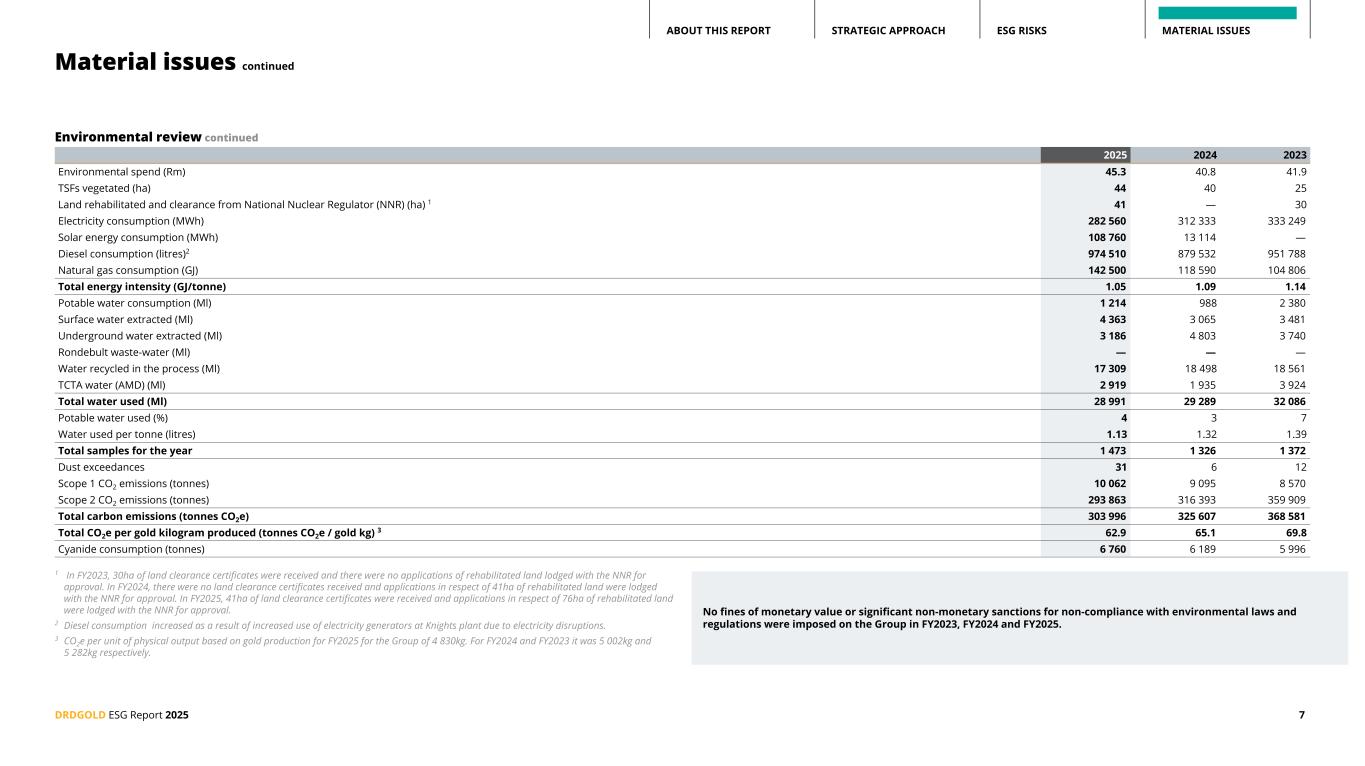
Environmental review continued 2025 2024 2023 Environmental spend (Rm) 45.3 40.8 41.9 TSFs vegetated (ha) 44 40 25 Land rehabilitated and clearance from National Nuclear Regulator (NNR) (ha) 1 41 — 30 Electricity consumption (MWh) 282 560 312 333 333 249 Solar energy consumption (MWh) 108 760 13 114 — Diesel consumption (litres)2 974 510 879 532 951 788 Natural gas consumption (GJ) 142 500 118 590 104 806 Total energy intensity (GJ/tonne) 1.05 1.09 1.14 Potable water consumption (Ml) 1 214 988 2 380 Surface water extracted (Ml) 4 363 3 065 3 481 Underground water extracted (Ml) 3 186 4 803 3 740 Rondebult waste-water (Ml) — — — Water recycled in the process (Ml) 17 309 18 498 18 561 TCTA water (AMD) (Ml) 2 919 1 935 3 924 Total water used (Ml) 28 991 29 289 32 086 Potable water used (%) 4 3 7 Water used per tonne (litres) 1.13 1.32 1.39 Total samples for the year 1 473 1 326 1 372 Dust exceedances 31 6 12 Scope 1 CO2 emissions (tonnes) 10 062 9 095 8 570 Scope 2 CO2 emissions (tonnes) 293 863 316 393 359 909 Total carbon emissions (tonnes CO2e) 303 996 325 607 368 581 Total CO2e per gold kilogram produced (tonnes CO2e / gold kg) 3 62.9 65.1 69.8 Cyanide consumption (tonnes) 6 760 6 189 5 996 1 In FY2023, 30ha of land clearance certificates were received and there were no applications of rehabilitated land lodged with the NNR for approval. In FY2024, there were no land clearance certificates received and applications in respect of 41ha of rehabilitated land were lodged with the NNR for approval. In FY2025, 41ha of land clearance certificates were received and applications in respect of 76ha of rehabilitated land were lodged with the NNR for approval. 2 Diesel consumption increased as a result of increased use of electricity generators at Knights plant due to electricity disruptions. 3 CO2e per unit of physical output based on gold production for FY2025 for the Group of 4 830kg. For FY2024 and FY2023 it was 5 002kg and 5 282kg respectively. No fines of monetary value or significant non-monetary sanctions for non-compliance with environmental laws and regulations were imposed on the Group in FY2023, FY2024 and FY2025. ABOUT THIS REPORT STRATEGIC APPROACH ESG RISKS MATERIAL ISSUES Material issues continued DRDGOLD ESG Report 2025 7
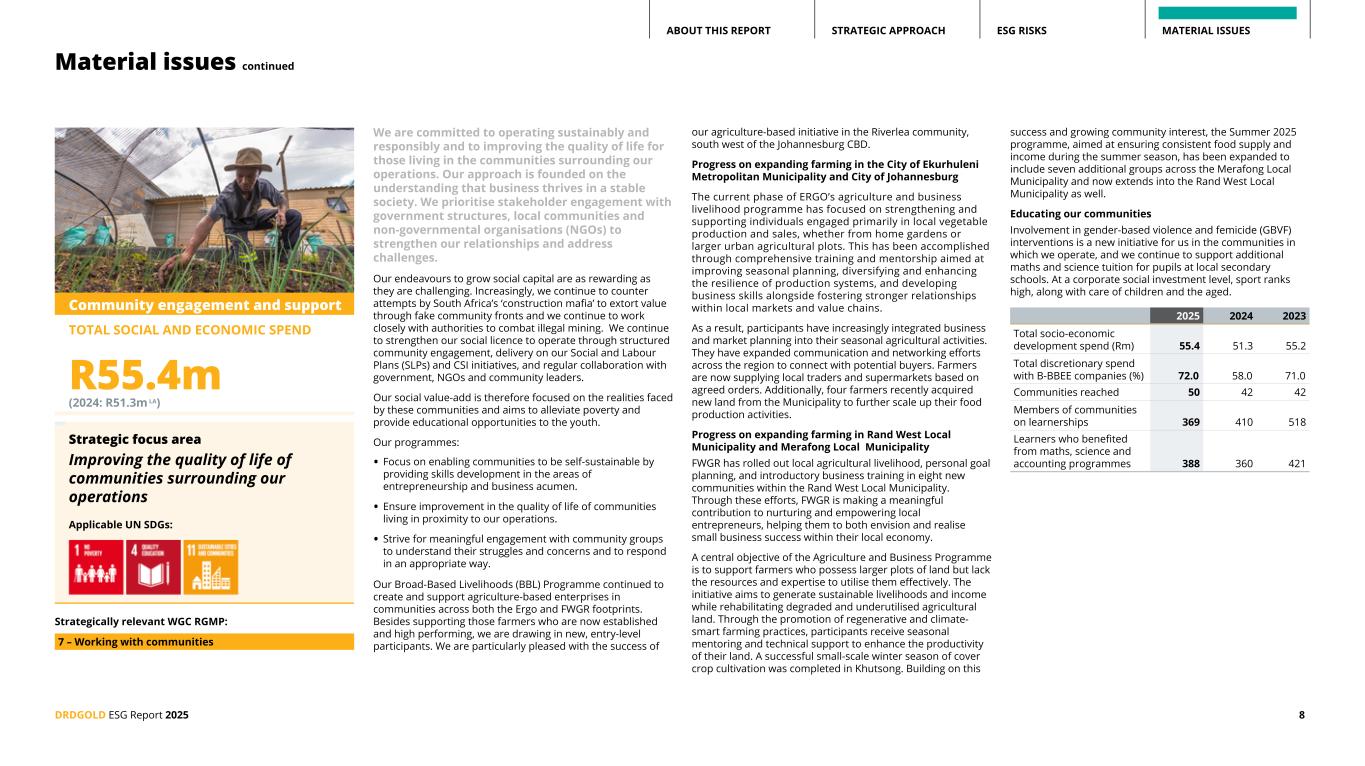
Community engagement and support TOTAL SOCIAL AND ECONOMIC SPEND R55.4m (2024: R51.3m LA) Strategic focus area Improving the quality of life of communities surrounding our operations Applicable UN SDGs: Strategically relevant WGC RGMP: 7 – Working with communities We are committed to operating sustainably and responsibly and to improving the quality of life for those living in the communities surrounding our operations. Our approach is founded on the understanding that business thrives in a stable society. We prioritise stakeholder engagement with government structures, local communities and non-governmental organisations (NGOs) to strengthen our relationships and address challenges. Our endeavours to grow social capital are as rewarding as they are challenging. Increasingly, we continue to counter attempts by South Africa’s ‘construction mafia’ to extort value through fake community fronts and we continue to work closely with authorities to combat illegal mining. We continue to strengthen our social licence to operate through structured community engagement, delivery on our Social and Labour Plans (SLPs) and CSI initiatives, and regular collaboration with government, NGOs and community leaders. Our social value-add is therefore focused on the realities faced by these communities and aims to alleviate poverty and provide educational opportunities to the youth. Our programmes: • Focus on enabling communities to be self-sustainable by providing skills development in the areas of entrepreneurship and business acumen. • Ensure improvement in the quality of life of communities living in proximity to our operations. • Strive for meaningful engagement with community groups to understand their struggles and concerns and to respond in an appropriate way. Our Broad-Based Livelihoods (BBL) Programme continued to create and support agriculture-based enterprises in communities across both the Ergo and FWGR footprints. Besides supporting those farmers who are now established and high performing, we are drawing in new, entry-level participants. We are particularly pleased with the success of our agriculture-based initiative in the Riverlea community, south west of the Johannesburg CBD. Progress on expanding farming in the City of Ekurhuleni Metropolitan Municipality and City of Johannesburg The current phase of ERGO’s agriculture and business livelihood programme has focused on strengthening and supporting individuals engaged primarily in local vegetable production and sales, whether from home gardens or larger urban agricultural plots. This has been accomplished through comprehensive training and mentorship aimed at improving seasonal planning, diversifying and enhancing the resilience of production systems, and developing business skills alongside fostering stronger relationships within local markets and value chains. As a result, participants have increasingly integrated business and market planning into their seasonal agricultural activities. They have expanded communication and networking efforts across the region to connect with potential buyers. Farmers are now supplying local traders and supermarkets based on agreed orders. Additionally, four farmers recently acquired new land from the Municipality to further scale up their food production activities. Progress on expanding farming in Rand West Local Municipality and Merafong Local Municipality FWGR has rolled out local agricultural livelihood, personal goal planning, and introductory business training in eight new communities within the Rand West Local Municipality. Through these efforts, FWGR is making a meaningful contribution to nurturing and empowering local entrepreneurs, helping them to both envision and realise small business success within their local economy. A central objective of the Agriculture and Business Programme is to support farmers who possess larger plots of land but lack the resources and expertise to utilise them effectively. The initiative aims to generate sustainable livelihoods and income while rehabilitating degraded and underutilised agricultural land. Through the promotion of regenerative and climate- smart farming practices, participants receive seasonal mentoring and technical support to enhance the productivity of their land. A successful small-scale winter season of cover crop cultivation was completed in Khutsong. Building on this success and growing community interest, the Summer 2025 programme, aimed at ensuring consistent food supply and income during the summer season, has been expanded to include seven additional groups across the Merafong Local Municipality and now extends into the Rand West Local Municipality as well. Educating our communities Involvement in gender-based violence and femicide (GBVF) interventions is a new initiative for us in the communities in which we operate, and we continue to support additional maths and science tuition for pupils at local secondary schools. At a corporate social investment level, sport ranks high, along with care of children and the aged. 2025 2024 2023 Total socio-economic development spend (Rm) 55.4 51.3 55.2 Total discretionary spend with B-BBEE companies (%) 72.0 58.0 71.0 Communities reached 50 42 42 Members of communities on learnerships 369 410 518 Learners who benefited from maths, science and accounting programmes 388 360 421 ABOUT THIS REPORT STRATEGIC APPROACH ESG RISKS MATERIAL ISSUES Material issues continued DRDGOLD ESG Report 2025 8
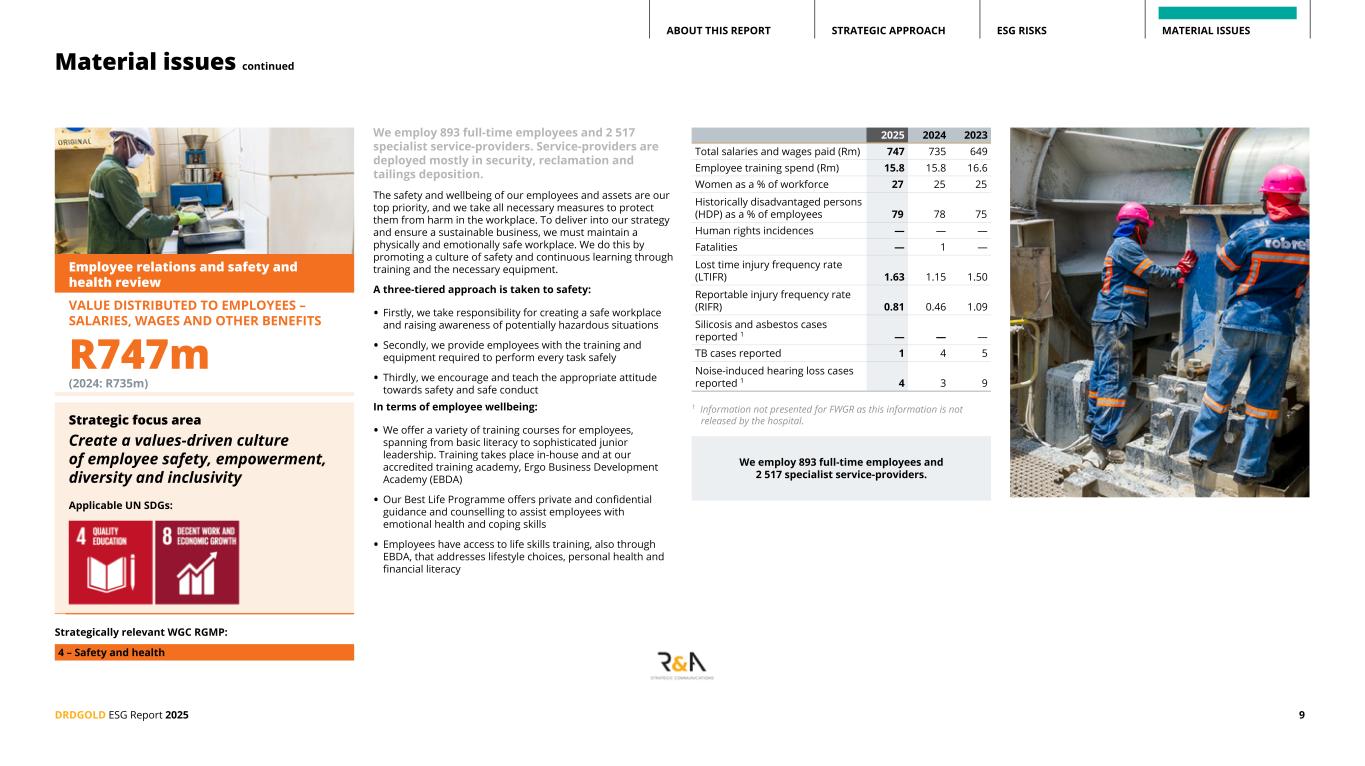
Employee relations and safety and health review VALUE DISTRIBUTED TO EMPLOYEES – SALARIES, WAGES AND OTHER BENEFITS R747m (2024: R735m) Strategic focus area Create a values-driven culture of employee safety, empowerment, diversity and inclusivity Applicable UN SDGs: Strategically relevant WGC RGMP: 4 – Safety and health We employ 893 full-time employees and 2 517 specialist service-providers. Service-providers are deployed mostly in security, reclamation and tailings deposition. The safety and wellbeing of our employees and assets are our top priority, and we take all necessary measures to protect them from harm in the workplace. To deliver into our strategy and ensure a sustainable business, we must maintain a physically and emotionally safe workplace. We do this by promoting a culture of safety and continuous learning through training and the necessary equipment. A three-tiered approach is taken to safety: • Firstly, we take responsibility for creating a safe workplace and raising awareness of potentially hazardous situations • Secondly, we provide employees with the training and equipment required to perform every task safely • Thirdly, we encourage and teach the appropriate attitude towards safety and safe conduct In terms of employee wellbeing: • We offer a variety of training courses for employees, spanning from basic literacy to sophisticated junior leadership. Training takes place in-house and at our accredited training academy, Ergo Business Development Academy (EBDA) • Our Best Life Programme offers private and confidential guidance and counselling to assist employees with emotional health and coping skills • Employees have access to life skills training, also through EBDA, that addresses lifestyle choices, personal health and financial literacy 2025 2024 2023 Total salaries and wages paid (Rm) 747 735 649 Employee training spend (Rm) 15.8 15.8 16.6 Women as a % of workforce 27 25 25 Historically disadvantaged persons (HDP) as a % of employees 79 78 75 Human rights incidences — — — Fatalities — 1 — Lost time injury frequency rate (LTIFR) 1.63 1.15 1.50 Reportable injury frequency rate (RIFR) 0.81 0.46 1.09 Silicosis and asbestos cases reported 1 — — — TB cases reported 1 4 5 Noise-induced hearing loss cases reported 1 4 3 9 1 Information not presented for FWGR as this information is not released by the hospital. We employ 893 full-time employees and 2 517 specialist service-providers. ABOUT THIS REPORT STRATEGIC APPROACH ESG RISKS MATERIAL ISSUES Material issues continued DRDGOLD ESG Report 2025 9
www.drdgold.com