Please wait
.2
Consolidated Financial Statements of
CGI INC.
For the years ended September 30, 2021 and 2020
Management’s and Auditors’ Reports
MANAGEMENT’S STATEMENT OF RESPONSIBILITY FOR FINANCIAL REPORTING
The management of CGI Inc. (the Company) is responsible for the preparation and integrity of the consolidated financial statements and the Management’s Discussion and Analysis (MD&A). The consolidated financial statements have been prepared in accordance with International Financial Reporting Standards as issued by the International Accounting Standards Board and necessarily include some amounts that are based on management’s best estimates and judgement. Financial and operating data elsewhere in the MD&A are consistent with that contained in the accompanying consolidated financial statements.
To fulfill its responsibility, management has developed, and continues to maintain, systems of internal controls reinforced by the Company’s standards of conduct and ethics, as set out in written policies to ensure the reliability of the financial information and to safeguard its assets. The Company's consolidated financial statements and the effectiveness of internal control over financial reporting are subject to audit by an Independent Registered Public Accounting Firm, PricewaterhouseCoopers LLP, whose report follows. PricewaterhouseCoopers LLP, Independent Registered Public Accounting Firm appointed by our shareholders upon the recommendation of the Audit and Risk Management Committee of the Board of Directors, has performed an independent audit of the consolidated balance sheets as at September 30, 2021 and 2020 and the related consolidated statements of earnings, comprehensive income, changes in equity and cash flows for the years ended September 30, 2021 and 2020 and the effectiveness of our internal control over financial reporting as at September 30, 2021.
Members of the Audit and Risk Management Committee of the Board of Directors, all of whom are independent of the Company, meet regularly with PricewaterhouseCoopers LLP and with management to discuss internal controls in the financial reporting process, auditing matters and financial reporting issues and formulate the appropriate recommendations to the Board of Directors. PricewaterhouseCoopers LLP has full and unrestricted access to the Audit and Risk Management Committee. The consolidated financial statements and MD&A have been reviewed and approved by the Board of Directors.
|
|
|
|
|
|
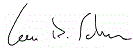
George D. Schindler President and Chief Executive Officer |
François Boulanger Executive Vice-President and Chief Financial Officer |
| November 9, 2021 |
|
CGI Inc. – Consolidated Financial Statements for the years ended September 30, 2021 and 2020 1
Management’s and Auditors’ Reports
MANAGEMENT'S REPORT ON INTERNAL CONTROL OVER FINANCIAL REPORTING
The management of the Company is responsible for establishing and maintaining adequate internal control over financial reporting. The Company’s internal control over financial reporting is a process designed, under the supervision of and with the participation of the President and Chief Executive Officer as well as the Executive Vice-President and Chief Financial Officer, to provide reasonable assurance regarding the reliability of financial reporting and the preparation of the Company’s consolidated financial statements for external reporting purposes in accordance with International Financial Reporting Standards (IFRS) as issued by the International Accounting Standards Board (IASB).
The Company’s internal control over financial reporting includes policies and procedures that:
- Pertain to the maintenance of records that, in reasonable detail, accurately and fairly reflect transactions and dispositions of the assets of the Company;
- Provide reasonable assurance that transactions are recorded as necessary to permit preparation of consolidated financial statements in accordance with IFRS as issued by the IASB, and that receipts and expenditures are being made only in accordance with authorizations of management and the directors of the Company; and,
- Provide reasonable assurance regarding prevention or timely detection of unauthorized acquisition, use or disposition of the Company’s assets that could have a material effect on the Company’s consolidated financial statements.
All internal control systems have inherent limitations; therefore, even where internal control over financial reporting is determined to be effective, it can provide only reasonable assurance. Projections of any evaluation of effectiveness to future periods are subject to the risk that the controls may become inadequate because of changes in conditions, or that the degree of compliance with the policies or procedures may deteriorate.
Management, under the supervision of and with the participation of the President and Chief Executive Officer as well as the Executive Vice-President and Chief Financial Officer, conducted an assessment of the effectiveness of the Company’s internal control over financial reporting based on the criteria established in Internal Control - Integrated Framework (2013) issued by the Committee of Sponsoring Organizations of the Treadway Commission (COSO). Based on this assessment, management has determined the Company’s internal control over financial reporting as at September 30, 2021 was effective.
The effectiveness of the Company’s internal control over financial reporting as of September 30, 2021 has been audited by PricewaterhouseCoopers LLP, an Independent Registered Public Accounting Firm, as stated in their report which appears herein.
|
|
|
|
|
|
George D. Schindler President and Chief Executive Officer |
François Boulanger Executive Vice-President and Chief Financial Officer |
| November 9, 2021 |
|
CGI Inc. – Consolidated Financial Statements for the years ended September 30, 2021 and 2020 2
Management’s and Auditors’ Reports
REPORT OF INDEPENDENT REGISTERED PUBLIC ACCOUNTING FIRM
To the Board of Directors and Shareholders of CGI Inc.
Opinions on the Financial Statements and Internal Control over Financial Reporting
We have audited the accompanying consolidated balance sheets of CGI Inc. and its subsidiaries (together, the Company) as of September 30, 2021 and 2020, and the related consolidated statements of earnings, comprehensive income, changes in equity and cash flows for the years then ended, including the related notes (collectively referred to as the consolidated financial statements). We also have audited the Company’s internal control over financial reporting as of September 30, 2021, based on criteria established in Internal Control – Integrated Framework (2013) issued by the Committee of Sponsoring Organizations of the Treadway Commission (COSO).
In our opinion, the consolidated financial statements referred to above present fairly, in all material respects, the financial position of the Company as of September 30, 2021 and 2020, and its financial performance and its cash flows for the years then ended in conformity with International Financial Reporting Standards as issued by the International Accounting Standards Board. Also in our opinion, the Company maintained, in all material respects, effective internal control over financial reporting as of September 30, 2021, based on criteria established in Internal Control – Integrated Framework (2013) issued by the COSO.
Change in Accounting Principle
As discussed in Note 3 to the consolidated financial statements, the Company changed the manner in which it accounts for leases as of October 1, 2019.
Basis for Opinions
The Company’s management is responsible for these consolidated financial statements, for maintaining effective internal control over financial reporting, and for its assessment of the effectiveness of internal control over financial reporting, included in the accompanying Management’s Report on Internal Control over Financial Reporting. Our responsibility is to express opinions on the Company’s consolidated financial statements and on the Company’s internal control over financial reporting based on our audits. We are a public accounting firm registered with the Public Company Accounting Oversight Board (United States) (PCAOB) and are required to be independent with respect to the Company in accordance with the U.S. federal securities laws and the applicable rules and regulations of the Securities and Exchange Commission and the PCAOB.
We conducted our audits in accordance with the standards of the PCAOB. Those standards require that we plan and perform the audits to obtain reasonable assurance about whether the consolidated financial statements are free of material misstatement, whether due to error or fraud, and whether effective internal control over financial reporting was maintained in all material respects.
Our audits of the consolidated financial statements included performing procedures to assess the risks of material misstatement of the consolidated financial statements, whether due to error or fraud, and performing procedures that respond to those risks. Such procedures included examining, on a test basis, evidence regarding the amounts and disclosures in the consolidated financial statements. Our audits also included evaluating the accounting principles used and significant estimates made by management, as well as evaluating the overall presentation of the consolidated financial statements. Our audit of internal control over financial reporting included obtaining an understanding of internal control over financial reporting, assessing the risk that a material weakness exists, and testing and evaluating the design and operating effectiveness of internal control based on the assessed risk. Our audits also included performing such other procedures as we considered necessary in the circumstances. We believe that our audits provide a reasonable basis for our opinions.
Definition and Limitations of Internal Control over Financial Reporting
A company’s internal control over financial reporting is a process designed to provide reasonable assurance regarding the reliability of financial reporting and the preparation of financial statements for external purposes in accordance with generally accepted accounting principles. A company’s internal control over financial reporting includes those policies and procedures that (i) pertain to the maintenance of records that, in reasonable detail, accurately and fairly reflect the transactions and dispositions of the assets of the company; (ii) provide reasonable assurance that transactions are recorded as necessary to permit preparation of financial statements in accordance with generally accepted accounting principles, and that receipts and expenditures of the company are being made only in accordance with authorizations of management and directors of the company; and (iii) provide reasonable assurance regarding prevention or timely detection of unauthorized acquisition, use, or disposition of the company’s assets that could have a material effect on the financial statements.
CGI Inc. – Consolidated Financial Statements for the years ended September 30, 2021 and 2020 3
Management’s and Auditors’ Reports
REPORT OF INDEPENDENT REGISTERED PUBLIC ACCOUNTING FIRM (continued)
Definition and Limitations of Internal Control over Financial Reporting (continued)
Because of its inherent limitations, internal control over financial reporting may not prevent or detect misstatements. Also, projections of any evaluation of effectiveness to future periods are subject to the risk that controls may become inadequate because of changes in conditions, or that the degree of compliance with the policies or procedures may deteriorate.
Critical Audit Matters
The critical audit matter communicated below is a matter arising from the current period audit of the consolidated financial statements that was communicated or required to be communicated to the Audit and Risk Management Committee of the Board of Directors and that (i) relates to accounts or disclosures that are material to the consolidated financial statements; and (ii) involved our especially challenging, subjective, or complex judgments. The communication of critical audit matters does not alter in any way our opinion on the consolidated financial statements, taken as a whole, and we are not, by communicating the critical audit matter below, providing a separate opinion on the critical audit matter or on the accounts or disclosures to which it relates.
Revenue Recognition – Estimates of total expected labour costs or total expected labour hours for business consulting, strategic information technology (IT) consulting and systems integration under fixed-fee arrangements
As described in Notes 3 and 28 to the consolidated financial statements, the Company recognizes revenue for business consulting, strategic IT consulting and systems integration under fixed-fee arrangements using the percentage-of-completion method over time. For the year ended September 30, 2021, revenue from business consulting, strategic IT consulting and systems integration under fixed-fee arrangements makes up a portion of the Company’s total revenues of $12,126,793,000. The selection of the measure of progress towards completion requires management judgment and is based on the nature of the services to be provided. As disclosed by management, the Company relies on estimates of total expected labour costs or total expected labour hours to complete the service, which are compared to labour costs or labour hours incurred to date, to arrive at an estimate of the percentage of revenue earned to date. Management regularly reviews underlying estimates of total expected labour costs or total expected labour hours. Management has disclosed that there are many factors that can affect the estimates of total expected labour costs or total expected labour hours, including, but not limited to, changes to the scope of the contracts, delays in reaching milestones and new complexities in the project delivery.
The principal considerations for our determination that performing procedures relating to Revenue Recognition – Estimates of total expected labour costs or total expected labour hours for business consulting, strategic IT consulting and systems integration under fixed-fee arrangements is a critical audit matter are (i) there was significant judgment by management when developing the estimates of total expected labour costs or total expected labour hours; and (ii) there was significant auditor judgment and effort in performing procedures to evaluate the estimates of total expected labour costs or total expected labour hours, including the assessment of management’s judgment about the Company’s ability to properly assess the factors that can affect the significant assumptions related to the estimates of total expected labour costs or total expected labour hours to complete.
Addressing the matter involved performing procedures and evaluating audit evidence in connection with forming our overall opinion on the consolidated financial statements. These procedures included testing the effectiveness of controls relating to the revenue recognition process, including controls over the determination of estimates of total expected labour costs or total expected labour hours. These procedures also included, among others, evaluating and testing management’s process, on a sample basis, for determining the estimates of total expected labour costs or total expected labour hours, which included evaluating the reasonableness of significant assumptions, including the total expected labour costs or total expected labour hours to complete, used by management by (i) testing total labour costs or total labour hours incurred to supporting evidence; (ii) performing a comparison of the sum of total labour costs or total labour hours incurred and the total expected labour costs or total expected labour hours to complete to the originally estimated costs or hours; and (iii) evaluating the process of the timely identification of factors that can affect the total expected labour costs or total expected labour hours, including but not limited to changes to the scope of the contracts, delays in reaching milestones and new complexities in the project delivery.

Montréal, Quebec, Canada
November 9, 2021
We have served as the Company’s auditor since 2019.
CGI Inc. – Consolidated Financial Statements for the years ended September 30, 2021 and 2020 4
Consolidated Statements of Earnings
For the years ended September 30
(in thousands of Canadian dollars, except per share data)
|
|
|
|
|
|
|
|
|
|
|
|
|
|
Notes |
2021 |
2020 |
|
|
|
$ |
$ |
|
| Revenue |
28 |
12,126,793 |
|
12,164,115 |
|
|
| Operating expenses |
|
|
|
|
Costs of services, selling and administrative |
23 |
10,178,164 |
|
10,302,068 |
|
|
Acquisition-related and integration costs |
26d |
7,371 |
|
76,794 |
|
|
Restructuring costs |
|
— |
|
155,411 |
|
|
Net finance costs |
25 |
106,798 |
|
114,474 |
|
|
|
|
|
|
|
|
|
|
|
|
| Foreign exchange gain |
|
(3,532) |
|
(899) |
|
|
|
|
|
|
|
|
|
10,288,801 |
|
10,647,848 |
|
|
| Earnings before income taxes |
|
1,837,992 |
|
1,516,267 |
|
|
| Income tax expense |
16 |
468,920 |
|
398,405 |
|
|
|
|
|
|
|
|
|
|
|
|
| Net earnings |
|
1,369,072 |
|
1,117,862 |
|
|
|
|
|
|
|
| Earnings per share |
|
|
|
|
| Basic earnings per share |
21 |
5.50 |
|
4.27 |
|
|
| Diluted earnings per share |
21 |
5.41 |
|
4.20 |
|
|
|
|
|
|
|
|
|
|
|
|
|
|
|
|
|
|
|
|
|
|
See Notes to the Consolidated Financial Statements.
CGI Inc. – Consolidated Financial Statements for the years ended September 30, 2021 and 2020 5
Consolidated Statements of Comprehensive Income
For the years ended September 30
(in thousands of Canadian dollars)
|
|
|
|
|
|
|
|
|
|
2021 |
2020 |
|
$ |
$ |
| Net earnings |
1,369,072 |
|
1,117,862 |
|
Items that will be reclassified subsequently to net earnings (net of income taxes): |
|
|
| Net unrealized (losses) gains on translating financial statements of foreign operations |
(391,574) |
|
406,445 |
|
Net gains on cross-currency swaps and on translating long-term debt designated as hedges
of net investments in foreign operations |
150,313 |
|
8,914 |
|
Deferred (costs) gains of hedging on cross-currency swaps |
(7,484) |
|
18,144 |
|
Net unrealized gains (losses) on cash flow hedges |
10,964 |
|
(30,091) |
|
Net unrealized (losses) gains on financial assets at fair value through other comprehensive income |
(2,149) |
|
2,854 |
|
| Items that will not be reclassified subsequently to net earnings (net of income taxes): |
|
|
Net remeasurement gains (losses) on defined benefit plans |
25,800 |
|
(37,250) |
|
| Other comprehensive (loss) income |
(214,130) |
|
369,016 |
|
| Comprehensive income |
1,154,942 |
|
1,486,878 |
|
See Notes to the Consolidated Financial Statements.
CGI Inc. – Consolidated Financial Statements for the years ended September 30, 2021 and 2020 6
Consolidated Balance Sheets
As at September 30
(in thousands of Canadian dollars)
|
|
|
|
|
|
|
|
|
|
|
|
|
Notes |
2021 |
2020 |
|
|
$ |
$ |
| Assets |
|
|
|
| Current assets |
|
|
|
| Cash and cash equivalents |
27e and 31 |
1,699,206 |
|
1,707,985 |
|
| Accounts receivable |
4 and 31 |
1,231,452 |
|
1,219,302 |
|
| Work in progress |
|
1,045,058 |
|
1,075,252 |
|
| Current financial assets |
31 |
18,961 |
|
18,500 |
|
| Prepaid expenses and other current assets |
|
172,371 |
|
160,406 |
|
| Income taxes |
|
4,936 |
|
29,363 |
|
| Total current assets before funds held for clients |
|
4,171,984 |
|
4,210,808 |
|
Funds held for clients |
5 |
593,154 |
|
725,178 |
|
| Total current assets |
|
4,765,138 |
|
4,935,986 |
|
| Property, plant and equipment |
6 |
352,092 |
|
372,946 |
|
| Right-of-use assets |
7 |
586,207 |
|
666,865 |
|
| Contract costs |
8 |
230,562 |
|
239,376 |
|
|
|
|
|
| Intangible assets |
9 |
506,793 |
|
521,462 |
|
| Other long-term assets |
10 |
191,512 |
|
163,739 |
|
| Long-term financial assets |
11 |
152,658 |
|
156,569 |
|
| Deferred tax assets |
16 |
96,358 |
|
113,484 |
|
| Goodwill |
12 |
8,139,701 |
|
8,379,931 |
|
|
|
15,021,021 |
|
15,550,358 |
|
|
|
|
|
| Liabilities |
|
|
|
| Current liabilities |
|
|
|
| Accounts payable and accrued liabilities |
|
891,374 |
|
814,119 |
|
| Accrued compensation and employee-related liabilities |
3 |
1,084,014 |
|
884,619 |
|
| Current portion of long-term debt |
14 |
392,727 |
|
310,764 |
|
| Deferred revenue |
|
445,740 |
|
426,393 |
|
| Income taxes |
|
160,651 |
|
136,928 |
|
| Current portion of lease liabilities |
|
167,819 |
|
178,720 |
|
| Provisions |
13 |
63,549 |
|
175,632 |
|
|
|
|
|
|
|
|
|
| Current derivative financial instruments |
31 |
6,497 |
|
8,328 |
|
| Total current liabilities before clients’ funds obligations |
|
3,212,371 |
|
2,935,503 |
|
| Clients’ funds obligations |
|
591,101 |
|
720,322 |
|
| Total current liabilities |
|
3,803,472 |
|
3,655,825 |
|
| Long-term debt |
14 |
3,008,929 |
|
3,276,331 |
|
| Long-term income taxes |
|
5,719 |
|
6,720 |
|
| Long-term lease liabilities |
|
609,121 |
|
697,650 |
|
| Long-term provisions |
13 |
26,576 |
|
23,888 |
|
| Other long-term liabilities |
15 |
202,662 |
|
185,374 |
|
| Long-term derivative financial instruments |
31 |
41,784 |
|
56,622 |
|
| Deferred tax liabilities |
16 |
132,038 |
|
158,341 |
|
| Retirement benefits obligations |
17 |
204,488 |
|
225,447 |
|
|
|
8,034,789 |
|
8,286,198 |
|
| Equity |
|
|
|
| Retained earnings |
|
4,732,229 |
|
4,703,642 |
|
| Accumulated other comprehensive income |
18 |
331,580 |
|
545,710 |
|
| Capital stock |
19 |
1,632,705 |
|
1,761,873 |
|
| Contributed surplus |
|
289,718 |
|
252,935 |
|
|
|
6,986,232 |
|
7,264,160 |
|
|
|
15,021,021 |
|
15,550,358 |
|
See Notes to the Consolidated Financial Statements.
|
|
|
|
|
|
|
|
|
|
|
|
| Approved by the Board of Directors |
|
George D. Schindler |
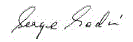
Serge Godin |
|
|
Director |
Director |
CGI Inc. – Consolidated Financial Statements for the years ended September 30, 2021 and 2020 7
Consolidated Statements of Changes in Equity
For the years ended September 30
(in thousands of Canadian dollars)
|
|
|
|
|
|
|
|
|
|
|
|
|
|
|
|
|
|
|
|
|
|
|
Notes |
Retained earnings |
Accumulated other comprehensive
income |
Capital
stock |
Contributed surplus |
|
Total
equity |
|
|
$ |
$ |
$ |
$ |
|
$ |
| Balance as at September 30, 2020 |
|
4,703,642 |
|
545,710 |
|
1,761,873 |
|
252,935 |
|
|
7,264,160 |
|
|
|
|
|
|
|
|
|
|
|
|
|
|
|
|
|
| Net earnings |
|
1,369,072 |
|
— |
|
— |
|
— |
|
|
1,369,072 |
|
| Other comprehensive loss |
|
— |
|
(214,130) |
|
— |
|
— |
|
|
(214,130) |
|
|
|
|
|
|
|
|
|
| Comprehensive income (loss) |
|
1,369,072 |
|
(214,130) |
|
— |
|
— |
|
|
1,154,942 |
|
Share-based payment costs |
|
— |
|
— |
|
— |
|
45,592 |
|
|
45,592 |
|
| Income tax impact associated with stock options |
|
— |
|
— |
|
— |
|
11,114 |
|
|
11,114 |
|
Exercise of stock options |
19 |
— |
|
— |
|
73,827 |
|
(12,773) |
|
|
61,054 |
|
Exercise of performance share units |
19 |
— |
|
— |
|
7,150 |
|
(7,150) |
|
|
— |
|
Purchase for cancellation of Class A subordinate voting shares |
19 |
(1,340,485) |
|
— |
|
(178,741) |
|
— |
|
|
(1,519,226) |
|
Purchase of Class A subordinate voting shares held in trusts |
19 |
— |
|
— |
|
(31,404) |
|
— |
|
|
(31,404) |
|
|
|
|
|
|
|
|
|
| Balance as at September 30, 2021 |
|
4,732,229 |
|
331,580 |
|
1,632,705 |
|
289,718 |
|
|
6,986,232 |
|
|
|
|
|
|
|
|
|
|
|
|
|
|
|
|
|
|
|
|
|
|
|
|
Notes |
Retained earnings |
Accumulated other comprehensive
income |
Capital
stock |
Contributed surplus |
|
Total
equity |
|
|
$ |
$ |
$ |
$ |
|
$ |
| Balance as at September 30, 2019 |
|
4,557,855 |
|
176,694 |
|
1,903,977 |
|
245,577 |
|
|
6,884,103 |
|
| Adoption of IFRS 16 |
3 |
(93,873) |
|
— |
|
— |
|
— |
|
|
(93,873) |
|
| Balance as at October 1, 2019 |
|
4,463,982 |
|
176,694 |
|
1,903,977 |
|
245,577 |
|
|
6,790,230 |
|
| Net earnings |
|
1,117,862 |
|
— |
|
— |
|
— |
|
|
1,117,862 |
|
| Other comprehensive income |
|
— |
|
369,016 |
|
— |
|
— |
|
|
369,016 |
|
Comprehensive income |
|
1,117,862 |
|
369,016 |
|
— |
|
— |
|
|
1,486,878 |
|
| Share-based payment costs |
|
— |
|
— |
|
— |
|
37,358 |
|
|
37,358 |
|
| Income tax impact associated with stock options |
|
— |
|
— |
|
— |
|
(8,653) |
|
|
(8,653) |
|
| Exercise of stock options |
19 |
— |
|
— |
|
69,420 |
|
(12,269) |
|
|
57,151 |
|
| Exercise of performance share units |
19 |
— |
|
— |
|
9,078 |
|
(9,078) |
|
|
— |
|
Purchase for cancellation of Class A subordinate voting shares |
19 |
(878,202) |
|
— |
|
(165,315) |
|
— |
|
|
(1,043,517) |
|
| Purchase of Class A subordinate voting shares held in trusts |
19 |
— |
|
— |
|
(55,287) |
|
— |
|
|
(55,287) |
|
|
|
|
|
|
|
|
|
| Balance as at September 30, 2020 |
|
4,703,642 |
|
545,710 |
|
1,761,873 |
|
252,935 |
|
|
7,264,160 |
|
See Notes to the Consolidated Financial Statements.
CGI Inc. – Consolidated Financial Statements for the years ended September 30, 2021 and 2020 8
Consolidated Statements of Cash Flows
For the years ended September 30
(in thousands of Canadian dollars)
|
|
|
|
|
|
|
|
|
|
|
|
|
Notes |
2021 |
2020 |
|
|
$ |
$ |
| Operating activities |
|
|
|
| Net earnings |
|
1,369,072 |
|
1,117,862 |
|
| Adjustments for: |
|
|
|
Amortization, depreciation and impairment |
24 |
510,570 |
|
565,692 |
|
| Deferred income tax (recovery) expense |
16 |
(25,934) |
|
6,170 |
|
| Foreign exchange loss (gain) |
|
3,950 |
|
(7,956) |
|
Share-based payment costs |
|
45,592 |
|
37,358 |
|
|
|
|
|
|
|
|
|
|
|
|
|
|
|
|
|
| Gain on leases termination |
|
(2,186) |
|
— |
|
Loss on sale of business |
|
— |
|
1,266 |
|
| Net change in non-cash working capital items |
27a |
214,864 |
|
218,164 |
|
| Cash provided by operating activities |
|
2,115,928 |
|
1,938,556 |
|
|
|
|
|
| Investing activities |
|
|
|
| Net change in short-term investments |
|
446 |
|
8,414 |
|
Business acquisitions (considering the bank overdraft assumed and cash acquired) |
|
(98,926) |
|
(269,585) |
|
|
|
|
|
| Proceeds from sale of business |
|
— |
|
2,647 |
|
| Purchase of property, plant and equipment |
|
(121,806) |
|
(128,478) |
|
|
|
|
|
| Additions to contract costs |
|
(65,001) |
|
(72,845) |
|
| Additions to intangible assets |
|
(113,934) |
|
(114,112) |
|
|
|
|
|
|
|
|
|
| Purchase of long-term investments |
|
(6,957) |
|
(10,594) |
|
| Proceeds from sale of long-term investments |
|
8,631 |
|
12,100 |
|
|
|
|
|
| Cash used in investing activities |
|
(397,547) |
|
(572,453) |
|
|
|
|
|
| Financing activities |
|
|
|
Net change in unsecured committed revolving credit facility |
27c |
— |
|
(334,370) |
|
| Increase of long-term debt |
27c |
1,885,262 |
|
1,807,167 |
|
| Repayment of long-term debt |
27c |
(1,888,777) |
|
(106,496) |
|
| Payment of lease liabilities |
27c |
(169,674) |
|
(175,320) |
|
| Repayment of debt assumed in business acquisitions |
27c |
— |
|
(28,281) |
|
Payment for remaining shares of Acando1 |
|
— |
|
(23,123) |
|
| Settlement of derivative financial instruments |
27c and 31 |
(6,992) |
|
(3,903) |
|
| Purchase of Class A subordinate voting shares held in trusts |
19 |
(31,404) |
|
(55,287) |
|
|
|
|
|
| Purchase and cancellation of Class A subordinate voting shares |
19 |
(1,502,824) |
|
(1,043,517) |
|
| Issuance of Class A subordinate voting shares |
|
61,133 |
|
57,302 |
|
| Cash (used in) provided by financing activities |
|
(1,653,276) |
|
94,172 |
|
| Effect of foreign exchange rate changes on cash and cash equivalents |
|
(73,884) |
|
33,879 |
|
| Net (decrease) increase in cash and cash equivalents |
|
(8,779) |
|
1,494,154 |
|
| Cash and cash equivalents, beginning of year |
|
1,707,985 |
|
213,831 |
|
| Cash and cash equivalents, end of year |
|
1,699,206 |
|
1,707,985 |
|
1 Related to a business acquisition made during the year ended September 30, 2019.
Supplementary cash flow information (Note 27).
See Notes to the Consolidated Financial Statements.
CGI Inc. – Consolidated Financial Statements for the years ended September 30, 2021 and 2020 9
Notes to the Consolidated Financial Statements
For the years ended September 30, 2021 and 2020
(tabular amounts only are in thousands of Canadian dollars, except per share data)
1.Description of business
CGI Inc. (the Company), directly or through its subsidiaries, provides managed information technology (IT) and business process services, business consulting, strategic IT consulting and systems integration, as well as the sale of software solutions to help clients effectively realize their strategies and create added value. The Company was incorporated under Part IA of the Companies Act (Québec), predecessor to the Business Corporations Act (Québec) which came into force on February 14, 2011 and its Class A subordinate voting shares are publicly traded. The executive and registered office of the Company is situated at 1350 René-Lévesque Blvd. West, Montréal, Québec, Canada, H3G 1T4.
2.Basis of preparation
These consolidated financial statements have been prepared in accordance with International Financial Reporting Standards (IFRS) as issued by the International Accounting Standards Board (IASB).
The Company’s consolidated financial statements for the years ended September 30, 2021 and 2020 were authorized for issue by the Board of Directors on November 9, 2021.
3.Summary of significant accounting policies
CHANGE IN ACCOUNTING POLICY - ACCRUED COMPENSATION AND EMPLOYEE-RELATED LIABILITIES
During the year ended September 30, 2021, the Company modified the presentation of employee’s related liabilities which mainly include payroll related benefits accruals and remittances due to governments to reflect a preferable classification of the nature of these items. Previously under Accounts payable and accrued liabilities these items are now included under Accrued compensation and employee-related liabilities for an amount of $229,686,000 as at September 30, 2021. An amount of $211,844,000, as at September 30, 2020, was reclassified for comparability.
BASIS OF CONSOLIDATION
The consolidated financial statements include the accounts of the Company and its subsidiaries. All intercompany transactions and balances have been eliminated on consolidation.
Subsidiaries are entities controlled by the Company. The Company controls an entity when it is exposed or has right to variable returns from its involvement with the entity and has the ability to affect those returns through its power over the relevant activities of the entity. Subsidiaries are fully consolidated from the date of acquisition and continue to be consolidated until the date control over the subsidiaries ceases.
BASIS OF MEASUREMENT
The consolidated financial statements have been prepared on a historical cost basis, except for certain financial assets and liabilities, which have been measured at fair value as described below.
USE OF JUDGEMENTS AND ESTIMATES
The preparation of the consolidated financial statements requires management to make judgements and estimates that affect the reported amounts of assets, liabilities, equity and the accompanying disclosures at the date of the consolidated financial statements and the reported amounts of revenue and expenses during the reporting period. Because the use of judgements and estimates is inherent in the financial reporting process, actual results could differ.
Significant judgements and estimates about the future and other major sources of estimation uncertainty at the end of the reporting period could have a significant risk of causing a material adjustment to the carrying amounts of the following within the next financial year: revenue recognition, deferred tax assets, estimated losses on revenue-generating contracts, goodwill impairment, right-of-use assets, business combinations, provisions for uncertain tax treatments and litigation and claims.
CGI Inc. – Consolidated Financial Statements for the years ended September 30, 2021 and 2020 10
Notes to the Consolidated Financial Statements
For the years ended September 30, 2021 and 2020
(tabular amounts only are in thousands of Canadian dollars, except per share data)
3.Summary of significant accounting policies (continued)
USE OF JUDGEMENTS AND ESTIMATES (CONTINUED)
The judgements, apart from those involving estimations, that have the most significant effect on the amounts recognized in the consolidated financial statements are:
Revenue recognition of multiple deliverable arrangements
Assessing whether the deliverables within an arrangement are separate performance obligations requires judgement by management. A deliverable is identified as a separate performance obligation if the customer benefits from it on its own or together with resources that are readily available to the customer and if it is separately identifiable from the other deliverables in the contract. The Company assesses if the deliverables are separately identifiable in the context of the contract by determining if it is highly interrelated with other deliverables in the contract. If these criteria are not met, the deliverables are accounted for as a combined performance obligation.
Deferred tax assets
Deferred tax assets are recognized for unused tax losses to the extent that it is probable that taxable income will be available against which the losses can be utilized. Management judgement is required concerning uncertainties that exist with respect to the timing of future taxable income required to recognize a deferred tax asset. The Company recognizes an income tax benefit only when it is probable that the tax benefit will be realized in the future. In making this judgement, the Company assesses forecasts and the availability of future tax planning strategies.
A description of estimates is included in the respective sections within the Notes to the Consolidated Financial Statements.
COVID-19 pandemic
For the year ended September 30, 2021, the Company assessed the impact of the uncertainties around the COVID-19 pandemic on its balance sheet carrying amounts. This review required the use of judgements and estimates and resulted in no material impact.
The Company will continue to monitor the impact of the development of the COVID-19 pandemic in future reporting periods.
REVENUE RECOGNITION, WORK IN PROGRESS AND DEFERRED REVENUE
The Company generates revenue through the provision of managed IT and business process services, business consulting, strategic IT consulting and systems integration, as well as the sale of software solutions as described in Note 1, Description of business.
The Company provides services and products under arrangements that contain various pricing mechanisms. The Company accounts for a contract or a group of contracts when the following criteria are met: the parties to the contract have approved the contract in which their rights, their obligations and the payment terms have been identified, the contract has commercial substance, and the collectability of the consideration is probable.
A contract modification is a change in the scope or price of an existing revenue-generating customer contract. The Company accounts for a contract modification as a separate contract when the scope of the contract increases because of the addition of promised performance obligations and the price of the contract increases by an amount of consideration that reflects its stand-alone selling prices. When the contract is not accounted for as a separate contract, the Company recognizes an adjustment to revenue on the existing contract on a cumulative catch-up basis as at the date of the contract modification or, if the remaining goods and services are distinct, the Company recognizes the remaining consideration prospectively.
Revenue is recognized when or as the Company satisfies a performance obligation by transferring a promise of good or service to the customer and are measured at the amount of consideration the Company expects to be entitled to receive, including variable consideration, such as, discounts, volume rebates, service-level penalties, and incentives. Variable consideration is estimated using either the expected value method or most likely amount method and is included only to the extent it is highly probable that a significant reversal of cumulative revenue recognized will not occur. In making this judgement, management will mostly consider all information available at the time (historical, current and forecasted), the Company’s knowledge of the client or the industry, the type of services to be delivered and the specific contractual terms of each arrangement.
CGI Inc. – Consolidated Financial Statements for the years ended September 30, 2021 and 2020 11
Notes to the Consolidated Financial Statements
For the years ended September 30, 2021 and 2020
(tabular amounts only are in thousands of Canadian dollars, except per share data)
3.Summary of significant accounting policies (continued)
REVENUE RECOGNITION, WORK IN PROGRESS AND DEFERRED REVENUE (CONTINUED)
Revenue from sales of third party vendor's products, such as software licenses, hardware or services is recorded on a gross basis when the Company is a principal to the transaction and is recorded net of costs when the Company is acting as an agent between the client and vendor. To determine whether the Company is a principal or an agent, it evaluates whether control is obtained of the goods or services before they are transferred to the client. Factors generally considered include whether the Company has the primary responsibility for providing the product or service, adds meaningful value to the vendor’s product or service and has discretion establishing the price.
Relative stand-alone selling price
The Company’s arrangements often include a mix of the services and products as described below. If an arrangement involves the provision of multiple performance obligations, the total arrangement value is allocated to each performance obligations based on its relative stand-alone selling price. When estimating the stand-alone selling price of each performance obligations, the Company maximizes the use of observable prices which are established using the Company’s prices for same or similar deliverables. When observable prices are not available, the Company estimates stand-alone selling prices based on its best estimate. The best estimate of the stand-alone selling price is the price at which the Company would normally expect to offer the services or products and is established by considering a number of internal and external factors including, but not limited to, geographies, the Company’s pricing policies, internal costs and margins. Additionally, in certain circumstances, the Company may apply the residual approach when estimating the stand-alone selling price of software license products, for which the Company has not yet established the price or has not previously sold on a stand-alone basis.
The appropriate revenue recognition method is applied for each performance obligation as described below.
Managed IT and business process services
Revenue from managed IT and business process services arrangements is generally recognized over time as the services are provided at the contractual billings, which corresponds with the value provided to the client, unless there is a better measure of performance or delivery.
Business consulting, strategic IT consulting and systems integration
Revenue from business consulting, strategic IT consulting and systems integration under time and material arrangements is recognized over time as the services are rendered, and revenue under cost-based arrangements is recognized over time as reimbursable costs are incurred. Contractual billings of such arrangements correspond with the value provided to the client, and therefore revenues are generally recognized when amounts become billable.
Revenue from business consulting, strategic IT consulting and systems integration under fixed-fee arrangements is recognized using the percentage-of-completion method over time, as the Company has no alternative use for the asset created and has an enforceable right to payment for performance completed to date. The Company primarily uses labour costs or labour hours to measure the progress towards completion. This method relies on estimates of total expected labour costs or total expected labour hours to complete the service, which are compared to labour costs or labour hours incurred to date, to arrive at an estimate of the percentage of revenue earned to date. Factors considered in the estimates include: changes in scope of the contracts, delays in reaching milestones, complexities in project delivery, availability and retention of qualified IT professionals and/or the ability of the subcontractors to perform their obligation within agreed upon budget and timeframes. Management regularly reviews underlying estimates of total expected labour costs or hours.
Software licenses
Most of the Company’s software license arrangements include other services such as implementation, customization and maintenance. For these types of arrangements, revenue from a software license, when identified as a performance obligation, is recognized at a point in time upon delivery. Otherwise when the software is significantly customized, integrated or modified, it is combined with the implementation and customization services and is accounted for as described in the business consulting, strategic IT consulting and systems integration section above. Revenue from maintenance services for software licenses sold is recognized straight-line over the term of the maintenance period.
CGI Inc. – Consolidated Financial Statements for the years ended September 30, 2021 and 2020 12
Notes to the Consolidated Financial Statements
For the years ended September 30, 2021 and 2020
(tabular amounts only are in thousands of Canadian dollars, except per share data)
3.Summary of significant accounting policies (continued)
REVENUE RECOGNITION, WORK IN PROGRESS AND DEFERRED REVENUE (CONTINUED)
Work in progress and deferred revenue
Amounts recognized as revenue in excess of billings are classified as work in progress. Amounts received in advance of the performance of services or delivery of products are classified as deferred revenue. Work in progress and deferred revenue are presented net on a contract by-contract basis. During the year ended September 30, 2021, the revenues recognized from the short-term deferred revenue was not significantly different than what was presented as at September 30, 2020.
CASH AND CASH EQUIVALENTS
Cash and cash equivalents consist of unrestricted cash and short-term investments having a maturity of three months or less from the date of purchase.
SHORT-TERM INVESTMENTS
Short-term investments, comprise generally of term deposits, have remaining maturities over three months, but not more than one year, at the date of purchase.
FUNDS HELD FOR CLIENTS AND CLIENTS’ FUNDS OBLIGATIONS
In connection with the Company’s payroll, tax filing and claims services, the Company collects funds for payment of payroll, taxes and claims, temporarily holds such funds until payment is due, remits the funds to the clients’ employees, appropriate tax authorities or claims holders, files tax returns and handles related regulatory correspondence and amendments. The funds held for clients include cash and long-term bonds. The Company presents the funds held for clients and related obligations separately. Funds held for clients are classified as current assets since, based upon management’s expectations, these funds are held solely for the purpose of satisfying the clients’ funds obligations, which will be repaid within one year of the consolidated balance sheet date. The market fluctuations affect the fair value of the long-term bonds. Due to those fluctuations, funds held for clients might not equal to the clients' funds obligations.
Interest income earned and realized gains and losses on the disposal of bonds are recorded in revenue in the period that the income is earned, as the collecting, holding and remitting of these funds are critical components of providing these services.
PROPERTY, PLANT AND EQUIPMENT (PP&E)
PP&E are recorded at cost and are depreciated over their estimated useful lives using the straight-line method.
|
|
|
|
|
|
| Buildings |
10 to 40 years |
| Leasehold improvements |
Lesser of the useful life or lease term |
| Furniture, fixtures and equipment |
3 to 20 years |
| Computer equipment |
3 to 5 years |
LEASES
The Company adopted IFRS 16, Leases on October 1, 2019.
When the Company enters into contractual agreements, an assessment is performed to determine if the contract contains a lease. The Company identified lease agreements under the following categories: Properties, Motor vehicles and others as well as Computer equipment.
The Company identifies a lease if it conveys the right to control the use of an identified asset for a specific period in exchange for a determined consideration. At inception, a right-of-use asset for the underlying asset and corresponding lease liability are presented in the consolidated balance sheet measured on a present value basis except for short-term leases (expected term of 12 months or less) and leases with low value underlying asset for which payments are recorded as an expense on a straight-line basis over the lease term.
The right-of-use assets are measured at initial lease liabilities adjusted by lease payments made before the commencement date, indirect costs and cash incentives received. The right-of-use assets are depreciated on a straight-line basis over the expected lease term of the underlying asset.
CGI Inc. – Consolidated Financial Statements for the years ended September 30, 2021 and 2020 13
Notes to the Consolidated Financial Statements
For the years ended September 30, 2021 and 2020
(tabular amounts only are in thousands of Canadian dollars, except per share data)
3.Summary of significant accounting policies (continued)
LEASES (CONTINUED)
Lease liabilities are measured at present value of non-cancellable payments of the expected lease term, which are mostly made of fixed payments of rent excluding maintenance fees; variable payments that are based on an index or a rate; amounts expected to be payable as residual value guaranties and extension or termination option if reasonably certain to be exercised.
The Company estimates the lease term in order to calculate the value of the lease liability at the initial date of the lease. Management uses judgement to determine the appropriate lease term based on the conditions of each lease. The Company considers all facts that create incentive to exercise an extension option or not to take a termination option including leasehold improvements, significant modification of the underlying asset or a business decision. The extension or termination options are only included in the lease term if it is reasonably certain of being exercised.
Discount rate used in the present value calculation is the incremental borrowing rate unless the implicit interest rate in the lease can be readily determined. The Company estimates the incremental borrowing rate for each lease or portfolio of leased assets, as most of the implicit interest rates in the leases are not readily determinable. To calculate the incremental borrowing rate, the Company considers its credit worthiness, the term of the arrangement, any collateral received and the economic environment. The incremental borrowing rates are subject to change mainly due to changes in the economic environment.
The lease liabilities are subsequently adjusted to reflect interest on the lease liabilities and lease payments made. Lease liabilities are remeasured (along with the corresponding adjustment to the right-of-use asset), whenever the following situations occur; a modification in the lease term, a change in the assessment of an option to purchase, a modification in the residual guarantees or in future lease payments due to a change of an index or rate tied to the payments. In addition, upon partial or full termination of a lease, the difference between the carrying amounts of the lease liability and the right-of-use asset is recorded in the consolidated statements of earnings.
CONTRACT COSTS
Contract costs are comprised primarily of transition costs incurred to implement long-term managed IT and business process services contracts and incentives.
Transition costs
Transition costs consist mostly of costs associated with the installation of systems and processes, as well as conversion of the client’s applications to the Company’s platforms incurred after the award of managed IT and business process services contracts. Transition costs are comprised essentially of labour costs, including compensation and related fringe benefits, as well as subcontractor costs.
Incentives
Occasionally, incentives are granted to clients upon the signing of managed IT and business process services contracts. These incentives are granted in the form of cash payments.
Amortization of contract costs
Contract costs are amortized using the straight-line method over the period services are provided. Amortization of transition costs is included in costs of services, selling and administrative and amortization of incentives is recorded as a reduction of revenue.
Impairment of contract costs
When a contract is not expected to be profitable, the estimated loss is first applied to impair the related capitalized contract costs. The excess of the expected loss over the capitalized contract costs is recorded as onerous revenue-generating contracts in provisions. If at a future date the contract returns to profitability, the previously recognized impairment loss must be reversed. First the estimated losses on revenue-generating contracts must be reversed, and if there is still additional projected profitability then any capitalized contract costs that were impaired must be reversed. The reversal of the impairment loss is limited so that the carrying amount does not exceed its recoverable amount, nor exceed the carrying amount that would have been determined, net of amortization, had no impairment loss been recognized for the contract costs in prior years.
CGI Inc. – Consolidated Financial Statements for the years ended September 30, 2021 and 2020 14
Notes to the Consolidated Financial Statements
For the years ended September 30, 2021 and 2020
(tabular amounts only are in thousands of Canadian dollars, except per share data)
3.Summary of significant accounting policies (continued)
INTANGIBLE ASSETS
Intangible assets consist of internal-use software, business solutions, software licenses and client relationships. Internal-use software, business solutions and software licenses are recorded at cost. Internal-use software developed internally is capitalized when it meets specific capitalization criteria related to technical and financial feasibility and when the Company demonstrates its ability and intention to use it. Business solutions developed internally and marketed are capitalized when they meet specific capitalization criteria related to technical, market and financial feasibility. Internal-use software, business solutions, software licenses and client relationships acquired through business combinations are initially recorded at their fair value based on the present value of expected future cash flows, which involves estimates, such as the forecasting of future cash flows and discount rates.
Amortization of intangible assets
The Company amortizes its intangible assets using the straight-line method over their estimated useful lives.
|
|
|
|
|
|
| Internal-use software |
2 to 7 years |
| Business solutions |
2 to 10 years |
| Software licenses |
3 to 8 years |
| Client relationships |
5 to 7 years |
IMPAIRMENT OF PP&E, RIGHT-OF-USE ASSETS, INTANGIBLE ASSETS AND GOODWILL
Timing of impairment testing
The carrying values of PP&E, right-of-use assets, intangible assets and goodwill are reviewed for impairment when events or changes in circumstances indicate that the carrying value may be impaired. The Company assesses at each reporting date whether any such events or changes in circumstances exist. The carrying values of intangible assets not available for use are tested for impairment annually as at September 30. Goodwill is tested for impairment annually during the fourth quarter of each fiscal year.
Impairment testing
If any indication of impairment exists or when annual impairment testing for an asset is required, the Company estimates the recoverable amount of the asset or cash-generating unit (CGU) to which the asset relates to determine the extent of any impairment loss. The recoverable amount is the higher of an asset’s or CGU’s fair value less costs of disposal and its value in use (VIU) to the Company. The Company mainly uses the VIU. In assessing the VIU, estimated future cash flows are discounted to their present value using a discount rate that reflects current market assessments of the time value of money and the risks specific to the asset or CGU. In determining fair value less costs of disposal, recent market transactions are taken into account, if available. If the recoverable amount of an asset or a CGU is estimated to be less than its carrying amount, the carrying amount is reduced to its recoverable amount. An impairment loss is recognized immediately in the consolidated statements of earnings.
Goodwill acquired through business combinations is allocated to the CGU or group of CGUs that are expected to benefit from acquired work force and synergies of the related business combination. The group of CGUs that benefit from the acquired work force and synergies correspond to the Company’s operating segments. For goodwill impairment testing purposes, the group of CGUs that represents the lowest level within the Company at which management monitors goodwill is the operating segment level.
The recoverable amount of each operating segment has been determined based on the VIU calculation which includes estimates about their future financial performance based on cash flows approved by management covering a period of five years. Key assumptions used in the VIU calculations are the pre-tax discount rate applied and the long-term growth rate of net operating cash flows. In determining these assumptions, management has taken into consideration the current economic environment and its resulting impact on expected growth and discount rates. The cash flow projections reflect management’s expectations of the operating segment's operating performance and growth prospects in the operating segment’s market. The pre-tax discount rate applied to an operating segment is derived from the weighted average cost of capital (WACC). Management considers factors such as country risk premium, risk-free rate, size premium and cost of debt to derive the WACC. Impairment losses relating to goodwill cannot be reversed in future periods.
CGI Inc. – Consolidated Financial Statements for the years ended September 30, 2021 and 2020 15
Notes to the Consolidated Financial Statements
For the years ended September 30, 2021 and 2020
(tabular amounts only are in thousands of Canadian dollars, except per share data)
3.Summary of significant accounting policies (continued)
IMPAIRMENT OF PP&E, RIGHT-OF-USE ASSETS, INTANGIBLE ASSETS AND GOODWILL (CONTINUED)
Impairment testing (continued)
For impaired assets, other than goodwill, an assessment is made at each reporting date as to whether there is any indication that previously recognized impairment losses may no longer exist or may have decreased. If such indication exists, the Company estimates the recoverable amount of the asset. A previously recognized impairment loss is reversed only if there has been a change in the assumptions used to determine the recoverable amount of the asset since the last impairment loss was recognized. The reversal is limited so that the carrying amount of the asset does not exceed its recoverable amount, nor exceed the carrying amount that would have been determined, net of amortization, had no impairment loss been recognized for the asset in prior years. Such reversal is recognized in the consolidated statements of earnings.
LONG-TERM FINANCIAL ASSETS
Long-term investments presented in long-term financial assets are comprised of bonds which are presented as long-term based on management’s intentions.
BUSINESS COMBINATIONS
The Company accounts for its business combinations using the acquisition method. Under this method, the consideration transferred is measured at fair value. Acquisition-related and integration costs associated with the business combination are expensed as incurred or when a present legal or constructive obligation exists. The Company recognizes goodwill as the excess of the cost of the acquisition over the net identifiable tangible and intangible assets acquired and liabilities assumed at their acquisition-date fair values. The goodwill recognized is composed of the future economic value associated to acquired work force and synergies with the Company’s operations which are primarily due to reduction of costs and new business opportunities. Management makes assumptions when determining the acquisition-date fair values of the identifiable tangible and intangible assets acquired and liabilities assumed which involve estimates, such as the forecasting of future cash flows, discount rates and the useful lives of the assets acquired. Subsequent changes in fair values are recorded as part of the purchase price allocation and therefore result in corresponding goodwill adjustments if they qualify as measurement period adjustments. The measurement period is the period between the date of acquisition and the date where all significant information necessary to determine the fair values is available, not to exceed 12 months. All other subsequent changes in estimates and judgements are recognized in the consolidated statements of earnings.
EARNINGS PER SHARE
Basic earnings per share is based on the weighted average number of shares outstanding during the period. Diluted earnings per share is determined using the treasury stock method to evaluate the dilutive effect of stock options and performance share units (PSUs).
RESEARCH AND SOFTWARE DEVELOPMENT COSTS
Research costs are charged to earnings in the period in which they are incurred, net of related tax credits. Software development costs related to internal-use software and business solutions are charged to earnings in the year they are incurred, net of related tax credits, unless they meet specific capitalization criteria related to technical, market and financial feasibility as described in the Intangible assets section above.
TAX CREDITS
The Company follows the income approach to account for research and development (R&D) and other tax credits, whereby investment tax credits are recorded when there is a reasonable assurance that the assistance will be received and that the Company will comply with all relevant conditions. Under this method, tax credits related to operating expenditures are recorded as a reduction of the related expenses and recognized in the period in which the related expenditures are charged to earnings. Tax credits related to capital expenditures are recorded as a reduction of the cost of the related assets. The tax credits recorded are based on management's best estimates of amounts expected to be received and are subject to audit by the taxation authorities.
CGI Inc. – Consolidated Financial Statements for the years ended September 30, 2021 and 2020 16
Notes to the Consolidated Financial Statements
For the years ended September 30, 2021 and 2020
(tabular amounts only are in thousands of Canadian dollars, except per share data)
3.Summary of significant accounting policies (continued)
INCOME TAXES
Income taxes are accounted for using the liability method of accounting.
Current income taxes are recognized with respect to the amounts expected to be paid or recovered under the tax rates and laws that have been enacted or substantively enacted at the balance sheets date.
Deferred tax assets and liabilities are determined based on deductible or taxable temporary differences between the amounts reported for consolidated financial statement purposes and tax values of the assets and liabilities using enacted or substantively enacted tax rates that will be in effect for the year in which the differences are expected to be recovered or settled. Deferred tax assets and liabilities are recognized in earnings, in other comprehensive income or in equity based on the classification of the item to which they relate.
Deferred tax assets are recognized for unused tax losses and deductible temporary differences to the extent that it is probable that taxable profit will be available against which the losses can be utilized. Once this assessment is made, the Company considers the analysis of forecasts and future tax planning strategies. Estimates of taxable profit are made based on the forecast by jurisdiction on an undiscounted basis. In addition, management considers factors such as substantively enacted tax rates, the history of the taxable profits and availability of tax strategies.
The Company is subject to income tax laws in numerous jurisdictions. Judgement is required in determining the worldwide provision for income taxes as the determination of tax liabilities and assets involves uncertainties in the interpretation of complex tax regulations and requires estimates and assumptions considering the existing facts and circumstances. The Company provides for potential tax liabilities based on the most likely amount of the possible outcomes. Estimates are reviewed each reporting period and updated, based on new information available, and could result in changes to the income tax liabilities and deferred tax liabilities in the period in which such determinations are made.
PROVISIONS
Provisions are recognized when the Company has a present legal or constructive obligation as a result of a past event, it is probable that an outflow of resources embodying economic benefits will be required to settle the obligation and a reliable estimate can be made of the amount of the obligation. The Company’s provisions consist of liabilities for litigation and claims provisions arising in the ordinary course of business, decommissioning liabilities for leases of office buildings, onerous revenue-generating contracts and onerous supplier contracts. The Company also records restructuring provisions for termination of employment costs related to specific initiatives and to the integration of its business acquisitions.
The amount recognized as a provision is the best estimate of the consideration required to settle the present obligation at the end of the reporting period, taking into account the risks and uncertainties surrounding the obligation. Provisions are discounted using a current pre-tax rate when the impact of the time value of money is material. The increase in the provisions due to the passage of time is recognized as finance costs.
The accrued litigation and legal claims provisions are based on historical experience, current trends and other assumptions that are believed to be reasonable under the circumstances. Estimates include the period in which the underlying cause of the claim occurred and the degree of probability of an unfavourable outcome.
Decommissioning liabilities pertain to leases of buildings where certain arrangements require premises to be returned to their original state at the end of the lease term. The provision is determined using the present value of the estimated future cash outflows.
Provisions for onerous revenue-generating contracts are recorded when unavoidable costs of fulfilling the contract exceed the estimated total revenue from the contract. Management regularly reviews arrangement profitability and the underlying estimates.
Provisions for onerous supplier contracts are recorded when the unavoidable net cash flows from honoring the contract are negative. The provision represents the lowest of the costs to fulfill the contract and the penalties to exit the contract.
Restructuring provisions are recognized when a detailed formal plan identifies the business or part of the business concerned, the location and number of employees affected, a detailed estimate of the associated costs, appropriate timelines and has been communicated to those affected by it.
CGI Inc. – Consolidated Financial Statements for the years ended September 30, 2021 and 2020 17
Notes to the Consolidated Financial Statements
For the years ended September 30, 2021 and 2020
(tabular amounts only are in thousands of Canadian dollars, except per share data)
3.Summary of significant accounting policies (continued)
TRANSLATION OF FOREIGN CURRENCIES
The Company’s consolidated financial statements are presented in Canadian dollars, which is also the parent company’s functional currency. Each entity in the Company determines its own functional currency and items included in the financial statements of each entity are measured using that functional currency. Functional currency is the currency of the primary economic environment in which the entity operates.
Foreign currency transactions and balances
Revenue, expenses and non-monetary assets and liabilities denominated in foreign currencies are recorded at the rate of exchange prevailing at the transaction date. Monetary assets and liabilities denominated in foreign currencies are translated at exchange rates prevailing at the balance sheets date. Unrealized and realized translation gains and losses are reflected in the consolidated statements of earnings.
Foreign operations
For foreign operations that have functional currencies different from the Company, assets and liabilities denominated in a foreign currency are translated at exchange rates in effect at the balance sheets date. Revenue and expenses are translated at average exchange rates prevailing during the period. Resulting unrealized gains or losses on translating financial statements of foreign operations are reported in other comprehensive income.
For foreign operations with the same functional currency as the Company, monetary assets and liabilities are translated at the exchange rates in effect at the balance sheets date and non-monetary assets and liabilities are translated at historical exchange rates. Revenue and expenses are translated at average exchange rates during the period. Translation exchange gains or losses of such operations are reflected in the consolidated statements of earnings.
SHARE-BASED PAYMENTS
Equity-settled plans
The Company operates equity-settled stock option and PSU plans under which the Company receives services from employees, officers and directors as consideration for equity instruments.
The fair value of those share-based payments is established on the grant date using the Black-Scholes option pricing model for the stock options and the closing price of Class A subordinate voting shares of the Company on the Toronto Stock Exchange (TSX) for the PSUs. The number of stock options and PSUs expected to vest are estimated on the grant date and subsequently revised on each reporting date. For stock options, the estimation of fair value requires making assumptions for the most appropriate inputs to the valuation model including the expected life of the option and expected stock price volatility. The fair value of share-based payments, adjusted for expectations related to performance conditions and forfeitures, are recognized as share-based payment costs over the vesting period in earnings with a corresponding credit to contributed surplus on a graded-vesting basis if they vest annually or on a straight-line basis if they vest at the end of the vesting period.
When stock options are exercised, any consideration paid is credited to capital stock and the recorded fair value of the stock options is removed from contributed surplus and credited to capital stock. When PSUs are exercised, the recorded fair value of PSUs is removed from contributed surplus and credited to capital stock.
Share purchase plan
The Company operates a share purchase plan for eligible employees. Under this plan, the Company matches the contributions made by employees up to a maximum percentage of the employee's salary. The Company's contributions to the plan are recognized in salaries and other member costs within costs of services, selling and administrative.
Cash-settled deferred share units
The Company operates a deferred share unit (DSU) plan to compensate the external members of the Board of Directors. The expense is recognized within costs of services, selling and administrative for each DSU granted equal to the closing price of Class A subordinate voting shares of the Company on the TSX at the date on which DSUs are awarded and a corresponding liability is recorded in accrued compensation and employee-related liabilities. After the grant date, the DSU liability is remeasured for subsequent changes in the fair value of the Company's shares.
CGI Inc. – Consolidated Financial Statements for the years ended September 30, 2021 and 2020 18
Notes to the Consolidated Financial Statements
For the years ended September 30, 2021 and 2020
(tabular amounts only are in thousands of Canadian dollars, except per share data)
3. Summary of significant accounting policies (continued)
FINANCIAL INSTRUMENTS
All financial instruments are initially measured at their fair value and are subsequently classified either at amortized cost, at fair value through earnings (FVTE) or at fair value through other comprehensive income (FVOCI). Financial assets are classified based on the Company’s management model of such instruments and their contractual cash flows they generate. Financial liabilities are classified and measured at amortized cost, unless they are held for trading and classified as FVTE.
The Company has made the following classifications:
FVTE
Cash and cash equivalents, derivative financial instruments and deferred compensation plan assets within long-term financial assets are measured at fair value at the end of each reporting period and the resulting gains or losses are recorded in the consolidated statements of earnings.
Amortized Cost
Trade accounts receivable, cash included in funds held for clients, long-term receivables within long-term financial assets, accounts payable and accrued liabilities, accrued compensation and employee-related liabilities, long-term debt and clients’ funds obligations are measured at amortized cost using the effective interest method. Financial assets classified at amortized cost are subject to impairment. For trade accounts receivable and work in progress, the Company applies the simplified approach to measure expected credit losses, which requires lifetime expected loss allowance to be recorded upon initial recognition of the financial assets.
FVOCI
Short-term investments included in current financial assets, long-term bonds included in funds held for clients and in long-term investments within long-term financial assets are measured at fair value through other comprehensive income and are subject to impairment for which the Company uses the low credit risk exemption.
The unrealized gains and losses, net of applicable income taxes, are recorded in other comprehensive income. Interest income measured using the effective interest method and realized gains and losses on derecognition are recorded in the consolidated statements of earnings.
Transaction costs are comprised primarily of legal, accounting and other costs directly attributable to the acquisition or issuance of financial instruments. Transaction costs related to financial instruments other than FVTE are included in the initial recognition of the corresponding asset or liability and are amortized using effective interest method. Transaction costs related to the unsecured committed revolving credit facility are included in other long-term assets and are amortized using the straight-line method over the expected life of the underlying agreement.
Financial assets are derecognized if the contractual rights to the cash flows from the financial asset expire or the asset is transferred and the transfer qualifies for derecognition as substantially all the risks and rewards of ownership of the financial asset have been transferred.
Fair value hierarchy
Fair value measurements recognized on the balance sheets are classified in accordance with the following levels:
Level 1: quoted prices (unadjusted) in active markets for identical assets or liabilities;
Level 2: inputs other than quoted prices included in Level 1, but that are observable for the asset or liability, either directly or indirectly; and
Level 3: inputs for the asset or liability that are not based on observable market data.
CGI Inc. – Consolidated Financial Statements for the years ended September 30, 2021 and 2020 19
Notes to the Consolidated Financial Statements
For the years ended September 30, 2021 and 2020
(tabular amounts only are in thousands of Canadian dollars, except per share data)
3. Summary of significant accounting policies (continued)
DERIVATIVE FINANCIAL INSTRUMENTS AND HEDGING TRANSACTIONS
The Company enters into a variety of derivative financial instruments to manage its exposure to interest rate and foreign currency exchange risks.
Derivative financial instruments are initially recognized at fair value at the date the derivative contracts are entered into and are subsequently remeasured to their fair value at the end of each reporting date. The resulting gain or loss is recognized in the consolidated statements of earnings, unless the derivative is designated and is effective as a hedging instrument, in which event the timing of the recognition in the consolidated statements of earnings depends on the nature of the hedge relationship. The cash flows of the hedging instruments are classified in the same manner as the cash flows of the item being hedged.
At the inception of a hedge relationship, the Company formally designates and documents the hedge relationship to which the Company wishes to apply hedge accounting and the risk management's objective and strategy for undertaking the hedge. The documentation includes the identification of the nature of the risk being hedged, the economic relationship between the hedged item and the hedging instruments which should not be dominated by credit risk, the hedge ratio consistent with the risk management strategy pursued and how the Company will assess the effectiveness of the hedging relationship on an ongoing basis.
Management evaluates hedge effectiveness at inception of the hedge instrument and quarterly thereafter generally based on a managed hedge ratio of 1 for 1. Hedge effectiveness is measured prospectively as the extent to which changes in the fair value or cash flows of the derivative offsets the changes in the fair value or cash flows of the underlying hedged instrument or risk when there is a significant mismatch between the terms of the hedging instrument and the hedged item. Any meaningful imbalance is considered ineffectiveness in the hedge and accounted for accordingly in the consolidated statements of earnings.
Hedges of net investments in foreign operations
The Company uses cross-currency swaps and foreign currency denominated long-term debt to hedge portions of the Company’s net investments in its U.S. and European operations. Foreign exchange translation gains or losses on the net investments and the effective portions of gains or losses on instruments hedging the net investments are recorded in other comprehensive income. Gains or losses relating to the ineffective portion are recognized in consolidated statements of earnings. When the hedged net investment is disposed of, the relevant amount in other comprehensive income is transferred to earnings as part of the gain or loss on disposal.
Cash flow hedges of future revenue and long-term debt
The majority of the Company’s revenue and costs are denominated in a currency other than the Canadian dollar. The risk of foreign exchange fluctuations impacting the results is substantially mitigated by matching the Company’s costs with revenue denominated in the same currency. In certain cases where there is a substantial imbalance for a specific currency, the Company enters into foreign currency forward contracts to hedge the variability in the foreign currency exchange rates.
The Company also uses interest rate and cross-currency swaps to hedge either the cash flow exposure or the foreign exchange exposure of the long-term debt.
The effective portion of the change in fair value of the derivative financial instruments is recognized in other comprehensive income and the ineffective portion, if any, in the consolidated statements of earnings. The effective portion of the change in fair value of the derivatives is reclassified out of other comprehensive income into the consolidated statements of earnings when the hedged item is recognized in the consolidated statements of earnings.
Fair value hedges of Senior U.S. unsecured notes
The Company entered into interest rate swaps to hedge the fair value exposure of the issued fixed rate Senior U.S. unsecured notes repayable in December 2021. Under the interest rate swaps, the Company receives a fixed rate of interest and pays interest at a variable rate on the notional amount.
The changes in the fair value of the interest rate swaps are recognized in the consolidated statements of earnings as finance costs. The changes in the fair value of the hedged items attributable to the risk hedged is recorded as part of the carrying value of the Senior U.S. unsecured notes and are also recognized in the consolidated statements of earnings as finance costs. If the hedged items are derecognized, the unamortized fair value is recognized immediately in the consolidated statements of earnings.
CGI Inc. – Consolidated Financial Statements for the years ended September 30, 2021 and 2020 20
Notes to the Consolidated Financial Statements
For the years ended September 30, 2021 and 2020
(tabular amounts only are in thousands of Canadian dollars, except per share data)
3.Summary of significant accounting policies (continued)
DERIVATIVE FINANCIAL INSTRUMENTS AND HEDGING TRANSACTIONS (CONTINUED)
Cost of hedging
The Company has elected to account for forward element of forward contracts or foreign currency basis spread as costs of hedging. In such cases, the deferred costs of hedging, net of applicable income taxes, are recognized as a separate component of the accumulated other comprehensive income and reclassified in the consolidated statements of earnings when the hedged item is recognized.
EMPLOYEE BENEFITS
The Company operates both defined benefit and defined contribution post-employment benefit plans.
The cost of defined contribution plans is charged to the consolidated statements of earnings on the basis of contributions payable by the Company during the year.
For defined benefit plans, the defined benefit obligations are calculated by independent actuaries using the projected unit credit method. The retirement benefits obligations in the consolidated balance sheets represent the present value of the defined benefit obligations as reduced by the fair value of plan assets. The retirement benefits assets are recognized to the extent that the Company can benefit from refunds or a reduction in future contributions. Retirement benefits plans that are funded by the payment of insurance premiums are treated as defined contribution plans unless the Company has an obligation either to pay the benefits directly when they fall due or to pay further amounts if assets accumulated with the insurer do not cover all future employee benefits. In such circumstances, the plan is treated as a defined benefit plan.
Insurance policies are treated as plan assets of a defined benefit plan if the proceeds of the policy:
- Can only be used to fund employee benefits;
- Are not available to the Company’s creditors; and
- Either cannot be paid to the Company unless the proceeds represent surplus assets not needed to meet all the benefit obligations or are a reimbursement for benefits already paid by the Company.
Insurance policies that do not meet the above criteria are treated as non-current investments and are held at fair value as long-term financial assets in the consolidated balance sheets.
The actuarial valuations used to determine the cost of defined benefit pension plans and their present value involve making assumptions about discount rates, future salary and pension increases, inflation rates and mortality. Any changes in these assumptions will impact the carrying amount of pension obligations. In determining the appropriate discount rate, management considers the interest rates of high quality corporate bonds that are denominated in the currency in which the benefits will be paid, and that have terms to maturity approximating the terms of the related pension liability.
The current service cost is recognized in the consolidated statements of earnings under costs of services, selling and administrative. The net interest cost calculated by applying the discount rate to the net defined benefit liabilities or assets is recognized as net finance cost or income. When the benefits of a plan are changed or when a plan is curtailed, the resulting change in benefits that relates to past services or the gains or losses on curtailment is recognized immediately in the consolidated statements of earnings. The gains or losses on the settlement of a defined benefit plan are recognized when the settlement occurs.
Remeasurements on defined benefit plans include actuarial gains and losses, changes in the effect of the asset ceiling and the return on plan assets, excluding the amount included in net interest on the net defined liabilities or assets. Remeasurements are charged or credited to other comprehensive income in the period in which they arise.
CGI Inc. – Consolidated Financial Statements for the years ended September 30, 2021 and 2020 21
Notes to the Consolidated Financial Statements
For the years ended September 30, 2021 and 2020
(tabular amounts only are in thousands of Canadian dollars, except per share data)
3.Summary of significant accounting policies (continued)
ADOPTION OF ACCOUNTING INTERPRETATION
Configuration or customization costs in a cloud computing arrangement - IAS 38
For the year ended September 30, 2021, the Company considered and applied the IFRS Interpretations Committee agenda decision on configuration or customization costs in a cloud computing arrangement, more specifically on Software as a Service arrangements. The agenda decision clarifies that configuration or customization costs under such arrangements often do not meet the capitalization criteria under IAS 38 Intangible assets. Judgement is required to determine if the capitalization criteria are met. The adoption of the interpretation was considered retrospectively and did not have a material impact on the Company's consolidated financial statements.
FUTURE ACCOUNTING STANDARD CHANGES
The following standard is effective as of October 1, 2021 for the Company.
IBOR reform with amendments to IFRS 9, IAS 39, IFRS 7 and IFRS 16
In August 2020, the IASB issued Interest Rate Benchmark Reform-Phase 2, which amends IFRS 9 Financial Instruments, IAS 39 Financial Instruments: Recognition and Measurement, IFRS 7 Financial Instruments: Disclosures and IFRS 16 Leases. The amendments complement those issued in 2019 and focus on the effects on financial statements when a company replaces the old interest rate benchmark with an alternative benchmark rate as a result of the reform.
For financial instruments at amortized cost, the amendment introduces a practical expedient such that if a change to contractual cash flow occurs as a direct consequence of the interbank offered rates (IBORs) reform and on economically equivalent terms to the previous basis, it will not result in an immediate gain or loss recognition. As for hedge accounting, the practical expedient allows hedge instruments relationship directly affected by the reform to continue. However, additional ineffectiveness might need to be recorded.
The Company has financial instruments exposed to the 1 month USD Libor rate which is planned to expire in June 2023. As at September 30, 2021, the only instruments with a maturity date subsequent to June 2023 directly impacted by the IBORs reform are the unsecured committed term loan credit facility and the related cross-currency interest rate swaps (the hedging instruments) expiring in December 2023.
The implementation of this amendment will result in no impact on the Company’s consolidated financial statements on adoption date. The Company is currently managing the process to transition the existing impacted agreements to an alternative rate.
The following standard has been issued and will be effective on October 1, 2022 for the Company, with earlier application permitted. The Company is currently evaluating the impact of this standard on its consolidated financial statements.
Onerous contracts – Cost of Fulfilling a Contract - Amendments to IAS 37
In May, 2020, the IASB amended IAS 37 Provisions, Contingent Liabilities and Contingent Assets. The amendment clarifies that for assessing whether a contract is onerous, the cost of fulfilling the contract includes both the incremental cost of fulfilling that contract and an allocation of other costs that relates directly to fulfilling the contract.
The following standards have been issued and will be effective on October 1, 2023 for the Company, with earlier application permitted. The Company is currently evaluating the impact of those standards on its consolidated financial statements.
Classification of Liabilities as Current or Non-current – Amendments to IAS 1
In January, 2020, the IASB amended IAS 1 Presentation of Financial Statements. The amendment clarifies that the classification of liabilities as current or non-current is based on rights that are in existence at the end of the reporting period which only impacts the presentation of liabilities in the balance sheet. The classification is unaffected by expectations about whether the Company will exercise its right to defer settlement of a liability.
Disclosure of Accounting Policy Information – Amendments to IAS 1 and IFRS Practice Statement 2
In February, 2021, the IASB amended IAS 1 Presentation of Financial Statements and IFRS Practice Statement 2 Making Materiality Judgements to require the Company to disclose its material accounting policy information rather than its significant accounting policies.
CGI Inc. – Consolidated Financial Statements for the years ended September 30, 2021 and 2020 22
Notes to the Consolidated Financial Statements
For the years ended September 30, 2021 and 2020
(tabular amounts only are in thousands of Canadian dollars, except per share data)
3.Summary of significant accounting policies (continued)
FUTURE ACCOUNTING STANDARD CHANGES (CONTINUED)
Definition of Accounting Estimates – Amendments to IAS 8
In February, 2021, the IASB amended IAS 8 Accounting Policies, Changes in Accounting estimates and Errors to introduce a definition of accounting estimates and to help entities distinguish changes in accounting policies from changes in accounting estimates. This distinction is important because changes in accounting policies must be applied retrospectively while changes in accounting estimates are accounted for prospectively.
Deferred Tax related to Assets and Liabilities arising from a Single Transaction – Amendments to IAS 12
In May 2021, the IASB amended IAS 12 Income Taxes, to narrow the scope of the initial recognition exemption so that it does not apply to transactions that give rise to equal and offsetting temporary differences.
4. Accounts receivable
|
|
|
|
|
|
|
|
|
|
As at
September 30, 2021 |
As at
September 30, 2020 |
|
$ |
$ |
Trade (Note 31) |
938,417 |
|
904,887 |
|
R&D and other tax credits1 |
187,347 |
|
180,953 |
|
| Other |
105,688 |
|
133,462 |
|
|
1,231,452 |
|
1,219,302 |
|
1 R&D and other tax credits were related to government programs mainly in the United States, Canada and France.
5.Funds held for clients
|
|
|
|
|
|
|
|
|
|
As at
September 30, 2021 |
As at
September 30, 2020 |
|
$ |
$ |
| Cash |
456,525 |
|
576,708 |
|
Long-term bonds (Note 31) |
136,629 |
|
148,470 |
|
|
593,154 |
|
725,178 |
|
CGI Inc. – Consolidated Financial Statements for the years ended September 30, 2021 and 2020 23
Notes to the Consolidated Financial Statements
For the years ended September 30, 2021 and 2020
(tabular amounts only are in thousands of Canadian dollars, except per share data)
6. Property, plant and equipment
|
|
|
|
|
|
|
|
|
|
|
|
|
|
|
|
|
|
|
Land and
buildings |
Leasehold improvements |
Furniture, fixtures and equipment |
Computer equipment |
Total |
|
$ |
$ |
$ |
$ |
$ |
| Cost |
|
|
|
|
|
| As at September 30, 2020 |
79,281 |
|
241,542 |
|
165,219 |
|
661,891 |
|
1,147,933 |
|
|
|
|
|
|
|
|
|
|
|
|
|
Additions |
2,000 |
|
26,349 |
|
10,956 |
|
96,418 |
|
135,723 |
|
Additions - business acquisitions (Note 26a) |
— |
|
1,200 |
|
208 |
|
414 |
|
1,822 |
|
Disposals/retirements |
— |
|
(15,284) |
|
(20,238) |
|
(142,724) |
|
(178,246) |
|
|
|
|
|
|
|
Foreign currency translation adjustment |
(2,374) |
|
(8,983) |
|
(5,528) |
|
(23,107) |
|
(39,992) |
|
|
|
|
|
|
|
| As at September 30, 2021 |
78,907 |
|
244,824 |
|
150,617 |
|
592,892 |
|
1,067,240 |
|
| Accumulated depreciation |
|
|
|
|
|
| As at September 30, 2020 |
20,124 |
|
150,572 |
|
108,060 |
|
496,231 |
|
774,987 |
|
|
|
|
|
|
|
|
|
|
|
|
|
Depreciation expense (Note 24) |
2,590 |
|
25,512 |
|
13,547 |
|
102,774 |
|
144,423 |
|
Impairment (Note 24) |
— |
|
612 |
|
50 |
|
451 |
|
1,113 |
|
Disposals/retirements |
— |
|
(15,284) |
|
(20,238) |
|
(142,724) |
|
(178,246) |
|
|
|
|
|
|
|
Foreign currency translation adjustment |
(753) |
|
(5,400) |
|
(3,726) |
|
(17,250) |
|
(27,129) |
|
| As at September 30, 2021 |
21,961 |
|
156,012 |
|
97,693 |
|
439,482 |
|
715,148 |
|
| Net carrying amount as at September 30, 2021 |
56,946 |
|
88,812 |
|
52,924 |
|
153,410 |
|
352,092 |
|
|
Land and
buildings |
Leasehold improvements |
Furniture, fixtures and equipment |
Computer equipment |
Total |
|
$ |
$ |
$ |
$ |
$ |
| Cost |
|
|
|
|
|
| As at September 30, 2019 |
58,614 |
|
224,559 |
|
180,638 |
|
714,629 |
|
1,178,440 |
|
Adoption of IFRS 16 (Note 3) |
— |
|
— |
|
(14,578) |
|
(40,357) |
|
(54,935) |
|
| As at October 1, 2019 |
58,614 |
|
224,559 |
|
166,060 |
|
674,272 |
|
1,123,505 |
|
| Additions |
5,759 |
|
28,188 |
|
12,225 |
|
79,057 |
|
125,229 |
|
Additions - business acquisitions (Note 26c) |
12,730 |
|
1,013 |
|
2,683 |
|
2,474 |
|
18,900 |
|
| Disposals/retirements |
— |
|
(17,160) |
|
(19,405) |
|
(118,490) |
|
(155,055) |
|
| Foreign currency translation adjustment |
2,178 |
|
4,942 |
|
3,656 |
|
24,578 |
|
35,354 |
|
| As at September 30, 2020 |
79,281 |
|
241,542 |
|
165,219 |
|
661,891 |
|
1,147,933 |
|
Accumulated depreciation |
|
|
|
|
|
| As at September 30, 2019 |
16,961 |
|
139,726 |
|
118,672 |
|
505,420 |
|
780,779 |
|
Adoption of IFRS 16 (Note 3) |
— |
|
— |
|
(8,285) |
|
(24,787) |
|
(33,072) |
|
| As at October 1, 2019 |
16,961 |
|
139,726 |
|
110,387 |
|
480,633 |
|
747,707 |
|
Depreciation expense (Note 24) |
1,895 |
|
24,965 |
|
14,240 |
|
115,490 |
|
156,590 |
|
Impairment (Note 24) |
— |
|
— |
|
— |
|
1,035 |
|
1,035 |
|
Disposals/retirements |
— |
|
(17,160) |
|
(19,021) |
|
(117,681) |
|
(153,862) |
|
Foreign currency translation adjustment |
1,268 |
|
3,041 |
|
2,454 |
|
16,754 |
|
23,517 |
|
| As at September 30, 2020 |
20,124 |
|
150,572 |
|
108,060 |
|
496,231 |
|
774,987 |
|
| Net carrying amount as at September 30, 2020 |
59,157 |
|
90,970 |
|
57,159 |
|
165,660 |
|
372,946 |
|
CGI Inc. – Consolidated Financial Statements for the years ended September 30, 2021 and 2020 24
Notes to the Consolidated Financial Statements
For the years ended September 30, 2021 and 2020
(tabular amounts only are in thousands of Canadian dollars, except per share data)
7. Right-of-use assets
|
|
|
|
|
|
|
|
|
|
|
|
|
|
|
|
Properties |
Motor vehicles and others |
Computer
equipment |
Total |
|
$ |
$ |
$ |
$ |
| Cost |
|
|
|
|
| As at September 30, 2020 |
1,124,258 |
|
233,976 |
|
40,965 |
|
1,399,199 |
|
| Additions |
60,318 |
|
21,955 |
|
828 |
|
83,101 |
|
Additions - business acquisitions (Note 26a) |
4,982 |
|
— |
|
— |
|
4,982 |
|
| Change in estimates and lease modifications |
33,774 |
|
— |
|
— |
|
33,774 |
|
Disposals/retirements |
(99,373) |
|
(73,190) |
|
(2,183) |
|
(174,746) |
|
|
|
|
|
|
Foreign currency translation adjustment |
(43,092) |
|
(8,387) |
|
(517) |
|
(51,996) |
|
|
|
|
|
|
| As at September 30, 2021 |
1,080,867 |
|
174,354 |
|
39,093 |
|
1,294,314 |
|
| Accumulated depreciation |
|
|
|
|
| As at September 30, 2020 |
605,155 |
|
97,573 |
|
29,606 |
|
732,334 |
|
Depreciation expense (Note 24) |
111,899 |
|
41,766 |
|
6,575 |
|
160,240 |
|
Impairment (Note 24) |
1,467 |
|
— |
|
— |
|
1,467 |
|
|
|
|
|
|
Disposals/retirements |
(87,557) |
|
(67,464) |
|
(2,183) |
|
(157,204) |
|
|
|
|
|
|
Foreign currency translation adjustment |
(24,406) |
|
(3,900) |
|
(424) |
|
(28,730) |
|
| As at September 30, 2021 |
606,558 |
|
67,975 |
|
33,574 |
|
708,107 |
|
| Net carrying amount as at September 30, 2021 |
474,309 |
|
106,379 |
|
5,519 |
|
586,207 |
|
|
|
|
|
|
|
|
|
|
|
|
|
|
|
|
|
Properties |
Motor vehicles and others |
Computer
equipment |
Total |
|
$ |
$ |
$ |
$ |
| Cost |
|
|
|
|
As at September 30, 2019 |
— |
|
— |
|
— |
|
— |
|
Adoption of IFRS 16 (Note 3) |
1,070,987 |
|
230,707 |
|
40,357 |
|
1,342,051 |
|
As at October 1, 2019 |
1,070,987 |
|
230,707 |
|
40,357 |
|
1,342,051 |
|
Additions |
59,556 |
|
56,976 |
|
2,390 |
|
118,922 |
|
Additions - business acquisitions (Note 26c) |
11,859 |
|
— |
|
— |
|
11,859 |
|
Change in estimates and lease modifications |
(6,460) |
|
— |
|
— |
|
(6,460) |
|
Disposals/retirements |
(56,986) |
|
(61,941) |
|
(3,110) |
|
(122,037) |
|
Foreign currency translation adjustment |
45,302 |
|
8,234 |
|
1,328 |
|
54,864 |
|
|
|
|
|
|
| As at September 30, 2020 |
1,124,258 |
|
233,976 |
|
40,965 |
|
1,399,199 |
|
| Accumulated depreciation |
|
|
|
|
As at September 30, 2019 |
— |
|
— |
|
— |
|
— |
|
Adoption of IFRS 16 (Note 3) |
501,821 |
|
114,097 |
|
24,787 |
|
640,705 |
|
As at October 1, 2019 |
501,821 |
|
114,097 |
|
24,787 |
|
640,705 |
|
Depreciation expense (Note 24) |
127,931 |
|
33,140 |
|
7,168 |
|
168,239 |
|
Impairment (Note 24) |
8,361 |
|
— |
|
— |
|
8,361 |
|
Disposals/retirements |
(56,986) |
|
(52,467) |
|
(3,110) |
|
(112,563) |
|
Foreign currency translation adjustment |
24,028 |
|
2,803 |
|
761 |
|
27,592 |
|
| As at September 30, 2020 |
605,155 |
|
97,573 |
|
29,606 |
|
732,334 |
|
| Net carrying amount as at September 30, 2020 |
519,103 |
|
136,403 |
|
11,359 |
|
666,865 |
|
CGI Inc. – Consolidated Financial Statements for the years ended September 30, 2021 and 2020 25
Notes to the Consolidated Financial Statements
For the years ended September 30, 2021 and 2020
(tabular amounts only are in thousands of Canadian dollars, except per share data)
8. Contract costs
|
|
|
|
|
|
|
|
|
|
|
|
|
|
|
|
|
|
|
|
|
|
As at September 30, 2021 |
As at September 30, 2020 |
|
Cost |
Accumulated amortization |
Net carrying amount |
Cost |
Accumulated amortization |
Net carrying amount |
|
$ |
$ |
$ |
$ |
$ |
$ |
| Transition costs |
487,106 |
|
262,311 |
|
224,795 |
|
477,174 |
|
246,468 |
|
230,706 |
|
| Incentives |
52,200 |
|
46,433 |
|
5,767 |
|
67,545 |
|
58,875 |
|
8,670 |
|
|
539,306 |
|
308,744 |
|
230,562 |
|
544,719 |
|
305,343 |
|
239,376 |
|
9. Intangible assets
|
|
|
|
|
|
|
|
|
|
|
|
|
|
|
|
|
|
|
|
|
|
|
|
|
Internal-use software acquired |
Internal-use software internally developed |
Business solutions acquired |
Business solutions internally developed |
Software
licenses |
Client relationships |
Total |
|
$ |
$ |
$ |
$ |
$ |
$ |
$ |
| Cost |
|
|
|
|
|
|
|
| As at September 30, 2020 |
96,900 |
|
131,298 |
|
76,278 |
|
571,015 |
|
190,372 |
|
1,187,862 |
|
2,253,725 |
|
Additions |
107 |
|
7,712 |
|
— |
|
85,572 |
|
21,086 |
|
— |
|
114,477 |
|
Additions - business acquisitions (Note 26a) |
— |
|
— |
|
8,081 |
|
— |
|
— |
|
14,026 |
|
22,107 |
|
|
|
|
|
|
|
|
|
Disposals/retirements |
(16,427) |
|
(39,284) |
|
(3,242) |
|
(9,041) |
|
(39,656) |
|
— |
|
(107,650) |
|
|
|
|
|
|
|
|
|
Foreign currency translation adjustment |
(1,370) |
|
(835) |
|
(2,476) |
|
(22,696) |
|
(4,428) |
|
(47,268) |
|
(79,073) |
|
| As at September 30, 2021 |
79,210 |
|
98,891 |
|
78,641 |
|
624,850 |
|
167,374 |
|
1,154,620 |
|
2,203,586 |
|
| Accumulated amortization |
|
|
|
|
|
|
|
| As at September 30, 2020 |
84,431 |
|
79,745 |
|
75,170 |
|
338,122 |
|
142,456 |
|
1,012,339 |
|
1,732,263 |
|
Amortization expense (Note 24) |
5,464 |
|
13,882 |
|
3,043 |
|
44,439 |
|
24,963 |
|
38,070 |
|
129,861 |
|
Impairment (Note 24) |
— |
|
— |
|
— |
|
4,121 |
|
— |
|
— |
|
4,121 |
|
Disposals/retirements |
(16,427) |
|
(39,284) |
|
(3,242) |
|
(9,041) |
|
(39,656) |
|
— |
|
(107,650) |
|
Foreign currency translation adjustment |
(1,165) |
|
(509) |
|
(2,240) |
|
(12,044) |
|
(3,562) |
|
(42,282) |
|
(61,802) |
|
| As at September 30, 2021 |
72,303 |
|
53,834 |
|
72,731 |
|
365,597 |
|
124,201 |
|
1,008,127 |
|
1,696,793 |
|
Net carrying amount as at September 30,
2021 |
6,907 |
|
45,057 |
|
5,910 |
|
259,253 |
|
43,173 |
|
146,493 |
|
506,793 |
|
|
|
|
|
|
|
|
|
|
|
|
|
|
|
|
|
|
|
|
|
|
|
|
|
|
Internal-use software acquired |
Internal-use software internally developed |
Business solutions acquired |
Business solutions internally developed |
Software
licenses |
Client relationships |
Total |
|
$ |
$ |
$ |
$ |
$ |
$ |
$ |
| Cost |
|
|
|
|
|
|
|
| As at September 30, 2019 |
99,204 |
|
123,289 |
|
81,028 |
|
511,384 |
|
221,510 |
|
1,095,339 |
|
2,131,754 |
|
Additions |
929 |
|
9,861 |
|
229 |
|
88,900 |
|
10,738 |
|
— |
|
110,657 |
|
Additions - business acquisitions (Note 26c) |
— |
|
— |
|
— |
|
— |
|
507 |
|
47,303 |
|
47,810 |
|
Disposals/retirements |
(4,652) |
|
(2,826) |
|
(7,506) |
|
(34,810) |
|
(47,888) |
|
(2,376) |
|
(100,058) |
|
|
|
|
|
|
|
|
|
Foreign currency translation adjustment |
1,419 |
|
974 |
|
2,527 |
|
5,541 |
|
5,505 |
|
47,596 |
|
63,562 |
|
| As at September 30, 2020 |
96,900 |
|
131,298 |
|
76,278 |
|
571,015 |
|
190,372 |
|
1,187,862 |
|
2,253,725 |
|
| Accumulated amortization |
|
|
|
|
|
|
|
| As at September 30, 2019 |
80,467 |
|
69,095 |
|
79,907 |
|
317,846 |
|
159,591 |
|
906,866 |
|
1,613,772 |
|
Amortization expense (Note 24) |
7,336 |
|
12,986 |
|
316 |
|
41,928 |
|
26,411 |
|
68,401 |
|
157,378 |
|
Impairment (Note 24) |
— |
|
— |
|
— |
|
10,633 |
|
— |
|
— |
|
10,633 |
|
Disposals/retirements |
(4,652) |
|
(2,826) |
|
(7,506) |
|
(34,810) |
|
(47,146) |
|
(453) |
|
(97,393) |
|
Foreign currency translation adjustment |
1,280 |
|
490 |
|
2,453 |
|
2,525 |
|
3,600 |
|
37,525 |
|
47,873 |
|
| As at September 30, 2020 |
84,431 |
|
79,745 |
|
75,170 |
|
338,122 |
|
142,456 |
|
1,012,339 |
|
1,732,263 |
|
Net carrying amount as at September 30,
2020 |
12,469 |
|
51,553 |
|
1,108 |
|
232,893 |
|
47,916 |
|
175,523 |
|
521,462 |
|
CGI Inc. – Consolidated Financial Statements for the years ended September 30, 2021 and 2020 26
Notes to the Consolidated Financial Statements
For the years ended September 30, 2021 and 2020
(tabular amounts only are in thousands of Canadian dollars, except per share data)
10. Other long-term assets
|
|
|
|
|
|
|
|
|
|
As at
September 30, 2021 |
As at
September 30, 2020 |
|
$ |
$ |
| Prepaid long-term maintenance agreements |
32,019 |
|
17,567 |
|
Insurance contracts held to fund defined benefit pension and life assurance arrangements - reimbursement rights (Note 17) |
21,250 |
|
24,033 |
|
Retirement benefits assets (Note 17) |
106,228 |
|
86,127 |
|
| Deposits |
15,641 |
|
13,312 |
|
| Deferred financing fees |
2,533 |
|
3,408 |
|
| Other |
13,841 |
|
19,292 |
|
|
191,512 |
|
163,739 |
|
11.Long-term financial assets
|
|
|
|
|
|
|
|
|
|
As at
September 30, 2021 |
As at
September 30, 2020 |
|
$ |
$ |
Deferred compensation plan assets (Notes 17 and 31) |
81,633 |
|
73,156 |
|
Long-term investments (Note 31) |
19,354 |
|
22,612 |
|
Long-term receivables |
18,093 |
|
20,623 |
|
Long-term derivative financial instruments (Note 31) |
33,578 |
|
40,178 |
|
|
152,658 |
|
156,569 |
|
CGI Inc. – Consolidated Financial Statements for the years ended September 30, 2021 and 2020 27
Notes to the Consolidated Financial Statements
For the years ended September 30, 2021 and 2020
(tabular amounts only are in thousands of Canadian dollars, except per share data)
12.Goodwill
The Company’s operations are managed through the following nine operating segments, namely: Western and Southern Europe (primarily France and Portugal); United States (U.S.) Commercial and State Government; Canada; U.S. Federal; United Kingdom (U.K.) and Australia; Central and Eastern Europe (primarily Germany and the Netherlands); Scandinavia; Finland, Poland and Baltics; and Asia Pacific Global Delivery Centers of Excellence (mainly India and Philippines) (Asia Pacific).
The operating segments reflect the current management structure and the way that the chief operating decision-maker, who is the President and Chief Executive Officer of the Company, evaluates the business.
The Company completed the annual impairment test during the fourth quarter of the fiscal year 2021 and did not identify any impairment.
The movements in goodwill were as follows:
|
|
|
|
|
|
|
|
|
|
|
|
|
|
|
|
|
|
|
|
|
|
|
|
|
|
|
|
|
|
|
|
|
|
Western and Southern Europe |
U.S. Commercial and State Government |
Canada |
U.S. Federal |
U.K. and Australia |
Central and Eastern Europe |
Scandinavia |
Finland, Poland and Baltics |
Asia Pacific |
Total |
|
$ |
$ |
$ |
$ |
$ |
$ |
$ |
$ |
$ |
$ |
| As at September 30, 2020 |
1,089,099 |
|
1,147,307 |
|
1,142,148 |
|
999,162 |
|
904,972 |
|
985,849 |
|
1,169,873 |
|
659,878 |
|
281,643 |
|
8,379,931 |
|
Business acquisitions (Note 26) |
(994) |
|
75,697 |
|
— |
|
(2,740) |
|
(276) |
|
1,812 |
|
— |
|
— |
|
— |
|
73,499 |
|
|
|
|
|
|
|
|
|
|
|
|
|
|
|
|
|
|
|
|
|
|
|
| Foreign currency translation adjustment |
(65,755) |
|
(53,232) |
|
— |
|
(48,640) |
|
(8,775) |
|
(56,300) |
|
(29,300) |
|
(39,888) |
|
(11,839) |
|
(313,729) |
|
| As at September 30, 2021 |
1,022,350 |
|
1,169,772 |
|
1,142,148 |
|
947,782 |
|
895,921 |
|
931,361 |
|
1,140,573 |
|
619,990 |
|
269,804 |
|
8,139,701 |
|
Key assumptions in goodwill impairment testing
The key assumptions for the CGUs are disclosed in the following tables for the years ended September 30:
|
|
|
|
|
|
|
|
|
|
|
|
|
|
|
|
|
|
|
|
|
|
|
|
|
|
|
|
|
|
| 2021 |
Western and Southern Europe |
U.S. Commercial and State Government |
Canada |
U.S. Federal |
U.K. and Australia |
Central and Eastern Europe |
Scandinavia |
Finland, Poland and Baltics |
Asia Pacific |
|
% |
% |
% |
% |
% |
% |
% |
% |
% |
Pre-tax WACC |
10.0 |
|
8.5 |
|
9.1 |
|
8.1 |
|
8.8 |
|
9.4 |
|
9.3 |
|
9.5 |
|
18.5 |
|
Long-term growth rate of net operating cash flows1 |
1.6 |
|
2.0 |
|
2.0 |
|
2.0 |
|
1.9 |
|
1.8 |
|
1.8 |
|
1.7 |
|
2.0 |
|
|
|
|
|
|
|
|
|
|
|
|
|
|
|
|
|
|
|
|
|
|
|
|
|
|
|
|
|
|
|
| 2020 |
Western and Southern Europe |
U.S. Commercial and State Government |
Canada |
U.S. Federal |
U.K. and Australia |
Central and Eastern Europe |
Scandinavia |
Finland, Poland and Baltics |
Asia Pacific |
|
% |
% |
% |
% |
% |
% |
% |
% |
% |
Pre-tax WACC |
11.2 |
|
9.3 |
|
9.6 |
|
8.5 |
|
9.3 |
|
10.2 |
|
10.0 |
|
10.8 |
|
23.0 |
|
Long-term growth rate of net operating cash flows1 |
1.7 |
|
2.0 |
|
2.0 |
|
2.0 |
|
2.0 |
|
1.9 |
|
1.9 |
|
1.7 |
|
2.0 |
|
1 The long-term growth rate is based on the lower of published industry research growth and 2.0%.
CGI Inc. – Consolidated Financial Statements for the years ended September 30, 2021 and 2020 28
Notes to the Consolidated Financial Statements
For the years ended September 30, 2021 and 2020
(tabular amounts only are in thousands of Canadian dollars, except per share data)
13. Provisions
|
|
|
|
|
|
|
|
|
|
|
|
|
|
|
|
Restructuring1, 4 |
Decommissioning liabilities2 |
Others3 |
Total |
|
$ |
$ |
$ |
$ |
| As at September 30, 2020 |
115,272 |
|
26,561 |
|
57,687 |
|
199,520 |
|
| Additional provisions |
1,008 |
|
2,239 |
|
52,728 |
|
55,975 |
|
|
|
|
|
|
| Utilized amounts |
(93,340) |
|
(2,677) |
|
(50,880) |
|
(146,897) |
|
| Reversals of unused amounts |
— |
|
(437) |
|
(11,958) |
|
(12,395) |
|
| Discount rate adjustment and imputed interest |
— |
|
117 |
|
— |
|
117 |
|
| Foreign currency translation adjustment |
(3,292) |
|
(951) |
|
(1,952) |
|
(6,195) |
|
| As at September 30, 2021 |
19,648 |
|
24,852 |
|
45,625 |
|
90,125 |
|
| Current portion |
19,289 |
|
4,466 |
|
39,794 |
|
63,549 |
|
| Non-current portion |
359 |
|
20,386 |
|
5,831 |
|
26,576 |
|
1 See Note 26d), Investments in subsidiaries.
2 As at September 30, 2021, the decommissioning liabilities were based on the expected cash flows of $25,491,000 and were discounted at a weighted average rate of 0.57%. The timing of settlements of these obligations ranges between one and twelve years as at September 30, 2021. The reversals of unused amounts are mostly due to favourable settlements.
3 As at September 30, 2021, others included onerous revenue-generating contracts, litigation and claims and onerous supplier contracts.
4 During the year ended September 30, 2020, the Company recorded $155,411,000 of restructuring costs related to announced restructuring plans. This amount included restructuring costs for terminations of employment of $144,202,000, accounted for in restructuring provisions, impairment of PP&E of $1,035,000 (Notes 6 and 24), impairment of right-of-use assets of $5,092,000 (Note 24), as well as other restructuring costs of $5,082,000.
CGI Inc. – Consolidated Financial Statements for the years ended September 30, 2021 and 2020 29
Notes to the Consolidated Financial Statements
For the years ended September 30, 2021 and 2020
(tabular amounts only are in thousands of Canadian dollars, except per share data)
14. Long-term debt
|
|
|
|
|
|
|
|
|
|
As at
September 30, 2021 |
As at
September 30, 2020 |
|
$ |
$ |
Senior U.S. unsecured note repayable of $316,900 (U.S.$250,000) in December 20211 |
318,009 |
|
339,682 |
|
Senior unsecured notes repayable in September by tranches of $380,280 (U.S.$300,000) in 2024 and $190,140 (U.S.$150,000) in three yearly repayments of U.S.$50,000 from 2022 to 20242 |
570,298 |
|
872,283 |
|
Senior U.S. unsecured notes repayable of $760,560 (U.S.$600,000) in September 2026 and $507,040 (U.S.$400,000) in September 20313 |
1,253,226 |
|
— |
|
Senior unsecured notes repayable of $600,000 in September 20284 |
595,331 |
|
— |
|
|
|
|
Unsecured committed term loan credit facilities5 |
633,623 |
|
2,330,288 |
|
|
|
|
Other long-term debt |
31,169 |
|
44,842 |
|
|
|
|
|
3,401,656 |
|
3,587,095 |
|
| Current portion |
392,727 |
|
310,764 |
|
|
3,008,929 |
|
3,276,331 |
|
1 As at September 30, 2021, an amount of $316,900,000 was borrowed, plus fair value adjustments relating to interest rate swaps designated as fair value hedges of $1,132,000 and less financing fees. The private placement financing with U.S. institutional investors is comprised of one tranche of Senior U.S. unsecured note, due in December 2021, with a fixed interest rate of 4.99%. The Senior U.S. unsecured note contains covenants that require the Company to maintain certain financial ratios (Note 32). As at September 30, 2021, the Company was in compliance with these covenants.
2 As at September 30, 2021, an amount of $570,420,000 was borrowed, less financing fees. The private placement is comprised of two tranches of Senior U.S. unsecured notes with a weighted average maturity of 2.6 years and a weighted average interest rate of 3.95% (3.64% in 2020). In September 2021, the Company repaid the fourth of the seven yearly scheduled repayments of U.S.$50,000,000 on a tranche of the Senior U.S. unsecured notes for a total amount of $63,220,000 and settled the related cross-currency swaps (Note 31). In September 2021, the Company repaid the scheduled repayment of U.S.$55,000,000 on another tranche of the Senior U.S. unsecured notes for a total amount of $69,542,000 and settled the related cross-currency swaps (Note 31). In September 2021, the Company also repaid the scheduled repayment of €85,000,000 of the Senior euro unsecured notes for a total amount of $126,914,000. The Senior unsecured notes contain covenants that require the Company to maintain certain financial ratios (Note 32). As at September 30, 2021, the Company was in compliance with these covenants.
3 During the year ended September 30, 2021, the Company issued Senior U.S. unsecured notes (2021 U.S. Senior Notes) for a total principal amount of U.S.$1,000,000,000. This issuance is comprised of two series of Senior U.S. unsecured notes with a weighted average maturity of 7 years and a weighted average interest rate of 1.79%. As at September 30, 2021, an amount of $1,267,600,000 was borrowed, less financing fees.
4 During the year ended September 30, 2021, the Company issued Senior unsecured notes (2021 CAD Senior Notes) for a total principal amount of $600,000,000. This issuance is due in September 2028, with an interest rate of 2.10%. As at September 30, 2021, an amount of $600,000,000 was borrowed, less financing fees.
5 As at September 30, 2021, an amount of $633,800,000 was borrowed less financing fees. This facility bears interest based on the 1 month USD LIBOR rate, plus a variable margin that is determined based on the Company's leverage ratio. The unsecured committed term loan credit facility is due in December 2023, with a weighted average interest rate of 1.09%. The unsecured committed term loan credit facility contains covenants that require the Company to maintain certain financial ratios (Note 32). As at September 30, 2021, the Company was in compliance with these covenants. In September 2021, the Company repaid the amended and restated unsecured committed term loan credit facility entered into in April 2020 of U.S.$1,250,000,000 for a total amount of $1,583,546,000.
The Company has an unsecured committed revolving credit facility available for an amount of $1,500,000,000 that expires in December 2024. This facility bears interest at bankers' acceptance, LIBOR or Canadian prime, plus a variable margin that is determined based on the Company's leverage ratio. As at September 30, 2021, there was no amount drawn upon this facility. An amount of $6,628,000 has been committed against this facility to cover various letters of credit issued for clients and other parties. On October 29, 2021, the facility was extended by two years to October 2026 and can be further extended. There were no material changes in the terms and conditions including interest rates and banking covenants. The unsecured committed revolving credit facility contains covenants that require the Company to maintain certain financial ratios (Note 32). As at September 30, 2021, the Company was in compliance with these covenants.
CGI Inc. – Consolidated Financial Statements for the years ended September 30, 2021 and 2020 30
Notes to the Consolidated Financial Statements
For the years ended September 30, 2021 and 2020
(tabular amounts only are in thousands of Canadian dollars, except per share data)
15.Other long-term liabilities
|
|
|
|
|
|
|
|
|
|
As at
September 30, 2021 |
As at
September 30, 2020 |
|
$ |
$ |
| Deferred revenue |
59,349 |
|
38,466 |
|
|
|
|
Deferred compensation plan liabilities (Note 17) |
91,943 |
|
82,221 |
|
|
|
|
Other1 |
51,370 |
|
64,687 |
|
|
202,662 |
|
185,374 |
|
1 As at September 30, 2021, other is mainly composed of $33,686,000 ($48,299,000 as at September 30, 2020) in relation with the deferral of the employer side social security payments under the U.S. Government Coronavirus Aid, Relief, and Economic Security Act (CARES Act).
16. Income taxes
|
|
|
|
|
|
|
|
|
|
Year ended September 30 |
|
2021 |
2020 |
|
$ |
$ |
| Current income tax expense |
|
|
Current income tax expense in respect of the current year |
475,833 |
|
416,563 |
|
|
|
|
| Adjustments recognized in the current year in relation to the income tax expense of prior years |
19,021 |
|
(24,328) |
|
| Total current income tax expense |
494,854 |
|
392,235 |
|
| Deferred income tax (recovery) expense |
|
|
Deferred income tax recovery relating to the origination and reversal of temporary differences |
(6,165) |
|
(1,120) |
|
| Deferred income tax recovery relating to changes in tax rates |
(460) |
|
(3,479) |
|
Adjustments recognized in the current year in relation to the deferred income tax recovery of prior
years |
(19,309) |
|
10,769 |
|
|
|
|
| Total deferred income tax (recovery) expense |
(25,934) |
|
6,170 |
|
| Total income tax expense |
468,920 |
|
398,405 |
|
The Company’s effective income tax rate differs from the combined Federal and Provincial Canadian statutory tax rate as follows:
|
|
|
|
|
|
|
|
|
|
Year ended September 30 |
|
2021 |
2020 |
|
% |
% |
Company's statutory tax rate |
26.5 |
|
26.5 |
|
Effect of foreign tax rate differences |
(1.0) |
|
(0.9) |
|
Final determination from agreements with tax authorities and expirations of statutes of limitations |
0.2 |
|
(0.9) |
|
Non-deductible and tax exempt items |
(0.4) |
|
0.2 |
|
Recognition of previously unrecognized temporary differences |
(0.2) |
|
— |
|
Effect of integration-related costs |
— |
|
0.7 |
|
Minimum income tax charge |
0.4 |
|
0.9 |
|
Changes in tax laws and rates |
— |
|
(0.2) |
|
Effective income tax rate |
25.5 |
|
26.3 |
|
CGI Inc. – Consolidated Financial Statements for the years ended September 30, 2021 and 2020 31
Notes to the Consolidated Financial Statements
For the years ended September 30, 2021 and 2020
(tabular amounts only are in thousands of Canadian dollars, except per share data)
16. Income taxes (continued)
The continuity schedule of deferred tax balances is as follows:
|
|
|
|
|
|
|
|
|
|
|
|
|
|
|
|
|
|
|
|
|
|
|
|
|
As at
September
30, 2020 |
Additions
from
business acquisitions |
Recognized in earnings |
Recognized
in other comprehensive income |
Recognized
in equity |
Foreign currency translation adjustment and other |
As at
September
30, 2021 |
|
$ |
$ |
$ |
$ |
$ |
$ |
$ |
Accounts payable and accrued
liabilities, provisions and other
long-term liabilities |
64,208 |
|
(2,427) |
|
(7,553) |
|
(1) |
|
— |
|
(3,071) |
|
51,156 |
|
Tax benefits on losses carried
forward |
46,228 |
|
4,654 |
|
(6,284) |
|
— |
|
— |
|
(1,417) |
|
43,181 |
|
Accrued compensation and
employee-related liabilities |
27,420 |
|
— |
|
7,811 |
|
— |
|
6,137 |
|
(1,260) |
|
40,108 |
|
| Retirement benefits obligations |
23,166 |
|
— |
|
2,573 |
|
(5,919) |
|
— |
|
(2,259) |
|
17,561 |
|
| Lease liabilities |
222,997 |
|
— |
|
(36,103) |
|
— |
|
— |
|
(7,576) |
|
179,318 |
|
|
|
|
|
|
|
|
|
PP&E, contract costs, intangible
assets and other long-term
assets |
(136,460) |
|
(3,905) |
|
14,280 |
|
— |
|
— |
|
4,776 |
|
(121,309) |
|
| Right-of-use assets |
(171,835) |
|
— |
|
31,255 |
|
— |
|
— |
|
5,772 |
|
(134,808) |
|
| Work in progress |
(34,277) |
|
— |
|
11,139 |
|
— |
|
— |
|
948 |
|
(22,190) |
|
| Goodwill |
(64,209) |
|
— |
|
(10,493) |
|
— |
|
— |
|
3,857 |
|
(70,845) |
|
Refundable tax credits on
salaries |
(22,724) |
|
— |
|
3,051 |
|
— |
|
— |
|
— |
|
(19,673) |
|
| Cash flow hedges |
(475) |
|
— |
|
675 |
|
(6,157) |
|
— |
|
331 |
|
(5,626) |
|
| Other |
1,104 |
|
— |
|
15,583 |
|
(8,542) |
|
— |
|
(698) |
|
7,447 |
|
| Deferred taxes, net |
(44,857) |
|
(1,678) |
|
25,934 |
|
(20,619) |
|
6,137 |
|
(597) |
|
(35,680) |
|
|
|
|
|
|
|
|
|
|
|
|
|
|
|
|
|
|
|
|
|
|
|
|
|
|
|
|
|
|
|
|
As at September 30, 2019 |
Adoption of IFRS 16 (Note 3) |
As at October
1, 2019 |
Additions
from
business acquisitions |
Recognized in earnings |
Recognized
in other comprehensive income |
Recognized in equity |
Foreign currency translation
adjustment and
other |
As at
September
30, 2020 |
|
$ |
$ |
$ |
$ |
$ |
$ |
$ |
$ |
$ |
Accounts payable and accrued
liabilities, provisions and other
long-term liabilities |
67,926 |
|
(17,150) |
|
50,776 |
|
47 |
|
12,819 |
|
(7) |
|
— |
|
573 |
|
64,208 |
|
Tax benefits on losses carried
forward |
59,163 |
|
— |
|
59,163 |
|
886 |
|
(17,492) |
|
— |
|
— |
|
3,671 |
|
46,228 |
|
Accrued compensation and
employee-related liabilities |
45,407 |
|
— |
|
45,407 |
|
— |
|
(2,464) |
|
— |
|
(16,933) |
|
1,410 |
|
27,420 |
|
| Retirement benefits obligations |
17,904 |
|
— |
|
17,904 |
|
60 |
|
(4,959) |
|
8,282 |
|
— |
|
1,879 |
|
23,166 |
|
| Lease liabilities |
— |
|
231,562 |
|
231,562 |
|
3,751 |
|
(18,864) |
|
— |
|
— |
|
6,548 |
|
222,997 |
|
PP&E, contract costs, intangible
assets and other long-term
assets |
(123,147) |
|
— |
|
(123,147) |
|
(5,933) |
|
(6,710) |
|
— |
|
— |
|
(670) |
|
(136,460) |
|
| Right-of-use assets |
— |
|
(182,822) |
|
(182,822) |
|
(3,658) |
|
21,133 |
|
— |
|
— |
|
(6,488) |
|
(171,835) |
|
| Work in progress |
(43,569) |
|
— |
|
(43,569) |
|
170 |
|
9,532 |
|
— |
|
— |
|
(410) |
|
(34,277) |
|
| Goodwill |
(60,366) |
|
— |
|
(60,366) |
|
(757) |
|
(2,127) |
|
— |
|
— |
|
(959) |
|
(64,209) |
|
Refundable tax credits on
salaries |
(25,819) |
|
— |
|
(25,819) |
|
— |
|
3,095 |
|
— |
|
— |
|
— |
|
(22,724) |
|
| Cash flow hedges |
(13,903) |
|
— |
|
(13,903) |
|
— |
|
(869) |
|
13,773 |
|
— |
|
524 |
|
(475) |
|
| Other |
(1,322) |
|
— |
|
(1,322) |
|
1,354 |
|
736 |
|
1,095 |
|
— |
|
(759) |
|
1,104 |
|
| Deferred taxes, net |
(77,726) |
|
31,590 |
|
(46,136) |
|
(4,080) |
|
(6,170) |
|
23,143 |
|
(16,933) |
|
5,319 |
|
(44,857) |
|
The deferred tax balances are presented as follows in the consolidated balance sheets:
|
|
|
|
|
|
|
|
|
|
As at
September 30, 2021 |
As at
September 30, 2020 |
|
$ |
$ |
Deferred tax assets |
96,358 |
|
113,484 |
|
| Deferred tax liabilities |
(132,038) |
|
(158,341) |
|
|
(35,680) |
|
(44,857) |
|
CGI Inc. – Consolidated Financial Statements for the years ended September 30, 2021 and 2020 32
Notes to the Consolidated Financial Statements
For the years ended September 30, 2021 and 2020
(tabular amounts only are in thousands of Canadian dollars, except per share data)
16. Income taxes (continued)
As at September 30, 2021, the Company had $225,002,000 ($291,255,000 as at September 30, 2020) in operating tax losses carried forward, of which $82,548,000 ($59,390,000 as at September 30, 2020) expire at various dates from 2029 to 2040 and $142,454,000 ($231,865,000 as at September 30, 2020) have no expiry dates. As at September 30, 2021, a deferred income tax asset of $38,371,000 ($41,380,000 as at September 30, 2020) has been recognized on $162,693,000 ($217,563,000 as at September 30, 2020) of these losses. The deferred income tax assets are recognized only to the extent that it is probable that taxable income will be available against which the unused tax losses can be utilized. As at September 30, 2021, the Company had $25,325,000 ($31,639,000 as at September 30, 2020) of the unrecognized operating tax losses that will expire at various dates from 2029 to 2032 and $36,984,000 ($42,053,000 as at September 30, 2020) that have no expiry date.
As at September 30, 2021, the Company had $469,097,000 ($485,546,000 as at September 30, 2020) in non-operating tax losses carried forward that have no expiry dates. As at September 30, 2021, a deferred income tax asset of $4,810,000 ($4,848,000 as at September 30, 2020) has been recognized on $20,534,000 ($19,436,000 as at September 30, 2020) of these losses. As at September 30, 2021, the Company had $448,563,000 ($466,110,000 as at September 30, 2020) of unrecognized non-operating tax losses.
As at September 30, 2021, the Company had $1,420,634,000 ($836,101,000 as at September 30, 2020) of cash and cash equivalents held by foreign subsidiaries. The tax implications of the repatriation of cash and cash equivalents not considered indefinitely reinvested have been accounted for and will not materially affect the Company’s liquidity. In addition, the Company has not recorded deferred tax liabilities on undistributed earnings of $6,290,351,000 ($5,565,437,000 as at September 30, 2020) coming from its foreign subsidiaries as they are considered indefinitely reinvested. Upon distribution of these earnings in the form of dividends or otherwise, the Company may be subject to taxation.
CGI Inc. – Consolidated Financial Statements for the years ended September 30, 2021 and 2020 33
Notes to the Consolidated Financial Statements
For the years ended September 30, 2021 and 2020
(tabular amounts only are in thousands of Canadian dollars, except per share data)
17.Employee benefits
The Company operates various post-employment plans, including defined benefit and defined contribution pension plans as well as other benefit plans for its employees.
DEFINED BENEFIT PLANS
The Company operates defined benefit pension plans primarily for the benefit of employees in the U.K., Germany and France, with smaller plans in other countries. The benefits are based on pensionable salary and years of service and are funded with assets held in separate funds.
The defined benefit plans expose the Company to interest risk, inflation risk, longevity risk, currency risk and market investment risk.
The following description focuses mainly on plans registered in the U.K., Germany and France:
U.K.
In the U.K., the Company has three defined benefit pension plans, the CMG U.K. Pension Scheme, the Logica U.K. Pension & Life Assurance Scheme and the Logica Defined Benefit Pension Plan.
The CMG U.K. Pension Scheme is closed to new members and is closed to further accrual of rights for existing members. The Logica U.K. Pension & Life Assurance Scheme is still open but only for employees who come from the civil service with protected pensions. The Logica Defined Benefit Pension Plan was created to mirror the Electricity Supply Pension Scheme and was created for employees that worked for National Grid and Welsh Water with protected benefits.
Both the Logica U.K. Pension & Life Assurance Scheme and the Logica Defined Benefit Pension Plan are employer and employee based contribution plans.
The trustees are the custodians of the defined benefit pension plans and are responsible for the plan administration, including investment strategies. The trustees review periodically the investment and the asset allocation policies. As such, the CMG U.K. Pension Scheme policy is to target an allocation up to a maximum of 70% to return-seeking assets such as equities; the Logica U.K. Pension & Life Assurance Scheme policy is to invest 15% of the scheme assets in equities and 85% in bonds; and the Logica Defined Benefit Pension Plan policy is to invest 15% of the plan assets in equities and 85% in bonds.
The U.K. Pensions Act 2004 requires that full formal actuarial valuations are carried out at least every three years to determine the contributions that the Company should pay in order for the plan to meet its statutory objective, taking into account the assets already held. In the interim years, the trustees need to obtain estimated funding updates unless the scheme has less than 100 members in total.
The new funding actuarial valuations of the three defined benefit pension plans described above are being performed as at September 30, 2021 and the results are expected to be available by the end of the 2022 calendar year. In the meantime, in line with the last funding actuarial valuations, the Company contributed an amount of $1,336,000 to the CMG U.K. Pension Scheme and $282,000 to the Logica UK Pension & Life Assurance Scheme to cover mainly administration expenses and future service in the scheme, during the year ended September 30, 2021.
In addition, during the year ended September 30, 2020, the Company followed the below recommendations from the last funding valuation:
–The actuarial valuation of the CMG U.K. Pension Scheme reported a deficit of $26,546,000. A new recovery plan was proposed, and during fiscal 2020, the Company contributed a total amount of $12,432,000 to ensure that the funding objectives of the scheme were met, and stopped the contributions on June 30, 2020 accordingly to the plan. The Company also contributed an amount of $1,279,000 to cover administration expenses; and
–The actuarial valuation of the Logica Defined Benefit Pension Plan specified that no supplementary contributions were required after November 30, 2019 in order to reach the plan funding objectives. During fiscal 2020, the Company contributed a total amount of $344,200 and then stopped the contributions.
CGI Inc. – Consolidated Financial Statements for the years ended September 30, 2021 and 2020 34
Notes to the Consolidated Financial Statements
For the years ended September 30, 2021 and 2020
(tabular amounts only are in thousands of Canadian dollars, except per share data)
17.Employee benefits (continued)
DEFINED BENEFIT PLANS (CONTINUED)
Germany
In Germany, the Company has numerous defined benefit pension plans which are all closed to new members. In the majority of the plans, upon retirement of employees, the benefits are in the form of a monthly pension and in a few plans, the employees receive an indemnity in the form of a lump-sum payment. About one third of the plans are bound by the former Works Council agreements. There are no mandatory funding requirements. The plans are funded by the contributions made by the Company. In some plans, insurance policies are taken out to fund retirement benefit plans. These do not qualify as plan assets and are presented as reimbursement rights, unless they are part of a reinsured support fund or are pledged to the employees.
France
In France, the retirement indemnities are provided in accordance with the Labour Code. Upon retirement, employees receive an indemnity, depending on the salary and seniority in the Company, in the form of a lump-sum payment.
The following tables present amounts for post-employment benefits plans included in the consolidated balance sheets:
|
|
|
|
|
|
|
|
|
|
|
|
|
|
|
|
|
|
|
|
|
| As at September 30, 2021 |
|
U.K. |
Germany |
France |
Other |
Total |
|
|
$ |
$ |
$ |
$ |
$ |
| Defined benefit obligations |
|
(881,008) |
|
(94,381) |
|
(77,006) |
|
(82,159) |
|
(1,134,554) |
|
| Fair value of plan assets |
|
986,359 |
|
12,234 |
|
661 |
|
37,040 |
|
1,036,294 |
|
|
|
105,351 |
|
(82,147) |
|
(76,345) |
|
(45,119) |
|
(98,260) |
|
| Fair value of reimbursement rights |
|
— |
|
20,823 |
|
— |
|
427 |
|
21,250 |
|
Net asset (liability) recognized in the balance sheet |
|
105,351 |
|
(61,324) |
|
(76,345) |
|
(44,692) |
|
(77,010) |
|
Presented as: |
|
|
|
|
|
|
Other long-term assets (Note 10) |
|
|
|
|
|
|
Insurance contracts held to fund defined
benefit pension and life assurance
arrangements - reimbursement rights |
|
— |
|
20,823 |
|
— |
|
427 |
|
21,250 |
|
| Retirement benefits assets |
|
105,351 |
|
— |
|
— |
|
877 |
|
106,228 |
|
| Retirement benefits obligations |
|
— |
|
(82,147) |
|
(76,345) |
|
(45,996) |
|
(204,488) |
|
|
|
105,351 |
|
(61,324) |
|
(76,345) |
|
(44,692) |
|
(77,010) |
|
|
|
|
|
|
|
|
|
|
|
|
|
|
|
|
|
|
|
|
|
|
| As at September 30, 2020 |
|
U.K. |
Germany |
France |
Other |
Total |
|
|
$ |
$ |
$ |
$ |
$ |
| Defined benefit obligations |
|
(891,628) |
|
(104,090) |
|
(84,442) |
|
(83,584) |
|
(1,163,744) |
|
| Fair value of plan assets |
|
977,137 |
|
12,766 |
|
692 |
|
33,829 |
|
1,024,424 |
|
|
|
85,509 |
|
(91,324) |
|
(83,750) |
|
(49,755) |
|
(139,320) |
|
| Fair value of reimbursement rights |
|
— |
|
22,505 |
|
— |
|
1,528 |
|
24,033 |
|
Net asset (liability) recognized in the balance sheet |
|
85,509 |
|
(68,819) |
|
(83,750) |
|
(48,227) |
|
(115,287) |
|
Presented as: |
|
|
|
|
|
|
Other long-term assets (Note 10) |
|
|
|
|
|
|
Insurance contracts held to fund defined
benefit pension and life assurance
arrangements - reimbursement rights |
|
— |
|
22,505 |
|
— |
|
1,528 |
|
24,033 |
|
| Retirement benefits assets |
|
85,509 |
|
— |
|
— |
|
618 |
|
86,127 |
|
| Retirement benefits obligations |
|
— |
|
(91,324) |
|
(83,750) |
|
(50,373) |
|
(225,447) |
|
|
|
85,509 |
|
(68,819) |
|
(83,750) |
|
(48,227) |
|
(115,287) |
|
CGI Inc. – Consolidated Financial Statements for the years ended September 30, 2021 and 2020 35
Notes to the Consolidated Financial Statements
For the years ended September 30, 2021 and 2020
(tabular amounts only are in thousands of Canadian dollars, except per share data)
17.Employee benefits (continued)
DEFINED BENEFIT PLANS (CONTINUED)
|
|
|
|
|
|
|
|
|
|
|
|
|
|
|
|
|
|
|
|
|
| Defined benefit obligations |
|
U.K. |
Germany |
France |
Other |
Total |
|
|
$ |
$ |
$ |
$ |
$ |
| As at September 30, 2020 |
|
891,628 |
|
104,090 |
|
84,442 |
|
83,584 |
|
1,163,744 |
|
|
|
|
|
|
|
|
|
|
|
|
|
|
|
Current service cost |
|
1,114 |
|
665 |
|
6,004 |
|
8,095 |
|
15,878 |
|
Interest cost |
|
13,490 |
|
642 |
|
529 |
|
2,867 |
|
17,528 |
|
Past service cost |
|
346 |
|
— |
|
— |
|
— |
|
346 |
|
|
|
|
|
|
|
|
Actuarial losses (gains) due to change in financial assumptions1 |
|
21,722 |
|
(1,201) |
|
(2,922) |
|
(1,125) |
|
16,474 |
|
|
|
|
|
|
|
|
Actuarial (gains) losses due to experience1 |
|
(9,994) |
|
521 |
|
(3,498) |
|
(559) |
|
(13,530) |
|
Plan participant contributions |
|
92 |
|
— |
|
— |
|
— |
|
92 |
|
Benefits paid from the plan |
|
(29,936) |
|
(1,053) |
|
— |
|
(3,521) |
|
(34,510) |
|
Benefits paid directly by employer |
|
— |
|
(2,954) |
|
(2,492) |
|
(2,242) |
|
(7,688) |
|
Foreign currency translation adjustment1 |
|
(7,454) |
|
(6,329) |
|
(5,057) |
|
(4,940) |
|
(23,780) |
|
| As at September 30, 2021 |
|
881,008 |
|
94,381 |
|
77,006 |
|
82,159 |
|
1,134,554 |
|
Defined benefit obligations of unfunded plans |
|
— |
|
— |
|
77,006 |
|
40,491 |
|
117,497 |
|
Defined benefit obligations of funded plans |
|
881,008 |
|
94,381 |
|
— |
|
41,668 |
|
1,017,057 |
|
| As at September 30, 2021 |
|
881,008 |
|
94,381 |
|
77,006 |
|
82,159 |
|
1,134,554 |
|
|
|
|
|
|
|
|
|
|
|
|
|
|
|
|
|
|
|
|
|
|
| Defined benefit obligations |
|
U.K. |
Germany |
France |
Other |
Total |
|
|
$ |
$ |
$ |
$ |
$ |
| As at September 30, 2019 |
|
812,179 |
|
101,298 |
|
58,048 |
|
73,059 |
|
1,044,584 |
|
|
|
|
|
|
|
|
|
|
|
|
|
|
|
| Current service cost |
|
1,060 |
|
776 |
|
4,665 |
|
7,974 |
|
14,475 |
|
| Interest cost |
|
15,253 |
|
576 |
|
347 |
|
2,878 |
|
19,054 |
|
Business acquisitions (Note 26c) |
|
— |
|
— |
|
1,732 |
|
— |
|
1,732 |
|
Actuarial losses (gains) due to change in financial assumptions1 |
|
36,135 |
|
(1,258) |
|
4,279 |
|
1,138 |
|
40,294 |
|
|
|
|
|
|
|
|
Actuarial losses due to change in demographic assumptions1 |
|
17,671 |
|
— |
|
6,401 |
|
— |
|
24,072 |
|
Actuarial (gains) losses due to experience1 |
|
(8,033) |
|
(530) |
|
4,054 |
|
(1,374) |
|
(5,883) |
|
| Plan participant contributions |
|
91 |
|
— |
|
— |
|
— |
|
91 |
|
|
|
|
|
|
|
|
| Benefits paid from the plan |
|
(28,793) |
|
(1,645) |
|
— |
|
(2,426) |
|
(32,864) |
|
| Benefits paid directly by employer |
|
— |
|
(2,787) |
|
(454) |
|
(1,832) |
|
(5,073) |
|
Foreign currency translation adjustment1 |
|
46,065 |
|
7,660 |
|
5,370 |
|
4,167 |
|
63,262 |
|
| As at September 30, 2020 |
|
891,628 |
|
104,090 |
|
84,442 |
|
83,584 |
|
1,163,744 |
|
Defined benefit obligations of unfunded
plans |
|
— |
|
— |
|
84,442 |
|
35,070 |
|
119,512 |
|
| Defined benefit obligations of funded plans |
|
891,628 |
|
104,090 |
|
— |
|
48,514 |
|
1,044,232 |
|
| As at September 30, 2020 |
|
891,628 |
|
104,090 |
|
84,442 |
|
83,584 |
|
1,163,744 |
|
1 Amounts recognized in other comprehensive income.
CGI Inc. – Consolidated Financial Statements for the years ended September 30, 2021 and 2020 36
Notes to the Consolidated Financial Statements
For the years ended September 30, 2021 and 2020
(tabular amounts only are in thousands of Canadian dollars, except per share data)
17.Employee benefits (continued)
DEFINED BENEFIT PLANS (CONTINUED)
|
|
|
|
|
|
|
|
|
|
|
|
|
|
|
|
|
|
|
|
|
| Plan assets and reimbursement rights |
|
U.K. |
Germany |
France |
Other |
Total |
|
|
$ |
$ |
$ |
$ |
$ |
| As at September 30, 2020 |
|
977,137 |
|
35,271 |
|
692 |
|
35,357 |
|
1,048,457 |
|
|
|
|
|
|
|
|
| Interest income on plan assets |
|
14,795 |
|
216 |
|
5 |
|
1,507 |
|
16,523 |
|
|
|
|
|
|
|
|
| Employer contributions |
|
1,640 |
|
3,462 |
|
2,492 |
|
7,649 |
|
15,243 |
|
Return on assets excluding interest income1 |
|
32,252 |
|
384 |
|
7 |
|
1,836 |
|
34,479 |
|
| Plan participants contributions |
|
92 |
|
— |
|
— |
|
393 |
|
485 |
|
| Benefits paid from the plan |
|
(29,936) |
|
(1,053) |
|
— |
|
(3,521) |
|
(34,510) |
|
| Benefits paid directly by employer |
|
— |
|
(2,954) |
|
(2,492) |
|
(2,242) |
|
(7,688) |
|
| Administration expenses paid from the plan |
|
(1,400) |
|
— |
|
— |
|
(8) |
|
(1,408) |
|
Foreign currency translation adjustment1 |
|
(8,221) |
|
(2,269) |
|
(43) |
|
(3,504) |
|
(14,037) |
|
| As at September 30, 2021 |
|
986,359 |
|
33,057 |
|
661 |
|
37,467 |
|
1,057,544 |
|
| Plan assets |
|
986,359 |
|
12,234 |
|
661 |
|
37,040 |
|
1,036,294 |
|
| Reimbursement rights |
|
— |
|
20,823 |
|
— |
|
427 |
|
21,250 |
|
| As at September 30, 2021 |
|
986,359 |
|
33,057 |
|
661 |
|
37,467 |
|
1,057,544 |
|
|
|
|
|
|
|
|
|
|
|
|
|
|
|
|
|
|
|
|
|
|
| Plan assets and reimbursement rights |
|
U.K. |
Germany |
France |
Other |
Total |
|
|
$ |
$ |
$ |
$ |
$ |
| As at September 30, 2019 |
|
908,406 |
|
35,163 |
|
— |
|
28,305 |
|
971,874 |
|
|
|
|
|
|
|
|
| Interest income on plan assets |
|
17,255 |
|
204 |
|
3 |
|
964 |
|
18,426 |
|
Business acquisitions (Note 26c) |
|
— |
|
— |
|
664 |
|
— |
|
664 |
|
| Employer contributions |
|
14,398 |
|
2,430 |
|
454 |
|
6,874 |
|
24,156 |
|
Return on assets excluding interest income1 |
|
15,976 |
|
46 |
|
— |
|
(396) |
|
15,626 |
|
| Plan participants contributions |
|
91 |
|
— |
|
— |
|
— |
|
91 |
|
| Benefits paid from the plan |
|
(28,793) |
|
(1,645) |
|
— |
|
(2,426) |
|
(32,864) |
|
| Benefits paid directly by employer |
|
— |
|
(2,787) |
|
(454) |
|
(1,831) |
|
(5,072) |
|
| Administration expenses paid from the plan |
|
(1,189) |
|
— |
|
— |
|
(58) |
|
(1,247) |
|
Foreign currency translation adjustment1 |
|
50,993 |
|
1,860 |
|
25 |
|
3,925 |
|
56,803 |
|
| As at September 30, 2020 |
|
977,137 |
|
35,271 |
|
692 |
|
35,357 |
|
1,048,457 |
|
| Plan assets |
|
977,137 |
|
12,766 |
|
692 |
|
33,829 |
|
1,024,424 |
|
| Reimbursement rights |
|
— |
|
22,505 |
|
— |
|
1,528 |
|
24,033 |
|
| As at September 30, 2020 |
|
977,137 |
|
35,271 |
|
692 |
|
35,357 |
|
1,048,457 |
|
1 Amounts recognized in other comprehensive income.
CGI Inc. – Consolidated Financial Statements for the years ended September 30, 2021 and 2020 37
Notes to the Consolidated Financial Statements
For the years ended September 30, 2021 and 2020
(tabular amounts only are in thousands of Canadian dollars, except per share data)
17.Employee benefits (continued)
DEFINED BENEFIT PLANS (CONTINUED)
The plan assets at the end of the years consist of:
|
|
|
|
|
|
|
|
|
|
|
|
|
|
|
|
|
|
|
|
|
| As at September 30, 2021 |
|
U.K. |
Germany |
France |
Other |
Total |
|
|
$ |
$ |
$ |
$ |
$ |
| Quoted equities |
|
426,066 |
|
— |
|
— |
|
— |
|
426,066 |
|
| Quoted bonds |
|
109,787 |
|
— |
|
— |
|
— |
|
109,787 |
|
|
|
|
|
|
|
|
| Cash |
|
36,974 |
|
— |
|
— |
|
64 |
|
37,038 |
|
Other1 |
|
413,532 |
|
12,234 |
|
661 |
|
36,976 |
|
463,403 |
|
|
|
986,359 |
|
12,234 |
|
661 |
|
37,040 |
|
1,036,294 |
|
|
|
|
|
|
|
|
|
|
|
|
|
|
|
|
|
|
|
|
|
|
| As at September 30, 2020 |
|
U.K. |
Germany |
France |
Other |
Total |
|
|
$ |
$ |
$ |
$ |
$ |
| Quoted equities |
|
472,318 |
|
— |
|
— |
|
— |
|
472,318 |
|
| Quoted bonds |
|
93,003 |
|
— |
|
— |
|
— |
|
93,003 |
|
|
|
|
|
|
|
|
| Cash |
|
52,230 |
|
— |
|
— |
|
88 |
|
52,318 |
|
Other1 |
|
359,586 |
|
12,766 |
|
692 |
|
33,741 |
|
406,785 |
|
|
|
977,137 |
|
12,766 |
|
692 |
|
33,829 |
|
1,024,424 |
|
1 Other is mainly composed of various insurance policies and quoted investment funds to cover some of the defined benefit obligations.
Plan assets do not include any shares of the Company, property occupied by the Company or any other assets used by the Company.
The following table summarizes the expense1 recognized in the consolidated statements of earnings:
|
|
|
|
|
|
|
|
|
|
|
|
|
|
Year ended September 30 |
|
|
2021 |
2020 |
|
|
$ |
$ |
| Current service cost |
|
15,878 |
|
14,475 |
|
|
|
|
|
|
|
|
|
| Past service cost |
|
346 |
|
— |
|
|
|
|
|
| Net interest on net defined benefit obligations or assets |
|
1,005 |
|
629 |
|
Administration expenses |
|
1,408 |
|
1,247 |
|
|
|
18,637 |
|
16,351 |
|
1The expense was presented as costs of services, selling and administrative for an amount of $16,224,000 and as net finance costs for an amount of $2,413,000 (Note 25) ($14,475,000 and $1,876,000, respectively for the year ended September 30, 2020).
CGI Inc. – Consolidated Financial Statements for the years ended September 30, 2021 and 2020 38
Notes to the Consolidated Financial Statements
For the years ended September 30, 2021 and 2020
(tabular amounts only are in thousands of Canadian dollars, except per share data)
17.Employee benefits (continued)
DEFINED BENEFIT PLANS (CONTINUED)
Actuarial assumptions
The following are the principal actuarial assumptions (expressed as weighted averages). The assumed discount rates, future salary and pension increases, inflation rates and mortality all have a significant effect on the accounting valuation.
|
|
|
|
|
|
|
|
|
|
|
|
|
|
|
|
|
|
| As at September 30, 2021 |
|
U.K |
Germany |
France |
Other |
|
|
% |
% |
% |
% |
| Discount rate |
|
2.03 |
|
0.88 |
|
0.90 |
|
3.30 |
|
| Future salary increases |
|
3.45 |
|
2.50 |
|
3.75 |
|
1.34 |
|
| Future pension increases |
|
3.38 |
|
1.80 |
|
— |
|
0.07 |
|
| Inflation rate |
|
3.45 |
|
2.00 |
|
1.50 |
|
2.83 |
|
|
|
|
|
|
|
| As at September 30, 2020 |
|
U.K. |
Germany |
France |
Other |
|
|
% |
% |
% |
% |
| Discount rate |
|
1.53 |
|
0.65 |
|
0.65 |
|
3.11 |
|
| Future salary increases |
|
2.84 |
|
2.50 |
|
3.79 |
|
1.51 |
|
| Future pension increases |
|
2.82 |
|
1.50 |
|
— |
|
0.08 |
|
| Inflation rate |
|
2.84 |
|
2.00 |
|
1.50 |
|
2.51 |
|
The average longevity over 65 of a member presently at age 45 and 65 are as follows:
|
|
|
|
|
|
|
|
|
|
| As at September 30, 2021 |
U.K. |
Germany |
|
|
(in years) |
|
| Longevity at age 65 for current members |
|
|
|
| Males |
21.9 |
|
21.0 |
|
|
| Females |
23.8 |
|
24.0 |
|
|
| Longevity at age 45 for current members |
|
|
|
| Males |
23.3 |
|
23.0 |
|
|
| Females |
25.4 |
|
26.0 |
|
|
|
|
|
|
|
|
|
|
|
|
| As at September 30, 2020 |
U.K. |
Germany |
|
|
(in years) |
|
| Longevity at age 65 for current members |
|
|
|
| Males |
21.8 |
|
20.0 |
|
|
| Females |
23.7 |
|
23.0 |
|
|
| Longevity at age 45 for current members |
|
|
|
| Males |
23.2 |
|
24.0 |
|
|
| Females |
25.3 |
|
26.0 |
|
|
CGI Inc. – Consolidated Financial Statements for the years ended September 30, 2021 and 2020 39
Notes to the Consolidated Financial Statements
For the years ended September 30, 2021 and 2020
(tabular amounts only are in thousands of Canadian dollars, except per share data)
17.Employee benefits (continued)
DEFINED BENEFIT PLANS (CONTINUED)
Actuarial assumptions (continued)
Assumptions regarding future mortality are set based on actuarial advice in accordance with published statistics and experience in each country. Mortality assumptions for the most significant countries are based on the following post-retirement mortality tables for the year ended September 30, 2021: (1) U.K.: 100% S2PxA (year of birth) plus CMI_2018 projections with 1.25% p.a. minimum long term improvement rate, (2) Germany: Heubeck RT2018G and (3) France: INSEE TVTD 2014-2016.
The following tables show the sensitivity of the defined benefit obligations to changes in the principal actuarial assumptions:
|
|
|
|
|
|
|
|
|
|
|
|
|
|
|
|
|
|
| As at September 30, 2021 |
|
U.K. |
Germany |
France |
|
|
|
|
|
$ |
$ |
$ |
|
|
|
Increase of 0.25% in the discount rate |
|
(36,571) |
|
(2,986) |
|
(2,716) |
|
|
|
|
Decrease of 0.25% in the discount rate |
|
38,221 |
|
3,144 |
|
2,851 |
|
|
|
|
Salary increase of 0.25% |
|
480 |
|
35 |
|
2,870 |
|
|
|
|
Salary decrease of 0.25% |
|
(471) |
|
(34) |
|
(2,746) |
|
|
|
|
Pension increase of 0.25% |
|
25,254 |
|
1,440 |
|
— |
|
|
|
|
Pension decrease of 0.25% |
|
(24,480) |
|
(1,381) |
|
— |
|
|
|
|
Increase of 0.25% in inflation rate |
|
36,172 |
|
1,440 |
|
2,870 |
|
|
|
|
Decrease of 0.25% in inflation rate |
|
(34,478) |
|
(1,381) |
|
(2,746) |
|
|
|
|
Increase of one year in life expectancy |
|
27,907 |
|
3,131 |
|
555 |
|
|
|
|
Decrease of one year in life expectancy |
|
(27,556) |
|
(2,761) |
|
(585) |
|
|
|
|
|
|
|
|
|
|
|
|
|
|
|
|
|
|
|
|
|
|
|
|
|
|
|
| As at September 30, 2020 |
|
U.K. |
Germany |
France |
|
|
|
|
|
|
|
|
|
|
$ |
$ |
$ |
|
|
|
|
|
|
|
|
Increase of 0.25% in the discount rate |
|
(36,622) |
|
(3,445) |
|
(2,936) |
|
|
|
|
|
|
|
|
|
Decrease of 0.25% in the discount rate |
|
38,192 |
|
3,632 |
|
3,079 |
|
|
|
|
|
|
|
|
|
Salary increase of 0.25% |
|
441 |
|
36 |
|
3,091 |
|
|
|
|
|
|
|
|
|
Salary decrease of 0.25% |
|
(437) |
|
(36) |
|
(2,962) |
|
|
|
|
|
|
|
|
|
Pension increase of 0.25% |
|
18,528 |
|
1,598 |
|
— |
|
|
|
|
|
|
|
|
|
Pension decrease of 0.25% |
|
(18,132) |
|
(1,531) |
|
— |
|
|
|
|
|
|
|
|
|
Increase of 0.25% in inflation rate |
|
29,148 |
|
1,598 |
|
3,091 |
|
|
|
|
|
|
|
|
|
Decrease of 0.25% in inflation rate |
|
(28,207) |
|
(1,531) |
|
(2,962) |
|
|
|
|
|
|
|
|
|
Increase of one year in life expectancy |
|
27,126 |
|
3,615 |
|
558 |
|
|
|
|
|
|
|
|
|
Decrease of one year in life expectancy |
|
(26,843) |
|
(3,040) |
|
(592) |
|
|
|
|
|
|
|
|
|
The sensitivity analysis above has been based on a method that extrapolates the impact on the defined benefit obligations as a result of reasonable changes in key assumptions occurring at the end of the year.
The weighted average duration of the defined benefit obligations are as follows:
|
|
|
|
|
|
|
|
|
|
|
|
|
|
Year ended September 30 |
|
|
2021 |
2020 |
|
|
(in years) |
| U.K. |
|
18 |
18 |
| Germany |
|
13 |
14 |
| France |
|
15 |
14 |
| Other |
|
12 |
12 |
CGI Inc. – Consolidated Financial Statements for the years ended September 30, 2021 and 2020 40
Notes to the Consolidated Financial Statements
For the years ended September 30, 2021 and 2020
(tabular amounts only are in thousands of Canadian dollars, except per share data)
17.Employee benefits (continued)
DEFINED BENEFIT PLANS (CONTINUED)
The Company expects to contribute $8,534,000 to defined benefit plans during the next year, of which $1,673,000 relates to the U.K. plans, and $6,861,000 relates to the other plans. The contributions will include new benefit accruals.
DEFINED CONTRIBUTION PLANS
The Company also operates defined contribution pension plans. In some countries, contributions are made into the state pension plans. The pension cost for defined contribution plans amounted to $224,010,000 in 2021 ($228,998,000 in 2020).
In addition, in Sweden, the Company contributes to a multi-employer plan, Alecta SE (Alecta) pension plan, which is a defined benefit pension plan. This pension plan is classified as a defined contribution plan as sufficient information is not available to use defined benefit accounting. Alecta lacks the possibility of establishing an exact distribution of assets and provisions to the respective employers. The Company’s proportion of the total contributions to the plan is 0.65% and the Company’s proportion of the total number of active members in the plan is 0.49%.
Alecta uses a collective funding ratio to determine the surplus or deficit in the pension plan. Any surplus or deficit in the plan will affect the amount of future contributions payable. The collective funding is the difference between Alecta’s assets and the commitments to the policy holders and insured individuals. The collective solvency is normally allowed to vary between 125% and 175%. As at September 30, 2021, Alecta collective funding ratio was 169% (144% in 2020). The plan expense was $31,807,000 in 2021 ($30,269,000 in 2020). The Company expects to contribute $26,825,000 to the plan during the next year.
OTHER BENEFIT PLANS
As at September 30, 2021, the deferred compensation liability totaled $91,943,000 ($82,221,000 as at September 30, 2020) (Note 15) and the deferred compensation assets totaled $81,633,000 ($73,156,000 as at September 30, 2020) (Note 11). The deferred compensation liability is mainly related to plans covering some of its U.S. and German management. Some of the plans include assets that will be used to fund the liabilities.
For the deferred compensation plan in the U.S., a trust was established so that the plan assets could be segregated; however, the assets are subject to the Company’s general creditors in the case of bankruptcy. The assets composed of investments vary with employees’ contributions and changes in the value of the investments. The change in liabilities associated with the plan is equal to the change of the assets. The assets in the trust and the associated liabilities totaled $81,245,000 as at September 30, 2021 ($72,743,000 as at September 30, 2020).
CGI Inc. – Consolidated Financial Statements for the years ended September 30, 2021 and 2020 41
Notes to the Consolidated Financial Statements
For the years ended September 30, 2021 and 2020
(tabular amounts only are in thousands of Canadian dollars, except per share data)
18. Accumulated other comprehensive income
|
|
|
|
|
|
|
|
|
|
As at
September 30, 2021 |
As at
September 30, 2020 |
|
$ |
$ |
Items that will be reclassified subsequently to net earnings: |
|
|
Net unrealized gains on translating financial statements of foreign operations, net of accumulated income tax expense of $43,208 ($56,239 as at September 30, 2020) |
611,230 |
|
1,002,804 |
|
Net losses on cross-currency swaps and on translating long-term debt designated as hedges of net investments in foreign operations, net of accumulated income tax recovery of $41,611 ($63,692 as at September 30, 2020) |
(267,149) |
|
(417,462) |
|
Deferred gains of hedging on cross-currency swaps, net of accumulated income tax expense of $2,369 ($4,049 as at September 30, 2020) |
6,569 |
|
14,053 |
|
Net unrealized gains (losses) on cash flow hedges, net of accumulated income tax expense of $1,252 (net of accumulated income tax recovery of $2,554 as at September 30, 2020) |
5,029 |
|
(5,935) |
|
Net unrealized gains on financial assets at fair value through other comprehensive income, net of accumulated income tax expense of $592 ($1,291 as at September 30, 2020) |
2,191 |
|
4,340 |
|
Items that will not be reclassified subsequently to net earnings: |
|
|
Net remeasurement losses on defined benefit plans, net of accumulated income tax recovery of $11,084 ($18,920 as at September 30, 2020) |
(26,290) |
|
(52,090) |
|
|
331,580 |
|
545,710 |
|
For the year ended September 30, 2021, $412,000 of the net unrealized loss on cash flow hedges, net of income tax recovery of $623,000, previously recognized in other comprehensive income were reclassified in the consolidated statements of earnings ($5,616,000.00 of net unrealized gains on cash flow hedges, net of income tax expense of $1,648,000.00, were reclassified for the year ended September 30, 2020).
For the year ended September 30, 2021, $10,317,000 of the deferred gains of hedging on cross-currency swaps, net of income tax expense of $3,719,000, were also reclassified in the consolidated statements of earnings ($10,268,000 and $3,702,000, respectively for the year ended September 30, 2020).
19.Capital stock
The Company's authorized share capital is comprised of an unlimited number, all without par value, of:
–First preferred shares, issuable in series, carrying one vote per share, each series ranking equal with other series, but prior to second preferred shares, Class A subordinate voting shares and Class B multiple voting shares with respect to the payment of dividends;
–Second preferred shares, issuable in series, non-voting, each series ranking equal with other series, but prior to Class A subordinate voting shares and Class B multiple voting shares with respect to the payment of dividends;
–Class A subordinate voting shares, carrying one vote per share, participating equally with Class B multiple voting shares with respect to the payment of dividends and convertible into Class B multiple voting shares under certain conditions in the event of certain takeover bids on Class B multiple voting shares; and
–Class B multiple voting shares, carrying ten votes per share, participating equally with Class A subordinate voting shares with respect to the payment of dividends and convertible at any time at the option of the holder into Class A subordinate voting shares.
CGI Inc. – Consolidated Financial Statements for the years ended September 30, 2021 and 2020 42
Notes to the Consolidated Financial Statements
For the years ended September 30, 2021 and 2020
(tabular amounts only are in thousands of Canadian dollars, except per share data)
19. Capital stock (continued)
For the fiscal years 2021 and 2020, the number of issued and outstanding Class A subordinate voting shares and Class B multiple voting shares varied as follows:
|
|
|
|
|
|
|
|
|
|
|
|
|
|
|
|
|
|
|
|
|
|
|
|
|
| Class A subordinate voting shares |
Class B multiple voting shares |
|
Total |
|
Number |
Carrying value |
Number |
Carrying value |
Number |
Carrying value |
|
|
$ |
|
$ |
|
$ |
| As at September 30, 2019 |
239,857,462 |
|
1,863,595 |
|
28,945,706 |
|
40,382 |
|
268,803,168 |
|
1,903,977 |
|
Issued upon exercise of stock options1 |
1,438,877 |
|
69,420 |
|
— |
|
— |
|
1,438,877 |
|
69,420 |
|
PSUs exercised2 |
— |
|
9,078 |
|
— |
|
— |
|
— |
|
9,078 |
|
Purchased and cancelled3 |
(10,605,464) |
|
(165,315) |
|
— |
|
— |
|
(10,605,464) |
|
(165,315) |
|
|
|
|
|
|
|
|
Purchased and held in trusts4 |
— |
|
(55,287) |
|
— |
|
— |
|
— |
|
(55,287) |
|
|
|
|
|
|
|
|
|
|
|
|
|
|
|
| As at September 30, 2020 |
230,690,875 |
|
1,721,491 |
|
28,945,706 |
|
40,382 |
|
259,636,581 |
|
1,761,873 |
|
Issued upon exercise of stock options1 |
1,290,919 |
|
73,827 |
|
— |
|
— |
|
1,290,919 |
|
73,827 |
|
PSUs exercised2 |
— |
|
7,150 |
|
— |
|
— |
|
— |
|
7,150 |
|
Purchased and cancelled3 |
(15,310,465) |
|
(177,560) |
|
— |
|
— |
|
(15,310,465) |
|
(177,560) |
|
Purchased and not cancelled3 |
— |
|
(1,181) |
|
— |
|
— |
|
— |
|
(1,181) |
|
Purchased and held in trusts4 |
— |
|
(31,404) |
|
— |
|
— |
|
— |
|
(31,404) |
|
|
|
|
|
|
|
|
|
|
|
|
|
|
|
Conversion of shares5 |
2,500,000 |
|
3,488 |
|
(2,500,000) |
|
(3,488) |
|
— |
|
— |
|
| As at September 30, 2021 |
219,171,329 |
|
1,595,811 |
|
26,445,706 |
|
36,894 |
|
245,617,035 |
|
1,632,705 |
|
1 The carrying value of Class A subordinate voting shares includes $12,773,000 ($12,269,000 during the year ended September 30, 2020), which corresponds to a reduction in contributed surplus representing the value of accumulated compensation costs associated with the stock options exercised during the year ended September 30, 2021.
2 During the year ended September 30, 2021, 119,108 PSUs were exercised (157,788 during the year ended September 30, 2020) with a recorded value of $7,150,000 ($9,078,000 during the year ended September 30, 2020) that was removed from contributed surplus. As at September 30, 2021, 1,433,521 Class A subordinate voting shares were held in trusts under the PSU plans (1,243,022 as at September 30, 2020).
3 On January 26, 2021, the Company’s Board of Directors authorized and subsequently received the regulatory approval from the Toronto Stock Exchange (TSX), for the renewal of the Normal Course Issuer Bid (NCIB) for the purchase for cancellation of up to 19,184,831 Class A subordinate voting shares on the open market through the TSX, the New York Stock Exchange (NYSE) and/or alternative trading systems or otherwise pursuant to exemption orders issued by securities regulators. The Class A subordinate voting shares are available for purchase for cancellation commencing on February 6, 2021 until no later than February 5, 2022, or on such earlier date when the Company has either acquired the maximum number of Class A subordinate voting shares allowable under the NCIB or elects to terminate the bid.
During the year ended September 30, 2021, the Company purchased for cancellation 4,204,865 Class A subordinate voting shares from the Caisse de dépôt et placement du Québec for a cash consideration of $400,000,000 (6,008,905 and $600,000,000, respectively during the year ended September 30, 2020). The excess of the purchase price over the carrying value in the amount of $310,048,000 was charged to retained earnings ($471,455,000 during the year ended September 30, 2020). The purchase was made pursuant to an exemption order issued by the Autorité des marchés financiers and is considered within the annual aggregate limit that the Company is entitled to purchase under its current NCIB.
In addition, during the year ended September 30, 2021, the Company purchased for cancellation 11,255,600 Class A subordinate voting shares (4,596,559 during the year ended September 30, 2020) under its previous and current NCIB for a cash consideration of $1,119,226,000 ($443,517,000 during the year ended September 30, 2020) and the excess of the purchase price over the carrying value in the amount of $1,030,437,000 ($406,747,000 during the year ended September 30, 2020) was charged to retained earnings. Of the purchased Class A subordinate voting shares, 150,000 shares with a carrying value of $1,181,000 and a purchase value of $16,402,000 were held by the Company and were paid and cancelled subsequent to September 30, 2021.
4 During the year ended September 30, 2021, the trustees, in accordance with the terms of the PSU plans and Trust Agreements, purchased 309,606 Class A subordinate voting shares of the Company on the open market (525,331 during the year ended September 30, 2020) for a cash consideration of $31,404,000 ($55,287,000 during the year ended September 30, 2020).
5 On March 1, 2021, the Co-founder and Advisor to the Executive Chairman of the Board of the Company, also a related party of the Company, converted a total of 2,500,000 Class B multiple voting shares into 2,500,000 Class A subordinate voting shares.
CGI Inc. – Consolidated Financial Statements for the years ended September 30, 2021 and 2020 43
Notes to the Consolidated Financial Statements
For the years ended September 30, 2021 and 2020
(tabular amounts only are in thousands of Canadian dollars, except per share data)
20.Share-based payments
a)Stock options
Under the Company’s stock option plan, the Board of Directors may grant, at its discretion, stock options to purchase Class A subordinate voting shares to certain employees, officers and directors of the Company and its subsidiaries. The exercise price is established by the Board of Directors and is equal to the closing price of the Class A subordinate voting shares on the TSX on the day preceding the date of the grant. Stock options generally vest over four years from the date of grant conditionally upon achievement of performance objectives and must be exercised within a ten-year period, except in the event of retirement, termination of employment or death. As at September 30, 2021, 15,139,513 Class A subordinate voting shares were reserved for issuance under the stock option plan.
The following table presents information concerning the outstanding stock options granted by the Company:
|
|
|
|
|
|
|
|
|
|
|
|
|
|
|
|
|
2021 |
|
2020 |
|
Number of options |
Weighted
average exercise
price per share |
Number of options |
Weighted
average exercise price per share |
|
|
$ |
|
$ |
| Outstanding, beginning of year |
8,934,097 |
|
61.33 |
|
9,891,592 |
|
54.64 |
|
| Granted |
995,160 |
|
97.86 |
|
913,560 |
|
110.65 |
|
Exercised (Note 19) |
(1,290,919) |
|
47.29 |
|
(1,438,877) |
|
39.72 |
|
| Forfeited |
(622,940) |
|
107.82 |
|
(431,223) |
|
84.50 |
|
| Expired |
(3,321) |
|
108.44 |
|
(955) |
|
74.55 |
|
| Outstanding, end of year |
8,012,077 |
|
64.49 |
|
8,934,097 |
|
61.33 |
|
| Exercisable, end of year |
5,781,579 |
|
54.76 |
|
5,748,402 |
|
49.02 |
|
The weighted average share price at the date of exercise for stock options exercised in 2021 was $104.75 ($99.79 in 2020).
The following table summarizes information about the outstanding stock options granted by the Company as at September 30, 2021:
|
|
|
|
|
|
|
|
|
|
|
|
|
|
|
|
|
|
|
|
Options outstanding |
Options exercisable |
Range of
exercise price |
Number of options |
Weighted
average
remaining contractual life |
Weighted
average exercise price |
Number of options |
Weighted average exercise price |
| $ |
|
(in years) |
$ |
|
$ |
19.30 to 38.79 |
1,455,630 |
|
1.81 |
30.55 |
|
1,455,630 |
|
30.55 |
|
39.47 to 50.94 |
1,096,265 |
|
3.70 |
45.41 |
|
1,096,265 |
|
45.41 |
|
52.63 to 63.72 |
2,775,587 |
|
5.46 |
63.06 |
|
2,419,052 |
|
63.03 |
|
67.04 to 87.65 |
1,403,429 |
|
6.92 |
84.04 |
|
725,445 |
|
83.36 |
|
97.84 to 115.01 |
1,281,166 |
|
8.93 |
101.09 |
|
85,187 |
|
110.58 |
|
|
8,012,077 |
|
5.37 |
64.49 |
|
5,781,579 |
|
54.76 |
|
CGI Inc. – Consolidated Financial Statements for the years ended September 30, 2021 and 2020 44
Notes to the Consolidated Financial Statements
For the years ended September 30, 2021 and 2020
(tabular amounts only are in thousands of Canadian dollars, except per share data)
20.Share-based payments (continued)
a)Stock options (continued)
The weighted average fair value of stock options granted in the year and the weighted average assumptions used in the calculation of their fair value on the date of grant using the Black-Scholes option pricing model were as follows:
|
|
|
|
|
|
|
|
|
|
|
|
|
Year ended September 30 |
|
|
2021 |
2020 |
|
|
|
|
| Grant date fair value ($) |
|
16.76 |
|
17.71 |
|
| Dividend yield (%) |
|
0.00 |
|
0.00 |
|
Expected volatility (%)1 |
|
20.76 |
|
16.60 |
|
| Risk-free interest rate (%) |
|
0.40 |
|
1.55 |
|
| Expected life (years) |
|
4.00 |
|
4.00 |
|
| Exercise price ($) |
|
97.86 |
|
110.65 |
|
| Share price ($) |
|
97.86 |
|
110.65 |
|
1 Expected volatility was determined using statistical formulas and based on the weekly historical average of closing daily share prices over the period of the expected life of stock options.
b)Performance share units
The Company operates two PSU plans with similar terms and conditions. Under both plans, the Board of Directors may grant PSUs to certain employees and officers which entitle them to receive one Class A subordinate voting share for each PSU. The vesting performance conditions are determined by the Board of Directors at the time of each grant. PSUs expire on the business day preceding December 31 of the third calendar year following the end of the fiscal year during which the PSU award was made, except in the event of retirement, termination of employment or death. Conditionally upon achievement of performance objectives, granted PSUs under the first plan vest annually over a period of four years from the date of the grant and granted PSUs under the second plan vest at the end of the four-year period.
Class A subordinate voting shares purchased in connection with the PSU plans are held in trusts for the benefit of the participants. The trusts, considered as structured entities, are consolidated in the Company’s consolidated financial statements with the cost of the purchased shares recorded as a reduction of capital stock (Note 19).
The following table presents information concerning the number of outstanding PSUs granted by the Company:
|
|
|
|
|
|
| Outstanding as at September 30, 2019 |
861,485 |
|
Granted1 |
607,342 |
|
Exercised (Note 19) |
(157,788) |
|
| Forfeited |
(79,569) |
|
| Outstanding as at September 30, 2020 |
1,231,470 |
|
Granted1 |
669,252 |
|
Exercised (Note 19) |
(119,108) |
|
| Forfeited |
(365,411) |
|
| Outstanding as at September 30, 2021 |
1,416,203 |
|
1 The PSUs granted in 2021 had a grant date fair value of $94.00 per unit ($107.39 in 2020).
c) Share purchase plan
Under the share purchase plan, the Company contributes an amount equal to a percentage of the employee's basic contribution, up to a maximum of 3.50%. An employee may make additional contributions in excess of the basic contribution. However, the Company does not match contributions in the case of such additional contributions. The employee and Company's contributions are remitted to an independent plan administrator who purchases Class A subordinate voting shares on the open market on behalf of the employee through either the TSX or NYSE.
CGI Inc. – Consolidated Financial Statements for the years ended September 30, 2021 and 2020 45
Notes to the Consolidated Financial Statements
For the years ended September 30, 2021 and 2020
(tabular amounts only are in thousands of Canadian dollars, except per share data)
20.Share-based payments (continued)
d) Deferred share unit plan
External members of the Board of Directors (participants) are entitled to receive part or their entire retainer fee in DSUs. DSUs are granted with immediate vesting and must be exercised no later than December 15 of the calendar year immediately following the calendar year during which the participant ceases to act as a director. Each DSU entitles the holder to receive a cash payment equal to the closing price of Class A subordinate voting shares on the TSX on the payment date. As at September 30, 2021, the number of outstanding DSUs was 101,578 (152,743 DSUs as at September 30, 2020).
e) Share-based payment costs
The share-based payment expense recorded in costs of services, selling and administrative is as follows:
|
|
|
|
|
|
|
|
|
|
|
|
|
|
Year ended September 30 |
|
|
2021 |
2020 |
|
|
$ |
$ |
| Stock options |
|
13,108 |
|
16,378 |
|
| PSUs |
|
32,484 |
|
20,979 |
|
| Share purchase plan |
|
128,662 |
|
127,983 |
|
| DSUs |
|
2,876 |
|
(607) |
|
|
|
177,130 |
164,733 |
21.Earnings per share
The following table sets forth the computation of basic and diluted earnings per share for the years ended September 30:
|
|
|
|
|
|
|
|
|
|
|
|
|
|
|
|
|
|
|
|
|
|
2021 |
2020 |
|
Net earnings |
Weighted average number of shares outstanding1 |
Earnings per share |
Net earnings |
Weighted average number of shares outstanding1 |
Earnings per share |
|
$ |
|
$ |
$ |
|
$ |
Basic |
1,369,072 |
|
249,119,219 |
|
5.50 |
|
1,117,862 |
|
262,005,521 |
|
4.27 |
|
Net effect of dilutive stock options and PSUs2 |
|
3,969,661 |
|
|
|
4,098,541 |
|
|
|
1,369,072 |
|
253,088,880 |
|
5.41 |
|
1,117,862 |
|
266,104,062 |
|
4.20 |
|
1 During the year ended September 30, 2021, 15,460,465 Class A subordinate voting shares purchased for cancellation and 1,433,521 Class A subordinate voting shares held in trust were excluded from the calculation of weighted average number of shares outstanding as of the date of transaction (10,605,464 and 1,243,022, respectively during the year ended September 30, 2020).
2 The calculation of the diluted earnings per share excluded 1,276,809 stock options for the year ended September 30, 2021 (876,213 for the year ended September 30, 2020), as they were anti-dilutive.
22. Remaining performance obligations
Remaining performance obligations relates to Company’s performance obligations that are partially or fully unsatisfied under fixed-fee arrangements.
The amount of the selling price allocated to remaining performance obligations as at September 30, 2021 is $939,499,000 ($824,854,000 as at September 30, 2020) and is expected to be recognized as revenue within a weighted average of 1.8 years (1.4 years as at September 30, 2020).
CGI Inc. – Consolidated Financial Statements for the years ended September 30, 2021 and 2020 46
Notes to the Consolidated Financial Statements
For the years ended September 30, 2021 and 2020
(tabular amounts only are in thousands of Canadian dollars, except per share data)
23.Costs of services, selling and administrative
|
|
|
|
|
|
|
|
|
|
|
|
|
|
Year ended September 30 |
|
|
2021 |
2020 |
|
|
$ |
$ |
Salaries and other member costs1 |
|
7,317,113 |
|
7,264,839 |
|
| Professional fees and other contracted labour |
|
1,262,659 |
|
1,355,065 |
|
| Hardware, software and data center related costs |
|
830,199 |
|
800,496 |
|
| Property costs |
|
216,506 |
|
259,306 |
|
Amortization, depreciation and impairment (Note 24) |
|
505,562 |
|
556,061 |
|
| Other operating expenses |
|
46,125 |
|
66,301 |
|
|
|
10,178,164 |
|
10,302,068 |
|
1 Net of R&D and other tax credits of $167,198,000 in 2021 ($160,335,000 in 2020).
24.Amortization, depreciation and impairment
|
|
|
|
|
|
|
|
|
|
|
|
|
|
Year ended September 30 |
|
|
2021 |
2020 |
|
|
$ |
$ |
Depreciation of PP&E (Note 6) |
|
144,423 |
|
156,590 |
|
Depreciation of right-of-use assets (Note 7) |
|
160,240 |
|
168,239 |
|
Impairment of right-of-use assets (Note 7) |
|
956 |
|
3,269 |
|
| Amortization of contract costs related to transition costs |
|
61,369 |
|
55,905 |
|
| Impairment of contract costs related to transition costs |
|
4,592 |
|
4,047 |
|
Amortization of intangible assets (Note 9) |
|
129,861 |
|
157,378 |
|
Impairment of intangible assets (Note 9) |
|
4,121 |
|
10,633 |
|
Included in costs of services, selling and administrative (Note 23) |
|
505,562 |
|
556,061 |
|
| Amortization of contract costs related to incentives (presented as a reduction of revenue) |
|
2,611 |
|
2,535 |
|
| Amortization of deferred financing fees (presented in finance costs) |
|
875 |
|
890 |
|
| Amortization of premiums and discounts on investments related to funds held for clients (presented net as a (increase) reduction of revenue) |
|
(102) |
|
79 |
|
|
|
|
|
Impairment of PP&E (presented in restructuring costs) (Note 6 and 13) |
|
— |
|
1,035 |
|
Impairment of right-of-use assets (presented in restructuring costs) (Note 7 and 13) |
|
— |
|
5,092 |
|
Impairment of PP&E (presented in integration costs) (Note 6) |
|
1,113 |
|
— |
|
Impairment of right-of-use assets (presented in integration costs) (Note 7) |
|
511 |
|
— |
|
|
|
510,570 |
|
565,692 |
|
25. Net finance costs
|
|
|
|
|
|
|
|
|
|
|
|
|
|
Year ended September 30 |
|
|
2021 |
2020 |
|
|
$ |
$ |
| Interest on long-term debt |
|
67,467 |
|
75,667 |
|
| Interest on lease liabilities |
|
33,255 |
|
33,017 |
|
Net interest costs on net defined benefit obligations or assets (Note 17) |
|
2,413 |
|
1,876 |
|
| Other finance costs |
|
6,774 |
|
9,029 |
|
| Finance costs |
|
109,909 |
|
119,589 |
|
| Finance income |
|
(3,111) |
|
(5,115) |
|
|
|
106,798 |
|
114,474 |
|
CGI Inc. – Consolidated Financial Statements for the years ended September 30, 2021 and 2020 47
Notes to the Consolidated Financial Statements
For the years ended September 30, 2021 and 2020
(tabular amounts only are in thousands of Canadian dollars, except per share data)
26. Investments in subsidiaries
a) Business acquisitions realized in current fiscal year
The Company made the following acquisitions during the year ended September 30, 2021:
–On December 31, 2020, the Company acquired the assets of Harris, Mackessy & Brennan, Inc.’s Professional Services Division (HMB), for a purchase price of $30,340,000. Based in the United States, the division focused on high-end technology consulting and services for commercial and government clients and is headquartered in Columbus, Ohio.
–On May 3, 2021, the Company acquired all of the outstanding shares of Sense Corp, for a purchase price of $81,173,000. Based in the United States, the professional services firm focused on digital systems integration and consulting for state and local government and commercial clients and is headquartered in Saint-Louis, Missouri.
The following table presents the fair value of assets acquired and liabilities assumed for all acquisitions based on the acquisition-date fair values of the identifiable tangible and intangible assets acquired and liabilities assumed:
|
|
|
|
|
|
|
2021 |
|
$ |
| Current assets |
17,746 |
|
PP&E (Note 6) |
1,869 |
|
Right-of-use assets (Note 7) |
4,982 |
|
Intangible assets (Note 9) |
22,107 |
|
| Deferred tax assets |
749 |
|
Goodwill1 (Note 12) |
75,697 |
|
| Current liabilities |
(11,859) |
|
|
|
|
|
|
|
| Lease liabilities |
(5,733) |
|
|
105,558 |
|
| Cash acquired |
5,955 |
|
| Net assets acquired |
111,513 |
|
|
|
| Consideration paid |
104,148 |
|
| Consideration payable |
7,365 |
|
|
|
1 The goodwill arising from the acquisitions mainly represents the future economic value associated to acquired work force and synergies with the Company’s operations. As at September 30, 2021, $75,697,000 of the goodwill is included in the U.S. Commercial and State Government operating segment. An amount of goodwill of $23,985,000 is deductible for tax purposes.
CGI Inc. – Consolidated Financial Statements for the years ended September 30, 2021 and 2020 48
Notes to the Consolidated Financial Statements
For the years ended September 30, 2021 and 2020
(tabular amounts only are in thousands of Canadian dollars, except per share data)
26. Investments in subsidiaries (continued)
a) Business acquisitions realized in current fiscal year (continued)
During the year ended September 30, 2021, the Company finalized the fair value of assets acquired and liabilities assumed for HMB and Sense Corp.
For the year ended September 30, 2021, the above acquisitions would have contributed approximately $100,000,000 of revenues and $8,000,000 of earnings before acquisition-related and integration costs, and income taxes to the financial results of the Company had the acquisition dates been October 1, 2020. These pro-forma figures are estimated based on the historical financial performance of the acquired businesses prior to the business combinations and do not include any financial synergies.
These acquisitions were made to further expand CGI’s footprint in the region and to complement CGI's proximity model.
b) Subsequent events
On October 1, 2021, the Company acquired all of the outstanding shares of Array Holding Company, Inc. (Array), for a purchase price of $63,279,000. Based in the United States, Array is a leading digital services provider that optimizes mission performance for the U.S. Department of Defense and other government organizations and is headquartered in Greenbelt, Maryland.
On October 28, 2021, the Company acquired all of the outstanding shares of Cognicase Management Consulting (CMC), for a purchase price of $93,080,000. Based in Spain, CMC is a leading provider of technology and management consulting services and solutions, headquartered in Madrid. The acquisition will be reported under the Western and Southern Europe operating segment. Due to the limited period of time between the date of the CMC acquisition and the filing of the Company's consolidated financial statements for the year ended September 30, 2021, it was impracticable to provide certain business acquisitions required disclosures, including the fair value of assets acquired and liabilities assumed. The Company will issue the preliminary assessments in its interim condensed consolidated financial statements for the three months ending December 31, 2021.
These acquisitions were made to further expand CGI’s footprint in the regions and to complement CGI's proximity model.
c) Business acquisitions realized in the prior fiscal year
The Company made the following significant acquisitions during the year ended September 30, 2020:
–On December 18, 2019, the Company acquired all of the outstanding shares of SCISYS Group Plc (SCISYS), for a purchase price of $130,260,000. Predominantly based in United Kingdom and Germany, SCISYS operates in several sectors, with deep expertise and industry leading solutions in the space and defense sectors, as well as in the media and broadcast news industries, headquartered in Dublin, Ireland.
–On January 20, 2020, the Company acquired all of the outstanding shares of Meti Logiciels et Services SAS (Meti), for a purchase price of $43,404,000. Based in France, Meti is specialized in the development of software solutions for the retail sector across Europe and works with some of Europe's largest retailers.
–On March 31, 2020, the Company acquired all of the outstanding shares of TeraThink Corporation (TeraThink), for a purchase price of $99,388,000. Based in the United States, TeraThink is an information technology and management consulting firm providing digitization, enterprise finance, risk management, and data analytics services to the U.S. federal government and is headquartered in Reston, Virginia.
With significant strategic consulting, system integration and customer-centric digital innovation capabilities, these acquisitions were made to complement CGI's proximity model and expertise across key sectors, including communications, retail, space and defense and government.
CGI Inc. – Consolidated Financial Statements for the years ended September 30, 2021 and 2020 49
Notes to the Consolidated Financial Statements
For the years ended September 30, 2021 and 2020
(tabular amounts only are in thousands of Canadian dollars, except per share data)
26. Investments in subsidiaries (continued)
c) Business acquisitions realized in the prior fiscal year (continued)
The following table presents the fair value of assets acquired and liabilities assumed for all acquisitions based on the acquisition-date fair values of the identifiable tangible and intangible assets acquired and liabilities assumed. During the year ended September 30, 2020, the fair value of assets acquired and liabilities assumed for SCISYS, TeraThink and Meti were preliminary.
|
|
|
|
|
|
|
|
|
|
|
|
|
|
|
|
SCISYS |
TeraThink |
Other |
Total |
|
$ |
$ |
$ |
$ |
| Current assets |
28,461 |
|
14,227 |
|
12,995 |
|
55,683 |
|
PP&E (Note 6) |
16,893 |
|
1,369 |
|
638 |
|
18,900 |
|
Right-of-use assets (Note 7) |
3,362 |
|
4,228 |
|
4,269 |
|
11,859 |
|
Intangible assets (Note 9) |
16,837 |
|
19,025 |
|
10,661 |
|
46,523 |
|
Goodwill1 |
144,712 |
|
86,642 |
|
37,683 |
|
269,037 |
|
| Current liabilities |
(68,254) |
|
(13,910) |
|
(14,414) |
|
(96,578) |
|
| Deferred tax liabilities |
(3,030) |
|
— |
|
(1,507) |
|
(4,537) |
|
Retirement benefits obligations (Note 17) |
— |
|
— |
|
(1,068) |
|
(1,068) |
|
| Long-term debt |
(10,880) |
|
(9,732) |
|
(122) |
|
(20,734) |
|
| Lease liabilities |
(4,336) |
|
(4,935) |
|
(4,321) |
|
(13,592) |
|
|
|
|
|
|
|
|
|
|
|
|
123,765 |
|
96,914 |
|
44,814 |
|
265,493 |
|
| Cash acquired |
6,495 |
|
2,474 |
|
7,035 |
|
16,004 |
|
| Net assets acquired |
130,260 |
|
99,388 |
|
51,849 |
|
281,497 |
|
|
|
|
|
|
| Consideration paid |
130,260 |
|
99,388 |
|
51,849 |
|
281,497 |
|
|
|
|
|
|
1The goodwill arising from the acquisitions mainly represents the future economic value associated to acquired work force and synergies with the Company’s operations. As at September 30, 2020, $32,272,000 of the goodwill is included in the Western and Southern Europe operating segment, $5,411,000 in the Canada operating segment, $86,642,000 in the U.S. Federal operating segment, $53,170,000 in the U.K and Australia operating segment and $91,542,000 in the Central and Eastern Europe operating segment. The goodwill is only deductible for tax purposes for TeraThink.
During the year ended September 30, 2021, the Company finalized the fair value of assets acquired and liabilities assumed for TeraThink with no significant adjustments.
During the year ended September 30, 2021, the Company finalized the fair value of assets acquired and liabilities assumed for SCISYS and Meti with adjustments resulting mainly in an increase of business solutions acquired and a decrease of client relationships.
d) Acquisition-related and integration costs
During the year ended September 30, 2021, the Company expensed $7,371,000, for acquisition-related and integration costs. This amount includes acquisition-related costs of $293,000, and integration costs of $7,078,000. The acquisition-related costs consist mainly of professional fees incurred for the acquisitions. The integration costs include terminations of employment of $1,008,000, accounted for in restructuring provisions, and other integration costs of $6,070,000.
During the year ended September 30, 2020, the Company expensed $76,794,000, for acquisition-related and integration costs. This amount included acquisition-related costs of $6,545,000, and integration costs of $70,249,000. The acquisition-related costs consisted mainly of professional fees incurred for the acquisitions. The integration costs included terminations of employment of $49,390,000, accounted for in restructuring provisions, and other integration costs of $20,859,000.
e) Disposal
There was no significant disposal during the years ended September 30, 2021 and 2020.
CGI Inc. – Consolidated Financial Statements for the years ended September 30, 2021 and 2020 50
Notes to the Consolidated Financial Statements
For the years ended September 30, 2021 and 2020
(tabular amounts only are in thousands of Canadian dollars, except per share data)
27. Supplementary cash flow information
a) Net change in non-cash working capital items is as follows for the years ended September 30:
|
|
|
|
|
|
|
|
|
|
|
|
|
|
2021 |
2020 |
|
|
$ |
$ |
| Accounts receivable |
|
(42,336) |
|
225,441 |
|
| Work in progress |
|
(12,354) |
|
79,809 |
|
| Prepaid expenses and other assets |
|
(33,631) |
|
21,342 |
|
| Long-term financial assets |
|
(10,241) |
|
(12,081) |
|
| Accounts payable and accrued liabilities |
|
60,822 |
|
(105,239) |
|
| Accrued compensation and employee-related liabilities |
|
233,670 |
|
(19,061) |
|
| Deferred revenue |
|
62,307 |
|
(48,264) |
|
| Income taxes |
|
59,620 |
|
(56,627) |
|
| Provisions |
|
(105,292) |
|
76,671 |
|
| Long-term liabilities |
|
1,535 |
|
59,822 |
|
| Derivative financial instruments |
|
(249) |
|
373 |
|
| Retirement benefits obligations |
|
1,013 |
|
(4,022) |
|
|
|
214,864 |
|
218,164 |
|
b) Non-cash operating and investing activities related to operations are as follows for the years ended September 30:
|
|
|
|
|
|
|
|
|
|
|
|
| |
|
2021 |
2020 |
|
|
$ |
$ |
| Operating activities |
|
|
|
|
|
|
|
|
|
|
|
Accounts payable and accrued liabilities |
|
18,707 |
|
4,788 |
|
Provisions |
|
805 |
|
690 |
|
|
|
19,512 |
|
5,478 |
|
| Investing activities |
|
|
|
Purchase of PP&E |
|
(18,162) |
|
(4,698) |
|
| Additions, disposals/retirements, change in estimates and lease modifications of right-of-use assets |
|
(104,467) |
|
(102,584) |
|
Additions to intangible assets |
|
(1,350) |
|
(780) |
|
|
|
|
|
|
|
(123,979) |
|
(108,062) |
|
CGI Inc. – Consolidated Financial Statements for the years ended September 30, 2021 and 2020 51
Notes to the Consolidated Financial Statements
For the years ended September 30, 2021 and 2020
(tabular amounts only are in thousands of Canadian dollars, except per share data)
27. Supplementary cash flow information (continued)
c) Changes arising from financing activities are as follows for the years ended September 30:
|
|
|
|
|
|
|
|
|
|
|
|
|
|
|
|
|
|
|
|
|
|
2021 |
2020 |
|
Long-term debt |
Derivative financial instruments to hedge long-term debt |
Lease liabilities |
Long-term debt |
Derivative financial instruments to hedge long-term debt |
Lease liabilities |
|
$ |
$ |
$ |
$ |
$ |
$ |
| Balance, beginning of year |
3,587,095 |
|
32,234 |
|
876,370 |
|
2,331,207 |
|
(29,894) |
|
— |
|
Adoption of IFRS 16 (Note 3) |
— |
|
— |
|
— |
|
(30,339) |
|
— |
|
911,525 |
|
| Opening balance |
3,587,095 |
|
32,234 |
|
876,370 |
|
2,300,868 |
|
(29,894) |
|
911,525 |
|
| Cash used in financing activities excluding equity |
|
|
|
|
|
|
| Net change in unsecured committed revolving credit facility |
— |
|
— |
|
— |
|
(334,370) |
|
— |
|
— |
|
| Increase of long-term debt |
1,885,262 |
|
— |
|
— |
|
1,807,167 |
|
— |
|
— |
|
| Repayment of long-term debt and lease liabilities |
(1,888,777) |
|
— |
|
(174,808) |
|
(106,496) |
|
— |
|
(175,320) |
|
| Repayment of debt assumed in business acquisitions |
— |
|
— |
|
— |
|
(28,281) |
|
— |
|
— |
|
Settlement of derivative financial instruments (Note 31) |
— |
|
(6,992) |
|
— |
|
— |
|
(3,903) |
|
— |
|
| Non-cash financing activities |
|
|
|
|
|
|
| Additions, disposals/retirements and change in estimates and lease modifications of right-of-use assets |
— |
|
— |
|
102,281 |
|
— |
|
— |
|
102,584 |
|
Additions through business acquisitions (Note 26) |
— |
|
— |
|
5,733 |
|
19,333 |
|
— |
|
13,592 |
|
| Changes in foreign currency exchange rates |
(172,984) |
|
(8,055) |
|
(30,721) |
|
(77,126) |
|
66,031 |
|
31,766 |
|
| Other |
(8,940) |
|
— |
|
(1,915) |
|
6,000 |
|
— |
|
(7,777) |
|
| Balance, end of year |
3,401,656 |
|
17,187 |
|
776,940 |
|
3,587,095 |
|
32,234 |
|
876,370 |
|
d) Interest paid and received and income taxes paid are classified within operating activities and are as follows for the years ended September 30:
|
|
|
|
|
|
|
|
|
|
|
|
|
|
2021 |
2020 |
|
|
$ |
$ |
| Interest paid |
|
131,646 |
|
131,433 |
|
| Interest received |
|
15,929 |
|
21,951 |
|
| Income taxes paid |
|
382,833 |
|
390,867 |
|
e) Cash and cash equivalents consisted of unrestricted cash as at September 30, 2021 and 2020.
CGI Inc. – Consolidated Financial Statements for the years ended September 30, 2021 and 2020 52
Notes to the Consolidated Financial Statements
For the years ended September 30, 2021 and 2020
(tabular amounts only are in thousands of Canadian dollars, except per share data)
28. Segmented information
The following tables present information on the Company's operations based on its current management structure. Segment results are based on the location from which the services are delivered - the geographic delivery model (Note 12).
|
|
|
|
|
|
|
|
|
|
|
|
|
|
|
|
|
|
|
|
|
|
|
|
|
|
|
|
|
|
|
|
|
|
|
|
|
|
Year ended September 30, 2021 |
|
Western and Southern Europe |
U.S. Commercial and State Government |
Canada |
U.S. Federal |
U.K. and Australia |
Central and Eastern Europe |
Scandinavia |
Finland, Poland and Baltics |
Asia Pacific |
Eliminations |
Total |
|
$ |
$ |
$ |
$ |
$ |
$ |
$ |
$ |
$ |
$ |
$ |
| Segment revenue |
1,963,791 |
|
1,800,747 |
|
1,755,804 |
|
1,607,431 |
|
1,355,603 |
|
1,303,917 |
|
1,027,902 |
|
768,994 |
|
680,554 |
|
(137,950) |
|
12,126,793 |
|
Segment earnings before acquisition-related and integration costs, net finance costs and income tax expense1 |
271,324 |
|
281,217 |
|
390,370 |
|
252,657 |
|
218,624 |
|
149,935 |
|
66,180 |
|
114,358 |
|
207,496 |
|
— |
|
1,952,161 |
|
| Acquisition-related and integration costs (Note 26d) |
|
|
|
|
|
|
|
|
|
|
(7,371) |
|
|
|
|
|
|
|
|
|
|
|
|
|
| Net finance costs (Note 25) |
|
|
|
|
|
|
|
|
|
|
(106,798) |
|
|
|
|
|
|
|
|
|
|
|
|
|
| Earnings before income taxes |
|
|
|
|
|
|
|
|
|
|
1,837,992 |
|
1 Total amortization and depreciation of $508,071,000 included in the Western and Southern Europe, U.S. Commercial and State Government, Canada, U.S. Federal, U.K. and Australia, Central and Eastern Europe, Scandinavia, Finland, Poland and Baltics and Asia Pacific segments is $63,511,000, $71,037,000, $65,038,000, $49,636,000, $57,888,000, $70,076,000, $64,371,000, $39,275,000 and $27,239,000, respectively for the year ended September 30, 2021. Amortization includes impairments of $8,713,000 from business solutions and contract costs which are mainly included in Western and Southern Europe for $3,058,000 related to a business solution and in Finland, Poland and Baltics for $3,490,000 related to contract costs. These assets were no longer expected to generate future economic benefits.
|
|
|
|
|
|
|
|
|
|
|
|
|
|
|
|
|
|
|
|
|
|
|
|
|
|
|
|
|
|
|
|
|
|
|
|
|
|
Year ended September 30, 2020 |
|
Western and Southern Europe |
U.S. Commercial and State Government |
Canada |
U.S. Federal |
U.K. and Australia |
Central and Eastern Europe |
Scandinavia |
Finland, Poland and Baltics |
Asia Pacific |
Eliminations |
Total |
|
$ |
$ |
$ |
$ |
$ |
$ |
$ |
$ |
$ |
$ |
$ |
| Segment revenue |
1,911,477 |
|
1,863,467 |
|
1,686,269 |
|
1,712,244 |
|
1,358,469 |
|
1,212,196 |
|
1,104,121 |
|
777,152 |
|
674,946 |
|
(136,226) |
|
12,164,115 |
|
Segment earnings before acquisition-related and integration costs, restructuring costs, net finance costs and income tax expense1 |
264,009 |
|
295,795 |
|
364,424 |
|
221,793 |
|
215,924 |
|
122,548 |
|
57,231 |
|
120,959 |
|
200,263 |
|
— |
|
1,862,946 |
|
| Acquisition-related and integration costs (Note 26d) |
|
|
|
|
|
|
|
|
|
|
(76,794) |
|
| Restructuring costs |
|
|
|
|
|
|
|
|
|
|
(155,411) |
|
| Net finance costs (Note 25) |
|
|
|
|
|
|
|
|
|
|
(114,474) |
|
|
|
|
|
|
|
|
|
|
|
|
|
| Earnings before income taxes |
|
|
|
|
|
|
|
|
|
|
1,516,267 |
|
1 Total amortization and depreciation of $558,675,000 included in the Western and Southern Europe, U.S. Commercial and State Government, Canada, U.S. Federal, U.K. and Australia, Central and Eastern Europe, Scandinavia, Finland, Poland and Baltics and Asia Pacific segments is $64,084,000, $89,150,000, $69,921,000, $47,443,000, $68,346,000, $84,592,000, $71,590,000, $39,055,000 and $24,494,000, respectively for the year ended September 30, 2020. Amortization includes impairments of $14,680,000 from business solutions and contract costs which are mainly included in U.S. Commercial and State Government for $3,396,000 of business solutions, Canada for $3,589,000 of business solutions and Finland, Poland and Baltics for $4,065,000 of contract costs and a business solution. These assets were no longer expected to generate future economic benefits.
The accounting policies of each operating segment are the same as those described in Note 3, Summary of significant accounting policies. Intersegment revenue is priced as if the revenue was from third parties.
CGI Inc. – Consolidated Financial Statements for the years ended September 30, 2021 and 2020 53
Notes to the Consolidated Financial Statements
For the years ended September 30, 2021 and 2020
(tabular amounts only are in thousands of Canadian dollars, except per share data)
28. Segmented information (continued)
GEOGRAPHIC INFORMATION
The following table provides external revenue information based on the client’s location which is different from the revenue presented under operating segments, due to the inter-segment revenue, for the years ended September 30:
|
|
|
|
|
|
|
|
|
|
2021 |
2020 |
|
$ |
$ |
| Western and Southern Europe |
|
|
France |
1,721,622 |
|
1,672,355 |
|
| Portugal |
105,776 |
|
103,847 |
|
Others |
128,925 |
138,503 |
|
|
1,956,323 |
|
1,914,705 |
|
|
|
|
U.S.1 |
3,510,193 |
|
3,637,070 |
|
|
|
|
| Canada |
1,892,246 |
|
1,820,265 |
|
|
|
|
| U.K. and Australia |
|
|
U.K. |
1,487,774 |
|
1,508,719 |
|
Australia |
67,916 |
|
63,708 |
|
|
1,555,690 |
|
1,572,427 |
|
|
|
|
| Central and Eastern Europe |
|
|
| Germany |
786,426 |
|
718,166 |
|
Netherlands |
479,597 |
|
465,340 |
|
Others |
76,211 |
|
68,537 |
|
|
1,342,234 |
|
1,252,043 |
|
|
|
|
| Scandinavia |
|
|
| Sweden |
782,581 |
|
835,682 |
|
Others |
290,680 |
|
322,711 |
|
|
1,073,261 |
|
1,158,393 |
|
|
|
|
| Finland, Poland and Baltics |
|
|
Finland |
754,412 |
|
766,732 |
|
Others |
37,660 |
|
37,269 |
|
|
792,072 |
|
804,001 |
|
|
|
|
| Asia Pacific |
|
|
Others |
4,774 |
|
5,211 |
|
|
4,774 |
|
5,211 |
|
|
12,126,793 |
|
12,164,115 |
|
1 External revenue included in the U.S Commercial and State Government and U.S. Federal operating segments was $1,889,999,000 and $1,620,194,000, respectively in 2021 ($1,902,661,000 and $1,734,409,000, respectively in 2020).
CGI Inc. – Consolidated Financial Statements for the years ended September 30, 2021 and 2020 54
Notes to the Consolidated Financial Statements
For the years ended September 30, 2021 and 2020
(tabular amounts only are in thousands of Canadian dollars, except per share data)
28. Segmented information (continued)
GEOGRAPHIC INFORMATION (CONTINUED)
The following table provides information for PP&E, right-of-use assets, contract costs and intangible assets based on their location:
|
|
|
|
|
|
|
|
|
|
As at
September 30, 2021 |
As at
September 30, 2020 |
|
$ |
$ |
U.S. |
488,262 |
|
487,698 |
|
Canada |
388,408 |
|
412,469 |
|
U.K. |
132,897 |
|
138,391 |
|
France |
120,360 |
|
137,307 |
|
Sweden |
140,409 |
|
162,506 |
|
Finland |
89,451 |
|
93,948 |
|
Germany |
105,998 |
|
107,809 |
|
Netherlands |
45,082 |
|
64,551 |
|
Rest of the world |
164,787 |
|
195,970 |
|
|
1,675,654 |
|
1,800,649 |
|
INFORMATION ABOUT SERVICES
The following table provides revenue information based on services provided by the Company for the year ended
September 30:
|
|
|
|
|
|
|
|
|
|
2021 |
2020 |
|
$ |
$ |
| Business consulting, strategic IT consulting and systems integration |
5,403,826 |
|
5,554,622 |
|
| Managed IT and business process services |
6,722,967 |
|
6,609,493 |
|
|
12,126,793 |
|
12,164,115 |
|
MAJOR CLIENT INFORMATION
Contracts with the U.S. federal government and its various agencies, included within the U.S. Federal operating segment, accounted for $1,550,345,000 and 12.8% of revenues for the year ended September 30, 2021 ($1,675,326,000 and 13.8% for the year ended September 30, 2020).
CGI Inc. – Consolidated Financial Statements for the years ended September 30, 2021 and 2020 55
Notes to the Consolidated Financial Statements
For the years ended September 30, 2021 and 2020
(tabular amounts only are in thousands of Canadian dollars, except per share data)
29. Related party transactions
During the year ended September 30, 2021, the Company entered into a share conversion transaction with a related party as described in Note 19. As a result, the Company and related subsidiaries are controlled by the Founder and Executive Chairman of the Board.
a)Transactions with subsidiaries and other related parties
Balances and transactions between the Company and its subsidiaries have been eliminated on consolidation. The Company owns 100% of the equity interests of its principal subsidiaries.
The Company’s principal subsidiaries whose revenues, based on the geographic delivery model, represent more than 3% of the consolidated revenues are as follows:
|
|
|
|
|
|
Name of subsidiary |
Country of incorporation |
| CGI Technologies and Solutions Inc. |
United States |
| CGI France SAS |
France |
| CGI Federal Inc. |
United States |
| CGI IT UK Limited |
United Kingdom |
| CGI Information Systems and Management Consultants Inc. |
Canada |
| Conseillers en gestion et informatique CGI Inc. |
Canada |
| CGI Deutschland B.V. & Co KG |
Germany |
| CGI Sverige AB |
Sweden |
| CGI Suomi OY |
Finland |
| CGI Information Systems and Management Consultants Private Limited |
India |
| CGI Nederland BV |
Netherlands |
|
|
|
|
|
|
|
|
|
|
|
|
|
|
|
|
|
|
|
|
b)Compensation of key management personnel
Compensation of key management personnel, currently defined as the executive officers and the Board of Directors of the Company, was as follows for the year ended September 30:
|
|
|
|
|
|
|
|
|
|
2021 |
2020 |
|
$ |
$ |
Short-term employee benefits |
30,325 |
|
14,462 |
|
Share-based payments |
19,727 |
|
18,374 |
|
CGI Inc. – Consolidated Financial Statements for the years ended September 30, 2021 and 2020 56
Notes to the Consolidated Financial Statements
For the years ended September 30, 2021 and 2020
(tabular amounts only are in thousands of Canadian dollars, except per share data)
30. Commitments, contingencies and guarantees
a)Commitments
As at September 30, 2021, the Company entered into long-term service agreements representing a total commitment of $279,823,000. Minimum payments under these agreements are due as follows:
|
|
|
|
|
|
| $ |
| Less than one year |
148,663 |
|
| Between one and three years |
91,690 |
|
| Between three and five years |
38,981 |
|
| Beyond five years |
489 |
|
b)Contingencies
From time to time, the Company is involved in legal proceedings, audits, litigation and claims which primarily relate to tax exposure, contractual disputes and employee claims arising in the ordinary course of its business. Certain of these matters seek damages in significant amounts and will ultimately be resolved when one or more future events occur or fail to occur. Although the outcome of such matters is not predictable with assurance, the Company has no reason to believe that the disposition of any such current matter could reasonably be expected to have a materially adverse impact on the Company’s financial position, results of operations or the ability to carry on any of its business activities. Claims for which there is a probable unfavourable outcome are recorded in provisions.
In addition, the Company is engaged to provide services under contracts with various government agencies. Some of these contracts are subject to extensive legal and regulatory requirements and, from time to time, government agencies investigate whether the Company’s operations are being conducted in accordance with these requirements. Generally, the governments agencies have the right to change the scope of, or terminate, these projects at its convenience. The termination or reduction in the scope of a major government contract or project could have a materially adverse effect on the results of operations and the financial condition of the Company.
c) Guarantees
Sale of assets and business divestitures
In connection with the sale of assets and business divestitures, the Company may be required to pay counterparties for costs and losses incurred as the result of breaches in contractual obligations, representations and warranties, intellectual property right infringement and litigation against counterparties, among others. While some of the agreements specify a maximum potential exposure, others do not specify a maximum amount or a maturity date. It is not possible to reasonably estimate the maximum amount that may have to be paid under such guarantees. The amounts are dependent upon the outcome of future contingent events, the nature and likelihood of which cannot be determined at this time. No amount has been accrued in the consolidated balance sheets relating to this type of indemnification as at September 30, 2021. The Company does not expect to incur any potential payment in connection with these guarantees that could have a materially adverse effect on its consolidated financial statements.
Other transactions
In the normal course of business, the Company may provide certain clients, principally governmental entities, with bid and performance bonds. In general, the Company would only be liable for the amount of the bid bonds if the Company refuses to perform the project once the bid is awarded. The Company would also be liable for the performance bonds in the event of default in the performance of its obligations. As at September 30, 2021, the Company had committed a total of $21,419,000 of these bonds. To the best of its knowledge, the Company is in compliance with its performance obligations under all service contracts for which there is a bid or performance bond, and the ultimate liability, if any, incurred in connection with these guarantees, would not have a materially adverse effect on the Company’s consolidated results of operations or financial condition.
Moreover, the Company has letters of credit for a total of $69,683,000 in addition to the letters of credit covered by the unsecured committed revolving credit facility (Note 14). These guarantees are required in some of the Company’s contracts with customers.
CGI Inc. – Consolidated Financial Statements for the years ended September 30, 2021 and 2020 57
Notes to the Consolidated Financial Statements
For the years ended September 30, 2021 and 2020
(tabular amounts only are in thousands of Canadian dollars, except per share data)
31. Financial instruments
FAIR VALUE MEASUREMENTS
Fair value is the price that would be received to sell an asset or paid to transfer a liability in an orderly transaction between market participants at the measurement date.
Valuation techniques used to value financial instruments are as follows:
- The fair value of Senior U.S. unsecured notes, the 2021 U.S. Senior Notes, the 2021 CAD Senior Notes, the unsecured committed revolving credit facility, the unsecured committed term loan credit facility and the other long-term debt is estimated by discounting expected cash flows at rates currently offered to the Company for debts of the same remaining maturities and conditions;
- The fair value of long-term bonds included in funds held for clients and in long-term investments is determined by discounting the future cash flows using observable inputs, such as interest rate yield curves or credit spreads, or according to similar transactions on an arm's-length basis;
- The fair value of foreign currency forward contracts is determined using forward exchange rates at the end of the reporting period;
- The fair value of cross-currency swaps and interest rate swaps is determined based on market data (primarily yield curves, exchange rates and interest rates) to calculate the present value of all estimated cash flows;
- The fair value of cash and cash equivalents and short-term investments included in current financial assets is determined using observable quotes; and
- The fair value of deferred compensation plan assets within long-term financial assets is based on observable price quotations and net assets values at the reporting date.
As at September 30, 2021, there were no changes in valuation techniques.
The following table presents the financial liabilities included in the long-term debt (Note 14) measured at amortized cost categorized using the fair value hierarchy.
|
|
|
|
|
|
|
|
|
|
|
|
|
|
|
|
|
|
|
|
As at September 30, 2021 |
As at September 30, 2020 |
|
Level |
Carrying amount |
Fair value |
Carrying amount |
Fair value |
| |
|
$ |
$ |
$ |
$ |
|
|
|
|
|
|
|
|
|
|
|
|
|
|
|
|
|
|
|
|
|
|
|
|
|
|
|
|
|
|
|
|
|
|
|
|
|
|
|
|
|
|
|
|
|
|
|
|
|
|
|
|
|
|
|
|
|
|
|
|
|
|
|
|
|
|
|
|
|
|
|
|
|
|
|
|
|
|
|
|
|
|
|
|
|
|
|
|
|
|
|
|
|
|
|
|
|
|
|
|
|
|
|
|
|
|
|
|
|
|
|
|
|
|
|
|
|
|
|
|
|
|
|
|
|
|
|
|
|
|
|
|
|
|
|
|
|
|
| Senior U.S. unsecured notes |
Level 2 |
888,307 |
|
936,084 |
|
1,211,965 |
|
1,297,632 |
|
|
|
|
|
|
|
| 2021 U.S. Senior Notes |
Level 2 |
1,253,226 |
|
1,255,055 |
|
— |
|
— |
|
| 2021 CAD Senior Notes |
Level 2 |
595,331 |
|
585,506 |
|
— |
|
— |
|
| Other long-term debt |
Level 2 |
31,169 |
|
30,345 |
|
44,842 |
|
43,536 |
|
|
|
2,768,033 |
|
2,806,990 |
|
1,256,807 |
|
1,341,168 |
|
For the remaining financial assets and liabilities measured at amortized cost, the carrying values approximate the fair values of the financial instruments given their short term maturity.
CGI Inc. – Consolidated Financial Statements for the years ended September 30, 2021 and 2020 58
Notes to the Consolidated Financial Statements
For the years ended September 30, 2021 and 2020
(tabular amounts only are in thousands of Canadian dollars, except per share data)
31. Financial instruments (continued)
FAIR VALUE MEASUREMENTS (CONTINUED)
The following table presents financial assets and liabilities measured at fair value categorized using the fair value hierarchy:
|
|
|
|
|
|
|
|
|
|
|
|
|
|
|
|
|
|
|
Level |
As at September 30, 2021 |
As at September 30, 2020 |
|
|
$ |
$ |
| Financial assets |
|
|
|
|
|
| FVTE |
|
|
|
|
|
| Cash and cash equivalents |
Level 2 |
|
1,699,206 |
|
|
1,707,985 |
Deferred compensation plan assets (Note 11) |
Level 1 |
|
81,633 |
|
|
73,156 |
|
|
|
1,780,839 |
|
1,781,141 |
Derivative financial instruments designated as
hedging instruments |
|
|
|
|
|
Current derivative financial instruments included in current
financial assets |
Level 2 |
|
|
|
|
Cross-currency swaps |
|
|
4,146 |
|
|
— |
|
Foreign currency forward contracts |
|
|
12,745 |
|
|
17,027 |
Interest rate swaps |
|
|
1,043 |
|
|
— |
|
Long-term derivative financial instruments (Note 11) |
Level 2 |
|
|
|
|
Cross-currency swaps |
|
|
24,347 |
|
25,362 |
Foreign currency forward contracts |
|
|
9,231 |
|
8,636 |
Interest rate swaps |
|
|
— |
|
|
6,180 |
|
|
|
51,512 |
|
57,205 |
| FVOCI |
|
|
|
|
|
| Short-term investments included in current financial assets |
Level 2 |
|
1,027 |
|
|
1,473 |
Long-term bonds included in funds held for clients (Note 5) |
Level 2 |
|
136,629 |
|
|
148,470 |
Long-term investments (Note 11) |
Level 2 |
|
19,354 |
|
|
22,612 |
|
|
|
157,010 |
|
172,555 |
| Financial liabilities |
|
|
|
|
|
Derivative financial instruments designated as
hedging instruments |
|
|
|
|
|
| Current derivative financial instruments |
Level 2 |
|
|
|
|
Cross-currency swaps |
|
|
5,762 |
|
|
5,320 |
Foreign currency forward contracts |
|
|
735 |
|
|
3,008 |
|
|
|
|
|
|
| Long-term derivative financial instruments |
Level 2 |
|
|
|
|
Cross-currency swaps |
|
|
39,918 |
|
|
52,275 |
Foreign currency forward contracts |
|
|
1,866 |
|
|
4,347 |
|
|
|
|
|
|
|
|
|
48,281 |
|
64,950 |
There have been no transfers between Level 1 and Level 2 for the years ended September 30, 2021 and 2020.
CGI Inc. – Consolidated Financial Statements for the years ended September 30, 2021 and 2020 59
Notes to the Consolidated Financial Statements
For the years ended September 30, 2021 and 2020
(tabular amounts only are in thousands of Canadian dollars, except per share data)
31. Financial instruments (continued)
MARKET RISK
Market risk incorporates a range of risks. Movements in risk factors, such as interest rate risk and currency risk, affect the fair values of financial assets and liabilities.
Interest rate risk
The Company has interest rate swaps whereby the Company receives a fixed rate of interest and pays interest at a variable rate of its Senior U.S. unsecured note. These swaps are being used to hedge the exposure to changes in the fair value of the debt. The following table summarizes the fair value of these swaps:
|
|
|
|
|
|
|
|
|
|
|
|
|
|
|
|
|
|
|
|
|
|
|
|
|
|
As at
September 30, 2021 |
As at
September 30, 2020 |
| Interest rate swaps |
Notional amount |
Receive Rate |
Pay Rate |
Maturity |
Fair value |
Fair value |
|
|
|
|
|
$ |
$ |
| Fair value hedges of Senior U.S. unsecured note |
U.S.$250,000 |
4.99% |
LIBOR 1 month +3.26% |
December 2021 |
1,043 |
|
6,180 |
|
Senior U.S. unsecured note with a carrying value of $318,009,000, includes an accumulated amount of fair value hedge adjustments of $1,132,000 as at September 30, 2021.
In addition, the Company designates cross-currency interest rate swaps as cash flow hedges for changes in both interest rates and foreign exchange rates of foreign currency denominated long-term debt as described below.
The Company is also exposed to interest rate risk on its unsecured committed revolving credit facility carrying amount.
The Company analyzes its interest rate risk exposure on an ongoing basis using various scenarios to simulate refinancing or the renewal of existing positions. Based on these scenarios, a change in the interest rate of 1% would not have had a significant impact on net earnings.
Currency risk
The Company operates internationally and is exposed to risk from changes in foreign currency exchange rates. The Company mitigates this risk principally through foreign currency denominated debt and derivative financial instruments, which includes foreign currency forward contracts and cross-currency swaps.
The Company hedges a portion of the translation of the Company’s net investments in its U.S. operations into Canadian dollar, with Senior U.S. unsecured notes. As of September 30, 2021, the Senior U.S. unsecured notes of a carrying value of $1,742,324,000 and a nominal amount of $1,741,252,000 have been designated as hedging instruments to hedge portions of the Company’s net investments in its U.S. operations.
The Company also hedges a portion of the translation of the Company’s net investments in its European operations with cross-currency swaps.
CGI Inc. – Consolidated Financial Statements for the years ended September 30, 2021 and 2020 60
Notes to the Consolidated Financial Statements
For the years ended September 30, 2021 and 2020
(tabular amounts only are in thousands of Canadian dollars, except per share data)
31. Financial instruments (continued)
MARKET RISK (CONTINUED)
Currency risk (continued)
The following tables summarize the cross-currency swap agreements that the Company had entered into in order to manage its currency:
|
|
|
|
|
|
|
|
|
|
|
|
|
|
|
|
|
|
|
|
|
|
|
|
|
|
As at
September 30, 2021 |
As at
September 30, 2020 |
| Receive Notional |
Receive Rate |
Pay Notional |
Pay rate |
Maturity |
Fair value |
Fair value |
|
|
|
|
|
$ |
$ |
| Hedges of net investments in European operations |
| $228,700 |
From 3.41% to 3.81% |
€147,200 |
From 2.14% to 2.51% |
From September 2022 to 2024 |
12,859 |
|
189 |
| $136,274 |
From 3.57% to 3.63% |
£75,842 |
From 2.67% to 2.80% |
September 2024 |
9,814 |
|
8,977 |
| $58,419 |
From 3.57% to 3.68% |
kr371,900 |
From 2.12% to 2.18% |
September 2024 |
5,820 |
|
5,359 |
Hedges of net investments in European operations and cash flow hedges on unsecured committed term loan credit facility
|
| US$500,000 |
LIBOR 1 month + 1.00% |
€443,381 |
From 1.13% to 1.17% |
December 2023 |
(27,819) |
|
(45,599) |
|
| Cash flow hedges of Senior U.S. unsecured notes |
| US$315,000 |
From 3.74% to 4.06% |
$423,393 |
From 3.41% to 3.81% |
From September 2022 to 2024 |
(17,861) |
|
(1,159) |
|
| Total |
|
|
|
|
(17,187) |
|
(32,233) |
|
During the year ended September 30, 2021, the Company settled cross-currency swaps with a notional amount of $145,500,000 for a net amount of $6,992,000. The related amounts recognized in accumulated other comprehensive income will be transferred to earnings when the net investment is disposed of.
The Company enters into foreign currency forward contracts to hedge the variability in various foreign currency exchange rates on future revenues. Hedging relationships are designated and documented at inception and quarterly effectiveness assessments are performed during the year.
As at September 30, 2021, the Company held foreign currency forward contracts to hedge exposures to changes in foreign currency, which have the following notional, average contract rates and maturities:
|
|
|
|
|
|
|
|
|
|
|
|
|
|
|
|
|
|
|
|
Average contract rates |
As at
September 30, 2021 |
As at
September 30, 2020 |
Foreign currency forward contracts |
Notional |
Less than one year |
More than one year |
Fair value |
Fair value |
|
|
|
|
$ |
$ |
USD/INR |
US$146,367 |
76.52 |
|
82.88 |
|
4,002 |
|
2,473 |
CAD/INR |
$266,077 |
59.50 |
|
63.87 |
|
882 |
|
6,196 |
EUR/INR |
€86,244 |
92.21 |
|
99.38 |
|
6,650 |
|
4,731 |
GBP/INR |
£70,552 |
102.82 |
|
111.37 |
|
2,390 |
|
4,522 |
SEK/INR |
kr151,588 |
8.60 |
|
9.04 |
|
(10) |
|
477 |
EUR/GBP |
€31,955 |
0.89 |
|
0.89 |
|
1,033 |
|
(1,210) |
|
EUR/MAD |
€32,196 |
10.67 |
|
10.99 |
|
2,064 |
|
2,534 |
EUR/CZK |
€17,704 |
26.63 |
|
26.81 |
|
758 |
|
(1,039) |
|
EUR/SEK |
€19,185 |
10.66 |
|
10.75 |
|
1,396 |
|
120 |
Others |
$60,293 |
|
|
210 |
|
(496) |
|
| Total |
|
|
|
19,375 |
|
18,308 |
|
|
|
|
|
|
|
|
|
|
|
|
|
|
|
|
|
|
|
|
|
|
|
|
|
|
|
|
|
|
|
|
|
|
|
|
|
|
|
|
|
|
|
|
|
|
|
|
|
|
|
|
|
|
|
|
|
|
|
|
|
CGI Inc. – Consolidated Financial Statements for the years ended September 30, 2021 and 2020 61
Notes to the Consolidated Financial Statements
For the years ended September 30, 2021 and 2020
(tabular amounts only are in thousands of Canadian dollars, except per share data)
31. Financial instruments (continued)
MARKET RISK (CONTINUED)
Currency risk (continued)
The following table details the Company's sensitivity to a 10% strengthening of the Swedish krona, the U.S. dollar, the euro and the British pound foreign currency rates on net earnings and comprehensive income. The sensitivity analysis on net earnings presents the impact of foreign currency denominated financial instruments and adjusts their translation at period end for a 10% strengthening in foreign currency rates. The sensitivity analysis on other comprehensive income presents the impact of a 10% strengthening in foreign currency rates on the fair value of foreign currency forward contracts designated as cash flow hedges and on net investment hedges.
|
|
|
|
|
|
|
|
|
|
|
|
|
|
|
|
|
|
|
|
|
|
|
|
|
|
|
|
|
|
|
2021 |
|
|
|
2020 |
|
Swedish krona impact |
U.S. dollar impact |
euro
impact |
British pound impact |
Swedish
krona impact |
U.S. dollar
impact |
euro
impact |
British pound impact |
|
$ |
$ |
$ |
$ |
$ |
$ |
$ |
$ |
Increase in net earnings |
171 |
|
1,416 |
|
1,294 |
|
1,227 |
|
317 |
|
1,215 |
|
190 |
|
931 |
|
| Decrease in other comprehensive (loss) income |
(8,287) |
|
(187,587) |
|
(83,334) |
|
(25,622) |
|
(11,047) |
|
(233,182) |
|
(116,136) |
|
(29,080) |
|
LIQUIDITY RISK
Liquidity risk that an entity will encounter difficulty in meeting obligations associated with financial liabilities that are settled by delivering cash or another financial assets. The Company’s activities are financed through a combination of the cash flows from operations, borrowing under existing unsecured committed revolving credit facility, the issuance of debt and the issuance of equity. One of management’s primary goals is to maintain an optimal level of liquidity through the active management of the assets and liabilities as well as the cash flows. The Company regularly monitors its cash forecasts to ensure it has sufficient flexibility under its available liquidity to meet its obligations.
CGI Inc. – Consolidated Financial Statements for the years ended September 30, 2021 and 2020 62
Notes to the Consolidated Financial Statements
For the years ended September 30, 2021 and 2020
(tabular amounts only are in thousands of Canadian dollars, except per share data)
31. Financial instruments (continued)
LIQUIDITY RISK (CONTINUED)
The following tables summarize the carrying amount and the contractual maturities of both the interest and principal portion of financial liabilities. All amounts contractually denominated in foreign currency are presented in Canadian dollar equivalent amounts using the period-end spot rate or floating rate.
|
|
|
|
|
|
|
|
|
|
|
|
|
|
|
|
|
|
|
|
|
| As at September 30, 2021 |
Carrying amount |
Contractual cash flows |
Less than one year |
Between one and three years |
Between three and five years |
Beyond
five years |
|
$ |
$ |
$ |
$ |
$ |
$ |
| Non-derivative financial liabilities |
|
|
|
|
|
|
| Accounts payable and accrued liabilities |
891,374 |
|
891,374 |
|
891,374 |
|
— |
|
— |
|
— |
|
Accrued compensation and employee-related
liabilities |
1,084,014 |
|
1,084,014 |
|
1,084,014 |
|
— |
|
— |
|
— |
|
| Senior U.S. unsecured notes |
888,307 |
|
955,768 |
|
410,738 |
|
545,030 |
|
— |
|
— |
|
|
|
|
|
|
|
|
| 2021 U.S. Senior Notes |
1,253,226 |
|
1,439,360 |
|
22,690 |
|
45,380 |
|
805,940 |
|
565,350 |
|
| 2021 CAD Senior Notes |
595,331 |
|
688,269 |
|
12,669 |
|
25,200 |
|
25,200 |
|
625,200 |
|
Unsecured committed term loan credit
facility |
633,623 |
|
649,498 |
|
7,043 |
|
642,455 |
|
— |
|
— |
|
| Lease liabilities |
776,940 |
|
877,498 |
|
192,750 |
|
318,993 |
|
180,593 |
|
185,162 |
|
| Other long-term debt |
31,169 |
|
32,071 |
|
13,133 |
|
18,337 |
|
595 |
|
6 |
|
| Clients’ funds obligations |
591,101 |
|
591,101 |
|
591,101 |
|
— |
|
— |
|
— |
|
Derivative financial liabilities |
|
|
|
|
|
|
Cash flow hedges of future revenue |
2,601 |
|
|
|
|
|
|
Outflow |
|
163,162 |
|
55,039 |
|
103,373 |
|
4,750 |
|
— |
|
(Inflow) |
|
(171,282) |
|
(55,756) |
|
(110,294) |
|
(5,232) |
|
— |
|
Cross-currency swaps |
45,680 |
|
|
|
|
|
|
Outflow |
|
1,128,791 |
|
91,667 |
|
1,037,124 |
|
— |
|
— |
|
(Inflow) |
|
(1,088,240) |
|
(85,776) |
|
(1,002,464) |
|
— |
|
— |
|
|
|
|
|
|
|
|
|
|
|
|
|
|
|
|
|
|
|
|
|
|
|
|
|
|
|
|
|
|
|
|
|
|
|
|
|
6,793,366 |
|
7,241,384 |
|
3,230,686 |
|
1,623,134 |
|
1,011,846 |
|
1,375,718 |
|
|
|
|
|
|
|
|
|
|
|
|
|
|
|
|
|
|
|
|
|
|
| As at September 30, 2020 |
Carrying amount |
Contractual cash flows |
Less than one year |
Between one and three years |
Between three and five years |
Beyond
five years |
|
$ |
$ |
$ |
$ |
$ |
$ |
| Non-derivative financial liabilities |
|
|
|
|
|
|
| Accounts payable and accrued liabilities |
814,119 |
|
814,119 |
|
814,119 |
|
— |
|
— |
|
— |
|
Accrued compensation and employee-related
liabilities |
884,619 |
|
884,619 |
|
884,619 |
|
— |
|
— |
|
— |
|
| Senior U.S. and euro unsecured notes |
1,211,965 |
|
1,325,791 |
|
321,089 |
|
519,605 |
|
485,097 |
|
— |
|
|
|
|
|
|
|
|
Unsecured committed term loan credit
facilities |
2,330,288 |
|
2,400,927 |
|
35,869 |
|
1,696,940 |
|
668,118 |
|
— |
|
| Lease liabilities |
876,370 |
|
1,002,493 |
|
207,617 |
|
325,964 |
|
229,871 |
|
239,041 |
|
|
|
|
|
|
|
|
| Other long-term debt |
44,842 |
|
45,221 |
|
38,240 |
|
5,387 |
|
1,587 |
|
7 |
|
| Clients’ funds obligations |
720,322 |
|
720,322 |
|
720,322 |
|
— |
|
— |
|
— |
|
| Derivative financial liabilities |
|
|
|
|
|
|
| Cash flow hedges of future revenue |
6,694 |
|
|
|
|
|
|
Outflow |
|
290,661 |
|
108,478 |
|
163,183 |
|
19,000 |
|
— |
|
(Inflow) |
|
(299,279) |
|
(107,621) |
|
(169,846) |
|
(21,812) |
|
— |
|
| Cross-currency swaps |
57,595 |
|
|
|
|
|
|
Outflow |
|
1,272,197 |
|
315,839 |
|
168,458 |
|
787,900 |
|
— |
|
(Inflow) |
|
(1,232,774) |
|
(311,715) |
|
(163,025) |
|
(758,034) |
|
— |
|
| Non deliverable forwards |
661 |
|
|
|
|
|
|
Outflow |
|
661 |
|
661 |
|
— |
|
— |
|
— |
|
|
6,947,475 |
|
7,224,958 |
|
3,027,517 |
|
2,546,666 |
|
1,411,727 |
|
239,048 |
|
CGI Inc. – Consolidated Financial Statements for the years ended September 30, 2021 and 2020 63
Notes to the Consolidated Financial Statements
For the years ended September 30, 2021 and 2020
(tabular amounts only are in thousands of Canadian dollars, except per share data)
31. Financial instruments (continued)
LIQUIDITY RISK (CONTINUED)
As at September 30, 2021, the Company held cash and cash equivalents, funds held for clients, short-term investments and long-term investments of $2,312,741,000 ($2,457,248,000 as at September 30, 2020). The Company also had available $1,493,372,000 in unsecured committed revolving credit facility ($1,490,301,000 as at September 30, 2020). As at September 30, 2021, trade accounts receivable amounted to $938,417,000 (Note 4) ($904,887,000 as at September 30, 2020). Given the Company’s available liquid resources as compared to the timing of the payments of liabilities, management assesses the Company’s liquidity risk to be low.
CREDIT RISK
The Company takes on exposure to credit risk, which is the risk that a counterparty will be unable to pay amounts in full when due. Financial instruments that potentially subject the Company to concentrations of credit risk consist of cash and cash equivalents, accounts receivable, work in progress, long-term investments and derivative financial instruments with a positive fair value. The maximum exposure of credit risk is generally represented by the carrying amount of these items reported on the consolidated balance sheets.
The Company is exposed to credit risk in connection with long-term investments through the possible inability of borrowers to meet the terms of their obligations. The Company mitigates this risk by investing primarily in high credit quality corporate and government bonds with a credit rating of A- or higher. The application of the low credit exemption had no material impact on the Company's consolidated financial statements.
The Company has accounts receivable derived from clients engaged in various industries including government; manufacturing, retail & distribution; financial services; communications & utilities; and health that are not concentrated in any specific geographic area. These specific industries may be affected by economic factors that may impact trade accounts receivable. However, management does not believe that the Company is subject to any significant credit risk in view of the Company’s large and diversified client base and that any single industry or geographic region represents a significant credit risk to the Company. Historically, the Company has not made any significant write-offs and had low bad debt ratios. The application of the simplified approach to measure expected credit losses for trade accounts receivable and work in progress had no material impact on the Company's consolidated financial statements.
The following table sets forth details of the age of trade accounts receivable that are past due:
|
|
|
|
|
|
|
|
|
|
|
|
|
|
|
|
|
|
2021 |
2020 |
|
|
|
$ |
$ |
| Not past due |
|
|
818,520 |
|
775,975 |
|
| Past due 1-30 days |
|
|
47,702 |
|
44,278 |
|
| Past due 31-60 days |
|
|
21,582 |
|
29,948 |
|
| Past due 61-90 days |
|
|
7,402 |
|
6,407 |
|
| Past due more than 90 days |
|
|
46,939 |
|
53,546 |
|
|
|
|
942,145 |
|
910,154 |
|
| Allowance for doubtful accounts |
|
|
(3,728) |
|
(5,267) |
|
|
|
|
938,417 |
|
904,887 |
|
In addition, the exposure to credit risk of cash and cash equivalents and derivatives financial instruments is limited given that the Company deals mainly with a diverse group of high-grade financial institutions and that derivatives agreements are generally subject to master netting agreements, such as the International Swaps and Derivatives Association, which provide for net settlement of all outstanding contracts with the counterparty in case of an event of default.
CGI Inc. – Consolidated Financial Statements for the years ended September 30, 2021 and 2020 64
Notes to the Consolidated Financial Statements
For the years ended September 30, 2021 and 2020
(tabular amounts only are in thousands of Canadian dollars, except per share data)
32. Capital risk management
The Company is exposed to risks of varying degrees of significance which could affect its ability to achieve its strategic objectives for growth. The main objectives of the Company’s risk management process are to ensure that risks are properly identified and that the capital base is adequate in relation to these risks.
The Company manages its capital to ensure that there are adequate capital resources while maximizing the return to shareholders through the optimization of the debt and equity balance. As at September 30, 2021, total managed capital was $12,884,415,000 ($13,459,695,000 as at September 30, 2020). Managed capital consists of long-term debt, including the current portion (Note 14), lease liabilities, cash and cash equivalents, short-term investments, long-term investments (Note 11) and shareholders’ equity. The basis for the Company’s capital structure is dependent on the Company’s expected business growth and changes in the business environment. When capital needs have been specified, the Company’s management proposes capital transactions for the approval of the Company’s Audit and Risk Management Committee and Board of Directors. The capital risk policy remains unchanged from prior periods.
The Company monitors its capital by reviewing various financial metrics, including the following:
- Net Debt/Capitalization
- Debt/Adjusted EBITDA
Net debt, capitalization and adjusted EBITDA are additional measures. Net debt represents debt (including the current portion and the fair value of foreign currency derivative financial instruments related to debt) and lease liabilities less cash and cash equivalents, short-term investments and long-term investments. Capitalization is shareholders’ equity plus net debt. Adjusted EBITDA is calculated as earnings from continuing operations before finance costs, income taxes, depreciation, amortization, restructuring costs and acquisition-related and integration costs. The Company believes that the results of the current internal ratios are consistent with its capital management credit facility and unsecured committed revolving credit facilities. The ratios are as follows:
- Leverage ratios, which are the ratio of total debt to adjusted EBITDA for its Senior U.S. unsecured notes and the ratio of total debt net of cash and cash equivalent investments to adjusted EBITDA for its unsecured committed revolving credit facility and unsecured committed term loan credit facility for the four most recent quarters1.
- An interest and rent coverage ratio, which is the ratio of the EBITDAR for the four most recent quarters to the total finance costs and the operating rentals in the same periods. EBITDAR is calculated as adjusted EBITDA before rent expense1.
- In the case of the Senior U.S. unsecured notes, a minimum net worth is required, whereby shareholders’ equity, excluding foreign exchange translation adjustments included in accumulated other comprehensive income, cannot be less than a specified threshold.
These ratios are calculated on a consolidated basis.
The Company is in compliance with these covenants and monitors them on an ongoing basis. The ratios are also reviewed quarterly by the Company’s Audit and Risk Management Committee. The Company is not subject to any other externally imposed capital requirements.
1 In the event of an acquisition, the available historical financial information of the acquired company will be used in the computation of the ratios.
CGI Inc. – Consolidated Financial Statements for the years ended September 30, 2021 and
2020 65