As filed with the Securities and Exchange Commission on April 20, 2026
UNITED STATES
SECURITIES AND EXCHANGE COMMISSION
Washington, D.C. 20549
FORM
12(g) OF THE SECURITIES EXCHANGE ACT OF 1934
OR
OF THE SECURITIES EXCHANGE ACT OF 1934
For
the fiscal year ended
OR
OF THE SECURITIES EXCHANGE ACT OF 1934
OR
OF THE SECURITIES EXCHANGE ACT OF 1934
Commission file number:
(Exact Name of Registrant as Specified in its Charter)
| N/A | The Federative Republic of Brazil |
| (Translation of Registrant’s Name into English) | (Jurisdiction of Incorporation or Organization) |
Butantã –
(Address of Principal Executive Offices)
Braskem S.A.
Butantã –
Telephone: +
Fax: +
(Name, Telephone, E-mail and/or Facsimile number and Address of Company Contact Person)
Securities registered or to be registered pursuant to Section 12(b) of the Act:
|
Title of Each Class |
Trading Symbol |
Name of Each Exchange on which Registered |
Securities registered or to be registered pursuant to Section 12(g) of the Act: None
Securities for which there is a reporting obligation pursuant to Section 15(d) of the Act: None
The total number of issued shares of each class of stock of Braskem S.A. as of December 31, 2025 was:
Common Shares, without par value
Preferred Shares, Class A, without par value
Preferred Shares, Class B, without par value
Indicate
by check mark if the registrant is a well-known seasoned issuer, as defined in Rule 405 of the Securities Act. Yes ☐
If
this report is an annual or transition report, indicate by check mark if the registrant is not required to file reports pursuant to Section
13 or 15(d) of the Securities Exchange Act of 1934. Yes ☐
Indicate
by check mark whether the registrant (1) has filed all reports required to be filed by Section 13 or 15(d) of the Securities Exchange
Act of 1934 during the preceding 12 months (or for such shorter period that the registrant was required to file such reports), and (2)
has been subject to such filing requirements for the past 90 days.
Indicate
by check mark whether the registrant has submitted electronically every Interactive Data File required to be submitted and posted pursuant
to Rule 405 of Regulation S-T (§232.405
of this chapter) during the preceding 12 months (or for such shorter period that the registrant was required to submit and post such files).
Indicate by check mark whether the registrant is a large accelerated filer, an accelerated filer, a non-accelerated filer, or an emerging growth company. See definition of “large accelerated filer,” “accelerated filer,” and “emerging growth company” in Rule 12b-2 of the Exchange Act.
| Accelerated filer ☐ | Non-accelerated filer ☐ | Emerging growth company |
If an emerging growth company that prepares its financial statements in accordance with U.S. GAAP, indicate by check mark if the registrant has elected not to use the extended transition period for complying with any new or revised financial accounting standards provided pursuant to Section 13(a) of the Exchange Act. ☐
Indicate
by check mark whether the registrant has filed a report on and attestation to its management’s assessment of the effectiveness of
its internal control over financial reporting under Section 404(b) of the Sarbanes-Oxley Act (15 U.S.C. 7262(b)) by the registered public
accounting firm that prepared or issued its audit report.
If
securities are registered pursuant to Section 12(b) of the Act, indicate by check mark whether the financial statements of the registrant
included in the filing reflect the correction of an error to previously issued financial statements.
Indicate by check mark whether any of those error corrections are restatements that required a recovery analysis of incentive- based compensation received by any of the registrant’s executive officers during the relevant recovery period pursuant to §240.10D-1(b). ☐
Indicate by check mark which basis of accounting the registrant has used to prepare the financial statements included in this filing:
| U.S. GAAP ☐ |
|
Other ☐ |
If “Other” has been checked in response to the previous question, indicate by check mark which financial statement item the registrant has elected to follow. ☐ Item 17 ☐ Item 18
If
this is an annual report, indicate by check mark whether the registrant is a shell company (as defined in Rule 12b-2 of the Exchange Act).
Yes ☐ No
TABLE OF CONTENTS
Page
| Table of Contents |
PRESENTATION OF FINANCIAL AND OTHER INFORMATION
All references herein to “real,” “reais” or “R$” are to the Brazilian real, the official currency of the Federative Republic of Brazil, or Brazil. All references to “U.S. dollars,” “dollars” or “US$” are to U.S. dollars, the official currency of the United States. All references to “CHF” are to Swiss francs, the official currency of Switzerland.
The selling rate was R$5.5024 to US$1.00 as of December 31, 2025, R$6.1923 to US$1.00 as of December 31, 2024, and R$4.8413 to US$1.00 as of December 31, 2023, as reported by the Brazilian Central Bank (Banco Central do Brasil, or “Central Bank”). The real/U.S. dollar exchange rate fluctuates widely, and these selling rates may not be indicative of future selling rates.
Solely for the convenience of the reader we have translated, to the extent applicable, real amounts in this annual report into U.S. dollars at the selling rate as reported by the Central Bank as of December 31, 2025, of R$5.5024 to US$1.00. These translations should not be considered representations that any such amounts have been, could have been or could be converted into U.S. dollars at that or at any other exchange rate.
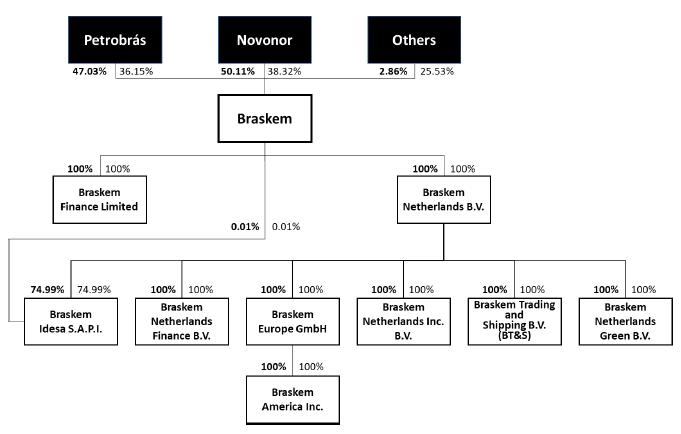
All references herein to (1) “we,” “us,” “the Company” or “our Company” are references to Braskem S.A., its consolidated subsidiaries, and (2) “Braskem” are references solely to Braskem S.A. All references herein to “Braskem Europe” are to Braskem Europe GmbH and its consolidated subsidiaries, including Braskem America, Inc., or Braskem America.
Financial Statements
Braskem Financial Statements – Going Concern
We maintain our books and records in reais. Our consolidated financial statements as of December 31, 2025, and 2024 and for the three years ended December 31, 2025, have been audited, as stated in the report appearing therein, and are included in this annual report. These financial statements and related notes included elsewhere in this annual report are collectively referred to as our audited consolidated financial statements herein and throughout this annual report.
Our audited consolidated financial statements have been prepared under the going concern assumption, which presumes the continuity of operations and the realization of assets as well as the settlement of liabilities and commitments in the ordinary course of business of the Company. See “Risk Factors - Our financial statements as of and for the year ended December 31, 2025 contain a going concern footnote, due to increasing pressure on liquidity.”
We have prepared our consolidated financial statements in accordance with IFRS Accounting Standards, as issued by the International Accounting Standards Board (“IFRS Accounting Standards”).
Market Share and Other Information
We make statements in this annual report about our market share in the petrochemical industry in Brazil and our production capacity relative to that of other petrochemical producers in Brazil, other countries in Latin America, the United States and the world. We have made these statements based on information obtained from third-party sources that we believe are reliable. We have calculated our Brazilian market share with respect to specific products by dividing our domestic net sales volumes of these products by the total Brazilian domestic consumption of these products. We derive information regarding the production capacity of other companies in the global petrochemical industry, international market prices for petrochemicals products and per capita consumption in certain geographic regions principally from reports published by Chemical Market Analytics by OPIS, a Dow Jones Company (“CMA”). We derive information relating to Brazilian imports and exports from ComexStat, produced by the Brazilian Ministry of Development, Industry, Trade and Services (Ministério do Desenvolvimento, Indústria, Comércio e Serviços, the “MDIC”). We also derive information from reports published by Brazilian Association of the Alkali, Chlorine and Derivatives Industry (Associação Brasileira da Indústria de Álcalis, Cloro e Derivados, the “Abiclor”). We also include information and statistics regarding economic growth in emerging economies obtained from the International Monetary Fund (“IMF”), and statistics regarding gross domestic product, growth in Brazil, the United States, Europe and Mexico obtained from independent public sources, such as the Brazilian Institute of Geography and Statistics (Instituto Brasileiro de Geografia e Estatística); the U.S. Bureau of Economic Analysis of the U.S. Department of Commerce; the statistical office of the European Union (Eurostat); and the Mexican Institute of Statistics and Geography (Instituto Nacional de Estadística y Geografía).
| i |
We provide information regarding domestic apparent consumption of some of our products based on information available from ComexStat, produced by the MDIC and reports published by Abiclor. Domestic apparent consumption is equal to domestic production plus imports minus exports. Domestic apparent consumption for any period may differ from actual consumption because this measure does not give effect to variations of inventory levels in the petrochemical supply chain.
We have no reason to believe that any of this information is inaccurate in any material respect. However, we have not independently verified the production capacity, market share, market size or similar data provided by third parties or derived from industry or general publications.
Certain Industry Terms
Glossary of Selected Terms in the Petrochemical Industry and in the Context of Our Business
|
Term |
Meaning |
Main uses |
In the context of our business |
| Aliphatics | Aliphatics are open-chain hydrocarbons that contain no stable rings connecting their atoms, in contrast to aromatics. | Used as fuels, solvents and as basic chemicals in the petrochemical industry. | We produce aliphatics, such as ethylene and propylene, in our Brazil Segment. |
| Aromatics | Aromatics are cyclic hydrocarbons with stable bonds connecting their carbon atoms. | Used as fuel additives, solvents, and basic chemicals in the petrochemical industry. | We produce aromatics, such as benzene, toluene and xylenes, as co-products in our Brazil Segment. |
| Benzene | An aromatic hydrocarbon. It is a natural constituent of crude oil. | Used primarily for the manufacture of chemicals with more complex structure, such as ethylbenzene and cumene. | We produce benzene as a by-product in our Brazil Segment. |
| BTX products | A mixture of benzene, toluene and the three xylene isomers (ortho, meta and para), all of which are aromatic hydrocarbons. | Used as fuel additives, solvents, and basic chemicals in the petrochemical industry. | We produce benzene, toluene and xylenes as BTX by-products in our Brazil Segment. |
| ii |
| Butadiene | An organic compound and colorless gas. | Used industrially as a monomer in the production of synthetic rubber. | We produce butadiene as a by-product in our Brazil Segment. |
| Butene | A colorless gas present in crude oil. | Used as a monomer in the production of polymers, as well as a petrochemical intermediate. | We use butene to produce high-density polyethylene (“HDPE”) and linear low-density polyethylene (“LLDPE”) in our Brazil Segment. Butene is supplied by our chemicals operations that are part of our Brazil Segment. |
| Caustic soda | Caustic soda, or sodium hydroxide, is an inorganic compound. A colorless crystalline solid, caustic soda is toxic, corrosive and highly soluble in water. | Used in the manufacture of pulp and paper, textiles, drinking water, soaps and detergents, and as a drain cleaner. | We produce caustic soda in our Brazil Segment. Caustic soda is a by-product of chlorine production required to produce Polyvinyl chloride (“PVC”). |
| Chlor-alkali | Electrolysis process used in the manufacture of chlorine, hydrogen and sodium hydroxide (caustic soda). | Main industrial process to produce caustic soda. | We operate chlor-alkali plants in Brazil. |
| Chlorine | Chlorine is a chemical element (Cl), a toxic, greenish yellow gas at room temperature. It has a pungent suffocating odor. | Used in the production of paper products, antiseptics, plastics, dyes, textiles, medicines, insecticides, solvents and to treat swimming pools. | We use salt to produce chlorine in our Brazil Segment. |
| Condensate | Condensate, or natural gas condensate, is a low-density mixture of hydrocarbon liquids that are present as gaseous components in the raw natural gas. | Condensate is used as an input for petrochemical plants, burned for heat and cooking, and blended into vehicle fuel. | We use condensate as a raw material in our Brazil Segment. |
| iii |
| Cumene | An organic compound based on an aromatic hydrocarbon with an aliphatic substitution, cumene is a colorless liquid constituent of crude oil and refined fuels. | Used to produce phenol and acetone. | We produce cumene as a by-product in our Brazil Segment. |
| Dicyclopentadiene | Dicyclopentadiene, or DCPD, is a yellow liquid with an acrid odor. | Used in polyester resins, inks, adhesives and paint. | We produce DCPD in our Brazil Segment. |
| Ethane | A type of natural gas liquid (NGL), ethane is a colorless, odorless gas in standard temperature and pressure, extracted from natural gas in liquid form. | Used as a feedstock for ethylene production. | Ethane is one of the main raw materials that we use to produce ethylene in our Brazil Segment. |
| Ethanol | A simple alcohol, produced by the fermentation of sugars by yeasts or via petrochemical processes. | Used as a fuel for vehicles, as a disinfectant and as a chemical intermediate. | We use ethanol as a raw material to produce PE I’m green™ bio-based in our Brazil Segment, which production plants are located in Triunfo, Brazil. |
| Ethyl tertiary-butyl ether (ETBE) |
ETBE is a colorless liquid manufactured by the acid etherification of isobutylene with ethanol. | Used commonly as an additive in the production of gasoline. | We produce ETBE in our Brazil Segment. |
| iv |
| Ethylene | A hydrocarbon, colorless gas and the most widely used organic compound in the chemical industry. Produced mainly via steam cracking of raw materials such as naphtha and NGLs. | Used mainly to produce polyolefins, primarily polyethylene, the most used thermoplastic resin in the world. | We produce ethylene in our Brazil Segment, as a main product of the steam cracking of raw materials. | |
| Ethylene dichloride (EDC) | A chlorinated hydrocarbon and colorless liquid. It is generally produced by reacting ethylene with chlorine. |
Used primarily as the raw material to produce vinyl chloride monomer (VCM), which is then polymerized to produce polyvinyl chloride (PVC). | We use EDC to produce polyvinyl chloride (PVC) in our Brazil Segment. | |
| EVA | Ethylene-vinyl acetate, or EVA, is a co-polymer of ethylene and vinyl acetate. | Used to produce rubber-like materials, with applications in adhesives, packaging, molding, and membranes for electronic devices. | We produce EVA in our Brazil Segment. | |
| Gasoline | A flammable liquid obtained by refining crude oil. | Used primarily as a fuel in combustion engines. | We produce gasoline as a by-product in our Brazil Segment. | |
| GHG emissions | Emissions of the six gases listed in the Kyoto Protocol: carbon dioxide (CO2); Methane (CH4); Nitrous Oxide (N2O); Hydrofluorocarbons (HFCs); Perfluorocarbons (PFCs); and Sulfur hexafluoride (SF6). | Used as a metric for our management and in accordance with applicable laws to measure GHG emissions. | We use the metric to assess our performance and define a strategy for reducing GHG emissions. | |
| v |
| Green ethylene | A hydrocarbon derived from renewable feedstock | Used mainly to produce polyolefins, primarily polyethylene. | We produce green ethylene from ethanol made by sugarcane in our Brazil Segment in order to produce PE I’m green™ bio-based, EVA I’m green™ bio-based and I’m green™ bio-based PE wax. We are also leading a project in Thailand which will add 200 kt of capacity of green ethylene. |
| HDPE | High-density polyethylene, or HDPE, is a thermoplastic resin produced by the polymerization of ethylene. | Used in a variety of industries, to produce plastic bottles, toys, chemical containers, pipe systems, and other plastic products. | We produce HDPE in our polyolefins operations that are part of our Brazil Segment. |
| Hexene | An aliphatic hexane is a clear, colorless liquid with a petroleum-like odor. | Used as a solvent, paint thinner, and chemical reaction medium. Also used as a co-monomer to produce HDPE. | We use hexene in our Mexico Segment as a raw material to produce HDPE. |
| Hydrocarbon resins | Also called petroleum resins, they are produced from the polymerization of aromatic hydrocarbons. | Generally used together with other kinds of resins, in the paint, ink, adhesive and rubber industry. | We produce hydrocarbon resins in our Brazil Segment. |
| Hydrogen | A chemical element, hydrogen is a colorless, odorless gas. | Used to make ammonia in the production of fertilizers and as an intermediate chemical in the production of plastics and pharmaceuticals. | We produce hydrogen in our Brazil Segment. |
| Hydrogenated solvents | Odorless, colorless solvents treated with hydrogen. | Used in the manufacture of paints. | We produce hydrogenated solvents in our Brazil Segment. |
| Isoprene | A common organic compound that is a component of natural rubber. Also, a by-product of oil refining. | Used to produce synthetic rubber. | We produce isoprene in our Brazil Segment. |
| vi |
| LDPE | Low-density polyethylene, or LDPE, is a thermoplastic resin made from the polymerization of ethylene. | Used for manufacturing containers, dispensing bottles, wash bottles, tubing, plastic bags and molded laboratory equipment. | We produce LDPE in our Brazil Segment. |
| Liquefied petroleum gas (LPG) | Liquefied petroleum gas, or LPG, is a mixture of propane and butane, which are two natural gas liquids. | Used in fuel heating appliances, cooking equipment, vehicle fuel, aerosol propellant, and as a refrigerant. | We produce LPG in our Brazil Segment. |
| LLDPE | Linear low-density polyethylene, or LLDPE, is a linear polymer made by the copolymerization of ethylene with longer-chain olefins. | Used in plastic bags and sheets, plastic wrap, stretch wrap, pouches, toys, covers, lids, pipes, buckets and containers, covering of cables and flexible tubing, among others. | We produce LLDPE in our Brazil Segment. |
| Methanol | Methanol is the simplest alcohol, a liquid produced industrially by hydrogenation of carbon monoxide. | Used as a precursor to other commodity chemicals, including formaldehyde, acetic acid and MTBE. | We use methanol as a raw material to produce MTBE in our Brazil Segment. |
| Methyl tertiary-butyl ether (MTBE) | An intermediate hydrocarbon liquid stream derived mainly from the refining of crude oil | Used almost exclusively as a fuel additive in gasoline to raise the oxygen content. | We produce MTBE in our Brazil Segment. |
| Naphtha | An intermediate hydrocarbon liquid stream derived mainly from the refining of crude oil. | Used as a solvent, fuel additive and as a raw material in the petrochemical industry. | We use naphtha as a raw material to produce petrochemical products in our Brazil Segment. |
| vii |
| Natural gas | A naturally occurring hydrocarbon gas mixture, consisting primarily of methane. | Used as a source of energy for heating, cooking and electricity generation, as a fuel for vehicles and as a chemical feedstock. | We use natural gas for electricity generation in our production processes. |
| Natural gas liquids (NGL) | A mixture of hydrocarbon components of natural gas, primarily ethane, propane and butane, which are separated from the raw natural gas in the form of liquids. | Used as raw materials in the petrochemical industry, as fuel and in applications for heating and cooking. | We use NGLs such as ethane and propane as raw materials at our plants in Rio de Janeiro and Mexico. |
| N-hexane | A hydrocarbon, obtained by refining crude oil. | Used mixed with other solvents, to extract vegetable oils from crops, and as a cleaning agent in the printing, textile, furniture, and shoemaking industries. | We use n-hexane in our Brazil Segment as a raw material in the production of HDPE and LLDPE. |
| Nonene | A hydrocarbon, nonene is a colorless liquid with an odor reminiscent of gasoline. | Used as a plasticizer to make rigid plastics flexible, and to produce chemical intermediates. | We produce nonene in our Brazil Segment. |
| Olefins | Unsaturated hydrocarbons that contain at least one carbon–carbon double bond, such as ethylene, propylene and butene. Obtained from steam cracking of raw materials. | Used as chemical intermediates to produce other chemicals and resins. | We produce olefins in our Brazil Segment. |
| Para-xylene | An aromatic hydrocarbon, para-xylene is produced mainly in refineries and during the steam cracking of naphtha. | Used as a chemical feedstock in the production of polymers, especially PET. | We produce para-xylene as a by-product in our Brazil Segment. |
| viii |
| PDH | Propane dehydrogenation, or PDH, is an on-purpose technology used for conversion of propane into propylene. | Industrial process to produce propylene. | We use propylene from PDH units as a raw material in our plants in the United States. |
| PE I’m green™ bio-based | Thermoplastic resin made from a renewable source (sugar cane) that is 100% segregated | Used in segments such as toys, agro, packaging, artificial turf, and healthcare among others. | PE I’m green™ bio-based is produced in our Brazil Segment, at our plant located in Triunfo, Rio Grande do Sul, Brazil |
| Piperylene | A volatile, flammable hydrocarbon in liquid form, obtained as a by-product of ethylene production. | Used as a monomer in the manufacture of plastics, adhesives and resins. | We produce piperylene in our Brazil Segment. |
| Polyethylene (PE) | PE is the most common type of thermoplastic resin. It is lightweight,durable and is obtained from the polymerization of ethylene. | PE has a large number of applications, such as: packaging, consumer goods, fibers, textiles, pipes, automotive, wiring, cables, construction, among others. | We produce PE in our Brazil Segment. |
| Polyisobutylene (PIB) | PIB is a gas-permeable synthetic rubber produced by the polymerization of isobutylene with isoprene. | Used as a fuel and lubricant additive, in explosives, as the base for chewing gum, and to improve the environmental stress-cracking resistance of polyethylene. | We produce PIB in our Brazil Segment. |
| Polyolefins | Macromolecules formed by the polymerization of olefin monomer units. The most common are polypropylene (PP) and polyethylene (PE). | Used in a broad range of consumer and industrial applications. | We produce polyolefins our Brazil Segment. |
| ix |
| Polypropylene (PP) | PP is a thermoplastic resin and the second most widely produced plastic commodity after PE. Obtained by the polymerization of propylene, PP is generally harder and more heat resistant than PE. | Widely used in the automotive, furniture industry, in consumer goods, for packaging, labeling, and in other industrial applications. | We produce PP in our Brazil Segment. |
| Polyvinyl chloride (PVC) | PVC is the world’s third-most widely produced synthetic plastic polymer, after PE and PP, obtained by the polymerization of vinyl chloride monomer (VCM), a monomer generally made of ethylene and chlorine. | Used mainly in infrastructure and construction for pipes, profile applications, such as doors and windows, in plumbing, electrical cables, flooring, and as a replacement for rubber. | We produce PVC in our Brazil Segment. |
| Propane | A type of natural gas liquid (NGL), propane is a gas in standard temperature and pressure and is extracted from natural gas in liquid form. | Commonly used together with butane in heating, cooking applications, and also as a raw material in the petrochemical industry. | We use propane together with ethane as a raw material to produce petrochemical products in our Brazil Segment. |
| Propylene | A hydrocarbon, propylene is a colorless gas, and the second most widely used olefin in the chemical industry, after ethylene. It can be obtained as a co-product of steam cracking or refining, and from on-purpose production. | It is used mainly to produce polypropylene resins and a wide variety of other chemicals, such as propylene oxide and acrylonitrile. | We produce propylene in our Brazil Segment as a by-product of steam cracking. Propylene is also the main raw material that we use to produce polypropylene in our Brazil Segment, United States and Europe Segment. |
| x |
| Refinery off gas | Gas that is produced as a by-product of the refining of crude oil. It is a mixture of methane, ethane, hydrogen and other gases. | Used as a feedstock in the petrochemical industry. | We use refinery off gas as a raw material in our Brazil Segment to produce ethylene. |
| Salt | Salt is a mineral composed primarily of sodium chloride. | Used in a wide variety of industries, mainly in the chlor-alkali process to produce caustic soda and chlorine, and as a food additive. | We use salt to produce chlorine and caustic soda in our Brazil Segment. |
| Sodium hypochlorite | Sodium hypochlorite is a chlorine compound. | Used as a disinfectant or a bleaching agent and to produce other chemicals. | We produce sodium hypochlorite in our Brazil Segment. |
| Tetramer | Tetramer, or propylene tetramer, is an olefin. | Used as a plasticizer, surfactant, lubricating oil additive and polymerization agent. | We produce propylene tetramer in our Brazil Segment. |
| Thermoplastic resins | Raw, unshaped polymers, such as PE, PP and PVC. | Used in the plastic industry and other industries. | We produce thermoplastic resins in our Brazil Segment. |
| Toluene | An aromatic hydrocarbon. | Used predominantly as an industrial feedstock and a solvent. | We produce toluene in our Brazil Segment. |
| UHMWPE | Ultra-high molecular weight polyethylene, or UHMWPE, is a special type of thermoplastic polyethylene. | Used in industrial applications that require durability, low friction, and chemical resistance, including wear strips, chain guides, and marine dock fender pads, among others. | We produce UHMWPE in our United States and Europe Segment. |
| Vinyls | Vinyls, or vinyl polymers, are a group of polymers derived from vinyl monomers. The most common type of vinyl is PVC. | Used in the plastic industry and other industries. | We produce vinyls in our Brazil Segment. |
| xi |
Certain Other Selected Terms Used in This Annual Report
As used in this annual report:
| · | “first generation products” means basic petrochemical products such as ethylene and propylene produced from naphtha, natural gas, and ethane. These basic petrochemical products are used as feedstocks for the production of second generation products. We also sell certain first generation products to our customers; |
| · | “second generation products” means thermoplastics resins, such as polyethylene, polypropylene and polyvinyl chloride; |
| · | “third generation” means plastics converters; |
| · | “third generation products” means finished plastic products produced by molding thermoplastic resins into end-use applications; |
| · | “annual production capacity” means the annual nominal capacity for a particular facility, as of the last day of the fiscal year to which it relates, calculated based on operations during the 24 hours of the day for an entire year; |
| · | “production capacity” means the annual projected capacity for a particular facility, calculated based upon operations for 24 hours each day of a year and deducting scheduled downtime for regular maintenance; |
| · | “kton” means a kiloton, which is equal to 1,000 tons, or 2,204,622.62 pounds; and |
| · | “ton” means a metric ton, which is equal to 1,000 kilograms or 2,204.62 pounds. |
Rounding
We have made rounding adjustments to some of the amounts included in this annual report. As a result, numerical figures shown as totals in some tables may not be arithmetic aggregations of the amounts that precede them.
| xii |
CAUTIONARY STATEMENT WITH RESPECT TO FORWARD-LOOKING STATEMENTS
This annual report contains forward-looking statements. Some of the matters discussed concerning our business operations and financial performance include forward-looking statements within the meaning of the U.S. Securities Act of 1933, as amended (the “Securities Act”), or the U.S. Securities Exchange Act of 1934, as amended (the “Exchange Act”).
Statements that are predictive in nature, that depend upon or refer to future events or conditions or that include words such as “expects”, “anticipates”, “intends”, “plans”, “believes”, “estimates” and similar expressions are forward-looking statements. Although we believe that these forward-looking statements are based upon reasonable assumptions, these statements are subject to several risks and uncertainties and are made in light of information currently available to us.
Our forward-looking statements may be influenced by numerous factors, including, without limitation, the following:
| · | the cyclical and volatile nature of the global petrochemical industry and its adverse effects, which may have negative impacts on our business; |
| · | prices of naphtha, ethane, ethanol, propane, propylene and other raw materials as well as the terms and conditions of related supply agreements; |
| · | international prices of petrochemical and bio-based products; |
| · | our ability to implement our financing strategy and secure financing on satisfactory terms; |
| · | the adverse effects of the geological event in Alagoas, including unfavorable judicial or regulatory outcomes; |
| · | global macroeconomic conditions, including possible increased tariffs imposed by the United States on our supply chain, which may affect our product margins; |
| · | the adverse effect of war and other armed conflicts, such as the conflict involving Russia and Ukraine, the war in Iran and tensions in the Middle East, on our operations and the global petrochemical industry; |
| · | a slowdown in the world economy and its potential adverse effect on demand for petrochemicals and thermoplastic products; |
| · | any adverse effect of China’s economy deceleration on global demand and on our operations; |
| · | the adverse effect of inflation globally on our business; |
| · | the adverse effect of a more contractionary monetary policy globally on our business; |
| · | demand for our petrochemical products, the availability and pricing of raw materials, global logistics and the stability of supply chains; |
| · | general economic, political and business conditions in key markets, including governmental and electoral changes, and fluctuation in demand, supply, and prices of petrochemicals and thermoplastic products; |
| xiii |
| · | interest rate fluctuations, inflation and exchange rate movements, particularly of the Brazilian real against the U.S. dollar and other currencies; |
| · | our ability to execute our sustainable strategy and implement climate adaptation and mitigation initiatives; |
| · | competition in the global petrochemical and biopolymer industry; |
| · | our ability to successfully develop our innovation projects, particularly with respect to renewable and recycling initiatives; |
| · | actions taken by Novonor, our controlling shareholder, and Petrobras; |
| · | inherent risks related to any change of our corporate control; |
| · | our progress in integrating the operations of companies or assets that we may acquire in the future, so as to achieve the anticipated benefits of these acquisitions; |
| · | changes in laws and regulations, including, among others, those related to tax, environmental policies, and import tariffs in key markets; |
| · | political conditions in the countries where we operate, particularly in Brazil and Mexico; |
| · | future changes in governmental policies, including new environmental regulations and related governmental actions; |
| · | unfavorable decisions in major tax, labor, environmental and other legal proceedings; and |
| · | other factors identified or discussed under “Item 3. Key Information—Risk Factors.” |
Our forward-looking statements are not a guarantee of future performance, and our actual results of operations or other developments may differ materially from the expectations expressed in our forward-looking statements. As for forward-looking statements that relate to future financial results and other projections, actual results will be different due to the inherent uncertainty of estimates, forecasts and projections. Because of these uncertainties, readers should not rely on these forward-looking statements.
All forward-looking statements attributed to us or a person acting on our behalf are qualified in their entirety by this cautionary statement, and you should not place undue reliance on any forward-looking statement included in this annual report. Forward-looking statements speak only as of the date they are made, and we do not undertake any obligation to update them as a result of new information or future developments.
For additional information on factors that could cause our actual results of operations to differ from expectations reflected in forward-looking statements, please see “Item 3. Key Information—Risk Factors.”
| xiv |
PART I
ITEM 1. IDENTITY OF DIRECTORS, SENIOR MANAGEMENT AND ADVISERS
Not applicable.
ITEM 2. OFFER STATISTICS AND EXPECTED TIMETABLE
Not applicable.
ITEM 3. KEY INFORMATION
Exchange Rates
The current laws and regulations governing the Brazilian foreign exchange system allow the purchase and sale of foreign currency and the international transfer of reais by any person or legal entity, regardless of the amount, subject to certain regulatory procedures. Since 1999, the Central Bank has allowed the U.S. dollar-real exchange rate to float freely, and, since then, the U.S. dollar-real exchange rate has fluctuated considerably.
In the past, the Central Bank has intervened occasionally to control unstable movements in foreign exchange rates. We cannot predict whether the Central Bank or the Brazilian government will continue to permit the real to float freely or will intervene in the exchange rate market through the return of a currency band system or otherwise. The real may depreciate or appreciate against the U.S. dollar substantially. Furthermore, Brazilian law provides that, whenever there is a serious imbalance in Brazil’s balance of payments or there are serious reasons to foresee a serious imbalance, temporary restrictions may be imposed on remittances of foreign capital abroad. We cannot assure you that such measures will not be taken by the Brazilian government in the future. See “—Risk Factors—Risks Relating to Brazil—Brazilian government exchange control policies could increase the cost of servicing our foreign currency-denominated debt, adversely affect our ability to make payments under our foreign currency-denominated debt obligations and impair our liquidity” and “—Risk Factors—Risks Relating to Our Equity and Debt Securities—If holders of the ADSs exchange them for class A preferred shares, they may risk temporarily losing, or being limited in, the ability to remit foreign currency abroad and certain Brazilian tax advantages.”
ITEM 3.A (Reserved)
ITEM 3.B CAPITALIZATION AND INDEBTEDNESS
Not applicable.
ITEM 3.C REASONS FOR THE OFFER AND USE OF PROCEEDS
Not applicable.
ITEM 3.D RISK FACTORS
Summary of Risk Factors
Below is a summary of certain factors that make an investment in our securities speculative or risky. Importantly, this summary does not address all of the risks and uncertainties that we face. This summary is qualified in its entirety by a more complete discussion of such risks and uncertainties. In evaluating an investment in our securities, investors should carefully read the risks described below, as well as other risks and uncertainties that we face, which can be found under “—Risk Factors” in this section of this annual report. If any of the following events occur, our business, financial condition, and operating results may be materially adversely affected. In that event, the trading price of our securities could decline, and you could lose all or part of your investment. Such risks include, but are not limited to:
| 1 |
Risks Relating To Our Business And The Petrochemical Industry
| · | The cyclical and volatile nature of the petrochemical industry may reduce our net revenue and gross margin, impacting our financial condition. |
| · | Adverse conditions in the petrochemical industry may adversely affect demand for our products. |
| · | We face competition from suppliers of polyethylene, polypropylene, PVC, and other products. |
| · | We may face competition from producers of substitutes for our products as a result of evolving technology, consumer and industry trends and preferences, and regulatory changes. |
| · | Our revenue from certain of our customers may be significant, and the credit risks associated with customers could adversely affect the results of our operations and increase expected credit losses. |
| · | Higher raw materials costs would increase our cost of products sold and may reduce our gross margin and negatively affect our overall financial performance. |
| · | We rely on limited or sole-source suppliers for our raw materials, inputs, and energy, including transportation thereof. |
| · | We do not hedge against price changes in our raw materials and, as a result, we are exposed to such fluctuations. |
| · | We depend on Petrobras to supply us with a substantial portion of our feedstocks such as naphtha, ethane, propane, refinery off gas and propylene needs, and on logistics services. |
| · | We depend on propylene and ethylene supplied by third parties in the United States and Europe. |
Risks Relating To Global Macroeconomics Factors
| · | Global macroeconomic factors have had, and may continue to have, adverse effects on the margins that we realize on our products. |
| · | We may be affected by instability in the global economy and by financial turmoil, including as a result of military conflicts such as those between the United States, Israel and Iran, Russia and Ukraine, and other conflicts in the Middle East. |
Risks Relating To Our Operations
| · | Our polyolefins and vinyls units in Brazil depend on our chemicals operations to supply them with their ethylene and propylene requirements. In addition, our Brazilian plants depend on certain providers of utilities, including environmental services for the treatment of effluents, industrial waste and water supply for industrial use. |
| · | We may be materially adversely affected if there is an imbalance in global logistics, which may cause disruptions to our transport, storage and distribution operations, negatively impacting the costs related thereto. |
| · | We rely on access to third-party licensed technology and related intellectual property, and if such rights cease to be available to us on commercially reasonable terms, or at all, or if any such third party ceases to provide us with technical support under license or technical services agreements, certain of our production plants, our operating results and financial condition could be adversely affected. |
| · | Capital projects can take many years to complete, and market conditions could deteriorate significantly between the project approval date and the project startup date, negatively impacting project returns and the implementation of our growth strategy. If we are unable to complete projects and investments at their expected cost and in a timely manner, or if the market conditions assumed as a basis for our project economics deteriorate, our business, financial condition, results of operations and cash flows could be materially and adversely affected. |
| 2 |
| · | Our insurance coverage may be ineffective, either due to the lack of coverage for any claim, or due to insufficient coverage limits in the event of damage. |
| · | Under our growth strategy, we may pursue strategic acquisitions, investments and investments in new businesses. The failure of an acquisition, investment or investments in new businesses to produce the anticipated results, or the inability to integrate an acquired company, could adversely affect our business financial condition and results of operations |
| · | Labor strikes may materially and adversely affect our operations. |
Risks Relating To Health, Safety And Environmental Aspects
| · | Our business and operations are inherently subject to environmental, health and safety risks. As a result, our business is also subject to several stringent regulations, including environmental regulations. |
| · | Natural disasters, severe weather and climate conditions, or health epidemics could have a material adverse effect on our overall business. |
| · | Climate change may negatively affect our business, financial condition, results of operations and cash flow. |
| · | Climate change-related risks and uncertainties, legal or regulatory responses to climate change and failure to meet our sustainable development objectives could negatively impact our results of operations, financial condition or reputation. |
Risks Relating To Our Shareholders
| · | Some of our shareholders may have the ability to determine the outcome of corporate actions or decisions, which could affect the holders of our class A preferred shares and the ADSs. |
| · | We may be subject to attempts to acquire our control, which may lead to significant changes in management, the strategies that we are currently pursuing, or in our current corporate governance practices. |
| · | We may face conflicts of interest in transactions with related parties. |
| · | If we are unable to comply with the restrictions, covenants or guarantees in the agreements governing our, or certain subsidiaries, indebtedness and liabilities, there could be a default under the terms of these agreements, which could result in an acceleration of payment of funds that we have borrowed or guaranteed and could affect our ability to make principal and interest payments on our debt and liabilities obligations. |
| · | There can be no assurance that Novonor will remain our controlling shareholder. Novonor and Petrobras may enter into transactions or other arrangements that may result in us not having a controlling shareholder. If no single shareholder or group of shareholders holds more than 50% of our voting stock or exercise a controlling interest, there may be increased opportunity for alliances between shareholders and conflicts between them. |
| · | We lost the right of preference set forth in the current shareholders’ agreement with respect to new business opportunities in the petrochemical sector, and as result, Petrobras, which is our largest supplier of raw materials in Brazil, will be able to invest in the petrochemical sector independently from us and without first giving us a preference to do so. |
Risks Relating To Legal And Regulatory Matters
| · | Adjustments in tariffs on imports that compete with our products could cause us to lower our prices. |
| · | Changes in U.S. and global trade policies and other factors beyond our control may adversely impact our business, financial condition and results of operations. |
| 3 |
| · | New Tariffs Imposed or Threatened by the United States Could Result in Increased Costs. |
| · | Failure to comply with export control or economic sanctions laws and regulations could have a material adverse impact on our results of operations, financial condition and reputation. |
| · | We may not be able to specify in details technical specifications required by our customers’ or updated mechanisms to promptly attend regulatory requirements, and we could be subject to damages based on claims brought against us or our customers as a result of the failure of our products specification. |
| · | We may not be able to obtain or renew all licenses, permits and authorizations necessary for conducting our business. |
| · | We could be materially adversely affected by the impacts of the Global Settlement. |
| · | Unfavorable outcomes in pending or future litigation may reduce our liquidity and negatively affect our financial performance and financial condition. |
| · | We could be materially affected by violations of the FCPA, the Brazilian Anti Corruption Law and similar anti-corruption laws. |
| · | We are exposed to behaviors of our employees, non-employees and third parties that may be incompatible with our ethics and compliance standards, and failure to timely prevent, detect or remedy any such behavior and/or process vulnerabilities may have a material adverse effect on our results of operations and financial condition. |
| · | Unauthorized disclosure or loss of intellectual property, sensitive confidential or personal information, or disruption to information technology systems by cyberattacks or other security breaches, as well as our failure to comply with data protection laws and information security requirements may subject us to significant penalties or liability and may adversely impact our operations, reputation, and financial results. |
| · | We are subject to audit by the tax authorities in the jurisdictions in which we operate, which may adversely affect our operating results and financial condition. |
| · | Changes in tax laws may result in increases in certain direct and indirect taxes, which could reduce our gross margin and negatively affect our overall financial performance. |
Risks Relating To Brazil
| · | Brazilian political, economic and business conditions, and the Brazilian government’s economic and other policies, may negatively affect demand for our products as well as our net revenue and overall financial performance. |
| · | Changes in industrial policy and related actions undertaken by the Brazilian government and local state governments in Brazil may negatively affect demand for our products as well as our net revenue and overall financial performance. |
| · | Fluctuations in the real/U.S. dollar exchange rate could increase inflation in Brazil, raise the cost of servicing our foreign currency-denominated debt and negatively affect our overall financial performance. |
| · | The Brazilian government’s actions to combat inflation may contribute significantly to economic uncertainty in Brazil and reduce demand for our products. |
| · | Fluctuations or changes in, or the replacement of, interest rates could impact the cost of servicing our debt or reduce our financial revenue, affecting our financial performance. |
| · | Brazilian government exchange control policies could increase the cost of servicing our foreign currency-denominated debt, adversely affect our ability to make payments under our foreign currency-denominated debt obligations and impair our liquidity. |
Risks Relating To Mexico
| · | Political conditions in Mexico may affect actions or decisions by the Mexican government, including Pemex, Cenagas, CFE and CENACE, which are, respectively, Braskem Idesa’s main suppliers of ethane, a provider of natural gas transportation services, an electricity back-up supplier, and the controller of national grid and dispatches of energy power generators, all of which are Mexican state-owned enterprises or governmental entities subject to political interference and related risks. |
| 4 |
| · | Mexico has experienced adverse economic conditions, which may adversely affect our business. |
| · | A renegotiation of commercial treaties or changes in foreign policy among Mexico, Canada and the United States may negatively affect our business, financial condition, results of operations and prospects. |
| · | Political events in Mexico could affect the Mexican economic policy and our business, financial condition and results of operations. |
| · | We depend on ethane supplied by Pemex in Mexico. |
| · | We depend on services and products supplied by a Mexican state-owned company. |
| · | We may face unforeseen challenges in the operation of our Mexico Complex, which could result in this business unit failing to provide expected benefits to us. |
| · | We source part of our ethane feedstock from Pemex in Mexico, which we expect to be our primary main source of ethane until the Ethane Import Terminal is operational. |
| · | We may be unable to operate the Mexican Complex at full capacity or at all if one or more of our sources of ethane is disrupted. |
| · | We depend on regulatory authorizations to import ethane for our production activities in México. |
| · | The development of the Ethane Import Terminal may not be successful and may not commence operation as scheduled, be completed within budget or operate at expected levels, which could have a material adverse effect on our businesses, financial condition, cash flows, results of operations and/or prospects. |
Risks Relating To Our Equity and Debt Securities
| · | Our financial statements as of and for the year ended December 31, 2025 contains a footnote related to a substantial doubt about our ability to continue as going concern, due to increasing pressure on liquidity |
| · | The Company is currently assessing alternatives to optimize its capital structure, and the outcome of this process, including any potential restructuring or creditor protection measures, is uncertain and is expected to adversely affect the Company and its stakeholders. |
| · | All of the shares issued by Braskem and owned by NSP Inv. are secured for the benefit of certain secured creditors of the Novonor Group. |
| · | Holders of our class A preferred shares or the ADSs may not receive any dividends or interest on shareholders’ equity. |
| · | Our class A preferred shares and the ADSs have limited voting rights and are not entitled to vote to approve corporate transactions, including mergers or consolidations of our Company with other companies, or the declaration of dividends. |
| · | Holders of the ADSs may find it difficult to exercise even their limited voting rights at our shareholders’ meetings. |
| · | If holders of the ADSs exchange them for class A preferred shares, they may risk temporarily losing, or being limited in, the ability to remit foreign currency abroad and certain Brazilian tax advantages. |
| · | Restrictions on the movement of capital out of Brazil may impair the ability of holders of our shares, ADSs and debt securities to receive payments on their respective obligations or guarantees and may restrict our ability to make payments in U.S. dollars. |
| · | The foreign exchange policy of Brazil may affect the ability of Braskem to make money remittances outside Brazil in respect of our equity securities or debt securities. |
| · | Holders of the ADSs may face difficulties in protecting their interests because we are subject to different corporate rules and regulations as a Brazilian company and our shareholders may have fewer and less well-defined rights than under the laws of other jurisdictions, including in a jurisdiction in the United States. |
| · | Holders of the ADSs may face difficulties in serving process on or enforcing judgments against us and other persons. |
| · | Judgments of Brazilian courts enforcing Braskem’s obligations under our equity securities, debt securities or related guarantees would be payable only in reais. |
| 5 |
| · | Actual or anticipated sales of a substantial number of class A preferred shares could decrease the market prices of our class A preferred shares and the ADSs. |
| · | Holders of the ADSs or class A preferred shares in the United States may not be entitled to the same preemptive rights as Brazilian shareholders have, pursuant to Brazilian legislation, in the subscription of shares resulting from capital increases made by us. |
| · | Brazilian tax laws may have an adverse impact on the taxes applicable to the disposition of our ADSs and preferred shares. |
| · | The relative volatility and liquidity of the Brazilian securities markets may adversely affect holders of our class A preferred shares and ADSs. |
| · | Economic developments and investor perceptions of risk in other countries, including both in developed or emerging market economies, may adversely affect the trading price of Brazilian securities, including our common shares and ADSs, as well as any outstanding debt securities. |
| · | We rely on cash generated from operations and external sources to fund our ongoing capital needs. Our level of indebtedness and cash consumption could adversely affect our liquidity position and ability to raise additional capital to fund our operations, limit our ability to react to changes to general market and economic conditions and changes in our industry, and prevent us from meeting our obligations under our agreements (including financing agreements). |
| · | Any downgrade in the ratings of Brazil, our Company or our debt securities would likely result in increased interest and other financial expenses related to our borrowings and debt securities that could reduce our liquidity. |
| · | Because Braskem Netherlands Finance B.V. and Braskem America Finance Company have no operations of their own, holders of our outstanding debt securities issued by Braskem Netherlands Finance B.V. or Braskem America Finance Company depend on Braskem to provide Braskem Netherlands • Finance B.V., respectively, with sufficient funds to make payments on these debt securities when they become due. |
| · | Payments on Braskem’s guarantees are junior to Braskem’s secured debt obligations and effectively junior to the debt obligations of Braskem’s subsidiaries and jointly controlled companies. |
| · | Braskem’s obligations under the guarantees of the outstanding debt securities are subordinated to certain statutory preferences. |
| · | Brazilian insolvency laws may be less favorable to holders of our shares, ADSs, and outstanding debt securities than bankruptcy and insolvency laws in other jurisdictions. |
| · | Braskem Idesa is currently assessing alternatives to optimize its capital structure, and the outcome of this process, including any potential restructuring or creditor protection measures, is uncertain and is likely adversely affect the Company and its stakeholders. There is substantial doubt as to the ability of Braskem Idesa to continue as going concern. |
Risk Factors
Risks Relating To Our Business And The Petrochemical Industry
The cyclical and volatile nature of the petrochemical industry may reduce our net revenue and gross margin, impacting our financial condition.
The petrochemical industry, including the global markets in which we compete, is cyclical and sensitive to changes in global supply and demand. Our future operating results are expected to continue to be affected by this cyclicality and volatility. This cyclicality may reduce our net revenue, increase our costs, and decrease our gross margin, including as follows:
| · | downturns in general business and global economic activity may cause demand for our products to decline; |
| 6 |
| · | when global demand falls, the industry may face competitive pressures to lower its prices, and so may we; |
| · | changes in energy prices and other worldwide economic conditions can cause volatility that lead to increases in prices of the raw materials we use, including naphtha, ethane, ethanol and propylene, resulting in significant fluctuations in profits and cash flow from period to period and over business cycles; and |
| · | if we decide to expand our plants or construct new plants, we may do so based on an estimate of future demand that may never materialize or may materialize at levels lower than we predicted. |
Historically, the international petrochemical markets have experienced alternating periods of limited supply, which have caused prices and profit margins to increase, followed by expansion of production capacity worldwide, which has resulted in oversupply and reduced prices and profit margins. Prices in the petrochemical industry follow the global petrochemical industry, and we establish the prices for the products we sell in Brazil, other countries in Latin America, the United States, Europe, and the world with reference to international market prices. Therefore, our net revenue, feedstock costs, and gross margin are linked to global industry conditions that we cannot control, and which may adversely affect our results of operations and cash flow. As disclosed by the Company in the material fact notice dated September 26, 2025, the Company engaged specialized financial and legal advisors to assist in preparing a comprehensive assessment of economic and financial alternatives to optimize its capital structure. Such assessment is still ongoing, and the Company and its advisors have been making structured progress in the formulation of a comprehensive plan to restructure its capital structure, as well as in negotiations with the creditors’ advisors, as reported in its financial statements for the fiscal year ended 2025, included in this annual report.
In the course of the work related to such assessment, the Company and its advisors are considering different alternatives, including potential creditor protection measures. Notwithstanding, we clarify that, as of this date, there is no decision regarding which alternative (or set of alternatives) to be implemented.
Moreover, relevant events or changes in the cycle and in the petrochemical industry, including initiatives to pursue self-sufficient production targets such as in China, technological innovations, and regulatory changes including related to climate change, may materially affect the future profitability of our business and consequently reduce the recoverable value of our assets, which is reviewed by the annual impairment test, which may adversely affect the profit attributable to our shareholders.
Adverse conditions in the petrochemical industry may adversely affect demand for our products.
Sales of our petrochemical and chemical products are tied to global production levels and demand, which can be affected by macro-economic factors such as interest rates, international oil prices, energy prices, shifts to alternative products, consumer confidence, employment trends, regulatory and legislative oversight requirements, trade agreements, regulatory developments including related to climate change, as well as regional disruptions, armed conflicts, natural disasters, epidemics, pandemics, or other global events. Therefore, our net revenue, feedstock costs, and gross margin are linked to global conditions that we cannot control, and which may adversely affect our results of operations and financial position. For example, the persistence of the geopolitical conflicts, such as the war in Iran, which is currently impacting the Strait of Hormuz, the conflict involving Russia and Ukraine, the conflicts involving Hamas, Israel and Hezbollah, and other conflicts in the Middle East (including economic sanctions and other regulations imposed by the United States and other international countries as a result thereof) could negatively impact supply chains worldwide and demand for our products and the raw materials we use. Should the conflict in Iran or other international locations further escalate, it is difficult to anticipate the extent to which the consequences of such conflict, including without limitation effects on the price of oil and current or future sanctions, could increase our costs, disrupt our supplies including feedstock, reduce our sales, or otherwise affect our operations.
| 7 |
We face competition from suppliers of polyethylene, polypropylene, PVC, and other products.
We face strong competition across all of our products. Some of our foreign competitors are substantially larger and have greater financial, manufacturing, technological, competitive feedstock and/or marketing resources than us. Our U.S. operations face competition in the United States from other North American suppliers that serve the North American market. Our European operations face competition in Europe and the other export markets that it serves from European and other foreign suppliers of polypropylene more competitive than us. Our Mexico operations face competition from Mexican and U.S. producers of polyethylene. Competitors from South America may export to Brazil with reduced or no import duties, including through the Manaus Free Trade Zone (Zona Franca de Manaus) and competitors from North America may export to Brazil with reduced taxes or no import duties through the Manaus Free Trade Zone (Zona Franca de Manaus). In addition, suppliers of almost all continents have regular or specific sales to trading companies and direct customers in Brazil for our products, including resins.
We generally follow the international markets with respect to the prices for our products sold in Brazil. The domestic price is determined by the import parity, which is based on converters’ imports into Brazil and typically represents spot market price, including but not limited to exchange rate fluctuations and import tariffs that the Brazilian government uses to implement economic policies. Adjustments of tariffs could lead to increased competition from imports, causing us to lower our domestic prices and impact the demand for our products, which would likely result in lower net revenue and could negatively affect our overall financial performance. This combined effect would have a negative impact on our gross margins and overall financial performance. We have no control over the import tax rate policy in Brazil or Mercosur (the Southern Common Market, or Mercosur in Spanish), a common market that serves as a regional integration process and was initially established by Argentina, Brazil, Paraguay, and Uruguay, and subsequently joined by Venezuela and Bolivia. Petrochemical import taxes that are currently in place have changed in the past and may change in the future, including as a result of decisions of the Brazil government or Mercosur. We generally set the prices for our products exported from Brazil based on international market prices. We set the prices for products sold in the United States and Europe based on market pricing in such regions. The price for polyethylene in Mexico is based on prices in the U.S. Gulf Coast region.
As a result of the fractioned gas-based ethylene and polyethylene capacities and of the new capacities for the production of resins and petrochemicals, coupled with the competitive pricing of feedstock for petrochemicals production such as ethane, we anticipate that we have been experiencing increased competition from producers of thermoplastic resins, especially from North American, Middle Eastern, and Chinese producers, in the markets in which we sell our products.
In addition, the Chinese government has exercised, and continues to exercise, significant influence over the Chinese economy, including governmental actions to incentivize and achieve self-sufficiency production in some specific chains, such as PE and PP. Those new capacities have led to a relevant rebalancing of global export flows and an increase in global competition from our competitors, some of which are larger and have greater competitive advantages than us.
In addition, exchange rate variations may affect the competitiveness dynamics in different regions in which we operate. For instance, the appreciation of the real against the U.S. dollar may increase the competitiveness of imported products, which may increase the competition from resins producers in Brazil. Also, (i) the appreciation of the Euro against the U.S. dollar may increase the competitiveness of imported products and, as a consequence, increase competition from imports, and (ii) the appreciation of the Mexican peso against the U.S. dollar may increase the competition from other resins producers in Mexico.
We may face competition from producers of substitutes for our products as a result of evolving technology, consumer and industry trends and preferences, and regulatory changes.
We compete in a market that relies on technological innovation and the ability to adapt to evolving consumer and global industry trends and preferences. Petrochemical products and other products produced with our petrochemical products, such as consumer plastic items, are subject to changing consumer and industry trends, demands, and preferences, as well as stringent and constantly evolving regulatory and environmental requirements. Therefore, products once favored may, over time, become disfavored by consumers or industries or no longer be perceived as the best option, which may, therefore, affect our results of operations and financial position.
| 8 |
Plastic waste and climate change are global environmental concerns that receive growing attention from society in general, national and local governments, private companies, trendsetters, and consumers worldwide. There has been a growing trend to attempt to move away from the use of plastic products, which has been backed by governmental and lawmaking initiatives.
In 2019, the European Union approved regulations banning as of 2021 single-use plastic items such as plates, cutlery, straws, and cotton bud sticks and adopting a strategy for the disposal of plastic products in a circular economy that aims to increase recycling significantly and targets the plastic products most often found on beaches and in seas. The European Union is now currently revising such rules to increase recycling and recycled content targets, as well as to establish new regulations on the design and labeling of plastic products. In addition, state and local governments in other countries, for example in China and in Brazil, have also proposed or implemented bans on single-use plastic products. Regarding regulatory issues related to plastic for single use in Brazil, proposed regulations are being discussed at the federal, state, and municipal levels.
Additionally, legislative proposals on carbon border adjustment mechanisms aiming at preventing carbon leakage have been under discussion in several countries. So far, none of the proposals have yet affected chemicals and plastic resins, but this might change in the future.
Also, new competitors may develop new technologies to offer less carbon-intensive products, which could result in a loss of our competitiveness and a reduction of our revenues.
In addition, regulations may be amended or enacted in the future that could make it more difficult to appeal to our customers, end consumers, or market the products that we produce. For example, failure to comply with applicable policies could lead to lower demand for our products, banning of plastic products without allowing the search for alternatives employing efficient solutions, including resins produced by us, could have a material adverse effect on our business, results of operations and financial condition. Also, even if we are able to continue promoting our products, there can be no assurance that our competitors, including producers of substitutes, will not be successful in persuading consumers of our products to switch to their products. Some of our competitors may have greater access to financial or other resources than we do, which may better position them to react and adapt to evolving trends, preferences, and regulatory changes. Any loss of interest in our products or consumer products produced with our products may have a material adverse effect on our business, results of operations, and financial condition.
Our revenue from certain of our customers may be significant, and the credit risks associated with customers could adversely affect the results of our operations and increase expected credit losses.
We engage in several transactions where counterparty credit risk is a relevant factor, including transactions with certain of our customers. These risks are dependent upon market conditions and also the real and perceived viability of the counterparty. The failure or perceived weakness of any of our counterparties has the potential to expose us to risk of loss in certain situations. Our revenue from certain of our customers may be significant, and the credit risks associated with these customers could adversely affect our results of operations.
Additionally, if the viability of the business of certain of our customers deteriorates, these customers seek bankruptcy protection, or our credit policies are ineffective in reducing our exposure to credit risk relating to such customers, our ability to collect our receivables may be adversely affected, and additional increases in expected credit losses accounts may be necessary, which could have a material adverse effect on the results of operations and our cash flows. We record expected credit losses in an amount we consider sufficient to cover estimated losses on the realization of our trade accounts receivable, considering our loss experience and the average aging of our accounts receivable, but we cannot assure you that these amounts will be sufficient to cover eventual losses. In addition, delays in payment cycles by customers may adversely affect our liquidity including the ability to obtain financing for working capital, such as sales of receivables.
| 9 |
Higher raw materials costs would increase our cost of products sold and may reduce our gross margin and negatively affect our overall financial performance.
Naphtha, propylene, ethane, condensate, refinery off gas, and propane are the main raw materials used in our operations. For the year ended December 31, 2025, these raw materials accounted for an aggregate of 61% of our consolidated cost of products sold. Comparatively, they represented 63% in 2024.
Naphtha, a crude oil derivative, is the principal raw material in Brazil that we use to produce our chemical and petrochemical products in Bahia, São Paulo and Rio Grande do Sul, and represents the principal production and operating cost in the region.
In addition, ethane and propane are the principal raw materials that we use to produce our chemical and petrochemical products in our petrochemical complex located in Duque de Caxias, in the State of Rio de Janeiro, or the Rio de Janeiro Complex, and represent the principal production and operating cost of such complex. Propylene is the principal raw material that we use to produce polypropylene in the United States and Europe and represents the principal production and operating cost of our United States and Europe Segment. We also purchase propylene in the Brazilian market for certain of our Brazilian polypropylene plants.
Ethane is the principal raw material that we use to produce ethylene in the Braskem Idesa’s industrial site (“Mexico Complex”) and represents its principal production and operating costs.
In Brazil, we purchase naphtha at prices based on the Amsterdam-Rotterdam-Antwerp naphtha price, or the ARA price, and ethane and propane based on Henry Hub gas and Mont Belvieu propane reference price. We purchase ethane used by our Mexico Segment at prices based on Mont Belvieu ethane reference price. We purchase the propylene used in Brazil based on the international reference prices and in United States plants at prices based on the U.S. Gulf (“USG”) reference prices. We purchase the propylene used in our European plants as reported by international references based on the monthly contract price for propylene for Europe. We purchase refinery off gas used in the São Paulo petrochemical complex at a price related to imported natural gas price.
The ARA price of naphtha fluctuates primarily based on Brent crude oil but also follows the markets of fuels and petrochemicals.
The price of naphtha, condensate, ethane, propane, and propylene in the international market has been, and may continue to be, volatile. In addition, fluctuations in the U.S. dollar in the future may effectively increase our naphtha, ethane, propane, and propylene costs in reais. Any increase in naphtha, ethane, propane, or propylene costs would reduce our gross margin and negatively affect our overall financial performance to the extent we are unable to pass on these increased costs to our customers and could result in reduced sales volumes of our products and cash flows.
We rely on limited or sole-source suppliers for our raw materials, inputs, and energy, including transportation thereof.
For naphtha supply to Brazil, we rely on several international suppliers for most of the purchases for the crackers in the states of Bahia and Rio Grande do Sul, and we rely on Petrobras for all of the supply for the cracker located in the state of São Paulo, and we rely on Petrobras for a major part of our supply of ethane and propane in the state of Rio de Janeiro. Also, we are subject to substantial risks because of our reliance on these and other limited or sole-source suppliers of raw materials, additives, catalyzers, other inputs, energy, and other utilities, including the following risks:
| · | if a supplier does not provide naphtha, ethane, propane, refinery off gas, propylene, sea salt, other inputs (including natural gas), or energy, as the case may be, that meet our or their specifications in sufficient quantities and with acceptable performance or quality on time or deliver when required, then sales, production, delivery of our products to our customers on a timely manner and revenue from our plants could be adversely affected; |
| 10 |
| · | if our relationship with a key supplier changes or is adversely affected, for example, due to competitive pressures (or conflicting interests), we may be unable to obtain naphtha, ethane, propane or propylene, natural gas, or other inputs, as the case may be, on satisfactory financial terms; |
| · | if an interruption of supply of naphtha, ethane, propane, refinery off gas, propylene, sea salt, other inputs (including natural gas), or energy, as the case may be, occurs because a supplier changes its technology roadmap, suffers damage to its manufacturing plants, decides to no longer provide those products or services, increases the price of those products or services significantly or imposes reduced delivery allocations on its customers, it could take us a considerable period of time to identify and qualify alternative suppliers; |
| · | some of our key suppliers are small companies with limited financial and other resources, and as a result, they may be more likely to experience financial and operational difficulties than larger, well-established companies, which increases the risk that they will be unable to deliver products as needed; |
| · | some of our suppliers are state-owned enterprises subject to political interference, including in Mexico; and |
| · | if a key supplier is acquired or there is a significant change in business, the production and sales of our systems and services may be delayed or adversely affected, or our development programs may be delayed or may be impossible to complete. |
Delays in the availability of naphtha, ethane, propane, refinery off gas, propylene, sea salt, other inputs (including natural gas), or energy of acceptable quality, or our inability to obtain such acceptable naphtha, ethane, propane, refinery off gas, propylene, sea salt, other inputs (including natural gas) or energy in the quantities we need or at all, may adversely affect our revenue and results of operations.
We do not hedge against price changes in our raw materials and, as a result, we are exposed to such fluctuations.
Currently, we do not hedge our exposure to feedstock price changes beyond transit periods when buying cargo from foreign sources. We believe there is a natural hedge in the petrochemical industry dynamic, mainly due to the historical correlation observed between the principal feedstock of a marginal producer in the global market and with higher production costs, such as naphtha, and its final products (PE, PP, PVC, and others). Historically, naphtha price fluctuations show a high correlation with changes in first- and second-generation petrochemical products. Therefore, any hedge solely with respect to naphtha’s price or any other high cost feedstock would break the natural protection, most likely making our results more volatile. As a result, final consumer prices may not reflect feedstock cost fluctuations.
We depend on Petrobras to supply us with a substantial portion of our feedstocks such as naphtha, ethane, propane, refinery off gas and propylene needs, and on logistics services.
Petrobras is a relevant Brazilian supplier of naphtha for us and our primary supplier of ethane, propane, propylene, and refinery off gas and has historically supplied the ethane, propane, and refinery off gas that we consume in Brazil.
We are a party to several propylene contracts with Petrobras refineries, which have historically supplied approximately 40% of our propylene needs to produce polypropylene in Brazil at prices based on international references. As a result of the limited infrastructure in Brazil to allow the importation of propylene in large quantities and substantial costs associated with the storage and transportation of the product, we depend on propylene supplied by Petrobras to operate our PP plants at optimal operational levels.
We have five propylene supply agreements with Petrobras that will expire between 2026 and 2029 and one contract for refinery off gas that will expire in 2028. Two propylene agreements have been renewed (RECAP and REDUC), with the new terms starting in 2026 until 2031. As for the other contracts, we cannot assure that these agreements will be renewed and, if renewed, whether we will be able to keep the same terms and conditions currently in force, including with respect to pricing, volume, pipeline and other infrastructure access. We also have the possibility to make spot propylene purchases from Petrobras in order to seize opportunities in the PP market, in case there are positive margins.
| 11 |
In December 2025, we entered into new agreements with Petrobras for the supply of petrochemical naphtha to our petrochemical complexes in São Paulo, Bahia and Rio Grande do Sul with prices based on the international Naphtha ARA reference. The contracts establish for a minimum monthly withdrawal volume, with the possibility of negotiating additional volume to those contracted monthly, reaching up to 4.116 million tons in 2026 and reaching up to 4.316 million tons in 2030. The contracts have a five-year term, beginning on January 1, 2026.
In addition, to guarantee access to the naphtha logistics system in Rio Grande do Sul, we also renewed the storage agreement with Petrobras until December 2030 at REFAP located in the city of Canoas. Also, the agreement for the storage at TEDUT, located in the city of Osório, was renewed in June 2024 with a term expiring in June 2028.
Petrobras controls a substantial portion of the pipeline infrastructure used to transport naphtha across Brazil and is our primary supplier of naphtha, ethane, propane, propylene, and refinery off gas. A failure to renew or extend our existing agreements for the supply of raw materials or pipeline infrastructure use or termination of such agreements with Petrobras could lead to difficulties in accessing Petrobras’ pipeline infrastructure. The alternative would be to access pipeline infrastructure by negotiating with Transpetro and, if necessary, the National Petroleum Agency, or the ANP, which would grant access to the pipeline infrastructure at a cost defined by the ANP.
Therefore, our production volumes and net revenue would likely decrease, while our costs and investments would likely increase, and adversely affect our overall financial performance in the event of the occurrence of one or more of the following:
| · | significant damage to Petrobras’ supply infrastructure through which Petrobras and Braskem import naphtha, or to any of the pipelines connecting our plants to Petrobras’ plants, whether as a result of an accident, natural disaster, fire, or otherwise; |
| · | termination by Petrobras of the naphtha, ethane, propane, propylene, and refinery off gas supply contracts with us, which provide that Petrobras may terminate the contracts for certain reasons; |
| · | considering that Petrobras (and/or its subsidiaries) controls a substantial portion of the logistics infrastructure of our raw material across Brazil and our existing agreements for using its assets and their operation over certain Braskem’s assets, we could also assume that we would face difficulties to import and ensure access of raw material to our crackers in a scenario that these agreements are terminated by Petrobras (and/or its subsidiaries) and therefore with a substantial impact on the infrastructure that we currently access; or |
| · | failure to renew or extend our existing agreements for the supply of raw materials or pipeline infrastructure use, considering that Petrobras is conducting a divestment plan of its assets that also includes certain refineries that supply naphtha and propylene to us and some logistic infrastructure assets. |
If the supply agreements are terminated or not renewed, our production volumes and net revenue would likely decrease, while our costs would likely increase, and adversely affect our overall financial performance.
In addition, although regulatory changes have ended Petrobras’ monopoly in the Brazilian naphtha market and have allowed us to import naphtha, any restrictions imposed on the importation of naphtha into Brazil could increase our production costs, which would reduce our gross margin and negatively affect our overall financial performance.
| 12 |
We depend on propylene and ethylene supplied by third parties in the United States and Europe.
Our reliance on third-party suppliers poses significant risks to our results of operations, business, and prospects. We rely upon third parties to supply our plants with propylene and ethylene. We acquire propylene and ethylene for our polypropylene plants in the United States under long-term supply agreements and through the spot market. As of December 31, 2025, we had 18 propylene supply agreements and two ethylene supply agreements with several suppliers. The pricing formulas for propylene and ethylene under these supply agreements are generally based on market prices. We cannot assure you that these agreements will be renewed and, if renewed, whether we will be able to keep the same terms and conditions currently in force, including with respect to pricing, volume, pipeline, and other infrastructure access.
We acquire propylene for our polypropylene plants in Germany under long-term supply agreements that provide approximately 92% of the propylene requirements of these plants. We have two main supply agreements in Germany. The first can be automatically extended for one-year period and the second has a current validity term of 2 years. The price quotation for propylene under these long-term supply agreements are related to the monthly contract price for propylene for Europe, varying their discounts and/or formula rational according to each supplier.
We cannot assure you that these agreements will be renewed and, if renewed, whether we will be able to keep the same terms and conditions currently in force, including with respect to pricing, volume, pipeline, and other infrastructure access.
Delays in the availability of acceptable quality propylene or our inability to obtain such acceptable propylene in the quantities we need over what has been contracted or at all may adversely affect our revenue and results of operations.
Risks Relating To Global Macroeconomics Factors
Global macroeconomic factors have had, and may continue to have, adverse effects on the margins that we realize on our products.
Our results of operations may be materially affected by adverse conditions in the financial markets and generally depressed economic conditions. Economic downturns globally and in geographic areas or jurisdictions in which we sell our products may substantially reduce demand for our products and result in decreased sales volumes. Recessionary environments, including global inflation, adversely affect our business because demand for our products is reduced and our costs increase.
In addition, raw materials and other costs in our business are subject to wide fluctuations depending on market conditions and government policies. These costs are influenced by several factors over which we have little or no control, including, but not limited to, international and national economic conditions, including higher natural gas costs in Europe, regulations, government policies (including those applicable to the pricing policies of Petrobras, which is one of our main suppliers in Brazil), tariff adjustments and global effects of supply and demand, particularly on commodity prices. We cannot assure that the prices of our products may be increased in a timely manner or be sufficient to keep pace with or offset increases in inflation, operation costs and expenses, amortization of investments, and taxes. As a result, we might not be able to pass on the increased costs to our customers, which could decrease our profit margin and result in a material adverse effect on our business, financial condition, and results of operations.
Our ability to export to other countries depends on the level of economic growth in those countries and other economic conditions, including prevailing inflation and interest rates. In addition, disruptions in the global balance between supply and demand and logistics constraints may impair our ability to export our products. Prolonged volatility in economic activity in our key export markets, including the United States, South America, Europe, and Asia, could continue to reduce demand for some of our products, which would adversely affect our results of operations.
| 13 |
We may be affected by instability in the global economy and by financial turmoil, including as a result of military conflicts such as those between the United States, Israel and Iran, Russia and Ukraine, and other conflicts in the Middle East.
Instability in the global markets and in the geopolitical environment in many parts of the world, as well as other disruptions, may continue to put pressure on global economic conditions. Concerns over the recession, inflation, higher interest rates, geopolitical issues, the global financial markets, unstable global credit markets and financial conditions, and the COVID-19 pandemic have led to periods of significant economic instability, declines in consumer confidence and discretionary spending, diminished expectations for the global economy and expectations of slower global economic growth in the future, and increased unemployment rates. In addition, we face several risks associated with international business and are subject to global events beyond our control, including war, public health crises, such as pandemics and epidemics, trade disputes, economic sanctions, trade wars and their collateral impacts, and other international events. Any of these changes could have a material adverse effect on our reputation, business, financial condition, or results of operations.
There may be changes to our business if there is instability, disruption or destruction in a significant geographic region, regardless of cause, including war, terrorism, riot, civil insurrection or social unrest; and natural or man-made disasters, including famine, flood, fire, earthquake, storm or disease.
Additionally, the military conflict between the United States, Israel and Iran has introduced a new and significant geopolitical and economic risk to global markets. U.S. and Israeli military operations against Iran and subsequent Iranian military action throughout the Persian Gulf have raised serious concern about oil and natural gas markets, particularly in relation to the Strait of Hormuz. Any prolonged disruption to this waterway poses direct risks to global supply chains, energy availability and operating costs across multiple industries. Retaliatory measures, countermeasures, and escalatory actions by Iran, including missile and drone strikes, cyberattacks, disruptions to critical shipping routes and energy infrastructure, could adversely affect the global economy and financial markets, and lead to further instability and reduced liquidity in capital markets, potentially resulting, for example, in difficulties in obtaining additional funds and sources of financing for our operations. Oil prices have already seen significant upward pressure, as well as many other commodities, and economic expectations related to inflation, monetary prices and activity levels are deteriorating, further straining economies already absorbing the lingering effects of prior geopolitical disruptions. It is not possible to predict the length, outcome, or broader consequences of the ongoing military conflict, which could include further sanctions, regional escalation, geopolitical realignment, and adverse effects on macroeconomic conditions, commodity prices, currency exchange rates, and financial markets. Any such event may increase our costs, decrease our revenues or limit our production and sales volume and adversely affect our business, results of operations and financial condition.
Geopolitical and economic risks have also increased over the past few years as a result of trade tensions between the United States and China, the conflicts involving Russia and Ukraine, and the conflicts involving Hamas, Israel and Hezbollah, and the United States, Israel and Iran, and the rise of populism as a global political trend. Growing tensions may lead, among others, to a deglobalization of the world economy, an increase in protectionism or barriers to immigration, a general reduction of international trade in goods and services and a reduction in the integration of financial markets, any of which could materially and adversely affect our business, financial condition and results of operations.
| 14 |
Risks Relating To Our Operations
Our polyolefins and vinyls units in Brazil depend on our chemicals operations to supply them with their ethylene and propylene requirements. In addition, our Brazilian plants depend on certain providers of utilities, including environmental services for the treatment of effluents, industrial waste and water supply for industrial use.
Our chemicals operations are the only supplier of ethylene to our vinyls operations, the only supplier of ethylene to the polyethylene plants and the principal supplier of propylene to the polypropylene plants of our operations in Brazil. Additionally, as the cost of storing and transporting ethylene and its derivatives, including butadiene and other chemical products, is significant and there is no adequate infrastructure in Brazil that allows for the storage of large volumes, a relevant reduction in sales of these products may impact the operating rate of our petrochemical crackers, impacting product availability in Brazil, and our overall financial performance would be adversely affected in case of a major disruption of operations in our chemicals facilities.
Also, our production volumes of, and net revenue from, our chemicals operations products could decrease, and our overall financial performance would be negatively affected in the event of any significant damage to the plants of our vinyls and polyolefins operations through which ethylene and propylene is consumed.
Our Brazil Segment depends on Cetrel S.A. (“Cetrel”) and Água de Camaçari (“DAC”), in both of which Braskem has indirect relevant participation, and Distribuidora de Água Triunfo (“DAT”), Companhia Riograndense de Saneamento (“CORSAN”), Aquapolo Ambiental S.A (“Aquapolo”), Refinaria de Paulínia (“REPLAN”), Refinaria Duque de Caixas (“REDUC”) and Veolia Brasil for services such as: (i) treatment of effluents and industrial waste; (ii) supply of reuse water; (iii) supply of demineralized, clarified and potable water; (iv) management of water reservoirs; and (v) supply of steam. An interruption in the operations of certain providers of utilities may result in the shutdown of all of our plants in Brazil, in addition to increased environmental risks. If such a shutdown were to happen, our production volumes and net revenue from sales from our plants referred to above would decrease, and our financial performance and results of operations would be adversely affected.
We may be materially adversely affected if there is an imbalance in global logistics, which may cause disruptions to our transport, storage and distribution operations, negatively impacting the costs related thereto.
Our operations are dependent upon uninterrupted transportation, storage, and distribution of our products and raw materials. Transportation, storage, or distribution of our products and raw materials could be partially or completely, temporarily, or permanently shut down as the result of any number of circumstances that are not within our control, such as:
| · | catastrophic events; |
| · | strikes or other labor difficulties; |
| · | disruption in global supply chains, including container shortages and lack of fuel impacting the logistics in the regions in which we operate; |
| · | war and other armed conflicts, such as the conflicts involving Iran, Israel and United Stated, Russia and Ukraine, the conflicts involving Hamas, Israel and Hezbollah, and other conflicts in the Middle East; and |
| · | other disruptions in means of transportation. |
For example, in May 2018, Brazil experienced a national truck drivers’ strike that severely impacted the logistics operations of many companies throughout Brazil, including the delivery of our raw materials, our products, and other goods. In response to such strike, we gradually reduced the utilization rate of our petrochemical complexes in Brazil. We cannot assure, however, that we will be able to act in the same way in potential new strikes or any other disruption in logistics that may arise in the future. Following the strike, Brazil introduced a national freight cost schedule that set forth minimum prices for freight services provided by truck drivers and freight companies countrywide, which had a lasting impact on freight prices in Brazil and led to sustained increased transportation costs in connection with our operations.
| 15 |
In addition, due to shipowners’ and market uncertainties with respect to the future propulsion technology adopted by the world’s merchant fleets, we are currently witnessing a lack of investment in the renewal of the world’s merchant fleet. This might lead to a shortage of ships available to us, which could drive our logistic costs higher.
Any significant interruption at our distribution facilities, an inability to transport our products to or from these facilities, or to or from our domestic or foreign customers or suppliers, or an increase in transportation costs, for any reason, would materially adversely affect our operations.
We rely on access to third-party licensed technology and related intellectual property, and if such rights cease to be available to us on commercially reasonable terms, or at all, or if any such third party ceases to provide us with technical support under license or technical services agreements, certain of our production plants, our operating results and financial condition could be adversely affected.
We use technology and intellectual property licensed from third parties in the regular operation of our business, particularly in the operation of certain machinery and equipment required to produce certain of our products such as our first- and second-generation products, and we may continue to rely on access to third-party technology and intellectual property in the future.
There can be no assurance that we will be able to continue to obtain or renew any such necessary technology and licenses on acceptable terms, or at all. Failure to obtain or renew the right to use third-party technology or intellectual property on commercially reasonable terms, or to maintain access to satisfactory technical support, could ultimately lead to stoppages in our production processes and preclude us from selling certain products, which could have a material adverse impact on our operating results and financing condition.
Additionally, our inability to maintain existing access to third-party technology, licenses, and technical support on commercially reasonable terms, or at all, or to obtain additional technology, licenses or technical support necessary to manufacture current products or develop new ones, could require us to obtain substitute technology or licenses at a greater cost or of lower quality or performance standards, or require us to carry out unscheduled interruptions of our production plants. There can be no assurance that we will be able to replace any such third-party technology, intellectual property or technical support service for any adequate substitute technology, intellectual property, or technical support in a timely manner to avoid any unscheduled interruption of our production processes or plants, or in a cost-efficient manner. Any of these circumstances could harm our business, financial condition, and results of operations.
Capital projects can take many years to complete, and market conditions could deteriorate significantly between the project approval date and the project startup date, negatively impacting project returns and the implementation of our growth strategy. If we are unable to complete projects and investments at their expected cost and in a timely manner, or if the market conditions assumed as a basis for our project economics deteriorate, our business, financial condition, results of operations and cash flows could be materially and adversely affected.
Delays or cost increases related to investment programs involving engineering, procurement and construction of plants could materially adversely affect our ability to achieve forecasted rates of return and results of operations and financial position. Delays due to required changes or upgrades to our plants could subject us to fines or penalties as well as affect our ability to contract with our customers and supply certain products we produce.
Such delays or cost increases may arise as a result of unpredictable factors, many of which are beyond our control, including, but not limited to:
| · | denial of or delay in receiving requisite regulatory approvals or permits; |
| · | unplanned increases in the cost of construction materials or labor; |
| 16 |
| · | disruptions in transportation of gear or construction materials; |
| · | change in the market and regulatory conditions assumed as a basis for our project economics; |
| · | adverse weather conditions, natural disasters, epidemics, pandemics or other events (such as equipment malfunctions, explosions, fires or spills) affecting our plants, or those of vendors or suppliers, shortages of sufficiently skilled labor, or labor disagreements resulting in unplanned work stoppages; |
| · | non-performance by, or disputes with, vendors, suppliers (including those responsible for transportation of supplies), contractors or subcontractors. Any one or more of these factors could have a significant impact on our ongoing projects; and |
| · | lack of funding or difficulty in obtaining resources for investment including cash from our operations or third-party sources. |
If we are unable to make up the delays associated with such factors or to recover the related costs, or if market conditions change, it could materially and adversely affect our business, financial condition, results of operations, and cash flows, as well as our ability to implement our business strategy.
Our insurance coverage may be ineffective, either due to the lack of coverage for any claim, or due to insufficient coverage limits in the event of damage.
We maintain property, business interruption, general liability, environmental, construction, marine, credit, and other types of insurance that we believe are appropriate for our business and operations as well as in line with industry practices. However, we are not fully insured against all potential hazards and incidents inherent in our business. Changes in insurance market conditions have caused, and may in the future cause, premiums, and deductibles for certain insurance policies to increase substantially and, in some instances, for certain insurance to become unavailable or available only for reduced amounts of coverage. If we were to incur a significant liability for which we were not fully insured, we might not be able to finance the amount of the uninsured liability on terms acceptable to us or at all and might be obligated to divert a significant portion of our cash flow from normal business operations. Also, in the event of an accident, we are required to undergo a regulatory assessment through which the insurance coverage needs to be confirmed. If coverage is not confirmed, there will be no indemnity to be paid.
In addition, adaptation actions, including those related to climate change, could be considered insufficient by insurance companies, and may make it difficult for us to obtain insurance for our business. Also, premiums and deductibles for certain insurance policies could increase substantially and, in some instances, certain insurance coverage could become unavailable or available only in reduced coverage amounts.
Under our growth strategy, we may pursue strategic acquisitions, investments and investments in new businesses. The failure of an acquisition, investment or investments in new businesses to produce the anticipated results, or the inability to integrate an acquired company, could adversely affect our business financial condition and results of operations.
We have adopted a growth strategy that is based on organic and inorganic growth, including investments and capital expenditures focused on existing and traditional business, bio-based and recycling businesses. Pursuant to such growth strategy, we may from time to time acquire or invest in complementary companies or businesses with a similar or equal focus. Such acquisitions or investments may include businesses that operate in modern, innovative, and ground-breaking fields, all of which may have an increased level of uncertainty and risk, as they often develop or adopt new technologies and initiatives that may not yet have been proven to work as expected and may not have been sufficiently settled or consolidated. Certain of these businesses may also involve greenfield or brownfield operations, which may take longer periods of time to mature, if they ever mature, and also pose increased uncertainties, challenges and risks.
| 17 |
In February 2023, we completed the process of acquiring shares and subscribing to new shares issued by Wise Plásticos S.A. (“Wise”), a Brazilian company in the mechanical recycling sector, holding a 61.1% equity interest in Wise.
The success of any acquisition or investment pursuant to our growth strategy will also depend on our ability to make accurate assumptions regarding the valuation, operations, growth potential, integration and synergies, technology, international market, and other factors related to that business. We cannot assure you that our acquisitions or investments will produce the results that we expect at the time we enter into, or complete a given transaction. Furthermore, acquisitions may result in difficulties integrating the acquired companies, and may result in the diversion of our management’s attention from other business issues and opportunities. We may not be able to successfully integrate the operations that we acquire, including, but not limited to, their personnel, financial systems, distribution, or operating procedures. If we fail to integrate acquisitions successfully, our business, financial condition and results of operations could suffer. In addition, the expense of integrating any acquired business and their results of operations may adversely affect our results of operations.
Certain acquisitions, partnerships, and joint ventures we make may prevent us from competing for certain clients or in certain lines of business and may lead to a loss of clients. We may spend time and money on projects that do not increase our revenue in the foreseeable future or at all, including those investments related to industrial decarbonization and recycling, renewable products, and the circular economy. To the extent we pay the purchase price of any acquisition in cash, it would reduce our cash reserves, and to the extent the purchase price is paid with any of our shares, it could be dilutive to our shareholders. If we pay the purchase price with proceeds from the incurrence of debt, it would increase our level of indebtedness and could negatively affect our liquidity and restrict our operations. Our competitors may be willing or able to pay more than us for acquisitions, which may cause us to lose certain acquisitions that we would otherwise desire to complete. We cannot ensure that any acquisition, partnership or joint venture we make will not have a material adverse effect on our business, financial condition and results of operations.
Labor strikes may materially and adversely affect our operations.
Labor strikes in our plants and facilities, operated by us or third parties, and in our main suppliers and customers plants and facilities may have a material adverse effect on our financial condition or results of operations. Future labor actions, including strikes, could have a material adverse effect on our financial performance.
Risks Relating To Health, Safety And Environmental Aspects
Our business and operations are inherently subject to environmental, health and safety risks. As a result, our business is also subject to several stringent regulations, including environmental regulations.
As a company operating in the petrochemical industry, our operations, including acquired by us, and operated by us or third parties, including the companies and businesses that we have acquired, involve the generation, use, handling, storage, transportation (mainly by pipeline, road, train, fluvial and maritime), treatment, discharge and disposal of hazardous substances and waste into the environment. Notwithstanding our environmental, health and safety standards, policies and controls, our operations remain subject to incidents or accidents that could adversely affect our business or reputation. Our industry is generally subject to significant risks and hazards, including fire, explosions, toxic gas leaks, contamination of soil and water, spilling of polluting substances or other hazardous materials, smoke or odor emission, failure of operational structures and incidents involving mobile equipment, vehicles or machinery, associated or not with the manufacture of petrochemicals and the storage and transportation of feedstock and petrochemical products. These events may occur due to technical failures, human errors or natural events, among other factors, and could result in significant environmental and social impacts, damage to or destruction of production plants and communities, personal injury, illness or death of employees, contractors or community members close to our operations or close to our logistic routes, terminals and pipelines, environmental damage, delays in production, and, in certain circumstances, liability in civil, labor, criminal and administrative lawsuits, difficulties in obtaining or maintaining operating permits and environmental licenses, and impacts on our reputation, among other consequences.
| 18 |
In addition, our operations, operated by us or third parties, could generate impacts to the communities and to the environment, from our regular operations, as well as in the management of the existing environmental liabilities, which may result in environmental, material and human damages, fines and sanctions, including loss of operating license, in addition to damage to our image and reputation, which could have a material adverse effect on our results of operations and financial condition.
For example, over 30 years ago, a leak of chemical products occurred from a tank installed on a property owned by the company Companhia Carbonos Coloidais (“CCC”), located in Madre de Deus, in the State of Bahia. These products were the property of the company Tecnor Tecnolumen Química do Nordeste Ltda. (“Tecnor”) and may have been acquired by domestic producers at the time, including by Companhia Petroquímica de Camaçari, a company that subsequently was merged into Braskem. Both CCC and Tecnor are companies that have never had any corporate relations with Braskem and no longer have any operating activities.
Given our experience in the chemical and petrochemical industry and related products, the authorities requested our collaboration on the analysis, studies and environmental remediation, with monitoring by local authorities, which has been occurring since 2003. Following the agreement between the City of Madre de Deus, the Public Ministry of the State of Bahia and CCC in 2015, by means of an Amendment to this Term of Commitment, we supported through the implementation of a vacancy program, including about 200 properties, of an area near CCC’s property, declared as public utility by the City Hall in February of 2021, for the safe continuity of the remediation efforts.
Our business could be adversely affected by safety or product liability issues. Failure to appropriately manage occupational safety, process safety, product safety, human health, product liability and environmental risks inherent to the chemical and petrochemical businesses and associated with our products, product life cycles and production processes could result in unexpected incidents, including releases, fires, or explosions resulting in personal injury, loss of life, environmental damage, loss of revenue, legal liability, and/or operational disruptions. Public perception of the risks associated with our products and production processes could impact product acceptance and influence the regulatory environment in which we operate.
Changes to current applicable laws may impose changes on standards we have already implemented, which can take time to review and update and could require significant capital expenditures. For example, we have concluded or are currently concluding studies related to dams located at certain of our industrial sites as a result of a change in Brazilian law that now requires that all water and waste dams have a safety plan for these structures. Environmental studies that we have commissioned have indicated instances of environmental contamination of the soil and underground water at certain of our plants. If the laws and regulations applicable to risks and safety plans change, we may be required to revise the studies that we have carried out or take further action to rectify potential issues that would not need to be addressed under current laws and regulations.
In addition, we and certain of our executive officers have received certain notices related to environmental violations and are or have been subject to investigations or legal proceedings with respect to certain alleged environmental violations. These environmental issues, and any future environmental issues that may arise, could subject us to fines or other civil or criminal penalties imposed by Brazilian authorities.
Also, under environmental laws and regulations in the countries in which we operate, we are required to obtain operating licenses and permits for our manufacturing plants. For example, under Brazilian federal and state environmental laws and regulations, if any of our environmental licenses or permits lapse or are not renewed or if we fail to obtain any required environmental licenses or permits or does not to meet the conditions established in the licenses or environmental permits, we may be subject to fines ranging from R$500 to R$50 million, and the Brazilian government may reverse mentioned licenses or permits, partially or totally suspend our activities and impose other civil and criminal sanctions on us, including our managers.
| 19 |
Pursuant to Brazilian environmental legislation and regulations, our corporate veil may be pierced to ensure that sufficient financial resources are available to parties seeking compensation for damage caused to the environment. In this sense, officers, shareholders and/or business partners or affiliates may, together with the polluting company, be held liable for damage to the environment.
In addition, our production and logistics processes are subject to inherent safety risks, which may lead to injuries, disability or death of our employees or individuals participating in such processes and communities, as well negatively impact the environment. Such risks cannot be entirely eliminated or fully mitigated even with full compliance with all safety measures applicable to us or required by laws or regulations. We may face a negative impact on our image and reputation, and on our business, financial condition and results of operations.
Until May 2019, we operated rock salt extraction wells located in Maceió, in the state of Alagoas. The operation was permanently interrupted due to the indication that it would have contributed to the occurrence of relevant subsidence in the region of four districts, with the occurrence of damage to properties and public roads located in the region. Several individual and collective lawsuits were filed in the state of Alagoas in relation to this geological event.
To date, we have entered into the agreements described below to terminate three public-interest civil actions or civil public actions (“ACP”) filed by the competent authorities:
| · | ACP Labor settlement: in February 2020, we committed to disbursing R$40 million to fund a Business Recovery and Promotion of Educational Activities Program for residents and workers in the districts of Mutange, Bom Parto, Pinheiro and Bebedouro, in Maceió, state of Alagoas. This agreement has been fulfilled in its entirety; |
| · | ACP of Residents settlement: through an Instrument of Agreement to Support the Relocation of People in Risk Areas, ratified by the court in January, 2020 and updated in December, 2020, we committed to supporting the relocation and to compensating residents, business owners and owners of vacated properties located in the risk areas defined in the Civil Defense Map through the Financial Compensation and Support for Relocation Program (Programa de Compensação Financeira e Apoio à Realocação, or “PCF”), by offering proposals for financial compensation and entering into individual agreements ratified by the court on January 6, 2021, which resulted in the termination of ACP of Residents; and |
| · | ACP Socio-Environmental settlement: in December, 2020, we committed to (i) adopting the necessary measures to stabilize the cavities and monitor the ground, implementing the measures of the mine closure planning presented to the Brazilian National Mining Agency (Agência Nacional de Mineração, or “ANM”) and subject to its approval; (ii) repairing, mitigating or compensating potential environmental impacts and damages resulting from the mining activities (salt extraction) in the city of Maceió, state of Alagoas, to be defined by an Environmental Diagnosis developed by an expert and independent company approved by the Prosecutor’s Office; (iii) allocating R$1.58 billion to implement measures in the vacated area, actions related to urban mobility and to compensate potential socio-urbanistic impacts and damages, and for social collective moral damages. Following court approval of this agreement, the public civil action seeking socioenvironmental reparation was dismissed. |
Additionally, we have also entered into three other main agreements with the competent authorities:
| 20 |
| · | Term of Agreement for Implementation of Socioeconomic Measures for the Requalification of the Flexal Area: this agreement, which was ratified in October 2022, establishes the adoption of requalification actions in the Flexais region, compensation to the Municipality of Maceió and indemnities to the residents of this location; |
| · | Instrument of Global Agreement with the Municipality of Maceió: this agreement, which was ratified in July, 2023, establishes, among other things: (i) payment of R$1.7 billion as indemnity, compensation and full reimbursement for any property and non-property damages caused to the Municipality of Maceió; and (ii) adhesion of the Municipality of Maceió to the terms of the Socio-environmental Agreement, including the Social Actions Plan (PAS); and |
| · | Term of Agreement with the State of Alagoas (“State Agreement”), entered into on November 10, 2025, which establishes, among other matters: (a) a total amount of R$1.2 billion as compensation, indemnification and/or reimbursement to the State of Alagoas for the full reparation of any and all pecuniary and non-patrimonial damages at the state level; and (b) grants the Company full settlement for any damages arising from and/or related to the geological event in Alagoas, including the extinction of the State of Alagoas’ indemnification lawsuit. Of the R$1.2 billion established in the State Agreement, R$139 million (on an updated basis) had already been paid. The remaining balance must be paid in 10 variable annual installments, subject to adjustment, mainly after 2030, considering the Company’s payment capacity. |
We have been taking the necessary actions for closing and monitoring the salt cavities, environmental actions and other technical matters. Based on the findings of sonar and technical studies, stabilization and monitoring actions were defined for all 35 existing mining fronts and are being reviewed and updated from time to time according to the evolving status of the geological event.
The closure plan of 35 salt cavities currently considers the following:
| (i) | 18 cavities have recommendation for priority filling with solid material. To date, 6 cavities have been filled with sand, 4 cavities have reached the technical filling limit, 6 cavities are in the filling process, and 2 cavities are in the preparation and planning activities; |
| (ii) | 6 cavities were naturally filled and, therefore, do not indicate, at this moment, the need for additional measures; and |
| (iii) | 11 cavities remain within the salt layer and suitable for pressurization. By the end of 2024, the Company based on the technical note issued by expert consultancy, considered the recommendation of filling these pressurized cavities with solid material, in the long term, over the course of several years to decades, and after the completion of the current filling plan, with the purpose of to achieve a maintenance-free state for the 35 cavities, suitable for the final closure of the field. |
Note that any need for additional actions is assessed on an ongoing basis by us and are based on technical studies prepared by external specialists, whose recommendations may be updated periodically according to the changes in the geological event and knowledge obtained, being submitted to competent authorities and following the execution timeframe agreed under the mine closure plan, which is public and regularly revaluated with ANM. Subsidence is a dynamic process occurring in the area outlined by the priority action lines map issued by Civil Defense of Maceio Municipality and should continue to be monitored during and after the actions envisaged in the closure plan. The results of the monitoring activities will be important to assess the need for potential future actions, with a focus on safety and monitoring of stability in the region. Any potential future actions may result in significant additional costs and expenses that may differ from current estimates and provisions.
| 21 |
Regarding environmental initiatives, in compliance with the Agreement for Socio-Environmental Reparation, we continue implementing the actions established in the environmental plan approved by the Federal Prosecution Office (“MPF”) and sharing the results of its actions with the authorities. A review of the environmental diagnosis is planned after the implementation of the ongoing actions. As one of the results of the collapse of cavity 18, occurred in December 2023, as agreed in the Socio-Environmental Reparation Agreement, the specific Environmental Diagnosis to evaluate potential impacts caused by the collapse of said cavity, conducted by specialized technical advisors, was completed. The report was submitted to the authorities
Considering the actions for closing and monitoring the salt cavities, environmental actions and other technical matters, we have provisioned as of December 31, 2025 the amount of R$1.7 billion, net of adjustment to present value.
There are currently several lawsuits related to the geological event in Alagoas. Below, we describe the current status of the main claims faced by the Company:
On February 2, 2021, we were notified of the filing of a lawsuit by Companhia Brasileira de Trens Urbanos (“CBTU”), initially requesting only a preliminary injunction for maintaining the terms of the cooperation agreement previously signed by the parties. The request was denied in the lower and appellate courts, given the fulfillment of the obligations undertaken by us. On February 24, 2021, CBTU filed an amendment to the initial request claiming the payment of compensation for losses and damages in the amount of R$222 million and for moral damages in the amount of R$500 thousand, as well as the imposition of obligations, including the construction of a new rail line to replace the stretch that passed through the risk area. As of December 31, 2025, the amount of this lawsuit was R$1.53 billion. As a result of a joint petition filed by the parties, an agreement was presented by the parties and ratified by the court, and the parties agreed to continue negotiations for a possible conciliation between the parties. On August 26, 2025, CBTU and Braskem entered into a Technical Cooperation Agreement aimed at enabling the road requalification of the railway section whose operations were suspended. After the lawsuit suspension period ended, on September 18, 2025, Braskem submitted its defense, and on October 15, 2025, CBTU filed a reply with its considerations. Our management, supported by the opinion of outside legal counsel, classifies the probability of loss in this lawsuit as possible.
In March 2023, we were informed of the claim filed by the State of Alagoas, requesting compensation for alleged damages resulting, among others claims, from the loss of properties within the risk area defined by the Civil Defense of Maceió, alleged investments initiated by the State of Alagoas that were rendered useless due to the evacuation of the risk area and alleged loss of tax revenue, with a request that such damages to be determined by a court appraiser. On October 10, 2023, the trial court issued a summary judgment ordering Braskem to reimburse the amounts invested, public equipment and losses in tax collection as required by the State of Alagoas. The indemnity amounts must be set in the award calculation phase. We filed an appeal against the decision. On November 10, 2025, Braskem and the State of Alagoas entered into a settlement agreement related to the geological event that occurred in Alagoas (the “State Agreement”). The State Agreement provides, among other matters: (a) a total amount of R$1.2 billion as compensation, indemnification and/or reimbursement to the State of Alagoas for the full reparation of any and all pecuniary and non-patrimonial damages at the state level; and (b) grants the Company a full settlement for any damages arising from and/or related to the geological event in Alagoas, including the extinction of this indemnification lawsuit, which in December 2025 has an adjusted amount of R$1.9 billion, with its effects taking place upon judicial ratification. On January 7, 2026, the agreement was judicially approved. The decision is not final and remains subject to appeal. There is a performance bond pledged by us for this lawsuit in the amount of R$1.4 billion. Our management, supported by the opinion of outside legal counsel, classifies the probability of loss in this lawsuit as possible.
In March 2023, we also became aware of the Public Civil Action filed by the Public Defender’s Office of the State of Alagoas (“DPE”) against us, the Federal Government, the State of Alagoas and the Municipality of Maceió, which pleads for measures related to the Flexais region, including (i) the registration of residents of this region so that they can opt for relocation through the Company’s Relocation and Financial Compensation Program; and (ii) the claim for compensation in the amount of R$1.7 billion for moral and material damages allegedly owed to residents of this region, with a subsidiary claim for judicial blocking of said amount. The injunction relief requests were rejected by the trial and appellate courts. On January 19, 2024, a decision was rendered judging partially valid the requests made by the DPE. The judge determined, among other directives, to establish the amount of moral damage until the requalification is completed and to ascertain the material damage resulting from the devaluation of properties in the area. It was also determined the development of the case to adjudicate the request for relocation of residents, among others. On August 19, 2025, the appeals of both Braskem and the Federal Government were upheld on their merits, resulting in the reversal of the lower court’s ruling, recognizing the validity of the agreement and therefore reversing the additional indemnification previously imposed. The appeals of the State of Alagoas and the DPE were denied. On October 30, 2025, the Federal Court of Appeals (“TRF5”) unanimously granted Braskem's interlocutory appeal and overturned the lower court's ruling that had ordered an anthropological expert examination. As of December 31, 2025, the amount of this claim was R$345 million. Our management, supported by the opinion of outside legal counsel, classifies the probability of loss in this lawsuit as possible.
| 22 |
In August 2023, we were informed of the Public-Interest Civil Action filed by FEPEAL and CNPA (jointly the “Associations”) against the Company, seeking compensation for material damages (damages and loss of profit) and homogeneous individual and collective moral damages for the Associations and each of the alleged 8,493 affected fishermen represented by the Associations. As a preliminary measure, the Associations requested, among other claims, that the Company provision sufficient funds to guarantee the compensation of fishermen included in the public-interest civil action, while publishing a material fact disclosed on Form 6-K on October 6 to the shareholders, requests that were denied by the Court. Among other requests, the Associations claim the payment of: (i) compensation for (a) individual and homogeneous moral damages suffered; (b) material damages in the form of individual and homogeneous loss of profits; (ii) compensation for collective moral damages for the Associations; (iii) compensation for collective material damages to the Associations; and (iv) attorney fees in the amount of 20% on the value of the award. The proceedings were stayed by the TRF5 pending the judgment of the interlocutory appeal filed by Braskem, which alleges the irregularity in the representation of the plaintiff institutions. On November 13, 2025, TRF5 denied Braskem’s interlocutory appeal and Braskem filed motions for clarification against this decision, which remains pending of judgment. As of December 31, 2025, the plaintiffs’ claims amounted to R$2.36 billion, and our management, supported by the opinion of outside legal counsel, classifies the likelihood of loss in the amount of R$1.97 billion as possible and the amount of R$394 million as remote.
On November 30, 2023, we were informed of the Public-Interest Civil Action filed by the Federal Prosecution Office, Federal Public Defender’s Office (“DPU’) and Alagoas State Prosecution Office (“MPE”) against the Municipality of Maceió and Braskem, with a request for a injunctive relief based on evidence, against the Municipality of Maceió: (i) the disclosure of the new Map of Priority Action Lines, Version 5, and (ii) preparation of the Action Plan to address issues related to the identification of the roads and public equipment located in the region. Against Braskem, they request through a preliminary injunction: (i) inclusion in the PCF of the new criticality area 00 (area defined by the Civil Defense of Maceió with recommendation of vacancy) of Version 5 of the Civil Defense Map and making feasible the optional inclusion of all residents affected whose properties are located in the criticality area 01 (area defined by the Civil Defense of Maceió with recommendation of monitoring) of Version 5 of the Map, with inflation adjustment corresponding to the amounts adopted by the PCF; (ii) establishment, with the permission of the affected party of the criticality area 01, of a Program for Reparation for Damages to Properties resulting from the alleged depreciation of the property, as well as the alleged pain and suffering resulting from the inclusion of the property in the version 5 of the Map; (iii) engagement of independent and specialized consultants to identify the alleged damage to properties if the affected party decides to remain in the area of criticality 01 of Version 5 of the Civil Defense Map; and (iv) engagement of independent and specialized technical advisory to provide support to the affected parties in the analysis of the scenarios and decision-making of their relocation or staying in the area. On the merits, they request confirmation of the preliminary injunctions. On November 30, 2023, the judge rendered a decision granting the injunctive relief. Such decision granting injunction relief was suspended on January 22, 2024, and formally reversed, on February 27, 2025 by TRF5 on a final decision issued in the interlocutory appeal filed by the Company. In June 2025, the plaintiffs reiterated their request for evidentiary relief, seeking the voluntary relocation of residents from a specific area of the Bom Parto neighborhood. On September 3, 2025, a decision was rendered granting the evidentiary relief and ordering the inclusion, within the PCF, of 13 properties located in a specific area of the Bom Parto neighborhood, which had previously been declared uninhabitable by the Municipal Civil Defense authorities due to other reasons not related to the geological event. On October 10, 2025, following an appeal filed by Braskem, the TRF5 rendered a decision suspending the effects of the decision. As of December 31, 2025, the adjusted amount of this claim was R$1.25 billion. Our management, supported by the opinion of outside legal counsel, classifies the probability of loss in this lawsuit as possible.
| 23 |
On December 18, 2023, we were informed of the Action against the Violation of a Constitutional Fundamental Right (ADPF) filed by the Alagoas State Governor before the Federal Supreme Court due to some clauses of the agreements entered into out-of-court and ratified in the records of the cases ACP Reparation for Residents, ACP Social-Environmental Reparation and Flexais Agreement, which deal with the waiver given to the Company, as well as the acquisition and potential exploration of the vacant properties. We presented a statement applying for the denial of the ADPF continuance. On January 10, 2024, the judge rapporteur determined the testimony of Braskem, Municipality of Maceió, State of Alagoas Prosecution Office, Alagoas State Defender’s Office and Federal Public Defender’s Office and the statement of the Office of the Attorney General and Office for the General Counsel for the Federal Government. These interested parties presented their statements, and, on June 24, 2024, the judge rapporteur issued a decision denying the ADPF continuance. The Alagoas State Governor appealed this decision. It is not possible to assign a contingency amount to this lawsuit, which has illiquid claims, aiming at the declaration of nullity of specific contractual clauses of the Agreements. Our management, supported by the opinion of outside legal counsel, classifies the probability of loss in this lawsuit as possible.
In March 2024, we were informed of the Public-interest Civil Action filed by DPE against Braskem, seeking, among other requests, the challenge of clause 69 of the Agreement for Socio-environmental Reparation (payment of R$150 million for collective moral damages) alleging that there were facts subsequent to the date of the agreement that would give rise to additional damages. The DPE sustains that: (i) the waiver set forth in the Agreement for Socio-environmental Reparation would not cover future damages; (ii) the transfer of the vacated properties to Braskem would violate constitutional principles; (iii) the damages caused should be fairly compensated; (iv) collective existential damages should be compensated; and (v) Braskem should be condemned for illicit profit, yet to be liquidated. Based on such allegations, it requests, as a preliminary measure: (i) the suspension of clause 58, second paragraph, of the Agreement for Socio-environmental Reparation, in order to rule out the possibility of reversion of the area to the benefit of Braskem; (ii) the imposition of inalienability of the PCF area until the final and unappealable decision on the merits of the claim, considering the need for the assets acquired by the Financial Compensation Program not to be subject to any disposal, nor subject to seizure. On April 12, 2024, these preliminary claims were rejected by the court. On the merits, it requests, among others: (i) the loss of all properties subject to the PCF, with the possibility of reverting the area to the victims or to public domain, in addition to the conviction of Braskem to the payment, as collective and social moral damages, to the same amount spent by Braskem for material damages; (ii) the conviction of Braskem, as existential damages, for the loss of all properties subject to the PCF; (iii) the conviction of Braskem for illicit profit, with the loss of the PCF properties, in addition to the payment of the amounts the Company obtained due to its alleged illicit conduct (to be determined in a liquidation proceeding); and (iv) subpoena to the Investor Relations Officer, for the purposes of regulatory obligations, with publication of a relevant fact. On November 27, 2025, by unanimous decision, the TRF5 granted Braskem’s interlocutory appeal, recognizing the lack of standing of the DPE as well as the validity of the Agreement for Socio-environmental Reparation and the res judicata, resulting in the dismissal of the lawsuit. On January 6, 2026, the DPE submitted a petition requesting that the trial session be declared null and void. On March 17, 2026, a judgment was rendered by the 3rd Federal Court dismissing this Public Civil Action, based on binding precedent set by the TRF5. The decision recognized that relativizing res judicata creates legal uncertainty and discourages amicable settlement and further emphasized the inadmissibility of the claims brought by the Public Defender’s Office due to lack of legal interest, legal impossibility, and unfeasibility. The adjusted value of the claim attributed by the DPE is R$182 million. Our management, supported by the opinion of outside legal counsel, classifies the probability of loss in this lawsuit as possible.
| 24 |
In September 2024, we were notified of the filing of a public civil action Public Defender’s Office of the State of Alagoas seeking, among other requests, to review the compensation paid for moral damages in the context of the Financial Compensation and Relocation Support Program, with a request for partial annulment of the signed agreements related to the PCF and approved in court. On July 28, 2025, Braskem filed an appeal against the decision that dismissed its preliminary defenses, which remains pending judgment. On December 10, 2025, the Federal Public Defender’s Office filed a motion seeking its inclusion as a plaintiff to replace the State Public Defender’s Office, based on arguments set forth in the appellate decision issued in the class action lawsuit concerning collective moral damages. The adjusted value of the claim attributed by the plaintiff is R$5.8 billion. Our management, supported by the opinion of outside legal counsel, classifies the probability of loss in this lawsuit as remote.
In January 2026, we are informed of the Public Civil Action filed by the Public Defender’s Office of the State of Alagoas and the Association of Entrepreneurs and Victims of Braskem, seeking to hold Braskem liable for damages allegedly suffered by entrepreneurs who conduct economic activities along the boundary of the Civil Defense Map, including Area 01. As a preliminary injunction, the plaintiffs seek the creation of an emergency support fund for entrepreneurs, with an initial contribution of R$400 thousand by Braskem to subsidize loans for the benefit of the entrepreneurs. On the merits, they seek compensation for actual damages (including real estate devaluation, loss of improvements, and other property losses), loss of profits, loss of business goodwill, individual and collective moral damages, existential damages, and social damages. The plaintiffs assigned a value of R$2 billion to the claim. Our management, supported by the opinion of outside legal counsel, classifies the probability of loss in this lawsuit as possible.
For additional information on the main lawsuits, see “Item Financial Information—Legal Proceedings—Civil Proceedings—Alagoas—Mining Activities.”
As of December 31, 2025, the total outstanding provision related to the geological event in Alagoas was R$3.5 billion, which was based on current estimates and assumptions and may be updated in the future due to new facts and circumstances, including, but not limited to: changes in the execution time, scope, method and the success of action plans, new repercussions or developments arising from the geological event, including possible revisions of the Civil Defense Map, studies that indicate recommendations from specialists, including the Technical Monitoring Committee, according to the Agreement for Compensation of Residents; and other new developments related in the matter.
The actions to repair, mitigate or offset potential environmental impacts and damages, as provided for in the Socio-Environmental Reparation Agreement, are in progress and eventually new measures may be necessary and will be consolidated as part of the measures for a Plan to Recover Degraded Areas (“PRAD”).
We have been making progress in negotiations with private and public entities about other indemnification requests to understand them better, which may lead to future agreements. Although future disbursements may occur as a result of said negotiations, as of the date of this annual report, we are unable to predict the results and timeframe for concluding these negotiations or their possible scope, and the total associated costs in addition to those already provisioned for.
It is not possible to anticipate all of the new claims related to damages or other nature that may be brought by individuals or groups, including public or private entities, that understand they suffered impacts or damages somehow related to the geological event and the relocation of people from risk areas, as well as new notices of violation or administrative penalties of diverse nature. We continue to face and could still face administrative procedures and various lawsuits filed by individuals or legal entities not included in the PCF or that disagree with the financial compensation offer for individual settlement, as well as new collective actions and new lawsuits filed by public utilities concessionaires, entities of the direct or indirect administration of the State of Alagoas, the Municipality of Maceió or the Brazilian federal government. Therefore, the number of such actions or lawsuits, their nature or the amounts involved cannot be estimated at this moment.
Consequently, we cannot eliminate the possibility of future developments related to all aspects of the geological event in Alagoas, the relocation process and actions in vacated and adjacent areas, so the expenses to be incurred may significantly differ from its estimates and provisions.
| 25 |
Natural disasters, severe weather and climate conditions, or health epidemics could have a material adverse effect on our overall business.
We are subject to increasing climate-related risks and uncertainties, many of which are outside of our control. Climate change may result in more frequent severe weather events, potential changes in precipitation patterns and extreme variability in weather patterns which can disrupt our operations as well as those of our customers, partners and suppliers. Some of our plants are located in places that could be affected by natural disasters, such as floods, earthquakes, hurricanes, tornados and other natural disasters, which could disrupt our operations, operated by us or third parties, or the operations of our customers or suppliers and could damage or destroy infrastructure necessary to transport our products as part of the supply chain. Additionally, other unanticipated problems such as health epidemics or pandemics, could also cause operational disruptions of varied duration. Such events could require maintenance shutdowns, delay shipments of products or supplies or result in costly repairs, replacements or other costs, which could have a material adverse effect on our financial performance.
Brazilian power generation capacity is mainly based on hydroelectric facilities. If the amount of water available to energy producers becomes scarce due to drought or diversion for other uses, the cost of energy may increase due to burdens and additional costs to guarantee the operation of the system, which could lead to price increases in long-term price contracts. The reliability of energy production can also be impacted, leading to an increase of the risk of interruptions and shutdowns at our plants. In addition, if the amount of water available to industrial plants becomes scarce, there may be a need to reduce production at the affected sites. Such conditions could have a material adverse effect on our sales and margins.
Climate change may negatively affect our business, financial condition, results of operations and cash flow.
A considerable number of experts, international organizations, regulators and other analysts argue that global climate change has contributed, and will continue to contribute, to the increase in the unpredictability, frequency and severity of natural disasters (among but not limited to hurricanes, droughts, tornadoes, freezes, other storms and fires) in some parts of the world. As a result, several legal and regulatory measures, in addition to social measures, have been and will be established in several countries to reduce carbon and other GHG emissions and combat climate change globally. Such reductions in GHG emissions are expected to lead to an increase in energy, transport and input costs, in addition to requiring us to make additional investments in facilities and equipment. It is not possible to predict the impact of global climate change, if any, or legal, regulatory and social measures in response to climate change concerns, and whether such factors could negatively affect the business, financial condition, results of operations and operating cash flows.
Also, several countries are evaluating and seeking to implement carbon pricing policies for carbon emitting companies that are producers in these countries or that export products to these countries. If this occurs, our costs may be negatively impacted as we, as a petrochemical company, have a material carbon footprint. International market restrictions or taxation on products imported from countries with insufficient climate policies could lead to a loss of our global competitiveness and reduce our revenues.
Since 2008, we account for the emissions of our operations and publish the results in a GHG inventory, which currently follows the operational control approach, contemplating our global emissions of scopes 1, 2, and 3, and which is annually verified by an independent third party. In 2025, Braskem recorded 9.4 million tons in carbon emissions and any carbon tax mechanism could negatively affect our business, financial condition, results of operations and operating cash flows.
For example, The European Commission has published in 2021 its “Fit for 55 Package” climate package, which includes extensive policy towards tougher emissions targets including the carbon border adjustment mechanism (CBAM) as holding wide ranging implications for the export industry into Europe.
Laws and regulations that seek to reduce GHG are being defined in some regions and may be defined globally in the future, which could have a material adverse impact on our operating results, cash flows and financial condition. One of the possible effects of the increase in requirements related to the reduction of GHG emissions is the increase in costs, mainly due to the demand for the reduction of fossil fuel consumption and the implementation of new technologies in the production chain. Removing subsidies or levying taxes on fossil energy sources could increase fuel prices for large consumers and thus production costs. Levying taxes on carbon-intensive suppliers could increase associated production costs. Taxation on carbon intensive suppliers could increase production costs that could negatively affect our business, financial condition, results of operations and operating cash flows. Additionally, the difficulty of adapting to climate change and reducing the emission of GHG in production processes and the value chain could negatively affect our business, financial condition, results of operations and cash flows.
| 26 |
Climate change-related risks and uncertainties, legal or regulatory responses to climate change and failure to meet our sustainable development objectives could negatively impact our results of operations, financial condition or reputation.
In 2020, we announced long term sustainable development objectives, including (i) to reach in 2030 an absolute 15% reduction in greenhouse gas emissions (GHG) in scopes 1 and 2 – in relation to the average of the years 2018, 2019, and 2020 – and to achieve carbon neutrality by 2050 in scopes 1 and 2 and (ii) to expand our bioproducts and bio-attributed products production capacity to 1 million tons including the use of renewable feedstock and (iii) to expand the commercialization of resins and chemicals products with recycled content to reach 1 million tons by 2030, including the objective of recovering plastic waste and the commercialization of products with recycled content, as these are directly related.
Execution and achievement of these objectives within the projected costs and expected timeframes are also subject to risks and uncertainties which include, but are not limited to: capital, advancement, availability, development and affordability of technology necessary to achieve these commitments; unforeseen design, operational and technological difficulties; availability of necessary materials and components; adapting products to customer preferences and customer acceptance of sustainable supply chain solutions; changes in public sentiment and political leadership; our ability to comply with changing regulations, taxes, mandates or requirements related to greenhouse gas emissions or other climate-related matters.
The transition to technologies that reduce greenhouse gas emissions, along with the impact of carbon pricing, evolving public opinion, new regulations, taxes, public mandates, and the rise in climate-related lawsuits and insurance premiums, as well as the implementation of disaster recovery and business continuity plans, could lead to higher costs. These increased costs might make it harder for us to maintain or resume our operations or meet our sustainability objectives within the expected timeframes, which could negatively impact our business, financial health, operational results, and cash flow.
Risks Relating To Our Shareholders
Some of our shareholders may have the ability to determine the outcome of corporate actions or decisions, which could affect the holders of our class A preferred shares and the ADSs.
Novonor S.A. – Em Recuperação Judicial (“Novonor”), directly or through its wholly-owned subsidiary NSP Investimentos S.A., or NSP Inv., owns 38.3% of our total share capital, including 50.1% of our voting share capital, and Petrobras holds 36.1% of our total share capital, including 47.0% of our voting share capital. Nominees of Novonor constitute a majority of the members of our board of directors. Under a shareholders’ agreement to which Novonor and Petrobras are parties, which we refer to as the Braskem S.A. Shareholders’ Agreement, all matters that may be resolved at a shareholder’s meeting or by our board of directors shall be decided by consensus among Novonor and Petrobras (except for our business plan, which is approved separately by the directors appointed by Novonor, as described under “Item 7. Major Shareholders and Related Party Transactions—Major Shareholders—Shareholders’ Agreements”), taking into account our best interest. Furthermore, the shareholders’ agreement provides for the possibility (and not the obligation), if deemed necessary, to hold prior meetings, as a legitimate mechanism for alignment between Novonor and Petrobras, with a view to ensuring consistency and uniformity in their decisions, which could affect holders of class A Preferred Shares and American Depositary Shares, or ADSs.
| 27 |
Furthermore, on June 17, 2019, Novonor, together with certain of its controlling and controlled entities, filed a petition for judicial restructuring before the First Judicial Bankruptcy Court of the State of São Paulo, Brazil, seeking a judicial restructuring and emergency relief staying certain foreclosure actions by their secured creditors, or the Novonor Judicial Restructuring Proceedings. The Novonor Judicial Restructuring Proceedings does not include us.
We are exposed to certain risks related to the Novonor Judicial Restructuring Proceedings, such as risks related to the change of our corporate control resulting from decisions taken and/or agreed in the context of such proceedings and the consequences derived thereto, including but not limited to significant changes in our management and our strategy that may be undertaken by any new controlling shareholders that may arise from the conclusion of these proceedings. We have no control over the Novonor Judicial Restructuring Proceedings, and no assurance can be given on the outcome of the Novonor Judicial Restructuring Proceedings or their effect on us.
We may be subject to attempts to acquire our control, which may lead to significant changes in management, the strategies that we are currently pursuing, or in our current corporate governance practices.
We may be subject to attempts to acquire our control. In the event there is a change in our corporate control, there might be significant changes in management, the strategies that we are currently pursuing, or in our current corporate governance practices.
In addition, under shareholders’ agreements in certain joint ventures we are a party to, in the event there is a change in our corporate control, our partner could execute a call option right and buy our shares in such joint ventures.
All common and preferred shares issued by us and held by NSP Inv. were pledged with fiduciary assignment (alienação fiduciária) as a collateral given under certain financing agreements entered into by Novonor and certain of its subsidiaries with specific non-bankruptcy creditors (credores extraconcursais). It is possible that, under certain circumstances, the pledge over such shares may be enforced, with the consequent sale of the shares, which could result in a change of Braskem’s control and other consequences arising therefrom.
On August 7, 2020, we received a correspondence from our controlling shareholder, Novonor, informing that, in order to fulfill certain commitments assumed with bankruptcy and non-bankruptcy creditors (credores concursais e extraconcursais), it had taken preliminary measures to structure a process for the private sale of up to its total equity ownership in our company, which, if implemented, will result in the change of our corporate control, adopting the necessary measures to organize such process, with the support of legal and financial advisors.
On December 15, 2025, we received a correspondence sent by Novonor S.A – Em Recuperação Judicial and Shine I Fundo de Investimento em Direitos Creditórios de Responsabilidade Limitada, represented by its manager Vórtx Capital Gestora De Recursos Ltda. (“FIDC”), advised by IG4 Sol. Ltda., informing about the execution of (i) a definitive binding agreement between the FIDC and the creditor banks of NSP Investimentos S.A. (“NSP Inv.”) and other entities of the group Novonor S.A. – Em Recuperação Judicial (“Grupo Novonor”) to acquire all the credits held by the aforementioned banks against Novonor guaranteed by, among others, fiduciary assignment constituted on the shares issued by the Company held by NSP Inv. (“Transaction”); and (ii) exclusivity agreement with an initial term of sixty (60) days between FIDC and Novonor regarding a potential transaction involving the shares issued by Braskem held by NSP Inv. On March 6, 2026, the Administrative Council for Economic Defense (CADE) General Superintendence (Superintendência Geral) issued a decision (despacho), through which it decided to approve, without restrictions, the Transaction.
In addition, we are exposed to certain risks related to the Novonor Judicial Restructuring Proceedings, including risks related to the change of our corporate control resulting from decisions taken or agreed under such proceedings and the consequences derived therefrom. We have no control over the Novonor Judicial Restructuring Proceedings, and no assurance can be given on the outcome of the Novonor Judicial Restructuring Proceedings or their effect on us.
| 28 |
We may face conflicts of interest in transactions with related parties.
We maintain trade accounts receivable and current and long-term payables with related parties, including Petrobras and its subsidiaries, which is our main Brazilian supplier of naphtha and other raw materials such as propylene, ethane, propane and refinery off gas just as logistics supplier, and Novonor and its subsidiaries. These trade accounts receivable and trade accounts payable balances result mainly from purchases and sales of goods, which are mainly made based on international price references. These and other transactions between us and our related parties can result in conflicting interests, which may adversely affect our results of operations and financial condition.
Furthermore, the shareholders’ agreement provides for the possibility (and not the obligation), if deemed necessary, to hold prior meetings, as a legitimate mechanism for alignment between Novonor and Petrobras, with a view to ensuring consistency and uniformity in their decisions, which could affect holders of class A Preferred Shares and American Depositary Shares, or ADSs.
If we are unable to comply with the restrictions, covenants or guarantees in the agreements governing our, or certain subsidiaries, indebtedness and liabilities, there could be a default under the terms of these agreements, which could result in an acceleration of payment of funds that we have borrowed or guaranteed and could affect our ability to make principal and interest payments on our debt and liabilities obligations.
Any default under the agreements governing our, and certain of our subsidiaries’, indebtedness or liabilities that is not cured or waived by the required lenders or noteholders could result in the holders of any such indebtedness or liabilities accelerating the payment of amounts outstanding, which could potentially render us unable to pay principal and interest on those and other obligations. If we are unable to generate sufficient cash flow or otherwise fail to obtain the funds necessary to meet required payments of principal and interest on our indebtedness, or if we otherwise fail to comply with the various covenants in the agreements governing our indebtedness or liabilities, we could be in default under the terms of such agreements. In the event of such default:
| · | the holders of such indebtedness could elect to declare all the funds borrowed thereunder to be due and payable, together with accrued and unpaid interest; |
| · | the lenders or noteholders under such agreements could elect to terminate their commitments thereunder and cease making further loans; |
| · | the acceleration under such indebtedness may trigger cross-acceleration provisions under other financing arrangements entered into by us; and |
| · | we could be forced into bankruptcy or liquidation. |
Certain of our contractual arrangements, including debt obligations, contain certain change of control provisions that provide our counterparties with a termination right or the ability to accelerate the maturity of our indebtedness in the event of a change of our control without their consent and/or a ratings decline, as applicable.
Furthermore, in October 2023, with the support of its shareholders, Braskem Idesa and Advario, TQPM entered into a syndicated project finance loan agreement in the principal amount of R$1,975 million (US$408 million) with a 5 (five) year short-term loan deal with standard guarantees for transactions of this type. The project financing taken by TQPM for the construction of the ethane import terminal in Mexico is also guaranteed by an Equity Support Agreement provided by the Company that, as of the end of December 2025, covers 50% of the financing balance of TQPM, with the remaining 50% guaranteed by the other TQPM shareholder until the project perfection collateral date (which includes the authorization from the local energy regulator – CRE/CNE – to pledge certain assets of TQPM to the syndicated lenders). After reaching such milestone, the Company is committed to provide support covering 100% of the monthly payments for the offtake agreement entered by Braskem Idesa and TQPM up to the outstanding amount of TQPM financing.
In addition, pursuant to the indentures governing our 4.500% Notes due 2028, 4.500% Notes due 2030, 8.500% Notes due 2031, 7.250% Senior Notes due 2033, 8.000% Senior Notes due 2034, 7.125% Notes due 2041, 5.875% Notes due 2050, Subordinated Resettable Fixed Rate Notes due 2081, 15th Debentures Issuance (used as a security for the issuance of a CRA – Agribusiness Receivables Certificates), 16th Debentures Issuance, 17th Debentures Issuance and 18th Debentures Issuance, a “change of control” with a “ratings decline” (as such terms may be defined in each agreement governing our indebtedness) would require a repurchase of, or an offer to repurchase, any such outstanding notes or debentures, plus accrued and unpaid interest, if any, to the repurchase date.
| 29 |
These provisions would be triggered, for example, in the event a third party acquires, directly or indirectly, more than 50% of our voting capital stock outstanding and if, because of such a “change of control” (as such term may be defined in each agreement governing our indebtedness) our ratings are downgraded under certain thresholds (a “ratings decline,” as such term may be defined in each agreement governing our indebtedness) within a certain period of time.
In the case of our 4.500% Notes due 2028, 4.500% Notes due 2030, 7.125% Notes due 2041, 5.875% Notes due 2050 and Subordinated Resettable Fixed Rate Notes due 2081, a “ratings decline” would occur if, at any time within 90 days after the earlier of the date of public notice of a “change of control” and the date on which Braskem and/or any other “person” (as applicable, and as defined in each agreement governing our indebtedness) publicly declares its intention to effect a “change of control,”: (i) in the event the notes are assigned an investment grade rating by at least two rating agencies prior to such public notice or declaration, the rating assigned to the notes by at least two of the rating agencies is below an investment grade rating; or (ii) in the event the ratings assigned to the notes by at least two of the rating agencies prior to such public notice or declaration are below an investment grade rating, the rating assigned to the notes by at least two of the rating agencies is decreased by one or more categories (i.e., notches); provided that, in each case, any such “ratings decline” is expressly stated by the applicable rating agencies to have been the result of the “change of control.”
In the case of our 8.500% Senior Notes due 2031, 8.000% Senior Notes due 2034 and 7.250% Senior Notes due 2033, a “ratings decline” would occur if, at any time within 90 days after the date of public notice of a “change of control,” (i) in the event the notes are assigned an investment grade rating by at least two rating agencies prior to such public notice, the rating assigned to the notes by any two or more of the rating agencies is below an investment grade rating; or (ii) in any other case, the rating assigned to the notes by at least two of the rating agencies is decreased by one or more categories (i.e., notches); provided that, in each case, any such “ratings decline” is expressly stated by the applicable rating agencies to have been the result of the “change of control.”
As a result, if a third party acquires our control, whether as a result of the Novonor Judicial Restructuring Proceedings (or agreements entered into within the context of the Novonor Judicial Restructuring Proceedings) or otherwise, such acquisition may result in a ratings downgrade that constitutes a “ratings decline.” In such cases, if appropriate consents or waivers are not obtained, such creditors could accelerate the maturity of our indebtedness or as applicable, require a repurchase of, or an offer to repurchase, our outstanding notes or debentures.
The termination of any of our contractual arrangements, the acceleration of the maturity of, or the requirement to repurchase or offer to repurchase any of our indebtedness may have a material adverse effect on our business, financial condition, results of operations and cash flows, and ultimately result in the cross-acceleration of all of our indebtedness.
There can be no assurance that Novonor will remain our controlling shareholder. Novonor and Petrobras may enter into transactions or other arrangements that may result in us not having a controlling shareholder. If no single shareholder or group of shareholders holds more than 50% of our voting stock or exercise a controlling interest, there may be increased opportunity for alliances between shareholders and conflicts between them.
Currently, Novonor, directly or through its wholly-owned subsidiary NSP Inv., owns 38.3% of our total share capital, including 50.1% of our voting share capital, and Petrobras holds 36.1% of our total share capital, including 47.0% of our voting share capital. Each of Novonor (our indirect controlling shareholder) and Petrobras are currently a party to a shareholders’ agreement governing the exercise of their voting rights, appointment of directors and officers and other matters related to our corporate governance and their interests in us. In the event there is a change in our corporate control, we may be subject to significant changes to our management, business plan and strategies, as well as to our current corporate governance practices, all of which may have a material adverse effect on our results of operations and financial condition.
| 30 |
On November 3, 2022, we received a correspondence from Novonor, informing that, due to the discussions and analysis currently underway relating to a possible transaction, it may be necessary for Braskem to interact with potential interested parties, for which Novonor asked for our support and for that of our officers. Novonor further informed that, at that moment, there was no exclusivity agreement with any interested party, no binding offer, and no definition or decision on the structure to be adopted or on any alternative related to the disposal process.
In addition, as disclosed by us on December 16, 2021, we were notified by Novonor and Petrobras that each of their governance bodies approved, on December 15, 2021, the execution of a term sheet providing for Novonor’s and Petrobras’ mutual commitment to take necessary measures that could, if implemented, ultimately result in a change of control of our company (the “Notice”).
If we migrate to the Novo Mercado in the future, all of our class A and class B preferred shares will be converted into common shares, resulting in Novonor no longer holding indirectly the majority of our voting stock. Even if Novonor and Petrobras enter into a new shareholders’ agreement, the potential material sale of our common shares held by either or both of them could leave Novonor and Petrobras with less than 50% plus one share of our voting stock.
Irrespective of whether the transactions described in the Notice are implemented, Novonor or Petrobras may initiate discussions regarding other transactions that could ultimately have similar effects in the future.
Should Novonor and Petrobras cease to hold more than 50% of our voting stock, there can be no assurance that the influence by such shareholders will be maintained, including, without limitation, in relation to corporate governance, business plan, strategical, and key management matters. If a control group emerges with decision-making power over us, we may experience sudden and unexpected changes to our corporate governance and strategic policies, including through the replacement of directors and key executive officers.
The absence of a controlling shareholder or controlling group of shareholders may also affect our decision-making process, as the minimum quorum required by Brazilian law for certain decisions by shareholders may not be reached. In that case, we may be unable to pursue our business plan effectively to pursue our business plan and strategies effectively. Additionally, we may be more vulnerable to a hostile takeover.
Additionally, all common and preferred shares issued by Braskem and held by NSP Inv. were pledged with fiduciary assignment (alienação fiduciária) as a collateral given under certain financing agreements entered into by Novonor and certain of its subsidiaries with specific non-bankruptcy creditors (credores extraconcursais). It is possible that, under certain circumstances, the pledge over such shares may be enforced, with the consequent sale of the shares, which could result in a change of Braskem’s control and other consequences arising therefrom.
On December 15, 2025, we received a correspondence sent by Novonor S.A – Em Recuperação Judicial and Shine I Fundo de Investimento em Direitos Creditórios de Responsabilidade Limitada, represented by its manager Vórtx Capital Gestora De Recursos Ltda. (“FIDC”), advised by IG4 Sol. Ltda., informing about the execution of (i) a definitive binding agreement between the FIDC and the creditor banks of NSP Investimentos S.A. (“NSP Inv.”) and other entities of the group Novonor S.A. – Em Recuperação Judicial (“Grupo Novonor”) to acquire all the credits held by the aforementioned banks against Novonor guaranteed by, among others, fiduciary assignment constituted on the shares issued by the Company held by NSP Inv. (“Transaction”); and (ii) exclusivity agreement with an initial term of sixty (60) days between FIDC and Novonor regarding a potential transaction involving the shares issued by Braskem held by NSP Inv. On March 6, 2026, the Administrative Council for Economic Defense (CADE) General Superintendence (Superintendência Geral) issued a decision (despacho), through which it decided to approve, without restrictions, the Transaction.
| 31 |
Any unexpected change to our management team, business plan and strategies, any dispute between our shareholders, or any attempt to acquire our control may divert our management’s attention and also have an adverse effect on our business plan, strategies, financial condition and results of operations.
We lost the right of preference set forth in the current shareholders’ agreement with respect to new business opportunities in the petrochemical sector, and as result, Petrobras, which is our largest supplier of raw materials in Brazil, will be able to invest in the petrochemical sector independently from us and without first giving us a preference to do so.
Novonor and Petrobras are currently parties to a shareholders’ agreement that provides, among other matters, for the commitment between them to use their best efforts in the development of new business opportunities in the “petrochemical sector” (defined as business opportunities that involve: (i) the use of ethylene and propylene for the manufacture of PE, PP, PVC and cumene; (ii) petrochemical investments for the production of butadiene, paraxylene, PE, PP, PVC, cumene, PTA and PET, as well as the sale of these products; (iii) investments based on pyrolysis of hydrocarbons for the petrochemical industry; and (iv) other investments or products that Novonor and Petrobras may agree in good faith to include in the definition of the “petrochemical sector” relating to new production processes that may be developed in the future), with a right of preference given to us.
Subject to some exceptions related to specific projects, if there is a direct or indirect business initiative, opportunity, undertaking, investment or participation that each of Novonor or Petrobras intends to pursue in the petrochemical sector (an “Opportunity”) that overlaps with certain objectives described in such shareholders’ agreement, the party that identified the Opportunity (the “Identifying Party”) shall grant Braskem a preference to explore the Opportunity.
If we do not express an interest in exercising the right of preference over a given Opportunity, and the Identifying Party subsequently decides to pursue such Opportunity, the Identifying Party shall offer us the right to market the products related to the Opportunity under mutually satisfactory market conditions.
On December 15, 2021, Novonor and Petrobras entered into an amendment to such shareholders’ agreement, generally providing that, if Braskem’s potential migration to the Novo Mercado listing segment of the B3 was not implemented, Braskem’s right of preference with regard to any future Opportunity would lapse by October 31, 2024. Because the migration of Braskem to the Novo Mercado listing segment of the B3 was not completed by October 31, 2024, Braskem lost its right of preference with regard to any future Opportunity.
The loss of the right of preference with regard to an Opportunity may result in a decision by Petrobras, which is Braskem’s largest supplier of raw materials in Brazil, to invest in the petrochemical sector, which may affect the implementation of our strategic and growth plans and adversely affect our revenues and results of operations.
Risks Relating To Legal And Regulatory Matters
Adjustments in tariffs on imports that compete with our products could cause us to lower our prices.
The Brazilian government has used import tariffs to implement economic policies. As a result, import tariffs imposed on petrochemical products have varied in the past and may vary in the future. Until November 2021, tariffs on imports of first-generation petrochemical products varied between 0% and 4%, and tariffs on polyethylene, polypropylene and PVC resins were 14.0%. In November 2021, the Brazilian government unilaterally reduced by 10% the import tariff rates of 87% of all its internationally commercialized goods. In May 2022, Brazil reduced, unilaterally, by an additional 10% tariffs on certain exports, which were expected to remain in force until December 2023 at the level of 11.2%.
| 32 |
In July 2022, Mercosur decided to reduce permanently the Common External Tariff (TEC) by 10%, which was applicable to all Mercosur members. Following these changes, tariffs on imports of first-generation petrochemical products from Mercosur members now vary between 0% and 3.6%, and tariffs on polyethylene, polypropylene and PVC resins are set at 12.6%.
In August 2022, the Brazilian government also enacted Resolutions Nos. 369 and 381 of the Executive Management Committee of Chamber of Foreign Trade (“Gecex”) approving a reduction in the import tax, by inclusion in the List of Exceptions to the Mercosur Common External Tariff (“Letec”) for the following of our products: (i) ethylene and alpha-olefin copolymers with density lower than 0.94, from 11.2% to 3.3%; (ii) S-PVC resin obtained from suspension processes, from 11.2% to 4.4%; (iii) PP (propylene copolymer) resin, from 11.2% to 4.4%; and (iv) PP (propylene homopolymer), from 11.2% to 6.5%. This reduction was valid for one year, from August 5, 2022 until August 2023. We have historically prioritized supply to the Brazilian market, and currently there are no signs of shortages of the products we supply to the Brazilian market.
On March, 21, 2023, the Executive Management Committee (“Gecex”) of the Foreign Trade Chamber (“Camex”) decided to remove certain products from Letec and adjust their import tax rates. The changes are as follows: the tax rate for ethylene and alpha-olefin copolymers (with a density of less than 0.94) increased from 3.3% to 11.2%; the tax rate for PVC-S resin (produced by a suspension process) increased from 4.4% to 11.2%; and the tax rate for PP "cup" resin (propylene copolymer) increased from 4.4% to 11.2%. The PP (propylene homopolymer) remained in Letec until July 31, 2023, after which its import duties were also raised to 11.2%.
On November 10, 2023, the Gecex of Camex decided to reestablish import tariffs on 73 chemical products that were included in Resolution 353/2022 (the second unilateral reduction of 10% of the External Common Tariff (Tarifa Externa Comum) (“TEC”). The measure was taken aiming at reversing the negative impacts caused to the national industry, especially related to the surge in imports and the strong price variation that resulted from the 10% reduction in import tax that had been implemented. Therefore, as of November 28, 2023, the import tax applied to Braskem resins returned to the TEC level, being set at 12.6%.
On September 18, 2024, the Executive Management Committee (Comitê-Executivo de Gestão) of Brazil’s Chamber of Foreign Trade (Câmara de Comércio Exterior, the “Camex”) approved an increase in the import tax from 12.6% to 20%, by adding the following products to the List of Temporary Tariff Increases due to Structural Trade Imbalances of Camex, which are marketed by us: (i) PE resins: certain types of other PE without fillers; certain other copolymers of ethylene and vinyl acetate; and certain copolymers of ethylene and alpha-olefins; (ii) polypropylene (“PP”) resins: certain types of PP; and certain copolymers of PP; and (iii) PVC resins: certain PVC products. This increase is effective for one year from the publication of the decision in the Brazilian Federal Official Gazette, valid from October 15, 2024, to October 14, 2025. On October 17, 2025, the 20% import tax maintenance was approved by Camex through October 16, 2026.
Adjustments of tariffs could lead to increased competition from imports and cause us to lower our domestic prices and impact the demand for our products, which would likely result in lower net revenue and could negatively affect our overall financial performance. Additionally, the products we export to the United States and Europe are subject to tariffs in the amount of 6.5% in each jurisdiction, subject to certain preferences. These tariffs generally balance the level of competition of our products produced locally and any future adjustments to these tariff structures could negatively impact our sales in these jurisdictions. Future trade agreements entered into by Brazil, the Mercosur, the United States or the European Union could also lead to increased competition from imports and lower domestic prices.
Changes in U.S. and global trade policies and other factors beyond our control may adversely impact our business, financial condition and results of operations.
The international environment in which we operate is affected from inter-country trade agreements and tariffs. As a result of recent changes to United States administrative policy, there are, and there may be additional changes to existing trade agreements, greater restrictions on free trade and significant increases in tariffs on goods imported into the United States. Future actions of the United States administration and that of foreign governments, including China, with respect to tariffs or international trade agreements and policies remains currently unclear.
| 33 |
The escalation of a trade war, tariffs, retaliatory tariffs or other trade restrictions on products and materials including those exported by us to China or raw materials imported by us from China, or other countries, may significantly hinder our ability to provide our products to customers in China or other affected locations. Such developments may result in a decrease in demand for our products as well as delays in payments from our customers. Furthermore, other governmental action related to tariffs or international trade agreements, changes in U.S. social, political, regulatory and economic conditions, or in laws and policies governing foreign trade, manufacturing, development and investment in the territories and countries where our customers are located, could lead to a rebalancing of global export flows and an increase in global competition, which in turn could adversely affect our business, financial condition, results of operations and cash flows.
New Tariffs Imposed or Threatened by the United States Could Result in Increased Costs
The new United States administration has imposed or threatened to impose tariffs ranging from 10 to 25% on a variety of countries, including China, Mexico, Canada, and the European Union, and products, including steel, aluminum, copper, automobiles, and lumber and is likely to continue to do so in the future. In addition, the United States has threated the imposition of reciprocal tariffs on those countries who impose unequal tariffs or taxes on United States exports. While to date the only United States tariff increases in effect are the additional 20% tariffs on United States imports from China, the 25% tariff on United States imports of steel and aluminum, and the 25% tariff on United States imports from Canada and Mexico (excluding imports from Canada and Mexico that qualify for exemptions under the United States-Mexico-Canada Agreement (the “USMCA”), there is no guarantee that other threatened tariff increases will not become effective in the future. Given the current uncertainty around the threat of tariff increases, it is not possible to estimate the potential effect or to determine the level of materiality to the Company. Such tariff increases, if adopted and applicable to United States imports by the Company or its suppliers, could result in increased costs, including potential costs related to shifting more production to the United States or other countries, which might be material to the Company. The retaliatory tariffs adopted by third countries could also have similar effects on products of the Company being exported into those countries.
Failure to comply with export control or economic sanctions laws and regulations could have a material adverse impact on our results of operations, financial condition and reputation.
We operate on a global basis and face risks related to compliance with export control and economic sanctions laws and regulations, including those administered by the United Nations, the European Union and the United States, including the U.S. Treasury Department’s Office of Foreign Assets Control. Economic sanctions programs restrict our dealings with certain sanctioned countries, territories, individuals and entities. Economic sanctions are complex, frequently changing, and often increase in number, and may impose incremental prohibitions, fines, restrictions on dealings with additional countries, territories, individuals or entities or compliance obligations on our dealings in certain countries and territories. We have conducted, and may in the future seek to conduct, business in certain countries that are subject to sanctions under the laws of the United States, the European Union, or other countries. Although we have pursued these transactions, and intend to pursue any future transactions, in full compliance with applicable laws and regulations, we may not be successful in ensuring compliance with limitations or restrictions on business with companies in any such countries. Additionally, Russia’s annexation of Crimea, recognition of two separatist republics in the Donetsk and Luhansk regions of Ukraine, and the military interventions in Ukraine have led to sanctions and other penalties being imposed by the United States, the European Union and other countries on Russia, Belarus, the Crimea Region of Ukraine, the so-called Donetsk People’s Republic, and the so-called Luhansk People’s Republic, including the agreement to remove certain Russian financial institutions from the Society for Worldwide Interbank Financial Telecommunication (“SWIFT”) payment system.
| 34 |
Additional potential sanctions and penalties have also been proposed and/or threatened and the United States and other countries could impose wider sanctions and take other actions should the conflict further escalate. If we are found to be in violation of applicable sanctions laws or regulations, we may face criminal or civil fines or other penalties, we may suffer reputational harm and our results of operations and financial condition may be adversely affected. Additionally, even though we have adopted a global trade control directive and provide regular training to our employees, there can be no assurance that our employees, directors, officers, partners or any third parties that we do business with, including, among others, any distributors, or suppliers, will not violate sanctions laws and regulations. We may ultimately be held responsible for any such violation of sanctions laws and regulations by these persons, which could result in criminal or civil fines or other penalties, have a material adverse impact on our results of operations and financial condition and damage our reputation.
We may not be able to specify in details technical specifications required by our customers’ or updated mechanisms to promptly attend regulatory requirements, and we could be subject to damages based on claims brought against us or our customers as a result of the failure of our products specification.
Our products specifications may not meet certain technical or regulatory requirements, specifications or standards. In addition, our customers may impose stricter requirements on our products or governments may enact stricter regulations for the distribution, sale or use of our products. Failure to meet such standards could materially adversely affect our business, financial condition and results of operations if we are unable to sell our products in one or more markets or to important customers in such markets.
As with all quality control systems, any failure or deterioration of our quality control systems could result in defects in our products, which in turn may subject us to contractual, regulatory, product liability and other claims, which could have a material adverse effect on our reputation, business, financial condition and results of operations.
We may not be able to obtain or renew all licenses, permits and authorizations necessary for conducting our business.
We are subject to a wide variety of federal, state and municipal laws, regulations and licensing requirements, and depend on obtaining licenses, permits and authorizations to carry out our activities.
We cannot guarantee that we will be able to maintain, renew or obtain any new authorization, license, grant, or permit, in a timely manner, or that any additional requirements will not be imposed in connection with such renewal order.
Failure to obtain or maintain the permits, authorizations and licenses necessary for our operations, or failure to obtain or timely maintain them, may result in fines, loss or early termination of permits, authorizations and/or licenses, as well as closing of plants, or breach of financing and commercial contracts, which could have a material adverse effect on our results of operations and financial condition.
We could be materially adversely affected by the impacts of the Global Settlement.
On December 14, 2016, we entered into a leniency agreement with the MPF (the “Leniency Agreement”), which was ratified by the competent Brazilian court on June 6, 2017. On December 21, 2016, we (i) filed a plea agreement in the United States District Court for the Eastern District of New York under which we agreed to plead guilty to a one-count criminal information charging us with conspiracy to violate the anti-bribery provisions of the U.S. Foreign Corrupt Practices Act (the “FCPA”) and (ii) consented to the entry of a final judgment in a civil action brought by the SEC based on civil violations of the anti-bribery, books and records and internal accounting controls provisions of the FCPA. The competent federal courts in the United States approved the U.S. Department of Justice (the “DoJ”) and SEC resolutions on January 26, 2017 and February 28, 2017, respectively. In addition, on December 21, 2016, the Swiss Attorney General’s Office (“OAG”) closed its investigation of these matters. We refer to these actions as the “Global Settlement.” Under the Global Settlement, we agreed to pay to the governmental authorities in these jurisdictions an aggregate amount of US$957 million (equivalent to R$3.1 billion), based on the exchange rate of R$3.27 per U.S. Dollar, applicable at the time of the negotiation.
| 35 |
Pursuant to the Global Settlement, the MPF agreed to communicate with other public authorities or entities, as well as stated-owned companies and mixed-capital companies with which Braskem enters into discussions to address the facts under the Global Settlement and avoid making duplicate restitution payments. In this context, pursuant to the notice to the market disclosed on Form 6-K on July 11, 2018, and the material fact disclosed on Form 6-K on May 27, 2019, we have cooperated and engaged in negotiations with the Ministry of Transparency and Controllership (CGU) and the Office of the Attorney General (AGU) in Brazil, and our Board of Directors approved the signing of a leniency agreement with the CGU and the AGU (the “CGU/AGU Agreement”).
The CGU/AGU Agreement, in the amount of R$2.9 billion, to be adjusted by the SELIC rate, addresses the same facts that are the object of the Global Settlement executed in December 2016 with the Brazilian Federal Prosecution Office (MPF), the DoJ, the SEC and the Swiss Office of the Attorney General. Of this amount, R$3.1 billion will be offset by the amount that Company already had undertaken to pay under the scope of the Global Settlement, resulting in an additional disbursement of R$410 million.
As of December 31, 2025, we had paid R$3.4 billion since 2016, as follows:
| · | R$1,213 million to the AGU, CGU and MPF; |
| · | R$297 million to the DoJ; |
| · | R$407 million to the OAG; |
| · | R$1,282 million to the MPF; and |
| · | R$206 million to the SEC |
In August 2023, the Company was notified by CGU about the end of the monitoring period of the Company’s integrity program and also presented the closing of the monitorship.
In February 2024, a decision was rendered by the Brazilian Supreme Court, within the scope of the Action against the Violation of a Constitutional Fundamental Right (“ADPF”) No. 1051, determining the renegotiation of leniency agreements. On December 19, 2024, the Company entered into an Amendment to the Leniency Agreement to adjust the payment schedule and other obligations and conditions, as outlined below:
| (i) | 2025: installment of R$35 million; |
| (ii) | 2026: installment of R$35 million; |
| (iii) | 2027: installment of R$55 million; and |
| (iv) | 2028, 2029 and 2030: installments of R$158 million each. |
The CGU/AGU Amendment will be submitted for approval by the Federal Supreme Court (STF), in the ADPF records. As a result, from the renegotiation the Company has written off an amount of R$112 million from the provision.
The amount payable under the Leniency Agreement, as of December 31, 2025, was R$673 million, of which R$90 million is classified as current liabilities and R$583 million is classified as non-current liabilities.
| 36 |
By reason of the Global Agreement, we will continue to cooperate with these relevant governmental authorities and improve our governance and anti-corruption compliance practices. Over the three years between 2017 and 2020, we were subject to independent monitoring as a result of the Agreements (the “CGU/AGU Agreement” and, together with the Global Agreement, the “Agreements”). Such monitors were responsible for verifying compliance with the Global Agreement, as well as the effectiveness of our internal controls, policies and procedures to reduce the risk of non-compliance with anti-corruption laws.
We are in compliance with all of our obligations under the Agreements and continue to cooperate with government authorities.
The Global Settlement does not prevent us from being held liable to any legitimate third party, which may seek indemnification for damages for the facts subject to the agreements, including other authorities with jurisdiction over us may seek to impose monetary sanctions or fines on, or to initiate investigative proceedings against us, which could adversely affect our results of operations and financial condition.
We cannot guarantee that the total amount agreed will be sufficient to repair any harm fully.
Unfavorable outcomes in pending or future litigation may reduce our liquidity and negatively affect our financial performance and financial condition.
We are, and in the future may be, involved in numerous tax, civil, environmental and labor disputes, among others, involving monetary claims and guarantees including equity in our subsidiaries. If unfavorable decisions are rendered in one or more of these lawsuits, we could be required to provide guarantees or pay substantial amounts. For certain of these lawsuits, we have not established any provision on our statement of consolidated financial position or have established provisions only for a portion of the amounts in controversy, based on our judgments as to the risk of loss for these lawsuits.
In the context of the geological events occurred in Maceió, we entered into agreements for the termination of three public-interest civil actions (ACP Labor, ACP Socio-environmental and ACP of Residents). The terms of the settlements were as follows:
| · | ACP Labor settlement: in February 2020 we committed to investing R$40 million to fund a Business Recovery and Promotion of Educational Activities Program for residents and workers in the districts of Mutange, Bom Parto, Pinheiro and Bebedouro in Maceió, in the state of Alagoas. This agreement has been fulfilled in its entirety. |
| · | ACP of Residents settlement: through an Instrument of Agreement to Support the Relocation of People in Risk Areas, which was ratified by the court in January 2020 and updated in December 2020, we committed to supporting the relocation and compensating residents, merchants, business owners and property owners located in the risk areas defined in the Civil Defense Map subject to relocation, by offering proposals for financial compensation and entering into individual agreements ratified in court (as of December 31, 2021, the risk area encompasses approximately 15,000 properties); and |
| · | ACP Socio-environmental settlement: in December 2020, we committed to (i) adopting the necessary measures to stabilize the cavities and monitor the soil, implementing the measures of the mine closure planning presented to ANM and subject to its approval; (ii) repairing, mitigating or compensating potential environmental impacts and damages resulting from the mining activities (salt extraction) in the city of Maceió, to be defined by an Environmental Diagnosis developed by an expert and independent company approved by the Prosecutor’s Office; and (iii) allocating R$1.58 billion to implement measures in the vacated area, actions related to urban mobility and to compensate potential socio-urbanistic impacts and damages. |
The provisions of the Company are based on current estimates and assumptions and may be updated in the future due to new facts and circumstances, including, but not limited to: changes in the execution time, scope and method and the success of action plans; new repercussions or developments arising from the geological event, including possible revision of the Civil Defense Map; and possible studies that indicate recommendations from specialists, including the Technical Monitoring Committee, according to Agreement for Compensation of Residents and other new developments in the matter. The Company has been making progress in negotiations with private entities and government authorities about other indemnification claims, deepening its understanding, which may lead to future agreements. Although future disbursements may occur as a result of said negotiations, as of the reporting date, the Company is unable to predict the results and timeframe for concluding these negotiations or their scope and the total associated costs in addition to those already provisioned for.
| 37 |
Furthermore, the contingent liabilities whose loss is assessed as possible by the Company’s Management, based on its evaluation and that of its external legal advisors, related to the geological event in Alagoas in December 31, 2025 was R$8,132 million.
On May 21, 2024, the final report of the Parliamentary Investigative Committee (“CPI”), set up by the Brazilian Senate on December 13, 2023, was approved, with the purpose of investigating the effects of the Company’s socio-environmental legal liability related to the geological event in Alagoas. On this date, the aforementioned CPI was declared closed, with the subsequent submission of the final report to the appropriate institutions.
There are also administrative proceedings related to the geological event in Alagoas currently in progress before the Federal Accounting Court (“TCU”) and the Securities and Exchange Commission of Brazil (“CVM”).
In October 2024, the Company was informed of the conclusion of the Federal Police investigation in Alagoas, which had been ongoing since 2019. The inquiry records were sent to the Prosecution Office for evaluation, which requested additional investigations. The Company has always made itself available to the competent authorities and has been providing all information related to salt mining over the course of the investigation. In October 2025, the MPF filed charges based on the final report of the Federal Police from October 2024.
We have been making progress with local authorities about other indemnification requests to understand them better. Although future disbursements may occur because of progress in negotiations, as of the reporting date, we are unable to predict the results and timeframe for concluding these negotiations or its possible scope and the total associated costs in addition to those already provisioned for.
It is not possible to anticipate all of the new claims related to damage or other nature that may be brought by individuals or groups, including public or private entities, that understand they suffered impacts or damages related to the geological event and the relocation of people from risk areas, as well as new notices of infraction or administrative penalties of diverse nature. Braskem continues to face and could still face administrative procedures and various lawsuits filed by individuals or legal entities not included in the PCF or that disagree with the financial compensation offer for individual settlement, as well as new collective actions and new lawsuits filed by public utilities, entities of the direct or indirect administration of the State of Alagoas, the Municipality of Maceió or the Brazilian federal government. Therefore, the number of such actions or lawsuits, their nature or the amounts involved cannot be accurately estimated at this time.
Consequently, we cannot eliminate the possibility of future developments related to all aspects of the geological event in Alagoas, the relocation process and actions in vacated and adjacent areas, so the expenses to be incurred may differ significantly from our estimates and provisions.
We could be materially affected by violations of the FCPA, the Brazilian Anti-Corruption Law and similar anti-corruption laws.
We, our subsidiaries and our joint venture partners are subject to a number of anti-corruption laws, including Law No. 12,846/2013, or the Brazilian Anti-Corruption Law, which entered into effect on January 28, 2014, the FCPA and various other anti-corruption and anti-bribery laws of other jurisdictions.
| 38 |
The FCPA, the Brazilian Anti-Corruption Law and similar anti-bribery laws in other jurisdictions generally prohibit companies and their intermediaries from making improper payments to government officials or other persons for the purpose of obtaining or retaining business. Violations of these laws may result in criminal or civil sanctions, inability to do business with existing or future business partners, injunctions against future conduct, profit disgorgements, disqualifications from directly or indirectly engaging in certain types of businesses, the loss of business permits or other restrictions which could have a material adverse effect on our business, financial condition, results of operations or liquidity. Any negative reflection on our image or our brand from any violation of these laws could have a negative impact on our results of operations, as well as our ability to achieve our growth strategy. Furthermore, the Brazilian Anti-Corruption Law provides for joint and several liabilities between companies of the same economic group.
Given the size of our operations and the complexity of our production chain, there can be no assurance that our internal policies and procedures will be sufficient to prevent or detect all inappropriate or unlawful practices, including fraud or violations of law or violations of our internal policies and procedures by our employees, directors, officers, partners or any third-party agents or service providers. Furthermore, there can be no assurance that such persons will not take actions in violation of our policies and procedures (or otherwise in violation of applicable laws and regulations) for which we or they may ultimately be held responsible. Violations of anti-fraud, anti-corruption, anti-money laundering or other international laws and regulations could have a material adverse effect on our business, reputation, brand, selling prices, results of operations and financial condition, including as a result of the closure of international markets. We may be subject to one or more enforcement actions, investigations or proceedings by authorities for alleged infringement of these laws. These proceedings may result in penalties, fines, sanctions or other forms of liability.
We are exposed to behaviors of our employees, non-employees and third parties that may be incompatible with our ethics and compliance standards, and failure to timely prevent, detect or remedy any such behavior and/or process vulnerabilities may have a material adverse effect on our results of operations and financial condition.
We are subject to the risk that our employees, partners, counterparties, or any person doing business with us may engage in fraudulent activity, corruption, or bribery, or circumvent, or override our internal controls and procedures or misappropriate or manipulate our assets for their personal or business advantage. Investigations conducted by us internally or through outside counsel on potential violations of any applicable anti-corruption laws, including the FCPA by our employees or agents can be expensive and require significant time and attention from senior management. Our Anti-Corruption Program may not be completely effective for identifying, monitoring, and mitigating these risks.
In addition, we cannot guarantee the existence of a socially responsible value chain that offers decent working conditions. Any breach of work-related regulations could result in human rights violations, impacts on people’s quality of life, and poor work conditions, which in turn could have an impact on our results of operations due to potential financial implications and lawsuits brought by individuals, public authorities, or other agents, which could impact our reputation and image.
In the future, we may be required to conduct additional procedures and analyses with respect to our internal processes and controls that may lead to a delay in the conclusion of our audited financial statements and, as a result, prevent us from filing future annual reports in a timely manner. Any failure to timely file our annual reports in the future may have an adverse effect on our business.
Unauthorized disclosure or loss of intellectual property, sensitive confidential or personal information, or disruption to information technology systems by cyberattacks or other security breaches, as well as our failure to comply with data protection laws and information security requirements may subject us to significant penalties or liability and may adversely impact our operations, reputation, and financial results.
We collect, store, process, and use certain sensitive confidential information and other personal data in connection with our business operations. We must ensure that any personal data activity such as processing, collection, use, storage, dissemination, transfer, and disposal of data for which we are responsible complies with relevant data protection and privacy laws. The protection of information relating to our business partners (customers and suppliers), employees and confidential information related to our business is critical to us. We rely on commercially available systems, software, and monitoring tools to provide secure processing, transmission, and storage of relevant information, such as business confidential information and personal data including sensitive information.
| 39 |
The Brazilian Constitution, Law No. 10,406/2002 (Civil Code), Law No. 8.078/1990 (Consumer Protection and Defense Code), Law No. 12.965/2014 (Brazilian Civil Rights Framework for the Internet), Decree No. 8771/2016 and the recent Law No. 13.709/2018 (Brazilian General Data Protection Law, or “LGPD”), which entered into force on September 18, 2020, are the main laws governing the practice of processing personal data in Brazil.
The LGPD established a new legal framework for personal data processing transactions in Brazil. The LGPD also provided for administrative sanctions that can be applied in case of non-compliance with its provisions by the National Data Protection Authority (“ANPD”), which is responsible for preparing guidelines and supervising compliance with the law. Non-compliance with any provisions provided for in the LGPD may result in judicial or administrative proceedings enforcement by consumer protection agencies of penalties provided for in the sparse data protection regulation, such as those set forth in the Consumer Protection and Defense Code and the Brazilian Civil Rights Framework for the Internet.
Since August 1, 2021, with the entry into force of the LGPD’s administrative sanctions, if the ANPD understands that we are not in compliance with the LGPD, we may be subject to individual or cumulative sanctions, warning, requirement to disclose the incident, temporary blocking and/or exclusion of personal data to which the violation refers, daily fine, simple fine of up to 2% of the company, group or conglomerate’s revenue in Brazil in its last fiscal year, excluding taxes, and up to the aggregate amount of R$50.0 million per infringement. In case of recurrence, more severe administrative penalties provided for in the LGPD may be applied.
In addition, we may be held liable for material, moral, individual or collective damages caused to the holders of personal data, including when caused by our subsidiaries or by third parties that process personal data on our behalf or as controllers together with us due to non-compliance with the obligations provided by the LGPD. In this sense, we cannot guarantee that we will be successful in adapting our activities, procedures, documentation and the relationship with third parties hired by us to meet the high standards provided by the LGPD. Administrative sanctions or legal convictions may cause material financial impacts, in addition to adversely affecting our reputation in the market.
Even if we adopt practices in line with the provisions and obligations set forth in the LGPD, it cannot be guaranteed that the measures adopted to adapt our personal data processing activities will be considered adequate or sufficient by ANPD, by other public authorities, such as the Public Ministry and consumer protection bodies, or by the court.
Our failure to comply with any additional privacy laws or regulations enacted or approved in Brazil or in other jurisdictions in which we operate could seriously harm our business, financial condition or results of operations. For example, on May 25, 2018, Regulation No. 2016/279 of the European Parliament and of the Council of April 27, 2016 on the protection of personal data (the General Data Protection Regulation), or the GDPR, became directly applicable in all member states of the European Union. The GDPR has introduced new obligations relating to data privacy, control and retention, including, among others: (i) accountability and transparency requirements; (ii) enhanced data consent requirements; (iii) obligations to consider data privacy as any new products or services are developed and limit the amount of information collected, processed, stored and its accessibility; (iv) constraints on using data to profile data subjects; (v) providing data subjects with personal data in a useable format upon request and erasing personal data in certain circumstances; and (vi) reporting breaches without undue delay.
As we seek to expand our business and operations, we expect to be increasingly subject to laws and regulations relating to personal data activity such as collection, use, retention, security, and transfer of our employee and customer data. These may change over time and may vary by jurisdiction, and it is possible they will be interpreted and applied in ways that will materially and adversely affect our business. Any failure—real or perceived—by Braskem to comply with any applicable privacy or data protection-related laws and regulations could cause our customers to reduce their use of our products and services.
| 40 |
Compliance with data protection laws requires us to expend resources to revise our procedures and policies. There are no guarantees that we have sufficient resources to comply with new regulations or to comply with this changing regulatory environment successfully. Further, there is a risk of improper implementation and sanctions or reputational damage for noncompliance, both of which could have a material adverse effect on our operations, financial condition, and prospects.
Despite the information security measures that we have in place, our facilities and systems—and those of our third-party service providers—may be vulnerable to security breaches, cyberattacks (including ransomware and phishing), computer viruses, misplaced or lost data, programming or human errors, or other similar events. There has been an increasing number of cyberattacks globally. Any security breach or perceived threat resulting in the loss or other unauthorized disclosure of confidential information could damage our reputation, expose us to litigation risk and liability, subject us to negative publicity, disrupt our operations and harm our business.
Cyberattacks or security breaches could compromise critical information and cause a disruption in our operations, which are heavily dependent on information technology and telecommunication systems and services. Information assets, including intellectual property, trade secrets, personal data and other business-sensitive critical information are an attractive asset to cyber criminals, cyberterrorism or other external agents. A significant cyberattack, a human error, including from our employees and partners, or obsolescence of technology could result in the loss of critical business information and/or negatively impact our operations, which could have a negative impact on our financial results.
Our own security measures cannot be guaranteed and are susceptible to new cyberattacks. On October 4, 2020, we detected a cyberattack on our information technology environment and several improvements in people, processes and technologies have been and are being applied in the Company’s environment, significantly increasing the maturity of information security at Braskem. We believe that all these actions ensured that no new incidents happened to date.
We are subject to audit by the tax authorities in the jurisdictions in which we operate, which may adversely affect our operating results and financial condition.
We operate in and sell our products into several countries, including Brazil, Argentina, Colombia, Chile, the United States, Germany, the Netherlands, Mexico and Singapore, each with its own tax legislation and specific audit procedures. The tax legislation in each country are frequently ambiguous and subject to interpretation, which may lead to divergent views between the tax authorities in each country and us and/or our advisors.
We operate in and sell our products into several countries, including Brazil, Argentina, Colombia, Chile, the United States, Germany, the Netherlands, Mexico and Singapore, each with its own tax legislation and specific audit procedures. The tax legislation in each country is frequently ambiguous and subject to interpretation, which may lead to divergent views between the tax authorities in each country and us and/or our advisors.
Changes in tax laws may result in increases in certain direct and indirect taxes, which could reduce our gross margin and negatively affect our overall financial performance.
We operate in several countries, including Brazil, Argentina, Colombia, Chile, the United States, Germany, Netherlands, Mexico and Singapore. Besides, we sell our products to several other countries through different commercial approaches.
| 41 |
Each of these countries has its own tax legislation, and these tax laws undergo frequent changes according to specific government purposes in each country. An example is the Brazilian government, which implements, from time to time, changes to tax regimes that may increase our and our customers’ tax burdens. These changes include modifications in the rate of assessments and, on occasion, enactment of temporary taxes. In addition, our tax treatment may be affected by tax policy initiatives and reforms related to the Organization for Economic Cooperation and Development (“OECD”), the work of the OECD/G20 inclusive framework on Pillar One and Pillar Two of the base erosion and profit shifting (“BEPS”) project and other initiatives. Pillar Two establishes a global minimum tax of 15% for each jurisdiction in which a multinational group operates. The Company is subject to the Pillar Two rules in Germany, Brazil, and the Netherlands.
We cannot predict the changes to Brazilian tax law or in any other jurisdiction in which we operate that may be proposed and enacted in the future. However, future changes in these tax laws may result in increases in our overall tax burden, which could reduce our gross margin and negatively affect our overall financial performance.
Risks Relating To Brazil
Brazilian political, economic and business conditions, and the Brazilian government’s economic and other policies, may negatively affect demand for our products as well as our net revenue and overall financial performance.
The Brazilian economy has been characterized by frequent and occasionally extensive intervention by the Brazilian government and unstable economic cycles. The Brazilian government has often changed monetary, taxation, credit, tariff and other policies to influence the course of Brazil’s economy. The Brazilian government’s actions to control inflation and implement other policies have at times involved wage and price controls, blocking access to bank accounts, imposing capital controls and limiting imports into Brazil.
Our results of operations and financial condition may be adversely affected by factors such as:
| · | expansion or contraction of the Brazilian economy, as measured by rates of growth in GDP; |
| · | fluctuations in exchange rates; |
| · | exchange control policies; |
| · | interest rates; |
| · | inflation; |
| · | tax policies and tax reforms; |
| · | liquidity of domestic capital and lending markets; and |
| · | other political, diplomatic, social, economic and business developments in or affecting Brazil. |
Brazilian markets have experienced heightened volatility due to the uncertainties derived from the corruption investigations by the Federal Prosecutor’s Office under Operations Car Wash, Zelotes, Greenfield, Efficiency and other investigations, and their impact on the Brazilian economy and political environment. Certain current and former members of the Brazilian government and of the legislative branch, as well as former senior officers of the state-owned oil company and our shareholder Petrobras have been prosecuted for political corruption. These government officials and former senior officers allegedly accepted bribes by means of kickbacks on contracts granted by Petrobras to several infrastructure, oil and gas and construction companies, including Novonor, our controlling shareholder.
We cannot currently predict how the Operation Car Wash investigation, related investigations and any future decisions and actions by authorities or developments in relation to our shareholders, may impact us. The profits of these kickbacks allegedly financed the political campaigns of political parties of federal, state and city governments that were unaccounted for or not publicly disclosed, as well as served to personally enrich the recipients of the bribery scheme.
| 42 |
The potential outcome of these investigations is uncertain, but they have adversely affected and may continue to adversely affect the Brazilian markets and trading prices of securities issued by Brazilian issuers.
The outcome of potential inquiries involving former president Jair Messias Bolsonaro and any new inquiries involving current president Luiz Inácio Lula da Silva, are uncertain, but they have had a negative impact on the general perception of the Brazilian economy and the securities of Brazilian companies and affected and may continue to adversely affect our business, our financial condition and results of operations.
Additionally, uncertainties regarding a new government’s implementation of changes to monetary, tax, labor, and pension fund policies, as well as relevant legislation, may contribute to economic instability. These uncertainties and the measures adopted by a new administration could materially adversely affect our operations and increase the market volatility of Brazilian securities issued abroad.
Changes in industrial policy and related actions undertaken by the Brazilian government and local state governments in Brazil may negatively affect demand for our products as well as our net revenue and overall financial performance.
We currently benefit from certain industrial policies and related actions undertaken by the Brazilian government and local state governments in Brazil intended to strengthen the domestic economy and certain local industries. Some of these policies and actions have recently included reductions in payroll taxes for plastic manufacturers, a program to improve the competitiveness of Brazilian producers in the export markets by refunding, in part or in full, the federal taxes levied on their export sale, intervention of the federal government to reduce incentives to imports at local ports, increases in import duties on certain products, including polyethylene, and the reduction in the rates of the Social Integration Program (Programa de Integração Social, or PIS), a federal value-added tax, and Contribution for Social Security Financing (Contribuição para Financiamento da Seguridade Social, or COFINS), taxes on feedstock purchases by first- and second-generation petrochemical producers, reduction of the tax burden and tax incentives in certain regions to foster local industries.
In December 2025, Law No. 15,294/25 was published, establishing the Special Sustainability Program for the Chemical Industry (Programa Especial de Sustentabilidade da Indústria Química, or “PRESIQ”), encompassing an incentive regime to stimulate the Brazilian chemical industry, effective from January 1, 2027 to December 31, 2031, in the industrial modality, related to the acquisition of certain chemical products, and the investment modality, related to the expansion or modernization of installed capacity.
In March, 2026, Supplementary Law No. 228 was published in the Official Gazette of the Federative Republic of Brazil, providing for the increase, from 0.73% to 5.8%, of the benefit of the Special Regime for the Chemical Industry ("REIQ"), which corresponds to PIS/COFINS credits, based on feedstock of the chemical and petrochemical industries, subject to offsetting with federal taxes, the benefit will have a budget limit of R$2 billion for the sector and will be effective from March to December 31, 2026.
We cannot predict or control which policies will be renewed or discontinued and whether future changes to Brazilian industrial policy will be proposed and enacted in the future. If industrial policies that benefit us expire, or policies detrimental to us are implemented, our business, results of operations and financial condition may be adversely affected.
Fluctuations in the real/U.S. dollar exchange rate could increase inflation in Brazil, raise the cost of servicing our foreign currency-denominated debt and negatively affect our overall financial performance.
The exchange rate between the real and the U.S. dollar and the relative rates of depreciation and appreciation of the real have affected our results of operations and may continue to do so.
The Brazilian real has been devalued on several occasions. Throughout the last several decades, the Brazilian government has implemented various economic plans and various exchange rate policies, including sudden devaluations, periodic mini-devaluations (during which the frequency of adjustments has ranged from daily to monthly), exchange controls, dual exchange rate markets and a floating exchange rate system. From time to time, there have been significant fluctuations in the exchange rate between the Brazilian currency and the U.S. dollar and other currencies. The real depreciated by 4.0% during 2019, 28.9% during 2020, 7.4% during 2021, and appreciated by 6.5% during 2022, appreciated by 7.2% during 2023, depreciated by 27.9% in 2024, and appreciated by 11.1% in 2025. Depreciation of the real relative to the U.S. dollar also could result in inflationary pressures in Brazil by generally increasing the price of imported products and services. On the other hand, the appreciation of the real against the U.S. dollar may lead to a deterioration of the country’s current account and the balance of payments and may dampen export-driven growth.
| 43 |
We had total foreign currency-denominated debt obligations, all of which were denominated in U.S. dollars, in an aggregate amount of R$61,933 million (US$11,256 million) as of December 31, 2025, (including an aggregate amount of R$14,308 million (US$2,600 million) outstanding as of December 31, 2025, in connection with our secured debt related to our Mexico Complex), representing 93.7% of our consolidated indebtedness. As of December 31, 2025, we had R$6,368 million (US$1,157 million) in foreign currency-denominated cash and cash equivalents, including the aggregate amount of R$233 million (US$42 million) of Braskem Idesa’s cash and cash equivalents.
A significant depreciation of the real in relation to the U.S. dollar or other currencies could increase our financial expenses as a result of foreign exchange losses that we must record and could reduce our ability to meet debt service requirements of our foreign currency-denominated obligations. To enable us to manage the effects of exchange rate fluctuations on our results, in 2013 we decided to designate part of our U.S. dollar-denominated liabilities as a hedge for our future exports. However, we cannot assure that the designation of part of our U.S. dollar-denominated liabilities as a hedge for our future exports will be enough to not affect our financial results. The hedge accounting program was prospectively discontinued as of December 2025. For additional information, see "ITEM 5. Operating and Financial Review and Prospects — Principal Factors Affecting Our Results of Operations — Effects of Fluctuations in Exchange Rates between the Real and the U.S. Dollar".
The prices of naphtha, our most important raw material, and of some of our other raw materials, are denominated in or linked to the U.S. dollar. For the year ended December 31, 2025, naphtha accounted, directly and indirectly, for 30.2% of our consolidated cost of products sold. When the real depreciates against the U.S. dollar, the cost in reais of our U.S. dollar-denominated and U.S. dollar-linked raw materials increases, and our operating income in reais may decrease to the extent that we are unable to pass on these cost increases to our customers.
The Brazilian government’s actions to combat inflation may contribute significantly to economic uncertainty in Brazil and reduce demand for our products.
Historically, Brazil has experienced high rates of inflation. Inflation, as well as government efforts to combat inflation, had significant negative effects on the Brazilian economy, particularly prior to 1995. The inflation rate, as measured by the General Price Index—Internal Availability (Índice Geral de Preços—Disponibilidade Interna, or the “IGP-DI”), reached 2,708% in 1993. Although inflation rates have been substantially lower since 1995 than in previous years, inflationary pressures persist. Inflation rates, as measured by the IGP-DI, were negative 0.4% in 2017, positive 7.1% in 2018, 7.37% in 2019, 23.1% in 2020, 17.7% in 2021 and, 5.03% in 2022, negative 3.30% in 2023, positive 6.5% in 2024 and negative 1.2% in 2025. The Brazilian government’s measures to control inflation have often included maintaining a tight monetary policy with high interest rates, thereby restricting availability of credit, and reducing economic growth. Inflation, actions to combat inflation and public speculation about possible additional actions also may contribute to economic uncertainty in Brazil and to heightened volatility in the Brazilian securities markets.
Brazil may experience high levels of inflation. Increasing prices for petroleum, the depreciation of the real and future governmental measures seeking to maintain the value of the real in relation to the U.S. dollar may trigger increases in inflation in Brazil. Periods of higher inflation may slow the rate of growth of the Brazilian economy, which would lead to reduced demand for our products in Brazil and decreased net revenue. Inflation is also likely to increase some of our costs and expenses, which we may not be able to pass on to our customers and, as a result, may reduce our profit margins and net income. In addition, high inflation generally leads to higher domestic interest rates, and, as a result, the costs of servicing our real-denominated debt may increase, causing our net income to be reduced. Inflation and its effect on domestic interest rates can in addition, lead to reduced liquidity in the domestic capital and lending markets, which could adversely affect our ability to refinance our indebtedness in those markets. Any decline in our net revenue or net income and any deterioration in our financial condition would also likely lead to a decline in the market price of our securities, including class A preferred shares and the ADSs.
| 44 |
Fluctuations or changes in, or the replacement of, interest rates could impact the cost of servicing our debt or reduce our financial revenue, affecting our financial performance.
Our financial expenses are affected by changes in the interest rates that apply to our floating rate debt. As of December 31, 2025, we had, among other debt obligations:
| · | R$843 million of loans and financing that were subject to the Interbank Deposit Certificate (Certificado de Depósito Interbancário, or “CDI”), rate; |
| · | R$243 million of loans and financing that were subject to the Extended National Consumer Price Index (Índice de Preços ao Consumidor Amplo, or “IPCA”); |
| · | R$8,986 million of certain of our loans and financing that were subject to the Secured Overnight Financing Rate (SOFR). |
The CDI and the IPCA rates have fluctuated significantly in the past in response to the expansion or contraction of the Brazilian economy, inflation, Brazilian government policies and other factors. A significant increase in any of these interest rates could adversely affect our financial expenses and negatively affect our overall financial performance.
Any other changes or reforms to the determination or supervision of these interest rates could have an adverse effect on our financial expenses and/or financial revenue and adversely affect our overall financial performance.
Brazilian government exchange control policies could increase the cost of servicing our foreign currency-denominated debt, adversely affect our ability to make payments under our foreign currency-denominated debt obligations and impair our liquidity.
The purchase and sale of foreign currency in Brazil is subject to governmental control. The current laws and regulations governing the Brazilian foreign exchange system allow the purchase and sale of foreign currency and the international transfer of reais by any person or legal entity, regardless of the amount, subject to certain regulatory procedures. Many factors could cause the Brazilian government to institute more restrictive exchange control policies, including the extent of Brazil’s foreign currency reserves, the availability of sufficient foreign exchange on the date a payment is due, the size of Brazil’s debt service burden relative to the economy as a whole, Brazil’s policy towards the IMF and political constraints to which Brazil may be subject. A more restrictive policy could increase the cost of servicing, and thereby reduce our ability to pay, our foreign currency-denominated debt obligations and other liabilities.
Our foreign-currency debt denominated in U.S. dollars represented an aggregate of 93.7% of our indebtedness on a consolidated basis as of December 31, 2025, including transaction costs and Braskem Idesa Debt. If we fail to make payments under any of these obligations, we will be in default under those obligations, which could reduce our liquidity as well as the market price of our securities, including our class A preferred shares and ADSs.
Risks Relating To Mexico
Political conditions in Mexico may affect actions or decisions by the Mexican government, including Pemex, Cenagas, CFE and CENACE, which are, respectively, Braskem Idesa’s main suppliers of ethane, a provider of natural gas transportation services, an electricity back-up supplier, and the controller of national grid and dispatches of energy power generators, all of which are Mexican state-owned enterprises or governmental entities subject to political interference and related risks.
The Mexican government has exercised, and continues to exercise, significant influence over the Mexican economy. Accordingly, Mexican governmental actions concerning the Mexican economy and state-owned enterprises could have a significant impact on Mexican private sector entities in general and on our operations in particular. We cannot predict the impact that political conditions will have on the Mexican economy or on our operations. We can give no assurances that changes in Mexican federal government policies will not adversely affect our business, financial condition, results of operations and prospects. We currently do not have and do not intend to obtain political risk insurance.
| 45 |
Pemex, a state-owned Mexican entity, produces polyethylene and competes in the same commercial market as we do. The Mexican government may intentionally interfere with us and our operations in various ways that limit our commercial competitiveness. According to Pemex’s public disclosure, its production of oil, natural gas and ethane, over which we have no control, has decreased in recent years, and no assurance can be given that there will not be a decrease in the delivery of ethane in the future.
Furthermore, our long-term supply agreement to purchase ethane from Pemex could be modified through regulatory means, terminated or jeopardized by them as a result of political pressure to not comply with the agreement, to change the terms of the agreement, expropriation measures, or change in laws regulations by the Mexican government. Any non-compliance, modification, termination or interruption of this supply agreement could have a material adverse effect on the results of our operations or our financial condition.
In June 2024, Mexico held presidential, federal and local elections. Claudia Sheinbaum won the presidency and her political party, Movimiento Regeneración Nacional (National Regeneration Movement, or “MORENA”) won a qualified majority in both the Senate and the Chamber of Deputies, as well as most local elections. This majority could allow MORENA to change Mexican policies and regulations in a manner that increases or mitigates adverse effects on our businesses.
In light of the allegations of undue payments related to the Ethylene XXI project, the former name of Braskem Idesa during the construction phase, which were originally published in the media in Mexico and were included in the testimony by the former CEO of Pemex to the Office of the Attorney General of Mexico, Braskem S.A., together with Braskem Idesa, in compliance with the standards established by Braskem’s Global Compliance System Policy and Braskem Idesa’s governance guidelines, approved the hiring of an U.S. law firm with proven experience in similar cases to conduct an independent internal investigation of the allegations (the “Investigation”). The investigation was concluded in February 2022 and did not find evidence to support the allegations by the former CEO of Pemex regarding allegedly improper payments in connection with or otherwise related to the Ethylene XXI project.
Mexico has experienced adverse economic conditions, which may adversely affect our business.
In the past, Mexico has experienced several periods of slow or negative economic growth, high inflation, high interest rates, currency devaluation and other economic problems. These problems may worsen or reemerge, as applicable, in the future and could adversely affect our business and ability to service our debt. A worsening of international financial or economic conditions, such as a slowdown in growth or recessionary conditions in Mexico’s trading partners, including the United States, or the emergence of a new financial crisis, could have adverse effects on the Mexican economy, our financial condition and our ability to service our debt.
Changes in U.S. tariff policy may have implications for Mexico, given the high degree of trade and supply chain integration between the two economies. Higher tariffs could reduce the competitiveness of Mexican exports, particularly in manufacturing sectors closely linked to the U.S. market, while increasing uncertainty for investment and trade flows.
Decreases in the growth rate of the Mexican economy, periods of negative growth or reductions in disposable income may result in lower demand for our products. The Mexican government recently cut spending in response to an austerity, and it may further cut spending in the future. These cuts could adversely affect the Mexican economy and, consequently, our business, financial condition, operating results and prospects. In addition, there can be no assurance that the recent Mexican sovereign debt rating downgrades will not adversely affect our business, financial condition or results of operations.
| 46 |
Our revenues are subject to risk of loss from unfavorable political and diplomatic developments, social instability, and changes in governmental policies, including expropriation, nationalization, international ownership legislation, interest-rate caps and tax policies. As a result, the actions of the Mexican government concerning the economy and regulating certain industries could have a significant effect on Mexican private sector entities, including us, and on market conditions, prices and returns on Mexican securities, including our securities.
A renegotiation of commercial treaties or changes in foreign policy among Mexico, Canada and the United States may negatively affect our business, financial condition, results of operations and prospects.
Due to the USMCA and its predecessor, the North American Free Trade Agreement (“NAFTA”), Mexico’s economic conditions have become more closely linked to those of the United States. Adverse economic conditions in the United States could significantly impact the Mexican economy and, consequently, our business. The long-term effects of potential changes tothe USMCA on our operations remain uncertain.
Changes in United States trade policy with respect to Mexico could either mitigate or exacerbate these impacts. Increasing immigration policy tensions between the United States and Mexico may also negatively influence United States trade policy. Such changes could affect imports and exports between Mexico and the United States, impacting the economies of both countries and the companies we do business with, potentially harming our business, financial condition, and operations. The USMCA is effective for 16 years from its entry into force, with the possibility of extension. On July 1, 2026, the parties will meet to decide whether to extend or terminate the agreement. Any decision to modify, withdraw, or not extend the USMCA could negatively affect trade between Mexico and the United States, impacting the economies of both countries and our business.
In July 2022, the United States and Canada requested dispute settlement consultations with Mexico under the USMCA, arguing potential discriminatory policies against United States and Canadian companies in favor of Mexico’s state-owned electrical utility (CFE) and state-owned oil and gas company Pemex. In October 2022, the three countries agreed to extend such period and in December 2022, they published a working outline to solve the pending issues and continue the consultations. In March 2025, the American Petroleum Institute sent a letter to the United States government denouncing what they consider “unfair practices” in the fuel trade by favoring Pemex. The letter urges the U.S. government to escalate disputes as part of preparations for the 2026 USMCA review. If disagreements persist, the United States or Canada could request an independent dispute settlement panel under the USMCA. Such outcome and any retaliatory tariffs against Mexico could adversely affect our business, results of operations and financial condition.
On January 20, 2025, the new United States administration issued the America First Trade Policy, which directed the United States Trade Representative (“USTR”) to commence a public consultation process with respect to the USMCA in preparation for the July 2026 review. On September 16, 2025, the USTR issued a request for public comments on the operation of the USMCA. The USTR also held a public hearing on December 3-5, 2025. The USTR is required to assess the impact of the USMCA on American businesses and make recommendations to the President regarding the United States’ participation in the agreement. On December 16 and 17, 2025, USTR Jamieson Greer reported to certain Congressional Committees on the USTR’s assessment of the operation of USMCA and the upcoming review. USTR Greer stated that "the shortcomings of USMCA are such that a rubberstamp of the Agreement is not in the national interest" and indicated that the nature of the joint review will depend on the "successful resolution" of various bilateral and trilateral issues.
Since 2003, Mexican petrochemical exports to the United States have enjoyed zero tariffs under NAFTA and now the USMCA. Any changes to this arrangement through changes to the USMCA or otherwise, could negatively impact the Mexican economy, reducing trade and investment, and adversely affecting our business.
Political events in Mexico could affect the Mexican economic policy and our business, financial condition and results of operations.
Political circumstances in Mexico may significantly affect Mexican economic policies, which could affect our operations. Significant changes in laws, public policies and/or regulations, or the use of public referendums (consultas populares) could affect Mexico’s political and economic situation, which could, in turn, adversely affect our business. We cannot provide any assurances that political developments in Mexico, over which we have no control, will not have an adverse effect on our business, results of operations, financial condition and prospects.
| 47 |
In general, changes that may be made to the existing legal framework, as well as the impact of new regulations, may result in increased costs to us or our customers and may require us to amend existing permits, secure additional permits to operate natural gas, ethane or render our services, or take additional measures to secure permits for our projects. Specifically, Mexican tax legislation is subject to continuous change, and we cannot assure you that the Mexican government will maintain existing political, social, economic or other policies or that such changes would not have a material adverse effect on our business, financial condition, results of operations and prospects.
We depend on ethane supplied by Pemex in Mexico.
We currently source a significant portion of our supply of ethane, which is the primary feedstock used in our polyethylene production process, from Pemex at prices that reference the Mont Belvieu ethane reference price, a U.S. dollar-based international reference price. As a result, our production volumes, net revenue, and profit margins would likely decrease and materially adversely affect our overall financial performance in case one or more of the following events occur:
| · | significant damage to Pemex’s gas processing centers or to any of the pipelines connecting our complex to Pemex ’s facilities, whether as a consequence of an accident, natural disaster, fire, or otherwise; |
| · | any strategic plan for Pemex including but not limited to the reactivation of its ethane derivatives plants in Coatzacoalcos, Veracruz, decreasing the volume of ethane delivered by Pemex to Braskem Idesa; |
| · | any further decrease in the volume of ethane currently being delivered by Pemex to our petrochemical complex; |
| · | any dispute with Pemex, related to the ethane supply agreement, including the non-recognition or non-payment of shortfall penalties and the decrease or failure to supply the contracted volume of ethane; |
| · | any material default by us or by Pemex to supply/receive ethane in the contractually agreed volumes or qualities under the ethane supply agreement; |
| · | any material breach or termination by Pemex or by us of the ethane supply agreement, or any material breach or termination by other Mexican state-owned companies of related supply (including those for the transportation of supplies) agreements. As of the date of this annual report, the term has been extended through February 2026 or until the ethane import terminal is constructed, commissioned and commercially operational; or |
| · | delays in the availability of ethane of acceptable quality, or our inability to obtain acceptable ethane in the quantities and quality that we need, or at all, or at reasonable prices. |
Under the ethane supply agreement with Pemex, if Pemex fails to deliver the contracted minimum daily volume during a given quarter, it may offset this shortfall by delivering additional quantities of ethane during the two immediately subsequent quarters. If it does not do so, Pemex will be required to pay Braskem Idesa a penalty equivalent to the average price of the ethane that was not delivered in the period in question. On the other hand, if Braskem Idesa fails to purchase the contracted minimum daily volume, we may be able to offset this deficit by purchasing additional amounts of ethane during the two immediately subsequent quarters. If it does not do so, Braskem Idesa will be required to pay a penalty to Pemex equivalent to the average price of ethane that was not purchased during the period in question.
| 48 |
Furthermore, the ethane supply agreement could also be impacted by changes in laws and regulations, terminated or modified by Pemex as a result of political pressure or be subject to expropriation or other adverse measures by the Mexican government or government entities. Braskem Idesa may also renegotiate the terms of the ethane supply agreement, voluntarily or as a result of changes in laws and regulations, or otherwise.
The provisions for early termination by Pemex under the Ethane Supply Agreement include: (i) failure by Braskem Idesa to pay that continues for more than six months after notice; or (ii) an emergency stoppage in operations or force majeure event due to which Braskem Idesa’s insurers consider the complex to be a total loss, or after which Braskem Idesa cannot or does not resume operations for 48 months.
If Pemex (i) delivers less than an average of 75% of the agreed volume over a six-month period; (ii) reaches the annual limit in respect of shortfall penalties owed by Pemex to Braskem Idesa and such limit is not waived by Braskem Idesa; or (iii) materially breaches any of its obligations related to the supply of ethane thereunder; Braskem Idesa has the right to notify Pemex through a notice of breach. If such breach continues for more than six months after notice, or an extended period if the parties agree, Braskem Idesa has the right to terminate the ethane supply agreement and require Pemex to repay certain outstanding debt and compensate Braskem and Idesa according to an agreed valuation formula including the repayment of certain of our debt in the form of a put option right under the ethane supply agreement.
On September 27, 2021, Braskem Idesa entered into: (i) an amendment to the ethane supply agreement (the “amendment to the ethane supply agreement”) with Pemex with presence of Pemex Exploración y Producción to settle certain prior contractual outstanding issues; and (ii) an agreement with Pemex, Pemex Logística with presence of other Mexican government entities, establishing certain support measures to the project to build an ethane import terminal with the capacity to meet all of Braskem Idesa’s feedstock requirements (the “Ethane Import Terminal Agreement”).
The amendment to the ethane supply agreement changed the minimum volume commitment to 30,000 barrels per day until February 2025, and such term may be extended in the event of a delay of obtaining permits not attributable to Braskem Idesa or TQPM (Terminal Química Puerto Mexico, S.A.P.I.). As of February 9, 2026, the contractual volume commitment under the amendment to the ethane supply agreement expired, and the parties entered into a right of first refusal arrangement in favor of Braskem Idesa, without any minimum volume obligation
The amendment to the ethane supply agreement also gave Braskem Idesa the preemptive right to acquire all of the ethane that Pemex has available and has not consumed in its own production process until 2045 at international benchmark prices. The terminal project is designed to complement the ethane supply in Mexico and enables Braskem Idesa to operate at full capacity by accessing new feedstock sources.
Braskem Idesa and its operations in Mexico, including agreements entered into with state-owned or state-controlled entities, are subject to political interference by the Mexican government, which may lead to the termination or repudiation of certain contractual relationships and interference on Braskem Idesa’s operations that may materially and adversely affect us.
Any termination, cancellation or modification of the ethane supply agreement or reduction in the amount of shortfall penalties owed to us by Pemex for any other reason, could have an adverse effect on our results of operations and financial position.
We depend on services and products supplied by a Mexican state-owned company.
Braskem Idesa has entered into agreements with Mexican state-owned companies for the transportation of natural gas and water supply, among others. Any political interference by the Mexican government, termination, cancelation, modification or failure to renew such agreements could have an adverse effect on our business, results of operations and financial condition.
| 49 |
Furthermore, such agreements could also be impacted as a result of changes in laws and regulations, terminated or modified as a result of political pressure, or be subject to expropriation or other adverse measures by the Mexican government or government entities. We may also renegotiate the terms of such agreements voluntarily or as a result of changes in laws and regulations or otherwise.
We may face unforeseen challenges in the operation of our Mexico Complex, which could result in this business unit failing to provide expected benefits to us.
To develop the Mexican business unit, Braskem Idesa invested significant capital and incurred significant debt. Our ability to achieve the strategic objectives of this business unit and serve the debt incurred by it depends largely on its successful operation. Factors that could affect the operation of this business unit include:
| · | any potential restructuring or creditor protection measures that may be taken as a result of ongoing discussions with its creditors; |
| · | the inability of payment of its debt, including the recent defaults in the 2029 and 2032 bonds; |
| · | general economic, political and business conditions in Mexico and worldwide; |
| · | global demand for, and supply balance of, PE, impacting spreads in the international market; |
| · | the occurrence of unforeseen technical and mechanical difficulties that may interrupt production or lead to unexpected downtime of the Mexico Complex’s plants; |
| · | any material default by Pemex under the ethane supply agreement; |
| · | any termination, cancelation or modification of the ethane supply agreement for any other reason; |
| · | the failure to renew any material agreement with Mexican state-owned companies; |
| · | any material supply chain disruptions including related to ethane, that can negatively impact Braskem Idesa business; |
| · | an unstable and non-continuous supply (including the transportation of supplies) of ethane, natural gas and other inputs, including energy and water; and |
| · | increased competition from domestic or foreign competitors and/or the emergence of new domestic or foreign competitors. |
In the first quarter of 2021, Braskem Idesa entered into a natural gas transport service agreement with Cenagas for a term of 15 years. Following the execution of this agreement by Braskem Idesa, it resumed receiving natural gas transportation services from Cenagas, which had been unilaterally terminated by Cenagas in December 2020.
On September 27, 2021, Braskem Idesa signed the following documents: (i) an amendment to the ethane supply agreement with Pemex revising certain of its terms (“Amendment”); and (ii) an agreement with Pemex and other government entities that establishes support measures for the project to build an ethane import terminal, with the capacity to meet all of Braskem Idesa’s ethane needs.
The Amendment changes the minimum volume commitment to 30,000 barrels per day until February 2025, provided that such term may be extended in the event of a delay of obtaining permits not attributable to Braskem Idesa or to Terminal Química Puerto Mexico, S.A.P.I. (“TQPM”). The term was extended until February 2026 or until the ethane import terminal is constructed, commissioned and commercially operational. The Amendment also gives Braskem Idesa the preemptive right to acquire all the ethane that PEMEX has available and has not consumed in its own production process until 2045, at international benchmark prices. As of February 9, 2026, the contractual volume commitment under the Amendment expired, and the parties entered into a right of first refusal arrangement in favor of Braskem Idesa, without any minimum volume obligation.
| 50 |
In 2021, Braskem Idesa constituted the TQPM, a company created to be responsible for the construction and operation of the ethane terminal. In June 2022, Braskem Idesa announced the sale of 50% of TQPM’s stake to Advario B.V. (“Advario”). The TQPM ethane import terminal was designed to have a capacity of 80,000 daily barrels, providing conditions for Braskem Idesa to import all of the raw material it requires.
In October 2023, with the support of its shareholders, Braskem Idesa and Advario, TQPM entered into a syndicated project finance loan agreement in the principal amount of R$1,975 million (US$408 million) with a 5 (five) year short-term loan deal with standard guarantees for transactions of this type. The project financing taken by TQPM for the construction of the ethane import terminal in Mexico is also guaranteed by an Equity Support Agreement provided by the Company that, as of the end of December 2025, covers 50% of the financing balance of TQPM, with the remaining 50% guaranteed by the other TQPM shareholder until the project perfection collateral date (which includes the authorization from the local energy regulator – CRE/CNE – to pledge certain assets of TQPM to the syndicated lenders). After reaching such milestone, the Company is committed to provide support covering 100% of the monthly payments for the offtake agreement entered by Braskem Idesa and TQPM up to the outstanding amount of TQPM financing.
Any significant interruption in the Mexico Complex operations, including due to financial condition or a restructuring, creditor protection measure or similar transaction, could hinder or prevent the implementation of Braskem Idesa business plan as originally conceived, and result in revenue and net income below original expectations and could impact the Company’s financial condition, including the commitment to provide capital to TQPM. Further, any material adverse effect on the financial condition or results of operations of the Mexican Complex may adversely impact Company’s financial condition and results of its operations. See “—Braskem Idesa is currently assessing alternatives to optimize its capital structure, and the outcome of this process, including any potential restructuring or creditor protection measures, is uncertain and may adversely affect the Company and its stakeholders.” and “Payments on Braskem’s guarantees are junior to Braskem’s secured debt obligations and effectively junior to the debt obligations of Braskem’s subsidiaries and jointly controlled companies.”
We source part of our ethane feedstock from Pemex in Mexico, which we expect to be our primary main source of ethane until the Ethane Import Terminal is operational.
We currently source part of our supply of ethane, which is the primary feedstock used in our polyethylene production process, from Pemex. Pursuant to the Amended ESA, ethane prices negotiated under such an agreement are referenced to the Mont Belvieu ethane reference price, which is a U.S. dollar-based international reference price. As a result, in case one or more of the following events occurs, our production volumes, net revenue and profit margins would likely decrease, materially adversely affecting our overall financial performance:
| · | significant damage to Pemex’s gas processing centers or to any of the pipelines connecting our complex to Pemex’s facilities, whether as a consequence of an accident, natural disaster, fire or otherwise; |
| · | any further decrease in the amount of ethane currently being delivered by Pemex to our petrochemical complex; |
| · | any dispute with Pemex (which engages in exploration and production activities) related to the Amended ESA, including the non-recognition or non-payment of shortfall penalties and the decrease or failure to supply the contracted volume of ethane; |
| · | any material default by us or by Pemex to supply ethane in the contractually agreed volumes or qualities negotiated under the ESA; |
| · | any repudiation or termination by Pemex or by us of the Amended ESA, or any repudiation or termination by other Mexican state-owned companies of related supply (including those for the transportation of supplies) agreements, such as Cenagas (Centro Nacional de Control del Gas Natural); or |
| 51 |
| · | delays in the availability of ethane of acceptable quality, or our inability to obtain acceptable ethane in the quantities and quality that we need, or at all, or at reasonable prices. |
As provided in the Amended ESA, any daily volume rejected by us must be purchased in installments in subsequent deliveries until the deficit has been resolved, and the same mechanics apply to Pemex delivery obligations. If Pemex delivers to us less than the volumes required under the ESA and fails to compensate for the shortfall in subsequent deliveries, it needs to pay compensation for shortfall penalties to us.
Furthermore, the Amended ESA could also be impacted by changes in laws and regulations, terminated or repudiated by Pemex as a result of political pressure or be subject to expropriation or other adverse measures by the Mexican government or government entities. We may also renegotiate the terms of the Amended ESA, voluntarily or as a result of changes in laws and regulations, or otherwise.
The provisions for early termination by Pemex under the Amended ESA include: (i) our failure to pay that continues for more than six months after notice; or (ii) an emergency stoppage in operations or force majeure event due to which our insurers consider the petrochemical complex to be a total loss, or after which we cannot or do not resume operations for 48 months.
Delays in the availability of ethane of acceptable quality, or our inability to obtain acceptable ethane in the quantities and quality that we need or at all, or at reasonable prices, have in the past and would in the future have a material adverse effect on our business, results of operations and financial condition.
We may be unable to operate the Mexican Complex at full capacity or at all if one or more of our sources of ethane is disrupted.
We diversified our sources of feedstock supply with the Fast-Track Solution (or “Fast Track” ), and we have increased our import capacity by adding additional discharge stations, and we have increased further with the Ethane Import Terminal start of operation by 2025. In addition, we cannot guarantee that we will be able to import ethane at current market prices, which could also adversely affect our business, results of operations and financial condition.
The performance of the for the importation of ethane, including Fast-Track Solution and the Ethane Import Terminal, may involve significant risks and uncertainties, such as:
| · | failure to obtain or maintain requisite approvals and permits from the applicable regulators and governmental entities; |
| · | failure of equipment involved with performance of Fast Track and/or Ethane Import Terminal; |
| · | failure or accidents related to trucks that transport ethane to the Mexican Complex; |
| · | failure to achieve expected operational results; |
| · | no long-term contracted supply for ethane that will cover needs of Mexican Complex, which exposes BI to volatility in ethane prices; |
| · | unanticipated liabilities; or |
| · | failure of vessels to deliver cryogenic ethane at the port in the city of Coatzacoalcos. |
The operation of existing plants and any future projects we are able to complete involves many risks, including, among others, the potential for unforeseen design flaws, engineering challenges, equipment failures or trucks accidents or the breakdown for other reasons of the import facilities; labor disputes; fuel interruption; environmental contamination; and operating performance below expected levels. In addition, weather-related incidents and other natural disasters, pandemics, cyber or other attacks by third parties and other similar events can disrupt storage, transmission and distribution systems and have other impacts than those that we discuss in this section. The occurrence of any of these events could lead to our plants being idle for an extended period of time or our plants operating below expected capacity levels, which may result in lost revenues or increased expenses, including higher maintenance costs and penalties. Any such occurrence could materially adversely affect our businesses, financial condition, cash flows, results of operations and/or prospects.
| 52 |
We depend on regulatory authorizations to import ethane for our production activities in México
We currently import a significant portion of our ethane supply, which is the primary feedstock used in our polyethylene production process in Mexico. Our ethane import operations depend on two critical Mexican regulatory authorizations: (i) the Authorization for Customs Clearance at a Location Other Than the Authorized Port of Entry (Autorización para el despacho en lugar distinto al autorizado, “LDA”), regulated by the Tax Administration Service (SAT) and the Central Customs Authority and subject to requirements applicable to entities involved in hydrocarbons, petrochemicals and related products; and (ii) authorizations regulated by the Ministry of Energy (“SENER”) to import ethane. On November 6, 2023, SENER amended the applicable framework to subject ethane and certain other raw materials to enhanced import permitting requirements, which may result in delays in permit processing timelines.
Terminal Química Puerto México (“TQPM”) obtained the required LDA authorization on December 17, 2025, with a three-year validity period, and Braskem Idesa obtained the required SENER authorization to import ethane on December 4, 2025, with a one-year validity period. Although TQPM and we expect to seek renewals in accordance with applicable timelines, renewal remains subject to regulatory review and discretion and may depend on continued compliance with evolving requirements as well as the completeness and timeliness of the renewal submissions.
Failure by us or our contractors to obtain, renew, or comply with either authorization could increase costs, cause operational delays, or result in the suspension of import operations and potentially production activities, any of which.
The development of the Ethane Import Terminal may not be successful and may not commence operation as scheduled, be completed within budget or operate at expected levels, which could have a material adverse effect on our businesses, financial condition, cash flows, results of operations and/or prospects.
We continue to develop the Ethane Import Terminal. The development, construction and operation of this project involves numerous risks. We may be required to spend significant sums for permitting, fuel supply, infrastructure development, legal and other expenses.
If the Ethane Import Terminal is not completed: (i) we may have to impair or write off amounts that we have invested in the development of the Ethane Import Terminal and never receive any return on these preliminary investments; and (ii) could result in a material adverse effect to the operation of our Mexico Complex.
Success in developing the Ethane Import Terminal is contingent upon, among other things:
| · | our financial condition and cash flows and may be influenced by a number of external factors outside our control, including the global economy and global energy and financial markets; |
| · | any dispute, material default or termination of the engineering, procurement and construction agreement (“TQPM EPC Agreement”), including its renegotiation may result in failures to meet specified deadlines with respect to the Ethane Import Terminal; |
| · | any dispute, material default, termination or failure under the Shareholder Agreement with Advario; |
| · | timely receipt of required governmental permits, licenses and other authorizations, including any required authorizations to import and store ethane, that do not impose material conditions and are otherwise granted under terms we find reasonable, as well as maintenance of these authorizations; |
| · | our contractors and other counterparties’ willingness and financial or other ability to fulfill their contractual commitments; |
| · | timely, satisfactory and on-budget completion of construction, which could be negatively affected by engineering problems, adverse weather conditions or other natural disasters, pandemics, cyber or other attacks by third parties, work stoppages, equipment unavailability, contractor performance shortfalls and a variety of other factors; |
| 53 |
| · | the existence of hidden defects or inherited environmental liabilities; or |
| · | fast and cost-effective resolution of any litigation or unsettled property rights affecting the Ethane Import Terminal. |
Any failures with respect to the above factors or other factors material to the Ethane Import Terminal could involve significant additional costs to us and otherwise materially adversely affect the successful completion of the Ethane Import Terminal. If we are unable to complete the Ethane Import Terminal, if we experience substantial delays, or if construction, financing or other project costs exceed our estimated budgets and we are required to make additional capital contributions, our businesses, financial condition, cash flows, results of operations and/or prospects could be materially adversely affected.
The Ethane Import Terminal started in 2025. The overall investment expected to build such terminal was R$3,592 million (US$580 million) including VAT and financing costs, the expected investment without VAT and financing costs was R$2,762 million (US$446 million).
Risks Relating To Our Equity And Debt Securities
Our financial statements as of and for the year ended December 31, 2025 contains a footnote related to a substantial doubt about our ability to continue as going concern.
The consolidated financial statements included in this Annual Report have been prepared on a going concern basis of accounting, which contemplates continuity of operations, realization of assets and satisfaction of liabilities and commitments in the normal course of business. However, as discussed in our audited consolidated financial statements, there is substantial doubt about our ability to continue as going concern
The Company comprehensively evaluated the internal and external factors capable of potentially impacting the going concern assumption. Based on the information available and the projections of the approved business plan, we identified a high level of cash usage over the analyzed horizon, considering both the existing cash balances and the projected inflows from the operating cycle.
Key elements considered include:
| · | The prolonged downturn cycle in the petrochemical industry, with structurally compressed spreads; |
| · | Cash consumption associated with debt service, particularly recurring interest payments; |
| · | Cash requirements related to the obligations arising from the Geological Event in Alagoas; |
| · | Cash needs for the maintenance of operating assets, essential for ensuring operational continuity and safety; |
| · | Credit rating downgrade; and |
| · | Maturity of the US$1.0 billion stand-by facility in December 2026, requiring a significant cash outflow, if not renewed. |
These factors, as reflected in the approved business plan, indicate increasing pressure on liquidity and guide management’s actions aimed at continuously adjusting the Company’s financial position to the current challenges faced by the global chemical industry.
Among the initiatives currently under development, the planned restructuring of our capital structure is noteworthy, as it depends on variables outside the Company’s exclusive control. The assessment of capital structure restructuring began in 2025 and in September 2025 the Company disclosed to the market the engagement of specialized financial and legal advisors to support a comprehensive diagnosis of the available economic-financial options, with a focus on strengthening liquidity in the capital structure.
In the course of this assessment, the Company, with assistance of its advisors, is evaluating a range of strategic and financial alternatives, which may include, among others, potential measures for the protection of the Company against creditors. As of the date of this Annual Report, no decision has been made regarding which alternative, or combination of alternatives, may ultimately be implemented, and there can be no assurance as to the timing, feasibility or outcome of this process.
Any restructuring or similar transaction, if implemented, is expected to have a material adverse effect on the Company’s financial condition, liquidity, results of operations, capital structure, access to financing, relationships with creditors, suppliers and other stakeholders, as well as on the value and trading price of the Company’s equity and debt securities. If we are unable to continue as a going concern, we may have to liquidate our assets and may receive less than the value at which those assets are carried on our audited consolidated financial statements, and it is likely that investors will lose all or part of their investment. In addition, the uncertainty associated with this ongoing process may negatively impact the Company’s business operations and strategic planning, and it requires as significant amount of time of management.
The implementation of any such measures would be subject to a variety of factors, many of which are beyond the Company’s control, including market conditions, creditor engagement, shareholders and judicial approvals and other external considerations.
| 54 |
The Company is currently assessing alternatives to optimize its capital structure, and the outcome of this process, including any potential restructuring or creditor protection measures, is uncertain and is expected to adversely affect the Company and its stakeholders.
As disclosed in the material fact dated September 26, 2025, the Company engaged financial and legal advisors to assist in the preparation of a comprehensive assessment of strategic and financial alternatives to optimize its capital structure. As of the date hereof, this assessment remains ongoing, and the Company, together with its advisors, has been making progress toward the formulation of a comprehensive capital structure plan, including negotiations with advisors representing Company’s financial creditors. Please see the Company’s consolidated financial statements as of and for the year ended December 31, 2025 included in this Annual Report.
In the course of this assessment, the Company, with the assistance of its advisors, is evaluating a range of strategic and financial alternatives, which may include, among others, potential measures for the protection of the Company against creditors. As of the date of this Annual Report, no decision has been made regarding which alternative, or combination of alternatives, may ultimately be implemented, and there can be no assurance as to the timing, feasibility or outcome of this process.
Any restructuring, credit protection measure or similar transaction, if implemented, is expected to have a material adverse effect on the Company’s financial condition, liquidity, results of operations, capital structure, access to financing, relationships with creditors and other stakeholders, as well as on the value and trading price of the Company’s equity and debt securities. In addition, the uncertainty associated with this ongoing process may negatively impact Company’s business operations and strategic planning.
The implementation of any such measures would be subject to a variety of factors, many of which are beyond the Company’s control, including market conditions, creditors’ engagement, shareholders and judicial approvals and other external considerations.
All of the shares issued by Braskem and owned by NSP Inv. are secured for the benefit of certain secured creditors of the Novonor Group.
Pursuant to a shares fiduciary assignment agreement (alienação fiduciária em garantia) entered into by the Novonor Group and some non-bankruptcy creditors (credores extraconcursais) on November 27, 2013, as amended on May 13, 2016, July 19, 2016, April 24, 2017, May 23, 2018, March 29, 2019 and October 9, 2020, all ordinary and preferred shares issued by Braskem and held by NSP Inv. are secured for the benefit of certain secured creditors of the Novonor group in connection with certain financing agreements entered into by Novonor and certain of its subsidiaries. In the event that Novonor and certain of its subsidiaries default on such financing agreements, or if such financing agreements are accelerated, or if creditors consolidate the ownership of the shares and dispose them (assuming that Petrobras does not exercise its preemptive rights to acquire such shares) we may be subject to a change of control following statutory, legal and procedural formalities required pursuant to our shareholders’ agreement. A change of control under these circumstances may adversely affect us.
On December 15, 2025, we received a correspondence sent by Novonor S.A – Em Recuperação Judicial and Shine I Fundo de Investimento em Direitos Creditórios de Responsabilidade Limitada, represented by its manager Vórtx Capital Gestora De Recursos Ltda. (“FIDC”), advised by IG4 Sol. Ltda., informing about the execution of (i) a definitive binding agreement between the FIDC and the creditor banks of NSP Investimentos S.A. (“NSP Inv.”) and other entities of the group Novonor S.A. – Em Recuperação Judicial (“Grupo Novonor”) to acquire all the credits held by the aforementioned banks against Novonor guaranteed by, among others, fiduciary assignment constituted on the shares issued by the Company held by NSP Inv. (“Transaction”); and (ii) exclusivity agreement with an initial term of sixty (60) days between FIDC and Novonor regarding a potential transaction involving the shares issued by Braskem held by NSP Inv. On March 6, 2026, the Administrative Council for Economic Defense (CADE) General Superintendence (Superintendência Geral) issued a decision (despacho), through which it decided to approve, without restrictions, the Transaction.
The foreclosure or sale of our shares held by NSP Inv. - whether in the Novonor Judicial Restructuring Proceedings or agreements entered into within the context of the Novonor Judicial Restructuring Proceedings may result in a change of our control. As we do not have the ability to consent to or otherwise influence or control the Novonor Judicial Restructuring Proceedings or the acquirer of the shares from any such disposal, we may be subject to a change in our corporate control in the foreseeable future.
Holders of our class A preferred shares or the ADSs may not receive any dividends or interest on shareholders’ equity.
As permitted by Brazilian Corporate Law, our by-laws specify that 25% of our Adjusted Net Income for each fiscal year must be distributed to shareholders as mandatory dividends, or the Mandatory Distribution of Dividends. Under our by-laws, our class A and class B preferred shareholders are entitled to an annual non-cumulative preferential dividend, or the Minimum Preferred Dividend, equal to 6% of their pro rata share of our capital before dividends may be paid to our common shareholders. The Brazilian Corporate Law allows a publicly traded company like ours to not distribute the Mandatory Distribution of Dividends in any particular year if our board of directors informs in connection with an annual shareholders’ meeting that such distributions would be incompatible with our financial condition, provided that such suspension does not affect the Minimum Preferred Dividend, which is still payable to the holders of preferred shares. However, the shareholders, including the holders of our class A preferred shares or the ADSs, may not receive any dividends or interest on shareholders’ equity in any given year if we do not record a profit. The non-payment of dividends may frustrate expectations of cash return on the part of our investors and may lead to a loss in the value of our shares in the market.
In addition, according to Law No. 15,270, dated November 26, 2025, the levy of Withholding Income Tax (IRRF) on dividends was established at a 10% rate when paid to beneficiaries resident abroad. It should be noted, however, that the effects of this legislation enter into force only as of January 1, 2026. With regard to Interest on Equity (JCP), Complementary Law No. 224/2025, published on December 26, 2025, increased the IRRF rate applicable to the payment or credit of JCP, raising it from 15% to 17.5%.
| 55 |
Our class A preferred shares and the ADSs have limited voting rights and are not entitled to vote to approve corporate transactions, including mergers or consolidations of our Company with other companies, or the declaration of dividends.
Under the Brazilian Corporate Law and our by-laws, holders of our class A preferred shares and, consequently, the ADSs underlying these shares are not entitled to vote at meetings of our shareholders, except in very limited circumstances. These limited circumstances directly relate to key rights of the holders of class A preferred shares, such as modifying basic terms of our class A preferred shares or creating a new class of preferred shares with superior rights. Holders of preferred shares without voting rights are entitled to elect one member and his or her respective alternate to our board of directors and our fiscal council, depending on specific requirements provided in the Brazilian Corporate Law. Holders of our class A preferred shares and the ADSs are not entitled to vote to approve corporate transactions, including mergers or consolidations of our Company with other companies, or the declaration of dividends. However, if we do not pay dividends for three consecutive years, holders of our class A preferred shares and the ADSs will be granted voting rights.
Holders of the ADSs may find it difficult to exercise even their limited voting rights at our shareholders’ meetings.
Under Brazilian Corporate Law, only shareholders registered as such in our corporate books may attend our shareholders’ meetings. All class A preferred shares underlying the ADSs are registered in the name of the depositary. ADS holders may exercise the limited voting rights with respect to our class A preferred shares represented by the ADSs only in accordance with the deposit agreement relating to the ADSs, which provides that voting rights are only available to ADS holders at our discretion. There are practical limitations upon the ability of ADS holders to exercise their voting rights due to the additional steps involved in communicating with ADS holders. For example, we are required to publish a notice of our shareholders’ meetings in certain newspapers in Brazil. To the extent that holders of our class A preferred shares are entitled to vote at a shareholders’ meeting, they will be able to exercise their voting rights by attending the meeting in person, voting by proxy or by remote voting, if applicable. By contrast, holders of the ADSs will receive notice of a shareholders’ meeting by mail from the depositary following our notice to the ADS depository requesting the ADS depository to do so. To exercise their voting rights, ADS holders must instruct the depositary on a timely basis. This noticed voting process will take longer for ADS holders than for holders of class A preferred shares. If it fails to receive timely voting instructions for all or part of the ADSs, the depositary will assume that the holders of those ADSs are instructing it to give a discretionary proxy to a person designated by us to vote their ADSs, except in limited circumstances.
In the limited circumstances in which holders of the ADSs have voting rights, they may not receive the voting materials in time to instruct the depositary to vote the class A preferred shares underlying their ADSs. In addition, the depositary and its agents are not responsible for failing to carry out the voting instructions of the holders of the ADSs or for the manner of carrying out those voting instructions. Accordingly, holders of the ADSs may not be able to exercise their voting rights, and they will have no recourse if the class A preferred shares underlying their ADSs are not voted as requested.
If holders of the ADSs exchange them for class A preferred shares, they may risk temporarily losing, or being limited in, the ability to remit foreign currency abroad and certain Brazilian tax advantages.
The Brazilian custodian for the preferred shares underlying the ADSs must obtain an electronic registration number with the Central Bank to allow the depositary to remit U.S. dollars abroad. ADS holders benefit from the electronic certificate of foreign capital registration from the Central Bank obtained by the custodian for the depositary, which permits it to convert dividends and other distributions with respect to the class A preferred shares into U.S. dollars and remit the proceeds of such conversion abroad. If holders of the ADSs decide to exchange them for the underlying preferred shares, they will only be entitled to rely on the custodian’s certificate of registration with the Central Bank for five business days after the date of the exchange. Thereafter, they will be unable to remit U.S. dollars abroad unless they obtain a new electronic certificate of foreign capital registration in connection with the preferred shares, which may result in expenses and may cause delays in receiving distributions.
Also, if holders of the ADSs that exchange the ADSs for our Class A preferred shares do not qualify under the foreign investment regulations, they will generally be subject to less favorable tax treatment of dividends and distribution on, and the proceeds from any sale of, our preferred shares.
| 56 |
Restrictions on the movement of capital out of Brazil may impair the ability of holders of our shares, ADSs and debt securities to receive payments on their respective obligations or guarantees and may restrict our ability to make payments in U.S. dollars.
In the past, the Brazilian economy has experienced balance of payment deficits and shortages in foreign exchange reserves, and the government has responded by restricting the ability of Brazilian or foreign persons or entities to convert reais into foreign currencies. The government may institute a restrictive exchange control policy in the future. Any restrictive exchange control policy could prevent or restrict our access to U.S. dollars, and consequently our ability to meet our U.S. dollar obligations under our shares, ADSs and the guarantees we granted pursuant to our outstanding debt securities and could also have a material adverse effect on our business, financial condition and results of operations.
The foreign exchange policy of Brazil may affect the ability of Braskem to make money remittances outside Brazil in respect of our equity securities or debt securities.
Under current Brazilian regulations, Brazilian companies are not required to obtain authorization from the Central Bank in order to make payments under guarantees in favor of foreign persons, such as the holders of our shares, ADSs or our outstanding debt securities. We cannot assure you that these regulations will continue to be in force in the event that Braskem is required to perform its payment obligations under its shares, ADSs or the guarantees under our outstanding debt securities. If these regulations or their interpretation are modified and an authorization from the Central Bank is required, Braskem would need to seek an authorization from the Central Bank to transfer the amounts under such obligations out of Brazil or, alternatively, make such payments with funds held by Braskem outside Brazil. We cannot assure you that such an authorization will be obtained or that such funds will be available. If such authorization is not obtained, we may be unable to make payments to holders of our shares, ADSs or the applicable debt securities in foreign currency. If we are unable to obtain the required approvals, if needed for the payment of amounts owed by Braskem through remittances from Brazil, we may have to seek other lawful mechanisms to effect payment of amounts due under the shares, ADSs or debt securities. However, we cannot assure you that other remittance mechanisms will be available in the future, and even if they are available in the future, we cannot assure you that payment on the outstanding debt securities would be possible through such mechanism.
Holders of the ADSs may face difficulties in protecting their interests because we are subject to different corporate rules and regulations as a Brazilian company and our shareholders may have fewer and less well-defined rights than under the laws of other jurisdictions, including in a jurisdiction in the United States.
Holders of the ADSs are not our direct shareholders and are unable to enforce the rights of shareholders under our by-laws and the Brazilian Corporate Law.
Our corporate affairs are governed by our by-laws and the Brazilian Corporate Law, which differ from the legal principles that would apply if we were incorporated in a jurisdiction in the United States, such as the State of Delaware or New York, or elsewhere outside Brazil. Even if a holder of ADSs surrenders its ADSs and becomes a direct shareholder, its rights as a holder of the class A preferred shares underlying the ADSs under the Brazilian Corporate Law to protect its interests relative to actions by our board of directors may be fewer and less well-defined than under the laws of those other jurisdictions.
Although insider trading and price manipulation are crimes under Brazilian law and are the subject of continuously evolving regulations promulgated by the Brazilian Securities Commission, or the CVM, the Brazilian securities markets are not as highly regulated and supervised as the U.S. securities markets or the markets in some other jurisdictions. In addition, rules and policies against self-dealing or for preserving shareholder interests may be less well-defined and enforced in Brazil than in the United States and certain other countries, which may put holders of our class A preferred shares and the ADSs at a potential disadvantage when compared to holders of shares of companies incorporated in other jurisdictions. Corporate disclosures also may be less complete or informative than for a public company in the United States or in certain other countries.
| 57 |
Holders of the ADSs may face difficulties in serving process on or enforcing judgments against us and other persons.
We are a corporation (sociedade por ações) organized under the laws of Brazil, and all of our directors and executive officers and our independent public accountants reside or are based in Brazil. Most of our assets and those of these other persons are located in Brazil. As a result, it may not be possible for holders of the ADSs to effect service of process upon us or these other persons within the United States or other jurisdictions outside Brazil or to enforce against us or these other persons judgments obtained in the United States or other jurisdictions outside Brazil. In addition, because a substantial portion of our assets, and all of our directors and officers reside outside the United States, any judgment obtained in the United States against us or any of our directors or officers may not be collectible within the United States. Because judgments of U.S. courts for civil liabilities based upon the U.S. federal securities laws may only be enforced in Brazil if certain conditions are met, holders may face greater difficulties in protecting their interests in the case of actions by us or our directors or executive officers than would shareholders of a U.S. corporation.
Judgments of Brazilian courts enforcing Braskem’s obligations under our equity securities, debt securities or related guarantees would be payable only in reais.
If proceedings are brought in the courts of Brazil seeking to enforce our obligations under our equity securities, ADSs, the guarantees under our outstanding debt securities or our other indebtedness, we would not be required to discharge our obligations in a currency other than reais. Any judgment obtained against us in Brazilian courts in respect of any payment obligations under such equity securities, ADSs, guarantees or other indebtedness would be expressed in reais. We cannot assure you that this amount in reais will afford the holders of the shares, ADSs, notes or our other indebtedness full compensation of the amount sought in any such litigation.
Actual or anticipated sales of a substantial number of class A preferred shares could decrease the market prices of our class A preferred shares and the ADSs.
Sales of a substantial number of our class A preferred shares could negatively affect the market prices of our class A preferred shares and the ADSs. If substantial sales of shares are made through the securities markets by our controlling shareholder or other class A preferred shares, the market price of our class A preferred shares and, by extension, the ADSs may decrease significantly. As a result, holders of the ADSs may not be able to sell the ADSs at or above the price they paid for them.
Holders of the ADSs or class A preferred shares in the United States may not be entitled to the same preemptive rights as Brazilian shareholders have, pursuant to Brazilian legislation, in the subscription of shares resulting from capital increases made by us.
Under Brazilian law, if we issue new shares in exchange for cash or assets as part of a capital increase, subject to certain exceptions, we must grant our shareholders preemptive rights at the time of the subscription of shares, corresponding to their respective interest in our share capital, allowing them to maintain their existing shareholding percentage. We may not legally be permitted to allow holders of ADSs or class A preferred shares in the United States to exercise any preemptive rights in any future capital increase unless (1) we file a registration statement for an offering of shares resulting from the capital increase with the SEC, or (2) the offering of shares resulting from the capital increase qualifies for an exemption from the registration requirements of the U.S. Securities Act of 1933, as amended (the “Securities Act”). At the time of any future capital increase, we will evaluate the costs and potential liabilities associated with filing a registration statement for an offering of shares with the SEC and any other factors that we consider important in determining whether to file such a registration statement. We cannot assure the holders of the ADSs or class A preferred shares in the United States that we will file a registration statement with the SEC to allow them to participate in any of our capital increases. As a result, the equity interest of such holders into us may be diluted.
| 58 |
Brazilian tax laws may have an adverse impact on the taxes applicable to the disposition of our ADSs and preferred shares.
According to Law No. 10,833, of December 29, 2003, if a nonresident of Brazil disposes of assets located in Brazil, the transaction will be subject to taxation in Brazil, even if such disposition occurs outside Brazil or if such disposition is made to another nonresident. Dispositions of our ADSs between nonresidents, however, are currently not subject to taxation in Brazil. Nevertheless, in the event that the concept of “disposition of assets” is interpreted to include the disposition between nonresidents of assets located outside Brazil, this tax law could result in the imposition of withholding taxes in the event of a disposition of our ADSs made between nonresidents of Brazil. Due to the general and broad scope of Law No. 10,833/2003, and the absence of judicial precedent, we are unable to predict whether an interpretation applying such tax laws to dispositions of our ADSs between nonresidents could ultimately prevail in Brazilian courts.
The relative volatility and liquidity of the Brazilian securities markets may adversely affect holders of our class A preferred shares and ADSs.
The Brazilian securities markets are substantially smaller, less liquid and more volatile than major securities markets in the United States and other jurisdictions and may be regulated differently from the manner in which U.S. investors are accustomed. Factors that may specifically affect the Brazilian equity markets may limit the ability of holders of the ADSs to sell class A preferred shares underlying ADSs at a price and at a time when they wish to do so and, as a result, could negatively impact the market price of the ADSs themselves.
Economic developments and investor perceptions of risk in other countries, including both in developed or emerging market economies, may adversely affect the trading price of Brazilian securities, including our common shares and ADSs, as well as any outstanding debt securities.
The market value of securities of Brazilian issuers is affected in varying degrees by economic and market conditions in other countries, including in developed countries, such as the United States and certain European countries, and in emerging market countries. Although economic conditions in such countries may differ significantly from economic conditions in Brazil, the reaction of investors to developments in these other countries may have an adverse effect on the market value of securities of Brazilian issuers. The price of shares traded in the Brazilian capital markets, for example, has been historically subject to fluctuation of interest rates in the United States and the variation in the main U.S. stock exchanges. In addition, crisis in other emerging countries may diminish investor interest in securities of Brazilian issuers, including our shares and ADSs and our debt securities. This could adversely affect the market price of our shares, ADSs and outstanding debt securities and could also make it more difficult for us to access capital markets, affecting our ability to finance our operations on acceptable terms.
We are exposed to disruption and volatility of global financial markets due to their effects on the economic and financial environment, particularly in Brazil, such as economic downturn, increased unemployment rate, decreased purchasing power of consumers and unavailability of credit.
In addition, the market value of securities of Brazilian issuers, including our shares and ADSs and our debt securities.
These disruptions or volatility in global financial markets may increase even further the negative effects on the Brazilian economic and financial environment, adversely affecting us.
We rely on cash generated from operations and external sources to fund our ongoing capital needs. Our level of indebtedness and cash consumption could adversely affect our liquidity position and ability to raise additional capital to fund our operations, limit our ability to react to changes to general market and economic conditions and changes in our industry, and prevent us from meeting our obligations under our agreements (including financing agreements).
We require significant capital to operate our business. In addition, interest payments, the geological event in Alagoas, and capital expenditures for our current business and other business opportunities that we may choose to pursue may also require significant amounts of capital.
| 59 |
Since the second half of 2022, our business, financial condition and results of operations have been adversely affected by the deterioration of chemical and petrochemical spreads, mainly due to a combination of a relevant increase in the global supply of chemical and petrochemical products and an expressive decline in growth of global demand. Moreover, the geological event in Alagoas has required us and may continue to require the use of a significant amount of cash to meet settlement and other obligations that have arisen from such event.
While we have taken and are continuing to take mitigating measures to improve our business performance and liquidity position, such material and adverse conditions may persist for the foreseeable future or a longer period of time, including due to events that are outside of our control, which in turn could lead to further deterioration of our business, financial condition and results of operations. Further, while the industry outlook may improve in the future, such improvement may not lead to a sufficient recovery of our cash flows to meet our ongoing capital needs.
Any continuing adverse effect on our financial condition or the deterioration of our level of indebtedness or our leverage, together with potential negative changes to our ratings and those of our debt securities by the main credit rating agencies, are expected to have certain material consequences to us, including the following:
| · | limit our ability to fulfill our capital needs obligations; |
| · | limit our ability to obtain additional financing for working capital, capital expenditures, product development, debt service requirements, business opportunities and general corporate or other purposes; |
| · | limit our ability to pay dividends; |
| · | limit our ability to adjust to changing market conditions and place us at a competitive disadvantage compared to our competitors that have less debt; and |
| · | we may become vulnerable in a general economic downturn and during an extended tight petrochemical cycle. |
As disclosed in the material facts notice dated September 26, 2025, the Company engaged specialized financial and legal advisors to assist in the preparation of a comprehensive assessment of economic and financial alternatives aimed at optimizing its capital structure. This assessment remains ongoing, and the Company, together with its advisors, has been making structured progress toward the formulation of a comprehensive capital structure plan, including through negotiations with advisors representing the Company’s creditors.
Our access to the credit and capital markets, and the pricing of our capital are dependent upon our financial condition, our credit ratings and those of our debt securities from credit rating agencies, and the state of the capital markets generally. If we need further external financing, there can be no assurances that we would be able to incur indebtedness, and it is possible that the cost of any financings could increase significantly, thereby further increasing our expenses. In October 2025, the Company fully the amount of US$1.0 billion (or R$5,502 million), which was available under the stand-by credit facility. The credit facility matures in December 2026. If we are unable to generate sufficient cash flow or raise adequate external financing, our financial condition would be adversely affected, and we could become unable to meet in full our debt service and repayment obligations and, as a result, could be forced to restrict our business and operations.
In the event of a default under our credit facilities or any of our outstanding senior notes, we could be required to immediately repay all of our outstanding borrowings, which we may not be able to do. Any event of default under any of our credit arrangements could cause a cross-default or cross-acceleration under many of our other credit agreements and debt instruments. Without waivers from lenders that are a party to those agreements, any such default could have a material adverse effect on our business, financial condition and results of operations.
| 60 |
Any downgrade in the ratings of Brazil, our Company or our debt securities would likely result in increased interest and other financial expenses related to our borrowings and debt securities that could reduce our liquidity.
Currently, Standard & Poor’s Ratings Group, a division of McGraw Hill, Inc., or Standard & Poor’s, and Fitch Ratings Ltd., or Fitch, maintain our ratings on a global and national basis. On a global basis, our current ratings by : (i) Standard & Poor’s are CCC-with a negative outlook and (ii) Fitch Ratings are CC. Our ratings are lower than the Brazilian sovereign rating by these two main rating agencies. On a national basis, our curent ratings by: (i) Standard & Poor’s are brCCC- with a negative outlook and (ii) Fitch Ratings are CC(bra) with a stable rating outlook.
On December 12, 2023, we decided to cancel the corporate credit rating on a global scale issued by the Moody’s Investors Service, Inc., or Moody’s. Our credit rating is sensitive to any change in the Brazilian sovereign credit rating. The credit rating of the Brazilian federal government was maintained in June 2025 at BB by Fitch, and BB by S&P.
Any decision by these rating agencies to downgrade the Brazilian sovereign credit rating, our ratings and the ratings of our debt securities in the future would likely result in higher interest rates and other financial expenses related to the loans and debt securities, and the inclusion of financial covenants in the agreements regulating such new debts, which may significantly reduce our ability to raise funds under satisfactory conditions or in the amounts necessary to ensure our liquidity, as well as force us to issue cash collateral as a result of our covenants, or letters of credit to back collaterals given by us.
Because Braskem Netherlands Finance B.V. and Braskem America Finance Company have no operations of their own, holders of our outstanding debt securities issued by Braskem Netherlands Finance B.V. or Braskem America Finance Company depend on Braskem to provide Braskem Netherlands Finance B.V., respectively, with sufficient funds to make payments on these debt securities when they become due.
Braskem Netherlands Finance B.V., or Braskem Netherlands Finance, an indirect wholly-owned subsidiary of Braskem incorporated under the laws of The Netherlands, and Braskem America Finance Company, a direct wholly-owned subsidiary of Braskem America, and an indirect wholly-owned subsidiary of Braskem, incorporated under the laws of the State of Delaware, have no operations of their own other than the issuing and making of payments on their respective debt securities and other indebtedness, and using the proceeds therefrom as permitted by the agreements governing these issuances, including lending the net proceeds of the debt securities and other indebtedness incurred by Braskem Netherlands Finance and Braskem America Finance Company to Braskem and subsidiaries of Braskem. Accordingly, the ability of Braskem Netherlands Finance and Braskem America Finance Company to pay principal, interest and other amounts due on the outstanding debt securities issued by it and other indebtedness will depend on our financial condition and results of operations and those of our subsidiaries that are debtors of Braskem Netherlands Finance or Braskem America Finance Company, respectively. In the event of an adverse change in our financial condition or results of operations or those of our subsidiaries that are debtors of Braskem Netherlands Finance or Braskem America Finance Company, these entities may be unable to service their indebtedness to Braskem Netherlands Finance or Braskem America Finance Company, as the case may be, which would result in the failure of Braskem Netherlands Finance or Braskem America Finance Company, as the case may be, to have sufficient funds to repay all amounts due on or with respect to the respective outstanding debt securities.
Payments on Braskem’s guarantees are junior to Braskem’s secured debt obligations and effectively junior to the debt obligations of Braskem’s subsidiaries and jointly controlled companies.
The outstanding debt securities are fully guaranteed by Braskem. The Braskem guarantees constitute senior unsecured obligations of Braskem. The guarantees rank equal in right of payment with all of Braskem’s other existing and future senior unsecured indebtedness. Although the guarantees provide the holders of the debt securities with a direct but unsecured claim on Braskem’s assets and property, payment on the guarantees is subordinated to the secured debt of Braskem to the extent of the assets and property securing such debt.
| 61 |
Upon any liquidation or restructuring of Braskem, any right of the holders of the debt securities, through enforcement of Braskem’s guarantees (i) to participate in the assets of Braskem, including the capital stock of its subsidiaries and jointly controlled entities, will be subject to the prior claims of Braskem’s secured creditors, and (ii) to participate in the assets of Braskem’s subsidiaries and jointly controlled entities will be subject to the prior claims of the creditors of such subsidiaries and jointly controlled entities. While the indentures and credit agreements relating to the outstanding debt of Braskem include a covenant limiting the ability of Braskem and its subsidiaries to create liens, this limitation is subject to significant exceptions.
As of December 31, 2025, Braskem had (1) consolidated corporate debt, of R$51,821 million (US$9,418 million), and (2) consolidated Braskem Idesa debt related to our Mexico Complex (including TQPM) of R$14,308 million (US$2,600 million).
Braskem conducts a portion of its business operations through subsidiaries and jointly controlled companies. In servicing payments to be made on its guarantees of the outstanding debt securities, Braskem may rely, in part, on cash flows from its subsidiaries and jointly controlled companies, mainly in the form of dividend payments. The ability of these subsidiaries and jointly controlled entities to make dividend payments to Braskem will be affected by, among other factors, the obligations of these entities to their creditors, requirements of Brazilian corporate and other laws, and restrictions contained in agreements entered into by or relating to these entities. In the event that these subsidiaries and jointly controlled entities are unable to make dividend payments to Braskem due to insufficient cash flows, Braskem may be required to utilize its own cash flows to service payments. Further, if these subsidiaries and jointly controlled entities are unable to pay their debt, they may become subject to bankruptcy or insolvency proceedings. Any bankruptcy or insolvency proceedings of these subsidiaries and jointly controlled entities may have an adverse effect on our financial condition and results of operations.
Braskem’s obligations under the guarantees of the outstanding debt securities are subordinated to certain statutory preferences.
Under Brazilian law, Braskem’s obligations under the guarantees of the outstanding debt securities are subordinated to certain statutory preferences. In the event of a liquidation, bankruptcy, or judicial restructuring of Braskem, such statutory preferences, including post-petition claims, claims for salaries, wages, social security, taxes and court fees, and expenses and claims secured by collateral, among others, will have preference over any other claims, including claims by any investor in respect of the guarantees. In such event, enforcement of the guarantees may be unsuccessful, and holders of the outstanding debt securities may be unable to collect amounts due under the outstanding debt securities.
Brazilian insolvency laws may be less favorable to holders of our shares, ADSs, and outstanding debt securities than bankruptcy and insolvency laws in other jurisdictions.
If we are unable to pay our indebtedness, including our obligations under the shares, ADSs, and guarantees under the outstanding debt securities, then we may become subject to insolvency proceedings in Brazil.
The Brazilian insolvency laws currently in effect allow Brazilian companies in a situation of insolvency to be the target of bankruptcy requests by creditors and/or to initiate legal measures aiming to resolve their debts, thus maintaining their activities, preserving value and promoting their social purpose. In cases of bankruptcy decree, payments of the debts must be made in accordance with a legal order provided for by law. In cases of judicial reorganization or a request for ratification of an extrajudicial recovery plan, payments of debts subject to such procedures would be made in accordance with the provisions of the judicial or extrajudicial recovery plan.
The insolvency laws of Brazil currently in effect are significantly different from, and may be less favorable to creditors than, those of certain other jurisdictions. For example, holders of our outstanding debt securities may have limited voting rights at creditors’ meetings in the context of a court reorganization proceeding. In addition, any judgment obtained against us in Brazilian courts in respect of any payment obligations under the guarantees normally would be expressed in the real equivalent of the U.S. dollar amount of such sum at the exchange rate in effect: (1) on the date of actual payment; (2) on the date on which such judgment is rendered; or (3) on the date on which collection or enforcement proceedings are started against us. Consequently, in the event of our bankruptcy, all of our debt obligations that are denominated in foreign currency, including the guarantees, will be converted into reais at the prevailing exchange rate on the date of declaration of our bankruptcy by the court. We cannot assure you that such a rate of exchange will afford full compensation of the amount invested in our outstanding debt securities plus accrued interest.
| 62 |
Braskem Idesa is currently assessing alternatives to optimize its capital structure, and the outcome of this process, including any potential restructuring or creditor protection measures, is uncertain and is likely adversely affect the Company and its stakeholders. There is substantial doubt as to the ability of Braskem Idesa to continue as going concern.
The deterioration of Braskem Idesa’s economic and financial condition is set within an adverse operating environment observed over recent years, primarily characterized by a significant compression of petrochemical spreads, resulting from a prolonged industry downturn, driven by weaker-than-expected global demand and global oversupply, largely attributable to China and the USA, as well as an increase in the reference price of ethane related to the original contract with Braskem Idesa’s local supplier. In addition, Braskem Idesa faced material constraints in access to ethane in Mexico, the main feedstock for its production process, which limited operational flexibility, reduced capacity utilization rates, and increased exposure to import feedstocks with lower economic competitiveness. Taken together, these factors resulted in operating cash generation consistently below the level required to support Braskem Idesa’s existing indebtedness, contributing to liquidity imbalance and an increased financial risk profile.
As a result, in September 2025, Braskem Idesa announced that, with the objective of reviewing its current capital structure and liquidity conditions, it had engaged financial and legal advisors (Lazard Inc., Cleary Gottlieb Steen & Hamilton LLP and Sainz Abogados) to support Braskem Idesa in assessing a broad range of economic and financial alternatives for its capital structure.
In November 2025, Braskem Idesa defaulted on interest payments related to the bond maturing in 2029. As of December 31, 2025, the outstanding balance of such interest, recorded in current liabilities, amounted to R$230 million (US$42 million). As a result of this non-payment, the full outstanding balance of interest and principal of the bond 2029 may be accelerated by the bondholders, subject to the applicable contractual quorum. Since the decision to accelerate the debt is not under Braskem Idesa’s control, and it does not have the ability to defer these payments for at least 12 months after the reporting date, the balance of this obligation as well as other long-term borrowings that contain cross-default clauses in their contracts were reclassified to current liabilities.
In December 2025, Braskem Idesa provided certain holders of the bond 2029 and the bond 2032 (the ad-hoc group or “AHG”) with non-public information in the context of a potential reorganization of its capital structure. After the parties were unable to reach a consensus on the proposal submitted by Braskem Idesa, such information was subsequently disclosed to the market, including the discussion materials and the proposals presented.
Additionally, in February 2026, Braskem Idesa announced the non-payment of the interest due on the bond 2032. The bond 2032 has also been reclassified as a current liability.
Finally, in light of the context presented, Braskem Idesa remains engaged in negotiations with the AHG, with a view to reorganizing its capital structure through judicial measures (e.g., Chapter 11 under U.S. Law), which is likely to have impacts on the Company and on the shareholding control of Braskem Idesa. These events and conditions indicate that a material uncertainty exists that may cast substantial doubt on Braskem Idesa’s ability to continue as a going concern and equity ownership of Braskem Idesa.
A restructuring or similar transaction of Braskem Idesa is likely to be implemented whether or not an agreement is reached with the AHG. Any restructuring or similar transaction is expected to have a material adverse effect on the Company’s reputation, relationships with creditors, suppliers and other stakeholders, as well as on the value and trading price of the Company’s equity and debt securities. A restructuring of Braskem Idesa may also lead to our forfeiture of the equity interest the Company holds in Braskem Idesa, as well claims of Braskem Idesa against the Company to the extent it is identified any credit or asset that Braskem Idesa may hold against the Company. If we are unable to continue as a going concern, we may have to liquidate our assets and may receive less than the value at which those assets are carried on our audited financial statements, and it is likely that investors will lose all or part of their investment. In addition, the uncertainty associated with this ongoing process may negatively impact the Company’s business operations and strategic planning.
| 63 |
The implementation of any such measures would be subject to a variety of factors, many of which are beyond Braskem Idesa’s and the Company’s control, including market conditions, creditor engagement, shareholders and judicial approvals and other external considerations.
ITEM 4. INFORMATION ON THE COMPANY
We are a corporation (sociedade por ações) organized under the laws of Brazil. Our registered office is at Rua Eteno, 1561, Pólo Petroquímico, Camaçari, Bahia, postal code 42810-000, Brazil, and our telephone number at this address is +55 71 3413-2102. Our head office is at Rua Lemos Monteiro, 120 – 24º floor, Butantã, São Paulo, SP, postal code 05501-050, Brazil, and our telephone number at this address is +55 11 3576-9000.
We are the largest producer of plastics in the Americas, based on the annual production capacity of our plants, according to CMA. We operate in the first and second generations of the petrochemical industry, with integrated operations in Brazil and Mexico. In the United States and Europe, our operations are directly supplied with raw material for the second generation by non-integrated suppliers. Through fossil, renewable, and recycled raw materials, we offer a broad portfolio of chemicals and plastics transformed by our customers in more than 70 countries into applications such as food packaging, household furniture, industrial and automotive components, paints and coatings, among others.
We are the global leader in PE I’m green™ bio-based production, according to CMA, and benefit from our industrial footprint in Brazil, which is one of the largest ethanol producers in the world.
Our History
In July 2001, in partnership with the Mariani Group, Novonor (formerly called Odebrecht S.A.) acquired a controlling interest in Copene (Camaçari Petrochemical Complex) in the state of Bahia. In August 2002, with the merger of Copene with five other companies, Braskem was created.
Between 2006 and 2010, we invested in the consolidation of the petrochemical industry in Brazil. Two relevant steps in this stage of our growth were conducted in partnership with Petrobras, which led to the increase of their stake in the Company: the consolidation of our Southern Complex, which was executed between March 2007 and May 2009; and the acquisition of Quattor, which owned significant assets in São Paulo and Rio de Janeiro, announced in January 2010. This consolidation strengthened the Brazilian petrochemical sector and allowed us to reach a new level of scale to face the challenges of the international market.
In February 2010 we began our internationalization strategy, when we announced the acquisition of the PP assets of Sunoco Chemicals and in July 2011, we announced the acquisition of Dow Chemical’s PP business, including four plants (two plants in the United States and two plants in Germany). This acquisition represented an important step in the consolidation of our growth strategy in the Americas, consolidating us as the largest producer of polypropylene in the United States and strengthening our position in Europe.
In April 2016, our subsidiary Braskem Idesa, a joint venture with the Mexican Idesa group, reached an important milestone with the production of the first batch of PE in the Mexico petrochemical complex, strengthening our internationalization strategy and ensuring greater access to competitive gas-based feedstocks.
In September 2020, we successfully started the greenfield Project Delta to produce PP in La Porte, Texas, with a production capacity of 450 kton per year. We believe that this investment reinforces our PP leadership position in the region and strengthens our strategy to diversify the raw materials matrix and geographic expansion in the Americas.
| 64 |
Our renewables operations
In September 2010, Braskem started up its green ethylene plant in Triunfo, in the state of Rio Grande do Sul, Brazil, with a capacity to produce 200 kton per year, becoming the world leader producer in biopolymers and products made from renewable sources, according to CMA.
In February 2021, we announced a new project at the Triunfo petrochemical complex in Rio Grande do Sul to expand our current production capacity of green ethylene. The project added 60 kton per year to the production of green ethylene in our portfolio and was completed in April 2023.
Additionally, in November 2021, Braskem and Lummus Technology LLC (“Lummus”), through our subsidiary Braskem Netherlands B.V., executed a memorandum of understanding to jointly develop and license our green ethylene technology. On April 28, 2022, we entered into a partnership agreement with Lummus, through our subsidiary Braskem Netherlands B.V., to develop and license our green ethylene production technology, reflecting our global interest in the technology. We are a pioneer in the production of resins made from renewable feedstock and have undertaken a commitment to reach production capacity of 1.0 million tons of bioproducts by 2030. Lummus has the technical capacity and experience in licensing to support us in developing and marketing our technology for producing green ethylene. The partnership brings the complementary expertise needed to accelerate the achievement of our commitment, expand the geographic footprint of green ethylene production technology globally and accelerate the use of bioethanol in chemical and plastic products, supporting the industry’s efforts towards a carbon neutral circular economy. In addition, the partnership is aligned with our sustainability objectives.
In 2022, we officially announced the establishment of Sustainea, a joint venture between Sojitz and Braskem, which will be responsible for the production and marketing of bioMEG (monoethylene glycol) and bioMPG (monopropylene glycol), cutting-edge plant-based chemicals with lower CO2 production footprints. The joint venture offers two products: (i) bioMEG, a raw material used to produce PET, a product used to create bottles, textiles, and other types of packaging; and (ii) bioMPG, a raw material utilized in industrial, cosmetic, and personal care goods.
In August, 2023, we entered into, through our subsidiaries Braskem Netherlands B.V. and Braskem Europe GmbH, a joint venture agreement with Thai Polyethylene Company Limited (“TPE”), a wholly owned subsidiary of SCG Chemicals Public Company Limited (“SCG Chemicals”), to establish Braskem Siam Company Limited (“Braskem Siam”), a joint venture company for conducting the project engineering for a green ethylene from ethanol dehydration plant using the EtE EverGreen™ technology ethanol-to-ethylene process technology. The investment is subject to, among other terms and conditions, approval by competent governance bodies. During 2024, Braskem Siam awarded Toyo Engineering Corporation with the Front End Engineering Design (“FEED”) contract of the project, which will be responsible for development of the extended basic engineering and the estimative for capital expenditures relating to the green ethylene plant in Thailand. The final investment decision (FID) is expected by the end of 2026, and represents an important step in the implementation project of the company's first industrial park in Asia.
Our Global Strategy
Our global strategic direction is structured around key pillars and foundations focused on strengthening financial capacity and improving our competitiveness position. The strategy seeks to balance profitability and financial health, optimize the current asset portfolio and execute transformative investments to ensure long-term business perpetuity.
Resilience and financial health: the Company is implementing initiatives to mitigate the impacts of the industry’s prolonged downcycle through a resilience program (the “Resilience Program”), which has already delivered positive impact on our EBITDA and our cash generation. The Resilience Program encompasses strategic actions across investments and cost optimization, commercial strategy, operational efficiency, supplier negotiations and the engagement and support of the Company on the initiatives to defend and strengthen the Brazilian chemical industry. The program covers the following focus areas, among others:
| 65 |
| a. | Commercial initiatives to have incremental revenue from strategies such as increased volume and trading operations; |
| b. | Improvements to the terms of agreements with suppliers and portfolio agreements review, aiming to reduce costs and preserve the profitability of our business; |
| c. | Process optimization with efficiency growth, focusing on reducing fixed and variable costs, and increasing revenue; |
| d. | Discipline of capital allocation in investments, through the optimization of inventory, capital expenditures, and other cash outlays; |
| e. | The following competitiveness defense measures for the chemical industry, which have been essential to partially mitigate the commercial imbalance in the Brazilian domestic market: |
| i. | List of Conjunctural Trade Imbalances (LDCC): Inclusion of PE, PP and PVC resins on the List of Conjunctural Trade Imbalances (changing the rate from 12.6% to 20%); |
| ii. | PRESIQ (Special Sustainability Program for the Petrochemical Industry): approved the program that is expected to guarantee the industry a financial credit of R$15 billion between 2027 and 2031; |
| iii. | REIQ (Special Regime for the Chemical Industry): approved the Complementary Law providing for the increase, from 0.73% to 5.8% of the REIQ from March to December 31, 2026, with a budget limit of R$2 billion for the sector; |
| iv. | PE and PVC Antidumping: the Brazilian government approved the application of anti-dumping duties for resins imported from China (21%), Canada and the United States (8.2% to 43.7%), reinforcing the internal commercial defense. |
Business transformation: the Company is implementing actions to preserve and transform our current business. This includes executing asset strategy, increasing flexibility to gas-based assets and advancing bio-based projects implementation to support long-term competitiveness and value creation. Below we describe certain focus areas:
| a. | The naphtha-based assets strategy considers the focus on cash generation: the Company completed the conversion of the chlor-alkali plant into a distribution unit, increasing flexibility in EDC and ensuring a more sustainable PVC production in Marechal Deodoro – Alagoas; |
| b. | The flexibility to gas-based assets aims at the improvement on cost competitiveness: Increase of the ethane-based capacity in Rio Janeiro by 220 thousand tons of ethylene per year under the Transforma Rio project, with a total estimated investment of approximately R$4.2 billion and implementation expected to be completed by the end of 2028; |
| 66 |
| c. | The bio-based projects considers the leverage of competitiveness advantage in renewable products: Besides the expansion of our green ethylene capacity to 275 kton per year completed on the second quarter of 2025, Braskem is advancing on its joint-ventures with SCG Chemicals to build a new plant in Thailand, with a capacity to produce 200 kton per year of bio-based ethylene and polyethylene (PE); and joint-venture with Sojitz to build a new plant with capacity to produce 187 kton per year of monoethylene glycol (bioMEG) and monopropylene glycol (bioMPG). |
For the transformation projects, the following businesses and initiatives support and leverage their implementation:
| a. | Innovation and Technology: the portfolio is designed to meet the current and future needs of our customers and to develop new businesses in bioproducts, creating value for our existing operations and building the Company’s future; |
| b. | Climate Change and Circular Economy: strengthening the Company’s integrated ecosystem of sustainable solutions, in alignment with the broader set of ongoing initiatives, promoting climate security and eliminating the plastic waste, together. |
For the next planning cycle, the Company expects to reinforce its previously defined strategic pillars, with a stronger emphasis on value creation as a core element of its strategic direction. This pillar is expected to focus on reinforcing the Company’s capital structure, ensuring the sustainability of our business.
Our Corporate Structure
The following chart presents our simplified ownership structure and corporate structure of our principal subsidiaries as of the date of this annual report. The percentages in bold and not in italics represent the direct or indirect percentage of the voting share capital owned by each entity, and the percentages not in bold and italics represent the direct or indirect percentage of the total share capital owned by each entity.
| 67 |
For a complete list of our subsidiaries, please see note 2.3 to our audited consolidated financial statements included elsewhere in this annual report.
The SEC maintains an internet website at www.sec.gov that contains reports, proxy and information statements, and other information regarding companies that file or furnish documents electronically to the SEC, including us. Our internet website is www.braskem.com.br, and the internet website of our investors relations’ department is www.braskem-ri.com.br. The information included on our internet website, the internet website of our investor relations’ department, or the information that might be accessed through such websites, is not included in this annual report and is not incorporated into this annual report by reference.
Our Competitive Strengths
Leading Plastics Producer in the Americas
We are the largest producer of plastics in the Americas, based on the annual production capacity of our plants, according to CMA. We are the only integrated petrochemical company producing basic chemicals and polymers in Brazil, and the largest producer of PE in Mexico and PP in the United States, according to CMA. Globally, we have total installed capacity of 20,325 kton per year.
We produce a diversified portfolio of petrochemical and thermoplastic products, including polyethylene, PE I’m green™ bio-based, polypropylene, and PVC. Our products are typically used in large volume applications, and we benefit from our world-scale plants to enhance our competitiveness.
According to CMA, global demand for PE, PP, and PVC in 2025 was estimated to be 121 million metric tons, 89 million metric tons, and 50 million metric tons, respectively. Between 2026 and 2029, global demand for PE, PP, and PVC is expected to grow on average by 2.3%, 2.7%, and 2.4% per year, respectively, according to CMA. This is driven by end market dynamics, global gross domestic product growth, and infrastructure and construction projects spending. Polymers will likely continue to replace traditional materials, such as aluminum, steel, wood, and glass, in applications where they can provide cost advantages and better performance.
| 68 |
Global Leader in PE I’m green™ bio-based, Pioneer in Renewable Plastics
We are the global leader in PE I’m green™ bio-based production made from ethanol from sugarcane, 100% verified by ASTM D6866 standard of the American Society for Testing and Materials organization, and it is the first PE of renewable origin to be produced in industrial scale in the world, 100% drop in solution, which replaces the traditional alternatives without investment in new technologies. We have developed a global portfolio of clients, and our PE I’m green™ bio-based has around 217 customers in 41 countries for this product. PE I’m green™ bio-based also has a competitive price in comparison with most of the sustainable drop in solutions in the market. We benefit from our presence in Brazil, which is the world’s largest producer of ethanol from sugarcane, with ample access to bio-ethanol feedstock and a renewable energy matrix.
Our PE I’m green™ bio-based stands out with distinctive advantages over other alternatives. Compared to biodegradable, recycled, and fossil-based PE, our renewable product offers: (i) a negative carbon footprint, supported by a proven Life Cycle Assessment (“LCA”) methodology based on C14 measurability; (ii) superior feedstock sustainability; (iii) lower operational risk and seamless compatibility with existing equipment due to identical processing requirements; (iv) established, proven technology and scalability; (v) identical properties and applications as fossil-based PE, providing a true drop-in solution; and (vi) enhanced recyclability, as it is 100% recyclable.
Benchmark Operator, With World Class Safety Practices and Track Record
We are widely recognized as an experienced and capable operator of petrochemicals plants. Our plants have recorded low accident rates and high utilization levels compared to industry peers. For example, our PP plants in the United States, from 2020-2024 achieved an average of 83% of utilization rate in comparison with the average of 81% in the region, according to CMA. Considering PE from Braskem Idesa in Mexico, the comparison is even wider, with an average of 74% from Braskem compared to the average of 51% for the country, considering the same period, according to CMA.
Competitive Asset and Raw Material Base
Our plants are located close to customer demand. In Brazil, in particular, competitors need to bring in products from locations as far away as the Middle East and face import tariffs which reduces their competitiveness compared to us.
We rely on a diversified mix of raw materials, such as naphtha, ethane, propane, propylene and ethanol. We also source our raw materials from a diversified base of suppliers, which we continuously work to expand in the regions where we operate.
In the United States Gulf Coast, we have a well-diversified supply base with well-developed pipeline connectivity that allow us to source feedstock at a competitive cost in the region. With 20 sources of supply in North America, our geographic and logistics diversity allows for redundancy in supply and flexibility at our PP plants.
Global Marketing Platform
We are a customer-focused organization and have built a deep network of local relationships with 2,839 customers worldwide as of December 31, 2025. We have a long history of development of long-term and close partnerships with clients, focusing on their needs and individual value creation solutions. Our market orientation and wide network are underpinned by a global platform with commercial offices in the Americas, Europe and Asia. Our global marketing platform combines market-focused teams for key market segments as well as regional teams for broader coverage. We encourage innovative thinking, an entrepreneurship mindset, a focus on the value chain and on product quality and service level.
| 69 |
Innovation and Technology, and Research and Development Capabilities
Innovation and technology play a crucial role and initiatives in these fields are strongly linked to Braskem’s business strategies, supporting traditional business and future strategy, associated with decarbonization, bio-based and recycling. Focusing on enhancing technologies and developing new solutions is essential to remaining competitive in the market and achieving our strategic objectives.
We drive innovation to extract value from our existing assets and create new value propositions to our customers. As a result of our innovation efforts, 6.7% of the product sales have been introduced in the last five years. We employ 352 employees globally in innovation and technology, spread across our research and development centers in Pittsburg and Lexington, Massachusetts (United States), Wesseling (Germany), Coatzacoalcos (Mexico), Triunfo, Campinas and São Paulo (Brazil).
In 2025, even in a challenging scenario, we continued to invest in innovation to accelerate the creation of solutions that meet the demands of the market and society. We believe that innovation is an essential driver for building a more sustainable and resilient future.
Qualified Management Team with Proven Success
Our senior management team combines deep operational expertise and knowledge of petrochemical global markets developed over long tenures. We believe we have a strong mergers and acquisitions track record that supported our global expansion in the last decade, including into the United States and Europe, and we believe we have proven success in executing large and complex projects, including the (i) building of Braskem Idesa plants; (ii) construction of a new plant of PP in the United States (Delta Project); and (iii) development of the new ethane terminal in Mexico, the Terminal Química Puerto Mexico (“TQPM”),
Industry Overview
In both 2024 and 2025, the global economy maintained a growth trajectory similar to the previous year. This sustained growth was supported by the strong performance of the United States economy, a resilient labor market, and robust consumer spending, even after the aggressive policy rate hikes of 2022 and 2023. Additionally, faster-than-expected net export growth in China helped to mitigate some of the slowdown in consumption.
On the other hand, the global economy was also influenced by high global interest rates aimed at controlling inflation, a slowdown in the Chinese economy, and ongoing tensions between China and the United States. The European manufacturing sector remained weak, and geopolitical conflicts persisted in regions such as Russia, Ukraine, and the Middle East.
Regarding the petrochemical scenario, three structural changes or supply shocks have continued to impact global market dynamics: (i) the competitiveness of natural gas and ethane in the United States and the Middle East, which boosted ethane-based PE production and reduced naphtha's market share; (ii) China's pursuit of self-sufficiency, aiming to lead global supply chains and integrate refineries, creating an oversupply in the industry; and (iii) the reconfiguration of refineries, especially in Europe, reducing global naphtha supply, which has impacted and may continue to impact the cost of naphtha moving forward. These shocks, combined with a slower-growing global demand, have resulted in a surplus of products, especially in China, the United States, and the Middle East, which impacted and continues to significantly impact the margins of the petrochemical industry.
| 70 |
The price of crude oil also continued to oscillate drastically, in the tug-of-war between risk of supply disruption caused by geo-conflicts (prices up) and bearish demand (prices down). Meanwhile the so-called “golden age”, refineries that benefit from strong demand for gasoline and diesel, which is easing, are being impacted, as expected so that naphtha crack spreads, the difference between the price of naphtha and the price of crude oil, began to recover (and sustain) better levels of crack spreads, closing 2025 in the negative US$(5.4) per barrel levels, which is far from the negative double digits recorded in 2023 and 2022. The outcome of the weaker polymer prices and volatile (higher naphtha) feedstock was the decline in most petrochemicals’ spreads in the international market throughout 2025, with some upticks, which were not sustained.
The uncertainties and challenging scenario are expected to continue in 2026, but some rationalization is expected for nonintegrated plants and older inefficient units that are vulnerable to intense competition, especially in the PP market, according to CMA, which may benefit spreads, along with the expectation of continuous improvement of economies (alongside of demand).
In response to these conditions, during 2025 we implemented many initiatives to preserve our financial health and value creation such as, (i) optimization of asset operations, focused on cost discipline; (ii) implementation of financial initiatives, focusing on financial preservation of liquidity position and cash flow; (iii) prioritization of investments and reduction of requirements for capital expenditures, without impacting asset reliability; and (iv) advancement in all fronts related to the geological event in Alagoas, accomplishing the commitments in signed agreements.
Industry Trends
In April 2026, the IMF revised its projection for the world’s GDP growth in 2026 to 3.1%, an estimate that is 0.2 p.p. lower than forecasted in January 2026. According to the Fund, the apparent stability of global growth masks the balancing of divergent forces in the short term. On one hand, technology-driven investment, fiscal and monetary support, accommodative financial conditions, and strong private-sector adaptability continue to sustain activity, especially in North America and Asia. On the other hand, shifting trade policies and persistent policy uncertainty remain meaningful headwinds. The global disinflation is expected to continue, gradually converging toward targets in most major economies, but US inflation will return to target more gradually. Key downside risks are reevaluation of technology expectations and escalation of geopolitical tensions.
According to IMF, several risks could impact global economic growth, predominantly downside risks, especially in the medium term. The IMF highlights the possibility of a reevaluation of productivity expectations linked to AI, geopolitical tensions, renewed trade frictions and the persistence of large fiscal deficits and public debt, all of which could disrupt supply chains, raise long-term interest rates, and increase uncertainty. On the upside, the IMF notes that activity could strengthen further if AI adoption effectively translates into productivity gains, enhancing business dynamism and generating more persistent growth. A sustained easing of trade tensions could also support activity. To safeguard the outlook and strengthen medium-term prospects, the IMF emphasizes the need for policies aimed at rebuilding fiscal buffers, preserving price and financial stability, reducing uncertainty, and advancing structural reforms without delay.
Regarding the global petrochemical scenario, the expectation of external consulting firms for 2026 is a scenario of spreads that are similar to those of 2025, still challenged by additional capacities coming online in China. An upward trend of global consumption, based on macroeconomics of resolution of conflicts could partially revert this scenario, also an increase in the rationalization of inefficient capacities, might improve operating rates and consequently spreads.
| 71 |
Reportable Segments
As of December 31, 2025, our business operations were organized into three segments, which corresponded to our principal production processes, products and services. Our reportable segments were as follows:
Brazil Segment: includes: (i) the production and sale of chemicals, including olefins and specialties, at the Camaçari Petrochemical Complex in Bahia, the Triunfo Petrochemical Complex in Rio Grande do Sul, the Capuava Petrochemical Complex in the state of São Paulo, and the Duque de Caxias Petrochemical Complex in the state of Rio de Janeiro; (ii) the supply of electricity and other inputs produced in these complexes to second-generation producers located in the petrochemical complexes; (iii) the production and sale of PE, including the production of PE I’m green™ bio-based made from renewable resources, and of PP; and (iv) the production and sale of PVC and caustic soda (hibernated in September, 2025).
United States and Europe Segment: operations related to PP production and sale in the United States and Europe, through the subsidiaries Braskem America and Braskem Netherlands B.V, respectively.
Mexico Segment: comprises the activities related to the PE production and sale in Mexico, through the subsidiary Braskem Idesa.
Brazil Segment
We have 28 industrial units within four petrochemical complexes in our Brazil Segment (South America) that mainly use naphtha, ethane/propane, refinery off gas (ROG), and ethanol as feedstock to produce ethylene, propylene, green ethylene and their respective chemical co-products, which subsequently are used as feedstock to make thermoplastic resins (PE, PP, PVC and PE I’m green™ bio-based) or sold to third parties.
As of December 31, 2025, our Brazil Segment had the largest annual PE, PP and PVC production capacity in South America, according to CMA. Our Brazil Segment generated net revenue of R$51,774 million during 2025, or 72% of the net revenue of our reportable segments. The following table sets forth our net revenue derived from sales of our Brazil Segment for the years indicated:
|
For the Year Ended December 31, | |||
|
2025 |
2024 |
2023 | |
| (in millions of reais) | |||
| Net revenue: | |||
| Brazil | 51,774 | 54,844 | 49,512 |
Our Brazil Segment is comprised of the 1st and 2nd generation operations conducted by us.
Our chemicals operations produce:
| · | olefins, such as ethylene, polymer and chemical grade propylene, butadiene and butene-1, and others; |
| · | intermediates, such as benzene, cumene, paraxylene, ortho-xylene, and others; |
| · | fuels, such as gasoline, boosters, and others; |
| · | solvents, such as toluene, xylene, and others; and |
| 72 |
| · | specialties, such as polyisobutene (PIB), hydrocarbon resin (Unilene®), isoprene, DCPD, piperylene, nonene and tetramer, I’m green™ bio-based PE wax, and others. |
Our polyolefins operations produce:
| · | polyethylene, including LDPE, LLDPE, HDPE, EVA and PE I’m green™ bio-based made from renewable resources; and |
| · | polypropylene. |
Our vinyl’s operations include PVC production and, until September 2025, the manufacture caustic soda, which was mainly used by producers of alumina, pulp and paper, as well as in the soap industry. Our PVC production until September 2025 was integrated through the production of chlorine, ethylene and other raw materials. In September 2025, Braskem decided to hibernate its chlor-alkali unit to improve PVC competitiveness. It has not affected our PVC production capacity since we are importing the feedstock through a long-term agreement from a global supplier. Despite this change as of December 31, 2025, our PVC production plants had the largest annual production capacity in South America, according to CMA
Products of our Brazil Segment
The products of our chemicals operations are used primarily in the manufacture of intermediate second-generation petrochemical products, including those manufactured by our polyolefins and vinyls. Our chemicals operations also supply other second-generation producers in each of the petrochemical complexes in which we operate, and other companies located outside of these complexes, and renders services to those producers. The following table sets forth a breakdown of the sales volume of our olefins operations by product and by market for the years indicated (excluding our intra-company sales):
|
Year Ended December 31, | |||
|
2025 |
2024 |
2023 | |
| (in thousands of tons) | |||
| Domestic sales: | |||
| Ethylene | 408 | 437 | 388 |
| Propylene | 236 | 270 | 265 |
| Butadiene | 156 | 166 | 156 |
| Paraxylene | 133 | 157 | 87 |
| Benzene | 471 | 475 | 400 |
| Toluene | 50 | 51 | 51 |
| Gasoline | 928 | 921 | 866 |
| Cumene | 178 | 211 | 193 |
| Other chemicals |
358 |
365 |
359 |
| Total domestic sales | 2,918 | 3,053 | 2,765 |
| Total export sales |
476 |
574 |
706 |
| Total chemicals sales |
3,394 |
3,627 |
3,471 |
Our polyolefins operations produce polyethylene, including LDPE, LLDPE, HDPE, UHMWPE, EVA, PE I’m green™ bio-based from renewable resources and polypropylene, including homopolymer and copolymer grade. We manufacture a broad range of polyolefins for use in consumer and industrial applications, including plastic films for food, agricultural and industrial packaging, bottles, shopping bags and other consumer goods containers, automotive parts, engineering and infra-structure goods and household appliances. We also provide technical assistance to our customers to meet their specific needs by adapting and modifying our polyethylene and polypropylene products. We believe that the variety of technological processes at our polyolefins plants provides us with a competitive advantage in meeting our customers’ needs.
| 73 |
|
Year Ended December 31, |
|||
|
2025 |
2024 |
2023 | |
| (in thousands of tons) | |||
| Domestic sales: | |||
| Polyethylene(1) | 1,594 | 1,641 | 1,650 |
| Polypropylene | 1,117 | 1,210 | 1,165 |
| Total domestic sales | 2,711 | 2,851 | 2,815 |
| Total export sales | 865 | 807 | 800 |
| Total polyolefins sales | 3,576 | 3,658 | 3,615 |
| (1) Includes LDPE, LLDPE, HDPE, EVA and PE I’m green™ bio-based. | |||
The PVC product, which is part of our vinyls operations, is used primarily in the construction segment. In 2025, based on sales volumes, we had an approximate 37% share of the Brazilian PVC market and 11% of market share of the Brazilian caustic soda (excluding consumption of alumina by companies located in the North and Northeast of Brazil) considering the asset hibernation of our chlor-alkali unit.
The following table sets forth a breakdown of the sales volume of our vinyls operations that are part of our Brazil Segment by product line for the years indicated:
| For the Year Ended December 31, | |||
|
2025 |
2024 |
2023 | |
| (in thousands of tons) | |||
| Domestic sales: | |||
| PVC | 456 | 490 | 528 |
| Caustic soda | 167 | 275 | 332 |
| Total domestic sales |
623 |
765 |
860 |
| Total export sales |
0 |
– |
– |
| Total vinyls sales |
623 |
765 |
860 |
Production Plants of Our Brazil Segment
Chemicals Operations
We believe that the technological processes we use at plants in our olefins operations are among the most advanced in the world. Our chemicals operations currently include owning and operating:
| · | five major production plants in the Northeastern Complex (two olefins units, two aromatics units and one utilities unit); |
| · | five major production plants in the Southern Complex (two olefins units, one green ethylene unit, one aromatics unit and one utilities unit); |
| · | three production plants in the São Paulo Complex (one olefins unit, one aromatics unit and one utilities unit); and |
| · | two production plants in the Rio de Janeiro Complex (one olefins unit and one utilities unit). |
We define the term “unit” to mean several production lines that are linked together to produce olefins, aromatics, or utilities.
| 74 |
The table below sets forth the primary products of our chemicals operations that are part of our Brazil Segment, annual production capacity as of December 31, 2025, and annual production for the years presented:
|
Annual Production |
Production | ||||
|
Primary Products |
Capacity |
2025 |
2024 |
2023 | |
| (in thousands of tons) | |||||
| Ethylene | 3,752 | 2,559 | 2,693 | 2,653 | |
| Green ethylene | 275 | 179 | 198 | 165 | |
| Propylene | 1,585 | 1,031 | 1,084 | 1,082 | |
| Butadiene | 480 | 300 | 306 | 290 | |
| Benzene, toluene and paraxylene | 1,367 | 687 | 753 | 699 | |
Polyolefins Operations
As of December 31, 2025, our polyolefins operations owned 14 production plants, with five plants located in the Southern Complex, three plants located in the Northeastern Complex, four plants located in the São Paulo Complex and two plants located in the Rio de Janeiro Complex.
The table below sets forth our annual production capacity for each of our primary polyolefins products as of December 31, 2025, and annual production for the years presented:
|
Annual Production |
Production | |||
|
Primary Products |
Capacity |
2025 |
2024 |
2023 |
| (in thousands of tons) | ||||
| Polyethylene: | ||||
| LDPE/EVA (1) | 798 | 631 | 639 | 569 |
| HDPE/LLDPE/UHMWPE(2) | 2,403 | 1,551 | 1,600 | 1,637 |
| Polypropylene (3) | 1,905 | 1,295 | 1,380 | 1,350 |
|
____________ (1) Represents capacity and production at five production plants, part of them with swing line capacity capable of producing two types of resins. (2) Represents capacity and production at seven production plants, part of them with swing line capacity capable of producing two types of resins. Capacity varies depending on actual production demands. (3) Represents capacity and production at five plants.
| ||||
Vinyls Operations
We operated four vinyl production plants: one located in the Northeastern Complex and three located in the state of Alagoas, in Brazil. In September 2025, the Company decided to hibernate its last chlor-alkali unit, located in Maceió, state of Alagoas. The decision was part of the long-term strategy to improve competitiveness and better serve customers.
In January 2020, Braskem announced the permanent shutdown of its chlor-alkali production facility located in Camaçari, in the State of Bahia, in Brazil whose operations started in 1979 with annual production capacity of 79,000 tons of caustic soda and 64,000 tons of chlorine. The shutdown is explained by the end of the facility’s useful life and started in April 2020, following applicable safety standards and seeking to protect people, local communities and the environment.
The table below sets forth for each of our primary vinyls products, our annual production capacity as of December 31, 2025, and annual production for the years presented:
| 75 |
|
Annual Production |
Production | |||
|
Primary Products |
Capacity |
2025 |
2024 |
2023 |
| (in thousands of tons) | ||||
| PVC | 730 | 439 | 462 | 493 |
| Caustic Soda | 460 until Sep/25(1) | 128 | 266 | 303 |
|
____________ (1) In September 2025, Braskem decided to hibernate its chlor-alkali unit to improve PVC competitiveness. | ||||
Raw Materials of Our Brazil Segment
Naphtha
The main raw material that we use for chemical production is naphtha, with a total consumption capacity of up to 10 million tons per year. Up to one-and-a-half million tons of naphtha can be substituted by condensate, which in recent years was about one million tons. Natural gasoline is also a feedstock that can be used as a replacement for naphtha. The cracker located in Rio de Janeiro uses ethane and propane, and its consumption is 0.4 million tons of each of these raw materials per year. The São Paulo cracker can also consume refinery off gas in a quantity equivalent to about 15% of the ethylene production capacity.
As a reference, the following table shows the average Amsterdam-Rotterdam-Antwerp, or the ARA price, of naphtha for the periods indicated.
|
2025 |
2024 |
2023 | |
| (in US$/t) | |||
| Average(1) | 567 | 765 | 643 |
| (1) | The information in the “Average” row represents the mean average monthly naphtha prices during each respective year. |
Source: Braskem Global Market Intelligence.
As part of our strategy to diversify our sources of supply of naphtha, we acquire naphtha and condensate under annual supply arrangements with international suppliers. We also purchase naphtha on the spot market from time to time from foreign suppliers located in Africa, Europe, North America and Latin America. In addition to our supplies of naphtha, we purchase condensate on the spot market from time to time from foreign suppliers.
The following table shows the distribution of naphtha plus condensate purchases by our Brazil Segment for the periods indicated by geographic location of the suppliers.
|
Year Ended December 31, |
|||
|
2025 |
2024 |
2023 | |
| Brazil | 45% | 43% | 43% |
| Europe | 6% | 10% | 12% |
| South America | 1% | 1% | 8% |
| North America | 31% | 24% | 15% |
| Africa | 17% | 22% | 21% |
| Others | 0% | 0% | 1% |
| Total |
100% |
100% |
100% |
| 76 |
Ethylene and Propylene
The most significant feedstock of our production of polyethylene and polypropylene are ethylene and propylene. In 2025, the ethylene consumption of our polyethylene operations was totally supplied by our chemicals plants and the propylene consumption of our polypropylene plants were supplied by our chemicals operations and by external sources.
The most significant feedstock associated with the production of PVC is ethylene. Our chemicals operations that are part of our Brazil Segment supply all the ethylene required by our vinyls operations.
Other Materials and Utilities
Our polyolefins operations that are part of our Brazil segment use butene, hexene, vinyl acetate and propane as raw materials in the production of HDPE, LDPE, EVA, UTEC, MTLPE and LLDPE. Butene is consumed from our chemicals operations. We import hexene and vinyl acetate from many suppliers around the globe, and propane we buy from Brazilian suppliers. In our polypropylene operation we use butene as raw material in the production of terpolymer. Butene is supplied from our chemicals operations.
Our polyethylene plants also use catalysts supplied by many suppliers around the globe. We also produce our own catalysts for our HDPE slurry plants in the Southern and Northeastern Complexes, and we purchase the inputs that we need to produce these catalysts from many suppliers at market prices. Our polypropylene plants also use catalysts supplied from a national and international supplier.
Additives are consumed in the extruder process to reach certain properties of the final product. Some examples are antioxidants, clarifiers, flow aids and neutralizers.
Salt
We consumed 229 kton of salt during 2025, which were all imported from Chile, dissolved in water to make brine, and then treated and sent for processing.
In 2025, we produced 128 kton and imported 35 kton of caustic soda to supply our customers. Also, we produced 149 kton and imported 238 kton of ethylene dichloride, which is consumed in PVC production, to supply our PVC plants located in the state of Alagoas and in the Northeastern Complex.
Salt mining operations at our mine were shut down in May 2019, as described in “Item 3. D Risk Factors—Risks Relating to Us and the Petrochemical Industry—Our business and operations are inherently subject to environmental, health and safety hazards. As a result, our business is also subject to strict environmental and other regulations” and “Item 8. Financial Information—Legal Proceedings—Alagoas – Mining Activities.”
Supply Contracts of Our Brazil Segment
Naphtha
Throughout 2025, Braskem and Petrobras had naphtha supply contracts in effect to provide naphtha for our plants in the Southern Complex, the Northeastern Complex, and the São Paulo Complex. These agreements expired in December, 2025 and were renewed, while the new contracts have a new term of five years, until the end of 2030.
Under the terms of these new agreements:
| 77 |
| · | Petrobras has agreed to sell and deliver naphtha, for a period of five years, to our chemical plants in the Northeastern, Southeastern and the Southern Complex exclusively for our use as a feedstock; |
| · | we are required to purchase a minimum monthly volume of naphtha for each of our Complexes; |
| · | we have the option to purchase additional volume for the São Paulo Complex and Petrobras has an option to sell us additional volume for our Northeastern and Southern Complexes; |
| · | we may request volumes of naphtha that exceed a monthly firm commitment order, which Petrobras may supply at its discretion; |
| · | the price we pay for naphtha is based on international price references; |
| · | the contract could be terminated or amended in the event that unforeseen extraordinary events occur that cause a disruption in the economic-financial equilibrium of the contract; |
| · | either party may terminate the contract in the event of, among others: (1) failure to cure any breach of the contract following a 30-day grace period; (2) a force majeure event that continues for more than 90 days; (3) assignment or transfer, in whole or in part, of the rights and obligations under the contract to a third party without the other party’s consent; (4) assignment or offering as guarantee, in whole or in part, of credits of any nature arising from or originating from the contract without the other party’s consent; (5) an alteration of ownership or corporate purposes that conflicts with the purpose of the contract; (6) dissolution; (7) failure to comply with the compliance obligations of the contract; (8) bankruptcy; or (9) unappealable court decision approving an out-of-court reorganization plan or granting judicial reorganization, if the other party fails to provide adequate security or sufficient collateral to ensure the due performance of its contractual obligations. |
In December 2021, ACELEN concluded the acquisition of REFMAT, a refinery previously owned by Petrobras, located in the state of Bahia, and one of the suppliers for our Northeastern Complex. As per the terms and conditions of the sale and purchase agreement, the supply agreement originally entered into by Petrobras was assigned to ACELEN. This Agreement expired in December 2025. In 2026, the purchases are being made on a spot basis.
Ethane and Propane
Ethane and propane are the main feedstocks that we use to produce our chemical products in the Rio de Janeiro Complex and represent the principal production and operating cost of the petrochemical cracker in the Rio de Janeiro Complex. The price of ethane and propane that we purchase varies primarily based on changes in the U.S. dollar-based international price of these feedstocks.
The existing contract expired on December 31, 2025.
In December 2025, we and Petrobras entered into a new ethane and propane supply agreement with a term of up to eleven years, from January 1, 2026 to December 31, 2036 as follows:
| · | we are required to purchase, and Petrobras is required to deliver a minimum annual volume of ethane and/or propane; |
| · | the volume of ethane is expected to increase in 2029, which will increase the ethylene production from 580 kton to 725 kton per year; |
| · | the prices for ethane and propane are based on international price references; |
| · | the contract could be terminated or amended in the event that unforeseen extraordinary events occur that cause a disruption in the economic-financial equilibrium of the contract; and |
| 78 |
| · | either party may terminate the contract in the event of, for example: (1) failure to cure any breach of the contract following a 60-day grace period; (2) a force majeure event that continues for more than 180 days; (3) assignment or transfer, in whole or in part, of the rights and obligations under the contract to a third party without the other party’s consent; (4) assignment or offering as guarantee, in whole or in part, of credits of any nature arising from or originating from the contract without the other party’s consent; (5) dissolution, bankruptcy or unappealable court decision approving an out-of-court reorganization plan or granting judicial reorganization which materially impacts the other Party’s ability to perform its obligations; (6) upon prior written notice given at least 120 days in advance, with respect to a change in the shareholding structure involving the shareholders holding a majority of the voting capital, if the new shareholder holding a majority of the voting capital fails to meet the other Party’s compliance requirements in the due diligence. |
Braskem also has an ethane supply contract with Enterprise Products Operating LLC (“Enterprise Products”), to supply ethane from the United States to Brazil. This agreement will remain valid until 2027. The price of ethane is based on the Mont Belvieu ethane price plus a Terminal Fee, basis FOB USGC. The logistics to move the ethane to Brazil is managed by Braskem.
Since February 2017, Braskem has had the capability to receive imported ethane at the Rio de Janeiro Complex.
Since November 2017, Braskem has the capacity to consume ethane in the cracker in Bahia, partially replacing naphtha. Braskem has invested to create the flexibility to substitute naphtha for ethane in a ratio equivalent to 15% of the ethylene production of the site. 2018 was the first year in which we operated our cracker in Bahia using imported ethane as feedstock. Of the total ethylene produced by the cracker, there was no consumption of imported ethane as feedstock in 2025, 4.6% of ethane feedstock in 2024 and 0.7% of ethane feedstock in 2023.
The imported ethane in our Brazilian operations is marginal to domestic supply and the quantity imported in 2025 was 65 kton, in 2024 was 73.5 kton and in 2023 it was 17.7 kton.
Refinery Off Gas
In January 2005, we entered into an agreement with Petrobras for the purchase and sale of steam from refinery off gas, from which we separate ethylene and propylene. This agreement was valid for a term of 15 years and contained a provision requiring the parties to negotiate its extension prior to its expiration in 2020. This agreement also contained a provision pursuant to which Petrobras was required to notify us at least two years prior to its expiration of its intention to renew the agreement, and if Petrobras notified us of its intention not to renew it, then the agreement would remain valid under its original terms and conditions for eight additional years until 2028.
In December 2017, Petrobras informed us that they would not renew this agreement on the same terms and conditions. Therefore, the contract will remain valid under its original terms and conditions until 2028.
The impact of the new terms and conditions of a possible future agreement after 2028 and any failure to successfully negotiate such terms with Petrobras could impair our ability to satisfy our refinery off gas needs.
Under the terms of this agreement, which represents 100% of our refinery off gas supply:
| · | we are required to purchase a minimum daily volume of refinery off gas, and Petrobras is required to sell a minimum daily volume to us; |
| · | the price for refinery off gas is based on a variety of market references; |
| 79 |
| · | the contract will be amended in the event that unforeseen extraordinary events occur that cause a disruption in the economic-financial equilibrium of the contract; and |
| · | Petrobras may terminate the contract, without prior notice, in the event of: (1) our failure to cure any breach of the contract following a 30-day grace period; (2) a force majeure event that prevents the execution of the contract; (3) a transfer or pledge by us, as a guarantee for indebtedness, of all or part of our rights, obligations and credits under this contract to a third party without Petrobras’ consent, unless the third party is a member of our economic group; (4) the dissolution or bankruptcy of Braskem S.A.; or (5) a change in business structure, merger, sale, spin-off or any other corporate reorganization of Braskem S.A. that conflicts with or impedes the execution of contract’s purpose. |
In 2024, Braskem and Petrobras terminated the existing contract and signed a new one. There were no changes in commercial conditions (such as volume, price and term) between the former contract and the new one.
Propylene Contracts
We have entered into multiple propylene agreements, which had initial terms expiring at various dates between May 2021 and December 2029, some of which were automatically renewed for five additional years and are priced based on international references to assure competitiveness of feedstock.
In 2016, Braskem entered into an agreement with Petrobras for a five-year propylene supply contract with REFAP S.A. (“REFAP”), a subsidiary of Petrobras. This supply contract is priced based on international references. In October 2021, Petrobras and Braskem renewed for one year the propylene supply contract with REFAP. The contract lasted between November 2021 and October 2022 and had the same volume and pricing conditions as the previous contract.
In December 2021, Petrobras and Braskem entered into five new propylene contracts, to be supplied by REPLAN, REVAP, REPAR, REDUC and RECAP, which replaced the existing contracts. These contracts expire between 2026 and 2029 and are priced on international references to assure the competitiveness of feedstock.
In December 2025, Petrobras and Braskem entered into three new propylene contracts, to be supplied by REDUC, RECAP and REFAP. These new contracts will last for five years, from May 2026 to April 2031. The new agreements with RECAP and REDUC will replace the existing ones, that expire in May 2026.
Either party may terminate these contracts in the event of, for example: (1) failure to cure any breach of the contract following a grace period; (2) a force majeure event occurs, although some of these contracts require that the force majeure event continues for more than 180 days; (3) assignment or transfer, in whole or in part, of the rights and obligations under the contract to a third party without the other party’s consent; (4) certain shareholding changes; (5) the dissolution, bankruptcy or out-of-court reorganization plan or judicial reorganization.
During 2025, Braskem and Petrobras signed four short-term propylene contracts, to be supplied by REFAP. All these contracts were signed and terminated in 2025.
Ethanol Supply Contracts
We buy ethanol from Brazilian producers to supply our facility that produces ethylene and ETBE, using sugar cane ethanol. We have ethanol supply agreements that will terminate in 2026 and 2027. We also purchase ethanol on the spot market from time to time to supplement the contracted volumes. Under the contracts we have, we are or will be required to purchase an annual supply of ethanol sufficient to meet at least 83% of the capacity of this ethylene plant. The price we pay under these contracts is or will be determined by reference to the price of combustible hydrated alcohol as published by the Center for Advanced Studies in Applied Economics of the Superior School of Agriculture (Centro de Estudos Avançados em Economia Aplicada da Escola Superior de Agricultura– CEPEA/ESALQ).
| 80 |
Electricity
Our industrial operations in Brazil represented 80% of our global electric consumption in 2025 and we self-generated 27% of our electrical energy consumption by on-site thermal cogenerations. We currently have a mix of long-term and medium-term energy contracts. 44% of these contracts in 2025 were in an off-site self-production model, in which we purchase a stake in certain wind and solar assets for our own generation of renewable electricity.
Out of the total amount of energy we consumed in 2025, 84% was from renewable sources, considering the purchase of renewable energy, including renewables certificates, renewables asset contracts and renewable percentage of the grid. This percentage was 1% higher than in 2024.
Natural Gas
Until 2024, Braskem was supplied, in Brazil, exclusively through contracts in the regulated market. During 2025, five industrial units switched to the free natural gas market, enabling access to more competitive pricing and increasing the flexibility of our operations. By the end of 2025, 64% of our consumption was still in the regulated market and 36% was in the free market.
The natural gas consumed by our operations in Brazil in 2025 represented 62% of our consolidated consumption.
Steam and Coal
Steam is essential to our industrial processes. Most of the industrial units generate their own steam from the burning of fuels. In some units, we purchase steam from third parties under long-term contracts.
In 2025, 85% of the total amount of our purchased steam was for our operations in Brazil.
In Brazil, coal is used to generate steam in our unit located in the petrochemical complex at Rio Grande do Sul. During 2025, coal represented 11% of the energy purchased globally by us.
Sales and Marketing of Our Brazil Segment
The Brazil Segment is an integrated business with the production and sale of first and second generation chemicals, including olefins, specialties, vinyls, and polyolefins.
The focus of our Brazilian operations is to maintain our leading position in Brazil and South America through a continued local presence and regular product supply, reinforcing our commitment to the chemical and plastic industry chain in the region, continuing to use our exports to optimize our operations and adjust the imbalances between demand and production. Since we export large volumes of certain products, we also develop long-term relationships with international customers through contracts that minimize our exposure to market conditions and mitigate risk.
We sell most of our olefins products in Brazil to third-party petrochemical producers. We sell the remainder of our products to customers in the United States, Europe, South America and Asia.
| 81 |
Our specialty products are mainly utilized in the production of intermediate second generation petrochemical products. We also supply other second generation producers within the petrochemical complexes where we operate, as well as companies outside these complexes, and provide services to these producers. The primary applications of our products include adhesives, rubbers, cosmetics, lubricants, paints, fuels, and boosters.
Through our polyolefins operations, we sell polyethylene and polypropylene products to 1,114 customers worldwide. We have a diversified product mix that allows us to serve a broad range of end users in several industries. The customers of our polyolefins operations generally are third generation petrochemical producers that manufacture a wide variety of plastic-based consumer and industrial goods.
There is a structural link between the PVC and caustic soda markets because caustic soda is a co-product of the production of chlorine required to produce PVC. Most of the time, when demand for PVC is strong, greater amounts of caustic soda are produced, leading to an increase in supply and a decrease in prices for caustic soda. Conversely, when demand for PVC is weak, prices for caustic soda tend to rise.
Sales of Chemicals operations
As part of our commercial strategy, we are focused on developing short and long-term relationships with our customers. Our olefins operations focuses entering into long-term supply contracts that provide for minimum and maximum quantities to be purchased on a monthly basis. The domestic market pricing is based on international market references.
We establish our domestic price for specialties based on international spot market prices, plus exchange rate variation. The domestic price for specialties is based on the international reference, which generally reflects the spot market price, plus service margin and exchange rate variation. Delivery time, quality and technical service also affect the levels of sales of specialties products.
Sales of Polyolefins operations
As part of our commercial strategy, we are focused on developing short- and long-term relationships with our customers. Given the cyclical nature of the markets for our polyolefins operations, we believe that we can strengthen customer loyalty during periods of reduced demand for polyethylene or polypropylene by providing a reliable source of supply to these customers during periods of high demand. We work closely with our customers to provide technical assistance and to coordinate the production and delivery of our products. Despite having a regular client basis in the domestic market, prices in such market are driven by monthly spot negotiations. Both sales volume per client and the types of products our clients purchase may vary on a monthly basis.
In addition to direct sales of polyolefins to our customers, through our polyolefins operations, we sell products in Brazil through exclusive independent distributors. Our polyolefins operations are served by five distributors, through which we distribute our products pursuant to formal agreements and spot market transactions. We have selected our distributors based on their ability to provide full service to their customers, and also based on their background. These distributors sell our polyethylene and polypropylene products to manufacturers with lower volume requirements and are able to aggregate multiple orders for delivery. They have a wide coverage network in Brazil and, as a result, expand the Braskem brand. Furthermore, by providing customized services and serving smaller customers through a network of distributors, our account managers focus their efforts on delivering high quality service to a smaller number of large and medium direct customers.
Our volume of polyolefins export sales has generally varied based upon the level of domestic demand and the total production availability for our products. Our polyolefins operations have commercial offices in Argentina, Chile, Peru and Colombia. These offices are used to consolidate our marketing efforts in South America, one of our key markets outside of Brazil. Our polyolefins operations may also use the European, Mexican and United States sales force of our United States and Europe Segment and Mexico segment in order to improve the competitiveness of our export sales from Brazil Segment. In each of these regions, we have specific commercial strategies in connection with exports coming from Brazil, which complements our local product availability.
| 82 |
We have established a strategic position in the polyolefins business in South America, North America, Europe and Asia through regular direct sales, local distributors and agents who understand their respective markets. The strategy to increase our presence in these foreign markets is intended, among other things, to reduce our exposure to the cyclicality of the international spot market for polyolefins through the development of long-term relationships with customers in neighboring countries. Our local presence allows us to further enhance our position in those markets and sell our polyolefins operations that are part of our Brazil Segment’s products through our United States and Europe Segment.
Sales of Vinyls operations
Most of our sales of PVC and caustic soda are sold to Brazilian customers and we use third-party distributors to serve smaller and/or specific caustic soda customers. To provide a better logistics support to our Brazilian PVC customers, we serve them through five distribution centers, on a contractual basis, located in: Piracicaba, Mauá and Sumaré, in the State of São Paulo; Joinville, in the State of Santa Catarina; and Araucaria, in the State of Paraná. In addition, we operate 12 warehouse facilities for PVC, on a non-exclusive basis, and five terminal tank facilities (Aratu-BA; Vila Velha- ES; Rio de Janeiro- RJ; Santos – SP; Paranaguá – PR) for caustic soda strategically located along the Brazilian coast to enable us to deliver our products to our customers on a “just-in-time” basis. Our vinyls operations work in close collaboration with its customers, working together to improve existing products as well as to develop new applications for PVC. Our marketing and technical assistance groups also advise current customers and potential ones that are considering the installation of new manufacturing equipment for PVC downstream products.
In addition, in 2025 we decided to cease supplying the Brazilian market with emulsion PVC and other copolymers with higher value through imports from our vinyls operations.
Prices and Sales Terms
We determine the prices of our products in accordance with international pricing references. In addition, we consider segment, volume, and other information when we set our prices. Our customers in Brazil may pay in full on delivery or elect credit terms that require payment in full within three to 60 days following delivery. We charge interest based on prevailing market rates to our Brazilian customers that elect to pay on credit.
In addition, besides our strategic sales to South America, Europe, Mexico and the United States, our polyolefins operations that are part of our Brazil Segment generally conducts export sales to buyers in Asia and Africa through the international spot market. Our customer base in these markets consists primarily of trading houses and distributors.
The domestic price for PVC resins is based on the import parity of PVC imported by converters in Brazil, which generally reflects the Northeast Asian spot market price, plus exchange rate variation. Delivery time, quality and technical service also affect the levels of sales of PVC resins. We establish our domestic price for caustic soda based on North American spot market prices, plus exchange rate variation.
| 83 |
Competition
Chemicals Operations
During the past several years, as the relative cost of naphtha and gas as feedstock for petrochemical crackers has diverged, many crackers using gas as a feedstock have become low-cost producers in the global markets and have seen their margins improve as compared to naphtha crackers. Competition in the international markets for these products is primarily based on the price of delivered products and competition has increased since mid-2008 as the balance between supply and demand was disrupted due to the impact of the global economic downturn on consumers of these products.
In the international markets for our olefins products, we compete with many producers, some of which are substantially larger and have substantially greater financial, manufacturing, technological and marketing resources than us.
Our main competitors in the specialties market are national and international petrochemical companies operating in Brazil, national and international refinery companies and producers located in the U.S. Gulf Coast.
Polyolefins Operations
We are the only producer of polyethylene and polypropylene in Brazil. We compete with polyolefins producers worldwide. In 2025, Brazilian polyethylene and polypropylene imports decreased by 1% and represented 49.5% of Brazilian polyolefin consumption.
We compete for export sales of our polyolefins products in other countries in Latin America and in the North American, Asian and European markets. Similar to Braskem, those competitors also have a wide portfolio, ample research and development capabilities and sufficient production capacity. Our competitive position in the export markets that we serve is based on customer relationship, extensive product portfolio, product quality and customer service and support.
Vinyls operations
Unipar Indupa (formerly Carbocloro and Solvay), or Unipar, and Braskem are the only two PVC producers in Brazil. According to CMA, Unipar’s total Brazilian installed annual production capacity is 299 kton, compared to our annual production capacity of 730 kton. Unipar’s Brazilian production plants are located in São Paulo, closer to the primary PVC market in Brazil, whereas our plants are located in the Northeast of Brazil. However, we believe that our strong relationship with our customers and our technical assistance programs enable us to effectively compete with Unipar and to make up for any competitive disadvantage due to geographical distance from the market.
In addition to its Brazilian plants, Unipar also has a PVC plant in Argentina that, together with other PVC importers, compete with Braskem. According to ComexStat, imports from all regions accounted for 47.6% of Brazilian PVC consumption in 2025. Most of the imported volume comes from Colombia (Mexichem) that, due to a bilateral agreement with Brazil, can import products without import taxes. Domestically produced PVC is currently competitively priced with imported PVC, considering that our price is based on the international market.
Braskem competes with other producers of thermoplastics resins, mainly polyethylene and polypropylene, that can replace PVC in certain applications. Wood, glass, and metals also are used in some cases as substitutes for PVC.
According to CMA and Abiclor (Associação Brasileira da Indústria de Álcalis, Cloro e Derivados), the three largest Brazilian producers of caustic soda, including Braskem, accounted for 68.6% of capacity in Brazil in 2025.
| 84 |
In 2025, Brazil’s total caustic soda consumption was 1,552 kton, 45% of this consumption is attributed to imported caustic soda, based on Abiclor, which includes Braskem own imports to supply part of the market (34.6 kton).Our main competitors in the caustic soda market are other international petrochemical companies operating in Brazil and producers located in the U.S. Gulf Coast.
United States and Europe Segment
Our United States and Europe Segment includes:
| · | the operations of Braskem America, which consist of five polypropylene plants in the United States and one Ultra High Molecular Weight Polyethylene – the UTEC® plant; and |
| · | the operations of two polypropylene plants in Germany. |
As of December 31, 2025, our United States and Europe Segment’s plants had the largest annual polypropylene production capacity in the United States, according to CMA. Our United States and Europe Segment generated net revenue of R$16,400 million during 2025, or 23% of the net revenue of all reportable segments.
In September 2023, a decision was made to hibernate one of the two polypropylene lines at the Marcus Hook plant in Pennsylvania. The hibernation of this line was implemented to ensure the long-term resilience of Braskem’s United States polypropylene business amid continuing global economic uncertainty and a trough in the chemical industry business cycle.
Products of Our United States and Europe Segment
Our United States and Europe Segment produces polypropylene. The sales volume of polypropylene by this Segment was 1,978 kton in 2025, 1,957 kton in 2024 and 2,110 kton in 2023. For a description of the uses of our polypropylene products, see “Products of Our Brazil Segment.”
Production Plants of our United States and Europe Segment
The table below sets forth the annual production capacity as of December 31, 2025, of the United States and Europe Segment’s polypropylene plants in the United States and Germany and the annual production for the years presented:
|
Annual Production Capacity |
Production | |||
|
Plant |
2025 |
2024 |
2023 |
|
| (in thousands of tons) | ||||
| United States | 2,021 | 1,545 | 1,521 | 1,643 |
| Germany | 625 | 410 | 432 | 494 |
Raw Materials of Our United States and Europe Segment
Propylene
The most significant direct cost associated with the production of polypropylene by our United States and Europe Segment is the cost of purchasing propylene.
We supply our plants in the United States and Europe Segment mainly through contracts from different sources, such as refineries, steam crackers and propane dehydrogenation plants (“PDHs”). The PDHs are on-purpose propylene plants that were a result of rising natural gas production and related production of natural gas liquids. Several companies have announced plans to build these plants utilizing these abundant liquids as an input. In the United States, we have secured a long-term propylene agreement with Enterprise Products, which operates a PDH plant in Texas with an annual capacity of 750 kton. We expect this agreement to provide us with a competitive, long-term supply of propylene, using shale gas and other nontraditional sources as its feedstock. Under this arrangement, the pricing of these contracts will be based on market prices for propane and other market costs
| 85 |
Supply Contracts of Our United States and Europe Segment
We acquire propylene for our polypropylene plants in the United States under a variety of long-term supply agreements and through the spot market. As of December 31, 2025, we had 18 propylene supply agreements and two ethylene supply agreements. The pricing formulas for propylene under these supply agreements are generally based on international market prices.
We acquire propylene for our polypropylene plants in Germany under long-term supply agreements that provide approximately 92% of the propylene requirements of these plants. We have two main supply agreements in Germany. The price quotation for propylene under these longer supply agreements are related to the monthly contract price for propylene for Europe (as reported by ICIS-LOR), varying their discounts and/or formula rationale according to each supplier.
Sales and Marketing of Our United States and Europe Segment
Our United States and Europe Segment sells polypropylene products to 370 customers. We have a diversified product mix that allows us to serve a broad range of end users in several industries. The customers of our United States and Europe Segment generally are third generation petrochemical producers that manufacture a wide variety of plastic-based consumer and industrial goods.
The following table sets forth our net revenue derived from sales of our United States and Europe Segment for the years indicated:
|
For the Year Ended December 31, | |||
|
2025 |
2024 |
2023 | |
| (in millions of reais) | |||
| Net revenue: | |||
| United States and Europe | 16,400 | 19,444 | 17,507 |
In the United States and Europe Segment, contracts or general supply agreements with our clients account for 78% of polypropylene sales. These contracts typically last one year and have the option of being renewed at the end of the term. Additionally, these agreements specify required minimum and maximum purchase quantities as well as monthly deliveries.
The remainder of the polypropylene production of the United States and Europe Segment is sold through (1) our direct sales force that seeks to establish supply relationships with customers; (2) a select number of distributors authorized to represent the Braskem brand in the U.S. and European markets; (3) resellers that trade these products under private labels in the North American and European markets; and (4) traders that resell these products in the export markets.
Prices and Sales Terms
The domestic price for PP resins in the United States and Europe Segment reflects the market price, considering the differences between contract and spot prices, or propylene plus pricing. Delivery time, quality and technical service also affect the levels of sales of resins and usually export prices for PP are based on spot market references.
| 86 |
Competition
The United States and Europe Segment is largely a commodities business and competes with local, regional, national, and international companies, some of which have greater financial, research and development, production and other resources than us. Although competitive factors may vary among product lines, our competitive position is primarily based on raw material and production costs, selling prices, product quality, product technology, manufacturing technology, access to new markets, proximity to the market and customer service and support.
Our primary competitors for sales in the polypropylene industry in North America and Europe are other large international petrochemical companies. In general, demand is a function of economic growth in North America, Europe and elsewhere in the world.
Mexico Segment
Braskem and Idesa, one of Mexico’s leading petrochemical groups, formed Braskem Idesa S.A.P.I. in April 2010, with Braskem holding 75% of the total share capital and Idesa holding the remaining 25%, to develop, construct and operate the Mexico Complex, located in the Mexican state of Veracruz. During April 2016, Braskem Idesa commenced commercial operations of the Mexico Complex.
As of December 31, 2025, our Mexico Segment had the largest annual polyethylene production capacity in Mexico, according to CMA. Our Mexico Segment generated net revenue of R$4,103 million during 2025, or 6% of the net revenue of all of our reportable segments.
Products of Our Mexico Segment
Our Mexico business unit produces ethylene, HDPE and LDPE at our Mexico Complex. We use all of the ethylene produced by our Mexico Complex as raw material for the production of polyethylene by this complex. The sales volume of polyethylene by this unit was 708 kton in 2025. Our Mexico Complex manufactures a broad range of polyethylene grades for use in consumer and industrial applications, including plastic films for food and industrial packaging, bottles, shopping bags and other consumer goods containers, automotive parts, and household appliances. Braskem Idesa remains focused on the growth of the PCR market, especially on product development and marketing capacity through partnerships and strategic alliances.
Technologies selected for the Mexico Segment are proven in the petrochemical market and we believe it provides a competitive advantage in serving our customers to meet their specific needs by adapting and modifying our polyethylene products.
Production Plants of Our Mexico Segment
Our Mexico Segment operates four plants located in the Mexico Complex, consisting of:
| · | an ethylene cracker, with an annual production capacity of 1,050 kton of ethylene, which commenced operations in March 2016; |
| · | two high-density polyethylene plants, with a combined annual production capacity of 750 kton, which commenced operations in April 2016; |
| · | a low-density polyethylene plant, with an annual production capacity of 300 kton, which commenced operations in June 2016; |
| 87 |
| · | a 175.6 megawatt power generation plant consisting of one gas turbine (85.6 megawatts), two electric generators with steam turbines (45 megawatts each) and two auxiliar boilers (200 t/h); |
| · | an effluents treatment plant and a water treatment plant, which return water to the community in a condition that exceeds the applicable regulatory requirements; and |
| · | A logistic platform and distribution network consisting in 20,000 m2 of warehouse, more than 30,000 m2 of open space capacity, 21 silos (1,050 m3 each one), 14 loading docks and 14 km of rail tracks. |
| Annual Production |
Production | |||
|
Plant |
Capacity |
2025 |
2024 |
2023 |
|
|
(in thousands of tons) | |||
| Mexico (Polyethylene) | 1,050 | 668 | 820 | 808 |
Raw Materials of Our Mexico Segment
The principal raw material used in our Mexico Complex is ethane, in addition to other raw materials such as hexene, propylene and polyaldehyde (PAL). Other chemicals, catalyzers, additives and utilities such as natural gas, electricity and nitrogen are used to produce polyethylene in the Mexico Complex.
Ethane
Ethane is the principal raw material that we use to produce ethylene in the Mexico Complex and represents the principal production and operating cost of the Mexico Complex. The price of ethane that we purchase varies based on changes in the U.S. dollar-based U.S. reference price of these feedstocks. We currently source ethane, from two main sources: (i) locally, pursuant to the Ethane Supply Agreement with Pemex, a state-owned Mexican entity; and (ii) since October 2025, our Ethane Import Terminal, a long-term alternative source of imported ethane, and a 10 kilometer pipeline that connect the terminal directly to our Complex, through its subsidiary Terminal Química Puerto Mexico, S.A.P.I. (“TQPM”). As of the years ended December 31, 2025, 2024 and 2023, ethane supply from Pemex was 42%, 58% and 65% respectively and 58%, 42% and 35% respectively, from imported ethane.
Braskem Idesa built an Ethane Import Terminal, a long-term alternative source of imported ethane, and a pipeline that connect the terminal directly to our Complex, through its subsidiary Terminal Química Puerto Mexico, S.A.P.I. (“TQPM”), which started operations in October 2025. The ethane capacity of the Ethane Import Terminal is enough to fulfill the total ethane needs for the Mexico Complex. This terminal provides the capacity to import more ethane than we currently require. As a result, our Mexico Segment will be able to source its total needs towards increasing our polyethylene production and taking advantage of the forecasted demand for polyethylene products in North America and globally.
The estimated cost of the Ethane Import Terminal and related infrastructure investment is R$3,191million (US$580 million) excluding VAT, after the conclusion of several activities related to licenses, purchase of land and easement contracts, and a review of project and implementation costs for the new company.
| 88 |
On June 13, 2022, Braskem Idesa and TQPM entered into a stock purchase agreement with Advario, a carve-out of Oiltanking GmbH for a 50% equity stake in TQPM. The Mexican Antitrust agency (COFECE) approved such purchase on October 3, 2022.
On March 1, 2023, Braskem Idesa received the payment of R$316 million (US$56 million) (including VAT) referring to the capital contribution disbursed, which was equivalent to 50% interest in TQPM’s capital by Braskem Idesa until the respective date, totaling R$584 million (US$112 million) (including VAT). The Ethane Import Terminal started operations in October 2025.
On October 2023, with the support of its shareholders, Braskem Idesa and Advario, TQPM secured the financing of R$1,975 million (US$408 million) Senior Loan by INBURSA, ING KFW-IPEX, Credit Agricole, Mizuho, and DEG. It is a syndicated project finance loan, a five-year mini-perm deal with standard guarantees for a transaction of this type. The capital structure of the project was 30% equity and 70% debt of the total investment.
For additional information, see “Item 3. D Risk Factors— Risks Relating to Us and the Petrochemical Industry — We depend on ethane supplied by Pemex in Mexico,” and “—We rely on limited or sole-source suppliers for our raw materials, inputs and energy, including transportation thereof.”
Ethylene
All the ethylene produced by our Mexico Complex is used by the polyethylene plants in our Mexico Complex.
Other Materials and Utilities
Our Mexico Segment uses natural gas as the main fuel for its production process, which is supplied mainly by private suppliers using the pipelines that are the property of the Centro Nacional de Control del Gas Natural (“Cenagas”).
In the first quarter of 2021, Braskem Idesa entered into a natural gas transport service agreement with Cenagas for a term of 15 years, which is in full force and effect.
For additional information, see “Item 3.D Risk Factors—Risks Relating to Us and the Petrochemical Industry—We depend on ethane supplied by Pemex in Mexico,” “—We rely on limited or sole-source suppliers for our raw materials, inputs and energy, including transportation thereof” and “—Political and economic conditions and government policies in Mexico, including political interferences in state-owned companies such as Pemex and Cenagas, and elsewhere may have a material impact on our operations.”
Our Mexico Segment uses hexene as a raw material in the production of HDPE. We import hexene for the Mexico Complex from suppliers located in the United States.
Our Mexico Segment uses catalysts supplied by Ineos Europe Limited.
Supply Contracts of the Mexico Segment
Ethane Supply Agreement (with Pemex)
Braskem Idesa is party to an ethane supply agreement with Pemex, dated February 19, 2010, based on commercial conditions (“BI’s Ethane Supply Agreement”).
On September 27, 2021, Braskem Idesa signed the third amendment to the BI’s Ethane Supply Agreement (the “Amended ESA”). Upon effectiveness, the Amended ESA modified certain terms of the BI’s Ethane Supply Agreement, including:
| 89 |
| · | with respect to our Mexico Segment, Braskem Idesa agreed to reduce the contractual volume to be purchased on a deliver or pay basis from 66,000 to 30,000 barrels of ethane per day (“Contractual Volume”), until February 2025, provided that, such term may be extended in the event of a delay of obtaining permits not attributable to Braskem Idesa or TQPM. The term has been extended until February 2026, or until the ethane import terminal is constructed, commissioned and commercially operational. As of February 9, 2026, the contractual volume commitment under the Amendment expired, and the parties entered into a right of first refusal arrangement in favor of Braskem Idesa, without any minimum volume obligation. |
| · | with respect to our Mexico segment, once the term referred to in the paragraph above expires, Braskem Idesa will have a right of first refusal to acquire ethane that Pemex and its affiliates do not consume for their own processes or for the production of ethylene and derivative products, in a daily volume agreed by Braskem Idesa and Pemex; and |
| · | as stated under the Amended ESA, the revised term is 20 years starting from the commencement date of supply under the BI’s Equity Supply Agreement, which occurred in June 2015, with three periods of extension of ten years each, being the first extension period mandatory for Pemex and Braskem Idesa. |
Ethane Supply Agreement (for the Fast Track)
On February 25, 2020, Braskem Idesa entered into an open order quantity agreement with Braskem Netherlands for the supply of liquid ethane with a minimum purity level of 95% in effect until 2021, the BNL Ethane Supply Agreement. (the “BI-BNL Ethane Supply Agreement”).
On October 9, 2021, January 24, 2022, September 27, 2022, April 2023 and November 7, 2023 we entered into several amendments to the BI-BNL Ethane Supply Agreement (the “BI-BNL Ethane Supply Agreement Amendments”) in order to enhance the alternate ethane supply provided to us by the Fast-Track Solution. The purpose of the BI-BNL Ethane Supply Agreement Amendment is the additional acquisition of the supply volume of liquid ethane above the maximum amount of the BI-BNL Ethane Supply Agreement loaded from February 2021 to December 31, 2023.
On December 18, 2023, Braskem Idesa entered into a term agreement for the sale of ethane with Braskem Netherlands, B.V., substituted on January 1, 2024 for Braskem Trading & Shipping B.V., in effect until March 2033 using Mont Belvieu price reference, in order to import: (i) additional capacity of ethane to the ethane currently supplied by Pemex before Ethane Import Terminal becomes fully operational; and (ii) all ethane requirements of Braskem Idesa after Ethane Import Terminal become operational.
Storage and Transportation Services Agreement (with TQPM)
On October 31, 2023 Braskem Idesa entered into a Storage Services Agreement and a Transportation Services Agreement with Terminal Química Puerto México S.A.P.I. de C.V. (“TQPM”), with a term of 20 years.
Through these contracts, TQPM will be the responsible for receiving ethane at the Jetty 8 of Laguna de Pajaritos, which is part of the Terminal, unloading from the Braskem Idesa’s chartered vessels and storing it in cryogenic tanks. TQPM is also responsible for transport the ethane by a pipeline that will connect the terminal directly to our Mexico Complex.
The ethane that TQPM will store and transport proceed from the long-term agreement between Braskem Idesa and Braskem Netherlands, B.V. On January 1, 2024, Braskem Netherlands, B.V. was replaced by Braskem Trading & Shipping B.V, as detailed on the above section.
| 90 |
Electricity and Water
The Mexico Complex has its own power generation plant consisting of one gas turbine and two steam turbines, which can generate more than 100% of the Mexico Complex’s energy consumption. In addition, the Mexico Complex is also connected to the high-voltage power grid of Comisión Federal de Electricidad (the Mexican government-owned electricity company) as an alternative power source. The Mexico complex generates all of its requirements of steam and its water requirements are supplied by the Comisión Nacional del Agua (the Mexican government-owned water commission) pursuant to an agreement that expires in 2029 and is subject to renewal.
The main feedstock used for power generation is natural gas, which is mainly supplied by private suppliers and Pemex through Cenagas.
For additional information, see “Item 3.D Risk Factors—Risks Relating to Mexico—Political and economic conditions and government policies in Mexico, including political interferences in state-owned companies such as Pemex and Cenagas, and elsewhere may have a material impact on our operations.”
Sales and Marketing of Our Mexico Segment
For the year ended December 31, 2025, our Mexico Segment sold polyethylene products to 41 customers in the Mexican market and 32 customers abroad. We have a diversified product mix that allows us to serve a broad range of end users in several industries. The customers of our Mexico Segment generally are third generation petrochemical producers that manufacture a wide variety of plastic-based consumer and industrial goods.
The following table sets forth our net revenue derived from sales of our Mexico Segment for the years indicated:
|
For the Year Ended December 31, | |||
|
2025 |
2024 |
2023 | |
| (in millions of reais) | |||
| Net revenue: | |||
| Mexico | 4,103 | 5,148 | 4,449 |
Domestic Mexican Sales
One of our priorities has been to develop long-term relationships with our customers and, given the cyclical nature of the markets for our polyethylene products, we believe that we can strengthen customer loyalty during periods of reduced demand for polyethylene by providing a reliable source of supply to these customers during periods of high demand. We work closely with our customers to determine their needs, to provide technical assistance and to coordinate the production and delivery of our products.
Considering our Mexico Complex’s logistical infrastructure and logistics centers in different regions, we are able to forecast and respond faster to customer demand by region. Thus, we can anticipate and plan our production and logistics in order to make the products available on time and at the points of shipment. As our products portfolio can adjust to the nature of the demand of the Mexican market, we have greater flexibility to adapt and better serve the market.
In addition to direct sales of polyethylene to our customers, our Mexico Segment sells products in Mexico through independent distributors. Our Mexico Segment is served by distributors through which we distribute our products pursuant to formal agreements and spot market transactions.
We have selected our distributors based on their ability to provide full service to their customers, including the ability to prepare our products on a customized basis. These distributors sell our polyethylene products to manufacturers with lower volume requirements and are able to aggregate multiple orders for delivery to customers that would otherwise be uneconomical for us to serve. Furthermore, by serving smaller customers through a network of distributors, our account managers focus their efforts on delivering high quality service to a smaller number of large, direct customers.
| 91 |
Export Sales
The main focus of our Mexico Segment is to maintain our leading position in the Mexican market while continuing to export in order to manage the relationship between our production capacity and domestic demand for our products. We believe that our continued presence in export markets is essential to help manage any overcapacity in the Mexican market. The excess volume is exported to several regions such North and South America, Asia, and Europe, using our existing sales force and complementing our portfolio in those regions, in order to use the already established Braskem sales channels in the United States and Europe (also in South America and traders in Asia), the strategy of exports of the Mexico Segment production, for these regions, is to develop and retain customers, in order to seek a greater added value in exports, especially considering the competitive logistics for serving the United States. This new polyethylene complex reinforces our position with polyethylene customers worldwide, which enhances our position in North America.
Prices and Sales Terms
We determine the Mexican domestic prices for polyethylene by reference to North American export prices. Our customers in Mexico may pay in full on delivery or elect credit terms that require payment in full within 60 days, on average, following delivery for most customers.
Our Mexico Segment’s export sales consist of volumes to South America, Europe and the United States through traders and distributors. Pricing is based on international market price references. As discussed under “—Export Sales” above, since the beginning of 2017, the Mexico Segment has been focused on export sales directly to customers in the United States, Europe, Central America and the Caribbean and South America, so the price in the local of the sale, excluding the logistics costs to move the product until that place and the other variable costs, ex-raw material, of exports has been increasing.
Competition
We have the largest annual production capacity of polyethylene in Mexico, according to CMA. We compete in Mexico with a subsidiary of Pemex and with importers of polyethylene, primarily producers located in the United States and Canada. We compete for export sales of our polyethylene products with producers from other countries in Latin America and in markets in the United States, Latin America and Europe. Our export business is a commodity business, and we compete with a variety of resin producers, some of which have greater financial, research and development, production and other resources than us. Our competitive position in the export markets that we serve is primarily based on raw material costs, selling prices, product quality and customer service and support.
Technology, Research and Development
Research and Development
Research and development (“R&D”) are key to developing a sustainable portfolio of solutions that address competitiveness, differentiation, carbon emission reductions and circularity. Our main priority is to enable growth through upgrade and development of new technologies to ensure business perpetuity. A close relationship with innovation eco-system, customers and market amplifies our ability to understand the current needs and anticipate future opportunities.
We develop new technologies at our research and development centers: (1) Innovation and Technology Center in Triunfo, Rio Grande do Sul, Brazil; (2) Innovation and Technology Center in Pittsburgh, Pennsylvania, United States; (3) Braskem Laboratory for Biotechnology Development in Campinas, São Paulo, Brazil; (4) Process Technology Development Center in Mauá, São Paulo, Brazil; (5) European Technical Center in Wesseling, North Rhein Westphalia, Germany;(6) Mexican Technical Center in Nanchital, Vera Cruz, Mexico; and (7) Braskem Renewable Innovation Center, in Lexington, Massachusetts, United States, where we develop new processes, technologies, products and applications for many market segments. As of December 31, 2025, we had 352 employees dedicated to R&D. Through these centers, we coordinate and conduct our research and development activities that include scale-up (pilot plants operation), analytical testing, catalyst development and testing, advanced materials characterization, process technology development and research capabilities on renewable sources, biotechnology, recycling and decarbonization.
| 92 |
In 2025, we invested R$43.2 million (US$7.7 million) in innovation and technology CAPEX considering the infrastructure in the United States, Brazil and Europe, which includes resources that support the entire innovation pipeline, such as laboratory and industrial equipment, and structures necessary for project development.
As part of the effort to improve our current product portfolio, several projects were carried out in 2025. In Brazil, initiatives include the optimization of resin grade portfolios, which reduced property variations during production campaigns, resulting in greater operational efficiency. A new bio-based HDPE was also developed for nonwoven applications, offering improved processability, higher thermal resistance, and excellent color stability. Another example of product improvements relate to Europe, where we launched a new PP copolymer with high optical transparency, designed for modified-atmosphere packaging (MAP). In the United States, part of the efforts focused on improving productivity and quality during transitions between different product runs, as well as enabling greater flexibility across different assets, which results in reduced losses and greater value for Braskem. Another important aspect of this type of initiative is the reduction of waste generation, aligned with our sustainability goals.
Braskem believes that bio-revolution is one of the most promising paths toward building a more sustainable society. The large-scale use of biomass converted into lower-carbon products are expected to contribute to the measures established to mitigate the effects of climate change. Within the bio-based pillar, the projects aim to develop low-carbon chemical products at commercial scale, using renewable raw materials and sustainable processes, with a focus on achieving a negative carbon footprint. In 2025, we continued our partnership with Lallemand Biofuels & Distilled Spirits (LBDS), dedicated to the development of renewable chemicals. The laboratories located in Lexington, in the United States, and in Campinas, in Brazil, remain strategic centers for the development of technologies that will support the Compans in our long-term goal of carbon neutrality. The research conducted is focused on converting biomass-based raw materials into sustainable chemicals and materials. These initiatives reinforce Braskem’s role as a leader in renewable polymers and chemicals and reflect our ongoing commitment to innovation aimed at sustainability and at reducing dependence on non-renewable resources.
Within the recycling pillar, we continue to advance in developing solutions that contribute to our long-term goals of eliminating plastic waste and increasing the use of recycled resins in high-performance applications. In 2025, new grades were launched, strengthening our portfolio of post-consumer recycled (PCR) resins. In the flexibles segment, our developments once again enabled the recovery of millions of plastic packages. In the rigids segment, we recorded important progress with the launch of new materials. Notable examples include the development of a high-flow PP PCR designed for injection-molded household items. We also launched a raffia-based PP grade for furniture injection, offering a sustainable and competitive alternative for the sector. Another highlight is the new HDPE grade for rotomolding, specially developed for garden pots, combining mechanical strength with excellent aesthetic finish. These developments open new opportunities for the use of PCR in demanding applications, bringing greater competitiveness, innovation, and environmental value to our customers.
The metric currently used to evaluate Sustainable Innovation, the Sustainability Index (SI), is based on four qualitative pillars. Projects are classified as positive, neutral, or negative in sustainability and compared to the total number of projects in the pipeline. As a result, the actual impact or level of effort involved is not captured, given the differences in scope and impact across projects. Considering these limitations, we decided to introduce a new metric that better reflects the Company’s strategic priorities and the resources allocated to them. The new KPI will measure the global percentage of innovation resources directed toward projects with positive sustainability bias, such as bio-based initiatives and recycling technologies.
| 93 |
To calculate this metric, we will consider OPEX and CAPEX directly associated with bio-based and recycling projects. Using this methodology, the new metric indicates that 49% of our innovation capital is currently directed toward sustainability-focused projects.
Maintenance
Brazil and Mexico
Most of our maintenance is performed by third-party service providers. For example, we have contracts with Siemens Energy, Asea Brown Boveri, General Electric, Tenenge– Montagem e Manutenção Ltda. (a subsidiary of Novonor S.A. – Em Recuperação Judicial.), Rip Serviços Industriais S.A, In Haus Industrial and other service providers to perform maintenance for our basic petrochemical plants and other units.
Our maintenance strategy and planning are defined by our maintenance team while maintenance detailing and execution are primarily performed by contractors, with a small portion performed by our maintenance technicians.
United States and Europe
Most of our maintenance is performed by internal maintenance team members. We have contracts with many of the third-party companies identified for Brazil, but we do not use their personnel routinely. Our maintenance strategy, planning, and scheduling are defined by our maintenance team. The execution of our maintenance work is performed mainly by team members but can vary by site and by the required work.
Chemicals Plants
Regular chemicals plant maintenance requires complete plant shutdowns from time to time, and these shutdowns usually take 30 to 45 days to complete. We occasionally undertake brief shutdowns of the chemical operations at our basic petrochemical plants that do not materially affect our production output, primarily for maintenance purposes, catalyst regeneration and equipment cleaning. In addition, because we have two independent olefins units and two independent aromatics units at the Northeastern Complex and two independent olefins units at the Southern Complex, we may continue production of chemicals at these complexes without interruption, even while we perform certain maintenance services.
The next scheduled general maintenance shutdown of:
| · | the Southern complex’s olefins (Olefins II) and aromatics unit are scheduled to take place in 2027; and |
| · | the Southeast complex’s aromatics and olefins unit is scheduled to take place in 2028. |
Plants of Our Brazil, and United States and Europe Segment
We have a regular maintenance program for each of our polyolefin plants. Production at each of our polyolefin plants generally is shut down for 15 to 30 days every 3 to 6 years to allow for regular inspection and maintenance. In addition, we undertake other brief shutdowns for maintenance purposes that do not materially affect our production of polyolefins. While our chemicals plants must be shut down for up to 45 days every 6 to 8 years for maintenance, our polyolefins plants may be shut down for shorter periods due to the smaller size and complexity of the assets when compared to chemical plants. We coordinate the maintenance cycles of our polyolefin plants located at Brazil and Mexico with those of our basic petrochemicals plants. Similarly, our polyolefins plants located in the United States and Europe attempt to coordinate their maintenance cycles with the routines of their largest suppliers.
| 94 |
We have a regular maintenance program for each of our vinyls plants. Our Northeast PVC plants are generally shut down for 15 to 35 days every two or three years to allow for regular inspection and maintenance.
Environmental Regulation
We, like other petrochemical producers, are subject to stringent federal, state and local environmental laws and regulations concerning human health, the handling and disposal of solid and hazardous wastes and discharges of pollutants into the air, water and soil, among others. Petrochemical producers are sometimes subject to unfavorable market perceptions as a result of the environmental impact of their business, which can have an adverse effect on their results of operations.
Costs and capital expenditures relating to environmental, health or safety matters are subject to evolving regulatory requirements and will depend on the timing of the promulgation and enforcement of specific standards which impose the requirements.
Compliance with Environmental Laws in Brazil
The Brazilian government enacted an Environmental Crimes Law in 1998 that imposes criminal penalties on corporations and individuals causing environmental damage. Corporations found to be polluting can be fined up to R$50.0 million, have their operations suspended, be prohibited from government contracting, be required to repair damage that they cause and lose certain tax benefits and incentives. Executive officers, directors and other individuals may be imprisoned for up to five years for environmental violations.
We make all reasonable efforts to ensure that our operations are in compliance in all material respects with applicable Brazilian environmental laws and regulations currently in effect. Our internal audit processes and our management system in place aim to ensure that the permits that will expire be renewed in a timely manner. However, changes to applicable laws and regulations may require us to revise our standards, which may take some time to implement. Some environmental studies that we have commissioned have indicated instances of environmental contamination at certain of our plants. In addition, we and certain of our executive officers have received notices from time to time related to minor environmental violations and are or have been subject to investigations or legal proceedings with respect to certain alleged environmental violations. These environmental issues, and any future environmental issues that may arise, could subject us to fines or other civil or criminal penalties imposed by Brazilian authorities.
Operating Permits
Under Brazilian federal and state environmental laws and regulations, we are required to obtain operating permits for our manufacturing plants. If any of our environmental licenses and permits lapse or are not renewed or if we fail to obtain any required environmental licenses and permits, we may be subject to fines ranging from R$500 to R$50 million, and the Brazilian government may partially or totally suspend our activities and impose civil and criminal sanctions on us.
Each State in which we operate has its own environmental standards and state authorities have issued operating permits that must be renewed periodically. Additionally, all projects for the installation and operation of industrial plants in the Northeastern Complex, Southern Complex, São Paulo Complex, Rio de Janeiro Complex and Alagoas plants are subject to approval by various environmental protection agencies, which must approve installed projects prior to their commencement of operations and must renew such approval periodically thereafter. State authorities have issued operating permits for all of our plants, as follows: the Northeastern Complex (State of Bahia); Southern Complex (State of Rio Grande do Sul), São Paulo Complex, Cubatão and Paulínia plants (State of São Paulo), Rio de Janeiro Complex (State of Rio de Janeiro) and our Alagoas plants (State of Alagoas). We make all reasonable efforts to ensure that our operations in Brazil are in compliance in all material respects with applicable Brazilian federal, state, and local environmental laws and regulations currently in effect, and we have an internal audit process and a management system in place that help us ensure that the permits that will expire be renewed in a timely manner and that we are in compliance with the environmental laws and regulations.
| 95 |
Industrial Waste
Grupo Aegea Saneamento, which controls CORSAN, a sanitation company, operates an integrated system for liquid effluents treatment, or Sitel, in the Southern Complex. Sitel treats wastewater generated by us and the other petrochemical producers at the Southern Complex at a liquid effluents treatment station located in the Southern Complex. This treatment station also includes a system for the collection of contaminated wastewater and disposal after treatment. We treat wastewater generated by us at the Rio de Janeiro Complex at a liquid effluent treatment station located in the Rio de Janeiro Complex. This treatment station also includes a system for the collection and disposal of contaminated wastewater. Hazardous solid waste is co-processed in cement kilns or incinerated and other kinds of solid waste are disposed of in landfills.
We treat wastewater generated by us at the São Paulo Complex at a liquid effluent treatment station located in the São Paulo Complex. This treatment station also includes a system for the collection and disposal of contaminated wastewater. Hazardous waste generated at the São Paulo Complex is co-processed in cement kilns or incinerated and other kinds of solid waste are disposed of in landfills.
In our Bahia plants, all wastewater is transported to the wastewater treatment facility at Cetrel. Hazardous liquid and solid waste are incinerated at high temperatures and non-hazardous solid waste is co-processed and sent to cement companies to be used as energy in cement kilns. Other kinds of solid waste are disposed of in landfills.
In our Alagoas plants, organochlorines waste is incinerated, producing steam and wastewater. All wastewater is treated at a treatment station located in the complex. Solid waste is separated and disposed of in landfills.
Additionally, we have a series of recycling programs that include recycling of solid waste and wastewater. As of December 31, 2025, we recycled or reused 51.0% of the solid waste generated by our plants and 27.8% of the water used in our production processes.
Mercury
As of April 8, 2020, our chlor-alkali plant in Bahia based on mercury cell technology shut down following the end of the facility’s useful life, and it has been decommissioned. The decommissioning strategy involves equipment decontamination/dismantling and proper waste disposal.
In December 2023, the Company finalized the dismantling of the entire unit (except the areas of demercurization of effluents and solid waste) and disposing of its properly decontaminated waste.
In compliance with applicable regulation (CONAMA No. 420), in 2024 all the phases for the environmental diagnosis of potentially contaminated areas (Preliminary Assessment, Confirmatory Investigation and Detailed Investigation) were completed. In 2025, a Human Health Risk Assessment for the area was initiated and is expected to be concluded in the first half of 2026. Also, in 2026 we expect to develop the remediation intervention plan for the facility.
Compliance with Environmental Laws in the United States
Our operations in the United States are subject to federal, state and local laws and regulations governing the discharge of effluents and emissions into the environment; the generation, storage, handling, management, transportation and disposal of hazardous waste, industrial waste and other types of waste; the use, storage, and handling of various types of products and materials; and the protection of human health, safety and the environment. Such laws include but are not limited to, the Clean Air Act, the Clean Water Act of 1970, the Toxic Substances Control Act (“TSCA”), the Comprehensive Environmental Response, Compensation and Liability Act (“CERCLA”), and the Resource Conservation and Recovery Act (“RCRA”), and their implementing regulations. Specific permits must be obtained to authorize certain types of operations, emissions or discharges. For example, our plants in Texas, Pennsylvania, and West Virginia are required to maintain various permits relating to air quality and treatment of industrial wastewater, and to comply with regulatory requirements relating to waste management. Our operations in the United States are in compliance in all material respects with applicable United States federal, state and local environmental laws and regulations currently in effect and, to the extent any operations are determined to experience any deviations from applicable requirements, we respond as is necessary under the circumstances and governing laws.
| 96 |
As with the U.S. petrochemical industry generally, costs associated with compliance with existing and anticipated laws and regulations increases the overall cost of operating our U.S. plants, including operating costs and capital costs to construct, maintain, and upgrade equipment and plants. These laws and regulations have required, and are expected to continue to require, expenditures of both a capital and an expense nature.
The Clean Air Act, which was last amended in 1990, requires the United States Environmental Protection Agency, or the EPA, to set National Ambient Air Quality Standards (“NAAQS”) for pollutants considered harmful to public health and the environment. The Clean Air Act requires periodic review of the science upon which the standards are based and of the standards themselves. NAAQS for ozone and fine particulate matter (referred to as PM2.5) promulgated by the EPA have resulted in identification of nonattainment areas throughout the country, including certain areas within Texas, Pennsylvania, and West Virginia, where Braskem America operates plants. As a result of these nonattainment designations by the EPA, state or local air pollution control agencies are required to apply permitting and/or control requirements intended to reduce emissions of ozone precursors (nitrogen oxides and volatile organic compounds), and fine particles (including PM2.5 precursors) in order to demonstrate attainment with the applicable NAAQS. Such requirements may include imposition of offset requirements and could result in enhanced emission control standards.
The last time the EPA reviewed the NAAQS for ozone was in 2020. At that time, the EPA determined to retain the current primary and secondary NAAQS for ozone of .070 ppm. On February 7, 2024, the EPA announced that it was significantly lowering the primary (health-based) annual NAAQS for PM2.5 from 12.0 µg/m3 to 9.0 µg/m3, however such action was promptly met with legal challenges from state and industry groups. Shortly thereafter, the EPA, under the new Trump administration, likewise filed a motion to vacate the 2024 standard, claiming a lack of legal authority. Although the new standard was set to take effect in February 2026, the rule’s future remains uncertain pending the resolution of the legal challenges before the D.C. Circuit Court of Appeals. If the rule is vacated, nonattainment designations and permitting for fine particulate matter would remain subject to the previous, less stringent standards. If the rule is upheld, any states in nonattainment with the new standard will be required to revise implementation plans to demonstrate what steps they will take to further reduce the concentration of PM2.5 in the ambient air to come into attainment, including through regulating PM2.5’s precursor pollutants. Such state-specific requirements would become applicable, if at all, following a multi-year process, because the plans require EPA approval. In turn, state regulations implementing changes consistent with the states’ revised implementation plans will likely not be promulgated for several years.
In addition to permitting and/or control requirements that may result from the implementation of the NAAQS at the state or local level, the EPA may promulgate new or revised federal New Source Performance Standards or National Emission Standards for Hazardous Air Pollutants that would apply directly to certain facility operations and may require the installation or upgrade of control equipment in order to satisfy applicable emission limits and/or operating standards under these regulatory programs.
| 97 |
Additionally, there are various legislative and regulatory measures to address greenhouse gas emissions from coal-fired and oil-fired energy plants which are in various stages of review, discussion or implementation by Congress and the EPA. In early 2025, EPA Administrator Lee Zeldin, in response to direction from the Trump Administration, announced the EPA’s intention to reconsider many Clean Air Act regulations, including without limitation those aimed at reducing greenhouse gas emissions. At this stage, those rules have been proposed for recission, and the EPA has even proposed to withdraw the original greenhouse gas endangerment finding which served as the legal underpinning for many of the federal Clean Air Act regulations over the last decade or longer. While it is currently not possible to predict the final impact, if any, that these efforts may have on the affected regulations, nor on Braskem America or the U.S. petrochemical industry in general, if the EPA’s current proposals are finalized, any regulatory program that depends on greenhouse gases being classified as “pollutants” with the potential to impact public health under the Clean Air Act could be vulnerable. Vehicle and other manufacturing sectors have also invested heavily in technologies and compliance strategies built around existing standards, and rescission has the potential to disrupt long-term planning and product supply and demand.
The final resolution of the EPA’s current broad deregulatory efforts could also result in increased utility costs to operate our plants in the United States if they remain in effect. The EPA’s regulations of electricity generating plants do not specifically apply to Braskem America’s operations but could have a collateral effect. Indeed, industry and private ratepayers alike are already experiencing spiking electricity costs. In addition, potential future regulations limiting greenhouse gas emissions of carbon content of products, which target specific industries such as petrochemical manufacturing could adversely affect our ability to conduct Braskem America’s business and also may reduce demand for its products.
Also relevant to Braskem America is the 2024 final rule entitled “Accidental Release Prevention Requirements: Risk Management Programs Under the Clean Air Act; Safer Communities by Chemical Accident Prevention (the “RMP Rule”). Unlike the utility-sector rules discussed above, the RMP Rule does apply to certain of Braskem’s operations in the United States. The RMP Rule was originally scheduled to take effect in 2025, however the EPA later announced that it would undertake a new rulemaking process to reassess the requirements in the RMP Rule in light of the Trump Administration’s policy priorities. Most recently, the EPA stated that it intended to finalize a new RMP rule later than anticipated, sometime in “late 2026.” Accordingly, the regulated industry should expect to see a proposed rule revising or rescinding certain of the requirements from the 2024 rule in early 2026. For now, however, the 2024 rule remains in effect.
Compliance with Environmental Laws in Mexico
Braskem Idesa in Mexico is subject to federal, state and local laws and regulations that govern the discharge of effluents and emissions to the environment; the generation, storage, handling, management, transportation and disposal of hazardous waste, industrial waste and other types of waste; the use, storage and handling of various types of products and materials; and the protection of human health, safety and the environment. Specific permits may be required for certain types of operations.
Ethylene and Aromatic Hydrocarbons Mixture production require permission of the Secretary of Energy and Federal Commission for Sanitary Risks (COFEPRIS) related to risk management and public health, The Mexican legislation regulates the emission of particles, ozone, fixed sources and everything related to GHGs. There are regulations on water, effluent treatments and specific conditions for discharge of the effluent. Our operations in Mexico are in compliance in all material respects with applicable Mexican federal, state and local environmental laws and regulations currently in effect.
In Mexico, the Federal Attorney’s Office for Federal Environmental Protection (PROFEPA) verifies compliance with the Mexican Regulation and Permits through audits.
Failure to comply with Mexican regulations may lead to economic and administrative penalties, including Operations shutdown in certain cases.
| 98 |
Compliance with Environmental Laws in Germany and the European Union
Our operations in Germany are subject to German federal, state and local laws and regulations governing the discharge of effluents and emissions into the environment and the handling and disposal of industrial waste and otherwise relating to the protection of the environment and waste management. Our operations in Germany are in compliance in all material respects with applicable German federal, state and local environmental laws and regulations currently in effect.
As with the petrochemical industry in the European Union generally, compliance with existing and anticipated German laws and regulations increases the overall cost of operating our European business, including operating costs and capital costs to construct, maintain and upgrade equipment and plants. These laws and regulations have required and are expected to continue to require us to make expenditures of both a capital and an expense nature.
At our Schkopau and Wesseling plants in Germany, we are required to maintain air, radiation, waste water and waste management permits. We are in possession of all necessary permits.
Furthermore, our Wesseling and Schkopau plants in Germany are subject to existing European GHG regulations and a cap-and-trade program relating to emissions. We have purchased sufficient carbon dioxide emissions permits for our operations until the end of 2025, provided we operate under normal business conditions. We will purchase any additional permits that may be required on the emission trade market. We are not aware of any new environmental regulations that would materially affect our European operations. Accordingly, we cannot estimate the potential financial impact of any future European Union or German environmental regulations.
Sustainability
In April 2018, our board of directors approved our policy on global sustainable development. Its objective is to encourage economic growth, environmental preservation and social justice by developing sustainable solutions related to chemical and plastic production. In connection with these objectives, we have developed a three-pronged approach: (1) seek and develop sustainable sources and operations, (2) develop and deliver a portfolio of sustainable products and services, and (3) work with our clients to offer sustainable solutions that benefit society as a whole.
Circular Economy
Consistent with our purpose of contributing to the transition from a linear economy into a circular economy, effectively demonstrating our commitment to sustainable development, we announced our long-term ESG goals in 2019.
This commitment, which evolved in 2020 into a carbon-neutral circular economy, positions Braskem as part of the solution, working with all interested parties to transform the linear economy into a circular one, where society’s needs are met by more innovative and sustainable materials, processes, and systems. The initiatives include offering recycled content solutions to our clients, developing recycling technologies and innovation, engaging consumers through educational actions on conscious consumption and proper disposal, as well as supporting our clients to design more sustainable packaging.
Property, Plant and Equipment
Our properties consist primarily of petrochemical production plants in:
| · | Camaçari, in the State of Bahia, Brazil; |
| · | Triunfo, in the State of Rio Grande do Sul, Brazil; |
| 99 |
| · | Duque de Caxias, in the State of Rio de Janeiro, Brazil; |
| · | Paulínia, Cubatão, Santo André and Mauá, in the State of São Paulo, Brazil; |
| · | Maceió and Marechal Deodoro, in the State of Alagoas, Brazil; |
| · | La Porte, Freeport and Seadrift, in the State of Texas, United States; |
| · | Marcus Hook, in the State of Pennsylvania, United States; |
| · | Neal, in the State of West Virginia, United States; |
| · | Schkopau and Wesseling, in Germany; and |
| · | Coatzacoalcos, in Mexico. |
For more information, see note 11 to our audited consolidated financial statements included elsewhere in this annual report.
Our principal executive offices are located in São Paulo, in the State of São Paulo, and we have an administrative support office in the City of Salvador, in the State of Bahia, Brazil, in Philadelphia, in the State of Pennsylvania, in the United States, and in Rotterdam, in Netherlands. We also have equity interests in investments located in other countries. We own all of our production plants, but we generally lease our administrative offices.
The following table sets forth our properties as of December 31, 2025, by location of plants, products produced and size of plant.
| Type of Product | Location of Plants | Size of Plant | ||
| Product | Country | State | City | (in hectares)(1) |
| Chemicals | Brazil | Rio Grande do Sul | Triunfo | 153 |
| Chemicals | Brazil | Bahia | Camaçari | 137 |
| Chemicals | Brazil | São Paulo | Santo André | 72 |
| Chemicals/Polyethylene | Brazil | Rio de Janeiro | Duque de Caxias | 56 |
| Chemicals | Mexico | Veracruz | Coatzacoalcos | 24 |
| Polyethylene | Brazil | São Paulo | Cubatão | 86 |
| Polyethylene | Brazil | Rio Grande do Sul | Triunfo | 80 |
| Polyethylene | Brazil | Bahia | Camaçari | 38 |
| Polyethylene | Brazil | São Paulo | Santo André | 17 |
| Polyethylene | Mexico | Veracruz | Coatzacoalcos | 15 |
| Polypropylene | United States | Texas | La Porte | 87 |
| Polypropylene | Brazil | Rio Grande do Sul | Triunfo | 43 |
| Polypropylene | Brazil | São Paulo | Paulínia | 40 |
| Polypropylene | United States | West Virginia | Neal | 27 |
| Polypropylene | Germany | North Rhine-Westphalia | Wesseling | 26 |
| Polypropylene | Brazil | São Paulo | Mauá | 20 |
| Polypropylene | Brazil | Rio de Janeiro | Duque de Caxias | 15 |
| Polypropylene | United States | Texas | Freeport | 9 |
| Polypropylene | United States | Pennsylvania | Marcus Hook | 7 |
| Polypropylene | Germany | Saxony-Anhalt | Schkopau | 4 |
| Polypropylene | United States | Texas | Seadrift | 3 |
| Caustic soda/chlorine(2) | Brazil | Alagoas | Maceió | 34 |
| PVC | Brazil | Alagoas | Marechal Deodoro | 74 |
| PVC/caustic soda(3)/chlorine(3) | Brazil | Bahia | Camaçari | 13 |
| (1) | One hectare equals 10,000 square meters. | |
| (2) | In September 2025, the Company has decided to hibernate its last chlor-alkali unit, located in Maceió, state of Alagoas. The decision was part of the long-term strategy to improve competitiveness and better serve customers. |
| (3) | In January 2020, Braskem announced the permanent shutdown of its chlor-alkali production facility located in Camaçari, in the State of Bahia. The shutdown is explained by the end of the facility’s useful life and started in April 2020, following the applicable safety standards and seeking to protect people, local communities and the environment. |
| 100 |
We believe that all of our operating plants are in good operating condition. As of December 31, 2025, the consolidated net book value of our property, plant and equipment was R$37,579 million.
Certain of our chemicals plants, our polyethylene plant and our polypropylene plant located in the Rio de Janeiro Complex had been mortgaged to secure certain of our financial transactions, which were already paid off, and the mortgage liens are expected to be released
Insurance
In addition to the policies described below for our Brazilian and international operations, we maintain other insurance policies for specific risks, including general and product liability, environmental liability, directors and officers liability, workers’ compensation, domestic and international credit operations, marine cargo and charterers’ liability insurance, among others.
We believe that our insurance coverage is reasonable in amount and consistent with industry standards applicable to chemical companies operating globally.
Operations in Brazil, Mexico, the United States and Germany
We carry insurance for all our plants against property damage and consequent business interruption through comprehensive “all risk” insurance policies.
This insurance program is underwritten through separate policies in Brazil, Mexico, the United States and Germany by large insurance companies. The leading insurers are Mapfre (rating S&P A-), and Inbursa (rating S&P BBB). These policies are valid until April 2026.
Set forth is a table with additional information related to our all-risk insurance policies.
|
Policy
/ Region |
Value
at risk — |
Indemnity Limit PD + BI(1) |
| Brazil(2) | 30.4 | 3.9 |
| Mexico(2) | 5.1 | 1.9 |
| United States and Germany(2) | 5.2 | 1.2 |
| (1) | PD = Property Damage; BI = Business Interruption. | |
| (2) | Includes coverage for acts of terrorism up to US$450 million limit for property damage. |
Our policies provide coverage for losses that arise from accidents caused by or resulting from fire, explosion, and machinery breakdown, among others, and consequential business interruption, with maximum indemnity periods ranging from 12 to 33 months, depending on the plant and/or coverage.
| 101 |
New projects can be covered for construction/erection all risks under the existing Property policies or through a standalone project-specific policy.
We are exposed to operational risks, and our insurance policy requires coverage to be contracted through a complex insurance program involving multiple insurers and reinsurers in the commercial market, which have limited and variable capacity to offer insurance policies over time. In order to seek alternatives for the composition of hedges, the possibility of transferring operational risks through the mutual insurer “Everen” was identified. Everen is a global leader in the energy sector, including oil and gas, refining, chemical and petrochemicals, electric power and mining and has a portfolio of selected participants. In addition to providing a stable capacity to Braskem, Everen has a structure in which there is reciprocal cooperation among the insured companies participating in a known risk environment, in addition to a lower administrative cost compared to the commercial insurance market, providing less volatile and potentially competitive insurance premium.
Compliance
We have a Global Compliance System supported by a Code of Conduct, a Compliance System Policy, an Anti-corruption Policy and a series of internal directives that guide management, employees and counterparties, reinforcing the Company’s ethical principles and standards of professional conduct. As part of this structure, the Company maintains an independently managed Ethics Line available for employees and non-employees. Every whistleblower report is impartially investigated by an independent team, and the results, along with subsequent action plans, are communicated to the Ethics Committee and the Statutory Compliance and Audit Committee.
This governance foundation has been consistently validated over the years. In March 2020, based on the certification report issued by independent monitors who oversaw the Company for three years, Brazil’s Federal Prosecutor’s Office (MPF) confirmed the conclusion of its monitoring, attesting to the effectiveness of Braskem’s compliance program and compliance with the MPF Agreement. Shortly afterward, on May 13, 2020, both the U.S. Department of Justice (DoJ) and the Securities and Exchange Commission (SEC) confirmed the end of their respective monitoring processes. The Brazilian Office of the Comptroller General (CGU) later concluded its monitoring of the Compliance Program on August 14, 2023.
Since 2021, the Company has held certification under ISO 37001 – Anti-bribery Management Systems, granted by an external auditor accredited by INMETRO. QMS Certification has been responsible for auditing Braskem in both the 2021–2023 and the 2024–2025 certification cycles, confirming that its anti-bribery management system complies with the standards established by the International Organization for Standardization (ISO).
The Company’s commitment to integrity has also been reflected in external evaluations and global initiatives. Braskem has consistently performed above the sector average in Instituto Ethos’ Integrity, Corruption Prevention and Combat Indicator, demonstrating the solidity of its Global Compliance System. In 2023, the Company joined Transparency 100%, an initiative of the UN Global Compact aimed at promoting corporate transparency in Brazil, further reinforcing its public commitments to ethical and responsible business practices.
Building on this foundation, 2025 marked a step in the transformation of Braskem’s Compliance System. Aligned with the Company’s strategic direction, Braskem optimized practices, reviewed processes and consolidated activities globally. The resulting integrated structure expanded beyond the Compliance function to include key corporate areas such as Finance—responsible for Internal Controls and Risk Management—thereby enhancing the system’s corporate perspective and reinforcing its established consistency and maturity. As part of this transformation, the Company reviewed and updated its main normative documents, which govern topics such as risk management, procurement, sales, internal controls, internal audit, corporate credit card use, delegation of authority, due diligence, conflicts of interest, business courtesies, investigations, sponsorships and donations, travel management, interactions with public agents and related-party transactions. These revisions reflect process optimization and alignment with global best practices.
| 102 |
ITEM 4.A UNRESOLVED STAFF COMMENTS
Not Applicable.
ITEM 5. OPERATING AND FINANCIAL REVIEW AND PROSPECTS
The following discussion of our financial condition and results of operations should be read in conjunction with our audited consolidated financial statements as of December 31, 2025 and 2024 and for the three years ended December 31, 2025, included in this annual report, as well as with the information presented under “Presentation of Financial and Other Information.”
For a discussion of our results of operations for the year ended December 31, 2024 compared to the year ended December 31, 2023, please see “Item 5. Operating and Financial Review and Prospects—A. Operating Results— Statement of Profit or Loss —Year Ended December 31, 2024 Compared to the Year Ended December 31, 2023” on pages 99-134 of our annual report on Form 20-F for the year ended December 31, 2024.
The following discussion contains forward-looking statements that involve risks and uncertainties and related impacts on our historical and future results of operations and financial condition. Our actual results may differ materially from those discussed in the forward-looking statements as a result of various factors, including those set forth in “Cautionary Statement with Respect to Forward-Looking Statements” and “Item 3. Key Information—Risk Factors.”
Overview
Our results of operations for the years ended December 31, 2025, 2024 and 2023 have been influenced, and our results of operations will continue to be influenced, by a variety of factors, including:
| · | GDP growth in the regions where we operate, including as follows: |
| o | Brazil’s GDP grew 2.3% in as reported by the IBGE in March 2026, as compared to 3.4% in 2024 and 3.1% in 2023, which affected the demand for our products and, consequently, our sales volume; |
| o | the U.S. GDP grew 2.1% in 2025 as reported by U.S. Bureau of Economic Analysis in April 2026, as compared to 2.8% in 2024 and 2.5% in 2023, which affected the demand for our products and, consequently, our sales volume; |
| o | the Euro Area’s GDP grew 1.5% in 2025, as published by Eurostat in April 2026, as compared to 0.9% in 2024 and 0.4% in 2023, which affected the demand for our products and, consequently, our sales volume; |
| o | Mexico’s GDP grew 0.8% in 2025, as informed by INEGI in Aprl 2026, as compared to 1.4% in 2024 and 3.2% in 2023, which affected the demand for our products and, consequently, our sales volume; and |
| o | according to the IMF, the world’s GDP is expected to expand 3.4% in 2025, as compared to 3.4% in 2024 and 3.3% in 2023; it is projected to expand 3.1% in 2026. |
| · | the expansion or contraction of global production capacity for the products that we sell; |
| 103 |
| · | the international market price of naphtha ARA, one of our main raw materials, expressed in U.S. dollars, which has a significant impact on the cost of producing our products and which experienced a high level of volatility during the year ended December 31, 2025, fluctuating in a range between US$505 and US$654 per ton during such period, compared to fluctuation in a range between US$612 and US$710 per ton during 2024; |
| · | the international market price of propylene in the United States, one of our main raw materials, expressed in U.S. dollars, which has a significant impact on the cost of producing our products and which experienced a high level of volatility during the year ended December 31, 2025, fluctuating in a range between US$672 and US$1,058 per ton during such period, compared to fluctuation in a range between US$860 and US$1,279 per ton during 2024; |
| · | the average Brazilian prices of resins expressed in U.S. dollars, which fluctuate to a significant extent based on international prices for these products and which also have a high correlation to our raw material costs; |
our crackers’ average capacity utilization rates, which in 2025 were lower (4 p.p.) when compared to 2024, explained mainly by (i) the adjustments of production levels in the face of lower demand in the period; and (ii) the scheduled maintenance shutdown at the Bahia petrochemical plant completed in January 2026;
| · | government industrial policies in the countries and regions in which we operate; |
| · | changes in the real/U.S. dollar exchange rate, including the appreciation of the real against the U.S. dollar by 11% in 2025, the depreciation of 27.9% in 2024 and the appreciation of 7.2% in 2023. |
| · | the level of our outstanding indebtedness and fluctuations in benchmark interest rates in Brazil, which affect our interest expenses on our real-denominated floating rate debt and financial income on our cash and cash equivalents, and fluctuations in the SOFR rate, which affect our interest expenses on our U.S. dollar-denominated floating rate debt; |
| · | the inflation rate in Brazil, which was 4.4% in 2025, as measured by the IBGE (Índice Nacional de Preços ao Consumidor Amplo, or “IPCA”), and the effects of inflation on our operating expenses denominated in reais and our real-denominated debt that is indexed to consider the effects of inflation or bears interest at rates that are partially adjusted for inflation; and |
| · | tax policies and tax obligations. |
Our financial condition and liquidity are influenced by various factors, including:
| · | our ability to generate cash flows from our operations; |
| · | prevailing Brazilian and international interest rates and movements in exchange rates, which affect our debt service requirements; |
| · | our ability to continue to be able to borrow funds from international and Brazilian financial institutions and to sell our debt securities in the international and Brazilian securities markets, which is influenced by a number of factors discussed below, including the adverse effect of any pandemic on the world economy and our business, financial condition and results of operations; |
| · | our capital expenditure requirements, which consist primarily of maintenance of our operating plants, expansion of our production capacity and research and development activities; and |
| 104 |
| · | the requirement under Brazilian law and our by-laws that we pay dividends on an annual basis in an amount equal to at least 25% of our adjusted net income (calculated as net income for the financial year, after absorption of accumulated losses and for reserves, including legal reserves, pursuant to applicable law, or “Adjusted Net Income”), unless our board of directors, in accordance with applicable law, reports to our annual shareholders’ meeting that the distribution would be incompatible with our financial condition at that time, provided that payment of any minimum preferred dividends is not affected. Our fiscal council must opine on any suspension of the mandatory distribution. |
Recent Developments
In January 2026, the Company became aware of the filing of a Public Civil Action by the Public Defender’s Office and the Association of Entrepreneurs and Victims of Braskem, seeking compensation for material and moral damages allegedly suffered by entrepreneurs operating businesses in the border area of the map. Additionally, as a preliminary injunction, the plaintiffs request the creation of an emergency support fund for entrepreneurs, with an initial contribution of R$400 million thousand by Braskem to subsidize loans for the benefit of the entrepreneurs. The plaintiffs assigned a value of R$2 billion to the claim. Based on the opinion of its external legal counsel, the Company classifies the likelihood of loss in this action as possible.
In the first quarter of 2026, the Company was notified of two new tax assessments totaling R$1.2 billion, relating to various federal taxes offset against non-cumulative PIS and COFINS credits generated as a result of the exclusion of ICMS from the calculation bases of such contributions. Based on the opinion of its external legal counsel, the Company assesses the likelihood of loss in these actions as possible.
On April 19, 2026, the Company received a correspondence from Novonor S.A. – Em recuperação Judicial ("Novonor"), NSP Investimentos S.A. ("NSP Inv."), and Shine I Fundo de Investimento em Participações Responsabilidade Limitada ("FIP"), communicating, among other matters, the execution of a Judicial Share Purchase and Sale Agreement and Other Provisions (Contrato de Compra e Venda Judicial de Ações e Outras Avenças) entered into among Novonor, NSP Inv., the FIP, and Shine I Fundo de Investimento em Direitos Creditórios Responsabilidade Limitada, investment funds managed by Vórtx Capital Gestora de Recursos Ltda. and advised by IG4 Sol Ltda., regulating, among other things, the terms and conditions for the judicial sale by NSP Inv. to the FIP of common shares and Class “A” preferred shares issued by Braskem, representing approximately 50.1% of the Company’s common shares and approximately 34.3% of its total share capital, in exchange for specified NSP Inv debentures to be delivered by the FIP to NSP Inv. The transaction is subject to conditions precedent, including required judicial and antitrust approvals and Petrobras’s non-exercise of its preemptive and tag-along rights, and the buyer is required to file for registration of a public tender offer for up to all outstanding Braskem shares on the same terms as the transaction. Upon closing, a new shareholders’ agreement between the buyer and Petrobras is expected to govern the exercise of shared control of Braskem.
Financial Presentation and Accounting Policies
Presentation of Financial Statements
We have prepared our audited consolidated financial statements as of December 31, 2025, and 2024 and for each of the years ended December 31, 2025, 2024 and 2023 in accordance with IFRS Accounting Standards as issued by the International Accounting Standards Board (“IFRS Accounting Standards”).
Operating Segments and Presentation of Segment Financial Data
As of December 31, 2025, our business operations were organized into three segments, which corresponded to our principal production processes, products and services. Our reportable segments were as follows:
| · | our Brazil Segment, which includes: |
| (i) | production and sale of chemicals at the petrochemical complex located in Camaçari, in the State of Bahia, or the Northeastern Complex, the Petrochemical complex located in Triunfo, in the State of Rio Grande do Sul, or the Southern Complex, the Petrochemical complex located in Capuava, in the State of São Paulo, or the São Paulo Complex and the petrochemical complex located in Duque de Caxias, in the State of Rio de Janeiro, or the Rio de Janeiro Complex; |
| (ii) | supply of electricity and other inputs produced in these complexes to second-generation producers located in the petrochemical complexes; |
| (iii) | production and sale of PE, including the production of PE I’m green™ bio-based from renewable resources, and PP produced by us in Brazil; and |
| (iv) | our production and sale of PVC; |
| 105 |
The Brazil Segment accounted for net revenue of R$51,774 million, including exports from Brazil, or 72% of our consolidated net revenue of all reportable segments;
| · | our United States and Europe Segment, which includes our production, operations and sale of polypropylene in the United States and Germany. This segment accounted for net revenue of R$16,400 million, or 23% of our consolidated net revenue of all reportable segments; and |
| · | our Mexico Segment, which includes our production, operations and sale of ethylene, HDPE (high-density polyethylene) and LDPE (low-density polyethylene) in Mexico. This segment accounted for net revenue of R$4,103 million, or 6% of our consolidated net revenue of all reportable segments. |
In 2025, 2024 and 2023, 60%, 58% and 57% of our net revenue, respectively, related to sales performed in Brazil, and 40%, 42% and 43% of our net revenue in 2025, 2024 and 2023 was derived from our international operations.
Principal Factors Affecting Our Results of Operations
Macroeconomic Environment in the Countries in which we Operate and Demand for Our Products
Our sales in Brazil and exports from Brazil represented 72% of our net revenue of all of our reportable segments in the year ended on December 31, 2025. We are significantly affected by economic conditions in Brazil and in the other countries in which we operate, and our results of operations and financial condition have been, and will continue to be, affected by the growth or contraction rates of the GDP of Brazil, the United States, Europe and Mexico, and by global growth or contraction rates.
The following table shows the GDP (growth/reduction), inflation, interest rates and exchange rate data for Brazil as of and for the periods indicated.
|
December 31, | ||||||||||||
|
2025 |
2024 |
2023 |
2022 |
2021 |
||||||||
| GDP growth / reduction(1) | 2.3% | 3.4% | 3.1% | 2.9% | 5.0% | |||||||
| Inflation (IGP-M)(2) | (1.0)% | 6.5% | (3.2)% | 5.5% | 17.8% | |||||||
| Inflation (IPCA)(3) | 4.3% | 4.8% | 4.6% | 5.8% | 10.1% | |||||||
| CDI rate(4) | 14.9% | 11.8% | 11.9% | 13.7% | 8.8% | |||||||
| (Appreciation) depreciation of the real vs. U.S. dollar | (11)% | 27.9% | (7.2)% | (6.5)% | 7.4% | |||||||
| Period-end exchange rate—US$1.00 | R$5.5024 | R$6.1923 | R$4.8413 | R$5.2177 | R$5.5805 | |||||||
| Sources: | ||||||||||||
(1) Brazilian GDP measured according to Sistema IBGE de Recuperação Automática SIDRA.
| (2) Inflation measured according to the general market price index (Índice Geral de Preços-Mercado) (IGP-M) by Fundação Getúlio Vargas. |
| (3) Inflation measured according to the national broad consumer price index (Índice Nacional de Preços ao Consumidor Amplo) (IPCA) by the IBGE. |
| (4) The CDI rate is the average of inter-bank overnight rates in Brazil (as of the last date of the respective period). |
| 106 |
Brazilian GDP growth has fluctuated significantly, and we believe that it will likely continue to do so. Our management believes that the impact on growth in Brazil will positively affect our future net revenue and results of operations, and a continued recession or low growth in Brazil would likely reduce our future net revenue and have a negative effect on our results of operations.
According to the IMF, the global economy is resilient and should remain stable, amid disinflation progress. The world’s GDP expanded 3.3% in 2023 and 3.4% in 2024 and is expected to reach 3.4% in 2025 and 3.1% in 2026.
Effects of Fluctuations in Exchange Rates between the Real and the U.S. Dollar
Our results of operations and financial condition have been, and will continue to be, affected by the rate of depreciation or appreciation of the real against the U.S. dollar because:
| · | a substantial portion of our net revenue is denominated in or linked to U.S. dollars; |
| · | our costs for our raw materials and certain catalysts required in our production processes, are incurred in U.S. dollars or are linked to U.S. dollars; |
| · | we have operating expenses, and make other expenditures, that are denominated in or linked to U.S. dollars; and |
| · | we have significant amounts of U.S. dollar-denominated liabilities that require us to make principal and interest payments in U.S. dollars. |
Virtually, all of our sales are of petrochemical products for which there are international market prices expressed in U.S. dollars. We generally attempt to set prices that consider (1) the international market prices for our petrochemical products, and (2) in Brazil, variations in the real/U.S. dollar exchange rate. As a result, although a significant portion of our net revenue is denominated in reais, substantially all of our products are sold at prices that are based on international market prices that are quoted in U.S. dollars.
Fluctuations in the real will affect the cost of naphtha, ethylene, propane, propylene and other U.S. dollar-linked or imported raw materials. The prices of raw materials that are under all of Petrobras’ contracts are linked to the U.S. dollar. The pricing formula includes a factor that adjusts the price to reflect the real/U.S. dollar exchange rate variations.
The depreciation of the real against the U.S. dollar generally increases the production cost for our products and we generally attempt to increase the Brazilian prices for our products in reais (to the extent possible in light of then-prevailing market conditions in Brazil), which may result in reduced sales volumes of our products. To the extent that our price increases are not sufficient to cover the increased costs for raw materials, our gross profit decreases. Conversely, the appreciation of the real against the U.S. dollar generally decreases the production cost for our products and we generally decrease the Brazilian prices for our products in reais, which may result in increased sales volumes of our products. In periods when the real/U.S. dollar exchange rate is highly volatile, there is usually a lag between the time when the U.S. dollar appreciates or depreciates and the time when we are able to pass on increased costs, or are required to pass on reduced costs, in reais to our customers in Brazil. These pricing discrepancies decrease when the real/U.S. dollar exchange rate is less volatile.
Braskem can enter into financial derivatives transactions to mitigate exchange rate risk associated with exposure to costs in reais. Those operations can include call and put options and related strategies. For example, Braskem may apply a hedging strategy referred to as collar, which is composed of the purchase of a put option associated with the simultaneous sale of a call option, where both options having the same maturity. In this case, if the real depreciates and the exchange rate on the exercise date of the option exceeds the exercise price of the call option, we may incur significant financial losses. However, since those strategies will be implemented only for non-speculative purposes (in accordance with our financial policy), potential losses on derivatives transactions should be offset by more competitive fixed costs in reais.
| 107 |
Our consolidated U.S. dollar-denominated indebtedness represented 93.7% of our outstanding indebtedness as of December 31, 2025, including our debt related to Braskem Idesa. Excluding it, our consolidated U.S. dollar-denominated indebtedness represented 91.9% of our outstanding indebtedness as of December 31, 2025.
As a result, when the real depreciates against the U.S. dollar:
| · | the interest costs on our U.S. dollar-denominated indebtedness increase in reais, which adversely affects our results of operations in reais; |
| · | the amount of our U.S. dollar-denominated indebtedness increases in reais, and our total liabilities and debt service obligations in reais increase; and |
| · | our financial expenses tend to increase as a result of foreign exchange losses that we must record, mitigated by our decision to designate, on May 1, 2013, October 10, 2017, February 1, 2019, May 2, 2019, November 1, 2019, January 2, 2020, March 1, 2021, September 1, 2022, October 1, 2023, November 1, 2024, April 30, 2025 and July 1, 2025 as part of our U.S. dollar-denominated liabilities as a hedge for our future exports. This hedge program was prospectively discontinued as of December 2025. |
Export sales and sales by our United States and Europe Segment, which enable us to generate receivables payable in foreign currencies, tend to provide a hedge against a portion of our U.S. dollar-denominated debt service obligations, but they do not fully match them. To minimize our accounting foreign exchange exposure, we apply hedge accounting, in accordance with IFRS 9.
We designate certain derivative financial instruments and financial liabilities of debt denominated in US dollar as hedging instruments to protect against cash flow variability. Cash flow hedges are intended to protect against exposure to cash flow variability that is attributable to foreign exchange risk associated with future sales, considered highly probable at the time of designation. As the items subject to hedge affect profit or loss, the effective portions of the hedging strategy accumulated in the hedge reserve are reclassified to profit or loss at the same time the object is recognized. Given the substantial doubt about our ability to continue as a going concern, Management reassessed, for accounting purposes, the fulfillment of the “highly probable transactions” criterion required under IFRS 9 for the continuation of its hedge accounting program, which resulted in the prospective discontinuation, as of December 31, 2025, of the hedge accounting related to certain future revenues of Braskem S.A.
The real/U.S. dollar exchange rate varied significantly over time. The real depreciated against the U.S. dollar from mid-2011 to early 2016, and again from early 2018 to 2020. As of December 31, 2020, the real/U.S. dollar exchange rate reported by the Central Bank was R$5.1967 per US$1.00, as of December 31, 2021, the real/U.S. dollar exchange rate reported by the Central Bank was R$5.5805 to US$1.00, as of December 31, 2022, the real/U.S. dollar exchange rate reported by the Central Bank was R$5.2177 to US$1.00, as of December 31, 2023, the real/U.S. dollar exchange rate reported by the Central Bank was R$4.8413 to US$1.00 as of December 31, 2024, the real/U.S. dollar exchange rate reported by the Central Bank was R$6.1923 to US$1.00 and as of December 31, 2025, the real/U.S. dollar exchange rate reported by the Central Bank was R$5.5024 to US$1.00. There can be no assurance that the real will not depreciate or appreciate further against the U.S. dollar.
Effects of Brazilian Inflation
Brazilian inflation affects our financial performance by increasing some of our operating expenses denominated in reais (and not linked to the U.S. dollar). A significant portion of our cost of products sold, however, are denominated in or linked to the U.S. dollar and are not substantially affected by the Brazilian inflation rate. Some of our real-denominated debt is indexed to take into account the effects of inflation. Under this debt, the principal amount generally is adjusted with reference to the Extended National Consumer Price Index (Índice Nacional de Preços ao Consumidor Amplo, or “IPCA”), an inflation index, so that inflation results in increases in our financial expenses and debt service obligations. In addition, a portion of our real-denominated debt bears interest at the CDI rate, which is partially adjusted for inflation.
| 108 |
Effect of Sales outside Brazil on Our Financial Performance
We have significant production capacity located outside of Brazil from our plants located in the United States, Germany, and Mexico.
During the year ended December 31, 2025, 39.9% of our net revenue was derived from sales of our products outside Brazil as compared to 42.3% during 2024 and 43.2% during 2023.
Sales outside Brazil are important to us for diversification purposes in relation to regional supply and demand balance, macroeconomic factors, and the political environment. In line with our strategy, sales outside Brazil affect our financial performance by hedging our operations against risks linked to Brazil.
In 2025, the world economy was impacted by a combination of protectionism, tariff wars, and persistent trade tensions, which reinforces global uncertainty. The year was marked by tariff increases in the United States, resulting in greater trade tensions, raising operating costs, fragmenting global supply chains and reducing investments. At the same time, the international scene continued to be pressured by conflicts such as the conflict involving Russia and Ukraine and the conflict between Israel and Gaza. This combination of factors has intensified global economic fragmentation, put pressure on financial markets, and limited growth potential.
Petrochemical Cycles and Disruptive Scenarios
Historically, the global petrochemical market has experienced alternating periods of limited supply, leading to the increase of global prices and profit margins, followed by periods of capacity additions, which puts downward pressure on utilization rates, global prices, and consequently operating margins, until demand catches up again, with new levels of product availability. This economic scenario is known as the petrochemical cycle.
Sales of petrochemicals and chemical products are linked to the global demand and production levels (supply x demand), which may be affected by macroeconomic factors, such as interest rates, oil prices, shifts to alternative products, innovation, consumer trends, regulatory and legislative oversight requirements, trade agreements, as well as disruptions, pandemics, or other global events. Therefore, our results are influenced not only by our activities but also by the industry and macroeconomic scenarios, over which we have no control, and which may adversely affect our results of operations.
However, sometimes new opportunities emerge from externalities, such as the shift in consumer behavior. An example derived from COVID-19 is that, from 2020 to 2022, a large part of the population shifted to home-office working, and therefore, increased the demand for several segments, such as packaging, healthcare, and construction. We believe that this outcome resulted in a less pronounced downward movement in the petrochemical industry.
These cyclical trends in international selling prices and operating margins, relating to global capacity shortfalls and additions, will likely persist, mostly due to the continuity of four general factors:
| · | cyclical trends in general business and macroeconomic activity produce swings in demand for petrochemicals; |
| · | during periods of reduced demand, the high fixed cost structure of the petrochemicals industry generally leads producers to compete aggressively on price in order to maximize capacity utilization; |
| 109 |
| · | significant capacity additions, whether through plant expansion or construction, can take three to four years to be implemented and are therefore necessarily based upon estimates of future demand; and |
| · | as competition in petrochemical products is, in most cases, focused on commodities prices, being a low-cost producer is critical to improved profitability. This favors producers with larger plants that maximize economy of scale, but construction of plants with high capacity may result in significant increases in capacity that can outstrip demand growth for a period of time. |
During 2025, three structural changes or supply shocks have impacted the global market dynamics, namely: (i) the competitiveness of natural gas and ethane in the United States and the Middle East, which boosted ethane-based PE production and reduced naphtha's market share; (ii) China’s pursuit of self-sufficiency, aiming to lead global supply chains and integrate refineries, creating an oversupply in the industry; and (iii) the reconfiguration of refineries, especially in Europe, reducing global naphtha supply which has impacted and may continue to impact the cost of naphtha moving forward. These shocks, combined with slower-growing global demand, have resulted in a surplus of products, especially in China, the United States, and the Middle East, which impacted and continues to significantly impact the margins of the petrochemical industry.
In the long-term, the trend is for the down cycle to soften and eventually turn into an upcycle again, as the industry waits to make decisions on new investments while global trade rebalances, and the world demand absorbs new capacity. Additionally, projects that are announced to start up further into the future have a greater chance of being postponed or cancelled, as the scenario may change, feedstocks may become less advantageous, and cash cost curves may shift.
Effects of Fluctuations in Naphtha, Ethane, Propane and Propylene Prices
Fluctuations in the international market price of naphtha have significant effects on our costs of goods sold and the prices that we are able to charge our customers for our first and second-generation products. Political instability in the Middle East or similar events that may occur, including the military conflict between Russia and Ukraine and, more recently, the conflicts involving Hamas, Israel and Hezbollah, and other conflicts in the Middle East, may lead to unpredictable effects on the global economy or the economies of the affected regions. These events have had and may continue to have negative impacts on oil production and price volatility, consequently driving naphtha and petrochemical prices higher worldwide.
The price of ethane and propane in the Mont Belvieu region in Texas and Henry Hub in the United States are used as a reference for our feedstock costs. Any future developments that affect the U.S. supply/demand balance for natural gas may adversely affect the Mont Belvieu and Henry Hub price of natural gas (and thus ethane, propane and butane) and increase our production costs or decrease the price of petrochemical products. External factors and natural events such as hurricanes, harsh winters or industry developments, such as shale gas exploration, may disrupt the supply of natural gas, thereby increasing the cost, which may materially adversely affect our cost of products sold and results of operations.
The price of propylene is based on the US reference and is determined by three different processes: (i) refineries production (FCC – Fluidized Catalytic Cracking), steam cracking, and on-purpose production (PDH – Propane Dehydrogenation), since refineries are the major source of propylene in the United States; however, (ii) refineries can use propylene to make a few different products. Their desire to sell propylene on the open market depends on demand and price for gasoline along with a few other chemicals. For the steam cracker process, propylene is a co-product derived from the ethane, propane, and butane cracking processes, whose price dynamics correlate to the price of crude oil; and/or (iii) natural gas, as explained above. Steam cracker feedstock choice has a significant effect on propylene supply to the market since its volume production is different for each feedstock. During the last few years, ethane has been the main feedstock, due to its lower price and to the high polyethylene demand. For the PDH process, propane prices play an important role in propylene pricing, but it mostly sets the price floor, not the ceiling. This is because PDHs are the marginal propylene producer. The price ceiling is determined by the ability to sell propylene products, domestically and internationally.
| 110 |
Effects on Cost of Products Sold
Naphtha is the principal raw material used by our chemicals operations that are part of our Brazil Segment. Naphtha and condensate accounted for 35% of our consolidated cost of products sold during 2025.
The cost of naphtha varies in accordance with international market prices, which fluctuate depending upon the supply and demand for oil and other refined petroleum products. We purchase naphtha under long-term supply contracts with Petrobras, and we import naphtha from other suppliers through our terminal at Aratu, in the State of Bahia and Petrobras’ terminal at Osório, in the State of Rio Grande do Sul. The prices that we pay for naphtha under these arrangements, other than our supply contract with Petrobras, are based on the Amsterdam-Rotterdam-Antwerp (ARA) market price for naphtha. As a result, fluctuations in the ARA market price for naphtha have had a direct impact on the cost of our first-generation products.
Our contracts with Petrobras provide for naphtha prices based on ARA quotations. The volatility of the quotation of this product in the international market, the real/U.S. dollar exchange rate, and the level of carbon disulfide, a contaminant of the naphtha that is delivered, also influence the price of naphtha that we purchase from Petrobras. We believe that these contracts have reduced the exposure of the cost of our first-generation products to fluctuations in the ARA market price for naphtha.
The international price of naphtha has fluctuated significantly in the past, and we expect that it will continue to do so in the future. Significant increases in the price of naphtha and, consequently, the cost of producing our products, generally reduce our gross margins and our results of operations to the extent that we are unable to pass all of these increased costs on to our customers and may result in reduced sales volumes of our products. Conversely, significant decreases in the price of naphtha and, consequently, the cost of producing our products, generally increase our gross margins and our results of operations and may result in increased sales volumes if this lower cost leads us to lower our prices. In periods of high volatility in the U.S. dollar price of naphtha, there is usually a lag between the time that the U.S. dollar price increases or decreases and the time that we are able to pass on increased, or required to pass on reduced, costs to our customers in Brazil. These pricing discrepancies decrease when the U.S. dollar price of naphtha is less volatile.
We do not currently hedge our exposure to changes in the prices of naphtha because a portion of our sales are exports payable in foreign currencies and linked to the international market prices of naphtha and also because the prices of our polyethylene, polypropylene and PVC products sold in Brazil generally reflect changes in the international market prices of these products.
The hedge strategy is focused on mitigating short-term price volatility and temporary dislocations that may affect specific purchases not contracted on a monthly average basis through swap transactions. These exposures are converted into a monthly average pricing structure, reducing sensitivity to intramonth price fluctuations and episodic market movements.
Effects on Prices of Our Products
In Brazil, the prices we charge for many of our chemical products and thermoplastic resins in general are determined by international references linked to the contract prices for these products. Prices for second-generation products exported from Brazil are generally based on international spot market prices. We set the prices for products sold in the United States and Europe based on market pricing in such regions. The price for PE in Mexico is based on prices in the U.S. Gulf Coast region.
| 111 |
We negotiate the prices in reais for part of our products, principally polyethylene, polypropylene and PVC, on a monthly basis with our domestic customers. We attempt to revise our prices to reflect (1) changes in the international market prices of these products, which tend to fluctuate in tandem with naphtha prices, especially for polyethylene, and (2) the appreciation or depreciation of the real against the U.S. dollar. However, during periods of high volatility in international market prices or exchange rates, we are sometimes unable to fully reflect these changes in our prices in a prompt manner.
The international market prices of our petrochemical products have fluctuated significantly, and we believe that they will continue to do so. Volatility of the price of naphtha and the price of petroleum have effects on the price competitiveness of our naphtha-based crackers and our resins. Because pricing trends for naphtha and ethane have diverged in recent years to a greater extent than has been the case historically, producers of ethylene and resin products derived from ethane generally have experienced lower unit raw material costs than naphtha-based producers of these products. As a consequence, significant increases in the pricing differential between naphtha and gas, as a consequence of higher oil prices, increases the competitiveness of products derived from ethane and may result in an effect on our results of operations to the extent that we are able to maintain our operating margins and increased prices do not reduce pressure in the international markets.
Significant increases in the international market prices of our petrochemical products and, consequently, the prices that we are able to charge, generally increase our net revenue and our results of operations due to increased sales volumes of our products. Conversely, significant decreases in the international prices of our petrochemical products, and, consequently, the prices that we charge, generally reduce our net revenue and our results of operations if we are unable to increase our operating margins or these reduced prices do not result in increased sales volumes of our products.
Capacity Utilization
Our operations are capital-intensive. Accordingly, to obtain lower unit production costs and maintain adequate operating margins, we seek to maintain a high capacity utilization rate at all of our production plants.
The table below sets forth capacity utilization rates with respect to the production plants for some of our principal products for the periods presented:
|
Year Ended December 31, |
|||
|
2025 |
2024 |
2023 | |
| Ethylene Brazil | 68% | 72% | 71% |
| PE Brazil | 68% | 73% | 72% |
| PP Brazil | 68% | 75% | 73% |
| PVC Brazil | 60% | 65% | 70% |
| PP United States and Europe | 74% | 74% | 81% |
| PE Mexico | 64% | 78% | 77% |
In 2025, the average utilization rate of petrochemical crackers in Brazil decreased compared to 2024, mainly due to (i) the decrease of production levels to meet lower demand during the period; and (ii) a scheduled maintenance shutdown at the Bahia Petrochemical Complex, completed in January 2026. In the United States and Europe segment, the average utilization of PP plants remained consistent with 2023. Compared to 2024, the utilization rate of PE plants in Mexico was lower, mainly due to the scheduled general maintenance shutdown at the Braskem Idesa petrochemical plant during the second and third quarters of 2025. In 2025, the average supply of ethane was approximately 41 thousand barrels per day, lower than the volume supplied in 2024 (50 thousand barrels per day), mainly due to the scheduled maintenance shutdown of the Braskem Idesa petrochemical plant in 2025. The average supply of ethane by Pemex was approximately 17 thousand barrels per day. Braskem Idesa imported an average of approximately 16 thousand barrels of ethane from the United States through the Fast Track Solution. Additionally, in 2025, the ethane import terminal began operating in the third quarter of 2025, with an initial supply capacity of 8 thousand barrels of ethane annually.
| 112 |
In 2024, the average utilization rate of petrochemical crackers in Brazil remained in line with 2023, mainly due to the normalization of operations after the scheduled maintenance shutdown at the Bahia Petrochemical Complex in the fourth quarter of 2023, partially offset by the shutdown of operations at the Triunfo Petrochemical Complex, in Rio Grande do Sul, due to the extreme weather event that hit the state in the second quarter of 2024. In the United States and Europe segment, year over year, the utilization rate was lower mainly due to: (i) scheduled maintenance shutdowns at the plants in Europe and at one plant in the United States; and (ii) the unscheduled maintenance shutdown at a plant in the United States during the first quarter of 2024, lasting approximately one month, and the unscheduled maintenance shutdowns at the plants in Europe during the fourth quarter of 2024. Compared to 2023, the utilization rate of PE plants in Mexico was higher, reaching the highest annual utilization rate since 2017 due to the higher availability of ethane. In 2024, the average supply of ethane was approximately 50 thousand barrels per day, higher than the volume supplied in 2023 (49.5 thousand barrels per day). The average supply of ethane by Pemex was approximately 29 thousand barrels per day, below the minimum contractual volume. Braskem Idesa imported an average of approximately 21.1 thousand barrels of ethane from the United States through the Fast Track Solution.
In 2023, the average utilization rate of petrochemical crackers in Brazil was impacted by: (i) production adjustments due to weaker global demand for our products; and (ii) the scheduled maintenance shutdown at the petrochemical complex in Bahia. In Mexico, the utilization rate was higher by 4pp compared to 2022, as a result of increased volume of ethane supplied by PEMEX, which reached 32.2 thousand barrels per day on average for the year, representing an increase of 16% compared to 2022.
Effects of Brazilian Industrial Policy
The Brazilian government has a significant influence in some sectors of the domestic economy, including the petrochemical sector in which we operate. The Brazilian government has adopted, or is considering adopting, measures to boost the competitiveness of domestic companies, as described below. Moreover, the sector is highly regulated in Brazil.
SUDENE – Income Tax Reduction
Since 2015, Braskem obtained a tax benefit with the effect of reducing 75% of CIT on income from the following industrial units: (i) PVC and chlor-alkali (cloro soda) units, established in the state of Alagoas; and (ii) Chemicals, PE, and PVC, established in the city of Camaçari (BA). It benefits legal entities with projects for the implementation, modernization, or expansion of industrial enterprises. The benefit can be used for a period of ten years. The tax benefit for the units in Camaçari (BA) has been successfully renewed for an additional ten-year period, extending the benefits through 2033. The other units are under a process to renew the tax benefit. In 2025, the operations in Brazil recorded tax losses, therefore the benefit was not available for use.
PRODESIN – ICMS Tax Incentive
Braskem has ICMS tax incentives in the state of Alagoas, through the state of Alagoas Integrated Development Program, or PRODESIN, valid until December 2026, which aimed at implementing and expanding a plant in that state. This incentive is considered an offsetting entry to sales taxes. In 2025, the amount was R$57.6 million (R$28.3 million in 2024). As PRODESIN is considered an investment subsidy, it was allocated to our tax incentive reserve, pursuant to the Brazilian Corporate Law.
| 113 |
REIQ – PIS/COFINS Tax Incentive and PRESIQ
In 2013, the Brazilian government approved a PIS and COFINS tax rates on raw material purchases by first and second-generation producers in the chemical industry referred to as REIQ. This measure aimed to restore the competitiveness of the industry, which was weakened by factors related to infrastructure, productivity, feedstock, and energy costs, as well as exchange rate volatility, which contributed to the chemical industry’s trade deficit. According to ABIQUIM (Brazilian Chemical Industry Association), this deficit ended 2025 at approximately US$56.4 billion).
Between 2013 and 2015, the REIQ benefit rate was set at 8.25%, and, after after subsequent reductions , it remained at 3.65% for an indefinite period. In 2021, however, the Federal Government revoked the REIQ, without prior notice. Subsequently, demonstrating the importance of the chemical industry to Brazil's socio-economic development, the sector and the Congress ensured that REIQ was reinstated with decreasing rates through the end of 2026. In 2023, the benefit rate was set at 1.46%, and for 2024 and through February 2026 the benefit rate was 0.73%. For the year ended December 31, 2025, the Company fully achieved all the conditions established under the decree recognized R$246.0 million in profit or loss related to this tax benefit.
By the end of 2025, the Brazilian Congress, considering the challenging conditions faced by the sector in Brazil and noting that several countries have supported their chemical industries through public policies, approved a bill creating a new incentive program for the sector, called PRESIQ, in light of the expected extinction of the taxes underlying REIQ (PIS and COFINS) in 2026 due to Brazil’s consumption tax reform. PRESIQ consists of a financial credits to the sector totaling R$15,000 million from 2027 through 2031, covering both industrial and investment modalities.
Braskem has also secured approval for projects under REIQ (“REIQ Investments”), granting an additional tax incentive of 1.5%, linked to investments aimed at expanding production capacity. We have started reporting these incentives through an ancillary obligation known as DIRBI. Based on data submitted to the Brazilian Federal Revenue Service in 2025, the total net benefit from REIQ Investments amounted to R$583.2 million.
Additionally, on March 20, 2026, Complementary Law No. 228 was published, providing for an increase in the REIQ benefit from 0.73% to 5.8%, applicable from March through December 2026 corresponding to PIS/COFINS credits, levied on feedstock for the chemical and petrochemical industries, which may be offset against federal taxes. However, since April 2026, the credit rate has been 5.22%, subject to a 10% reduction as provided for under the applicable legislation, and it should remain until the end of the regime.
Reintegra
In December 2011, the Brazilian government implemented the “Reintegra” program, to improve the competitiveness of Brazilian manufacturers in the export markets by refunding federal taxes levied on their export sales. As a result of this incentive, exports of third generation products by Brazilian companies have increased. The Reintegra program currently provides a refund rate of 0.1%. However, this regime will be discontinued at the end of 2026 as a result of Brazil’s consumption tax reform. For the year ended December 31, 2025, the Company recognized R$8.4 million in profit or loss related to this tax credit.
Import Tariffs at Local Ports
Historically, tariffs on imports have been set by the Brazilian federal government. However, in recent years, some Brazilian states have established tax incentives to attract imports to local ports in order to increase revenue and develop the local infrastructure of such ports, mainly through the granting of discounts on the ICMS tax rates that would be due to such states. Industry leaders and labor associations allege that such laws create subsidies for imported products, which would harm the Brazilian market.
On January 1, 2013, the legislation came into force that reduces the maximum rate of ICMS to be charged by the states from 12.0% to 4.0% on interstate sales of raw materials and other imported goods or that have a share of imports greater than 40.0%. With limited exceptions, the rate of 4.0% is not applicable to imported goods without a domestic equivalent, to goods produced in accordance with the basic production processes and to operations that send gas imported from abroad to other states. As a result, the current tax incentives offered by some Brazilian states to attract imports of products in the form of a discount on the ICMS tax rates that would otherwise be due have become less attractive.
| 114 |
Pricing and Tariffs
We set prices for ethylene, the principal first generation petrochemical product that we sell to third-party second-generation producers, by reference to international market prices. See “Item 4. Information on the Company—Brazil Segment—Sales and Marketing of Our Brazil Segment.” Prices paid by second generation producers for imported first generation petrochemical products partly reflect transportation and tariff costs. We establish the prices of ethylene by-products, such as butadiene, by reference to several market factors, including the prices paid by second generation producers for imported products. Prices paid for such imports also reflect transportation and tariff costs.
The Brazilian government has used import tariffs to implement economic policies. As a result, import tariffs imposed on petrochemical products have varied in the past and may vary in the future. Until September 2024, the import tax applied to Braskem resins was 12.6%, according to the TEC level.
Adjustments of tariffs could lead to increased competition from imports and cause us to lower our domestic prices and impact the demand for our products, which would likely result in lower net revenue and could negatively affect our overall financial performance. Additionally, the products we export to the United States and Europe are subject to tariffs in the amount of 6.5% in each jurisdiction, subject to certain preferences. These tariffs generally balance the level of competition of our products produced locally and any future adjustments to these tariff structures could negatively impact our sales in these jurisdictions. Future trade agreements entered into by Brazil, the Mercosur, the United States or the European Union could also lead to increased competition from imports and lower domestic prices.
Imports and exports within the free trade area in South America (Southern Common Market), or Mercosur, which is composed of Argentina, Brazil, Paraguay, and Uruguay, have not been subject to tariffs since December 2001. Imports of suspension PVC from Bolivia, Chile, Colombia, Cuba, Ecuador, Israel, Peru, and Venezuela are not subject to tariffs, due to a number of trade agreements. Imports of suspension PVC from Mexico to reduced tariffs of 80% of MFN, due to trade agreements.
Measures applied in 2025
The Executive Management Committee ("Gecex") of the Foreign Trade Chamber ("Camex") approved the temporary increase of the import tax from 12.6% to 20%, by including the following products in the Camex List of Temporary Tariff Increases due to Conjunctural Trade Imbalances:
(i) PE Resins:
| · | Polyethylene with a density of less than 0.94, without fillers (NCM 3901.10.10) |
| · | Other polyethylene without fillers, density >= 0.94, in primary forms (NCM 3901.20.10) |
| · | Other copolymers of ethylene and vinyl acetate, in primary forms (NCM 3901.30.10) |
| · | Copolymers of ethylene and alpha-olefin, with a density of less than 0.94 (NCM 3901.40.10) |
(ii) PP Resins:
| · | PP without fillers, in primary form (NCM 3902.10.20) |
| · | Copolymers of propylene, in primary forms (NCM 3902.30.00) |
| 115 |
(iii) PVC Resin:
| · | PVC, not mixed with other substances, obtained by suspension process (NCM 3904.10.10) |
| · | This measure was initially valid from October 15, 2024, to October 14, 2025. In 2025, the sector requested the renewal of the tariff increase, and Gecex approved the extension of the measure until October 2026. |
Trade Remedies
Since the 1990s, imports of suspension PVC from the United States and Mexico have been subject to anti-dumping duties of 16.0% and 18.0%, respectively, that were imposed by the Brazilian Foreign Trade Chamber (Câmara de Comércio Exterior, or “CAMEX”). The duties imposed on imports from the United States and Mexico were revised in 2022 by the Brazilian government, which decided to extend until 2027 the application of anti-dumping duties for imports from the United States with an ad valorem rate reduced to 8.2%, and from Mexico at the rate of 13.6%, but with an immediate suspension of the application of anti-dumping duties for imports from Mexico. In June 2023, the Brazilian Department of Commercial Defense (DECOM) initiated a review of the anti-dumping duty applied to Brazilian imports of suspension PVC originating from the United States due to a change in circumstances that could lead to an increase in the applied antidumping duties. At the end of the investigation, the Brazilian authority concluded that the antidumping measure of 8.2% was not sufficient to neutralize the practice of dumping on PVC imports from the United States and decided to increase the duty to 43.7%, as published in Gecex Resolution No. 737 of May 28, 2025. The measure remains in force until September 19, 2027
Since 2008, imports of suspension PVC from China have also been subject to anti-dumping duties of 21.6%. Such duties had been temporarily suspended in August 2020 but were reinstated in September 2021. In August 2025, the Brazilian government initiated a review of the anti-dumping duty on PVC from China to investigate the likelihood of recurrence of injury and dumping should the measure be terminated. The review was requested by Braskem and is expected to be concluded by August 2026. During the investigation period, the anti-dumping duty of 21.6% remains in effect.
Imports of suspension PVC from South Korea were subject to anti-dumping duties ranging between 0% and 18.9%, depending on the producer, between 2008 and August 2020, when they were terminated.
Additionally, in December 2010, CAMEX imposed an anti-dumping duty of 10.6% on PP imports from the United States, which was extended in November 2016 and later in October 2022. In this final review, the Brazilian government decided to extend the duties applied on imports of PP from the United States until 2027, but with an immediate suspension of the application of the anti-dumping duties. Later, in February 2024, the Brazilian government decided to reapply the antidumping duties applied on imports of PP from the United States at an ad valorem rate of 10.6%.
In August 2014, the Brazilian government also imposed anti-dumping duties on PP imports from South Africa, India and South Korea of 16.0%, 6.4% to 9.9%, and 2.4% to 6.3%, respectively. In December 2020, the Brazilian government extended the anti-dumping duties imposed on PP imports from India, reduced the anti-dumping duties for South Africa to a range from 4.6% to 16% and terminated the duties applied against South Korea. In December 2025, the Brazilian government initiated a review of the anti-dumping duty on PP from South Africa and India to investigate the likelihood of recurrence of injury and dumping should the measure be terminated. The review was requested by Braskem and is expected to be concluded by December 2026. During the investigation period, the anti-dumping duties currently applied remain in effect.
In November 2024, the Brazilian Department of Commercial Defense (DECOM) initiated an original investigation to determine the existence of dumping in exports of polyethylene resins from the United States and Canada to Brazil, classified under subheadings 3901.10.30, 3901.20.29, and 3901.40.00 of the MERCOSUR Common Nomenclature (NCM), and the resulting injury to the domestic industry from such practices. The investigation process may last up to 18 months.
| 116 |
In August 2025, DECOM published a preliminary determination of the investigation, recommending the application of a provisional anti-dumping duty for six months to contain the injury to the domestic industry during the investigation. Consequently, the provisional antidumping duty was applied starting on August 29, 2025, and will remain in effect for six months. This measure imposes an antidumping duty of US$238.49 per metric ton on imports of polyethylene originating from Canada and US$199.04 per metric ton on imports originating from the United States.
Effect of Level of Indebtedness and Interest Rates
As of December 31, 2025, our total outstanding consolidated indebtedness (includes borrowings and debentures), was R$66,128 million (US$12,018 million), including R$14,308 million (US$2,600 million) related to Braskem Idesa. The level of our indebtedness results in significant financial expenses that are reflected in our statement of profit or loss. Financial expenses consist of interest expense, exchange variations of U.S. dollar and other foreign currency-denominated debt, foreign exchange losses or gains, and other items as set forth in note 29 to our audited consolidated financial statements. In the year ended December 31, 2025, we recorded total financial expenses of R$6,802 million, mainly associated with: (i) R$4,945 million of interest expenses; (ii) R$861 million related to adjustment to present value – appropriation; and (iii) R$305 million related to interest expenses on leases.
In addition, in the year ended December 31, 2025, we recorded a positive result of R$3,474 million in derivatives and exchange rate variations, net in connection with foreign exchange variation on our financial assets and liabilities and results with derivatives. The interest rates that we pay depend on a variety of factors, including prevailing Brazilian and international interest rates and our risk assessments, our industry and the Brazilian economy made by our potential lenders, potential purchasers of our debt securities and the rating agencies that assess us and our debt securities.
Effect of Taxes on Our Income
We are subject to a variety of generally applicable federal and state taxes in multiple jurisdictions on our operations and results. We are generally subject to Brazilian federal income tax at 25% (including surtax), combined with Social Contribution on Net Income (Contribuição Social Sobre o Lucro Líquido, or “CSLL”) at 9%, totalizing a nominal rate of 34%, which is the standard corporate tax rate in Brazil.
We have available certain federal tax exemptions based upon federal law that offers tax incentives to companies that locate their manufacturing operations in the Brazilian states of Bahia. These exemptions represent a 75% reduction of our tax burden, and, as a result, we are entitled to pay 25% of the statutory income tax rate on the profits arising from the sale of polyethylene, basic chemicals and PVC manufactured at one of our plants in the Northeastern Complex (State of Bahia) until 2033. The exemption of 75% of income tax rate combined with CSLL at 9%, entitles us to pay only 44.9% of the 34% standard corporate tax rate on the profits arising from products manufactured at these plants.
Income tax loss carryforwards available for offset in Brazil do not expire. However, the annual offset is limited to 30% of our adjusted net taxable basis profit. This limit also affects CSLL.
The consolidated amount includes the impact from the different tax rates in countries where foreign subsidiaries are located, which as of December 31, 2025, were as follows:
| · | Braskem Europe (Germany): 31.33% (including surcharges); |
| · | Braskem America and Braskem America Finance (United States): 21% + sales tax; |
| · | Braskem Argentina (Argentina): 35%; |
| · | Braskem Petroquímica Chile (Chile): 27%; |
| · | Braskem Netherlands, Braskem Netherlands Finance and Braskem Netherlands Inc. and Other Dutch Companies (The Netherlands): 25.8%; |
| 117 |
| · | Braskem Idesa, Braskem Idesa Serviços, Braskem México, Braskem México Serviços and Braskem México Sofom (Mexico): 30%; and |
| · | Braskem India (India): 25% (including surcharges). |
In addition, the introduction of a global minimum tax at a rate of 15% under the Two-Pillar Solution, agreed upon by over 135 jurisdictions under the Organization for Economic Co-operation and Development (OECD)/G20 Inclusive Framework on Base Erosion and Profit Shifting (BEPS), brings an additional tax impact on countries in which the effective tax rate is below 15%. Depending on results per business segments, an additional tax (qualified domestic minimum top-up tax) might be applicable to specific countries and/or there may be a pick-up by the country of Group Ultimate Parent Entity (Income Inclusion Rule).
The consolidated amount also includes the impact of taxation on universal bases, which was introduced in Brazil by articles 76 and 77 of Law No. 12,973/2014. This law determines that positive portions of results earned by subsidiaries abroad will be computed in the corporate income tax (Imposto de Renda da Pessoa Jurídica, or “IRPJ”) calculation base and CSLL in Brazil on an individual basis. In case the subsidiary has previous losses, these may be deducted up to the amount of the calculated profit, therefore, the taxpayer is obliged to inform the tax authority of the accumulated losses in the annual corporate income tax return.
All profits earned by the subsidiaries described above are subject to IRPJ and CSLL taxation in Brazil, except for profits earned by subsidiaries headquartered in countries with which Brazil has a treaty to avoid double taxation. Profits earned by companies headquartered in those countries will only be taxed when distributed to their respective controlling entities.
In addition, the universal basis taxation mechanism also allows the use, as a tax credit, of the tax that was proven to be paid by subsidiaries abroad (including the Pillar Two tax provision paid abroad, as introduced by Law No. 15,079/2024) limited to the tax due on the profit of the subsidiary in Brazil at the rate of 34%. In addition, the legislation also allows that, until 2024, the parent company in Brazil can apply a presumed tax credit at 9.0% on the profit earned by subsidiaries abroad that have industrial activity. Braskem applies this mechanism to its subsidiaries Braskem Europe GmbH, Braskem America Inc. and Braskem Idesa SAPI.
Our export sales are currently exempt from (1) PIS – Contribution to the Social Integration Plan, (2) COFINS – Contribution for Social Security Financing, a federal value-added tax, (3) IPI, a federal excise tax on industrialized goods, and (4) ICMS, a state value-added tax on sales and services.
In the year ended December 31, 2025, management reassessed the recoverability of the deferred tax assets of the Company and its subsidiaries, in accordance with IAS 12, considering all available evidence, positive and negative, on the existence of future taxable profits sufficient to realize the credits recorded. This process included, among others, the analysis of the recent history of results, the performance projections contained in the approved business plan, the expiration date of tax losses and the applicable tax planning strategies. Thus, in the year ended December 31, 2025, deferred tax assets were written off in the amount of R$11,107 million, with an effect of R$8,759 million on the year’s income and R$2,348 million on comprehensive income
Brazil Tax Reform
The new regulatory framework for consumption taxation in Brazil aims to simplify the tax system for transactions involving the sale of goods and services, with significant implications for the petrochemical industry. This reform, established by Constitutional Amendment No. 132 at the end of 2023, was followed by the approval of regulatory legislation in late 2024. The federal consumption tax reform is expected to enter a testing phase in 2026 and take full effect in 2027. Meanwhile, the implementation of the state and municipal consumption taxes will follow a gradual transition period from 2029 to 2032.
| 118 |
Our management is conducting studies to assess the impacts of this reform and is proactively working to prepare for its implementation. The reform is anticipated to bring indirect benefits to the industry, including a simplified tax system, the ability to claim tax credits on all taxable purchases of goods and services—not just on raw materials—and streamlined internal processes. However, there is an expectation of a gradual reduction in tax incentives as the new framework takes effect, which we are evaluating to fully understand its implications.
Statement of Profit or Loss
The discussion of the results of our segments is based upon financial information reported for each of the segments of our business, as presented in the following tables, which set forth the results of each of our segments and the reconciliation of these results of our segments to our consolidated results of operations. This segment information was prepared on the same basis as the information that our Chief Operating Decision Maker uses to allocate resources among segments and evaluate their performance. We evaluate and manage the performance of our segments based on information generated from our accounting records maintained in accordance with IFRS Accounting Standards as issued by the International Accounting Standards Board (“IFRS Accounting Standards”).
The discussion summarizing the significant factors affecting the results of operations for the year ended December 31, 2025, can be found in Part I, “Item 5. Operating and Financial Review and Prospects” of this annual report.
| Year Ended December 31, 2025 | |||||||||
|
Net revenue |
Cost of products sold |
Gross profit |
Selling, general and distribution expenses |
Results from equity investments |
Other operating income (expense), net |
Profit (loss) before net financial expenses and taxes | |||
| (in millions of reais) | |||||||||
| Brazil | 51,774 | (48,651) | 3,123 | (1,914) | 0 | 1,423 | 2,632 | ||
| United States and Europe | 16,400 | (16,279) | 121 | (1,081) | 0 | 242 | (718) | ||
| Mexico |
4,103 |
(6,200) |
(2,097) |
(664) |
0 |
370 |
(2,391) | ||
| Total | 72,277 | (71,130) | 1,147 | (3,659) | 0 | 2,035 | (477) | ||
| Other (1) | 1,197 | (587) | 610 | 13 | 9 | (288) | 344 | ||
| Corporate unit | 0 | 0 | 0 | (1,784) | 0 | 273 | (1,511) | ||
| Reclassifications and eliminations(2) |
(2,757) |
2,556 |
(201) |
163 |
0 |
(125) |
(163) | ||
| Consolidated |
70,717 |
(69,161) |
1,556 |
(5,267) |
9 |
1,895 |
(1,807) | ||
| (1) | Represents income (expenses) of Braskem that are not allocated to any particular segment. | ||||||||
| (2) | Eliminations consist primarily of inter-segment sales. | ||||||||
In the following discussion, references to increases or declines in any period are made by comparison with the corresponding prior period, except as the context otherwise indicates.
Year Ended December 31, 2025, Compared with Year Ended December 31, 2024
The following table sets forth our consolidated financial information for the years ended December 31, 2025, and 2024.
| 119 |
| 2025 | 2024 | % Change | |||
| (in millions of reais) | |||||
| Net revenue | 70,717 | 77,411 | (9%) | ||
| Cost of products sold |
(69,161) |
(71,414) |
(3%) |
||
| Gross profit | 1,556 | 5,997 | (74%) | ||
| Income (expenses): | |||||
| Selling and distribution | (2,067) | (1,991) | 4% | ||
| Reversal of (loss for) impairment of trade accounts receivable and others from clients | (125) | 108 | (216%) | ||
| General and administrative | (2,615) | (2,639) | (1%) | ||
| Research and development | (460) | (463) | (0%) | ||
| Results from equity-accounted investees | 9 | (21) | (143%) | ||
| Other income | 3,213 | 978 | 229% | ||
| Other expenses |
(1,318) |
(3,048) |
(57%) |
||
| (Loss) before financial results and taxes | (1,807) | (1,079) | 67% | ||
| Financial results: | |||||
| Financial expenses | (6,802) | (6,853) | (1%) | ||
| Financial income | 2,290 | 1,719 | 33% | ||
| Derivatives and exchange rate variations, net |
3,474 |
(11,520) |
(130%) |
||
| Financial results | (1,038) |
(16,654) |
(94%) | ||
| (Loss) before income tax | (2,845) | (17,733) | (84%) | ||
| Income taxes | (8,116) |
5,681 |
(243%) |
||
| Loss profit for the year | (10,961) |
(12,052) |
(9%) | ||
Net revenue
Net revenue decreased by R$6,694 million, or 9%, to R$70,717 million in 2025 from R$77,411 million in 2024, attributable mainly to: (i) the decrease of R$3,070 million in net revenue from our Brazil segment is due to the reduction in the average international reference price of resins and main chemicals, with a negative impact of R$973 million; and the reduction in the volume of sales of resins and main chemicals in the Brazilian market and exports, with a negative impact of R$2,235 million; (ii) the decrease of R$3,044 million in net revenue from our United States and Europe Segment; and (iii) the decrease of R$1,045 million in net revenue from our Mexico segment due to the reduction in the average international reference price of PE, with a negative impact of R$423 million; and the reduction in the volume of sales of PE in the year, with a negative impact of R$622 million. Such effects were partially offset by the positive impact on the Brazil segment of the presumed PIS/COFINS credits under the REIQ Investments in the net amount of R$583.2 million.
Net Revenue of Brazil Segment
Net revenue of our Brazil segment decreased by R$3,070 million, or 6%, to R$51,774 million in 2025 from R$54,844 million in 2024, mainly explained by (i) a 5% reduction or 175 thousand tons in the volume of sales of resins in the Brazili an market; (ii) a 13% reduction in the average international price reference of main chemicals; (iii) a 5% reduction or 128 thousand tons in the sales volume of the main chemicals in the Brazilian market; (iv) a 10% reduction in the average international reference price of resins; and (v) a 27% reduction or 72 thousand tons in the export volume of the main chemicals in the international market. Additionally, in 2025 the revenue of the Brazil segment was positively impacted by around R$583 million of PIS/COFINS credits related to REIQ Investimentos, calculated in accordance with current legislation.
| 120 |
The table below sets forth information regarding the weighted average international prices of main chemicals and resins that are generally used as a reference for our Brazil Segment for the periods indicated:
|
International References(1) |
Year Ended December 31, | ||
|
2025 |
2024 |
% Change | |
| (in US$/ton) | |||
| Main Chemicals(2) | 920 | 1,062 | (13)% |
| Resins(3) | 879 | 973 | (10)% |
(1) Source: External consulting (spot price).
(2) Average prices weighted based on Braskem’s capacity production: ethylene (20%), butadiene (10%), propylene (10%), cumene (5%), benzene (20%), paraxylene (5%), gasoline (25%) and toluene (5%).
(3) PE US (54%), PP Asia (33%) and PVC Asia (13%).
Net Revenue of United States and Europe Segment
Net revenue of our United States and Europe Segment decreased by R$3,044 million, or 16%, to R$16,400 million in 2025 from R$19,444 million in 2024, mainly as a result of the 17% and 7% reduction in international PP price references in the United States and Europe, respectively.
The table below sets forth information regarding the weighted average international price of PP, which is generally used as a reference for our United States and Europe Segment for the periods indicated:
|
International References(1) |
Year Ended December 31, | ||
|
2025 |
2024 |
% Change | |
| (in US$/ton) | |||
| PP United States and Europe(2) | 1,461 | 1,503 | (3)% |
(1) Source: External consulting (spot price).
(2) Average prices weighted based on Braskem’s capacity production: PP United States (72%) and PP Europe (28%).
Net Revenue of Mexico Segment
Net revenue of our Mexico segment decreased by R$1,045 million, or 20%, to R$4,103 million in 2025 from R$5,148 million in 2024, as a result of: (i) a reduction of 138 thousand tons, or 16%, in PE sales volume in the year; and (ii) a 12% reduction in the international PE price reference in the international market.
|
International References(1) |
Year Ended December 31, | ||
|
2025 |
2024 |
% Change | |
| (in US$/ton) | |||
| PE US | 908 | 1,035 | (12)% |
(1) Source: External consulting (spot price).
Cost of Products Sold and Gross Profit
Cost of products sold decreased by R$2,253 million, or 3%, to R$69,161 million in 2025 from R$71,414 million in 2024, primarily as a result of: (i) a reduction of R$1,949 million in the cost of products sold in the Brazil segment; and (ii) a reduction of R$1,747 million in the cost of products sold in the United States and Europe segment. These effects were partially offset by an increase of R$1,699 million in the cost of products sold in Mexico, mainly due to the recording of impairment loss of approximately R$1,468 million, after the identification that Braskem Idesa’s recoverable amounts of assets were lower than the respective book values. During 2025, cost of products sold was positively impacted by PIS/COFINS credits on the purchase of feedstock (REIQ) by approximately R$246 million (US$44 million) and by Reintegra credits by R$8.4 million (US$1.5 million)
| 121 |
Consolidated gross profit decreased by R$4,441 million, or 74%, to R$1,556 million in 2025 from R$5,997 million in 2024. Gross margin (gross profit as a percentage of net revenue) decreased to 2% in 2025 from 8% in 2024.
Cost of Products Sold of the Brazil Segment
Cost of products sold of our Brazil segment decreased by R$1,949 million, or 4%, to R$48,651 million in 2025 from R$50,600 million in 2024. The reduction is mainly explained by the reduction of (i) 14% and 4% in the international references of naphtha and propane, respectively; (ii) 5% or 175 thousand tons in the volume of resin sales in the Brazilian market; and (iii) 5% or 128 thousand tons in the sales volume of main chemicals in the Brazilian market. These effects were partially offset by an impairment loss of the chlor alkali plant in Alagoas, which aims to make PVC production more competitive and sustainable, of R$546 million. Additionally, during 2025, cost of products sold was positively impacted by PIS/COFINS credits on the purchase of feedstock (REIQ) by R$246 million (US$44 million) and by Reintegra credits by R$8.4 million (US$1.5 million).
|
International References |
Year Ended December 31, | ||
|
2025 |
2024 |
% Change | |
| (in US$/ton) | |||
| Naphtha ARA | 567 | 657 | (14)% |
| Ethane U.S. | 188 | 141 | 33% |
| Propane U.S. | 390 | 405 | (4)% |
(1) Source: External consulting (spot price).
Gross profit of our Brazil segment decreased by R$1,121 million, or 26%, to R$3,123 million in 2025 from R$4,244 million in 2024, primarily as result of the decrease in the net revenue due to (i) a decrease in the sales volume of resins; (ii) a decrease in the average international reference price of main chemicals; and (iii) a reduction, in the sales volume of main chemicals.
Gross margin (gross profit as a percentage of net revenue) of our Brazil segment decreased to 6% in 2025, from 8% in 2024.
Cost of Products Sold of United States and Europe Segment
Cost of products sold of our United States and Europe Segment decreased by R$1,747 million, or 10%, to R$16,279 million in 2025 from R$18,026 million in 2024, primarily as a result of the 24% and 1% reduction in international propylene price references in the United States and Europe, respectively.
|
International References(1) |
Year Ended December 31, | ||
|
2025 |
2024 |
% Change | |
| (in US$/ton) | |||
| Propylene United States and Europe(2) | 925 | 1,113 | (17)% |
(1) Source: External consulting (spot price).
(2) Average prices weighted based on Braskem’s capacity production: Propylene United States (72%) and Propylene Europe (28%).
Gross profit of our United States and Europe Segment decreased by R$1,297 million, or 91%, to R$121 million in 2025 from R$1,418 million in 2024 primarily as a result of the decrease in the net revenue due to the decrease in the international PP price average reference of the United States and Europe.
Cost of Products Sold by Mexico Segment
Cost of products sold of our Mexico segment increased by R$1,699 million, or 38%, to R$6,200 million in 2025 from R$4,501 million in 2024, primarily as a result of the recording of impairment loss in the amount of R$1,468 million, after the identification that Braskem Idesa's recoverable amounts of assets were lower than the respective book values.
| 122 |
|
International References(1) |
Year Ended December 31, | ||
|
2025 |
2024 |
% Change | |
| (in US$/ton) | |||
| Ethane U.S. | 188 | 141 | 33% |
(1) Source: External consulting (spot price).
Gross profit of our Mexico segment decreased by R$2,744 million, to a negative value of R$2,097 million in 2025, from R$647 million in 2024, mainly due to the decrease in the net revenue, as a result of the reduction of the volume of PE sales.
Selling and Distribution Expenses
Selling and distribution expenses increased by R$76 million, or 4%, to R$2,067 million in 2025 from R$1,991 million in 2024, mainly due to (i) the increase in logistics expenses and expenses with storage and tanking services, due to the scheduled shutdown of Braskem Idesa's petrochemical plant; and (ii) the depreciation of the average real against the average dollar of 4% in the period.
Reversal of (loss for) for Impairment of Trade Accounts Receivable and Others from Clients
Loss for impairment of trade accounts receivable and others from clients totaled R$125 million in 2025, from a reversal of R$108 million in 2024, mainly explained by the increase in provisions for losses in accounts receivable during 2025.
General and Administrative Expenses
General and administrative expenses decreased R$24 million, or 1%, to R$2,615 million in 2025 from R$2,639 million in 2024, mainly from the lower administrative expenses associated with Cetrel S.A., which was sold in September 2024. These effects were partially offset by the depreciation of the average real against the average dollar of 4% in the period.
General and administrative expenses represented 3.7% of net revenue in 2025, compared to 3.4% in the corresponding period of 2024.
Research and Development Expenses
Research and development expenses decreased by R$3 million, or 1%, compared to 2024, totaling R$460 million in 2025, from R$463 million in 2024, mainly due to the decision to discontinue new investments in Oxygea. This decision is in line with the Company's strategic direction of prioritizing its assets and investments, both operational and strategic, in the search for optimizing capital allocation and cash generation.
Results from Equity-Accounted Investees
Results from equity investments increased by R$30 million, or 143%, to R$9 million in 2025 from a expense of R$21 million in 2024, mainly due to the higher net income recorded by the associates Borealis Brasil S.A. and Plaind Investimentos S.A. (Holding company created and maintained to manage the control of Cetrel and DAC). This effect was partially offset by the higher loss of Bioglycols LLC.
Other Income
Other income increased by R$2,235 million, to R$3,213 million in 2025, from R$978 million in 2024, mainly explained by (i) the recognition in 2025 of a tax credit of approximately R$1,670 million related to the deduction of Cide-Combustíveis paid from PIS/COFINS due on the sale of gasoline since 2004; (ii) the recognition in 2025 of PIS and COFINS credits related to the REIQ in the purchase of inputs in the amount of R$465 million, calculated in accordance with current legislation, which are subject to offsetting with federal taxes, subject to the legal terms and conditions; and (iii) the recognition of remaining PIS and COFINS credits from previous years related to the exclusion of ICMS from the calculation basis of these contributions in the amount of R$293 million in 2025.
| 123 |
Other Expenses
Other expenses decreased R$1,730 million, or 57%, to R$1,318 million in 2025, from R$3,048 million in 2024, mainly explained by (i) the reduction of R$1,799 million in provisions related to the geological event in Alagoas to R$324 million in 2025, from R$1,223 million in 2024; and (ii) the reduction of R$172 million regarding the annual review of the net environmental provisions of the industrial units located in Brazil to R$131 million in 2025, from R$307 million in 2024.
(Loss) Before Net Financial Expenses and Taxes
As a result of the foregoing, the loss before net financial expenses and taxes on a consolidated basis increased by R$728 million, or 68%, to R$1,807 million in 2025 from R$1,079 million in 2024. The result is mainly explained by the lower result of (i) the United States and Europe segments, which decreased R$1,260 million to a loss of R$718 million in 2025, compared to a profit of R$542 million in 2024, due to the reduction of international propylene price references; and (ii) the Mexico segment, which decreased R$2,521 million to a loss of R$2,391 million in 2025, from a profit of R$130 million in 2024, due to the 16% reduction in PE sales volume in the year added to a 12% reduction in the international PE price reference of the United States in the period. These effects were partially offset by the result of the Brazil segment, which increased by R$2,513 million, million to R$2,632 million from R$119, mainly due to (i) the 7% increase in resin exports; and (ii) the positive impact of the recognition of presumed PIS/COFINS credits within the scope of REIQ Investments
Operating margin, defined as a percentage of profit (loss) before net financial expenses and taxes divided by net revenue decreased to negative 3% from negative 1% in 2024, mainly due to lower net revenue in 2025.
Financial Results
Financial Expenses
Financial expenses decreased by R$51 million, or 1%, to R$6,802 million in 2025 from R$6,853 million in 2024 is mainly explained by lower interest expenses related to Braskem Idesa's Shareholder Loan, after its capitalization in 2024. The effect was partially offset by (i) the increase in financial expenses related to tax regularization for the settlement and installment of ICMS debts, and (ii) the depreciation of the average Brazilian real against the U.S. dollar, of about 3.7%.
Financial Income
Financial income increased by R$571 million, or 33%, to R$2,290 million in 2025, compared to R$1,719 million in 2024, mainly due to: (i) monetary adjustments related to the recovery of PIS/COFINS tax credits, associated with the deduction of CIDE-Fuels on gasoline sales, amounting to approximately R$890 million; and (ii) interest income of approximately R$132 million, related to the recovery of presumed PIS/COFINS credits under the Industrial REIQ program, resulting from the abrupt suspension of the benefit in July 2022, in violation of the Brazilian National Tax Code.
Derivatives and Exchange Rate Variations, Net
Derivatives and exchange rate variations, net increased by R$14,994 million to an income of R$3,474 million in 2025 from an expense of R$11,520 million in 2024, mainly due to the effects of (i) appreciation of about 11.1% of the final real of the period against the dollar on the annual average of net exposure to the dollar in the amount of US$4,102 million; and (ii) appreciation of around 11.4% of the Mexican peso at the end of the period against the dollar over the average annual exposure to the dollar of Braskem Idesa in the amount of US$1,860 million.
| 124 |
Income Tax
Income tax was negative by R$8,116 million in 2025 compared to a benefit of R$5,681 million in 2024, mainly explained by (i) the revaluation of the recoverability of the deferred tax assets of the Company and its subsidiaries with a negative effect of R$8,759 million; and (ii) the reduction of R$5,062 million in income taxes calculated by the nominal tax rate of 34% in the year in the year, mainly due to the lower loss before income tax and social contribution impacted by the increase of R$14,994 million in income from derivatives and exchange rate variations.
For more information, see note 20 to our audited consolidated financial statements included elsewhere in this annual report.
Loss For the Year
As a result of the above, we recorded a loss of R$10,961 million in 2025, compared to a loss of R$12,052 million in 2024, mainly due to (i) the reduction of R$4,441 million in gross profit in the period, from R$5,997 million in 2024 to R$1,556 million in 2025; and (ii) the write-off of deferred tax assets with a net impact on the result of R$8,759 million, resulting from factors that indicate potential unavailability of future taxable profits, mainly as a result of current uncertainties in the sector, according to IAS 12.
Such effects were partially offset by the increase of R$14,994 million in net gain from derivatives and exchange rate variations, which reached R$3,474 million in 2025, compared to a loss of R$11,520 million in 2024
Liquidity and Capital Resources
Our principal cash requirements for 2025 consisted of the following:
| · | servicing and repayment of our indebtedness; |
| · | capital expenditures, maintenance, and construction; |
| · | payments related to the geological event in Alagoas; and |
| · | working capital requirements. |
Our principal sources of liquidity have traditionally consisted of the following:
| · | cash flows from operating activities; |
| · | current and non-current borrowings; |
| · | issuance of debt; |
| · | credit facilities with banks; |
| · | assignment of trade receivables from our sales to funds and financial institutions; and |
| · | working capital management mainly through optimization of our cash conversion cycle. |
As of December 31, 2025, our consolidated cash and cash equivalents and financial investments amounted to R$11,837 million and included R$233 million held by Braskem Idesa, which was restricted to its exclusive use, and R$138 million of restricted funds related to Alagoas and R$384 million regarding reserve accounts.
As of December 31, 2025, we had a negative net working capital (defined as current assets minus current liabilities) of R$9,770 million.
| 125 |
As of December 31, 2025, our R$5,502 million (US$1,000 million) revolving credit facility was fully withdrawn.
Projected Sources and Uses of Cash – Economic and Financial Condition of our Company and Substantial Doubt to Its Going Concern
The consolidated financial statements included in this Annual Report have been prepared on a going concern basis of accounting, which contemplates continuity of operations, realization of assets and satisfaction of liabilities and commitments in the normal course of business. However, the notes to our consolidated financial statements refer to a substantial doubt about our ability to continue as a going concern.
Considering our current financial contractual obligations and commitments as of December 31, 2025, and budgeted capital expenditures for 2026, we expected that we will be required to spend R$25,937 million (US$4,714 million) during 2026 mainly for (i) our operations, and (ii) our debt service of our existing current indebtedness as it becomes due.
As of December 31, 2025, the consolidated statement of financial position presents net working capital (defined as total current assets less total current liabilities), amounting to negative R$9,770 milllion (positive R$8,765 million in 2024). The balances are negative due to the effects of Braskem Idesa’s financings, which were reclassified to current liabilities. Shareholders’ equity is negative by R$16,502 million (R$4,278 million in 2024), mainly impacted in the year by the valuation allowance for realization of deferred tax assets in the amount of R$11,107 million, as disclosed in note 20.2.c to our audited financial statements.
The Company comprehensively evaluated the internal and external factors capable of potentially impacting the going concern assumption. Based on the information available and the projections of the approved business plan, we identified a high level of cash usage over the analyzed horizon, considering both the existing cash balances and the projected inflows from the operating cycle.
Key elements considered include:
| · | The prolonged downturn cycle in the petrochemical industry, with structurally compressed spreads; |
| · | Cash consumption associated with debt service, particularly recurring interest payments; |
| · | Cash requirements related to the obligations arising from the Geological Event in Alagoas; |
| · | Cash needs for the maintenance of operating assets, essential for ensuring operational continuity and safety; |
| · | Credit rating downgrade; and |
| · | Maturity of the US$1,000 million stand-by facility in December 2026, requiring a significant cash outflow, if not renewed. |
These factors, as reflected in the approved business plan, indicate increasing pressure on liquidity and guide management’s actions aimed at continuously adjusting the Company’s financial position to the current challenges faced by the global chemical industry.
Among the initiatives currently under development, the planned restructuring of our capital structure is noteworthy, as it depends on variables outside the Company’s exclusive control. The assessment of capital structure restructuring began in 2025 and in September 2025 the Company disclosed to the market the engagement of specialized financial and legal advisors to support a comprehensive diagnosis of the available economic-financial options, with a focus on strengthening liquidity in the capital structure.
In the course of this assessment, the Company, with assistance of its advisors, is evaluating a range of strategic and financial alternatives, which may include, among others, potential measures for the protection of the Company against creditors. As of the date of this Annual Report, no decision has been made regarding which alternative, or combination of alternatives, may ultimately be implemented, and there can be no assurance as to the timing, feasibility or outcome of this process.
See “Item 3 – Risk Factors – Our financial statements as of and for the year ended December 31, 2025 contain a going concern emphasis, due to increasing pressure on liquidity.”
Cash Flows
The following table sets forth certain consolidated cash flow information for the periods indicated:
|
2025 |
2024 |
|
| (in millions of reais) | ||
| Net cash generated from (used in) operating activities | (4,200) | 2,435 |
| Net cash (used in) investing activities | (2,947) | (3,485) |
| Net cash generated from financing activities | 3,175 | 469 |
| Exchange variation on cash of foreign subsidiaries |
(513) |
1,380 |
| Increase (decrease) in cash and cash equivalents |
(4,485) |
799 |
Net Cash Generated from (Used in) Operating Activities
Net cash used in operating activities was R$4,200 million during 2025, and net cash generated from operating activities was R$2,435 million during 2024 mainly as a result of the change in working capital during the period explained by:
| · | the reduction of R$2,711 million in financial investments, from R$3,325 million in 2024 to R$614 million in 2025; |
| · | the negative change of (i) R$2,727 million in trade payables, from a positive amount of R$384 million in 2024 to a negative amount of R$2,343 million in 2025; and (ii) R$240 million in accounts receivable. These reductions are mainly explained by the reduced availability of certain payment agreements with financial institutions and suppliers. These effects were partially offset by the optimization of inventory levels and tax monetization during the year, initiatives included in the Company's Resilience Program; and |
| · | the variation of R$542 million related to the increase in payments and reclassifications related to the geological event of Alagoas, to R$2,594 million in 2025, from R$2,052 million in 2024. Of the amount at the end of 2025, R$1,348 million refer to payments made and R$1,246 million refer to reclassifications to the other obligations group, which totaled a balance of R$1,416 million referring to accounts payable of the geological event in Alagoas. |
Net Cash (Used in) Investing Activities
Net cash used in investing activities was R$2,947 million during 2025, and R$3,485 million during 2024
During 2025, investing activities for which we used cash on consolidated basis primarily consisted of: (i) acquisitions of property, plant and equipment and intangible assets of R$2,554, in the Brazil segment, which were allocated primarily to industrial operations, including the investments related to scheduled maintenance, operating efficiency, health, environmental and safety (HES), including reliability and operating safety of industrial assets, and strategic projects such as the increase of the ethane-based capacity in Rio under the Transforma Rio project, the acquisition of land adjacent to the Duque de Caxias plant, in Rio de Janeiro, and projects in technology for efficiency in the resin chain and in the adaptation of the process for the industrial production of new copolymer grades; (ii) acquisitions of property, plant and equipment and intangible assets of R$215 million in the United States and Europe Segment, which were allocated both to industrial operations and strategic projects; and (iii) acquisitions of property, plant and equipment and intangible assets of R$986 million in the Mexico segment, which were primarily allocated to the scheduled shutdown for general maintenance in Braskem Idesa’s petrochemical complex, asset reliability and integrity initiatives, health, environment, and safety projects (HES), and for the construction of the new ethane import terminal by Terminal Química Puerto México (TQPM).
| 126 |
During 2024, investing activities for which we used cash on a consolidated basis primarily consisted of: (i) acquisitions of property, plant and equipment and intangible assets of R$1,815 million, in the Brazil segment, which were allocated primarily to industrial operations, including the investments related to scheduled maintenance, operating efficiency, health, environmental and safety (HES), including reliability and operating safety of industrial assets, productivity, modernization and strategic projects such as the completion of payments for the capacity expansion project of the green ethylene plant in Brazil; (ii) acquisitions of property, plant and equipment and intangible assets of R$242 million in the United States and Europe Segment, which were allocated both to industrial operations and strategic projects; and (iii) acquisitions of property, plant and equipment and intangible assets of R$1,511 million in the Mexico segment, mainly represented by the new ethane terminal.
Net Cash Generated from (Used in) Financing Activities
Net cash generated from financing activities was R$3,175 million in 2025, as compared to net cash generated from financing activities of R$469 million in 2024 .
During 2025, we raised mainly:
| · | R$5,502 million (US$1,000 million) by drwaing all the available amounts under the revolving credit facility; |
| · | R$545 million (US$95 million) related to Braskem Idesa’s term loan financing agreement with Banco Inbursa; and |
| · | R$188 million (US$34 million) in a credit line contracted with Banco Inbursa, which total available limit is R$468 million (US$85 million) |
During 2025, we mainly used cash to pay:
| · | R$550 million (US$100 million) through in advanced payments of credit facilities with banks. |
During 2024, we raised mainly:
| · | R$5,263 million (US$850 million) through the issuance of 8.000% Senior Notes due 2034 in the international capital markets; |
| · | R$1,276 million (US$206 million) related to withdrawn of TQPM of the financing amount obtained to build the ethane import terminal in the total amount of R$1,975 million (US$408 million); and |
| 127 |
| · | R$619 million (US$100 million) through credit facilities with banks. |
During 2024, we mainly used cash to pay:
| · | R$2,285 million (US$369 million), relating to the repurchase of part of the outstanding amount of the 8.500% Subordinated Resettable Fixed Rate Notes due 2081; |
| · | R$1,548 million (US$250 million) relating to export credit facilities; |
| · | R$1,004 million, relating to the payment of aggregate expenses related to lease agreements; and |
| · | R$750 million relating to the redemption of our CDI + 1.75% Debenture notes due 2029. |
Unless our board of directors deems it inconsistent with our financial position and the decision of our board of directors is ratified by our shareholders, payment of minimum dividends is mandatory under Brazilian Corporate Law and our by-laws and also is required under agreements with two of our shareholders and, consequently, may give rise to significant cash requirements in future periods. For additional information, see “Item 8. Financial Information—Dividends and Dividend Policy—Mandatory Distributions.”
Contractual Commitments
The following table summarizes significant contractual obligations and commitments as of December 31, 2025, which have an impact on our liquidity.
We have adopted a calculation methodology to determine minimum cash needs for a 30-day timeframe (the “monthly vision”) and minimum cash needs for a 12-month timeframe (the “yearly vision”) for the purpose, respectively, of: (i) monitoring the liquidity needed to meet obligations coming due in the following month; and (ii) monitoring that we maintain liquidity during potential crises. Minimum cash needed for our “yearly vision” is calculated mainly based on the projected operating cash generation, less current debts and working capital needs. Minimum cash needed for our “monthly vision” considers the projected operating cash disbursements, debt service and contributions to projects, as well as the planned disbursement for derivatives maturing in the following month, among other items. For our financial policy, we adopt the greater of these two references to determine the amount of minimum cash needed.
In line with our commitment to maintaining our financial liquidity, in December 2021 we renewed the revolving credit facility in the amount of R$5.5 billion (US$1 billion), which expires in 2026. This credit line may be used without restrictions to improve our credit liquidity or in the event of deterioration in the macroeconomic scenario. The Company drew the full principal amount available as “stand-by” under the revolving credit facility, and R$5.5 billion (US$1 billion) was added to the Company’s cash position on October 3, 2025.
The Company’s financial liabilities, by maturity, are shown in the table below. These amounts are calculated based on cash flows not discounted and may not be reconciled with the amounts disclosed in the Consolidated statement of financial position.
| 128 |
| Within one year | Between one and two years | Between two and five years | More than five years | Total | ||
| (in millions of reais) | ||||||
| Trade payables | 13,350 | 21 | - | - | 13,371 | |
| Borrowings and debentures | 13,677 | 2,876 | 26,295 | 32,989 | 75,837 | |
| Braskem Idesa borrowings | 972 | 187 | 11,495 | 10,416 | 23,070 | |
| Derivatives | 357 | 162 | 370 | 77 | 965 | |
| Loan from non-controlling shareholder of Braskem Idesa | - | - | - | 1,795 | 1,795 | |
| Leniency agreement | 72 | 296 | 647 | - | 1,015 | |
| Lease | 1,103 | 897 | 1,593 | 2,001 | 5,594 | |
| At December 31. 2025 | 29,531 | 4,439 | 40,400 | 47,278 | 121,647 | |
| Interest discounted to present value | (6,159) | (1,725) | (13,166) | (14,582) | (35,632) | |
| Carrying amount | 23,372 | 2,714 | 27,234 | 32,695 | 86,014 | |
In November 2025, Braskem Idesa defaulted on interest payments related to the bond maturing in 2029. As a result of this non payment, the full outstanding balance of interest and principal of the bond may be accelerated by the bondholders, subject to the applicable contractual quorum. Since the decision to accelerate the debt is not under Braskem Idesa’s control and it does not have the ability to defer these payments for at least 12 months after the reporting date, the balance of this obligation was reclassified to current liabilities, as well as other borrowings that contain cross default clauses in their contracts.
The Company’s financial liabilities by maturity date shown in the table below consider the balance of Braskem Idesa’s debt reclassified to current liabilities for financial reporting purposes. As of the date hereof, the Braskem Idesa’s group of bondholders has not required the early payment of this debt. These amounts are calculated based on cash flows not discounted and may not be reconciled with the amounts disclosed in the Consolidated statement of financial position.
| Within one year | Between one and two years | Between two and five years | More than five years | Total | ||
| (in millions of reais) | ||||||
| Trade payables | 13,350 | 21 | - | - | 13,371 | |
| Borrowings and debentures | 13,677 | 2,876 | 26,295 | 32,989 | 75,837 | |
| Braskem Idesa borrowings | 20,024 | 208 | 2,890 | - | 23,122 | |
| Derivatives | 357 | 162 | 370 | 77 | 965 | |
| Loan from non-controlling shareholder of Braskem Idesa | - | - | - | 1,795 | 1,795 | |
| Leniency agreement | 72 | 296 | 647 | - | 1,015 | |
| Lease | 1,103 | 897 | 1,593 | 2,001 | 5,594 | |
| At December 31. 2025 | 48,583 | 4,460 | 31,795 | 36,862 | 121,699 | |
| Interest discounted to present value | (13,346) | (1,686) | (9,918) | (10,734) | (35,684) | |
| Carrying amount | 35,237 | 2,774 | 21,877 | 26,128 | 86,014 | |
Indebtedness and Financing Strategy
As of December 31, 2025, our total outstanding consolidated indebtedness was R$66,128 million (US$12,018 million), including R$14,307 million (US$2,600 million) in connection with the debt related to our Mexico Complex. As of December 31, 2025, we had R$1,037 million (US$188 million), in outstanding indebtedness relating to a loan payable to the non-controlling shareholder of Braskem Idesa, whose proceeds were used by Braskem Idesa to fund its construction project. All amounts were translated to U.S. dollars solely for the convenience at the selling rate reported by the Central Bank as of December 31, 2025, of R$5.5024 to US$1.00.
| 129 |
On a consolidated basis, our real-denominated indebtedness as of December 31, 2025, was R$4,195 million (6.3% of our total indebtedness), and our foreign currency-denominated indebtedness was R$61,933 million (93.7% of our total indebtedness).
Our maturity profile of the borrowings and debentures, according to original contractual maturities, are as follows:
| 2026 | 2027 | 2028 | 2029 | 2030 | 2031 | 2032 | Thereafter | Total | ||
| (in millions of reais) | ||||||||||
| Borrowings and debentures Related to Braskem | 8,268 | 1,617 | 7,581 | 2,184 | 8,524 | 4,897 | 99 | 18,651 | 51,821 | |
| Borrowings Related to Braskem Idesa | 639 | 10 | 1,670 | 5,420 | - | - | 6,569 | - | 14,308 | |
| Total | 8,907 | 1,627 | 9,251 | 7,604 | 8,524 | 4,897 | 6,668 | 18,651 | 66,128 | |
The Company’s financial liabilities by maturity date shown in the table below consider the balance of Braskem Idesa’s debt reclassified to current liabilities for financial reporting purposes. As of the date hereof, the Braskem Idesa’s group of bondholders has not required the early payment of this debt.
| 2026 | 2027 | 2028 | 2029 | 2030 | 2031 | 2032 | Thereafter | Total | ||
| (in millions of reais) | ||||||||||
| Borrowings and debentures Related to Braskem | 8,268 | 1,617 | 7,581 | 2,184 | 8,524 | 4,897 | 99 | 18,651 | 51,821 | |
| Borrowings Related to Braskem Idesa | 12,504 | 72 | 1,732 | - | - | - | - | - | 14,308 | |
| Total | 20,772 | 1,689 | 9,313 | 2,184 | 8,524 | 4,897 | 99 | 18,651 | 66,128 | |
On September 26, 2025, Braskem informed the market in general that it has engaged financial and legal advisors to assist in preparing a diagnosis of the economic-financial alternatives to reorganize its capital structure.
Current Indebtedness
As of December 31, 2025, the amount of our current borrowings and debentures, including interest, was R$20,772 million, of which R$12,504 million was current indebtedness of Braskem Idesa.
Non-current Indebtedness
As of December 31, 2025, the outstanding amount of our non-current borrowings and debentures was R$45,356 million, including the amount of R$1,803 million in connection with the secured debt related to Braskem Idesa.
Our principal sources of long-term debt are:
| · | fixed-rate unsecured notes issued in the international market; |
| · | debentures issued in the Brazilian capital market; and |
| · | borrowings under bank credit facilities; |
Certain of the instruments governing our indebtedness contain covenants that could restrict, among other things, our and most of our subsidiaries’ ability to incur liens or merge or consolidate with any other entity or sell or otherwise dispose of all or substantially all of our or their assets. In addition, the instruments governing a substantial portion of our indebtedness contain cross-default or cross-acceleration clauses among Braskem S.A. and its subsidiaries’ indebtedness, such that the occurrence of an event of default under one of these instruments could trigger an event of default under other indebtedness or enable the creditors under other indebtedness to accelerate that indebtedness.
| 130 |
The instruments governing a substantial portion of our indebtedness also contain change-of-control provisions that provide our counterparties with a termination right or the ability to accelerate the maturity of our indebtedness in the event of a change of our control without their consent and/or ratings decline, as applicable. For additional information, see “Item 3. Risk Factors—Risks Relating To Us And The Petrochemical Industry—If we are unable to comply with the restrictions and covenants in the agreements governing our indebtedness, there could be a default under the terms of these agreements, which could result in an acceleration of payment of funds that we have borrowed and could affect our ability to make principal and interest payments on our debt obligations.”
Bonds
We have issued bonds in the international capital markets. All of these securities pay interest semi-annually in arrears.
In October 2024, we issued R$5,352 million (US$850 million) of 8.000% Senior Notes due 2034. The net proceeds of such issuance were used for general corporate purposes and repayment of outstanding debt.
In September 2023, we issued R$5,472 million (US$850 million) of 8.500% Senior Notes due 2031. The net proceeds of such issuance were used for general corporate purposes and repayment of outstanding debt.
In February 2023, we issued R$4,841 million (US$1,000 million) of 7.250% Senior Notes due 2033. The net proceeds of such issuance were used (i) to repurchase the 6.45% Notes due 2024 and (ii) for general corporate purposes.
The table below sets forth our outstanding bonds issued in the international capital markets as of December 31, 2025, the outstanding principal amount of these securities and their maturity dates
| Security | Outstanding Principal plus Interest Amount as of December 31, 2025 | Final Maturity | |
| (in millions of US$) | (in millions of reais) (3) | ||
| 4.500% Notes due 2028(1) | 1,198 | 6,590 | January 2028 |
| 4.500% Notes due 2030(1) | 1,521 | 8,369 | January 2030 |
| 8.500% Notes due 2031(1) | 884 | 4,863 | January 2031 |
| 7.250% Notes due 2033(1) | 1,028 | 5,655 | February 2033 |
| 8.000% Notes due 2034(1) | 864 | 4,756 | October 2034 |
| 7.125% Notes due 2041(2) | 584 | 3,211 | July 2041 |
| 5.875% Notes due 2050(1) | 768 | 4,228 | January 2050 |
| Subordinated Resettable Fixed Rate Notes due 2081(1) (4) (5) | 248 | 1,364 | January 2081 |
(1) Represents notes issued by Braskem Netherlands Finance B.V. and guaranteed by Braskem.
(2) Represents notes issued by Braskem America Finance and guaranteed by Braskem.
(3) The U.S. dollar amounts have been translated into Brazilian real amounts at the December 31, 2025, selling rate of R$5.5024 per US$1.00, as reported by the Brazilian Central Bank. The Brazilian real equivalent information presented is provided solely for the convenience of the reader and should not be construed as implying that the amounts in Brazilian reais represent, or could have been or could be converted into, U.S. dollars at such rates or any other rate.
(4) The bond can be repaid by the Company at par value, for periods of 90 days prior to each interest reset, with the first interest reset taking place in January 2026 and the others every 5 years thereafter.
(5) The Subordinated Resettable Fixed Rate Notes initially bore interest at a rate of 8.500%. From January 23, 2026 to January 23,
2031, the Notes will bear interest at a rate equal to 12.004% per annum, payable semi-annually in arrears.
| 131 |
We have fully, unconditionally and irrevocably, guaranteed the bonds issued by Braskem America Finance and Braskem Netherlands Finance B.V. All of Braskem’s guarantees for bonds comprise senior unsecured obligations of Braskem, ranking equal in right of payment with all of its other existing and future senior unsecured debt, except for the guarantee for the Subordinated Resettable Fixed Rate Notes due 2081, which is an unsecured subordinated obligation of Braskem, ranking senior only to all existing and future classes of equity securities of Braskem.
Debt Securities issued in the Brazilian capital market
We issued debt securities in the Brazilian capital markets. All of these securities pay interest semi-annually in arrears.
The table below sets forth our outstanding debt securities issued in the Brazilian capital markets, the outstanding principal amount of these securities and their maturity dates:
|
Security |
Outstanding Principal plus Interest Amount as of December 31, 2025 |
Interest Rate |
Final Maturity | |
| (in millions of US$) | (in millions of reais) | |||
| Debentures CRA – 1st tranche (1) | 128 | 706 | IPCA + 5.54% | December 2028 |
| Debentures CRA – 2nd tranche (1) | 31 | 169 | IPCA + 5.57% | December 2031 |
| Debentures issued in May 2022 – 1st tranche | 140 | 772 | CDI + 1.75% | May 2029 |
| Debentures issued in May 2022 – 2nd tranche | 45 | 249 | CDI + 2.00% | May 2032 |
| Debentures issued in November 2022 – 1st tranche | 205 | 1,129 | CDI + 1.70% | November 2029 |
| Debentures issued in November 2022 – 2nd tranche | 18 | 98 | CDI + 1.95% | November 2032 |
|
(1) Issuance of private debentures that were used as security for the issuance of Agribusiness Receivables Certificates (certificados de recebíveis do agronegócio – “CRA”) by Eco Securitizadora de Direitos Creditórios do Agronegócio S.A.
| ||||
Revolving Credit Facility Agreement
On December 20, 2021, we entered into a revolving credit facility with a syndicate of global lenders in an aggregate amount of up to US$1,000 million, maturing in December 2026. As of December 31, 2025, the entire amount available under the facility had been drawn, as disclosed in a material fact noticed on October 3, 2025.
Indebtedness of Braskem Idesa
As of December 31, 2025, the carrying amount of the borrowings relating to our Mexico segment was R$14,639 million (US$2,660 million). The Braskem Idesa financing agreements and bond issuance include certain covenants that require, among other things, the presentation of audited financial statements within a certain timeframe.
| 132 |
On December 2012, Braskem Idesa entered into a common terms agreement with certain financial institutions to finance the development, design, construction and initial operation of the Mexico Complex. The Mexico Complex includes an ethane cracker with annual capacity of 1.05 million tons to produce ethylene, two high density polyethylene plants and a low-density polyethylene plant. In connection with the common terms agreement, Braskem Idesa entered into eight separate financing agreements with international and Brazilian financial institutions and development banks in an aggregate principal amount of up to R$15 billion (US$3.2 billion), or the Braskem Idesa Financing. All amounts disbursed under these credit facilities were secured by our shares in Braskem Idesa. In September 2015, Braskem Idesa received the final disbursement pursuant to the common terms agreement, reaching an aggregate principal amount of R$14 billion (US$3 billion).
On November 25, 2019, Braskem Idesa issued R$4,954 million (US$900 million) in aggregate principal amount of 7.450% senior secured notes due 2029. The 2029 notes are senior secured obligations of Braskem Idesa and rank pari passu with the existing Braskem Idesa senior secured obligations due 2032 and the credit facility. Interest on the notes is payable semi-annually, and the principal amount becomes due at maturity. The proceeds of the notes were used to partially refinance Braskem Idesa’s existing secured project finance indebtedness incurred in 2012 to construct a Complex in Mexico. Excess proceeds of the issuance were used to prepay certain other indebtedness of Braskem Idesa.
On October 11, 2021, Braskem Idesa entered into a senior secured syndicated term loan facility of up to R$3,338 million (US$600 million) with Morgan Stanley Senior Funding, Inc., Credit Agricole Corporate and Investment Bank, Deutsche Bank AG, London Branch and Itaú Unibanco S.A., Miami Branch, as lenders. The credit facility is secured by first priority security interest in favor of the lenders and all lenders share the collateral equally with the holders of the 2029 and 2032 notes and potential additional secured parties as permitted under the credit facility and the indenture governing the notes. The credit facility has a five-year term and will bear interest at a rate equal to quarterly Term SOFR plus an applicable margin ranging from 2.25% to 4.25% (depending on Braskem Idesa credit rating), to be paid quarterly. The principal amount will be repaid in semi-annual installments commencing 24 months after the closing date. The loan under the credit facility was partially drawn, R$837 million (US$150 million) on October 20, 2021 in order to fully prepaid the project finance indebtedness incurred in 2012, along with the 2032 notes issued by Braskem Idesa.
On October 20, 2021, Braskem Idesa issued R$6,606 million (US$1,200 million) in aggregate principal amount of 6.990% senior secured sustainability linked notes due 2032. The notes are senior secured obligations of Braskem Idesa and rank pari passu with the existing Braskem Idesa senior secured notes due 2029 and the credit facility. Interest on the notes is payable semi-annually, and the principal amount becomes due at maturity. The 2032 notes accrue an interest step-up by 37.5 basis points to 7.365% per annum if Braskem Idesa does not satisfy the sustainability performance target to reduce absolute GHG emissions by 15% from a 2017 baseline by year-end 2028. The proceeds of the notes were used (jointly with the credit facility) to fully refinance Braskem Idesa’s existing secured project finance indebtedness incurred in 2012 to construct a Complex in Mexico. With this financing, Braskem Idesa concluded its debt refinancing plan, replacing the remaining balance of US$1,350 million from its project finance facility with new debt instruments with a longer maturity, which extended its average debt maturity term from five to nine years. With the repayment of the project finance facility, the financial guarantees granted by Braskem for the benefit of Braskem Idesa, in the total amount of US$358 million, were extinguished.
In October 2024, Braskem Idesa’s shareholders, Braskem and Grupo Idesa, approved a capital increase through the capitalization of the principal amount of the existing shareholder loan, totaling approximately R$8.8 billion (US$1.6 billion). This transaction aimed to strengthen Braskem Idesa’s capital structure by reducing its financial liabilities and reinforcing shareholder commitment to the project. The capital increase maintained the pre-existing ownership structure between the shareholders. The accrued interest on the shareholder loan, amounting to approximately R$3.5 billion (US$561 million), remains outstanding and is expected to be repaid by March 31, 2032.
| 133 |
On October 22, 2025, Braskem Idesa upsized its term loan facility from R$523 million (US$95 million) to R$990 million (US$180 million). Disbursements of new loans under the upsized term loan facility accrue interest at 4.50% and mature on December 31, 2026.
On September 2025, Braskem Idesa retained legal and financial advisors to support the evaluation of a wide range of economic-financial options to review its existing capital structure and liquidity conditions
On November 18, 2025, Braskem Idesa, a subsidiary of Braskem S.A., missed a scheduled interest payment in the amount of R$184.5 million (US$33.5 million) on its 7.450% Senior Secured Notes due 2029 with a total outstanding principal amount of R$4,952 million (US$900 million). On February 20, 2026, Braskem Idesa missed a scheduled interest payment in the amount of R$230.8 million (US$41.9 million) on its 6.990% Senior Secured Notes due 2032 with a total outstanding principal amount of US$1,200,000,000. For additional information, see “Item 13. Defaults, Dividend Arrearages and Delinquencies.”
|
Security |
Outstanding Principal plus Interest Amount as of December 31, 2025 |
Final Maturity | |
| (in millions of US$) | (in millions of reais) | ||
| 7.45% Notes due 2029(1) (2) | 942 | 5,185 | November 2029 |
| 6.99% Notes due 2032(1) (3) | 1,231 | 6,773 | February 2032 |
| Credit Facilities | 131 | 722 | October, 2026 |
| TQPM Financing (4) | 356 | 1,959 | October, 2028 |
| (1) | Represents notes issued by Braskem Idesa. |
(2) Braskem Idesa pledged as collateral property, plant and equipment in the same amount as the bond.
(3) Sustainability-linked bonds. The bonds have a 10-year term and bear interest at 6.99% p.a., which may be increased by up to 0.37% p.a. if certain conditions are not met. Braskem Idesa pledged as guarantee property, plant and equipment assets in the same value as the bond.
(4) Terminal Química pledged as collateral property, plant and equipment assets.
Capital Expenditures
During 2025, investing activities for which we used cash on consolidated basis primarily consisted of: (i) acquisitions of property, plant and equipment and intangible assets of R$2,554, in the Brazil segment, which were allocated primarily to industrial operations, including the investments related to scheduled maintenance, operating efficiency, health, environmental and safety (HES), including reliability and operating safety of industrial assets, and strategic projects such as the increase of the ethane-based capacity in Rio under the Transforma Rio project, the acquisition of land adjacent to the Duque de Caxias plant, in Rio de Janeiro, and projects in technology for efficiency in the resin chain and in the adaptation of the process for the industrial production of new copolymer grades; (ii) acquisitions of property, plant and equipment and intangible assets of R$215 million in the United States and Europe Segment, which were allocated both to industrial operations and strategic projects; and (iii) acquisitions of property, plant and equipment and intangible assets of R$986 million in the Mexico segment, which were primarily allocated to the scheduled shutdown for general maintenance in Braskem Idesa’s petrochemical complex, asset reliability and integrity initiatives, health, environment, and safety projects (HES), and for the construction of the new ethane import terminal by Terminal Química Puerto México (TQPM).
For additional information, see “Item 5. Operating and Financial Review and Prospects—Capital Expenditures” in our Annual Report.
| 134 |
Capital Expenditure Budget
We plan to invest R$2,565 million (US$465 million) in 2026, approximately 25% less than the historical average of the last six years (US$627 million), prioritizing investments in maintenance, operational and process safety, and asset mechanical integrity.
| · | Operating investments: (i) scheduled maintenance stoppages at the Rio Grande do Sul petrochemical plant and other resin plants in Brazil; (ii) regulatory investments and those related to operational and process safety; and (iii) asset mechanical integrity program and spare parts acquisition for operational continuity; and |
| · | Strategic investments: (i) investments in technological developments; and (ii) acquisition of industrial land in the Duque de Caxias industrial hub in Rio de Janeiro. |
With respect to Braskem Idesa, investments of R$234 million (US$42 million) are planned in 2026, directed towards operational investments in the maintenance and operation of the petrochemical complex and toward projects related to operational efficiency, such as maintenance, productivity, and HES.
Joint Ventures Related to Our Mexico Segment
Mexico Complex
Braskem and Idesa formed Braskem Idesa in April 2010 to develop, construct and operate the Mexico Complex, located in the Mexican state of Veracruz. The Mexico Complex includes an ethylene cracker that produces 1.05 million tons of ethylene per year from ethane based on technology licensed from Technip Italy S.p.A., or Technip, two high density polyethylene plants based on Innovene S technology licensed from Ineos Commercial Services UK Limited (as successor to Ineos Europe Limited) and a low-density polyethylene plant based on Lupotech T technology licensed from Basell Polyolefin GmbH. The three polyethylene plants have a combined annual production capacity of 1.0 million tons of HDPE and LDPE.
Braskem Idesa is a party to an ethane supply agreement with Pemex, a subsidiary of Pemex, dated February 19, 2010 (“BI’s Ethane Supply Agreement”). As per the terms and conditions provided in BI’s Ethane Supply Agreement, ethane supply is assured through a 20-year contract with Pemex at a price pegged to the U.S. gas price.
On September 27, 2021, Braskem Idesa signed the following documents: (i) Amended ESA with PEMEX, with settlement of any pending contractual amounts; and (ii) Terminal Agreement.
The Amended ESA modified the minimum contractual volume commitment to 30,000 barrels/day until February 2025 (subject to extensions in the event of delay in obtaining the licenses for the terminal’s construction). Pemex and Braskem Idesa have agreed to extend the contractual volume until February 2026 or until the ethane import terminal is constructed, commissioned and commercially operational. As of February 9, 2026, the contractual volume commitment under the Amended ESA expired, and the parties entered into a right of first refusal arrangement in favor of Braskem Idesa, without any minimum volume obligation
The Amended ESA further establishes first-refusal rights, which consists of a preemptive right for Braskem Idesa in the acquisition of all ethane that PEMEX has available and does not consume in its own production process through 2045, at prices based on international references. The terminal project is designed to supplement ethane supply in Mexico by gaining access to new feedstock sources.
In February 2010, we and Idesa entered into the Braskem Idesa shareholders’ agreement to govern our relationship with respect to Braskem Idesa, which was amended in November 2012, December 2012, April 2015, April 2017 and October 2021. The Braskem Idesa shareholders’ agreement, as amended, sets forth the understanding of the parties regarding the implementation of this project and the relationship of Braskem and Idesa as shareholders of Braskem Idesa. Under the Braskem Idesa shareholders’ agreement, as amended:
| 135 |
| · | the parties agree to use their best efforts to use Braskem Idesa as their commercialization vehicle for polyethylene in Mexico; |
| · | the parties agree that the polyethylene production of Braskem Idesa shall be strategically focused on supplying the Mexican market; |
| · | we have the right to appoint five members and Idesa has the right to appoint two members of Braskem Idesa’s board of directors; decisions considered at Braskem Idesa’s general shareholders’ meetings require the approval of at least 50% plus one of the voting shares of Braskem Idesa. Decisions considered by Braskem Idesa’s board of directors require the approval by a simple majority of votes of its members; |
| · | upon the failure of Braskem and Idesa to agree to vote in favor of certain matters requiring a supermajority vote in an extraordinary shareholders’ meeting, (1) we will have the right to seek approval of such matters by a simple majority vote of Braskem Idesa’s shareholders, (2) in the event that such matters are approved by a simple majority vote of Braskem Idesa’s shareholders, we will have the option to purchase all of the shares then held by Idesa, and (3) in the event that we do not exercise this right, Idesa will have the option to sell all of its shares of Braskem Idesa to us; and |
| · | any disputes between Braskem and Idesa arising out of or in connection with the Braskem Idesa shareholders’ agreement will be resolved through arbitration. |
The Braskem Idesa shareholders’ agreement also contains rights of first refusal, tag along rights and drag along rights in connection with the disposition of Braskem Idesa shares.
Construction of the Mexico Complex began in 2012, and it commenced operations with the production of the first batch of polyethylene in April 2016.
Amendments to Braskem Idesa Shareholders' Agreement
In February 2010, Braskem and Idesa entered into a shareholders’ agreement, which we refer to as the Braskem Idesa shareholders’ agreement, to govern our relationship with respect to Braskem Idesa. In November 2012, Braskem and Idesa entered into the first amendment to the Braskem Idesa shareholders’ agreement, under which our ownership interest in Braskem Idesa was increased to 75% minus one share of the equity interest in Braskem Idesa and Idesa’s ownership interest in Braskem Idesa was reduced to 25% plus one share of the equity interest. In December 2012, we and Idesa entered into the second amendment to the Braskem Idesa shareholders’ agreement to include the commitment of both Sponsors to fund certain primary and secondary contingent equity to the project. In April 2015, we and Idesa entered into the third amendment to the Braskem Idesa shareholders’ agreement to include additional base equity contribution and reaffirm the new commitments of contingent equity, under which we agreed to fund up to 100% of the contingent equity commitment under the equity support agreement up to start-up date. The primary contingent equity commitment is US$208 million. In April 2017, we and Idesa amended and restated the Braskem Idesa shareholders’ agreement to update the terms to reflect the progress of the Company since the original signing in 2010 and to reflect the understanding among the shareholders as to the shareholders’ rights and obligations in connection with the payment of fees and interest by Idesa related to any funding by Braskem of Idesa’s portion of contingent equity or the working capital needs of Braskem Idesa, and the eventual dilution of Idesa’s equity interests in Braskem Idesa as a result of the same. In October, 2021, we and Idesa executed the second amendment and restatement shareholder agreement of Braskem Idesa in order to update the excess commitment fee regarding the contingent equity funded by us and modifying the fee rate related to it. Finally, in October 2024, a capitalization of the shareholders loan of R$8,771 million (US$1,548 million) was made.
| 136 |
Solution to import ethane for the Braskem Idesa facility in Mexico
Braskem Idesa has been investing in logistics infrastructure to import ethane from the United States to maintain and increase the capacity utilization rate of its cracker. Concerning to ethane supply, Braskem Idesa has entered into a long-term agreement to acquire ethane and could also import in the sport market.
To ensure the Fast-Track Solution’s feasibility, Braskem Idesa executed agreements with Smart Pass, a logistics operator, and with Enestas, a company specialized in cryogenic gas transportation. Smart Pass is responsible for receiving liquefied ethane at the Port of Coatzacoalcos docks and unloading it from the vessels in cryogenic tanks. Enestas is responsible for the transport of ethane by truck to the Braskem Idesa petrochemical complex, where the ethane is stored in existing tanks and regasified for use in the production process.
With an approximate investment of R$49.9 million (US$9.6 million), this complementary solution for acquiring feedstock had made it possible to import up to 12,800 barrels per day of ethane to the Petrochemical Complex in Mexico, which represents 19% of its ethane needs. In February 2020, Braskem Idesa started its operation to import ethane (the “Fast Track Solution”) and imported its first shipment of ethane.
The total investment in the Fast Track Solution, considering expansion, is an approximate total investment of R$67.5 million (US$12.1 million), with approximately R$55.2 million (US$9.9 million) spent by the end of 2020. The expansion of this complementary solution for acquiring feedstock makes it possible to import up to 35,000 barrels per day of ethane to the Petrochemical Complex in Mexico, which represents 50% of its ethane needs. In December 2020, Braskem Idesa concluded the first phase of expansion of the Fast Track Solution to 20 kbpd and, in April 2021 we concluded the second phase of expansion to a total capacity of 25 kbpd. By 2022 Braskem Idesa increased the total capacity up to 35,000 bpd as a result of additional investment of R$86.5 million (US$15.5 million).
By 2024, our petrochemical complex had an operating rate of approximately 78% primarily due to the shortfall in ethane supplied under the ESA, which was partially offset by imported ethane supplied by the Fast Track Solution. We diversified our sources of feedstock supply with the Fast-Track Solution and we plan to increase our import capacity in the future by adding additional discharge stations, both at the port and at our plant. Once the Ethane Import Terminal is operational, we expect to not rely on the Fast-Track Solution.
In addition, to implement the Fast-Track Solution, we executed the BNL Ethane Supply Agreement, a contract for the purchase of a target volume of ethane per year with Braskem Netherlands in February 2020, which has a term of twenty-four months, extendable for one optional period of six months. The price of ethane was determined by a contractual formula, and penalties would apply for delivery delays or if incorrect quantities are delivered. In addition, we have purchased additional volumes of ethane from Braskem Netherlands by entering into the BNL Ethane Supply Agreement Amendment.
On December 18, 2023, Braskem Idesa entered into a term agreement for the purchase of ethane with Braskem Netherlands, B.V., substituted on January 1, 2024 for Braskem Trading & Shipping B.V. in effect until March 2033, using Mont Belvieu price reference, in order to import: (i) additional capacity of ethane to the ethane currently supplied by Pemex before Ethane Import Terminal becomes fully operational, and (ii) all ethane requirements of Braskem Idesa after Ethane Import Terminal become operational.
For additional information, particularly relating to the risks associated with this project, please see “Item 3.D Risk Factors—Risks Relating to Mexico—We source part of our ethane feedstock from Pemex in Mexico, which we expect to be our primary source of ethane until the Ethane Import Terminal is operational.”
On October 12, 2021, Braskem Idesa and Braskem Idesa Servicios incorporated Terminal Química Puerto México, S.A.P.I. under the laws of Mexico, with the main purpose of designing, constructing and developing the ethane import terminal and a pipeline that will connect the terminal directly to our Complex. In addition, on December 09, 2021, Braskem Idesa’s board of directors approved the Final Investment Decision (“FID”) in order to invest in the Ethane Import Terminal Project. The expected ethane capacity of the Ethane Import Terminal would be enough to fulfill the total ethane needs for the Mexico Complex. This terminal would provide the capacity to import more ethane than we currently require. With this, our Mexico Segment will be able to source the total needs of our Mexico Complex to increase our polyethylene production and take advantage of the forecasted increase in demand for polyethylene products in North America and around the world.
| 137 |
The estimated cost of the Ethane Import Terminal and related infrastructure investment is approximately R$3,592 million (US$580 million) (inclusive of financing costs and VAT). On June 13, 2022, Braskem Idesa and TQPM, entered into a stock purchase agreement with Advario, a carve-out of Oiltanking GmBH, for a 50% interest in TQPM, subject to certain conditions precedents. The Mexican Antitrust agency (COFECE) approved such purchase on October 3, 2022. On March 1, 2023, Braskem Idesa met the conditions precedent, receiving the payment of R$316 million (US$56 million) referring to the capital contribution disbursed, which was equivalent to 50% interest in TQPM’s capital by Braskem Idesa until the respective date, totaling R$584 (US$112 million). On May 7, 2025, Terminal Química Puerto México (TQPM) was officially inaugurated. Subsequently, on September 6, 2025, TQPM started ethane supply to Braskem Idesa in commissioning phase. The Ethane Import Terminal is expected to reach full capacity by mid-2026.
In October 2023, with the support of its shareholders, Braskem Idesa and Advario, TQPM secured the financing of R$1,975 million (US$408 million) Senior Loan, by INBURSA, ING KFW-IPEX, Credit Agricole, Mizuho, and DEG. It is a syndicated project finance loan, a five-year mini-perm deal with standard guarantees for a transaction of this nature. The capital structure of the project is expected to be 30% equity and 70% debt of the total investment. On November 2023, TQPM made the first disbursement of the syndicated project finance loan in the amount of R$760 million (US$157 million).
On October 7, 2022, TQPM entered into a partial assignment agreement (contrato de cesión parcial) with Administración del Sistema Portuario Nacional Coatzacoalcos, S.A. de C.V. (“ASIPONA”) for the land that will be used for the construction of the storage system of the Ethane Import Terminal. Also, TQPM obtained the construction license for construction of the storage system on December 22, 2022.
On October 31, 2022, TQPM entered into an Alliance Engineering, Procurement and Construction Contract with ICA Flour Daniel, S. de R.L. de C.V. (“ICAF”), therefore ICAF is responsible for the design, engineering, procurement, construction, commissioning and deliver turnkey the Ethane Import Terminal to TQPM.
Please see “Item 3. D Risk Factors—Risks Relating to Mexico—We source part of our ethane feedstock from Pemex in Mexico, which we expect to be our primary source of ethane until the Ethane Import Terminal is operational.”
ITEM 6. DIRECTORS, SENIOR MANAGEMENT AND EMPLOYEES
Directors and Senior Management
Our board of directors (“conselho de administração”) and our board of executive officers (“diretoria estatutária”) are responsible for operating our business.
Board of Directors of Braskem
Our by-laws provide for a board of directors of eleven members and alternate directors. During periods of absence or temporary unavailability of a regular member of our board of directors, the corresponding alternate member substitutes for the absent or unavailable regular member. Our board of directors is a decision-making body responsible for, among other things, determining policies and guidelines, as well as the approval for acquisition of products and material and execution of certain contracts for our business and our wholly owned subsidiaries and controlled companies, when applicable. Our board of directors also supervises our board of executive officers and monitors its implementation of the policies and guidelines that are established from time to time by the board of directors. Under the Brazilian Corporate Law, our board of directors is also responsible for hiring independent accountants of the Company.
| 138 |
The members of our board of directors are elected at general meetings of shareholders for a two-year unified term and are eligible for reelection. The terms of all current members will expire at our annual shareholders’ meeting to be held on April 29, 2026. Members of our board of directors are subject to removal at any time at a general shareholders’ meeting, observing the provisions in the Shareholders’ Agreement filed at the Company’s headquarters. The position of Chief Executive Officer and Chairman of the board of directors cannot be held at the same time by the same individual according to the Brazilian Corporate Law. Our by-laws do not contain any citizenship or residency requirements for members of our board of directors, and they do not have to be our shareholders. Our board of directors is presided over by the chairman of the board of directors, and, in his absence or temporary unavailability, by the vice-chairman of the board of directors. The chairman and the vice-chairman of our board of directors are elected at a general shareholders’ meeting from among the members of our board of directors to serve for two-year terms and are eligible for reelection.
Our board of directors ordinarily meets at a minimum six times and at a maximum twelve times per year, and extraordinarily whenever called by the chairman, the vice-chairman or any two other members of our board of directors. The board of directors will only deliberate in the presence of the majority of its current directors and the decisions are taken by a majority vote, other than certain actions which require the consensus of the nominees of NSP Investimentos S.A. (“NSP Investimentos”) and Novonor S.A – Em Recuperação Judicial. (“Novonor”), and Petrobras Brasileiro S.A. – Petrobras (“Petrobras”) under the Braskem S.A. Shareholders’ Agreement. See “Item 7. Major Shareholders and Related Party Transactions—Major Shareholders—Shareholders’ Agreements—Braskem S.A. Shareholders’ Agreement.”.
The following table sets forth certain information with respect to the current members of our board of directors and their alternates as of the date of this annual report:
|
Name |
Member Since |
Position Held |
Age |
| Héctor Nuñez | November 18, 2021 | Chairman of the Board | 63 |
| Olavo Bentes David | November 28, 2024 | Vice-Chairman of the Board | 64 |
| Carlos Plachta(1) | April 29, 2024 | Board Member | 62 |
| Gesner José de Oliveira Filho(1) | June 27, 2017 | Board Member | 69 |
| João Pinheiro Nogueira Batista | April 16, 2019 | Board Member | 69 |
| José Mauro Mettrau Carneiro da Cunha (1) | December 20, 2019 | Board Member | 76 |
| Juliana Sá Vieira Baiardi | April 19, 2022 | Board Member | 52 |
| Lucas Cive Barbosa | November 13, 2025 | Board Member | 41 |
| Luiz Eduardo Valente Moreira | February 3, 2025 | Board Member | 69 |
| Mauricio Dantas Bezerra | November 28, 2024 | Board Member | 50 |
| Paulo Roberto Britto Guimarães | April 19, 2022 | Board Member | 65 |
| Rodrigo Tiradentes Montecchiari | April 19, 2022 | Alternate | 49 |
| Daniel Pereira de Alburquerque Ennes | May 29, 2020 | Alternate | 46 |
| Guilherme Simões de Abreu | May 29, 2020 | Alternate | 74 |
| Marcos Antônio Zacarias | April 19, 2022 | Alternate | 65 |
| Lineu Fachin Leonardo | April 19, 2022 | Alternate | 44 |
| (1) | Independent director. |
The following is a summary of the business experience, areas of expertise and principal outside business interests of our current directors and their alternates.
| 139 |
Directors
Héctor Nuñez. Mr. Héctor Nuñez was elected as an effective member of the Company’s Board of Directors on November 18, 2021, appointed by the shareholder Novonor, and he was reelected on April 19, 2022, and on April 29, 2024. By appointment of the same shareholder, he was elected Chairman of the Company’s Board of Directors on February 3, 2025. Mr. Héctor Nuñez is a high-level, customer-focused executive, international business strategist with more than 25 years of success managing growth, reengineering distressed operations, and initiating startups throughout the United States and South America. He served as CEO of Ri Happy Brinquedos S.A. for 9 years, leading transactions for the acquisition of the largest specialized retailers in Brazil. He also served as CEO of Walmart Brazil, a subsidiary of Walmart Stores, Inc., and held several leadership positions at The Coca-Cola Company and its affiliates. From April 2021 to March 2022, he was Chairman of the Board of Directors of Novonor, having assumed, in March 2022, the position of Chief Executive Officer. He served, from January 2011 to December 2021, as an Independent Director of Vulcabrás, and from April 2017 to May 2022, as Chairman of the Board of Directors of Marisa S.A. He also serves on the board of Amigos do Bem, a non-governmental organization. Mr. Héctor Nuñez holds a bachelor’s degree and an MBA in Business Administration from Florida International University.
Olavo Bentes David. Mr. Olavo Bentes David was elected as an effective member and Vice-Chairman of the Company’s Board of Directors on November 28, 2024, appointed by shareholder Petrobras. He began his professional career as a geologist in 1986, at Petrobras, where he served for over twenty years as Petroleum Prospecting Geophysicist in the areas of seismic data acquisition, seismic processing and new business development. In 2006, he became a member of the Advocacia Geral da União (AGU) as Federal Prosecutor (admitted through public examination). He was head of Litigation Coordination at the Federal Attorney’s Office of Criciúma/SC section and regional Deputy Prosecutor of INSS (National Social Security Institute) in the 2nd Region (Rio de Janeiro, Minas Gerais and Espírito Santo). Mr. Olavo Bentes was Deputy General Attorney of the National Petroleum Agency (Agência Nacional do Petróleo - ANP), until the beginning of 2014, when he became Legal Consultant of the newly constituted Pré-Sal Petróleo S.A. (PPSA). At PPSA, where he stayed for over eight years, he focused on drafting and negotiating Brazilian production sharing agreements, individualization of production agreements and the federal government’s contracts of petroleum and natural gas commercialization. In April 2022, he returned to the Federal Prosecutor’s Office at AGU, where he worked in the petroleum and natural gas litigation area, retiring from the public service in September 2022. In the same month, Mr. Olavo Bentes David joined the law firm Tauil and Chequer associated with Mayer Brown as Legal Counsel in the Oil & Natural Gas area (Corporate and Mergers & Acquisition) where he remained until June 2024, when he assumed the position of Presidency Advisor at Petrobras, a position he currently holds. He is algo a member of Braskem’s Financial and Investments Committee. Mr. Olavo Bentes David holds a degree in Geology from the Universidade de Brasilia (UnB) and a Bachelor of Laws degree from the Universidade Federal do Rio Grande do Norte (UFRN). He also holds a specialization in Geophysics for Petroleum Prospecting, from the Petrobras Corporate University, and specialization in Petroleum and Natural Gas Law from PRH-6 (agreement between ANP and Universidade Federal do Rio Grande do Norte – UFRN).
Carlos Plachta (independent member). Mr. Carlos Plachta was elected to the position of independent member of the Company’s Board of Directors on April 29, 2024, being appointed by shareholder Petrobras. He has been a partner, Chief Executive Officer, and Director of Indústrias Químicas Taubaté S.A since 2006. He was a partner at Hidroclean Ltda. from January 1999 to July 2003. He has experience in preparing and reviewing Engineering documents; monitoring and optimizing production in the field; scale-up from laboratory scale to pilot scale to industrial scale; management of the project to expand Prosint’s Methanol Unit in RJ; management of the expansion project of the Methanol Unit of Metanor, in BA; management of the expansion project of the Coppenor Methanol Unit, in BA; management of the project to expand the capacity of the primary tower of the Manguinhos Oil Refinery, in RJ. In addition, he has experience in the commercial, Financial, Cost and Turnarround areas. He holds a degree in Chemical Engineering from Universidade Federal do Rio de Janeiro.
| 140 |
Gesner José de Oliveira Filho (independent member). Mr. Gesner José de Oliveira Filho was elected as an independent and effective member of the Company’s Board of Directors on June 27, 2017. appointed by the shareholder Novonor, and he was reelected on April 30, 2018, on May 29, 2020, on April 19, 2022, and on April 29, 2024. He is certified by the IBGC as an Independent board member and member of the CCoAud+ Audit Committee; member of the Board of Directors of TIM, where he coordinates the Statutory Audit Committee and serves a member of the ESG Committee; Chairman of the Board of Directors of Estre Ambiental; and member of the Self-Regulation Board of FEBRABAN. Additionally, he is member of the International Academy of Law and Economy - Academia Internacional de Direito e Economia (AIDE) and serves pro bono as a member of the Advisory Board of the Brazilian Association of Infrastructure and Basic Industries (Abdib), the +Water Movement of the UN Global Compact Brazil, and of the Brazilian Institute of Competitive Ethics (ETCO). He is Director of the Basic Sanitation Division of the Infrastructure Department (DEINFRA) and a member of the Superior Infrastructure Council (COINFRA) at FIESP. Also, he is a partner at GO Associados and Professor at FGV – Fundação Getúlio Vargas, where he coordinates the Center for Studies on Infrastructure & Environmental Solutions. He served as a Chairman of the Board of Directors of KWPar, member of the Worldwide Advisory Board of UBER and of the Boards of Directors of Iguá, Usiminas, Sabesp, CESP, Banco Nossa Caixa and Varig. Between 2007 and 2011, he was CEO of Sabesp – Companhia de Saneamento do Estado de São Paulo, and from 1996 to 2000, he was Chairman of CADE. Mr. Gesner Oliveira holds a PhD from the University of California (Berkeley), a Master’s degree from Unicamp and a Bachelor’s degree from FEA-USP, all in Economics.
João Pinheiro Nogueira Batista. Mr. João Pinheiro Nogueira Batista was elected as an effective member of the Company’s Board of Directors on April 16, 2019, nominated by the shareholder Novonor, and was reelected on May 29, 2020, on April 19, 2022, and on April 29, 2024. He has served on Boards of Brazilian and international companies for over 20 years, as well as in third-sector organizations, where he currently serves as a board member of Instituto de Reciclagem do Adolescente – Reciclar. Mr. João Nogueira held the position of CEO of Lojas Marisa from February 2023 to February 2024, as well as Chairman of Vports S/A Board of Directors (formerly Companhia Docas do Espírito Santo S.A.) from 2022 until April, 2024. He served as an independent member of the Board of Directors of Wiz Soluções e Corretagem de Seguros from April 2020 until April 2022, and he also served as CEO of Evoltz Participações S.A. until January 2022. He was an independent member of the Boards of Directors of Odebrecht Engenharia e Construção starting in June 2017 and Ocyan starting in April 2018, where he remained until January 2019, when he joined the Board of Directors of Novonor and remained until April 2021. Throughout his extensive executive career, in both public and private sectors, he served as CEO of Swiss Re, Bertin S.A. and Suzano Petroquímica, and held executive positions at companies such as Petrobras, Dresdner Bank, Citibank, Radiobras and Siderbras. Mr. João Nogueira holds a degree in economics from PUC-RJ and an MBA in Economic Engineering from Universidade Gama Filho, Rio de Janeiro.
José Mauro Mettrau Carneiro da Cunha (independent member). Mr. José Mauro Mettrau Carneiro da Cunha was elected as an effective member of the Company’s Board of Directors on December 20, 2019, appointed by shareholder Novonor, and was reelected on May 29, 2020, on April 19, 2022, and on April 29, 2024. On February 3, 2025, Mr. José Mauro left the position of Chairman of the Company’s Board of Directors but continued to serve as an effective member. He was Chairman of the Board of Directors of Novonor until January 2024.and He was Chief Executive Officer of Novonor, from April 2021 to March 2022. He also served on the Board of Directors of Oi S.A., from September 2018 to September 2020, having previously held the position of Chairman since 2009. Mr. José Mauro started his career as an employee of BNDES, exercising several duties and occupying executive positions (from 1974 to 1990), also being appointed Officer (from 1991 to 1998) and Vice-President of BNDES, responsible for the Industrial Operations, Legal and Fiscal Matters areas (from 1998 to 2002). His main professional experiences include: (i) member of the Board of Directors of Telemar Participações S.A. (from 2008 until the merger of Telemar Participações S.A., in September 2015); (ii) Member of the Board of Directors of Vale S.A. (from 2010 to April 2015); (iii) interim CEO of Oi S.A., in 2013; (iv) Chairman of the Board of Directors of the following companies: Tele Norte Leste Participações S.A. (from 1999 to 2003 and from 2007 to 2012), also acting as Alternate Member of the Board of Directors in 2006; Telemar Norte Leste S.A. (from 2007 to 2012); TNL PCS S.A. (from 2007 to 2012); Tele Norte Celular Participações S.A. (from 2008 to 2012); Coari Participações S.A. (from 2007 to 2012); Dommo Empreendimentos Imobiliários S.A., previously named Calais Participações S.A. (from 2007 to December 2016); (v) member of the Board of Directors of Log-In Logística Intermodal S.A. (from 2007 to 2011); (vi) Member of the Board of Directors of Lupatech S.A. (from 2006 to 2012); (vii) Member of the Board of Directors of Santo Antonio Energia S.A. (from 2008 to 2016); (viii) member of the Board of Directors of the following Companies: (a) Braskem S.A. (from 2007 to 2010), where he previously held the position of Vice-President of Strategic Planning (from 2003 to 2005); (b) LIGHT Serviços de Eletricidade S.A. (from 1997 to 2000); (c) Aracruz Celulose S.A. (from 1997 to 2002); (d) Politeno Indústria e Comércio S.A. (from 2003 to 2004); (e) BANESTES S.A. – Banco do Estado do Espírito Santo (Espírito Santo State Bank) (from 2008 to 2009); and (f) Pharol, SGPS, S.A. (from 2015 to 2017). Mr. José Mauro is a mechanic engineering graduate from Universidade Católica de Petrópolis (Petrópolis Catholic University), Rio de Janeiro, in 1971. He completed the Executive Program in Management at Anderson School, University of California, in December 2002.
| 141 |
Juliana Sá Vieira Baiardi. Ms. Juliana Baiardi was elected as an effective member of the Company’s Board of Directors, appointed by the shareholder Novonor on April 19, 2022, and reelected on April 29, 2024. Since November 2024, Ms. Juliana Baiard is Executive Vice-President of Planning and Management of Simpar S.A., and since June 2025, she has been the CEO of JSP Holding S.A. Additionally, she is a Board member of JSL S.A. and Vamos - Locação de Caminhões, Máquinas e Equipamentos S.A. (a truck, machinery and equipment rental company), both Simpar-controlled companies listed on the stock exchange, since January 1 2026. Previously, Ms. Juliana Baiardi joined Novonor Group in August 2011, where she remained until November 2023, holding various positions including Novonor’s Business-Participation Leader from June 2022 to October 2023; member of the Board of Directors of OTP (Odebrecht Transport) from June 2019 to November 2024; Novonor’s CEO Advisor from April 2021 to June 2022; Vice-Chair of the Board of Directors of Odebrecht Engenharia e Construção from October 2019 until June 2022; Chief Executive Officer of Atvos from May 2019 to February 2021; Chief Executive Officer of OTP from May 2017 to May 2019; Chief Executive Officer of Odebrecht Ambiental from September 2016 to April 2017; Chief Financial Officer of Odebrecht Ambiental from February 2016 to September 2016; and Logistics Officer at OTP from August 2011 to February 2016. Prior to joining the Novonor Group, Ms. Juliana Baiardi worked for 10 years at JP Morgan in the areas of Investment Banking in Latin America and Private Equity. She also worked at Dresdner Bank in Brazil in the Project Finance sector from 1997 to 1999. Ms. Juliana Baiardi holds a degree in Civil Engineering from the Federal University of Bahia (UFBA) and an MBA from Columbia Business School in New York.
Lucas Cive Barbosa. Mr. Lucas Cive Barbosa has been nominated for the position of alternate member of Braskem’s Board of Directors, appointed by the shareholder Novonor. He has served as Chief Financial Officer and Chief Information Officer at Novonor S.A. since July 2024. Previously, he held the same position at OEC S.A. from 2022 to 2025. Mr. Lucas Barbosa has over 20 years of experience in the financial sector. He served as Executive Director at Alvarez & Marsal (2020–2022), Director at BBC Digital – JSL (2019–2020), Chief Financial Officer at Simpar S.A. – JSL (2018–2019), and Director of Corporate Finance at Odebrecht Engenharia e Construção S.A. (2015–2018). Throughout his career, he has led financial teams in highly complex projects, including debt restructuring, M&A, strategic planning, investor relations, among others. Mr. Lucas Cive Barbosa holds a bachelor’s degree in business administration from the School of Economics and Business Administration at the University of São Paulo (2006) and an MBA from the MIT Sloan School of Management (2015).
Luiz Eduardo Valente Moreira. Mr. Luiz Eduardo Valente Moreira was elected as a full member of the Company’s Board of Directors on February 3, 2025, nominated by the shareholder Petrobras. He has been working for 45 years at the Petrobras group, where he has held various managerial positions, such as: Superintendent of the Presidente Getúlio Vargas Refinery (REPAR) from September 1999 to July 2000; General Manager of Refining Technology in Supply (AB-RE/TR) from December 2001 to April 2005; General Manager of the Henrique Lage Refinery (REVAP) from May 2005 to September 2008; General Manager of the Bahia Nitrogen Fertilizer Plant (FAFEN-BA) from September 2008 to September 2009; Executive Manager of Gas and Energy Gas-Chemical and Liquefaction (GE-GQL) from September 2009 to August 2013; Director of the “Comperj Petrochemical” project at Braskem from September 2013 to May 2015; Executive Manager of Safety, Environment, and Health (SMS) from June 2015 to March 2018; Executive Manager of Industrial (Refining) from April 2018 to April 2019; Vice President of Projects and Digital Technologies at Braskem Petrochemical from April 2019 to June 2020; Director of Services at Petrobras Transporte – Transpetro from July, 2020 to September 2021; President of Transpetro from September 2021 to April 2023; and Managing Director of Fábrica Carioca de Catalisadores since May 2023 to date. Mr. Luiz Eduardo Valente Moreira graduated in Chemical Engineering from the Federal University of Rio de Janeiro (UFRJ) in 1980, having started his career at Petrobras in the same year. He holds a Postgraduate degree in Petroleum Processing Engineering from the Federal University of Rio de Janeiro (UFRJ) and an Executive MBA from COPPEAD (UFRJ).
| 142 |
Mauricio Dantas Bezerra. Mr. Mauricio Dantas Bezerra was elected as an effective member of the Company’s Board of Directors on November 28, 2024, appointed by shareholder Novonor. Mr. Maurício Bezerra has executive experience as a team leader in the legal and corporate governance areas, acting in strategic positions for the past 16 years, in Brazil and abroad. His experience with coordinating law and consulting offices, with a central role in the definition and conduction of negotiation and litigation strategies, as well as leading, M&A operations, infrastructure projects development and negotiations of leniency agreements with various authorities, in Brazil and abroad. Mr. Mauricio Dantas Bezerra has experience in capital markets, finance operations, tax planning and strategic litigation, acting in the formation of jurisprudence in leading cases in higher courts, as well as executive and business-oriented performance, integrating the decision making and strategic planning center. Mr. Mauricio Dantas Bezerra has been, since 2022, Vice-President of Legal and Corporate Governance at Novonor, in the same position that he held from 2018 to 2020. He was Funding Partner of VMB Jurídica, where he worked in the conduction of complex projects from 2020 to 2022. From 2016 to 2018, he was Legal Director of Construtora Norberto Odebrecht and from 2013 to 2016 he was Legal and Corporate Governance Director of Odebrecht Ambiental S.A. In Braskem S.A., he was Legal Director from 2008 to 2012, being responsible for corporate, capital markets, M&A, projects, finances, tax, commercial, labor, intellectual property, environmental, competitive (CADE), arbitration and litigation areas. He holds a law degree from Unifacs – Universidade Salvador, LLM by University of Warwick, UK (Chevening Scholar and Distinction Award) and Global Leaders Program by Wharton University of Pennsylvania – Philadelphia.
Paulo Roberto Britto Guimarães. Mr. Paulo Roberto Britto Guimarães was elected as an effective member of the Company’s Board of Directors on April 29, 2024, appointed by shareholder Petrobras. He served as Superintendent of Attraction of Investments and Promotion of Economic Development of the Bureau of Industry, Commerce and Mining (SICM) from 2009 to 2014 and has served as Superintendent of Attraction of Investments and Promotion of Economic Development of the Bureau of Economic Development (SDE) of the State of Bahia since 2015, having been temporarily in charge of the Bureau between April and May 2015, April and May 2018 and between March and May 2022, in addition to participating in several international missions of the Government of the State of Bahia, many advising or representing the Governor of the State of Bahia (2010 – 2023). Since April 2024, he holds the position of CEO at Bahiainveste – Empresa Baiana de Ativos. He held the positions of Coordinator of the Chemical Engineering Course, Head of the Department of Engineering and Architecture and Coordinator of the Master’s Degree in Energy at Universidade Salvador UNIFACS, where he also served as full professor until 2017, researcher and permanent professor of the Master’s Degree in Energy, collaborating professor of the Multi-institutional Doctorate in Chemical Engineering (UFBA/UNIFACS) and professor of the Undergraduate Course in Chemical Engineering, having also held the positions of Technical Coordinator of the Fuel Quality Monitoring Program PMQC of the Brazilian Agency of Petroleum, Natural Gas and Biofuels – ANP in the State of Bahia until 2014 and holder of the Teaching, Research and Extension Council (CONSEPE) and the University Council (CONSUNI). He served as Chairman of the Board of Directors of Empresa Baiana de Ativos S.A. – Bahiainveste between 2017 and 2024, and as a Member of the Board of Directors of Companhia Baiana de Pesquisa Mineral CBPM, where he also held the position of Chairman between April and July 2023.He was Chairman of the Audit Committee of Empresa Baiana de Pesca Bahia Pesca from 2015 to 2023, and served as a member during several periods on the Board of Trustees of FAPESP - Fundação de Amparo à Pesquisa do Estado da Bahia and on the Regional Chemistry Council of Bahia CRQ 7th Region. He has experience in the areas of Chemical and Energy Engineering, with emphasis on oil and petrochemicals, renewable energies, green hydrogen, energy transition, catalysis, thermodynamics, modeling and simulation, fuels, petroleum derivatives and regulation of the oil industry, in which he coordinated and participated in several research and engineering projects, with financing from companies (Petrobras, Braskem, Ford, etc.) and development agencies (FAPESP, ANP and MCT/CNPq/FINEP/CTPetro). Mr. Paulo Guimarães holds a degree in Chemical Engineering from the Federal University of Bahia, a master’s degree in chemical engineering from the State University of Campinas and a doctorate in Chemical Engineering from the University of Leeds, England.
| 143 |
Alternate Directors
Rodrigo Tiradentes Montecchiari. Mr. Rodrigo Tiradentes Montecchiari was elected alternate member of the Company’s Board of Directors by appointment of the shareholder Petrobras on April 19, 2022, and was reelected on April 29, 2024. Mr. Rodrigo Montecchiari has served as Valuation Manager at Petrobras S.A. since April 2025, and as a member of the Board of Directors of Petrobras America Inc. since April 12, 2024. Additionally, he was General Manager of Financial and Commercial Operations Control from December 2022 to March 2025, and Chief Financial Officer (CFO) of PB-LOG from April 2017 to December 2021. He also served as a Supervisory Board member at Refinaria de Mucuripe S.A. from November 2020 to December 2024; Paraná Xisto S.A. from December 2020 to November 2022; Refinaria de Manaus S.A. from December 2020 to November 2022; Refinaria de Mataripe S.A. from December 2020 to November 2021; Logum Logística S.A. from May 2018 to April 2021; Cia Petroquímica de Pernambuco from April 2013 to June 2017; and Cia de Gás do Estado do Mato Grosso do Sul from April 2013 to April 2015. He also served as Corporate Finance Coordinator at Petrobras from December 2012 to March 2017 in addition to holding the positions of Financial and Administrative Director at the following companies: Petrobras Namibia, from March 2012 to November 2012; Petrobras Angola, from March 2010 to February 2012; Petrobras Nigeria, from May 2007 to February 2010; and Audit and Joint Ventures Coordinator at Petrobras, from 2003 to April 2007. He holds a degree in Economics from the Federal Fluminense University, an Executive MBA from Fundação Dom Cabral, and a Master’s in Corporate Finance from the University of Liverpool (distance learning).
Daniel Pereira de Albuquerque Ennes. Mr. Daniel Pereira de Albuquerque Ennes was elected as an alternate member of the Company’s Board of Directors, appointed by the shareholder Petrobras on May 29, 2020, being reelected on April 19, 2022, and on April 29, 2024. He is currently the Manager of the Treasury Desk at Petrobras. Previously, he was a member of the Board of Directors of Liquigás Distribuidora S.A. and Structured Finance Manager, Bank Market Coordinator, Domestic Capital Market Coordinator and Export Credit Agency Coordinator of Petrobras. Mr. Daniel Ennes holds a degree in Economy and a master’s degree in industrial economics by Universidade Federal do Rio de Janeiro (UFRJ), and has a bachelor’s degree in Law from Universidade do Estado do Rio de Janeiro (UERJ).
Guilherme Simões de Abreu. Mr. Guilherme Simões de Abreu was elected as an alternate member of Braskem’s Board of Directors on May 29, 2020, nominated by shareholder Novonor, being reelected on April 19, 2022, and April 29, 2024. Until January 2023, he was responsible for People, Communication, and Organization of Novonor S.A.. From June 2018 to December 2019, he held the position of Executive Secretary of the Board of Directors of Novonor S.A., and from April 2013 to March 2017, he was Manager of Novonor, for People and Organization matters.
| 144 |
Marcos Antonio Zacarias. Mr. Marco Antonio Zacarias was elected for the position of alternate member of the Company's Board of Directors by appointment from shareholder Petrobras on April 19, 2022 being reelected on April 29, 2024. Mr. Marcos Antonio is the Legal Representative and Administrative and Financial Director of Petrobras Colombia Combustíveis S.A. since August 1, 2022, and was Chief Executive Officer of Petrobras Uruguay S.A. de Inversión and Petrobras Uruguay Servicios y Operaciones S.A. from March 1, 2020, to November 22, 2022. He was Chief Executive Officer of Petrobras Uruguay Distribuición S.A. and Misurol S.A. from March 1, 2020 to February 5, 2021; Director of Petrobras Uruguay S.A. de Inversión, Vice President of Petrobras Uruguay Distribuición S.A., Vice President of Mirusol S.A. and Vice President of Petrobras Uruguay Servicios y Operaciones S.A., from January 1, 2018 to February 29, 2020; Vice President of Distribuidora de Gas Montevideo S.A. and Member of the Board of Directors of Conecta S.A., from January 2, 2019 to September 30, 2019; General Manager of Management and Benefits of Braskem, from 2016 to 2017, General Manager of Financial Management, in 2016, Executive Manager of Corporate Finance, from 2015 to 2016, General Manager of Financial Management, from 2006 to 2015, Subsidiary Coordination Manager, from 2005 to 2006, Accounting Manager of International Business, from 2000 to 2005, at Petrobras; Financial Control Manager, at Petrobras Internacional S.A. - Braspetro, from 1999 to 2000; and Financial and Administrative Manager, at Petrobras Colombia, from 1995 to 1999. He worked at Amil Assistência Médica Internacional Ltda., Cobra Computadores S.A., Banco Mercantil de São Paulo S.A., and the Ministry of Aeronautics during his mandatory military service. He graduated in Accounting from Universidade do Estado do Rio de Janeiro in 1987. He holds an MBA in Business, Controllership, Auditing and Accounting from Fundação Getulio Vargas, in 1994; MBA in Accounting Management from the University of São Paulo, in 2005; Advanced Management Program by INSEAD Business School, Fontainebleau, France, in 2008; and the International Advanced Program in Oil and Gas Financial Management of the University of Texas at Dallas, United States, in 1997.
Lineu Fachin Leonardo. Mr. Lineu Fachin Leonardo was elected as an alternate member of the Board of Directors by appointment of the shareholder Petrobras on April 19, 2022, being reelected on April 29, 2024. Mr. Lineu Fachin has been the Governance Officer for Climate Change and Decarbonization at Petrobras since May 2024. He has held several managerial positions at Petrobras in the last 15 years, in addition to having worked for a company controlled by Petrobras, also with managerial performance in the Human Resources area. Among the managerial experiences at Petrobras, we highlight the conduct of Career, Succession and Performance, Development and Organizational Learning topics, in addition to having worked as an International HR manager at Petrobras. At Transpetro (Petrobras Transporte S.A.), he was in charge of Career, Compensation, Performance and Labor and Union Relations issues during his time at the Company. He has a professional role prior to Petrobras in the educational field, having worked in the implementation of distance learning courses at Brazilian State of Paraná. He holds a Bachelor's Degree in Business Administration from the State University of Londrina (1999-2003), in addition to a degree in Tourism and Hospitality from the North University of Paraná (1999-2003). He holds a Specialization in International Relations from Universidade Candido Mendes (2007-2008); and Specialization in People Management, by IBMEC (2008-2009). He holds a Master's Degree in Business Administration from Fundação Getúlio Vargas/RJ (2019-2020). He also has executive training abroad in schools such as INSEAD – Institut Européen d'Administration des Affaires, Center for Creative Leadership, Kellogg School of Management, TIAS Business School and Rutgers Business School.the Company
Board of Executive Officers of Braskem
Our board of executive officers is our executive management body. Our executive officers are our legal representatives and are responsible for our internal organization, day-to-day operations, and the implementation of the general policies and guidelines established from time to time by our board of directors.
Our by-laws require that the board of executive officers consists of a chief executive officer and between three and nine additional members, each responsible for business areas that our board of directors assigns to them. The members of our board of executive officers, and our chief executive officer, have no formal titles (other than the title of executive officer) but have the informal titles set forth in the table below.
| 145 |
The members of our board of executive officers are elected by our board of directors for a three-year term and are eligible for reelection. The current term of our executive officers ends at the first board of directors meeting held immediately after our annual shareholders’ meeting to be held in 2027. Our board of directors may remove any executive officer from office at any time with or without cause, in accordance with the provisions set forth in the Shareholders’ Agreements filed at the Company’s headquarters. Our board of executive officers holds meetings when called by our chief executive officer.
The following table lists the current members of our board of executive officers as of the date of this annual report:
|
Name |
Year of First |
Position Held |
Age |
| Roberto Prisco Paraiso Ramos | 2024 | Chief Executive Officer | 79 |
| Felipe Montoro Jens | 2024 | Chief Financial Officer and Investor Relations Officer | 55 |
| Stefan Lanna Lepecki | 2024 | Executive Officer and Head of South America Business | 64 |
| Geraldo Magela de Moraes Vilaça Netto | 2024 | Executive Officer and Head of Legal, Corporate Governance and Intellectual Property | 46 |
| Nir Lander | 2025 | Executive Officer and Head of People, Communications, and Procurement Officer | 47 |
Summarized below is information regarding the business experience, areas of expertise and principal outside business interests of our current executive officers:
Roberto Prisco Paraiso Ramos. Mr. Ramos is the current Chief Executive Officer of Braskem elected on November 25, 2024, with his executive mandate beginning on December 1, 2024. Mr. Roberto Ramos joined the Novonor Group in 1995, being a part of many prominent programs in Brazil and abroad. Among his roles, he served as Chairman of the North Sea Production Company and was responsible for the operation of the MacCulloch field for Conoco UK. In 2002, he joined the newly created Braskem as Executive Vice President, overseeing the PET, DMT, and Caprolactam plants. Later, Mr. Roberto Ramos led the Corporate Excellence Program, which included IT (implementing the SAP system), Health, Safety, and the Environment. Subsequently, he took on the leadership of the International Area, where his most notable achievement was the initiation and implementation of the Etileno XXI Project in Mexico, serving as Chairman of the Braskem Idesa’s Board of Directors. In 2010, Mr. Roberto Ramos assumed the leadership of Ocyan, where he remained until 2014. After an eight-year period as a board member in various Novonor Group businesses, he returned to the presidency of Ocyan in 2023 to complete Novonor’s divestment process in the business. Mr. Roberto Ramos has extensive experience as a counselor, businessman, and executive, notably during his tenure at the Focchi Group in Italy as Corporate Finance Director. He holds a degree in Mechanical Engineering from UFRJ, a specialization in Business Management from Harvard Business School, and has concluded the syllabus needed to be granted with a master’s degree in Finance from the University of Leicester, pending the filing of the dissertation.
Felipe Montoro Jens. Mr. Felipe Montoro Jens was elected as the Company’s Chief Financial Officer and Investor Relations Officer on December 13, 2024. Among his 30 years of professional experience, Mr. Felipe Montoro Jens has worked as a Board member, Chief Executive Officer (CEO), Chief Financial Officer (CFO), Chief Investment Officer (CIO), and Managing Director in different companies, withing Novonor Group and other Economic Groups, in infrastructure (highways, ports, and airports, energy generation, transmission, and distribution,water and sewage, and properties, through Concessions and PPPs – Public-Private Partnerships/Parcerias Público-Privadas); and industrial (chemical, petrochemical, oil and gas, sugar and ethanol), in Brazil and abroad (UK, US, Portugal, and Singapore). Since 2019, Mr. Jens was responsible for the corporate restructuring and sales (M&A) of Novonor Group. In C-Level positions in different companies and countries, Mr. Jens has structured and implemented global finance operations, raising financial resources, both in green-field (Project Finance, Lease Finance) and in corporate operations (M&As, Bonds, Debentures, Cash & Liability Management). In addition to financial achievements, Mr. Felipe Jens has worked in Governance and Organizational Restructuring (turnaround and judicial recoveries), including monitoring and compliance activities. Mr. Felipe Jens holds a Bachelor’s degree in Business Administration from Fundação Getúlio Vargas – FGV/EAESP, with a Master’s Degree in International Business Administration (MIM) from Thunderbird, The American Garvin School of International Management, US.
| 146 |
Stefan Lanna Lepecki. Mr. Stefan Lanna Lepecki was appointed as a member of the Company’s Executive Management on December 13, 2024, and he currently serves as Vice President (VP) of the South America Business. He serves as Chairman of Braskem Idesa’s Board of Directors and as a Board member of Borealis do Brasil. He was Braskem Idesa’s CEO from 2017 to 2024, and he has more than 30 years of experience in the petrochemical sector. He served as Project Etileno XXI Director, in Mexico, from 2010 to 2016, having worked at Braskem S.A. between 1991 and 2010, in the areas of Information Technology, Finance, Industrial, Engineering among others. He serves as a Board member of Brazilian Downstream Association of the Brazilian Institute of Petroleum (IBP) and Director of APLA – Associação Petroquímica Latino-Americana, since 2019. Mr. Stefan Lepecki served as Vice-President and Executive Committee Member of ANIQ – Associação Nacional da Indústria Química, in Mexico, from 2017 to 2024, and he was a member of the National Board of CCE – Conselho Coordenador Empresarial – Mexico from 2020 to 2022. Mr. Stefan Lanna Lepecki holds a Bachelor’s degree in Mechanical Engineering from Universidade Federal do Rio de Janeiro, with MBA in Business Management from Fundação Getulio Vargas – FGV.
Geraldo Vilaça Netto. Mr. Geraldo Vilaça Netto was appointed as a member of the Company’s Executive Management on December 13, 2024, and he is currently the Executive Officer and Head of Legal, Corporate Governance and Intellectual Property. He has more than 20 years of professional experience, working in law firms and legal departments, where he held leadership and directorship positions. He served as a Board of Directors member of companies operating in sanitation, technology, and sugar and ethanol. Mr. Geraldo Vilaça advised companies in many sectors, notably in the infrastructure sector, with emphasis on project structuring, contractual, litigation, regulatory, and M&A areas. Throughout his career, he accumulated experience in strategic corporate litigation management, complex negotiations, and crisis management, proposing and executing legal and business strategies with many counterparties, both public and private. He holds a Law degree from the Universidade Federal da Bahia and a Master’s degree in Civil Law from PUC-SP.
Nir Lander. Mr. Nir Lander joined Braskem in 2024 as Vice President of Compliance and Internal Audit, and is currently Vice President responsible for People, Communication and Supply Chain. The executive has over 24 years of professional experience, primarily in Compliance, Internal Audit and Risk Management, holding international specializations and certifications. Nir also led the Compliance and Internal Audit areas at Telemar/Oi and served as Vice President of People and Management at Ocyan, also overseeing Communication, Supply Chain and IT. A graduate in electrical engineering and telecommunications from CEFET/RJ, with a specialization in Information Security from UNI-Rio, the executive holds an MBA in Business Management from IBMEC and leadership certifications from Wharton Business School and Columbia Business School, both in the United States.
Board Committees
On September 22, 2025, our board of directors approved a revision of the board’s and board committees’ internal rules. Under its internal rules, our bylaws and the Braskem Shareholders’ Agreement, our board of directors has established four permanent committees and has the power to establish ad-hoc committees. Permanent committees must have at least three and no more than five members, except for the Statutory Compliance and Audit Committee, which must have five members. Ad-hoc committees may be convened for a limited period to consider temporary issues and are dissolved when their purpose has been achieved or when the term established upon the creation of such committees expires. The number of members of the ad-hoc committees is defined upon the creation of such committees. An English translation of the internal rules of our board of directors and each of its committees is available on our investor relations website at www.braskem-ri.com.br.
| 147 |
We currently have the following four permanent committees: (1) the Finance and Investment Committee, (2) the People and Organization Committee, (3) the Strategy, Communication and ESG Committee, and (4) the Statutory Compliance and Audit Committee. The duties of each permanent committee are established in their respective internal rules, all approved by our board of directors. The members of each permanent committee are appointed by the chairman of the board of directors, solely from among its members and alternate members (except for the Statutory Compliance and Audit Committee as described below), and the committee’s coordinators are appointed by the chairman of the board of directors. The members of the Statutory Compliance and Audit Committee are elected by the board of directors after being appointed by the chairman. Our board of directors does not delegate the power to take actions on behalf of our Company to the permanent committees; rather the role of the permanent committees is to examine certain matters to assist in deliberations under the board of directors’ responsibility, except the Statutory Compliance and Audit Committee which has certain specific duties.
Finance and Investment Committee
Our Finance and Investment Committee meets at least quarterly and has its duties fixed at its Internal Rule, such as: (1) to analyze existing policies relating to financial management, investments dividends, interest on equity and securities trading and guarantees, (2) to analyze opportunities related to financing and investment transactions that may improve our capital structure, and (3) to analyze guidelines and protocols for our business planning execution cycle. Our Finance and Investment Committee is currently composed of Mr. Lucas Cive Barbosa (coordinator), Mr. Héctor Nuñez, Mr. Olavo Bentes David and Mr. Rodrigo Tiradentes Montecchiari.
People and Organization Committee
Our People and Organization Committee conducts work meetings at least four times per year and has the following duties: (1) to evaluate new policies and review existing policies relating to people and organizational matters, (2) to analyze processes relating to identification, training, development and succession of executives for or in strategic positions, (3) to analyze processes relating to the determination of fixed and variable compensation for executives in strategic positions, and (4) to evaluate new policies and review existing policies relating the maintenance and strengthening of our corporate culture. Our People and Organization Committee is currently composed of Mr. Luiz Eduardo Valente Moreira (coordinator), Mr. Guilherme Simões de Abreu and Ms. Juliana Sá Vieira Baiardi.
Strategy, Communication and ESG Committee
Our Strategy, Communication and ESG Committee conducts work meetings at least four times per year and has the following duties: (1) to follow up and assess Braskem’s initiatives regarding corporate sustainability and ESG criteria, within the scope of the strategic vision set forth in our business plan, (2) to evaluate new policies and review existing policies relating to disclosure of information, sustainable development and Health, Safety, Environment, Quality and Productivity, (3) to evaluate our image projected to and perceived in the market and make recommendations to our board of directors to maintain or to redefine our social communications programs, and (4) to analyze guidelines and protocols for our business planning and execution cycle. Our Strategy, Communication and ESG Committee is currently composed of Mr. João Pinheiro Nogueira Batista (coordinator), Mr. Mauricio Dantas Bezerra and Mr. Paulo Roberto Britto Guimarães.
| 148 |
Statutory Compliance and Audit Committee
On July 30, 2021, our shareholders approved, at the Extraordinary General Meeting, the transformation of the Compliance Committee into the Statutory Compliance and Audit Committee, with the consequent amendment of the Bylaws to include this provision.
On November 9, 2021, our board of directors approved the formation of Braskem’s Statutory Compliance and Audit Committee (Comitê de Conformidade e Auditoria Estatutário, the “CCAE”), a permanent advisory body to our board of directors, in compliance with CVM Resolution No. 23/21 and the U.S. Sarbanes-Oxley Act of 2002 (the “SOX”), which allows us to rely on the exemption from the audit committee requirements of the SEC contained in paragraph (c)(3) of Rule 10A-3 under the Securities Exchange Act of 1934, as amended, in accordance with our strategy to follow the best corporate governance practices. See “Item 16D. Exemptions from the Listing Standards for Audit Committees.”
The Statutory Compliance and Audit Committee is a statutory committee which meets ordinarily at least six times per year and has five members, elected by the board of directors itself pursuant to the nomination made by its chairman (observed the specificities about external members highlighted below), being one of the nominees indicated as the coordinator of the Statutory Compliance and Audit Committee. The committee must have in its composition (i) three (3) independent members of the Company's board of directors, as defined in the Company's policies; and (ii) two (2) members that are not part of the board of directors (external members), which are independent members, pursuant to CVM Resolution No. 23 of 2021, and shall be chosen by said body among those indicated in a list to be submitted by the chairman of the board of directors, prepared by a specialized company, with evidenced experience, provided that the indication of names by the shareholders not being allowed.
The main duties and objectives are to (1) evaluate internal controls, risk exposure and compliance with applicable laws and regulations, (2) monitor investigations related to ethics complaints, (3) analyze and periodically update the Compliance System Policy, the Anticorruption Policy, the Related Party Transactions Policy, and certain other policies, (4) opine about the selection and dismissal of our independent external auditors, (5) monitor the quality and integrity of the quarterly information, interim statements, and financial statements, and (6) evaluate, prior to the appreciation by the Board of Directors, the appropriateness of transactions subject to the approval of the Board of Directors between the Company and its related parties, as provided for in the Company’s Bylaws and in the Policy of Transactions with Related Parties of the Company, as well as to carry out the monitoring of the related party transaction entered into by the Company and/or any of its subsidiaries with any related parties of Braskem, whose approval does not fall within the competence of Board of Directors. The details of the competencies of the Statutory Compliance and Audit Committee can be found in its Internal Rules. Our Statutory Compliance and Audit Committee is currently composed of Mr. Gesner José de Oliveira Filho (coordinator), Mr. Carlos Plachta, Mr. José Mauro Mettrau Carneiro da Cunha, Mr. Gustavo Raldi Tancini (external member) and Ms. Maria Helena Pettersson (external member).
NYSE rules require that listed companies have an audit committee that (i) is composed of a minimum of three independent directors who are all financially literate, (ii) meets the SEC rules regarding audit committees for listed companies, (iii) has at least one member who has accounting or financial management expertise and (iv) is governed by a written charter addressing the committee’s required purpose and detailing its required responsibilities. However, as a foreign private issuer, we only need to comply with the requirement that our CCAE meets the SEC rules regarding audit committees for listed companies.
The SEC has recognized that, for foreign private issuers, local legislation may delegate some of the functions of the audit committee to other advisory bodies. We have established a CCAE as approved at the board of directors meeting held on November 9, 2021. Our CCAE meets the requirements for the exemption available to foreign private issuers under paragraph (c)(3) of Rule 10A-3 under the Exchange Act. The CCAE is not the equivalent of, or wholly comparable to, a U.S. audit committee. Among other differences, it is not required to meet the standards of “independence” established in Rule 10A-3 and is not fully empowered to act on all the matters that are required by Rule 10A-3 to be within the scope of an audit committee’s authority.
| 149 |
External Members
Gustavo Raldi Tancini. Mr. Gustavo Raldi Tancini was elected as an effective member of the Company’s Statutory Compliance and Audit Committee on December 13, 2024, by the Company’s board of directors. He has been a partner of Momentum Accounting – Contabilidade, Auditoria e Consultoria since 2008, working on projects and reports related to corporate, tax and finance to companies of various sizes and sectors, and he is an Alternate Member of the Fiscal Council of TIM S.A. He also serves as a lecturer and independent consultant for Fundação Instituto de Pesquisas Contábil, Atuariais e Financeiras (FIPECAFI) since 2011, and visiting lecturer of Fundação Getúlio Vargas – Escola de Economia de São Paulo (FGV/EESP), of PEGECE/ ESALQ/USP, of Associação Paulista de Estudos Tributários (APET), of Escola de Negócios FBM and of Fundação Alvares Penteado (FECAP). Mr. Gustavo Tancini holds a Ph.D., a master´s degree, and a bachelor’s degree in accounting from University of São Paulo (FEA/USP). He also holds a postgraduate degree in Corporate Law from Fundação Getulio Vargas (GVLAW) and an executive education in Valuation of Private Assets from Oxford University (Saïd Business School). Mr. Gustavo Tancini additionally holds a Diploma and Certificate in International Financial Reporting (IFRS) and International Audit from ACCA (Association of Chartered Certified Accountants), as well as Certificates in IFRS and IFRS for SMEs from ICAEW (Institute of Chartered Accountants of England and Wales).
Maria Helena Pettersson. Ms. Maria Helena Pettersson has been a member of the Company’s Compliance and Audit Statutory Committee since November 9, 2021, reelected on April 27, 2022, and on May 8, 2024, by the Company’s board of directors. She is a board member and senior consultant with 40 years of experience in accounting, financial and sustainability statements, best practices of corporate governance, internal and external audit, audit and certification of internal controls (SOX), compliance with internal policies, laws and regulations, risk governance and management and international accounting (IFRS). She previously worked as an audit and consulting partner, responsible for external audit services for large multinational companies, large Brazilian business groups, publicly traded companies in Brazil and SEC-listed companies, large Brazilian business groups, publicly traded companies in Brazil and SEC-listed companies across various industries, including media and entertainment, aviation, telecommunications, manufacturing, retail and trade, services, healthcare, among others, resulting in a deep knowledge of Brazilian and international regulatory system of the audit profession. Currently, she serves as a member of the Audit Committee of China Theree Gorges Brasil Energia S.A. (CTG Brasil) and Tecnisa S.A., member of the Board of Directors and Audit Committee of U&M Mineração e Construção S.A., and member of the Audit Committee of Associação Unanime and member of the Management Board of Fundação Guairá, and additionally, she serves as a member of the Advisory Board of CARLAB at Rutgers University and of Reserva Ibitipoca S.A., an emerging company in the regenerative economy sector. She also provides independent consulting services in governance and compliance for large companies, including projects of board committee structuring at the Board of Directors scope, preparation for admission of new investors and IPOs, and professionalization of the corporate management of family-owned businesses. Over nearly 30 years in independent auditing, she led audits of financial statements for local and international purposes, and conducted large and complex consulting engagements, including IPOs, mergers, acquisitions, post-transaction integration, debt restructurings and judicial restructurings. Ms. Maria Helena Petterson served as member of the international board Public Interest Oversight Board – PIOB from 2020 to 2024, engaging abilities and international experiences in interactions, discussions and debates in Board meetings. She has experience serving boards and coordinating committees in companies with high market exposure, with a strong focus on promoting continuous improvement in corporate governance. Ms. Maria Helena Pettersson holds bachelor's degrees in Accounting and Business Administration with several courses in finance, business management, internal controls, business and asset valuation.
| 150 |
Chief Compliance Officer
Our chief compliance officer, or CCO, has a full-line report directly to the Statutory Compliance and Audit Committee, and a dotted-line report to the CEO of the Company. Our CCO exercises independent judgment and acts in an impartial manner. Our CCO is responsible for developing a compliance system, assisting the CEO in implementing the compliance system, and continually monitoring developments in this respect. Our CCO is also responsible for global activities involving Internal Audit and Compliance.
Marcio Pitzer. Mr. Marcio Pitzer has served as our Chief Compliance Officer (CCO) since June 2025, concurrently holding the position of Braskem’s Vice President of Compliance and Internal Audit, and has over 25 years of experience in Internal Audit, Compliance, Risk Management, Investigation and Fraud Prevention and Internal Controls, developed in large corporations. He served as Director of Internal Audit in Americanas S.A. from March 2024 to June 2025; Director of Internal Audit, Internal Controls and Compliance in Ligh Serviços de Energia S.A., from August 2019 to February 2024. Prior to that, he served for 18 years at Oi/Telemar – Tele Norte Leste S.A. where he held several leadership positions, including as Director of Internal Audit between 2015 and 2019 and Director of Special Services between 2014 and 2025. Also, he was a member of the Audit, Compliance and Risk Committee at Norte Energia from June 2020 to February 2024 and as a Board Member of Sistel Foundation from September 2015 to December 2020. Additionally, he was a Board Member at Rede Conecta and SEREDE – Empresa de Serviços de Manutenção e Instalação de Telefonia, between April 2018 and May 2019. Mr. Marcio Pitzer holds a bachelor’s degree in Computer Science from Universidade Católica de Petrópolis (UCP), a postgraduate degree in Computer Network from PUC-RJ, an MBA in Finance and Controllership from FGV/RJ and a Master’s degree in Business Administration and Development from UNESA/RJ.
Fiscal Council
The Brazilian Corporate Law requires us to establish a permanent or non-permanent fiscal council (“conselho fiscal”), with a minimum of 3 and up to 5 members, with alternate members. Our by-laws provide for a permanent fiscal council composed of up to five members and their respective alternate members. The fiscal council is a separate corporate body, independent of our management and our independent directors.
The members of our fiscal council and their alternate members are elected by our shareholders at the annual general shareholders’ meeting for one-year terms and are eligible for reelection. The terms of the members of our fiscal council expire at the next annual general shareholders’ meeting, which will be held in 2026. Under the Brazilian Corporate Law, the fiscal council may not contain members who are members of our board of directors, or of our board of executive officers or be employees of the Company, or of its controlled companies or of companies from the same group, or spouses or relatives, up to third degree of relatives, of any member of our management. To be eligible to serve on our fiscal council, a person must be a resident of Brazil, and either be a university graduate or have been an officer or fiscal council member of another Brazilian Company for at least three years prior to election to our fiscal council. Holders of (1) preferred shares without voting rights, or with restricted vote, and (2) non-controlling common shareholders that together hold at least 10.0% of our voting share capital are each entitled to elect, in a separate voting, one member and his or her respective alternate to the fiscal council.
The responsibilities of a fiscal council are established by the Brazilian Corporate Law. In accordance with the Brazilian Corporate Law, our fiscal council has the right and obligation to, among other things:
| · | supervise, through any of its members, the actions of our directors and executive officers and to verify the fulfillment of their duties; |
| 151 |
| · | give an opinion on the annual report of our management, including the supplementary information deemed necessary or useful for deliberation at a general meeting; |
| · | at least every three months examine the trial balance sheet and other financial statements periodically prepared by the Company; |
| · | examine the accounts and financial statements for the financial year and give an opinion on them; |
| · | opine on any management proposals to be submitted to a vote of our shareholders related to: |
| o | changes in our share capital; |
| o | issuances of debentures or rights offerings entitling the holder to subscribe for equity securities; |
| o | investment plans or capital budgets; |
| o | distributions of dividends; and |
| o | transformation of our corporate form and any corporate restructuring, such as takeovers, mergers and spin-offs; |
| · | inform our management of any error, fraud or detected and suggest measures we should take to protect our primary interests. If our management fails to take the measures required to protect our interests, inform our shareholders at a shareholders’ meeting of these facts; |
| · | call general shareholders’ meetings if management delays the general shareholders’ meeting for more than one month and call special shareholders’ meetings if important matters arise; |
| · | to attend the Board of Directors’ Meetings in which it must give an opinion on the subjects to be resolved upon the council; |
| · | to attend or be represented, by at least one of its members, in the Company’s General Meetings, answering the requests for information made by our Shareholders; and |
| · | to request that the Company’s Management, upon request of any of its members, provide clarifications or information about specific facts, if they are related to its supervisory duty, under the law and the Company’s Bylaws. |
The following table lists the current members of our fiscal council:
|
Name |
Year of First Appointment |
| Gilberto Braga | 2015 |
| Daniel André Stieler | 2024 |
| Mauricio Nogueira | 2025 |
| Paulo Cicero Silva Neto (Chairman) | 2025 |
| Ana Patricia Soares Nogueira | 2025 |
The following is a summary of the business experience, areas of expertise and principal outside business interests of the current members of our fiscal council and their alternates.
| 152 |
Members of Fiscal Council
Gilberto Braga. Mr. Gilberto Braga was elected as an effective member of the Company’s Fiscal Council on April 9, 2015, appointed by the shareholder Novonor. Mr. Gilberto Braga has served as a permanent member of the Fiscal Council in recent years, being reelected on April 28, 2025. Mr. Gilberto is a business consultant in the areas of finance, capital markets, corporate, tax, forensic and legal expert assistance, as well as serving as a fiscal member, administrator and audit committee member of publicly traded companies and professional associations. He was a member of the Advisory Committee on Accounting Standards for Investment Funds of CVM, he is a university and postgraduate professor of corporate governance at IBMEC, a commentator for Rádio CBN and Rádio Roquette Pinto, and a columnist for newspapers and websites specialized in finance. He also participates as a member of the Arbitration and Mediation Committee of CRC-RJ and the Bankruptcy and Judicial Recovery Committee of CRA-RJ. Mr. Gilberto Braga holds a degree in Economics from UCAM Ipanema and Accounting from UGF, a graduate degree in Financial Administration from IAG-PUC Rio, and a Master’s degree in Administration (Finances and Capital Markets) from IBMEC-Rio, and he is a member of IBGC.
Daniel André Stieler. Mr. Stieler was elected as an effective member of the Fiscal Council on April 29, 2024, by appointment from the Minority Shareholder, being reelected on April 28, 2025. Currently, he is a member of the Board of Directors of Vale S.A. (since November 2021), where he is also a Chairman since May 2023, Coordinator of Nomination and Governance Committee at Vale S.A. since May 2023, and a Member of the Fund Allocation Committee Capital and Projects since May 2023. He was Coordinator of the Capital Allocation and Projects Committee (from November 2021 to April 2023), Member of the Board of Directors of Tupy S.A. (from April 2022 to April 2023), where he also was a member of the People and Remuneration Committee. His main professional experiences include: Fiscal Council of Eternit S.A. (from April 2023 to April 2024); Chief Executive Officer of PREVI - Banco do Brasil Employees’ Pension Fund (from June 2021 to February 2023); Member of the Deliberative Council of the Brazilian Association of Closed Supplementary Pension Entities – ABRAPP (from July 2021 to March 2023); Member of Alelo S.A.’s Board of Directors (from April 2020 to April 2022); member of Livelo S.A.’s Board of Directors (from April 2020 to October 2021); Member of the Deliberative Coucil of Universidade Corporativa da Previdencia Complementar – UniAbraap (from February to June 2021); Superintendent Director of Economus Instituto de Seguridade Social (from January to June 2021), where he also served as President of Deliberative Council (from July 2020 to January 2021) and Member of the Fiscal Council (from June 2016 to July 2020); Member of the Fiscal Council of Caetano Gestão de Contas de Pagamento (from May 2015 to May 2021); Controllership Statutory Director of Banco do Brasil S.A. (from July 2019 to January 2021); Member of the Consulting and Finance Council of Banco Votorantim S.A. (from October 2016 to October 2019); Executive Manager of the Accounting Disclosure Management of the Banco do Brasil Conglomerate in the Accounting Directorate of Banco do Brasil S.A. (from March 2009 to June 2019); and Member of the Fiscal Council of BB Tecnologia e Serviços (from June 2009 to April 2017). Mr. Daniel André holds a degree in Accounting Sciences from the Federal University of Santa Maria – UFSM in 1989, a postgraduate degree in Financial Administration from the Getúlio Vargas Foundation – FGV in 1998, an MBA in Audit from the Getúlio Vargas Foundation – FGV in 2000, and an MBA in Accounting from the Institute of Accounting, Actuarial and Financial Research Foundation – FIPECAFI in 2003. He owns a certificate of Fiscal Council from Instituto Brasileiro de Governança Corporativa – IBGC (until March 2026), certificate to Board of Directors from ICSS until August 2027and he also participated in development courses in the following areas: People and Processes Management, from Columbia University (concluded in 2015); Corporate Governance, by FIPECAFI/USP (concluded in 2013), and Management Competencies, by Fundação Getúlio Vargas – FGV (concluded in 2010).
Mauricio Nogueira. Mr. Maurício Nogueira was elected as an effective member of the Fiscal Council of the Company on April 28, 2025, appointed by the shareholder Petrobras. Mr. Maurício Nogueira is Finance Executive Manager at Petrobras, since July 1, 2025, and has served as Presidency Advisor from August 6, 2024, to May 31, 2025. He worked at Banco do Brasil for over 35 years until November 2021, in various areas such as International Directorate, Financial Operations Desk, Risk Management, International Fundraising, among others. From August 2019 to November 2021, he served as Statutory Director of Banco do Brasil in the Finance Directorate, responsible for developing financial management strategies and capital management policies, planning and fundraising in financial and capital markets, and structuring financial assets and liabilities, among other duties. He holds a degree in Mathematics from Universidade do Estado do Rio de Janeiro (UERJ), an Executive MBA in Capital Markets from IBMEC, and a Master's degree in Mathematical Methods in Finance from Instituto de Matemática Pura e Aplicada (IMPA)
| 153 |
Paulo Cicero Silva Neto. Mr. Paulo Cícero Silva Neto was elected as an effective member of the Fiscal Council of the Company on April 28, 2025, appointed by the shareholder Petrobras. Currently, Mr. Paulo Cícero serves as the Accounting and Tax Manager for E&P Partnerships. He has 30 years of experience in accounting and tax processes, with 19 years in management and leadership roles. He has been a Petrobras employee since 2005, where he has served in various positions, including Business Segmentation and Country Corporate Reporting Coordinator, Regional Accounting Manager for São Paulo, Asset Accounting Manager, Accounting Standards and Planning Manager, and Manager of Optimization and Digitalization of Accounting and Tax Processes. Additionally, Mr. Paulo Cícero has served as a member of the Fiscal Council (both as an effective and alternate member) in several companies, including serving as the full fiscal council member for Braskem from April 2023 to April 2024. He holds a bachelor's degree in accounting from Universidade Bandeirantes de São Paulo and an MBA in Accounting Management from FIPECAFI/USP.
Ana Patricia Soares Nogueira. Ms. Ana Patrícia Nogueira was elected as an effective member of the Fiscal Council of the Company on April 28, 2025, appointed by the shareholder Novonor. She serves as managing partner of a business law consulting firm, focusing on Corporate, Commercial, Contractual, and Corporate Governance Law. From June 2017 to January 2021, Ms. Ana Patrícia Nogueira was the Legal Manager of Corporate Law and Corporate Governance at OEC S.A., acting as Executive Secretary of the Board of Directors, supporting the Chairman of the Board and the CEO, as well as managing matters related to intellectual property and powers of attorney, among other activities in the Corporate Law area. Ms. Ana Patrícia also served as an alternate member of the Fiscal Council of Braskem S.A. from March 2009 to April 2016; Legal Manager of the Corporate Area at Braskem S.A. from August 2002 to October 2008; alternate member of the Board of Directors of Polietileno Industria e Comércio S.A. from December 2004 to April 2007; alternate member of the Board of Directors of Polialden Petroquímica S.A. from April 2004 to May 2006; independent lawyer from October 1997 to July 2002, providing services to companies controlled by the Odebrecht Group (Trikem S.A., OPP Petroquímica S.A., COPENE – Companhia Petroquímica do Nordeste, and others), to Odebrecht Foundation, and to Hospitality Institute; lawyer in the Corporate, Commercial, Civil, and Labor areas at Trikem S.A. from January 1992 to October 1997; and intern, and later lawyer, responsible for Corporate, Commercial, and Civil areas at ODBINV S.A. from April 1991 to 1994.
Compensation
According to our by-laws, our shareholders are responsible for establishing the aggregate compensation we pay to the members of our board of directors, our board of executive officers and our fiscal council. Our shareholders determine this aggregate compensation at the general shareholders’ meeting each year. Once aggregate compensation is established, the members of the board of directors are responsible for distributing such aggregate compensation individually to the members of our board of directors, our board of executive officers and our fiscal council in compliance with our by-laws.
Compensation and Benefits
On April 28, 2025, at our annual general and extraordinary shareholders’ meeting, our shareholders approved the preliminary compensation amount to be payable to the members of our board of directors, our board of executive officers and the members of our fiscal council for the year 2025 in the aggregate amount of up to R$79.1 million.
| 154 |
The actual aggregate compensation to be paid relating to the fiscal year ended December 31, 2025, however, depends on certain personal and corporate objectives and the final approval of our shareholders.
The aggregate compensation for the years ended December 31, 2025, 2024 and 2023 was R$48.4 million, R$74.4 million, and R$43.3 million , respectively.
The actual aggregate compensation relating to the fiscal year ended December 31, 2026, will be part of the management proposal for the annual shareholders meeting to be held on April 29, 2026.
The members of the board of directors receive a fixed monthly compensation, which is not affected by the numbers of meetings that take place each month. The coordinators and members of the committees, according to their responsibilities and participation in each committee, receive differentiates monthly fees.
The members of the fiscal council receive a fixed monthly compensation, which is not affected by the numbers of meetings that take place each month. The alternate members of the board of directors and of the fiscal council do not receive any compensation.
Our executive officers receive a fixed monthly, an annual variable compensation and the same benefits generally provided to our employees, such as medical (including dental) assistance, private pension plan and meal voucher. Members of our board of directors and fiscal council are not entitled to these benefits.
Members of our board of directors, board of executive officers and fiscal council are not parties to contracts providing for benefits upon the termination of employment other than, in the case of executive officers, the benefits described above.
Long-Term Incentive Plan
At an extraordinary general meeting held on March 21, 2018, or the March 21 Meeting (Plans 2018 to 2022) and July 28, 2023, or the July 28 Meeting (Plans 2023 onwards) our shareholders approved the Restricted Share Award Plan, or the Incentive Plan. The Incentive Plan establishes the general terms and conditions for the granting of certain restricted shares in our Company to eligible employees.
Eligibility
Persons who are legally employed by us or the companies controlled by us, including officers and non-officers approved by our board of directors, may participate in the Incentive Plan upon execution of an award agreement (such persons, the “participants”).
Administration
Our board of directors administers the Incentive Plan. Our board of directors has, subject to the general conditions of the Incentive Plan and the yearly programs that may be approved and / or cancelled by our board of directors and by the governing bodies of the companies controlled by us, as applicable, in observance of the terms and conditions of the Incentive Plan (such programs, the “Programs”), and the guidelines fixed by the March 21 Meeting, (Plans 2018 to 2022) and July 28 Meeting (Plans 2023 onwards) and to the extent fully permitted by law and under our by-laws, full powers to take all measures required and convenient for management of the Incentive Plan and such Programs, including (i) approving the eligible persons, and authorizing the grant of Restricted Shares on such persons’ behalf on the terms and conditions set forth in the corresponding award agreements; (ii) authorizing the disposal or grant of treasury shares to satisfy the delivery of the Restricted Shares under the Incentive Plan, the applicable award agreements and applicable laws and regulations, and (iii) approving objective criteria for the acquisition, by us or companies controlled by us of the Restricted Shares to be delivered to the participants. Our board of directors and the governing bodies of the companies controlled by us, as applicable, may annually approve the grant of Restricted Shares within the scope of each Program, and will determine the eligible persons on whose behalf the Restricted Shares may be granted under the Incentive Plan and such respective Program.
| 155 |
Restricted Shares
The grant of Restricted Shares will be made upon and subject to the execution of award agreements pursuant to the Incentive Plan. Participants may receive shares and/or depositary receipts representing shares issued by us negotiated abroad, representing at most one and a half percent (1.5%) of our entire share capital on the date of the Incentive Plan, subject to adjustment as set forth in the Incentive Plan.
The grant of Restricted Shares is contingent upon the (i) voluntary acquisition by the participants of shares or depositary receipts issued by us (the “Owned Shares”) at the participants’ own expense, from the stock exchanges where such shares are traded within a period of time set out in the applicable award agreements for the acquisition of such Owned Shares and (ii) participants’ continuous employment with us for three years and maintaining uninterrupted ownership of Owned Shares during such time (such three year period, the “Waiting Period”). The minimum investment amount is 10% of the planned gross amount of participants’ short-term income pursuant to our annual profit-sharing program, and the maximum investment amount is 20% of such amount.
The target of the Incentive Plan is to award for each one (1) Owned Share two (2) Restricted Shares. However, our board of directors may define, in an exceptional and justified manner as set forth in the Incentive Plan and pursuant to the terms and conditions of the applicable award agreements, for each Program, a different number of Restricted Shares to be delivered for each Owned Share, in compliance with the minimum of one (1) Restricted Share and the maximum of three (3) Restricted Shares for each one (1) Owned Share, based on an analysis by our board of directors in its sole discretion.
Change of Control
In the event of (i) a Change of Control of our Company (as defined in the Incentive Plan), (ii) a holding of a public offer of closing of our capital (i.e., a “going private” transaction), or (iii) a corporate restructuring that results in a significant decrease of the liquidity of the Restricted Shares, in comparison with the average price and volume traded over the six (6) months prior to the corporate restructuring, the participants will be entitled to receive within sixty (60) days from the occurrence of any of the events set forth in clauses (i) through (iii): (Plans 2018 to 2022) or within thirty (30) days from the occurrence of any of the events set forth in clauses (i) through (iii): (Plans 2023 onwards). (a) all vested Restricted Shares whose rights have vested in the participants, even if the Restricted Shares have not been effectively transferred by us or companies controlled by us; and (b) all unvested Restricted Shares which will become fully vested as a result of automatic vesting acceleration.
Vesting
Under the Incentive Plan, full vesting of the Restricted Shares is contingent upon participants continuously remaining employed by us and maintaining uninterrupted ownership of Owned Shares, in each case, during the Waiting Period.
Termination from the Company
In the event of a termination of a participant for (i) dismissal by the Company without cause, (ii) removal from the manager position without violation of their duties and responsibilities, or (iii) transfer of the participant to occupy a position in a company in the same group as ours, which is not a participant in the Incentive Plan, the participant will be entitled to receive (a) the vested Restricted Shares, and (b) a pro rata number of unvested Restricted Shares, calculated based on the number of complete months in which such participant worked for us or a company controlled thereby relative to the number of months in the Waiting Period, with the remaining Restricted Shares being automatically terminated on such participant’s termination date, by operation of law, regardless of prior notice or warning, and with no right whatsoever of indemnification to such participant. The delivery of the Restricted Shares to such participant will be made on the original delivery dates (unless delivered earlier in our exclusive direction to the extent permitted under the applicable award agreement). (Plans 2018 to 2022) or thirty (30) days after the termination date for 2023 Plans onwards.
| 156 |
In the event of a termination of a participant (i) upon dismissal for cause or removal from office due to a violation of the duties and responsibilities of a manager, (ii) upon request from such participant (including redundancy / voluntary solicitation or resignation) or (iii) any event of retirement that is not a mutually agreed retirement, such participant will lose any and all rights connected to the Restricted Shares under the Incentive Plan or under any program or award agreement in connection therewith, which will be automatically terminated on the termination date of such participant.
In the event of a termination of a participant by reason of a retirement mutually agreed by such participant and us or companies controlled by us, such participant will be entitled to receive (a) the vested Restricted Shares; and (b) the entirety of the unvested Restricted Shares. The delivery of the Restricted Shares to such participant will be made on the original delivery dates (unless delivered earlier in our exclusive direction to the extent permitted under the applicable award agreement).
In the event of a termination of a participant due to (i) death or (ii) permanent disability, the legal heirs or successors or the legal representative will be entitled to receive, within sixty (60) days from such event: (a) the vested Restricted Shares of such participant; and (b) all unvested Restricted Shares. (Plans 2018 to 2022) or thirty (30) days for 2023 Plans onwards.
Adjustments of Awards
In the event of change to the number, nature or class of our shares as a result of bonus, splitting, reverse split, or conversion of shares into other nature or class, or conversion of other securities issued by us into shares, our board of directors will assess the need to make adjustments to the Incentive Plan, the applicable and the award agreements in connection therewith, so that the relationship between the parties remains balanced without any material windfall or detriment to the participants.
Amendments and Termination
Our board of directors may propose any amendments to the Incentive Plan and, in case necessary, submit such amendments for approval in an extraordinary general meeting. The Incentive Plan will remain in force until the delivery of the Restricted Shares granted pursuant to award agreements executed in the fifth year of the Plan.
The right to receive the Restricted Shares under the Incentive Plan and applicable program and award agreement in connection therewith will automatically terminate with no right to indemnification, ceasing all effects, if we are wound up, liquidated or adjudicated bankrupt.
Corporate Governance Practices
The significant differences between our corporate governance practices and the standards of the NYSE are described in “Item 16G. Corporate Governance.”
Share Ownership of Directors and Officers
As of the date of this annual report, no member of Braskem’s board of directors or executive officer owned more than 0.1% of Braskem’s share capital. All shares owned by our directors and executive officers were purchased at market prices through the B3.
| 157 |
Employees
The following table sets forth the number of our employees by geographic location at the end of each year indicated.
|
Number of Employees by Geographic Location |
2025 |
2024 |
2023 |
| State of Bahia | 1,560 | 1,573 | 1,609 |
| State of Rio Grande do Sul | 1,559 | 1,546 | 1,571 |
| State of São Paulo | 2,150 | 2,123 | 2,167 |
| State of Alagoas | 577 | 655 | 661 |
| State of Rio de Janeiro | 429 | 392 | 409 |
| Other Brazilian states |
2 |
2 |
2 |
| Brazil | 6,277 | 6,291 | 6,419 |
| United States | 783 | 816 | 817 |
| Germany | 166 | 180 | 178 |
| Netherlands | 172 | 185 | 191 |
| Mexico | 797 | 871 | 922 |
| Other countries |
38 |
39 |
42 |
| Total |
8,233 |
8,382 |
8,569 |
Employees in Brazil
In Brazil, both employees and employers have the right to organize into unions. Employees belong to a specific “professional category”, and employers constitute a specific “economic category” and they may be represented by a single union in a particular geographic area. Individual unions generally belong to statewide union federations, which in turn belong to nationwide union confederations. Braskem is part of the Petrochemicals, Chemicals and Synthetic Resins Industries Union of the States of Bahia, Alagoas, Rio de Janeiro, Rio Grande do Sul and São Paulo, and our employees are organized within the Petrochemicals Industries Workers’ Unions in each of these states. As of December 31, 2025, 25% of our employees in Brazil contribute optionally to the union fee, but all members are subject to the collective bargaining agreement signed by the workers' union and the industry union.
Braskem maintains a good relationship with the employee union. We have not experienced a strike in Brazil since Trikem was privatized in 1995. In general, our current collective bargaining agreements and conventions establish, with each trade union, clauses valid for up two years, being able to negotiate economic clauses annually. The clauses of collective labor instruments signed with the unions cover all Members, whether they are union members or not.
Post-Employment Benefits in Brazil
Vexty Defined Contribution Plan
The majority of our employees participate in the Vexty Pension Plan. The Company pays part of the monthly payments made by our employees to Vexty. This pension fund is a defined contribution plan that pays pension and retirement amounts that supplement those paid by the Brazilian government’s pension system and are intended to provide its members with income upon retirement. In 2025, the number of active participants in Vexty was 5,711, and the contributions made by the sponsors in the year amounted to R$64 million.
Other Benefits in Brazil
Our employees in Brazil and their dependents receive medical and dental assistance through a network of accredited doctors in an insurance company. A small fee is charged to our employees according to the use of some medical services (copayment system). In 2025, we spent R$187.7 million on this benefit.
| 158 |
Employees in the United States
The employees of Braskem America are not represented by any union, other than employees of Braskem America Neal, West Virginia plant. As of December 31, 2025, 7.5% of the employees were represented by the United Steel, Paper & Forestry, Rubber, Manufacturing, Energy Allied-Industrial & Service Workers International Union. The collective bargaining agreement with this union expires on May 3, 2029.
Post-Employment Benefits in the United States
Braskem America administers a closed defined benefit pension plan. In 2025, there were 26 active participants, 16 employees with deferred benefits along with 95 employees receiving benefits as stated within the current year actuarial report. Due to the current funding levels of the pension plan, Braskem America was not required to contribute to the plan since 2020 plan year and, as a consequence, there were no additional cash contributions made in 2023. Additionally, there were no participant contributions in 2025.
Other Benefits in the United States
Braskem America offers its employees the ability to participate in a variety of health and welfare benefit plans, including medical, dental vision, life and disability coverage.
Employees in Germany
Employees of Braskem Europe GmbH in Germany are not represented by any union. However, they are represented by local works councils (Betriebsrat).
Post-Employment Benefits in Germany
Pension Plan Germany
In October 2011, the obligations of Dow under German pension plans were assumed by Braskem Europe as a result of the Dow Polypropylene Acquisition and for that pension plans Braskem has 48 active participants, which have in total 46 active plans, 11 participants with deferred benefits and 35 participants receiving benefits.
In 2013, Braskem Germany implemented a new defined contribution pension plan (PP2013). As of the date of this annual report, the plan has 53 participants.
Other Benefits in Germany
Braskem GmbH offers its employees the ability to participate in benefit plans, including pension, life and disability coverage.
Post-Employment Benefits in the Netherlands
Pension plan Netherlands
In the Netherlands, Braskem started a pension plan in 2009 with Delta Lloyd in a defined contribution scheme. In January 2021, Braskem in the Netherlands has a pension plan with Nationale Nederlanden, a pension plan with a defined contribution scheme. Participation is mandatory for locals that reside in NL. As of December 31, 2025, the Nationale Nederlanden plan has 168 participants.
In additional, Braskem BV also has 3 active participants of pension plan from Germany (PP2013).
Other Benefits in the Netherlands
Braskem BV offers its employees the ability to participate in benefit plans, including pension, life and disability coverage, health insurance (by reimbursement).
| 159 |
Employees in Mexico
Post-Employment Benefits in Mexico
Braskem Idesa employees are granted a government retirement benefit plan when they retire or reach retirement age. On December 31, 2025, 797 employees of Braskem Idesa were active participants in this government retirement plan. In 2025, the contributions made by Braskem Idesa in the year amounted to US$33.1 million.
Mexican Labor Law Reform
On April 23, 2021, amendments to the Mexican Federal Labor Law and other Mexican statutes were published in the Official Gazette of the Federation (Diario Oficial de la Federación) (the “Subcontracting Amendments”). The Subcontracting Amendments sets a new general rule that prohibits the subcontracting of employees or personnel; that is, for a company (the “operating company”) to contract or engage another company (the “service company”) to provide or make available employees of the service company for the benefit of the operating company.
On July 22, 2021, Braskem Idesa undertook an employer replacement (sustitución patronal) permitted by the Subcontracting Amendments, which requires the mere delivery of individual notices to each of the employees by the Braskem Idesa.
Other Benefits in Mexico
Braskem Idesa offers other benefits, including saving plans, food coupons, meals vouchers, canteen, and life and health insurance.
Employees in Other Countries
Other Benefits in Singapore
Braskem BV Singapore Branch offers its employees the ability to participate in benefit plans, including life and disability coverage, and health insurance plans.
Performance-Based Employee Compensation Plan
Employees in each of our business units participate in setting and achieving their business unit’s annual objectives. As a result, employees in those business units that meet or exceed their goals share in our financial performance through performance-based employee compensation plans. During 2025, 2024 and 2023, we provisioned the amounts of R$401 million, R$627 million and R$418 million, respectively, related to this program with respect to 8,740 employees and former employees, including our executive officers. The members of our board of directors do not participate in this program.
ITEM 7. MAJOR SHAREHOLDERS AND RELATED PARTY TRANSACTIONS
Major Shareholders
As of December 31, 2025, we had a share capital of R$8,043,222,080 equal to 797,207,834 total shares (including treasury shares), consisting of 451,668,652 common shares, 345,060,392 class A preferred shares and 478,790 class B preferred shares. As of December 31, 2025, all of our authorized shares were issued, other than 27 class A preferred shares held in treasury. All of our share capital is fully paid. All of our shares are without par value.
Generally, only our common shares have voting rights. Our preferred shares have voting rights only in exceptional circumstances. According to the Company’s by-laws and the Brazilian Corporate Law, preferred shares without voting rights but with fixed or minimum dividends, when issued, shall acquire voting rights if the Company fails to pay the fixed or minimum dividends to which they are entitled for three consecutive fiscal years. Such voting rights shall remain in effect until the payment is made, if such dividends are non-cumulative, or until all past-due cumulative dividends have been paid.
| 160 |
As permitted by the Brazilian Corporate Law, our by-laws specify that no less than 25% of our Adjusted Net Income for each fiscal year must be distributed to shareholders as dividends or interest attributable to shareholders’ equity. Under our by-laws, our preferred shareholders are entitled to an annual non-cumulative preferential dividend, or the Minimum Preferred Dividend, equal to 6% of their pro rata share of our capital before dividends may be paid to our common shareholders.
Pursuant to our by-laws, all of our shares are entitled to tag along rights equivalent to 100% of the price paid in the event of a change of control, subject to certain exceptions set forth in article 12 of our by-laws. Notwithstanding the provisions of our by-laws, pursuant to the Brazilian Corporate Law, our common shares are entitled to tag along rights equivalent to at least 80% of the price paid for such common shares in the event of a change of control.
In addition, in the event of our liquidation and following the payment of all of our outstanding liabilities, holders of our shares are entitled to receive their pro rata interest in any remaining assets, in accordance with their respective participation in our capital.
Our shareholders have preemptive rights to subscribe for new shares issued by us, pursuant to the Brazilian Corporate Law, but are not obligated to subscribe for future capital increases. Pursuant to the Brazilian Corporate Law, our by-laws provide that the preemptive right may be excluded in the event of an issuance of shares to be sold on a stock exchange or publicly subscribed, except if involving voting shares or securities convertible into voting shares.
Pursuant to the Brazilian Corporate Law, neither our by-laws nor actions taken at a shareholders’ meeting may deprive a shareholder of: (i) the right to participate in the distribution of net income; (ii) the right to participate equally and proportionally in any residual assets in the event of liquidation of the Company; (iii) preemptive rights in the event of issuance of new shares, convertible debentures or subscription warrants, as per Brazilian Corporate Law, except as described in the preceding paragraph; (iv) the right to hold management accountable in accordance with the provisions of the Brazilian Corporate Law; and (v) the right to withdraw from us in the cases specified in the Brazilian Corporate Law, including merger with another company or consolidation in a transaction in which our Company is not the surviving entity.
The following table sets forth information concerning the ownership of our common shares and class A preferred shares as of March 31, 2026, by each person whom we know to be the owner of more than 5.0% of our common shares and our class A preferred shares, and by all of our directors and executive officers as a group. Our principal shareholders have the same voting rights with respect to each class of our shares that they own as other holders of shares of that class.
|
Common Shares |
Class A Preferred Shares |
Total | ||||
|
Number of Shares |
% |
Number of Shares |
% |
Number of Shares |
% | |
| Novonor | 226,334,623 | 50.1 | 79,182,498 | 22.9 | 305,517,121 | 38.3 |
| Petrobras | 212,426,952 | 47.0 | 75,761,739 | 22.0 | 288,188,691 | 36.1 |
| Other(1) | 12,907,077 | 2.9 | 190,116,155 | 55.1 | 203,502,022 | 25.5 |
| All directors, fiscal council members, their alternates and executive officers as a group (33 persons) | - | * | 363,173 | * | 363,173 | * |
|
(*) (1) |
Less than 1% The amounts regarding shares from directors, fiscal council, their alternates and executives officers are also being considered in Other. |
| 161 |
We currently have no management or employee option plans or management or employee options outstanding, we have only the Long-Term Incentive Plan described above. See “Item 6. Directors, Senior Management and Employees—Compensation—Long-Term Incentive Plan.”
On December 15, 2025, we received a correspondence sent by Novonor S.A – Em Recuperação Judicial and Shine I Fundo de Investimento em Direitos Creditórios de Responsabilidade Limitada, represented by its manager Vórtx Capital Gestora De Recursos Ltda. (“FIDC”), advised by IG4 Sol. Ltda., informing about the execution of (i) a definitive binding agreement between the FIDC and the creditor banks of NSP Investimentos S.A. (“NSP Inv.”) and other entities of the group Novonor S.A. – Em Recuperação Judicial (“Grupo Novonor”) to acquire all the credits held by the aforementioned banks against Novonor guaranteed by, among others, fiduciary assignment constituted on the shares issued by the Company held by NSP Inv. (“Transaction”); and (ii) exclusivity agreement with an initial term of sixty (60) days between FIDC and Novonor regarding a potential transaction involving the shares issued by Braskem held by NSP Inv.
On December 23, 2025, the Transaction was submitted to the Administrative Council for Economic Defense (Conselho Administrativo de Defesa Econômica – “CADE”) for clearance by the competition authority.
In February 12, 2026, Petrobras informed that, at a meeting held on February 11, 2026, its Board of Directors, considering a potential transaction (“Transaction”) involving the transfer of shares of Braskem S.A. held by NSP Investimentos S.A., a subsidiary of Novonor, to Shine I Fundo de Investimento em Direitos Creditórios de Responsabilidade Limitada (FIDC), approved that Petrobras will not exercise its Preemptive Rights and Tag Along Rights provided for in the current Braskem S.A. Shareholders’ Agreement, considering the current stage of the ongoing negotiations, and authorized the Executive Board, within the assumptions presented, to take the necessary measures to implement this decision. Material facts related to this matter will be promptly disclosed to the market, including, but not limited to, the moment when Petrobras receives notification containing the final terms of the Transaction.nIn March 2026, the CADE’s General Superintendence approved the Transaction without restrictions, as evidenced by the certificate of final and unappealable decision issued on March 25, 2026.
As of the date hereof, the transaction has already been approved by the competition authorities in the United States, Mexico, and the European Union, with approval still pending before the European Commission in connection with the Foreign Subsidies Regulation (FSR).
Shareholders’ Agreements
Braskem S.A. Shareholders’ Agreement
Novonor; NSP Inv.; Petrobras; and Petrobras Química S.A. – Petroquisa, or Petroquisa, with Braskem S.A. and BRK Investimentos Petroquímicos S.A., or BRK, as intervening parties, entered into a shareholders’ agreement, or Braskem S.A. Shareholders’ Agreement, effective February 8, 2010, which has a term of 35 years, as amended on September 21, 2018 and on December 15, 2021. The Braskem S.A. Shareholders’ Agreement superseded the shareholders’ agreement that formerly governed the relationship between Petrobras, Petroquisa, Novonor and Nordeste Química S.A. regarding our shares.
Under the Braskem S.A. Shareholders’ Agreement, for so long as Petrobras owns a direct or indirect stake in us:
| · | six members of our board of directors and their alternates shall be designated by Grupo Novonor; and (ii) four members of our board of directors and their alternates shall be designated by Petrobras for so long as Petrobras owns, directly or indirectly, an aggregate of 30% or more of our voting share capital; |
| · | six members of our board of directors and their alternates shall be designated by Grupo Novonor; and (ii) three members of our board of directors and their alternates shall be designated by Petrobras for so long as Petrobras owns, directly or indirectly, an aggregate of 18%, but less than 30%, of our voting share capital; |
| · | two members of our fiscal council and their alternates shall each be designated by Grupo Novonor and Petrobras, one of which will serve as president and be designated by Petrobras, for so long as Petrobras owns, directly or indirectly, an aggregate of 30% or more of our voting share capital; and |
| · | two members of our fiscal council and their alternates shall be designated by Petrobras for so long as they own, directly or indirectly, an aggregate of 18%, but less than 30%, of our voting share capital and for so long as Grupo Novonor has the right to elect more than a majority of the members. |
In any of the abovementioned events, for so long as Grupo Novonor owns, directly or indirectly, an aggregate of 50.1% of our voting share capital, the designation of at least the absolute majority of members of our board of directors shall always be secured.
| 162 |
Under the Braskem S.A. Shareholders’ Agreement, Grupo Novonor is entitled to elect the chairman of the board of directors, and Petrobras, as long as it holds a direct and indirect stake in excess of 18% of our voting share capital, is entitled to elect the vice president of our board of directors.
Under the Braskem S.A. Shareholders’ Agreement, Grupo Novonor is entitled to nominate our chief executive officer, and the parties to it shall make the members of the board of directors appointed by them vote to ratify the appointment made by Grupo Novonor. Our chief executive officer must choose our chief financial officer from among three nominees submitted by Grupo Novonor and the executive officer responsible for our investment and portfolio area from among three nominees submitted by Petrobras, whereas Grupo Novonor and Petrobras shall cause the members of the board of directors appointed by them to vote so as to ratify the choices made by the chief executive officer. Our chief executive officer has the power to nominate the other members of our board of executive officers. After being submitted to the People and Organization Committee for review and after these nominations, the officers will be elected at a board of directors’ meeting.
Under the Braskem S.A. Shareholders’ Agreement, the simple majority of the members of the board of directors has the power to approve our business plan. However, for so long as Petrobras owns, directly or indirectly, an aggregate of less than 30% and more than 18% of our voting share capital, we are prohibited from taking certain strategic actions unless a consensus regarding those actions is reached between Grupo Novonor and Petrobras, including, among others:
| · | actions affecting our share capitalization or the rights of holders of our shares; |
| · | mergers, spin-offs or similar transactions; |
| · | investments and purchases of non-current assets with a value of more than of 30% of our non-current assets; |
| · | dispositions of non-current assets with a value in excess of 10% of our non-current assets; |
| · | creation of liens on our non-current assets with a value of more than the lesser of R$350 million and 20% of our non-current assets; and |
| · | actions that would result in our violating specified financial covenants. |
Under the Braskem S.A. Shareholders’ Agreement, we have agreed that investments that we make to increase our capacity in petrochemical inputs, resins and other products must be supported by an evaluation demonstrating profitability under standards such as net present value or internal rate of return. Each of the parties to it has granted a right of first refusal to us with respect to the development of any petrochemical project that such parties propose to pursue. If we decide not to participate in any such proposed project, each of such parties has agreed that we will have the right to market the products produced by the proposed project on conditions satisfactory to us and such parties.
On December 15, 2021, Novonor, NSP Inv. and Petrobras entered into a second amendment to the Braskem S.A. Shareholders’ Agreement and agreed that, if Braskem’s migration to the Novo Mercado segment of the B3 is not implemented, the rights and obligations provided for in the Braskem S.A. Shareholders’ Agreement related to the right of first refusal granted to us with respect to the development of any petrochemical project shall lapse by October 31, 2024. Because the migration of Braskem to the Novo Mercado listing segment of the B3 was not completed by October 31, 2024, Braskem lost its right of preference with regard to any future Opportunity. Under the Braskem S.A. Shareholders’ Agreement, each party to it has the right to sell a pro rata portion of its common shares of us in connection with any direct or indirect sale of our common shares by the other party to a third party.
| 163 |
On March 6, 2024, we received a joint letter from the shareholders who are signatories to its Shareholders’ Agreement, i.e., Novonor, NSP Inv. and Petrobras, through which these shareholders formalized and informed that the members of the Company’s Board of Directors to be elected by the Shareholders in accordance with the Shareholders’ Agreement and classified by them as independent directors under current regulations will not have their voting rights in any way bound by the terms of the Shareholders’ Agreement (“Joint Letter”).
Under the Braskem S.A. Shareholders’ Agreement, each of the parties to it has agreed:
| · | subject to certain exceptions, not to grant any liens on any of its Braskem shares held by each of them; to grant a right of first refusal and tag along rights to the other parties to the Braskem S.A. Shareholders’ Agreement with respect to any sale of its Braskem shares; |
| · | in the event that a party’s interest in our voting share capital is diluted in a transaction involving one or more of the other parties to the Braskem S.A. Shareholders’ Agreement, the diluted party will have the right, but not the obligation, to purchase shares of Braskem from the diluting parties in an amount that would, after giving effect to such purchase, result in the diluted party holding the same percentage interest in our voting share capital that it held immediately prior to the dilution event; and |
| · | in the event that any party acquires or receives a right to acquire common shares of Braskem from a third party, to offer to sell to the other parties to the Braskem S.A. Shareholders’ Agreement an amount of common shares of Braskem that would, after giving effect to such sale, result in each of such parties to the Braskem S.A. Shareholders’ Agreement holding the same direct and/or indirect proportion of the common shares of Braskem that such parties held prior to the acquisition of common shares of Braskem from the third party. |
On December 23, 2025, Braskem informed the market that it had received, on that date, a communication from its shareholder Petrobras stating that the Shine I Fundo de Investimento em Direitos Creditórios de Responsabilidade Limitada (FIDC) had submitted, on that same date, a potential transaction relating to the Company’s control to the Brazilian Antitrust Authority (CADE), with Petrobras acting as an intervening consenting party in the proceeding, in light of the terms of a potential new Shareholders’ Agreement to be entered into, which remained subject to approval by Petrobras’ decision-making bodies. Petrobras emphasized that its adherence to a potential new Braskem Shareholders’ Agreement would depend on the completion of the final terms of the potential transaction, the assessment of its preemptive rights and tag-along rights under the current agreement, as well as the necessary internal approvals.
In February 12, 2026, Petrobras informed that, at a meeting held on February 11, 2026, its Board of Directors, considering a potential transaction (“Transaction”) involving the transfer of shares of Braskem S.A. held by NSP Investimentos S.A., a subsidiary of Novonor, to Shine I Fundo de Investimento em Direitos Creditórios de Responsabilidade Limitada (FIDC), approved that Petrobras will not exercise its Preemptive Rights and Tag Along Rights provided for in the current Braskem S.A. Shareholders’ Agreement, considering the current stage of the ongoing negotiations, and authorized the Executive Board, within the assumptions presented, to take the necessary measures to implement this decision. Material facts related to this matter will be promptly disclosed to the market, including, but not limited to, the moment when Petrobras receives notification containing the final terms of the Transaction.
March 2026, the CADE’s General Superintendence approved the Transaction without restrictions, as evidenced by the certificate of final and unappealable decision issued on March 25, 2026.
As of the date hereof, the transaction has already been approved by the competition authorities in the United States, Mexico, and the European Union, with approval still pending before the European Commission in connection with the Foreign Subsidies Regulation (FSR).
Related Party Transactions
As provided in our bylaws, our board of directors has the exclusive power to decide on any contract with related parties that exceeds the amount of R$30 million per transaction or R$90 million in the aggregate, per fiscal year, it being understood that such aggregate amount refers to the set of related transactions, pursuant to the definition of related transactions provided in CVM Resolution No. 80/22. This is valid for contracts between Braskem and its subsidiaries and: (1) any individual in one of the following situations: (a) holds control of or Significant Influence over Braskem; (b) is the Key Person of Braskem, of its controlling shareholder or of the Controlled Companies, with the exception of entities under Braskem's joint control; or (c) is a Close Relative of any person indicated in the above items; (2) any legal or other entity (even if unincorporated) in one of the following situations:(a) is a controlling shareholder of Braskem; (b) is a Subsidiary of Braskem (subject to the exceptions envisaged in this Policy); (c) is under the shared control of Braskem, i.e., a subsidiary of Braskem’s parent company; (d) holds Significant Influence over Braskem or is controlled by such entity; (e) is an Associated Company of Braskem; (f) is an Associated Company of Braskem’s parent company; (g) is a post-employment benefit plan whose beneficiaries are the employees of Braskem or of such entity; (h) is controlled by a person identified in item (1) above; (i) is under the Significant Influence of a person identified in item (1) above that holds control of Braskem; (j) has as its Key Person (or the Key Person of its parent company) a person identified in item (1) above that holds control over Braskem; or (k) renders the services of key management personnel of Braskem or to the parent company of Braskem or is a member of a group of which such supplier entity is a part, as such capitalized terms are defined in the Company’s Related Party Transactions Policy.
| 164 |
Prior to the appreciation by the board of directors, our Statutory Compliance and Audit Committee is responsible for assessing the appropriateness of transactions subject to the approval of the board of directors between the Company and its related parties.
Pursuant to the Brazilian Corporate Law, officers and directors are prohibited from: (i) entering into any transaction using the Company’s assets and in its detriment; (ii) intervening in any operations in which these officers and directors have a conflict of interest with the Company or in resolutions in which they participate; and (iii) receiving, based on their position, any type of personal advantage from third parties, directly or indirectly, without first obtaining an authorization pursuant to our bylaws or at a shareholders’ meeting.
As part of our controls to identify related parties, we require key personnel, annually or at the time any change requires it, to inform whether they, or their close relatives, hold full or shared control of any company.
Under the Brazilian Corporate Law, each of our directors, their alternates and our executive officers cannot vote on any matter in which they have a conflict of interest and such transactions can only be approved on reasonable and fair terms and conditions that are no more favorable than the terms and conditions prevailing in the market or offered by third parties. In addition, pursuant to our Policy on Related Party Transactions none of our shareholders or any other individual with authority over our activities may participate in the negotiation and decision-making process of a transaction in which they have a conflict of interest.
We have engaged in extensive transactions with our principal shareholders and their affiliates, and we expect to continue to do so in the future. We also have commercial relationships with some of our affiliates and, as a result, record trade accounts receivable and current and long-term liabilities mainly from purchases and sales of goods and services at prices and on terms equivalent to the average terms and prices of transactions that we enter into with third parties. In addition, we have entered into financial and other transactions with our principal shareholders and their affiliates, including, among others, as a party to three shareholders’ agreements or memorandum of understanding with our shareholders. See “—Major Shreholders—Shareholders’ Agreements.”
The following summarizes the material transactions that we have entered into with our principal shareholders and their affiliates since January 1, 2025.
The Novonor Group (formerly called Odebrecht Group)
Industrial Maintenance, Operation and Loads Machines Maintenance Services - Tenenge
| 165 |
In the fiscal year ended December 31, 2025, Braskem executed an Agreement in the amount of R$18 million with Tenenge Engenharia Ltda., related to the Specialized Engineering and Planning Services (“Early Works Agreement”), within the scope of Braskem S.A.’s Transforma Rio project, which aims to expand ethylene production capacity and polyethylene production at Rio de Janeiro Complex.
Petrobras
Commercial Transactions with Petrobras
We have entered into the following supply contracts with Petrobras:
| · | An agreement for the purchase and sale of a chain of refinery off gas that Quattor Química S.A. which was merged into Quattor Participações S.A., formerly known as Braskem Qpar, before it merged into us on December 1, 2014, and Petrobras entered into in January 2005. See “Item 4—Information on the Company—Supply Contracts and Pricing of our Brazil Segment—Refinery Off Gas” for more information; this contract was terminated in 2024 and a new one was signed with the same commercial conditions and term as the previous one; |
| · | Five propylene supply agreements that Braskem Petroquímica (formerly known as Quattor Petroquímica, which was merged into our Company in November 2017) and Petrobras signed between September 1997 and February 2006. See “Item 4—Information on the Company—Supply Contracts and Pricing of our Brazil Segment” for more information. |
| · | In December 2021, we entered into a purchase agreement with Petrobras for 220 kton per year of polymer-grade propylene from Refinaria Planalto de Paulínia (“REPLAN”), with delivery to Braskem’s PP3 industrial unit (“PP3”) in Paulínia, São Paulo. The agreement is in force from January 1, 2022 to May 3, 2028. The maximum amount of the agreement is estimated at R$8.1 billion for the purchase of propylene. In the fiscal year ended December 31, 2025, transactions under the agreement amounted to R$1,144 million; |
| · | In December 2021, we entered into a purchase agreement with Petrobras for 120 kton per year and 40 kton per year of polymer-grade propylene from Refinaria Henrique Lage (“REVAP”), with delivery to Braskem’s PP3 and PP4 industrial units, respectively. This agreement is in force from January 1, 2022 to May 3, 2028 for the first 120 kton per year and from May 4, 2028 to June 30, 2029 for the remaining 40 kton per year. The maximum amount of the agreement is estimated at R$4.7 billion. In the fiscal year ended December 31, 2025, transactions under the agreement amounted to R$308 million; |
| · | In December 2021, we entered into a purchase agreement with Petrobras for 150 kton per year of polymer-grade propylene from Refinaria Presidente Getúlio Vargas (“REPAR”), with delivery to Braskem’s PP3 and PP4 industrial units. The agreement is in force from January 1, 2022 to December 6, 2029. The maximum amount of the agreement is estimated at R$6.8 billion. In the fiscal year ended December 31, 2025, transactions under the agreement amounted to R$413 million; |
| · | In December 2021, we entered into a purchase agreement with Petrobras for 100 kton per year of polymer-grade propylene from Refinaria Duque de Caxias (“REDUC”), with delivery to Braskem’s PP5 industrial unit (“PP5”) in Rio de Janeiro. The agreement is in force from January 1, 2022 to May 17, 2026. The maximum amount of the agreement is estimated at R$2.4 billion for the purchase of propylene. In the fiscal year ended December 31, 2025, transactions under the agreement amounted to R$391 million; |
| · | In December 2021, we entered into a purchase agreement with Petrobras for 140 kton per year of polymer-grade propylene from Refinaria Capuava (“RECAP”), with delivery to Braskem’s PP4 industrial unit (“PP4”) in Mauá, São Paulo. The agreement is in force from January 1, 2022 to May 17, 2026. The maximum amount of the agreement is estimated at R$3.3 billion for the purchase of propylene. In the fiscal year ended December 31, 2025, transactions under the agreement amounted to R$557 million. |
| 166 |
| · | A two-year contract, entered into in November 2018, which was amended in June 2020 to extend the term of the agreement by 44 months, i.e. until June 2024, and which was amended again in June 2024 to extend the term of the agreement by an additional 48 months, i.e., until June 2028, for logistics services related to feedstock discharge, storage and transportation in the Terminal Almirante Dutra (“TEDUT”), part of Southern Complex, between Braskem and Transpetro. The total estimated amount of the agreement is R$970.3 million. In the fiscal year ended December 31, 2025, the transactions amounted to R$82.2 million (R$77 million for the year ended on December 31, 2024, and R$75 million for the year ended on December 31, 2023). |
| · | A two-year contract, entered into in November 2018, which was amended in June 2020 to extend the term of the agreement by 62 months, i.e. until December 2025, for logistics operations related to feedstock storage in the Refinaria Alberto Pasqualini (“REFAP”), part of the Southern Complex between Braskem and Petrobras. The total estimated amount of the agreement is R$240 million. In the fiscal year ended December 31, 2025, the transactions amounted to R$54.6 million (R$50 million for the year ended on December 31, 2024, and R$50 million for the year ended on December 31, 2023). This agreement was replaced by a five-years new Contract, entered into in December 2025 and valid from January 2026 until December 2030, for logistics operations related to the feedstock storage in REFAP. The total estimated amount of this new agreement is R$325 million). |
| · | A two-year contract, entered into in November 2018, which was amended in June 2020 to extend the term of the agreement by 44 months, i.e. until June 2024, and which was amended again in June 2024 to extend the term of the agreement by an additional 48 months, i.e., until June 2028 for storage tanks leasing and pipeline leasing related to feedstock storage (“OSCAN 16”) in the Southern Complex between Transpetro and Braskem. The total estimated amount of the agreement is R$227.9 million. And a one-year Contract, entered into in July 2021, which was amended in June 2022 to extend the term of the agreement by 24 months, i.e. until June 2024, and which was amended again in June 2024 to extend the term of the agreement by an additional 48 months, i.e., until June 2028 for storage tanks leasing and pipeline leasing related to feedstock storage (“OSCAN 8”) in the Southern Complex between Transpetro and Braskem. The total estimated amount of the agreement is R$8.9 million. For both Contracts - OSCAN 16 and OSCAN 8 -, in the fiscal year ended December 31, 2025, the transactions amounted to R$27.7 million (R$26.6 million for the year ended on December 31, 2024, and R$25.3 million for the year ended on December 31, 2023). |
| · | A five-year contract, entered into in January 2021, that remained in effect until December 2025, for the provision of services by Transpetro to Braskem, namely tanker vessel unloading in the Madre de Deus Waterway Terminal (“TEMADRE”), tank storage, product transportation via the pipeline “ORMADRE” that connects TEMADRE to the Landulfo Alves de Mararipe Refinery (“RLAM”), and the transportation of naphtha via pipeline from TEMADRE to the facilities of the carrier located in the municipality of Camaçari/BA. The total estimated amount of the agreement is R$203.3 million. In the fiscal year ended December 31, 2025, the transactions amounted to R$39.5 million (R$11.2 million for the year ended on December 31, 2024, and R$27 thousand for the year ended on December 31, 2023). |
| · | A two-year contract, entered into in November 2018, which was amended in October 2020 to extend the term of the agreement by 44 months, i.e. until June 2024, and which was amended again in June 2024 to extend the term of the agreement by an additional 48 months, i.e., until June 2028 for the provision of services by Transpetro to Braskem of equipment maintenance services and technical advisory and support services in the operation of the ORSUL 14 pipeline (“ORSUL 14”), owned by Braskem. The total estimated amount of the agreement is R$59.5 million. In the fiscal year ended December 31, 2025, the transactions amounted to R$9.3 million (R$5.9 million for the year ended on December 31, 2024, and R$5.1 million for the year ended on December 31, 2023). |
| 167 |
| · | In June 2020, the Company entered into a naphtha supply agreement with Petrobras for 200 kton per year, from the Alberto Pasqualini Refinery (“REFAP”) to our unit in the State of Rio Grande do Sul. The term of the agreement was from December 23, 2020 to December 31, 2025. The estimated amount of the agreement was R$2.5 billion. In the fiscal year ended December 31, 2025, transactions under the agreement amounted R$1,147 million (R$1,064 million for the year ended on December 31, 2024 and R$1,178 million for the year ended on December 31, 2023). This agreement is no longer in force and has been replaced by the agreement mentioned below. |
| · | In December 2025, the Company entered into a five-year naphtha supply agreement with Petrobras for the supply of 1,000 kton per year (100, 150, 200, 250, 300 kton). The term of the agreement is from January 1, 2026 to December 31, 2030. The estimated amount of the agreement is R$3.7 billion. |
| · | In June 2020, the Company entered into a sales option agreement for up to 2,850 kton per year of petrochemical naphtha to Petrobras with mandatory purchase by Braskem. The term of the agreement was from January 1, 2021 to December 31, 2025. The estimated amount of the agreement was R$30 billion. In the year ended December 31, 2025, transactions under the agreement amounted to R$2,934 million (R$3,200 million for the year ended on December 31, 2024 and R$3,186 million for the year ended on December 31, 2023). This agreement is no longer in force and has been replaced by the agreement mentioned below. |
| · | In December 2025, the Company entered into a five-year naphtha supply agreement with Petrobras for the supply of up to 2,016 kton per year. The term of the agreement is from January 1st, 2026, to December 31, 2030. The estimated amount of the agreement is R$36.0 billion. |
| · | In December 2020, the Company entered into a sale agreement with Petrobras for up to 2,000 kton of petrochemical naphtha per year, for our industrial unit in the State of São Paulo. The term of the agreement was from December 23, 2020, to December 31, 2025. The estimated amount under the agreement was R$25 billion. In the year ended December 31, 2025, transactions under the agreement amounted to R$6,049 million (R$5,811 million for the year ended on December 31, 2024 and R$4,806 million for the year ended on December 31, 2023). This agreement is no longer in force and has been replaced by the agreement mentioned below. |
| · | In December 2025, the Company entered into a five-year naphtha supply agreement with Petrobras for the supply of up to 2,000 kton per year for our industrial unit in the State of São Paulo. The term of the agreement is from January 1, 2026, to December 31, 2030. The estimated amount of the agreement is R$36.3 billion. |
| · | In December 2020, the Company entered into an agreement with Petrobras to purchase ethane and propane to produce up to 580 kton of ethylene equivalent and sell up to 58.4 million cubic meters (m³) of hydrogen. The term of the agreement was from January 1, 2021 to December 31, 2025. The estimated amount of the agreement was R$9.2 billion. In the year ended December 31, 2025, transactions under the agreement amounted to R$1,781 million (R$1,454 million for the fiscal year ended on December 31, 2024 and R$1,380 million for the year ended on December 31, 2023). This agreement is no longer in force and has been replaced by the agreement mentioned below. |
| · | In December 2025, the Company entered into an eleven-year agreement with Petrobras to purchase ethane and propane to produce up to 580kton per year of ethylene between 2026 and 2028 and to produce up to 725kton per year of ethylene between 2029 and 2036 to meet the project to increase the production capacity of the Rio de Janeiro petrochemical Complex and sale by Braskem and purchase by Petrobras of up to 3,060 tons per year of hydrogen. The term of the agreement is from January 1st, 2026, to December 31, 2036. The estimated amount of the agreement is R$38.2 billion. |
| 168 |
| · | In 2025, we entered into 4 short-term propylene supply contracts with Petrobras, to be supplied by REFAP. In the year ended December 31, 2025, transactions under these agreements amounted to R$262 million. |
| · | We entered into an agreement with Petrocoque S.A. Indústria e Comércio in 2008 for the supply of steam, which was amended in September 2020 to extend its term until March 2021. In March 2021, the Company executed an amendment to extend the agreement with Petrocoque for the purchase of steam to be used as energy by polyethylene plants and it is valid until March 2024. At the beginning of 2023, the parties agreed to extend the contract until March 2026. The aggregate amount of this agreement, as amended, is R$433 million. In the year ended December 31, 2025, transactions under the agreement amounted to R$37 million (R$35 million for the year ended on December 31, 2024 and R$28 million for the year ended on December 31, 2023). |
| · | We entered into an agreement with Petroleo Brasileiro S.A. - PETROBRAS on July, 28 2025 for the supply of natural gas from August, 1 2025 to December, 31 2026. In the year ended December 31, 2025, transactions under the agreement amounted to R$69 million. |
| · | We entered into an agreement with Transportadora Brasileira Gasoduto Bolívia-Brasil S.A. - TBG on July, 25 2025 for the transportation of natural gas from August, 1 2025 to December, 31 2028. In the year ended December 31, 2025, transactions under the agreement amounted to R$8 million. |
Other Related Party Transactions
Our Jointly Controlled Company
Refinaria de Petróleo Rio-grandense S.A. (“RPR”)
The revenue from the sale of gasoil, gasoline, blendstocks, fuel oil, BTE oil and solvents to RPR and from the purchase of turpentine from RPR was approved in 2020 for a total amount of R$845.0 million per year. Purchase and sales prices are determined on a spot basis. Additionally, in 2025, Braskem provided an aggregate of R$47.6 million of blendstocks and solvents to RPR. (R$27.5 million for the year ended on December 31, 2024, and R$4.4 for the year ended on December 31, 2023).
In the year ended December 31, 2025, the Company made purchases of naphtha from RPR, on a spot basis. In the year ended December 31, 2025, transactions under these agreements amounted to R$117 million.
Our Associated Companies
Borealis Brasil S.A.
In February 2020, we executed the fifth amendment to the polypropylene and polyethylene thermoplastic resins sales agreement with Borealis. The agreement has an estimated maximum amount of R$1,260 million and is valid through December 2026, following an automatic one-year renewal in December 2025. We recorded net revenue to Borealis of R$302 in 2025 (R$311 million for the year ended on December 31, 2024 and R$243 million for the year ended on December 31, 2023). We account for Borealis under the equity method of accounting.
Related Party Transactions Policy
In December 2018, we adopted a related party transactions policy, or the Related Party Transactions Policy, which lays out the procedures for approving transactions with our controlling shareholder and shareholder that has Material Influence over Braskem, controlled entities and certain other parties. This policy was most recently revised in August 2025. Pursuant to our bylaws and the Related Party Transactions Policy, our Board of Directors is responsible for approving certain related party transactions above defined thresholds and for approving revisions to the Related Party Transactions Policy. The Statutory Compliance and Audit Committee, for its part, is responsible for (i) evaluating related party transactions prior to submission for approval to our Board of Directors, if applicable; (ii) monitoring related party transactions whose approval does not fall under the authority of the Board of Directors; (iii) ensuring that the provisions contained in the Related Party Transactions Policy are observed by our other areas; and (iv) assessing, prior to the resolution by the Board of Directors, any amendments to the content of the Policy and proposing improvements to its provisions when deemed necessary. Related party transactions below the approval thresholds of the Board of Directors are reviewed and approved in accordance with the Company’s Delegation of Authority Guideline. Information on such transactions is subsequently consolidated and periodically presented to the Statutory Compliance and Audit Committee for monitoring purposes. Pursuant to this policy, we have, and may in the future, engage in transactions with our controlling shareholder and shareholder that has Material Influence over Braskem or controlled entities with respect to our services or products, or other related party transactions, as defined in our Related Party Transactions Policy.
| 169 |
ITEM 8. FINANCIAL INFORMATION
Consolidated Statements and Other Financial Information
Reference is made to Item 23 for a list of all financial statements filed as part of this annual report.
Legal Proceedings
We are currently a party to numerous tax, civil and labor disputes, among others, involving monetary claims arising in the normal course of our business. Any changes in the court’s understanding of the position could cause future impacts on the financial statements of the Company due to such proceedings.
Tax proceedings
We are a party to several legal proceedings with tax authorities for which we have established provisions in an aggregate amount of R$435 million as of December 31, 2025 (R$386 million as of December 31, 2024), related to tax claims for which our management, based on its assessment and the opinion of our external legal advisors, considers that the likelihood of loss is probable. In addition, there are currently certain legal proceedings pending in which we are involved for which we have not established provisions, since there is no requirement in accordance with IAS 37 to record such provisions. The aggregate amount of tax contingency proceedings, whose loss is assessed as possible (possibility of loss greater than remote and less than probable) by the Company’s management, based on its evaluation and that of its external legal advisors, was R$29,143 million as of December 31, 2025 (R$26,469 million as of December 31, 2024), which are described below:
Taxing Entity: Federal Government
| 1) | Income taxes: Tax-deficiency notices related to calendar years 2018 to 2022, due to non-recognition of application of Agreement to avoid double taxation, signed between Brazil and Netherlands, which establishes that profits from Dutch companies are not taxable in Brazil at the end of every year. The notifications also involved non-deductibility of interest expenses due to a different understanding regarding the sub-capitalization limit and its tax effects. As of December 2025, the contingency amount was increased by R$11.8 billion as a result of receiving the tax-deficiency notice for the calendar years 2020 to 2022. As of December 2025, the contingency amount was also reduced by R$1.3 billion as a result of the conclusion of the tax-deficiency notice for the calendar years 2015 and 2016. This reduction was achieved through partial favorable outcome in the lawsuit and payment of the remaining balance with discounts and the use of tax loss carryforwards, in accordance with the benefits provided by Federal Law 14,689/2023 (the CARF Law). The inflation-adjusted amount of uncertain tax treatment includes periods mentioned or not mentioned in the tax-deficiency notice. Regarding the period not included in the tax-deficiency notice, in the fiscal year ended on December 31, 2025, the amount is R$1.7 billion (R$9.4 billion in 2024). As of December 31, 2025, the amount relating to this lawsuit was R$19,306 million (R$15,876 million as of December 31, 2024). |
| 170 |
| 2) | Non-cumulative PIS and COFINS taxes: Charge related to calendar years 2004 to 2018, arising from use of credits on acquisition of goods and services consumed in the production process. The Company pledged performance bonds and deposits at their full amount. As of December 31, 2025, the contingency amount was reduced by R$163 million as a result of favorable outcomes in administrative proceedings. As of December 31, 2025, the amount relating to this lawsuit was R$1,511 million (R$1,618 million as of December 31, 2024). |
| 3) | PIS/COFINS: The Company was questioned by the Brazilian Federal Revenue Service regarding various federal taxes offset against non-cumulative PIS and COFINS credits generated as a result of the exclusion of ICMS from the calculation bases of such contributions, which were supported by final and unappealable court decisions. The cases are currently at the administrative level. In the last quarter of 2025, part of the contingency, in the amount of R$913 million, had its loss assessment revised to remote, due to the outcome of a tax audit that was partially favorable to the Company. In March 2026, the Company became aware of a non-final administrative decision that partially recognized the credits under discussion, which led to a further adjustment of the loss assessment, in the amount of R$410 million. As of December 31, 2025, the amount relating to this lawsuit was R$23 million (R$1,246 million as of December 31, 2024). |
| 4) | Income taxes: Tax-deficiency notices related to calendar years 2012 and 2015, arising from disallowances of exchange variation expenses with naphtha import transactions, incurred after the due date of commercial invoices. The lawsuits also address inflation adjustment in income tax losses and social contribution tax loss carryforwards and partial disallowance of cost of naphtha imported from a subsidiary abroad. The lawsuits are in the administrative phase. As of December 31, 2025, the amount relating to this lawsuit was R$1,161 million (R$1,079 million as of December 31, 2024). |
| 5) | Income taxes: Tax-deficiency notices resulting from the deduction of amortization charges, between 2007 and 2013, from goodwill originated from equity interests acquired in 2002. The lawsuits are in administrative and legal phases, and the Company pledged performance bonds at their full amount. As of December 31, 2025, the amount relating to this lawsuit was R$1,126 million (R$1,070 million as of December 31, 2024). |
| 6) | Income taxes rate: Charges due to the non-approval of offsets made using credits arising from negative balance. The lawsuits are in administrative and legal phases, and the Company pledged performance bonds at their full amount. In April 2025, two new tax-deficiency notices were received, resulting in an increase in this contingency amount. As of December 31, 2025, the amount relating to this lawsuit was R$795 million (R$568 million as of December 31, 2024). |
| 7) | Income taxes: Tax-deficiency notices related to the offsetting of tax losses and social contribution tax loss carryforwards against IR and CSLL liabilities, during merger events, without observing the 30% limit. The lawsuits are in the judicial phase, and the Company pledged performance bonds at their full amount. The constitutionality of applying this limit in cases of dissolution of a legal entity has had general repercussion recognized by the Federal Supreme Court (Matter 1401) and is pending judgment. One of the lawsuits, in the amount of R$62 million, had its prognosis changed to probable loss in February 2026, due to the impossibility of staying the proceedings to await the binding outcome of the discussion. As of December 31, 2025, the amount relating to this lawsuit was R$282 million (R$324 million as of December 31, 2024). |
| 8) | Social security contributions: Charge of additional contribution for Occupational Environmental Risk to fund the special retirement plan due to the alleged exposure of workers to hazardous agents from November 2000 to January 2001, November 2001 to June 2002, January 2016 to July 2018, and January to December 2020. The lawsuits are in administrative and legal phases, and the Company pledged performance bonds at their full amount. As of December 31, 2025, the amount relating to this lawsuit was R$222 million (R$205 million as of December 31, 2024). |
| 171 |
| 9) | PIS and COFINS taxes: Charges arising from alleged undue offsets using credits from other federal taxes. The lawsuits address credits arising from: i) prepayments of IR tax, ii) FINSOCIAL and COFINS taxes, iii) tax on net profit, and iv) PIS-Decree-Laws 2,445 and 2,449. The lawsuits are in the legal phase, and the Company pledged bank guarantees and performance bonds at their full amount. As of December 31, 2025, the amount relating to this lawsuit was R$160 million (R$146 million as of December 31, 2024). |
| 10) | Income taxes rate: Tax-deficiency notice arising from disallowance of advertising and commission expenses, paid by Braskem and Braskem Inc., and the lack of payment of IRRF tax on them. The lawsuit is in the administrative phase. As of December 31, 2025, the amount relating to this lawsuit was R$156 million (R$146 million as of December 31, 2024). |
| 11) | PIS and COFINS taxes: Charges due to the non-approval of offsets using credits from Cide-Combustíveis, as authorized by Federal Law 10,336/2001. The lawsuits are in the legal phase, and the Company pledged performance bonds at their full amount. As of December 31, 2025, the amount relating to this lawsuit was R$137 million (R$132 million as of December 31, 2024). |
Taxing Entity: State Government of Alagoas
| 12) | ICMS tax: Tax-deficiency notices related to calendar years 2015 to 2020, due to lack of ICMS reversal on output with tax deferral. The lawsuits are in the administrative phase. As of December 31, 2025, the amount relating to this lawsuit was R$822 million (R$746 million as of December 31, 2024). |
Taxing Entity: State Governments of São Paulo, Rio de Janeiro, Bahia, Pernambuco, Rio Grande do Sul and Alagoas
| 13) | ICMS tax: Charges of tax underpayments. The lawsuits refer to (i) use of tax credits to acquire property, plant and equipment, goods considered as for use and consumption and products subject to tax replacement; (ii) transfers of finished products at amount below the production cost; (iii) non-payment of tax due to: input or output omissions; charges related to electricity operations and sale of products subject to tax replacement; (iv) lack of evidence of export of goods; and (v) fines for lack of registration of invoices. In the fourth quarter of 2025, the contingency was reduced by R$61 million as a result of the conclusion of administrative and legal proceedings, owing to favorable outcomes and payments. The lawsuits are in the administrative and legal phases, and the Company pledged bank guarantees, performance bonds and judicial deposits at their full amount. As of December 31, 2025, the amount relating to this lawsuit was R$632 million (R$708 million as of December 31, 2024). |
Taxing Entity: State Government of Bahia
| 14) | ICMS: Charges due to (i) lack of reversal of credits on inputs used in the production of gasoline and LPG, taxed by the single-phase ICMS, and (ii) offsetting of the single-phase ICMS debts from the sale of these products with the ICMS credits accrued from other operations. The lawsuits are under discussion in the administrative phase. As of December 31, 2025, the amount relating to these lawsuits was R$1,084 million (R$1,005 million as of December 31, 2024). |
| 15) | Sundry tax lawsuits: As of December 31, 2025, the amount relating to these lawsuits was R$1,726 million (R$1,600 million as of December 31, 2024). |
| 172 |
Civil lawsuits
| 1) | Lawsuit filed by Resibril: Lawsuit filed by Resibril, former reseller of solvents, claiming alleged breach of a tacit distribution agreement. The lawsuit is awaiting judgment. As of December 31, 2025, the amount relating to this lawsuit was R$415 million (R$375 million in 2024). |
| 2) | Sundry civil lawsuits: As of December 31, 2025, the amount relating to these lawsuits was R$332 million (R$420 million in 2024). |
Social security lawsuits
| 1) | Former team members: Lawsuits over withdrawal of sponsorship of Petros plan. Currently, the portfolio is composed of 592 lawsuits (656 lawsuits in 2024) filed by former team members of Braskem or merged companies, beneficiaries of Petros plans (Copesul, Copene and PQU), related to sundry matters arising from withdrawal of sponsorship of the plan, whose claims include: Difference of Individual Withdrawal Fund, additional of 90%, and Objection to legality of Withdrawal of Sponsorship. As of December 31, 2025, the amount relating to this lawsuit was R$603 million (R$605 million as of December 31, 2024). |
| 2) | Sundry social security lawsuits: As of December 31, 2025, the amount relating to these lawsuits was R$181 million (R$165 million as of December 31, 2024). |
Environmental lawsuits
| 1) | São Paulo State Prosecution Office: Public-Interest Civil Action (Hashimoto) filed in June 2018 by the São Paulo State Prosecution Office against the Company and other firms that operate in the Capuava Petrochemical Complex, whose claims include the reparation and/or remediation of environmental damages. After Braskem filed its defense in December 2020, the lawsuit remains awaiting expert evidence. As of December 31, 2025, the amount relating to this lawsuit was R$282 million (R$253 million as of December 31, 2024). |
| 2) | The Local Government of Ulianópolis, Pará: Public-Interest Civil Action filed in September 2011 by the Local Government of Ulianópolis, Pará, against Braskem and other companies, whose claims include the reparation and/or remediation of environmental damages allegedly resulting from the improper delivery of waste. The companies filed defense, however, a decision was rendered staying the case, in order for the parties to attempt a settlement. As of December 31, 2025, the amount relating to this lawsuit was R$477 million (R$437 million as of December 31, 2024). |
| 3) | Sundy environmental lawsuits: As of December 31, 2025, the amount relating to these lawsuits was R$68 million (R$15 million as of December 31, 2024). |
Other lawsuits
| 1) | Américo Vinícius de Carvalho and Others: The Company has a collection suit in the liquidation phase of a judgment resulting from a lawsuit filed in 1988. Polialden Petroquímica S.A. ("Polialden"), merged by Braskem, was ordered to pay the distribution of remaining profits to the plaintiffs (preferred shareholders) who were non-controlling shareholders. The parties are to comment on the accounting expert report submitted by the court-appointed expert. The Management, based on its evaluation and that of external legal advisors, has recorded a provision on December 31, 2025 of R$26 million (R$25 million in 2024). The amount considered as a possible loss was R$331 million as of December 31, 2025 (R$307 million as of December 31, 2024), so that the total amount involved in the lawsuit was R$357 million in December 31, 2025 (R$332 million as of December 31, 2024). |
| 173 |
| 2) | Sundy other lawsuits: As of December 31, 2025, the amount relating to these lawsuits was R$126 million (R$116 million as of December 31, 2024). |
Global Settlement
In the context of allegations of undue payments in connection with Operation Car Wash in Brazil, the Company hired external experts in investigation to conduct an independent investigation into such allegations (“Investigation”) and to report their findings.
In December 2016, the Company entered into Leniency Agreements with the Federal Prosecution Office (Ministério Público Federal, hereinafter “MPF Agreement”) and with U.S. and Swiss authorities (“Global Settlement”), in the amount of US$957 million (R$3.1 billion, at the time), which were duly ratified. Further, the Company engaged in a process of cooperation and negotiation with the Office of The Federal Controller General (Controladoria-Geral da União, hereinafter “CGU”) and the Office of the Attorney General (Advocacia-Geral da União, hereinafter “AGU”), which culminated in the execution of the leniency agreement with such authorities on May 31, 2019 (“CGU/AGU Agreement” and, jointly with the Global Settlement, “Agreements”), which addresses the same facts that are the subject of the Global Settlement and provides for an additional disbursement of R$410 million due to the calculations and parameters adopted by CGU/AGU. In addition, in 2019, the State Prosecution Office of Bahia and the State Prosecution Office Rio Grande do Sul adhered to the MPF Agreement. Therefore, no additional payments are expected to be made by the Company. Since 2016.
The Company has paid R$3,405 million, distributed as shown below:
| AGU | ||||||||||||||
| Agreements signed with: | CGU and MPF | DoJ (i) | OAG (i) | MPF | SEC (i) | Total | ||||||||
| Amounts paid | 1,213 | 297 | 407 | 1,282 | 206 | 3,405 | ||||||||
(i) U.S. Department of Justice (“DoJ”); Swiss Attorney General’s Office (“OAG”) and U.S. Securities Exchange Commission (“SEC”).
In August 2023, the Company was notified by CGU about the end of the monitoring period of the Company’s integrity program and also presented the closing of the monitorship.
In February 2024, a decision was rendered by the Federal Supreme Court (Superior Tribunal Federal, hereinafter “STF”), within the scope of the Action against the Violation of a Constitutional Fundamental Right (“ADPF”) No. 1051, determining the renegotiation of leniency agreements. In December 2024, the Company entered into an Amendment to the Leniency Agreement to adjust the payment schedule and other obligations and conditions, as outlined below. The MPF agreed to the terms of the Amendment to the CGU/AGU Agreement:
| (i) | 2025: installment of R$35 million. |
| (ii) | 2026: installment of R$35 million. |
| (iii) | 2027: installment of R$55 million. |
| (iv) | 2028, 2029 and 2030: installments of R$158 million each. |
The CGU/AGU Amendment will be submitted for approval by the Federal Supreme Court (STF), in the ADPF records.
| 174 |
As a result of the amendment, the Company recognized a reversal of R$112 million in the provision amount of the leniency agreement.
On December 31, 2025, the outstanding payable balance adjusted for SELIC rate was R$673 million, with R$90 million recorded under current liabilities and R$583 million under non-current liabilities.
Alagoas – Mining Activities
In May 2019, the Geological Survey of Brazil (“CPRM”) issued a report, indicating that the geological phenomenon identified in certain neighborhoods of the municipality of Maceió, Alagoas, could be related to the rock salt well exploration activities developed by Braskem. In this context, due to the developments from the report’s publication and in accordance with applicable safety standards, in May, 2019, we fully ended the salt mining operations.
In view of this event, we are engaged in several legal proceedings and investigations:
Public-Interest Civil Action (“ACP”) filed by the Alagoas State Prosecution Office and the Alagoas State Public Defender’s Office – Reparation for Residents:
In June, 2019, we became aware that the Alagoas State Prosecutors’ Office (“MPE”) and the State of Alagoas Public Defenders’ Office (“DPE”) filed a public-interest civil action claiming the payment of compensation for property and personal damages caused to buildings and residents of areas affected in the Pinheiro district and surroundings (“ACP of Residents”), in the minimum amount of R$6.7 billion, with an initial request for provisional measures to freeze Company’s assets in the same amount. The case was sent to the Federal Court, when the Federal Prosecutors’ Office (“MPF”) and the Federal Public Defenders’ Office (“DPU”) joined as plaintiffs.
Parties to the ACP of Residents entered into a first agreement on January 3, 2020, to establish cooperative actions to vacate properties in risk areas, defined by the Civil Defense of Maceió, State of Alagoas, (“Civil Defense Map”), providing the necessary support to relocate people from those areas and provide financial compensation for them under the Financial Compensation and Support for Relocation Program (“PCF”) implemented by Braskem. After updates of the Civil Defense Map, two legal instruments were signed by parties, in July and October 2020, to include properties in the PCF. On December 30, 2020, a second amendment to the agreement was signed to terminate the public-interest civil action (“Agreement for Compensation of Residents”), including the area affected by the geological event, according to the Civil Defense.
To implement the Agreement for Compensation of Residents, the Company assumed the obligation to deposit a total of R$2.7 billion (R$1.7 billion under the Agreement) in a checking account, with minimum working capital of R$100 million, whose transactions are being verified by an external audit company and also agreed to create a technical group to monitor the geological event and study the areas adjacent to the Civil Defense Map for a period of five years and maintain a performance bond in the amount of R$399 million The Agreement for Compensation of Residents was ratified by Court on January 6, 2021, which resulted in the termination of ACP of Residents.
Public-Interest Civil Action (ACP) filed by the Federal Prosecution Office, Federal Public Defender’s Office and Alagoas State Prosecution Office - Reparation for Residents – Map Version 5:
On November 30, 2023, we were informed of the Public-Interest Civil Action filed by the Federal Prosecutors’ Office, State Prosecutors’ Office, the Federal Public Defender’s Office against the Municipality of Maceió and Braskem, with a request for a injunctive relief based on evidence, against the Municipality of Maceió: (i) the disclosure of the new Map of Priority Action Lines, Version 5, and (ii) preparation of the Action Plan to address issues related to the identification of the roads and public equipment located in the region. Against Braskem, they request through a preliminary injunction: (i) inclusion of the new criticality area 00 of Version 5 of the Civil Defense Map in the PCF implemented by Braskem in Maceió – AL and making feasible the optional inclusion of all residents affected whose properties are located in the criticality area 01 of Version 5 of the Map, with inflation adjustment corresponding to the amounts adopted by the Program; (ii) establishment, with the permission of the affected party of the criticality area 01, of a Program for Reparation of Damage to Properties resulting from the alleged depreciation of the property, as well as the alleged pain and suffering resulting from the inclusion of the property in the Map; (iii) engagement of independent and specialized firms to identify the alleged damage to properties if the affected party decides to remain in the area of criticality 01 of Version 5 of the Civil Defense Map; and (iv) engagement of independent and specialized technical advisory to provide support to the affected parties in the analysis of the scenarios and decision-making of their relocation or staying in the area. On the merits, they request confirmation of the preliminary injunctions.
| 175 |
On November 30, 2023, the judge rendered a decision granting the injunctive relief. Such decision granting the injunction relief was suspended on January 22, 2024, and formally reversed, on February 27, 2025, by the “Federal Court of Appeals” (“TRF5”) on a final decision issued in the interlocutory appeal filed by the Company. In June 2025, the plaintiffs reiterated their request for evidentiary relief, seeking the voluntary relocation of residents from a specific area of the Bom Parto neighborhood. On September 3, 2025, a decision was rendered granting the evidentiary relief and ordering the inclusion, within the PCF, of 13 properties located in a specific area of the Bom Parto neighborhood, which had previously been declared uninhabitable by the Municipal Civil Defense authorities due to other reasons not related to the geological event. On October 10, 2025, following an appeal filed by Braskem, the TRF5 rendered a decision suspending the effects of the decision. As of December 31, 2025, the amount assigned to the case by the plaintiffs in the lawsuit was R$1.25 billion (R$1.1 billion in 2024).
Public-interest civil action filed by the Labor Prosecutors’ Office of the State of Alagoas – ACP Labor:
On July 25, 2019, we were informed of a public-interest civil action filed against us by the Labor Prosecutors’ Office of the State of Alagoas, requesting a compensation of R$3.6 billion for damages that workers affected by the geological event might have suffered and an injunctive relief to freeze the amount of R$2.5 billion (“ACP Labor”). Parties reached an agreement on February 14, 2020, to terminate the claim, with the commitment from Braskem to invest R$40.0 million to fund a Business Recovery and Promotion of Educational Activities Program for residents and workers in the districts of Mutange, Bom Parto, Pinheiro and Bebedouro in Maceió, in the state of Alagoas. Such program consists in constructing day care centers and schools, implementing vocational training programs and providing support to the Civil Defense authorities in hiring qualified personnel for continuing the process of monitoring the areas at risk in these districts.
Braskem fulfilled its obligation on March 3, 2020, and the ACP Labor was terminated.
Public-Interest Civil Action filed by the Alagoas State Federal Prosecution Office – Social-environmental reparation:
In April, 2020, we became aware of the filing of another public-interest civil action by the Federal Prosecutors’ Office against us and other parties, requesting indemnification for socio-environmental damages and other collectives damages, as well as the adoption of corrective and environmental compliance measures, with preliminary injunction requiring the freezing of assets and profits not yet distributed, the set-up of a fund of R$3.1 billion for the benefit of social and environmental programs and emergency measures to be carried out, the posting of bonds in the amount of R$20.5 billion, the suspension of government financings and government incentives, as well as acceleration of existing indebtedness with BNDES (Federal Development Bank), among other obligations (“ACP Socio-environmental”). Parties reached an agreement to terminate the claim against Braskem on December 30, 2020 (“Agreement for Socio-environmental Remediation”).
| 176 |
According to the Agreement for Socio-environmental Remediation, the Company commits, primarily, to (i) adopt the necessary measures to stabilize the cavities and monitor the ground; (ii) repair, mitigate or compensate potential environmental impacts and damages resulting from salt mining activities (salt extraction) in the city of Maceió, defined after the conclusion of the Environmental Diagnosis, to be conducted by a specialized and independent company; and (iii) repair, mitigate or compensate potential socio-urbanistic impacts and damages resulting from mining activities (salt extraction) in the city of Maceió, as detailed below.
Under the Agreement for Socio-environmental Remediation, the Company undertook the following measures:
| · | with respect to the stabilization of the cavities and monitoring of the ground, the Company will continue with the implementation of the measures of the mine closure planning presented by Braskem and approved by the ANM, whose measures can be adjusted until the stability of the subsidence event related with salt mining is verified; |
| · | with respect to potential environmental impacts and damages resulting from the salt extraction activities in the city of Maceió a well-known expert and independent company was engaged to assess and recommend measures for repairment, mitigation or compensation of the environmental impacts that were identified as a result of the salt extraction activities in the city of Maceió. We continue implementing the actions established in the environmental plan approved by the MPF and sharing the results of its actions with the authorities. A review of the environmental diagnosis is planned after the implementation of the ongoing actions. As one of the developments of the cavity no. 18 event, occurred in December, 2023, as agreed in the Socio-Environmental Reparation Agreement, a specialized company prepared a specific Environmental Diagnosis to evaluate potential impacts caused by the collapse of said cavity and defined the action plan, both presented to the authorities in March, 2025. |
| · | with respect to socio-urbanistic impacts and damages resulting from the salt extraction activities in the city of Maceió, the Company is implementing actions and measures in the vacated areas, and actions relating urban mobility and social compensation. To date, of the 11 projects defined for urban mobility, 6 have already been completed, 3 are in progress and the remaining projects are in the planning stages. Regarding the Social and Urban Action Plan ("PAS"), 44 actions have already been validated with authorities’ signatories to the agreement, defined based on the socio-urban diagnosis carried out by a specialized and independent company, and are being implemented according to the schedule agreed upon with the authorities. |
| · | moreover, the Company agreed under the Agreement for Socio-environmental Remediation: (i) to allocate the additional amount of R$300 million for social damages and collective moral damages indemnification and for eventual contingencies related to actions in the vacated areas and urban mobility actions; (ii) with the constitution of a secured interest on certain of the Company's assets in the amount of R$2.8 billion to replace the surety bond previously presented by Braskem to the Court in the amount of R$1 billion, as referred to in the material fact disclosed on Form 6-K on January 3, 2020; and (iii) to engage specialized consultants to support the definition of the measures established in the Agreement for Socio-environmental Remediation and to review the socio-environmental compliance program of the Company. |
| 177 |
Public-Interest Civil Action filed by the Federal Public Defender’s Office (“DPU”): refusal of insurance within the scope of Housing Financial System (“SFH”):
On November 9, 2021 we were notified of a Public-interest Civil Action filed by Federal Public Defenders’ Office against insurers linked to SFH, financial agents, the regulatory agency and Braskem, questioning the denial of necessary insurance for contracts under the SFH to acquire properties located within a radius of 1 km from the area of version 4 map of Civil Defense authorities, which is the subject matter of the Residents PCA agreement. The main claim is only against the insurers, financial agents and the regulatory agency on the grounds that the refusal to contract the insurance is abusive and has no technical or legal grounds. There is a secondary and eventual claim to sentence Braskem to pay indemnification in an amount to be settled in the future, if the judge understands that the refusal somehow has grounds due to the subsidence event. On January 10, 2024, a decision was rendered partially ordering the insurance companies to: (i) refrain from applying the safety margin beyond the area defined by the Civil Defense and engaging in unfair pricing and increases to avoid contracting insurance coverage for properties out of and next to the risk area, declaring that there were no denials/decreases in the insurance coverage based exclusively on the safety margin, (ii) call everyone who is interested to reassess the request for housing insurance. Braskem was not found guilty, and insurance companies filed an appeal against the decision, which is pending. It is not possible to estimate the indemnification amount, which will depend on the evidence of damages submitted by people whose insurance was denied.
Public-Interest Civil Action filed by the Alagoas State Public Defender’s Office – Review of terms of the Flexal Agreement:
In October, 2022 we entered into an agreement for the implementation of socioeconomic measures for the requalification of the Flexais region (“Flexais Agreement”) with the Federal Prosecutors’ Office , State Prosecutors’ Office, the Federal Public Defender’s Office and the Municipality of Maceió for the adoption of actions for the requalification of the Flexais region, compensation to the Municipality of Maceió and payment of indemnification to the residents of this region. On October 26, 2022, the 3rd Federal Circuit in the State of Alagoas ratified the Flexais Agreement.
In March 2023, a public-interest civil action was filed by the State of Alagoas Public Defenders’ Office (“DPE”) against the Company, the Brazilian federal government, the State of Alagoas and the Municipality of Maceió seeking, among other claims, the revision of certain terms and conditions of the Flexais Agreement and requesting the inclusion of residents of the Flexais region who so choose, with the consequent reallocation of these residents and payment of compensation to such residents for moral and material damages. On January 19, 2024, a decision was rendered judging partially valid the requests made by the DPE. The judge determined the following:
| (i) | deny the request for annulment of the clauses of Flexais Agreement, stating, however, that the settlement described in the agreement must be interpreted as a settlement until the date of execution of the agreement, and does not cover property damages related to real estates and their depreciation; |
| (ii) | deny the request for payment of collective pain and suffering; |
| (iii) | grant the payment for pain and suffering while the effects of social isolation persist. The judgment validated the parameters of the program provided in the Flexais Agreement, however it understood that the amounts paid in the program correspond to the period between October 2020 and the date the Flexais Agreement was entered into, therefore payments must continue until the effective requalification of the Flexais region; |
| (iv) | grant the request for indemnity for property damages resulting from the real estate depreciation to be estimated during the phase of fulfillment of the judgment; and |
| (v) | determine the development of the case to adjudicate the request for relocation of residents, among others. |
On August 19, 2025, the appeals of both Braskem and the Federal Government were upheld on their merits, resulting in the reversal of the lower court’s ruling, recognizing the validity of the agreement and therefore reversing the additional indemnification previously imposed. The appeals of the State of Alagoas and the DPE were denied.
| 178 |
On October 30, 2025, the TRF5 unanimously granted Braskem's interlocutory appeal and overturned the lower court's ruling that had ordered an anthropological expert examination.
As of December 31, 2025, the amount of this lawsuit was R$345 million (R$2.13 billion in 2024).
Public-Interest Civil Action filed by the Federation of Fishermen of the State of Alagoas (“FEPEAL”) and National Confederation of Fishermen and Aquaculturists (“CNPA”): Fishermen Reparation:
In August 2023, we were informed of the Public-Interest Civil Action filed by FEPEAL and CNPA (jointly the “Associations”) against the Company, seeking compensation for material damages (damages and loss of profit) and homogeneous individual and collective morals damages for the Associations and each of the alleged 8,493 affected fishermen represented by the Associations.
Among other requests, the Associations claim the payment of: (i) compensation for (a) individual and homogeneous moral damages suffered, in the amount of R$50 thousand and (b) material damages in the form of individual and homogeneous loss of profits, in the amount of R$132 thousand in both cases for each of the allegedly affected fishermen; (ii) compensation for collective moral damages for the Associations, in the amount of R$100 thousand; (iii) compensation for collective material damages to the Associations, in the amount of R$750 thousand; and (iv) attorney fees in the amount of 20% on the value of the award.
The proceedings were stayed by the TRF5 pending the judgment of the interlocutory appeal filed by Braskem, which alleges the irregularity in the representation of the plaintiff institutions. On November 13, 2025, TRF5 denied Braskem’s interlocutory appeal and Braskem filed motions for clarification against this decision, which remains pending of judgment. As of December 31, 2025, the amount of this lawsuit was R$1.97 billion (R$1.77 billion in 2024).
Public-Interest Civil Action filed by the State Public Defender's Office of Alagoas: Request for Additional Collective Moral Damages.
In March 2024, we became aware of the Public-interest Civil Action filed by DPE against Braskem, seeking, among other requests, to challenge clause 69 of the Agreement for Socio-environmental Reparation (payment of R$150 million for collective moral damages) alleging that there were facts subsequent to the date of the agreement that would give rise to additional damages.
DPE sustains that: (i) the waiver set forth in the Agreement for Socio-environmental Reparation would not cover future damages; (ii) the transfer of the property of the PCF to Braskem would violate constitutional principles; (iii) the damage caused should be fairly compensated; (iv) collective existential damages should be compensated; and (v) Braskem should be condemned for illicit profit, yet to be liquidated.
Based on such allegations, it requests, as a preliminary measure: (i) the suspension of clause 58, second paragraph, of the Agreement for Socio-environmental Reparation, in order to rule out the possibility of reversion of the area to the benefit of Braskem; (ii) the imposition of inalienability to the PCF area until the final and unappealable decision on the merits of the claim, considering the need for the assets acquired by the Financial Compensation Program not to be subject to any disposal, nor subject to seizure.
On the merits, it requests, among others: (i) the loss of all properties subject to the PCF, with the possibility of reverting the area to the victims or to public domain, in addition to the conviction of Braskem to the payment, as collective and social moral damages, to the same amount spent by Braskem for material damages; (ii) the conviction of Braskem, as existential damages, for the loss of all properties subject to the PCF; (iii) the conviction of Braskem for illicit profit, with the loss of the PCF properties, in addition to the payment of the amounts the Company obtained due to its alleged illicit conduct (to be determined in a liquidation proceeding); (iv) subpoena to the Investor Relations Officer, for the purposes of regulatory obligations, disclosed on Form 6-K on October 7, 2024.
| 179 |
On November 27, 2025, by unanimous decision, the TRF5 granted Braskem’s interlocutory appeal, recognizing the lack of standing of the DPE as well as the validity of the Agreement for Socio-environmental Reparation and the res judicata, resulting in the dismissal of the lawsuit. On January 6, 2026, the DPE submitted a petition requesting that the trial session be declared null and void. On March 17, 2026, a judgment was rendered by the 3rd Federal Court dismissing this Public Civil Action, based on binding precedent set by the TRF5. The decision recognized that relativizing res judicata creates legal uncertainty and discourages amicable settlement and further emphasized the inadmissibility of the claims brought by the Public Defender’s Office due to lack of legal interest, legal impossibility, and unfeasibility.
The adjusted amount of the case filed by the DPE is R$182 million (R$162 million in 2024)
Public-Interest Civil Action filed by the Alagoas State Public Defender’s Office and Association of Entrepreneurs and Victims of Braskem: Border Area Entrepreneurs
In January 2026, we are informed of the Public Civil Action filed by the Public Defender’s Office of the State of Alagoas and the Association of Entrepreneurs and Victims of Braskem, seeking to hold Braskem liable for damages allegedly suffered by entrepreneurs who conduct economic activities along the boundary of the Civil Defense Map, including Area 01. As a preliminary injunction, the plaintiffs seek the creation of an emergency support fund for entrepreneurs, with an initial contribution of R$400 thousand by Braskem to subsidize loans for the benefit of the entrepreneurs. On the merits, they seek compensation for actual damages (including real estate devaluation, loss of improvements, and other property losses), loss of profits, loss of business goodwill, individual and collective moral damages, existential damages, and social damages. Our management, supported by the opinion of outside legal counsel, classifies the probability of loss in this lawsuit as possible.
The amount of the case filed by the parties is R$2 billion.
| 180 |
Action against the Violation of a Constitutional Fundamental Right (“ADPF”) filed by the Alagoas State Governor:
On December 18, 2023, we were informed of the action claiming the violation of a constitutional fundamental right (ADPF) filed by the Alagoas State Governor before the Federal Supreme Court due to some clauses of the agreements entered into out-of-court and ratified in the records of the cases ACP Reparation for Residents, ACP Social-Environmental Reparation and Flexais Agreement, which deal with the settlement to the Company, as well as the acquisition and exploration of vacant properties.
On December 18, 2023, we presented a statement applying for the denial of the ADPF continuance. On January 10, 2024, the judge rapporteur determined the testimony of Braskem, Municipality of Maceió, State of Alagoas Prosecution Office, Alagoas State Defender’s Office and Federal Public Defender’s Office and the statement of the Office of the Attorney General and Office for the General Counsel for the Federal Government.
It is not possible to assign a contingency amount to this lawsuit, which has illiquid claims, aiming at the declaration of nullity of specific contractual clauses of the Agreements.
Indemnity Claim: Companhia Brasileira de Trens Urbanos (“CBTU”):
On February 2, 2021, we were notified of the filing of a lawsuit by Companhia Brasileira de Trens Urbanos (CBTU), initially requesting only a preliminary injunction for maintaining the terms of the cooperation agreement previously signed by the parties. The request was denied in lower and appellate courts, given the fulfillment of the obligations undertaken by Braskem. On February 24, 2021, CBTU filed an amendment to the initial request claiming the payment of compensation for losses and damages in the amount of R$222 million and for moral damages in the amount of R$500 thousand, as well as the imposition of obligations, including the construction of a new rail line to replace the stretch that passed through the risk area.
Braskem entered into a memorandum of understanding with CBTU to seek a consensual solution and suspend the lawsuit during the negotiation period and has made progress in the technical understanding about the topic. A procedural legal transaction was presented, approved by the court, which provides for the continuity of negotiations for possible conciliation between the parties.
On August 26, 2025, CBTU and Braskem entered into a Technical Cooperation Agreement aimed at enabling the road requalification of the railway section whose operations were suspended.
After the lawsuit suspension period ended, on September 18, 2025, Braskem submitted its defense, and on October 15, 2025, CBTU filed a reply with its considerations. On December 31, 2025, the amount of this lawsuit was R$1.53 billion (R$1.49 billion in 2024).
Indemnity Claim: Pinheiro District Property:
In July 2019, we were informed of the action for damages filed by Construtora Humberto Lobo, a construction company that claimed it suffered damages and loss of profits due to an agreement to purchase from Braskem a property in the District of Pinheiro. Said agreement was terminated by Braskem due to lack of payment by the counterparty. Nevertheless, the counterparty claims that Braskem omitted information on the existence of structural problems in the deactivated salt mining wells located on said property. On July 5, 2023, a decision was rendered in favor of Braskem. It did not recognize the existence of the alleged loss of profits and alleged damage to the contractor’s image, only ordering the return of R$3 million by Braskem to the plaintiff, plus inflation adjustment, to be deducted from the amounts already received by Construtora Humberto Lobo during the lawsuit. Appeals filed by the parties remain pending judgment.
| 181 |
On December 31, 2025, the amount of this proceeding was R$0.60 million (R$0.57 million in 2024).
Indemnity Claim: State of Alagoas:
In March 2023, the State of Alagoas filed against us a lawsuit requesting compensation for alleged damage caused to the State. In addition, as a preliminary injunction, the State of Alagoas requested the cautionary blocking of R$1.1 billion in our bank accounts as a guarantee to indemnify for material and non-material damages resulting, among others claims, from the loss of properties within the risk area defined by the Civil Defense of Maceió, alleged investments initiated by the State of Alagoas and that would have become void unusable due to the evacuation of the risk area and alleged loss of tax revenue, with a request that such damages to be determined by a court appraiser. On April 19, 2023, this injunction relief request was accepted by the court, which ordered a cautionary blocking of approximately R$1.1 billion in our bank accounts. Upon presentation of a performance bond by us, on April 23, 2023, the Appellate Court suspended the effectiveness of the decision to block Braskem bank accounts, as previously issued by the Lower Court. On October 10, 2023, the trial court handed down summary judgment ordering Braskem to reimburse the amounts invested, public equipment and losses in tax collection as required by the State of Alagoas. The indemnity amounts must be set in the award calculation phase. The Company filed an appeal against the decision.
On November 10, 2025, Braskem and the State of Alagoas entered into a settlement agreement related to the geological event that occurred in Alagoas (“State Agreement”). The State Agreement provides, among other matters: (a) a total amount of R$1.2 billion as compensation, indemnification and/or reimbursement to the State of Alagoas for the full reparation of any and all pecuniary and non-patrimonial damages at the state level; and (b) grants the Company a full settlement for any damages arising from and/or related to the geological event in Alagoas, including the extinction of this indemnification lawsuit, which in December 2025 has an adjusted amount of R$1.9 billion, with its effects taking place upon judicial ratification. On January 8, 2026, the agreement was judicially approved. The decision is not final and remains subject to appeal. There is a performance bond pledged by us for this lawsuit in the amount of R$1.4 billion.
Of the R$1.2 billion established in the State Agreement, R$139 million (on an updated basis) had already been paid. The remaining balance must be paid in 10 adjusted variable annual installments, mainly after 2030, considering the Company’s payment capacity.
Other individual actions: Indemnifications related to the impacts of subsidence and relocation of areas affected:
As of December 31, 2025, Braskem was a defendant in several individual claims, that, in aggregate, involved the amount of approximately R$765 million (R$1.08 billion in 2024), filed in Brazil and abroad, seeking the payment of indemnifications directly or indirectly related to the geological event in Maceió.
Administrative Proceeding: Tax Assessment Notice issued by the Environment Institute of Alagoas State (“IMA”)
On December 4, 2023, the Environment Institute of Alagoas State (“IMA”) issued a fine of R$70 million to the Company due to the alleged environmental degradation resulting from the soil displacement in the region where the mining front is closed in the municipality of Maceió. Considering that in 2019 Braskem had already been fined for the same event and legal grounds, a defense to the administrative proceeding was filed for bis in idem. The original administrative proceeding of 2019 was closed with the signature of the Consent Decree (TAC) on December 23, 2023.
On December 9, 2025, IMA denied the appeal filed by Braskem, concluding the administrative proceedings. Braskem will notice in court.
| 182 |
On December 31, 2025, the amount of this proceeding was R$88 million (R$79 million in 2024).
Instrument of Global Agreement with the Municipality of Maceió:
On July 21, 2023, it was ratified a Global Agreement with the Municipality of Maceió, which establishes, among other things: (a) payment of R$1.7 billion as indemnity, compensation and full reimbursement for any property and non-property damages caused to the Municipality of Maceió; (b) adherence of the Municipality of Maceió to the terms of the Socio-environmental Agreement, including the Social Actions Plan (PAS).
Parliamentary Inquiry Commission (“CPI”):
On May 21, 2024, the final report of the Parliamentary Investigative Committee ("CPI"), set up by the Senate on December 13, 2023, was approved, with the purpose of investigating the effects of the Company's socio-environmental legal liability related to the geological event in Alagoas. On this date, the aforementioned CPI was declared closed, with the subsequent submission of the final report to the appropriate institutions.
Federal Police Investigation:
In October 2025, MPF filed a criminal charge based on the inquiry records issued by the Federal Police in October 2024. We reinforce that we have always been available to the authorities and will provide its statements at the appropriate time in the legal proceedings.
Others Administrative Proceedings:
There are also administrative proceedings related to the geological event in Alagoas in progress before the Federal Accounting Court ("TCU") and the Securities and Exchange Commission of Brazil ("CVM").
Dividends and Dividend Policy
Payment of Dividends
When we pay dividends on an annual basis, they are declared at our annual shareholders’ meeting, which we are required by the Brazilian Corporate Law and our by-laws to hold by April 30 of each year. When we declare dividends, we are generally required to pay them within 60 days of declaring them unless the shareholders’ resolution establishes another payment date. If we declare dividends, we must pay them by the end of the fiscal year for which they are declared. Any holder of record of shares at the time that a dividend is declared is entitled to receive dividends, unless another record date is approved. Our payment of annual dividends is based on our audited financial statements prepared for our preceding fiscal year. Pursuant to Brazilian Corporate Law, our by-laws and our dividend distribution policy, we have historically distributed annual dividends (except in years in which we have not had Adjusted Net Income or our management has informed the annual shareholders’ meeting that such payment is incompatible with our financial condition).
Our Finance and Investments Committee will review, prior to the review by our board of directors, any management proposal regarding the distribution of dividends or interest on capital stock.
Our board of directors may declare interim dividends based on the accrued profits recorded or the realized profits in our annual or interim financial statements. In addition, we may pay dividends approved by our board of directors from net income based on our unaudited interim financial statements. We may pay dividends based on quarterly interim financial statements, provided that the sum of the dividends paid in each quarter (if any does not exceed the amounts included in our capital reserve accounts). We may set off any payment of interim dividends against the mandatory distributable amount for the year in which the interim dividends were paid.
| 183 |
The following table sets forth the dividends and/or interest attributable to shareholders’ equity paid to holders of our common shares, class “A” preferred shares and “class B” preferred shares since January 1, 2020 in reais and in U.S. dollars translated from reais at the commercial market selling rate in effect as of their respective payment date.
|
Nominal Brazilian Currency per |
US$ equivalent per | ||||||
|
Year |
Payment Date |
Common |
Class A |
Class B |
Common |
Class A |
Class B |
| 2021 | May 2, 2022 | 1.7 | 1.7 | — | 0.33 | 0.33 | — |
| 2021 | December 20, 2021 | 7.54 | 7.54 | 0.61 | 1.32 | 1.32 | 0.11 |
Before any allocation of dividends is made, 5% of Adjusted Net Income is allocated in accordance with Brazilian Corporate Law and our by-laws to the legal reserve, subject to the limits established in Brazilian Corporate Law. Our shareholders will be entitled to receive as mandatory dividend 25% of the Adjusted Net Income for the fiscal year, in accordance with Article 202 of Brazilian Corporate Law, except in a year in which our management has informed the annual shareholders’ meeting that such payment is incompatible with our financial condition, in which case such retained amount shall be allocated to a special reserve and distributed as soon as our financial condition permits unless it is absorbed by subsequent losses.
Dividends are allocated to preferred shares as follows: (i) class A and class B preferred shares have the same priority in the distribution, in each fiscal year, of non-cumulative dividends corresponding to 6% of their unit value (as defined below); (ii) common shares are entitled to dividends only after payment of the priority dividend referred to in item (i) above; (iii) only common shares and class A preferred shares participate in the distribution of shares resulting from the incorporation of reserves into capital; and (iv) the “unit value” of shares is calculated by dividing the capital by the total outstanding shares (considering, for such effect, the total shares issued by the Company, including shares held in treasury).
The value of the priority dividend is calculated for the purposes of the mandatory dividend, but it is not limited by it, in accordance with Article 203 of Brazilian Corporate Law. Therefore, the priority dividend must be paid in full even if it is greater than the mandatory dividend, being limited only by the amount of net profit eligible for distribution.
After payment of the priority dividend, if there is any remaining dividend to be distributed (mandatory and/or complementary), the remaining amount of the dividend will be allocated successively as follows: (i) upon payment to the common shares of a dividend up to the limit of the priority dividend, i.e., upon payment to each common share of up to 6% of the unit value (as defined above) of the shares; and (ii) if there is still an amount remaining, upon payment to the common shares and class A preferred shares, under equal condition, so that each common share or class A preferred share receives the same dividend. Class B preferred shares do not participate in the distribution of remaining amounts after payment of the priority dividend.
The annual shareholders meeting is responsible for considering and voting on the allocation of the Company’s net profit for the year, determined annually based on the audited financial statements, which must be held within the four months following the end of the fiscal year, based on proposal of our management. The Company may, as decided by the board of directors, declare interim dividends, as described above, subject to certain conditions established in section 5.2 of our dividend policy, as referred to above, including the requirement that a proposal for complementary dividend distribution must take into account the impact of such distribution on the Net Debt/EBITDA ratio of the Company measured in U.S. dollars and that such ratio, after any distribution, may not be greater than 2.5 times in the year of the distribution and in the two subsequent years, based on long-term projections of the Company, considering the risks of theses projection being lower. Without prejudice to the aforementioned, the Net Debt/EBITDA ratio may remain temporarily above 2.5 times during a period in which the Company is making strategic investments that create value for shareholders and there is an expectation of generating future cash flow that contributes to this leverage ratio returning to a level not greater than 2.5 times. In this scenario, the management of the Company will not make a proposal for complementary distributions.
| 184 |
The Company also may, by decision of the board of directors, pay interest on capital payable to its shareholders, in accordance with Article 9, paragraph 7, of Brazilian Law No. 9,249/95 and the pertinent legislation.
Unless decided otherwise at the shareholders’ meeting, the interim dividends and interest on capital payable (the latter based on the amount net of withholding income tax) are calculated towards the priority dividend and the mandatory dividend.
Pursuant to the Brazilian Corporate Law, dividend entitlements lapse after three years from the date their payment was due.
Calculation of Adjusted Net Income
At each annual shareholders’ meeting, our board of directors is required to recommend how to allocate our net profits for the preceding fiscal year, which recommendation our board of executive officers initially submits to our board of directors for approval. This allocation is subject to approval by our common shareholders. The Brazilian Corporate Law defines “net profits” for any fiscal year as our net income for that fiscal year, net of any accumulated losses from prior fiscal years and any amounts allocated to employees’ participation in our net profits in that fiscal year. Under the Brazilian Corporate Law, our Adjusted Net Income available for distribution is equal to our net profits in any fiscal year, reduced by amounts allocated to our legal reserve and other applicable reserves, and increased by any reversals of reserves that we constituted in prior years.
Dividend Preference of Preferred Shares
Under our by-laws, our preferred shareholders are entitled to a Minimum Preferred Dividend, equal to 6% of the unit value (as defined above) of such shares, before dividends may be paid to our common shareholders. Distributions of dividends in any year are made:
| · | first, to the holders of preferred shares, up to the amount of the Minimum Preferred Dividend for such year; |
| · | then, to the holders of common shares, until the amount distributed in respect of each common share is equal to the amount distributed in respect of each preferred share; and |
| · | thereafter, to the holders of our common shares and our class A preferred shares on a pro rata basis. |
Our class B preferred shareholders are not entitled to receive any additional dividend amounts after they have received the Minimum Preferred Dividend. If the Minimum Preferred Dividend is not paid for a period of three years, holders of preferred shares will be entitled to full voting rights until the Minimum Preferred Dividend is paid. Considering that the Company has not paid dividends for the past three consecutive fiscal years, our preferred shares are now entitled and will continue to be entitled to voting rights until the Minimum Preferred Dividend is paid.
| 185 |
Mandatory Distributions
As permitted by the Brazilian Corporate Law, our by-laws specify that no less than 25% of our Adjusted Net Income for each fiscal year must be distributed to shareholders as dividends or interest attributable to shareholders’ equity. We refer to this amount as the mandatory distributable amount.
Under the Brazilian Corporate Law, the amount by which the mandatory distributable amount exceeds the “realized” portion of net income for any particular year may be allocated to the unrealized profit reserve, and the mandatory distribution may be limited to the “realized” portion of net income. The “realized” portion of net income is the amount by which our net income exceeds the sum of (1) our net positive results, if any, from the equity method of accounting for earnings and losses of our subsidiaries and certain associated companies, and (2) the profits, gains or income obtained on transactions maturing after the end of the following fiscal year. As amounts allocated to the unrealized profit reserve are realized in subsequent years, and if not absorbed by subsequent losses, such amounts must be added to the dividend payment relating to the year of realization.
The Brazilian Corporate Law permits us to suspend the mandatory distribution if our board of directors reports to our annual shareholders’ meeting that the distribution would be incompatible with our financial condition at that time, if this does not affect the payment of the Minimum Preferred Dividend. Our fiscal council must opine for any suspension of the mandatory distribution. In addition, our management must report the reasons for any suspension of the mandatory distribution to the CVM. We must allocate net profits not distributed by us because of a suspension of a special reserve and, if not absorbed by subsequent losses, we must distribute these amounts as soon as our financial condition permits. In case our profits reserves, as defined in the Brazilian Corporate Law, exceed our share capital, the excess must be credited to shareholders’ equity or used for the payment of distributions.
Interest Attributable to Shareholders’ Equity
Brazilian companies, including us, are permitted to pay interest attributable to shareholders’ equity as an alternative form of payment of dividends to their shareholders. These payments may be deducted when calculating Brazilian income tax and social contribution tax. The interest rate applied to these distributions generally cannot exceed the long-term interest rate (Taxa de Juros de Longo Prazo – TJLP) for the applicable period. The amount of interest paid that we could deduct for tax purposes cannot exceed the greater of:
| · | 50% of our net income (after the deduction of the provision for social contribution tax and before the deduction of the provision for corporate income tax) before considering any such distribution for the period for which the payment is made; and |
| · | 50% of the sum of our retained earnings and profit reserves. |
Any payment of interest attributable to shareholders’ equity to holders of common shares, preferred shares or ADSs, whether or not they are Brazilian residents, is subject to Brazilian withholding tax at the rate of 15%, except that a 25% withholding tax rate applies if the recipient is a resident of a tax haven jurisdiction. A tax haven jurisdiction is a country (i) that does not impose income tax or whose income tax rate is lower than 20% or (ii) which does not permit disclosure of the identity of shareholders of entities organized under its jurisdiction. Under our by-laws, we may include the amount distributed as interest attributable to shareholders’ equity, net of any withholding tax, as part of the mandatory distributable amount.
Public Tender Offer upon Sale of Control
Pursuant to our by-laws, all of our shares are entitled to tag along rights equivalent to 100% of the price paid in the event of a change of control, subject to certain exceptions set forth in article 12 of our by-laws. Notwithstanding the provisions of our by-laws, pursuant to the Brazilian Corporate Law, our common shares are entitled to tag along rights equivalent to at least 80% of the price paid for such common shares in the event of a change of control.
| 186 |
Significant Changes
Other than as disclosed in this annual report, no significant change has occurred since the date of the audited consolidated financial statements included in this annual report.
ITEM 9. THE OFFER AND LISTING
Markets for Our Equity Securities
The principal trading market for our common shares, class A preferred shares and class B preferred shares is the B3, where they are traded under the symbols “BRKM3,” “BRKM5” and “BRKM6,” respectively. Our common shares and class A preferred shares began trading on the B3 (formerly the BM&FBOVESPA) on November 11, 1980, and our class B preferred shares began trading on the B3 on August 19, 1983.
On December 21, 1998, ADSs representing our class A preferred shares began trading on the NYSE. Our ADSs are traded under the symbol “BAK.” As of December 31, 2025, there were 36,423,769 ADSs outstanding, representing 72,847,538 class A preferred shares, or 21.1% of our outstanding class A preferred shares. Each ADS represents two class A preferred shares.
On October 8, 2003, we listed our class A preferred shares on the LATIBEX, a stock market for Latin American issuers that is quoted in Euros on the Madrid Stock Exchange, under the symbol “XBRK.” Our class A preferred shares are traded on the LATIBEX in lots of one share.
Regulation of Brazilian Securities Markets
The Brazilian securities markets are regulated by the CVM, which has regulatory authority over the stock exchanges and the securities markets generally, the National Monetary Council and the Central Bank, which has, among other powers, licensing authority over brokerage firms and which regulates foreign investment and foreign exchange transactions. The Brazilian securities markets are governed by (1) Law No. 6,385, as amended and supplemented, which is the principal law governing the Brazilian securities markets and which we refer to as the Brazilian Securities Law; (2) the Brazilian Corporate Law; and (3) the regulations issued by the CVM, the National Monetary Council and the Central Bank.
Trading on the B3
Overview of the B3
In 2000, the Bolsa de Valores de São Paulo S.A. – BVSP (the São Paulo Stock Exchange), or BOVESPA was reorganized through the execution of memorandum of understanding by the Brazilian stock exchanges. Following this reorganization, the BOVESPA was a non-profit entity owned by its member brokerage firms and trading on the BOVESPA was limited to these members brokerage firms and a limited number of authorized nonmembers. Under the memorandum, all securities are now traded only on the BOVESPA, except for electronically traded public debt securities and privatization auctions, which are traded on the Rio de Janeiro Stock Exchange.
In August 2007, the BOVESPA underwent a corporate restructuring that resulted in the creation of BOVESPA Holding S.A., a public corporation, whose wholly owned subsidiaries were (1) the BOVESPA, which is responsible for the operations of the stock exchange and the organized over-the-counter markets, and (2) the Brazilian Settlement and Custodial Company (Companhia Brasileira de Liquidação e Custódia), or CBLC, which is responsible for settlement, clearing and depositary services. In the corporate restructuring, all holders of membership certificates of the BOVESPA and of shares of CBLC became shareholders of BOVESPA Holding S.A. As a result of the corporate restructuring, access to the trading and other services rendered by the BOVESPA is not conditioned on stock ownership in BOVESPA Holding S.A. In May 2008, the BOVESPA merged with the Commodities and Futures Exchange (Bolsa de Mercadorias & Futuros) to form the BM&FBOVESPA. In November 2008, the CBLC merged with the BM&FBOVESPA. As a result, the BM&FBOVESPA performed its own settlement, clearing and depositary services.
| 187 |
On March 30, 2017, the BM&FBOVESPA merged with CETIP, a provider of financial services for the organized over-the-counter market, to form the B3 – Brasil Bolsa Balcão S.A., or B3.
Regulation of Foreign Investments
Trading on the B3 by a holder not deemed to be domiciled in Brazil for Brazilian tax and regulatory purposes (a “non-Brazilian holder”) is subject to certain limitations under Brazilian foreign investment regulations. With limited exceptions, non-Brazilian holders may trade on the B3 only in accordance with the requirements of Resolution No. 4,373 of the Brazilian National Monetary Council. Resolution No. 4,373 requires that securities held by non-Brazilian holders be maintained in the custody of, or in deposit accounts with, financial institutions that are authorized by the Brazilian Central Bank and the CVM. In addition, Resolution No. 4,373 requires non-Brazilian holders to restrict their securities trading to transactions on the B3 or qualified over-the-counter markets. With limited exceptions, non-Brazilian holders may not transfer the ownership of investments made under Resolution No. 4,373 to other non-Brazilian holders through private transactions.
ITEM 10. ADDITIONAL INFORMATION
Description of Our By-laws
The following is a summary of the material provisions of our by-laws and of the Brazilian Corporate Law. In Brazil, a company’s by-laws (estatuto social) are the principal governing document of a corporation (sociedade por ações).
Corporate Purposes
Article 2 of our by-laws establishes our corporate purposes to include:
| · | the manufacture, commercialization, distribution, import and export of chemical products, petrochemical, thermoplastic resins, their respective compounds, processed and derived products, including those from biotechnology and renewable sources, as well as recycled products; |
| · | the production, distribution and trading of utilities such as: steam, water, compressed air, industrial gases, as well as the provision of industrial services; |
| · | the production, distribution and trading of electricity for its own consumption and for third-party companies; |
| · | the taking of holdings in other companies, as a holder of quotas or shares; |
| · | the manufacture, distribution, trading, import and export of gasoline, diesel oil, liquefied petroleum gas (LPG), and other oil derivatives, natural gas derivatives, or raw materials from renewable or circular sources; |
| · | the transportation, including maritime and river navigation, representation and consignment of chemical and petrochemical products, thermoplastic resins, their respective compounds, processed and derivatives, such as polypropylene, polypropylene films, polyethylene, elastomers, including biotechnology and from renewable sources, as well as recycled products; |
| 188 |
| · | the free lease or loan of assets that are owned or possessed thereby because of a commercial leasing agreement, provided that this is carried out as an ancillary activity to the main corporate purpose of our Company; |
| · | the provision of services related to the activities above and similar ones; and |
| · | research, development, licensing, and direct or indirect exploitation of (i) proprietary or third-party technologies in the fields of chemistry, petrochemistry, plastics, biotechnology, biorefinery, energy and/or related to the activities above or in businesses adjacent to the corporate purpose; (ii) business models and/or digital technologies related to the activities above or in businesses adjacent to the corporate purpose. |
Board of Directors
Under the Brazilian Corporate Law, any matters subject to the approval of our board of directors can be approved by a simple majority of votes of the members present at a duly convened meeting, unless our by-laws otherwise specify. Under our by-laws, our board of directors may only deliberate if a majority of its members are present at a duly convened meeting. Any resolutions of our board of directors may be approved by the affirmative vote of a majority of the members present at the meeting; provided, however, that certain matters may only be approved by mutual agreement between the parties under the Braskem S.A. Shareholders’ Agreement. See “Item 7. Major Shareholders and Related Party Transactions—Major Shareholders—Shareholders Agreements—Braskem S.A. Shareholders’ Agreement.” A majority of the members of our board of directors are elected by Novonor. However, at least 20% of the members of our board of directors must be independent directors. In addition, any director appointed by a shareholder pursuant to a shareholder’s agreement is bound by the terms of such agreement. An exception is made for members of the Board of Directors classified by Novonor, NSP Inv. and Petrobras as independent directors, as per the Joint Letter detailed in “Item 7. Shareholders’ Agreements.” See “Item 7. Major Shareholders and Related Party Transactions—Major Shareholders—Shareholders Agreements.” The members of our board of directors are elected at general meetings of shareholders for concurrent two-year terms. Our by-laws do not require the members of our board of directors to be a resident in Brazil or become our shareholders. Under our by-laws, the shareholders of our common shares approve the aggregate compensation payable to our directors, executive officers, and members of our fiscal council. Subject to this approval, our board of directors establishes the compensation of its members and of our executive officers. See “Item 6. Directors, Senior Management and Employees—Compensation.” Neither the Brazilian Corporate Law nor our by-laws establish any mandatory retirement age for our directors or executive officers.
Compliance
Our by-laws provide for a Statutory Compliance and Audit Committee comprised of: (i) three (3) independent members of our board of directors under the terms of the CVM Resolution No. 80/22; and (ii) two (2) members that are not also members of the board of directors, and who must be independent members, under the terms of CVM Resolution No. 23/21, or any other regulation that may replace it, and will be chosen by the board of directors among those nominees indicated on a list to be submitted by the Chairman of the board of directors, prepared by a specialized company with recognized experience. Shareholders are not allowed to nominate members. In addition, our compliance department, led by our Chief Compliance Officer, has a full-line report directly to the Statutory Compliance and Audit Committee and a dotted-line report to the CEO of our Company. See “Item 6—Directors, Senior Management and Employees—Directors and Senior Management—Board Committees—Compliance Committee.”
| 189 |
Share Capital
Under the Brazilian Corporate Law and under our by-laws, the number of issued and outstanding non-voting shares or shares with limited voting rights, such as our class A preferred shares and class B preferred shares, may not exceed two thirds of total share capital. Each of our common shares entitles its holder to one vote at our shareholders’ meetings. Holders of our common shares are not entitled to any preference in respect of our dividends or other distributions or otherwise in case of our liquidation. Our class A preferred shares and class B preferred shares are non-voting, except in limited circumstances, and have priority over our common shares in the case of our liquidation. See “—Voting rights” for information regarding the voting rights of our preferred shares, “—Liquidation” for information regarding the liquidation preferences of our preferred shares, and “Item 8. Financial Information—Dividends and Dividend Policy—Calculation of Adjusted Net Income” and “Item 8. Financial Information—Dividends and Dividend Policy—Dividend Preference of Preferred Shares” for information regarding the distribution preferences of our preferred shares.
Shareholders’ Meetings
Under the Brazilian Corporate Law and our by-laws, we must hold an annual shareholders’ meeting by April 30 of each year to:
| · | approve or reject the management financial plan (contas dos administradores) and financial statements approved by our board of directors and prepared by the board of executive officers; |
| · | approve or reject the allocation of net profits and distribution of dividends, if applicable; |
| · | elect members of our board of directors (upon expiration of their two-year term) and members of our fiscal council, subject to the right of minority shareholders to elect members of our board of directors and our fiscal council; and |
| · | approve or reject the annual aggregate compensation of our executive officers and directors, as well as the compensation of the members of the Company’s fiscal council. |
In addition to the annual shareholders’ meetings, holders of our common shares have the power to determine any matters related to changes in our corporate purposes and to pass any resolutions they deem necessary to protect and enhance our development whenever our interests so require, by means of extraordinary shareholders’ meetings.
Under the Brazilian Corporate Law, the holders of our common shares have the power, among other powers, to vote at shareholders’ meetings to:
| · | amend our by-laws; |
| · | approve any capital increase in excess of the amount of our authorized capital; |
| · | approve any capital reduction; |
| · | accept or reject the valuation of assets contributed by any of our shareholders in exchange for the issuance of our share capital; |
| · | suspend the rights of any of our shareholders in default of their obligations established by law or by our by-laws; |
| · | authorize the issuance of convertible debentures, in excess of the amount of our authorized capital; |
| 190 |
| · | approve any reorganization of our legal form or any merger, consolidation or spin-off involving us; |
| · | authorize our dissolution and liquidation, the election and dismissal of liquidators appointed in connection with any dissolution or liquidation of our Company, and the examination of the liquidators’ accounts; |
| · | participate in a centralized group of companies (as defined under the Brazilian Corporate Law); |
| · | approve the aggregate compensation payable to our directors and executive officers; |
| · | authorize management to declare us insolvent or bankrupt and to request judicial reorganization (recuperação judicial) (a procedure involving our protection from our creditors similar in many respects to a reorganization under the U.S. bankruptcy code); |
| · | elect and substitute members of our board of directors and fiscal council; |
| · | modify the number of members on our board of directors; |
| · | alter our dividend policy; and |
| · | authorize the delisting of our shares. |
We convene our shareholders’ meetings, including our annual shareholders’ meeting, by publishing a notice in a newspaper designated by our shareholders with general circulation in Bahia, where we maintain our registered office. As a rule, on the first call of any meeting, the notice must be published no fewer than three times, beginning at least 21 calendar days prior to the scheduled meeting date. Due to certain remote voting requirements, we convene our annual shareholders’ meetings and any meeting at which ADR holders are entitled to vote at least 30 days prior to the scheduled meeting date. The notice must contain the meeting’s place, date, time, agenda and, in the case of a proposed amendment to our by-laws, a description of the subject matter of the proposed amendment.
For a valid action to be taken at a shareholders’ meeting, shareholders representing at least 25% of our issued and outstanding voting share capital must be present on first call. However, shareholders representing at least two-thirds of our issued and outstanding voting share capital must be present at a shareholders’ meeting called to amend our by-laws. If a quorum is not present, our board of directors may issue a second call by publishing a notice as described above at least eight calendar days prior to the scheduled meeting. The quorum requirements do not apply to a meeting held on the second call, and the shareholders’ meetings may be convened with the presence of shareholders representing any number of shares (subject to the voting requirements for certain matters described below). A shareholder without a right to vote may attend a shareholders’ meeting and take part in the discussion of matters submitted for consideration.
Voting Rights
Under the Brazilian Corporate Law and our by-laws, each of our common shares entitles its holder to one vote at our shareholders’ meetings. Our preferred shares generally do not confer voting rights, except under certain limited circumstances. Whenever the shares of any class of share capital are entitled to vote, each share is entitled to one vote.
Holders of our preferred shares are not entitled to vote on any matter, except (i) with respect to the election of one member of our board of directors by (1) preferred shareholders holding at least 10% of our total share capital, or, (2) if no group of common or preferred shareholders meets the thresholds described above, shareholders holding at least 10% of our total share capital, and (ii) in the limited circumstances described above and as provided below. Preferred shareholders are also entitled to appoint one member of the fiscal council and the respective alternate.
| 191 |
The Brazilian Corporate Law and our by-laws provide that our preferred shares will acquire unrestricted voting rights after the third consecutive fiscal year that we fail to pay the minimum dividends to which our preferred shares are entitled. This voting right will continue until the Minimum Preferred Dividend is paid in full. Considering that the Company has not paid dividends for the past three consecutive fiscal years, our preferred shares are now entitled and will continue to be entitled to voting rights until the Minimum Preferred Dividend is paid.
Liquidation
We may be liquidated in accordance with the provisions of Brazilian law. In the event of our extrajudicial liquidation, a shareholders’ meeting will determine the manner of our liquidation, appoint our liquidator and our fiscal council that will function during the liquidation period.
Upon our liquidation, our preferred shares have a liquidation preference over our common shares in respect of the distribution of our net assets. In the event of our liquidation, the assets available for distribution to our shareholders would be distributed first to our preferred shareholders in an amount equal to their pro rata share of our legal capital, prior to making any distributions to our common shareholders. If the assets to be so distributed are insufficient to fully compensate our preferred shareholders for their legal capital, each of our preferred shareholders would receive a pro rata amount (based on their pro rata share of our legal capital, excluding our common shares in such calculation) of any assets available for distribution.
Preemptive Rights
Under the Brazilian Corporate Law, each of our common and class A preferred shareholders has a general preemptive right to subscribe for our shares or securities convertible into our shares in any capital increase, in proportion to the number of our shares held by such shareholder. In accordance with the applicable legislation and our by-laws, the holders of class B preferred shares (which are special shares paid up with resources provided for in certain tax incentive legislation) do not have preemptive rights in case of capital increases resulting from capitalization of profits or reserves (bonus shares). In the event of a capital increase that would maintain or increase the proportion of our capital represented by our class A preferred shares, holders of our class A preferred shares would have preemptive rights to subscribe to newly issued class A preferred shares only. In the event of a capital increase that would reduce the proportion of our capital represented by our class A preferred shares, holders of such preferred shares would have preemptive rights to subscribe to any new class A preferred shares in proportion to the number of our shares that they hold, and to our common shares only to the extent necessary to prevent dilution of their interests in our total capital.
Under our by-laws, except when issuing voting shares or securities convertible into voting shares, our board of directors or our shareholders, as the case may be, may decide to reduce the term of preemptive rights or not to extend preemptive rights to our shareholders with respect to any issuance of our non-voting shares, debentures convertible into our shares or warrants made in connection with a public exchange made to acquire control of another company or in connection with a public offering or through a stock exchange. The preemptive rights are transferable and must be exercised within a period of at least 30 days following the publication of notice of the issuance of shares or securities convertible into our shares. Holders of ADSs may not be able to exercise the preemptive rights relating to our class A preferred shares underlying their ADSs unless a registration statement under the Securities Act, is effective with respect to those rights and the securities to which the rights relate or an exemption from the registration requirements of the Securities Act is available. We are not obligated to file a registration statement with respect to the shares relating to these preemptive rights or to take any other action to make preemptive rights available to holders of the ADSs, and we may not file any such registration statement.
| 192 |
Redemption, Amortization and Tender Offers
Our by-laws or our shareholders at a shareholders’ meeting may authorize us to use our profits or reserves to redeem or amortize our shares in accordance with conditions and procedures established for such redemption or amortization. The Brazilian Corporate Law defines “redemption” (resgate de ações) as the payment of the value of the shares to permanently remove such shares from circulation, with or without a corresponding reduction of our share capital. The Brazilian Corporate Law defines “amortization” (amortização) as the distribution to shareholders, without a corresponding capital reduction, of amounts that they would otherwise receive if we were liquidated. If an amortization distribution has been paid prior to our liquidation, then upon our liquidation, the shareholders who did not receive an amortization distribution will have a preference equal to the amount of the amortization distribution in the distribution of our capital.
The Brazilian Corporate Law authorizes us, by means of a decision made at our shareholders’ meeting, to redeem shares not held by our controlling shareholder, if, after a tender offer effected as a consequence of delisting, our controlling shareholder increases its participation in our total share capital to more than 95%. The redemption price in such case would be the same price paid for our shares in any such tender offer.
Rights of Withdrawal
The Brazilian Corporate Law provides that, in certain limited circumstances, a dissenting shareholder may withdraw its equity interest from our Company and be reimbursed by us for the book value of our common or preferred shares that it then holds.
This right of withdrawal may be exercised by the holders of the adversely affected common or preferred shares if we decide:
| · | to create a new class of our preferred shares with greater privileges than the existing classes of our preferred shares; |
| · | to increase an existing class of our preferred shares relative to the other classes of our preferred shares (unless such actions are provided for or authorized by our by-laws); or |
| · | to modify a preference, privilege or condition of redemption or amortization conferred on one or more classes of our preferred shares. |
In addition, holders of our common and preferred shares may exercise their right of withdrawal if we decide to undertake any of the following actions:
| · | to merge with another company or to consolidate with another company in a transaction in which our Company is not the surviving entity; |
| · | to transfer all of our shares to another company or to acquire all of the shares of another company in exchange for their or our shares (“incorporação de ações”); |
| · | to participate in a centralized group of companies as defined under the Brazilian Corporate Law; |
| · | to reduce the mandatory distribution of dividends; |
| · | to change our corporate purposes; or |
| · | to spin off a portion of our Company. |
| 193 |
Only shareholders who own shares on the date of publication of the first notice convening the relevant shareholders’ meeting or the press release concerning the relevant shareholders’ meeting is published, whichever is earlier, will be entitled to withdrawal rights.
Shareholders will not be entitled to this right of withdrawal if the shares of the entity resulting from a merger, incorporation, consolidation of our Company or participation of our Company in a group of companies have a minimum level of market liquidity and are dispersed among a sufficient number of shareholders. For this purpose, shares that are part of general indices representative of portfolios of securities traded in Brazil or abroad are considered liquid, and sufficient dispersion will exist if the controlling shareholder holds less than half of the class and type of the outstanding shares. In case of a spin-off, the right of withdrawal will only exist if there is a significant change in the corporate purpose or a reduction in the mandatory dividend.
The redemption of shares arising out of the exercise of any withdrawal rights would be made at book value per share, determined based on their most recent audited balance sheet approved by our dissenting shareholders. However, if the shareholders’ meeting approving the action that gave rise to withdrawal rights occurred more than 60 days after the date of the most recent approved audited balance sheet, a shareholder may demand that its shares be valued based on a balance sheet prepared specifically for this purpose. The right of withdrawal lapses 30 days after the date of publication of the minutes of the shareholders’ meeting that approved one of the matters described above. Our shareholders may reconsider any resolution giving rise to withdrawal rights within 10 days following the expiration date for such rights if we believe that the withdrawal of shares of dissenting shareholders would jeopardize our financial stability.
Disclosures of Share Ownership
Brazilian regulations require that (i) our controlling shareholder, directly or indirectly, and (ii) any person or group of persons representing a person that has directly or indirectly acquired or sold an interest that exceeds upwards or downwards, the threshold of 5%, 10%, 15%, and so on, of any class or type of shares of our capital stock to disclose its or their share ownership or divestment to the CVM and to the São Paulo Stock Exchange (Brasil, Bolsa, Balcão – B3).
Form and Transfer
Our preferred shares and common shares are held in book-entry form, registered in the name of each shareholder or its nominee. The transfer of our shares is governed by Article 35 of the Brazilian Corporate Law, which provides that a transfer of shares is effected by our transfer agent, Banco Itaú S.A., by an entry made by the transfer agent in its books, upon presentation of valid written share transfer instructions to us by a transferor or its representative. When preferred shares or common shares are acquired or sold on a Brazilian stock exchange, the transfer is effected on the records of our transfer agent by a representative of a brokerage firm or the stock exchange’s clearing system. The transfer agent also performs all the services of safekeeping of our shares. Transfers of our shares by a non-Brazilian investor are made in the same manner and are executed on the investor’s behalf by the investor’s local agent. If the original investment was registered with the Brazilian Central Bank pursuant to foreign investment regulations, the non-Brazilian investor is also required to amend, if necessary, through its local agent, the electronic certificate of registration to reflect the new ownership.
The B3 operates a central clearing system. A holder of our shares may choose, at its discretion, to participate in this system, and all shares that such shareholder elects to be put into the clearing system are deposited in custody with the clearing and settlement chamber of the B3 (through a Brazilian institution that is duly authorized to operate by the Brazilian Central Bank and maintains a clearing account with the clearing and settlement chamber of the B3). Shares subject to the custody of the clearing and settlement chamber of the B3 are noted as such in our registry of shareholders. Each participating shareholder will, in turn, be registered in the register of the clearing and settlement chamber of the B3 and will be treated in the same manner as shareholders registered in our books.
| 194 |
Material Contracts
We have not entered into any material contracts, other than those described elsewhere in this annual report or entered into in the ordinary course of business. For additional information about material agreements that we have recently entered into, please see “Item 5. Operating and Financial Review and Prospects—Recent Developments” and “—Liquidity and Capital Resources” and “Item 7. Major Shareholders and Related Party Transactions—Related Party Transactions.”
Exchange Controls
There are no restrictions on ownership or voting of our capital stock by individuals or legal entities domiciled outside Brazil. However, the right to convert dividend payments, interest on shareholders’ equity payments and proceeds from the sale of our share capital into foreign currency and to remit such amounts outside Brazil is subject to exchange control procedures under foreign investment legislation and foreign exchange regulations, which generally require, among other things, the registration of the relevant investment with the Brazilian Central Bank and/or the CVM, as the case may be.
Investments in our class A preferred shares by (i) a holder not deemed to be domiciled in Brazil for Brazilian tax purposes, (ii) a non-Brazilian holder who is registered with the CVM under Annex I of Resolution No. 4,373 or (iii) the Depositary (as defined herein), are eligible for registration with the Brazilian Central Bank. This registration (the amount so registered is referred to as registered capital) allows the remittance outside Brazil of foreign currency, converted at the commercial market rate, acquired with the proceeds of distributions on, and amounts realized through, dispositions of our class A preferred shares.
Depositary Receipts (Annex II of Resolution No. 4,373)
Annex II of Resolution No. 4,373 of the National Monetary Council, as amended, provides for the issuance of depositary receipts in foreign markets in respect of shares of Brazilian issuers. The ADS program was approved by the Central Bank and the CVM prior to the issuance of the ADSs. Accordingly, as a general rule, the proceeds from the sale of ADSs by non-Brazilian resident holders of ADSs outside Brazil are not subject to Brazilian foreign investment controls, and holders of the ADSs who are not domiciled in a favorable tax haven jurisdiction are entitled to favorable tax treatment. See “—Taxation—Brazilian Tax Considerations.”
We pay dividends and other cash distributions with respect to our class A preferred shares in reais. We have obtained an electronic certificate of foreign capital registration from the Central Bank in the name of the depositary with respect to our ADSs to be maintained by the custodian. Pursuant to this registration, the custodian is able to convert dividends and other distributions with respect to our class A preferred shares represented by ADRs into foreign currency and remit the proceeds outside Brazil to the depositary so that the depositary may distribute these proceeds to the holders of record of the ADSs.
Foreign Direct Investment and Portfolio Investment
Investors (individuals, legal entities, mutual funds, and other collective investment entities) domiciled, residing or headquartered outside Brazil may register their investments in our capital stock as foreign portfolio investments under Annex I of Resolution No. 4,373 (described below) or as foreign direct investments under Law No. 4,131 (described below). Registration under Annex I of Resolution No. 4,373 or Law No. 4,131 generally enables the conversion of dividends, other distributions and sales proceeds received in connection with registered investments into foreign currency and the remittance of such amounts outside Brazil.
| 195 |
Registration under Annex I of Resolution No. 4,373 affords favorable tax treatment to non-Brazilian portfolio investors who are not resident in favorable tax jurisdictions (países com tributação favorecida) pursuant to articles 24, 24-A and 24-B of Law no. 9,430/96. See “—Taxation—Brazilian Tax Considerations.”
Annex I of Resolution No. 4,373
All investments made by a non-Brazilian investor under Annex I of Resolution No. 4,373 are subject to electronic registration with the Brazilian Central Bank. Such registration permits the conversion of dividend payments, payments of interest on shareholders’ equity and proceeds from the sale of our capital stock into foreign currency and the remission of such amounts outside Brazil.
Under Annex I of Resolution No. 4,373, non-Brazilian investors registered with the CVM may invest in almost all financial assets and engage in almost all transactions available to Brazilian investors in the Brazilian financial and capital markets without obtaining a separate Central Bank registration for each transaction, provided that certain requirements are fulfilled. Under Annex I of Resolution No. 4,373, the definition of a non-Brazilian investor includes individuals, legal entities, mutual funds and other collective investment entities, domiciled or headquartered outside Brazil.
Pursuant to Annex I of Resolution No. 4,373, non-Brazilian investors must:
| · | appoint at least one representative in Brazil with powers to take action relating to its investments, which must be a financial institution duly authorized by the Central Bank; |
| · | appoint an authorized custodian in Brazil for its investments, which must be a financial institution duly authorized by the CVM; |
| · | complete the appropriate foreign investor registration forms; |
| · | which must be a financial institution duly authorized by the Central Bank; |
| · | through its representative, register as a non-Brazilian investor with the CVM; |
| · | through its representative, register its investments with the Central Bank; and |
| · | obtain a taxpayer identification number from the Brazilian federal tax authorities. |
The securities and other financial assets held by a non-Brazilian investor pursuant to Annex I of Resolution No. 4,373 must be registered or maintained in deposit accounts or under the custody of an entity duly licensed by the Central Bank or the CVM, as applicable, or be registered on registration, clearing and custody systems authorized by the Central Bank or by the CVM, as applicable. Subject to limited exceptions provided in the CVM regulation or previous CVM authorization, the trading of securities held under Annex I of Resolution No. 4,373 is restricted to transactions carried out on stock exchanges or through organized over-the-counter markets licensed by the CVM.
The offshore transfer or assignment of the securities or other financial assets held by non-Brazilian investors pursuant to Annex I of Resolution No. 4,373 are prohibited, except for transfers (1) resulting from consolidation, spin-off, merger or merger of shares or occurring upon the death of an investor by operation of law or will; (2) resulting from a corporate reorganization effected abroad, as long as the final beneficiaries and the amount of the assets remain the same, or (3) authorized by the CVM.
| 196 |
Law No. 4,131
Foreign direct investors under Law No. 4,131 may sell their shares in both private and open market transactions, but these investors will generally be subject to less favorable tax treatment on gains with respect to our class A preferred shares. See “—Taxation—Brazilian Tax Considerations.”
To obtain a certificate of foreign capital registration from the Brazilian Central Bank under Law No. 4,131, a foreign direct investor must:
| · | register as a foreign direct investor with the Central Bank; |
| · | obtain a taxpayer identification number from the Brazilian tax authorities; |
| · | appoint a tax representative in Brazil; and |
| · | appoint a representative in Brazil for service of process in respect of suits based on the Brazilian Corporate Law. |
Foreign investors must be registered with the Federal Brazilian Revenue Service pursuant to Normative Instruction 1,683, dated as of December 27, 2016. This registration process is undertaken by the investor’s legal representative in Brazil. Investors that are foreign legal entities are required to report their final individual beneficiaries. Some exceptions apply (e.g., publicly listed corporations).
Taxation
The following summary contains a description of certain U.S. federal income and Brazilian tax consequences of the acquisition, ownership and disposition of Class A preferred shares and ADSs, but it does not purport to be a comprehensive description of all the tax considerations that may be relevant to a decision to purchase Class A preferred shares or ADSs. This summary is not applicable to all categories of investors, some of which may be subject to special rules, and does not address all of the U.S. federal income and Brazilian tax considerations applicable to any particular holder. The summary is based upon the tax laws of the United States and Brazil and regulations thereunder, all as of the date of this annual report, and all of which are subject to change.
Prospective purchasers of Class A preferred shares and ADSs should consult their own tax advisors about the particular U.S. federal income and Brazilian tax consequences to them of the acquisition, ownership and disposition of Class A preferred shares and ADSs, as well as any state, local and other tax consequences that may apply to them.
Brazilian Tax Considerations
The following topics summarizes the material Brazilian tax consequences of the acquisition, ownership and disposition of class A preferred shares or ADSs by an individual, entity, trust or organization that is not domiciled or resident in Brazil for purposes of Brazilian taxation and, in the case of a holder of class A preferred shares, which has registered its investment with the Central Bank, or a non-resident holder. The following information is based on the tax laws of Brazil as in effect on the date of this annual report, which are subject to change, with possible retroactive effect, and to differing interpretation. Furthermore, the following discussion does not specifically address all of the Brazilian tax considerations applicable to any particular non-resident holder, and each non-resident holder should consult his or her own tax advisor concerning the Brazilian tax consequences of an investment in any of such securities.
Pursuant to Brazilian law, a non-resident holder may invest in class A preferred under Resolution No. 4,373, of September 2014, of the National Monetary Council (a “4,373 Holder”). On January 1, 2025, Resolution No. 4,373 was replaced by Joint Resolution No. 13 of December 2024, issued by the Brazilian Central Bank and the Brazilian Securities and Exchange Commission.
| 197 |
Acquisition of ADSs or Class A Preferred Shares
The acquisition of ADSs or class A preferred shares by non-resident holders is not a taxable event in Brazil. See “—Taxation of Gains with Respect to Class A Preferred Shares” for further information on the tax implications arising from the exchange of existing class A preferred shares for ADSs, as well as those arising from the exchange of ADSs for class A preferred shares.
Taxation of Dividends
Dividends paid by a Brazilian corporation with respect to profits generated as of January 1, 1996, including dividends paid in kind to the depositary in respect of our class A preferred shares underlying the ADSs or to a non-resident holder in respect of class A preferred shares, were not subject to withholding income tax in Brazil.
Dividends paid from profits generated before January 1, 1996, may be subject to Brazilian withholding income tax at variable rates, according to the tax legislation applicable to each corresponding year.
In this context, it should be noted that Law No. 11,638, dated December 28, 2007, significantly altered the Brazilian corporate law in order to align the generally accepted Brazilian accounting standards to the International Financial Reporting Standards (“IFRS”). Nonetheless, Law No. 11,941, dated May 27, 2009, introduced the Transitory Tax Regime (“RTT”) in order to render neutral, from a corporate income tax and income contributions perspective, all of the changes provided by Law No. 11,638. Under the RTT, for tax purposes, legal entities should observe the accounting methods and criteria as in force on December 31, 2007.
Profits determined pursuant to Law No. 11,638 (“IFRS Profits”) may differ from the profits calculated pursuant to the accounting methods and criteria as in force on December 31, 2007 (“2007 Profits”).
While it was a general market practice to distribute exempted dividends with reference to the IFRS Profits, Normative Ruling No. 1,397, issued by the Brazilian tax authorities on September 16, 2013, has established that legal entities should observe the 2007 Profits, in order to determine the amount of profits that could be distributed as exempted income to their beneficiaries.
Any profits paid in excess of said 2007 Profits (“Excess Dividends”) should, in the tax authorities’ view and in the specific case of non-resident beneficiaries, be subject to the following rules of taxation: (i) 15% withholding tax, in case of case of beneficiaries domiciled abroad, but not in a Low or Nil Tax Jurisdiction (as defined below), and (ii) 25% withholding tax, in case of beneficiaries domiciled in a Low or Nil Tax Jurisdiction (as defined below).
In order to mitigate potential disputes on the subject, Law No. 12,973, dated May 13, 2014, in addition to revoking the RTT, introduced a new set of tax rules, or the New Tax Regime, including new provisions with respect to Excess Dividends. Under these new provisions: (i) Excess Dividends related to profits assessed from 2008 to 2013 will be exempt; (ii) potential disputes remain concerning the Excess Dividends related to 2014 profits, unless a company voluntarily elected to apply the New Tax Regime in 2014; and (iii) as of 2015, once the New Tax Regime became mandatory and completely replaced the RTT, dividends calculated based on IFRS standards should be considered fully exempt.
Law No. 15,270, published in 2025, reintroduced the taxation of dividends in Brazil starting January 1, 2026. It marks a major shift from the previous system, under which dividends had been exempt since 1996. Dividends related to profits accrued up to December 31, 2025 remain exempt, provided the corporate decision approving distribution occurs by December 31, 2025, and payment follows the approved terms. Under the new rules:
| 198 |
Taxation of Dividends for Brazilian Residents:
| · | Dividends received from a single company in amounts exceeding R$50,000 per month become subject to 10% withholding income tax, |
| · | If multiple payments are made in the same month by the same company to the same individual, the tax must be recalculated on the aggregated total. |
Taxation of Dividends for Non-Residents
| · | Dividends paid to non-resident recipients are subject to a flat 10% withholding tax, regardless of amount. |
Interest on Shareholders’ Equity
Law No. 9,249/95, as amended, allows a Brazilian corporation to make distributions to shareholders characterized as distributions of interest on shareholders’ equity on top of or as an alternative to dividend distributions. Such interest is calculated by multiplying the long-term interest rate (TJLP), as determined by the Brazilian Central Bank from time to time, by the sum of determined Brazilian company’s net equity accounts.
Distributions of interest on shareholders’ equity in respect of our class A preferred shares or the ADSs were generally subject to Brazilian withholding tax at the rate of 15%. However, the rate of 25% is applicable if the non-resident holder is domiciled in a Low or Nil Tax Jurisdiction (as defined below).
Interest on shareholders’ equity is deductible for purposes of calculating the Brazilian social contribution on net profit (CSLL) and the corporate income tax, provided that such distribution is approved by our shareholders in a general meeting and complies with the limits established by Brazilian tax legislation. The amount of such deduction cannot exceed the greater of:
| · | 50% of net profits (after social contribution on net profits and before taking into account such distribution and any deduction for corporate income tax) related to the period in respect of which the payment is made; or |
| · | 50% of the sum of retained profits and profit reserves as of the date of the beginning of the period in respect of which the payment is made. |
Payments of interest on shareholders’ equity may be included, at their net value, as part of any mandatory dividend. To the extent payment of interest on shareholders’ equity is so included, the corporation is required to distribute to shareholders an additional amount to ensure that the net amount received by them, after payment of the applicable withholding income tax plus the amount of declared dividends, is at least equal to the mandatory dividend.
No assurance can be given that our board of directors will not recommend that future distributions of income should be made by means of interest on shareholders’ equity instead of dividends.
| 199 |
Distributions of interest on shareholders’ equity to a non-resident holder may be converted into U.S. dollars and remitted outside Brazil, subject to applicable exchange controls, to the extent that the investment is registered with the Central Bank.
In 2025 was published, Complementary Law No. 224 was published, which amended Article 9 of Law No. 9.2499,249/1995 to increase the withholding income tax on interest on shareholders’ equity (JCP) from 15% to 17.5%. The new rate applies to JCP credited or paid from January 1, 2026 onward.
Taxation of Gains with Respect to ADSs
According to Brazilian Law No. 10,833/03, gains realized on the disposition or sale of assets located in Brazil are subject to income tax in Brazil, regardless of whether the sale or the disposition is made by the non-resident holder to a Brazilian resident or to another non-resident of Brazil.
Holders of the ADSs outside of Brazil may have grounds to assert that Brazilian Law No. 10,833/03 does not apply to sales or other dispositions of ADSs as ADSs are not assets located in Brazil (i.e., ADSs are issued and registered abroad). However, considering that ADSs derive their value from underlying shares in Brazil and the lack of case law on the matter, we are unable to predict whether such understanding will ultimately prevail in Brazilian courts.
As a result, in case the ADSs are deemed to be assets located in Brazil, gains recognized by a non-resident holder from their sale or other disposition to either a non-resident of Brazil or a resident of Brazil may be subject to income tax in Brazil at progressive rates as follows: (1) 15% for the portion of the gain that does not exceed R$5 million, (2) 17.5% for the portion of the gain that exceeds R$5 million but does not exceed R$10 million, (3) 20% for the portion of the gain that exceeds R$10 million but does not exceed R$30 million, and (4) 22.5% for the portion of the gain that exceeds R$30 million, or at a flat tax rate of 25% if such non-resident holder is located in a Low or Nil Tax Jurisdiction (as defined below), unless, in each case, a lower rate is provided for in an applicable tax treaty between Brazil and the country where the non-resident holder has its domicile. In the event of any such income tax, the person responsible for the withholding and collection of the income tax will be: (i) the ADSs acquirer (if resident in Brazil); or (ii) the attorney in fact or legal representative of the non-resident acquirer, according to article 26 of Law No. 10,833/03.
Under certain circumstances, if income tax is not paid, the amount of tax charged could be subject to an upward adjustment, as if the amount received by the non-resident holder were net of taxes in Brazil (gross-up).
Taxation of Gains with Respect to Class A Preferred Shares
The sale or other disposition of class A preferred shares or the receipt of the underlying class A preferred shares in exchange for ADSs abroad may be subject to the provisions of Brazilian Law No. 10,833/03. In addition to the case where from the outset an investor holds class A preferred shares, a disposition of class A preferred shares can only occur abroad if any investor decides to cancel its investment in ADSs and register the underlying class A preferred shares as a direct foreign investment in Brazil under Law No. 4,131/62.
As a rule, gains realized as a result of a disposition or sale of class A preferred shares are determined by the positive difference between the amount realized on the disposition or sale of the relevant class A preferred shares and their acquisition cost.
Under Brazilian law, income tax rules on such gains can vary depending on the domicile of the non-resident holder, the type of registration of the investment held by the non-resident holder with the Central Bank and how the disposition is carried out, as described below.
| 200 |
Gains realized by a non-resident holder on a sale or disposition of class A preferred shares carried out on a Brazilian stock exchange, which includes the transactions carried out on the organized over-the-counter market, are:
| · | exempt from income tax when realized by a non-resident holder that (i) is a 4,373 Holder and (ii) is not resident or domiciled in a Low or Nil Tax Jurisdiction (as defined below); or |
| · | subject to income tax at a rate of up to 25% in any other case, including the gains realized by a non-resident holder that (i) is not a 4,373 Holder and/or (ii) is a 4,373 Holder resident or domiciled in a Low or Nil Tax Jurisdiction (as defined below). In these cases, a withholding income tax of 0.005% of the sale value shall be applicable and can be later used to offset the eventual income tax due on the capital gain. Day trade transactions are subject to the rate of 1%. |
Any other gains realized on a disposition of class A preferred shares that is not carried out on Brazilian stock exchanges are subject to income tax at rates of up to 22.5%, except for a non-resident holder that is not a 4,373 Holder and is resident or domiciled in a Low or Nil Tax Jurisdiction (as defined below), which, in this case, is subject to income tax at a rate of up to 25%. In case the gains are related to transactions conducted on the Brazilian non-organized over-the-counter market with intermediation of a financial institution, the withholding income tax of 0.005% will apply and can be later used to offset the eventual income tax due on the capital gain.
The deposit of class A preferred shares in exchange for ADSs is not subject to Brazilian tax, provided that these shares are held by the non-resident holder as a foreign portfolio investment under Resolution No. 4,373/14. In the event our class A preferred shares are held by the non-resident holder as a foreign direct investment under Law No. 4,131/62, the deposit of these shares in exchange for ADSs is subject to payment of Brazilian capital gains tax at the progressive rate of 15% to 22.5% (25% in the case of a non-resident holder located in a Low or Nil Tax Jurisdiction).
The current preferential treatment for non-resident holders of ADSs and non-resident holders of class A preferred shares under Resolution No. 4,373/14 may not continue in the future.
Any exercise of preemptive rights relating to our class A preferred shares will not be subject to Brazilian taxation. Gains realized by a non-resident holder on the sale or assignment of preemptive rights relating to our class A preferred shares will be subject to Brazilian taxation according to the same rules applicable to the sale or disposition of such class A preferred shares.
Discussion on Low or Nil Tax Jurisdictions
The concept of Low or Nil Tax Jurisdiction encompasses those countries that do not tax income or tax it at a maximum rate lower than 20%, or where the local legislation does not allow access to information related to the shareholding composition of legal entities, to their ownership or to the identity of the effective beneficiary of the income attributed to non-residents (“Low or Nil Tax Jurisdictions”).
On June 23, 2008, Law No. 11,727 introduced the concept of “Privileged Tax Regime,” which encompasses the countries and jurisdictions that (i) do not tax income or tax income at a maximum rate lower than 20%, or 17% in certain cases as detailed below; (ii) grant tax advantages to a non-resident entity or individual (a) with no requirement to carry out a substantial economic activity within the country or dependency, or (b) on the condition that they do not carry out a substantial economic activity within the country or dependency; (iii) do not tax income generated outside the jurisdiction, or that tax such income at a maximum rate lower than 20%, or 17% in certain cases as detailed below; or (iv) do not provide access to information on the ownership and beneficial ownership of assets or on transactions within its territory, or impose restrictions on disclosure of that information.
| 201 |
In addition, on June 4, 2010, the Brazilian tax authorities enacted Normative Ruling No. 1,037, as amended, listing (i) the countries and jurisdictions considered as Low or Nil Tax Jurisdictions, and (ii) the Privileged Tax Regimes.
On its turn, Ordinance No. 488, of November 28, 2014, issued by the Brazilian Ministry of Finance, reduced the rate for purposes of the definition of Low or Nil Tax Jurisdiction and Privileged Tax Regime from 20% to 17%, but only to countries and regimes aligned with international standards of fiscal transparency, in accordance with the rules established by Normative Ruling n. 1,530, issued on December 19, 2014. Under Brazilian law, the aforementioned commitment is present if the relevant jurisdiction (i) has entered into (or concluded the negotiation of) an agreement or convention authorizing the exchange of information for tax purposes with Brazil and (ii) is committed to the actions discussed in international forums on tax evasion in which Brazil has been participating, such as the Global Forum on Transparency and Exchange of Information.
As of December 29, 2022, the Provisional Measure No. 1,152 had entered into force to establish that countries and jurisdictions considered as Low or Nil Tax Jurisdictions are the ones that do not tax income or tax income at a maximum rate lower than 17%. The Provisional Measure No. 1,152 was converted into Law No. 14,596/23.
In the past, it was not clear whether the concept of Privileged Tax Regime was also applicable to interest payments made to residents outside Brazil. Notwithstanding, in December 2017, the Brazilian Federal Revenue Service (“RFB”) published Answer to Tax Cosit Ruling No. 575/2017, stating that only payments to countries deemed as a Low or Nil Tax Jurisdiction by Normative Ruling No. 1,037 would be subject to withholding tax at a 25% rate.
Therefore, under the RFB’s current interpretation, we believe that the best interpretation of the current tax legislation leads to the conclusion that the concept of Privileged Tax Regime should apply solely for purposes of Brazilian transfer pricing and thin capitalization/cross-border interest deductibility rules. Nevertheless, we cannot assure you that subsequent legislation or interpretations by the Brazilian tax authorities regarding the definition of a Privileged Tax Regime provided by Law No. 11,727, will not also apply to a non-resident holder on payments of interest on shareholders’ equity.
Regardless of the above, potential investors should consult with their own tax advisors regarding the consequences of the implementation of Law No. 11,727, Law No. 14,596, Normative Ruling No. 1,037 and of any related Brazilian tax law or regulation concerning Low or Nil Tax Jurisdictions.
Other Brazilian Taxes
There are no Brazilian inheritance, gift or succession taxes applicable to the ownership, transfer or disposition of class A preferred shares or ADSs by a non-resident holder except for gift and inheritance taxes imposed by some states of Brazil on gifts made or inheritances bestowed by individuals or entities not resident or domiciled in Brazil or domiciled within the state to individuals or entities resident or domiciled within such state in Brazil. There are no Brazilian stamp, issue, registration or similar taxes or duties payable by holders of class A preferred shares or ADSs.
Tax on Foreign Exchange and on Bonds and Securities Transactions
Foreign Exchange Transactions
IOF/Exchange Tax
Pursuant to Decree No. 6,306/07, the conversion of Brazilian currency into foreign currency and the conversion of foreign currency into Brazilian currency may be subject to the “IOF/Exchange” tax. Currently, for most exchange transactions, the rate of IOF/Exchange is 0.38%. However, foreign currency exchange transactions carried out for the inflow of funds into Brazil for investment in the Brazilian financial and capital market made by a foreign investor, including a non-resident holder who registers his/her investment under Resolution No. 4,373/14, are subject to IOF/Exchange at a current rate of zero.
| 202 |
The IOF/Exchange rate will be also zero for the outflow of resources from Brazil related to the return of the investments mentioned above, including payments of dividends and interest on shareholders’ equity and the repatriation of funds invested in the Brazilian market.
The Brazilian government may increase the rate of the IOF/Exchange tax to a maximum of 25% of the amount of the foreign exchange transaction at any time, but such an increase would only apply to future foreign exchange transactions.
IOF/Bonds Tax
Pursuant to Decree No 6,306/07, the “IOF/Bonds” tax may be imposed on any transactions involving bonds and securities, including those carried out on Brazilian stock, futures and commodities exchanges. The rate of IOF/ Bonds applicable to most transactions involving common or preferred shares is currently zero percent, including transactions related to transfers of shares traded on the stock exchange with the purpose of enabling the issuance of ADSs to be traded outside Brazil. The Brazilian government may increase the rate of the IOF/Bonds up to 1.5% per day, but only in respect of future transactions.
Registered Capital
The amount of an investment in class A preferred shares held by a non-Brazilian holder as a foreign direct investment under Law No. 4,131/62 or a foreign portfolio investment under Resolution No. 4,373/14 or in ADSs held by the depositary representing such holder, as the case may be, is eligible for registration with the Central Bank; such registration (the amount so registered is referred to as “registered capital”) allows the remittance outside Brazil of foreign currency, converted at the commercial market rate, acquired with the proceeds of distributions on, and amounts realized with respect to disposition of, such class A preferred shares. The registered capital for class A preferred shares purchased in the form of ADSs, or purchased in Brazil and deposited with the depositary in exchange for an ADS, is equal to their purchase price in U.S. dollars paid by the purchaser. The registered capital for class A preferred shares that are withdrawn upon surrender of ADSs is the U.S. dollar equivalent of (1) the average price of our class A preferred shares on the Brazilian stock exchange on which the greatest number of such class A preferred shares was sold on the day of withdrawal, or (2) if no class A preferred shares were sold on such day, the average price of class A preferred shares that were sold in the fifteen trading sessions immediately preceding such withdrawal. The U.S. dollar value of our class A preferred shares is determined on the basis of the average commercial market rates quoted by the Central Bank on such date (or, if the average price of class A preferred shares is determined under clause (2) of the preceding sentence, the average of such average quoted rates on the same fifteen dates used to determine the average price of our class A preferred shares).
A non-Brazilian holder of class A preferred shares may experience delays in effecting the registration of registered capital, which may delay remittances abroad. Such a delay may adversely affect the amount, in U.S. dollars, received by the non-Brazilian holder. See “—Exchange Controls” and “Item 3. D Risk Factors—Risks Relating to Our Equity and Debt Securities.”
| 203 |
U.S. Federal Income Tax Considerations
The following is a discussion of the material U.S. federal income tax consequences that may be relevant with respect to the acquisition, ownership and disposition of our class A preferred shares or the ADSs, which are evidenced by ADRs. This discussion addresses only the U.S. federal income tax considerations of U.S. holders (as defined below) that will hold our class A preferred shares or the ADSs as capital assets. This discussion does not address tax considerations applicable to holders that may be subject to special tax rules, such as banks and other financial institutions, insurance companies, real estate investment trusts, grantor trusts, regulated investment companies, dealers or traders in securities or currencies, tax-exempt entities, pension funds, persons that received our class A preferred shares or the ADSs pursuant to an exercise of employee stock options or rights or otherwise as compensation for the performance of services, persons that will hold our class A preferred shares or the ADSs as a position in a “straddle” or as a part of a “hedging,” “conversion” or other risk reduction transaction for U.S. federal income tax purposes, persons that have a “functional currency” other than the U.S. dollar, persons that will own our class A preferred shares or the ADSs through partnerships or other pass through entities, persons that are required to accelerate the recognition of any item of gross income with respect to our class A preferred shares or the ADSs as a result of such income being recognized on an applicable financial statement, holders subject to alternative minimum tax, certain former citizens or long-term residents of the United States or holders that own (or are deemed to own) 10% or more (by voting power or value) of our shares.
This discussion does not contain a detailed description of all the U.S. federal income tax consequences to U.S. holders in light of their particular circumstances and does not address any state, local or non-U.S. tax consequences of the acquisition, ownership and disposition of our class A preferred shares or the ADSs. In addition, this discussion does not address the Medicare tax on net investment income or the consequences of any U.S. federal tax other than income tax, including but not limited to the U.S. federal estate and gift taxes. This discussion is based on (1) the Internal Revenue Code of 1986, as amended (the “Code”), existing, proposed and temporary U.S. Treasury Regulations and judicial and administrative interpretations thereof, in each case as in effect and available on the date of this annual report and (2) the assumption that each obligation in the deposit agreement and any related agreement will be performed in accordance with its terms. All of the foregoing are subject to change, which change could apply retroactively and could affect the tax consequences described below.
As used below, a “U.S. holder” is a beneficial owner of our class A preferred shares or the ADS that is, for U.S. federal income tax purposes, (1) an individual citizen or resident of the United States, (2) a corporation organized under the laws of the United States, any state thereof or the District of Columbia, (3) an estate the income of which is subject to U.S. federal income taxation regardless of its source, (4) a trust if (i) a court within the United States is able to exercise primary supervision over its administration and (ii) one or more U.S. persons have the authority to control all of the substantial decisions of such trust, or (5) a trust that has a valid election in effect under applicable U.S. Treasury Regulations to be treated as a U.S. person.
If a partnership (or any other entity or arrangement treated as a partnership for U.S. federal income tax purposes) holds our class A preferred shares or the ADSs, the tax treatment of a partner in such partnership will generally depend on the status of the partner and the activities of the partnership. In the case of a partnership or a partner of a partnership holding class A preferred shares or the ADSs, the recommendation is to consult a tax advisor.
This discussion is not intended to constitute a complete analysis of all tax consequences relating to the acquisition, ownership and disposition of class A preferred shares or the ADSs. Tax advisors should be consulted regarding the U.S. federal income tax consequences of the acquisition, ownership and disposition of class A preferred shares or the ADSs, as well as the consequences arising under other U.S. federal tax laws and the laws of any other taxing jurisdiction.
Except as specifically noted below under “—Passive Foreign Investment Company Rules,” the following discussion assumes we are not, and will not be, a passive foreign investment company (“PFIC”) for U.S. federal income tax purposes.
Class A Preferred Shares
The class A preferred shares will be treated as equity for U.S. federal income tax purposes.
| 204 |
ADSs
In general, for U.S. federal income tax purposes, a holder of an ADS will be treated as the beneficial owner of our class A preferred shares represented by the applicable ADS.
Taxation of Dividends
In general, the gross amount of a distribution made with respect to a class A preferred share or ADS (which for this purpose shall include any amounts withheld in respect of Brazilian taxes and any distribution of interest on shareholders’ equity, as described above under “—Brazilian Tax Considerations”) will, to the extent made from the current or accumulated earnings and profits of our Company, as determined under U.S. federal income tax principles, constitute a dividend to a U.S. holder for U.S. federal income tax purposes. If a distribution exceeds the amount of our Company’s current and accumulated earnings and profits, it will be treated as a non-taxable return of capital to the extent of (and in reduction of) the U.S. holder’s tax basis in the class A preferred share or ADS on which it is paid, and thereafter will be treated as capital gain recognized on a sale or exchange (as discussed below under “—Sale, Exchange or Other Disposition of Class A Preferred Shares or ADSs”). We do not maintain calculations of our earnings and profits under U.S. federal income tax principles. Therefore, U.S. holders should expect that distributions by our Company generally will be reported as dividends for U.S. federal income tax purposes.
Subject to applicable limitations (including a minimum holding period requirement), non-corporate U.S. holders may be taxed on dividends from a qualified foreign corporation at the lower rates applicable to long-term capital gains (i.e., gains with respect to capital assets held for more than one year). A foreign corporation is generally treated as a qualified foreign corporation with respect to dividends received from that corporation on shares or ADSs that are readily tradable on an “established securities market” in the United States. U.S. Treasury Department guidance indicates that the ADSs (which are listed on the NYSE), but not our class A preferred shares, are readily tradable on an established securities market in the United States. Thus, we believe that any dividends that we pay on the ADSs, but not on our class A preferred shares that are not represented by ADSs, to non-corporate U.S. holders will be potentially eligible for these reduced tax rates. However, non-corporate U.S. holders will not be eligible for reduced tax rates on any dividends received from us if we are a PFIC (as discussed below under “—Passive Foreign Investment Company Rules”) in the taxable year in which such dividends are paid or in the preceding taxable year. There also can be no assurance that the ADSs will be considered readily tradable on an established securities market in the United States in later years. Dividends from our Company will not be eligible for the dividends received deduction generally allowed to corporate U.S. holders.
A dividend paid in reais will be includible in the income of a U.S. holder at its value in U.S. dollars calculated by reference to the prevailing spot market exchange rate in effect on the day it is received by the U.S. holder in the case of our class A preferred shares or, in the case of a dividend received in respect of ADSs, on the date the dividend is received by the depositary, whether or not the dividend is converted into U.S. dollars. Assuming the payment is not converted at that time, the U.S. holder will have a tax basis in reais equal to that U.S. dollar amount, which will be used to measure gain or loss from subsequent changes in exchange rates. Any gain or loss realized by a U.S. holder that subsequently sells or otherwise disposes of reais, which gain or loss is attributable to currency fluctuations after the date of receipt of the dividend, will be U.S. source ordinary gain or loss. The amount of any distribution of property other than cash will generally be the fair market value of such property on the date of distribution.
| 205 |
The gross amount of any dividend paid (which will include any amounts withheld in respect of Brazilian taxes) with respect to a class A preferred share or ADS will be subject to U.S. federal income taxation as foreign source dividend income, which may be relevant in calculating a U.S. holder’s foreign tax credit limitation. Subject to limitations under U.S. federal income tax law and certain exceptions for short-term and hedged positions, any Brazilian withholding tax may be treated as a foreign income tax eligible for credit against a U.S. holder’s U.S. federal income tax liability. However, U.S. Treasury Regulations addressing foreign tax credits (the “Foreign Tax Credit Regulations”) impose additional requirements for foreign taxes to be eligible for a foreign tax credit, and there can be no assurance that those requirements will be satisfied. The U.S. Treasury Department and the U.S. Internal Revenue Service (the “IRS”) are considering proposing amendments to the Foreign Tax Credit Regulations. In addition, notices from the IRS provide temporary relief by allowing taxpayers that comply with applicable requirements to apply many aspects of the foreign tax credit regulations as they previously existed (before the release of the current Foreign Tax Credit Regulations) for taxable years ending before the date that a notice or other guidance withdrawing or modifying the temporary relief is issued (or any later date specified in such notice or other guidance). The limitation on foreign taxes eligible for the U.S. foreign tax credit is calculated separately with respect to specific “baskets” of income. For this purpose, the dividends should generally constitute “passive category income,” or in the case of certain U.S. holders, “general category income.” Instead of claiming a foreign tax credit, a U.S. holder may be able to deduct any Brazilian withholding tax in computing the U.S. holder’s taxable income, subject to generally applicable limitations under U.S. law (including that a U.S. holder is not eligible for a deduction for otherwise creditable foreign income taxes paid or accrued in a taxable year if such U.S. holder claims a foreign tax credit for any foreign income taxes paid or accrued in the same taxable year).The rules with respect to foreign tax credits and deductions for foreign taxes are complex, and U.S. holders are urged to consult their own tax advisors regarding the effect of the Foreign Tax Credit Regulations and the availability of the foreign tax credit or a deduction under their particular circumstances.
Sale, Exchange or Other Disposition of Class A Preferred Shares or ADSs
A deposit or withdrawal of class A preferred shares by a holder in exchange for an ADS that represents such shares will not result in the realization of gain or loss for U.S. federal income tax purposes. A U.S. holder generally will recognize capital gain or loss upon a sale, exchange or other disposition of a class A preferred share or ADS in an amount equal to the difference between the amount realized on the sale, exchange or other disposition and the U.S. holder’s adjusted basis in the class A preferred share or ADS, both determined in U.S. dollars. If a Brazilian tax is withheld on the sale, exchange or other disposition of a class A preferred share or ADS, the amount realized by a U.S. holder will include the gross amount of the proceeds of that sale, exchange or other disposition before deduction of the Brazilian tax. In the case of a non-corporate U.S. holder, the maximum marginal U.S. federal income tax rate applicable to capital gain will generally be lower than the maximum marginal U.S. federal income tax rate applicable to ordinary income (other than, as discussed above, certain dividends) if such holder’s holding period for such class A preferred share or ADS exceeds one year (i.e., such gain is a long-term capital gain).
Capital gain, if any, realized by a U.S. holder on the sale, exchange or other disposition of a class A preferred share or ADS generally will be treated as U.S. source income for U.S. foreign tax credit purposes. Consequently, in the case of a disposition of a class A preferred share or ADS that is subject to Brazilian tax, the U.S. holder may not be eligible for a foreign tax credit for that Brazilian tax unless it can apply the credit against U.S. tax payable on other income from foreign sources in the appropriate income category. However, pursuant to the Foreign Tax Credit Regulations, any such Brazilian tax would generally not be a foreign income tax eligible for a foreign tax credit (regardless of any other income that a U.S. holder may have that is derived from foreign sources). In such case, the non-creditable Brazilian tax may reduce the amount realized on the sale, exchange or other disposition of the Class A preferred share or ADS. As discussed above, however, notices from the IRS provide temporary relief by allowing taxpayers that comply with applicable requirements to apply many aspects of the foreign tax credit regulations as they previously existed (before the release of the current Foreign Tax Credit Regulations) for taxable years ending before the date that a notice or other guidance withdrawing or modifying the temporary relief is issued (or any later date specified in such notice or other guidance). If any Brazilian tax is imposed upon the sale, exchange or other disposition of a Class A preferred share or ADS and a U.S. holder applies such temporary relief, such Brazilian tax may be eligible for a foreign tax credit or deduction, subject to the applicable conditions and limitations. U.S. holders are urged to consult their own tax advisors regarding the tax consequences if Brazilian tax is imposed on a disposition of a Class A preferred share or ADS, including the effect of the Foreign Tax Credit Regulations and the availability of the foreign tax credit or a deduction under their particular circumstances.
| 206 |
The initial tax basis of class A preferred shares to a U.S. holder that purchases such shares for non-U.S. currency is the U.S. dollar value of the purchase price determined on the date of purchase. If our class A preferred shares are treated as traded on an “established securities market,” a cash basis U.S. holder, or, if it elects, an accrual basis U.S. holder, will determine the U.S. dollar value of the cost of any such class A preferred shares by translating the amount paid at the spot rate of exchange on the settlement date of the purchase. The conversion of U.S. dollars to non-U.S. currency and the immediate use of that currency to purchase class A preferred shares generally will not result in taxable gain or loss for a U.S. holder.
With respect to the sale, exchange or other disposition of class A preferred shares for non-U.S. currency, the amount realized generally will be the U.S. dollar value of the payment received determined on (1) the date of receipt of payment in the case of a cash basis U.S. holder and (2) the date of disposition in the case of an accrual basis U.S. holder. If our class A preferred shares are treated as traded on an “established securities market,” a cash basis U.S. holder, or, if it elects, an accrual basis U.S. holder, will determine the U.S. dollar value of the payment received on the sale, exchange or other disposition of any such class A preferred shares by translating the amount received at the spot rate of exchange on the settlement date of the sale, exchange or other disposition.
Passive Foreign Investment Company Rules
Based on the past and projected composition of our income and assets, and the valuation of our assets, including goodwill, we do not believe we were a PFIC for our most recent taxable year, and we do not expect to become a PFIC in the current taxable year or the foreseeable future, although there can be no assurance in this regard.
In general, we will be a PFIC for any taxable year in which (1) at least 75% of our gross income is passive income, or (2) at least 50% of the value (generally determined based on a quarterly average) of our assets is attributable to assets that produce or are held for the production of passive income. For this purpose, passive income generally includes dividends, interest, royalties and rents (other than royalties and rents derived in the active conduct of a trade or business and not derived from a related person). In addition, cash and other assets readily convertible into cash are generally considered passive assets. If we own at least 25% (by value) of the stock of another corporation, for purposes of determining whether we are a PFIC, we will be treated as owning our proportionate share of the other corporation’s assets and receiving our proportionate share of the other corporation’s income.
The determination of whether we are a PFIC is made annually. Accordingly, it is possible that we may become a PFIC in the current or any future taxable year due to changes in our asset or income composition. If we are a PFIC for any taxable year during which a U.S. holder holds our class A preferred shares or the ADSs, such holder will be subject to special tax rules discussed below.
If we are a PFIC for any taxable year during which a U.S. holder holds our class A preferred shares or the ADSs, such holder will be subject to special tax rules with respect to any “excess distribution” received and any gain realized from a sale or other disposition, including a pledge, of the class A preferred shares or ADSs. Distributions received in a taxable year will be treated as excess distributions to the extent that they are greater than 125% of the average annual distributions received during the shorter of the three preceding taxable years or the U.S. holder’s holding period for the class A preferred shares or ADSs. Under these special tax rules:
| 207 |
| · | the excess distribution or gain will be allocated ratably over the U.S. holder’s holding period for the class A preferred shares or ADSs, |
| · | the amount allocated to the current taxable year, and any taxable year prior to the first taxable year in which we were a PFIC, will be treated as ordinary income, and |
| · | the amount allocated to each other year will be subject to tax at the highest tax rate in effect for that year for individuals or corporations, as applicable, and the interest charge generally applicable to underpayments of tax will be imposed on the resulting tax attributable to each such year. |
Although the determination of whether we are a PFIC is made annually, if we are a PFIC for any taxable year in which a U.S. holder holds our class A preferred shares or the ADSs, such holder will generally be subject to the special tax rules described above for that year and for each subsequent year in which such holder holds the class A preferred shares or ADSs (even if we do not qualify as a PFIC in such subsequent years). However, if we cease to be a PFIC, a U.S. holder can avoid the continuing impact of the PFIC rules by making a special election to recognize gain as if the class A preferred shares or ADSs had been sold on the last day of the last taxable year during which we were a PFIC. U.S. holders are urged to consult their own tax advisors about this election.
If we are a PFIC for any taxable year during which a U.S. holder holds our class A preferred shares or the ADSs and any of our non-U.S. subsidiaries is also a PFIC, such holder will be treated as owning a proportionate amount (by value) of the shares of the lower-tier PFIC for purposes of the application of the PFIC rules. U.S. holders are urged to consult their own tax advisors about the application of the PFIC rules to any of our subsidiaries.
A U.S. holder will generally be required to file IRS Form 8621 if such holder holds our class A preferred shares or the ADSs in any year in which we are classified as a PFIC. U.S. holders are urged to consult their own tax advisors concerning the U.S. federal income tax consequences of holding class A preferred shares or ADSs if we are considered a PFIC in any taxable year, including the potential availability and effect of any elections which would provide for alternative treatment.
Foreign Asset Reporting
Certain U.S. holders are required to report information relating to an interest in our class A preferred shares or the ADSs, subject to certain exceptions (including an exception for class A preferred shares or ADSs held in custodial accounts maintained with certain financial institutions). U.S. holders are urged to consult their own tax advisors regarding their information reporting obligations, if any, with respect to their ownership and disposition of our class A preferred shares or the ADSs.
Information Reporting and Backup Withholding
In general, information reporting will apply to dividends in respect of our class A preferred shares or the ADSs and the proceeds from the sale, exchange or other disposition of our class A preferred shares or the ADSs that are paid to a U.S. holder within the United States (and in certain cases, outside the United States), unless such holder establishes that it is an exempt recipient. A backup withholding tax may apply to such payments if a U.S. holder fails to provide a taxpayer identification number and a certification that such holder is not subject to backup withholding or if the U.S. holder fails to report in full dividend and interest income.
The backup withholding tax rate is currently 24%. Backup withholding is not an additional tax. Holders generally will be entitled to a credit for any amounts withheld under the backup withholding rules against their U.S. federal income tax liability or a refund of the amounts withheld, provided the required information is furnished to the IRS in a timely manner.
| 208 |
Documents on Display
Statements contained in this annual report regarding the contents of any contract or other document filed as an exhibit to this annual report summarize their material terms, but are not necessarily complete, and each of these statements is qualified in all respects by reference to the full text of such contract or other document.
We are subject to the periodic reporting and other informational requirements of the Exchange Act applicable to a foreign private issuer. Accordingly, we are required to file with or furnish to the SEC, reports and other information, including annual reports on Form 20-F and reports on Form 6-K.
As a foreign private issuer, we are exempt under the Exchange Act from, among other things, the rules prescribing the furnishing and content of proxy statements, and members of our board of directors and board of executive officers and our principal shareholders are exempt from reporting and short-swing profit recovery provisions contained in Section 16 of the Exchange Act. In addition, as a foreign private issuer, we will not be required under the Exchange Act to file periodic reports and financial statements with the SEC as frequently or as promptly as U.S. companies whose securities are registered under the Exchange Act.
You may inspect and copy reports and other information that we file with or furnish to the SEC at the SEC’s Public Reference Room located at 100 F Street, N.E., Washington D.C. 20549. Copies of these materials may be obtained by mail from the SEC’s Public Reference Room at prescribed rates. The public may obtain information on the operation of the SEC’s Public Reference Room by calling the SEC in the United States at 1-800-SEC-0330. In addition, the SEC maintains an internet website at www.sec.gov from which you can electronically access these materials.
We also file financial statements and other periodic reports with the CVM, which are available for investor inspection at the CVM’s offices located at Rua Sete de Setembro, 111, Rio de Janeiro, RJ, and Rua Cincinato Braga, 340 , São Paulo, SP. The telephone numbers of the CVM in Rio de Janeiro and São Paulo are +55-21-3554-8686 and +55-11-2146- 2097, respectively.
Copies of our annual report on Form 20-F and documents referred to in this annual report and our by-laws, as well as certain other documents that we are required to file with, or make available to, the SEC and the CVM, are available for inspection upon request at our headquarters at Rua Lemos Monteiro, 120 – 24º andar, Butantã—São Paulo—SP, CEP 05501-050, Brazil. Our filings are also available to the public through the internet on our website at www.braskem-ri.com.br. The information included on our website or that might be accessed through our website is not included in this annual report and is not incorporated into this annual report by reference.
ITEM 11. QUANTITATIVE AND QUALITATIVE DISCLOSURES ABOUT MARKET RISK
Market risk is the potential loss arising from adverse changes in market rates and prices. We have exposure to market risks arising from our day-to-day business activities. These risks are beyond our control and consist, principally, in the possibility that changes in interest rates, exchange rates, or commodity prices will adversely affect the value of our financial assets and liabilities or future cash flows and earnings.
In order to mitigate the market risks to which we are exposed, we have used, and we may use, foreign currency, interest rate and commodity derivative instruments, as well as cash and receivables. As of December 31, 2025, the Company held a total notional amount of put options of R$2,526 million (US$482 million), with an average strike price of R$5.24/US$ and notional amount of call options of R$2,526 million (US$323 million), with an average strike price of R$7.82/US$. We assess the potential and consolidated impact of market risks and seek to mitigate those risks following our risk management policy.
| 209 |
Our current risk management policy, adopted on March 30, 2017, by our Board of Directors and updated in July, 2019 and in August, 2022 covers cash flow management and liquidity, investment of cash and cash equivalents, funding activities and guarantees, and management of foreign exchange and commodity risks. This policy reflects our conservative financial practices and risk management procedures. Its objective is to manage and anticipate risks by continuously evaluating several key factors, including the overall financial health of our Company, any financial operations we have with related parties, our ratings, counterparty risk and hedging strategy. Additionally, the policy aims to ensure the alignment of the objectives of the financial teams with the overall objectives of Braskem.
We do not enter into derivative transactions with speculative purposes.
As of December 31, 2025, we had R$6.4 billion (US$1.2 billion) in foreign currency-denominated cash and cash equivalents, including the aggregate amount of R$233 million (US$42.3 million) of Braskem Idesa’s cash and cash equivalents.
Interest Rate Risk
Our variable interest rate exposure is primarily subject to the variations of the term SOFR rate and, for real-denominated borrowings and short-term cash investments, variations of the CDI rate and IPCA rate.
With respect to Brazilian interest rates:
| · | the short-term domestic CDI rate increased to 14.90% per annum as of December 31, 2025, from 12.15% per annum as of December 31, 2024, and 11.65% per annum as of December 31, 2023; and |
| · | IPCA recorded in 2025 was 4.26%, decreasing from 4.83% in 2024 and 4.62% in 2023. |
The table below provides information about our significant interest-rate sensitive instruments:
| 210 |
| Payment Schedule—Breakdown by Type of Interest Rate | ||||||||
| As of December 31, 2025 | ||||||||
| Expected Maturity Date | ||||||||
| 2026 | 2027 | 2028 | 2029 | 2030 | Thereafter | Total | Fair Value(1) | |
| (in millions of reais, unless otherwise indicated) | ||||||||
| Liabilities: | ||||||||
| Loans and financings: | ||||||||
| Fixed rate, denominated in U.S. dollars | 954.1 | - | 6,453.2 | - | 8,215.1 | 23,413.5 | 39,035.9 | 15,266.2 |
| Average interest rate | 6.7% | - | 4.5% | - | 4.5% | 7.5% | ||
| Fixed rate, denominated in Euro | - | - | - | - | - | - | - | 40.1 |
| Average interest rate | - | - | - | - | - | - | ||
| Variable rate, denominated in U.S. dollars (SOFR) | 6,780.3 | 1,313.8 | 435.5 | 271.1 | 123.8 | 61.9 | 8,986.4 | 6,460.4 |
| Average interest rate (over SOFR) | 2,1% | 1,6% | 1,4% | 1,5% | 2,0% | 2,0% | ||
| Bond Idesa fixed rate, denominated in U.S. dollars | 397.4 | - | - | 4,954.5 | - | 6,606.0 | 11,957.9 | 6,733.8 |
| Average interest rate | 7.3% | - | - | 7.5% | - | 7.0% | ||
| Variable rate, denominated in U.S. dollars (Braskem Idesa) | 320.9 | 89.5 | 1,746.8 | 523.0 | - | - | 2,680.2 | 2,080.9 |
| Average interest rate | 8.3% | 7.8% | 7.8% | 12.1% | - | - | ||
| Fixed rate, denominated in reais | 2.5 | - | - | - | - | - | 2.5 | 1.8 |
| Average interest rate | 6.5% | - | - | - | - | - | ||
| Variable rate, denominated in reais | - | - | - | - | - | - | - | - |
| Average interest rate (over TR) | - | - | - | - | - | - | ||
| Variable rate, denominated in reais | 561.0 | 330.2 | - | 1,859.7 | 113.4 | 226.9 | 3,091.2 | 1,592.5 |
| Average interest rate (over CDI) | 1,6% | 1,3% | - | 1,7% | 2,0% | 2,0% | ||
| Variable rate, denominated in reais | 50.7 | 47.6 | 751.4 | 103.7 | 103.7 | 60.1 | 1,117.2 | 737.2 |
| Average interest rate (over IPCA) | 6.0% | 6.0% | 5.6% | 5.8% | 5.8% | 5.6% | ||
| Total Loan and financings | 9,066.9 | 1,781.2 | 9,386.9 | 7,711.9 | 8,556.0 | 30,368.4 | 66,871.4 | 32,912.9 |
| Assets: | ||||||||
| Cash and cash equivalents and other instruments: | ||||||||
| Fixed rate, denominated in foreign currency | 9,073.9 | - | - | - | - | - | 9,073.9 | 9,073.9 |
| Variable rate, denominated in reais | 2,792.7 | - | - | - | - | - | 2,792.7 | 2,792.7 |
| Total cash and cash equivalents and other investments | 11,866.5 | - | - | - | - | - | 11,866.5 | 11,866.5 |
| (1) represents the net present value of the future cash flows from the obligations converted into reais at fair market value as of December 31, 2025. | ||||||||
| 211 |
In the event that the average interest rate applicable to our financial assets and debt in 2026 is one percentage point higher than the average interest rate in 2025, our financial income would increase by R$119 million and our financial expenses would increase by R$669 million.
Foreign Currency Exchange Rate Risk
Our liabilities with exposure to foreign currency exchange rate risk are mainly U.S. dollar-denominated. To partially offset the risk of a devaluation of the real against the U.S. dollar, we currently maintain liquid assets denominated in U.S. dollars available. Additionally, in order to provide a better representation of the actual exchange rate risk related to future exports, we designated part of our U.S. dollar-denominated liabilities as a hedging instrument, implementing the hedge accounting treatment since May 1, 2013. We borrow in the international markets to support our operations and investments; we have exposure to market risks from changes in foreign exchange rates and interest rates.
The table below provides information about our significant foreign currency exposures:
| Payment Schedule—Breakdown by Currency | |||||||||||||||
| As of December 31, 2025, Expected Maturity Date | |||||||||||||||
| 2026 | 2027 | 2028 | 2029 | 2030 | Thereafter | Total | Fair Value(1) | ||||||||
| (in millions of reais) | |||||||||||||||
| Liabilities: | |||||||||||||||
| Loans, financings and trade payables: | |||||||||||||||
| Loans and financings denominated in U.S. dollars | 8,452.8 | 1,403.4 | 8,635.5 | 5,748.5 | 8,338.9 | 30,081.4 | 62,660.5 | 47,239.5 | |||||||
| Accounts payable denominated in U.S. dollars | 1,358.3 | - | - | - | - | - | 1,358.3 | 1,358.3 | |||||||
| Total loans, financings and trade payables | 9,811.1 | 1,403.4 | 8,635.5 | 5,748.5 | 8,338.9 | 30,081.4 | 64,018.8 | 48,562.6 | |||||||
| Assets: | |||||||||||||||
| Cash and cash equivalents and other investments Denominated in foreign currency | 9,073.9 | - | - | - | - | - | 9,073.9 | 9,073.9 | |||||||
| Total cash and cash equivalents and other investments | 9,073.9 | - | - | - | - | - | 9,073.9 | 9,073.9 | |||||||
| Hedge Accounting: | |||||||||||||||
| Hedge Accounting designated Exports/Sales | - | - | - | - | - | - | - | - | |||||||
| (1) Represents the net present value of the future cash flows from the obligations converted into reais at fair market value as of December 31, 2025. | ||
| 212 |
Our foreign currency exposures give rise to market risks associated with exchange rate movements of the real against the U.S. dollar. Foreign currency-denominated liabilities as of December 31, 2025, consisted primarily of U.S. dollar-denominated debt. Our U.S. dollar-denominated debt, including short-term debt and current portion of long-term debt, was R$61.9 billion (US$11.3 billion) as of December 31, 2025, and $64.2 billion (US$10.4 billion) as of December 31, 2024. This foreign currency exposure is represented by debt in the form of notes, bonds, pre-export finance facilities and working capital loans.
Our cash and funds available in U.S. dollars partially protect us against exposure arising from the U.S. dollar-denominated debt. Similarly, revenue from future sales and exports partially offsets this foreign currency exposure for U.S. dollar-denominated debt, and we therefore adopted hedge accounting treatment to provide a better representation of our actual exposure. Since 2016, Braskem has recognized the exchange rate variation, held on “Other Comprehensive Income,” to the income statement, following the future sales and exports designation schedule.
In November 2025, Braskem Idesa defaulted on interest due on the bond due in 2029. As a result of the breach of contractual terms under the financing arrangements that supported the hedging relationships, Braskem Idesa discontinued the application of hedge accounting
In December 2025, Braskem, reassessed, for accounting purposes, the fulfillment of the “highly probable transactions” criterion required under IFRS 9 for the continuation of its hedge accounting program, which resulted in the prospective discontinuation, as of December 31, 2025, of the hedge accounting related to certain future revenues of Braskem S.A.
For more information, see note 18.9 to our audited consolidated financial statements elsewhere in this annual report.
In the event that the real depreciated by 10% against the U.S. dollar during 2025 as compared to the real/U.S. dollar exchange rate as of December 31, 2024, our financial expenses indexed to the dollar in 2025 would have increased by R$6.3 billion, and our financial income would have increased by R$934 million.
Commodity Prices
We do not hedge the exposure to the price of naphtha, our principal raw material. This is, in part, because a portion of our sales are exports payable in foreign currencies and linked to the international market prices of these commodities denominated in U.S. dollars and, in part, because the prices of our polyethylene, polypropylene and PVC products sold in domestic markets generally reflect changes in the international market prices of these products denominated in U.S. dollars, converted into reais. In periods of high volatility in the U.S. dollar price of naphtha or the real/U.S. dollar exchange rate, there is usually a lag between the time that the U.S. dollar price of naphtha increases or the U.S. dollar appreciates and the time that we can effectively pass on the resulting increased cost in reais to our customers in Brazil. Accordingly, if the U.S. dollar price of naphtha increases precipitously or the real devalues precipitously against the U.S. dollar in the future, we may not immediately be able to pass on all of the corresponding increases in our naphtha costs to our customers in Brazil, which could materially adversely affect our results of operations and financial condition. See “Item 3. D Risk Factors—Risks Relating to Us and the Petrochemical Industry.”
ITEM 12. DESCRIPTION OF SECURITIES OTHER THAN EQUITY SECURITIES
The Bank of New York Mellon, which was designated our depositary in December 2016, collects its fees for the delivery and surrender of ADSs directly from investors depositing shares or surrendering ADSs or from intermediaries acting for them. The depositary also collects fees for making distributions to investors by deducting those fees from the amounts distributed or by selling a portion of distributable property to pay the fees. The depositary may collect its annual fee for depositary services by deductions from cash distributions or by directly billing investors or by charging the book-entry system accounts of participants acting for them. The depositary may generally refuse to provide services subject to the payment of fees until its fees for those services are paid.
| 213 |
Fees and Expenses
| Persons depositing or withdrawing shares or ADS holders must pay: | For: | |
| $5.00 (or less) per 100 ADSs (or portion of 100 ADSs) |
· Issuance of ADSs, including issuances resulting from a distribution of shares or rights or other property · Cancellation of ADSs for the purpose of withdrawal, including if the Deposit Agreement terminates | |
|
$.05 (or less) per ADS (or portion thereof)
|
· Any cash distribution to ADS holders | |
|
A fee in an amount equivalent to the fee for the execution and delivery of ADSs that would be payable as a result of the deposit of such securities under the Deposit Agreement (treating all such securities if they were shares) but which securities are instead distributed by the Depositary to owners
|
· Distribution of securities distributed to holders of deposited securities (including rights) that are distributed by the Depositary to ADS holders | |
|
$.05 (or less) per ADS (or portion thereof) per calendar year
|
· Depositary services | |
| Registration or transfer fees | · The registration or transfer of shares generally on our share register or foreign registrar to or from the name of the Depositary or its nominee or the custodian or its nominee on the making of deposits or withdraws of shares | |
| Expenses of the Depositary |
· Cable (including SWIFT) and facsimile transmissions (when expressly provided in the Deposit Agreement) · Converting foreign currency to U.S. dollars | |
|
Taxes and other governmental charges the Depositary or the custodian has to pay on any ADSs or shares underlying ADSs, such as stock transfer taxes, stamp duty or withholding taxes
|
· As necessary | |
| Any charges incurred by the Depositary or its agents for servicing the deposited securities | · As necessary |
During the year ended December 31, 2025, we received from the depositary of our ADSs the gross amount of US$1.5 million, which was used for general corporate purposes such as the payment of costs and expenses associated with (1) the preparation and distribution of proxy materials, (2) the preparation and distribution of marketing and investor communications materials, (3) investor relations efforts and services, including consulting support, investor targeting and CRM platforms and other IR tools, and non-deal roadshows and investor conferences, including related travel and lodging and (4) consulting and other services related to investor relations.
| 214 |
PART II
ITEM 13. DEFAULTS, DIVIDEND ARREARAGES AND DELINQUENCIES
On November 18, 2025, Braskem Idesa, a subsidiary of Braskem S.A., missed a scheduled interest payment in the amount of US$33.5 million on its 7.450% Senior Secured Notes due 2029 (the “2029 Notes”) with a total outstanding principal amount of US$900 million. The missed interest payment constituted an event of default under the indenture governing the 2029 Notes. On February 20, 2026, Braskem Idesa missed a scheduled interest payment in the amount of US$41.9 million on its 6.990% Senior Secured Notes due 2032 (the “2032 Notes”) with a total outstanding principal amount of US$1,200,000,000. The missed interest payment constituted an event of default under the indenture governing the 2032 Notes. The amount of unpaid interest in arrearage both under the 2029 Notes and the 2032 Notes is US$75.4 million.
As of the date of this annual report, both missed interest payments remain outstanding and have not been cured. The total principal amount outstanding under each of the 2029 Notes and 2032 Notes, together with accrued and unpaid interest thereon, remains outstanding. Braskem Idesa is currently evaluating its alternatives with respect to the foregoing defaults, including engaging in discussions with the holders of the Notes and other relevant stakeholders regarding a potential restructuring or refinancing of the obligations under the 2029 Notes and the 2032 Notes and its other indebtedness. There can be no assurance that any such discussions will result in a consensual resolution or that the Company or Braskem Idesa will be able to cure the defaults described above. For additional information, see “Item 5. Operating and Financial Review and Prospects” and note 1 to the consolidated financial statements included elsewhere in this annual report.
Braskem Idesa is currently evaluating its alternatives with respect to the foregoing defaults, including engaging in discussions with the holders of the Notes and other relevant stakeholders regarding a potential restructuring or refinancing of the obligations under the 2029 Notes and the 2032 Notes and its other indebtedness. There can be no assurance that any such discussions will result in a consensual resolution or that the Company or Braskem Idesa will be able to cure the defaults described above. For additional information, see “Item 5. Operating and Financial Review and Prospects” and note 1 to the consolidated financial statements included elsewhere in this annual report.
ITEM 14. MATERIAL MODIFICATIONS TO THE RIGHTS OF SECURITY HOLDERS AND USE OF PROCEEDS
Not applicable.
ITEM 15. CONTROLS AND PROCEDURES
Disclosure Controls and Procedures
Our management, including our Chief Executive Officer and our Chief Financial Officer, evaluated the effectiveness of our disclosure controls and procedures (as defined in Rule 13a-15(e) and 15d-15(e) under the Securities Exchange Act of 1934, as amended (the Exchange Act)) as of December 31, 2025. Our disclosure controls and procedures are designed to provide reasonable assurance that the information required to be disclosed by us in the reports that we file or submit under the Exchange Act is being recorded, processed, summarized and reported within the time periods specified in the applicable rules and forms, and that it was communicated to our management, including our Chief Executive Officer and Chief Financial Officer, as appropriate, to allow for timely decisions regarding the required disclosures. Any controls and procedures, no matter how well designed and operated, can provide only reasonable assurance of achieving the desired control objective. Based on our evaluation, our Chief Executive Officer and Chief Financial Officer concluded that, as of December 31, 2025, our disclosure controls and procedures were not effective as a result of the material weaknesses in our internal control over financial reporting as described below.
| 215 |
Management’s Annual Report on Internal Control over Financial Reporting
Our management is responsible for establishing and maintaining adequate internal control over financial reporting as defined in Rules 13a-15(f) and 15d-15(f) of the Exchange Act. Our internal control over financial reporting is a process designed to provide reasonable assurance regarding the reliability of financial reporting and the preparation of consolidated financial statements for external purposes in accordance with generally accepted accounting principles. Our internal control over financial reporting includes policies and procedures that (1) pertain to maintenance of records that, in reasonable detail, accurately and fairly reflect the transactions and dispositions of our assets; (2) provide reasonable assurance that transactions are recorded as necessary to permit preparation of the consolidated financial statements in accordance with generally accepted accounting principles, and that our receipts and expenditures are occurring in accordance with authorizations of our management and directors; and (3) provide reasonable assurance regarding prevention or timely detection of unauthorized acquisition, use or disposition of our assets that could have a material effect on the consolidated financial statements.
Because of its inherent limitations, internal control over financial reporting may not prevent or detect misstatements. Projections of the effectiveness of internal control to future periods are also subject to the risk that controls may become inadequate because of unforeseen changes in conditions and deterioration in the degree of compliance with policies or procedures.
A material weakness is a deficiency, or a combination of deficiencies, in internal control over financial reporting, such that there is a reasonable possibility that a material misstatement of the Company’s annual or interim financial statements will not be prevented or detected on a timely basis.
Our management, with the participation of the Chief Executive Officer and our Chief Financial Officer, under the oversight of the Board of Directors, assessed the effectiveness of our internal control over financial reporting as of December 31, 2025, based on the criteria established in Internal Control — Integrated Framework (2013) issued by the Committee of Sponsoring Organizations of the Treadway Commission (COSO). Based on its assessment, our management has concluded that, as of December 31, 2025, our internal control over financial reporting was not effective, due to the material weaknesses as described below.
Material weaknesses in Internal Control over Financial Reporting
As part of our internal control assessment over financial reporting, we identified material weaknesses as described below.
| (i) | Ineffective operation of controls over the assessment of debt covenant compliance at Braskem Idesa, our Mexican subsidiary, due to a lack of training and experience among personnel involved in these controls. |
| (ii) | Ineffective design of controls over the impairment assessment of long-lived assets, including goodwill, property, plant and equipment, intangible assets and right-of-use assets. This material weakness was attributable to the Company not appropriately designing controls to clearly identify required review procedures, level of precision, or documentation standards to be applied. |
| (iii) | Ineffective design of controls over the recognition of assets and related gains associated with legal contingencies, due to the Company not performing an effective risk assessment to design and implement specific controls related to the timely identification of events and circumstances indicating when realization becomes virtually certain. |
Material weakness (i) resulted in a material misstatement that was correctly recorded in the consolidated financial statements as of and for the year ended December 31, 2025. The other material weaknesses did not result in any misstatement in the consolidated financial statements. Due to the material weaknesses described above, we concluded that the Company’s internal control over financial reporting and its internal control over financial reporting was not effective as of December 31, 2025.
Our independent registered public accounting firm, KPMG Auditores Independentes Ltda., who audited the consolidated financial statements included in this Annual Report on Form 20-F, has issued an adverse opinion on the effectiveness of our internal control over financial reporting as of December 31, 2025. KPMG Auditores Independentes Ltda.’s report appears on page F-1 of this Annual Report on Form 20-F.
| 216 |
Remediation Actions Addressing Material Weaknesses Reported in 2025
In order to remediate the material weaknesses described above, we, led by our Chief Executive Officer and our Chief Financial Officer, are implementing and monitoring the following actions:
(i) Assessment of debt covenant compliance at Braskem Idesa, our Mexican subsidiary
| · | Provide targeted technical training to personnel involved in these analyses, with a focus on the identification of events and circumstances that may have accounting implications in covenant assessments. |
(ii) Impairment assessment of long-lived assets
| · | Review and enhanced controls over impairment assessment, including procedures to ensure review procedures, level of precision, or documentation standards are applied. |
(iii) Recognition of assets and related gains associated with legal contingencies when realization becomes virtually certain
| · | Strengthen the design of controls over the recognition of contingent assets and related gains associated with legal contingencies, including procedures to ensure timely identification and evaluation of events and circumstances relevant to recognition. |
We believe that these measures will strengthen our internal control over financial reporting and prevent similar occurrences in the future. We will continue to monitor the effectiveness of these remediation efforts and make further improvements as necessary.
Remediation Actions Taken in 2025 Addressing Material Weakness Reported as of December 31, 2024
Our management took specific actions to remediate the material weakness reported as of December 31, 2024, as follows: “ineffective design and/or operation of process-level controls over certain complex and non-routine transactions”.
Our management implemented the following actions:
| · | Revised the design and execution of the controls applicable to those transactions; and |
| · | Provided targeted training to accounting personnel responsible for applying judgment in complex and non-routine transactions. |
As a result of these actions and the assessment conducted during 2025, our management concluded that this material weakness was remediated as of December 31, 2025.
Changes in Internal Control over Financial Reporting
Other than the identification of the material weaknesses and remediation activities described above, there were no changes to our internal control over financial reporting (as defined in Rules 13a-15(f) and 15d-15(f) under the Exchange Act) during the year ended December 31, 2025 that would have materially affected or would be reasonably likely to materially affect our internal control over financial reporting.
ITEM 16A. AUDIT COMMITTEE FINANCIAL EXPERT
Our Statutory Compliance and Audit Committee currently has two “audit committee financial experts” within the meaning of this Item 16A and as such term is defined in the SEC rules. See “Item 6. – A. Directors, Senior Management and Employees— Statutory Compliance and Audit Committee” for information regarding the experience of Mr. Gustavo Raldi Tancini and Ms. Maria Helena Pettersson. They meet the standards of independence for external members of an audit committee under Comissão de Valores Mobiliários (CVM) Resolution No. 23 of 2021.
| 217 |
ITEM 16B. CODE OF ETHICS
We have adopted a code of conduct that applies to members of our board of directors, fiscal council and board of executive officers, as well as to all of our other employees. Our current code of conduct was approved by our board of directors in April 2018, and was last amended in April 2025. A copy of our code of conduct may be found on our website at www.braskem-ri.com.br. The information included on our website or that might be accessed through our website is not included in this annual report and is not incorporated into this annual report by reference.
ITEM 16C. Principal Accountant Fees and Services
Audit and Non-Audit Fees
The following table sets forth the fees billed to us by our independent registered public accounting firm KPMG Auditores Independentes Ltda. during the fiscal years ended December 31, 2025, and December 31, 2024.
|
Year Ended December 31, | ||
|
2025 |
2024 | |
| (in millions of reais) | ||
| Audit fees(1) | 29.7 | 48.6 |
| Audit-related fees(2) | 0.9 | 2.1 |
| Tax fees(3) | 2.9 | 3.3 |
| All other fees |
|
- |
| Total fees |
33.5 |
54.0 |
| (1) | Audit fees consist of the aggregate fees billed by our independent registered public accounting firms in connection with the audit of our annual financial statements, interim reviews and related services in connection with the audit. | |
| (2) | Audit-related fees refer to services provided in connection with debt offerings or sustainability reporting. | |
| (3) | Tax fees consist of the aggregate fees billed by our independent registered public accounting firm for tax compliance services. |
Pre-Approval Policies and Procedures
The Company has an Audit and Non-Audit Services Pre-Approval Policy, initially approved by the Company’s Board of Directors on June 22, 2005 and amended on December 8, 2021, with prior analysis by the CCAE, which is now in effect under the name “Policy for hiring Independent Auditors.” The purpose of the Policy for hiring Independent Auditors is to regulate the process and the conditions for hiring the Company's Independent Auditors, including the services that can be provided by them to the Company or its Subsidiaries, the services that are not allowed and the annual list of pre-approved external audit and non-audit services. Our Management should, whenever requested by the CCAE's Coordinator, present an update on the progress of the External Audit and Non-Audit Services previously approved by the CCAE and respective compensation, to enable the CCAE to ascertain full compliance with the Policy.
| 218 |
ITEM 16D. Exemptions From the Listing Standards for Audit Committees
Our Statutory Compliance and Audit Committee meets the requirements for the exemption available to foreign private issuers under paragraph (c)(3) of Rule 10A-3 under the Exchange Act. The Statutory Compliance and Audit Committee is not the equivalent of, or wholly comparable to, a U.S. audit committee. Among other differences, it is not required to meet the standards of “independence” established in Rule 10A-3 and is not fully empowered to act on all the matters that are required by Rule 10A-3 to be within the scope of an audit committee’s authority. Nonetheless, with the attributes provided to the Statutory Compliance and Audit Committee under our bylaws and committee’s chart to the extent permitted by Brazilian law, we believe that its corporate governance system, taken as a whole, is materially equivalent to a system having an audit committee functioning as a committee of its board of directors. Accordingly, the Company does not believe that its reliance on the exemption in paragraph (c)(3) of Rule 10A-3 materially adversely affects the ability of the Statutory Compliance and Audit Committee to act independently and to satisfy the other requirements of Rule 10A-3 to the extent permitted by Brazilian Corporate Law.
We also have a permanent fiscal council and, since November 9, 2021, we no longer rely on the fiscal council to avail ourselves of the exemption contained in paragraph (c)(3) of Rule 10A-3 under the Exchange Act
ITEM 16E. Purchases of Equity Securities by the Issuer and Affiliated Purchasers
Not applicable.
ITEM 16F. Change in Registrant’s Certifying Accountant
Not applicable.
ITEM 16G. Corporate Governance
On November 4, 2003, the SEC approved the final corporate governance rules established by the NYSE. According to these rules, foreign private issuers that are listed on the NYSE, such as Braskem, are subject to a more limited set of corporate governance requirements than those imposed on U.S. domestic issuers. As a foreign private issuer, Braskem must comply with the following four requirements imposed by the NYSE:
| · | Braskem must satisfy the audit committee requirements of Rule 10A-3 under the Exchange Act; |
| · | Braskem’s chief executive officer must promptly notify the NYSE in writing if any executive officer of Braskem becomes aware of any material non-compliance with any of the applicable NYSE corporate governance rules; |
| · | Braskem must provide a brief description of any significant ways in which Braskem’s corporate governance practices differ from those required to be followed by U.S. domestic issuers under the NYSE corporate governance rules; and |
| · | Braskem must submit an executed written affirmation annually to the NYSE and an interim written affirmation to the NYSE each time a change occurs to Braskem’s board of directors or any committees of Braskem’s board of directors that are subject to Section 303A, in each case in the form specified by the NYSE. |
Significant Differences
The significant differences between Braskem’s corporate governance practices and the NYSE’s corporate governance standards are mainly due to the differences between the U.S. and Brazilian legal systems. Braskem must comply with the corporate governance standards set forth under the Brazilian Corporate Law, the rules of the CVM and the applicable rules of the B3, as well as those set forth in Braskem’s bylaws.
| 219 |
The significant differences between Braskem’s corporate governance practices and the NYSE’s corporate governance standards are set forth below:
Independence of Directors and Independence Tests
In general, the NYSE corporate governance standards require listed companies to have a majority of independent directors and set forth the principles by which a listed company can determine whether a director is independent. However, under the NYSE corporate governance standards, a listed company (whether U.S. or foreign) of which more than 50% of the voting power is held by another company (a “controlled company”), need not comply with the following NYSE corporate governance standards:
| · | A controlled company need not have a majority of independent directors; |
| · | A controlled company doesn’t need to have a nominating/corporate governance committee composed of independent directors with Internal Rules that comply with the NYSE corporate governance rules; and |
| · | A controlled company doesn’t need to have a compensation committee composed of independent directors with Internal Rules that comply with the NYSE corporate governance rules. |
Because a majority of the voting power of Braskem’s capital stock is directly controlled by Novonor S.A. - Em Recuperação Judicial, Braskem is a controlled company, and would therefore not be required to have a majority of independent directors.
Although Brazilian Corporate Law and Braskem’s bylaws establish rules in relation to certain qualification requirements of its directors, neither Brazilian Corporate Law nor Braskem’s bylaws require that Braskem has a majority of independent directors nor require Braskem’s board of directors or management to test the independence of Braskem’s directors before such directors are appointed. Pursuant to CVM Resolution 80, the characterization of a director as an independent member must be resolved by the shareholders’ meeting, which may base its decision on: (i) the statement submitted by the nominee to the Board of Directors attesting to his or her compliance with the independence criteria established under the Resolution; and (ii) the opinion issued by the Company’s Board of Directors regarding whether the nominee meets such independence criteria. Pursuant to an amendment to the Brazilian Corporate Law introduced by Law No. 14,195/2021, it became mandatory for the board of directors of publicly held companies such as Braskem to have 20% of their board of directors composed by independent members. On September 20, 2022, CVM established the requirements for independent members under Resolution CVM No. 80, and the independent Directors elected for the current term of office, until the Annual General Meeting to be held in 2026.
Currently Braskem has three (3) independent members, out of a total of eleven (11) members.
Executive Sessions
The NYSE corporate governance standards require non-management directors of a listed company to meet at regularly scheduled executive sessions without management.
According to Law No. 6,404/76 (the “Brazilian Corporate Law”), up to one-third of the members of Braskem’s board of directors may be elected to board of executive officer’s positions. Currently all Braskem’s directors are non-management directors. There is no legal requirement that those directors meet regularly without management.
| 220 |
We regularly hold executive sessions at meetings of our board of directors.
Nominating/Corporate Governance and Compensation Committees
The NYSE corporate governance standards require that a listed company have a nomination/corporate governance committee and a compensation committee, each composed entirely of independent directors and each with a written Internal Rules that address certain duties. However, as a controlled company, Braskem would not be required to comply with these requirements if it were a U.S. domestic company.
Braskem is not required under Brazilian Corporate Law to have, and accordingly does not have, a nominating/corporate governance committee or a compensation committee. Currently, all Braskem’s directors are nominated by certain of its shareholders, including Novonor S.A. - Em Recuperação Judicial, pursuant to shareholders agreements and Braskem’s by-laws. However, Braskem has the People and Organization Committee, which is a committee of its board of directors that is responsible for, among other things:
| · | contributes to the preparation and oversight of the effective compliance regarding rules that govern the nomination of members of the board of directors, of its supporting committees and statutory executive Board; |
| · | evaluate, prior to board of directors’ analysis, the CEO’s proposal regarding the statutory executive board’s composition, as well as its possible alternate; |
| · | analyze, prior to board of directors’ analysis, market references regarding the parameters and criteria presented by the Company’s management for administrators’ compensation and to submit a proposal for board of directors’ approval; and |
| · | contribute with the board of directors in the annual performance assessment of the CEO based on the targets defined in its action plan and approved by the board of directors, and to analyze the results of the annual performance assessment held by the CEO of members of the statutory executive board, which results shall be presented to the board of directors. |
Under Brazilian Corporate Law, Braskem’s shareholders establish the global compensation of its directors, fiscal council, and executive officers, including benefits and allowances, at a general shareholders’ meeting based on the recommendation of Braskem’s board of directors. Under Braskem’s Bylaws, the shareholders establish global compensation, and the board of directors establishes individual compensation.
Audit Committee and Audit Committee Additional Requirements
The NYSE corporate governance standards require that a listed company have an audit committee with a written Internal Rules that address certain specified duties and that is composed of at least three independent members, all of whom satisfy the independence requirements of Rule 10A-3 under the Exchange Act and Section 303A.02 of the NYSE’s Listed Company Manual. As a foreign private issuer that qualifies for the general exemption from the listing standards relating to audit committees set forth in Section 10A-3(c)(3) under the Exchange Act, Braskem is not subject to the independence requirements of the NYSE corporate governance standards. See “Item 16D. Exemptions From the Listing Standards for Audit Committees.”
The SEC has recognized that, for foreign private issuers, local legislation may delegate some of the functions of the audit committee to other bodies. We established the CCAE upon approval at the board of directors meeting held on November 9, 2021. Our CCAE meets the requirements for the exemption available to foreign private issuers under paragraph (c)(3) of Rule 10A-3 under the Exchange Act. The CCAE is not the equivalent of, or wholly comparable to, a U.S. audit committee. Among other differences, it is not required to meet the standards of “independence” established in Rule 10A-3 and is not fully empowered to act on all the matters that are required by Rule 10A-3 to be within the scope of an audit committee’s authority.
| 221 |
Shareholder Approval of Equity Compensation Plans
The NYSE corporate governance standards require that shareholders of a listed company must be given the opportunity to vote on all equity compensation plans and material revisions thereto, subject to certain exceptions.
Under the Resolution No. 77/2022 of the Brazilian Securities Commission (Comissão de Valores Mobiliários – “CVM”), shareholder pre-approval is required for the adoption and revision of any equity compensation plans. On July 28, 2023, our shareholders approved our Long-Term Incentive Plan, which is an equity incentive compensation plan that provides the yearly opportunity for certain members of our Company, selected by the Board of Directors, to voluntarily adhere to the plan by acquisition of our shares and receive matching shares after the vesting period of three years provided the member continuously holds the shares acquired and remains a member of the Company during the entire vesting period.
Corporate Governance Guidelines
The NYSE corporate governance standards require that a listed company must adopt and disclose corporate governance guidelines that address certain minimum specified standards which include: (1) director qualification standards; (2) director responsibilities; (3) director access to management and independent advisors; (4) director compensation; (5) director orientation and continuing education; (6) management succession; and (7) annual performance evaluation of the board of directors.
Braskem has adopted the Brazilian Stock Exchange (B3 S.A. - Brasil, Bolsa e Balcão) corporate governance rules for Level 1 companies and must also comply with certain corporate governance standards set forth under Brazilian Corporate Law. See “Item 9. The Offer and Listing—Trading on the B3.” The Level 1 rules do not require Braskem to adopt and disclose corporate governance guidelines covering the matters set forth in the NYSE’s corporate governance standards. However, certain provisions of Brazilian Corporate Law that are applicable to Braskem address certain aspects of director qualifications standards and director responsibilities.
Code of Conduct
The NYSE corporate governance standards require that a listed company must adopt and disclose a code of business conduct and ethics for directors, officers and employees and promptly disclose any waivers of the code for directors or officers. Each code of business conduct and ethics should address the following matters: (1) conflicts of interest; (2) corporate opportunities; (3) confidentiality; (4) fair dealing; (5) protection and proper use of company assets; (6) compliance with laws, rules and regulations (including insider trading laws); and (7) encouraging the reporting of any illegal or unethical behavior.
Braskem has adopted a Code of Conduct applicable to its directors, officers and employees, which addresses each of the items listed above. Braskem’s Code of Conduct is available on our investor relations website at www.braskem.com.br. No waivers of the provisions of the Code of Conduct are permitted, except if the restrictions on outside activities do not apply to Braskem’s directors and members of its fiscal council.
The main purpose of Braskem’s Code of Conduct is to establish the principles, values and standards that guide the business conduct of Team Members in their internal and external relations. Braskem also has a Code of Conduct for Contractors available on our website at www.braskem.com.br, which focuses on its relations with suppliers and partners.
Clawback Policy
On November 9, 2023, we adopted a Variable Compensation Refund Policy (Clawback Policy) to comply with amended applicable rules and regulations. The Clawback Policy is attached as an exhibit to this Annual Report.
| 222 |
ITEM 16H. Mine Safety Disclosure
The information concerning mine safety violations or other regulatory matters required by Section 1503(a) of the Dodd-Frank Wall Street Reform and Consumer Protection Act and this Item is included in exhibit 99.01.
ITEM 16I. DISCLOSURE REGARDING FOREIGN JURISDICTIONS THAT PREVENT INSPECTIONS
Not applicable.
ITEM 16J. INSIDER TRADING POLICIES
Braskem has
A copy of our Information Disclosure and Securities Trading Policy is included as Exhibit 11.02 to this Annual Report.
ITEM 16K. CYBERSECURITY
Our Cyber Risk Management and Strategy processes are based on the NIST (National Institute of Standards and Technology at the U.S. Department of Commerce) Cybersecurity Framework, which outlines best practices on cyber security protection. Such international policy framework is structured around five areas: identify, protect, detect, respond, and recover, which we have also adopted and integrated into our risk management routines.
We deploy security tools to help bolster our defense detection capabilities, such as web application firewall, endpoint detection and response systems, security information and event management tools.
All projects
and engagements with
We regularly evaluate ourselves for appropriate business continuity and disaster recovery planning, with test scenarios that include simulations and penetration tests. Our software teams include professionals dedicated to the development, security, and operations (DevSecOps) of our systems. Our team of IT specialists conducts periodical vulnerability scan to identify vulnerabilities and risks and propose action plans including conducting an annual SOX internal audit. Our team of IT specialists meets weekly to assess material risks from cybersecurity threats. The correction of any vulnerabilities is made taking into account key performance indicators (“KPIs”), which we believe to be an efficient tool for risk management.
| 223 |
All of our business units, from digital to industrial automation, are expected to follow pre-determined procedures, active monitoring routines and respond promptly after the occurrence of a security incident.
We have an Information Security Master Plan in place, with the aim of improving our information security environment through the creation of new processes and implementation of new market solutions. The Information Security Master Plan helps guide our information security strategy.
We also have a Cyber Incident Response Plan (CIRP) in place to address and resolve any incidents or cybersecurity issues. In the event of cybersecurity incidents or imminent threats, our IT team first carries out an incident evaluation and investigation. To the extent needed, the IT team may set up a crisis room and escalate the situation to our senior management, while the team works on addressing and resolving the issue and, if needed, reestablishing our systems environment.
We work closely
with an IT specialized company, which is currently responsible for maintaining and supporting Braskem’s IT environment. A contract
with a
We have an Information
Security Committee, which was established by our management to manage the cybersecurity risk processes described above.
| 224 |
Our CIO/CISO holds a systems analysis degree with an MBA in Finance, and has over 20 years of experience in the fields of information technology, innovation, implementation of shared services center, corporate projects with background in the financial and controllership areas. He has experience in, among other areas: (i) integration and unification of the IT area, data center, implementation of processes and systems, consolidation of service areas for several companies and countries (United States, Latin America, Europe and Africa); and (ii) organizational restructuring, acting in crisis management and management changes, with strong influence on the conduct of critical issues with shareholders, investors and key stakeholders.
In his capacity as CISO, he leads our information security team and, in particular, identifies risks and implements countermeasures in the field of cybersecurity, considering both our internal operations and external scenarios. As part of his duties, the CIO/CISO provides relevant information to the officer responsible for Enterprise Risk Management in their regular discussions. He also manages our Information Security Management System (“ISMS”) program. Guided by the principles of several industry-leading standards, such as the NIST Cybersecurity Framework and ISO 27001, the goal of the ISMS program is to continue strengthening our cyber resilience.
The Information Security Committee meets on a bi-monthly basis and reviews any cybersecurity-related issues, including the identification and monitoring of any threats and assessment of any KPIs established by our IT team.
We and our third-party
service providers and business partners may be unable to anticipate or prevent techniques used in the future to obtain unauthorized access
or to sabotage systems and cannot guarantee that applicable recovery systems, security protocols, network protection mechanisms and other
procedures are or will be adequate to prevent network and service interruption, system failure or data loss. Since techniques used to
obtain unauthorized access change frequently and the sophistication and size of cybersecurity attacks is increasing, we may be unable
to implement adequate preventative measures or stop the attacks while they are occurring. Any actual or perceived security breach or incident
could delay or interrupt our operations, could result in loss, compromise, corruption or disclosure of confidential information, intellectual
property and sensitive and personal data or data we rely on to operate, expose us to a risk incurring significant liability and be subject
to regulatory scrutiny, investigations, proceedings and penalties, and require us to expend significant capital and other resources to
neutralize any incident and implement additional security measures.
| 225 |
PART III
Item 17. Financial Statements
We have responded to Item 18 in lieu of responding to this item.
Item 18. Financial Statements
Reference is made to Item 19 for a list of all financial statements filed as part of this annual report.
Item 19. Exhibits
(a) Financial Statements
| Report of Independent Registered Public Accounting Firm | F-1 |
| Statement of consolidated financial position at December 31, 2025, 2024 and 2023 | F-6 |
| Statement of consolidated profit or loss for the years ended December 31, 2025, 2024 and 2023 | F-8 |
| Statement of consolidated other comprehensive (loss) income for the years ended December 31, 2025, 2024 and 2023 | F-9 |
| Statement of consolidated changes in equity for the years ended December 31, 2025, 2024 and 2023 | F-10 |
| Statement of consolidated cash flow for the years ended December 31, 2025, 2024 and 2023 | F-13 |
| Notes to the consolidated financial statements | F-14 |
(b) List of Exhibits
| 226 |
| 227 |
SIGNATURES
The registrant hereby certifies that it meets all of the requirements for filing on Form 20-F and that it has duly caused and authorized the undersigned to sign this annual report on its behalf.
Date: April 20, 2026
|
BRASKEM S.A. By: /s/ Roberto Prisco Paraiso Ramos Name: Roberto Prisco Paraiso Ramos Title: Chief Executive Officer |
INDEX TO FINANCIAL STATEMENTS
| Independent
Auditors’s Reports on the Consolidated Financial Statements (Auditor Firm ID: |
F-1 |
| Statement of consolidated financial position at December 31, 2025, 2024 and 2023 | F-6 |
| Statement of consolidated profit or loss for the years ended December 31, 2025, 2024 and 2023 | F-8 |
| Statement of consolidated other comprehensive (loss) income for the years ended December 31, 2025, 2024 and 2023 | F-9 |
| Statement of consolidated changes in equity for the years ended December 31, 2025, 2024 and 2023 | F-10 |
| Statement of consolidated cash flow for the years ended December 31, 2025, 2024 and 2023 | F-13 |
| Notes to the consolidated financial statements at December 31, 2025 | F-14 |
KPMG Auditores Independentes Ltda.
Rua Verbo Divino, 1400 - Conjunto Térreo ao 801 –
parte,
Chácara Santo Antônio, CEP 04719-911, São Paulo - SP
Caixa Postal 79518 - CEP 04707-970 - São Paulo - SP - Brasil
Telefone 55 (11) 3940-1500
kpmg.com.br
Report of Independent Registered Public Accounting Firm
To the Shareholders and Board of Directors
Braskem S.A.:
Opinion on Internal Control Over Financial Reporting
We have audited Braskem S.A. and subsidiaries’ (the Company) internal control over financial reporting as of December 31, 2025, based on criteria established in Internal Control – Integrated Framework (2013) issued by the Committee of Sponsoring Organizations of the Treadway Commission. In our opinion, because of the effect of the material weaknesses, described below, on the achievement of the objectives of the control criteria, the Company has not maintained effective internal control over financial reporting as of December 31, 2025, based on criteria established in Internal Control – Integrated Framework (2013) issued by the Committee of Sponsoring Organizations of the Treadway Commission.
We also have audited, in accordance with the standards of the Public Company Accounting Oversight Board (United States) (PCAOB), the consolidated statements of financial position of the Company as of December 31, 2025 and 2024, the related consolidated statements of profit or loss, comprehensive income (loss), changes in equity, and cash flows for each of the years in the three-year period ended December 31, 2025, and the related notes (collectively, the consolidated financial statements), and our report dated April 20, 2026 expressed an unqualified opinion on those consolidated financial statements.
A material weakness is a deficiency, or a combination of deficiencies, in internal control over financial reporting, such that there is a reasonable possibility that a material misstatement of the company’s annual or interim financial statements will not be prevented or detected on a timely basis. Material weaknesses have been identified and included in management’s assessment related to (i) the ineffective operation of controls over the assessment of debt covenant compliance at Braskem Idesa, (ii) the ineffective design of controls over the impairment assessment of long-lived assets, including goodwill, property, plant and equipment, intangible assets and right-of-use assets, and (iii) the ineffective design of controls over the recognition of assets and related gains associated with legal contingencies. These material weaknesses were considered in determining the nature, timing, and extent of audit tests applied in our audit of the 2025 consolidated financial statements, and this report does not affect our report on those consolidated financial statements.
| F-1 |  |
Basis for Opinion
The Company’s management is responsible for maintaining effective internal control over financial reporting and for its assessment of the effectiveness of internal control over financial reporting, included in the accompanying Management’s Annual Report on Internal Control over Financial Reporting. Our responsibility is to express an opinion on the Company’s internal control over financial reporting based on our audit. We are a public accounting firm registered with the PCAOB and are required to be independent with respect to the Company in accordance with the U.S. federal securities laws and the applicable rules and regulations of the Securities and Exchange Commission and the PCAOB.
We conducted our audit in accordance with the standards of the PCAOB. Those standards require that we plan and perform the audit to obtain reasonable assurance about whether effective internal control over financial reporting was maintained in all material respects. Our audit of internal control over financial reporting included obtaining an understanding of internal control over financial reporting, assessing the risk that a material weakness exists, and testing and evaluating the design and operating effectiveness of internal control based on the assessed risk. Our audit also included performing such other procedures as we considered necessary in the circumstances. We believe that our audit provides a reasonable basis for our opinion.
Definition and Limitations of Internal Control Over Financial Reporting
A company’s internal control over financial reporting is a process designed to provide reasonable assurance regarding the reliability of financial reporting and the preparation of financial statements for external purposes in accordance with generally accepted accounting principles. A company’s internal control over financial reporting includes those policies and procedures that (1) pertain to the maintenance of records that, in reasonable detail, accurately and fairly reflect the transactions and dispositions of the assets of the company; (2) provide reasonable assurance that transactions are recorded as necessary to permit preparation of financial statements in accordance with generally accepted accounting principles, and that receipts and expenditures of the company are being made only in accordance with authorizations of management and directors of the company; and (3) provide reasonable assurance regarding prevention or timely detection of unauthorized acquisition, use, or disposition of the company’s assets that could have a material effect on the financial statements.
Because of its inherent limitations, internal control over financial reporting may not prevent or detect misstatements. Also, projections of any evaluation of effectiveness to future periods are subject to the risk that controls may become inadequate because of changes in conditions, or that the degree of compliance with the policies or procedures may deteriorate.
/s/ KPMG Auditores Independentes Ltda.
São Paulo, Brazil
April 20, 2026
| F-2 | |
KPMG Auditores Independentes Ltda.
Rua Verbo Divino, 1400 - Conjunto Térreo ao 801 –
parte,
Chácara Santo Antônio, CEP 04719-911, São Paulo - SP
Caixa Postal 79518 - CEP 04707-970 - São Paulo - SP - Brasil
Telefone 55 (11) 3940-1500
kpmg.com.br
Report of Independent Registered Public Accounting Firm
To the Shareholders and Board of Directors
Braskem S.A.:
Opinion on the Consolidated Financial Statements
We have audited the accompanying consolidated statements of financial position of Braskem S.A. and subsidiaries (the Company) as of December 31, 2025 and 2024, the related consolidated statements of profit or loss, comprehensive income (loss), changes in equity, and cash flows for each of the years in the three-year period ended December 31, 2025, and the related notes (collectively, the consolidated financial statements). In our opinion, the consolidated financial statements present fairly, in all material respects, the financial position of the Company as of December 31, 2025 and 2024, and the results of its operations and its cash flows for each of the years in the three-year period ended December 31, 2025, in conformity with IFRS Accounting Standards as issued by the International Accounting Standards Board (IASB).
We also have audited, in accordance with the standards of the Public Company Accounting Oversight Board (United States) (PCAOB), the Company’s internal control over financial reporting as of December 31, 2025, based on criteria established in Internal Control – Integrated Framework (2013) issued by the Committee of Sponsoring Organizations of the Treadway Commission, and our report dated April 20, 2026, expressed an adverse opinion on the effectiveness of the Company’s internal control over financial reporting.
Going Concern
The accompanying consolidated financial statements have been prepared assuming that the Company will continue as a going concern. As discussed in Note 1 to the consolidated financial statements, the Company has incurred recurring losses from operations and has a working capital deficiency, as well as an equity deficiency, that raise substantial doubt about its ability to continue as a going concern. Management’s plans in regard to these matters are also described in Note 1. The consolidated financial statements do not include any adjustments that might result from the outcome of this uncertainty.
| F-3 | |
Basis for Opinion
These consolidated financial statements are the responsibility of the Company’s management. Our responsibility is to express an opinion on these consolidated financial statements based on our audits. We are a public accounting firm registered with the PCAOB and are required to be independent with respect to the Company in accordance with the U.S. federal securities laws and the applicable rules and regulations of the Securities and Exchange Commission and the PCAOB.
We conducted our audits in accordance with the standards of the PCAOB. Those standards require that we plan and perform the audit to obtain reasonable assurance about whether the consolidated financial statements are free of material misstatement, whether due to error or fraud. Our audits included performing procedures to assess the risks of material misstatement of the consolidated financial statements, whether due to error or fraud, and performing procedures that respond to those risks. Such procedures included examining, on a test basis, evidence regarding the amounts and disclosures in the consolidated financial statements. Our audits also included evaluating the accounting principles used and significant estimates made by management, as well as evaluating the overall presentation of the consolidated financial statements. We believe that our audits provide a reasonable basis for our opinion.
Critical Audit Matter
The critical audit matter communicated below is a matter arising from the current period audit of the consolidated financial statements that was communicated or required to be communicated to the audit committee and that: (1) relates to accounts or disclosures that are material to the consolidated financial statements and (2) involved our especially challenging, subjective, or complex judgments. The communication of a critical audit matter does not alter in any way our opinion on the consolidated financial statements, taken as a whole, and we are not, by communicating the critical audit matter below, providing a separate opinion on the critical audit matter or on the accounts or disclosures to which it relates.
Impairment assessment of certain long-lived assets
As discussed in Notes 11, 12 and 13 to the consolidated financial statements, the Company performs impairment tests of long-lived assets for each of its cash generating units (CGUs) whenever changes in events or circumstances indicate that the carrying value of long-lived assets may be impaired. For each of its cash generating units containing goodwill, the Company performs impairment tests at least annually. When the carrying value of long-lived assets exceeds their recoverable amount, the Company recognizes an impairment loss. The recoverable amount is the higher of fair value less costs of disposal and value in use. The Company determines the recoverable amount based on fair value less cost of disposal and/or value-in-use using a discounted cash flow model. The Company had recorded long-lived assets of R$ 44,526 million as of December 31, 2025, including long-lived assets associated with the Petrochemical complex CGUs. These CGUs included the Northeast petrochemical complex, South petrochemical complex, São Paulo petrochemical complex, Rio de Janeiro petrochemical complex, Mexico petrochemical complex, Marcus Hook petrochemical complex, La Porte petrochemical complex, Seadrift petrochemical complex, Oyster Creek petrochemical complex and Neal petrochemical complex, cash generating units. These long-lived assets included goodwill, property, plant and equipment, intangible assets and right-of-use assets. The fair value less cost of disposal of the Mexico petrochemical complex cash generating unit was lower than the carrying amount, resulting in impairment charges of R$ 1,268 million, R$ 48 million and R$ 99 million in property, plant and equipment, intangible assets and right-of-use assets, respectively, for the year ended December 31, 2025.
| F-4 | |
We identified the evaluation of the impairment assessments of long-lived assets in the petrochemical complex CGUs as a critical audit matter. Challenging auditor judgment was required to evaluate the significant judgments made by management when developing the recoverable amounts of the petrochemical complex CGUs, including growth rates of revenue, costs and expenses in the projected period and in perpetuity, and the discount rates. Changes to these assumptions could have had significant changes to the estimate of the recoverable amount of the petrochemical complex CGUs. Additionally, the audit effort associated with the evaluation required specialized skills and knowledge.
The following are the primary procedures we performed to address this critical audit matter. We involved valuation professionals with specialized skills and knowledge, who assisted in:
• evaluating the key assumptions used by the Company to estimate the recoverable amount of the petrochemical complex CGUs, including growth rates of revenue, costs and expenses in the projected period and in perpetuity, and the discount rate by comparing them to available market information and actual performance in relation to prior cash flow projections
• performing an independent sensitivity analysis on the discounted cash flows of each cash-generating unit to identify situations in which these cash flows would result in recoverable amounts equal to or lower than the carrying amount of the long-lived assets.
We have served as the Company’s auditor since 2018.
April 20, 2026
| F-5 | |
Braskem S.A.
Statement of consolidated financial position
at December 31
All amounts in millions of Reais
| Assets | Note | 2025 | 2024 | ||
| Current assets | |||||
| Cash and cash equivalents | 4 | | |||
| Financial investments | 5 | | |||
| Trade accounts receivable | 6 | | |||
| Inventories | 7 | | |||
| Taxes recoverable | 9 | | |||
| Recoverable income taxes | |
||||
| Derivatives | 18.7 | |
|||
| Other receivables | |||||
| Total | | ||||
| Non-current assets | |||||
| Taxes recoverable | 9 | | |||
| Recoverable income taxes | |
||||
| Deferred income tax and social contribution | 20.2 | | |||
| Derivatives | 18.7 | |
|||
| Other receivables | |
||||
| - | - | ||||
| Investments | 10 | |
|||
| Property, plant and equipment | 11 | | |||
| Intangible assets | 12 | | |||
| Right-of-use assets | 13 (a) | | |||
| Total | | ||||
| Total assets | | ||||
The notes are an integral part of the consolidated financial statements. | |
| F-6 | |
Braskem S.A.
Statement of consolidated financial position
at December 31
All amounts in millions of Reais
| Liabilities and shareholders' equity | Note | 2025 | 2024 | ||
| Current liabilities | |||||
| Trade payables | 14 | |
|||
| Borrowings and debentures | 15 | |
|||
| Braskem Idesa borrowings | 16 | |
|
||
| Derivatives | 18.7 | |
|||
| Payroll and related charges | |||||
| Taxes payable | 19 | |
|||
| Income taxes payable | |
||||
| Sundry provisions | 21 | |
|||
| Geological event in Alagoas | 23 | |
|||
| Lease | 13 (b) | ||||
| Other payables | |
||||
| Total | |
||||
| Non-current liabilities | |||||
| Borrowings and debentures | 15 | |
|||
| Braskem Idesa borrowings | 16 | |
|||
| Derivatives | 18.7 | |
|||
| Taxes payable | 19 | |
|||
| Loan from non-controlling shareholders of Braskem Idesa | 8(a) | |
|||
| Deferred tax liabilities | 20.2 | |
|||
| Post-employment benefits | 24.3 | |
|||
| Legal provisions | 22 | |
|||
| Sundry provisions | 21 | |
|||
| Geological event in Alagoas | 23 | |
|||
| Lease | 13 (b) | |
|||
| Other payables | |
|
|||
| Total | |
||||
| Shareholders' equity | 25 | ||||
| Capital | |
||||
| Capital reserve and treasury shares | |
||||
| Additional paid in capital | ( |
( |
|||
| Other comprehensive income | |||||
| Accumulated losses | ( |
( |
|||
| Total attributable to the Company's shareholders | ( |
( |
|||
| Non-controlling interest in subsidiaries | ( |
|
|||
| Total | ( |
( |
|||
| Total liabilities and shareholders' equity | |
||||
The notes are an integral part of the consolidated financial statements. | |
| F-7 | |
Braskem S.A.
Statement of consolidated profit or loss
for the years ended December 31
All amounts in millions of Reais, except (loss) per share
| Note | 2025 | 2024 | 2023 | |||||
| Net revenue | 27 | |
||||||
| Cost of products sold | 30 | ( |
( |
( |
||||
| Gross profit | |
|||||||
| Income (expenses) | ||||||||
| Selling and distribution | 30 | ( |
( |
( |
||||
| Reversal of (loss for) impairment of trade accounts receivable and others from clients | 30 | ( |
|
( |
||||
| General and administrative | 30 | ( |
( |
( |
||||
| Research and development | 30 | ( |
( |
( |
||||
| Results from equity-accounted investees | 10(b) | |
( |
|||||
| Other income | 30 | |
|
|||||
| Other expenses | 30 | ( |
( |
( |
||||
| (Loss) before financial results and taxes | ( |
( |
( |
|||||
| Financial results | 29 | |||||||
| Financial expenses | ( |
( |
( |
|||||
| Financial income | |
|||||||
| Derivatives and exchange rate variations, net | ( |
|||||||
| (Loss) before income tax | ( |
( |
( |
|||||
| Income taxes | 20.1(a) | ( |
|
|||||
| Loss for the year | ( |
( |
( |
|||||
| Attributable to: | ||||||||
| Company's shareholders | ( |
( |
( |
|||||
| Non-controlling interest in subsidiaries | ( |
( |
( |
|||||
| Loss for the year | ( |
( |
( |
|||||
| Loss per share - R$ | 26 | |||||||
| Basic and diluted | ||||||||
| Common | ) | ) | ) | |||||
| Preferred shares class "A" | ) | ) | ) | |||||
| Preferred shares class "B" | ) | ) | ) | |||||
The notes are an integral part of the consolidated financial statements. | |
| F-8 | |
Braskem S.A.
Statement of consolidated comprehensive income (loss)
for the years ended December 31
All amounts in millions of Reais
| Note | 2025 | 2024 | 2023 | |||||
| Loss for the year | ( |
( |
( | |||||
| Other comprehensive income: | ||||||||
| Items that will be reclassified subsequently to profit or loss | ||||||||
| Fair value adjustments of cash flow hedge | ( |
|||||||
| Fair value adjustments of trade accounts receivable | ( |
( |
||||||
| Exchange variation in hyperinflationary economy, net of taxes | ||||||||
| Cash flow hedges,net of tax | ( |
|||||||
| Exchange variation of foreign sales hedge | 18.9 | ( |
| |||||
| Exchange variation of foreign sales hedge - Braskem Idesa, net of taxes | 18.9 | |
( |
| ||||
| Sales hedges, net of tax | |
( |
| |||||
| Foreign subsidiaries currency translation adjustment | ( |
|
( | |||||
| Total | ( |
|
| |||||
| Item that will not be reclassified to profit or loss | ||||||||
| Actuarial gain (loss) with post-employment benefits, net of taxes | ( | |||||||
| Fair value on financial transactions, net of taxes | ( |
( |
||||||
| Total | ( | |||||||
| Total comprehensive loss for the year | ( |
( |
( | |||||
| Attributable to: | ||||||||
| Company's shareholders | ( |
( |
( | |||||
| Non-controlling interest in subsidiaries | ( |
( |
( | |||||
| Total comprehensive loss for the year | ( |
( |
( | |||||
The notes are an integral part of the consolidated financial statements. | |
| F-9 | |
Braskem S.A.
Statement of consolidated changes in equity
for the years ended December 31
All amounts in millions of Reais
| Attributed to shareholders' interest | Total | ||||||||||||||||||||||
| Total | shareholders' | ||||||||||||||||||||||
| Capital Reserve | Long-term | Additional | Other | Braskem | Non-controlling | equity | |||||||||||||||||
| and treasury | incentive | Legal | Tax | Retention | paid in | comprehensive | Accumulated | shareholders' | interest in | (net capital | |||||||||||||
| Capital | shares | plans | reserve | incentive | of profit | capital | income (loss) | losses | interest | subsidiaries | deficiency) | ||||||||||||
| As of December 31, 2022 | |
( |
|
|
|
( |
( |
|
( |
||||||||||||||
| Comprehensive income for the year: | |||||||||||||||||||||||
| Loss for the year | ( |
( |
( |
( | |||||||||||||||||||
| Exchange variation of foreign sales hedge | |
|
|||||||||||||||||||||
| Fair value adjustments of cash flow hedge | |
| |||||||||||||||||||||
| Actuarial loss with post-employment benefits, net of taxes | ( |
( |
( | ||||||||||||||||||||
| Foreign subsidiaries currency translation adjustment | ( |
( |
( |
( | |||||||||||||||||||
| Total | - | ( |
( |
( |
( | ||||||||||||||||||
| Equity valuation adjustments: | |||||||||||||||||||||||
| Realization of additional property, plant and equipment price-level restatement, net of taxes |
( |
|
|||||||||||||||||||||
| Fair value adjustments of trade accounts receivable | |
| |||||||||||||||||||||
| Exchange variation in hyperinflationary economy, net of taxes | |
| |||||||||||||||||||||
| Long term incentive plan, net of taxes | ( |
( |
( | ||||||||||||||||||||
| Total | ( |
|
|
| |||||||||||||||||||
| Contributions and distributions to shareholders: | |||||||||||||||||||||||
| Incentive long term plan payments with treasury shares | | ||||||||||||||||||||||
| Proceeds from sale of non-controlling interests | |
| |||||||||||||||||||||
| Capital increase from controlling interests | |
| |||||||||||||||||||||
| Other | ( |
( | |||||||||||||||||||||
| Proposed dividends | ( |
( | |||||||||||||||||||||
| Acquisition of subsidiary with non-controlling interests | |
| |||||||||||||||||||||
| Absorption of losses | ( |
( |
( |
||||||||||||||||||||
| Total | ( |
( |
( |
|
| ||||||||||||||||||
| As of December 31, 2023 | |
|
( |
|
-- | ( |
( |
( |
|
( |
|||||||||||||
The notes are an integral part of the consolidated financial statements. | |
| F-10 | |
Braskem S.A.
Statement of consolidated changes in equity
for the years ended December 31
All amounts in millions of Reais
| Attributed to shareholders' interest | Total | ||||||||||||||
| Total | shareholders' | ||||||||||||||
| Capital Reserve | Additional | Other | Braskem | Non-controlling | equity | ||||||||||
| and treasury | paid in | comprehensive | Accumulated | shareholders' | interest in | (net capital | |||||||||
| Capital | shares | capital | income (loss) | losses | interest | subsidiaries | deficiency) | ||||||||
| As of December 31, 2023 | |
|
( |
( |
( |
( |
| ||||||||
| Comprehensive income for the year: | |||||||||||||||
| Loss for the year | ( |
( |
( |
( | |||||||||||
| Exchange variation of foreign sales hedge, net of taxes | ( |
( |
( |
( | |||||||||||
| Fair value adjustments of cash flow hedge, net of taxes | ( |
( |
( |
( | |||||||||||
| Actuarial gain with post-employment benefits, net of taxes | |
||||||||||||||
| Fair value adjustments of trade accounts receivable, net of taxes | ( |
( |
( | ||||||||||||
| Exchange variation in hyperinflationary economy, net of taxes | |
||||||||||||||
| Fair value of financial transactions, net of taxes | ( |
( |
( | ||||||||||||
| Foreign subsidiaries currency translation adjustment | |
| |||||||||||||
| Total | -- | |
( |
( |
( |
( | |||||||||
| Equity valuation adjustments: | |||||||||||||||
| Realization of additional property, plant and equipment price-level restatement, net of taxes |
( |
||||||||||||||
| Long term incentive plan, net of taxes | ( |
( |
( |
( | |||||||||||
| Total | ( |
( |
( |
( | |||||||||||
| Contributions and distributions to shareholders: | |||||||||||||||
| Dividends-lapse of statute of limitation | |
||||||||||||||
| Capital increase from non-controlling interests | |
| |||||||||||||
| Sale of investment in subsidiary | ( |
( | |||||||||||||
| Total | |
|
| ||||||||||||
| As of December 31, 2024 | |
|
( |
|
( |
( |
( | ||||||||
The notes are an integral part of the consolidated financial statements. | |
| F-11 | |
Braskem S.A.
Statement of consolidated changes in equity
for the years ended December 31
All amounts in millions of Reais
| Attributed to shareholders' interest | Total | ||||||||||||||
| Total | shareholders' | ||||||||||||||
| Capital Reserve | Additional | Other | Braskem | Non-controlling | equity | ||||||||||
| and treasury | paid in | comprehensive | Accumulated | shareholders' | interest in | (net capital | |||||||||
| Capital | shares | capital | income (loss) | losses | interest | subsidiaries | deficiency) | ||||||||
| As of December 31, 2024 | |
|
( |
|
( |
( |
|
( | |||||||
| Comprehensive income for the year: | |||||||||||||||
| Loss for the year | ( |
( |
( |
( | |||||||||||
| Exchange variation of foreign sales hedge | |
|
|
| |||||||||||
| Fair value adjustments of cash flow hedge | ( |
||||||||||||||
| Actuarial gain with post-employment benefits, net of taxes | |||||||||||||||
| Fair value adjustments of trade accounts receivable, net of taxes | ( |
( |
( | ||||||||||||
| Exchange variation in hyperinflationary economy, net of taxes | |||||||||||||||
| Fair value of financial transactions, net of taxes | ( |
( |
( | ||||||||||||
| Foreign subsidiaries currency translation adjustment | ( |
( |
( |
( | |||||||||||
| Total | ( |
( |
( |
( |
( | ||||||||||
| Equity valuation adjustments: | |||||||||||||||
| Realization of additional property, plant and equipment price-level restatement, net of taxes |
( |
||||||||||||||
| Realization of deemed cost of jointly-controlled investment, net of taxes |
( |
||||||||||||||
| Long term incentive plan, net of taxes | ( |
( |
( | ||||||||||||
| Total | ( |
( |
( |
( | |||||||||||
| Contributions and distributions to shareholders: | |||||||||||||||
| Dividends-lapse of statute of limitation | |||||||||||||||
| Capital decrease from non-controlling interests | ( |
( | |||||||||||||
| Sale of investment in subsidiary | ( |
( | |||||||||||||
| Total | ( |
( | |||||||||||||
| As of December 31, 2025 | |
|
( |
( |
( |
( |
( | ||||||||
The notes are an integral part of the consolidated financial statements. | |
| F-12 | |
Braskem S.A.
Statement of consolidated consolidated cash flow
for the years ended December 31
All amounts in millions of Reais
| Note | 2025 | 2024 | 2023 | ||||
| Loss before income tax | ( |
( |
( | ||||
| Adjustments for: | |||||||
| Depreciation and amortization | 30 | |
|
| |||
| Results from equity-accounted investees | 10(b) | ( |
( | ||||
| Interest and foreign exchange gain | |
|
| ||||
| Provisions, net | ( | ||||||
| Industrial transformation in Alagoas | 1 | ||||||
| Provision - geological event in Alagoas | 23 | |
| ||||
| Gain on the sale of subsidiary Cetrel | ( |
( |
|||||
| Loss (reversal) for impairment of trade accounts receivable and others | ( |
||||||
| PIS and COFINS credits | 9(i) | ( |
|||||
| Impairment Braskem Idesa | |
||||||
| Provision for impairment and loss on sale of property, plant and equipment | ( |
||||||
| Adjustments for reconciliation of profit | |
|
| ||||
| Changes in operating working capital | |||||||
| Financial investments | |
( | |||||
| Trade accounts receivable | ( |
||||||
| Inventories | |
( |
| ||||
| Taxes recoverable | |
||||||
| Other receivables | ( |
( | |||||
| Trade payables | ( |
| |||||
| Taxes payable | ( |
( |
( | ||||
| Sundry provisions | ( |
( |
( | ||||
| Geological event in Alagoas | 23 | ( |
( |
( | |||
| Other payables | ( |
( |
( | ||||
| Cash generated from operating activities | |
| |||||
| Interest paid | ( |
( |
( | ||||
| Income taxes paid | ( |
( |
( | ||||
| Net cash generated from (used in) operating activities | ( |
|
( | ||||
| Proceeds from the sale of fixed and intangible assets | |||||||
| Proceeds from the sale of subsidiaries | |||||||
| Dividends received | |||||||
| Additions to investments | ( |
( | |||||
| Acquisitions to property, plant and equipment and intangible assets | ( |
( |
( | ||||
| Acquisitions to right of use under construction | ( |
||||||
| Financial investments | ( |
||||||
| Proceeds from sale of investment fund units | |||||||
| Net cash (used) in investing activities | ( |
( |
( | ||||
| Short-term and Long-term debt | 17 | ||||||
| Issued | |
|
| ||||
| Payments | ( |
( |
( | ||||
| Braskem Idesa borrowings | 17 | ||||||
| Issued | |
| |||||
| Payments | ( |
( |
( | ||||
| Lease | 13 (ii) | ( |
( |
( | |||
| Dividends paid | ( |
( | |||||
| Proceeds from the sale of investments of non-controlling interest | |||||||
| Proceeds from non-controlling capital contributions | ( |
||||||
| Net cash generated from financing activities | |
| |||||
| Exchange variation on cash of foreign subsidiaries | ( |
|
( | ||||
| Increase (decrease) in cash and cash equivalents | ( |
| |||||
| Represented by | |||||||
| Cash and cash equivalents at the beginning of the year | |
|
| ||||
| Cash and cash equivalents at the end of the year | |
|
| ||||
| Increase (decrease) in cash and cash equivalents | ( |
| |||||
The notes are an integral part of the consolidated financial statements. | |
| F-13 | |
Summary of Notes
| F-14 | |
| F-15 | |
Braskem S.A.
Notes to the consolidated financial statements at December 31, 2025 All amounts in millions of Reais, except as otherwise stated
|
1 The Company and its operations
Braskem S.A. is a public corporation headquartered in Camaçari,
Bahia (“BA”), which, jointly with its subsidiaries (hereinafter “Braskem or “Company”), is controlled by
Novonor S.A. – Under Judicial Reorganization (“Novonor”), which directly and indirectly holds interests of
The Braskem’s shares are traded on:
| · | B3 S.A. Brasil, Bolsa, Balcão (“B3”), under the tickers BRKM3, BRKM5 and BRKM6; |
| · | New York Stock Exchange (“NYSE”) under the ticker BAK; and |
| · | Madrid Stock Exchange (“LATIBEX”) under the ticker XBRK. |
Braskem is engaged in the manufacture, sale, import and export of chemicals, petrochemicals and fuels, as well as the production, supply and sale of utilities such as steam, water, compressed air and industrial gases. It also provides industrial services and is engaged in the production, supply and sale of electric energy and gas for its own use and use by other companies. The Company's operations are represented as follows:
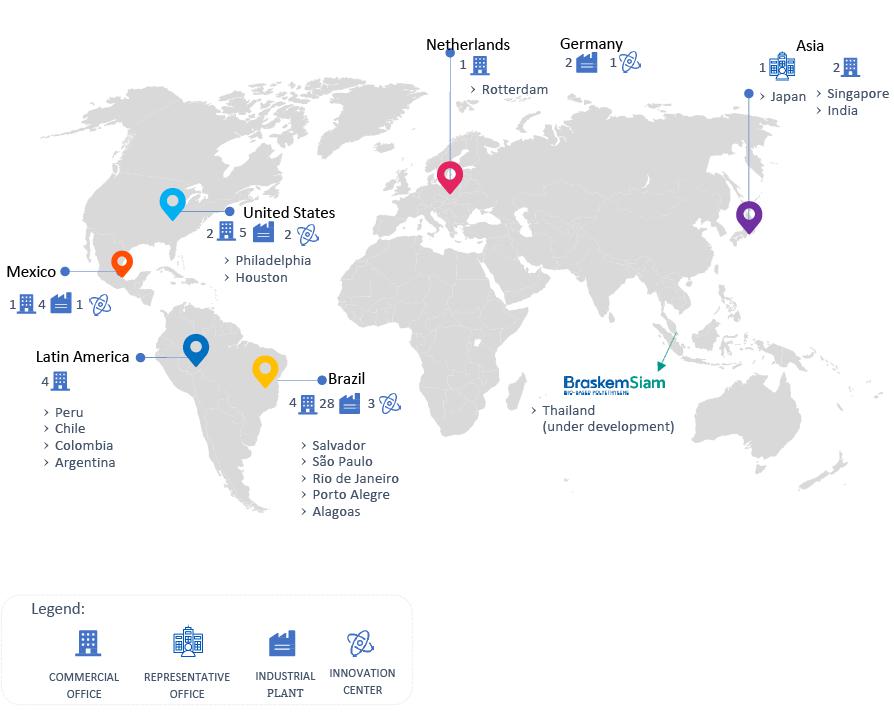
| F-16 | |
Braskem S.A.
Notes to the consolidated financial statements at December 31, 2025 All amounts in millions of Reais, except as otherwise stated
|
The petrochemical plants are dedicated to producing thermoplastic resins, such as polyethylene (“PE”), polypropylene (“PP”), polyvinyl chloride (“PVC”) and other basic petrochemicals.
Economic and financial condition of Braskem Idesa and substantial doubt related to its going concern
The financial information of Braskem Idesa, included in these consolidated financial statements, has been prepared on a going concern basis, which assumes the going concern and the realization of assets and settlement of liabilities and commitments in the ordinary course of the Braskem Idesa’s business.
The deterioration of Braskem Idesa’s economic and financial condition is set within an adverse operating environment observed over recent years, primarily characterized by a significant compression of petrochemical spreads, resulting from a prolonged industry downturn, driven by weaker-than-expected global demand and global oversupply, largely attributable to China and the USA, as well as an increase in the reference price of ethane related to the original contract with the local supplier. In addition, Braskem Idesa faced material constraints in access to ethane in Mexico, the main feedstock for its production process, which limited operational flexibility, reduced capacity utilization rates, and increased exposure to import feedstocks with lower economic competitiveness. Taken together, these factors resulted in operating cash generation consistently below the level required to support Braskem Idesa’s existing indebtedness, contributing to liquidity imbalance and an increased financial risk profile.
As a result, in September 2025, Braskem Idesa, announced that, with the objective of reviewing its current capital structure and liquidity conditions, it had engaged financial and legal advisors (Lazard Inc., Cleary Gottlieb Steen & Hamilton LLP, and Sainz Abogados) to support Braskem Idesa in assessing a broad range of economic and financial alternatives.
In October 2025, Braskem Idesa increased the amount of the Term
Loan originally contracted in May 2025, from R$
In November 2025, Braskem Idesa defaulted on interest payments related
to the bond maturing in 2029. As of December 31, 2025, the outstanding balance of such interest, recorded in current liabilities, amounted
to R$
As a result of this non-payment, the full outstanding balance of interest and principal of the bond may be accelerated by the bondholders, subject to the applicable contractual quorum. Since the decision to accelerate the debt is not under Braskem Idesa’s control and it does not have the ability to defer these payments for at least 12 months after the reporting date, the balance of this obligation was reclassified to current liabilities, as well as other borrowings that contain cross-default clauses in their contracts. The Company’s remaining balances of borrowings and debentures were not impacted.
Accordingly, Braskem Idesa fully reclassified the principal amount
of the bonds from non-current liabilities to current liabilities, totaling R$
In December 2025, Braskem Idesa provided certain holders of the 2029 and 2032 bonds (the ad-hoc group or “AHG”) with non-public information in the context of a potential reorganization of its capital structure. After the parties were unable to reach a consensus on the proposal submitted by Braskem Idesa, such information was subsequently disclosed to the market, including the discussion materials and the proposals presented.
| F-17 | |
Braskem S.A.
Notes to the consolidated financial statements at December 31, 2025 All amounts in millions of Reais, except as otherwise stated
|
Additionally, in February 2026, Braskem Idesa announced the non-payment of the interest due on the 2032 bond.
Finally, in light of the context presented, Braskem Idesa remains engaged in negotiations with the AHG, with a view to reorganizing its capital structure through judicial measures (e.g., Chapter 11 under U.S. Law), which may have potential impacts on the shareholding control of Braskem Idesa.
These events and conditions indicate the existence of a substantial doubt about the Braskem Idesa’s ability to continue as going concern.
In this context, Management performed an assessment of the recoverability of its assets based on the best estimates and assumptions available as of the reporting date.
As a result of this process, the following effects were recognized in the consolidated financial statements:
| · | Asset impairment – Braskem Idesa recognized an impairment loss of R$ |
| · | Valuation allowance for non-recoverability of deferred taxes – Braskem Idesa reassessed its projections of future taxable
profits and, based on the best estimates available as of the reporting date, concluded that there is no sufficient basis for the recovery
of a portion of its deferred tax assets. As a result, a valuation allowance in the amount of R$ |
Notwithstanding the substantial doubt, Management believes that the use of the going concern assumption remains appropriate in the preparation of these consolidated financial statements, considering that the Company and its subsidiary continue to operate, with ongoing activities and initiatives underway aimed to financial restructuring and the restoration of liquidity. Accordingly, these consolidated financial statements do not include adjustments that might be required if its subsidiary was unable to continue operating on a going concern basis.
Economic and financial condition of the Company and substantial doubt related to its going concern
The consolidated financial statements have been prepared under the going concern assumption, which presumes the continuity of operations and the realization of assets as well as the settlement of liabilities and commitments in the ordinary course of business of the Company.
As of December 31, 2025, the statement of financial position presents
negative net working capital (defined as total current assets less total current liabilities), amounting to R$
Borrowings and debentures are predominantly due in the long term, except for the reclassification effect related to Braskem Idesa’s borrowings, and more than 95% are denominated in US dollars, consistent with the Company's Financial Policy. Braskem believes that this US dollar exposure is comfortable since a significant portion of the projected operating cash flow for the upcoming years, intended for debt-service payments, is either directly or indirectly in US dollars.
In September 2025, the Company has engaged financial and legal advisors (Lazard Inc., Cleary Gottlieb Steen & Hamilton LLP, and E. Munhoz Advogados) to assist in preparing a diagnosis of the economic-financial alternatives to reorganize its capital structure.
| F-18 | |
Braskem S.A.
Notes to the consolidated financial statements at December 31, 2025 All amounts in millions of Reais, except as otherwise stated
|
Consistent with its cash management, in October 2025, the Company
has withdrawn the available stand-by credit facility in the amount of US$
At the end of December 2025, the Company's global credit ratings were assigned by the rating agencies Fitch Ratings and S&P Global as CC and CCC-, with no outlook and negative outlook, respectively. In this context, there was an increase in the balances of reserve accounts associated with the fulfillment of certain contractual obligations (see note 5), and guarantees were provided for specific energy trading contracts. As of December 31, 2025, no provisions were recorded, nor was the Company considered in default under these energy trading contracts. During 2025, there was a decrease in the availability of certain payment agreements with financial institutions related to forfaiting agreements (see note 14).
During 2025, the Company had access to a set of actions that contributed to strengthening its cash position for the coming years, include, among others:
PRESIQ: In December 2025, aiming to mitigate the effects of the termination of the REIQ (“Special Regime for the Chemical Industry”) and preserve the competitiveness of the Brazilian chemical industry, which is a strategic and essential sector for the Brazilian economy, Law No. 15,294/25 was enacted, establishing PRESIQ (“Special Program for the Sustainability of the Chemical Industry”). The program introduces an incentive regime aimed at fostering the Brazilian chemical industry, effective from January 1, 2027, through December 31, 2031, in two modalities: (i) industrial, related to the acquisition of certain chemical products, and (ii) investment, related to the expansion or modernization of installed capacity.
PE Antidumping Measures: In November 2024, SECEX Circular Letter No. 63/2024 was published, initiating an investigation to assess the existence of dumping in exports of polyethylene resins from the United States and Canada to Brazil, as well as the resulting injury to the domestic industry. Following the issuance of the preliminary determination of the investigation, the Trade Defense Department (“DECOM”) recommended the application of a provisional antidumping measure. In August 2025, the Executive Management Committee of the Foreign Trade Chamber (“GECEX”/“CAMEX”) approved the application of a provisional antidumping duty for a six-month period on imports of polyethylene resins originating from the United States and Canada. The investigation remains ongoing and is at a final stage.
List of Cyclical Trade Imbalances: In October 2025, GECEX approved, through GECEX Resolution No. 800/2025, the maintenance of the 20% import duty rate applicable to PE, PP, and PVC resins produced by the Company, effective through October 16, 2026, upon their inclusion in the List of Temporary Tariff Increases for Conjunctural Trade Imbalances.
These measures are strategic, as they contribute to preserving the Company’s competitiveness in the domestic market by mitigating the impacts of unfair competition and imports at artificially reduced prices.
Management assessed, in a comprehensive manner, the internal and external factors capable of affecting the going concern assumption. Based on available information and the projections set forth in the approved business plan, Management identified a high level of cash utilization over the assessment horizon, considering both existing cash balances and projected operating-cycle inflows. Key elements considered include:
| · | The prolonged downturn cycle in the petrochemical industry, with structurally compressed spreads; |
| · | Cash consumption associated with debt service, particularly recurring interest payments; |
| · | Cash requirements related to the obligations arising from the Geological Event in Alagoas; |
| · | Cash needs for the maintenance of operating assets, essential for ensuring operational continuity and safety; |
| F-19 | |
Braskem S.A.
Notes to the consolidated financial statements at December 31, 2025 All amounts in millions of Reais, except as otherwise stated
|
| · | Credit rating downgrade; and |
| · | Maturity of the US$ |
These factors, as reflected in the approved business plan, indicate increasing pressure on liquidity and guide Management’s actions aimed at continuously adjusting the Company’s financial position to the current challenges faced by the global chemical industry, as described below.
Measures to strengthen financial resilience and capital structure reorganization
Among the initiatives currently under development, the planned reorganization of the capital structure is noteworthy, as it depends on variables outside the Company’s exclusive control.
The assessment of capital structure reorganization began in September 2025, when the Company disclosed to the market the engagement of specialized financial and legal advisors to support a comprehensive diagnosis of the available economic-financial options, with a focus on strengthening liquidity in the capital structure.
The Company and its specialized financial and legal advisors have been progressing in a structured manner in the formulation of a comprehensive capital structure reorganization plan and in negotiations with the creditors’ advisors.
Regulatory measures
For the year 2026, a sector cap of R$
Potential Transaction involving a change in Braskem’s controlling shareholder
In December 2025, Novonor informed the Company of the execution of a binding agreement between a FIDC managed by Vórtx Capital and advised by IG4 Sol Ltda., and Novonor’s creditor banks, for the acquisition of all loans secured by shares issued by Braskem and held by NSP Investimentos S.A., as well as the signing of an exclusivity agreement for negotiating a potential corporate transaction involving such shares (the “Transaction”).
On December 23, 2025, the Transaction was submitted to the Administrative Council for Economic Defense (Conselho Administrativo de Defesa Econômica – “CADE”) for clearance by the competition authority. In February 2026, Petrobras informed that it would not exercise its preemptive rights, and, subsequently, in March 2026, the CADE’s General Superintendence approved the Transaction without restrictions, as evidenced by the certificate of final and unappealable decision issued on March 25, 2026.
The Transaction has already been approved by the competition authorities in the United States, Mexico, and the European Union, with approval still pending before the European Commission in connection with the Foreign Subsidies Regulation (FSR).
These events and conditions indicate the existence of a substantial doubt about the Companys’s ability to continue as going concern.
| F-20 | |
Braskem S.A.
Notes to the consolidated financial statements at December 31, 2025 All amounts in millions of Reais, except as otherwise stated
|
Given this substantial doubt, Management reassessed, for accounting purposes, the fulfillment of the “highly probable transactions” criterion required under IFRS 9 for the continuation of its hedge accounting program, which resulted in the prospective discontinuation, as of December 31, 2025, of the hedge accounting related to certain future revenues of Braskem S.A.
It should be emphasized that this discontinuation results exclusively from the assessment of compliance with applicable accounting requirements in a context of heightened uncertainty and does not alter the expectation of realization of such transactions, which remain forecast and included in the approved business plan.
The financial statements do not include any adjustments to reflect possible future effects over the recoverability and classification of assets or amounts and classification of liabilities that may result from material uncertainty related to the Company’s ability to continue operating normally.
Industrial transformation in Alagoas
In September 2025, the Company, in line with its commitment to achieving competitiveness across all stages of its production process, initiated steps to convert the operation of its chlor-alkali plant in Alagoas into a facility dedicated to the handling of large volumes of ethylene dichloride (“EDC”).
As part of this transformation, the production of chlorine and caustic soda has been mothballed. Following this decision, the Company will import all of its EDC requirements, the raw material for PVC production, through a long-term contract signed with an international supplier, thereby strengthening the competitiveness of its PVC production.
The assets dedicated exclusively to the production of chlorine and caustic soda have been mothballed, and part of the unit’s infrastructure has been redirected to support EDC handling operations. This aims to provide greater flexibility in the logistics of this material, as well as to ensure increased operational efficiency and better integration within the PVC production chain. The mothballed assets are part of the cash-generating unit of the Northeastern Petrochemical Complex.
Given that, as of December 31, 2025, there was no expectation of
recovering the mothballed assets, the Company recognized impairment losses, write-off of goodwill, and other provisions, amounting R$
| Description | Classification in profit or loss for the period | Amount |
| Write-off of property, plant and equipment | Cost of goods sold | |
| Inventory write-off | Cost of goods sold | |
| Inventory write-off | Other expenses | |
| Impairment loss on goodwill | Other expenses | |
| Other provisions | Other expenses | |
| Total | ||
Tax Reform in Brazil
The enactment of Constitutional Amendment No. 132/2023 restructured the Brazilian tax system by replacing the main consumption taxes with a dual VAT model. In 2025, Complementary Law No. 214/2025 was issued, regulating the reform and establishing the Tax on Goods and Services (“IBS”), the Contribution on Goods and Services (“CBS”), and the Selective Tax, thereby setting the framework for the transition scheduled beginning in 2026. In 2026, Complementary Law No. 227/2026 was enacted, creating the IBS Managing Committee and introducing additional regulatory aspects of the reform.
| F-21 | |
Braskem S.A.
Notes to the consolidated financial statements at December 31, 2025 All amounts in millions of Reais, except as otherwise stated
|
The reform is currently in its early implementation phase, with test rates scheduled only for 2026 and a gradual schedule extending to 2033. In 2025, the Company carried out system updates and adjustments to comply with the requirements applicable from 2026 onwards.
The financial statements presented herein do not reflect any effects of the tax reform, as the changes do not yet give rise to material accounting or financial impacts in the 2025 fiscal year. The Company will continue to monitor regulatory developments and assess potential operational, tax, and system effects throughout 2026.
Uncertainties arising from geopolitical conflicts
The current global environment remains subject to geopolitical tensions in regions that are strategic for energy markets, particularly the Middle East, which has generated additional volatility in oil, natural gas, and petrochemical feedstock prices. Such events have translated into volatility (increases) in international prices of resins and chemical products sold by the Company, as well as uncertainties regarding potential logistical restrictions on relevant international trade routes.
The Company has been continuously and diligently monitoring potential scenarios and the associated impacts of these dynamic events, assessing their effects on the conduct of its operations. The financial statements do not reflect any effects arising from these events.
| F-22 | |
Braskem S.A.
Notes to the consolidated financial statements at December 31, 2025 All amounts in millions of Reais, except as otherwise stated
|
| 2 | Basis of preparation of the financial statements |
2.1 Declaration of compliance
The consolidated financial statements (“financial statements”) have been prepared and are being presented in accordance with the IFRS Accounting Standards as issued by the International Accounting Standards Board (“IFRS Accounting Standards”).
2.2 Basis of presentation
The financial statements were prepared under the historical cost basis, unless stated otherwise in the accounting policies. These financial statements have been prepared on a going concern basis.
The significant accounting policies applied in the preparation of these financial statements were included in the respective notes and are consistent in the fiscal years presented.
The issue of these financial statements was authorized by the Executive Board on April 20, 2026.
| F-23 | |
Braskem S.A.
Notes to the consolidated financial statements at December 31, 2025 All amounts in millions of Reais, except as otherwise stated
|
2.3 Basis of consolidation
The consolidated financial statements include the financial statements of Braskem S.A. and the following entities:
| Total and voting interest (%) | |||||||||||
| Headquarter | Functional currency (i) | Dec/25 | Dec/24 | Dec/23 | |||||||
| Direct subsidiaries | |||||||||||
| |
|
|
| ||||||||
| |
|
|
| ||||||||
| |
|
|
| ||||||||
| |
|
|
| ||||||||
| |
|
|
| ||||||||
| |
|
|
| ||||||||
| |
|
|
| ||||||||
| |
|
| |||||||||
| |
|
|
| ||||||||
| |
|
|
|
| |||||||
| Special Purpose Entities | |||||||||||
| |
|
|
| ||||||||
| |
|
|
| ||||||||
| Indirect subsidiaries | |||||||||||
| |
|
|
| ||||||||
| |
|
|
| ||||||||
| |
|
|
| ||||||||
| |
|
|
| ||||||||
| |
|
|
| ||||||||
| |
|
|
| ||||||||
| |
|
|
| ||||||||
| |
|
|
| ||||||||
| |
|
|
| ||||||||
| |
|
|
| ||||||||
| |
|
|
| ||||||||
| |
|
|
| ||||||||
| |
|
|
| ||||||||
| |
|
| |||||||||
| |
(ii) | |
| ||||||||
| |
(ii) | |
| ||||||||
| |
|
|
|
| |||||||
| (i) | The subsidiaries have the following functional currency: Brazilian real (“R$”), US dollar (“US$”), Mexican peso (“MXN”), Chilean peso (“CLP”), Argentinean peso (“ARS”), Euro (“EUR”), and Indian rupee (“INR”). |
| (ii) | In June 2025, Braskem Netherlands divested its entire interest in the entity B&TC and its wholly owned subsidiary, ER Plastics. As a result of this operation, the Company recognized a loss of R$96, which was recorded under other expenses in the statement of profit or loss for the year. |
| F-24 | |
Braskem S.A.
Notes to the consolidated financial statements at December 31, 2025 All amounts in millions of Reais, except as otherwise stated
|
(a) Subsidiaries
The Company controls an entity when it is exposed to, or entitled to, the variable returns originating from its involvement with the entity and has the capacity to affect such returns by exercising its power over the entity. The financial information of the subsidiaries are included in these consolidated financial statements as from the date the Company obtains control until the date of the loss of control.
(b) Equity method investees
The Company’s investments in entities with accounting treatment using the equity method consist of their interests in associates and joint ventures.
Associates are those in which the Company, directly or indirectly, has significant influence, but not individual control or shared control, over the main financial and operating policies. To be classified as a joint venture, a contractual agreement must exist that gives the Company shared control of the entity and granting to the Company the right to the net assets of the joint venture, and not the right to its specific assets and liabilities.
Such investments are initially recognized at cost, which includes the expenses with the transaction costs. After initial recognition, the financial statements include the Company’s interest in the net profit or loss for the fiscal year profit or loss and other comprehensive income (loss) (“OCI”) of equity-accounted investees, in the investee until the date on which the significant influence or joint control ceases to exist.
(c) Conversion of functional currency to presentation currency
The assets and liabilities of foreign operations are translated into Brazilian real at the exchange rates at the reporting date. The income and expenses of foreign operations are translated into Brazilian reais at the average monthly exchange rates. Foreign currency differences from translation to presentation currency are recognized in other comprehensive (loss) income.
(d) Transactions eliminated in consolidation
Intragroup balances and transactions, as well as any unrealized revenues or expenses arising from these transactions, are fully eliminated in the financial statements, except for foreign exchange. Unrealized gains originating from transactions with investees assessed using the equity method are eliminated against the investment amount proportionately to the Company’s interest. Unrealized losses are eliminated based on the same criterion, but only to the extent that there is no evidence of impairment loss.
| F-25 | |
Braskem S.A.
Notes to the consolidated financial statements at December 31, 2025 All amounts in millions of Reais, except as otherwise stated
|
2.4 Functional currency
These financial statements are presented in Brazilian real, which is the functional currency of the Company. All amounts have been rounded to the nearest million, unless otherwise stated.
2.5 New standards
During the current fiscal year, the Company identified several amendments to IFRSs that became effective on January 1, 2025. Furthermore, new standards and amendments that have been issued but are not yet in effect have also been identified. Each is detailed below, along with management’s evaluation:
| Standard | Description of changes and management's evaluation | Effective date |
|
measurement. A currency is considered convertible when it can be exchanged for another currency through a market or exchange mechanism that establishes enforceable rights and obligations. When a currency is not convertible into another, the exchange rate must be estimated. The changes do not affect the Company, as it does not conduct operations in currencies that lack exchangeability. | ||
| F-26 | |
Braskem S.A.
Notes to the consolidated financial statements at December 31, 2025 All amounts in millions of Reais, except as otherwise stated
|
| · Present two mandatory subtotals in the statement of profit or loss: operating profit and profit before financing and income taxes. | ||
| · Classify income and expenses into specific categories: operating, investing, and financing. | ||
| · Include in the notes to the financial statements the management performance measures (“MPM”). | ||
| · Improve the clarity and comparability of the disclosed information. | ||
| · Changes to the statement of cash flows, so that interest paid is classified as a financing activity and interest and dividends received are classified as investing activities, provided that the Company’s main activities do not consist of investing in assets or providing financing to clients. | ||
| As a result of the changes, the Company identified the following as the main impacts: | ||
| · Restatement of the statement of profit or loss upon initial adoption, taking into account that certain elements of the financial result will be reclassified to operating and investing categories. The main impacts are related to the reclassifications of the hedge accounting program and the foreign exchange variations of assets and liabilities. This is in addition to the presentation of the required subtotals. | ||
| · As of the reporting date, the Company has identified recurring EBITDA as a management performance measure to be disclosed upon initial adoption. | ||
| · Finally, the Company anticipates impacts on the presentation of the Statement of Cash Flows due to the reclassification of interest paid and interest received, which are currently classified as operating activities, but will now be classified as financing and investing activities, respectively. | ||
| F-27 | |
Braskem S.A.
Notes to the consolidated financial statements at December 31, 2025 All amounts in millions of Reais, except as otherwise stated
|
| 3 | Application of estimates and judgments |
In preparing these financial statements, Management has used judgments and estimates that affect the application of the accounting policies and the reported amounts of assets, liabilities, income and expenses. Actual results may differ from the estimates due to variations in assumptions, conditions or information used in the measurement process.
Critical estimates and judgments are reviewed on an ongoing basis and are based on historical experience and expectations that are deemed reasonable on future events. Any revisions to estimates is recognized prospectively.
Main judgments and critical estimates applied by the Company in the preparation of these financial statements are presented in the following notes:
a. Judgments
Information about judgments made on applying accounting policies that have significant effects on amounts recognized in the financial statements are included in the following notes:
Note 1: Going Concern: whether there are material uncertainties that may raise significant doubt about the ability of the Company and its subsidiaries to continue operating as a going concern.
Note 13 (ii): lease term: whether the Company will exercise renewal options.
b. Assumptions and estimates uncertainties
Information on assumptions and uncertainties of estimates that present a significant risk of resulting in material adjustments in asset and liability accounting values in the next fiscal years is included in the notes below:
Note 11 (b) and 12 (b): impairment test of property, plant and equipment, intangible assets and goodwill: determination of the discount rate and key assumptions for measuring their recoverable amounts;
Note 18.3: fair value of financial instruments: measurement of the fair value of financial instruments;
Note 20.2: recognition of deferred tax assets: expectation of future taxable income against which deductible temporary differences and tax losses carryforward can be utilized;
Note 22: recognition and measurement of provisions for tax lawsuits: main assumptions as to the probability and magnitude of the outflow of resources; and
Note 23: recognition and measurement of provision for the geological event in Alagoas: uncertainties regarding the outcome of actions to close and monitor wells, future studies by experts, changes related to the dynamics of the geological event and lawsuits which could affect the probability and magnitude of the outflow of resources.
| F-28 | |
Braskem S.A.
Notes to the consolidated financial statements at December 31, 2025 All amounts in millions of Reais, except as otherwise stated
|
| 4 | Cash and cash equivalents |
| 2025 | 2024 | |||
| In Brazil | ||||
| Cash | |
|
||
| Cash equivalents | |
|
||
| Abroad (i) | ||||
| Cash | |
|
||
| Cash equivalents | |
|
||
| Total | |
|
||
(i) On December 31, 2025, includes the amount of R$ 198 of cash and R$ 35 of cash equivalents (2024: R$ 941 of cash and R$ 779 of cash equivalents) of Braskem Idesa and its subsidiaries, which cannot be used by the other subsidiaries of the Company.
Cash equivalents in Brazil are represented mainly by fixed-income instruments and time deposits, such as bank deposit certificates (“CDBs”), treasury bonds, financial bills, debentures, and shares of fixed income investment funds. These assets may be directly held by the Company or through its exclusive funds, FIM Júpiter and FIM Netuno. Average yield of cash equivalents is presented jointly with financial investments (see note 5).
The cash equivalents in foreign market consist of time deposits and interest-bearing accounts held outside of Brazil.
| 5 | Financial investments |
| Consolidated | |||
| 2025 | 2024 | ||
| Fair value through profit or loss | |||
| LFT´s and LF´s | (i) | |
|
| Restricted funds investments | (ii) | ||
| Other | |||
| Total | |
|
|
| Current assets | |
|
|
| Non-current assets | (iii) | ||
| Total | |
|
|
(i) These refer to Brazilian floating-rate government bonds (“LFTs”) issued by the Brazilian federal government and floating-rate bonds (“LFs”) issued by financial institutions, whose purpose is the immediate negotiation or future sale.
(ii) Includes the following amounts: R$ 138 (2024: R$ 115) in restricted funds used in the Program for Relocation of Residents in Alagoas; and R$ 384 (2024: R$ 230) regarding reserve accounts linked to the fulfilment of contractual obligations.
(iii) On the statement of financial position, the balance of non-current assets is presented under Other receivables.
In the fiscal year ended December 31, 2025, financial investments
and cash equivalents (Note 4) in Brazilian reais had an average yield of
| F-29 | |
Braskem S.A.
Notes to the consolidated financial statements at December 31, 2025 All amounts in millions of Reais, except as otherwise stated
|
| 6 | Trade accounts receivable |
The Company’s average receivables term is 22 days (2024: 21 days) for the domestic market and 50 days (2024: 42 days) for the export market, therefore, the carrying value of the trade accounts receivable approximates their fair value.
The Company realizes part of its trade accounts receivable through the sale of trade accounts receivable to funds and financial institutions that acquire receivables. These operations are not entitled to recourse and the risks and benefits over the receivables are transferred and the trade accounts receivable are derecognized.
As of December 31, 2025, the amounts of trade accounts receivable
transferred and derecognized maturing after December 31, 2025, were R$
Loss recognized at the date of transfer of the abovementioned receivables
was R$
| Note | 2025 | 2024 | ||||
| Customers | ||||||
| Domestic market | ||||||
| Third parties | ||||||
| Related parties | 8 | |
|
|||
| Foreign market | ||||||
| Third parties | ||||||
| Expected credit losses | (i) | ( |
( |
|||
| Total | ||||||
(i) The Company recognizes provision for expected credit losses (“ECL”) for trade accounts receivable based on the criteria and assumptions presented below, by applying a matrix of ECL measurement, using information that reflect current and future conditions, to the extent such data are available.
| (ii) Criterion | Assumptions |
| Receivables overdue for up to 180 days and coming due, weighing each client’s operation risk | Percentages defined for receivables are based on the historical average delay in the last two years for the similar maturity periods and risk rating. |
| Receivables under renegotiation process | The provisioning percentage for renegotiations considers a performance study of past renegotiations, adjusted to each specific case. |
| Receivables overdue for more than 180 days, receivables in collection by the courts and receivables from clients classified as very high risk | For these receivables, the Company understands there was significant deterioration of credit risk, and the loss is estimated at the total value of the receivables. |
In credit risk management, guarantees are pledged by the counterparties, which mainly consist of sureties and letter of credit granted by prime banks (Only banks with the minimum risk classification equal to BBB- by Fitch Rating or BBB- by Standard & Poor’s), credit insurance and mortgage assets. The guarantees obtained by the Company did not change significantly as of December 31, 2025, and 2024. The guarantees received are considered in measuring both the credit risk of each counterparty and the ECL.
| F-30 | |
Braskem S.A.
Notes to the consolidated financial statements at December 31, 2025 All amounts in millions of Reais, except as otherwise stated
|
Details of the policy for defining credit risk per client are disclosed in Note 18.6.
The table below shows ECL by maturity:
| 2025 | 2024 | ||||||||||
| Trade accounts receivable |
Expected credit losses |
Total | Trade accounts receivable |
Expected credit losses |
Total | ||||||
| Accounts receivables not past due | |
( |
|
|
( |
|
|||||
| Past due securities: | |||||||||||
| Up to 90 days | ( |
( |
|||||||||
| 91 to 180 days | ( |
( |
|||||||||
| More than 180 days | ( |
( |
|||||||||
| Total | |
( |
|
|
( |
|
|||||
The changes in the expected credit losses are presented below:
| 2025 | 2024 | 2023 | ||||
| Balance of provision at the beginning of the year | ( |
( |
( |
|||
| Provision in the year | (i) | ( |
( |
|||
| Reversal in the year | ||||||
| Write-offs | ||||||
| Additions by business combination | ( |
|||||
| Write-off due to the disposal of subsidiaries | ||||||
| Balance of provision at the end of the year | ( |
( |
( |
|||
(i) In 2025, the Company set up an additional provision for doubtful accounts in the amount of R$ 120, related to a single client undergoing court-supervised reorganization.
Write-off
The gross carrying amount of a financial asset is written off when the Company has no reasonable expectations of recovering a financial asset in its entirety or a portion thereof.
| 7 | Inventories |
| 2025 | 2024 | ||
| Finished goods | |||
| Semi-finished goods | |
|
|
| Raw materials, production inputs and packaging | |||
| Maintenance materials | |
|
|
| Advances to suppliers | |
||
| Imports in transit | |
||
| Total |
Inventories are measured at the lower of cost and net realizable value. The cost of inventories is recorded at the weighted average cost. In the case of manufactured inventories, besides raw materials and other consumables, cost includes an appropriate share of production overheads based on normal operating capacity.
The provision for the net realizable value has increased by R$
| F-31 | |
Braskem S.A.
Notes to the consolidated financial statements at December 31, 2025 All amounts in millions of Reais, except as otherwise stated
|
| 8 | Related parties |
Related-party transactions are carried out at previously agreed prices and conditions, in accordance with the Company's policy on related-party transactions. Related-party transactions mainly refer to, but are not limited to:
- Receivables: (i) receivables for sale of chemicals, petrochemicals, energy, resins and other products/services; and (ii) dividends and interest on equity receivable.
- Payables: (i) payables for acquisition of raw materials, finished products, consumer goods, services of transportation, storage, maintenance of equipment and other services; (ii) loans payable; (iii) leases; (iv) and dividends payable.
- Transactions in the fiscal year: (i) sale of chemicals, petrochemicals, lease services and other products/services; (ii) acquisition of raw materials, finished products and services; and (iii) charges related to loans and exchange variation.
| F-32 | |
Braskem S.A.
Notes to the consolidated financial statements at December 31, 2025 All amounts in millions of Reais, except as otherwise stated
|
| Balances at December 31, 2025 | Balances at December 31, 2024 | |||||||||||||||
| Assets | Liabilities | Assets | Liabilities | |||||||||||||
| Current | Non-Current | Current | Non-Current | Current | Non-Current | Current | Non-Current | |||||||||
| Associates companies, Jointly-controlled investment and Related companies | ||||||||||||||||
| Novonor and subsidiaries and associates | |
|||||||||||||||
| Petrobras and subsidiaries | |
|
|
|
|
|||||||||||
| Others (i) | |
|
|
|
||||||||||||
| Total | |
|
|
|
|
|||||||||||
| Year ended December 31, 2025 | ||||||||||
| Sales of products | Purchases of raw materials, finished goods services and utilities | General and administrative expenses | Financial Income (expenses) | Other operating income (expenses), net | ||||||
| Associates companies, Jointly-controlled investment and Related companies | ||||||||||
| Novonor and subsidiaries and associates | |
( |
( |
|||||||
| Petrobras and subsidiaries | |
( |
( |
|||||||
| Others (i) | |
( |
( |
( |
||||||
| Total | |
( |
( |
( |
||||||
| 0 | 0 | 0 | 0 | |||||||
| Year ended December 31, 2024 | ||||||||||
| Sales of products | Purchases of raw materials, finished goods services and utilities | General and administrative expenses | Financial Income (expenses) | Other operating income (expenses), net | ||||||
| Associates companies, Jointly-controlled investment and Related companies | ||||||||||
| Novonor and subsidiaries and associates | ( |
|||||||||
| Petrobras and subsidiaries | |
( |
( |
|||||||
| Others (i) | |
( |
( |
( |
||||||
| Total | |
( |
( |
( |
||||||
| F-33 | |
Braskem S.A.
Notes to the consolidated financial statements at December 31, 2025 All amounts in millions of Reais, except as otherwise stated
|
| Year ended December 31, 2023 | ||||||||||
| Sales of products | Purchases of raw materials, finished goods services and utilities | General and administrative expenses | Financial Income (expenses) | Other operating income (expenses), net | ||||||
| Associates companies, Jointly-controlled investment and Related companies | ||||||||||
| Novonor and subsidiaries and associates | ( |
( |
||||||||
| Petrobras and subsidiaries | |
( |
||||||||
| Others (i) | |
( |
( |
|
||||||
| Total | |
( |
( |
|
||||||
(i) Borealis, Idesa Group, RPR, Santa Amélia, Santo Abelardo, Santo Artur, São Guilherme, São Galdino, São Januário, Serra das Almas, Jacobina, Bioglycols e Cetrel.
| F-34 | |
Braskem S.A.
Notes to the consolidated financial statements at December 31, 2025 All amounts in millions of Reais, except as otherwise stated
|
(a) New and/or renewed agreements with related companies
As provided for in Braskem’s bylaws, the Board of Directors
has the exclusive power to approve any contract with related parties that exceed R$
The related parties that have significant relationship with the Company are as follows:
Novonor and subsidiaries and associates:
- Tenenge Montagem e Manutenção Ltda. (“Tenenge”)
In
February 2022, the Company entered into an electromechanical assembly service agreement to expand the production capacity of the Ethylene-Ethanol
Unit located in Trunfio, Rio Grande do Sul with Tenenge starting on February 9, 2022 and concluded on July 31, 2023. The amount of the
agreement was R$
Petrobras and indirect subsidiaries:
- Companhia de Gás do Estado do Rio Grande do Sul (“Sulgás”)
In March 2022, the Company entered
into an agreement with Sulgás to acquire natural gas, via a local gas distribution pipeline, concluded in June 2023. The
amount of the agreement was R$
- Gás de Alagoas S.A. (“Algás”)
In March 2022, the Company entered into an
amendment to the agreement with Algás for the supply of natural gas to Braskem units located in the state of Alagoas, via a local
gas distribution pipeline, concluded in December 2024. The amount of the agreement was R$
Since July 2022, Petrobras has no equity interest in Sulgás and Algás and they ceased to be a related party to Braskem.
- Petrobras Transporte S.A. (“Transpetro”)
In June 2024, the Company signed the second
amendment to extend the term of the service agreement with Transpetro, for ship loading and unloading service through pipeline and product
storage in tanks, with duration until June 30, 2028. The maximum amount of the agreement is estimated at R$
-Transportadora Brasileira Gasoduto Brasil-Bolívia S.A. (“TBG”)
In October 2024, Voqen entered into a firm natural gas transportation
service agreement with TBG, with duration until December 2028. The maximum amount of the agreement is estimated at R$
- Refinaria Capuava (“RECAP”) and Refinaria Henrique Lage (“REVAP”)
In November 2024, the Company entered into the agreement for Braskem
to purchase and Petrobras to sell light hydrocarbons from RECAP and REVAP refineries. This agreement replaces the previous one, which
was terminated to include price parameter adjustment clauses, and is valid until January
2028. The maximum amount of the new agreement is estimated at R$
| F-35 | |
Braskem S.A.
Notes to the consolidated financial statements at December 31, 2025 All amounts in millions of Reais, except as otherwise stated
|
- Petróleo Brasileiro S.A. (“Petrobras”)
In August 2025, Voqen signed an agreement with Petrobras for the purchase
of natural gas under the 'firm, non-interruptible' modality, to supply Braskem's industrial units located in Rio Grande do Sul, which
are Voqen's customers. The agreement is valid until December 31, 2026. The estimated amount of the agreement is R$
Non-controlling shareholders of Braskem Idesa:
- Grupo Idesa, S.A. de C.V.
- Etileno XXI, S.A. de C.V.
Loan payable to the non-controlling shareholders of Braskem Idesa, with contractual interest rate of 7% p.a. These resources were used by Braskem Idesa to finance the construction of its operational assets. In October 2024, the non-controlling shareholders capitalized the principal amount of these loans, leaving only the interest accrued up to the capitalization date outstanding, with an expected payment by March 31, 2032.
(d) Key management personnel compensation
The expenses related to the remuneration of key management personnel, including the Board of Directors, the Chief Executive Officer and vice-presidents, recorded in the profit or loss for the year, were as follows:
| 2025 | 2024 | 2023 | |||
| Statement of profit or loss transactions | |||||
| Remuneration | |||||
| Wages and recurring benefits | |
||||
| Short-term variable compensation | |
||||
| Long term incentive plan | |
||||
| Total | |
||||
Compensation of the Company’s key management personnel includes salaries, short and long-term incentives, non-cash benefits and contributions to a post-employment defined benefit plan (see Note 24.2).
| F-36 | |
Braskem S.A.
Notes to the consolidated financial statements at December 31, 2025 All amounts in millions of Reais, except as otherwise stated
|
| 9 | Taxes recoverable |
| 2025 | 2024 | |||
| Parent Company and subsidiaries in Brazil | ||||
| Value-added tax on sales and services (ICMS) | |
|||
| ICMS - credits from PP&E | |
|||
| ICMS Supervening Events | |
|||
| PIS and COFINS (i) | |
|
||
| PIS and COFINS - credits from PP&E | |
|||
| Other | |
|||
| Foreign subsidiaries | 0 | |||
| Value-added tax ("IVA") | |
|
||
| Other | |
|||
| Total | |
|||
| Current assets | |
|||
| Non-current assets | |
|||
| Total | |
|||
| (i) | The main variations in the balances of PIS and COFINS arise essentially from a final court decision in favor of the Company, which recognized the right to deduct the CIDE gasoline tax paid from the amount of PIS and COFINS due on gasoline sales, thereby ensuring the recovery of amounts collected since 2004. As a result of this decision, in December 2025 the Company recognized a tax credit totaling R$ 2,686, of which R$ 626 were classified as current assets and R$ 2,060 as non-current assets. The impacts on the statement of profit or loss for the year were as follows: (i) R$ 1,670 recognized in other income; (ii) R$891 recorded as financial income, related to the monetary adjustment of such tax credits; and (iii) R$125 recognized in net revenue, related to credits of the current year. These credits may be realized through the offset against PIS/COFINS payable or through compensation with federal taxes, in accordance with the applicable legislation. Additionally, the Company recognized an amount of R$ 846 related to REIQ. The effects of this recognition on the statement of profit or loss for the year comprised: (i) R$ 465 recorded in other income; (ii) R$ 132 recognized as financial income, related to the monetary adjustment of such tax credits; and (iii) R$ 249 recognized in net revenue, related to credits of the current year. REIQ-related credits were determined in accordance with the applicable legislation and are subject to offset against federal taxes, observing the relevant deadlines and other applicable legal conditions. |
In addition, the Company also recognized others tax credits recorded in the 2025 fiscal year, as disclosed in Note 30.
Notwithstanding the effects aforementioned,
the Company calculates PIS and COFINS credits pursuant to the non-cumulative tax regime, based on the concept of inputs as defined by
the Superior Court of Justice in REsp No. 1,221,170 (binding precedent). In 2025 and 2024, the credits recognized amounted to approximately
R$
| 10 | Investments |
See the accounting policy in Note 2.3 Basis of Consolidation.
(a) Information on investments
| Net profit (loss) for the year | Equity | ||||||||||
| 2025 | 2024 | 2023 | 2025 | 2024 | |||||||
| Jointly-controlled investments | |||||||||||
| RPR | (i) | ( |
( |
( |
|||||||
| Bioglycols LLC | (ii) | ( |
( |
( |
|||||||
| Associates | |||||||||||
| Borealis | (iii) | ||||||||||
| Plaind | (iv) | ||||||||||
(i) RPR's main activities are the refining, processing, sale and import of oil, its byproducts and correlated products. The percentage of Braskem's equity interest in the capital of RPR on December 31, 2025 and 2024 is 33.20%. In March 2026, the Company carried out a capital contribution in RPR in the amount of R$ 150. The Company’s ownership interest remained unchanged, as equivalent contributions were made by the other shareholders.
(ii) Bioglycols’s main activities are the production and marketing of bio-MEG (monoethylene glycol) and bio-MPG (monopropylene glycol). The percentage of Braskem's equity interest in the capital of Bioglyclos on December 31, 2025 and 2024 is 51%.
(iii) Borealis’ main activities are the production and marketing of petrochemical products, byproducts and correlated products. The percentage of Braskem’s ownership interest in the capital of Borealis on December 31, 2025 and 2024 is 20%.
(iv) Plaind is a holding company established and maintained to manage the control of Cetrel S.A. and DAC S.A. Its shares were received by the Company as part of the consideration for the sale of control of Cetrel. As of December 31, 2025 and 2024, Braskem holds a 49.9% equity interest in Plaind's capital stock.
| F-37 | |
Braskem S.A.
Notes to the consolidated financial statements at December 31, 2025 All amounts in millions of Reais, except as otherwise stated
|
(b) Changes in investments
| Note | Borealis | RPR | Bioglycols LLC | GRI (i) | Plaind | Other | Total | |
| Balance at December 31, 2023 | |
|
|
| ||||
| Dividends and interest on equity | ( |
( | ||||||
| Results from equity-accounted investees | |
( |
( |
|
( |
( | ||
| Other comprehensive income | ( |
( |
| |||||
| Capital increase | |
|
| |||||
| Other | ( |
( |
( | |||||
| Balance at December 31, 2024 | |
|
|
|
| |||
| Dividends and interest on equity | ( |
( |
( | |||||
| Results from equity-accounted investees | |
( |
( |
|
( |
| ||
| Other comprehensive income | ( |
|||||||
| Impairment | | |||||||
| Additions of investments | | |||||||
| Currency translations adjustments | ( |
( | ||||||
| Others | |
|
| |||||
| Balance at December 31, 2025 | |
|
|
| ||||
| (i) Incorporated by Plaind. |
(c) Impacts on the consolidation of Braskem Idesa
The Company presents the summarized financial information of the subsidiary and its subsidiaries, which has a significant non-controlling interest:
| Braskem Idesa Consolidated (i) | ||
| Statements of financial position | 2025 | 2024 |
| Current assets | ||
| Non-current assets | ||
| Total assets | ||
| Current liabilities | ||
| Non-current liabilities | ||
| Total liabilities | ||
| Shareholders' equity | ( |
|
| Total liabilities and shareholders' equity | ||
| F-38 | |
Braskem S.A.
Notes to the consolidated financial statements at December 31, 2025 All amounts in millions of Reais, except as otherwise stated
|
| Braskem Idesa Consolidated (i) | ||||
| Statements of financial position | 2025 | 2024 | 2023 | |
| Statement of profit or loss | ||||
| Net revenue | ||||
| Loss for the year | ( |
( |
( |
|
| Statement of cash flows | ||||
| Net cash generated from (used in) operating activities | ( |
( |
||
| Net cash (used) in investing activities | ( |
( |
( |
|
| Net cash generated from (used in) financing activities | ( |
|
|
|
| Exchange variation on cash and cash equivalents | ( |
|
|
|
| Increase (decrease) in cash and cash equivalents | ( |
|
( |
|
| (i) | The financial information presented considers Braskem Idesa together with its subsidiaries Braskem Idesa Serviços and Terminal Química, and does not include the effects of consolidation at Braskem S.A. |
| 11 | Property, plant and equipment |
Items of property, plant and equipment are measured at the historical cost of acquisition or construction, which includes capitalized borrowing costs, less accumulated depreciation and any accumulated impairment losses.
The machinery, equipment and facilities require inspections, replacement of components and maintenance at regular intervals. The Company makes shutdowns at regular intervals that vary from two to six years to perform these activities. These shutdowns can involve the plant as a whole, a part of it, or only relevant pieces of equipment, such as industrial boilers, turbines and tanks. Costs with each scheduled shutdown are included in property, plant and equipment items that were the stoppage’s subject matter and are fully depreciated until the beginning of the following related stoppage.
Depreciation starts when the assets become available and is calculated using the straight-line method, based on the useful life estimated by the Company’s technicians in the management of the plants. The useful lives of assets are reviewed at each reporting date.
The main factors taken into consideration in the definition of the useful life of the assets that compose the Company’s industrial plants are the information of manufacturers of machinery and equipment, level of the plants’ operations, quality of preventive and corrective maintenance and the prospects of technological obsolescence of assets.
The estimated useful lives applied to the assets determined the following average percentage of rates per year:
| 2025 | 2024 | ||||
| Buildings and improvements | |||||
| Machinery, equipment and installations | |||||
| Furniture and fixtures | |||||
| IT equipment | |||||
| Lab equipment | |||||
| Security equipment | |||||
| Vehicles | |||||
| Other | |||||
| F-39 | |
Braskem S.A.
Notes to the consolidated financial statements at December 31, 2025 All amounts in millions of Reais, except as otherwise stated
|
Depreciation expenses related to assets utilized in the production process are recognized as part of inventory costs and subsequently as cost of products sold. For all other assets, depreciation is recorded directly in the statement of profit or loss, primarily as general and administrative expenses.
Borrowing costs are capitalized when associated with ongoing projects, using: (i) the average rate of the financings; and (ii) the exchange variation portion that corresponds to difference between the average rate of financing in the domestic market and the rate cited in item (i).
In 2025, capitalized borrowing costs amounted to R$
As of December 31, 2025, the acquisition of property, plant and
equipment with payment installments is R$
(a) Breakdown of property, plant and equipment
| Lands | Buildings and improvements | Machinery, equipment and facilities | Projects and stoppage in progress (i) | Others | Total | ||
| Net book value | |
|
| ||||
| Cost | |
|
|
| |||
| Accumulated depreciation | ( |
( |
( |
( | |||
| Balance as of December 31, 2023 | |
|
| ||||
| Acquisitions | |
|
| ||||
| Foreign currency translation adjustment | |
|
| ||||
| Transfers by concluded projects | |
|
( |
||||
| Disposals | ( |
( |
( |
( | |||
| Write-off due to the disposal of subsidiaries | ( |
( |
( |
( |
( |
( | |
| Depreciation | ( |
( |
( |
( | |||
| Net book value | |
|
| ||||
| Cost | |
|
|
| |||
| Accumulated depreciation | ( |
( |
( |
( | |||
| Balance as of December 31, 2024 | |
|
| ||||
| Acquisitions | |
|
| ||||
| Foreign currency translation adjustment | ( |
|
( |
( |
( |
( | |
| Transfers by concluded projects | |
|
( |
||||
| Disposals and asset provisions (ii) | ( |
( |
( |
( |
( |
( | |
| Write-off due to the disposal of subsidiaries | ( |
( |
( | ||||
| Depreciation | ( |
( |
( |
( | |||
| Net book value | |
|
| ||||
| Cost | |
|
|
| |||
| Accumulated depreciation | ( |
( |
( |
( | |||
| Balance as of December 31, 2025 | |
|
| ||||
| (i) | As of December 31, 2025, the main amounts recorded under this item corresponded to expenditures with scheduled maintenance shutdowns at plants in the amount of R$ 1,065 (2024: R$ 1,131), capitalized financial charges in the amount of R$ 630 (2024: R$ 712), spare parts in the amount of R$ 628 (2024: R$ 664) and strategic projects ongoing in Brazil in the amount of R$ 250 (2024: R$ 443). The remainder amount of R$ 2,918 (2024: R$ 4,336) corresponds mainly to projects for maintaining the production capacity of plants. |
| (ii) | This refers predominantly to the impairment of assets of Braskem Idesa (Notes 1 and 12) and to the transformation process taking place in Alagoas (Note 1). |
| F-40 | |
Braskem S.A.
Notes to the consolidated financial statements at December 31, 2025 All amounts in millions of Reais, except as otherwise stated
|
(b) Impairment loss
At least annually, the Company conducts an analysis to determine if there are indicators that the book value of property, plant and equipment may not be recoverable. This analysis is conducted to assess the existence of scenarios that could adversely affect its cash flow and, consequently, its ability to recover the investment in such assets. These scenarios arise from issues of a macroeconomic, legal, competitive, or technological nature.
The following are considered by the Company as relevant points and are observed in this analysis:
(i) the possibility of an oversupply of products manufactured by the Company or of a significant reduction in demand due to adverse economic factors;
(ii) the prospects of material fluctuations in the prices of products and inputs;
(iii) the likelihood of the development of new technologies or raw materials that could materially reduce production costs and consequently impact sales prices, ultimately leading to the full or partial obsolescence of the industrial facilities of the Company; and
(iv) changes in the general regulatory environment that make the production process of Braskem infeasible or that significantly impact the sale of its products.
The recoverable amount of an asset or Cash-Generating Unit (“CGU”) is the greater of its value in use and its fair value less sales costs. Value in use is based on estimated future cash flows, discounted to present value using a discount rate before tax that reflects the current market assessments of the time value of money and the specific risks related to the asset or CGU.
When identifying whether cash inflows from an asset (or group of assets) are largely independent of cash inflows from other assets (or groups of assets), the Company considers several factors, such as product lines, individual locations and the way Management monitors and makes decisions about its business.
The impairment analysis is presented in Note 12(b).
| 12 | Intangible assets |
| Consolidated | ||||||
| Goodwill | Brands, licenses and patents | Software licenses | Customers and suppliers agreements | Total | ||
| Net book value | |
|
|
|
|
|
| Cost | |
|
|
|
||
| Accumulated amortization | ( |
( |
( |
( |
||
| Balance as of December 31, 2023 | |
|
|
|
|
|
| Acquisitions | |
|
||||
| Foreign currency translation adjustment | |
|
|
|||
| Write-off due to the disposal of subsidiaries | ( |
( |
||||
| Other write-offs | ( |
( |
||||
| Amortization | ( |
( |
( |
( |
||
| Net book value | |
|
|
|
|
|
| Cost | |
|
|
|
||
| Accumulated amortization | ( |
( |
( |
( |
||
| Balance as of December 31, 2024 | |
|
|
|
|
|
| Acquisitions | |
|
||||
| Foreign currency translation adjustment | ( |
|
|
( |
||
| Write-off due to the disposal of subsidiaries (i) | ( |
( |
( |
( |
||
| Write-off (ii) | ( |
( |
( |
( |
||
| Amortization | ( |
( |
( |
( |
||
| Net book value | |
|
|
|
|
|
| Cost | |
|
|
|
||
| Accumulated amortization | ( |
( |
( |
( |
||
| Balance as of December 31, 2025 | |
|
|
|
|
|
| (i) | This refers to the effects of the divestment in B&TC and ER Plastics, as disclosed in note 2. |
| (ii) | Given that part of the goodwill recorded at Cash Generating Unit (CGU) Northeast is directly related to the acquisition of the chlor-alkali plant in Alagoas—which underwent a transformation process involving the mothballing of a substantial portion of its assets and changes to its operations, as described in Note 1—the Company fully wrote off the goodwill, as it concluded such goodwill was associated with the benefits originally expected from these assets and, with the mothballing of assets, such goodwill no longer integrates CGU Nordeste. |
| F-41 | |
Braskem S.A.
Notes to the consolidated financial statements at December 31, 2025 All amounts in millions of Reais, except as otherwise stated
|
| (a) | Intangible assets with definite useful lives |
These intangible assets are measured at historical cost of acquisition or at fair value when acquired in a business combination, deducted from accumulated amortization and, if applicable, accumulated impairment loss. Subsequent costs are capitalized only when they increase the future economic benefits incorporated into the specific asset to which they are related.
Amortization is calculated using the straight-line method based on the estimated useful life of the items, and reviewed every reporting date, as follows:
| - Brands, licenses and patents | |||
| - Software licenses and rights of use | |||
| - Customers and suppliers’ agreements |
Amortization expenses related to assets utilized in the production process are recognized as part of inventory costs and subsequently as cost of products sold. For all other assets, amortization is recorded directly in the statement of profit or loss, primarily as general and administrative expenses.
Expenditures on research activities are recognized in profit or loss as incurred. Development expenditures are capitalized only when the expenditures can be measured reliably, the product or process is technically and commercially feasible, future economic benefits are probable, and the Company intends to and has sufficient resources to complete development and to use or sell the asset.
| (b) | Impairment |
The Company operates in the Brazil segment through an integrated production model. In this structure, the first-generation assets are responsible for supplying basic feedstocks, primarily ethylene and propylene, which directly supply the second-generation assets dedicated to the production of PE, PP and PVC resins.
Due to this operational interdependence, the units are not capable of generating cash flows on a standalone basis, as the production of resins necessarily depends on the feedstocks produced by the first-generation assets.
The Company assessed and concluded that there is no active market in Brazil capable of absorbing economically meaningful volumes of the main first-generation petrochemical products. As a result, the integrated chains in Brazil represent the smallest identifiable group of assets capable of generating independent cash flows and are therefore each treated as a Cash-Generating Unit (“CGU”).
In the other segments, since there is no integration between first- and second-generation assets in the petrochemical cycle, each plant is considered individually as a CGU, as it has its own capacity to generate cash flows.
Throughout 2025, no changes occurred in the Company’s CGU identification and assessment structure.
Presented below is a description of the CGUs to which goodwill has been allocated and the CGU that recognized an impairment loss in the 2025 assessment.
| F-42 | |
Braskem S.A.
Notes to the consolidated financial statements at December 31, 2025 All amounts in millions of Reais, except as otherwise stated
|
| CGU | Assets | Segment |
| Northeast Petrochemical Complex | ||
| South Petrochemical Complex | ||
| Braskem Idesa |
At least once a year, the Company performs an assessment to identify whether any indicators exist that the carrying amounts of its assets may not be recoverable. This evaluation considers potential adverse scenarios that could negatively affect future cash flows and, consequently, the recoverability of the amounts invested. Such scenarios may arise from macroeconomic, legal, competitive, or technological factors.
In the 2025 fiscal year, management identified the presence of impairment indicators in the Cash-Generating Units (“CGUs”) within the Brazil, United States and Europe, and Mexico segments. These indicators were primarily associated with the challenging environment faced by the global petrochemical industry, characterized by adverse sector fundamentals—such as excess supply relative to demand—whose short- and medium-term outlook remains unfavorable.
The main indicators observed during the period included:
| · | The occurrence of significant and adverse changes in the market and macroeconomic environment in which the Company operates, directly impacting sector profitability and activity levels; |
| · | An increase in market discount rates and cost of capital, which reduced the recoverable amount of the CGUs by increasing the discount rates applied; |
| · | Evidence from internal reports indicating economic performance below the levels originally projected for certain assets. |
The Company has goodwill allocated to certain CGUs. This goodwill represents the excess of the consideration transferred to obtain control over the fair value of identifiable assets acquired and liabilities assumed at the acquisition date in a business combination. After initial recognition, goodwill was allocated to the CGUs that are expected to benefit from the synergies generated by the transaction.
The origin and allocation of goodwill by Cash-Generating Unit are presented below:
| CGU | Goodwill | |
| Northeast Petrochemical Complex | ||
| South Petrochemical Complex | | |
| Wise plásticos S.A. | ||
| Total | | |
Given the impairment indicators identified, the Company performed impairment testing for all CGUs that presented impairment indicators, as well as for those with goodwill allocated to them.
| F-43 | |
Braskem S.A.
Notes to the consolidated financial statements at December 31, 2025 All amounts in millions of Reais, except as otherwise stated
|
The recoverable amount of each CGU was determined based on the following methodologies:
| CGU | Methodology | Carrying amount | Recoverable amount | Impairment | Recoverable amount / Carrying amount | |
| Northeast Petrochemical Complex | ||||||
| South Petrochemical Complex | ||||||
| Braskem Idesa | ( |
|||||
| Total | ( |
As a result of the impairment tests performed, as well as the assessments conducted as part of the business transformation process that led to the hibernation of assets of the chlor-alkali plant, as described in Note 1, and considering the challenging environment faced by the petrochemical sector, the Company recognized, in the period, an impairment loss on its assets, as detailed below:
| Asset | CGU | Line item | Impairment | Segment | |
| Goodwill | Northeast | Other expenses | ( |
Brazil | |
| Property, plant and equipment | Northeast | Cost of goods sold | ( |
Brazil | |
| Property, plant and equipment | Braskem Idesa | Cost of goods sold | ( |
Mexico | |
| Intangible assets | Braskem Idesa | Cost of goods sold | ( |
Mexico | |
| Right-of-use assets | Braskem Idesa | Cost of goods sold | ( |
Mexico | |
| Other assets | Braskem Idesa | Other expenses | ( |
Mexico | |
| Total | ( |
||||
The value in use was determined based on the projected cash flows included in the Company’s five-year Business Plan, supplemented by Management’s estimates for the subsequent period, in order to reflect the sector’s characteristic cycles and ensure a total projection horizon of ten years.
The growth rate used in perpetuity was established based on the historical behavior of inflation, reflecting an expectation of stable, long-term growth.
The projected cash flows, including the terminal value in perpetuity, were discounted to present value using a rate based on the Weighted Average Cost of Capital (“WACC”), appropriate to reflect the specific risks of each CGU and prevailing market conditions.
The key assumptions on which Management based the value-in-use calculations were:
| Key assumptions | South CGU | |
| Sales volume (average annual growth %) | ||
| Average exchange rate in USD | ||
| Perpetual growth rate (%) | ||
| Pre-tax WACC (%) | ||
| Post-tax WACC (%) | ||
The key assumptions described above were defined based on the Company’s historical performance and on assessments prepared by external specialized consulting firms, which were subsequently reviewed and supplemented by Management. The final determination of the assumptions considered discussions held within specific internal committees, as well as the technical expertise of the Company’s specialists regarding the markets in which it operates, together with information obtained from recognized external sources.
| F-44 | |
Braskem S.A.
Notes to the consolidated financial statements at December 31, 2025 All amounts in millions of Reais, except as otherwise stated
|
For certain CGUs, the recoverable amount was estimated based on the fair value less costs of disposal (“FVLCD”) model, using discounted cash flow techniques. This methodology is classified as Level 3 in the fair value hierarchy, as it relies on unobservable and subjective assumptions, based on Management’s judgments and internal data.
The cash flows were projected in real terms and discounted using a real post-tax rate, representative of the rate that a market participant would apply, considering the time value of money and the specific risks associated with the asset. The cash flows also incorporated factors that would be considered by market participants when determining an exit price, such as potential synergies, transformation initiatives, and restructuring measures.
The Company used the petrochemical industry’s Weighted Average Cost of Capital (“WACC”) as the initial reference point for establishing the discount rates, with adjustments made to reflect the risk profile of the countries in which each CGU operates. The cash flow projections reflect Management’s experience, studies prepared by external consulting firms, and market conditions, and they adopt the same projection horizon used in the value-in-use calculations.
The following main assumptions used in determining the FVLCD are presented below:
| Key assumptions | Northeast Petrochemical Complex | Braskem Idesa | |
| Sales volume (average annual growth %) | |||
| Average exchange rate in USD | |||
| Perpetual growth rate (%) | |||
| Pre-tax WACC (%) | |||
| Post-tax WACC (%) | |||
Management assessed that reasonably possible changes in the key assumptions applied to the tested CGUs could cause the carrying amounts to exceed their recoverable amounts.
| 13 | Leases |
The Company assesses whether a contract is or contains a lease if the contract transfers the right to control the use of an asset identified for a certain period in exchange for consideration. The Company leases railcars, machinery and equipment, vessels, buildings, vehicles and IT equipment. Such leases are negotiated individually and are subject to specific terms and conditions.
As a lessee, the Company, to determine the enforceable term of the lease, considers all facts and circumstances that create an economic incentive for exercising the option to extend the lease.
(a) Right-of-use assets
Leases are recognized as a right-of-use assets and a corresponding liability on the date on which the leased asset becomes available to the Company.
The right-of-use assets is measured at the cost composed of:
• The amount of the initial measurement of the lease liabilities;
• Any lease payment made up to the start of the lease, deducting any incentive received;
• Any initial direct cost; and
• Dismantling costs.
| F-45 | |
Braskem S.A.
Notes to the consolidated financial statements at December 31, 2025 All amounts in millions of Reais, except as otherwise stated
|
The right-of-use assets is subsequently depreciated using the straight-line method from the commencement date to the end of the lease term, unless the lease transfers ownership of the underlying asset to the Company by the end of the lease term or the cost of the right-of-use assets reflects that the Company will exercise a purchase option. In that case the right-of-use assets will be depreciated over the useful life of the underlying asset, which is determined on the same basis as those of property, plant and equipment.
Changes in right-of-use assets:
| Computer | ||||||||
| Machinery and | Building and | equipment | ||||||
| Rail cars | equipments | Vessels | constructions | Vehicles | and goods | Total | ||
| Balance as of December 31, 2023 | |
|
|
|
| |||
| Additions | |
|
|
|||||
| Depreciation | ( |
( |
( |
( |
( |
( |
( | |
| Write-off | ( |
( |
( |
( |
( | |||
| Remeasurement (ii) | |
( |
|
|||||
| Foreign currency translation adjustment | |
|
|
|||||
| Balance as of December 31, 2024 | |
|
|
|
| |||
| Additions | |
|
| |||||
| Depreciation | ( |
( |
( |
( |
( |
( |
( | |
| Write-off | ( |
( |
( |
( |
( |
( |
( | |
| Impairment Braskem Idesa (i) | ( |
( |
( |
( | ||||
| Remeasurement (ii) | |
|
||||||
| Foreign currency translation adjustment | ( |
( |
( |
( |
( | |||
| Balance as of December 31, 2025 | |
|
|
|
| (i) | Impairment loss, as disclosed in Note 12(b). |
| (ii) | Remeasurement of balances due to changes in contract payment flows. |
The Company has elected not to recognize the right-of-use assets and lease liability for the following lease contracts or installments:
| (i) | Leases contracts of low-value assets; |
| (ii) | Short-term leases; and |
| (iii) | Variable payment installments not included in the measurement of lease liability. |
| (b) | Lease liability |
The lease liability is initially measured at the present value of the lease payments that are not paid at the commencement date, discounted using the interest rate implicit in the lease, or if that rate cannot be readily determined, the Company’s incremental borrowing rate. The lease liability considers the net present value of the following lease payments:
• Fixed payments discounting any incentive received;
• Variable lease payments that depend on an index or rate, initially measured using the index or rate as at the commencement date;
• Expected payables to the lessor referring to the residual value guarantees;
• Exercise price of a purchase option, if it is reasonably certain that lessee will exercise such option; and
• Payment of fines for termination of the lease if the contractual terms provide for lessee’s exercise option.
| F-46 | |
Braskem S.A.
Notes to the consolidated financial statements at December 31, 2025 All amounts in millions of Reais, except as otherwise stated
|
Some leases contain extension options that can be exercised by the Company. The extension options held are exercised only by the Company and not by the lessors. The Company assesses at lease commencement date whether it is reasonably certain to exercise the options if there is a significant event or significant changes in circumstances within its control.
The Company’s incremental borrowing rate corresponds to the one
the Company would have pay to borrow over a similar term, and with a similar security, the funds necessary to obtain a similar asset in
a similar economic environment and under similar conditions. The weighted average incremental rate applied in 2025 was
Changes in lease liabilities:
| 2025 | 2024 | |||
| Balance at the beginning of the year | ||||
| New contracts | (i) | | ||
| Write-off | ( |
( | ||
| Remeasurement | (ii) | |
| |
| Leaseback | ( |
|||
| Interests and monetary and exchange variations, net | ( |
| ||
| Currency translation adjustments | ( |
| ||
| Payments | ( |
( | ||
| Interest paid | ( |
( | ||
| Balance at the end of the year | (iii) | |||
| Current liability | |
|||
| Non-current liability | ||||
| Total | ||||
| (i) | Refers mainly to the additions of the new vessels, Brilliant Future and Brave Future, which entered service in January and July 2025, respectively. |
| (ii) | Remeasurement of balances due to changes in contract payment flows. |
| (iii) | On December 31, 2025, the lease liability from Braskem Idesa is equal to R$ 162 (December 31, 2024: R$ 58). |
The table below presents the minimum annual commitments related to undiscounted lease agreements, by maturity.
| 2025 | 2024 | ||
| 2025 | |
||
| 2026 | |
||
| 2027 | |||
| 2028 | |||
| 2029 | |||
| 2030 | |||
| 2031+ | |
|
|
| |
|
||
| Interest discounted to present value | ( |
( |
|
| Balance as of December 31 | |
|
|
| (c) | Non-cash transactions |
In 2025, net non-cash transactions of additions, disposals and remeasurements
of leases were R$
| F-47 | |
Braskem S.A.
Notes to the consolidated financial statements at December 31, 2025 All amounts in millions of Reais, except as otherwise stated
|
| (d) | Uninitiated lease agreements |
The Company has committed to lease agreements not yet effective as of
December 31, 2025. The present value of the commitments corresponds to R$
The cash flows related to the contracts are shown below:
| Discounted | Undiscounted | ||
| Dec/25 | Dec/25 | ||
| 2026 | |
|
|
| 2027 | |
|
|
| 2028 | |
|
|
| 2029 | |
|
|
| 2030 | |
|
|
| 2031+ | |
||
| Total | |||
14 Trade payables
| Note | 2025 | 2024 | ||
| Domestic market | ||||
| Third parties | |
|
||
| Third parties (forfait) | (i) | |||
| Total Third parties | |
|
||
| Related parties | ||||
| Related parties (forfait) | (i) | |
||
| Total Related parties | 8 | |
||
| Foreign market | ||||
| Third parties | (ii) | |
|
|
| |
|
|||
| Current liabilities | |
|
||
| Non-current liabilities | (iii) | |||
| Total | |
|
||
(i) The Company has payment agreements with financial institutions and forfaiting agreements that allow certain suppliers to opt for granting their receivables from the Company upon accepting of financial institutions by acquiring or not the related receivables, without the Company’s interference. The grant operation does not imply any change in the instruments issued by suppliers, with the same conditions of the original amount and the payment term maintained. The balances classified as forfaiting represent amounts prepaid to the Company's suppliers, which, during the year, were affected by a reduction in the available limits of payment agreements with financial institutions (see note 1). The maturity of trade payables included in the forfaiting program is equivalent to the maturity of trade payables of Braskem's other suppliers in Brazil, with a maturity period ranging between 30 and 180 days.
(ii) Includes R$ 7.8 billion (2024: R$ 9.2 billion) in raw material purchases due in up to 360 days for which the Company provides letters of credit issued by financial institutions that indicate the suppliers as beneficiaries.
(iii) In the Statement of Financial Position, the non-current balance is presented under the heading “other liabilities”.
| F-48 | |
Braskem S.A.
Notes to the consolidated financial statements at December 31, 2025 All amounts in millions of Reais, except as otherwise stated
|
| 15 | Borrowings and debentures |
(a) Borrowings and debentures
| Annual average interest rate (%) | Maturity | 2025 | 2024 | ||||||
| Foreign currency | |||||||||
| Bonds | |||||||||
| Loans indexed to SOFR | (i) | ||||||||
| Other | |
||||||||
| Transactions costs | ( |
( |
|||||||
| Local currency | |||||||||
| Debentures | |||||||||
| Loans indexed to IPCA | |
|
|||||||
| Loans indexed to CDI | |
|
|||||||
| Other | |
|
|||||||
| Transactions costs | ( |
( |
|||||||
| Foreign currency and local currency | |||||||||
| Current liabilities | |||||||||
| Non-current liabilities | |||||||||
| Total | |||||||||
| (i) | Debts indexed to the Security Overnight Financing Rate ("SOFR") include: (a) R$ 1,644 from credit facility contracted by Braskem Holanda Finance and Braskem Holanda, with insurance from SACE and NEXI, Italian and Japanese export credit agencies, respectively, and guarantee from Braskem; (b) R$ 399 from credit facility contracted by Braskem America, secured by Euler Hermes, the German export credit agency, without guarantee from Braskem; and (c) R$32 from a Sale & Leaseback transaction involving industrial equipment held by Braskem S.A (ownership remains with the respective lessor). |
The Company maintains export -prepayment operations classified
as 'Sustainability Linked Loans (SLL)' totaling R$
In April 2025, the Company made advanced payment of two prepayment
agreements in the amount of R$
The Company’s financing and debenture balances were not affected by the events related to Braskem Idesa mentioned in note 1.
Except for certain reserve accounts as disclosed in note 5 (ii), Braskem's borrowings and debentures above consist of unsecured obligations.
| F-49 | |
Braskem S.A.
Notes to the consolidated financial statements at December 31, 2025 All amounts in millions of Reais, except as otherwise stated
|
Payment schedule
The maturity profile of the long-term borrowings and debentures are as follows:
| 2025 | 2024 | |||
| 2026 | ||||
| 2027 | |
|||
| 2028 | |
|||
| 2029 | |
|||
| 2030 | |
|||
| 2031 | |
|||
| 2032 | |
|||
| 2033 | |
|||
| 2034 | |
|||
| 2037 and thereafter | |
|||
| Total | |
|||
(b) Bonds
| Interest | |||||||||
| Issuance date | Maturity | (% per year) | 2025 | 2024 | |||||
| Jul-2011 and Jul-2012 | |
|
|
||||||
| Oct-2017 | |
|
|
||||||
| Nov-2019 | |
|
|
||||||
| Nov-2019 | |
|
|
||||||
| Jul-2020 | (i) | |
|
|
|||||
| Feb-2023 | |
|
|
||||||
| Sep-2023 | |
|
|
||||||
| Oct-2024 | |
|
|
||||||
| Total | |
|
|||||||
| (i) | The bond can be repaid by the Company at par value, for periods of 90 days prior to each interest reset. The first-interest rate adjustment occurred on January 23, 2026, from which date the interest rate became 12.004% p.a. Subsequent interest rate adjustments will occur every 5 years thereafter. |
Braskem has fully, unconditionally and irrevocably guaranteed the bonds. Except for the bond issued in 2020, the financial guarantees comprise senior unsecured obligations, ranking equal in right of payment with all of its other existing and future senior unsecured debt. As for the issuance carried out in 2020, in case of default the financial guarantees comprise obligations subordinated to all current or future senior debts of Braskem.
| F-50 | |
Braskem S.A.
Notes to the consolidated financial statements at December 31, 2025 All amounts in millions of Reais, except as otherwise stated
|
(c) Debentures
| Issuance date | Issuer | Series | Maturity | Annual stated interest rate (%) | 2025 | 2024 | |||||||
| (i) | |
| |||||||||||
| (i) | |
| |||||||||||
| (ii) | |
| |||||||||||
| (ii) | |
| |||||||||||
| (ii) | |||||||||||||
| (ii) | |
| |||||||||||
| Total | |||||||||||||
(i) Unsecured debentures issued by Braskem, used as guarantee for the issue of Agribusiness Receivables Certificate ("CRA") by Eco Securitizadora de Direitos Creditórios do Agronegócio S.A.
(ii) Unsecured debentures.
| 16 | Braskem Idesa borrowings |
| Identification | Maturity | Currency and annual average interest rate (%) | 2025 | 2024 | ||
| Bonds | ||||||
| Bond I | (i) | |
||||
| Bond II | (ii) | |
||||
| |
||||||
| Others | ||||||
| (iii) | |
|||||
| (iii) | ||||||
| (v) | |
|||||
| (iv) | ||||||
| |
||||||
| Transactions costs | ( |
( |
||||
| |
||||||
| Current liabilities | |
|
||||
| Non-current liabilities | |
|||||
| Total | |
|||||
(i) Braskem Idesa pledged as collateral property, plant and equipment in the same amount as the bond. In November 2025, Braskem Idesa did not fulfill the interest payment due for the month, as reported in Note 1. The Company reclassified the bond’s principal balance to current liabilities, as detailed in note 1.
(ii) Sustainability-linked bonds. The bonds due in 10 years have an interest rate of 6.99% p.a., which may be increased by up to 0.37% p.a. if certain conditions are not met, which include the reduction of greenhouse gas (GHG) emissions by 15% in absolute terms by 2028, considering a baseline of 2017. Braskem Idesa pledged as collateral property, plant and equipment in the same amount as the bond. As a result of the matters disclosed in note 1, the bond balances were reclassified to current liabilities. In February 2026, Braskem Idesa announced the non-payment of the interest due for the month.
(iii) In April 2025, Braskem Idesa entered into a new agreement worth R$ 545 (US$ 95), maturing in April 2029, with interest payable quarterly. The funds obtained from this new financing were used to prepay the loan that was originally due in October 2026. As a result of the matters disclosed in Note 1, the debt triggered a cross-default event and was reclassified to current liabilities.
(iv) As detailed in note 1, in October 2025, Braskem Idesa made withdrawals totaling R$ 188 (US$ 34) from a credit facility contracted with Banco Inbursa, which has a total available limit of R$ 468 (US$ 85). This credit facility matures in December 2026.
(v) Financing taken by Terminal Química for the construction of the ethane import terminal in Mexico, in which Braskem committed to provide capital support that, as of the end of December 2025, covers 50% of the financing balance of Terminal Química, with the other 50% provided by the other shareholder.
| F-51 | |
Braskem S.A.
Notes to the consolidated financial statements at December 31, 2025 All amounts in millions of Reais, except as otherwise stated
|
The following amortization schedule presents the maturities considering the reclassification as per note 1 and the original contractual terms:
| Reclassification | Original contractual maturities | ||||
| 2025 | 2024 | 2025 | 2024 | ||
| 2026 | |
| |||
| 2027 | |
| |||
| 2028 | |
|
|||
| 2029 | |
||||
| 2032 | |
||||
| Total | |
|
|||
| 17 | Reconciliation of financing activities in the statement of cash flow |
| Loan from | |||||||||||
| non controlling | |||||||||||
| Borrowings | Braskem Idesa | shareholders of | |||||||||
| and debentures | borrowings | Braskem Idesa | Lease | Dividends | |||||||
| Balance as of December 31, 2024 | | ||||||||||
| Issued | |
||||||||||
| Payments | ( |
( |
( |
||||||||
| Cash generated (used) in financing activities | |
( |
|||||||||
| Other changes | |||||||||||
| Interest paid | ( |
( |
( |
||||||||
| Interest and monetary and exchange variations, net | ( |
( |
( |
||||||||
| Others | ( |
||||||||||
| New contracts | |||||||||||
| Remeasurement | |
||||||||||
| Disposal | ( |
||||||||||
| Leaseback | ( |
||||||||||
| Dividends-lapse of statute of limitation | ( | ||||||||||
| Assumption of debt of subsidiary | |
||||||||||
| Currency translation adjustments | ( |
|
|
( |
|||||||
| Divestment in B&TC | ( |
||||||||||
| ( |
( |
( |
|
( | |||||||
| Balance as of December 31, 2025 | |||||||||||
| Current | |
||||||||||
| Non current | ( |
||||||||||
| Total | |||||||||||
| F-52 | |
Braskem S.A.
Notes to the consolidated financial statements at December 31, 2025 All amounts in millions of Reais, except as otherwise stated
|
| 18 | Financial instruments and risk management |
| 18.1 | Financial risk management |
Overview
The Company approved, together with its Board of Directors, the financial policy that establishes concepts, criteria and power limits for decisions involving:
• Cash flow and liquidity risk management;
• Counterparty risk management; and
• Foreign exchange, index and interest rate, and commodity risk management.
The main objectives of the Company's financial policy are to ensure:
- Proactive and continuous risk management through anticipation and, when necessary, protection against unfavorable scenarios, in order to protect the Company's results and assets;
- The continuous alignment of the objectives of the teams involved in risk management with the Company's overall objectives;
- The continuous preservation of the Company's financial health;
- The protection of the Company's results and assets against the non-performance of financial obligations assumed by counterparties; and
- The efficiency and effectiveness in safeguarding against market risk exposures, currency exposures, and commodity exposures, through the use of financial instruments or by recognizing the presence of natural hedges and the correlations between the prices of different assets and markets, as well as in maintaining the balance between assets and liabilities exposures;
In order to comply with the objectives of the financial policy, management conducts risk management as a continuous process, considering the exposed areas of the business, involving the identification, measurement, follow-up, monitoring, and, if necessary, the definition of limits and appropriate mitigation instruments under the circumstances. In line with risk management policies, every derivative operation must be linked to an effective exposure, without a speculative character.
| 18.2 | Classification of financial instruments |
Transactions in financial instruments are recognized on the date the Company becomes a party to the contractual provisions of the instrument and end when they expire, are settled, received, or their risks and benefits are substantially transferred.
Financial assets are initially recognized at fair value, which corresponds to the transaction price, and are subsequently measured based on the management model of these assets by the management, as follows:
I. Amortized cost – This category includes items in which the business model is to hold the financial assets to collect contractual cash flows and are consistent with a basic financial arrangement, meaning the receipt of principal and interest that significantly represent the value of money over time and credit risk, being adjusted for the effective interest rate of the transaction. Net gains and losses with instruments in this category are shown in the statement of profit or loss for the period and arise from the adjustment of balances at their effective rate. In this category, the initial transaction costs that are attributable are included in the initial recognition of the assets. Assets measured at amortized cost may have their values reduced due to impairment.
| F-53 | |
Braskem S.A.
Notes to the consolidated financial statements at December 31, 2025 All amounts in millions of Reais, except as otherwise stated
|
II. Fair value through other comprehensive income (“FVOCI”) – This category includes financial assets whose business model is fulfilled both by receiving contractual cash flows and by selling the assets at opportune moments. Gains and losses from the assets in this category arise from the measurement at fair value of assets that are recorded in other comprehensive income. These assets are adjusted for the effective rate and may incur losses due to impairment, both recorded in the statement of profit or loss for the fiscal year in which they occur.
III. Fair value through profit or loss (“FVTPL”) – This category includes other financial assets that do not meet the criteria of the above items. Alternatively, by management's designation, the asset may be measured at FVTPL if it eliminates or reduces measurement inconsistency. Gains and losses are recorded in the statement of profit or loss for the fiscal year.
The Company's financial liabilities, except for derivatives and energy contracts, are all subsequently recognized using the amortized cost method.
There were no changes in management's business model for existing financial instruments that might require a change in the subsequent measurement method.
All transactions with financial instruments, including derivatives, are recognized in the financial statements and classified into the following categories:
| Note | 12/31/2025 | 12/31/2024 | |
| Assets | |||
| Amortized cost | |||
| Cash and cash equivalents | 4 | ||
| Trade accounts receivable | 6 | ||
| Other assets | |
| |
| (=) Subtotal | |||
| Fair value through profit or loss | |||
| Derivatives | 18.7 | |
|
| Cash equivalents | 4 | ||
| Financial investments | 5 | ||
| Energy future agreements | 18.7 | |
|
| (=) Subtotal | |||
| Fair value through other comprehensive income | |||
| Trade accounts receivable | 6 | |
|
| Fair value of hedge accounting instruments | |||
| Derivatives | 18.7 | |
|
| (=) Total assets | |||
| Liabilities | |||
| Amortized cost | |||
| Trade payables | 14 | ||
| Borrowings and debentures | 15 | ||
| Braskem Idesa borrowings | 16 | ||
| F-54 | |
Braskem S.A.
Notes to the consolidated financial statements at December 31, 2025 All amounts in millions of Reais, except as otherwise stated
|
| Loan from non-controlling shareholders of Braskem Idesa | 8 | ||
| Leniency agreement | 21 | |
|
| Other liabilities | |||
| (=) Subtotal | |||
| Fair value through profit or loss | |||
| Derivatives | 18.7 | |
|
| Energy future agreements | 18.7 | |
|
| (=) Subtotal | |
| |
| Fair value of hedge accounting instruments | |||
| Derivatives | 18.7 | |
|
| (=) Total liabilities | |||
Except for loans, financing and debentures whose fair values were disclosed in the note below, the carrying amount of the other financial instruments represents a reasonable approximation of their fair value.
| 18.3 | Fair value hierarchy |
The Company classifies part of its financial instruments as carried at fair value and, depending on the inputs used in their measurement, such instruments can be classified into 3 levels of hierarchy. Level 1 indicates a value based on quoted prices for identical assets and liabilities, without any adjustments. Level 2 involves inputs from pricing models or the use of available prices for similar assets and liabilities. Level 3 involves pricing through a model based on data not available in the market.
Management's accounting policy on transfers between levels of the fair value hierarchy stipulates that the inputs used for fair value measurement must be assessed at the end of each reporting period. Based on the sensitivity, importance and source of information, it is determined which level of the fair value hierarchy the evaluated financial instrument is in, and the transfer is made on the date of the measurement of fair values.
As of December 31, 2025, there were no changes or reclassification of financial instruments among the levels of the fair value hierarchy. Furthermore, the Company does not have any instruments in the level 3 category.
The fair value of the financial instruments measured at the end of the year is shown below:
| F-55 | |
Braskem S.A.
Notes to the consolidated financial statements at December 31, 2025 All amounts in millions of Reais, except as otherwise stated
|
| Level 1 | Level 2 | Total | Carrying amount | |
| Assets | ||||
| Cash equivalents | |
|
||
| Financial investments | |
|
||
| Trade accounts receivable | | |||
| Derivatives | | |||
| Energy future agreements | | |||
| (=) Total assets | |
|
||
| Liabilities | ||||
| Derivatives | | |||
| Energy future agreements | | |||
| Financing | ||||
| Foreign currency - Bonds | |
|
||
| Foreign currency - Others | |
|
||
| Local currency | ||||
| Debentures and CRA | |
|
||
| Braskem Idesa financing | ||||
| Bond | |
|
||
| Others | |
|
||
| (=) Total liabilities | |
|
|
|
The Company uses the following evaluation techniques in measuring the fair value of its financial instruments:
Financial assets classified as FVTPL or FVOCI: They are valued through inputs obtained from sources that reflect the most current observable market prices, such as CDI rate.
Energy futures contracts: The fair value of these financial instruments is estimated based on the present value of the cash flows of the contracts and has as its main assumptions the future price of energy obtained through the forward curve of the price (DCIDE). The rate used for discounting to present value is the future curve of the DI x IPCA rate obtained through B3.
Derivative financial instruments: fair value obtained from financial models using directly observable market data, such as discounted cash flow, when the instrument is a forward purchase/sale or a swap contract, or such as the Black-Scholes model, when the instrument has the characteristics of an option.
Financial liabilities related to loans, financing, bonds and debentures: To determine the fair value of instruments traded in the secondary market, such as bonds, the closing market prices on the reporting date were used and, therefore, are classified at level 1 of the fair value hierarchy. In determining the fair value of other financial liabilities, the Company estimates the present value of future contractual cash flows, based on observable market rates at the reporting date, including for similar instruments, also taking into account the currency of each instrument.
The evaluation techniques used in the measurement of fair value in the current fiscal year are consistent with those used in the prior year.
| F-56 | |
Braskem S.A.
Notes to the consolidated financial statements at December 31, 2025 All amounts in millions of Reais, except as otherwise stated
|
| 18.4 | Capital management |
As of December 31, 2025 and 2024, the Company’s capital structure was as follows (Ex-Braskem Idesa):
| Capital structure | 2025 | 2024 | ||||
| Equity attributable to the Company's shareholders | ( |
( | ||||
| Equity attributable to Braskem Idesa | ( |
| ||||
| Equity attributable to the Company's shareholders - Ex Braskem Idesa | ( |
( | ||||
| Third-party capital | |
| ||||
| Third-party capital - Braskem Idesa | |
| ||||
| Total third-party capital - Ex Braskem Idesa | |
| ||||
| Total Ex Braskem Idesa | |
| ||||
In 2025, the Company reported negative equity and is currently reassessing its capital structure, as detailed in note 1.
As with liquidity, capital management is carried out at the Consolidated level, except for the liquidity and capital of Braskem Idesa and other subsidiaries with non-controlling shareholders, which are managed independently within the scope of those respective entities.
| 18.5 | Liquidity risk management |
The financial risk management policy stipulates that, concerning liquidity risk, the Company must ensure the continuous fulfillment of its financial obligations by:
1. Measuring and maintaining a minimum cash balance ("minimum cash availability");
2. Allocating this balance in financial investments; and
3. Obtaining new financing, refinancing, and working capital, exchange, and guarantee instruments.
The Company's minimum cash is defined as the lowest level of cash capable of honoring the disbursement commitments foreseen for a given period, assuming limitations in the inflow of financial resources (absence of financing sources) and operational resources (scenario of economic crisis and recession).
The Company consistently monitors qualitative criteria to anticipate market trends by analyzing the market, assessing liquidity expectations, evaluating crises and volatility, and comparing the Company with global competitors. Due to the prolonged downturn in the petrochemical sector, the Company faced challenges throughout the fiscal year 2025 in maintaining its minimum cash reserve policy. Given this scenario, several initiatives are currently underway to preserve cash and strengthen the Company's liquidity, as detailed in note 1.
The financial assets that address liquidity risk are the resources held in cash and cash equivalents and short-term financial investments and are readily available due to high liquidity. In addition, the Company may opt for the receipt and prepayment of accounts receivable for cash management. See note 6 for more information on the prepayment of receivables.
| F-57 | |
Braskem S.A.
Notes to the consolidated financial statements at December 31, 2025 All amounts in millions of Reais, except as otherwise stated
|
Braskem's financial liabilities, by maturity, are shown in the table below:
| Until | Between one | Between two | More than | ||
| one year | and two years | and five years | five years | Total | |
| Trade payables | |||||
| Borrowings and debentures | |
|
|
||
| Braskem Idesa borrowings | |
|
|
||
| Derivatives | |
| |||
| Loan from non-controlling shareholder of Braskem Idesa | |
||||
| Leniency agreement | |
||||
| Lease | |
|
|||
| At December 31, 2025 | |
|
|
||
| Interest discounted to present value | ( |
( |
( |
( |
( |
| Carrying amount | |
|
|
||
If Braskem Idesa’s group of bondholders require the early payment of this debt, the Company’s financial liabilities by maturity date are shown in the table below.
| Until | Between one | Between two | More than | ||
| one year | and two years | and five years | five years | Total | |
| Trade payables | |
| |||
| Borrowings and debentures | |
|
|
|
|
| Braskem Idesa borrowings | |
|
| ||
| Derivatives | |||||
| Loan from non-controlling shareholder of Braskem Idesa | |
| |||
| Leniency agreement | | ||||
| Lease | |
|
|
| |
| At December 31, 2025 | |
|
|
|
|
| Interest discounted to present value | ( |
( |
( |
( |
( |
| Carrying amount | |
|
|
|
|
| 18.6 | Counterparty risk management |
It refers to the possibility of counterparties failing to fulfill their commitments in a transaction with the Company.
The transactions that subject the Company to the concentration of credit risks are mainly in bank checking accounts, financial investments, and trade accounts receivable in which the Company is exposed to the risk of the financial institution or customer involved.
Counterparty risk - Financial institutions
In defining counterparties for asset financial operations, including derivatives, the criteria for classifying the counterparty's credit risk by a specialized agency should be observed. This involves using the local long-term rating for Brazilian institutions and the global rating for international institutions, as well as considering the concentration of exposure to the counterparty.
| F-58 | |
Braskem S.A.
Notes to the consolidated financial statements at December 31, 2025 All amounts in millions of Reais, except as otherwise stated
|
The Company accepts as counterparties financial institutions and issuers of securities that meet the minimum rating below:
| Rating agency | Local minimum rating | Global minimum rating |
| Fitch Ratings | A+ | BBB- |
| Moody's Investor | A1 | Baa3 |
| Standard & Poor's | A+ | BBB- |
Other agencies that have an equivalent reputation may be considered in the risk management process. In addition to the minimum rating, the Company also considers, as main criteria, the exposure by institution concentration, exposure relative to the counterparty's equity, and exposure by category of rating and Credit Default Swap ("CDS") of counterparties.
The carrying amount of financial assets with exposure to counterparty risk with financial institutions is presented below:
| 2025 | 2024 | |
| Cash and cash equivalents | | |
| Financial investments | | |
| Derivatives - assets | |
|
| Derivatives - liabilities | |
|
| (=) Total | ||
The derivative financial instruments obtained and held on December 31, 2025 were executed both on internationally recognized and regulated stock exchanges and in the over-the-counter market, with major financial counterparties, under the framework of global derivatives contracts, either in Brazil or abroad. To measure the credit risk of the parties involved in derivative instruments, the Company uses Credit Valuation Adjustment (“CVA”) or Debt Valuation Adjustment (“DVA”) models, applied flow by flow on the fair value of each instrument. The Company adopts the ratings of the other parties for positive flows and its own rating for negative flows, both available in the market and disclosed by renowned rating agencies, as a necessary assumption to define the probability of default.
The exposure classified by credit risk rating of the cash and cash equivalents and financial investments is presented below:
| 2025 | 2024 | ||||||
| Domestic market |
Foreign market |
Total | Domestic market |
Foreign market |
Total | ||
| Financial assets with risk classification | |||||||
| AAA | |
| |||||
| AA+ | |
|
|||||
| AA | |
|
|
||||
| AA- | |
|
|||||
| A+ | |
|
| ||||
| A | |
|
|
|
|||
| A- | |
|
|
||||
| BBB | |
||||||
| |
| ||||||
| F-59 | |
Braskem S.A.
Notes to the consolidated financial statements at December 31, 2025 All amounts in millions of Reais, except as otherwise stated
|
| Financial assets without risk classification | |||||||
| Other financial assets with no risk assessment | (i) | |
|
||||
| |
|
||||||
| Total | |
| |||||
(i) Investments approved by the Management, in accordance with the Financial Policy.
For the financial institutions’ counterparty risk there was no recognition of expected credit losses, taking into consideration the high credit rating degree of the counterparties and the positive history of solvency of all financial assets, among other factors. The Company continuously monitors the changes in the counterparties’ ratings and, if necessary, reallocates funds to meet the requirements of the financial risk management policy.
Counterparty risk - Trade accounts receivable
As part of its financial risk management, the Company has a specific policy for managing the credit risk of clients, which sets operational parameters and responsibilities for the management of receivables and is enforced by a specialized credit and collection team, which is in charge of the main activities of credit risk management. The Company also has a credit committee responsible for monitoring and supporting the management in the application of internal policies.
The Company’s clients do not have risk ratings assigned by credit rating agencies. For this reason, the Company developed its own credit rating methodology for all accounts receivable from clients in Brazil and abroad, in which qualitative and quantitative analyses are conducted to determine the risk of each counterparty, as well as the required guarantees to support the Company’s exposure.
The qualitative analysis is performed via a credit questionnaire that qualifies and quantifies the financial information of clients. The items assessed are scored according to a risk assessment matrix.
The quantitative analysis represents the financial component for calculation of the client credit risk. The variables financial score and probability of insolvency are considered, calculated via statistical modeling. The Company also considers other elements within the risk assessment matrix, such as history of punctuality, country risk, credit analysis of the business group, and guarantees to mitigate risk, such as sureties, letters of credit, insurance, fiduciary sale, among others.
After credit risk assessment, a risk rating by client is assigned, varying from minimal to very high risk; then this information is used in the management of the Company’s receivables and loss estimate.
| F-60 | |
Braskem S.A.
Notes to the consolidated financial statements at December 31, 2025 All amounts in millions of Reais, except as otherwise stated
|
Considering the expected credit losses, the percentage of trade accounts receivable by risk ratings that represent Company’s total exposure was as follows:
| (%) | ||||
| 2025 | 2024 | |||
| Minimal risk | |
|||
| Low risk | |
|||
| Medium risk | |
|||
| High risk | |
|||
| Very high risk (i) | |
|||
| (i) | Clients in this group that are still active purchase from Company and pay in advance. |
For the export market, approximately 88% of the portfolio has guarantees, consisting primarily of credit insurance. For the domestic market, approximately 29% of the portfolio has guarantees, mainly suretyships by the partners of counterparties, complemented by credit insurance.
Management considers on default the counterparty that does not pay its debts when due.
The exposure to credit risk of the counterparties in total amounts refers to the trade accounts receivable amounts identified in Note 6.
| 18.7 | Market risk |
The Company, in the normal course of its operations, is exposed to a variety of market risks, mainly related to fluctuations in exchange rates, interest rates and commodity prices, which may affect its current and future cash flows.
To mitigate these risks, the Company follows procedures set forth in its financial risk management policy, which aims to identify and monitor exposures, implement actions to protect the organization's results against market volatility, and conduct an organized risk management process.
As of December 31, 2025, the Company has contracted the following derivative financial instruments, which are used in managing market risk protection:
| Instrument | Market risk | Exposure | Protection | Notional | Balance at 2024 | Change in fair value | Financial settlement | Balance at 2025 |
| Non-hedge accounting transactions | ||||||||
| Future contract | Commodities price | Gasoline | Naphtha | ( |
( |
( |
|
|
| Swap - Terminal Química | Interest rate | SOFR variable | SOFR fixed | ( |
|
|
|
|
| Energy future agreements | Energy price | Energy | ( |
|
( |
( | ||
| |
( |
|
( | |||||
| Hedge accounting transactions | ||||||||
| Swap - Terminal Química | Interest rate | SOFR variable | SOFR fixed | ( |
|
|
| |
| Put and call options | Foreign exchange | R$ | US$ | |
( |
( |
( | |
| Swap CRA | US$ and fixed rate | R$ | US$ and fixed rate | |
( |
( |
|
( |
| Swap CDI dollar | US$ and fixed rate | R$ | US$ and fixed rate | |
( |
( |
||
| |
( |
|
( | |||||
| Asset | ||||||||
| Current asset | |
| ||||||
| Non-current asset | |
| ||||||
| Total | |
| ||||||
| Liabilities | ||||||||
| Current liabilities | |
| ||||||
| Non-current liabilities | |
| ||||||
| Total | |
| ||||||
| Balance - liabilities - assets | |
( | ||||||
| F-61 | |
Braskem S.A.
Notes to the consolidated financial statements at December 31, 2025 All amounts in millions of Reais, except as otherwise stated
|
Index and interest rate risk management
In the normal course of operations, the Company may incur mismatches of indices and interest rates in the domestic and/or international market, such as SELIC, CDI, IPCA, SOFR, fixed rates, among others, affecting its assets and liabilities financial transactions.
This type of mismatch and its potential economic and financial impact stem from internal factors within the Company, such as engaging in financial operations with varying terms and benchmarks, as well as external factors like fluctuations in interest rates and indices.
The Company's financial policy aims to manage internal factors and, as much as possible, anticipate the consequences of external factors.
The control of potential exposures, both in the short term and long term, aims to enhance the predictability of Braskem's cash flow.
The strategy in managing index and interest rate risk involves selecting financial investments for investing the Company's available funds with indices and interest rates consistent with the liability exposure.
Exposure to index and interest rate risk are listed below:
| 2025 | 2024 | ||||||||||
| CDI | IPCA | SOFR | Fixed | Total | CDI | IPCA | SOFR | Fixed | Total | ||
| Cash, equivalents and financial investments | |
|
|
|
|
| |||||
| Derivatives | |||||||||||
| Leniency agreement | |||||||||||
| Borrowings and debentures | |
|
|
|
|
|
|
|
|
| |
| Braskem Idesa borrowings | |
|
|
|
|
| |||||
Commodity price risk management
The main purposes of the commodity price risk management are:
• Identifying potential origins of this risk;
• Defining mitigation controls;
• Establishing limits and powers to execute commodity derivative operations; and
• Defining the controls of transactions.
The commodity price risk arises from the dependence of the Company costs and revenues on commodity prices in the global market. In general, there is a strong correlation between prices of raw materials acquired for production and of the products sold in the petrochemical industry, forming a natural hedge. Mismatches inherent to the business may lead to occasional net risk exposures, which will be assessed and treated, such as: (i) when time lags between the pricing of the Company's raw materials and finished products creates a mismatch between prices, increasing the volatility of the petrochemical margin; (ii) one-off sales contracts at fixed prices without hedging the price of raw materials; and (iii) when different petrochemical price references have different levels of volatility and correlations between them.
| F-62 | |
Braskem S.A.
Notes to the consolidated financial statements at December 31, 2025 All amounts in millions of Reais, except as otherwise stated
|
The Company actively manages pricing periods and indexers, considering the following exposure allocation conditions: (i) always observing the market conditions associated with the profile of indexes and the Company's operating dynamics; (ii) in case of transactions for exchange of international references, indexes associated with the petrochemical market are considered; and (iii) not increasing the risk associated with its margin by fixing only the price of Braskem’s own operating chain (raw materials or finished products).
In order to manage the risk associated with commodity price, the Company may either (i) adopt negotiation measures with suppliers or clients or (ii) contracts derivative transactions, which should always respect the volumes associated with the identified exposures, not generating financial leverage.
Foreign exchange risk management
Given the dynamics of the international petrochemical market, where prices are frequently tied to international benchmarks denominated in US dollars, the Company's sales are closely correlated with the US dollar.
The Company's exposure arises from financial instruments in foreign currency, such as payables to suppliers and accounts receivable, usually associated with working capital, and are short-term exposures.
Foreign exchange risks also arise from long-term exposures, such as exposure to fixed costs, net debt, future investments and highly probable future sales.
The main objectives in managing foreign exchange risk are:
• Identifying the origin and behavior of each type of risk;
• Defining quantitative controls and qualitative monitoring of exposure;
• Defining mechanisms to mitigate exchange rate risk; and
• Defining the exposure limits and approval authorities.
In order to manage such risks, the management has mechanisms provided for in its policy, such as short-term exposure evaluated through the net balance of operating cash flow and debts whose mitigation occurs through economic hedge operations and maintenance of the need for cash per currency for commitments.
For long-term exposure, the Company continuously evaluates the net position of its assets and liabilities in foreign currency, monitors and maintains appropriate levels of debt in foreign currency since part of the future revenue is also generated in foreign currencies, engages in foreign exchange hedge operations through Non Deliverable Forward, options, or swaps, and as part of exchange rate risk management, may formally designate a hedge accounting relationship using derivatives and non-derivative financial instruments, when it is expected that such application will provide a significant improvement in demonstrating the compensatory effect on the variations of the items that are subject to hedge.
| F-63 | |
Braskem S.A.
Notes to the consolidated financial statements at December 31, 2025 All amounts in millions of Reais, except as otherwise stated
|
The Company's financial assets and liabilities denominated in foreign currency exposed to exchange rate risk are:
| 2025 | 2024 | ||||||||||||||||||
| US$ | EUR | MXN | Other currencies | Total | US$ | EUR | MXN | Other currencies | Total | ||||||||||
| Assets | |||||||||||||||||||
| Cash, cash equivalents and financial investments | |
|
|
|
| ||||||||||||||
| Trade accounts receivables | |
|
|
|
| ||||||||||||||
| Total assets | |
|
|
|
| ||||||||||||||
| Liabilities | |||||||||||||||||||
| Trade payables | |
|
|
| |||||||||||||||
| Borrowings and debentures | |
|
| ||||||||||||||||
| Braskem Idesa borrowings | |
| |||||||||||||||||
| Loan from non-controlling shareholders of Braskem Idesa | |
| |||||||||||||||||
| Total liabilities | |
|
|
| |||||||||||||||
| Net exposure | ( |
( |
|
( |
( |
( |
|
( | |||||||||||
| 18.8 | Sensitivity analysis |
Financial instruments, including derivatives, may be subject to changes in their fair value as a result of the variation in commodity prices, foreign exchange rates, interest rates, price indexes and other variables. The sensitivity of the derivative and non-derivative financial instruments to these variables are presented below:
Selection of risks
On December 31, 2025, the main risks that can affect the value of Company’s financial instruments are:
• IPCA inflation rate;
• Selic and CDI interest rates;
• SOFR interest rate;
• US$/R$ exchange rate;
• MXN/R$ exchange rate; and
• Euro/R$ exchange rate.
For the purposes of the risk sensitivity analysis, the Company presents the exposures to currencies as if they were independent, that is, without reflecting in the exposure to a foreign exchange rate the risks of the variation in other foreign exchange rates that could be directly influenced by it.
Selection of scenarios
The Focus Market Readout published by BACEN was used to create the probable scenario for the US$-R$/Euro-R$ exchange rate, the Selic/CDI interest rate and the IPCA interest rate as of December 31, 2025. The likely scenario for the Mexican Peso is constructed by interpolating future US$-MXN exchange rate curves based on market data. This curve is then converted, using the US$-BRL curve as a reference.
According to the Market Readout, US$1 will remain at approximately R$ 5.44, while the Selic rate should reach 12.25% p.a. The Selic rate is used as benchmark for sensitivity analysis of the CDI rate. According to the forward market curves, the Euro is expected to stay around R$ 7.11, and the Mexican Peso is expected to remain near R$ 0.37.
| F-64 | |
Braskem S.A.
Notes to the consolidated financial statements at December 31, 2025 All amounts in millions of Reais, except as otherwise stated
|
Since the Market Readout report does not include consensus forecasts for the SOFR rate, the projection of the U.S. Federal Reserve for the Federal Funds rate was used, which was published in December 2025, in comparison with the current level of the Federal Funds rate on December 31, 2025.
For each variable analyzed in the sensitivity analysis, the Company has considered estimating annualized variations corresponding to 1 and 3 standard deviations of monthly averages of the last five years. They are equivalent to approximately 15.866% and a 0.135% probability of occurrence for the reasonably possible and possible scenarios, respectively. Then, these changes are applied to the current market levels of each variable.
| Gain (losses) | ||||||||
| Exposure value as of Dec.2025 | Probable | Reasonably possible | Possible | |||||
| (USD x BRL 5.44) | (USD x BRL 6.16) | (USD x BRL 7.46) | ||||||
| Instrument / Sensitivity | ||||||||
| Brazilian real-US$ dollar exchange rate | ||||||||
| Cash, cash equivalents and financial investments | ( |
|||||||
| Borrowings | ( |
|
( |
( | ||||
| Trade payables | ( |
|
( |
( | ||||
| Derivatives | ( |
|
( |
( | ||||
| Loan from non-controlling shareholders | ( |
|
( |
( | ||||
| of Braskem Idesa | ||||||||
| Trade accounts receivables | ( |
|
| |||||
| (EUR x BRL 7.11) | (EUR x BRL 7.21) | (EUR x BRL 8.69) | ||||||
| Brazilian real-euro exchange rate | ||||||||
| Cash, cash equivalents and financial investments | |
|
|
| ||||
| Trade accounts receivables | |
|
|
| ||||
| Trade payables | ( |
( |
( |
( | ||||
| (MXN x BRL 0.37) | (MXN x BRL 0.30) | (MXN x BRL 0.36) | ||||||
| Brazilian real-mexican peso exchange rate | ||||||||
| Cash, cash equivalents and financial investments | |
|
|
| ||||
| Trade accounts receivables | |
|
|
| ||||
| Trade payables | ( |
( |
( |
( | ||||
| 12.25% | 18.52% | 25.57% | ||||||
| CDI interest rate | ||||||||
| Cash, cash equivalents and financial investments | ( |
|
| |||||
| Borrowings indexed to CDI | ( |
|
( |
( | ||||
| Leniency agreement | ( |
|
( |
( | ||||
| 4.32% | 6.03% | 9.58% | ||||||
| IPCA interest rate | ||||||||
| Borrowings indexed to IPCA | ( |
( |
( |
( | ||||
| Derivatives | |
|
|
| ||||
| 3.4% | 8.22% | 17.36% | ||||||
| SOFR interest rate | ||||||||
| Borrowings indexed to SOFR | ( |
|
( |
( | ||||
| F-65 | |
Braskem S.A.
Notes to the consolidated financial statements at December 31, 2025 All amounts in millions of Reais, except as otherwise stated
|
| 18.9 | Cash flow hedge |
The Company designates certain derivative financial instruments and financial liabilities of debt denominated in US dollar as hedging instruments to protect against cash flow variability. Cash flow hedges are intended to protect against exposure to cash flow variability that is attributable to foreign exchange risk associated with future sales, considered highly probable at the time of designation.
At the beginning of the designated hedge accounting relationships, the Company documents the risk management objective and strategy and formally identifies the hedge instrument and the hedged item.
The Company protects foreign exchange risks and documents the economic connection between the hedge instrument and the hedged item.
Assessing the economic relationship consists of determining whether there is an expectation that changes in cash flows of the hedge item and the hedge instrument will offset each other, i.e., whether the hedging strategy is effective. The hedge ratio determined by the Company is the balance between the positions and maturities of the instrument and the hedged item, aiming for a well-calibrated ratio in order to reflect in the financial statements the economic effects of the hedging activity.
Potential sources of ineffectiveness may include different maturities between the instrument and the hedged item and the hedge ratio.
If the economic relationship no longer satisfies the criteria for hedge accounting, or if the hedge instrument expires, is sold, terminated, or exercised, then hedge accounting is prospectively discontinued.
As the items subject to hedge affect profit or loss, the effective portions of the hedging strategy accumulated in the hedge reserve are reclassified to profit or loss at the same time the object is recognized.
The discontinuation results solely from the conclusion that, under the current circumstances and heightened uncertainty, the transactions can no longer be assessed as “highly probable” as required by IFRS 9, although they remain expected to occur. This assessment is strictly related to compliance with the applicable accounting requirements and does not reflect any change in management’s expectations regarding the realization of such transactions, which continue to be forecast and are included in the approved business plan.
Below is the details of the hedge accounting strategy and the positions of the designated and recognized instruments in the fiscal year:
Derivatives designated for hedge accounting – Braskem S.A.
(i) US$ call and put option
As of December 31, 2025, the Company holds a total notional amount
of put options of US$
US Dollar-denominated future sales in Brazilian Real were designated for hedge accounting, with the months of revenue recognition always coinciding with the months of the options. The future elements of forward exchange contracts are excluded from the designation of hedge instruments and are separately recorded as hedging cost, recognized in the OCI. The hedge program was prospectively discontinued as of December 2025.
| F-66 | |
Braskem S.A.
Notes to the consolidated financial statements at December 31, 2025 All amounts in millions of Reais, except as otherwise stated
|
(ii) US$ Swap CDI Dollar
In 2018, the Company contracted foreign exchange derivative operations (“swaps”) in the aggregate amount of R$ 1.27 billion, with annual maturities between January 2019 and January 2025, changing the variation of CDI for the variation of US dollar. These operations were designated to cash flow hedge accounting, where the hedging instruments are foreign exchange derivatives, and the hedged objects are highly probable future revenues in the domestic market subject to fluctuations in R$/US$ price. The derivative was settled and hedge accounting terminated in 2025.
(iii) US$ Swap – CRA
In 2022, the Company contracted foreign exchange derivative operations (“swaps”) with semiannual maturities for the next 10 years as from March 2022, changing the variation of IPCA for the variation of US dollar. These operations were designated for cash flow hedge accounting, in which the hedge instruments are foreign exchange derivatives, and the hedge objects were at the time of designation highly probable future revenue subject to the R$/US$ exchange rate.
The hedge accounting program was prospectively discontinued as of December 2025. Accordingly, the fair value changes of the effective portion of the hedge were recognized in equity, within OCI, up to the discontinuation date, and will be reclassified to financial result upon the settlement of each of the hedged items previously designated.
| Identification | Total nominal value R$ |
Hedge (Interest rate per year) |
Maturity | 2025 | 2024 | ||||||
| Swaps CRA | |||||||||||
| Swaps CRA | |||||||||||
| Total |
(iv) SOFR Swaps - TQPM
To mitigate the risk associated with the terminal project, TQPM entered into an interest rate swap to reduce the volatility of highly probable future cash flows indexed to SOFR, related to debt financial liabilities. The notional amount of the hedge corresponds to 75% of the expected principal of the debt on each interest payment date, under a cash flow hedge structure that covers only the interest payments linked to the variable SOFR component.
The economic relationship between the hedging instrument and the hedged item is established based on reference rates, durations, reset dates, maturities, and notional or principal amounts. The main sources of ineffectiveness in these hedge relationships are:
| · | the impact of the counterparty’s and the Company’s own credit risk on the fair value of the swaps, which is not reflected in the changes in the fair value of the hedged cash flows; and |
| · | mismatches in repricing dates between the swaps and the underlying borrowings. |
The asset leg of the swap is tied to the 3-month SOFR rate, while the liability leg is fixed at 4.308% per annum.
| F-67 | |
Braskem S.A.
Notes to the consolidated financial statements at December 31, 2025 All amounts in millions of Reais, except as otherwise stated
|
Future exports in US$ Braskem S.A.
Below is the breakdown of the instruments designated for hedge accounting at Braskem S.A., including details of each transaction and the respective carrying amounts for the period. The hedge program was prospectively discontinued as of December 2025.
| Hedge instruments – US$ | |||||||||||||||
| Designation year | Hedge instrument | Notional | Maturity | Protection exchange rate in R$ | Balance at 2024 | Designated hedge instrument | Hedging instruments settled | Discontinued hedge | Balance at 2025 | ||||||
| 2017 | Financial liabilities in US$ | |
|
|
( |
||||||||||
| 2019 | Financial liabilities in US$ | |
|
|
( |
||||||||||
| 2020 | Financial liabilities in US$ | |
|
|
( |
||||||||||
| 2021 | Financial liabilities in US$ | |
|
|
( |
||||||||||
| 2022 | Financial liabilities in US$ | |
|
|
( |
||||||||||
| 2023 | Financial liabilities in US$ | |
|
( |
|||||||||||
| 2024 | Financial liabilities in US$ | |
|
|
( |
||||||||||
| 2025 | Financial liabilities in US$ | |
|
|
( |
||||||||||
| Total | ( |
( |
|||||||||||||
| Hedge instruments – R$ | ||||||||||||||||
| Designation year | Hedge instrument | Notional | Maturity | Protection exchange rate in R$ | Balance at 2024 | Designated hedge instrument | Hedging instruments settled | Exchange variation | Discontinued hedge | Balance at 2025 | ||||||
| 2017 | Financial liabilities in US$ | |
|
( |
( |
|||||||||||
| 2019 | Financial liabilities in US$ | |
|
( |
( |
|||||||||||
| 2020 | Financial liabilities in US$ | |
|
( |
( |
|||||||||||
| 2021 | Financial liabilities in US$ | |
|
( |
( |
|||||||||||
| 2022 | Financial liabilities in US$ | |
|
( |
( |
|||||||||||
| 2023 | Financial liabilities in US$ | |
|
( |
( |
|||||||||||
| 2024 | Financial liabilities in US$ | |
|
( |
( |
|||||||||||
| 2025 | Financial liabilities in US$ | |
|
( |
( |
|||||||||||
| Total | ( |
( |
( |
|||||||||||||
The balances included in the hedge reserves and their changes during the year are presented below:
| Other comprehensive income in the year | |||||||||
| Designation year | Balance at 2024 | Exchange variation in the year | Hedge reserve settled | Balance at 2025 | |||||
| 2017 | ( |
( | |||||||
| 2019 | ( |
|
( | ||||||
| 2020 | ( |
( | |||||||
| 2021 | ( |
||||||||
| 2022 | ( |
( | |||||||
| 2023 | ( |
( | |||||||
| 2024 | ( |
| |||||||
| 2025 | | ||||||||
| Total | ( |
( | |||||||
| Income taxes | ( |
( |
|||||||
| Valuation allowance for impairment of deferred tax asset (i) | ( |
( | |||||||
| Hedge reserve | ( |
( |
|
( | |||||
| Hedge reserve for discontinued instruments | ( |
( | |||||||
(i) Deferred tax asset balances on OCI were fully covered by a valuation allowance for losses, as detailed in note 20.2(c).
| F-68 | |
Braskem S.A.
Notes to the consolidated financial statements at December 31, 2025 All amounts in millions of Reais, except as otherwise stated
|
The realizations of the hedge reserve are recognized in the financial result for the fiscal year.
Future exports in US$ - Braskem Idesa
The hedge program of Braskem Idesa was prospectively discontinued as of November 2025, as a result of the events disclosed in Note 1. Below is the breakdown of the instruments designated for hedge accounting, including details of each transaction and the balance at the end of the period.
| Hedge instrument – US$ | |||||||||||||
| Designation year | Hedge instrument | Notional | Maturity | Protection exchange rate in MXN | Balance at 2024 | Designated hedge instrument | Hedge instruments settled | Discontinued hedge | Balance at 2025 | ||||
| 2019 | Financial liabilities in US$ | |
|
( |
|||||||||
| 2021 | Financial liabilities in US$ | |
|
|
|
( |
( |
||||||
| 2025 | Financial liabilities in US$ | |
|
|
( |
||||||||
| Total | |
|
( |
( |
|||||||||
| Hedge instrument – R$ | ||||||||||||||
| Designation year | Hedge instrument | Notional | Maturity | Protection exchange rate in MXN | Balance at 2024 | Designated hedge instrument | Hedge instruments settled | Exchange variation | Discontinued hedge | Balance at 2025 | ||||
| 2019 | Financial liabilities in US$ | |
|
|
|
( |
( |
|||||||
| 2021 | Financial liabilities in US$ | |
|
|
|
( |
( |
( |
||||||
| 2025 | Financial liabilities in US$ | |
|
|
( |
( |
||||||||
| Total | |
( |
( |
( |
||||||||||
| F-69 | |
Braskem S.A.
Notes to the consolidated financial statements at December 31, 2025 All amounts in millions of Reais, except as otherwise stated
|
The balances included in the hedge reserves and their changes during the year are presented below:
| Other comprehensive income in the year | ||||||||
| Designation year | Balance in 2024 | Exchange variation in the year | Hedge reserve settled | Balance at 2025 | ||||
| 2019, 2021 and 2025 | ( |
|
||||||
| Income tax | |
( |
( |
( | ||||
| Hedge reserve net of taxes | ( |
|
|
| ||||
The amounts recorded in the hedge reserve will be recognized in financial income (expense) as the hedged item’s future cash flows occur.
| 19 | Taxes payable |
| 2025 | 2024 | |
| Brazil | ||
| IPI | ||
| ICMS | ||
| PIS and COFINS | ||
| Other | ||
| Other countries | ||
| Value-added tax | ||
| Tax on financial income | ||
| Total | ||
| Current liabilities | ||
| Non-current liabilities | ||
| Total | ||
| 20 | Income taxes |
Income taxes comprise current and deferred taxes. They are recognized in profit or loss except to the extent that they relate to items directly recognized in other comprehensive (loss) income.
20.1 Current income taxes
Current income taxes comprise the expected tax payable or receivable on the taxable income or loss for the year and any adjustment to the tax payable or receivable in respect of previous years. The amount of current tax payable or receivable is the best estimate of the tax amount expected to be paid or received that reflects uncertainty related to income taxes, if any. It is measured using tax rates enacted at the reporting date. Current tax also includes any tax arising from dividends. Current tax assets and liabilities are offset only if certain criteria are met.
As of December 31, 2025, the amount of income tax and social contribution
presented in the current assets is R$
| F-70 | |
Braskem S.A.
Notes to the consolidated financial statements at December 31, 2025 All amounts in millions of Reais, except as otherwise stated
|
| (a) | Reconciliation of effective tax rate |
| Nota | 2025 | 2024 | 2023 | |
| Loss before income taxes | ( |
( |
( | |
| Income taxes at the rate of 34% | |
|||
| Permanent adjustments to the IR and CSL calculation basis | ||||
| Income taxes on equity in results of investees | |
( |
| |
| Thin capitalization | ( |
( |
( | |
| Use of tax loss carryforward in settlement of assessment | 22.2.1 | ( |
||
| Tax effects on gain on the sale of subsidiary Cetrel | |
|||
| Tax sparing credits | (i) | |||
| Capital gains taxes | ( |
|||
| Valuation allowance for realization of deferred tax asset | 20.2(c) | ( |
||
| IR and CSL accrued in previous years | (ii) | |
||
| Non-taxable effect on Selic interest accrued on tax overpayments | (iii) | |
||
| Difference of rate applicable to each country | |
|
| |
| Taxes on dividends distribution | ( |
( | ||
| International Tax Reform - Pillar Two | 20.2(d) | |
( |
|
| Other permanent adjustments | ( |
( |
( | |
| Effect of income taxes on results of operations | ( |
|||
| Current income taxes expense | ( |
( |
( | |
| Current income tax - Pillar Two | |
( |
||
| Deferred tax | ( |
|||
| Total | ( |
|||
| Effective rate | - |
|||
(i) Refers to tax credits of Braskem Netherlands that were not previously recognized due to the absence of an expectation of recoverability. In the year ended December 31, 2025, their utilization became probable based on new evidence supporting their future use.
(ii) Refers to the recognition of tax credits related to fiscal years 2022 and 2023 by Braskem S.A., arising from changes in the taxation applicable to dividends received from its subsidiary in the Netherlands during the period from 2021 to 2023.
(ii) Refers to the non-taxable base of corporate income tax and social contribution on net income on the SELIC interest adjustment of tax overpayments arising from gains obtained in the CIDE-gasoline judicial proceeding, as described in note 9.
20.2 Deferred income taxes
Deferred income taxes are recognized in respect of temporary differences between the carrying amounts of assets and liabilities for financial reporting purposes and the amounts used for taxation purposes.
Deferred tax assets are recognized for unused tax losses and deductible temporary differences to the extent that it is probable that future taxable profits will be available against which they can be used. Future taxable profits are determined based on the reversal of relevant taxable temporary differences. If the amount of taxable temporary differences is insufficient to recognize a deferred tax asset in full, then future taxable profits, adjusted for reversals of existing temporary differences, are considered, based on the business plans for the Company and its subsidiaries individually.
The measurement of deferred taxes reflects the tax consequences that would follow from how the Company expects, at the reporting date, to recover or settle the carrying amount of its assets and liabilities. Annually, the Company revises its projection of taxable income based on its Business Plan.
The Business Plan is prepared annually by the Executive Board, and its main variables include projections for key assumptions, as outlined in note 12.
In evaluating the plan, the Company uses its historical performance, strategic planning and market projections produced by third party consulting firms, which are reviewed and supplemented based on Management´s experience.
| F-71 | |
Braskem S.A.
Notes to the consolidated financial statements at December 31, 2025 All amounts in millions of Reais, except as otherwise stated
|
Deferred tax assets are reviewed at each reporting date and are written off to the extent that it is no longer probable that the related tax benefit will be realized; such reductions are reversed when the probability of future taxable profits improves. Unrecognized deferred tax assets are reassessed at each reporting date and recognized to the extent that it has become probable that future taxable profits will be available against which they can be used. Deferred tax assets and liabilities are offset only if certain criteria are met.
| (a) | Changes in deferred tax balances |
| At December 31, 2023 | Impact on the P&L | Other comprehensive income | At December 31, 2024 | Impact on the P&L | Other comprehensive income | At December 31, 2025 | ||||||||
| Assets | ||||||||||||||
| Tax losses | ||||||||||||||
| Exchange variations | ( |
( |
||||||||||||
| Provisions | ( |
( |
||||||||||||
| Lease | ||||||||||||||
| Tax credits | ||||||||||||||
| Other | ( |
( |
||||||||||||
| Valuation allowance for realization of deferred tax asset (i) | ( |
( |
( | |||||||||||
| Total | ( |
( |
||||||||||||
| Liabilities | ||||||||||||||
| Amortization of goodwill for tax purposes | ( |
( |
||||||||||||
| Tax depreciation | ||||||||||||||
| PIS and COFINS credit - exclusion of ICMS | ||||||||||||||
| Provisions | ( |
|||||||||||||
| Right of use of assets | ( |
|||||||||||||
| Present value adjustment and amortized cost | ||||||||||||||
| Amortization of fair value adjustments on the assets from the acquisition of Braskem Qpar |
( |
|||||||||||||
| Other | ( |
( |
||||||||||||
| Total | ||||||||||||||
| Net | ( |
( |
||||||||||||
| Presentation in the statement of financial position: | ||||||||||||||
| Non-current assets | ||||||||||||||
| (-) Non-current liabilities | ||||||||||||||
| (i) | Effect of the assessment of the recoverability of deferred tax assets (note 20.2.c). |
| F-72 | |
Braskem S.A.
Notes to the consolidated financial statements at December 31, 2025 All amounts in millions of Reais, except as otherwise stated
|
| (b) | Offset for the purpose of presentation in the consolidated statement of financial position |
| 2025 | 2024 | ||||||||||
| Deferred tax assets | Deferred tax liabilities | Balance | Deferred tax assets | Deferred tax liabilities | Balance | ||||||
| Braskem S.A. | |
( |
( |
|
( |
| |||||
| Braskem Argentina | ( |
( |
|||||||||
| Braskem America | ( |
( |
( |
( | |||||||
| Braskem Europe | ( |
|
( |
||||||||
| Braskem Green | ( |
( |
( |
( | |||||||
| Braskem Netherlands | |
( |
( |
||||||||
| Braskem Idesa | |
( |
|
( |
| ||||||
| Braskem Mexico Serviços | |
||||||||||
| Braskem Mexico Sofom | ( |
( |
( |
||||||||
| Braskem Siam | ( |
|
|||||||||
| B&TC | ( |
( | |||||||||
| ER Plastics | |||||||||||
| Terminal Quimica | ( |
( |
|||||||||
| Voqen | |
||||||||||
| Wise | ( |
|
( |
||||||||
| Total | |
( |
|
|
( |
| |||||
| Deferred tax assets | | ||||||||||
| Deferred tax liabilities | ( |
( | |||||||||
| Balance | |
| |||||||||
| (c) | Realization of deferred tax assets and unrecognized tax assets |
For the fiscal year ended December 31, 2025, Management reassessed the recoverability of the Company’s and its subsidiaries’ deferred tax assets, in accordance with IAS 12, considering all available positive and negative evidence regarding the existence of sufficient future taxable profits to realize the recognized credits. This process included, among other factors, an analysis of recent operating results, the performance projections set forth in the approved business plan, the expiration period of tax loss carryforwards, and applicable tax-planning strategies.
Although Management’s projections indicate the generation of
taxable profits over a horizon of up to ten years, verifiable negative evidence—particularly the recent history of tax losses,
the inherent uncertainties of the petrochemical sector, and the sector’s characteristic lack of long-term commercial contracts—prevailed
in the recoverability assessment. In light of those evidences, it was not possible to conclude that the availability of future taxable
profits for the utilization of tax loss carryforwards is probable. As a result, the valuation allowance for the realization of deferred
tax assets recognized on a consolidated basis amounted to R$
The allowances recorded by the Company substantially represent the entirety of the deferred tax asset valuation allowance recognized for the period.
| F-73 | |
Braskem S.A.
Notes to the consolidated financial statements at December 31, 2025 All amounts in millions of Reais, except as otherwise stated
|
The Company will continue to periodically monitor performance assumptions, the macroeconomic environment, and regulatory and tax developments. Any changes in the evidence that increase the probability of realization may result in future recognition (or reversal of valuation allowances) of deferred tax assets, in accordance with IAS 12.
As of December 31, 2025, the unrecognized balance of deferred tax
assets of the Company and its subsidiaries related to tax loss carryforwards and temporary differences—whose realization is not
considered probable due to the lack of expected future taxable profits—amounted to R$
| (d) | International Tax Reform - Pillar two model rules |
The Company falls within the scope of the International Tax Reform rules – Pillar II Model Rules, an initiative of the Organisation for Economic Co-operation and Development (“OECD”) within the context of the BEPS (Base Erosion and Profit Shifting) Project. This project aims to address tax planning practices that result in the erosion of the tax base and the shifting of profits to low-tax jurisdictions.
Pillar II establishes a global minimum tax of 15% for each jurisdiction in which a multinational group operates. The Company is subject to the Pillar II rules in Germany, Brazil, and the Netherlands.
In the year ended December 31, 2025, the Company fully reversed the provision recognized after considering the tax sparing credits accumulated up to December 31, 2023 in the Pillar II calculation of its subsidiary in the Netherlands. In accordance with the Pillar II rules, such credits may be included in the corporate income tax base, which increased the subsidiary’s effective tax rate. As a result of this increase, no additional tax was recognized under the Pillar II rules.
The Company does not expect additional impacts on its financial statements arising from the enactment of the rules in other jurisdictions, as the effective tax rates in those jurisdictions exceed 15%.
Additionally, the Company applied the temporary exception from recognizing deferred taxes related to the top-up tax and assessed the new disclosure requirements regarding exposures to Pillar II, as provided for under the applicable accounting standards.
| F-74 | |
Braskem S.A.
Notes to the consolidated financial statements at December 31, 2025 All amounts in millions of Reais, except as otherwise stated
|
21 Sundry provisions
| 2025 | 2024 | |
| Leniency agreements | ||
| Provision for environmental damages | |
|
| Provision for customers rebates | ||
| Others | ||
| Total | |
|
| Current liabilities | ||
| Non-current liabilities | |
|
| Total | |
|
(a) Leniency agreement
In the context of allegations of undue payments in connection with Operation Car Wash in Brazil, the Company hired external experts in investigation to conduct an independent investigation into such allegations (“Investigation”) and to report their findings.
In December 2016, the Company entered into Leniency Agreements with
the Federal Prosecution Office (Ministério Público Federal, hereinafter “MPF Agreement”) and with U.S.
and Swiss authorities (“Global Settlement”), in the amount of US$
| AGU | |||||||||||
| CGU and MPF | DoJ (i) | OAG (i) | MPF | SEC (i) | Total | ||||||
| Agreements signed with: | |||||||||||
| Amounts paid | |
|
| ||||||||
(i) U.S. Department of Justice (“DoJ”); Swiss Office of the Attorney General (“OAG”) and U.S. Securities Exchange Commission (“SEC”).
In August 2023, the Company was notified by CGU about the end of the monitoring period of the Company’s integrity program, and also presented the closing of the monitorship.
In February 2024, a decision was rendered by the Federal Supreme Court (Superior Tribunal Federal, hereinafter “STF”), within the scope of the Action against the Violation of a Constitutional Fundamental Right (“ADPF”) No. 1051, determining the renegotiation of leniency agreements. In December 2024, the Company entered into an Amendment to the Leniency Agreement to adjust the payment schedule and other obligations and conditions, as outlined below. The MPF agreed to the terms of the Amendment to the CGU/AGU Agreement:
| (i) | 2025: R$ |
| (ii) | 2026: R$ |
| (iii) | 2027: R$ |
| (iv) | 2028 to 2030: installments of R$ |
| F-75 | |
Braskem S.A.
Notes to the consolidated financial statements at December 31, 2025 All amounts in millions of Reais, except as otherwise stated
|
The CGU/AGU Amendment will be submitted for approval by the STF, in the ADPF records.
As a result of the amendment, the Company recognized a reversal
of R$
On December 31, 2025, the balance payable adjusted for SELIC rate
is R$
| (b) | Provision for environmental damages |
The provision for environmental damages is estimated based on current legal and constructive requirements, technology, price levels and expected remediation plans.
Realized costs and cash outflows may differ from current estimates due to the changes in laws and regulations, public expectations, prices, new findings by the ongoing studies and analysis of local conditions and changes in remediation technologies.
The time and value of future expenses related to environmental liabilities are reviewed annually, as well as the interest rate used for discounting them to present value.
The Company operates in several countries and is subject to different environmental laws and regulations inherent to the operations and activities areas. Remediation expenses are incurred over several years due to their complexity and extension. New information on websites, new technologies or future developments, such as involvement in investigations by regulatory agencies, may require that the Company reevaluates its potential exposure related to environmental matters.
The provision is recorded based on the areas in which remediation actions will be necessary. Due to the high complexity in identifying potential environmental impacts, alternative solutions and recovery costs estimations, these estimates can only be made with reasonable assurance after the completion of all phases of the process to identify and investigate environmental liabilities, which are in accordance with the phases and protocols established by environmental agencies.
The Company monitors the areas under study to capture any new facts and changes in circumstances that change the prognosis of actions to be adopted and consequently affect the estimation of provision for environmental remediations.
As of December 31, 2025, the amount recorded in current liabilities
is R$
| (c) | Rebates |
Some sales agreements of the Company provide for a rebate in products should certain sales volumes be achieved within a year, six-month period or three-month period, depending on the agreement. The rebate is recognized monthly as an accrual, reducing net revenue, assuming that the minimum contractual amount will be achieved.
| F-76 | |
Braskem S.A.
Notes to the consolidated financial statements at December 31, 2025 All amounts in millions of Reais, except as otherwise stated
|
| (d) | Changes in provisions |
| Recovery of | |||||
| Leniency | environmental | ||||
| agreements | damages | Rebate | Other | Total | |
| At December 31, 2023 | |
||||
| Additions, monetary adjustments and exchange variation | |
| |||
| Write-off due to sale of investments in subsidiaries | ( |
( | |||
| Payments | ( |
( |
( |
( |
( |
| Write-offs through negotiation | ( |
( | |||
| At December 31, 2024 | |
||||
| Additions, monetary adjustments and exchange variation | |
|
| ||
| Payments | ( |
( |
( |
( |
( |
| At December 31, 2025 | |
|
|||
| 22 | Provisions for legal proceedings and contingent liabilities |
Braskem is a defendant in lawsuits and administrative proceedings arising from the normal course of its business. The Management, based on its assessment and that of its external legal advisors, classifies these proceedings in terms of probability of loss as follows:
Probable chance of loss: present obligation for which it is a probable that an outflow of resources will be required to settle the obligation. For these claims, a provision is recognized based on an estimated amount of the obligation that reflects the expected outflow of resources (see Note 22.1).
Possible chance of loss: present obligation for which the possibility of outflow resources is greater than remote and less than probable. For these claims, the Company does not recognize a provision and discloses the most significant matters (see Note 22.2).
The Management believes that the estimates related to the outcome of the proceedings and the possibility of future disbursement may change in view of the following: (i) higher courts may decide in a similar case involving another company, adopting a final interpretation of the matter and, consequently, advancing the termination of the proceeding involving the Company, without any disbursement or implying the need of any financial settlement of the proceeding; and (ii) programs encouraging the payment of the debts implemented in Brazil at the Federal and State levels, in favorable conditions that may lead to a disbursement that is lower than the one that is recognized in the provision or lower than the value of the matter.
In addition, the Company also is a plaintiff in several lawsuits. In these cases, the Company discloses the contingent asset when the receipt of economic benefits is probable. However, when the realization of the benefit is virtually certain, the related asset no longer constitutes a contingent asset, and such amount is recognized.
Any changes in the court’s understanding of the position could cause future impacts on the financial statements of the Company due to such proceedings.
| F-77 | |
Braskem S.A.
Notes to the consolidated financial statements at December 31, 2025 All amounts in millions of Reais, except as otherwise stated
|
| 22.1 | Lawsuits classified as probable losses |
| 2025 | 2024 | |||
| Labor claims | ||||
| Tax claims | ||||
| Income taxes (i) | ||||
| PIS and Cofins | ||||
| ICMS | ||||
| Other tax claims | ||||
| Total | ||||
| Corporate claims | ||||
| Civil claims and other | ||||
| Total |
(i) Increase in provision due to a change in the forecast for proceedings associated with the offsetting of tax loss carryforwards and negative tax bases against Corporate Income Tax (IR) and Social Contribution on Net Profit (CSL) liabilities (see Note 22.2.1 (7)).
As of December 31, 2025, the main claims considered in provisions are the following:
| Description of tax lawsuits | Amount provisioned | |||
| 2025 | 2024 | |||
| Taxing Entity: Federal Government | ||||
| Total tax lawsuits | ||||
| Description of corporate lawsuits | Amount provisioned | |||
| 2025 | 2024 | |||
| Plaintiff: Banco do Brasil S.A | ||||
| | ||||
| Total corporate lawsuits | ||||
| F-78 | |
Braskem S.A.
Notes to the consolidated financial statements at December 31, 2025 All amounts in millions of Reais, except as otherwise stated
|
| 22.1.1 | Changes in claims with probable chance of loss |
| Labor claims |
Tax claims |
Corporate claims |
Civil claims and other |
Total | ||||||
| December 31, 2023 | |
|
|
|||||||
| Additions, monetary adjustments and exchange variation | |
|
|
| ||||||
| Payments | ( |
( |
( |
( | ||||||
| Reversals | ( |
( |
( |
( | ||||||
| Disposals due to sale of investments in subsidiaries | ( |
( |
( | |||||||
| December 31, 2024 | |
|
|
| ||||||
| Additions, monetary adjustments and exchange variation | |
|
|
| ||||||
| Payments | ( |
( |
( |
( | ||||||
| Reversals (*) | ( |
( |
( |
( | ||||||
| December 31, 2025 | |
|
|
| ||||||
(*) A provision reversal occurs when the probability of loss or the value attributed to the lawsuit changes, or the suit is closed with a cash disbursement lower than the provisioned amount.
| 22.2 | Contingent liabilities |
The contingent liabilities whose loss is assessed as possible (possibility of loss greater than remote and less than probable) by the Company’s Management, based on its evaluation and that of its external legal advisors, are disclosed as follows:
| 2025 | 2024 | |||
| Tax claims | |
| ||
| Civil claims - Other | ||||
| Social security claims | ||||
| Environmental claims | ||||
| Labor claims | ||||
| Other lawsuits | ||||
| Total | |
|
The contingent liabilities associated with the geological event in Alagoas are disclosed in a specific note (23.1).
| F-79 | |
Braskem S.A.
Notes to the consolidated financial statements at December 31, 2025 All amounts in millions of Reais, except as otherwise stated
|
| 22.2.1 | Breakdown of contingent liabilities |
| Description of tax lawsuits | Estimate | |||
| 2025 | 2024 | |||
| Taxing Entity: Federal Government | ||||
| |
|
| ||
| |
| |||
| |
| |||
| |
| |||
|
The constitutionality of applying this limit in cases of dissolution of a legal entity has had general repercussion recognized by the Federal Supreme Court (Matter 1401) and is pending judgment. One of the lawsuits, in the amount of R$62, had its prognosis changed to probable loss in February 2026, due to the impossibility of staying the proceedings to await the binding outcome of the discussion. |
||||
| F-80 | |
Braskem S.A.
Notes to the consolidated financial statements at December 31, 2025 All amounts in millions of Reais, except as otherwise stated
|
| Taxing Entity: State Government of Alagoas | ||||
| Taxing Entity: State Governments of São Paulo, Rio de Janeiro, Bahia, Pernambuco, Rio Grande do Sul and Alagoas | ||||
| Taxing Entity: State Government of Bahia | ||||
| |
| |||
| |
| |||
| Total tax lawsuits | |
| ||
| Description of civil lawsuits | Estimate | |||
| 2025 | 2024 | |||
| Plaintiff: Resibril Química S.A. ("Resibril") | ||||
| Total civil lawsuits | ||||
| Description of social security lawsuits | Estimate | |||
| 2025 | 2024 | |||
| Plaintiff: Former team members | ||||
| Total social security lawsuits | ||||
| F-81 | |
Braskem S.A.
Notes to the consolidated financial statements at December 31, 2025 All amounts in millions of Reais, except as otherwise stated
|
| Description of environmental lawsuits | Estimate | |||
| 2025 | 2024 | |||
| Plaintiff: São Paulo State Prosecution Office | ||||
| Plaintiff: Local Government of Ulianópolis - Pará | ||||
| Total environmental lawsuits | ||||
| Description of other lawsuits | Estimate | |||
| 2025 | 2024 | |||
| Plaintiff: Américo Vinícius de Carvalho and Others | ||||
| Total other lawsuits | ||||
| 23 | Geological event - Alagoas |
In May 2019, the Geological Survey of Brazil (“CPRM”) issued a report, indicating that the geological phenomenon identified in certain neighborhoods of the municipality of Maceió, Alagoas, could be related to the rock salt well exploration activities developed by Braskem. The salt mining operation, from this moment on, was fully ended by the Company.
Since then, the Company has been devoting its best efforts to understand the geological event, its possible effects on surfaces, stability of rock salt cavities and in carrying out precautionary measures to ensure public safety. The results arising from the understanding of the geological phenomenon are being shared with the Brazilian National Mining Agency (“ANM”) and other pertinent authorities.
As a result of the geological phenomenon, negotiations were conducted with public and regulatory authorities that resulted in the Agreements executed, including the following agreement in progress:
| i) | Instrument of Agreement to Support the Relocation of People in Risk Areas (“Agreement for Compensation of Residents"), entered into with State Prosecution Office (“MPE”), the State Public Defender’s Office (“DPE”), the Federal Prosecution Office (“MPF”) and the Federal Public Defender’s Office (“DPU”), which was ratified by the court on January 3, 2020, adjusted by its resolutions and subsequent amendments, which establish cooperative actions for relocating residents from risk areas, defined in the Map of Sectors of Damages and Priority Action Lines by the Civil Defense of Maceió (“Civil Defense Map”), with the second amendment to the Agreement being related to the map issued in December 2020 (version 4), and guaranteed their safety, which provides support, under the Financial Compensation and Support for Relocation Program (“PCF”) implemented by Braskem to the population in the areas of the Civil Defense Map. Following ratification by the courts of the Agreement for Compensation of Residents, the Public-Interest Civil Action for Resident Reparation was dismissed; |
| F-82 | |
Braskem S.A.
Notes to the consolidated financial statements at December 31, 2025 All amounts in millions of Reais, except as otherwise stated
|
| ii) | Instrument of Agreement to Dismiss the Public-Interest Civil Action on Socio-Environmental Reparation and the Agreement to define the measures to be adopted regarding the preliminary injunctions of the Public-Interest Civil Action on Socio-Environmental Reparation (jointly referred to as “Agreement for Socio-Environmental Reparation”), signed with the MPF with the MPE as the intervening party, on December 30, 2020, in which the Company mainly undertook to: (i) adopt measures to stabilize and monitor the subsidence phenomenon arising from salt mining; (ii) repair, mitigate or compensate possible environmental impacts and damages arising from salt mining in the Municipality of Maceió; and (iii) repair, mitigate or compensate possible socio-environmental impacts and damages arising from salt mining in the Municipality of Maceió. Following ratification by the courts of this agreement, the Public-Interest Civil Action for Socio-environmental Reparation was dismissed; |
| iii) | Instrument of Agreement for Implementation of Socioeconomic Measures for the Requalification of the Flexal Area (“Flexal Agreement”) entered into with MPF, MPE, DPU and the Municipality of Maceió and ratified on October 26, 2022 by the 3rd Federal Court of Maceió, which establishes the adoption of requalification actions in the Flexais region, compensation to the Municipality of Maceió and indemnities to the residents of this location; |
| iv) | Instrument of Global Agreement with the Municipality of Maceió (“Instrument of Global Agreement”) ratified on July
21, 2023 by the 3rd Federal Court of Maceió, which establishes, among other things: (a) payment of R$ |
| v) | Instrument of Agreement with the State of Alagoas (“State Agreement”), executed on November 10, 2025, which provides,
among other terms: (a) a total amount of R$ |
The Company's Management, based on its assessment and that of its external advisers, taking into account the short and long-term effects of technical studies prepared, available information and the best estimate of expenses for implementing the measures related to the geological event in Alagoas, presents the following changes to the provision in the fiscal years ended December 31, 2025 and 2024:
| F-83 | |
Braskem S.A.
Notes to the consolidated financial statements at December 31, 2025 All amounts in millions of Reais, except as otherwise stated
|
| 2025 | 2024 | ||
| Balance at the beginning of the year | |||
| Provisions (*) | |||
| Payments and reclassifications (**) | ( |
( | |
| Realization of present value adjustment | |
| |
| Total | |||
| Current liability | |||
| Non-current liability | |||
| Total | |||
(*) a) The variation in the provision for the fiscal year ended December 31, 2025 mainly refers to: (i) the signing of the Instrument of Agreement with the State of Alagoas; (ii) reversals resulting from updated cost estimates for the action fronts undertaken in Alagoas, and (iii) the update of the present value adjustment due to the remeasurement of the discount rate and revised estimates of disbursements over the years. In the fiscal year 2024, the variation in the provision was mainly caused by: (i) the update of cost estimates related to the closing of mining areas; (ii) the implementation and advancement in the maturity of projects; and (iii) initiatives and programs present in Alagoas. b) Includes inflation/foreign exchange adjustment of R$ (4) (2024: R$ 114) reported under Financial expenses.
(**) Of this amount, R$ 1,348 (2024: R$ 1,819) refers to payments made and reclassifications of R$ 1,246 (2024: R$ 233) to Other liabilities, which totals a balance of R$ 1,416 (2024: R$ 478) referring to accounts payable for the Geological event – Alagoas.
The current provision can be segregated into the following action fronts:
a. Support for relocation and compensation: Refers to initiatives to support relocation and compensation of the residents, business and real state owners of properties located in the Civil Defense Map, including indemnifications that require special measures for relocation, such as hospitals, schools and public equipment, either pertaining to private entities or the government.
These actions have a provision of R$
b. Actions for closing and monitoring the salt cavities, environmental actions and other technical matters: Based on the findings of sonar and technical studies, stabilization and monitoring actions were defined for all 35 existing mining areas.
The closure plan of 35 mining areas currently considers the following:
| i) | 18 cavities are expected to be filled with solid material with priority. To date, 6 cavities have already been filled with sand, 4 cavities reached the technical filling limit, 6 cavities are in the filling process, and 2 cavities are in the preparation and planning activities; |
| ii) | 6 cavities were naturally filled and, therefore, do not indicate the need for additional measures to date; and |
| iii) | 11 cavities remain within the salt layer and suitable for pressurization. By the end of 2024, the Company based on the technical note issued by expert consultancy, considered the recommendation of filling these pressurized cavities with solid material, in the long term, over the course of several years to decades, and after the completion of the current filling plan, with the purpose of to achieve a maintenance-free state for the 35 cavities, suitable for the final closure of the field. |
Note that any need for additional actions is assessed on an ongoing basis by the Company and are based on technical studies prepared by external specialists, whose recommendations may be updated periodically according to the changes in the geological event and knowledge obtained, being submitted to competent authorities and following the execution timeframe agreed under the mine closure plan, which is public and regularly revaluated with ANM. Subsidence is a dynamic process occurring in the area outlined by the priority action lines map and should continue to be monitored during and after the actions envisaged in the closure plan. The results of the monitoring activities will be important to assess the need for potential future actions, with a focus on security and monitoring of stability in the region. Any potential future actions may result in significant additional costs and expenses that may differ from current estimates and provisions.
| F-84 | |
Braskem S.A.
Notes to the consolidated financial statements at December 31, 2025 All amounts in millions of Reais, except as otherwise stated
|
The provisioned amount of R$
Regarding environmental actions, in compliance with the Agreement for Socio-environmental Reparation, Braskem continues implementing the actions established in the environmental plan approved by the MPF and sharing the results of its actions with the authorities. As one of the results of the collapse of cavity 18, occurred in December, 2023, as agreed in the Socio-Environmental Reparation Agreement, the specific Environmental Diagnosis and Environmental Plan to evaluate potential impacts caused by the collapse of said cavity, conducted by specialized firm, were completed. The report was submitted to the authorities.
c. Social and urban measures:
Refers to actions to implement social and urban measures under the Agreement for Socio-environmental Reparation signed on December 30,
2020 for
d. Additional measures: Refer to actions related to: (i) actions related to the Technical Cooperation Agreements entered into by the Company; (ii) expenses relating to communication, compliance, legal services, etc.; (iii) additional measures to assist the region and maintenance of areas, including actions for requalification and indemnification directed to Flexais region; and (iv) other matters classified as a present obligation for the Company, even if not yet formalized. The current balance of additional measures described in this item totals R$ 788 (2024: R$ 825).
On November 10, 2025, Braskem and the State of Alagoas entered into a
State Agreement, providing for a total payment of R$
The provisions of the Company are based on current estimates and assumptions and may be updated in the future due to new facts and circumstances, including, but not limited to: changes in the execution time, scope and method and the success of action plans; new repercussions or developments arising from the geological event, including possible revision of the Civil Defense Map; and possible studies that indicate recommendations from specialists, including the Technical Monitoring Committee, according to Agreement for Compensation of Residents and other new developments in the matter.
| F-85 | |
Braskem S.A.
Notes to the consolidated financial statements at December 31, 2025 All amounts in millions of Reais, except as otherwise stated
|
The actions to repair, mitigate or offset potential environmental impacts and damages, as provided for in the Socio-environmental Reparation Agreement, are in progress, and additional measures may become necessary and will be implemented as part of the measures for a Plan to Recover Degraded Areas (“PRAD”).
The Company has been making progress in negotiations with private entities and government authorities about other indemnification claims, deepening its understanding, which may lead to future agreements. Although future disbursements may occur as a result of said negotiations, as of the reporting date, the Company is unable to predict the results and timeframe for concluding these negotiations or their scope and the total associated costs in addition to those already provisioned for.
On May 21, 2024, the final report of the Parliamentary Investigative Committee ("CPI"), set up by the Senate on December 13, 2023, was approved, with the purpose of investigating the effects of the Company's socio-environmental legal liability related to the geological event in Alagoas. On this date, the aforementioned CPI was declared closed, with the subsequent submission of the final report to the appropriate institutions.
There are also administrative proceedings related to the geological event in Alagoas in progress before the Federal Accounting Court ("TCU") and the Securities and Exchange Commission of Brazil ("CVM").
In October 2025, the MPF filed charges based on the final report of the Federal Police from October 2024. The Company reaffirms that it is, and has always been, available to the authorities and will provide its statements at the appropriate time in the legal proceedings.
Furthermore, it is not possible to anticipate all new claims, related to damages or other nature, that may be brought by individuals or groups, including public or private entities, that understand they suffered impacts or damages somehow related to the geological phenomenon and the relocation of people from risk areas, as well as new notices of infraction or administrative penalties of diverse natures. Braskem continues to face and could still face administrative procedures and various lawsuits filed by individuals or legal entities not included in the PCF or that disagree with the financial compensation offer for individual settlement, as well as new collective actions and new lawsuits filed by public utility concessionaires, entities of the direct or indirect administration of the State, Municipality or Federal level. Therefore, the number of such actions, their nature or the amounts involved cannot be estimated.
Consequently, the Company cannot eliminate the possibility of future developments related to all aspects of the geological event in Alagoas, the relocation process and actions in vacated and adjacent areas, so the expenses to be incurred may differ significantly from its estimates and provisions.
23.1 Lawsuits in progress
The contingent liabilities whose loss is assessed as possible by the Company’s Management, based on its evaluation and that of its external legal advisors, related to the geological event in Alagoas, are disclosed as follows:
| 2025 | 2024 | ||
| Civil claims - Alagoas (*) | |||
| Environmental claims - Alagoas | |
| |
| Total (**) | |
| |
(*) Amounts presented net of the portion of the provision for compensation and relocation of public facilities located on the Civil Defense Map (version 4) covered by lawsuits related to the topic. The total amount of provisions related to these claims is R$ 103.
(**) Comprise the lawsuits with possible loss prognosis detailed below, and others of lesser value involved, including Public Civil Actions related to the relocation of certain public facilities located in the region.
| F-86 | |
Braskem S.A.
Notes to the consolidated financial statements at December 31, 2025 All amounts in millions of Reais, except as otherwise stated
|
In the context of this event, the main lawsuits filed against the Company are:
| Description of civil lawsuits | Estimate | |||||
| 2025 | 2024 | |||||
| 1) | Public-Interest Civil Action - Reparation for Residents – Map Version 5 | |||||
| Plaintiffs: Federal Prosecution Office, Federal Public Defender’s Office and Alagoas State Prosecution Office | ||||||
Although the preliminary injunctions were granted by the lower court on November 30, 2023, their effects were suspended on January 22, 2024, by the 5th Regional Federal Court (“TRF5”) in an appeal filed by Braskem. The appeal was heard on February 27, 2025, and, in merit, was granted in its entirety, eliminating the effects of the lower court's preliminary injunction. In June 2025, plaintiffs reiterated their request for evidentiary protection, seeking voluntary relocation for residents of a specific area of the Bom Parto neighborhood. On September 3, 2025, a decision was issued granting an evidentiary injunction to order the inclusion, in the PCF, of 13 properties from a specific area of the Bom Parto neighborhood, which had previously been condemned by the Municipal Civil Defense. On October 10, 2025, following an appeal by Braskem, the TRF5 issued a decision suspending the effects of the ruling that had granted evidentiary relief. |
|
| ||||
| F-87 | |
Braskem S.A.
Notes to the consolidated financial statements at December 31, 2025 All amounts in millions of Reais, except as otherwise stated
|
| 2) | Public-Interest Civil Action - Request for indemnification for additional collective pain and suffering | |||||
| Plaintiff: State Public Defender's Office of Alagoas | ||||||
DPE requested a preliminary injunction: (i) to suspend clause 58, paragraph two, of the Socio-environmental Agreement in order to reject the possibility of returning the area to Braskem; (ii) to prohibit the sale of the PCF area until a final and unappealable decision is made on the subject of the claim, considering that the assets acquired through the Program for Financial Compensation must not be sold or pledged. In the merit, the claims include: (i) the loss of all properties that are the subject of PCF, with the possibility of returning the area to the victims or to the public domain, besides ordering Braskem to pay, as compensation for collective and social pain and suffering, the same amount paid by Braskem for material damages; (ii) condemning Braskem, as compensation for existential damages, for the loss of all properties that are the subject of the PCF; (iii) condemning Braskem for “illicit profit,” with the loss of properties that are the subject of the PCF, and the payment of amounts obtained by the Company through its alleged illicit conduct (to be calculated in the liquidation of the award); (iv) issue of subpoena to the Investor Relations Officer, for the purposes of regulatory obligations, with the publication of material fact notice. On April 12, 2024, these preliminary claims were rejected by the court. On November 27, 2025, the TRF5 unanimously upheld Braskem's appeal, filed in July 2025, recognizing the lack of standing of the DPE as well as the validity of the agreement/res judicata, resulting in the dismissal of the case. On January 6, 2026, the DPE submitted a petition requesting that the trial session be declared null and void. On March 17, 2026, a judgment was rendered by the 3rd Federal Court dismissing this Public Civil Action, based on binding precedent set by the TRF5. |
||||||
| 3) | Public-Interest Civil Action - Border Area Entrepreneurs | |||||
| Plaintiff: State Public Defender's Office of Alagoas and Association of Entrepreneurs and Victims of Braskem | ||||||
| |
- | |||||
| F-88 | |
Braskem S.A.
Notes to the consolidated financial statements at December 31, 2025 All amounts in millions of Reais, except as otherwise stated
|
| 4) | Public-Interest Civil Action - Refusal of insurance within the scope of Housing Financial System (“SFH”) | |||||
| Plaintiff: Federal Public Defender’s Office | ||||||
Insurers linked to SFH, financial agents, the regulatory agency and Braskem are the defendants. The main claim is only against the insurers, financial agents and the regulatory agency on the grounds that the refusal to contract the insurance is abusive and has no technical or legal grounds. There is a secondary and eventual claim to sentence Braskem to pay indemnification in an amount to be settled in the future, if the judge understands that the refusal somehow has grounds in the subsidence phenomenon. On January 10, 2024, a decision was rendered partially ordering the insurance companies to: (i) refrain from applying the safety margin beyond the risk area defined by the Civil Defense and engaging in unfair pricing and increases to avoid contracting insurance coverage for properties out of and next to the risk area, declaring that there were no denials/decreases in the insurance coverage based exclusively on the safety margin, (ii) call everyone who is interested to reassess the request for housing insurance. Braskem was not found guilty, and insurance companies filed an appeal against the decision, which is still pending. It is not possible to estimate the indemnification amount, which will depend on the evidence of damages submitted by people whose insurance was denied. |
- | - | ||||
| 5) | Public-Interest Civil - Review of terms of the Flexal Agreement | |||||
| Plaintiff: Alagoas State Public Defender’s Office | ||||||
Through this lawsuit, the DPE seeks, among other claims, the inclusion of residents of the Flexais region, who choose to adhere the PCF, program created under the agreement in ACP (Reparation for Residents), with consequent reallocation of these residents and compensation for moral and material damages in parameters specified in the ACP. As injunction relief, DPE also requested, that the Municipality of Maceió and Braskem initiated the registration of all residents who requested to be relocated and their concomitant inclusion in the PCF, or, alternatively, requested the freeze of Braskem bank accounts in the amount of R$1.7 billion, to guarantee the compensation for moral and material damages to residents of the Flexais region. The injunction relief requests were rejected by the trial and appellate courts. On January 19, 2024, a decision was rendered, judging partially valid the requests made by the DPE. The Company, the DPE/AL, the Alagoas State Government and the Federal Government filed appeals against this decision. On August 19, 2025, the appeals of both Braskem and the Federal Government were upheld on their merits, resulting in the reversal of the lower court’s ruling, the recognition of the validity of the agreement, and the annulment of the financial penalties previously imposed. The appeals of the State of Alagoas and the DPE were denied. On October 30, 2025, the TRF5 unanimously granted Braskem's interlocutory appeal and overturned the lower court's ruling that had ordered an anthropological expert examination. |
| |||||
| 6) | Public-Interest Civil Action - Fishermen Reparation | |||||
| Plaintiffs: Federation of Fishermen of the State of Alagoas (“FEPEAL”) and National Confederation of Fishermen and Aquaculturists (“CNPA”) | ||||||
As a preliminary measure, the Associations requested, among other claims, that the Company provision sufficient funds to guarantee the compensation of fishermen included in the public-interest civil action and also publishing a material fact notice to the shareholders. These requests were rejected by the Courts. Among other requests, the Associations claim the payment of: (i) compensation for (a) individual and homogeneous moral damages suffered, in the amount of R$50,000 and (b) material damages in the form of individual and homogeneous loss of profits, in the amount of R$132,000 in both cases for each of the allegedly affected fishermen; (ii) compensation for collective moral damages for the Associations, in the amount of R$100,000; (iii) compensation for collective material damages to the Associations, in the amount of R$750,000; and (iv) attorney fees in the amount of 20% on the value of the award. The action was suspended by the TRF5 pending the judgment of the interlocutory appeal filed by Braskem, which challenges the legitimacy of the representation of the plaintiff institutions. On November 13, 2025, the TRF5 denied the appeal, and the Company filed another appeal. |
|
| ||||
| F-89 | |
Braskem S.A.
Notes to the consolidated financial statements at December 31, 2025 All amounts in millions of Reais, except as otherwise stated
|
| 7) | Action against the Violation of a Constitutional Fundamental Right (“ADPF”) | |||||
| Plaintiff: Alagoas State Governor | ||||||
On June 24, 2024, the judge rapporteur issued a decision denying the ADPF continuance. The plaintiff filed an appeal against this decision. It is not possible to assign a contingency amount to this lawsuit, which has illiquid claims, aiming at the declaration of nullity of specific contractual clauses of the Agreements. |
- | - | ||||
| 8) | Indemnity Claim | |||||
| Plaintiff: Companhia Brasileira de Trens Urbanos (“CBTU”) | ||||||
Braskem entered into memoranda of understanding with CBTU to reach a mutual solution and suspend the lawsuit during the negotiation period. Moreover, a procedural legal transaction was presented, approved by the court, which provided for the suspension of lawsuit, enabling the continuity of negotiations. After the suspension period ended, on September 18, 2025, Braskem submitted its defense, and on October 15, 2025, CBTU filed a reply with its considerations. In the extrajudicial sphere, on August 26, 2025, CBTU and Braskem entered into a technical cooperation agreement aimed at enabling the road requalification of the railway section whose operations were suspended, reinforcing the understanding regarding the safe resumption of remodeling services in the mentioned section. |
|
| ||||
| 9) | Indemnity Claim - Pinheiro District Property | |||||
| Plaintiff: Construtora Humberto Lobo | ||||||
On July 05, 2023, a decision was rendered in favor of Braskem. It did not recognize the existence of the alleged loss of profits and alleged damage to the contractor’s image, only ordering the return of R$3 by Braskem to the plaintiff, plus inflation adjustment, to be deducted from the amounts already received by Humberto Lobo during the lawsuit. Appeals filed by the parties are pending judgment. |
||||||
| 10) | Indemnity Claim | |||||
| Plaintiff: State of Alagoas | ||||||
On October 10, 2023, the trial court handed down summary judgment ordering Braskem to reimburse the amounts invested, public equipment and losses in tax collection as required by the State of Alagoas. The indemnity amounts must be set in the award calculation phase. The Company filed an appeal against the decision. On April 7, 2025, the Court of Justice of Alagoas declared the absolute lack of jurisdiction of the State Court of Alagoas, ordering the transfer of the case to the Federal Court in Alagoas. In May 2025, a decision was issued suspending the transfer of the case to the Federal Court in a new appeal filed by the State of Alagoas. On November 10, 2025, Braskem and the State of Alagoas entered into the State Agreement, comprehensive and complete settlement agreement, fully releasing and extinguishing this compensation claim. On January 7, 2026, the Federal Court issued a decision approving the agreement, pending final judgment due to an appeal filed by the Federal Public Prosecutor's Office and the Public Defender's Office. |
| |||||
| F-90 | |
Braskem S.A.
Notes to the consolidated financial statements at December 31, 2025 All amounts in millions of Reais, except as otherwise stated
|
| 11) | Other civil actions - Indemnifications related to the impacts of subsidence and relocation of areas affected | |||||
| | ||||||
| Total civil lawsuits | |
| ||||
| Description of environmental lawsuits | Estimate | |||||
| 2025 | 2024 | |||||
| 1) | Notice of violation | |||||
| Plaintiff: Environment Institute of Alagoas State (“IMA”) | ||||||
On December 9, 2025, the IMA denied the final appeal submitted by Braskem, concluding the process at the administrative level. Braskem will seek judicial review of the notice of violation. |
||||||
| 2) | ||||||
| Total environmental lawsuits | ||||||
| Total lawsuits with probability of possible loss | |
| ||||
| 24 | Benefits offered to employees |
| 24.1 | Short-term benefits |
The obligations of short-term benefits for employees are recognized as personnel expenses as the corresponding service is rendered. The liability is recognized at the amount of the expected payment if the Company has a legal or constructive obligation to pay the amount due to services rendered by an employee in the past and the obligation can be reliably estimated.
The amounts recognized in profit or loss were:
| 2025 | 2024 | |
| Health care | ||
| Pension plan | ||
| Transport | ||
| Meals | ||
| Life insurance | ||
| Training | ||
| Other | ||
| 24.2 | Long-term incentive plan (“ILP Plan”) |
The Company offers share-based Long-Term Incentive Plans through the granting of Restricted Shares or Cash Settlement (“LTI Plan”), to align the interests of shareholders and executive officers (participants) and to promote their continued employment at the Company.
| F-91 | |
Braskem S.A.
Notes to the consolidated financial statements at December 31, 2025 All amounts in millions of Reais, except as otherwise stated
|
The grant is subject to the voluntary investment of own financial resources by participants in the shares issued by the Company (tickers BRKM5 or BAK). To acquire the right, participants must maintain their employment relationship with the Company and hold uninterruptedly the shares acquired during the three-year vesting period.
When the conditions to obtain the right are met, the Company transfers to participants the number of restricted shares to which they are entitled, when applicable, which are held in treasury or acquired through repurchase program. If the transfer of restricted shares is not possible, the Company will pay to participants, in cash, the amount equivalent to the shares granted at the Reference Share Price traded on stock exchange.
The fair value of shares on the grant date is recognized on a straight-line basis under personnel expenses during the vesting period, reflecting the expected number of shares that will meet the conditions to obtain the right, in such a way that the end amount recognized as an expense is based on the number of shares that effectively meet the conditions on the vesting date.
In the case of restricted shares, the fair value is determined at the grant date based on the market value of the Company’s shares on the stock exchange and is recognized over the vesting period.
For cash-settled share-based payments, the fair value is measured at each reporting date up to the settlement date, based on the market value of the Company’s shares on the stock exchange.
The form of settlement of the LTI Plan determines the corresponding entry of expenses, which is recognized under equity for payment of shares and recognized under liabilities for cash payment, with the liability remeasured on each reporting date and on the settlement date, based on the American Depositary Receipt price. Any changes in the fair value of the liability are recognized as personnel expenses.
The programs listed below were approved by the Board of Directors under the terms and conditions of the LTI Plan, which includes a list of eligible people, the period for acquisition of own shares by the participants and the number of restricted shares to be delivered to participants as consideration for each share acquired.
| Flat | Grant Date | End of Grace Period | Settlement Method | Qty. on 12/31/2023 | Granted Qty. | (-) Canceled |
(-) Exercised |
Qty. on 12/31/2024 | (+) Granted |
(-) Canceled |
(-) Exercised |
Qty on 12/31/2025 | Fair value of the share R$* | ||||||||||||||
| ( |
( |
||||||||||||||||||||||||||
| ( |
( |
||||||||||||||||||||||||||
| ( |
( |
|
( |
||||||||||||||||||||||||
| ( |
( |
|
( |
( |
|||||||||||||||||||||||
| ( |
( |
|
( |
( |
|
| |||||||||||||||||||||
| ( |
( |
|
( |
( |
|
| |||||||||||||||||||||
| ( |
|
( |
( |
|
| ||||||||||||||||||||||
| |
( |
( |
|
( |
( |
|
| ||||||||||||||||||||
| |
( |
( |
| ||||||||||||||||||||||||
| ( |
( |
|
| ||||||||||||||||||||||||
(*) (i) Values in monetary units; (ii) the fair value of the cash-settled plans is USD 2.71, presented in Brazilian Reais.
On December 31, 2025, the amount recorded as LTI plan in capital reserve
under equity is R$
| F-92 | |
Braskem S.A.
Notes to the consolidated financial statements at December 31, 2025 All amounts in millions of Reais, except as otherwise stated
|
| 24.3 | Post-employment benefits |
(i) Defined contributions plans
The obligations for contributions to defined contribution plans are recognized in profit or loss as personnel expenses when the related services are provided by employees. The contributions paid in advance are recognized as an asset to the extent that a cash reimbursement or a reduction in future payments is possible.
(ii) Defined benefit plans
The Company’s net obligation for defined benefit plans is calculated for each of the plans based on the estimated amount of future benefit that employees will receive in return for services rendered in the current and prior periods. Such amount is discounted to its present value and is reported net of the fair value of any of the plan’s assets.
The calculation of the obligation of the defined benefit plan is made annually by a qualified actuary using the projected unit credit method. When calculations result in a potential asset for the Company, the asset to be recognized is limited to the present value of economic benefits available as future plan reimbursements or as a reduction in future contributions to the plan. To calculate the present value of economic benefits, any applicable minimum cost requirements are taken into account. Remeasurements of net obligation, which include: actuarial gains and losses, return on plan assets (excluding interest) and the effects of the asset cap (if any, excluding interest), are immediately recognized in other comprehensive (loss) income.
(iii) Health care
The Company’s net obligation for health care is the estimated amount of future benefit that employees will receive in return for services provided in the prior periods. Such amount is discounted to its present value and remeasurements are recognized in profit or loss for the fiscal year.
The calculation of health care obligations mainly considers the Company’s aging and premium history, medical cost inflation and new technologies.
(a) Amounts in statement of financial position
| 2025 | 2024 | ||
| Novamont Braskem America (i) | |||
| Pension plan Braskem Idesa | |||
| Pension plan Braskem Europe and Netherlands | |||
| Defined benefit | |||
| Health care (ii) | |||
| Bradesco saúde | |||
| Total obligations | |||
| Fair value of plan assets (i) | ( |
( | |
| Consolidated net balance (non-current liabilities) | |||
| (i) | In April 2025, Braskem America formally resolved to terminate the Novamont Plan, a decision that was also ratified by the local trade union. In October 2025, an agreement was signed with Delaware Life Insurance Company (“Delaware Life”), the company selected to serve as the insurer for future payments to plan participants, and the settlement of the updated obligations was completed. In November 2025, the risks previously assumed under the plan by Braskem America were transferred to Delaware Life, resulting in no remaining liability for Braskem as of December 31, 2025. |
| (ii) | According to Brazilian laws, the type of health plan offered by Braskem, named contributory plan, ensures to the participant who retires or is dismissed without cause the right to remain in the plan with the same assistance coverage conditions they had during the employment term, provided they assume the full payment of the plan (Company’s part + participant’s part). |
| F-93 | |
Braskem S.A.
Notes to the consolidated financial statements at December 31, 2025 All amounts in millions of Reais, except as otherwise stated
|
(b) Change in obligations and fair value
| 2025 | 2024 | ||||||
| Health | Benefit | Health | Benefit | ||||
| care | plans | Total | care | plans | Total | ||
| Balance at beginning of year | |
|
|
|
|
| |
| Current service cost | |
|
|
|
|
| |
| Interest cost | |
|
|
|
|
| |
| Benefits paid | ( |
( |
( |
( |
( |
( | |
| Actuarial losses (gain) | ( |
( |
( |
( |
|
( | |
| Exchange variation | ( |
( |
|
| |||
| Balance at the end of the year | |
|
|
|
|
| |
On December 31, 2025, the balance of the fair value of assets represented by the assets of the Novamont defined benefit plan, was written off due to the termination of the plan.
(c) Actuarial assumptions
| (%) | |||||||
| 2025 | 2024 | ||||||
| Health | Pension plan | Pension plan | Health | Pension plan | Pension plan | ||
| care | Europe | Netherlands | care | Europe | Netherlands | ||
| Discount rate | |
|
|
|
|
| |
| Inflation rate | |
|
|
|
|
| |
| Rate of increase in future salary levels | n/a | |
|
n/a | |
| |
| Rate of increase in future pension plan | n/a | |
|
n/a | |
| |
| Aging factor | n/a | n/a | |
n/a | n/a | ||
| Medical inflation | n/a | n/a | |
n/a | n/a | ||
| Duration (in years) | n/a | n/a | |
n/a | n/a | ||
(d) Sensitivity analysis
| Impact on the defined benefit obligation | |||||||
| Premise change | Premise increase | Premise reduction | |||||
| Health care | Pension plan | Health care | Pension plan | Health care | Pension plan | ||
| Discount rate | |
( |
|
|
|||
| Rate of increase in future pension plan | ( |
|
( |
( |
|||
| Life expectancy | |
|
( |
( |
|||
| F-94 | |
Braskem S.A.
Notes to the consolidated financial statements at December 31, 2025 All amounts in millions of Reais, except as otherwise stated
|
| 25 | Equity |
| 25.1 | Capital |
On December 31, 2025, the Company’s subscribed and paid-up capital stock amounted to R$ 8,043 and comprised 797,207,834 shares with no par value, distributed as follows:
| Amount of shares | |||||||||||||||||
| Common | Preferred shares | Preferred shares | |||||||||||||||
| shares | % | class A | % | class B | % | Total | % | ||||||||||
| Novonor | |||||||||||||||||
| Petrobras | |||||||||||||||||
| ADR | (i) | ||||||||||||||||
| Norges Bank | |||||||||||||||||
| Other | |
||||||||||||||||
| Total | |
||||||||||||||||
| Treasury shares | |||||||||||||||||
| Total | |
||||||||||||||||
| Authorized | |
|
|||||||||||||||
(i) American Depositary Receipt (“ADR”), traded on the New York Stock Exchange (NYSE), United States.
| 25.2 | Share rights |
Preferred shares carry no voting rights, but they ensure priority, non-cumulative annual dividend of 6% of their unit value, according to profits available for distribution. The unit value of the shares is obtained through the division of capital by the total number of outstanding shares. As common shares, only class “A” preferred shares will have the same claim on the remaining profit that exceeds the minimum mandatory dividend of 6% and will be entitled to dividends only after the priority dividend is paid to preferred shareholders. Only class “A” preferred shares also have the same claim as common shares on the distribution of shares resulting from capitalization of other reserves. Class “A” preferred shares can be converted into common shares upon resolution of majority voting shareholders present at a General Meeting. Class “B” preferred shares can be converted into class “A” preferred shares at any time, at the ratio of two class “B” preferred shares for one class “A” preferred share, upon a simple written request to the Company, provided that the non-transferability period provided for in specific legislation that allowed for the issue and payment of such shares with tax incentive funds has elapsed.
In 2025, R$ was paid to members of the LTI 2022 Program (2024: R$ , relating to the LTI 2021 Program), without delivery of shares.
| F-95 | |
Braskem S.A.
Notes to the consolidated financial statements at December 31, 2025 All amounts in millions of Reais, except as otherwise stated
|
| 26 | Earnings (loss) per share |
Basic earnings (loss) per share is calculated by means of the division of profit (loss) for the year attributable to the Company’s common and preferred shareholders by the weighted average number of these shares held by shareholders, excluding those held in treasury and following the rules for the distribution of dividends provided for in the Company’s bylaws, as described in Note 25.2, particularly in relation to the limited rights enjoyed by class “B” preferred shares. The calculation of the diluted earnings (loss) per share is based on the weighted average of class “A” preferred shares, assuming the conversion of all preferred shares into treasury that would cause the dilution.
Class A preferred shares are entitled to dividends jointly with the common shares after the mandatory dividends have been attributed, in accordance with the formula provided for in the Company’s bylaws, as described in note 25.2, and there is no higher limit for their participation.
The table below shows the reconciliation of profit or loss for the period adjusted for the amounts used to calculate basic and diluted earnings (losses) per share.
| 2025 | 2024 | 2023 | ||||
| Basic and diluted | Basic and diluted | Basic and diluted | ||||
| Loss for the year attributed to Company's shareholders | ( |
( |
( | |||
| Reconciliation of income available for distribution, by class (numerator): |
||||||
| Common shares | ) | ) | ) | |||
| Preferred shares class "A" | ) | ) | ) | |||
| Preferred shares class "B" | ) | ) | ) | |||
| ( |
( |
( | ||||
| Weighted average number of shares, by class (denominator): |
||||||
| Common shares | ||||||
| Preferred shares class "A" | ||||||
| Preferred shares class "B" | ||||||
| Loss per share (in R$) | ||||||
| Common shares | ) | ) | ) | |||
| Preferred shares class "A" | ) | ) | ) | |||
| Preferred shares class "B" | ) | ) | ) | |||
In the financial years 2025 and 2024, there was no change in the number of the Company’s shares outstanding, and therefore the bases used for the calculation of basic and diluted earnings per share remained unchanged.
As a result of the losses incurred in the financial years 2025, 2024 and 2023, there were no instruments with potential dilutive effect. Accordingly, diluted loss per share equals basic loss per share.
| F-96 | |
Braskem S.A.
Notes to the consolidated financial statements at December 31, 2025 All amounts in millions of Reais, except as otherwise stated
|
| 27 | Net revenue |
| 2025 | 2024 | 2023 | ||||
| Net sales and services revenue | |
|
| |||
Revenue from sales of products is recognized when the control of assets is transferred to the customer for an amount that reflects the consideration to which the Company expects to be entitled in exchange of these assets. The performance obligations are met at a specific moment in time. The Company does not make sales with continued management involvement. Most of the Company’s sales are made to industrial customers and, in a lower volume, to resellers.
The specific moment when the Company satisfies a performance obligation by transferring a promised good or service to the client is determined as follows:
(i) for contracts under which the Company is responsible for the freight and insurance, the legal right and the risks and benefits are transferred to the client when the goods are delivered at the destination established in the contract;
(ii) for agreements under which the freight and insurance are a responsibility of the client, risks and benefits are transferred when the products are delivered to the client’s carrier; and
(iii) for contracts under which product delivery involves the use of pipelines, especially basic petrochemicals, the risks and benefits are transferred immediately after the Company’s official markers, which is the point of delivery of the products and transfer of their ownership.
(a) Net revenue by country
| 2025 | 2024 | 2023 | |||||
| Brazil | | ||||||
| Domestic Market | | ||||||
| United States | | ||||||
| Americas (except United States) | | ||||||
| Europe | | ||||||
| Asia | | ||||||
| Others | |
||||||
| Foreign market | | ||||||
| Net sales and services revenue | | ||||||
(b) Net revenue by product
| 2025 | 2024 | 2023 | |||||
| Polyethylene /Polypropylene | |||||||
| Tertiary-Butyl Ethyl Ether/Gasoline | |||||||
| Benzene/Toluene/Xylene | |||||||
| Ethylene, Propylene | |||||||
| polyvinyl chloride/Caustic Soda | |||||||
| Others | |||||||
| Butadiene | |||||||
| Cumene | |
||||||
| Solvents | |
|
| ||||
| Naphtha, condensate and other resales | |
||||||
| F-97 | |
Braskem S.A.
Notes to the consolidated financial statements at December 31, 2025 All amounts in millions of Reais, except as otherwise stated
|
(c) Main clients
The Company does not have any revenue arising from transactions
with only one client that is equal to or higher than
| 28 | Tax incentives |
(a) SUDENE - IR
Since 2015, the Company obtained grant in lawsuits claiming the
reduction of
In 2025, the Company also recorded a tax loss and, for such reason, did not make use of tax benefits.
(b) PRODESIN - ICMS
Since 2010, the Company has ICMS tax incentives granted by the state
of Alagoas, through the state of Alagoas Integrated Development Program (“PRODESIN”), which are aimed at implementing and
expanding a plant in that state. In 2025, the amount was R$
| 29 | Financial results |
Transactions in foreign currencies are translated into the respective functional currency of the Company’s subsidiaries at the exchange rates in effect on the transaction dates.
Monetary assets and liabilities denominated and measured in foreign currency on the reporting date are re-translated into the functional currency at the exchange rate on said date. Non-monetary assets and liabilities measured at fair value in foreign currency are re-translated into the functional currency at the exchange rate on the date on which the fair value was determined. Non-monetary items that are measured based on the historical cost in foreign currencies are translated at the exchange rate on the date of the transaction. The differences in foreign currencies resulting from conversion are recognized in financial income or loss, unless the liability involves a cash flow hedge accounting relationship.
| F-98 | |
Braskem S.A.
Notes to the consolidated financial statements at December 31, 2025 All amounts in millions of Reais, except as otherwise stated
|
| 2025 | 2024 | 2023 | |||||
| Financial income | |||||||
| Interest income | |
||||||
| Inflation indexation income on tax assets | (i) | |
| ||||
| Adjustment to present value | |
|
| ||||
| Other | |
|
| ||||
| Total | |||||||
| Financial expenses | |||||||
| Interest expenses | ( |
( |
( | ||||
| Adjustment to present value | ( |
( |
( | ||||
| Interest expenses on leases | ( |
( |
( | ||||
| Other | ( |
( |
( | ||||
| Total | ( |
( |
( | ||||
| Derivatives and exchange rate variations, net | |||||||
| Exchange variation on financial assets | |
( | |||||
| Exchange variation on financial liabilities | ( |
||||||
| Gain on derivatives | |
| |||||
| Losses on derivatives | ( |
( |
( | ||||
| Total | ( |
| |||||
| Total | ( |
( |
( | ||||
| (i) | Includes R$891 relating to the inflation indexation of the CIDE deduction credit in PIS/COFINS and R$132 to the inflation indexation of the REIQ (note 9(i)). |
The effects from exchange variations on the Company’s transactions are due to the depreciation of Brazilian Real and Mexican peso, according to the following:
| End of year rate | Average rate | |||||||||||||||
| Variation | ||||||||||||||||
| 2025 | 2024 | Variation | 2025 | 2024 | 2023 | 2025/2024 | 2024/2023 | |||||||||
| U.S. dollar - Brazilizan real | - |
|||||||||||||||
| Euro - Brazilizan real | ||||||||||||||||
| Mexican peso - Brazilizan real | - |
|||||||||||||||
| U.S. dollar - Mexican peso | - |
|||||||||||||||
| U.S. dollar - Euro | - |
- |
- | |||||||||||||
| F-99 | |
Braskem S.A.
Notes to the consolidated financial statements at December 31, 2025 All amounts in millions of Reais, except as otherwise stated
|
| 30 | Expenses by nature and function |
| 2025 | 2024 | 2023 | ||
| Classification by nature: | ||||
| Raw materials other inputs | ( |
( |
( | |
| Personnel expenses | ( |
( |
( | |
| Outsourced services | ( |
( |
( | |
| Depreciation and amortization | ( |
( |
( | |
| Freights | ( |
( |
( | |
| Idle industrial plants | ( |
( |
( | |
| Geological event in Alagoas (Note 23) | ( |
( |
( | |
| Industrial transformation in Alagoas (Note 1) | ( |
|||
| Impairment - CGU Braskem Idesa (Note 12 (b)) | ( |
|||
| Other income (i) | |
| ||
| Other expenses | ( |
( |
( | |
| Total | ( |
( |
( | |
| Classification by function: | ||||
| Cost of products sold | ( |
( |
( | |
| Selling and distribution | ( |
( |
( | |
| (Loss for) Reversal of impairment of trade accounts receivable and others from clients | ( |
( | ||
| General and administrative | ( |
( |
( | |
| Research and development | ( |
( |
( | |
| Other income (i) | |
| ||
| Other expenses (ii) | ( |
( |
( | |
| Total | ( |
( |
( | |
(i) In 2025, mainly refers to: (i) the recognition of tax credits related to Cide-Fuels paid from the PIS/COFINS amounts due on gasoline sales totaling R$ 1,670 (Note 9); (ii) the recognition of remaining PIS and COFINS credits totaling R$ 293, related to the exclusion of ICMS from the calculation base of these contributions; (iii) the recognition of PIS and COFINS credits totaling R$ 465 related to the REIQ, calculated in accordance with current legislation, which may be offset against federal taxes, subject to applicable deadlines and legal conditions; and (iv) the write-off of withholding tax in the amount of R$ 161 by Braskem Netherlands, related to the concepts of international tax reform (Pillar Two). In 2024, it refers mainly to the gain from the sale of control of Cetrel.
(ii) In 2025, mainly refers to the impairment of goodwill in the amount of R$ 192, as detailed in Note 1, as well as to the result of the disposal of assets related to receivables and investment fund units, with the recognition of R$ 208 under Other expenses and R$ 108 under Other financial income in the financial result (see Note 28). Expenses related to the geological event in Alagoas represented R$ 324 in 2025 (2024: R$ 2,123).
| 31 | Segment information |
The Company’s organizational structure is formed by the following segments:
- Brazil: includes: (i) the production and sale of chemicals at the Camaçari Petrochemical Complex in Bahia, the Triunfo Petrochemical Complex in Rio Grande do Sul, the Capuava Petrochemical Complex in the state of São Paulo, and the Duque de Caxias Petrochemical Complex in the state of Rio de Janeiro; (ii) the supply of electricity and other inputs produced in these complexes to second-generation producers located in the petrochemical complexes; (iii) the production and sale of PE, including the production of green PE made from renewable resources, and of PP; and (iv) the production and sale of PVC and caustic soda.
- United States and Europe: operations related to PP production and sale in the United States and Europe, through the subsidiaries Braskem America, Braskem Netherlands and Braskem Europe, respectively.
| F-100 | |
Braskem S.A.
Notes to the consolidated financial statements at December 31, 2025 All amounts in millions of Reais, except as otherwise stated
|
- Mexico: comprises the activities related to the PE production and sale in Mexico, through the subsidiary Braskem Idesa.
(a) Presentation, measurement and reconciliation of segment results
Information by segment is generated in accounting records, which are reflected in the financial statements. The operating segments are stated based on the results of operations.
The eliminations and reclassifications line are mainly represented by purchases and sales between the Company’s reportable segments.
Corporate Unit comprises items not allocated directly to the reportable segments and are disclosed to reconcile the segments to the financial information.
(b) Results by segment
| 2025 | ||||||||
| Operating expenses | ||||||||
| Cost of | Selling, general, | Results from | Other operating | Profit(loss) before financial expenses and taxes | ||||
| Net | products | Gross | and distributuon | equity-accounted | income | |||
| revenue | sold | profit | expenses (i) | investees | (expenses), net | |||
| Reporting segments | ||||||||
| Brazil (ii) | ( |
|
( |
| ||||
| USA and Europe | ( |
( |
|
( | ||||
| Mexico (iii) | ( |
( |
( |
|
( | |||
| Total reportable segments | ( |
|
( |
( | ||||
| Other segments | ( |
|
|
( |
||||
| Corporate unit | ( |
|
( | |||||
| Braskem consolidated before eliminations and reclassifications |
( |
|
( |
|
( | |||
| Eliminations and reclassifications | ( |
|
( |
|
( |
( | ||
| Total | ( |
|
( |
|
( | |||
|
| ||||||||
| 2024 | ||||||||
| Operating expenses | ||||||||
| Cost of | Selling, general, | Results from | Other operating | Profit(loss) before financial expenses and taxes | ||||
| Net | products | Gross | and distributuon | equity-accounted | income | |||
| revenue | sold | profit | expenses (i) | investees | (expenses), net | |||
| Reporting segments | ||||||||
| Brazil | ( |
|
( |
( |
||||
| USA and Europe | ( |
|
( |
( |
||||
| Mexico | ( |
( |
|
|||||
| Total reportable segments | ( |
|
( |
( |
||||
| Other segments | |
( |
|
( |
( |
|||
| Corporate unit | ( |
|
( | |||||
| Braskem consolidated before eliminations and reclassifications |
( |
|
( |
( |
( |
( | ||
| Eliminations and reclassifications | ( |
|
( |
|
( |
( | ||
| Total | ( |
|
( |
( |
( |
( | ||
| F-101 | |
Braskem S.A.
Notes to the consolidated financial statements at December 31, 2025 All amounts in millions of Reais, except as otherwise stated
|
| 2023 | ||||||||
| Operating expenses | ||||||||
| Cost of | Selling, general, | Results from | Other operating | Profit(loss) before financial expenses and taxes | ||||
| Net | products | Gross | and distributuon | equity-accounted | income | |||
| revenue | sold | profit | expenses (i) | investees | (expenses), net | |||
| Reporting segments | ||||||||
| Brazil | ( |
|
( |
( |
( | |||
| USA and Europe | ( |
|
( |
|
||||
| Mexico | ( |
( |
|
( | ||||
| Total reportable segments | ( |
|
( |
( |
( | |||
| Other segments | |
( |
|
|
|
|||
| Corporate unit | ( |
|
( | |||||
| Braskem consolidated before eliminations and reclassifications |
( |
|
( |
|
( |
( | ||
| Eliminations and reclassifications | ( |
|
( |
|
( |
( | ||
| Total | ( |
|
( |
|
( |
( | ||
| (i) | Includes the balances of research and development expenses and ECL. |
| (ii) | In 2025, includes impairment of assets allocated to the Northeast CGU, amounting to R$ 651, as detailed in Note 12(b). |
| (iii) | In 2025, includes impairment of assets of the Braskem Idesa CGU, amounting to R$ 1,446, as detailed in Note 12(b). |
The total depreciation and amortization balances allocated to the segments
were as follows: Brazil R$
| (c) | Assets by segment |
| 2025 | |||||||||||
| Investments | Property, plant and equipment | Intangible assets | Right of use of assets | Other receivables (i) | |||||||
| Brazil (ii) | |
|
|||||||||
| USA and Europe | |
| |||||||||
| Mexico (iii) | | ||||||||||
| Unallocated amounts | |
| |||||||||
| Total reportable segments | |
|
|||||||||
| 2024 | |||||||||||
| Investments | Property, plant and equipment | Intangible assets | Right of use of assets | Other receivables (i) | |||||||
| Brazil | |
|
| ||||||||
| USA and Europe | |
||||||||||
| Mexico | | ||||||||||
| Unallocated amounts | |
| |||||||||
| Total reportable segments | |
|
|||||||||
| (i) | Refers to the non-current items of recoverable taxes, income taxes, judicial deposits and other assets. |
| (ii) | In 2025, includes impairment of assets of the Northeast CGU, comprising: (i) R$ 459 related to property, plant and equipment; and (ii) R$ 192 related to goodwill. |
| (iii) | In 2025, includes impairment of assets of the Braskem Idesa CGU, comprising: (i) R$ 1,315 related to property, plant and equipment; (ii) R$ 52 related to intangible assets; and (iii) R$ 101 related to right-of-use assets. |
| F-102 | |
Braskem S.A.
Notes to the consolidated financial statements at December 31, 2025 All amounts in millions of Reais, except as otherwise stated
|
| 32 | Contractual obligations |
The Company has long-term commitments for the purchase of feedstock.
As of December 31, 2025, these commitments amounted to R$
| 33 | Subsequent events |
| a) | As disclosed in Note 23.1, item 3, in January 2026, the Company became aware of the filing of a Public Civil Action by the Public
Defender’s Office and the Association of Entrepreneurs and Victims of Braskem, seeking compensation for material and moral damages
allegedly suffered by entrepreneurs operating businesses in the border area of the map. Additionally, as a preliminary injunction, the
plaintiffs request the creation of an emergency support fund for entrepreneurs, with an initial contribution of R$ |
| b) | In the first quarter of 2026, the Company was notified of two new tax assessments totaling R$ |
| c) | On April 19, 2026, the Company received a correspondence from Novonor S.A. – Em recuperação Judicial ("Novonor"), NSP Investimentos S.A. ("NSP Inv."), and Shine I Fundo de Investimento em Participações Responsabilidade Limitada ("FIP"), communicating, among other matters, the execution of a Judicial Share Purchase and Sale Agreement and Other Provisions (Contrato de Compra e Venda Judicial de Ações e Outras Avenças) entered into among Novonor, NSP Inv., the FIP, and Shine I Fundo de Investimento em Direitos Creditórios Responsabilidade Limitada, investment funds managed by Vórtx Capital Gestora de Recursos Ltda. and advised by IG4 Sol Ltda., regulating, among other things, the terms and conditions for the judicial sale by NSP Inv. to the FIP of common shares and Class “A” preferred shares issued by Braskem, representing approximately 50.1% of the Company’s common shares and approximately 34.3% of its total share capital, in exchange for specified NSP Inv debentures to be delivered by the FIP to NSP Inv. The transaction is subject to conditions precedent, including required judicial and antitrust approvals and Petrobras’s non-exercise of its preemptive and tag-along rights, and the buyer is required to file for registration of a public tender offer for up to all outstanding Braskem shares on the same terms as the transaction. Upon closing, a new shareholders’ agreement between the buyer and Petrobras is expected to govern the exercise of shared control of Braskem. |
| F-103 | |