.2
NASDAQ: KZIA | X: @KaziaTx Beyond Inhibition. Reprogramming Cancer Control. Confidential Investor Presentation August 2026
CONFIDENTIAL 1 This presentation contains forward-looking statements, which can generally be identified as such by the use of words such as "may," "will," "estimate," "future," "forward," "anticipate," "plan," "expect," "explore," "potential" or other similar words. Any statement describing Kazia's future plans, strategies, intentions, expectations, objectives, goals or prospects, and other statements that are not historical facts, are also forward-looking statements, including, but not limited to, statements regarding: the timing for interim or final results and data related to Kazia's clinical and preclinical trials, or third-party trials evaluating Kazia's product candidates, timing and plans with respect to enrollment of patients in Kazia's clinical and preclinical programs, the potential benefits of paxalisib, NDL2, MSETC, and EVT801, the potential results of combination studies of paxalisib and other collaborations, the preliminary nature of clinical data from Kazia's ongoing Phase 1b trial of paxalisib in advanced triple- negative breast cancer, including the observed reductions in exhausted T-cells, which are based on a small number of patients and may not be predictive of results in a larger patient population or in later-stage clinical trials, the anticipated timing of topline data from the Phase 1b trial in advanced triple-negative breast cancer and the expected enrollment of patients in such trial, Kazia's plans to expand clinical development of paxalisib into hormone receptor-positive, HER2-negative breast cancer and colorectal cancer, and the timing, cost and results of any such expansion, the potential of paxalisib to act as an immunotherapy sensitizer, remodel the tumor microenvironment, reinvigorate anti-tumor immunity or enable checkpoint inhibitor activity in historically refractory settings, timing for any regulatory submissions or discussions with regulatory agencies, the potential market opportunity for paxalisib, NDL2, MSETC, and EVT801, and Kazia's strategy and plans with respect to its business and programs. Such statements are based on Kazia's expectations and projections about future events and future trends affecting its business and are subject to certain risks and uncertainties that could cause actual results to differ materially from those anticipated in the forward-looking statements, including risks and uncertainties: associated with clinical and preclinical trials and product development, the risk that interim and preclinical data may not be reflective of final data, related to regulatory approvals, and related to the impact of global economic conditions. These and other risks and uncertainties are described more fully in Kazia's Annual Report, filed on Form 20-F with the SEC, and in subsequent filings with the SEC. Kazia undertakes no obligation to publicly update any forward-looking statement, whether as a result of new information, future events, or otherwise, except as required under applicable law. You should not place undue reliance on these forward-looking statements, which apply only as of the date of this presentation. Certain information contained in this presentation and statements made orally during this presentation relate to or are based on studies, publications, surveys, and other data obtained from third-party sources and our own internal estimates and research. While we believe these third-party studies, publications, surveys and other data to be reliable as of the date of this presentation, we have not independently verified, and make no representations as to the adequacy, fairness, accuracy or completeness of, any information obtained from third-party sources. In addition, no independent source has evaluated the reasonableness or accuracy of our internal estimates or research, and no reliance should be made on any information or statements made in this presentation relating to or based on such internal estimates and research. This presentation does not constitute an offer to sell or a solicitation of an offer to buy securities in any potential transaction, nor shall there be any offer, solicitation, or sale of any such securities in any jurisdiction, or to whom any person, where such offer, solicitation, or sale would be unlawful. The Company has filed a registration statement (File No. 333-294392), and plans to file a prospectus supplement with the SEC in connection with the offering to which this presentation relates. This presentation has been prepared solely for use by prospective investors in connection with a proposed offering of our equity securities. Before you invest in the offering to which this presentation relates, you should read the base prospectus in that registration statement, the documents incorporated by reference or filed as exhibits to the registration statement, the prospectus supplement related to the offering (when available) and the other documents we have filed and will file with the SEC for more complete information about us and the offering. A prospectus supplement describing the terms of the offering will be filed with the SEC and will be available on the SEC's website located at http://www.sec.gov. Copies of the prospectus supplement and the accompanying base prospectus, when available, may be obtained from Leerink Partners LLC, Attention: Syndicate Department, 53 State Street, 40th Floor, Boston, MA 02109, or by telephone at (800) 808-7525, ext. 6105, or by email at syndicate@leerink.com; or from Guggenheim Securities, LLC, Attention: Equity Syndicate Department, 330 Madison Avenue, 8th Floor, New York, NY 10017, or by telephone at (212) 518-9544, or by email at GSEquityProspectusDelivery@guggenheimpartners.com. Before making an investment decision, potential investors should undertake their own due diligence regarding the Company and consult their own legal, tax, accounting, and other professional advisers. Important Notice and Disclaimer
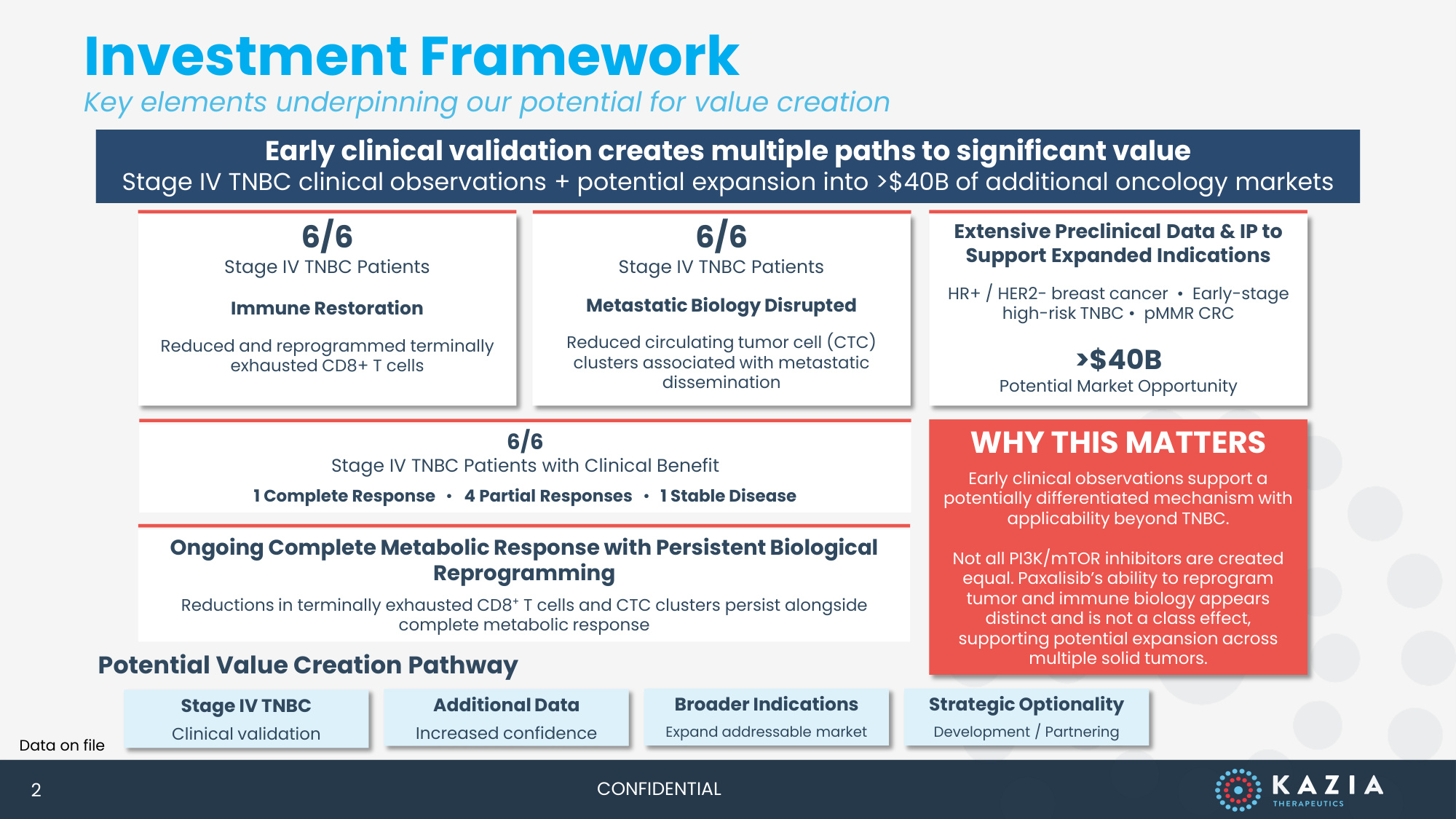
Investment Framework 2 Key elements underpinning our potential for value creation 6/6 Stage IV TNBC Patients Immune Restoration Reduced and reprogrammed terminally exhausted CD8+ T cells 6/6 Stage IV TNBC Patients Metastatic Biology Disrupted Reduced circulating tumor cell (CTC) clusters associated with metastatic dissemination Extensive Preclinical Data & IP to Support Expanded Indications HR+ / HER2- breast cancer • Early-stage high-risk TNBC • pMMR CRC >$40B Potential Market Opportunity Early clinical validation creates multiple paths to significant value Stage IV TNBC clinical observations + potential expansion into >$40B of additional oncology markets Ongoing Complete Metabolic Response with Persistent Biological Reprogramming Reductions in terminally exhausted CD8⁺ T cells and CTC clusters persist alongside complete metabolic response WHY THIS MATTERS Early clinical observations support a potentially differentiated mechanism with applicability beyond TNBC. Not all PI3K/mTOR inhibitors are created equal. Paxalisib's ability to reprogram tumor and immune biology appears distinct and is not a class effect, supporting potential expansion across multiple solid tumors. Potential Value Creation Pathway Stage IV TNBC Clinical validation Additional Data Increased confidence Broader Indications Expand addressable market Strategic Optionality Development / Partnering CONFIDENTIAL Data on file 6/6 Stage IV TNBC Patients with Clinical Benefit 1 Complete Response • 4 Partial Responses • 1 Stable Disease
3 Kazia Therapeutics Limited o Clinical-stage oncology company focused on developing therapies for aggressive solid tumors o Our technology leverages: • Precision pathway inhibition to reprogram cancer biology, restore anti-tumor immunity, and overcome treatment resistance • Next-generation therapeutics that target multiple layers of cancer and immune control • Multi-modal platforms targeting tumor dormancy designed to overcome metastases, recurrence, and resistance in aggressive and immunotherapy-refractory cancers CONFIDENTIAL
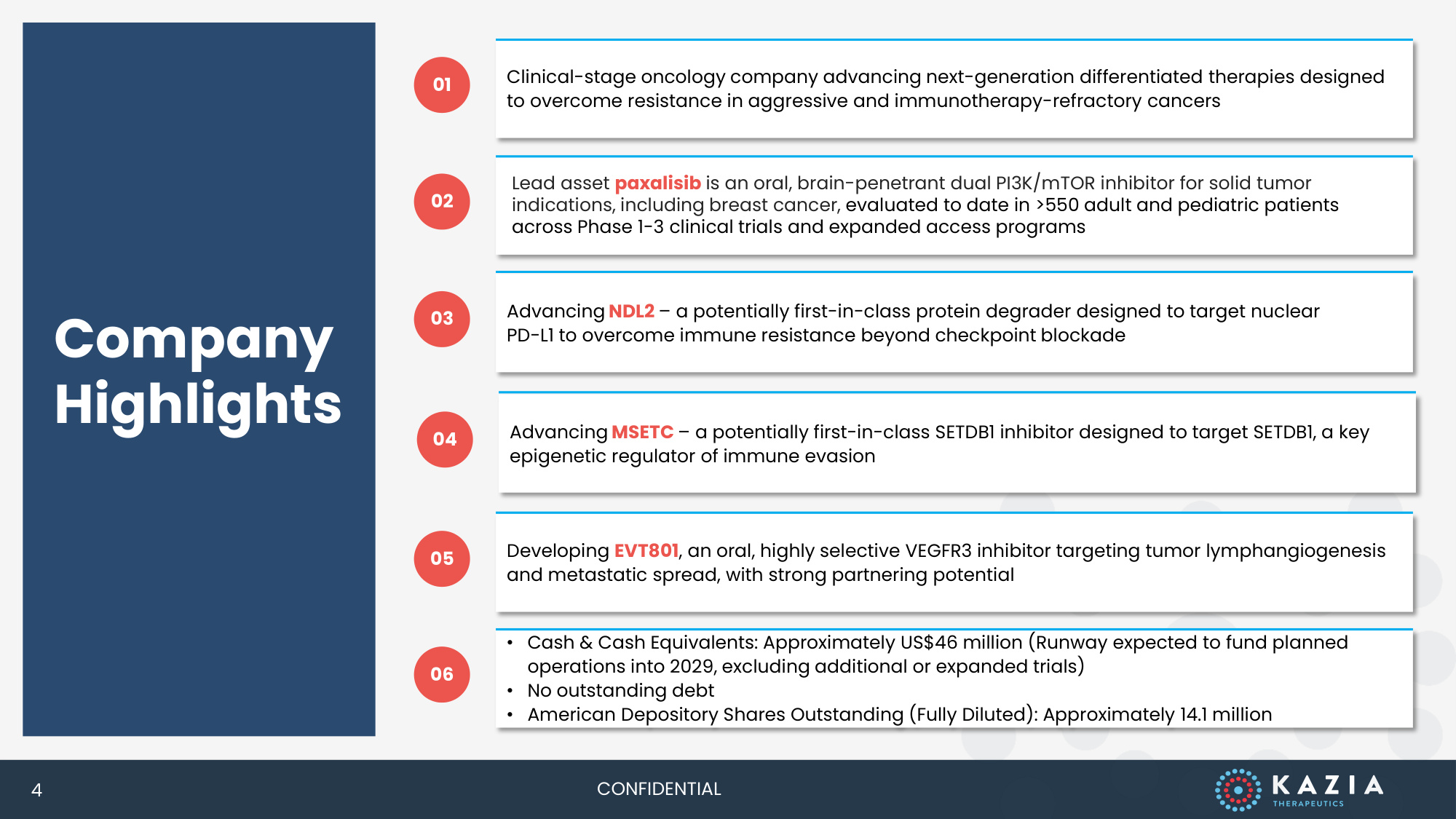
Company Highlights Clinical-stage oncology company advancing next-generation differentiated therapies designed to overcome resistance in aggressive and immunotherapy-refractory cancers Lead asset paxalisib is an oral, brain-penetrant dual PI3K/mTOR inhibitor for solid tumor indications, including breast cancer, evaluated to date in >550 adult and pediatric patients across Phase 1-3 clinical trials and expanded access programs Advancing NDL2 – a potentially first-in-class protein degrader designed to target nuclear PD-L1 to overcome immune resistance beyond checkpoint blockade Developing EVT801, an oral, highly selective VEGFR3 inhibitor targeting tumor lymphangiogenesis and metastatic spread, with strong partnering potential • Cash & Cash Equivalents: Approximately US$46 million (Runway expected to fund planned operations into 2029, excluding additional or expanded trials) • No outstanding debt • American Depository Shares Outstanding (Fully Diluted): Approximately 14.1 million 01 02 03 05 06 4 Advancing MSETC – a potentially first-in-class SETDB1 inhibitor designed to target SETDB1, a key epigenetic regulator of immune evasion 04 CONFIDENTIAL
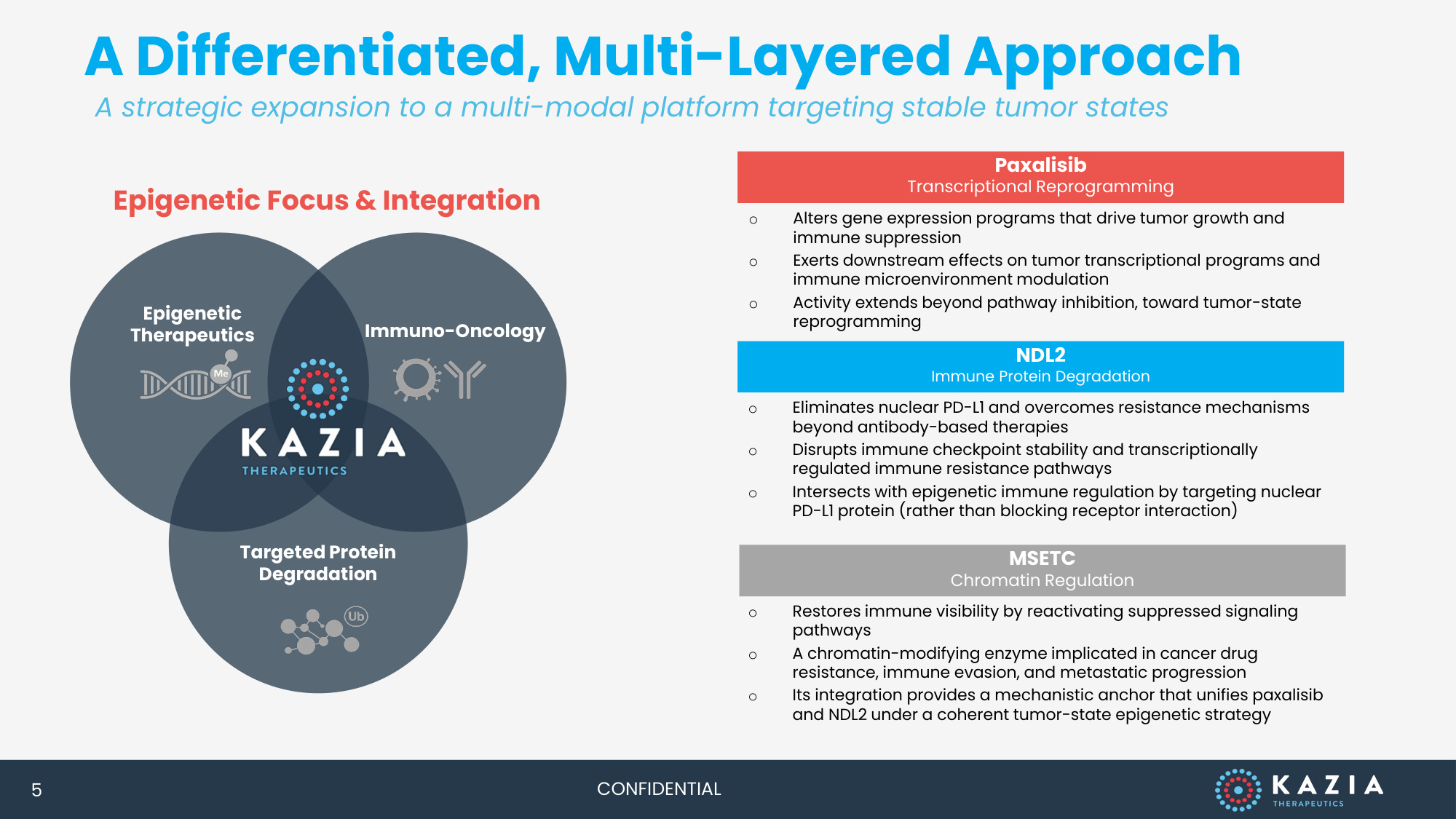
A Differentiated, Multi-Layered Approach 5 Paxalisib Transcriptional Reprogramming o Alters gene expression programs that drive tumor growth and immune suppression o Exerts downstream effects on tumor transcriptional programs and immune microenvironment modulation o Activity extends beyond pathway inhibition, toward tumor-state reprogramming Epigenetic Focus & Integration MSETC Chromatin Regulation NDL2 Immune Protein Degradation o Eliminates nuclear PD-L1 and overcomes resistance mechanisms beyond antibody-based therapies o Disrupts immune checkpoint stability and transcriptionally regulated immune resistance pathways o Intersects with epigenetic immune regulation by targeting nuclear PD-L1 protein (rather than blocking receptor interaction) o Restores immune visibility by reactivating suppressed signaling pathways o A chromatin-modifying enzyme implicated in cancer drug resistance, immune evasion, and metastatic progression o Its integration provides a mechanistic anchor that unifies paxalisib and NDL2 under a coherent tumor-state epigenetic strategy Epigenetic Therapeutics Immuno-Oncology Targeted Protein Degradation A strategic expansion to a multi-modal platform targeting stable tumor states CONFIDENTIAL
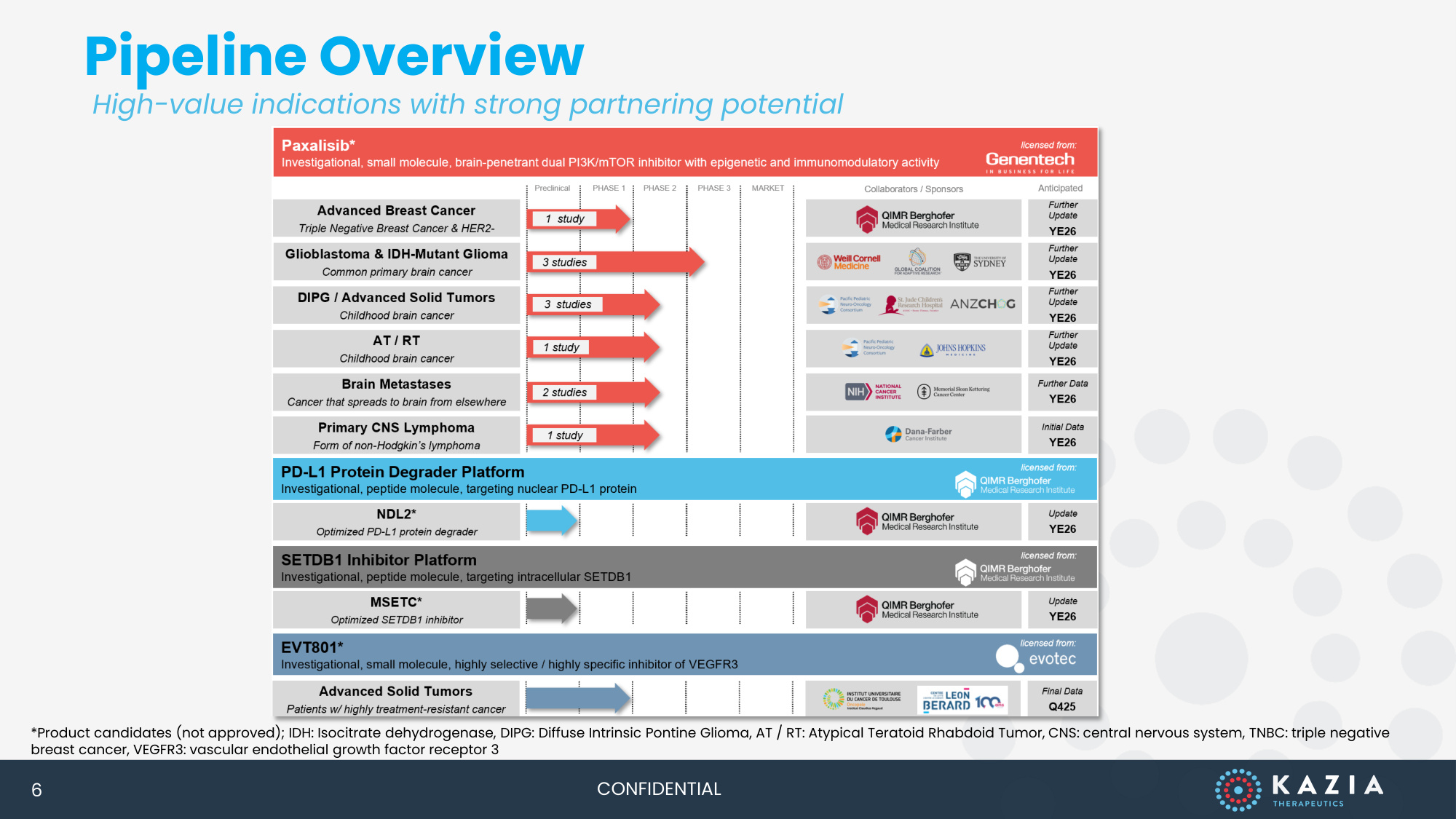
Pipeline Overview 6 High-value indications with strong partnering potential *Product candidates (not approved); IDH: Isocitrate dehydrogenase, DIPG: Diffuse Intrinsic Pontine Glioma, AT / RT: Atypical Teratoid Rhabdoid Tumor, CNS: central nervous system, TNBC: triple negative breast cancer, VEGFR3: vascular endothelial growth factor receptor 3 CONFIDENTIAL
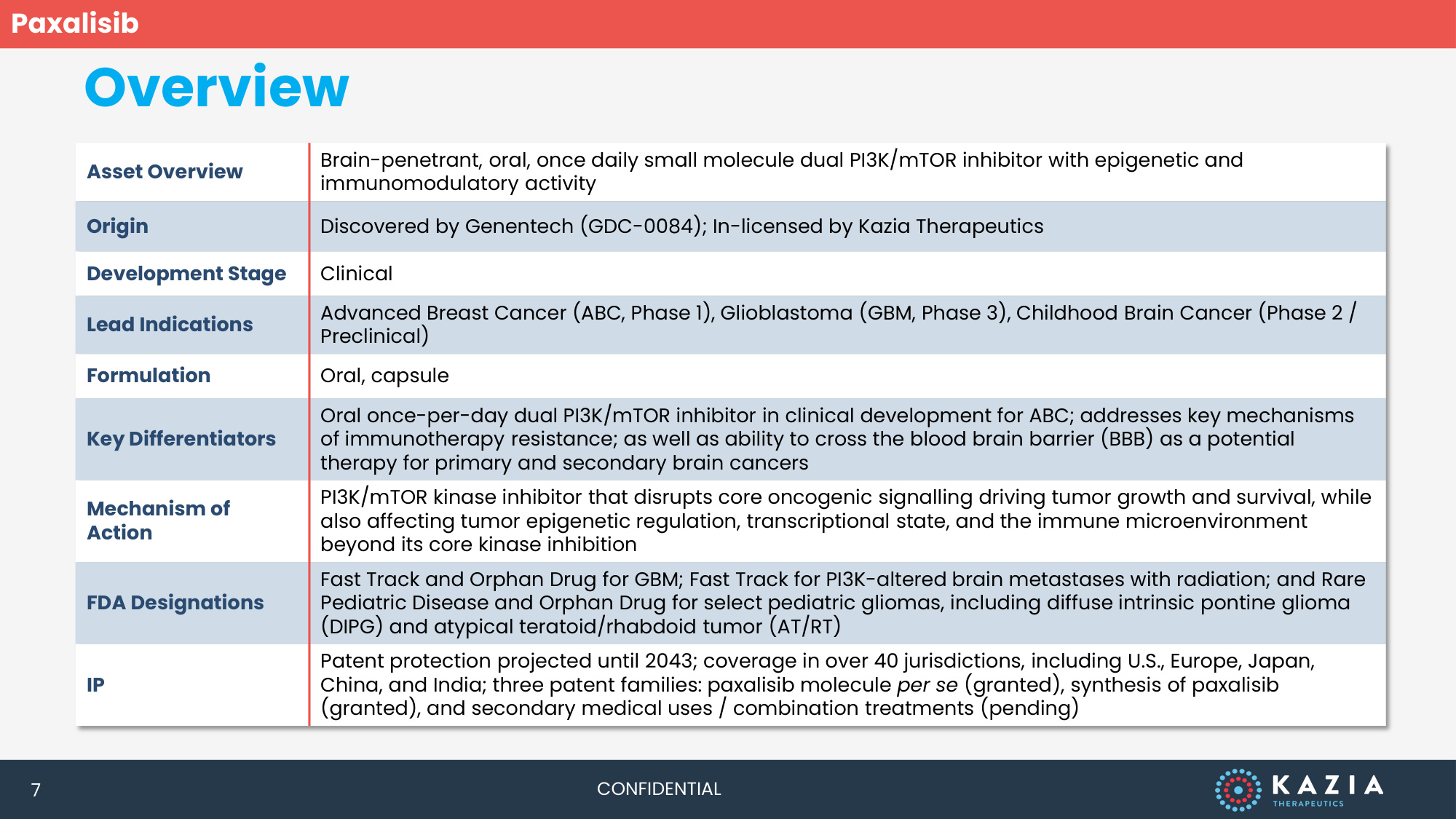
Paxalisib CONFIDENTIAL Overview 7 Asset Overview Brain-penetrant, oral, once daily small molecule dual PI3K/mTOR inhibitor with epigenetic and immunomodulatory activity Origin Discovered by Genentech (GDC-0084); In-licensed by Kazia Therapeutics Development Stage Clinical Lead Indications Advanced Breast Cancer (ABC, Phase 1), Glioblastoma (GBM, Phase 3), Childhood Brain Cancer (Phase 2 / Preclinical) Formulation Oral, capsule Key Differentiators Oral once-per-day dual PI3K/mTOR inhibitor in clinical development for ABC; addresses key mechanisms of immunotherapy resistance; as well as ability to cross the blood brain barrier (BBB) as a potential therapy for primary and secondary brain cancers Mechanism of Action PI3K/mTOR kinase inhibitor that disrupts core oncogenic signalling driving tumor growth and survival, while also affecting tumor epigenetic regulation, transcriptional state, and the immune microenvironment beyond its core kinase inhibition FDA Designations Fast Track and Orphan Drug for GBM; Fast Track for PI3K-altered brain metastases with radiation; and Rare Pediatric Disease and Orphan Drug for select pediatric gliomas, including diffuse intrinsic pontine glioma (DIPG) and atypical teratoid/rhabdoid tumor (AT/RT) IP Patent protection projected until 2043; coverage in over 40 jurisdictions, including U.S., Europe, Japan, China, and India; three patent families: paxalisib molecule per se (granted), synthesis of paxalisib (granted), and secondary medical uses / combination treatments (pending)
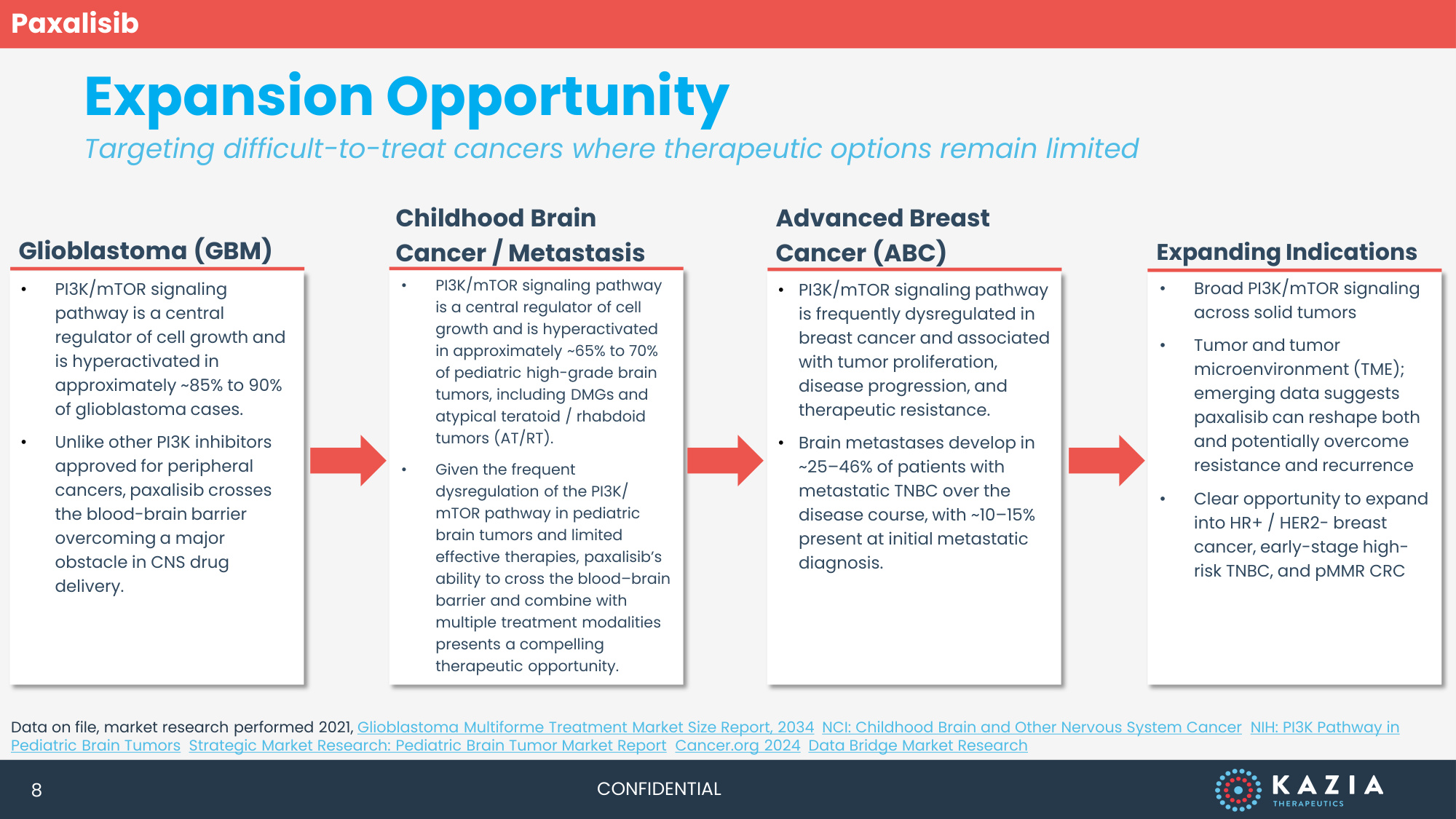
Paxalisib CONFIDENTIAL Expansion Opportunity 8 • PI3K/mTOR signaling pathway is a central regulator of cell growth and is hyperactivated in approximately ~65% to 70% of pediatric high-grade brain tumors, including DMGs and atypical teratoid / rhabdoid tumors (AT/RT).. • Given the frequent dysregulation of the PI3K/ mTOR pathway in pediatric brain tumors and limited effective therapies, paxalisib's ability to cross the blood–brain barrier and combine with multiple treatment modalities presents a compelling therapeutic opportunity. • PI3K/mTOR signaling pathway is a central regulator of cell growth and is hyperactivated in approximately ~85% to 90% of glioblastoma cases.. • Unlike other PI3K inhibitors approved for peripheral cancers, paxalisib crosses the blood-brain barrier overcoming a major obstacle in CNS drug delivery. Glioblastoma (GBM) Childhood Brain Cancer / Metastasis • Broad PI3K/mTOR signaling across solid tumors • Tumor and tumor microenvironment (TME); emerging data suggests paxalisib can reshape both and potentially overcome resistance and recurrence • Clear opportunity to expand into HR+ / HER2- breast cancer, early-stage high- risk TNBC, and pMMR CRC • PI3K/mTOR signaling pathway is frequently dysregulated in breast cancer and associated with tumor proliferation, disease progression, and therapeutic resistance. • Brain metastases develop in ~25–46% of patients with metastatic TNBC over the disease course, with ~10–15% present at initial metastatic diagnosis. Advanced Breast Cancer (ABC) Expanding Indications Targeting difficult-to-treat cancers where therapeutic options remain limited Data on file, market research performed 2021, Glioblastoma Multiforme Treatment Market Size Report, 2034 NCI: Childhood Brain and Other Nervous System Cancer NIH: PI3K Pathway in Pediatric Brain Tumors Strategic Market Research: Pediatric Brain Tumor Market Report Cancer.org 2024 Data Bridge Market Research
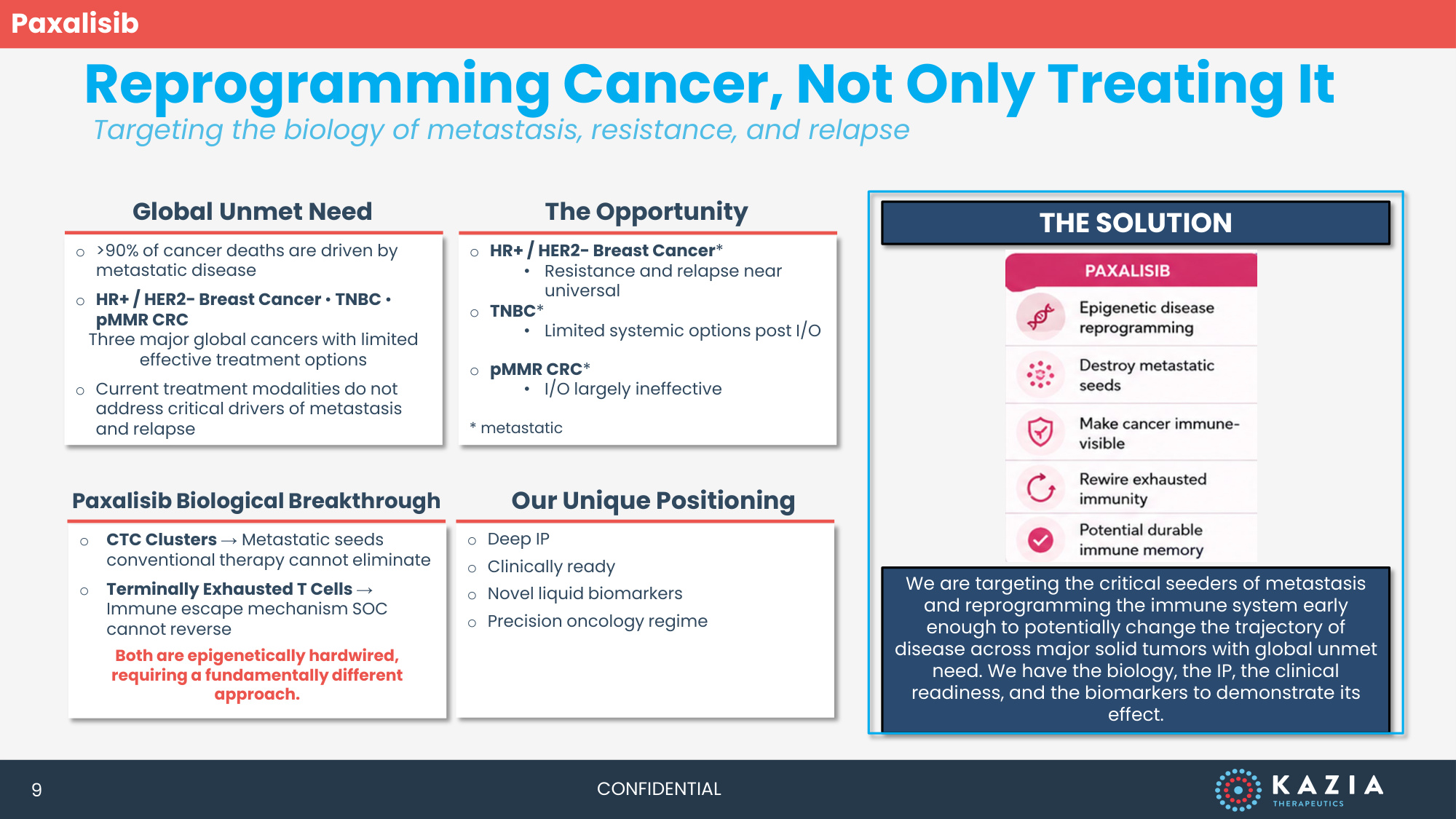
Paxalisib CONFIDENTIAL Reprogramming Cancer, Not Only Treating It 9 Targeting the biology of metastasis, resistance, and relapse o >90% of cancer deaths are driven by metastatic disease o HR+ / HER2- Breast Cancer • TNBC • pMMR CRC Three major global cancers with limited effective treatment options o Current treatment modalities do not address critical drivers of metastasis and relapse Global Unmet Need o CTC Clusters → Metastatic seeds conventional therapy cannot eliminate o Terminally Exhausted T Cells → Immune escape mechanism SOC cannot reverse Both are epigenetically hardwired, requiring a fundamentally different approach. Paxalisib Biological Breakthrough o Deep IP o Clinically ready o Novel liquid biomarkers o Precision oncology regime Our Unique Positioning o HR+ / HER2- Breast Cancer* • Resistance and relapse near universal o TNBC* • Limited systemic options post I/O o pMMR CRC* • I/O largely ineffective * metastatic The Opportunity We are targeting the critical seeders of metastasis and reprogramming the immune system early enough to potentially change the trajectory of disease across major solid tumors with global unmet need. We have the biology, the IP, the clinical readiness, and the biomarkers to demonstrate its effect. THE SOLUTION
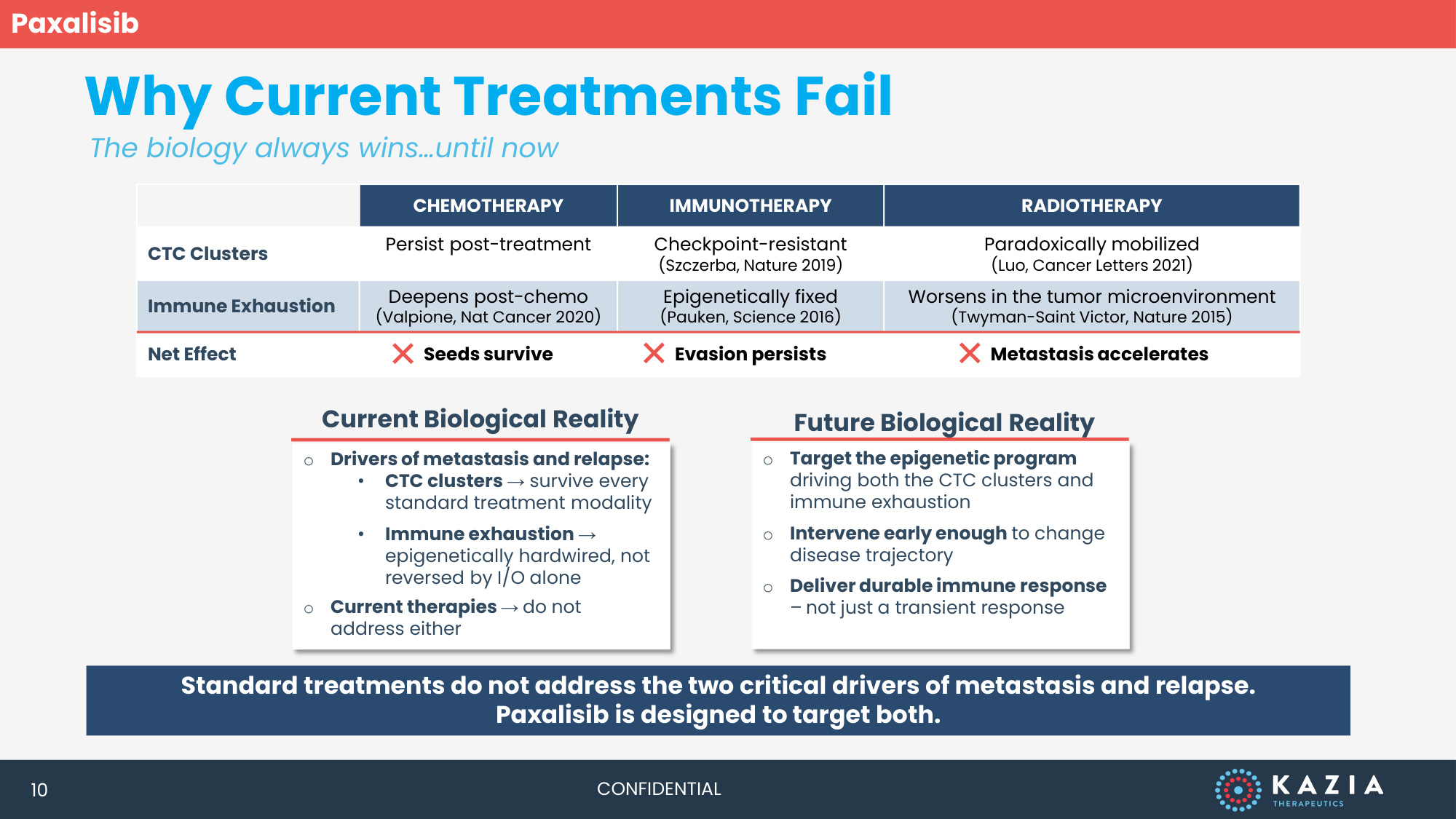
Paxalisib CONFIDENTIAL Why Current Treatments Fail 10 CHEMOTHERAPY IMMUNOTHERAPY RADIOTHERAPY CTC Clusters Persist post-treatment Checkpoint-resistant (Szczerba, Nature 2019) Paradoxically mobilized (Luo, Cancer Letters 2021) Immune Exhaustion Deepens post-chemo (Valpione, Nat Cancer 2020) Epigenetically fixed (Pauken, Science 2016) Worsens in the tumor microenvironment (Twyman-Saint Victor, Nature 2015) Net Effect Seeds survive Evasion persists Metastasis accelerates The biology always wins...until now o Drivers of metastasis and relapse: • CTC clusters → survive every standard treatment modality • Immune exhaustion → epigenetically hardwired, not reversed by I/O alone o Current therapies → do not address either Current Biological Reality o Target the epigenetic program driving both the CTC clusters and immune exhaustion o Intervene early enough to change disease trajectory o Deliver durable immune response – not just a transient response Future Biological Reality Standard treatments do not address the two critical drivers of metastasis and relapse. Paxalisib is designed to target both.
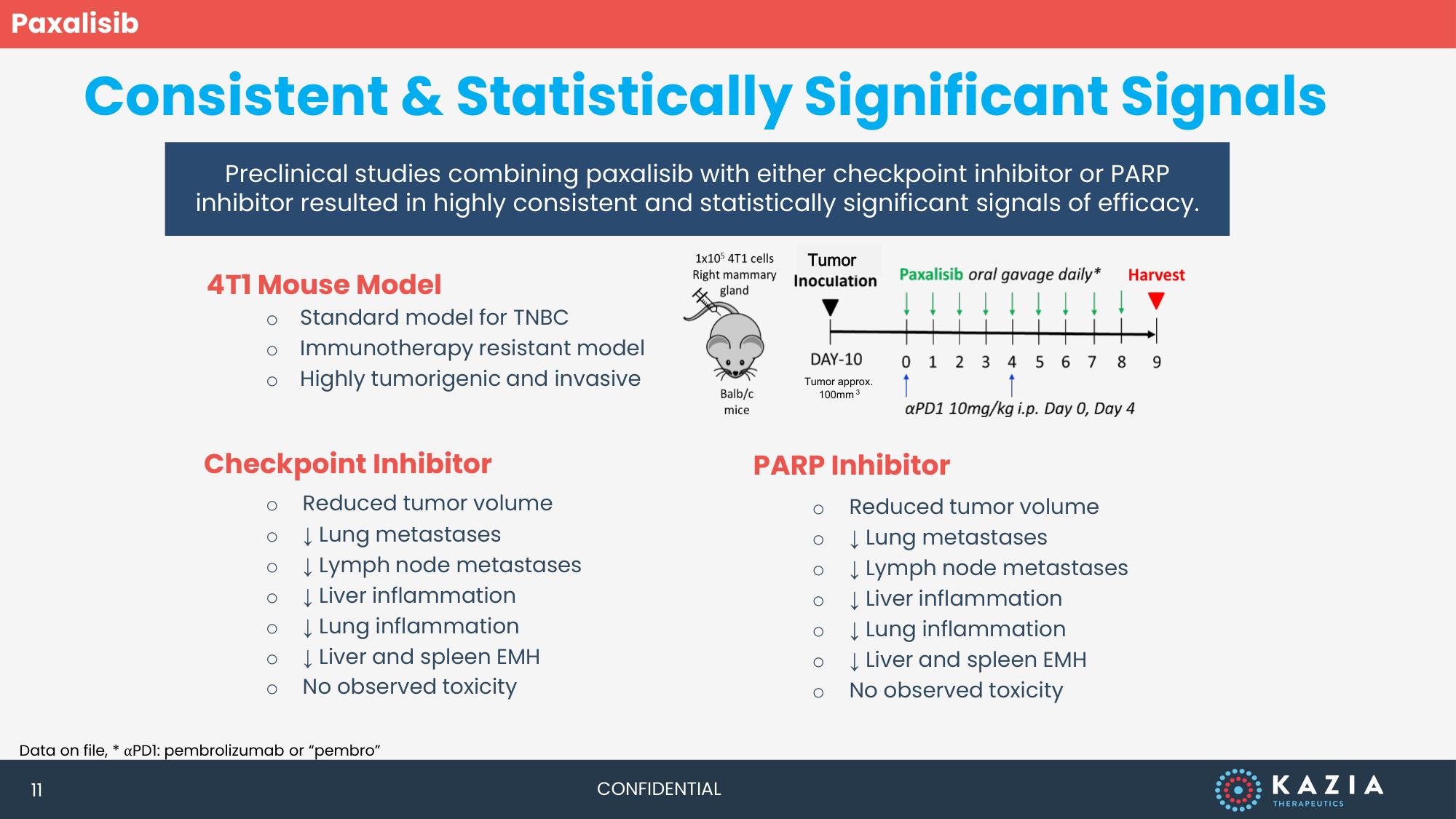
Paxalisib CONFIDENTIAL Consistent & Statistically Significant Signals 11 Data on file, * αPD1: pembrolizumab or "pembro" Checkpoint Inhibitor PARP Inhibitor o Reduced tumor volume o ↓ Lung metastases o ↓ Lymph node metastases o ↓ Liver inflammation o ↓ Lung inflammation o ↓ Liver and spleen EMH o No observed toxicity o Reduced tumor volume o ↓ Lung metastases o ↓ Lymph node metastases o ↓ Liver inflammation o ↓ Lung inflammation o ↓ Liver and spleen EMH o No observed toxicity 4T1 Mouse Model o Standard model for TNBC o Immunotherapy resistant model o Highly tumorigenic and invasive Preclinical studies combining paxalisib with either checkpoint inhibitor or PARP inhibitor resulted in highly consistent and statistically significant signals of efficacy. Tumor Tumor approx. 100mm 3
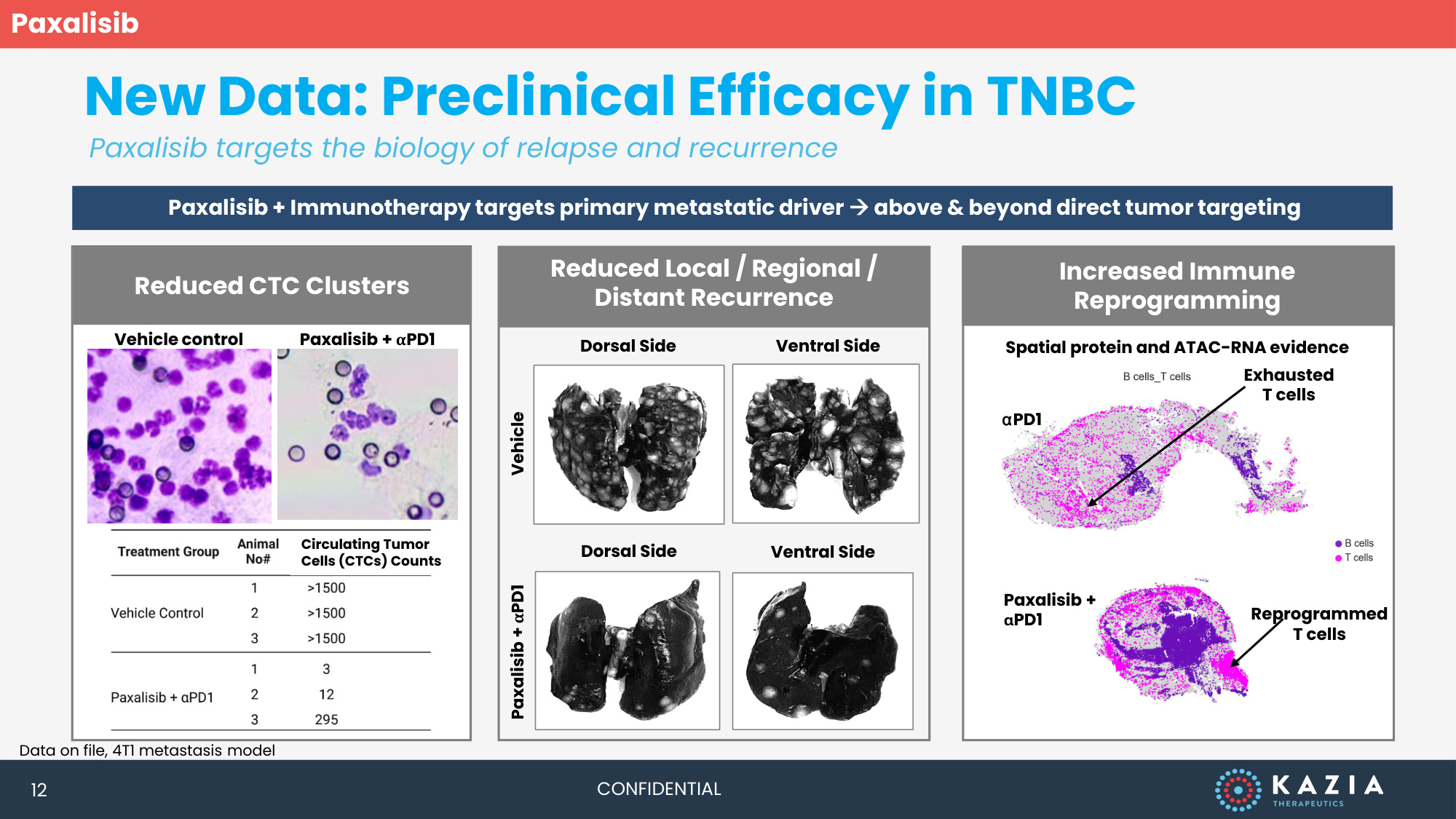
Paxalisib CONFIDENTIAL New Data: Preclinical Efficacy in TNBC 12 Paxalisib + Immunotherapy targets primary metastatic driver above & beyond direct tumor targeting Paxalisib targets the biology of relapse and recurrence Paxalisib + αPD1 Vehicle control Reduced CTC Clusters Vehicle Paxalisib + αPD1 Dorsal Side Ventral Side Dorsal Side Ventral Side Increased Immune Reprogramming Spatial protein and ATAC-RNA evidence Exhausted T cells Reprogrammed T cells αPD1 Paxalisib + αPD1 Reduced Local / Regional / Distant Recurrence Circulating Tumor Cells (CTCs) Counts Data on file, 4T1 metastasis model
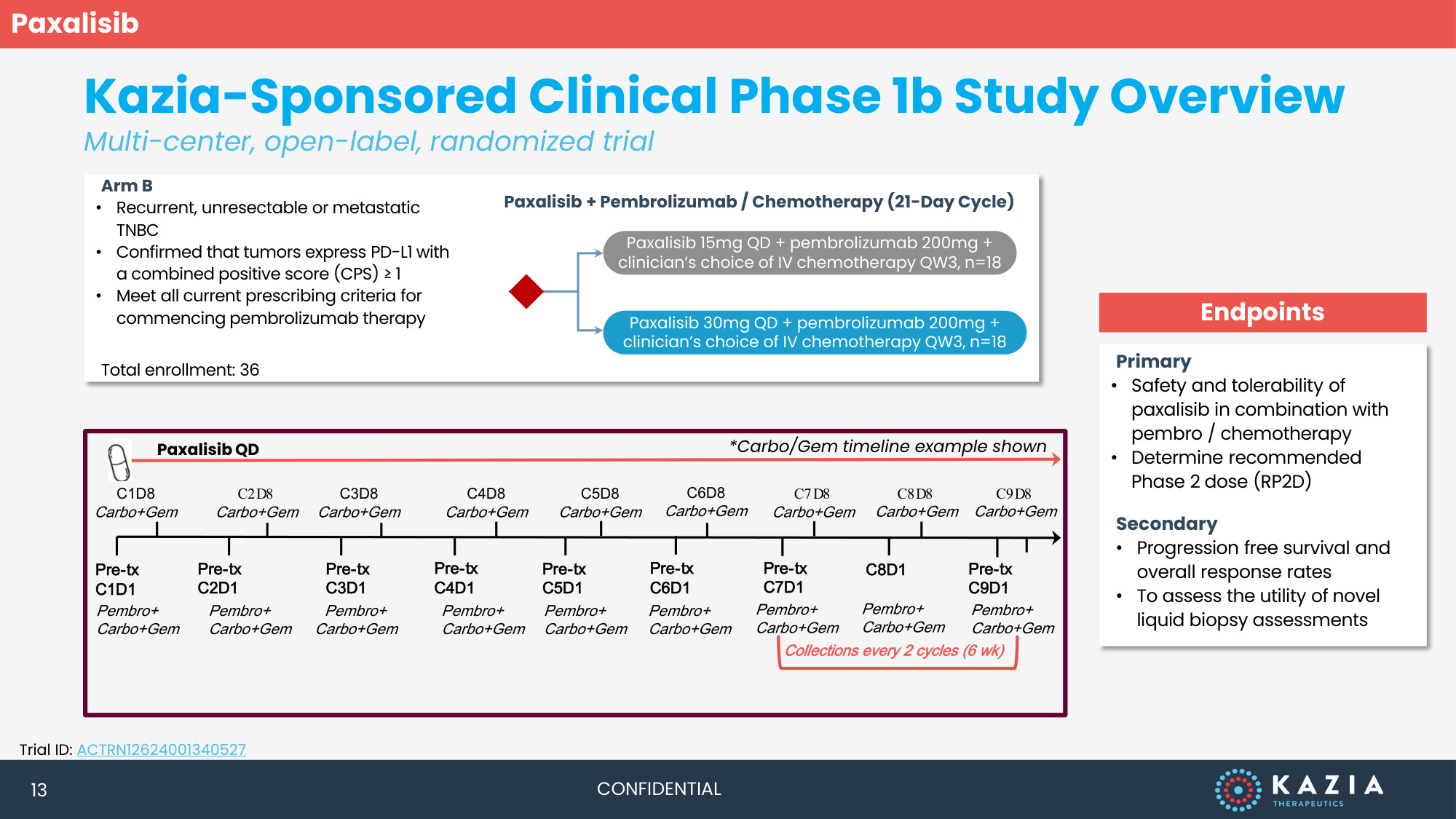
Paxalisib CONFIDENTIAL Kazia-Sponsored Clinical Phase 1b Study Overview 13 Arm B • Recurrent, unresectable or metastatic TNBC • Confirmed that tumors express PD-L1 with a combined positive score (CPS) ≥ 1 • Meet all current prescribing criteria for commencing pembrolizumab therapy Total enrollment: 36 Paxalisib 15mg QD + pembrolizumab 200mg + clinician's choice of IV chemotherapy QW3, n=18 Paxalisib 30mg QD + pembrolizumab 200mg + clinician's choice of IV chemotherapy QW3, n=18 Paxalisib + Pembrolizumab / Chemotherapy (21-Day Cycle) Pre-tx C1D1 Pre-tx C2D1 Pre-tx C3D1 Pre-tx C4D1 Pre-tx C5D1 Pre-tx C6D1 Pembro+ Carbo+Gem Pembro+ Carbo+Gem C1D8 Carbo+Gem C3D8 Carbo+Gem C4D8 Carbo+Gem C5D8 Carbo+Gem C6D8 Carbo+Gem Collections every 2 cycles (6 wk) Paxalisib QD Pembro+ Carbo+Gem C2D8 Carbo+Gem C8D1 C7D8 Carbo+Gem Pre-tx C7D1 Pembro+ Carbo+Gem Pembro+ Carbo+Gem Pembro+ Carbo+Gem Pembro+ Carbo+Gem Pre-tx C9D1 Pembro+ Carbo+Gem C8D8 Carbo+Gem C9D8 Carbo+Gem *Carbo/Gem timeline example shown Pembro+ Carbo+Gem Multi-center, open-label, randomized trial Endpoints Primary • Safety and tolerability of paxalisib in combination with pembro / chemotherapy • Determine recommended Phase 2 dose (RP2D) Secondary • Progression free survival and overall response rates • To assess the utility of novel liquid biopsy assessments Trial ID: ACTRN12624001340527
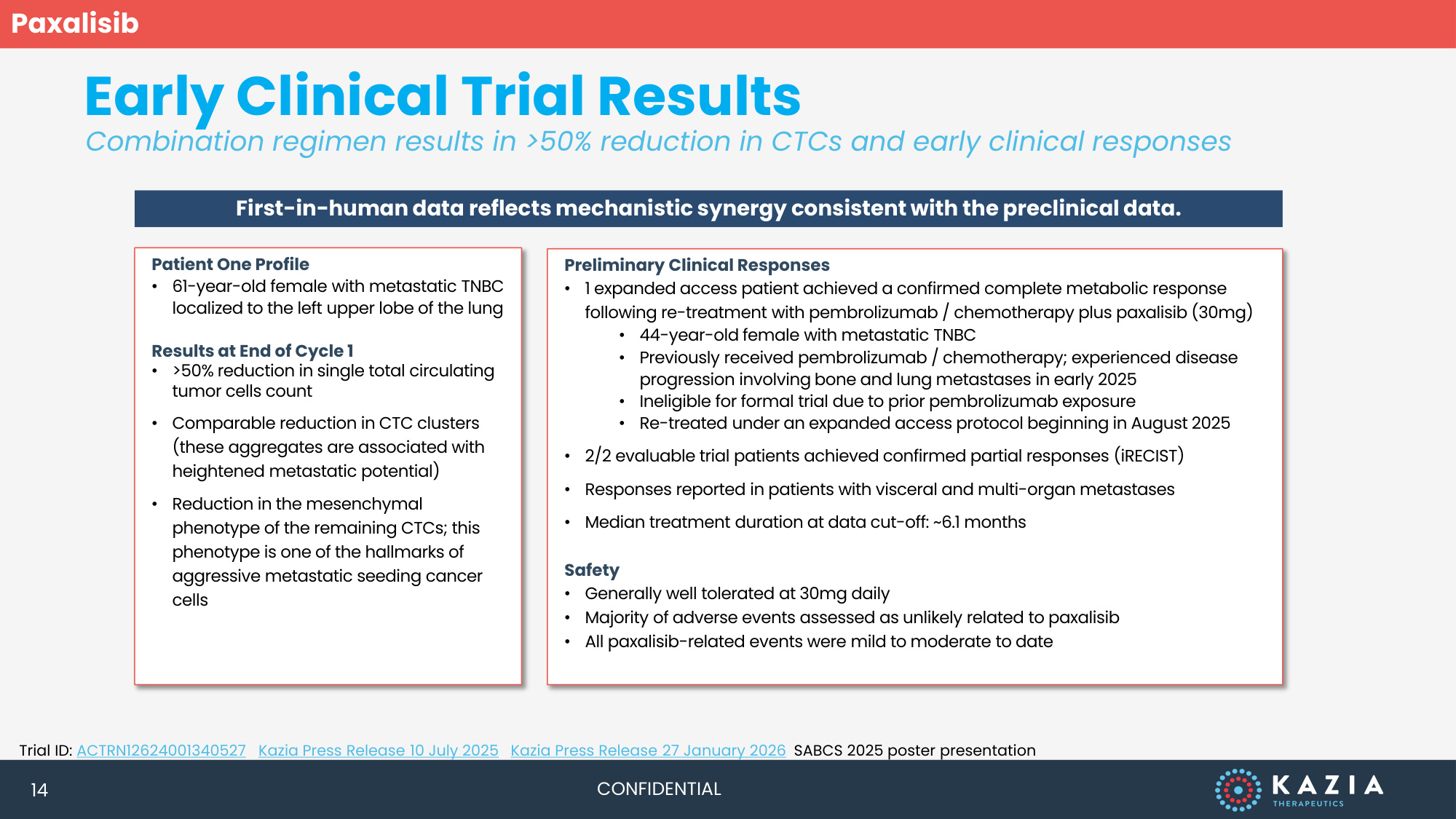
Paxalisib CONFIDENTIAL Early Clinical Trial Results 14 Trial ID: ACTRN12624001340527 Kazia Press Release 10 July 2025 Kazia Press Release 27 January 2026 SABCS 2025 poster presentation First-in-human data reflects mechanistic synergy consistent with the preclinical data. Combination regimen results in >50% reduction in CTCs and early clinical responses Patient One Profile • 61-year-old female with metastatic TNBC localized to the left upper lobe of the lung Results at End of Cycle 1 • >50% reduction in single total circulating tumor cells count • Comparable reduction in CTC clusters (these aggregates are associated with heightened metastatic potential) • Reduction in the mesenchymal phenotype of the remaining CTCs; this phenotype is one of the hallmarks of aggressive metastatic seeding cancer cells Preliminary Clinical Responses • 1 expanded access patient achieved a confirmed complete metabolic response following re-treatment with pembrolizumab / chemotherapy plus paxalisib (30mg) • 44-year-old female with metastatic TNBC • Previously received pembrolizumab / chemotherapy; experienced disease progression involving bone and lung metastases in early 2025 • Ineligible for formal trial due to prior pembrolizumab exposure • Re-treated under an expanded access protocol beginning in August 2025 • 2/2 evaluable trial patients achieved confirmed partial responses (iRECIST) • Responses reported in patients with visceral and multi-organ metastases • Median treatment duration at data cut-off: ~6.1 months Safety • Generally well tolerated at 30mg daily • Majority of adverse events assessed as unlikely related to paxalisib • All paxalisib-related events were mild to moderate to date
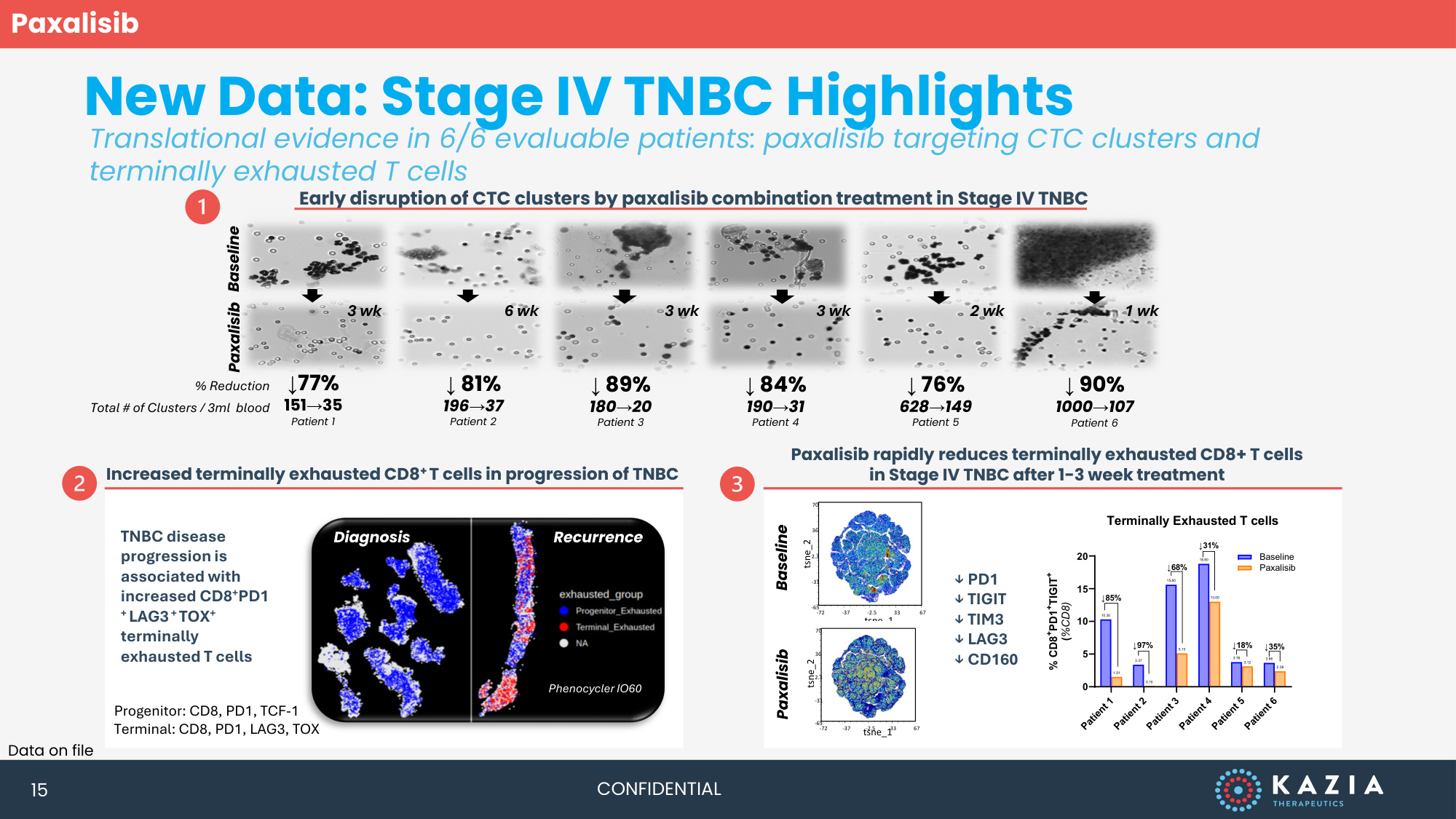
Paxalisib CONFIDENTIAL New Data: Stage IV TNBC Highlights 15 Translational evidence in 6/6 evaluable patients: paxalisib targeting CTC clusters and terminally exhausted T cells Early disruption of CTC clusters by paxalisib combination treatment in Stage IV TNBC Baseline Paxalisib ↓77% 151→35 Patient 1 ↓ 81% 196→37 Patient 2 ↓ 89% 180→20 Patient 3 ↓ 84% 190→31 Patient 4 ↓ 76% 628→149 Patient 5 ↓ 90% 1000→107 Patient 6 % Reduction Total # of Clusters / 3ml blood 3 wk 6 wk 3 wk 3 wk 2 wk 1 wk Patient 1 Patient 2 Patient 3 Patient 4 Patient 5 Patient 6 0 5 10 15 20 1.51 0.10 5.10 13.00 3.12 2.38 10.30 3.37 15.60 18.80 3.78 3.66 Terminally Exhausted T cells % CD8+PD1+TIGIT+ (%CD8) Baseline Paxalisib ↓85% ↓97% ↓68% ↓31% ↓18% ↓35% ↓ PD1 ↓ TIGIT ↓ TIM3 ↓ LAG3 ↓ CD160 Increased terminally exhausted CD8+ T cells in progression of TNBC Diagnosis Recurrence Phenocycler IO60 TNBC disease progression is associated with increased CD8+PD1 + LAG3 + TOX+ terminally exhausted T cells Progenitor: CD8, PD1, TCF-1 Terminal: CD8, PD1, LAG3, TOX Paxalisib rapidly reduces terminally exhausted CD8+ T cells in Stage IV TNBC after 1-3 week treatment Baseline Paxalisib tsne_1 tsne_2 -72 -37 -2.5 33 67 -65 -31 2.3 36 70 tsne_1 tsne_2 -72 -37 -2.5 33 67 -65 -31 2.3 36 70 Data on file
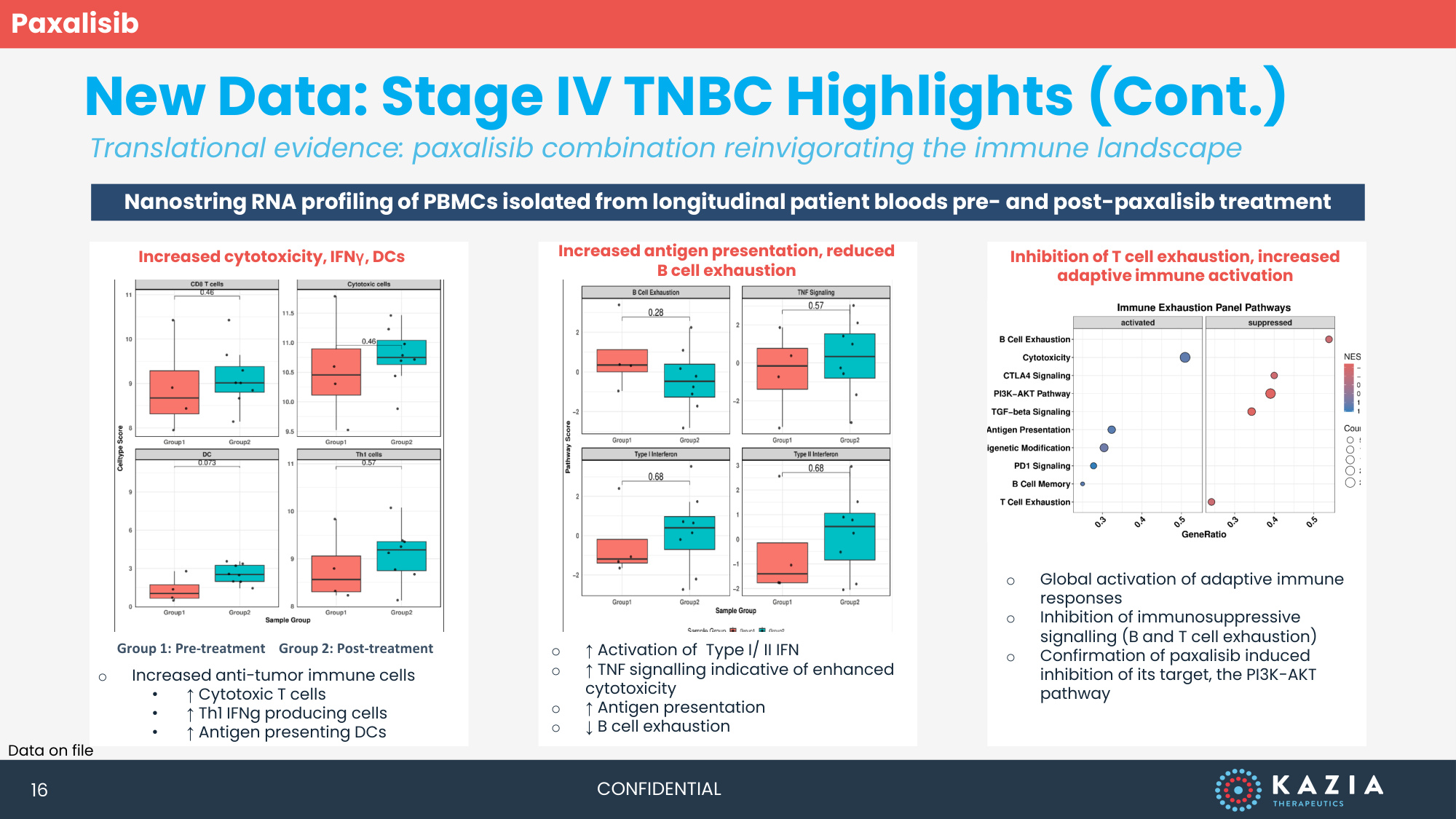
Paxalisib CONFIDENTIAL New Data: Stage IV TNBC Highlights (Cont.) 16 Translational evidence: paxalisib combination reinvigorating the immune landscape Nanostring RNA profiling of PBMCs isolated from longitudinal patient bloods pre- and post-paxalisib treatment Group 1: Pre-treatment Group 2: Post-treatment o Increased anti-tumor immune cells • ↑ Cytotoxic T cells • ↑ Th1 IFNg producing cells • ↑ Antigen presenting DCs o ↑ Activation of Type I/ II IFN o ↑ TNF signalling indicative of enhanced cytotoxicity o ↑ Antigen presentation o ↓ B cell exhaustion o Global activation of adaptive immune responses o Inhibition of immunosuppressive signalling (B and T cell exhaustion) o Confirmation of paxalisib induced inhibition of its target, the PI3K-AKT pathway Inhibition of T cell exhaustion, increased adaptive immune activation Increased antigen presentation, reduced B cell exhaustion Increased cytotoxicity, IFNγ, DCs Data on file
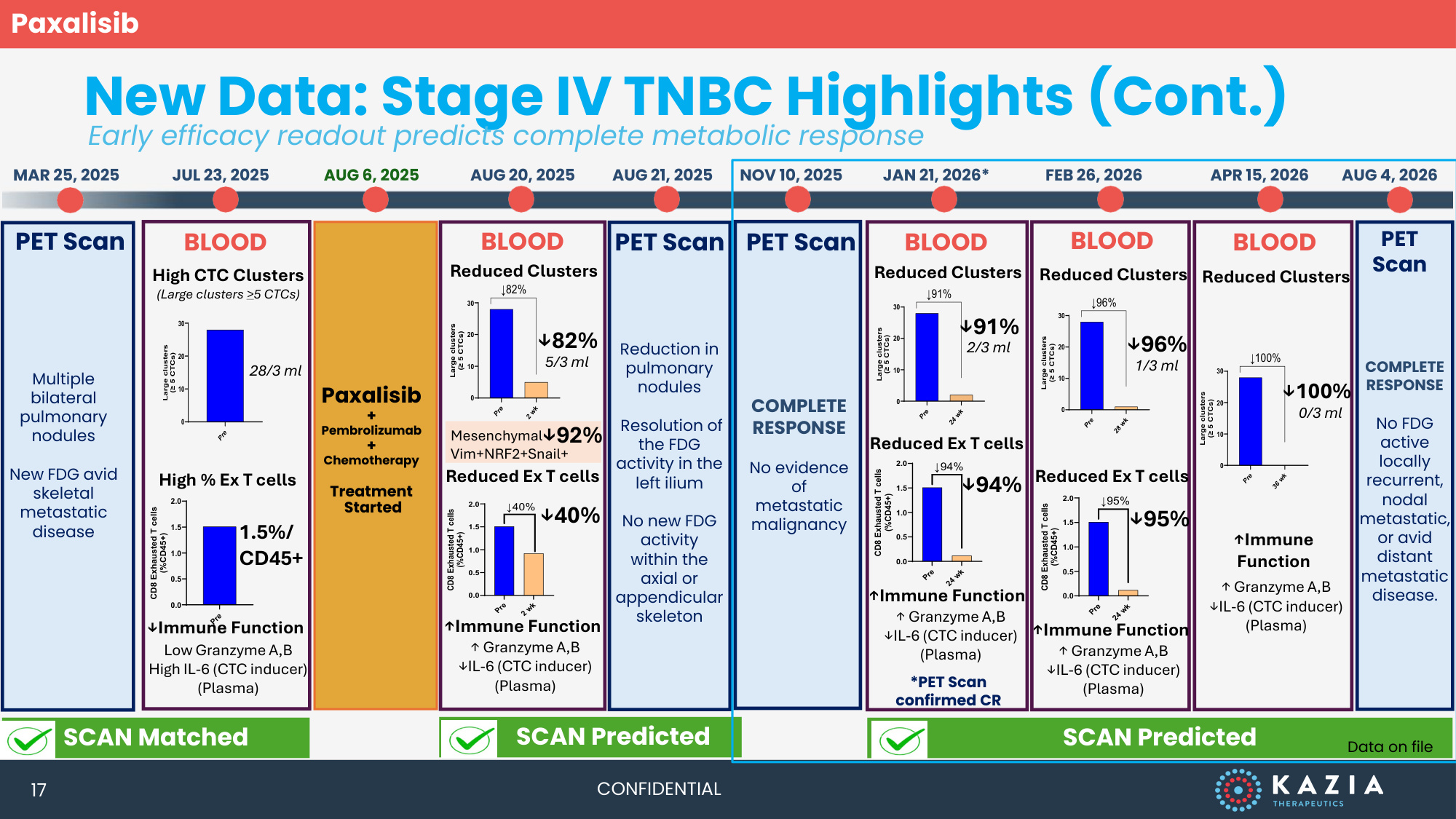
Paxalisib CONFIDENTIAL New Data: Stage IV TNBC Highlights (Cont.) Early efficacy readout predicts complete metabolic response Multiple bilateral pulmonary nodules New FDG avid skeletal metastatic disease PET Scan ↓Immune Function BLOOD Pre 0 10 20 30 Large clusters (≥ 5 CTCs) 28/3 ml Pre 0.0 0.5 1.0 1.5 2.0 CD8 Exhausted T cells (%CD45+) High CTC Clusters (Large clusters >5 CTCs) Low Granzyme A,B High IL-6 (CTC inducer) (Plasma) 1.5%/ CD45+ High % Ex T cells SCAN Matched Paxalisib + Pembrolizumab + Chemotherapy Treatment Started BLOOD Reduced Clusters ↑ Granzyme A,B ↓IL-6 (CTC inducer) (Plasma) ↑Immune Function Reduced Ex T cells Pre 2 wk 0 10 20 30 Large clusters (≥ 5 CTCs) ↓82% Pre 2 wk 0.0 0.5 1.0 1.5 2.0 CD8 Exhausted T cells (%CD45+) ↓40% 5/3 ml ↓82% ↓40% Reduction in pulmonary nodules Resolution of the FDG activity in the left ilium No new FDG activity within the axial or appendicular skeleton PET Scan SCAN Predicted COMPLETE RESPONSE No evidence of metastatic malignancy BLOOD Reduced Clusters ↑ Granzyme A,B ↓IL-6 (CTC inducer) (Plasma) ↑Immune Function Reduced Ex T cells 2/3 ml ↓91% ↓94% PET Scan Pre 24 wk 0 10 20 30 Large clusters (≥ 5 CTCs) ↓91% Pre 24 wk 0.0 0.5 1.0 1.5 2.0 CD8 Exhausted T cells (%CD45+) ↓94% COMPLETE RESPONSE No FDG active locally recurrent, nodal metastatic, or avid distant metastatic disease. PET Scan SCAN Predicted BLOOD Reduced Clusters ↑ Granzyme A,B ↓IL-6 (CTC inducer) (Plasma) ↑Immune Function Reduced Ex T cells 1/3 ml ↓96% ↓95% Pre 28 wk 0 10 20 30 Large clusters (≥ 5 CTCs) ↓96% Pre 24 wk 0.0 0.5 1.0 1.5 2.0 CD8 Exhausted T cells (%CD45+) ↓95% Mesenchymal Vim+NRF2+Snail+ ↓92% BLOOD Reduced Clusters ↑ Granzyme A,B ↓IL-6 (CTC inducer) (Plasma) ↑Immune Function 0/3 ml ↓100% Pre 36 wk 0 10 20 30 Large clusters (≥ 5 CTCs) ↓100% MAR 25, 2025 JUL 23, 2025 AUG 6, 2025 AUG 20, 2025 AUG 21, 2025 NOV 10, 2025 AUG 4, 2026 JAN 21, 2026* FEB 26, 2026 APR 15, 2026 17 *PET Scan confirmed CR Data on file
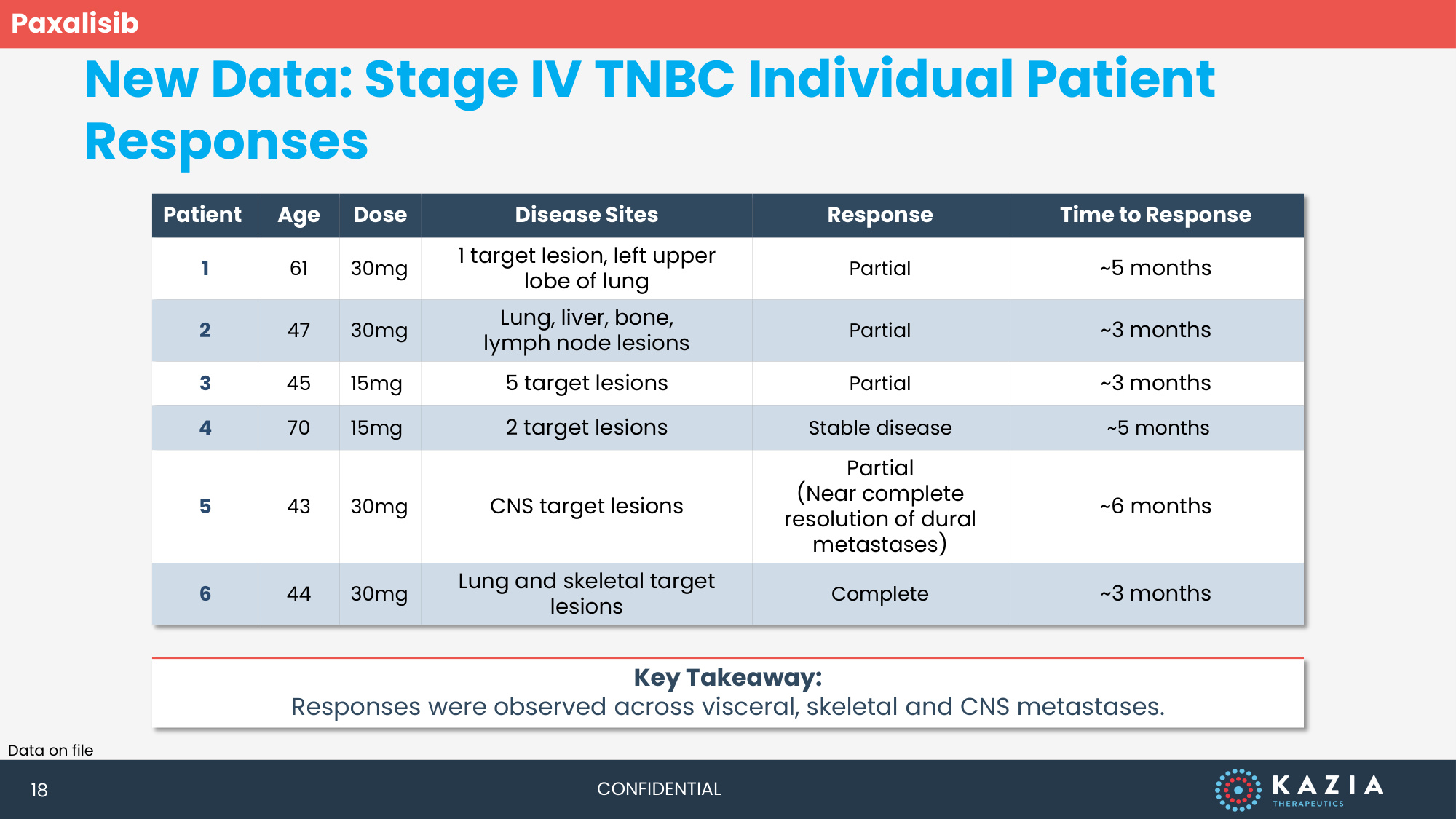
Paxalisib CONFIDENTIAL New Data: Stage IV TNBC Individual Patient Responses 18 Patient Age Dose Disease Sites Response Time to Response 1 61 30mg 1 target lesion, left upper lobe of lung Partial ~5 months 2 47 30mg Lung, liver, bone, lymph node lesions Partial ~3 months 3 45 15mg 5 target lesions Partial ~3 months 4 70 15mg 2 target lesions Stable disease ~5 months 5 43 30mg CNS target lesions Partial (Near complete resolution of dural metastases) ~6 months 6 44 30mg Lung and skeletal target lesions Complete ~3 months Key Takeaway: Responses were observed across visceral, skeletal and CNS metastases. Data on file
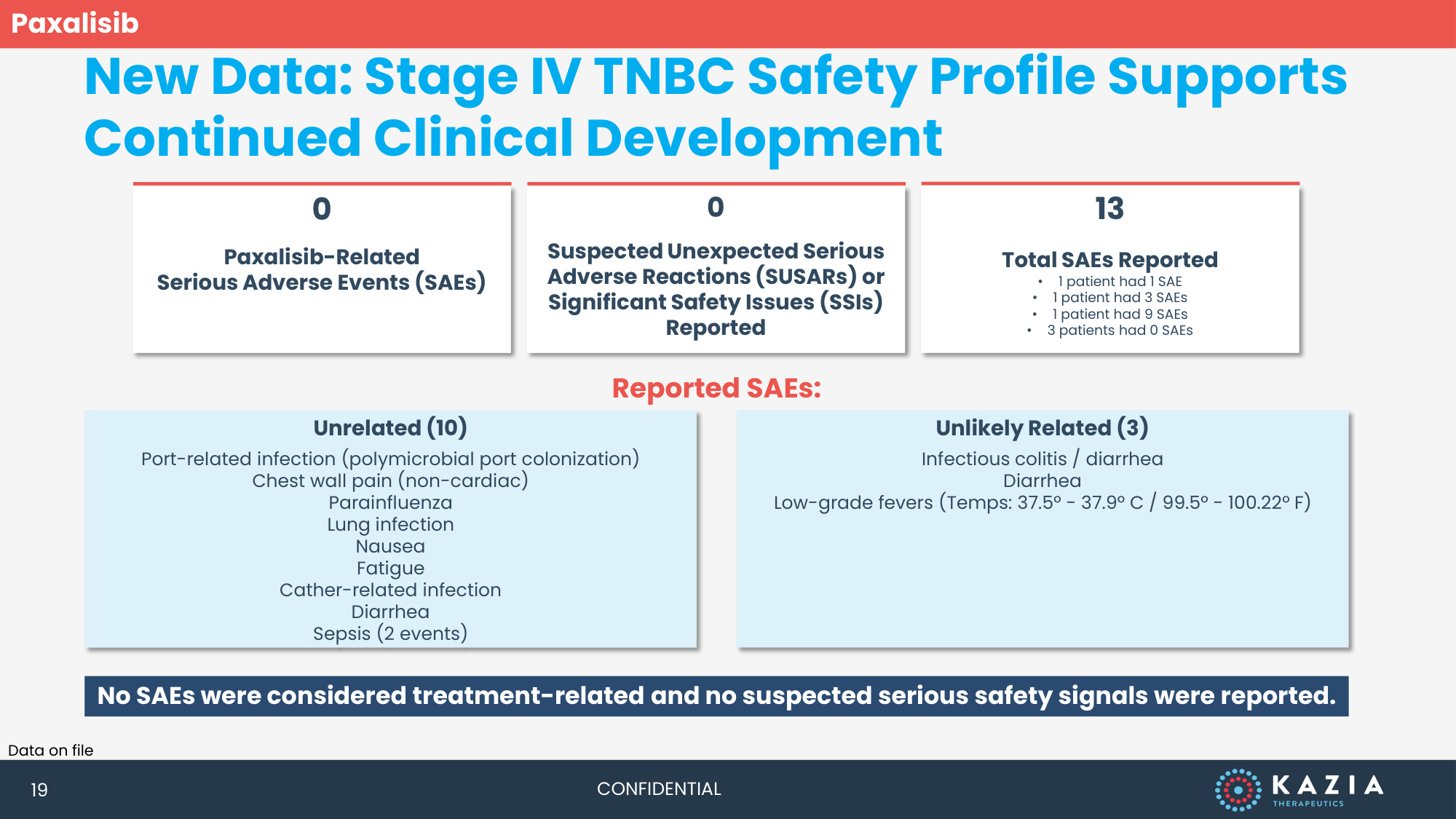
Paxalisib CONFIDENTIAL New Data: Stage IV TNBC Safety Profile Supports Continued Clinical Development 19 13 Total SAEs Reported • 1 patient had 1 SAE • 1 patient had 3 SAEs • 1 patient had 9 SAEs • 3 patients had 0 SAEs 0 Paxalisib-Related Serious Adverse Events (SAEs) No SAEs were considered treatment-related and no suspected serious safety signals were reported. 0 Suspected Unexpected Serious Adverse Reactions (SUSARs) or Significant Safety Issues (SSIs) Reported Unrelated (10) Port-related infection (polymicrobial port colonization) Chest wall pain (non-cardiac) Parainfluenza Lung infection Nausea Fatigue Cather-related infection Diarrhea Sepsis (2 events) Unlikely Related (3) Infectious colitis / diarrhea Diarrhea Low-grade fevers (Temps: 37.5º - 37.9º C / 99.5º - 100.22º F) Reported SAEs: Data on file
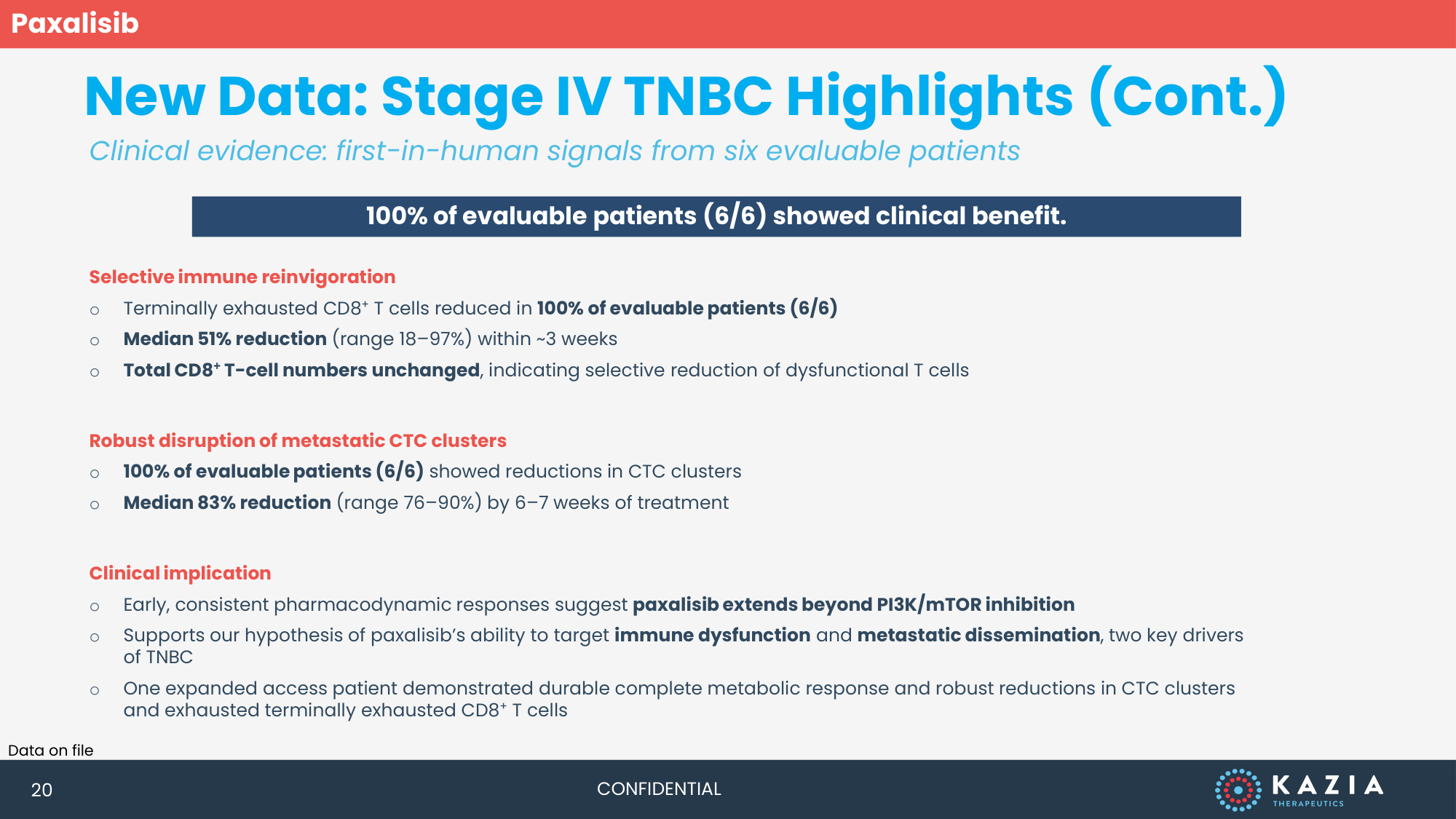
Paxalisib CONFIDENTIAL New Data: Stage IV TNBC Highlights (Cont.) 20 Clinical evidence: first-in-human signals from six evaluable patients Selective immune reinvigoration o Terminally exhausted CD8⁺ T cells reduced in 100% of evaluable patients (6/6) o Median 51% reduction (range 18–97%) within ~3 weeks o Total CD8⁺ T-cell numbers unchanged, indicating selective reduction of dysfunctional T cells Robust disruption of metastatic CTC clusters o 100% of evaluable patients (6/6) showed reductions in CTC clusters o Median 83% reduction (range 76–90%) by 6–7 weeks of treatment Clinical implication o Early, consistent pharmacodynamic responses suggest paxalisib extends beyond PI3K/mTOR inhibition o Supports our hypothesis of paxalisib's ability to target immune dysfunction and metastatic dissemination, two key drivers of TNBC o One expanded access patient demonstrated durable complete metabolic response and robust reductions in CTC clusters and exhausted terminally exhausted CD8⁺ T cells Data on file 100% of evaluable patients (6/6) showed clinical benefit.
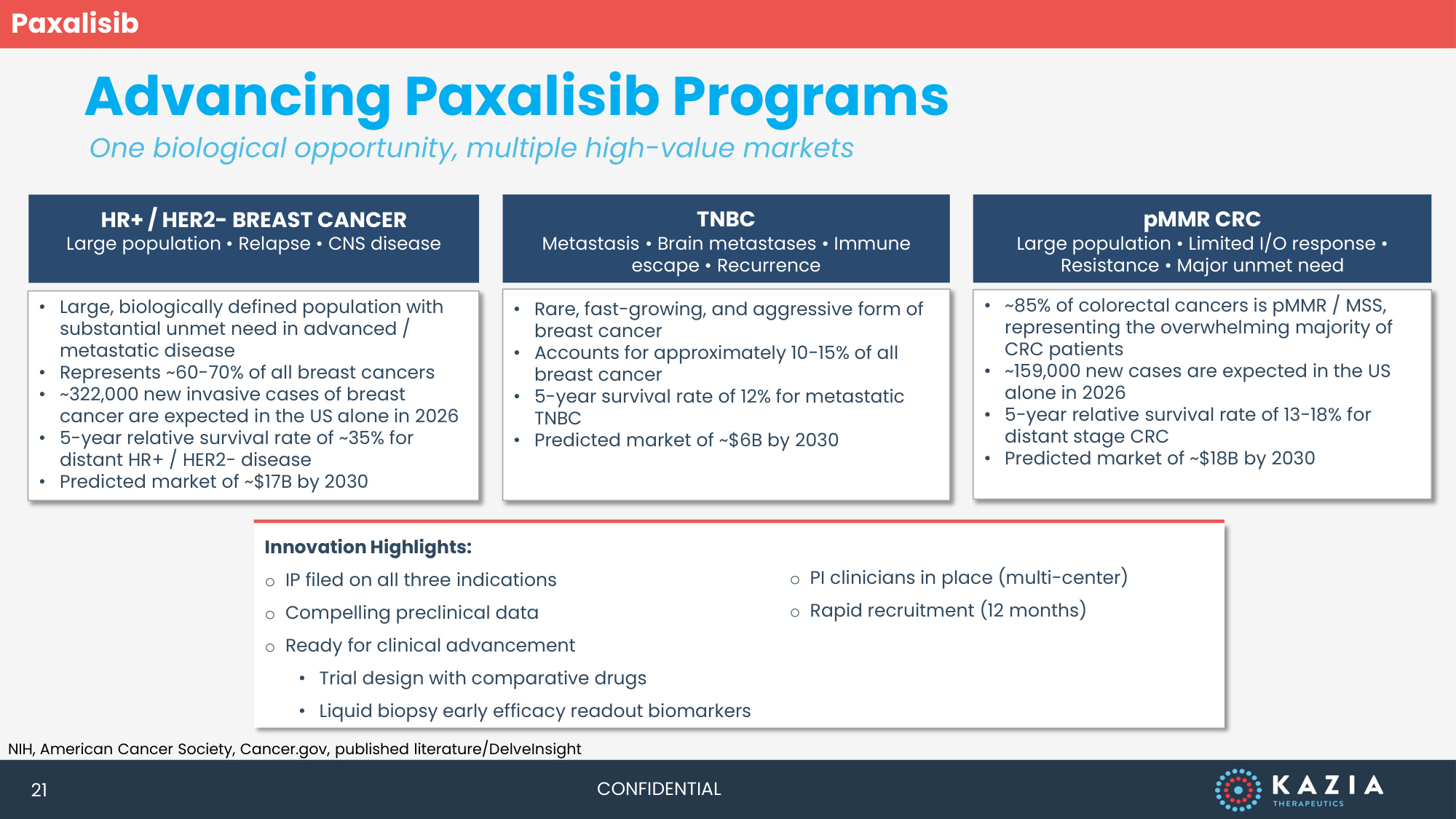
Paxalisib CONFIDENTIAL Advancing Paxalisib Programs 21 One biological opportunity, multiple high-value markets HR+ / HER2- BREAST CANCER Large population • Relapse • CNS disease pMMR CRC Large population • Limited I/O response • Resistance • Major unmet need TNBC Metastasis • Brain metastases • Immune escape • Recurrence • Rare, fast-growing, and aggressive form of breast cancer • Accounts for approximately 10-15% of all breast cancer • 5-year survival rate of 12% for metastatic TNBC • Predicted market of ~$6B by 2030 NIH, American Cancer Society, Cancer.gov, published literature/DelveInsight • Large, biologically defined population with substantial unmet need in advanced / metastatic disease • Represents ~60-70% of all breast cancers • ~322,000 new invasive cases of breast cancer are expected in the US alone in 2026 • 5-year relative survival rate of ~35% for distant HR+ / HER2- disease • Predicted market of ~$17B by 2030 • ~85% of colorectal cancers is pMMR / MSS, representing the overwhelming majority of CRC patients • ~159,000 new cases are expected in the US alone in 2026 • 5-year relative survival rate of 13-18% for distant stage CRC • Predicted market of ~$18B by 2030 Innovation Highlights: o IP filed on all three indications o Compelling preclinical data o Ready for clinical advancement • Trial design with comparative drugs • Liquid biopsy early efficacy readout biomarkers o PI clinicians in place (multi-center) o Rapid recruitment (12 months)
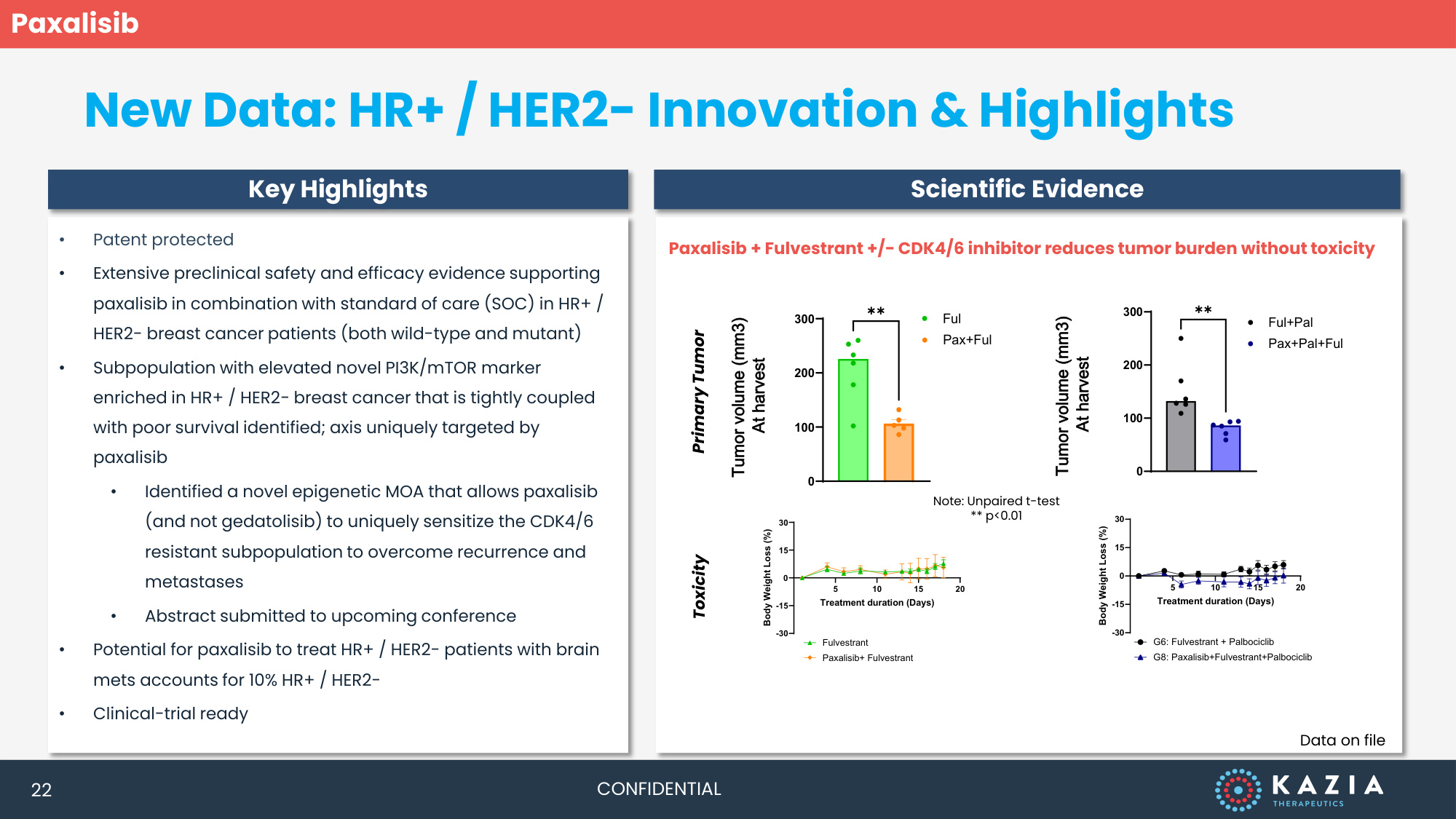
Paxalisib CONFIDENTIAL New Data: HR+ / HER2- Innovation & Highlights 22 • Patent protected • Extensive preclinical safety and efficacy evidence supporting paxalisib in combination with standard of care (SOC) in HR+ / HER2- breast cancer patients (both wild-type and mutant) • Subpopulation with elevated novel PI3K/mTOR marker enriched in HR+ / HER2− breast cancer that is tightly coupled with poor survival identified; axis uniquely targeted by paxalisib • Identified a novel epigenetic MOA that allows paxalisib (and not gedatolisib) to uniquely sensitize the CDK4/6 resistant subpopulation to overcome recurrence and metastases • Abstract submitted to upcoming conference • Potential for paxalisib to treat HR+ / HER2- patients with brain mets accounts for 10% HR+ / HER2- • Clinical-trial ready Key Highlights Scientific Evidence Paxalisib + Fulvestrant +/- CDK4/6 inhibitor reduces tumor burden without toxicity 5 10 15 20 -30 -15 0 15 30 Treatment duration (Days) Body Weight Loss (%) Fulvestrant Paxalisib+ Fulvestrant 0 100 200 300 Tumour volume (mm3) at harvest Pax+Ful Ful ✱✱ 5 10 15 20 -30 -15 0 15 30 Treatment duration (Days) Body Weight Loss (%) G6: Fulvestrant + Palbociclib G8: Paxalisib+Fulvestrant+Palbociclib 0 100 200 300 Tumour volume (mm3) at harvest Ful+Pal Pax+Pal+Ful ✱✱ Primary Tumor Toxicity Tumor volume (mm3) At harvest Tumor volume (mm3) At harvest Data on file Note: Unpaired t-test ** p<0.01
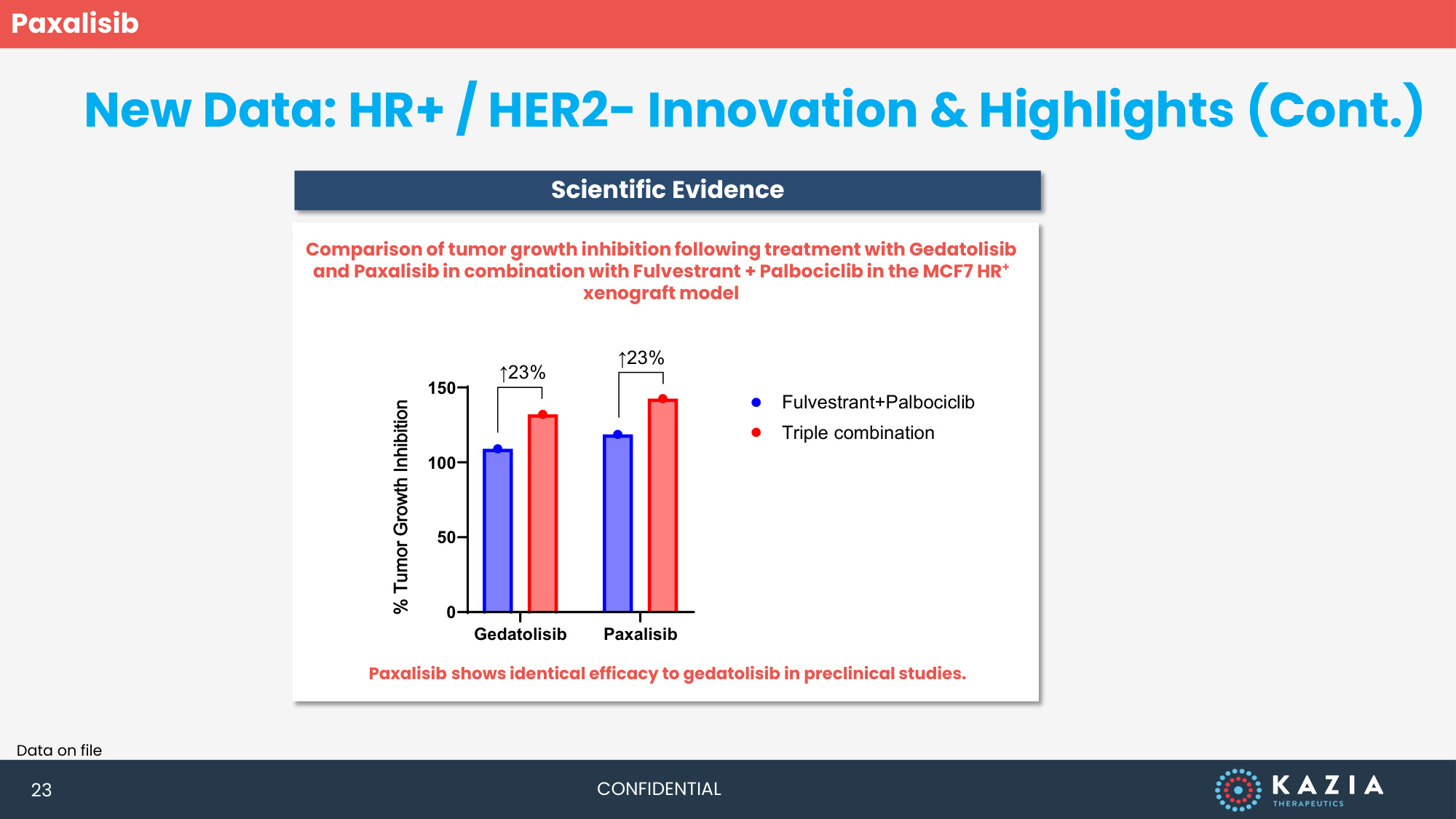
Paxalisib CONFIDENTIAL New Data: HR+ / HER2- Innovation & Highlights (Cont.) 23 Scientific Evidence Gedatolisib Paxalisib 0 50 100 150 % Tumour Growth Inhibition Fulvestrant+Palbociclib Triple combination ↑23% ↑23% Comparison of tumor growth inhibition following treatment with Gedatolisib and Paxalisib in combination with Fulvestrant + Palbociclib in the MCF7 HR⁺ xenograft model Paxalisib shows identical efficacy to gedatolisib in preclinical studies. % Tumor Growth Inhibition Data on file
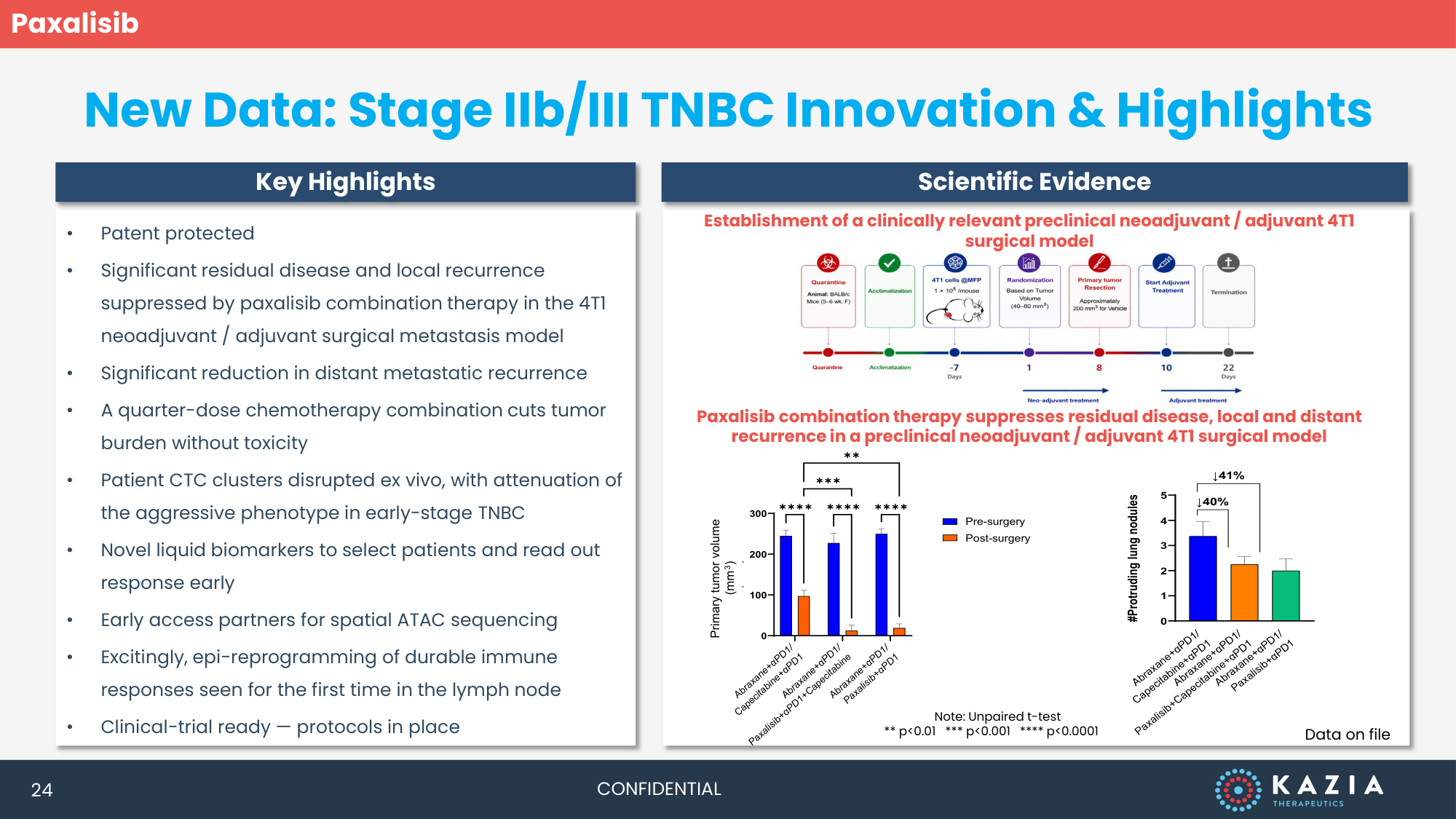
Paxalisib CONFIDENTIAL New Data: Stage IIb/III TNBC Innovation & Highlights 24 • Patent protected • Significant residual disease and local recurrence suppressed by paxalisib combination therapy in the 4T1 neoadjuvant / adjuvant surgical metastasis model • Significant reduction in distant metastatic recurrence • A quarter-dose chemotherapy combination cuts tumor burden without toxicity • Patient CTC clusters disrupted ex vivo, with attenuation of the aggressive phenotype in early-stage TNBC • Novel liquid biomarkers to select patients and read out response early • Early access partners for spatial ATAC sequencing • Excitingly, epi-reprogramming of durable immune responses seen for the first time in the lymph node • Clinical-trial ready — protocols in place Key Highlights Scientific Evidence Establishment of a clinically relevant preclinical neoadjuvant / adjuvant 4T1 surgical model Abraxane+αPD1/ Capecitabine+αPD1 Abraxane+αPD1/ Paxalisib+αPD1+Capecitabine Abraxane+αPD1/ Paxalisib+αPD1 0 100 200 300 Primary tumour volume (mm3) Pre-surgery Post-surgery ✱✱✱✱ ✱✱✱✱ ✱✱✱✱ ✱✱✱ ✱✱ Abraxane+αPD1/ Capecitabine+αPD1 Abraxane+αPD1/ Paxalisib+Capecitabine+αPD1 Abraxane+αPD1/ Paxalisib+αPD1 0 1 2 3 4 5 #Protruding lung nodules ↓40% ↓41% Paxalisib combination therapy suppresses residual disease, local and distant recurrence in a preclinical neoadjuvant / adjuvant 4T1 surgical model Data on file Primary tumor volume (mm3) Note: Unpaired t-test ** p<0.01 *** p<0.001 **** p<0.0001
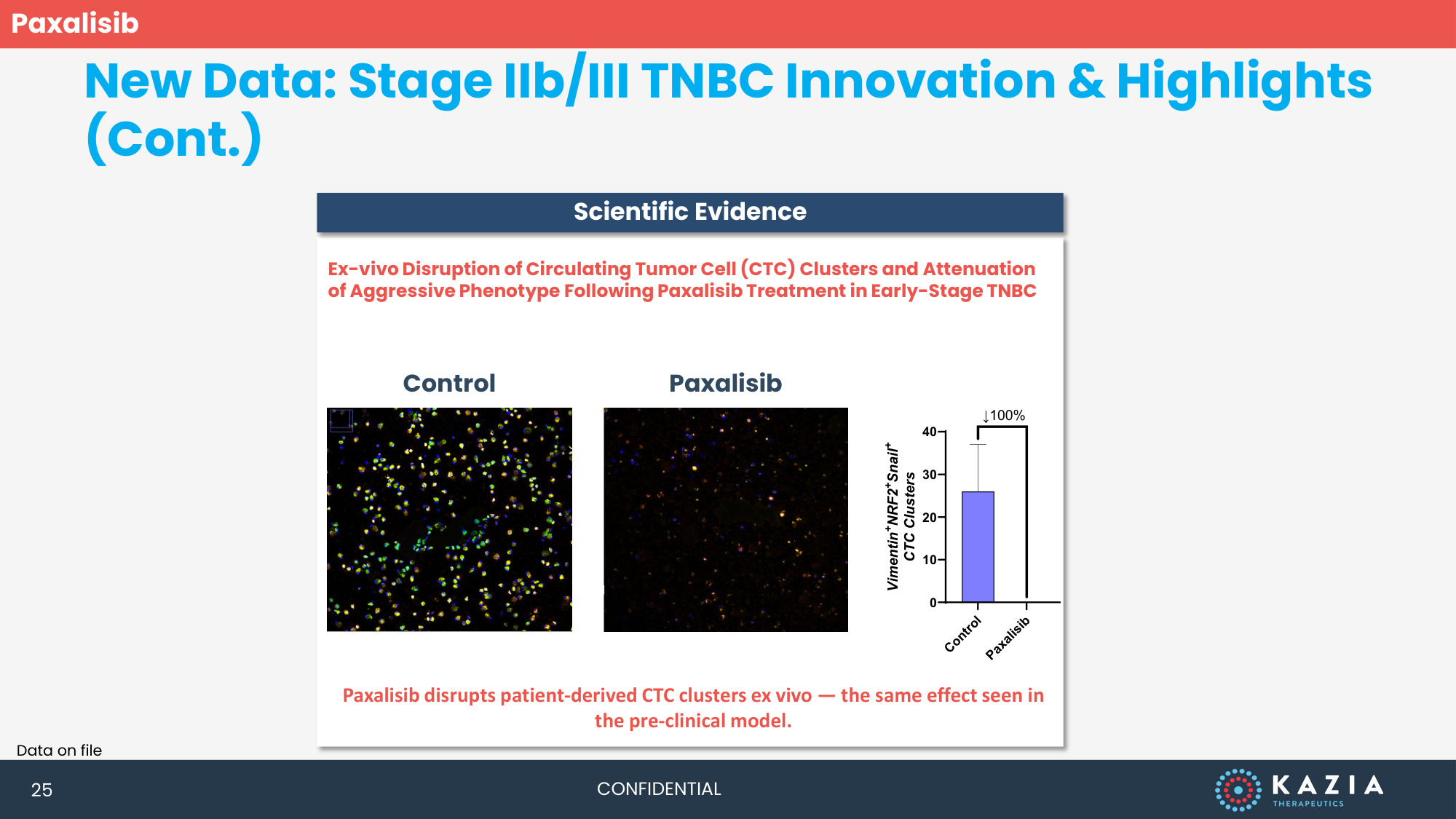
Paxalisib CONFIDENTIAL Ex-vivo Disruption of Circulating Tumor Cell (CTC) Clusters and Attenuation of Aggressive Phenotype Following Paxalisib Treatment in Early-Stage TNBC New Data: Stage IIb/III TNBC Innovation & Highlights (Cont.) 25 Scientific Evidence Control Paxalisib Paxalisib disrupts patient-derived CTC clusters ex vivo — the same effect seen in the pre-clinical model. Control Paxalisib 0 10 20 30 40 Vimentin+NRF2+Snail+ CTC Clusters ↓100% Data on file
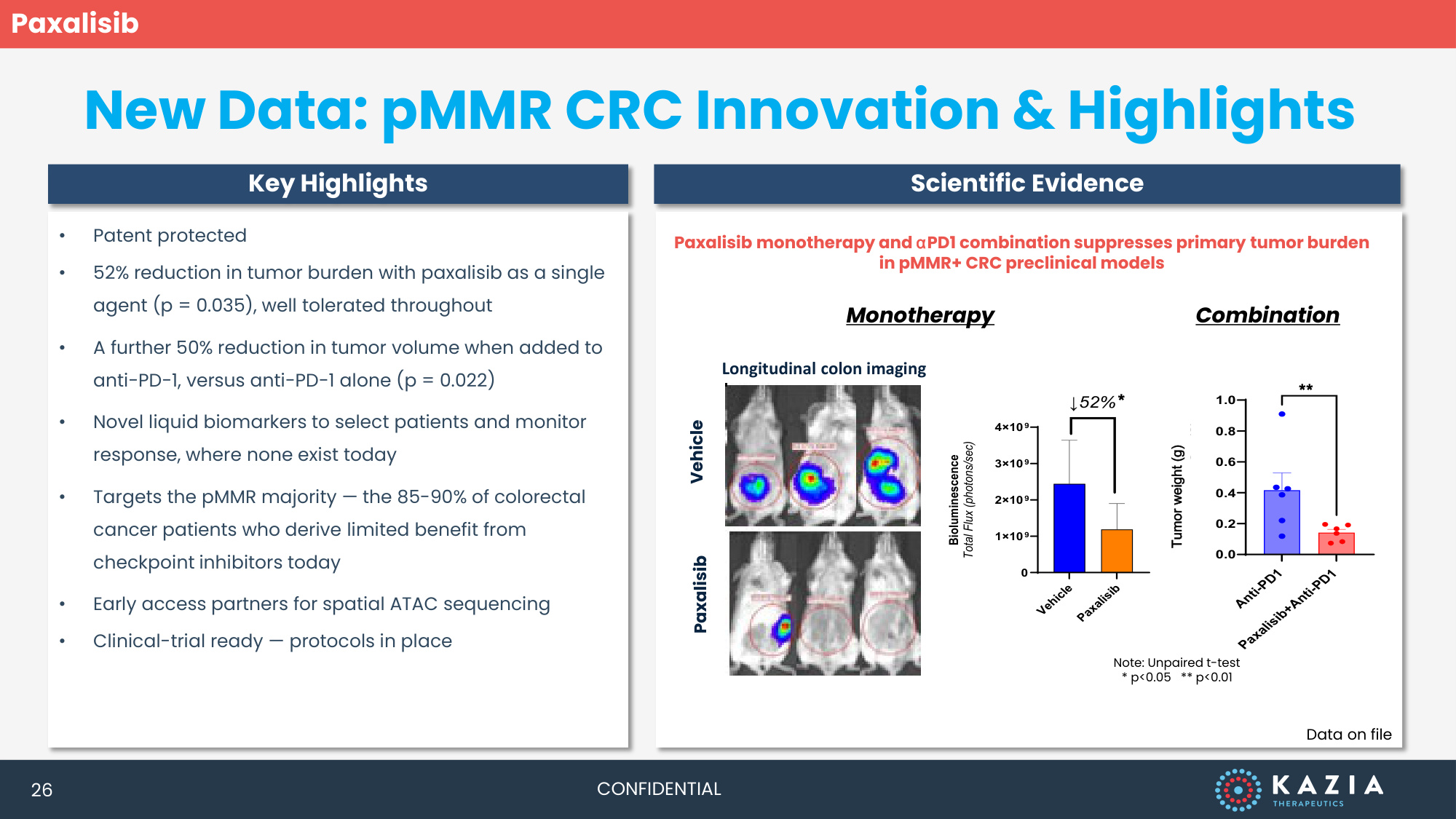
Paxalisib CONFIDENTIAL New Data: pMMR CRC Innovation & Highlights 26 • Patent protected • 52% reduction in tumor burden with paxalisib as a single agent (p = 0.035), well tolerated throughout • A further 50% reduction in tumor volume when added to anti-PD-1, versus anti-PD-1 alone (p = 0.022) • Novel liquid biomarkers to select patients and monitor response, where none exist today • Targets the pMMR majority — the 85-90% of colorectal cancer patients who derive limited benefit from checkpoint inhibitors today • Early access partners for spatial ATAC sequencing • Clinical-trial ready — protocols in place Key Highlights Scientific Evidence Paxalisib monotherapy and αPD1 combination suppresses primary tumor burden in pMMR+ CRC preclinical models Anti-PD1 Paxalisib+Anti-PD1 0.0 0.2 0.4 0.6 0.8 1.0 Tumour weight (g) ✱ Longitudinal colon imaging Monotherapy Combination Vehicle Paxalisib Vehicle Paxalisib 0 1×10 9 2×10 9 3×10 9 4×10 9 Bioluminescence Total Flux (photons/sec) ↓52% Tumor weight (g) Data on file * ** Note: Unpaired t-test * p<0.05 ** p<0.01
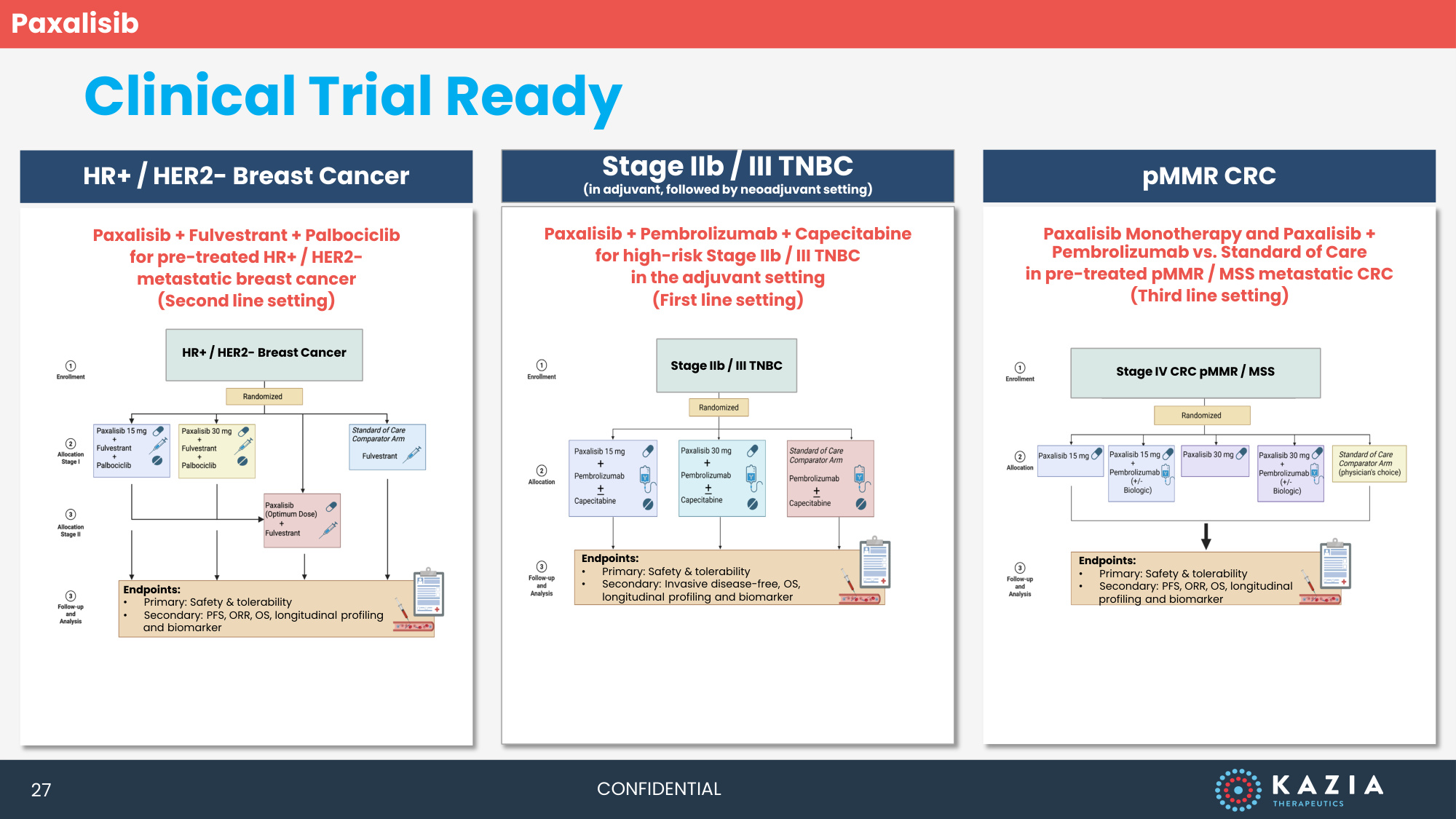
Paxalisib CONFIDENTIAL Clinical Trial Ready 27 Paxalisib + Pembrolizumab + Capecitabine for high-risk Stage IIb / III TNBC in the adjuvant setting (First line setting) Stage IIb / III TNBC (in adjuvant, followed by neoadjuvant setting) Paxalisib + Fulvestrant + Palbociclib for pre-treated HR+ / HER2- metastatic breast cancer (Second line setting) HR+ / HER2- Breast Cancer Paxalisib Monotherapy and Paxalisib + Pembrolizumab vs. Standard of Care in pre-treated pMMR / MSS metastatic CRC (Third line setting) pMMR CRC Endpoints: • Primary: Safety & tolerability • Secondary: PFS, ORR, OS, longitudinal profiling and biomarker Endpoints: • Primary: Safety & tolerability • Secondary: Invasive disease-free, OS, longitudinal profiling and biomarker Endpoints: • Primary: Safety & tolerability • Secondary: PFS, ORR, OS, longitudinal profiling and biomarker HR+ / HER2- Breast Cancer Stage IIb / III TNBC Stage IV CRC pMMR / MSS
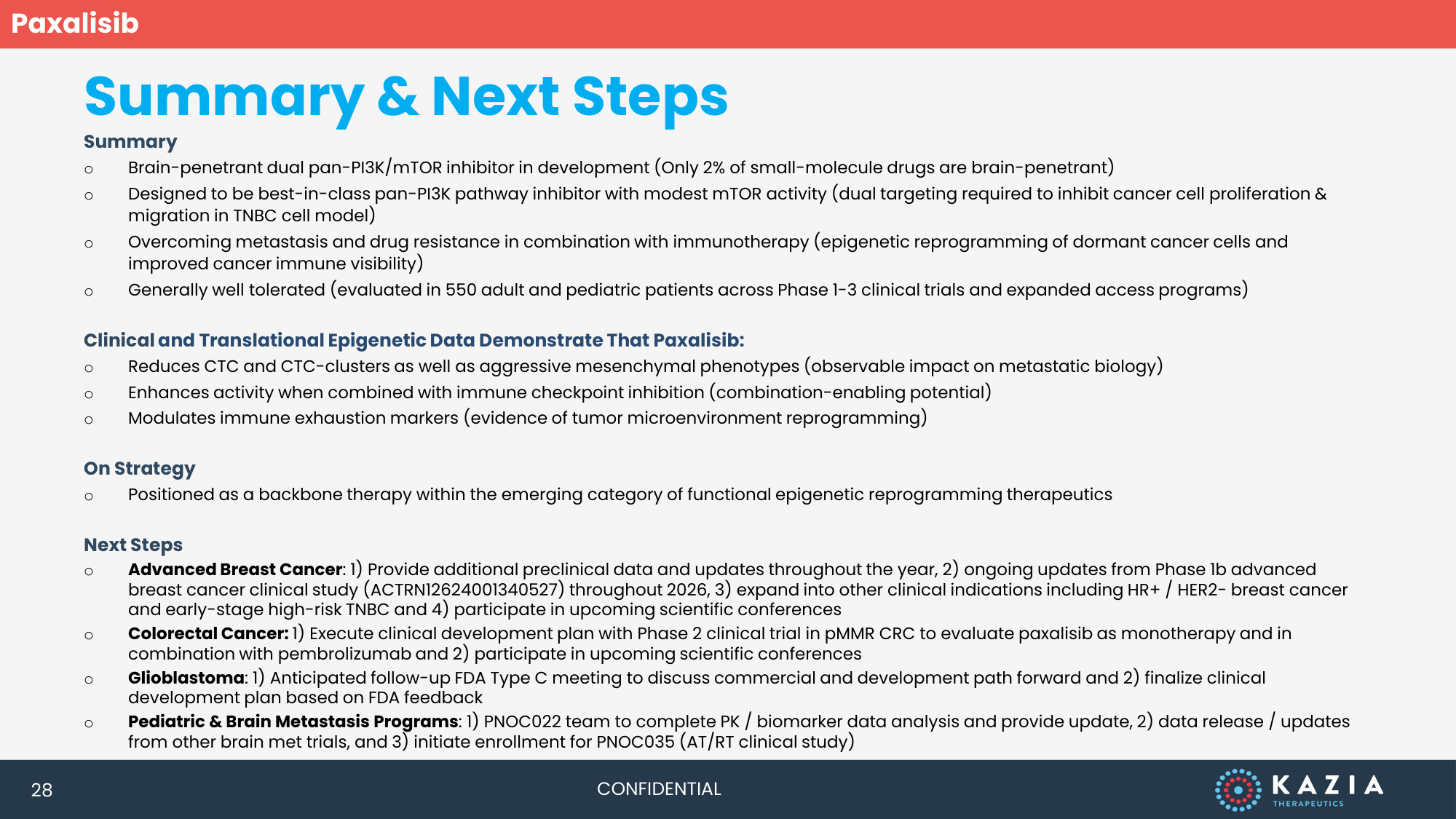
Paxalisib CONFIDENTIAL Summary & Next Steps 28 Summary o Brain-penetrant dual pan-PI3K/mTOR inhibitor in development (Only 2% of small-molecule drugs are brain-penetrant) o Designed to be best-in-class pan-PI3K pathway inhibitor with modest mTOR activity (dual targeting required to inhibit cancer cell proliferation & migration in TNBC cell model) o Overcoming metastasis and drug resistance in combination with immunotherapy (epigenetic reprogramming of dormant cancer cells and improved cancer immune visibility) o Generally well tolerated (evaluated in 550 adult and pediatric patients across Phase 1-3 clinical trials and expanded access programs) Clinical and Translational Epigenetic Data Demonstrate That Paxalisib: o Reduces CTC and CTC-clusters as well as aggressive mesenchymal phenotypes (observable impact on metastatic biology) o Enhances activity when combined with immune checkpoint inhibition (combination-enabling potential) o Modulates immune exhaustion markers (evidence of tumor microenvironment reprogramming) On Strategy o Positioned as a backbone therapy within the emerging category of functional epigenetic reprogramming therapeutics Next Steps o Advanced Breast Cancer: 1) Provide additional preclinical data and updates throughout the year, 2) ongoing updates from Phase 1b advanced breast cancer clinical study (ACTRN12624001340527) throughout 2026, 3) expand into other clinical indications including HR+ / HER2- breast cancer and early-stage high-risk TNBC and 4) participate in upcoming scientific conferences o Colorectal Cancer: 1) Execute clinical development plan with Phase 2 clinical trial in pMMR CRC to evaluate paxalisib as monotherapy and in combination with pembrolizumab and 2) participate in upcoming scientific conferences o Glioblastoma: 1) Anticipated follow-up FDA Type C meeting to discuss commercial and development path forward and 2) finalize clinical development plan based on FDA feedback o Pediatric & Brain Metastasis Programs: 1) PNOC022 team to complete PK / biomarker data analysis and provide update, 2) data release / updates from other brain met trials, and 3) initiate enrollment for PNOC035 (AT/RT clinical study) Paxalisib
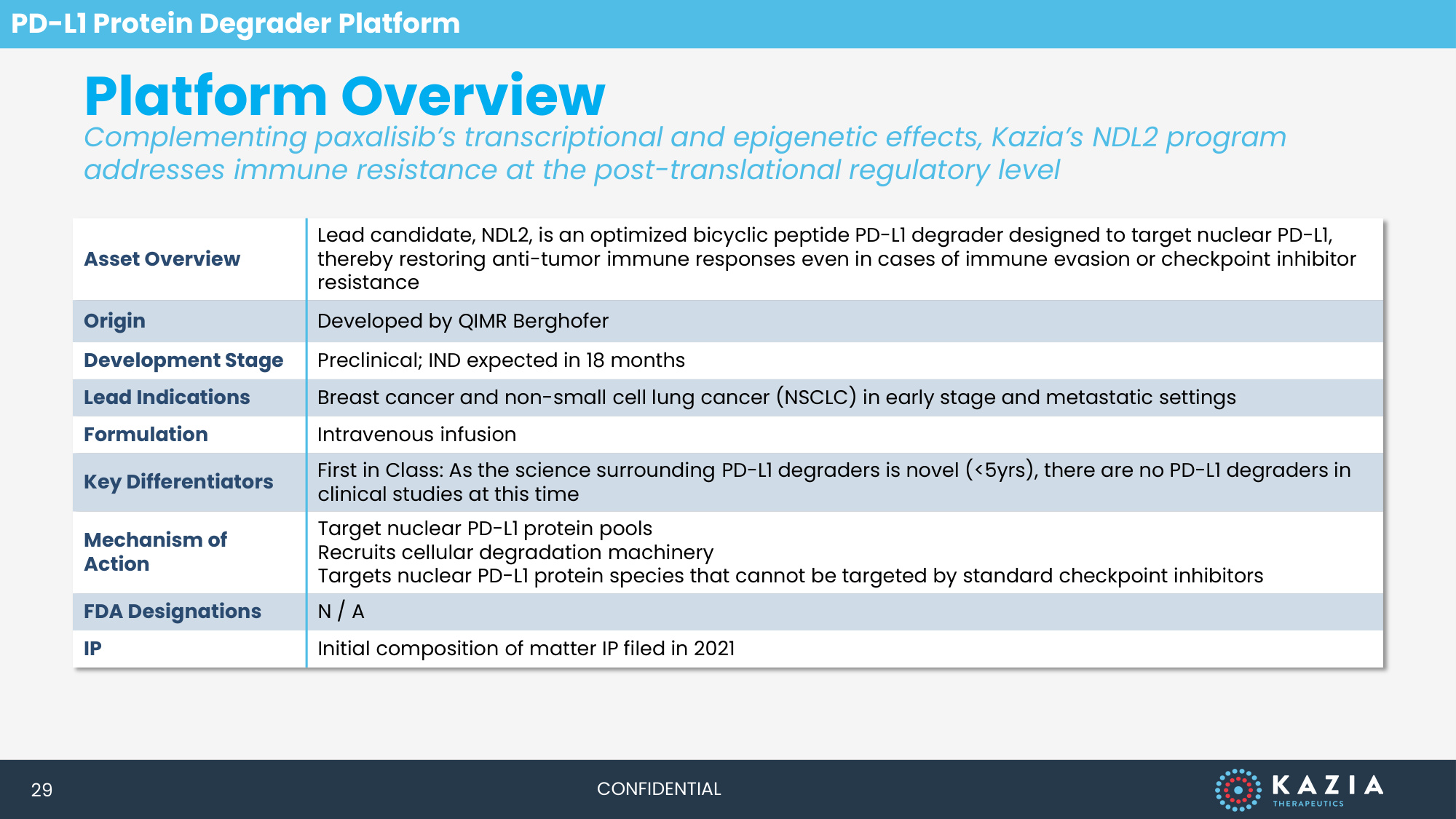
PD-L1 Protein Degrader Platform Platform Overview 29 Asset Overview Lead candidate, NDL2, is an optimized bicyclic peptide PD-L1 degrader designed to target nuclear PD-L1, thereby restoring anti-tumor immune responses even in cases of immune evasion or checkpoint inhibitor resistance Origin Developed by QIMR Berghofer Development Stage Preclinical; IND expected in 18 months Lead Indications Breast cancer and non-small cell lung cancer (NSCLC) in early stage and metastatic settings Formulation Intravenous infusion Key Differentiators First in Class: As the science surrounding PD-L1 degraders is novel (<5yrs), there are no PD-L1 degraders in clinical studies at this time Mechanism of Action Target nuclear PD-L1 protein pools Recruits cellular degradation machinery Targets nuclear PD-L1 protein species that cannot be targeted by standard checkpoint inhibitors FDA Designations N / A IP Initial composition of matter IP filed in 2021 Complementing paxalisib's transcriptional and epigenetic effects, Kazia's NDL2 program addresses immune resistance at the post-translational regulatory level CONFIDENTIAL
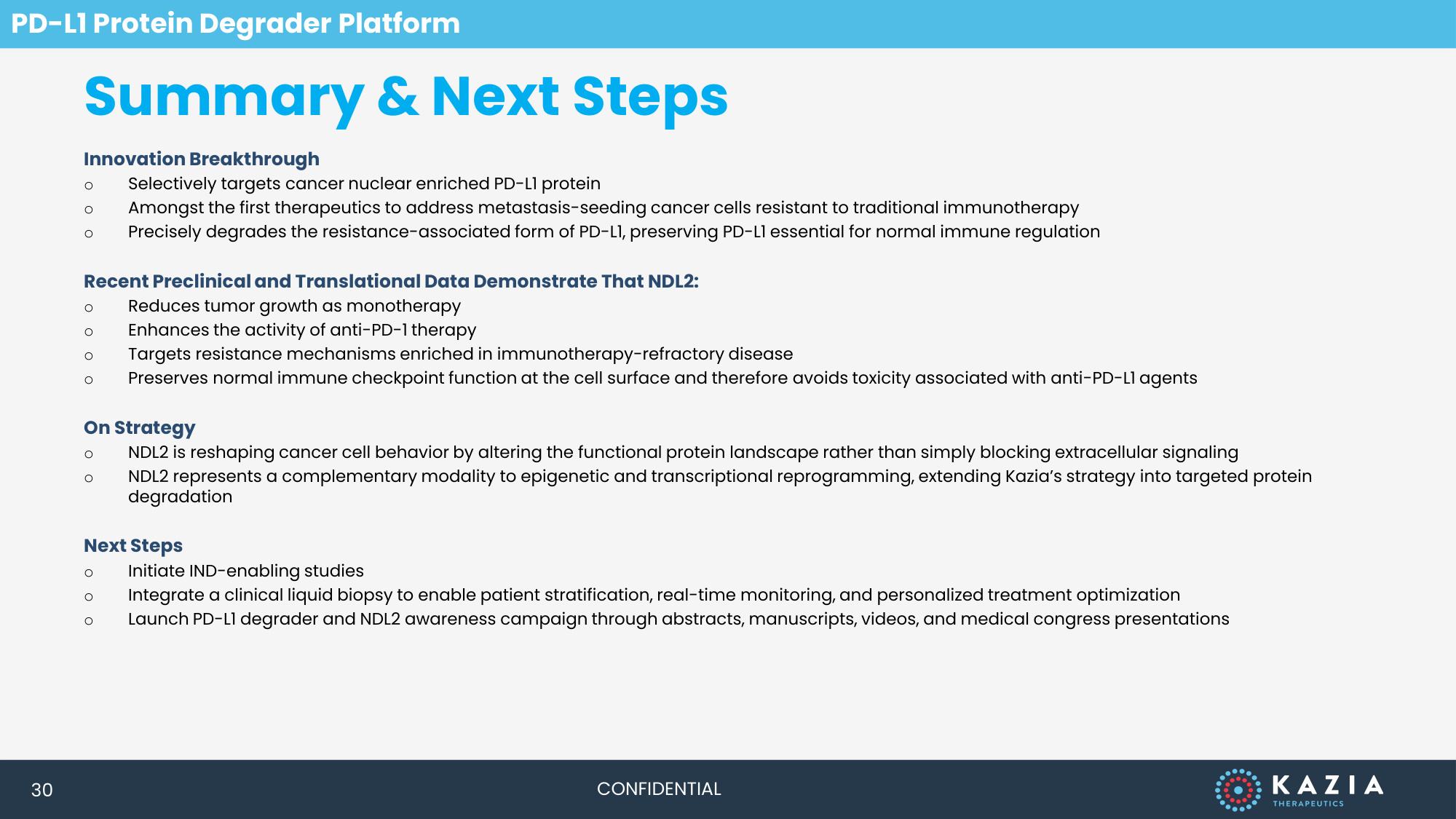
PD-L1 Protein Degrader Platform Summary & Next Steps 30 Innovation Breakthrough o Selectively targets cancer nuclear enriched PD-L1 protein o Amongst the first therapeutics to address metastasis-seeding cancer cells resistant to traditional immunotherapy o Precisely degrades the resistance-associated form of PD-L1, preserving PD-L1 essential for normal immune regulation Recent Preclinical and Translational Data Demonstrate That NDL2: o Reduces tumor growth as monotherapy o Enhances the activity of anti-PD-1 therapy o Targets resistance mechanisms enriched in immunotherapy-refractory disease o Preserves normal immune checkpoint function at the cell surface and therefore avoids toxicity associated with anti-PD-L1 agents On Strategy o NDL2 is reshaping cancer cell behavior by altering the functional protein landscape rather than simply blocking extracellular signaling o NDL2 represents a complementary modality to epigenetic and transcriptional reprogramming, extending Kazia's strategy into targeted protein degradation Next Steps o Initiate IND-enabling studies o Integrate a clinical liquid biopsy to enable patient stratification, real-time monitoring, and personalized treatment optimization o Launch PD-L1 degrader and NDL2 awareness campaign through abstracts, manuscripts, videos, and medical congress presentations CONFIDENTIAL
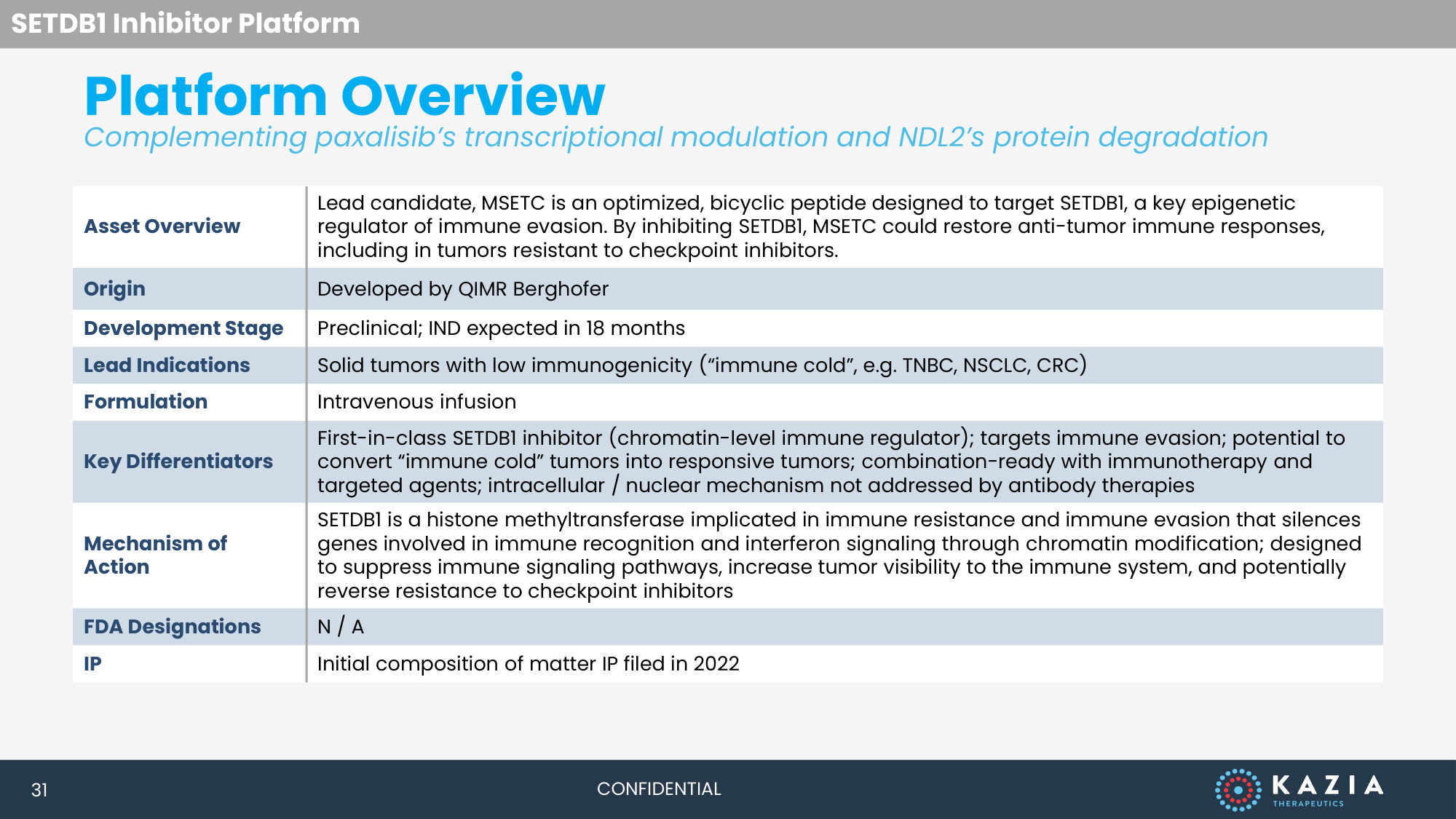
CONFIDENTIAL SETDB1 Inhibitor Platform Platform Overview 31 Asset Overview Lead candidate, MSETC is an optimized, bicyclic peptide designed to target SETDB1, a key epigenetic regulator of immune evasion. By inhibiting SETDB1, MSETC could restore anti-tumor immune responses, including in tumors resistant to checkpoint inhibitors. Origin Developed by QIMR Berghofer Development Stage Preclinical; IND expected in 18 months Lead Indications Solid tumors with low immunogenicity ("immune cold", e.g. TNBC, NSCLC, CRC) Formulation Intravenous infusion Key Differentiators First-in-class SETDB1 inhibitor (chromatin-level immune regulator); targets immune evasion; potential to convert "immune cold" tumors into responsive tumors; combination-ready with immunotherapy and targeted agents; intracellular / nuclear mechanism not addressed by antibody therapies Mechanism of Action SETDB1 is a histone methyltransferase implicated in immune resistance and immune evasion that silences genes involved in immune recognition and interferon signaling through chromatin modification; designed to suppress immune signaling pathways, increase tumor visibility to the immune system, and potentially reverse resistance to checkpoint inhibitors FDA Designations N / A IP Initial composition of matter IP filed in 2022 Complementing paxalisib's transcriptional modulation and NDL2's protein degradation
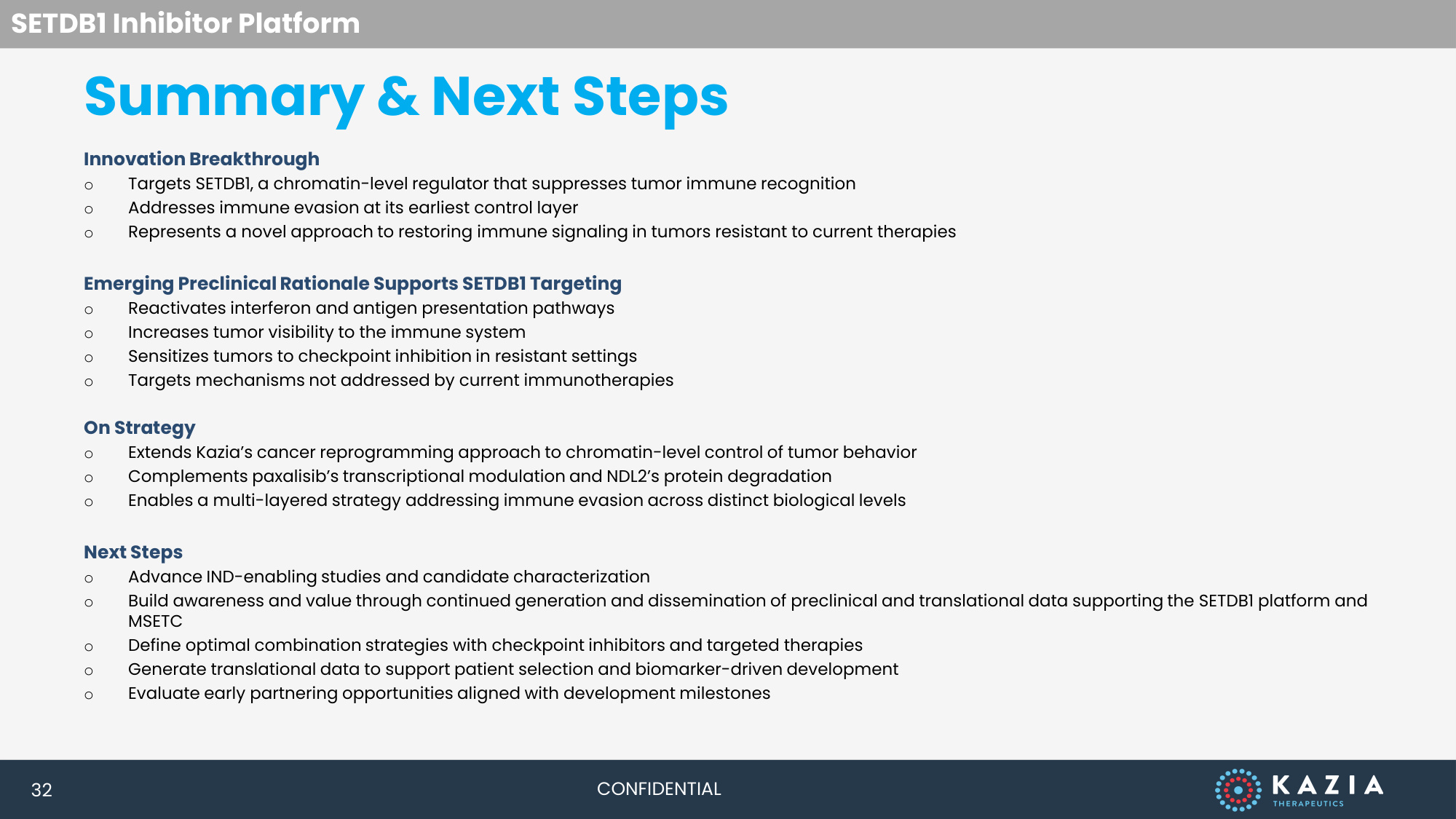
CONFIDENTIAL SETDB1 Inhibitor Platform Summary & Next Steps 32 Innovation Breakthrough o Targets SETDB1, a chromatin-level regulator that suppresses tumor immune recognition o Addresses immune evasion at its earliest control layer o Represents a novel approach to restoring immune signaling in tumors resistant to current therapies Emerging Preclinical Rationale Supports SETDB1 Targeting o Reactivates interferon and antigen presentation pathways o Increases tumor visibility to the immune system o Sensitizes tumors to checkpoint inhibition in resistant settings o Targets mechanisms not addressed by current immunotherapies On Strategy o Extends Kazia's cancer reprogramming approach to chromatin-level control of tumor behavior o Complements paxalisib's transcriptional modulation and NDL2's protein degradation o Enables a multi-layered strategy addressing immune evasion across distinct biological levels Next Steps o Advance IND-enabling studies and candidate characterization o Build awareness and value through continued generation and dissemination of preclinical and translational data supporting the SETDB1 platform and MSETC o Define optimal combination strategies with checkpoint inhibitors and targeted therapies o Generate translational data to support patient selection and biomarker-driven development o Evaluate early partnering opportunities aligned with development milestones

33 Corporate Highlights CONFIDENTIAL
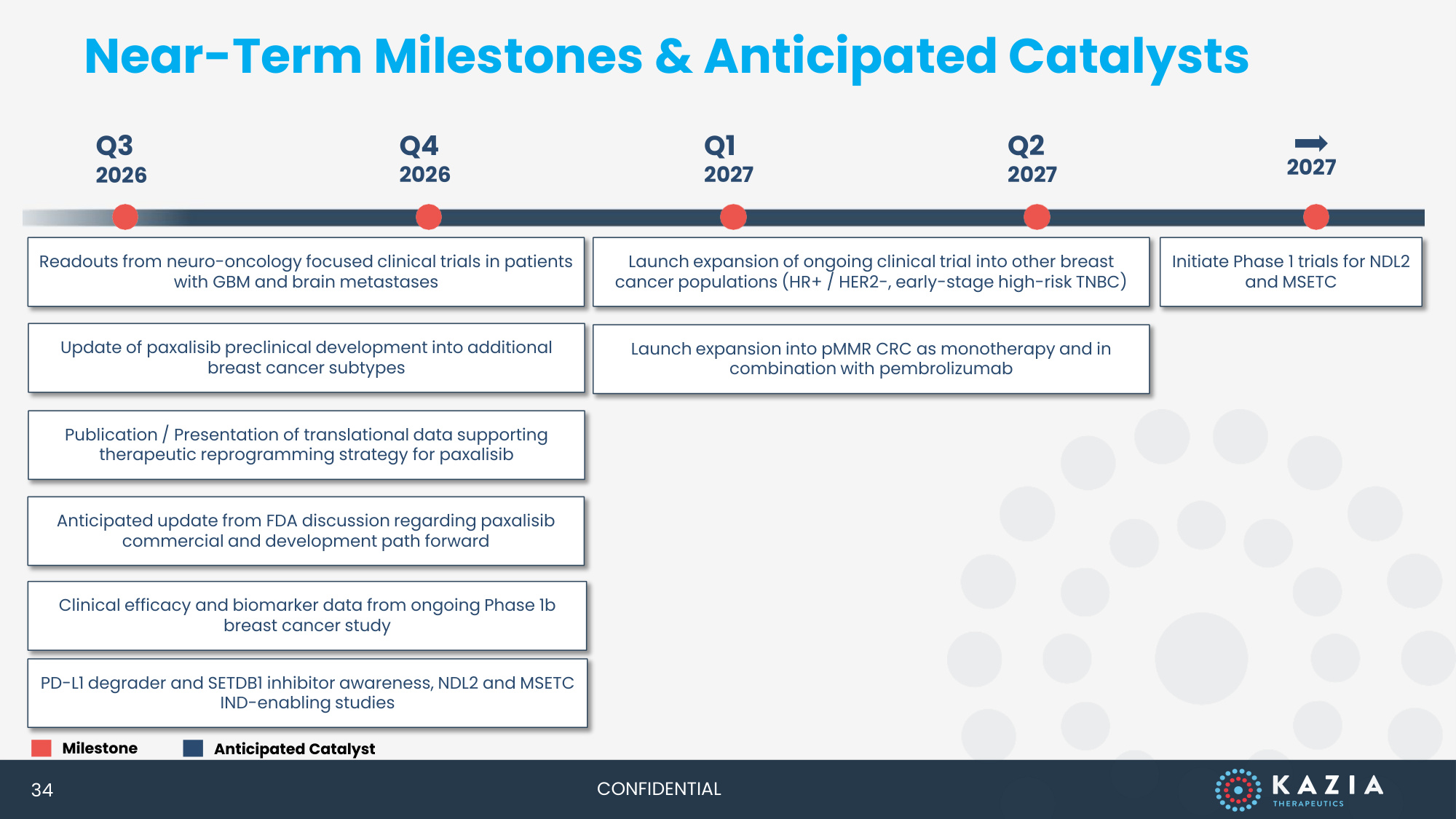
Near-Term Milestones & Anticipated Catalysts 34 Anticipated update from FDA discussion regarding paxalisib commercial and development path forward Readouts from neuro-oncology focused clinical trials in patients with GBM and brain metastases Clinical efficacy and biomarker data from ongoing Phase 1b breast cancer study Update of paxalisib preclinical development into additional breast cancer subtypes Publication / Presentation of translational data supporting therapeutic reprogramming strategy for paxalisib Milestone Anticipated Catalyst PD-L1 degrader and SETDB1 inhibitor awareness, NDL2 and MSETC IND-enabling studies Q3 2026 Q4 2026 Q1 2027 Q2 2027 2027 Launch expansion of ongoing clinical trial into other breast cancer populations (HR+ / HER2-, early-stage high-risk TNBC) Launch expansion into pMMR CRC as monotherapy and in combination with pembrolizumab Initiate Phase 1 trials for NDL2 and MSETC CONFIDENTIAL
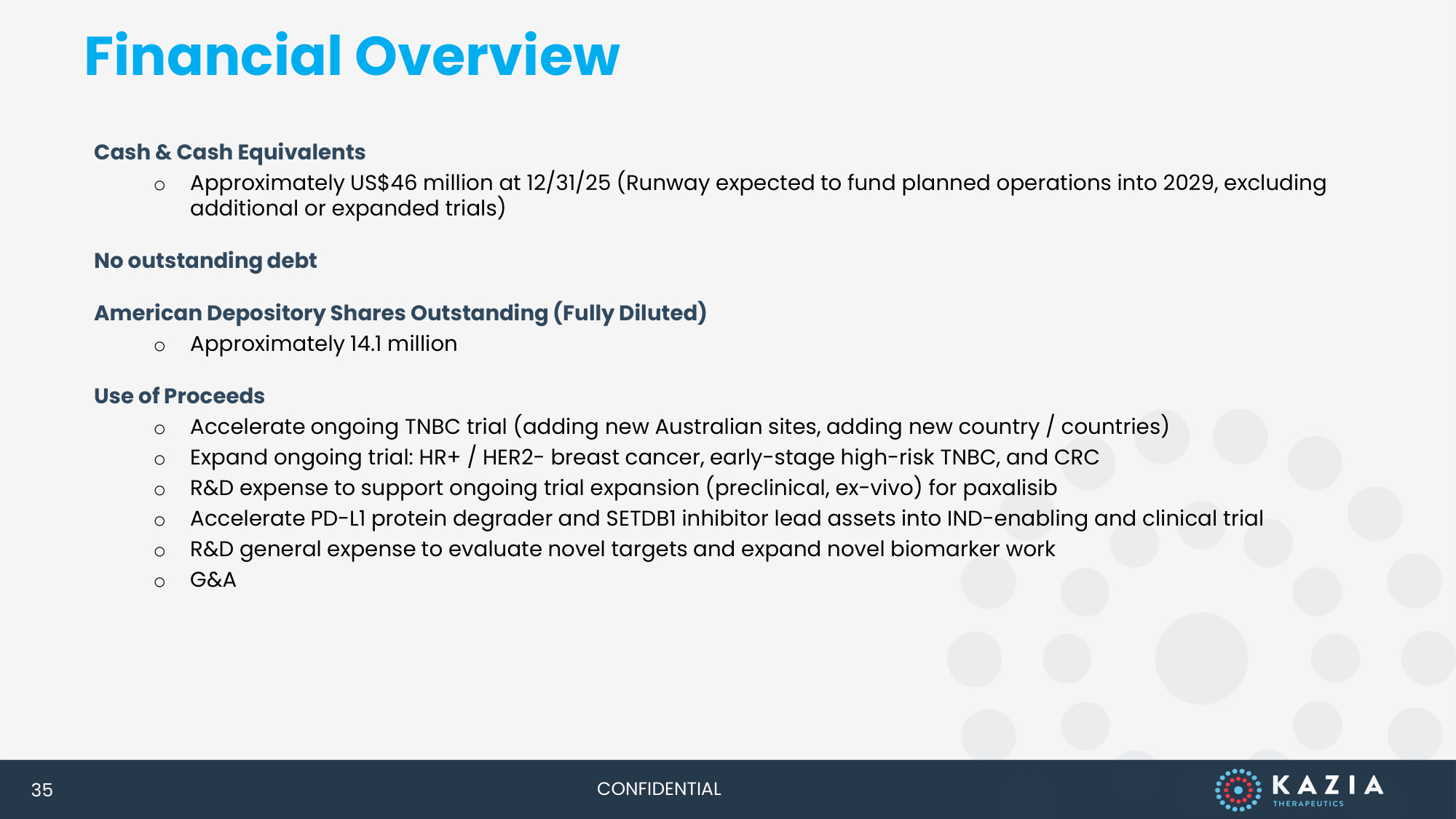
CONFIDENTIAL Financial Overview 35 Cash & Cash Equivalents o Approximately US$46 million at 12/31/25 (Runway expected to fund planned operations into 2029, excluding additional or expanded trials) No outstanding debt American Depository Shares Outstanding (Fully Diluted) o Approximately 14.1 million Use of Proceeds o Accelerate ongoing TNBC trial (adding new Australian sites, adding new country / countries) o Expand ongoing trial: HR+ / HER2- breast cancer, early-stage high-risk TNBC, and CRC o R&D expense to support ongoing trial expansion (preclinical, ex-vivo) for paxalisib o Accelerate PD-L1 protein degrader and SETDB1 inhibitor lead assets into IND-enabling and clinical trial o R&D general expense to evaluate novel targets and expand novel biomarker work o G&A
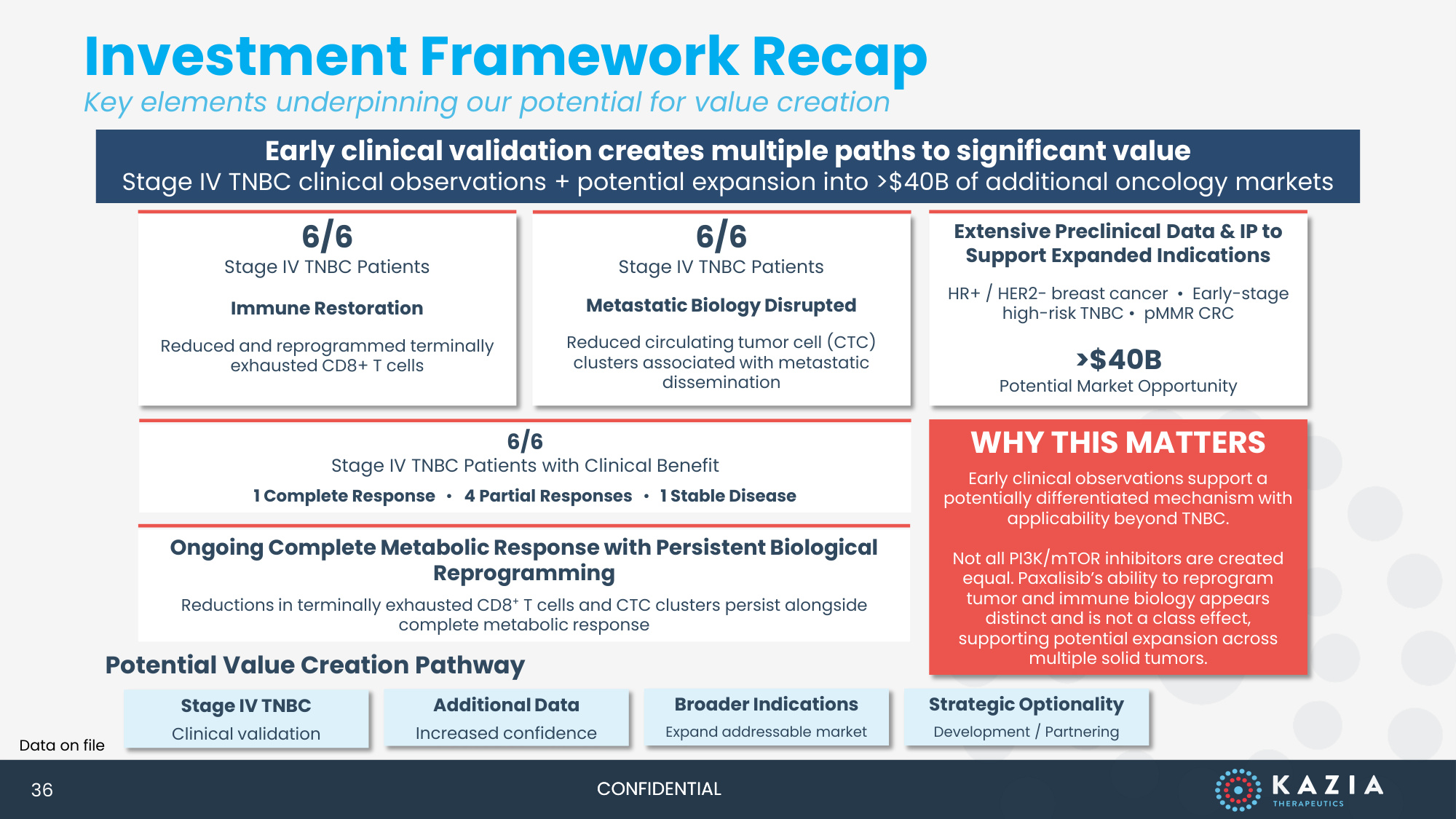
CONFIDENTIAL Investment Framework Recap 36 Key elements underpinning our potential for value creation 6/6 Stage IV TNBC Patients Immune Restoration Reduced and reprogrammed terminally exhausted CD8+ T cells 6/6 Stage IV TNBC Patients Metastatic Biology Disrupted Reduced circulating tumor cell (CTC) clusters associated with metastatic dissemination Extensive Preclinical Data & IP to Support Expanded Indications HR+ / HER2- breast cancer • Early-stage high-risk TNBC • pMMR CRC >$40B Potential Market Opportunity Early clinical validation creates multiple paths to significant value Stage IV TNBC clinical observations + potential expansion into >$40B of additional oncology markets Ongoing Complete Metabolic Response with Persistent Biological Reprogramming Reductions in terminally exhausted CD8⁺ T cells and CTC clusters persist alongside complete metabolic response WHY THIS MATTERS Early clinical observations support a potentially differentiated mechanism with applicability beyond TNBC. Not all PI3K/mTOR inhibitors are created equal. Paxalisib's ability to reprogram tumor and immune biology appears distinct and is not a class effect, supporting potential expansion across multiple solid tumors. Potential Value Creation Pathway Stage IV TNBC Clinical validation Additional Data Increased confidence Broader Indications Expand addressable market Strategic Optionality Development / Partnering CONFIDENTIAL Data on file 6/6 Stage IV TNBC Patients with Clinical Benefit 1 Complete Response • 4 Partial Responses • 1 Stable Disease

Leadership 37 Management Robert Apple Chairman Dr. John Friend Chief Executive Officer Board of Directors Steven Coffey Non-Executive Director Jeffrey J. Kraws Head of Corporate Strategy & Development Elissa Hansen Corporate Secretary Ebru Davidson Non-Executive Director Dr. Sudha Rao Chief Scientific Officer James Levine Chief Financial Officer CONFIDENTIAL

www.kaziatherapeutics.com ir@kaziatherapeutics.com