Contents

Letter to shareholders
Dear shareholder:
You are invited to attend our annual and special meeting of common shareholders on Wednesday, May 6, 2026 at 5:00 p.m. (Toronto time).
Shareholders will have the opportunity to attend the meeting, ask questions and vote on a number of important matters by way of live webcast at meetings.lumiconnect.com/400-804-248-487.
The meeting will also be held at Sun Life's head office at 1 York Street (at Harbour Street), 35th floor, Toronto, Ontario, Canada.
The business of the meeting is described in the accompanying notice of our 2026 annual and special meeting and management information circular (Circular).
We will be conducting the annual meeting of the voting policyholders and sole shareholder of Sun Life Assurance Company of Canada at the same time. The formal business of each meeting will be conducted separately, however, management's presentation will address shareholders and policyholders.
If you cannot attend the meeting, please vote by submitting your proxy or voting instruction form by mail, internet or telephone by 5:00 p.m. (Toronto time) on Monday, May 4, 2026, as described on page 14 in the attached Circular.
 |
 |
| Scott F . Powers | Kevin D Strain |
| Chair of the Board | President & Chief Executive Officer |
Si vous désirez recevoir l'avis de convocation à l'assemblée annuelle et la circulaire d'information en français, veuillez communiquer avec le secrétaire en écrivant au 1 York Street, 31st Floor, Toronto (Ontario) Canada M5J 0B6, en composant le 1 877-786-5433, ou en envoyant un courriel à servicesauxactionnaires@sunlife.com.
Notice of our 2026 annual and special meeting
You are invited to our annual and special meeting of common shareholders:
| When: | Wednesday, May 6, 2026 at 5:00 pm (Toronto time) | ||
| Where: | Online Via live webcast at meetings.lumiconnect.com/400-804-248-487 Password: "sunlife2026" (case sensitive) |
||
| In Person 1 York Street (at Harbour Street), 35th floor, Toronto, Ontario, Canada Please visit our website at sunlife.com/2026agm in advance of the meeting for the most current information about attending the meeting. |
|||
What the meeting will cover
1. Receipt of the 2025 consolidated financial statements
2. Election of the directors
3. Appointment of the auditor
4. A non-binding advisory vote on our approach to executive compensation
5. Amendments to Sun Life's Executive Stock Option Plan
6. Consideration of other business that may properly be brought before the meeting.
A total of 554,013,029 votes are eligible to be cast at the meeting.
The annual meeting of Sun Life Assurance Company of Canada will also be held at the same time.
The attached Circular is being sent to you because you owned common shares of Sun Life Financial Inc. on March 13, 2026 (the record date). It includes important information about what the meeting will cover, who can vote and how to vote.
The Board of Directors has approved the contents of this circular and has authorized us to send it to you.

Troy Krushel
Vice-President, Associate General Counsel & Corporate Secretary
Toronto, Ontario
March 13, 2026
Management information circular
March 13, 2026
In this document, we, us, our, the company, Sun Life and SLF Inc. mean Sun Life Financial Inc., and Sun Life Assurance means Sun Life Assurance Company of Canada. You, your and shareholder mean common shareholders of SLF Inc. All dollar amounts are in Canadian dollars unless otherwise stated.
Unless otherwise stated, information in this management information circular (Circular) is provided as of February 27, 2026.
About the meeting
Delivery of meeting materials
Notice and access
We are making this Circular available online instead of by mail according to the notice and access rules developed by Canadian Securities Administrators, and pursuant to an exemption received from the Office of the Superintendent of Financial Institutions Canada (OSFI).
We are also using notice and access for delivery of our management's discussion and analysis (MD&A) to registered shareholders and for delivery of our financial statements and MD&A to non-registered (beneficial) shareholders and share ownership account participants.
This means instead of receiving a paper copy of the materials, you will receive a notice explaining how to access them online. You will also receive a form of proxy or a voting instruction form so you can vote your shares.
Registered shareholders who have not opted out of receiving our financial statements will receive them by mail (or by email if they have agreed to electronic delivery).
How to access the meeting materials online
This Circular, the financial statements and our MD&A are available online at:
• our website at sunlife.com/2026agm
• the website of our transfer agent, TSX Trust Company (TSX Trust) at meetingdocuments.com/TSXT/slf/
• SEDAR+ at sedarplus.ca, and
• EDGAR at sec.gov/edgar.
How to request a paper copy of materials provided to you through notice and access
You may request a paper copy of this Circular or our financial statements and MD&A up to one year from the date the Circular was filed on SEDAR+. If you would like to receive a paper copy prior to the voting deadline, please make a request by no later than April 23, 2026 on TSX Trust's website (meetingdocuments.com/ TSXT/slf), by contacting TSX Trust at 1-888-433-6443 (toll free in Canada and the United States) or 416-682-3801 (other countries) or by email at TSXT-fulfilment@tmx.com. A copy of the requested documents will be sent to you at no cost within three business days of your request. If you request a paper copy of any materials, you will not receive a new form of proxy, so keep the original form sent to you to vote.
Questions?
If you have questions about notice and access or to request a paper copy of this Circular after the meeting at no charge, you can call TSX Trust at 1-888-433-6443 (toll free in Canada and the United States), or 416-682-3801 (other countries) or email TSXT-fulfilment@tmx.com.
Sign up for e-Delivery
You can receive meeting materials, including the notice, proxy form and voting instruction form, by email rather than conventional mail. E-Delivery reduces paper and energy consumption and gets the documents to you faster.
 |
 |
|
| Registered shareholders and share ownership account participants | Non-registered shareholders | |
| Go to tsxtrust.com/SL/GoDigital or check the box on the reverse side of your proxy form and provide your email address. | Sign up at proxyvote.com using the control number from your voting instruction form, or after the meeting by contacting your intermediary. |
How to participate
Attending the meeting in person
Shareholders and duly appointed proxyholders can attend in person at Sun Life's head office at 1 York Street (at Harbour Street), 35th floor, Toronto, Ontario, Canada. Only registered shareholders and duly appointed proxyvholders, who have presented valid government-issued photo identification at the registration desk, will be granted access to the in-person meeting. All other guests will be able to attend the meeting online, as described below.
Attending the meeting online
You can attend the meeting online, securely vote and participate in real time by following the steps below.
To access the meeting go to meetings.lumiconnect.com/400-804-248-487 on your smartphone, tablet or computer, click "I have a control number" and then enter your control number and password "sunlife2026" (case sensitive).
• Registered shareholders: Your control number is the number located on the form of proxy or in the email notification you received from TSX Trust. If you use your control number to log in to the meeting, any vote you cast at the meeting will revoke any proxy you previously submitted. If you do not wish revoke a previously submitted proxy, you should not vote during the meeting.
• Duly appointed proxyholders: Proxyholders who have been duly appointed and registered with TSX Trust as described in this Circular will receive a control number by email from TSX Trust after the proxy voting deadline has passed.
• Guests: If you do not have a control number, click "Guest" and then complete the online form. Guests will not be able to vote during the meeting.
Technical requirements and support
The virtual platform supports the latest versions of all major internet browsers (except Internet Explorer) across desktops, laptops, tablets, and smartphones. A strong internet connection is required to attend and participate effectively. Please allow plenty of time to log in and ensure that you can hear streaming audio prior to the start of the Meeting.
It is possible that internal network security protocols, including firewalls and VPN connections may block access to the webcast. If you are experiencing any difficulty connecting or watching the meeting, please ensure your VPN setting is disabled or use a computer on a network not restricted to security settings of your organization. For further assistance you may contact LUMI technical support at: support- ca@lumiglobal.com.
Additional information and updates on how to attend the meeting will be made available on our website at sunlife.com/2026agm.
What the meeting will cover
Financial statements
You will receive the consolidated financial statements for the year ended December 31, 2025, the auditors' reports thereon and the actuary's report on the policy liabilities reported in the financial statements.
Electing the directors (director nominee profiles begin on page 16)
| You will vote on the election of 13 directors to serve on our Board until the next annual meeting. All of the director nominees currently serve on our Board. All 13 individuals are also nominated to serve as directors of Sun Life Assurance, a principal operating subsidiary which we wholly own. The Board recommends voting FOR each nominee. If you do not specify in your proxy form or voting instruction form how you want to vote your shares, the persons named in the form of proxy will vote FOR electing each of the director nominees set out in this Circular. | 2025 vote: average 99.2% support FOR our director nominees. |
We expect that all of the nominees will be able to serve as director but if for any reason a nominee is unable to serve, the persons named in the proxy form have the right to vote at their discretion for another nominee proposed according to the company's by-laws and applicable law.
Our policy on majority voting
The election of directors at the meeting is expected to be an uncontested election, meaning that the number of nominees will be equal to the number of directors to be elected. If a director receives more "withheld" than "for" votes in an uncontested election, they must tender a written offer to resign to the Board. The Board will accept the resignation within 90 days unless there are exceptional circumstances and will disclose the reasons for its decision in a news release. The impacted director will not participate in these deliberations.
Appointing the auditor
You will vote on the appointment of Deloitte LLP (Deloitte) as our independent external auditor for 2026. Deloitte has been our auditor since SLF Inc. was incorporated in 1999 and has served as the auditor of Sun Life Assurance since 1875.
| We maintain independence from our auditor through Audit Committee oversight, a robust regulatory framework in Canada, including the requirement to rotate the lead audit partner at least every five years, and Deloitte's own internal independence procedures which are designed to comply with Chartered Professional Accountants of Ontario and Public Company Accounting Oversight Board (United States) requirements. | 2025 vote: 90.0% support FOR the appointment of Deloitte as our auditor. |
The Audit Committee pre-approves services provided by the auditors, and also evaluates the auditors on an annual basis with respect to quality, effectiveness and independence, taking into account the risks and benefits of audit firm rotation. We completed a comprehensive audit tender process in 2016, have carried out an annual review of the auditor each year and have committed to conducting a more comprehensive review every 5 years, with the last such review happening in 2024. In 2025, we conducted our annual review of the external auditor. This included evaluating the engagement partner and team, assessing their independence, objectivity, audit work, and reviewing the quality of their communication. We also considered historical shareholder and policyholder support.
In 2025, we received 279,691,326 votes for the appointment of Deloitte as our auditor, with 31,251,646 votes being withheld. The Board, on recommendation of the Audit Committee, recommends voting FOR Deloitte as our auditor. If you do not specify in your proxy form or voting instruction form how you want to vote, the persons named in the form of proxy will vote FOR the appointment of Deloitte as our auditor.
Auditor's fees
The table below shows the fees relating to services provided by Deloitte for the past two years.
| ($millions) | ||||
| For the year ended December 31 | 2025 | 20241 | ||
| Audit fees | 28.5 | 26.7 | ||
| Audit-related fees | 2.7 | 1.7 | ||
| Tax fees | 0.7 | 1.0 | ||
| All other fees | 2.7 | 2.1 | ||
| Total | 34.6 | 31.5 | ||
1 Adjustments to 2024 fees of $0.3 for Tax Services.
Audit fees relate to professional services rendered by the auditors for the audit of our annual consolidated financial statements, the statements for our segregated funds and services related to statutory and regulatory filings. Audit fees of $16.1 (2024: $15.8) relate to the audit of the consolidated financial statements of SLF Inc. and its subsidiaries to support the audit opinion expressed in the independent auditor's report; the remaining audit fees of $12.4 (2024: $10.9) relate to audit of the statements for segregated funds and statutory and regulatory filing. The increase in audit fees in 2025 compared to 2024 is primarily due to the additional audit services related to the acquisition of Bowtie Life Insurance Company Limited, the transition of segregated fund audits from other accounting firms to Deloitte to enhance cost efficiency, and foreign exchange impacts.
Audit-related fees include assurance services not directly related to performing the audit of the annual consolidated financial statements. These include internal control reviews, specified procedure audits and employee benefit plan audits. The increase in audit-related fees in 2025 compared to 2024 primarily reflects the transition of service organization control audits (e.g. SOC 1 and SOC 2) from other accounting firms to Deloitte as part of cost management initiatives.
Tax fees relate to tax compliance, tax advice and tax planning.
All other fees relate to products and services other than audit, audit-related and tax as described above.
The Audit Committee pre-approves any services that are to be provided by the external auditor. The committee has, subject to reporting requirements, pre-approved certain audit, audit-related and other permissible non-audit services that are consistent with maintaining the independence of the external auditor. You can find more information about this policy in our annual information form which is available on SEDAR+ (sedarplus.ca) and on EDGAR (sec.gov/edgar).
Having a "say on pay"
| You will participate in a non-binding advisory vote on our approach to executive compensation, giving you an opportunity to express your view on the Board's approach to setting executive compensation, as described in the Executive compensation section starting on page 61. | 2025 vote: 95.3% support FOR our approach to executive compensation. |
We will ask the shareholders to consider and vote on the following resolution. The Board recommends that shareholders vote FOR the resolution. If you do not specify in your proxy form or your voting instruction form how you want to vote your shares, the persons named in the form of proxy will vote FOR the resolution:
"RESOLVED THAT on an advisory basis and not to diminish the role and responsibilities of the Board of Directors, the shareholders accept the approach to executive compensation disclosed in the Management Information Circular dated March 13, 2026 delivered in advance of the annual and special meeting of common shareholders on May 6, 2026."
One of the Board's primary responsibilities is to ensure Sun Life is able to attract, retain and reward qualified executives. While shareholders will provide their collective views on our approach to executive compensation through the advisory vote, the directors are still fully responsible for their compensation decisions. We will file the results of the votes, including the advisory vote, on SEDAR+ (sedarplus.ca) and on our website. In 2025, we received 95.3% support for our approach to executive compensation (291,451,255 votes for and 14,380,746 votes against).
If a significant number of shareholders oppose the "say on pay" resolution, the Board will consult shareholders to understand their concerns, and then review our approach to executive compensation with their concerns in mind. Our executive officers have a material interest in the outcome of the vote because it may affect our process for determining their compensation. It is impossible, however, for us to describe the impact of the vote or the consultations before they have taken place.
Amendments to Sun Life's Executive Stock Option Plan
Currently, the maximum number of common shares that may be issued to participants under Sun Life's Executive Stock Option Plan (ESOP) may not exceed 29,525,000 common shares. As of the date of this Circular, 25,245,327 common shares have been issued pursuant to the exercise of stock options, granted under the ESOP since its adoption in 2001. There are 3,212,324 outstanding stock options under the ESOP, leaving 1,067,349 common shares available for issuance pursuant to the exercise of any future stock option grants under the ESOP.
Based on the current number of common shares available for issuance pursuant to the exercise of any future stock option grants under the ESOP, the burn rate associated with stock options granted under the ESOP, and Sun Life's practices for granting stock options, it is proposed that the maximum number of common shares available for issuance under the ESOP be increased by an additional 5 million common shares, representing approximately 0.9% of the total issued and outstanding common shares as of the date of this Circular.
After giving effect to the proposed increase, the number of common shares that will be available for issuance under the ESOP (including to satisfy the exercise of currently outstanding stock options), after deducting the common shares previously issued pursuant to the exercise of options under the ESOP, will be 6,067,349. This represents approximately 1.1% of the total issued and outstanding common shares as of the date of this Circular.
The ESOP aims to align participants' interests with shareholders by linking compensation to the long-term value of Sun Life's common shares. An increase in the number of common shares available for issuance under the ESOP will allow Sun Life to continue to grant awards under the ESOP to achieve that objective, as well as to motivate the participants to achieve Sun Life's business and strategic objectives and to align interests of participants with those of the shareholders. The Board continues to believe that the ability to grant awards under the ESOP is a key component of Sun Life's total compensation program for participants in the ESOP. On February 11, 2026, the Board approved, subject to the approval of Sun Life's common shareholders, amending the ESOP to increase the number of common shares available for issuance under the ESOP by an additional 5 million common shares to 34,525,000 common shares.
In addition, on such date, the Board approved the following amendments to the ESOP:
(a) amendments to the amending provisions of the ESOP making explicit the types of amendments that do not require shareholder approval and that shareholder approval is required for the following amendments: (i) any amendment that would reduce the Option Price of an outstanding Option; (ii) such amendments that would result in any cancellation and reissue of options or other entitlements, (iii) changing the provisions relating to the transferability of options, other than for normal estate settlement purposes, (iv) such amendments that would permit the introduction or reintroduction of non-employee directors as eligible to participate in the ESOP or that increase the limits previously imposed on non-employee director participation, (v) increasing the length of the period after a black- out period during which options granted under the ESOP may be exercised, and (vi) any amendment which deletes or reduces the range of amendments which require approval by shareholders;
(b) amendments clarifying the treatment of options under the ESOP in connection with a change in control of Sun Life, including double-trigger change in control provisions contemplating that (i) participants may exercise their options granted under the ESOP for up to 36 months in the event that they cease to be employed by Sun Life or its designated affiliates without just cause within 24 months of a change in control of Sun Life, and (ii) in the event of a change in control, the surviving, successor or acquiring entity will assume each outstanding option under the ESOP, or provide each participant with substituted options which will continue to vest following the change in control, failing which all outstanding options will vest and be exercisable immediately prior to the date on which the change in control is consummated; and
(c) other amendments of an administrative or "housekeeping" nature.
Such amendments are in alignment with typical market practices and, with the exception of the increase in the number of common shares available for issuance under the ESOP and the changes to the amending provisions of the ESOP, do not require shareholder approval because of the ESOP's amendment provision that allows these amendments to be made without approval of shareholders. A copy of the ESOP reflecting the proposed amendments discussed above was filed on SEDAR+ on March 13, 2026, the Toronto Stock Exchange (TSX) conditionally approved the proposed amendments to the ESOP.
The Board therefore recommends that shareholders approve the following resolutions, such amendments requiring approval by a simple majority of votes cast. If you do not specify in your proxy form or your voting instruction form how you want to vote your shares, the persons named in the form of proxy will vote FOR the resolution:
"RESOLVED THAT the executive stock option plan (ESOP) be and is hereby amended to (i) confirm that the number of common shares issuable pursuant to the exercise of stock options under the ESOP be increased by an additional 5 million common shares, such that the maximum number of common shares that may be issued pursuant to the grant of stock options under the stock option plan will be 34,525,000, and (ii) amend the amending provisions of the stock option plan, as described in the Management Information Circular dated March 13, 2026 delivered in advance of the annual meeting of common shareholders on May 6, 2026 and as contemplated in the full text of the amended ESOP as was filed on SEDAR+ on March 13, 2026, and
THAT any officer of Sun Life be and is hereby authorized to do all such things and to sign, execute and deliver any and all documents and instruments as may be necessary or advisable in order to give effect to this resolution."
Considering other business
You can vote on other items of business that are properly brought before the meeting. As of the date of this Circular, we were not aware of any other items to be brought forward.
Voting
Who can vote
You are entitled to receive notice of and vote at our annual and special meeting of common shareholders if you were a shareholder of record as of 5:00 p.m. (Toronto time) on March 13, 2026.
As of March 13, 2026, we had 554,013,029 common shares outstanding. Each common share carries one vote. We require a simple majority of votes cast for any of the items of business to be approved. At least two persons holding, or representing by proxy, at least 25% of the shares entitled to vote constitute a quorum for the transaction of business at the meeting.
Common shares beneficially owned by the following entities and persons cannot be voted (except in circumstances approved by the Minister of Finance):
• the Government of Canada or any of its agencies.
• the government of a province or any of its agencies.
• the government of a foreign country or any political subdivision of a foreign country or its agencies.
• any person who has acquired more than 10% of any class of our shares.
• any person, or entity controlled by any person, that represents (in total) more than 20% of eligible votes.
To our knowledge, no person or company beneficially owns or exercises control or direction over, directly or indirectly, more than 10% of the voting rights attached to our common shares.
How to vote
You have three ways to vote:
(1) by proxy;
(2) by attending the meeting and voting by online ballot through the live webcast platform; or
(3) by attending the meeting and voting in person.
Identify which type of shareholder you are, and follow the applicable instructions to vote
 |
You are a registered shareholder if you hold a paper share certificate in your name or your shares are recorded electronically in the Direct Registration System maintained by our transfer agent. You are a share ownership account participant if you hold a share ownership statement. |
| Registered shareholders and share ownership account participants | |
 |
You are a non-registered shareholder (also known as a beneficial shareholder) if your securities broker, clearing agency, financial institution, trustee or custodian or other intermediary (your nominee) holds your shares for you in a nominee account. |
| Non-registered shareholders |
If you did not receive a proxy form or voting instruction form with your control number
If you are a registered shareholder or share ownership account participant and did not receive a proxy form or email notification from our transfer agent containing your control number, at least one business day prior to the meeting please:
• contact TSX Trust at 1 (866) 751-6315 (within North America) or 1 (416) 682-3860 (outside of North America), or
• complete a form online at tsxtrust.com/control-number-request to obtain your control number.
If you are a non-registered (beneficial) shareholder and did not receive a voting instruction form with a control number, please contact your nominee (securities broker, clearing agency, financial institution, trustee or custodian or other intermediary).
Voting before the meeting
|
|
|
| Registered shareholders and share ownership account participants | Non-registered shareholders | |
| Voting before the meeting | ||
|
You can provide your instructions in one of these ways: • By mail - Mark, sign, date and return the proxy form in the envelope provided. • By email - Mark, sign, date, scan and email both pages of the proxy form to proxyvote@tmx.com. • By phone - In Canada and the U.S. only, call 1-888-489-7352. • Online - Go to meeting-vote.com. For each method, you will need your control number located on the form of proxy or in the email notification from our transfer agent. If you did not receive a proxy form with a control number, follow the instructions above on page 11. |
You can provide your instructions in one of these ways: • By mail - Mark, sign, date and return the voting instruction form in the envelope provided. • By phone - In Canada, call 1-800-474-7493 (English) or 1-800-474-7501 (French). In the U.S. call 1-800-454-8683. • Online - Go to proxyvote.com. For each method, you will need your control number printed on the front of the voting instruction form provided. If you did not receive a voting instruction form, follow the instructions above on page 11. Carefully follow the instructions on the voting instruction form your nominee provided with the notice of meeting. |
|
| If you change your mind | ||
|
You can revoke instructions you have already provided by giving us new instructions. If you have followed the instructions for attending and voting at the meeting online, voting at the meeting online will revoke your previous instructions. You can download a blank proxy form at meetingdocuments.com/TSXT/slf/ and send a new proxy form in one of the following ways: • complete and sign the proxy form with a later date than the one you previously sent, and deliver or deposit it to TSX Trust before 5:00 p.m. (Toronto time) on Monday, May 4, 2026. • submit new voting instructions to TSX Trust by telephone or internet before 5:00 p.m. (Toronto time) on Monday, May 4, 2026. • deliver or deposit a notice in writing with your new instructions signed by you, or your attorney as authorized by you in writing, to us before 5:00 p.m. (Toronto time) on Monday, May 4, 2026, or if the meeting is adjourned or postponed, before 5:00 p.m. (Toronto time) on the date two business days before the meeting is reconvened, at: SLF Inc., 1 York Street, 31st Floor, Toronto, Ontario, Canada M5J 0B6 Attention: Corporate Secretary. • if you are attending the meeting in person, give your written instructions signed by you, or your attorney as authorized by you in writing, to the Chair of the meeting before the start of the meeting or before the meeting is reconvened. |
You can send a new voting instruction form to your nominee. To allow your nominee time to act on your instructions, you should provide them your instructions at least seven days before the meeting. |
|
Voting during the meeting
Shareholders and duly appointed proxyholders will have the opportunity to attend the meeting online, or to attend in person at Sun Life's head office at 1 York Street (at Harbour Street), 35th floor, Toronto, Ontario, Canada. Only registered shareholders and duly appointed proxyholders will be granted access to the in- person meeting. See "How to participate" on page 6 for more information.
|
|
|
| Registered shareholders and share ownership account participants | Non-registered shareholders | |
| Voting before the meeting | ||
|
• You will need a control number, which can be found on the proxy form included with the notice of meeting. If you did not receive a proxy form with a control number, follow the instructions above on page 11. • Do not complete or return the proxy form. • You can also appoint another person to attend the meeting and vote your shares on your behalf (your proxyholder) by printing their name in the space provided on the proxy form and following the instructions on the proxy form. • If you appoint a proxyholder, you or your proxyholder must also complete the additional step of registering the proxyholder by following the instructions below to obtain a new control number. • You or your proxyholder will be able to vote online in real time by completing an online ballot. |
• You will need a control number. The control number on your voting instruction form cannot be used to vote online at the meeting. • To obtain a new control number: - You must appoint yourself or another person as proxyholder by printing your or their name in the space provided on the voting instruction form and then following your nominee's instructions for returning the form. If you did not receive a voting instruction form, follow the instructions above on page 11. - You or your proxyholder must also complete the additional step of registering the proxyholder by following the instructions below to obtain a new control number. Non-registered shareholders who have not duly appointed themselves as proxyholder will not be able to vote at the meeting but will be able to participate as guests. • You or your proxyholder will be able to vote online in real time by completing an online ballot. |
|
| Registering the proxyholder to obtain a control number | ||
|
You or your proxyholder must also complete the additional step of registering the proxyholder by: • calling TSX Trust at 1-866-751-6315 (within Canada & U.S.) or 1 (416) 682-3860 (other countries); or • completing a form online using the following link: tsxtrust.com/control-number-request. Please note that control numbers can only be issued up to May 5, 2026 at 5:00 p.m. (Toronto time). Failing to register your proxyholder with TSX Trust will result in the proxyholder not receiving a control number, which is required to vote at the meeting. |
||
| Voting in person | ||
|
• Do not complete or return the proxy form.
• When you arrive at the meeting, register with a representative of our transfer agent, TSX Trust, to receive a ballot. |
• Appoint yourself as proxyholder by printing your name in the space provided on the voting instruction form. Then follow your nominee's instructions for returning the form.
• Register with a representative of our transfer agent, TSX Trust, to receive a ballot. |
|
More about voting by proxy
Voting by proxy gives the proxyholder the authority to attend the meeting and vote on your behalf. If you specify how you want to vote, your proxyholder must vote according to your instructions.
The enclosed proxy form names Scott F. Powers, Chair of the Board, or in his absence, Stephanie L. Coyles, Chair of the Governance Committee, or in her absence, another director appointed by the Board, as your proxyholder. If you do not appoint your own proxyholder, the Sun Life representative named on the proxy form will act as your proxyholder and will vote your shares according to your instructions.
If you sign and return the form but do not give your voting instructions or specify that you want your shares withheld, the Sun Life representative named on the proxy form will vote:
• FOR electing each of the director nominees who are listed in the proxy form and Circular.
• FOR appointing Deloitte as auditor.
• FOR the advisory resolution accepting our approach to executive compensation.
• FOR the amendments to Sun Life's Executive Stock Option Plan.
You can appoint another person to vote your shares by printing their name in the space provided on the proxy form or voting instruction form and registering them with TSX Trust. This person does not need to be a shareholder, but your vote can only be counted if they participate in the meeting and vote for you. Regardless of who you appoint as your proxyholder, if you do not specify how you want to vote, your proxyholder can vote as they see fit. Your proxyholder can also decide how to vote on any other matters that may properly come before the meeting, and on any amendments or variations to the items listed above, whether or not the amendment, variation or other matter that comes before the meeting is routine or contested (as permitted by law).
TSX Trust must receive your voting instructions by 5:00 p.m. (Toronto time) on Monday, May 4, 2026 to have your vote recorded. If the meeting is adjourned or postponed, TSX Trust must receive your voting instructions by 5:00 p.m. (Toronto time) on the date two business days before the meeting is reconvened. The time limit for deposit of proxies may be waived or extended by the Chair of the Meeting at his or her discretion, without notice.
Processing the votes
TSX Trust counts and tabulates the votes on our behalf. Individual shareholder votes are kept confidential and voting instructions are only communicated to management if it is clear that the shareholder wants to communicate directly with management, or when the law requires it.
We will file the voting results at SEDAR+ (sedarplus.ca) and publish them on our website.
Solicitation of proxies
Management is soliciting your proxy for the meeting. We solicit proxies primarily by mail, but you may also be contacted by employees of Sun Life, our transfer agent, TSX Trust, or our proxy solicitation firm, Kingsdale Advisors (Kingsdale), by mail, email or phone to ask you to vote. We pay for the costs of preparing and distributing the meeting materials, including for mailing the materials to our beneficial shareholders. Kingsdale has been retained to provide a broad array of strategic advisory, governance, strategic communications, digital and investor campaign services on a global retainer basis in addition to certain fees accrued during the life of the engagement upon our discretion and direction. We expect to pay approximately $50,000 to Kingsdale for their services, plus any related expenses. You may contact Kingsdale Advisors by telephone at 1-866-851-2638 (toll-free in North America) or 1-437-561-5025 (text and call enabled outside North America), or by email at contactus@kingsdaleadvisors.com.
| Questions? | |
| Call TSX Trust or its agents directly at: | |
| Canada and the U.S. | 1-877-224-1760 |
| UK, Ireland, Channel Islands and Isle of Man | + 44 (0) 345-602-1587 |
| Philippines | 632-5318-8567 (Manila), 1-800-1-888-2422 (Provinces) |
| Hong Kong | 852-2862-8555 |
| Other countries | 1-416-682-3865 |
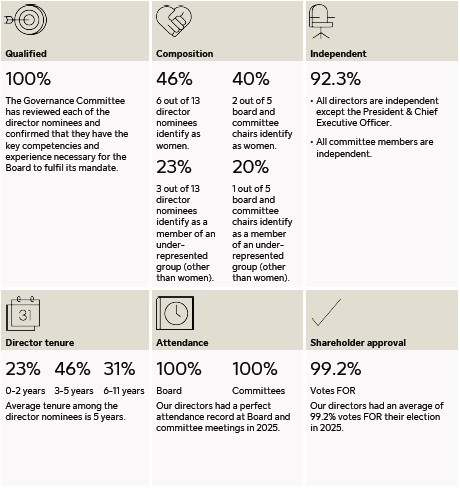
Director nominees at a glance
At the 2026 annual and special meeting you will be asked to elect 13 directors to hold office for a term ending at the conclusion of the next annual meeting. All 13 nominees currently serve on our Board.
Board composition and size are reviewed every year (see more about the selection process on page 37).
Director nominee profiles
The following profiles provide information about each of the director nominees as at the date of this Circular, including when they joined our Board, their business experience, their committee memberships, their attendance at Board and committee meetings in 2025, the level of support received from shareholders at our 2025 annual meeting, and other public company directorships held in the last five years. The director nominee profiles also include information about the value of their holdings of SLF Inc. common shares and deferred share units (DSUs). The amounts shown in the profiles are as of February 28, 2026 and February 28, 2025 when the closing price of our common shares on the TSX was $89.40 and $80.46, respectively. See page 57 for additional information about director compensation, DSUs and director share ownership.
The Board recommends that shareholders vote for electing each director nominee profiled below.
|
|
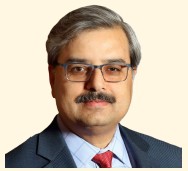
Deepak Chopra, FCPA Toronto, Ontario, Canada Director since May 2021 Age: 62 Independent |
Deepak Chopra is a corporate director with over 30 years of global experience in financial services, technology, logistics and supply chain management. He brings executive leadership and deep expertise in operations, international business, and business transformation to Sun Life's Board.
| 2025 annual meeting voting results | |
| Votes in favour (%) | 99.5 % |
| Votes in favour (#) | 304,216,875 |
| Votes withheld (#) | 1,613,731 |
| 2025 meeting attendance | ||
| Board | 8 of 8 | 100 % |
| Audit | 4 of 4 | 100 % |
| Governance | 5 of 5 | 100 % |
B.Com. (Honours), University of Delhi
PG Diploma in Business Management, Rajendra Prasad Institute of Communication and Management
Fellow of the Institute of Chartered Professional Accountants of Canada
| SLF equity ownership | 2026 | 2025 | |
| Common shares | 250 | 250 | Meets share ownership requirements (see page 60) |
| DSUs | 20,563 | 16,072 | |
| Total equity held | 20,813 | 16,322 | |
| Value of equity held | $1,860,682 | $1,313,268 | |
| Equity held as a multiple of share ownership guideline | 1.97 x |
|
|
Stephanie L. Coyles Mississauga, Ontario, Canada Director since January 2017 Age: 58 Independent |
Stephanie L. Coyles is a corporate director with over 30 years of global experience as a strategic consultant and advisor, having worked with diverse clients across North America, including retail and private equity sectors. She brings expertise in corporate strategy, governance, and talent and culture, with experience in compensation plan design, leadership development, succession planning, and organizational design.
| 2025 annual meeting voting results | |
| Votes in favour (%) | 98.2 % |
| Votes in favour (#) | 300,374,417 |
| Votes withheld (#) | 5,456,189 |
| 2025 meeting attendance | ||
| Board | 8 of 8 | 100 % |
| Governance (Chair) | 5 of 5 | 100 % |
| Management Resources | 6 of 6 | 100 % |
| SLF equity ownership | 2026 | 2025 | |
| Common shares | 14,900 | 14,900 | Meets share ownership requirements (see page 60) |
| DSUs | 25,319 | 21,672 | |
| Total equity held | 40,219 | 36,572 | |
| Value of equity held | $3,595,579 | $2,942,583 | |
| Equity held as a multiple of share ownership guideline | 3.80 x |
|
|
Patrick P. F. Cronin Toronto, Ontario, Canada Director since July 2024 Age: 59 Independent |
Patrick P. F. Cronin is a corporate director with 30 years of global experience in banking and financial services across Canada, the U.S. and international markets. He brings expertise in risk management and capital markets, with experience overseeing enterprise-wide risks through complex credit and market environments.
| 2025 annual meeting voting results | |
| Votes in favour (%) | 99.7 % |
| Votes in favour (#) | 305,012,363 |
| Votes withheld (#) | 818,243 |
| 2025 meeting attendance | ||
| Board | 8 of 8 | 100 % |
| Governance (Chair) | 4 of 4 | 100 % |
| Management Resources | 5 of 5 | 100 % |
| SLF equity ownership | 2026 | 2025 | |
| Common shares | 0 | 0 | On target to meet share ownership requirements (see page 60) |
| DSUs | 3,015 | 821 | |
| Total equity held | 3,015 | 821 | |
| Value of equity held | $269,541 | $66,058 | |
| Equity held as a multiple of share ownership guideline | 0.29 x |
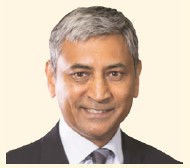 |
Ashok K. Gupta, FFA London, England Director since May 2018 Age: 71 Independent |
Ashok K. Gupta is a corporate director and Chair of Mercer Limited with 40 years of leadership in the UK insurance and financial services industry, holding a number of senior executive, advisory and actuarial positions, including several public sector roles. He brings risk management, finance, accounting and actuarial industry knowledge and expertise.
| 2025 annual meeting voting results | |
| Votes in favour (%) | 99.7 % |
| Votes in favour (#) | 304,824,776 |
| Votes withheld (#) | 1,005,830 |
| 2025 meeting attendance | ||
| Board | 8 of 8 | 100 % |
| Management Resources | 6 of 6 | 100 % |
| Risk | 5 of 5 | 100 % |
| SLF equity ownership | 2026 | 2025 | |
| Common shares | 1,481 | 1,481 | Meets share ownership requirements (see page 60) |
| DSUs | 33,478 | 30,051 | |
| Total equity held | 34,959 | 31,532 | |
| Value of equity held | $3,125,335 | $2,537,065 | |
| Equity held as a multiple of share ownership guideline | 3.31 x |
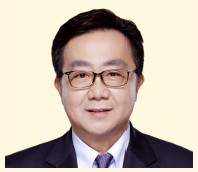 |
David H. Y. Ho Shenzhen, China Director since May 2021 Age: 66 Independent |
David H. Y. Ho is a corporate director with global experience in technology, media, and telecommunications sectors. He brings executive leadership skills and expertise to support strategic planning and digital and artificial intelligence innovation.
| 2025 annual meeting voting results | |
| Votes in favour (%) | 99.5 % |
| Votes in favour (#) | 304,191,594 |
| Votes withheld (#) | 1,639,012 |
| 2025 meeting attendance | ||
| Board | 8 of 8 | 100 % |
| Governance | 5 of 5 | 100 % |
| Management Resources | 6 of 6 | 100 % |
* State-owned enterprises in China
| SLF equity ownership | 2026 | 2025 | |
| Common shares | 227 | 227 | Meets share ownership requirements (see page 60) |
| DSUs | 21,064 | 16,450 | |
| Total equity held | 21,291 | 16,677 | |
| Value of equity held | $1,903,415 | $1,341,831 | |
| Equity held as a multiple of share ownership guideline | 2.01 x |
 |
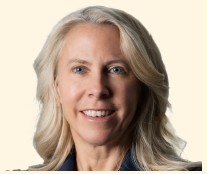
Laurie G. Hylton Newburyport, Massachusetts, U.S. Director since December 2022 Age: 59 Independent |
Laurie G. Hylton is a corporate director with over 30 years of global experience in asset management, banking, and public accounting. She brings expertise in strategic planning, business transformation, financial management, and internal controls, supporting sustainable growth and responsible business stewardship.
| 2025 annual meeting voting results | |
| Votes in favour (%) | 99.4 % |
| Votes in favour (#) | 303,848,100 |
| Votes withheld (#) | 1,982,506 |
| 2025 meeting attendance | ||
| Board | 8 of 8 | 100 % |
| Audit | 4 of 4 | 100 % |
| Governance | 5 of 5 | 100 % |
| SLF equity ownership | 2026 | 2025 | |
| Common shares | 0 | 0 | On target to meet share ownership requirements (see page 60) |
| DSUs | 7,104 | 4,744 | |
| Total equity held | 7,104 | 4,744 | |
| Value of equity held1 | USD 465,667 | USD 263,529 | |
| Equity held as a multiple of share ownership guideline | 0.67 x | ||
1 Laurie G. Hylton is paid in USD as described on page 58, and her required minimum director share ownership is also calculated in USD as described on page 60.
 |
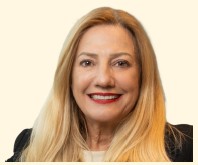
Stacey A. Madge Toronto, Ontario, Canada Director since July 2024 Age: 55 Independent |
Stacey A. Madge is a corporate director with over 30 years of global experience in financial services and technology. She brings executive leadership skills and experience driving revenue growth, building partnership with Big Tech and Fintech, and supporting payment innovation.
| 2025 annual meeting voting results | |
| Votes in favour (%) | 99.5 % |
| Votes in favour (#) | 304,451,936 |
| Votes withheld (#) | 1,378,670 |
| 2025 meeting attendance | ||
| Board | 8 of 8 | 100 % |
| Audit | 4 of 4 | 100 % |
| Governance | 5 of 5 | 100 % |
| SLF equity ownership | 2026 | 2025 | |
| Common shares | 0 | 0 | On target to meet share ownership requirements (see page 60) |
| DSUs | 3,015 | 821 | |
| Total equity held | 3,015 | 821 | |
| Value of equity held | $269,541 | $66,058 | |
| Equity held as a multiple of share ownership guideline | 0.29 x |
 |
Helen M. Mallovy Hicks FCPA, FCBV Toronto, Ontario, Canada Director since October 2021 Age: 65 Independent |
Helen M. Mallovy Hicks is a corporate director with over 30 years of global business management and advisory experience. She brings expertise advising boards and executives on complex transactions, value creation, capital allocation, business transformation and restructuring matters across a wide range of industries.
| 2025 annual meeting voting results | |
| Votes in favour (%) | 97.3 % |
| Votes in favour (#) | 297,600,009 |
| Votes withheld (#) | 8,230,597 |
| 2025 meeting attendance | ||
| Board | 8 of 8 | 100 % |
| Audit (Chair) | 4 of 4 | 100 % |
| Risk | 5 of 5 | 100 % |
| SLF equity ownership | 2026 | 2025 | |
| Common shares | 425 | 425 | Meets share ownership requirements (see page 60) |
| DSUs | 17,529 | 14,229 | |
| Total equity held | 17,954 | 14,654 | |
| Value of equity held | $1,605,088 | $1,179,061 | |
| Equity held as a multiple of share ownership guideline | 1.70 x |
 |
Marcia Moffat The Blue Mountains, Ontario, Canada Director since March 2026 Age: 56 Independent |
Marcia Moffat is a senior executive with 30 years of experience, including over a decade of leadership in the asset management industry. She has led national and global business activities, and brings expertise in strategy, governance, and building high-performing institutional and retail businesses at scale.
 |
Marie-Lucie Morin CM, PC Mississauga, Ontario, Canada Director since January 2021 Age: 68 Independent |
Marie-Lucie Morin is a corporate director with distinguished experience in the Canadian federal public service and international diplomacy. She brings expertise in governance, risk management, and talent and culture, including knowledge of and experience with compensation plan design and administration, leadership development and talent management, succession planning and organizational design.
| 2025 annual meeting voting results | |
| Votes in favour (%) | 99.7 % |
| Votes in favour (#) | 304,911,079 |
| Votes withheld (#) | 919,527 |
| 2025 meeting attendance | ||
| Board | 8 of 8 | 100 % |
| Governance | 6 of 6 | 100 % |
| Management Resources | 5 of 5 | 100 % |
| SLF equity ownership | 2026 | 2025 | |
| Common shares | 1,359 | 1,306 | Meets share ownership requirements (see page 60) |
| DSUs | 12,058 | 8,993 | |
| Total equity held | 13,417 | 10,299 | |
| Value of equity held | $1,199,480 | $828,658 | |
| Equity held as a multiple of share ownership guideline | 1.27 x |
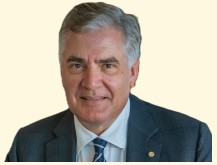 |
Joseph M. Natale Mississauga, Ontario, Canada Director since February 2023 Age: 61 Independent |
Joseph M. Natale is a corporate director with over 30 years of experience in the communications and media sector. He brings executive leadership skills and experience building and leading high-growth businesses through digital transformation.
* Appointed as Chair of the Management Resources Committee on May 8, 2025
| 2025 annual meeting voting results | |
| Votes in favour (%) | 99.5 % |
| Votes in favour (#) | 304,444,433 |
| Votes withheld (#) | 1,386,173 |
| 2025 meeting attendance | ||
| Board | 8 of 8 | 100 % |
| Governance | 6 of 6 | 100 % |
| Management Resources | 5 of 5 | 100 % |
| SLF equity ownership | 2026 | 2025 | |
| Common shares | 0 | 0 | Meets share ownership requirements (see page 60) |
| DSUs | 12,724 | 8,220 | |
| Total equity held | 12,724 | 8,220 | |
| Value of equity held | $1,137,526 | $661,381 | |
| Equity held as a multiple of share ownership guideline | 1.20 x |
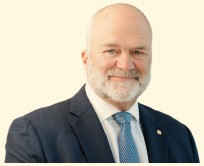 |
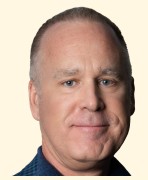
Scott F. Powers Boston, Massachusetts, U.S. Director since October 2015 Age: 66 Independent |
Scott F. Powers is the Chair of the Boards of Sun Life Financial Inc. and Sun Life Assurance Company of Canada with over 30 years of global experience in asset management and institutional investment. He brings executive leadership skills and expertise in corporate strategy and risk management.
* Scott F. Powers attends committee meetings in his capacity as non-executive Chair of the Board.
| 2025 annual meeting voting results | |
| Votes in favour (%) | 98.2 % |
| Votes in favour (#) | 300,283,090 |
| Votes withheld (#) | 5,547,516 |
| 2025 meeting attendance | ||
| Board | 8 of 8 | 100 % |
| SLF equity ownership | 2026 | 2025 | |
| Common shares | 975 | 975 | Meets share ownership requirements (see page 60) |
| DSUs | 58,059 | 50,371 | |
| Total equity held | 59,034 | 51,346 | |
| Value of equity held | USD 3,869,679 | USD 2,852,270 | |
| Equity held as a multiple of share ownership guideline | 5.58 x |
1 Scott F. Powers is paid in USD as described on page 58, and his required minimum director share ownership is also calculated in USD as described on page 60.
 |
Kevin D. Strain, CPA Toronto, Ontario, Canada Director since February 2021 Age: 59 Independent |
Kevin D. Strain is the President & CEO of Sun Life Financial Inc. and Sun Life Assurance of Company. His leadership drives Sun Life's ambition to be the best asset management and insurance company in the world and Sun Life's purpose of helping clients achieve lifetime financial security and living healthier lives, while creating long-term sustainable value for all stakeholders. Prior to his appointment, he held several leadership roles over the last 20+ years within the organization including President, EVP & CFO, President of Sun Life Asia, Senior Vice-President of the Individual Insurance and Investments division in Canada, VP, Investor Relations and VP, Individual Finance.
* Attends committee meetings, in full or in part, as appropriate, at the request of the committee chairs, but is not a member of any committee.
| 2025 annual meeting voting results | |
| Votes in favour (%) | 99.8 % |
| Votes in favour (#) | 305,101,316 |
| Votes withheld (#) | 729,290 |
| 2025 meeting attendance | ||
| Board | 8 of 8 | 100 % |
| SLF equity ownership | 2026 | 2025 | |
| Common shares | 80,699 | 55,925 | Meets share ownership requirements1 (see page 75) |
| DSUs | 11,865 | 11,385 | |
| Total equity held | 92,564 | 67,310 | |
| Value of equity held | $8,275,222 | $5,415,763 |
1 As President & CEO, Kevin D. Strain is subject to different share ownership guidelines than the independent directors.
Additional information
To the best of the company's knowledge, other than as set out below, no proposed director as at the date of this Circular:
(a) is or has been, in the last ten years a director, chief executive officer or chief financial officer of any company (including SLF Inc.) that was subject to a cease trade or similar order or an order that denied the relevant company access to any exemption under securities legislation, that was in effect for a period of more than 30 consecutive days that:
(i) was issued while the proposed director was acting in the capacity as director, chief executive officer or chief financial officer; or
(ii) was issued after the proposed director ceased to be a director, chief executive officer or chief financial officer and which resulted from an event that occurred while that person was acting in the capacity as director, chief executive officer or chief financial officer; or
(b) is or has been, in the last ten years a director or executive officer of any company (including SLF Inc.) that, while that person was acting in that capacity, or within a year of that person ceasing to act in that capacity, became bankrupt, made a proposal under any legislation relating to bankruptcy or insolvency or was subject to or instituted any proceedings, arrangement or compromise with creditors or had a receiver, receiver manager or trustee appointed to hold its assets; or
(c) has, within in the last ten years, become bankrupt, made a proposal under any legislation relating to bankruptcy or insolvency, or become subject to or instituted any proceedings, arrangement or compromise with creditors, or had a receiver, receiver manager or trustee appointed to hold the assets of the proposed director; or
(d) has been subject to (i) any penalties or sanctions imposed by a court relating to securities legislation or by a securities regulatory authority or has entered into a settlement agreement with a securities regulatory authority; or (ii) any other penalties or sanctions imposed by a court or regulatory body that would likely be considered important to a reasonable security holder in deciding whether to vote for a proposed director.
Ms. Coyles was a director of Postmedia Network Canada Corp. while it completed a restructuring following an arrangement plan under the Canada Business Corporations Act in October 2016. Ms. Coyles is no longer a director of Postmedia Network Canada Corp.
Governance
We have a comprehensive governance framework that includes an independent Board of Directors, robust risk management processes and a Purpose-driven culture in which our Code of Conduct (the "Code") guides ethical behaviour. Our Board regularly reviews our governance processes and practices to ensure effective oversight of management and our business affairs, while meeting regulatory requirements and reflecting evolving best practices. We believe our governance processes and practices are consistent with the Insurance Companies Act (Canada), the Canadian Securities Administrators' corporate governance guidelines, guidelines issued by OSFI for effective corporate governance in federally regulated financial institutions, the TSX corporate governance rules, the New York Stock Exchange (NYSE) corporate governance rules for U.S. publicly listed companies and the Philippine Stock Exchange corporate governance guidelines applicable to us. As the governance landscape evolves, influenced by shifting regulatory and stakeholder expectations, we remain committed to continuous improvement. This includes ongoing Board renewal, director orientation and development, annual evaluation of board, committee and director performance, as well as ongoing engagement with stakeholders to ensure their perspectives are considered in our governance approach.
Governance philosophy and approach
What we do
| Set tone from the top |
• Board sets the tone for our purpose-driven culture and ethical conduct guided by our Code (see page 33).
| Focus on board performance |
• Select qualified directors with an appropriate mix of experience, expertise and perspectives (see page 40).
• Ensure Board operates independently (see page 38).
• Maintain right balance of new and experienced directors (see page 41).
• Provide directors with orientation, continuing education and development opportunities (see page 43).
• Evaluate Board and committee performance annually (see page 45).
| Ensure accountability |
• Hold annual election of directors by shareholders (see page 16).
• Hold annual advisory vote on executive compensation ("say on pay") (see page 9).
• Ensure directors have shareholder support through our majority voting policy (see page 7).
• Allow shareholders to propose director nominees through our proxy access policy (see page 48).
• Establish guidelines for director and executive share ownership (see page 57).
| Continuously improve |
• Commit to continuously improving our corporate governance principles, policies and practices.
What we don't do
No slate voting: Shareholders can vote for or withhold their vote from individual directors.
No staggered terms for directors.
No unequal voting structures: we do not have dual-class or subordinate voting structures.
No tie-breaking vote: our Board Chair does not hold a tie-breaking vote in board deliberations.
No hedging or pledging of Sun Life securities by directors and senior management.
No stock options or pension plans for independent directors
Governance roles and responsibilities
About of the Board
The Board is responsible for supervising the management of the business and affairs of the company, including overseeing its business plan, strategy, risk appetite and culture. Its mission is to be a strategic asset of the company, measured by effective execution of its stewardship role and the individual and collective contributions of its directors to the enterprise's long-term success.
The Board's duties and responsibilities are set out in its charter, which is reviewed by the Board and the Governance Committee at least annually. The Board's charter is incorporated by reference into this Circular and has been filed with securities regulators on SEDAR+ (sedarplus.ca) and EDGAR (sec.gov/edgar) and can be found on our website (sunlife.com).
Role of the Chair
The Board Chair is an independent director. The Board Chair is responsible for providing leadership that enhances the effectiveness and independence of the Board. The Board Chair manages the Board's affairs to assist the directors in carrying out their responsibilities and helps the Board operate cohesively. The Board Chair works closely with the Chair of the Governance Committee to regularly evaluate, and in appropriate circumstances propose enhancements to, the Board's governance structure and procedures.
Role of the President & CEO
Kevin D. Strain is the President & CEO of Sun Life. He is also a director of the Company. There is a written statement of mandate for the President & CEO which is reviewed by the Board annually and which specifies the President & CEO's overall accountability for leading the company's business operations and creating sustainable value for all stakeholders. The President & CEO is responsible for championing the company's global mission, purpose and values, managing the company's resources to ensure optimal performance, and setting a standard for culture, conduct and character through their own behaviour and actions. The President & CEO attracts and develops the leadership talent required for activation of Sun Life's purpose, execution of Sun Life's strategy and long-term success, while demonstrating leadership in risk management, corporate governance and regulatory compliance, consistent with Sun Life's risk appetite and culture.
About the Board's committees
The Board has established four standing committees, entirely made up of independent directors to help the board carry out its responsibilities. Each committee has a written Charter that sets out its responsibilities and areas of focus. Each committee reviews its Charter annually to ensure it reflects best practices and applicable regulatory requirements.
The Board's four standing committees are:
• Audit Committee
• Governance Committee
• Management Resources Committee
• Risk Committee
The committees meet prior to Board meetings at which the annual business plan and our annual and quarterly financial results are reviewed and approved, and at other times as required or appropriate. The Board Chair and the committee chairs review and approve the agenda for each committee meeting. Agendas are developed using the forward agenda and items noted for consideration or follow-up at prior meetings.
Management and external advisers attend portions of meetings by invitation to provide reports and respond to questions. The committees hold private meetings with individual members of management, including the heads of key control functions at the beginning and/or end of each meeting, discuss reports prepared by management, and then meet in private at the end of each meeting. Each committee chair reports to the Board on the committee's deliberations and any recommendations that require Board approval.
Mr. Powers and Mr. Strain are not members of any board committees but are invited to attend committee meetings in their respective capacities as Board Chair and President & CEO.
You can read more about the work of the Board's committees in the committee reports starting on page 49.
Position Descriptions
The board upon recommendation of the Governance Committee, reviews and approves annually position descriptions for the Chair of the Board, the committee chairs and the President and Chief Executive Officer which can be found on our website (sunlife.com/en/about-us/leadership/ board-of-directors/).
| Our Board’s main responsibilities | |
| Culture and conduct |
• sets the tone for our culture and promotes a risk culture that stresses integrity and effective risk management. • satisfies itself that the President & CEO and other senior management is sustaining that culture throughout the organization. • approves, complies with, and promotes our values set out in our Code and reviews employee compliance with the Code. |
| Strategy and business performance |
• oversees our vision and purpose statements. • provides challenge, advice and guidance on the strategic planning process and established plans. • annually approves our strategic plan and business, capital and investment plans. • oversees our significant strategic initiatives, investments and transactions, including significant activities of our subsidiaries. • provides challenge, advice and guidance on our enterprise approach to climate. • reviews quarterly reports on the performance of our four strategic pillars. |
| Risk management |
• oversees and approves significant policies (such as our Risk Management Framework, Risk Appetite Policy, Capital Risk Policy and Capital Liquidity and Management Framework), plans and strategic initiatives related to the management of, or that materially impact risk, capital and liquidity. • provides challenge, advice and guidance on the effectiveness of risk management. |
| Financial reporting, communication and disclosure |
• approves our quarterly and annual financial reports and other public disclosures. • approves the internal and external audit plans. • approves the Internal Control Framework and provides challenge, advice and guidance on its effectiveness to ensure the safeguarding of our assets. • satisfies itself that the right communication and disclosure practices are in place, including that shareholders are able to provide feedback to independent directors. |
| Succession planning and talent management |
• formulates succession plans for the President & CEO, other members of senior management and the Board Chair, committee chairs and other directors. • approves the appointment, evaluation and, if necessary, replacement of the President & CEO and other members of senior management. • annually reviews and approves the President & CEO’s mandate and objectives, reviews their performance against those objectives, and approves their compensation. |
| Governance |
• oversees Board composition and the evaluation and selection of candidates for election at each annual meeting based on a assessment of their skills, qualifications, competencies and independence. • performs its overall stewardship responsibilities either directly or through delegation to its four standing committees (see page 49 for a description of the key activities of the committees), including the allocation of risk oversight to its committees. • establishes corporate governance practices and policies and monitors corporate governance trends. • establishes position descriptions for the Directors, Board Chair and chairs of Board committees. • delegates to the President & CEO, management and control functions powers to manage the business and affairs of the company. • annually meets with OSFI to review its annual examination report and the status of items to be reviewed with management on a regular basis. |
Culture and conduct
Sun Life is committed to maintaining robust governance practices and high standards of ethical behaviour. These principles are fundamental to maintaining stakeholder trust, supporting a resilient business and delivering long-term value. Our core values (caring, authentic, bold, inspiring and impactful) set the tone for high business standards, integrity and ethical behaviour, respect and doing the right thing for our Clients.
Strong governance practices provide a framework for responsible decision-making, while our ethics support these practices. Acting with integrity, transparency and accountability in all aspects of our business enables us to identify and manage risks and opportunities, make informed decisions and adapt effectively to changing market conditions, stakeholder expectations and evolving industry standards. By acting responsibly and ethically, we protect our reputation, foster credibility, and maintain the confidence of our Clients, shareholders, investors, employees and regulators.
The Board establishes the "tone from the top" by reinforcing the values and behaviours that define our desired culture and by ensuring that senior management consists of people who create and sustain these expectations throughout the organization. To support this commitment, the Board includes questions about how we uphold our culture in its annual review of Board, committee, and chair effectiveness.
Our Code of Conduct
The Board has established the Code that applies to every employee, temporary or contingent worker, and contract staff of Sun Life and its subsidiaries and controlled joint ventures; as well as our Board of Directors, without exception. All complete annual training and declare compliance with the Code.
Our Code promotes speaking up, prohibits retaliation, and requires employees and directors to report all known and suspected breaches. Our third-party Ethics Hotline (ClearView) allows anonymous reporting, with Sun Life handling all investigations. Communications that accompany the Code further reinforce our expectations of behaviours in the workplace; emphasizing the importance of speaking up, and fostering a workplace that is free of harassment of any kind.
The Governance Committee reviews the effectiveness of the Code, monitors compliance with the Code and reports the results of its review to the Board annually. On a quarterly basis, the Chief Compliance Officer reports on any significant breaches of the Code and reviews our controls and compliance with the Governance Committee.
The Code is available at sunlife.com and filed on SEDAR+ (sedarplus.ca) and EDGAR (sec.gov/edgar).
Conflicts of interest and related party transactions
Our Code mandates that directors and executive officers disclose any relationships, associations or activities that could create an actual or potential conflict of interest, or even the appearance of one. Directors or executive officers with a material interest in a matter are not provided with related board or committee materials, are excluded from meetings during discussions of the matter, and do not participate in related voting or decision-making.
In compliance with the Insurance Companies Act (Canada) and the Trust and Loan Companies Act (Canada) (the Acts), we have developed procedures to identify potential or actual transactions with related parties, including directors and senior officers. Our Governance Committee, acting as conduct review committee, annually reviews these related party procedures to ensure compliance with the Acts and to assess any related party transactions that require regulatory reporting.
In 2025, the Governance Committee evaluated these related party procedures and their effectiveness in identifying transactions that could materially effect the company's stability or solvency. We have adopted a materiality threshold to determine which transactions require independent review, and established rules and guidelines for related party transactions conducted in the normal course of business, ensuring that l transactions are conducted at fair value. There were no transactions with related parties of the company requiring reviews under these procedures in 2025.
Strategic planning
The Board sets the strategic direction for the company and approves the annual strategic plan, including the Company's purpose statement, enterprise and group strategies, and the annual business, capital, and investment plans. It also reviews the effectiveness of our strategic planning process on a regular basis.
In 2025, the Board's annual strategic planning meeting was held in Montreal and directors met with leaders from across Sun Life's businesses and corporate functions to gain a deeper understanding of our businesses, strategic priorities, and progress against plan.
As part of the strategic plans and priorities for the organization in 2025 the Board focused on how Sun Life continues to stay focused on living our Purpose, delivering on our Strategy and medium term objectives, and moving forward to fulfill our Ambition of being the best Asset Management and Insurance Company in the world. Our four strategic imperatives underpin our plan: (i) scaling a leading global asset and wealth management platform, (ii) accelerating our momentum in Asia, (iii) navigating and growing in U.S. health and benefits, and (iv) operating as a digital company to drive business and Client outcomes. The Board also reviewed trends emerging in strategic and financial decision making with a focus on the:
• increasingly complex geopolitical climate
• uncertain and volatile macroeconomic outlook
• acceleration of generative artificial intelligence (GenAI) and digital transformation
• evolving talent dynamics
• emerging demographics of growth
Consideration was also given to the alignment of the strategic plan projections with our risk appetite and the uncertainty brought on by continued inflation and interest rates. The Board is taking intentional actions to strengthen resilience and agility, ensuring that Sun Life can respond swiftly against opportunities and risks as the external environment shifts. The Executive Team reviewed and discussed the feedback and perspectives provided by the Board and the Board then approved the updated strategic plan at its meeting in August.
Management updates the Board on the execution of the strategy and strategic considerations at every regular Board meeting. The Board must approve any transaction that will have a significant strategic impact on the company.
Risk management
The Board and its committees actively govern enterprise risks and ensure the implementation of risk management frameworks, policies, programs, and practices. The Board and its committees approve key documents like the Risk Management Framework, Risk Appetite Policy, Capital Risk Policy, and Capital and Liquidity Management Framework. Through ongoing oversight of the risk management programs, the Board monitors how Sun Life identifies and manages key risks. The Board also oversees business and strategic risks by reviewing and approving the Business and Strategic Plans, while regularly discussing key themes, issues, and risks related to the design or implementation of these plans.
For more detailed information on Sun Life's risk management practices and Board oversight, refer to the Board committee descriptions starting on page 49. The comprehensive details can also be found in our Annual Information Form and Management's Discussion & Analysis for the year ended December 31, 2025. These documents are available on our website (sunlife.com), on SEDAR+ (sedarplus.ca) and on EDGAR (sec.gov/edgar).
Financial reporting, communication and disclosure
Internal control and management information systems
The Board has approved a comprehensive Internal Control Framework that codifies the company's existing system of internal controls set out in policies and related documents. The Internal Control Framework is based on Internal Control - Integrated Framework (2013) issued by the Committee of Sponsoring Organizations of the Treadway Commission. The Audit Committee reviews and monitors the effectiveness of our internal control and management information systems and receives regular reports on internal control from management, including corporate oversight functions in the actuarial, finance, and internal audit departments. This oversight provides reasonable assurance of the reliability of our financial information and the safeguarding of assets.
Disclosure practices
We strive to be responsive to the disclosure needs of the investment community and other stakeholders and provide timely, consistent and accurate information to the investing public while meeting our disclosure obligations. The Governance Committee receives a report annually on the status of compliance with and effectiveness of our disclosure and securities trading policy and the policy is reviewed on a regular basis to determine whether revisions are required to respond to legal and regulatory developments, to reflect changes in the business environment or internal operations or to enhance governance.
The Audit Committee is responsible for assisting the Board in overseeing the integrity of financial statements and related information provided to shareholders and other stakeholders and compliance with financial regulatory requirements. The Board reviews and approves the content of all major disclosure documents including the annual and interim financial statements, MD&A, earnings news releases, the annual information form and this Circular.
Succession planning and talent management
Board and Management Resources Committee oversight
The Management Resources Committee oversees talent development and succession planning for senior management, while the Board has primary oversight of talent management, succession planning and the performance assessment of the President & CEO. Both thoroughly review succession options for their respective areas of responsibility, occasionally approving senior executive rotations to broaden experiences and deepen the internal candidate pool.
The Management Resources Committee annually reviews detailed succession plans for Executive Team roles and key control function heads, with each committee examining talent and succession plans relevant to their specific functions. Specifically, committee chairs are consulted in advance in connection with the appointment, reassignment, replacement or dismissal of senior management within their respective committee's areas of responsibility, including those in OSFI-identified control functions. Committee chairs are also consulted annually on the performance assessment and compensation awarded to those individuals.
Throughout the year, the Board interacts directly with senior executives during presentations on company activities. They also host social events including other members of management. These interactions allow Board members to build relationships with high-performing, high-potential employees who represent our future leaders.
Inclusion
Sun Life strives to create an environment where all employees can contribute to their full potential, regardless of sex, gender identity, race, religion, age, country of origin, physical ability, sexual orientation or other attributes. Senior management and the Board commit to complying with applicable anti- discrimination laws while creating and implementing policies consistent with these laws.
As part of our human resources practices, we provide support to leaders to enable our Purpose-driven culture and uphold our values of being Authentic, Bold, Caring, Impactful, and Inspiring.
The following shows our progress against workforce composition aspirations at the senior management level (Vice-President and above), as of February 27, 2026. As the timeframe for our previous aspirations aimed for achievement by 2025, we are assessing progress made against these aspirations including evaluating whether to adopt or extend any further actions or aspirations to foster an inclusive leadership pipeline.
 |
47-53% women in Vice-President (VP)+ roles1 (Global) by 2025 Current status - 36.0% women 25% other underrepresented groups in VP+ roles1 (North America) by 2025 Current status - 19.8% |
| Aspirations for senior management1 composition |
1 Includes individuals at the Vice-President level or above, including certain individuals with the title "Managing Director".
The following chart shows the number and percentage of men and women in key positions, including executive officers (executive team members), direct reports to the President & CEO, and senior executives of the company as of February 27, 2026.
| President & | President & | Senior | Senior | |||
| Executive | Executive Team | CEO Direct | CEO Direct | Executives | Executives | |
| Gender | officers (#) | Members (%) | Reports (#)1 | Reports (%) | (#) | (%) |
| Men | 9 | 64.3% | 8 | 61.5% | 267 | 64.0% |
| Women | 5 | 35.7% | 5 | 38.5% | 150 | 36.0% |
| Total | 14 | 100% | 13 | 100% | 417 | 100% |
1 President & CEO Direct Reports includes twelve Executive Officers, and one Senior Executive that reports directly to the President & CEO.
Building an effective Board
The Governance Committee is responsible for recruiting highly qualified candidates with the competencies, experience and characteristics required to drive effective governance and create sustainable value for Sun Life's stakeholders over the long term.
Board size
The Board reviews its size every year to ensure it will promote open dialogue and effective decision making, ensure the right caliber and scope of director expertise, allow for Board renewal and support effective committee membership. According to our by-laws, our Board can have a minimum of eight and a maximum of 20 directors. At its meeting held on March 5, 2026, the Board fixed the number of directors to be elected at the meeting at 13. All of the director nominees currently serve as directors. Directors are elected for a one-year term. The Board can appoint directors between shareholder meetings.
Selecting directors (see page 42)
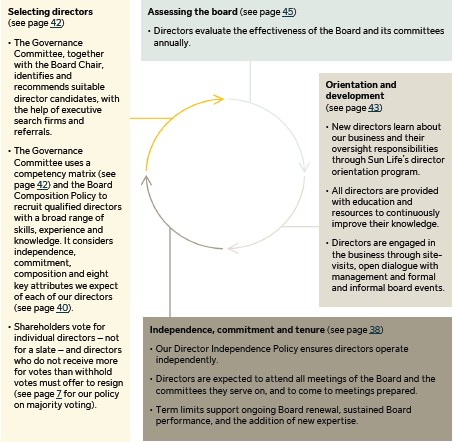
Independence
| The Board maintains a majority of independent directors to ensure it operates effectively and independently of management. All members of the Board's standing committees must be independent, including the committee chairs. A director is independent under our Director Independence Policy only if the Governance Committee has affirmatively determined that they do not have a direct or indirect relationship with SLF Inc. that could reasonably be expected to interfere with their ability to exercise independent judgment. You can find a copy of our Director Independence Policy on our website (sunlife.com). | 12 of 13 director nominees are independent. |
The Governance Committee evaluated the independence of each director nominee according to our Director Independence Policy and confirmed that 12 of the 13 are independent, and that all Audit Committee and Management Resources Committee members meet the additional independence requirements in the policy for membership on the committees. Kevin D. Strain is not independent as he is our President & CEO.
Independent Chair of the Board
The roles of the Board Chair and the President & CEO are separate. The Board believes that this separation increases Board effectiveness and facilitates enhanced oversight of management. Scott F. Powers is the Board Chair and an independent director. Having an independent Board Chair promotes strong Board leadership, encourages open discussion and debate, and avoids potential conflicts of interest.
Committee independence
Each committee is led by an independent director who typically serves as chair for a five-year term, helping to ensure continuity while preserving independent oversight. To further strengthen their independence and objectivity, committees-working in consultation with the Board Chair-have the authority to retain independent advisors whenever they determine external expertise is needed.
Private meetings
The independent directors meet privately with the President & CEO and privately without management at each Board meeting. The Board Chair and committee chairs encourage open and candid discussions among the independent directors by providing them with an opportunity to express their views on key topics before decisions are made. The independent directors also routinely meet privately with the heads of key control functions at committee meetings (see committee reports on page 49).
Commitment and tenure
Meeting attendance
The Governance Committee reviews each director's attendance record as part of the nomination process. Directors must attend at least 75% of Board and committee meetings every year. A director who does not meet this attendance requirement in two straight years must, if requested by the Governance Committee, offer to resign.
Unscheduled Board meetings may be called on short notice to consider mergers and acquisitions or other matters and one or more of our directors may be unable to attend these meetings due to the short notice. Where a director is unable to attend a meeting, feedback and questions based on meeting materials are directed to the Board Chair or the applicable Committee Chair, as appropriate, to address at the meeting.
The table below shows the number of Board and committee meetings held in fiscal 2025 and the overall meeting attendance of the relevant members for that period1. You can find the details about each director's meeting attendance in the director nominee profiles beginning on page 16.
| Meetings | Attendance | |
| Board | 8 | 100% |
| Audit | 4 | 100% |
| Governance | 5 | 100% |
| Management Resources | 6 | 100% |
| Risk | 5 | 100% |
| Total meetings | 28 | 100% |
Guidelines to address directors' other professional activities
The Board has adopted the following policies and practices to promote independence, ensure directors have sufficient time and commitment to fulfil their obligations, and ensure that no real or apparent conflicts of interest arise from directors' other professional activities:
| Service on other public company boards or audit committee |
Directors who are executive officers of another public company should hold no more than one other public company directorship and directors who are not employed full-time should hold no more than three other public company directorships. The NYSE corporate governance rules suggest that audit committee members should not serve on more than three public company audit committees. All of the current members of the Audit Committee comply with this standard. |
| Board interlocks | No more than two directors may serve together on the same board of another public company, and directors may not serve together on the boards of more than one other public company (each, an interlock), without the prior consent of the Governance Committee. Currently no Sun Life director nominee serves on another public company board with another Sun Life director nominee. |
| Other professional activities | Directors are required to notify the Board Chair, the Chair of the Governance Committee, the President & CEO and the Chief Legal Officer prior to engaging in any new professional activities including accepting a director role on an additional public, private or not-for-profit board and an assessment is conducted on whether the activity could present a real or apparent conflict of interest or otherwise be adverse in interests to Sun Life. |
|
Tenure and term limits Our Directr Independence Policy includes provisions on directors' tenure in order to balance the benefits of institutional experience and knowledge with the need for new perspectives. Independent directors will generally retire from the Board after they have served for 12 years. The independent directors can waive this retirement requirement to allow a director to serve for up to three additional years if they unanimously determine that it is in the company's best interests to do so. Thereafter, the retirement requirement can be waived by the independent directors on an annual basis if they unanimously determine that it is in the company's best interests to do so. The Board does not have a mandatory retirement age for directors. Committee chairs are appointed annually and will generally serve in such capacity for a five year term. Other mechanisms of Board renewal include rigorous Board and committee assessments (see page 45), the evergreen list of prospective candidates and the annual review of the directors' skills matrix. |
Average tenure of the director nominees is 5 years.
|
A director must tender a written offer to resign if they receive more withheld votes than for votes from shareholders in an uncontested election.
If requested by the Governance Committee, a director must tender a written offer to resign if:
• they have not attended at least 75% of Board and committee meetings for two consecutive years.
• their principal employment or other business or professional circumstances have changed materially.
The President & CEO must resign from the Board when they retire or leave the company.
Anticipated retirements
The table below shows the directors who are currently expected to retire or who will be required to retire under our director tenure provisions, unless waived, during the next three years, and the areas of expertise that they have indicated they bring to our Board.
| Committee | |||
| Director | Retirement Year | Memberships | Areas of Expertise |
| Scott F. Powers | Tenure limit reached in | N/A1 | • Corporate strategy and development |
| May 2027 | • Client needs, sales and distribution | ||
| • Sales and distribution | |||
| • Talent and culture | |||
| Stephanie L. Coyles | Tenure limit reached in | • Governance | • Client needs, sales and distribution |
| May 2028 | (Chair) | • Corporate strategy and development | |
| • Management | • Digital and data/analytics | ||
| Resources | • International business |
1 Scott Powers attends committee meetings in his capacity as non-executive Chair of the Board.
Board composition and skills
We expect our directors to act ethically and with integrity in all personal, business and professional dealings. Directors must understand our corporate vision and strategic objectives, continually build their knowledge about our businesses and the financial services sectors in which we operate, and prepare for and actively participate in Board and committee meetings in an objective way. They must also understand the Board and committee charters and our corporate governance policies and practices, comply with our Code and meet our share ownership guidelines (see page 60). Directors have unrestricted access to management, as necessary, to carry out their responsibilities.
The Board believes that directors should provide objective and thoughtful challenge, advice, and guidance to, and oversight of, senior management and exhibit the following key attributes while executing their duties:
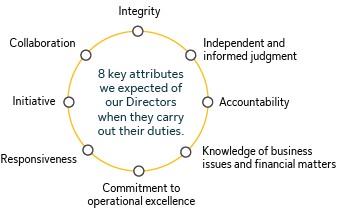
Key competencies and experience
On an annual basis, the Governance Committee and the Board determine the key competencies and experience that they believe are necessary for the Board as a whole to possess in order to be an asset to the company and fulfil its responsibilities. These include the key attributes noted above as well as the competencies and experience listed and described below. Directors self-assess their level of expertise across relevant areas on a scale of 1 (minimal) to 5 (expert). The Governance Committee reviews these self-assessments to identify potential gaps and support board renewal and succession planning. As part of its annual review, the Governance Committee also assesses the membership of each committee to ensure members have the skills and experience necessary to fulfil their respective mandates.
Competency matrix
The table below highlights each independent director nominee's top competencies, with their four strongest areas marked by a "★ˮ. Additional information about each director can also be found in their profiles beginning on page 16.
|
|
Deepak Chopra | Stephanie L. Coyles | Patrick P. F. Cronin | Ashok K. Gupta | David H. Y. Ho | Laurie G . Hylton | Stacey A. Madge | Helen M.Mallovy- | Marcia Moffat | Marie-Lucie Morin | Joseph M. Natale | Scott F. Powers |
| Key competencies and experience | ||||||||||||
| Finance, accounting and actuarial knowledge of and experience with complex accounting, actuarial and/or capital management issues |
★ |
|
★ |
★ |
|
★ |
|
★ |
|
|
● |
|
| Insurance, health and wealth industry experience in insurance, re-insurance, asset management, wealth management and/or health to provide insight into operations, strategy and market factors |
|
● |
|
★ |
|
★ | ● |
★ |
|
|
● |
|
| Risk management knowledge of and experience with the identification of material risks, risk assessment, internal risk mitigation and controls, and risk reporting |
|
|
★ |
★ |
|
★ |
★ |
|
★ |
|
|
|
| Talent and culture experience guiding and championing a high performance culture, embedding human resources practices that attract, retain and develop a disproportionate share of top talent, including knowledge of and experience with compensation plan design and administration, leadership development and talent management, succession planning and organizational design |
● |
● |
● |
● |
● |
● |
● |
● |
★ |
★ | ★ | ★ |
| Client needs, sales and distribution experience in creating financial products for retail distribution, Client research or brand development and positioning; experience in overseeing sales forces and third-party |
★ |
★ |
★ |
● |
|
★ |
★ |
|
★ |
★ |
||
| International business experience in a senior level role in an organization with operations in Asia or other international jurisdictions and experience working with different cultures |
★ |
★ |
● |
● |
★ |
|
★ |
★ |
|
● | ● |
● |
|
Legal, regulatory and government relations experience in a senior level or legal role working in a highly regulated industry and involving direct engagement with regulators, policymakers or government agencies, and/or experience with government relations or public policy |
● |
● |
|
● |
|
● |
● |
|
★ |
● |
|
|
| Leadership experience as a senior executive or director at a publicly traded company, with insight on the operations and governance of an organization of significant size and omplexity |
★ |
● |
★ |
● | ★ |
● |
● |
● | ★ |
★ |
★ |
★ |
| Corporate strategy and development experience in strategic planning and identifying and evaluating corporate development opportunities, including acquisitions, partnerships and joint ventures |
● |
● |
● |
★ |
★ |
★ |
★ |
★ |
● |
● |
★ |
|
| Digital and data/analytics experience or knowledge relating to the cybersecurity, technology, digital and data/analytics needs and/or strategy for a major organization |
● |
★ |
● |
★ | ★ | ★ |
|
|||||
| Sustainability, environmental, social and governance experience in sustainability matters, climate change, environmental issues, social issues and/or corporate governance principles and practices in an organization of significant size and complexity |
|
★ |
|
|
● |
|
● |
● |
● |
|
Board composition
We believe that highly qualified and experienced directors, with a range of skills, experience and perspectives, produce better governance outcomes. To support this, the Board has adopted a Board Composition Policy that includes provisions on director recruitment and inclusive behaviours. The Governance Committee assesses the effectiveness of the policy on an annual basis considering the overall composition of the Board and voluntary self-identification data provided by directors. The Board has not adopted any specific targets for the representation of women or other underrepresented groups as it is satisfied that the current composition is aligned with Sun Life's values and reflects a qualified, inclusive and effective Board. See "Selecting directors" below for more information.
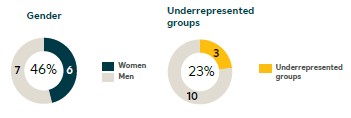
As of the date of this Circular 6 out of our 13 (46%) director nominees and 2 out of our 5 (40%) current board and committee chairs self-identify as women, 3 out of our 13 (23%) director nominees self-identify as members of an underrepresented group (1 self-identifies as Chinese and 2 self-identify as South Asian and none have identified as Indigenous peoples or persons with disabilities).
Selecting directors
|
Candidate Search |
> |
Board Chair and Chair of the Governance Committee identifies prospective candidates |
> |
Candidate interviews with the Board Chair committee chairs and the President & CEO |
> |
Governance Committee makes recommendation to the Board |
= | Board Approval of New Candidate |
The Governance Committee, in collaboration with the Board Chair, oversees board succession planning and leads the process for identifying potential new directors and has adopted guidelines for director recruitment and board composition. Their goal is to recommend highly qualified directors whose skills, experience and perspectives collectively enable the board to best fulfil its mandate.
To support ongoing renewal, the committee uses multiple channels, including independent executive search firms and director and management referrals. The committee maintains an evergreen list of prospective candidates, which is comprised of individuals who the committee feels may be appropriate as a Board candidate when a vacancy arises.
As part of the recruitment process, the committee develops a preferred candidate profile that reflects the particular competencies, experience and other characteristics required to complement the existing Board profile, taking into account both current and future needs. In accordance with our Board Composition Policy, the committee requires search firms to identify and present a slate of director candidates that reflects the clients, employees, shareholders and communities we serve, considers applicable legal and regulatory requirements and strives to ensure candidates have equal access to opportunities, free of bias and discrimination.
Executive search and background screening firms conduct reference and background checks on potential candidates. Suitable candidates are interviewed by the Board Chair, the committee chairs and the President
& CEO. The committee receives input from all of these sources in connection with its recommendation to the Board for the appointment or nomination of a new director.
Every year the Governance Committee recommends a list of candidates for nomination to the Board.
Orientation and development
The director orientation and development program includes informal and formal sessions to introduce new directors to the leadership team, company operations, and strategic objectives, with personalized content based on directors' background and committee responsibilities. Additional support such as mentorship, ongoing education, professional development opportunities, and site visits are provided to enhance understanding and engagement, while feedback is used to continuously improve the program.
|
Orientation |
Introductory meetings: New directors participate in informal meetings with each member of the Executive Team and Board. These sessions provide a personal introduction to the leadership and facilitate open communication. Formal orientation sessions: New directors participate in formal information sessions covering the company's four business groups, corporate functions, corporate strategy, and financial objectives. They are customized to align with each director's background, experience, and anticipated committee responsibilities. Directors' manual: A comprehensive manual is provided, containing detailed information about the company, the Board and its committees, Board administration, directors' duties, applicable policies, and future meeting schedules. Mentorship: The Board Chair assigns new directors a mentor from the experienced Board members. This mentor offers perspective, informal feedback, and insights into the Board's culture and dynamics. |
|
| + | ||
|
Ongoing development |
Ongoing education: we hold regular education sessions in conjunction with Board and committee meetings to give directors a deeper understanding of our businesses and operating environment, to address ongoing and emerging issues in the functional areas of Board oversight, and to encourage more in-depth discussion in specific areas. External professional development: Directors receive an extensive list of upcoming external professional development programs, updated throughout the year. These programs cover governance, financial, compensation, and industry topics. Directors can attend these programs at the company's expense with prior approval from the Board Chair. Professional memberships: All directors are members of the Institute of Corporate Directors in Canada and the National Association of Corporate Directors in the U.S. These organizations provide continuing education through publications, seminars, and conferences, supporting directors in their roles. Additional resources: directors receive updates and recommended reading between board meetings to remain current. |
|
| + | ||
 |
Site Visits: Directors attend Sun Life's offices in various locations worldwide as part of the Board’s annual strategic planning activities, gaining insight into operations, engaging with local teams and developing a better understanding of regional dynamics. Board dinners: Board dinners are held in conjunction with regular Board meetings to foster collegial working relationships among directors and the executive team. These dinners periodically include educational sessions on our business and strategic direction, presented by senior management and external subject matter experts. Open communication: Directors engage with senior management and other employees both inside and outside of meetings to gain business insights and build relationships with future leaders. Continuous Improvement: Feedback on director orientation and development program is collected annually and incorporated into the director orientation and development program |
Ongoing education
We conduct regular educational sessions alongside Board and committee meetings to enhance directors' understanding of our business operations and environment. These sessions address ongoing and emerging issues within the Board's oversight areas and promote in-depth discussions on specific topics. The table below outlines the educational content provided to our directors in 2025.
| Month | Topic | Audience/Committee1 |
| May | Competitive Update and External Trends | Board |
| May | Update on Canadian Election | Board |
| May | AML Education: Reporting and Suspicious Transactions | Board |
| May | Permanent Capital Sources for Private Asset Managers including “Side Cars” | Audit |
| May | Greenhouse Gas (GHG) Emissions Assurance | Governance |
| May | Income Emergence for General Account Investments | Governance |
| May | Market Trends in Executive Compensation | Management Resources |
| June | Discussion on the Canadian economy, public policy and the geopolitical environment with external speakers | Board |
| August | Operational Risk – Third Party Risk Management | Risk |
| November | Education on Physical Climate Risk | Board |
| November | Sustainability Reporting and Controls Education | Audit |
| November | Update on Peer Approaches to Sustainability | Governance |
| November | Operational Risk – Operational Resilience | Risk |
1 The overall attendance rate of Board and committee members at these education sessions was 100%.
External professional development
Directors are expected to continually enhance their knowledge of issues impacting our businesses, emerging trends, and significant strategic initiatives. In addition to attending sessions provided by the other Boards our directors serve on, our directors attended sessions in 2025 that were organized by third parties including:
|
|
Assessing the Board
The Board, Board committees and individual directors participate in an annual assessment process with the assistance of an independent consultant as needed. The last independent assessment process was conducted in 2021. For the current year, the Governance Committee has engaged an independent consultant to manage the annual evaluation of the effectiveness of the Board and its committees. As part of the most recently completed internal assessment process, each of the Board members answered questionnaires to assess the Board, each of the committees and the committee chairs. The Board Chair conducted interviews with each of the Board members, in each case with the objective of:
• providing the Board with insight into its functioning and effectiveness, including the performance of the Board, and the performance and leadership of the Board Chair and committee chairs in carrying out their mandates.
• identifying opportunities to enhance governance in ways that will have a direct impact on the company's performance and ability to meet its strategic and operational priorities.
• providing the Board insight into areas of individual director contributions in order to plan for future Board education, recruitment and succession planning.
• enhancing the working relationship among Board members and between the Board and management.
 |
 |
 |
 |
 |
|
Feedback |
Analysis |
Outcomes |
||
|
• all directors and certain senior executives completed written assessment • the Board Chair conducted follow up one-on-one interviews to elicit feedback. |
• the Board Chair and each committee chair analyzed the feedback from the questionnaires and interviews for discussion at the Board and the committees. • the chair of the Governance Committee provided feedback to the Board Chair on their assessment results and to discuss the assessment • each committee reviewed and discussed their respective committee reports |
• the Board Chair and committee chairs reviewed the assessment results at the Board and committee meetings in May 2025, including themes and recommendations coming out of the effectiveness • the Board discussed the assessment results and recommendations and identified priorities and action items to improve the effectiveness of the Board. • reports and interview feedback are taken into consideration during the director re-nomination process and committee chair appointment |
Shareholder engagement and communications
The Board recognizes the importance of constructive engagement with the our shareholders and providing them with opportunities to express their views. Sun Life and the Board communicate with shareholders and other stakeholders in various ways and maintain ongoing dialogue to exchange ideas and receive constructive feedback.
The table below outlines the key contacts and methods that shareholders can use to engage with Sun Life and access important information:
| Board of directors | The Board Chair or their designate may communicate from time to time with shareholders, regulators, rating agencies and corporate governance-focused coalitions in connection with governance-related matters, including the results of the annual advisory vote on executive compensation. All such communications are reported to the board of directors no later than its next regularly scheduled meeting. Shareholders can contact the Board Chair as indicated on the following page under "Contacting the Board". |
| Senior management | The President & CEO, the EVP & Chief Financial Officer, the Investor Relations team, and/or other senior management meet regularly with financial analysts, investors and other stakeholders. Senior management of the company also engages with shareholders and other stakeholders through executive presentations and by way of special events and announcements. Shareholders can contact senior management as indicated on the following page under "Contacting Investor Relations" and can refer to our Investor Relations website (sunlife.com/Global/Investors) for more information on upcoming presentations and engagements. |
| Investor relations | Investor Relations provides shareholder resources including analyst coverage information, financial strength ratings, annual financial information and governance and sustainability practices information. Shareholders can contact Sun Life's Investor Relations as indicated on the following page under "Contacting Investor Relations". |
| Shareholder solutions | Our Shareholder Solutions team focuses on serving the needs of individual shareholders of the company and engages with our shareholders either directly or through our transfer agent, on matters related to annual meeting materials, dividend payments, tax receipts and the management and escalation of shareholder inquiries and complaints. In addition, our Shareholder Solutions team proactively operates asset reunification programs from time to time to find lost shareholders entitled to unclaimed shares and dividends. Shareholders can contact Sun Life's Shareholder Solutions team or its transfer agent as indicated on the following page under "For other shareholder inquiries". |
| Live broadcasts | Management conducts live webcasts of quarterly earnings release conference calls which are accessible to the shareholders and other interested parties, and the company's annual meeting of shareholders may also be viewed by webcast and shareholders may ask questions through the webcast. |
| Contacting the Board | Contacting Investor Relations |
|
Shareholders and other interested parties can contact the directors and the company directly to give feedback: Board of Directors Sun Life Financial Inc. |
Investor Relations Email: investor.relations@sunlife.com |
For dividend information, change in share registration or address, lost stock certificates, tax forms, estate transfers or dividend reinvestment, please contact:
| For shareholders residing in Canada | For shareholders residing in the U.S. |
|
TSX Trust Company Tel: 1-877-224-1760 (Toll-Free) Email: sunlifeinquiries@tmx.com |
Equiniti Trust Company, LLC Regular mail: PO Box 500 Overnight or courier mail: 1110 Centre Point Curve, Suite 101 Tel: 1-877-224-1760 |
Additional contact information for other regions is available at sunlife.com/en/investors/shareholder- services/shareholder-contacts/.
For other shareholder inquiries, please contact:
Shareholder Solutions
Sun Life Financial Inc.
1 York Street, 31st Floor
Toronto, Ontario, Canada M5J 0B6
Email: shareholderservices@sunlife.com
Shareholder proposals
We received no shareholder proposals for consideration at the meeting. For our 2027 annual meeting, shareholders must submit proposals in writing by 5:00 p.m. (Toronto time) on December 14, 2026 for Sun Life to consider including the proposals in our Circular for the 2027 meeting.
Send proposals to the Corporate Secretary at Sun Life.
| Email: | boarddirectors@sunlife.com |
| Mail: | 1 York Street, 31st Floor |
| Toronto, Ontario, Canada M5J 0B6 |
Our policy on proxy access
Under the Board's proxy access policy, qualifying shareholders can submit director nominations for inclusion in the Circular, form of proxy, and ballot for any annual meeting. To nominate, qualifying shareholders must submit a nomination notice in the required form before the shareholder proposal deadline. Key features of the policy include:
• Up to 20 nominating shareholders can nominate up to the greater of two directors and 20% of the Board.
• Nominating shareholders must collectively own at least 5% of the company's common shares.
• Nominating shareholders must have held their shares for at least three years.
• Sun Life will include the proposal in its Circular, form of proxy and, ballot for the annual shareholders' meeting.
• Nominating shareholders can include a 500-word statement in support of their candidates.
A copy of the policy can be found on our website (sunlife.com).
Alternatively, section 147 of the Insurance Companies Act (Canada) allows shareholders holding at least 5% of the company's shares for the minimum required period to submit a formal proposal for director nominations, following specified procedures.
Our advance notice by-law
Our by-laws specify that a shareholder who wishes to nominate an individual for election as a director at an annual meeting must provide between 30 and 65 days advance notice to the company. The notice to the company must include information about the nominee, including age, address, principal occupation, the number of SLF Inc. shares owned or controlled, and any other information that would be required to be disclosed in a dissident's proxy circular in connection with solicitations of proxies for the election of directors. The notice must also include information about the nominating shareholder, including ownership or control of, or rights to vote, SLF Inc. shares and any other information that would be required to be disclosed in a dissident's proxy circular in connection with solicitations of proxies for the election of directors. The company may require additional information to be provided, including information to comply with requirements of OSFI relating to the suitability of directors and potential changes to the Board.
The advance notice provisions described above do not apply to nominations made by or on behalf of the Board or by shareholders pursuant to shareholder proposals, requisitioned meetings, or through our proxy access policy which have separate requirements and deadlines. In addition, in the case of a special meeting at which directors are to be elected, a shareholder's notice of a nomination must be provided not later than 15 days after the date of the special meeting is announced.
Committee reports
Audit Committee
The members of the Audit Committee are satisfied with the committee's mandate and that it met the terms of its charter in 2025. Marcia Moffat joined the Audit Committee on March 6, 2026.
| Members |
|
| 2025 meetings |
|
| 100% independent |
|
| 100% financially literate |
|
Oversees
The Audit Committee is responsible for assisting the Board in overseeing the integrity of financial statements and related information provided to shareholders and other stakeholders, compliance with financial regulatory requirements, adequacy and effectiveness of the internal controls implemented and maintained by management, and assessing the qualifications, independence and performance of the external auditor.
Management is responsible for preparing our consolidated financial statements and the reporting process.
The external auditor is responsible for auditing our annual consolidated financial statements in accordance with Canadian generally accepted auditing standards and the standards of the Public Company Accounting Oversight Board in the U.S., and the effectiveness of our internal control over financial reporting in accordance with the standards of the Public Company Accounting Oversight Board in the U.S.
Additional information about the Audit Committee is contained in our annual information form for the year ended December 31, 2025.
Key activities in 2025
Financial Reporting
|
|
|
Internal Control
Internal audit
|
External auditor
Resourcing and talent
|
Governance Committee
The members of the Governance Committee are satisfied with the committee's mandate and that it met the terms of its charter in 2025. Marcia Moffat joined the Governance Committee on March 6, 2026.
| Members |
|
| 2025 meetings |
|
| 100% independent |
|
Oversees
The Governance Committee is responsible for assisting the Board in overseeing: (i) the development of effective corporate governance guidelines and processes, including those addressing the effectiveness of the Board and its committees and director succession planning and recruitment, (ii) Sun Life's Investment Plan and investment performance, including investment practices, procedures and controls related to the management of the general fund investment portfolio; (iii) sustainability matters including Sun Life's sustainability policy, strategy and reporting; and (iv) compliance and compliance management programs, including compliance with legal and regulatory requirements, the identification and management of compliance risks and the development of policies and processes to sustain ethical behaviour. The committee also serves as the conduct review committee of Sun Life in accordance with applicable provisions of the Insurance Companies Act (Canada).
Key activities in 2025
|
Corporate governance guidelines, processes and disclosure
|
Board effectiveness, orientation and education
Board composition, succession and recruitment
|
|
Sustainability
Investments
|
Oversight of compliance
Ethics & conduct review/related party transactions
Resourcing and talent
|
Management Resources Committee
The members of the Management Resources Committee are satisfied with the committee's mandate and that it met the terms of its charter in 2025.
| Members |
|
| 2025 meetings |
|
| 100% independent |
|
Oversees
The Management Resources Committee is responsible for assisting the Board with oversight of succession planning for senior executive positions and programs to effectively attract, retain, develop and reward employees. It provides guidance to management on advancing the talent agenda to achieve strategic objectives and foster Sun Life's culture. The Management Resources Committee reviews incentive designs and governance of material incentive programs against alignment with business objectives and avoiding excessive risk taking. The Management Resources Committee reviews the implications of key enterprise risks, including people and culture risks pertaining to compensation design and human resources practices. In addition, the Management Resources Committee reviews compensation matters, including the remuneration of executives who have a material impact on the risk exposure of the company.
Key activities in 2025
|
Succession and appointments
Retirement plan governance
Resourcing and talent
|
Talent and culture strategy
|
|
Executive compensation
|
Governance and risk
|
Risk Committee
The members of the Risk Committee are satisfied with the committee's mandate and that it met the terms of its charter in 2025.
| Members |
|
| 2025 meetings |
|
| 100% independent |
|
Oversees
The Risk Committee's primary functions are to assist the Board with oversight of (i) current and emerging risks enterprise-wide, and (ii) the Risk Management function to ensure that management has in place programs, policies, processes and controls designed to identify and effectively manage the significant risks to which the Company is exposed and has sufficient capital to underpin those risks. It reviews and approves all risk management frameworks and policies and reviews compliance with those frameworks and policies. In addition, where the Board has delegated risk oversight to other committees of the Board, the Risk Committee provides the Board with an integrated view of oversight of risk management across all Board committees. The Risk Committee regularly monitors the Company's risk profile to ensure it is within the agreed risk appetite and that the Company's capital position exceeds regulatory capital requirements, and monitors and recommends to the Board for approval, the specific risk limits allocated to the businesses and the annual Capital Plan.
Key activities in 2025
Risk management and governance
|
|
|
Risk monitoring and compliance
Resourcing and talent
Stress testing and scenario analysis
|
Capital, liquidity & treasury management
|
Director compensation
Compensation, discussion and analysis
Our philosophy, approach and process
We have two primary compensation objectives:
• to align directors' interests with the interests of our shareholders and policyholders
• to compensate directors fairly and competitively in order to attract well qualified Board members
The Board's philosophy is to compensate directors fairly for the time and effort required to fulfil their responsibilities and contribute to the effective leadership and direction of the enterprise.
We compare the target pay for our independent directors and independent Board Chair against the total compensation (including the annual retainer and meeting fees, if applicable) paid to directors and chairs of financial services sector peers (see below). We also benchmark the total compensation paid and trends in director compensation using a broad survey of the public companies included in the TSX60.
Typically we assess the competitiveness of our directors' compensation program every two years.
| Peer group Our peer group is made up of five major Canadian banks and nine North American insurance and asset management companies. We selected these companies as peers because they are leading financial services and asset management organizations in North America that we believe recruit director candidates with similar skills and experience as we seek. |
|
| • Bank of Montreal • Canadian Imperial Bank of Commerce • Royal Bank of Canada • The Bank of Nova Scotia • Toronto-Dominion Bank • Equitable Holdings • Great-West Life |
• Lincoln National • Manulife Financial • MetLife • Principal Financial Group • Prudential Financial • T. Rowe Price • Unum Group |
The Governance Committee also considers other qualitative factors when making recommendations to the Board on compensation including the responsibilities and time commitment required to be an effective director as well as the competitiveness of our program relative to our peer group and makes recommendations to the Board.
Program structure
In 2025, Directors received an annual retainer and travel fees for serving on the Boards of SLF Inc. and Sun Life Assurance. The costs are shared equally between the two companies. Directors are also reimbursed for travel and other expenses they incur to attend our Board and committee meetings. Committee chairs receive an additional retainer because of their increased responsibilities. Directors receive a portion of their annual Board retainer in DSUs pursuant to our DSU Plan (see below).
The Board Chair receives a separate annual retainer that includes a portion in DSUs (see below). He is also reimbursed for travel and other expenses he incurs while carrying out his duties as Board Chair. He does not receive travel fees.
As President & CEO, Kevin D. Strain does not receive any director compensation. Details regarding his compensation can be found in the Executive Compensation section of this Circular beginning on page 61.
Director compensation
The Governance Committee reviews director compensation every two years. In 2024, the Governance Committee engaged Meridian Compensation Partners (Meridian), an independent compensation consultant, to review our director compensation program. Meridian's analysis showed our total director compensation for Sun Life directors was below the peer median. Based on Meridian's analysis the Governance Committee recommended, and the Board approved, a simplified compensation structure effective January 1, 2025 eliminating the committee retainer and increasing overall compensation as set out in the table below.
In 2025, Sun Life's Governance Committee retained Meridian Compensation Partners to consider strategies for preserving equity in compensation across directors regardless of their residence. Effective January 1, 2026, the Governance Committee recommended, and the Board approved, a new compensation structure based on director residency. Canadian directors and those residing outside the U.S. (non-USD Paid Directors) will continue to receive compensation in Canadian dollars, and U.S. resident directors (USD Paid Directors) will be paid in U.S. dollars. The pay levels for U.S. Paid Directors were set at parity using an exchange rate of approximately 1.31 CAD per USD, based on the long-run historical average. The Governance Committee retains discretion to adjust this rate as needed.
| Directors' Compensation | Directors' Compensation | ||
| (non-USD Paid Directors)1 | (USD Paid Directors)2 | ||
| Board Chair's retainer | $530,000 CAD3 | $420,000 USD4 | |
| Directors' retainers | $315,000 CAD5 | $ 240,000 USD6 | |
| Committee chairs' retainers | $45,000 CAD | $35,000 USD | |
| Travel fees7 | $1,500 - 3,000 CAD / meeting | $ 1,500 - 3,000 CAD / meeting |
1 In 2025, all directors were paid, as set out in the column "Directors' Compensation (non-USD Paid Directors)", irrespective of residency.
2 The residence-based compensation structure for USD Paid Directors became effective on January 1, 2026.
3 $265,000 (CAD) of which must be received in DSUs with the balance to be received in cash, DSUs and/or shares.
4 $210,000 (USD) of which must be received in DSUs with the balance to be received in cash, DSUs and/or shares.
5 $180,000 (CAD) of which must be received in DSUs with the balance to be received in cash, DSUs and/or shares.
6 $135,000 (USD) of which must be received in DSUs with the balance to be received in cash, DSUs and/or shares.
7 Travel fees are (i) $1,500 when travel time for a round trip was two to six hours and (ii) $3,000 when travel time for a round trip was six hours or more. The Board Chair does not receive travel fees. Directors are also reimbursed for travel and other expenses they incur to attend our Board and committee meetings.
Independent directors receive a mandatory portion of their annual retainer in DSUs under the Directors' Compensation Plan and may elect to receive the balance of their compensation in any combination of cash, additional DSUs and common shares of SLF Inc. acquired on the open market.
About Deferred Share Units
Deferred Share Units (DSUs) are a form of compensation that tracks the value of our Sun Life common shares and earns dividend equivalents at the same rate as dividends paid on our common shares, aligning directors' interests with those of shareholders.
Independent directors cannot redeem their DSUs until they leave the Board. DSUs are redeemed for cash based on the value of our common shares at the time of redemption. We calculate the amount of the payment by multiplying the number of DSUs by the average trading price of our common shares on the TSX for the five trading days preceding the redemption date. For USD Paid Directors we use the average trading price of our common shares on the NYSE and make the payment in US dollars.
| DSU (#) | X | Share price ($) | = | Payout value |
| (number of units plus additional units credited as reinvested dividends) | (average price of our common shares on the TSX (for non-USD based directors) or on the NYSE (for USD Paid Directors) | of DSU on redemption ($) |
Independent directors do not participate in Sun Life's stock option plan, and other than receiving DSUs under the Directors' Compensation Plan, do not participate in equity-based or incentive compensation arrangements.
Share ownership
The table below shows the common shares and DSUs each director (other than Mr. Strain) held as of February 27, 2026 and February 28, 2025, the portion of their base retainer they chose to receive in common shares or DSUs (excluding the portion of the annual Board retainer that is automatically paid in DSUs) and the percentage of total annual Board retainer received in common shares or DSUs. The closing value of our common shares on the TSX was $89.40 on February 27, 2026 and $80.46 on February 28, 2025.
| Guideline | ||||||||
| Total | met (√) or | Portion | Total | |||||
| number of | value ($) | chosen as | received in | |||||
| Common | common | Total value of | required to | common | common | |||
| shares | DSUs | shares and | common shares | meet | shares or | shares or | ||
| Director | Year | (#) | (#) | DSUs | and DSUs ($) | guideline | DSUs (%)1 | DSUs (%)2 |
| Deepak Chopra | 2026 | 250 | 20,563 | 20,813 | 1,860,682 | ✓ | 100 | 100 |
| 2025 | 250 | 16,072 | 16,322 | 1,313,268 | ✓ | 100 | 100 | |
| Change | 0 | 4,491 | 4,491 | 547,414 | ||||
| Stephanie L. Coyles |
2026 | 14,900 | 25,319 | 40,219 | 3,595,579 | ✓ | 0 | 57 |
| 2025 | 14,900 | 21,672 | 36,572 | 2,942,583 | ✓ | 0 | 57 | |
| Change | 0 | 3,647 | 3,647 | 652,995 | ||||
| Patrick P. F. Cronin |
2026 | 0 | 3,015 | 3,015 | 269,541 | $686,675 | 0 | 57 |
| 2025 | 0 | 821 | 821 | 66,058 | $878,942 | 0 | 57 | |
| Change | 0 | 2,194 | 2,194 | 203,483 | ||||
| Ashok K. Gupta | 2026 | 1,481 | 33,478 | 34,959 | 3,125,335 | ✓ | 0 | 57 |
| 2025 | 1,481 | 30,051 | 31,532 | 2,537,065 | ✓ | 0 | 57 | |
| Change | 0 | 3,427 | 3,427 | 588,270 | ||||
| David H. Y. Ho | 2026 | 227 | 21,064 | 21,291 | 1,903,415 | ✓ | 100 | 100 |
| 2025 | 227 | 16,450 | 16,677 | 1,341,831 | ✓ | 100 | 100 | |
| Change | 0 | 4,614 | 4,614 | 561,584 | ||||
| Laurie G. Hylton3 | 2026 | 0 | 7,104 | 7,104 | USD 465,667 | USD 269,333 | 100 | 100 |
| 2025 | 0 | 4,744 | 4,744 | USD 263,529 | USD 471,471 | 0 | 57 | |
| Change | 0 | 2,360 | 2,360 | USD 202,138 | ||||
| Stacey A. Madge | 2026 | 0 | 3,015 | 3,015 | 269,541 | $675,459 | 0 | 57 |
| 2025 | 0 | 821 | 821 | 66,058 | $878,942 | 0 | 57 | |
| Change | 0 | 2,194 | 2,194 | 203,483 | ||||
| Helen M. Mallovy Hicks |
2026 | 425 | 17,529 | 17,954 | 1,605,088 | ✓ | 0 | 57 |
| 2025 | 425 | 14,229 | 14,654 | 1,179,061 | ✓ | 0 | 57 | |
| Change | 0 | 3,300 | 3,300 | 426,027 | ||||
| Marie-Lucie Morin |
2026 | 1,359 | 12,058 | 13,417 | 1,199,480 | ✓ | 26 | 68 |
| 2025 | 1,306 | 8,993 | 10,299 | 828,658 | $116,342 | 26 | 68 | |
| Change | 53 | 3,065 | 3,118 | 370,822 | ||||
| Joseph M. Natale | 2026 | 0 | 12,724 | 12,724 | 1,137,526 | ✓ | 100 | 100 |
| 2025 | 0 | 8,220 | 8,220 | 661,381 | $283,619 | 100 | 100 | |
| Change | 0 | 4,504 | 4,504 | 476,144 | ||||
| Scott F. Powers3 | 2026 | 975 | 58,059 | 59,034 | USD 3,869,679 | ✓ | 100 | 100 |
| 2025 | 975 | 50,371 | 51,346 | USD 2,852,270 | ✓ | 75 | 87 | |
| Change | 0 | 7,688 | 7,688 | USD 1.017,409 |
1 For the portion of their retainer that directors are not required to receive in DSUs, the % reflects the amount of compensation that director has elected to receive in common shares or DSUs that can otherwise be received in cash.
2 Reflects the total % of their retainer that directors received in common shares or DSUs (optional and required amounts).
3 Laurie G. Hylton and Scott F. Powers are paid in USD as described on page 58, and their required minimum director share ownership is also calculated in USD as described on page 60.
4 Marcia Moffat joined the Board of Directors on March 6, 2026, and did not hold DSUs or common shares on February 27, 2026.
Director share ownership guidelines
We believe it is important for our directors to have a significant stake in the company to align their interests with those of our shareholders. Directors (other than Kevin Strain) must own 7x the cash portion of the independent director's base retainer (CAD $945,000 for non-USD Paid Directors, or USD $735,000 for USD Paid Directors) in common shares or DSUs. Each director has five years from their initial appointment or election to meet the minimum requirement. For director nominees who have not achieved the guideline, we determine if they are "on target" by calculating the number of common shares and DSUs they will hold by their achievement due dates based on the form of remuneration they have individually elected. For this purpose we assume that the share price and dividend rate remain constant until the applicable achievement due date. In addition to these formal ownership guidelines, directors must receive a minimum portion of their retainer in the form of DSUs, which cannot be monetized until the director separates from the Board. As President & CEO, Kevin Strain has separate share ownership requirements which are described on page 75. Directors may not engage in equity monetization transactions, including pledges or hedges involving securities of SLF Inc. (see page 76).
Compensation details
We paid a total of $4,044,634 to the directors4 of SLF Inc. and Sun Life Assurance in 2025, compared to $3,666,464 in 2024.
| Non-equity | ||||||||
| Share-based | Travel | Option-based | incentive plan | Pension | All other | |||
| Fees earned | awards1 | fees | awards2 | compensation | value | compensation3 | Total | |
| Name | ($) | ($) | ($) | ($) | ($) | ($) | ($) | ($) |
| Deepak | - | 315,000 | 3,000 | - | - | - | - | 318,000 |
| Chopra | ||||||||
| Stephanie L. | 135,000 | 225,000 | 3,000 | - | - | - | - | 363,000 |
| Coyles | ||||||||
| Patrick P. F. | 135,000 | 180,000 | 3,000 | - | - | - | - | 318,000 |
| Cronin | ||||||||
| Ashok K. | 180,000 | 180,000 | 12,000 | - | - | - | - | 372,000 |
| Gupta | ||||||||
| M. Marianne | - | 127,582 | - | - | - | - | 10,000 | 137,582 |
| Harris | ||||||||
| David H. Y. | - | 315,000 | 12,000 | - | - | - | - | 327,000 |
| Ho | ||||||||
| Laurie G. | 135,000 | 180,000 | 12,000 | - | - | - | - | 327,000 |
| Hylton | ||||||||
| Stacey A. | 135,000 | 180,000 | 3,000 | - | - | - | - | 318,000 |
| Madge | ||||||||
| Helen M. | 135,000 | 225,000 | 3,000 | - | - | - | - | 363,000 |
| Mallovy | ||||||||
| Hicks | ||||||||
| Marie-Lucie | 100,000 | 215,000 | 9,000 | - | - | - | - | 324,000 |
| Morin | ||||||||
| Joseph M. | - | 344,052 | 3,000 | - | - | - | - | 347,052 |
| Natale | ||||||||
| Scott F. | 66,250 | 463,750 | - | - | - | - | - | 530,000 |
| Powers | ||||||||
| Total | 1,021,250 | 2,950,384 | 63,000 | 4,044,634 |
1 This includes DSUs awarded in 2025, including both mandatory DSUs as well as DSUs elected to be received by the directors in lieu of cash fees.
2 Independent directors do not participate in the company's stock option plan.
3 $10,000 in charitable donations were made on behalf of M. Marianne Harris when she retired from the board.
4 Marcia Moffat joined the Board of Directors on March 6, 2026 and did not receive any compensation in 2025.
The Insurance Companies Act (Canada) requires that an insurance company's by-laws set a maximum amount of remuneration that may be paid in aggregate to all directors for their services during a fixed period of time. The cost is shared equally between the two companies. By-law No. 1 of the Company currently sets that amount at $2,600,000 and the by-laws of Sun Life Assurance also set that amount at $2,600,000, for an aggregate limit of $5,200,000 between the two companies.
Executive compensation
This section discusses our approach to executive compensation, how we make pay decisions, the different components of our remuneration programs, what we paid our NEOs in 2025 and the rationale for our decisions.
Management prepared the compensation discussion and analysis, and compensation details provided below on behalf of the Management Resources Committee (MRC). It was reviewed and approved by the MRC and our Board. The executive compensation disclosure includes non-IFRS measures. Additional information concerning these measures, including reconciliations for underlying net income (loss) and underlying EPS, is available in the Other information section on pages 122 and 123 and Section M - Non-IFRS Financial Measures in our 2025 MD&A, which is incorporated by reference in this section. Our 2025 MD&A has been filed with securities regulators in Canada and with the SEC and available at sunlife.com, sedarplus.ca and sec.gov/edgar. All figures are in Canadian dollars unless stated otherwise.
Contents
Letter to shareholders
To our fellow shareholders:
| In a year marked by significant external uncertainty, Sun Life's resilience and strategic focus underscored the enduring relevance of our Purpose: helping Clients achieve lifetime financial security and live healthier lives. Across the 28 global markets in which Sun Life operates, our Purpose has anchored us, enabling the organization to adapt to and confidently navigate a rapidly changing external landscape. This past year, the organization celebrated its 160th anniversary of incorporation - further highlighting Sun Life's long-term resilience, ability to manage risks, adapt and respond to change. Unified by our Purpose and committed to delivering positive Client Impact, Sun Life is well-positioned to address challenges while boldly preparing for opportunities ahead. Despite some headwinds impacting our U.S. Dental business, the Board is pleased with Sun Life's and management's performance in 2025, including progress made advancing our strategic priorities and financial results. |
Our Purpose and Ambition Our Purpose is to help our Clients achieve lifetime financial security and live healthier lives. Our Ambition is to be the best asset management and insurance company in the world. |
At the core of our compensation philosophy is the belief that attracting and retaining great talent within a strong, high-performance culture is central to achieving long-term, sustainable growth. Every year, a critical focus for the Management Resources Committee is providing challenge to, and oversight of, the total compensation process, including plan design, goal setting, performance monitoring, and approval of final results. Our plans are regularly assessed against Financial Stability Board (FSB) principles and good governance practices. We apply a rigorous process to review business and incentive outcomes and ensure true pay-for-performance and alignment to shareholder objectives. We consider input from the Chief Risk Officer, Chief Auditor, and an independent, expert compensation advisor to ensure appropriate challenge is in place. We are encouraged that our approach continues to receive strong shareholder support. At our last shareholder meeting, 95.3% voted in favour of our compensation program. We value your input and encourage you to continue to exercise your "say on pay" in 2026.
In this letter and the following pages, you will find the information you need to understand our approach to executive pay, including an overview of 2025 company performance. Beyond pay, the Committee is also actively involved in overseeing a broader talent and succession agenda. We close off this note by highlighting other key areas of focus for the Committee last year and a look ahead at planned actions to continue to effectively attract, retain, motivate, and reward our people.
2025 Company Performance Highlights
2025 was a year of solid performance. The Board is pleased with management's execution of strategic priorities and delivery of financial results.
|
Advancing 2025 Key Strategic Priorities In 2025, we made meaningful progress across our four pillars - Asset Management, Canada, U.S. and Asia and strategic priorities, accelerating on Sun Life's ambition to be the best asset management and insurance company in the world. This includes: • Announcing the formalization of our asset management pillar to create greater value for Clients. Sun Life Asset Management harnesses the collective strength of Sun Life's asset management businesses, including MFS Investment Management (MFS), SLC Management and its stake in Aditya Birla Sun Life Asset Management, accelerating growth across Sun Life's asset management, insurance and wealth businesses. • Across Sun Life, we are making progress as a digital company to drive Client impact. Sun Life's virtual internal agent, "Iris", was a CIO Awards Canada winner. Using GenAI technology, in 2025, Iris handled 11,000 password and 12,000 employee queries, reducing the average resolution time by 83%, and serves as the foundation for scaling new Client-facing digital innovations.
|
2025 Key Strategic Priorities |
|
1 Scale a leading global asset and wealth management platform. 2 Accelerate our momentum in Asia. 3 Navigate and grow in U.S. health and benefits. 4 Operate as a digital company to drive business and Client outcomes. |
• In Asia, Sun Life continues to build on its momentum across the region and invested in digital-first Bowtie Life Insurance (Hong Kong) to deepen our collaboration and make insurance more accessible.
• Globally, Sun Life announced the launch of our Bridges Initiative - a bold new effort to close gaps and create paths to better health and wealth for underserved communities.
Delivering Financial & Client Performance
In our annual incentive plan, 75% of funding is based on performance versus financial goals and the remaining 25% is driven by performance versus target on key Client goals.
Key Financial Results
In 2025, our resilient financial performance and steady growth reflects our well-balanced and diversified business strategy. We have continued to execute on our Client Impact strategy and strategic imperatives in a time of profound global transformation, making a real difference in our Clients' lives. In this context, Reported Earnings per share (EPS) and Reported ROE were both up year-over-year and progressing towards our medium-term objectives. Underlying EPS, a measure that adjusts for factors such as differences between actual and expected market movements, also increased from 2024. We ended the year with strong results in both growth and earnings in Canada and Asia. SLC Management surpassed their 5- year earnings expectations. Our U.S. business faced continued challenges from industry headwinds in the Medicaid business in Dental.
| Basis | Measure | 2025 | 2024 | Year-over-year Change |
| Reported | Net Income | $3,472 million | $3,049 million | +13.9% |
| ROE1 | 15.1% | 13.6% | Up 1.5 pp2 | |
| Earnings per Share | $6.15 | $5.26 | +16.9% | |
| Underlying | Net Income1 | $4,201 million | $3,856 million | +8.9% |
| ROE1 | 18.2% | 17.2% | Up 1 pp2 | |
| Earnings per Share1 | $7.45 | $6.66 | +11.9% |
1 Reported ROE, Underlying net income, Underlying ROE, and Underlying EPS are non-IFRS measures. Refer to the Other information section on pages 122 and 123 and Section M - Non-IFRS Financial Measures in our 2025 MD&A.
2 pp refers to percentage point.
Key Client Results
Around the world, Sun Life touches the lives of over 85 million Clients.1 Led by our Purpose and Client Impact Strategy, we continually strive to enhance Client experience and generate positive, long-term financial and health outcomes for our Clients. In our annual incentive, we measure our annual performance against key Client experience goals, including customer satisfaction (CSAT) and key Client Impact outcomes. Globally, for CSAT, we improved year-over-year with most businesses achieving or exceeding their plan. There was mixed performance across businesses on Client Impact metrics. Overall total company Client measure performance was near target with positive momentum on enhancing digital Client experience and supporting underserved communities with access to solutions that help them achieve lifetime financial security and live healthier lives.
1 Clients are those who have access to our professional services including insurance policyholders, investment account holders, group plan members and their dependents, members of government-funded public health insurance programs and members of Sun Life owned health services companies.
2025 Compensation Highlights
With consideration to the company's 2025 performance, the Board, on the recommendation of the Committee, approved the following annual and long-term incentive decisions:
Annual Incentive Plan
In AIP, our financial performance is measured against goals established in our annual business plan:
• AIP total company performance factor of 106%, including for CEO and CFO, is up 1 percentage point (pp) from 2024 results (page 109).
• Consistent with our principles and past practices, these scores include an adjustment to ensure we are rewarding appropriately for performance and delivering a fair and reasonable result. This year a negative adjustment was applied to the Asia Growth result to offset headwind assumptions captured in the business plan that only partially materialized. This resulted in a 6 pp decrease to the Asia overall score and a 2 pp decrease to the Total Company result (page 110).
Our slightly above target total company AIP funding of 106% reflects a similar mix of financial and Client results to last year with slightly below plan performance on total company reported EPS, and slightly above plan underlying EPS reflecting strong earnings in MFS, Canada and Asia against plan, partially offset by U.S. performance. Growth was above plan, led by Asia outperformance especially in Hong Kong. Client measures were near target reflecting mixed results across the businesses. Additional details on the use of discretion in compensation plans can be found on page 75.
Long-term Incentive Plan
For the 2023 grant vesting in 2026, performance in our Executive Sun Share Unit Plan is based on a design that includes absolute and relative total shareholder return (TSR) over a five-year period, Underlying ROE over a 3-year period, and a sustainability modifier applied to the overall result. Starting in 2025, the sustainability modifier was eliminated from our plan design. Our cumulative 5-year TSR is 86.9% and ranks in the third quartile among global insurance competitors, performing ahead of peers.
• Executive Sun Share performance factor of 109% (page 82). No discretion was applied.
• NEOs have 35% to 85% of their total long-term incentives delivered in performance-based, at-risk Executive Sun Shares (page 81).
Our above target Executive Sun Share performance factor was driven by strong relative TSR (rTSR) performance in most recent years compared to North American insurance and asset management peers and by strong Underlying ROE performance against plan in 2023 and 2025. The sustainability modifier was assessed as neutral with mixed performance against aspirational goals.
Overall, we assess that our incentive plans delivered rewards consistent with our annual results and long- term, relative performance. We continue to ground our decisions on the principle of pay-for-performance based on a rigorous assessment of the delivery of strategic and financial objectives.
2025 CEO Performance and Compensation
When determining compensation for the CEO, we consider target compensation in the context of market data, business and individual performance versus annual strategic and financial goals, funding under the compensation plans, as well as such factors as Client, employee, and shareholder experiences and the risk, compliance, and control environment. The Board's assessment of the CEO's performance includes consideration of results versus short, medium, and long-term goals, as well as broader strategic and financial performance. Our process seeks input from the CEO through a self-assessment, as well as feedback from the executive team and all Board members. The Committee considers the Board's performance assessment, reviews compensation history and market information, and seeks input from our independent compensation advisor, in making a compensation recommendation to the Board.
Following the review, the Committee recommended, and the Board approved, actual 2025 total direct compensation (TDC) for Mr. Strain of $12,150,000, $400,000 above his target of $11,750,000 and $675,000 above 2024 actual TDC.
In addition, the Committee recommended, and the Board approved, target TDC of $12,750,000 for Mr. Strain in 2026, $1,000,000 above the 2025 target, with the increase delivered in long-term incentives to align to shareholders' interests. We believe the compensation awarded to Mr. Strain appropriately reflects that he is fully operating in his role, his performance, and relevant competitive pay levels. Additionally, it reflects his leadership in executing on our strategy, and long-term value delivered. Additional details on Mr. Strain's compensation can be found on page 94.
Committee Focus in 2025
In addition to compensation matters, the Committee provided guidance on a broad range of activities to advance Sun Life's talent agenda. Sun Life's people are a defining strength and a critical driver of long-term performance. Throughout 2025, the Committee maintained a strong focus on talent strategy and leadership development, while ensuring strong succession.
The depth and breadth of Sun Life's executive talent pool enabled thoughtful, well-timed succession into key Executive Team roles in 2025. David Healy was appointed President, Sun Life U.S., assuming the role on September 1st, 2025. David brings a strong combination of technology, operations, and employee benefits experience that are well aligned with Sun Life's strategy to deepen its leadership in U.S. health and benefits while continuing to modernize the business.
Additionally, we marked an important step in our asset management strategy with the appointment of Tom Murphy as President of Sun Life Asset Management. Prior to being Sun Life's Chief Risk Officer, he was President, SLC Fixed Income, with more than 25 years of global asset management experience.
The strength of our executive team is also evidenced by meaningful external recognition, reinforcing Sun Life's reputation in the market. President & CEO, Kevin Strain was named the International Business Leader of the Year by the Canadian Chamber of Commerce, which is a testament to his visionary leadership and unwavering dedication to Clients, colleagues and communities worldwide. Helena Pagano, Executive Vice- President and Chief People and Culture Officer, was named a recipient of the Globe and Mail's Report on Business Best Executive Award, recognizing outstanding leadership and organizational impact.
Given Sun Life's strength resides in our ability to develop talent through all stages of their career, the Committee focused attention on management's leadership development activities. In 2025, Brandon Hall Group awarded Sun Life the Best Executive Development Program. The Sun Life Executive Development (SLED) Program, now in its second year, is designed and delivered in partnership with Cornell University and focuses on developing a select group of senior executives from across Sun Life's global footprint.
Oversight of culture continues to be a key focus of the Committee and Sun Life's strong culture remains a source of differentiation in the market. We are pleased to see Sun Life recognized once again externally across multiple countries as a Great Place to Work® in 2025.
In 2025, the Committee provided oversight on compensation design in support of the ongoing growth of SLC Management. Given the evolution of SLC Management, the Committee reviewed the compensation strategy and approved designs to ensure compensation continues to be aligned to the business strategy and market practice, supporting long-term sustainable growth.
Looking Ahead to 2026
The Committee will continue to exercise disciplined oversight on compensation and talent management frameworks essential to resilience and sustainable performance. In 2026, we will maintain our focus on Sun Life's continued ability to attract and deepen critical future skills - such as digital fluency, innovation, and the ability to move with speed - to ensure the organization remains resilient and competitive.
We look to the future with optimism and confidence. Our Purpose has never been more relevant. Our strategy is clear. Our leadership team, people and culture are strong. Together, these elements position us well for continued growth - for the next 160 years.
Once again, we appreciate your feedback and invite you to contact us at boarddirectors@sunlife.com.
Sincerely,
 |
 |
| Joseph M. Natale | Scott F . Powers |
| Chair, Management Resources Committee | Chair of the Board |
Compensation discussion and analysis
2025 compensation decisions and approvals
We evaluate our business performance to assess whether external perceptions of our performance are consistent with the calculated results from our formula, and the extent to which delivered results could represent one-off events. When determining 2025 AIP payouts, unique circumstances in each business group were considered and negative discretion was applied to the Asia Business Group result, also impacting the Total Company result to ensure final AIP outcomes aligned with the overall performance of each business. Use of discretion is described on page 75.
Mr. Strain's salary and AIP target are not changing for 2026, while his long-term incentive target has increased. Some other NEOs have received increases to their total target compensation for 2026. LTI awards are forward looking and recognize the critical role our executives play in providing leadership, managing risk and driving achievement of our ambitious goals for Clients and shareholders going forward. The final payout of these awards depends on the long-term value delivered to stakeholders.
As disclosed in last year's management information circular, 2025 salaries, AIP targets, and LTI grants were approved and executed in February 2025. The 2025 actual incentive outcomes reflect a range of business and individual performance, in alignment with our compensation principles. We describe the annual incentive plan business results on page 110.
The table below summarizes the 2025 compensation decisions for the individuals who are our NEOs for 2025. We describe the plans, payouts and new grants in more detail starting on page 77.
| Long Term Incentives (000s) | |||||||||||
| SLC Management | |||||||||||
| Annual Incentives (000s) | Sun Shares | Options | Phantom Units | ||||||||
| Named Executive Officer |
Annualized salary (000s) |
Actual | Target | Value Vested / Paid (2023 grant) |
Value Granted |
Value Exercised |
Value Granted |
Value Vested / Paid (2023 grant) |
Value Granted |
||
| 2025 | 2026 | 2025 | 2025 | 2026 | 2026 | 2026 | 2025 | 2026 | 2026 | 2026 | |
| Kevin D. Strain | 1,100 | 1,100 | 2,400 | 2,000 | 2,000 | 8,905 | 8,203 | 2,381 | 1,448 | ||
| President & | |||||||||||
| Chief Executive | |||||||||||
| Officer | |||||||||||
| Timothy Deacon | 650 | 650 | 901 | 850 | 900 | - | 1,870 | - | 330 | ||
| EVP & Chief | |||||||||||
| Financial Officer | |||||||||||
| Stephen C. | USD | USD | USD | USD | USD | USD | USD | USD | USD | USD | USD |
| Peacher | 750 | 750 | 2,053 | 1,500 | 1,500 | 1,221 | 1,313 | 1,228 | 563 | 2,120 | 1,875 |
| Executive Chair, | |||||||||||
| SLC | |||||||||||
| Management | |||||||||||
| Jessica Tan | 850 | 850 | 2,419 | 1,800 | 1,800 | 4,165 | - | 735 | |||
| President, Sun | |||||||||||
| Life Canada | |||||||||||
| Manjit Singh | HKD | HKD | HKD | HKD | HKD | HKD | HKD | - | HKD | ||
| President, Sun | 4,500 | 4,500 | 9,594 | 6,000 | 6,000 | 17,813 | 15,300 | 2,700 | |||
| Life Asia | |||||||||||
Executive Role Changes in 2025
Manjit Singh, President Sun Life Asia replaced Dan Fishbein, formerly President, Sun Life U.S. as NEO for 2025. Dr. Fishbein assumed the role of Executive Chair, Sun Life U.S. September 1, 2025. A factor in this change was pay-for-performance outcomes in AIP impacting Dr. Fishbein's compensation, including a lower Business Group result for the U.S. business and a proportionate Individual Multiplier.
Summaries of performance for each NEO that formed the basis for compensation decisions start on page 93.
The 2025 Actual Annual Incentive reflects business and individual performance. See page 79 for AIP design and page 110 for business results, which ranged from 106% to 123% and individual results for AIP.
The value of the 2023 Executive Sun Share awards paid in 2026 reflects the change in share price, accumulated dividends and application of the 109% performance factor. See page 84 for details about the performance factor for Executive Sun Share awards (the "performance factor"). The above target 2023 performance factor resulted from Sun Life's rTSR compared to a peer group of Canadian banks and North American insurers and Asset Managers, ROE performance against plan, modified by performance against aspirational sustainability goals over the performance period. When factoring absolute share price growth, accumulated dividends and currency changes, payouts for NEOs ranged from 162% of grant value to 166% of grant value.
Changes for 2026
The MRC conducted its annual review of our compensation programs and approved changes to our Executive Sun Share Plan and Executive Stock Option Plan. These changes were approved with consideration of our compensation principles, and with guidance and support of the Board's independent compensation consultant. The changes ensure that our plans maintain strong alignment to our business strategy and operating environment and that our programs continue to drive key strategic objectives and align executives with the interests of our Clients and shareholders.
Executive Sun Share Plan
As a matter of best practice, we regularly review our peer group for rTSR performance within our Executive Sun Share performance factor. Starting with the 2026 grant, we will add four new peers to increase the asset management representation of the group and broaden our insurance comparators given the evolution of our business. The new peers include: Franklin Resources Inc., iA Financial Corporation Inc., Invesco Ltd. and Voya Financial Inc. In addition, we will be increasing the rTSR performance range to +/-15 pp, to recognize increasing variability and volatility in the market over time.
For full details on our Executive Sun Share Plan, see pages 82 to 84.
Executive Stock Option Plan
The Committee continues to believe that Stock Options provided for the CEO and Executive Vice Presidents align with long-term shareholder interests. A review of the Executive Stock Option Plan "the Plan" was conducted to ensure its ongoing alignment with governance best practices and to ensure a sufficient reserve of shares for issuing Stock Options. The Board approved an additional reserve of 5 million shares with a potential dilution of ~1.7%, and updated plan amending provisions, in particular clarifying the amendments that require shareholder approval. These plan amendments will go to shareholder vote at the upcoming Annual General Meeting. The Board also approved amendments to clarify plan terms and amendments of a "housekeeping" nature. The Plan has received conditional approval by the TSX.
Please see amendments to Sun Life's Executive Stock Option Plan on page 9 for further information and instructions.
Comparing shareholder value to executive compensation
The graph below illustrates that Sun Life's returns have generally aligned with both of the Composite Indices and have outpaced our NEO total compensation growth over the same period. More specifically, the graph below compares the cumulative value of $100 invested in Sun Life shares for the five years starting on December 31, 2020 with the value of $100 invested in each of two indices, the S&P/TSX Composite Index and the S&P/TSX Composite Financials Index, for the same period, assuming dividends were reinvested. The graph also shows total compensation, as outlined in the summary compensation table on page 103, for the NEOs (limited to the CEO, CFO and the next three highest paid NEOs for each year) as a dollar value and indexed to 100 over the same period.
The 2025 total compensation for NEOs1 reflects previously disclosed target changes made in February 2025, 2025 AIP outcomes across our businesses, and exchange rates.
For more information on the alignment between CEO pay and shareholder value, see page 94.
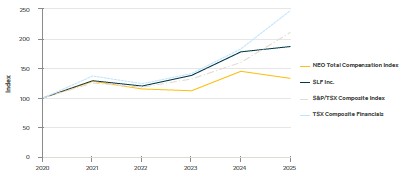
| Year ended December 31 | 2020 | 2021 | 2022 | 2023 | 2024 | 2025 |
| SLF Inc. | 100 | 129 | 120 | 138 | 178 | 187 |
| S&P/TSX Composite Index | 100 | 125 | 118 | 132 | 160 | 211 |
| S&P/TSX Composite Financials Index | 100 | 137 | 124 | 141 | 183 | 248 |
| NEO Total Compensation Index | 100 | $128 | $115 | $112 | $145 | $133 |
| Total compensation of top-5 paid NEOs (millions)1 | $31.0 | $39.7 | $35.8 | $34.6 | $45.0 | $41.2 |
1 For 2024, includes Mr. Deacon (current CFO) and excludes Mr. Singh (prior CFO) to account for the CFO transition. For 2021, includes Mr. Strain and excludes Mr. Connor.
Cost of management ratio
The cost of management ratio below expresses total compensation, as outlined in the summary compensation table for the top five most highly paid NEOs as a percentage of underlying net income attributed to shareholders. This table shows that the cost of management ratio is in line with recent years.
| Cost of management ratio | 2021 | 2022 | 2023 | 2024 | 2025 |
| Total Compensation of top-5 paid NEOs (millions)1 | $39.7 | $35.8 | $34.6 | $45.0 | $41.2 |
| Underlying net income attributed to shareholders (millions)2 | $3,533 | $3,369 | $3,728 | $3,856 | $4,201 |
| Cost of management ratio | 1.1% | 1.1% | 0.9% | 1.2% | 1.0% |
1 For 2024, includes Mr. Deacon (current CFO) and excludes Mr. Singh (prior CFO) to account for CFO transition. For 2021, includes Mr. Strain and excludes Mr. Connor.
2 IFRS 17 and IFRS 9 were adopted on January 1, 2023 and results in 2022 were restated. Results earlier than 2022 are shown on an IFRS 4 and IAS 39 basis.
Compensation philosophy and approach
What we do
| Take a principles-based approach |
• Manage compensation design and decision-making within a set of guiding principles.
• Ensure our compensation practices align with Financial Stability Board (FSB) Principles for Sound Compensation Practices and their Implementation Standards.
• Benchmark compensation against peer companies.
| Align compensation with our strategy and long-term shareholder value |
• Provide incentive to achieve strategic business priorities, such as our focus on Clients.
• Align pay with shareholder experience over the short, mid and long-term.
• Align our annual incentive to a balanced mix of measures based on financial performance and Client outcomes.
• Align our LTI programs to pay based on a mix of absolute and relative metrics.
• Maintain a market-leading Share Ownership Requirement (SOR) and share retention policy, including a direct ownership requirement and a requirement for the President & CEO to acquire shares annually to support alignment with shareholder experience.
• Consider shareholder feedback through annual "say on pay" and other channels.
| Pay for performance |
• Pay senior executives with a focus on results-based, formulaic at-risk pay (at risk compensation as a percentage of target pay: 91% for the CEO and 81% for the Executive Team).
• Define performance measures in the AIP that reflect value added for stakeholders, and are based on individual and company/business group performance.
• Deliver the large majority of LTI through performance-based Sun Shares.
| Manage risk and ensure sound governance |
• The Chief Risk Officer makes an annual presentation to the MRC on the key enterprise risks and their relationship to compensation.
• Manage pay mix so that more senior roles have a significant portion of their compensation deferred, much of it tied to multi-year performance.
• Regularly audit our compensation programs, including reviews against the FSB Principles and Standards.
• Stress-test the designs of our incentive plans to ensure a robust understanding of possible outcomes.
• Directly link performance targets in the AIP and LTI to the annual business plan approved by the Board and aligned with Sun Life's risk framework.
• Use of both absolute and relative performance metrics.
• Ensure Risk, Compliance and Control considerations are assessed prior to payouts via a modifier that is neutral to negative and can be applied to lower the overall business or individual result to zero if appropriate.
• Make LTI contingent upon compliance with post-retirement shareholding requirements.
• Apply compensation clawbacks as appropriate, in accordance with the Clawback Policy.
• Retain external independent expert advice at the Board level, including regular in-camera sessions.
• Incorporate caps on payouts in all non-sales compensation plan designs and, where appropriate, sales compensation plan designs. Payouts under some plans are designed as a maximum % of financial measures (e.g., earnings).
• Require a Code of Conduct declaration and monitor compliance for all employees.
What we don't do
| No excessive perquisites / no "grossing up" |
| No encouraging excessive risk-taking |
| No repricing or backdating of stock options |
| No hedging or pledging of equity awards |
| No single-trigger change of control agreements |
| No multi-year guarantees |
Compensation principles
Our approach to compensation is guided by five principles for designing compensation programs that:
 |
 |
 |
 |
 |
| align to our business strategy, such as our focus on Clients and shareholders | provide incentive to meet strategic business priorities | support fairness for all employees, and reward top performance | are simple and clearly communicated | ensure alignment with the investor experience of short, mid and long-term performance and create a longer-term ownership mindset for senior leaders |
How we ensure alignment
The following are four ways we ensure our pay and performance is aligned with shareholder interests:
1. at-risk pay (including variable and deferred compensation) accounts for 91% of total compensation paid to our CEO and 81% for the other Executive Team members.
2. performance measures in the AIP that reflect value added for stakeholders through earnings, growth, and progress on key Client outcomes across the enterprise that drive shareholder value creation.
3. performance targets in the annual and long-term plans that are based on the business plans approved by the Board and aligned with the company's risk framework.
4. absolute and relative shareholder returns that are reflected in our Executive Sun Share program.
Our approach to setting compensation
Benchmark against peer companies
• On average, we target compensation at the median (or middle) of pay levels of peer companies and benchmark target total compensation to ensure the target market position for each role is appropriate.
• We align perquisites, benefits and pension arrangements with the median of practices among peer companies. The value of these benefits does not fluctuate significantly with business or individual performance.
Pay for performance
• At the end of the year, we adjust the actual pay based on achieving both business and individual performance goals. If we deliver superior performance above target, that will result in pay above target market position (in aggregate, the median of the market). Performance below expectations will result in pay below target market position.
Align with Sun Life's strategy
• We use a formal decision-making process that incorporates assessment of performance and value added for shareholders and Clients, benchmarking against peers, independent advice, an annual decision-making cycle and the use of Board discretion when appropriate.
Compensation governance
Management Resources Committee involvement and composition
The MRC oversees compensation design and outcomes, focusing on programs that are considered material to the company. The MRC and Board exercises oversight over the compensation programs at MFS Investment Management through approval of the annual salary budget, bonus pool and long-term equity awards.
Composed entirely of independent directors, MRC members have direct experience related to executive compensation, succession planning and risk management. Collectively, they have the expertise required to make decisions on executive compensation and governance.
For the full MRC mandate and 2025 highlights see page 53. The profiles of all directors are contained in the section on director nominees starting on page 15. Additional committee-specific information relevant to MRC members is provided below.
• Joseph M. Natale, Chair of the MRC has experience in executive leadership in the communications and media sector. He currently serves as the Lead Independent Director of the Compensation and Talent Management Committee of Shopify Inc. He previously served as the Chair of the Human Resources and Compensation Committee of The Hospital for Sick Children and was a member of the Compensation Committee of Home Capital Group Inc.
• Stephanie L. Coyles has expertise in corporate strategy, governance, and talent and culture, with experience in compensation plan design, leadership development, succession planning, and organizational design. She previously served on the Human Resources and Compensation Committee of Corus Entertainment Inc., and on the Human Resources Committee of Hudson's Bay Company.
• Ashok K. Gupta has 40 years of experience in the insurance and financial services industry in the U.K., holding a number of senior executive positions. He currently serves as Chair of the Nominations Committee and Non-Executive Director of the Remuneration Committee for Mercer Limited, and previously served on the Remuneration Committee of JP Morgan Discovery Trust plc. In these roles he helped oversee executive compensation and executive development.
• David H. Y. Ho is Chairman and Founder of Kiina Investment Limited. He currently serves as Chair of the Remuneration Committee and member of Nomination Committee of Mininglamp Technology, and a member on the Compensation and Management Development Committee of DBS Group Holdings Ltd. and DBS Bank Ltd. He previously was a member of the Management Development and Compensation Committee of Air Products & Chemicals, Inc., in addition to similar roles at several other companies.
• Marie-Lucie Morin brings expertise in governance, risk management, talent and culture, including knowledge of and experience with compensation plan design and administration, leadership development and talent management, succession planning and organizational design. She currently serves as Chair of the Corporate Governance and Compensation Committee of Stantec Inc., and is a member of the Human Resources and Compensation Committee of Chorus Aviation Inc., and the Human Resources Committee of Palette Skills Inc.
The MRC's membership is reviewed annually to ensure members have the experience and expertise required to fulfil the MRC's mandate.
Incentive Plan Review Group - Management oversight
A group of senior executives representing finance, actuarial, risk management, legal/compliance, human resources and internal audit comprise our Incentive Plan Review Group (IPRG) and participate in the compensation decision-making process. The IPRG meets prior to each MRC meeting to review the design of our incentive compensation plans, performance targets and assessments, and information on risk management. It provides input for the President & CEO, MRC and the Board to consider as part of their final recommendations and approvals. More information on our decision-making cycle is available on page 75.
Independent advice
Since 2016, the MRC has retained Pay Governance LLC (Pay Governance) as its independent consultant. Pay Governance provides expert advice on the strategy, design and quantum of compensation programs for the CEO and top executive officers and on our executive compensation governance, including advice on compensation programs relating to MFS Investment Management. In addition, the Committee obtains specialized advice from other experts as required.
The MRC approves the engagement of the independent consultant, the proposed work plan and all associated fees. It considers any other work to be assigned to the independent consultant that is material in nature and will only approve it if it believes the work will not compromise the consultant's independence as advisor to the MRC.
The independent consultant advises the MRC throughout the year, with management and in regular in- camera sessions, giving input on policy recommendations, helping assess the appropriateness of our executive compensation programs including design and outcomes and reviewing this circular. The MRC considers information provided by the independent consultant and makes recommendations to the Board for approval. It also reviews the performance and independence of the consultant annually. The Board is ultimately responsible for compensation decisions.
The table below shows the fees paid to Pay Governance over the last two years. Pay Governance did not provide (nor receive fees for) any non-executive-compensation-related services to Sun Life over the period.
| Executive compensation-related fees | 2025 | 2024 |
| Pay Governance | US$160,869 | US$214,223 |
Alignment of compensation programs and risk management
Our risk management approach
Our compensation programs are aligned to the organization's risk management practices through our:
1. Governance structure for the design and approval of incentive compensation plans.
2. Processes used to support the alignment of compensation and risk management.
Described in more detail below, the MRC concluded that we did not take risks beyond our risk appetite to generate the business results that led to incentive payouts.
We use the "three-lines-of-defence" model as a means to ensure roles and responsibilities are consistent, transparent and clearly documented for decision-making, risk management and control in support of effective governance. Under the model:
• The first line refers to business roles who own, identify, and manage business risks.
• The second line is the oversight functions, which are independent of the first line, and oversee the risk management programs through the risk framework and policies. Independence of the second line is supported with no direct business unit reporting relationships or direct incentive measures based on individual business unit performance.
• The third line of defence is the internal audit function or a third party, which provides independent assurance as to the effectiveness of risk management, control and governance processes.
Governance structure for approval of incentive plans
The MRC reviews the annual, mid and long-term incentive plans, which typically represent ~84%1 of the total spend on incentive programs across the enterprise. The remaining plans are generally sales compensation plans developed within approved frameworks and managed through the three-lines-of-defence model.
Amounts and key risks under these plans are reviewed by the MRC on an annual basis.
In addition to formal approval processes, the following actions also support the alignment of compensation and risk management:
• Identification of Material Risk Takers (MRTs). MRTs are individuals in roles having a material impact on our risk exposure. Pay decisions for MRTs are reviewed by the MRC and alignment of their compensation with long-term performance of the company is ensured by requiring that a minimum of 40% of their variable pay is deferred when the company earnings threshold is exceeded. See page 119 for the aggregate compensation of our MRTs.
• Application of compensation clawbacks. See page 76 for a description of our Clawback Policy.
• Ability to lower share unit payments. The MRC and Board have discretion in the Executive Sun Share plan to cancel all outstanding awards if they determine that payments would seriously jeopardize our capital position or solvency.
• Application of overall discretion. The MRC and Board have discretion to lower or zero out incentive awards, and to lower or not grant long-term incentive awards to individuals or groups, if they conclude results were achieved by taking risks outside of Board-approved risk appetite levels.
• Regular audit of our compensation programs. Internal audit reviews our compensation programs against the FSB Principles and reports to the MRC on its findings regularly in alignment with the MRC Charter.
Processes supporting the alignment of compensation and risk management
Our compensation design and review processes incorporate the following risk management practices:
• They are managed through the three-lines-of-defence model and compensation principles, including alignment with FSB principles.
• Each year an annual business plan is developed and approved by the Board based on approved risk appetite levels and is used as the basis for setting annual performance targets under the AIP and LTI plans.
• The Chief Risk Officer makes an annual presentation to the MRC on the key enterprise risks and whether they are being managed appropriately and if adjustments to outcomes are required, and attends other meetings as required.
• The MRC receives updates on the incentive plan assessments, including human resources talent risk, and has the discretion to lower or zero out incentive awards, and to lower or not grant long-term incentive awards to individuals or groups, if they conclude results were achieved by taking risks outside of approved risk appetite limits.
• The IPRG meets prior to each MRC meeting to review incentive plan outcomes from the perspective of finance, actuarial, risk management, legal/compliance, human resources and internal audit. The IPRG also meets after the end of the year to discuss whether any adjustments should be made to the overall or business group AIP score or individual performance assessment based on the risk, compliance and control environment.
• The MRC annually reviews total rewards recommendations and market positioning for each NEO.
• The MRC annually reviews aggregate payouts under all incentive programs, the processes and the control environment governing incentive plans and areas of focus for the upcoming year based on an assessment of indicators of potential risk such as size of plan, size and variability of payout levels, and plan design and operational features.
1 2024 incentive payouts paid in 2025.
Design of incentive compensation plans to mitigate risk
The design of our incentive plans helps to mitigate risk, as follows:
• Designs are stress-tested to ensure an understanding of possible outcomes.
• Pay mix is managed so that more senior roles have a significant portion of their compensation deferred, a significant portion of which is tied to multi-year performance.
• Executives have share ownership and share retention requirements that reinforce the focus on the long term and alignment with shareholders' interests.
• Caps on payouts are incorporated in all non-sales compensation plan designs and, where appropriate, sales compensation design. Payouts under some compensation plans are designed as a maximum % of a financial measure (e.g., earnings).
• The AIP (see page 79) includes a measure whereby funding can be reduced based on the risk, compliance and control environment.
• Performance measures generally include a mix of financial and non-financial absolute and relative measures.
• AIP funding is limited to total company and business group performance, with no direct compensation impact for sales or decisions around individual products within a business group.
Decision-making cycle
Our annual incentive decision-making cycle is a rigorous process carried out in three stages for the relevant performance period:
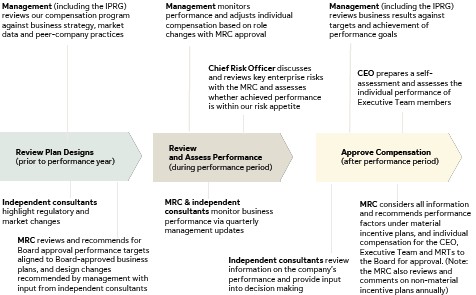
Use of discretion
The Board has discretion to:
• Increase or decrease awards under the AIP based on its assessment of risk management and the impact on our financial results, and other factors that may have had an effect on performance.
• Lower or zero out AIP awards, and to lower or not grant new long-term incentive awards for individuals or groups, if it concludes that results were achieved by taking risks outside of Board approved risk appetite levels.
• Cancel outstanding awards under the Executive Sun Share plan if it determines that payment would seriously jeopardize the capital position or solvency of the organization.
Actual use of discretion has been modest and is a mixture of positive and negative over time.
Executive share ownership and share retention requirements
Our executives align their interests with those of our shareholders by holding an ongoing stake in the company. Those new to the company or newly promoted have five years to achieve their required minimum ownership levels, which can include ownership of common shares, DSUs, Executive Sun Shares and SLC Management Phantom Units. Stock Options are not included in the calculation of executive ownership.
In 2016, we increased the minimum levels of share ownership for NEOs and added a requirement that they achieve at least 25% of their minimum level of share ownership through personal ownership of shares and DSUs.
In addition, starting with grants in 2017, we added a requirement that following an exercise of stock options, our active executive officers must retain shares equal to 50% of the after-tax gain from the exercise for three years. This hold requirement does not apply if they have achieved their SOR and at least 25% of their minimum level of share ownership through personal ownership or if they retire.
Since 2025, the President & CEO has been required through the Compensation and Appointment Policy to annually acquire shares supporting alignment with shareholder experience. This policy reinforced what was already a practice of Mr. Strain.
| Multiple of annual salary | Post-retirement guidelines | |
| Chief Executive Officer (CEO) | 10x | • Hold at least 100% of guideline for 1 year |
| • Hold at least 50% of guideline for 2 years | ||
| Named Executive Officers (NEO) | 5x | • Hold at least 100% of guideline for 1 year |
All insiders must follow our insider trading rules, and executives and directors must notify the appropriate individual of their intention to trade in our securities. Executives must notify the CEO, while directors, including the CEO, must notify the Chair of the Board. The Chair of the Board must notify the Chair of the governance committee.
For a summary of current share ownership, see page 88.
No hedging or pledging
We have a policy that prohibits all insiders subject to our SOR from participating in equity monetization transactions including pledging or hedges involving the company's securities.
Clawbacks
Our Clawback Policy, which is in accordance with SEC clawback policy rules, allows the Board to reclaim or "clawback" incentive compensation and stock options (granted, earned, vested or paid) in situations where a current or former employee received excessive or undeserved compensation. This includes instances of misconduct (all employees) or in the case of a financial restatement (Executives).
More specifically, all of the pre-tax incentive compensation received by any current or former employee during the previous three completed fiscal years can be reclaimed in the event that such person is determined by the Board to be engaged in misconduct, including fraud, dishonesty, negligence, and/or non- compliance with legal requirements or our internal policies, including the Code of Conduct. This includes situations that could result in material reputational failure. In addition, the Board will demand recoupment of the pre-tax amount of any incentive compensation erroneously received by a current or former executive officer based on a financial reporting measure that is subject to a financial restatement, which may include stock price and total shareholder return, during the three completed fiscal years immediately prior to the date the company is required to prepare the applicable financial restatement (or the relevant transition period).
Our compensation program
Seven components made up our 2025 compensation program:
| Component | Pay type | Performance period | Who's eligible |
| Salary | Fixed | • reviewed annually | • all employees |
| Annual incentives | Variable | • 1 year | • all employees |
| Sun Share plan | Variable | • 3 years' forward-looking performance | • key contributors; Vice-Presidents and above |
| Executive stock option plan | Variable |
• 10 years • vest 50% on the 3rd anniversary and 50% on the 4th anniversary, respectively |
• Executive Team |
| DSU plan | Variable |
• redeemed when the executive leaves the organization |
• Vice-Presidents and above |
| Pension and other | Fixed | • accrue during employment | • all employees |
| Perquisites | Fixed | • available during employment | • Vice-Presidents and above |
In addition to the above, the Executive Chair, SLC Management participates in the SLC Management Phantom Unit Plan, as described below.
| Component | Pay type | Performance period | Who's eligible |
| SLC Management Phantom Unit Plan | Variable |
• 3 years' forward-looking performance |
• Director and above levels in SLC Management |
The majority of compensation paid to our senior executives is variable and at risk. Pay mix varies based on the ability of the executive to influence short and long-term business results, the level and location of the executive and competitive practices. The average mix of total direct compensation by level, based on target pay, is summarized below. The actual pay mix for individuals may be different depending on business and individual performance and geographic location, as well as investor experience (i.e., dividends and share price movements), per our guiding principles. Pension, benefits, and perquisites are supplemental, and outlined on pages 103 to 105.
| Chief Executive Officer | Executive Team |
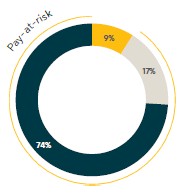 |
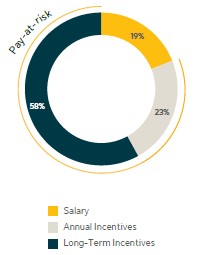 |
Benchmarking
• Through independent third-party survey providers, we look at how other companies similar to us compensate similar roles taking size of organization into account. We look at each component of compensation along with total compensation to ensure we can attract and retain the talent we need.
• Surveys of peer groups are used to benchmark our compensation levels for certain executive officers, as outlined below. In Canada, U.S., and Asia we select these surveys as they include the leading financial services and asset management organizations, as appropriate, with whom we compete for talent. We also review publicly disclosed compensation information for relevant companies, as appropriate, before setting the compensation range for our executive officers.
• Canadian market survey: The Financial Services Executive Compensation Survey produced by Korn Ferry is used to benchmark Canadian executives. Our Canadian peer group is made up of six major Canadian banks and two insurance companies:
| • BMO Financial Group | • Manulife Financial | • Scotiabank |
| • Canada Life | • National Bank Financial Group | • TD Bank Group |
| • CIBC | • RBC |
• For Mr. Peacher, Executive Chair, SLC Management, we consider benchmarking information from the 2025 Radford McLagan Compensation Database, which includes investment management roles from over 120 U.S. asset management firms.
• For Mr. Singh, President, Sun Life Asia, we use the 2025 Insurance Executive Rewards Survey from Willis Towers Watson, which includes 9 insurance companies:
| • AIA | • HSBC Insurance | • Prudential plc |
| • AXA | • Manulife Financial | • Swiss Reinsurance |
| • FWD Group | • MetLife | • Zurich Insurance Group |
Salaries
| Salaries provide a portion of pay that is fixed. We set individual salaries, based on the scope and mandate of the role vs. benchmarks, performance and experience of the individual, and internal equity. |
Annual Incentive Plan
| The AIP delivers a portion of pay based on the achievement of annual business and individual performance objectives. Business objectives include Earnings, Growth and Client Measures. |
Awards are determined using the following formula:
| Annual incentive plan target ($) |
X | Business results (%) |
X | Individual multiplier (%) |
= | Annual incentive plan award ($) |
Business results
We use performance versus targets on four measures to assess our Total Company performance under the AIP as outlined below.
|
■ Reported EPS - 25% weight • Common shareholders' net income (loss) divided by the weighted average number of common shares outstanding. Determined in accordance with IFRS. ■ Underlying EPS - 25% weight • Reflects the company's focus on generating sustainable earnings for shareholders. A non-IFRS financial measure. Refer to the Other information section on pages 122 and 123. |
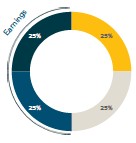 |
■ Growth - 25% weight • A weighted average of Value of New Business (VNB), an estimate of future profits from new business sold during the year, in Canada and Asia and Client Revenue, defined as net premiums + fees, in the U.S. Weighting is based on each Business Group's contribution to Underlying Earnings in the annual business plan. ■ Client Measures - 25% weight • Equally weighted assessment of performance versus target on: - Client Satisfaction - Client Impact across our businesses. |
Our AIP measures are reviewed regularly for alignment to strategy, and market practice.
| The performance payout factors for reported EPS and Client Measures range from 0% for below threshold results to 150% for outstanding results. For Underlying EPS and Growth it ranges from 0% to 200%. |
Management uses a business performance scorecard to conduct a comprehensive "look back" on performance and ensure fairness and reasonableness of the final performance payout factor. Total Company performance is reviewed to confirm the calculated results and inform whether a discretionary adjustment of up to +/- 20% is appropriate based on a set of guiding principles. Our principles include having a bias for the calculated result, applying positive and negative discretion with the expectation to be neutral over time, focusing on items unknown when setting business plan that had a material impact, and applying informed judgment. We test for symmetry and consistency of decision making over time. The plan also includes a modifier for Risk, Compliance and Control considerations that is neutral to negative, and can be applied to lower the overall business result to zero. The MRC maintains the discretion to increase, lower or zero out incentive awards.
| Calculated payout factor | +/- | Scorecard adjustment (if any) | - | Risk, Compliance and Control adjustment (if any) | = | Final performance payout factor |
Underlying net income (loss) removes from reported net income (loss) the impacts of items as defined in Section M - Non-IFRS Financial Measures in our 2025 MD&A filed with Canadian securities regulators. Refer to the Other information section on pages 122 and 123.
Mix of business results
The mix of business results for our NEOs in 2025 was as follows:
| Total Company | ||||
| Reported EPS | Underlying EPS | Growth | Client Measures | |
| CEO | 25% | 25% | 25% | 25% |
| CFO | ||||
| Total Company | Relevant Business Group | |||
| Underlying Net | ||||
| Reported EPS | Income | Growth | Client Measures | |
| NEOs (excluding the Executive Chair, SLC Management) | 25% | 25% | 25% | 25% |
| Executive Chair, SLC Management | Performance of SLC Management business group including Client outcomes, investment performance, and financial measures. | |||
In addition to 25% weight on Total Company Reported EPS, Executive Team members who run a business group continue to have a significant portion of their compensation tied to Total Company results through the mid and long-term incentive programs.
Individual multiplier
All eligible employees, including the NEOs, receive an individual performance multiplier based on their individual contributions during the year. Performance is assessed against individual performance objectives for the year. The individual multiplier also includes a modifier for Risk, Compliance, Control and Misconduct considerations that is neutral to negative, and can be applied to lower the overall individual result.
Long-term incentive compensation
| Our long-term incentive programs deliver a portion of pay that is earned over a multi-year vesting period and aligned with shareholder interests. Our long-term incentive grants consisted of two different vehicles- phantom unit plans, predominantly Sun Shares, and stock options. Sun Share grants made in 2025 reflected our updated design described below. |
These incentive plans are designed to align and reward executives and other key contributors for creating shareholder value and generating superior returns over the performance period of the plans, which range from three to 10 years. In the case of the CEO and the Executive Team, the proportion of long-term incentive delivered in options is considered in light of age and career stage and is limited to a maximum of 15% of total long-term incentive. Incentive pools are allocated to business leaders to decide the award for participants based on contributions during the year and their potential impact on long-term results. Awards are granted as a fixed amount however, the actual payout value will vary based on performance measures described below. For the SLC Management Phantom Unit Plan, the actual payout value is based on SLC Management performance over the performance period. Prior to approving awards, the MRC receives information on past awards for each Executive Team member. Awards are granted based on position level, individual performance and potential, and competitive practice. |
Long-term Compensation Mix (Executive Team):
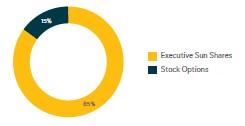
For Mr. Peacher, the 2025 LTI mix is 15% stock options, 35% Executive Sun Shares, and 50% SLC Management Phantom Units.
Executive Sun Share Plan
| The Executive Sun Share plan rewards individuals for creating absolute and relative shareholder value, over a five- year period with greater weight given to performance over the final three years, as well as delivering on Underlying Return on Equity (ROE) targets. | Objectives for the Executive Sun Share plan include aligning payouts to sustained performance on multiple metrics reflecting external, absolute and relative performance, and an internal performance measure, to provide a fulsome view of overall performance. The plan design has a range of potential payouts (from 0% to 200%) for our most senior executives, reflecting their accountability and impact on our results. Less senior participants have a narrower range of potential payouts because our focus at those levels is more on alignment of deferred pay to absolute TSR and retention. Executive Sun Share Units vest in full on the third anniversary of the grant date and are paid in cash. |
Executive Sun Share Plan Design
As of 2025, our Executive Sun Share plan incorporates three performance measures capturing external absolute (TSR) and relative performance (rTSR), and internal performance (Underlying ROE):
| Performance | ||
| Measure | Description | Applies to |
| 1. Absolute TSR | The underlying value of the share units based on increases or decreases to share price and dividend performance. | All Sun Share participants |
| 2. Relative TSR | Modifies the ultimate number of units awarded based on our rTSR performance versus peers. | Vice-Presidents and above |
| 3. Underlying ROE | Underlying net income (loss) divided by the total weighted average common shareholders' equity for the period. ROE provides an indication of the overall profitability of the company. Underlying ROE is included in the plan to incent achievement of our Medium Term financial Objectives and continued focus on capital allocation decisions. |
The grant value of each Sun Share is the average closing price of our common shares on the TSX over the five trading days before the grant date. Sun Shares accumulate dividend equivalents over the performance period and vest in full after three years, if earned. Dividends are only paid if the underlying shares are earned. The payout value of each Sun Share is based on the average closing price of our common shares on the TSX over the five trading days before the vesting date and is adjusted through the application of the performance factor for executives.
The formula below shows how we calculate the payout value of Executive Sun Shares for NEOs:
| Sun Shares (#) |
X | Performance factor |
X | Share price ($) |
= | Payout value |
| (number of units awarded plus additiona units credited as reinvested dividends) | (0% to 200%) see calculation below | (average price of our common hares on the TSX over the five trading days befor | of Sun Shares on vesting ($) |
In 2025, Executive Sun Share performance factor is calculated as:
| 75% Relative TSR |
+ | 25% Underlying ROE |
= | Performance factor |
Relative TSR
Relative TSR (rTSR) is weighted at 75% of the overall performance factor. We calculate the rTSR performance for Executive Sun Shares using the weighted average of three annual three-year TSR factors (called "Multipliers" in the illustration below). Each multiplier is calculated as the change in price of our common shares over the 36-month period ending December 31 of the applicable year, plus reinvested dividends during the same period measured relative to peers.
For all grants, the most recent Multiplier has the heaviest weighting (50%), with the other two Multipliers weighted at 25%. For example, for the 2025 Executive Sun Share grant, the annual TSR factors are weighted as follows:
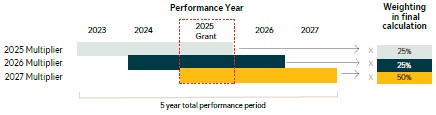
We benchmark our rTSR performance against a weighted average of 14 public Canadian banks and North American insurance and asset management companies. These companies are most similar to us in terms of measuring business performance since they operate in the same broader financial services market and directly compete with us in some business segments. We also compete with these companies for talent and access to capital. The companies listed were used in calculating the annual performance factors for the 2023-2025 Executive Sun Share grants.
The performance peer group is a subset of the peer groups that we use for benchmarking compensation levels (see page 78).
| Weight | Executive Sun Share Benchmark Peers1 | |||
| Canadian banks | 20% | • Bank of Montreal | • Royal Bank of Canada | • Toronto-Dominion Bank |
| • Canadian Imperial Bank of Commerce | • Scotiabank | |||
| North American insurance and asset management companies |
80% | • Great-West Life | • Manulife Financial | • Prudential Financial |
| • Equitable Holdings | • MetLife | • T. Rowe Price | ||
| • Lincoln Financial | • Principal Financial Group | • Unum Group | ||
1 For the 2026 grant, our peer group for rTSR has been updated (See changes for 2026 on page 67).
For 2025, the rTSR performance range around the peer group weighted average is +/- 10 pp. For example, for the 2025 Executive Sun Share grant, the performance and payout ranges are:
| Level of | Then the annual | |
| performance | If the 3-year rTSR1 | TSR factor is |
| Maximum | exceeds the weighted average by 10% or more | 200% |
| Target | is at the weighted average | 100% |
| Threshold | is at 10% below the weighted average | 25% |
| Below threshold | is more than 10% below the weighted average | 0% |
1 Performance range for awards beginning 2026 will be +/-15% pp, see Changes for 2026 (page 67).
Intermediate values are interpolated.
Underlying ROE
Underlying ROE is weighted at 25% of the overall performance factor. Three one-year goals will be aligned to each year's business plan, and the final result will be the average of performance equally weighted in each of the three years. The performance range around each annual goal is +/- 15% (threshold-maximum). Aligned to rTSR, the payout range is 0% if underlying ROE is Below threshold, 25% if underlying ROE is at Threshold, 100% if underlying ROE is at Target, and 200% if underlying ROE is at Maximum. Intermediate values are interpolated.
For grants made in 2023 and 2024 - Sustainability Modifier
The sustainability modifier was eliminated in the performance factor calculation for the 2025 grant.
For 2023 and 2024 grants, the sustainability modifier adjusts the combined rTSR (75% weight) and underlying ROE (25% weight) payout factor by up to +/- 10 pp. The sustainability modifier applied is either -10 pp, -5 pp, "no change", +5 pp or +10 pp. Scores are assessed based on our performance over three years against aspirational goals aligned to certain sustainability focus areas.
Our executive LTI performance factor was calculated as:
| 75% Relative TSR | + | 25% Underlying ROE | +/- | 10 pp Sustainability Modifier | = | Performance factor |
The sustainability modifier adjustment is based on performance over three years against four aspirational goals, aligned to three of our sustainability focus areas: Advancing Sustainable Investing, Building Resilience to Climate Change, and Operating as a Trusted and Responsible Business, specifically:
|
a. New sustainable investments ($B) over the performance period. Includes new investments in assets and businesses that support transition to a low-carbon and more inclusive economy.1 b. Absolute reduction of greenhouse gas emissions in our operations (tonnes of carbon dioxide equivalents). An interim goal, measured against 2019 baseline reflecting target progress over the performance period towards Sun Life's operational emissions reduction goal in effect applicable to the grant year (50% reduction by 2030). Includes emissions resulting from global corporate offices and data centres, as well as from business travel, inclusive of majority-owned Sun Life affiliate companies.2 Refer to the 2023 & 2024 GHG Emissions Methodology for more information. c. Gender parity in senior management globally.3 d. 25% underrepresented ethnicity representation in senior management in North America. Each goal has an associated baseline, and performance against each goal is weighted equally in the assessment. Performance over the period is assessed to determine the degree of success in achieving the four aspirational goals. For more information on Sun Life's sustainability aspirational goals, refer to our Sustainability Report available at sunlife.com/sustainability. |
1 Sustainable investments meet one or more of the criteria for investments based on ICMA Green Bond Principles, ICMA Social Bond Principles, ICMA Sustainability Bond Guidelines, GRESB Real Estate Benchmark, and/or PRI Impact Investing Market Map. Where issuers do not obtain a third-party opinion or provide an internal opinion on their issuance, our investment professionals apply judgment to assess whether the use of proceeds meets the standards set out in the ICMA Principles.
2 Sun Life's operational emissions reduction goal was revised effective December 31, 2024 to cover emissions from global offices only, in addition to permitting the use of renewable energy certificates (RECs). Refer to Sun Life's 2024 OSFI B-15 Climate Risk Management Report for more information.
3 Gender parity is defined as women representation between a range of 47% to 53%. This range accounts for employees who identify as non-binary based on current global averages.
Executive Stock Option Plan
| Stock options reward participants for their contributions to increasing long- term shareholder value. Starting in 2023, grants vest 50% on the third anniversary of the grant date and 50% on the fourth anniversary of the grant date. | Only Executive Team members receive a portion of their annual long-term incentive award in options, which are a maximum of 15% of their long-term incentive. The exercise price of an option is the closing price of our common shares on the TSX on the grant date. Options are exercisable until 10 years after grant.1 Options only have value if the price of our common shares increases after the grant date. The MRC recommends the terms of each grant to the Board for approval. The exercise price of an option already granted cannot be lowered or forfeited in exchange for options with a lower exercise price. If there is a change of control, the Board can choose from a range of alternatives to address outstanding options, including accelerated vesting. Options cannot be transferred or assigned. |
The option plan may be amended by the Board as long as we receive other necessary approvals. The following amendments require shareholder approval unless they result from the plan's anti-dilution provisions:
• increasing the number of common shares that can be issued under the plan.
• reducing the exercise price of an option, including cancelling and re-granting an option on different terms within three months.
• extending the expiry date of an option or permitting the grant of an option with an expiry date of more than 10 years from the grant date.
• permitting an option to be transferred other than to a spouse, minor child or minor grandchild.
• expanding the categories of eligible participants in the plan.
• increasing or deleting the limits relating to common shares that may be issued to insiders or any one person.
• permitting other types of compensation (e.g., share awards) by issuing equity.
• revising the amendment procedure itself.
In 2025, the Board approved certain amendments to the option plan in order to (i) clarify certain employment-related concepts and (ii) make other housekeeping amendments. These amendments did not require shareholder approval pursuant to the amendment provisions of the plan.
Beginning in 2023, grants vest 50% on the third anniversary of the grant date and 50% on the fourth anniversary of the grant date. This aligns us more closely to market practice and emphasizes the long-term nature of this program.
For grants from 2019 onwards, the Board amended our option plan to align our post-retirement treatment of options with our peer group. Options granted under the amended plan will terminate on the earlier of the last exercise date of the options and the date that is 60 months following the retirement of the Executive.
For grants from 2017 onwards, if an executive has not achieved share ownership and personal ownership requirements, we require that active executives hold shares equal to 50% of the after-tax gain on exercise for 3 years.
The plan allows the Board to grant options with stock appreciation rights, although it has not granted any to date. A stock appreciation right allows the executive to exercise his or her option and receive, in cash, the difference between the market price of our common shares and the exercise price of the option. Stock appreciation rights provide the same compensation value as the underlying options.
Executive Team members are the only individuals who currently receive options under the plan.2
1 Options that expire during a blackout period or within 10 business days after, will have their exercise deadline extended by up to 10 business days after the blackout period ends.
2 Under the sole discretion of the MRC, the plan terms provide eligibility for other designated employees of Sun Life, its subsidiaries and affiliates.
Executive stock option overhang and burn rate
The table below shows the number of options granted, outstanding and available for grant under the option plan as of December 31, 2025. We can issue up to 29,525,0001 common shares under the plan (representing 5.3% of the shares outstanding as of December 31, 2025), subject to applicable limits on insider participation and individual grants.2 Stock option grants are determined using a calculated five-year average Black-Scholes value (15.5% for February 2025 grants, 14.2% for February 2024 grants, and 13.0% for February 2023 grants).
| 2025 | 2024 | 2023 | ||||
| Measure of | % of shares | % of shares | % of shares | |||
| dilution | # of options | outstanding | # of options | outstanding | # of options | outstanding |
| Annual grant3 | 493,509 | 0.09 | 487,738 | 0.08 | 789,963 | 0.14 |
| Options outstanding4 | 2,959,752 | 0.53 | 3,119,926 | 0.54 | 3,428,382 | 0.59 |
| Options available for grant5 | 1,530,790 | 0.28 | 2,024,299 | 0.35 | 2,424,145 | 0.41 |
| Overhang6 | 4,490,542 | 0.81 | 5,144,225 | 0.90 | 5,852,527 | 1.00 |
| Burn rate7 | 0.09 | 0.08 | 0.14 |
1 In 2026, the Board approved amendments to the stock option plan. Certain plan amendments will go to shareholder vote at the upcoming Annual General Meeting. Please see amendments to Sun Life's Executive Stock Option Plan on pages 9 to 10 for further information and instructions.
2 Issuances under the option plan and any other security based compensation arrangement of Sun Life are subject to the following limits: (i) shares reserved for insider options may not exceed 10% of outstanding common shares; (ii) issuances to insiders in any one-year period may not exceed 10% of outstanding common shares; (iii) no single insider (including their associates) may receive more than 5% of outstanding common shares in any one-year period; and (iv) total common shares reserved for options granted to any one person under this plan and any other employee-related plans may not exceed 1% of outstanding common shares.
3 the total number of options granted under the option plan each year.
4 the total number of options outstanding at the end of each year, including the annual grant.
5 the number of options in reserve approved by shareholders that are available for grant at the end of each year.
6 the number of options outstanding plus the number of options in reserve approved by shareholders that are available for grant in the future.
7 the number of awards granted in the applicable fiscal year as a percentage of the weighted average number of outstanding shares for the same fiscal year.
SLC Management Phantom Unit Plan
| The SLC Management Phantom Unit Plan rewards individuals for mid-term performance and growth of SLC Management. No significant changes were made for 2025. |
The plan allows participants to share in the overall success and value creation of SLC Management and aligns the interest of participants and shareholders in the corporation by providing incentive for future performance. For Mr. Peacher, the plan rewards performance over a three-year period based on overall SLC Management performance metrics; third party AUM, third party fee revenue, and Earnings Before Interest, Taxes, Depreciation and Amortization (EBITDA). SLC Management Phantom Units vest in full on the third anniversary of the grant date and are paid in cash. |
Mix of long-term incentive vehicles
The current mix of long-term incentive vehicles for eligible participants is as follows:
| Stock | SLC Management | |||
| Eligible participants | Options | Sun Shares | Phantom Units | |
| CEO and Executive Team (excluding the Executive Chair, SLC Management) |
15% | 85% | - | |
| Executive Chair, SLC Management | 15% | 35% | 50% | |
| Senior Vice-Presidents, Vice-Presidents and key contributors (below Vice-President) | - | 100% | - | |
| SLC Management | Senior Managing Directors, Managing Directors and key contributors | - | - | 100% |
| Select Senior Managing Directors | - | Mix of SLC Management Phantom Units and Sun Shares1 | ||
1 Certain Senior Managing Directors in SLC receive a mix of Sun Shares and SLC Phantom units to support alignment to long term interests of Sun Life shareholders.
DSU Plan
| The DSU Plan provides an opportunity for executives to voluntarily defer a portion of their incentive awards into DSUs, which vest on grant and pay after they leave the company. No significant changes were made for 2025. |
DSUs are an effective way for executives to meet their SOR and they can only be redeemed when the executive leaves the organization. We sometimes grant DSUs to new executives to replace the long-term value they forfeited with a previous employer, and on a limited basis, to recognize additional responsibilities associated with promotions during the year. DSUs are redeemed for cash based on the value of our common shares at the time of redemption, plus any dividend equivalents accumulated over the period. |
The formula below shows how we calculate the payout value of DSUs:
| DSU (#) | X | Share price ($) | = | Payout value ($) |
| (number of units plus additional units credited as reinvested dividends) | (average price of our common shares on the TSX over the five trading days before the redemption date) | DSU |
Share ownership levels
The table below shows the values of common shares and share units held by each NEO as of December 31, 2025. We calculated the value of common shares and share units using $85.68, the closing price of our common shares on the TSX on December 31, 2025. In 2016, we added a requirement for the CEO and Executive Team members to achieve at least 25% of their minimum level of personal share ownership through shares and DSUs (personal ownership excludes Sun Shares and Stock Options). Neither vested nor unvested options are counted in ownership. If a vested option is exercised and held, it has become a share, then the share is counted. Beginning in 2025, there is a policy requirement that the President & CEO acquire shares annually, supporting alignment with shareholder experience. Starting with the 2017 grant, if an executive has not achieved the minimum level of SOR, an active executive will have to hold shares equal to 50% of the after-tax gain on exercise for 3 years. For presentation purposes, the Executive Sun Shares have been valued using the target performance factor (100%).
| Total share ownership at December 31, 2025 ($) | ||||||||
| Personal | ||||||||
| Total | SLC | Ownership | ||||||
| Minimum | ownership | Management | Achieved | |||||
| Named executive | ownership | as amultiple | Common | Phantom | Total | (need 25% | ||
| officer | requirement | of salary | shares | Sun Shares | Units | DSUs | ownership | or greater) |
| Kevin D. Strain | 10x salary | 29.8 | 6,862,827 | 24,868,643 | - | 1,016,620 | 32,748,090 | 71.6% |
| Timothy Deacon1 | 5x salary | 9.6 | 25,662 | 3,953,832 | - | 2,246,870 | 6,226,364 | 35.4% |
| Stephen C. Peacher | 5x salary | 25.2 | - | 9,435,950 | 13,746,998 | 3,195,691 | 26,378,639 | 61.0% |
| Jessica Tan2 | 5x salary | 19.6 | 18,853 | 7,172,755 | - | 9,443,045 | 16,634,654 | 0.4% |
| Manjit Singh | 5x salary | 17.4 | 117,496 | 8,558,260 | - | 5,371,583 | 14,047,339 | 136.1% |
1 Mr. Deacon's DSUs were granted in 2024 at a value of $1,700,050, with 50% vesting in 2025 and the remaining 50% vesting in 2026.
2 Ms. Tan's DSUs were granted in 2024 at a value of $8,900,068, and will fully vest on the fifth anniversary of her joining Sun Life. When vested, their DSUs will count toward their respective personal ownerships.
All NEOs have met their SOR and personal ownership requirement by the attainment date.
Pension benefits
Our pension plans deliver a portion of pay that provides protection and wealth accumulation for retirement. Only defined contribution plans are available to new hires worldwide (except for our defined benefit plan in the Philippines, which is limited to employees of the local subsidiary). The NEOs participate in the pension plans available in their country of employment.
Canadian plans
On January 1, 2009, we closed the Canadian staff defined benefit plan to new employees and replaced it with a defined contribution plan, which we describe in more detail below. Canadian employees hired before then continue to participate in the previous plan, which includes both defined benefit and defined contribution components.
Mr. Strain was hired before 2009, and he participates in the defined benefit plan. Ms. Tan and Mr. Deacon are NEOs in Canada who were hired after January 1, 2009, and they participate in the defined contribution plan.
Our retirement program for Canadian employees hired before January 1, 2009 (including applicable NEOs) consists of two elements:
• a defined benefit accrual for service prior to 2005.
• a combination of defined benefit and defined contribution accruals for service after January 1, 2005.
Benefits up to the tax limits are paid from registered plans. Benefits above the tax limits are paid from non- registered pension plans that are secured, where applicable, through a Retirement Compensation Arrangement.
Defined benefit formula for service prior to 2005
The pension formula for service prior to 2005 depends on which legacy pension plan the applicable executive participated in. Mr. Strain's defined benefit pension formula for service prior to January 1, 2005 is based on the Clarica pension plan, which was acquired by Sun Life in 2001.
 |
 |
|||||||
| Years of service before 2005 | X | 1.0% of average pensionable earnings up to $100,000 | + | 1.50% of average pensionable earnings above $100,000 | = | Annual pension as of age 65 | ||
Under the Clarica formula, pensionable earnings consist of annual salary and annual incentives. Average pensionable earnings is based on the employee's highest average pensionable earnings in the best three consecutive years in the last 120 months of employment.
Clarica benefits are payable from age 65 for life, with 60 monthly payments guaranteed. Other forms of payment are available on an actuarially equivalent basis. Employees with Clarica service can retire as early as age 55, and the benefit is reduced by 3% for each year that retirement precedes age 63, and an additional 3% for each year that retirement precedes age 60.
Defined benefit formula for service after 2004
(Designated executive, Mr. Strain)
| Years of service before 2004 | X | 1.6% of average pensionable earnings | = | Annual pension as of age 65 |
Under this formula, pensionable earnings consist of annual salary and the actual annual incentive award, capped at the lesser of 100% of target and 100% of base salary. Average pensionable earnings is based on the employee's highest average pensionable earnings in any three consecutive calendar years in the last 10 years of employment.
The pension is payable for the lifetime of the employee. Other forms of payment are available on an actuarially equivalent basis.
If a designated executive leaves before age 62, the pension formula is reduced. If they leave:
• before age 51, we use a factor of 1.0% in the pension formula (instead of 1.6%).
• between the ages 51 and 62, we increase the factor of 1.0% by 0.05% for each complete year between age 50 and retirement, to a maximum of 1.6% at age 62 or later.
Designated executives can choose to start receiving the pension benefit as early as age 55, but the benefit is actuarially reduced from age 62 to reflect the earlier start.
Pension maximums
The total combined annual pension benefit for all service in all company sponsored defined benefit plans, excluding Clarica service, is capped at 65% of the NEO's highest consecutive, three-calendar-year average pensionable earnings over the last 10 years of employment. Pensionable earnings include actual annual incentive compensation only up to the target level, limiting the pension benefit for all employees even if annual incentive awards are paid above target levels. The target incentive is further capped at 100% of annual salary for service after 2004.
Mr. Strain's annual pension in respect of all service is limited to a maximum of $1,400,000.
Defined contribution plan for employees hired before 2009
The pension plan also includes a defined contribution component for service after 2004. Employees can contribute 1.5% of pensionable earnings up to the year's maximum pensionable earnings (YMPE), and 3.0% of pensionable earnings above the YMPE. Sun Life matches 50% of employee contributions. Pensionable earnings consist of salary and actual annual incentive, capped at target. Participants will receive the value of their vested accumulated contributions and associated investment return upon termination or retirement.
Total contributions to the plan (employee and company matching contributions) are subject to the limits of the Income Tax Act (Canada). Employee and company contributions end once the maximum contribution limit is reached ($33,810 for 2025).
Defined contribution plan for new hires after 2008
New hires on or after January 1, 2009 participate in the Sun Life staff pension plan, which provides a core company contribution of 3% of pensionable earnings from the date of hire. Employees have the option to make voluntary contributions of 1% to 5% of pensionable earnings and will receive a matching company contribution of 50%. Company contributions vest immediately, and participants will receive the value of their vested accumulated contributions and associated investment return upon termination or retirement. Total company and employee contributions are restricted to the defined contribution limit in the Income Tax Act (Canada) ($33,810 for 2025).
Vice-Presidents and above hired on or after January 1, 2009, including Ms. Tan and Mr. Deacon, participate in a supplemental, non-registered defined contribution plan. Once an executive has reached the maximum limit under the registered plan, the supplemental plan provides a contribution of 10.5% of his or her pensionable earnings above the level of pay where the maximum contribution limit is reached for the registered plan. The contribution rate in the supplemental plan is set at 10.5% to equal the maximum amount that the company and employee, combined, can contribute under the registered plan.
U.S. plans
On January 1, 2006, the defined benefit plan in the U.S. was frozen to new entrants and participants who were under age 50 and had not yet reached 60 years of combined age and service (60 points). In December 2014, the defined benefit pension plan was frozen for all legacy participants who were still accruing benefits. A Retirement Investment Account (RIA), an employer-paid defined contribution arrangement, was introduced to replace the defined benefit plan as of January 1, 2006. Mr. Peacher, our NEO in the U.S., was hired after January 1, 2006 and does not participate in the defined benefit plan.
Our U.S. defined contribution retirement program has three elements:
• a voluntary tax-qualified 401(k) plan.
• a tax-qualified RIA that provides automatic employer contributions.
• a non-qualified retirement investment plan for certain employees whose compensation exceeds the IRS limits (US$350,000 for 2025).
• Mr. Peacher participates in all three elements of the defined contribution retirement program.
401(k) plan
Employees can contribute up to 60% of their eligible earnings (salary, sales incentives, actual incentive payments, and other eligible pay), up to the maximum contribution set by the IRS (for 2025, US$23,500 plus an additional US$7,500 for participants age 50-59, and 64+, employees age 60-63 can contribute US$11,250). A participant can contribute on a pre-tax or after-tax basis. Beginning January 1, 2019, we match 100% on the first 3% and 50% on the next 2% of the employee's contribution (maximum of US$14,000 matching contributions for 2025). Participants receive the value of their vested accumulated contributions and associated investment return upon termination or retirement.
RIA
Sun Life contributes a percentage of eligible earnings to the RIA each year based on the employee's age and years of service, as of January 1. The NEO in the U.S. participate in the RIA and their eligible earnings consist of salary plus the actual incentive bonus up to the IRS compensation limit, and other eligible pay (US$350,000 for 2025).
The table below shows the age and service criteria for the RIA contribution.
| Age and service at January 1 | % of eligible earnings |
| Under 40 | 2 |
| 40 to 54 | 4 |
| 55 and over | 6 |
Total contributions that we and the participant make to the tax-qualified RIA and the 401(k) cannot exceed the maximum set by the IRS (US$70,000 for each participant under age 50 and US$77,500 for each participant age 50-59 and 64+, and employees age 60-63 is US$81,250 in 2025). Maximum eligible earnings that can be used to determine the annual allocations under the RIA and the 401(k) are US$350,000 for each participant in 2025.
Non-qualified retirement investment plan (Top-Hat)
Sun Life contributes 15% of eligible earnings that exceed the IRS compensation limit for the tax-qualified plan. Eligible earnings for the Top-Hat plan are defined as salary plus the actual incentive bonus, capped at the target payout.
Hong Kong plans
Hong Kong employees participate in a defined contribution plan. The plan includes mandatory and voluntary provisions. Mr. Singh participates in the Hong Kong plan.
Mandatory provisions
Mandatory provisions are those required under applicable Hong Kong law. Pensionable earnings are the lesser of the employee's salary and $HK 30,000 per month. Employee mandatory contributions are 5% of pensionable earnings. Company mandatory contributions are 5% of pensionable earnings.
Voluntary provisions
Voluntary provisions are those that the company elects to provide in addition to the minimum statutory mandatory provisions. The company makes additional voluntary contributions based on the employee's career level and years of service. For Mr. Singh, the applicable company voluntary contributions are determined as follows:
| % of basic salary less employer's mandatory | |
| Completed years of service | contribution |
| Fewer than 5 | 7.5 |
| 5 to 9 years | 10.0 |
| 10 years of more | 12.5 |
Employees may optionally make additional voluntary contributions at their discretion.
Compensation details
Individual pay and performance outcomes
The Board assessed the performance of the CEO, and the CEO assessed the performance of the other NEOs, against their individual objectives for 2025. In addition to a review of pay-for-performance and competitive practice, these assessments formed the basis for compensation decisions. A summary of the individual performance for each NEO follows.
 |
Kevin D. Strain President & Chief Executive Officer |
Mr. Strain was promoted to President & Chief Executive Officer on August 7, 2021.
As President & CEO, Mr. Strain defined our business strategy and measures of success and in 2025, ensured continued progress on key priorities in our strategic plan.
In recognition of his contribution in 2025, Mr. Strain was allocated an AIP award of $2,400,000 (114% individual multiplier)1. He was granted a 2026 long-term incentive award of $9,650,000.
| Significant accomplishments in 2025 include: |
• Delivered strong results in 2025. Underlying EPS was $7.45, up 12% from 2024. Underlying net income was $4,201M, up 9% from 2024. This included record earnings in Asia and Canada up 19% and 10% respectively over 2024. Underlying ROE also increased 1 pp from 2024 to 18.2%.
• Canada, the U.S. and Asia all generated strong sales results. Individual - Protection sales increased by 26% year-over-year, while Group - Health & Protection sales increased by 25% year-over-year led by the U.S. where sales were up 28%.
• Maintained industry leading LICAT ratio of 157% at SLF Inc.
• Employee engagement results remain strong at 86% - above the financial services industry norm (+1 pp). 87% of employees would recommend Sun Life as a good place to work.
• Announced the formation of Sun Life Asset Management (SLAM) under the leadership of Tom Murphy, unifying MFS, SLC Management, Defined Benefit Solutions, the Office of the Chief Investment Officer, Asia Asset Management, and Sun Life's stake in Aditya Birla SL AMC under one pillar, focused on accelerating growth in Asset Management: Assets under management ended the year at $1.60 trillion (up 4% from 2024) with total wealth sales & asset management gross flows of $236.9B up 21% year-over-year.
• Announced two internal promotions to the Global Leadership Team (GLT): (i) David Healy, who became President of Sun Life U.S. and (ii) Brennan Kennedy, who became Chief Actuary.
• Expanded key relationships in Asia, including an expanded partnership with CIMB Niaga, the second largest bank in Indonesia. and increased ownership in Bowtie Life Insurance Company, Hong Kong's first virtual insurer.
• Continued to strengthen Sun Life's digital capabilities and embed modern ways of working to drive speed and efficiency in everything we do, while advancing our use of Generative AI to unlock new opportunities for productivity and innovation. This progress is reflected in our meeting or surpassing our straight- through processing (STP) targets across all of our Business Groups, a +44% improvement in STP since 2023. These results demonstrate our commitment to delivering meaningful Client experiences, improving operational performance, and building a future-ready workforce.
• Championed the organizational push to AI with key deployments including front office advisor facing tools including Sun Life-wide call center program, Advisor Buddy in Hong Kong and Advisor Notes Assistant in Canada and back office productivity tools including coding assistance within the Technology team and launching the next 2 generations of our in-house GenAI powered chat Bot.
• Maintained commitment to delivering strong shareholder value with $3.7B returned to shareholders through dividends and share buybacks.
• Named 2025 International Business Leader of the Year by the Canadian Chamber of Commerce, recognized for leadership in elevating Sun Life's profile globally.
1 AIP award rounded down to $2,400,000.
| Compensation summary | 2025 actual pay mix | ||||||
| 2025 | 2024 | 2023 | 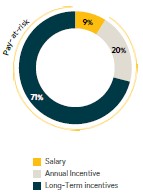 |
||||
| Target | Actual | Actual | Actual | ||||
| Salary | 1,100,000 | 1,076,923 | 1,000,000 | 1,000,000 | |||
| Annual incentives | 2,000,000 | 2,400,000 | 2,475,000 | 2,358,000 | |||
| Total Cash | 3,100,000 | 3,476,923 | 3,475,000 | 3,358,000 | |||
| Sun Shares | 7,352,566 | 6,800,057 | 5,362,500 | ||||
| Stock Options | 1,297,507 | 1,200,009 | 1,787,501 | ||||
| Long Term Incentives | 8,650,073 | 8,000,066 | 7,150,001 | ||||
| Total Direct Comp1 | 11,750,073 | 12,126,996 | 11,475,066 | 10,508,001 | |||
| 1 Target total direct comp reflects the salary, AIP and LTI targets, while actual total direct comp is based on the paid salary, AIP payout and LTI grant value, rounded to the nearest unit. | |||||||
CEO compensation outcomes are aligned with shareholder value over the period. The following table illustrates the alignment between CEO pay and shareholder value during the applicable fiscal years. The table compares the current value of total direct compensation awarded to Mr. Connor (former President & CEO until August 6, 2021) and Mr. Strain over the last five years to a comparable measure of the value received by shareholders over the same period. The actual compensation values include salary and cash incentive payments, the value at vesting of Sun Shares granted (or current value for units that are outstanding), the value of stock options exercised during the period and the value of in-the-money stock options that remain outstanding. Compensation outcomes are compared to the value to shareholders, which represents the cumulative value of a $100 investment in our shares made on the first trading day of the period indicated, assuming the reinvestment of dividends.
| Value of $100 | ||||||
| Total direct | Compensation | |||||
| Fiscal | compensation | realized and | Shareholder | |||
| year | CEO | awarded ($000)1 | realizable ($000) | Period | CEO2 | value3 |
| 2021 | D. Connor / | 10,115 | 10,591 | December 31, 2020 - | 105 | 187 |
| K. Strain | December 31, 2025 | |||||
| 2022 | K. Strain | 8,990 | 10,942 | December 31, 2021 - | 122 | 145 |
| December 31, 2025 | ||||||
| 2023 | K. Strain | 10,508 | 14,665 | December 31, 2022 - | 140 | 155 |
| December 31, 2025 | ||||||
| 2024 | K. Strain | 11,475 | 13,750 | December 31, 2023 - | 120 | 137 |
| December 31, 2025 | ||||||
| 2025 | K. Strain | 12,127 | 12,520 | December 31, 2024 - | 103 | 105 |
| December 31, 2025 | ||||||
| Average | 118 | 146 | ||||
1 Includes salary and variable compensation awarded at year-end in respect of performance during the year.
2 Represents the actual value to the CEO for each $100 awarded in total direct compensation during the fiscal years indicated.
3 Represents the cumulative value of a $100 investment in shares made on the first trading day of the period indicated, assuming reinvestment of dividends.
 |
Timothy Deacon EVP & Chief Financial Officer |
On April 8, 2024, Mr. Deacon was appointed our EVP & Chief Financial Officer and is responsible for overseeing a portfolio of global functions including Finance, Taxation, Capital Management, Investor Relations and Strategic Financial Initiatives. Mr. Deacon advances the achievement of our four pillar strategy through continued financial discipline and risk management prudence.
In recognition of his contribution in 2025, Mr. Deacon was allocated an AIP award of $901,000 (100% individual multiplier). He was granted a 2026 annual long-term incentive award of $2,200,000.
| Significant accomplishments in 2025 include: |
• In partnership with the leadership team, delivered underlying earnings per share growth of 12%, return on equity of 18.2%, tracking toward the Medium-Term Objective of 20%, and achieved an Underlying Dividend Payout Ratio of 47%, within the 40-50% target range.
• Sun Life generated $2.3B of organic capital in 2025 (2024 - $2.1B) and grew dividends to shareholders by 9% to $3.52/share (2024 - $3.24/share) increasing the total amount remitted to shareholders through dividends and share buy backs to $3.7B (2024 - $2.7B).
• Advanced enterprise-wide cost discipline through the implementation of an efficiency ratio, strengthened transparency and accountability mechanisms, and procurement best practices. Realized approximately $180M in enterprise-wide run-rate savings.
• Reinforced strong financial stewardship and governance by enhancing business case standards, value-realization frameworks, and measurement and monitoring protocols for key initiatives.
• Expanded investor engagement by 78% year-over-year, including a stop-loss education session in Q1 2025.
• Launched a multi-year Finance Evolution Program to modernize the finance function through investments in talent, technology including AI, and process optimization.
• Advanced Sun Life's sustainability disclosure governance model, including transitioning oversight of certain sustainability governance and controls infrastructure into the Finance organization.
• Further developed a high-performing Finance Leadership Team through succession planning and onboarding four senior leaders, including two internal promotions/rotations and two external appointments.
• Maintained strong Global Finance employee engagement, with teams demonstrating alignment to Sun Life's values and continued advocacy for Sun Life as a great place to work.
| Compensation summary | 2025 actual pay mix | |||||
| 2025 | 2024 | 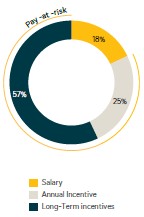 |
||||
| Target | Actual | Actual | ||||
| Salary | 650,000 | 638,462 | 438,461 | |||
| Annual incentives | 850,000 | 901,000 | 966,000 | |||
| Total Cash | 1,500,000 | 1,539,462 | 1,404,461 | |||
| Sun Shares | 1,700,059 | 1,530,066 | ||||
| Stock options | 300,009 | 270,008 | ||||
| Long Term Incentives | 2,000,068 | 1,800,074 | ||||
| DSUs | - | 1,700,050 | ||||
| Long Term Incentives (One-time, on-hire) |
- | - | 1,700,050 | |||
| Total Direct Comp1 | 3,500,068 | 3,539,530 | 4,904,585 | |||
| 1 Target total direct comp reflects the salary, AIP and LTI targets, while actual total direct comp is based on the paid salary, AIP payout and LTI grant value, rounded to the nearest unit. | ||||||
In 2024, Mr. Deacon received a one-time DSU grant of $1,700,050 to replace forfeited equity from his previous employer, which vested 50% in February 2025 and 50% in February 2026 and will be held until departure from the company.
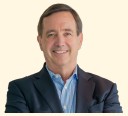 |
Stephen C. Peacher Executive Chair, SLC Management |
Mr. Peacher was named Executive Chair, SLC Management on May 16, 2024. Mr. Peacher is responsible for the strategy, development and performance of our invested asset portfolio, and SLC Management, our third-party institutional asset management business. Mr. Peacher advances our leadership in global asset management, one of our four strategic pillars which includes SLC Management and MFS Investment Management. From January 11, 2016 to May 15, 2024 Mr. Peacher was President, SLC Management.
In recognition of his contribution in 2025, Mr. Peacher was allocated an AIP award of US $2,053,350 (117% individual multiplier). He was granted an annual 2026 long-term incentive award of US $3,750,000.
| Significant accomplishments in 2025 include: |
• Raised $22.3B of new Client commitments for the SLC Management platform, resulting in $260B in AUM at year end 2025. SLC's gross deployments of $34.5B in 2025 were over 50% higher than 2024.
• Generated underlying net income for SLC of $242M exceeding the $235M target set in 2021.
• Delivered strong performance in our Client portfolios leading to strong Client retention.
• Generated exceptional investment results in Sun Life's general account to support product sales and net income.
• Advanced the Asset Management Pillar by supporting the definition and implementation of SLAM.
• Led significant preparation for the completion of the remaining acquisitions of the SLC Affiliates, preparing leadership, and implemented a SLC management equity plan.
• Identified the President of SLC Fixed Income announcing the role in July 2025.
• Maintained a strong culture at SLC, as evidenced by strong employee engagement scores, employee retention and development, named one of Pension & Investments Best Places to Work in Money Management for 2025, representing six consecutive years of receiving this recognition.1
• Drove continued improvement through delivery of key system projects and efficiencies achieved across the entire SLC Platform.
• Continued to be an active member of the Sun Life Executive Team, especially in areas related to asset management, M&A, Sun Life Asia, and the implementation of SLAM.
1 "Pensions & Investments, a global news source of money management"
| Compensation summary (USD) | 2025 actual pay mix | ||||||
| 2025 | 2024 | 2023 | 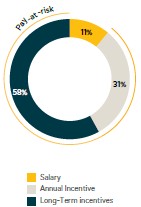 |
||||
| Target | Actual | Actual | Actual | ||||
| Salary | 750,000 | 750,000 | 750,000 | 738,461 | |||
| Annual incentives | 1,500,000 | 2,053,350 | 2,124,000 | 2,124,000 | |||
| Total Cash | 2,250,000 | 2,803,350 | 2,874,000 | 2,862,461 | |||
| Sun Shares | 1,335,186 | 1,121,178 | 744,594 | ||||
| Stock Options | 572,221 | 480,511 | 744,578 | ||||
| SLC Management | 1,907,401 | 1,601,682 | 1,489,151 | ||||
| Phantom Units | |||||||
| Long Term Incentives | 3,814,808 | 3,203,371 | 2,978,323 | ||||
| Total Direct Comp1 | 6,064,808 | 6,618,158 | 6,077,371 | 5,840,784 | |||
|
1 Target total direct comp reflects the salary, AIP and LTI targets, while actual total direct comp is based on the paid salary, AIP payout and LTI grant value, rounded to the nearest unit. |
|||||||
 |
Jessica Tan President, Sun Life Canada |
Ms. Tan joined Sun Life in September 2024 assuming responsibility for leading our largest business group by providing health, wealth and protection products and services to over 12 million Canadians. Ms. Tan advances our leadership in Canadian health, wealth and insurance, one of our four strategic pillars.
In recognition of her contribution in 2025, Ms. Tan was allocated an AIP award of $2,419,200 (120% individual multiplier). She was granted a 2026 annual long-term incentive award of $4,900,000.
| Significant accomplishments in 2025 include: |
• Delivered very strong business results with record underlying earnings of $1,594M (+10% year over year) and underlying ROE of 27.6% (up ~5 pp from prior year).
• Strengthened #1 insurance market leadership position1 by supporting more Canadians with their protection needs, including 10% growth in non-participating individual insurance sales compared to the prior year.
• Scaled wealth business increasing AUMA2 by 12% compared to the prior year.
• Expanded digital and product capabilities through Sun Life Essentials (+), a digital solution for small and medium size enterprises that helps Canadians build for retirement. Also enhanced our ability to serve more Clients with their health needs by further scaling our health products (virtual care, ePharmacy, chronic disease management programs).
• Drove continued momentum in group benefits with $408M growth in net sales compared to the prior year and maintained leadership position with $13.4B3 business in force, while supporting healthier lives through $13.5B4 in health claims and benefits payments.
• Redesigned My Sun Life mobile app for faster, easier benefits management, including a self-service feature through a chatbot.
• Leveraged AI tools to do more for our Clients including a 50% increase in straight through underwriting and enhancing Advisor productivity using a Gen AI-powered Notes Assistant.
• Launched Medical Second Opinion by Dialogue, a digital first service that allows Clients and their families access to expert reviews of diagnoses and treatment plans for physical and mental health conditions.
• Introduced Sun Life Canada's first ETF series, expanding lower-fee investment options for Canadians.
• Simplified wealth deposit processes with an industry first digital enhancement with Interac® verification, cutting setup time from days to minutes.
• Recognized with multiple Great Place to Work® awards, achieved Bronze PAIR certification in the Partnership Accreditation in Indigenous Relations (first Canadian insurer), and provided no-cost virtual healthcare to 10,000+ underserved Canadians through community partnerships.
• Named Life & Health Insurer of the Year at the Insurance Bureau of Canada Awards.
1 Life Insurance Marketing and Research Association ("LIMRA"). Market Share as of Q3'25, on a year-to-date basis.
2 Assets under management and administration ("AUMA") is a non-IFRS measure that consists of both AUM and assets under administration ("AUA"). AUA represents Client assets for which Sun Life provides administrative services. In Canada, AUA includes mutual fund dealers' assets in Individual Wealth and administrative service assets in Group Retirement Services. There is no standardized financial measure for AUMA or AUA under IFRS. For more details, see the Section M - Non-IFRS Financial Measures in our 2025 MD&A.
3 Excluding as the Administrator of the Government of Canada's Canadian Dental Care Plan (CDCP).
4 Including CDCP, which covers nearly 6 million Canadians.
| Compensation summary | 2025 actual pay mix | |||||
| 2025 | 2024 | 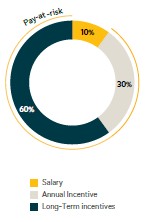 |
||||
| Target | Actual | Actual | ||||
| Salary | 850,000 | 850,000 | 311,073 | |||
| Annual incentives | 1,800,000 | 2,419,200 | 498,541 2 | |||
| Total Cash | 2,650,000 | 3,269,200 | 809,614 | |||
| Sun Shares | 4,165,034 | - | ||||
| Stock options | 735,010 | - | ||||
| Long Term Incentives | 4,900,044 | - | ||||
| Sun Shares | - | 3,450,084 | ||||
| DSUs | - | 8,900,068 | ||||
| Long Term Incentives (One-time, on-hire) |
- | 12,350,152 | ||||
| Total Direct Comp1 | 7,550,044 | 8,169,244 | 13,159,766 | |||
|
1 Target total direct comp reflects the salary, AIP and LTI targets, while actual total direct comp is based on the paid salary, prorated AIP payout and LTI grant value, rounded to the nearest unit. 2 Ms. Tan's AIP proration began when she became President, SL Canada; she was ineligible as Special Advisor. |
||||||
In 2024, Ms. Tan received grants on November 22, 2024 to replace the value forfeited at her former employer, as follows: a one-time grant of $3,450,084 in Sun Shares, vesting one-third each year starting in 2025 and a one-time DSU grant of $8,900,068, vesting on the fifth anniversary of her start date, to replace forfeited retirement allowance and other compensation entitlements.
 |
Manjit Singh President, Sun Life Asia |
On March 18, 2024, Mr. Singh was appointed President, Sun Life Asia and is responsible for one of Sun Life's fastest growing strategic pillars focused on life, health and wealth management businesses in eight Asian markets.
In recognition of his contribution in 2025, Mr. Singh was allocated an AIP award of HKD $9,594,000 (130% individual multiplier). He was granted a 2026 annual long-term incentive award of HKD$18,000,000.
| Significant accomplishments in 2025 include: |
• Achieved record earnings of $836M, up 19% year-over-year, well above medium target of 15% and delivered record underlying ROE of 15.1%, (up 2.4 pp from prior year), reflecting strong financial discipline and earnings growth.
• Increased Contract Service Margin (CSM) to $6.7 billion, up 12%, driven by strong organic growth
• Delivered record Client satisfaction, driven by strengthened digital self-servicing tools and capabilities, streamlined client onboarding process and enhanced contact center experience.
• Brand awareness and consideration were at all time highs, reflecting effective marketing campaigns, disciplined investments and strong focus on Client propositions.
• Successfully launched an expanded 15-year partnership with CIMB Niaga, the second largest private bank in Indonesia, driving Sun Life Indonesia's sales growth of 51%.
• Increased our ownership interest in Bowtie Life Insurance Company Limited, Hong Kong's first virtual insurer with a leading1 position in the direct sales channel.
• Achieved ~50% sales growth in Hong Kong, enabled by strong agency productivity and growth, a diversified broker strategy and a strong bancassurance partnership.
• Sun Life Philippines maintained #1 position in Total Premiums and was recognized as the top Million Dollar Round Table company in the country for 2025.
• Integrated our HNW businesses to strengthen our existing leadership position in the global HNW market and appointed new leadership. Expanded into the Middle East by launching our office in the Dubai International Financial Centre, tapping into the region's growing wealth management market.
• Launched Sun Life Investment Management Asia to enhance regional investment capabilities and accelerate the delivery of competitive products to market.
• Elevated support for Clients and Advisors through advanced digital tools including an AI-powered Robo- advisory for MPF Clients, unified onboarding for HNW Clients, and an AI-assisted workspace for Advisors in Hong Kong.
• Built an aligned, high-performing executive team and a future-ready leadership pipeline and strengthened talent base by strategically balancing external hires with internal promotions, building the skills and capabilities needed to deliver on our strategic priorities.
• Continued to strengthen the control environment through increased management awareness and engagement.
• Helped our Clients to achieve their sustainability goals with C$2B in product sales with investment strategies or benchmarks which explicitly embed ESG criteria.
1 According to Insurance Authority's Provisional Statistics for Long Term Business 2024, in the fourth quarter of 2024, Bowtie Life ranked first in number of new individual non-single premium policies sold through Direct channel in Hong Kong.
|
Compensation summary |
2025 actual pay mix | ||||||
| 2025 | 20242 | 2023 | 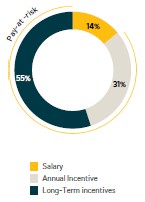 |
||||
| HKD | HKD | CAD | |||||
| Target | Actual | Actual | Actual | ||||
| Salary | 4,500,000 | 4,500,000 | 3,925,741 | 650,000 | |||
| Annual incentives | 6,000,000 | 9,594,000 | 7,658,336 | 1,257,600 | |||
| Total Cash | 10,500,000 | 14,094,000 | 11,584,077 | 1,907,600 | |||
| Sun Shares | 14,738,310 | 12,590,320 | 1,875,046 | ||||
| Stock options | 2,600,891 | 2,221,798 | 625,003 | ||||
| Long Term Incentives |
17,339,201 | 14,812,118 | 2,500,050 | ||||
| Total Direct Comp1 | 27,839,201 | 31,433,201 | 26,396,195 | 4,407,650 | |||
|
1 Target total direct comp reflects the salary, AIP and LTI targets, while actual total direct comp is based on the paid salary, AIP payout and LTI grant value, rounded to the nearest unit. 2 Mr. Singh was appointed as President of Sun Life Asia on March 18, 2024, while continuing to serve as EVP & Chief Financial Officer until April 8, 2024. In February 2024, C$2,600,045 long term incentives were granted. For presentation purposes, the table above displays the amount in Hong Kong dollars (HKD) using the 2024 average annual exchange rate of C$1 = HK$0.176. |
|||||||
Summary compensation table
The table below shows the total compensation paid to our NEOs for the fiscal years ended December 31, 2025, 2024 and 2023. The 2025 total compensation for NEOs was driven by previously disclosed target changes made in February 2025, incentive plan results across our businesses and changes in currency exchange rates.
Mr. Peacher receives his compensation in U.S. dollars. In 2024, Ms. Tan received two months' salary in SGD, and Mr. Singh's compensation transitioned from CAD to HKD due to his role change, and he now receives his compensation in HKD.
| Non-equity | ||||||||
| annual | ||||||||
| Name and | Share | Option | incentive plan | Pension | All other | Total | ||
| principal | Paid salary | awards | awards | compensation | value | compensation | compensation | |
| position | Year | ($) | ($) | ($) | ($) | ($) | ($) | ($) |
| Kevin D. Strain President & Chief Executive Officer |
2025 | 1,076,923 | 7,352,566 | 1,297,507 | 2,400,000 | 639,270 | - | 12,766,266 |
| 2024 | 1,000,000 | 6,800,057 | 1,200,009 | 2,475,000 | 732,830 | 1,167 | 12,209,063 | |
| 2023 | 1,000,000 | 5,362,500 | 1,787,501 | 2,358,000 | 141,520 | - | 10,649,521 | |
| Timothy Deacon EVP & Chief Financial Officer |
2025 | 638,462 | 1,700,059 | 300,009 | 901,000 | 146,423 | - | 3,685,953 |
| 2024 | 438,461 | 3,230,116 | 270,008 | 966,000 | 30,840 | - | 4,935,425 | |
| Stephen C. Peacher Executive Chair, SLC Management |
2025 | 1,048,147 | 4,531,612 | 799,696 | 2,869,618 | 444,186 | - | 9,693,259 |
| 2024 | 1,027,226 | 3,729,325 | 658,125 | 2,909,105 | 438,626 | - | 8,762,407 | |
| 2023 | 996,480 | 3,014,215 | 1,004,733 | 2,866,126 | 430,809 | - | 8,312,363 | |
| Jessica Tan President, Sun Life Canada |
2025 | 850,000 | 4,165,034 | 735,010 | 2,419,200 | 132,297 | 129,259 | 8,430,800 |
| 2024 | 311,073 | 12,350,152 | - | 498,541 | 11,688 | 129,057 | 13,300,511 | |
| Manjit Singh President, Sun Life Asia |
2025 | 806,805 | 2,642,432 | 466,314 | 1,720,108 | 59,951 | 904,839 | 6,600,449 |
| 2024 | 689,105 | 2,210,042 | 390,003 | 1,344,306 | 135,558 | 596,496 | 5,365,510 | |
| 2023 | 650,000 | 1,875,046 | 625,003 | 1,257,600 | 147,250 | 233 | 4,555,133 |
Compensation is converted to Canadian dollars using the following average annual exchange rates:
Fiscal Year |
U.S. | HKD | SGD |
| 2025 | C$1.398 | C$0.179 | |
| 2024 | C$1.370 | C$0.176 | C$1.025 |
| 2023 | C$1.349 |
Paid Salary
Includes salary increases in March as follows:
• Messrs. Strain, Deacon and Singh in 2025.
• Mr. Singh in 2024.
• Mr. Peacher in 2023.
Share Awards
| SLC Management | ||||
| Fiscal Year | Grant Date | Sun Share Price | DSU Price | Phantom Unit Price |
| 2025 | 25-Feb-25 | $78.59 | $10.00 | |
| 20241 | 22-Nov-24 | $84.99 | $84.99 | |
| 20242 | 22-May-24 | $69.78 | $69.78 | |
| 2024 | 20-Feb-24 | $71.49 | $10.00 | |
| 2023 | 21-Feb-23 | $68.36 | $10.00 |
1 Relates to off-cycle awards granted on November 22, 2024 to Ms. Tan.
2 Relates to annual and off-cycle awards granted on May 22, 2024 to Mr. Deacon.
• The Sun Share and DSU Price is based on the average closing price of our common shares on the TSX over the five trading days before the grant date. The SLC Management Phantom Unit Price is set equal to $10.00 for each new, annual grant.
• Ms. Tan received grants on November 22, 2024 to replace the value forfeited at her former employer, as follows: a one-time grant of $3,450,084 in Sun Shares and a one-time award of $8,900,068 in DSUs to replace forfeited retirement allowance and other compensation entitlements.
• Mr. Deacon received a one-time grant of $1,700,050 in DSUs on May 22, 2024 to replace forfeited equity value from his previous employer. He also received his first annual LTI grant.
Option Awards
• The grant date fair value of stock options awarded was calculated using the following data:
| Fiscal Year | Grant Date | Exercise Price | Accounting Fair Value |
| 2025 | 25-Feb-25 | $79.16 | $12.43 |
| 2024 | 22-May-24 | $69.47 | $11.81 |
| 2024 | 20-Feb-24 | $73.43 | $12.26 |
| 2023 | 21-Feb-23 | $67.68 | $11.54 |
• We use a five-year average calculated Black-Scholes ratio to determine awards.
• The five-year average represents a long-term value considering long-term estimates of factors used in the Black-Scholes valuation model.
• The following assumptions informed the Black-Scholes compensation value of the annual option awards:
| Expected life | Expected | Dividend | Risk-free | ||
| Fiscal Year | Term | (years) | Volatility | Yield | Rate |
| 2025 | 10 years | 6.8 | 22.97% | 4% | 2.85% |
| 20241 | 10 years | 6.8 | 22.72% | 4% | 3.60% |
| 2024 | 10 years | 6.8 | 22.67% | 4% | 3.50% |
| 2023 | 10 years | 6.8 | 23.33% | 4% | 3.42% |
1 Relates to the annual option award granted on May 22, 2024 to Mr. Deacon.
Non-equity annual incentive plan compensation
• Values include the amounts the NEOs chose to defer.
Pension value
• Represents compensatory costs as described in the defined benefit and defined contribution tables on pages 112 to 113.
All other compensation
• Includes flexible benefit credits taken in cash by Mr. Strain for 2024 and Mr. Singh for 2023 and 2024.
• The 2024 and 2025 amounts shown for Ms. Tan and Mr. Singh include global mobility one-time relocation related costs.
• Includes the total value of perquisites (including property and other personal benefits) not generally available to all employees and that in aggregate are $50,000 or more or worth 10% or more of an NEO's total salary for the financial year.
Incentive plan awards
Outstanding share and option awards
The table below is a summary of the outstanding option awards and share awards for the NEOs as at December 31, 2025.
Value of unexercised in-the-money options is the difference between the exercise price of the options and $85.68 (Sun Life Financial's closing share price on the TSX on December 31, 2025), multiplied by the number of options.
Market value of share awards that have not vested or not been paid is $85.68 multiplied by the number of share units. For presentation purposes, the Executive Sun Shares have been valued using the target performance factor (100%). Share awards that have vested but have not been paid represent an elected deferral of annual incentive and/or awards for recruiting purposes or upon mid-year promotion.
| Option awards | Share awards | ||||||||
| Named | Year | Number of | Option | Option | Value of | Plan | Number of | Market | Market |
| executive | securities | exercise | expiration | unexercised | share units | value of | value of | ||
| officer | underlying | price | date | in-the | that have | share | vested | ||
| unexercised | ($) | money | not vested | awards | share | ||||
| options | options | (#) | that have | awards | |||||
| (#) | ($) | not | that have | ||||||
| vested | not been | ||||||||
| ($) | paid | ||||||||
| ($) | |||||||||
| Kevin D. | 2022 | 107,679 | 68.12 | Feb 22, | 1,890,843 | ||||
| Strain | 2032 | ||||||||
| 2023 | 203,162 | 67.68 | Feb 21, | 3,656,916 | Sun | 89,282 | 7,649,647 | ||
| 2033 | Shares | ||||||||
| 2024 | 115,086 | 73.43 | Feb 20, | 1,409,804 | Sun | 103,466 | 8,864,949 | ||
| 2034 | Shares | ||||||||
| 2025 | 105,748 | 79.16 | Feb 25, | 689,477 | Sun | 97,503 | 8,354,047 | ||
| 2035 | Shares | ||||||||
| DSU | - | - | 1,016,620 | ||||||
| Total | 531,675 | 7,647,040 | 290,251 | 24,868,643 | 1,016,620 | ||||
| Timothy | 2024 | 27,371 | 69.47 | May 22, | 443,684 | Sun | 23,602 | 2,022,211 | |
| Deacon | 2034 | Shares | |||||||
| 2025 | 24,451 | 79.16 | Feb 25, | 159,420 | Sun | 22,545 | 1,931,621 | ||
| 2035 | Shares | ||||||||
| DSUs | 13,111 | 1,123,389 | 1,123,481 | ||||||
| Total | 51,822 | 603,104 | 59,258 | 5,077,221 | 1,123,481 | ||||
| Option awards | Share awards | ||||||||
| Named | Year | Number of | Option | Option | Value of | Plan | Number of | Market | Market |
| executive | securities | exercise | expiration | unexercised | share units | value of | value of | ||
| officer | underlying | price | date | in-the | that have | share | vested | ||
| unexercised | ($) | money | not vested | awards | share | ||||
| options | options | (#) | that have | awards | |||||
| (#) | ($) | not | that have | ||||||
| vested | not been | ||||||||
| ($) | paid | ||||||||
| ($) | |||||||||
| Stephen C. Peacher | 2022 | 53,113 | 68.12 | Feb 22, | 932,664 | Sun | 45,292 | 3,880,633 | |
| 2032 | Shares | ||||||||
| SLC | 256,048 | 4,808,581 | |||||||
| Phantom | |||||||||
| Units | |||||||||
| 2023 | 114,195 | 67.68 | Feb 21, | 2,055,510 | Sun | 16,728 | 1,433,291 | ||
| 2033 | Shares | ||||||||
| SLC | 200,946 | 2,895,632 | |||||||
| Phantom | |||||||||
| Units | |||||||||
| 2024 | 63,117 | 73.43 | Feb 20, | 773,183 | Sun | 23,365 | 2,001,904 | ||
| 2034 | Shares | ||||||||
| SLC | 219,372 | 2,838,674 | |||||||
| Phantom | |||||||||
| Units | |||||||||
| 2025 | 65,176 | 79.16 | Feb 25, | 424,948 | Sun | 24,745 | 2,120,122 | ||
| 2035 | Shares | ||||||||
| SLC | 266,565 | 3,204,111 | |||||||
| Phantom | |||||||||
| Units | |||||||||
| DSUs | - | - | 3,195,691 | ||||||
| Total | 295,601 | 4,186,305 | 1,053,061 | 23,182,948 | 3,195,691 | ||||
| Jessica | 2024 | - | - | - | - | Sun | 28,483 | 2,440,408 | |
| Tan | Shares | ||||||||
| 2025 | 59,904 | 79.16 | Feb 25, | 390,574 | Sun | 55,233 | 4,732,347 | ||
| 2035 | Shares | ||||||||
| DSUs | 110,213 | 9,443,045 | - | ||||||
| Total | 59,904 | 390,574 | 193,929 | 16,615,800 | - | ||||
| Manjit | 2021 | 188,312 | 65.84 | May 17, | 3,736,110 | ||||
| Singh | 2031 | ||||||||
| 2022 | 65,643 | 68.12 | Feb 22, | 1,152,691 | |||||
| 2032 | |||||||||
| 2023 | 71,036 | 67.68 | Feb 21, | 1,278,648 | Sun | 31,218 | 2,674,768 | ||
| 2033 | Shares | ||||||||
| 2024 | 37,403 | 73.43 | Feb 20, | 458,187 | Sun | 33,627 | 2,881,139 | ||
| 2034 | Shares | ||||||||
| 2025 | 38,005 | 79.16 | Feb 25, | 247,793 | Sun | 35,041 | 3,002,353 | ||
| 2035 | Shares | ||||||||
| DSUs | - | - | 5,371,583 | ||||||
| Total | 400,399 | 6,873,429 | 99,886 | 8,558,260 | 5,371,583 | ||||
• Share units that have not vested include a one-time grant for Mr. Peacher March 14, 2022 of US$2,000,000 in Sun Shares and US$2,000,000 in SLC Management Phantom Units to recognize his critical role in leading the multi-year transformation of SLC Management and to create a powerful incentive to grow the business.
We have not amended, cancelled, replaced or modified any option-based awards that were previously granted.
Incentive plan awards - value vested or earned during the year
The table below shows:
• Option-based awards - the value the NEOs would have realized if they had exercised the options that vested in 2025 on their vesting dates.
• Share-based awards - the value of share awards that vested in 2025.
• Non-equity incentive plan compensation - the annual incentive award earned in 2025 and paid in March 2026.
| Option-based awards - | Share-based awards - | Non-equity incentive plan | |
| value vested during | value vested during the | compensation - value | |
| the year | year | earned during the year | |
| Named executive officer | ($) | ($) | ($) |
| Kevin D. Strain | 880,991 | 4,706,665 | 2,400,000 |
| Timothy Deacon | - | 987,7921 | 901,000 |
| Stephen C. Peacher | 662,449 | 3,661,428 | 2,869,618 |
| Jessica Tan | - | 1,072,794 | 2,419,200 |
| Manjit Singh | 1,197,960 | 1,646,253 | 1,720,108 |
1 Represents 50% of the DSUs granted to Mr. Deacon in 2024 to replace forfeited equity from his previous employer, which vested in February 2025 and will be held until departure from the company. For further information, please see page 88.
Value of options vested during the year
The table below shows the value of options that vested for each NEO in 2025. See Executive stock option plan on page 85 for more information about the option plan.
| Option | Share price on | Option-based awards | ||||
| Named executive | Grant | Options | exercise | vesting date | - value vested during | |
| officer | year | Vesting date | vesting (#) | price ($) | ($) | the year ($) |
| Kevin D. Strain | 2021 | 23-Feb-25 | 28,647 | 62.59 | 77.72 | 433,429 |
| 2022 | 22-Feb-25 | 46,621 | 68.12 | 77.72 | 447,562 | |
| Total | 880,991 | |||||
| Timothy Deacon | - | - | - | - | - | - |
| Total | - | |||||
| Stephen C. Peacher | 2021 | 23-Feb-25 | 26,934 | 62.59 | 77.72 | 407,511 |
| 2022 | 22-Feb-25 | 26,556 | 68.12 | 77.72 | 254,938 | |
| Total | 662,449 | |||||
| Jessica Tan | - | - | - | - | - | - |
| Total | - | |||||
| Manjit Singh | 2021 | 17-May-25 | 47,078 | 65.84 | 87.94 | 1,040,424 |
| 2022 | 22-Feb-25 | 16,410 | 68.12 | 77.72 | 157,536 | |
| Total | 1,197,960 | |||||
| Total | 2,741,400 |
• Share price on vesting date is the closing price of our common shares on the TSX on the vesting date or the previous trading day if the vesting date falls on a weekend or holiday.
• Value vested during the year is the number of options vesting multiplied by the difference between the option exercise price and share price on the vesting date.
Aggregate option exercises for the year ended December 31, 2025
The following table shows, for each NEO, the number of common shares acquired through option exercises during the year ended December 31, 2025 and the aggregate value realized upon exercise. Value realized upon exercise is the difference between the closing price of our common shares on the TSX on the exercise date and the exercise price of the option.
| Named executive officer | Securities acquired at exercise (#) | Aggregate value realized ($) |
| Kevin D. Strain | 107,452 | 2,380,708 |
| Timothy Deacon | - | - |
| Stephen C. Peacher | 80,048 | 1,715,985 |
| Jessica Tan | - | - |
| Manjit Singh | - | - |
Share awards
The table below shows the total Executive Sun Shares and SLC Management Phantom Units vested and paid to each NEO in 2025. The value of Executive Sun Shares received on vesting is the number of accrued Sun Shares multiplied by the performance factor, multiplied by the vesting price. The value of SLC Management Phantom Units received on vesting is the number of accrued SLC Management Phantom Units multiplied by the vesting price.
| Named | SLC Management | |||||
| executive | Sun Shares | Phantom Units | Performance | Vesting price | Value received | |
| officer | Grant date | accrued (#) | accrued (#) | factor | ($) | on vesting ($) |
| Kevin D. Strain | Feb 22, 2022 | 78,881.43 | - | 76% | 78.51 | 4,706,665 |
| Timothy | - | - | - | - | - | - |
| Deacon | ||||||
| Stephen C. Peacher |
Feb 22, 2022 | 14,882.99 | - | 76% | 78.51 | 888,032 |
| Feb 22, 2022 | - | 178,010.00 | N/A1 | 15.58 | 2,773,396 | |
| Jessica Tan | - | - | - | - | - | - |
| Manjit Singh | Feb 22, 2022 | 27,590.40 | - | 76% | 78.51 | 1,646,253 |
1 There is no performance factor in SLC Management Phantom Units. See below for performance measures that impact the vesting price of SLC Management Phantom Units.
• Vesting price of Sun Shares is the average price of our common shares on the TSX over the five trading days before the vesting date.
• The performance factor for 2022 Executive Sun Share grants, paid in 2025.
• For the 2022 Executive Sun Share grant paid in 2025, the design incorporated two performance measures capturing external absolute (TSR) and relative performance (rTSR) over the performance period. Performance was benchmarked against a custom weighted index of 12 public Canadian banks (25% weighting) and North American insurance companies (75% weighting).1 The rTSR performance range was at +/- 10 pp relative to the peer group custom weighted index and the payout range was 0% - 200%.
1 The 2022 Executive Sun Share grant peer group excludes T. Rowe Price and Equitable Holdings.
The table below shows how we calculated the performance factor for the 2022 Executive Sun Share awards (for the performance period from 2022 to 2024, paid in early 2025).
| Relative Peer TSR Performance | |||||||||
| Actual | |||||||||
| Performance | Below | Target | SLF | TSR | |||||
| cycle | Peer groups | Weight | threshold | Threshold | (peer avg.) | Maximum | TSR | multiplier | |
| 2022 - 2024 | North American Insurance | 75% | TSX | < 3.9% | 3.9% | 13.9% | 23.9% | 10.6% | 75% |
| NYSE | < 2.5% | 2.5% | 12.5% | 22.5% | 6.8% | 57% | |||
| Canadian | 25% | TSX | < -3.6% | -3.6% | 6.4% | 16.4% | 10.6% | 142% | |
| Banks | |||||||||
| 2024 Multiplier - payout factor (50% weight) | 0% | 25% | 100% | 200% | 85% | ||||
| 2021 - 2023 | North American Insurance | 75% | TSX | < 5.1% | 5.1% | 15.1% | 25.1% | 10.3% | 64% |
| NYSE | < 4.5% | 4.5% | 14.5% | 24.5% | 8.7% | 56% | |||
| Canadian | 25% | TSX | < -0.4% | -0.4% | 9.6% | 19.6% | 10.3% | 107% | |
| Banks | |||||||||
| 2023 Multiplier - payout factor (25% weight) | 0% | 25% | 100% | 200% | 72% | ||||
| 2020 - 2022 | North American Insurance | 75% | TSX | < -0.6% | -0.6% | 9.4% | 19.4% | 4.4% | 62% |
| NYSE | < -0.9% | -0.9% | 9.1% | 19.1% | 3.4% | 58% | |||
| Canadian | 25% | TSX | < -1.1% | -1.1% | 8.9% | 18.9% | 4.4% | 67% | |
| Banks | |||||||||
| 2022 Multiplier - payout factor (25% weight) | 0% | 25% | 100% | 200% | 62% | ||||
| Overall weighted average performance factor | 76% | ||||||||
The final value of Mr. Peacher's 2022 SLC Management Phantom Unit grant is based on weighted average growth of performance measures as follows:
| Performance Measures | Weight |
| SLC Management's third-party AUM | 25% |
| SLC Management's third-party fee revenue | 25% |
| SLC Management's EBITDA | 50% |
The initial unit value was set at $10.00. The unit price was calculated quarterly based on the change in rolling 12-month actuals. The final unit value is $15.58.
Non-equity incentive plan compensation
See Annual incentive plan starting on page 79 for more information.
| Named executive officer | Target award ($) | Business results | Individual multiplier | Final award ($) |
| Kevin D. Strain | $2,000,000 | 106% | 114%1 | $2,400,000 |
| Timothy Deacon | $850,000 | 106% | 100% | $901,000 |
| Stephen C. Peacher | $2,096,295 | 117% | 117% | $2,869,618 |
| Jessica Tan | $1,800,000 | 112% | 120% | $2,419,200 |
| Manjit Singh | $1,075,740 | 123% | 130% | $1,720,108 |
1 AIP award rounded down to $2,400,000.
• Target Award pro-rated for active employment is used to calculate AIP (subject to any sign-on provisions for the initial year of employment).
• The business results for the CEO and CFO are based 100% on Total Company performance. For the other NEOs (excluding the Executive Chair, SLC Management), the business results reflect 25% weighting on Total Company Reported EPS and 75% on relevant business group performance. Business group performance is measured using Underlying Earnings, Growth and Client Measures. For the Executive Chair, SLC Management, AIP is based on SLC Management business group results.
• The AIP Total Company performance factor is 106%, including a negative adjustment applied to the Asia Growth result to offset headwind assumptions captured in the business plan that only partially materialized. The adjustment resulted in a 6 pp decrease to the Asia overall score and a 2 pp decrease to the Total Company result. This overall score is up slightly (1 pp) from 2024 factor of 105%, reflecting Reported EPS slightly below target, Underlying EPS performance just above target, Growth above target with strong performance from Canada and Asia and Client Measures just above target with mixed results.
• AIP business group performance factors reflect a range of outcomes, with overall 2025 scores for NEO business group Presidents ranging from below target to above target reflecting slightly below target Total Company Reported EPS and business group financial results ranging from below target to well above target and Client Measures ranging from slightly below target to above target.
The table below shows how we calculated the performance payout factor for Total Company business results against the business plan/AIP targets. Underlying EPS removes from reported EPS the impacts of items that create volatility in our results under IFRS and as defined in Section M - Non-IFRS Financial Measures in our 2025 MD&A filed with Canadian securities regulators. Refer to the Other information section on pages 122 and 123.
| What we achieved | |||||||
| in 2025 | |||||||
| Below | |||||||
| Primary measures | Weighting | threshold | Threshold | Target | Maximum | Result | |
| Reported Earnings per | 25% | < $4.58 | $4.58 | $6.54 | $7.84 | $6.15 | Slightly below |
| share | Target | ||||||
| Payout factor | 0% | 50% | 100% | 150% | 90% | ||
| + | |||||||
| Underlying Earnings per | 25% | < $5.13 | $5.13 | $7.33 | $8.80 | $7.45 | Slightly |
| share | above Target | ||||||
| Payout factor | 0% | 25% | 100% | 200% | 108% | ||
| + | |||||||
| Growth | 25% | Above Target | |||||
| (Total Company)1 | |||||||
| Canada (VNB) | C | < $547 | $547 | $781 | $937 | $850 | 144% |
| U.S. (Client Revenue) | U.S. | < $7794 | $7,794 | $9,169 | $10,086 | $8,503 | 64% |
| Asia (VNB) | C | < $632 | $632 | $903 | $1,084 | $1,084 | 200% |
| Payout factor | 0% | 25% | 100% | 200% | 135% | ||
| + | |||||||
| Client Measures | 25% | Assessment of Client Satisfaction and performance on key Client Impact Outcomes | Near Target | ||||
| Payout factor | 0% | 50% | 100% | 150% | 102% | ||
| Overall calculated payout factor | 109%2 | ||||||
| + | |||||||
| Business performance scorecard | A mechanism to conduct a comprehensive look back on performance and alignment with shareholder experience (up to +/- 20%) | A negative adjustment to Asia VNB to offset headwinds assumptions in the business plan (target) that did not fully materialize. | (2%)2 | |||
| + | ||||||
| Risk, Compliance and Control | Results reviewed for any risk, compliance and control considerations (neutral to negative and can lower results to zero) | No adjustment | 0% | |||
| = | ||||||
| Final performance payout factor | 0% | 25% | 100% | 175% | 106%2 | |
1 Total Company Growth score is a weighted average of the performance under VNB in Canada and Asia, and U.S. "Client Revenue" performance versus an annual target. Weighting is based on each business group's contribution to Underlying Earnings in the annual business plan. For 2025, the resulting growth weightings are 48% for Canada, 28% for U.S. and 24% for Asia.
2 Numbers do not add up due to rounding. Unrounded overall calculated payout factor is 108.7%, with a negative scorecard adjustment of 2.4 pp gives a final performance payout factor of 106.3% which is rounded to 106%.
In addition to these objectives and values outlined in the previous table, highlights of our performance in 2025 are provided on page 62.
You can find more information about our business segment results in our 2025 MD&A
Pension benefits
Defined benefit plans
The table below shows the defined benefit pension plan obligations for each NEO as at December 31, 2025.
We used the same actuarial methods and assumptions in 2025 that we used to calculate the pension liabilities and annual expenses in our 2025 consolidated financial statements. These assumptions reflect our best estimate of future events, so the values shown in the table below may not be directly comparable to pension liabilities estimates disclosed by other companies.
| Annual lifetime pension | |||||||
| Number | Accrued | Non - | Accrued | ||||
| of years | obligation | Compensatory | compensatory | obligation at | |||
| Named executive | credited | at start of | change | change | year end | ||
| officer | service | At year end | At age 65 | year ($) | ($) | ($) | ($) |
| Kevin D. Strain | 28.1 | 918,000 | 1,165,000 | 11,261,000 | 628,000 | 94,000 | 11,983,000 |
| Timothy Deacon | - | - | - | - | - | - | - |
| Stephen C. | - | - | - | - | - | - | - |
| Peacher | |||||||
| Jessica Tan | - | - | - | - | - | - | - |
| Manjit Singh | - | - | - | - | - | - | - |
• Credited service is the actual years of service with the company as of December 31, 2025 used for purposes of the Canadian defined benefit plan.
• Figures for annual lifetime pension at age 65 are based on the NEO's pensionable earnings up to December 31, 2025.
• Accrued obligation is the actuarial value of projected defined benefit obligations for service to December 31, 2024 and December 31, 2025. The values have been determined using the same actuarial assumptions and methods as those used to determine the year end pension plan obligations for our pension plans as disclosed in the 2024 and 2025 consolidated financial statements. The accrued obligation assumes a Named Executive Officer will achieve target bonus. The difference between the accrued obligation at the end of 2024 and 2025 is attributable to the compensatory cost detailed in the chart, interest on the obligations, the impact of changes to the accounting assumptions, and other actuarial gains and losses.
• Compensatory change is the defined benefit service cost for 2025 (the value of the projected pension earned during the year) and the impact of any differences between actual increases in compensation in 2025 and the actuarial assumptions used for the year.
• Differences between actual future compensation and increases assumed for purposes of valuation (as well as other plan experience differing from assumptions) will be reflected in future valuations.
• Non-compensatory change represents the change in pension obligation based on non-compensatory factors like interest on the obligations, impact of changes to the accounting assumptions, and other actuarial gains and losses. The non-compensatory change for Mr. Strain in 2025 is primarily due to interest on the accrued benefit obligation at the start of the year offset by the decrease in obligation due to an increase in the discount rate since the beginning of the year.
Defined contribution plans
The table below shows the defined contribution pension plan values for each NEO as at December 31, 2025.
| Named executive officer | Accumulated value at start of year ($) |
Compensatory ($) | Accumulated value at end of year1 ($) |
| Kevin D. Strain | 924,974 | 11,270 | 1,146,481 |
| Timothy Deacon | 48,706 | 146,423 | 224,819 |
| Stephen C. Peacher | 11,836,092 | 444,186 | 13,664,184 |
| Jessica Tan | 22,342 | 132,297 | 181,248 |
| Manjit Singh | 585,292 | 59,951 | 720,018 |
1 Accumulated values are subject to fluctuation due to foreign exchange rates and market impacts throughout the year.
• U.S. plan values have been converted to Canadian dollars using an exchange rate of 1.438 as of January 1, 2025, 1.372 as of December 31, 2025, and the 2025 average rate of 1.398 for amounts other than beginning and ending balances.
• Hong Kong plan values have been converted to Canadian dollars using an exchange rate of 0.176 as of December 31, 2025, and the 2025 average rate of 0.179 for amounts other than beginning and ending balances.
• Compensatory amounts shown for Mr. Strain and Mr. Deacon represent our contributions to the Canadian Sun Life staff defined contribution plan and the supplemental, non-registered defined contribution plan. The amount shown for Mr. Peacher reflects our contributions to the U.S. 401(k) plan, RIA and non-qualified (Top Hat) plan. The amount shown for Ms. Tan represents our contributions to the Canadian Sun Life staff defined contribution plan and the supplemental, non-registered defined contribution plan. The amount for Mr. Singh represents our matching contributions to the Hong Kong defined contribution plans.
• Accumulated values include net investment earnings and employee contributions.
Change of control benefits and termination agreements
Change of control
We have double trigger change of control agreements with our NEOs so we can retain our key leaders if we are involved in a transaction affecting the control of Sun Life. This is key to balancing the goals of the business and the interests of shareholders during a transaction.
In the case of a double trigger, termination without cause within three years of the change of control, benefits are paid as follows:
• 24 months of annual pay and incentive compensation from the date of termination.
• mid and long-term incentive awards vest and are paid according to the terms of the respective plans.
• most benefits and perquisites continue during the severance period. The early retirement reduction factors in the pension plan may be enhanced, depending on the provisions of the pension plan in which the executive participates.
More specifically, when there is a change of control:
• for Executive Sun Shares:
• For non-U.S. NEOs, Sun Shares vest and are paid on an accelerated basis when an executive is terminated without cause or leaves the organization for good reason (double trigger) prior to the normal payment date (which is a maximum of three years from the grant date) and are otherwise paid on the normal payment date under the terms of the plan.
• For the U.S. NEO, Sun Shares vest on an accelerated basis when an executive is terminated without cause or leaves the organization for good reason (double trigger). If such termination occurs seven months or less prior to the normal payment date, Sun Shares are paid on the normal payment date under the terms of the plan. If such termination occurs more than seven months prior to the normal payment date, Sun Shares are paid in the seventh month following the month that the termination occurred in, subject to certain exceptions related to tax amounts related to the Federal Insurance Contribution Act.
• any unvested DSUs vest, and vested DSUs are paid either when the executive leaves the organization or on the normal payment date, whichever is earlier, and
• the Board can choose from a range of alternatives to address outstanding options, including accelerated vesting.
We define change of control as:
• a consolidation or merger of SLF Inc. or Suwn Life Assurance with a non-affiliate, when our outstanding voting shares represent less than 60% of the outstanding voting shares of the new entity immediately after the transaction is complete,
• the sale of all or substantially all of the assets of SLF Inc. or Sun Life Assurance to a non-affiliate, or
• the acquisition by a non-affiliate of more than 20% of the voting shares of SLF Inc. or Sun Life Assurance. We define good reason as follows:
• any material diminution in the nature or scope of a NEO's responsibilities, duties or authority,
• a material decrease in a NEO's base or total compensation,
• material breach of a NEO's employment agreement by Sun Life, or
• the occurrence of any other event or circumstance that under applicable law constitutes constructive dismissal of a NEO.
Employee termination agreements
The table below summarizes our contractual agreements with the NEOs who are actively employed as of December 31, 2025:
| Nature of termination | Who it applies to | Type of arrangement |
| Termination (without cause) | Timothy Deacon | Entitled to receive 24 months' compensation in lieu of notice consistent with our practice pertaining to base salary and annual cash incentive at target. |
| Termination (without cause) | Manjit Singh | Entitled to receive 24 months' compensation in lieu of notice consistent with our practice pertaining to base salary and annual cash incentive at the time. |
| Termination (without cause) | Stephen C. Peacher | Governed by the terms of severance arrangements that apply to all of our U.S. employees above the Vice-President level. Entitled to four weeks of compensation for each year of service with a minimum severance amount of 12 months of base salary and a maximum of 18 months. |
Benefits on termination and change of control
The table below summarizes how we treat the components of our executive compensation program under different termination scenarios, unless otherwise stated in employment agreements. For our NEOs including our CEO, termination for cause results in the forfeiture of outstanding unvested share units and options and can also result in a clawback of any or all of the incentive compensation and stock options (granted, earned, vested or paid) received or realized in the previous three completed fiscal years for misconduct (or financial restatement) where appropriate.
| Incremental entitlements on other termination scenarios | ||||
| Double Trigger - | ||||
| Change of control | ||||
| Entitlement on | Termination | and termination | ||
| Compensation element | resignation | (without cause) | Retirement | without cause |
| Salary |
• salary ends |
• salary ends |
• salary ends |
• 24 months of salary |
| Annual incentive award |
• award forfeited |
• award forfeited |
• receive pro-rated |
• receive prorated award calculated from January 1 to the date of termination (assumes target performance) • 24 months of bonus calculated as the average bonus paid for the previous three years, or the target bonus for the current year, whichever is higher |
| Incremental entitlements on other termination scenarios | |||||
| Double Trigger - | |||||
| Change of control | |||||
| Entitlement on | Termination | and termination | |||
| Compensation element | resignation | (without cause) | Retirement | without cause | |
|
Mid-term incentives |
Executive Sun Shares |
• unvested awards forfeited |
• receive pro-rated portion of Executive Sun Shares for active employment during performance period • paid immediately (except for U.S. NEOs, see page 114) • valued using performance factor that includes any variables known at the time of termination |
• fully vest and paid at normal payment date • valued using actual performance factor |
• unvested awards vest • paid immediately (except for U.S. NEOs, see page 114) • valued using performance factor that includes any variables known at the time of termination |
|
SLC anagement Phantom Units |
• unvested awards forfeited |
• receive pro-rated portion of phantom units to reflect service from the grant date • unit value determined as of the termination date |
• fully vest and paid at normal vesting date |
• unvested units vest • unit value determined as of the termination date |
|
|
Long-term incentives |
Stock options |
• 60 days to exercise vested options • unvested awards forfeited |
• 60 days to exercise vested options • unvested awards forfeited |
• up to 36 months to exercise vested options and options that become vested during the period; up to 60 months for the 2019 grant onward |
• accelerated vesting of all options and up to 36 months to exercise vested options
|
|
DSUs |
• vested awards are paid with timing at the executive’s election • unvested awards forfeited |
• vested awards are paid with timing at the executive’s election • unvested awards forfeited |
• vested awards are paid with timing at the executive’s election • unvested awards are forfeited |
• vested awards are paid with timing at the executive’s election • unvested awards vest |
|
|
Estimated pension |
• estimated lump-sum value of accrued pension |
• estimated lump-sum value of accrued pension |
• estimated lump-sum value of accrued pension |
• estimated lump-sum value of accrued pension including change of control severance period under the defined benefit plans |
|
|
Estimated perquisites |
• perquisites end |
• perquisites end |
• perquisites end |
• perquisites continue until 24 months after termination or reemployment, whichever is earlier • outplacement counselling services (maximum $40,000 in CAD, or USD if paid in USD) |
|
Executives are required to meet specific conditions to qualify for retirement under each of our incentive plans, which include:
For incentives granted on or after July 31, 2019:
• Be at least 55 years old.
• Have 5 or more years of continuous service.
• Sum of age and years of service being at least 65.
• Voluntarily terminate employment and provide at least six months' notice.
• Agree not to compete with Sun Life or solicit any of our employees or Clients for 12 months under the option plan, and for the length of time that units remain outstanding under the Executive Sun Share plan.
The table below shows the estimated value of the incremental payments the NEOs would receive in each of the situations listed above, assuming a termination date of December 31, 2025.
U.S. values have been converted to Canadian dollars using an exchange rate of 1.372 as of December 31, 2025 for pension ending balances and the 2025 average rate of 1.398 for all other amounts. Hong Kong values have been converted to Canadian dollars using an exchange rate of 0.176as of December 31, 2025, and the 2025 average rate of 0.179 for amounts other than beginning and ending balances. In the table:
• termination (without cause) represents only contractually agreed upon severance amounts.
• change of control assumes double trigger (change of control and termination without cause).
• cash includes salary and annual incentives.
• vested and unvested awards include awards under the mid and long-term incentive plans.
| Estimated incremental value on termination, | |||||
| retirement or change of control as of December 31, | |||||
| 2025 | |||||
| Estimated existing | |||||
| Named executive | Compensation | payments on | Termination | Change of | |
| officer | component | resignation | (without cause) | Retirement | control |
| Kevin D. Strain President & Chief Executive Officer |
Cash: | - | - | 2,000,000 | 8,562,000 |
| Vested awards: | 1,072,178 | - | - | - | |
| Unvested awards: | - | 15,479,934 | 31,737,338 | 31,737,338 | |
| Pension: | 12,766,481 | - | - | 2,037,000 | |
| Perquisites: | - | - | - | 100,008 | |
| Total: | 13,838,659 | 15,479,934 | 33,737,338 | 42,436,346 | |
| Vested DSUs | 1,016,620 | - | - | - | |
| Timothy Deacon EVP & Chief Financial Officer |
Cash: | - | 3,000,000 | - | 3,850,000 |
| Vested awards: | - | - | - | - | |
| Unvested awards: | - | 1,620,581 | - | 5,660,104 | |
| Pension: | 224,819 | - | - | - | |
| Perquisites: | - | - | - | 90,024 | |
| Total: | 224,819 | 4,620,581 | - | 9,600,128 | |
| Vested DSUs | 1,123,481 | - | - | - | |
| Stephen C. Peacher Executive Chair, SLC Management |
Cash: | - | 1,307,497 | 2,096,295 | 9,697,997 |
| Vested awards: | 466,323 | - | - | - | |
| Unvested awards: | - | 8,700,385 | 18,265,361 | 18,265,361 | |
| Estimated incremental value on termination, | |||||
| retirement or change of control as of December 31, | |||||
| 2025 | |||||
| Estimated existing | |||||
| Named executive | Compensation | payments on | Termination | Change of | |
| officer | component | resignation | (without cause) | Retirement | control |
| Pension: | 13,664,184 | - | - | - | |
| Perquisites: | - | - | - | 93,634 | |
| Total: | 14,130,507 | 10,007,881 | 20,361,656 | 28,056,993 | |
| Vested DSUs | 3,195,691 | - | - | - | |
| Jessica Tan President, Sun Life Canada |
Cash: | - | - | - | 7,100,000 |
| Vested awards: | - | - | - | - | |
| Unvested awards: | - | 3,023,064 | - | 17,006,375 | |
| Pension: | 181,248 | - | - | - | |
| Perquisites: | - | - | - | 90,024 | |
| Total: | 181,248 | 3,023,064 | - | 24,196,399 | |
| Vested DSUs | - | - | - | - | |
| Manjit Singh President, Sun Life Asia |
Cash: | - | 3,765,090 | - | 5,031,954 |
| Vested awards: | 4,600,624 | - | - | - | |
| Unvested awards: | - | 5,301,290 | - | 10,935,991 | |
| Pension: | 720,018 | - | - | - | |
| Perquisites: | - | - | - | 936,450 | |
| Total: | 5,320,642 | 9,066,380 | - | 16,904,395 | |
| Vested DSUs | 5,371,583 | - | - | - | |
Amounts payable upon retirement and change of control are subject to fluctuation due to foreign exchange rates and market impacts throughout the year.
Mr. Strain and Mr. Peacher qualify as retirement eligible because of years of service. This has the following effects:
• the cash amount under Retirement represents an AIP award at target.
• unvested Executive Sun Shares would fully vest, be valued using the actual performance factor and be paid at the normal payment date.
Aggregate compensation for Material Risk Takers
As required under the FSB's Implementation Standard 15, we have defined executives who have a material impact on our risk exposure as MRTs. We had 43 MRTs in 2025, including members of our Executive Team, executives who perform certain corporate and investment oversight roles, and Business Leaders with significant profit-and-loss accountability who have authority to materially impact the risk exposure of the organization. In 2025, 7 individuals received a sign-on payment. The table below shows the total compensation granted, paid or outstanding for MRTs as of and for the year ended December 31, 2025. Compensation paid has been converted to Canadian dollars using the 2025 average annual exchange rates of C$1.398 for BMD, C$1.398 for U.S., C$1.069 for SGD, C$0.179 for HKD and C$0.024 for PHP.
| Annual fixed and variable compensation | |||||||||
| Annual incentives | Share-based incentives | ||||||||
| Outstanding | |||||||||
| Compensation | Deferred | Sign-on | Severance | ||||||
| element | Salary | Cash | (DSUs) | Granted | Paid | Vested | Unvested | payments | payments |
| Aggregate value ($M) | 18.4 | 49.2 | 0.1 | 56.7 | 38.9 | 46.0 | 195.0 | 1.6 | 0.8 |
• Cash incentives for 2025 did not include any guaranteed payments.
• Annual incentives represent bonus earned for the 2025 performance year, paid in 2026, inclusive of business and individual performance results.
• Share-based incentives include the value of share units and options and any additional units credited as dividends on share units.
• Granted represents the value at grant in 2025.
• Paid represents the value received in 2025 when options were exercised and value at vesting, including performance adjustments for Sun Shares (i.e., performance share units).
• Outstanding share-based incentives represents the in-the-money value of options and the market value of share unit awards using a share price of $85.68 for vested and unvested options and share units as at December 31, 2025.
• Sign-on payments represent cash and share unit commitments made upon hire to replace amounts forfeited from previous employer.
• Severance payments represent the value of benefits received on termination.
The table below shows the change in value of outstanding MRT deferred compensation during 2025 based on explicit, implicit and other adjustments as outlined in the guidelines issued by the Basel Committee on Banking Supervision.
| Change in value during 2025 | |||||
| Aggregate value of | Aggregate value | ||||
| deferred | of deferred | ||||
| compensation at | Explicit | Implicit | compensation at | ||
| January 1, 2025 | adjustments | adjustments | Other adjustments | December 31, 2025 | |
| ($M) | ($M) | ($M) | ($M) | ($M) | |
| Total | 246.5 | 4.3 | 33.5 | -5.2 | 279.2 |
| Percentage change | 1.7% | 13.6% | -2.1% | 13.2% | |
• Aggregate value at January 1, 2025 reflects the value of outstanding share units and options.
• Explicit adjustments reflect the interim performance factor estimates for the 2023, 2024 and 2025 awards approved by the Board in February 2026. This would also include clawbacks if applicable, but none were applied in 2025.
• Implicit adjustments reflect the impact of changes in share price and accumulated dividends.
• Other adjustments reflect the net impact of the redemption of vested share units, the grant of new share units, forfeited units and option exercises during 2025.
• Aggregate value at December 31, 2025 reflects the impact of explicit, implicit and other adjustments during 2025 on the value of outstanding share units and options.
Securities authorized for issue under equity compensation plans
The table below shows the common shares to be issued under the option plan as at December 31, 2025. It also shows the number of common shares available for issue under the option plan which was approved by our common shareholders.
| Number of securities remaining | |||
| Number of securities to be | Weighted-average | available for future issuance | |
| issued upon exercise of | exercise price of | under equity compensation plans | |
| outstanding options, | outstanding options, | (excluding securities reflected in | |
| Plan category | warrants and rights (a) | warrants and rights | column (a)) |
| Equity compensation plans approved by security holders | 2,959,752 | $68.86 | 1,530,790 |
Other information
Loans to directors, executives and employees
Sun Life does not grant or guarantee personal loans to our directors and executive officers. The information in the table below is as at February 27, 2026 and shows: (i) the total loans outstanding to current and former employees from SLF Inc. or our subsidiaries; and (ii) the total loans outstanding to current and former employees of a subsidiary of SLF Inc. from other entities where such loans have been made to facilitate investments by those employees in certain funds managed by the subsidiary and the subsidiary has guaranteed those loans. This amount excludes routine indebtedness1.
| Total outstanding loans | ||
| Payable by Employees/Former Employees | Payable by Employees/Former | |
| to Sun Life or our subsidiaries | Employees to another entity | |
| Purpose | ($) | ($) |
| Securities purchases | $4,800 | $14,868,964 |
| Other | $2,878,960 | - |
1 Routine indebtedness includes (i) loans made on terms no more favourable than loans to employees generally, for which the amount remaining unpaid does not exceed $50,000 at any time during the last completed financial year to any director, executive officer, or proposed nominee together with their associates; (ii) loans to full-time employees, fully secured against their residence and not exceeding their annual salary; (iii) loans other than to full-time employees, on substantially the same terms available to other customers with comparable credit and involving no more than the usual risk of collectability; and (iv) loans for purchases on usual trade terms, or for ordinary travel or expense advances, or similar reasons, with repayment arrangements in accordance with usual commercial practice.
Directors and officers liability insurance
Sun Life has liability insurance to protect our directors and officers against liabilities they may incur in their capacity as directors and officers of SLF Inc. and our subsidiaries in circumstances where the company cannot provide indemnification. The current insurance policy lasts from November 1, 2025 to October 31, 2026 and provides up to $210 million in coverage. We pay approximately $1.0 million for this insurance, and there is no deductible.
Non-IFRS financial measure reconciliation - Underlying Net Income and Underlying EPS
Underlying net income is a non-IFRS financial measure that assists in understanding Sun Life's business performance by making certain adjustments to IFRS income. Underlying net income, along with common shareholders' net income (Reported net income), is used as a basis for management planning, and is also a key measure in our employee incentive compensation programs. This measure reflects management's view of the underlying business performance of the company and long-term earnings potential. For example, due to the longer term nature of our individual protection businesses, market movements related to interest rates, equity markets and investment properties can have a significant impact on reported net income in the reporting period. However, these impacts are not necessarily realized, and may never be realized, if markets move in the opposite direction in subsequent periods or in the case of interest rates, the fixed income investment is held to maturity.
Underlying net income removes the impact of the following items from reported net income:
• Market-related impacts reflecting the after-tax difference in actual versus expected market movements, including:
i) Net interest impact from risk-free rate, credit spread, swap spread movements, and other impacts, reflecting accounting mismatches between assets and liabilities:
a. Differences arising from fair value changes(1) of fixed income assets (including derivatives) measured at FVTPL supporting insurance contracts, compared to fair value changes of the liabilities(2);
b. Fair value changes of fixed income assets (including derivatives) measured at FVTPL supporting our investment contract liability and surplus portfolios(3); and
c. Tax-exempt investment(4) income above or below expected long-term tax savings relating to our Canadian multi-national insurance operations.
ii) Non-fixed income investments where the weighted average expected return is approximately 2% per quarter, including:
a. Equity investments (including derivatives) supporting insurance contracts and surplus portfolios; and
b. Investment properties supporting insurance contracts and surplus portfolios.
• ACMA - captures the impact of method and assumption changes, and management actions on insurance and reinsurance contracts.
• Other adjustments:
i) MFS shares owned by management - this adjustment removes the change in fair value and other activity related to MFS common shares owned by management.
ii) Acquisition, integration, and restructuring - expense and income related to acquisition or disposal of a business. Also includes expenses related to restructuring activities.
iii) Intangible asset amortization - removes the amortization expense associated with finite life intangible assets arising from acquisitions or business combinations excluding amortization of software and distribution agreements.
iiii) Other - represents items that are unusual or exceptional in nature which management believes are not representative of the long-term performance of the Company.
1 For fixed income assets, Underlying Net Income includes credit experience from rating changes on assets measured at FVTPL, and the ECL impact for assets measured at FVOCI.
2 Underlying net income is based on observable discount curves and exchange rates at the beginning of the period.
3 Underlying net income for earnings on surplus includes realized gains (losses) on fixed income assets classified as FVOCI.
4 Q4'24 balances are isolated in Other within Other adjustments.
Underlying EPS (diluted). This measure is used in comparing the profitability across multiple periods and is calculated by dividing underlying net income by weighted average common shares outstanding for diluted EPS, excluding the dilutive impact of convertible instruments. For additional information about the underlying net income, see above. For additional information about the composition of the EPS, please refer to Note 25 of our 2025 Annual Consolidated Financial Statements. For additional information about the SLEECS, please refer to Note 12 of our 2025 Annual Consolidated Financial Statements.
The following table sets out the post-tax amounts that were excluded from our underlying net income (loss) and provides a reconciliation to our reported net income and EPS based on IFRS.
Reconciliations of Select Net Income Measures
| ($ millions, after-tax) | 2025 | 2024 | ||||
| Underlying net income | 4,201 | 3,856 | ||||
| Market-related impacts | ||||||
| Equity market impacts | (14 | ) | 25 | |||
| Interest rate impacts(1) | (148 | ) | (60 | ) | ||
| Impacts of changes in the fair value of investment properties (real estate experience) | (219 | ) | (338 | ) | ||
| Add: Market-related impacts | (381 | ) | (373 | ) | ||
| Add: Assumption changes and management actions | (45 | ) | 56 | |||
| Other adjustments | ||||||
| MFS shares owned by management | 2 | (22 | ) | |||
| Acquisition, integration and restructuring(2)(3)(4)(5)(6)(7) | (27 | ) | 140 | |||
| Intangible asset amortization(8)(9) | (215 | ) | (332 | ) | ||
| Other(10)(11)(12)(13)(14) | (63 | ) | (276 | ) | ||
| Add: Total of other adjustments | (303 | ) | (490 | ) | ||
| Reported net income - Common shareholders | 3,472 | 3,049 | ||||
| Underlying EPS (diluted) ($) | 7.45 | 6.66 | ||||
| Add: Market-related impacts ($) | (0.68 | ) | (0.65 | ) | ||
| Assumption changes and management actions ($) | (0.08 | ) | 0.10 | |||
| MFS shares owned by management ($) | - | (0.04 | ) | |||
| Acquisition, integration and restructuring ($) | (0.05 | ) | 0.24 | |||
| Intangible asset amortization ($) | (0.38 | ) | (0.57 | ) | ||
| Other ($) | (0.12 | ) | (0.48 | ) | ||
| Impact of convertible securities on diluted EPS ($) | 0.01 | 0.00 | ||||
| Reported EPS (diluted) ($) | 6.15 | 5.26 |
1 Our results are sensitive to long term interest rates given the nature of our business and to non-parallel yield curve movements (for example flattening, inversion, steepening, etc.).
2 Amounts relate to acquisition costs for our SLC Management affiliates, BentallGreenOak, InfraRed Capital Partners, Crescent Capital Group LP and Advisors Asset Management, Inc, which include the unwinding of the discount for Other financial liabilities of $56 million in 2025 ( 2024- $76 million).
3 Reflects an increase of $4 million in estimated future payments for options to purchase the remaining ownership interests of SLC Management affiliates in 2025 (2024 - a decrease of $344 million). For additional information, refer to Note 5 and Note 11 of our 2025 Annual Consolidated Financial Statements.
4 Includes acquisition, integration and restructuring costs associated with DentaQuest, acquired on June 1, 2022.
5 To meet regulatory obligations, in Q1'24, we sold 6.3% of our ownership interest in ABSLAMC, generating a gain of $84 million. As a result of the transaction, our ownership interest in ABSLAMC was reduced from 36.5% to 30.2% for gross proceeds of $136 million. Subsequently in Q2'24, we sold an additional 0.2% of our ownership interest.
6 Q2'24 includes a restructuring charge of $108 million in the Corporate business group.
7 On July 15, 2025, we acquired an additional interest in Bowtie Life Insurance Company Limited ("Bowtie"), which increased our ownership interest, excluding dilution, by approximately 11% and resulted in a total ownership interest of 55.8%. Total consideration was cash of $55 million. Our previously held interest in Bowtie was remeasured to its fair value, which resulted in a gain of $176 million recognized in reported net income in Q3'25 ("gain from increased ownership interest in Bowtie"). For additional information, refer to Note 3 of our 2025 Annual Consolidated Financial Statements.
8 Includes an impairment charge of $186 million on an intangible asset related to bancassurance in Vietnam reflecting updates resulting from changes in regulatory and macro-economic factors in Q4'24.
9 Includes an impairment charge of $61 million on a customer relationship intangible asset from the early termination of a U.S. group dental contract in Q2'25.
10 Includes the early termination of a distribution agreement in Asset Management in Q1'24.
11 Includes a Pillar Two global minimum tax adjustment in Q2'24. For additional information, refer to Note 19 of our 2024 Annual Consolidated Financial Statements and section D - Profitability in the 2024 Annual MD&A.
12 Includes a non-recurring provision in U.S. Dental in Q4'24.
13 Includes lower than expected tax-exempt investment income of $49 million in Q4'25 (Q4'24 - lower than expected tax-exempt investment income of $234 million).
14 Includes a tax impact in MFS in Q4'25 from changes to U.S. tax legislation. For more details, see section D - Profitability in our 2025 MD&A.
For more information
You can find recent financial information about SLF Inc. in our consolidated financial statements and MD&A for the year ended December 31, 2025. These and other documents are available on our website (sunlife.com), on SEDAR+ (sedarplus.ca) and on EDGAR (sec.gov/edgar).
You may also request a copy of our most recent consolidated financial statements and MD&A from our Corporate Secretary.
Additional documents
The table below lists our key corporate governance documents and when they are reviewed. With the exception of the Director Recruitment Guidelines and Board Composition Policy, all of them are available on our website (sunlife.com). Our Code is also available on SEDAR+ (sedarplus.ca) and on EDGAR (sec.gov/ edgar).
| Corporate governance document | Review cycle |
| Board of Directors charter and committee charters | Annually |
| Position descriptions for directors, including the Board Chair and the committee chairs | Annually |
| Statement of Corporate Governance Policies and Practices | Annually |
| Director Independence Policy | Annually |
| Code of Conduct | Annually (in-depth review at least every three years) |
| Director Recruitment Guidelines | Annually |
| Board Composition Policy | Annually |