Equinor, Annual Report on Form 20-F 2022 1
2 Equinor, Annual Report on Form 20-F 2022
2022
Integrated Annual Report
Equinor, Annual Report on Form 20-F 2022 3
We are Equinor
Our ambition is to be a leading company in the energy
transition. We aim to create value through the opportunities the
energy transition brings, breaking new industrial ground by
building on our 50 years of experience.
We energise the lives
of 170 million people.
Every day.
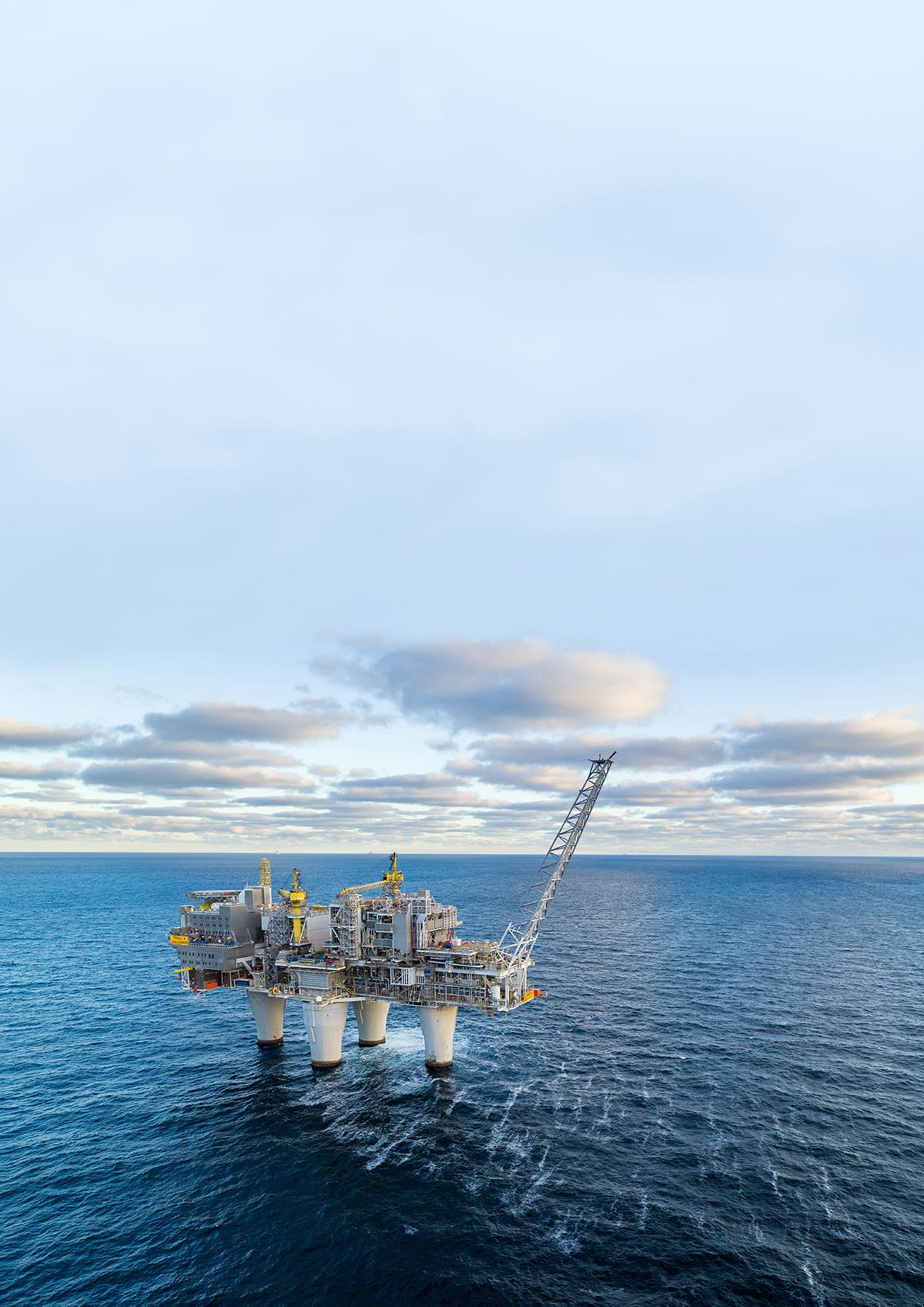
Troll A. Norwegian continental
shelf
















4 Equinor, Annual Report on Form 20-F 2022
Equinor is an energy company, the largest oil and gas operator in Norway, one of the world’s largest offshore
operators, and a growing force in renewables and low carbon solutions. Present in around 30 countries with
approximately 22,000 employees, we provide reliable energy for societies worldwide and aim to be a leading
company in the energy transition with the ambition to become a net-zero company by 2050.
Key figures 2022.
2,039
per day
- oil and gas equity production
0.4
SIF - serious incident
frequency
(per million hours worked)
1,649
Renewable power generation,
Equinor share
2,661
Total power generation,
Equinor share
+8%
gas production
from the NCS
Gas production increased
in response to the energy
security crisis in Europe
2.5
TRIF - total recordable
incident frequency
(per million hours worked)
Always safe,
high value,
6.9
CO
2
intensity
for the upstream oil and gas portfolio
(operated 100%, kg CO
2
per boe)
USD
52.2
billion
current income tax
expense
USD
13.7
billion
Capital distribution
including dividends
and share buy-backs
21,936
Employees
across around
Equinor, Annual Report on Form 20-F 2022 5
6 Equinor, Annual Report on Form 20-F 2022
(in USD million)
2022
2021
Total revenues and other income
150,806
90,924
Net operating income
78,811
33,663
Net income
28,744
8,576
Effective tax rate
63.4%
72.8%
Adjusted earnings*
74,940
33,486
Adjusted earnings after tax*
22,691
10,042
Free cash flow before capital distribution (in USD
billion)*
32.1
27.1
Return on capital employed, adjusted*
55.2%
22.7%
Key Figures – Segment performance
E&P Norway
E&P International
E&P USA
Financial information
2022
2021
2022
2021
2022
2021
Total revenue and other income
75,930
39,386
7,431
5,566
5,523
4,149
Total operating expenses
8,315
8,915
4,183
5,237
1,501
2,998
Net operating income
67,614
30,471
3,248
329
4,022
1,150
Adjusted earnings/(loss)*
66,260
29,099
3,806
2,028
2,957
1,297
Additions to PP&E, intangibles
and equity accounted investments
4,922
4,943
2,623
1,834
764
690
Operational information
2022
2021
2022
2021
2022
2021
E&P equity liquid and gas
production (mboe/day)
1,387
1,364
328
342
324
373
E&P entitlement liquid and gas
production (mboe/day)
1,387
1,364
235
246
279
321
Average liquids price (USD/bbl)
97.5
67.6
92.0
67.6
81.0
58.3
Average internal gas price
(USD/mmbtu)
31.22
14.43
5.55
2.89
MMP
REN
Financial information
2022
2021
2022
2021
Total revenue and other income
148,105
87,393
185
1,411
Total operating expenses
144,493
86,230
269
166
Net operating income
3,612
1,163
(84)
1,245
Adjusted earnings/(loss)*
2,253
1,424
(184)
(136)
Additions to PP&E, intangibles
and equity accounted investments
1,212
517
298
458
Operational information
2022
2021
2022
2021
Liquids sales volumes (mmbbl)
740.1
758.4
Natural gas sales Equinor (bcm)
63.3
61.0
Natural gas entitlement sales
Equinor (bcm)
56.1
54.0
Power generation (GWh) Equinor
share
1,012
1,641
1,562
* For items marked with an asterisk throughout this report, see section 5.8 Use and reconciliation of non-GAAP financial measures.
Equinor, Annual Report on Form 20-F 2022 7
Message from the chair and CEO
Equinor’s purpose is turning natural resources into energy for people, and progress for society. 2022 was a year that demonstrated
how important and valuable energy is to society. The invasion of Ukraine and Russia’s weaponisation of energy brought a deep
crisis to a system already in imbalance. It became apparent that security of supply in Europe rests on reliable access to natural gas.
The war continues to impact society and people’s lives. As part of an aligned response to the invasion, Equinor decided on 27
February 2022 to exit Russia.
During last year, the effects of global climate change proved the strong need to act on the goals in the Paris agreement. The energy
sector must innovate to cut emissions and create low-carbon energy systems. We must accelerate investments in renewables,
energy efficiency, and in low-carbon solutions to decarbonise industry and society. But to safeguard a just and inclusive change of
the energy system, we must secure access to affordable and reliable energy. In this context, Equinor is well positioned, as we focus
on providing the energy the world needs while reducing emissions from our own operations and investing in the necessary systemic
change towards net zero.
Geopolitical developments call for a balanced energy transition. More investments in energy production and infrastructure are
needed to reduce the cost of energy, and security of supply and decarbonisation of the sector will be required. Enabling such a
transition calls for longevity and stability of frame conditions. Even within the most ambitious goals of the Paris agreement and the
net-zero scenario of the International Energy Agency, there will still be a need for oil and gas in the 2050 energy mix. A substantial
part of the remaining demand will stem from the need for feedstock for industry and consumer goods to a global population of
around 10 billion people. Low-carbon hydrogen produced from gas has the potential to become an important source of energy in the
future. Equinor’s Energy transition plan, supported by 97.5 percent of our shareholders at the annual general meeting in May 2022,
8 Equinor, Annual Report on Form 20-F 2022
outlines how Equinor will aim to deliver on its ambition to reach net zero by 2050.
In 2022, when it was more important than ever, people working for Equinor stepped up to deliver safe, secure, and reliable
production with low emissions. The serious incident frequency for the company in 2022 was 0.4 per million hours worked, a slight
improvement from the previous year, and the lowest frequency ever recorded. We progressed our emissions reduction (scope 1 and
2) by reaching a decline of 31 percent since 2015, taking us towards our ambition of net 50 percent reduction by 2030. In 2022, we
also signed the world’s first commercial agreement on cross-border CO
2
partners in the Northern Lights project.
During the year, we have reached key milestones to deliver on our strategy through strong project execution. Johan Sverdrup phase
2 on the Norwegian continental shelf started production, adding barrels to a world-class oil field and making our portfolio even more
robust. Peregrino phase 2 in Brazil came on stream in October, adding 250–300 million barrels while halving expected CO
2
emissions per barrel over the field’s remaining lifetime. We generated first power at Hywind Tampen, the world’s first floating wind
farm to power offshore oil and gas platforms. Further, we matured our renewables project portfolio, and won new offshore wind
leases. We aim to emerge as a leading energy player in selected international markets.
Together with partners, suppliers, and authorities, we managed to increase our gas supply to Europe by 8 percent compared to
2021. In total we produced around 2 million boe per day, and 2.7 terawatt hours of power. The CO
2
at 6.9 kg CO
2
continued cost control. With cost inflation and continued supply chain disruption, we focus on maintaining cost competitiveness
through the cycles.
Against the backdrop of the energy crisis in Europe natural gas prices rose to levels previously unseen. Our performance and focus
on high production and stable delivery of oil and gas throughout the year resulted in high net operating income of USD 79 billion.
This enabled us to maintain competitive shareholder returns, increasing the dividends and share buybacks during the year. At the
capital markets update in February 2023, we announced a step-up in the capital distribution. We proposed a 50 percent increase in
the ordinary cash dividend for the fourth quarter, to 30 cents per share. In combination with extraordinary dividend and share buy-
back, we expect a total distribution in 2023 of USD 17 billion. In 2022, Equinor also contributed with USD 42.8 billion in taxes from
operations on the Norwegian continental shelf. After costs, taxes, and capital distribution our free cash flow* ended at USD 23.4
billion.
Equinor’s strong performance and results put the company in a robust financial position. We continue to optimise the oil and gas
portfolio, accelerate renewables, and develop low-carbon solutions to deliver on our strategy. The strong cash flow from our oil and
gas business together with our robust balance sheet enable us to continue investing and innovating. We aim to develop and bundle
energy services and products, build new value chains, and invest in infrastructure projects, while delivering healthy and competitive
returns to our shareholders. With our gas reserves and existing infrastructure, we are uniquely positioned to develop low carbon
value chains. In collaboration with governments, industry, and customers, we aim to build markets for hydrogen and carbon capture
and storage to achieve necessary scale. Our strategy and portfolio of producing assets and projects position us well to be a leading
company in the energy transition.
Equinor is in a strong position to create value in the energy transition, by providing affordable, low carbon and secure energy. In
2030 we aim to produce around 2 million barrels of oil and gas per day, and 35-60 TWh of power from renewables annually. In
addition, we are developing capacity for energy storage through batteries and green hydrogen, as well as blue hydrogen and carbon
transport and storage.
We would like to express appreciation of our employees’ strong performance under extraordinary circumstances in 2022. We would
also like to thank Equinor’s shareholders for their continued investment, and our stakeholders for a strong commitment.
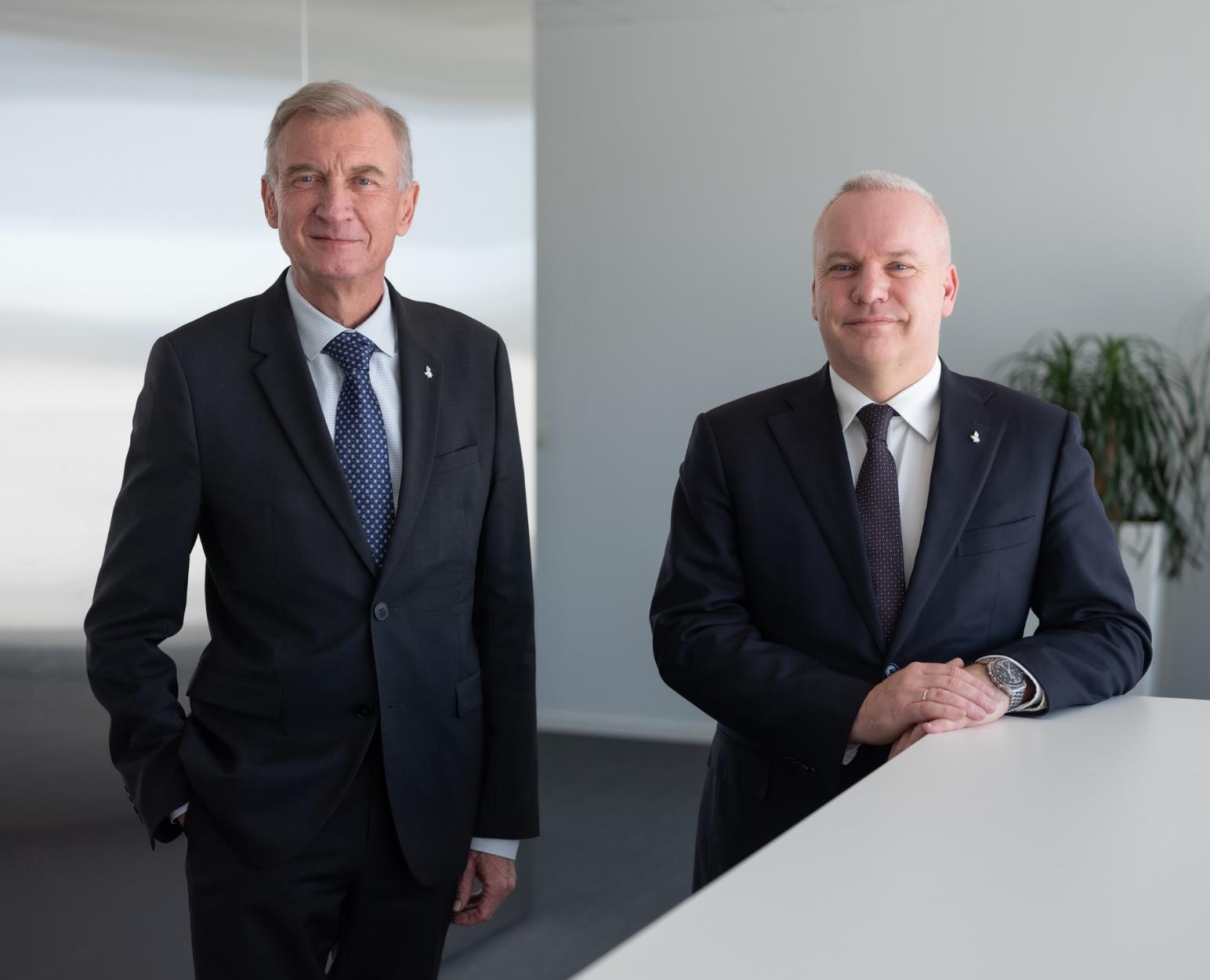
Jon Erik Reinhardsen, chair of the board
Anders Opedal, president and CEO
Equinor, Annual Report on Form 20-F 2022 9
Table of contents
Introduction
Reporting segment performance
We are Equinor
3.1
Optimised oil and gas
Key figures
3.1.1
E&P Norway
Message from the chair and CEO
3.1.2
E&P International
About the report
3.1.3
E&P USA
Equinor in 2022
3.2
High-value growth in renewables (REN)
Progress on our Energy transition plan
3.3
Marketing, midstream and processing (MMP),
including new market opportunities in low carbon solutions
About Equinor and our strategy
3.4
Other group
1.1
This is Equinor
1.2
Our history
Financial statements and notes
1.3
Our business
4.1
Consolidated financial statements of the Equinor group
1.4
Equinor's market perspective
4.2
Parent company financial statements
1.5
Equinor's strategy
1.6
Capital and liquidity management
Additional information
1.7
Sustainability at Equinor
5.1
Board statement on corporate governance
1.8
Governance and risk management
5.2
Risk factors
1.9
Our people - To get there. Together
5.3
Shareholder information
1.10
External relations
5.4
EU taxonomy for sustainable activities
5.5
Production per field
Enterprise level performance
5.6
Additional sustainability information
Performance 2022
5.7
Statements on this report incl. independent auditor reports
2.1
Always safe
5.8
Use and reconciliation of non-GAAP financial measures
2.1.1
Safe and secure operations
5.9
Terms and abbreviations
2.1.2
Protecting nature
5.10
Forward-looking statements
2.1.3
Tackling inequality - Human rights
2.1.4
Tackling inequality - Diversity and inclusion
2.2
High value
Group analysis
2.2.1
Efficient and predictable operations
2.2.2
Profitable portfolio
2.2.3
Value creation for society
2.2.4
Integrity and anti-corruption
2.3
Low carbon
2.3.1
Net zero pathway
2.3.2
Emissions reduction
10 Equinor, Annual Report on Form 20-F 2022
About the report
Equinor publishes an Integrated annual report for 2022
Equinor has the for the full year of 2022 released an Integrated annual report, which combines financial and sustainability reporting
into a single document. This integration acknowledges the increasing importance of sustainability issues to the company's operational
and financial performance and is in accordance with the expectations of our stakeholders. Furthermore, this format aligns with
external frameworks such as the Taskforce on Climate-related Financial Disclosure (TCFD) and upcoming requirements from the
European Union (EU) under the Corporate Sustainability Reporting Directive (CSRD).
This report presents the
●
Board of director’s report (Chapters 0-3 and Chapter 5 excluding sections 5.4, 5.6, 5.9, 5.10)
●
Consolidated financial statements of the Equinor group (section 4.1)
●
Parent company financial statements of Equinor ASA (section 4.2) according to the Norwegian Accounting Act of 1998
●
Board statement on corporate governance according to The Norwegian Code of Practice for Corporate Governance (section 5.1)
●
The company’s sustainability reporting, prepared in accordance with the Global Reporting Initiative (GRI) Standards.
●
Communication on Progress to the UN Global Compact (advanced reporting level)
Other 2022 Reporting published on equinor.com/reports
●
Annual report on Form 20-F
●
Remuneration report, incl. 2021 Remuneration policy
●
Payments to governments
●
Oil and gas reserves report
●
Human rights statement
●
GRI and WEF index
●
UK modern slavery statement
●
Equinor datahub (ESG reporting centre)
This document constitutes the Statutory annual report in accordance with Norwegian requirements for Equinor ASA for the year
ended 31 December 2022. The Integrated annual report is filed with the Norwegian Register of company accounts. Further
information on the boundary conditions for sustainability data can be found in section 5.6 Additional sustainability information.
This document should be read in conjunction with the cautionary statement in section 5.10 Forward-looking statements.
The Integrated annual report may be downloaded from Equinor’s website at www.equinor.com/reports. References in this document
or other documents to Equinor’s website are included as an aid to their location and are not incorporated by reference into this
document.
Equinor, Annual Report on Form 20-F 2022 11
January
Equinor was awarded
26
the Norwegian continental shelf (NCS), of which
12
operator.
February
In response to the European security situation,
Equinor stopped investments into Russia and started
the process of exiting from our
Russian joint
ventures.
March
We enabled
increased gas exports
adjusted permits and postponed turnaround at
Oseberg,
summer months so storage could be replenished.
Together with bp, we signed an agreement to
transform New York’s
South Brooklyn Marine
Terminal
industry.
April
We were awarded operatorships for the development
of a new CO
2
storage facility -
Smeaheia
Sea, with capacity for 20 million tonnes of CO
2
annually.
May
At the annual general meeting, the
Energy transition
plan
shareholders.
We continue to optimise our portfolio. On the NCS
Equinor divested its share of the
Ekofisk
field and a
share in
Martin Linge
.
Together with partners we submitted the plan for
development and operation (PDO) of Halten East, a
subsea development for gas and condensate, tied
back to the
Åsgard field
in the Norwegian Sea.
June
After an extensive programme of repairs and
improvements,
Hammerfest LNG
into production.
Together with SSE Thermal, Equinor acquired
Triton
Power
station
, is planned to be converted to run on
hydrogen in the future.
July
To broaden our energy offering in the US, we acquired
the US battery storage developer
LLC.
In Brazil,
Peregrino
suspended operations since 2020.
Together with our partners on the Troll and Oseberg
August
Northern Lights
, a joint venture owned by Equinor, Shell and
TotalEnergies, signed the world’s first commercial agreement on
cross-border CO
2
transportation and storage.
September
Equinor celebrated its
50th anniversary,
and
two books about the
company’s history were published.
Completed Equinor’s exit from Russia joint ventures
, after our
withdrawal from the Kharyaga project.
October
In Brazil,
Peregrino phase 2
stream, which will extend the field life and reduce CO
2
per barrel.
A final investment decision was made on Equinor’s first battery
project, with the
Blandford battery storage
November
We acquired the Danish solar developer
BeGreen
, in another step
towards becoming a market-driven power producer.
Power production started at
Hywind Tampen
, the world’s largest
floating wind farm, which delivered the first power to the Gullfaks A
platform in the North Sea.
The PDO was submitted for Irpa, a field in the Norwegian Sea,
which prolongs the life of the
Aasta Hansteen
field and enables us
to provide more gas to Europe.
We postponed submittal of a PDO for the
Wisting
2026, based on an overall assessment including the impact of
global supply chain bottlenecks.
December
Equinor secured a ~2 GW lease in the Morro Bay area of California
for commercial-scale floating offshore wind energy development.
Along with Aker BP, we submitted the PDO for the unmanned
Krafla
Munin
) platform, around 35km south of the Oseberg
oil field in the central North Sea.
We also submitted the PDO for
Verdande
, a subsea development
that secures important oil volumes for the Norne production vessel
in the Norwegian sea.
Production started from
Johan Sverdrup phase 2
, which will
increase plateau production from the entire field to 755,000 barrels
per day.
Production resumed at the
Njord
that will extend its lifespan by 20 years.
PDO was submitted for
Snøhvit Future
, a project to maintain high
gas exports from Hammerfest LNG beyond 2030 and reduce
emissions from production.
Equinor in 2022
12 Equinor, Annual Report on Form 20-F 2022
fields, we began work on the
Trollvind concept
1GW floating windfarm to provide energy for the
offshore fields via an onshore connection.
Equinor, Annual Report on Form 20-F 2022 13
Equinor’s Energy transition plan
Progress on our Energy transition plan in 2022
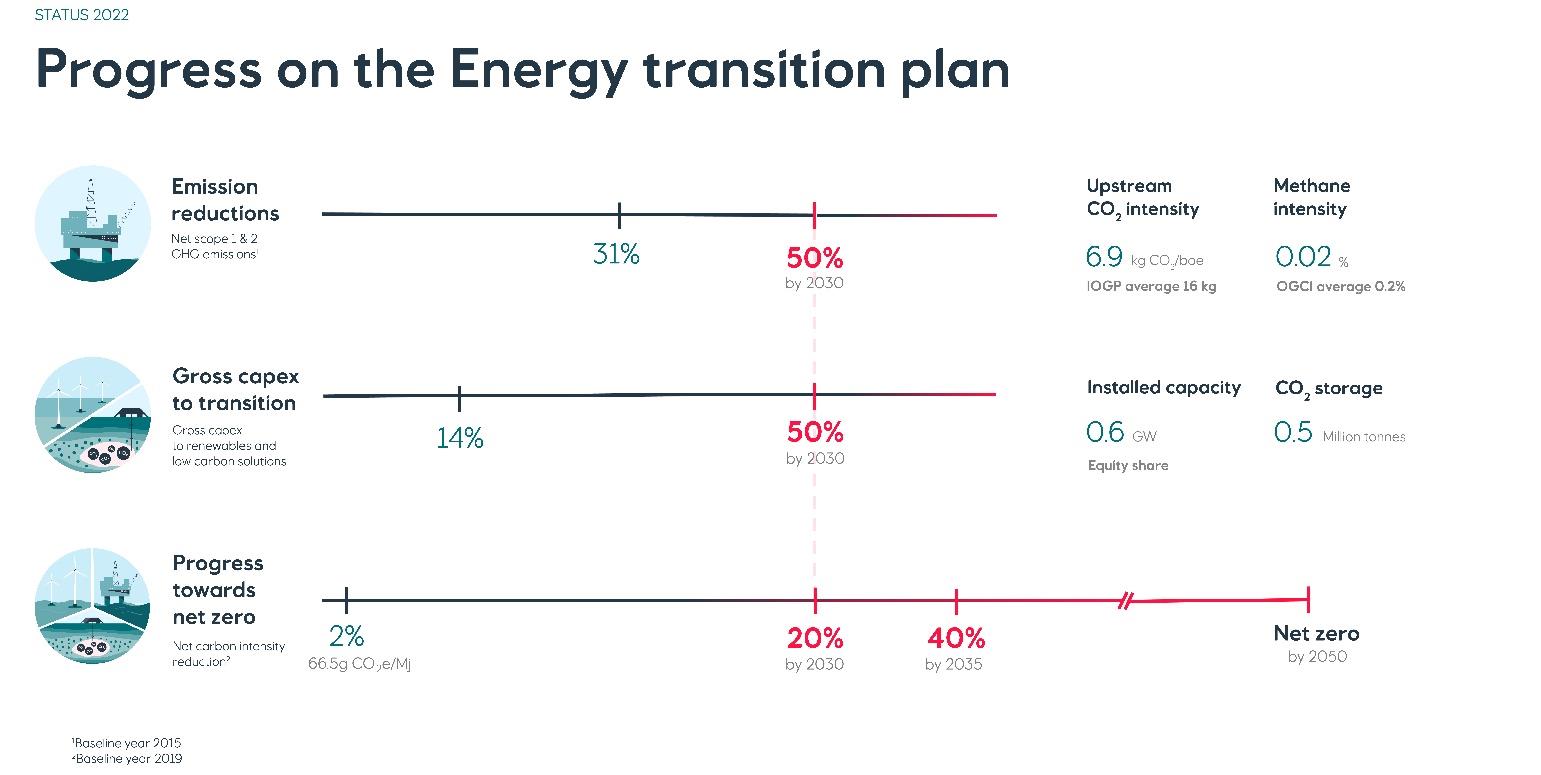
Equinor is making progress on the Energy transition plan that was launched in May 2022. We moved in a positive direction across each of the
three main dimensions of the plan: reduction in our operated emissions; allocation of capex share to investments in renewables and low-
carbon solutions (gross capex*); and reduction in the carbon intensity of energy we provide. We also took steps to operationalise our
commitment to a just and inclusive transition, and to implement our biodiversity position.
Reduction in our operated emissions
Our ambition is to reduce emissions from our own operations by net 50% by 2030 compared to 2015 levels.
We aim for at least 90% of this ambition to be realised by absolute reductions. In 2022, we made significant progress towards this ambition.
Our total scope 1 and 2 operated greenhouse gas (GHG) emissions for 2022 were 11.4 million tonnes CO
2
e, compared to 12.1 million tonnes
CO
2
e in 2021. In total, our operated emissions are now 31% lower than in 2015, the baseline year.
We continued our industry leading performance on CO
2
2
intensity was 6.9kg CO
2
/boe in 2022.
This is an improvement from 7.0kg CO
2
/boe in 2021, well below the target of 8.0kg CO
2
/boe in 2025, and on track towards the ambition of 6kg
CO
2
/boe in 2030. The average methane intensity of our operated assets in 2022 remained unchanged from the 2021 level at 0.02% - around
one tenth of the OGCI (Oil and Gas Climate Initiative) industry average of 0.2%.
Capex share to transition investments
Equinor’s ambition is to allocate more than 50% of our annual gross capex* to renewables and low carbon solutions by 2030 and more than
30% in 2025. In 2022 we invested 14% of our gross capex* into these areas, which is an increase of 3% compared to 2021.
Progress towards net zero
Our ambition is to reduce the net carbon intensity (NCI) of the energy we provide by 20% by 2030. This ambition includes scope 3 emissions
from the use of our products. In 2022, we saw a slight decrease in NCI due to two factors: an increase in the ratio of gas to oil in our
production portfolio as well as a slight decrease in overall oil and gas production. The NCI of the energy we provided in 2022 was 66.5g
CO
2
e/MJ, which is 1% lower than in 2021 and a 2% decrease relative to the 2019 baseline year. The 2% reduction in NCI from the 2019
baseline is in line with expectations. As deployment of renewable and CCS accelerates in the coming years, we expect to see greater
progress in NCI reductions, with the majority of progress towards the 20% reduction ambition by 2030 expected in the second half of this
decade. Lower overall oil and gas production resulted in a year-on-year decrease in absolute scope 3 emissions from 249 million tonnes in
2021 to 243 million tonnes in 2022.
The changed energy security situation in Europe has resulted in both positive and negative drivers for Equinor’s energy transition. Increased
demand for oil and, particularly, natural gas has highlighted the need for continued production of and investment in hydrocarbons, while
increased policy support for renewables and low-carbon solutions are likely to accelerate their deployment in both Europe and the US.
Equinor’s ability to deliver on its transition ambitions and its net 2050 ambition will continue to be dependent on enabling policy and regulatory
frameworks.
14 Equinor, Annual Report on Form 20-F 2022
Just transition for people and net-positive impact for nature
We recognise that a successful energy transition must take into account its impact on people and nature. In 2022, we launched our Just
transition approach, which lays out five foundational principles to enable us to have a positive impact on the societies in which we operate,
including: respect for human rights; transparency in our financial reporting and advocacy; preparing our workforce for the future; enabling
sustainable supply chains; and bringing resilience to local communities. Examples of how we work to promote a just energy transition in
practice can be found on equinor.com. In addition, we continued to implement our biodiversity position, going beyond the do-no-harm principle
to contributing to net-positive impact, and to promote and engage on biodiversity and nature across internal and external initiatives.
2022 status and performance
Oil and gas
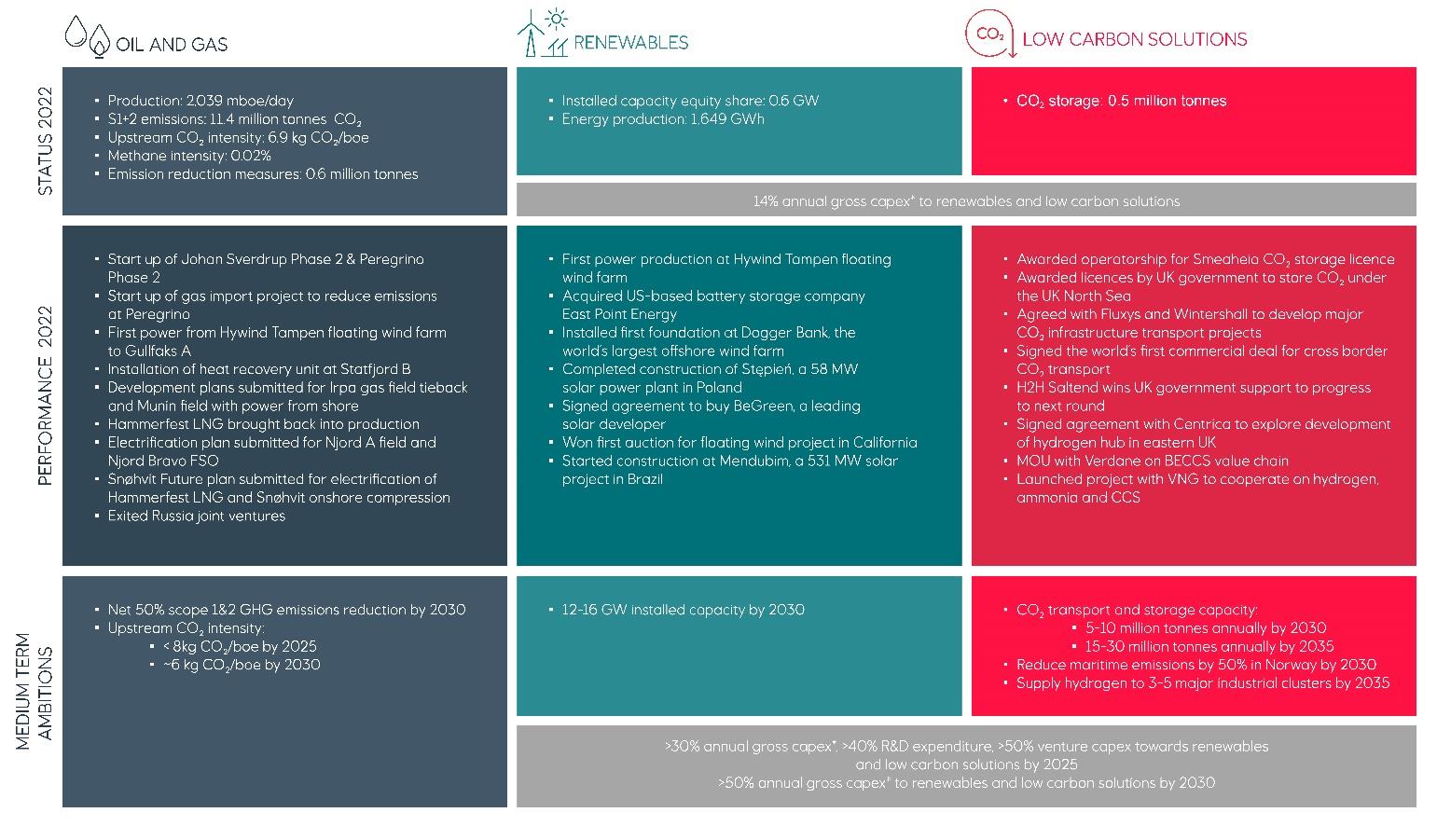
Equinor’s oil and gas production was 2,039 thousand barrels of oil equivalent per day (mboe/d) in 2022, a marginal decrease compared to
2,079 mboe/d in 2021. The main drivers of our 6% reduction in operated scope 1 and 2 emissions were a combination of operational and
portfolio measures including: divestment of our Kalundborg refinery and Bakken asset; modifications and emissions reduction initiatives at our
onshore plants at Mongstad and Kårstø; and a change in strategy at several of our NCS assets from gas injection to gas exports to maximise
supplies to Europe.
While the resumption of production from the Peregrino asset added emissions to our operated portfolio in 2022 relative to 2021, the
implementation of a gas import solution for Peregrino in September 2022 will halve the upstream carbon intensity of the asset and avoid
around 100,000 tonnes of CO
2
oil and gas platforms, represents an innovative step forward, and is set to reduce CO
2
fully operational in 2023.
In 2022, Equinor also submitted development plans for several large abatement projects, including Snøhvit Future, which is intended to
electrify the Hammerfest LNG facility and provide electric compressors for the Snøhvit gas and condensate field, delivering an estimated CO
2
reduction of 850,000 tonnes per year; and Njord A electrification, which will result in a reduction of 130,000 tonnes per year. As outlined in our
Energy transition plan, rapid reductions in operated emissions from oil and gas in Norway depend on the availability of, and access to, low-
carbon electricity supplies as well as enabling permitting and fiscal regimes.
Renewables
In 2022, Equinor’s installed renewable capacity was 0.6 GW (equity share) and renewable energy production was 1,649 GWh, an increase on
both metrics compared to 0.5 GW and 1,562 GWh in 2021. We saw the first foundations being laid at the Dogger Bank offshore wind farm in
the UK and completed the Stępień solar project in Poland. In addition, Equinor was selected as a provisional winner of a lease area on the
California Pacific outer continental shelf, one of the world’s most attractive growth regions for offshore wind; and we acquired BeGreen, a
Danish solar developer with a strong project pipeline.
Low carbon solutions
Equinor, Annual Report on Form 20-F 2022 15
In 2022, Equinor stored 0.5 million tonnes of CO
2
, increased from 0.3 million tonnes in 2021. Accumulated, Equinor has stored 26.3 million
tonnes of CO
2
For our low-carbon solutions business, 2022 was a year of continued progress in developing the value chains that will enable hydrogen and
carbon capture and storage (CCS) to be key enablers in the transition. We announced the world’s first commercial agreement on cross-border
CO
2
transportation and storage between the Northern Lights partnership and the fertiliser company Yara. We were also awarded new
operatorship for the Smeaheia CO
2
2
pioneering H2H Saltend low-carbon hydrogen project.
16 Equinor, Annual Report on Form 20-F 2022
About Equinor and
our strategy
1.1
1.2
1.3
1.4
1.5
1.6
1.7
1.8
1.9
1.10
This is Equinor
Our history
Our business
Equinor’s market perspective
Equinor’s strategy
Capital and liquidity management
Sustainability at Equinor
Governance and risk management
Our people – To get there. Together
External relations
Equinor, Annual Report on Form 20-F 2022 17
1.1 This is Equinor
We are an international energy company headquartered in Norway, with 22,000 employees in around 30 countries. Our
purpose
turn natural resources into energy for people, and progress for society
. Our
values
open, courageous, collaborative and
caring
We are the largest supplier of energy to Europe, a world-leading offshore operator, the largest oil and gas operator in Norway, and an
international pioneer in renewables and low-carbon solutions. Today, in an increasingly unpredictable world, our deliveries of oil, gas
and wind power provide a vital and stabilising contribution to Europe’s energy security, both in the short and long term.
We support the United Nations' (UN) sustainable development goals (SDGs) and the importance of contributing to resolving the
world’s energy trilemma of security, affordability, and climate change. We support the Paris agreement and aim to become a net-zero
company by 2050. We combine industrial strength with innovative thinking, expertise, and collaboration, enabling us to play a
meaningful role in the global energy transition.
Our Energy transition plan was approved by the annual general meeting (AGM) in May 2022. It charts our course towards achieving
our net zero ambition through short-term actions and medium-term ambitions, showing that we have the strategy, ambition,
capabilities, and track record to achieve them.
We are publishing our first integrated annual report, combining financial and sustainability (ESG) reporting. The AGM also endorsed
an amendment to our object-clause to reflect our direction as a broad energy company.
Alongside our net zero ambition, we will remain a reliable energy supplier and ensure long-term value creation for our shareholders.
We have access to key suppliers, markets, systems, technology, and policymakers. For decades, we have played a unique role in
shaping energy systems across Europe through partnerships with governments, society, and businesses.
Our
vision
shaping the future of energy
systems, and the energy industry has the expertise and resources to change them.
Our oil and gas production emissions are already among the lowest in the industry. By 2030, our ambition is to reduce CO
2
from our own oil and gas operations by 50% from the reference year 2015, as well as allocate more than 50% of annual gross
investments* to renewables and low-carbon solutions.
To transform the energy system, we must make substantial investments—and quickly—in new solutions. We have defined four key
areas in which we are well qualified to succeed and set clear ambitions:
●
●
●
●
There are clear synergies between our expertise from existing onshore operations and a future CCS and hydrogen portfolio. A leading
role in Northern Lights, Norway Energy Hub, Clean Hydrogen to Europe (CHE), H2H (Hydrogen to Humber) Saltend, Hywind Tampen
and Snøhvit future demonstrates the extent of our engagement.
Even in the most optimistic future scenarios for the energy transition, the world will remain dependent on oil and gas for energy and
petrochemicals for decades to come. Therefore, it is important that the hydrocarbon resources produced are produced with the lowest
carbon footprint possible.
In the years ahead, we will develop new value chains with suppliers, customers and authorities. We believe that industrial scale,
innovation and technology development hold the key to the energy transition. However, the scale of the task means that achieving it
will depend on the foresight and wisdom of leaders, policymakers, science and industry combined.
18 Equinor, Annual Report on Form 20-F 2022
1.2
Our History
2007 - 2017
Equinor’s ability to fully realise the potential of the NCS and grow internationally was
strengthened through the merger with Norsk Hydro's oil and gas division on
1 October 2007. Equinor’s business grew as a result of substantial investments on the
NCS and internationally. Equinor delivered the world’s longest multiphase pipelines on
the
Ormen Lange
Snøhvit
project was completed in 2007.
By 2007, Equinor had expanded into Algeria, Angola, Azerbaijan, Brazil, Nigeria, UK,
and the US Gulf of Mexico, amongst others.
2017 - 2019
Statoil ASA changed its name to Equinor ASA, following approval of the name change
by the company’s annual general meeting on 15 May 2018. The name supports the
company’s strategy and development as a broad energy company in addition to
reflecting Equinor’s evolution and identity as a company for the generations to come.
The
Johan Sverdrup
electricity from shore, making it one of the most carbon-efficient fields worldwide.
2020 - 2021
Equinor sets an ambition be a leading company in the energy transition and to become
a net-zero company by 2050,
consumption.
Equinor announced changes to the reporting segments, corporate structure and the
corporate executive committee (CEC) to further strengthen its ability to deliver on the
always safe, high value, low-carbon strategy. The changes will support improved value
creation from Equinor’s world-class oil and gas portfolio, accelerated profitable growth
within renewables and the development of low-carbon solutions.
In January 2021, civil works began at the
Northern Lights
transport and storage. In June 2021, the final investment decision was made for the
first phase of the development of the
Bacalhau
Martin Linge
brought on stream in June 2021, driven by electric power from shore. The third phase
of the
Troll
Troll West gas cap. The electrification of
Troll West
is underway. In November 2021,
the decision was made to develop the third phase of the
Dogger Bank
windfarm. To meet growing demand, Equinor
scaled up gas production
NCS in 2021.
18 September 1972
Equinor, formerly Statoil, was formed by
a decision of the Norwegian parliament
and incorporated as a limited liability
company under the name Den norske
stats oljeselskap AS. At the time owned
100% by the Norwegian State, Equinor's
initial role was to be the government's
commercial instrument in the
development of the oil and gas industry
in Norway. Growing in parallel with the
Norwegian oil and gas industry,
Equinor’s operations were primarily
focused on exploration, development and
production of oil and gas on the
Norwegian continental shelf (NCS).
1979 – 1981
The
Statfjord
field was discovered in the
North Sea and commenced production.
In 1981 Equinor, then called Statoil, was
the first Norwegian company to be given
operatorship of a field, at
Gullfaks
North Sea.
1980s and 1990s
Equinor grew substantially through the
development of the NCS (Statfjord,
Gullfaks,
and others). In
the 1990s, Equinor started to grow
internationally, becoming a major player
in the European gas market by entering
into large sales contracts for the
development and operation of gas
transport systems and terminals. During
these decades, Equinor was also
involved in manufacturing and marketing
in Scandinavia and established a
comprehensive network of service
stations. This line of business was fully
divested in 2012.
2001
Equinor was listed on the Oslo and New
York stock exchanges and became a
public limited company under the name
Statoil ASA, now Equinor ASA, with a
67% majority stake owned by the
Norwegian State.
Equinor, Annual Report on Form 20-F 2022 19
20 Equinor, Annual Report on Form 20-F 2022
1.3 Our Business
A broad energy company
We are an international energy company committed to long-term value creation in a low-carbon future. Our portfolio of projects
encompasses oil and gas, renewables, hydrogen and low-carbon solutions, with an ambition of becoming a net-zero energy company
by 2050.
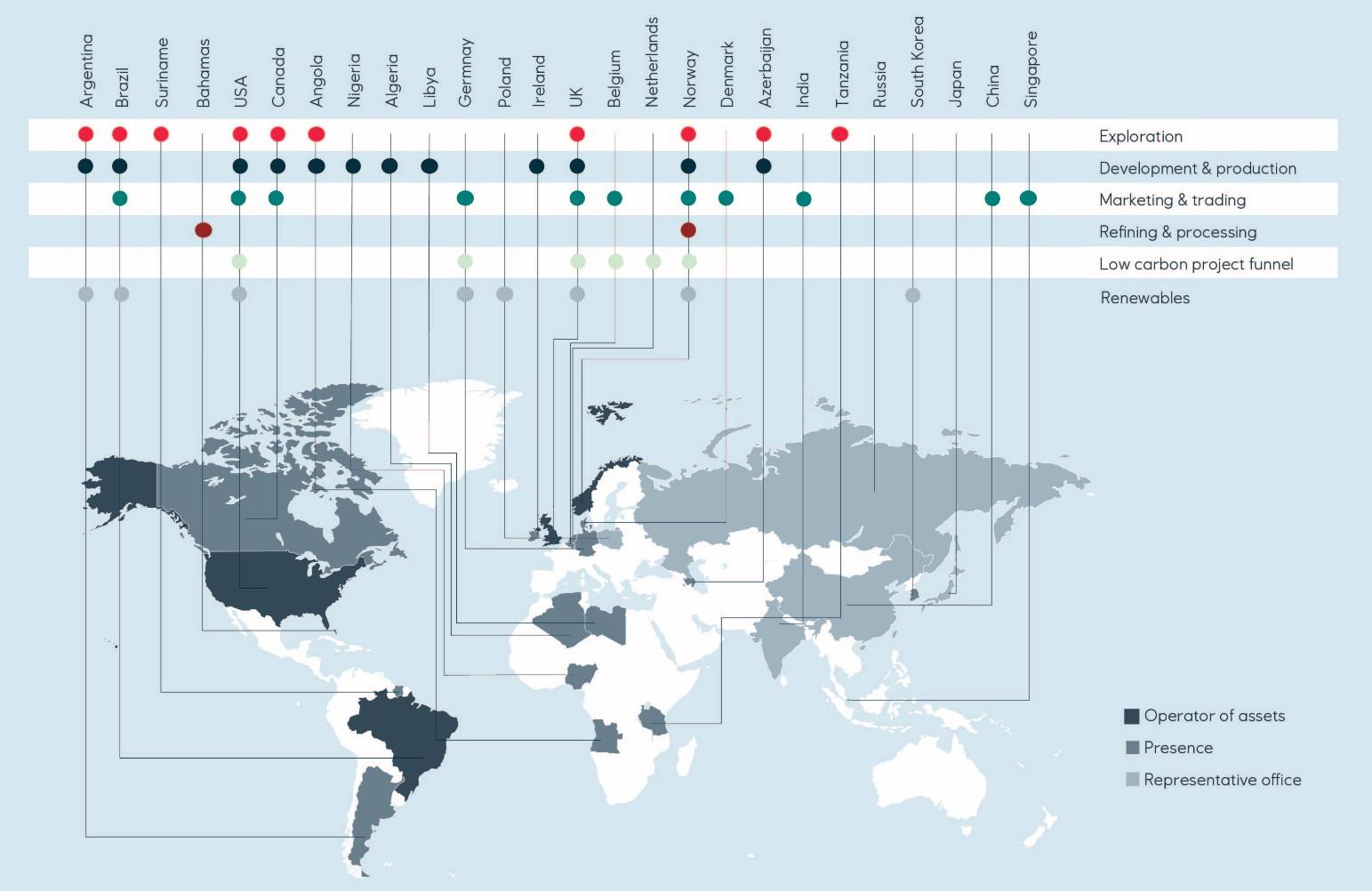
Where we are
Oil and gas
Equinor produces around two million barrels of oil equivalent daily and is responsible for about 70% of Norwegian oil and gas
production. In 2022, Equinor’s activity outside Norway accounted for around one-third of the company’s total oil and gas production,
and this is expected to increase. The Peregrino field in Brazil and the Mariner field in the UK are our largest operatorships outside
Norway.
Refining, processing and marketing
Our refinery, processing plants and terminals transform crude oil and natural gas into everyday commodities such as petrol, diesel,
heating oil and consumer-ready natural gas.
Transportation and marketing, and trading of our products maximise value creation. Most
of our products are exported from Norway to continental Europe, but we also export to the UK, North America and Asia.
Equinor also markets and sells the Norwegian State’s share of natural gas and crude produced on the NCS.
Renewable energy
Equinor provides more than one million European homes with renewable power from offshore wind farms in the UK and Germany. We
develop some of the world's largest offshore wind farms in Europe and the US and are in the process of building a solar portfolio
through partnerships in energy farms in Argentina and Brazil and wholly owned subsidiaries in Denmark and Poland. By 2030, we aim
to have grown our installed renewables capacity (equity-based) from 2022’s 0.6 GW to 12-16 GW and produce 35-60 TWh annually.
Carbon capture and storage
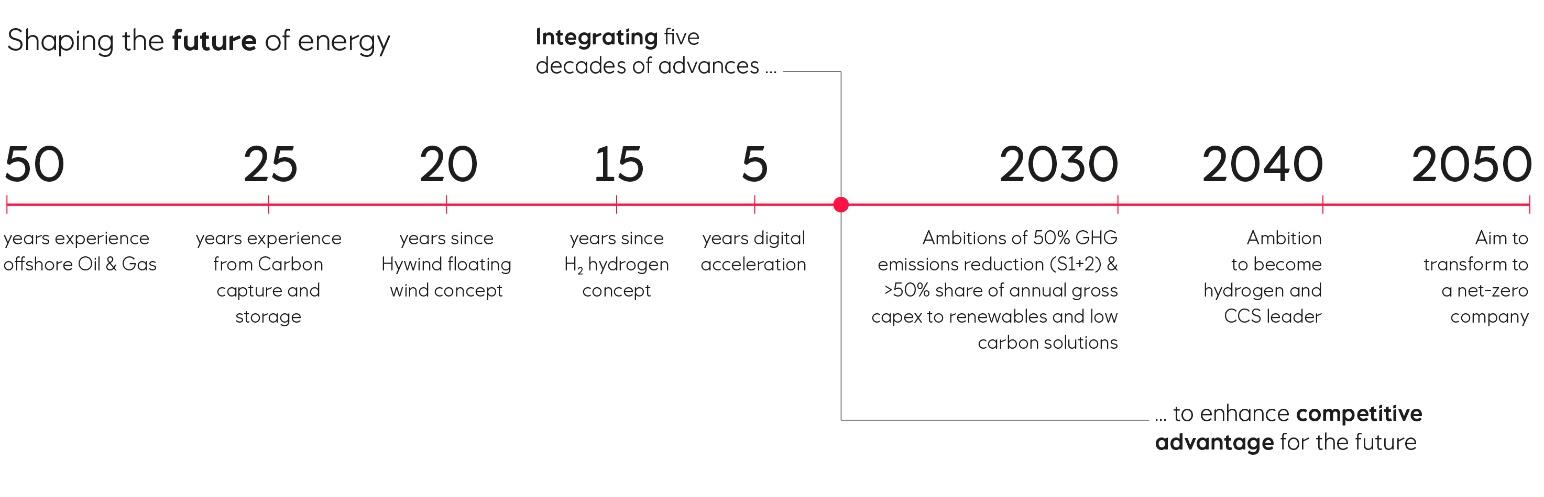
Equinor is pursuing new business models to make carbon capture and storage (CCS) viable. We have 25 years of operational
experience from CCS, and more than 15 years of experience from technology development within large-scale hydrogen value chains
including transport and CCS. Together with our joint venture partners we are developing the Northern Lights infrastructure for
transportation and storage of CO
2
. The project is part of the Norwegian government’s project for full-scale carbon capture,
transportation and storage in Norway.
Equinor, Annual Report on Form 20-F 2022 21
Technology development
Equinor’s strong ability to develop and apply new technologies and digital solutions constitutes a competitive advantage. Digital
technology is a key enabler for us to develop into a leading company in the energy transition. Our ambition is to allocate 40% of our
research and development capital towards renewables and low-carbon solutions by 2025.
Equinor’s competitive position
We are an energy pioneer with a focused strategy built on our offshore experience and technology leadership. Equinor’s history and
experience building the oil and gas industry in Norway from the 1970s still represent some of the most distinct competitive advantages
for the company 50 years later. As an offshore pioneer and technology developer in Norway, with examples such as piped gas
infrastructure network that started with Statpipe and revolutionary subsea technology development such as the world’s first subsea
gas compression plant on the Åsgard template.
The experience and learnings from industrial and technological developments in Norway and the NCS have been a catalyst for our
assets and operations outside of Norway to ensure safer, more valuable, and lower emissions internationally. In addition to the
industrial and technology DNA originating from the 1970s, we create value as an early mover and industry shaper. Examples such as
CCS at the Sleipner field from the 1990s and testing the floating offshore wind concept in the Hywind demo in the late 2000s have
contributed to our latest technology developments of Northern Lights and Hywind Tampen.





22 Equinor, Annual Report on Form 20-F 2022
How we are organised
Equinor’s assets and operations are organised through the following business areas:
Exploration & Production Norway (EPN)
the North, Norwegian and Barents Seas. EPN aims to ensure safe and efficient operations and transform the NCS
to deliver value for many decades. EPN is shaping the future of the NCS with a digital transformation and solutions
to achieve a lower carbon footprint and high recovery rates.
Exploration & Production International (EPI)
outside Norway. EPI operates across five continents, covering offshore and onshore exploration and extraction of
crude oil, natural gas and natural gas liquids, and implements rigorous safety standards, technological innovations
and environmental protection. EPI intends to build and grow a competitive international portfolio, including through
partner-operated activities.
Marketing, Midstream. & Processing (MMP)
downstream positions. MMP is responsible for the global marketing and trading of crude, petroleum products,
natural gas, electric power and green certificates, including marketing of the Norwegian State’s natural gas and
crude resources on the NCS. MMP is responsible for onshore plants and transportation in addition to the
development of value chains to ensure flow assurance for Equinor’s upstream production and to maximise value
creation. Low-carbon solutions, such as carbon capture and storage and other low-carbon energy solutions, are
also a part of MMP’s responsibility.
Renewables (REN)
renewable energy. REN aims to acheive this by continuing to combine Equinor’s oil and gas competence, project
delivery capacities and ability to integrate technological solutions. REN is currently responsible for wind farms, solar
as well as other forms of renewable energy and energy storage.
Projects, Drilling & Procurement (PDP)
development of wind power, CCS and hydrogen projects,
and procurement in Equinor. PDP aims to deliver safe,
secure and efficient project development and well construction, founded on world-class project execution and
technology excellence. PDP utilises innovative technologies, digital solutions and carbon-efficient concepts to
shape a competitive project portfolio at the forefront of the energy industry transformation. Value is being created
together with suppliers through a simplified and standardised fit-for-purpose approach.
Technology, Digital & Innovation (TDI)
is responsible for research and technology development within Equinor to
further support the business. This includes identifying potential new businesses and value chains for Equinor.
Equinor, Annual Report on Form 20-F 2022 23
1.4 Equinor’s market perspective
Market overview
At the start of 2022, the global economy remained dampened by Covid-19, and energy markets were already tight when Russia’s
invasion of Ukraine impacted heavily on global energy systems and Europe’s security situation. The cessation of importing energy
from Russia to Europe and an increased focus on energy security and affordability resulted in Equinor becoming the largest gas
supplier to Europe in 2022.
Although the Russian and Ukrainian economies were small in a world context, they played an influential role in energy and commodity
markets. Many European economies relied upon Russian energy and trade links, and rising prices suppressed economic activity,
despite support schemes. The US economy was more sheltered from the fallout but is increasingly impacted by elevated inflation,
rising interest rates and weaker global demand. The zero-Covid policy in China persisted for most of the year, hampering recovery in
domestic activity.
As we enter 2023, the world economy is teetering on the brink of recession, with several regions facing periods of negative growth
1
. A
cost of living crisis is materialising as higher energy prices and inflation are met by further fiscal tightening and higher interest rates.
The outlook still has downside risks, including a potential worsening of the European security situation, a deepening energy crisis, a
failure to curb inflation, and uncertainty over Chinese growth.
Oil prices
The key oil price marker for Europe, dated Brent crude, began 2022 at just below 80 USD/bbl, rising towards 100 USD/bbl in a tight
market before the invasion of Ukraine and peaking at 137 USD/bbl on 8 March, as several countries and companies introduced
voluntary cuts on purchases of Russian crude oil.
When the member countries of the International Energy Agency (IEA) agreed to release strategic supplies in storage, and the US
followed suit, prices fell to around 100 USD/bbl. However, US and EU bans on Russian oil products led to a new price hike, with oil
reaching almost 133 USD/bbl on 14 June.
Prices subsequently declined slowly, reaching a low of 77 USD/bbl in early December due to fears of lower industrial activity caused
by gas shortages, inflation and higher interest rates. Market players weighed the risk that oil demand would fall below even the
constrained oil supply, a discussion still ongoing at year-end since the results of fiscal measures may only be seen in Q1 2023. The
price drop was also driven by paper market effects, as higher price volatility led to higher margin calls. Notably, sanctions on Russian
exports of refined products led to exceptionally high refinery margins, so our standard margin for an upgraded refinery in Europe
averaged 21.2 USD/bbl for 2022, compared to 4.6 USD/bbl in 2021
.
Natural gas prices and European electricity and CO
2
Gas prices – Europe
European natural gas prices rose by around 135% year-on-year in 2022, having reached an all-time high of around 90 USD/MMBtu in
August, with Russian flows curtailed by roughly 75 Bcm year-on-year. LNG imports played a major role in replacing lost Russian flows,
increasing by almost 70% year-on-year. Security of supply measures regained focus, with countries working to bring new LNG import
capacity online and filling storage capacity ahead of the winter season. Additional pipeline supplies were seen from Norway and
Azerbaijan. High prices and mild weather in the fourth quarter of 2022 resulted in sharp declines in residential and industrial demand.
The European Commission also proposed a series of emergency interventions during the year to limit the effect of high energy prices,
such as windfall taxes, joint gas purchases, and a market correction mechanism to cap Dutch TTF hub prices.
Gas prices – North America
The Henry Hub spot price averaged 6.4 USD/MMBtu for the year, a jump from the 3.9 USD/MMBtu average in 2021. Strong domestic
demand and LNG export outpaced production growth for the year. Producers continued to prioritise capital discipline rather than
unchecked production growth.
Gas rig activity levels finally returned to pre-pandemic levels in the second half of 2022, and meaningful
production growth started to materialise towards year-end.
On the demand side, record heat waves across the country supported high
power demand throughout the summer. US LNG exports grew by ~15% year-on-year, from 110 to 127 bcm, despite the Freeport LNG
terminal being offline for half a year. Extremely high international gas prices drove terminal utilisation up and exports to record highs.
Global LNG prices
Global LNG spot prices were highly volatile in 2022, with the Asian LNG price ranging from 18.9 USD/mmBtu to 84.8 USD/mmBtu.
The average Asian LNG spot price increased from 18.4 USD/mmBtu in 2021 to 34 USD/mmBtu in 2022, driven by a surge in LNG
demand in Europe. Europe suffered from congestion at LNG regasification terminals and pipeline infrastructure connecting end
markets, limiting the inflow of gas to high-demand areas, such as Germany. This resulted in large price differentials between LNG
1
Growth in 2022 was 3.1% year-on-year, projected to be 2.4% in 2023. GDP growth rates are from IMF World Economic January 2023.
24 Equinor, Annual Report on Form 20-F 2022
delivered to Northwestern Europe and the Dutch TTF hub price, which reached a record 29.6 USD/mmBtu in early October. These
bottlenecks eased going into 2023, with several floating LNG terminals swiftly deployed on the continent and enhancements made to
pipeline infrastructure. Gas demand declined in Asia due to high LNG prices and additionally in China due to Covid-19 lockdowns,
which released LNG volumes for Europe.
European electric power and CO
2
Power prices in major West European markets (the UK, France, Germany, Belgium, Netherlands, Spain, and Italy) averaged 245
EUR/MWh in 2022, up 117% year-on-year. Although 2022 was expected to be a welcome end to the pandemic with an uptick in
production and demand, the
European security situation overshadowed everything.
Power price volatility was extreme, and European
governments intervened in regional markets to combat ever-rising prices.
Whilst the EU ETS (CO
2
) allowance price in 2021 saw a steady rise, the 2022 price was more volatile due to the introduction of
emergency legislation in the energy market and uncertainty surrounding the Fit for 55-package and RePowerEU. Nevertheless, the
price maintained a growth trend, with an average price of EUR 81/tCO
2
2
we expect the EU ETS allowance price to be driven by a persistent gas-to-coal switch due to a tight gas market and RePowerEU.
After European power and natural gas prices reached an all-time high in August 2022, the EU agreed temporary, but extendable
market intervention measures including a mandatory reduction in power consumption during peak hours and a 10% target for overall
power demand reduction. Also agreed was an inframarginal revenue cap for power generators as well as a solidary fiscal contribution
from the oil, gas, coal and refinery sectors with activities within the territory of the Union. Various industrial actors are pursuing legal
challenges to these decisions. Regarding natural gas a temporary dynamic cap mechanism applicable to the TTF and extendable to
other trading places if proposed by the European Commission was agreed. The EU Agency for the Cooperation of Energy Regulators
(ACER) and the European Securities and Markets Authority (ESMA) have in a recent report concluded that no significant impacts
(positive or negative) on prices can be unequivocally and directly attributed to the adoption of this mechanism. However, both
regulators indicate that this situation could change if prices rise and the prospect of the cap being triggered comes into view. The
European Commission has also initiated the preparation of a targeted electricity market reform and this proposal is expected for medio
March 2023. Member States remain split both in terms of the scope and timing of such a reform effort.
Equinor, Annual Report on Form 20-F 2022 25
1.5 Equinor’s strategy
2022 has been both a complex and an extraordinary year for the oil and gas industry due to the Russian invasion of Ukraine and its
consequences for energy security in Europe, weakened economic growth, and inflation, but also with higher than ever profits
experienced by the energy industry. In this context, our strategic beliefs stand firm with climate change being a key challenge. The
world’s energy systems are in transition to meet this challenge.
As Equinor transforms, we work towards striking the right balance between supporting our core, generating cash flow to enable the
energy transition, growing business in new energy areas, and continuing as an attractive investment for our shareholders.
A leading company in the energy transition
By 2030, we aim to be a leading provider of renewable energy and low-carbon solutions, alongside our continued optimised oil and
gas portfolio. We aim to continue being Norway’s energy major and emerge as a leading energy player in select international markets.
We have developed a comprehensive Energy transition plan to become a net-zero company by 2050, including emissions from
production and final consumption. In 2030, our ambition is to have reduced the net carbon intensity by 20%, and by 40% in 2035. We
aim to achieve this reduction by directing more than 50% of our annual gross investments in 2030 towards renewables and low-
carbon solutions while continuing our efforts to reduce our emissions from the production of oil and gas.
Over the next ten years, we aim to generate a substantial cash flow from oil and gas, as our operations on the NCS are expected to
continue delivering positive cash flow at low prices, short payback times, leading breakevens and top quartile production cost, and
among the lowest carbon intensity per barrel of oil. Internationally, the oil and gas portfolio will contribute significantly to after-tax cash
flow as high-value development projects come onstream from the mid-2020s. The cash flow will be used to add to our portfolio, invest
in our transition, and create value for shareholders and society.
We aim to accelerate growth in offshore wind from a strong industrial position to being among the top global players. We are also
positioning for success in low-carbon solutions developing industrial value chains in CCS and hydrogen, and aiming for CCS
leadership in Europe.
26 Equinor, Annual Report on Form 20-F 2022
Overall strategic framework
Our Strategic Beliefs
Creating value through
the energy transition
Net-zero ambition gives new industry
opportunities
Technology excellence and
innovation define winners
Market dynamics set margins under
pressure
Our Strategy
Optimised Oil & Gas Portfolio
- capitalising on an advantaged portfolio as a strong cash engine to
fund decarbonisation and transition activities.
We expect our oil and gas portfolio to continue to provide strong free
cash flow in the coming years based on our current price
assumptions.Reducing emissions from operations will remain a top
priority. We will pursue activities where we have the competence,
experience, scale, and an overall competitive advantage to secure a
leadership position. This will be on the NCS and in select
international areas where we can add value by combining use of
existing infrastructure, improving oil recovery, executing strict
production cost control thereby achieving faster return on
investments.
Equinor is divesting lower performing or non-strategic assets.
Improving efficiency will remain a priority, driven by
implementation of technology at scale, digitalisation and
automation. When we access new acreage and future
exploration, we will focus on areas where we already have activity
and existing infrastructure, ensuring shorter time span from
discovery to production to capitalise on previous investments.
Frontier exploration will be limited.
High Value Growth in Renewables
- accelerated deployment to establish a strong industrial position for
value-driven growth.
Equinor aims to be among the top global players in offshore wind,
with 12-16 gigawatts of installed renewables capacity by 2030.
Focusing on a high value growth in renewables both onshore and
offshore, Equinor’s renewable portfolio will also contribute to
significant value creation.
Equinor is building a profitable renewables business, looking to increase
returns through regional synergies, project financing, strategic farm
downs, and inorganic growth. We seek to execute projects at scale,
strive for technical improvements, and drive profits from energy trading.
Equinor has a position of advantage in floating offshore wind and seeks
to reduce costs through industrial scale projects like Hywind Tampen.
Through early access to less mature markets, where both the risk and
the potential returns are higher, Equinor can build leadership positions.
Equinor is continuously seeking business opportunities in select
renewable markets onshore.
New Market Opportunities in Low Carbon Solutions
- becoming a leader in carbon management and hydrogen.
Low carbon value chains will be critical to decarbonise the global
economy. Equinor is uniquely positioned to become a leader in CCS
and hydrogen in Europe. Equinor is actively contributing to maturing
these markets and aims to achieve a leadership position in the
European CCS market with a market share above 25%. We expect
government subsidies to play a key role over the next decade with
policy choices supporting the industry in developing markets for
CCS and hydrogen. Equinor has a strong starting point on the NCS
and in the UK. The company draws on 25 years of operational
experience from CCS at Sleipner and Snøhvit and decades of
commercial partnerships with key industrial customers in
Europe. Equinor is already a participant in leading projects to
industrialise CCS and hydrogen like Northern Lights, Smeheia license
and hydrogen clusters in the UK. Equinor is prepared to scale up
investments and technologies as markets mature.
Our strategic pillars and material topics
Always Safe
Safe and secure operations
Tackling inequality
High Value
Efficient and predictable operations
Profitable portfolio
Value creation for society
Integrity and anti corruption
Low Carbon
Net zero pathway
Emission reduction
Governance and People
Equinor, Annual Report on Form 20-F 2022 27
Our strategic pillars stand firm
Always safe, High value, Low carbon will continue to guide our business
High value also
means providing
value to the
societies in which
we operate, by
optimising local
employment and
procurement,
contributing with
taxes and
maintaining high
ethical, non-
corrupt practices.
Material topics
Our purpose is to turn natural resources into energy for people and
progress for society. This requires an understanding of the interplay between our business activities and the societies and ecosystems
in which we operate. The figure on the right summarises Equinor's 2022 material topics according to our strategic pillars, and the
rational for their selection.
Always Safe
Safety is our top priority and the core of our
licence to operate. To us, this means safety for
our people, the environment and the societies in
which we operate. We work hard to reduce risk
and avoid incidents and injuries, both among our
own employees and those of our suppliers. We
shall respect human rights and support diversity,
equality and inclusiveness in all our operations.
Low carbon
Our long-term ambition is to become a net zero
company by 2050. This ambition is supported by
our Energy transition plan and is backed by
actions such as: Reducing emissions from our oil
and gas operations, increasing renewables
capacity, establishing value chains in CCS and
hydrogen, increasing the share of non-
combusted products from hydrocarbons, and
using high-quality carbon sinks. In the longer
term, a decline in oil and gas production will also
drive reductions in net carbon intensity towards
net zero in 2050.
High Value
Competitive performance and efficiency
improvements will remain a priority. Our portfolio
is resilient to low prices, has fast return on
investments and world-class breakevens. We are
growing cash flow from its international portfolio,
making it more robust towards lower prices.
Through our leading positions in the offshore
wind market and low-carbon solutions, we are
building a pipeline of future projects within
offshore and onshore renewables, CCS and
hydrogen. We are utilising our trading and
midstream capabilities to optimise the portfolio of
commodities that we provide to our customers,
together with new products and services from
low-carbon solutions.
28 Equinor, Annual Report on Form 20-F 2022
We have identified nine topics that we believe are key to deliver on our strategy. In line with the concept of double materiality, these
are topics that may significantly affect our financial or operational performance, or that may significantly impact societies and
ecosystems in which we operate.
Safe and secure operations:
As an international
operator of exploration, project development, oil and gas production, refineries, gas plants, solar and wind farms, Equinor faces a range
of potential safety and security risks.
Protecting nature:
Preventing the loss of biodiversity and enhancing the diversity and resilience of ecosystems in which
Equinor operates.
Being present in around 30 countries, Equinor’s operating activities onshore and offshore have actual or potential
impacts on nature.
Tackling inequality:
Respecting and protecting human rights in Equinor’s own activities and supply chain. Creating a diverse
and inclusive workplace with equal opportunities and human capital development, and where discrimination is not tolerated in
any form.
Equinor employs a large and diverse workforce, with operations and supply chains in geographies with a high risk of human
rights violations.
Efficient and predictable operations:
.
Equinor’s core business activity is energy provision for society, which relies on optimal operational performance. This is especially
important in the current economic climate with tight energy supply and high demand.
Profitable portfolio:
management of current asset base
.
composition and development of this portfolio influence our ability to ensure continued profitable business activity and long-term value to
shareholders.
Value creation for society:
Generating revenue, job opportunities and economic well-being through local employment,
procurement and taxes
.
Delivering value to society at large and to our host communities, in particular, is fundamental to the success
of our ongoing business activities and the energy transition.
Integrity and anti-corruption:
Equinor is a
global company with a large number of business relationships and is present in parts of the world where corruption is a high risk.
Net zero pathway
:
Equinor believes that a net zero pathway creates new business opportunities and is aligned with our purpose of delivering energy to
people and progress for society.
Emission reductions:
Reducing GHG emissions from own production and the use of our products.
Equinor has
significant GHG emissions, and reducing emissions within this decade is urgent to be aligned with the Paris agreement.
Equinor, Annual Report on Form 20-F 2022 29
Research and development
Technology and innovation are enablers to deliver on our strategy. Building on a strong technology legacy, we leverage technology
development and implementation of innovative solutions to enhance value and create opportunities for current and future assets.
We continuously evolve our technology direction to capitalise on external innovation and internal capabilities, thereby transforming
through technology, and to:
-
Deliver technology impact to the business today
-
Scale technologies to build the company of tomorrow
-
Transform into a data-driven company
Engagement with technology builds upon a set of principles that emphasizes on embedding data and digital into activities, scaling for
competitive advantage, integrating different technologies to gain from synergies, developing distinct capabilities, strategic partnership
between business lines and technology teams and co-innovating with industry partners. We leverage different tools such as in-house
research and development activities, cooperation with academia, research institutions and suppliers, venturing in startups and
scaleups and open innovation challenges.
30 Equinor, Annual Report on Form 20-F 2022
1.6 Capital and liquidity management
Capital distribution
Equinor is ambitious to grow the annual cash dividend in line with long-term underlying earnings, in addition to buying back
shares.
When deciding the interim dividends and recommending the total annual dividend level, the BoD take into consideration a
range of factors, including the macro environment, expected cash flow, capital expenditure plans, financing requirements and
appropriate financial flexibility. Dividends are declared in USD. For further details on Equinor’s dividend policy see section 5.1.
As part of our distribution of capital to shareholders, Equinor also buys back shares. The purpose of the share buy-
back programme is to reduce the issued share capital of the company. All shares repurchased as part of the programme are
cancelled. According to a separate agreement between Equinor and the Norwegian State, a proportionate share of the
Norwegian State’s shares will be redeemed and annulled at the annual general meeting, ensuring that the State’s ownership
interest in Equinor remains unchanged at 67%. Execution of share buy-backs after the 2023 annual general meeting is subject
to a renewed authorisation, including renewal of the agreement with the Norwegian State. Share buy-backs will be executed
within applicable safe harbour provisions.
During the year we have increased our cash dividend from USD 0.20 ordinary dividend per share and USD 0.20 extraordinary
dividend per share in the first quarter. The extraordinary dividend increased to USD 0.50 per share in the second quarter and
to USD 0.70 per share in the third quarter. For the fourth quarter of the year, the board proposes to the AGM an ordinary cash
dividend of USD 0.30 per share, and an extraordinary quarterly dividend of USD 0.60 per share.
For 2022, Equinor initiated a USD 5,000 million share buy-back programme which was increased to USD 6,000 million later in
the year. The 2022 share buy-back programme started with the first tranche in February 2022 and ended with the fourth
tranche, which was completed in January 2023. The Norwegian State share related to the second, third and fourth tranches of
the 2022 share buy-back programme and the first tranche of the 2023 share buy-back programme, amounting to USD 4,020
million, will be redeemed in 2023. Redemption is subject to approval in the annual general meeting in May 2023.
Debt and credit rating
Equinor generally seeks to establish financing at the corporate (top company) level. Loans or equity are then extended to
subsidiaries to fund their capital requirements. Project financing may be used in cases involving incorporated joint ventures
with other companies. The aim is to always have access to a variety of funding sources across different markets and
instruments, as well as maintain relationships with a core group of international banks that provide a wide range of banking
services.
Our credit rating target is within the single A category on a stand-alone basis. This rating ensures access to relevant capital
markets at favourable terms and conditions.
The Group's borrowing needs are usually covered through the issuance of short-, medium- and long-term securities, including
utilisation of a US Commercial Paper Programme (programme limit USD 5.0 billion) and issuances under a Shelf Registration
Statement filed with the SEC in the US and a Euro Medium-Term Note (EMTN) Programme (programme limit EUR 20 billion)
listed on the London Stock Exchange. In addition, Equinor has a multicurrency revolving credit facility of USD 6 billion,
including a USD 3 billion swing line (same day value) option. The credit facility is used as a backstop for the group’s US
Commercial Paper Programme and has a sustainability linked financing element included in the loan agreement related to
Equinor’s CO2 upstream intensity target. Equinor believes that given its current liquidity reserves, including the committed
revolving credit facility of USD 6 billion and its access to global capital markets, Equinor will have sufficient funds available to
meet its liquidity and working capital requirements.
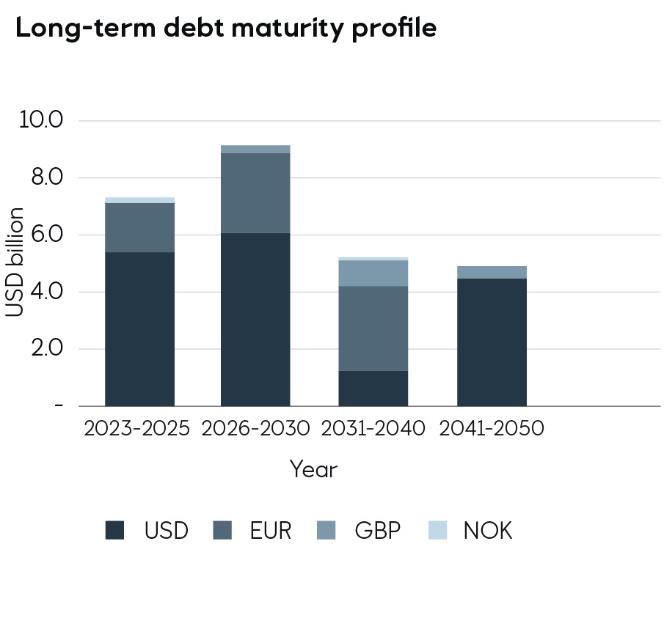
Equinor did not issue any new bonds in 2022 and 2021. The redemption profile of previously issued bonds by currency
denomination is shown below. This includes bonds issued in the US and European bond markets. All the bonds are
unconditionally guaranteed by Equinor Energy AS. The long-term debt portfolio is partially swapped to floating USD interest
rate.
Equinor manages its interest rate exposure on its bond debt based on risk and reward considerations from an enterprise
risk management perspective. This means that the fixed / floating mix on interest rate exposure may vary from time to time.
After the effect of currency swaps, the major part of Equinor’s borrowings is in USD.
Equinor, Annual Report on Form 20-F 2022 31
The management of financial assets and liabilities takes into consideration funding sources, the maturity profile of long-term
debt, interest rate risk, currency risk and available liquid assets. In addition, interest rate derivatives, primarily interest rate
swaps, are used to manage the interest rate risk of the long-term debt portfolio.
As of 31 December 2022, Equinor had a long-term credit rating of Aa2 (Moody’s Investors Service) and AA- (Standard &
Poor’s Global Ratings), including an uplift due to state ownership (two notches from Moody’s Investors Service and one notch
from Standard & Poor’s Global Ratings compared to their respective stand-alone credit rating assessments of Equinor). This
rating is well above our rating target and ensures sufficient predictability when it comes to funding access at attractive terms
and conditions.
Liquidity management
Equinor diversifies its cash investments across a range of financial instruments and counterparties to avoid concentrating risk
in any one type of investment or any single country. As of 31 December 2022, approximately 25% of Equinor’s liquid assets
were held in USD-denominated assets, 26% in NOK, 36% in EUR, 7% in SEK, 3% in DKK and 3% in GBP before the effect of
currency swaps and forward contracts. Approximately 31% of Equinor’s liquid assets were held in time deposits, 37% in
treasury bills and commercial papers, 11% in corporate bonds, 7% in money market funds and 0% in current accounts. As of
31 December 2022, approximately 14% of Equinor’s liquid assets were classified as restricted cash (including collateral
deposits).
32 Equinor, Annual Report on Form 20-F 2022
1.7 Sustainability at Equinor
To be sustainable, the energy transition as well as being economically viable requires simultaneously providing energy with lower
emissions whilst also addressing the unprecedented loss of nature and biodiversity and the need for a just, inclusive, and transparent
transition. The interconnectivity and inter-dependency between these issues further require governments, civil society, and private
sector entities such as Equinor to adopt integrated and holistic approaches. The way Equinor responds to these challenges is
fundamental to our strategy and delivering on our purpose.
In 2022, Equinor made a strategic decision to further integrate sustainability priorities into the strategy and management of the
company. We defined nine financial, operational, and sustainability-related topics that are critical to achieving our strategy; and we set
ambitions for each topic to measure and report our progress to the board and our stakeholders in a coherent way (see chapter 2 for
further details). From a sustainability perspective, Equinor has three overarching priorities: (i) Net zero by 2050; (ii) Evolving from a ‘do
no harm’ principle to a nature-positive contribution; and (iii) Ensuring a just transition. Good governance and transparency are key
enablers.
At both a strategic and operational level, we seek to embed these priorities into relevant governance, risk management and
assurance, and decision-making processes. Alongside addressing these priorities in our own operations and projects, we seek to
influence our partners and increasingly recognise the importance of understanding and managing these issues throughout our supply
chain. We further recognise that external dialogue and collaboration are key to understanding and ensuring a relevant and long-lasting
contribution.
The effectiveness of our sustainability management approach is regularly evaluated through performance reviews at several levels,
including the board of directors (BoD), the BoD’s safety, sustainability and ethics committee (SSEC), the corporate executive
committee (CEC), and by corporate functions and business areas. Internal and external audits, verifications and self-assessments
constitute key assurance elements of our management approach. We conduct internal and external benchmarking and participate in
external performance ratings for the same purpose.
” Equinor aims to support sustainable development through
contributing to the energy transition whilst also addressing
biodiversity loss and the need for a just transition.”
Anders Opedal,
CEO of Equinor.
Equinor supports the UN SDGs and shares the view that business has a key role to play in delivering on and contributing to the goals.
Equinor supports all the 17 SDGs and contributes especially to the following six goals: quality education, affordable and clean energy,
decent work and economic growth, climate action, life below water, and partnerships for the goals.
Our sustainability reporting is prepared in accordance with the Global Reporting Initiative (GRI) Standards (2021). The information
provided is also aligned with the World Economic Forum Stakeholder Capitalism reporting metrics. The report, along with its
referenced information, forms Equinor’s Communication on Progress (CoP) to the United Nations Global Compact (UNGC).
In alignment with industry practice and regulatory requirements, we report safety and environmental data under our operational control
(100% basis), including operations where Equinor is a technical service provider. Greenhouse gas (GHG) emissions data is reported
on both an equity and operational control basis. Economic data is reported on an equity share basis, and workforce data covers
employees in our direct employment. Human rights data is collected from operated and non-operated assets. Our transparency act
disclosures can be found at equinor.com/reports (ESG reporting centre). For more information about reporting boundaries, see section
5.6 Additional sustainability information. For additional data supporting the report, please refer to Equinor’s sustainability data hub at
equinor.com.
Relevant sections in Chapter 2 provide further specific information on our sustainability-related material topics, management approach
and performance in 2022
.
Further information on the independent assurance for these topics is provided in sections 5.6 Additional
sustainability information and 5.7 Statements on this report, including independent auditor reports.
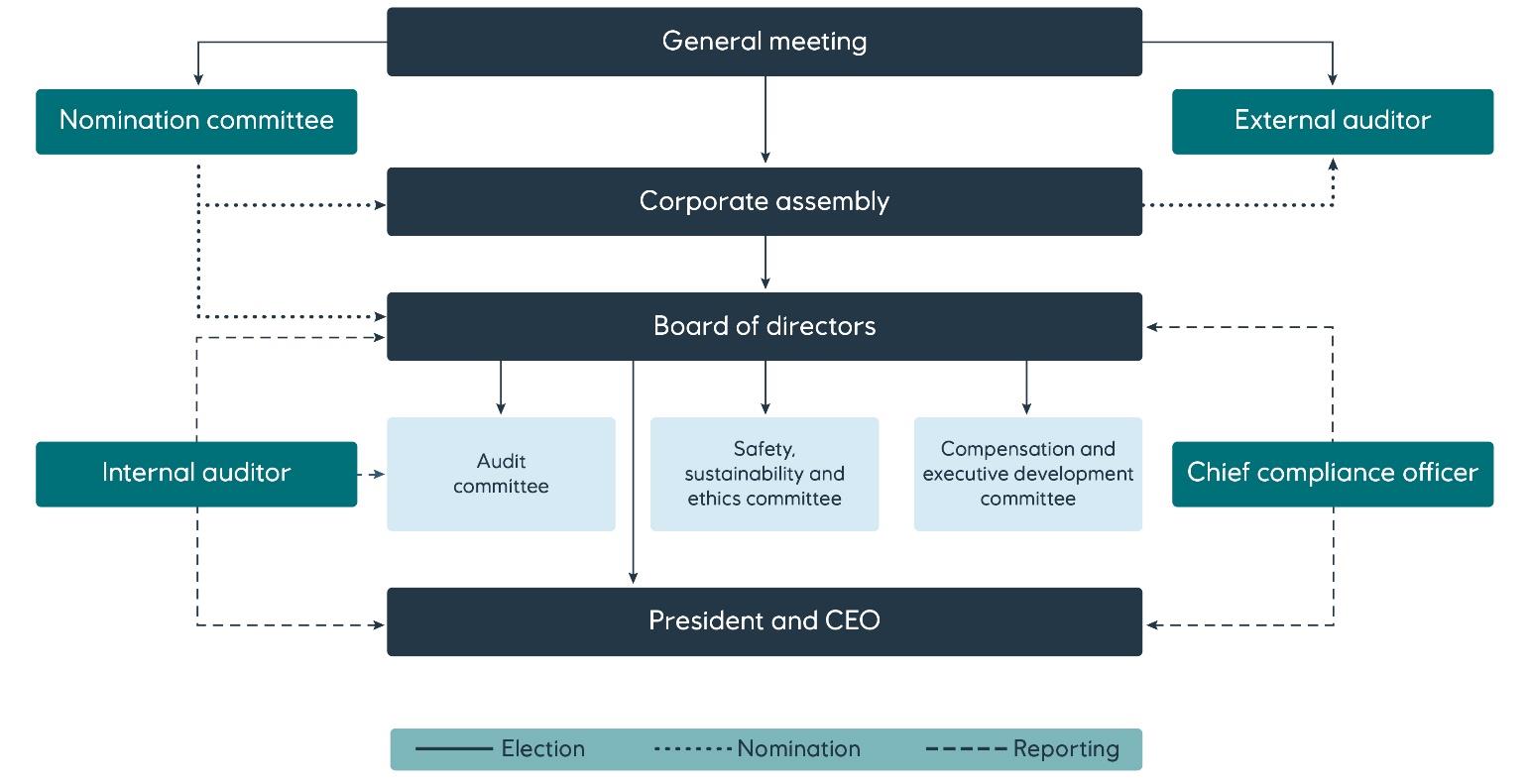
Equinor, Annual Report on Form 20-F 2022 33
1.8 Governance and risk management
Corporate governance
Corporate governance guides the work of Equinor’s governing bodies, our management teams, and individuals, and it safeguards the
shareholders’ and other stakeholders’ long-term trust in the company. Our corporate governance framework and processes are
formed to promote transparency and accountability in decision-making and day-to-day operations.
As a public limited company with shares listed in Oslo and New York, Equinor adheres to relevant regulations and applicable
corporate governance codes, including the Norwegian Code of Practice for Corporate Governance (the Code of Practice). Further
details on Equinor’s compliance or explanations of possible deviations with this Code of Practice can be found in section 5.1, Board
statement on corporate governance.
Governing bodies
The board of directors (BoD) focuses on maintaining a high standard of corporate governance. Good corporate governance is a
prerequisite for a sound and sustainable company, and our corporate governance is based on openness and equal treatment of
shareholders. Governing structures and controls help to ensure that we run our business in a justifiable and profitable manner for the
benefit of employees, shareholders, partners, customers and society.
The BoD has the overriding responsibility for supervising Equinor’s management and operations and establishing control systems.
The work of the BoD is based on its rules of procedures and applicable legislation describing its responsibility, duties and
administrative procedures. It has three sub-committees that act as preparatory bodies:
●
The audit committee
internal control and financial reporting.
●
The safety, sustainability, and ethics committee
company regarding safety, security, ethics, sustainability and climate.
●
The compensation and executive development committee
compensation and leadership development, hereunder terms and conditions of employment for the CEO, and on the principles
and strategy for compensation of leading executives in Equinor.
Equinor’s corporate assembly consists of 18 members, 12 which are nominated by the nomination committee and elected by the
general meeting. They represent a broad cross-section of the company’s shareholders and stakeholders. Six members and three
observers are elected by and among our employees in Equinor ASA or a subsidiary in Norway. One of the main duties of the
corporate assembly is to elect the company’s BoD. Further details on the governing bodies in Equinor is set out in section 5.1 Board
statement on corporate governance.
34 Equinor, Annual Report on Form 20-F 2022
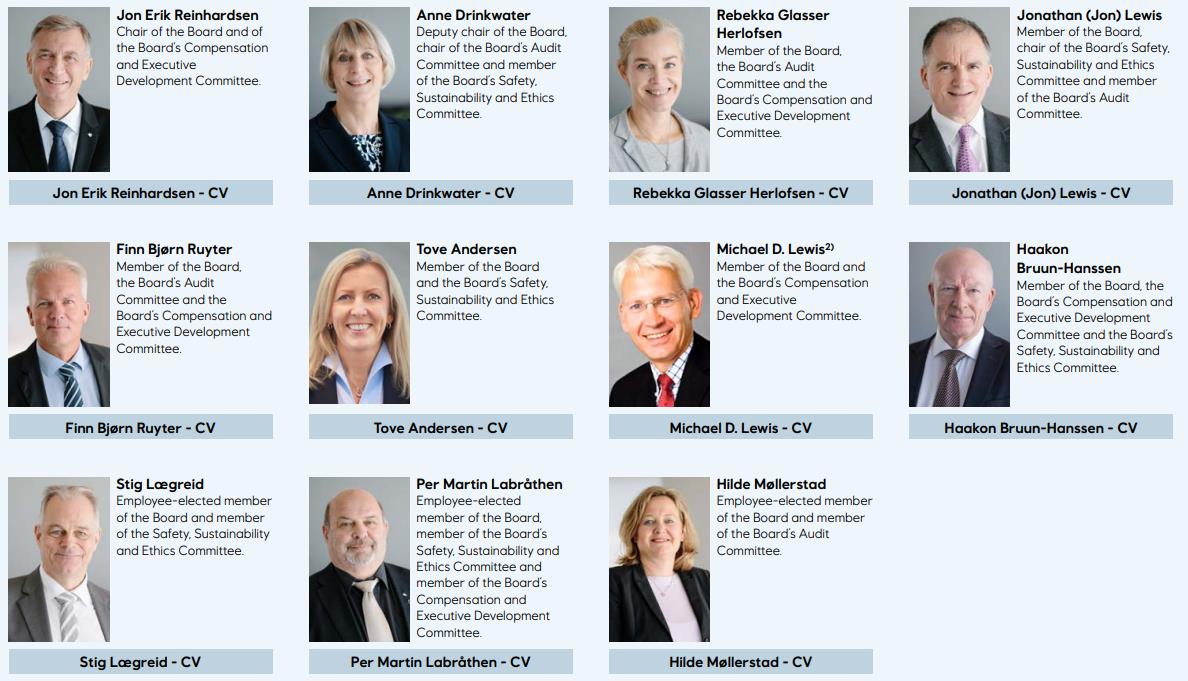
Equinor, Annual Report on Form 20-F 2022 35
Board of directors
Equinor’s board consists of 11 members.
The board members have experience from oil, gas, renewables, shipping, telecom, Norwegian defence forces and
environmental and sustainability work. The work of the board is set out in
section 5.1 Board statement on corporate governance.
2
2
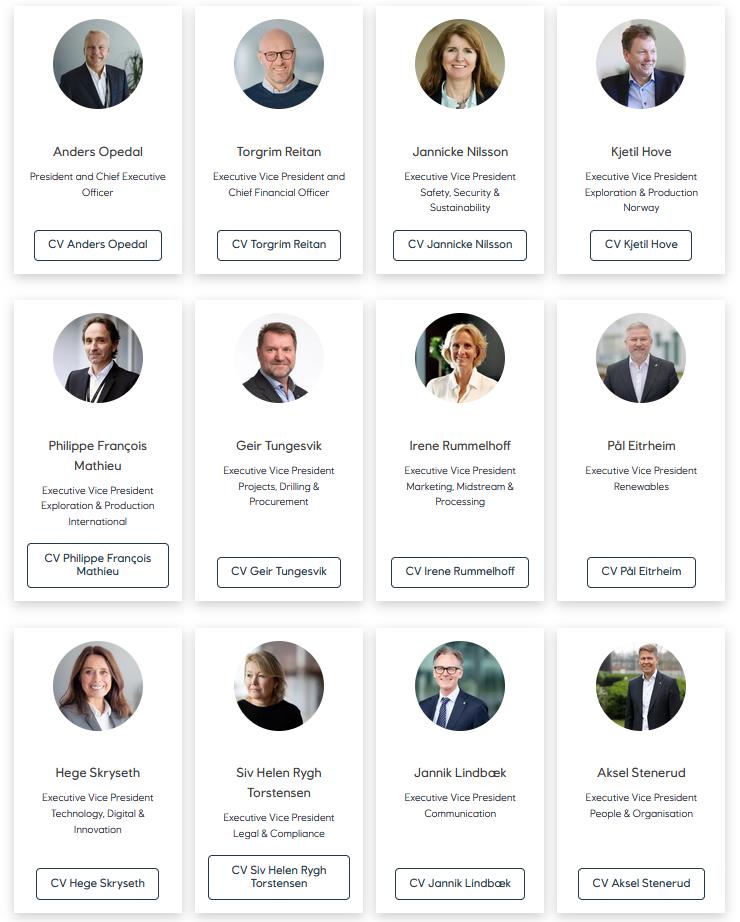
36 Equinor, Annual Report on Form 20-F 2022
Corporate executive committee
The president and chief executive officer (CEO) has the overall responsibility for day-to-day operations in Equinor. The CEO also
appoints the corporate executive committee (CEC), which considers proposals for strategy, goals, financial statements, as well as
important investments prior to submission to the BoD.
Equinor, Annual Report on Form 20-F 2022 37
Please see section 5.1 Board statement on corporate governance for a comprehensive account of our corporate governance
framework, functions, and processes with references to The Norwegian Code of Practice for Corporate Governance.
Remuneration of the board of directors
The remuneration of the board of directors is decided by the corporate assembly annually, following a recommendation from the
nomination committee. Remuneration for board members is not linked to performance, and board members do not receive any shares
or similar as part of their remuneration. The board members generally receive an annual fixed fee. Deputy members, who are only
elected for employee-elected board members, receive remuneration per meeting attended. The employee-elected members of the
board receive the same remuneration as the shareholder-elected members.
Remuneration of the corporate executive committee
The board of directors is responsible for preparing and implementing a remuneration policy for the members of the CEC. The policy is
effective for a period of four years, subject to any proposed material changes by the board of directors requiring adoption by the
annual general meeting before the four-year term concludes.
The policy shall contribute to attracting and retaining executives and motivate them to drive the success of the company. A key
principle for Equinor’s remuneration policy is moderation. The reward should be competitive, but not market-leading, and aligned with
the markets that the company recruits from, maintaining an overall sustainable cost level. Equinor places a high focus on fostering
alignment between the interests of its executive management and those of its owners and other stakeholders. Variable remuneration
is aimed at driving performance in line with the company’s strategy and securing long-term commitment and retention with the
company. The receipt of variable remuneration depends on individual and company performance and is subject to a holding period
requirement for some elements. Performance-based variable remuneration compensation has been capped in accordance with the
relevant Norwegian state guidelines.
The remuneration policy was approved by the 2021 annual general meeting. A revised policy will be presented for a binding vote at
the general meeting in 2023. The approved policy will be available on Equinor’s website.
Executive remuneration policy
The executive remuneration policy approved by the 2021 annual general meeting, which serves as the basis for the 2022
remuneration report, including information with respect to the board of directors and corporate assembly, can be found in an appendix
to the 2022 remuneration report on equinor.com/reports.
Risk management
Equinor manages risk related to our strategy selection and delivery of our strategic ambitions. The most important enterprise risks and
risk factors are described in section 5.2 Risk factors.
Equinor’s enterprise risk management (ERM) framework is integrated into all Equinor business activities with a focus on creating value
and avoiding incidents. We consider risks related to shorter-term outcomes, as well as more immature or emerging risk issues that
can impact our business ambitions and corporate risk profile. The Equinor BoD oversees the ERM framework and reviews company
performance.
The ERM approach supports risk-informed decisions and optimal solutions through a focus on the following:
●
the value impact for Equinor, including upside and downside risk; and
●
compliance with Equinor’s requirements, including a strong focus on avoiding HSE, human rights and business integrity
incidents (such as accidents, fraud and corruption).
In general, the risk is managed in the business line as an integral part of employee and manager tasks. The business areas and
corporate functions regularly identify and evaluate risk using established procedures, assess the need for risk-adjusting actions, and
review overall risk management performance. Some risks, such as oil and natural gas price risks and interest and currency risks, are
managed at the corporate level to provide optimal solutions. A corporate risk perspective is also applied in strategy development,
portfolio prioritisation processes, and capital structure discussions. Equinor’s corporate risk team analyses the corporate risk profile
and maintains the ERM overview. Throughout the year, the CEO and the BoD maintain oversight of the risk management framework,
processes, top enterprise risks and the overall risk picture. Areas of particular risk oversight currently include IT and cyber-security,
progress on net-zero, low-carbon value proposition, political and regulatory frameworks, human rights, and capacity and capability
constraints.
Equinor’s risk management process is based on ISO 31000 risk management and seeks to ensure that risks are identified, analysed,
evaluated, and appropriately managed. A standardised process across Equinor supports consistency in risk discussions and
38 Equinor, Annual Report on Form 20-F 2022
efficiency in decisions. Risk is integrated into the company’s management information system (IT tool), where it is linked with
Equinor’s purpose, vision and strategy and associated strategic objectives and KPIs. This tool is used to capture risks, follow up risk-
adjusting actions and related assurance activities, and supports a risk-based approach in the context of a three lines-of-control model
(https://www.equinorbook.com/brandcenter/en/equinorbook/component/default/82415).
Equinor risk management can be broadly considered across the following enterprise impact areas. More detail on specific themes is
provided in relevant material topics sections of this report.
Strategic and commercial risks:
Equinor needs to navigate uncertainty and manage risk to
remain financially robust through the changing energy
context. Climate-related issues influence many aspects of
our strategy selection and execution. Global, regional and
national political developments can change the operating
environment and economic outcomes. Market conditions
related to supply and demand, technological change,
customer preferences and global economic conditions can
significantly impact company financial performance. Our
ability to deliver value from projects and operations can be
impacted by factors related to partners, contractors, global
supply chains as well as regulatory frameworks. Digital and
cyber threats are constantly evolving and can cause major
disruption across our value chains.
Strategic and commercial risk factors:
●
●
●
opportunities
●
●
economy
●
●
●
●
●
●
●
●
●
insurance coverage
Strategic and commercial risk management:
Overall, Equinor manages risk through a diversified portfolio, robust financial framework, stress-testing and business
planning, investment, and review processes. The company is exposed to oil and gas market price levels. Corporate
hedges may be entered into to reduce or eliminate the cash flow volatility generated from the price levels risk. Equinor
has an insurance-based approach to this hedging, securing downside protection only while keeping the upside in price
exposure open. For the trading business, derivatives risk is managed through a control framework including Value at Risk
and trader mandates, loss limitation systems and daily monitoring of trading profit and loss. Equinor’s liquidity framework
is based on a forward-looking risk management approach to assure that Equinor’s strategic liquidity reserve will cover
both expected and unexpected cash outflows over the subsequent six months, including a potential crisis event and
significant collateral needs.
Risk factors related to low carbon solutions, climate change and transition to a lower carbon economy, workforce and
organisation, cyber security, actions by the Norwegian State are included within top enterprise risks and have direct
follow-up at executive level. Top enterprise risks are assessed in relation to risk appetite statements and risk tolerances
that represent the company’s willingness to take on risk exposure. Actions to manage exposure are implemented and
assessed based on their effectiveness. Risks are reviewed by both the first line (risk owner) and second line (Corporate
risk) with regards to risk management and followed up by the CEC and BoD.
To support portfolio resilience in multiple energy pathways, we have a financial framework in place addressing climate-
related risks, we stress test our portfolio across different energy scenarios, and assess climate-related physical risks.
Risks relating to policies and regulatory frameworks, international politics and geopolitical change, together with
competition and technological innovation are regularly assessed, monitored and managed to improve outcomes for the
company as part of the Equinor’s risk update.
Risk factors related to projects and operations are managed at many levels, including through quality assurance
processes (competence area reviews, e.g., facilities, safety and security, environment, commercial and country risk)
within the investment phase, quality risk management within the project execution risk phase, and continuous
improvement programs in operations. Crisis management, business continuity and insurance coverage are included in
Equinor, Annual Report on Form 20-F 2022 39
the evaluation of actions to reduce the impact of unwanted incidents. Digital security and cybersecurity remain in high
focus through a cybersecurity improvement programme to maintain and strengthen cybersecurity capability and reduce
cyber risk.
Safety, security and environment risks:
We undertake business activities globally that give
exposure to a wide range of factors that can impact the
health and safety of people, the integrity of facilities, and
the natural environment. Incidents may include release of
health hazardous substances, fire, explosions, and
environmental contamination. Equinor could also be
subject to hostile acts that cause harm and disrupt
operations.
Safety, security and environment risk factors:
●
●
Safety, security and environment risk management:
We regularly assess our performance through indicators, reviews and assurance activities and, when needed, instigate
improvements. In the current business context, we have a specific focus on top enterprise risks related to major
accidents, security incidents and human rights breaches, as well as following up on aspects of our pathway to net zero
(under strategic and commercial risks). Mitigation of the major accident risk is through continued focus on our I am Safety
Roadmap and rollout of major accident prevention training across the company. Risk exposure to human rights is
addressed through a specific action plan that prioritises key actions to prevent forced labour in the supply chain and
establish new working requirements for human rights due diligence. The European security situation continues to shape
security risk management activity and we have sought to mitigate state actor threats through work on physical security,
including offshore and onshore facilities and pipelines, to guard against drones, and to further develop the management
of cybersecurity.
Compliance and Control Risks:
Breaches of laws, regulations or guidelines and ethical
misconduct can lead to public or regulatory responses that
affect our reputation, operating results, shareholder value
and continued licence to operate. Failure to control risks
related to trading processes and transactions can result in
direct losses and potentially affect Equinor’s licence to
trade.
Compliance and Control Risk Factors:
●
●
Compliance and Control Risk Management:
Equinor’s Code of Conduct sets out our commitment and requirements for how we do business at Equinor. We train our
employees on how to apply the Code of Conduct in their daily work and require annual confirmation that all employees
understand and will comply with requirements. We require our suppliers to act in a way that is consistent with our Code of
Conduct and engage with them to help them understand our ethical requirements and how we do business. Equinor
operates a Compliance Program to ensure that anti-bribery and corruption risks are identified, reported, and mitigated,
and have a network of compliance officers who support the business areas globally.
40 Equinor, Annual Report on Form 20-F 2022
Equinor, Annual Report on Form 20-F 2022 41
1.9 Our People – To get there. Together
How we work
Our success depends on thousands of individuals working together. Each and every one of us makes a difference as we shape the
future of energy.
Equinor’s role as a reliable energy provider is more important than ever, while we also work on securing sustainable energy
production today that will enable the energy transition. This has resulted in a high activity level, and we are proud of all our people
going to great lengths to keep energy production high and secure. In 2022, we strengthened our capabilities in Norway and in
locations around the world, focusing on competence development, recruitment, and our operating model. In Equinor, we have around
22,000 employees globally. We work systematically with diversity and inclusion in our HR processes, from recruitment, talent, and
succession to leadership deployment. In 2022, our gender balance was 31% female, and 21% of our employees were international
(non-Norwegian). During the year we welcomed almost 2,000 new employees to our company. Our focus has been on strengthening
competence development, recruitment, and onboarding while maintaining our people’s well-being and building an inclusive culture
where everyone feels respected, safe, and fully connected to our common goal.
Boundary
Unit
2022
2021
2020
2019
2018
Total number of permanent employees
Equinor
group
number
21,936
21,126
21,245
21,412
20,525
Total new hires
Equinor
group
number
1,988
886
774
1,568
905
Developing our people capabilities
In 2022, we implemented further improvements to our workforce planning process to ensure that there is an even stronger link
between our strategy, business plans, and the people capabilities we develop for Equinor. Our workforce planning process involves
leaders and employee representatives in the definition of the competence and capacity needed to deliver on future plans, as well as in
the development of plans to close and mitigate gaps, such as competence development and recruitment.
Building and utilising our collective competence
Our collective competence is a key enabler for Equinor to deliver on current and future ambitions. We are therefore supporting
employees to build future-fit competence and are continuously updating our learning offering. We continuously monitor the uptake of
all formal learning to ensure management focus and further optimise our learning portfolio.
In 2021 we adjusted our operating model to further expand the use of competence centres to accelerate competence development
and flexibility in people allocation across activities and value chains. In 2022, we implemented further improvements to make sure that
our processes and tools are fit for purpose to enable this, including a review of various IT solutions.
Growing our workforce
To support our ambitions for the future, we added almost 2,000 new recruits in 2022 to replenish and grow our workforce. A high
activity level in our existing business, combined with high growth ambitions, and a growing number of retirees, requires an increased
intake of both emerging talent and experienced hires.
Creating a great place to work
In Equinor, we continuously involve our people in the development of the company. This includes internal cross-functional
collaboration and liaising with union representatives and safety delegates according to local law and practice. In 2022, this was vital in
activating our new operating model, flexible work, humanitarian aid related to the war in Ukraine, and an increasingly complicated
security situation. We respect employees’ rights to organise and their opportunity to bring forward their opinions, and we have the
same clear expectation of our suppliers and partners.
Every year we conduct a global people survey (GPS) to evaluate and improve key areas that impact safety, working environment,
engagement, and the drive for continuous improvement and change in Equinor. For 2022, the GPS scores show a positive
development in commitment, motivation and HSE compared to 2021, but also some negative developments for some important topics,
such as continuous improvement, rapid implementation of good ideas and further development of our operating model. We are
focused on developing our people, directing their time and effort to prioritised activities in more flexible ways. We continue to adapt to
our new ways of working and our focus on flexibility and collaboration. In Equinor, we have established a set of flexible work principles
that describe the ways we organise our work, use our facilities, and behave together, and 2022 was about implementing and
operationalising these principles.
Performance and reward framework
Our performance and reward framework measures progress and results in a holistic way across two dimensions, both by what we
deliver and how we deliver. Business delivery and behaviour are equally weighted when recognising and rewarding individual
performance. The CEO, his direct reports and Equinor’s broader leadership are assessed based on results within a broad range of
financial, operational and sustainability topics. The annual bonus for employees is based on the same holistic assessment of company
performance. A comprehensive set of performance indicators and monitoring reports are made available to all employees in Equinor’s
management information system. The KPIs are reported on a regular basis from operational levels to the governing bodies to ensure
42 Equinor, Annual Report on Form 20-F 2022
transparency in risk and performance management – this is how we keep individuals accountable for the development of our
company.
Equinor, Annual Report on Form 20-F 2022 43
1.10 External relations
Stakeholder engagement
In line with our values of being open and collaborative, we actively and regularly engage with internal and external stakeholders to
discuss our strategy, approach, and performance. It is important to engage to enrich and challenge our priorities and positions, so that
we can continuously improve our performance and strategic direction.
Throughout 2022, we engaged with numerous stakeholders, including investors, governments, regulators, business partners and
suppliers, customers, local communities, academic institutions, and non-governmental organisations. Equinor strives to have a
systematic approach to engage with a broad set of relevant stakeholders for our business and the communities where we operate.
A tangible example of how we engage with stakeholders was the company’s Energy transition plan. In May 2022, Equinor put forward
its Energy transition plan for an advisory vote to shareholders at the annual general meeting (AGM). The plan provides an overview of
how the company is progressing towards its 2050 net-zero ambition through short-term actions and medium-term ambitions. This
provided an opportunity for all investors to actively engage with the company’s ambitions and performance. 97.5% of the votes
representing shareholders present at the AGM were cast in approval of the proposed resolution. In addition to the government as the
largest shareholder, almost three out of four investors voted in favour.
The chair of the BoD, the CEO and senior managers, amongst others, regularly engage in stakeholder dialogues. We consult
stakeholders both directly and indirectly, and we strive to reduce potential language, social and geographical barriers.
Associations and industry initiatives
Equinor participates in a wide range of relevant associations and industry initiatives to engage in dialogue, share knowledge and learn
from others. The following are some of the associations that worked closely with: CCSA, G+ Global offshore wind health and safety
organisation and Global Wind Offshore (GWO), Hydrogen UK, the International Emissions Trading Association (IETA), International
Association of Oil and Gas Producers (IOGP), Ipieca, Methane Guiding Principles, Offshore Norge, Oil and Gas Climate Initiative
(OGCI), Oil and Gas Methane partnership, Renewable UK, Sustainability Hub Norway, the Task Force on Climate-related Financial
Disclosures, the Task Force on Nature related Financial Disclosures, United Nations Global Compact, Wind Europe, and the World
Business Council for Sustainable Development.
Further information on our Climate policy engagement activities can be found in section 2.3 Low carbon.
Working with partners and suppliers
Equinor holds participating interests in many assets operated by other companies. Similarly, other companies hold participating
interests in assets that we operate. The way we work and follow up on partner-operated assets seeks to ensure that governance, risk
and performance management are compatible with our own requirements and practices. Through the applicable committee structures
in the partnerships, we follow up and support the management of risks and performance related to safety, security, ethics, integrity,
and sustainability, including climate, environment, human rights and social performance.
A significant part of our business activities are carried out by suppliers working under contracts awarded by Equinor. We undertake
safety and sustainability qualification of suppliers’ management systems to ensure that our suppliers have an acceptable standard
before entering into a contract. The qualification is based on an audit of suppliers’ management system according to the main
principles of ISO 9001 (quality), 14001 (environment), 27001 (information security) and 45001 (occupational health and safety), in
addition to the United Nations Guiding Principles on Business and Human Rights. We work closely with our suppliers and regularly
verify deliveries to ensure that agreed actions are undertaken.
Integrity due diligence (IDD) is performed to identify integrity concerns and ensure that the required IDD process is complete prior to
establishing a new agreement with a counterparty.
44 Equinor, Annual Report on Form 20-F 2022
Enterprise
level performance
2.1
2.1.1
2.1.2
2.1.3
2.1.4
2.2
2.2.1
2.2.2
2.2.3
2.2.4
2.3
2.3.1
2.3.2
Performance 2022
Always safe
Safe and secure operations
Protecting nature
Tackling inequality
–
Human rights
Tackling inequality
–
Diversity and inclusion
High value
Group analysis
Efficient and predictable operations
Profitable portfolio
Value creation for society
Integrity and anti
-
corruption
Low carbon
Net zero pathway
Emissions reduction
Equinor, Annual Report on Form 20-F 2022 45
Performance 2022
As a large, international energy company, Equinor impacts and is impacted by a variety of factors. We create value by providing
society with energy – 2,039 mboe per day of oil and gas and a total of 2,653 GWh of electric power in 2022. Through the efficient
operation of our portfolio, we generate profits and shareholder returns. This financial strength, combined with our engineering
expertise, enables us to contribute to the rapid deployment of renewable energy and low-carbon solutions. We also contribute to
socio-economic development through jobs for around 22,000 employees and our 8,000 suppliers and pay a significant amount of tax
in the societies in which we operate.
At the same time, our operations generate significant greenhouse gas emissions – in 2022 we emitted 11.4 million tonnes carbon
dioxide equivalent (CO
2
e) from our own operations. We also impact biodiversity and ecosystems through for example discharges to
sea or land, emissions to air, and the use of land and sea areas and natural resources.
In our industry, the exposure to health and
safety risk is high. Risks related to breaking of human rights, integrity and security are also inherent in the activities we and our
suppliers perform. While profitable growth and shareholder value is critical to any business, we must create long-term growth and
lasting value in a sustainable way.
In recognition of the complex interplay between our business, nature and society, we use the concept of double materiality to inform
our business decisions. We systematically analyse impacts with two perspectives in mind: the impacts that Equinor has on society and
nature, and the impacts that society and nature have on Equinor. This dual perspective ensures a broader understanding of the
material topics we need to manage in the delivery of our long-term strategy as well as in our day-to-day operations. The identification
and prioritisation of material topics is based on our understanding of relevant risk factors, consultation with internal and external
subject matter experts, independent analyses and our ongoing stakeholder engagement as summarised in chapter 1. The chief
executive officer (CEO) and ultimately the board of directors (BoD) are responsible for the approval of the annual report, including the
material topics, monitoring indicators and ambitions.
The material topics are grouped according to our three strategic pillars: Always safe, high value and low carbon. For each of the
material topics, KPIs/monitoring indicators have been identified, and clear ambitions have been set. The table below summarises our
framework and provides a high-level overview of our progress in 2022. Subsequent sections of this chapter detail our ambitions, key
risk factors, management approach, performance data, and evaluation of our progress for each of the nine topics. For each material
topic we include a summary of Equinor’s key impacts to nature and society, as well as through cross referencing relevant corporate
risk factors identified in chapter 1, an assessment of the impact of nature and society to Equinor.
46 Equinor, Annual Report on Form 20-F 2022
ALWAYS SAFE
KPI/MONITORING
INDICATOR
2022 AMBITION
(TARGET
YEAR)
STATU
S
PERFORMAN
CE
2022
2021
SAFE AND SECURE OPERATIONS
Serious Incident
Frequency (SIF)
(number per million
hours worked)
≤0.4 (2022)
n
0.4
0.4
Total Recordable
Injury Frequency
(TRIF) (number per
million hours worked)
≤2.2 (2022)
n
2.5
2.4
Completion of cyber
security awareness
training for employees –
since commenced June
2021 (%)
95% (2022)
n
97.7
n/r
PROTECTING NATURE
Assets and licences in
and
adjacent to protected
areas (number of)
From 2023: New
projects in
protected areas
or areas of high
biodiversity
value to
establish a plan
aiming to
demonstrate net
positive impact
n
35
19
Serious accidental spills
(number of)
0 (2022)
n
0
0
TACKLING INEQUALITY
Determine a suitable
human rights indicator
Pilot a set of
human rights
indicators (2022)
n
Completed
Inclusion index score
(%)
I: ≥80 (2025)
n
77
77
Material topics and 2022 performance
HIGH VALUE
KPI/MONITORING
INDICATOR
2022
AMBITION
(TARGET
YEAR)
STATU
S
PERFORMANC
E
2022
202
1
EFFICIENT AND PREDICTABLE OPERATIONS
Equity production
liquids and gas
(mboe per day)
2022 outlook
guiding ˜2%
above 2021
1,3
n
Growth
0%
(2039)
207
9
Production cost
equity volumes
(USD/boe)
<5 USD/bbl
(2021-2026)
1,2
n
5.6
2
5.4
PROFITABLE PORTFOLIO
Return on Average
Capital Employed*
(ROACE) (%)
>14% yearly
(2022-2030)
1,4
n
55.2
22.7
Relative Total
Shareholder Return
(Relative TSR)
(quartile)
Above average
in ranking
among
1
n
6 of 12
2 of
12
Relative ROACE*
(peer group rank)
First quartile in
ranking among
peers
1
n
1 of 12
2 of
12
Organic Capex*
(billion USD)
2022 outlook
guiding
USD 10
1
n
8.3
5
7.9
VALUE CREATION FOR SOCIETY
Payments to
goverments (billion
USD)
Not applicable
49.2
11.8
Share of
procurement spend
locally (%)
Not applicable
88.7
91.4
INTEGRITY AND ANTI-CORRUPTION
Confirmed corruption
cases (number of)
0 (2022)
n
0
0
Employees who
signed-off the Code
of Conduct (%)
≥95% (2022)
n
95
84
LOW CARBON
KPI/MONITORING
INDICATOR
2022 AMBITION
(TARGET YEAR)
STATU
S
PERFORMANC
E
2022
2021
NET ZERO PATHWAY
Net carbon intensity (gCO
₂
e/MJ)
-20% (2019 -> 2030)
-40% (2019 -> 2035)
n
66.5
67.1
Renewable energy installed capacity
(GW, equity)
12-16 installed (2030)
n
0.6
0.5
Annual gross CAPEX to
renewables and low carbon
solutions* (%)
>30% (2025)
>50% (2030)
n
14
11
EMISSIONS REDUCTIONS
Absolute GHG emissions scope 1
and 2 (million tonnes CO
₂
e)
Net 50% emission
reduction
(2015 -> 2030)
n
11.4
12.1
Upstream CO
₂
(kg CO
₂
/boe)
<8 kg/boe (2025)
<6 kg/boe (2030)
n
6.9
7.0
Text in bold:
Key performance indicator.
1
updated in CMU).
2
USD 2021 real base.
3
Rebased for portfolio measures.
4
Based on 2022 CMU price scenario (65 USD/bbl).
5
Adjusted to USD/NOK exchange rate assumption in the Outlook presented at CMU 2022
n
n
n
n
Equinor, Annual Report on Form 20-F 2022 47
Summary of enterprise level material topics for 2022
Always safe
Improved safety and security performance
In 2022 there were no fatalities and no actual or potential major accidents, and the total number of actual serious incidents is the
lowest ever recorded. Equinor also recorded the lowest number of serious oil and gas leaks ever, and there was no significant harm to
people, assets or operations due to security incidents. The company, however, experienced too many personal injuries and did not
meet the 2022 target. Although there was a decline in work related illness, the total level of absence has increased further since 2021.
Based on our 2022 performance, we recognise the need to continue to improve our health, safety and security performance. Given
the measures reinforced in 2022, we consider our approach as adequate, and health, safety and security objectives remain a top
priority for Equinor’s management.
Satisfactory performance on most nature related topics
Equinor’s performance related to non-GHG emissions to air and regular discharges to sea, is considered satisfactory. Although
volumes of accidental spills are lower than in 2021, we are not satisfied with the slight increase in number of uncontrolled discharges
and breaches of discharge permits in our operations in Norway, and there is continued focus on improvement activities to address
compliance with relevant environmental regulations. Our approach and ongoing improvement activities related to our impacts on
biodiversity, for example new disclosure metrics and preparation of NPI plans and site-specific inventories of key biodiversity features,
are viewed as representing an adequate response to the need for action against loss of biodiversity.
Further maturation of approach to human rights
Equinor has continued to mature its approach to addressing human rights and tackling inequality with two important milestones in
2022 being the articulation of our just transition framework, and stand-alone human rights statement. We continued our efforts to
further integrate human rights practices into the way we work, with a particular focus on addressing indications of forced labour and
unacceptable working conditions in our supply chains. We consider our management approach adequate to address the salient risks
but recognise the need for more systematic efforts and broader collaborations to tackle systemic issues. We will also continue our
efforts to identify meaningful indicators of social and human rights performance with the aim of reporting in a more quantitative fashion
in future years.
Diversity and inclusion performance satisfactory
The focus in 2022 has been on updating our diversity and inclusion (D&I) ambition, strategy and metrics to better support our
business strategy, and reflect our external context, societal expectations and international reporting standards. While diversity targets
have been put on hold in 2022 due to internal reorganisation, we continued to measure our inclusion index and use this data to
identify actions that drive an inclusive culture. The inclusion index performance remains at the same level compared to a three-year
average, and we recognise the opportunities for improvement. The plans for 2023 focus on further operationalising D&I, setting
targets and actions locally and systematically measuring progress on both diversity and inclusion.
High value
Efficient and predictable operations
Equinor delivered stable total equity liquids and gas production throughout 2022 while increasing gas production from the NCS in
response to the energy security crisis in Europe. Production came in at 2,039 mboe per day compared to 2,079 mboe per day for
2021 primarily due to portfolio changes including Equinor’s exit from Russia. Divestments and natural decline were offset by the
Snøhvit, Peregrino and Njord fields resuming production and start-up of Johan Sverdrup phase 2 and Peregrino phase 2 in the fourth
quarter of 2022. Total renewables power generation increased by 5.6 % in 2022 to 1,649 GWh, mainly due to the full year production
from the Guanuil IIA solar plant in Argentina.
Through efficient and stable production Equinor delivered a unit production cost for 2022 at 6.1 USD/boe (5.6 USD/boe real 2021).
Performance came in above guiding, reflecting the challenging economic environment which developed since setting the target at the
beginning of the year. Increasing energy cost, higher environmental costs and portfolio changes resulted in the higher unit production
cost for 2022.
Profitable portfolio
Equinor’s strong financial performance and results has placed the company in a robust financial position. We delivered first among
peer group on Adjusted Return on Average Capital Employed* for the year with a 55% adjusted ROACE*, and above average on
Relative Total Shareholder Return*.
Equinor’s oil and gas portfolio is well positioned to deliver energy during an ongoing energy crisis. Strong cash generation enables
Equinor to continue reinvestment in an optimised oil and gas portfolio and ensuring high value growth in renewables and low carbon
solutions, with USD 8.3 billion organic capex* (adjusted to USD/NOK exchange rate assumption in the Outlook presented at CMU
2022) in 2022. Equinor continue to optimise and reprioritise the non-sanctioned projects to ensure high value creation though cycles.
Significant societal value creation
Delivering value to society at large and to our host communities in particular, is fundamental to the success of our ongoing business
activities and the energy transition. Our 2022 performance was geared towards ensuring crucial energy production and supply, and
48 Equinor, Annual Report on Form 20-F 2022
providing significant tax contributions, employment and procurement spend. In 2022, Equinor paid over USD 45 billion in taxes and
spent around USD 17.1 billion on procurement.
Integrity and anti-corruption targets met
The number of confirmed corruption cases were zero, which is aligned with the target. 95% of employees signed-off the company’s
Code of Conduct which also addressed the gap identified in 2021.
Low carbon
Satisfactory progress on climate performance
Equinor’s total scope 1 and 2 GHG emissions were 11.4 million tonnes CO
₂
e in 2022, representing a decrease compared to a three-
year average. The CO
₂
₂
average of 16 kg CO
₂
/boe. Equinor also continued its strong methane intensity performance with 0.02% compared to the OGCI
average of 0.17%. Equinor’s scope 3 GHG emissions (use of sold products) were 243 million tonnes CO
₂
e which is a slight decrease
compared to a three-year average. Equinor expects to maintain the same level of oil and gas production until 2030, which may result
in increased emissions from use of sold products.
The company is on track towards its ambition of allocating 30% of its gross capex* to renewables and low carbon solutions by 2025,
with investments increasing to 14% in 2022, compared with 11% in 2021.
To account for both emissions and energy produced, Equinor uses a net carbon intensity (NCI) methodology, which accounts for
scope 1, 2 and 3 emissions. Equinor’s NCI was 66.5 g CO
₂
e/MJ which is a slight improvement from 67.1 g CO
₂
e/MJ in 2021.
2.1 Always safe
Guided by our values
Safety is Equinor’s top priority and the core of our license to operate. To us, this means safety for our people, the environment, and
the societies in which we operate. Our values
open, courageous, collaborative and caring
guide us in our continuous work to
safeguard people, the environment and assets. We operate in a high-risk industry with regards to both safety and security. As an
international energy company, we are highly dependent on strong collaboration with our contractors, who undertake two thirds of our
activity.
Material topics.
The
Always safe
further highlights that several of our corporate risk factors (crisis management and business continuity, safety and environmental
impact, and security threats) may have a material impact on Equinor.
“Safe and secure operations” addresses our commitment to ensure the health, safety and security of our people, and integrity of our
operations. The corporate KPIs Serious Incident Frequency (SIF) and Total Recordable Injury Frequency (TRIF) are the most
important ways we measure our performance in this regard, and SIF is also part of the framework for executive remuneration.
“Protecting nature” acknowledges our responsibility for nature in relation to acute spills, regular emissions and discharges, as well as
our presence in or near protected areas.
Tackling inequality states that we must be active in handling the inequalities we meet in our business, both internally and when
interacting with suppliers, business partners and society in general. Among our own employees we work systematically to strengthen
diversity and inclusion and reduce our gender pay gap, including the use of quantitative scores and ambitions. Our ambition is that
everyone should have equal opportunities regardless of gender, age, nationality ethnicity, sexual orientation, religion and disability.
Through our work with human rights issues, we expand our ownership for safety to the societies in which we operate.


Equinor, Annual Report on Form 20-F 2022 49
2.1.1 Safe and secure operations
TOPIC
DESCRIPTION
IMPACTS TO
NATURE
AND SOCIETY
PRINCIPAL RISK
FACTORS/IMPACT
ON EQUINOR
KPI/MONITORING
INDICATOR
AMBITION
AND STATUS
Ensure the health,
safety and security
of people,
environment
and assets.
Equinor’s operating
activities have actual
and potential impacts
on people, environment
and
assets. These include
the potential of injury,
work
related illness and
major accidents.
business continuity and
insurance coverage
environmental factors
geopolitical change
●
Serious Incident Frequency
(SIF) (number per million
hours worked)
≤0.4 (2022)
n
Total Recordable Injury
Frequency (TRIF) (number
per million hours worked)
≤2.2 (2022)
n
Completion of cyber security
awareness training for
employees - since
commenced
June 2021
95% (2022)
n
n
n
n
n
Text in bold:
Key performance indicator.
Contextual introduction
Over the course of 2022, the geopolitical context evolved with the invasion of Ukraine and changes in the related security threats.
Running safe, efficient, and predictable operations remained Equinor’s priority to continue to be a reliable supplier of energy to the
markets in Europe in a highly challenging environment. Equinor collaborated closely with Norwegian authorities to manage the
security situation in 2022 and received support to strengthen physical security both offshore and onshore.
Equinor is a broad international energy company and faces a range of potential safety and security risks including well blowouts,
ignited hydrocarbon leaks, structural collapses, oil and gas spills and leaks, crime, occupational incidents, and work-related illness.
Cyber security continued to be a major risk factor throughout 2022.
Two thirds of our activities are undertaken by contractors. We are fully committed to strong collaboration with our contractors to
safeguard people, environment, and assets.
Management approach
Our vision is zero harm, which is supported by our strategic pillar Always safe. We believe that all accidents related to people,
environment and assets can be prevented. To guide us in our journey towards our vision and strategy, we have selected SIF and
TRIF as our key performance indicators. SIF includes major accident hazard and other serious safety accidents and near misses.
Near misses are incidents with no actual consequences but with a serious potential.
On 1 July 2022, the Norwegian Ministry of Petroleum and Energy decided that Equinor ASA would be subject to parts of the
Norwegian Security Act and later notifications stated that Equinor would become subject to activities which are of vital importance to
fundamental national functions. Equinor then began to work on responding to the requirements of the Security Act decision and
achieving compliance.
Management system
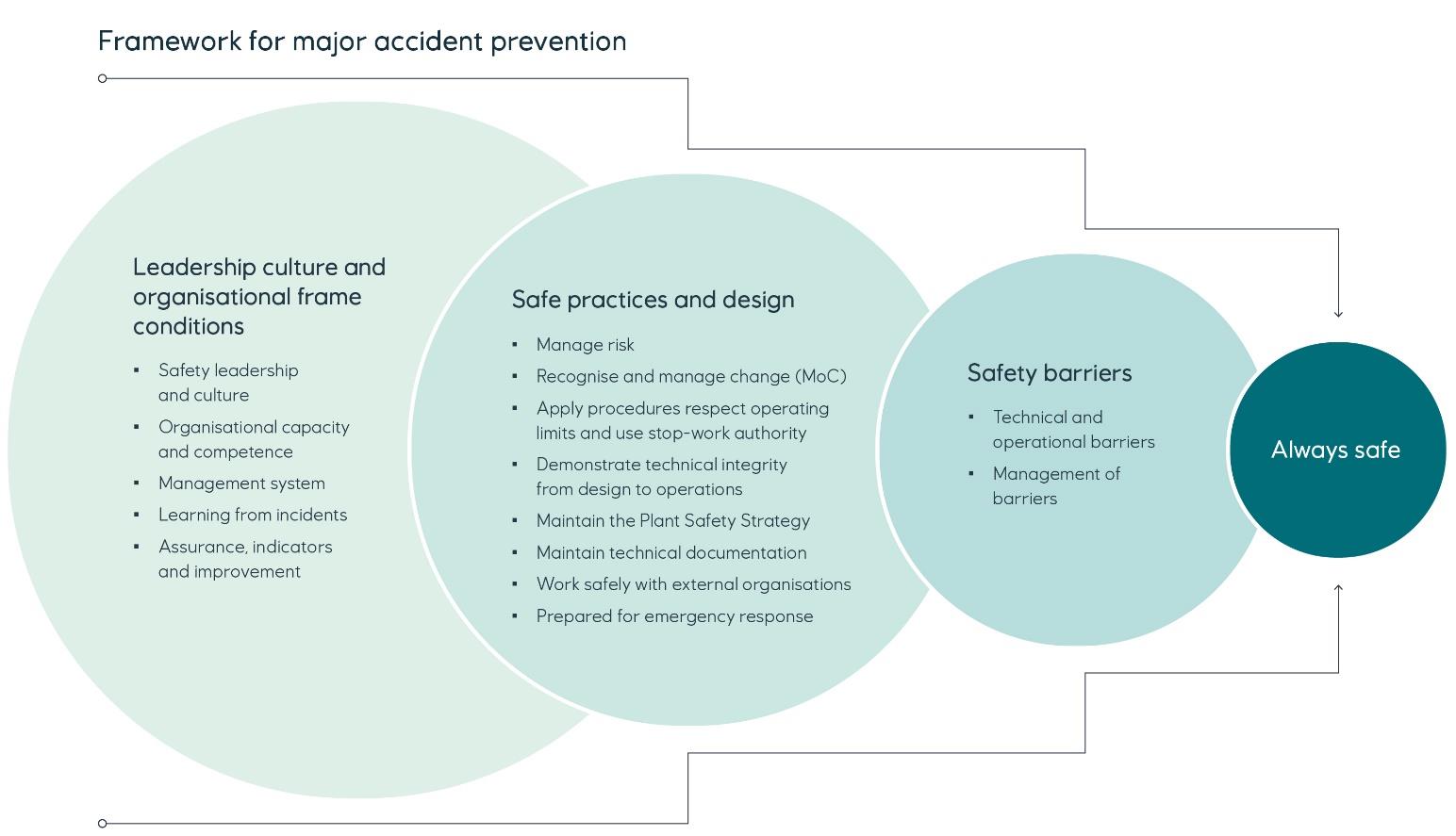
50 Equinor, Annual Report on Form 20-F 2022
Our safety and security management system capitalises on the collective knowledge gained and good practice established over many
years. This is fundamental to ensure safe and efficient execution of activities and clear roles and responsibilities. Based on learning
from incidents, a framework for major accident prevention was developed in 2021. The framework set a structure based on recognised
industry practice for high-risk industries. The framework for major accident prevention relies on leadership, culture and organisational
frame conditions, safe design and practices and safety barriers. Human and organisational performance principles are embedded in
the framework. During 2022, the framework for major accident prevention was implemented globally.
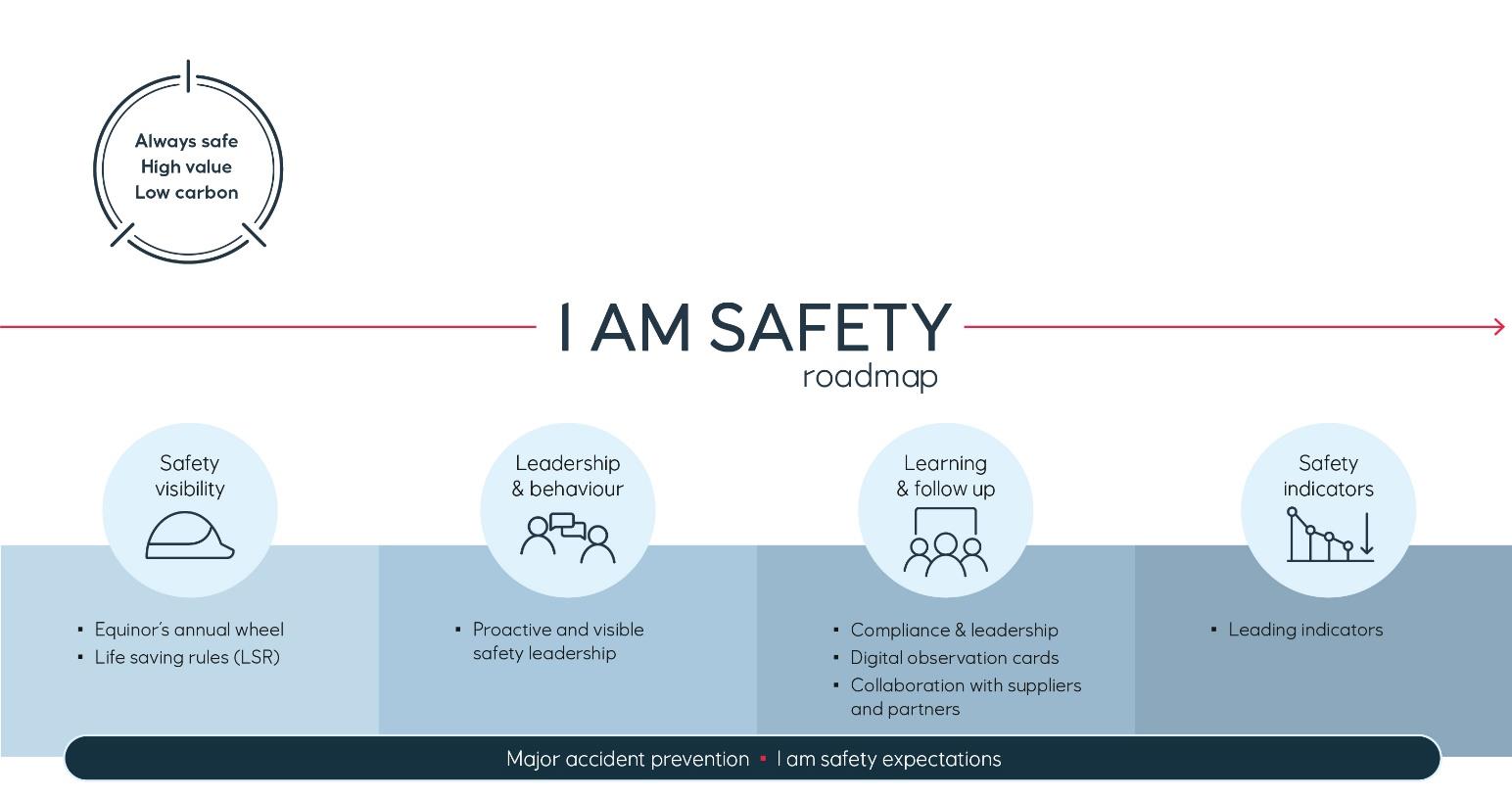
Equinor, Annual Report on Form 20-F 2022 51
Safety roadmap
The I am safety roadmap sets the direction for Equinor’s safety improvement. It guides the safety work and outlines prioritised
activities throughout the company across four categories: safety visibility, leadership and behaviour, learning and follow up, and safety
indicators.
Human and organisational performance (HOP) principles underpin the way in which we develop a proactive and visible safety culture.
The HOP approach provides guidance on how people, technology, organisations and processes interact as a system, and how these
conditions can influence the causes of human errors. HOP is implemented in leadership training across the company, and HOP focal
points were established and trained in 2022 to support the roll-out and training.
Equinor works together with suppliers and contractors to achieve a standardised and common approach to the safety improvement
agenda. Formalised collaborations based on Life saving rules, Annual wheel and common KPIs have been established and committed
through signed collaboration charters. Joint meetings across the established safety charters were held in 2022 and alignment on the
agreed targets and priorities achieved. All these arenas are open and transparent venues for sharing of learning both ways.
Close cooperation with other operators is vital for the work to succeed. Equinor engages proactively across industry bodies such as
the International Association of Oil & Gas Producers (IOGP), Oil Companies International Marine Forum (OCIMF) and the G+ Global
Offshore Wind Health & Safety Organisation.
Equinor continuously works to improve and develop new leading indicators to proactively guide the safety approach across the
company.
Crisis and continuity management
To ensure we are prepared, we work to have appropriate emergency response capabilities in place to limit the consequences of
incidents, should they occur. Our oil spill response capabilities are in line with good international practice and leverage expertise and
resources made available through our membership of local and international oil spill response organisations. Equinor personnel
routinely participate in training and exercises on their roles and responsibilities in emergency response situations, to be sufficiently
prepared if, and when, incidents occur
.
Joint exercises with interaction between internal and external actors were carried out during
2022.
In response to the European security situation, a strategic project team reporting to the CEO and the CEC was established from
February to December to ensure risks and challenges were managed holistically across the company. The purpose was to maintain
safe and efficient operations and prepare the company for short- and long-term impact. The strategic project team facilitated close
interaction and collaboration with key stakeholders, partners and Norwegian authorities and security agencies. Equinor increased the
state of alert in Norway and for parts of the international business in September. We strengthened our personnel security efforts to
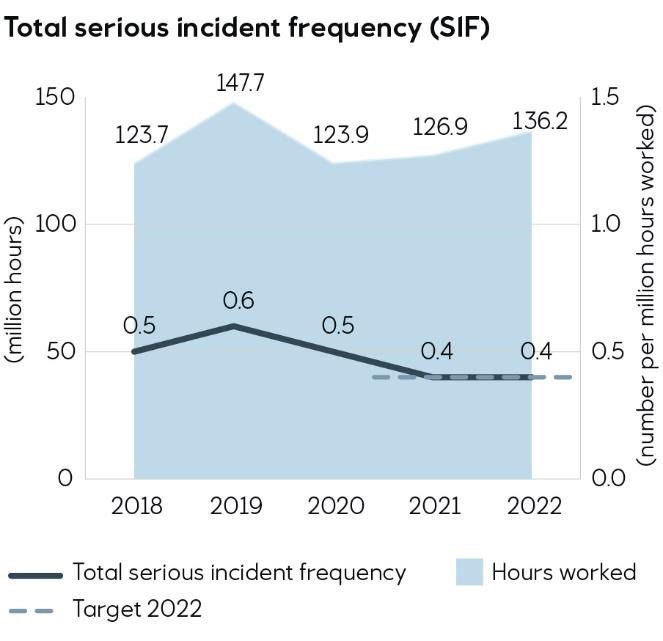
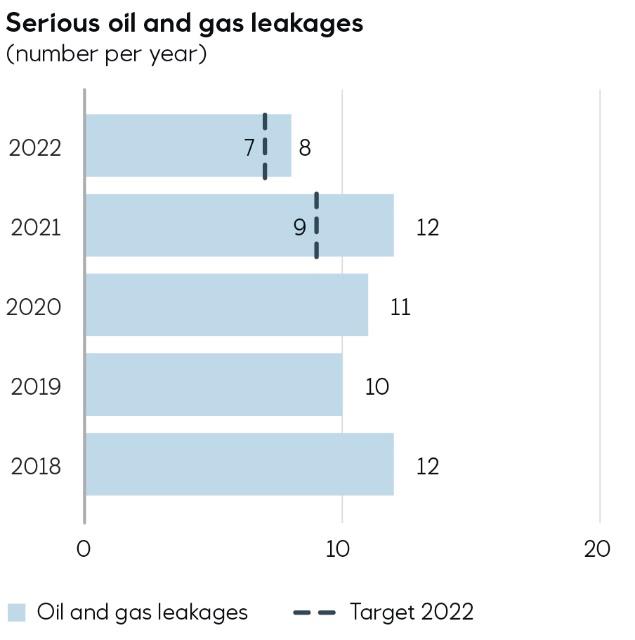
52 Equinor, Annual Report on Form 20-F 2022
raise awareness and handle insider risk both for our own employees and in collaboration with suppliers. During the year, Equinor
continued to strengthen cyber security barriers and improved response and recovery capabilities across the company.
To safeguard onshore plants and offshore installations, Equinor reviewed its onshore and offshore physical security and improved the
security barriers in line with the Equinor state of alert requirements and guidance from the Norwegian authorities.
Health and working environment
Health and working environment is an integral part of our efforts to safeguard people. We focus on risk management and systematic
monitoring of work-related illness related to factors such as chemicals, noise, ergonomic workplace, and psychosocial aspects. In
addition to monthly reviews of registered cases, we capture information from employees through our Global People Survey (GPS),
which includes questions related to psychosocial and mental health risk factors.
Performance disclosure
Serious incidents
In 2022, we experienced no actual nor potential major accidents, and no fatalities.
Our serious incident frequency (SIF), which includes near misses, ended on target at 0.4 incidents per million work hours. This is an
improvement over the five-year period 2018–2022 from 0.5 to 0.4. The number of actual incidents has halved in the same period.
Process safety
In 2022 there were 8 serious oil and gas leaks (with a leakage rate ≥ 0.1 kg per second). This is the lowest number of leaks ever
recorded and came close to achieving our ambitious 2022 target of a maximum of seven leaks. No serious well control incident
recorded.
There was an increase in Tier 1 process safety incidents that included loss of primary containment. A total of 14 incidents were
classified as Tier 1 in 2022, while the total number for 2021 was 8. However, the sum of Tier 1 and the less severe Tier 2 incidents
was reduced.
The positive trend on the safety-critical maintenance backlog continued
during 2022. Reducing this backlog is important in preventing major
accidents.
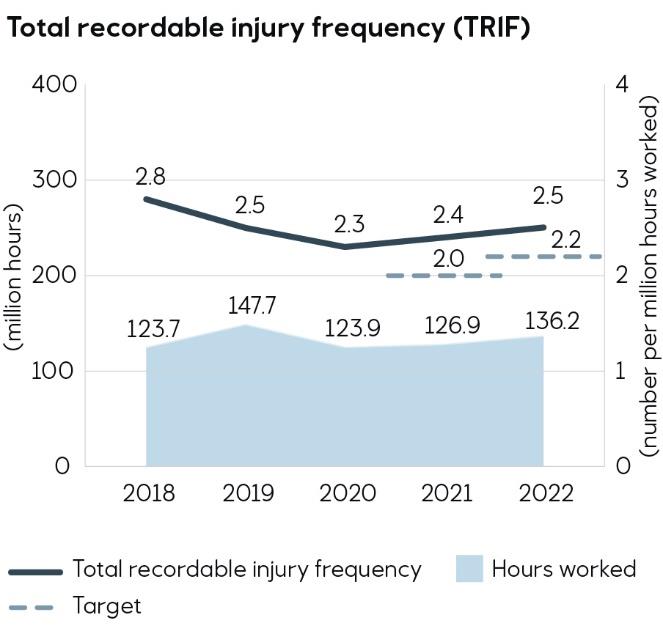
Equinor, Annual Report on Form 20-F 2022 53
Personnel health and safety
The total recordable injury frequency (TRIF) increased to 2.5, up from 2.4 in 2021 and the 2022 target of 2.2 was not achieved.
However, more detailed analysis shows that according to Equinor’s internal severity classification there is a decline in the most
serious injuries.
Health and working environment
Indicators
Boundary
Unit
2022
2021
2020
2019
2018
Work related illness
Equinor group
number per year
132
161
161
135
82
Sickness absence
Equinor ASA
employees
percentage of
planned work hours
5,1
4,6
4,2
4,4
4,6
There was a decline in the number of work-related illnesses, with 132 recorded cases in 2022. The total level of absence from
sickness has increased since 2020, to reach 5.1 (as a percentage of planned workhours) in 2022.
Security incidents
Security threats are monitored and reported on a frequent basis and risks are managed holistically across the physical, cyber and
personnel domains. Equinor experienced some cyber-related incidents during the year, such as a distributed denial of service (DDoS)
attack on an Equinor server, which had limited impact and was rapidly resolved.
There was increased targeted activism against Equinor’s operations from environmental groups. None of the security incidents led to
any significant harm to people, assets, or operations.
54 Equinor, Annual Report on Form 20-F 2022
Security
2022
2021
2020
2019
2018
Percentage of security
personnel who have received
formal training in the
organisation's human rights
policies - South America and
Africa
1
Equinor
group
percentage
100
91
85
n/r
n/r
Security e-learning training for
employees and contractors
Equinor
group
number of
participants
19,580
15,694
n/r
n/r
n/r
Completion of cyber security
awareness training for
employees - since
commencement in June 2021
Equinor
group
percentage
97.7
n/r
n/r
n/r
n/r
1
As signatories of the Voluntary Principles on Security and Human Rights (VPSHR), Equinor does not use armed guards unless it is
strictly necessary. In certain locations the threat is of such a nature that the arming of guards is crucial, while in others is it not
possible to procure security services without the inclusion of firearms.
Performance evaluation
No fatalities and no actual or potential major accidents were recorded in 2022, and the total number of actual serious incidents is the
lowest ever recorded.
The total recordable injury frequency (TRIF) is higher when compared to industry benchmarking. In addition, our sickness absence
has increased over the last two years. These areas represent a challenge for us, and we are working to understand the causes and
mitigate risks.
Based on our 2022 performance, we recognise the need to continue to improve our safety performance. Given the measures
reinforced in 2022, we consider our approach as adequate to improve our performance and close the gap on our health, safety and
security targets. These objectives remain a top priority for Equinor’s management.

Equinor, Annual Report on Form 20-F 2022 55
2.1.2 Protecting nature
TOPIC
DESCRIPTION
IMPACTS TO
NATURE
AND SOCIETY
PRINCIPAL RISK
FACTORS/IMPACT
ON EQUINOR
KPI/
MONITORING
INDICATOR
AMBITION
AND STATUS
Preventing the loss of
biodiversity and
enhancing the
diversity and
resilience of
ecosystems in which
Equinor operates.
Equinor’s operating
activities have actual
and potential impacts
on nature. These
include the potential for
serious uncontrolled
discharges, as well as
operations in or near
protected areas.
environmental factors
reviews and reporting
Assets and licences
in and adjacent to
protected areas
(number of)
From 2023:
New projects in
protected areas or
areas of high
biodiversity value to
establish a plan aiming
to demonstrate net
positive impact
n
Serious accidental
spills (number of)
0 (2022)
n
n
n
n
n
Text in bold:
Key performance indicator.
Contextual introduction
For Equinor, as a large offshore oil and gas operator with a growing offshore wind portfolio, the management of our activities and their
potential impacts on the marine environment continues to be a priority. Historically our operated onshore activities were limited to oil
and gas, including drilling and fracturing of wells in the US. Recent investments in and our ambitions for CCS, solar, hydrogen and
battery storage projects underline the increasing importance of our management of onshore environments.
Our operations have actual or potential impacts on nature through pollution, including regular and uncontrolled discharges to sea or
land and emissions to air. Our use of land and sea areas and related disturbances, including the noise of our operations and the risk
of collisions with animals, and introduction of alien invasive species from maritime vessels, may also negatively impact biodiversity
and ecosystems. This is of particular importance if our activities are in or near protected areas or areas of high biodiversity value.
Through our partners and suppliers, we may also indirectly contribute to impacts on nature, for example in activities where large
quantities of materials like metals, cement and chemicals are used.
There are increasing expectations from policy makers, academia, civil society, and communities among others, for urgent action to
reverse biodiversity loss this decade. Global and regional biodiversity policies and risk management and disclosure frameworks are
being developed and strengthened in support of the Kunming-Montreal Global Biodiversity Framework. These developments
constitute a new set of detailed expectations for companies related to impacts and dependencies on nature and have direct relevance
to Equinor’s operations and its supply chains. Equinor aims to go beyond the zero-harm principle and take relevant actions to reduce
potential adverse impacts and contribute to positive impacts.
The shift to a more resource-efficient, circular economy is a key area increasingly being reflected in stakeholder expectations and
commercial agreements, for example in the context of the EU Taxonomy and for new wind farm developments. Another important
development is the increased focus on the dependencies of nature and ecosystem services. Relevant dependencies for Equinor
include the extraction of natural resources in our supply chain and the bioremediation service that healthy oceans provide when we
discharge produced water containing minor fractions of oil and chemicals to sea at some of our offshore platforms.
Management approach
To manage our impacts on nature, alongside complying with applicable laws and regulations, we aim to apply recognised
environmental management practices. This includes application of the precautionary approach, best available techniques, the
mitigation hierarchy and the ISO 14001 environmental management principles.
In 2021, in support of the global ambition of reversing nature loss by 2030, we announced in our Biodiversity position statement
ambitions of going beyond the ‘do-no-harm’ principle by developing a net-positive approach. In 2022, we finalised the first set of
methodologies for net-positive impact plans and site-specific inventories of key biodiversity features and started establishing such
inventories. From 2023, we will develop plans aiming for a net-positive impact for all new development projects in protected areas or
areas of high biodiversity value. The methodologies were developed through pilots in investment projects (including collaboration with
bp at our joint offshore wind developments off the US East Coast), and assets in operation, and further implementation is planned.
Further information can be found in our sustainability pages at equinor.com.
During 2022, we also followed the work of the Taskforce on Nature-related Financial Disclosures (TNFD) as a member of the TNFD
Forum. To prepare for implementation of emerging nature-related risk and disclosure frameworks, we initiated internal materiality
assessments and assessments of relevant metrics and indicators.
56 Equinor, Annual Report on Form 20-F 2022
Our governance, risk and performance framework enables us to systematically manage environmental aspects. Our first priority is to
avoid potential negative impacts. If this cannot be done, we aim to minimise them. In the planning phases of all our assets, before
construction or operations can commence, a key part of our management approach is environmental and social risk and impact
assessments, including stakeholder engagement. This also includes baseline studies, surveys, monitoring programmes, and
collaborative research projects to build knowledge and develop tools. Our oil spill response capabilities are described in section 2.1.1
Safe and secure operations. We publish documentation from project-specific impact assessments on our own website and make
biodiversity-related data available through solutions owned by others, such as the Norwegian and UK authorities.
In 2022, we enhanced our focus on environmental regulatory compliance including specific improvement initiatives for our oil and gas
assets in Norway. This included improved governance and collaboration, training and awareness initiatives, increased follow-up, and
operational measures.
Substitution of chemicals for less environmentally harmful ones is part of our continual improvement efforts. For example, in 2022, we
completed a campaign to substitute firefighting foam containing per- and polyfluoroalkyl substances (PFAS) with fluorine-free foams
across our Norwegian operations.
We are also piloting an approach for sharing more biodiversity-related data via data.equinor.com. Equinor is a member of the Ocean
Decade Corporate Data Group co-hosted by the Intergovernmental Oceanographic Commission (IOC) of UNESCO and Fugro. The
aim of this initiative is to make privately held ocean data available for scientific research and decision making to address the
challenges identified through the United Nations Decade of Ocean Science for Sustainable Development.
Growth in renewables is core to our Energy transition plan, and we need to understand how best to achieve this ambition in a nature-
positive way. For example, we actively use Hywind Scotland, the world’s first floating wind farm, as a test site to increase our
knowledge of potential environmental impacts of such assets, and we aim to continue this work with the new Hywind Tampen wind
farm on the NCS. Research topics include sound emissions from wind turbines, and we use remote sensing technology to assess
potential reef-effects. We also undertake research on potential impacts on birds and how to mitigate them.
Collaboration with external stakeholders is fundamental to our approach, which helps us to build our knowledge and develop
innovative solutions to address biodiversity. In 2022, we extended our participation in a range of research programmes and industry
partnerships, such as the UN Environment Programme World Conservation Monitoring Centre’s (UNEP-WCMC) Proteus Partnership.
We also joined a project led by the International Union for Conservation of Nature (IUCN) which aims to identify good practices for
renewable energy development.
We are also working to improve our understanding of circular economy opportunities. This includes our approach to waste
management in general, as well as to specific recycling opportunities such as wind turbine blades and materials from the
decommissioning and removal of offshore facilities. Through the supply chains for our oil and gas, and renewables activities, we
purchase large quantities of steel, other metals, cement, and various materials used in drilling and completion of wells. Each of the
respective supply chains may impact nature in various ways and have specific waste management needs and practices. We apply the
waste hierarchy to primarily avoid waste generation and follow key circular economy principles such as the re-use, recycling and
recovery of materials. The largest waste volumes from our own operations are oily wastewater from oil and gas processing and oiled
drill cuttings.
Equinor, Annual Report on Form 20-F 2022 57
Performance disclosure
Non-GHG emissions, discharges and waste
Selected environmental performance data for 2022 is shown in the table below. A complete set of performance data can be found in
our Sustainability datahub at equinor.com.
There were no serious accidental spills in 2022, and the total volume of accidental oil spills and other spills was considerably reduced
from 2021 to 2022. However, the total number of spills increased slightly. A discharge of 581,000 m
3
Mongstad refinery water treatment plant was reported as a breach of permit. This was because the discharge occurred closer to shore
than permitted and the volume was larger and the period longer than initially communicated to the Norwegian Environment Agency.
Over the past four-to-five years, non-GHG emissions to air and regular, permitted discharges of oil in water to sea have trended
downwards slightly, or remained at the same level. The increase in SOx emissions from 2021 to 2022 was mainly due to the restart of
production at the Peregrino FPSO in July 2022. However, SOx emissions from the asset are lower than in earlier years due to an
ongoing fuel switch from diesel to imported natural gas. Hazardous waste quantities increased from 2021, mainly caused by increased
volumes of water dispatched from Mongstad for further treatment. This water stems from well cleaning at offshore platforms.
Increased quantities of drill cuttings due to increased drilling activity in Norway also contributed to an increase in hazardous waste
quantities. Exempt waste quantities are at a low level since only three wells were drilled and fractured during 2022, all of which are at
a single location in the US.
Indicators
Units
2022
2021
2020
2019
2018
SOx emissions
ktonnes
1.1
0.9
1.3
2.2
1.8
NOx emissions
ktonnes
32
34
36
41
42
Non-methane volatile organic compounds
ktonnes
23
26
35
40
46
Accidental oil spills (net volume >0)
Number
m
3
111
120
136
219
239
33
40
154
8,913
138
Other accidental spills (net volume >0)
Number
m
3
122
98
117
204
199
302
3,335
3,997
57
934
Serious accidental spills
Number
0
0
2
3
1
Regular discharges of oil in water to sea
ktonnes
1.1
1.1
1.3
1.2
1.1
Hazardous waste generated
ktonnes
304
280
318
313
244
Non-hazardous waste generated
ktonnes
37
33
29
40
31
Exempt waste generated - drill cuttings and solids
from US onshore operations
ktonnes
1.2
0
17
84
55
Exempt waste generated - produced water and
flowback water from US onshore operations
million m
3
0.1
2
5
7
6
Biodiversity and nature
In 2022, we expanded the scope of reporting in relation to where we have operations in protected areas and areas of high biodiversity
value. We now include linear infrastructure (e.g., pipelines and cables) for which Equinor is technical service provider on behalf of
other operators, resulting in inclusion of the Europipe I and II pipelines which both crosses the Wadden Sea UNESCO World Heritage
Site (WHS). The Wadden Sea was included in the WHS list in 2009, while the pipeline installations were completed in 1995 and 1999,
respectively. We otherwise did not operate within other sites on the WHS list or sites in the International Union of Conservation of
Nature (IUCN) category 1a (“Strict nature reserve”) or category 1b (“Wilderness area”).
The number of assets and licences inside or adjacent to protected areas increased from 19 in 2021 to 35 in 2022. This is partially
caused by the increase in renewables activity and the increased disclosure scope (as explained above). A summary of our presence
in relation to protected areas and areas of high biodiversity value is shown below and a complete overview is available in the ESG
reporting centre on equinor.com.
NPI plans are being developed for several assets, for which the Empire Wind project in the US and the Rosebank project in the UK
are first in scope.
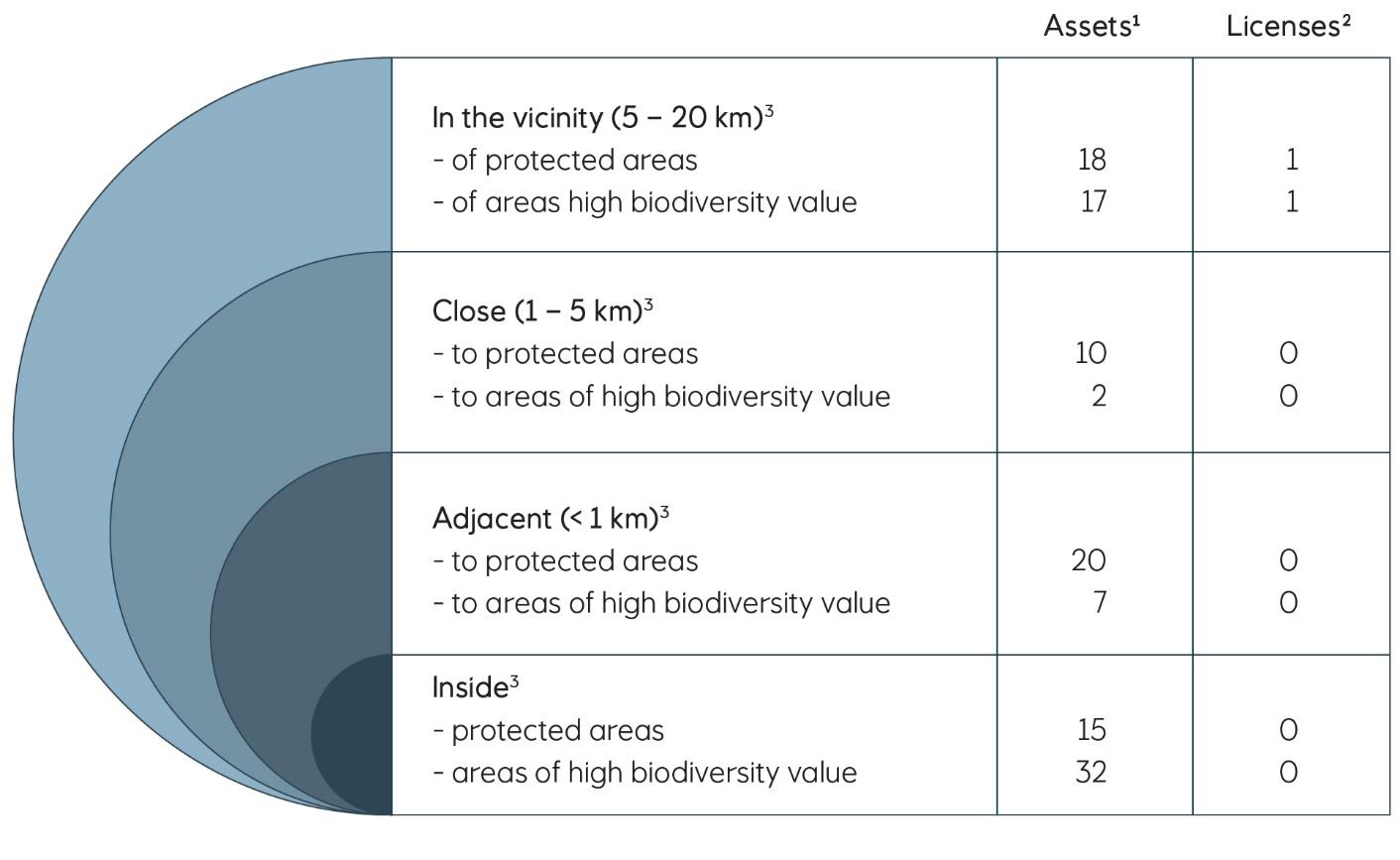
58 Equinor, Annual Report on Form 20-F 2022
1. “Assets” means offshore platforms including subsea tie-ins, onshore plants, pipelines and other linear infrastructure in operation or under
construction
2. “Licences” includes only those licences where there have been operational activities other than 1) above, e.g., seismic acquisition,
exploration drilling, site surveys
3.
If several protected areas (PA) or areas of high biodiversity value (AHBV) are present within a proximity category around a given asset or
operation, they are counted as one. If a given PA or AHBV are within proximity categories for several assets or operations, it is counted in for
each of these assets or operations. Subsea installations within a field are included in the counting of the platform it is tied in to. For existing
linear infrastructure like pipelines, service lines and cables, only the ‘Inside’ and ‘Adjacent’ categories are applied. In cases where linear
infrastructure is installed during a given reporting year, all proximity categories are applied. Information on geographic location of cases
represented in the table above can be found in the “Sustainability performance data hub” on Equinor.com.
Withdrawal and consumption of freshwater in 2022 was 6 million m³, a reduction from 8 million m³ in 2021. We had no oil, gas or
renewable energy production in, nor did we withdraw water from areas of high or extremely high baseline water stress as defined by
the World Resources Institute’s Aqueduct® tool.
Performance evaluation
Non-GHG emissions, discharges and waste
For 2022, non-GHG emissions to air and the volume of discharges and spills to sea were mainly at the same level or trending
downwards. We have also taken measures to reduce SOx emissions at the Peregrino FPSO. We therefore believe our approach to
non-GHG emissions is effective and is producing the intended results.
Generated waste volumes, which stay at the same levels as previous years, are mainly dependent on activity levels within drilling, well
clean-up and maintenance. We also initiated an improvement initiative to establish a circular economy framework aiming for better
management of use, reuse and recycling of resources, including waste.
Although the accidental spill volumes are lower in 2022 compared to the previous year, we are not satisfied with the fact that the
number of such spills increased slightly since 2021. As also raised by the Norwegian Environmental Agency, we continue to have
compliance issues related to the number of accidental spills and breaches of discharge permits for our operations in Norway. The
improvement activity addressing governance, competence, awareness and performance in this area, continues.
Biodiversity and nature
Our approach and ongoing improvement activities related to our impacts on biodiversity are viewed as representing an adequate
response to the global expectations and need for action against loss of biodiversity. The increase in numbers showing our presence in
or adjacent to protected areas, is the outcome of increased disclosure scope (as explained above) and our expanding renewables
portfolio. We continued our implementation of a net positive approach as outlined in our biodiversity position, including relevant
Equinor, Annual Report on Form 20-F 2022 59
disclosure metrics and preparation of NPI plans. The reduced level of withdrawal and consumption of freshwater is considered a
positive development.
60 Equinor, Annual Report on Form 20-F 2022
2.1.3 Tackling inequality – Human rights
TOPIC
DESCRIPTION
IMPACTS TO
NATURE
AND SOCIETY
PRINCIPAL RISK
FACTORS/IMPACT
ON EQUINOR
KPI/
MONITORING
INDICATOR
AMBITION
AND STATUS
Respecting human
rights in Equinor’s
own activities and
supply chain.
Equinor has operations
and supply chains in
geographies where
human and labour rights
may be at risk. With
8,000 direct suppliers,
our activities may
impact a vast number of
people.
ethical misconduct
contractors
organisation
Determine a
suitable human
rights indicator
Pilot a set of human
rights indicators (2022)
n
n
n
n
n
Contextual introduction
Within a turbulent global landscape, ethical and transparent behaviour is a critical foundation for business when considering how to
tackle inequality. The Russia-Ukraine war and its ripple effects on access to food and energy, alongside the cost of living crisis, can
have significant implications for individuals who already face challenges to their basic human rights. Understanding and managing the
risk of adverse human rights impacts related to our activities is at the core of our human rights commitment. This is consistent with the
United Nations Guiding Principles on Business and Human Rights (UNGPs), the ten principles of the Global Compact and the
Voluntary Principles on Security and Human Rights. We recognise that our activities can cause, contribute, or be linked to negative
human rights and other social impacts, especially in jurisdictions with weak regulatory frameworks or enforcement, and where our
activities face inherent risks. Addressing gaps towards international labour standards continues to be our main salient issue.
Specifically, addressing the possibility of forced labour connected to our supply chains, a situation exacerbated by global instability,
increased inequality and continued effects of the Covid-19 pandemic, remains our key concern.
Management approach
Equinor’s human rights policy applies to all our activities. In accordance with the company’s risk management system, we identify
adverse human rights risks and impacts, and work to prevent, mitigate or remediate as relevant to each situation. During 2022, we
continued our efforts to further integrate human rights practices into the way we work, supported by regular senior leadership
engagement.
Focus on labour rights and living wages is identified as one of the core priorities of the Just Transition plan which embeds respect for
human rights as fundamental to achieving a just and fair transition.
The executive-level human rights steering committee continues to serve as an advisory group focusing on learning and experience
transfer, actions to address Equinor’s key human rights risks, and supporting the engagement with and reporting to the CEC and BoD.
Areas of discussion have included risk mitigation in project development, enterprise risk level and mitigation, and new disclosure
initiatives to drive transparency.
Within Equinor, it is the responsibility of the risk-owner to conclude where human rights due diligence efforts should be prioritised.
Defining such priorities is based on regular risk and portfolio assessments and supported by a corporate team of human rights experts
who help ensure alignment across the portfolio. In 2022, we continued to look for indications of forced labour and unacceptable
working conditions in our supply chains, particularly within fabrication and construction activities across Asia and in core countries
such as Brazil. Compared to previous years, risk assessments in the earlier phases of project planning were prioritised, to better
inform decision making and allow for more effective mitigation. To understand risks related to our activities, we perform environmental
and social impact assessments. These are an essential part of our project development process and allow for proactive consultation
with stakeholders to inform our understanding of community impacts. This includes addressing potential impacts on indigenous
peoples, which continue to be a priority. For certain high-risk activities, we may perform additional and specific human rights risk
assessments, typically supported by external experts. During project execution, by engaging with potentially affected stakeholders
through worker dialogue, we get better understanding of any potential issues and are able to respond with appropriate means of
remediation where necessary. We follow up with suppliers based on identified risk, including verifications, tracking of actions and
ongoing dialogue. We expect all current and future suppliers to be familiar with and apply our general human rights expectations. We
include specific human rights clauses in all our contracts, based on scope and location of delivery, which typically define the risk level.
Equinor, Annual Report on Form 20-F 2022 61
As we enter 2023, a further strengthening of our management system is underway, including global working requirements for human
rights due diligence and new requirements for internal reporting. We continue to build our expert-level corporate capabilities, both
through the recruitment of specialists and by improving work processes to better leverage internal capacity and know how.
The introduction of a standalone Human rights statement is a direct response to the Norwegian Transparency and Human Rights Due
Diligence Act and is an opportunity to broaden our external disclosure and communication on our human rights approach, risks and
work. To ensure compliance with the Act, Equinor has created an internal procedure for capturing and processing information
requests.
Performance disclosure
Labour rights and decent work
We require all new suppliers to be screened for social criteria. In line with our approach to performing risk assessments in the early
phases of our projects, we assessed 283 suppliers for social impacts in 2022. From this, 154 suppliers were identified as having
significant gaps. 84% of these suppliers have through closing of gaps become qualified, while the rest of the suppliers are yet to
complete their improvement plans. If we find that a supplier will not implement necessary improvements, the supplier will not be
awarded a contract. There were no circumstances where suppliers were not willing to improve to become qualified, and no
circumstances where findings or lack of collaborative actions resulted in a need to terminate a relationship.
Aligned to our corporate priorities, we assessed conditions for workers involved in specific construction projects in Malaysia,
Singapore, Thailand and China. Indicators of forced labour as defined by the International Labour Organization (ILO) were identified in
one contract we are linked to, mainly related to payment of recruitment fees, retention of identity documents, and restriction of
movement
.
This means that during 2022, we identified 61 individuals as subject to at the minimum one indicator of forced labour
within our supply chains. We continued to work with our partners to provide remedy in these instances, including compensation
towards undue payments. In 2022 payments were made to 1,791 previously identified workers, to the value of over USD 2 million.
Labour rights and working conditions in the supply chain
Indicators
Boundary
Unit
2022
2021
2020
2019
2018
Human rights (HR) assessments
of suppliers conducted
Equinor group
number
24
30
37
50
75
Workers interviewed
Equinor group
number
808
974
343
650
1000
Countries in which supplier HR
assessments undertaken
Equinor group
number
11
10
9
16
20
Employees working with our
suppliers trained (class room
course)
Equinor group
number
264
128
190
409
514
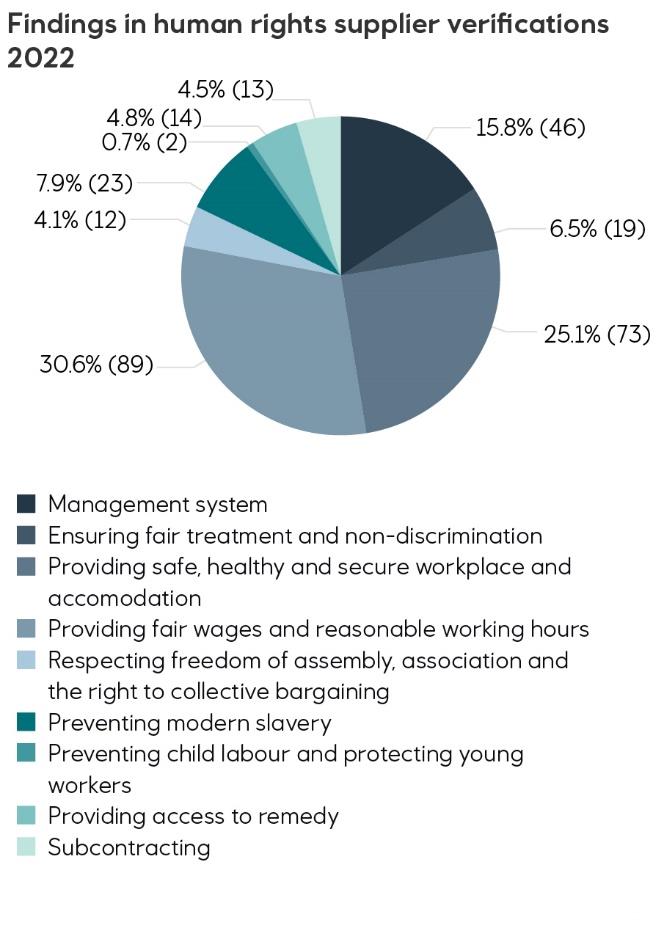
62 Equinor, Annual Report on Form 20-F 2022
The number of supplier assessments varies with nature and level of activity
and is not necessarily comparable year-on-year. However, our approach to
be more targeted towards high-risk sites and suppliers and focus on site
visits and worker interviews as opposed to more traditional audits, has
resulted in a gradual decrease. We do not find it relevant to set targets
towards number of assessments.
Due to publicly reported concerns of serious labour exploitation in solar
supply chains, we continued our task force focusing on actions to mitigate
short-term and longer-term risks. Actions include increasing and requesting
traceability throughout the supply chain, seeking contractual safeguards,
engaging with industry initiatives, and investigating opportunities for
alternative sourcing routes.
A step-up in shipping and oil and gas storage
During 2022, a special task force, consisting of business line
representatives and human rights expertise developed specific
requirements and tools to embed human rights due diligence in our
shipping and oil and gas storage business. Alongside these efforts,
tailormade full-day classroom training was delivered to approximately 70
business professionals.
Human rights were also a core topic at our regular Working safely with
suppliers conference. Bringing shipping and storage suppliers together in
Stavanger, this event includes leadership expectations, panel
conversations, and roundtable discussions to explore common challenges
and ways forward.
Supplier dialogue and onsite human rights assessments were performed at
two yards where new-build vessels are being constructed.
Community risks and impacts
No potential or actual adverse impacts of indigenous peoples’ rights were identified during 2022. Across our operated assets, Equinor
received no eligible grievances according to our internal procedures. Issues raised which are deemed ineligible include, for example,
requests for donations, sponsorships, jobs, and requests for information about collaborating or partnering with Equinor in various
projects.
Together with Shell, we continued to actively manage the remaining human rights risks and impacts associated with the resettlement
of 29 households and the discontinuation of farming and fishing affecting 446 households in the area identified for a potential LNG site
in Lindi, Tanzania. Specifically, the focus has been on ensuring the longer-term sustainability for impacted households. Actions
include the signature of a Land agreement and the development of an agricultural livelihood baseline assessment, as the preparatory
stage for an agricultural livelihood restoration programme to be implemented in 2023.
Through our joint activities to develop a solar park with Scatec in Northern Brazil, we resettled two families who were previously living
and working in a location with no rights to the land or formal work contracts. Through strong Equinor-led stakeholder engagement and
compliance with International Finance Corporation (IFC) standards and our human rights policy, both families have taken legal
ownership of their new property, including land allocation for one family who wanted to continue farming.
Governance and capacity building
In addition to the human rights steering committee, executive leadership engagement in 2022 included participation in several
external, cross-sectoral and multi-stakeholder coalitions including a Commissioner role in the Business Commission to Tackle
Inequality and board member at the WBCSD Energy Pathway Board, with focus on human rights and the just transition. There was
continued engagement with industry leaders, academia and subject matter experts to share experiences and to align on good
practice. Internally, general and specific capability building efforts continued through 2022, focused around new and emerging
regulations, and in particular the Norwegian Transparency Act.
We continued to deliver a third-party-facilitated Human Rights In Practice course for supply chain professionals and company
representatives, focused on labour rights, Ethics, Anti-Corruption and Human Rights.
Information requests according to the Transparency Act
In 2022, Equinor received three information requests, which were all responded to within the legislative deadline. In addition, twelve
questions and requests for action or information were received but not deemed legitimate under the scope of the Transparency Act.
These were treated separately on a case-by-case basis.
Equinor, Annual Report on Form 20-F 2022 63
Finally, we continued the active participation in mediations related to a tragic crane accident at a South Korean yard in 2017. The
process is facilitated by the Norwegian OECD National Contact Point, following the filing of a complaint alleging breaches by several
companies, including Equinor, of the OECD Guidelines for Multinational Enterprises.
Performance evaluation
We continue, as do many, to be challenged to find meaningful and objective assessments of performance within the field of business
and human rights. In 2022, as a first step towards maturing a broader performance framework, we piloted a set of internal monitoring
indicators relevant to our key risks. We will continue to build on the learnings from this pilot with the aim of reporting in a more
quantitative fashion in future years.
As we continue our risk-based approach to human rights due diligence within our global supply chains, we see significant risks of
adverse human rights impacts, particularly related to decent work and the possibility of forced labour.
Whilst it is never satisfactory to identify substandard labour conditions, we see that our efforts to understand potential impacts earlier
in the project and procurement process as a further step towards more risk avoidance and effective mitigation.
Our efforts in 2022 focused on furthering specific actions towards the construction sector, including building leverage with peers and
partners, and particular efforts were made towards our midstream business including shipping and oil and gas storage. A further
strengthening of our internal work processes will drive more systematic and documented due diligence across the portfolio.
64 Equinor, Annual Report on Form 20-F 2022
2.1.4 Tackling inequality – Diversity and inclusion
TOPIC
DESCRIPTION
IMPACTS TO
NATURE
AND SOCIETY
PRINCIPAL RISK
FACTORS/IMPACT
ON EQUINOR
KPI/
MONITORING
INDICATOR
AMBITION
AND STATUS
Creating a diverse
and inclusive place to
work where equal
opportunities and
human capital
development is
fostered, and
discrimination is not
tolerated in any form.
Equinor employs a large
and diverse workforce
of around 22000
employees, with
operations and value
chains in some 30
countries.
ethical misconduct
organisation
Inclusion index
score (%)
I: ≥80 (2025)
n
n
n
n
n
Contextual introduction
Equinor has worked systematically with diversity and inclusion (D&I) since 2019. Overall we believe our performance in 2022 has
been satisfactory, and we have focused our work on updating the D&I strategy, ambition and metrics that will enable us to strengthen
our performance in the future. The aim is to operationalise D&I further into our business and embed in how we develop our people
and engage with the societies in which we operate.
Recent years have seen a shift in the expectations from governments, governing bodies, society and employees when it comes to
companies’ social responsibility and role in D&I. To us, D&I aligns with our values, our focus on safety and our purpose as a company.
As outlined in our Code of Conduct, we do not tolerate any discrimination or harassment of colleagues, or others affected by our
operations, and require everyone to be treated with fairness, respect, and dignity. Our agreement (likestillingsavtale) between the
company and union Industri Energi applies to all employees in Equinor ASA and states that we, as an employer, work to ensure all
employees are treated equally regarding recruitment, pay and working conditions, training, career paths, and professional
development. Equinor is committed to being transparent about our progress and we participate in several external indexes and
networks. These include the SHE Index and the Bloomberg Gender Equality Index, where we have committed to integrate D&I into
our business strategy and share experience and learning.
Our updated D&I ambition states “We are a diverse and inclusive organisation where everyone feels valued and that they belong. Our
D&I strategy continues to build on strengthening a safe and inclusive work environment for all and ensuring fair and equal
opportunities. The strategy strengthens Equinor’s social responsibility to ensure a just energy transition and builds upon the
commitments we have made as part of our new value chains.
Management approach
Our D&I strategy is based on empowering the organisation to drive D&I locally, in line with national reporting requirements and local
legislative frameworks. The strategy was developed through extensive external and internal stakeholder engagement and the
feedback was focused on the need for local actions, diversity representation in senior leadership, and openness to talk about diversity
dimensions beyond gender. The BoD was continually kept informed about progress through formal reporting channels and meetings.
Throughout 2022 the CEC members were involved in shaping the strategy, and employees, union representatives, and members of
employee resource groups (ERGs) were included in strategy development. A separate working group with Norwegian union
representatives was established and met four times throughout the year to discuss D&I actions and progress. The D&I strategy is
owned by the Human Resource team. Throughout 2022, Equinor also collaborated with the Norwegian Equality and Anti-
Discrimination Ombud to share best practice of how to embed Norwegian legal requirements into business strategy.
At Equinor, we continually work to strengthen our understanding of diversity, and we use the diversity data that is available to
measure our progress. This includes gender balance, age, and nationality. We know that inclusion is the foundation to ensure a
psychologically safe work environment where everyone feels valued, respected, and that they can contribute and speak up. To
monitor our progress on inclusion, we established the Inclusion Index in 2019 and work systematically with initiatives that focus on our
culture and inclusion. In addition to strategy development, our key D&I actions for 2022 focused on building inclusion and equity for all
our employees.
ERGs are voluntary, employee-led groups that come together with the aim to create a diverse and inclusive workplace, with a
particular focus on a common diversity characteristic, cause, or goal. The establishment and support for ERGs is important for Equinor
to learn about opportunities and challenges linked to equality and equity, and ensure we set actions that remove barriers for
individuals who identify as part of underrepresented groups. In 2022, we focused on senior sponsorship of our ERGs and formalised
D&I awareness days. A governance structure for ERGs was developed and will be implemented in 2023.
Equinor, Annual Report on Form 20-F 2022 65
We continuously work on risks related to discrimination and harassment. In 2022, we identified a small increase in the number of
sexual harassment cases. This increase was taken very seriously, and significant actions and initiatives were put in place. This
included awareness sessions for leaders, safety moments for general use, and as a topic in the quarterly Safety Wheel. The annual
global people survey (GPS) results were further analysed to determine targeted actions. The actions focused on increasing
awareness of what constitutes sexual harassment, and ensuring people feel safe to speak up and report inappropriate actions and
behaviour. In 2023, we intend to continue using metrics to identify signals that may imply discrimination and harassment. One such
metric includes the question about “Zero tolerance for discrimination and harassment” in the GPS which we continually monitor.
We focus on strengthening inclusion of employees who identify as LGBTQ+ and increasing allyship. In 2022, we offered inclusive
language training (Rosa kompetanse) through the Norwegian Organisation for Sexual and Gender Diversity (FRI) to our HR,
communication and recruitment department, and we are finding ways to provide this training to other groups of employees in 2023.
Our focus on safety and inclusion for all LGBTQ+ colleagues was strengthened in line with local Pride events. Senior leadership
communication, safety-focused deliverables, and employee engagement were ongoing throughout the year. The Pride Makers ERG
increased its activity both internally and externally and gained more members.
As part of our renewables value chain, Equinor made commitments related to D&I which include a focus on ethnicity. This work will
continue in 2023. Our ERG, Black in Equinor further grew its membership and activity that increased engagement and knowledge
about ethnicity and discrimination, with the aim of strengthening inclusion. Looking to 2023 and beyond, we have identified the need to
include further work on diversity dimensions as part of our D&I roadmap, such as inclusion of people with disabilities, religion, caring
responsibilities, and pregnancy/parental leave. Our updated D&I strategy will help us work more systematically on inclusion across all
diversity dimensions.
Building a diverse pipeline
Our focus on building a diverse employee pipeline starts with our engagement with students and young people in the locations where
we operate. Through our sponsorship programmes, partnerships, and networks we aim to help shape and build a more diverse talent
pool for the future. This work is also aligned with our responsibility to ensure a just energy transition. Our focus is on engaging youth
and students through programmes and events that relate to science, technology, engineering, and mathematics (STEM) subjects.
This includes initiatives that target girls and women.
Building a robust, sustainable, and diverse pipeline is important to us at Equinor. D&I is integrated in our people processes, from how
we recruit, manage talent and succession, to leadership assessment and deployment. D&I is embedded in how we work with our
people, and part of our Annual Wheel for talent and succession reviews. Diversity representation and balance is discussed when
building teams, identifying talent, and building succession pipelines. Diversity is also considered when we run our leadership
assessments and when selecting employees for our leadership development courses.
In 2022, we hired almost 2,000 new employees and, together with our recruitment partner, we selected a diverse pool of candidates,
with particular focus on gender and nationality. We provided hiring managers with recruitment training with the aim to ensure fair and
unbiased assessment of all applicants. We work systematically to be an attractive employer and, in 2022, Equinor was ranked the
most attractive employer for engineering students in Norway, with an increase in score from female students. We have a 50:50 global
ambition for gender and nationality (Norwegian and other than Norwegian) for our corporate graduate programme, and an ambition of
a one-third female share for our apprenticeship programme in Norway. A new Human Resource IT system will be implemented
throughout 2023-2024 which will give us the opportunity to further improve our recruitment processes and limit biases. We are further
re-evaluating our recruitment strategy for the future, and work will commence in 2023.
66 Equinor, Annual Report on Form 20-F 2022
Performance disclosure
Indicators
Boundary
Unit
2022
2021
2020
2019
2018
Inclusion Index
Equinor
Group
number
77
77
78
77
76
Diversity and gender balance
Indicators
Boundary
Unit
2022
2021
2020
2019
2018
Gender balance ASA (percentage
female)
Equinor
ASA
%
31
31
31
31
n/r
Gender balance total females
(percentage female)
Equinor
Group
%
31
31
31
30
31
Gender balance in leadership
(percentage female)
·
Corporate Executive Committee
(CEC)
Equinor
Group
%
36
60
30
30
30
·
Leaders reporting to CEC
Equinor
Group
%
51
49
45
41
n/r
·
Business unit
Equinor
Group
%
37
38
35
36
35
·
Business sector
Equinor
Group
%
36
37
34
35
34
·
Business department
Equinor
Group
%
32
32
27
24
24
Nationality balance total
employees
Equinor Group
·
Non-Norwegians in Corporate
Executive committee (CEC)
Equinor
Group
%
9
40
10
20
20
·
Non-Norwegians reporting to
Corporate Executive committee
Equinor
Group
%
16
n/r
n/r
n/r
n/r
·
Non-Norwegian in Business Unit
leadership positions
Equinor
Group
%
28
29
35
31
27
·
Non-Norwegians in Business
Sector leadership positions
Equinor
Group
%
27
29
29
28
29
·
Non-Norwegians in Business
Department leadership positions
Equinor
Group
%
16
18
18
22
20
Earnings ratio - base salary
(women:men)
Equinor
ASA
%
100
99
98
98
97
Earnings ratio - total compensation
(women:men)
Equinor
ASA
%
87
86
n/r
n/r
n/r
Employees per category in
Norway
Equinor
Group
Operation and Support
Equinor
Group
%
23
24
n/r
n/r
n/r
Associate
Equinor
Group
%
46
49
n/r
n/r
n/r
Professional
Equinor
Group
%
45
46
n/r
n/r
n/r
Principal and Support
Equinor
Group
%
34
33
n/r
n/r
n/r
Leading
Equinor
Group
%
29
29
n/r
n/r
n/r
Manager and Executive
Equinor
Group
%
32
31
n/r
n/r
n/r
Equinor, Annual Report on Form 20-F 2022 67
Diversity in early talent
programmes
Programme
Gender balance
(female:male)
Nationality balance
(non-
Norwegian:Norwegian
Hired
Target
Hired
Target
Graduates 2022
42:58
50:50
48:52
50:50
Apprentices 2022
36:64
30/70
1
N/A
N/A
1
The apprenticeship program targets are set aligned to the gender share studying technical fields in Norwegian upper secondary
schools.
Employment
Indicators
Boundary
Unit
2022
2021
2020
2019
2018
Part-time workers (share of women)
Equinor
ASA
%
n/r
n/r
n/r
Temporary workers (share of women)
Equinor
ASA
%
n/r
n/r
n/r
Involuntary part-time
employees)
Equinor
ASA
number
n/r
n/r
n/r
Involuntary part-time
women)
Equinor
ASA
%
n/r
n/r
n/r
Equinor continued hiring temporary employees in 2022. The number of summer interns and apprentices, which is included in this
category, was not significant (under 2%).
Norwegian statutory parental leave, Equinor ASA 2022
Number of
employees
Average
weeks
Median
number of
weeks
Female
133
18
16
Male
465
12
13
The numbers above include both statutory paid and employee requested unpaid parental leave.
Permanent employees in the Equinor group
as of 31 December 2022
Geographical
region
Number of employees
2022
2021
2020
Norway
19,082
18,237
18,238
Rest of Europe
1,243
1,427
1,381
Africa
64
63
73
68 Equinor, Annual Report on Form 20-F 2022
Asia
96
80
68
North America
697
667
882
South America
754
652
603
Total
21,936
21,126
21,245
Total workforce by region and employment type in the Equinor group in 2022
as of 31 December 2022
Geographical region
Permanent
employees
Consultants
Total
workforce(1)
Consultants
(%)
Norway
19,082
1,292
20,374
6
Rest of Europe
1,243
28
1,271
2
Africa
64
2
66
3
Asia
96
19
115
17
North America
697
52
749
7
South America
754
29
783
4
Total
21,936
1,422
23,358
6
Non-OECD
932
49
981
0
(1) Contractor personnel, defined as third-party service providers who work at our onshore and offshore
operations, are not included.
Performance evaluation
1. Inclusion Index
To leverage the diversity we have in Equinor, we aim to ensure a safe and inclusive culture for all. Since the establishment of the
inclusion index in 2019, Equinor has used this data to determine actions and opportunities to strengthen our culture. In 2022, the
inclusion index level remained at 77. Systematic follow up of these results will take place early 2023 to determine actions that aim
to strengthen inclusion.
2. Diversity in leadership
Equinor works systematically to build a sustainable, robust, and diverse leadership pipeline that feeds through to diverse
leadership teams. Our focus has been on monitoring gender balance and nationality, while continually working to set up teams
that, together, represent diversity beyond these two dimensions. Our systematic focus on developing female leaders is reflected
in the continued increase in female leadership over the years, with 51% females among leaders reporting to the Corporate
Executive Committee in 2022. We continue to focus on representation of nationalities other than Norwegian in our leadership to
ensure we represent our global operations. To strengthen our long-term systematic focus on diversity in leadership, a new D&I
KPI will be introduced in 2023, measuring gender balance and nationality representation in top leadership levels. The KPI will set
the expectation for leaders across Equinor to focus on diversity in their talent and succession planning. We further continue to
work systematically with gender balance across our organization and have identified the need to set targets and ambitions for
gender balance more locally in our organisation. This approach is part of operationalising our D&I strategy in 2023.
3. Diversity in talent programs
Equinor, Annual Report on Form 20-F 2022 69
Equinor continues to invest in our emerging talents through our graduate and apprenticeship programmes. We focus on diversity
in our early talent programs and have set targets in terms of gender and nationality. In 2022, we welcomed 130 graduates,
representing 32 nationalities. In Norway we welcomed 169 apprentices. This year we saw an increase in female apprentices with
36%, exceeding our gender target of 30% female. We plan to strengthen our gender target for next year to ensure we continue
this trend in the future. We also offered a summer internship programme to 172 students, representing 20 nationalities
4. Gender pay gap
Equinor publishes the earnings ratio between males and females for both total compensation and base pay. Norwegian
authorities require reporting on full breakdown of earning ratios in all major Equinor locations by Equinor’s job structure every
other year. Equinor will report on this data annually to strengthen transparency on our gender pay gap. For 2022, we are pleased
to see that the gender pay gap for base pay is 0 for Equinor ASA. This reflects the ongoing work to ensure gender-neutral pay
decisions. In Equinor ASA, we continue to see a difference in total compensation. Our analysis shows that a key driver for this
differential is the higher representation of males in skilled offshore and other operational positions. These roles are typically
compensated with a range of additional elements beyond base salary, such as offshore allowances or shift allowances, as well
as overtime payments. Such allowances are directly linked to the specific job an individual performs, regardless of gender. The
gender imbalance in these roles compared to non-operational onshore roles results in a wider pay gap for total compensation
than with base salary. We have identified the need to do further analysis on the pay gap in our global locations where there is a
larger gap compared to Equinor ASA. Further details on our gender pay gap reporting is available in the Equinor data hub.
Equinor has worked systematically with D&I since 2019. Overall, we believe our performance in 2022 has been satisfactory, with a
focus on updating the D&I strategy, ambition and metrics relevant to further integration of D&I in our business and strengthening our
future performance.
70 Equinor, Annual Report on Form 20-F 2022
2.2 High value
Group analysis
2022 witnessed an unprecedented energy crisis in Europe which was exacerbated by Russia’s invasion of Ukraine, causing further
disruption to the energy markets. Tight energy markets, coupled with increased demand, have led to a prolonged period of extremely
high commodity prices, in particular gas which peaked at around 90 USD/MMBtu in August 2022.
In response to the conflict initiated in February 2022, Equinor took decisive action to withdraw from the Russian market and exit all
assets in the country. This resulted in an impairment recognised in relation to the Russian assets of USD 1,083 million. All exit
activities were concluded within the year, and Equinor has not planned for any new investments in the country as part of its future
strategy.
During the year, Equinor achieved some notable operational milestones, including the restart of Snøhvit and Peregrino in mid-year
and Peregrino phase 2 coming on stream in the fourth quarter. All of which provided strong contributions towards offsetting the oss of
production from the Russia exit.
In response to the energy crisis in Europe, gas production was accelerated on some NCS assets due to a change from gas injection
to gas export. This significantly impacted the gas production for the year from E&P Norway, increasing by 8%, and also contributed to
a global 2% increase in gas production for 2022 compared to 2021.
Despite the increase in gas production, restart activity and new assets coming on stream, total liquids and gas production reduced
versus 2021. Equinor’s exit from Russia as announced early in 2022 and turnaround activity in the US during the year, coupled with
the prior year’s divestment of Bakken, resulted in reduced production levels for the full year 2022 compared to the prior year.
Results
Condensed income statement under IFRS
For the year ended 31 December
(in USD million)
2022
2021
Change
Revenues
149,004
88,744
68%
Net income/(loss) from equity accounted investments
620
259
>100%
Other income
1,182
1,921
(38%)
Total revenues and other income
150,806
90,924
66%
Purchases [net of inventory variation]
(53,806)
(35,160)
53%
Operating, selling, general and administrative expenses
(10,593)
(9,378)
13%
Depreciation, amortisation and net impairment losses
(6,391)
(11,719)
(45%)
Exploration expenses
(1,205)
(1,004)
20%
Net operating income/(loss)
78,811
33,663
>100%
Net financial items
(207)
(2,080)
90%
Income/(loss) before tax
78,604
31,583
>100%
Income tax
(49,861)
(23,007)
>100%
Net income/(loss)
28,744
8,576
>100%
Equinor, Annual Report on Form 20-F 2022 71
Significantly elevated realised prices and optimised product split have balanced the reduced production levels and are responsible for
the significant increase in
net operating income
Strong results were recorded from European gas and power sales optimisation and trading, as well as high refining margins and high
clean spark spread positively contributing to the overall business results in 2022 relative to the same periods in the prior year.
While price realisation has driven an increase in margins, Equinor has also witnessed inflationary pressures increasing its
operating
expenses
. Costs pertaining to electricity, well maintenance and environmental taxes were the main contributors to this increase. The
growth in
operating expenditure
During 2022
depreciation, amortisation and net impairment losses
reduced by USD 5,328 million to USD 6,391 million. This
movement included a USD 3,339 million net impairment reversal recognised in the year which was mainly due to updated estimates of
value in use of property, plant and equipment impacted by internal forecast on cost, production profiles and commodity prices. The
impairment recognised in the E&P International segment related to Equinor’s decision to exit Russia was more than offset by
impairment reversals primarily related to E&P Norway price changes and gas export strategy, E&P USA Gulf of Mexico assets, E&P
International production optimisation profile on Mariner and refinery margin assumptions in the MMP segment. For more information,
see note 14 to the Consolidated financial statements.
The strengthening of the USD against the NOK significantly impacted
net financial items
USD 1,873 million was mainly due to a net foreign exchange gain of USD 2,088 million in 2022, driven by the strengthening of the
USD against NOK, compared to a gain of USD 47 million in 2021. In 2022, interest income and other financial items were USD 1,070
million higher than in 2021 due to an increase in short-term interest rates. This was offset by an increase in losses on financial
derivative instruments of USD 1,037 million, resulting from an increase in long-term interest rates.
Income taxes
63.4% for 2022, reduced from 72.8% in 2021.
After a history of significant losses, Equinor are now recording profits in the US. Projected future taxable income demonstrates that it
is probable that the unused tax losses carried forward could be utilised in the near future. The tax value of the unused accumulated
losses has been recognised as a deferred tax asset of USD 2.7 billion, with a corresponding decrease in income taxes of USD 2.8
billion resulting in a low reported effective tax rate compared to last year. For further information see note 11 Income taxes to the
Consolidated financial statements.
A high net income of USD 28,744 million was recorded for 2022 compared to USD 8,576 million for 2021 and a net loss of USD 5,496
million in 2020.
Capital distribution
The strong financial performance of 2022 allowed Equinor to increase its quarterly dividend to total USD 2,814 million ordinary
dividends in the year and USD 6,247 million extraordinary dividends (2021: 2,939 million annual ordinary dividend).
Ordinary dividend per share (in USD)
Extraordinary dividend per share (in USD)
Fiscal year
Q1
Q2
Q3
Q4
Sum
Q1
Q2
Q3
Q4
Sum
2020
0.09
0.09
0.11
0.12
0.41
-
-
-
-
-
2021
0.15
0.18
0.18
0.20
0.71
-
-
-
0.20
0.20
2022
0.20
0.20
0.20
0.30
0.90
0.20
0.50
0.70
0.60
2.00
For the fourth quarter of the year, the BoD proposes to the annual general meeting a cash dividend of USD 0.30 per share, and an
extraordinary quarterly dividend of USD 0.60 per share. Considering the proposed dividend, USD 18,485 million will be allocated to
retained earnings in the parent company.
For 2022, Equinor initiated a USD 5,000 million share buy-back programme which was increased to USD 6,000 million later in the
year. The 2022 share buy-back programme started with the first tranche in February 2022 and ended with the fourth tranche, which
was completed in January 2023. The Norwegian State share related to the second, third and fourth tranches of the 2022 share buy-
back programme and the first tranche of the 2023 share buy-back programme, amounting to USD 4,020 million, will be redeemed in
2023. Redemption is subject to approval in the annual general meeting in May 2023.
For further information see note 20 Shareholders’ equity and dividends to the Consolidated financial statements.
72 Equinor, Annual Report on Form 20-F 2022
Review of cash flows
Consolidated statement of cash flows
Full year
(in USD million)
2022
2021
Cash flows provided by operating activities
Cash flows used in investing activities
Cash flows provided by/(used in) financing activities
Net increase/(decrease) in cash and cash equivalents
Cash flows provided by operating activities
Total operating cash flow has increased from USD 28,816 million in 2021 to USD 35,136 million in 2022. This increase is due to
strong financial results primarily driven by high commodity prices witnessed throughout the year combined with stable production,
which is partially offset by a corresponding increase in tax payments of USD 35,268 million.
Cash flows used in investing activities
Cash flow used in investing activities has remained relatively consistent with the prior year.
Cash flows used in financing activities
A significant increase in shareholder capital distribution contributed to cash flow used in financing activities, increasing by USD 10,577
million from USD 4,836 million in 2021 to USD 15,414 million in 2022. In addition, Equinor increased payment of short-term debt, and
experienced increased collateral payments relative to the prior year due to increased margin requirements for exchange-traded
derivatives.
Equinor, Annual Report on Form 20-F 2022 73
Balance sheet and financial indicators
Non-current assets
The sum of equity-accounted investments and non-current segment assets was USD 64,414 million for the year ending 31 December
2022, compared to USD 71,213 million for the year ending 31 December 2021. The decrease in non-current assets primarily relates to
increased discount rates and strengthening of the USD versus the NOK.
Financial indicators
(in USD million)
2022
2021
Gross interest-bearing debt
32,168
36,239
Net interest-bearing debt before adjustments
(13,288)
867
Net debt to capital employed ratio*
(32.6%)
2.2%
Net debt to capital employed ratio adjusted, including lease liabilities*
(14.3%)
7.7%
Net debt to capital employed ratio adjusted*
(23.9%)
(0.8%)
Cash and cash equivalents
15,579
14,126
Current financial investments
29,876
21,246
1)
Defined as non-current and current finance debt.
2)
As calculated based on IFRS balances. Net debt to capital employed ratio is the net debt divided by capital employed. Net debt is interest-
bearing debt less cash and cash equivalents and current financial investments. Capital employed is net debt, shareholders' equity and
minority interest.
3)
In order to calculate the net debt to capital employed ratio adjusted, Equinor makes adjustments to capital employed as it would be
reported under IFRS. Restricted funds held as financial investments in Equinor Insurance AS and Collateral deposits are added to the net
debt while the lease liabilities are taken out of the net debt.
74 Equinor, Annual Report on Form 20-F 2022
Gross interest-bearing debt
Gross interest-bearing debt was USD 32.2 billion and USD 36.2 billion at 31 December 2022 and 2021, respectively. The USD 4.1
billion net decrease from 2021 to 2022 was due to the decline in current and non-current finance debt and lease liabilities. Current
finance debt and lease liabilities decreased by USD 768 million, mainly due to a decrease in the utilisation of the US Commercial
Paper programme, offset by an increase in the current portion of long-term debt, as four bonds will be repaid in 2023. Non-current
finance debt decreased by USD 3.3 billion due to reclassification of non-current debt to current debt, currency effects and one repaid
bond in 2022 of USD 0.3 billion. The weighted average annual interest rate on finance debt was 3.29% and 3.33% at 31 December
2022 and 2021, respectively. Equinor’s weighted average maturity on finance debt was nine years at 31 December 2022 and ten
years at 31 December 2021.
Net interest-bearing debt
Net interest-bearing debt before adjustments was negative USD 13.3 billion and positive USD 0.9 billion at 31 December 2022 and
2021, respectively. The decrease of USD 14.2 billion from 2021 to 2022 was mainly related to an increase in cash and cash
equivalents of USD 1.4 billion, a USD 8.6 billion increase in current financial investments and a decrease in gross interest-bearing
debt of USD 4.1 billion.
The net debt to capital employed ratio*
The net debt to capital employed ratio* before adjustments was -32.6% and 2.2% in 2022 and 2021, respectively.
The net debt to capital employed ratio adjusted* was -23.9% and -0.8% in 2022 and 2021, respectively.
The 34.8 percentage point decrease in net debt to capital employed ratio* before adjustments from 2021 to 2022 was mainly related
to the reduction of net interest-bearing debt of USD 14.2 billion.
The 23.1 percentage points decrease in net debt to capital employed ratio adjusted* from 2021 to 2022 was related to the decline in
net interest-bearing debt adjusted of USD 10.1 billion, offset by an increase in capital employed adjusted* of USD 4.9 billion.
Return on average capital employed (ROACE)*
The return on average capital employed (ROACE)* was 55.2% in 2022, compared to 22.7% in 2021. The change from 2021 was
mainly due to the increase in adjusted earnings* after tax.
Cash, cash equivalents and current financial investments
Cash and cash equivalents were USD 15.6 billion and USD 14.1 billion at 31 December 2022 and 2021, respectively. See note 19
Cash and cash equivalents to the Consolidated financial statements for information concerning restricted cash. Current financial
investments, which are part of Equinor’s liquidity management, amounted to USD 29.9 billion and USD 21.2 billion at 31 December
2022 and 2021, respectively.
Continued operation
In accordance with §3-3a of the Norwegian Accounting Act, the board of directors confirms that the going concern assumption on
which the financial statements have been prepared is appropriate.
Group outlook
●
Organic capital expenditures*
2024-2026
3
.
●
Production
for 2023 is estimated to be around 3% above the 2022 level.
●
unit of production cost
●
Scheduled maintenance activity
These forward-looking statements reflect current views about future events and are, by their nature, subject to significant risks and
uncertainties because they relate to events and depend on circumstances that will occur in the future. Deferral of production to create
future value, gas off-take, the timing of new capacity coming on stream and operational regularity and levels of industry product
supply, demand and pricing represent the most significant risks related to the previous production guidance. Our future financial
performance, including cash flow and liquidity, will be affected by the extent and duration of the current market conditions and the
development in realised prices, including price differentials and other factors discussed elsewhere in the report. For further
information, see section 5.10, Forward-looking statements.
3
Equinor, Annual Report on Form 20-F 2022 75
Operational data
For the year ended 31 December
Operational data
2022
2021
2020
22-21 change
21-20 change
Prices
Average Brent oil price (USD/bbl)
101.2
70.7
41.7
43%
70%
E&P Norway average liquids price (USD/bbl)
97.5
67.6
37.4
44%
81%
E&P International average liquids price (USD/bbl)
92.0
67.6
38.1
36%
77%
E&P USA average liquids price (USD/bbl)
81.0
58.3
31.3
39%
86%
Group average liquids price (USD/bbl)
94.1
66.3
36.5
42%
82%
Group average liquids price (NOK/bbl)
906
570
343
59%
66%
E&P Norway average internal gas price (USD/mmbtu)
31.2
14.43
2.26
>100%
>100%
E&P USA average internal gas price (USD/mmbtu)
5.6
2.89
1.32
92%
>100%
Average invoiced gas prices - Europe (USD/mmbtu)
33.4
14.60
3.58
>100%
>100%
Average invoiced gas prices - North America (USD/mmbtu)
5.9
3.22
1.72
83%
87%
Refining reference margin (USD/bbl)
14.5
4.0
1.5
>100%
>100%
Entitlement production (mboe per day)
E&P Norway entitlement liquids production
605
643
630
(6%)
2%
E&P International entitlement liquids production
203
207
236
(2%)
(12%)
E&P USA entitlement liquids production
114
128
163
(11%)
(22%)
Group entitlement liquids production
922
978
1,029
(6%)
(5%)
E&P Norway entitlement gas production
782
721
685
8%
5%
E&P International entitlement gas production
32
40
42
(19%)
(6%)
E&P USA entitlement gas production
165
193
181
(14%)
6%
Group entitlement gas production
980
954
908
3%
5%
Total entitlement liquids and gas production
1,901
1,931
1,938
(2%)
(0%)
Equity production (mboe per day)
E&P Norway equity liquids production
605
643
630
(6%)
2%
E&P International equity liquids production
281
291
303
(4%)
(4%)
E&P USA equity liquids production
127
142
187
(11%)
(24%)
Group equity liquids production
1,013
1,076
1,120
(6%)
(4%)
E&P Norway equity gas production
782
721
685
8%
5%
E&P International equity gas production
47
51
49
(7%)
5%
E&P USA equity gas production
197
231
216
(15%)
7%
Group equity gas production
1,026
1,003
950
2%
6%
Total equity liquids and gas production
2,039
2,079
2,070
(2%)
0%
Liftings (mboe per day)
Liquids liftings
914
980
1,050
(7%)
(7%)
Gas liftings
1,009
989
941
2%
5%
Total liquids and gas liftings
1,923
1,969
1,991
(2%)
(1%)
Production cost (USD/boe)
Production cost entitlement volumes
6.5
5.8
5.1
12%
14%
Production cost equity volumes
6.1
5.4
4.8
13%
13%
Power generation
Total power generation (GWh) Equinor share
2,661
1,562
1,662
70%
(6%)
Renewable power generation (GWh) Equinor share
1,649
1,562
1,662
6%
(6%)
76 Equinor, Annual Report on Form 20-F 2022
Sales volumes
Sales volumes include lifted entitlement volumes, the sale of SDFI volumes and the marketing of third-party volumes. In addition to
Equinor’s own volumes, we market and sell oil and gas owned by the Norwegian State through the Norwegian State's share in
production licences. This is known as the State's Direct Financial Interest or SDFI. For additional information, see section 5.1 Board
statement on corporate governance – subsection 4. Equal treatment of shareholders and transactions with close associates, and note
7 Total revenues and other income to the Consolidated financial statements.
The following table shows the SDFI and Equinor sales volume information on crude oil and natural gas for the periods indicated.
Sales Volumes
2022
2021
2020
Equinor
1)
Crude oil (mmbbls)
2)
334
358
384
Natural gas (bcm)
58.6
57.4
54.8
Combined oil and gas (mmboe)
702
719
729
Third-party volumes
3)
Crude oil (mmbbls)
2)
284
286
318
Natural gas (bcm)
7.2
7.0
8.1
Combined oil and gas (mmboe)
330
330
369
SDFI assets owned by the Norwegian State
4)
Crude oil (mmbbls)
2)
132
143
132
Natural gas (bcm)
42.9
41.7
38.4
Combined oil and gas (mmboe)
402
406
374
Total
Crude oil (mmbbls)
2)
750
787
835
Natural gas (bcm)
108.7
106.2
101.3
Combined oil and gas (mmboe)
1,434
1,455
1,472
1)
The Equinor volumes included in the table above are based on the assumption that volumes sold were equal to lifted volumes in the
relevant year. Volumes lifted by E&P International or E&P USA but not sold by MMP, and volumes lifted by E&P Norway, E&P
International or E&P USA and still in inventory or in transit may cause these volumes to differ from the sales volumes reported elsewhere
in this report by MMP.
2)
Sales volumes of crude oil include NGL and condensate. All sales volumes reported in the table above include internal deliveries to our
manufacturing facilities.
3)
Third-party volumes of crude oil include both volumes purchased from partners in our upstream operations and other cargos purchased
in the market. The third-party volumes are purchased either for sale to third parties or for our own use. Third party volumes of natural
gas include third-party LNG volumes
4)
The line item SDFI assets owned by the Norwegian State includes sales of both equity production and third-party.
Equinor, Annual Report on Form 20-F 2022 77
Sales prices
The following table presents realised sales prices.
Realised sales prices
Norway
Eurasia
excluding
Norway
Africa
Americas
Year ended 31 December 2022
Average sales price oil and condensate in USD per bbl
102.0
89.7
100.9
90.0
Average sales price NGL in USD per bbl
64.2
NA
59.7
34.9
Average sales price natural gas in USD per mmBtu
33.4
25.8
8.4
5.9
Year ended 31 December 2021
Average sales price oil and condensate in USD per bbl
70.0
67.0
71.0
65.7
Average sales price NGL in USD per bbl
52.5
51.8
48.9
29.5
Average sales price natural gas in USD per mmBtu
14.6
15.4
6.9
3.2
Year ended 31 December 2020
Average sales price oil and condensate in USD per bbl
39.7
37.4
41.1
36.1
Average sales price NGL in USD per bbl
25.6
30.3
23.3
11.8
Average sales price natural gas in USD per mmBtu
3.6
3.2
3.9
1.7
78 Equinor, Annual Report on Form 20-F 2022
High value – overview of material topics
Our strategic pillar, “High Value”, reflects our commitment to prioritising value in everything we do. This includes creating value for our
customers, shareholders and broader society. Value can be measured by “
how
” we perform and operate in addition to “
what
” we
produce and achieve.
In this chapter, the strategic pillar of High value is covered by the material topics; Efficient and predictable operations, Profitable
portfolio, Value creation for society, and Integrity and anti-corruption. The indicators in the table shown are key in monitoring Equinor’s
value performance.
HIGH VALUE
KPI/MONITORING
INDICATOR
2022 AMBITION
(TARGET YEAR)
STATUS
PERFORMANCE
2022
2021
EFFICIENT AND PREDICTABLE OPERATIONS
Equity production liquids and gas
(mboe per day)
2022 outlook guiding ˜2% above
2021
1,3
n
Growth 0%
(2039)
2079
Production cost equity volumes
(USD/boe)
<5 USD/bbl (2021-2026)
1,2
n
5.6
2
5.4
PROFITABLE PORTFOLIO
Return on Average Capital Employed*
(ROACE) (%)
>14% yearly (2022-2030)
1,4
n
55.2
22.7
Relative Total Shareholder Return
(Relative TSR) (quartile)
Above average in ranking
among peers
1
n
6 of 12
2 of 12
Relative ROACE* (peer group rank)
First quartile in ranking among
peers
1
n
1 of 12
2 of 12
Organic Capex* (billion USD)
2022 outlook guiding
USD 10
1
n
8.3
5
7.9
VALUE CREATION FOR SOCIETY
Payments to goverments (billion USD)
Not applicable
49.2
11.8
Share of procurement spend locally (%)
Not applicable
88.7
91.4
INTEGRITY AND ANTI-CORRUPTION
Confirmed corruption cases (number of)
0 (2022)
n
0
0
Employees who signed-off the Code of Conduct
(%)
≥95% (2022)
n
95
84
Text in bold:
Key performance indicator.
1
2
USD 2021 real base.
3
Rebased for portfolio measures.
4
Based on 2022 CMU price scenario (65 USD/bbl).
5
Adjusted to USD/NOK exchange rate assumption in the Outlook presented at CMU 2022.
n
n
n
n
Efficient and predictable operations
The core of our business is energy provision to our customers. Optimal operational performance to drive production and how we get
energy to our customers ultimately drives the business and serves the most people. In the current situation of economic crisis and
tight energy supply with high demand efficient and predictable operations are of particular importance. Equity production reflects our
ability to produce at a high level over time and through different phases of activity. Production cost equity volumes indicate how cost
efficient our production operations are, thereby assessing the value of our volumes.
Profitable portfolio
To ensure the business is future-proof, robust and attractive to our shareholders now and through the energy transition, our portfolio
and the development of that portfolio needs to be carefully managed and evaluated to ensure profitability now and for the future.
Organic capex* tracks our investment into our portfolio, which is carefully spent using targeted investment criteria. Return on average
capital employed* and relative shareholder return are important ways to track value generated from the portfolio and our ability to
competitively distribute that to our shareholders.
Equinor, Annual Report on Form 20-F 2022 79
Value creation for society
Equinor can influence socioeconomic development by creating job opportunities, local spending, and taxes. Return of value to the
wider community can be assessed through taxes paid, of which Equinor contributes significantly due to high earnings on the NCS and
a share of procurement spent locally.
Integrity and anti-corruption
Integrity and anti-corruption signify the importance Equinor places on “how” we deliver in a high-value manner. Ethical business
practices across the company’s global reach are of paramount importance, measured through confirmed corruption cases. For
Equinor to speak with one voice in all we do, we need to ensure alignment on our values, which is monitored through a code of
conduct sign-off.
The Equinor strategy assumes a sustainable high value strategic pillar achieved through the strategic priorities focusing on optimising
oil and gas initiatives while focusing on high value growth in renewables and new market opportunities in LCS.

80 Equinor, Annual Report on Form 20-F 2022
2.2.1 Efficient and predictable operations
TOPIC
DESCRIPTION
IMPACTS TO
NATURE
AND SOCIETY
PRINCIPAL RISK
FACTORS/IMPACT
ON EQUINOR
KPI/
MONITORING
INDICATOR
AMBITION
AND STATUS
Optimisation and
management of
operations,
turnarounds, and
technological
innovation.
Europe is dependent on
companies which can
take the role as a
reliable and robust
energy producer, more
than ever before.
Equinor can impact
energy security and
sustainability in Europe,
both in the short- and
medium-term.
operations
contractors
technological innovation
business continuity and
insurance coverage
environmental factors
Equity production
liquids and gas
(mboe per day)
2022 outlook guiding
˜2% above 2021
n
Production cost
equity volumes
(USD/boe)
<5 USD/bbl (2021-
2026)
n
n
n
n
n
Text in bold:
Key performance indicator.
Contextual introduction
Equinor works to safeguard efficient and reliable activities with a reduced carbon footprint per barrel, from exploration to project
development and production, together with partners and suppliers. We focus on developing prospects with a low carbon intensity near
existing fields and infrastructure to optimise value creation and prolong field lifetime. Always with safety and security as the highest
priority, we deliver competitive projects and world-class drilling performance. Through our technology experience, we create significant
value in project development. Our technology development and implementation will be important for operational cost-efficiency and
decarbonisation going forward.
In response to the energy crisis, Equinor liaised with partners and Norwegian authorities to increase gas exports to Europe through
adjusted production permits and reduced gas injection. Underpinned by safe and dependable operations, the efforts made it possible
to increase the natural gas output from the NCS significantly during 2022.
Equinor executes a significant project portfolio and supports value creation through continued efficient and predictable operations.
Solid operational performance is delivered with high gas production from the NCS supporting European energy security. Peregrino in
Brazil and Hammerfest LNG are safely back in operation, and production is resumed from Njord A and B. New important projects on
stream are Johan Sverdrup phase 2 on the NCS and Peregrino phase 2 in Brazil. The first power from the floating offshore wind farm
Hywind Tampen was produced in the fourth quarter.
Management approach
Exploration
Continued exploration of hydrocarbons is important to maintaining long-term energy deliveries. On the NCS, we increasingly explore
mature areas where discoveries can be tied into existing infrastructure. Utilising previous investments contribute to improved value
creation and lower emission. Internationally we prioritise significant wells in growth and frontier basins.
Equinor was awarded 26 new licences in mature areas on the NCS in January 2022 and 26 licences in January 2023. We drill wells
based on the following main criteria: high profitability, short payback time and low carbon intensity. In addition, meeting a rising gas
demand from Europe, including as input to sectors such as blue hydrogen production, will require exploration for new gas volumes.
Several developments tied back to existing infrastructure were brought on stream over the last years, such as the Snøhvit satellite
Askeladd in 2022 and Troll phase 3 in 2021. Subsea tieback developments Kristin South, Halten East, Irpa and Verdande are
underway to add value and extend the field lifetime.
Project development
Equinor is responsible for a portfolio of 28 projects in execution, encompassing oil and gas projects combined with electrification
projects to contribute to the energy transition.
We will reinvest in our oil and gas activity in an attractive project portfolio with an average breakeven of USD 35 per barrel and a short
average payback time. We also continue to invest and grow our project portfolio within renewables and low-carbon solutions. A
milestone is the first power expected in 2023 for Dogger Bank, the world’s largest offshore wind farm.
Equinor, Annual Report on Form 20-F 2022 81
We use standardised and digitised solutions to ensure the delivery of competitive projects with long-term value creation and maintain
a rigorous quality and cost focus
.
With the pursuit of ‘the perfect well,’ a modern rig fleet and capitalising on economies of scale, we
demonstrate world-class drilling performance. In external benchmarks, Equinor is ranked highly on the facility cost index for completed
projects and drilling cost per metre.
We mature promising prospects towards sanction, focusing on economically viable projects with robust technical solutions and the
lowest possible emissions.
Improvement activities are undertaken to ensure that our project deliveries remain competitive towards a digital and carbon-neutral
future. The investment projects are developed in project development centres that strengthen the use of standardised products and
tasks, enabling consistent use of best practices driving continuous learning and improvement for project development, together with
good capacity utilisation. Fit-for-purpose digital solutions contributing to efficient and transparent decision-making and collaboration
are implemented in projects with training and roll-out in the project development centres.
We work to deploy standard procurement specifications and standardised solutions in projects to reduce costs and improve efficiency,
seeking to realise portfolio synergies and unlock value through simplification, standardisation and industrialisation. Digital well
deliveries and automated well control are being implemented - new ways of working to improve safety, reduce carbon footprint and
standardise the best performance. Also, we work closely with suppliers through strategic collaboration to deliver projects successfully.
Technology is an enabler in making projects cost-efficient and profitable. To contribute to efficient and reliable operations with lower
CO
2
carbon solutions. Recent examples are Johan Sverdrup’s use of ‘digital twin’ and the innovative Hywind technology developed by
Equinor and deployed in floating wind developments, such as Hywind Scotland and Hywind Tampen, the first floating offshore wind
farm to supply offshore oil and gas installations in operation.
Operations
We aim to ensure safe and efficient operations, maximising the value potential of our assets worldwide. We transform the NCS using
digital and carbon-efficient solutions with electrification on installations.
The operations of our fields on the NCS are supported by three onshore integrated operations centres (IOCs), contributing to
optimisation and increased production efficiency. Digital tools ensure faster and better decisions through close interaction between
offshore operations and the onshore support centre. Furthermore, the centres strengthen our collaboration with suppliers and
partners, enhance the knowledge transfer across the organisation, and benefit from economies of scale. The IOCs contribute to safe
and optimal operations of our installations, identifying challenges and preventing shutdowns.
A separate unit within Equinor works to provide value creation for late-life fields. Innovative approaches, such as using ambulating
teams has resulted in efficiency gains and eliminated backlog of critical maintenance.
We create value by increasing recovery and prolonging field life from our producing assets, capitalising on existing infrastructure.
Projects brought on stream and tied into existing infrastructure in 2022 were the fifth Johan Sverdrup platform, the revamped Njord A
and storage vessel, the third Peregrino wellhead platform and a Roncador IOR project in Brazil. The Peregrino field in Brazil and
Snøhvit in the Barents Sea were safely brought back into production, and the refurbished Hammerfest LNG plant resumed operations
after having been suspended following the Melkøya fire in September 2020. Production started on the Vito deepwater platform,
operated by Shell, in early 2023.
We worked with partners and government authorities throughout 2022 to increase gas exports to Europe through increased
production permits, reduced gas injection, and optimisation of NGL to increase gas calorific value. The flexibility in our gas portfolio
allowed us to transport and sell gas where it was most needed.
Laying the ground for cost-efficient and sustainable operations in the future, we electrify offshore and onshore installations. The
electric power supply is provided either through power cables from shore, or by offshore wind turbines, and is operational at several
fields on the NCS. The Johan Sverdrup field, brought into production in 2019, emits only 0.67 kg CO
2
global average of 15 kg per barrel, mainly owing to power supply from shore. The Hywind Tampen floating wind farm to supply
Gullfaks and Snorre started production in 2022. Work is underway to electrify other NCS fields.
Leveraging 25 years of operational experience and technology within carbon capture and storage (CCS) on the NCS, we work to
develop solutions for CCS, expected to play a major part in the Norwegian climate solution. The Northern Lights infrastructure project
for CO
2
2
82 Equinor, Annual Report on Form 20-F 2022
Performance disclosure
KPI/MONITORING
INDICATOR
2022 AMBITION
(TARGET YEAR)
STATU
S
PERFORMANCE
2022
2021
EFFICIENT AND PREDICTABLE OPERATIONS
Equity production liquids and gas
(mboe per day)
2022 outlook guiding ˜2%
above 2021
1,3
n
Growth 0%
(2039)
2079
Production cost equity volumes
(USD/boe)
<5 USD/bbl (2021-2026)
1,2
n
5.6
2
5.4
Text in bold:
Key performance indicator.
1
2
USD 2021 real base.
3
Rebased for portfolio measures.
4
Based on 2022 CMU price scenario (65 USD/bbl).
n
n
n
n
Performance evaluation
Oil and Gas production
Total equity liquids and gas production was 2,039 mboe and 2,079 mboe per day in 2022 and 2021, respectively. Divestment of
assets, including exit from Russian assets, and natural decline contributed to the decrease. The Snøhvit, Peregrino and Njord fields
resumed production in 2022, and Johan Sverdrup phase 2 and Peregrino phase 2 started production in the fourth quarter of 2022.
Lower liquid production was partially offset by increased gas production, as Equinor implemented measures to increase deliveries of
natural gas to Europe.
Rebased for portfolio measures the equity production was flat from 2021 to 2022. The result is below the guided outlook ambition of a
2% production increase, mainly due to later startup of new fields than assumed in the initial guiding forecast, and operations.
Total entitlement liquids and gas production was 1,901 mboe per day in 2022 compared to 1,931 mboe in 2021. The production was
mainly influenced by the factors mentioned above.
Over time, the volumes lifted and sold will equal the entitlement production, but they may be higher or lower in any period due to
differences between the capacity and timing of the vessels lifting our volumes and the actual entitlement production during the period.
Unit Production Cost (UPC)
The equity Unit Production Cost (UPC) for 2022 ended on 6.1 USD/bbl (compared towards the 2021 USD real base outlook
assumptions, the 2022 UPC ended at 5.6 USD/bbl). The increase in UPC from 2021 to 2022 is mainly related to increase in the
energy cost and CO
2
being a late life field with high UPC.
The UPC ambition communicated at Capital Market Update (CMU) in February 2023 is to keep the UPC below 6.0 USD/bbl (USD
2022 real term) in the period from 2023-2026.
Renewables Power Generation
From 2021 to 2022, the total renewable power generation increased by 5.6 % (from 1,562 GWh to 1,649 GWh). The increased power
production is mainly due to a full year operation of the Guanizuil IIA solar plant in Argentina.
Equinor, Annual Report on Form 20-F 2022 83
2.2.2 Profitable portfolio
TOPIC
DESCRIPTION
IMPACTS TO
NATURE
AND SOCIETY
PRINCIPAL RISK
FACTORS/IMPACT
ON EQUINOR
KPI/
MONITORING
INDICATOR
AMBITION
AND STATUS
Portfolio development
and composition to
ensure ongoing
profitability with risk
assessment and
management
of current asset base.
Having a profitable and
robust portfolio enables
Equinor to provide
longterm economic
value through job
creation, tax
contributions and
providing energy.
base and low carbon
opportunities
and liquidity
activities
transition to lower carbon
economy
Return on Average
Capital Employed*
(ROACE) (%)
>14% yearly
(2022-2030)
n
Relative Total
Share-holder
Return (Relative
TSR) (quartile)
Above average in
ranking among peers
n
Relative ROACE*
(peer group rank)
First quartile in ranking
among peers
n
Organic Capex*
(billion USD)
2022 outlook guiding
USD 10
n
n
n
n
n
Text in bold:
Key performance indicator.
Contextual Introduction
Equinor’s portfolio delivered strong profits based on our ability to maintain stable delivery of oil and gas during an energy crisis in
Europe.
The cost inflation and the capacity constraints in the heated supplier market will likely make it more challenging to sanction and to
execute new projects going forward. The overall cost trend was stable within sanctioned project developments through 2022, due to
the price conditions in existing contracts. However, the non-sanctioned project portfolio will likely be exposed to major market effects
going forward. Most cost increases are expected to come from the cost of equipment and raw materials, reflecting higher commodity
prices and an increasingly heated supplier market. Following the market volatility and unpredictability, suppliers are building increased
profit risk elements into the contract quotes.
In order to maintain a profitable portfolio and reliably supply energy through the transition, Equinor is transforming its portfolio to
become a broad energy company. Equinor believes that by being a leading company in the energy transition, we can not only reduce
our own CO
2
through future cycles will be essential for us to deliver on our Energy Transition Plan and provide shareholder value.
Management approach
Portfolio composition
Our ambition is to build a focused, carbon efficient oil and gas portfolio complemented with renewable and low-carbon solutions to
create long-term value while supplying reliable energy with progressively lower emissions. Future oil and natural gas prices are
uncertain and Equinor believes it is positioned to capture the upside and withstand the downside.
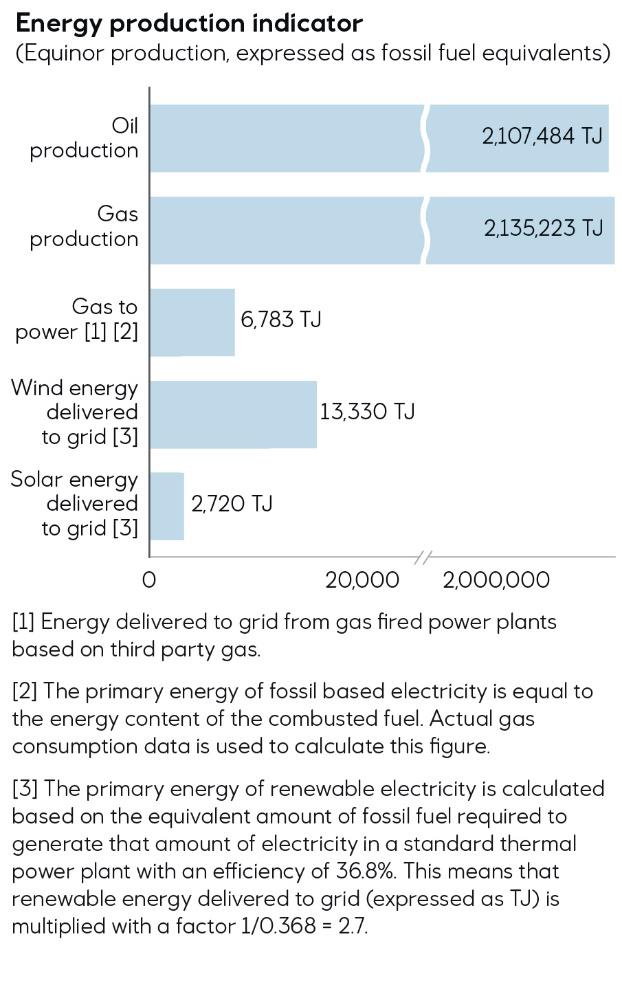
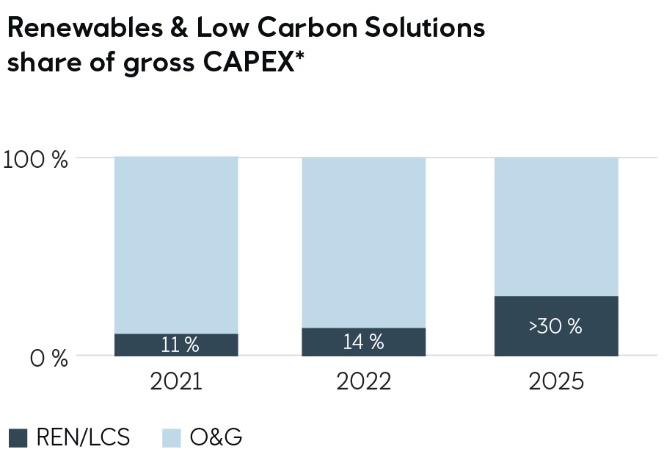
84 Equinor, Annual Report on Form 20-F 2022
As illustrated by the following graph, the share of gross capex* in renewables and low-carbon solutions increased from 11% in 2021 to
14% in 2022. Based on current portfolio forecasts, we are progressing on our ambitions to have more than 30% of our annual gross
capex* allocated to renewables and low-carbon solutions in 2025. This growth will be contingent on access and profitability.
Due to the long-term nature of investments in energy projects it is expected that our rising share of investments in renewable energy
projects will have an increasing impact on the oil, gas and renewables ratios in the total production profile as the projects come into
operation. In 2022 Equinor produced a total of 4.3 million TJ of energy, 16 thousand TJ of which was from renewables. By 2030, we
aim to reach an installed net capacity of 12-16 GW of renewables, with the potential to produce between 35 and 60 TWh annually,
while maintaining our energy production from oil and gas at around the same level as today.
Investment criteria and portfolio robustness:
Equinor’s strategy is to continue to create long-term, high value growth by developing a broad portfolio pipeline and applying strict
robustness criteria to investments. To maintain a valuable portfolio in different possible energy transition pathways, Equinor has a
financial framework in place addressing climate-related risks and the robustness of investment proposals.
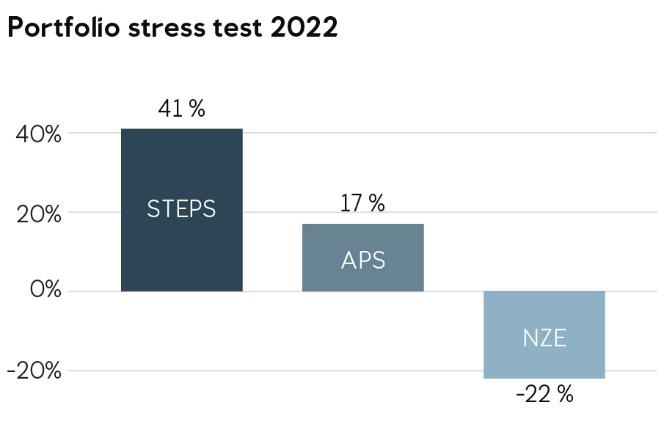
Equinor, Annual Report on Form 20-F 2022 85
Investment criteria
When a project is being sanctioned, it is assessed on multiple measures:
•
•
•
value, country risk, operational capacity and capability. We undertake environmental and social impact assessments for all new
projects including consideration of potential human rights impacts.
In addition, for oil and gas projects, the following assessments are undertaken:
•
•
₂
₂
•
₂
Equinor recognises that planned investments that are not sanctioned can have negative economic consequences for connected
suppliers, partners, and end users of energy. We therefore work closely with all stakeholders, including local governments to explore
solutions that enable Equinor to proceed with investment, or alternatively to find new developers or owners.
Portfolio robustness
Equinor maintains significant capex flexibility in our current portfolio, with only our sanctioned projects being committed, representing
less than 50% of the total capex between 2024 and 2026. This will allow us to optimise and re-prioritise our non-sanctioned projects to
ensure we continue to generate high value through cycles. The volume weighted break-even price of our upstream projects coming on
stream in the next 10 years is around 35 USD/bbl. Operated projects already sanctioned have a weighted average break-even price
below 30 USD/bbl (calculated from date of sanction). Despite increased competition, we maintain our expectation of real base project
returns of 4% to 8% for renewables excluding the effects of farmdowns and project financing.
Portfolio Stress Test
Since 2016 Equinor has tested the resilience of its portfolio against the scenarios from the IEAs World Energy Outlook (WEO) report.
WEO scenarios change from year to year and in the 2022 WEO report they were:
• Stated Policies Scenario (STEPS).
• Announced Pledges Scenario (APS).
• Net Zero Emissions by 2050 Scenario (NZE).
The WEO 2022 scenarios illustrate the wide range of possible demand for
different energy sources, including fossil fuels, nuclear and renewables.
The scenarios show that relative to 2021, oil and gas energy demand in
2050 could be 10% higher (STEPS) or 40% lower (APS). The NZE
scenario shows a significant 70% reduction in oil and gas energy demand
and relies on a rapid growth of alternative energy sources.
We test our portfolio by applying the price assumptions for oil, natural gas
and CO
2
the value calculated at our commodity price assumptions
4
. Equinor’s
commodity price assumptions are based on management’s best estimate
of the development of relevant current circumstances and the likely future
development of such circumstances. This price-set is currently not equal
to a price-set in accordance with the achievements of the goals in the
Paris Agreement as described in the WEO Sustainability Development
Scenario, or the Net Zero Emissions by 2050 Scenario.
The Stated Policies and Announced Pledges scenarios have a median expected global temperature rise by 2050 of around 1.95
℃
and 1.65
℃
The Net Zero Emissions scenario is consistent with limiting global temperature rise to 1.5
℃
4
See note 14 Impairments to the Consolidated financial statements for an overview of Equinor’s long term commodity price
assumptions.
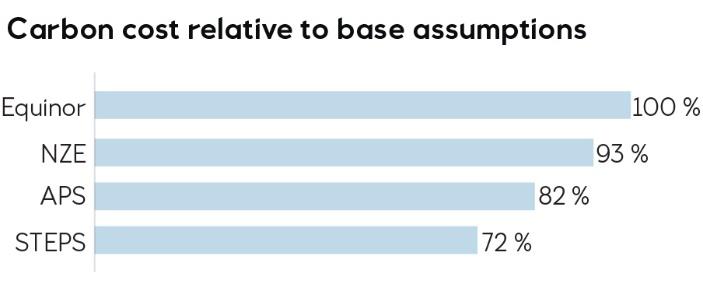
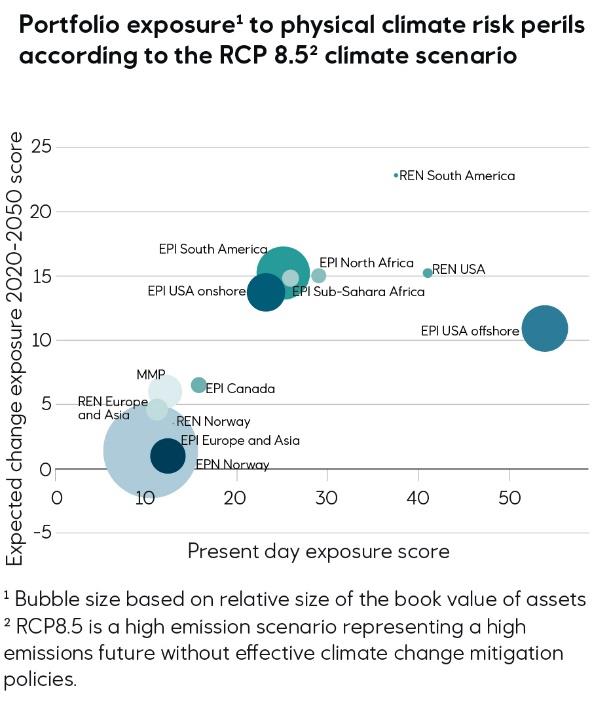
86 Equinor, Annual Report on Form 20-F 2022
The illustration shown displays the net present value after tax (NPV) in the WEO scenarios relative to value using Equinor’s
commodity price assumptions.
Compared to last year’s report, the impact from the Stated Policies Scenario has increased from 30% to 41%, and the impact from the
Announced Pledges Scenario has increased from 12% to 17%. The Net Zero Emissions Scenario decreases NPV by 22%, 12% less
than last year. Our long-term strategy remains firm, however the change from last year is mainly impacted by the bridging of high
current commodity prices towards the initial WEO 2030 scenario price point. The resilience in our oil and gas portfolio, combined with
our continuous focus on maintaining flexibility, positions us well towards different future scenarios and towards a sustained low-price
environment.
NPV is calculated forward looking from 2023. We assume a linear bridging between 2022 prices and the first price point given by the
IEA in 2030. This bridging is consistent with methodology used in previous years. However, due to high commodity prices seen in
2022, this methodology leads to some of the IEA scenarios having higher commodity prices than Equinor’s commodity price
assumptions for some years towards 2030. We further assume a linear interpolation between IEA’s price from 2030 to 2050 and that
the price in 2050 is kept constant in real terms thereafter. USD 2 per boe transportation cost for oil production is added to compare
with Brent Blend. Exploration activities are not included due to the uncertainties related to potential discoveries and development
solutions. The WEO scenarios renders some volumes unprofitable, which could have implications for sanctioning of new projects.
Equinor’s renewable projects are not fully influenced by the price assumptions in the different scenarios, due to offtake agreements.
Furthermore, the scenarios primarily stress oil and gas prices, not reflecting the potential impact on our renewable and low carbon
projects in an accelerated transition scenario. Our portfolio flexibility may help us to reduce the negative impact seen in the low-price
scenarios by mitigating actions such as re-optimizing the non-sanctioned portfolio.
Carbon pricing and carbon costs
For portfolio and decision analysis, our base assumptions include a
carbon cost for all assets and projects. In countries where no such
cost exists, we use a generic cost starting from 2023. We use a
default minimum at 68 USD per tonne (real 2022), that increases to
108 USD per tonne by 2030 and stays flat thereafter. In countries with
higher carbon costs, we use the country-specific cost expectations.
This carbon cost is included in investment decisions and is part of
break-even calculations when testing for profitability robustness. The
actual CO
₂
in 2022
5
.
The illustration above shows the total carbon cost in the WEO scenarios, relative to the total cost using Equinor’s commodity price
assumptions, based on the same volume base. All the WEO scenarios predict lower absolute carbon costs compared to Equinor’s
assumed CO
₂
further supports the adaptation to a low-carbon future.
Physical Climate Risk
Equinor’s portfolio comprises offshore and onshore assets across a diverse set
of regions around the world. While the company’s core business is centred on
the NCS, the internationalisation of the oil and gas portfolio and the move
towards a broad energy company has seen an expansion in the company’s
geographic footprint. The IPCC’s sixth assessment report finds that “climate
change is bringing multiple different changes in different regions – which will all
increase with further warming”. These include changes to wetness and dryness,
to winds, snow and ice, coastal areas and oceans. To assess the exposure of
our assets to possible climate-related perils we modeled the portfolio to different
climate scenarios using data analytics software. The model assessed the
exposure of 118 assets in which Equinor has an equity interest to six climate-
related perils: wind, heat, fire, flood, hail and precipitation, providing details on
both present-day exposure and the expected change in exposure between 2020
and 2050.
5
Costs are reported for Equinor-operated assets only, on a 100% basis, cost before tax (tax deductible).
Equinor, Annual Report on Form 20-F 2022 87
The results of the assessment can be seen in the figure above, which also shows the relative book value of different clusters of assets
by reporting segment. The results show that the majority of Equinor’s assets by book value are subject to a relatively low level of
present and future climate-related exposure. Those assets subject to the highest present-day exposure are offshore installations in
the US Gulf of Mexico, while those with the greatest changes in exposure towards 2050 are the renewable installations in South
America. Similar results were found for both the RCP 4.5 and RCP 8.5 warming scenarios. While the assessment provides details on
the exposure of assets, it is not a direct indication of physical or financial-related risk as all Equinor installations are designed with
margins to tolerate a range of meteorological conditions. Installation-specific risk assessments are therefore required to assess the
climate risk and to implement mitigating measures (if required). We will continue to assess the current and future exposure of our
portfolio to physical climate changes and to implement preventative and mitigating measures.
Profitable portfolio
By carefully evaluating investment criteria to develop our future portfolio and assessing our current portfolio for physical climate risk
exposure, we can ensure we have resilient value creating assets able to be profitable through challenging market conditions and
climate scenarios. It also empowers us with knowledge to implement any measures to ensure we are profitable for the future and able
to create value for shareholders through capital allocation and distribution.
Performance disclosure
KPI/MONITORING
INDICATOR
2022 AMBITION
(TARGET YEAR)
STATU
S
PERFORMANCE
2022
2021
PROFITABLE PORTFOLIO
Return on Average Capital Employed*
(ROACE) (%)
>14% yearly (2022-2030)
1,4
n
55.2
22.7
Relative Total Shareholder Return
(Relative TSR) (quartile)
Above average in ranking
among peers
1
n
6 of 12
2 of 12
Relative ROACE* (peer group rank)
First quartile in ranking
among peers
1
n
1 of 12
2 of 12
Organic Capex* (billion USD)
2022 outlook guiding
USD 10
1
n
8.3
5
7.9
Text in bold:
Key performance indicator.
1
2
USD 2021 real base.
3
Rebased for portfolio measures.
4
Based on 2022 CMU price scenario (65 USD/bbl).
5
Adjusted to USD/NOK exchange rate assumption in the Outlook presented at CMU 2022
n
n
n
n
Performance evaluation
Investments
In 2022, capital expenditures, defined as Additions to PP&E, intangibles and equity accounted investments in note 5 Segments to the
Consolidated financial statements, amounted to USD 10.0 billion, of which USD 8.1 billion were organic capital expenditures*
(adjusted to USD/NOK exchange rate assumption in the Outlook presented at CMU 2022, organic capital expenditures* were USD 8.3
billion).
In 2021, capital expenditures were USD 8.5 billion, as per note 5 Segments to the Consolidated financial statements, of which organic
capital expenditures* amounted to USD 8.1 billion.
In Norway, a substantial proportion of 2023 capital expenditures will be spent on ongoing development projects such as the Johan
Castberg and the Breidablikk and fields with final investment decisions where plans for development and operation (PDOs) have been
submitted, such as Munin (formerly Krafla), Halten Øst and Irpa. In addition, capital expenditures will be spent on various extensions,
modifications and improvements on currently producing fields.
Internationally, we estimate that a substantial proportion of 2023 capital expenditures will be spent on ongoing and planned
development projects such as the Bacalhau field in Brazil and offshore and non-operated onshore activity in the USA.
Within renewable energy, capital expenditure in 2023 is expected to be spent mainly on offshore wind projects and on the acquisition
of the solar developer BeGreen announced in November 2022.
88 Equinor, Annual Report on Form 20-F 2022
Equinor finances its capital expenditures both internally and externally. For more information, see financial debt and liquidity
management in the section 2.2 High value.
Equinor has committed to certain investments in the future. A large part of the capital expenditure for 2023 is committed. The further
into the future, the more flexibility we will have to revise expenditures. This flexibility is partially dependent on the expenditure joint
venture partners agree to commit to. For further information, see note 26 Other commitments, contingent liabilities and contingent
assets to the Consolidated financial statements.
Equinor may alter the amount, timing or segmental or project allocation of capital expenditures in anticipation of, or as a result of
several factors outside our control.
Return on average capital employed (ROACE)
*
The return on average capital employed (ROACE)* was 55.2% in 2022, compared to 22.7% in 2021. The change from 2021 was
mainly due to the increase in adjusted earnings* after tax.
Relative ROACE
*
On relative ROACE* Equinor was ranked 1
st
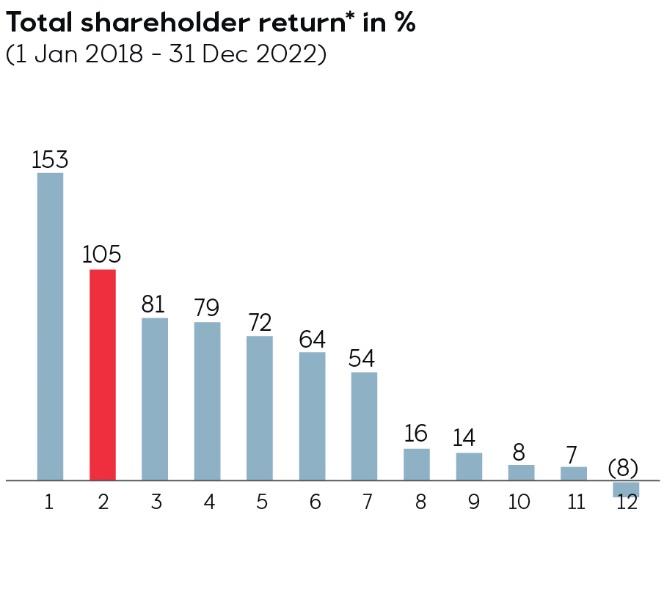
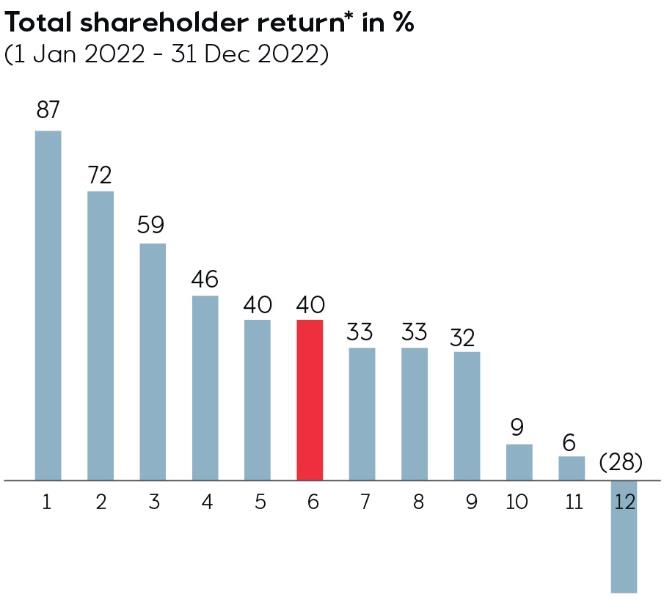
Equinor, Annual Report on Form 20-F 2022 89
(in USD million, unless stated otherwise)
2022
2021
2020
2019
2018
Share information
1)
Diluted earnings per share (in USD)
9.03
2.63
(1.69)
0.55
2.27
Share price at OSE (Norway) on 31 December (in NOK)
2)
351.80
235.90
144.95
175.50
183.75
Share price at NYSE (USA) on 31 December (in USD)
35.52
26.33
16.42
19.91
21.17
Dividend paid per share (in USD)
3)
1.68
0.56
0.71
1.01
0.91
Weighted average number of ordinary shares outstanding (in millions)
3,174
3,254
3,269
3,326
3,326
1)
See section 5.3 Shareholder information for a description of how dividends are determined and information on share repurchases.
2)
Last day of trading on Oslo Børs was 30 December in both 2022 and 2021.
3)
See note 20 Shareholders' equity and dividends to the Consolidated Financial Statements.
Relative TSR
Equinor assesses performance against a peer group of 11 European and U.S. companies by relative Total Shareholder Return (TSR).
TSR is the sum of a share’s price growth and dividends for the same period, divided by the share price at the beginning of the period
and is provided by a third-party service provider.
The chart above shows TSR for 2022. Equinor is number six with a TSR of 40% (measured in USD).
The year 2022 was weak for global equity markets but a strong year for oil and gas equities. The strong outperformance for energy
markets in 2022 was primarily caused by Russia’s invasion of Ukraine, leading to a shortfall in European supply, which had a
profound impact on European prices for gas and electricity. This resulted in increased earnings, cash flow and share price for
companies with exposure to European gas markets. No company stood out like Equinor, resulting in very strong relative performance
until early September. In the last months of 2022, Equinor showed weaker relative performance due to a fall in European gas prices.
This was due to warmer than expected European weather, and the fact that European storage was no longer a big concern for the
2022-2023 winter as European countries were able to find alternative supplies and eventually refilled their gas storage.
The graph below shows the relative performance of Equinor over the five
years from 2018 until 2022. Over this period, Equinor ranks number 2 with
a TSR of 105%.
Equinor’s peer group consist of the following companies:
Aker BP, BP, Chevron, ConocoPhilips, Eni, ExxonMobil, Galp, Ørsted,
Repsol, Shell and TotalEnergies.
90 Equinor, Annual Report on Form 20-F 2022
Equinor, Annual Report on Form 20-F 2022 91
2.2.3 Value creation for society
TOPIC
DESCRIPTION
IMPACTS TO
NATURE
AND SOCIETY
PRINCIPAL RISK
FACTORS/IMPACT
ON EQUINOR
KPI/
MONITORING
INDICATOR
AMBITION
AND STATUS
Value creation for
society, including
generating revenue,
job opportunities and
economic wellbeing
through procurement
and taxes.
Equinor makes
substantial payments to
governments and can
significantly influence
socio-economic
development where
it operates.
ethical misconduct
contractors
the Norwegian State
Payments to
goverments
(billion USD)
Not applicable
Share of
procurement
spend locally (%)
Not applicable
n
n
n
n
Text in bold:
Key performance indicator.
Contextual introduction
Delivering value to society at large and to our host communities is fundamental to the success of our ongoing business activities and
the energy transition. The turbulent times of 2022 have reinforced our belief in our long-standing purpose and the importance of the
value we bring to people and society, being a reliable provider of energy to our customers while continuing to take vital steps in our
transition.
Energy underpins virtually all current economic activity and is a fundamental human well-being and development component. The jobs
we create, taxes we pay and the economic and social benefits we deliver are material contributions Equinor provides to society at
large and to the communities in which we are present.
Alongside our tax contributions, a main lever to deliver value to society is through the procurement of goods and services of
approximately 7,500 direct suppliers and their sub-suppliers. Thriving domestic supply chains are important for regional economic
development and for Equinor as we deliver new projects and invest in long-term infrastructure that will operate for decades. Helping to
develop new supply chains is as important as ensuring that our existing suppliers are transitioning along with us to balance creating
new jobs and the minimising job losses in the value chain and beyond our industry.
At the core of our efforts to deliver value to society is openness and collaboration with stakeholders and partners to understand their
needs and expectations and to help find mutual benefits and lasting solutions to common challenges.
Management approach
Host communities and value chain partners are key stakeholders in identifying and delivering societal value.
Identification of opportunities starts at the early stages of business development. Local authorities and non-governmental
organisations help us understand the needs and expectations of our host communities. These are key to informing business models
and project strategies that can deliver lasting value to the community and its support of our activities.
In addition to tax contributions and procurement spending, we deliver socioeconomic benefits such as voluntary or mandatory social
investments, sponsorships and donations. In 2022, we prioritised our efforts towards education and vocational training, institutional
capacity building, cultural enrichment and support for humanitarian aid. All social investments must comply with internal policies and
requirements as well as local regulations.
We measure our performance towards tax contributions and spend on procurement, social investments, sponsorships and donations.
Towards the end of 2022, we launched our Just Transition plan and our commitment to contributing to an energy transition that is just
and inclusive and brings long-term social and economic benefits. See equinor.com for more information about our approach and
priorities, including supporting case studies that exemplify how we deliver value to societies accordingly. As we implement this plan,
we will evolve our performance framework on material topics, including defining relevant ambitions.
Actual and potential adverse impacts related to our business activities are further addressed in other parts of the report, more
specifically in Emissions reductions, Integrity and anti-corruption, Safe and secure operations, Protecting nature, and Tackling
inequality - Human rights.


92 Equinor, Annual Report on Form 20-F 2022
Performance disclosure
Alongside the provision of reliable energy, we continue creating economic value and societal progress through avenues such as:
goods and services
and beyond
Our key numbers:
Economic value created and distributed
Indicators
Boundary
Unit
2022
2021
2020
2019
2018
Tax contribution
Equinor group
USD billion
45.2
9.0
3.1
8.8
9.6
Payment to governments (Total
economic contributions to governments)
Equinor group
USD billion
49.2
11.8
4.5
11.6
13.4
Purchase of goods and services (Total
procurement spend)
Equinor group
USD billion
17.1
15.7
16.1
18.4
17.4
Total share of spend locally
Equinor group
%
89
91
89
85
n/r
Corporate donations spend
Equinor ASA
USD million
7.6
1.6
1.8
0.2
0.8
Total social investments spend (excl.
Norway and Denmark)
Equinor group
USD million
6.3
1.9
1.4
3.1
2.1
Voluntary social investments spend
Equinor group
USD million
0,6
0.4
0.6
2,2
1.1
Mandatory social investments spend
Equinor group
USD million
5.7
1.4
0.8
0.9
1.0
Data and information about employees, apprenticeships and graduates can be found in section 1.9 Our people – To get there.
Together .
Enabling societal progress through tax contributions
Paying the right tax where value is created is central to Equinor’s commitment to contributing to progress for societies. In 2022, the
Equinor group paid USD 45 billion in corporate income taxes and USD 4 billion in royalty payments and fees to local and national
governments, including host entitlement. USD 44 billion was paid in Norway, where Equinor has the largest share of its operations
and earnings.
The full Payments to governments report for 2022 pursuant to the Norwegian Accounting Act §3-3d and the Norwegian Security
Trading Act §5-5a can be found at our website: equinor.com/reports. We published our second tax contribution report in October
2022, which provides further insight into our approach to tax and explains why and where we pay the taxes we pay.
Procurement and ripple effects
Enabling local value creation is integrated into how we plan and operate our activities across all parts of our strategy. A significant
contribution to society in terms of monetary value is our purchase of goods and services, totalling approx. USD 17.1 billion in 2022.
Continued sourcing from key suppliers enables them to make long-term plans and investments in securing and creating jobs,
developing new skills and technology and investing in their own supply chains.
In Norway, according to a report by Bodø Science Park, we procured goods and services for our operations from over 1,800 suppliers
in 152 Norwegian municipalities in 2021, totalling NOK 77 billion. 90% of all deliveries were by Norwegian suppliers, demonstrating
their capacity, competence and competitiveness.
In the UK, our upcoming project Rosebank, according to a socioeconomic study by Wood Mackenzie and Vår Energi, if sanctioned, is
estimated to create GBP 8.1 billion of direct investment, of which GBP 6.3 billion is likely to be invested in UK-based businesses. Over
the 25 years lifetime of the field, Rosebank is forecast to generate a total of GBP 24.1 billion of gross value add (GVA), comprised of
direct, indirect and induced economic impacts.
Enabling local opportunities in offshore wind projects
Specifically related to floating wind, Equinor has developed a set of design principles and a toolbox to help select solutions that are
both cost-effective and provide opportunities for the local supply chain. Water depths, capabilities of local harbours, and the
competence and capacity of the local supply chain are some of the main drivers when we consider the technology of choice.
In Norway, the local supply chain has been awarded over 50% of Hywind Tampen's contract value by being competitive in the chosen
technologies. This contributes to job creation and local economic value and builds know-how for future industrial projects.
Equinor, Annual Report on Form 20-F 2022 93
In the UK, the Dogger bank offshore wind farm, which will be the world's largest fixed-bottom offshore wind farm has facilitated local
investments, local jobs, contractors, and skills development. During 2022, Equinor led six supply chain workshops to prepare local
suppliers for future tenders and collaborating around skills and innovation. Equinor entered into a number of strategic collaborations in
North-East England including with the Offshore Renewable Energy Catapult, a UK-wide initiative for innovation in renewable energy.
Social investments
In 2022, we spent around USD 6.3 million on social investments internationally, the majority in which were contractual obligations. The
investments were often targeted towards underprivileged groups and focused on STEM education and vocational training and skills
building to improve employability, as well as healthcare and economic empowerment for women. In 2022, material contributions
included support to infrastructure development in Argentina, and support to local capacity building and innovation through our offshore
wind projects, Empire Wind and Beacon Wind, in the US. An overview of Equinor’s social investments in 2022 is presented in our
ESG data hub.
Supporting humanitarian efforts in a turbulent year
With 2022 marked by Russia’s invasion of Ukraine and a growing humanitarian crisis in its wake, Equinor donated a total of USD 5
million to humanitarian organisations supporting the people in and refugees from Ukraine, as well as organisations working to alleviate
the hunger crisis on the Horn of Africa, that was exacerbated by the war in Ukraine.
In Poland, we supported joint industry initiatives to provide technical assistance and technical equipment to Ukrainian organisations.
We also provided financial aid to support refugees that will remain in the country for a longer period through partnering with local
NGOs, including those cooperating with UN bodies, like the Polish Centre for International Aid and United Nations Global Compact
Poland.
Performance evaluation
Overall, our performance on value creation for society was geared towards ensuring crucial energy production and supply, and
providing significant tax contributions, employment and procurement spending. Alongside these, we extended humanitarian aid to
support direct and indirect victims of the war in Ukraine and continued our local community engagement in the countries of our
operations.
Looking ahead, we will pursue opportunities to further strengthen our activities, performance and disclosures, notably as a part of our
just transition plan.
94 Equinor, Annual Report on Form 20-F 2022
2.2.4 Integrity and anti-corruption
TOPIC
DESCRIPTION
IMPACTS TO
NATURE
AND SOCIETY
PRINCIPAL RISK
FACTORS/IMPACT
ON EQUINOR
KPI/
MONITORING
INDICATOR
AMBITION
AND STATUS
Preventing corruption
and ensuring ethical
business culture is
embedded across
the company through
our values, Code of
Conduct and
compliance
programmes.
Corruption undermines
legal business activities,
distorts competition,
ruins reputations and
exposes companies
and individuals to civil
and criminal penalties.
ethical misconduct
contractors
reviews and reporting
Confirmed
corruption cases
(number of)
0 (2022)
n
Employees who
signed-off the Code
of Conduct (%)
≥95% (2022)
n
n
n
n
n
Text in bold:
Key performance indicator.
Contextual information
Equinor is a global company, and we are present in parts of the world where there is a high risk of corruption. We believe that an
ethical business culture is the cornerstone of a sustainable company, and we continued our work on ethics and compliance
throughout 2022. Our commitment to conduct business in an ethical, socially responsible and transparent manner remained constant,
irrespective of the impact of the the European security situation.
Equinor has a zero-tolerance policy towards all forms of corruption. This is embedded across the company through our values, Code
of Conduct and compliance programmes.
Management approach
Code of Conduct
The Equinor Code of Conduct sets out our commitment and requirements for how we do business. It applies to our employees, board
members and hired personnel who, each year, are required to confirm that they understand and will comply with the Code of Conduct
and take an online test to certify as competent. We expect our suppliers to act in a way that is consistent with our Code of Conduct
and we engage with them to help them understand our ethical requirements and how we do business. If our expectations are not met,
we take appropriate action.
Anti-corruption
Our Code of Conduct explicitly prohibits engaging in bribery and corruption in any form. Equinor’s anti-corruption compliance
programme summarises the standards, requirements and procedures implemented to comply with applicable laws and regulations
and maintain our high ethical standards. The programme lays down the foundation for ensuring that anti-bribery and corruption risks
are identified, concerns are reported, and measures are taken to mitigate risk in all parts of the organisation. We have a global
network of compliance officers who support the business in identifying and handling business integrity risks and ensure that ethical
and anti-corruption considerations are integrated into our activities no matter where they take place. Equinor provides regular training
across the organisation to build awareness and understanding of the anti-corruption compliance programme.
Competition and antitrust compliance
Equinor’s Code of Conduct also addresses the requirement to comply with applicable competition and antitrust laws. Our competition
and antitrust programme consists of governing documents and manuals, and training of employees in high-risk positions, as well as
regular risk assessments and assurance activities.
Reporting and handling of concerns
The Code of Conduct imposes a duty to report possible violations of the Code or other incidents of unethical conduct. We require
leaders to take their control responsibilities seriously to prevent, detect and respond to ethical issues. Employees are encouraged to
discuss concerns with their line manager or the line manager’s superior, or use available internal channels established to provide
support. Concerns may also be reported through our Ethics Helpline which allows for anonymous reporting and is open to employees,
business partners and the general public. Equinor has a strict non-retaliation policy.
Roles and responsibilities
The legal business ethics and compliance function is headed by the chief ethics and compliance officer (CECO), who reports to the
executive vice president legal and compliance. The CECO is also able to report matters directly to the CEO, the BoD, the audit
committee (BAC) and the safety, sustainability, ethics committee (SSEC)
.
Equinor, Annual Report on Form 20-F 2022 95
Collaboration and stakeholder engagement
At Equinor, we believe in the value of collective action to actively promote anti-corruption and revenue transparency. We have long
standing relationships with the UN Global Compact, the World Economic Forum’s Partnering Against Corruption Initiative (PACI) and
Transparency International (TI). In 2022, as a long-standing supporter of the Extractive Industries Transparency Initiative (EITI), we
continued to participate actively in the EITI multi-stakeholder process with the clear objective of strengthening revenue transparency
and good governance in the sector.
Operational targets
Employees having signed the Code of Conduct: 95%
We have a target of zero confirmed incidents of corruption which could lead to corporate criminal liability.
Key initiatives in 2022
KPIs/monitoring indicators and ambitions
The Code of Conduct was updated in 2022, updating several sections and, in particular, those related to communities and
environment.
Our training efforts included general and targeted training and awareness sessions and we delivered an increased number of training
activities. Ethics and integrity-related leadership performance goals were made available in 2022, and general leadership training
programmes were updated to explicitly cover ethics and integrity.
Delivering mandatory and voluntary social investments is one of our tools to contribute towards tackling societal challenges. However,
if not done the right way, social investments can expose Equinor to significant business integrity and reputational risks. To reduce this
risk, our requirements and guidance on management of social investments was strengthened in response to changing business needs
and identified challenges.
Performance disclosure
Ethics Helpline
Indicator
Boundary
Unit
2022
2021
2020
2019
2018
Cases and inquiries to the Ethics
Helpline
Public
number
192
160
183
194
182
Confirmed corruption cases
Public
number
0
0
n/r
n/r
n/r
Ethics and compliance training
Indicator
Boundary
Unit
2022
2021
2020
2019
2018
People completing Code of conduct
training and sign-off (Employees)
Equinor group
%
95
84
87
93
83
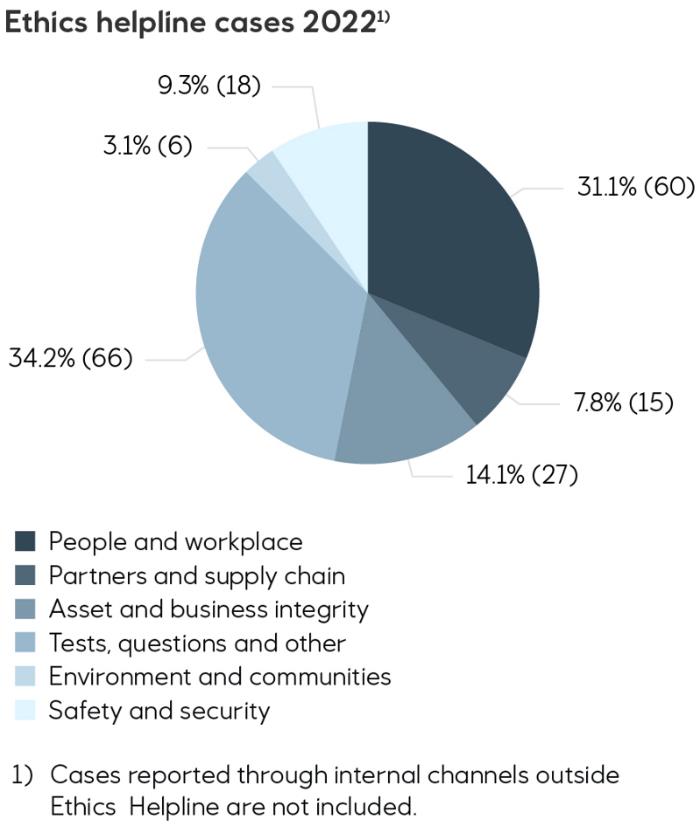
96 Equinor, Annual Report on Form 20-F 2022
Equinor, Annual Report on Form 20-F 2022 97
Performance evaluation
The number of cases received through the Ethics Helpline was 192 in 2022, of which 126 were reports of concerns. This was an
increase from 2021. The cases included 60 reported concerns relating to harassment, discrimination and other conduct affecting the
working environment. We experienced a decrease in the number of cases related to our suppliers.
The Code of Conduct yearly sign-off is a mandatory competence requirement for all employees in the company. By following up on
the sign-off rates for each business area we were able to monitor the trends closely and saw a significant improvement compared to
2021.
Looking ahead, we maintain our commitment to ethical, socially responsible and transparent business conduct. We will continue to
strengthen our risk-based compliance programmes and monitor their effectiveness.
98 Equinor, Annual Report on Form 20-F 2022
2.3 Low carbon
The need for rapid emission reductions and systemic transformation toward net zero
Urgency of the climate challenge
The Paris Agreement calls for rapid emission reductions in accordance with the best available science to achieve a balance between
manmade emissions and sinks of greenhouse gases in the second half of this century. Since the signing of the Paris agreement, the
scientific and physical evidence of climate change has become ever more apparent. In order to meet the goals of the Paris
Agreement, the world’s energy systems will need to undergo a transformation in the coming years to decarbonise. According to the
Intergovernmental Panel on Climate Change’s sixth assessment report, “reducing GHG emissions across the full energy sector
requires major transitions, including a substantial reduction in overall fossil fuel use, the deployment of low-emission energy sources,
switching to alternative energy carriers, and energy efficiency and conservation”.
The International Energy Agency (IEA) estimates that clean energy investment must rise above USD 4 trillion by 2030 for the world to
be on track to meet its Net Zero Emissions by 2030 scenario
6
. Companies, customers, governments and society at large will all have
to collaborate, innovate and adapt in new ways to ensure a sustainable future. It will require the development of new technologies,
new value chains, and new ways of working, as well as firm leadership from policymakers. It will also require continuity and the
provision of stable, reliable and affordable energy that the global economy depends on.
Our response
Equinor is committed to long-term value creation in support of the goals of the Paris Agreement. We aim to be a leading company in
the energy transition and have set an ambition to reach net zero by 2050. We realise that this will be a journey that will require an
evolution of the way energy is produced and consumed globally.
As an industrial company focused on the production and delivery of oil, gas, electricity and low-carbon products and services, our
business has both direct and indirect negative impacts. Our operations generate significant greenhouse gas emissions (in 2022, for
example, we emitted 11.4 million tonnes of carbon dioxide equivalent (CO
2
e) from our own operations). And, of course, the emissions
associated with the use of the products we sell are many times higher than those from our direct operations, equivalent to 243 million
tonnes of CO
2
e in 2022.
We have already developed an upstream portfolio that is one of the most carbon efficient in the industry. Our ambition to reduce net
group-wide operated scope 1 and 2 emissions by 50% by 2030, shows that we are focused on medium-term actions consistent with
the goals of the Paris Agreement and a 1.5-degree pathway.
Rapidly reducing our own emissions is necessary, but not sufficient. To be an effective agent of change in the energy transition, we
must help society decarbonise by providing our customers and end-users with energy that has lower – and eventually net-zero –
emissions. To achieve this, we have to apply our experience and competence from oil and gas to new sectors of the energy system.
We have built a robust offshore wind portfolio and aim to further strengthen our leading position in floating offshore wind. We are
shaping the low carbon industry, leveraging our advantaged industrial starting point on the Norwegian continental shelf (NCS) and
proximity to the European market.
Equinor’s 2022 Energy Transition Plan laid out our strategy for delivering on our ambition to become a net-zero company by 2050,
including emissions from production and final consumption of the energy we produce. In addition to the main corporate
decarbonisation and transition ambitions, the plan included a series of short-term industrial project milestones that demonstrated our
concrete commitment to delivering our transition strategy. A summary of progress against the Energy Transition Plan can be found in
the introductory sections of this report and more detail on our net zero pathway and emissions reductions is provided below.
Risk management
To deliver on our transition strategy we have put in place a framework for climate-related risk management that is informed by the
concept of double materiality. Equinor assesses climate risk from two perspectives: transition risk, which assesses the financial
robustness of the company’s business model and portfolio in various decarbonisation scenarios; and physical climate risk, which
assesses the vulnerability of our assets to climate-related perils in different warming scenarios. A full description of how we integrate
climate considerations into our investment and valuation criteria, and details of our CO
₂
section 2.2.2 Profitable portfolio. To assess and manage climate-related risks we also use scenario and sensitivity analysis, including
net present value (NPV) stress tests against all relevant scenarios published by the IEA. Details of our stress testing and scenario
analysis are published in section 2.2.2 Profitable portfolio. For physical climate risk, we map the exposure of our global asset portfolio
against a range of climate-related perils and scenarios, including heat, flood, fire, and wind. The results of the 2022 mapping can be
seen in section 2.2.2 Profitable portfolio.
6
World Energy Outlook, November 2022
Equinor, Annual Report on Form 20-F 2022 99
Equinor aligns its climate-related disclosures with the recommendations of the Task Force on Climate related Financial Disclosures
(TCFD) and we include explicit reference to the TCFD recommendations in section 5.6.
Using our voice
Our advocacy and policy engagement is also conducted in line with the objectives of the Paris Agreement. Equinor promotes policies
supporting the goals of the Paris Agreement and forceful actions to accelerate the energy transition. We also actively work to ensure
that the policy positions and advocacy of our membership organisations is supportive of and aligned with the objectives Paris
Agreement. To ensure transparency, we conduct and publish an annual review of industry association and membership organisations
showing any areas of potential misalignment. Our climate policy positions and our expectations of our membership associations are
available on Equinor.com. We engage with a wide range of external independent benchmarking and assessment organisations,
including Climate Action 100+, CDP, InfluenceMap and others, in an effort to be a proactive stakeholder in the development of
effective frameworks for assessing corporate performance in the energy transition.


100 Equinor, Annual Report on Form 20-F 2022
2.3.1 Net zero pathway
TOPIC
DESCRIPTION
IMPACTS TO
NATURE
AND SOCIETY
PRINCIPAL RISK
FACTORS/IMPACT
ON EQUINOR
KPI/
MONITORING
INDICATOR
AMBITION
AND STATUS
Achieving net-zero
greenhouse
gas emissions by
2050, including
emissions from
the use of our
products
Equinor has
significant scope
1, 2 and 3 GHG
emissions
(11.4 + 243 million
tonnes CO
₂
e).
transition to a lower
carbon economy
technological innovation
geopolitical change
by the Norwegian State
organisation
Net carbon
intensity
(gCO
₂
e/MJ)
-20% (2019 -> 2030)
-40% (2019 -> 2035)
n
Renewable energy
installed capacity
(GW)
12-16 installed (2030)
n
Annual gross
CAPEX* to
Renewables
and low carbon
>30% (2025)
>50% (2030)
n
n
n
n
n
Text in bold:
Key performance indicator.
Investing in a broad energy portfolio to accelerate systemic transformation
To meet the climate challenge while also addressing the need for energy, Equinor has developed a metric that shows how we are
progressing towards our own net-zero ambition while simultaneously investing in the transformation of the energy system that will be
necessary to realise the goals of the Paris Agreement. The Net Carbon Intensity (NCI) metric tracks our net emissions, including
scope 3 emissions from the use of our products, in relation to our total energy production from oil, gas, electricity, and hydrogen.
Using a combination of all of the options available to us as a broad energy company, our NCI metric shows how we will deliver energy
with lower emissions over time, helping our customers in their efforts to deliver emission reductions. Our ambition is to reduce our NCI
of 67.8g CO
₂
e/MJ in 2019 by 20% by 2030 and by 40% by 2035. By 2050, we aim to bring the NCI down by 100% - to net zero.
Equinor’s interim NCI ambitions show reductions by 2030 and 2035 greater than those implied by the IEA’s Announced Pledges
Scenario (APS), which assumes that all climate commitments made by governments around the world as of COP26, including
Nationally Determined Contributions (NDCs) and longer-term net-zero targets, will be met in full and on time.
Our strategy for achieving net zero has been informed by engagement with a wide range of stakeholders, including shareholder and
shareholder groups, government, non-governmental organisations, academia, and civil society.
In addition to the products and services we provide to our customers, we recognise that we have the potential to have a positive
impact on global emissions reduction through engagement with our suppliers. As a major consumer of goods and services, Equinor
has the opportunity to drive emissions reductions among its suppliers and sub-suppliers. Our Energy transition plan included a
commitment to “work with our suppliers and customers, host governments, and civil society to develop the business models, policies
and frameworks to enable the world to achieve net zero by 2050”.
Management approach
Equinor is applying its competitive advantage to create value in new areas of the energy system and to deliver on our net zero
ambition. We have an ambition to allocate more than 50% of our gross capital expenditure to renewables and low-carbon solutions by
2030. A central element in this effort is our ambition to become a leading global player in offshore wind. We will accelerate growth in
renewables to strengthen our competitive position and achieve the economies of scale necessary to improve returns. To build a
competitive wind portfolio, we are applying our experience in technology, innovation and project delivery and building new
competence and capacity to support the transition. We have an ambition to have a total of 12-16 GW of installed equity-based
renewable capacity
7
by 2030.
To complete our development as a broad energy company, we are building a platform for growth in low carbon solutions with a focus
on hydrogen and CCS. This is a natural next step for Equinor: a way for us to decarbonise our supplies of energy and to help
industrial end-users realise their climate ambitions. Building on our strong position in industrial value chains in Europe, we are
applying our technical and engineering competence to bring low-carbon products and services to the market. We are developing a
broad funnel of options to be at the forefront of maturing these decarbonisation markets over the next ten years. We have established
early positioning in CCS licences and high-impact hydrogen projects in Northwest Europe, working with commercial partners and
7
Installed capacity, including capacity from financial investment
Equinor, Annual Report on Form 20-F 2022 101
governments to create new value chains. We have an ambition of developing a CO
₂
tonnes by 2030 and 15-30 million tonnes by 2035.
Our success in achieving our net zero ambition will require collaboration with partners, customers, suppliers, and host governments on
the necessary actions to accelerate the energy transition. Such collaboration takes the form of engagement and advocacy on policy
issues; strategic partnerships with companies across the energy value chain; dialogue and commercial agreement with customers;
consultation and investment in host communities; engagement with suppliers and sub-suppliers; and participation in initiatives with
academia, NGOs, and other stakeholders.
Success also requires an internal governance and performance framework that is informed by our transition ambitions. Equinor’s
remuneration framework contributes to the business strategy, long-term interests and sustainability of the company. In order to better
reflect Equinor’s strategy and the energy transition, the instructions for the BoD compensation and executive development committee
were updated in 2020 to include climate and energy transition-related goals as part of the remuneration policies. The CEO, his direct
reports and Equinor’s wider leadership are assessed based on results within a broad range of topics, including safety, security and
sustainability. The ability of executive leaders to be role models and drive the energy transition forward forms part of the holistic
performance evaluation.
Performance disclosure
Indicators
Boundary
Unit
2022
2021
2020
2019
2018
2017
2016
Energy production
Oil and gas production
Operational
control
million barrels of oil
equivalent (mmboe)
1,129
1,115
1,10
6
1,055
1,077
1,09
9
1,03
0
Oil and gas production
Equity basis
million barrels of oil
equivalent (mmboe)
744
759
758
757
770
759
723
Gas to power
Equity basis
GWh
1012
0
0
0
0
0
0
Renewable energy
delivered to grid
Equity basis
GWh
1,641
1,562
1,66
2
1,754
1,251
830
423
Renewable energy
generated for use by
Equinor
Equity basis
GWh
8
0
0
0
0
0
0
SUM renewable energy
generated
Equity basis
GWh
1,649
1,562
1,66
2
1,754
1,251
830
423
Renewable installed
capacity
Operational
control
GW
0.9
0.7
0.7
0.7
0.8
0.8
0.3
Renewable installed
capacity
Equity basis
GW
0.6
0.5
0.5
0.5
0.6
0.3
0.1
Net carbon intensity
Operational
control/Equity
basis
g CO2e per MJ
energy produced
66.5
67.1
67.8
67.8
n/r
n/r
n/r
Scope 3 GHG emissions
(GHG Protocol cat. 11,
use of sold products)
Equity basis
million tonnes
CO
2
e
243
249
250
247
252
250
239
CO2 emissions captured
and stored per year
Operational
control
million tonnes
0.5
0.3
0.9
1.2
1.3
1.2
1.4
102 Equinor, Annual Report on Form 20-F 2022
Accumulated CO2
emissions captured and
stored
Operational
control
million tonnes
26.3
25.8
25.6
24.6
23.4
22.2
20.9
Gross capital expenditure*
in renewables and low
carbon solutions, share of
total
Equinor group
%
14
11
4
2
4
n/r
n/r
Top suppliers, with near-
term emissions reductions
target, absolute or
intensity basis, within
2030
Equinor group
%
65
n/r
n/r
n/r
n/r
n/r
n/r
Investing in the future energy system
To deliver on our medium-term ambitions on the route to net zero, we are positioning ourselves through project execution, organic
business opportunities, strategic business development and through the establishment of commercial agreements and investments in
low-carbon value chains. In 2022 we increased our share of gross capital expenditure* to renewables and low carbon solutions to
14%, up from 11% in 2021. In our renewables business, we demonstrated real progress in 2022 on both project execution and on
building the portfolio pipeline. In addition to laying the first foundations at the Dogger Bank offshore wind farm in the UK and
completion of the Stępień solar project in Poland, we put in place further building blocks for our renewables strategy. Equinor’s
selection as a provisional winner of a lease area on the Outer continental shelf off California provides us with a platform to deliver on
our goal of becoming an offshore wind major in one of the world’s most attractive growth regions for floating offshore wind, while the
acquisition of BeGreen, a Danish solar developer with a strong project pipeline enables will enable us to deliver on our goal of
becoming a market-driven power producer. For our Low Carbon Solutions business 2022 was a year of continued progress in
developing the value chains that will enable hydrogen and CCS to be key enablers in the energy transition. Commercial agreements
and partnerships with key European peers and counterparties – in particular the world’s first cross-border CO
2
the Northern Lights partnership and fertiliser company Yara – show that we are progressing the business models to take forward the
LCS portfolio. Awards of new CO
2
projects such as H2H Saltend were key enablers to deliver on our ambition to deliver on our 2030 and 2035 ambitions for CCS and
hydrogen.
Net Carbon Intensity
Our 1% reduction in net carbon intensity in 2022 compared to 2021 (66.5 down from 67.1) was driven mainly by the relative increase
in the share of gas to oil production in our production portfolio. Despite increasing our share of gross capital expenditure to
renewables and low carbon solutions, the contribution of renewable energy in our portfolio remained relatively unchanged from 2021,
reflecting the long lead times of the capital cycle between investment and commissioning. Similarly, the amount of CO
2
transported and stored in 2022 was 0.5 million tonnes. This is higher than in 2021 but lower than the historical 5-year average. The
main reason for the lower CO
2
2022 and the reduced CO
2
2
in the coming years as projects reach maturity. The reduction in our scope 3 emissions from use of products sold was principally due
to a reduction in our overall equity production volumes. The addition of the Triton CCGT power generation plant did not materially
affect the portfolio-wide NCI.
Supply chain decarbonisation
For the first time in 2022, we engaged a systematic evaluation of our supplier base to assess emission reduction plans and strategies.
Among those suppliers that account for the majority of Equinor’s procurement spend, 65% were found to have a stated emissions
reduction target on an absolute or intensity basis by 2030. We will continue to work with suppliers and sub-suppliers to increase this
share and to explore tools and ways of working to increase transparency and reduce emissions across our supply chain.
Equinor, Annual Report on Form 20-F 2022 103
Performance evaluation
Our performance in 2022 shows that Equinor is building the foundation to deliver on its net zero ambitions. As a leading indicator,
capital allocation is the metric that showed the most progress in 2022 as we increased the share of gross capex* to low and zero
carbon activities. Given the long lead times needed to bring renewable and low-carbon projects onstream, we saw relatively little
progress in the generation from renewable energy sources or the volumes of carbon stored and transported in 2022. Consequently,
there was relatively little change in the company’s overall net carbon intensity. The 2% reduction in NCI from the 2019 baseline is in
line with expectations. As deployment of renewable and CCS accelerates in the coming years, we expect to see greater progress in
NCI reductions, with the majority of progress towards the 20% reduction ambition in 2030 expected in the second half of this decade.
Meeting the 2030 and 2035 NCI ambitions will put us well ahead of society’s progress towards net zero in 2050 as outlined in our
Energy transition plan. Equinor’s ability to deliver on its transition ambitions and its net 2050 ambition will continue to be dependent on
enabling policy and regulatory frameworks. The changed energy security situation in Europe has resulted in both positive and
negative drivers for Equinor’s energy transition. Increased demand for oil and, particularly, natural gas raise expectations for
continued hydrocarbon production, while increased policy support for renewables and low-carbon solutions are likely to accelerate
their deployment in both Europe and the US. Mapping of the decarbonisation targets of our strategic suppliers in 2022 represented the
first step in an important effort to increase transparency and focus on emissions in upstream scope 3 emissions; this will be a
continued area of focus and improvement in 2023.
104 Equinor, Annual Report on Form 20-F 2022
2.3.2 Emissions reductions
TOPIC
DESCRIPTION
IMPACTS TO
NATURE
AND SOCIETY
PRINCIPAL RISK
FACTORS/IMPACT
ON EQUINOR
KPI/
MONITORING
INDICATOR
AMBITION
AND STATUS
Reducing GHG
emissions from
own production
and the use of
our products.
Equinor has significant
scope 1, 2 and 3 GHG
emissions with strong
stakeholder interest in
the transparent and
accurate disclosure of
the carbon intensity
of its energy products
and operating
activities.
transition to a lower
carbon economy
technology innovation
environmental factors
and technology
innovation
by the Norwegian
State
Absolute GHG
emissions scope 1
and 2 (million
tonnes CO
₂
e)
Net 50% emission
reduction
(2015 -> 2030)
n
Upstream CO
₂
intensity, Scope 1
(kg CO
₂
/boe)
<8 kg/boe (2025)
<6 kg/boe (2030)
n
n
n
n
n
Text in bold:
Key performance indicator.
Supplying reliable oil and gas while halving operated emissions by 2030
Equinor has a proud history as a safe and reliable producer of oil and gas. These energy sources will be needed to power the global
economy for many years to come, including in every independent scenario of what would be needed for a Paris-aligned emissions
trajectory. In addition to being primary sources of energy, oil and gas will also be needed as input to low-carbon fuels for hard-to-
abate sectors such as blue hydrogen and as feedstocks for non-energy applications such as chemicals. The IEA’s analysis from
October 2022 shows that global oil demand is expected to grow in 2023 by 1.7 million barrels per day (mmbpd) to over 101mmbpd.
The IEA’s Net Zero Emissions (NZE) in 2050 scenario, which assumes demand levels consistent with a 1.5-degree trajectory, shows
global oil demand projected to decline at 2.5% per year from 2021 to around 72 million barrels per day in 2030 and 24mmbpd in 2050.
The IEA also sees growing demand for natural gas in the short term, including in it its NZE scenario, which was developed before the
current energy crisis and the attempts to reduce reliance on Russian energy exports. To meet the needs of society, Equinor will
continue to produce oil and gas for the foreseeable future. We aim to excel in operational emissions management, maximising the
efficiency of our infrastructure on the NCS and optimising our high-quality international portfolio. To earn the right to supply the oil and
gas the world demands, we are continuing to improve the industry-leading carbon efficiency of our production.
Our ambition to reduce net group-wide operated emissions by 50% by 2030, shows that we are focused on bringing down our direct
operated emissions in line with reductions necessary for a 1.5-degree pathway. Setting a baseline year that corresponds to the year of
the Paris Agreement enables us to show our early action on emissions reduction and to build on our leadership position throughout
this decade. The ambition, which was announced at our 2022 capital market update, was informed by engagement with a range of
government and non-government stakeholders and will enable us to contribute to national decarbonisation plans in key host
jurisdictions, including Norway’s ambition to reduce its emissions by 55% by 2030 relative to a 1990 baseline.
Management approach
Reaching our 50% reduction ambition for operated scope 1 and 2 emissions will require a focused and coordinated effort across the
company on executing and maturing a portfolio of abatement projects, improving energy efficiency of offshore and onshore assets,
developing new technologies, and strengthening resilience in the portfolio, including through consolidation. The abatement projects
primarily include electrification of offshore assets in Norway, mainly by power from shore but also including innovations such as
Hywind Tampen. Projects in the abatement portfolio are selected, developed and executed in close dialogue with authorities and
partners and coordinated through our Norway Energy Hub initiative. In addition to CO
2
on improving our industry-leading performance on methane emissions, with increased emphasis on site-level measurement for
improved quantification and reporting. Carbon offsets will play a minimal role in achieving this ambition, with at least 90% of the
reductions being met through absolute emissions reductions. In the longer term, we see negative emissions solutions and offsets as
making an important contribution to address the climate challenge. We plan to use only carbon credits verified according to high
standards and to disclose information about the type of offsets employed. To ensure quality in our carbon credits, we have established
a set of corporate criteria and principles based on the Oxford Principles for Net Zero Aligned Carbon Offsetting.
To track and incentivise the company’s performance on decarbonisation, we have established a performance indicator that assesses
progress towards the 2030 decarbonisation ambition. The indicator is the first of its kind in Equinor to use a forecast-based
methodology. The indicator tracks the internal forecast for Equinor’s operated GHG emissions in 2030 relative to the reduction level
required to meet the decarbonisation ambition, as well as progress on the portfolio of abatement projects. The indicator was
implemented as an internal corporate KPI in 2023.
Equinor, Annual Report on Form 20-F 2022 105
In addition to our absolute emissions reduction efforts, we are focused on continuing to improve the industry-leading carbon and
methane efficiency of our profitable upstream portfolio, enabling us to be the resilient and responsible producer of the oil and gas that
the world demands. Performance on the upstream CO
2
CEC and is linked renumeration. The same KPI also informs renumeration for business-unit managers as well as an input into the
general bonus for all employees.
Performance disclosure
Indicators
Boundary
Unit
2022
2021
2020
2019
2018
2017
2016
Scope 1 GHG
emissions
Operational
control
million tonnes
CO
2
e
11.4
12.0
13.3
14.7
14.9
15.4
15.4
Scope 1+2 GHG
emissions Norway
Operational
control
million tonnes
CO
2
e
11.0
11.1
11.9
12.4
13.0
13.4
13.4
Scope 1+2 GHG
emissions
Operational
control
million tonnes
CO
2
e
11.4
12.1
13.5
14.9
15.1
15.6
15.7
Scope 2 GHG
emissions (location
based)
Operational
control
million tonnes
CO
2
e
0.1
0.1
0.3
0.2
0.2
0.2
0.3
Scope 2 GHG
emissions (market
based)
Operational
control
million tonnes
CO
2
e
2.5
2.7
2.5
2.9
3.0
2.8
2.6
Scope 3 GHG
emissions (GHG
Protocol cat. 11, use of
sold products)
Equity basis
million tonnes
CO
2
e
243
249
250
247
252
250
239
Business travel GHG
emissions (GHG
Protocol cat. 6)
Operational
control
million tonnes
CO
2
e
0.05
0.01
0.02
0.1
0.1
0.1
0.1
CO
2
Operational
control
million tonnes
11.1
11.6
12.9
14.2
14.4
14.9
14.8
CO
2
flaring
Operational
control
million tonnes
10.4
11.0
11.9
13.0
13.3
13.6
13.4
CO
2
flaring
Operational
control
million tonnes
0.6
0.7
1.0
1.2
1.2
1.3
1.4
CO2 emissions from
upstream operations
Operational
control
million tonnes
7.6
7.8
8.7
9.6
9.3
9.2
9.7
CO
2
midstream operations
Operational
control
million tonnes
3.5
3.8
4.2
4.6
5.1
5.6
5.0
CO
2
other operations
Operational
control
million tonnes
0.02
0.01
0.01
0.01
0.11
0.11
0.04
CO
2
Equity basis
million tonnes
9.1
9.9
10.1
11.5
11.6
12.0
12.7
Upstream CO
2
emissions intensity
Operational
control
kg CO
2
barrel of oil
equivalent
(boe)
6.9
7.0
8.0
9.5
9.0
8.8
9.8
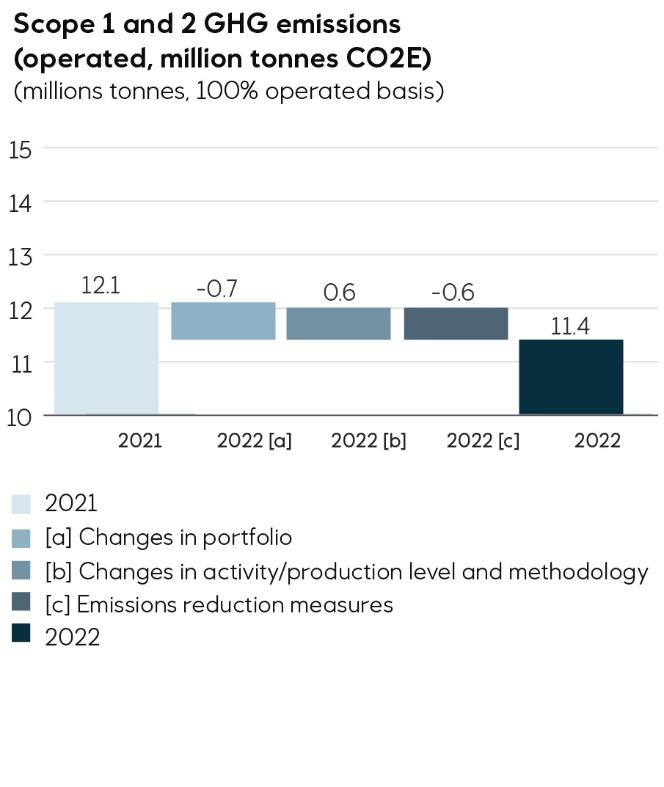
106 Equinor, Annual Report on Form 20-F 2022
Upstream CO
2
emissions intensity
Equity basis
kg CO
2
barrel of oil
equivalent
(boe)
8.5
8.8
9.2
10.7
10.3
10.4
13.0
Maritime CO
2
emissions
Operational
control
million tonnes
CO
2
e
3.8
3.8
4.9
n/r
n/r
n/r
n/r
CH
4
Operational
control
thousand
tonnes
11.2
14.5
17.7
19.0
20.0
19.3
24.2
CH4 intensity
Operational
control
% (m³ CH4
emitted per m³
marketed gas)
0.02
0.02
0.03
0.03
0.03
0.03
0.04
Hydrocarbons flared
Operational
control
thousand
tonnes
203
201
339
414
396
406
443
Upstream flaring
intensity
Operational
control
tonnes of
hydrocarbons
flared per
1000 tonnes
of
hydrocarbon
produced
0.7
0.9
1.7
2.5
2.4
2.1
2.5
Routine flaring (share
of total)
Operational
control
%
3
14
31
27
21
10
14
Operated emissions
In 2022 Equinor was on track to meet its ambitions to halve its operated scope 1 and 2 emissions by 2030. Our total operated scope 1
and 2 GHG emissions for 2022 were 11.4 million tonnes – a 6% decrease from the previous year. Equinor has now achieved a
reduction in absolute operated scope 1 and 2 emissions of around 30% relative to 2015.
The main drivers of our reduced scope 1 and 2 emissions were a combination of operational and portfolio measures including:
divestment of our Kalundborg refinery and Bakken asset; modifications and emissions reduction initiatives at our onshore plants at
Mongstad and Kårstø; and a change in strategy at several of our NCS assets from gas injection to gas exports to maximise supplies
to Europe.
In 2022, several abatement projects moved forward, including first power from the Hywind Tampen floating wind facility to our oil and
gas production assets on the NCS and the sanctioning of electrification for Hammerfest LNG and the Njord field. We also saw positive
contributions to our emissions reductions efforts through energy efficiency projects in Norway, which reduced emissions by 200,000
tonnes, and from our international portfolio including the Peregrino gas
import solution, which is expected to avoid around 100,000 tonnes of CO
2
emissions per year in operated emissions.
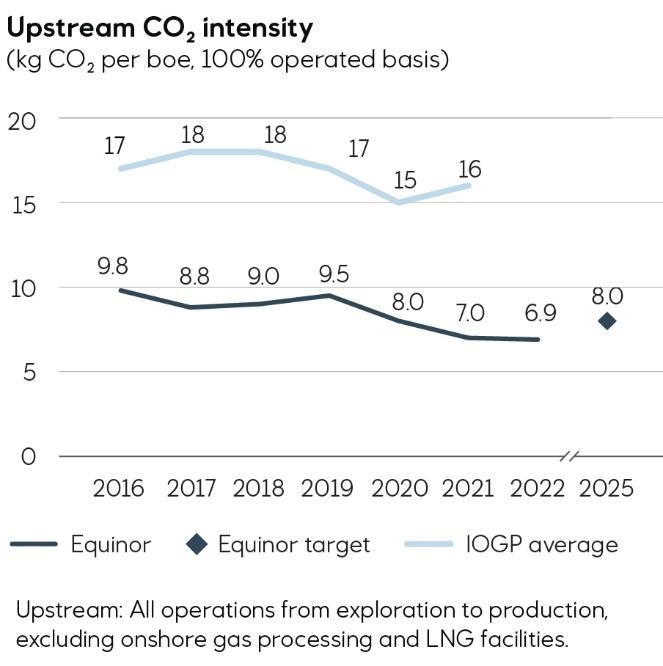
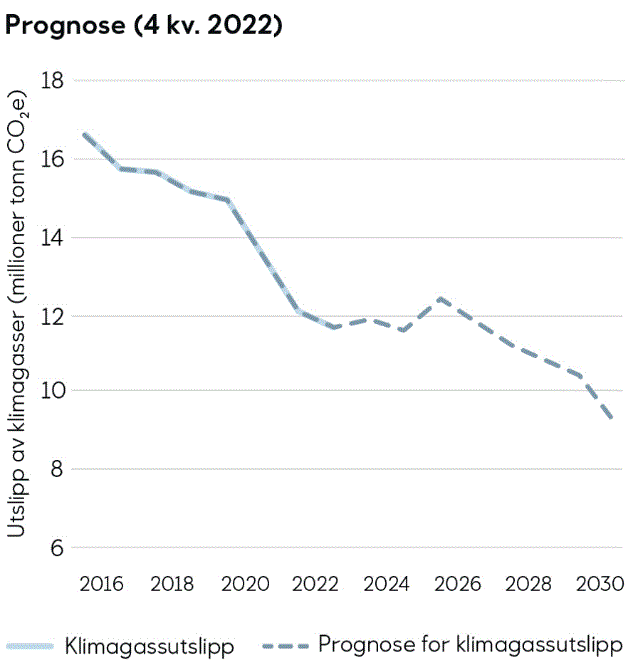
Equinor, Annual Report on Form 20-F 2022 107
Figure: Operated scope 1 + scope 2 emissions 2022 vs 2021 with key levers/contributions.
Figure: End 2022 forecast for operated emissions to 2030.
Equity emissions
Equinor’s equity CO
2
emissions disclosure of our operated emissions and our partner-operated Norwegian assets. This year, for the first time, we also
provide field-based emissions for our international partner-operated assets in the USA, Canada, and other jurisdictions where we
have approval from partners. We continue to work with our partners to encourage emissions disclosure on a field basis and have
requested consent to publish emissions data from all partners from whom it is required.
Upstream intensity
In 2022, Equinor was on track to meet its ambitions with regard to upstream CO
2
₂
operated portfolio decreased from 7.0 to 6.9kg CO
₂
/boe, well below the 2025 ambition of 8kg CO
₂
/boe. The main driver for this
change was reduced CO
2
2022. There were also significant emissions reductions measures implemented in the upstream portfolio in 2022 (202,000 tonnes
CO
2
), as well as decommissioning of the Veslefrikk field and divestment of the Bakken asset in the United States, both of which had
higher than average upstream emissions intensity. Increased production levels from the electrified asset Martin Linge also have a
positive effect on the intensity.
Figure: Operated CO2 intensity 2022 vs 6-year performance and 2025
target

108 Equinor, Annual Report on Form 20-F 2022
Methane
Equinor’s 2022 methane intensity for our operated upstream and midstream business remained low at approximately 0.02%. This
represents an industry-leading performance as Equinor’s methane emissions intensity is around 12% of the average of members of
the Oil and Gas Climate Initiative group of companies. Equinor continues to pursue a methane intensity target of near zero by 2030.
Figure: Operated scope 1 + scope 2 methane emissions intensity 2022 vs
6 year historical performance and vs OGCI average.
Flaring
Our 2022 upstream flaring intensity was 0.7 tonnes/1000 tonnes of hydrocarbon produced compared with 0.9 in 2021. This is
significantly lower than the industry average of 9 (IOGP 2021). Equinor’s low flaring levels are due to continued focus on operational
efficiency and leveraging the well-established gas infrastructure in Norway. The main reason for the reduced flaring levels in 2022 was
decreased flaring from Martin Linge (which experienced start-up flaring in 2021), decommissioning of Veslefrikk B, turnaround
maintenance at Statfjord A, the divestment of the Bakken asset, and the implementation of several emission reduction initiatives.
Performance evaluation
2022 saw positive progress in Equinor’s performance to reduce its absolute operated scope 1 and 2 emissions as well as a continued
focus on maintaining industry-leading performance on the carbon and methane intensity of its upstream oil and gas portfolio. While
portfolio changes and production strategy were significant contributors to the reduction in operated emissions and emissions intensity
in 2022, Equinor made progress throughout the year in advancing abatement projects to bring emissions down in line with the 2030
ambition. The newly developed forecast indicator shows that the operated portfolio is currently on track to meet the company’s 50%
reduction ambition by 2030, despite a forecasted increase in emissions in 2025 due to new production projects coming onstream.
Equinor, Annual Report on Form 20-F 2022 109
Reporting segment
Performance
3.1
3.1.1
3.1.2
3.1.3
3.2
3.3
3.4
Optimised oil and gas
E&
P Norway
E&P International
E&P USA
High value growth in
r
enewables
Marketing, midstream and processing (MMP),
Other group
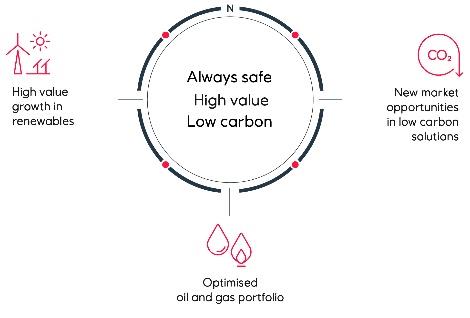
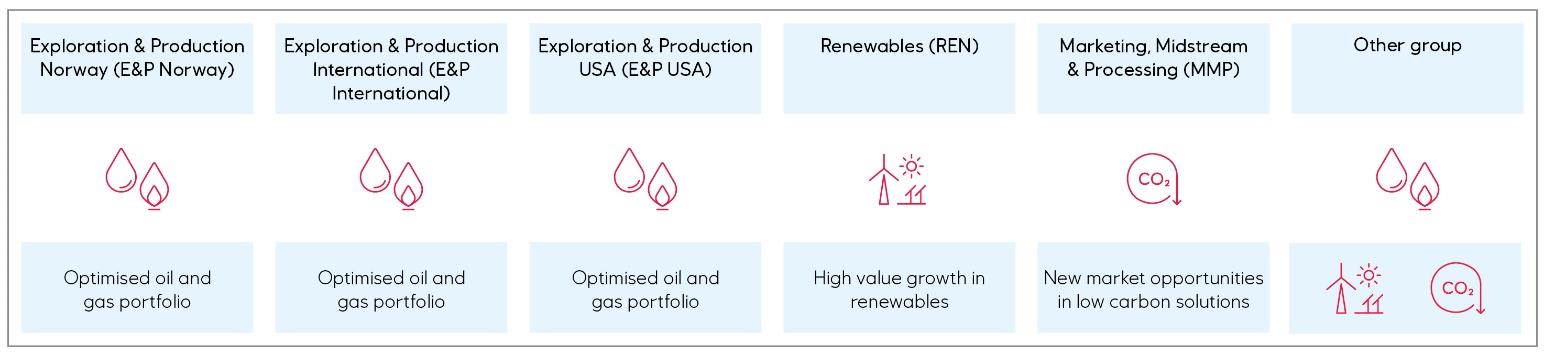
110 Equinor, Annual Report on Form 20-F 2022
Reporting Segment Performance
Introduction to segmental reporting
Equinor’s business strategy is structured around three pillars: Always safe, High value, and Low carbon:
This means that, to create value as a leader in the energy transition, we are pursuing high
value growth in renewables, and seeking new market opportunities in low-carbon solutions
while, at the same time, optimising our oil and gas portfolio.
In order to effectively manage and execute our strategy, including the ability to measure the progress of the business against its
strategic goals, Equinor’s operations are organised into business areas and followed up through operating segments. The operating
segments directly correspond to the reporting segments – with the exception of the operating segments, Projects, Drilling &
Procurement (PDP), Technology, Digital & Innovation (TDI), and Corporate staff and functions, which are aggregated into the
reporting segment Other.
The Exploration & Production (E&P) segments are responsible for the discovery and appraisal of new resources and commercial
development of the oil and gas portfolios within their respective geographical areas: E&P Norway on the Norwegian continental shelf,
E&P USA in the USA and E&P International worldwide, except for Norway and the USA.
Marketing, Midstream & Processing (MMP) works to maximise value creation in Equinor’s global mid- and downstream positions. The
segment is responsible for the global marketing, trading, processing, and transportation of crude, petroleum products and natural gas,
in addition to power and emissions trading. MMP also leads Equinor’s focus in low-carbon solutions such as carbon capture and
storage (CCS) and other low-carbon energy solutions.
The Renewables (REN) segment is responsible for developing and exploring areas within renewable energy, such as offshore wind,
green hydrogen, storage solutions, and solar power.
Inter-segmental transactions
Internal transactions in oil and gas volumes occur between reporting segments before volumes are sold in the market. Equinor has
established a market-based transfer pricing methodology for the intercompany sale of oil and natural gas that meets the requirements
of applicable laws and regulations. For further information, see section 2.2 High Value for production volumes and prices.
E&P Norway produces oil and natural gas including liquefied natural gas (LNG) which is sold internally to MMP. A large proportion of
the oil and natural gas produced by E&P USA and oil from E&P International is also sold through MMP. The remaining oil and gas
from E&P International and E&P USA is sold directly in the market. In 2022, the average transfer price for natural gas for E&P Norway
was 31.22
USD/MMBtu (compared to 14.43 USD/MMBtu in 2021). For the oil sold from E&P Norway to MMP, the transfer price used
is the applicable market-reflective price minus a cost recovery rate.
Equinor eliminates intercompany sales when combining the results of our reporting segments. Intercompany sales include
transactions recorded in connection with oil and natural gas production in the E&P reporting segments, and in connection with the
Equinor, Annual Report on Form 20-F 2022
111
sale, transportation or refining of oil and natural gas production in the MMP reporting segment. Certain types of transportation costs
are reported in the MMP, E&P USA and E&P International reporting segments.
3.1 Optimised oil and gas portfolio
The Norwegian continental shelf (NCS) to deliver value for decades
After more than 50 years of operations Equinor’s equity production from the NCS in 2022 is still high, about 1.387
million boe per day,
and the net operating income from the NCS reached USD 67.6 billion in 2022. Throughout the year, Equinor, together with licence
partners and Norwegian authorities, took several new steps to respond to the rising need for natural gas in Europe and increased gas
production by 8% in 2022.
Going forward, Equinor will continue to add high-value barrels to the portfolio through exploration and increased recovery. A particular
focus will be given to gas. Hence, NCS cash flow and value creation are expected to remain high beyond 2030. In 2022 Equinor was
awarded 26 new production licences and several high-value discoveries were made close to existing infrastructure. Four tie-in projects
reached investment decisions in 2022, adding value and increasing the lifespan of existing infrastructure. An investment decision was
also made for the Munin project. The NCS project portfolio is very robust against potential low oil and gas prices.
The CO
2
Investment decisions were made for both the Njord and Snøhvit future electrification projects. The Oseberg gas capacity and power-
from-shore project got PDO approval in the fourth quarter of 2022. In November the first power was produced from the Hywind
Tampen floating offshore wind farm that will supply the Snorre and the Gullfaks facilities.
Norway energy hub - the plan to transform the NCS into a broad energy province – saw good progress. Equinor together with
Oseberg and Troll licence partners, are in an early phase of developing a floating offshore wind farm intended to provide electric
power to Kollsnes and the Troll and Oseberg fields via an onshore connection point. Blue hydrogen and CCS projects were
significantly strengthened through the award of the Smeaheia CO
2
Transforming the value of international oil and gas
Equinor has built its international oil and gas portfolio over the past 30 years, with an equity production of about 0.652 million boe per
day in 2022. In the past few years, Equinor has made significant progress to focus and optimise its international oil and gas portfolio
through divestments and country exits. In the portfolio of assets in production, the focus is on safe and efficient operations, including
measures to reduce carbon emissions. The portfolio of major development projects continues to be further matured and optimised.
In 2022, Equinor completed its exit process from Russia. In Brazil, the Peregrino field and its expansion, Peregrino phase 2, came into
production. The Roncador field started producing additional volumes from an IOR project. The major development project Bacalhau
continued to progress. Meanwhile, in the USA, portfolio optimisation onshore (Northeastern USA) and offshore (US Gulf of Mexico)
performed well. In the Gulf of Mexico, Equinor continues to materially build position with the Vito development, operated by Shell.
Onshore, the significant low-carbon gas positions in the Appalachian Basin continue to generate strong cash flows. Presence in this
region has allowed Equinor to spearhead initiatives that could unlock future CCS and hydrogen opportunities together with key
industrial players.
Proved oil and gas reserves
Proved oil and gas reserves were estimated to be 5,191 million boe at year end 2022, compared to 5,356 million boe at the end of
2021.
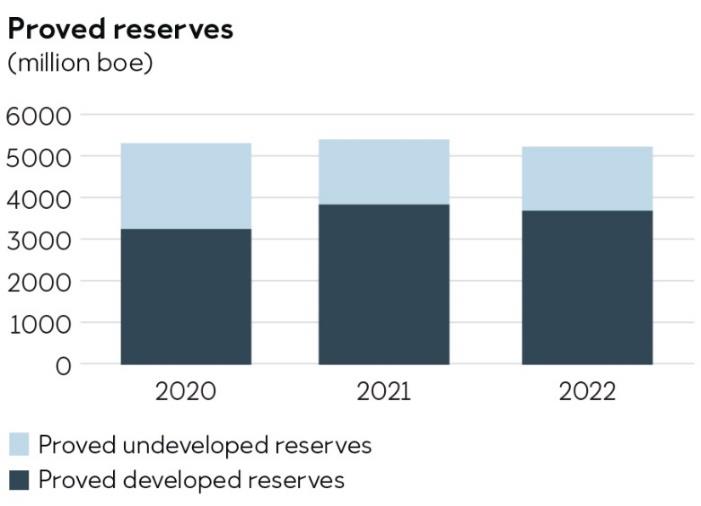
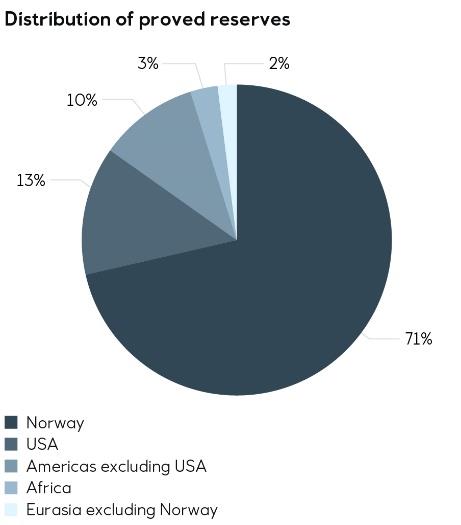
112 Equinor, Annual Report on Form 20-F 2022
Changes in proved reserves estimates are most commonly the result of revisions of estimates due to observed production
performance or changes in prices or costs, extensions of proved areas through drilling activities or the inclusion of proved reserves in
new discoveries through the sanctioning of new development projects. These changes are the result of continuous business
processes and can be expected to continue to affect reserves in the future.
Proved reserves can also be added or subtracted through purchases and sales of reserves-in-place or factors outside management
control.
Changes in oil and gas prices can affect the quantities of oil and gas that can be recovered from the accumulations. Higher oil and
gas prices will normally allow more oil and gas to be recovered, while lower prices will normally result in reduced recovery. However,
for fields with production sharing agreements (PSA), higher prices may result in reduced entitlement to produced volumes and lower
prices may result in increased entitlement to produced volumes. These described changes are included in the revisions and improved
recovery (IOR) category in the tables that follows in this report.
The principles for booking proved gas reserves are limited to contracted gas sales or gas with access to a robust gas market.
Equinor prepares its disclosures for oil and gas reserves and certain other supplemental oil and gas disclosures by geographical area,
as required by the US Securities and Exchange Commission (SEC). The geographical areas are defined by country and continent.
These are Norway, Eurasia excluding Norway, Africa, the USA and the Americas excluding USA.
In Norway and other countries where there is a resonable certainty that the authorities will approve the plan for development and
operation (PDO), Equinor recognises reserves as proved undeveloped reserves when the PDO is submitted to the authorities.
Otherwise, reserves are generally booked as proved undeveloped reserves when regulatory approval is received, or when such
approval is imminent. Undrilled well locations in onshore fields in the USA are generally booked as proved undeveloped reserves
when a development plan has been adopted and the well locations are scheduled to be drilled within five years.
Approximately 87% of Equinor’s proved reserves are located in the Organisation of Economic Co-Operation and Development
(OECD) countries. Norway is by far the most important contributor in this category, followed by the USA. Of Equinor's total proved
reserves, 5% are related to PSAs in non-OECD countries such as Angola, Brazil, Azerbaijan, Algeria, Nigeria and Libya. Other proved
non-OECD reserves are related to concession fields in Argentina and Brazil, representing all together 7% of Equinor's total proved
reserves.
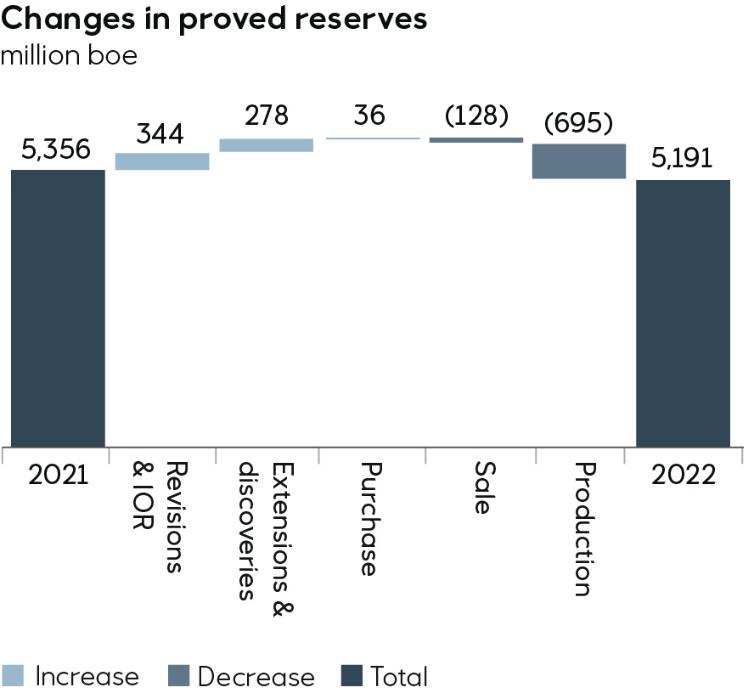

Equinor, Annual Report on Form 20-F 2022 113
Changes in proved reserves in 2022
The total volume of proved reserves decreased by 165 million boe in 2022.
Revisions and IOR
Revisions of previously booked reserves, including the effect of improved recovery, increased the proved reserves by
net 344 million boe in 2022. The increase is the result of 433 million boe in positive revisions and increased recovery, partially offset
by 89 million boe in negative revisions. Many producing fields had positive revisions due to better performance, new drilling targets
and improved recovery measures, as well as reduced uncertainty due to further drilling and production experience. The positive
revisions also included a direct effect of higher commodity prices, increasing the proved reserves by approximately 63 million boe
through increased economic lifetime on several fields. The negative revisions were mainly related to unforeseen events and
operational challenges resulting in reduced production potential on some fields in addition to reduced entitlement volumes from
several fields with PSAs.
Extensions and discoveries
A total of net 278 million boe of new proved reserves were added through extensions and discoveries. Continuous extension of the
proved area in the Appalachian basin together with a record number of submitted PDOs in Norway, of which Munin and Halten Øst
were the largest, are the main contributors in this category.
In addition, this category includes extensions of proved areas through
drilling of new wells in previously undrilled areas at other fields in Norway and in Argentina.
Purchases and sales of reserves-in-place
A total of 36 million boe of new proved reserves in the Statfjord Area, which covers the Norwegian continental shelf (NCS) and UK
continental shelf, were purchased in 2022.
A
total of 128 million boe of sales of reserves-in-place are related to the exit of joint arrangements in Russia in addition to the sale of
the Ekofisk Area and a minority share in the Martin Linge field on the NCS. Equinor has no remaining proved reserves in Russia at
year end 2022.
In the fourth quarter of 2021, Equinor entered into an agreement to divest our interests in the Corrib field in Ireland. Closing is
dependent on governmental approval and is expected to take place in the first quarter of 2023. The sale will result in an estimated
reduction in proved reserves of approximately 11 million boe.
Production
The 2022 entitlement production was 695 million boe, down from 710 million boe in 2021 due to sales, natural decline and operational
challenges.
Development of reserves
In 2022, 241 million boe were matured from proved undeveloped to proved developed reserves. Continued drilling in the Appalachian
basin in the USA and on major offshore assets in addition to the production start of Askeladd (Snøhvit), Johan Sverdrup Phase 2 and
114 Equinor, Annual Report on Form 20-F 2022
Peregrino Phase 2 contributed to the major portion of maturation of proved undeveloped to proved developed reserves in 2022.
Smaller volumes are related to individual assets world-wide. The positive revision and improved recovery of proved developed
reserves of 322 million boe is related to increased economic lifetime at some fields, increased activity levels, higher commodity prices
and implementation of improved recovery projects. Finally, 256 million boe was added to proved undeveloped reserves through
extensions and discoveries, the largest of these being Munin and Halten Øst in Norway, in addition to further development in the
Appalachian basin in the USA.
Proved developed and undeveloped reserves
As of 31 December 2022
Oil and
condensate
NGL
Natural gas
Total oil and
gas
(mmboe)
(mmboe)
(mmmcf)
(mmboe)
Developed
Norway
731
149
10,294
2,714
Eurasia excluding Norway
35
3
89
53
Africa
107
8
91
131
USA
161
51
1,921
554
Americas excluding USA
216
-
25
220
Total developed proved reserves
1,249
210
12,420
3,672
Undeveloped
Norway
562
60
2,087
994
Eurasia excluding Norway
48
0
5
50
Africa
17
0
-
17
USA
56
9
423
140
Americas excluding USA
316
-
11
318
Total undeveloped proved reserves
999
70
2,526
1,519
Total proved reserves
2,248
280
14,946
5,191
As of 31 December 2022, the total proved undeveloped reserves amounted to 1,519 million boe, 65% of which are related to fields in
Norway. The Johan Sverdrup, Snøhvit and Oseberg area fields, which have continuous development activities, together with fields not
yet in production, such as Johan Castberg and Munin, have the largest proved undeveloped reserves in Norway. The largest assets
with proved undeveloped reserves outside Norway, are Bacalhau, Peregrino and Roncador in Brazil, the Appalachian basin, Vito and
Caesar-Tonga in the USA, Mariner in the UK, and ACG in Azerbaijan. All these fields are either producing or will start production
within the next five years.
For fields with proved reserves where production has not yet started, investment decisions have already been sanctioned and
investments in infrastructure and facilities have commenced. There are no material development projects, which would require a
separate future investment decision by management, included in our proved reserves. Some offshore development activities will take
place more than five years from the disclosure date on many fields, but these are mainly related to incremental type of spending, such
as drilling of additional wells from existing facilities, in order to secure continued production.
For projects under development, the Covid-19 pandemic impacted progress due to personnel limitations on offshore as well as
onshore facilities and yards. The pandemic has delayed production start at the Johan Castberg field in Norway. The field was
originally planned to start production in 2022, four years after the field development was sanctioned. The start-up is delayed to 2024.
For our onshore assets, all proved undeveloped reserves are limited to wells that are scheduled to be drilled within five years.
In 2022, Equinor incurred USD 6.9 billion in development costs relating to assets carrying proved reserves, of which USD 5.8 billion
was related to proved undeveloped reserves.
Reserves replacement
Equinor, Annual Report on Form 20-F 2022 115
The reserves replacement ratio is defined as the net amount of proved reserves added divided by produced volumes in any given
period.
The 2022 reserves replacement ratio was 76% and the corresponding three-year average was 62%.
The organic reserves replacement ratio, excluding sales and purchases, was 89% in 2022 compared to 127% in 2021. The organic
average three-year replacement ratio was 70% at the end of 2022 compared to 68% at the end of 2021.
Reserves replacement ratio
For the year ended 31 December
2022
2021
2020
Annual
76%
113%
(5%)
Three-year-average
62%
61%
95%
Reference to Reserves report
A
separate reserves report is included as Exibit 15.5 to the 2022 annual report on Form 20-F. The Reserves report is covering proved
reserves required by the Securities and Exchange Commission (SEC). The report may also be downloaded from Equinor`s website at
www.equinor.com/reports.
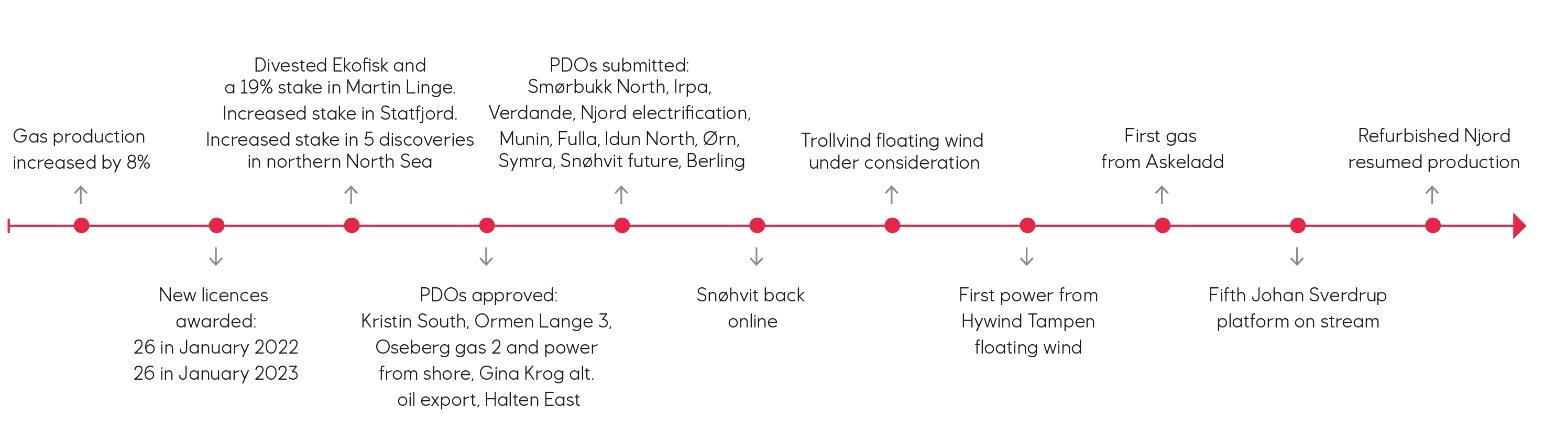
116 Equinor, Annual Report on Form 20-F 2022
3.1.1 Exploration & Production Norway
The Exploration & Production Norway (E&P Norway) segment covers exploration, field development and operations on the NCS,
which includes the North Sea, the Norwegian Sea and the Barents Sea. E&P Norway aims to ensure safe and efficient operations,
maximising the value potential from the NCS. E&P Norway transforms the NCS using digital and carbon-efficient solutions and is
considering the electrification of several installations.
For 2022, Equinor reports production on the NCS from
45
nine
Key events
●
8%
●
Snøhvit
Hammerfest LNG
brought back into operation after having been refurbished following the fire on 28 September 2020.
●
Trollvind
, a floating windfarm
in the Troll area of the North Sea, is under consideration.
●
the first turbine at
the
mid-February 2023, seven turbines were on line. Hywind Tampen’s 11 floating wind turbines will provide power to the five
Snorre
and
Gullfaks
●
, the next plateau extender of the
Snøhvit
gas field in the Barents Sea, was achieved on 1 December.
●
Johan Sverdrup
Sverdrup’s new processing platform was officially opened by the Minister of Petroleum and Energy on 13 February 2023.
●
Njord
oil and gas
field in the Norwegian Sea resumed on 27 December, when the refurbished platform A and
storage vessel Bravo were brought on stream. The field had been suspended since 2016 during the platform and vessel upgrade.
●
Ekofisk
Martin Linge
. Upon
completion, Equinor holds a 51% operating interest in the Martin Linge field. The transaction was completed on 30 September
and is effective from 1 January 2022.
●
Statfjord
Norwegian and the UK continental shelves. Upon completion, Equinor increased its stake in Statfjord on the NCS and holds a
14.53% stake in
Statfjord unit UK
. Equinor plans to extend Statfjord’s field life to 2040.
●
Troll, Fram
Kvitebjørn
areas of the North Sea from Wellesley Petroleum AS. With this, Equinor increases its participating interest in the
discoveries Grosbeak, Toppand, Atlantis, Røver North and Røver South. The transaction is expected to be completed in the first
half of 2023 and will be effective from 1 January 2023.
●
Awards for predefined areas
on the NCS, Equinor was awarded
26
12
2021
, and awarded
26
18
2022
.
The Norwegian Ministry of Petroleum and Energy (MPE) approved the plans for development and operation of:
Equinor, Annual Report on Form 20-F 2022 117
Kristin South
Partner-operated
Ormen Lange
3
, the third phase of the development of the gas field in the Norwegian Sea, on 8 July.
Oseberg gas phase 2 and power from shore,
the plan for further developing the Oseberg field in the North Sea, on 1
December.
Gina Krog alternative oil export
, where a new pipeline will be laid from the Gina Krog platform to
Sleipner
on 15 December.
Halten East
gas field in the Norwegian Sea, to be tied in to the
Åsgard
field, on 13 February 2023.
Together with the licence partners, Equinor submitted plans to the MPE for development and operation of
The
Smørbukk North
field, on 9 November.
The
Aasta Hansteen
The
Verdande
oil field in the Norwegian Sea, to be tied back to the Norne FPSO, on 6 December.
A partial electrification of the
Njord
oil and gas field in the Norwegian Sea
,
Draugen,
December.
The
(formerly Krafla) oil and gas field in the central North Sea, to be developed in cooperation with
Hugin
(formerly North
of Alvheim), using the groundbreaking concept of unmanned production platform developed by Equinor, on 16 December.
Partner-operated
Fulla
gas field in the central North Sea, to be tied back to the platform planned at
Hugin
Partner-operated gas fields
Idun North
Ørn
in the Norwegian Sea, to be tied back to the
Skarv
Partner-operated
Symra
Ivar Aasen
Snøhvit future
, a project to expand gas processing capacity and reduce carbon emissions, constructing a new electric
compressor module on shore and fully electrifying operations at
Hammerfest LNG.
The development will lay the ground for
operations on the Snøhvit field in the Barents Sea towards 2050. The plan was submitted on 20 December.
Partner-operated
Berling
Åsgard
B platform, on 21 December.
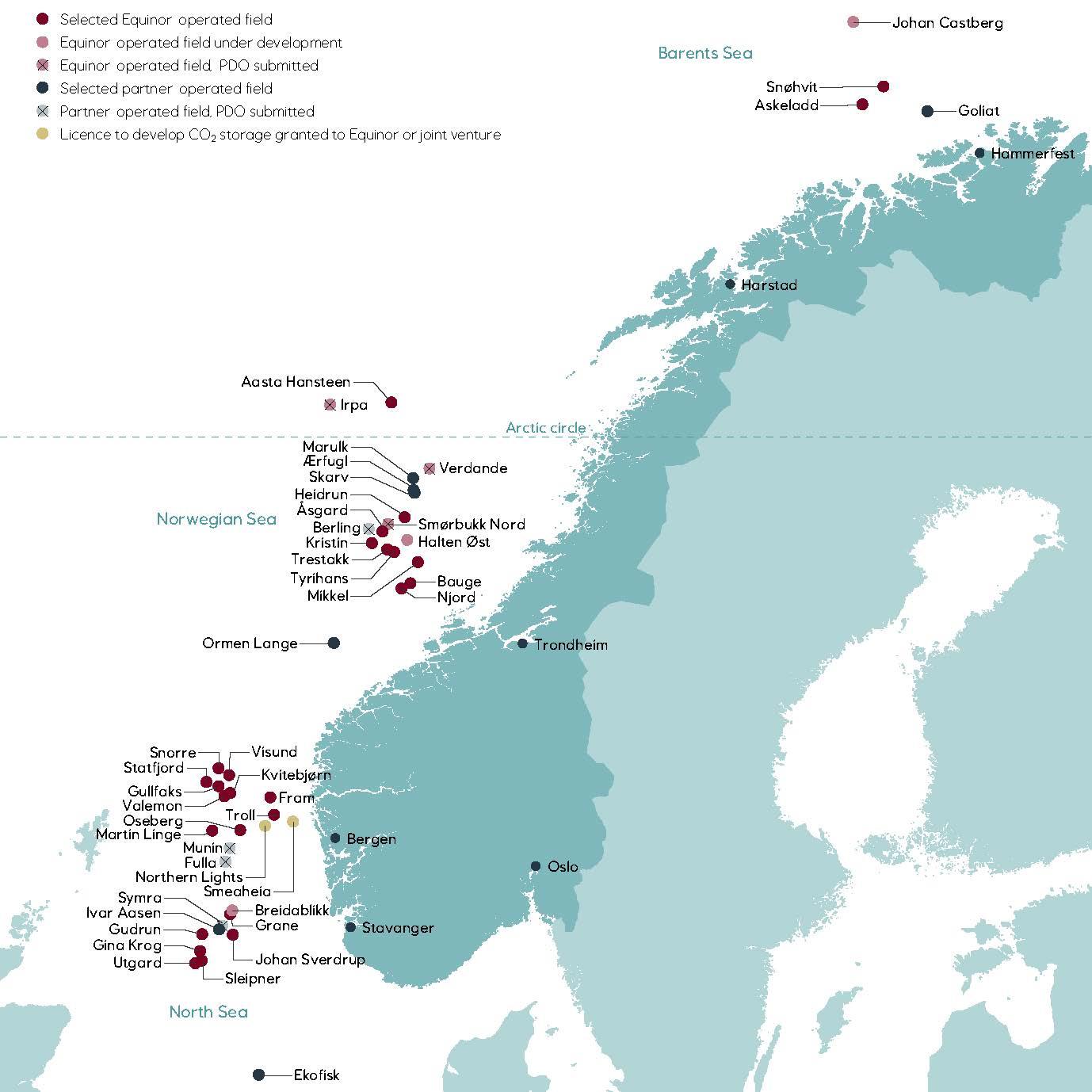
118 Equinor, Annual Report on Form 20-F 2022
Major producing fields, field developments and carbon storage licences operated by Equinor and Equinor’s licence
partners
Performance review
E&P Norway - condensed income statement under IFRS
For the year ended 31 December
(in USD million)
2022
2021
Change
Revenues
74,774
38,841
93%
Other income
1,155
546
>100%
Total revenues and other income
75,930
39,386
93%
Equinor, Annual Report on Form 20-F 2022 119
Operating, selling, general and administrative expenses
(3,782)
(3,652)
4%
Depreciation, amortisation and net impairment losses
(4,167)
(4,900)
(15%)
Exploration expenses
(366)
(363)
1%
Net operating income/(loss)
67,614
30,471
>100%
For the year ended 31 December
Operational information
2022
2021
Change
E&P Norway entitlement liquid and gas production (mboe/day)
1,387
1,364
2%
Average liquids price (USD/bbl)
97.5
67.6
44%
Average internal gas price (USD/mmbtu)
31.22
14.43
>100%
Operational performance
In response to the energy crisis, Equinor liaised with partners and Norwegian authorities to boost gas exports to Europe through
adjusted production permits, reduced gas injection and augmented energy amount in NGL. A change from gas injection to gas export
from some fields contributed to the
8%
operations.
Equinor decided to maintain high gas production levels from Troll, Oseberg and Heidrun through the summer and postponed
turnarounds at Oseberg from May to September, based on a thorough evaluation of the plants’ technical integrity. This contributed to
refilling European gas storages before the winter, enhancing European security of supply. Equinor collaborated closely with
Norwegian authorities to manage the security situation in 2022 and received support to strengthen physical security both offshore and
onshore.
The 1.7% rise in output from 2021 to 2022 was mainly driven by Martin Linge and Troll phase 3 producing for the full year, Snøhvit
resuming production in June, and increased gas output from Gina Krog, Troll and partner-operated Skarv. This was partially offset by
natural decline. While gas volumes rose by 8%, liquids volumes declined by 6% compared to 2021. For information about the NCS
production, see section 5.5 Production per field. Over time, the volumes lifted and sold will equal entitlement production, but may be
higher or lower in any period due to differences between the capacities and timing of the vessels lifting the volumes and the actual
entitlement production during the period.
Snøhvit’s satellite Askeladd, Njord’s upgraded platform and storage vessel and Johan Sverdrup’s fifth platform were brought into
production in December, adding volumes and prolonging field life. The Hywind Tampen floating wind farm achieved first power in
November, to be fully operational in 2023. Delivering competitive projects, we create long-term value, using standardised and digitised
solutions while maintaining a rigorous quality and cost focus. With the pursuit of ‘the perfect well,’ a modern rig fleet and capitalising
on economies of scale, we attain world-class drilling performance.
To replenish our portfolio with valuable gas volumes for Europe, exploration was conducted near existing infrastructure throughout
2022, resulting in four commercial discoveries. Exploration activity was carried out in 22 wells in 2022, compared to 21 wells in 2021.
19 wells were completed with four commercial discoveries in 2022, compared to 18 wells completed with six commercial discoveries
in 2021.
Financial performance
Increased gas production coupled with high realised gas prices drove the unusually high revenues in 2022. Higher gas transfer price
and liquids price increased net operating income and revenues from 2021 to 2022. The increase in revenues was partially offset by
the NOK/USD exchange rate development. Gain on divestment of Ekofisk and a 19% participating interest in Martin Linge increased
other income from 2021 to 2022. In 2021, other income was mainly affected by an insurance settlement related to the Melkøya fire in
2020.
Increased maintenance, operational activities, higher environmental taxes and electricity prices led to increased operating expenses
and selling, general and administrative expenses from 2021 to 2022. New fields also contributed to the increase, which was partially
offset by the NOK/USD exchange rate development.
Increased proved reserves on several fields and decreased depreciation of the asset retirement obligation (ARO) along with the
NOK/USD exchange rate development decreased depreciation, amortisation and net impairment losses from 2021 to 2022. The
ramp-up of new fields partially offset the reduction.
Higher drilling cost on expensed wells and a decrease in recapitalisation of previously expensed wells contributed to a minor increase
in exploration expenses from 2021 to 2022. This was partially offset by lower field development costs.
Balance sheet information:
the year ended 31 December 2022, compared to USD 36,506 million for the year ended 31 December 2021.
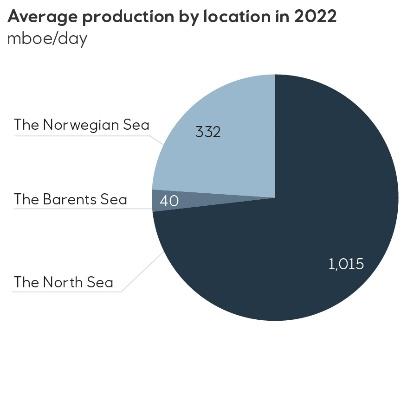
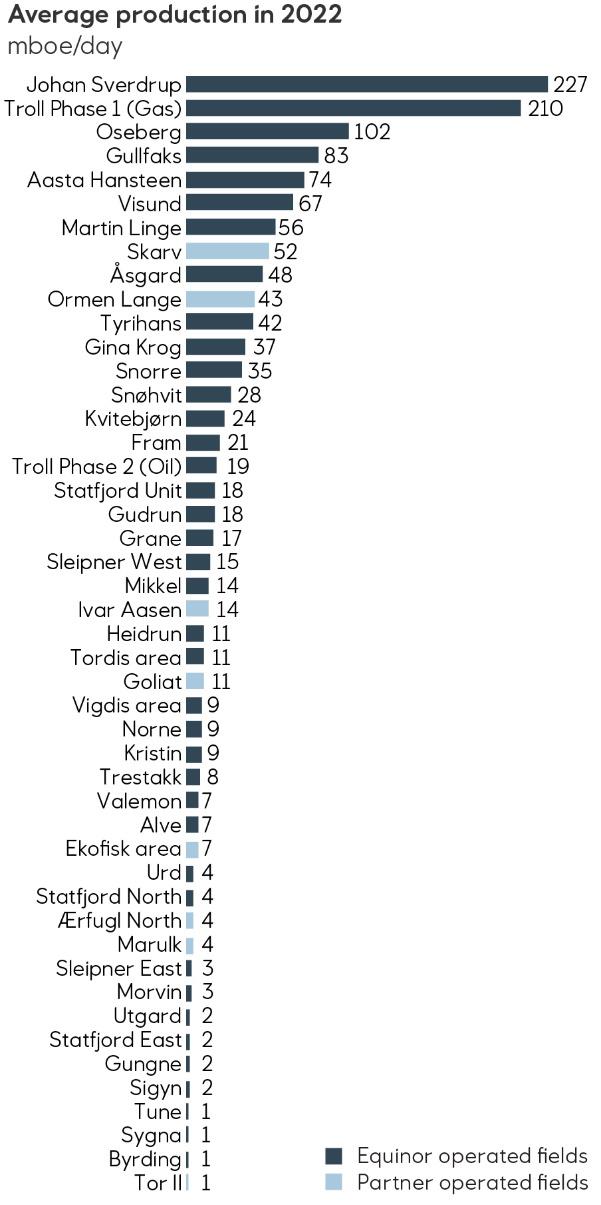
120 Equinor, Annual Report on Form 20-F 2022
Fields in production on the NCS
The table below shows E&P Norway's average daily entitlement production for the years ending 31 December 2022, 2021 and 2020.
Production increased in 2022 due to Martin Linge producing for the full year, Snøhvit resuming production in June, and increased gas
production from Gina Krog, Troll and Skarv, partially offset by natural decline.
Average daily entitlement production
2022
2021
2020
Oil and NGL
Natural gas
Oil and NGL
Natural gas
Oil and NGL
Natural gas
Area production
mbbl/day
mmcm/day
mboe/day
mbbl/day
mmcm/day
mboe/day
mbbl/day
mmcm/day
mboe/day
Equinor operated fields
Partner operated fields
Total
Main producing fields on the NCS
Fields operated by Equinor
Johan Sverdrup
(Equinor 42.63%)
is a major oil field with associated gas in the North
Sea, developed with five platforms: Two processing platforms, a drilling platform, a riser
platform and a living quarters platform. Crude oil is exported to Mongstad through a 283-
km designated pipeline, and gas is exported to the gas processing facility at Kårstø
through a 156-km pipeline via a subsea connection to the Statpipe pipeline. First oil was
achieved in October 2019 and the fifth Johan Sverdrup platform, a processing platform
connected to the field centre, was
brought on stream on 15 December
2022.
Troll
Sea is the largest gas field on the
NCS and a major oil field. The Troll
field regions are connected to the Troll A, B and C platforms. Troll gas is produced
mainly at Troll A, and oil mainly at Troll B and C. Fram, Fram H Nord and Byrding
are tie-ins to Troll C.
Over recent years, new compressors have increased the gas processing capacity:
one compressor was brought on stream at Troll B in September 2018, and one at
Troll C in January 2020. In August 2021, the third phase of the Troll field
development was brought on stream, producing from the Troll West gas cap.
A partial electrification of Troll B and a full electrification of Troll C are underway.
The Troll A platform, brought on stream in 1996, was the first electrified
installation on the NCS.
The
Gullfaks
with three platforms. Since production started on Gullfaks in 1986, several satellite
fields have been developed with subsea wells which are remotely controlled from
the Gullfaks A and C platforms. The first power from the Hywind Tampen floating
windfarm was supplied to Gullfaks A in November 2022.
The
Oseberg
development includes the Oseberg field centre, Oseberg C, Oseberg East and
Oseberg South production platforms. Oil and gas from the satellite fields are
transported to the Oseberg field centre for processing and transportation. Oseberg
Vestflanken 2 came on stream in October 2018. The wellhead platform was
Norway’s first unmanned platform, remotely controlled from the Oseberg field
Equinor, Annual Report on Form 20-F 2022 121
centre. To boost recovery and cut emissions, the installation of two new compressors is underway, and a cable to Kollsnes is
projected to connect to the onshore grid for a partial electrification.
The
Åsgard
Åsgard B semisubmersible floating production platform for gas and condensate, and the Åsgard C storage vessel for oil and
condensate. Åsgard C also provides storage for oil produced at Kristin and Tyrihans. In 2015 Equinor started the world’s first subsea
gas compression train on Åsgard. The Trestakk field is tied back to Åsgard A. The Halten East gas field is being developed in a
subsea solution tied back to Åsgard.
The
Martin Linge
with an integrated wellhead, production and accommodation platform and a permanently anchored oil storage vessel. The gas is
piped to St Fergus, Scotland, and the oil is shipped in shuttle tankers, after being processed on board the storage vessel. The field is
operated from shore. In 2018, the field development started running on power from shore.
Visund
(Equinor 53.20%, operator) oil and gas field in the North Sea is developed with the Visund A semisubmersible integrated
living quarters, drilling and processing unit, and a subsea installation in the northern part of the field. The Visund North improved oil
recovery development, a subsea solution with two new wells in a new subsea template, was brought on stream in September 2018.
The
Aasta Hansteen
platform and two subsea templates. With the Snefrid North well drilled from the seabed at a depth of 1,309 metres, the field
development is the deepest ever on the NCS. The Irpa gas field is being developed in a subsea solution tied back to Aasta Hansteen.
The
Tyrihans
Kristin.
The
Snøhvit
field development in the Barents Sea and is connected to the liquefied natural gas processing facilities at Melkøya near Hammerfest
through a 160-km pipeline. First gas from
Askeladd
, the next plateau extender of Snøhvit, was achieved on 1 December 2022. The
Askeladd development includes two subsea templates, a 42-km tie-back to
Snøhvit
resumed at the refurbished Hammerfest LNG plant in June 2022, after having been suspended following the Melkøya fire in
September 2020.
Askeladd West
, a satellite to Snøhvit, is under development.
Fields operated by licence partners
Ormen Lange
(Equinor 25.35%, operated by A/S Norske Shell) is a deepwater gas field in the Norwegian Sea. The well stream is
transported to an onshore processing and export plant at Nyhamna. Gassco became operator of Nyhamna from
1 October 2017, with Shell as technical service provider. Two new subsea compressor stations are underway, projected to be tied into
the existing Ormen Lange pipeline.
Skarv
FPSO and five subsea multi-well installations.
Ærfugl
Snadd Outer fields in the Norwegian Sea, near the Skarv field, around 200 km west of Sandnessjøen. The field is tied into the Skarv
FPSO for processing and storage.
Ivar Aasen
operated by Aker BP ASA) is an oil and gas field in the North Sea. The development includes a fixed
steel jacket with partial processing and living quarters tied in as a satellite to Edvard Grieg for further processing and export.
Goliat
(Equinor 35.00%, operated by Vår Energi ASA) was the first oil field developed in the Barents Sea. The field consists of subsea
wells tied back to a circular FPSO. The oil is offloaded to shuttle tankers.
Marulk
For information about the NCS production, see section 5.5 Production per field.
Exploration on the NCS
Equinor holds exploration acreage and actively explores for new resources in all three regions on the NCS, the Norwegian Sea, the
North Sea and the Barents Sea. The North Sea and Norwegian Sea continue to be the most important areas for exploration, whereas
the exploration activity in the Barents Sea is expected to decrease and become more focused close to existing infrastructure.
In the
Awards for predefined areas
on the NCS, Equinor was awarded
26
12
awarded
26
18
122 Equinor, Annual Report on Form 20-F 2022
In 2022, Equinor and its partners completed
19
4
Exploratory wells drilled
1)
December
2022
2021
2020
North Sea
Equinor operated
6
10
10
Partner operated
3
2
2
Norwegian Sea
Equinor operated
4
2
4
Partner operated
4
0
6
Barents Sea
Equinor operated
2
2
4
Partner operated
0
2
0
Total (gross)
19
18
26
1) Wells completed during the year, including appraisals of
earlier discoveries.
Projects under development
Askeladd West
Snøhvit
gas field in the Barents Sea. The project was
sanctioned in April 2021. The projected subsea development is 195 km from the Melkøya plant and will include a subsea template tied
in to
Askeladd
. The project is expected to be ready for first gas in the fourth quarter of 2025.
Breidablikk
(Equinor 39.00%, operator) is an oil field in the North Sea. The MPE approved the plan for development and operation of
the field on 29 June 2021. The field is being developed with a subsea solution tied back to the
Grane
at Grane, produced oil will be transported to the Sture terminal. Offshore modification work began March 2021, and the first oil
producer was completed in the third quarter of 2022. First oil is planned for first half of 2024.
Gina Krog alternative oil export
(Equinor 58.70%, operator) comprises a new pipeline to be laid from the Gina Krog platform to
Sleipner A in the North Sea to replace the current export using an FSO and tankers. The MPE approved the amended PDO for Gina
Krog on 15 December, and the new 23 km pipeline is expected to be operational in the fourth quarter of 2024.
Halten East
(Equinor 57.70%, operator)
gas fields at Haltenbanken in the Norwegian Sea are being developed in a subsea solution,
to be tied back to the Åsgard B platform. The plan for development and operation was approved on 13 February 2023. The
development is expected to be brought on stream in early 2025.
Hywind Tampen
developed to provide power from 11 wind turbines to the
Snorre
and
Gullfaks
MPE approved the plans for development and operation on 8 April 2020. The 11 wind turbines under installation are based on the
Hywind technology developed by Equinor, and are expected to meet around 35% of the annual power needs of the five offshore
platforms Snorre A, B and C and Gullfaks A and B. Construction started in October 2020. The wind farm started generating power
from the first turbine in November 2022, and all turbines are expected to be brought on line in 2023.
Johan Castberg
of Hammerfest in the Barents Sea. The MPE approved the plan for development and operation of the field on 28 June 2018. The
development includes an FPSO and a subsea development with 30 wells, ten subsea templates and two satellite structures. The new
FPSO hull sailed from Singapore in February 2022, headed for the Stord yard. In August 2022, the crane vessel
Sleipnir
turret manifold, winch and gantry – the last two modules - onto the FPSO. Covid-19 precautionary measures, such as manning
limitations and quarantining, affected progress, and first oil was rescheduled to the fourth quarter of 2024.
Kristin South
(Equinor 54.82%, operator) is a development of the Kristin Q segment and Lavrans discovery in the Norwegian Sea.
The MPE approved the plan for development and operation of the Kristin South oil and gas field on 2 February 2022. The field is
being developed as a subsea solution with two subsea templates tied back to the Kristin platform. Production is scheduled to begin in
2024.
Ormen Lange phase 3
(Equinor 25.35%, operated by A/S Norske Shell) In this third phase of the development of the gas field in the
Norwegian Sea, two new subsea compressor stations will be tied into the existing Ormen Lange pipeline to enhance field recovery.
Equinor, Annual Report on Form 20-F 2022 123
The MPE approved the PDO on 8 July 2022.
Oseberg gas phase 2 and power from shore
(Equinor 49.30%, operator)
is a development to increase gas production and reduce
carbon emissions from the Oseberg field in the North Sea. The development comprises installation of two new compressors to
increase recovery with low pressure production, and the installation of a 118 km cable to Kollsnes to connect to the onshore power
grid for a partial electrification of the Oseberg field centre and the Oseberg South platform. The MPE approved the plan for
development and operation on 1 December 2022. The project is expected to be completed in 2026.
Troll West electrification
high-tension cable from from Kollsnes in Øygarden. T
he MPE
approved the plan for development and operation of the Troll West
electrification on 17 December 2021. In 2022, topside modification work was being conducted at Troll B and C platforms. The Kollsnes
- Troll B static cable was laid in third quarter of 2022. The fabrication of the transformer module at Stord also began in third quarter.
Troll B
Troll C
is expected to be fully electrified by 2026.
Decommissioning on the NCS
Under the Petroleum Act, the Norwegian government has imposed strict regulations for removal and disposal of offshore oil and gas
installations. The Convention for the Protection of the Marine Environment of the Northeast Atlantic (OSPAR), which Norway has
committed to, gives requirements with respect to how disused offshore oil and gas installations are to be disposed of.
Heimdal
(Equinor 29.40%, operator) is due to cease production in 2023. The Heimdal main platform and Gassco/Gassled’s riser
platform are scheduled to be removed between 2025 and 2027. The platforms will be brought to shore at Eldøyane, Stord, for
dismantling and recycling.
Veslefrikk
completed in the first quarter of 2022. Veslefrikk B was towed to shore for dismantling and recycling at MARS in Frederikshavn,
Denmark, in summer 2022. Veslefrikk A is scheduled to be removed in 2025/2026 and will be brought to Eldøyane, Stord, for
dismantling and recycling.
For further information about decommissioning, see note 23 Provisions and other liabilities to the Consolidated financial statements.
Climate measures
The electrification of offshore and onshore installations is a prerequisite for Norway reaching its national climate goals under the Paris
agreement. Work is underway to electrify Snorre and Gullfaks with renewable power from Hywind Tampen floating windfarm, and to
electrify Sleipner, Gina Krog, Oseberg field centre, Oseberg South, Troll B and Troll C (fully) with power from shore. Plans to electrify
Snøhvit and Hammerfest LNG and Njord were submitted to the authorities in December. The development of the Trollvind floating
windfarm is being considered.
●
Hywind Tampen is expected to provide around 35% of the power need of the five Snorre and Gullfaks platforms. This is expected
to cut CO
2
For more information about our renewables position including floating windfarms using our Hywind technology, see section 3.2
High-value growth in renewables (REN).
●
2
follows: Sleipner 150,000 tonnes a year, Gina Krog 320,000 tonnes a year, Oseberg 320,000 tonnes a year and Troll 450,000
tonnes a year. In the plan submitted for Njord, the electrification is expected to cut CO
2
●
The development will expand gas processing capacity and cut CO
2
For more information about our activities within marketing, transport and processing of gas and liquids, see section 3.3
Marketing, midstream and processing (MMP), including new market opportunities in low carbon solutions.
●
realised, Trollvind will provide renewable power to the Troll and Oseberg offshore installations and the Kollsnes onshore
processing plant via an onshore connection point.
For more information about our renewables position including floating windfarms using our Hywind technology, see section 3.2
High-value growth in renewables (REN).
Carbon capture and storage are to play a major role in the Norwegian climate solution. Northern Lights was in 2019 granted the first
licence on the NCS for CO
2
operatorship of Smeaheia licence for CO
2
●
₂
in the northern part of the North Sea. A first well was drilled in 2020, confirming that the reservoir rocks are suited for CO
2
storage. A second injection well was completed in November 2022, and Northern Lights is expected to come on stream in 2024.
124 Equinor, Annual Report on Form 20-F 2022
The project is part of Longship, the Norwegian authorities’ project for full-scale carbon capture, transport and storage in Norway.
●
2
For more information about our development of CO
2
and processing (MMP), including new market opportunities in low carbon solutions.
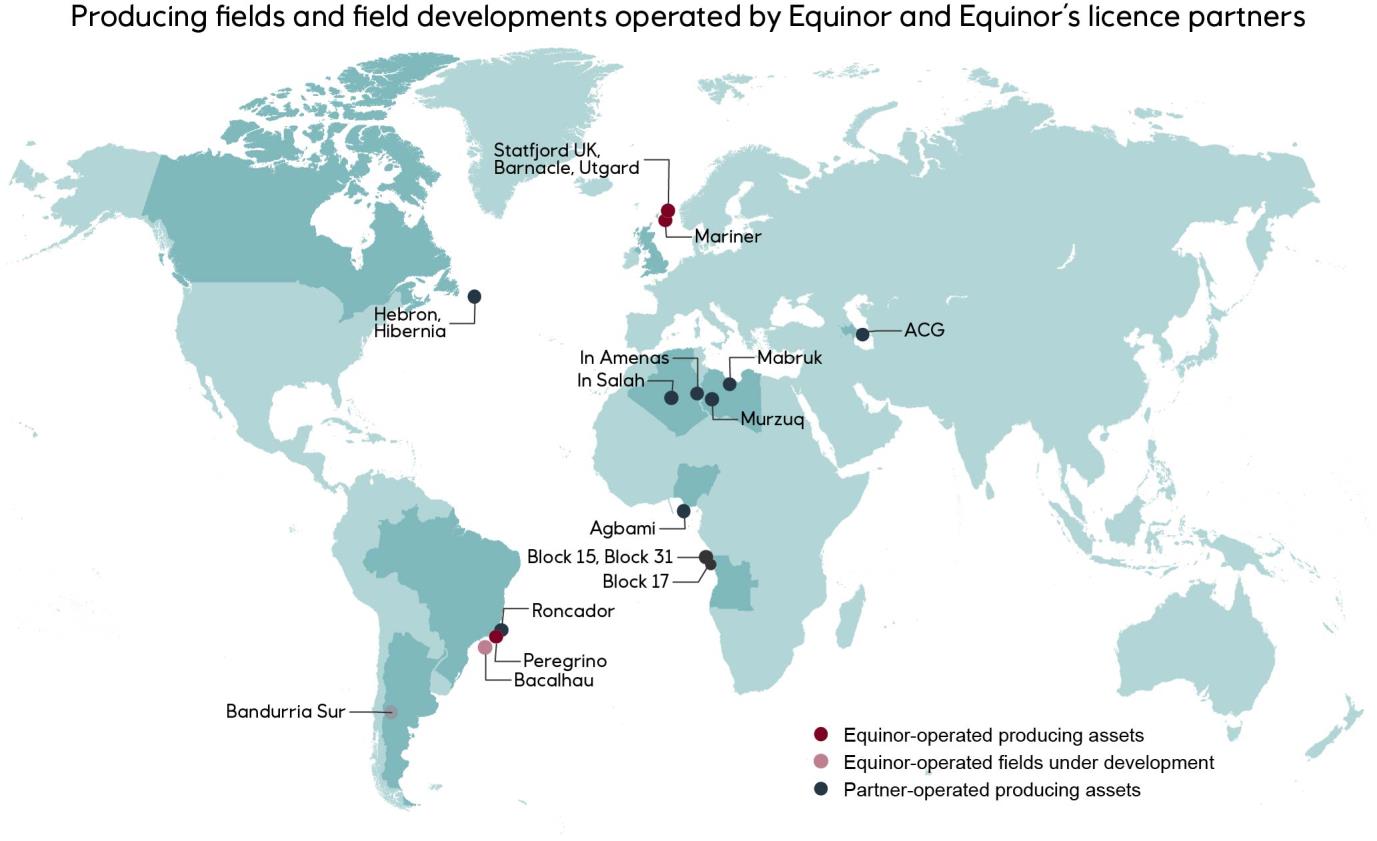
Equinor, Annual Report on Form 20-F 2022 125
3.1.2 Exploration & Production International
The Exploration & Production International (E&P International) reporting segment covers exploration, development and production of
oil and gas outside the NCS and the US.
E&P International was present in 13 countries and had production in 11 countries in 2022. E&P International accounted for 16% of
Equinor’s total equity production in 2022, the same level as in 2021.
Equinor continues to shape the international oil and gas portfolio, focusing activity in areas with high value potential, and continues to
optimise its strong set of development projects.
In 2022, Equinor continued to implement measures to deliver on our climate ambitions and worked closely with partners to drive CO
2
and methane reductions in both our operated and non-operated assets.
Key events
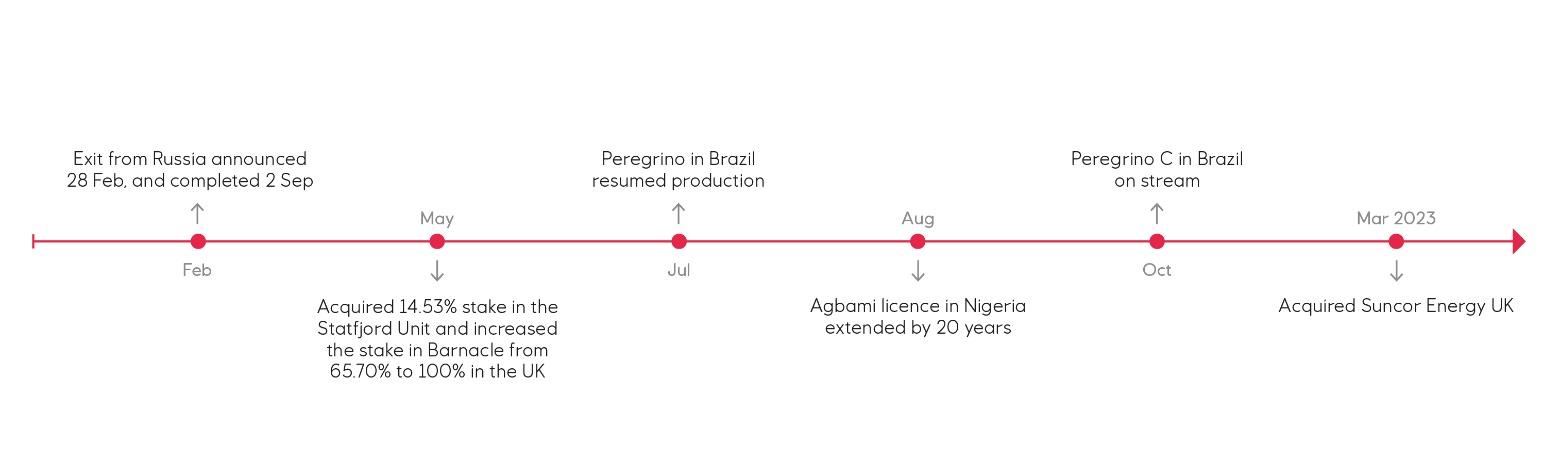
126 Equinor, Annual Report on Form 20-F 2022
●
Russia
, and to start the process of exiting
from Equinor’s Russian joint ventures. On 25 May, the exit from all joint ventures was completed in accordance with Norwegian
and EU sanctions, and on 2 September, the exit from Kharyaga
was completed. Following the exit from Kharyaga, Equinor has
no remaining assets or liabilities relating to projects in Russia.
●
completion Equinor UK Limited obtained
14.53% in
Statfjord Unit
Barnacle
in the UK from 65.70%
to 100%.
●
Peregrino
Brazil
, which had been shut down since April 2020.
●
for OML 128 in
Agbami
Nigeria
20 more years.
●
Peregrino C
Brazil
2
barrel.
●
acquire a non-operated 29.89% interest in the producing
Buzzard
development of the
Rosebank
completed in mid-2023.
For more information about the transactions included above see note 6 Acquisitions and disposals to the Consolidated financial
statements.
Performance review
E&P International - condensed income statement under IFRS
For the year ended 31 December
(in USD million)
2022
2021
22-21 change
Revenues
7,224
5,346
35%
Net income/(loss) from equity accounted investments
172
214
(20%)
Other income
35
5
>100%
Total revenues and other income
7,431
5,566
34%
Purchases [net of inventory]
(116)
(58)
>100%
Operating, selling, general and administrative expenses
(1,698)
(1,406)
21%
Depreciation, amortisation and net impairment losses
(1,731)
(3,321)
(48%)
Exploration expenses
(638)
(451)
41%
Net operating income/(loss)
3,248
329
>100%
For the year ended 31 December
Operational information
2022
2021
22-21 change
Equinor, Annual Report on Form 20-F 2022 127
E&P equity liquid and gas production (mboe/day)
328
342
(4%)
E&P entitlement liquid and gas production (mboe/day)
235
246
(5%)
Production sharing agreements (PSA) effects
94
96
(3%)
Average liquids price (USD/bbl)
92.0
67.6
36%
Operational performance
Equinor’s exit from Russia and a natural decline for several mature fields were the main drivers for the decrease in production in 2022
compared to 2021. This was partially offset by the restart of production at the Peregrino field in Brazil in July 2022 and the start-up of
Peregrino phase 2 in October. The lower effect from production sharing agreements (PSA) in 2022 compared to 2021 was mainly
caused by lower production from several fields with PSAs, partially offset by effects from increased liquids and gas prices.
Financial performance
Higher realised liquids and gas prices were the main drivers for the increase in revenues in 2022 compared to 2021. This was partially
offset by lower entitlement production. The decrease in net income from equity accounted investments was primarily caused by
Equinor’s exit from Russia, partially offset by increased income from Argentina.
Operations and maintenance expenses increased mainly due to the restart of production at the Peregrino field. Royalties and
production fees increased as result of improved prices and field specific volumes.
Depreciation decreased in 2022 compared to 2021 primarily due to effects from an impairment in 2021, lower production from
declining fields, and portfolio changes. This was partially offset by additional investments, and depreciations for the Peregrino field
following the restart of production in 2022.
Net impairments related to property, plant, and equipment decreased from USD 1,587 million in 2021 to USD 286 million in 2022. In
2022, the main contributors were impairments related to Equinor’s exit from Russia, partially offset by an impairment reversal of an
asset in the Europe and Asia area mainly caused by optimisation of the production profile and higher prices, supported by a slight
increase in reserves estimates. In 2021, the main contributors were impairments of assets in the Europe and Asia area caused by
reduced reserve estimates.
Expensing of previously capitalised well cost and higher expensed drilling costs were the main drivers for the increase in exploration
expenses in 2022 compared to 2021.
Balance sheet information:
the year ending 31 December 2022, compared to USD 16,839 million for the year ending 31 December 2021.
International production
In production sharing agreements (PSAs) and production sharing contracts (PSCs), entitlement production differs from equity
production. Equity production in PSAs and PSCs represent Equinor’s percentage ownership in a particular field, whereas entitlement
production represents Equinor’s share of the volumes distributed to the partners in the field, which is subject to several deductions
including but not limited to royalties and the host government's share of profit oil (see section 5.9 Terms and abbreviations).
Equinor's entitlement production outside Norway and the US was 12% of Equinor's total entitlement production in 2022.
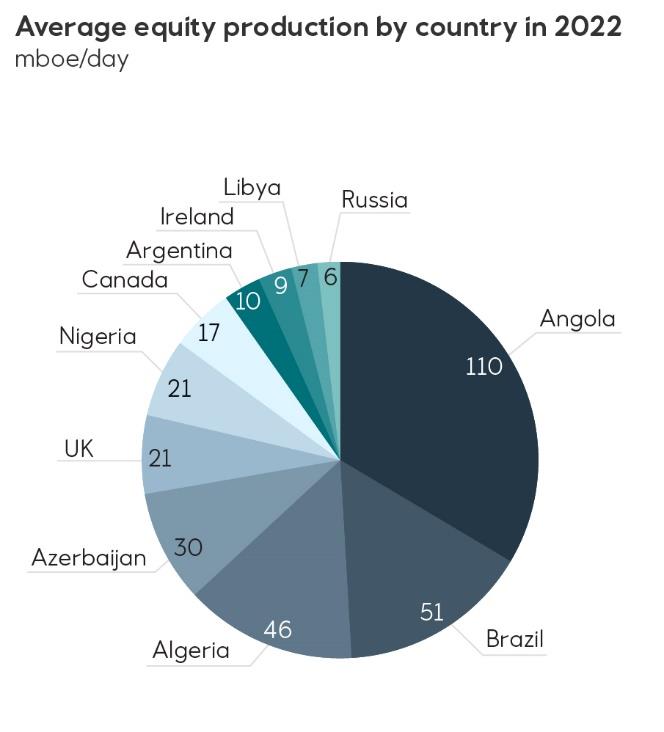
128 Equinor, Annual Report on Form 20-F 2022
For further detailed production data see section 5.5 Production per field.
Average daily entitlement production
For the year ended 31 December
2022
2021
2020
Oil and NGL
Natural gas
Oil and NGL
Natural gas
Oil and NGL
Natural gas
Production area
mboe/day
mmcm/day
mboe/day
mboe/day
mmcm/day
mboe/day
mboe/day
mmcm/day
mboe/day
Americas (excluding US)
Africa
Eurasia
Equity accounted
production
Total
Americas (excluding the US)
Argentina
Bandurria Sur
is an onshore block in Argentina’s Neuqu
é
n province in the core area of the prolific Vaca Muerta play. Equinor entered
the licence in 2020.
Brazil
Peregrino
platforms with drilling capability, processed on the FPSO Peregrino and offloaded to shuttle tankers.
Production from Peregrino started in 2011 but was shut down in April 2020 for unplanned maintenance of the subsea equipment.
Production was resumed in July 2022 following major maintenance, upgrade and repairs on the FPSO to allow a safe restart.
As part of the second phase of the field development, the third wellhead platform, Peregrino C, was brought on stream in October
2022, extending the field life. Peregrino C will import gas and lead to fuel switching on the FPSO, ensuring a significant reduction in
diesel consumption, which will avoid 100 kilotonnes of CO
2
The
field is in the offshore Campos basin and is operated by Petrobras. The field has been in production since 1999. The
hydrocarbons are produced from two semi-submersibles and two FPSOs. The oil is offloaded to shuttle tankers, and the gas is
drained out through pipelines to shore.
Canada
Equinor has interests in the
Jeanne d'Arc
basin offshore the province of Newfoundland and Labrador in the partner operated
producing oil fields
Hebron, Hibernia and Hibernia Southern Extension.
Equinor, Annual Report on Form 20-F 2022 129
Africa
Algeria
In Salah
is an onshore gas field in the central Sahara area which consists of seven fields. The Northern fields have been operating
since 2004. The Southern fields have been operating since 2016 and are tied back into the Northern fields’ facilities.
In Amenas
is an onshore gas field which contains significant liquid volumes. The infrastructure includes a gas processing plant which
is connected to the Sonatrach distribution system. In 2022, two gas turbine generators were reduced to one, optimising power usage
and reducing emissions.
The In Amenas and In Salah licences are jointly operated by Sonatrach, Equinor and Eni. Separate PSAs, including mechanisms for
revenue sharing, govern the rights and obligations of the parties.
Angola
The deep-water
blocks 17
,
15
and
31
contributed 34% of Equinor’s equity liquid production outside the NCS and the US in 2022.
Each block is governed by a PSA, which sets out the rights and obligations of the participants, including mechanisms for sharing the
production with the Angolan state oil company Sonangol.
Block 17 has production from four FPSOs: CLOV, Dalia, Girassol and Pazflor. New projects on Dalia, CLOV, and Pazflor are being
developed to stem a natural decline in production.
Block 15 has production from four FPSOs: Kizomba A, Kizomba B, Kizomba C-Mondo, and Kizomba C-Saxi Batuque. In 2022, there
was a new oil discovery in Bavuca South (Kizomba B area) which is planned to be developed.
Block 31 has production from one FPSO producing from the PSVM fields.
The FPSOs serve as production hubs, which receive oil from more than one field through multiple wells.
The operators in Angola are improving methane leak detection with aircraft-based surveys of offshore facilities. Implementation of a
more stringent flaring policy reduced emissions in block 17. In addition, improvements to equipment reliability and changes to
reservoir management reduced emissions in blocks 17 and 31.
Libya
Equinor has an ownership interest in two oil fields onshore in Libya,
Murzuq
and
Mabruk.
Mabruk was damaged during the conflict in
Libya in 2015. A project to re-develop the field is ongoing.
Nigeria
Agbami
is a deep-water field located off the coast of the Central Niger Delta region. The field straddles the two licences OML 127 and
OML 128, operated by Chevron under a Unit agreement. The Agbami field is governed by a PSC.
For information related to the Agbami redetermination process, see note 26 Other commitments, contingent liabilities and contingent
assets to the Consolidated financial statements.
Eurasia
Azerbaijan
Azeri-Chirag-Gunashli (ACG)
is an oil field located offshore Azerbaijan. The crude oil is sent to the Sangachal Terminal, where it is
processed prior to export. The Baku-Tbilisi-Ceyhan (BTC) pipeline is the main export route, in which Equinor holds 8.71%. The
construction of the
Azeri Central East (ACE)
platform is in progress, and all engineering, procurement and onshore fabrication work
is expected to be completed in 2023.
Ireland
In November 2021 Equinor entered into an agreement with Vermilion Energy Inc to sell Equinor’s non-operated equity position in the
Corrib
2023.
For more information about the transaction see note 6 Acquisitions and disposals to the Consolidated financial statements.
United Kingdom
Mariner
is a heavy oil field located in the North Sea, east of the Shetland Islands, which is operated by Equinor. The field has one
combined platform for production, drilling and accommodation. Oil is exported by offshore loading from a floating storage unit.
Production from the field started in August 2019.
The
field is one of the Equinor-operated fields in the Statfjord area, which spans the boundary between the NCS and
UKCS. The Statfjord Unit development covers the Statfjord A, B and C platforms.
International exploration
130 Equinor, Annual Report on Form 20-F 2022
In 2022, Equinor and its partners drilled and completed two wells in
Angola
, one well in
Brazil
, and three wells in
Canada
. In
Argentina
onshore, Equinor and partners completed drilling of six appraisal wells in the Bajo del Toro licence in Vaca Muerta and
started test production in July. In
Algeria,
Exploratory wells
drilled
1)
2022
2021
2020
Americas (excluding US)
Equinor operated
3
0
3
Partner operated
7
2
3
Africa
Equinor operated
0
0
0
Partner operated
2
0
1
Other regions
Equinor operated
0
1
0
Partner operated
0
0
4
Total (gross)
12
3
11
1) Wells completed during the year, including appraisals of
earlier discoveries.
Fields under development internationally
Americas (excluding US)
Brazil
Bacalhau
(Equinor 40%, operator) oil and gas discovery straddles
BM-S-8
and
Bacalhau North
in the Santos basin, off the coast of
the state of Sao Paulo.
The investment decision for Bacalhau phase 1 was made in June 2021. The field is being developed with subsea wells tied back to an
FPSO, and first oil is scheduled for 2025. In November 2022, the first production well was spudded.
A second phase of the Bacalhau field development is being considered to fully exploit the value potential.
Discoveries with potential for development
Americas (excluding US)
Brazil
BM-C-33
(Equinor 35%, operator) includes the oil and gas discoveries
Pao de Acucar
,
Gavea
and
Seat
in the southwestern part of
the Campos basin, off the coast of the state of Rio de Janeiro, Brazil. The project is maturing towards sanction. A gas export solution
is under consideration.
Canada
Bay du Nord
(Equinor 65% now, 58.5% anticipated at sanction, operator) is an oil field in the Flemish pass basin which was
discovered by Equinor in 2013. The field is around 500 km northeast of St. John’s in Newfoundland and Labrador, Canada.
Developing Bay du Nord and nearby discoveries in a subsea solution tied back to an FPSO is under consideration. In April 2022, the
federal Canadian authorities approved the environmental impact assessment. The renegotiation of a framework agreement with the
government of Newfoundland and Labrador has started.
Africa
Tanzania
Block 2
(Equinor 65%, operator). Equinor made several large gas discoveries in block 2 in the Indian Ocean, off southern Tanzania,
between 2012 and 2015. The partners of block 2 (Equinor, operator) and blocks 1 and 4 (Shell, operator) are collaborating on the
future development of the discoveries and are jointly negotiating with the government of Tanzania. On 11 June, 2022, the partners
signed a Framework Agreement with the government of Tanzania, aligning on some of the key fundamentals needed for the
development of an LNG project.
Equinor, Annual Report on Form 20-F 2022 131
Eurasia
Azerbaijan
The
Karabagh
(Equinor 50%, operated by Karabagh Joint Operating Company
)
field is located off the coast of Azerbaijan. In 2018
Equinor entered into an agreement with SOCAR (the Azerbaijani state oil company) to enter the Karabagh and Ashrafi-Dan Ulduzu-
Aypara (ADUA) exploration licences with a 50% share in each.
A joint operating company was formed in 2020 and started working on the field development solution.
United Kingdom
The
Rosebank
(Equinor 40%, operator) oil and gas field is located northwest of the Shetland Islands, on the UKCS. Equinor and its
licence partners continue to mature and improve the business case for its development. Equinor’s stake in Rosebank will increase to
80% with the acquisition of Suncor Energy UK Limited, announced on 3 March 2023. The transaction is subject to regulatory approval
and is expected to be completed in mid-2023.
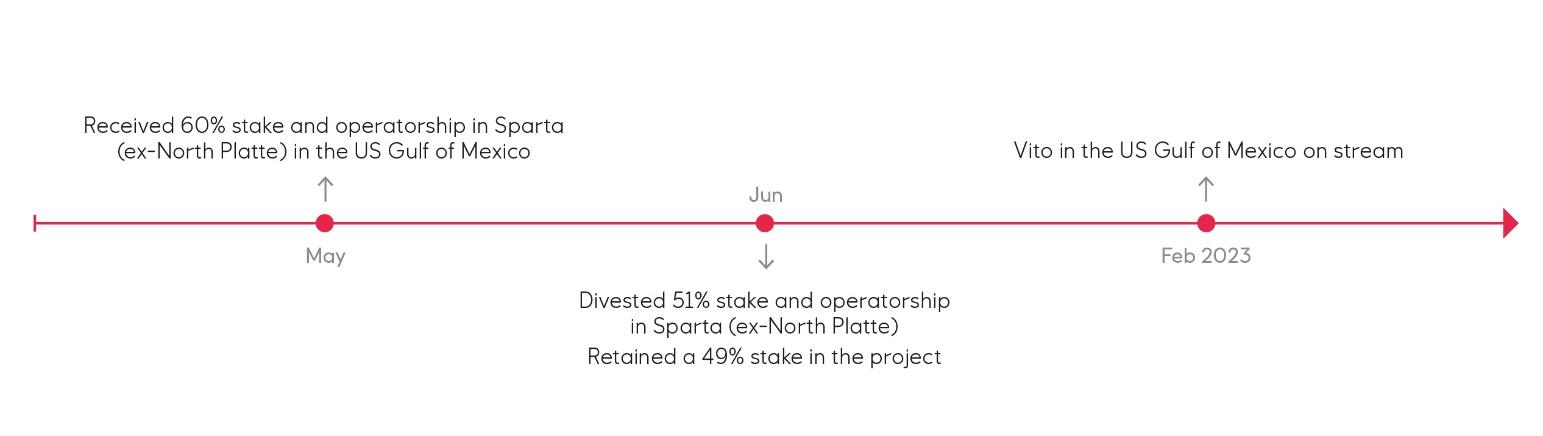
132 Equinor, Annual Report on Form 20-F 2022
3.1.3 Exploration & Production USA
The Exploration & Production USA (E&P USA) reporting segment covers exploration, development and production of oil and gas in
the US.
E&P USA produced around 16% of Equinor’s total equity production of oil and gas in 2022, compared to 18% in 2021.
Equinor has continued shaping the US oil and gas portfolio, focusing activity in areas with high value potential, and
continues to optimise its strong asset base.
In 2022, Equinor entered into a Cooperation Agreement with Shell and US Steel to advance a collaborative clean energy hub in the
tri-state region of Ohio, West Virginia and Pennsylvania. The hub will focus on decarbonisation opportunities such as carbon capture
utilisation and storage (CCUS), as well as blue hydrogen production and utilisation. In 2022, Equinor also signed a memorandum of
understanding (MOU) with Battelle, the world’s largest independent research and development company, to work together on
assessing the tri-state area’s carbon storage potential.
Key events
●
in
North Platte
. This followed TotalEnergies decision, in February 2022, to not sanction the project
and to withdraw from it.
●
North
Platte
Equinor retained a 49% interest in the project, and Shell will
become the new operator of the field. The development was
renamed to
Sparta
●
Vito
US Gulf of Mexico, capable of producing 100,000 barrels of oil
per day. Equinor has a 36.89% interest in the field, which is
operated by Shell Offshore Inc.
Performance review
E&P USA - condensed income statement under IFRS
For the year ended 31 December
(in USD million)
2022
2021
22-21 change
Revenues
5,523
4,149
33%
Total revenues and other income
5,523
4,149
33%
Operating, selling, general and administrative expenses
(938)
(1,074)
13%
Depreciation, amortisation and net impairment losses
(361)
(1,734)
79%
Exploration expenses
(201)
(190)
(6%)
Equinor, Annual Report on Form 20-F 2022 133
Net operating income/(loss)
4,022
1,150
>100%
For the year ended 31 December
Operational information
2022
2021
22-21 change
E&P equity liquids and gas production (mboe/day)
324
373
(13%)
E&P entitlement liquid and gas production (mboe/day)
279
321
(13%)
Royalties
44
52
(14%)
Average liquids price (USD/bbl)
81.0
58.3
39%
Average internal gas price (USD/mmbtu)
5.55
2.89
92%
Operational performance
The average daily production of liquids and gas declined by 13%, mainly due to Equinor’s divestment of its Bakken assets in 2021 in
addition to the natural decline from our operated and non-operated onshore assets in the Appalachian Basin. Furthermore, Caesar
Tonga was impacted by more unexpected down-time and planned turnarounds in 2022, driving Gulf of Mexico production down 3%.
Financial performance
Higher realised liquids and gas prices were the main drivers for the increase in revenues in 2022 compared to 2021. This was
partially offset by lower entitlement production.
Operating expenses decreased due to lower transportation related costs resulting from lower production and the divestment of
Bakken partially offset by higher operations and maintenance expenses.
Depreciation decreased due to lower production and improved reserves partially offset by effects from impairment reversals and
additional investments during 2022.
Net impairment reversals related to property, plant, and equipment amounted to USD 1,060 million in 2022 driven primarily by
improved short-term commodity price assumptions compared to net impairments of USD 69 million in 2021.
Expensing of a non-commercial exploration discovery in the Gulf of Mexico was the main driver
for the increase in exploration
expenses in 2022 compared to 2021.
Balance sheet information:
the year ending 31 December 2022, compared to USD 11,406 million for the year ending 31 December 2021.
US production
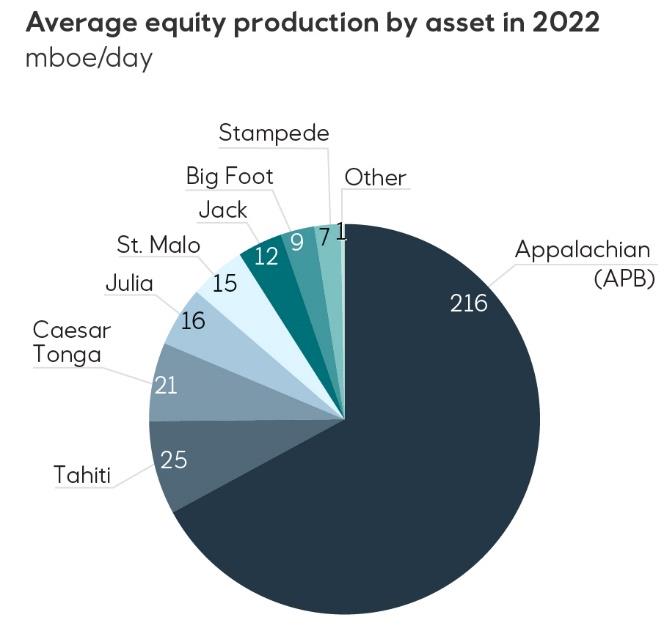
134 Equinor, Annual Report on Form 20-F 2022
Entitlement production differs from equity production in the USA where entitlement production is expressed net of royalty interests.
Equity production represents volumes that correspond to Equinor’s percentage ownership in a particular field and is larger than
Equinor’s entitlement production where the royalties are excluded from entitlement production.
For further detailed production data see section 5.5 Production per field.
Equinor's entitlement production in the USA was 15% of Equinor's total entitlement production in 2022.
Average daily entitlement production
For the year ended 31 December
2022
2021
2020
Oil and NGL
Natural gas
Oil and NGL
Natural gas
Oil and NGL
Natural gas
Production area
mboe/day
mmcm/day
mboe/day
mboe/day
mmcm/day
mboe/day
mboe/day
mmcm/day
mboe/day
USA
Offshore Gulf of Mexico
The
Titan
The
Tahiti, Heidelberg, Caesar Tonga and Stampede
Tahiti and Heidelberg oil fields produce through floating spar facilities. The Caesar Tonga oil field is tied back to the Anadarko-
operated Constitution spar host. The Stampede oil field produces through a tension-leg platform with downhole gas lift.
The
Jack, St. Malo, Julia
Big Foot
and Julia oil fields are subsea tiebacks to the Chevron-operated Walker Ridge regional host facility. The Big Foot oil field produces
through a dry tree tension-leg platform with a drilling rig.
Onshore portfolio
Since its entry into US shale in 2008, Equinor has continued to optimise its portfolio through acreage acquisitions and divestments.
Equinor has an ownership interest in the
Marcellus
Appalachian
is mostly partner operated. Since 2012, Equinor has also been an operator in the Appalachian region in the state of Ohio, developing
the Marcellus and Utica formations.
In addition, Equinor participates in natural gas gathering system and gas treatment and processing facilities in Appalachian basin
assets to provide flow assurance for Equinor's upstream production.
For further detailed production data and information see section 5.5 Production per field.
Equinor, Annual Report on Form 20-F 2022 135
US exploration
Throughout 2022, Equinor continued its activity in US Gulf of Mexico, which is one of our core areas for exploration.
Equinor completed drilling an operated appraisal well located in the Walker Ridge area of the
US Gulf of Mexico
deemed non-commercial. In addition, Equinor was awarded one lease in 2022.
Fields under development in the US
Offshore Gulf of Mexico
The
Vito development project
area. The development project consists of a light-weight semisubmersible platform with a single eight-well subsea manifold. The
project was sanctioned for development in April 2018. On 16 February 2023, production started on the Vito platform, capable of
producing 100,000 barrels of oil per day.
The
St. Malo water injection project
Both production wells are online, and two injector wells have been drilled. Both injector completions and the last injector conversion
were completed in the second half of 2022.
Discoveries with potential for development
Offshore Gulf of Mexico
Sparta
(formerly North Platte) (Equinor 49%, operated by Shell) is a Paleogene oil discovery in the Garden Banks area. It has been
fully appraised since its discovery with three drilled wells and three sidetracks. In February 2022, the operator notified Equinor and the
relevant authorities of its decision to withdraw from the North Platte project. In May 2022, Equinor received a 60% interest and the
operatorship from TotalEnergies. Subsequently, in June 2022, Equinor assigned 51% interest and operatorship to Shell. The project
was also renamed Sparta.
136 Equinor, Annual Report on Form 20-F 2022
3.2 High-value growth in renewables
Developing a high-value renewables business
Equinor continues to make progress on its strategic aim to accelerate profitable growth in renewables.
We aim to install 12-16 GW of renewables capacity and produce 35-60 TWh annually by 2030. We will achieve this by becoming a
global offshore wind major and establishing ourselves as a market driven power producer in selected markets by pursuing
opportunities in onshore renewables and taking on more merchant risk exposure.
In 2022, we achieved first power from Hywind Tampen (our first commercial-scale floating wind farm, which delivers renewable power
to the Gullfaks and Snorre oil and gas platforms in the North Sea) and Stępień (our first Polish solar farm which entered the portfolio
as part of the Wento acquisition in 2021). During the year we continued to strengthen our floating wind leadership by winning a ~2GW
lease in Morro Bay, California. We also acquired two medium-sized onshore platforms: East Point Energy (a battery storage
developer) and BeGreen (a Danish onshore developer).
We remain value-driven and use different value drivers from project development and execution, to trading and power market risk
management. We also use select divestments to drive and shape business models for different markets. The renewable industry is
developing fast, costs are increasing, power prices are high, and the supply chain is tightening. We remain disciplined in expensive
offshore wind auctions and have accelerated our pace to become more market driven.
Equinor is evolving into an integrated power producer with a diversified power portfolio. As power markets mature, our strategic pillars
are merging to become multi-market and multi-technology. We see opportunities will come in the form of broad energy offerings,
managing merchant risk, growing our offshore wind position, and cementing our floating wind leadership.
Overview
Offshore wind
We are developing as a global offshore wind major, powering European homes with renewable electricity from offshore wind farms in
the UK and Germany and building material clusters in the North Sea, the Baltic Sea and the US. In parallel, we are actively positioning
ourselves to access emerging markets globally. Equinor sees potential for floating offshore wind projects in Norway, Europe, the US
and Asia and is accelerating the development of this technology to strengthen our position in the industry. Floating wind is still at an
early development phase compared to other renewable energy sources.
Equinor has long experience with offshore wind power in the
UK
, having built and brought into operation Sheringham Shoal (Equinor
40%, operator), Dudgeon (Equinor 35%, operator) and Hywind Scotland (Equinor 75%, operator). Together with the partners we are
also developing Dudgeon extension project and Sheringham Shoal extension project. Together with our partners SSE Renewables
and Vårgrønn we are developing Dogger Bank, the world’s biggest offshore wind farm (Equinor 40%, operated by SSE Renewables
during the development phase. Equinor assumes operatorship when the windfarms come on stream). Some of the capital expenditure
is financed through project financing. At year-end 2022, Equinor’s share of the project financing debt for the Dudgeon project
amounted to USD 0.4 billion, and for the Dogger Bank projects USD 1.9 billion.
Equinor is pursuing the development of offshore wind projects on the east and west coast of the
US
. Together with our partner bp
Equinor is pursuing the development of the Empire Wind and Beacon Wind offshore wind projects (Equinor 50%, operator). The
Empire Wind 1 & 2 and Beacon Wind 1 projects have been selected to provide New York State with offshore wind power and will
provide a total of 3.3 gigawatts (GW).
As the provisional winner of a lease area on the California Pacific outer continental shelf, Equinor continues to lead the way in growing
the offshore wind industry in the US. With a bid of USD 130 million for 80,062 acres in the Pacific Ocean, Equinor secured a lease of
around 2 GW in the Morro Bay area which has the potential to generate enough energy to power some 750,000 US homes.
In
Poland
, Equinor has an interest (50%, operator) in the three Baltyk offshore wind development projects (MFW Baltyk III, MFW
Baltyk II and MFW Baltyk I). Through this position, we can build scale and value in what we see as an important energy region.
Norway
North Sea
opportunities for Norway. We have developed the first floating offshore wind farm to supply renewable power to oil and gas
installations in Norway. The Snorre and Gullfaks oil and gas platforms are the first ever with power supply from a floating offshore
wind farm.
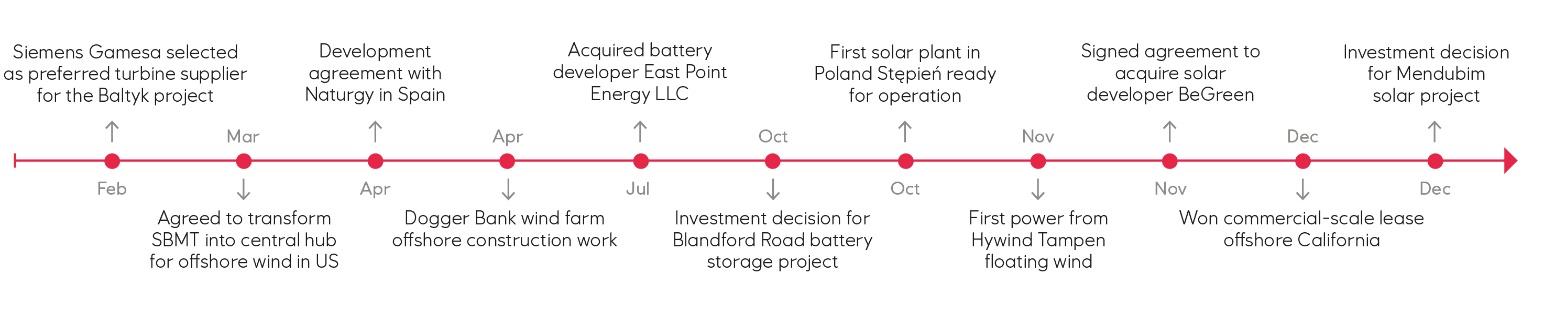
Equinor, Annual Report on Form 20-F 2022 137
In addition to our offshore wind presence in the UK, the US, Poland and Norway, we are present in
Germany, Japan, South Korea,
France, Spain
Vietnam
.
We are a partner (25%) in the
Arkona
2019.
Together with our partners, the Korea National Oil Corporation and Korea East-West Power CO, we have the ambition to develop a
floating offshore wind farm in
South Korea
assess the potential for developing a floating offshore wind project (Firefly).
Onshore renewables
Solar portfolio
With the increasing demand for solar, wind and storage solutions as integrated parts of the energy system, Equinor is gradually
growing its presence in onshore renewables in selected power markets.
In
Brazil
, Equinor has an interest in Apodi (Equinor 43.75 %, operated by Scatec), and the plant started production in 2018. The final
investment decision was made in the fourth quarter of 2022 on the 531 MW Mendubim solar project in Brazil (Equinor 33.3%,
operated by Scatec), and the financial close of the project was also reached in the fourth quarter of 2022.
Equinor has an interest in the 117 MW Guañizuil II A solar producing plant in Argentina (Equinor 50%, operated by Scatec).
In 2021, Equinor acquired the Polish solar developer
Wento
(Equinor 100%). Its first solar plant, Stępień, was ready for operations in
October 2022, and two more reached final investment decision with production expected to start in 2023/2024.
In November, Equinor signed an agreement to acquire 100% of the shares in
BeGreen,
developer in Northwest Europe. The transaction closed on 26 January 2023 after receiving the necessary regulatory approvals.
Equinor holds a 13.1% ownership share in Scatec, an integrated independent renewable power producer. This financial investment is
included in the Other Group reporting segment.
Storage systems and other activities
Equinor sees a solid opportunity to create profitable businesses by deploying batteries and energy storage assets to satisfy the
growing need to stabilise power markets, either as a part of offshore or onshore renewable assets or as separate units supplying
services to the grid. In 2022, Equinor signed an agreement to buy a 100% stake in the US-based battery storage developer East Point
Energy LLC. The acquisition provides a platform for broadening our energy offerings in the US.
In 2022, Equinor reached final investment decision on the Blandford Road battery storage project in UK. This is the first commercial
battery storage asset for Equinor, and the first project realised from the strategic partnership between Equinor and Noriker Power. The
project will start construction in January 2023 and is expected to be operational by late 2023.
Equinor is also exploring opportunities and cooperation within the green hydrogen sector. Hydrogen is expected to become an
integrated part of future energy systems and Equinor is taking positions adding clean hydrogen as an enabler for the transport and
storage of clean energy produced by renewables.
The renewable portfolio has been strengthened in 2022 and early 2023 through the following milestones:
Offshore wind
138 Equinor, Annual Report on Form 20-F 2022
●
Siemens Gamesa
generators for the
MFW Bałtyk II
MFW Bałtyk III
being developed in Poland, with a total installed capacity of 1,440 MW.
●
South Brooklyn Marine Terminal (SBMT)
York into a world-class offshore wind staging and assembling facility and to become the
operations and maintenance
(O&M) base
Empire Wind
Beacon Wind
East Coast.
●
auction off the coast of the Canary Islands in 2023.
●
Dogger Bank Wind Farm
cable off the Yorkshire coast.
●
Hywind Tampen
, Norway’s first and the world’s largest floating wind farm.
The power will be delivered to the Gullfaks and Snorre platform in the North Sea.
●
offshore wind position.
Onshore renewables
●
East Point
Energy LLC
.
●
Blandford Road battery storage
of the UK. This is the first commercial battery storage asset for Equinor, and the first project realised from the strategic
partnership between Equinor and Noriker Power. Construction will start in January 2023 and the project is expected to be
operational in the third quarter of 2023.
●
Stępień
Stępień was developed and will be operated by Wento, Equinor’s wholly-owned subsidiary.
●
BeGreen
, a leading solar project developer in Northwest Europe,
as a wholly-owned Equinor subsidiary.
●
Mendubim
solar project in Brazil. Early phase
construction works of this project started in summer 2022 and realized in partnership with Scatec and Hydro Rein. Equinor
has 33.3% in the project.
Performance review
REN - condensed income statement under IFRS
For the year ended 31 December
(in USD million)
2022
2021
Change
Revenues
16
8
94%
Net income/(loss) from equity accounted investments
58
16
>100%
Other income
111
1,386
(92%)
Total revenues and other income
185
1,411
(87%)
Operating, selling, general and administrative expenses
(265)
(163)
(63%)
Depreciation, amortisation and net impairment losses
(4)
(3)
(11%)
Net operating income/(loss)
(84)
1,245
N/A
For the year ended 31 December
(in USD million)
2022
2021
Change
Renewables power generation (GWh) Equinor share
1,641
1,562
5%
Equinor, Annual Report on Form 20-F 2022 139
Operational performance
Power generation (Equinor share) was 1,641 GWh (gigawatt hours) in the full year of 2022, compared to 1,562 GWh in the full year of
2021. The increase was mainly due to the start-up of production from the Guanizuil IIA solar plant in the third quarter of 2021.
In 2022, our equity-based installed renewable energy capacity was 0.6 GW. By 2026 Equinor expects to significantly increase
installed capacity from renewable projects under development, mainly based on the current project portfolio. Towards 2030, Equinor
expects to increase installed renewables capacity further to between 12 and 16 GW and to produce 35-60 TWh annually. We are
progressing to deliver on the ambitions.
For 2022, additions to PP&E, intangibles and equity accounted investments amounted to USD 298 million, while gross capex* from
the renewable business amounted to USD 1.3 billion. Equinor’s ambition is to have more than 50% of our gross capex* allocated to
renewable and low carbon solutions in 2030, and we are on track to deliver on our ambitions.
In our renewables business, we demonstrated real progress in 2022 on both project execution and on building the portfolio pipeline. In
addition to laying the first foundations at the Dogger Bank offshore wind farm in the UK and completion of the Stępień solar project in
Poland, we put in place further building blocks for our renewables strategy.
Financial performance
Net operating income was negative USD 84 million in 2022 compared to positive USD 1,245 million in 2021. The decrease was mainly
due to significant gains on divestments in 2021 of around USD 1.4 billion.
In 2022, Other income was impacted by a gain of USD 87 million related to the divestment of a 10% stake in the Dogger Bank C wind
farm project in the UK. In 2021, Other income was impacted by gains of USD 1,386 million related to the sale of a 50% stake in the
Empire Wind and Beacon Wind assets in the U.S.
Net income from equity accounted investments was positively impacted by income from producing assets in both periods, partially
offset by losses from projects under development due to the expense of project development costs. The increased net income from
equity accounted investments in 2022 was mainly due to a lower portion of project costs being expensed because the Empire Wind
project in the US started capitalisation of project costs in the first quarter of 2022.
Operating expenses and selling, general and administration expenses increased due to higher business development costs, driven by
higher activity levels in the USA, the UK and Asia.
Balance sheet information:
the year ending 31 December 2022, compared to USD 1,265 million for the year ending 31 December 2021.
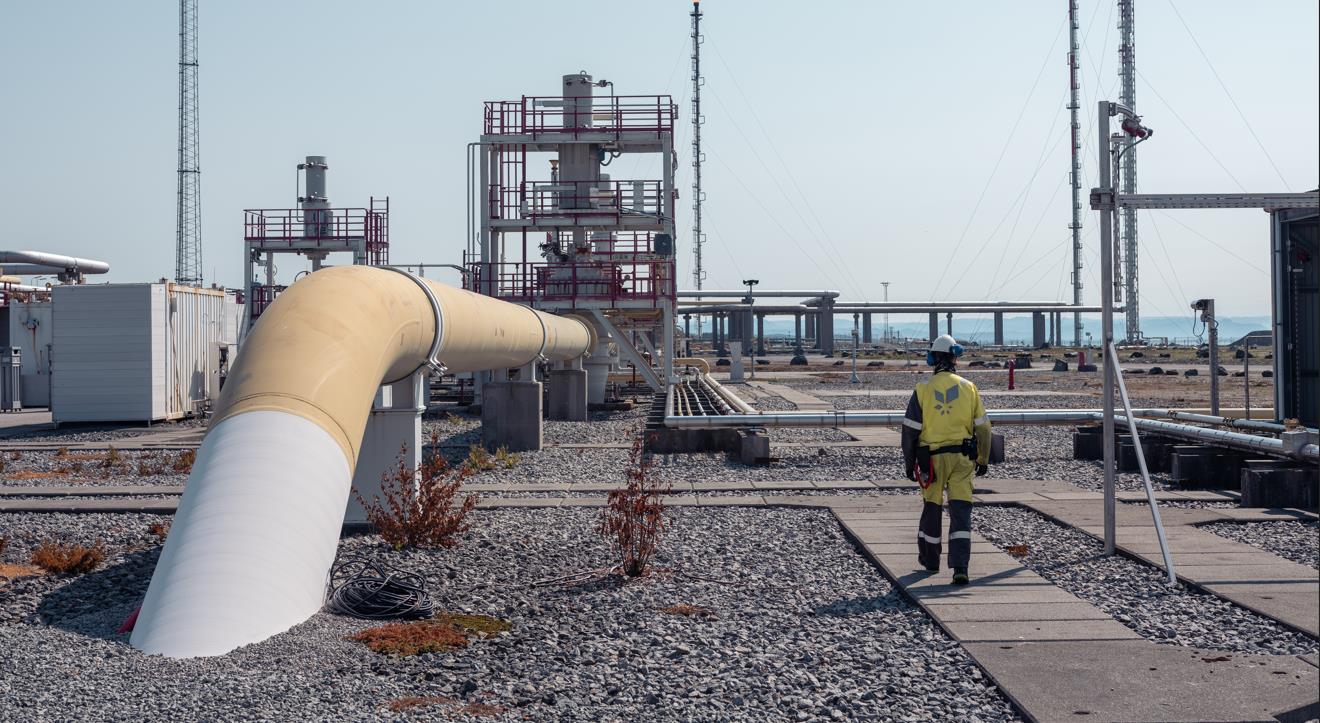
140 Equinor, Annual Report on Form 20-F 2022
3.3 Marketing, midstream and processing (MMP), including new
market opportunities in low carbon solutions
Secure premium market access, grow value creation through cycles and build a low carbon
business
MMP works to maximise value from Equinor’s equity production of oil and gas for the producing units and to capture value from
Equinor’s global mid- and downstream positions through marketing, trading and optimisation. The operating segment also has
responsibility for marketing of the Norwegian state’s natural gas and crude on from the Norwegian continental shelf and for the
development of value chains to ensure flow assurance for Equinor’s upstream production and to maximise value creation.
As part of the Equinor group, Danske Commodities (DC), one of Europe’s largest electricity traders, supports Equinor’s strategy to
build a profitable power and renewables business. A key strategic driver for the acquisition of DC was to capture value from
increasingly volatile gas and power markets, contributing to take down volatility by moving energy from where there is plenty to where
demand is highest by responding to price signals and utilising capacity. In addition, MMP is responsible for developing low carbon
value chains for Equinor, with key focus on transforming natural gas to clean hydrogen and developing carbon capture, usage and
storage (CCUS) projects.
MMP’s global trading business with its Asset-Backed Trading strategy is positioned to deliver value from absolute prices as well as
from expected continued volatile energy markets.
Overview
MMP is responsible for marketing, trading, processing and transporting crude oil and condensate, natural gas, natural gas liquids
(NGL) and refined products, including the operation of a refinery, terminals and processing plants.
MMP is also responsible for power and emissions trading and for developing transportation solutions for natural gas, liquids and crude
oil from Equinor assets, including pipelines, shipping, trucking and rail. In addition, MMP is responsible for Equinor’s low carbon
solutions. The business activities within MMP are organised in the following business clusters: Crude, Products and Liquids (CPL),
Gas and Power (G&P), Operating Plants (OPL), Low Carbon Solutions (LCS), Data improvements, Shipping and Commercial
operations (DISC) and New Value Chains (NVC).
Equinor, Annual Report on Form 20-F 2022 141
MMP markets, trades and transports approximately 60% of all Norwegian liquids export, including Equinor equity, the Norwegian
State’s direct financial interest (SDFI) equity production of crude oil and NGL, and third-party volumes. MMP is also responsible for the
marketing, trading and transportation of Equinor and SDFI dry gas and LNG together with third-party gas. This represents
approximately 70% of all Norwegian gas exports.
For more information, see note 7 Total revenues and other income to the Consolidated financial statements for Transactions with the
Norwegian State, and chapter 5.1 Board statement on corporate governance – subsection 4. Equal treatment of shareholders and
transactions with close associates, for the Norwegian State’s participation and SDFI oil and gas marketing and sale.
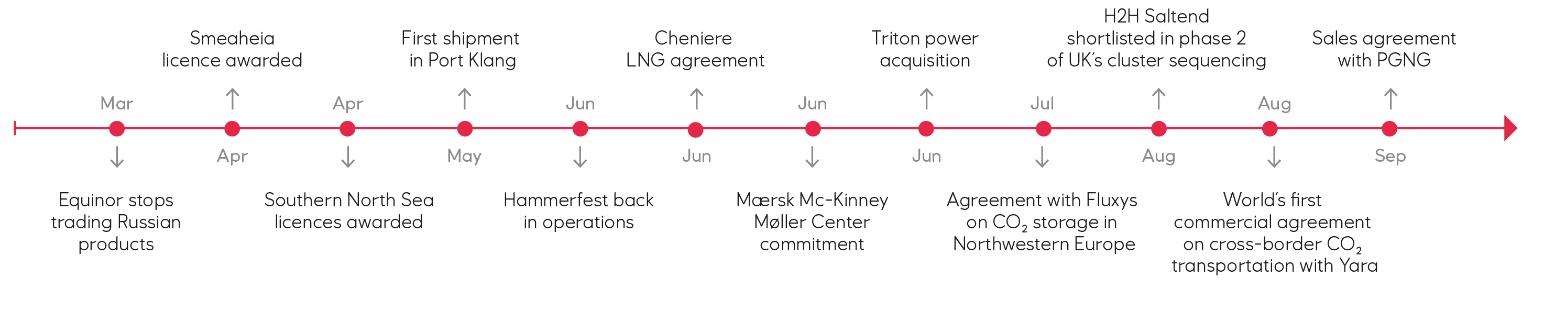
142 Equinor, Annual Report on Form 20-F 2022
Key events
Russia’s invasion of Ukraine had a significant impact on European energy markets in 2022, resulting in high prices and volatility for
gas, power and oil. As a result of the energy crunch in Europe, MMP and E&P Norway worked with partners and government
authorities to increase gas exports to Europe through increased production permits, reduced gas injection, and the optimisation of
NGL to increase gas calorific value. Equinor decided to withdraw from Russia and stop trading in Russian oil and oil products from
March 2022.
Equinor, Annual Report on Form 20-F 2022 143
●
2
is important for developing the NCS into a leading region for CO
2
●
licences in the Southern North Sea (UK).
●
the terminal via a 7-year lease agreement. This represents an important milestone in Equinor’s LPG strategy.
●
liquefied natural gas (LNG) delivered to tank at Melkøya on 2 June 2022.
●
starting from 2026. The new sales and purchase agreement (SPA) adds new volumes to Equinor’s already significant gas
portfolio of pipeline gas and LNG.
●
collaboration on the development of zero carbon technologies for the deep-sea maritime industry.
●
(ECP). The two companies will start preparations to use hydrogen in the Saltend Power Station. The acquisition was completed
on 1 September 2022.
●
to develop a major infrastructure project for transporting captured CO
2
connecting Belgium and Norway. The project is in the feasibility stage, with an investment decision expected by 2025.
●
production facility, as well as new gas-fired power stations with carbon capture at Keadby (developed with SSE Thermal) and in
Teesside (with bp) had been successfully shortlisted through Phase-2 of the UK government’s cluster sequencing process.
●
agreement on cross border CO
2
●
European CO
2
connect a CO
2
●
agreement is for 10 years with a volume of around 2.4 billion cubic metres (bcm) of gas per year to be exported through the new
Baltic Pipe.
●
suspected pipeline sabotage in the Baltic Sea, our strategic project team for the European security situation was continued to
strengthen security measures for Onshore plants and pipelines.
●
carbon hydrogen project with carbon capture in the UK, to Linde Engineering, and an operation and maintenance service contract
to BOC. Linde Engineering together with BOC participated in a design competition to provide proposals for FEED with options for
Engineering, Procurement and Construction (EPC) and Operation and Maintenance for the first five years.
●
chains, building on the partnership between Norway and Germany and the long-term relationship between Equinor and RWE.
The partners aim to replace coal fired power plants with hydrogen-ready gas fired power plants in Germany, and to build
production of low carbon and renewable hydrogen in Norway that will be exported through pipeline to Germany.
MMP presence across the world
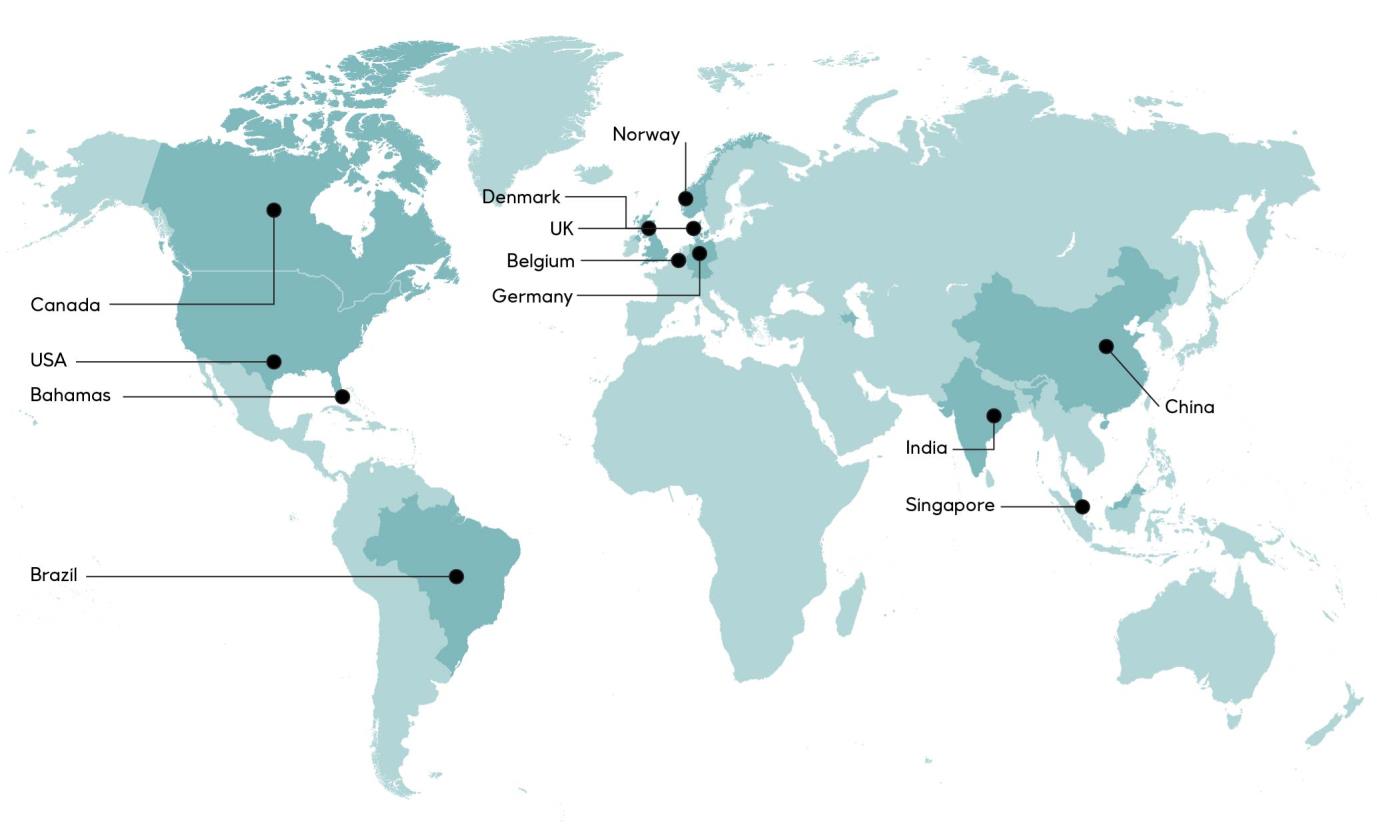
144 Equinor, Annual Report on Form 20-F 2022
Marketing and trading of gas, LNG and power
MMP is responsible for the sale of Equinor’s and SDFI’s dry gas and LNG. Equinor’s gas marketing and trading business is conducted
from Norway and from offices in Belgium, the UK, Germany and the US. Through the acquisition of Danske Commodities (DC), a
trading company for power and gas, MMP also strengthened Equinor´s energy trading business, as well as its investments in in
renewables. DC is primarily active in Europe but also operates in the US.
Europe
The major export markets for natural gas produced from the NCS are the UK, Germany, France, the Netherlands and Belgium. LNG
from the Snøhvit field
8
, combined with third-party LNG cargoes, allows Equinor to reach global gas markets. The gas is sold to
counterparties through bilateral sales agreements and over the trading desk. Some of Equinor’s long-term gas contracts have price
review clauses which can be triggered by the parties.
For ongoing price reviews, Equinor provides in its financial statements for probable liabilities based on Equinor’s best judgement. For
further information, see note 26 Other commitments, contingent liabilities and contingent assets to the Consolidated financial
statements.
Equinor is active on both the physical and exchange markets, such as the Intercontinental Exchange (ICE) and Trayport. Equinor
expects to continue to optimise the value of the gas volumes through a mix of bilateral contracts and over the trading desk, via its
production and transportation systems and downstream assets. MMP receives a marketing fee from E&P Norway for the Norwegian
gas sold on behalf of the company.
DC is active on both the physical and exchange markets for both gas and power as a separate entity. All trading and optimisation of
power in Equinor is performed by DC.
From 1 September 2022 Equinor held 50% of Triton Power in a joint venture with SSE Thermal.
USA
Equinor Natural Gas LLC (ENG), a wholly owned subsidiary, has a gas marketing and trading organisation in Stamford, Connecticut
that markets natural gas to local distribution companies, industrial customers, power generators and other gas trading counterparties.
ENG also markets equity production volumes from the Gulf of Mexico and the Appalachian Basin and transports some of the
8
resumed in early June 2022.
Equinor, Annual Report on Form 20-F 2022 145
Appalachian production to New York City and into Canada to the greater Toronto area. In addition, ENG has capacity contracts at the
Cove Point LNG re-gasification terminal.
Marketing and trading of liquids
MMP is responsible for the sale of Equinor’s and SDFI’s crude oil and NGL produced on the NCS, in addition to the operation and
commercial optimisation of Equinor’s refineries and terminals. MMP also markets the equity volumes from the company´s assets
located in the US, Brazil, Canada, Angola, Nigeria, Algeria, Azerbaijan and the UK, as well as third-party volumes. The value is
maximised through marketing, physical and financial trading and through the optimisation of owned and leased capacity such as
refineries, processing, terminals, storages, pipelines, railcars and vessels.
The liquids marketing and trading business is conducted from Norway, the UK, Singapore, the US and Canada. The main crude oil
market for Equinor is Northwest Europe.
Manufacturing
Equinor owns and operates the Mongstad refinery in Norway, including a combined heat and power plant (CHP). The refinery is a
medium-sized refinery built in 1975, with a crude oil and condensate distillation capacity of 226,000 barrels per day. The refinery is
supplied via the Mongstad Terminal DA linked to offshore fields through three crude oil pipelines, a pipeline for NGL’s connecting
to Kollsnes and Sture (the Vestprosess pipeline) and to Kollsnes by a gas pipeline. The CHP plant was replaced with a new heater
solution in the third quarter of 2022, resulting in an estimated net emissions reduction of 250,000 tonnes of CO
2
Equinor holds an ownership interest in the methanol plant at Tjeldbergodden (82 %). The plant receives natural gas from fields in the
Norwegian Sea through the Haltenpipe pipeline. In addition, Equinor holds an ownership interest in the air separation
unit Tjeldbergodden Luftgassfabrikk DA (50.9%).
The following table shows distillation/production capacity and throughput for the Mongstad refinery and for Tjeldbergodden methanol
plant. Refinery margins continued to increase in 2022 due to tight markets for products and restriction imposed on the purchase of
Russian products. The lower throughput for Mongstad & Tjeldbergodden in 2022 is mainly due to higher planned and unplanned
shutdowns.
Throughput
1)
Distillation/Production
capacity
2)
Refinery
2022
2021
2020
2022
2021
2020
Mongstad
9.9
11.1
9.7
9.3
9.3
9.3
Tjeldbergodden
0.6
0.6
0.9
1.0
1.0
1.0
1)
Actual throughput of crude oils, condensates and other feed, measured in million tonnes.
Throughput may be higher than the distillation capacity for the plants because the volumes
of fuel oil etc. may not go through the crude-/condensate distillation unit.
2)
Nominal crude oil and condensate distillation capacity, and methanol production capacity,
measured in million tonnes.
Equinor is technical service provider (TSP) for the Kårstø and Kollsnes gas processing plants in accordance with the technical service
agreement between Equinor and Gassco AS. Equinor holds an ownership interest in Vestprosess (34%), which transports and
processes NGL and condensate. Vestprosess is also operated by Gassco, with Equinor as TSP.
Equinor holds 30.1% interest in the Nyhamna gas processing plant operated by Gassco.
Terminals, storage and pipelines
Equinor operates the Mongstad crude oil terminal (Equinor: 65%). The crude oil is landed at Mongstad through pipelines from the
NCS and by crude tankers from the market. The Mongstad terminal has a storage capacity of 9.4 million barrels of crude oil.
Equinor operates the Sture crude oil terminal. The crude oil is landed at Sture through pipelines from the North Sea. The terminal is
part of the Oseberg Transportation System (Equinor: 36.2%). The processing facilities at Sture stabilise the crude oil and recover an
LPG mix (propane and butane) and naphtha.
146 Equinor, Annual Report on Form 20-F 2022
Equinor operates the South Riding Point Terminal (SRP) on the Bahamas.
The terminal has not been operational since 2019 due to
hurricane damages. On 21 February 2023 Equinor entered into an agreement for the sale of the terminal to Liwathon.
Equinor UK holds an interest in the Aldbrough Gas Storage (Equinor: 33.3%) in the UK, which is operated by SSE Hornsea Ltd.
Equinor Deutschland Storage GmbH holds an interest in the Etzel Gas Lager (Equinor: 28.7%) in the north of Germany which has a
total of 19 caverns and secures regular gas deliveries from the NCS.
Equinor has ownership in a large number of oil and gas pipelines in the Norwegian upstream oil and gas infrastructure system
including the largest joint venture Gassled (Equinor 5%).
Low carbon solutions
The Low Carbon Solutions (LCS) unit in MMP has responsibility for developing a profitable business based on reforming natural gas
to hydrogen with carbon capture and storage (CCS) and to develop carbon management services to offer industries based on CO
2
transport and storage. Decarbonising hydrocarbons with CCS is key to reaching net-zero, and Equinor aims to combine its long
experience from CCS on the NCS, its reservoir expertise and experience from developing value chains with peers, suppliers and
customers to develop large-scale, commercially-viable decarbonisation solutions. By 2030, more than 50% of Equinor’s Gross capex*
is intended to be dedicated to renewables and low carbon solutions. Below is a list of key CCS and hydrogen projects.
Key projects
H2BE
Equinor, together with ENGIE, is developing the H2BE project in Belgium which aims to produce hydrogen from Norwegian low-
carbon natural gas and applying carbon capture and storage (CCS). The project concept will apply technology allowing for
decarbonization rates above 95% and will produce hydrogen at large (GW) scale at competitive cost levels. The captured CO
2
planned to be transported by ship or offshore pipeline for permanent and safe storage at a site in the sub-surface of the Norwegian
North Sea.
H2H Saltend
Equinor is developing
a proposed 600 MW hydrogen production plant, due to be operational by 2027 and sited at
Saltend Chemicals Park in the UK, where it will help to reduce the park’s emissions by up to one third (890,000 tonnes). To achieve
this, low carbon hydrogen will directly replace natural gas in several industrial facilities reducing the carbon intensity of their products,
as well as being blended into natural gas at the Equinor and SSE Thermal’s on-site Triton power station. H2H Saltend is the kick-
starter project for the wider Zero Carbon Humber scheme which aims to make the Humber, currently the UK’s most carbon intensive
industrial region, net-zero by 2040.
Northern Lights
CO
2
CO
2
2
2
industrial capture sites to a terminal in Øygarden for intermediate storage before transport by pipeline for permanent storage in a
reservoir 2,600 metres under the seabed. In August 2022, Northern Lights and Yara signed the world’s first commercial agreement on
cross border CO
2
2
Sluiskil, an ammonia and fertiliser plant in the Netherlands. The project is part of Longship, the Norwegian authorities’ project for full-
scale carbon capture, transport and storage in Norway, and is expected to come on stream in 2024.
Smeaheia
the CO
2
2
CO
2
2
in enabling CO
2
also has ambitions to develop further storage licences in the North Sea in the coming years with the aim of building a common,
pipeline-based infrastructure that can contribute to substantial cost reductions for the CCS value chains.
Performance review
Operational performance
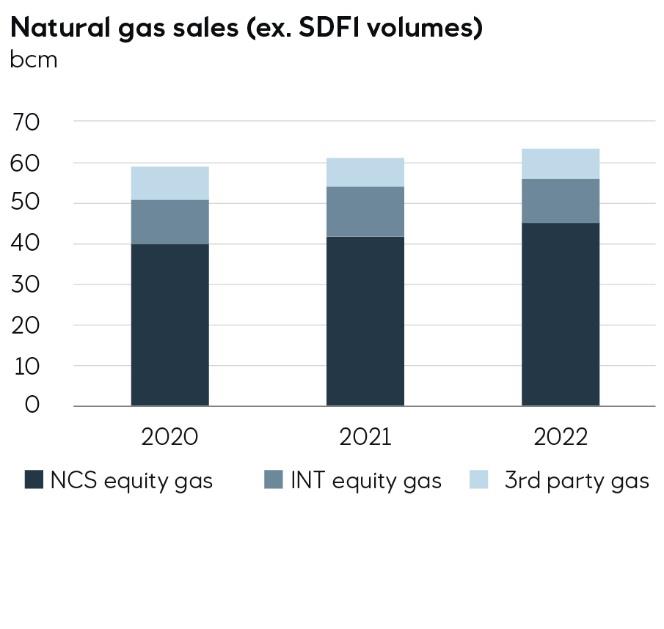
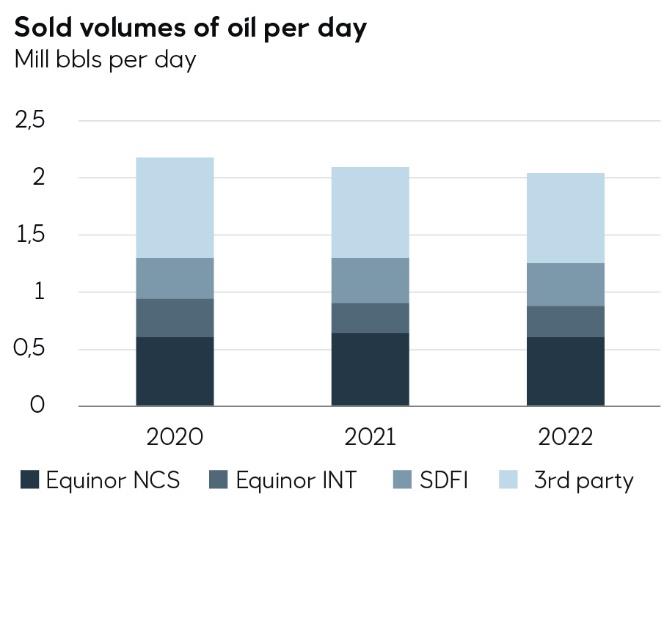
Equinor, Annual Report on Form 20-F 2022 147
Gas and Oil Sales.
The total natural gas sales volumes were 63 bcm in 2022, increased by 2 bcm compared to total volumes for
2021. NCS equity gas volumes increased due to the recovery of Hammerfest LNG and due to efforts between EPN, MMP and
authorities to increase gas export to Europe. This was achieved by increased production permits, reduced gas injection and
optimization of NGL to increase gas calorific value. This was offset by a decrease in international equity gas.
The average crude, condensate and NGL sales were 2.0 mmbbl per day in 2022, slighty lower than 2021 mainly due to decrease in
volumes from NCS, partially offset by increase in sales of international equity volumes.
High regularity at onshore gas processing plants and transport systems ensured gas delivery reliability and portfolio flexibility allowed
MMP to transport and sell natural gas and oil where it was most needed increasing value creation.
In 2022, the average invoiced natural gas sales price in Europe was USD 33.44 per mmBtu, up >100% from USD 14.60 per mmBtu in
2021. European gas prices were significantly higher compared to 2021, mainly due to high demand and tight supply and caused by
reduced gas imports from Russia.
In 2022, the average invoiced natural gas sales price in North America was USD 5.89 mmBtu, up 83% from USD 3.22 mmBtu in 2021.
North American gas price increase was driven by low production growth, low storage levels and strong demand mainly from power
generation.
All of Equinor's gas produced on the NCS is sold by MMP and purchased from E&P Norway at the fields’ lifting point at a market-
based internal price with deduction for the cost of bringing the gas from the field to the market and a marketing fee element. Our NCS
transfer price for gas was USD 31.22 per mmBtu in 2022, an increase of 116% compared to USD 14.43 per mmBtu in 2021.
Throughput for Mongstad & Tjeldbergodden was lower in 2022 compared to 2021 mainly due to higher planned and unplanned
shutdowns. MMP’s refining margins were higher for Mongstad in 2022 compared to 2021. Equinor's refining reference margin
was 14,5 USD/bbl in 2022, compared to 4.0 USD/bbl in 2021, an increase of >100% due to due to tight markets for products and
restriction imposed on the purchase of Russian products.
MMP - condensed income statement under IFRS
For the year ended 31 December
(in USD million)
2022
2021
Change
Revenues
147,691
87,204
69%
148 Equinor, Annual Report on Form 20-F 2022
Net income/(loss) from equity accounted investments
406
22
>100%
Other income
9
168
(95%)
Total revenues and other income
148,105
87,393
69%
Purchases [net of inventory]
(139,916)
(80,873)
73%
Operating, selling, general and administrative expenses
(4,591)
(3,753)
22%
Depreciation, amortisation and net impairment losses
14
(1,604)
N/A
Net operating income/(loss)
3,612
1,163
>100%
For the year ended 31 December
Operational information
2022
2021
Change
Liquid sales volume (mmbbl)
740.1
758.4
(2%)
Natural gas sales Equinor (bcm)
63.3
61.0
4%
Natural gas entitlement sales Equinor (bcm)
56.1
54.0
4%
Power generation (GWh) Equinor share
1,012
0
N/A
Average invoice gas price - Europe (USD/MMBtu)
33.44
14.60
>100%
Average invoice gas price - North America (USD/MMBtu)
5.89
3.22
83%
Financial performance
Net operating income
The increase is explained by stronger results from gas, LNG and power sales trading activity, high clean spark spread and high
refining margin. The increase was partially offset by a negative change in derivatives used to manage risk related to bilateral gas
sales contracts and from methanol production from natural gas.
Net operating income was positively impacted by an impairment reversal related to a refining asset and adjustments for unrealized
market value of gas storages. This was offset by provisions, mainly for onerous contracts.
Total revenues and other income
The increase in
revenues
America, and higher gas volumes. This was partially offset by the negative effect of bilateral derivatives related to gas sales
agreements and slightly lower liquid sales.
Purchases [net of inventory]
to 2022 was mainly due to higher prices for both gas and liquids.
Operating expenses and selling, general and administrative
expenses were USD 4,591 million in 2022, compared to USD 3,753
million in 2021. The increase from 2021 to 2022 was mainly due to significant higher transportation costs for liquids and higher gas
and electricity prices affecting operating plants. This was partially offset by lower costs due to the sale of a refining asset. Selling,
general and administrative expenses increased mainly due to increased activity within Low Carbon Solutions and trading.
Depreciation, amortisation and net impairment
were positive USD 14 million in 2022, compared to negative USD 1,604 million in
2021. The decrease in depreciation, amortisation and net impairment losses from 2021 to 2022 was mainly caused by the impairment
of refinery assets in 2021 and reversal in 2022.
Balance sheet information:
the year ending 31 December 2022, compared to USD 4,119 million for the year ending 31 December 2021.
Equinor, Annual Report on Form 20-F 2022 149
3.4 Other group
The Other reporting segment includes activities in Projects, Drilling and Procurement (PDP), the Technology, Digital & Innovation
(TDI) segment and corporate staffs and support functions.
Overview
Technology, Digital & Innovation (TDI)
Intending to strengthen the development of technologies, digital solutions and innovation, Equinor has gathered the activities into a
business area, Technology, Digital & Innovation (TDI).
TDI brings together research, technology development, specialist advisory services, digitisation, IT, improvement, innovation, ventures
and future business to one technology powerhouse. TDI is accountable for safe and efficient development and operation of their
assets; and for providing expertise, projects and products across the company.
Corporate staff and support functions
Corporate staff and support functions comprise the non-operating activities supporting Equinor, and include head office and central
functions that provide business support such as finance and control, corporate communication, safety, security and sustainability,
corporate audit, legal and compliance and people and organisation.
Projects, Drilling & Procurement (PDP)
Projects, Drilling & Procurement (PDP) is responsible for oil and gas field development and well delivery,
development of wind power,
CCS and hydrogen projects,
including well construction, founded on world-class project execution and technology excellence. PDP utilises innovative technologies,
digital solutions and carbon-efficient concepts to shape a competitive project portfolio at the forefront of the energy industry
transformation. Sustainable value is being created together with suppliers through a simplified and standardised fit-for-purpose
approach.
Project development
decommissioning projects, and development and execution of wind power, CCS and hydrogen projects, where Equinor is the
operator.
Drilling and well
for US onshore).
Procurement and supplier relations
with our extensive portfolio of suppliers.
Performance review
In 2022 the Other reporting segment recorded a net operating loss of USD 178 million compared to a net operation loss of USD 234
million in 2021. The improvement was mainly due to reduced insurance costs during the year relating to the fire at Melkøya LNG in
2020.
Since the implementation of IFRS 16 Leases in 2019, all leases were presented within the Other segment and lease costs have been
allocated to the operating segments based on underlying lease payments with a corresponding credit in the Other segment. With
effect from 2022, lease contracts are accounted for in accordance with IFRS 16 in all segments. This change does not affect Equinor’s
consolidated financial statements. Comparative numbers in the segments have been restated.
Balance sheet information:
the year ending 31 December 2022, compared to USD 1,077 million for the year ending 31 December 2021.
150 Equinor, Annual Report on Form 20-F 2022
Financial statements
and notes
4.1 Consolidated financial statements
4.2 Parent company financial statements
Equinor, Annual Report on Form 20-F 2022 151
4.1 Consolidated financial statements
of the Equinor group
152 Equinor, Annual Report on Form 20-F 2022
CONSOLIDATED STATEMENT OF INCOME
Full year
(in USD million)
Note
2022
2021
2020
Revenues
7
149,004
88,744
45,753
Net income/(loss) from equity accounted investments
15
620
259
53
Other income
6
1,182
1,921
12
Total revenues and other income
7
150,806
90,924
45,818
Purchases [net of inventory variation]
(53,806)
(35,160)
(20,986)
Operating expenses
(9,608)
(8,598)
(8,831)
Selling, general and administrative expenses
(986)
(780)
(706)
Depreciation, amortisation and net impairment losses
12, 13
(6,391)
(11,719)
(15,235)
Exploration expenses
13
(1,205)
(1,004)
(3,483)
Total operating expenses
9
(71,995)
(57,261)
(49,241)
Net operating income/(loss)
5
78,811
33,663
(3,423)
Interest expenses and other finance expenses
(1,379)
(1,223)
(1,392)
Other financial items
1,172
(857)
556
Net financial items
10
(207)
(2,080)
(836)
Income/(loss) before tax
78,604
31,583
(4,259)
Income tax
11
(49,861)
(23,007)
(1,237)
Net income/(loss)
28,744
8,576
(5,496)
Attributable to equity holders of the company
28,746
8,563
(5,510)
Attributable to non-controlling interests
(3)
14
14
Basic earnings per share (in USD)
9.06
2.64
(1.69)
Diluted earnings per share (in USD)
9.03
2.63
(1.69)
Weighted average number of ordinary shares outstanding (in millions)
3,174
3,245
3,269
Weighted average number of ordinary shares outstanding, diluted (in millions)
3,183
3,254
3,277
Equinor, Annual Report on Form 20-F 2022 153
CONSOLIDATED STATEMENT OF COMPREHENSIVE INCOME
Full year
(in USD million)
Note
2022
2021
2020
Net income/(loss)
28,744
8,576
(5,496)
Actuarial gains/(losses) on defined benefit pension plans
461
147
(106)
Income tax effect on income and expenses recognised in OCI
1)
(105)
(35)
19
Items that will not be reclassified to the Consolidated statement of income
22
356
111
(87)
Foreign currency translation effects
(3,609)
(1,052)
1,064
Share of OCI from equity accounted investments
424
0
0
Items that may subsequently be reclassified to the Consolidated statement of income
(3,186)
(1,052)
1,064
Other comprehensive income/(loss)
(2,829)
(940)
977
Total comprehensive income/(loss)
25,914
7,636
(4,519)
Attributable to the equity holders of the company
25,917
7,622
(4,533)
Attributable to non-controlling interests
(3)
14
14
1) Other Comprehensive Income (OCI).
154 Equinor, Annual Report on Form 20-F 2022
CONSOLIDATED BALANCE SHEET
(in USD million)
Note
2022
2021
ASSETS
Property, plant and equipment
12
56,498
62,075
Intangible assets
13
5,158
6,452
Equity accounted investments
15
2,758
2,686
Deferred tax assets
11
8,732
6,259
Pension assets
22
1,219
1,449
Derivative financial instruments
28
691
1,265
Financial investments
16
2,733
3,346
Prepayments and financial receivables
16
2,063
1,087
Total non-current assets
79,851
84,618
Inventories
17
5,205
3,395
Trade and other receivables
1)
18
22,452
17,927
Derivative financial instruments
28
4,039
5,131
Financial investments
16
29,876
21,246
Cash and cash equivalents
2)
19
15,579
14,126
Total current assets
77,152
61,826
Assets classified as held for sale
6
1,018
676
Total assets
158,021
147,120
EQUITY AND LIABILITIES
Shareholders’ equity
53,988
39,010
Non-controlling interests
1
14
Total equity
20
53,989
39,024
Finance debt
21
24,141
27,404
Lease liabilities
25
2,409
2,449
Deferred tax liabilities
11
11,996
14,037
Pension liabilities
22
3,671
4,403
Provisions and other liabilities
23
15,633
19,899
Derivative financial instruments
28
2,376
767
Total non-current liabilities
60,226
68,959
Trade, other payables and provisions
24
13,352
14,310
Current tax payable
17,655
13,119
Finance debt
21
4,359
5,273
Lease liabilities
25
1,258
1,113
Dividends payable
20
2,808
582
Derivative financial instruments
28
4,106
4,609
Total current liabilities
43,539
39,005
Liabilities directly associated with the assets classified as held for sale
6
268
132
Total liabilities
104,032
108,096
Total equity and liabilities
158,021
147,120
Equinor, Annual Report on Form 20-F 2022 155
1) Of which Trade receivables of USD 17,334 million in 2022 and USD 15,237 million in 2021.
2) Includes collateral deposits of USD 6,128 million for 2022 related to certain requirements set out by exchanges where Equinor is
participating. The corresponding figure for 2021 is USD 2,069 million.
156 Equinor, Annual Report on Form 20-F 2022
CONSOLIDATED STATEMENT OF CHANGES IN EQUITY
(in USD million)
Share
capital
Additional
paid-in
capital
Retained
earnings
Foreign
currency
translation
reserve
OCI from equity
accounted
investments
1)
Shareholders'
equity
Non-
controlling
interests
Total equity
At 1 January 2020
1,185
7,732
37,481
(5,258)
0
41,139
20
41,159
Net income/(loss)
(5,510)
(5,510)
14
(5,496)
Other comprehensive income/(loss)
(87)
1,064
977
977
Total comprehensive income/(loss)
(4,519)
Dividends
(1,833)
(1,833)
(1,833)
Share buy-back
(21)
(869)
(890)
(890)
Other equity transactions
(11)
(11)
(15)
(25)
At 31 December 2020
1,164
6,852
30,050
(4,194)
0
33,873
19
33,892
Net income/(loss)
8,563
8,563
14
8,576
Other comprehensive income/(loss)
111
(1,052)
(940)
(940)
Total comprehensive income/(loss)
7,636
Dividends
(2,041)
(2,041)
(2,041)
Share buy-back
(429)
(429)
(429)
Other equity transactions
(15)
(15)
(18)
(33)
At 31 December 2021
1,164
6,408
36,683
(5,245)
0
39,010
14
39,024
Net income/(loss)
28,746
28,746
(3)
28,744
Other comprehensive income/(loss)
356
(3,609)
424
(2,829)
(2,829)
Total comprehensive income/(loss)
25,914
Dividends
(7,549)
(7,549)
(7,549)
Share buy-back
(22)
(3,358)
(3,380)
(3,380)
Other equity transactions
(10)
(10)
(10)
(20)
At 31 December 2022
1,142
3,041
58,236
(8,855)
424
53,988
1
53,989
1) OCI items from equity accounted investments that may subsequently be reclassified to the Consolidated statement of income, are
presented as part of OCI from equity accounted investments. OCI items that will not be reclassified to the Consolidated statements of income
will be included in retained earnings.
Please refer to note 20 Shareholders’ equity and dividends for more details.
Equinor, Annual Report on Form 20-F 2022 157
CONSOLIDATED STATEMENT OF CASH FLOWS
Full year
(in USD million)
Note
2022
2021
2020
Income/(loss) before tax
78,604
31,583
(4,259)
Depreciation, amortisation and net impairment
12, 13
6,391
11,719
15,235
Exploration expenditures written off
13
342
171
2,506
(Gains)/losses on foreign currency transactions and balances
(2,088)
(47)
646
(Gains)/losses on sale of assets and businesses
6
(823)
(1,519)
18
(Increase)/decrease in other items related to operating activities
1)
468
106
918
(Increase)/decrease in net derivative financial instruments
28
1,062
539
(451)
Interest received
399
96
162
Interest paid
(747)
(698)
(730)
Cash flows provided by operating activities before taxes paid and working capital items
83,608
41,950
14,045
Taxes paid
(43,856)
(8,588)
(3,134)
(Increase)/decrease in working capital
(4,616)
(4,546)
(524)
Cash flows provided by operating activities
35,136
28,816
10,386
Capital expenditures and investments
6
(8,611)
(8,151)
(8,476)
(Increase)/decrease in financial investments
(10,089)
(9,951)
(3,703)
(Increase)/decrease in derivative financial instruments
1,894
(1)
(620)
(Increase)/decrease in other interest-bearing items
(23)
28
202
Proceeds from sale of assets and businesses
6
966
1,864
505
Cash flows provided by/(used in) investing activities
(15,863)
(16,211)
(12,092)
New finance debt
21
0
0
8,347
Repayment of finance debt
21
(250)
(2,675)
(2,055)
Repayment of lease liabilities
25
(1,366)
(1,238)
(1,277)
Dividends paid
20
(5,380)
(1,797)
(2,330)
Share buy-back
20
(3,315)
(321)
(1,059)
Net current finance debt and other financing activities
(5,102)
1,195
1,365
Cash flows provided by/(used in) financing activities
21
(15,414)
(4,836)
2,991
Net increase/(decrease) in cash and cash equivalents
3,860
7,768
1,285
Foreign currency translation effects
(2,268)
(538)
294
Cash and cash equivalents at the beginning of the period (net of overdraft)
19
13,987
6,757
5,177
Cash and cash equivalents at the end of the period (net of overdraft)
2)
19
15,579
13,987
6,757
1) The line item mainly consists of provisions, unrealised gains and losses and items of income or expense for which the cash effects are
included in increase/(decrease) in working capital within operating cash flow and investing cash flows. The line item includes a fair value
loss related to inventory of USD 672 million at 31 December 2022. Amount for 2021 includes MUSD (822) redetermination settlement for
the Agbami field.
2) At 31 December 2022 cash and cash equivalents net overdraft was zero. At 31 December 2021 cash and cash equivalents included a net
overdraft of USD 140 million and at 31 December 2020 net overdraft were zero.
Interest paid
in cash flows provided by operating activities excludes capitalised interest of USD 382 million, USD 334 million, and USD 308
million for the years ending 31 December 2022, 2021 and 2020, respectively. Capitalised interest is included in Capital expenditures and
investments in cash flows used in investing activities. Total interest paid amounts to USD 1,129 million, USD 1,032 million, and USD 1,038
million for the years 2022, 2021 and 2020, respectively.
158 Equinor, Annual Report on Form 20-F 2022
Notes to the Consolidated financial statements
Table of contents for notes to the financial statements
1
Organisation
2
Accounting policies
3
Consequences of initiatives to limit climate changes
4
Financial risk and capital management
5
Segments
6
Acquisitions and disposals
7
Total revenues and other income
8
Salaries and personnel expenses
9
Auditor’s remuneration and Research and development expenditures
10
Financial items
11
Income taxes
12
Property, plant and equipment
13
Intangible assets
14
Impairments
15
Joint arrangements and associates
16
Financial investments and financial receivables
17
Inventories
18
Trade and other receivables
19
Cash and cash equivalents
20
Shareholders’ equity and dividends
21
Finance debt
22
Pensions
23
Provisions and other liabilities
24
Trade, other payables and provisions
25
Leases
26
Other commitments, contingent liabilities and contingent assets
27
Related parties
28
Financial instruments and fair value measurement
29
Subsequent events
Equinor, Annual Report on Form 20-F 2022 159
1 Organisation
The Equinor Group (Equinor) consists of Equinor ASA and its subsidiaries. Equinor ASA is incorporated and domiciled in Norway and
listed on the Oslo Børs (Norway) and the New York Stock Exchange (USA). The address of its registered office is Forusbeen 50, N-
4035 Stavanger, Norway.
Equinor’s objective is to develop, produce and market various forms of energy and derived products and services, as well as other
business. The activities may also be carried out through participation in or cooperation with other companies. Equinor Energy AS, a
100% owned operating subsidiary of Equinor ASA and owner of all of Equinor's oil and gas activities and net assets on the Norwegian
continental shelf, is co-obligor or guarantor for certain debt obligations of Equinor ASA.
The Consolidated financial statements of Equinor for the full year 2022 were approved for issuance by the board of directors on 14
March 2023 and is subject to approval by the annual general meeting on 10 May 2023.
2 Accounting policies
Statement of compliance
The Consolidated financial statements of Equinor ASA and its subsidiaries (Equinor) have been prepared in accordance with
International Financial Reporting Standards (IFRS) as adopted by the European Union (EU) and with IFRSs as issued by the
International Accounting Standards Board (IASB), interpretations issued by IASB and the additional requirements of the Norwegian
Accounting Act, effective on 31 December 2022.
Basis of preparation
The Consolidated financial statements are prepared on the historical cost basis with some exceptions where fair value measurement
is applied. These exceptions are specifically disclosed in the accounting policies sections in relevant notes. The material accounting
policies described in these Consolidated financial statements have been applied consistently to all periods presented, except as
otherwise noted in the disclosure related to the impact of policy changes following the adoption of new accounting standards and
voluntary changes in 2022.
Certain amounts in the comparable years have been restated or reclassified to conform to current year presentation. All amounts in
the Consolidated financial statements are denominated in USD millions, unless otherwise specified. The subtotals and totals in some
of the tables in the notes may not equal the sum of the amounts shown in the primary financial statements due to rounding.
Operational expenses in the Consolidated statement of income are presented as a combination of function and nature in conformity
with industry practice. Purchases [net of inventory variation] and Depreciation, amortisation and net impairment losses are presented
on separate lines based on their nature, while Operating expenses and Selling, general and administrative expenses as well as
Exploration expenses are presented on a functional basis. Significant expenses such as salaries, pensions, etc. are presented by their
nature in the notes to the Consolidated financial statements.
Basis of consolidation
The Consolidated financial statements include the accounts of Equinor ASA and its subsidiaries as well as Equinor’s interests in jointly
controlled and equity accounted investments. All intercompany balances and transactions, including unrealised profits and losses
arising from Equinor's internal transactions, have been eliminated.
The Consolidated financial statements include all entities controlled by Equinor ASA. Entities are determined to be controlled by
Equinor when Equinor has power over the entity, ability to use that power to affect the entity's returns, and exposure to, or rights to,
variable returns from its involvement with the entity. The financial statements of the subsidiaries are included in the Consolidated
financial statements from the date control is achieved until the date control ceases.
Non-controlling interests are presented separately within equity in the Consolidated balance sheet.
Foreign currency translation
In preparing the financial statements of the individual entities in Equinor, transactions in currencies other than the functional currency
are translated at the foreign exchange rate at the dates of the transactions. Monetary assets and liabilities denominated in foreign
currencies are translated to the functional currency at the foreign exchange rate at the balance sheet date. Foreign exchange
differences arising on translation are recognised in the Consolidated statement of income as foreign exchange gains or losses within
Net financial items. However, foreign exchange differences arising from the translation of estimate-based provisions are generally
accounted for as part of the change in the underlying estimate and included within the relevant operating expense or income tax line-
160 Equinor, Annual Report on Form 20-F 2022
items depending on the nature of the provision. Non-monetary assets measured at historical cost in a foreign currency are translated
using the exchange rate at the date of the transactions.
When preparing the Consolidated financial statements, the assets and liabilities of entities with functional currencies other than the
Group’s presentation currency USD are translated into USD at the foreign exchange rate at the balance sheet date. The revenues and
expenses of such entities are translated using the foreign exchange rates on the dates of the transactions. Foreign exchange
differences arising on translation from functional currency to USD are recognised separately in the Consolidated statement of
comprehensive income within Other comprehensive income (OCI). The cumulative amount of such translation differences relating to
an entity is reclassified to the Consolidated statement of income and reflected as a part of the gain or loss on disposal of that entity.
Loans from Equinor ASA to subsidiaries and equity accounted investments with other functional currencies than the parent company,
and for which settlement is neither planned nor likely in the foreseeable future, are considered part of the parent company’s net
investment in the subsidiary. Foreign exchange differences arising on such loans are recognised in OCI in the Consolidated financial
statements.
Statement of cash flows
In the statement of cash flows, operating activities are presented using the indirect method, where Income/(loss) before tax is adjusted
for changes in inventories and operating receivables and payables, the effects of non-cash items such as depreciations, amortisations
and impairments, provisions, unrealised gains and losses and undistributed profits from associates, and items of income or expense
for which the cash effects are investing or financing cash flows. Increase/decrease in financial investments, Increase/decrease in
derivative financial instruments, and Increase/decrease in other interest-bearing items are all presented net as part of Investing
activities, either because the transactions are financial investments and turnover is quick, the amounts are large, and the maturities
are short, or due to materiality.
--------------------------------------------------------------------------------------------------------------------------------
Accounting judgement and key sources of estimation uncertainty
The preparation of the Consolidated financial statements requires management to make accounting judgements, estimates and
assumptions affecting reported amounts of assets, liabilities, income and expenses.
The main areas where Equinor has made significant judgements when applying the accounting policies and that have the most
material effect on the amounts recognised in the Consolidated financial statements have been described in the following notes:
6 – Acquisitions and disposals
7 – Total revenues and other income
25 – Leases
Estimates used in the preparation of these Consolidated financial statements are prepared based on customised models, while the
assumptions on which the estimates are based rely on historical experience, external sources of information and various other factors
that management assesses to be reasonable under the current conditions and circumstances. These estimates and assumptions form
the basis of making the judgements about carrying values of assets and liabilities when these are not readily apparent from other
sources. Actual results may differ from these estimates. The estimates and underlying assumptions are reviewed on an on-going
basis considering the current and expected future set of conditions.
Equinor is exposed to several underlying economic factors affecting the overall results, such as commodity prices, foreign currency
exchange rates, market risk premiums and interest rates as well as financial instruments with fair values derived from changes in
these factors. The effects of the initiatives to limit climate changes and the potential impact of the energy transition are relevant to
several of these economic assumptions. In addition, Equinor's results are influenced by the level of production, which in the short term
may be influenced by, for instance, maintenance programmes. In the long-term, the results are impacted by the success of
exploration, field developments and operating activities.
The most important matters in understanding the key sources of estimation uncertainty are described in each of the following notes:
3 – Consequences of initiatives to limit climate changes
11 – Income taxes
12 – Property, plant and equipment
13 – Intangible assets
14 – Impairments
23 – Provisions and other liabilities
26 – Other commitments, contingent liabilities and contingent assets
--------------------------------------------------------------------------------------------------------------------------------
Changes in accounting policies in the current period
Amendments to IAS 1 and IFRS practice statement 2: Replacing Significant accounting policies with Material accounting
policies
Equinor, Annual Report on Form 20-F 2022 161
IASB has issued amendments to IAS 1 Presentation of financial statements and IFRS Practice Statement 2 Making Materiality
Judgements. These amendments are intended to help entities apply materiality judgements to accounting policy disclosures and
provide additional guidance and illustrative examples. The amendments are effective for annual periods beginning on or after 1
January 2023. Earlier application is permitted, and Equinor has applied the amendments with effect from these Consolidated financial
statements.
Accounting policy information should be considered material if its disclosure can reasonably be expected to influence user decisions
and therefore is needed to understand other information provided about material transactions, other events, or conditions in the
financial statements. IASB has acknowledged that standardised information, or information that only duplicates or summarises the
requirements of the IFRS -standards, is generally less useful than entity-specific accounting policy information. Even though such
information could be material in specific circumstances, Equinor has focused the accounting policy disclosures on Equinor-specific
policy choices, disclosing only those accounting policies that are considered necessary to understand other material information in the
Consolidated financial statements of Equinor.
Other standards, amendments to standards and interpretations of standards, effective as of 1 January 2022
Other amendments to standards or interpretations of standards effective as of 1 January 2022 and adopted by Equinor, were not
material to Equinor’s Consolidated financial statements upon adoption.
Other standards, amendments to standards, and interpretations of standards, issued but not yet effective, are either not expected to
materially impact, or are not expected to be relevant to, Equinor's Consolidated financial statements upon adoption.
3 Consequences of initiatives to limit climate changes
Accounting policies - c
ost of CO
2
Purchased CO
2
incurred in line with emissions. Accruals for CO
2
reflected as a current liability within Trade, other payables and provisions. Quotas owned, but exceeding the emissions
incurred to date, are carried in the balance sheet at cost price, classified as Other current receivables, as long as such
purchased quotas are acquired in order to cover own emissions and may be kept to cover subsequent years’ emissions.
Quotas purchased and held for trading purposes are carried in the balance sheet at fair value, and the changes in fair value
are reflected in the Consolidated statement of income on the line-item Other income.
Obligations resulting from current year emissions and the corresponding amounts for quotas that have been bought, paid and
expensed, but which have not yet been surrendered to the relevant authorities, are reflected net in the balance sheet.
----------------------------------------------------------------------------------------------------------------------------------------
Equinor’s strategy and ambitions
Equinor’s ambition is to continue supplying society with energy with lower emissions over time, to be a leading company in the energy
transition and becoming a net-zero company by 2050, including emissions from production through to final energy consumption.
Equinor’s strategy is to create value as a leader in the energy transition by pursuing high-value growth in renewables and new market
opportunities in low carbon solutions at the same time as we optimise our oil and gas portfolio. This strategy covers three strategically
important and interconnected areas:
●
that enable us to continue supplying energy that the world needs with a low footprint.
●
solar are growing exponentially to meet this demand.
●
by replacing the use of carbon when generating new energy or capturing and removing the greenhouse gases before they reach
the atmosphere. Even though carbon capture and storage (CCS) has existed as a technology for many decades, it takes time to
develop the value chains and carbon capture and storage has yet to be implemented as a revenue-generating service to the
market on a full scale.
Risks arising from climate change and the transition to a lower carbon economy
Policy, legal, regulatory, market and technology developments related to the issue of climate change, can affect our business plans
and financial performance. Shifts in stakeholder focus between energy security, affordability and sustainability add uncertainty to
delivery and outcomes associated with Equinor’s strategy. Equinor’s long-term plans have to consider how the global energy markets
may develop in the long term. Potential scenarios of future changes in demand for our products (oil, gas and power in key markets)
are analysed, including World Energy Outlook 2022 (WEO) scenarios that illustrate the wide range of possible demand for different
162 Equinor, Annual Report on Form 20-F 2022
energy sources, including fossil fuels, nuclear and renewables. Commodity price sensitivities are presented in a table below and in
note 14 Impairments.
Equinor assesses climate risk from two perspectives: transition risk, which relates to the financial robustness of the company’s
business model and portfolio in various decarbonisation scenarios; and physical climate risk, which relates to the exposure of our
assets to climate-related perils in different warming scenarios. Equinor’s climate roadmap and all of our climate-related ambitions are
a response to these challenges and risks related to climate change.
●
results and outlook, including the value of its assets. This might be directly through regulatory changes towards energy systems
free of unabated fossil fuels, changes in taxation, increased costs, access to opportunities, or indirectly through changes in
consumer behaviour or technology developments.
●
cost-competitive development, represent both threats and opportunities for Equinor. We assess and manage climate-related risks
related to technology development and implementation across our portfolio, as well as recognising risks related to competing or
emerging technologies elsewhere. Examples of relevant technologies within our portfolio include carbon capture and storage
(CCS), blue/green hydrogen, battery technology, solar and wind renewable energy, nuclear fusion, low CO
2
improvements in methane emissions and application of renewables in oil and gas production.
●
risk factors. Multiple factors in the energy transition contribute to uncertainty in future energy price assumptions, and changes in
investor and societal sentiment can affect our access to capital markets, attractiveness for investors, and potentially restrict
access to finance or increase financing costs.
●
diminishing returns within the renewable and low carbon industries and hinder Equinor ambitions. These investments may be
exposed to interest rate risk and inflation risk.
●
operations. Examples of acute physical parameters that could impact Equinor’s facility design and operations include increasing
frequency and severity of extreme weather events such as extreme windspeeds, wave-heights or flooding. Examples of chronic
physical climate parameters include limitations in freshwater availability, a pattern with generally increased wind speeds and as
most of Equinor’s physical assets are located offshore, a key potential chronic physical climate impact is expected to be rising
sea level accompanied with increased wave heights. As we continue to build our renewable portfolio, unexpected changes in
meteorological parameters, such as average wind speed or changes in wind patterns and cloud cover that affect renewable
energy production will also be important factors to consider. Physical risk factors are mitigated through technical and engineering
functions in design, operations and maintenance, with due consideration of how the external physical environment may be
changing. However, there is uncertainty regarding the magnitude of impact and time horizon for the occurrence of physical
impacts of climate change, which leads to uncertainty regarding the potential impact for Equinor.
Impact on Equinor’s financial statements
CO
2
-cost and EU ETS carbon credits
Our oil & gas operations in Europe are part of the EU Emission Trading Scheme (EU ETS). Equinor buys EU ETS allowances (quotas
or carbon credits) for the emissions related to our oil & gas production and processing. Currently we receive a share of free quotas
according to the EU ETS regulation. The share of free quotas is expected to be significantly reduced in the future.
Total expensed CO
2
2
quotas in Equinor related to activities resulting in GHG emissions
(Equinor’s share of the operating licences in addition to our land-based facilities) amounts to USD 510 million in 2022, USD 428
million in 2021, and USD 268 million in 2020. A large portion of the cost of CO
2
quotas. The table below shows an analysis of number of quotas utilised by Equinor’s operated licences and land-based facilities
subject to the requirements under EU ETS:
Number of EU ETS quotas
2022
2021
Opening balance at 1 January
11,026,286
11,027,242
Allocated free quotas
3,697,089
3,560,286
Purchased quotas on the ETS market
5,985,000
7,605,265
Sold quotas on the ETS market
0
(135,177)
Settled quotas (offset against emissions)
(9,925,999)
(11,031,330)
Equinor, Annual Report on Form 20-F 2022 163
Closing balance at 31 December
10,782,376
11,026,286
Investments in renewables
The energy transition creates many new business opportunities, primarily related to further development of Equinor’s renewables
business and within CCS. Driven by the energy transition and an increasing demand for electricity from renewable energy sources,
Equinor continues to build its renewable business. We focus on offshore wind and also explore opportunities within onshore
renewables and integrated power market solutions. At present, Equinor’s renewable portfolio spans multiple continents and
technologies– onshore and offshore – and different ownership structures:
●
●
in addition to construction of solar plants in Poland
●
●
onshore wind projects in Brazil and Poland
●
energy worldwide
Equinor’s investments in renewables and low carbon solutions projects are included as Additions to PP&E, intangibles and equity
accounted investments in the REN-segment in note 5 Segments and amounts to USD 298 million in 2022 and USD 457 million in
2021. Equinor's ambition is to become a global offshore wind major and an industry leader in floating offshore wind, drawing on our
extensive offshore experience to drive the industry forward. In addition, Equinor explores opportunities within onshore renewables.
Investments in CCS
Through our activities within CCS, we are building capabilities and a competitive position for future business opportunities and a new
revenue stream related to disposal of CO
2
basis for solutions for decarbonised hydrogen as an energy carrier which would also be a flexible solution to backup intermittent
renewables in Europe. Equinor is making significant steps to industrialise CCS and we are already involved in the Northern Lights
project in Norway providing CO
2
commercial CCS in Europe and is on track to demonstrate that CCS is a valid decarbonisation solution for important industry sectors.
Equinor has during 2022 contributed with USD 36 million to the company as capital increases (USD 21 million in 2021).
Research and development activities (R&D)
In addition to the beforementioned significant financial effects, Equinor is also involved in several activities within R&D. Several of
these activities are related to optimising our oil and gas activities and cutting emissions from our activities as well as developing new
business opportunities within renewables or low carbon solutions. Financial effects from Equinor’s total R&D activities can be located
in note 9 Auditor’s remuneration and Research and development expenditures (expensed R&D) and in note 12 Property, Plant &
Equipment (capitalised R&D).
Effects on estimation uncertainty
The effects of the initiatives to limit climate changes and the potential impact of the energy transition are relevant to some of the
economic assumptions in our estimations of future cash flows. The results of the development of such initiatives, and the degree to
which Equinor’s operations will be affected by them, are sources of uncertainty. Estimating global energy demand and commodity
prices towards 2050 is a challenging task, as this comprises assessing the future development in supply and demand, technology
change, taxation, tax on emissions, production limits and other important factors. The assumptions may change over time, which
could materialise in different outcomes from the current projected scenarios. This could result in significant changes to accounting
estimates, such as economic useful life (affects depreciation period and timing of asset retirement obligations), value-in-use
calculations (affects impairment assessments) and measurement of deferred tax assets.
Commodity prices
Equinor’s commodity price assumptions applied in value-in-use impairment testing, are set in accordance with requirements in IFRS
and based on management’s best estimate of the development of relevant current circumstances and the likely future development of
such circumstances. This price-set is currently not equal to a price-set required to achieve the goals in the Net Zero Emissions (NZE)
by 2050 Scenario, nor a price-set in accordance with the Announced Pledges Scenario as defined by the International Energy Agency
(IEA). A future change in the trajectory of how the world acts with regards to implementing actions in accordance with the goals in the
Paris agreement could, depending on the detailed characteristics of such a trajectory, have a negative impact on the valuation of
Equinor’s property, plant and equipment in total. A calculation of a possible effect of using the assumed commodity prices and CO
2
prices in a 1.5
o
C compatible NZE by 2050 Scenario as estimated by IEA could result in an impairment of upstream production assets
and intangible assets around USD 4 billion before tax, see the sensitivity table below.
Similarly, we have calculated the possible effect of using prices according to the Announced Pledges Scenario, a scenario which is
based on all of the climate-related commitments announced by governments around the Globe. Using this scenario, the world is
164 Equinor, Annual Report on Form 20-F 2022
expected to reach a 1.8
o
C increase in the year 2100, and this could result in an impairment of less than USD 0.5 billion before tax
using the same simplified model, see the sensitivity table below.
These illustrative impairment sensitivity calculations are based on a simplified model and limitations described in note 14 Impairments.
However, when preparing these illustrative scenario sensitivities, we have linearly interpolated between current prices and the price
set disclosed in the table below for both the NZE by 2050 scenario and the Announced pledges scenario. Applying this simplified
approach, the illustrative potential impairments are significantly lower than the amount disclosed in note 14 Impairments where an
immediate 30% reduction in commodity prices has been applied, also considering a somewhat declining production profile,
concentrated before the year 2030 for our producing and sanctioned development projects and the effects of discounting.
Cost of CO
2
The EU ETS price has increased significantly from 25 EUR/tonne in 2020. The average cost of EU ETS allowances was 81
EUR/tonne in 2022 (54 EUR/tonne in 2021). The price is expected to remain high, in the region of 80 EUR/tonne for the next couple of
years. Then the price is expected to be 105 EUR/tonne in 2040 and thereafter increasing to 130 EUR/tonne in 2050. As such, Equinor
expects greenhouse gas emission costs to increase from current levels and to have a wider geographical range than today, and a
global tax on CO
2
2
fees in Norway, the UK, Germany and Nigeria. Norway’s Climate Action Plan for the period 2021-2030 (Meld. St 13 (2020-2021))
which assumes a gradually increased CO
2
2
used for impairment calculations of Norwegian upstream assets.
Equinor’s response to this risk is evaluation of carbon intensity on both project and portfolio level in our investment and divestment
decisions. We have also introduced an internal carbon price, currently set at 58 USD/tonne and increasing towards 100 USD/tonne by
the year 2030 and staying flat thereafter (in countries with higher carbon costs, we use the country specific cost expectations), to be
used in our investment decisions. This cost-scenario is uncertain, but this extra cost serves as a placeholder for possible future CO
2
pricing systems, making sure our assets are financially robust in such a scenario. As such, climate considerations are a part of the
investment decisions following Equinor’s strategy and commitments to the energy transition.
Climate considerations are also included in the impairment calculations directly by estimating the CO
2
Indirectly, the expected effect of climate change is included in the estimated commodity prices where supply and demand are
considered. The CO
2
calculations are based on best estimate assumptions. To reflect that carbon will have a cost for all our assets, the current best
estimate is considered to be EU ETS for countries outside EU where carbon is not already subject to taxation or where Equinor has
not established specific estimates.
Sensitivity table
In this table, we have presented some relevant prices and variables and the anticipated future development compared to our
managements’ best estimate and an illustrative potential impairment effect given these scenarios. The scenario price-sets have been
retrieved from IEA’s report, World Energy Outlook 2022. Prices are adjusted for inflation and presented in Real 2022. USD 2 per bbl of
transportation cost has been added to the brent-prices in the scenarios for comparability with our current best estimate:
Management's price
assumptions
1)
NZE by 2050 scenario
Announced Pledged Scenario
Brent blend, 2030
75
USD/bbl
40
USD/bbl
71
USD/bbl
Brent blend, 2040
70
USD/bbl
34
USD/bbl
69
USD/bbl
Brent blend, 2050
65
USD/bbl
28
USD/bbl
67
USD/bbl
TTF, 2030
9.5
USD/MMBt
u
5.0
USD/MMBtu
8.5
USD/MMBt
u
TTF, 2040
9.0
USD/MMBt
u
4.5
USD/MMBtu
7.7
USD/MMBt
u
TTF, 2050
9.0
USD/MMBt
u
4.1
USD/MMBtu
6.8
USD/MMBt
u
EU ETS
2), 3)
, 2030
94
USD/tCO
2
152
USD/tCO
2
146
USD/tCO
2
EU ETS
2), 3)
, 2040
124
USD/tCO
2
222
USD/tCO
2
189
USD/tCO
2
EU ETS
2), 3)
, 2050
153
USD/tCO
2
271
USD/tCO
2
216
USD/tCO
2
Illustrative potential impairment (USD)
~
4.0
billion
<
0.5
billion
1) Management’s future commodity price assumptions applied when estimating value in use, see note 14 Impairments
2) Scenarios: Price of CO
2
2
3) EU ETS price assumptions have been translated from EUR to USD using Equinor’s assumptions for currency rates, EUR/USD = 1,176
Robustness of our upstream oil & gas portfolio, and risk of stranded assets
The transition to renewable energy, technological development and the expected reduction in global demand for carbon-based
energy, may have a negative impact on the future profitability of investments in upstream oil and gas assets, in particular assets with
long estimated useful lives, projects in an early development phase and undeveloped assets controlled by Equinor. Equinor uses
Equinor, Annual Report on Form 20-F 2022 165
scenario analysis to outline different possible energy futures and several of these imply lower oil and natural gas prices. If they
decrease, the oil and gas revenues will also decrease, and potentially reduce the economic lifetime of some assets. Equinor seeks to
mitigate this risk by focusing on improving the resilience of the existing upstream portfolio, maximising the efficiency of our
infrastructure on the Norwegian Continental Shelf and optimising our high-quality international portfolio. Equinor will continue to add
high value barrels to the portfolio through exploration and increased recovery, and NCS cash flow and value creation are expected to
remain high also beyond 2030. The NCS project portfolio is very robust against potential low oil and gas prices and actions are in
place to both maintain cost discipline across the company and ensure robustness of the non-sanctioned oil and natural gas projects.
Equinor will also continue to selectively explore for new resources with a focus on mature areas with existing infrastructure to minimise
emissions and maximise value. During the transition, Equinor anticipates allocating a smaller share of our capital expenditure to oil
and gas in the coming years and the volume of production is likely to decrease over time. Reaching our 50 percent reduction ambition
for operated scope 1 and 2 emissions will require a focused and coordinated effort across the company on executing and maturing
abatement projects, improving energy efficiency of offshore and onshore assets, developing new technologies, and strengthening
resilience in the portfolio. The abatement projects primarily include electrification of offshore assets in Norway, mainly by power from
shore but also including innovations such as Hywind Tampen, our floating wind farm powering offshore oil and gas platforms. In
combination with our focus on renewables and CCS, these abatement projects are expected to reduce Equinor’s emissions
sufficiently to support our mid-term ambitions. As such, Equinor’s plans to become a net-zero company by 2050 have currently not
resulted in the identification of additional assets being triggered for impairment or earlier cessation.
Any future exploration may be restricted by regulations, market and strategic considerations. Provided that the economic assumptions
would deteriorate to such an extent that undeveloped assets controlled by Equinor should not materialize, assets at risk mainly
comprise the intangible assets Oil and Gas prospects, signature bonuses and the capitalised exploration costs, with a total carrying
value of USD 3,634 million. See note 13 Intangible assets for more information regarding Equinor’s intangible assets.
Timing of Asset Retirement Obligations (ARO)
As mentioned above, there are currently no assets triggered for earlier cessation as a result of Equinor’s plans to become a net-zero
company by 2050. But, if the business cases of Equinor’s oil and gas producing assets in the future should change materially due to
governmental initiatives to limit climate change, this could affect the timing of cessation of our assets and also our asset retirement
obligations. A shorter production period, accelerating the time for when assets need to be removed after ended production, will
increase the carrying value of the liability. To illustrate the potential financial effect of earlier removal, we have estimated the effect of
performing removal five years earlier than currently scheduled to an increase in the liability of around USD 1 billion. See note 23
Provisions and other liabilities for more information regarding Equinor’s ARO.
4 Financial risk and capital management
General information and financial risks
Equinor's business activities naturally expose Equinor to financial risks such as market risk (including commodity price risk, currency
risk, interest rate risk and equity price risk), liquidity risk and credit risk. Equinor’s approach to risk management includes assessing
and managing risk in activities using a holistic risk approach, by considering relevant correlations at portfolio level between the most
important market risks and the natural hedges inherent in Equinor’s portfolio. This approach allows Equinor to reduce the number of
risk management transactions and avoid sub-optimisation.
The corporate risk committee, which is headed by the chief financial officer, is responsible for Equinor’s Enterprise Risk Management
and for proposing appropriate measures to adjust risk at the corporate level. This includes assessing Equinor’s financial risk policies.
Market risk
Equinor operates in the worldwide crude oil, refined products, natural gas, and electricity markets and is exposed to market risks
including fluctuations in hydrocarbon prices, foreign currency rates, interest rates, and electricity prices that can affect the revenues
and costs of operating, investing, and financing. These risks are managed primarily on a short-term basis with a focus on achieving
the highest risk-adjusted returns for Equinor within the given mandate. Long-term exposures are managed at the corporate level,
while short-term exposures are managed according to trading strategies and mandates. Mandates in the trading organisations within
crude oil, refined products, natural gas, and electricity are relatively restricted compared to the total market risk of Equinor.
Commodity price risk
Equinor’s most important long-term commodity risk (crude oil and natural gas) is related to future market prices as Equinor´s risk
policy is to be exposed to both upside and downside price movements. In the longer term, also power price risk is to a large extent
expected to contribute to Equinor’s commodity price risk portfolio.
To manage short-term commodity risk, Equinor enters into
commodity-based derivative contracts, including futures, options, over-the-counter (OTC) forward contracts, market swaps and
contracts for differences related to crude oil, petroleum products, natural gas, power and emissions. Equinor’s bilateral gas sales
portfolio is exposed to various price indices with a combination of gas price markers.
166 Equinor, Annual Report on Form 20-F 2022
The term of crude oil and refined oil products derivatives are usually less than one year, and they are traded mainly on the Inter-
Continental Exchange (ICE) in London, the New York Mercantile Exchange (NYMEX), the OTC Brent market, and crude and refined
products swap markets. The term of natural gas, power, and emission derivatives is usually three years or less, and they are mainly
OTC physical forwards and options, NASDAQ OMX Oslo forwards, and futures traded on the European Energy Exchange (EEX),
NYMEX and ICE.
The table below contains the commodity price risk sensitivities of Equinor's commodity-based derivative contracts. Equinor's assets
and liabilities resulting from commodity-based derivative contracts consist of both exchange traded and non-exchange traded
instruments, including embedded derivatives that have been bifurcated and recognised at fair value in the Consolidated balance
sheet.
Price risk sensitivities at the end of 2022 and 2021 at 30% are assumed to represent a reasonably possible change based on the
duration of the derivatives. Since none of the derivative financial instruments included in the table below are part of hedging
relationships, any changes in the fair value would be recognised in the Consolidated statement of income.
Commodity price sensitivity
At 31 December
2022
2021
(in USD million)
- 30%
+ 30%
- 30%
+ 30%
Crude oil and refined products net gains/(losses)
666
(666)
735
(735)
Natural gas, electricity and CO2 net gains/(losses)
(3)
140
227
(141)
Currency risk
Equinor’s cash flows from operating activities deriving from oil and gas sales, operating expenses and capital expenditures are mainly
in USD, but taxes, dividends to shareholders on the Oslo Børs and a share of our operating expenses and capital expenditures are in
NOK. Accordingly, Equinor’s currency management is primarily linked to mitigate currency risk related to payments in NOK. This
means that Equinor regularly purchases NOK, primarily spot, but also on a forward basis using conventional derivative instruments.
The following currency risk sensitivity for financial instruments has been calculated, by assuming a 12% reasonable possible change
in the most relevant foreign currency exchange rates that impact Equinor’s financial accounts, based on balances at 31 December
2022. As of 31 December 2021, a change of 10% in the most relevant foreign currency exchange rates was viewed as a reasonable
possible change. With reference to the table below, an increase in the foreign currency exchange rates means that the disclosed
currency has strengthened in value against all other currencies. The estimated gains and the estimated losses following from a
change in the foreign currency exchange rates would impact the Consolidated statement of income.
Currency risk sensitivity
At 31 December
2022
2021
(in USD million)
- 12 %
+ 12%
- 10 %
+ 10%
USD net gains/(losses)
(1,497)
1,497
(1,789)
1,789
NOK net gains/(losses)
1,583
(1,583)
2,144
(2,144)
Interest rate risk
Bonds are normally issued at fixed rates in a variety of currencies (among others USD, EUR and GBP) and some of these bonds are
converted to floating USD bonds by using interest rate and currency swaps. Equinor manages its interest rates exposure on its bond
portfolio based on risk and reward considerations from an enterprise risk management perspective. This means that the fixed/floating
mix on interest rate exposure may vary from time to time. For more detailed information about Equinor’s long-term debt portfolio see
note 21 Finance debt.
The following interest rate risk sensitivity has been calculated by assuming a change of 1.2 percentage points as a reasonable
possible change in interest rates at the end of 2022. In 2021, a change of 0.8 percentage points in interest rates was viewed as a
reasonable possible change. A decrease in interest rates will have an estimated positive impact on net financial items in the
Consolidated statement of income, while an increase in interest rates will have an estimated negative impact on net financial items in
the Consolidated statement of income.
Interest risk sensitivity
At 31 December
2022
2021
(in USD million)
points
+ 1.2 percentage
points
points
+ 0.8 percentage
points
Equinor, Annual Report on Form 20-F 2022 167
Positive/(negative) impact on net financial items
369
(366)
448
(448)
Equity price risk
Equinor’s captive insurance company holds listed equity securities as part of its portfolio. In addition, Equinor holds some other listed
and non-listed equities mainly for long-term strategic purposes. By holding these assets, Equinor is exposed to equity price risk,
defined as the risk of declining equity prices, which can result in a decline in the carrying value of certain Equinor’s assets recognised
in the balance sheet. The equity price risk in the portfolio held by Equinor’s captive insurance company is managed, with the aim of
maintaining a moderate risk profile, through geographical diversification and the use of broad benchmark indexes.
The following equity price risk sensitivity has been calculated, by assuming a 35% reasonable possible change in equity prices that
impact Equinor’s financial accounts, based on balances at 31 December 2022. At 31 December 2021, a change of 35% in equity
prices was equally viewed as a reasonable possible change. The estimated gains and the estimated losses following from a change in
equity prices would impact the Consolidated statement of income.
Equity price sensitivity
At 31 December
2022
2021
(in USD million)
- 35%
+ 35%
- 35%
+ 35%
Net gains/(losses)
(450)
450
(534)
534
Liquidity risk
Liquidity risk is the risk that Equinor will not be able to meet obligations of financial liabilities when they become due. The purpose of
liquidity management is to ensure that Equinor always has sufficient funds available to cover its financial obligations.
The main cash outflows include the quarterly dividend payments and Norwegian petroleum tax payments made six times per year.
Trading in collateralised commodities and financial contracts also exposes Equinor to liquidity risk related to potential collateral calls
from counterparties.
If the cash flow forecasts indicate that the liquid assets will fall below target levels, new long-term funding will be considered. Equinor
raises debt in all major capital markets (USA, Europe and Asia) for long-term funding purposes. The policy is to have a maturity profile
with repayments not exceeding 5% of capital employed in any year for the nearest five years. Equinor’s non-current financial liabilities
have a weighted average maturity of approximately nine years. For more information about Equinor’s non-current financial liabilities,
see note 21 Finance debt.
Short-term funding needs will normally be covered by the USD 5.0 billion US Commercial paper programme (CP) which is backed by
a revolving credit facility of USD 6.0 billion, supported by 19 core banks, maturing in 2025. The facility supports secure access to
funding, supported by the best available short-term rating. As at 31 December 2022 the facility has not been drawn upon.
The table below shows a maturity profile, based on undiscounted contractual cash flows, for Equinor’s financial liabilities.
168 Equinor, Annual Report on Form 20-F 2022
At 31 December
2022
2021
(in USD million)
Non-derivative financial
liabilities
Lease
liabilities
Derivative
financial
liabilities
Non-derivative financial
liabilities
Lease
liabilities
Derivative
financial
liabilities
Year 1
20,172
1,325
1,065
18,841
1,183
175
Year 2 and 3
6,292
1,421
752
6,684
1,262
211
Year 4 and 5
5,785
504
486
6,140
656
318
Year 6 to 10
8,749
465
1,202
10,636
642
588
After 10 years
11,204
120
706
12,849
158
187
Total specified
52,202
3,835
4,211
55,150
3,901
1,479
Credit risk
Credit risk is the risk that Equinor’s customers or counterparties will cause Equinor financial loss by failing to honour their obligations.
Credit risk arises from credit exposures with customer accounts receivables as well as from financial investments, derivative financial
instruments and deposits with financial institutions. Equinor uses risk mitigation tools to reduce or control credit risk both on a
counterparty and portfolio level. The main tools include bank and parental guarantees, prepayments, and cash collateral.
Prior to entering into transactions with new counterparties, Equinor’s credit policy requires all counterparties to be formally identified
and assigned internal credit ratings. The internal credit ratings reflect Equinor’s assessment of the counterparties' credit risk and are
based on a quantitative and qualitative analysis of recent financial statements and other relevant business information. All
counterparties are re-assessed regularly.
Equinor has pre-defined limits for the absolute credit risk level allowed at any given time on Equinor’s portfolio as well as maximum
credit exposures for individual counterparties. Equinor monitors the portfolio on a regular basis and individual exposures against limits
on a daily basis. Equinor’s total credit exposure is geographically diversified among a number of counterparties within the oil and
energy sector, as well as larger oil and gas consumers and financial counterparties. The majority of Equinor’s credit exposure is with
investment- grade counterparties.
The following table contains the carrying amount of Equinor’s financial receivables and derivative financial instruments split by
Equinor’s assessment of the counterparty's credit risk. Trade and other receivables include 1% overdue receivables of more than 30
days. A provision has been recognised for expected credit losses of trade and other receivables using the expected credit loss model.
Only non-exchange traded instruments are included in derivative financial instruments.
(in USD million)
Non-current
financial
receivables
Trade and other
receivables
Non-current
derivative
financial
instruments
Current derivative
financial
instruments
At 31 December 2022
Investment grade, rated A or above
1,633
6,125
390
1,715
Other investment grade
12
8,725
41
1,393
Non-investment grade or not rated
14
6,761
259
931
Total financial assets
1,659
21,611
690
4,039
At 31 December 2021
Investment grade, rated A or above
452
3,637
1,103
2,902
Other investment grade
18
8,930
0
1,524
Non-investment grade or not rated
238
4,624
162
705
Total financial assets
708
17,191
1,265
5,131
For more information about Trade and other receivables, see note 18 Trade and other receivables.
Equinor, Annual Report on Form 20-F 2022 169
The table below presents the amounts offset under the terms of various master netting agreements for financial assets and liabilities.
Amounts not qualifying for offsetting consists of collateral receipts or payments which usually is settled on a gross basis. Normally
these amounts will offset in a potential default situation. There exist no restrictions on collaterals received.
(in USD million)
Gross amounts of
recognised
financial assets/
liabilities
Gross amounts
offset in the
balance sheet
Net amounts
presented in the
balance sheet
Amounts of
remaining rights
to set-off not
qualifying for
offsetting
Net amount
At 31 December 2022
Financial assets
Trade receivables
25,607
7,464
18,143
0
18,143
Collateral receivables
19,043
15,575
3,468
3,468
0
Derivative financial instruments
30,078
25,348
4,730
1,708
3,022
Total financial assets
74,728
48,387
26,341
5,176
21,165
Financial liabilities
Trade payables
19,913
7,464
12,449
0
12,449
Collateral liabilities
15,479
13,907
1,572
1,571
1
Derivative financial instruments
33,497
27,015
6,482
3,605
2,877
Total financial liabilities
68,889
48,386
20,503
5,176
15,327
(in USD million)
Gross amounts of
recognised
financial assets/
liabilities
1)
Gross amounts
offset in the
balance sheet
1)
Net amounts
presented in the
balance sheet
Amounts of
remaining rights
to set-off not
qualifying for
offsetting
Net amount
At 31 December 2021
Financial assets
Trade receivables
20,061
4,445
15,616
0
15,616
Collateral receivables
1)
9,902
8,327
1,576
1,576
0
Derivative financial instruments
1)
32,493
26,097
6,396
2,771
3,625
0
Total financial assets
1)
62,456
38,869
23,588
4,347
19,241
0
Financial liabilities
0
Trade payables
16,795
4,445
12,350
0
12,350
Collateral liabilities
1)
9,851
7,580
2,271
2,271
0
Derivative financial instruments
1)
32,218
26,844
5,375
2,076
3,299
Total financial liabilities
1)
58,864
38,869
19,996
4,347
15,649
1) Gross amounts have been restated due to reassessment of certain exchange traded derivatives and related collaterals previously
not recognised on the Consolidated balance sheet, with no effect on net amounts presented.
Capital management
170 Equinor, Annual Report on Form 20-F 2022
The main objectives of Equinor's capital management policy are to maintain a strong overall financial position and to ensure sufficient
financial flexibility. Equinor’s primary focus is on maintaining its credit rating in the A category on a stand alone basis (excluding uplifts
for Norwegian Government ownership). Equinor’s current long-term ratings are AA- with a stable outlook (including one notch uplift)
and Aa2 with a stable outlook (including two notch uplift) from S&P and Moody’s, respectively. In order to monitor financial robustness,
a key ratio utilised by Equinor is the non-GAAP metric of “Net interest-bearing debt adjusted (ND) to Capital employed adjusted*
(CE)”.
At 31 December
(in USD million)
2022
2021
Net interest-bearing debt adjusted, including lease liabilities (ND1)
(6,750)
3,236
Net interest-bearing debt adjusted (ND2)
(10,417)
(326)
Capital employed adjusted, including lease liabilities (CE1)
47,239
42,259
Capital employed adjusted (CE2)
43,571
38,697
Net debt to capital employed adjusted*, including lease liabilities (ND1/CE1)
(14.3%)
7.7%
Net debt to capital employed adjusted* (ND2/CE2)
(23.9%)
(0.8%)
ND1 is defined as Equinor's interest-bearing financial liabilities less cash and cash equivalents and current financial investments,
adjusted for collateral deposits and balances held by Equinor's captive insurance company (amounting to USD 6,538 million and USD
2,369 million for 2022 and 2021, respectively). CE1 is defined as Equinor's total equity (including non-controlling interests) and ND1.
ND2 is defined as ND1 adjusted for lease liabilities (amounting to USD 3,668 million and USD 3,562 million for 2022 and 2021,
respectively). CE2 is defined as Equinor's total equity (including non-controlling interests) and ND2.
5 Segments
Accounting policies
Equinor’s operations are managed through operating segments identified on the basis of those components of Equinor that are
regularly reviewed by the chief operating decision maker, Equinor's corporate executive committee (CEC). The reportable segments
Exploration & Production Norway (E&P Norway), Exploration & Production International (E&P International), Exploration & Production
USA (E&P USA), Marketing, Midstream & Processing (MMP) and Renewables (REN) correspond to the operating segments. The
operating segments Projects, Drilling & Procurement (PDP), Technology, Digital & Innovation (TDI) and Corporate staff and functions
are aggregated into the reportable segment Other based on materiality. The majority of the costs in PDP and TDI is allocated to the
three Exploration & Production segments, MMP and REN.
The accounting policies of the reporting segments equal those described in these Consolidated financial statements, except for the
line-item Additions to PP&E, intangibles and equity accounted investments in which movements related to changes in asset retirement
obligations are excluded as well as provisions for onerous contracts which reflect only obligations towards group external parties. The
measurement basis of segment profit is net operating income/(loss). Deferred tax assets, pension assets, non-current financial assets,
total current assets and total liabilities are not allocated to the segments. Transactions between the segments, mainly from the sale of
crude oil, gas, and related products, are performed at defined internal prices which have been derived from market prices. The
transactions are eliminated upon consolidation.
With effect from 2022, Equinor changed the measurement basis for the segments related to leases. Up to and including 2021, all
leases were presented within the Other segment and lease costs were allocated to the operating segments based on underlying lease
payments with a corresponding credit in the Other segment. With effect from 2022, lease contracts are accounted for in accordance
with IFRS 16 Leases in all segments. This change does not affect Equinor’s Consolidated financial statements except the segment
disclosures in this note. Comparative numbers in the segments have been restated.
----------------------------------------------------------------------------------------------------------------------------------------
The Exploration & Production operating segments are responsible for the discovery and appraisal of new resources, commercial
development and safe and efficient operation of the oil and gas portfolios within their respective geographical areas: E&P Norway on
the Norwegian continental shelf, E&P USA in USA and E&P International worldwide outside of E&P Norway and E&P USA.
PDP is responsible for global project development, well deliveries, and sourcing across Equinor.
Equinor, Annual Report on Form 20-F 2022 171
TDI encompasses research, technology development, specialist advisory services, digitalisation, IT, improvement, innovation, and
ventures and future business.
MMP is responsible for the marketing, trading, processing and transportation of crude oil and condensate, natural gas, NGL and
refined products, and includes refinery, terminals, and processing plant operation. MMP is also managing power and emissions trading
and the development of transportation solutions for natural gas, liquids, and crude oil, including pipelines, shipping, trucking and rail. In
addition, MMP is in charge of low carbon solutions in Equinor.
REN is developing, exploring, investing in, and operating areas within renewable energy such as offshore wind, green hydrogen,
storage solutions, and solar power.
Segment information for the years ended 31 December 2022, 2021, and 2020 are presented below. For revenues per geographical
area, please see note 7 Total revenues and other income. For further information on the following items affecting the segments,
please refer to the related notes: note 6 Acquisitions and disposals, note 14 Impairments, and note 26 Other commitments, contingent
liabilities, and contingent assets.
E&P
Norway
E&P
International
E&P USA
MMP
REN
Other
Eliminations
Total
(in USD million)
Revenues third party, other revenue and
other income
1,299
1,134
305
147,173
127
149
0
150,186
Revenues inter-segment
74,631
6,124
5,217
527
0
55
(86,554)
0
Net income/(loss) from equity accounted
investments
0
172
0
406
58
(16)
0
620
Total revenues and other income
75,930
7,431
5,523
148,105
185
187
(86,554)
150,806
Purchases [net of inventory variation]
0
(116)
0
(139,916)
0
0
86,227
(53,806)
Operating, selling, general and
administrative expenses
(3,782)
(1,698)
(938)
(4,591)
(265)
(223)
904
(10,595)
Depreciation and amortisation
(4,986)
(1,445)
(1,422)
(881)
(4)
(142)
0
(8,878)
Net impairment (losses)/reversals
819
(286)
1,060
895
0
0
0
2,487
Exploration expenses
(366)
(638)
(201)
0
0
0
0
(1,205)
Total operating expenses
(8,315)
(4,183)
(1,501)
(144,493)
(269)
(365)
87,131
(71,995)
Net operating income/(loss)
67,614
3,248
4,022
3,612
(84)
(178)
577
78,811
Additions to PP&E, intangibles and equity
accounted investments
4,922
2,623
764
1,212
298
176
0
9,994
Balance sheet information
Equity accounted investments
3
550
0
688
1,452
65
0
2,758
Non-current segment assets
28,510
15,868
11,311
4,619
316
1,031
0
61,656
Non-current assets not allocated to
segments
15,437
Total non-current assets
79,851
Assets classified as held for sale
0
1,018
0
0
0
0
0
1,018
172 Equinor, Annual Report on Form 20-F 2022
E&P
Norway
1)
E&P
International
1)
E&P
USA
1)
MMP
1)
REN
1)
Other
1)
Eliminations
1
)
Total
(in USD million)
Revenues third party, other revenue and
other income
1)
414
1,121
377
87,050
1,394
307
0
90,665
Revenues inter-segment
1)
38,972
4,230
3,771
321
0
41
(47,335)
0
Net income/(loss) from equity accounted
investments
0
214
0
22
16
7
0
259
Total revenues and other income
1)
39,386
5,566
4,149
87,393
1,411
355
(47,335)
90,924
Purchases [net of inventory variation]
0
(58)
0
(80,873)
0
(1)
45,772
(35,160)
Operating, selling, general and
administrative expenses
1)
(3,653)
(1,405)
(1,074)
(3,753)
(163)
(432)
1,102
(9,378)
Depreciation and amortisation
1)
(6,002)
(1,734)
(1,665)
(869)
(3)
(158)
0
(10,432)
Net impairment (losses)/reversals
1)
1,102
(1,587)
(69)
(735)
0
2
0
(1,287)
Exploration expenses
(363)
(451)
(190)
0
0
0
0
(1,004)
Total operating expenses
1)
(8,915)
(5,237)
(2,998)
(86,230)
(166)
(590)
46,873
(57,261)
Net operating income/(loss)
1)
30,471
329
1,150
1,163
1,245
(234)
(461)
33,663
Additions to PP&E, intangibles and equity
accounted investments
1)
4,943
1,834
690
517
457
64
0
8,506
Balance sheet information
Equity accounted investments
3
1,417
0
113
1,108
45
0
2,686
Non-current segment assets
1)
36,502
15,422
11,406
4,006
157
1,032
0
68,527
Non-current assets not allocated to
segments
13,406
Total non-current assets
84,618
Assets classified as held for sale
0
676
0
0
0
0
0
676
1)
Restated due to implementation of IFRS 16 in the segments, mainly affecting the line items Operating, selling, general and administrative
expenses in MMP (reduction of USD 523 million), E&P Norway (reduction of USD 77 million) and Other (increase of USD 696 million),
Depreciation and amortisation in MMP (increase of USD 509 million), E&P Norway (increase of USD 222 million) and Other (reduction of
USD 799 million) and Non-current segment assets in MMP (increase of USD 987 million), E&P Norway (increase of USD 1,201 million)
and Other (decrease of USD 2,255 million).
Equinor, Annual Report on Form 20-F 2022 173
2020
E&P
Norway
1)
E&P
International
1)
E&P
USA
MMP
1)
REN
1)
Other
1)
Eliminations
Total
(in USD million)
Revenues third party, other revenue and
other income
1)
215
452
368
44,623
18
88
0
45,765
Revenues inter-segment
11,804
3,183
2,247
309
0
39
(17,581)
0
Net income/(loss) from equity accounted
investments
0
(146)
0
31
163
5
0
53
Total revenues and other income
1)
12,019
3,489
2,615
44,963
181
132
(17,581)
45,818
Purchases [net of inventory variation]
0
(72)
0
(38,072)
0
1
17,157
(20,986)
Operating, selling, general and
administrative expenses
1)
(2,736)
(1,374)
(1,310)
(4,564)
(214)
(59)
722
(9,537)
Depreciation and amortisation
1)
(4,466)
(2,105)
(1,889)
(875)
(1)
(178)
(1)
(9,515)
Net impairment (losses)/reversals
1)
(1,260)
(1,426)
(1,938)
(1,076)
0
(19)
(1)
(5,720)
Exploration expenses
(423)
(2,071)
(990)
0
0
1
(1)
(3,483)
Total operating expenses
1)
(8,886)
(7,048)
(6,127)
(44,587)
(216)
(254)
17,877
(49,241)
Net operating income/(loss)
1)
3,133
(3,559)
(3,512)
376
(35)
(122)
295
(3,423)
Additions to PP&E, intangibles and equity
accounted investments
1)
5,004
2,588
1,067
1,048
33
22
0
9,762
Balance sheet information
Equity accounted investments
3
1,125
0
95
1,017
25
0
2,262
Non-current segment assets
1)
39,355
17,960
12,588
5,605
4
1,144
0
76,657
Non-current assets not allocated to
segments
13,704
Total non-current assets
92,623
Assets classified as held for sale
0
0
1,159
0
203
0
0
1,362
1)
Restated due to implementation of IFRS 16 in the segments, mainly affecting the line items Operating, selling, general and administrative
expenses in MMP (reduction of USD 494 million), E&P Norway (reduction of USD 93 million) and Other (increase of USD 693 million),
Depreciation and amortisation in MMP (increase of USD 481 million), E&P Norway (increase of USD 181 million) and Other (reduction of
USD 718 million) and Non-current segment assets in MMP (increase of USD 1,238 million), E&P Norway (increase of USD 1,623 million)
and Other (decrease of USD 2,987 million).
174 Equinor, Annual Report on Form 20-F 2022
Non-current assets by country
At 31 December
(in USD million)
2022
2021
Norway
33,242
40,564
USA
12,343
12,323
Brazil
9,400
8,751
UK
3,688
2,096
Azerbaijan
1,401
1,654
Canada
1,171
1,403
Angola
895
948
Algeria
622
708
Argentina
615
474
Denmark
497
536
Other
541
1,757
Total non-current assets
1)
64,414
71,213
1)
Excluding deferred tax assets, pension assets and non-current financial assets.
Equinor’s non-current assets in Norway have decreased by USD 7,322 million to USD 33,242 million at 31 December 2022 compared
to year-end 2021, mainly due to increased discount rates and strengthening of USD versus NOK. The decrease has mainly affected
Property, plant and equipment, see note 12.
Equinor, Annual Report on Form 20-F 2022 175
6 Acquisitions and disposals
Accounting policies
Business combinations
Business combinations, except for transactions between entities under common control, are accounted for using the acquisition
method. The purchase price includes total consideration paid to acquire the entity’s assets and liabilities, as well as contingent
consideration at fair value. The acquired identifiable assets, liabilities and contingent liabilities are measured at fair value at the date of
the acquisition. Acquisition costs incurred are expensed under Selling, general and administrative expenses. Changes in the fair value
of contingent consideration resulting from events after the acquisition date are recognised in the Consolidated statement of income
under Other income.
Equinor recognises a gain/loss on disposal of a subsidiary when control is lost. Any remaining interest in the former subsidiary is
recognised at fair value. When partially divesting subsidiaries which do not constitute a business, and where the remaining investment
in the former subsidiary is an associate or a jointly controlled investment, Equinor only recognises the gain or loss on the divested part
within Other income or Operating expenses, respectively. The remaining interest in the former subsidiary is initially not remeasured,
and subsequently accounted for using the equity method.
After-tax disposals
On the NCS, all disposals of assets are performed including the tax base (after-tax). Any gain includes the release of tax liabilities
previously recognised related to the assets in question and is recognised in full in Other income in the Consolidated statement of
income.
Assets classified as held for sale
Non-current assets are classified separately as held for sale in the Consolidated balance sheet when a sale is highly probable. This
condition is met when an asset is available for immediate sale in its present condition, Equinor’s management is committed to the
sale, and the sale is expected to be completed within one year from the date of classification. In Equinor, these requirements are
normally met when management has approved a negotiated letter of intent with the counterparties (a ‘DGC’). Liabilities directly
associated with the assets classified as held for sale and expected to be included as part of the sales transaction, are also classified
separately. The net assets and liabilities of a disposal group classified as held for sale are measured at the lower of their carrying
amount and fair value less costs to sell.
Accounting judgement regarding acquisitions
Determining whether an acquisition meets the definition of a business combination requires judgement to be applied on a case-by-
case basis. Acquisitions are assessed to establish whether the transaction represents a business combination or an asset purchase,
and the conclusion may materially affect the financial statements both in the transaction period and subsequent periods. Similar
assessments are performed upon the acquisition of an interest in a joint operation. Depending on the specific facts, acquisitions of
exploration and evaluation licences for which a development decision has not yet been made have largely been concluded to
represent asset purchases, while purchases of producing assets have largely been concluded to represent business acquisitions.
Accounting judgement regarding partial divestments
The policy regarding partial divestments of subsidiaries is based on careful consideration of the requirements and scope of IFRS 10
Consolidated Financial Statements and IAS 28 Investments in Associates and Joint Ventures. The conclusion requires judgement to
be applied on a case-by-case basis, considering the substance of the transactions. In evaluating the standards’ requirements, Equinor
acknowledges pending considerations related to several relevant and similar issues which have been postponed by the IASB in
anticipation of concurrent consideration at a later date. Where assets are transferred into separate legal entities concurrently with a
portion of the entities’ shares being sold to a third party, thereby resulting in Equinor’s loss of control of those asset-owning
subsidiaries, and where investments in joint ventures are established simultaneously, Equinor has concluded to only recognise the
gain on the divested portion.
----------------------------------------------------------------------------------------------------------------------------------------
2022
Acquisitions
Acquisition of BeGreen
On 26 January 2023, Equinor closed a transaction with the Bregentved Group and members of the executive board of BeGreen Solar
Aps to acquire 100% of BeGreen Solar Aps for a cash consideration of USD 277 million (EUR 260 million) and a consideration
contingent on successful delivery of future solar projects above an agreed MW threshold. BeGreen Solar Aps is a Danish solar
developer. At closing, USD 226 million (EUR 213 million) of the cash consideration was paid and recognised in the REN segment.
Acquisition of Triton Power
176 Equinor, Annual Report on Form 20-F 2022
On 1 September 2022, Equinor and SSE Thermal Generation Holdings Limited (SSE Thermal) closed a transaction to acquire the UK
power company Triton Power Holdings Ltd (Triton Power) from Triton Power Partners LP owned by Energy Capital Partners (ECP).
Equinor’s share of the consideration was USD 141 million (GBP 120 million), after adjustments that mainly related to net debt and
working capital. The key plant included in the purchase of Triton Power is the Saltend Power Station with an installed capacity of 1.2
GW. Equinor and SSE Thermal own 50% each of Triton Power, and Equinor is accounting for the investment under the equity method
as a joint venture in the MMP segment.
Acquisition of Statfjord licence shares
On 31 May 2022, Equinor closed a transaction to acquire all of Spirit Energy’s interests in production licences in the Statfjord area
which covers the Norwegian and UK Continental Shelves and consists of three integrated production platforms and satellite subsea
installations. All licences are operated by Equinor. Spirit Energy’s ownership shares in the licences covered by the transaction range
from 11.56% to 48.78%. The cash consideration received was USD 193 million, whereof USD 25 million related to Spirit’s lifting of
volumes on Equinor’s behalf in June 2022. The assets and liabilities acquired have been reflected in accordance with the principles in
IFRS 3 Business Combinations. The transaction is reflected in the E&P Norway and E&P International segments with a cash
consideration of USD 96 million and USD 72 million, respectively.
In the segment E&P Norway, the acquisition resulted in an increase of USD 98 million in property, plant and equipment, an increase of
USD 390 million in asset retirement obligation, a reduction of deferred tax liability of USD 298 million and an increase in taxes payable
of USD 98 million. In the segment E&P International, the acquisition resulted in an increase of USD 98 million in property, plant and
equipment, an increase of USD 241 million in asset retirement obligation and an increase of deferred tax asset of USD 86 million.
Disposals
Ekofisk and Martin Linge on the Norwegian Continental Shelf
On 30 September 2022, Equinor closed a transaction with Sval Energi AS to divest Equinor’s entire ownership share in the Greater
Ekofisk Area including its share in Norpipe Oil AS, and a 19% ownership share in Martin Linge. The cash consideration paid upon
closing of the transaction amounted to USD 293 million after interim period settlement. In addition, an estimated contingent
consideration of USD 169 million linked to realised oil and gas prices for 2022 and 2023 was recognised. Equinor retained a 51%
ownership share in Martin Linge and continues as operator of the field. The disposal resulted in a decrease in property, plant and
equipment of USD 1,493 million, a decrease in asset retirement obligation of USD 376 million, a decrease in deferred tax liability of
USD 597 million and a decrease in taxes payable of USD 686 million. A post-tax gain of USD 655 million is presented in the line item
Other income in the Consolidated statement of income in the E&P Norway segment.
Exit Russia
Following Russia’s invasion of Ukraine in February 2022, Equinor announced that it had decided to stop new investments in Russia
and start the process of exiting Equinor’s joint arrangements. Based on this decision, Equinor evaluated its assets in Russia and
recognised net impairments of USD 1,083 million in the first quarter, of which USD 251 million was related to property, plant and
equipment and intangible assets and USD 832 million was related to investments accounted for using the equity method. The
impairments were net of contingent consideration from the time of acquiring the assets. The impairments were recognised in the line
items Depreciation, amortisation and net impairment losses and Exploration expenses in the Consolidated statement of income based
on the nature of the impaired assets and reflected in the E&P International segment. During the second quarter, Equinor transferred
its participating interests in four Russian entities to Rosneft and was released from all future commitments and obligations with no
material impact on the financial statements. The ownership interests in Kharyaga were transferred to the operator.
Equinor has stopped trading in Russian oil. This means that Equinor will not enter into any new trades or engage in new transport of
oil and oil products from Russia. Equinor has assessed the accounting impact of certain commitments arising from such contracts
entered into prior to the invasion and deem the impact to be immaterial.
10% of Dogger Bank C
On 10 February 2022, Equinor closed the transaction with Eni to sell a 10% equity interest in the Dogger Bank C project in the UK for
a total consideration of USD 91 million (GBP 68 million), resulting in a gain of USD 87 million (GBP 65 million). After closing, Equinor’s
ownership share is 40%. Equinor continues to equity account for the remaining investment as a joint venture. The gain is presented in
the line item Other income in the Consolidated statement of income in the REN segment.
Held for sale
Equinor Energy Ireland Limited
In the fourth quarter of 2021, Equinor entered into an agreement with Vermilion Energy Inc (Vermilion) to sell Equinor’s non-operated
equity position in the Corrib gas project in Ireland. The transaction covers a sale of 100% of the shares in Equinor Energy Ireland
Limited (EEIL). EEIL owns 36.5% of the Corrib field alongside the operator Vermilion (20%) and Nephin Energy (43.5%). Equinor and
Equinor, Annual Report on Form 20-F 2022 177
Vermilion have agreed a consideration of USD 434 million before closing adjustments and contingent consideration linked to 2022
production level and gas prices. Closing is dependent on governmental approval and is expected to take place during the first quarter
2023.
2021
Acquisitions
Wento
On 5 May 2021, Equinor completed a transaction to acquire 100% of the shares in Polish onshore renewables developer Wento from
the private equity firm Enterprise Investors for a cash consideration of USD 117 million (EUR 98 million) after net cash adjustments.
The assets and liabilities related to the acquired business were recognised under the acquisition method. The acquisition resulted in
an increase of Equinor’s intangible assets of USD 46 million and goodwill of USD 59 million. The goodwill reflects the expected
synergies, competence and access to the Polish renewables market obtained in the acquisition. The transaction has been accounted
for in the REN segment.
Disposals
Equinor Refining Denmark A/S
On 31 December 2021, Equinor Danmark A/S closed the transaction with the Klesch Group to sell 100% of the shares in Equinor
Refining Denmark A/S (ERD). Klesch paid USD 48 million of the total estimated consideration at closing. ERD consists of
the Kalundborg refinery and associated terminals and infrastructure. Following an impairment earlier in 2021, the disposal resulted in
an immaterial loss. Prior to transaction closing, Equinor received USD 335 million in extraordinary dividend and repayment of paid-
in capital from ERD.
Following the disposal, a gain of USD 167 million was recycled from Other comprehensive income (OCI) to the Consolidated
statement of income in the line item Other income and has been reflected in the MMP segment.
Terra Nova
On 8 September 2021, Equinor closed the transaction with Cenovus and Murphy to sell 100% of its interest, which includes a release
of any future obligations and liabilities, in the Terra Nova asset in offshore Canada. The transaction was accounted for in the E&P
International segment. The consideration paid, the net carrying amount and the impact to the Consolidated statement of income are
immaterial.
Bakken onshore unconventional field
On 26 April 2021, Equinor closed the transaction to divest its interests in the Bakken field in the US states of North Dakota and
Montana to Grayson Mill Energy, backed by EnCap Investments for an estimated total consideration of USD 819 million, including
interim period settlement, for which payment was received in the first half of 2021. The asset had been impaired in 2021 prior to
closing. Subsequent to closing, insignificant losses were recorded and are presented in the line item Operating expenses in the
Consolidated statement of income in the E&P USA segment.
10% of Dogger Bank Farm A and B
On 26 February 2021, Equinor closed the transaction with Eni to sell a 10% equity interest in the Dogger Bank Wind Farm A and B
assets in the UK for a total consideration of USD 285 million (GBP 206 million), resulting in a gain of USD 280 million (GBP 203
million). After closing, Equinor has a 40% shareholding in Dogger Bank A and Dogger Bank B, and will continue to equity account for
the remaining investment as a joint venture. The gain is presented in the line item Other income in the Consolidated statement of
income in the REN segment.
Non-operated interest in the Empire Wind and Beacon Wind assets on the US east coast
On 29 January 2021, Equinor closed the transaction with BP to sell 50% of the non-operated interests in the Empire Wind and Beacon
Wind assets for a preliminary total consideration after interim period adjustments of USD 1.2 billion, resulting in a gain of USD 1.1
billion for the divested part, of which USD 500 million had been prepaid at the end of December 2020. Through this transaction, the
two companies have established a strategic partnership for further growth within offshore wind in the USA. Following the transaction,
Equinor remains the operator with a 50% interest. Equinor consolidated the assets until transaction closing, and thereafter the
investments are classified as joint ventures and accounted for using the equity method. The gain is presented in the line item Other
income in the Consolidated statement of income in the REN segment.
7 Total revenues and other income
Accounting policies
Revenue recognition
Equinor presents Revenue from contracts with customers and Other revenue as a single caption, Revenues, in the Consolidated
statement of income.
178 Equinor, Annual Report on Form 20-F 2022
Revenue from contracts with customers
Revenue from the sale of crude oil, natural gas, petroleum products and other merchandise is recognised when a customer obtains
control of those products, which normally is when title passes at point of delivery, based on the contractual terms of the agreements.
Each such sale normally represents a single performance obligation. In the case of natural gas, which is delivered on a continuous
basis through pipelines, sales are completed over time in line with the delivery of the actual physical quantities.
Sales and purchases of physical commodities are presented on a gross basis as Revenues from contracts with customers and
Purchases [net of inventory variation] respectively in the Consolidated statement of income. When the contracts are deemed financial
instruments or part of Equinor’s trading activities, they are settled and presented on a net basis as Other revenue. Reference is made
to note 28 Financial instruments and fair value measurement for a description of accounting policies regarding derivatives. Sales of
Equinor’s own produced oil and gas volumes are always reflected gross as Revenue from contracts with customers.
Revenues from the production of oil and gas in which Equinor shares an interest with other companies are recognised on the basis of
volumes lifted and sold to customers during the period (the sales method). Where Equinor has lifted and sold more than the
ownership interest, an accrual is recognised for the cost of the overlift. Where Equinor has lifted and sold less than the ownership
interest, costs are deferred for the underlift.
Other revenue
Items representing a form of revenue, or which are related to revenue from contracts with customers, are presented as Other revenue
if they do not qualify as revenue from contracts with customers. These other revenue items include taxes paid in-kind under certain
production sharing agreements (PSAs) and the net impact of commodity trading and commodity-based derivative instruments related
to sales contracts or revenue-related risk management.
Transactions with the Norwegian State
Equinor markets and sells the Norwegian State's share of oil and gas production from the Norwegian continental shelf (NCS). The
Norwegian State's participation in petroleum activities is organised through the SDFI (the Norwegian State’s Direct Financial
Interests). All purchases and sales of the SDFI's oil production are classified as purchases [net of inventory variation] and revenues
from contracts with customers, respectively.
Equinor sells, in its own name, but for the SDFI’s account and risk, the SDFI’s production of natural gas. These gas sales and related
expenditures refunded by the SDFI are presented net in the Consolidated financial statements. Natural gas sales made in the name of
Equinor’s subsidiaries are also presented net of the SDFI’s share in the Consolidated statement of income, but this activity is reflected
gross in the Consolidated balance sheet.
Accounting judgement related to transactions with the Norwegian State
Whether to account for the transactions gross or net involves the use of significant accounting judgement. In making the judgement,
Equinor has considered whether it controls the State-originated crude oil volumes prior to onwards sales to third party customers.
Equinor directs the use of the volumes, and although certain benefits from the sales subsequently flow to the SDFI, Equinor
purchases the crude oil volumes from the SDFI and obtains substantially all the remaining benefits. On that basis, Equinor has
concluded that it acts as principal in these sales.
Regarding gas sales, Equinor concluded that ownership of the gas had not been transferred from the SDFI to Equinor. Although
Equinor has been granted the ability to direct the use of the volumes, all the benefits from the sales of these volumes flow to the SDFI.
On that basis, Equinor is not considered the principal in the sale of the SDFI’s natural gas volumes.
Reference is made to note 27 Related parties for detailed financial information regarding transactions performed between Equinor and
SDFI.
----------------------------------------------------------------------------------------------------------------------------------------
Revenues from contracts with customers by geographical areas
Equinor has business operations in around 30 countries.
When attributing the line-item Revenues from contracts with customers for 2022
to the country of the legal entity executing the sale for 2022, Norway constitutes 84% and USA constitutes 13%. For 2021 the
revenues to Norway and USA constituted 81% and 13% respectively, and for 2020 80% and 14% respectively.
Revenues from contracts with customers and other revenues
(in USD million)
Note
2022
2021
2020
Crude oil
58,524
38,307
24,509
Natural gas
65,232
28,050
7,213
Equinor, Annual Report on Form 20-F 2022 179
58,239
24,900
5,839
2,884
1,783
1,010
4,109
1,368
363
Refined products
11,093
11,473
6,534
Natural gas liquids
9,240
8,490
5,069
Transportation
1,470
921
1,083
Other sales
4,702
1,006
681
Total revenues from contracts with customers
150,262
88,247
45,088
Taxes paid in-kind
412
345
93
Physically settled commodity derivatives
(2,534)
(1,075)
209
Gain/(loss) on commodity derivatives
739
951
108
Change in fair value of trading inventory
(194)
0
0
Other revenues
319
276
256
Total other revenues
(1,258)
497
665
Revenues
149,004
88,744
45,753
Net income/(loss) from equity accounted investments
15
620
259
53
Other income
6
1,182
1,921
12
Total revenues and other income
150,806
90,924
45,818
180 Equinor, Annual Report on Form 20-F 2022
8 Salaries and personnel expenses
(in USD million, except average number of employees)
2022
2021
2020
Salaries
1)
2,875
2,962
2,625
Pension costs
2)
458
488
432
Payroll tax
433
414
368
Other compensations and social costs
324
288
283
Total payroll expenses
4,090
4,152
3,707
Average number of employees
3)
21,500
21,400
21,700
1) Salaries include bonuses, severance packages and expatriate costs in addition to base pay.
2) See note 22 Pensions.
3) Part time employees amount to 3% for 2022 and 2021 and 2% for 2020.
Total payroll expenses are accumulated in cost-pools and partially charged to partners of Equinor operated licences on an hours
incurred basis.
Equinor, Annual Report on Form 20-F 2022 181
Compensation to the board of directors (BoD) and the corporate executive committee (CEC)
(in USD million)
1)
2022
2021
2020
Current employee benefits
12.9
12.2
9.0
Post-employment benefits
0.4
0.4
0.6
Other non-current benefits
0.0
0.0
0.0
Share-based payment benefits
0.2
0.1
0.1
Total benefits
13.5
12.7
9.7
1) All figures in the table are presented on accrual basis.
At 31 December 2022, 2021, and 2020 there are no loans to the members of the BoD or the CEC.
Share-based compensation
Equinor's share saving plan provides employees with the opportunity to purchase Equinor shares through monthly salary deductions
and a contribution by Equinor. If the shares are kept for two full calendar years of continued employment following the year of
purchase, the employees will be allocated one bonus share for each share they have purchased.
Estimated compensation expense including the contribution by Equinor for purchased shares, amounts vested for bonus shares
granted and related social security tax was USD 85 million, USD 79 million, and USD 74 million related to the 2022, 2021 and 2020
programmes, respectively. For the 2023 programme (granted in 2022), the estimated compensation expense is USD 78 million. At 31
December 2022 the amount of compensation cost yet to be expensed throughout the vesting period is USD 174 million.
See note 20 Shareholders’ equity and dividends for more information about share-based compensation.
9 Auditor’s remuneration and Research and development expenditures
Auditor's remuneration
Full year
(in USD million, excluding VAT)
2022
2021
2020
Audit fee
11.4
14.4
10.7
Audit related fee
1.8
1.1
1.0
Tax fee
-
-
-
Other service fee
-
-
-
Total remuneration
13.2
15.5
11.7
In addition to the figures in the table above, the audit fees and audit related fees related to Equinor operated licences amount to USD
0.6 million, USD 0.5 million and USD 0.5 million for 2022, 2021 and 2020, respectively.
Research and development expenditures (R&D)
Equinor has R&D activities within exploration, subsurface, drilling and well, facilities, low carbon and renewables. R&D activities
contribute to maximising and developing long-term value from Equinor’s assets. R&D expenditures are partially financed by partners
of Equinor operated licences.
R&D expenditures including amounts charged to partners were USD 308 million, USD 291 million and USD 254 million in 2022, 2021
and 2020, respectively. Equinor's share of the expenditures has been recognised within Total operating expenses in the Consolidated
statement of income.
182 Equinor, Annual Report on Form 20-F 2022
10 Financial items
Full year
(in USD million)
2022
2021
2020
Foreign currency exchange gains/(losses) derivative financial instruments
797
870
(1,288)
Other foreign currency exchange gains/(losses)
1,291
(823)
642
Net foreign currency exchange gains/(losses)
2,088
47
(646)
Dividends received
93
39
44
Interest income financial investments, including cash and cash equivalents
398
38
108
Interest income non-current financial receivables
30
26
34
Interest income other current financial assets and other financial items
701
48
113
Interest income and other financial items
1,222
151
298
Gains/(losses) financial investments
(394)
(348)
456
Gains/(losses) other derivative financial instruments
(1,745)
(708)
448
Interest expense bonds and bank loans and net interest on related derivatives
(1,029)
(896)
(951)
Interest expense lease liabilities
(90)
(93)
(104)
Capitalised borrowing costs
382
334
308
Accretion expense asset retirement obligations
(449)
(453)
(412)
Interest expense current financial liabilities and other finance expense
(192)
(114)
(232)
Interest expenses and other finance expenses
(1,379)
(1,223)
(1,392)
Net financial items
(207)
(2,080)
(836)
Equinor's main financial items relate to assets and liabilities categorised in the fair value through profit or loss and the amortised cost
categories. For more information about financial instruments by category see note 28 Financial instruments and fair value
measurement.
Foreign currency exchange gains/(losses) derivative financial instruments include fair value changes of currency derivatives related to
liquidity and currency risk. The line item Other foreign currency exchange gains/(losses) includes a fair value loss from derivatives
related to non-current debt of USD 691 million in 2022, a loss of USD 702 million in 2021 and a gain of USD 796 million in 2020.
The line item Gains/(losses) other derivative financial instruments primarily includes fair value changes from interest rate related
derivatives, with a loss of USD 1,760 million and USD 724 million in 2022 and 2021 respectively, and a gain of USD 432 million in
2020.
The line item Interest expense bonds and bank loans and net interest on related derivatives includes interest expenses of USD 918
million, USD 990 million, and USD 1,031 million for 2022, 2021 and 2020, respectively, from the financial liabilities at amortised cost
category. It also includes net interest on related derivatives from the fair value through profit or loss category, amounting to a net
interest expense of USD 111 million for 2022, net interest income of USD 94 million and USD 79 million for 2021 and 2020,
respectively.
Equinor, Annual Report on Form 20-F 2022 183
11 Income taxes
Accounting policies
Income tax
Income tax in the Consolidated statement of income comprises current and deferred tax expense. Income tax is recognised in the
Consolidated statement of income except when it relates to items recognised in OCI.
Current tax consists of the expected tax payable on the taxable income for the year and any adjustment to tax payable for previous
years. Uncertain tax positions and potential tax exposures are analysed individually. The outcomes of tax disputes are mostly binary
in nature, and in each case the most likely amount for probable liabilities to be paid (including penalties) or assets to be received
(disputed tax positions for which payment has already been made) is recognised within Current tax or Deferred tax as appropriate.
Uplift benefit on the NCS is recognised when the deduction is included in the current year tax return and impacts taxes payable.
Deferred tax assets and liabilities are recognised for the future tax consequences attributable to differences between the carrying
amounts of existing assets and liabilities and their respective tax bases, and on unused tax losses and credits carried forward, subject
to the initial recognition exemption. A deferred tax asset is recognised only to the extent that it is probable that future taxable income
will be available against which the asset can be utilised. For a deferred tax asset to be recognised based on future taxable income,
convincing evidence is required, considering the existence of contracts, production of oil or gas in the near future based on volumes of
expected reserves, observable prices in active markets, expected volatility of trading profits, expected foreign currency rate
movements and similar facts and circumstances.
When an asset retirement obligation or a lease contract is initially reflected in the accounts, a deferred tax liability and a corresponding
deferred tax asset are recognised simultaneously and accounted for in line with other deferred tax items. The applied policy is in line
with an amendment to IAS 12 Income Taxes, reducing the scope of the initial recognition exemption, which is effective from 1 January
2023.
Estimation uncertainty regarding income tax
Equinor incurs significant amounts of income taxes payable to various jurisdictions and may recognise significant changes to deferred
tax assets and deferred tax liabilities. There may be uncertainties related to interpretations of applicable tax laws and regulations
regarding amounts in Equinor’s tax returns, which are filed in a number of tax regimes. For cases of uncertain tax treatments, it may
take several years to complete the discussions with relevant tax authorities or to reach resolutions of the appropriate tax positions
through litigation.
The carrying values of income tax related assets and liabilities are based on Equinor's interpretations of applicable laws, regulations
and relevant court decisions. The quality of these estimates, including the most likely outcomes of uncertain tax treatments, is
dependent upon proper application of at times very complex sets of rules, the recognition of changes in applicable rules and, in the
case of deferred tax assets, management's ability to project future earnings from activities that may apply loss carry forward positions
against future income taxes. Climate-related matters and the transition to carbon-neutral energy-consumption globally have increased
the uncertainty in determining key business assumptions used to assess the recoverability of deferred tax assets through sufficient
future taxable income before tax losses expire.
-----------------------------------------------------------------------------------------------------------------------------------
184 Equinor, Annual Report on Form 20-F 2022
Significant components of income tax expense
Full year
(in USD million)
2022
2021
2020
Current income tax expense in respect of current year
(52,124)
(21,271)
(1,115)
Prior period adjustments
(112)
(28)
313
Current income tax expense
(52,236)
(21,299)
(802)
Origination and reversal of temporary differences
(2,136)
(1,778)
(648)
Recognition of previously unrecognised deferred tax assets
4,401
126
130
Change in tax regulations
0
4
(12)
Prior period adjustments
110
(60)
94
Deferred tax income/(expense)
2,375
(1,708)
(435)
Income tax
(49,861)
(23,007)
(1,237)
Changes to tax regimes
Norway
As a measure to maintain activity in the oil and gas related industry during the Covid-19 pandemic, the Norwegian Government
enacted temporary targeted changes to Norway’s petroleum tax system for investments incurred in 2020 and 2021, and for new
projects with Plan for development and operations (PDOs) or Plan for installation and operations (PIOs) submitted to the Ministry of
Oil and Energy by the end of 2022 and approved prior to 1 January 2024. The changes were effective from 1 January 2020 and
provided companies with a direct tax deduction in the special petroleum tax instead of tax depreciation over six years. In addition, the
tax uplift benefit, was recognised over one year instead of four years. Tax depreciation towards the ordinary offshore corporate tax
was continued with a six-year depreciation profile.
On 17 June 2022, the Norwegian Parliament adopted amendments to the Petroleum Tax Act to convert the special tax for petroleum
activities to a cash flow tax. The amendments were effective 1 January 2022 and maintains the marginal rate for special petroleum tax
and corporate income tax at 56% and 22% respectively but allows for cost of investments in the year of investment and calculated
corporate income tax to be deducted in the special petroleum tax base. Uplift deductions for investments incurred after 1 January
2022 was discontinued. The uplift deduction rate under the temporary rules was reduced to 17.69% for 2022 and further reduced to
12.4% as from 2023.
UK
On 23 May 2022, the UK introduced a new levy intended to tax windfall profits on oil and gas production from the United Kingdom
Continental Shelf, called the Energy (Oil & Gas) Profits Levy Act 2022 (EPL).
EPL was introduced as a new temporary tax at the rate of 25% from 26 May 2022 to 31 December 2022, and further increased to
35% from 1 January 2023 to 31 March 2028. It applies to profits on transactions from that date forward with no tax relief for prior
expenditures or brought forward losses and with no EPL tax relief for interest and decommissioning costs. Capital cost incurred since
26 May 2022 are eligible for an EPL deductible uplift of 80% until 31 December 2022 and thereafter at 29% for expenditure other than
that in respect of de-carbonisation where the rate of uplift remains at 80%. EPL losses can be carried forward without limitation and
carried back for one year.
US
On August 16, 2022, the Inflation Reduction Act (IRA) was enacted in the USA. As from 2023, under the IRA a Corporate Minimum
Tax on Book Earnings (BMT) applies a 15% tax on adjusted financial statement income. The enactment of the IRA had no impact in
2022.
Equinor, Annual Report on Form 20-F 2022 185
Reconciliation of statutory tax rate to effective tax rate
Full year
(in USD million)
2022
2021
2020
Income/(loss) before tax
78,604
31,583
(4,259)
Calculated income tax at statutory rate
1)
(18,168)
(7,053)
1,445
Calculated Norwegian Petroleum tax
2)
(36,952)
(17,619)
(2,126)
Tax effect uplift
3)
259
914
1,006
Tax effect of permanent differences regarding divestments
417
90
(9)
Tax effect of permanent differences caused by functional currency different from tax currency
145
150
(198)
Tax effect of other permanent differences
403
228
450
Recognition of previously unrecognised deferred tax assets
4)
4,401
126
130
Change in unrecognised deferred tax assets
(34)
619
(1,685)
Change in tax regulations
0
4
(12)
Prior period adjustments
(3)
(88)
408
Other items including foreign currency effects
(327)
(378)
(647)
Income tax
(49,861)
(23,007)
(1,237)
Effective tax rate
63.4 %
72.8 %
(29.0 %)
1) The weighted average of statutory tax rates was 23.1% in 2022, 22.3% in 2021 and 33.9% in 2020. The rates are influenced by
earnings composition between tax regimes with lower statutory tax rates and tax regimes with higher statutory tax rates.
2) The Norwegian petroleum income is taxable at a tax rate of 71.8% after deduction for 22% corporate tax in the special petroleum
tax basis.
3) When calculating the petroleum tax of 71.8% on income from the Norwegian continental shelf, an additional tax-free allowance
(uplift) was previously granted on the basis of the original capitalised cost of offshore production installations.
Previously, a 5.2% uplift could be deducted from taxable income for a period of four years starting when the capital expenditure
was incurred. On 17 June 2022, the Norwegian Parliament adopted amendments to the Petroleum Tax Act and converted the
special tax for petroleum activities to a cash flow tax. The amendments were effective 1 January 2022. Uplift deductions for
investments incurred after 1 January 2022 were discontinued. At year-end 2022, un-recognised uplift credits were zero,
compared to USD 272 million at year-end 2021.
For 2020 and 2021, temporary rules enacted under the Covid-19 pandemic allowed direct deduction of the whole uplift at a rate
of 24% in the year the capital expenditure was incurred. This rate was reduced to 17.69% for 2022, and further reduced to 12.4%
on capital expenditures incurred on investments eligible under the temporary rules as from 2023.
4) An amount of USD 4,401 million of previously un-recognised deferred tax assets was recognised in 2022, resulting in a lower
effective tax rate for 2022 compared to 2021. More than 90% of the recognition relates to the US, that after a history of significant
losses, is now recording profits. Projected future taxable income demonstrates that it is probable that the unused tax losses
carried forward can be utilised in the nearest future. The tax value of unused accumulated losses recognised as a deferred tax
asset in the US, amounts to USD 2,738 million at year-end 2022. A 30% decline in commodity prices, considered to represent a
reasonably possible change, would have an immaterial impact on the recognised amount.
186 Equinor, Annual Report on Form 20-F 2022
Deferred tax assets and liabilities comprise
(in USD million)
Tax losses
carried
forward
Property,
plant and
equipment
and
intangible
assets
Asset
retirement
obligations
Lease
liabilities
Pensions
Derivatives
Other
Total
Deferred tax assets
8,105
694
7,356
1,306
694
1,131
1,348
20,634
Deferred tax liabilities
(28)
(23,356)
0
(3)
(12)
(3)
(411)
(23,813)
Net asset/(liability) at 31 December
2022
8,077
(22,662)
7,356
1,303
682
1,128
937
(3,179)
Deferred tax assets
5,162
719
11,256
1,506
804
21
2,015
21,484
Deferred tax liabilities
0
(27,136)
0
0
(21)
(1,453)
(530)
(29,140)
Net asset/(liability) at 31 December
2021
5,162
(26,417)
11,256
1,506
783
(1,432)
1,485
(7,655)
Changes in net deferred tax liability during the year were as follows:
(in USD million)
2022
2021
2020
Net deferred tax liability at 1 January
7,655
6,250
5,530
Charged/(credited) to the Consolidated statement of income
(2,375)
1,708
435
Charged/(credited) to Other comprehensive income
105
35
(19)
Acquisitions and disposals
(968)
36
0
Foreign currency translation effects and other effects
(1,239)
(374)
304
Net deferred tax liability at 31 December
3,179
7,655
6,250
Equinor, Annual Report on Form 20-F 2022 187
Deferred tax assets and liabilities are offset to the extent that the deferred taxes relate to the same fiscal authority, and there is a
legally enforceable right to offset current tax assets against current tax liabilities. After netting deferred tax assets and liabilities by
fiscal entity and reclassification to Assets held for sale, deferred taxes are presented on the Consolidated balance sheet as follows:
At 31 December
(in USD million)
2022
2021
Deferred tax assets
8,732
6,259
Deferred tax liabilities
11,996
14,037
Deferred tax assets reported in Assets classified as held for sale
85
122
Deferred tax assets are recognised based on the expectation that sufficient taxable income will be available through reversal of
taxable temporary differences or future taxable income. At year-end 2022, the deferred tax assets of USD 8,817 million were primarily
recognised in the US, the UK, Norway, Angola, Canada and Brazil. Of this amount, USD 1,953 million was recognised in entities
which have suffered a tax loss in either the current or the preceding period. The corresponding amounts for 2021, were USD 6,381
million and USD 4,636 million, respectively. The tax losses will be utilised through reversal of taxable temporary differences and future
taxable income, mainly from production of oil and gas.
188 Equinor, Annual Report on Form 20-F 2022
Unrecognised deferred tax assets
At 31 December
2022
2021
(in USD million)
Basis
Tax
Basis
Tax
Deductible temporary differences
2,558
968
2,900
1,203
Unused tax credits
0
129
0
264
Tax losses carried forward
3,458
930
20,552
5,047
Total unrecognised deferred tax assets
6,016
2,027
23,452
6,514
Approximately 90% of the unrecognised carry forward tax losses can be carried forward indefinitely. The majority of the unrecognised
tax losses that cannot be carried forward indefinitely expire after 2027. The unrecognised tax credits expire from 2030, while the
unrecognised deductible temporary differences do not expire under the current tax legislation. Deferred tax assets have not been
recognised in respect of these items because currently there is insufficient evidence to support that future taxable profits will be
available to secure utilisation of the benefits.
At year-end 2022, unrecognised deferred tax assets in Angola and Canada represents USD 636 million and USD 346 million,
respectively, of the total unrecognised deferred tax assets of USD 2,027 million. Similar amounts for 2021 were USD 4,206 million in
the USA and USD 749 million in Angola, respectively, of a total of USD 6,514 million. The remaining unrecognised deferred tax assets
originate from several different tax jurisdictions.
Equinor, Annual Report on Form 20-F 2022 189
12 Property, plant and equipment
Accounting policies
Property, plant and equipment
Property, plant and equipment is reflected at cost, less accumulated depreciation and impairment. The initial cost of an asset
comprises its purchase price or construction cost, any costs directly attributable to bringing the asset into operation, the initial estimate
of an asset retirement obligation, exploration costs transferred from intangible assets and, for qualifying assets, borrowing costs.
Proceeds from production ahead of a project’s final approval are regarded as ‘early production’ and is recognised as revenue rather
than as a reduction of acquisition cost. Contingent consideration included in the acquisition of an asset or group of similar assets is
initially measured at its fair value, with later changes in fair value other than due to the passage of time reflected in the book value of
the asset or group of assets, unless the asset is impaired. Property, plant and equipment include costs relating to expenditures
incurred under the terms of production sharing agreements (PSAs) in certain countries, and which qualify for recognition as assets of
Equinor. State-owned entities in the respective countries, however, normally hold the legal title to such PSA-based property, plant and
equipment.
Expenditure on major maintenance refits or repairs comprises the cost of replacement assets or parts of assets, inspection costs and
overhaul costs. Inspection and overhaul costs, associated with regularly scheduled major maintenance programmes planned and
carried out at recurring intervals exceeding one year, are capitalised and amortised over the period to the next scheduled inspection
and overhaul. All other maintenance costs are expensed as incurred.
Capitalised exploration and evaluation expenditures, development expenditure on the construction, installation or completion of
infrastructure facilities such as platforms, pipelines and the drilling of production wells, and field-dedicated transport systems for oil
and gas are capitalised as Producing oil and gas properties within Property, plant and equipment. Such capitalised costs, when
designed for significantly larger volumes than the reserves from already developed and producing wells, are depreciated using the
unit of production method (UoP) based on proved reserves expected to be recovered from the area during the concession or contract
period. Depreciation of production wells uses the UoP method based on proved developed reserves, and capitalised acquisition costs
of proved properties are depreciated using the UoP method based on total proved reserves. In the rare circumstances where the use
of proved reserves fails to provide an appropriate basis reflecting the pattern in which the asset’s future economic benefits are
expected to be consumed, a more appropriate reserve estimate is used. Depreciation of other assets and transport systems used by
several fields is calculated on the basis of their estimated useful lives, normally using the straight-line method. Each part of an item of
property, plant and equipment with a cost that is significant in relation to the total cost of the item is depreciated separately. For
exploration and production assets, Equinor has established separate depreciation categories which as a minimum distinguish
between platforms, pipelines and wells.
The estimated useful lives of property, plant and equipment are reviewed on an annual basis, and changes in useful lives are
accounted for prospectively. An item of property, plant and equipment is derecognised upon disposal. Any gain or loss arising on
derecognition of the asset is included in Other income or Operating expenses, respectively, in the period the item is derecognised.
Monetary or non-monetary grants from governments, when related to property, plant and equipment and considered reasonably
certain, are recognised in the Consolidated balance sheet as a deduction to the carrying value of the asset and subsequently
recognised in the Consolidated statement of income over the life of the depreciable asset as a reduced depreciation expense.
Research and development
Equinor undertakes research and development both on a funded basis for licence holders and on an unfunded basis for projects at its
own risk, developing innovative technologies to create opportunities and enhance the value of current and future assets. Expenses
relate both to in-house resources and the use of suppliers. Equinor's own share of the licence holders' funding and the total costs of
the unfunded projects are considered for capitalisation under the applicable IFRS requirements. Subsequent to initial recognition, any
capitalised development costs are accounted for in the same manner as Property, plant and equipment. Costs not qualifying for
capitalisation are expensed as incurred, see note 9 Auditor’s remuneration and Research and development expenditures for more
details.
Estimation uncertainty regarding determining oil and gas reserves
Reserves quantities are, by definition, discovered, remaining, recoverable and economic. Recoverable oil and gas quantities are
always uncertain. Estimating reserves is complex and based on a high degree of professional judgement involving geological and
engineering assessments of in-place hydrocarbon volumes, the production, historical recovery and processing yield factors and
installed plant operating capacity. The reliability of these estimates depends on both the quality and availability of the technical and
economic data and the efficiency of extracting and processing the hydrocarbons.
Estimation uncertainty; Proved oil and gas reserves
Proved oil and gas reserves may impact the carrying amounts of oil and gas producing assets, as changes in the proved reserves, will
impact the unit of production rates used for depreciation and amortisation. Proved oil and gas reserves are those quantities of oil and
gas, which, by analysis of geoscience and engineering data, can be estimated with reasonable certainty to be economically producible
190 Equinor, Annual Report on Form 20-F 2022
from a given date forward, from known reservoirs, and under existing economic conditions, operating methods, and government
regulations. Unless evidence indicates that renewal is reasonably certain, estimates of proved reserves only reflect the period before
the contracts providing the right to operate expire. For future development projects, proved reserves estimates are included only
where there is a significant commitment to project funding and execution and when relevant governmental and regulatory approvals
have been secured or are reasonably certain to be secured.
Proved reserves are divided into proved developed and proved undeveloped reserves. Proved developed reserves are to be
recovered through existing wells with existing equipment and operating methods, or where the cost of the required equipment is
relatively minor compared to the cost of a new well. Proved undeveloped reserves are to be recovered from new wells on undrilled
acreage, or from existing wells where a relatively major capital expenditure is required. Undrilled well locations can be classified as
having proved undeveloped reserves if a development plan is in place indicating that they are scheduled to be drilled within five years
unless specific circumstances justify a longer time horizon. Specific circumstances are for instance fields which have large up-front
investments in offshore infrastructure, such as many fields on the NCS, where drilling of wells is scheduled to continue for much
longer than five years. For unconventional reservoirs where continued drilling of new wells is a major part of the investments, such as
the US onshore assets, the proved reserves are always limited to proved well locations scheduled to be drilled within five years.
Proved oil and gas reserves have been estimated by internal qualified professionals based on industry standards and are governed by
the oil and gas rules and disclosure requirements in the U.S. Securities and Exchange Commission (SEC) regulations S-K and S-X,
and the Financial Accounting Standards Board (FASB) requirements for supplemental oil and gas disclosures. The estimates have
been based on a 12-month average product price and on existing economic conditions and operating methods as required, and
recovery of the estimated quantities have a high degree of certainty (at least a 90% probability). An independent third party has
evaluated Equinor's proved reserves estimates, and the results of this evaluation do not differ materially from Equinor's estimates.
Estimation uncertainty; Expected oil and gas reserves
Changes in the expected oil and gas reserves may materially impact the amounts of asset retirement obligations, as a consequence
of timing of the removal activities. It will also impact value-in-use calculations for oil and gas assets, possibly affecting impairment
testing and the recognition of deferred tax assets. Expected oil and gas reserves are the estimated remaining, commercially
recoverable quantities, based on Equinor's judgement of future economic conditions, from projects in operation or decided for
development. As per Equinor’s internal guidelines, expected reserves are defined as the ‘forward looking mean reserves’ when based
on a stochastic prediction approach. In some cases, a deterministic prediction method is used, in which case the expected reserves
are the deterministic base case or best estimate. Expected reserves are therefore typically larger than proved reserves as defined by
the SEC, which are high confidence estimates with at least a 90% probability of recovery when a probabilistic approach is used.
Expected oil and gas reserves have been estimated by internal qualified professionals based on industry standards and classified in
accordance with the Norwegian resource classification system issued by the Norwegian Petroleum Directorate.
-----------------------------------------------------------------------------------------------------------------------------
Equinor, Annual Report on Form 20-F 2022 191
(in USD million)
Machinery,
equipment and
transportation
equipment
Production
plants and oil
and gas
assets
Refining and
manufacturing
plants
Buildings
and land
Assets under
development
Right of use
assets
4)
Total
Cost at 1 January 2022
1,335
183,358
8,481
596
12,614
5,850
212,234
Additions and transfers
6)
52
9,390
378
6
(813)
1,319
10,332
Changes in asset retirement obligations
0
(4,756)
0
0
(48)
0
(4,805)
Disposals at cost
(9)
(3,487)
2
(20)
(5)
(347)
(3,865)
Foreign currency translation effects
(36)
(12,557)
(576)
(19)
(934)
(188)
(14,310)
Cost at 31 December 2022
1,343
171,948
8,285
562
10,815
6,633
199,586
Accumulated depreciation and impairment
losses at 1 January 2022
(1,188)
(137,763)
(7,926)
(320)
(344)
(2,619)
(150,159)
Depreciation
(52)
(7,643)
(160)
(33)
0
(969)
(8,856)
Impairment losses
(8)
(187)
(39)
0
(49)
(4)
(286)
Reversal of impairment losses
4
2,585
802
0
207
0
3,599
Transfers
6)
(2)
(20)
2
0
20
(8)
(8)
Accumulated depreciation and impairment
on disposed assets
8
2,002
(4)
5
0
347
2,359
Foreign currency translation effects
34
9,571
562
9
30
59
10,264
Accumulated depreciation and impairment
losses at 31 December 2022
5)
(1,203)
(131,455)
(6,763)
(338)
(135)
(3,194)
(143,088)
Carrying amount at 31 December 2022
140
40,493
1,522
224
10,679
3,439
56,498
Estimated useful lives (years)
UoP
1)
2)
3)
192 Equinor, Annual Report on Form 20-F 2022
(in USD million)
Machinery,
equipment and
transportation
equipment
Production
plants and oil
and gas
assets
Refining and
manufacturing
plants
Buildings
and land
Assets under
development
Right of use
assets
Total
Cost at 1 January 2021
2,806
183,082
9,238
929
13,163
6,370
215,587
Additions and transfers
6)
39
9,439
95
27
(355)
148
9,393
Changes in asset retirement obligations
0
(2,125)
0
0
(40)
0
(2,165)
Disposals at cost
(1,496)
(1,975)
(70)
(353)
(25)
(501)
(4,420)
Assets reclassified to held for sale
0
(1,010)
(563)
0
0
(91)
(1,664)
Foreign currency translation effects
(13)
(4,052)
(220)
(6)
(130)
(77)
(4,497)
Cost at 31 December 2021
1,335
183,358
8,481
596
12,614
5,850
212,234
Accumulated depreciation and impairment
losses at 1 January 2021
(2,596)
(132,427)
(8,005)
(524)
(1,275)
(2,251)
(147,079)
Depreciation
(68)
(9,136)
(232)
(42)
0
(930)
(10,408)
Impairment losses
(42)
(2,092)
(401)
(21)
(390)
(17)
(2,962)
Reversal of impairment losses
0
1,675
0
0
0
2
1,677
Transfers
6)
61
(1,319)
0
(61)
1,319
(11)
(11)
Accumulated depreciation and impairment
on disposed assets
1,448
1,785
59
326
21
480
4,118
Accumulated depreciation and impairment
assets classified as held for sale
0
825
461
0
0
82
1,367
Foreign currency translation effects
9
2,926
192
2
(18)
27
3,138
Accumulated depreciation and impairment
losses at 31 December 2021
5)
(1,188)
(137,763)
(7,926)
(320)
(344)
(2,619)
(150,159)
Carrying amount at 31 December 2021
147
45,595
555
276
12,270
3,231
62,075
Estimated useful lives (years)
UoP
1)
2)
3)
1) Depreciation according to unit of production method.
2) Land is not depreciated
.
Buildings include leasehold improvements.
3) Depreciation linearly over contract period.
4) Right of use assets at 31 December 2022 mainly consist of Land and buildings USD 1,013 million, Vessels USD 1,557 million
and Drilling rigs USD 595 million.
5) See note 14 Impairments.
6) The carrying amount of assets transferred to Property plant and equipment from Intangible assets
in 2022 and 2021 amounted to
USD 982 million and USD 1,730 million, respectively.
Equinor, Annual Report on Form 20-F 2022 193
13 Intangible assets
Accounting policies
Intangible assets including goodwill
Intangible assets are stated at cost, less accumulated amortisation and impairment. Intangible assets include acquisition cost for oil
and gas prospects, expenditures on the exploration for and evaluation of oil and natural gas resources, goodwill, and other intangible
assets. Intangible assets relating to expenditures on the exploration for and evaluation of oil and natural gas resources are not
amortised. When the decision to develop a particular area is made, related intangible exploration and evaluation assets are
reclassified to Property, plant and equipment.
Goodwill acquired in a business combination is allocated to each cash generating unit (CGU), or group of units, expected to benefit
from the combination’s synergies. Following initial recognition, goodwill is measured at cost less any accumulated impairment losses.
In acquisitions made on a post-tax basis according to the rules on the NCS, a provision for deferred tax is reflected in the accounts
based on the difference between the acquisition cost and the tax depreciation basis transferred from the seller. The offsetting entry to
such deferred tax amounts is reflected as goodwill, which is allocated to the CGU or group of CGUs on whose tax depreciation basis
the deferred tax has been computed.
Other intangible assets with a finite useful life, are depreciated over their useful life using the straight-line method.
Oil and gas exploration, evaluation and development expenditures
Equinor uses the successful efforts method of accounting for oil and gas exploration costs. Expenditures to acquire mineral interests
in oil and gas properties, including signature bonuses, expenditures to drill and equip exploratory wells and evaluation expenditures
are capitalised within Intangible assets as Exploration expenditures and Acquisition costs - oil and gas prospects. Geological and
geophysical costs and other exploration and evaluation expenditures are expensed as incurred.
Exploration wells that discover potentially economic quantities of oil and natural gas remain capitalised as intangible assets during the
evaluation phase of the discovery. This evaluation is normally finalised within one year after well completion. If, following the
evaluation, the exploratory well has not found potentially commercial quantities of hydrocarbons, the previously capitalised costs are
evaluated for derecognition or tested for impairment. Any derecognition or impairment is classified as Exploration expenses in the
Consolidated statement of income.
Capitalised exploration and evaluation expenditures related to offshore wells that find proved reserves, are transferred to Property,
plant and equipment at the time of sanctioning of the development project. The timing from evaluation of a discovery until a project is
sanctioned could take several years depending on the location and maturity, including existing infrastructure, of the area of discovery,
whether a host government agreement is in place, the complexity of the project and the financial robustness of the project. For
onshore wells where no sanction is required, the transfer to Property, plant and equipment occurs at the time when a well is ready for
production.
For exploration and evaluation asset acquisitions (farm-in arrangements) in which Equinor has decided to fund a portion of the selling
partner's exploration and/or future development expenditures (carried interests), these expenditures are reflected in the Consolidated
financial statements as and when the exploration and development work progresses.
Equinor reflects exploration and evaluation asset disposals (farm-out arrangements) on a historical cost basis with no gain or loss
recognition. Consideration from the sale of an undeveloped part of an asset reduces the carrying amount of the asset. If the
consideration exceeds the carrying amount of the asset, the excess amount is reflected in the Consolidated statement of income
under Other income. Equal-valued exchanges (swaps) of exploration and evaluation assets with only immaterial cash considerations
are accounted for at the carrying amounts of the assets given up with no gain or loss recognition.
Estimation uncertainty regarding exploration activities
Exploratory wells that have found reserves, but where classification of those reserves as proved depends on whether a major capital
expenditure can be justified, will remain capitalised during the evaluation phase for the findings on the exploration wells. Thereafter it
will be considered a trigger for impairment evaluation of the well if no development decision is planned for the near future, and there
moreover are no concrete plans for future drilling in the licence. Judgements as to whether these expenditures should remain
capitalised, be derecognised or impaired in the period may materially affect the carrying values of these assets and consequently, the
operating income for the period.
------------------------------------------------------------------------------------------------------------------------------
194 Equinor, Annual Report on Form 20-F 2022
(in USD million)
Exploration
expenses
Acquisition
costs - oil and
gas prospects
Goodwill
Other
Total
Cost at 1 January 2022
1,958
2,670
1,467
722
6,816
Additions
227
4
36
57
324
Disposals at cost
(10)
(50)
0
1
(58)
Transfers
(227)
(516)
0
(239)
(982)
Expensed exploration expenditures previously capitalised
(283)
(59)
0
0
(342)
Impairment of goodwill
0
0
(3)
0
(3)
Foreign currency translation effects
(65)
(14)
(121)
(13)
(213)
Cost at 31 December 2022
1,599
2,035
1,380
528
5,542
Accumulated depreciation and impairment losses at 31 December
2022
1)
(384)
(384)
Carrying amount at 31 December 2022
1,599
2,035
1,380
144
5,158
(in USD million)
Exploration
expenses
Acquisition
costs - oil and
gas prospects
Goodwill
Other
Total
Cost at 1 January 2021
2,261
3,932
1,481
831
8,505
Additions
191
36
61
90
378
Disposals at cost
(22)
1
(3)
(29)
(53)
Transfers
(432)
(1,137)
0
(161)
(1,730)
Expensed exploration expenditures previously capitalised
(19)
(152)
0
0
(171)
Impairment of goodwill
0
0
(1)
0
(1)
Foreign currency translation effects
(21)
(10)
(70)
(10)
(111)
Cost at 31 December 2021
1,958
2,670
1,467
722
6,816
Accumulated depreciation and impairment losses at 31 December
2021
1)
(364)
(364)
Carrying amount at 31 December 2021
1,958
2,670
1,467
358
6,452
1) See note 14 Impairments.
Goodwill of USD 1,380 million per 31 December 2022 mainly consist of technical goodwill related to business acquisitions in 2019,
USD 550 million in the Exploration & Production Norway area and USD 410 million in the Marketing Midstream & Processing area.
The table below shows the aging of capitalised exploration expenditures.
(in USD million)
2022
2021
Less than one year
250
234
Between one and five years
340
692
More than five years
1,009
1,033
Total capitalised exploration expenditures
1,599
1,958
Equinor, Annual Report on Form 20-F 2022 195
The table below shows the components of the exploration expenses.
Full year
(in USD million)
2022
2021
2020
Exploration expenditures
1,087
1,027
1,371
Expensed exploration expenditures previously capitalised
342
171
2,506
Capitalised exploration
(224)
(194)
(394)
Exploration expenses
1,205
1,004
3,483
14 Impairments
Accounting policies
Impairment of property, plant and equipment, right-of-use assets and intangible assets including goodwill
Equinor assesses individual assets or groups of assets for impairment whenever events or changes in circumstances indicate that the
carrying value of an asset may not be recoverable. Assets are grouped into cash generating units (CGUs) which are the smallest
identifiable groups of assets that generate cash inflows that are largely independent of the cash inflows from other groups of assets.
Normally, separate CGUs are individual oil and gas fields or plants. Each unconventional asset play is considered a single CGU when
no cash inflows from parts of the play can be reliably identified as being largely independent of the cash inflows from other parts of the
play. In impairment evaluations, the carrying amounts of CGUs are determined on a basis consistent with that of the recoverable
amount.
Unproved oil and gas properties are assessed for impairment when facts and circumstances suggest that the carrying amount of the
asset or CGU to which the unproved properties belong may exceed its recoverable amount, and at least once a year. Exploratory
wells that have found reserves, but where classification of those reserves as proved depends on whether major capital expenditure
can be justified or where the economic viability of that major capital expenditure depends on the successful completion of further
exploration work, will remain capitalised during the evaluation phase for the exploratory finds. If, following evaluation, an exploratory
well has not found proved reserves, the previously capitalised costs are tested for impairment. After the initial evaluation phase for a
well, it will be considered a trigger for impairment testing of a well if no development decision is planned for the near future and there
is no firm plan for future drilling in the licence.
Goodwill is reviewed for impairment annually or more frequently if events or changes in circumstances indicate that the carrying value
may be impaired. Impairment is determined by assessing the recoverable amount of the CGU, or group of units, to which the goodwill
relates. When impairment testing goodwill originally recognised as an offsetting item to the computed deferred tax provision in a post-
tax transaction on the NCS, the remaining amount of the deferred tax provision will factor into the impairment evaluations.
Impairment losses and reversals of impairment losses are presented in the Consolidated statement of income as Exploration
expenses or Depreciation, amortisation and net impairment losses, on the basis of the nature of the impaired assets as either
exploration assets (intangible exploration assets) or development and producing assets (property, plant and equipment and other
intangible assets), respectively.
Measurement
The recoverable amount applied in Equinor’s impairment assessments is normally estimated value in use. Equinor may also apply the
assets’ fair value less cost of disposal as the recoverable amount when such a value is available, reasonably reliable, and based on a
recent and comparable transaction.
Value in use is determined using a discounted cash flow model. The estimated future cash flows are based on reasonable and
supportable assumptions and represent management's best estimates of the range of economic conditions that will exist over the
remaining useful life of the assets, as set down in Equinor's most recently approved forecasts. Assumptions and economic conditions
in establishing the forecasts are reviewed by management on a regular basis and updated at least annually. For assets and CGUs
with an expected useful life or timeline for production of expected oil and natural gas reserves extending beyond five years, including
planned onshore production from shale assets with a long development and production horizon, the forecasts reflect expected
production volumes, and the related cash flows include project or asset specific estimates reflecting the relevant period. Such
estimates are established based on Equinor's principles and assumptions and are consistently applied.
The estimated future cash flows are adjusted for risks specific to the asset or CGU and discounted using a real post-tax discount rate
which is based on Equinor's post-tax weighted average cost of capital (WACC). Country risk specific to a project is included as a
monetary adjustment to the projects’ cash flow. Equinor considers country risk primarily as an unsystematic risk. The cash flow is
adjusted for risk that influences the expected cash flow of a project and which is not part of the project itself. The use of post-tax
196 Equinor, Annual Report on Form 20-F 2022
discount rates in determining value in use does not result in a materially different determination of the need for, or the amount of,
impairment that would be required if pre-tax discount rates had been used.
Impairment reversals
A previously recognised impairment loss is reversed only if there has been a change in the estimates used to determine the asset’s
recoverable amount since the last impairment loss was recognised. A reversal cannot exceed the carrying amount of the asset or
CGU that would have been reflected, net of depreciation, if no impairment loss had been recognised in prior periods. Impairment of
unsuccessful wells is reversed only to the extent that conditions for impairment are no longer present. Previously recognised
impairments of goodwill are not reversed in future periods.
Estimation uncertainty regarding impairment
Evaluating whether an asset is impaired or if an impairment should be reversed requires a high degree of judgement and may to a
large extent depend upon the selection of key assumptions about the future. In Equinor's line of business, judgement is involved in
determining what constitutes a CGU. Development in production, infrastructure solutions, markets, product pricing, management
actions and other factors may over time lead to changes in CGUs such as splitting one original CGU into several CGUs.
The key assumptions used will bear the risk of change based on the inherent volatile nature of macro-economic factors such as future
commodity prices and discount rates, and uncertainty in asset specific factors such as reserve estimates and operational decisions
impacting the production profile or activity levels for our oil and natural gas properties. Changes in foreign currency exchange rates
will also affect value in use, especially for assets on the NCS, where the functional currency is NOK. When estimating the recoverable
amount, the expected cash flow approach is applied to reflect uncertainties in timing and amounts inherent in the assumptions used in
the estimated future cash flows. For example, climate-related matters (see also Note 3 Consequences of initiatives to limit climate
changes) are expected to have a pervasive effect on the energy industry, affecting not only supply, demand and commodity prices,
but also technology changes, increased emission-related levies, and other matters with mainly mid-term and long-term effects. These
effects have been factored into the price assumptions used for estimating future cash flows using probability-weighted scenario
analyses.
The estimated future cash flows, reflecting Equinor’s, market participants’ and other external sources’ assumptions about the future
and discounted to their present value, involve complexity. In order to establish relevant future cash flows, impairment testing requires
long-term assumptions to be made concerning a number of economic factors such as future market prices, refinery margins, foreign
currency exchange rates and future output, discount rates, impact of the timing of tax incentive regulations, and political and country
risk among others. Long-term assumptions for major economic factors are made at a group level, and there is a high degree of
reasoned judgement involved in establishing these assumptions, in determining other relevant factors such as forward price curves, in
estimating production outputs, and in determining the ultimate terminal value of an asset.
------------------------------------------------------------------------------------------------------------------------------
Net impairments/(reversal of impairments)
Full year
Property, plant and equipment
(in USD million)
2022
2021
2020
2022
2021
2020
2022
2021
2020
Producing and development assets
1)
(3,313)
1,285
5,671
(26)
(2)
680
(3,339)
1,283
6,351
Goodwill
1)
3
1
42
3
1
42
Other intangible assets
1)
0
0
8
0
0
8
Acquisition costs related to oil and gas prospects
2)
85
154
657
85
154
657
Total net impairments/(reversals) recognised for
Property, plant and equipment and Intangible assets
(3,313)
1,285
5,671
62
154
1,386
(3,251)
1,439
7,057
1) In addition, impairments in 2022 related to equity accounted investments amounted to USD 832 million, please refer to note 6
Acquisitions and disposals regarding the effects of the decision to exit Russia. The total net impairment reversals recognised under
IAS 36 Impairment of assets in 2022 amount to USD 2,504 million.
2) Subject to impairment assessment under the successful efforts’ method (IFRS 6 Exploration and Evaluation of Mineral Resources)
and classified as exploration expenses in the income statement.
Equinor, Annual Report on Form 20-F 2022 197
For impairment purposes, the asset’s carrying amount is compared to its recoverable amount. The table below describes, per area,
the Producing and development assets being impaired/(reversed), net impairment/(reversal), and the carrying amount after
impairment.
At 31 December 2022
At 31 December 2021
(in USD million)
Carrying
amount after
impairment
Net impairment
loss/ (reversal)
Carrying
amount after
impairment
Net impairment
loss/ (reversal)
Exploration & Production Norway
3,201
(819)
5,379
(1,102)
Exploration & Production USA - onshore
546
(204)
1,979
48
Exploration & Production USA - offshore Gulf of Mexico
2,691
(882)
798
18
Europe and Asia
1,551
295
1,566
1,609
Marketing, Midstream & Processing
1,416
(895)
868
716
Other
30
0
20
(7)
Total
9,435
(2,505)
10,611
1,283
198 Equinor, Annual Report on Form 20-F 2022
Exploration & Production Norway
In 2022, the net impairment reversal was mainly caused by increased price estimates and changed gas export strategy. In 2021, the
net impairment reversal was mainly due to increased price estimates and an upward reserve revision.
Exploration & Production USA - onshore
In 2022, the impairment reversal was caused by increased gas price assumptions, while in 2021 the net impairment was caused by
revision of reserves and sale of an asset.
Exploration & Production USA - offshore Gulf of Mexico
In 2022, the impairment reversal was caused by increased price assumptions and higher reserves estimates, while in 2021, the
impairment was due to a negative reserve revision.
Exploration & Production International – Europe and Asia
In 2022, the net impairment was mainly caused by the decision to exit Russia (see note 6 Acquisitions and disposals). This was to a
large extent offset by a reversal on Mariner in the UK mainly due to optimisation of the production profile and higher prices, supported
by a slight increase in reserves estimates. In 2021, the net impairment was mainly caused by downward reserve revisions partially
offset by higher prices.
Marketing, Midstream & Processing
In 2022 the net impairment reversal was mainly related to increased refinery margin assumptions, while in 2021, the impairment
losses were caused by increased CO
2
Accounting assumptions
Management’s future commodity price assumptions and currency assumptions are applied when estimating value in use. While there
are inherent uncertainties in the assumptions, the commodity price assumptions as well as currency assumptions reflect
management’s best estimate of the price and currency development over the life of the Group’s assets based on its view of relevant
current circumstances and the likely future development of such circumstances, including energy demand development, energy and
climate change policies as well as the speed of the energy transition, population and economic growth, geopolitical risks, technology
and cost development and other factors. Management’s best estimate also takes into consideration a range of external forecasts.
Equinor has performed a thorough and broad analysis of the expected development in drivers for the different commodity markets and
exchange rates. Significant uncertainty exists regarding future commodity price development due to the transition to a lower carbon
economy, future supply actions by OPEC+ and other factors. The management’s analysis of the expected development in drivers for
the different commodity markets and exchange rates resulted in changes in the long-term price assumptions with effect from the third
quarter of 2022. The main changes with effect for impairment and impairment reversal assessments are disclosed in the table below
as price-points on price-curves. Previously applied price-points from the third quarter of 2021 up to and including the second quarter
of 2022 are provided in brackets.
Year
Prices in real term 1)
2025
2030
2040
2050
Brent Blend (USD/bbl)
75
(70)
75
(75)
70
(69)
65
(64)
European gas (USD/MMBtu) - TTF 2)
20.0
(7.3)
9.5
(6.8)
9.0
(8.2)
9.0
(7.5)
Henry Hub (USD/MMBtu)
4.0
(3.3)
3.7
(3.4)
3.7
(3.6)
3.7
(3.6)
Electricity Germany (EUR/MWh)
115
(65)
70
(62)
57
(64)
57
(64)
EU ETS (EUR/tonne)
80
(61)
80
(70)
105
(89)
130
(108)
1) Basis year 2022. The prices in the table are price-points on price-curves.
2)
As from the third quarter 2022, TTF is applied as the main reference price for European gas. Updated price-points for the
previously applied NBP correspond to the disclosed updated price-points for TTF. Previously applied comparable prices for
NBP are 7.4, 6.9, 8.3 and 7.6 for 2025, 2030, 2040 and 2050 respectively.
Climate considerations are included in the impairment calculations directly by estimating the CO
2
the expected effect of climate change is also included in the estimated commodity prices where supply and demand are considered.
The prices also have effect on the estimated production profiles and economic cut-off of the projects. Furthermore, climate
considerations are a part of the investment decisions following Equinor’s strategy and commitments to the energy transition.
Norway’s Climate Action Plan for the period 2021-2030 (Meld. St 13 (2020-2021)) which assumes a gradually increased CO
2
total of EU ETS + Norwegian CO
2
upstream assets.
Equinor, Annual Report on Form 20-F 2022 199
To reflect that carbon will have a cost for all our assets the current best estimate is considered to be EU ETS for countries outside EU
where carbon is not already subject to taxation or where Equinor has not established specific estimates.
The long-term NOK currency exchange rates are expected to be unchanged compared to previous long-term assumptions. The
NOK/USD rate from 2025 and onwards is kept at 8.50, the NOK/EUR at 10.0. The USD/GBP rate is kept at 1.35.
The base discount rate applied in value in use calculations is 5.0% real after tax. The discount rate is derived from Equinor’s weighted
average cost of capital. For projects, mainly within the REN segment in periods with fixed low risk income, a lower discount rate will be
considered. A derived pre-tax discount rate is in the range of 42-102% for E&P Norway, 8-9% for E&P International, 6-9% for E&P
USA and 7% for MMP depending on the asset’s characteristics, such as specific tax treatments, cash flow profiles, and economic life.
The pre-tax rates for 2021 were 18-32%, 5-9%, 6-7% and 7% respectively.
Sensitivities
Commodity prices have historically been volatile. Significant downward adjustments of Equinor’s commodity price assumptions would
result in impairment losses on certain producing and development assets in Equinor’s portfolio including intangible assets that are
subject to impairment assessment, while an opposite adjustment could lead to impairment-reversals. If a decline in commodity price
forecasts over the lifetime of the assets was 30%, considered to represent a reasonably possible change, the impairment amount to
be recognised could illustratively be in the region of USD 14 billion before tax effects. See note 3 Consequences of initiatives to limit
climate changes for possible effect of using the prices in a 1.5
o
C compatible Net Zero Emission by 2050 scenario and the Announced
Pledges Scenario as estimated by the International Energy Agency (IEA).
These illustrative impairment sensitivities, both based on a simplified method, assumes no changes to input factors other than prices;
however, a price reduction of 30% or those representing Net Zero Emission scenario and Announced Pledges Scenario is likely to
result in changes in business plans as well as other factors used when estimating an asset’s recoverable amount. These associated
changes reduce the stand-alone impact on the price sensitivities. Changes in such input factors would likely include a reduction in the
cost level in the oil and gas industry as well as offsetting foreign currency effects, both of which have historically occurred following
significant changes in commodity prices. The illustrative sensitivities are therefore not considered to represent a best estimate of an
expected impairment impact, nor an estimated impact on revenues or operating income in such a scenario. A significant and
prolonged reduction in oil and gas prices would also result in mitigating actions by Equinor and its licence partners, as a reduction of
oil and gas prices would impact drilling plans and production profiles for new and existing assets. Quantifying such impacts is
considered impracticable, as it requires detailed technical, geological and economical evaluations based on hypothetical scenarios
and not based on existing business or development plans.
200 Equinor, Annual Report on Form 20-F 2022
15 Joint arrangements and associates
Accounting policies
Joint operations and similar arrangements, joint ventures and associates
A joint arrangement is a contractual arrangement whereby Equinor and other parties undertake an activity subject to joint control, i.e.
when decisions about the relevant activities require the unanimous consent of the parties sharing control. Such joint arrangements are
classified as either joint operations or joint ventures. In determining the appropriate classification, Equinor considers the nature of
products and markets of the arrangements and whether the substance of the agreements is that the parties involved have rights to
substantially all the arrangement's assets and obligations for the liabilities, or whether the parties involved have rights to the net
assets of the arrangement. Equinor accounts for its share of assets, liabilities, revenues and expenses in joint operations in
accordance with the principles applicable to those particular assets, liabilities, revenues and expenses.
Those of Equinor's exploration and production licence activities that are within the scope of IFRS 11 Joint Arrangements have been
classified as joint operations. A considerable number of Equinor's unincorporated joint exploration and production activities are
conducted through arrangements that are not jointly controlled, either because unanimous consent is not required among all parties
involved, or no single group of parties has joint control over the activity. Licence activities where control can be achieved through
agreement between more than one combination of involved parties are considered to be outside the scope of IFRS 11, and these
activities are accounted for on a pro-rata basis using Equinor's ownership share. Currently, Equinor uses IFRS 11 by analogy for all
such unincorporated licence arrangements whether these are in scope of IFRS 11 or not. Reference is made to note 5 Segments for
financial information related to Equinor’s participation in joint operations within upstream activities.
Joint ventures, in which Equinor has rights to the net assets, are accounted for using the equity method. These currently include the
majority of Equinor’s investments in the Renewables (REN) operating and reporting segment. Equinor’s participation in joint
arrangements that are joint ventures and investments in companies in which Equinor has neither control nor joint control but has the
ability to exercise significant influence over operating and financial policies, are classified as equity accounted investments.
Under the equity method, the investment is carried on the Consolidated balance sheet at cost plus post-acquisition changes in
Equinor’s share of net assets of the entity, less distributions received and less any impairment in value of the investment. The part of
an equity accounted investment’s dividend distribution exceeding the entity’s carrying amount in the Consolidated balance sheet is
reflected as income from equity accounted investments in the Consolidated statement of income. Equinor will subsequently only
reflect the share of net profit in the investment that exceeds the dividend already reflected as income. The Consolidated statement of
income reflects Equinor’s share of the results after tax of an equity accounted entity, adjusted to account for depreciation, amortisation
and any impairment of the equity accounted entity’s assets based on their fair values at the date of acquisition. Net income/loss from
equity accounted investments is presented as part of Total revenues and other income, as investments in and participation with
significant influence in other companies engaged in energy-related business activities is considered to be part of Equinor’s main
operating activities.
Acquisition of ownership shares in joint ventures and other equity accounted investments in which the activity constitutes a business,
are accounted for in accordance with the requirements applicable to business combinations. Please refer to note 6 Acquisitions and
disposals for more details on acquisitions.
Equinor as operator of joint operations and similar arrangements
Indirect operating expenses such as personnel expenses are accumulated in cost pools. These costs are allocated on an hours’
incurred basis to business areas and Equinor-operated joint operations under IFRS 11 and to similar arrangements (licences) outside
the scope of IFRS 11. Costs allocated to the other partners' share of operated joint operations and similar arrangements are
reimbursed and only Equinor's share of the statement of income and balance sheet items related to Equinor-operated joint operations
and similar arrangements are reflected in the Consolidated statement of income and the Consolidated balance sheet.
-----------------------------------------------------------------------------------------------------------------------------
Equinor, Annual Report on Form 20-F 2022 201
Joint ventures and other equity accounted investments
(in USD million)
2022
2021
Net investments at 1 January
2,686
2,270
Net income/(loss) from equity accounted investments
620
259
Impairment
1)
(832)
0
Acquisitions and increase in capital
337
475
Dividend and other distributions
(210)
(230)
Other comprehensive income/(loss)
384
(58)
Divestments, derecognition and decrease in paid in capital
(22)
(31)
Other
(205)
1
Net investments at 31 December
2,758
2,686
1) Related to investments in Russia, see also note 6 Acquisitions and disposals.
Equity accounted investments consist of several investments, none above USD 0.6 billion. None of the investments are significant on
an individual basis. Voting rights corresponds to ownership.
16 Financial investments and financial receivables
Non-current financial investments
At 31 December
(in USD million)
2022
2021
Bonds
1,448
1,822
Listed equity securities
794
1,131
Non-listed equity securities
491
393
Financial investments
2,733
3,346
Bonds and equity securities mainly relate to investment portfolios held by Equinor’s captive insurance company and other listed and
non-listed equities held for long-term strategic purposes, mainly accounted for using fair value through profit or loss.
202 Equinor, Annual Report on Form 20-F 2022
Non-current prepayments and financial receivables
At 31 December
(in USD million)
2022
2021
Interest-bearing financial receivables
1,658
707
Other interest-bearing receivables
66
276
Prepayments and other non-interest-bearing receivables
339
104
Prepayments and financial receivables
2,063
1,087
Interest-bearing financial receivables consist primarily of receivables from related parties, see note 27 Related parties. Other interest-
bearing receivables primarily relate to financial sublease and tax receivables.
Current financial investments
At 31 December
(in USD million)
2022
2021
Time deposits
12,373
7,060
Interest-bearing securities
17,504
14,186
Financial investments
29,876
21,246
At 31 December 2022, current financial investments
include USD 410 million in investment portfolios held by Equinor’s captive
insurance company which mainly are accounted for using fair value through profit or loss. The corresponding balance at 31 December
2021 was USD 300 million.
For information about financial instruments by category, see note 28
Financial instruments and fair value measurement
.
Equinor, Annual Report on Form 20-F 2022 203
17 Inventories
Accounting policies
Inventories
Commodity inventories not held for trading purposes are stated at the lower of cost and net realisable value. Cost is determined by the
first-in first-out method and comprises direct purchase costs, cost of production, transportation, and manufacturing expenses. With
effect from 2022, due to the evolving trading business in the Group, fair value less cost to sell (FVLCS) is considered the appropriate
measurement basis for commodity inventories held for trading purposes, with subsequent changes in FV recognised in the
Consolidated statement of income under Other revenues. These inventories are categorised within level 2 of the fair value hierarchy.
Comparative numbers have not been restated due to materiality.
------------------------------------------------------------------------------------------------------------------------------
At 31 December
(in USD million)
2022
2021
Crude oil
2,115
2,014
Petroleum products
451
315
Natural gas
127
642
Commodity inventories at the lower of cost and net realisable value
2,693
2,971
Natural gas held for trading purposes measured at fair value
1,994
0
Other
517
424
Total inventories
5,205
3,395
The write-down of inventories from cost to net realisable value amounted to an expense of USD 143 million and USD 77 million in
2022 and 2021, respectively. Inventories held for trading purposes consist of gas stores held by Danske Commodities.
204 Equinor, Annual Report on Form 20-F 2022
18 Trade and other receivables
At 31 December
(in USD million)
2022
2021
Trade receivables from contracts with customers
1)
15,213
13,266
Other current receivables
992
1,436
Collateral receivables
2)
3,468
1,576
Receivables from participation in joint operations and similar arrangements
661
491
Receivables from equity accounted associated companies and other related parties
1,276
423
Total financial trade and other receivables
21,611
17,192
Non-financial trade and other receivables
841
736
Trade and other receivables
22,452
17,927
1) Trade receivables from contracts with customers are shown net of an immaterial provision for expected losses.
2) Mainly related to cash paid as security for a portion of Equinor's credit exposure.
For more information about the credit quality of Equinor's counterparties, see note 4 Financial risk and capital management. For
currency sensitivities, see note 28 Financial instruments and fair value measurement.
19 Cash and cash equivalents
Accounting policies
Cash and cash equivalents are accounted for at amortised cost and include cash in hand, current balances with banks and similar
institutions, and short-term highly liquid investments that are readily convertible to known amounts of cash, are subject to an
insignificant risk of changes in fair value and have a maturity of three months or less from the acquisition date. Contractually
mandatory deposits in escrow bank accounts are included as restricted cash if the deposits are provided as part of the Group’s
operating activities and therefore are deemed as held for the purpose of meeting short
‑
term cash commitments, and the deposits can
be released from the escrow account without undue expenses.
At 31 December
(in USD million)
2022
2021
Cash at bank available
2,220
2,673
Time deposits
836
1,906
Money market funds
3,106
2,714
Interest-bearing securities
3,276
4,740
Restricted cash, including collateral deposits
6,140
2,093
Cash and cash equivalents
15,579
14,126
Restricted cash at 31 December 2022 includes collateral deposits of USD 6,128 million related to trading activities. Correspondingly,
collateral deposits at 31 December 2021 were USD 2,069 million. Collateral deposits are related to certain requirements of exchanges
where Equinor is trading. The terms and conditions related to these requirements are determined by the respective exchanges.
Equinor, Annual Report on Form 20-F 2022 205
20 Shareholders' equity and dividends
Number of
shares
NOK per value
NOK
USD
Share capital at 1 January 2022
3,257,687,707
2.50
8,144,219,267.50
1,163,987,792
Capital reduction
(82,217,548)
2.50
(205,543,870.00)
(21,951,527)
Share capital at 31 December 2022
3,175,470,159
2.50
7,938,675,397.50
1,142,036,265
Number of
shares
NOK per value
Common Stock
Authorised and issued
2.50
Treasury shares
Share buy-back programme
2.50
Employees share saving plan
2.50
Total outstanding shares
3,121,942,270
2.50
Equinor ASA has only one class of shares and all shares have voting rights. The holders of shares are entitled to receive dividends as
and when declared and are entitled to one vote per share at the annual general meeting of the company.
Dividend
During 2022, dividend for the third and for the fourth quarter of 2021 and dividend for the first and second quarter of 2022 were
settled. Dividend declared but not yet settled is presented as dividends payable in the Consolidated balance sheet. The Consolidated
statement of changes in equity shows declared dividend in the period (retained earnings). Dividend declared in 2022 relates to the
fourth quarter of 2021 and to the first three quarters of 2022.
On 7 February 2023, the board of directors proposed an ordinary cash dividend for the fourth quarter of 2022 of USD 0.30 per share
and an extraordinary cash dividend of USD 0.60 per share (subject to annual general meeting approval). The Equinor share will trade
ex-dividend 11 May 2023 on Oslo Børs and for ADR holders on New York Stock Exchange. Record date will be 12 May 2023 and
payment date will be 25 May 2023.
At 31 December
(in USD million)
2022
2021
Dividends declared
7,549
2,041
USD per share or ADS
2.4000
0.6300
Dividends paid
5,380
1,797
USD per share or ADS
1.6800
0.5600
NOK per share
16.4837
4.8078
-------------------------------------------------------------------------------------------------------------------------------------
Accounting policies
Share buy-back
Where Equinor has either acquired own shares under a share buy-back programme or has placed an irrevocable order with a third
party for Equinor shares to be acquired in the market, such shares are reflected as a reduction in equity as treasury shares. Treasury
shares are not included in the weighted average number of ordinary shares outstanding in the calculation of Earnings per share. The
remaining outstanding part of an irrevocable order to acquire shares is accrued for and classified as Trade, other payables and
provisions.
-------------------------------------------------------------------------------------------------------------------------------------
Share buy-back programme
206 Equinor, Annual Report on Form 20-F 2022
The purpose of the share buy-back programme is to reduce the issued share capital of the company. All shares repurchased as part
of the programme will be cancelled. According to an agreement between Equinor and the Norwegian State, the Norwegian State will
participate in share buy-backs on a proportionate basis, ensuring that its ownership interest in Equinor remains unchanged at 67%.
On 7 February 2023, the board proposed an annual share buy-back programme for 2023 with up to USD 6,000 million, including
shares to be redeemed from the Norwegian State, subject to authorisation from the annual general meeting. The annual share buy-
back programme is expected to be executed when Brent Blend oil price is in or above the range of 50-60 USD/bbl, Equinor’s net debt
to capital employed adjusted* stays within the communicated ambition of 15-30 % and this is supported by commodity prices.
On 7 February 2023, the board of directors resolved the commencement of the first tranche of the share buy-back programme for
2023 of a total of USD 1,000 million, including shares to be redeemed from the Norwegian State. The first tranche will end no later
than 24 March 2023.
Number of shares
2022
2021
Share buy-back programme at 1 January
Purchase
Cancellation
Share buy-back programme at 31 December
Equity impact of share buy back programmes
(in USD million)
2022
2021
First tranche
Second tranche
Third tranche
Fourth tranche
Norwegian state share
1)
Total
1) Relates to the 2021 programme and first tranche of 2022 programme.
In February 2022, Equinor launched a share buy-back programme for 2022 of up to USD 5,000 million, where the first tranche of
around USD 1,000 million was finalised in March 2022. USD 330 million of the first tranche was acquired in the open market. The
redemption of the proportionate share of 67% from the Norwegian State was approved by the annual general meeting 11 May 2022
and settled in July 2022 as described below.
In May 2022, Equinor launched the second tranche of USD 1,333 million of the 2022 share buy-back programme of which USD 440
million was purchased in the open market. The acquisition of the second tranche in the open market was finalised in July 2022.
In July 2022, Equinor increased the target level of share buy-back for 2022 from USD 5,000 million up to USD 6,000 million and
launched the third tranche of USD 1,833 million. USD 605 million was purchased in the open market. The acquisition of the third
tranche in the open market was finalised in October 2022.
In October 2022, Equinor launched the fourth and final tranche of the share buy-back programme for 2022 of USD 1,833 million. The
fourth tranche of USD 605 million (both acquired and remaining order) has been recognised as a reduction in equity as treasury
shares due to an irrevocable agreement with a third party. As of 31 December 2022, USD 495
million of the fourth tranche has been
purchased in the open market, of which USD 475 million has been settled. The remaining order of the fourth tranche is accrued for
and classified as Trade, other payables and provisions. The acquisition of the fourth tranche in the open market was finalised in
January 2023.
Equinor, Annual Report on Form 20-F 2022 207
After having finalised the 2021 share buy-back programme as well as the first tranche of the 2022 share buy-back programme in the
market in the period 28 July 2021 to 25 March 2022, a proportionate share of 67% from the Norwegian State was redeemed in
accordance with an agreement with the Ministry of Trade, Industry and Fisheries for the Norwegian State to maintain their ownership
percentage in Equinor. The redemption was approved by the annual general meeting held on 11 May 2022. The shares were
cancelled on 29 June 2022 and the liability of USD 1,399 million (NOK 13,496 million) to the Norwegian State was settled on 20 July
2022.
For the second, third and fourth tranche of the share buy-back programme of 2022, USD 3,350 million of shares from the Norwegian
State will, in accordance with an agreement with the Ministry of Trade, Industry and Fisheries, be redeemed at the annual general
meeting in May 2023 in order for the Norwegian State to maintain its ownership share of 67% in Equinor.
Employees share saving plan
Number of shares
2022
2021
Share saving plan at 1 January
Purchase
Allocated to employees
Share saving plan at 31 December
In 2022 and 2021 treasury shares were purchased and allocated to employees participating in the share saving plan for USD 72
million and USD 75 million, respectively. For further information, see note 8 Salaries and personnel expenses.
21 Finance debt
Non-current finance debt
Finance debt measured at amortised cost
Weighted average interest
rates in %
1)
Carrying amount in USD
millions at 31 December
Fair value in USD
millions at 31 December
2)
2022
2021
2022
2021
2022
2021
Unsecured bonds
United States Dollar (USD)
3.82
3.88
17,190
17,451
16,167
19,655
Euro (EUR)
1.42
1.42
7,465
7,925
6,782
8,529
Great Britain Pound (GBP)
6.08
6.08
1,652
1,852
1,836
2,674
Norwegian Kroner (NOK)
4.18
4.18
304
340
311
380
Total unsecured bonds
26,612
27,568
25,097
31,237
Unsecured loans
Japanese Yen (JPY)
4.30
4.30
76
87
90
106
Total unsecured loans
76
87
90
106
Total
26,688
27,655
25,187
31,343
Non-current finance debt due within one year
2,547
250
2,597
268
Non-current finance debt
24,141
27,404
22,590
31,075
208 Equinor, Annual Report on Form 20-F 2022
1) Weighted average interest rates are calculated based on the contractual rates on the loans per currency at 31 December and do
not include the effect of swap agreements.
2) Fair values are determined from external calculation models based on market observations from various sources, classified at
level 2 in the fair value hierarchy. For more information regarding fair value hierarchy, see note 28 Financial instruments and fair
value measurement.
Unsecured bonds amounting to USD 17,190 million are denominated in USD and unsecured bonds denominated in other currencies
amounting to USD 8,624 million are swapped into USD. One bond denominated in EUR amounting to USD 797 million is not
swapped. The table does not include the effects of agreements entered into to swap the various currencies into USD. For further
information see note 28 Financial instruments and fair value measurement.
Substantially all unsecured bonds and unsecured bank loan agreements contain provisions restricting future pledging of assets to
secure borrowings without granting a similar secured status to the existing bondholders and lenders.
No new bonds were issued in 2022.
Out of Equinor's total outstanding unsecured bond portfolio, 38 bond agreements contain provisions allowing Equinor to call the debt
prior to its final redemption at par or at certain specified premiums if there are changes to the Norwegian tax laws. The carrying
amount of these agreements is USD 26,302 million at the 31 December 2022 closing currency exchange rate.
For more information about the revolving credit facility, maturity profile for undiscounted cash flows and interest rate risk management,
see note 4 Financial risk and capital management.
Non-current finance debt maturity profile
At 31 December
(in USD million)
2022
2021
Year 2 and 3
4,794
5,015
Year 4 and 5
4,510
4,731
After 5 years
14,837
17,659
Total repayment of non-current finance debt
24,141
27,404
Weighted average maturity (years - including current portion)
9
10
Weighted average annual interest rate (% - including current portion)
3.29
3.33
Current finance debt
At 31 December
(in USD million)
2022
2021
Collateral liabilities
1,571
2,271
Non-current finance debt due within one year
2,547
250
Other including US Commercial paper programme and bank overdraft
241
2,752
Total current finance debt
4,359
5,273
Weighted average interest rate (%)
2.22
0.51
Collateral liabilities and other current liabilities mainly relate to cash received as security for a portion of Equinor's credit exposure and
outstanding amounts on US Commercial paper (CP) programme. Issuance on the CP programme amounted to USD 227 million as of
31 December 2022 and USD 2,600 million as of 31 December 2021.
Equinor, Annual Report on Form 20-F 2022 209
Reconciliation of cash flows from financing activities to finance line items in balance sheet
(in USD million)
Non-current
finance debt
Current
finance
debt
Financial
receivable
Collaterals
1)
Additional
paid in
capital
/Treasury
shares
Non-
controlling
interest
Dividend
payable
Lease
liabilities
2)
Total
At 1 January 2022
27,404
5,273
(1,577)
(2,027)
14
582
3,562
New finance debt
-
Repayment of finance debt
(250)
(250)
Repayment of lease liabilities
(1,366)
(1,366)
Dividend paid
(5,380)
(5,380)
Share buy-back
(3,315)
(3,315)
Net current finance debt and other
finance activities
(2,982)
(2,038)
(73)
(8)
(5,102)
Net cash flow from financing activities
(250)
(2,982)
(2,038)
(3,388)
(8)
(5,380)
(1,366)
(15,414)
Transfer to current portion
(2,297)
2,297
Effect of exchange rate changes
(710)
(78)
145
(3)
(149)
Dividend declared
7,549
New leases
1,644
Other changes
(7)
(151)
30
(2)
57
(24)
Net other changes
(3,014)
2,068
145
30
(5)
7,606
1,471
At 31 December 2022
24,141
4,359
(3,468)
(5,385)
1
2,808
3,667
(in USD million)
Non-current
finance debt
Current
finance
debt
Financial
receivable
Collaterals
1)
Additional
paid in
capital
/Treasury
shares
Non-
controlling
interest
Dividend
payable
Lease
liabilities
2)
Total
At 1 January 2021
29,118
4,591
(967)
(1,588)
19
357
4,406
New finance debt
-
Repayment of finance debt
(2,675)
(2,675)
Repayment of lease liabilities
(1,238)
(1,238)
Dividend paid
(1,797)
(1,797)
Share buy-back
(321)
(321)
Net current finance debt and other
finance activities
(335)
2,273
(651)
(75)
(18)
1,195
Net cash flow from financing activities
(3,010)
2,273
(651)
(396)
(18)
(1,797)
(1,238)
(4,836)
Transfer to current portion
1,724
(1,724)
Effect of exchange rate changes
(422)
(8)
41
(1)
(61)
Dividend declared
2,041
New leases
476
Other changes
(6)
141
-
(43)
14
(19)
(21)
Net other changes
1,296
(1,591)
41
(43)
13
2,022
394
At 31 December 2021
27,404
5,273
(1,577)
(2,027)
14
582
3,562
210 Equinor, Annual Report on Form 20-F 2022
1) Financial receivable collaterals are included in Trade and other receivables in the Consolidated balance sheet. See note 18
Trade and other receivables for more information.
2) See note 25 Leases for more information.
Equinor, Annual Report on Form 20-F 2022 211
22 Pensions
Accounting policies
Equinor has pension plans for employees that either provide a defined pension benefit upon retirement or a pension dependent on
defined contributions and related returns. A portion of the contributions are provided for as notional contributions, for which the liability
increases with a promised notional return, set equal to the actual return of assets invested through the ordinary defined contribution
plan. For defined benefit plans, the benefit to be received by employees generally depends on many factors including length of
service, retirement date and future salary levels.
Equinor's proportionate share of multi-employer defined benefit plans is recognised as liabilities in the Consolidated balance sheet as
sufficient information is considered available, and a reliable estimate of the obligation can be made.
The cost of pension benefit plans is expensed over the period that the employees render services and become eligible to receive
benefits. The calculation is performed by an external actuary. Equinor's net obligation from defined benefit pension plans is calculated
separately for each plan by estimating the amount of future benefit that employees have earned in return for their services in the
current and prior periods. That benefit is discounted to determine its present value, and the fair value of any plan assets is deducted.
The discount rate is the yield at the balance sheet date, reflecting the maturity dates approximating the terms of Equinor's obligations.
On 31 December 2022, the discount rate for the defined benefit plans in Norway was established on the basis of seven years'
mortgage covered bonds interest rate extrapolated on a yield curve which matches the duration of Equinor's payment portfolio for
earned benefits, which was calculated to be 13.5 years at the end of 2022. The present values of the defined benefit obligation, the
related current service cost and past service cost are measured using the projected unit credit method. The assumptions for expected
wage growth, expected rate of pension increase and the expected increase of social security base amount (G-amount) are based on
agreed regulation in the plans, historical observations, future expectations of the assumptions and the relationship between these
assumptions. For members in Norway, the mortality table K2013, issued by The Financial Supervisory Authority of Norway, is used as
the best mortality estimate. Social security tax is calculated based on a pension plan's net funded status and is included in the defined
benefit obligation.
The recognition of a net surplus for the funded plan is based on the assumption that the net assets represent a future value for
Equinor, either as a possible distribution to premium fund which can be used for future funding of new liabilities, or as disbursement of
equity in the pension fund.
The net interest related to defined benefit plans is calculated by applying the discount rate to the net present value of the benefit
obligation and is presented in the Consolidated statement of income within Net financial items. The difference between estimated
interest income and actual return is recognised in the Consolidated statement of comprehensive income as actuarial gains/losses.
Actuarial gains and losses are recognised in full in the Consolidated statement of comprehensive income in the period in which they
occur, while actuarial gains and losses related to provision for termination benefits are recognised in the Consolidated statement of
income in the period in which they occur. Due to the parent company Equinor ASA's functional currency being USD, the significant
part of Equinor's pension obligations will be payable in a foreign currency (i.e. NOK). As a consequence, actuarial gains and losses
related to the parent company's pension obligations include the impact of exchange rate fluctuations.
Contributions to defined contribution schemes are recognised in the Consolidated statement of income as pension costs in the period
in which the contribution amounts are earned by the employees.
Notional contribution plans, reported in the parent company Equinor ASA, are recognised as Pension liabilities with the actual value of
the notional contributions and promised return at reporting date. Notional contributions are recognised in the Consolidated statement
of income as periodic pension cost, while changes in fair value of the employees’ notional assets are reflected in the Consolidated
statement of income under Net financial items.
Periodic pension cost is accumulated in cost pools and allocated to business areas and Equinor’s operated joint operations (licences)
on an hours’ incurred basis and recognised in the Consolidated statement of income based on the function of the cost.
------------------------------------------------------------------------------------------------------------------------------------
Pension plans in Equinor
The main pension plans for Equinor ASA and its most significant subsidiaries are defined contribution plans which includes certain
unfunded elements (notional contribution plans). In addition, several employees and former employees of the Equinor Group is a
member of certain defined benefit plans. The benefit plan in Equinor ASA was closed in 2015 for new employees and for employees
with more than 15 years to regular retirement age. Equinor's defined benefit plans are generally based on a minimum of 30 years of
service and 66% of the final salary level, including an assumed benefit from the Norwegian National Insurance Scheme. The
212 Equinor, Annual Report on Form 20-F 2022
Norwegian companies in the group are subject to, and complies with, the requirements of the Norwegian Mandatory Company
Pensions Act.
The defined benefit plans in Norway are managed and financed through Equinor Pensjon (Equinor's pension fund - hereafter Equinor
Pension). Equinor Pension is an independent pension fund that covers the employees in Equinor's Norwegian companies. The
pension fund's assets are kept separate from the company's and group companies' assets. Equinor Pension is supervised by the
Financial Supervisory Authority of Norway ("Finanstilsynet") and is licenced to operate as a pension fund.
Equinor has more than one defined benefit plan, but the disclosure is made in total since the plans are not subject to materially
different risks. Pension plans outside Norway are not material and as such not disclosed separately. The tables in this note present
pension costs on a gross basis before allocation to licence partners. In the Consolidated statement of income, the pension costs in
Equinor ASA are presented net of costs allocated to licence partners.
Equinor is also a member of a Norwegian national agreement-based early retirement plan (“AFP”), and the premium is calculated
based on the employees' income but limited to 7.1 times the basic amount in the National Insurance scheme (7.1 G). The premium is
payable for all employees until age 62. Pension from the AFP scheme will be paid from the AFP plan administrator to employees for
their full lifetime.
Net pension cost
(in USD million)
2022
2021
2020
Notional contribution plans
57
60
55
Defined benefit plans
188
216
184
Defined contribution plans
213
213
192
Total net pension cost
458
488
432
In addition to the pension cost presented in the table above, financial items related to defined benefit plans are included in the
Consolidated statement of income within Net financial items. Interest cost and changes in fair value of notional contribution plans
amounts to USD 105 million in 2022 and USD 238 million in 2021. Interest income of USD 116 million has been recognised in 2022,
and USD 106 million in 2021.
Equinor, Annual Report on Form 20-F 2022 213
Changes in pension liabilities and plan assets during the year
(in USD million)
2022
2021
Pension liabilities at 1 January
9,358
9,216
Current service cost
183
208
Interest cost
105
238
Actuarial (gains)/losses and currency effects
(1,785)
(72)
Changes in notional contribution liability and other effects
67
63
Benefits paid
(258)
(295)
Pension liabilities at 31 December
7,670
9,358
Fair value of plan assets at 1 January
6,404
6,234
Interest income
116
106
Return on plan assets (excluding interest income)
(622)
291
Company contributions
104
114
Benefits paid
(121)
(137)
Other effects
6
-
Foreign currency translation effects
(669)
(204)
Fair value of plan assets at 31 December
5,218
6,404
Net pension liability at 31 December
2,452
2,954
Represented by:
Asset recognised as non-current pension assets (funded plan)
1,219
1,449
Liability recognised as non-current pension liabilities (unfunded plans)
3,671
4,403
Pension liabilities specified by funded and unfunded pension plans
7,670
9,358
Funded
3,999
4,955
Unfunded
3,671
4,403
Equinor recognised an actuarial gain from changes in financial assumptions in 2022, mainly due to a larger increase in discount rate
compared to the other assumptions. An actuarial loss was recognised in 2021.
Actuarial losses and gains recognised directly in Other comprehensive income (OCI)
(in USD million)
2022
2021
2020
Net actuarial (losses)/gains recognised in OCI during the year
174
63
3
Foreign currency translation effects
287
84
(109)
Tax effects of actuarial (losses)/gains recognised in OCI
(105)
(35)
19
Recognised directly in OCI during the year, net of tax
356
112
(87)
214 Equinor, Annual Report on Form 20-F 2022
Actuarial assumptions
Assumptions used to determine
benefit costs in %
Assumptions used to determine
benefit obligations in %
Rounded to the nearest quartile
2022
2021
2022
2021
Discount rate
2.00
1.75
3.75
2.00
Rate of compensation increase
2.50
2.00
3.50
2.50
Expected rate of pension increase
1.75
1.25
2.75
1.75
Expected increase of social security base amount (G-amount)
2.25
2.00
3.25
2.25
Weighted-average duration of the defined benefit obligation
13.5
15.2
The assumptions presented are for the Norwegian companies in Equinor which are members of Equinor's pension fund. The defined
benefit plans of other subsidiaries are immaterial to the consolidated pension assets and liabilities.
Sensitivity analysis
The table below presents an estimate of the potential effects of changes in the key assumptions for the defined benefit plans. The
following estimates are based on facts and circumstances as of 31 December 2022.
Discount rate
Expected rate of
compensation
increase
Expected rate of
pension increase
Mortality assumption
(in USD million)
0.50%
-0.50%
0.50%
-0.50%
0.50%
-0.50%
+ 1 year
- 1 year
Effect on:
Defined benefit obligation at 31 December 2022
(491)
553
109
(104)
462
(422)
285
(257)
Service cost 2023
(16)
18
8
(7)
12
(11)
6
(5)
The sensitivity of the financial results to each of the key assumptions has been estimated based on the assumption that all other
factors would remain unchanged. The estimated effects on the financial result would differ from those that would actually appear in the
Consolidated financial statements because the Consolidated financial statements would also reflect the relationship between these
assumptions.
Equinor, Annual Report on Form 20-F 2022 215
Pension assets
The plan assets related to the defined benefit plans were measured at fair value. Equinor Pension invests in both financial assets and
real estate.
The table below presents the portfolio weighting as approved by the board of Equinor Pension for 2022. The portfolio weight during a
year will depend on the risk capacity.
Target portfolio
weight
(in %)
2022
2021
Equity securities
32.9
34.1
Bonds
53.1
50.2
Money market instruments
7.4
9.1
Real estate
6.6
6.6
Total
100.0
100.0
In 2022, 44% of the equity securities and 3% of bonds had quoted market prices in an active market. 54% of the equity securities,
97% of bonds and 100% of money market instruments had market prices based on inputs other than quoted prices. If quoted market
prices are not available, fair values are determined from external calculation models based on market observations from various
sources.
In 2021, 61% of the equity securities and 3% of bonds had quoted market prices in an active market. 37% of the equity securities,
97% of bonds and 100% of money market instruments had market prices based on inputs other than quoted prices.
For definition of the various levels, see note 28 Financial instruments and fair value measurement.
Estimated company contributions to be made to Equinor Pension in 2023 is approximately USD 108 million.
23 Provisions and other liabilities
Accounting policies
Asset retirement obligations (ARO)
Provisions for asset retirement obligations (ARO) are recognised when Equinor has an obligation (legal or constructive) to dismantle
and remove a facility or an item of property, plant and equipment and to restore the site on which it is located, and when a reliable
estimate of that liability can be made. Normally an obligation arises for a new facility, such as an oil and natural gas production or
transportation facility, upon construction or installation. An obligation may also arise during the period of operation of a facility through
a change in legislation or through a decision to terminate operations or be based on commitments associated with Equinor's ongoing
use of pipeline transport systems where removal obligations rest with the volume shippers.
The amount recognised is the present value of the estimated future expenditures determined in accordance with local conditions and
requirements. The cost is estimated based on current regulations and technology, considering relevant risks and uncertainties. The
discount rate used in the calculation of the ARO is a market-based risk-free rate based on the applicable currency and time horizon of
the underlying cash flows. The provisions are classified under Provisions in the Consolidated balance sheet.
When a provision for ARO is recognised, a corresponding amount is recognised to increase the related property, plant and equipment
and is subsequently depreciated as part of the property, plant and equipment. Any change in the present value of the estimated
expenditure is reflected as an adjustment to the provision and the corresponding property, plant and equipment. When a decrease in
the ARO related to a producing asset exceeds the carrying amount of the asset, the excess is recognised as a reduction of
Depreciation, amortisation and net impairment losses in the Consolidated statement of income. When an asset has reached the end
of its useful life, all subsequent changes to the ARO are recognised as they occur in Operating expenses in the Consolidated
statement of income.
Removal provisions associated with Equinor's role as shipper of volumes through third party transport systems are expensed as
incurred.
Estimation uncertainty regarding asset retirement obligations
Establishing the appropriate estimates for such obligations are based on historical knowledge combined with knowledge of ongoing
technological developments, expectations about future regulatory and technological development and involve the application of
216 Equinor, Annual Report on Form 20-F 2022
judgement and an inherent risk of significant adjustments. The costs of decommissioning and removal activities require revisions due
to changes in current regulations and technology while considering relevant risks and uncertainties. Most of the removal activities are
many years into the future, and the removal technology and costs are constantly changing. The speed of the transition to renewable
energy sources may also influence the production period, hence the timing of the removal activities. The estimates include
assumptions of norms, rates and time required which can vary considerably depending on the assumed removal complexity.
Moreover, changes in the discount rate and foreign currency exchange rates may impact the estimates significantly. As a result, the
initial recognition of ARO and subsequent adjustments involve the application of significant judgement.
---------------------------------------------------------------------------------------------------------------------------------
(in USD million)
Asset retirement
obligations
Other
provisions and
liabilities,
including
claims and
litigations
Total
Non-current portion at 31 December 2021
17,279
2,620
19,899
Current portion at 31 December 2021 reported as Trade, other payables and
provisions
138
1,566
1,704
Provisions and other liabilities at 31 December 2021
17,417
4,186
21,603
New or increased provisions and other liabilities
998
497
1,495
Change in estimates
(255)
1,283
1,028
Amounts charged against provisions and other liabilities
(204)
(1,830)
(2,034)
Effects of change in the discount rate
(4,920)
(212)
(5,132)
Reduction due to divestments
(361)
(181)
(542)
Accretion expenses
387
62
449
Reclassification and transfer
(46)
841
795
Foreign currency translation effects
(1,282)
(88)
(1,370)
Provisions and other liabilities at 31 December 2022
11,734
4,558
16,292
Non-current portion at 31 December 2022
11,569
4,064
15,633
Current portion at 31 December 2022 reported as Trade, other payables and
provisions
165
494
659
Equinor, Annual Report on Form 20-F 2022 217
Equinor's estimated asset retirement obligations (ARO) have decreased by USD 5,683 million to USD 11,734 million at 31 December
2022 compared to year-end 2021, mainly due to increased discount rates and strengthening of USD versus NOK. Changes in ARO
are reflected within Property, plant and equipment and Provisions and other liabilities in the Consolidated balance sheet.
In certain production sharing agreements (PSA), Equinor’s estimated share of asset retirement obligation (ARO) is paid into an escrow
account over the producing life of the field. These payments are considered down-payments of the liabilities and included in the line
item Amounts charged against provisions and other liabilities.
Claims and litigations mainly relate to expected payments for unresolved claims. The timing and amounts of potential settlements in
respect of these claims are uncertain and dependent on various factors that are outside management's control. For further information
on provisions and contingent liabilities, see note 26 Other commitments, contingent liabilities and contingent assets.
The timing of cash outflows of asset retirement obligations depends on the expected cease of production at the various facilities.
Line item Change in estimates includes USD 791 million related to SDFI liability. See note 27 Related parties for further details.
Line item Amounts charged against provisions and other liabilities includes settlement of USD 1,050 million related to Brazilian
Offshore licence BM-S-8.
Sensitivities with regards to discount rate on the total ARO portfolio
The discount rate sensitivity has been calculated by assuming a reasonably possible change of 1.2 percentage points.
An increase in the discount rate of 1.2 percentage points would reduce the ARO liability by USD 1,705 million. A corresponding
reduction would increase the liability by USD 2,190 million. See note 3 Consequences of initiatives to limit climate changes for
sensitivity with regards to change in the removal year.
Expected timing of cash outflows
(in USD million)
Asset retirement
obligations
Other
provisions and
liabilities, including
claims and litigations
Total
2023 - 2027
1,201
3,664
4,865
2028 - 2032
1,239
198
1,437
2033 - 2037
4,058
158
4,216
2038 - 2042
3,429
24
3,453
Thereafter
1,807
514
2,321
At 31 December 2022
11,734
4,558
16,292
24 Trade, other payables and provisions
At 31 December
(in USD million)
2022
2021
Trade payables
6,207
6,249
Non-trade payables and accrued expenses
2,688
2,181
Payables due to participation in joint operations and similar arrangements
2,074
1,876
Payables to equity accounted associated companies and other related parties
1,479
2,045
Total financial trade and other payables
12,449
12,350
Current portion of provisions and other non-financial payables
903
1,960
Trade, other payables and provisions
13,352
14,310
Included in Current portion of provisions and other non-financial payables are certain provisions that are further described in note 23
Provisions and other liabilities and in note 26 Other commitments, contingent liabilities and contingent assets. For information
218 Equinor, Annual Report on Form 20-F 2022
regarding currency sensitivities, see note 28 Financial instruments and fair value measurement. For further information on payables to
equity accounted associated companies and other related parties, see note 27 Related parties.
25 Leases
Accounting policies
Leases
A lease is defined as a contract that conveys the right to control the use of an identified asset for a period of time in exchange for
consideration. At the date at which the underlying asset is made available for Equinor, the present value of future lease payments
(including extension options considered reasonably certain to be exercised) is recognised as a lease liability. The present value is
calculated using Equinor’s incremental borrowing rate. A corresponding right-of-use (RoU) asset is recognised, including lease
payments and direct costs incurred at the commencement date. Lease payments are reflected as interest expense and a reduction of
lease liabilities. The RoU assets are depreciated over the shorter of each contract’s term and the assets’ useful life.
Short term leases (12 months or less) and leases of low value assets (regarded as such when the sum of nominal lease payments
over the lease term do not exceed USD 500.000) are expensed or (if appropriate) capitalised as incurred, depending on the activity in
which the leased asset is used.
Many of Equinor’s lease contracts, such as rig and vessel leases, involve several additional services and components, including
personnel cost, maintenance, drilling related activities, and other items. For a number of these contracts, the additional services
represent a not inconsiderable portion of the total contract value. Non-lease components within lease contracts are accounted for
separately for all underlying classes of assets and reflected in the relevant expense category or (if appropriate) capitalised as
incurred, depending on the activity involved.
Accounting judgement regarding leases
In the oil and gas industry, where activity frequently is carried out through joint arrangements or similar arrangements, the application
of IFRS 16 Leases requires evaluations of whether the joint arrangement or its operator is the lessee in each lease agreement and
consequently whether such contracts should be reflected gross (100%) in the operator’s financial statements, or according to each
joint operation partner’s proportionate share of the lease.
In many cases where an operator is the sole signatory to a lease contract of an asset to be used in the activities of a specific joint
operation, the operator does so implicitly or explicitly on behalf of the joint arrangement. In certain jurisdictions, and importantly for
Equinor as this includes the Norwegian continental shelf (NCS), the concessions granted by the authorities establish both a right and
an obligation for the operator to enter into necessary agreements in the name of the joint operations (licences).
As is the customary norm in upstream activities operated through joint arrangements, the operator will manage the lease, pay the
lessor, and subsequently re-bill the partners for their share of the lease costs. In each such instance, it is necessary to determine
whether the operator is the sole lessee in the external lease arrangement, and if so, whether the billings to partners may represent
sub-leases, or whether it is in fact the joint arrangement which is the lessee, with each participant accounting for its proportionate
share of the lease. Where all partners in a licence are considered to share the primary responsibility for lease payments under a
contract, Equinor’s proportionate share of the related lease liability and RoU asset will be recognised net by Equinor. When Equinor is
considered to have the primary responsibility for the full external lease payments, the lease liability is recognised gross (100%).
Equinor derecognises a portion of the RoU asset equal to the non-operator’s interests in the lease, and replace it with a corresponding
financial lease receivable, if a financial sublease is considered to exist between Equinor and the licence. A financial sublease will
typically exist where Equinor enters into a contract in its own name, has the primary responsibility for the external lease payments, the
underlying asset will only be used on one specific licence, and the costs and risks related to the use of the asset are carried by that
specific licence. Depending on facts and circumstances in each case, the conclusions reached may vary between contracts and legal
jurisdictions.
--------------------------------------------------------------------------------------------------------------------------------
Equinor leases certain assets, notably drilling rigs, transportation vessels, storages and office facilities for operational activities.
Equinor is mostly a lessee, and the use of leases serves operational purposes rather than as a tool for financing.
Information related to lease payments and lease liabilities
(in USD million)
2022
2021
Lease liabilities at 1 January
3,562
4,406
Equinor, Annual Report on Form 20-F 2022 219
New leases, including remeasurements and cancellations
1,644
476
Gross lease payments
(1,484)
(1,350)
Lease interest
95
91
Lease repayments
(1,389)
(1,389)
(1,259)
(1,259)
Foreign currency translation effects
(149)
(61)
Lease liabilities at 31 December
3,667
3,562
Current lease liabilities
1,258
1,113
Non-current lease liabilities
2,409
2,449
Lease expenses not included in lease liabilities
(in USD million)
2022
2021
Short-term lease expenses
286
160
Payments related to short term leases are mainly related to drilling rigs and transportation vessels, for which a significant portion of
the lease costs have been included in the cost of other assets, such as rigs used in exploration or development activities. Variable
lease expense and lease expense related to leases of low value assets are not significant.
Equinor recognised revenues of USD 319 million in 2022 and USD 272 million in 2021 related to lease costs recovered from licence
partners related to lease contracts being recognised gross by Equinor.
Commitments relating to lease contracts which had not yet commenced at year-end are included within Other commitments in note
26 Other commitments, contingent liabilities and contingent assets.
A maturity profile based on undiscounted contractual cash flows for lease liabilities is disclosed in note 4 Financial risk and capital
management.
Non-current lease liabilities maturity profile
At 31 December
(in USD million)
2022
2021
Year 2 and 3
1,360
1,164
Year 4 and 5
483
586
After 5 years
566
699
Total repayment of non-current lease liabilities
2,409
2,449
The Right of use assets are included within the line item Property, plant and equipment in the Consolidated balance sheet. See also
note 12 Property, plant and equipment.
220 Equinor, Annual Report on Form 20-F 2022
26 Other commitments, contingent liabilities and contingent assets
Accounting policies
Estimation uncertainty regarding levies
Equinor’s global business activities are subject to different indirect taxes in various jurisdictions around the world. In these
jurisdictions, governments can respond to global or local development, including climate related matters and public fiscal
balances, by issuing new laws or other regulations stipulating changes in value added tax, tax on emissions, customs duties or
other levies which may affect profitability and even the viability of Equinor’s business in that jurisdiction. Equinor mitigates this
risk by using local legal representatives and staying up to date with the legislation in the jurisdictions where activities are
carried out. Occasionally, legal disputes arise from difference in interpretations. Equinor’s legal department, together with local
legal representatives, estimate the outcome from such legal disputes based on first-hand knowledge. Such estimates may
differ from the actual results.
--------------------------------------------------------------------------------------------------------------------------------
Contractual commitments
Equinor had contractual commitments of USD 5,454 million as of 31 December 2022. The contractual commitments reflect Equinor's
proportional share and mainly comprise construction and acquisition of property, plant and equipment as well as committed
investments/funding or resources in equity accounted entities. It also includes Equinors’ estimated expenditures related to
commitments to drill a certain number of wells, commitments which sometimes can be a prerequisite to be awarded oil and gas
exploration and production licences.
At the end of 2022, Equinor was committed to participate in 40 wells, with an average ownership interest of approximately 42%.
Equinor's share of estimated expenditures to drill these wells amounts to USD 566 million. Additional wells that Equinor may become
committed to participating in depending on future discoveries in certain licences are not included in these numbers.
Other long-term commitments
Equinor has entered into various long-term agreements for pipeline transportation as well as terminal use, processing, storage and
entry/exit capacity commitments and commitments related to specific purchase agreements. The agreements ensure the rights to the
capacity or volumes in question, but also impose on Equinor the obligation to pay for the agreed-upon service or commodity,
irrespective of actual use. The contracts' terms vary, with durations of up to 2060.
Take-or-pay contracts for the purchase of commodity quantities are only included in the table below if their contractually agreed
pricing is of a nature that will or may deviate from the obtainable market prices for the commodity at the time of delivery.
Obligations payable by Equinor to entities accounted for in the Equinor group using the equity method are included in the table below
with Equinor’s full proportionate share. For assets (such as pipelines) that are included in the Equinor accounts through joint
operations or similar arrangements, and where consequently Equinor’s share of assets, liabilities, income and expenses (capacity
costs) are reflected on a line-by-line basis in the Consolidated financial statements, the amounts in the table include the net
commitment payable by Equinor (i.e. Equinor’s proportionate share of the commitment less Equinor's ownership share in the
applicable entity).
The table below also includes USD 3,033 million as the non-lease components of lease agreements reflected in the accounts
according to IFRS 16, as well as leases not yet commenced. For commenced leases, please refer to note 25 Leases.
Nominal minimum other long-term commitments at 31 December 2022:
(in USD million)
2023
2,603
2024
2,103
2025
1,892
2026
1,260
2027
1,309
Thereafter
5,733
Total other long-term commitments
14,900
Equinor, Annual Report on Form 20-F 2022 221
Guarantees
Equinor has guaranteed for its proportionate share of some of our associates’ long-term bank debt, payment obligations under
contracts, and certain third-party obligations. The total amount guaranteed at year-end 2022 is USD 1,725 million. The book value of
the guarantees is immaterial.
Contingent liabilities and contingent assets
Agbami dispute settlement agreement and licence extension
During 2022, an agreement was reached in a three-year long negotiation between the parties Nigerian National Petroleum Company
Limited (NNPC), Chevron and Equinor. The parties have agreed to an extension of the operating licence period and the related
Production Sharing Contract (PSC) for Oil Mining Lease (OML) 128 of the unitised Agbami field until 2042. At the same time, the
parties agreed outstanding legal disputes related to the allocation between the parties of cost oil, tax oil and profit oil volumes. The
settlement agreement awards Equinor with an amicable compensation for overlifted volumes, which will be payable over the 20-year
licence extension. The amounts and timing of payments to be received depend on a number of factors related to operation of the field,
as well as future oil prices and production volumes. Equinor will consequently recognise settlement payments when received, and no
amounts have been recognised in the Consolidated statement of income or Balance sheet for 2022. The parties are currently
undertaking necessary legal actions in order to formally close the legal disputes.
Claim from Petrofac regarding multiple variation order requests performed in Algeria (In Salah)
Petrofac International (UAE) LLC (“PIUL”) was awarded the EPC Contract to execute the ISSF Project (the In Salah Southern Fields
Project which has finalised the development of 4 gas fields in central Algeria). Following suspension of activity after the terrorist attack
at another gas field in Algeria (In Amenas) in 2013, PIUL issued multiple Variation Order Requests (“VoRs”) related to the costs
incurred for stand-by and remobilization costs after the evacuation of expatriates. Several VoRs have been paid, but the settlement of
the remaining has been unsuccessful. PIUL initiated arbitration in August 2020 claiming an estimated amount of USD 533 million, of
which Equinor holds a 31.85% share. Equinor's maximum exposure amounts to USD 163 million. Equinor has provided for its best
estimate in the matter.
Withholding tax dispute regarding remittances from Brazil to Norway
Remittances made from Brazil for services are normally subject to withholding income tax. In 2012, Equinor’s subsidiaries in Brazil
filed a lawsuit to avoid paying this tax on remittances made to Equinor ASA and Equinor Energy AS for services without transfer of
technology based on the Double Tax Treaty Brazil has with Norway. Court proceedings through several levels in the legal system
have been ongoing since a first level decision in Equinor’s favour was reached in 2013, and a final verdict has not yet been reached.
Withholding tax has not been paid since 2014. Equinor's maximum exposure is estimated at approximately USD 146 million. Equinor
is of the view that all applicable tax regulations have been applied in the case and that Equinor has a strong position. No amounts
have consequently been provided for in the financial statements.
Suit for an annulment of Petrobras’ sale of the interest in BM-S-8 to Equinor
In March 2017, an individual connected to the Union of Oil Workers of Sergipe (Sindipetro) filed a class action suit against Petrobras,
Equinor, and ANP - the Brazilian Regulatory Agency - to seek annulment of Petrobras’ sale of the interest and operatorship in BM-S-8
to Equinor, which was closed in November 2016 after approval by the partners and authorities. In February 2022, sentence in the
annulment case was issued at the first instance level, and Equinor won on all merits. The case was appealed by the plaintiff and
Equinor has filed counter arguments. At the end of 2022, the acquired interest remains in Equinor’s balance sheet, where the assets
related to phase 1 have been reclassified to property, plant and equipment and the assets related to phase 2 are presented as
intangible assets, all of which are part of the Exploration & Production International (E&P International) segment.
Brazilian law creating uncertainty regarding certain tax incentives
Equinor is currently part in two legal matters in the state of Rio de Janeiro in Brazil related to a law requiring taxpayers that benefits
from ICMS tax incentives (i.e. Repetro) to deposit 10% of the savings made from such benefits into a state fund. Equinor is of the
opinion that specific incentives so far relevant for the Roncador and Peregrino fields are not in scope of the law, while the state of Rio
de Janeiro requires deposits to be paid with the addition of fines and interests. Several legal actions to oppose the laws and related
payments have therefore been initiated by both Equinor’s peers and the Brazilian Petroleum and Gas Institute (IBP). At year-end
2022, the maximum exposure for Equinor in these various matters has been estimated to a total of USD 132 million. Equinor is of the
opinion that the law is unconstitutional, especially for Repetro incentives, and this will be upheld in future legal proceedings. No
amounts have consequently been provided for in the financial statements.
KKD oil sands partnership
Canadian tax authorities have issued a notice of reassessment for 2014 for Equinor's Canadian subsidiary which was party to
Equinor's divestment of 40% of the KKD Oil Sands partnership at that time. The reassessment, which has been appealed, adjusts the
allocation of the proceeds of disposition of certain Canadian resource properties from the partnership. Maximum exposure is
estimated to be approximately USD 372 million. The appeal process with the Canadian tax authorities, as well as any subsequent
litigation that may become necessary, may take several years. No taxes will become payable until the matter has been finally settled.
222 Equinor, Annual Report on Form 20-F 2022
Equinor is of the view that all applicable tax regulations have been applied in the case and that Equinor has a strong position. No
amounts have consequently been provided for in the financial statements.
Resolved dispute with Norwegian tax authorities related to Equinor Service Center Belgium N.V
In the fourth quarter of 2020, Equinor received a decision from the Norwegian tax authorities related to the capital structure of the
subsidiary Equinor Service Center Belgium N.V., concluding that the capital structure had to be based on the arm length’s principle,
affecting the fiscal years 2012 to 2016. Equinor received a claim of USD 182 million that was paid in 2021. During 2022, the tax
authorities reversed their decision and accepted Equinor’s initial position. The tax payment has been reimbursed to Equinor, adjusted
for changes in tax rates. The adjustment, which has been recognised as tax expense in the Consolidated statement of income in
2022, is considered immaterial.
Dispute with Norwegian tax authorities regarding R&D costs in the offshore tax regime
Equinor has an ongoing dispute regarding the level of Research & Development cost to be allocated to the offshore tax regime.
During 2022, the Oil Taxation Office (OTO) informed Equinor that it had decided to accept Equinor’s position regarding certain
disputed items, resulting in a reduction in Equinor’s maximum exposure. Further, Equinor has accepted an increase in taxable income
for both onshore and offshore tax. A previously recognised provision of USD 95 million has been reclassified to current tax payable.
Equinor’s Income tax expense was not affected by this development, and the remaining expected maximum exposure related to R&D
costs in the offshore tax regime is considered immaterial.
Dispute with Norwegian tax authorities regarding internal pricing of natural gas liquids
The Oil Taxation Office has challenged the internal pricing of certain products of natural gas liquids sold from Equinor Energy AS to
Equinor ASA in the years 2011-2020. During 2022 there has been development in various elements of these cases, where parts of
the previous exposure have been resolved or have reached the end of available appeal processes, and other parts have been
appealed. Following these developments, which did not impact the Consolidated statement of income significantly, the maximum
exposure regarding the gas liquid pricing remains at an estimated USD 71 million. Equinor has provided for its best estimate in the
matter.
Other claims
During the normal course of its business, Equinor is involved in legal proceedings, and several other unresolved claims are currently
outstanding. The ultimate liability or asset, in respect of such litigation and claims cannot be determined at this time. Equinor has
provided in its Consolidated financial statements for probable liabilities related to litigation and claims based on its best estimate.
Equinor does not expect that its financial position, results of operations or cash flows will be materially affected by the resolution of
these legal proceedings. Equinor is actively pursuing the above disputes through the contractual and legal means available in each
case, but the timing of the ultimate resolutions and related cash flows, if any, cannot at present be determined with sufficient reliability.
Provisions related to claims other than those related to income tax are reflected within note 23 Provisions and other liabilities.
Uncertain income tax related liabilities are reflected as current tax payables or deferred tax liabilities as appropriate, while uncertain
tax assets are reflected as current or deferred tax assets.
Equinor, Annual Report on Form 20-F 2022 223
27 Related parties
Transactions with the Norwegian State
The Norwegian State is the majority shareholder of Equinor and also holds major investments in other Norwegian companies. As of
31 December 2022, the Norwegian State had an ownership interest in Equinor of 67.0% (excluding Folketrygdfondet, the Norwegian
national insurance fund, of 3.4%). This ownership structure means that Equinor participates in transactions with many parties that are
under a common ownership structure and therefore meet the definition of a related party. The responsibility for the Norwegian State`s
shareholding in Equinor was transferred from the Ministry of Petroleum and Energy to the Ministry of Trade and Industry on 1 January
2022.
Total purchases of oil and natural gas liquids from the Norwegian State amounted to USD 12,617 million, USD 9,572 million and USD
5,108 million in 2022, 2021 and 2020, respectively. These purchases of oil and natural gas liquids are recorded in Equinor ASA. In
addition, Equinor ASA sells in its own name, but for the Norwegian State’s account and risk, the Norwegian State’s gas production.
These transactions are presented net. For further information please see note 7 Total revenues and other income. The most
significant items included in the line-item Payables to equity accounted associated companies and other related parties in note 24
Trade and other payables, are amounts payable to the Norwegian State for these purchases.
The line-item Prepayments and Financial Receivables includes USD 1,461 million which represent a gross receivable from the
Norwegian state under the Marketing Instruction in relation to the state’s (SDFI) expected participation in the gas sales activities of a
foreign subsidiary of Equinor. At year end 2021 the corresponding amount was USD 435 million. The increase is mainly related to
increased volumes and higher cost price on the gas storage. A corresponding non-current liability of USD 1,461 million has been
recognized, representing SDFI's estimated interest in the gas sales activities in the foreign subsidiary.
Other transactions
In its ordinary business operations Equinor enters into contracts such as pipeline transport, gas storage and processing of petroleum
products, with companies in which Equinor has ownership interests. Such transactions are included within the applicable captions in
the Consolidated statement of income. Gassled and certain other infrastructure assets are operated by Gassco AS, which is an entity
under common control by the Norwegian Ministry of Petroleum and Energy. Gassco’s activities are performed on behalf of and for the
risk and reward of pipeline and terminal owners, and capacity payments flow through Gassco to the respective owners. Equinor
payments that flowed through Gassco in this respect amounted to USD 1,210 million, USD 1,030 million and USD 896 million in 2022,
2021 and 2020, respectively. These payments are mainly recorded in Equinor ASA. The stated amounts represent Equinor’s capacity
payment net of Equinor’s own ownership interests in Gassco operated infrastructure. In addition, Equinor ASA manages, in its own
name, but for the Norwegian State’s account and risk, the Norwegian State’s share of the Gassco costs. These transactions are
presented net. Equinor has had transactions with other associated companies and joint ventures in the course of its ordinary
business, for which amounts have not been disclosed due to materiality. In addition, Equinor has had transactions with joint
operations and similar arrangements where Equinor is operator. Indirect operating expenses incurred as operator are charged to the
joint operation or similar arrangement based on the “no-gain/no-loss” principle.
Related party transactions with management are presented in note 8 Salaries and personnel expenses
.
224 Equinor, Annual Report on Form 20-F 2022
28 Financial instruments and fair value measurement
Accounting policies
Financial assets
Financial assets are initially recognised at fair value when Equinor becomes a party to the contractual provisions of the asset. The
subsequent measurement of the financial assets depends on which category they have been classified into at inception: Financial
investments at amortised cost, at fair value through profit or loss, and at fair value through other comprehensive income. The
classification is based on an evaluation of the contractual terms and the business model applied.
Short-term highly liquid investments with original maturity exceeding 3 months are classified as current financial investments. Current
financial investments are primarily accounted for at amortised cost but also at fair value through profit or loss, depending on
classification.
Trade receivables are carried at the original invoice amount less a provision for doubtful receivables which represent expected losses
computed on a probability-weighted basis.
A part of Equinor's financial investments is managed together as an investment portfolio of Equinor's captive insurance company and
is held in order to comply with specific regulations for capital retention. The investment portfolio is managed and evaluated on a fair
value basis in accordance with an investment strategy and is accounted for at fair value through profit or loss.
Financial assets are presented as current if they contractually will expire or otherwise are expected to be recovered within 12 months
after the balance sheet date, or if they are held for the purpose of being traded. Financial assets and financial liabilities are shown
separately in the Consolidated balance sheet, unless Equinor has both a legal right and a demonstrable intention to net settle certain
balances payable to and receivable from the same counterparty.
Financial assets are derecognised when rights to cash flows and risks and rewards of ownership are transferred through a sales
transaction or the contractual rights to the cash flows expire, are redeemed, or cancelled. Gains and losses arising on the sale,
settlement or cancellation of financial assets are recognised within Net financial items.
Financial liabilities
Financial liabilities are initially recognised at fair value when Equinor becomes a party to the contractual provisions of the liability. The
subsequent measurement of financial liabilities is either as financial liabilities at fair value through profit or loss or financial liabilities
measured at amortised cost using the effective interest method, depending on classification. The latter applies to Equinor's non-
current bank loans and bonds.
Financial liabilities are presented as current if the liability is expected to be settled as part of Equinor’s normal operating cycle, the
liability is due to be settled within 12 months after the balance sheet date, Equinor does not have the right to defer settlement of the
liability more than 12 months after the balance sheet date, or if the liabilities are held for the purpose of being traded.
Financial liabilities are derecognised when the contractual obligations are settled, or if they expire, are discharged or cancelled. Gains
and losses arising on the repurchase, settlement or cancellation of liabilities are recognised within Net financial items.
Derivative financial instruments
Equinor uses derivative financial instruments to manage certain exposures to fluctuations in foreign currency exchange rates, interest
rates and commodity prices. Such derivative financial instruments are initially recognised at fair value on the date on which a
derivative contract is entered into and are subsequently remeasured at fair value through profit and loss. The impact of commodity-
based derivative financial instruments is recognised in the Consolidated statement of income as Other revenues, as such derivative
instruments are related to sales contracts or revenue-related risk management for all significant purposes. The impact of other
derivative financial instruments is reflected under Net financial items.
Derivatives are carried as assets when the fair value is positive and as liabilities when the fair value is negative. Derivative assets or
liabilities expected to be settled, or with the legal right to be settled more than 12 months after the balance sheet date, are classified
as non-current. Derivative financial instruments held for the purpose of being traded are however always classified as current.
Contracts to buy or sell a non-financial item that can be settled net in cash or another financial instrument are accounted for as
financial instruments. However, contracts that are entered into and continue to be held for the purpose of the receipt or delivery of a
non-financial item in accordance with Equinor's expected purchase, sale or usage requirements, also referred to as own-use, are not
accounted for as financial instruments. Such sales and purchases of physical commodity volumes are reflected in the Consolidated
statement of income as Revenue from contracts with customers and Purchases [net of inventory variation], respectively. This is
applicable to a significant number of contracts for the purchase or sale of crude oil and natural gas, which are recognised upon
delivery.
Equinor, Annual Report on Form 20-F 2022 225
For contracts to sell a non-financial item that can be settled net in cash, but which ultimately are physically settled despite not
qualifying as own use prior to settlement, the changes in fair value are included in Gain/loss on commodity derivatives (part of Other
revenues, see note 7 Total revenues and other income). When these derivatives are physically settled, the previously recognised
unrealised gain/loss is included in Physically settled commodity derivatives (also part of Other revenues). The physical deliveries
made through such contracts are included in Revenue from contracts with customers at contract price.
Derivatives embedded in host contracts which are not financial assets within the scope of IFRS 9 are recognised as separate
derivatives and are reflected at fair value with subsequent changes through profit and loss, when their risks and economic
characteristics are not closely related to those of the host contracts, and the host contracts are not carried at fair value. Where there is
an active market for a commodity or other non-financial item referenced in a purchase or sale contract, a pricing formula will, for
instance, be considered to be closely related to the host purchase or sales contract if the price formula is based on the active market
in question. A price formula with indexation to other markets or products will however result in the recognition of a separate derivative.
Where there is no active market for the commodity or other non-financial item in question, Equinor assesses the characteristics of
such a price related embedded derivative to be closely related to the host contract if the price formula is based on relevant indexations
commonly used by other market participants. This applies to certain long-term natural gas sales agreements.
--------------------------------------------------------------------------------------------------------------------------------------
Financial instruments by category
The following tables present Equinor's classes of financial instruments and their carrying amounts by the categories as they are
defined in IFRS 9 Financial Instruments. For financial investments, the difference between measurement as defined by IFRS 9
categories and measurement at fair value is immaterial. For trade and other receivables and payables, and cash and cash
equivalents, the carrying amounts are considered a reasonable approximation of fair value. See note 21 Finance
debt for fair value
information of non-current bonds and bank loans.
At 31 December 2022
Fair value
through profit
or loss
Non-financial
assets
Total carrying
amount
(in USD million)
Note
Amortised cost
Assets
Non-current derivative financial instruments
691
691
Non-current financial investments
16
117
2,616
2,733
Prepayments and financial receivables
16
1,658
404
2,063
Trade and other receivables
18
21,611
841
22,452
Current derivative financial instruments
4,039
4,039
Current financial investments
16
29,577
300
29,876
Cash and cash equivalents
19
12,473
3,106
15,579
Total
65,436
10,752
1,245
77,433
At 31 December 2021
Fair value
through profit
or loss
Non-financial
assets
Total carrying
amount
(in USD million)
Note
Amortised cost
Assets
Non-current derivative financial instruments
1,265
1,265
Non-current financial investments
16
253
3,093
3,346
Prepayments and financial receivables
16
707
380
1,087
Trade and other receivables
18
17,192
736
17,927
Current derivative financial instruments
5,131
5,131
Current financial investments
16
20,946
300
21,246
Cash and cash equivalents
19
11,412
2,714
14,126
Total
50,510
12,503
1,116
64,128
226 Equinor, Annual Report on Form 20-F 2022
Equinor, Annual Report on Form 20-F 2022 227
At 31 December 2022
Amortised
cost
Fair value
through
profit or loss
Non-financial
liabilities
Total
carrying
amount
(in USD million)
Note
Liabilities
Non-current finance debt
21
24,141
24,141
Non-current derivative financial instruments
2,376
2,376
Trade, other payables and provisions
24
12,449
903
13,352
Current finance debt
21
4,359
4,359
Dividend payable
2,808
2,808
Current derivative financial instruments
4,106
4,106
Total
43,757
6,482
903
51,142
At 31 December 2021
Amortised
cost
Fair value
through
profit or loss
Non-financial
liabilities
Total
carrying
amount
(in USD million)
Note
Liabilities
Non-current finance debt
21
27,404
27,404
Non-current derivative financial instruments
767
767
Trade, other payables and provisions
24
12,350
1,960
14,310
Current finance debt
21
5,273
5,273
Dividend payable
582
582
Current derivative financial instruments
4,609
4,609
Total
45,609
5,376
1,960
52,945
228 Equinor, Annual Report on Form 20-F 2022
Measurement of fair values
Quoted prices in active markets represent the best evidence of fair value and are used by Equinor in determining the fair values of
assets and liabilities to the extent possible. Financial instruments quoted in active markets will typically include financial instruments
with quoted market prices obtained from the relevant exchanges or clearing houses. The fair values of quoted financial assets,
financial liabilities and derivative instruments are determined by reference to mid-market prices, at the close of business on the
balance sheet date.
Where there is no active market, fair value is determined using valuation techniques. These include using recent arm's-length market
transactions, reference to other instruments that are substantially the same, discounted cash flow analysis, and pricing models and
related internal assumptions. In the valuation techniques, Equinor also takes into consideration the counterparty and its own credit
risk. This is either reflected in the discount rate used or through direct adjustments to the calculated cash flows. Consequently, where
Equinor reflects elements of long-term physical delivery commodity contracts at fair value, such fair value estimates to the extent
possible are based on quoted forward prices in the market and underlying indexes in the contracts, as well as assumptions of forward
prices and margins where observable market prices are not available. Similarly, the fair values of interest and currency swaps are
estimated based on relevant quotes from active markets, quotes of comparable instruments, and other appropriate valuation
techniques.
Fair value hierarchy
The following table summarises each class of financial instruments which are recognised in the Consolidated balance sheet at fair
value, split by Equinor's basis for fair value measurement.
(in USD million)
Non-current
financial
investments
Non-current
derivative
financial
instruments
- assets
Current
financial
investments
Current
derivative
financial
instruments
- assets
Cash
equivalents
Non-current
derivative
financial
instruments
- liabilities
Current
derivative
financial
instruments
- liabilities
Net fair
value
At 31 December 2022
Level 1
903
0
-
25
0
(60)
868
Level 2
1,222
97
300
3,722
3,106
(2,352)
(3,952)
2,143
Level 3
491
594
292
(24)
(94)
1,259
Total fair value
2,616
691
300
4,039
3,106
(2,376)
(4,106)
4,270
At 31 December 2021
Level 1
860
-
-
949
-
(69)
1,740
Level 2
1,840
884
300
4,108
2,714
(762)
(4,539)
4,545
Level 3
393
380
74
(4)
843
Total fair value
3,093
1,265
300
5,131
2,714
(767)
(4,609)
7,127
Level 1, fair value based on prices quoted in an active market for identical assets or liabilities, includes financial instruments actively
traded and for which the values recognised in the Consolidated balance sheet are determined based on observable prices on identical
instruments. For Equinor this category will, in most cases, only be relevant for investments in listed equity securities and government
bonds.
Level 2, fair value based on inputs other than quoted prices included within level 1, which are derived from observable market
transactions, includes Equinor's non-standardised contracts for which fair values are determined on the basis of price inputs from
observable market transactions. This will typically be when Equinor uses forward prices on crude oil, natural gas, interest rates and
foreign currency exchange rates as inputs to the valuation models to determine the fair value of it derivative financial instruments.
Level 3, fair value based on unobservable inputs, includes financial instruments for which fair values are determined on the basis of
input and assumptions that are not from observable market transactions. The fair values presented in this category are mainly based
on internal assumptions. The internal assumptions are only used in the absence of quoted prices from an active market or other
observable price inputs for the financial instruments subject to the valuation.
The fair value of certain earn-out agreements and embedded derivative contracts are determined by the use of valuation techniques
with price inputs from observable market transactions as well as internally generated price assumptions and volume profiles. The
discount rate used in the valuation is a risk-free rate based on the applicable currency and time horizon of the underlying cash flows
adjusted for a credit premium to reflect either Equinor's credit premium, if the value is a liability, or an estimated counterparty credit
Equinor, Annual Report on Form 20-F 2022 229
premium if the value is an asset. In addition, a risk premium for risk elements not adjusted for in the cash flow may be included when
applicable. The fair values of these derivative financial instruments have been classified in their entirety in the third category within
current derivative financial instruments and non-current derivative financial instruments. Another reasonable assumption, that could
have been applied when determining the fair value of these contracts, would be to extrapolate the last observable forward prices with
inflation. If Equinor had applied this assumption, the fair value of the contracts included would have increased by approximately USD
0.5 billion at end of 2022, while at end of 2021 the increase in fair value was approximately USD 0.4 billion.
The reconciliation of the changes in fair value during 2022 and 2021 for financial instruments classified as level 3 in the hierarchy is
presented in the following table.
230 Equinor, Annual Report on Form 20-F 2022
(in USD million)
Non-current
financial
investments
Non-current
derivative
financial
instruments -
assets
Current
derivative
financial
instruments -
assets
Non-current
derivative
financial
instruments -
liabilities
Current
derivative
financial
instruments -
liabilities
Total amount
Opening at 1 January 2022
393
380
74
(4)
0
843
Total gains and losses recognised in statement of income
(50)
243
197
(20)
0
370
Purchases
175
10
(120)
65
Sales
-
-
2
-
22
24
Settlement
(7)
(64)
(71)
Transfer into level 3
-
80
5
85
Foreign currency translation effects
(19)
(30)
(7)
(1)
(57)
Closing at 31 December 2022
492
593
292
(24)
(94)
1,259
Opening at 1 January 2021
308
330
24
(5)
-
657
Total gains and losses recognised in statement of income
(23)
58
72
1
-
108
Purchases
119
119
Settlement
(7)
(20)
(27)
Transfer out of level 3
-
-
Foreign currency translation effects
(3)
(8)
(2)
(13)
Closing at 31 December 2021
393
380
74
(4)
-
843
During 2022 the financial instruments within level 3 have had a net increase in fair value of USD 416 million. The USD 370 million
recognised in the Consolidated statement of income during 2022 are mainly related to changes in fair value of certain embedded
derivatives and earn-out agreements.
29 Subsequent events
Agreement to acquire Suncor Energy UK Limited
On 3 March 2023, Equinor entered into an agreement to acquire 100% of Suncor Energy UK Limited for a total consideration of USD
850 million before adjustments for working capital and net cash. USD 250 million is contingent on final investment decision on the
Rosebank field. The transaction includes a non-operated interest in the producing Buzzard oil field (29.89%) and an additional interest
in the operated Rosebank development (40%). Closing of the transaction is expected in the first half of 2023 subject to relevant
regulatory approvals and will be recognised in the E&P International segment.
Equinor, Annual Report on Form 20-F 2022 231
4.3 Parent company financial statements
STATEMENT OF INCOME EQUINOR ASA
Full year
(in USD million)
Note
2022
2021
Revenues
3
Net income/(loss) from subsidiaries and other equity accounted investments
10
Other income
Total revenues and other income
Purchases [net of inventory variation]
Operating expenses
Selling, general and administrative expenses
Depreciation, amortisation and net impairment losses
9
Exploration expenses
Total operating expenses
Net operating income/(loss)
Interest expenses and other finance expenses
Other financial items
Net financial items
7
Income/(loss) before tax
Income tax
8
Net income/(loss)
232 Equinor, Annual Report on Form 20-F 2022
STATEMENT OF COMPREHENSIVE INCOME EQUINOR ASA
Full year
(in USD million)
Note
2022
2021
Net income/(loss)
27,546
8,162
Actuarial gains/(losses) on defined benefit pension plans
461
147
Income tax effect on income and expense recognised in OCI
1)
(105)
(35)
Items that will not be reclassified to the Statement of income
17
356
111
Foreign currency translation effects
(2,389)
(645)
Share of OCI from equity accounted investments
10
424
0
Items that may subsequently be reclassified to the Statement of income
(1,965)
(645)
Other comprehensive income/(loss)
(1,609)
(534)
Total comprehensive income/(loss)
25,937
7,629
Attributable to the equity holders of the company
25,937
7,629
1) Other Comprehensive Income (OCI).
Equinor, Annual Report on Form 20-F 2022 233
BALANCE SHEET EQUINOR ASA
At 31
December
(in USD million)
Note
2022
2021
ASSETS
Property, plant and equipment
9, 20
Intangible assets
Investments in subsidiaries and other equity accounted companies
10
Deferred tax assets
8
Pension assets
17
Derivative financial instruments
2
Financial investments
Prepayments and financial receivables
Receivables from subsidiaries and other equity accounted companies
11
Total non-current assets
Inventories
12
Trade and other receivables
13
Receivables from subsidiaries and other equity accounted companies
11
Derivative financial instruments
2
Financial investments
11
Cash and cash equivalents
14
Total current assets
Total assets
234 Equinor, Annual Report on Form 20-F 2022
BALANCE SHEET EQUINOR ASA
At 31
December
(in USD million)
Note
2022
2021
EQUITY AND LIABILITIES
Share capital
Additional paid-in capital
Reserves for valuation variances
Reserves for unrealised gains
Retained earnings
Total equity
15
Finance debt
16
Lease liabilities
20
Liabilities to subsidiaries and other equity accounted companies
Pension liabilities
17
Provisions and other liabilities
18
Derivative financial instruments
2
Total non-current liabilities
Trade, other payables and provisions
19
Current tax payable
Finance debt
16
Lease liabilities
20
Dividends payable
15
Liabilities to subsidiaries and other equity accounted companies
11
Derivative financial instruments
2
Total current liabilities
Total liabilities
108,428
93,552
Total equity and liabilities
159,342
130,980
Equinor, Annual Report on Form 20-F 2022 235
STATEMENT OF CASH FLOWS EQUINOR ASA
Full year
(in USD million)
Note
2022
2021
Income/(loss) before tax
Depreciation, amortisation and net impairment
9
(Gains)/losses on foreign currency transactions and balances
(Income)/loss from equity accounted subsidiaries and investments without cash effects
(Increase)/decrease in other items related to operating activities
(Increase)/decrease in net derivative financial instruments
2
Interest received
Interest paid
Cash flows provided by operating activities before taxes paid and working capital items
Taxes paid
(Increase)/decrease in working capital
Cash flows provided by operating activities
Capital expenditures and investments
9, 10
(Increase)/decrease in financial investments
(Increase)/decrease in derivative financial instruments
(Increase)/decrease in other interest bearing items
(Increase)/decrease in financial receivables from group companies
1)
Proceeds from sale of assets and businesses and capital contribution received
Cash flows provided by/(used in) investing activities
Repayment of finance debt
16
Repayment of lease liabilities
20
Dividends paid
15
Share buy-back
15
Net current finance debt and other financing activities
Increase/(decrease) in financial receivables and payables to/from subsidiaries
2)
Cash flows provided by/(used in) financing activities
Net increase/(decrease) in cash and cash equivalents
Foreign currency translation effects
Cash and cash equivalents at the beginning of the period (net of overdraft)
14
Cash and cash equivalents at the end of the period (net of overdraft)
3)
14
1) (Increase)/decrease in financial receivables from group companies are separated from the line (increase)/decrease in
other interest bearing items and 2021 has been reclassified.
2) Mainly deposits in Equinor group's internal bank arrangement.
3) At 31 December 2022 cash and cash equivalents net overdraft were zero. At 31 December 2021 cash and cash
equivalents included a net overdraft of USD 140 million.
236 Equinor, Annual Report on Form 20-F 2022
Notes to the Financial statements Equinor ASA
1 Organisation and significant accounting policies
Equinor ASA is the parent company of the Equinor Group (Equinor), consisting of Equinor ASA and its subsidiaries. Equinor ASA’s
main activities include shareholding in group companies, group management, corporate functions and group financing. Equinor ASA
also carries out activities related to external sales of oil and gas products, purchased externally or from group companies, including
related refinery and transportation activities. Reference is made to disclosure note 1 Organisation in Equinor’s Consolidated financial
statements.
The financial statements of Equinor ASA ("the company") are prepared in accordance with simplified IFRS pursuant to the Norwegian
Accounting Act §3-9 and regulations regarding simplified application of IFRS issued by the Norwegian Ministry of Finance on 7
February 2022. The presentation currency of Equinor ASA is US dollar (USD), consistent with the presentation currency for the group
financial statements and with the company’s functional currency, as USD is the currency for which Equinor’s operations are mainly
linked to. Translation currency rates (NOK/USD) applicable for the period are as follows: 8.82 (31 Dec 2021), 9.86 (31 Dec 2022) and
9.62 (year-average).
These parent company financial statements should be read in connection with the Consolidated financial statements of Equinor,
published together with these financial statements. With the exceptions described below, Equinor ASA applies the accounting policies
of the group, as described in Equinor’s Consolidated financial statements. Insofar that the company applies policies that are not
described in the Equinor consolidated financial statements due to group level materiality considerations, such policies are included
below if necessary for a sufficient understanding of Equinor ASA’s accounts.
Subsidiaries, associated companies and joint ventures
Shareholdings and interests in subsidiaries and associated companies (companies in which Equinor ASA does not have control, or
joint control, but has the ability to exercise significant influence over operating and financial policies, generally when the ownership
share is between 20% and 50%), as well as Equinor ASA’s participation in joint arrangements that are joint ventures, are accounted
for using the equity method. Under the equity method, the investment is carried on the balance sheet at cost plus post-acquisition
changes in Equinor ASA’s share of net assets of the entity, less distribution received and less any impairment in value of the
investment. Goodwill may arise as the surplus of the cost of investment over Equinor ASA’s share of the net fair value of the
identifiable assets and liabilities of the subsidiary, joint venture or associate. Goodwill included in the balance sheets of subsidiaries
and associated companies is tested for impairment as part of the related investment in the subsidiary or associated company. The
Statement of income reflects Equinor ASA’s share of the results after tax of an equity-accounted entity, adjusted to account for
depreciation, amortisation and any impairment of the equity-accounted entity’s assets based on their fair values at the date of
acquisition in situations where Equinor ASA has not been the owner since the establishment of the entity. Net income/loss from equity
accounted investments is presented as part of Total revenues and other income, as these investments in other companies engaged in
energy-related business activities are considered part of Equinor ASA’s main operating activities.
Within Equinor ASA’s equity, a reserve for valuation variances has been established. All positive differences between the equity
accounted investments’ carrying value and the acquisition cost is allocated to this reserve.
Expenses related to the Equinor group as operator of joint operations and similar arrangements (licences)
Indirect operating expenses incurred by the company, such as personnel expenses, are accumulated in cost pools. Such expenses
are allocated in part on hours incurred cost basis to Equinor Energy AS, to other group companies and to licences where Equinor
Energy AS or other group companies are operators. Costs allocated in this manner reduce the expenses in the company's statement
of income, with the exception of operating subleases and cost recharges related to lease liabilities being recognised gross, which are
presented as revenues in Equinor ASA.
Asset transfers between the company and its subsidiaries
Transfers of assets and liabilities between the company and the entities that it directly or indirectly controls are accounted for at the
carrying amounts (continuity) of the assets and liabilities transferred, when the transfer is part of a reorganisation within the Equinor
group.
Embedded derivatives
Embedded derivatives within sales or purchase contracts between Equinor ASA and other companies within the Equinor group are
not separated from the host contract.
Dividends payable and group contributions
Dividends are reflected as Dividends payable within current liabilities. Group contributions for the year to other entities within Equinor's
Norwegian tax group are reflected in the balance sheet as current liabilities within Liabilities to group companies. Under simplified
IFRS the presentation of dividends payable and group contributions payable differs from the presentation under IFRS, as it also
includes dividends and group contributions payable which at the date of the balance sheet is subject to a future annual general
meeting approval before distribution.
Reserves for unrealised gains
Reserves for unrealised gains included within the Company’s equity consists of accumulated unrealised gains on non-exchange
traded financial instruments and accumulated positive fair value changes from embedded derivatives.
Equinor, Annual Report on Form 20-F 2022 237
2 Financial risk management and measurement of financial instruments
General information relevant to financial risks
Equinor ASA's activities expose the company to market risk, liquidity risk and credit risk. The management of such risks does not
substantially differ from the Group’s. See note 4
Financial risk and capital management in the Consolidated financial statements.
Measurement of financial instruments by categories
The following tables present Equinor ASA's classes of financial instruments and their carrying amounts by the categories as they are
defined in IFRS 9 Financial Instruments. For financial investments, the difference between measurement as defined by IFRS 9
categories and measurement at fair value is immaterial. For trade and other receivables and payables and cash and cash equivalents,
the carrying amounts are considered a reasonable approximation of fair value.
See note 21 Finance debt in the Consolidated financial statements for fair value information of non-current bonds and bank loans and
note 28 Financial instruments and fair value measurement in the Consolidated financial statements where fair value measurement is
explained in detail.
238 Equinor, Annual Report on Form 20-F 2022
(in USD million)
Note
Amortised
cost
Fair value
through profit
or loss
Non-
financial
assets
Total
carrying
amount
At 31 December 2022
Assets
Non-current derivative financial instruments
95
95
Non-current financial investments
166
166
Prepayments and financial receivables
1,645
193
1,838
Receivables from subsidiaries and other equity accounted companies
11
18,563
566
19,129
Trade and other receivables
13
13,963
227
14,190
Receivables from subsidiaries and other equity accounted companies
11
26,363
50
26,413
Current derivative financial instruments
979
979
Current financial investments
11
29,466
29,466
Cash and cash equivalents
14
7,098
3,106
10,204
Total financial assets
97,098
4,346
1,037
102,481
(in USD million)
Note
Amortised
cost
Fair value
through profit
or loss
Non-
financial
assets
Total
carrying
amount
At 31 December 2021
Assets
Non-current derivative financial instruments
900
900
Non-current financial investments
363
363
Prepayments and financial receivables
645
194
839
Receivables from subsidiaries and other equity accounted companies
11
18,631
124
18,755
Trade and other receivables
13
13,284
179
13,464
Receivables from subsidiaries and other equity accounted companies
11
19,795
46
19,841
Current derivative financial instruments
1,719
1,719
Current financial investments
11
20,946
20,946
Cash and cash equivalents
14
8,136
2,714
10,850
Total financial assets
81,437
5,697
543
87,677
Equinor, Annual Report on Form 20-F 2022 239
(in USD million)
Not
e
Amortised
cost
Fair value
through
profit or
loss
Non-
financial
liabilities
Total carrying
amount
At 31 December 2022
Liabilities
Non-current finance debt
16
24,141
24,141
Liabilities to subsidiaries and other equity accounted companies
25
291
315
Non-current derivative financial instruments
2,376
2,376
Trade and other payables
19
3,707
329
4,037
Current finance debt
16
2,786
2,786
Dividends payable
5,608
5,608
Liabilities to subsidiaries and other equity accounted companies
11
59,587
59,587
Current derivative financial instruments
2,029
2,029
Total financial liabilities
95,854
4,405
620
100,879
(in USD million)
Not
e
Amortised
cost
Fair value
through
profit or
loss
Non-
financial
liabilities
Total carrying
amount
At 31 December 2021
Liabilities
Non-current finance debt
16
27,404
27,404
Liabilities to subsidiaries and other equity accounted companies
26
134
159
Non-current derivative financial instruments
767
767
Trade and other payables
19
4,142
184
4,326
Current finance debt
16
3,743
3,743
Dividends payable
1,870
1,870
Liabilities to subsidiaries and other equity accounted companies
11
47,360
47,360
Current derivative financial instruments
1,176
1,176
Total financial liabilities
84,545
1,943
317
86,804
240 Equinor, Annual Report on Form 20-F 2022
Financial instruments recognised at fair value through profit or loss, with a net fair value of USD -59 million in 2022 and USD 3,754
million in 2021, are mainly classified within Level 1 and Level 2 categories in the Fair Value hierarchy.
The following table contains the estimated fair values of Equinor ASA’s derivative financial instruments split by type.
Fair value
of assets
Fair value
of liabilities
Net fair
value
(in USD million)
At 31 December 2022
Foreign currency instruments
Interest rate instruments
Crude oil and refined products
Natural gas and electricity
Total fair value
At 31 December 2021
Foreign currency instruments
Interest rate instruments
Crude oil and refined products
Natural gas and electricity
Total fair value
Sensitivity analysis of market risk
Commodity price risk
Equinor ASA's assets and liabilities resulting from commodity based derivative contracts consist of both exchange traded and non-
exchange traded instruments mainly in crude oil, refined products and natural gas.
Price risk sensitivities at the end of 2022 and 2021 at 30% are assumed to represent a reasonably possible change based on the
duration of the derivatives.
At 31 December
2022
2021
(in USD million)
- 30%
+ 30%
- 30%
+ 30%
Crude oil and refined products net gains/(losses)
342
(342)
556
(556)
Natural gas and electricity net gains/(losses)
530
(530)
121
(121)
Equinor, Annual Report on Form 20-F 2022 241
Currency risk
The following currency risk sensitivity has been calculated by assuming a 12% reasonable possible change in the main foreign
currency exchange rates that impact Equinor ASA’s financial accounts, based on balances at 31 December 2022. At 31 December
2021, a change of 10% in the most relevant foreign currency exchange rates was viewed as a reasonable possible change. With
reference to the table below, an increase in the foreign currency exchange rates means that the disclosed currency has strengthened
in value against USD. The estimated gains and the estimated losses following from a change in the foreign currency exchange rates
would impact the company’s statement of income.
The currency risk sensitivity of Equinor ASA mainly differs from that of the Group due to interest bearing receivables and liabilities
from/to subsidiaries. For more detailed information about these receivables and liabilities, see note 11 Financial assets and liabilities.
Currency risk sensitivity
At 31 December
2022
2021
(in USD million)
- 12%
+ 12%
- 10%
+ 10%
NOK net gains/(losses)
115
(115)
193
(193)
GBP net gains/(losses)
69
(69)
394
(394)
EUR net gains/(losses)
243
(243)
(177)
177
BRL net gains/(losses)
(519)
519
(240)
240
Interest rate risk
The following interest rate risk sensitivity has been calculated by assuming a change of 1.2 percentage points as a reasonable
possible change in interest rates at the end of 2022. A change of 0.8 percentage points in interest rates was viewed as a reasonable
possible change in 2021. The estimated gains following from a decrease in the interest rates and the estimated losses following from
an interest rate increase would impact the company’s statement of income.
Interest risk sensitivity
At 31 December
2022
2021
(in USD million)
points sensitivity
+ 1.2 percentage
points sensitivity
points sensitivity
+ 0.8 percentage
points sensitivity
Positive/(negative) impact on net financial items
795
(795)
581
(581)
Equity price risk
The following equity price risk sensitivity has been calculated by assuming a 35% reasonable possible change in equity prices that
impact Equinor ASA’s financial accounts, based on balances at 31 December 2022. At 31 December 2021, a change of 35% was
equally viewed as a reasonable possible change in equity prices. The estimated losses following from a decrease in the equity prices
and the estimated gains following from an increase in equity prices would impact the company’s statement of income.
Equity price sensitivity
At 31 December
2022
2021
(in USD million)
- 35%
+ 35%
- 35%
+ 35%
Net gains/(losses)
(58)
58
(127)
127
242 Equinor, Annual Report on Form 20-F 2022
3 Revenues
Full year
(in USD million)
2022
2021
Revenues third party
Intercompany revenues
Revenues
4 Salaries and personnel expenses
Equinor ASA remuneration
(amounts in USD million)
2022
2021
Salaries
1)
2,428
2,493
Pension cost
2)
416
446
Social security tax
357
348
Other compensations and social costs
266
229
Total remuneration
3,467
3,516
Average number of employees
3)
18,700
18,400
1) Salaries include bonuses and expatriate costs in addition to base pay.
2) See note 17 Pensions.
3) Part time employees amount to 2% for 2022 and 3% for 2021.
Total payroll expenses are accumulated in cost-pools and charged to partners of Equinor operated licences and group companies on
an hours incurred basis. For further information see note 22 Related parties.
Compensation to and share ownership of the board of directors (BoD), the corporate executive committee (CEC) and the
corporate assembly
Compensation to the BoD during 2022 was USD 0.8 million and the total share ownership of the members of the BoD at the end of
the year was 18,106 shares. Compensation to the CEC during 2022 was USD 12.7 million and the total share ownership of the
members of the CEC at the end of the year was 247,535 shares. Compensation to the corporate assembly during 2022 was USD 0.1
million and the total share ownership of the members of the corporate assembly at the end of the year was 27,155 shares.
At 31 December 2022 and 2021 there are no loans to the members of the BoD or the CEC.
The report of the remuneration to the board of directors and the corporate executive committee for 2022 is available at
Equinor.com/Reports. The compensation policy applicable for 2022 and 2023 and the 2022 compensation report are no longer
included in the governance report and will be presented as a separate document on Equinor.com/Reports.
Equinor, Annual Report on Form 20-F 2022 243
Severance pay arrangements
The chief executive officer and the executive vice presidents are entitled to a severance payment equivalent to six months’ salary,
commencing after the six months’ notice period, when the resignation is requested by the company. The same amount of severance
payment is also payable if the parties agree that the employment should be discontinued, and the executive vice president gives
notice pursuant to a written agreement with the company. Any other payment earned by the executive vice president during the period
of severance payment will be fully deducted. This relates to earnings from any employment or business activity where the executive
vice president has active ownership.
The entitlement to severance payment is conditional on the chief executive officer or the executive vice president not being guilty of
gross misconduct, gross negligence, disloyalty or other material breach of his/her duties.
The chief executive officer’s/executive vice president’s own notice will not instigate any severance payment.
5 Share-based compensation
Equinor's share saving plan provides employees with the opportunity to purchase Equinor shares through monthly salary deductions.
If the shares are kept for two full calendar years of continued employment, following the year of purchase, the employees will be
allocated one bonus share for each one they have purchased.
Estimated compensation expense including the contribution by Equinor ASA for purchased shares, amounts vested for bonus shares
granted and related social security tax was USD 77 million in 2022, and USD 70 million in 2021. For the 2023 programme (granted in
2022), the estimated compensation expense is USD 69 million. At 31 December 2022, the amount of compensation cost yet to be
expensed throughout the vesting period is USD 156 million.
6 Auditor’s remuneration
Auditor's remuneration
(in USD million, excluding VAT)
2022
2021
Audit fee
5.1
6.9
Audit related fee
0.5
0.1
Total remuneration
5.6
7.1
There are no fees incurred related to tax advice or other services.
244 Equinor, Annual Report on Form 20-F 2022
7 Financial items
Full year
(in USD million)
2022
2021
Foreign currency exchange gains/(losses) derivative financial instruments
809
861
Other foreign currency exchange gains/(losses)
(53)
(1,250)
Net foreign currency exchange gains/(losses)
756
(389)
Interest income from group companies
1,218
759
Interest income other current financial assets and other financial items
960
38
Interest income and other financial items
2,178
797
Gains/(losses) financial investments
(187)
(471)
Gains/(losses) other derivative financial instruments
(1,745)
(708)
Interest expense to group companies
(710)
(76)
Interest expense non-current finance debt and lease liabilities
(1,069)
(943)
Interest expense current financial liabilities and other finance expenses
(110)
(69)
Interest expenses and other finance expenses
(1,889)
(1,088)
Net financial items
(888)
(1,860)
Equinor's main financial items relate to assets and liabilities categorised in the fair value through profit or loss category and the
amortised cost category. For more information about financial instruments by category see note 2 Financial risk management and
measurement of financial instruments.
Foreign currency exchange gains/(losses) derivative financial instruments include fair value changes of currency derivatives related to
liquidity and currency risk. The line item Other foreign currency exchange gains/(losses) includes a fair value loss from derivatives
related to non-current debt of USD 691 million in 2022 and USD 702 million in 2021.
The line item Gains/(losses) financial investments include a net loss of USD 194 million and USD 471 million in 2022 and 2021,
respectively, from non-current financial investments in the fair value through profit or loss category.
The line item Gains/(losses) other derivative financial instruments primarily includes fair value changes from interest rate related
derivatives. For 2022, a loss of USD 1,760 million is included, corresponding to a loss of USD 724 million in 2021.
The line item Interest expense non-current finance debt and lease liabilities primarily includes two main items; interest expense of
USD 912 million and USD 992 million, from the financial liabilities at amortised cost category, for 2022 and 2021, respectively; and net
interest expense of USD
111
million and net interest income of USD 94 million, on related derivatives from the fair value through profit
or loss category, for 2022 and 2021, respectively.
Equinor, Annual Report on Form 20-F 2022 245
8 Income taxes
Income tax
Full year
(in USD million)
2022
2021
Current taxes
Change in deferred tax
Income tax
Reconciliation of Norwegian statutory tax rate to effective tax rate
Full year
(in USD million)
2022
2021
Income/(loss) before tax
Nominal tax rate
1)
Tax effect of:
Permanent differences caused by NOK being the tax currency
Tax effect of permanent differences related to equity accounted companies
Other permanent differences
Income tax prior years
Other
Income tax
Effective tax rate
(0.2%)
(3.5%)
1) Statutory tax rate is 22% for 2022 and 2021.
246 Equinor, Annual Report on Form 20-F 2022
Significant components of deferred tax assets and liabilities were as follows:
At 31 December
(in USD million)
2022
2021
Deferred tax assets
Tax losses carry forward
Pensions
Interest limitation carry forward
Derivatives
Lease liabilities
Other
Total deferred tax assets
Deferred tax liabilities
Property, plant and equipment
Total deferred tax liabilities
Net deferred tax assets
1)
1) At 31 December 2022, Equinor ASA had recognised net deferred tax assets of 1,4 billion USD, as it is considered probable that
taxable profit will be available to utilise the deferred tax assets.
Movement in deferred tax
(in USD million)
2022
2021
Deferred tax assets at 1 January
Charged to the Statement of income
Actuarial losses pension
Group contribution
Other
Deferred tax assets at 31 December
Equinor, Annual Report on Form 20-F 2022 247
9 Property, plant and equipment
(in USD million)
Machinery,
equipment and
transportation
equipment
Buildings
and land
Other
Right of
use
assets
3)
Total
Cost at 1 January 2022
748
289
160
3,175
4,372
Additions and transfers
23
3
0
783
809
Disposals at cost
(0)
0
0
(215)
(215)
Cost at 31 December 2022
771
292
160
3,743
4,966
Accumulated depreciation and impairment losses at 1 January 2022
(691)
(157)
(153)
(1,538)
(2,538)
Depreciation
(31)
(14)
(1)
(576)
(622)
Accumulated depreciation and impairment on disposed assets
0
0
0
215
215
Accumulated depreciation and impairment losses at 31 December 2022
(722)
(170)
(154)
(1,899)
(2,945)
Carrying amount at 31 December 2022
49
121
6
1,844
2,021
Estimated useful lives (years)
3 - 10
10 - 33
1)
1 - 19
2)
1) Land is not depreciated. Buildings include leasehold improvements.
2) Depreciation linearly over contract period.
3) Right of use assets as per 31 December 2022 consist of Vessels USD 1,032 million, Land and buildings USD 702 million and Storage
facilities USD 111 million.
10 Investments in subsidiaries and other equity accounted companies
(in USD million)
2022
2021
Investments at 1 January
Net income/(loss) from subsidiaries and other equity accounted investments
Increase/(decrease) in paid-in capital
Distributions
Share of OCI from equity accounted investments
Foreign currency translation effects
Divestment
Other
Investments at 31 December
In the fourth quarter of 2021, Equinor ASA entered into an agreement with Vermilion Energy Inc (Vermilion) to sell Equinor ASA’s non-
operated equity position in the Corrib gas project in Ireland. The transaction covers a sale of 100% of the shares in Equinor Energy
Ireland Limited (EEIL). EEIL owns 36.5% of the Corrib field alongside the operator Vermilion (20%) and Nephin Energy (43.5%).
Equinor ASA and Vermilion have agreed a consideration of USD 434 million before closing adjustments and contingent consideration
linked to 2022 production level and gas prices. Closing is dependent on governmental approval and is expected to take place during
the first quarter 2023.
The closing balance of investments at 31 December 2022 of USD 50,548 million, consists of investments in subsidiaries amounting to
USD 50,483 million and investments in other equity accounted companies amounting to USD 65 million. In 2021, the amounts were
USD 36,255 million and USD 60 million respectively.
248 Equinor, Annual Report on Form 20-F 2022
The foreign currency translation adjustments relate to currency translation effects from subsidiaries with functional currencies other
than USD.
In 2022, Net income/(loss) from subsidiaries and other equity accounted investments were impacted by net impairment reversals of
USD 1,241 million after tax mainly caused by increased price estimates partially offset by the effect from the decision to exit Russia
which amounted to USD 994 million after tax.
In 2021, Net income/(loss) from subsidiaries and other equity accounted investments were impacted by net impairment losses of USD
1,369 million after tax mainly caused by downward reserve revisions and increased carbon cost estimates partially offset by
impairment reversals due to higher gas price estimates.
Increase/(decrease) in paid-in capital in 2022 mainly consist of equity contributions from Equinor ASA to Equinor Refining Norway AS
of USD 4,145 million, Equinor New Energy AS of USD 974 million and Equinor UK Ltd of USD 629 million.
Increase/(decrease) in paid-in capital in 2021 mainly consist of equity contributions from Equinor ASA to Equinor Ventures AS of USD
216 million and effect of sale of interest in Angara Oil LLC (Russia) of USD 166 million.
Distributions during 2022 consist of dividend from Equinor Energy AS of USD 17,550 million related to 2022, change in group
contributions from group companies related to previous years of USD 451 million and dividends related to 2021 from group companies
of USD 1,107 million.
Distributions during 2021 consist of group contribution from Equinor Energy AS of USD 7,245 million and Equinor Insurance AS of
USD 122 million related to 2021, change in group contributions from group companies related to previous years of USD 327 million
and dividends related to 2020 from group companies of USD 1,007 million.
The acquisition costs for investments in subsidiaries and other equity accounted companies are USD 41,843 million at 31 December
2022 and USD 36,287 million at 31 December 2021.
The following table shows significant subsidiaries and equity accounted companies directly held by Equinor ASA at 31
December 2022:
Name
Ownershi
p share in
%
Country of
incorporation
Name
Ownershi
p share in
%
Country of
incorporation
Equinor Angola Block 15 AS
100
Norway
Equinor New Energy AS
100
Norway
Equinor Angola Block 17 AS
100
Norway
Equinor Nigeria AS
100
Norway
Equinor Angola Block 31 AS
100
Norway
Equinor Refining Norway AS
100
Norway
Equinor Apsheron AS
100
Norway
Equinor UK Ltd.
100
United Kingdom
Equinor BTC Finance AS
100
Norway
Equinor Ventures AS
100
Norway
Equinor Energy AS
100
Norway
Statholding AS
100
Norway
Equinor In Amenas AS
100
Norway
Equinor Metanol ANS
82
Norway
Equinor In Salah AS
100
Norway
Vestprosess DA
34
Norway
Equinor Insurance AS
100
Norway
For Investments, voting rights correspond to ownership.
Equinor, Annual Report on Form 20-F 2022 249
11 Financial assets and liabilities
Non-current receivables from subsidiaries and other equity accounted companies
At 31 December
(in USD million)
2022
2021
Interest bearing receivables from subsidiaries and other equity accounted companies
18,563
18,631
Non-interest bearing receivables from subsidiaries
566
124
Receivables from subsidiaries and other equity accounted companies
19,129
18,755
Interest bearing receivables from subsidiaries and other equity accounted companies are mainly related to Equinor Energy AS and
Equinor US Holdings Inc. The remaining amount on financial receivables interest bearing primarily relate to long-term funding of other
subsidiaries.
Of the total interest bearing non-current receivables at 31 December 2022 USD 7,329 million is due later than five years. USD 11,234
million is due within the next five years.
Current receivables from subsidiaries and other equity accounted companies include positive internal bank balances of USD 332
million at 31 December 2022. The corresponding amount was USD 589 million at 31 December 2021.
Current financial investments
At 31 December
(in USD million)
2022
2021
Time deposits
12,350
7,009
Interest bearing securities
17,116
13,937
Financial investments
29,466
20,946
Interest bearing securities per debtor category
At 31 December
(in USD million)
2022
2021
Public Sector
2,982
4,029
Banks
9,280
4,581
Credit undertakings
1,048
3,911
Private Sector - Other
3,806
1,416
Total Interest bearing securities
17,116
13,937
Current financial investments in Equinor ASA are accounted for at amortised cost. For more information about financial instruments by
category, see note 2 Financial risk management and measurement of financial instruments.
In 2022, interest bearing securities were split in the following currencies: EUR (32%), USD (27%), NOK (21%), SEK (11%), DKK (6%),
GBP (2%) and AUD (1%). Time deposits were split in EUR (48%), NOK (39%) and USD (13%). In 2021, interest bearing securities
were split in: SEK (31%), NOK (21%), EUR (21%), DKK (20%), USD (5%) GBP (1%) and AUD (1%), while time deposits were split in:
EUR (36%), NOK (26%), USD (31%) and SEK (7%).
Current liabilities to subsidiaries and other equity accounted companies
Liabilities to subsidiaries and other equity accounted companies of USD 59,587 million at 31 December 2022 and USD 47,360 million
at 31 December 2021 mainly relates to Equinor group’s internal bank arrangements.
250 Equinor, Annual Report on Form 20-F 2022
12 Inventories
At 31 December
(in USD million)
2022
2021
Crude oil
1,244
2,281
Petroleum products
505
379
Other
22
16
Inventories
1,771
2,676
The write-down of inventories from cost to net realisable value amounted to an expense of USD 50 million and USD 22 million in 2022
and 2021, respectively.
13 Trade and other receivables
At 31 December
(in USD million)
2022
2021
Trade receivables
10,624
12,017
Other receivables
3,566
1,447
Trade and other receivables
14,190
13,464
Other receivables mainly consist of collateral receivables.
14 Cash and cash equivalents
At 31 December
(in USD million)
2022
2021
Cash at banks
166
93
Time deposits
836
1,906
Money market funds
3,106
2,714
Interest bearing securities
3,263
4,725
Margin deposits
2,833
1,412
Cash and cash equivalents
10,204
10,850
Margin deposits consist of restricted cash pledged as collateral related to trading activities. Margin deposits are related to certain
requirements set out by exchanges where Equinor ASA is trading. The terms and conditions related to these requirements are
determined by the respective exchanges.
Equinor, Annual Report on Form 20-F 2022 251
15 Equity and shareholders
Change in equity
(in USD million)
2022
2021
Shareholders’ equity at 1 January
37,428
33,183
Net income/(loss)
27,546
8,162
Actuarial gain/(loss) defined benefit pension plans
356
111
Foreign currency translation effects
(2,389)
(645)
Dividend
(9,061)
(2,939)
Share buy-back
(3,380)
(429)
Share of OCI from equity accounted investments
424
0
Value of stock compensation plan
(10)
(15)
Total equity at 31 December
50,914
37,428
The accumulated foreign currency translation effect as of 31 December 2022 decreased total equity by USD 3,453 million.
At 31 December 2021, the corresponding effect was a decrease in total equity of USD 1,065 million. The foreign currency translation
adjustments relate to currency translation effects from subsidiaries with functional currencies other than USD.
Common stock
Number of shares
NOK per value
At 31 December 2022
Common stock
Authorised and issued
3,175,470,159
2.50
7,938,675,397.50
Treasury shares/Share buy-back programme
(42,619,172)
2.50
(106,547,930.00)
Treasury shares/Share saving plan
(10,908,717)
2.50
(27,271,792.50)
Total outstanding shares
3,121,942,270
2.50
7,804,855,675.00
There is only one class of shares and all the shares have the same voting rights.
Share buy-back programme
In February 2022, Equinor launched a share buy-back programme for 2022 of up to USD 5,000 million, where the first tranche of
around USD 1,000 million was finalised in March 2022. USD 330 million of the first tranche was acquired in the open market. The
redemption of the proportionate share of 67% from the Norwegian State was approved by the annual general meeting 11 May 2022
and settled in July 2022 as described below.
In May 2022, Equinor launched the second tranche of USD 1,333 million of the 2022 share buy-back programme of which USD 440
million was purchased in the open market. The acquisition of the second tranche in the open market was finalised in July 2022.
In July 2022, Equinor increased the target level of share buy-back for 2022 from USD 5,000 million up to USD 6,000 million and
launched the third tranche of USD 1,833 million. USD 605 million was purchased in the open market. The acquisition of the third
tranche in the open market was finalised in October 2022.
In October 2022, Equinor launched the fourth and final tranche of the share buy-back programme for 2022 of USD 1,833 million. The
fourth tranche of USD 605 million (both acquired and remaining order) has been recognised as a reduction in equity as treasury
shares due to an irrevocable agreement with the third party. As of 31 December 2022, USD 495
million of the fourth tranche has been
purchased in the open market, of which USD 475 million has been settled. The remaining order of the fourth tranche is accrued for
and classified as Trade, other payables and provisions. The acquisition of the fourth tranche in the open market was finalised in
January 2023.
After having finalised the 2021 share buy-back programme as well as the first tranche of the 2022 share buy-back programme in the
market in the period 28 July 2021 to 25 March 2022, a proportionate share of 67% from the Norwegian State was redeemed in
accordance with an agreement with the Ministry of Trade, Industry and Fisheries for the Norwegian State to maintain their ownership
percentage in Equinor. The redemption was approved by the annual general meeting held on 11 May 2022. The shares were
252 Equinor, Annual Report on Form 20-F 2022
cancelled on 29 June 2022 and the liability of USD 1,399 million (NOK 13,496 million) to the Norwegian State was settled on 20 July
2022.
For the second, third and fourth tranche of the share buy-back programme of 2022, USD 3,350 million of shares from the Norwegian
State will, in accordance with an agreement with the Ministry of Trade, Industry and Fisheries, be redeemed at the annual general
meeting in May 2023 in order for the Norwegian State to maintain its ownership share of 67% in Equinor.
Equinor, Annual Report on Form 20-F 2022 253
Number of shares
2022
2021
Share buy-back programme at 1 January
13,460,292
-
Purchase
56,290,671
13,460,292
Cancellation
(27,131,791)
-
Share buy-back programme at 31 December
42,619,172
13,460,292
Employees' share saving plan
Number of shares
2022
2021
Share saving plan at 1 January
Purchase
Allocated to employees
Share saving plan at 31 December
In 2022 and 2021, treasury shares were purchased and allocated to employees participating in the share saving plan for USD 72
million and USD 75 million, respectively. For further information, see note 5 Share-based compensation.
For information regarding the 20 largest shareholders in Equinor ASA, please see Major shareholders in section 5.3 Shareholder
information.
16 Finance debt
Non-current finance debt
At 31 December
(in USD million)
2022
2021
Unsecured bonds
26,612
27,568
Unsecured loans
76
87
Total
26,688
27,655
Non-current finance debt due within one year
2,547
250
Non-current finance debt
24,141
27,405
Weighted average interest rate (%)
3.29
3.33
Equinor ASA uses currency swaps to manage foreign currency exchange risk on its non-current financial liabilities. For information
about the Equinor Group and Equinor ASA´s interest rate risk management, see note 4 Financial risk and capital management in the
Consolidated financial statements and note 2 Financial risk management and measurement of financial instruments in these financial
statements.
No new bonds were issued in 2022.
Substantially all unsecured bond and unsecured bank loan agreements contain provisions restricting future pledging of assets to
secure borrowings without granting a similar secured status to the existing bond holders and lenders.
Out of Equinor ASA total outstanding unsecured bond portfolio, 38 bond agreements contain provisions allowing Equinor to call the
debt prior to its final redemption at par or at certain specified premiums if there are changes to the Norwegian tax laws. The carrying
amount of these agreements is USD 26,302 million at the 31 December 2022 closing currency exchange rate.
Short-term funding needs will normally be covered by the USD 5,000 million US Commercial paper programme (CP) which is backed
by a revolving credit facility of USD 6,000 million, supported by 19 core banks, maturing in 2025. The facility supports secure access
to funding, supported by the best available short-term rating. As at 31 December 2022, the facility has not been drawn.
254 Equinor, Annual Report on Form 20-F 2022
Non-current finance debt repayment profile
(in USD million)
Repayments
2024
2,399
2025
2,395
2026
2,183
2027
2,327
Thereafter
14,837
Total repayment of non-current finance debt
24,141
Current finance debt
At 31 December
(in USD million)
2022
2021
Collateral liabilities and other current financial liabilities
239
3,493
Non-current finance debt due within one year
2,547
250
Current finance debt
2,786
3,743
Weighted average interest rate (%)
2.13
0.68
Collateral liabilities and other current financial liabilities relate mainly to cash received as security for a portion of Equinor ASA's credit
exposure and outstanding amounts on US Commercial paper (CP) programme. At 31 December 2022, USD 227 million was issued
on the CP programme. Corresponding at 31 December 2021 was USD 2,600 million.
Equinor, Annual Report on Form 20-F 2022 255
17 Pensions
Equinor ASA is subject to the Mandatory Company Pensions Act, and the company's pension scheme follows the requirements of the
Act. For a description of the pension scheme in Equinor ASA, reference is made to note 22 Pensions in the Consolidated financial
statements.
Net pension cost
(in USD million)
2022
2021
Notional contribution plans
57
59
Defined benefit plans
186
214
Defined contribution plans
173
173
Total net pension cost
416
446
Employer contribution for pension cost is accrued for in current service cost and for the notional and defined contribution plans.
Unpaid employer contribution is recognised as part of the pension liabilities.
In addition to the pension cost presented in the table above, financial items related to defined benefit plans are included in the
Statement of income within Net financial items. Interest cost and changes in fair value of notional contribution plans amounted to USD
33 million in 2022 and USD 211 million in 2021. Interest income of USD 109 million has been recognised in 2022, and USD 100
million in 2021.
256 Equinor, Annual Report on Form 20-F 2022
Changes in pension liabilities and plan assets during the year
(in USD million)
2022
2021
Pension liabilities at 1 January
8,938
8,748
Current service cost
181
207
Interest cost
98
232
Actuarial (gains)/losses and currency effects
(1,587)
(38)
Changes in notional contribution liability and other effects
62
62
Benefits paid
(251)
(274)
Pension liabilities at 31 December
7,441
8,938
Fair value of plan assets at 1 January
5,919
5,731
Interest income
109
100
Return on plan assets (excluding interest income)
(452)
287
Company contributions
100
112
Benefits paid
(115)
(115)
Foreign currency translation effects
(615)
(196)
Fair value of plan assets at 31 December
4,946
5,919
Net pension liability at 31 December
2,495
3,019
Represented by:
Asset recognised as non-current pension assets (funded plan)
1,163
1,359
Liability recognised as non-current pension liabilities (unfunded plans)
3,657
4,378
Pension liabilities specified by funded and unfunded pension plans
7,441
8,938
Funded
3,784
4,560
Unfunded
3,657
4,378
Actuarial losses and gains recognised directly in Other comprehensive income (OCI)
(in USD million)
2022
2021
Net actuarial (losses)/gains recognised in OCI during the year
448
71
Foreign currency translation effects
261
75
Tax effects of actuarial (losses)/gains recognised in OCI
233
(35)
Recognised directly in OCI during the year, net of tax
942
111
Equinor, Annual Report on Form 20-F 2022 257
Actuarial assumptions and sensitivity analysis
Actuarial assumptions, sensitivity analysis, portfolio weighting and information about pension assets in Equinor Pension are presented
in note 22 Pensions in the Consolidated financial statements for Equinor Group. The number of employees, including pensioners,
related to the main benefit plan in Equinor ASA is 8,697 at end of 31. December 2022 and 8,809 at end of 31. December 2021. In
addition, all employees are members of the early retirement plan (“AFP”) and different groups of employees are members of other
unfunded plans.
Estimated company contributions to be made to Equinor Pension in 2023 is approximately USD 108 million.
18 Provisions and other liabilities
(in USD million)
Non-current portion at 31 December 2021
674
Current portion at 31 December 2021
46
Provisions and other liabilities at 31 December 2021
720
New or increased provisions and other liabilities
276
Change in estimates
1
Amounts charged against provisions and other liabilities
(1)
Reclassification and transfer
1,027
Foreign currency translation effects
1
Provisions and other liabilities at 31 December 2022
2,024
Non-current portion at 31 December 2022
1,841
Current portion at 31 December 2022
183
See also comments on provisions in note 21 Other commitments, contingent liabilities and contingent assets
.
19 Trade, other payables and provisions
At 31 December
(in USD million)
2022
2021
Trade payables
1,331
2,665
Non-trade payables, accrued expenses and provisions
1,665
1,488
Payables to equity accounted associated companies and other related parties
1,041
173
Trade, other payables and provisions
4,037
4,326
258 Equinor, Annual Report on Form 20-F 2022
20 Leases
Equinor ASA leases certain assets, notably transportation vessels, storage facilities and office buildings which are used in operational
activity. Equinor ASA is mostly a lessee in its lease contracts and the leases serve operational purposes rather than as a tool for
financing.
Information related to lease payments and lease liabilities
(in USD million)
2022
2021
Lease liabilities at 1 January
1,696
1,982
New leases, including remeasurements and cancellations
783
278
Gross lease payments
(645)
(575)
Lease interest
36
38
Lease repayments
(609)
(609)
(537)
(537)
Foreign currency translation effects
(74)
(27)
Lease liabilities at 31 December
1,797
1,696
Current lease liabilities
528
487
Non-current lease liabilities
1,269
1,209
Lease expenses not included in lease liabilities
(in USD million)
2022
2021
Short-term lease expenses
82
11
Payments related to short term leases are mainly related to transportation vessels. Variable lease expenses and lease expenses
related to leases of low value assets are not significant.
Equinor ASA recognised revenues of USD 199 million in 2022 and USD 149 million in 2021 related to lease costs recovered from
other Equinor group entities related to lease contracts being recognised gross by Equinor ASA.
Commitments relating to lease contracts which had not yet commenced at year-end are included within Other long-term commitments
in note 21 Other Commitments, contingent liabilities and contingent assets.
Non-current lease liabilities' maturity profile
At 31 December
(in USD million)
2022
2021
Year 2 and 3
659
510
Year 4 and 5
257
318
After 5 years
354
381
Total repayment of non-current lease liabilities
1,269
1,209
Undiscounted contractual lease payments for Equinor's lease liabilities are USD 573 million in 2023, USD 1,010 million within two to
five years and USD 394 million after five years.
The right of use assets are included within the line item Property, plant and equipment in the balance sheet. See also note 9 Property,
plant and equipment.
Equinor, Annual Report on Form 20-F 2022 259
21 Other commitments, contingent liabilities and contingent assets
Contractual commitments
Equinor ASA does not, as of 31 December 2022, have any contractual commitments related to exploration activities.
Equinor ASA has entered into various long-term agreements for pipeline transportation as well as terminal use, processing, storage
and entry/exit capacity commitments and commitments related to specific purchase agreements. The agreements ensure the rights to
the capacity or volumes in question, but also impose on Equinor the obligation to pay for the agreed-upon service or commodity,
irrespective of actual use. The contracts' terms vary with durations of up to 2060.
Take-or-pay contracts for the purchase of commodity quantities are only included in the table below if their contractually agreed
pricing is of a nature that will or may deviate from the obtainable market prices for the commodity at the time of delivery.
Obligations payable by Equinor ASA to entities accounted for as associates and joint ventures are included gross in the table below.
Obligations payable by Equinor ASA to entities accounted for as joint operations (for example pipelines) and where consequently
Equinor’s share of assets, liabilities, income and expenses (capacity costs) are reflected on a line-by-line basis in the Financial
statements, are included net (i.e. gross commitment less Equinor ASA’s ownership share).
The table below includes USD 867 million related to the non-lease components of lease agreements reflected in the accounts
according to IFRS 16, as well as leases not yet commenced. See note 20 Leases for information regarding lease related
commitments.
260 Equinor, Annual Report on Form 20-F 2022
Nominal minimum other long-term commitments at 31 December 2022:
(in USD million)
2023
1,230
2024
1,086
2025
1,126
2026
835
2027
729
Thereafter
4,631
Total other long-term commitments
9,637
Guarantees
Equinor ASA has provided parent company guarantees and also counter-guaranteed certain bank guarantees to cover liabilities of
subsidiaries in countries of operations. Equinor ASA has guaranteed for its proportionate portion of an associate’s long-term bank
debt, payment obligations under the contracts and some third-party obligations, amounting to USD 265 million. The fair value and
book value of the guarantees are immaterial.
Contingencies
Equinor ASA is the participant in certain entities ("DAs") in which the company has unlimited responsibility for its proportionate share
of such entities' liabilities, if any, and participates in certain companies ("ANSs") in which the participants in addition have joint and
several liabilities. For further details, see note 10 Investments in subsidiaries and other equity accounted investments.
Resolved dispute with Norwegian tax authorities related to Equinor Service Center Belgium N.V.
In 2020, Equinor received a decision from the Norwegian tax authorities related to the capital structure of the subsidiary Equinor
Service Center Belgium N.V., concluding that the capital structure had to be based on the arm length’s principle, affecting the fiscal
years 2012 to 2016. Equinor received a claim of USD 182 million that was paid in 2021. During 2022, the tax authorities reversed their
decision and accepted Equinor’s initial position. The tax payment has been reimbursed to Equinor, adjusted for changes in tax rates.
The adjustment, which has been recognised as tax expense in the Consolidated statement of income in 2022, is considered
immaterial.
Other claims
During the normal course of its business, Equinor ASA is involved in legal proceedings, and several other unresolved claims are
currently outstanding. The ultimate liability or asset in respect of such litigation and claims cannot be determined at this time. Equinor
ASA has provided in its financial statements for probable liabilities related to litigation and claims based on the company's best
judgment. Equinor ASA does not expect that its financial position, results of operations or cash flows will be materially affected by the
resolution of these legal proceedings.
Provisions related to claims and disputes are reflected within note 18 Provisions and other liabilities.
Equinor, Annual Report on Form 20-F 2022 261
22 Related parties
Reference is made to note 27 Related parties in the Consolidated financial statements for information regarding Equinor ASA’s related
parties. This includes information regarding related parties as a result of Equinor ASA’s ownership structure and also information
regarding transactions with the Norwegian State.
Transactions with group companies
Revenue transactions with related parties are presented in note 3 Revenues. Total intercompany revenues amounted to USD 2,768
million and USD 4,837 million in 2022 and 2021, respectively. The major part of intercompany revenues is attributed to sales of crude
oil and sales of refined products to Equinor Marketing and Trading Inc, USD 2,541 million and USD 1,708 million in 2022 and 2021,
respectively and Equinor Refining Denmark A/S, no transactions and USD 2,523 million in 2022 and 2021, respectively.
Equinor ASA sells natural gas and pipeline transport on a back-to-back basis to Equinor Energy AS. Similarly, Equinor ASA enters
into certain financial contracts, also on a back-to-back basis with Equinor Energy AS. All of the risks related to these transactions are
carried by Equinor Energy AS and the transactions are therefore not reflected in Equinor ASA's financial statements.
Equinor ASA buys volumes from its subsidiaries and sells them into the market. Total purchases of goods from subsidiaries amounted
to USD 33,769 million and USD 24,473 million in 2022 and 2021, respectively. The major part of intercompany purchases of goods is
attributed to Equinor Energy AS, USD 21,266 million and USD 15,973 million in 2022 and 2021, respectively and Equinor US Holdings
Inc, USD 6,522 million and USD 4,551 million in 2022 and 2021, respectively.
In relation to its ordinary business operations, Equinor ASA has regular transactions with group companies in which Equinor has
ownership interests. Equinor ASA makes purchases from group companies amounting to USD 187 million and USD 236 million in
2022 and 2021, respectively.
Expenses incurred by the company, such as personnel expenses, are accumulated in cost pools. Such expenses are allocated in part
on an hours incurred cost basis to Equinor Energy AS, to other group companies, and to licences where Equinor Energy AS or other
group companies are operators. Costs allocated in this manner are not reflected in Equinor ASA's financial statements. Expenses
allocated to group companies amounted to USD 10,520 million and USD 7,990 million in 2022 and 2021, respectively. The major part
of the allocation is related to Equinor Energy AS, USD 9,554 million, and USD 6,608 million in 2022 and 2021, respectively.
Other transactions
Reference is made to note 27 Related parties in the Consolidated financial statements for information regarding Equinor ASAs
transactions with related parties based on ordinary business operations.
Current receivables and current liabilities from subsidiaries and other equity accounted companies are included in note 11 Financial
assets and liabilities.
Related party transactions with management and management remunerations for 2022 are presented in note 4 Salaries and
personnel expenses.
23 Subsequent events
Agreement to acquire Suncor Energy UK Limited
On 3 March 2023, Equinor entered into an agreement to acquire 100% of Suncor Energy UK Limited for a total consideration of USD 850
million before
adjustments
The transaction includes a non-operated interest in the producing Buzzard oil field (29.89%) and an additional interest in the operated
Rosebank development (40%). Closing of the transaction is expected in the first half of 2023 subject to relevant regulatory approvals and will
be recognised in the E&P International segment.
262 Equinor, Annual Report on Form 20-F 2022
14 March 2023
THE BOARD OF DIRECTORS OF EQUINOR ASA
/s/ JON ERIK REINHARDSEN
CHAIR
/s/ ANNE DRINKWATER
DEPUTY CHAIR
/s/ HAAKON BRUUN-HANSSEN
/s/ REBEKKA GLASSER HERLOFSEN
/s/ MICHAEL LEWIS
/s/ JONATHAN LEWIS
/s/ FINN BJØRN RUYTER
/s/ TOVE ANDERSEN
/s/ HILDE MØLLERSTAD
/s/ STIG LÆGREID
/s/ PER MARTIN LABRÅTEN
/s/ ANDERS OPEDAL
PRESIDENT AND CEO
Equinor, Annual Report on Form 20-F 2022 263
Additional information
5.1
5.2
5.3
5.4
5.5
5.6
5.7
5.8
5.9
5.10
Board statement on corporate governance
Risk factors
Shareholder information
EU taxonomy for sustainable activities
Production per field
Additional sustainability information
Statements on this report incl. independent auditor reports
Use and reconciliation of non-GAAP financial measures
Terms and abbreviations
Forward-looking statements
264 Equinor, Annual Report on Form 20-F 2022
Equinor, Annual Report on Form 20-F 2022 265
5.1 Board statement on corporate governance
This chapter provides a detailed overview of how Equinor follows the Norwegian Code of Practice for Corporate Governance (the
Code of Practice). The Code of Practice covers 15 topics, and this board statement covers each of these topics and describes
Equinor's adherence to the Code of Practice. Information that Equinor must provide in accordance with the Norwegian Accounting Act
Section 3-3b is also included. The statement describes the foundation and principles for Equinor's corporate governance structure.
The statement should be seen in context with information on corporate governance in section 1.8 Governance and risk management.
Further information can be found on www.equinor.com.
The deviations from the Code of Practice for corporate governance follow below.
6. General meetings
The Code of Practice recommends that the board of directors and chair of the nomination committee be present at the general
meetings. Equinor has not deemed it necessary to require the presence of all members of the board of directors. However, the chair of
the board, the chair of the nomination committee, the chair of the corporate assembly, external auditor, the CEO and other members
of management are always present at general meetings.
14. Take-overs
The Code of Practice recommends that the board establish guiding principles for how it will act in the event of a take-over bid. The
board has not established such guidelines, due to Equinor's ownership structure. In the event of a bid as discussed in section 14 of
the Code of Practice, the board of directors will, in addition to complying with relevant legislation and regulations, seek to comply with
the recommendations in the Code of Practice. The board has no other explicit basic principles or written guidelines for procedures to
be followed in the event of a take-over bid. The board of directors otherwise concurs with what is stated in the Code of Practice
regarding this issue.

266 Equinor, Annual Report on Form 20-F 2022
Equinor ASA is a Norwegian-registered public limited liability company with its primary listing on Oslo Børs, and the foundation for the
Equinor group's governance structure is Norwegian law. American Depositary Receipts (ADR) representing ordinary shares are also
listed on the New York Stock Exchange (NYSE), and we are subject to the listing requirements of NYSE and the applicable reporting
requirements of the US Securities and Exchange Commission (SEC rules).
The following principles underline Equinor’s approach to corporate governance:
board focuses on preventing conflicts of interest between shareholders, the board of directors and the company's management.
The governance and management system is further elaborated on our website at www.equinor.com/cg where shareholders and
stakeholders can explore any topic of interest in more detail.
Compliance with NYSE listing rules
Equinor's primary listing is on the Oslo Børs, and its ADRs are listed on the NYSE. In addition, Equinor is a foreign private issuer
subject to the reporting requirements of the SEC rules.
ADRs represent the company's ordinary shares listed on the NYSE. While Equinor's corporate governance practices follow the
requirements of Norwegian law, Equinor is also subject to the NYSE's listing rules.
As a foreign private issuer, Equinor is exempted from most of the NYSE corporate governance standards that domestic US
companies must comply with. However, Equinor is required to disclose any significant deviations from corporate governance practices
applicable to domestic US companies under the NYSE rules. This is disclosed in the annual report on Form 20-F as filed to SEC and
published on www.equinor.com/reports.
2. Business
Equinor is an international energy company headquartered in Stavanger, Norway. The company has business operations in around
30 countries and approximately 22,000 employees worldwide. Equinor ASA is a public limited liability company organised under the
laws of Norway and subject to the provisions of the Norwegian Public Limited Liability Companies Act. The Norwegian State is the
largest shareholder in Equinor ASA, with a direct ownership interest of 67%.
Objective, strategies and risk profiles
Equinor’s objective is defined in the articles of association section 1 and is to develop, produce and market various forms of energy
and derived products and services, as well as other business. The activities may also be carried out through participation in or
cooperation with other companies. Equinor's current articles of association were adopted at the annual general meeting of
shareholders on 11 May 2022 and are available at www.equinor.com/articlesofassociation .
Equinor’s purpose is turning natural resources into energy for people and progress for society. The board has approved a corporate
strategy to deliver on this purpose and the strategy has been translated into concrete objectives and targets to align execution.
At Equinor, the way we deliver is as important as what we deliver. The Equinor Book, which addresses all Equinor employees, sets
the standards for behaviour, delivery and leadership.
Our Code of Conduct is further described in subsection 10. Risk management and internal control in this chapter.
We also focus on managing the impacts of our activities on people, society and the environment, in line with corporate policies for
health, safety, security, sustainability and climate, including human rights and ethics. These efforts and policies are further described
in section 2.1 Always safe as well as section 2.3 Low carbon.
3. Equity and dividends
Shareholders' equity and capital structure
The board of directors considers the equity and capital structure of Equinor as at 31 December 2022 to be satisfactory given the
company's requirements for financial robustness in relation to its expressed goals, strategy and risk profile. Further information on the
Equinor, Annual Report on Form 20-F 2022 267
equity and capital structure can be found in sections 1.6 Capital and liquidity management, 2.2 High value and the Consolidated
financial statements.
Any increase of the company’s share capital must be mandated by the general meeting. If a mandate was to be granted to the board
of directors to increase the company's share capital, such mandate would be restricted to a defined purpose. If the general meeting is
to consider mandates to the board of directors for the issue of shares for different purposes, each mandate would be considered
separately by the general meeting.
Dividend policy
It is Equinor's ambition to grow the annual cash dividend, measured in USD per share, in line with long-term underlying earnings.
Equinor announces dividends on a quarterly basis. The board approves first to third quarter interim dividends based on an
authorisation from the general meeting, while the annual general meeting approves the fourth quarter (and total annual) dividend
based on a proposal from the board. When deciding the interim dividends and recommending the total annual dividend level, the
board will take into consideration expected cash flow, capital expenditure plans, financing requirements and appropriate financial
flexibility. In addition to cash dividends, Equinor might buy-back shares as part of the distribution of capital to the shareholders.
The shareholders at the annual general meeting may vote to reduce, but may not vote to increase, the fourth quarter dividend
proposed by the board of directors.
Equinor declares dividends in USD. Dividends in NOK per share will be calculated and communicated four business days after record
date for shareholders at Oslo Børs.
The dividend proposed by board of directors to the annual general meeting for the fourth quarter is noted in section 2.2 High value –
Group Analysis.
Buy-back of own shares for subsequent annulment
In addition to cash dividend, Equinor may buy-back shares as part of the total distribution of capital to the shareholders. To buy-back
shares the board of directors will need an authorisation from the general meeting. The annual general meeting authorised on 11 May
2022, the board of directors to acquire Equinor ASA shares in the market, on behalf of the company, with a nominal value of up to
NOK 187,500,000. The board of directors is authorised to decide at what price within minimum and maximum prices of NOK 50 and
NOK 1,000, respectively, and at what time such acquisition shall take place. Shares acquired pursuant to this authorisation can only
be used for annulment through a reduction of the company's share capital, pursuant to the Norwegian Public Limited Liability
Companies Act section 12-1. It is also a precondition for the repurchase and the annulment of shares that the Norwegian State's
ownership interest in Equinor ASA is not changed.
Purchase of own shares for use in the share savings plan
Since 2004, Equinor has had a share savings plan for its employees. The purpose of this plan is to strengthen the business culture
and encourage loyalty through employees becoming part-owners of the company. The annual general meeting annually authorises
the board of directors to acquire Equinor ASA shares in the market in order to continue implementation of the employees share
savings plan.
4. Equal treatment of shareholders and transactions with close
associates
Equal treatment of all shareholders is a core governance principle in Equinor. Equinor has one class of shares, and each share
confers one vote at the general meeting. The articles of association contain no restrictions on voting rights and all shares have equal
rights.
The Norwegian State as majority owner
The Norwegian State (the State) is the majority shareholder of Equinor and also holds major investments in other Norwegian
companies. As of 31 December 2022, the State had an ownership interest in Equinor of 67% (excluding Folketrygdfondet’s
(Norwegian national insurance fund) ownership interest of 3.39%). The State is also a majority owner in other companies or
enterprises that are under a common ownership structure and therefore meet the definition of a related party. Equinor may participate
in transactions with such companies or enterprises. All such transactions are always entered into on an arm's length basis. The
State's ownership interest in Equinor is managed by the Ministry of Trade, Industry and Fisheries (MTIF) The State’s ownership
interests in related parties may be managed by the MTIF or other Ministries in the Norwegian government, depending on the line of
business such related parties are engaged in.
Contact between the State as owner and Equinor takes in principle place in the same manner as for other institutional investors,
however, with the difference that there are more frequent meetings with the MTIF. Topics discussed includes Equinor's economic and
strategic development, sustainability and the State’s expectations regarding results and returns on investments. Such meetings
268 Equinor, Annual Report on Form 20-F 2022
comply with Norwegian company and securities legislation, hereunder equal treatment of shareholders and limitations for discussing
inside information.
available to all shareholders. If state participation is imperative and the government must seek approval from the Norwegian
Parliament (Stortinget), it may be necessary to provide the Ministry with insider information. The State will be subject to general rules
that apply to the handling of such information. Equinor ensures that, in any interaction between the State and Equinor, a distinction is
drawn between the State's different roles.
The State has no appointed board members or members of the corporate assembly in Equinor. As majority shareholder, the State has
appointed a member of Equinor's nomination committee.
Sale of the State's oil and gas
Pursuant to Equinor's articles of association, Equinor markets and sells the State's share of oil and gas production from the NCS
together with its own production. The State has a common ownership strategy aimed at maximising the total value of its ownership
interests in Equinor and its own oil and gas interests. This strategy is incorporated in the Owner’s Instruction, which obliges Equinor, in
its activities on the NCS, to emphasise these overall interests in decisions that may be of significance to the implementation of the
sales arrangements.
The State-owned company Petoro AS handles commercial matters relating to the State's direct involvement in petroleum activities on
the NCS and related activities and is responsible for overseeing that Equinor performs its tasks in accordance with the Owner’s
Instruction.
Other transactions
In relation to its ordinary business operations such as pipeline transport, gas storage and processing of petroleum products, Equinor
also has regular transactions with certain entities in which Equinor has ownership interests. Such transactions are carried out on an
arm's length basis.
5. Freely negotiable shares
Equinor's primary listing is on Oslo Børs. ADRs are traded on the NYSE. Each Equinor ADR represents one underlying ordinary
share.
The articles of association of Equinor do not include any form of restrictions on the ownership, negotiability or voting related to its
shares and the ADRs.
6. General meeting of shareholders
The general meeting of shareholders is Equinor’s supreme corporate body. It serves as a democratic and effective forum for interaction
between the company’s shareholders, board of directors and management.
The next annual general meeting (AGM) is scheduled for 10 May 2023. At Equinor's AGM on 11 May 2022, 77.87 % of the share capital was
represented either by personal attendance, by proxy or by advance voting.
Pursuant to Equinor’s articles of association, the AGM must be held by the end of June each year. Notice of the meeting and documents
relating to the AGM are published on Equinor's website and notice is sent to all shareholders with known addresses at least 21 days prior to
the meeting. All shareholders who are registered in the Norwegian Central Securities Depository (VPS) will receive a notice to the AGM. Other
documents relating to Equinor's AGMs will be made available on Equinor's website. A shareholder may request that these documents be sent
to him/her.
Shareholders are entitled to have their proposals considered at the AGM if the proposal has been submitted in writing to the board of directors
in sufficient time to enable it to be included in the notice of meeting, i.e. no later than 28 days before the meeting.
As described in the notice of the general meeting, shareholders may vote in writing, including through electronic communication, during a
specified period before the general meeting.
The AGM is normally opened and chaired by the chair of the corporate assembly. If there is a dispute concerning individual matters and the
chair of the corporate assembly belongs to one of the disputing parties or is for some other reason not perceived as being impartial, another
person will be appointed to chair the AGM. This is in order to ensure impartiality in relation to the matters to be considered.
The following matters are decided at the AGM:

Equinor, Annual Report on Form 20-F 2022 269
●
recommended by the corporate assembly.
●
●
●
●
The general meeting votes for each candidate nominated for election to the company’s corporate assembly and nomination committee.
All shares carry an equal right to vote at general meetings. Resolutions at general meetings are normally passed by simple majority. However,
Norwegian company law requires a qualified majority for certain resolutions, including resolutions to waive preferential rights in connection with
any share issue, approval of a merger or demerger, amendment of the articles of association or authorisation to increase or reduce the share
capital. Such matters require approval of at least two-thirds of the aggregate number of votes cast as well as two-thirds of the share capital
represented at the general meeting.
If shares are registered by a nominee in the Norwegian Central Securities Depository (VPS), cf. section 4-10 of the Norwegian Public Limited
Liability Companies Act, and the beneficial shareholder wants to vote such shares, the beneficial shareholder must re-register the shares in a
separate VPS account in such beneficial shareholder’s own name prior to the general meeting. If the holder can prove that such steps have
been taken and that the holder has a de facto shareholder interest in the company, the company will allow the shareholder to vote the shares.
Decisions regarding voting rights for shareholders and proxy holders are made by the person opening the meeting, whose decisions may be
reversed by the general meeting by simple majority vote.
The minutes of the AGM are made available on Equinor’s website immediately after the AGM.
7. Nomination committee
Pursuant to Equinor's articles of association, the nomination committee shall consist of four members who are shareholders or
representatives of shareholders. The duties of the nomination committee are set forth in the articles of association, and the
instructions for the committee are adopted by the general meeting of shareholders.
The nomination committee seeks to ensure that the shareholders’ views are taken into consideration when candidates to the
governing bodies of Equinor ASA are proposed. The nomination committee invites Equinor's largest shareholders to propose
shareholder-elected candidates of the board of directors and the corporate assembly, as well as members of the nomination
committee. The shareholders are also invited to provide input to the nomination committee in respect of the composition and
competence of Equinor's governing bodies considering Equinor's strategy and challenges and opportunities going forward. The
deadline for providing input is normally set to early/mid-January so that such input may be taken into account in the upcoming
nominations. In addition, all shareholders have an opportunity to submit proposals through an electronic mailbox as described on
Equinor’s website. The results from an annual board evaluation are made available to the nomination committee for the board
nomination process. Separate meetings are held between the nomination committee and each board member, including employee-
elected board members. The chair of the board and the chief executive officer are invited, without having the right to vote, to attend at
least one meeting of the nomination committee before it makes its final recommendations. The committee regularly utilises external
expertise in its work and provides reasons for its recommendations of candidates.
When it comes to the subject of diversity and inclusion for the composition of the board of directors and the corporate assembly, it is
stated in the instructions for the nomination committee section 3.5 that “Emphasis will also be given to ensuring reasonable
representation in terms of gender and background, and to the independence of members of the board of directors and corporate
assembly in relation to the company. The company’s guidelines on diversity and inclusion are described in section 2.1.4 Tackling
inequality – Diversity and inclusion.
The members of the nomination committee are elected by the annual general meeting. The chair of the nomination committee and
one other member are elected from among the shareholder-elected members of the corporate assembly. Members of the nomination
committee are normally elected for a term of two years.
Equinor's nomination committee consists of the following members as of 31 December 2022 and are elected for the period up to the
annual general meeting in 2024:
9
The board considers all members of the nomination committee to be independent of Equinor's management and board of directors.
9
Roth was CEO of Umoe Group until 31 December 2022. As of 1 January 2023, Roth is an independent advisor
270 Equinor, Annual Report on Form 20-F 2022
The nomination committee held 16 ordinary meetings in 2022.
The instructions for the nomination committee are available at www.equinor.com/nominationcommittee.
8. Corporate assembly, board of directors and management
Corporate assembly
Pursuant to the Norwegian Public Limited Liability Companies Act, companies with more than 200 employees must elect a corporate
assembly unless otherwise agreed between the company and a majority of its employees.
The corporate assembly consists of 18 members, and the chair and deputy chair are elected by and among its members.
Members of the corporate assembly are normally elected for a term of two years. Members of the board of directors and management
cannot be members of the corporate assembly, but they are entitled to attend and to speak at meetings unless the corporate
assembly decides otherwise in individual cases. Members of the corporate assembly do not have service contracts with the company
or its subsidiaries providing for benefits upon termination of office.
An overview of the members and observers of the corporate assembly as of 31 December 2022 follows.
Equinor, Annual Report on Form 20-F 2022 271
Name
Occupation per 31.12.2022
Place of
residence
Year of
birth
Position
Family relations
to corporate
executive
committee,
board or
corporate
assembly
members
Share
ownership for
members as of
31 December
2022
Share
ownership
for
members
as of 14
March 2023
First
time
elected
Expiration
date of
current
term
Jarle Roth
CEO, Umoe Group
Bærum
1960
Chair,
Shareholder-
elected
No
500
500
2016
2024
Nils Bastiansen
Executive director of equities in
Folketrygdfondet
Oslo
1960
Deputy chair,
Shareholder-
elected
No
0
0
2016
2024
Finn Kinserdal
Associate professor,
Norwegian School of
Economics and Business
(NHH)
Bergen
1960
Shareholder-
elected
No
0
0
2018
2024
Kari Skeidsvoll Moe
EVP, Growth Renewable
Energy Aneo AS
Trondheim
1975
Shareholder-
elected
No
0
0
2018
2024
Kjerstin Fyllingen
CEO at Haraldsplass
Diakonale Sykehus AS
Paradis
1958
Shareholder-
elected
No
0
0
2020
2024
Kjerstin Rasmussen
Braathen
CEO of DNB Bank ASA
Oslo
1970
Shareholder-
elected
No
353
353
2020
2024
Mari Rege
Professor of Economics at the
UiS Business School at the
University of Stavanger
Stavanger
1974
Shareholder-
elected
No
0
0
2020
2024
Trond Straume
CEO of Volue ASA
Sandnes
1977
Shareholder-
elected
No
100
100
2020
2024
Martin Wien Fjell
Executive Vice President
Global Customer Support at
Kongsberg Maritime
Asker
1980
Shareholder-
elected
No
202
202
2022
2024
Merete Hverven
CEO of Visma
Oslo
1977
Shareholder-
elected
No
0
0
2022
2024
Helge Aasen
CEO of Elkem ASA
Kristiansand
1963
Shareholder-
elected
No
0
0
2022
2024
Liv B. Ulriksen
CEO of Sparebank 1 Nord-
Norge
Tromsø
1960
Shareholder-
elected
No
0
0
2022
2024
Peter B. Sabel
Union representative,
Tekna/NITO, Project Leader
Hafrsfjord
1968
Employee-
elected
No
0
0
2019
2023
Oddvar Karlsen
Union representative, Industri
Energi
Brattholmen
1957
Employee-
elected
No
418
618
2019
2023
Berit Søgnen Sandven
Union representative,
Tekna/NITO, Principal
Engineer Fiscal metering
Kalandseidet
1962
Employee-
elected
No
2,626
2,893
2019
2023
Terje Enes
Union representative, SAFE,
Discipl Resp Maint Mech
Stavanger
1958
Employee-
elected
No
3,096
3,341
2017
2023
Lars Olav Grøvik
Union representative, Tekna,
Advisor Petech
Bergen
1961
Employee-
elected
No
8,716
9,111
2017
2023
Per Helge Ødegård
Union representative, Lederne,
Discipl resp operation process
Porsgrunn
1963
Employee-
elected,
observer
No
496
289
1994
2023
Ingvild Berg
Martiniussen
Union representative,
Tekna/NITO, Principal
Researcher Production
Technology
Porsgrunn
1975
Employee-
elected,
observer
No
2,662
2,823
2021
2023
Anne Kristi Horneland
Union representative, Industri
Energi, employee
representative RIR
Hafrsfjord
1956
Employee-
elected,
observer
No
8,188
8,532
2006
2023
Total
27,155
28,762
272 Equinor, Annual Report on Form 20-F 2022
A total list of members and deputy members, as well as the procedure for the work of the corporate assembly, can be found at
www.equinor.com/corporateassembly.
The duties of the corporate assembly are defined in section 6-37 of the Norwegian Public Limited Liability Companies Act.
Equinor's corporate assembly held four ordinary meetings in 2022. The chair of the board and the CEO participated in all four meetings.
Board of directors
Pursuant to Equinor's articles of association, the board of directors shall consist of between 9 and 11 members elected by the corporate
assembly. The chair and the deputy chair of the board are also elected by the corporate assembly. At present, Equinor's board of directors
consists of 11 members. As required by Norwegian company law, the company's employees are represented by three board members.
The employee-elected board members, but not the shareholder-elected board members, have three deputy members who attend board
meetings in the event an employee-elected member of the board is unable to attend. The management is not represented on the board of
directors. Members of the board are elected for a term of up to two years, normally for one year at a time. There are no board member service
contracts that provide for benefits upon termination of office.
The board considers its composition to be competent with respect to the expertise, capacity and diversity appropriate to attend to the
company's strategy, goals, main challenges, and the common interest of all shareholders. The board members have experience from oil, gas,
renewables, shipping, telecom, Norwegian defence forces and environmental and sustainability work. The board also deems its composition to
consist of individuals who are willing and able to work as a team, resulting in an efficient and collegiate board. At least one board member
qualifies as an "audit committee financial expert", as defined in the SEC rules. The board has determined that, in its judgment, all the
shareholder-elected on the board are considered independent. In making its determinations of independence, the board focuses inter alia on
there not being any conflicts of interest between shareholders, the board of directors and the company's management. Seven board members
are men, four board members are women and three board members are non-Norwegians with residence outside of Norway.
There were changes to the composition of the board of directors after the election in the corporate assembly meeting in June where Michael
D. Lewis was elected and replaced Jeroen van der Veer with effect from 1 July 2022, and in the corporate assembly meeting in November
where Haakon Bruun-Hanssen was elected and replaced Bjørn Tore Godal with effect from 12 December 2022.
Equinor ASA has purchased and maintains a Directors and Officers Liability Insurance on behalf of the members of the board of directors and
the CEO. The insurance also covers any employee acting in a managerial capacity and includes controlled subsidiaries. The insurance policy
is issued by a reputable insurer with an appropriate rating.
The board held eight ordinary board meetings and four extraordinary meetings in 2022. Average attendance at these board meetings was
99.17%.
Further information about the members of the board and its committees is included in chapter 1.8 Governance and risk management and is
available on www.equinor.com/board.
9. The work of the board of directors
The board is responsible for managing the Equinor group and for monitoring day-to-day management and the group's business
activities. The board has established control systems to ensure that Equinor operates in compliance with laws and regulations, with
the values as stated in the Equinor Book and the Code of Conduct, as well as in accordance with the owners' expectations of good
corporate governance.
The board handles matters of major importance, or of an extraordinary nature, and may require the management to present other
matters. An important task of the board is to appoint the chief executive officer (CEO) and to stipulate their job instructions, and terms
and conditions of employment.
The board has adopted a generic annual plan for its work which is revised with regular intervals. Recurring items on the board's
annual plan include safety, security, sustainability and climate, corporate strategy, business plans, targets, quarterly and annual
results, annual reporting, ethics, management's monthly performance reporting, management compensation issues, CEO and top
management leadership assessment and succession planning, project status review, people and organisation priorities, main risks
and an annual review of the board's governing documentation.
Climate-related upside and downside risks, and Equinor’s strategic response to these are also discussed frequently by the board. In
2022, the board discussed climate change and the energy transition in all of the ordinary board meetings either as integral parts of
strategy and investment discussions or as separate topics.
Equinor, Annual Report on Form 20-F 2022 273
An induction programme with key members of the management is arranged for new board members. They receive an introduction to
Equinor’s business and relevant information about the company and the board’s work.
The board conducts an annual self-evaluation of its own work and competence, which is externally facilitated. In the annual board
evaluation for 2022, climate change capabilities and knowledge were included as key components. The evaluation report is discussed
in a board meeting and is made available to the nomination committee and also discussed in a meeting between the chair of the
board and the nomination committee as input to the committee’s work.
Requirements for board members
The work of the board is based on rules of procedure that describe the board's responsibilities, duties and administrative procedures.
They also describe the CEO’s duties vis-à-vis the board of directors.
The board's rules of procedure are available on our website at www.equinor.com/board.
The board of directors’ committees
Equinor’s board has established three committees: the audit committee; the compensation and executive development committee;
and the safety, sustainability and ethics committee. The committees prepare items for consideration by the board and their authority is
limited to making recommendations.
Audit committee
The audit committee assists the board in exercising its oversight responsibilities in relation to:
●
●
●
auditor.
●
●
Securities Exchange Act and applicable listing requirements.
The board of directors has determined that both Anne Drinkwater and Rebekka Glasser Herlofsen qualify as "audit committee
financial expert", as defined in the SEC rules. The board of directors has also determined that the committee has the qualifications
needed as defined in the Norwegian Public Limited Liability Companies Act. In addition, the board of directors has concluded that
Anne Drinkwater, Rebekka Glasser Herlofsen, Jonathan Lewis and Finn Bjørn Ruyter are independent within the meaning of the
requirements in the Norwegian Public Limited Liability Companies Act and Rule 10A-3 under the Securities Exchange Act.
The committee held six regular meetings in 2022, in addition to two deep dive sessions and attendance was 96.67%.
For a more detailed description of the objective and duties of the committee, see the instructions available at
www.equinor.com/auditcommittee.
Compensation and executive development committee
The main responsibilities of the compensation and executive development committee are:
●
remuneration strategies and concepts, the CEO's contract and terms of employment, and leadership development, assessments
and succession planning.
●
executives and in drawing up appropriate remuneration policies for senior executives.
●
The committee held six meetings in 2022 and attendance was 88.89%.
For a more detailed description of the objective and duties of the committee, see the instructions available at
www.equinor.com/compensationcommittee.
Safety, sustainability and ethics committee
The safety, sustainability and ethics committee assists the board in reviewing the practices and performance of the company primarily
in matters regarding safety, security, ethics, sustainability and climate. This includes quarterly reviews of the company’s risks related
to matters covered by the committee, practices and performance, including climate-related risks and performance.
The committee held four meetings and one extraordinary meeting in 2022 and attendance was 100%.
For a more detailed description of the objective and duties of the committee, see the instructions available at
www.equinor.com/ssecommittee.
274 Equinor, Annual Report on Form 20-F 2022
10. Risk management and internal control
Risk management
The board of directors oversees the company's internal control and overall risk management and assurance, and through its audit
committee, reviews and monitors the effectiveness of the company's policies and practices in such regard. On an ongoing basis, the
board and board audit committee discuss the company's enterprise risk management framework and three-lines of control model and
learning from risk-adjusting actions and assurance activities. The board, board audit committee and board safety, sustainability and
ethics committee, together, monitor and assess risks including legal, regulatory, financial, safety, security, sustainability and climate-
related risks and the associated control measures put in place to manage them. Twice a year, the board receives and reviews an
assessment of all top enterprise risks, material emerging risks and risk-issues, and discusses the company's risk profile.
Equinor manages risk to ensure that operations and other business activities are conducted in a safe and secure manner, in
compliance with external and internal standards and requirements, so that unwanted incidents are avoided, and maximum value is
created. The company's enterprise risk management framework endeavours to make risk considerations an integral part of realising
its purpose and vision, and of driving day-to-day performance.
Through its three lines of control model, company-wide accountabilities for risk management, and responsibilities for risk analysis,
monitoring, advising and assurance are defined across all relevant classes of risk, including business integrity risks (fraud, sanctions,
competition, money laundering), safety/security/sustainability risks, financial/legal/regulatory risks, people risks and political/public
affairs risks. Procedures and systems are in place to assess both potential financial impacts of risks on cash-flows and potential non-
financial impacts of risks on people, the environment, physical assets, and ultimately, the company's reputation. Where necessary,
operational risks are insured by the company's captive insurance company, that operates in both Norwegian and international
insurance markets.
Further information about the risks and risk factors that the company's financial and operating results are subject to are presented in
section 1.8 Governance and risk management and section 5.2 Risk factors.
Internal control over financial reporting
Equinor’s internal control over financial reporting is a process designed, under the supervision of the chief executive officer and chief
financial officer, to provide reasonable assurance regarding the reliability of financial reporting and the preparation of Equinor’s
financial statements in accordance with International Financial Reporting Standards.
Equinor’s internal control over financial reporting framework is based on COSO 2013 Internal Controls Integrated Framework. The
framework is governed by Equinor’s management system and implemented through a top-down, risk-based approach across all
relevant functions and business areas within the company.
Equinor has established a global function (the ICoFR function), which is responsible for governing Equinor’s internal control over
financial reporting on behalf of the CFO. The ICoFR function manages Equinor’s annual process for internal control over financial
reporting and provides support and expertise to the organization to secure an effective and continuously improved internal control
framework. The annual process includes formalized processes for scoping and risk assessment; control design improvement and
maintenance; assurance of control design and operating effectiveness; deficiency management and evaluations; communications,
training and stakeholder reporting. Key assurance activities include independent verification testing of controls; quarterly self-
assessments and management sign-offs; as well as internal audits conducted by Equinor’s corporate audit function.
Equinor’s disclosure committee assists the CEO and CFO in assessing the status of internal control over financial reporting on a
quarterly basis and reviewing Equinor’s public filings and disclosures, including its consolidated financial statements and non-financial
disclosures, to ensure that the contents of Equinor’s results announcements, the Integrated annual report, and the Annual report on
Form 20-F appropriately reflect reflect the non-financial and financial position and results of the company.
The board has delegated authority to the board audit committee to assist it in overseeing the effectiveness of Equinor’s internal control
over financial reporting. The board audit committee reviews and discusses quarterly updates from management on the status of key
financial reporting risks, control assurance activities and remediation of identified deficiencies, and internal control improvement
initiatives. The board audit committee also reviews management’s evaluation of the effectiveness of Equinor’s internal control over
financial reporting as required under Section 404 of the Sarbanes-Oxley Act (included in the annual report on Form 20-F as filed with
SEC and published on www.equinor.com/reports) and updates the board on the status of compliance and any significant issues that
warrant the attention of the board.
Code of Conduct
Ethics – Equinor’s approach
Equinor, Annual Report on Form 20-F 2022 275
Equinor believes that responsible and ethical behaviour is a necessary condition for a sustainable business. Equinor’s Code of
Conduct is based on its values and reflects Equinor’s commitment to high ethical standards in all its activities.
Our Code of Conduct
The Code of Conduct describes Equinor’s code of business practice and the requirements for expected behaviour. The Code of
Conduct applies to Equinor’s board members, employees and hired personnel. It is divided into five main categories: The Equinor
way, Respecting our people, Conducting our operations, Relating to our business partners and Communities and environment.
The Code of Conduct is approved by the board of directors.
Equinor seeks to work with others who share its commitment to ethics and compliance, and Equinor manages its risks through in-
depth knowledge of suppliers, business partners and markets. Equinor expects its suppliers and business partners to comply with
applicable laws, respect internationally recognised human rights and adhere to ethical standards which are consistent with Equinor’s
ethical requirements when working for or together with Equinor. In joint ventures and entities where Equinor does not have control,
Equinor makes good faith efforts to encourage the adoption of ethics and anti-corruption policies and procedures that are consistent
with its standards. Equinor will not tolerate any breaches of the Code of Conduct. Remedial measures may include termination of
employment and reporting to relevant authorities.
More information about Equinor’s policies and requirements related to the Code of Conduct and Equinor’s approach to integrity and
anti-corruption is available in section 2.2.4 Integrity and anti-corruption and on www.equinor.com/about-us/ethics-and-compliance.
11
. Remuneration to the board of directors and corporate assembly
Reference is made to section 1.8 Governance and risk management.
12. Remuneration to the corporate executive committee
Reference is made to section 1.8 Governance and risk management.
13. Information and communications
Equinor has established guidelines for the company's reporting of financial and other information and the purpose of these guidelines
is to ensure that timely and correct information about the company is made available to our shareholders and society in general.
A financial calendar and shareholder information is published at www.equinor.com/calendar.
Investor relations is responsible for distributing and registering information in accordance with the legislation and regulations that
apply where Equinor securities are listed. Investor relations reports directly to the chief financial officer.
The company's quarterly presentations are broadcasted live on our website. Investor relations communicate with present and potential
shareholders through presentations, one-to-one meetings, conferences, website, financial media, telephone, mail and e-mail contact.
The related reports as well as other relevant information are available at www.equinor.com/investor where all information distributed to
the company's shareholders is published at the same time as it is sent.
14. Take-overs
The board of directors endorses the principles concerning equal treatment of all shareholders and Equinor's articles of association do
not set limits on share acquisitions. Equinor has no defence mechanisms against take-over bids in its articles of association, nor has it
implemented other measures that limit the opportunity to acquire shares in the company. The Norwegian State owns 67% of the
shares, and the marketability of these shares is subject to parliamentary decree.
15. External auditor
Our independent registered public accounting firm (external auditor) is independent in relation to Equinor and is appointed by the
general meeting of shareholders. Our independent registered public accounting firm, Ernst & Young AS, has been engaged to provide
an audit in accordance with standards of the Public Company Accounting Oversight Board (United States). Ernst & Young AS will also
issue a report in accordance with law, regulations, and auditing standards and practices generally accepted in Norway, including
276 Equinor, Annual Report on Form 20-F 2022
International Standards on Auditing (ISAs), which includes opinions on the Consolidated financial statements and the parent company
financial statements of Equinor ASA. The reports are set out in section 5.7 Statements on this report incl. independent auditor reports.
The external auditor's fee must be approved by the general meeting of shareholders.
Pursuant to the instructions for the board's audit committee approved by the board of directors, the audit committee is responsible for
ensuring that the company is subject to an independent and effective external and internal audit. Every year, the external auditor
presents a plan to the audit committee for the execution of the external auditor's work. The external auditor attends the meeting of the
board that deals with the preparation of the annual accounts.
The external auditor also participates in meetings of the audit committee. The audit committee considers all reports from the external
auditor before they are considered by the board. The audit committee will meet as often as it deems necessary, and normally five to
seven times a year. Both the board and the board’s audit committee hold meetings with the internal auditor and the external auditor on
a regular basis without the company’s management being present.
The audit committee evaluates and makes a recommendation to the board, the corporate assembly and the general meeting of
shareholders regarding the choice of external auditor. The committee is responsible for ensuring that the external auditor meets the
requirements in Norway and in the countries where Equinor is listed. The external auditor is subject to the provisions of US securities
legislation, which stipulates that a responsible partner may not lead the engagement for more than five consecutive years.
When evaluating the external auditor, emphasis is placed on the firm's qualifications, expertise, resources, objectivity, independence
and the auditor’s fee within the context of the standards required by applicable law, regulation and listing requirements.
The audit committee's policies and procedures for pre-approval
In its instructions for the audit committee, the board has delegated authority to the audit committee to pre-approve assignments to be
performed by the external auditor. Within this pre-approval, the audit committee has issued further guidelines. The audit committee
has issued guidelines for the management's pre-approval of assignments to be performed by the external
auditor.
All audit-related and other services provided by the external auditor must be pre-approved by the audit committee. Provided that the
types of services proposed are permissible under SEC guidelines and Norwegian Auditors Act requirements, pre-approval is usually
granted at a regular audit committee meeting. The chair of the audit committee has been authorised to pre-approve services that are
in accordance with policies established by the audit committee that specify in detail the types of services that qualify. It is a condition
that any services pre-approved in this manner are presented to the full audit committee at its next meeting. Some pre-approvals can
therefore be granted by the chair of the audit committee if an urgent reply is deemed necessary.
Remuneration of the external auditor in 2020 – 2022
In the annual Consolidated financial statements and in the parent company's financial statements, the independent auditor's
remuneration is split between the audit fee and the fee for audit-related, tax and other services. The breakdown between the audit fee
and the fee for audit related, tax and other services is presented to the annual general meeting of shareholders.
Reference is made to the table in note 9 Auditor’s remuneration and Research and development expenditures in the Consolidated
financial statements showing the aggregate fees related to professional services rendered by Equinor's external auditor Ernst &
Young AS, for the fiscal years 2020, 2021, and 2022. All fees included in this table have been approved by the board's audit
committee.
Audit fee
Consolidated financial statements, on Equinor's internal control over annual reporting and to issue reports on the statutory financial
statements. It also includes other audit services, which are services that only the independent auditor can reasonably provide, such as
the auditing of non-recurring transactions and the application of new accounting policies, audits of significant and newly implemented
system controls and limited reviews of quarterly financial results.
Audit-related fees
reasonably be provided by the external auditor who signs the audit report, that are reasonably related to the performance of the audit
or review of the company's financial statements, such as acquisition due diligence, audits of pension and benefit plans, consultations
concerning financial accounting and reporting standards.
Tax and Other services fees
certain agreed procedures.
Equinor, Annual Report on Form 20-F 2022 277
5.2 Risk factors
Strategic and commercial risks
Prices and markets
Fluctuating prices of oil and natural gas as well as exchange rates and general macroeconomic outlook impact our financial
performance. Generally, Equinor does not have control over the factors that affect market development and prices.
Uncertainty in global and regional energy supply and demand means that Equinor's long-term plans should take into consideration a
large outcome space for how global energy markets may develop. Examples of factors that can affect supply and demand, and
consequently prices of oil, natural gas, electricity and other energy products include: global and regional economic conditions, political
and regulatory developments, geopolitical tensions, actions of OPEC+ and other large energy suppliers, the social and health situation
in any country or region, technological advances, availability of energy resources or access to energy related acreages, development
of supply chains and consumer preferences, including those related to climate issues.
Over the past years there has been significant volatility in energy prices, triggered by the supply and demand impacts of the Covid-19
pandemic and the post-pandemic recovery, the European security situation, including Russia’s invasion of Ukraine, and its effect on
global energy flows.
Energy prices and predominantly oil and natural gas prices are the primary drivers of Equinor’s business results, financial condition
and liquidity, and ability to finance planned capital expenditures. A significant or prolonged period of low prices could lead to changes
in production, impairment of assets or reassessment of the viability of projects under development and future business opportunities.
Increases in prices can lead to increased taxes, cost inflation or higher access costs for Equinor.
Fluctuating foreign exchange rates, especially between USD, EUR, GBP and NOK, can have a significant impact on Equinor’s
operational and financial results. A large percentage of Equinor’s revenues and cash receipts are denominated in or driven by USD,
sales of gas and refined products are mainly denominated in EUR and GBP, while a large portion of operating expenses, capital
expenditures and income taxes payable accrue in NOK. The majority of Equinor’s long-term debt has USD exposure. See also the
description of market risk (including commodity price risk and currency risk) in Note 4 Financial risk and capital management in the
Consolidated Financial Statements.
Hydrocarbon resource base and low carbon opportunities
Changes to Equinor’s hydrocarbon resource base estimates and ability to access low carbon opportunities can impact future
production, revenues and expenditures as well as delivery of our strategy
.
Our estimates relating to current and future energy resources depend on many factors, variables and assumptions that are beyond
Equinor’s control, and which may prove to be incorrect over time. The reliability of resource estimates depends on the quality and
quantity of Equinor’s geological, technical and economic data together with extensive engineering judgements. Substantial upward or
downward revisions in Equinor’s resources outlook may be required should additional information become available after the initial
estimates were prepared. A substantial downward revision could potentially lead to impairments.
Equinor’s future oil and gas resource base depends on timely success to access, acquire and develop attractive opportunities. If
unsuccessful, future production will decline and future revenue will be reduced. Equinor’s access to resources is impacted by the
choices of governments and, outside of Norway, national oil and gas companies. Changes in fiscal terms and fluctuations in oil and
gas prices will have a direct impact on Equinor’s resource base. Proved oil and gas reserves are estimated based on the US
Securities and Exchange Commission (SEC) requirements and may differ substantially from Equinor’s view on expected reserves and
contingent resources.
Equinor’s ability to build material low carbon (both renewable and decarbonisation) business portfolios depends on access to
attractive opportunities where the right commercial terms are key. Future conditions along with risks and uncertainties in power,
hydrogen and carbon markets as well as internal factors will influence our ability to achieve our ambitions relating to renewable energy
resources and low carbon business.
Climate change and transition to a lower carbon economy
Policy, legal, regulatory, market and technology developments, including stakeholder sentiment, related to the issue of climate
change, can affect our business plans and financial performance.
Shifts in stakeholder focus between energy security, affordability and sustainability add uncertainty to delivery and outcomes
associated with Equinor’s strategy.
Stricter climate laws, regulations and policies as well as adverse litigation outcomes could adversely impact Equinor's financial results
and outlook, including the value of its assets. This might be directly through regulatory towards energy systems free of unabated fossil
278 Equinor, Annual Report on Form 20-F 2022
fuels, changes in taxation, increased costs, access to opportunities, or indirectly through changes in consumer behaviour or
technology developments.
Equinor expects greenhouse gas emission costs to increase from current levels and to have a wider geographical range than today.
Equinor applies a default minimum carbon price in investment analysis starting at 58 USD per tonne in 2022, increasing towards 100
USD per tonne by 2030. In countries where the actual or predicted carbon price is higher than our default at any point in time, Equinor
applies the actual or expected cost, such as in Norway where both a CO2 tax and the EU Emission Trading System (EU ETS) apply.
A higher carbon price provides incentive to reduce emissions and increase investment in new low carbon solutions and technology.
Changing demand for renewable energy and low-carbon technologies, and innovation and technology changes supporting their cost-
competitive development, represent both threats and opportunities for Equinor.
Market development and our ability to reduce costs and capitalise on technology improvements are important but unpredictable risk
factors. Multiple factors in the energy transition contribute to uncertainty in future energy price assumptions, and changes in investor
and societal sentiment can affect our access to capital markets, attractiveness for investors, and potentially restrict access to finance
or increase financing costs.
Strong competition for assets, changing levels of policy support, and different commercial/contractual models may lead to diminishing
returns within the renewable and low carbon industries and hinder Equinor ambitions. These investments may be exposed to interest
rate risk and inflation risk.
Equinor’s net zero strategy and climate related ambitions are responses to challenges and opportunities in the energy transition.
There is no assurance that these ambitions will be achieved or that the method associated with the ambitions will be accepted by all
stakeholders. Successful strategy execution depends on development of new technologies, new value chains, societal shifts in
consumer demands, as well as firm leadership from policy makers. Should societal demands, technological innovation and policy
support from governments not shift in parallel with Equinor’s pursuit of significant greenhouse gas emission reductions and energy
transition investments, Equinor’s ability to meet its climate ambitions will be impaired.
International politics and geopolitical change
Political, economic, and social developments or instability in regions where Equinor has interests and may seek future opportunities
could adversely affect Equinor’s business causing financial loss.
Political instability, civil strife, strikes, insurrections, acts of terrorism, acts of war, sanctions and trade disputes, public health situations
(including Covid-19), adverse and hostile actions against Equinor’s staff, its facilities, its transportation systems and its digital
infrastructure (cyberattacks) may disrupt or curtail Equinor’s operations and business opportunities. These may in turn lead to a
decline in production and otherwise adversely affect Equinor’s business, operations, results and financial condition. Similarly,
Equinor’s response to such situations could lead to claims from partners and relevant stakeholders, litigation, and litigation-related
costs.
In 2022, following Russia’s invasion of Ukraine, Equinor exited all projects in Russia and announced an impairment of USD 1.08
billion on the balance sheet as of 31 March 2022. The European security situation will continue to impact our business environment
volatility, uncertainty and complexity for the foreseeable future, including through impacts related to oil and gas supply and demand;
policy response, supply chains and security.
Digital and cyber security
Increasing digitization and reliance on information technology (IT) and operational technology (OT) mean that failure to manage digital
and cyber threats could materially disrupt Equinor’s operations and financial condition.
Digital and cyber security threats such as unauthorized access or attacks by hackers, computer viruses, breaches due to unauthorised
use, errors or malfeasance by employees or others who have gained access to Equinor networks and systems, and insider threats to
our assets, could result in loss of production, loss of sensitive or private information, and other safety and environmental losses. The
company could face associated regulatory actions, legal liability, reputational damage, and loss of revenue if any such threat
materializes.
Equinor could be required to spend significant financial and other resources to remedy the damage caused by a security breach or to
repair or replace networks and information systems.
See also section 2.1.1 Safe and secure operations – Performance disclosure – Security incidents.
Project delivery and operations
Uncertainties in development projects and production operations in the Equinor portfolio could prevent Equinor from realising profits
and cause substantial losses.
Oil and gas, renewable, low carbon and other projects or assets may be curtailed, delayed, cancelled or suspended for many reasons.
Situations such as equipment shortages or failures, natural hazards, unexpected drilling conditions or reservoir characteristics,
Equinor, Annual Report on Form 20-F 2022 279
irregularities in geological formations, challenging soil conditions, accidents, mechanical and technical difficulties, power cost and
availability, protestor actions, health issues (including COVID-19), new technology implementation and quality issues might have
significant impact. The risk is higher in new and challenging areas such as deep waters or other harsh environments, and in new
value chains.
Equinor’s portfolio of development projects includes a high number of major development-projects as well as “first-off” projects (i.e.
involving new development concepts, operating regions, execution models, partners/contractors, value chains and markets) that
increase portfolio complexity and potentially execution risk.
Equinor’s ability to commercially exploit energy resources and carbon products depends, among other factors, on availability of
adequate capacity of transportation and/or transmission infrastructure to markets at a commercial price. Equinor may be unsuccessful
in its efforts to secure commercially viable transportation, transmission and markets for all its potential production in a cost-efficient
manner or at all.
Joint arrangement and contractors
The actions of our partners, contractors and sub-contractors could result in legal liability and financial loss for Equinor.
Many of Equinor’s activities are conducted through joint arrangements and with contractors and sub-contractors which may limit
Equinor’s influence and control over the performance of such operations. If operators, partners or contractors fail to fulfil their
responsibilities, Equinor can be exposed to financial, operational, safety, security and compliance risks as well as reputational risks
and risks related to ethics, integrity and sustainability.
Equinor is also exposed to enforcement actions by regulators or claimants in the event of an incident in an operation where it does not
exercise operational control. Operators, partners and contractors may be unable or unwilling to compensate Equinor against costs
incurred on their behalf or on behalf of the arrangement.
Competition and technological innovation
If competitors move faster or in other directions related to the development and deployment of new technologies and products,
Equinor’s financial performance and ability to deliver on our strategy may be adversely affected
.
Equinor could be adversely affected if we do not remain commercially and technologically competitive to efficiently develop and
operate an attractive portfolio of assets, to obtain access to new opportunities, and to keep pace with deployment of new technologies
and products that can impact our transition to a broad energy company.
Equinor’s financial performance may be negatively impacted by competition from players with stronger financial resources or with
increased agility and flexibility, and from an increasing number of companies applying new business models.
Ownership and action by the Norwegian State
The interests of Equinor’s majority shareholder, the Norwegian State, may not always be aligned with the interests of Equinor’s other
shareholders and can impact Equinor’s strategy, ambitions and financial performance.
Failure of Equinor to deliver on broad societal, governmental and political expectations could impact how the Norwegian State
exercises its ownership of the company and its decisions relating to the NCS.
The Norwegian State directly held 67% of Equinor's ordinary shares as of 31 December 2022 and has the power to influence the
outcome of any vote of shareholders, including amending its articles of association and electing all non-employee members of the
corporate assembly. Factors influencing the voting of the Norwegian State could be different from the interests of Equinor’s other
shareholders.
The responsibility to exercise the Norwegian State’s ownership in Equinor is held by MTIF. MTIF’s exercise of ownership can be
subject to scrutiny by the Norwegian Parliament. In 2021, the Auditor-General expressed expectations with respect to the ministry’s
follow-up of Equinor’s financial reporting, risk, profitability and return in Equinor’s international portfolio.
The Norwegian State has resolved that its shares in Equinor and the SDFI’s interest in NCS licences must be managed in accordance
with a coordinated ownership strategy for the Norwegian State’s oil and gas interests. Under this strategy, the Norwegian State has
required Equinor to market the Norwegian State’s oil and gas together with Equinor’s own oil and gas as a single economic unit and to
take account of the Norwegian State’s interests in all decisions that may affect the marketing of these resources. If the Norwegian
State’s coordinated ownership strategy is not adequately implemented, then Equinor’s mandate to sell the Norwegian State’s oil and
gas together with its own oil and gas is likely to be prejudiced which could have an adverse effect on Equinor’s position in the markets
in which it operates
10
.
10
See also section 5.1 Board statement on corporate governance for further details on State ownership and equal treatment of shareholders and transactions with
close associates.
280 Equinor, Annual Report on Form 20-F 2022
Policies and legislation
Equinor’s operations in various countries are subject to dynamic legal and regulatory factors that could impact our business plans and
financial performance.
Equinor operates in countries which lack well-functioning and reliable legal systems, where the enforcement of contractual rights is
uncertain, and where the governmental, fiscal and regulatory regimes can change over time or can be subject to unexpected or rapid
change. Such changes could constrain our plans, cause operational delays, increase costs of regulatory compliance, increase
litigation risk, impact sale of our products, require us to divest or curtail operations, limit access to new opportunities, and affect
provisions for pension, tax and legal liabilities.
Changes in the tax laws of the countries in which Equinor operates could have a material adverse effect on liquidity and results of
operations.
Equinor's exploration and production activities undertaken together with national oil companies are subject to a significant degree of
state control. In recent years, governments and national oil companies have in some regions exercised greater authority and imposed
more stringent conditions on energy companies. Intervention by governments can take a variety of forms, such as nationalization,
expropriation, cancellation, non-renewal, restriction or renegotiation of our interests, assets and related rights. Equinor could be
subject to imposition of new contractual obligations, price and exchange controls, tax or royalty increases, payment delays, and
currency and capital transfer restrictions.
Equinor's US operations use hydraulic fracturing, which is subject to a range of federal, state and local laws. Various US states and
local governments have implemented, or are considering, changes to regulations or increased regulatory oversight of hydraulic
fracturing that could adversely affect Equinor's US onshore business and the demand for its fracturing services.
The ongoing maturation of the regulatory framework and permitting requirements for low carbon value-chains in various countries can
impact financial outcomes from Equinor’s investment in related technologies, opportunities and projects.
Equinor incurs, and expects to continue to incur, substantial capital-, operating-, maintenance- and remediation costs relating to
compliance with increasingly complex laws, regulations and obligations related to the protection of the environment and human health
and safety, as well as in response to concerns relating to climate change. Such occurrences could have a materially adverse effect on
Equinor’s operations and opportunities, liquidity and financial performance.
Finance
Equinor’s business is exposed to liquidity, interest rate, equity and credit risks that could adversely affect the results of Equinor’s
operations, our financial position and ability to operate, as described in Note 4 to the Consolidated Financial Statements.
Trading and commercial supply activities
Equinor’s trading and commercial supply activities in the physical markets can lead to financial losses.
Equinor uses financial instruments such as futures, options, over-the-counter (OTC) forward contracts, market swaps and contracts
for differences related to crude oil, petroleum products, natural gas and electricity to manage price differences and volatility. Trading
activities involve elements of forecasting, and Equinor bears the risk of market movements, the risk of losses if prices develop contrary
to expectations, and the risk of default by counterparties.
There is a risk that an individual or group of traders acting for or on behalf of Equinor could act outside of mandate and result in
financial loss, fines, or loss of licence to operate including permissions to trade.
Workforce and organisation
Equinor may not be able to secure the right level of workforce competence and capacity, or to leverage efficient organisational
operating models, to execute on strategy and operations.
Equinor depends on workforce capacity and competence to delivery on its strategy, including transition to a broad energy company.
Uncertainties related to the future of the oil and gas industry and the rate of growth of new value chains, the need for new capabilities,
and increased competition for talent, pose a risk to securing the right level of workforce competence and capacity through industry
cycles.
Further, company restructuring and Equinor’s changes to its operating model to meet the needs of the oil and gas, renewable and low
carbon domains may not deliver on expectations.
Crisis management, business continuity and insurance coverage
Equinor's crisis management and business continuity systems may prove inadequate and disrupt our business causing losses.
Equinor’s insurance coverage may not provide adequate protection from losses, with a potential material adverse effect on Equinor’s
financial position.
Equinor, Annual Report on Form 20-F 2022 281
Our business could be severely affected if Equinor does not respond or is perceived not to have prepared, prevented, responded, or
recovered in an effective and appropriate manner to a crisis or major incident. A crisis or disruption might occur as a result of a
security or cyber security incident or if a risk described under “Security, safety and environmental risks” materialises.
Equinor maintains insurance cover that includes coverage for physical damage to its properties, third-party liability, workers’
compensation and employers’ liability, general liability, sudden pollution, and other coverage. Equinor’s insurance coverage includes
deductibles that must be met prior to recovery and is subject to caps, exclusions, and limitations. There is no assurance that such
coverage will adequately protect Equinor against liability from all potential consequences and damages as illustrated by financial loss
for the group related to the fire at Hammerfest LNG in 2020.
The Equinor group retains parts of its insurable risks in a wholly owned captive insurance company, so insurance recovery outside of
the Equinor group may be limited.
Security, safety and environmental risks
Health, safety and environmental factors
Equinor is exposed to a wide range of risk factors that could result in harm to people, the environment, and our assets, as well as
cause significant losses through business interruption, increased costs, regulatory action, legal liability, and damage our licence to
operate.
Risk factors that could lead to impacts on health, safety and the environment include human performance, operational failures, breach
of digital security, detrimental substances, subsurface conditions (including conditions related to hydraulic fracturing), technical
integrity failures, vessel collisions, natural disasters, adverse weather or climatic conditions, physical effects of climate change (see
section 2.2.2 Profitable Portfolio), epidemics or pandemics (including COVID 19), breach of human rights, structural and
organizational changes and other occurrences. Continuation, resurgence or emergence of a pandemic, could precipitate or aggravate
the other risk factors identified in this report and materially impact Equinor’s operations and financial condition.
These risk factors could result in disruptions of our operations and could, among other things, lead to blowouts, structural collapses,
loss of containment of hydrocarbons or other hazardous materials, fires, explosions and water contamination that cause harm to
people, loss of life or environmental damage. All modes of transportation of hydrocarbons are susceptible to a loss of containment of
hydrocarbons and other hazardous materials and represent a significant risk to people and the environment. Equinor could also be
subject to civil and/or criminal liability and the possibility of incurring substantial costs, including for remediation if any such health,
safety or environmental risk materialises.
It is not possible to guarantee that the management system or other policies and procedures will be able to identify or mitigate all
aspects of health, safety and environmental risks or that all activities will be carried out in accordance with these systems.
Security breaches
Equinor personnel, assets and operations may be subject to hostile acts that disrupt our operations and cause harm to people or the
environment.
Terrorism, cyber-attacks, crime, armed conflict, civil unrest, maritime crime and illegal or unsafe activism can disrupt Equinor
operations and cause harm to our people, assets, or the environment.
Compliance and control risks
Supervisions, regulatory reviews and reporting
Supervision, review and sanctions for violations of laws and regulations at the supranational, national and local level may lead to legal
liability, substantial fines, claims for damages, criminal sanctions and other sanctions for noncompliance, and reputational damage.
Laws and regulations include, among others, those relating to financial reporting, taxation, bribery and corruption, securities and
commodities trading, fraud, competition and antitrust, safety and the environment, labour and employment practices and data privacy
rules. The enactment of, or changes to, such laws and regulations could create compliance challenges and increase the likelihood of
violation occurring.
Equinor is subject to supervision by the Norwegian Petroleum Supervisor (PSA), whose regulatory authority covers the whole NCS
including offshore-wind as well as petroleum-related plants on land in Norway. Equinor may become subject to supervision or be
required to report to other regulators internationally, and such supervision could result in audit reports, orders and investigations.
Equinor is listed on Oslo Børs and New York Stock Exchange (NYSE) and is a reporting company under the rules and regulations of
the US Securities and Exchange Commission (the SEC). Equinor is required to comply with the continuing obligations of relevant
regulatory authorities, and violation of these obligations may result in legal liability, the imposition of fines and other sanctions.
282 Equinor, Annual Report on Form 20-F 2022
Equinor is also subject to financial review from financial supervisory authorities such as the Norwegian Financial Supervisory Authority
(FSA) and the SEC. Reviews performed by these authorities could result in changes to previously published financial statements and
future accounting practices. In addition, failure of external reporting to report data accurately and in compliance with applicable
standards could result in regulatory action, legal liability and damage to Equinor’s reputation.
Audits of financial statements could identify material weaknesses or deficiencies in Equinor’s internal control over financial reporting
and cause loss of investor confidence that can potentially impact the share price.
Business integrity and ethical misconduct
Non-compliance with anti-corruption and bribery laws, anti-money laundering laws, competition and antitrust laws, sanctions and trade
restrictions or other applicable laws, or failure to meet Equinor’s ethical requirements, could expose Equinor to legal liability, lead to a
loss of business, loss of access to capital and damage our license to operate.
Equinor is subject to anti-corruption and bribery laws and anti-money laundering laws in multiple jurisdictions, including the Norwegian
Penal code, the US Foreign Corrupt Practices Act and the UK Bribery Act. A violation of such applicable laws could expose Equinor to
investigations from multiple authorities and may lead to criminal and/or civil liability with substantial fines. Incidents of noncompliance
with applicable anti-corruption and bribery laws and regulations and the Equinor Code of Conduct could be damaging to Equinor’s
reputation, competitive position, and shareholder value. Similarly, failure to uphold our Human Rights policy may damage our
reputation and social licence to operate.
Equinor has a diverse portfolio of projects worldwide and operates in markets and sectors impacted by sanctions and international
trade restrictions. Sanctions and trade restrictions are complex, unpredictable and are often implemented on short notice. While
Equinor remains committed to comply with sanctions and trade restrictions and takes steps to ensure, to the extent possible,
compliance therewith, there can be no assurance that an Equinor entity, officer, director, employee, or agent is not in violation of such
sanctions and trade restrictions. Any such violation, even if minor in monetary terms, could result in substantial civil and/or criminal
penalties and could materially adversely affect Equinor’s business and results of operations or financial condition.
Equinor is subject to competition and antitrust laws in multiple jurisdictions, including the Norwegian Competition Act, the Treaty of the
Functioning of the European Union and the Unites States’ Sherman Act, Clayton Act, HSR Act and Federal Trade Commission Act.
A
violation of such laws could expose Equinor to investigations from multiple authorities and may lead to criminal and/or civil liability with
substantial fines. Incidents of noncompliance with applicable competition and antitrust laws and the Equinor Code of Conduct could be
damaging to Equinor’s reputation, competitive position, and shareholder value.
Equinor, Annual Report on Form 20-F 2022 283
5.3 Shareholder information
Equinor's share savings plan
Since 2004, Equinor has had a share savings plan for employees of the company. The purpose of this plan is to strengthen the
business culture and encourage loyalty through employees becoming part-owners of the company.
Through regular salary deductions, employees can invest up to 5% of their base salary in Equinor shares. In addition, the
company contributes 20% of the total share investment made by employees in Norway, up to a maximum of NOK 1,500 per year
(approximately USD 150). This company contribution is a taxable employee benefit under 2022 Norwegian tax legislation. After a
lock-in period of two calendar years, one extra share will be awarded for each share purchased. Under current Norwegian tax
legislation, the share award is a taxable employee benefit, with a value equal to the value of the shares and taxed at the time of
the award.
The board of directors is authorised to acquire Equinor shares in the market on behalf of the company. The authorisation is valid
until 30 June 2023. This authorisation replaces the previous authorisation to acquire Equinor’s own shares for implementation of
the share savings plan granted by the annual general meeting 11 May 2022. It is Equinor’s intention to renew this authorisation at
the annual general meeting on 10 May 2023.
Share buy-back
For the period 2013-2022, the board of directors has been authorised by the annual general meeting of Equinor to repurchase
Equinor shares in the market for subsequent annulment. It is Equinor’s intention to renew this authorisation at the annual general
meeting in May 2023.
The Annual General meeting on 11 May 2022 authorised the board of directors to acquire own shares in the market. The
authorisation is valid until the earlier of 30 June 2023 and the annual general meeting in 2023. 56,222,
111
shares were
repurchased in the market as part of the 2022 Share buyback programme at USD 1.98 billion. The share buy-back programme is
expected to be executed when Brent oil prices are in or above the range of 50-60 USD/bbl and Equinor’s net debt ratio* stays
within the communicated ambition of 15-30% and this is supported by commodity prices.
Summary of shares repurchased
All shares repurchased have been purchased in the open market and pursuant to the authorisations mentioned above. Also see
note 20 Shareholders’ equity and dividends to the Consolidated financial statements for more information.
Period in
which
shares
were
bought
back
Shares repurchased under AGM mandate for share-
based incentive plans
Shares repurchased under AGM mandate for
subsequent annulment
Number of
shares
repurchase
d
1)
Average
price per
share in
NOK
Total number
of shares
purchased as
part of
programme
Maximum
number of
shares that
may yet be
purchased
under the
programme
authorisation
Number of
shares
repurchased
2
)
Average
price per
share in
NOK
Total number
of shares
bought back
in the market
Maximum
number of
shares that
may yet be
bought back in
the market
under AGM
mandate
3)
Average
price per
share in
NOK
Total
number of
shares
repurchased
Jan-22
439,542
254.69
4 139 087
11 060 913
3,503,518
247.38
16,963,810
58,036,190
248.19
3,943,060
Feb-22
428,573
263.67
4 567 660
10 632 340
4,810,535
273.28
21,774,345
53,225,655
272.49
5,239,108
Mar-22
398,956
283.24
4,966,616
10,233,384
5,357,446
301.86
27,131,791
47,868,209
300.57
5,756,402
Apr-22
338,293
339.94
5,304,909
9,895,091
-
-
27,131,791
47,868,209
339.94
338,293
May-22
415,910
331.80
5,720,819
9,479,181
3,168,552
343.88
3,168,552
71,831,448
342.48
3,584,462
Jun-22
328,377
350.21
6,049,196
9,150,804
6,325,381
346.09
9,493,933
65,506,067
346.30
6,653,758
Jul-22
359,665
325.30
6,408,861
8,791,139
3,656,554
344.28
13,150,487
61,849,513
342.58
4,016,219
Aug-22
330,247
354.28
6,739,108
8,460,892
6,708,904
372.88
19,859,391
55,140,609
372.01
7,039,151
Sep-22
318,297
367.58
7,057,405
8,142,595
6,992,116
360.29
26,851,507
48,148,493
360.61
7,310,413
Oct-22
312,406
374.51
7,369,811
7,830,189
2,573,222
373.03
29,424,729
45,575,271
373.19
2,885,628
Nov-22
329,765
354.80
7,699,576
7,500,424
6,877,867
368.21
36,302,596
38,697,404
367.60
7,207,632
Dec-22
327,676
357.06
8,027,252
7,172,748
6,316,576
364.60
42,619,172
32,380,828
364.23
6,644,252
Jan-23
376,047
311.13
8,403,299
6,796,701
3,434,958
320.63
46,054,130
28,945,870
319.70
3,811,005
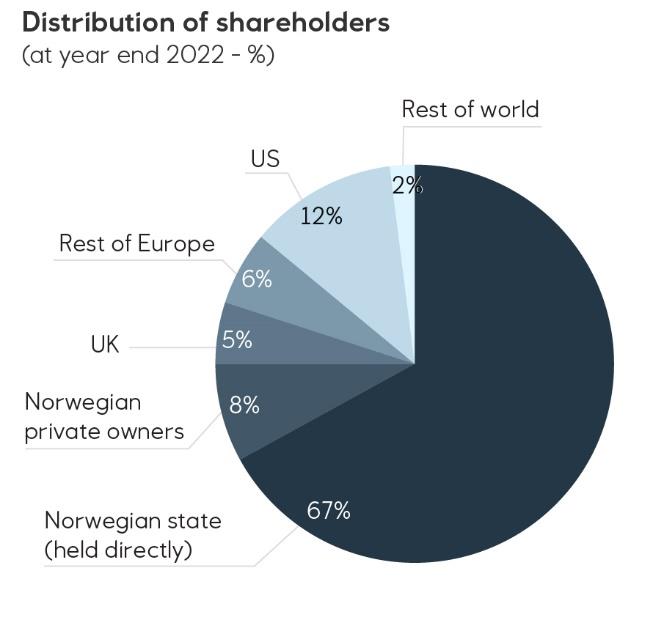
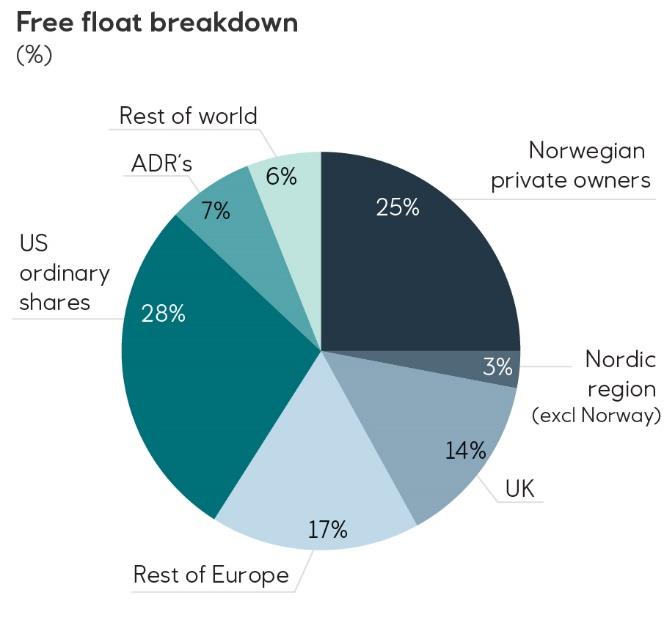
284 Equinor, Annual Report on Form 20-F 2022
Total
4,703,754
4)
59,725,629
4)
4)
64,429,383
1)
The shares repurchased from February 2022 to January 2023 have been purchased in the market under the buy-back program for
shares to be used in the share-based incentive plans for employees announced 9 February 2022, with duration from 15 February
2022 until 13 January 2023.
2)
The shares bought back in the market have been bought under the following tranches:
The duration of the second tranche of the share buy-back programme for 2021 announced 27 October 2021: 27 October 2021 to 31
January 2022 (ended 31 January 2022). Maximum total consideration for the second tranche 2021: USD 330,000,000 (including the
State's share).
The duration of the first tranche of the share buy-back programme for 2022 announced 9 February 2022: 10 February to 25 March
2022 (ended 25 March 2022). Maximum total consideration for the first tranche 2022: USD 330,000,000 (including the State's share).
The duration of the second tranche of the share buy-back programme for 2022 announced 4 May 2022: 16 May to 13 July 2022
(ended 13 July 2022). Maximum total consideration for the second tranche 2022: USD 440,000,000 (including the State's share).
The duration of the third tranche of the share buy-back programme for 2022 announced 27 July 2022: 28 July to 11 October 2022
(ended 11 October 2022). Maximum total consideration for the third tranche 2022: USD 604,890,000 (including the State's share).
The duration of the fourth tranche of the share buy-back programme for 2022 announced 28 October 2022: 31 October to 17 January
2023 (ended 17 January 2023). Maximum total consideration for the fourth tranche 2022: USD 604,890,000 (including the State's
share).
3)
The maximum number of shares that may yet be bought back in the market in January 2022 to April 2022 refers to the authorization
granted by the Annual General Meeting in May 2021. The maximum number of shares that may yet be bought back in the market in
May 2022 to January 2023 refers to the authorization granted by the Annual General Meeting in May 2022.
4)
Weighted average price per share.
Major Shareholders
The Norwegian State is the largest shareholder in Equinor, with a direct ownership interest of 67%. Its ownership interest is managed
by the Norwegian Ministry of Trade, Industry and Fisheries.
As of 31 December 2022, the Norwegian State had a 67% direct ownership interest in Equinor and a 3.39% indirect interest
through the National Insurance Fund (Folketrygdfondet), totalling 70.4%.
Equinor has one class of shares, and each share confers one vote at the general meeting. The Norwegian State does not have
any voting rights that differ from the rights of other ordinary shareholders. Pursuant to the Norwegian Public Limited Liability
Companies Act, a majority of at least two-thirds of the votes cast as well as of the votes represented at a general meeting is
required to amend our articles of association. As long as the Norwegian State owns more than one-third of our shares, it will be
able to prevent any amendments to our articles of association. Since the Norwegian State, acting through the Norwegian Ministry
of Trade, Industry and Fisheries, has in excess of two-thirds of the shares in the company, it has sole power to amend our articles
of association. In addition, as majority shareholder, the Norwegian State has the power to control any decision at general
meetings of our shareholders that requires a majority vote, including the election of the majority of the corporate assembly, which
has the power to elect our board of directors and approve the dividend proposed by the board of directors.
The Norwegian State endorses the principles set out in "The Norwegian Code of Practice for Corporate Governance", and it has
stated that it expects companies in which the State has ownership interests to adhere to the code. The principle of ensuring equal
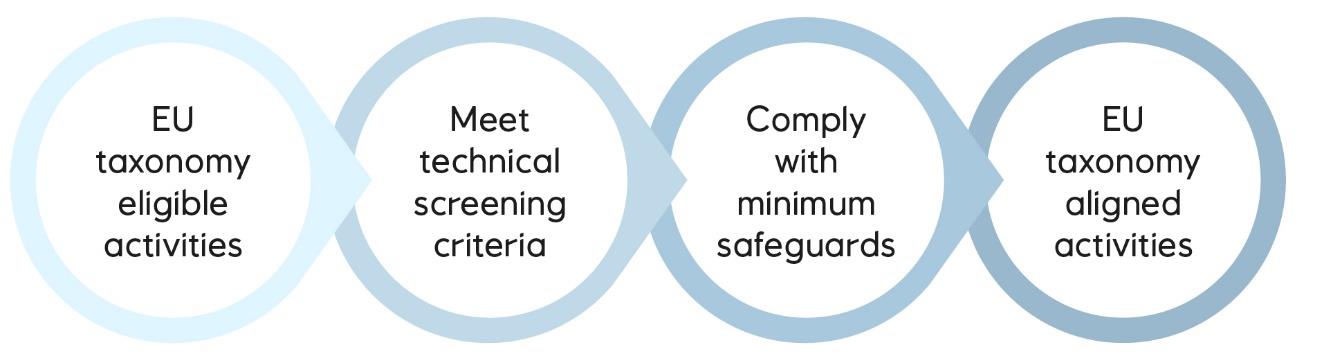
Equinor, Annual Report on Form 20-F 2022 285
treatment of different groups of shareholders is a key element in the State's own guidelines. In companies in which the State is a
shareholder together with others, the State wishes to exercise the same rights and obligations as any other shareholder and not
act in a manner that has a detrimental effect on the rights or financial interests of other shareholders. In addition to the principle of
equal treatment of shareholders, emphasis is also placed on transparency in relation to the State's ownership and on the general
meeting being the correct arena for owner decisions and formal resolutions.
Shareholders at December 2022
Number of Shares
Ownership in %
1
Government of Norway
2 127 565 006
67.00%
2
Folketrygdfondet
107 556 485
3.39%
3
BlackRock Institutional Trust Company, N.A.
1)
33 594 128
1.06%
4
The Vanguard Group, Inc.
1)
33 044 872
1.04%
5
DNB Asset Management AS
20 502 622
0.65%
6
T. Rowe Price Associates, Inc
1)
20 088 971
0.63%
7
Arrowstreet Capital, Limited Partnership
1)
18 970 039
0.60%
8
KLP Fondsforvaltning AS
18 021 894
0.57%
9
Storebrand Kapitalforvaltning AS
17 981 425
0.57%
10
Schroder Investment Management Ltd. (SIM)
1)
16 093 884
0.51%
11
RBC Global Asset Management (UK) Limited
1)
15 220 382
0.48%
12
Capital World Investors
1)
14 876 437
0.47%
13
Acadian Asset Management LLC
1)
13 125 439
0.41%
14
Fidelity Management & Research Company LLC
1)
12 509 728
0.39%
15
Nuveen LLC
1)
12 472 468
0.39%
16
State Street Global Advisors (US)
1)
12 194 750
0.38%
17
Marathon-London
11 455 171
0.36%
18
BlackRock Advisors (UK) Limited
1)
9 675 279
0.30%
19
SAFE Investment Company Limited
9 575 483
0.30%
20
Amundi Asset Management, SAS
1)
8 982 794
0.28%
1) Shareholder with US registered address
Source: Data collected by third party, authorised by Equinor, December 2022.
5.4 EU Taxonomy for sustainable activities
Equinor has implemented the EU Taxonomy disclosure in accordance with EU Regulation 2020/852 and the Delegated Acts related to
Article 8 (information to be disclosed), 10 (climate change mitigation) and 11 (climate change adaption) that require the disclosure
about the environmental performance of the company’s assets and economic activities. The regulation establishes the criteria to
determine whether an economic activity qualifies as environmentally sustainable and specifies quantitative economic performance
indicators to disclose the degree of sustainability. The activities defined to be eligible under the EU Taxonomy regulations are listed
within the delegated acts and continue to evolve with review. The regulation has been enacted in Norwegian legislation with effect for
2023. Equinor’s reporting is thus a voluntary reporting.
An activity is “Taxonomy-eligible” if it is described in the regulation, irrespective of whether it complies with the technical screening
criteria. An activity is “Taxonomy-aligned” if it contributes substantially to one or more environmental objectives, does no significant
harm to any of the other objectives, and is carried out in compliance with minimum safeguards.
286 Equinor, Annual Report on Form 20-F 2022
In order to achieve its ambition to become a net-zero emissions company by 2050, Equinor undertakes emission reducing activities
that are supporting the continued operating of oil and gas production. While these help Equinor towards its ambition, some of these
activities (notably onshore electrification of offshore assets) are not eligible per the EU Taxonomy regulations and therefore are not
visible in our eligibility scores.
EU Taxonomy regulations exclude contributions to the KPI’s from activities in equity accounted investments. A large proportion of
Equinor’s environmentally sustainable activities are conducted through equity accounted investments and therefore are not evaluated
in the mandatory key performance indicator (KPI) disclosure. To provide more holistic information of the environmentally sustainability
activities of Equinor, a voluntary disclosure including the
capex eligibility KPI for equity accounted investments has been included in
the section on voluntary KPI’s
.
Equinor performed EU Taxonomy alignment evaluations in 2022 for the significant activities in its portfolio of eligible activities. The
testing covered both producing assets and assets under development.
The alignment testing in 2022 covered current investments related to electricity generation from wind power and photovoltaic
technology. We also acquired some investments related to storage of electricity in the year which we have not yet been able to
complete full alignment testing, but for which we expect positive contributions to our alignment KPI’s in future years.
All tested eligible activities passed the substantial contribution criteria. When assessing compliance with the Do No Significant Harm
criteria the following interpretations and judgments were applied:
●
●
●
when the operations are conducted within normal, lawful operations, comply with emission permits, environmental impact
assessments have been performed and necessary action have been taken when required.
Based on the alignment testing performed the tested assets and associated activities are aligned with the technical screening criteria
by year-end 2022.
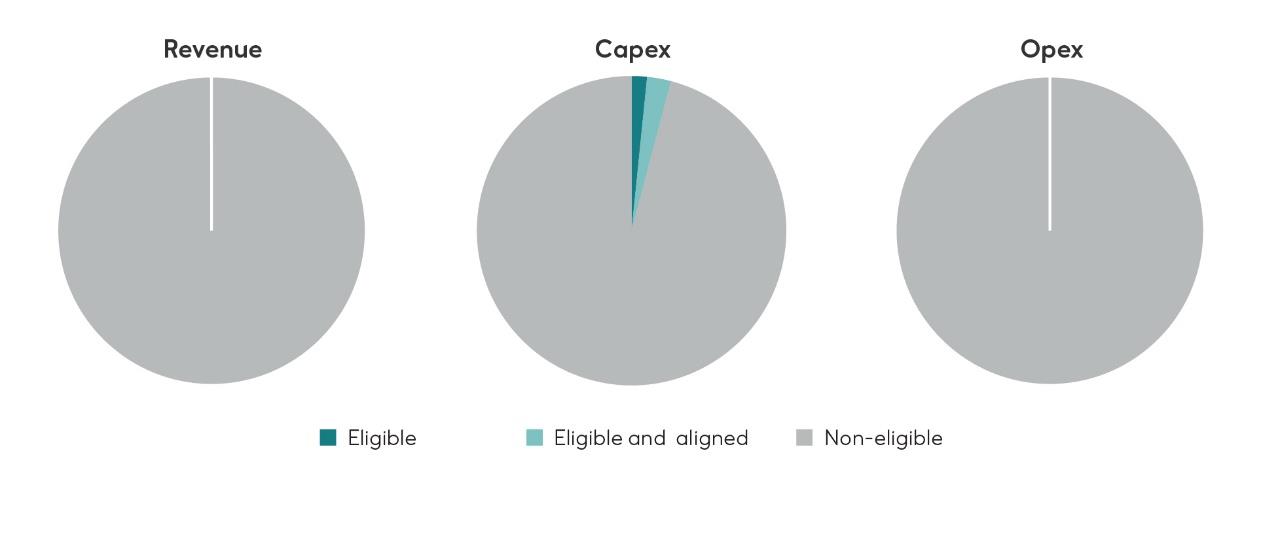
Equinor, Annual Report on Form 20-F 2022 287
Key performance indicators
2022
(in USD million)
Turnover
Capex
Opex
Aligned Eligible Activity
0
157
0
Total Eligible Activity
0
245
0
Non Eligible
150,262
9,376
1,555
Total
150,262
9,621
1,555
Aligned Eligible Activity
0%
2%
0%
Total Eligible Activity
0%
3%
0%
Non Eligible
100%
97%
100%
2021
Turnover
Capex
Opex
Eligible
1)
0%
2%
0%
1) Alignment was not assessed for 2021
Environmentally sustainable economic activities
In order for an economic activity to qualify as environmentally sustainable under the EU Taxonomy it is required to substantially
contribute to one or more of the following environmental objectives:
Climate Change mitigation (i)
The process of holding the increase in the global average temperature to well below 2°C and pursuing efforts to limit it to 1.5°C above
pre-industrial levels, as laid down in the Paris Agreement
Climate Change adaption (i)
The process of adjustment to actual and expected climate change and its impacts.
Sustainable use and protection of water and marine resource (ii)
Achieving the good status of bodies of water, including bodies of surface water, groundwater, and marine waters or to preventing the
deterioration of bodies of water that already have good status,
Transition to a circular economy (ii)
An economic system whereby the value of products, materials and other resources in the economy is maintained for as long as
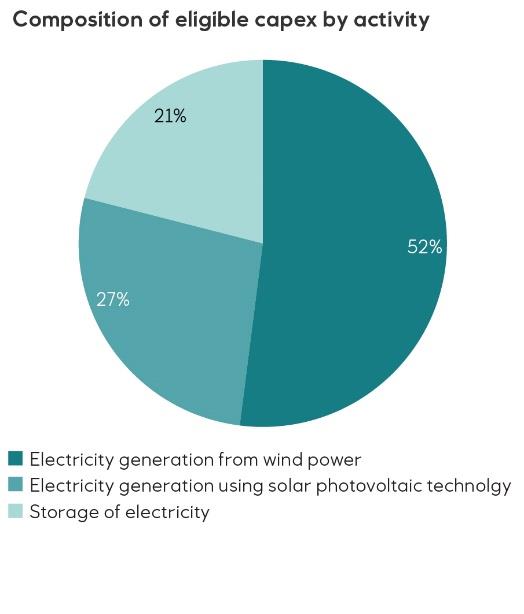
288 Equinor, Annual Report on Form 20-F 2022
possible, enhancing their efficient use in production and consumption. Minimising waste and the release of hazardous substances at
all stages of their life cycle.
Pollution prevention and control (ii)
Preventing or, where that is not practicable, reducing pollutant emissions into air, water or land, other than greenhouse gasses.
Improving levels of air, water or soil quality in the areas in which the economic activity takes place whilst minimising any adverse
impact on, human health and the environment or the risk thereof; and preventing or minimising any adverse impact on human health
and the environment of the production, use or disposal of chemicals
Protection and restoration of biodiversity and ecosystems (ii)
Protecting, conserving or restoring biodiversity or to achieving the good condition of ecosystems, or to protecting ecosystems that are
already in good condition
(i) Delegated Act published and included in the 2022 reporting
(ii) Related Delegated Act expected to be phased in by the EU from 2023 and included from the 2024 reporting.
EU taxonomy assessment for Equinor specific activity
Double counting of the relevant amounts of turnover and expenditure across the reporting has been avoided based on the eligible
economic activities included in the KPIs are independent activities.
Mandatory KPIs
Basis for preparation
The key performance indicators consist of the portion of taxonomy-eligible and aligned economic activities in the total turnover, capital
and operational expenditures in accordance with the Taxonomy regulation.
The mandatory KPI’s for 2022 consist of the portion of taxonomy-eligible and aligned activities in the total turnover, capital (capex)
and operational (opex) expenditures as included in the Consolidated financial statements and balance sheet prepared in accordance
with IFRS, and in accordance with the principles described in the appendix below.
Eligible activities
Eligible activities included in the mandatory KPIs comprises:
●
●
●
The activity covers construction or operation of electricity generation facilities that produce electricity using solar photovoltaic (PV).
The activity consists of developing onshore renewables solar projects in Poland.
4.3 Electricity generation from wind power
The main wind power activity included in the mandatory KPI is the development of the Hywind/Tampen floating wind farm intended to
provide electricity for the Snorre and Gullfaks offshore oil and gas fields. Electricity generation from wind power contributes directly to
the environmental objectives and is not a transitional or enabling economic activity subject to the assessment of the lock-in effects,
Equinor, Annual Report on Form 20-F 2022 289
even if it would provide for continuing operation of oil and gas installations. The eligibility assessment of this asset has been matured
and reassessed from 2021 and based on the regulator’s clarification of definition of economic activities the Hywind/Tampen project
has been included in eligible activities in 2022.
4.10 Storage of electricity.
The activity consists of storing electricity from renewable sources to return to the grid at a later time.
In addition, Equinor are engaged in several Hydrogen development activities and Underground permanent geological storage of CO
2
activities which are undergoing continued maturation. These activities have no significant effect on the KPIs for 2022.
At the Mongstad refinery biofuel raw material is bought and processed together with other fossil raw materials. Based on the low
proportion of biofuel in the final product blend Equinor has not included this in the eligible activities.
Equinor’s material eligible economic activities in 2022 primarily relate to the environmental objective “climate change mitigation”, and
not the climate change adaptation objective.
Technical screening assessment
Equinor has carried out the assessment process as described in the appendix below. The technical screening assessment has been
conducted based on materiality and covers the activities electricity generation from wind power and electricity generation using solar
photovoltaic technology. The energy storage activities were acquired late in 2022 and will be subject technical screening assessment
in 2023. Based on the conditions with regards to interpretation and fulfilment of the criteria described above, no material issues related
to the screening assessment have been identified by year-end 2022.
Substantial contribution
By definition, electricity generation from wind power and solar makes a substantial contribution to climate change mitigation within the
EU taxonomy.
Does no significant harm assessment
Electricity generation from wind power contributes substantially to an environmental objective if it does no significant harm to climate
change adaption, water and marine resources, circular economy and biodiversity. Electricity generation using solar photovoltaic
technology contributes substantially to an environmental objective if it does no significant harm to climate change adaption, circular
economy and biodiversity.
Results and basis for conclusion
Climate change adaption
For 2022, Equinor has conducted a climate risk and vulnerability mapping of the eligible assets covering the climate related hazards
we consider most relevant. The assessment has been conducted for the representative Concentration Pathway (RCP) scenario’s RCP
2.6, RCP 4.5 and RCP 8.5 including 10, 30 and 50 years climate projections. Equinor installations are designed with margins to
tolerate a range of meteorological conditions. No significant changes in the risk perils based on the scenarios for the tested assets
were detected.
Water and marine resources
In case of construction of offshore wind, the activity must not hamper the achievement of good environmental status in accordance
with EU regulations. Appropriate measures in accordance with the relevant criteria and methodological standards are required to
prevent or mitigate impacts related to noise and energy.
Environmental impact assessment has been conducted and the activity are conducted within normal lawful operations.
Circular economy
For the tested assets, availability of and, where feasible, use of equipment and components of high durability and recyclability which
are easy to dismantle and refurbish have been assessed. The durability of the components were deemed to be in accordance with
requirements at the time of the investments.
Recycling of the components in the wind turbines blades and solar panels is currently not feasible. However, as technology is evolving
the reuse and refurbishment of components is expected to increase.
Based on the requirement at the time of investments and current feasibility the tested activities are deemed to be aligned with the
screening criteria.
Biodiversity
For electricity generation using solar photovoltaic technology and electricity generation from wind power an environmental impact
assessment (EIA) or screening in accordance with the EU requirements are required to document that the activity does no significant
harm to any of the other environmental objectives. Where an EIA has been carried out, the required mitigation and compensation
measures for protecting the environment must be implemented.
290 Equinor, Annual Report on Form 20-F 2022
For sites/operations located in or near biodiversity-sensitive areas, an appropriate assessment, where applicable, must have been
conducted in accordance with specific EU directives and based on its conclusions the necessary mitigation measures implemented.
In case of construction of offshore wind, appropriate measures in accordance with the criteria and methodological standards set out in
accordance with specific EU directives, must be taken to prevent or mitigate impacts relate to biodiversity and seabed integrity.
Environmental impact assessment has been conducted and the activities are conducted within normal lawful operations.
Minimum safeguards
Compliance with the requirements have been determined by assessing the criteria against the four topics:
●
Human rights, including workers’ rights
●
Bribery/Corruption
●
Taxation
●
Fair competition
Equinor minimum safeguards procedures are based on the United Nations Guiding principles on Business and Human Rights
(UNGPs). Mitigating actions are initiated to respond to any identified risks.
Voluntary KPIs
To provide further information on our environmentally sustainability activity Equinor has included a voluntary disclosure of the capex
KPI for 2022 including contributions from equity accounted investments. These activities are conducted through both operated and
non-operated joint ventures mainly outside the EU jurisdiction. The main part of the activities is related to development projects.
Based on the nature of the activities the R&D and maintenance related expenses are limited. Hence Opex is not included in the
voluntary KPIs in 2022. The KPIs has been calculated on a pro rata basis corresponding to Equinor’s share of capex in the joint
ventures. The KPI numerator includes the eligible activities, and the denominator includes both eligible and non-eligible activity.
Equinor has limited its voluntary capex KPI to eligible activities. Extensive documentation requirements and limited data availability,
especially related to non-operated joint ventures outside the EU jurisdiction, has not made it practical to complete alignment testing
over the majority of the portfolio activities which are equity accounted for 2022. The technical screening process for the non-operated
assets will be conducted in coordination with the operator of the equity accounted assets.
Eligible activities included in the voluntary KPI
Eligible activities included in the voluntary KPIs comprises:
●
●
●
●
4.1 Electricity generation using solar photovoltaic technology
The activity covers construction or operation of electricity generation facilities that produce electricity using solar photovoltaic (PV).
The activity consists of activities mainly in Brazil.
4.3 Electricity generation from wind power
The activity covers development of electricity generation facilities that produce electricity from wind power. Equinor is engaged in
offshore wind projects conducted through equity accounted investment in UK, Germany, Poland and the US.
5.12 Underground permanent geological storage of CO
2
The activity consists of the Northern Lights project
4.29 Electricity generation from fossil gaseous fuels
The activity consists of the Triton power plant acquired in the third quarter of 2022. The current activity is to provide electricity during
periods of low output from solar and wind from a gas turbine (CCGT) that uses natural gas. Work has started to prepare the power
plant to use up to 30% hydrogen from 2027, with an ambition to eventually increase to 100% hydrogen.
2022
Equinor, Annual Report on Form 20-F 2022 291
Taxonomy-eligible economic activities
Mandatory
Capex KPI
Voluntary
Capex KPI
including
equity
accounted
investments
Electricity generation from wind power
1%
11%
Electricity generation using solar photovoltaic technology
1%
1%
Underground permanent geological storage of CO2
0%
1%
Storage of electricity
1%
0%
Total
3%
13%
Appendix 1
Mandatory KPIs
KPI denominators
Turnover
Total turnover consists of the reported revenue for contracts with customers included in the revenue line item and presented in note 5
Segments in the consolidated financial statements. The revenue included in the numerator and denominator in 2021 consisted of
revenue included in the consolidated financial statement. Equinor has reassessed the definition in accordance with updated
guidelines. Net income/(loss) from equity accounted investments and other income (i.e. gain on divestment of assets) are excluded
from the definition of the mandatory KPI, and not part of the revenue denominator. For Equinor the KPI denominator related to
turnover will be highly impacted by changes in commodity prices.
The 2021 turnover KPI has been updated to include revenue for contracts with customers as described above. The total updated 2021
turnover KPI is 0% which is the same as reported in 2021.
Capex
Total capital expenditures consist of additions to property, plant and equipment including right of use assets line item as specified in
note 12 Property, plant and equipment and additions to intangible assets as specified in note 13 Intangible assets to the Consolidated
financial statements. Additions excludes additions and subsequent changes in estimated asset retirement obligations based on policy
interpretation of the delegated act. This is an interpretation which has been aligned with industry practice and has been updated from
our prior year definition. Capitalised exploration and acquisition costs of oil and gas prospects related to exploration are recognised as
intangible assets, and by interpretation of the Taxonomy regulation, considered to be included the KPI denominator, as this is a part of
Equinor’s ongoing activity (see assessment below). Goodwill acquired through business combinations is excluded from the capital
expenditure KPI.
The 2021 capex KPI has been updated to include capex related to the Hywind/Tampen project in the numerator and excluding ARO
additions in the denominator. The total updated 2021 capex KPI is 2% which is the same as reported in 2021.
(in USD million)
Note
2022
Additions to PP&E, intangibles and equity accounted investments
5
Less:
Additions to Equity accounted investments
15
(337)
Goodwill Additions
13
(36)
Capex denominator as defined by the EU Taxonomy
Opex
Total operating expenditures under the Taxonomy cover direct non-capitalised costs that relate to research and development, building
renovation measures, short-term lease, maintenance and repair, and any other direct expenditures relating to the day-to-day servicing
of assets of property, plant and equipment that are necessary to ensure the continued and effective functioning of such assets.
The operating expenditures included in the numerator and denominator in 2021 were considered to be represented by the reported
amounts included in the operating expenses and selling, general and administration expense line items in the Consolidated financial
statements. Equinor has reassessed the opex definition in accordance with updates from the regulators and industry practice. Per the
292 Equinor, Annual Report on Form 20-F 2022
above description the “other direct expenditures relating to the day-to-day servicing of assets of property” has been narrowed in scope
to only include direct
maintenance related expenses. This results in the operating expenditures in 2022 consisting of a subset of the
operating expenditures in the income statement and does not include any selling, general and administrative expenditures,
depreciation, amortisation, impairment and exploration expenses
.
The opex denominator and numerator have been updated in accordance with the narrow definition as described below. There were no
opex related to the eligible activities in 2021, hence the updated opex KPI for 2021 has been changed from 2% to 0%.
Application of the KPIs
The definition of the capex KPI includes intangible assets in accordance with IAS 38. Acquired goodwill and capitalised costs
according to the successful efforts method under IFRS 6 is out of the scope of IAS 38. The rationale for excluding IFRS 6 from the
capex KPI is not clearly stated in the Taxonomy regulation. Equinor regards exploration activities as part of the ongoing core activities
and has included capitalised exploration costs in the capex denominator. The exploration costs are not covered by the EU Taxonomy
opex definition and not included in the opex KPI. Capitalised exploration expenditures do not have significant effect on the reported
capex KPIs for the year-end 2022.
The denominators are calculated based on reported IFRS numbers in the Consolidated financial statements. For Equinor this has the
effect that the proceeds from the sale of the Norwegian State’s (SDFI) oil production on the NCS, that Equinor markets and sells on
their behalf (see note 27 Related Parties to the Consolidated financial statements), that is reported on gross basis and recognised as
revenue in the income statement, will have a negative impact on the reported KPI related to taxonomy-eligible and aligned revenue.
Total purchases of oil and natural gas liquids from the Norwegian state amounted to USD 13 billion in 2022 and USD 10 billion in
2021.
KPI numerators
The KPI numerators consist of the taxonomy-eligible and aligned part of the turnover, operating expenses and capital expenditures
included in the denominator.
When identifying taxonomy-eligible and aligned economic activities within the Equinor group, the starting point has been the reporting
entities and profit centres established for group reporting purposes and included in the group consolidation system. For reporting
entities with one economic activity that has been assessed as a taxonomy-eligible activity, total revenue, total capex additions and
opex as defined above are included in the calculation of the KPIs.
For reporting entities with several taxonomy-eligible economic activities, and where both eligible and non-eligible economic activities
have been identified, the eligible economic activities are identified per cluster, profit centre, or lower levels depending on where the
cost related to the activity is recorded in Equinor.
Technical screening procedures
Equinor implemented the assessment of the technical screening criteria for the environmental objectives climate change mitigation
and climate change adaptation in accordance with the Delegated act related to article 8. For 2022 Equinor’s activity primarily relate
relates to activities within the climate change mitigation objective.
An economic activity contributes substantially to climate change mitigation where that activity contributes substantially to the
stabilisation of greenhouse gas concentrations in the atmosphere at a level which prevents dangerous anthropogenic interference with
the climate system consistent with the long-term temperature goal of the Paris Agreement through the avoidance or reduction of
greenhouse gas emissions or the increase of greenhouse gas removals, including through process innovations or product
innovations.
Equinor have carried out the assessment process as followed:
Assessment of substantial contribution
Compliance with the technical screening criteria is generally tested individually for each economic activity unless the criteria allow
compliance to be assessed at the level of the entire economic activity, an operating segment or the group as a whole.
Assessment of do no significant harm (DNSH)
The purpose of the do no significant harm assessment is to prevent investment processes, which would focus on a particular
environmental or social objective without sufficient consideration for the other five environmental objectives. The assessments mainly
reflect legal requirements under EU regulations.
Assessment minimum safeguards
Equinor has a group wide approach to ensuring compliance with the minimum safeguards. Equinor is committed to respecting human
rights in all business processes. To prevent human right violations, Equinor adhere to external standards and defines its own
principles and policies.
Equinor, Annual Report on Form 20-F 2022 293
Appendix 2
The difference between the mandatory 3% Capex KPI as defined within the EU Taxonomy and the 14% REN / LCS Gross Capex* is
mainly related to eligible activity in equity accounted investments which is included within the voluntary EU taxonomy KPI. In addition,
additions to right-of-use asset (leasing) are excluded and additions to goodwill are included in the REN / LCS Gross Capex* which
differs in treatment to the EU taxonomy KPI.
294 Equinor, Annual Report on Form 20-F 2022
Appendix 3
2022 Revenue
SUBSTANTIAL
CONTRIBUTION
CRITERIA
DOES NOT SIGNIFICANT HARM
Economic activities
Code
Absolute
Revenue
USD
million
Proportio
n of
Revenue
%
Climate
change
mitigatio
n %
Climate
change
adaptatio
n %
Climate
change
mitigatio
n
Climate
change
adaptatio
n
Water
and
marine
resource
s
Circular
econom
y
Pollutio
n
Biodiversit
y and
ecosyste
ms
Minimum
safeguard
s
Taxonomy-
aligned
proportion
of Revenue
%
A. TAXONOMY-ELIGIBLE ACTIVITIES (A.1. + A.2.)
A.1. Environmentally sustainable activities (Taxonomy-
aligned)
Electricity generation from wind power
D35.1
1
0
0%
100%
0%
Y
Y
Y
Y
Y
Y
Y
0%
Electricity generation using solar photovoltaic
technology
F42.2
2
0
0%
100%
0%
Y
Y
Y
Y
Y
Y
Y
0%
Revenue of environmentally sustainable activities
(Taxonomy-aligned) (A.1.)
0
0%
A.2. Taxonomy-eligible but not environmentally
sustainable activities (not Taxonomy-aligned activities)
Electricity generation from wind power
D35.1
1
0
0%
Electricity generation using solar photovoltaic
technology
F42.2
2
0
0%
Storage of electricity
0
0%
Revenue of Taxonomy-eligible but not environmentally
sustainable activities (not Taxonomy-aligned activities)
(A.2)
0
0%
B. TAXONOMY NON-ELIGIBLE ACTIVITIES
Revenue of Taxonomy-non-eligible activities (B)
(150,262)
100%
Total (A+B)
(150,262)
100%
2022 Capex
SUBSTANTIAL
CONTRIBUTION
CRITERIA
DOES NOT SIGNIFICANT HARM
Equinor, Annual Report on Form 20-F 2022 295
Economic activities
Code
Absolute
Capex
USD
million
Proportio
n of
Capex %
Climate
change
mitigatio
n %
Climate
change
adaptatio
n %
Climate
change
mitigatio
n
Climate
change
adaptatio
n
Water
and
marine
resource
s
Circular
econom
y
Pollutio
n
Biodiversit
y and
ecosyste
ms
Minimum
safeguard
s
Taxonomy-
aligned
proportion
of Capex %
A. TAXONOMY-ELIGIBLE ACTIVITIES (A.1. + A.2.)
A.1. Environmentally sustainable activities (Taxonomy-
aligned)
Electricity generation from wind power
D35.1
1
92
1.0 %
100%
0%
Y
Y
Y
Y
Y
Y
Y
1.0 %
Electricity generation using solar photovoltaic
technology
F42.2
2
66
0.7 %
100%
0%
Y
Y
Y
Y
Y
Y
Y
0.7 %
Capex of environmentally sustainable activities
(Taxonomy-aligned) (A.1.)
157
1.6 %
A.2. Taxonomy-eligible but not environmentally
sustainable activities (not Taxonomy-aligned activities)
Electricity generation from wind power
D35.1
1
35
0.4 %
Electricity generation using solar photovoltaic
technology
F42.2
2
0
0.0 %
Storage of electricity
52
0.5 %
Capex of Taxonomy-eligible but not environmentally
sustainable activities (not Taxonomy-aligned activities)
(A.2)
87
0.9 %
B. TAXONOMY NON-ELIGIBLE ACTIVITIES
Capex of Taxonomy-non-eligible activities (B)
9,376
97.5 %
Total (A+B)
9,621
100.0 %
2022 Opex
SUBSTANTIAL
CONTRIBUTION
CRITERIA
DOES NOT SIGNIFICANT HARM
Economic activities
Code
Absolute
Opex
USD
million
Proportion
of Opex %
Climate
change
mitigati
on %
Climate
change
adaptatio
n %
Climate
change
mitigatio
n
Climate
change
adaptatio
n
Water
and
marine
resource
s
Circular
econom
y
Pollutio
n
Biodiversi
ty and
ecosyste
ms
Minimum
safeguard
s
Taxonomy-
aligned
proportion
of Opex %
A. TAXONOMY-ELIGIBLE ACTIVITIES (A.1. + A.2.)
A.1. Environmentally sustainable activities (Taxonomy-
aligned)
Electricity generation from wind power
D35.1
1
0
0%
100%
0%
Y
Y
Y
Y
Y
Y
Y
0%
Electricity generation using solar photovoltaic
technology
F42.2
2
0
0%
100%
0%
Y
Y
Y
Y
Y
Y
Y
0%
296 Equinor, Annual Report on Form 20-F 2022
Opex of environmentally sustainable activities
(Taxonomy-aligned) (A.1.)
0
0%
0%
A.2. Taxonomy-eligible but not environmentally
sustainable activities (not Taxonomy-aligned activities)
Electricity generation from wind power
D35.1
1
0
0%
Electricity generation using solar photovoltaic
technology
F42.2
2
0
0%
Storage of electricity
0
0%
Opex of Taxonomy-eligible but not environmentally
sustainable activities (not Taxonomy-aligned activities)
(A.2)
0
0%
B. TAXONOMY NON-ELIGIBLE ACTIVITIES
Opex of Taxonomy-non-eligible activities (B)
1,555
100%
Total (A+B)
1,555
100%
Equinor, Annual Report on Form 20-F 2022 297
5.5 Production per field
The following tables shows the regional production by field.
298 Equinor, Annual Report on Form 20-F 2022
E&P Norway - Equinor operated fields, average daily entitlement production
Geographical area
Equinor's equity
interest in %
On
stream
Licence expiry
date
Average
production in
2022 mboe/day
Field
Johan Sverdrup
The North Sea
42.63
2019
2036-2037
227
Troll Phase 1 (Gas)
The North Sea
30.58
1996
2030
210
Oseberg
The North Sea
49.30
1988
2031
102
Gullfaks
The North Sea
51.00
1986
2036
83
Aasta Hansteen
The Norwegian Sea
51.00
2018
2041
74
Visund
The North Sea
53.20
1999
2034
67
Martin Linge
The North Sea
51.00
1)
2021
2027
56
Åsgard
The Norwegian Sea
34.57
1999
2027
48
Tyrihans
The Norwegian Sea
58.84
2009
2029
42
Gina Krog
The North Sea
58.70
2017
2032
37
Snorre
The North Sea
33.28
1992
2040
35
Snøhvit
The Barents Sea
36.79
2007
2035
28
Kvitebjørn
The North Sea
39.55
2004
2031
24
Fram
The North Sea
45.00
2003
2040
21
Troll Phase 2 (Oil)
The North Sea
30.58
1995
2030
19
Statfjord Unit
The North Sea
64.10
2) 3)
1979
2026
18
Gudrun
The North Sea
36.00
2014
2032
18
Grane
The North Sea
36.61
2003
2030
17
Sleipner West
The North Sea
58.35
1996
2028
15
Mikkel
The Norwegian Sea
43.97
2003
2028
14
Heidrun
The Norwegian Sea
13.04
1995
2024-2025
11
Tordis area
The North Sea
41.50
1994
2040
11
Vigdis area
The North Sea
41.50
1997
2040
9
Norne
The Norwegian Sea
39.10
1997
2026
9
Kristin
The Norwegian Sea
54.82
2005
2027-2033
9
Trestakk
The Norwegian Sea
59.10
2019
2029
8
Valemon
The North Sea
66.78
2015
2031
7
Alve
The Norwegian Sea
53.00
2009
2029
7
Urd
The Norwegian Sea
63.95
2005
2026
4
Statfjord North
The North Sea
45.00
2) 3)
1995
2026
4
Sleipner East
The North Sea
59.60
1993
2028
3
Morvin
The Norwegian Sea
64.00
2010
2027
3
Utgard
The North Sea
38.44
3)
2019
2028
2
Statfjord East
The North Sea
43.25
2) 3)
1994
2026-2040
2
Gungne
The North Sea
62.00
1996
2028
2
Sigyn
The North Sea
60.00
2002
2035
2
Tune
The North Sea
50.00
2002
2025-2032
1
Sygna
The North Sea
43.43
2) 3)
2000
2026-2040
1
Byrding
The North Sea
70.00
2017
2024-2035
1
Fram H Nord
The North Sea
49.20
2014
2024-2035
0
Sindre
The North Sea
72.91
2017
2023-2034
0
Veslefrikk
The North Sea
18.00
1989
2025-2031
0
Njord
The North Sea
27.50
1997
2034
0
Gimle
The North Sea
75.81
2006
2023-2034
0
Heimdal
The North Sea
29.44
1985
2023
0
Total Equinor operated fields
1,251
Equinor, Annual Report on Form 20-F 2022 299
E&P Norway - Partner operated fields, average daily entitlement production
Geographical area
Equinor's equity
interest in %
Operator
On
stream
Licence expiry
date
Average
production in
2022 mboe/day
Field
Skarv
The Norwegian Sea
36.17
Aker BP ASA
2013
2029-2036
52
Ormen Lange
The Norwegian Sea
25.35
A/S Norske Shell
2007
2040-2041
43
Ivar Aasen
The North Sea
41.47
Aker BP ASA
2016
2029-2036
14
Goliat
The Barents Sea
35.00
Vår Energi AS
2016
2042
11
Ekofisk area
The North Sea
0.00
1)
ConocoPhillips Skandinavia
AS
1971
2048
7
Ærfugl Nord
The Norwegian Sea
30.00
Aker BP ASA
2021
2033
4
Marulk
The Norwegian Sea
33.00
Vår Energi AS
2012
2025
4
Tor II
The North Sea
0.00
1)
ConocoPhillips Skandinavia
AS
2020
2028-2048
1
Enoch
The North Sea
11.78
Repsol Sinopec North Sea Ltd.
2007
2024
0
Total partner operated fields
136
Total E&P Norway including share of equity accounted production
1,387
1) On 30 September 2022, Equinor completed the transaction to divest its 7.60% stake in Ekofisk and its 6.64% stake in Tor 2 and sell a 19%
stake in Martin Linge to Sval Energi. Upon completion, Equinor holds a 51% operating interest in Martin Linge. The transaction is effective
from 1 January 2022. The volumes for the first three quarters of 2022 pertain to Equinor’s stakes in Ekofisk, Tor 2 and Martin Linge prior to the
transaction.
2) On 31 May 2022, Equinor completed the transaction to acquire all of Spirit Energy’s production licences in the Statfjord area on the
Norwegian and the UK continental shelves. Upon completion, Equinor increased its stake in Statfjord on the NCS and holds a 14.53% stake in
Statfjord unit UK. With the transaction, Equinor’s operating interest in Statfjord on the NCS increased as follows: Statfjord unit from 44.34% to
64.10%, Statfjord North from 21.88% to 45.00%; Statfjord East from 31.69% to 43.25%, Sygna from 30.71% to 43.43%. The commercial
effective date of the transaction is 1 January 2021. The volumes for the period before 1 June 2022 pertain to Equinor’s stake in Statfjord prior
to the transaction.
3) The Statfjord and Utgard fields in the North Sea span the boundary between the Norwegian and UK continental shelves. The volumes
pertain to Equinor’s operating interest in Statfjord and Utgard on the NCS. For the volumes pertaining to Equinor’s operating interest in
Statfjord and Utgard on the UKCS, please see section 3.1.2 E&P International.
300 Equinor, Annual Report on Form 20-F 2022
E&P International - Average daily equity production
Field
Country
Equinor's
equity
interest in %
Operator
On
stream
Licence
expiry date
Average daily
equity
production in
2022 mboe/day
Americas (excluding US)
69
Roncador
Brazil
25.00
1999
2052
34
Peregrino
Brazil
60.00
2011
2040
17
Hebron
Canada
9.01
2017
HPB
1)
12
Hibernia/Hibernia Southern
Extension
2)
Canada
Varies
Corporation Ltd.
1997
HPB
1)
5
Bajo del Toro
Argentina
50.00
Yacimientos Petrolíferos Fiscales S.A.
2022
2055
1
Africa
183
Block 17
Angola
22.16
TotalEnergies E&P Angola S.A.
2001
2045
85
In Salah
Algeria
31.85
Sonatrach
3)
2004
2027
31
Eni In Salah Limited
Equinor In Salah AS
Agbami
Nigeria
20.21
Star Deep Water Petroleum Limited
(an affiliate of Chevron in Nigeria)
2008
2042
21
Block 15
Angola
12.00
Esso Exploration Angola Block 15 Limited
2004
2032
17
In Amenas
Algeria
45.90
Sonatrach
3)
2006
2027
15
Eni In Amenas Limited
Equinor In Amenas AS
Block 31
Angola
13.33
BP Exploration (Angola) Ltd
2012
2031
8
Murzuq
Libya
10.00
Akakus Oil Operations
2003
2037
7
Eurasia
63
ACG
Azerbaijan
7.27
BP Exploration (Caspian Sea) Limited
1997
2049
30
Mariner
UK
65.11
2019
HBP
1)
16
Corrib
Ireland
36.50
Ireland Limited
2015
2031
9
Kharyaga
4)
Russia
0.00
1999
-
4)
3
Utgard
5)
UK
38.00
2019
HBP
1)
2
Statfjord Unit
5)
UK
14.53
1979
HBP
1)
2
Barnacle
6)
UK
100.00
2019
HBP
1)
0
Total E&P International
315
Equity accounted production
13
Bandurria Sur
Argentina
30.00
Yacimientos Petrolíferos Fiscales S.A.
2015
2050
10
North Danilovskoye
4)
Russia
0.00
2020
-
4)
3
North Komsomolskoye
4)
Russia
0.00
2018
-
4)
1
Total E&P International including share of equity accounted production
328
1)
Held by Production (HBP): A leasehold interest that is perpetuated beyond its primary term as long as there is production in paying
quantities from well(s) on the lease or lease(s) pooled therewith.
2)
Equinor's equity interests are 5.0% in Hibernia and 9.26% in Hibernia Southern Extension.
3)
The complete name for Sonatrach is Société nationale de transport et de commercialisation d’hydrocarbures.
4)
In February 2022, Equinor decided to stop new investments in Russia. Reporting of production stopped in April and as of the end of 2022
Equinor had transferred its 30% ownership interest in Kharyaga to the operator and participating interest of 49% in North Danilovskoye
and 33.33% in North Komsomolskoye to Rosneft. The volumes for the first three months of 2022 pertain to Equinor’s stakes in Kharyaga,
North Danilovskoye and North Komsomolskoye prior to the transaction. For more information, see note 6 Acquisitions and disposals to the
Consolidated financial statements.
5)
The Utgard and Statfjord Unit fields span the boundary between the Norwegian and UK continental shelves. In this table we report only
volumes pertaining to the Equinor share in UKCS.
Equinor, Annual Report on Form 20-F 2022 301
6)
Actual production for Barnacle was 0.4 mboe/day.
E&P USD - Average daily equity production
Field
Country
Equinor's equity
interest in %
Operator
On
stream
Licence
expiry date
Average daily
equity
production in
2022 mboe/day
Appalachian (APB)
1)
US
Varies
2)
Equinor/others
3)
2008
HBP
5)
Tahiti
US
25.00
2009
HBP
5)
Caesar Tonga
US
46.00
2012
HBP
5)
Julia
US
50.00
2016
HBP
5)
St. Malo
US
21.50
2014
HBP
5)
Jack
US
25.00
2014
HBP
5)
Big Foot
US
27.50
2018
HBP
5)
Stampede
US
25.00
2018
HBP
5)
Titan
US
100.00
2018
HBP
5)
Heidelberg
4)
US
12.00
2016
HBP
5)
Total E&P USA
1)
Appalachian basin contains Marcellus and Utica formations.
2)
Equinor’s actual equity interest varies depending on wells and area.
3)
Operators are Equinor USA Onshore Properties Inc, Chesapeake Operating LLC, Southwestern Production Company, Chief Oil &
Gas LLC, and several other operators.
4)
Actual production for Heidelberg was 0.4 mboe/day.
5)
Held by Production (HBP): A leasehold interest that is perpetuated beyond its primary term as long as there is production in paying
quantities from well(s) on the lease(s) pooled therewith.
302 Equinor, Annual Report on Form 20-F 2022
5.6 Additional sustainability information
5.6.1 About the sustainability elements of the report
Reporting standards
This report has been prepared in accordance with the Global Reporting Initiative (GRI) Standards (2016, core option). The
sustainability report should be read in conjunction with the GRI index available at equinor.com, to get an overview of the full
extent of the report. We view this report to be our Communication on Progress to the UN Global Compact (advanced reporting
level). We also use reporting guidance from IPIECA, the global oil and gas industry association for environmental and social
issues, and recommendations from the Task Force on Climate-related Financial Disclosures.
Assurance
We recognise that the quality of our reported sustainability data can be affected by inherent limitations in accuracy in raw data,
calculation and estimation procedures including assumptions for such purposes, and in manual transfer of data. We strive to
achieve data quality in line with expectations set out in GRI 101 “Reporting principles” and continue our work to improve
internal reporting and control processes in line with the COSO framework for internal control. These processes are laid out in
our internal performance framework. Examples of our internal assurance mechanisms are independent internal audits and
verifications, quarterly reviews of the data at business area and corporate level, and an annual process where all reported
sustainability data are reviewed by named individuals and their relevant leaders confirm, in documented form, that quality
assurance has been performed. This report has been externally assured by EY, with reasonable level of assurance for
selected climate, environment and safety indicators, and a limited level of assurance for the rest of the report, excluding
forward looking information and field-specific reporting. The independent assurance statement, as listed in appendix,
concludes that the report is presented in all material respects, in accordance with the GRI Standards: Core option.
Reporting boundaries
Defining consistent boundaries for sustainability reporting is challenging due to the complexity of ownership and operational
arrangements, such as joint operating agreements. We strive to be consistent and transparent about variations in boundaries
and provide a complete report in line with industry practice.
●
vessels, including subsidiaries and operations where we are the technical service provider, and for contracted
drilling rigs and flotels (“operational control basis”).
●
₂
₂
equity basis (financial ownership interest).
●
reported from maritime vessels under Equinor contract, including project and supply vessels, drilling rigs, and
tankers transporting both Equinor and third-party volumes.
●
●
and operations where we are the technical service provider. These include contracted drilling rigs, flotels, vessels,
projects and modifications, and transportation of personnel and products, using a risk-based approach.
●
●
●
Operations acquired or disposed of during the year are included for the period in which we owned them, unless otherwise
stated. Entities that we do not control, but have significant influence over, are included in the form of disclosures of
management approach. The report does not include data from equity interest fields/projects, such as joint ventures, where we
are not operator. Exceptions are for climate data or where specified.
Restatements
Historic numbers are sometimes adjusted due to for example changes in reporting principles, changes of calculation factors
used by authorities, or re-classification of incidents after investigations. We restate historic numbers and explain the changes if
the adjustment represents a change of minimum 5% for indicators with reasonable level of assurance, and 10% for indicators
with limited level of assurance.
Equinor, Annual Report on Form 20-F 2022 303
5.6.2 Task Force on Climate-related Financial Disclosures (TCFD) reference index 2022
Equinor aligns its climate-related disclosures with the recommendations of the Task Force on Climate related Financial Disclosures.
Relevant context and disclosures for each of the TCFD recommendations can be found at several places in the following disclosure
products:
●
Equinor’s 2022 Integrated Annual Report (IR)
●
Sustainability performance data (datahub on Equinor.com) (SPD)
●
Equinor’s 2022 CDP response (CDP)
TCFD recommendation
Reference to Equinor disclosure products
Governance – Disclose the organisation’s governance around climate-related risks and opportunities
a) Describe the board’s oversight of
climate-related risks and opportunities.
●
IR 1.8 – Governance and risk management
●
IR 5.1 – Board statement on corporate governance, subitem 9 (The work of the board
of directors) and subitem 10 (Risk management and internal control)
●
CDP C1 - Governance
b) Describe management’s role in
assessing and managing climate-related
risks and opportunities.
●
IR 1.8 – Governance and risk management
●
CDP C1 – Governance
●
CDP C2 – Risks and opportunities
Strategy – Disclose the actual and potential impacts of climate-related risks and opportunities on the organisation’s businesses,
strategy, and financial planning where such information is material
a) Describe the climate-related risks and
opportunities the organisation has identified
over the short, medium, and long term.
●
IR 1.8 – Governance and risk management
●
IR 2.3 – Low carbon
●
IR 2.3.1 – Net zero pathway
●
IR 2.3.2 – Emissions reductions
●
IR 5.2 – Risk factors
●
CDP C2 – Risks and opportunities
b) Describe the impact of climate-related
risks and opportunities on the
organisation’s businesses, strategy, and
financial planning.
●
IR 1.5 – Equinor’s strategy
●
IR 1.7 – Sustainability at Equinor
●
IR 2 – Enterprise level performance, Performance 2022
●
IR 2.2.2 – Profitable portfolio, Portfolio stress test, Physical climate risk
●
IR 2.3 – Low carbon
●
IR 2.3.1 – Net zero pathway
●
IR 2.3.2 – Emissions reductions
●
IR 3.2 – High-value growth in renewables
●
IR 3.3 – Marketing, midstream and processing (MMP), including new market
opportunities in low carbon solutions
●
IR 4.1 Consolidated financial statements of the Equinor group – Notes to the
Consolidated financial statements – Note 3: Consequences of initiatives to limit
climate changes and Note 14: Impairments,
●
CDP C2 – Risks and opportunities
●
CDP C3 – Business strategy
c) Describe the resilience of the
organisation’s strategy, taking into
consideration different climate-related
scenarios, including a 2°C or lower
scenario.
●
IR 1.5 – Equinor’s strategy
●
IR 1.7 – Sustainability at Equinor
●
IR 2 – Enterprise level performance, Performance 2022
●
IR 2.2.2 – Profitable portfolio, Portfolio stress test, Physical climate risk
●
IR 4.1 Consolidated financial statements of the Equinor group – Notes to the
Consolidated financial statements – Note 3: Consequences of initiatives to limit
climate changes and Note 14: Impairments,
●
CDP C3 – Business strategy
Risk management – Disclose how the organisation identifies, assesses, and manages climate-related risks
a) Describe the organisation’s processes
for identifying and assessing climate-
related risks.
●
IR 1.8 – Governance and risk management
●
IR 2.2.2 – Profitable portfolio, Portfolio stress test, Physical climate risk
●
CDP C2 – Risks and opportunities
b) Describe the organisation’s processes
for managing climate-related risks
●
IR 1.8 – Governance and risk management
●
IR 2.2.2 – Profitable portfolio, Portfolio stress test, Physical climate risk
●
CDP C2 – Risks and opportunities
304 Equinor, Annual Report on Form 20-F 2022
c) Describe how processes for identifying,
assessing, and managing climate-related
risks are integrated into the organisation’s
overall risk management.
●
IR 1.8 – Governance and risk management
●
CDP C2 – Risks and opportunities
Metrics and targets – Disclose the metrics and targets used to assess and manage relevant climate-related risks and opportunities
where such information is material
a) Disclose the metrics used by the
organisation to assess climate-related risks
and opportunities in line with its strategy
and risk management process.
●
IR Introduction – Equinor’s Energy transition plan
●
IR 2 – Enterprise level performance, Performance 2022
●
IR 2.2.2 – Profitable portfolio, Portfolio stress test, Physical climate risk
●
IR 2.3.1 Net zero pathway
●
IR 2.3.2 – Emissions reductions
●
CDP C4 – Targets and performance
●
SPD Climate
b) Disclose Scope 1, Scope 2, and, if
appropriate, Scope 3 greenhouse gas
(GHG) emissions, and the related risks.
●
IR Introduction – Equinor’s Energy transition plan
●
IR 2.3.1 Net zero pathway
●
IR 2.3.2 – Emissions reductions
●
CDP C4 – Targets and performance
●
SPD Climate
c) Describe the targets used by the
organisation to manage climate-related
risks and opportunities and performance
against targets.
●
IR Introduction – Equinor’s Energy transition plan
●
IR 2.3.1 Net zero pathway
●
IR 2.3.2 – Emissions reductions
●
CDP C4 – Targets and performance
Equinor, Annual Report on Form 20-F 2022 305
5.6.3 Overview of climate ambitions
Ambitio
n year
Ambitions
Boundary
Scope
Baseline year
2025
Upstream CO
₂
₂
/boe
Operational control 100%, upstream
Scope 1 CO
₂
NA
>30% share of annual gross capex to renewables and
low carbon solutions
Equinor gross capex
NA
NA
2030
Net 50% emission reduction
Operational control 100%
Scope 1 and 2 CO
₂
4
2015
>50% share of annual gross capex to renewables and
low carbon solutions
Equinor gross capex
NA
NA
Reduce net carbon intensity by 20%
2)
Scope 1 and 2 GHG emissions (100% operator
basis). Scope 3 GHG emissions from use of sold
products (equity production), net of negative
emissions. Energy production (equity)
Scope 1, 2 and 3 CO
₂
4
2019
Renewable energy capacity 12-16 GW
1)
Equity basis
Installed capacity (GW)
NA
Upstream CO
₂
₂
/boe
Operational control 100%, upstream
Scope 1 CO
₂
NA
Carbon Capture and Storage
(CCS): 5-10 million tonnes
CO
₂
year
Equity basis
NA
NA
Eliminate routine flaring
Operational control 100%
Flared hydrocarbons
NA
Keep methane emission intensity near zero
Operational control 100%
CH
4
2016
Reduce maritime emissions by 50% in Norway
Scope 1 GHG emissions from drilling rigs and
floatels. Scope 3 GHG emissions from all vessel
contracted by Equinor.
Scope 1 and 3 CO
₂
4
2005
2035
Carbon Capture and Storage (CCS): 15-30 million
tonnes CO
₂
Equity basis
NA
NA
Establishing a 10% market share of hydrogen in
Europe
NA
NA
NA
Reduce net carbon intensity by 40%
2)
Scope 1 and 2 GHG emissions (100% operator
basis). Scope 3 GHG emissions from use of sold
products (equity production), net of negative
emissions. Energy production (equity)
Scope 1, 2 and 3 CO
₂
4
2019
2040
Reduce absolute emissions in Norway by 70%
Operational control 100%, Norway
Scope 1 and 2 CO
₂
4
2005
Net-zero emissions and 100% net carbon intensity
reduction
2)
Scope 1 and 2 GHG emissions (100%
operator basis). Scope 3 GHG emissions from
Scope 1, 2 and 3 CO
₂
4
2019


306 Equinor, Annual Report on Form 20-F 2022
2050
use of sold products (equity production), net
of negative emissions. Energy production
(equity)
Reduce absolute emissions in Norway to near zero
Operational control 100% Norway
Scope 1 and 2 CO
₂
4
2005
Reduce maritime emissions by 50% globally
Scope 1 GHG emissions from drilling rigs and
floatels. Scope 3 GHG emissions from all vessel
contracted by Equinor
Scope 1 and 3 CO
₂
4
2008
Equinor, Annual Report on Form 20-F 2022 307
5.7 Statements on this report incl. independent auditor reports
Statement on compliance
Today, the board of directors, the chief executive officer and the chief financial officer reviewed and approved the 2022 Integrated Annual
report, which includes the board of directors' report, the Equinor ASA Consolidated and parent company annual financial statements as of 31
December 2022, and the sustainability report.
To the best of our knowledge, we confirm that:
●
Union (EU), IFRS as issued by the International Accounting Standards Board (IASB) and additional Norwegian disclosure requirements in
the Norwegian Accounting Act, and that
●
Norwegian Accounting Act §3-9 and regulations regarding simplified application of IFRS issued by the Norwegian Ministry of Finance, and
that
●
Act and Norwegian Accounting Standard no 16, and that
●
position and results for the period viewed in their entirety, and that
●
of the company and the group.
14 March 2023
THE BOARD OF DIRECTORS OF EQUINOR ASA
/s/ JON ERIK REINHARDSEN
CHAIR
/s/ ANNE DRINKWATER
DEPUTY CHAIR
/s/ HAAKON BRUUN-HANSSEN
/s/ REBEKKA GLASSER HERLOFSEN
/s/ MICHAEL LEWIS
/s/ JONATHAN LEWIS
/s/ FINN BJØRN RUYTER
/s/ TOVE ANDERSEN
/s/ HILDE MØLLERSTAD
/s/ STIG LÆGREID
/s/ PER MARTIN LABRÅTEN
/s/ TORGRIM REITAN
CHIEF FINANCIAL OFFICER
/s/ ANDERS OPEDAL
PRESIDENT AND CEO
308 Equinor, Annual Report on Form 20-F 2022
Recommendation of the corporate assembly
Resolution:
At its meeting of 22 March, the corporate assembly discussed the 2022 annual accounts of Equinor ASA and the Equinor group, and
the board of directors' proposal for the allocation of net income in Equinor ASA.
The corporate assembly recommends that the annual accounts and the allocation of net income proposed by the board of directors
are approved.
Oslo, 22 March 2023
/s/ JARLE ROTH
Chair of the corporate assembly
Corporate assembly
Jarle Roth
Nils Bastiansen
Finn Kinserdal
Kari Skeidsvoll Moe
Kjerstin Fyllingen
Kjerstin R. Braathen
Mari Rege
Trond Straume
Martin Wien Fjell
Merete Hverven
Helge Aasen
Liv B. Ulriksen
Peter B. Sabel
Oddvar Karlsen
Berit Søgnen Sandven
Lars Olav Grøvik
Terje Enes
Per Helge Ødegård
Ingvild Berg Martiniussen
Anne Kristi Horneland
Equinor, Annual Report on Form 20-F 2022 309
Independent auditor reports
The report set out below is provided in accordance with law, regulations, and auditing standards and practices generally accepted in Norway,
including International Standards on Auditing (ISAs). Ernst & Young AS (PCAOB ID: 1572) has also issued reports in accordance with
standards of the Public Company Accounting Oversight Board (PCAOB) in the US, which include opinions on the Consolidated financial
statements of Equinor ASA and on the effectiveness of internal control over financial reporting as at 31 December 2022. Those reports are set
out on in the 2022 Form 20-
F.
To the Annual Shareholders' Meeting of Equinor ASA
Report on the audit of the financial statements
Opinion
We have audited the financial statements of Equinor ASA (the Company) which comprise the financial statements of the Company and the
consolidated financial statements of the Company and its subsidiaries (the Group). The financial statements of the Company comprise the
balance sheet as at 31 December 2022 and the income statement, statement of comprehensive income, statement of cash flows and
statement of changes in equity for the year then ended and notes to the financial statements, including a summary of significant accounting
policies. The consolidated financial statements of the Group comprise the balance sheet as at 31 December 2022, the income statement,
statement of comprehensive income, statement of cash flows and statement of changes in equity for the year then ended and notes to the
financial statements, including a summary of significant accounting policies.
In our opinion
●
●
performance and cash flows for the year then ended in accordance with simplified application of international accounting standards
according to section 3-9 of the Norwegian Accounting Act,
●
financial performance and cash flows for the year then ended in accordance with International Financial Reporting Standards as
adopted by the EU.
Our opinion is consistent with our additional report to the audit committee.
Basis for opinion
We conducted our audit in accordance with International Standards on Auditing (ISAs). Our responsibilities under those standards are further
described in
the Auditor’s responsibilities for the audit of the financial statements
and the Group in accordance with the requirements of the relevant laws and regulations in Norway and the
International Ethics Standards
Board for Accountants’ International Code of Ethics for Professional Accountants (including International Independence Standards)
Code), and we have fulfilled our other ethical responsibilities in accordance with these requirements. We believe that the audit evidence we
have obtained is sufficient and appropriate to provide a basis for our opinion.
To the best of our knowledge and belief, no prohibited non-audit services referred to in the Audit Regulation (537/2014) Article 5.1 have been
provided.
We have been the auditor of the Company for 4 years from the election by the general meeting of the shareholders on 15 May 2019 for the
accounting year 2019.
Key audit matters
Key audit matters are those matters that, in our professional judgment, were of most significance in our audit of the financial statements for
2022. These matters were addressed in the context of our audit of the financial statements as a whole and in forming our opinion thereon, and
we do not provide a separate opinion on these matters. For each matter below, our description of how our audit addressed the matter is
provided in that context.
We have fulfilled the responsibilities described in the Auditor’s responsibilities for the audit of the financial statements section of our report,
including in relation to these matters. Accordingly, our audit included the performance of procedures designed to respond to our assessment of
the risks of material misstatement of the financial statements. The results of our audit procedures, including the procedures performed to
address the matters below, provide the basis for our audit opinion on the financial statements.
310 Equinor, Annual Report on Form 20-F 2022
Impact of climate change and energy transition on the financial statements
Basis for the key audit matter
As described in Note 3 to the Consolidated Financial Statements, the effects of
the initiatives to limit climate changes and the potential impact of the energy
transition are relevant to some of the economic assumptions in the Company’s
estimation of future cash flows. Climate considerations are included directly in
the impairment and deferred tax asset assessments by estimating the CO2
costs in the cash flows, and indirectly as the expected effects of the climate
change are included in the estimated commodity prices. Commodity price
assumptions applied in value-in-use impairment testing and deferred tax asset
assessments are based on management’s best estimate, which differs from the
price-set required to achieve the goals of the Paris Agreement as described in
the International Energy Agency (IEA) World Energy Outlook’s Announced
Pledges Scenario, or the Net Zero Emissions by 2050 Scenario.
The impact of the energy transition and potential restrictions by regulators and
market and strategic considerations may also have an effect on the estimated
production profiles and the economic lifetime of the Company’s assets and
projects. In addition, if the Company’s business cases for the oil and gas
producing assets in the future should change materially due to governmental
initiatives to limit climate changes, it could affect the timing of cessation of the
assets and the asset retirement obligations.
Auditing management’s estimate of the impact of climate change and energy
transition on the financial statements is complex and involves a high degree of
judgement. Significant assumptions used in such estimate are commodity prices
and CO2 costs.
We consider the impact of climate change and energy transition on the financial
statements to be a key audit matter given the significance of this matter and the
complexity and uncertainty in the estimates and assumptions used by
management.
Our audit response
evaluating the impact of climate
change and energy transition on the financial statements.
This included testing controls over management’s review of
the significant assumptions commodity price and CO2 costs.
With the support of our firm’s experts in climate change and
energy transition, we evaluated management’s assessment of
the impact of climate change and energy transition on the
financial statements. Our audit procedures among other
comprised the following:
●
climate-related matters into their determination of
future commodity price assumptions and compared
those with external benchmarks
●
included in the cash flows for impairment and
deferred tax asset assessments, by comparing
them with current legislation in place in the relevant
jurisdictions and the jurisdictions’ announced
pledges regarding escalation of CO2 costs
●
over the possible effects of using the commodity
prices and carbon cost assumptions in accordance
with the Net Zero Emission by 2050 Scenario and
Announced Pledges Scenario estimated by the
International Energy Agency (IEA)
●
over asset retirement obligations, including the
effect of performing removal five years earlier than
scheduled.
Equinor, Annual Report on Form 20-F 2022 311
Recognition of deferred tax asset related to the US filing jurisdiction
Basis for the key audit matter
As at 31 December 2022, the Company has recognised a previously
unrecognised deferred tax asset of USD 2,738 million related to the US
filing jurisdiction, which requires convincing evidence through future
taxable profit to support the probable realisation of the deferred tax
asset against historical carry-forward tax losses. Refer to Note 11 to
the Consolidated Financial Statements for the related disclosures. As
described in Note 11, deferred tax assets are recognised based on the
expectation that sufficient taxable income will be available through
reversal of taxable temporary differences or future taxable income. The
future taxable income has to be considered probable based on
business forecasts.
In addition to agreeing the historical losses to supporting
documentation, auditing management’s estimate of the amount of the
deferred tax asset is subjective because the estimation requires
significant judgement, including the timing of reversals of the deferred
tax liability and the availability of future profits against which tax
deductions represented by the deferred tax asset can be offset. In
addition, auditing management’s estimate of amount of the deferred
tax balances that are supported by the expectation of future taxable
profits requires a high degree of judgement. Significant assumptions
used in future taxable profits are commodity prices, expected oil and
gas reserves and capital expenditures.
These significant assumptions are forward-looking and are heightened
in complexity given the future demand and price uncertainty due to
climate change and the energy transition. For more detail, please refer
to the key audit matter related to the Impact of climate change and
energy transition on the financial statements.
We consider the recognition of the deferred tax asset related to the US
filing jurisdiction to be a key audit matter given the significance of the
account on the balance sheet and the complexity and uncertainty of
the estimates and assumptions used by management in the estimation
of future taxable profits.
Our audit response
We obtained an understanding, evaluated the design, and tested the
operating effectiveness of controls over the Company’s process for the
recognition of the deferred tax asset related to the US filing jurisdiction.
This included testing controls over the Company’s process for tracking
tax loss carry-forwards, management’s review of assumptions and
inputs to the calculations of future taxable profit and scheduling of
reversal of the deferred tax liabilities.
In assessing the recognition and measurement of the deferred taxes
we tested the completeness and accuracy of the amounts recognised
as deferred tax asset by verifying tax loss carry-forwards against
historical tax filings and assessing management’s determination of the
expected timing of utilisation of the deferred tax asset, including the
application of relevant tax laws to the utilisation of tax losses. We also
evaluated management’s forecasted timing of the reversal of taxable
temporary differences by considering the nature of the temporary
differences and the relevant tax law. We involved our US tax
specialists to assist us in these procedures.
Our audit procedures performed over the significant assumptions and
inputs included, among others, evaluation of the methods and models
used in the calculation of future taxable profit. We compared projected
capital expenditures, from which depreciation expense is derived, and
expected reserve volumes used in the estimation of the future taxable
profit to approved operator budgets or management forecasts, and
also compared expected reserve volumes to external evaluations when
available. In addition, we compared the forecast to that used in other
areas of analysis, such as impairment or impairment reversal
assessment, as applicable.
To test price assumptions, we evaluated management’s methodology
to determine future commodity prices and compared such assumptions
to external benchmarks, among other procedures. We evaluated
management’s methodology to factor climate-related matters into their
determination of future commodity prices and carbon costs
assumptions. For more detail, please refer to the key audit matter
related to the Impact of climate change and energy transition on the
financial statements.
We assessed management’s sensitivity analysis disclosed in Note 11
related to a reasonably possible change in commodity prices.
312 Equinor, Annual Report on Form 20-F 2022
Recoverable amounts of production plants and oil and gas assets including assets under development
Basis for the key audit matter
As at 31 December 2022, the Company has recognised production
plants and oil and gas assets, including assets under development, of
USD 40,493 million and USD 10,679 million, respectively, within
Property, plant and equipment. Refer to Note 14 to the Consolidated
Financial Statements for the related disclosures. As described in Note
14, determining the recoverable amount of an asset involves an
estimate of future cash flows, which is dependent upon management’s
best estimate of the economic conditions that will exist over the
asset’s useful life. The asset’s operational performance and external
factors have a significant impact on the estimated future cash flows
and therefore, the recoverable amount of the asset.
Auditing management’s estimate of the recoverable amount of
production plants and oil and gas assets is complex and involves a
high degree of judgement. Significant assumptions used in forecasting
future cash flows are future commodity prices, currency exchange
rates, expected reserves, capital expenditures, and the discount rate.
These significant assumptions are forward-looking and can be
affected by future economic and market conditions, including matters
related to climate change and energy transition. For more detail,
please refer to the key audit matter related to the Impact of climate
change and energy transition on the financial statements.
Additionally, the treatment of tax in the estimation of the recoverable
amount is challenging, as the Company is subject to different tax
structures that are inherently complex, particularly in Norway.
We consider the determination of the recoverable amounts of
production plants and oil and gas assets including assets under
development to be a key audit matter given the significance of the
accounts on the balance sheet and the complexity and uncertainty of
the estimates and assumptions used by management in the cash flow
models.
Our audit response
We obtained an understanding, evaluated the design, and tested the
operating effectiveness of controls over the Company’s process for
evaluating the recoverability of production plants and oil and gas assets
including assets under development. This included testing controls over
management’s review of assumptions and inputs to the assessments of
impairment and impairment reversals.
Our audit procedures performed over the significant assumptions and
inputs included, among others, evaluation of the methods and models
used in the calculation of the recoverable amount. We also evaluated
the relevant tax effects based on the local legislation of the relevant
jurisdictions, particularly in Norway, and tested the clerical accuracy of
the models through independently recalculating the value in use. We
involved valuation specialists to assist us with these procedures. In
addition, we compared projected capital expenditures to approved
operator budgets or management forecasts and compared expected
reserve volumes to internal production forecasts and external
evaluations of expected reserves, in accordance with the Company’s
internal procedures. For those assets previously impaired, we
compared actual results to the forecasts used in historical impairment
analyses. We also involved reserves specialists to assist us with these
procedures.
To test price assumptions, we evaluated management’s methodology to
determine future commodity prices and compared such assumptions to
external benchmarks, among other procedures. We involved valuation
specialists to assist in evaluating the reasonableness of the Company’s
assessment of currency exchange rates and the discount rate, by
assessing the Company’s methodologies and key assumptions used to
calculate the rates and by comparing those rates with external
information.
We also evaluated management’s methodology to factor climate-related
matters into their determination of future commodity prices and carbon
costs assumptions. For more detail, please refer to the key audit matter
related to the Impact of climate change and energy transition on the
financial statements.
Equinor, Annual Report on Form 20-F 2022 313
Estimation of the asset retirement obligation
Basis for the key audit matter
As at 31 December 2022, the Company has recognised a provision for
decommissioning and removal activities of USD 11,734 million
classified within Provisions and other liabilities. Refer to Note 23 to the
Consolidated Financial Statements for disclosures. As described in
Note 23, the appropriate estimates for such obligations are based on
historical knowledge combined with knowledge of ongoing
technological developments, expectations about future regulatory and
technological development and involve the application of judgement
and an inherent risk of significant adjustments. The estimated costs of
decommissioning and removal activities require revisions due to
changes in current regulations and technology while considering
relevant risks and uncertainties.
Auditing management’s estimate of the decommissioning and removal
of offshore installations at the end of the production period is complex
and involves a high degree of judgement. Determining the provision for
such obligation involves application of considerable judgement related
to the assumptions used in the estimate, the inherent complexity and
uncertainty in estimating future costs, and the limited historical
experience against which to benchmark estimates of future costs.
Significant assumptions used in the estimate are the discount rates
and the expected future costs, which include the underlying
assumptions norms and rates and time required to decommission and
can vary considerably depending on the expected removal complexity.
These significant assumptions are forward-looking and can be affected
by future economic and market conditions, including matters related to
climate change and energy transition. For more detail, please refer to
the key audit matter related to the Impact of climate change and
energy transition on the financial statements.
We consider the estimation of the asset retirement obligations (ARO)
to be a key audit matter given the significance of the related accounts
to the financial statements and the complexity and uncertainty of the
assumptions used in the estimate.
Our audit response
We obtained an understanding, evaluated the design, and tested the
operating effectiveness of controls over the Company’s process to
calculate the present value of the estimated future decommissioning
and removal expenditures determined in accordance with local
conditions and requirements. This includes controls related to
management’s review of assumptions described above, used in the
calculation of the ARO.
To test management’s estimation of the provision for decommissioning
and removal activities, our audit procedures included, among others,
evaluating the completeness of the provision by comparing significant
additions to property, plant and equipment to management’s
assessment of new ARO obligations recognized in the period.
To assess the expected future costs, among other procedures, we
compared day rates for rigs, marine operations and heavy lift vessels to
external market data or existing contracts. For time required to
decommission, we compared the assumptions against historical data
on a sample basis. We compared discount rates to external market
data. With the support of our valuation specialists, we evaluated the
methodology and models used by management to estimate the ARO
and performed a sensitivity analysis on the significant assumptions. In
addition, we recalculated the formulas in the models.
We also evaluated management’s methodology to factor climate-
related matters into their determination of the timing of cessation of the
assets and the asset retirement obligations. For more detail, please
refer to the key audit matter related to the Impact of climate change
and energy transition on the financial statements.
314 Equinor, Annual Report on Form 20-F 2022
Other information
Other information consists of the information included in the annual report other than the financial statements and our auditor’s report thereon.
Management (the board of directors and Chief Executive Officer) is responsible for the other information. Our opinion on the financial
statements does not cover the other information, and we do not express any form of assurance conclusion thereon.
In connection with our audit of the financial statements, our responsibility is to read the other information, and, in doing so, consider whether
the board of directors’ report, the statement on corporate governance, the statement on corporate social responsibility and the report on
payments to government contain the information required by applicable legal requirements and whether the other information is materially
inconsistent with the financial statements or our knowledge obtained in the audit, or otherwise appears to be materially misstated. If, based on
the work we have performed, we conclude that the other information is materially inconsistent with the financial statements, there is a material
misstatement in this other information or that the information required by applicable legal requirements is not included in the board of directors’
report, the statement on corporate governance, the statement on corporate social responsibility or the payments to government report, we are
required to report that fact.
We have nothing to report in this regard, and in our opinion, the board of directors’ report, the statement on corporate governance, the
statement on corporate social responsibility and the report on payments to governments are consistent with the financial statements and
contain the information required by applicable legal requirements.
Responsibilities of management for the financial statements
Management is responsible for the preparation and fair presentation of the financial statements of the Company in accordance with simplified
application of international accounting standards according to section 3-9 of the Norwegian Accounting Act and of the consolidated financial
statements of the Group in accordance with International Financial Reporting Standards as adopted by the EU, and for such internal control as
management determines is necessary to enable the preparation of financial statements that are free from material misstatement, whether due
to fraud or error.
In preparing the financial statements, management is responsible for assessing the Company’s and the Group’s ability to continue as a going
concern, disclosing, as applicable, matters related to going concern and using the going concern basis of accounting unless management
either intends to liquidate the Company or the Group, or to cease operations, or has no realistic alternative but to do so.
Auditor’s responsibilities for the audit of the financial statements
Our objectives are to obtain reasonable assurance about whether the financial statements as a whole are free from material misstatement,
whether due to fraud or error, and to issue an auditor’s report that includes our opinion. Reasonable assurance is a high level of assurance,
but is not a guarantee that an audit conducted in accordance with ISAs will always detect a material misstatement when it exists.
Misstatements can arise from fraud or error and are considered material if, individually or in the aggregate, they could reasonably be expected
to influence the economic decisions of users taken on the basis of these financial statements.
As part of an audit in accordance with ISAs, we exercise professional judgment and maintain professional scepticism throughout the audit. We
also:
●
audit procedures responsive to those risks, and obtain audit evidence that is sufficient and appropriate to provide a basis for our
opinion. The risk of not detecting a material misstatement resulting from fraud is higher than for one resulting from error, as fraud
may involve collusion, forgery, intentional omissions, misrepresentations, or the override of internal control.
●
circumstances, but not for the purpose of expressing an opinion on the effectiveness of the Company’s and the Group’s internal
control.
●
made by management.
●
obtained, whether a material uncertainty exists related to events or conditions that may cast significant doubt on the Company’s and
the Group’s ability to continue as a going concern. If we conclude that a material uncertainty exists, we are required to draw
attention in our auditor’s report to the related disclosures in the financial statements or, if such disclosures are inadequate, to modify
our opinion. Our conclusions are based on the audit evidence obtained up to the date of our auditor’s report. However, future events
or conditions may cause the Company and the Group to cease to continue as a going concern.
●
financial statements represent the underlying transactions and events in a manner that achieves fair presentation.
●
to express an opinion on the consolidated financial statements. We are responsible for the direction, supervision and performance of
the group audit. We remain solely responsible for our audit opinion.
We communicate with the board of directors regarding, among other matters, the planned scope and timing of the audit and significant audit
findings, including any significant deficiencies in internal control that we identify during our audit.
We also provide the audit committee with a statement that we have complied with relevant ethical requirements regarding independence, and
to communicate with them all relationships and other matters that may reasonably be thought to bear on our independence, and where
applicable, related safeguards.
Equinor, Annual Report on Form 20-F 2022 315
From the matters communicated with the board of directors, we determine those matters that were of most significance in the audit of the
financial statements of the current period and are therefore the key audit matters. We describe these matters in our auditor’s report unless law
or regulation precludes public disclosure about the matter or when, in extremely rare circumstances, we determine that a matter should not be
communicated in our report because the adverse consequences of doing so would reasonably be expected to outweigh the public interest
benefits of such communication.
Report on other legal and regulatory requirement
Report on compliance with regulation on European Single Electronic Format (ESEF)
Opinion
As part of the audit of the financial statements of Equinor ASA we have performed an assurance engagement to obtain reasonable assurance
about whether the financial statements included in the annual report, with the file name eqnr20221231NO.zip, have been prepared, in all
material respects, in compliance with the requirements of the Commission Delegated Regulation (EU) 2019/815 on the European Single
Electronic Format (ESEF Regulation) and regulation pursuant to Section 5-5 of the Norwegian Securities Trading Act, which includes
requirements related to the preparation of the annual report in XHTML format and iXBRL tagging of the consolidated financial statements.
In our opinion, the financial statements, included in the annual report, have been prepared, in all material respects, in compliance with the
ESEF Regulation.
Management’s responsibilities
Management is responsible for the preparation of the annual report in compliance with the ESEF Regulation. This responsibility comprises an
adequate process and such internal control as management determines is necessary.
Auditor’s responsibilities
Our responsibility, based on audit evidence obtained, is to express an opinion on whether, in all material respects, the financial statements
included in the annual report have been prepared in accordance with the ESEF Regulation. We conduct our work in accordance with the
International Standard for Assurance Engagements (ISAE) 3000 – “Assurance engagements other than audits or reviews of historical financial
information”. The standard requires us to plan and perform procedures to obtain reasonable assurance about whether the financial statements
included in the annual report have been prepared in accordance with the ESEF Regulation.
As part of our work, we perform procedures to obtain an understanding of the company’s processes for preparing the financial statements in
accordance with the ESEF Regulation. We test whether the financial statements are presented in XHTML-format. We evaluate the
completeness and accuracy of the iXBRL tagging of the consolidated financial statements and assess management’s use of judgement. Our
procedures include reconciliation of the iXBRL tagged data with the audited financial statements in human-readable format. We believe that
the evidence we have obtained is sufficient and appropriate to provide a basis for our opinion.
Stavanger, 14 March 2023
ERNST & YOUNG AS
Tor Inge Skjellevik
State Authorised Public Accountant (Norway)
(This translation from Norwegian has been prepared for information purposes only.)
316 Equinor, Annual Report on Form 20-F 2022
Independent accountant’s assurance report
To the Annual Shareholders' Meeting of Equinor ASA
Scope
We have been engaged by Equinor ASA to perform an assurance engagement, that will give
●
reporting as defined and specified in the Equinor ASA’s GRI Index (see the document GRI Index 2022 on
https://www.equinor.com/sustainability/reporting) (the “Subject Matter for limited assurance”) as of 31 December 2022 and for the
period from 1 January to 31 December 2022.
●
sustainability reporting as defined and specified in Table 1, which Equinor ASA has defined in the Company's GRI index (see the
document GRI index 2022 on https://www.equinor.com/sustainability/reporting) (the “Subject Matter for reasonable assurance”) as at
31 December 2022 and for the period from 1 January 2022 to 31 December 2022.
Table 1: Disclosure description and boundary as defined in the GRI index
Disclosure description:
Boundary:
Renewable energy production
Equity basis
Renewable installed capacity
Equity basis
Scope 1 GHG emissions
Operational control
CO2 emissions (Scope 1)
Operational control
CH4 emissions
Operational control
Scope 2 GHG emissions (location based)
Operational control
Scope 2 GHG emissions (market based)
Operational control
Number of oil spills
Operational control
Volume of oil spills
Operational control
Oil and gas leakages with a leakage rate of 0.1kg per second or more
[KPI]
Operational control
GRI 403-9 (This includes reporting on the KPIs “Total serious incident
frequency (SIF) [KPI]”, “Actual SIF”, Total recordable injury frequency
(TRIF) [KPI]”, “Employee TRIF”, “Contractor TRIF”, “Total fatalities”,
“Employees’ fatalities”, “Contractors’ fatalities”)
Operational control
We did not perform assurance procedures over section 2.2.2 “Portfolio robustness” in the Equinor 2022 Integrated Annual Report, or on
Equinor’s reporting on Greenhouse gas (“GHG”) emissions at individual field level presented in Equinor Sustainability Data hub.
Furthermore, we did not perform assurance procedures on the historical information presented for 2016, 2017 and 2018 referred to by Equinor
ASA in the Equinor 2022 Integrated Annual Report.
Other than as described in the first paragraph, which sets out the scope of our engagement, we did not perform assurance procedures on the
remaining information included in the Equinor 2022 Integrated Annual report, and accordingly, we do not express an opinion on this
information.
Criteria applied by Equinor ASA
In preparing the Subject Matter for limited assurance and Subject Matter for reasonable assurance (the ”Subject Matters”), Equinor ASA
applied the relevant criteria from the Global Reporting Initiative (GRI) sustainability reporting standards as well as own defined criteria (the
“Criteria”). The Criteria can be accessed at globalreporting.org and Equinor Sustainability Data Hub and are available to the public. Such
Equinor, Annual Report on Form 20-F 2022 317
Criteria were specifically designed for companies and other organizations that want to report their sustainability impacts in a consistent and
credible way. As a result, the information may not be suitable for another purpose.
Equinor ASA’s responsibilities
The Board of Directors and management are responsible for selecting the Criteria, and for presenting the Subject Matters in accordance with
the Criteria, in all material respects. This responsibility includes establishing and maintaining internal controls, maintaining adequate records
and making estimates that are relevant to the preparation of the Subject Matters, such that they are free from material misstatement, whether
due to fraud or error.
EY’s responsibilities – limited assurance engagement
Our responsibility is to express an opinion on the presentation of the Subject Matter for reasonable assurance based on the evidence we have
obtained.
We conducted our engagement in accordance with
the International Standard for Assurance Engagements Other Than Audits or Reviews of
Historical Financial Information (‘ISAE 3000 (Revised)’).
reasonable assurance about whether, in all material respects, the Subject Matter for reasonable assurance is presented in accordance with
the Criteria, and to issue a report. The nature, timing, and extent of the procedures selected depend on our judgment, including an
assessment of the risk of material misstatement, whether due to fraud or error.
We believe that the evidence obtained is sufficient and appropriate to provide a basis for our reasonable assurance opinion.
EY’s responsibilities – reasonable assurance engagement
Our responsibility is to express an opinion on the presentation of the Subject Matter for reasonable assurance based on the evidence we have
obtained.
We conducted our engagement in accordance with
the International Standard for Assurance Engagements Other Than Audits or Reviews of
Historical Financial Information (‘ISAE 3000 (Revised)’)
. This standard requires that we plan and perform our engagement to obtain
reasonable assurance about whether, in all material respects, the Subject Matter for reasonable assurance is presented in accordance with
the Criteria, and to issue a report. The nature, timing, and extent of the procedures selected depend on our judgment, including an
assessment of the risk of material misstatement, whether due to fraud or error.
We believe that the evidence obtained is sufficient and appropriate to provide a basis for our reasonable assurance opinion.
Our Independence and Quality Control
We have maintained our independence in accordance with the requirements in relevant laws and regulations in Norway and the Code of
Ethics for Professional Accountants issued by the International Ethics Standards Board for Accountants. Our firm applies
ISQC 1, Quality
Control for Firms that Perform Audits and Reviews of Financial Statements, and Other Assurance and Related Services Engagements
, and
accordingly maintains a comprehensive system of quality control including documented policies and procedures regarding compliance with
ethical requirements, professional standards and applicable legal and regulatory requirements.
Description of procedures performed
This engagement is designed to express a) limited assurance on the Subject Matter for limited assurance and b) reasonable assurance on the
Subject Matter for reasonable assurance.
The GHG quantification process used in preparing the reporting is subject to scientific uncertainty, which arises because of incomplete
scientific knowledge about the measurement of GHGs, including CO2 and CH4. Additionally, GHG emissions are subject to estimation and
measurement uncertainty resulting from the calculation process used to quantify emissions within the bounds of existing scientific knowledge.
Our verification of these disclosures relates to the criteria for estimation set by local authorities.
a) Procedures performed to express a statement with limited assurance
Procedures performed in a limited assurance engagement vary in nature and timing from, and are less in extent than for, a reasonable
assurance engagement. Consequently, the level of assurance obtained in a limited assurance engagement is substantially lower than the
assurance that would have been obtained if a reasonable assurance engagement had been performed. Our procedures were designed to
obtain a limited level of assurance on which to base our conclusion and do not provide all the evidence that would be required to provide a
reasonable level of assurance.
Although we considered the effectiveness of management’s internal controls when determining the nature and extent of our procedures, our
assurance engagement was not designed to provide assurance on internal controls. Our procedures did not include testing controls or
performing procedures relating to checking aggregation or calculation of data within IT systems.
A limited assurance engagement consists of making enquiries, primarily of persons responsible for preparing the Subject Matter for limited
assurance and related information and applying analytical and other appropriate procedures.
Our procedures included:
●
●
limited assurance during the reporting period
318 Equinor, Annual Report on Form 20-F 2022
●
●
●
●
●
We believe that our procedures provide us with an adequate basis for our conclusion. We also performed such other procedures as we
considered necessary in the circumstances.
b) Procedures performed to express a statement with reasonable assurance
Procedures to obtain a reasonable assurance level include examining, on a test basis, evidence supporting the quantitative and qualitative
information.
To obtain reasonable assurance our procedures included:
●
●
reasonable assurance during the reporting period
●
●
●
●
●
●
underlying data and assess the implementation of the processes and controls related to the preparation of the selected safety and
environmental KPIs
●
estimates made by the Equinor
We believe that our procedures provide us with an adequate basis for our opinion. We also performed such other procedures as we
considered necessary in the circumstances.
Limited assurance conclusion
Based on our procedures and the evidence obtained, we are not aware of any material modifications that should be made to the Subject
Matter for limited assurance as of 31 December 2022 and for the period from 1 January 2022 to 31 December 2022 in order for it to be in
accordance with the Criteria.
Reasonable assurance opinion
In our opinion the Subject Matter for reasonable assurance as at 31 December 2022 and for the period from 1 January 2022 to 31 December
2022 is presented, in all material respects, in accordance with the Criteria.
Stavanger, 14 March 2023
ERNST & YOUNG AS
Tor Inge Skjellevik
State Authorised Public Accountant (Norway)
(This translation from Norwegian has been prepared for information purposes only.)
Equinor, Annual Report on Form 20-F 2022 319
5.8 Use and reconciliation of non-GAAP financial measures
Since 2007, Equinor has been preparing its audited consolidated financial statements in accordance with International Financial
Reporting Standards (IFRS) as adopted by the European Union (EU) and as issued by the International Accounting Standards Board.
IFRS has been applied consistently to all periods presented in the 2022 Consolidated financial statements.
Non-GAAP financial measures are defined as numerical measures that either exclude or include amounts that are not excluded or
included in the comparable measures calculated and presented in accordance with generally accepted accounting principles: (i.e,
IFRS in the case of Equinor). The following financial measures may be considered non-GAAP financial measures:
a) Net debt to capital employed ratio, Net debt to capital employed ratio adjusted, including lease liabilities and Net debt to capital
employed ratio adjusted
b) Return on average capital employed (ROACE)
c) Organic capital expenditures
d) Free cashflow
e) Adjusted earnings and adjusted earnings after tax
f) Total shareholder return (TSR)
g) Gross capital expenditure (gross capex)
a) Net debt to capital employed ratio
In Equinor’s view, net debt ratio provides a more informative picture of Equinor’s financial strength than gross interest-bearing financial
debt. Three different net debt ratios are provided below; 1) net debt to capital employed ratio, 2) net debt to capital employed ratio
adjusted, including lease liabilities, and 3) net debt to capital employed ratio adjusted.
The calculation is based on gross interest-bearing financial debt in the balance sheet and excludes cash, cash equivalents and
current financial investments. Certain adjustments are made, e.g. collateral deposits classified as cash and cash equivalents in the
Consolidated balance sheet are considered non-cash in the non-GAAP calculations. The financial investments held in Equinor
Insurance AS are excluded in the non-GAAP calculations as they are deemed restricted. These two adjustments increase net debt
and give a more prudent definition of the net debt to capital employed ratio than if the IFRS based definition was to be used. Following
implementation of IFRS16 Equinor presents a “net debt to capital employed adjusted” excluding lease liabilities from the gross
interest-bearing debt. Net interest-bearing debt adjusted for these items is included in the average capital employed. The table below
reconciles the net interest-bearing debt adjusted, the capital employed and the net debt to capital employed adjusted ratio with the
most directly comparable financial measure or measures calculated in accordance with IFRS.
320 Equinor, Annual Report on Form 20-F 2022
Calculation of capital employed and net debt to capital employed ratio
For the year ended 31 December
(in USD million)
2022
2021
2020
Shareholders' equity
53,988
39,010
33,873
Non-controlling interests
1
14
19
Total equity
A
53,989
39,024
33,892
Current finance debt and lease liabilities
5,617
6,386
5,777
Non-current finance debt and lease liabilities
26,551
29,854
32,338
Gross interest-bearing debt
B
32,168
36,239
38,115
Cash and cash equivalents
15,579
14,126
6,757
Current financial investments
29,876
21,246
11,865
Cash and cash equivalents and current financial investment
C
45,455
35,372
18,621
Net interest-bearing debt before adjustments
B1 = B-C
(13,288)
867
19,493
Other interest-bearing elements
6,538
2,369
627
Net interest-bearing debt adjusted, including lease liabilities
B2
(6,750)
3,236
20,121
Lease liabilities
3,668
3,562
4,405
Net interest-bearing debt adjusted
B3
(10,417)
(326)
15,716
Calculation of capital employed:
Capital employed
A+B1
40,701
39,891
53,385
Capital employed adjusted, including lease liabilities
A+B2
47,239
42,259
54,012
Capital employed adjusted
A+B3
43,571
38,697
49,608
Calculated net debt to capital employed
Net debt to capital employed
(B1)/(A+B1)
(32.6%)
2.2%
36.5%
Net debt to capital employed adjusted, including lease liabilities
(B2)/(A+B2)
(14.3%)
7.7%
37.3%
Net debt to capital employed adjusted
(B3)/(A+B3)
(23.9%)
(0.8%)
31.7%
1)
Other interest-bearing elements are cash and cash equivalents adjustments regarding collateral deposits classified as cash and cash
equivalents in the Consolidated balance sheet but considered as non-cash in the non-GAAP calculations as well as financial investments
in Equinor Insurance AS classified as current financial investments.
b) Return on average capital employed (ROACE)
ROACE is defined as adjusted earnings after tax divided by average capital employed adjusted. For a reconciliation for adjusted
earnings after tax, see e) later in this section. Average capital employed adjusted at 31 December 2022 is calculated as the average
of the capital employed adjusted at 31 December 2022 and at 31 December 2021 as presented in the table Calculation of capital
employed and net debt to capital employed ratio section a).
Equinor uses ROACE to measure the return on capital employed adjusted, regardless of whether the financing is through equity or
debt. This measure provides useful information for both the group and investors about performance during the period under
evaluation. The use of ROACE should not be viewed as an alternative to income before financial items, income taxes and minority
interest, or to net income, which are measures calculated in accordance with IFRS or ratios based on these figures.
Forward-looking ROACE included in this report is not reconcilable to its most directly comparable IFRS measure without unreasonable
efforts, because the amounts excluded from IFRS measures used to determine ROACE cannot be predicted with reasonable
certainty.
Calculated ROACE based on IFRS
31 December
(in USD million, except percentages)
2022
2021
Equinor, Annual Report on Form 20-F 2022 321
Net income/(loss)
A
28,744
8,576
Average total equity
1
46,506
36,458
Average current finance debt and lease liabilities
6,001
6,081
Average non-current finance debt and lease liabilities
28,202
31,096
- Average cash and cash equivalents
(14,853)
(10,442)
- Average current financial investments
(25,561)
(16,555)
Average net-interest bearing debt
2
(6,210)
10,180
Average capital employed
B = 1+2
40,296
46,638
Calculated ROACE based on Net income/loss and capital employed
A/B
71.3 %
18.4 %
Calculated ROACE based on Adjusted earnings after tax and capital employed adjusted
31 December
(in USD million, except percentages)
2022
2021
Adjusted earnings after tax
A
22,691
10,042
Average capital employed adjusted
B
41,134
44,153
Calculated ROACE based on Adjusted earnings after tax and capital employed adjusted
A/B
55.2%
22.7%
c) Organic capital expenditures
Capital expenditures, defined as Additions to PP&E, intangibles and equity accounted investments in note 5 Segments to the
Consolidated financial statements, amounted to USD 10.0 billion in 2022.
Organic capital expenditures are capital expenditures excluding acquisitions, recognised lease assets (RoU assets) and other
investments with significant different cash flow patterns. Organic capital expenditure is a measure which Equinor believes gives
relevant information about Equinor’s investments in maintenance and development of the company’s assets.
In 2022, a total of USD 1.9 billion was excluded in the organic capital expenditures. Among items excluded were additions of Right of
Use (RoU) assets related to leases and acquisition of Triton Power in UK, certain Statfjord licence shares and US based battery
storage developer East Point Energy, resulting in organic capital expenditure of USD 8.1 billion.
In 2021, a total of USD 0.4 billion was excluded in the organic capital expenditures. Among items excluded were acquisition of 100%
interest in Polish onshore renewables developer Wento and additions of Right of Use (RoU) assets related to leases, resulting in
organic capital expenditure of USD 8.1 billion.
d) Free cash flow
Free cash flow represents, and is used by management to evaluate, cash generated from operational and investing activities available
for debt servicing and distribution to shareholders. However, free cash flow is not a measure of our liquidity under IFRS and should
not be considered in isolation or as a substitute for an analysis of our results as reported in this report. Our definition of free cash flow
is limited and does not represent residual cash flows available for discretionary expenditures.
The following table provides a reconciliation of Free cash flow to Cash flows provided by operating activities before taxes paid and
working capital items, the most directly comparable financial measure presented in accordance with IFRS, as of the dates indicated:
Free cash flow
(in USD billion)
2022
2021
Cash flows provided by operating activities before taxes paid and working capital items
Taxes paid
322 Equinor, Annual Report on Form 20-F 2022
Capital expenditures and investments
Proceeds from sale of assets and businesses
Free cash flow before capital distribution
Dividend paid
Share buy-back
Free cash flow
e) Adjusted earnings and adjusted earnings after tax
Management considers adjusted earnings and adjusted earnings after tax together with other non-GAAP financial measures as
defined below, to provide an indication of the underlying operational and financial performance in the period (excluding financing) by
adjusting by items that are not well correlated to Equinor’s operating performance, and therefore better facilitate comparisons between
periods.
Adjusted earnings
are based on net operating income/(loss) and adjusts for certain items affecting the income for the period in order
to separate out effects that management considers may not be well correlated to Equinor’s underlying operational performance in the
individual reporting period. Management considers adjusted earnings to be a supplemental measure to Equinor’s IFRS measures,
which provides an indication of Equinor’s underlying operational performance in the period and facilitates an alternative understanding
of operational trends between the periods. Adjusted earnings include adjusted revenues and other income, adjusted purchases,
adjusted operating expenses and selling, general and administrative expenses, adjusted depreciation expenses and adjusted
exploration expenses. Adjusted earnings adjusts for the following items:
●
Changes in fair value of derivatives:
embedded derivatives, required to be carried at fair value. Also, certain transactions related to historical divestments include
contingent consideration, are carried at fair value. The accounting impacts of changes in fair value of the aforementioned are
excluded from adjusted earnings. In addition, adjustments are also made for changes in the unrealised fair value of derivatives
related to some natural gas trading contracts. Due to the nature of these gas sales contracts, these are classified as financial
derivatives to be measured at fair value at the balance sheet date. Unrealised gains and losses on these contracts reflect the
value of the difference between current market gas prices and the actual prices to be realised under the gas sales contracts. Only
realised gains and losses on these contracts are reflected in adjusted earnings. This presentation best reflects the underlying
performance of the business as it replaces the effect of temporary timing differences associated with the re-measurements of the
derivatives to fair value at the balance sheet date with actual realised gains and losses for the period
●
Periodisation of inventory hedging effect:
Commercial storage is hedged in the paper market and is accounted for using the
lower of cost or market price. If market prices increase above cost price, the inventory will not reflect this increase in value. There
will be a loss on the derivative hedging the inventory since the derivatives always reflect changes in the market price. An
adjustment is made to reflect the unrealised market increase of the commercial storage. As a result, loss on derivatives is
matched by a similar adjustment for the exposure being managed. If market prices decrease below cost price, the write-down of
the inventory and the derivative effect in the IFRS income statement will offset each other and no adjustment is made
●
Over/underlift
: Over/underlift is accounted for using the sales method and therefore revenues were reflected in the period the
product was sold rather than in the period it was produced. The over/underlift position depended on a number of factors related to
our lifting programme and the way it corresponded to our entitlement share of production. The effect on income for the period is
therefore adjusted, to show estimated revenues and associated costs based upon the production for the period to reflect
operational performance and comparability with peers.
●
The
operational storage
is not hedged and is not part of the trading portfolio. Cost of goods sold is measured based on the
FIFO (first-in, first-out) method, and includes realised gains or losses that arise due to changes in market prices. These gains or
losses will fluctuate from one period to another and are not considered part of the underlying operations for the period
●
Impairment and reversal of impairment
are excluded from adjusted earnings since they affect the economics of an asset for
the lifetime of that asset, not only the period in which it is impaired or the impairment is reversed. Impairment and reversal of
impairment can impact both the exploration expenses and the depreciation, amortisation and net impairments line items
●
Gain or loss from sales of assets
is eliminated from the measure since the gain or loss does not give an indication of future
performance or periodic performance; such a gain or loss is related to the cumulative value creation from the time the asset is
acquired until it is sold
●
Eliminations (Internal unrealised profit on inventories:):
Volumes derived from equity oil inventory will vary depending on
several factors and inventory strategies, i.e. level of crude oil in inventory, equity oil used in the refining process and level of in-
transit cargoes. Internal profit related to volumes sold between entities within the group, and still in inventory at period end, is
eliminated according to IFRS (write down to production cost). The proportion of realised versus unrealised gain will fluctuate from
one period to another due to inventory strategies and consequently impact net operating income/(loss). Write-down to production
cost is not assessed to be a part of the underlying operational performance, and elimination of internal profit related to equity
volumes is excluded in adjusted earnings
●
Other items of income and expense
are adjusted when the impacts on income in the period are not reflective of Equinor’s
underlying operational performance in the reporting period. Such items may be unusual or infrequent transactions but they may
Equinor, Annual Report on Form 20-F 2022 323
also include transactions that are significant which would not necessarily qualify as either unusual or infrequent. However, other
items adjusted do not constitute normal, recurring income and operating expenses for the company. Other items are carefully
assessed and can include transactions such as provisions related to reorganisation, early retirement, etc.
●
Change in accounting policy
reflective of Equinor’s underlying operational performance in the reporting period
Adjusted earnings after tax
– equals the sum of net operating income/(loss) less income tax in reporting segments and adjustments
to operating income taking the applicable marginal tax into consideration. Adjusted earnings after tax excludes net financial items and
the associated tax effects on net financial items. It is based on adjusted earnings less the tax effects on all elements included in
adjusted earnings (or calculated tax on operating income and on each of the adjusting items using an estimated marginal tax rate). In
addition, tax effect related to tax exposure items not related to the individual reporting period is excluded from adjusted earnings after
tax. Management considers adjusted earnings after tax, which reflects a normalised tax charge associated with its operational
performance excluding the impact of financing, to be a supplemental measure to Equinor’s net income. Certain net USD denominated
financial positions are held by group companies that have a USD functional currency that is different from the currency in which the
taxable income is measured. As currency exchange rates change between periods, the basis for measuring net financial items for
IFRS will change disproportionally with taxable income which includes exchange gains and losses from translating the net USD
denominated financial positions into the currency of the applicable tax return. Therefore, the effective tax rate may be significantly
higher or lower than the statutory tax rate for any given period. Adjusted taxes included in adjusted earnings after tax should not be
considered indicative of the amount of current or total tax expense (or taxes payable) for the period.
Adjusted earnings and adjusted earnings after tax should be considered additional measures rather than substitutes for net operating
income/(loss) and net income/(loss), which are the most directly comparable IFRS measures. There are material limitations
associated with the use of adjusted earnings and adjusted earnings after tax compared with the IFRS measures as such non-GAAP
measures do not include all the items of revenues/gains or expenses/losses of Equinor that are needed to evaluate its profitability on
an overall basis. Adjusted earnings and adjusted earnings after tax are only intended to be indicative of the underlying developments
in trends of our on-going operations for the production, manufacturing and marketing of our products and exclude pre-and post-tax
impacts of net financial items. Equinor reflects such underlying development in our operations by eliminating the effects of certain
items that may not be directly associated with the period's operations or financing. However, for that reason, adjusted earnings and
adjusted earnings after tax are not complete measures of profitability. These measures should therefore not be used in isolation.
324 Equinor, Annual Report on Form 20-F 2022
Items impacting net operating income/(loss)
in the full year of 2022
Equinor
group
E&P
Norway
E&P
Internation
al
E&P USA
MMP
REN
Other
(in USD million)
Total revenues and other income
(86,367)
Adjusting items
Changes in fair value of derivatives
Periodisation of inventory hedging effect
Impairment from associated companies
Over-/underlift
Other adjustments
1)
Gain/loss on sale of assets
Adjusted total revenues and other income
(86,345)
Purchases [net of inventory variation]
Adjusting items
Operational storage effects
Eliminations
Adjusted purchases [net of inventory variation]
Operating and administrative expenses
Adjusting items
Over-/underlift
Other adjustments
Gain/loss on sale of assets
Provisions
Adjusted operating and administrative expenses
Depreciation, amortisation and net impairments
Adjusting items
Impairment
Reversal of impairment
Adjusted depreciation, amortisation and net
impairments
Exploration expenses
Adjusting items
Impairment
Reversal of impairment
Adjusted exploration expenses
Net operating income/(loss)
Sum of adjusting items
Adjusted earnings/(loss)
Tax on adjusted earnings
Adjusted earnings/(loss) after tax
1) The adjustment in E&P International and Other is related to recirculation of currency effects resulting from exit of equity accounted companies.
Equinor, Annual Report on Form 20-F 2022 325
Items impacting net operating income/(loss) in
the full year of 2021
Equinor
group
E&P
Norway
E&P
Internation
al
E&P USA
MMP
REN
Other
(in USD million)
Total revenues and other income
1)
(46,980)
Adjusting Items
Changes in fair value of derivatives
Periodisation of inventory hedging effect
Impairment from associated companies
Over-/underlift
Gain/loss on sale of assets
Provisions
Adjusted total revenues and other income
1)
(46,984)
Purchases [net of inventory variation]
Adjusting Items
Operational storage effects
Eliminations
Adjusted purchases [net of inventory variation]
Operating and administrative expenses
1)
Adjusting Items
Over-/underlift
Other adjustments
2)
Gain/loss on sale of assets
Provisions
Adjusted operating and administrative expenses
1)
Depreciation, amortisation and net impairments
1)
Adjusting Items
Impairment
Reversal of impairment
Adjusted depreciation, amortisation and net
impairments
1)
Exploration expenses
Adjusting Items
Impairment
Reversal of impairment
Adjusted exploration expenses
Net operating income/(loss)
1)
Sum of adjusting items
Adjusted earnings/(loss)
1)
Tax on adjusted earnings
Adjusted earnings/(loss) after tax
1)
1) E&P Norway, E&P International, MMP and Other segments are restated due to implementation of IFRS 16 in the segments
2) The adjustment for MMP is related to an insurance settlement.
326 Equinor, Annual Report on Form 20-F 2022
f) Total shareholder return (TSR)
Total shareholder return (TSR) is the sum of a share’s price growth and dividends for the same period, divided by the share price at
beginning of period.
g) Gross capital expenditure (gross capex)
Capital expenditures, defined as Additions to PP&E, intangibles and equity accounted investments, amounted to USD 10.0 billion in
2022 and USD 8.5 billion in 2021 (as referenced in note 5 Segments to the Consolidated financial statements).
Gross capital expenditures are capital expenditures that are adjusted to exclude additions of Right of use assets related to leases (as
referenced in note 12, Property, plant and equipment, to the consolidated financial statements) and to include Equinor’s proportionate
share of capital expenditures in equity accounted investments not included in additions to equity accounted investments, within the
REN segment for 2021 and 2022. The calculation of gross capital expenditures excludes additions to right of use assets related to
leases, as management believes that this better reflects the Group's investments in the business to drive growth.
In 2022, a net total adjustment of USD 0.4 billion was excluded, resulting in gross capital expenditures of USD 9.6 billion. In 2021, a
net total adjustment of USD 0.3 billion was included, resulting in gross capital expenditures of USD 8.8 billion.
Forward-looking gross capital expenditures included in this report are not reconcilable to its most directly comparable IFRS measure
without unreasonable efforts, because the amounts excluded from such IFRS measure to determine gross capital expenditures
cannot be predicted with reasonable certainty.
Equinor, Annual Report on Form 20-F 2022 327
5.9 Terms and abbreviations
Organisational and other abbreviations
●
●
●
●
●
●
●
●
●
●
●
●
●
●
●
2
●
2
e - Carbon dioxide equivalent
●
●
●
●
●
●
●
●
●
●
●
●
●
●
●
●
●
●
●
●
●
●
●
●
●
●
●
●
●
●
●
●
●
●
●
●
●
●
●
●
●
●
●
●
●
●
328 Equinor, Annual Report on Form 20-F 2022
●
●
●
●
●
●
●
●
●
●
●
●
●
●
●
●
A
- Production sharing agreement
●
●
●
●
●
●
●
●
●
●
●
●
●
●
●
●
●
●
●
●
●
Metric abbreviations etc.
●
●
●
●
●
●
●
●
●
●
●
●
●
●
●
●
●
●
●
●
●
Equivalent measurements are based upon
●
●
●
●
Equinor, Annual Report on Form 20-F 2022 329
●
●
●
●
●
●
●
●
●
●
●
●
●
●
●
Miscellaneous terms
●
●
are derived from long dead biological material
●
Natural gas volumes are converted to barrels on the basis of energy content
●
pressure – also called natural gasoline or naphtha
●
●
natural gas fields
●
●
that correspond to Equinor's percentage ownership in a particular field. Entitlement volumes, on the other hand, represent Equinor's
share of the volumes distributed to the partners in the field, which are subject to deductions for, among other things, royalties and the
host government's share of profit oil. Under the terms of a PSA, the amount of profit oil deducted from equity volumes will normally
increase with the cumulative return on investment to the partners and/or production from the licence. The distinction between equity and
entitlement is relevant to most PSA regimes, whereas it is not applicable in most concessionary regimes such as those in Norway, the
UK, Canada and Brazil. The overview of equity production provides additional information for readers, as certain costs described in the
profit and loss analysis were directly associated with equity volumes produced during the reported years
●
gravity below 22.3° API. In addition to high viscosity and high specific gravity, heavy oils typically have low hydrogen-to-carbon ratios,
high asphaltene, sulphur, nitrogen, and heavy-metal content, as well as higher acid numbers
●
entails strict prioritisation and sequencing of drilling targets
●
●
expected value at a certain reference point in time. IOR comprises both of conventional and emerging technologies
●
●
under atmospheric pressures
●
LPG is shipped in special vessels
●
●
●
containing some ethane and smaller quantities of heavier hydrocarbons (also called sales gas) and 2) wet gas, primarily ethane, propane
and butane as well as smaller amounts of heavier hydrocarbons; partially liquid under atmospheric pressure
●
temperature
●
●
transportation and refining; and 5) marketing and distribution
●
●
TotalEnergies and Ørsted.
●
hydrogen (H) and carbon (C). The proportion of different compounds, from methane and ethane up to the heaviest components, in a
petroleum find varies from discovery to discovery. If a reservoir primarily contains light hydrocarbons, it is described as a gas field. If
330 Equinor, Annual Report on Form 20-F 2022
heavier hydrocarbons predominate, it is described as an oil field. An oil field may feature free gas above the oil and contain a quantity of
light hydrocarbons, also called associated gas
●
existing economic and political conditions and using existing technology. They are the only type the US Securities and Exchange
Commission allows oil companies to report
●
differ from the actual margin, due to variations in type of crude and other feedstock, throughput, product yields, freight cost, inventory etc
●
operating divided by the number of days in the period
●
Greenhouse gas protocol). The global warming potential (GWP) of CH4 is, in accordance with the Intergovernmental Panel on Climate
Change (IPCC) Fifth Assessment Report (AR5) (2022), considered to be 28 times the GWP of CO
₂
.
●
operating wells which bring the liquids and or natural gas to the surface
●
significantly vaporise and enter the earth's atmosphere (e.g. gasses formed under loading and offloading of crude oil)
Equinor, Annual Report on Form 20-F 2022 331
Sustainability terms and abbreviations
Announced Pledges (APS)
IEA scenario which includes all recent major national announcements of 2030 targets and longer term
net zero and other pledges,
regardless of whether these have been anchored in implementing legislation or in updated NDCs.
Area of high biodiversity value
Comprises “Key biodiversity areas” included in the World Database on Key Biodiversity Areas managed
by International Union for Conservation of Nature (IUCN) and Particularly Valuable and Sensitive Areas
(“Særlig verdifulle og sårbare områder”) on the Norwegian Continental Shelf.
BECCS
Bioenergy with carbon capture and storage
BoD
Board of Directors.
BoD SSEC
BAC
BCC
Board of Directors’ Safety, Sustainability and Ethics Committee.
Board of Directors’ Audit Committee
Board of Directors’ Compensation and Executive Development Committee
boe
Barrel of oil equivalent.
Capex
Capital expenditure.
CCS
Carbon capture and storage.
CCUS
Carbon capture, utilisation and storage.
CCSA
The CCSA is the trade association promoting the commercial deployment of Carbon Capture, Utilisation
and Storage (CCUS).
Carbon dioxide (CO
₂
) emissions
CO
₂
₂
from energy generation, heat production, flaring (including well testing/well work-over), and remaining
emissions from carbon capture and treatment plants. Separate data compiled for Equinor operated
activities and equity basis.
Carbon dioxide (CO
₂
) emission
reductions
The total estimated quantity of CO
₂
to the expected emissions at an installation without the measure (or best available technology for
greenfield developments).
Carbon dioxide (CO
₂
) equivalents
Carbon dioxide equivalent is a quantity that describes, for a given mixture and amount of greenhouse
gas, the amount of CO
₂
CDP
CDP is a not-for-profit charity that runs a global disclosure system for investors, companies, cities, states
and regions to report and benchmark their environmental impacts.
CEC
Corporate Executive Committee
COSO
CSRD
The Committee of Sponsoring Organizations of the Treadway Commission (COSO) is a joint initiative of
five professional organizations. Advises on developing thought leadership that enhances internal control,
risk management, governance and fraud deterrence.
EU Corporate Sustainability Reporting Directive
Dividends declared
D&I
Includes cash dividend and scrip dividend.
Diversity and inclusion
Economic value generated
Total revenues including income from sales of liquids on behalf of the Norwegian state’s direct financial
interest
EIA
Environmental Impact Assessment.
EITI
Extractives Industries Transparency Initiative.
Employee wages and benefits
Salaries, pensions, payroll tax and other compensations.
Energy consumption
Energy used for power generation and heat production in combustion processes, unused energy from
flaring (including well testing/work-over and venting), energy sold/delivered to third parties and gross
energy (heat and electricity) purchased.
EPA
ERM
Equinor’s Economic Planning Assumptions
Enterprise risk management
ESG
Referring to non-financial reporting topics “Environmental”, “Social” and “Governance”.
FEED
Front End Engineering Design. Means Basic Engineering conducted after completion of Conceptual
Design or Feasibility Study.
Flared hydrocarbons
Weight of hydrocarbons combusted in operational flare systems. Includes safety and production flaring.
332 Equinor, Annual Report on Form 20-F 2022
For Equinor operated activities.
Flaring intensity
Volume of flared hydrocarbons from upstream activities (including LNG) per thousand tonnes of
hydrocarbons produced.
Freshwater
GPS
Naturally occurring water with a low concentration of salts, or generally accepted as suitable for
abstraction and treatment to produce potable water. Includes water from public installations, wells
(including groundwater reservoirs), lakes, streams, rivers and purchased freshwater. Freshwater
produced from salt water on facilities/installations is not included.
Global people survey
GRI
Global Reporting Initiative is an independent, international organisation that provide the world’s most
widely used standards for sustainability reporting – the GRI Standards.
H
₂
S
Hydrogen sulfide is a highly toxic and flammable gas.
Hazardous waste
Waste is considered to be hazardous waste according to the regulations under which the activity
operates or where the waste can pose a substantial hazard to human health and/or the environment
when improperly managed.
HOP
Human and organisational performance.
Human rights steering committee
(HRSC)
Equinor steering committee mandated by the Corporate Executive Committee (CEC) to oversee and
provide guidance to the implementation of Equinor’s human rights policy.
IDD
Integrity Due Diligence (IDD) is performed to identify known integrity concerns, prior to establishing a
new agreement with a counterparty.
IEA
IETA
IFC
ILO
International Energy Agency.
International Emissions Trading Association
International Finance Corporation
International Labour Organization
IOGP
The International association of Oil & Gas Producers.
IPCC
IUCN
Intergovernmental Panel on Climate Change.
International Union for Conservation of Nature
KPI
Key Performance Indicator.
LNG
Liquefied natural gas.
LPG
Liquefied petroleum gas.
Low carbon research and
development (R&D) expenditure
The share of annual research expenditures, in percentages of total R&D expenditures, spent on new
energy solutions and energy efficiency technologies.
Methane emissions
CH_{4} released to the atmosphere including emissions from energy generation and heat production at
own plants, flaring (including well testing/well work-over), cold venting, diffuse emissions, and the
storage and loading of crude oil.
Methane intensity
Total methane emissions from our up- and midstream oil and gas activities divided by the marketed gas,
both on a 100 % operated basis.
MoU
Memorandum of Understanding. A memorandum of understanding is an agreement between two or
more parties outlined in a formal document. It is not legally binding but signals the willingness of the
parties to move forward with a contract. The MOU can be seen as the starting point for negotiations as it
defines the scope and purpose of the talks.
MSc
Master of Science degree.
NCS
The Norwegian Continental Shelf
Net carbon intensity (NCI)
GHG emissions associated with the production and use of energy produced by Equinor, including
negative emissions related to carbon services and offsets, divided by the amount of energy produced by
the company (gCO
₂
e/MJ). A detailed description of the net carbon intensity indicator is available at
equinor.com.
Net income
Net profit after all revenues, income items and expenses have been accounted for.
Equinor, Annual Report on Form 20-F 2022 333
Net zero emissions ambition
Covers scope 1 and 2 GHG emissions on an operational control basis (100%) and scope 3 GHG
emissions (use of products, category 11, on an equity share basis).
NGO
Non-governmental organisation. A non-profit organization that operates independently of any
government, typically one whose purpose is to address a social or political issue.
Nitrogen oxides (NO
X
)
Nitrogen oxides, as nitrous compounds in fuel released from power generation and heat production,
flaring and process.
Non-hazardous waste
Waste that is not defined as hazardous waste. This excludes drill cuttings and produced and flow-back
water from our USA onshore operations which are exempted from regulation and are registered
separately as ‘exempted waste’.
Non-methane volatile organic
compounds (nmVOC) emissions
nmVOC released to the atmosphere from power generation and heat production, flaring (including well
testing/well work-over), process, cold venting and fugitives.
NPV
Net Present Value.
n/r
Not reported.
OGCI
Oil and Gas Climate Initiative.
Oil spill
All unintentional release of a liquid petroleum hydrocarbon into the natural environment.
Operations
Temporary or permanent sites, activities and assets used for exploration, extraction, refining,
transporting, distributing, and marketing petroleum products.
Payments to governments
Payments made directly by Equinor to governments, such as income tax, host government entitlements
(value), bonuses, royalties and fees, related to exploration and production activities. Includes
environmental fees and taxes. Payments made on behalf of other license partners, e.g. area fees, are
included.
Produced water
Water that is brought to the surface during operations which extract hydrocarbons from oil and gas
reservoirs.
Protected area
A protected area is a clearly defined geographical space, recognised, dedicated and managed, through
legal or other effective means, to achieve the long-term conservation of nature with associated
ecosystem services and cultural values. (IUCN Definition 2008)
Purchase of goods and services
Part of the cost is charged to partners in activities we operate.
Recovered waste
Waste from Equinor operated activities that has been delivered for reuse, recycling or incineration with
energy recovery.
Regular discharges of oil in
water to sea
Oil in regulated or controlled discharges to the sea from Equinor operated activities. This includes
produced water, process water, displacement water, ballast water, jetting water, drainage water and
water discharged from treatment plants.
RES
RES is the world’s largest independent renewable energy company.
Scope 1 GHG emissions
Direct GHG emissions from operations that are owned and/or controlled by the organisation (Source:
Greenhouse gas protocol). The global warming potential (GWP) of CH4 is, in accordance with the
Intergovernmental Panel on Climate Change (IPCC) Fourth Assessment Report (AR4) (2007),
considered to be 25 times the GWP of CO
₂
.
Scope 2 GHG emissions
Indirect GHG emissions from energy imported from third parties, heating, cooling, and steam consumed
within the organisation. We use IEA/NVE/e-grid (location-based) and AIB (market-based) as sources of
scope 2 emissions factor, expressed as kg CO
₂
/kWh. The location-based calculation method reflects the
emissions intensity of grids, taking electricity trade adjustments into account. The market-based
calculation method reflects emissions from electricity that companies have purposefully chosen (or their
lack of choice). It derives emission factors from contracts between two parties for the sale and purchase
of energy bundled with attributes about the energy generation, or for unbundled attribute claims. (Source:
Greenhouse gas protocol). When no such contracts are in place, residual mix emission factors are used.
Scope 3 GHG emissions
All GHG emissions that occur as a consequence of the operations of the organisation but are not directly
controlled or owned by the company, such as use of sold products (equity basis). Emissions from use of
sold products is calculated from IPCC emission factors, combined with IEA statistics on regional energy
consumption.
SDG
The United Nations’ Sustainable Development Goals.
SDS
The International Energy Agency’s (IEA) Sustainable Development Scenario.
Serious incident frequency (SIF)
The number of serious incidents (including near misses) per million hours worked. An incident is an
event or chain of events that has caused or could have caused injury, illness and/or damage to/loss of
property, the environment or a third party. All undesirable incidents are categorised according to degree
of seriousness, based on established categorisation matrices.
SHE Index
Index to reflect the status of diversity and inclusion in corporate life, created by EY.
334 Equinor, Annual Report on Form 20-F 2022
Shift
Center of expertise on the UN Guiding Principles on Business and Human Rights
Sickness absence
The total number of sickness absence hours as a percentage of planned working hours (Equinor ASA
employees).
Social investments,
sponsorships and donations
Includes voluntary and contractual payments. Part of the cost is charged to partners in activities we
operate.
STEM
Science, technology, engineering and mathematics.
Stated Policies (STEPS)
IEA scenario STEPS provides a conservative benchmark for the future, because it does not take it for
granted that governments will reach all announced goals. Includes what has actually been put in place to
reach these and other energy-related objectives.
Sulphur oxides (SOX) emissions
SOX released from power generation and heat production flaring and process.
TCFD
TNFD
Task Force on Climate-related Financial Disclosures.
Task Force on Nature-related Financial Disclosures
The Paris Agreement
A legally binding international treaty on climate change. It was adopted by 196 Parties at COP 21 in
Paris, on 12 December 2015 and entered into force on 4 November 2016. Its goal is to limit global
warming to well below 2, preferably to 1.5 degrees Celsius, compared to pre-industrial levels.
Total recordable injury frequency
(TRIF)
Number of fatal accidents, lost-time injuries, injuries involving substitute work and medical treatment
injuries at work, per million hours worked, amongst Equinor employees and contractors.
Total Serious incident frequency
(SIF)
The number of actual and potential serious safety incidents categorised with a level 1 or 2 out of five
degrees of seriousness per million hours worked.
UNGC
United Nations Global Compact. A voluntary initiative to implement universal sustainability principles and
to take steps to support UN goals.
UNGP
United Nations Guiding Principles on Business and Human Rights.
Upstream CO
₂
Total scope 1 emissions of CO
₂
₂
) from exploration and production, divided by total production
(boe).
VPSHR:
Voluntary Principles on Security and Human Rights.
Water stress
The World Resources Institute’s Aqueduct® tool is used to determine baseline water stress, which is the
ratio of total annual water withdrawal from a catchment to average annual available water to the same
catchment. The Aqueduct® tool classifies stress into five levels, Low, Low-medium, Medium-high, High
and Extremely high. (Aqueduct® indicator: Baseline Water Stress).
Waste
WBCSD
WEF
Materials are defined as waste when; they are classified as such according to the regulations under
which the activity operates or where the material is contained and intended to be transported for further
handling and/or re-use or disposal by a 3rd party. Residual materials from industrial activity, which are
discharged, recycled, injected or reused at the place of generation as part of the consented operations,
are not included.
World Business Council for Sustainable Development
World Economic Forum
Work related illness (WRI)
Number of illnesses amongst Equinor employees and contractors arising due to work activities.
Equinor, Annual Report on Form 20-F 2022 335
5.10 Forward-looking statements
This integrated annual report contains certain forward-looking statements that involve risks and uncertainties, in particular in the
sections "Equinor’s market perspective" and "Equinor’s strategy". In some cases, we use words such as "aim", "ambition", "anticipate",
"believe", "continue", "could", "estimate", "expect", "intend", "likely", "objective", "outlook", "may", "plan", "schedule", "seek", "should",
"strategy", "target", "will", "goal" and similar expressions to identify forward-looking statements. All statements other than statements
of historical fact, including: the commitment to develop as a broad energy company and ambition to be a leading company in the
energy transition; ambition to reach net zero by 2050 and expectations regarding progress on our energy transition plan and just
transition plan; our ambitions regarding reduction in operated emissions and net carbon intensity and allocation of gross capex* to
renewables and low carbon solutions; our ambitions to decarbonise and maintain value in oil and gas, industrialise and upscale
offshore wind, industrialise and commercialise carbon capture and storage and upscale and develop new value chains in hydrogen;
ambition to attain a leadership position in the European CCS market; aims, expectations and plans for renewables production capacity
and power generation, investments in renewables and low-carbon solutions and the balance between oil and renewables production;
our expectations with respect to net carbon intensity, operated emissions, carbon and methane intensity and flaring reductions; our
internal carbon price and other financial metrics for investment decisions; break-even considerations and targets; aims and
expectations regarding Equinor’s resilience across different climate scenarios; future levels of, and expected value creation from, oil
and gas production, scale and composition of the oil and gas portfolio, and development of CCS and hydrogen businesses; use of
compensation and offset mechanisms and high-quality carbon sinks; plans to develop fields; our intention to optimise and mature our
portfolio; future worldwide economic trends, market outlook and future economic projections and assumptions, including commodity
price assumptions; expectations and plans regarding capital expenditures; future financial performance, including cash flow, liquidity
and return on average capital employed (ROACE)*; expectations regarding cash flow and returns from our oil and gas portfolio and
renewable projects; organic capital expenditures through 2026; expectations and estimates regarding production and execution of
projects; the ambition to keep unit of production cost in the top quartile of our peer group; scheduled maintenance activity and the
effects thereof on equity production; business strategy and competitive position; sales, trading and market strategies; research and
development initiatives and strategy, including ambitions regarding allocation of research and development capital towards
renewables and low carbon-solutions; expectations related to production levels, unit production cost, investment, exploration activities,
discoveries and development in connection with our ongoing transactions and projects; our ambitions, expectations and plans
regarding diversity and inclusion and employee training; plans and expectations regarding completion and results of acquisitions,
disposals and other contractual arrangements and delivery commitments; plans, ambitions and expectations regarding recovery
factors and levels, future margins and future levels or development of capacity, reserves or resources; planned turnarounds and other
maintenance activity; expectations regarding oil and gas volume growth, including for volumes lifted and sold to equal entitlement
production; estimates related to production and development, forecasts, reporting levels and dates; operational expectations,
estimates, schedules and costs; expectations relating to licences and leases; oil, gas, alternative fuel and energy prices, volatility,
supply and demand; plans and expectations regarding processes related to human rights laws, corporate structure and organizational
policies; technological innovation, implementation, position and expectations; expectations regarding role and composition of the
board and our remuneration policies; our goal of safe and efficient operations; effectiveness of our internal policies and plans; our
ability to manage our risk exposure, our liquidity levels and management of liquidity reserves; future credit ratings; estimated or future
liabilities, obligations or expenses; expected impact of currency and interest rate fluctuations; projected outcome, impact or timing of
HSE regulations; HSE goals and objectives of management for future operations; our ambitions and plans regarding biodiversity
(including our aim to develop a net-positive impact approach for projects) and value creation for society; expectations related to
regulatory trends; impact of PSA effects; projected impact or timing of administrative or governmental rules, standards, decisions,
standards or laws (including taxation laws); projected impact of legal claims against us; plans for capital distribution, share buy-backs
and amounts and timing of dividends are forward-looking statements.
You should not place undue reliance on these forward-looking statements. Our actual results could differ materially from those
anticipated in the forward-looking statements for many reasons, including the risks described above in "Risk factors", and elsewhere in
this integrated annual report.
These forward-looking statements reflect current views about future events, are based on management’s current expectations and
assumptions and are, by their nature, subject to significant risks and uncertainties because they relate to events and depend on
circumstances that will occur in the future. There are a number of factors that could cause actual results and developments to differ
materially from those expressed or implied by these forward-looking statements, including levels of industry product supply, demand
and pricing, in particular in light of significant oil price volatility and the uncertainty caused by the European security situation, including
Russia’s invasion of Ukraine; unfavorable macroeconomic conditions and inflationary pressures; exchange rate and interest rate
fluctuations; levels and calculations of reserves and material differences from reserves estimates; regulatory stability and access to
resources, including attractive low carbon opportunities; the effects of climate change and changes in stakeholder sentiment and
regulatory requirements regarding climate change; changes in market demand and supply for renewables; inability to meet strategic
objectives; the development and use of new technology; social and/or political instability, including as a result of Russia’s invasion of
Ukraine; failure to manage digital and cyber threats; operational problems; unsuccessful drilling; availability of adequate infrastructure;
the actions of field partners and other third-parties; reputational damage; the actions of competitors; the actions of the Norwegian
state as majority shareholder and exercise of ownership by the Norwegian state; changes or uncertainty in or non-compliance with
laws and governmental regulations; adverse changes in tax regimes; the political and economic policies of Norway and other oil-
336 Equinor, Annual Report on Form 20-F 2022
producing countries; regulations on hydraulic fracturing and low-carbon value chains; liquidity, interest rate, equity and credit risks;
risks relating to trading and commercial supply activities; an inability to attract and retain personnel; ineffectiveness of crisis
management systems; inadequate insurance coverage; health, safety and environmental risks; physical security risks; failure to meet
our ethical and social standards; non-compliance with international trade sanctions; and other factors discussed elsewhere in this
integrated annual report.
The achievement of Equinor’s climate ambitions depends, in part, on broader societal shifts in consumer demands and technological
advancements, each of which are beyond Equinor’s control. Should society’s demands and technological innovation not shift in
parallel with Equinor’s pursuit of its energy transition plan, Equinor’s ability to meet its climate ambitions will be impaired. The
calculation of Equinor’s net carbon intensity presented in this report includes an estimate of emissions from the use of sold products
(GHG protocol category 11) as a means to more accurately evaluate the emission lifecycle of what we produce to respond to the
energy transition and potential business opportunities arising from shifting consumer demands. Including these emissions in the
calculations should in no way be construed as an acceptance by Equinor of responsibility for the emissions caused by such use.
The reference to any scenario in this report, including any potential net-zero scenarios, does not imply Equinor views any particular
scenario as likely to occur. Third-party scenarios discussed in this report reflect the modeling assumptions and outputs of their
respective authors, not Equinor, and their use by Equinor is not an endorsement by Equinor of their underlying assumptions, likelihood
or probability. Investment decisions are made on the basis of Equinor’s separate planning process. Any use of the modeling of a third-
party organization within this report does not constitute or imply an endorsement by Equinor of any or all of the positions or activities
of such organization.
We use certain terms in this document, such as “resource” and “resources” that the SEC’s rules prohibit us from including in our filings
with the SEC. U.S. investors are urged to closely consider the disclosures in our annual report on Form 20-F, SEC File No. 1-15200,
which is available on our website or by calling 1-800-SEC-0330 or logging on to www.sec.gov.
Although we believe that the expectations reflected in the forward-looking statements are reasonable, we cannot assure you that our
future results, level of activity, performance or achievements will meet these expectations. Moreover, neither we nor any other person
assumes responsibility for the accuracy and completeness of the forward-looking statements. Unless we are required by law to update
these statements, we will not necessarily update any of these statements after the date of this integrated annual report, either to make
them conform to actual results or changes in our expectations.