Indicate by check mark whether the registrant by furnishing the information contained in this Form is also thereby furnishing the information to the Commission pursuant to Rule 12g3-2(b) under the Securities Exchange Act of 1934.
Yes _______ No ___X____.
click on the items below to navigate through the document: 4Q 25 managerial analysis of results management report consolidated financial statements videoconference commenting on the results February 6th at 8:30 AM (US Eastern Time) economic and financial analysis reportBradesco | Economic and Financial Analysis Report 3 Table of Contents Managerial Analysis of Results 5 press release 6 highlights 4Q25 7 recurring net income statement 8 net interest income 9 funding sources 10 loan portfolio 11 expenses with expanded loan loss provisions 16 loan indicators 17 fee and commission income 19 operating expenses 21 Bradesco Seguros 22 basel 27 guidance, indicators & economic perspectives 28 Additional Information 29 corporate strategy | customer-centric 30 NPS 31 our people 32 sustainability 33 digital in figures | BIA 34 Bradesco Principal 35 Bradesco Expresso 36 international operations | My Account 37 Bradesco Bank 38 Ágora Investimentos 39 Digio 40 service points, clients and market share 41 return to shareholders 42 additional information 43 selected information 45 consolidated balance sheet – Bradesco 46 consolidated balance sheet – Insurance 47 statement of income – managerial vs. recurring | BRGAAP vs. IFRS comparative 48 Independent Auditor’s Report 49 Consolidated Financial Statements 53 Bradesco | Economic and Financial Analysis Report 4 Some numbers included in this Report have been subjected to rounding adjustments. As a result, some amounts indicated as total amounts in some charts may not be the arithmetic sum of the preceding numbers. Percentage variations not presented in the framework of this report, are related, in their majority, to the low value balances compared with the other periods presented. As of January 2025, we adopted in our Financial Statements the new accounting practices established by CMN Resolutions No. 4,966 and No. 4,975. For management purposes, we kept the information of the previous periods as already disclosed, which do not present relevant differences in the historical analysis of the results. For some credit indicators, when mentioned, we carry out historical data for comparability purposes on a pro-forma basis. In our financial statements the Organization opted for the exemption provided by the Standard not to resubmit comparative information from previous periods resulting from the changes. Managerial Analysis of Results Bradesco | Economic and Financial Analysis Report 6 press release Bradesco remains committed to expand profitability gradually and safely through the accelerated execution of the transformation plan. Our priority is to ensure the sustainability of the business by growing responsibly, keeping the cost of credit under control, investing in the transformation of the Organization, and reinforcing a customer centric approach in all decisions. In 2025, our commercial traction was reflected in impressive revenue growth across all of our core product lines. We maintained our risk appetite, new credit vintages with high quality and delinquency ratios under control. As a result, in 4Q25 we reported a Return on Equity (ROE) higher than our cost of capital, with eight straight quarters of profitability growth. Investments in our transformation have placed temporary pressure on expenses, but they are intended to boost our competitiveness in the short, medium and long term. The integration between "change the bank" and "run the bank" is intensifying, as the benefits of transformation continue to enhance operational performance and make it more sustainable. Net income was R$6.5 billion in 4Q25, resulting in ROAE of 15.2%, generating a profit of R$24.7 billion in 2025 and growth of 26.1% in 2025 vs. 2024. Total revenues topped R$36.1 billion for the quarter, growing 2.9% q/q and 9.8% y/y, driven by the performance of the net interest income and fee and commission income. Net interest income came to R$19.2 billion for the quarter, expanding 2.9% q/q and 13.2% y/y. Client NII reached R$19.1 billion, rising 2.7% q/q and 18.4% y/y, mainly due to the effect of the increase in the loan portfolio and efficiency on the funding margin. Market NII totaled R$126 million in 4Q25, in line with expectations, bringing the full-year figure to R$975 million. The expanded loan portfolio came to R$1.089 trillion, growing 11.0% y/y and 5.3% q/q in December 2025, reflecting our traction in the MSME and Individuals segments, and operations with Large Companies carried out at the end of the year. In December 2025, the delinquency ratio (over 90 days NPL) remained stable. Problem assets in the restructured portfolio fell by R$2.4 billion versus the prior quarter and R$10.5 billion in the annual comparison, while cured assets rose 10.7% q/q and 58.2% y/y. Consequently, stage 3 operations declined throughout 2025, with a 40 bps reduction in the last quarter. The cost of credit retreated slightly from 3.3% in 3Q25 to 3.2% in 4Q25, reflecting the quality of the concession and growth of the loan portfolio over the period. Fee and commission income performed strongly, growing 4.6% q/q and 8.0% y/y. The positive standouts over the quarter included capital market, card income and loan operations. The operational performance from insurance operations generated an income of R$5.6 billion (-1.0% q/q and +2.1% y/y) and net income of R$2.8 billion (10.7% q/q and 10.6% y/y). The ROAE of the insurance company was 24.3% in 4Q25. In 2025, the insurance earnings came to R$10.1 billion. Our efficiency ratio (expenses/revenues) improved by 2.2 p.p. over the year, attributed to a 13.2% increase in revenues and sound management of expenses. In 2025, operating expenses rose by 8.5% while administrative and personnel expenses saw a 5.0% bump, which includes the impact of the collective bargaining agreement of 5.68% and increase in profit-sharing expenditures. Temporary pressures seen throughout the year came mainly from our transformation initiatives and a strategic strengthening of the balance sheet via increased contingency provisions. Our capital ratios remain robust and well above regulatory and managerial limits. Tier 1 capital stood at 13.2% and the common equity ratio reached 11.2% at year-end 2025, representing a 0.7 p.p. improvement over the past 12 months. We allocated R$3.9 billion in interest on shareholders’ equity in 4Q25. In terms of 2025 guidance, the growth of the loan portfolio exceeded the ceiling of the indicated range, primarily resulting from the progress in the Large Companies segment at the end of the year. The income from insurance operations also performed better than expected, essentially reflecting commercial traction and improvements in claims ratios. The other guidance lines remained on the higher end of the indicated projections. For 2026, with credit risk under control, we expect our profitability to evolve through an increase in our revenues. The solid performance of revenues offers us the opportunity to invest more and maintain our transformation at a brisk pace. We expect our profitability to continue increasing step by step and in a sustainable manner. We continue to gain momentum in the delivery of our transformation plan. Through our service model, we consolidated corporate branch operations, enriched the SME App with new features, and ensured a smoother, more efficient customer experience. For Individuals, we enhanced the value proposition in Prime and Principal offerings, upgrading more clients, and opening more offices for high-income clientele. We continue to expand our fully digital client base, improve efficiency in digital sales, and optimize our footprint. Focusing on personnel, our cultural evolution program continues to be implemented. We have decided to continue making significant investments in transformation efforts in 2026. We remain committed to sustainable business financing and supporting our clients in the transition to a greener and inclusive economy, keeping a close eye on associated risks and opportunities. The corporate goal to allocate R$350 billion to sectors and activities with socio-environmental benefits over the 2021–2025 period was surpassed, achieving 109% execution by the end of the cycle, with total allocations of R$381.9 billion, underscoring the scale and continuity of this agenda. We commit to directing a cumulative R$450 billion by December 2026, a target that includes the accumulated volume since 2021. The following information details our performance in 4Q25, including results, balance sheet and key performance indicators. enjoy the reading! Bradesco | Economic and Financial Analysis Report 7 highlights 4Q25 consolidated recurring net income R$6.5 bi △ 5.0% q/q △ 20.6% y/y ROAE 4Q25 15.2% △ 0.5 p.p. q/q △ 2.5 p.p. y/y main data selected expanded loan portfolio total revenue R$36.1 bi (1) △ 2.9% q/q △ 9.8% y/y total net interest income △ 2.9% q/q △ 13.2% y/y R$1,089 bi △ 5.3% q/q △ 11.0% y/y fee and commission income △ 4.6% q/q △ 8.0% y/y Individuals R$466.5 bi △ 3.3% q/q △ 12.7% y/y insurance, pension plans and capitalization bonds ▽ 1.0% q/q △ 2.1% y/y Companies R$622.7 bi △ 6.9% q/q △ 9.7% y/y cost of credit R$8.8 bi △ 3.1% q/q △ 18.3% y/y MSME △ 8.1% q/q △ 21.3% y/y Large Corporates △ 6.0% q/q △ 2.7% y/y loan indicators over 90 days ratio 4.1% stable q/q △ 0.1 p.p. y/y personnel + administrative expenses (2) R$13.8 bi △ 7.1% q/q △ 5.6% y/y basel – tier I Disregarding the effect of the acquisition of John Deere Bank: (1) 9.6% y/y; and (2) 5.3% y/y. 13.2% ▽ 0.2 p.p. q/q △ 0.8 p.p. y/y Bradesco Seguros recurring net income ROAE 4Q25 revenue claims ratio 4Q25 R$2.8 bi △ 10.7% q/q △ 10.6% y/y 24.3% △ 1.9 p.p. q/q ▽ 0.8 p.p. y/y R$29.7 bi △ 0.2% q/q ▽ 5.7% y/y 74.3% △ 1.5 p.p. q/q △ 2.1 p.p. y/y key highlights • Profitability evolved with solidity and consistency, overcoming the cost of capital • Total revenues have expanded, driven by strong performance of Client NII and fee and commission income • Balanced growth of the loan portfolio • Delinquency under control, with emphasis on the sequential reduction of the restructured portfolio • Controlled operating expenses and improvement of our efficiency ratio • The Bradesco Seguros showed expanding ROAE and solid performance 3.0 3.0 3.2 3.3 3.2 4Q24 1Q25 2Q 3Q 4Q Loan Loss Provision / Expanded Loan Portfolio (% Annualized) Bradesco | Economic and Financial Analysis Report 8 recurring net income statement (1) It refers to adherence to the Comprehensive Transaction Program (PTI), according to the Notice No. 25/2024 of the Attorney General’s Office of the Finance Ministry (PGFN), the Brazil IRS (SRF) and the tax provisions; (2) Mainly by restructuring in the branch network; and (3) It essentially includes the impairment of non-financial assets. recurring net income movement in the quarter | R$ million (1) Tax Expenses, Equity in the Earnings of Affiliates, Non-Operating Income, Income Tax/Social Contribution and Minority Share. ROAE Quarterly and Year-to-Date ER / Risk – Adjusted ER R$ million 4Q25 3Q25 4Q24 12M25 12M24 4Q25 vs. 3Q25 4Q25 vs. 4Q24 12M25 vs. 12M24 \\ Net Interest Income 19,245 18,710 16,995 73,232 63,726 2.9 13.2 14.9 Client NII 19,119 18,611 16,153 72,257 61,565 2.7 18.4 17.4 Market NII 126 99 842 975 2,161 27.3 (85.0) (54.9) \\ Expenses with Expanded Loan Loss Provisions (8,828) (8,560) (7,460) (33,172) (29,688) 3.1 18.3 11.7 \\ NII Net of Provisions 10,417 10,150 9,535 40,060 34,038 2.6 9.3 17.7 \\ Client NII Net of Provisions 10,291 10,051 8,693 39,085 31,877 2.4 18.4 22.6 Income from Insurance, Pension Plans and Capitalization Bonds 5,649 5,706 5,531 22,308 19,220 (1.0) 2.1 16.1 Fee and Commission Income 11,084 10,592 10,262 41,752 38,344 4.6 8.0 8.9 Operating Expenses (16,958) (16,488) (16,418) (64,350) (59,294) 2.9 3.3 8.5 Personnel Expenses (7,308) (7,126) (6,773) (27,991) (25,514) 2.6 7.9 9.7 Other Administrative Expenses (6,517) (5,778) (6,315) (23,199) (23,255) 12.8 3.2 (0.2) Other Income / (Operating Expenses) (3,133) (3,584) (3,330) (13,160) (10,525) (12.6) (5.9) 25.0 Tax Expenses (2,273) (2,164) (2,031) (8,891) (8,084) 5.0 11.9 10.0 Results derived from investments in controlled companies 119 83 90 384 366 43.4 32.2 4.9 \\ Operating Income 8,038 7,879 6,969 31,263 24,590 2.0 15.3 27.1 Non-Operating Income 12 (16) 40 70 119 - (70.0) (41.2) Income Tax / Social Contribution (1,422) (1,574) (1,490) (6,256) (4,739) (9.7) (4.6) 32.0 Non-controlling interests in subsidiaries (112) (84) (117) (425) (416) 33.3 (4.3) 2.2 \\ Recurring Net Income 6,516 6,205 5,402 24,652 19,554 5.0 20.6 26.1 Non-Recurring Events (40) - (468) (102) (468) - (91.5) (78.2) PTI Adherence / Tax Provisions (1) 627 - - 1,060 - - - - Provision for Restructuring (2) (661) - (443) (661) (443) - 49.2 49.2 Labor Contingency - - - (495) - - - - Others (3) (6) - (25) (6) (25) - (76.0) (76.0) Book Net Income 6,476 6,205 4,934 24,550 19,086 4.4 31.3 28.6 Variation % 6,205 508 27 6,516 (438) 170 (57) 492 (470) 79 Net Income 3Q25 Client NII Market NII Mass-Market Wholesale Income from Insurance Fee and Commission Income Operating Expenses (Personnel + Administrative + Others) Others Net Income 4Q25 Net Interest Income Expanded LLP ▲ 535 ▲ (268) 15.2 14.4 14.6 14.7 12.7 14.4 14.6 14.6 14.8 11.7 4Q24 1Q25 2Q 3Q 4Q Quarterly Year-to-Date % 53.2 49.7 49.9 50.1 50.1 78.3 76.9 76.1 76.0 75.7 52.2 51.8 51.2 50.7 50.0 4Q24 1Q25 2Q 3Q 4Q Quarterly 12-month risk-adjusted 12-month % (1) z Bradesco | Economic and Financial Analysis Report 9 net interest income (1) It relates to the income from operations made with assets (loans and others) and liabilities sensible to spreads. The result calculation of the assets sensible to spreads considers the original rates of the deducted operations from the internal funding cost, and the liabilities result represents the difference between the cost of raising funds and the internal transfer rate of these funds; and (2) It is composed of Assets and Liabilities Management (ALM), Trading and Working Capital. Client NII | R$ million expanded loan portfolio mix (%) change in the Client NII | R$ million Gross financial Client NII grew 3% in the quarter driven by increased credit volume, product mix, improved spreads and evolution in funding margin, being partially impacted by the lower number of days in the period. This dynamic provided the maintenance of the average gross rate at 9.0% in 4Q25. The net interest income showed an increase in operations of Individuals and Companies, with emphasis on working capital, credit card and vehicle financing. The Client NII after Loan Loss Provision increased 2.4% compared to 3Q25, keeping the average rate at 4.8%. This performance reflects the strategy of prioritizing quality in granting new loan operations. In comparison with 4Q24, the net interest income showed growth of 18.4% and, in the accrued for the year, expansion of 22.6%. market NII Variations in all periods are essentially resulting from ALM movements. R$ % R$ % R$ % \\ Net Interest Income 19,245 18,710 16,995 73,232 63,726 535 2.9 2,250 13.2 9,506 14.9 \\ Client NII (1) 19,119 18,611 16,153 72,257 61,565 508 2.7 2,966 18.4 10,692 17.4 Average Balance 873,597 847,275 790,286 841,614 748,482 400 3.1 1,305 10.5 5,904 12.4 Gross NIM 9.0% 9.0% 8.4% 8.6% 8.2% 108 1,661 4,788 \\ Market NII (2) 126 99 842 975 2,161 27 27.3 (716) (85.0) (1,186) (54.9) R$ Million 4Q25 vs. 3Q25 4Q25 vs. 4Q24 4Q25 12M25 vs. 12M24 3Q25 4Q24 12M25 12M24 Dec25 Sept25 Dec24 Dec25 vs. Dec24 \\ Individuals 42.8 43.7 42.2 0.6 p.p. Real Estate Financing 10.3 10.8 10.5 (0.2) p.p. Payroll-deductible Loans 9.5 9.8 9.9 (0.4) p.p. Credit Card 7.7 7.5 7.7 - Personal Loans 6.5 6.9 6.8 (0.3) p.p. Vehicle 4.0 3.9 3.7 0.3 p.p. Rural Loans 3.9 3.8 2.6 1.3 p.p. Other 0.9 1.0 1.0 (0.1) p.p. \\ Companies 57.2 56.3 57.8 (0.6) p.p. Large Companies 33.3 33.0 35.9 (2.6) p.p. MSME 23.9 23.3 21.9 2.0 p.p. 18,611 10,051 10,291 8,828 19,119 (8,560) 400 188 88 (168) (268) 3Q25 Expenses with Expanded LLP 3Q25 Client NII Net of LLP 3Q25 Average Volume Spread Products Mix Number of Days Expanded LLP Client NII Net of LLP 4Q25 Expenses with Expanded LLP 4Q25 4Q25 0.1 0.1 0.3 0.5 0.8 4Q24 1Q25 2Q 3Q 4Q R$ billion 4.8% 4.8% 4.7% 4.6% 4.4% 9.0% 9.0% 8.8% 8.6% 8.4% Net NIM Annualized Gross NIM Annualized 8,693 9,129 9,614 10,051 10,291 16,153 16,771 17,756 18,611 19,119 4Q24 1Q25 2Q 3Q 4Q Total Client NII Client NII net of Provision +2.4% q/q 240 +2.7% q/q 508 +2.4% q/q +18.4% y/y Bradesco | Economic and Financial Analysis Report 10 funding sources total funds raised and managed R$3.6 tri △ 4.2% q/q △ 11.9% y/y funds raised △ 5.4% q/q △ 12.4% y/y funds and managed portfolios △ 2.5% q/q △ 11.1% y/y (1) With the adoption of Resolution No. 4,966/21, foreign exchange operations began to be registered as derivatives. For purposes of comparability, the balances of previous periods were re-presented, maintaining the uniformity of the information. loans vs. funding In order to evaluate the relationship between loan operations and funding, we deducted from the total client funding the amount committed to reserve requirements at Central Bank of Brazil, as well as the amount of funds available within the customer service network, and we added the funds from domestic and foreign lines of credit that provide funding to meet the demand for loans and financing. (1) It considers: Demand Deposits, Floating, Saving Deposits, Interbank Deposits, Time Deposits, Debentures (with collateral of repurchase transactions) and Funds from Financial Bills (considers Letters of Credit for Real Estate, Letters of Credit for Agribusiness, Financial Bills and Structured Operations Certificates). R$ Million Dec25 Sept25 Dec24 Dec25 vs. Sept25 Dec25 vs. Dec24 Demand Deposits 40,698 36,496 45,542 11.5 (10.6) Savings Deposits 124,461 123,974 132,502 0.4 (6.1) Time Deposits + Debentures 589,356 532,385 495,333 10.7 19.0 Borrowings and Onlending 78,254 76,012 78,439 2.9 (0.2) Funds from Issuance of Securities 327,884 316,272 270,294 3.7 21.3 Interbank Deposits 5,486 5,499 3,008 (0.2) 82.4 Subordinated Debts 54,715 51,962 57,459 5.3 (4.8) \\ Subtotal 1,220,854 1,142,600 1,082,577 6.8 12.8 Obligations for Repurchase Agreements 355,751 329,377 308,432 8.0 15.3 Working Capital (Own / Managed) 133,740 132,810 123,032 0.7 8.7 Foreign Exchange Portfolio (1) 294 532 744 (44.7) (60.5) Payment of Taxes and Other Contributions 1,035 6,120 854 (83.1) 21.2 Technical Provisions for Insurance, Pension Plans and Capitalization Bonds 445,994 435,244 403,689 2.5 10.5 \\ Funds raised 2,157,668 2,046,683 1,919,329 5.4 12.4 \\ Investment Funds and Managed Portfolios 1,409,467 1,375,660 1,268,106 2.5 11.1 \\ Total Assets under Management 3,567,135 3,422,343 3,187,435 4.2 11.9 Variation % R$ Million Dec25 Sept25 Dec24 Dec25 vs. Sept25 Dec25 vs. Dec24 \\ Funding vs. Investments Demand Deposits + Sundry Floating 41,733 42,616 46,396 (2.1) (10.1) Savings Deposits 124,461 123,974 132,502 0.4 (6.1) Interbank Deposits 5,486 5,499 3,008 (0.2) 82.4 Time Deposits + Debentures 589,356 532,385 495,333 10.7 19.0 Funds from Financial Bills 311,408 301,935 260,765 3.1 19.4 \\ Customer Funds (1) 1,072,444 1,006,409 938,004 6.6 14.3 (-) Reserve Requirements (122,573) (119,964) (127,086) 2.2 (3.6) (-) Available Funds (Brazil) (12,726) (14,705) (17,582) (13.5) (27.6) \\ Customer Funds Net of Reserve Requirements 937,145 871,740 793,335 7.5 18.1 Borrowings and Onlending 78,254 76,012 78,439 2.9 (0.2) Other (Securities Abroad + Subordinated Debt + Other Borrowers - Cards) 113,654 114,170 102,841 (0.5) 10.5 \\ Total Funding (A) 1,129,053 1,061,922 974,615 6.3 15.8 \\ Expanded Loan Portfolio (Excluding Sureties and Guarantees) (B) 963,346 915,108 861,625 5.3 11.8 \\ B / A 85.3% 86.2% 88.4% (0.9) p.p. (3.1) p.p. Variation % financiamento imob. | PF Bradesco | Economic and Financial Analysis Report 11 expanded loan portfolio expanded loan portfolio R$1,089 bi △ 5.3% q/q △ 11.0% y/y individuals R$466.5 bi △3.3% q/q △ 12.7% y/y companies R$622.7 bi △ 6.9% q/q △9.7% y/y micro, small and medium-sized enterprises △ 8.1% q/q △21.3% y/y large corporates △ 6.0% q/q △ 2.7% y/y highlights credit card - Individuals △ 7.6% q/q △ 10.5% y/y credit card | high-income – Individuals △ 11.0% q/q △ 26.5% y/y cdc/vehicle Leasing - Individuals △ 7.2% q/q △ 18.0% y/y BNDES/Finame Onlendings - Companies △ 9.4% q/q △ 26.0% y/y working capital - Companies △ 12.5% q/q △ 18.7% y/y rural loans - Individuals + Companies △ 7.7% q/q △ 47.8% y/y real estate financing - Individuals + Companies △ 1.9% q/q △ 10.7% y/y portfolio segregated by modality (1) Off-balance operations; and (2) It includes Debentures, CDCA (Agribusiness Credit Rights Certificate), CRI (Real Estate Receivable Certificates), and FIDC (Credit Rights Investment Fund). expanded loan portfolio mix - % R$ million Dec25 Sept25 Dec24 Quarter 12 months Individuals 451,830 438,539 403,307 3.0 12.0 Companies 357,188 333,247 314,773 7.2 13.5 \\ Loan Portfolio - Total 809,019 771,786 718,080 4.8 12.7 Sureties and Guarantees (2) 125,883 119,130 120,067 5.7 4.8 Securities (1) 95,247 86,943 90,392 9.6 5.4 Other Products with a Credit Feature 59,081 56,379 53,153 4.8 11.2 \\ Expanded Loan Portfolio - Total 1,089,230 1,034,238 981,692 5.3 11.0 \\ Individuals 466,503 451,568 414,080 3.3 12.7 \\ Companies 622,727 582,670 567,612 6.9 9.7 Large Corporates 362,124 341,536 352,701 6.0 2.7 Micro, Small and Medium-Sized Enterprises 260,603 241,134 214,911 8.1 21.3 Without exchange variation 5.0 12.4 Variation % 42.2 43.1 43.5 43.7 42.8 21.9 22.1 22.6 23.3 23.9 35.9 34.8 33.9 33.0 33.3 Dec24 Mar25 June Sept Dec Individuals MSME Large Corporates Bradesco | Economic and Financial Analysis Report 12 expanded loan portfolio expanded loan portfolio by client profile, product and currency R$ million Dec25 Sept25 Dec24 Quarter 12 months \\ Individuals 466,503 451,568 414,080 3.3 12.7 Consumer Financing 301,441 290,993 276,193 3.6 9.1 Payroll-deductible Loans 103,838 101,850 97,184 2.0 6.8 Credit Card 83,556 77,645 75,631 7.6 10.5 Personal Loans 70,975 71,322 66,872 (0.5) 6.1 CDC/Vehicle Leasing 43,072 40,176 36,506 7.2 18.0 Real Estate Financing 112,657 111,993 102,713 0.6 9.7 Other Products 52,405 48,582 35,174 7.9 49.0 Rural Loans 42,728 39,067 25,286 9.4 69.0 Other 9,677 9,515 9,888 1.7 (2.1) \\ Companies 622,727 582,670 567,612 6.9 9.7 Working Capital 175,456 155,977 147,763 12.5 18.7 Sureties and Guarantees 124,530 117,870 119,049 5.7 4.6 Securities 95,247 86,943 90,392 9.6 5.4 Foreign Trade Finance 50,971 51,770 55,571 (1.5) (8.3) Rural Loans 47,173 44,390 35,536 6.3 32.7 Real Estate Financing 34,972 32,869 30,657 6.4 14.1 CDC/Leasing 31,487 30,752 29,055 2.4 8.4 BNDES/Finame Onlendings 22,955 20,975 18,223 9.4 26.0 Other 39,936 41,124 41,366 (2.9) (3.5) \\ Expanded Loan Portfolio 1,089,230 1,034,238 981,692 5.3 11.0 Domestic Currency 976,692 930,193 867,409 5.0 12.6 Foreign Currency 112,538 104,045 114,283 8.2 (1.5) Variation % Bradesco | Economic and Financial Analysis Report 13 expanded loan portfolio mix of the secured and unsecured loan portfolio - % The chart below represents the proportion of the loan portfolio segregated in secured and unsecured operations. The portfolio with guarantees showed growth of 5.3 p.p. in 12 months, underlining our risk-adjusted profitability strategy. portfolio by debtors Diversification strategy, with no relevant concentrations. 54.0 57.0 58.5 59.5 59.3 46.0 43.0 41.5 40.5 40.7 Dec24 Mar25 June Sept Dec Secured Unsecured % 22.2 21.5 21.0 20.8 24.7 17.3 16.7 16.3 15.6 19.1 11.0 10.8 10.3 9.4 12.0 7.4 6.7 6.7 6.3 5.8 1.1 1.1 1.0 0.9 0.8 Dec24 Mar25 June Sept Dec 100 Largest 50 Largest 20 Largest 10 Largest Largest borrower % Bradesco | Economic and Financial Analysis Report 14 loan portfolio real estate financing profile of the individuals portfolio – origination 4Q25 Average term: 362 Months R$ 913 Thousand R$ 520 Thousand 57.0% 51.4% Average Property Valuation Average Financing Loan to Value Loan to Value (Stock) payroll-deductible loans payroll-deductible loans market share The payroll-deductible loan grew 2.0% in the quarter and 6.8% in 12 months, with emphasis on the public sector, whose market share increased by 0.4 p.p. (Dec25 vs. Sept25), reflecting the increase in representativeness by 0.7 p.p. in the total portfolio. It is also noteworthy that the evolution of origination through digital channels, whose share in the portfolio increased by 0.8 p.p. in the quarter reaching a balance of R$76.3 bi in Dec25. 14.1% 15.2% 6.6% 14.8% Total Social Security National Institute Private Public 102.7 107.3 111.3 112.0 112.7 30.7 30.1 31.4 32.9 35.0 133.4 137.4 142.7 144.9 147.6 Dec24 Mar25 June Sept Dec Individuals Companies +1.9%q/q +10.7% y/y portfolio R$ billion 3,632 3,172 6,933 7,588 6,696 4,812 2,178 815 1,578 5,326 7,984 5,810 8,403 8,274 12,259 4Q24 1Q25 2Q 3Q 4Q Borrower Builder origination R$ million +37.4%q/q -34.9% y/y 7,166 6,063 15,110 18,102 16,008 14,812 6,974 3,936 11,395 2,368 20,875 14,140 20,470 19,944 26,505 4Q24 1Q25 2Q 3Q 4Q Borrower Builder units financed +47.6% q/q -21.2% y/y 7.6% 7.2% 7.2% 7.3% 7.5% 26.5% 24.6% 23.1% 20.0% 19.0% 65.9% 68.2% 69.7% 72.7% 73.5% 97.2 98.9 99.4 101.9 103.8 59.2% 59.2% 58.1% 58.8% 59.4% Dec24 Mar25 June Sept Dec Branches Digital Channels Correspondent Payroll-deductible Loans / Personal Loans + Payroll-deductible Loans Portfolio in R$ billion and breakdown by channel 43.5% 43.6% 42.6% 42.0% 40.8% 4.9% 4.7% 4.2% 4.4% 4.9% 51.6% 51.7% 53.2% 53.6% 54.3% Dec24 Mar25 June Sept Dec Public Sector Private Sector Social Security National Institute (INSS) distribution of the portfolio by sector 92.5% 92.4% %%% Bradesco | Economic and Financial Analysis Report 15 loan portfolio vehicle financing expanded loan portfolio distribution | by economic sector 36.9 37.2 38.3 40.5 43.4 29.6 29.8 30.1 30.5 31.0 74.4 66.5 67.0 68.4 71.0 Dec24 Mar25 June Sept Dec Individuals Companies +4.8%q/q +11.9% y/y portfolio R$ billion 90.0 1.4 8.6 CDC Portfolio Leasing Portfolio Finame Portfolio distribution of the portfolio by product % Dec25 R$ million \\ Economic Sector Public Sector 16,034 1.5 13,086 1.3 14,361 1.5 Private Sector 1,073,196 98.5 1,021,152 98.7 967,331 98.5 \\ Total 1,089,230 100.0 1,034,238 100.0 981,692 100.0 Companies 622,727 57.2 582,670 56.3 567,612 57.8 Services 182,045 16.7 157,961 15.3 132,997 13.5 Retail 52,137 4.8 50,015 4.8 48,022 4.9 Transportation and Concession 47,231 4.3 45,168 4.4 46,835 4.8 Real estate and Construction Activities 35,939 3.3 35,800 3.5 32,671 3.3 Production and Distribution of Electricity 29,108 2.7 26,805 2.6 30,482 3.1 Wholesale 33,944 3.1 31,707 3.1 30,106 3.1 Food products 27,442 2.5 26,035 2.5 23,756 2.4 Petrol, Derived and aggregated activities 16,118 1.5 15,752 1.5 12,949 1.3 Automotive 9,748 0.9 9,321 0.9 10,112 1.0 Other Sectors 189,015 17.4 184,105 17.8 199,682 20.3 Individuals 466,503 42.8 451,568 43.7 414,080 42.2 Dec25 % Sept25 % Dec24 % Bradesco | Economic and Financial Analysis Report 16 expenses with expanded loan loss provisions (1) It includes the result with BNDU (non-financial assets held for sale) and others; and (2) Balances prior to 1Q25/March25 are being presented according to the accounting practice in force for the periods. As of 2025, balances are shown in the expected loss model in accordance with CMN Resolution No. 4,966/21. expanded loan loss provisions / expanded loan portfolio The variation of Expenses with Loan Loss Provisions in the quarter essentially reflects the growth of the loan portfolio in the period, the effect of efficiency in the collection process, reflecting the higher result of loan recoveries, as well as lower expenses with Loan Loss Provisions in the wholesale segment. Our cost of credit in the retail remains controlled, and can be observed, also in the other quality indicators of the portfolio. expanded loan loss provision – mass-market expanded loan loss provision – wholesale coverage ratios and provision (1) The variation in the coverage indicator stems from the growth of the performing loan portfolio, expansion of the portfolio with guarantees in 2025 and reduction of the restructured portfolio. In addition, the origination mix continues to favor the net interest income, in line with our risk-adjusted return strategy. (1) Balances prior to 1Q25/March25 are being presented according to the accounting practice in force for the periods. As of 2025, balances are shown in the expected loss model in accordance with CMN Resolution No. 4,966/21. R$ million 4Q25 3Q25 4Q24 12M25 12M24 4Q25 vs. 3Q25 4Q25 vs. 4Q24 12M25 vs. 12M24 Provision Expense with Expected Losses (10,059) (9,365) (8,346) (36,740) (33,067) 7.4 20.5 11.1 Income from Recovering Written Off Loans Net of Discounts Granted (1) 1,231 805 886 3,568 3,379 52.9 38.9 5.6 \\ Expenses with Expanded Loan Loss Provisions (2) (8,828) (8,560) (7,460) (33,172) (29,688) 3.1 18.3 11.7 Variation % 7.5 7.6 8.1 8.6 8.8 3.0 3.0 3.2 3.3 3.2 4Q24 1Q25 2Q 3Q 4Q Expanded LLP Expanded LLP / Expanded Loan Portfolio (Annualized) % expanded loan loss provision R$ billion 8.5 7.9 8.1 7.2 7.4 4Q24 1Q25 2Q 3Q 4Q R$ billion 5.3% 5.3% 5.4% 5.3% 5.3% 0.5 0.3 0.3 0.2 0.2 4Q24 1Q25 2Q 3Q 4Q R$ billion 55,028 57,787 58,143 57,200 57,977 5.6 5.7 5.7 5.5 5.3 Dec24 Mar25 June Sept Dec Provision for Expanded Portfolio Provision for Expanded Portfolio / Expanded Loan Portfolio provision for expanded portfolio % R$ million 187.9 183.1 177.8 168.9 166.0 Total Provision for Expanded Portfolio / Exposure Overdue more than 90 days LL P Loan Loss Provisions / Portfolio (annualized) Bradesco | Economic and Financial Analysis Report 17 ~30% of stage 3 up to date loan portfolio indicators * * Does not include Securities, Sureties and Guarantees and other products in the expanded loan portfolio. delinquency ratios stability in the delinquency ratio over 90 days for the third consecutive quarter The total NPL over 90 days remained stable in the quarter at 4.1%, a performance that reflects the resilience of the Individuals portfolio, which remained at 5.4%. This result, in addition to the positive contribution of the segment of Large Corporates, offset the slight occasional oscillation observed in the MSME. The indicator reinforces the effectiveness of loan concession and recovery processes. changes in loan portfolio by stage The cashflow of the loan portfolio in 4Q25 demonstrates an improvement in the risk profile, driven by the migration of 8% of operations from stage 2 to 1 and the healing of 4% of the portfolio in stage 3. representativeness of the loan portfolio by stage In 12 months, the portfolio risk profile improved, with the concentration of assets in stages 1 and 2 growing 1.2 p.p. and reaching 92.7% of the total. This improvement was driven by an increase of 0.6 p.p. in the participation of operations classified in stage 1. 4.1 4.1 4.0 4.1 4.1 5.4 5.4 5.1 5.1 5.1 3.7 3.8 4.4 4.3 4.3 0.1 0.3 0.4 0.4 0.3 Dec24 Mar25 June Sept Dec Total Individuals MSME Large Corporates loan portfolio overdue more than 90 days -% R$ million Loan Portfolio Sept25 Stage 1 Stage 2 Stage 3 Stage 1 Stage 2 Stage 3 Dec25 Stage 1 677,627 - (10,440) (2,213) - 2,755 544 44,100 - 712,372 Stage 2 35,100 (2,755) - (6,583) 10,440 - 1,618 (607) - 37,212 Stage 3 59,059 (544) (1,618) - 2,213 6,583 - 2,167 (8,427) 59,434 \\ Total 771,786 (3,299) (12,058) (8,797) 12,654 9,338 2,162 45,660 (8,427) 809,019 Originated / Settlement (1) Write-off Movement between stages Transfers Arising 87.5% 87.7% 87.5% 87.8% 88.1% 4.0% 4.3% 4.6% 4.5% 4.6% 8.4% 8.0% 7.9% 7.7% 7.3% Dec24 Mar25 June Sept Dec Stage 1 Stage 2 Stage 3 92.7% in stage 1+2 91.5% in stage 1+2 Bradesco | Economic and Financial Analysis Report 18 loan portfolio indicators restructured portfolio We continue with a sequential reduction in the portfolio of restructured loans, with -23% in comparison to Dec24 with a drop of 1.5 p.p. in participation on the loan portfolio. We maintain adequate levels of provision for this portfolio, representing approximately twice the total of loans overdue more than 90 days. We also highlight the reduction of R$2.3 bi or (-10%) of operations classified as problematic assets, and the increase of R$0.7 bi (+11%) in the cured operations in the quarter, improving the quality of the portfolio and the effectiveness of the strategies adopted in loan recovery. (1) The balances prior to 1Q25/March25 are being presented according to the accounting practice in force for the periods. As of 2025, balances are shown in the expected loss model in accordance with CMN Resolution No. 4,966/21. 26.7 25.3 22.6 20.2 30.7 6.4 5.7 5.0 4.8 4.0 26.6 28.3 31.6 30.1 34.8 Dec24 Mar25 June Sept Dec Cured Operations Problematic Asset (Stage 3) evolution of the restructured portfolio R$ billion 4.8 4.3 4.0 3.7 3.3 Dec24 Mar25 June Sept Dec restructured portfolio / loan portfolio % 64.7 55.9 56.1 54.4 52.5 Dec24 Mar25 June Sept Dec restructured provision (1) / restructured portfolio % 31.9 30.9 31.0 31.7 29.8 Dec24 Mar25 June Sept Dec over 90 days / restructured portfolio % 1.8x -10.3% q/q -34.1% y/y -6.0% q/q -23.5% y/y Bradesco | Economic and Financial Analysis Report 19 fee and commission income Part of the accrued performance of fee and commission income is influenced by the increase in our stake in Cielo and the consolidation of the John Deere Bank, disregarding this effect, the total variation of revenues would be 5.5% vs. 12M24. card income Card income reached R$4.8 billion in the quarter, representing 43% of total fee and commission income: - Credit cards registered a traded volume of over R$102 billion, with 9% growth in the year (4Q25 vs. 4Q24); and - High-income clients account for about 50% of the total revenue, with a growth of 25% compared to 4Q24. traded volume | credit cards checking account/collections and payments Fee and commission income totaled R$1.6 billion in checking account and R$420 million in collections and payments. Even with the retraction in these lines against the historical record, the overall performance of the customer relationship has been positively translated in the other lines of the result, with consistent growth in total revenues and profitability gain quarter by quarter. checking account holders loan operations The quarterly performance was driven by increased production volumes, especially in working capital operations and with guarantees provided. In the annual and accrued comparison, we observed reductions that reflect the impact of the adoption of CMN Resolution No. 4,966, due to the deferral of fees related to loan operations (EIR – Effective Interest Rate), which are recognized in the client NII during the period of operation. asset management market share 16.3%(1) The result reinforces the consistency of revenue evolution throughout the year, sustained by the increase in asset under management, by the diversification of the client base and the expansion of the product line offered, as well as higher revenue with performance fee. The annual revenues of 2025 ended with R$3.8 billion, an increase of 6.1% compared to 2024, which consolidates Bradesco Asset as one of the main asset management companies in the country. Focusing on investor experience and long-term value generation, Asset continues to expand its global performance and strengthen its presence in strategic segments such as international ETFs and high-income. It also holds a prominent position in the main market rankings, including one of the most relevant recognitions in the country: the FGV Award that elected Bradesco Asset as the Best Bank to Invest in Funds. balance of investment funds and managed portfolios(1) (1) Source: Anbima - Global Ranking of Third-Party Asset Management. R$ million 4Q25 3Q25 4Q24 12M25 12M24 4Q25 vs. 3Q25 4Q25 vs. 4Q24 12M25 vs. 12M24 Card Income 4,815 4,620 4,419 18,213 15,918 4.2 9.0 14.4 Checking Account 1,640 1,664 1,755 6,668 6,882 (1.4) (6.6) (3.1) Asset Management 984 1,003 895 3,748 3,533 (1.9) 9.9 6.1 Loans Operations 766 749 796 2,787 2,839 2.3 (3.8) (1.8) Consortia 827 830 707 3,135 2,673 (0.4) 17.0 17.3 Collections and Payments 420 426 458 1,719 1,931 (1.4) (8.3) (11.0) Capital Market / Financial Advisory Services 716 445 508 2,157 1,669 60.9 40.9 29.2 Custody and Brokerage Services 391 384 370 1,491 1,430 1.8 5.7 4.3 Other 525 471 354 1,834 1,469 11.5 48.3 24.8 \\ Total 11,084 10,592 10,262 41,752 38,344 4.6 8.0 8.9 \\ Business Days 64 66 63 252 253 (2) 1 (1) Variation % 102,291 94,849 87,457 91,457 93,900 4Q24 1Q25 2Q 3Q 4Q R$ million 38.2 38.2 38.1 37.9 37.7 Dec24 Mar25 June Sept Dec In million 1,409 1,376 1,308 1,268 1,280 Dec24 Mar25 June Sept Dec In billion Bradesco | Economic and Financial Analysis Report 20 fee and commission income consortia Income growth by more than 17% compared to 12M24, driven by higher sales in the real estate segment. highlights of the year - More than 272 thousand quotas contemplated as the administrator that most contemplates in the country (R$17.5 billion concessions in letters of credit) - increase of 35 thousand quotas / R$2.2 billion in concessions vs. 12M24); - Revenue of R$43.8 billion in 12M25, R$8.5 billion higher or 24% vs. 12M24; and - Consortium of real estate with revenue growth of 61% vs. 12M24. number of outstanding consortium quotas (1) It considers the products in which Bradesco operates. Reference date: November 2025. capital market / financial advisory services Good performance in the year of 2025, reflecting the efforts in capturing business opportunities in every segment of the capital market and in mergers and acquisitions operations. We advised in 507 operations, totaling around R$576 billion in volume of transactions. Below are the main highlights by segment in 2025: fixed income (DCM) Advisory and structuring of 487 transactions with a volume of R$532 billion. equities (ECM) Advisory, structuring and distribution of four transactions with a volume of R$12 billion. mergers and acquisitions (M&A) Advisory for 16 transactions with a volume of R$32 billion. custody Leader in the global custody market, according to the ANBIMA ranking, we stand out as one of the leading providers of services for the financial and capital markets, with R$2.7 trillion under custody. We were elected, for three consecutive years, by the Global Finance magazine as the best sub-custodian bank for non-resident investors in Latin America. Our wide range of services covers both local and international markets, offering complete and integrated solutions. This positioning is evidenced by the growth of 9.5% in the asset under custody base in comparison to Dec24. Highlight to the leadership in the Fund and Investment Portfolios Controllership market according to the ANBIMA ranking, with more than R$4.4 trillion under services. In the local market, we provide fiduciary management services, qualified custody and controllership for investment funds. We act as Settlement Bank, Clearing Agent, Depositary and Guarantees Agent (Escrow Account), as well as carry out asset bookkeeping for issuing companies. In the international market, we offer specialized services for ADR and BDR issuers, legal representation for non-resident investors, as well as calculation of NAV (Net Asset Value) and RTA (Register Transfer Agent) services for offshore funds. Our commitment to excellence and innovation enables us to meet the specific needs of each client, providing security, efficiency and transparency in all operations. 267 271 291 319 355 144 144 145 149 152 1,135 1,157 1,178 1,174 1,167 1,546 1,571 1,614 1,641 1,674 4Q24 1Q25 2Q 3Q 4Q Real Estate Trucks, Tractors and Agricultural Implements Auto In thousands 2,695 2,601 2,461 2,479 2,522 Dec24 Mar25 June Sept Dec R$ billion Assets under Custody market share(1) Total 18.4% | Auto 21.8% | Real Estate 12.7% | Trucks, Tractors and Agricultural implements 16.4% ‘ Bradesco | Economic and Financial Analysis Report 21 operating expenses We maintain an efficiency-focused cost management, while making strategic investments in technology and infrastructure. This approach allows us to strengthen our operations and sustain our growth consistently, to build an increasingly efficient operational platform in the long term. We highlight that accrued operating expenses were influenced by the increase in our stake in Cielo and acquisition of the John Deere Bank, disregarding these effects, the variation would be 6.9% vs. 12M24. (1) Contemplates Maintenance and Conservation of Assets and Rentals; and (2) Includes Water, Electricity and Gas, Travels, Materials and Security and Surveillance. administrative expenses The management of administrative expenses is guided by financial discipline and constant commitment to efficiency. We maintain focus on the optimal use of resources in order to evolve in our profitability and strengthen competitiveness in a dynamic scenario. In the accumulated 12 months, we achieved a 2.4% reduction in expenses, resulting from the optimization of structural expenses with facilities and transportation, reflecting the adjustment of the footprint. On the other hand, the 15.9% increase in the quarter mainly reflects strategic investments in advertising, data processing and consulting, driving our marketing and technology fronts. Considering the effects of depreciation and amortization, the total change in 12 months was a 0.2% reduction. This result shows that efficiency gains were sufficient to absorb the increase in depreciation and amortization expenses by 8.5% that reflect our level of investments in digital technology and infrastructure. These resources are essential to modernize the client journey, automate processes and intensify data use, consolidating the pillars of our innovation, competitiveness and efficiency strategy. personnel expenses The variations in all comparative periods reflect the increase in expenses with profit-sharing, justified by the improvement in financial performance / profitability. In addition, of the collective bargaining agreement, readjusted wages and benefits by 5.68% in Sept25. We have laid off 1,923 employees over the last 12 months, in line with our cost-to-serve optimization strategy. At the same time, we continue to strengthen our technology, operations and business teams, ensuring greater efficiency and delivery capacity. other operating expenses net of revenue The variations in the periods reflect mainly the movements in civil, labor and tax contingencies, expenses with card commercialization due to the higher volume of transactions, mainly in the highincome segment and, in the accrued for 12M25 vs. 12M24, the performance of this line is influenced by the increase in our stake in Cielo and the consolidation of the John Deere Bank. Retail + Prime: 1,684 Corporate: 83 Digital Platforms: 92 Companies & Business: 150 We have 14 digital platforms and 48 business units allocated to the Principal. R$ million 4Q25 3Q25 4Q24 12M25 12M24 4Q25 vs. 3Q25 4Q25 vs. 4Q24 12M25 vs. 12M24 \\ Personnel Expenses (7,308) (7,126) (6,773) (27,991) (25,514) 2.6 7.9 9.7 Payroll, Social Charges, Benefits and Training (5,873) (5,874) (5,672) (23,044) (22,069) - 3.5 4.4 Management and Employee Profit Sharing (1,300) (1,162) (987) (4,484) (3,024) 11.9 31.7 48.3 Terminations Costs (135) (90) (114) (463) (421) 50.0 18.4 10.0 Total Administrative Expenses (6,517) (5,778) (6,315) (23,199) (23,255) 12.8 3.2 (0.2) Administrative Expenses (5,248) (4,528) (5,130) (18,238) (18,681) 15.9 2.3 (2.4) Outsourced Services (1,571) (1,404) (1,636) (5,478) (5,817) 11.9 (4.0) (5.8) Data Processing and Communication (1,395) (1,214) (1,119) (4,772) (4,058) 14.9 24.7 17.6 Facilities(1) (535) (526) (648) (2,099) (2,624) 1.7 (17.4) (20.0) Advertising and Marketing (622) (398) (552) (1,765) (1,630) 56.3 12.7 8.3 Financial System Services (370) (356) (342) (1,423) (1,282) 3.9 8.2 11.0 Transportation (154) (153) (175) (645) (758) 0.7 (12.0) (14.9) Other (2) (601) (477) (658) (2,056) (2,512) 26.0 (8.7) (18.2) Depreciation and Amortization (1,269) (1,250) (1,185) (4,961) (4,574) 1.5 7.1 8.5 \\ Other Operating Expenses Net of Revenue (3,133) (3,584) (3,330) (13,160) (10,525) (12.6) (5.9) 25.0 Civil, Labor and Tax Contingencies (1,336) (1,826) (1,157) (5,828) (4,477) (26.8) 15.5 30.2 Expenses with Marketing of Cards (1,110) (1,022) (1,024) (4,031) (2,957) 8.6 8.4 36.3 Claims (193) (185) (255) (809) (742) 4.3 (24.3) 9.0 Other (494) (551) (894) (2,493) (2,349) (10.3) (44.7) 6.1 \\ Total Operating Expenses (16,958) (16,488) (16,418) (64,350) (59,294) 2.9 3.3 8.5 Variation % 2,305 2,284 2,168 2,059 2,009 728 721 682 707 724 2,970 2,776 2,376 1,978 1,872 5,226 4,744 4,605 6,003 5,781 Dec24 Mar25 June Sept Dec Branches Business Units Service Centers -3% q/q -23% y/y Bradesco | Economic and Financial Analysis Report 22 dynamics of the insurance business 12M25 revenues from insurance premiums, pension contributions and capitalization bonds R$118.5 bi ▽ 2.1% 25 vs. 24 (excluding VGBL △ 6.9%) net income R$10.1 bi △ 11.2% 25 vs. 24 ROAE 21.9% ▽ 0.5 p.p. 25 vs. 24 Bradesco Seguros achieved a net income of R$10.1 billion in 2025 (+11.2% vs. 2024), with an ROAE of 21.9%. In 4Q25, the net income reached R$2.8 billion (+10.6% vs. 4Q24). Revenues from insurance premiums, pension contributions and capitalization bonds reached R$118.5 billion in the year. The income from insurance, pension plans and capitalization operations showed an evolution of 16.1% (vs. 2024), adding R$22.3 billion, driven by an increase of 20.6% in the industrial result, mainly due to an improvement of 3.8 p.p. in the claims ratio. The financial income also contributed to this performance, with a growth of 9.3% in the period. Technical Provisions totaled R$446 billion (+10.5%), and the Financial Assets totaled R$471.4 billion (+12.4%). In 2025, the Insurance Group returned to Society, as indemnities and benefits, R$60.7 billion (+7.3% vs. 12M24). In 4Q25, Bradesco Saúde (Health) expanded its presence in strategic cities, with the launch of the Efetivo Plus, a more affordable option of a health plan with national coverage, reinforcing the expansion and diversification of its portfolio to meet the needs of clients of various profiles. Aimed at companies with three or more lives, the new product, already available in São Paulo, Rio Grande do Sul and the Federal District, offers differentials in network and coverage. In the quarter, the company had a net balance of 74 thousand lives - and 140 thousand in the year. Atlântica Hospitais e Participações, in turn, reached 21 units in operation, totaling more than 2.2 thousand hospital beds. In the last four months, the company announced the incorporation of two new reference hospital units: Hospital and Maternity Glória D’Or (RJ) and Maternity São Luiz Star (SP). Bradesco Vida e Previdência (Life & Pension) has advanced strategically in the portfolio of Life and Travel Insurances, and Loan Protection Insurance. The highlight is the net balance of 131 thousand new lives registered in the segment in the quarter. In Private Pension, a high-income VGBL product was launched with exemption of the administration fee and offers loyalty benefits. In the Auto segment, the Emergency Operation for Claims Treatment, created by Bradesco Seguros to provide quick and effective support to policyholder in natural disasters throughout Brazil, completed ten years in 2025. In the quarter, there was a growth of 111 thousand items. In Property & Casualty, Bradesco Seguro Residencial Pet was launched, an initiative that reinforces its performance in the ecosystem of well-being and convenience. The new product combines traditional residential coverage with a complete portfolio of pet health services. It is also worth mentioning the addition of about 440 thousand new policies in the Residential segment. Bradesco Capitalização (Capitalization) achieved a 20.2% growth in revenue through digital channels in the quarter. Highlight for the launch of the seasonal product Max Virada do Milhão (Millionaire Draw), marketed until December, and that allowed the client to compete for prizes worth up to R$1 million, in addition to participating in the monthly draws. Bradesco | Economic and Financial Analysis Report 23 insurance net income statement (1) The shareholders’ equity of regulated companies (Insurance, Pension plans and Capitalization bonds) totaled R$21,976 million in Dec25, and R$23,179 million in Sept25. Note: In Dec25, the Adjusted Shareholders’ Equity (ASE) totaled R$23.7 billion and the Minimum Capital Required (MCR) totaled R$13.6 billion. In Sept25, the ASE totaled R$21.7 billion and the MCR totaled R$13.5 billion. income from insurance, pension plans and capitalization bonds +16.1% vs. 12M24 Net Income and ROAE The income from the Insurance, Pension Plans and Capitalization operations in 2025 showed an evolution of 16.1% compared to 2024, driven by an increase of 20.6% of the industrial result, mainly due to the improvement of 3.8 p.p. in the claims ratio. In addition, the financial income contributed to a growth of 9.3% in the period. The revenues from insurance premiums, pension contributions and capitalization bonds in the digital channels reached R$6.4 billion in the year of 2025, an evolution of 9.6% compared to 2024. Performance 12M25 vs. 12M24 Revenues Claims Ratio Commission Ratio Financial Income Life and Pension Plans Health Capitalization Bonds - - Property & Casualty and Others R$ million 4Q25 3Q25 4Q24 12M25 12M24 4Q25 vs. 3Q25 4Q25 vs. 4Q24 12M25 vs. 12M24 \\ Income Statement Premiums Earned from Insurance, Pension Plan Contribution and Capitalization Bond Income 19,373 19,081 16,972 73,707 68,009 1.5 14.1 8.4 Retained Claims (13,044) (12,485) (10,800) (48,382) (45,950) 4.5 20.8 5.3 Capitalization Bond Draws and Redemptions (1,563) (1,725) (1,592) (6,455) (6,180) (9.4) (1.8) 4.4 Commission Expenses (1,397) (1,274) (1,241) (4,948) (4,331) 9.7 12.6 14.2 Financial Results 2,280 2,109 2,192 8,386 7,673 8.1 4.0 9.3 \\ Income from Insurance, Pension Plans and Capitalization Bonds 5,649 5,706 5,531 22,308 19,220 (1.0) 2.1 16.1 Fee and Commission Income 541 552 486 2,061 1,923 (2.0) 11.3 7.2 Personnel Expenses (689) (733) (605) (2,702) (2,270) (6.0) 13.9 19.0 Other Administrative Expenses (599) (548) (492) (2,188) (2,069) 9.3 21.7 5.8 Others (720) (886) (768) (3,063) (1,844) (18.7) (6.3) 66.1 \\ Operating Income 4,182 4,091 4,152 16,416 14,961 2.2 0.7 9.7 Non-Operating Income / Income Tax / Social Contribution / Non-controlling interests in subsidiaries (1,379) (1,560) (1,618) (6,345) (5,905) (11.6) (14.8) 7.5 \\ Net Income 2,803 2,531 2,534 10,071 9,056 10.7 10.6 11.2 Life and Pension Plans 1,267 1,033 1,288 4,328 5,083 22.7 (1.6) (14.8) Health 751 883 621 3,376 1,643 (14.9) 20.9 - Capitalization Bonds 183 198 178 761 720 (7.6) 2.8 5.6 Property & Casualty and Others 602 417 447 1,606 1,610 44.4 34.7 (0.3) \\ Selected Asset Data Total Assets 511,971 496,872 454,846 511,971 454,846 3.0 12.6 12.6 Securities 471,375 458,422 419,489 471,375 419,489 2.8 12.4 12.4 Technical Provisions 445,994 435,244 403,689 445,994 403,689 2.5 10.5 10.5 Shareholder's Equity (1) 47,340 44,491 37,711 47,340 37,711 6.4 25.5 25.5 Variation% 178 195 185 198 183 914 828 883 751 621 417 602 295 292 447 1,267 1,033 989 1,288 1,039 2,803 2,531 2,294 2,534 2,443 24.3 22.4 21.4 22.4 25.1 4Q24 1Q25 2Q 3Q 4Q Life and Pension Plans Property & Casualty and Others Health Capitalization Bonds ROAE - Quarterly R$ million % Bradesco | Economic and Financial Analysis Report 24 revenues from insurance premiums, pension contributions and capitalization bonds and insurance operating income revenue and administrative efficiency ratio retained claims income from insurance, pension plans and capitalization bonds The income from Insurance, Pension Plans and Capitalization operations closed the year of 2025 with growth of 16.1% compared to 2024, highlighting the good performance of the claims ratio, which in the comparison improved 3.8 p.p., especially in the Health segment. The financing income showed an evolution of 9.3% in the annual comparison. 1,806 1,744 1,894 1,977 1,800 12,069 12,217 12,398 12,933 13,244 2,528 2,318 2,571 2,609 2,577 15,076 13,712 12,331 12,108 12,076 31,479 29,991 29,194 29,627 29,697 3.5 3.8 4.1 4.3 4.3 4Q24 1Q25 2Q 3Q 4Q Life/PA/VGBL/PGBL/Traditional Auto/P&C + DPVAT Health Capitalization Bonds Administrative Efficiency Ratio R$ million % 48,382 35,338 22,853 11,072 45,950 70.9 71.3 71.8 72.5 76.3 12M24 3M25 6M25 9M25 12M25 Retained Claims Claims R$ million % 3,339 3,344 3,612 3,597 3,369 2,192 1,959 2,038 2,109 2,280 5,531 5,303 5,650 5,706 5,649 4Q24 1Q25 2Q 3Q 4Q Financial Results Operating Income R$ million Bradesco | Economic and Financial Analysis Report 25 (1) technical provisions and insurance activity indicators technical provisions Technical provisions totaled R$446.0 billion in December 2025, with an increase of 10.5% in 12 months and 2.5% in the quarter, with higher provisions in the “Life and Pension Plans” and “Health” segments. performance ratios – combined ratio / claims ratio / commission ratio (1) Excluding additional reserves. 403,689 414,273 425,081 435,244 445,994 365,532 375,251 385,151 394,637 404,685 21,023 21,768 22,346 22,855 23,320 9,708 9,852 10,033 10,147 10,267 7,426 7,402 7,551 7,605 7,722 Dec24 Mar25 June Sept Dec Total Reserves Pension Plans and Life / VGBL Health Capitalization Bonds Auto/P&C R$ million 90.6 89.5 93.0 95.4 89.5 97.8 94.0 94.2 91.8 96.0 50.0 51.0 50.5 53.3 43.8 82.8 82.9 84.8 84.4 85.1 4Q24 1Q25 2Q 3Q 4Q Combined Ratio Auto/RE Health Life Total % 57.7 58.7 58.7 56.8 59.1 82.1 83.7 86.1 85.2 80.5 30.9 28.4 26.5 32.4 26.4 24.3 21.0 27.9 19.1 27.4 72.2 70.9 71.7 72.8 74.3 4Q24 1Q25 2Q 3Q 4Q Claims Ratio Auto/Optional Third-Party Liability Health Life/Personal Accidents Property & Casualty Total % 16.8 17.6 17.2 17.5 17.5 4.1 4.1 4.0 3.9 4.4 18.4 18.2 19.6 20.1 15.9 19.1 19.3 19.2 18.5 18.9 7.6 7.5 7.3 7.7 7.3 4Q24 1Q25 2Q 3Q 4Q Comission Ratio Auto/Optional Third-Party Liability Health Life/Personal Accidents Property & Casualty Total % Bradesco | Economic and Financial Analysis Report 26 insurance | additional information number of contracts / clients - bradesco vida e previdência number of policyholders of bradesco saúde, mediservice and bradesco saúde operadora de planos number of auto/P&C policyholders number of clients (capitalization bonds) 25,349 23,022 24,432 24,349 24,480 3,242 3,213 3,222 3,193 3,164 26,264 27,645 27,571 27,673 28,513 Dec24 Mar25 June Sept Dec Pension Plans and VGBL Participants Insurance Contracts - Life, Personal Accidents, and Loss of Income In thousand 3,679 3,667 3,672 3,748 3,823 104 103 102 101 100 3,783 3,770 3,774 3,849 3,923 Dec24 Mar25 June Sept Dec Individual Health Plans Company Health Plans In thousand 1,539 1,590 1,641 1,565 1,676 1,674 1,693 1,712 1,728 1,757 3,433 3,213 3,283 3,353 3,293 Dec24 Mar25 June Sept Dec P&C Auto/Optional Third-Party Liability In million 3,208 3,190 3,159 3,146 3,171 Dec24 Mar25 June Sept Dec In thousand Bradesco | Economic and Financial Analysis Report 27 basel Total Ratio 15.8% Tier I Ratio 13.2% Common Equity Ratio 11.2% In 2025, we observed an increase of 0.7% in the Common Equity and 0.8% in Tier I Capital, while in 4Q25 the variation occurred mainly by the growth of risk-weighted assets (RWA), remaining above regulatory limits. (1) It refers to the minimum required limits, added to the additional contributions of counter-cyclical and systemic capital. It is noteworthy that, as per Resolution No. 4,958/21, the minimum capitals are 9.5% for tier I capital and 8.0% for the common equity. 11.2 0.6 (0.3) (0.5) Sept25 Net Income Remuneration to the Shareholders Risk-Weighted Assets Dec25 Changes in the Tier I Ratio in the Quarter Common Equity Addition Capital Regulatory Limits (1) 9,50% Tier 1 8,00% Common Equity % 2.0 11.4 2.0 - = 13.4 13.2 14.8 15.4 15.5 15.9 15.8 2.4 2.4 2.5 2.5 2.6 10.5 11.1 11.1 11.4 11.2 1.9 1.9 1.9 2.0 2.0 Dec24 Mar25 June Sept Dec % Total Ratio Common Equity Additional Capital Tier I 12.4 13.0 13.0 13.4 13.2 Tier II Bradesco | Economic and Financial Analysis Report 28 guidance, indicators & economic perspectives The following table shows the result achieved in 2025 and our estimates for 2026. guidance indicators economic perspectives 2026 Annual Indicator Actual 12M25 vs. 12M24 Annual Indicator Expanded Loan Portfolio 4% to 8% 11.0% 8.5% to 10.5% NII Net of Provisions (Net Interest Income - Expanded Loan Loss Provisions) R$37 bi to R$41 bi R$ 40 bi R$42 bi to R$48 bi Fee and Commission Income 5% to 9% 8.9% 3% to 5% Operating Expenses (Personnel + Administrative + Other) 5% to 9% 8.5% 6% to 8% Income from Insurance, Pension Plans and Capitalization Bonds 9% to 13% 16.1% 6% to 8% 2025 4Q25 3Q25 4Q24 12M25 12M24 Interbank Deposit Certificate (CDI) 3.59 3.70 2.68 14.32 9.97 Ibovespa 10.18 5.32 (8.75) 33.95 (10.36) USD – Commercial Rate 3.46 (2.54) 13.66 (11.14) 27.91 General Market Price Index (IGP-M) (0.10) 0.01 3.81 (1.04) 6.53 Extended Consumer Price Index (IPCA) 0.60 0.63 1.48 4.26 4.83 Business Days (#) 64 66 63 252 253 Calendar Days (#) 92 92 92 365 366 \\ Indicators (Closing Rate) USD – Commercial Rate (R$) 5.5024 5.3186 6.1923 5.5024 6.1923 CDS 5 years (Points) 138 136 215 138 215 Selic - Base Interest Rate (% p.a.) 15.00 15.00 12.25 15.00 12.25 BM&F Fixed Rate (% p.a.) 13.81 14.34 15.39 13.81 15.39 % 2026 2027 USD - Commercial Rate (year-end) - R$ 5.35 5.40 Extended Consumer Price Index (IPCA) 3.8 3.4 General Market Price Index (IGP-M) 3.5 3.6 Selic (year-end) 12.00 9.50 Gross Domestic Product (PIB) 1.5 2.0 Additional Information Bradesco | Economic and Financial Analysis Report 30 corporate strategy The bank’s strategic plan focuses on simplifying the operation and management model to provide more autonomy and speed in decision-making, keeping clients at the heart of our decisions. The plan reinforces our ambition to be a full-service bank that is profitable and prepared to compete over both the short and long term. This ambition can be translated into specific aspirations that need to be pursued, as outlined below: • A physical bank with an adequate cost structure and aimed at serving clients • Efficient digital banking with humanized experience and AI • Operational efficiency that ensures competitiveness and returns • Capture of a larger share of wallet in the key segments • Better customer experience • A culture of transformers • Most effective time to market With a robust and accelerated approach, we focused on an agenda of ten key strategic themes, which are divided into business and enabling areas, aligning our actions with our ambitions: Business: Digital Retail; High Income; SMEs; payments and cash management; and credit cycle. Enablers: intra-group synergies and innovation; technology and agile model; organizational structure; management model and culture; and operational efficiency. customer-centric The client is at the center of all of our decisions, guided by ethics, integrity and commitment to prioritize their interests. With a trajectory of more than 80 years, we consolidate a relationship of trust and proximity, being present across digital, physical, and assisted channels. Our purpose is to enable the realization of dreams, promoting a more balanced financial life. To do this, we continuously seek to offer the best experience, combining active listening to client needs with data intelligence. In this way, we develop more complete products and services, aligned with the expectations and unique moments of each client. The client’s voice To strengthen our customer-centric front, we have an exclusive area dedicated to the evolution of the customer experience, guided by three strategic pillars: excellence in banking, which guarantees quality services and personalized relevant solutions in all channels; scalable platforms that use standardized and reusable components to leverage ideas and productivity; and AI First that develops intelligent, reliable and problem-solving solutions, strengthening loyalty. In this context, during the quarter, Bradesco advanced with important functionalities. Individual clients started to have access to proofs of Pix directly on the account statement, ensuring more practicality, transparency and convenience. In addition, Individual clients can do a Pix even without balance available in the account, using the credit card limit, offering more flexibility and control. These advances reinforce Bradesco’s position as a reference in initiating payments in the Open Finance ecosystem, through the continuous development of innovative solutions that expand the customer experience and strengthen its competitiveness. With credit portability, clients who have Open Finance enabled can transfer credits contracted in other banks to Bradesco, with more attractive conditions. Through the App, the client has an integrated experience: see their contracts, receive personalized offers, digitally sign and accompany the whole process with practicality and security. Another advance was the simplification of data sharing by Open Finance, which allowed the sending of targeted campaigns and access to Bradesco with information pre-filled, which makes the journey more agile and efficient. Bradesco | Economic and Financial Analysis Report 31 NPS 4Q25 vs. 4Q24 Prime Day to Day Banking Prime Companies Day to Day Banking Companies +5 p.p. +6 p.p. +8 p.p. +6 p.p. At Bradesco, we do not expect the future to happen, we build it. Every interaction, every insight, and every movement emerges from a simple and powerful question: “What really matters to the client?” In 2025, we invested heavily in digital transformation, modernization of channels and technological infrastructure, personalized service and more agile processes. We reaffirm our commitment to stay focused on people and on the experiences we offer them. Making evolution a habit. Transformation arises when we listen carefully and act with intention. It happens in the way we simplify journeys, anticipate needs and humanize processes. Daily decisions that come together to create something bigger: relationships of trust. Technology extends our possibilities. But the purpose remains human. Being Bradesco means we are a presence in people’s choices, challenges, dreams and achievements. It means working with ethics, clarity and empathy so that each contact is more than a service, i.e. a meaningful experience guided by those who inspire us to continue evolving: the client. Source: Bradesco analysis by means of the NPS Prism® benchmark report. NPS Prism® is a registered trademark of Bain&Company, Inc. Bradesco | Economic and Financial Analysis Report 32 our people diversity, equity and inclusion Commitment to diversity and representativeness 82.1 thousand employees | Dec25 (considering employees abroad) Brazil: 50% are women 30% are black people 37% of leadership positions are occupied by women 22% of leadership positions are occupied by black people 5% are people with disabilities UNIBRAD | development solutions and training education, inclusion and democratization of knowledge +1.3 million participations in trainings in 2025 main recognitions of 2025 \\ LinkedIn – Top Company 2025 \\ LinkedIn Top Companies | Financial Sector \\ GPTW Award – Women, PwD, Ethnic Racial and Early Childhood \\ Amazing Places to Work – FIA Employee Experience (FEEx) \\ Diversity Index i-Diversa - B3 \\ Ethos – Recognition for Promotion of LGBTI+ Rights \\ Blue Seal – Mercer Marsh \\ Best Workplaces – Infojobs \\ Merco Talento Brasil Ranking - Merco \\ Youth Employability Brazil Award – CIEE Bradesco | Economic and Financial Analysis Report 33 sustainability Sustainability is integrated into our strategic drivers and, through the management of guidelines and engagement in environmental, social and governance (ESG) aspects, we seek to enhance our contributions to the sustainable development of the country. Sustainability strategy Highlighted goals and commitments Considering the main challenges and global trends of the agenda, we chose three themes to promote an agenda of change: Goal of allocating R$350 billion surpassed. R$382 billion (109% of the goal) were delivered to sectors and activities with socioenvironmental benefits in 2025 Decarbonization - aligning our loan and investment portfolios for the reduction of funded emissions, reaffirming our commitment to the climate transition and the continuity of this agenda Sustainable business Driving positive impact businesses that foster social and environmental development Climate agenda Ensuring that our businesses are prepared for climate challenges, raising awareness and engaging our clients regarding risks and opportunities 100% of our structures are supplied by renewable energy sources We neutralize 100% of greenhouse gas emissions generated by our operations Financial citizenship Promoting education and financial inclusion to boost socioeconomic development We measure the carbon emissions of 100% of our Corporate loan portfolio Governance We have a robust sustainability governance structure integrated with risk management and business. The main decisions and strategic direction are conducted by the Sustainability and Diversity Committee, which reports to the Board of Directors, with bimonthly meetings. The Committee is composed of members of the Board of Directors and of members of the Board of Executive Officers, including the CEO. Transparency We follow international guidelines of transparency and disclosure, such as the Sustainability Accounting Standards Board (SASB) and Stakeholder Capitalism Framework, among others. For more information, visit the Integrated Report Performance Our progress in the management of ESG aspects is evidenced by the fact that our performance is mostly above the industry average in the evaluations of specialized ratings and our permanence in the main sustainability indexes, such as Dow Jones, ISE, and CDP, among others. International recognition We got an A score in CDP in Climate Change, becoming part of the “A list” group, which brings together about 4% of the companies evaluated globally. CDP analyzes how companies and institutions treat climate risks and opportunities in their strategy, risk management, and information transparency – and this result indicates a level of maturity associated with leadership on the theme. Quarter highlight We reached 100% of the goal of allocating R$350 billion to sectors and activities with socio-environmental benefits in 2025. We remain committed to the generation of sustainable businesses, integrated into our strategy and our credit and investment decisions. For 2026, we have committed to directing a cumulative R$450 billion by December 2026, a target that includes the accumulated volume since 2021. During COP30, we announced the creation of Ecora, a Brazilian carbon credit certification company, in partnership with the BNDES and EcoGreen fund, with technical support from Aecom. The initiative represents an investment in future capacity, aimed at strengthening the infrastructure of the carbon market in Brazil. ‘ Bradesco | Economic and Financial Analysis Report 34 BIA digital in figures 99% transactions are carried out through Digital Channels 44% of credits released in 2025 were made through digital channels 96% are concentrated on Mobile and Internet Individuals App + next In R$ | 2025 x 2024 Mobile Credit In R$ | 2025 vs. 2024 Credits Released (Individuals) Highlight to: +17% Pension Plans +38% Capitalization Bonds +18% Insurance +28% Issuing of Credit Cards (in qty) +20% Personal Loans +21% Public Payrolldeductible Loans Bradesco App Ratings | Dec25 Listening to the client in every journey: Rating: 4.4 of 5 Individuals Companies & Business Credits Released (Companies) Highlight to: 4.7 of 5 4.7 of 5 +38% Corporate Working Capital +26% Receivable Apple Apple discounts 4.7 of 5 4.5 of 5 Listening to the client in every journey: Play Play Rating: 4.9 of 5 with GenAI | Better experience, with agility and resolution For Clients For Employees 100% of channels with Generative AI 49 MM of interactions in BIA with Generative AI 100% of employees Individuals APP WhatsApp 25 MM of clients on the App Teleton and Criança Esperança Smart PIX with Generative AI +4 MM +than 20 of interactions thousand donations Available to 100% of clients 90% Retentions 80% resolutions Voice or text transactions with a simple, fast, and intuitive journey Base: Jan to Dec25 Bradesco | Economic and Financial Analysis Report 35 bradesco principal The Bradesco that you already know, with the sophistication that you cannot even imagine Bradesco Principal, launched in October 2024, consolidated throughout 2025 a robust national presence, serving more than 320 thousand clients in 62 offices strategically distributed throughout the country. This expansion reinforces the positioning of the segment in the high-income market, combining the solidity of Bradesco with a more exclusive, consultative and experience-oriented relationship model. Results that reinforce confidence In 2025, Bradesco Principal registered growth in all wealth management products, credit and services, highlighting the segment’s traction, the effectiveness of the value proposition and its direct contribution to the sustainable growth of the high-income base. Value Proposition built after listening to our clients Everything in Principal originates from a deep process of listening and analysis. The pillars that support the segment include: New model of specialized customer service, raising the principality of clients Portfolio of premium cards, with benefits and differentiated experiences Full international offer (full bank), expanding the global presence and convenience Benefits program aligned with the needs and expectations of high-income clients, strengthening loyalty and use This ecosystem reinforces the vision of creating a more consultative, closer and more relevant bank for those seeking sophistication with purpose. Brand positioning In the last quarter of 2025, we started the brand construction strategy of Bradesco Principal, combining digital presence through Instagram and physical presence in high visibility spaces and affinity with the target audience, such as the fingers (Passenger Boarding Bridges) of Guarulhos and Brasilia airports, increasing qualified visibility. Bradesco | Economic and Financial Analysis Report 36 Our Target Audience Bradesco Expresso aims to serve the entire Brazilian population, promoting financial inclusion, citizenship and social development. With a diverse target audience, composed of account holders and non-account holders of Bradesco. • Accounts Opening • Credit Card • Personal Loans • Payroll-deductible Loans • Withdrawals and Deposits • Insurance • And much more! Key Information 4Q25: 39.3 thousand correspondents with presence in 100% of the municipalities +29.3 MM +13% (4Q25 vs. 4Q24) client supports/transactions per month Highlights Insurance Channel sales +50% vs. 4Q24 +47% contracted products per opened account in Bradesco Expresso (4Q25 vs. 4Q24) 100 143 214 4Q23 4Q24 4Q25 Base 100 Bradesco | Economic and Financial Analysis Report 37 international operations We offer a wide range of international services through our Corporate and Global Private Banking platforms, including foreign trade finance, foreign currency working capital, foreign exchange operations and international sureties for companies and individuals. Our service covers both the support of foreign multinational companies working in Brazil and Brazilian companies operating abroad. In addition, our employees act as facilitators between potential foreign clients and Bradesco Brasil. Branches Subsidiaries New York Banco Bradesco S.A. Grand Cayman Banco Bradesco S.A. Representation Office Hong Kong Banco Bradesco S.A. Guatemala Representaciones Administrativas Internacionales New York Bradesco Securities, Inc. Miami Bradesco Bank Bradesco Investments Inc. Bradesco Global Advisors Inc. Mexico Bradescard México Sociedad de Responsabilidad Limitada Luxembourg Banco Bradesco Europa S.A. London Bradesco Securities UK Limited Hong Kong Bradesco Securities Hong Kong Limited Bradesco Trade Services Limited My Account International digital account Opening of 304 thousand accounts by Dec25 With debit card accepted in 195 countries and with automatic conversion to 180 currencies My Account is an international and digital Bradesco account that can be opened in the Bradesco App itself. In addition to the physical card, it is now possible to have a virtual card, for purchases on websites and Apps, available for the Google Pay digital wallet. 100% digital journey Contactless payments by card or wallet Customized notice advising on an optimal exchange rate quotation and panel to simulate the balance in other currencies Transfers between: - The Bradesco account and My Account account - My Account accounts Receipt from other institutions Bradesco | Economic and Financial Analysis Report 38 bradesco bank Bradesco’s international platform in the USA, with a complete solution of products, banking services and investments for clients in the Private and Principal segments, in addition to solutions for clients in the Corporate segment Net Operating Revenue △ 26% 4Q25 vs. 4Q24 Assets under Custody (AuC) △ 26% 4Q25 vs. 4Q24 Net Income △ 47% 4Q25 vs. 4Q24 Loan Portfolio △ 18% 4Q25 vs. 4Q24 Individuals' Solutions Banking Full checking account for making payments, transfers, online banking and an international debit card for purchases and withdrawals Investments Private Client: Investment solutions adapted to the risk profile of each client: - Fixed income - ETFs - Investment Funds and - Structured Operations Principal Client: - Digital platform for investments in managed portfolios for the most diverse investor profiles Credit Card Visa card accepted in 195 countries with exclusive benefits, including the Livelo loyalty program and compatibility with digital wallets Real Estate Financing Support for the acquisition of property for residents and non-residents in the USA, with a team with a broad understanding of the market and process Companies Solutions Cash Management checking account, money market and remunerated deposits Payments correspondent bank and international transfers Documentary Services collection of exports and commercial letter of credit Corporate Credit financing of import, export and working capital Bradesco | Economic and Financial Analysis Report 39 Ágora Investimentos Ágora, Bradesco’s investment house, is an open platform that offers a complete portfolio of solutions for investors, whether they are account or non-account holders. With specialized advice and wide product range — including variable income, fixed income, investment funds and pension plans — Ágora connects investors to the best alternatives in the market, aligned with different financial profiles and objectives. Ágora in figures Client base Assets under Custody +12% in 12 months +20% in 12 months Dec25 1.4 Million Dec25 R$128 Billion Ágora App Rating | Dec25 Reclame Aqui Review | Dec25 4.8 of 5 4.8 of 5 8.7 of 10 Specialized Assistance Product Portfolio Research & Economics Content Digital Experience With the purpose of supporting the client in making the best investment decisions and forming a portfolio, according to their objectives and their investor profile Broad portfolio with a careful curation process, which includes Bradesco products and over 130 relevant market partners Reports and analyses developed by our award-winning Research and Economics team and Financial Education platform (Ágora Academy) Complete and intuitive digital journey, with all the solutions offered by the house available on the website and in the App Be well informed about everything that happens in the market by accessing our profiles on social media Bradesco | Economic and Financial Analysis Report 40 HIGHLIGHTS 4Q25 Throughout 2025, we maintained the goal of expanding the loan portfolio of collateralized products, monetizing the card base and accelerating opportunities through the whitelabel platform. In the fourth quarter, we maintained the focus on the private consigned offer, through CTPS (Work and Social Security Card), and on the agenda of evolutions of our payroll-deductible loan offer. 3.3 9.4 10.0 Dec23 Dec24 Dec25 Unique Clients In million +7% vs. Dec24 6.2 20.4 20.5 Dec23 Dec24 Dec25 Total Portfolio In R$ billion +1% vs. Dec24 411 1,076 1,071 4Q23 4Q24 4Q25 Total Revenues In R$ million -1% vs. 4Q24 Bradesco | Economic and Financial Analysis Report 41 service points, clients and market share (1) It considers the grouping of branches / business units and in Bacen it considers the counting per active CNPJ (Corporate Taxpayer’s ID); (2) Considers the number of clients per CPF (Individual Taxpayer’s ID) or CNPJ (Corporate Taxpayer’s ID); (3) Includes clients with a relationship through consortiums, payroll-deducted loans, Digio, the Brokerage, among others; and (4) It considers only operations carried out in the country; (5) Reference date: Nov25; and N/A – Not available. Dec25 Sept25 Dec24 \\ Structural Information - Units Customer Service Points 85,476 83,337 82,914 - Service Network 4,605 4,744 6,003 Branches (1) 2,009 2,059 2,305 Retail + Prime 1,684 1,745 1,996 Companies & Business 150 150 150 Corporate 83 83 83 Digital Platform 92 81 76 Principal 14 15 - Service Centers 1,441 1,550 2,501 Electronic Service Centers 431 428 469 Business Units (1) 724 707 728 Retail + Prime 676 681 727 Principal 48 26 1 - Banco24Horas Network 20,574 19,349 17,931 - Bradesco Expresso (Correspondent Banks) 39,335 39,207 39,059 - Bradesco Financiamentos 20,949 20,024 19,908 - Branches, Subsidiaries and Representation Office, Abroad 13 13 13 ATMs 39,245 38,160 39,586 - Onsite Network - Bradesco 12,540 12,743 15,376 - Banco24Horas Network 26,705 25,417 24,210 Employees - Total Consolidated 82,095 81,657 84,022 Employees - Insurance Group 8,148 8,150 8,015 Interns 2,262 2,360 2,545 \\ Customers - In million Total Customers (2) 74.3 74.0 73.2 - Account Holders 37.7 37.9 38.2 - Non-Account Holders (3) 36.6 36.1 35.0 \\ Market Share % - BACEN | main products and services in relation to the market \ Bank Demand Deposits N/A 6.6 8.0 Savings Deposits N/A 12.0 12.5 Time Deposits N/A 11.8 11.7 Loans 10.4 10.3 10.1 Loans - Private Institutions 17.7 17.8 17.6 Loans - Vehicles Individuals (CDC + Leasing) 10.8 10.6 10.6 Payroll-Deductible Loans 14.1 14.2 14.3 Social Security Institute (INSS) 15.2 15.5 15.6 Private Sector 6.6 7.5 11.8 Public Sector 14.8 14.4 13.7 Real Estate Financing 9.6 9.8 (4) 9.6 (4) \ Consortia Real Estate 12.7 (5) 12.3 12.8 Auto 21.8 (5) 22.4 23.4 Trucks, Tractors and Agricultural Implements 16.4 (5) 16.3 16.6 \ International Division Export Market 11.0 (5) 14.8 10.6 Import Market 9.1 (5) 10.1 8.4 \ Insurance Insurance Premiums, Pension Plan Contributions and Capitalization Bond Income N/A 22.8 22.9 Technical provisions for insurance, pension plans and capitalization bonds N/A 21.4 21.7 Pension Plan Investment Portfolios (including VGBL) 21.7 (5) 21.8 22.1 \ Funds Investment Funds and Managed Portfolios 16.3 16.6 16.7 \ National Social Security Institute (INSS) Benefit Payment to Retirees and Pensioners 25.7 26.0 27.2 \ Leasing Lending Operations 38.0 (5) 37.2 33.6 ‘ Bradesco | Economic and Financial Analysis Report 42 return to shareholders main ratios price / earnings ratio (1) Indicates the possible number of years (fiscal) in which the investor would recover the capital invested, based on the closing prices of common and preferred shares. (1) Recurring net income in 12 months. payout / dividends and interest on shareholders’ equity price / book value per share ratio Indicates how many times by which Bradesco’s market capitalization exceeds its shareholders’ equity. trading daily average volume (1) BBD “Preferred Shares” and BBDO “Common Shares” (as of March 2012); and (2) BBDC3 “Common Shares” and BBDC4 “Preferred Shares”. Recommendation of Market Analysts Preferred Shares – BBDC4 performance of preferred shares – BBDC4 (14 reports were analyzed in 4Q25) 9 5 - Buy Hold Sell Market capitalization 178.7 in 12 months R$ billion In Dec25 performance of the Bradesco shares (1) (1) Adjusted for corporate events during the periods. 6.0 6.0 7.3 7.4 7.2 Dec24 Mar25 June Sept Dec 9,240 10,172 11,311 11,283 14,499 44% 52% 79% 62% 62% 12M21 12M22 12M23 12M24 12M25 Dividends/Interest on Shareholders' Equity - Gross Gross Payout - Accumulated in the Year R$ million 0.7 0.8 1.0 1.0 1.0 Dec24 Mar25 June Sept Dec 696 688 355 324 644 1,138 948 750 629 619 1,834 1,636 1,105 953 1,262 2021 2022 2023 2024 2025 NYSE B3 R$ million Base 100 240 322 BBDC4 Ibovespa Base 100 177 134 In R$ Book Value per Common and Preferred Share 16.28 16.03 15.17 1.6 7.3 Last Trading Day Price – Common Shares 15.58 14.83 9.44 5.1 65.0 Last Trading Day Price – Preferred Shares 18.17 17.25 10.29 5.3 76.6 Dec25 Sept25 Dec24 Sept25 x June25 Sept25 x Sept24 Variation % (1) (2) 2015 2016 2017 2018 2019 2020 2021 2022 2023 2024 Dec25 +77% Performance BBDC4 in 12 months +33% Performance Bradesco vs. Ibovespa historical ‘ Bradesco | Economic and Financial Analysis Report 43 Long-term Outlook Short-term Domestic Currency Counterparty Baa3 Stable P-3 Foreign Currency Counterparty Baa3 Stable P-3 Deposits - Domestic Currency Ba1 Stable - Foreign Currency Deposit Ba1 Stable - National Scale AAA.br Stable ML A-1.br Moody's Long-term Outlook Short-term Domestic Currency BB Stable B Foreign Currency BB Stable B National Scale brAAA Stable brA-1+ S&P Global Bradesco Bank Moody's Long-term Outlook Short-term Deposits - Domestic Currency A3/Prime-2 Stable A3/Prime-2 additional information IR – investors relations area Generating value means delivering financial income to our stakeholders based on resilience, robustness, and speed to fit our clients’ needs, underpinned by robust, transparent and fair governance. Our relationship with investors is built in a clear and objective manner, and through constant dialog with the market. Through the IR structure, we constantly report on the financial-economic performance of the Organization, as well as its governance structure, policies and practices. In order to increase stakeholders’ knowledge of the Bank, on the IR website it is also possible to find: • Company presentations; • Events calendar; • Regulatory forms; • Institutional videos with messages from the Organization’s Executives; and • Our strategic positioning and our operational management, among other information. ratings In the fourth quarter of 2025 we carried out: 163 7 meetings with institutional and non-institutional investors events, including 3 international conferences, 2 national conferences and 2 non-deal road show Bradesco | Economic and Financial Analysis Report 44 additional information capital management The Organization exercises capital management, considering a prospective view, with periodic capital projections of at least three years, where it captures changes in the economic scenario and the expectations of organizational businesses. In addition, it has a Recovery and Orderly Exit Plan, which considers strategies to be adopted in extremely adverse scenarios, and a Capital Plan and Contingency Plan, which are part of the Internal Capital Adequacy Assessment Process (ICAAP Process). These processes involve both control and business areas, as directed by the Board of Executive Officers and the Board of Directors, and have a governance structure composed of Commissions and Committees, with the Board of Directors as the highest body. The Senior Management is provided with analyses and projections of the availability and need for capital, identifying threats and opportunities that affect sufficiency planning and seeking the optimization of capital levels, thus complying with the Central Bank of Brazil’s regulations on capital management activities, as well as the approved management limits. Additional information on the Capital Management structure is available in the Risk Management Report – Pillar 3, and in the Integrated Report, available on the Investor Relations website at bradescori.com.br. In R$ million Dec25 Sept25 Dec24 \\ Calculation Basis Regulatory Capital 174,969 169,228 149,109 Tier I 145,844 142,578 124,633 Common Equity 124,320 121,616 106,013 Shareholders' Equity 172,239 169,590 160,487 Non-controlling/Other 2,249 2,245 (72) Initial Adoption 4,966 (CMN Resolution 5,199/24) 2,242 2,242 - Prudential adjustments (52,410) (52,461) (54,402) Additional Capital 21,524 20,962 18,620 Tier II 29,125 26,650 24,476 \\ Risk-Weighted Assets (RWA) 1,108,962 1,067,379 1,008,668 Credit Risk 964,646 924,688 887,255 Market Risk 29,559 27,934 28,188 Operational Risk 114,757 114,757 93,225 \\ Total Ratio 15.8% 15.9% 14.8% Tier I Capital 13.2% 13.4% 12.4% Common Equity 11.2% 11.4% 10.5% Additional Capital 2.0% 2.0% 1.9% Tier II Capital 2.6% 2.5% 2.4% Basel III Prudential Conglomerate Bradesco | Economic and Financial Analysis Report 45 selected information (1) For comparison purposes, shares were adjusted in accordance with bonuses and stock splits that occurred in the periods; (2) Accrued Recurring Net Income; (3) In the last 12 months; (4) ER calculation = (Personnel Expenses + Administrative Expenses + Other Operating Expenses, net of Income) / (Net Interest Income + Fee and Commission Income + Income from Insurance + Equity in the Income of Affiliated Companies + Tax Expenses); and (5) Number of shares (excluding treasury shares) vs. closing price for common and preferred shares on the last trading day of the period. In R$ million (unless otherwise stated) 4Q25 3Q25 2Q25 1Q25 4Q24 \\ Income Statement for the Period Recurring Net Income 6,516 6,205 6,067 5,864 5,402 Book Net Income 6,476 6,205 6,067 5,802 4,934 Operating Income 8,038 7,879 7,804 7,542 6,969 Net Interest Income 19,245 18,710 18,044 17,233 16,995 Client NII 19,119 18,611 17,756 16,771 16,153 Expanded Loan Loss Provisions (8,828) (8,560) (8,142) (7,642) (7,460) Client NII net of provisions 10,291 10,051 9,614 9,129 8,693 Fee and Commission Income 11,084 10,592 10,307 9,769 10,262 Operational Expenses (16,958) (16,488) (15,898) (15,006) (16,418) Income from Insurance, Pension Plans and Capitalization Bonds 5,649 5,706 5,650 5,303 5,531 \\ Statement of Financial Position Total Assets 2,382,602 2,256,529 2,196,957 2,114,665 2,127,922 Securities and Derivative Instruments 1,007,199 924,099 887,060 877,944 861,312 Expanded Loans Portfolio 1,089,230 1,034,238 1,018,426 1,005,122 981,692 - Individuals 466,503 451,568 442,446 432,851 414,080 - Companies 622,727 582,670 575,981 572,272 567,612 Allowance for Loan Losses (LLP) (57,977) (57,200) (58,143) (57,787) (55,028) Total Deposits 730,704 670,386 645,219 625,911 651,736 Shareholders' Equity 172,239 169,590 167,312 164,193 160,487 Assets under Management 3,567,135 3,422,343 3,291,110 3,191,564 3,187,435 \\ Performance Indicators (%) Recurring Net Income per Share (in 12 month) - R$ (1) 2.33 2.23 2.13 2.01 1.85 Recurring Net Income per Share - R$ (1) 0.62 0.59 0.57 0.55 0.51 Book Value per Common and Preferred Share - R$ (1) 16.28 16.03 15.82 15.52 15.17 Dividends/Interest on Shareholders' Equity – Common Share (net of tax) (1) 0.29 0.29 0.27 0.25 0.24 Dividends/Interest on Shareholders' Equity – Preferred Share (net of tax) (1) 0.33 0.32 0.30 0.27 0.26 Annualized Return on Average Equity (2) 14.8 14.6 14.6 14.4 11.7 Annualized Return on Average Assets (2) 1.1 1.1 1.1 1.1 0.9 Fixed Asset Ratio 26.9 26.6 26.1 25.0 25.2 Net Dividends/Interest on Shareholders' Equity 3,284 3,223 3,051 2,766 2,643 Liquidity Coverage Ratio (LCR) 158.3 152.6 148.2 135.8 141.1 Net Stable Funding Ratio (NSFR) 122.8 121.4 121.8 118.8 121.2 Coverage Ratio (Fee and Commission Income/Administrative and Personnel Expenses) (3) 81.6 81.1 80.8 79.8 78.6 Efficiency Ratio (ER) - (in 12 month) (4) 50.0 50.7 51.2 51.8 52.2 Market Capitalization - R$ million (5) 178,678 174,078 165,724 127,020 117,619 \\ Loan Portfolio Quality (%) Delinquency Ratio (Overdue > 90 days / Loan Portfolio) 4.1 4.1 4.1 4.1 4.0 Coverage Ratio (Provision for Expanded Portfolio / Expanded Exposure Past Due > 90 days) 166.0 168.9 177.8 183.1 187.9 Expanded Loan Portfolio classified in Stage 1 / Expanded Loan Portfolio 89.1 88.6 88.7 88.9 89.4 Expanded Loan Portfolio classified in Stage 2 / Expanded Loan Portfolio 3.7 3.9 3.5 3.3 3.1 Expanded Loan Portfolio classified in Stage 3 / Expanded Loan Portfolio 7.2 7.5 7.8 7.8 7.5 Bradesco | Economic and Financial Analysis Report 46 consolidated balance sheet – Bradesco Below, we present the main data of the Bradesco Balance Sheet, managed in a consolidated manner. The changes in accounting policies resulting from the adoption of CMN Resolutions No. 4,966/21 and No. 4,975/21 were prospectively applied on the date of their initial adoption. R$ million Dec25 \\ Assets \\ Cash and Cash Equivalents 15,363 \\ Financial Assets at Fair Value through Profit or Loss 605,972 Securities and Other Financial Assets 583,453 Derivative Financial Instruments 22,519 \\ Financial Assets at Fair Value through Other Comprehensive Income 109,922 Securities, Net of Provision for Expected Credit Loss Associated with Credit Risk 109,922 \\ Financial Assets at Amortized Cost 1,455,863 Interbank Investments 235,353 Compulsory deposits and other Deposits with the Brazilian Central Bank 122,573 Securities, Net of Provision for Expected Credit Loss Associated with Credit Risk 291,305 Loans, Net of Provision for Expected Credit Loss Associated with Credit Risk 642,498 Leases, Net of Provision for Expected Credit Loss Associated with Credit Risk 7,515 Other Financial Assets 156,620 \\ Non-Financial Assets Held for Sale 1,353 \\ Investments in Subsidiaries, Associates and Joint Ventures 5,956 \\ Property and Equipment, Net 9,034 \\ Intangible Assets and Goodwill, Net 26,451 \\ Recoverable Taxes 14,152 \\ Deferred Taxes 119,840 \\ Other Assets 18,696 \\ Total Assets 2,382,602 \\ Liabilities \\ Financial Liabilities at Amortized Cost 1,648,275 Deposits from Financial Institutions 472,782 Customer Deposits 724,464 Debt Securities Issued 327,884 Subordinated Debt 54,715 Other Financial Liabilities 68,431 \\ Financial Liabilities at Fair Value through Profit or Loss 18,163 \\ Provision for Expected Loss 3,058 Loan Commitments and Credit Lines to be Released 1,777 Financial Guarantees 1,281 \\ Technical Provisions for Insurance, Pension and Capitalization 445,994 \\ Other Provisions 36,403 \\ Current Taxes 2,543 \\ Deferred Taxes 5,531 \\ Other Liabilities 46,060 \\ Total Liabilities 2,206,028 \\ Equity \\ Equity Attributable to Controlling Shareholders 172,239 \\ Non-Controlling Interests 4,335 \\ Total Equity 176,574 \\ Total Liabilities and Equity 2,382,602 Bradesco | Economic and Financial Analysis Report 47 consolidated balance sheet - insurance Below, we present the main data of the Insurance Group Balance Sheet, managed in a consolidated manner: minimum capital required – bradesco seguros For companies regulated by SUSEP, CNSP Resolution No. 432/21 and subsequent amendments, it is established that corporations should have an Adjusted Shareholders’ Equity (ASE) equal to or higher than the Minimum Capital Required (MCR). MCR is equivalent to the highest value between the base capital (BC) and the Risk Capital (RC). For companies regulated by the ANS, Normative Resolution No. 569/22, and subsequent amendments, establishes that corporations should have adjusted shareholders’ equity (ASE) equal to or higher than the Regulatory Capital (RC). The RC is equivalent to the highest value between the base capital (BC) and the Risk-based Capital (RBC). The ASE is evaluated from an economic point of view, and should be calculated based on the shareholders’ equity or the accounting equity, considering the accounting adjustments and adjustments associated with the variation of economic values. The capital adjustment and management process is continuously monitored. It aims to ensure that Bradesco Seguros keeps a solid capital base to support the development of activities and cope with the risks in any market situation, in compliance with regulatory requirements and/or Corporate Governance principles. The Adjusted Shareholders’ Equity (ASE) in Dec25 was R$23.7 billion and the Minimum Capital Required (MCR) was R$13.6 billion. R$ million Dec25 Sept25 Dec24 Dec25 vs. Sept25 Dec25 vs. Dec24 \\ Assets \\ Current and Long-Term Assets 497,594 482,972 442,036 3.0 12.6 Securities 471,375 458,422 419,489 2.8 12.4 Insurance Premiums Receivable 7,376 7,217 6,813 2.2 8.3 Other Credits 18,843 17,333 15,734 8.7 19.8 \\ Permanent Assets 14,377 13,900 12,810 3.4 12.2 \\ Total 511,971 496,872 454,846 3.0 12.6 \\ Liabilities \\ Current and Long-Term Liabilities 463,831 451,641 416,405 2.7 11.4 Technical Provisions for Insurance, Pension Plans and Capitalization Bonds 445,994 435,244 403,688 2.5 10.5 Tax, Civil and Labor Contingencies 3,201 3,134 2,502 2.1 28.0 Other obligations 14,635 13,262 10,215 10.4 43.3 \\ Non-controlling Interest 801 740 730 8.2 9.6 \\ Shareholder's Equity 47,340 44,491 37,711 6.4 25.5 \\ Total 511,971 496,872 454,846 3.0 12.6 Bradesco | Economic and Financial Analysis Report 48 analytical breakdown of income statement – managerial vs. recurring (1) For more information, please check note 36 – Balance Sheet and Managerial Statement of Income by Business Segment in the “Complete Financial Statements” chapter of this report; (2) It includes reclassifications in items from the statement of income that do not affect the Net Income but allow a better analysis of business items, including the hedge adjustment; contemplates the relocation, in the lines of Net Interest Income and Expanded Loan Loss Provisions, related to the effects of the sale operation of financial assets (credit concession); and (3) It refers to the Managerial Statement of Income(1) with the reclassifications between items, which do not affect the Net Income. BRGAAP vs. IFRS comparative The reconciliation of the Shareholders’ Equity and Net Income related to December 2025 is shown below: Main Adjustments Expected Loss on Financial Assets - With the implementation of CMN Resolution No. 4,966/21 in BACEN GAAP, some conceptual differences remained with IFRS9, such as: provision floor criteria for assets classified as problematic assets (Stage 3), carryover criteria and objective conditions for "Healing". Insurance Contracts - Comprises the adoption of Standard IFRS17 that came into force on January 1, 2023 and was not adopted by the Local Insurance Authority Regulator (Superintendence of Private Insurance - SUSEP); this normative brings new approaches in the measurement of insurance contracts differently from the approach previously applied in IFRS4. Goodwill on Business Combinations - For IFRS purposes, the assets and liabilities identified as originating from business combinations were adjusted by the differences of the accounting practices, as well as recognized at fair value, whereby the value of the goodwill is not amortized, but periodically tested for objective evidence of impairment. \\ Net Interest Income 23,411 (4,166) - 19,245 Expanded Loan Loss Provisions (9,622) 794 - (8,828) \\ NII Net of Provisions 13,789 (3,372) - 10,417 Income from Insurance, Pension Plans and Capitalization Bonds 3,370 2,279 - 5,649 Fee and Commission Income 11,020 64 - 11,084 Operating Expenses (18,349) 1,180 211 (16,958) Personnel Expenses (7,308) - - (7,308) Other Administrative Expenses (6,509) (8) - (6,517) Other Operating Income / Expenses (4,532) 1,188 211 (3,133) Tax Expenses (2,210) (63) - (2,273) Equity in the earnings (losses) of unconsolidated and jointly controlled subsidiaries 119 - - 119 \\ Operating Income 7,739 88 211 8,038 Non-Operating Income (85) 97 - 12 Income Tax / Social Contribution and Non-controlling Interest (1,178) (185) (171) (1,534) \\ Net Income 6,476 - 40 6,516 Fourth Quarter of 2025 Managerial Income Statement (1) Reclassifications (2) Non-Recurring Events Recurring Income Statement (3) R$ million R$ million Dec25 12M25 12M24 \\ BRGAAP 172,239 24,550 19,086 Loan Loss Provisions 636 (498) (1,974) Insurance Contracts 1,663 (528) (20) Goodwill on Business Combination 4,956 149 153 Other (1,080) - 7 \\ IFRS 178,414 23,673 17,252 \\ IFRS vs. BRGAAP Difference 6,175 (877) (1,834) Attributed to the controlling shareholders Shareholder's Equity Net Income Independent Auditors Report KPMG Auditores Independentes Ltda., a Brazilian limited liability company and a member firm of the KPMG global organization of independent member firms affiliated with KPMG International Limited, a private English company limited by guarantee. 50 Independent Assurance Report - Reasonable Assurance To Board of Directors of Banco Bradesco S.A. Osasco – SP Independent Reasonable Assurance Report for Banco Bradesco S.A. on the process of compilation and presentation of the consolidated supplementary financial information included in the Economic and Financial Analysis Report We were engaged by Banco Bradesco S.A. ("Bradesco" or “Bank”) for the preparation of a report on the process of compilation and presentation of the consolidated supplementary financial information included in the Bradesco's Economic and Financial Analysis Report for the year ended December 31, 2025, in the form of an independent reasonable assurance conclusion on whether Bradesco's assertion that the process of compilation and presentation of the consolidated financial information included in the Economic and Financial Analysis Report is, in all material respects, based the information referred to in the paragraph "Criteria for preparation of the consolidated supplementary financial information" attached to this report, adequately presented. Responsibilities of Bradesco´s Management Bradesco´s Management is responsible for the process of compilation and presentation of the consolidated supplementary financial information included in the Economic and Financial Analysis Report necessary to enable it to comply with the criteria for preparation of the consolidated supplementary financial information described below, and for the other information contained in this report, as well as for design, implementation and maintenance of relevant internal control that it has determined as necessary to enable such information to be free from material misstatement, whether due to fraud or error. Our Responsibilities Our responsibility is to review the process of compilation and presentation of the consolidated supplementary financial information included in the Economic and Financial Analysis Report prepared by Bradesco and to prepare a report on them in the form of an independent reasonable assurance conclusion based on the evidence obtained. We conducted our work in accordance with NBC TO 3000 - Assurance Engagements Other Than Audits and Reviews and ISAE 3000, Assurance Engagements Other Than Audits or Reviews of Historical Financial Information issued by the Federal Accounting Council and the International Auditing and Assurance Standards Board, respectively. Those standards require that we plan and perform the engagement and perform the procedures to obtain reasonable assurance about whether the process of compilation and presentation of the consolidated supplementary financial information included in the Economic and Financial Analysis Report is in accordance with the information described in the "Criteria for preparation of the consolidated supplementary financial information” paragraph, in all material respects. KPMG Auditores Independentes Ltda. ("KPMG") applies the Brazilian quality management standard (NBC PA 01), which requires KPMG to plan, implement, and operate a quality management system, including policies or procedures related to compliance with ethical requirements, professional standards and applicable legal and regulatory requirements. We comply with the independence and other ethical requirements of the Code of Ethics for Professional Accountants and professional standards (including independence standards) based on the fundamental principles of integrity, objectivity, professional competence and due care, confidentiality, and professional behavior. KPMG Auditores Independentes Ltda., a Brazilian limited liability company and a member firm of the KPMG global organization of independent member firms affiliated with KPMG International Limited, a private English company limited by guarantee. 51 The procedures selected depend on our auditor's judgment, including the assessment of the risks of material misstatement of the process of compilation and presentation of the consolidated supplementary financial information, whether due to fraud or error. In making those risk assessments, we have considered internal control relevant to process of compilation and presentation of the consolidated supplementary financial information in order to determine the assurance procedures that are appropriate in the circumstances, but not for the purpose of expressing a conclusion on the effectiveness of Bradesco's internal control related to the process of compilation and presentation of the consolidated supplementary financial information. Our work also included: the evaluation of the adequacy of the compilation and presentation of the consolidated supplementary financial information, the adequacy of the criteria used by Bradesco in the process of compilation and presentation of the consolidated supplementary financial information included in the Economic and Financial Analysis Report to the circumstances of our work, the evaluation of the adequacy of the process of compilation and presentation of the consolidated supplementary financial information, the reasonableness of the estimates made by Bradesco, and the evaluation of the overall presentation of the Economic and Financial Analysis Report. Reasonable assurance is less than an absolute assurance. Criteria for the preparation of the consolidated supplementary financial information The consolidated supplementary financial information disclosed in the Economic and Financial Analysis Report for year ended December 31, 2025, was compiled by Bradesco's Management based on the consolidated financial statements as of December 31, 2025, on the criteria described in the Economic and Financial Analysis Report and in the explanatory note on Operating Segments of the respective consolidated financial statements, for the purpose of additional analysis, without, however, being part of the consolidated financial statements disclosed on that date. Conclusion Our conclusion has based on and is limited to the matters outlined in this report. We believe that the evidence we have obtained is sufficient and appropriate to provide a basis for our conclusion. In our opinion, the process of compilation and presentation of the consolidated supplementary financial information included in the Economic and Financial Analysis Report is, in all material respects, in accordance with the information referred to in the paragraph "Criteria for the preparation of the consolidated supplementary financial information". São Paulo, February 04, 2026. KPMG Auditores Independentes Ltda. CRC 2SP-014428/O-6 Original report in Portuguese signed by Cláudio Rogélio Sertório Accountant CRC 1SP212059/O-0 Bradesco | Economic and Financial Analysis Report 52 (This page has been left blank purposefully). Financial Statements 2025 Management Report BRADESCO | Management Report | Consolidated Financial Statements 54 Message to Shareholders Throughout our trajectory, we have maintained a firm commitment to serve with excellence, strengthening the brand and reaffirming the relationship of partnership and trust with millions of Brazilians. In 2025, a year marked by a still challenging economic environment and constant changes in the market, our adaptability, resilience and strategic focus were essential. With the commitment and dedication of the teams, we moved forward with consistency in meeting the objectives, preserving the solidity of the operations and expanding initiatives that contribute to the sustainable development of the Country. We believe in the potential of Brazil and the strength of its people, which, with determination, continues to drive economic and social growth. In line with the commitment to transparency and democratization of information, we present in this report a detailed view of the main developments and results achieved in the fiscal year, reinforcing our ethical posture and corporate responsibility. To our shareholders, clients and partners, we thank you for the continued support, the trust in our decisions and the preference that motivates us to move forward, always focusing on delivering value and building an even more promising future. Cidade de Deus, February 04, 2026 Board of Directors and Board of Executive Officers Management Report BRADESCO | Management Report | Consolidated Financial Statements 55 Dear Shareholders, We submit to you the Consolidated Financial Statements of Banco Bradesco S.A. related to 2025. We follow all of the accounting practices adopted in Brazil, applicable to institutions authorized to operate by the Central Bank of Brazil. Economic Comment The Brazilian economy slowed down in the second half of 2025. The household consumption lost traction throughout the year, responding to the restrictive monetary policy. One-off factors may lead to some re-acceleration of the GDP at the beginning of the year, but our projections indicate a weaker growth in 2026. Inflation closed 2025 within the target range two years above it, with important contributions from exchange rate valuation and accommodation of the economic activity. We believe that deflation will continue in the coming months, allowing the Central Bank of Brazil to start cutting the basic interest rate later this quarter. Uncertainties remain high on the international scene. While the US economy remains resilient, doubts about the US economic policy represent an important risk vector for the global economy. This context is aggravated by geopolitical disputes around the world. Highlights in the period In November 2025, Banco Bradesco S.A. (“Bradesco”) noticed to its shareholders and the market in general the Notice to the Market that Atlântica Hospitais and Participações S.A., a company focused on investment in hospitals, indirectly controlled by Bradesco and Bradseg Participações S.A., firmed an Investment Agreement with Rede D’Or São Luiz S.A. Group for the inclusion of Maternidade São Luiz Star, thus expanding the partnership firmed with Rede D’Or. The expansion of the Partnership is aligned with the strategy of Atlântica to invest in the health sector value chain through partnerships with players established in the operation of hospitals. In December 2025, Bradesco noticed to its shareholders and the market in general, through a Relevant Fact, that the proposal of the Company’s Board of Directors was approved for the payment of complementary interest on own equity, in the total amount of R$3,9 billion, of which R$0.351190748 per common share and R$0.386309823 per preferred share. Closing the fourth quarter of 2025, the Annual Calendar of Corporate Events for 2026 was released and, through a Notice to Shareholders, the planned schedule of the monthly payment of interest on own equity for the fiscal year of 2026, in accordance with the Systematic Monthly Payment of Interest on Own Equity. The disclosure of both documents reinforces Bradesco’s commitment to transparency, predictability and strategic alignment with shareholders and other stakeholders. BRADESCO | Management Report | Consolidated Financial Statements 56 INTEREST ON SHAREHOLDERS’ EQUITY R$14.5 bi (gross) | Payout 62.2% (gross) highlighted information 2025 TOTAL DEPOSITS (Dec25 vs. Dec24) R$728.0 bi (+12.2%) R$24.5 bi R$172.2 bi ROAE EARNINGS PER SHARE BOOK VALUE PER SHARE BOOK NET INCOME R$2.21 common R$2.43 preferred R$16.28 14.7% SHAREHOLDERS’ EQUITY (1) MARKET VALUE TIER I CAPITAL R$178.7 bi 13.2% SECURITIES (3)(4) Dec25 R$927.4 bi FVPL: R$526.9 bi FVOCI: R$110.0 bi Amortized Cost: R$290.5 bi EXPANDED LOAN PORTFOLIO (Dec25 vs. Dec24) R$1,089.2 bi (+11.0%) INDIVIDUALS: R$466.5 bi (+12.7%) COMPANIES: R$622.7 bi (+9.7%) ALLOWANCE FOR EXPANDED LOANS (2) (Dec25 vs. Dec24) R$58.0 bi (+5.4%) +28.6% y/y +3.3 p.p. y/y +0.8 p.p. y/y +7.3% y/y (1) Equity attributable to shareholders of the parent; (2) As of 2025, balances are presented under the expected credit loss model, in compliance with CMN Resolution No. 4,966/21; (3) With the adoption of CMN Resolution No. 4,966, financial instruments are now classified and measured based on business models aligned with the Organization’s management strategy. Due to this change, comparative information for prior periods is not being presented; e (4) Net of provision for expected losses associated with credit risk. TECHINICAL PROVISIONS (Dec25 vs. Dec24) R$446.0 bi (+10.5%) Life and Pension Plans: R$404.7 bi (+10.7%) Insurance: R$31.0 bi (+9.1%) Capitalization Bonds: R$10.3 bi (+5.8%) BRADESCO | Management Report | Consolidated Financial Statements 57 Technology and innovation In two years of transformation, technology has become the core value leverage at Bradesco, providing more fluid and personalized customer experience, scalable operational efficiency with agility, security with cyber resilience and real-time prevention. With Agile@Scale, co-managed tribes between business and IT have increased efficiency, quality and value deliveries. In the period, we reduced the lead time by 43% and increased productivity by increasing the volume of deliveries to the business by 118% (vs. Dec23). The implementation of the AI First plan and the consolidation of the Bridge platform have democratized the use of GenAI in products and channels, with governance, security and efficiency at scale. BIA Clients is 100% available to clients and non-clients on the App and WhatsApp, with ~87% resolution in the chat, expanding journeys such as Pix Inteligente and credit and investment support; BIA Corporativa supports 100% of employees; and BIA Tech supports productivity with 70% story writing efficiency and more than a thousand automatic code reviews per month. In addition, we have seen the expansion in the use of AI through various business and support areas, with cases that have shown a real benefit. On Individual App, we have evolved journeys of autonomy and convenience. We have delivered the new bank payment slip search engine, improved navigation and in the Balance/Statement area, we launched payment with balance from other banks without leaving the App through Open Finance and we integrated My Account with the digital wallets. We attribute more precision to interactions with the Digital Profile (algorithm that identifies the preferred channel of the Individual client with a recency, frequency and volume methodology, considering loan purchases), preparing offers and omnichannel service with CRM + BIA. In real estate loans by the App, we have multiple simulation scenarios for amortization and direct debit. Contactless Pix and Automatic Pix have reduced friction in everyday life. Credit card Pix enables transfers using the card limit, credit at the time to the recipient and billing on the next invoice, with a security window in the period between 10pm and 6am and protection reinforcement. In the management of cards through the App, we offer post-purchase spread payment, invoice pre-payment, tracking of the delivery date and checking of points. In cards, we reinforced the digital control. The virtual card was expanded to American Express® and Mastercard (in addition to Visa and ELO), with a new CVV every 48 hours (kept for recurrences) and identification of purchases on the invoice by the last 4 digits. In the App, taking out a loan had the credit analysis in advance and with digital acceptance. In investments, we expanded autonomy and sophistication, providing several products of Ágora on the Bradesco App. The new home brings an always up-to-date portfolio, goals by objectives and smart simulations; accounts opened by the App become automatic Easy Invest (Invest Fácil), and the investment statement has been improved. For our advisors, Cockpit 360 offers unified portfolio checking, integrated management via WhatsApp and expert support. For Corporate clients, we extended investment and withdrawal times (CDB DI, Automatic Redemption, CDB Fácil (Easy) on Net Empresa. The Enterprise and Business platform, in cloud, consolidates payments, programmed payments, overdraft adjustments, sharing of proof of payment and direct debit, with BIA integrated to the service. We have evolved MEI onboarding on Android/iOS with more convenience and security. Tap Bradesco turns the mobile into a Cielo machine with equivalent security; Net Empresa has digital proxy for managing permissions and approving profiles (it does not replace the notary service), and BIA started to generate bank payment slips by WhatsApp with immediate sharing. In foreign exchange, the App offers international transfer, receipt of remittances, purchase of dollar/euro in cash and quotation alert and My Account follows as an international account with debit card accepted in 195 countries, multi-currency panel and automatic exchange. In digital assets, we conducted remittance pilot program with stablecoins and we offer crypto funds in Ágora. To sustain the pace of delivery, we strengthened our techbra community, which integrates the Tech Academy (development platform with upskilling and reskilling audit trails, hands-on content, mentoring, certifications and technical communities), Bradesco.io, a blog that shares the technical knowledge of teams with the market, and an ongoing agenda of Meetups with expert professionals. In parallel, we strengthened strategic partnerships with DIO and The Developer's Conference to attract new talents. There have been more than 2.9 thousand hirings, with reinforcement in the pool of developers. BRADESCO | Management Report | Consolidated Financial Statements 58 We closed the last quarter of 2025 with recognitions that reflect consistency and leadership: “Winner in the Americas” at the Gartner Eye on Innovation Awards for Banking & Investing and first place at the Qorus Banking Innovation Awards, both with IDBra, our decentralized blockchain-based digital identity, and the highlight “Champion of the Decade in the Banking Sector” at the 100 Open Startups. For 2026, we continue to evolve with the transformation movement: an AI Powered, more agile, safe and people-centered Bradesco. Products and services for the public sector Exclusive structures serve the Public Sector throughout the country with Business Managers trained to offer products, services and solutions with quality and security to the Executive, Legislative and Judicial branches, federal, state and municipal authorities, as well as municipalities, public foundations, state-owned and mixed capital companies and the Armed and Auxiliary Forces. Every month, more than 10.8 million retirees and pensioners of the INSS receive their benefits at Bradesco, making it the highest payer among all the banks in the country. We have twelve Specialized Structures to assist governments, state capitals, courts, chambers, public prosecutor’s offices, public defender’s offices, and the Brazilian municipalities with the highest GDP. We also have twenty-six Retail Structures serving other municipalities and bodies. Find out more on bradescopoderpublico.com.br. People, Culture & Performance Human Capital is one of the strategic pillars of the Organization, as an important foundation for conducting business. Our Human Capital Management model is based on respect, transparency and continuous investment in employee development. We keep our teams motivated through career growth opportunities, recognitions, training, remuneration and differentiated benefits, as well as valuing diversity and the balance between professional and personal life. Much more than policies and practices, we consolidate a culture of respect disseminated by the awareness of the value of people, their identities and competences. At the end of the period, the Organization had 82,095 employees, 70,550 of Banco Bradesco and 11,545 of Affiliated and foreign companies. The number and proportion of women on the Board of Directors of the company remained stable, with x women (18.2%) occupying these positions, both in 2025 and in 2024. Much more than policies and practices, we consolidate a culture of respect disseminated by the awareness of the value of people, their identities and competences. In line with recent changes in corporate legislation, we reinforce our commitment to gender transparency and equity, presenting detailed information on female representativeness in our organizational structure and the evolution of diversity indicators. Female employees by hierarchical level in Brazil On December 31, 2025 On December 31, 2024 Total % Total % Board of Directors and Executive Board 28 17.7 22 15.1 Superintendence 100 24.0 86 26.5 Management 2,192 33.4 3,480 34.2 Coordenation/Supervision 2,014 43.1 2,651 47.8 Administrative 22,914 49.3 22,594 50.7 Operational 12,789 56.7 12,742 57.5 Apprentice 341 56.8 367 69.9 Intern 1,112 49.2 1,253 49.2 BRADESCO | Management Report | Consolidated Financial Statements 59 Gender total remuneration ratio by hierarchical level in Brazil On December 31, 2025 On December 31, 2024 Board of Directors and Executive Board 0.77 0.78 Superintendence 0.91 0.96 Management 0.89 0.90 Coordenation/Supervision 0.96 0.89 Administrative 0.86 0.88 Operational 0.96 0.97 Apprentice 1.00 1.00 Intern 1.00 1.00 Note: In accordance with Law No. 15,177, which establishes the demonstration of the proportionality of compensation between men and women, we inform: (I) Total compensation for 2025 reflects estimates for variable compensation to be awarded; (II) The calculated ratios consider the total compensation by hierarchical level, in accordance with the compensation components required by the legislation; (III) The proportion of the compensation presented reflects the current composition of the staff, which varies between areas, hierarchical levels and functions. Thus, the observed differences may result from this distribution, not allowing isolated conclusions on unequal treatment, in line with the company's commitment to equity and transparency; and (IV) The working hours of apprentices and interns were adjusted to enable a more accurate assessment of the gender gap. For more information on People, Culture & Performance, visit the Human Capital Report, available on bradescori.com.br. Sustainability for Bradesco Sustainability is one of our strategic drivers, also expressed in our Statement of Purpose. We believe that consistent performance in governance, management and engagement in environmental, social and governance (ESG) aspects are fundamental to sustainable growth and the generating long-term value for all our stakeholders. Our Sustainability Strategy is aligned with the Sustainable Development Goals (ONU), and it is based on ESG management and transparency. We remain committed to sustainable business financing and supporting our clients in the transition to a greener and inclusive economy, keeping a close eye on associated risks and opportunities. The corporate goal to allocate R$350 billion to sectors and activities with socio-environmental benefits over the 2021–2025 period was surpassed, achieving 109% execution by the end of the cycle, with total allocations of R$381.9 billion, underscoring the scale and continuity of this agenda. We commit to directing a cumulative R$450 billion by December 2026, a target that includes the accumulated volume since 2021. During COP30, we announced the creation of Ecora, a Brazilian carbon credit certification company, in partnership with the BNDES and EcoGreen fund, with technical support from Aecom. The initiative represents an investment in future capacity, aimed at strengthening the infrastructure of the carbon market in Brazil. Our performance in sustainability has been recognized in the main national and international indexes and ratings, such as the Dow Jones Sustainability Index of the New York Stock Exchange and the Corporate Sustainability Index (ISE) of B3. These indexes reflect our management and performance in long-term economic, environmental and social criteria. To keep up with our initiatives, visit bradescori.com.br / bradescosustentabilidade.com.br. Corporate Governance Bradesco observes and encourages good corporate governance practices, based mainly on legal and market demands, in order to ensure the interests of shareholders and other stakeholders. Our structure is well defined, enabling the guarantee and viability of adopting best practices. Thus, we make every effort to always be in compliance with such standards, seeking to generate sustainable value for our Organization. The Shareholders’ Meeting is the most important corporate event of our governance. In this meeting, the shareholders elect the members of the Board of Directors for a single two-year term of office. It is composed of eleven members, four of which are independent members. The body is responsible for establishing, supervising and monitoring the Banco Bradesco’s corporate strategy, whose responsibility for implementation is of the Board of Executive Officers, in addition to reviewing the business action plans and BRADESCO | Management Report | Consolidated Financial Statements 60 policies. The positions of Chairman of the Board of Directors and Chief Executive Officer, under the Company’s Bylaws, are not cumulative. Assisted by a Governance Department, the Board of Directors ordinarily meets twelve times a year, and extraordinarily, when the interests of the company so require. We also have Global Internal Audit, which is reports to the Board of Directors, in addition to seven committees, which also report to them. Of these, two are the statutory ones, which are the Audit and Remuneration Committees; and five are non-statutory ones, which are the Integrity & Ethical Conduct, Risks, Sustainability & Diversity, Nomination & Succession, and Strategy Committees. Banco Bradesco’s Board is the body responsible for representing the Organization, and the Board of Executive Officers is responsible for coordinating the execution of the strategy approved by the Board of Directors. It holds regular meetings every fortnight and special meetings whenever necessary, deliberating all subjects and matters essential to the fulfillment of our objectives and attributions. Executive Committees assist in the activities of the Board of Executive Officers, all regulated by their own bylaws. In the role of Supervisory Body for the acts of the managers, and with permanent performance, we have the Fiscal Council, also elected by the shareholders and with a single term of one year. It is composed of five effective members, two of them are elected by minority shareholders and their respective alternates. Our Organization is listed in Level 1 of Corporate Governance of B3 – Brazilian Exchange & OTC, and our practices attest to our commitment to the generation of value for shareholders, employees and society. Further information on corporate governance is available on the Investor Relations website (bradescori.com.br – Corporate Governance section). Internal Audit It is the responsibility of the Global Internal Audit Department, which is subordinate and reports functionally, administrative and operationally to the Board of Directors of Banco Bradesco S.A., to consider, in the scope of its examinations/analyses, the effectiveness of corporate governance and risk management and controls; the reliability, effectiveness and integrity of management and operational information systems and processes; compliance with the legal, infralegal, regulatory framework, internal rules and codes of conduct applicable to members of the staff of the Organization; and the safeguarding of assets against their strategic goals and objectives. The work is based on adherence to the mandatory elements of the International Standards for Auditing Practice (IPPF - International Professional Practices Framework) of The Institute of Internal Auditors (IIA), the Code of Sector Ethics of the Internal Auditors of the Bradesco Organization and the internal guidelines defined by the Internal Audit within the scope of the Bradesco Organization and, where applicable, of third parties/suppliers. Policy for distribution of dividends and interest on shareholders’ equity As minimum mandatory dividends, shareholders are entitled to 30% of the net income after legal deductions, in addition to the Tag Along of 100% for the common shares and of 80% for the preferred shares. Also, granted to the preferred shares are dividends 10% higher than those given to the common shares. Bradesco’s Shares, with high level of liquidity (BBDC4), accounted for 3.9% of Ibovespa as of December 31, 2025. Our shares are also traded abroad, on the New York Stock Exchange, by means of ADR – American Depositary Receipt – Level 2, and on the Stock Exchange of Madrid, Spain, through DRs, which integrate the Latibex Index. Bradesco’s securities also took part in other important indexes, such as the Special Tag-Along Stock Index (ITAG), the Special Corporate Governance Stock Index (IGC), and the Brazil Indexes (IBrX50 and IBr100). Bradesco’s presence in these indexes strengthens our constant search for the adoption of good practices of corporate governance, economic efficiency, socio-environmental ethics and responsibility. BRADESCO | Management Report | Consolidated Financial Statements 61 Corporate Risk Management Corporate risk management occurs in an integrated and independent manner, preserving and valuing collegiate decisions, developing and implementing methodologies, models and measurement and control tools. Adverse impacts may result from multiple factors and are reduced through the framework of risks and a sound governance structure, which involves the Integrated Risk Management and Capital Allocation Committee, the Risk Committee and the Board of Directors. The Bradesco Organization has extensive operations in all segments of the market, and, like any large institution, is exposed to various risks. Thus, risk management is strategically highly important due to the increasing complexity of the products and services and, also, the globalization of our business. We constantly adopt mechanisms of identification and monitoring, making it possible to anticipate the development and implementation of actions to minimize any adverse impacts. According to the list of risks, the relevant risks for the Organization are: Solvency and Profitability, Liquidity, Credit, Market, Operational, Compliance, Cybersecurity, Strategy, Social, Environmental, Climate, Model, Contagion, Reputation and Subscription. In an attempt to precipitate or reduce effects, in case they occur, we seek to identify and monitor any emerging risks, among them, issues related to global growth, international geopolitical issues and the economic and fiscal situation of Brazil. We also consider the risks posed by technological innovation in financial services. Independent Evaluation of Models Models are quantitative tools that provide a synthesis of complex issues, the standardization and automation of decision making, and the possibility of reusing internal and external information. This improves efficiency both by reducing the costs associated with manual analysis and decision making and by increasing accuracy. Its use is an increasingly widespread practice, especially due to technological advances and new artificial intelligence techniques. We use models to support the decision-making process and to provide predictive information in various areas of the business, such as risk management, capital calculation, stress testing, pricing, as well as other estimates from models to assess financial or reputation impacts. When it comes to simplifications of reality, models are subject to risks, which can lead to adverse consequences due to decisions based on incorrect or obsolete estimates or even inappropriate use. In order to identify and mitigate these risks, the Independent Model Validation Area (AVIM), with subordination to the Chief Financial Officer (CFO), it monitors the limitations and weaknesses of the models and respective action plans. Creates reports for the respective managers, the Internal Audit, and the Commission Models and Risk Committees. Concurrently, plays an active role in strengthening model usage by fostering a modeling culture and promoting the dissemination of best practices across the organization. Compliance, Integrity, Ethics and Competition Seen as foundations of our values and drivers of daily interactions and decisions, the Compliance, Integrity and Competition Programs cover the entire Bradesco Organization, also extending to suppliers, services providers, business partners and correspondents in Brazil, and subsidiaries, elucidating the high standards of compliance, integrity, conduct and ethical principles that we have. These principles are supported by policies, internal standards and training programs for professionals by aggregating excellence in procedures and controls and seeking prevention, identification, and reporting of Compliance Risks and any actions considered as a violation of the Code of Ethical Conduct, and/or indications of illegal activities, aimed at the adoption of appropriate measures. The control methodologies and procedures are objects of evaluation and constant improvement, in accordance with current and applicable laws and regulations, as well as with the best market practices and the support of the Organization’s Board of Directors. BRADESCO | Management Report | Consolidated Financial Statements 62 Independent Audit In compliance with the CVM Resolution No. 162/22 the Bradesco Organization has an Independent Audit Hiring Policy with guidelines in line with the applicable laws and regulations. The Bradesco Organization hired services from KPMG Auditores Independentes Limited not related to the Financial Statements Consolidated Audit. These non-audit services do not constitute a conflict of interest or loss of independence in the execution of the audit work of the financial statements, in accordance with the Organization’s internal policies, as well as with the auditor's independence rules. Information related to the audit fees is made available annually in our Reference Form. Social Investments FUNDAÇÃO BRADESCO Founded in 1956, Fundação Bradesco is the largest private social investment project in the country. Since it was established, it has invested in education as the cornerstone of the comprehensive development of children and young people throughout the country by promoting free education and standards of excellence on a wide range of levels. All 40 school units are proprietary and are distributed in the 26 Brazilian states and the Federal District. They have primarily been set up in regions where there is severe socioeconomic vulnerability, helping to develop the region through the transformational impact on the lives of students and the communities around them, thereby shifting the educational reality of the entire country. Fundação Bradesco supports each of its Basic Education students for approximately 13 years, equipping them with all the items needed to ensure equal learning in all regions of Brazil. le: Recognitions 4Q25 • Bradesco Asset is the only three-award-winning management company by FGV, in the following categories: Best management company in Brazil, Best bank to invest in funds and Best private pension management company. • Bradesco is the best-rated bank in the fund management category, by Guia FGV de Fundos de Investimentos (Investment Funds Guide). • Bradesco, the third Brazilian company to be recognized by Forbes’ global ranking, was highlighted as the World’s Top Companies for Women, which recognizes companies with the greatest commitment to gender equity. • Bradesco was recognized as a national highlight in the Brazilian Digital Transformation Award – Ozires Silva, winning the Gold category in Performance with the case “AI and agility expand customercentricity”. R$1.2 billion are allocated for Activity Expenses. SCHOOL NETWORK Over 42,000 students will benefit primarily in Basic Education – Early Childhood Education to High School and Technical Professional Education throughout Brazil. VIRTUAL SCHOOL Around 2.0 million users are expected to complete at least one of the free crash courses available on the portal. R$258 million are for investments in infrastructure and Educational Technology. R$ 1.4 billion Investment made in 2025 These investments will enable: BRADESCO | Management Report | Consolidated Financial Statements 63 • For the sixth, and the second consecutive time, Bradesco Asset Management was elected the best fund manager, by FGV. • Bradesco was recognized by the Banking Innovation Awards 2025 in the Products & Services category. The award highlights consistent and innovative initiatives. • Teatro Bradesco was recognized by Folha de S.Paulo as the most comfortable theater in the city. • Bradesco was chosen as one of the Most Amazing Places to Work by FIA Business School and by ESTADÃO. • Bradesco was the winner of the 2025 edition of the Gartner Eye on Innovation Awards for Banking & Investing, winning the first and second place among the 74 innovative solutions selected across the American continent. • For the second consecutive year, Bradesco Vida e Previdência (Life & Pension) came first in the Insurance category of the Valor/FGV Pension Guide award. • For the seventh time, we came first in the “Banking of the Year Awards 2025” ranking of The Banker magazine, the award recognizes the banks that stand out most for the generation of value and evolution in strategic pillars of technological innovation, sustainable practices, service of excellence and financial performance. Acknowledgements The results presented in the third quarter confirm that the Bradesco Organization’s strategy is aligned with the challenges and transformations of the current market. Every accomplishment achieved is the result of the dedication of our employees and the trust of our shareholders and clients. It is this solid partnership that drives us to move forward, with responsibility, innovation and commitment to excellence. Thank you all. Cidade de Deus, February 04, 2026 Board of Directors and Board of Executive Officers BRADESCO | Consolidated Financial Statements 64 Consolidated Financial Statements | Statements of Financial Position R$ thousands Note On December 31, 2025 Assets Cash and due from banks 5 15,351,748 Financial assets measured at fair value through profit or loss 547,913,136 - Securities and other financial assets 6a 526,937,396 - Derivative financial instruments 7b 20,975,740 Financial assets measured at fair value through other comprehensive income 8 109,952,563 - Securities, net of expected credit losses associated with credit risk 8a 109,952,563 Financial assets at amortized cost 1,441,634,500 - Securities, net of expected credit losses associated with credit risk 9 290,462,558 - Interbank investments 10 235,485,054 - Compulsory and other deposits with the Brazilian Central Bank 11 121,679,449 - Loans net of losses associated with credit risk 12 627,852,869 - Leases net of expected credit losses associated with credit risk 12 7,520,084 - Other financial assets 13 158,634,486 Non-current assets held for sale and discontinued operations 17a 1,612,862 Investments in affiliates and jointly controlled entities 14 13,348,433 Premises and equipment, net of depreciation 15 8,626,609 Intangible assets and goodwill, net of amortization 16 20,668,922 Current income and other tax assets 12,779,690 Deferred income tax assets 35c 118,702,047 Other assets 17 16,137,253 Total assets 2,306,727,763 Liabilities Financial liabilities at amortized cost 1,585,281,245 - Deposits from banks 18 427,099,494 - Deposits from customers 19 721,274,151 - Securities issued 20 306,260,682 - Subordinated debt 21 54,714,526 - Other financial liabilities 22 75,932,392 Financial liabilities measured at fair value through profit or loss 6b and 7b 18,562,103 Other financial instruments with credit risk exposure 38b 3,056,120 - Loan commitments and credits to be released 1,775,512 - Financial guarantees 1,280,608 Technical provisions for insurance, pension plans and capitalization bonds 23 445,994,253 Other provisions 23b 35,460,514 Current income tax liabilities 2,003,486 Deferred income tax 35e 5,450,471 Other liabilities 25 37,884,970 Total liabilities 2,133,693,162 Shareholders’ equity Capital 87,100,000 Treasury shares 26d (168,625) Capital reserves 11,441 Profit reserves 26b 91,064,887 Accumulated other comprehensive income/(loss) (5,768,664) Equity attributable to shareholders of the parent 172,239,039 Non-controlling interests 27 795,562 Total equity 173,034,601 Total equity and liabilities 2,306,727,763 The accompanying Notes are an integral part of these Consolidated Financial Statements. BRADESCO | Consolidated Financial Statements 65 Consolidated Financial Statements | Income Statements Note R$ thousands 6 month period ended December 31, 2025 Year ended on December 31, 2025 Revenue from financial intermediation 125,682,923 233,396,498 - Loans and leases 66,440,172 125,583,120 - Net gain or (loss) with securities and interbank investments 7f III 45,450,966 84,146,032 - Net gain or (loss) from derivative financial instruments 7e 2,065,036 2,456,967 - Financial income from insurance, pension plans and capitalization bonds 3,037,929 6,952,315 - Result of foreign currency operations 1,501,697 55,036 - Compulsory deposits with the Brazilian Central Bank 11b 6,485,636 11,957,279 - Gain or (loss) on sale or transfer of financial assets 701,487 2,245,749 Expenses from financial intermediation (81,024,789) (144,526,450) - Retail and professional market funding 18e (76,516,983) (136,667,533) - Borrowing and on-lending 18d (4,507,806) (7,858,917) Net revenue from financial intermediation 44,658,134 88,870,048 Expected credit loss associated with credit risk 12 (18,177,514) (35,300,939) Gross Income from Financial Intermediation Net of Expected Losses 26,480,620 53,569,109 Other operating income/(expenses) (14,469,525) (30,681,870) - Fee and commission income 28 16,115,913 31,155,402 - Other income from insurance, pension plans and capitalization bonds 23a III 6,965,298 13,921,483 - Personnel expenses 29 (13,653,022) (26,498,495) - Administrative Expenses 30 (11,941,957) (22,665,550) - Tax expenses 31 (3,973,930) (8,128,103) - Share of profit (loss) of associates and jointly controlled entities 14a 1,279,449 2,161,727 - Other operating income 32 5,887,914 11,120,342 - Operating expenses 33 (12,821,483) (24,228,115) Tax, Civil and Labor Provisions and Others 24 (2,327,707) (7,520,561) Operating profit 12,011,095 22,887,239 Non-operating income/(expense) 34 (159,263) (249,264) Income before income tax and non-controlling interests 11,851,832 22,637,975 - Income tax and social contribution 35 936,893 2,163,044 - Non-controlling shareholders (108,553) (251,930) Net income 12,680,172 24,549,089 Basic and diluted earnings per share based on the weighted average number of shares outstanding (expressed in R$ per share): – Earnings per common share 26e i 1.14 2.21 – Earnings per preferred share 26e i 1.26 2.43 The accompanying Notes are an integral part of these Consolidated Financial Statements. BRADESCO | Consolidated Financial Statements 66 Consolidated Financial Statements | Statement of Comprehensive Income R$ thousands 6 month period ended December 31, 2025 Year ended on December 31, 2025 Net income 12,680,172 24,549,089 Non-controlling interests 108,553 251,930 Net income attributable to shareholders of the parent and noncontrolling interest 12,788,725 24,801,019 Items that may be subsequently reclassified to the income statement (437,550) 1,333,299 Financial assets measured at fair value through other comprehensive income (454,209) 1,547,740 Bradesco and subsidiaries (887,852) 2,636,177 Associates and jointly controlled entities 163,174 (100,428) Tax effect 270,469 (988,009) Hedge Operations (58,653) (41,749) Cash flow hedge 47,242 (388,872) Hedge of investment abroad (161,127) 328,790 Tax effect 55,232 18,333 Adjustment for conversion of a foreign subsidiary 75,312 (172,692) Items that cannot be reclassified to the income statement 339,688 (613,397) Financial assets at fair value through other comprehensive income 393,718 (558,624) Bradesco and subsidiaries 604,044 (864,846) Tax effect (210,326) 306,222 Remeasurement of defined benefit liability (asset) (54,030) (54,773) Total other comprehensive income/(loss) (97,862) 719,902 Total comprehensive income 12,690,863 25,520,921 Attributable to shareholders: Shareholders of the parent 12,582,310 25,268,991 Non-controlling interests 108,553 251,930 The accompanying Notes are an integral part of these Consolidated Financial Statements. BRADESCO | Consolidated Financial Statements 67 Consolidated Financial Statements | Statement of Changes in Shareholders´Equity R$ thousands Capital Capital reserves Profit reserves Accumulated other comprehensive income/(loss) Treasury shares Accumulated profits/losses Equity attributable to shareholders of the parent Equity attributable to noncontrolling shareholders Total Share premium Legal Statutory Balance on December 31, 2024 87,100,000 11,441 14,294,978 70,658,011 (11,008,993) (568,728) - 160,486,709 794,924 161,281,633 Initial Adjustments in the Adoption of Resolutions No. 4,966/21 and 4,975/21 - - - - 4,520,427 - (3,315,194) 1,205,233 1,205,233 Balance as of January 1, 2025 87,100,000 11,441 14,294,978 70,658,011 (6,488,566) (568,728) (3,315,194) 161,691,942 794,924 162,486,866 Cancellation of treasury shares - - - (622,724) - 622,724 - - - - Acquisition of treasury shares - - - - - (222,621) - (222,621) - (222,621) Increase of non-controlling shareholders' interests - - - - - - - - (251,292) (251,292) Asset valuation adjustments (1) - - - - 719,902 - - 719,902 - 719,902 Net income - - - - - - 24,549,089 24,549,089 251,930 24,801,019 Allocations: - Reserves - - 1,061,695 5,672,927 - - (6,734,622) - - - - Interest on equity - - - - - - (14,499,273) (14,499,273) - (14,499,273) Balance on December 31, 2025 87,100,000 11,441 15,356,673 75,708,214 (5,768,664) (168,625) - 172,239,039 795,562 173,034,601 Balance on June 30, 2025 87,100,000 11,441 14,888,424 74,466,719 (5,670,802) (168,625) (3,315,194) 167,311,963 750,289 168,062,252 Increase of non-controlling shareholders' interests - - - - - - - - (63,280) (63,280) Asset valuation adjustments (1) - - - - (97,862) - - (97,862) - (97,862) Net income - - - - - - 12,680,172 12,680,172 108,553 12,788,725 Allocations: - - Reserves - - 468,249 1,241,495 - - (1,709,744) - - - - Interest on equity - - - - - - (7,655,234) (7,655,234) - (7,655,234) Balance on December 31, 2025 87,100,000 11,441 15,356,673 75,708,214 (5,768,664) (168,625) - 172,239,039 795,562 173,034,601 (1) Includes the effects of foreign exchange variation related to the translation of foreign operations. The accompanying Notes are an integral part of these Consolidated Financial Statements. BRADESCO | Consolidated Financial Statements 68 Consolidated Financial Statements | Statements of Cash Flow R$ thousands 6 month period ended December 31, 2025 Year ended on December 31, 2025 Cash flows from operating activities: Income before income taxes and non-controlling interests 11,851,832 22,637,975 Adjustments for: 58,555,842 109,115,569 - Expected credit loss associated with credit risk 18,177,514 35,300,939 - Expenses with interest and inflation indexation of technical provisions for insurance, pension plans and capitalization bonds 33,393,411 61,626,081 - Constitution/reversal and inflation indexation of Civil, Labor and Tax Provisions 2,918,217 8,651,252 - Constitution/(Reversal) of impairment of assets 27,843 27,843 – Depreciation and amortization 3,849,009 7,649,881 - Share of profit (loss) of associates and jointly controlled entities (1,279,449) (2,161,727) - (Gain) on sale of non-financial assets held for sale (59,116) (183,210) - Gains/(losses) on the sales of Premises and equipment 30,213 128,824 - (Gain) on sale of investments (24,051) (75,760) - Foreign exchange variation of assets and liabilities overseas and Other 1,606,602 (1,936,888) - Effect of changes in foreign exchange rates on cash and cash equivalents (84,351) 88,334 (Increase) in assets (217,346,479) (300,813,778) - Compulsory deposits with the Brazilian Central Bank (1,960,279) (1,593,070) - Interbank investments (39,625,754) (42,582,181) - Loans and leases (64,281,594) (111,596,089) - Financial assets measured at fair value through profit or loss (98,553,377) (169,288,806) - Deferred income tax assets 1,412,133 2,099,179 - Other financial assets (14,975,937) 22,506,497 - Other assets 638,329 (359,308) (Increase)/Decrease in liabilities 128,032,933 113,632,242 - Deposits and other financial liabilities 154,106,559 140,012,897 - Deferred income tax assets (4,377,527) (7,728,622) - Other provisions (14,910,646) (23,736,703) - Other liabilities (3,669,752) 12,721,469 Income tax and social contribution paid (3,115,701) (7,636,799) Net cash provided by/(used in) operating activities (18,905,872) (55,427,992) Cash flows from investing activities: Acquisition of financial assets at fair value through other comprehensive income (83,422,405) (106,441,298) Disposal, maturities, and interest of financial assets at fair value through other comprehensive income 76,003,670 136,871,207 Maturities and interest on financial assets at amortized cost 71,416,496 148,971,561 Acquisition of financial assets at amortized cost (57,336,127) (114,720,344) Proceeds from sale of non-financial assets held for sale 722,349 1,120,065 Investment acquisitions (168,098) (2,889,926) Sale of investments 65,458 65,458 Dividends and interest on shareholders' equity received 118,205 401,192 Purchase of premises and equipment (2,206,907) (5,022,225) Proceeds from sale of property and equipment 683,598 1,135,547 Intangible asset acquisitions (4,130,730) (6,767,029) Net cash provided by/(used in) investing activities 1,745,509 52,724,208 Cash flows from financing activities: Securities issued 88,326,991 156,468,949 Settlement and interest payments of securities issued (84,167,877) (143,196,203) Settlement and interest payments of subordinated debts (9,777,417) (11,141,439) Lease payments (795,594) (1,538,211) Non-controlling shareholders (63,280) (251,292) Interest on Shareholders’ Equity/Dividends paid (5,759,364) (11,834,032) Acquisition of treasury shares - (222,621) Net cash provided by/(used in) financing activities (12,236,541) (11,714,849) Net increase/(decrease) in cash and cash equivalents (29,396,904) (14,418,633) Cash and cash equivalents - at the beginning of the period 222,829,387 208,023,801 Effect of changes in foreign exchange rates on cash and cash equivalents 84,351 (88,334) Cash and cash equivalents - at the end of the period 193,516,834 193,516,834 Net increase/(decrease) in cash and cash equivalents (29,396,904) (14,418,633) The accompanying Notes are an integral part of these Consolidated Financial Statements. BRADESCO | Consolidated Financial Statements 69 Consolidated Financial Statements | Statements of Added Value R$ thousands 6 month period ended December 31 Year ended on December 31 2025 % 2025 % 1 – Revenue 122,256,733 213.1 224,494,973 391.4 1.1) Financial intermediation 125,682,923 219.1 233,396,498 406.9 1.2) Fees and commissions 16,115,913 28.1 31,155,402 54.3 1.3) Expected credit loss associated with credit risk (18,177,514) (31.7) (35,300,939) (61.5) 1.4) Other (1,364,589) (2.4) (4,755,988) (8.3) 2 – Financial intermediation expenses (81,024,789) (141.2) (144,526,450) (251.9) 3 – Inputs acquired from third parties (9,135,782) (15.9) (17,116,943) (29.8) Outsourced services (2,829,497) (4.9) (5,319,755) (9.3) Data processing (1,673,887) (2.9) (2,955,297) (5.2) Communication (346,694) (0.6) (674,096) (1.2) Asset maintenance (654,686) (1.1) (1,307,748) (2.3) Financial system services (758,480) (1.3) (1,565,474) (2.7) Advertising and marketing (862,918) (1.5) (1,448,526) (2.5) Security and surveillance (221,304) (0.4) (463,084) (0.8) Transport (302,110) (0.5) (615,865) (1.1) Material, water, electricity and gas (193,084) (0.3) (403,780) (0.7) Travel (124,977) (0.2) (218,003) (0.4) Other (1,168,145) (2.0) (2,145,315) (3.7) 4 – Gross added value (1-2-3) 32,096,162 56.0 62,851,580 109.6 5 – Depreciation and amortization (3,849,009) (6.7) (7,649,881) (13.3) 6 – Net added value produced by the entity (4-5) 28,247,153 49.2 55,201,699 96.2 7 – Added value received through transfer 1,279,449 2.2 2,161,727 3.8 Share of profit (loss) of associates and jointly controlled companies 1,279,449 2.2 2,161,727 3.8 8 – Added value to distribute (6+7) 29,526,602 51.4 57,363,426 100.0 9 - Added Value Distributed 29,526,602 51.5 57,363,426 100.0 9.1) Personnel 11,825,706 20.6 22,958,443 40.0 Salaries 7,307,683 12.7 14,056,700 24.5 Benefits 2,650,366 4.6 5,364,472 9.4 Government Severance Indemnity Fund for Employees (FGTS) 605,771 1.1 1,186,986 2.1 Other 1,261,886 2.2 2,350,285 4.1 9.2) Tax, fees and contributions 4,864,353 8.5 9,505,111 16.6 Federal 3,892,938 6.8 8,217,314 14.3 State 6,598 - 6,999 - Municipal 964,817 1.7 1,280,798 2.2 9.3) Rental for providers of capital 47,818 0.1 98,853 0.2 Rental 47,818 0.1 98,853 0.2 9.4) Added Value distributed to shareholders 12,788,725 22.3 24,801,019 43.2 Interest on shareholders' equity 7,655,234 13.3 14,499,273 25.3 Retained earnings 5,024,938 8.8 10,049,816 17.5 Non-controlling shareholders 108,553 0.2 251,930 0.4 The accompanying Notes are an integral part of these Consolidated Financial Statements. BRADESCO | Consolidated Financial Statements 70 Consolidated Financial Statements | Index of Notes The accompanying Notes are an integral part of these Consolidated Financial Statements and are distributed as follows: Page 1) GENERAL INFORMATION 71 2) SIGNIFICANT ACCOUNTING POLICIES 71 3) NEW STANDARDS AND AMENDMENTS AND INTERPRETATIONS OF EXISTING STANDARDS 95 4) USE OF SIGNIFICANT ACCOUNTING ESTIMATIVES AND JUDGMENTS 98 5) CASH AND CASH EQUIVALENTS 100 6) FINANCIAL ASSETS AND LIABILITIES AT FAIR VALUE THROUGH PROFIT OR LOSS 101 7) DERIVATIVE FINANCIAL INSTRUMENTS 102 8) FINANCIAL ASSETS AT FAIR VALUE THROUGH OTHER COMPREHENSIVE INCOME 111 9) BONDS AND SECURITIES AT AMORTIZED COST 113 10) INTERBANK INVESTMENTS 114 11) COMPULSORY AND OTHER DEPOSITS WITH THE BRAZILIAN CENTRAL BANK 115 12) LOANS AND OTHER CREDIT EXPOSURES 115 13) OTHER FINANCIAL ASSETS 123 14) INVESTMENTS IN ASSOCIATES AND JOINTLY CONTROLLED ENTITIES 124 15) PREMISES AND EQUIPMENT 125 16) INTANGIBLE ASSETS 126 17) OTHER ASSETS 127 18) DEPOSITS FROM BANKS 128 19) DEPOSITS FROM CUSTOMERS 130 20) SECURITIES ISSUED 130 21) SUBORDINATED DEBT 131 22) OTHER FINANCIAL LIABILITIES 132 23) PROVISIONS 133 24) PROVISIONS, CONTINGENT ASSETS AND LIABILITIES AND LEGAL OBLIGATIONS – TAX AND SOCIAL SECURITY 135 25) OTHER LIABILITIES 138 26) SHAREHOLDERS’ EQUITY 139 27) NON-CONTROLLING INTERESTS IN SUBSIDIARIES 141 28) FEE AND COMMISSION INCOME 141 29) PAYROLL AND RELATED BENEFITS 141 30) OTHER ADMINISTRATIVE EXPENSES 142 31) TAX EXPENSES 142 32) OTHER OPERATING INCOME 142 33) OTHER OPERANTING EXPENSES 143 34) NON-OPERATING INCOME (LOSS) 143 35) INCOME TAXES 143 36) STATEMENTS OF FINANCIAL POSITION AND INCOME BY OPERATING SEGMENT 146 37) RELATED-PARTY TRANSACTIONS 150 38) RISK AND CAPITAL MANAGEMENT 153 39) EMPLOYEE BENEFITS 172 40) OTHER INFORMATION 175 BRADESCO | Consolidated Financial Statements 71 Consolidated Financial Statements | Notes to the Consolidated Financial Statements 1) GENERAL INFORMATION Banco Bradesco S.A. (“Bradesco”, the “Bank”, the “Company” or, together with its subsidiaries, the “Group” or the "Organization”) is a private-sector publicly traded company and universal bank, its headquarters is located in Cidade de Deus, s/n, in the city of Osasco, State of São Paulo, Brazil. Bradesco, through its commercial, foreign exchange, consumer financing and housing loan portfolios, carries out all the types of banking activities for which it has authorization. Bradesco is involved in a number of other activities, either directly or indirectly, through its subsidiaries, specifically leasing, investment banking, brokerage, consortium management, asset management, credit cards, real estate projects, insurance, pension plans and capitalization bonds. All these activities are undertaken by the various companies in the Bradesco group (Organization), working together in an integrated manner in the market. 2) SIGNIFICANT ACCOUNTING POLICIES Bradesco's consolidated financial statements comprise the financial statements of Bradesco, its subsidiaries, branches abroad and the investment funds that it controls, as established by Technical Pronouncement CPC 36 (R3) – Consolidated Financial Statements. For the preparation of these consolidated financial statements, the intercompany transactions, balances of equity accounts, revenues, expenses and unrealized profits were eliminated and net income and shareholders’ equity attributable to the noncontrolling interests were accounted for in a separate line. Goodwill on acquisitions of investments in associates and jointly controlled entities is presented in investments (Note 14) and goodwill on acquisitions of subsidiaries is presented in intangible assets (Note 16a). Pursuant to the option provided for in article 77 of CMN Resolution No. 4,966/21, these consolidated financial statements were prepared in addition to Bradesco's consolidated financial statements prepared in accordance with IFRS, which are being issued separately on the same date, accompanied by an independent auditors' report. These consolidated financial statements were prepared in accordance with accounting practices adopted in Brazil, applicable to institutions authorized to operate by the Central Bank of Brazil (Bacen). Including Resolution No. 4,818/20 of the National Monetary Council (CMN) and Resolution BCB No 2/20 of Bacen, and the guidelines emanating from Laws No 4,595/64 (National Financial System Law) and No 6,404/76 (Corporation Law), with the respective amendments introduced by Laws No 11,638/07 and no 11,941/09. The rules of the Securities Commission (CVM), the National Private Insurance Council (CNSP), the Superintendency of Private Insurance (Susep) and the National Supplementary Health Agency (ANS), were applied, where applicable, and when not in conflict with the accounting practices adopted in Brazil applicable to institutions authorized to operate by the Bacen. The financial statements of the lease companies included in the consolidated financial statements were prepared using the financial method, under which leased assets are not recognized and the lease receivables are recognized at present value in the Leases line item in the statement of financial position. The consolidated financial statements present all relevant information for understanding the changes in the Organization's equity and financial situation, in its performance and in its cash flows occurred since the end of the most recent fiscal year, including, at least, the balance of each one of the groups and subgroups of accounts that are included in the most recent full financial statements. BRADESCO | Consolidated Financial Statements 72 Consolidated Financial Statements | Notes to the Consolidated Financial Statements Management declares that all relevant financial information required to be presented in these consolidated financial statements, is being disclosed, and corresponds to the information used by it in the management of the Organization. The changes in accounting policies resulting from the adoption of CMN Resolutions No. 4,966/21 and 4,975/21 were applied prospectively on the date of their initial adoption. The Organization opted for the exemption provided by the Standard not to restate comparative information from previous periods, resulting from changes in the classification and measurement of financial instruments (including expected credit losses), in the consolidated financial statements for the periods of the year 2025. The effects resulting from the application of the accounting criteria established by CMN Resolution No. 4,966/21 were recorded against the accumulated profit or loss account at the net value of tax effects, and unrealized gains and losses recorded in Equity in the Other Comprehensive Income (OCI) account were adjusted against the asset value on January 1, 2025. Bradesco and its conglomerate companies opted to use the provision of paragraph 5 of CMN Resolution No. 4,975/21, so that inventory balances related to operations prior to January 1, 2025, will be treated as if the standard had been applied since 2019 (the date on which the respective lease operations standard was adopted for IFRS financial statements). The consolidated financial statements include estimates and assumptions, that are reviewed at least once a year: the calculation of expected on financial instruments; fair value estimates of certain financial instruments; civil, tax and labor provisions; impairment losses of non-financial assets; the calculation of technical provisions for insurance, pension plans and capitalization bonds; and the determination of the useful life of specific assets. Certain figures included in these consolidated financial statements have been subject to rounding. Accordingly, figures shown as totals in certain tables may not be an arithmetic aggregation of the figures that precede them. Bradesco’s consolidated financial statements were approved by the Board of Directors on February 04, 2026. BRADESCO | Consolidated Financial Statements 73 Consolidated Financial Statements | Notes to the Consolidated Financial Statements a) Consolidation Below are the principal directly and indirectly owned companies and investment funds included in the consolidated financial statements: Headquarters' location Activity Equity interest Total participation of the Voting Capital On December 31, 2025 On December 31, 2025 Financial Sector – Brazil Ágora Corretora de Títulos e Valores Mobiliários S.A. São Paulo - Brazil Brokerage 100.00% 100.00% Banco Bradescard S.A. São Paulo - Brazil Credit Card 100.00% 100.00% Banco Bradesco BBI S.A. São Paulo - Brazil Investment bank 100.00% 100.00% Banco Bradesco BERJ S.A. São Paulo - Brazil Banking 100.00% 100.00% Banco Bradesco Financiamentos S.A. São Paulo - Brazil Banking 100.00% 100.00% Banco Losango S.A. Banco Múltiplo Rio de Janeiro - Brazil Banking 100.00% 100.00% Bradesco Administradora de Consórcios Ltda. São Paulo - Brazil Consortium management 100.00% 100.00% Bradesco Leasing S.A. Arrendamento Mercantil São Paulo - Brazil Leases 100.00% 100.00% Bradesco-Kirton Corretora de Câmbio S.A. São Paulo - Brazil Exchange Broker 99.97% 99.97% Bradesco S.A. Corretora de Títulos e Valores Mobiliários São Paulo - Brazil Brokerage 100.00% 100.00% Kirton Bank S.A. Banco Múltiplo São Paulo - Brazil Banking 100.00% 100.00% Banco Digio S.A. São Paulo - Brazil Digital Bank 100.00% 100.00% Tivio Capital Distribuidora de Títulos e Valores Mobiliários S.A. São Paulo - Brazil Asset management 61.56% 61.56% Tempo Serviços Ltda. Minas Gerais - Brazil Services 100.00% 100.00% Financial Sector – Overseas Banco Bradesco Europa S.A. (1) Luxembourg - Luxembourg Banking 100.00% 100.00% Banco Bradesco S.A. Grand Cayman Branch (1) Georgetown - Cayman Islands Banking 100.00% 100.00% Banco Bradesco S.A. New York Branch (1) New York - United States Banking 100.00% 100.00% Bradesco Securities, Inc. (1) New York - United States Brokerage 100.00% 100.00% Bradesco Securities, UK. Limited (1) London - United Kingdom Brokerage 100.00% 100.00% Bradesco Securities, Hong Kong Limited (1) Hong Kong - China Brokerage 100.00% 100.00% Bradescard México, Sociedad de Responsabilidad Limitada (2) Jalisco - Mexico Credit Card 100.00% 100.00% Bradesco Bank (3) Florida - United States Banking 100.00% 100.00% Insurance, Pension Plan and Capitalization Bond Sector - In Brazil Bradesco Auto/RE Companhia de Seguros Rio de Janeiro - Brazil Insurance 100.00% 100.00% Bradesco Capitalização S.A. São Paulo - Brazil Capitalization bonds 100.00% 100.00% Bradesco Saúde S.A. Rio de Janeiro - Brazil Insurance/health 100.00% 100.00% BRADESCO | Consolidated Financial Statements 74 Consolidated Financial Statements | Notes to the Consolidated Financial Statements Headquarters' location Activity Equity interest Total participation of the Voting Capital On December 31, 2025 On December 31, 2025 Bradesco Seguros S.A. São Paulo - Brazil Insurance 99.96% 99.96% Bradesco Vida e Previdência S.A. São Paulo - Brazil Pension plan/Insurance 100.00% 100.00% Odontoprev S.A. (4) São Paulo - Brazil Dental care 53.54% 53.54% Insurance - Overseas Bradesco Argentina de Seguros S.A. (1) (4) Buenos Aires - Argentina Insurance 99.98% 99.98% Other Activities - Brazil Andorra Holdings S.A. São Paulo - Brazil Holding 100.00% 100.00% Bradseg Participações S.A. São Paulo - Brazil Holding 100.00% 100.00% Nova Paiol Participações Ltda. São Paulo - Brazil Holding 100.00% 100.00% Bradescor Corretora de Seguros Ltda. São Paulo - Brazil Insurance Brokerage 100.00% 100.00% BSP Empreendimentos Imobiliários S.A. São Paulo - Brazil Real estate 100.00% 100.00% Cia. Securitizadora de Créditos Financeiros São Paulo - Brazil Credit acquisition 100.00% 100.00% Investment Funds (5) Bradesco FIC FI RF Cred Priv Premium PGBL/VGBL São Paulo - Brazil Investment Fund 100.00% 100.00% Brad Priv Performance FICFI RF Cred PRIV PGBL/VGBL São Paulo - Brazil Investment Fund 100.00% 100.00% Brad Private PB FIC FI RF Cred Priv PGBL/VGBL São Paulo - Brazil Investment Fund 100.00% 100.00% Bradesco Ultra PGBL/VGBL FIC FI RF Cred Priv São Paulo - Brazil Investment Fund 100.00% 100.00% Bradesco FIC de FI Renda Fixa A PGBL/VGBL São Paulo - Brazil Investment Fund 100.00% 100.00% Bradesco FI Referenciado DI União São Paulo - Brazil Investment Fund 92.86% 92.86% Alpha Fundo de Investimento Multimercado Crédito Privado Investimento no Exterior São Paulo - Brazil Investment Fund 100.00% 100.00% Bradesco FIC FI R.F. PGBL/VGBL Fix Plus São Paulo - Brazil Investment Fund 100.00% 100.00% Bradesco Fundo de Investimento RF Memorial São Paulo - Brazil Investment Fund 100.00% 100.00% Bradesco Multigestores CRPR Prev PGBL/VGBL FIC FIM São Paulo - Brazil Investment Fund 100.00% 100.00% (1) The functional currency of these companies abroad is the Brazilian Real; (2) The functional currency of this company is the Mexican Peso; (3) The functional currency of this company is the US Dollar; (4) Accounting information used with date lag of up to 60 days; and (5) The investment funds in which Bradesco assumes or substantially retains the risks and benefits were consolidated. BRADESCO | Consolidated Financial Statements 75 Consolidated Financial Statements | Notes to the Consolidated Financial Statements The significant accounting polices applied in the preparation of the consolidated financial statements are presented below: b) Functional and presentation currencies Consolidated financial statements are presented in Brazilian reais, which is also Bradesco’s functional currency. Real is the functional currency for all foreign branches and subsidiaries, except for Bradescard México, sociedad de Responsabilidad Limitada where the functional currency is Mexican Pesos and Bradesco Bank where the functional currency is US Dollar. Foreign branches and subsidiaries are mainly a continuation of activities in Brazil, therefore, these investments are adjusted pursuant to the accounting practices in Brazil and converted into reais according to the exchange rate of the local currency on the closing date. Foreign currency translation gains and losses arising are recognized in the period’s income statement in the lines “Derivative Financial Instruments” and “Borrowing and On-lending”. In this way, the exchange rate variation is presented in the income statement with derivative financial instruments used to protect the effects of the exchange rate variation produced by our investments abroad. c) Income and expense recognition Income from financial assets and interest expenses on financial liabilities are recognized on an accrual basis in the income statement. With respect to financial assets measured at amortized cost and at fair value through other comprehensive income (FVOCI), as well as interest expenses on financial liabilities measured at amortized cost, the Organization applies the effective interest rate method, except for equity instruments. Insurance and coinsurance premiums, except health insurance, net of premiums paid for reinsurance, and related commissions are recognized upon the issue of the related policies/certificates/endorsements and invoices, or upon the beginning of the exposure to risk in cases in which the risk begins before the policy issuance, and is recognized on a straight-line basis over the policies’ effective period through the upfront recognition and subsequent reversal through the income statement of the unearned premium reserve and the deferred acquisition costs. Revenues from premiums and the corresponding deferred acquisition costs, relating to existing risk for which no policy has been issued, are recognized in the income statement at the beginning of the risk exposure, based on expected final terms. The health insurance premiums are recognized in the net written premiums earned or provision for unearned premiums/considerations (PPCNG), according to the period of coverage of contracts in force on the reporting date. Reinsurance operations are recognized based on the premium and claims information provided, which is subject to the analysis of the re-insurers. The deductions of reinsurance premiums granted are consistent with the recognition of the corresponding insurance premium and/or terms of the reinsurance contract. The acquisition costs related to the insurance commission are deferred and appropriated to the income statement in proportion to the recognition of the premium earned. BRADESCO | Consolidated Financial Statements 76 Consolidated Financial Statements | Notes to the Consolidated Financial Statements Agency fees are deferred and recognized in the income statement on a straight-line basis over a period of 36 months for health insurance operations and for a period of 12 months in other operations. Pension plan contributions and life insurance premiums with survival coverage are recognized in the income statement as they are received. Asset management fee income is accrued to the income statement on an accrual basis, according to contractually established rates. Revenue from capitalization bonds is recognized in the month in which they are issued, according to the types of collection, which may be in monthly payments or in a single payment. Each security has a nominal value, which is indexed to the Reference Rate (TR), plus interest rates defined in the plan. The corresponding technical provisions are recorded simultaneously with the recognition of revenue. The revenues arising from unclaimed and expired capitalization bonds (securities and non-redeemed draws) are recognized after the prescription period are recognized after five years. The expenses related to commercialization of capitalization bonds are classified as “Acquisition Costs” and are recognized in the income statement as incurred. d) Cash and cash equivalents Cash and cash equivalents are represented by cash available in currency and investments in interbank deposits, whose maturity of operations, on the date of effective investment, is equal to or less than 90 days and presents an insignificant risk of change in fair value. These resources are used by Bradesco to manage its shortterm commitments. Cash and cash equivalents detailed balances are presented in Note 5. e) Financial assets and liabilities I) Financial assets The Organization classifies and measures financial assets based both on business model for the management of financial assets, and on the characteristics of the contractual cash flow. The Organization classifies financial assets into three categories: (i) measured at amortized cost (AC); (ii) measured at fair value through other comprehensive income (FVOCI); and (iii) measured at fair value through profit or loss (FVTPL). - Business model: it relates to the way in which the Organization manages its financial assets to generate cash flows. The purpose of the Management for a particular business model, is: (i) to maintain the assets to receive contractual cash flows; (ii) to maintain the assets to receive the contractual cash flows and sales; or (iii) to maintain the assets for trading. When the financial assets conform to the business models (i) and (ii), the SPPI test (Solely Payment of Principal and Interest) should be applied. Financial assets held under business model (iii) are measured at fair value (FVTPL). BRADESCO | Consolidated Financial Statements 77 Consolidated Financial Statements | Notes to the Consolidated Financial Statements - SPPI Test: The purpose of this test is to assess the contractual terms of the financial instruments to determine if they give rise to cash flows at specific dates that conform only to the payment of the principal and interest on the principal amount. In this sense, the principal refers to the fair value of the financial asset at the initial recognition and interest refers to the consideration for the time value of money, the credit risk associated with the principal amount outstanding for a specific period of time and other risks and borrowing costs. Financial instruments that do not fall under the aforementioned concept are measured at FVTPL, such as derivatives. • Measured at fair value through profit and loss All financial assets that do not meet the criteria of measurement at amortized cost or at FVOCI are classified as measured at FVTPL, in addition to those assets that in the initial recognition are irrevocably designated at FVTPL, if this eliminates or significantly reduces asset-liability mismatches. Financial assets measured at FVTPL are initially recorded in the consolidated statement of financial position at fair value including the transaction cost and subsequent changes are recognized immediately in income statement. Realized and unrealized gains and losses arising from changes in the fair value of non-derivative financial assets are recognized directly in the income statement under “Net gains /(losses) from financial assets and liabilities at fair value through profit or loss”. Interest income on financial assets measured at FVTPL is included in “Income from operations with securities and similar instruments”. For the treatment of derivative assets see Note 7f III). • Measured at fair value through other comprehensive income They are financial assets that meet the criterion of the SPPJ test, which are held in a business model whose purpose is both to maintain the assets to receive the contractual cash flows as well as for sale. Financial assets are initially recognized at fair value, plus any income or transaction costs that are directly attributable to their acquisition or their issuance and are, subsequently, measured at fair value with gains and losses being recognized in Other Comprehensive Income. Expected loan losses are recorded in the income statement. Interest income is recognized in the income statement using the effective interest rate method. Dividend income is recognized within “Net gain or (loss) with securities and interbank investments” when the Organization’s right to receive payment is established. Gains or losses arising out of exchange variation on investments in debt securities classified as FVOCI are recognized in the consolidated income statement. See Note 7f (III) for more details of the treatment of the expected loan losses. The Organization can also make an irrevocable designation of an equity instrument for when there is no trading strategy for the category of Fair Value through Other Comprehensive Income. In this case, there is no record of any BRADESCO | Consolidated Financial Statements 78 Consolidated Financial Statements | Notes to the Consolidated Financial Statements effects on the consolidated income statement of subsequent events related to this asset, except for dividends that represent the investment result itself. • Measured at amortized cost Financial assets that meet the criterion of the SPPJ test, which are held in a business model whose purpose is to maintain the assets to receive the contractual cash flows. The financial assets measured at amortized cost are assets initially recognized at fair value including direct and incremental costs, and accounted for, subsequently, at amortized cost, using the effective interest rate method. In the case of expected loan loss, it is reported a deduction from the carrying value of the financial asset and is recognized in the consolidated income statement. II) Financial liabilities The Organization classifies its financial liabilities as measured at amortized cost, using the effective interest rate method, except for financial liabilities held for trading. Financial liabilities held for trading recognized by the Organization are derivative financial instruments that are recorded and assessed at fair value, and the respective changes in fair value are immediately recognized in income statement. The Organization does not have any financial liabilities designated at fair value through profit or loss. For the treatment of derivatives see Note 7. III) Derivative financial instruments and hedge operations Derivative financial instruments are designed to meet the Organization’s own needs to manage its global exposure, as well to meet customer requests, in order to manage their positions. The transactions are recorded at their fair value considering the fair value models and methodologies adopted by Organization, and their adjustment is recorded in the income statement or equity, depending on the classification as accounting hedge (and the category of accounting hedge). Derivative financial instruments used to mitigate the risks of exposures in currencies, indexes, prices, rates or indexes are considered as hedge instruments, whose objectives are: (i) to ensure exposures remain with risk limits; (ii) change, modify or reverse positions due to market changes and operational strategies; and (iii) reduce or mitigate exposures of transactions in inactive markets, under stress or low liquidity conditions. Instruments designated for hedge accounting purposes are classified according to their nature as: • Market risk hedge: the gains and losses, realized or not, of the financial BRADESCO | Consolidated Financial Statements 79 Consolidated Financial Statements | Notes to the Consolidated Financial Statements instruments classified in this category as well as the financial assets and liabilities that are the object of the hedge, are recognized in the income statement; • Cash flow hedge: the effective portion of changes in fair value of the financial instruments classified in this category is recognized, net of taxes, in a specific account in shareholders’ equity. The ineffective portion of the hedge is recognized directly in the income statement; and • Hedge of net investment in foreign operations: the financial instruments classified in this category are intended to hedge the foreign exchange variation of investments abroad, whose functional currency is different from the Brazilian real, and are accounted for in accordance with the accounting procedures applicable to cash flow hedges, that is, with the effective portion recognized in shareholders' equity, net of tax effects, and the non-effective portion recognized in the income statement. For derivatives classified in the hedge accounting category, there is a monitoring of: (i) strategy effectiveness, through prospective and retrospective effectiveness tests, and (ii) valuation of fair value of hedge instruments. A breakdown of amounts included as derivative financial instruments, in the statement of financial position and memorandum accounts, is presented in Note 7. IV) Write-off Financial assets are written off when there is no reasonable expectation of recovery, when the contractual rights to receive the cash flows from these assets have ceased to exist or the assets have been transferred and substantially all the risks and rewards of ownership of the assets are also transferred. Financial liabilities are written off by the Organization when they have been discharged, paid, redeemed, cancelled or expired. V) Restructuring Restructured financial assets are those in which there is a significant concessions to the counterpart, due to the relevant deterioration of its creditworthiness, which would not be granted if such deterioration did not occur. The transactions of the restructuring portfolio are shown in Note 12 e. VI) Determination of fair value The determination of fair value for the majority of financial assets and liabilities is based on the market price or quotes of security dealers for financial instruments traded in an active market. The fair value for other instruments is determined using valuation techniques. The valuation techniques which include use of recent market transactions, discounted cash flow method, comparison with other instruments similar to those for which there are observable market prices and valuation models. BRADESCO | Consolidated Financial Statements 80 Consolidated Financial Statements | Notes to the Consolidated Financial Statements For more commonly handled instruments, the Organization uses widely accepted valuation models that consider observable market data in order to determine the fair value of financial instruments. For more complex instruments, the Organization uses its own models that are usually developed from standard valuation models. Some of the information included in the models may not be observable in the market and is derived from market prices or rates or may be estimated on the basis of assumptions. The value produced by a model or by a valuation technique is adjusted to reflect various factors, since the valuation techniques do not necessarily reflect all of the factors that market participants take into account during a transaction. The valuations are adjusted to consider the risks of the models, differences between the purchase and sale price, credit and liquidity risks, as well as other factors. Management believes that such valuation adjustments are necessary and appropriate for the correct evaluation of the fair value of the financial instruments recorded in the consolidated statement of financial position. More details on the calculation of the fair value of financial instruments are available in Note 38i. VII) Expected credit losses Regarding the provision for loan losses, CMN Resolution No. 4,966/21 and BCB Resolution No. 352/23 establish criteria applicable to financial instruments, including leasing operations, financial guarantees provided, credit commitments and credits to be released. The Organization assesses the credit risk and the expected losses collectively, grouping the financial instruments, managed on a mass basis, into homogeneous groups of risk according to its credit policy. The complete methodology for calculating expected losses associated with credit risk is adopted, defined in article 44 of the above resolutions, being mandatory for Segment 1 institutions (S1). The expected losses are calculated on prospective basis for financial instruments measured at amortized cost, at FVOCI (with the exception of investments in equity instruments) and financial assets measured at FVTPL in level 1 of the fair value hierarchy that are private securities or operations with characteristic of credit concession, financial guarantees, credit commitments and credits to be released. Constitution of Provision The provision for expected losses is constituted in its initial recognition based on the stage of credit risk of the financial instrument, as an expense of the period and in return to the appropriate account of the asset for financial assets and leasing or liabilities for financial guarantees, credit commitments, receivables to be released and considerations from operating leasing operations. BRADESCO | Consolidated Financial Statements 81 Consolidated Financial Statements | Notes to the Consolidated Financial Statements The provision is constituted gross amount of the instrument, which include the appropriation of interest and charges (accrual) by the effective interest rate up to the moment it becomes an asset with problems of credit recovery. Bradesco establishes a provision for expected losses on credit commitments and non-cancelable credits to be released based on the present value of the estimated use of resources from credit commitments and the present value of the credits to be released. As for financial guarantees provided, the provision is constituted on the present value of the estimated future disbursements of the institution's liability, linked to financial collateral contracts provided, considering the probability of future disbursements in the event that the guaranteed counterpart does not honor the obligation in accordance with the current contractual provisions. The provision for loss is reviewed monthly, whenever there is a change in the estimate of the expected loss or in the stage of the instrument. Allocation in Stages Financial instruments are allocated in one of the three stages, from their initial recognition and will be reallocated between them as their credit risk increases or decreases, considering the emergence of relevant new facts. First stage: Instruments that are not characterized as assets with a credit recovery problem and whose credit risk has not increased significantly. A significant increase in credit risk is considered when there is a delay of more than 30 days in the payment of the principal or charges. In specific cases, a delay of payment up to 60 days can be considered, according to consistent and verifiable evidence. For the instruments allocated in the first stage, the provision corresponds to the expected loss determined by the institution, considering the probability that the instrument is characterized as a financial asset with a problem of credit recovery in the next 12 months or during the expected period of the instrument, when it is less than 12 months. Second stage: Instruments whose credit risk has increased significantly, or which are no longer characterized as assets with a credit recovery problem. For the instruments allocated in the second stage, the provision corresponds to the expected loss determined by the institution, considering the probability that the instrument is characterized as an asset with a problem of credit recovery during the whole expected period of the financial instrument. Third stage: Instruments with a credit recovery problem. In the third stage, the provision corresponds to the expected loss determined by the Group, considering that the instrument is characterized as an asset with a credit recovery problem. They are classified at this stage: the defaulted financial assets (over 90 days), those that have an indication that their obligation will not be fully honored under BRADESCO | Consolidated Financial Statements 82 Consolidated Financial Statements | Notes to the Consolidated Financial Statements the agreed conditions, without the need to resort to guarantees or collaterals and restructured financial assets. All instruments of the same counterpart are relocated to the third stage, unless they present a significantly lower credit risk. These instruments have their recognition of suspended revenues (stop-accrual), and are entered into the accounts only upon receipt, on a cash basis. This approach also applies to possible gains in the restructurings. In addition, for defaulted assets (over 90 days) that are part of the third stage, provision is made for losses incurred, as a component of the provision for expected losses. This provision is calculated based on percentages, according to the portfolios (C1 to C5) and the delay ranges stipulated in BCB Resolution No. 352/23. When there is significant amortization of the operation, or when new relevant facts justify the change in the level of risk, the reclassification of the operation to the lower risk category (financial recovery), resulting in the return of the recognition of revenues (accrual) to the instruments of the third stage and reversals of provision. The financial instrument will be written off when there is no reasonable expectation of recovery. The corresponding registration is made in compensation accounts and identification controls, remaining until the exhaustion of all collection procedures for a minimum period of five years. In the case of subsequent recoveries or restructurings of financial assets previously written off, the recovered amounts are credited in the income statement up to the limit of the amount previously written off. The assets are then allocated in the third stage, with provision for expected losses equal to the total value of the instrument. Any gains from the restructuring are only recognized when effectively received, regardless of whether they are active or recovered from loss. The allocation in stages is reviewed: monthly, in the case of delays in payment of the principal and charges; every six months for instruments of the same counterpart whose amount is higher than 5% of the shareholders’ equity of the institution; once every 12 months for the other instruments, whenever new facts indicate a significant change in the quality of credit; and when the instrument is restructured. Determination Bradesco evaluates the expected loss associated with the credit risk of financial instruments based on consistent and verifiable criteria, using measurement techniques compatible with the nature and complexity of the financial instruments. The assessment of credit risk and expected loss associated with credit risk can be carried out collectively using an appropriate model for the treatment of credit risk by portfolio. Financial instruments belonging to the same homogeneous group of risk are grouped together and are defined in the credit policy and in the institution's credit management procedures as retail operations. BRADESCO | Consolidated Financial Statements 83 Consolidated Financial Statements | Notes to the Consolidated Financial Statements The following parameters shall be considered in percentage terms: • Probability of Credit Recovery: Assessed based on the expected period of the financial instrument and in the current economic situation, as well as forecasts of changes in economic and market conditions. • Recovery Expectation: It considers recovery costs, characteristics of guarantees or collaterals, historical recovery rates, granting advantages to the counterpart and economic forecasts. The recovery expectation corresponds to the ratio between the present value of the expected cash flows during the credit recovery process and the value of the defined calculation base. When estimating the recovery expectation, Bradesco observes specific criteria, such as the use of the effective interest rate of the instrument in the initial recognition and the consideration of expected cash flows, both positive and negative. Methodologies and assumptions are regularly reviewed to reduce any differences between loss estimates and actual loss. f) Interest The Organization decided to use the proportional differentiated methodology for the purpose of recognizing revenue and expenses related to transaction costs by the effective interest rate of loan operations and other transactions as a credit concession classified in the amortized cost category, as provided by article No. 75 of BCB Resolution No. 352/23. The calculation of the effective interest rate includes all commissions, transaction costs, discounts or bonuses that comprise it. Transaction costs are incremental costs directly attributable to the acquisition, issuance or disposal of a financial asset or liability. Additionally, the Organization decided on some components in the use of materiality for the purposes of effective interest rate, according to article No. 13 of BCB Resolution No. 352/23. The rights of use relating to real estate and data processing equipment are recorded as premises and equipment lease in the fixed asset. g) Income tax and social contribution Deferred tax assets, calculated on carry-forward income tax and social contribution losses and temporary differences, are recognized in “Deferred tax assets” and the deferred tax liabilities on tax differences in lease asset depreciation (applicable only for income tax), fair value adjustments on securities, inflation adjustment of judicial deposits, among others, are recognized in “Deferred taxes liabilities”. Deferred tax assets on temporary differences are realized when the difference between the accounting treatment and the income tax treatment reverses. Deferred tax assets on carried forward income tax and social contribution losses are realizable when taxable income is generated, up to the 30% limit of the taxable profit for the BRADESCO | Consolidated Financial Statements 84 Consolidated Financial Statements | Notes to the Consolidated Financial Statements period. Deferred tax assets are recognized based on current expectations of realization considering technical studies and analyses carried out by Management. The provision for Corporate Income Tax (IRPJ) is calculated at the base rate of 15% on taxable income, plus a 10% surtax on the portion of taxable profit that exceeds the statutory threshold. The Social Contribution on Net Income (CSLL) is determined according to the nature of the entity: for banks, a 20% tax rate applies; for other financial institutions, equivalent entities and insurance companies, the applicable rate is 15%; and for other legal entities, the applicable rate is 9%. Provisions were made for income tax and social contributions, in accordance with the respective legislation in force. The breakdown of income tax and social contribution, showing the calculations, the origin and expected use of deferred tax assets, as well as unrecognized deferred tax assets, is presented in Note 35. h) Investments i. Acquisition of investments The accounting record is made at acquisition cost, broken down into: (I) the book value of shareholders’ equity at the acquisition date; and (II) goodwill or bargain purchase arising from the acquisition of the investment, which corresponds to the difference between the acquisition cost and the book value of the shares. For investments acquired from 2022 onwards, the accounting record shall be made at acquisition cost, segregating the following components: (I) the carrying amount of shareholders’ equity; (II) the difference between the fair value and the carrying amount of assets and liabilities, if any; (III) identifiable assets and assumed liabilities that are reliably measurable but not recognized in the investee’s accounting records; and (IV) goodwill for expected future profitability, if any. ii. Associates, Jointly Controlled Entities and Subsidiaries Investments in associates and jointly controlled entities are accounted for using the equity method. The amount of goodwill based on expected future profitability (goodwill) for associates and jointly controlled entities is presented together with the respective Investment, while for subsidiaries it is presented in Intangible assets. In the consolidated financial statements, the assets, liabilities, shareholders' equity, income, expenses and cash flows of subsidiaries are consolidated at their book value. The composition of associates and jointly controlled entities is presented in Note 14. BRADESCO | Consolidated Financial Statements 85 Consolidated Financial Statements | Notes to the Consolidated Financial Statements i) Premises and equipment Corresponds to rights relating to tangible assets used in the Organization’s operations. Premises and equipment are stated at acquisition cost, net of accumulated depreciation, calculated by the straight-line method based on the assets’ estimated economic useful life and adjusted for impairment, when applicable. The breakdown of asset costs and their corresponding depreciation are presented in Note 15. The rights of use relating to real estate and data processing equipment are recorded as premises and equipment lease in the fixed asset. i. Organization's Leases (Lessee) As a lessee, the Organization assesses at contract inception whether a contract is, or contains, a lease. That is, if the contract conveys the right to control the use of an identified asset for a period in exchange for consideration. The Organization applies a single recognition and measurement approach for all leases, except for short-term leases and leases of low-value assets. At the beginning of a lease, the Organization recognizes a “lease liability” to make lease payments and right-of-use assets representing the right to use the underlying assets. The expenses with interest on the lease liability and expenses of depreciation of the right of use asset are recognized separately. The right of use asset is measured initially at cost value and is subsequently reduced by the accumulated depreciation and any accumulated impairment losses, when applicable. The right of use will also be adjusted in case of remeasurement of the lease liability. The depreciation is calculated in a linear fashion by the term of the leases. The lease term is defined as the non-cancellable term of the lease, together with (i) periods covered by the option to extend the lease, if the lessee is reasonably certain to exercise that option; and (ii) periods covered by the option to terminate the lease, if the lessee is reasonably certain that it will not exercise that option. The Organization has a descriptive policy for the property lease terms, which considers the business plan and management expectations, extension options and local laws and regulations. The lease liability is measured initially at the present value of the lease payments that are not made from the initial date, discounted by the incremental rate applied to each contract in accordance with the leasing term. The lease payments include fixed payments, less any lease incentives receivable, and variable lease payments that depend on an index or a rate. Variable lease payments that do not depend on an index or a rate are recognised as expenses in the period in which the event or condition that triggers the payment occurs. BRADESCO | Consolidated Financial Statements 86 Consolidated Financial Statements | Notes to the Consolidated Financial Statements The incremental rate applied by the Organization takes into account the funding rate free of risk adjusted by the credit spread. Subsequently, the lease liability is adjusted to reflect the interest levied on the payment flows, re-measured to reflect any revaluation or modifications of leasing and reduced to reflect the payments made. Financial charges are recognized as a “Interest and similar expenses” and are adjusted in accordance with the term of the contracts, considering the incremental rate. The contracts and leases of properties with an indefinite period were not considered in the scope of CMN Resolution No. 4,975/21, because they are leases in which the contract can be terminated at any time without a significant penalty. In this way, the rental contract was not considered as executable. ii. Short-term leases and leases of low-value assets The Organization applies the exemption from recognition of short-term lease to its leases whose term is 12 months or less from the start date and which do not contain a purchase option. It also applies to the exemption from recognition of low-value assets. Lease payments on short-term leases and leases of low-value assets are recognized as expense over the lease term. j) Intangible assets Corresponds to acquired rights that have as object intangible assets: • Acquisition of rights to provide banking services: they are recognized at cost and amortized over the period in which the asset will contribute, directly or indirectly, to future cash flows and adjusted for impairment, where applicable; • Software: stated at cost less amortization calculated on a straight-line basis over the estimated useful life, from the date it is available for use and adjusted for impairment, where applicable. Internal software development costs are recognized as an intangible asset when it is possible to show the intent and ability to complete and use the software, as well as to reliably measure costs directly attributable to the intangible asset. These costs are amortized during the software’s estimated useful life, considering the expected future economic benefits; and • Goodwill on investment acquisition: arising from the difference between the acquisition cost and the book value of the shares is amortized over the estimated period during which the asset is expected to contribute, directly or indirectly, to future cash flows. For investments acquired from 2022 onwards, goodwill for expected future profitability shall be recognized as the positive difference between the acquisition cost and the fair value of identifiable assets, net of the fair value of assumed liabilities of the investee on the transaction date. This amount is calculated based on the proportion of the acquired interest in the investee’s equity, adjusted to the fair values at that date. Goodwill is amortized over the expected period in which its future economic benefits will be realized and is subject to adjustment for impairment losses, when applicable. BRADESCO | Consolidated Financial Statements 87 Consolidated Financial Statements | Notes to the Consolidated Financial Statements Intangible assets and the movement in these balances by class are presented in Note 16. k) Other assets Other assets include: - Taxes recoverable: relate to income tax and social contribution credits from previous years and prepayments made but not yet utilized; - Prepaid expenses: prepayments for benefits or provision of services that will occur in future periods. Prepaid expenses are appropriated to income statement according to the terms and amounts of expected benefits. Prepaid expenses are written off directly to income statement when the corresponding assets and rights are no longer part of the institution's assets. or when future benefits are no longer expected; - Non-financial assets held for sale: relate to assets received in settlement of distressed loans that the Organization does not intend to use and assets that the Organization previously used that will be realized by their sale, which are available for immediate sale and the disposal of which is highly probable within one year. Assets received are measured at the lower of: the fair value of the assets, net of selling expenses or gross book value of the related distressed loan. Own assets are recorded at the lower of: the fair value of the asset, net of selling expenses and its book value, net of provisions for impairment losses and accumulated depreciation or amortization; and - Investment properties: properties held to earn rental income, for capital appreciation, for both or for purposes not yet determined, but not for use in the supply of products or services or for administrative purposes. Investment properties are recorded at cost of acquisition, formation or construction, less accumulated depreciation, calculated using the straight-line method at rates that take into account the estimated economic useful life of the assets. The estimated useful life of investment properties is reviewed every 3 (three) years. Additionally, other assets also include items of lesser materiality. The breakdown of Other Assets is presented in Note 17. l) Provisions for Impairment of Assets Assets, which are subject to amortization or depreciation, are reviewed to identify impairment whenever events or changes in circumstances indicate that the carrying amount may not be recoverable. An impairment loss is recognized based on the excess of the carrying amount of the asset or the cash generating unit (CGU) over its estimated recoverable amount. The recoverable amount of an asset or CGU is the greater of its fair value, less costs to sell, and its value in use. For the purpose of impairment testing, the assets that cannot be tested individually are grouped together into the smallest group of assets that generates cash inflows from continuing use that are largely independent of the cash inflows of other assets or CGUs. Subject to a ceiling of the operating segments for the purpose of goodwill impairment testing, CGUs to which goodwill has been allocated are aggregated so that BRADESCO | Consolidated Financial Statements 88 Consolidated Financial Statements | Notes to the Consolidated Financial Statements the level at which impairment testing is performed reflects the lowest level at which goodwill is monitored for internal reporting purposes. When assessing the value in use, projections of future results based on business and budget plans are used, and the estimated future cash flows are discounted to their present value using a discount rate before taxes that reflects the current market conditions of the time value of money and the specific risks of the asset or CGU. The Organization’s corporate assets do not generate separate cash flows and are utilized by more than one CGU. Corporate assets are allocated to CGUs on a reasonable and consistent basis and tested for impairment as part of the testing of the CGU to which the corporate asset is allocated. Impairment losses are recognized in the consolidated Income Statement. Impairment losses recognized in respect of CGUs are allocated first to reduce the carrying amount of any goodwill allocated to the CGU (or group of CGUs) and then to reduce the carrying amount of the other assets in the CGU (or group of CGUs) on a pro rata basis. m) Deposits and other financial liabilities i. Securities sold under agreements to repurchase, , borrowing and on-lending, deposits from customers, securities issued and subordinated debt They are measured at amortized cost, discounted by the effective interest rate, when applicable, accrued interest recognized on a pro rata basis with the exception of securities sold under agreements to repurchase with no restriction on resale which are measured at fair value. The composition of these accounts is presented in Notes 18,19,20 and 21. ii. Funding expenses Expenses incurred to issue securities are presented as a reduction in the corresponding liability and appropriated to income statement over the term of the related security. The composition of the respective balances of these fundings are presented in Note 18e. n) Provisions i. Technical provisions relating to insurance, pension plans and capitalization bonds • Damage, health and group insurance lines, except life insurance with survival coverage (VGBL): - The provision for unearned premiums (PPNG) is calculated on a pro rata basis, based on premiums, corresponding to the unexpired risk period of insurance contracts, except for health insurance. The portion of this provision, corresponding to the estimate for risks in force but not issued, is constituted in the ‘PPNG-RVNE’; BRADESCO | Consolidated Financial Statements 89 Consolidated Financial Statements | Notes to the Consolidated Financial Statements - The unearned premium/payments reserve (PPCNG) is calculated on a daily prorata basis based on the portion of health insurance premiums corresponding to the remaining period of coverage, of the currently effective contracts; - The mathematical reserve for unvested benefits (PMBaC) is calculated as the difference between the current value of future benefits and the current value of future contributions, on obligations already assumed by Bradesco; - For health insurance, the mathematical reserve for unvested benefits (PMBaC) is calculated by discounting cash flows to their present value, taking into consideration the expected tenure of policyholders in the plan until their exit from the group due to death, and, from that moment on, the costs related to the dependents’ continued participation in the plan for five years without the corresponding payment of premiums; - For health insurance, the mathematical reserve of benefits granted (PMBC) is calculated by discounting cash flows to their present value, of the obligations arising from the contractual clauses of remittance of installments, regarding the coverage of health assistance and by the premiums paid by insured participating in the Bradesco Saúde Insurance Plan - "GBS Plan"; - The reserve for events incurred but not reported related to health insurance (PEONA) is calculated from the final estimate of claims already incurred and still not reported, based on the monthly run-off triangles that consider that consider the historical development of claims advised in the last 12 months for health insurance and last 18 months for dental care to establish a future projection per period of occurrence and according to calculation criteria defined by ANS for claims notified by “Sistema único de Saúde – SUS”; - For health insurance, the provision for events that occurred and were not notified in the SUS is calculated based on the estimate of these unreported claims. The estimated amount is reported monthly on the institutional website of the National Supplementary Health Agency (ANS), with 100% being recognized by Bradesco Saúde; - For Casualty Insurance, the IBNR (reserve for incurred but not reported claims) and IBNER (reserve for incurred but not enough reported) provisions are recorded to cover claims not yet notified as well as insufficiencies in estimated amounts to pay claims already notified; - For life insurance, the provision of incurred but not reported’ claims (IBNR) is calculated based on semi-annual run-off triangles, which consider the historical development of claims paid and outstanding in the prior 10 half-year periods, to establish a future projection per period of occurrence. A residual tail study is carried out to project the claims notified after 10 half-year periods of the occurrence date; - The provision of events / claims to be settled (PESL) for health insurance, takes into account all claims notices received up to the balance sheet date, includes claims under litigation and related costs, monetarily adjusted and with interest; - The reserve for unsettled claims (PSL) for life insurance and Property and Casualty line of business, consider the expected amounts to be settled from all BRADESCO | Consolidated Financial Statements 90 Consolidated Financial Statements | Notes to the Consolidated Financial Statements claims notices received up to the reporting date. The provision covers administrative and judicial claims indexed to inflation and with interest in the event of judicial claims. These amounts are net of the related salvage values (applicable only for Property and Casualty line of business); - The technical surplus reserve (PET) corresponds to the difference between the expected value and the observed value for events occurred in the period for policies with technical surplus; - The provision for related expenses (ALAE) for personal insurance is recognized to cover the expected values relating to claims, redemption payments and benefits incurred, for products structured in "simple distribution financial regimes”; - The provision for expenses related to products structured under a “capitalization financial regime” or “coverage capital distribution financial regime” (PDC) for life insurance contracts is recognized to cover the expected amounts of expenses related to claims, surrender payments, and benefits associated with claims incurred and to be incurred; - For Property and Casualty insurance, the allocated loss adjustment expenses reserve (ALAE) is calculated on a monthly basis to cover the expenses related to the regulation of reported claims, paid or not; - The reserve for redemptions and other amounts to be settled (PVR) comprises figures related to redemptions to settle, premium refunds owed and portability (transfer-outs) requested but not yet transferred to the recipient insurer; - The supplementary provision for coverage (PCC) for damage insurance shall be recorded when there is an insufficiency in the technical provisions, as calculated in the Liability Adequacy Test (LAT), pursuant to the determinations specified in the regulations in force; - The supplementary provision for coverage (PCC) for life insurance, refers to the amount necessary to complement technical provisions, as calculated in the liability adequacy test (LAT). The LAT, which is prepared semiannually using statistical and actuarial methods based on assumptions as account the biometric table BR-EMS of both genders, adjusted as per longevity development criteria in compliance with the last versions disclosed (improvement), claims, administrative and operating expenses, persistence rates, and forward interest rate curves (ETTJ) free from risk as elaborated by SUSEP. The improvement rate is calculated from automatic updates of the biometric table, considering the expected increase in future life expectancy. Additional technical provisions must be recognized for any insufficiency identified in the LAT, as required by Circular SUSEP 648/2021 and subsequent amendments; - The Provision for Insufficient Payments (PIC), for health insurance, aims to determine the insufficient payments/premiums to cover events/claims to occur, when verified, being calculated based on the prospective methodology, defined in Technical Actuarial Note. The calculation takes into account: (i) the estimate of future cash flow, segregated by Sector, considering: future payments of claims to occur; brokerage commission and direct administrative expenses; and BRADESCO | Consolidated Financial Statements 91 Consolidated Financial Statements | Notes to the Consolidated Financial Statements the receipt of future premiums, projected based on the recent history of net premiums written and projection of adjustment applications, discounted to present value; and (ii) all medical-hospital contracts in the pre-established price modality, segmented between individual and collective (by adhesion and other), within a two-year horizon, from the calculation base date, overdue more than one month. For the individual/family plans, the estimated cash flow include the period of 12 months from the month of calculation and for the types of Collective Contracting by Adhesion and Other Collectives, 24 months is considered; and - Other technical provisions OPT-PIP (Premium Insufficiency Provision) are recognized for the individual health portfolio to address the differences between the expected present value of future premiums and the expected present value of indemnities and related expenses. - For the individual health portfolio, when the Insufficiency of Considerations Provision (PIC) - the short‑term provision, established in the Actuarial Technical Note, shall be deducted from the amount calculated for the Premium Deficiency Provision (PDP), classified under OPT and recorded for long‑term events. • Pension plans and life insurance with survival coverage (VGBL): - The unearned premium reserve (PPNG) is calculated on a daily prorated basis using net contributions, and is comprised of the portion corresponding to the remaining period of coverage. The portion of these reserves corresponding to the estimate for risks covered but not yet issued is designated PPNG-RVNE; - The mathematical reserve for unvested benefits (PMBaC) is recognized for participants of pension plans and life insurance with survival coverage who have not yet received any benefit. In defined benefit pension plans, the reserve represents the difference between the present value of future benefits and the present value of future contributions, corresponding to obligations in the form of retirement, disability, pension and annuity plans. For defined contribution plans, it represents the value of participant contributions, net of costs and other contractual charges, plus income from investment in specially constituted investment funds (FIEs); - The reserve for redemptions and other amounts to be settled (PVR) comprises figures related to redemptions to settle, premium refunds owed and portability (transfer-outs) requested but not yet transferred to the recipient insurer; - The mathematical reserve for vested benefits (PMBC), is recognized for participants already receiving benefits and corresponds to the present value of future obligations related to the payment of those on-going benefits; - The supplementary provision for coverage (PCC) refers to the amount necessary to complement technical provisions, as calculated in the liability adequacy test (LAT). The LAT, which is prepared semi-annually using statistical and actuarial methods based on certain assumptions including the biometric table BR-EMS of both genders, adjusted as per longevity development criteria in compliance with the last versions disclosed (improvement), claims, administrative and operating expenses, persistence rates and forward interest rate curves (ETTJ) free from risk and elaborated by SUSEP. The improvement rate is calculated from BRADESCO | Consolidated Financial Statements 92 Consolidated Financial Statements | Notes to the Consolidated Financial Statements automatic updates of the biometric table, considering the expected increase in future life expectancy. Additional technical provisions must be recognized for any insufficiency identified in the LAT, as required by Circular SUSEP 648/2021 and subsequent amendments; - The Allocated loss adjustment expenses reserve (ALAE) is recognized to cover expected values relating to claims, redemption payments and benefits incurred, for products structured under "simple distribution financial regimes”, as named by SUSEP, which represent the technical structure in which the contributions paid by all plan participants, in a given period, must be sufficient to pay the benefits resulting from the events occurring in that period; - The provision for expenses related to products structured under a “capitalization financial regime” or “coverage capital distribution financial regime”, as named by SUSEP, where the first represent the technical structure in which contributions are determined to generate revenues capable of, capitalized during the coverage period, producing amounts equivalent to the present values of the benefits to be paid to the beneficiaries in the respective period, and the second represent the technical structure in which the contributions paid by all plan participants, in a given period, must be sufficient to constitute the mathematical provisions of granted benefits, resulting from the events occurring in this period; - The provision for financial surplus (PEF) corresponds to the financial income exceeding the minimum assured profitability, transferred to contracts with a financial surplus participation clause; - The provision for claims incurred but not reported (IBNR) is calculated based on semi-annual run-off triangles, which consider the historical development of claims paid and outstanding in the last 16 half-year periods for the creation of a new future projection by period of occurrence. - The provision for unsettled claims (PSL) considers the expected values to be settled from all loss notices received up to the end of the reporting period. The provision covers administrative and judicial claims and is adjusted for inflation and with interest in the case of judicial claims; and - The change in technical provisions due to the performance of the FIEs and the inflation and interest indexation of technical provisions, and the recording and/or reversal of the financial surplus, are classified as financial expenses, and are presented under “Financial income from insurance, pension plans and capitalization bonds”. • Capitalization bonds: - The mathematical reserve for capitalization bonds (PMC) is recognized for each active or suspended capitalization bond over the term set forth in the general conditions of the plan, and is calculated using the capitalization percentage, applicable to each of the payments made, plus the monthly accrual calculated using the inflation index and the interest rate established in the plan until the bond is redeemed or canceled; BRADESCO | Consolidated Financial Statements 93 Consolidated Financial Statements | Notes to the Consolidated Financial Statements - The reserve for redemption (PR) comprises the values of matured and early terminated capitalization bonds and is calculated by updating the balance of bonds whose terms have expired or canceled using the inflation index until the holder receives the redemption payment; - The reserve for draws to be made (PSR) is constituted for each active security and is calculated for the prize draws funded which have not yet occurred, in accordance with the parameters of the plan. The calculation methodology consists of the projection of the expected present value of the expenses of future prize draws less the projection of the present value of the expected future receipts from the capitalization bonds; - The reserve for draws payable (PSP) consists of the value of unpaid prize draw amounts, adjusted for inflation for the period between the date of the drawing and its effective settlement; - The Provision for Deferred Revenue (PDR) is established for each active capitalization bond and is calculated based on the administrative and operational rates, which apply to contributions received over the period specified in the general conditions of the plans; - The Supplementary Provision for Draws (PCS) is constituted to complement the Reserve for Draws to be made to be carried out, being used to cover any insufficiencies related to the expected value of the draws to be carried out. Technical provisions shown by account, product and segment, as well as amounts and details of plan assets covering these technical provisions, are shown in Note 23. ii. Provisions, contingent assets and liabilities and legal obligations The recognition, measurement and disclosure of provisions, contingent assets and liabilities and legal obligations follow the criteria established by CPC 25 - Provisions, Contingent Liabilities and Contingent Assets, approved by CMN Resolution No. 3,823/09, CVM Resolution No. 594/09 and in accordance with the Circular Letter No. 3,429/10 as follows: • Contingent Assets: these are not recognized in the financial statements, except to the extent that there are real guarantees or favorable judicial decisions, to which no further appeals are applicable, and it is considered virtually certain that cash inflows will flow to Organization. Contingent assets with a chance of probable success are disclosed in the notes to the financial statements; • Provisions: these are recognized taking into consideration the opinion of legal counsel, the nature of the lawsuits, similarity with previous lawsuits, complexity and positioning of the courts, whenever the Organization has a present obligation (legal or constructive) as a result of a past event, it is probable that an outflow of resources will be required to settle the obligation and when the amount can be reliably measured; • Contingent Liabilities: the term “contingent” is used for liabilities that are not recognized because their existence will only be confirmed by the occurrence of one or more uncertain future events beyond Management’s control. Contingent liabilities do not meet the criteria for recognition because they are considered as BRADESCO | Consolidated Financial Statements 94 Consolidated Financial Statements | Notes to the Consolidated Financial Statements possible losses and should only be disclosed in the notes when relevant. Obligations deemed remote are not recognized as a provision nor disclosed; and • Legal Obligations: Provision for Tax and Social Security Risks: results from judicial proceedings in which Bradesco is contesting the applicability of tax laws on the grounds of legality or constitutionality which, regardless of the assessment of the probability of success, have their amounts fully recognized in the financial statements. Details on lawsuits, as well as segregation and changes in amounts recognized, by type, are presented in Note 23. o) Employee benefits The recognition, measurement and disclosure of employee benefits are made in accordance with the criteria established by CPC 33 (R1) - Employee Benefits, approved by CMN Resolution No. 4,877/20. Defined Contribution Plans Bradesco and its subsidiaries sponsor supplementary pension plans for their employees and Management. Contributions for these defined contribution plans are recognized as expenses in the Income Statement when they are incurred. Once the contributions are paid, the Organization, in the capacity of employer, has no obligation to make any additional payment. Defined Benefit Plans The Organization’s net obligation, in relation to the defined benefit plans, arises exclusively from institutions acquired and the plans are calculated separately for each plan, estimating the defined future benefit that the employees they will be entitled to post-employment leave when they leave the Organization or when they retire. Bradesco’s net obligation for defined benefit plans is calculated on the basis of an estimate of the value of future benefits that employees receive in return for services rendered in the current and prior periods. This value is discounted to its present value and is presented net of the fair value of any assets of the plan. The calculation of the obligation of the defined benefit plan is performed annually by a qualified actuary using the projected unit credit method. Remeasurement of the net obligation comprise: actuarial gains and losses; the difference between the return on plan assets and the net interest recognized on the defined benefit liability and any change in the effect of the asset ceiling (excluding interest), and is recognized in other comprehensive income. The net interest and other costs related to the defined benefit plans are recognized in the Income Statement. Details on employee benefits are presented in Note 39. BRADESCO | Consolidated Financial Statements 95 Consolidated Financial Statements | Notes to the Consolidated Financial Statements p) Subsequent events These refer to events occurring between the reporting date and the date the financial statements are authorized to be issued. They comprise the following: • Events resulting in adjustments: events relating to conditions already existing at the end of the reporting period; and • Events not resulting in adjustments: events relating to conditions not existing at the end of the reporting period. Subsequent events, if any, are described in Note 40 and are disclosed in accordance with the criteria established by CPC 24 – Subsequent Events, as approved by CMN Resolution No. 4,818/20. q) Non-recurring net income Non-recurring net income is the net income that is related to the atypical activities of the Organization and is not expected to occur with frequency in future years. Recurring net income corresponds to typical activities of the Organization and is expected to occur frequently in future years. Non-recurring net income is presented in Note 40a. 3) NEW STANDARDS AND AMENDMENTS AND INTERPRETATIONS OF EXISTING STANDARDS a) Standards, amendments and interpretations of standards adopted from January 1, 2025 CMN Resolution No. 4,975/21 - Provides for the accounting criteria applicable to leasing operations by financial institutions and other institutions authorized to operate by the Central Bank of Brazil. CMN Resolution No. 4,966/21 and BCB Resolution No. 352/23, applicable as of January 1, 2025 - Provides for the accounting concepts and criteria applicable to financial instruments, as well as for the designation and recognition of hedge operations, replacing Resolution No. 2,682, Resolution No. 3,533, Circular No. 3,068 and Circular No. 3,082, among other rules. On November 16, 2022, Law No. 14,467 was enacted, establishing new rules for the deductibility of credit losses arising from the activities of financial institutions and other institutions authorized to operate by the Central Bank of Brazil. These rules impact the calculation of profits subject to income tax and CSLL. The main rule being the application of factors for deducting defaulted transactions (transactions overdue for more than ninety days). With the publication of Law No. 15,078 on December 27, 2024, losses related to credits that are in default on December 31, 2024, and that have not been deducted up to that date (inventory), may only be excluded in determining the real profit and the CSLL calculation basis at the rate of one eighty-fourth or one hundred and BRADESCO | Consolidated Financial Statements 96 Consolidated Financial Statements | Notes to the Consolidated Financial Statements twentieth, for each month of the assessment period, starting in January 2026. This Law vetoed the deduction of losses incurred in 2025 that exceed the real profit for the year. Losses not deducted in this period will be treated in the same way as the inventory on January 1, 2025. BRADESCO | Consolidated Financial Statements 97 Consolidated Financial Statements | Notes to the Consolidated Financial Statements I) Risk classification in the previous fiscal year and its new classification, in accordance with current regulations: In accordance with article 105 of BCB Resolution 352/23, below is the risk classification in the previous fiscal year as well as the respective level of provision for expected loss associated with credit risk, in accordance with previous regulations: Modalities and Risk Levels - According to Previous Regulation R$ thousands Levels of risk AA A B C D E F G H Total portfolio as of December 31, 2024 Total portfolio as of December 31, 2024 271,600,591 238,604,704 107,376,421 32,953,602 13,443,790 19,611,591 5,673,688 5,053,904 24,875,732 719,194,023 Balance of Expected Losses Associated with Credit Risk on December 31, 2024 - 1,384,118 1,172,512 1,331,698 3,087,425 8,017,913 3,676,052 4,729,546 24,875,732 48,274,996 In accordance with article 105 of BCB Resolution 352/23, below is the risk classification for the current year, as well as the respective level of provision for expected losses associated with credit risk, in accordance with the new regulations: Financial Instruments and Risk Stages – According to New Regulation R$ thousands Levels of risk Stage 1 Stage 2 Stage 3 Total portfolio as of January 1, 2025 Total portfolio as of January 1, 2025 629,751,917 28,858,215 60,648,453 719,258,585 Balance of Expected Losses Associated with Credit Risk on January 1, 2025 9,748,637 4,226,632 36,484,191 50,459,460 Provision for Credit Limits Granted 2,103,867 62,000 319,588 2,485,455 Others 308,154 34,244 423,461 765,859 Balance of Expected Losses Associated with Credit Risk on January 1, 2025 12,160,658 4,322,876 37,227,240 53,710,774 II) Hedge Accounting categories in the previous financial year and their new classification, in accordance with current regulations: In accordance with article 106 of BCB Resolution 352/23, there were no reclassifications of categories of Hedge Accounting structures existing on the balance sheet date of the previous fiscal year and their new classifications, nor were there any discontinuations of Hedge Accounting structures, in accordance with current regulations. BRADESCO | Consolidated Financial Statements 98 Consolidated Financial Statements | Notes to the Consolidated Financial Statements b) Standards, amendments and interpretations of standards applicable in future periods In 2023, CMN Resolution No. 5,100 and BCB Resolution No. 352 were issued, complementary rules to CMN Resolution No. 4,966/21, which postponed the validity of Chapter V, which deals with Hedge Accounting, to January 1, 2027. In 2024, CMN Resolution 5,146 and BCB Resolution 397 were issued, complementary rules to CMN Resolution 4,966/21, which allowed the use of the renegotiated effective interest rate to calculate the present value of restructured contractual cash flows. In 2024, CMN Resolutions No. 5,185/24 and BCB Resolution No. 435/24 were issued, requiring institutions to prepare a report on financial information related to sustainability, starting in the 2026 fiscal year. In September 2025, the Central Bank published CMN Resolution No. 5,252, which establishes the accounting concepts and criteria for measuring, recognizing, derecognizing, and disclosing sustainability assets and liabilities. The standard comes into effect on January 1, 2027. The Bank has been analyzing the application of these standards and the possible impacts resulting from their adoption are being assessed and will be concluded by the date the standards come into force. 4) USE OF SIGNIFICANT ACCOUNTING ESTIMATIVES AND JUDGMENTS The Organization makes estimates and judgments that can affect the reported amount of assets and liabilities within the next fiscal year, in which the best premises are determined according to the applicable standard. Such estimates and judgments are continually assessed and based on our historical experience and a number of other factors including future event expectations, regarded as reasonable, under the current circumstances. As a result of the adoption of CMN Resolution No. 4,966/21 as of January 1, 2025, the estimates and judgments related to the expected credit loss provision were revised, and the effects can be found in Note 3 a) (I). The estimates and judgments that have a significant risk and might have a relevant impact on the amounts of assets and liabilities within the next fiscal year, with the possibility of the effective results being different to those established previously, are disclosed below and are related to the following notes: Accounting estimates and judgments Note ● Fair value of financial instruments 8 and 38 i) ● Expected credit loss associated with credit risk 12 ● Impairment of intangible assets, premises and equipment and goodwill 16 ● Income Taxes 35 ● Technical provisions for insurance 23 ● Provisions and contingencies 24 BRADESCO | Consolidated Financial Statements 99 Consolidated Financial Statements | Notes to the Consolidated Financial Statements I. Fair value of financial instruments Financial instruments recognized at fair value in our consolidated financial statements consist primarily of financial assets classified as trading, including derivatives, and financial assets classified as available for sale. The fair value of a financial instrument corresponds to the price that would be received for the sale of an asset or that would be paid for the transfer of a liability in an orderly transaction among market participants on the date of measurement. These financial instruments are categorized in a hierarchy which is based on the lowest level of information that is significant to the fair value measurement. For instruments classified as Level 3, Bradesco uses a significant amount of judgment to determine the fair value. The judgments are based on knowledge and on the observations of relevant markets for the individual assets and liabilities and these judgments may vary based on market conditions. When applying judgment, the Organization analyzes a series of prices and the volumes of transactions of third parties to understand and assess the extent of the available market references and judgment required in modeling processes or with third parties. Based on these factors, Bradesco determined whether fair values are observable in active markets or if markets are inactive. The imprecision of the estimate of unobservable market information can impact the gain or loss that is recorded for a given position. Furthermore, although the Organization believes that the valuation methods are appropriate and consistent with those of other market participants, the use of methodologies or different assumptions to determine the fair value of certain financial instruments can result in an estimate of the fair value that is different on the date of disclosure. II. Expected credit loss associated with credit risk The measurement of the expected credit loss associated with credit risk requires the use of quantitative models and assumptions about the future economic conditions and financial instruments behavior. Several significant judgments are also required to apply the accounting requirements for the measurement of the provision, such as: • Determining the criteria for the classification of financial instruments; • Group financial instruments with similar risk profiles; • Selecting quantitative models and suitable assumptions; and • Establish different prospective scenarios and their weightings. The process of determining the amout of expected credit loss associated with credit risk requires estimates and the use of judgment. III. Impairment of intangible assets and goodwill The Organization analyzes, at least annually, whether the book value of intangible assets and goodwill (including goodwill identified in the acquisition of associates and jointly controlled entities) was impaired. The first step in the process is identifying the independent cash generating units (CGUs) and their allocations of goodwill. A CGU’s book value, including allocated goodwill, is then compared to its value in use to see whether there is impairment. If a cash-generating unit’s value in use is less than BRADESCO | Consolidated Financial Statements 100 Consolidated Financial Statements | Notes to the Consolidated Financial Statements its book value, goodwill is impaired. Calculations are based on discounted cash flows before tax at an interest rate that is adjusted by appropriate risk for the operational unit; in both cases determining these values requires the use of judgment. The projected cash flows reflect the Organization’s view of future performance and are compared with actual performance and external economic data, when applicable. IV. Income taxes The determination of our income tax liability (including social contribution) is a complex task that is related to analysis of our deferred tax assets and liabilities and payable income tax. Our assessment of the possibility of realizing deferred tax is subjective and involves assessments and assumptions that are inherently uncertain. Support for our assessments and assumptions may change over time because of unanticipated events or circumstances that affect the determination of our tax liability. Significant judgment is required, to determine whether an income tax position will be sustained upon examination, even after the outcome of any administrative or judicial proceeding based on the technical merits. Judgment is also required to determine the value of a benefit which is eligible for recognition in our consolidated financial statements. Additionally, we monitor the interpretation of tax legislation and decisions made by tax authorities and courts, in order to adjust any previous judgment made. These adjustments may also result from our own income tax planning or resolution of income tax disputes and may be material to our operating income for any given period. V. Technical provisions for insurance Technical provisions (reserves) for insurance and pensions plans are liabilities in favor of our policyholders, see note 2n (i). Expectations of loss ratio, mortality, longevity, time to permanence, income projection and interest rate are all used as part of arriving at these totals. These assumptions used are based on the historical performance of the insurance portfolios of Grupo Segurador are periodically reviewed. VI. Provisions and contingencies The provisions are regularly reviewed, and formed whenever the loss is considered probable, taking into account the opinion of the legal advisors, the nature of the lawsuits, the similarity with previous cases, the phase procedural, the complexity and the pronouncements of Courts. 5) CASH AND CASH EQUIVALENTS R$ thousands On December 31, 2025 Cash and due from banks in domestic currency 12,518,263 Cash and due from banks in foreign currency 2,833,485 Total cash and due from banks 15,351,748 Discretionary deposits at the Central Bank 10,300,000 Reverse repurchase agreements (1) 167,865,086 Total cash and cash equivalents 193,516,834 (1) Mature 90 days or less from the date they were invested and with insignificant risk of change in fair value. BRADESCO | Consolidated Financial Statements 101 Conso lidated Financial Statements | Notes to the Consolidated Financial Statements 6) FINANCIAL ASSETS AND LIABILITIES AT FAIR VALUE THROUGH PROFIT OR LOSS a) Financial assets at fair value through profit or loss Securities R$ thousands On December 31, 2025 1 to 30 days 31 to 180 days 181 to 360 days More than 360 days No stated maturity Fair Value Amortized cost Unrealized gain and losses - Financial 42,882,075 6,060,076 15,250,865 78,280,585 30,444,305 172,917,906 173,275,292 (357,386) National treasury bills 42,400,321 1,181,979 118,756 7,835,254 - 51,536,310 51,567,784 (31,474) National treasury notes - 39,112 10,182,756 39,827,758 - 50,049,626 50,225,987 (176,361) Stocks - - - - 20,708,657 20,708,657 20,852,278 (143,621) Financial treasury bills 360 3,361,834 4,141,904 18,774,657 - 26,278,755 26,277,129 1,626 Other 481,394 1,477,151 807,449 11,842,916 9,735,648 24,344,558 24,352,114 (7,556) - Insurance Group 1,594,051 5,565,361 23,612,240 311,311,639 11,932,149 354,015,440 353,619,722 395,718 • Insurance and Capitalization bonds 531,671 17,896 107,820 24,435,408 2,088,549 27,181,344 27,198,929 (17,585) - Financial treasury bills 391 - 68,007 24,248,295 - 24,316,693 24,314,446 2,247 - Other 531,280 17,896 39,813 187,113 2,088,549 2,864,651 2,884,483 (19,832) • Pension plans 1,062,380 5,547,465 23,504,420 286,876,231 9,843,600 326,834,096 326,420,793 413,303 - Financial treasury bills 29,237 2,316,415 1,698,806 206,884,091 - 210,928,549 210,516,687 411,862 - Financial bills 723,467 2,556,525 17,003,107 22,138,488 - 42,421,587 42,211,651 209,936 - National treasury notes - - 4,132,396 17,637,341 - 21,769,737 22,059,177 (289,440) - Debentures 46,205 282,748 467,891 29,426,211 - 30,223,055 30,243,409 (20,354) - National treasury bills 28,055 19,179 46,259 9,952,321 - 10,045,814 9,949,550 96,264 - Other 235,416 372,598 155,961 837,779 9,843,600 11,445,354 11,440,319 5,035 - Other activities - 4,050 - - - 4,050 4,052 (2) Financial treasury bills - 4,050 - - - 4,050 4,052 (2) Total 44,476,126 11,629,487 38,863,105 389,592,224 42,376,454 526,937,396 526,899,066 38,330 BRADESCO | Consolidated Financial Statements 102 Consolidated Financial Statements | Notes to the Consolidated Financial Statements b) Liabilities at fair value through profit or loss R$ thousands On December 31, 2025 Derivative financial instruments 18,562,103 Total 18,562,103 7) DERIVATIVE FINANCIAL INSTRUMENTS Bradesco carries out transactions with derivative financial instruments, which are recognized in the statement of financial position, to meet its own needs in managing its global exposure, as well as to meet its customers’ requests, in order to manage their exposure. These operations involve a range of derivatives, such as interest rate and currency swaps, futures, options, forward contracts, credit derivatives and exchange contracts with immediate and future settlement, accounted for and disclosed as derivatives, in accordance with CMN Resolution No. 4,966/2021. Bradesco’s risk management policy is based on the utilization of derivative financial instruments mainly to mitigate the risks from operations carried out by the Bank and its subsidiaries. Derivative financial instruments are measured at fair value and classified in the fair value through profit or loss (FVTPL) category as shown in the consolidated financial statements. Fair value is generally determined based on market quotations or prices applicable to assets or liabilities with similar characteristics. When such quotations are not available, fair value is estimated based on information from market operators, pricing models, discounted cash flows, or other similar techniques. In these cases, determining fair value may require significant judgment or estimation by Management. The fair value of swaps is determined using discounted cash flow modeling techniques, utilizing yield curves that reflect appropriate risk factors. These curves are applied to the pricing of currency swaps, interest rate swaps, and swaps with other risk factors. The information used to construct yield curves is obtained primarily from B3 and the domestic and international secondary markets. The fair value of futures and forward contracts is determined based on market price quotations for exchange-traded derivatives or using methodologies similar to those used in pricing swaps. The fair value of options is determined based on mathematical models, such as Black & Scholes, using yield curves, implied volatilities and the fair value of the underlying assets. The fair value of credit derivatives is determined based on market quotations or obtained from specialized entities. Current market prices are used to calculate volatility. BRADESCO | Consolidated Financial Statements 103 Consolidated Financial Statements | Notes to the Consolidated Financial Statements According to CMN Resolution No. 4,966/2021, foreign exchange portfolio transactions must be treated as derivatives. In this sense, the amounts recorded as rights and obligations of the foreign exchange portfolio (notional value) are recorded in clearing accounts, and the variation of the fair value in income statements. To estimate the fair value of over-the-counter derivatives, the credit quality of each counterparty is taken into account, thus associating an expected loss for each derivatives portfolio (Credit valuation adjustment). The derivative financial instruments held by Bradesco in Brazil primarily consist of swaps, options and futures, and are registered with B3. Derivatives carried out abroad refer to swaps, forwards, options, credit derivatives and futures transactions carried out, substantially, on the Chicago and New York Stock Exchanges, as well as on the overthe- counter market. Macro strategies are defined for the Trading (proprietary) and Banking portfolios. Trading Portfolio transactions, including derivatives, seek gains from directional movements in prices and/or rates, arbitrage, hedge and market-maker strategies that may be fully or partially settled before the originally stipulated maturity date. The Banking Portfolio focuses on commercial transactions and their hedges. Portfolio risk is controlled using information consolidated by risk factor; effective portfolio risk management requires joint use of derivatives with other instruments, including stocks and bonds. BRADESCO | Consolidated Financial Statements 104 Conso lidated Financial Statements | Notes to the Consolidated Financial Statements a) Amount of derivative financial instruments recognized by index R$ thousands On December 31, 2025 Notional value Fair Value Futures contracts Purchase commitments: 232,864,244 (450,905) - Interbank market 150,634,305 17,542 - Foreign currency 54,344,313 (471,042) - Other 27,885,626 2,595 Sale commitments: 165,612,193 523,762 - Interbank market (1) 111,724,128 (21,535) - Foreign currency (2) 30,741,161 530,151 - Other 23,146,904 15,146 Option contracts Purchase commitments: 783,864,910 1,828,145 - Interbank market 718,584,779 106,261 - Foreign currency 9,616,237 1,121,228 - Other 55,663,894 600,656 Sale commitments: 790,685,040 (2,645,067) - Interbank market 721,019,609 (113,341) - Foreign currency 15,908,308 (947,331) - Other 53,757,123 (1,584,395) Forward contracts Purchase commitments: 76,859,205 (200,542) - Foreign currency 64,714,131 (1,459,502) - Other 12,145,074 1,258,960 Sale commitments: 53,889,171 456,033 - Foreign currency (2) 45,530,533 520,221 - Other 8,358,638 (64,188) Foreign exchange contracts Purchase commitments: 24,877,800 (57,213) - Foreign currency 24,877,800 (57,213) Sale commitments: 6,878,489 (110,916) - Foreign currency 6,878,489 (110,916) Swap contracts Assets (long position): 928,071,044 9,550,875 - Interbank market 75,975,089 4,695,032 - Fixed rate 315,081,578 454,827 BRADESCO | Consolidated Financial Statements 105 Conso lidated Financial Statements | Notes to the Consolidated Financial Statements R$ thousands On December 31, 2025 Notional value Fair Value - Foreign currency 521,032,423 2,485,099 - IGPM (General Index of market pricing) 31,221 29,994 - Other 15,950,733 1,885,923 Liabilities (short position): 873,497,122 (6,480,535) - Interbank market 32,343,513 (1,378,695) - Fixed rate 470,848,308 (725,508) - Foreign currency 355,159,513 (2,649,262) - IGPM (General Index of market pricing) 103,000 (116,300) - Other 15,042,788 (1,610,770) Total 3,937,099,218 2,413,637 Derivatives include operations maturing in D+1 (day following the reporting date). (1) Includes: (i) accounting cash flow hedges to protect DI-indexed (interbank interest rate) funding totaling R$100,113,669 thousand; and (ii) accounting cash flow hedges to protect DI-indexed investments totaling R$10,625,523 thousand (Note 7f II); and (2) Includes specific hedges to protect assets and liabilities, arising from foreign investments. Investments abroad totaling R$39,781,569 thousand. BRADESCO | Consolidated Financial Statements 106 Conso lidated Financial Statements | Notes to the Consolidated Financial Statements b) Breakdown of derivative financial instruments (assets and liabilities) shown at amortized cost, fair value and by maturity R$ thousands On December 31, 2025 1 to 90 days 91 to 180 days 181 to 360 days More than 360 days Fair Value Swaps 588,055 303,890 999,189 7,659,741 9,550,875 Futures 182,434 37,006 24,630 460,717 704,787 Forward purchases 1,908,754 110,315 152,269 2,285,361 4,456,699 Forward sales (1) 1,457,186 1,164,011 971,125 717,268 4,309,590 Purchases of foreign currency receivable 58,426 41,045 - 23,518 122,989 Sales of foreign currencies receivable 2,655 - - - 2,655 Premiums on exercisable options 1,377,757 44,237 147,067 259,084 1,828,145 Total assets (A) 5,575,267 1,700,504 2,294,280 11,405,689 20,975,740 Swaps (624,422) (555,745) (516,903) (4,783,465) (6,480,535) Future (379,883) (98,417) (18,514) (135,116) (631,930) Forward purchases (1,874,780) (710,009) (437,920) (1,634,532) (4,657,241) Forward sales (287,247) (1,092,352) (1,112,691) (1,361,267) (3,853,557) Foreign currency purchases payable (53,290) (98,942) (27,970) - (180,202) Sales of foreign currencies payable (112,651) - (920) - (113,571) Premiums on written options (1,229,049) (37,796) (1,165,763) (212,459) (2,645,067) Total liabilities (B) (4,561,322) (2,593,261) (3,280,681) (8,126,839) (18,562,103) Net position (A-B) 1,013,945 (892,757) (986,401) 3,278,850 2,413,637 (1) Includes receivable adjustments relating to hedge of assets and liabilities, designated and/or indexed in foreign currency, primarily, arising from foreign investments, eliminating the effects of exchange variation of these assets and liabilities. c) Futures, Options, forward, exchange and swap contracts – Nominal Value R$ thousands On December 31, 2025 1 to 90 days 91 to 180 days 181 to 360 days More than 360 days Total Futures contracts (1) 103,111,078 16,714,710 29,652,847 248,997,802 398,476,437 Option contracts 395,909,151 552,763,652 556,540,569 69,336,578 1,574,549,950 Forward contracts (1) 63,778,108 29,863,218 19,359,611 17,747,439 130,748,376 Foreign exchange contracts 21,048,669 6,698,976 3,821,250 187,394 31,756,289 Swap contracts 286,134,106 139,775,682 631,351,689 744,306,689 1,801,568,166 Total on December 31, 2025 869,981,112 745,816,238 1,240,725,966 1,080,575,902 3,937,099,218 (1) Includes contracts relating to hedges for the protection of assets and liabilities, designated and/or indexed in foreign currency, primarily, arising from foreign investments, eliminating the effects of exchange variation of these assets and liabilities. BRADESCO | Consolidated Financial Statements 107 Conso lidated Financial Statements | Notes to the Consolidated Financial Statements d) Types of margin offered in guarantee of derivative financial instruments R$ thousands On December 31, 2025 Government securities National treasury notes 6,392,456 National treasury bills 7,516,255 Total 13,908,711 e) Gains and losses, net R$ thousands 6 month period ended December 31, 2025 Year ended on December 31, 2025 Futures contracts (1) 2,455,285 6,271,450 Option contracts (749,738) (948,079) Forward contracts (1) (757,361) (4,127,804) Foreign exchange contracts 53,050 1,559,173 Swap contracts 1,027,649 489,744 Foreign exchange variation of assets and liabilities overseas 36,151 (787,517) Total (Note 7f III) 2,065,036 2,456,967 (1) Includes the gain (loss) and the respective adjustment to the fair value of the hedge for protection of the assets and liabilities, designated and/or indexed in foreign currency, primarily, arising from foreign investments. f) Nominal values of derivative financial instruments, by trading location and conterparty R$ thousands On December 31, 2025 B3 (stock exchange) 1,911,030,109 B3 (over-the-counter) 321,618,678 - Financial Institutions 54,045,774 - Companies 265,717,785 - Individuals 1,855,119 Overseas (stock exchange) (1) 48,081,288 Overseas (over-the-counter) (1) 1,656,369,143 Total 3,937,099,218 (1)Comprised of operations carried out on the Chicago and New York Stock Exchanges and over-the-counter markets. I) Credit Default Swap (CDS) In general, these represent bilateral agreements in which one of the parties purchases protection against the credit risk of a certain financial instrument (the risk is transferred). The selling counterparty receives remuneration that is usually paid linearly over the term of the agreement. In the case of a default, the purchasing counterparty will receive a payment to offset the loss incurred on the financial instrument. In this case, the selling counterparty usually receives the underlying asset of the agreement in exchange for the payment. BRADESCO | Consolidated Financial Statements 108 Conso lidated Financial Statements | Notes to the Consolidated Financial Statements R$ thousands On December 31, 2025 Risk received in credit swaps - Notional 1,840,305 - Debt securities issued by companies 1,195,369 - Brazilian government bonds 644,936 Risk transferred in credit swaps - Notional (137,560) - Companies bonds (137,560) The contracts related to credit derivatives transactions described above are due in 2032. There were no credit events, as defined in the agreements, during the period. II) Hedge Accounting Hedge accounting is a practice that uses derivative financial instruments with the objective of reducing or eliminating the accounting mismatches that exist in a hedging relationship between a hedging instrument and a hedged item. In other words, this methodology seeks to offset, in whole or in part, the risks arising from exposures to specific factors that may affect the institution’s income statement or other comprehensive income. The hedge effectiveness may be impacted primarily when, during the hedging relationship period, changes occur in the market risk environment or in the counterparty’s credit risk. As of December 31, 2025, Bradesco maintained hedge positions, in accordance with Bacen Circular No. 3,082/02, composed of: Cash Flow Hedge - The financial instruments classified in this category, aim to reduce exposure to future changes in interest and foreign exchange rates. The effective portion of the changes in fair value of these instruments, is recognized in a separate account of shareholders' equity, net of tax effects and is only transferred to the income statement in two situations: (i) in case of ineffectiveness of the hedge; or (ii) when the hedged item is settled. With respect to the DI floating interest rate risk, the hedge accounting strategies designated for the instruments classified in this category make use of DI Futures contracts traded on B3, swaps, and Fed Funds. The maturity terms extend through 2032, converting the cash flows into fixed rates. The effectiveness measured in the hedge portfolio complies with the applicable regulatory requirements. Strategy On December 31, 2025 - R$ thousands Object Instrument Hedge object (carrying amount) Hedge instrument (nominal value) Accumulated fair value adjustments in shareholders' equity (effective portion) Accumulated fair value adjustments in shareholders' equity (net of tax effects) Asset Securities Hedge - interest receipts 11,034,575 10,625,523 (39,611) (21,786) Liabilities Funding Hedge - interest payments 102,370,447 100,113,669 (238,820) (131,650) * Gross tax effects. Changes in the value of the hedged item used as a basis for recognizing hedge ineffectiveness for the period are reflected in the fair value of the instrument through an effectiveness test. BRADESCO | Consolidated Financial Statements 109 Conso lidated Financial Statements | Notes to the Consolidated Financial Statements The ineffective portion of the respective hedge is recognized directly in the statement of income. During the period under review, there was no ineffectiveness. There were no gains/(losses) related to the fair value accounting hedge, recorded in equity accounts, in the year ended December 31, 2025. Fair value hedge – The financial instruments classified in this category are intended to offset the risks arising from exposure to changes in the fair value of the hedged item. The effective portion of the gains or losses on the instrument is measured by variation of adjustment to the fair value of the instruments and is recognized in statement of income, net of tax effects. With respect to fixed-rate funding risk, the hedge accounting strategies designated for the instruments classified in this category make use of DI Futures contracts, with maturities extending through 2032. The hedge effectiveness measured in the portfolio is in compliance with the applicable regulatory requirements. Strategy R$ thousands Instrument Object Hedge instrument (fair value) Fair value adjustment Hedge object (carrying amount) Accumulated fair value adjustments in shareholders' equity * (effective portion) Accumulated fair value adjustments in shareholders' equity (net of tax effects) Asset Financial bill hedge 79,938 (1,405) 79,857 1,489 819 Total on December 31, 2025 79,938 (1,405) 79,857 1,489 819 * Gross tax effects. The ineffective portion of the hedged object is kept in an equity account. During the year ended December 31, 2025, there was no ineffectiveness. Hedge of investments abroad - The financial instruments classified in this category, have the objective of reducing the exposure to foreign exchange variation of investments abroad, whose functional currency is different from the Brazilian real, which impacts the net income of the Organization. The effective portion of the valuations or devaluations of these instruments, is evaluated using the variation comparison methodology exchange rate of the object and hedging instrument, being recognized in a separate account of shareholders' equity, net of tax effects and is only transferred to the income statement in two situations: (i) hedge ineffectiveness; or (ii) in the disposal or partial sale of the foreign operation. With respect to foreign currency risk, for which the functional currency differs from the Brazilian real, the hedge accounting strategies designated for the instruments classified in this category make use of Forward contracts and U.S. Dollar Futures contracts, with the hedged item being the foreign investment referenced in MXN (Mexican Peso) and USD (U.S. Dollar). The hedge effectiveness measured in the portfolio complies with the applicable regulatory requirements. BRADESCO | Consolidated Financial Statements 110 Conso lidated Financial Statements | Notes to the Consolidated Financial Statements Strategy R$ thousands Object Instrument Hedge object (carrying amount) Hedge instrument (nominal value) Accumulated fair value adjustments in shareholders' equity (effective portion) Accumulated fair value adjustments in shareholders' equity (net of tax effects) Asset Currency exchange rate hedge for investment abroad 5,177,416 5,876,575 (1,207,436) (633,209) Total on December 31, 2025 5,177,416 5,876,575 (1,207,436) (633,209) * Gross tax effects. Changes in the value of the hedged item used as a basis for recognizing hedge ineffectiveness for the period are reflected in the fair value of the instrument through an effectiveness test. The ineffective portion of the respective hedge is recognized directly in an account of result. III) Revenue from financial intermediation from securities and interbank investments, insurance, pension plans and capitalization bonds, and derivative financial instruments R$ thousands 6 month period ended December 31, 2025 Year ended on December 31, 2025 Interest income from investments in securities 25,149,998 47,881,529 Gains/(losses) at fair value through profit or loss 122,356 729,533 Gains/(losses) at fair value through other comprehensive income (16,764) 86,002 Gains/(losses) at amortized cost (48,871) (185,340) Interbank investments (Note 10b) 20,244,247 35,634,308 Net gain or (loss) with Securities 45,450,966 84,146,032 Financial income from insurance, pension plans and capitalization bonds (1) 3,037,929 6,952,315 Net gain or (loss) from derivative financial instruments (7e) 2,065,036 2,456,967 Total 50,553,931 93,555,314 (1) In the year ended December 31, 2025, comprises financial income from insurance, pension plans and capitalization in the amount of R$68,278,397 thousand and indexation expenses and interest on insurance technical provisions, pension and capitalization in the amount of R$(61,326,082) thousand. In the second half of 2025, amount comprises financial income from insurance, pension plans and capitalization in the amount of R$36,131,341 thousand and updating expenses and interest on technical provisions for insurance, pension plans and capitalization in the amount of R$(33,093,412) thousand. BRADESCO | Consolidated Financial Statements 111 Conso lidated Financial Statements | Notes to the Consolidated Financial Statements 8) FINANCIAL ASSETS AT FAIR VALUE THROUGH OTHER COMPREHENSIVE INCOME a) Financial assets at fair value through other comprehensive income Securities R$ thousands On December 31, 2025 1 to 30 days 31 to 180 days 181 to 360 days More than 360 days No stated maturity Fair Value Amortized cost Net change in fair value - Financial 3,344,665 17,676,958 4,532,462 49,958,302 121,334 75,633,721 75,934,070 (300,349) National treasury bills 858,524 8,779,690 1,603,865 12,226,686 - 23,468,765 23,587,178 (118,413) Financial treasury bills - 3,642,806 583,083 13,358,662 - 17,584,551 17,570,675 13,876 Foreign government bonds 2,293,672 4,407,823 1,157,457 318,979 - 8,177,931 8,167,066 10,865 National treasury notes - - 1,188,057 10,379,282 - 11,567,339 11,807,535 (240,196) Debentures - 336,672 - 6,868,149 - 7,204,821 7,244,236 (39,415) Other 192,469 509,967 - 6,806,544 121,334 7,630,314 7,557,380 72,934 - Insurance Group - 73,209 2,299,188 26,225,780 5,720,248 34,318,425 39,099,355 (4,780,930) • Insurance and Capitalization bonds - 5,697 2,299,188 8,381,374 3,265,606 13,951,865 16,749,315 (2,797,450) - National treasury notes - - 2,270,020 7,910,233 - 10,180,253 11,966,458 (1,786,205) - Stocks - - - - 3,264,232 3,264,232 4,270,936 (1,006,704) - Other - 5,697 29,168 471,141 1,374 507,380 511,921 (4,541) • Pension plans - 67,512 - 17,844,406 2,454,642 20,366,560 22,350,040 (1,983,480) - National treasury notes - - - 17,463,770 - 17,463,770 19,565,419 (2,101,649) - Stocks - - - - 2,454,642 2,454,642 2,313,139 141,503 - Other - 67,512 - 380,636 - 448,148 471,482 (23,334) - Other activities - - - - 417 417 158 259 Other - - - - 417 417 158 259 Total 3,344,665 17,750,167 6,831,650 76,184,082 5,841,999 109,952,563 115,033,583 (5,081,020) Net gains and losses on financial assets at FVOCI consist mainly of the recording of changes in the fair value of financial assets when they are sold, which are substantially fixed income securities. Gains and losses recognized in income resulting from the derecognition of these assets totaled R$86,002 thousand in the period. BRADESCO | Consolidated Financial Statements 112 Conso lidated Financial Statements | Notes to the Consolidated Financial Statements b) Investments in equity intruments designated at fair value through other comprehensive income R$ thousands Cost Adjustments to Fair Value Fair Value Marketable equity securities and other stocks 6,584,739 (864,846) 5,719,893 Total on December 31, 2025 6,584,739 (864,846) 5,719,893 Due to the disposal of equity instruments designated at FVOCI at initial recognition, an amount of R$(727,039) thousand was transferred within equity during the period. On the date of the write-off, the fair value of these equity instruments was R$4,650,858 thousand. The Group adopted the option of designating equity instruments at fair value through other comprehensive income upon initial recognition due to the particularities of a given market. c) Reconciliation of expected losses of financial assets at FVOCI R$ thousands Stage 1 Stage 2 Stage 3 Total Expected loss of financial assets at FVOCI as of January 1, 2025 13,022 1,565 - 14,587 Transferred to Stage 1 - - - - Transferred to Stage 2 - - - - Transferred to Stage 3 - - - - Transfer from Stage 1 - - - - Transfer from Stage 2 - - - - Transfer from Stage 3 - - - - New assets originated or acquired/liquidated or paid 9,657 (1,565) - 8,092 Expected credit losses of financial assets at FVOCI on December 31, 2025 22,679 - - 22,679 BRADESCO | Consolidated Financial Statements 113 Conso lidated Financial Statements | Notes to the Consolidated Financial Statements 9) BONDS AND SECURITIES AT AMORTIZED COST Securities R$ thousands On December 31, 2025 1 to 30 days 31 to 180 days 181 to 360 days More than 360 days Amortized cost Fair Value Unrealized gain and losses (1) - Financial 17,808,782 14,708,855 21,413,215 183,509,678 237,440,530 231,293,172 (6,147,358) Debentures 145,670 2,151,204 1,000,017 42,165,075 45,461,966 42,523,624 (2,938,342) National treasury notes - - 7,403,613 53,645,422 61,049,035 57,982,451 (3,066,584) National treasury bills 16,216,599 - 5,178,487 27,841,105 49,236,191 48,870,121 (366,070) Rural product notes 644,115 4,235,448 4,073,388 27,617,601 36,570,552 36,913,914 343,362 Promissory notes 712,862 4,292,967 2,564,866 17,233,127 24,803,822 24,861,271 57,449 Brazilian foreign debt securities - 531,409 113,762 7,951,077 8,596,248 8,561,130 (35,118) Other 89,536 3,497,827 1,079,082 7,056,271 11,722,716 11,580,661 (142,055) - Insurance Group - - 1,463,000 51,559,028 53,022,028 48,917,495 (4,104,533) • Insurance and Capitalization bonds - - 131,482 12,668,486 12,799,968 10,946,002 (1,853,966) - National treasury notes - - 131,482 12,668,486 12,799,968 10,946,002 (1,853,966) • Pension plans - - 1,331,518 38,890,542 40,222,060 37,971,493 (2,250,567) - National treasury notes - - 1,331,518 38,890,542 40,222,060 37,971,493 (2,250,567) Total 17,808,782 14,708,855 22,876,215 235,068,706 290,462,558 280,210,667 (10,251,891) (1) Gains and losses are not recognized in the financial statements. I) Reconciliation of expected losses of securities at amortized cost: R$ thousands Stage 1 Stage 2 Stage 3 Total (1) Expected loss of financial assets at amortized cost on January 1, 2025 711,909 50,705 5,408,826 6,171,440 Transferred to Stage 1 - (1,776) (5,022) (6,798) Transferred to Stage 2 (13,651) - (60,106) (73,757) Transferred to Stage 3 (104,427) (20,750) - (125,177) Transfer from Stage 1 - 13,651 104,427 118,078 Transfer from Stage 2 1,776 - 20,750 22,526 Transfer from Stage 3 5,022 60,106 - 65,128 New assets originated or acquired/liquidated or paid 38,915 156,320 (2,767,853) (2,572,618) Expected credit losses of financial assets at amortized cost on December 31, 2025 639,544 258,256 2,701,022 3,598,822 (1) The expected loss expense is recorded as “Expected Loss on Other Financial Assets” in the Consolidated Income Statement. BRADESCO | Consolidated Financial Statements 114 Conso lidated Financial Statements | Notes to the Consolidated Financial Statements 10) INTERBANK INVESTMENTS a) Breakdown and maturity R$ thousands On December 31, 2025 1 to 30 days 31 to 180 days 181 to 360 days More than 360 days Total Repurchase agreements: Own portfolio position 48,712,619 9,918,470 117,930 - 58,749,019 ● National treasury notes 6,895,007 280,306 - - 7,175,313 ● National treasury bills 19,775,121 9,070,230 - - 28,845,351 ● Financial treasury bills 18,392,822 304,987 - - 18,697,809 ● Other 3,649,669 262,947 117,930 - 4,030,546 Funded position 116,096,262 512,772 - - 116,609,034 ● National treasury notes 48,400,219 - - - 48,400,219 ● National treasury bills 34,430,472 - - - 34,430,472 ● Financial treasury bills 33,260,472 283,890 - - 33,544,362 ● Other 5,099 228,882 - - 233,981 Unrestricted position 18,594,104 24,377,665 - - 42,971,769 ● Financial treasury bills 18,594,104 24,377,665 - - 42,971,769 Subtotal 183,402,985 34,808,907 117,930 - 218,329,822 Interest-earning deposits in other banks: ● Interest-earning deposits in other banks: 2,482,226 5,502,200 6,293,020 2,173,376 16,450,822 Subtotal 2,482,226 5,502,200 6,293,020 2,173,376 16,450,822 Investments in foreign currencies: ● Notice Period 46,590 - - - 46,590 ● Fixed Term 657,820 - - - 657,820 Subtotal 704,410 - - - 704,410 On December 31, 2025 186,589,621 40,311,107 6,410,950 2,173,376 235,485,054 % 79.3 17.1 2.7 0.9 100.0 b) Income from interbank investment These amounts are presented in the income statement as a component of revenue from financial intermediation – Net gain or (loss) with Securities and interbank investments. R$ thousands 6 month period ended December 31, 2025 Year ended on December 31 Income from investments in purchase and sale commitments: • Own portfolio position 5,241,886 9,495,468 • Funded position 10,958,608 19,414,030 • Unrestricted position 2,104,089 2,770,565 Subtotal 18,304,583 31,680,063 Income from interest-earning deposits in other banks/Others 1,939,664 3,954,245 Total (Note 7f III) 20,244,247 35,634,308 BRADESCO | Consolidated Financial Statements 115 Conso lidated Financial Statements | Notes to the Consolidated Financial Statements 11) COMPULSORY AND OTHER DEPOSITS WITH THE BRAZILIAN CENTRAL BANK a) Reserve requirement and Other deposits R$ thousands Remuneration On December 31, 2025 Compulsory deposit – demand deposits not remunerated 9,484,964 Compulsory deposit – savings deposits savings index 18,374,413 Compulsory deposit – time deposits Selic rate 83,520,072 Discretionary deposits at the Central Bank Selic rate 10,300,000 Total 121,679,449 b) Revenue from compulsory and other deposits with the Brazilian Central Bank R$ thousands 6 month period ended December 31, 2025 Year ended on December 31 Reserve requirement – Bacen (Compulsory deposit) 6,446,234 11,905,271 Reserve requirement – SFH (1) 39,402 52,008 Total 6,485,636 11,957,279 (1) Deposits requirement to SFH (Housing Finance System) are recorded under caption “Other assets” 12) LOANS AND OTHER CREDIT EXPOSURES a) Loans by type of product R$ thousands On December 31, 2025 Companies 350,644,851 - Financing and On-lending 137,576,819 - Financing and export 34,763,790 - Housing loans 34,911,156 - On-lending BNDES/Finame 24,475,073 - Vehicle loans 23,074,448 - Import 12,986,200 - Leases 7,366,152 - Borrowings 196,080,018 - Working capital 143,640,424 - Rural loans (b) 13,324,492 - Other 39,115,102 - Limit operations (1) 16,988,014 Individuals 441,022,363 - Financing and On-lending 161,548,810 - Housing loans 112,626,278 - Vehicle loans 41,797,766 - On-lending BNDES/Finame 6,616,649 - Other 508,117 - Borrowings 189,710,201 - Personal credit 166,083,249 - Rural loans (b) 17,680,946 - Other 5,946,006 - Limit operations (1) 89,763,352 Total portfolio 791,667,214 Impairment of loans (48,347,141) Total of loan operations, net (2) 743,320,073 (1) Refers to outstanding operations with pre-established limits linked to current account and credit card, whose credit limits are automatically recomposed as the amounts used are paid; and (2) Composed of Loans Operations - R$627,852,869 thousand, Leases - R$7,520,084 thousand, and Other Financial Assets - R$107,947,119 thousand, net of provisions for expected losses. BRADESCO | Consolidated Financial Statements 116 Conso lidated Financial Statements | Notes to the Consolidated Financial Statements b) Rural loans ( Resource Allocation) For the 2025/2026 Crop Plan, rural credit is projected to be allocated in the amount of R$43,271,452 thousand, corresponding to the sum of the liability on the VSR - Value Subject to Collection (31.5%) and Agribusiness Credit Bill - LCA (60%). To comply with these obligations Bradesco uses the following instruments: Rural Loan; DIR - Rural Interfinancial Deposits; CPR – Rural Producer Bond and CDCA – Agribusiness Credit Rights Certificate. The direct and indirect costs to meet this requirement are the normal costs linked to loan operations. There is no forecast of costs for non-compliance with the liabilities. BRADESCO | Consolidated Financial Statements 117 Consolidated Financial Statements | Notes to the Consolidated Financial Statements c) Reconciliation of the gross book value of loan operations Stage 1 R$ thousands Balance on January 1, 2025 Transfer to Stage 2 Transfer to Stage 3 Transfer from Stage 2 Transfer from Stage 3 Originated/ (Settlements) Balance on December 31, 2025 (1) Companies 282,633,333 (4,468,832) (3,884,782) 698,839 408,417 40,325,039 315,712,014 - Financing 125,114,755 (1,474,567) (917,207) 184,185 82,925 6,725,393 129,715,484 - Borrowings 145,133,328 (2,714,895) (2,840,003) 453,602 305,971 31,352,218 171,690,221 - Revolving 12,385,250 (279,370) (127,572) 61,052 19,521 2,247,428 14,306,309 Individuals 347,118,718 (8,578,207) (5,922,695) 3,021,912 2,124,940 43,993,979 381,758,647 - Financing 132,000,317 (4,319,775) (2,114,956) 1,293,018 338,579 19,045,668 146,242,851 - Borrowings 149,534,315 (2,768,929) (3,609,760) 1,226,064 1,327,474 16,412,251 162,121,415 - Revolving 65,584,086 (1,489,503) (197,979) 502,830 458,887 8,536,060 73,394,381 Total 629,752,051 (13,047,039) (9,807,477) 3,720,751 2,533,357 84,319,018 697,470,661 (1) Of the total assets allocated in the first stage, R$1,012,359 thousand have delays exceeding 30 days. Stage 2 R$ thousands Balance on January 1, 2025 Transfer to Stage 1 Transfer to Stage 3 Transfer from Stage 1 Transfer from Stage 3 Originated/ (Settlements) Balance on December 31, 2025 Companies 6,946,383 (698,839) (980,903) 4,468,832 1,083,425 790,583 11,609,481 - Financing 1,861,943 (184,185) (232,953) 1,474,567 16,695 (447,749) 2,488,318 - Borrowings 4,363,092 (453,602) (709,386) 2,714,895 1,044,751 1,196,152 8,155,902 - Revolving 721,348 (61,052) (38,564) 279,370 21,979 42,180 965,261 Individuals 21,911,700 (3,021,912) (2,120,554) 8,578,207 1,487,035 (1,403,214) 25,431,262 - Financing 8,443,456 (1,293,018) (1,139,080) 4,319,775 197,647 (1,097,188) 9,431,592 - Borrowings 9,169,428 (1,226,064) (863,141) 2,768,929 1,156,186 (136,802) 10,868,536 - Revolving 4,298,816 (502,830) (118,333) 1,489,503 133,202 (169,224) 5,131,134 Total 28,858,083 (3,720,751) (3,101,457) 13,047,039 2,570,460 (612,631) 37,040,743 BRADESCO | Consolidated Financial Statements 118 Consolidated Financial Statements | Notes to the Consolidated Financial Statements Stage 3 R$ thousands Balance on January 1, 2025 Transfer to Stage 1 Transfer to Stage 2 Transfer from Stage 1 Transfer from Stage 2 Originated/ (Settlements) (Write off) Balance on December 31, 2025 (1) (2) Companies 26,373,476 (408,417) (1,083,425) 3,884,782 980,903 4,018,858 (10,442,821) 23,323,356 - Financing 5,494,788 (82,925) (16,695) 917,207 232,953 (592,035) (580,276) 5,373,017 - Borrowings 19,479,034 (305,971) (1,044,751) 2,840,003 709,386 3,093,988 (8,537,794) 16,233,895 - Revolving 1,399,654 (19,521) (21,979) 127,572 38,564 1,516,905 (1,324,751) 1,716,444 Individuals 34,274,975 (2,124,940) (1,487,035) 5,922,695 2,120,554 19,119,586 (23,993,381) 33,832,454 - Financing 4,432,803 (338,579) (197,647) 2,114,956 1,139,080 (346,726) (929,520) 5,874,367 - Borrowings 18,622,180 (1,327,474) (1,156,186) 3,609,760 863,141 10,003,497 (13,894,668) 16,720,250 - Revolving 11,219,992 (458,887) (133,202) 197,979 118,333 9,462,815 (9,169,193) 11,237,837 Total 60,648,451 (2,533,357) (2,570,460) 9,807,477 3,101,457 23,138,444 (34,436,202) 57,155,810 (1) Of the total assets allocated to the third stage, R$20,251,440 thousand originated from restructured operations; and (2) The Organization does not have contracts that were not allocated to Stage 3, due to the credit risk being significantly lower compared to other instruments of the same counterparty characterized as assets with credit recovery issues. Consolidated - All stages R$ thousands Balance on January 1, 2025 Originated/ (Settlements) (Write off) (1) Balance on December 31, 2025 (1) Companies 315,953,192 45,134,480 (10,442,821) 350,644,851 - Financing 132,471,486 5,685,609 (580,276) 137,576,819 - Borrowings 168,975,454 35,642,358 (8,537,794) 196,080,018 - Revolving 14,506,252 3,806,513 (1,324,751) 16,988,014 Individuals 403,305,393 61,710,351 (23,993,381) 441,022,363 - Financing 144,876,576 17,601,754 (929,520) 161,548,810 - Borrowings 177,325,923 26,278,946 (13,894,668) 189,710,201 - Revolving 81,102,894 17,829,651 (9,169,193) 89,763,352 Total 719,258,585 106,844,831 (34,436,202) 791,667,214 (1) Of the total operations, R$697,470,661 thousand have low credit risk compared to the total portfolio. In addition, 59% of the operations are secured. BRADESCO | Consolidated Financial Statements 119 Consolidated Financial Statements | Notes to the Consolidated Financial Statements d) Reconciliation of expected losses from loans Stage 1 R$ thousands Balance on January 1, 2025 Transfer to Stage 2 Transfer to Stage 3 Transfer from Stage 2 Transfer from Stage 3 Constitution/ (Reversion) Balance on December 31, 2025 Companies 3,594,618 (124,732) (132,544) 61,409 208,086 (592,700) 3,014,137 - Financing 1,001,834 (27,102) (18,765) 13,500 40,723 (265,378) 744,812 - Borrowings 2,273,738 (88,913) (108,255) 45,815 160,546 (365,910) 1,917,021 - Revolving 319,046 (8,717) (5,524) 2,094 6,817 38,588 352,304 Individuals 6,157,999 (212,870) (229,916) 283,812 1,043,588 (752,351) 6,290,262 - Financing 437,710 (33,996) (29,377) 42,569 82,889 6,410 506,205 - Borrowings 3,845,053 (130,928) (192,555) 216,763 768,091 (674,445) 3,831,979 - Revolving 1,875,236 (47,946) (7,984) 24,480 192,608 (84,316) 1,952,078 Total 9,752,617 (337,602) (362,460) 345,221 1,251,674 (1,345,051) 9,304,399 Stage 2 R$ thousands Balance on January 1, 2025 Transfer to Stage 1 Transfer to Stage 3 Transfer from Stage 1 Transfer from Stage 3 Constitution/ (Reversion) Balance on December 31, 2025 Companies 988,363 (61,409) (166,319) 124,732 638,368 (173,910) 1,349,825 - Financing 238,312 (13,500) (46,075) 27,102 8,087 15,607 229,533 - Borrowings 619,065 (45,815) (115,354) 88,913 623,001 (247,249) 922,561 - Revolving 130,986 (2,094) (4,890) 8,717 7,280 57,732 197,731 Individuals 3,236,267 (283,812) (429,704) 212,870 801,381 305,290 3,842,292 - Financing 414,750 (42,569) (122,253) 33,996 50,259 176,070 510,253 - Borrowings 2,158,363 (216,763) (284,240) 130,928 695,184 (159) 2,483,313 - Revolving 663,154 (24,480) (23,211) 47,946 55,938 129,379 848,726 Total 4,224,630 (345,221) (596,023) 337,602 1,439,749 131,380 5,192,117 BRADESCO | Consolidated Financial Statements 120 Consolidated Financial Statements | Notes to the Consolidated Financial Statements Stage 3 R$ thousands Balance on January 1, 2025 Transfer to Stage 1 Transfer to Stage 2 Transfer from Stage 1 Transfer from Stage 2 Constitution/ (Reversion) (Write off) Balance on December 31, 2025 Companies 15,090,689 (208,086) (638,368) 132,544 166,319 7,988,352 (10,442,821) 12,088,629 - Financing 2,180,059 (40,723) (8,087) 18,765 46,075 299,042 (580,276) 1,914,855 - Borrowings 12,049,650 (160,546) (623,001) 108,255 115,354 6,068,229 (8,537,794) 9,020,147 - Revolving 860,980 (6,817) (7,280) 5,524 4,890 1,621,081 (1,324,751) 1,153,627 Individuals 21,391,524 (1,043,588) (801,381) 229,916 429,704 25,549,202 (23,993,381) 21,761,996 - Financing 1,790,547 (82,889) (50,259) 29,377 122,253 1,810,195 (929,520) 2,689,704 - Borrowings 12,686,999 (768,091) (695,184) 192,555 284,240 13,938,405 (13,894,668) 11,744,256 - Revolving 6,913,978 (192,608) (55,938) 7,984 23,211 9,800,602 (9,169,193) 7,328,036 Total 36,482,213 (1,251,674) (1,439,749) 362,460 596,023 33,537,554 (34,436,202) 33,850,625 Consolidated - All stages R$ thousands Balance on January 1, 2025 Constitution/ (Reversion) (1) (Write off) Balance on December 31, 2025 Companies 19,673,670 7,221,742 (10,442,821) 16,452,591 - Financing 3,420,205 49,271 (580,276) 2,889,200 - Borrowings 14,942,453 5,455,070 (8,537,794) 11,859,729 - Revolving 1,311,012 1,717,401 (1,324,751) 1,703,662 Individuals 30,785,790 25,102,141 (23,993,381) 31,894,550 - Financing 2,643,007 1,992,675 (929,520) 3,706,162 - Borrowings 18,690,415 13,263,801 (13,894,668) 18,059,548 - Revolving 9,452,368 9,845,665 (9,169,193) 10,128,840 Total 50,459,460 32,323,883 (34,436,202) 48,347,141 (1) Relates to early settlements, maturities and modifications. BRADESCO | Consolidated Financial Statements 121 Consolidated Financial Statements | Notes to the Consolidated Financial Statements e) Restructured Loans Operations The total balance of “Loans Operations with expected losses” associated with credit risk, includes restructurings loans. Such loans contemplate extension of loan payment terms, grace periods, reductions in interest rates, and/or, in some cases, the forgiveness (write-off) of part of the loan principal amount. Restructurings may occur after debts are past due or when the Company has information about a significant deterioration in the client’s creditworthiness. The purpose of such restructurings is to adapt the loan to reflect the client’s actual payment capacity. The following table shows changes made and our analysis of our portfolio of restructured loans: R$ thousands Opening balance on January 1, 2025 34,755,068 Amount restructured (1) 18,414,187 Amount received/Others (2) (13,955,482) Disposal of investments in associates (12,601,134) Balance on December 31, 2025 26,612,639 Expected credit losses associated with credit risk (13,973,114) Total of restructured loan operations, net of expected loss 12,639,525 Expected loss on restructured loan operations as a percentage of total restructured loan operations 52.5% Total of restructured loan operations as a percentage of the total credit portfolio 3.4% Total restructured loan operations as a percentage of the total loans, net of expected loss 3.6% (1) The Organization opted to use Article 71-A of CMN Resolution 5146 of June 26, 2024, which allows institutions to use the effective interest rate renegotiated up to December 31, 2026, to calculate the present value of restructured contractual cash flows; and (2) Includes the settlement of restructured contracts through the realization of new operations. At the time a loan is modified, Management considers the new loan’s conditions and restructured maturity, and it is no longer considered past due. From the date of modification, restructured interest begins to accrue, using the effective interest rate method, taking into consideration the client’s capacity to pay the loan based on the analysis made by Management. If the customer fails to maintain the new negotiated terms, management considers ceasing accrual from that point. Additionally, any balances related to restructured loans and advances to customers that have already been written off and recorded in off balance accounts, as well as any gains from restructurings, are recognized only when received. BRADESCO | Consolidated Financial Statements 122 Consolidated Financial Statements | Notes to the Consolidated Financial Statements f) Expected losses net of recoveries Provision expense for expected losses associated with credit risk, net of recovery of written-off credits. R$ thousands 6 month period ended December 31, 2025 Year ended on December 31, 2025 Amount recorded 18,177,514 35,300,939 Amount recovered (3,041,430) (5,760,548) Expected Credit Loss Associated with Credit Risk expense net of amounts recovered (1) 15,136,084 29,540,391 (1) In the year ended Dectember 31, 2025, there were credit assignments from operations already written off as losses in the amount of R$805,872 thousand, with a sale value of R$116,665 thousand, and credit assignment from active operations in the amount of R$69,939 thousand, with a sale value of R$18,383 thousand, without retention of risks and benefits. g) Items not recorded on the balance sheet The table below shows the amounts representing the total risk of items not recorded on the balance sheet (off balance): R$ thousands On December 31, 2025 Loan commitments (1) 358,376,828 Financial guarantees (2) 125,119,738 Letters of credit for imports 356,071 Total 483,852,637 (1) Includes available lines of credit, limits for credit cards, personal loans, housing loans and overdrafts; and (2) Refers to guarantees mostly provided for Corporate customers. Financial guarantees are conditional commitments of loans issued to ensure a client's performance before a third party. Under these guarantees, we generally have the right to make a regressive claim against the client to recover any amounts paid. In addition, we may retain cash resources or other high liquidity guarantees to ensure these commitments. Contracts are subject to the same credit assessments applied in other credit concessions. The committed letters of credit are issued to guarantee public and private debt issuance agreements, including commercial papers, securities financing and similar transactions. The committed letters of credit are subject to the credit assessment of the client by the Management. The letters of credit are commitments issued to ensure a client’s performance to a third party. We issue international letters of credit to enable foreign trade transactions. These instruments are short-term commitments to pay the beneficiary of a third party under certain contractual conditions for the shipment of products. Contracts are subject to the same credit assessments applied in other credit concessions. BRADESCO | Consolidated Financial Statements 123 Consolidated Financial Statements | Notes to the Consolidated Financial Statements 13) OTHER FINANCIAL ASSETS a) Sundry R$ thousands On December 31, 2025 Receivables related to payment transactions 68,690,210 Trade and credit receivables 30,918,155 Debtors for escrow deposits 23,808,198 Advances on foreign exchange contracts 12,094,380 Receivables 5,817,881 Specific amounts 8,309,872 Securities trading 6,014,189 Other 2,981,601 Total 158,634,486 BRADESCO | Consolidated Financial Statements 124 Conso lidated Financial Statements | Notes to the Consolidated Financial Statements 14) INVESTMENTS IN ASSOCIATES AND JOINTLY CONTROLLED ENTITIES a) Composition of Investments in associates and jointly controlled entities (joint venture) Companies R$ thousands On December 31, 2025 Headquarters' location Equity interest Shareholding interest with voting rights Investment carrying amount Current assets Non - current assets Current liabilities Non-current liabilities Equity in net income (loss) Equity in net income (loss) Accumulated other comprehensive income Total comprehensive income 6 month period ended December 31 (1) Year ended on December 31, 2025 (1) Haitong Banco de Investimento do Brasil S.A. São Paulo - Brazil 20.00% 20.00% 109,290 5,862,399 2,236,478 5,255,969 2,299,487 (6,503) 13,635 1,472 15,107 Tecnologia Bancária S.A. (2) São Paulo - Brazil 24.55% 24.32% 249,118 766,711 2,473,255 668,796 1,579,574 1,127 7,841 - 7,841 Swiss Re Corporate Solutions Brasil (2) São Paulo - Brazil 40.00% 40.00% 534,853 3,075,599 2,171,323 3,187,083 959,644 11,836 20,053 (5,298) 14,755 Elo Participações Ltda. (3) São Paulo - Brazil 50.01% 50.01% 1,305,990 1,433,582 6,152,357 597,993 4,375,461 621,203 1,019,308 (72,804) 946,504 Other (4) 11,149,182 651,786 1,100,890 Total on December 31, 2025 13,348,433 1,279,449 2,161,727 (1) Share of profit (loss) of associates and jointly controlled entities consider the results of the companies and include equity variations of the investees not arising from the result, as well as the adjustments for alignment of accounting practices, when applicable; (2) Companies with equity accounting using balance sheets with a reporting date delay in relation to the base date of the financial statements, permitted by regulation; (3) Brazilian company, provider of services related to credit and debit cards and other means of payment; and (4) Primarily includes investments in Cielo S.A., Fleury S.A. and Banco John Deere. Organization received dividends and/or interest on equity of R$123,957 thousand in the year ended December 31, 2025 from Cielo S.A. and R$237,235 thousand from other companies. BRADESCO | Consolidated Financial Statements 125 Conso lidated Financial Statements | Notes to the Consolidated Financial Statements 15) PREMISES AND EQUIPMENT a) Compositon by class of premises and equipment R$ thousands Depreciation rate Cost Accumulated depreciation Accumulated impairment of non-financial assets Carrying amount Buildings 4% 1,396,863 (1,054,334) (233) 342,296 Land - 699,712 - - 699,712 Installations, property and equipment for use (2) 10% 5,048,680 (2,741,850) (939) 2,305,891 Rights of Use (1) - 2,990,067 (832,437) 2,157,630 Security and communication systems (2) 10% to 20% 390,081 (262,871) (2,380) 124,830 Data processing systems (2) 20% to 40% 7,707,607 (5,290,697) (7,985) 2,408,925 Transportation systems 10% to 20% 316,315 (137,819) - 178,496 Assets under construction - 408,830 - - 408,830 Balance on December 31, 2025 (1) 18,958,155 (10,320,009) (11,537) 8,626,609 (1) Includes underlying assets identified in lease contracts recognized within the scope of Resolution No. 4,975/21; and (2) In 2025, impairment was recorded under the heading "Other Operating Expenses" in the amount of R$ 1,398 thousand. We have entered into leasing contracts basically for real estate and data processing equipment, which are recorded as leased buildings and equipment in fixed assets. See Note on Other Financial Liabilities for disclosure of the obligation. b) Net change in premises and equipment in use by class R$ thousands Buildings Land Installations, property and equipment for use Security and communications systems Data processing systems Transportation systems Other (1) Total (2) Balance as of January 1, 2025 330,752 713,838 2,079,067 119,670 3,432,633 207,142 547,277 7,430,379 Additions / Reductions 59,418 (14,126) 647,546 33,413 (249,549) 4,184 3,276,968 3,757,854 Depreciation (47,874) - (420,722) (28,253) (774,159) (32,830) (1,257,786) (2,561,624) Balance on December 31, 2025 342,296 699,712 2,305,891 124,830 2,408,925 178,496 2,566,459 8,626,609 (1) Includes premises and equipment in Progress and Rights of Use; and (2) Includes underlying assets identified in lease contracts recognized within the scope of Resolution 4.975/21. The fixed assets to shareholders’ equity ratio is 26.9% when only considering companies and payment institutions within the economic group (the “Prudential Conglomerate”), where the maximum limit is 50.0% as determined by CMN Resolution No. 4,957/21. BRADESCO | Consolidated Financial Statements 126 Conso lidated Financial Statements | Notes to the Consolidated Financial Statements 16) INTANGIBLE ASSETS a) Goodwill The goodwill recognized from investment acquisitions totaled R$4,061,719 thousand, net of provisions for impairment and accumulated amortization, of which: (i) R$2,552,155 thousand recognized in ‘Investments’ arose from the acquisition of shares of associates and jointly controlled companies (Cielo/Fleury/Swiss/Grupo Santa/Others); and (ii) R$1,509,564 thousand arose from the acquisition of shares of subsidiaries, relating to the future profitability/client portfolio/fair value, which is amortized in up to twenty years, recognized in Intangible Assets. Goodwill was amortized in the second half of 2025 in the amount of R$181,405 thousand and in the year ended December 31, 2025 in the amount of R$346,648 thousand. b) Intangible assets Acquired intangible assets consist of: R$ thousands On December 31, 2025 Rate of Amortization (1) Cost Accumulated amortization Accumulated impairment of nonfinancial assets Cost net of amortization Acquisition of rights to provide financial services (2) Contract 10,133,782 (4,392,708) (81,776) 5,659,298 Software (2) Up to 10% 28,646,462 (16,197,351) (7,879) 12,441,232 Goodwill (3) Up to 20% 13,955,498 (12,117,414) (328,520) 1,509,564 Other Contract 2,365,920 (1,307,092) - 1,058,828 Total on December 31, 2025 55,101,662 (34,014,565) (418,175) 20,668,922 (1) Intangible assets are amortized over an estimated period of economic benefit, composed of: (i) Software and Other recorded under “Other Administrative Expenses”; and (ii) Acquisition of rights to provide financial services and Goodwill in “Other Operating Expenses”; (2) On December 31, 2025, there was impairment/write-off in: (i) Acquisition of rights to provide financial services, in the amount of R$ 22,470 thousand; and (ii) Software R$3,976 thousand; and (3) On December 31, 2025, was primarily composed of goodwill on the acquisition of equity interest in Bradesco Bank – R$700,167 thousand, Odonto System – R$4,836 thousand, Bradescard Mexico – R$6,061 thousand, Kirton Bank - R$382,942 thousand, RCB Investimentos – R$4,485 thousand, Banco Digio – R$60,170 thousand and Tivio Capital Distribuidora de Valores Mobiliários – R$98,069 thousand. c) Changes in intangible assets by type R$ thousands On January 1st, 2025 Additions / (reductions) Amortization for the period On December 31, 2025 Acquisition of rights to provide financial services 5,553,483 1,959,294 (1,853,479) 5,659,298 Software 10,287,797 4,944,937 (2,791,502) 12,441,232 Goodwill – Future profitability 660,471 (62,545) (246,381) 351,545 Goodwill – Based on intangible assets 903,626 (94,125) 809,501 Goodwill – Difference in fair value of assets/liabilities 354,660 - (6,142) 348,518 Other 1,230,115 41,891 (213,178) 1,058,828 Total 18,990,152 6,883,577 (5,204,807) 20,668,922 BRADESCO | Consolidated Financial Statements 127 Conso lidated Financial Statements | Notes to the Consolidated Financial Statements 17) OTHER ASSETS R$ thousands On December 31, 2025 Interbank and interdepartmental accounts 159,265 Other debtors 5,132,552 Prepaid expenses 5,081,590 Other assets and values 92,925 Other (1) 5,670,921 Total 16,137,253 (1) Includes: (i) amounts receivable, other advances, advances and payments made by the Organization with reimbursement rights; (ii) investment property, in the amount of R$1,383,569 thousand; and (iii) R$ 2,060,445 thousand of shares in publicly-held companies received as payment, recorded as investments held for sale, in accordance with Resolution No. 4,817/20, and which are valued by an independent valuation report. I) Prepaid expenses R$ thousands On December 31, 2025 Deferred insurance acquisition costs (1) 3,324,757 Commission for the placement of loans and financing (2) 7,782 Advertising and marketing expenses (3) 135,435 Other (4) 1,613,616 Total 5,081,590 (1) Commissions paid to brokers and representatives for sale of insurance, pension plans and capitalization bond products; (2) Commissions paid to storeowners, car dealers and correspondent banks – payroll-deductible loans; (3) Prepaid expenses of future advertising and marketing campaigns on media; and (4) It includes, primarily: (i) Prepayments of Information; and (ii) card issue costs. a) Non-financial assets held for sale R$ thousands On December 31, 2025 Cost Accumulated impairment of non-financial assets Cost net of provision Real estate 2,353,456 (1,169,231) 1,184,225 Vehicles and similar 766,922 (340,027) 426,895 Machinery and equipment 4,323 (2,581) 1,742 Total on December 31, 2025 3,124,701 (1,511,839) 1,612,862 BRADESCO | Consolidated Financial Statements 128 Conso lidated Financial Statements | Notes to the Consolidated Financial Statements 18) DEPOSITS FROM BANKS R$ thousands On December 31, 2025 1 to 30 days 31 to 180 days 181 to 360 days More than 360 days Total Demand deposits - Financial Institutions 1,203,130 - - - 1,203,130 Interbank deposits 2,945,299 229,850 1,731,592 579,136 5,485,877 Securities sold under agreements to repurchase (a) 316,634,256 31,214,807 6,658 1,846,496 349,702,217 Borrowings (b) 5,056,343 21,178,358 11,120,445 1,644,504 38,999,650 On-lending (c) 1,175,067 4,086,293 7,310,814 19,136,446 31,708,620 Total on December 31, 2025 327,014,095 56,709,308 20,169,509 23,206,582 427,099,494 % 76.6 13.3 4.7 5.4 100.0 a) Securities sold under agreements to repurchase R$ thousands On December 31, 2025 1 to 30 days 31 to 180 days 181 to 360 days More than 360 days Total Own securities 181,307,264 5,905,616 6,658 1,846,496 189,066,034 ● Government securities 143,203,041 613,764 - - 143,816,805 ● Corporate securities 28,867,303 425,375 3,942 - 29,296,620 ● Foreign 9,236,920 4,866,477 2,716 1,846,496 15,952,609 Sale of securities purchased under reverse repos (1) 115,897,419 972,203 - - 116,869,622 Sale of securities with no restriction on right to resell or repledge the collateral (1) 19,429,573 24,336,988 - - 43,766,561 Total on December 31, 2025 316,634,256 31,214,807 6,658 1,846,496 349,702,217 % 90.6 8.9 - 0.5 100.0 (1) Represented by government securities. b) Borrowing R$ thousands On December 31, 2025 1 to 30 days 31 to 180 days 181 to 360 days More than 360 days Total Overseas 5,056,343 21,178,358 11,120,445 1,644,504 38,999,650 Total on December 31, 2025 5,056,343 21,178,358 11,120,445 1,644,504 38,999,650 % 13.0 54.3 28.5 4.2 100.0 BRADESCO | Consolidated Financial Statements 129 Conso lidated Financial Statements | Notes to the Consolidated Financial Statements c) On-lending (1) R$ thousands On December 31, 2025 1 to 30 days 31 to 180 days 181 to 360 days More than 360 days Total In Brazil 1,175,067 4,086,293 7,310,814 19,136,446 31,708,620 - FINAME 570,206 2,762,830 3,784,962 12,455,940 19,573,938 - BNDES 481,680 1,323,463 2,944,037 6,411,333 11,160,513 - National Treasury - - 481,783 - 481,783 - Other institutions 123,181 - 100,032 269,173 492,386 Total on December 31, 2025 1,175,067 4,086,293 7,310,814 19,136,446 31,708,620 % 3.7 12.8 23.1 60.4 100.0 (1) Onlendings consist of funds borrowed for local onlending, in which we borrow from Brazilian governmental agencies and entities to make loans to Brazilian entities for investments in facilities, equipment and farming, among others. d) Borrowing and on-lending expenses R$ thousands 6 month period ended December 31, 2025 Year ended on December 31, 2025 Borrowing: - In Brazil 55,028 157,847 - Overseas 665,109 1,284,888 - Foreign exchange variation from other assets and liabilities overseas (223,044) 823,443 Subtotal borrowing 497,093 2,266,178 On-lending in Brazil: - BNDES 345,854 664,260 - FINAME 1,606,239 2,652,005 - National Treasury 24,996 40,114 - Other institutions 6,302 11,086 On-lending overseas: - Payables to foreign bankers 2,027,322 2,225,274 Subtotal on-lending 4,010,713 5,592,739 Total 4,507,806 7,858,917 e) Expenses for market funding R$ thousands 6 month period ended December 31, 2025 Year ended on December 31, 2025 Savings deposits 4,596,820 9,041,498 Time deposits 25,936,218 47,141,946 Securities sold under agreements to repurchase 21,563,737 38,659,677 Funds from securities issued (Note 20a) 19,823,202 32,907,338 Subordinated debt (Note 21b) 4,238,325 8,397,038 Other funding expenses 358,681 520,036 Total 76,516,983 136,667,533 BRADESCO | Demonstrações Financeiras Consolidadas 130 Conso lidated Financial Statements | Notes to the Consolidated Financial Statements 19) DEPOSITS FROM CUSTOMERS R$ thousands On December 31, 2025 1 to 30 days 31 to 180 days 181 to 360 days More than 360 days Total Demand deposits - customers (1) 36,792,675 - - - 36,792,675 Savings deposits (1) 124,461,404 - - - 124,461,404 Time deposits (2) 46,755,527 66,066,548 102,249,281 344,948,716 560,020,072 Total on December 31, 2025 208,009,606 66,066,548 102,249,281 344,948,716 721,274,151 % 28.8 9.2 14.2 47.8 100.0 (1) Classified within 1 to 30 days, without considering the historical turnover; and (2) Considers the maturities established in the contracts. 20) SECURITIES ISSUED R$ thousands On December 31, 2025 1 to 30 days 31 to 180 days 181 to 360 days More than 360 days Total Securities – Brazil: - Letters of credit for real estate 3,259,746 6,846,721 6,361,886 58,853,322 75,321,675 - Letters of credit for agribusiness 4,973,449 5,838,311 4,260,171 39,216,019 54,287,950 - Financial bills 6,295,747 10,987,359 31,938,304 86,451,563 135,672,973 - Letters of credit guaranteed by property (1) 453,098 1,049,026 2,531,384 19,566,691 23,600,199 Subtotal 14,982,040 24,721,417 45,091,745 204,087,595 288,882,797 Securities – Overseas: - MTN Program Issues (2) 1,341,546 37,964 2,997 10,040,958 11,423,465 Subtotal 1,341,546 37,964 2,997 10,040,958 11,423,465 Structured Operations Certificates 33,706 323,448 350,632 5,246,634 5,954,420 Total on December 31, 2025 16,357,292 25,082,829 45,445,374 219,375,187 306,260,682 % 5.3 8.2 14.8 71.7 100.0 (1) Funding guaranteed by the real estate credit portfolio, in the amount of R$29,496,034 thousand, which complies with the requirements determined by CMN Resolution No. 5,001/22, of which: sufficiency requirement, liquidity requirement, term requirement, Programs 2 and 3 for the issuance of letters of credit guaranteed by property (LIGs) had, at issuance, respectively, a weighted average term for the portfolio of assets of 219 and 240 months and a term of 53 and 28 months, the credit rights correspond to 1.58% of total assets and 33.78% of the value of collateral of the properties. Additionally, the LIG Issuance Instrument and the asset portfolio management policy are in line with CMN Resolution No. 5,001/22; and (2) Issuance of securities on the international market to invest in foreign exchange transactions, pre-export financing, import financing and working capital financing, predominately in the medium and long-term. In January 2026, the Company issued US$750 million of senior debt abroad, with a 60‑month maturity and an annual coupon rate of 5.375%. BRADESCO | Consolidated Financial Statements 131 Conso lidated Financial Statements | Notes to the Consolidated Financial Statements a) Movement of fund from securities issued R$ thousands Opening balance on January 1, 2025 257,977,344 Issuance 156,468,949 Interest accrued 32,907,338 Settlement and interest payments (143,196,203) Exchange variation and others 2,103,254 Balance on December 31, 2025 306,260,682 21) SUBORDINATED DEBT a) Composition by maturity Maturity R$ thousands Original term in years Nominal amount On December 31, 2025 In Brazil Financial bills: 2027 7 13,000 24,005 2026 8 694,800 1,380,842 2030 8 2,368,200 3,923,963 2027 9 89,700 187,469 2026 10 196,196 655,486 2027 10 256,243 586,866 2028 10 248,300 567,279 2030 10 124,500 213,615 2031 10 7,270,000 13,246,380 2032 10 5,378,500 8,884,021 2033 10 531,000 700,964 2035 10 2,503,500 2,519,653 2026 11 2,500 4,531 2027 11 47,046 118,795 2028 11 74,764 176,548 Perpetual 19,064,300 21,524,109 Total (1) (2) 54,714,526 (1) Includes the amount of R$50,648,748 thousand, relating to subordinated debts recognized as “Eligible Debt Capital Instruments” for regulatory capital purpose; and (2) The information on results is presented in Note 18e, cost for market funding and inflation and interest adjustments of technical provisions for insurance, pension plans and capitalization bonds. b) Movement of subordinated debts R$ thousands Opening balance on January 1, 2025 57,458,927 Issuance 8,059,200 Interest accrued 8,397,038 Settlement and interest payments (19,200,639) Balance on December 31, 2025 54,714,526 BRADESCO | Consolidated Financial Statements 132 Conso lidated Financial Statements | Notes to the Consolidated Financial Statements 22) OTHER FINANCIAL LIABILITIES R$ thousands On December 31, 2025 Interbank and interdepartmental accounts 49,911,261 Securities trading 19,285,262 Lease liabilities (a) 3,247,390 Obligations for operations linked to assignment 3,488,479 Total 75,932,392 a) Leases liabilities R$ thousands Opening balance on January 1, 2025 3,014,544 Remeasurement and new contracts 1,435,866 Payments (1,538,211) Appropriation of financial charges 335,191 Balance on December 31, 2025 3,247,390 Maturity of leases The maturity of these financial liabilities as of December 31, 2025 is divided as follows: R$730,937 thousand up to one year, R$1,730,439 thousand between 1 and 5 years and R$495,566 thousand over 5 years. Impact on the income statement The impact on the income in the year ended December 31, 2025, was: “Expenses of depreciation” – R$1,257,786 thousand, “Interest and similar expenses” – R$335,191 thousand. BRADESCO | Consolidated Financial Statements 133 Conso lidated Financial Statements | Notes to the Consolidated Financial Statements 23) PROVISIONS a) Insurance, Pension Plans and Capitalization bonds I) Technical provisions R$ thousands On December 31, 2025 Insurance (1) Life and pension plans (2) Capitalization bonds Total Current and long-term liabilities Mathematical reserve for unvested benefits (PMBAC) 1,205,288 380,224,229 - 381,429,517 Mathematical reserve for vested benefits (PMBC) 452,783 12,634,815 - 13,087,598 Mathematical reserve for capitalization bonds (PMC) - - 8,577,383 8,577,383 Reserve for claims incurred but not reported (IBNR) 8,242,451 1,013,195 - 9,255,646 Unearned premium reserve 7,868,218 2,990,930 - 10,859,148 Reserve for unsettled claims (PSL) 8,253,820 1,379,945 - 9,633,765 Reserve for financial surplus (PET) - 573,999 - 573,999 Reserve for draws (PSR) and Reserve for redemptions (PR) - - 1,583,685 1,583,685 Other provisions 5,019,655 5,867,928 105,929 10,993,512 Total technical provisions 31,042,215 404,685,041 10,266,997 445,994,253 BRADESCO | Consolidated Financial Statements 134 Conso lidated Financial Statements | Notes to the Consolidated Financial Statements II) Guarantees for technical provisions R$ thousands On December 31, 2025 Insurance Life and pension plans Capitalization bonds Total Total technical provisions 31,042,215 404,685,041 10,266,997 445,994,253 (-) Mathematical reserve for unvested benefits (PGBL e VGBL) (4) - (347,205,689) - (347,205,689) (-) Commercialization surcharge – extended warranty (310,981) - - (310,981) (-) Portion corresponding to contracted reinsurance (32,532) (14,585) - (47,117) (-) Premiums receivables (3,038,361) - - (3,038,361) (-) Unearned premium reserve – Health and dental insurance (3) (2,708,907) - - (2,708,907) (-) Other deductions - Health and dental insurance (3) (5,102,720) - - (5,102,720) Technical provisions to be covered 19,848,714 57,464,767 10,266,997 87,580,478 Investment fund quotas (excluding VGBL and PGBL) 9,478,221 23,454,951 5,869,752 38,802,924 Government securities 14,159,178 33,525,466 4,501,219 52,185,863 Stocks - 1,606,238 - 1,606,238 Private securities 230,593 373,042 - 603,635 Total assets held to guarantee technical provisions 23,867,992 58,959,697 10,370,971 93,198,660 (1) “Other reserves” - Insurance includes, substantially, the Provision for Insufficient Premiums (PIP) of R$4,882,897 thousand and the Reserve for Related Expenses of R$106,272 thousand; (2) “Other reserves” - Life and Pension Plan mainly includes the “Reserve for redemption and other amounts to be settled” in the amount of R$4,696,501 thousand, “Reserve for related expenses” of R$309,684 thousand; (3) In accordance with ANS Normative Resolution No. 521/2022 and subsequent amendments, there is no obligation to hold guarantee assets to cover the amount recorded as Provision for Unearned Premiums/Considerations (PUPC), Provision for Insufficiency of Consideration (PIC) and Provision for Events/Claims to be Settled (PECS) that are: (i) guaranteed by judicial deposit; (ii) related to SUS charges; and (iii) plans under the post-established modality; and (4) In compliance with article 57 of CNSP Resolution No. 432/2021, the amount of mathematical provisions for benefits to be granted and their respective specially constituted investment funds relating to PGBL and VGBL were disregarded from the calculation of life and pension technical provisions. BRADESCO | Consolidated Financial Statements 135 Conso lidated Financial Statements | Notes to the Consolidated Financial Statements III) Income from insurance, pension plans and capitalization bonds R$ thousands 6 month period ended December 31, 2025 On December 31, 2025 Written premiums 38,700,369 74,712,314 Pension plan contributions (including VGBL) 16,884,734 36,457,997 Capitalization bond revenues 3,777,003 7,414,878 Ceded coinsurance premiums (24,306) (49,720) Refunded premiums (13,041) (25,936) Insurance, pension plan and capitalization bond net premiums written 59,324,759 118,509,533 Reinsurance premiums paid (91,108) (96,253) Insurance, pension plan and capitalization bond retained premiums 59,233,651 118,413,280 Changes in technical provisions for insurance, pension plans and capitalization bonds (20,778,697) (44,705,172) Capitalization bond prize draws and redemptions (3,288,646) (6,455,393) Retained claims (25,529,551) (48,382,745) Insurance, pension plan and capitalization expenses (2,671,459) (4,948,487) Other income from insurance, pension plans and capitalization bonds 6,965,298 13,921,483 b) Other provisions R$ thousands On December 31, 2025 Provision for contingencies (Note 24) 18,030,353 Other (1) 17,430,161 Total 35,460,514 (1) Primarly includes provisions for payments to be made related to obligations with employees and other administrative provisions. 24) PROVISIONS, CONTINGENT ASSETS AND LIABILITIES AND LEGAL OBLIGATIONS – TAX AND SOCIAL SECURITY a) Contingent assets The Organization is engaged in administrative and judicial disputes regarding possible overpayments or undue payments of federal taxes and contributions. Contingent assets related to the taxes in dispute, as well as the estimated amounts to be recovered, when applicable, are only recognized when the outcome of the lawsuit and the corresponding credit are virtually certain. b) Provisions classified as probable losses and legal obligations – tax and social security The Organization is a party to a number of labor, civil and tax lawsuits, arising from the normal course of business. Management recognized provisions where, based on their opinion and that of their legal counsel, the nature of the lawsuit, similarity to previous lawsuits, complexity and the courts standing, the loss is deemed probable. BRADESCO | Consolidated Financial Statements 136 Conso lidated Financial Statements | Notes to the Consolidated Financial Statements Management considers that the provision is sufficient to cover the probable losses generated by the respective lawsuits. I - Labor claims These are claims brought by former employees and outsourced employees seeking indemnifications. Considering that the base of processes is basically made up of processes with similar characteristics and not judged, in the year ending December 31, 2025, the measurement parameters for recording the provision were improved, which is constituted considering the following factors, among others: date of entry of the processes (before or after the labor reform of November/2017), based on the average value of payments made in labor claims before and after the labor reform, propensity for loss and monetary correction of the averages calculated, in addition to individual assessment in specific cases. II - Civil claims These are claims for compensation relating to banking products and services and the replacement of purged inflation rates resulting from economic plans. These actions are individually controlled through the system and provisioned, as, in the year ended December 31, 2025, the measurement parameters for recording the provision were improved, with specific criteria applied to each specific type, which may involve the average value of the processes or individual assessment, whenever the loss is determined to be probable, considering the opinion of legal advisors, nature of the actions, similarity with previous processes, complexity and positioning of courts. In relation to the legal claims that are pleading alleged differences in the adjustment of inflation on savings account balances and due to the implementation of economic plans that were part of the federal government’s economic policy to reduce inflation in the 80s and 90s, Bradesco, despite complying with the law and regulation in force at the time, has provisioned certain proceedings, taking into consideration the claims in which they were mentioned and the perspective of loss of each demand, in view of the decisions and subjects still under analysis in the Superior Court of Justice (STJ). In December 2017, with the mediation of the Attorney’s General Office (AGU) and intervention of the Brazilian Central Bank (BCB), the entities representing the bank and the savings accounts, entered into an agreement related to litigation of economic plans, with the purpose of closing these claims, in which conditions and schedule were established for savings accounts holders to accede to the agreement. This agreement was approved by the Federal Supreme Court (STF) on March 1, 2018. On March 11, 2020, the signatory entities signed an amendment extending the collective agreement for a period of 5 (five) years, the Federal Supreme Court approved the extension of the agreement for 30 months. On May 23, 2025, the Federal Supreme Court (STF) issued a decision recognizing the constitutionality of the economic plans, but also validated the agreement signed between savings accounts holders, banks, and the entities for the payment of monetary correction differences, extending the period for adhesion by another 24 months from the date of the judgment.On December 16, 2022, the Federal Supreme Court (STF) approved the request to extend the agreement for another 30 months. Considering that it is a voluntary agreement, which does not oblige the customer to adhere, there is no estimate of how many will do so. BRADESCO | Consolidated Financial Statements 137 Conso lidated Financial Statements | Notes to the Consolidated Financial Statements III - Provision for tax risks The Group has been discussing judicially the legality and constitutionality of certain taxes and contributions (“legal obligations”) which have been fully provisioned. These cases have their procedural evolution through the Judiciary and administrative spheres, monitored regularly. The most significant are: - PIS and Cofins - R$3,467,535 thousand: Bradesco is requesting to calculate and pay contributions to PIS and Cofins only on the sale of goods/rendering of services (billing), excluding financial income from the calculation base; - PIS and Cofins - R$951,899 thousand: Bradesco is requesting to calculate and pay contributions to PIS and Cofins under the cumulative regime (3.65% rate on sales of goods/installment services); - INSS – Contribution to SAT – R$560,495 thousand: in an ordinary lawsuit filed by the Brazilian Federation of Banks – Febraban, since April 2007, on behalf of its members, in which the classification of banks at the highest level of risk is questioned, with respect to Work Accident Risk – RAT, which raised the rate of the respective contribution from 1% to 3%, in accordance with Decree No. 6,042/07; and - Pension Contributions – R$11,293 thousand: related to the pension contributions made to private pension plans, referring to previous periods, considered by the authorities to be employee compensation. During the period, there were cases included in the Integral Transaction Program (PTI) created by MF Ordinance No. 1,384/2024. In general, the duration of the lawsuits in the Brazilian judicial system are unpredictable, which is why there is no disclosure of the expected date for judgment of these lawsuits. IV - Changes in provisions by nature R$ thousands Labor Civil Tax Total Balance on January 1, 2025 2,613,403 7,827,251 7,457,160 17,897,814 Adjustment for inflation 224,294 422,466 626,644 1,273,404 Provisions, net of (reversals and write-offs) 4,953,345 2,087,918 336,585 7,377,848 Payments (3,429,390) (3,418,776) (1,670,547) (8,518,713) Balance on December 31, 2025 4,361,652 6,918,859 6,749,842 18,030,353 c) Contingent liabilities classified as possible losses The Organization maintains a system to monitor all administrative and judicial proceedings in of its group companies is plaintiff or defendant and, considering, amongst other things the opinion of legal counsel, classifies the lawsuits according to the expectation of loss. Case law trends are periodically analyzed and, if necessary, the related risk is reclassified. In this respect, contingent lawsuits deemed to have a possible risk of loss are not recognized as a liability in the financial statements and totaled, on December 31, 2025, R$ 1,456,696 thousand for labor claims, R$11,124,335 thousand for civil claims and R$43,095,893 thousand for tax proceedings. BRADESCO | Consolidated Financial Statements 138 Conso lidated Financial Statements | Notes to the Consolidated Financial Statements The main tax proceedings with this classification are: - IRPJ and CSLL deficiency note – 2012 to 2015 – R$11,141,274 thousand: due to the disallowance of interest expenses (CDI), related to certain investments and deposits between the companies of the Organization; - COFINS – 1999 to 2014 – R$10,475,878 thousand: assessments and disallowances of offsetting Cofins credits, launched after a favorable decision was made in a judicial proceeding, where the unconstitutionality of the expansion of the intended calculation base for income other than revenue was discussed (Law No. 9,718/98); - IRPJ and CSLL – 2006 to 2020 – R$7,749,082 thousand relating to goodwill amortization being disallowed on the acquisition of investments; - IRPJ and CSLL deficiency note – 2008 to 2019 – R$3,502,232 thousand: relating to disallowance of expenses with credit losses; - PIS and COFINS notifications and disallowances of compensations – R$1,967,940 thousand: relates to the constitutionality of the expansion of the calculation base to other revenues other than billing (Law No. 9,718/98) in acquired companies; - Interest on Own Capital (TJLP) – Base year 2019 and 2021 – R$933,359 thousand: IRPJ/CSLL assessments relating to the year 2019 and 2021 questioning the deductibility in the tax calculation bases above the expense related to Interest on Own Capital (TJLP); - IRPJ and CSLL deficiency note – 2000 to 2014 – R$835,865 thousand: relating to disallowance of exclusions and expenses, differences in depreciation expenses, insufficient depreciation expenses, expenses with depreciation of leased assets, operating expenses and income and disallowance of carry-forward tax loss deductibles; and - PLR - Profit Sharing - Base years from 2009 to 2011 - R$202,467 thousand assessments for the social security contribution on amounts paid to employees as profit sharing, for alleged failure to comply with the rules contained in Law No. 10,101/00. 25) OTHER LIABILITIES R$ thousands On December 31, 2025 Sundry creditors 7,717,586 Social and statutory 9,111,650 Taxes and contributions 1,030,874 Foreign currency payment orders 3,981,481 Obligations for quotas of investment funds 3,799,034 Tax and Social Security 2,272,401 Credit card operations 1,310,188 Anticipated administration fee 1,045,207 Liabilities for acquisition of assets and rights 625,933 Other (1) 6,990,616 Total 37,884,970 (1) Includes credits for resources to be released and obligations for payment resources. BRADESCO | Consolidated Financial Statements 139 Conso lidated Financial Statements | Notes to the Consolidated Financial Statements 26) SHAREHOLDERS’ EQUITY a) Capital stock in number of shares Fully subscribed and paid-in capital stock comprises non-par, registered, book-entry shares. On December 31, 2025 Common 5,303,870,781 Preferred 5,288,141,247 Subtotal 10,592,012,028 Treasury (common shares) (1) (7,500,000) Treasury (preferred shares) (1) (7,500,000) Total outstanding shares 10,577,012,028 (1) In January 2025, 4,970,900 Treasury shares were acquired. On February 7, 2025, the cancellation of 50,158,200 Treasury shares issued by the Company was approved (item d). In the first quarter of 2025, there was an acquisition of 15,000,000 shares to be held in Treasury. b) Profit reserves R$ thousands On December 31, 2025 Profit reserves - Legal reserve (1) 15,356,673 - Statutory reserve (2) 75,708,214 Total 91,064,887 (1) Compulsorily constituted based on 5% of net income, up to 20% of paid-up capital. After this limit, appropriation is no longer mandatory. The legal reserve can only be used to increase capital or to offset losses; and (2) In order to maintain an operating margin compatible with the development of the Organization's active operations, it may be constituted at 100% of the remaining net income after statutory allocations, the balance being limited to 95% of the Paid-in Capital Stock. c) Interest on Shareholders’ Equity/dividends Bradesco’s capital remuneration policy aims to distribute interest on shareholders’ equity at the maximum amount calculated under current legislation, and this is included, net of Withholding Income Tax (IRRF), in the calculation for mandatory dividends for the year under the Company’s Bylaws. At a meeting of the Board of Directors on March 20, 2025, the Board of Directors approved the proposal for the payment of interest on shareholders' equity, related to the first quarter of 2025, in the amount of R$2,300,000 thousand, which represents R$0.207112492 per common share and R$0.227823742 per preferred share, whose payment occurred on October 31, 2025. At a meeting of the Board of Directors on June 18, 2025, the Board of Directors approved the proposal for the payment of interest on shareholders' equity, related to the first half of 2025, in the amount of R$3,000,000 thousand, which represents R$0.270146729 per common share and R$0.297161402 per preferred share, whose payment occurred on January 30, 2026. At a meeting of the Board of Directors on September 18, 2025, the Board of Directors approved the proposal for the payment of interest on shareholders' equity, related to the second half of 2025, in the amount of R$3,000,000 thousand, which represents BRADESCO | Consolidated Financial Statements 140 Conso lidated Financial Statements | Notes to the Consolidated Financial Statements R$0.270146729 per common share and R$0.297161402 per preferred share, whose payment occurred until April 30, 2026. At a meeting of the Board of Directors on December 18, 2025, the Board of Directors approved the proposal for the additional interest on shareholders equity related to the second half of 2025, in the amount of R$3,900,000 thousand, of which R$0.351190748 per common share and R$0.386309823 per preferred share, whose payment will occur until July 31, 2026. Interest on shareholders’ equity for the year ended December 31, 2025, is calculated as follows: R$ thousands % (1) Adjusted net income, as presented in the financial statements prepared in accordance with accounting practices adopted in Brazil 24,549,089 - Legal reserve (2) 1,061,695 Adjusted calculation basis 23,487,394 Monthly and intermediary interest on shareholders’ equity (gross), paid 2,299,273 Intermediary interest on shareholders’ equity (gross) paid 5,300,000 Provisioned intermediary interest on shareholders’ equity (gross) 3,000,000 Additional provisioned interest on equity (gross) 3,900,000 Withholding income tax on interest on shareholders' equity (2,174,891) Interest on Shareholders’ Equity (net) accumulated in December 31, 2025 12,324,382 52.47 (1) Percentage of interest on shareholders’ equity/the adjusted calculation basis; and (2) Consider the recognition of the effects arising from the Initial Adoption of Resolutions No. 4,966/21 and No. 4,975/21 as of January 1, 2025. Interest on shareholders’ equity were paid or recognized in provisions, as follows: Description Per share (gross) - R$ R$ thousands Amount paid/ provisioned Withholding Income Tax (IRRF) (15%) Net paid/provisioned Common Preferred amount Monthly interest on shareholders’ equity paid 0.206998 0.227698 2,299,273 (344,891) 1,954,382 Intermediary interest on shareholders’ equity paid (2) 0.477259 0.524985 5,300,000 (795,000) 4,505,000 Intermediary interest on shareholders’ equity provisioned (1) 0.270147 0.297161 3,000,000 (450,000) 2,550,000 Supplementary interest on shareholders’ equity provisioned 0.351191 0.386310 3,900,000 (585,000) 3,315,000 Total year ended on December 31, 2025 1.305595 1.436154 14,499,273 (2,174,891) 12,324,382 (1) To be paid by April 30, 2026; and (2) Paid on October 31, 2025 and January 30, 2026. d) Treasury shares On May 07, 2025, the Board of Directors resolved to institute a new buyback program that authorizes Bradesco's Board of Executive Officers to acquire, in the period from May 08, 2025 to November 08, 2026, up to 106,584,881 book-entry, registered shares, with no par value, with up to 53,413,506 common shares and up to 53,171,375 preferred shares, to be held in treasury and subsequently cancelled, without reducing the capital stock. On December 31, 2025, 7,500,000 common share and 7,500,000 preferred shares remained in treasury, amounting to R$168,625 thousand. The minimum, average and maximum cost per ordinary share (ON) is R$10.65, R$10.73 and R$10.85 and per preferred share (PN) is R$11.53, R$11.75 and R$11.96 respectively. BRADESCO | Consolidated Financial Statements 141 Conso lidated Financial Statements | Notes to the Consolidated Financial Statements e) Earnings per share i. Basics earnings per share Basic earnings per share were calculated based on the weighted average number of common and preferred shares outstanding, as shown in the table below: Year ended on December 31, 2025 Net earnings attributable to the Organization's common shareholders (R$ thousand) 11,690,044 Net earnings attributable to the Organization’s preferred shareholders (R$ thousand) 12,859,045 Weighted average number of common shares outstanding (thousands) 5,297,305 Weighted average number of preferred shares outstanding (thousands) 5,281,575 Basic earnings per share attributable to common shareholders of the Group (in Reais) 2.21 Basic earnings per share attributable to preferred shareholders of the Organization (in Reais) 2.43 ii. Diluted earnings per share Diluted earnings per share is the same as basic earnings per share since there are no potentially dilutive instruments. 27) NON-CONTROLLING INTERESTS IN SUBSIDIARIES As of December 31, 2025, the balance of minority interests in subsidiaries was R$795,562 thousand, represented, primarily by Odontoprev. 28) FEE AND COMMISSION INCOME R$ thousands 6 month period ended December 31, 2025 Year ended on December 31, 2025 Credit card income 5,302,755 10,314,150 Checking account 3,300,873 6,663,008 Consortium management 1,656,878 3,135,339 Capital markets/Financial advisory services 1,161,438 2,158,120 Collections 658,053 1,349,286 Asset management 855,776 1,538,038 Custody and brokerage services 774,980 1,490,464 Loans 1,514,876 2,809,149 Payments 187,576 369,284 Other 702,708 1,328,564 Total 16,115,913 31,155,402 29) PAYROLL AND RELATED BENEFITS R$ thousands 6 month period ended December 31, 2025 Year ended on December 31, 2025 Salaries 7,307,683 14,056,700 Benefits 2,650,366 5,364,472 Social security charges 2,433,087 4,727,038 Employee profit sharing 1,173,774 2,219,402 Training 88,112 130,883 Total 13,653,022 26,498,495 BRADESCO | Consolidated Financial Statements 142 Conso lidated Financial Statements | Notes to the Consolidated Financial Statements 30) OTHER ADMINISTRATIVE EXPENSES R$ thousands 6 month period ended December 31, 2025 Year ended on December 31, 2025 Outsourced services 2,829,497 5,319,755 Depreciation and amortization 2,758,357 5,449,754 Data processing 1,673,887 2,955,297 Communication 346,694 674,096 Asset maintenance 654,701 1,307,748 Financial system services 758,480 1,565,474 Advertising and marketing 862,918 1,448,526 Security and surveillance 221,304 463,084 Transport 302,110 615,865 Water, electricity and gas 134,007 289,612 Supplies 59,077 114,168 Travel 125,042 218,003 Rental 47,802 98,853 Other 1,168,081 2,145,315 Total 11,941,957 22,665,550 31) TAX EXPENSES R$ thousands 6 month period ended December 31, 2025 Year ended on December 31, 2025 Contribution for Social Security Financing (COFINS) 2,751,473 5,664,988 Social Integration Program (PIS) contribution 479,156 975,591 Tax on Services (ISSQN) 557,381 1,073,925 Municipal Real State Tax (IPTU) expenses 47,162 128,144 Other 138,758 285,455 Total 3,973,930 8,128,103 32) OTHER OPERATING INCOME R$ thousands 6 month period ended December 31, 2025 Year ended on December 31, 2025 Other interest income 1,589,764 3,236,699 Reversal of other operating provisions 1,002,065 1,864,473 Revenues from recovery of charges and expenses 489,401 939,514 Other (1) 2,806,684 5,079,656 Total 5,887,914 11,120,342 (1) Composed mainly of operating expenses whose balances are not individually relevant and have no specific classification. BRADESCO | Consolidated Financial Statements 143 Conso lidated Financial Statements | Notes to the Consolidated Financial Statements 33) OTHER OPERANTING EXPENSES R$ thousands 6 month period ended December 31, 2025 Year ended on December 31, 2025 Other finance costs 501,775 1,177,989 Sundry losses 311,165 713,534 Discount granted 1,612,906 2,742,610 Commissions on loans and financing 315,423 528,508 Intangible assets amortization - payroll 909,247 1,853,479 Goodwill amortization (Note 16a) 181,405 346,648 Card sales expenses 2,340,562 4,466,598 Others (1) (2) 6,649,000 12,398,749 Total 12,821,483 24,228,115 (1) In the year ended December 31, 2025, it includes impairment of: acquisition of rights to provide financial services, in the amount of R$22,470 thousand; fixed assets/intangible assets, in the amount of R$5,374 thousand and expenses with provision for restructuring according to the plan approved by Management, in the amount of R$1,201,144 thousand; and (2) Composed mainly of operating expenses whose balances are not individually relevant and have no specific classification. 34) NON-OPERATING INCOME (LOSS) R$ thousands 6 month period ended December 31, 2025 Year ended on December 31, 2025 Gain/loss on sale and write-off of assets and investments 52,954 130,146 Recording/reversal of non-operating provisions (1) (214,129) (405,983) Other 1,912 26,573 Total (159,263) (249,264) (1) Primarily includes the provision for impairment of non-financial assets held for sale. 35) INCOME TAXES a) Calculation of income taxes (company income tax IRPJ and social contribution charges CSLL) R$ thousands 6 month period ended December 31, 2025 Year ended on December 31, 2025 Income before income taxes 11,851,832 22,637,975 Total burden of income tax (25%) and social contribution (20%) at the current rates (5,333,325) (10,187,089) Effect on the tax calculation: Equity investment in associates and jointly controlled companies 575,752 972,777 Net non-deductible expenses of non-taxable income (1) 1,350,835 3,046,366 Interest on shareholders’ equity (paid and payable) 3,444,855 6,524,673 Other amounts (2) 898,776 1,806,317 Income tax and social contribution for the period 936,893 2,163,044 (1) It covers the amounts related to enrollment in the Integral Transaction Program (PTI); and (2) Includes: (i) the adjustment of the current rate for financial companies except banks, insurance companies and non-financial companies, in relation to the rates shown; and (ii) incentive deductions. BRADESCO | Consolidated Financial Statements 144 Conso lidated Financial Statements | Notes to the Consolidated Financial Statements b) Breakdown of income tax and social contribution in the income statement R$ thousands 6 month period ended December 31, 2025 Year ended on December 31, 2025 Current taxes: Income tax and social contribution expense (3,201,450) (10,115,203) Deferred taxes: Constitution/realization in the period on temporary additions and exclusions 6,450,594 12,351,393 Use of opening balances of: Social contribution loss (197,386) (454,315) Income tax loss (202,604) (351,064) Constitution/(realization) in the period of: Social contribution loss (844,871) 209,295 Income tax loss (1,067,390) 522,938 Total deferred tax liabilities 4,138,343 12,278,247 Income tax and social contribution for the period 936,893 2,163,044 c) Deferred income tax and social contribution R$ thousands Balance on January 1, 2025 Amount recorded Amount realized Balance on December 31, 2025 Expected credit losses associated with credit risk 71,978,932 25,171,355 (14,909,485) 82,240,802 Civil provisions 3,427,730 463,454 (903,478) 2,987,706 Tax provisions 3,428,498 538,174 (1,252,195) 2,714,477 Labor provisions 1,165,970 961,001 (183,121) 1,943,850 Non-current assets held for sale and discontinued operations 699,332 214,299 (273,408) 640,223 Fair value adjustment - Financial assets at fair value through profit or loss (FVTPL) 15,812 21,773 (3,481) 34,104 Amortization of goodwill 226,255 17,016 (7,583) 235,688 Other 6,143,515 4,430,816 (4,089,804) 6,484,527 Total deductible taxes on temporary differences 87,086,044 31,817,888 (21,622,555) 97,281,377 Income tax and social contribution losses in Brazil and overseas 18,755,350 732,233 (805,379) 18,682,204 Subtotal 105,841,394 32,550,121 (22,427,934) 115,963,581 Fair value adjustment - Financial assets at fair value through other comprehensive income (FVOCI) 3,354,802 620,720 (1,237,056) 2,738,466 Total deferred tax assets 109,196,196 33,170,841 (23,664,990) 118,702,047 Deferred tax liabilities (Note 35e) 4,637,595 1,495,122 (682,246) 5,450,471 Deferred tax assets, net of deferred tax liabilities 104,558,601 31,675,719 (22,982,744) 113,251,576 - Percentage of net deferred tax assets on capital (Note 38a) 68.2% 64.7% - Percentage of net deferred tax assets over total assets 5.1% 4.9% BRADESCO | Consolidated Financial Statements 145 Conso lidated Financial Statements | Notes to the Consolidated Financial Statements d) Expected realization of deferred tax assets on temporary differences, tax loss and negative basis of social contribution On September 30, 2025 - R$ thousands Temporary differences Carry-forward tax losses Total Income tax Social contribution Income tax Social contribution 2026 9,704,212 7,585,325 151,279 43,152 17,483,968 2027 8,701,496 6,886,455 165,918 60,867 15,814,736 2028 7,348,894 5,819,178 281,828 156,461 13,606,361 2029 6,640,177 5,261,690 603,812 407,804 12,913,483 2030 5,769,646 4,453,228 935,804 679,480 11,838,158 2031 3,762,093 2,975,648 1,539,679 1,150,859 9,428,279 2032 3,309,224 2,609,925 1,772,660 1,396,868 9,088,677 2033 3,092,647 2,443,750 2,149,245 1,709,662 9,395,304 2034 3,183,364 2,464,327 2,302,591 1,834,036 9,784,318 2035 2,950,915 2,319,183 419,912 920,287 6,610,297 Total 54,462,668 42,818,709 10,322,728 8,359,476 115,963,581 The projection of realization of deferred tax assets is an estimate and is not directly related to the expectation of accounting profits and contemplates the rules for losses incurred when receiving credits, established by Laws No. 14,467/22 and No. 15,078/24. On December 31, 2025, the present value of deferred tax assets, calculated considering the average funding rate, net of tax effects, amounts to R$100,947,137 thousand, of which: R$85,872,618 thousand of temporary differences and R$15,074,519 thousand of tax loss and negative basis of social contribution. e) Deferred tax liabilities R$ thousands Balance on January 1, 2025 Amount recorded Amount realized Balance on December 31, 2025 Fair value adjustment - Financial assets at fair value through profit or loss (FVTPL) 443,139 258,277 (227,301) 474,115 Difference in depreciation 726,203 329,534 - 1,055,737 Monetary adjustment of judicial deposits 2,008,528 331,827 (118,186) 2,222,169 Other 1,003,150 180,403 (289,029) 894,524 Total deferred liabilities on temporary exclusions 4,181,020 1,100,041 (634,516) 4,646,545 Fair value adjustment - Financial assets at fair value through other comprehensive income (FVOCI) 456,575 395,081 (47,730) 803,926 Total deferred tax liabilities (Note 35c) 4,637,595 1,495,122 (682,246) 5,450,471 BRADESCO | Consolidated Financial Statements 146 Conso lidated Financial Statements | Notes to the Consolidated Financial Statements 36) STATEMENTS OF FINANCIAL POSITION AND INCOME BY OPERATING SEGMENT a) Reconciliation of the Statement of Financial Position and income statement – Accounting vs. Managerial Management uses a variety of information to assess the results of the business activities in which it is involved, including consolidated financial information derived from the financial statements prepared in accordance with accounting practices adopted in Brazil, applicable to institutions authorized to operate by the Bacen, but subject to alternative consolidation policies. The main differences of consolidation criteria are shown below, through the Reconciliation of the Statements of Financial Position and the Income Statements – Accounting vs. Managerial: R$ thousands Accounting Statement of Financial Position Proportionately consolidated (1) Consolidation adjustments (2) Managerial Statement of Financial Position Assets Cash and due from banks 15,351,748 213,416 (202,124) 15,363,040 Securities and derivative financial instruments 948,328,257 9,309,378 49,560,938 1,007,198,573 Interbank investments, compulsory deposits and other deposits at the Brazilian Central Bank 357,164,503 891,534 (129,852) 357,926,185 Loans and leases 635,372,953 16,242,350 (1,602,655) 650,012,648 Other financial assets 158,634,486 (762,031) (1,252,923) 156,619,532 Non-current assets held for sale and discontinued operations 1,612,862 102,196 (362,264) 1,352,794 Investments in associates, jointly controlled entities, and other investments 13,348,433 (7,392,844) - 5,955,589 Premises and equipment, net of depreciation 8,626,609 407,657 - 9,034,266 Intangible assets and goodwill, net of amortization 20,668,922 5,782,477 - 26,451,399 Compensation and deferred taxes 131,481,737 2,510,377 - 133,992,114 Other assets 16,137,253 2,625,494 (67,217) 18,695,530 Total on December 31, 2025 2,306,727,763 29,930,004 45,943,903 2,382,601,670 BRADESCO | Consolidated Financial Statements 147 Conso lidated Financial Statements | Notes to the Consolidated Financial Statements R$ thousands Accounting Statement of Financial Position Proportionately consolidated (1) Consolidation adjustments (2) Managerial Statement of Financial Position Liabilities Deposits from banks 427,099,494 10,026,836 35,655,299 472,781,629 Deposits from customers 721,274,151 179,666 3,010,641 724,464,458 Securities issued 306,260,682 8,929,610 12,693,948 327,884,240 Subordinated debt 54,714,526 - - 54,714,526 Other financial liabilities 75,932,392 (6,580,745) (921,062) 68,430,585 Financial liabilities measured at fair value through profit or loss 18,562,103 - (399,318) 18,162,785 Other financial instruments with credit risk exposure 3,056,120 1,670 - 3,057,790 Technical provisions for insurance, pension plans and capitalization bonds 445,994,253 - - 445,994,253 Other provisions 35,460,514 1,067,961 (124,985) 36,403,490 Current and deferred income tax liabilities 7,453,957 622,969 (3,809) 8,073,117 Other liabilities 37,884,970 12,142,596 (3,966,811) 46,060,755 Equity attributable to shareholders of the parent 172,239,039 - - 172,239,039 Non-controlling interests 795,562 3,539,441 - 4,335,003 Total on December 31, 2025 2,306,727,763 29,930,004 45,943,903 2,382,601,670 R$ thousands Accounting Income Statement Proportionately consolidated (1) Consolidation adjustments (2) Managerial Income Statement Revenue from financial intermediation 233,396,498 5,190,067 5,505,872 244,092,437 Expenses from financial intermediation (144,526,450) (1,530,732) (8,416,250) (154,473,432) Net revenue from financial intermediation 88,870,048 3,659,335 (2,910,378) 89,619,005 Expected credit loss associated with credit risk (35,300,939) (1,069,096) - (36,370,035) Gross Income from Financial Intermediation Net of Expected Losses 53,569,109 2,590,239 (2,910,378) 53,248,970 Other income from insurance, pension plans and capitalization bonds 13,921,483 - - 13,921,483 Fee and commission income 31,155,402 8,008,985 2,469,449 41,633,836 Personnel /Administrative Expenses (49,164,045) (2,410,916) 403,143 (51,171,818) Tax expenses (8,128,103) (899,826) - (9,027,929) Share of profit (loss) of associates and jointly controlled entities 2,161,727 (1,776,372) - 385,355 IR/CSI and Other income/expenses (18,966,484) (5,512,110) 37,786 (24,440,808) Net Income accrued in the period ended December 31, 2025 24,549,089 - - 24,549,089 Net income in the 2nd semester of 2025 12,680,172 - - 12,680,172 BRADESCO | Consolidated Financial Statements 148 Conso lidated Financial Statements | Notes to the Consolidated Financial Statements b) Statement of financial position and income by segment - Managerial The managerial information, hereinafter, was prepared based on reports used by Management to evaluate the performance and make decisions regarding the allocation of resources for investments and other purposes. 0 R$ thousands Financial (1) (2) Insurance Group (2) (3) Other Activities (2) Eliminations (4) Managerial Accounting Statement of Financial Position Brazil Overseas Brazil Overseas Assets Cash and due from banks 10,544,337 5,195,101 398,456 4,479 521 (779,854) 15,363,040 Securities and derivative financial instruments 514,473,556 58,669,677 470,803,454 8,026 2,666,235 (39,422,375) 1,007,198,573 Interbank investments, compulsory deposits and other deposits at the Brazilian Central Bank 355,123,395 2,802,790 - - - - 357,926,185 Loans and leases 583,018,541 96,136,878 - - - (29,142,771) 650,012,648 Other financial assets 151,405,006 363,125 12,718,120 30,617 104,768 (8,002,104) 156,619,532 Non-current assets held for sale and discontinued operations 1,111,266 39,431 202,097 - - - 1,352,794 Investments in associates, jointly controlled entities, and other investments 86,292,770 - 5,612,184 - 318,322 (86,267,687) 5,955,589 Premises and equipment, net of depreciation 7,309,271 129,573 2,421,458 994 21,870 (848,900) 9,034,266 Intangible assets and goodwill, net of amortization 21,922,081 173,861 4,354,751 121 585 - 26,451,399 Compensation and deferred taxes 127,198,118 397,478 6,236,171 3,706 156,641 - 133,992,114 Other assets 11,956,930 1,748,368 4,993,960 1,255 9,384 (14,367) 18,695,530 Total on December 31, 2025 1,870,355,271 165,656,282 507,740,651 49,198 3,278,326 (164,478,058) 2,382,601,670 Liabilities Deposits from financial institutions 470,889,830 33,293,310 - - - (31,401,511) 472,781,629 Deposits from customers 649,289,264 75,659,483 - - - (484,289) 724,464,458 Securities issued 353,924,602 11,417,683 - - - (37,458,045) 327,884,240 Subordinated debt 54,714,526 - - - - - 54,714,526 Other financial liabilities 69,008,977 6,490 264,018 - - (848,900) 68,430,585 Financial liabilities measured at fair value through profit or loss 14,728,512 3,434,273 - - - - 18,162,785 Other financial instruments with credit risk exposure 3,051,591 6,199 - - - - 3,057,790 Technical provisions for insurance, pension plans and capitalization bonds - - 445,972,890 21,363 - - 445,994,253 Other provisions 29,382,045 136,211 6,772,057 11,219 109,934 (7,976) 36,403,490 Current and deferred income tax liabilities 5,716,987 204,572 2,108,429 - 43,129 - 8,073,117 Other liabilities 43,477,047 1,897,060 8,654,432 3,170 38,696 (8,009,650) 46,060,755 Equity attributable to shareholders of the parent 172,239,039 - - - - - 172,239,039 Non-controlling interests 3,932,851 39,601,001 43,968,825 13,446 3,086,567 (86,267,687) 4,335,003 Total on December 31, 2025 1,870,355,271 165,656,282 507,740,651 49,198 3,278,326 (164,478,058) 2,382,601,670 BRADESCO | Consolidated Financial Statements 149 Conso lidated Financial Statements | Notes to the Consolidated Financial Statements R$ thousands Financial (1) (2) Insurance Group (2) (3) Other Activities (2) Eliminations (4) Managerial Income Brazil Overseas Brazil Overseas Statement Revenue from financial intermediation 228,249,268 9,506,801 8,505,473 1,506 355,635 (2,526,246) 244,092,437 Expenses from financial intermediation (152,764,997) (4,358,708) (18,430) - - 2,668,703 (154,473,432) Net revenue from financial intermediation 75,484,271 5,148,093 8,487,043 1,506 355,635 142,457 89,619,005 Expected credit loss associated with credit risk (35,630,185) (739,850) - - - - (36,370,035) Gross income from financial intermediation 39,854,086 4,408,243 8,487,043 1,506 355,635 142,457 53,248,970 Other income from insurance, pension plans and capitalization bonds - - 13,862,778 24,958 - 33,747 13,921,483 Fee and commission income 38,588,133 1,010,549 2,061,017 - 142,372 (168,235) 41,633,836 Personnel /Administrative Expenses (44,883,522) (1,325,078) (5,116,756) (22,148) (133,738) 309,424 (51,171,818) Tax expenses (7,506,579) (13,608) (1,484,930) - (22,812) - (9,027,929) Share of profit (loss) of associates and jointly controlled entities (225,416) - 610,771 - - - 385,355 IR/CSI and Other income/expenses (13,976,460) (1,519,569) (8,350,688) (3,785) (272,913) (317,393) (24,440,808) Net Income accrued in the period ended December 31, 2025 11,850,242 2,560,537 10,069,235 531 68,544 - 24,549,089 Net income in the 2nd semester of 2025 5,631,560 1,678,594 5,336,694 (3,928) 37,252 - 12,680,172 (1) The Financial segment is comprised of financial institutions, holding companies which are mainly responsible for managing financial resources, and credit card, consortium and asset management companies; (2) The asset, liability, income and expense balances between Brazilian companies from the same segment and between overseas companies from the same segment are eliminated; (3) The Insurance Group segment comprises insurance, pension plan and capitalization bond companies; and (4) Refers to amounts eliminated among companies from different segments, as well as among operations carried out in Brazil and overseas. BRADESCO | Consolidated Financial Statements 150 Conso lidated Financial Statements | Notes to the Consolidated Financial Statements 37) RELATED-PARTY TRANSACTIONS a) Related-party transactions (direct and indirect) are carried out in compliance with CMN Resolution No. 4,818/20 and CVM Resolution No. 94/22. The Organization has a related party Transaction Policy. The transactions are carried out under conditions and at rates consistent with those entered into with third parties at that time. The transactions are as follows: R$ thousands On December 31, 2025 Shareholders of the parent (1) Associates and jointly controlled companies (2) Key Management Personnel (3) Total Assets Securities and derivative financial instruments - 15,086 - 15,086 Loans and other assets 11 4,515,700 185,425 4,701,136 Liabilities Demand deposits/Savings accounts 261 13,997 16,305 30,563 Time deposits 5,144,469 473,959 384,200 6,002,628 Securities sold under agreements to repurchase 289,285 683,359 - 972,644 Funds from issuance of securities and subordinated debts 28,982,300 - 912,486 29,894,786 Interest on own capital payable 3,171,676 - - 3,171,676 Other liabilities - 13,786,032 1,991 13,788,023 6-month period ended December 31, 2025 - R$ thousand Shareholders of the parent (1) Associates and jointly controlled companies (2) Key Management Personnel (3) Total Revenue and expenses Income from financial intermediation - 109,885 8 109,893 Financial intermediation expenses (2,512,199) (90,376) (91,694) (2,694,269) Income from services provided 52 225,478 154 225,684 Other expenses net of other operating revenues 94,549 (1,332,073) (22,972) (1,260,496) (1) Cidade de Deus Cia. Coml. de Participações, Fundação Bradesco, NCF Participações S.A., BBD Participações S.A., Nova Cidade de Deus Participações S.A. and NCD Participações Ltda.; (2) Companies listed in Note 14; and (3) Members of the Board of Directors and the Board of Executive Officers. BRADESCO | Consolidated Financial Statements 151 Conso lidated Financial Statements | Notes to the Consolidated Financial Statements R$ thousands Year ended on December 31, 2025 Shareholders of the parent (1) Associates and jointly controlled companies (2) Key Management Personnel (3) Total Revenue and expenses Income from financial intermediation - (25,244) 16 (25,228) Financial intermediation expenses (4,477,481) (177,492) (202,564) (4,857,537) Income from services provided 132 434,790 345 435,267 Other expenses net of other operating revenues 193,150 (2,689,489) (59,636) (2,555,975) (1) Cidade de Deus Cia. Coml. de Participações, Fundação Bradesco, NCF Participações S.A., BBD Participações S.A., Nova Cidade de Deus Participações S.A. and NCD Participações Ltda.; (2) Companies listed in Note 14; and (3) Members of the Board of Directors and the Board of Executive Officers. BRADESCO | Consolidated Financial Statements 152 Conso lidated Financial Statements | Notes to the Consolidated Financial Statements b) Remuneration of key Management Personnel Each year, the Annual Shareholders’ Meeting approves: • The annual total amount of Management compensation, set forth at the Board of Directors Meetings, to be paid to board members and members of the Board of Executive Officers, as determined by the Company’s Bylaws; and • The amount allocated to finance Management pension plans, within the Employee and Management pension plan of the Bradesco Organization (Bradesco S.A. and other companies in the group). For 2025, the maximum amount of R$1,185,662 thousand was determined for the remuneration of the Directors and R$53,824 thousand to cover pension plan contributions. The current policy on Management compensation sets forth that 50% of net variable compensation, if any, must be allocated to the acquisition of Preferred Class B Shares issued by BBD Participações S.A. and/or Preferred Shares issued by Banco Bradesco S.A., which vest in three equal, annual and successive installments, the first of which is in the year following the payment date. This program complies with CMN Resolutions No. 5,177/24 and No. 432/24, which sets forth a management compensation policy for financial institutions. R$ thousands 6 month period ended December 31, 2025 Year ended on December 31, 2025 Short, medium and long-term remuneration 596,745 1,166,743 Post-employment - Pension Plans 25,691 51,586 Total 622,436 1,218,329 Bradesco does not offer its Key Management Personnel long-term benefits related to severance pay or share-based compensation, pursuant to CPC 10 – Share-Based Payment, approved by CMN Resolution No. 3,989/11. Shareholding Together, members of the Board of Directors and Board of Executive Officers had the following shareholding in Bradesco: Direct ownership On December 31, 2025 ● Common shares 0.32% ● Preferred shares 1.05% ● Total shares (1) 0.69% (1) On December 31, 2025, direct and indirect shareholding of the members of Bradesco’s Board of Directors and Board of Executive Officers amounted to 2.10% of common shares, 1.09% of preferred shares and 1.59% of all shares. BRADESCO | Consolidated Financial Statements 153 Conso lidated Financial Statements | Notes to the Consolidated Financial Statements 38) RISK AND CAPITAL MANAGEMENT a) Risk management For the year ended on December 31, 2025, Bradesco maintained the same criteria disclosed in the financial statements as of December 31, 2024, especially regarding the criteria related to measurement according to hierarchical levels, sensitivity analysis of financial assets classified in Level 3, and methodologies used to determine fair values. The activity of risk management is highly strategic due to the increasing complexity of products and services and the globalization of the Organization business. The dynamic nature of the market requires the constant improvement of risk management activity. Bradesco carries out a corporate risk control in an integrated and independent manner, preserving and giving value to a collective decision-making environment, developing and implementing methodologies, models and tools for measurement and control. It promotes the dissemination of the risk culture to all employees, at all hierarchical levels, from the business areas to the Board of Directors. The risk management and capital structures are composed of various committees, commissions and departments that subsidize the Board of Directors, the Chief Executive Officer, the Chief Risk Officer (CRO) and the Executive Board of the Organization in making strategic decisions. The risk management governance forums include: ▪ Risk Committee is responsible for evaluating the Organization's risk management framework and, eventually, proposing improvements and challenging the Organization's risk structure in the face of new trends and/or threats, as well as advising the Board of Directors in the performance of its tasks. responsibilities in the management and control of risks and capital; ▪ Integrated Risk Management and Capital Allocation Committee – COGIRAC, whose objective is to advise the Chief Executive Officer in carrying out his duties related to the management and control of all risks and the Organization's capital. Detailed information on risk management process, including credit risk, market risk, liquidity risk, social, environmental, and climate risks and also Bradesco's risks exposures may be found in the Organization's Risk Management Report. b) Capital Management The Basel Ratio is part of the set of indicators monitored in the process of Capital Management Its purpose is to measure capital adequacy in relation to risk exposure. Through consistent strategies, the Bank seeks to exceed the minimum regulatory requirements, maintaining them at levels that ensure the soundness and long‑term sustainability of the Bank’s capital structure. The table below shows the composition of the Reference Equity and of the Risk Weighted Assets, according to the standards of Bacen. Throughout the analyzed period, Bradesco complied with all minimum regulatory requirements. BRADESCO | Consolidated Financial Statements 154 Conso lidated Financial Statements | Notes to the Consolidated Financial Statements Below is the Basel Ratio: Calculation basis - Basel Ratio R$ thousands Basel III On December 31, 2025 Calculation basis - Basel Ratio Regulatory capital - values Common equity 124,320,006 Level I 145,844,118 Reference Equity - RE 174,968,754 Risk-weighted assets (RWA) - amounts Total RWA 1,108,961,848 Regulatory capital as a proportion of RWA Index of Common equity - ICP 11.2% Tier I Capital 13.2% Basel Ratio 15.8% Additional Common Equity (ACP) as a proportion of RWA Additional Common Equity Conservation - ACPConservation 2.50% Additional Contracyclic Common Equity - ACPContracyclic 0.00% Additional Systemic Importance of Common Equity - Systemic ACPS 1.00% Total ACP (1) 3.50% Excess Margin of Common Equity 3.21% Leverage Ratio (AR) Total exposure 2,141,573,090 AR 6.8% Short Term Liquidity Indicator (LCR) Total High Quality Liquid Assets (HQLA) 253,255,892 Total net cash outflow 160,033,728 LCR 158.3% Long Term Liquidity Indicator (NSFR) Available stable funding (ASF) 1,136,032,540 Stable resources required (RSF) 925,369,687 NSFR 122.8% (1) Failure to comply with ACP rules may result in restrictions on the payment of dividends and interest on equity, net surplus, share buyback, reduction of capital stock, and variable compensation to its managers. c) Credit Risk Credit risk refers to the possibility of losses associated with the borrower’s or counterparty’s failure to comply with their financial obligations under the agreed upon terms; as well as the depreciation of loan agreements resulting from deterioration, in the borrower’s risk rating; the reduction in gains or remunerations and also with benefits granted in renegotiations; recovery costs and other amounts related to the counterparty’s default with their financial obligations. Also includes concentration and transfer (country) risk. Credit risk management in the Organization is a continuous and evolving process of mapping, development, assessment and diagnosis through models, instruments and procedures that require a high degree of discipline and control during the evaluation of credit proposals in order to preserve the integrity and autonomy of the processes. The Organization controls its exposure to credit risk, which mainly results from credit operations, credit commitments, financial guarantees provided, securities and derivative financial instruments. BRADESCO | Consolidated Financial Statements 155 Conso lidated Financial Statements | Notes to the Consolidated Financial Statements In order to ensure the quality expected from the portfolio, special attention to all aspects of the lending process, credit concentration, guarantee requirements, maturities, amongst others has been given. The Organization continuously maps all the activities that could possibly generate exposure to credit risk, classifying them by their probability and magnitude, identifying their managers, as well as their measurement and mitigation plans. Counterparty credit risk The counterparty credit risk, to which the Organization is exposed, is represented by the possibility of loss due to the counterparty default of their obligations relating to the settlement of operations involving bilateral flows, including the financial asset trading or derivatives. The Organization exercises complete control over the replacement cost and the potential future exposure of operations involving counterparty risk. Thus, all exposure related to this risk is part of the general credit limits set for the Organization’s customers. In conclusion, the Counterparty Credit Risk management encompasses modeling and monitoring (i) of counterparties credit limits consumption, (ii) of the adjustment of parcel to the credit fair value of derivatives portfolio (CVA, Credit Value Adjustment), segregated by counterparty, and (iii) of the respective regulatory and economic capital. The methodology adopted by the Organization, establishes that, exposition of the credit portfolio to a given counterparty, can be calculated from the Reposition Cost (RC) of its operations in different scenarios of the financial market, what is possible through the process of Monte Carlo simulation. In risk management context, the Organization conducts studies of capital projection, such as the Stress Test of the ICAAP (Internal Capital Adequacy Assessment Process) and TEBU (Bottom-Up Stress Test). These multidisciplinary programs minimally involve the Business areas and the Economic, Budget / Result and Risk departments. Regarding the mitigation manners of the counterparty credit risk that the Organization is exposed, the most usual is the composition of guarantees like, deposits of margin and disposal of Government bonds, which are, performed by the counterparty in the Organization or in other custodian institution, which has its counterparties risks duly assessed. From June/19, the exposure value calculation related to counterparty credit risk arising from operations with derivatives financial instruments subject to the calculation of the capital requirement through a standardised approach (RWACPAD) was updated to Standardized Approach for Counterparty Credit Risk, according the Annex I of BCB Resolution No. 229/22. Credit Risk Management Process The credit risk management process is conducted in a corporation-wide manner. This process involves several areas with specific duties, ensuring an efficient structure. Credit BRADESCO | Consolidated Financial Statements 156 Conso lidated Financial Statements | Notes to the Consolidated Financial Statements risk measurement and control are conducted in a centralized and independent manner. Both the governance process and limits are validated by the Integrated Risk and Capital Allocation Management Committee, submitted for approval by the Board of Directors, and reviewed at least once a year. The structure of credit risk management is part of the second line of the Company, several areas actively participate in improving the client risk rating models. This structure reviews the internal processes, including the roles and responsibilities and training and requirements, as well as conducts periodic reviews of risk evaluation processes to incorporate new practices and methodologies. Lending process The diversified business model allows support several audiences, in direct and convenient channels in the different regions of Brazil. Segmentation strategies, both for Individuals and Legal Entities, also support a good relationship with customers and to accurate offers of products and services. This positioning has a positive impact on the Organization's credit profile, being translated into a diversified and dispersed portfolio, both in terms of products and segments. This is consistent with the risks assumed and with adequate provisioning and concentration levels. In the Credit Area, the lending process is based on the Organization’s Credit Policy, which lays emphasis on safety, quality and liquidity while investing in credit assets. The risk management governance permeates the entire process, which fully complies with Central Bank of Brazil rules. The methodologies adopted value business agility and profitability, with targeted and appropriate procedures, oriented to the granting of credit transactions and establishment of operating limits. The assessment and classification of the total risk of customers and economic groups, the Organization considers the quantitative (economic and financial indicators) and qualitative (registration, behavioral and transactional data) aspects of the customers’ capacity to pay their debts. All business proposals are subject to operational limits, which are included in the Loan Guidelines and Procedures. At branches, the delegation of power for proposals submission depends on its amount, the customer's total exposure to the Organization, the collaterals and guarantees posted the level of restriction and their credit risk rating. All business proposals are submitted to technical analysis and approval by the Credit Area. The Credit Committees was created to decide, within its authority, on queries about assignment of limits or operations proposed by business areas, previously analyzed and reviewed by the Credit Area. Depending on the financial amount, operations/limits proposed, from this Committee, may be submitted for approval by the Board of Directors. BRADESCO | Consolidated Financial Statements 157 Conso lidated Financial Statements | Notes to the Consolidated Financial Statements Loan proposals pass through an automated system with parameters to provide indispensable information for analysis and granting of loans, in addition to the follow-up of the loans granted, minimizing the risks inherent to the operations. There are exclusive Credit and Behavior Scoring systems for the assignment of mass loans in the Retail segment, intended to provide speed and reliability, while standardizing the procedures for loan analysis and approval. Business is diversified, widespread and aimed at individuals and companies with a proven payment capacity and solvency, seeking to support them with collaterals and guarantees that are adequate to the risk assumed, considering the credit lines, amounts and the maturities of the granted loans. Credit risk rating The Organization has a governance, practices and follow-up process. Among these practices, the Governance of Concessions and Credit Recovery Levels, which, depending on the size of the operation or the total exposure of the counterparty, require approval at the CEO or Board of Directors level. In addition, frequent portfolio monitoring is evaluated, with assessments of its evolution, defaults, provisions, vintage studies, capital, among others. In addition to the process and governance levels of approval for credit and recovery operations, the risk appetite defined by the Organization is followed by concentration limits of operations for Economic Group, Economic Activity Sector and Transfer (concentration by countries). Besides concentration indicators, Indicators of the quality of new credits, delinquency levels, problematic assets, economic capital margin, and provision expense for expected losses were also established within the risk appetite framework. The credit risk assessment methodology, in addition to providing data to establish the minimum parameters for lending and risk management, also enables the definition of special Credit Rules and Procedures according to customer characteristics and size. Thus, the methodology provides the basis not only for the correct pricing of operations, but also for defining the appropriate guarantees. The methodology used also follows the requirements established by National Monetary Council (CMN) Resolution 4,945/21 and includes analysis of social and environmental risks in projects, aimed at evaluating customers’ compliance with related laws and the Equator Principles, a set of rules that establish the minimum social and environmental criteria, which must be met for lending. In accordance with its commitment to the continuous improvement of methodologies, the credit risk rating of operations contracted is distributed into homogeneous risk groups according to the criteria established by CMN Resolution No. 4,966/21 for the purpose of constituting provisions for expected losses associated with credit risk. In a simplified way, the operations risk ratings are determined according to the credit quality of the economic groups/customers defined by the Customer risk Rating, contract guarantees, credit product characteristics, late due behavior, notes/restrictions and the contracted credit face value, among other characteristics of the operation. BRADESCO | Consolidated Financial Statements 158 Conso lidated Financial Statements | Notes to the Consolidated Financial Statements The customer risk ratings for economic groups are based on parameterized statistical procedures, using quantitative and qualitative information and judgments. Classifications are made by economic group and periodically monitored to preserve loan portfolio quality. With respect to individuals, customer risk ratings are generally defined based also on statistical procedures and analysis of variables that discriminate risk behavior. This is made by applying statistical models for credit assessment. The customer risk rating is used, in sets with several decision variables, for concession and/or renewal analysis of operations and credit limits, as well as for monitoring the customers' risk profile deterioration. Control and monitoring The credit risk is controlled and monitored by and independent area which calculates the risk of open positions, consolidates the results, and performs the reporting as determined by the existing Governance process. This area holds monthly meetings with all product and segment executives and officers, with a view to informing them about the evolution of the loan portfolio, delinquency, problematic assets, restructurings, adequacy of provisions for expected credit losses, loan recoveries, losses, portfolio limits and concentrations, regulatory and economic capital allocation, among others. It also monitors any internal or external event that may cause a significant impact on the Organization’s credit risk, such as mergers, bankruptcies, and crop failures, in addition to monitoring industries in which the company is exposed to significant risks. Internal reporting Credit risk is monitored on a timely basis in order to maintain the risk levels within the limits established by the Company. Managerial reports on risk control are provided to all levels of business, from branches to Senior Management. With the objective of highlighting the risk situations, that could result in the customers’ inability to honor its obligations as contracted, the credit risk monitoring area provides daily reports, to the branches, national managers, business segments, as well as the lending and loan recovery areas. This system provides timely information about the loan portfolios and credit bureau information of customers, in addition to enabling comparison of past and current information, highlighting points requiring a more in-depth analysis by managers, such as assets by segment, product, region, risk classification, delinquency and expected and unexpected losses, among others, providing both a macro-level and detailed view of the information, and also enabling a specific loan operation to be viewed. The information is viewed and delivered via dashboards, allowing queries at several levels such as business segment, divisions, managers, regions, products, employees and customers, and under several aspects (exposure, delinquency, stage, provision, write-off, restriction levels, guarantees, portfolio quality by rating, among others). BRADESCO | Consolidated Financial Statements 159 Conso lidated Financial Statements | Notes to the Consolidated Financial Statements Measurement of Credit Risk Periodically, the Company evaluates the expected credit losses from financial assets by means of quantitative models, considering the historical experience of credit losses of the different types of portfolio (which can vary from 2 to 7 years), the current quality and characteristics of customers, operations, and mitigating factors, according to processes and internal governance. The actual loss experience has been adjusted to reflect the differences between the economic conditions during the period in which the historical data was collected, current conditions and the vision of the Company about future economic conditions, which are incorporated into the measurement by means of econometric models that capture the current and future effects of estimates of expected losses. The main macroeconomic variables used in this process are the Brazilian interest rates, unemployment rates, inflation rates and economic activity indexes. The estimate of expected loss of financial assets is divided into three categories (stages): • Stage 1: Financial assets with no significant increase in credit risks; • Stage 2: Financial assets with significant increase in credit risks; and • Stage 3: Financial assets that are credit impaired. The significant increase of credit risk is evaluated based on different indicators for classification in stages according to the customers’ profile, the product type and the current payment status, as shown below: Retail and Wholesale Portfolios: • Stage 1: Financial assets whose obligations are current or less than 30 days past due and which have a low internal credit risk rating; • Stage 2 (Significant increase in credit risk): Financial assets that are overdue obligations between 31 and 90 days or whose internal credit risk rating migrated from low risk to medium or high risk; • Stage 3 (Defaulted or “impaired”): Financial assets whose obligations are overdue for more than 90 days or that present bankruptcy events, judicial recovery and restructuring of debt; • Re-categorization from stage 3 to stage 2: Financial assets that settled overdue amounts and whose internal ratings migrated to medium risk; • Re-categorization from stage 2 to stage 1: Financial assets that settled overdue amounts and whose internal ratings migrated to low risk; and • Re-categorization from stage 3 to stage 1: Financial assets that returned regular payment leading to reclassification as low risk. The expected losses are based on the multiplication of credit risk parameters: Probability of default (PD), Loss due to default (LGD) and Exposure at default (EAD). The PD parameter refers to the probability of default perceived by the Company regarding the customer, according to the internal models of evaluation, which, in retail, use statistical methodologies based on the characteristics of the customer, such as the internal rating and business segment, and the operation, such as product and guarantee and, in the case of wholesale, they use specialist models based on financial information and qualitative analyses. BRADESCO | Consolidated Financial Statements 160 Conso lidated Financial Statements | Notes to the Consolidated Financial Statements The LGD refers to the percentage of loss in relation to exposure in case of default, considering all the efforts of recovery, according to the internal model of evaluation that uses statistical methodologies based on the characteristics of the operation, such as product and guarantee. Customers with significant exposure have estimates based on individual analyses, which are based on the structure of the operation and expert knowledge, aiming to capture the complexity and the specifics of each operation. EAD is the exposure (gross book value) of the customer in relation to the Company at the time of estimation of the expected loss. In the case of commitments or financial guarantees provided, the EAD will have the addition of the expected value of the commitments or financial guarantees provided that they will be converted into credit in case of default of the loan or credit rather than the customer. Credit Risk Exposure We present below the maximum credit risk exposure of the financial instruments: R$ thousands On December 31, 2025 Gross value Expected credit losses Financial assets Cash and balances with banks (Note 5) 15,351,748 - Financial assets measured at fair value through profit or loss (Note 6) (1) 530,456,510 (3,519,114) Financial assets measured at fair value through other comprehensive income (Note 8) (1) 109,975,242 (22,679) Securities at amortized cost (Note 9) 294,061,380 (3,598,822) Interbank investment (Note 10) 235,485,054 - Loans and leases (Note 12) 681,288,684 (45,915,731) Other assets (Note 13) 161,901,541 (3,267,055) Commitments to extend credit - off balance (Note 12) 358,376,828 (1,775,512) Financial guarantees - off balance (Note 12) 125,119,738 (1,280,608) Total risk exposure 2,512,016,725 (59,379,521) (1) Financial assets measured at fair value through other comprehensive income are not reduced by the loss provision. Concentration of loan operations R$ thousands On December 31, 2025 By concentration Largest borrower 4,013,413 10 largest borrowers 27,452,911 20 largest borrowers 42,537,914 50 largest borrowers 69,173,022 100 largest borrowers 91,346,520 BRADESCO | Consolidated Financial Statements 161 Conso lidated Financial Statements | Notes to the Consolidated Financial Statements By Economic Activity Sector R$ thousands On December 31, 2025 % Public sector 9,695,176 1.2 Private sector 781,972,038 98.8 Total 791,667,214 100.0 Companies 350,644,851 44.3 Real estate and construction activities 25,188,642 3.2 Retail 41,304,495 5.2 Services 115,073,789 14.5 Transportation and concession 28,635,592 3.6 Automotive 7,228,928 0.9 Food products 15,258,682 1.9 Wholesale 20,564,676 2.6 Production and distribution of electricity 10,541,406 1.3 Oil, derivatives and aggregate activities 5,568,769 0.7 Other industries 81,279,872 10.3 Individuals 441,022,363 55.7 d) Indicator of Global Systemic Importance (IAISG) In accordance with the Bacen Resolutions No. 171/21 and No. 54/20 the calculation for the evaluation of global systemic importance (IAISG), calculated on a consolidated basis, which establishes an additional capital requirement for financial institutions classified as systemically important is disclosed by Bradesco. e) Market Risk Our market risk management process is run on a corporate wide basis, from business areas to the Board of Directors. This process involves several areas with specific purposes, ensuring an efficient structure, with market risk measurement and control carried out on a centralized and independent basis. This process allowed the Organization to be the first financial institution in the country authorized by the Central Bank of Brazil to use, since January 2013, its in-house models of market risk to determine our regulatory capital requirement. The management process, approved by the Board of Directors, is also reassessed at least annually by the relevant committees and the Board of Directors itself. Proposed market risk limits are validated by specific committees for approval by the Integrated Risk Management and Capital Allocation Committee, to be submitted to the Board of Directors depending on the characteristics of business, which are separated into the following portfolios: Trading Portfolio: it is composed of all the operations made with financial instruments, including derivatives, held for trading or destined to hedge other instruments of the portfolio itself, and that are not subject to any trading restrictions. The financial instruments held for trading are those destined for resale, to obtain benefits based on the variation of effective or expected prices, or for arbitrage, Portfolio risks in these cases are monitored by: • Value at Risk (VaR); • Stress (impact measurement of extreme events, based on historical and prospective scenarios); • Results; and • Financial Exposure/ Concentration. BRADESCO | Consolidated Financial Statements 162 Conso lidated Financial Statements | Notes to the Consolidated Financial Statements Banking Portfolio: composed of financial instruments not classified in the Trading Portfolio, originating from other business of the Organization and their respective hedges. Portfolio risks in these cases are monitored by: • Change in economic value due to changes in interest rates – ΔEVE (Economic Value of Equity); and Change in net interest income due to changes in interest rates – ΔNII (Net Interest Income). VaR Internal Model - Trading Portfolio Below is the 1-day VaR: Risk factors (1) R$ thousands On December 31, 2025 Fixed rates 8,265 IGPM/IPCA 6,902 Exchange coupon 67 Foreign currency 4,031 Equities 1,940 Sovereign/Eurobonds and Treasuries 7,055 Other 1,378 Correlation/diversification effect (14,825) VaR (Value at Risk) 14,814 (1) Amounts net of tax effects. Sensitivity analysis of financial exposures Sensitivity analysis of the Organization’s financial exposures (Trading and Banking Portfolio) were carried out based on scenarios prepared at the respective dates, always considering market data at the time and scenarios that would adversely affect our positions, according to the examples below: Scenario 1: Based on market information (B3, Anbima, etc.), stresses were applied for 1 basis point on the interest rate and 1.0% variation on prices, and in this considering the worst case scenario in relation to the determined position. For example: for a Real/US dollar exchange rate of R$5.50 a scenario of R$5.56 was used, while for a 1-year fixed interest rate of 13.80%, a 13.81% scenario was applied; Scenario 2: 25.0% stresses were determined based on market information. For example: for a Real/US dollar exchange rate of R$5.50 a scenario of R$6.88 was used, while for a 1- year fixed interest rate of 13.80%, a 17.25% scenario was applied. The scenarios considered for the risk factors are in accordance with the position determined; and Scenario 3: 50.0% stresses were determined based on market information. For example: for a Real/US dollar exchange rate of R$5.50 a scenario of R$8.25 was used, while for a 1- year fixed interest rate of 13.80%, a 20.70% scenario was applied. The scenarios considered for the risk factors are in accordance with the position determined. The results presented reveal the impacts for each scenario in a static position of the portfolio. The dynamism of the market and portfolios means that these positions change continuously. In addition, the Organization has a continuous market risk management process, which is always searching for ways to mitigate the associated risks, according to the strategy determined by Senior Management. Therefore, where there are indicators of deterioration in certain positions, proactive measures are taken to minimize any potential negative impact and maximize the risk/return ratio for the Organization. BRADESCO | Consolidated Financial Statements 163 Conso lidated Financial Statements | Notes to the Consolidated Financial Statements I – Sensitivity Analysis – Trading Portfolio R$ thousands Trading Portfolio (1) On December 31, 2025 Scenarios 1 2 3 Interest rate in Reais (2) Exposure subject to variations in fixed interest rates and interest rate coupons (318) (102,871) (195,792) Price indexes Exposure subject to variations in price index coupon rates (294) (54,032) (102,722) Exchange coupon Exposure subject to variations in foreign currency coupon rates (2) (347) (688) Foreign currency Exposure subject to exchange rate variations (2,184) (54,595) (109,190) Equities Exposure subject to variation in stock prices 476 11,888 23,776 Sovereign/Eurobonds and Treasuries Exposure subject to variations in the interest rate of securities traded on the international market 83 6,687 13,058 Other Exposure not classified in other definitions (13) (320) (640) Total excluding correlation of risk factors (2,252) (193,590) (372,198) (1) Amounts net of tax effects; and (2) As a reference for the shocks applied to the 1-year rates, the values were approximately 335 bps and 651 bps (scenarios 2 and 3 respectively) as of December 31, 2025. Presented below are the impacts of the financial exposures (fair value) also considering the Banking Portfolio (composed of operations not classified in the Trading Portfolio, originating from other business of the Organization and their respective hedges). II – Sensitivity Analysis – Trading and banking Portfolios R$ thousands Trading and Banking Portfolios (1) On December 31, 2025 Scenarios 1 2 3 Interest rate in Reais (2) Exposure subject to variations in fixed interest rates and interest rate coupons (10,533) (3,584,634) (7,069,069) Price indexes Exposure subject to variations in price index coupon rates (17,802) (2,747,631) (4,869,645) Exchange coupon Exposure subject to variations in foreign currency coupon rates (1,899) (231,410) (447,013) Foreign currency Exposure subject to exchange rate variations (4,244) (106,104) (212,207) Equities Exposure subject to variation in stock prices (35,194) (879,844) (1,759,689) Sovereign/Eurobonds and Treasuries Exposure subject to variations in the interest rate of securities traded on the international market 2,442 239,377 465,818 Other Exposure not classified in other definitions 935 23,368 46,735 Total excluding correlation of risk factors (66,296) (7,286,879) (13,845,070) (1) Amounts net of tax effects; and (2) As a reference for the shocks applied to the 1-year rates, the values were approximately 335 bps and 653 bps (scenarios 2 and 3 respectively) as of December 31, 2025. BRADESCO | Consolidated Financial Statements 164 Conso lidated Financial Statements | Notes to the Consolidated Financial Statements f) Socio-environmental Risk Social, environmental and climate risks could potentially lead to financial losses for the Organization as a result of potential impacts of climate change and the damage that economic activities can cause to society and the environment. These risks, when associated with financial institutions are mostly indirect and stem from business relationships, including those with the supply chain and with clients, through financing and investment activities. As defined in Article 38-C of CMN Resolution No. 4,557/17, Social Risks are understood as a violation of rights, fundamental guarantees or acts detrimental to the common interest, including the practice of labor similar to slavery and child labor. Environmental Risks include environmental degradation and excessive use of natural resources, and Climate Risks refer to potential losses for the institution caused by events associated with frequent and severe weather or long-term environmental changes, which may be related to changes in weather patterns (physical risks). In response to the increase in these risks, socioeconomic changes are expected to occur, which could result in losses to the institution. These include changes associated with the transition process to a low-carbon economy, as the emission of greenhouse gases are reduced or compensated, and the natural mechanisms for capturing these gases are preserved (transition risks). As guiding factors for these efforts, the Organization the Social, Environmental and Climate Responsibility Policy (PRSAC), Resolution of the National Monetary Council No. 4,945/2021 and the Self-Regulation System of the Brazilian Federation of Banks (SARB) No. 14/2014, which establish principles and guidelines in accordance with the principles of relevance and proportionality. These concepts also guide and influence how the Organization conducts its business, activities, and processes. The management process has a governance structure composed of committees, policies, standards and procedures that are intended to identify, measure, mitigate, monitor and report on these risks in various processes. The following are the roles that each area is responsible for in terms of the management and control of social, environmental and climate risks: SEC Risk Assessment (Social, Environmental and Climate) • Analyze and provide an opinion on risks in loans and real estate guarantees that are within the specific scope; Analyze and monitor project financing operations; Propose SAC assessment methodologies prior to operations within the scope and carry out acculturation of key areas of the organization in relation to the topic. Methodology and Governance of SEC Risks Propose RSAC control metrics, ensuring their proper approval in the established governance process; Monitor the exposure of the loan portfolio to potential SEC impacts by sector; Assess scenarios associated with shifts in climate patterns and the transition to a low-carbon economy; Report matters related to the control and monitoring of SEC risk to the committees and executive committees where the BRADESCO | Consolidated Financial Statements 165 Conso lidated Financial Statements | Notes to the Consolidated Financial Statements topic is addressed, and ensure that relevant matters are reported to the Board of Directors. The Organization has made several commitments and participates in initiatives related to social, environmental and climate aspects, including the Equator Principles, the Principles for Responsible Investment (PRI), the Business Charter for Human Rights and the Promotion of Decent Work (Ethos), the United Nations Environment Program (UNEPFI), Net Zero Banking Alliance (NZBA), as well as being a signatory to the Global Compact and integrating the UNEP-FI. Since 2019, we have been participating in industry initiatives focused on developing climate risk management methodologies and tools for the banking industry, in line with the recommendations of the Task Force on Climate-related Financial Disclosures (TCFD). g) Liquidity risk The Liquidity Risk is represented by the possibility of the institution not being able to efficiently meet its obligations, without affecting its daily operations and incurring significant losses, as well as the possibility of the institution to fail to trade a position at market price, due to its larger size as compared to the volume usually traded or in view of any market interruption. The understanding and monitoring of this risk are crucial to enable the Company to settle operations in a timely manner. Control and Monitoring The liquidity risk management of the Company is performed using tools developed on platforms and validated by independent areas of the Company. Among the key metrics and indicators considered in the framework of liquidity risk, are: • Information on the Liquidity Coverage Ratio (LCR): A measure of the sufficiency of liquid instruments to honor the cash outflows of the Company within the next thirty days in a scenario of stress; • Net Stable Funding Ratio (NSFR): A measure of the sufficiency of structural funding to finance long-term assets in the statement of financial position of the Company; • Loss of deposits to different time horizons; • Maps of concentration of funding in different visions (product, term and counterpart); and • Integrated stress exercises where different dimensions of risk are addressed. Limits were established for the main metrics, which can be strategic (approved up to the level of the Board of Directors) or operational (approved by Executive Committee), based on flags, which trigger different levels of governance according to the percentage of use (consumption) of their respective limits. Liquidity Risk Mitigation The governance established for the liquidity risk management includes a series of recommendations to mitigate the risk of liquidity, among the main strategies, are: • Diversification of funding as to the counterpart, product and term; • Adoption of managerial limits of liquidity, in addition to those required by the BRADESCO | Consolidated Financial Statements 166 Conso lidated Financial Statements | Notes to the Consolidated Financial Statements regulator; • Prior analysis of products which may affect the liquidity before their implementation; and • Simulations of stress of liquidity of the portfolio. Stress Tests Due to the dynamics and criticality of this theme, the management and control of liquidity risk should happen every day and be based on stress scenarios. In this way, the main metric used for the monitoring of the liquidity risk of the Prudential Conglomerate is the Short-term Liquidity Coverage Ratio (LCR), which measures the adequacy of liquid resources to honor the commitments in the next thirty days considering a scenario of stress. Therefore, the daily management is performed through the stress test. In addition to the LCR and other metrics of monitoring, simulations of stress scenarios in the long-term are performed, within the integrated stress test program (ICAAP for example), also to evaluate a possible deterioration of liquidity indicators for different time horizons. Internal communication Internal communication about liquidity risk, both between areas and between the different layers of internal governance are done through internal reports, committees and the Company's senior management. Additionally, reports are distributed daily to the areas involved in management and control, as well as to senior management. Several analysis instruments are part of this process and are used to monitor liquidity, such as: • Daily distribution of liquidity control instruments; • Automatic intraday update of liquidity reports for the proper management of the Treasury area; • Preparation of reports with past and future movements, based on scenarios; • Daily verification of compliance with the minimum liquidity level; • Preparation of complementary reports in which the concentration of funding is presented by type of product, term and counterparty; and • Weekly reports to senior management with behavior and expectations regarding the liquidity situation. The liquidity risk management process has an alert system, which determines the appropriate level of reporting of risk reports according to the percentage of use of the established limits. Thus, the lower the liquidity ratios, the higher levels of management of the Company receive the reports. BRADESCO | Consolidated Financial Statements 167 Conso lidated Financial Statements | Notes to the Consolidated Financial Statements h) Statement of financial position by currency and maturity I – The statement of financial position by currency R$ thousands On December 31, 2025 Total Local currency Foreign currency (1) (2) Assets Cash and due from banks 15,351,748 9,596,625 5,755,123 Financial assets measured at fair value through profit or loss 547,913,136 532,439,393 15,473,743 - Securities 526,937,396 513,687,481 13,249,915 - Derivative financial instruments 20,975,740 18,751,912 2,223,828 Financial assets measured at fair value through other comprehensive income 109,952,563 95,284,918 14,667,645 - Securities, net of expected credit losses associated with credit risk 109,952,563 95,284,918 14,667,645 Financial assets at amortized cost 1,441,634,500 1,353,752,137 87,882,363 - Interbank investments 235,485,054 232,677,339 2,807,715 - Compulsory and other deposits with the Brazilian Central Bank 121,679,449 121,635,435 44,014 - Securities, net of expected credit losses associated with credit risk 290,462,558 277,739,598 12,722,960 - Loans net of losses associated with credit risk 627,852,869 555,951,100 71,901,769 Leases net of expected credit losses associated with credit risk 7,520,084 7,520,084 - - Other financial assets 158,634,486 158,228,581 405,905 Non-current assets held for sale and discontinued operations 1,612,862 1,573,431 39,431 Investments in affiliates and jointly controlled entities 13,348,433 13,348,433 - Premises and equipment, net of depreciation 8,626,609 8,495,718 130,891 Intangible assets and goodwill, net of amortization 20,668,922 20,494,929 173,993 Current income and other tax assets 12,779,690 12,407,960 371,730 Tax credit 118,702,047 118,670,741 31,306 Other assets 16,137,253 14,379,615 1,757,638 Total assets 2,306,727,763 2,180,443,900 126,283,863 Liabilities Financial liabilities at amortized cost 1,585,281,245 1,446,061,817 139,219,428 - Deposits from banks 427,099,494 371,867,964 55,231,530 - Deposits from customers 721,274,151 648,719,573 72,554,578 - Securities issued 306,260,682 294,842,999 11,417,683 - Subordinated debt 54,714,526 54,714,526 - - Other financial liabilities 75,932,392 75,916,755 15,637 Financial liabilities measured at fair value through profit or loss 18,562,103 14,614,260 3,947,843 Other financial instruments with credit risk exposure 3,056,120 3,049,921 6,199 - Loan Commitments 1,775,512 1,769,597 5,915 - Financial guarantees 1,280,608 1,280,324 284 Technical provisions for insurance, pension plans and capitalization bonds 445,994,253 445,972,890 21,363 Other provisions 35,460,514 35,312,996 147,518 Current income tax liabilities 2,003,486 1,882,993 120,493 Deferred income tax 5,450,471 5,366,186 84,285 Other liabilities 37,884,970 35,976,244 1,908,726 Total liabilities 2,133,693,162 1,988,237,307 145,455,855 Shareholders’ equity Equity attributable to shareholders of the parent 172,239,039 172,239,039 - Non-controlling interests 795,562 795,562 - Total equity 173,034,601 173,034,601 - Total equity and liabilities 2,306,727,763 2,161,271,908 145,455,855 Net position of assets and liabilities (19,171,992) Net position of derivatives (2) 13,836,792 Other net off-balance-sheet accounts (3) (224,924) Net exchange position (liability) (4) (5) - (5,560,124) (1) Amounts originally recognized and/or indexed mainly in US$; (2) Excluding operations maturing in D+1, to be settled at the rate on the last day of the month; (3) Other commitments recorded in memorandum accounts; and (4) Assets, liabilities and results of foreign investments and dependencies are translated into Brazilian reais at the local currency exchange rates, and the effects resulting from the conversion process, which totaled R$(4,063,122) thousand in the year ended on December 31, 2025, were recorded in the Income Statement. These effects were off-set by the results obtained by the financial instruments used to hedge the effects of the foreign exchange variation produced by our investments abroad. For investments abroad that have a functional currency different from the real, the effects of the conversion are recorded in other comprehensive income as Asset Valuation Adjustments in the amount of R$806,407 thousand; and (5)During the period/year, the exchange rate variation of financial instruments recognized in income statement was R$(787,517) thousand. BRADESCO | Consolidated Financial Statements 168 Conso lidated Financial Statements | Notes to the Consolidated Financial Statements II – The statement of financial position by maturity R$ thousands 1 to 30 days 31 to 180 days 181 to 360 days More than 360 days No stated maturity Total Assets Cash and due from banks 15,351,748 - - - - 15,351,748 Financial assets measured at fair value through profit or loss 537,941,697 1,410,541 999,871 7,561,027 - 547,913,136 - Securities (1) (2) 526,937,396 - - - - 526,937,396 - Derivative financial instruments 11,004,301 1,410,541 999,871 7,561,027 - 20,975,740 Financial assets measured at fair value through other comprehensive income 3,466,772 17,750,167 6,831,650 76,184,082 5,719,892 109,952,563 - Securities, net of expected credit osses associated with credit risk (1) (2) 3,466,772 17,750,167 6,831,650 76,184,082 5,719,892 109,952,563 Financial assets at amortized cost 542,178,102 190,403,232 135,386,929 573,666,237 - 1,441,634,500 - Securities, net of expected losses associated with credit risk (1) 17,808,782 14,708,855 22,876,215 235,068,706 - 290,462,558 - Interbank investments (1) 186,589,621 40,311,107 6,410,950 2,173,376 - 235,485,054 - Compulsory and other deposits with the Brazilian Central Bank 121,635,435 44,014 - - - 121,679,449 - Loans net of losses associated with credit risk 125,590,012 94,940,258 84,628,932 322,693,667 - 627,852,869 Leases net of expected credit losses associated with credit risk 6,699 79,941 204,652 7,228,792 - 7,520,084 - Other financial assets 90,547,553 40,319,057 21,266,180 6,501,696 - 158,634,486 Non-current assets held for sale and discontinued operations 1,612,862 - - - - 1,612,862 Investments in affiliates and jointly controlled entities - - - - 13,348,433 13,348,433 Premises and equipment, net of depreciation 94,571 472,853 567,424 6,792,049 699,712 8,626,609 Intangible assets and goodwill, net of amortization 546,267 2,092,208 2,302,187 15,475,802 252,458 20,668,922 Current income and other tax assets 2,500,541 218,489 239,505 9,821,155 - 12,779,690 Tax credit 2,283,324 8,263,205 8,592,157 99,563,361 - 118,702,047 Other assets 4,611,405 7,447,888 861,343 3,216,617 - 16,137,253 Total on December 31, 2025 1,110,587,289 228,058,583 155,781,066 792,280,330 20,020,495 2,306,727,763 Liabilities Financial liabilities at amortized cost 587,925,897 177,663,353 176,215,412 621,952,474 21,524,109 1,585,281,245 - Deposits from banks (1) (3) 327,014,095 56,709,308 20,169,509 23,206,582 - 427,099,494 - Deposits from customers (3) 208,009,606 66,066,548 102,249,281 344,948,716 - 721,274,151 - Securities issued 16,357,292 25,082,829 45,445,374 219,375,187 - 306,260,682 - Subordinated debt 14,708 385,063 1,641,087 31,149,559 21,524,109 54,714,526 - Other financial liabilities 36,530,196 29,419,605 6,710,161 3,272,430 - 75,932,392 Financial liabilities measured at fair value through profit or loss 11,417,063 2,146,761 1,109,855 3,888,424 - 18,562,103 Other financial instruments with credit risk exposure 655,218 733,889 581,721 1,085,292 - 3,056,120 - Loan commitments and credits to be released 605,665 686,255 478,174 5,418 - 1,775,512 BRADESCO | Consolidated Financial Statements 169 Conso lidated Financial Statements | Notes to the Consolidated Financial Statements R$ thousands 1 to 30 days 31 to 180 days 181 to 360 days More than 360 days No stated maturity Total - Financial guarantees 49,553 47,634 103,547 1,079,874 - 1,280,608 Technical provisions for insurance, pension plans and capitalization bonds 12,672,649 20,650,689 7,074,527 405,596,388 - 445,994,253 Other provisions 17,960,293 940,092 631,322 15,928,807 - 35,460,514 Current income tax liabilities 1,832,835 170,651 - - - 2,003,486 Deferred income tax 303,409 - 4,313 5,142,749 - 5,450,471 Other liabilities 35,904,065 143,932 1,625,050 211,923 - 37,884,970 Shareholders’ equity Equity attributable to shareholders of the parent - - - - 172,239,039 172,239,039 Non-controlling interests - - - - 795,562 795,562 Total Equity - - - - 173,034,601 173,034,601 Total on December 31, 2025 668,671,429 202,449,367 187,242,200 1,053,806,057 194,558,710 2,306,727,763 (1) Repurchase agreements are classified according to the maturity of the transactions; (2) Investments in investment funds are classified as 1 to 30 days; and (3) Demand and savings deposits are classified as 1 to 30 days, without considering average historical turnover. BRADESCO | Consolidated Financial Statements 170 Conso lidated Financial Statements | Notes to the Consolidated Financial Statements i) Fair value of financial assets and liabilities The carrying amounts and the fair values of the financial assets and liabilities are: R$ thousands On December 31, 2025 Book value Fair Value Assets Interbank investments 235,485,054 235,513,370 Compulsory deposits with the Brazilian Central Bank 121,679,449 121,679,449 Securities: At fair value through profit or loss (1) 526,937,396 526,937,396 Fair value through other comprehensive income 109,952,563 109,952,563 At amortized cost (1) 290,462,558 280,210,667 Derivative financial instruments 20,975,740 20,975,740 Loans and leases 635,372,953 617,337,432 Other financial assets 158,634,486 158,634,486 Liabilities Deposits from financial institutions 427,099,494 427,535,327 Deposits from customers 721,274,151 718,421,538 Securities issued 306,260,682 306,537,715 Subordinated debt 54,714,526 56,371,225 Derivative financial instruments 18,562,103 18,562,103 Other financial liabilities 75,932,392 75,932,392 (1) Includes securities with characteristics of credit granting. R$ thousands On December 31, 2025 Level 1 Level 2 Level 3 Fair Value Fair value through profit or loss 462,534,100 60,865,736 3,537,560 526,937,396 Financial treasury bills 261,528,047 - - 261,528,047 National treasury bills 61,582,124 - - 61,582,124 National treasury notes 71,921,718 - - 71,921,718 Financial bills - 42,434,666 - 42,434,666 Debentures 28,607,553 4,746,501 44,747 33,398,801 Stocks 17,515,905 4,143,553 1,876,636 23,536,094 Other 21,378,753 9,541,016 1,616,177 32,535,946 Derivatives (333,439) 3,521,624 (774,548) 2,413,637 Derivative financial instruments (assets) 9,266,883 11,435,197 273,660 20,975,740 Derivative financial instruments (liabilities) (9,600,322) (7,913,573) (1,048,208) (18,562,103) Fair value through other comprehensive income 106,020,325 3,051,953 880,285 109,952,563 National treasury notes 39,211,359 - - 39,211,359 National treasury bills 23,738,481 - - 23,738,481 Financial treasury bills 17,665,354 - - 17,665,354 Foreign government bonds 8,177,931 - - 8,177,931 Stocks 4,846,400 - 873,493 5,719,893 Other 12,380,800 3,051,953 6,792 15,439,545 Total 568,220,986 67,439,313 3,643,297 639,303,596 Public 488,945,557 - 6,792 488,952,349 Private 79,275,429 67,439,313 3,636,505 150,351,247 The table below present the reconciliation of all securities and derivative financial instruments measured at fair value on a recurring basis using significant unobservable inputs (Level 3): BRADESCO | Consolidated Financial Statements 171 Conso lidated Financial Statements | Notes to the Consolidated Financial Statements R$ thousands Financial assets measured at fair value through profit or loss Financial assets measured at fair value through other comprehensive income Assets Derivatives Liabilities Derivatives Total On January 1st, 2025 2,424,132 1,094,128 137,552 (557,559) 3,098,253 Recognized in income statement 411,620 (1,791) - - 409,829 Included in other comprehensive income - (194,336) - - (194,336) Acquisitions 1,672,199 - 136,108 (490,649) 1,317,658 Settlements (844,017) (13,773) - - (857,790) Maturities (55,218) (3,943) - - (59,161) Transfers (to)/from other levels (1) (71,156) - - - (71,156) On December 31, 2025 3,537,560 880,285 273,660 (1,048,208) 3,643,297 (1) These securities were reclassified between levels 2 and 3 due to an increase in credit risk and the spread curve containing unobservable parameters. When there is a reduction in this credit risk, the securities are transferred from level 3 to level 2. Sensitivity analysis for financial assets classified as Level 3 R$ thousands On December 31, 2025 Impact on income Impact on shareholders’ equity 1 2 3 1 2 3 Interest rate in Reais (28) (9,841) (19,247) - (77) (151) Exchange coupon (54) (6,508) (12,485) - - - Foreign currency 1,469 36,729 73,459 - - - Equities 10,321 258,037 516,075 4,804 120,105 240,211 Financial instruments not measured at fair value The table below summarizes the carrying amounts and the fair values of the financial assets and liabilities that were not measured at fair value in the statement of financial position, classified using the hierarchical levels: R$ thousands On December 31, 2025 Level 1 Level 2 Level 3 Fair Value Book value Assets Interbank investments - 235,513,370 - 235,513,370 235,485,054 Securities at amortized cost (1) 170,286,961 104,670,553 5,253,153 280,210,667 290,462,558 Loans and leases - - 617,337,432 617,337,432 635,372,953 Liabilities Deposits from financial institutions - - 427,535,327 427,535,327 427,099,494 Deposits from customers - - 718,421,538 718,421,538 721,274,151 Securities issued - - 306,537,715 306,537,715 306,260,682 Subordinated debt - - 56,371,225 56,371,225 54,714,526 (1) Includes securities with characteristics of credit granting. BRADESCO | Consolidated Financial Statements 172 Conso lidated Financial Statements | Notes to the Consolidated Financial Statements 39) EMPLOYEE BENEFITS Bradesco and its subsidiaries sponsor a private defined contribution pension for its employees, including management, that allows financial resources to be accumulated by participants throughout their careers by means of employee and employer contributions and invested in an Exclusive Investment Fund (FIE). The plan is managed by Bradesco Vida e Previdência S.A. and Banco Bradesco S.A. is responsible for the financial management of the FIEs funds. The supplementary pension plan counts on contributions from employees and managers of Bradesco and its subsidiaries equivalent to at least 4% of the salary by employees and, 5% of the salary, plus the percentage allocated to covers of risk benefits (invalidity and death) by the company. Actuarial obligations of the defined contribution plan are fully covered by the plan assets of the corresponding FIE. In addition to the plan, in 2001, participants who chose to migrate from the defined benefit plan are guaranteed a proportional deferred benefit, corresponding to their accumulated rights in that plan. For the active participants, retirees and pensioners of the defined benefit plan, now closed to new members, the present value of the actuarial obligations of the plan is fully covered by guarantee assets. Kirton Bank S.A. Banco Múltiplo and Ágora Corretora de Seguros S.A. sponsor supplementary pension plans in the variable contribution and defined benefit modalities, through the Baneb Social Security Foundation – Bases, for former Baneb employees. Banco Bradesco S.A. sponsors a supplementary pension plan in the variable contribution modality, through Caixa de Assistência e Aposentadoria dos Funcionários do Banco do Estado do Maranhão (Capof), to employees originating from Banco BEM S.A. Banco Bradesco S.A. sponsors a supplementary pension plan in the defined benefit modality through Caixa de Previdência Privada Bec – Cabec for employees of Banco do Estado do Ceará S.A. Banco Bradesco S.A., Kirton Bank S.A. Banco Múltiplo, Bradesco Capitalização S.A., Bradescor Corretora de Seguros Ltda., Bradesco Kirton Corretora de Câmbio S.A. and Bradesco Seguros S.A. sponsor a supplementary pension plan in the defined benefit modality, through Multibra Fundo de Pensão, for employees from Banco Bamerindus do Brasil S.A.. Banco Bradesco S.A. also took on the obligations of Kirton Bank S.A. Banco Múltiplo with regard to Life Insurance, Health Insurance Plans, and Retirement Compensation for employees coming from Banco Bamerindus do Brasil S.A., as well the Health Plan of employees from Lloyds. In accordance with CPC 33 (R1) - Employee Benefits, approved by CMN Resolution No. 4,424/15, Bradesco and its subsidiaries, as sponsors of said plans, consider an economic and actuarial study to calculate actuarial commitments using the real rate of interest and recognizing the obligation in the financial statements. The funds guaranteeing the pension plans are investing in accordance with the applicable legislation (public and private bonds, shares of publicly held companies and real estate companies). The main assumptions used by the independent actuary in the actuarial valuation are as follows: BRADESCO | Consolidated Financial Statements 173 Conso lidated Financial Statements | Notes to the Consolidated Financial Statements Risk factors On December 31 2025 Nominal discount rate 3.50% - 11.32% p.a. Nominal rate of future salary increases 3.50% p.a. Nominal growth rate of social security benefits and plans 3.50% p.a. Initial rate of growth of medical costs 6.92% - 7.64% p.a. Inflation rate 3.50% p.a. Biometric table of overall mortality AT 2000 and BR-EMS Biometric table of entering disability Per plan Expected turnover rate - Probability of entering retirement 100% in the 1ª eligibility to a benefit by the plan Considering the above assumptions, the present value of the actuarial obligations of the benefit plans and of its assets to cover these obligations, is represented below: R$ thousands Retirement Benefits Other post-employment benefits Year ended on December 31 Year ended on December 31 2025 2025 (i) Projected benefit obligations: At the beginning of the year 2,556,966 819,725 Cost of current service 327 - Interest cost 258,434 83,635 Participant’s contribution 467 - Actuarial gain/(loss) (1) (11,271) 10,232 Transfers - - Past service cost - plan changes (18,286) - Early elimination of obligations - - Benefit paid (262,798) (52,264) At the end of the year 2,523,839 861,328 (ii) Plan assets at fair value: At the beginning of the year 2,416,615 - Expected earnings 245,129 - Actuarial gain/(loss) (1) (98,294) - Contributions received: - Employer 56,179 - - Employees 467 - Transfers - - Early elimination of obligations - - Benefit paid (262,288) - At the end of the year 2,357,808 - (iii) Changes in the unrecoverable surplus: At the beginning of the year 62,210 - Interest on the irrecoverable surplus 6,642 - Change in irrecoverable surplus (1) 986 - At the end of the year 69,838 - (iv) Financed position: Deficit plans (2) 235,869 861,328 Net balance 235,869 861,328 (1) In the year ended December 31, 2025, the remeasurement effects recognized in Other Comprehensive Income, totaled R$(54,773) thousand, net of tax effects; and (2) Bradesco and its subsidiaries, as sponsors of said plans, considering an economic and actuarial study, calculated their actuarial commitments and recognize in their financial statements the actuarial obligation due. The net cost/(benefit) of the pension plans recognized in the consolidated income statement includes the following components: BRADESCO | Consolidated Financial Statements 174 Conso lidated Financial Statements | Notes to the Consolidated Financial Statements R$ - thousand Year ended on December 31 2025 Projected benefit obligations: Cost of service (17,958) Cost of interest on actuarial obligations 341,787 Expected earnings from the assets of the plan (244,914) Interest on irrecoverable surplus 6,642 Net cost/(benefit) of the pension plans 85,557 As of December 31, 2025, the maturity profile of the present value of the obligations of the defined benefit plans for the next years: R$ thousands Retirement Benefits Other postemployment benefits Weighted average duration (years) 7.91 9.53 2026 277,251 65,693 2027 292,614 68,711 2028 295,969 72,796 2029 298,759 76,963 2030 300,824 81,159 After 2031 1,506,457 467,572 In 2026, contributions to defined-benefit plans are expected to total R$23,972 thousand. The long-term rate of return on plan assets is based on the following: - Medium to long-term expectations of the asset managers; and - Public and private securities, with short to long-term maturities which represent a significant portion of the investment portfolios of our subsidiaries, the return on which is higher than inflation plus interest. The assets of pension plans are invested in compliance with the applicable legislation (government securities and private securities, listed company shares and real estate properties) and the weighted-average allocation of the pension plan’s assets by category is as follows: On December 31 Assets of the Alvorada Plan Assets of the Bradesco Plan Assets of the Kirton Plan 2025 2025 2025 Asset categories Equities - 1.6% - Fixed income 95.6% 95.6% 100.0% Real estate 3.4% 1.7% - Other 1.0% 1.2% - Total 100.0% 100.0% 100.0% BRADESCO | Consolidated Financial Statements 175 Conso lidated Financial Statements | Notes to the Consolidated Financial Statements Below is the sensitivity analysis of the benefits plan obligations, showing the impact on the actuarial exposure (6.92% – 11.32% p.a.) assuming a change in the discount rate and medical inflation by 1 b.p.: Rate Discount rate/Medical inflation rate Sensitivity Analysis Effect on actuarial liabilities Effect on the present value of the obligations Discount rate 11.72% - 12.32% Increase of 1 p.p. reduction (237,741) Discount rate 9.72% - 10.32% Decrease of 1 p.p. increase 272,395 Medical Inflation 7.92% - 8.64% Increase of 1 p.p. increase 70,578 Medical Inflation 5.92% - 6.64% Decrease of 1 p.p. reduction (61,359) Bradesco, in its offices abroad, provides pension plans for its employees and managers, in accordance with the standards established by the local authorities, which allows the accrual of financial resources during the professional career of the participant. Total expenses with contributions made, in the second half of 2025, were R$126,462 thousand and in the year ended December 31, 2025, were R$346,851 thousand. In addition to this benefit, Bradesco and its subsidiaries offer their employees, including managers other benefits, including: health insurance, dental care, life and personal accident insurance and professional training, the amount of these expenses, including the contributions mentioned above, totaled, in the in the second half of 2025, the amount of R$2,738,478 thousand and in the year ended December 31, 2025, the amount of R$5,495,355 thousand. 40) OTHER INFORMATION a) Non-recurring net income According to BCB Resolution no. 2/2020 (Article 34) and the Organization's policy for evaluating and measuring non-recurring events. Our accumulated accounting net income in the year ended December 31, 2025 was R$24,549,089 thousand, the recurring net income was R$25,277,145 thousand and the non-recurring result was R$(728,056) thousand net of taxes (Provision for restructuring – R$ (660,629) thousand and others – R$ (67,427) thousand). b) Investment funds and portfolios The Organization manages investment funds and portfolios, whose net assets as of December 31, 2025, reached R$ 1,409,467,167 thousand. BRADESCO | Consolidated Financial Statements 176 Conso lidated Financial Statements | Notes to the Consolidated Financial Statements c) Compulsory collection In 2025, changes to the compulsory collection rules as shown in the table below: Description Previous Rule Current Rule Savings Deposit Funds BCB Resolution No. 188 of February 23, 2022 No specific deduction requirement for mortgage loans. BCB Resolution No. 512 of October 10, 2025 Adds Article 6-A to BCB Resolution No. 188, allowing the deduction of the nominal amount of mortgage loan operations from the required reserve requirement on free savings deposits. Only mortgage loan operations contracted as from October 13, 2025, and that meet the parameters established in CMN Resolution No. 5,255/2025, are eligible for deduction. Deduction limits (%): Up to 5% of the calculation basis for the period from December 28 to December 31, 2026 (compliance in January 2027); from 2027 onwards, an annual increase of 1.5 percentage points, adjusted in the first calculation period of each year. d) Banco Bradesco S.A. has agreements for the offsetting and settlement of obligations entered into with certain counterparties. Payment obligations to Banco Bradesco S.A. arising from credit and derivative transactions, in the event of default by the counterparty, will be offset against Banco Bradesco's payment obligations to the counterparty. e) On January 16, 2025, Complementary Law No. 214/2025 was enacted, resulting from the conversion of Bill of Complementary Law (PLP) No. 68/2024. This law forms part of the regulatory framework of Constitutional Amendment No. 132/2023, which introduced the Consumption Tax Reform in Brazil. Among other matters, this law provides for the creation of the Goods and Services Tax (Imposto sobre Bens e Serviços – IBS), the Goods and Services Contribution (Contribuição sobre Bens e Serviços – CBS), and the Selective Tax (Imposto Seletivo – IS), representing an important milestone in the reform of consumption taxation. On January 13, 2026, Complementary Law No. 227, derived from PLP No. 108/2024, was enacted, establishing the IBS Management Committee (Comitê Gestor do IBS – CGIBS) and setting forth the general rules for its governance, supervision, collection, and distribution of tax revenues. The standard also established the IBS/CBS tax rates applicable to financial services between 2027 and 2033, providing for a progressive increase from 10.85% to 12.50%. For fees currently subject to ISS, a reduction in the tax rate from 2% to 1.2% is expected over the same period. The Bank continues to monitor the development of the regulatory framework and awaits the issuance of supplementary rules and general regulations by the Brazilian Federal Revenue Service (Receita Federal do Brasil) and the IBS Management BRADESCO | Consolidated Financial Statements 177 Conso lidated Financial Statements | Notes to the Consolidated Financial Statements Committee, which are necessary for the full implementation of the new tax model. At this stage, it is not possible to reliably measure the impacts arising from these changes. f) On August 8, 2024, Bradesco, through its direct subsidiarys, entered into an Investment Agreement with John Deere Brasil S,A, (“John Deere Brasil”), a wholly-owned subsidiary of Deere & Company (USA), a global leader in the supply of agricultural, construction and forestry equipment, Through this agreement, we will hold a 50% stake in Banco John Deere S,A, (“Transaction”), This strategic partnership is expected to expand the offer of financing and financial services to customers and dealers in the acquisition of equipment, parts and services from the John Deere group. On February 10, 2025, after fulfilling the usual, legal, and regulatory preceding conditions, the investment was completed. g) On September 1, 2025, Banco Bradesco S.A. (“Bradesco”) announced to its shareholders and the market in general that Atlântica Hospitais e Participações S.A. (“Atlântica”), a company focused on investing in hospitals, an indirect subsidiary of Bradesco and Bradseg Participações S.A., the latter controlling company of the Bradesco Seguros Group, entered into, on that date, an Investment Agreement with the Rede D’Or São Luiz S.A. group (“Rede D’Or”) for the inclusion of Hospital Glória D'Or in the “Atlântica D’Or” hospital network (“Transaction”), thus expanding the partnership entered into with Rede D’Or, announced to the market on May 8 and November 1, 2024 (“Partnership”), maintaining the existing corporate structure, with a 50.01% interest for Rede D’Or and 49.99% for Atlântica. The medical management of Hospital Glória D'Or will be the responsibility of Rede D'Or. The completion of the transaction is subject to the fulfillment of certain conditions precedent, typical of transactions of this nature, including the necessary regulatory approvals. h) On November 10, 2025, Banco Bradesco S.A. (“Bradesco”) announced to its shareholders and the market in general that Atlântica Hospitais e Participações S.A. (“Atlântica”), a company focused on hospital investments and an indirect subsidiary of Bradesco and Bradseg Participações S.A. (the holding company of Grupo Bradesco Seguros), entered into an Investment Agreement with Grupo Rede D’Or São Luiz S.A. (“Rede D’Or”) for the inclusion of Maternidade São Luiz Star, located in the city of São Paulo/SP, in the ‘Atlântica D’Or’ structure (“Transaction”), while maintaining the existing corporate structure, with a shareholding interest of 50.01% for Rede D’Or and 49.99% for Atlântica. The medical management of Maternidade São Luiz Star will remain under Rede D’Or’s responsibility. The completion of the Transaction is subject to the fulfillment of certain customary conditions precedent for transactions of this nature, including the required regulatory approvals. BRADESCO | Consolidated Financial Statements 178 Conso lidated Financial Statements | Management Bodies Reporting Date February 4, 2026 Board of Directors Chairman Luiz Carlos Trabuco Cappi Vice Chairman Alexandre da Silva Glüher Members Denise Aguiar Alvarez Maurício Machado de Minas Rubens Aguiar Alvarez Rogério Pedro Câmara Independent Members Samuel Monteiro dos Santos Junior Walter Luís Bernardes Albertoni Paulo Roberto Simões da Cunha Denise Pauli Pavarina Board of Executive Officers Chief Executive Officer Marcelo de Araújo Noronha Executive Vice-Presidents Cassiano Ricardo Scarpelli José Ramos Rocha Neto Guilherme Muller Leal Bruno D´Avila Melo Boetger Executive Officers Roberto de Jesus Paris Oswaldo Tadeu Fernandes Juliano Ribeiro Marcílio André Luís Duarte de Oliveira Cintia Scovine Barcelos de Souza Fernando Freiberger José Augusto Ramalho Miranda Marcos Valério Tescarolo Renata Geiser Mantarro Vinicius Urias Favarão Silvana Rosa Machado Túlio Xavier de Oliveira Francesco Di Marcello Júlio César Bueno Alexandre Panico Carlos Henrique Villela Pedras Officers Affonso Correa Taciro Junior Afranio Carlos Camargo Dantzger Alessandro Zampieri *Alex de Brito Bonifácio Alexandre Cesar Pinheiro Quercia Ana Luisa Rodela Blanco André Costa Carvalho André David Marques André Ferreira Gomes Antonio Campanha Junior Bráulio Miranda Oliveira Bruno Funchal Bruno Rosa Cardoso Clayton Neves Xavier Cristiano Adjuto e Campos Cristina Coelho de Abreu Pinna Daniela Pinheiro de Castro Danilo Luís Damasceno Fábio Monteiro Chehab Fabio Suzigan Dragone Fernando Antônio Tenório Fernando Honorato Barbosa Fernando Julião de Souza Amaral Francisco Armando Aranda *Francisco Henrique França Fernandes *Henrique Leme Pinto Jeferson Ricardo Garcia Honorato José Leandro Borges Juliana Laham Julio Cardoso Paixão Júlio César de Almeida Guedes Leandro José Diniz Leandro Karam Correa Leite Leandro Marçal Araújo Letícia Cardelli Buso Gomes Lucas Nogueira e Nogueira Luís Claudio de Freitas Coelho Pereira Luiz Philipe Roxo Biolchini Manoel Guedes de Araujo Neto Marcelo Souza Ramos Márcio Renato Ribeiro Silva Marco Aurélio Galicioli Marcos Alexandre Pina Cavagnoli Marcos Daniel Boll Marina Bauab Carvalho Werebe Marina Claudia González Martin de Carvalho Marina Gravina Veasey Mateus Pagotto Yoshida Nairo José Martinelli Vidal Júnior Nathalia Lobo Garcia Miranda Patrícia Kessler de Assumpção *Patrícia Soares Martil Rafael Forte Araújo Cavalcanti Rafael Padilha de Lima Costa *Régis Eduardo Prenhaça Carreira *Renato Camargo Nascimento Junior *Ricardo Barbieri de Andrade Ricardo Eleutério da Silva Roberto França Roberto Medeiros Paula Romero Gomes de Albuquerque Rubia Becker Ruy Celso Rosa Filho Soraya Bahde Telma Maria dos Santos Calura Vinícius Panaro Regional Officers Altair Luiz Guarda Amadeu Emilio Suter Neto César Cabús Berenguer Silvany Deborah D’Avila Pereira Campani Santana Edmir José Domingues Hebercley Magno dos Santos Lima José Roberto Guzela Marcelo Magalhães Marcos Alberto Willemann Nelson Pasche Junior Welder Coelho de Oliveira Committees Subordinated to the Board of Directors Statutory Committees Audit Committee Paulo Ricardo Satyro Bianchini – Coordinator Amaro Luiz de Oliveira Gomes – Qualified Member *Rogério Pedro Câmara - Membro Antônio José da Barbara - Member Samuel Monteiro dos Santos Junior - Member Remuneration Committee Alexandre da Silva Glüher - Coordinator Maurício Machado de Minas Samuel Monteiro dos Santos Junior Fabio Augusto Iwasaki (Non-Manager) Non-Statutory Committees Ethics Integrity and Conduct Committee Alexandre da Silva Glüher - Coordinator Maurício Machado de Minas Walter Luís Bernardes Albertoni Rubens Aguiar Alvarez Rogério Pedro Câmara Marcelo de Araújo Noronha Cassiano Ricardo Scarpelli José Ramos Rocha Neto Vinicius Urias Favarão Silvana Rosa Machado Ivan Luiz Gontijo Júnior Affonso Correa Taciro Junior Risk Committee Maurício Machado de Minas - Coordinator Paulo Roberto Simões da Cunha Rogério Pedro Câmara Nomination and Succession Planning Committee Luiz Carlos Trabuco Cappi - Coordinator Alexandre da Silva Glüher Maurício Machado de Minas Marcelo de Araújo Noronha Sustainability and Diversity Committee Rogério Pedro Câmara - Coordinator Alexandre da Silva Glüher Denise Aguiar Alvarez Maurício Machado de Minas Walter Luís Bernardes Albertoni Denise Pauli Pavarina Marcelo de Araújo Noronha Bruno D’Avila Melo Boetger Juliano Ribeiro Marcílio Silvana Rosa Machado André Costa Carvalho Fabiana Costa Tolentino Strategic Committee Alexandre da Silva Glüher - Coordinator Maurício Machado de Minas Samuel Monteiro dos Santos Junior Denise Pauli Pavarina Marcelo de Araújo Noronha Vinicius Urias Favarão Committee Subordinated to the Chief Executive Officer Disclosure Executive Committee André Costa Carvalho - Coordinator Marcelo de Araújo Noronha Cassiano Ricardo Scarpelli José Ramos Rocha Neto Guilherme Muller Leal Roberto de Jesus Paris Oswaldo Tadeu Fernandes Vinicius Urias Favarão Ivan Luiz Gontijo Júnior Antonio Campanha Junior Marina Claudia González Martin de Carvalho Vinícius Panaro Fiscal Council Sitting Members José Maria Soares Nunes Joaquim Caxias Romão Vicente Carmo Santo Ludmila de Melo Souza Ava Cohn Deputy Members Frederico William Wolf Artur Padula Omuro Luiz Eduardo Nobre Borges Mônica Pires da Silva Marcos Aparecido Galende Ombudsman Department Marcos Daniel Boll - Ombudsman General Accounting Department Vinícius Panaro Accountant – CRC 1SP324844/O-6 * election pending approval by BACEN, consequently they did not take office * appointment/election pending approval by BACEN, consequently they did not take office KPMG Auditores Independentes Ltda., uma sociedade simples brasileira, de responsabilidade limitada e firma-membro da organização global KPMG de firmas-membro independentes licenciadas da KPMG International Limited, uma empresa inglesa privada de responsabilidade limitada. KPMG Auditores Independentes Ltda., a Brazilian limited liability company and a member firm of the KPMG global organization of independent member firms affiliated with KPMG International Limited, a private English company limited by guarantee. 1 KPMG Auditores Independentes Ltda. Rua Verbo Divino, 1400, Conjunto Térreo ao 801 - Parte, Chácara Santo Antônio, CEP 04719-911, São Paulo - SP Caixa Postal 79518 - CEP 04707-970 - São Paulo - SP - Brasil Telefone +55 (11) 3940-1500 kpmg.com.br Independent auditors’ report on the consolidated financial statements To Board of Directors and Shareholders of Banco Bradesco S.A. Osasco – SP Opinion We have audited the consolidated financial statements of Banco Bradesco S.A. and subsidiaries (“Bradesco” or “Bank”), which comprise the consolidated statements of financial position as of December 31, 2025, the consolidated income statements and the consolidated statements of comprehensive income, changes in shareholders’ equity and cash flows for the six-month period and year then ended, and explanatory notes, including a summary of the main accounting policies. In our opinion, the consolidated financial statements of Banco Bradesco S.A. as of December 31, 2025, were prepared, in all material respects, in accordance with the accounting practices adopted in Brazil applicable to institutions authorized to operate by the Central Bank of Brazil (“BCB”). Basis for opinion We conducted our audit in accordance with Brazilian and International Standards on Auditing. Our responsibilities under those standards, are further described in the “Auditors’ Responsibilities for the Audit of the consolidated financial statements” section of our report. We are independent of Bradesco, in accordance with the relevant ethical requirements included in the Accountant´s Professional Ethics Code and the professional standards issued by the Brazilian Federal Accounting Council, applicable to audits of financial statements of public interest entities in Brazil. We also comply with other ethical responsibilities in accordance with these requirements. We believe that the audit evidence we have obtained is sufficient and appropriate to provide a basis for our opinion. Emphasis – Comparative information We draw attention to note 2 to the consolidated financial statements which describes that the aforementioned statements were prepared in accordance with accounting practices adopted in Brazil, applicable to institutions authorized to operate by the Central Bank of Brazil, which consider the exemption from presenting comparative values for periods prior to 2025 in the financial statements for the periods of the year 2025, as provided in Resolution no. 4,966 of the National Monetary Council (CMN) and Resolution BCB no. 352 of the Central Bank of Brazil (“BCB”). Our opinion is not qualified in respect of this matter. KPMG Auditores Independentes Ltda., uma sociedade simples brasileira, de responsabilidade limitada e firma-membro da organização global KPMG de firmas-membro independentes licenciadas da KPMG International Limited, uma empresa inglesa privada de responsabilidade limitada. KPMG Auditores Independentes Ltda., a Brazilian limited liability company and a member firm of the KPMG global organization of independent member firms affiliated with KPMG International Limited, a private English company limited by guarantee. 2 Key Audit Matters Key audit matters are those matters that, in our professional judgment, were of most significance in our audit of the consolidated financial statements of the year ended December 31, 2025. These matters were addressed in the context of our audit of the consolidated financial statements as a whole, and in forming our opinion thereon, and we do not provide a separate opinion on these matters. Assessment of the allowance for expected credit losses on financial assets As discussed in notes 2e vii, 4, 8c, 9i, 12 and 38c to the consolidated financial statements, the Bank has R$ 59,379,521 thousand of allowance for expected credit losses (ECL) related to financial assets contracts as of December 31, 2025, as detailed in note 38c. The Bank recognizes a lifetime ECL for those contracts that have experienced a Significant Increase in Credit Risk (SICR) subsequent to the initial recognition or are credit impaired (stage 2 and 3, respectively), and a 12-month ECL for all other contracts (stage 1). The Bank calculates ECL either on a collective basis, using models, or, for certain significant exposures, on an individual basis, estimating the future cash flows including the value of related collateral. To calculate ECL on a collective basis the Bank segregates the portfolio of contracts on the basis of shared credit risk characteristics and uses models to estimate the Probability of Default (PD), the Loss Given Default (LGD) and the Exposure at Default (EAD) as well as to identify relevant macroeconomic variables and estimate the impact of projections of those macroeconomic variables. The Bank forecasts multiple economic scenarios for these macroeconomic variables and considers each scenario according to the probability assigned to them. We identified the assessment of the allowance for ECL as a key audit matter, since the ECL estimate involves significant measurement uncertainty, primarily as a result of the complexity of the models and the subjectivity of the assumptions. These uncertainties included: (i) the overall ECL methodology, inclusive of the models used to estimate the PDs, EADs and LGDs and the segmentation of contracts by shared credit risk characteristics; (ii) the projections for the macroeconomic variables in the future economic scenarios and the respective weighting of each scenario according to the probability assigned to them; (iii) the definition of a SICR (stage 2) and financial assets that are credit impaired (stage 3); and, (iv) for ECL calculated on an individual basis, the expected cash flows including the related collateral valuation. KPMG Auditores Independentes Ltda., uma sociedade simples brasileira, de responsabilidade limitada e firma-membro da organização global KPMG de firmas-membro independentes licenciadas da KPMG International Limited, uma empresa inglesa privada de responsabilidade limitada. KPMG Auditores Independentes Ltda., a Brazilian limited liability company and a member firm of the KPMG global organization of independent member firms affiliated with KPMG International Limited, a private English company limited by guarantee. 3 How the matter was addressed in our audit The primary procedures we performed to address this key audit matter are summarized below: • We evaluated the design and tested the operating effectiveness of certain internal controls related to the Bank’s ECL process. This included controls related to: (i) the overall design of the ECL methodology, including the Bank´s definition of a SICR (stage 2) and financial assets that are credit impaired (stage 3); (ii) the design of the models and assumptions used to estimate PD, EAD, LGD, including the determination of the basis for segregation of contracts by shared credit risk characteristics within these models, and the models used to identify the relevant macroeconomic variables and estimate their quantitative impact; (iii) the independent validation of models and definition of probability of each scenario used to calculate the ECL; (iv) the calculation of the ECL estimate; and (v) the projection of expected cash flows, including related collateral values, for ECL calculated on an individual basis; • We involved professionals with specialized skills and knowledge in credit risk, who assisted in: (i) evaluating the overall ECL methodology through the review of the models based on the technical requirements; (ii) testing the accuracy of the Bank´s PDs, EADs and LGDs in identifying relevant macroeconomic variables and estimating their quantitative impact, by inspecting the model documentation to determine whether they are suitable for their intended use; (iii) evaluating the Bank's definition of a SICR by assessing relevant Company-specific metrics and comparing it to the applicable industry and regulatory practices; (iv) checking the accuracy of the Bank’s estimates of PDs, EADs and LGDs using the Bank’s historical data and defined methodologies; (v) evaluating the basis for the segregation of contracts by shared credit risk characteristics used in the estimation of PD, EAD, LGD by observing historical correlations; (vi) evaluating the reasonableness of the macroeconomic variables considered in the future scenarios by regression analysis of the historical correlation of these variables and credit risk and (vii) reperformance of the quantitative assessment applying the percentage impact of each scenario that were independently validated; • We compared the macroeconomic variables projected by the Bank in the future economic scenarios with independent third-party projections. For a selection of contracts with ECL calculated on an individual basis, we assessed the assumptions and inspected the related documentation used by the Bank to determine the expected cash flows, including those from collateral; and • For a sample of financial asset contracts, we assessed adherence to internal policies on the identification of significant increase in credit risk and the classification of financial instruments in stages 2 and 3. Based on the evidence obtained through the procedures summarized above, we consider adequate the allowance for expected credit losses on financial assets, in the context of the consolidated financial statements taken as a whole, for the six-month period and year ended December 31, 2025. KPMG Auditores Independentes Ltda., uma sociedade simples brasileira, de responsabilidade limitada e firma-membro da organização global KPMG de firmas-membro independentes licenciadas da KPMG International Limited, uma empresa inglesa privada de responsabilidade limitada. KPMG Auditores Independentes Ltda., a Brazilian limited liability company and a member firm of the KPMG global organization of independent member firms affiliated with KPMG International Limited, a private English company limited by guarantee. 4 Evaluation of the measurement of provisions and the disclosure of contingent liabilities As discussed in notes 2n ii, 4, 24, to the consolidated financial statements, the Bradesco is a defendant in tax, civil and labor legal matters for which it has provisions of R$ 6,749,842 thousand, R$ 6,918,859 thousand and R$ 4,361,652 thousand and disclosure of contingent liabilities classified as possible losses in the amount of R$ 43,095,893 thousand, R$ 11,124,335 thousand and R$ 1,456,696 thousand, respectively, as of December 31, 2025. In determining provisions for legal matters, such as those related to the legality and constitutionality of certain taxes, indemnity claims for alleged moral and economic damages arising from the Bank’s actions in the course of providing banking products and services, including the submission of information about non-payment by debtors to credit bureaus, adjustments for inflation on savings account balances due to the implementation of economic plans by the Federal Government, certain other specific civil legal matters and labor legal matters filed by former employees and third parties seeking compensation, in each case, the Bank applies judgment to determine the likelihood of loss and estimate the amount involved. We identified the evaluation of the measurement of provisions and the disclosure of contingent liabilities for legal matters as a key audit matter. The evaluation required challenging auditor judgment due to the subjective nature of the estimates and judgments made by the Bank in determining the likelihood of loss and estimating the amount of any such loss. How the matter was addressed in our audit The primary procedures we performed to address this key audit matter are summarized below: • We evaluated the design and tested the operating effectiveness of certain internal controls related to the evaluation and measurement of the provisions and disclosures for legal matters. This included controls related to the assessment of information received from external and internal legal advisors on legal matters. • We obtained and read letters received directly from the Bank’s external legal counsel for certain tax legal matters, and the documentation prepared by the internal legal counsel for certain civil and labor legal matters, which included an assessment of the likelihood of loss and an estimate of the amount of such loss. For other civil and labor legal matters, we assessed the reasonableness of the assumptions used to classify the probability of loss. We compared these assessments and estimates with those used by the Bank, and considered historical data and information related to the legal matters in question in order to evaluate the provisions and disclosures made in relation to these matters; and • We involved tax professionals with specialized skills and knowledge, who assisted in the assessment of the likelihood and estimate of loss of certain specific tax legal matters based on the technical merits of the Bank’s position and the supporting documentation. Based on the evidence obtained through the procedures summarized above, we consider the measurement of provisions and the disclosure of contingent liabilities to be adequate, in the context of the consolidated financial statements taken as a whole, for the six-month period and year ended December 31, 2025. KPMG Auditores Independentes Ltda., uma sociedade simples brasileira, de responsabilidade limitada e firma-membro da organização global KPMG de firmas-membro independentes licenciadas da KPMG International Limited, uma empresa inglesa privada de responsabilidade limitada. KPMG Auditores Independentes Ltda., a Brazilian limited liability company and a member firm of the KPMG global organization of independent member firms affiliated with KPMG International Limited, a private English company limited by guarantee. 5 Assessment of the recoverability of deferred tax assets As discussed in notes 2g, 4 and 35c to the consolidated financial statements the Bank has R$ 118,702,047 thousand of deferred tax assets as of December 31, 2025. The Bank recognizes these deferred tax assets to the extent that it is probable that future taxable profits will be available against which the deferred tax assets can be utilized. The Bank’s estimates of future taxable profits are based on its business plans and budgets which require the Bank to make a number of assumptions related to future events and conditions. Changes in certain assumptions about the future, such as growth rates of the principal lines of business, interest rates and foreign exchange rates, could have a significant impact on these estimates and, consequently, on the recoverability of deferred tax assets. We identified the assessment of the recoverability of deferred tax assets as a key audit matter. The evaluation of the estimates of future taxable profit and the underlying assumptions, required subjective auditor judgment because of the sensitivity of the estimate to minor changes in the assumptions and the degree of subjectivity associated with those assumptions. How the matter was addressed in our audit The primary procedures we performed to address this key audit matter are summarized below: • We evaluated the design and tested the operating effectiveness of certain internal controls over the process to estimate future taxable profits. This included controls related to the development and approval of key assumptions for the budget and the final estimates of future taxable profits; and • We involved professionals with specialized skills and knowledge in corporate finance, who assisted in assessing the assumptions, including the growth rates of the principal lines of business, interest rates and foreign exchange rates underlying the Bank’s estimate of future taxable profits as of December 31, 2025. We evaluated the Bank’s ability to accurately project taxable profits by comparing the estimated taxable profits for the year ended December 31, 2025 made in the prior year with actual taxable profits in 2025. Based on the evidence obtained through the procedures summarized above, we consider the assessment of the recoverability of deferred tax assets to be adequate in the context of the consolidated financial statements taken as a whole, for the six-month period and year ended December 31, 2025. Evaluation of the measurement of insurance and private pension plan technical provisions As disclosed in note 2n i, 4 and 23a i, Bradesco had technical provisions related to insurance and pension plans in the amount of R$ 435,727,256 thousand as of December 31, 2025. To perform the liability adequacy test and to measure certain technical provisions, Bradesco uses actuarial techniques and methods that required judgment in determining methodologies and assumptions which include, among others, longevity, annuitization, discount rates, and loss expectations. KPMG Auditores Independentes Ltda., uma sociedade simples brasileira, de responsabilidade limitada e firma-membro da organização global KPMG de firmas-membro independentes licenciadas da KPMG International Limited, uma empresa inglesa privada de responsabilidade limitada. KPMG Auditores Independentes Ltda., a Brazilian limited liability company and a member firm of the KPMG global organization of independent member firms affiliated with KPMG International Limited, a private English company limited by guarantee. 6 We identified the evaluation of the measurement of insurance and private pension plan technical provisions as a significant audit matter. Complex auditor judgment was required to evaluate the measurement of these technical provisions, considering they involve significant measurement uncertainties resulting from the complexity of actuarial models and methodologies, specifically those used to determine longevity, annuitization, discount rates, and loss expectations. Minor changes in these assumptions could result in significant changes in the measurement of these technical provisions. Additionally, the audit effort associated with evaluating the measurement of these technical provisions required the involvement of actuarial professionals with specialized skills and knowledge. How the matter was addressed in our audit The primary procedures we performed to address this key audit matter are summarized below: • We tested the design and operating effectiveness of certain internal controls related to the measurement of technical provisions and the performance of the liability adequacy test. This included controls related to the development and approval of models and methodologies for determining longevity, annuitization, discount rates, and loss expectations. • We involved actuarial professionals, with specialized knowledge and experience in the sector, who assisted us with: (i) the evaluation of methodologies used in performing the liability adequacy test and in the measurement of technical provisions, by comparing them with regulatory requirements and market practices; (ii) conceptual assessment of the models and modeling techniques, including those used to determine longevity, annuitization, discount rates, and loss expectations, by inspecting model documentation to determine whether the models were appropriate for their intended use (iii) testing the reasonableness of assumptions related to loss expectations, based on independently developed models and the Bank’s historical information, compared with subsequent payments. (iv) evaluation of the accuracy of the Bank’s models for estimation of longevity, discount rates, and annuitization; and (v) evaluation of the reasonableness of assumptions related to longevity, discount rates, and annuitization, based on comparison with applicable regulatory and industry practices. Based on the evidence obtained through the procedures summarized above, we consider the measurement of technical provisions for insurance and pension plans to be adequate, in the context of the consolidated financial statements taken as a whole, for the six-month period and year ended December 31, 2025. KPMG Auditores Independentes Ltda., uma sociedade simples brasileira, de responsabilidade limitada e firma-membro da organização global KPMG de firmas-membro independentes licenciadas da KPMG International Limited, uma empresa inglesa privada de responsabilidade limitada. KPMG Auditores Independentes Ltda., a Brazilian limited liability company and a member firm of the KPMG global organization of independent member firms affiliated with KPMG International Limited, a private English company limited by guarantee. 7 Other matters - Statement of added value The consolidated statement of added value for the six-month period and year then ended December 31, 2025, prepared under the responsibility of Bradesco's management, and presented as supplementary information in relation to the accounting practices adopted in Brazil applicable to financial institutions authorized to operate by the Central Bank of Brazil, was subjected to audit procedures performed in conjunction with the audit of Bradesco's consolidated financial statements. For the purposes of forming our opinion, we evaluated whether these statements reconcile with the consolidated financial statements and accounting records, as applicable, and whether their form and content are in accordance with the criteria set forth in Technical Pronouncement CPC 09 - Statement of Added Value. In our opinion, these consolidated statements of added value have been prepared, in all material respects, in accordance with the criteria set forth in this Technical Pronouncement and are consistent with the consolidated financial statements taken as a whole. Other matters - Parent company financial statements Bradesco prepared a complete set of Parent company financial statements as of December 31, 2025 and for the six-month period and year then ended in accordance with the accounting practices adopted in Brazil applicable to institutions authorized to operate by the Central Bank of Brazil (“BCB”), that were issued separately, with respect to which we issued a separate independent auditors’ report, without any modification, dated February 04, 2026. Other matters - Consolidated financial statements These consolidated financial statements as of December 31, 2025, which were prepared in accordance with accounting practices adopted in Brazil applicable to institutions authorized to operate by the Central Bank of Brazil (“BCB”), are being issued, as provided for in Art. 77 of CMN Resolution No. 4.966, to the consolidated financial statements prepared in accordance with international Financial Reporting Standards (IFRS Accounting Standards) as issued by the International Accounting Standards Board (IASB) which were issued separately by Bradesco on this date and on which we have issued a separate independent auditors’ report, without any modification, dated February 04, 2026. Other information that accompanies the consolidated financial statements and the auditors’ report Bradesco’s management is responsible for the other information. The other information comprises the Management´s Report. Our opinion on the consolidated financial statements does not cover other information, and we do not express any form of assurance conclusion thereon. In connection with our audit of the consolidated financial statements, our responsibility is to read the other information and, in doing so, consider whether the other information is materially inconsistent with the consolidated financial statements or our knowledge obtained in the audit, or otherwise appears to be materially misstated. If, based on the work we have performed, we conclude that there is a material misstatement of this other information, we are required to report that fact. We have nothing to report in this regard. KPMG Auditores Independentes Ltda., uma sociedade simples brasileira, de responsabilidade limitada e firma-membro da organização global KPMG de firmas-membro independentes licenciadas da KPMG International Limited, uma empresa inglesa privada de responsabilidade limitada. KPMG Auditores Independentes Ltda., a Brazilian limited liability company and a member firm of the KPMG global organization of independent member firms affiliated with KPMG International Limited, a private English company limited by guarantee. 8 Responsibilities of Management and those charged with governance for the consolidated financial statements Management is responsible for the preparation of the consolidated financial statements in accordance with accounting practices adopted in Brazil, applicable to institutions authorized to operate by the Central Bank of Brazil (“BCB”), and for such internal controls as management determines is necessary to enable the preparation of consolidated financial statements that are free from material misstatement whether due to fraud or error. In preparing the consolidated financial statements, Management is responsible for assessing Bradesco’s ability to continue a going concern, disclosing, as applicable, matters related to going concern and using the going concern basis of accounting, unless management either intends to liquidate Bradesco or to cease operations, or has no realistic alternative but to do so. Those charged with governance are responsible for overseeing Bradesco´s financial reporting process. Auditors’ responsibilities for the audit of the consolidated financial statements Our objectives are to obtain reasonable assurance about whether the consolidated financial statements as a whole are free from material misstatement, whether due to fraud or error, and to issue an auditors’ report that includes our opinion. Reasonable assurance is a high level of assurance but is not a guarantee that an audit conducted in accordance with Brazilian and International Standards on Auditing will always detect a material misstatement when it exists. Misstatements can arise from fraud or error and are considered material if, individually or in the aggregate, they could reasonably be expected to influence the economic decisions of users taken on the basis of these consolidated financial statements. As part of an audit in accordance with Brazilian and International Standards on Auditing, we exercise professional judgment and maintain professional skepticism throughout the audit. We also: • Identify and assess the risks of material misstatement of the consolidated financial statements, whether due to fraud or error, design and perform audit procedures responsive to those risks, and obtain audit evidence that is sufficient and appropriate to provide a basis for our opinion. The risk of not detecting material misstatement resulting from fraud is higher than for one resulting from error, as fraud may involve collusion, forgery, intentional omission, misrepresentations, or the override of internal controls. • Obtain an understanding of internal control relevant to the audit to design audit procedures that are appropriate in the circumstances, but not for the purpose of expressing an opinion on the effectiveness of Bradesco’s internal control. • Evaluate the appropriateness of the accounting policies used and the reasonableness of accounting estimates and related disclosures made by Management. • Conclude on the appropriateness of management’s use of the going concern basis of accounting, and, based on the audit evidence obtained, whether material uncertainty exists related to events or conditions that may cast significant doubt on Bradesco’s suability to continue as a going concern. If we conclude that a material uncertainty exists, we are required to draw attention in our auditor’s report to the related disclosures in the consolidated financial statements, or if such disclosures are inadequate to modify our opinion. Our conclusions are based on the audit evidence obtained up to the date of our auditors’ report. KPMG Auditores Independentes Ltda., uma sociedade simples brasileira, de responsabilidade limitada e firma-membro da organização global KPMG de firmas-membro independentes licenciadas da KPMG International Limited, uma empresa inglesa privada de responsabilidade limitada. KPMG Auditores Independentes Ltda., a Brazilian limited liability company and a member firm of the KPMG global organization of independent member firms affiliated with KPMG International Limited, a private English company limited by guarantee. 9 However, future events or conditions may cause Bradesco to cease to continue as a going concern. • Plan and perform the group audit to obtain sufficient appropriate audit evidence regarding the financial information of the entities or business units within the group as a basis for forming an opinion on the group consolidated financial statements. We are responsible for the direction, supervision and review of the audit work performed for purposes of the group audit and, consequently, for the audit opinion. We communicate with those charged with governance regarding, among other matters, the planned scope and timing of the audit and significant audit findings, including any significant deficiencies in internal control that we identify during our audit. We also provide those charged with governance with a statement that we have complied with relevant ethical requirements regarding independence and communicate with them all relationships and other matters that may reasonably be thought to bear on our independence, and where applicable, actions taken to eliminate threats or safeguards applied. From the matters communicated with those charged with governance, we determine those matters that were of most significance in the audit of the consolidated financial statements of the current year and are therefore the key audit matters. We describe these matters in our auditors’ report, unless law or regulation precludes public disclosure about the matter, or when, in extremely rare circumstances, we determine that a matter should not be communicated in our report because the adverse consequences of doing so would reasonably be expected to outweigh the public interest benefits of such communication. São Paulo, February 04, 2026 KPMG Auditores Independentes Ltda. CRC 2SP-014428/O-6 Original report in Portuguese signed by Cláudio Rogélio Sertório Accountant CRC 1SP212059/O-0 BRADESCO | Consolidated Financial Statements 188 Conso lidated Financial Statements | Audit Committee Report To the Board of Directors of the BRADESCO ORGANIZATION 1. PRESENTATION 1.1. The macroeconomic environment, relevant regulation introduced and the priorities exercised by the COAUD in the Fiscal Year of 2025 As highlighted by the Central Bank of Brazil - Bacen in the Monetary Policy Report - RPM of December 20251, the international scenario remains marked by high uncertainty in the main advanced and emerging economies — as it was throughout 2025 — due to the economic situation and policy in the United States of America - USA, with the imposition of trade tariffs, and geopolitical tension in various regions, with repercussions on global financial conditions, requiring caution from emerging countries. In this environment, Bacen points out that “the global activity continued to grow, but at lower rates than those observed before the pandemic, characterizing a trend of gradual deceleration”, due to the combination of less contractionary monetary policies in several of these jurisdictions and more expansionist fiscal policies supporting the activity in the main economies, opposing the persistent uncertainty of the economic policy, with the prospect that the widespread increase in sovereign debt will increase risks to the sustainability of its debts and uncertainty over growth and inflation in the long term. As for the domestic scenario, Bacen points out that the economic activity continues in a trajectory of moderation in terms of growth, with the Gross Domestic Product - GDP growing at a lower rate than observed at the beginning of 2025, with a pronounced slowdown in demand, especially in household consumption (with limiting factors for the expansion of consumption associated with the reduction of available income, reflecting the lower expansion of labor income, slower growth of the occupied population and social benefits, increased indebtedness and commitment of income to debt services). On the other hand, the labor market presents resilience, remaining vibrant, with low unemployment and real income rising, although with some signs of reducing the occupation. In this context, the GDP growth estimate for 2025 is 2.3%, and the forecast for 2026 is 1.6%. With the current and expected inflation still above the target of 3% by the end of 2027 (National Broad Consumer Index - IPCA of 4.46% in November), with projections by the Monetary Policy Committee - Copom2 of 3.5% at the end of 2026 and 3.2% in June 2027, Bacen continues to adopt a cautious and contractionary monetary policy, with the basic interest rate set at 15.00% per annum (decision taken at the Copom meeting in June 2025), with the aim of ensuring the convergence of inflation to the target and the consequent price stability, helping to smoothen the fluctuations in the level of economic activity and promote full employment. In 2025, the appreciation of the real and the reduction of commodity prices — reflecting this appreciation of the national 1 Monetary Policy Report, Volume 1, Number 4, December 2025 (https://www.bcb.gov.br/content/ri/relatorioinflacao/202512/rpm202512p.pdf) 2 275th Copom meeting, held on December 9 and 10, 2025 (https://www.bcb.gov.br/content/copom/atascopom/Copom275-not20251210275.pdf) BRADESCO | Consolidated Financial Statements 189 Conso lidated Financial Statements | Audit Committee Report currency and the fall in international prices — contributed to the slowdown in food and industrial goods prices, while service inflation remained high. Bacen confirms that, in line with the expected effects of the contractionary monetary policy, the credit market continues to show signs of moderate slowdown, with reduction of free credit to companies (especially in targeted loan operations, factoring and receivables, reduction of debts indexed to foreign currency, effect of the increase in the Tax on Financial Operations - IOF rate on some modalities and of the displacement of part of the demand for financing to capital markets) and of the loans for families (real estate financing and rural loans), contrasting with the expansion of loans directed to companies (emergency Credit Access Program – PEAC and rural credit) and the growth of free credit concessions to individuals (moderate resumption of the payroll-deductible loans for INSS retirees and pensioners, robust hiring of the new private payroll-deductible loans, credit card, vehicle financing and emergency loan operations, of high cost — suggesting tightening of the families’ budget). The default shows signs of stabilization after followed increases throughout 2025, with families presenting high level indebtedness and the commitment of income with payments of loan operations at record level. For 2025, the projection of credit growth is 9.4%, and for 2026 it is 8.6%, maintaining the expectation of deceleration, with expected robust performance of targeted credit, particularly to companies. In the regulatory sphere, the demands continue to impact several areas of the Bradesco Organization, in particular information technology (management of cyber crises associated with adverse events), prevention of money laundering and financing of terrorism and proliferation of weapons of mass destruction (AML/TF), conduct (relationships with clients and users of financial services, financial education, suitability of products, fraud and scams, potentially vulnerable clients, expansion of open finance), corporate risk management (the integration of Environmental, Social and Governance risks (ESG) and particularly Climate Risk), and the advance in the complete adoption of International Financial Reporting Standards (IFRS) for all institutions subject to Bacen's supervision, and not only for Consolidated Financial Statements, highlighting the entry into force of the CMN Resolution No. 4,966 of 2021. In addition to the objectives of promoting competition, innovation and efficiency in the SFN (National Financial System), in 2025, Bacen focused its regulatory agenda on strengthening PIX security, cryptoassets and improving the governance of payment institutions and fintechs, culminating with changes in the regulatory framework that aimed to combat fraud and money laundering, ensure operational resilience, strengthen cybersecurity, and the continuity of financial services, including the increasing attempts of cyberattacks that sought to exploit operational and technological vulnerabilities in the SFN. Among the normative advances with relevant operational impacts, we highlight the regulation of the provision of virtual asset services (CMN-Bacen Joint Resolution No. 14 and BCB Resolutions No. 519, No. 520 and No. 521); Banking as a Service – BaaS (CMNBRADESCO | Consolidated Financial Statements 190 Conso lidated Financial Statements | Audit Committee Report Bacen Joint Resolution No. 16); the new rules for compulsory closure of deposit accounts and payment accounts — a measure that contributes to curb the use of socalled “omnibus accounts” (CMN Resolution No. 5,261 and BCB Resolution No. 518); the requirement of more robust levels of capital and equity for institutions authorized and supervised by the Central Bank of Brazil (CMN-Bacen Joint Resolution No. 14); prudential capital and liquidity requirements on individual or sub-consolidated bases (CMN Resolutions No. 5,221, No. 5,222 and No. 5,223 and BCB Resolutions No. 477 and No. 478); the establishment of new governance and risk management standards applicable to Information Technology Service Providers - PSTI (BCB Resolutions No. 497 and No. 498); and the limitation of the amounts of PIX and TED payment transactions carried out by unauthorized payment institutions or that connect to the network of the National Financial System through PSTI (BCB Resolution No. 496). In the accounting area, 2025 marked a significant change, with the entry into force on January 1, 2025 of CMN Resolution No. 4,966, of 2021, complemented by CMN Resolution No. 5,244, of 2025, that refined the accounting criteria for financial instruments and hedge accounting operations, converging with the international financial information standards promulgated by the International Accounting Standards Board - IASB. CMN Resolution No. 4,966 established new rules for the classification, measurement and dissemination of financial instruments, but the most significant impact is on the requirement of provision for expected losses for an expanded scope of financial instruments and the adoption of regulatory levels (“floors”) of provision for losses incurred and expected, in addition to the observance of other procedures, changing the dynamics of write-offs as loss, resulting in a measurement of default with values higher than those calculated under the aegis of CMN Resolution No. 2,682, of 1999, effective until December 31, 2024. Also, CMN Resolution No. 4,966 changed the criterion of sealing the recognition of revenues not yet received (Stop-Accrual), which was no longer the late payment of the loan operation equal to or greater than 60 days and became the financial asset with a problem of credit recovery — called Problem Asset - PA. Therefore, if a loan transaction becomes classified as a PA, the institution must cease recognition of unreceived revenues until the transaction is no longer classified as such. The impact of this change stems from the difference between two effects: (1) revenues which are no longer recognized because the operation is a late payment over 60 days but is classified as PA; and (2) revenues which are recognized as such because the operation is a late payment over 60 days but is not classified as PA. The minimum provision values (“floors”) for losses incurred were introduced by BCB Resolution No. 352, of 2023, and depend on the type of portfolio and the late payment range. Until December 31, 2024, pursuant to CMN Resolution No. 2,682, after becoming default and thus remaining for three months, the operation was classified as “H” risk, with a constituted provision of 100%. Six months after the classification as “H” BRADESCO | Consolidated Financial Statements 191 Conso lidated Financial Statements | Audit Committee Report (therefore, nine months after the default), the operation should be written off as loss, typically. In the new rules, the write off as loss also depends on the expected loss: an operation should be written off if the institution is no longer likely to recover its value. In theory, if there is no expectation of recovery, it can be “written off” before the deadline for reaching the maximum level of provision required by the “floors” of loss incurred for delinquent operations. On the other hand, even if the late payment is such that the standard requires complete provisioning, the institution can keep the operation in the active portfolio if it still has expectation of recovery. In the view of COAUD, corroborated by the results of the latest Financial Stability Survey – PEF3 carried out by Bacen, in view of this macroeconomic environment, the main aspects to impact the SFN are related to the international scenario (global geopolitical conflicts and the impact on commodity prices and global inflation, US economic policy and tariffs on Brazilian products and the increase in global uncertainty), fiscal policy (sustainability of public debt and impact on asset prices, interest curve, exchange rate and monetary policy conduct), default and activity (resulting from the slowdown in economic growth, high interest rates, high level of credit/GDP hiatus and indebtedness of households and companies), culminating in high fundraising costs and increased market risk, negatively affecting financial institutions with the intensification of default and with greater provisions, which can lead to increased aversion to risk (credit restriction) and impact on market liquidity. Also, the operational risks arising from cyber incidents and electronic fraud in an environment of increasing digitization of financial services, with increasingly sophisticated attacks, in a scenario where the interconnection of the financial system that can extend the potential of the impact of failure in a single financial institution or even a PSTI. In addition to financial losses, these attacks can affect customer confidence and lead to reputation-related risks. The various changes in the prudential regulation that occurred in 2025 did not produce a relevant net effect on the result of the fiscal year or on Bradesco Organization’s balance sheet, which continues to present ample margin in meeting prudential requirements, enabling robust growth in loan operation contracts, within the established operational criteria and risk appetite. Given the macroeconomic and regulatory environment in constant and significant transformation, and considering the internal transformation process resulting from the Change, the Statutory Audit Committee (COAUD or Committee) of the Bradesco Organization, in terms of its attributions and responsibilities, pays special attention to the resulting challenges, the strategic priorities of the Bradesco Organization and the associated risks, accompanying the advances and improvements in governance and 3 Financial Stability Survey - PEF, Fourth Quarter of 2025 (https://www.bcb.gov.br/content/publicacoes/pef/202511/RelatorioPEF_novembro2025.pdf) BRADESCO | Consolidated Financial Statements 192 Conso lidated Financial Statements | Audit Committee Report risk management systems and internal controls associated with the main operations and products. The COAUD is primarily focused on the integrity of Financial Statements and internal controls related to them, on the effectiveness of the Global Internal Audit – AIGL and on the quality and independence of the Independent Audit (KPMG), focusing on the transparency in the disclosure of the economic and financial position and on the results of the Bradesco Organization, developing its assignments in partnership with the Board of Executive Officers, Independent Audit and the AIGL. In the fiscal year ended December 31, 2025, the COAUD aimed to understand and assess the effects of the macroeconomic environment, of the monetary policy cycle and the basic interest rates on the business and results of the Bradesco Organization, with attention to credit concession policies, delinquency, constitution of provisions for expected losses, to the measurement of the financial instruments, the assumptions, judgments and models related to significant components of the Financial Statements – such as the recoverable amount of tax credits and goodwill, provisions and contingent liabilities – and the accounting disclosures related to the significant components of these Financial Statements, and the effects of regulatory changes on the internal control environment. In this process, the Committee met regularly with the executives responsible for the management of Banco Bradesco and of Grupo Bradesco Seguros (GBS – Insurance Group of Bradesco), with frequent interactions with the Corporate Risk Management, Financial Risk Management, Compliance and Non-Financial Risk Management, the Global Internal Audit areas (accompanying the execution of their Work Plan as approved by the COAUD), and the audit committees of Bradseg and Bradesco Saúde (Health). Also, during the fiscal year, the COAUD received regular updates from the partner responsible for the independent audit of the Bradesco Organization about KPMG’s internal processes focused on monitoring its independence and on the progress of the work regarding the audit planning, focusing on possible new and emerging risks identified for the period, internal control systems and risk management, and in the Key Audit Matters – PAAs. KPMG Auditores Independentes continues to challenge the Management on the most important issues and to provide an independent opinion to the COAUD about judgments of material issues and the environment of internal controls. 1.2. The Statutory Audit Committee in the Bradesco Organization Component of a permanent nature, linked directly to the Board of Directors of the Bradesco Organization, the COAUD is structured in the terms of Resolution No. 4,910, of 2021, of the National Monetary Council (CMN), of Resolution No. 23, of 2021, of the Securities and Exchange Commission (CVM), and other regulations applicable, among which are the Law No. 6,404, of 1976 (Corporate Law), and the Sarbanes-Oxley Act, whose observance is required for the Companies registered in the U.S. Securities and Exchange Commission (SEC) and listed on the New York Stock Exchange (NYSE). BRADESCO | Consolidated Financial Statements 193 Conso lidated Financial Statements | Audit Committee Report The COAUD Bradesco, hereinafter referred to as COAUD, is composed of one (1) Board Member, and three (3) other members, of which one (1) is called Coordinator, and another is qualified as a Financial Specialist. All the members meet the independence criteria established in the current regulation and their competencies, knowledge, skills and experience are relevant, consistent and appropriate to the segment in which the Bradesco Organization operates. The main objective of the COAUD is to advise the Board of Directors on its tasks related to the monitoring of the accounting practices adopted in preparing the Financial Statements of the Bradesco Organization, and in the recommendation of the Independent Audit. In the exercise of their duties, the Committee acts primarily on (i) the quality, transparency and integrity of the Financial Statements – Individual and Consolidated; (ii) the effectiveness of the internal controls to mitigate the associated risks in related relevant processes; and (iii) the assurance of independence and quality in the activities of the Independent and Internal Audits. The COAUD holds quarterly meetings with the Board of Directors, and with the Fiscal Council, occasion on which it presents the result of its evaluation on the activities. The composition from January 1, 2025 to February 4, 2026 was as follows: Name Member Alexandre da Silva Glüher (coordinator) Until January 15, 2025 Paulo Ricardo Satyro Bianchini (coordinator) Since November 2018. Coordination from April 17, 2025 Amaro Luiz de Oliveira Gomes (financial specialist) Since March 2021 Antonio José da Barbara (member) Since April 30, 2025 Samuel Monteiro dos Santos Junior (member) Since June 9, 2025 Mr. Amaro Gomes, taking into account his knowledge, skills, abilities and experience in accounting, audit and regulation of the financial market, as well as the various leadership roles he has held in organizations where these professional attributes were an essential requirement, including in the international context, is a qualified financial specialist member, according to the terms of article 9 of CMN Resolution No. 4,910, of 2021, article 31-C of CVM Resolution No. 23, of 2021, and section 407 of the Sarbanes- Oxley Act. 2. ROLES AND RESPONSIBILITIES 2.1. Statutory Audit Committee The Charter detailing the roles of the COAUD is available on the www.bradesco.com.br/ri website, area of Corporate Governance. In essence, the primary task of the Committee is to advice the Board of Directors in the monitoring, evaluation and review of: BRADESCO | Consolidated Financial Statements 194 Conso lidated Financial Statements | Audit Committee Report • The responsibilities of the Board of Executive Officers are to ensure: o The existence and operation of a system of internal controls that is effective and structured to protect the assets and revenue of the Organization, and for preparing the Financial Statements; o The integrity of the Individual and Consolidated Financial Statements of the Bradesco Organization, with attention to the significant accounting judgments and assumptions, as well as the Management Reports and any formal announcements and information required by the regulators and related to them; o The compliance with ethical standards, policies, plans and procedures of the Organization, as well as with laws and regulations; • The qualification, independence and execution of the Independent Audit, including those responsible for the Actuarial Audit, as well as the relationship with them; • The independence, execution, training and efficiency of the Internal Audit; • The effectiveness of policies and procedures for receipt and processing of information and complaints about the violation of legal and normative devices applicable to the Bradesco Organization. Monthly, the COAUD prepares a Report with the relevant issues discussed in meetings and duly registered in the Minutes with recommendations and accompanying adequacy, process improvements and controls are recorded, an instrument made available on the Governance Portal called “Atlas” for knowledge of the Board of Directors’ Members. Additionally, it keeps the Board of Directors regularly informed about issues associated to their duties, in particular those directly related to the Financial Statements. 2.2. Management of the Bradesco Organization The Management is responsible: • For the definition and implementation of processes and procedures that aim to gather data to prepare the Financial Statements, with observance of the corporate legislation, the accounting practices adopted in Brazil, the International Financial Reporting Standards (IFRS) issued by the International Accounting Standards Board (IASB), the relevant regulatory acts of the National Monetary Council (CMN), Securities and Exchange Commission (CVM) and Central Bank of Brazil (Bacen), and for Banco Bradesco being listed on the New York Stock Exchange (NYSE), and of the standards established by the SEC and by the Sarbanes-Oxley Act (SOx); • For preparing the full Financial Statements, risk management, effectiveness of the system of internal controls, for ensuring that the activities comply with the legal rules and regulations; and BRADESCO | Consolidated Financial Statements 195 Conso lidated Financial Statements | Audit Committee Report • For the processes, policies and procedures of internal controls to ensure the safeguarding of assets, the timely recognition of liabilities and the elimination or reduction, at acceptable levels, of the risk factors. 2.3. Independent Audit KPMG is responsible for auditing the semiannual and annual Financial Statements, and for reviewing of the Quarterly Information (ITRs), issuing reports that reflect the results of their findings and presenting their independent opinion about the trustworthiness of these Statements in relation to the accounting practices adopted in Brazil and with the IFRS as issued by the IASB, in addition to the adherence to the CMN, CVM, Bacen, SUSEP, ANS and standards and the precepts of the Brazilian corporate law and North American regulations applicable to Banco Bradesco and its Subsidiaries. 2.4. Global Internal Audit (AIGL) Directly subordinate to the Board of Directors, the Global Internal Audit (AIGL) acts independently and objectively – free from any interference regarding the issues of audit, selection, scope, procedures, frequency, time or content of the report – in the evaluation of the internal controls and processes focused on the operational effectiveness of the Bradesco Organization. Through the use of statistical bases and models, the Internal Audit prioritizes the areas and activities that have more sensitive risks to the operations and strategy, the actions of management of these risks and adequacy of governance and of the relevant controls, exercising the fundamental role of assisting the Management in its responsibility to protect the assets, reputation and sustainability of the Organization. With the use of advanced technology tools, such as AILA, the Internal Audit’s Artificial Intelligence, has supported the work developed. In accordance with existing regulations and the Charter, the COAUD and the Board of Directors have the responsibility of approving the Charter, the Work Plan and the Annual Report of Activities of the Global Internal Audit. It is important to reiterate that the AIGL has been Re-certified by the entity IIA Brasil, with the methodological review, the evaluation of governance and work roles, and compliance with internationally recommended attributes. 2.5. Financial Risk Management The dependency of Financial Risk Management, linked to the Executive Board of Risks, is responsible for strengthening the corporate vision of financial risks, through the identification, evaluation, monitoring and risk management, in conjunction with the various areas and companies of the Bradesco Organization. 2.6. Compliance and Non-Financial Risk Management – Internal Controls The dependency of Compliance and Non-Financial Risk Management, linked to the Executive Board of Risks, supports the Board of Directors, the Audit Committee and the Board of Executive Officers in coordinating a Corporate Conduct Program (Compliance), which consists in the compliance with internal and external laws and regulations, aligned with the strategy of the Bradesco Organization and its social BRADESCO | Consolidated Financial Statements 196 Conso lidated Financial Statements | Audit Committee Report surroundings. In addition, it is responsible for the elaboration of internal rules and for the subsidy to the areas in compliance with the issues related to integrity, conflict of interest, ethics, and behaviors – corporate, competition and anti-corruption. It also responds, independently from the commercial areas, for the Corporate Area of the Internal Control System. 2.7. Corporate Risk Management The dependency of Corporate Risk Management, linked to the Executive Board of Risks, has the mission of strengthening the strategic and integrated performance of the control areas, with responsibility under the Strategic Plan of the second lines, Risk Appetite (RAS), Risk Governance, Project Management and Strategy Risk. 2.8. Ombudsman Offices – Consumer Service The Ombudsman Offices of Banco Bradesco and of Grupo Bradesco Seguros have the competence of monitoring the performance of the Organization in the Rankings of Complaints, reporting the main events and helping with recommendations for improvement and changes to practices and routines to meet the expectations of clients and users. To ensure the outcome and to stimulate the continuous improvement of processes, products and services, the Ombudsman Offices interact with the Dependencies and the Affiliated Companies, in addition to acting in the relationship with regulatory authorities and protection and defense of the consumer. The COAUD holds semiannual meetings with the Ombudsman Offices (Banco Bradesco and Grupo Bradesco Seguros, in this case, through the Audit Committees of the Bradseg Holding Company and Bradesco Saúde) to get to know the nature of the records and to followup the implementation of recommendations. 2.9 Independent Evaluation of Models Dependency responsible for evaluating the models adopted in the various areas of Banco Bradesco independently, such as risk management, capital calculation, stress test, pricing, provisions, through the use of quantitative tools aimed at the certification of such models, in order to improve efficiency and accuracy, and reduce costs in the decision-making process. 3. HOW THE COAUD EXERCISED ITS ROLES AND RESPONSIBILITIES Preliminarily, we highlight that in Chapter 4 – Main activities and significant issues considered by the COAUD, of this Report, are presented with details of the assignments developed. In this chapter, we present an overview to highlight some relevant aspects. Considering the macroeconomic environment and the priorities for the Fiscal Year of 2026, highlighted in the introduction of this Report, as well as the strategy of the Bradesco Organization, the COAUD devoted attention to information on (i) the direct and indirect effects on the operating income; (ii) the risks and uncertainties and the impact on current and future judgments, assumptions and estimates concerning accounting information, in particular civil, labor and fiscal provisions, and the BRADESCO | Consolidated Financial Statements 197 Conso lidated Financial Statements | Audit Committee Report measurement of financial assets; (iii) the effects on economic and regulatory capital and the impact on liquidity; and (iv) the review procedures and findings of the Independent Audit and Global Internal Audit, and other Lines of Defense. In particular, the COAUD intensified the follow-up on assumptions, models and judgments related to credit risk, mainly regarding the adequacy of the parameters used to develop and calibrate provisioning models, taking into account the historical data and recent experience. In addition, other areas of significant accounting judgments that required attention included the mensuration of financial instruments, the valuation of the recoverable asset value, the analysis of the contingent liabilities, investments in associated companies and the provisions constituted in the Grupo Bradesco Seguros. The Independent Audit regularly shared its points of view on the reasonableness of the assumptions used in the adopted models, considering the macroeconomic environment in the design, implementation and operation of controls related to them and other issues considered relevant. It is important to highlight that the COAUD continues to monitor the implementation of the Corporate Strategy in the framework of the Transformation Process called “Change”, released in mid-February/24 by the CEO of Banco Bradesco. 3.1. Meetings and Training In view of the annual planning, the COAUD held meetings (formalized appropriately in Minutes, as required by the regulations in force) with representatives of the areas responsible for the business, accounting, financial, tax processes, and civil, tax and labor provisions, as well as in the monitoring by the second, third and fourth Lines of Defense, in the scope of addressing the risks and internal controls, and regularly received the Management Report of “Monitoring of Loan Operations and Delinquency”, "Market and Liquidity Risks and Limits", and the Regulatory Pending Assessment and External Audit Committee (CAPRAE). In the fiscal year of 2025, the COAUD participated in 322 meetings, especially those with the Board of Directors, the Fiscal Council, the Executives of the areas of Business, Information Technology, Risk Management, Internal Control, Compliance, as well as those with KPMG Auditores Independentes, the Global Internal Audit, and with the Central Bank of Brazil (Bacen). On these occasions, the COAUD received updates on relevant issues and accompanied the repo actions and priorities established; the appetite and approach to risk management, including emerging risks; the cybersecurity; the use of the cloud; Relevant Incidents; Sustainability and ESG, with a focus on impacts of climate change and regulatory requirements of Bacen, CVM, SUSEP, ANS and SEC; implementation of CMN Resolution No. 4,966 and its accounting impacts; the money laundering and funding of terrorism prevention and proliferation of weapons of mass destruction; the conduct and treatment of potentially vulnerable clients; the governance; the financial citizenship; and the enhancement and development of models. BRADESCO | Consolidated Financial Statements 198 Conso lidated Financial Statements | Audit Committee Report The following is a summary of the meetings held: BRADESCO | Consolidated Financial Statements 199 Conso lidated Financial Statements | Audit Committee Report In the context of continued education, the Audit Committee participated during 2025 in several training activities. • 2nd Congress on Fraud Prevention and Suppression, Cyber and Banking Security – FEBRABAN; • Sustainability Summit – Deals that Transform; • 93rd ACI Institute's Debate Panel– KPMG; • 3rd Edition of the Financial Education Summit - Bradesco Organization: “Financial Security - Strategies to achieve financial well-being”; • 26th IBGC Congress: “Governance in a disruptive world”; • CONBRAI 2025: The Transforming Role of Internal Audit in Corporate Governance – IIA Brasil; • 15th International Congress on Risk Management – Febraban/GRisc; and • 94th ACI Institute's Debate Panel. 3.2. Review of the Financial Statements The review of the Financial Statements by the COAUD in the fiscal year of 2025 included the Quarterly Information (ITR) for the reference dates of March 31, 2025 and September 30, 2025, and the Semiannual Report for the reference date of June 30, 2025. It is a responsibility of the Management the complete and accurate preparation of the Financial Statements – Individual and Consolidated – of the Bradesco Organization, presented in accordance with the accounting practices adopted in Brazil, are established by the Bacen and/or issued by the Accounting Pronouncements Committee (CPC) and endorsed by the CVM, extended to SUSEP and ANS, and with the IFRS issued by the IASB, which should be audited by independent auditors registered with the CVM. As part of this review, the COAUD evaluated the application of critical accounting policies, accounting judgments and significant assumptions, and the compliance with the requirements of disclosure, to ensure that they were consistent, appropriate and acceptable, according to the relevant requirements for the preparation and disclosure of Financial Statements. The Committee discussed with the technical areas and considered the performance metrics related to strategic priorities, in order to monitor developments in the period and identify the main aspects influencing the achievement of budgetary targets, as well as to analyze if they were presented in a balanced way and reflecting the risks and uncertainties appropriately. In addition, the COAUD evaluated the effectiveness of the system of internal controls related to the preparation of the Financial Statements, with attention and critical evaluation of amendments, enhancements, and any developments that affect it. It BRADESCO | Consolidated Financial Statements 200 Conso lidated Financial Statements | Audit Committee Report documented itself of regular updates and confirmations that the Management had adopted the actions necessary to remedy possible important failures or weaknesses for the processes and operating controls identified through the operation of the structure of controls of the Bradesco Organization. The procedures adopted in the three Lines of Defense to identify, monitor, assess and mitigate potentially relevant impacts were regularly reported to the COAUD. Lastly, the COAUD devoted particular attention to the Key Audit Matters (PAAs) highlighted by the Independent Audit on the date of issuing its Report and publication of the Financial Statements for the fiscal year of 2025 following more relevant discussions with the areas responsible and the team of independent auditors. 3.3. The COAUD and the Independent Audit KPMG is responsible for auditing the Financial Statements of the Bradesco Organization, carrying out this role since 2011, promoting, every five (5) years, the rotation of the partner and those responsible for conducting the audit, according to the best market practices. Given its mission and responsibility, the COAUD reiterates that it presented to the Board of Directors its recommendation to remain again with KPMG for the provision of independent audit services for the fiscal year of 2026. 3.3.1. Planning of the Independent Audit and Work Execution The COAUD reviewed the approach and strategy of the Independent Audit for the audit on the Fiscal Year of 2026, discussing with KPMG the general scope and the planning of the work, the overall strategy for significant risks identified, the nature and extent of training for the team of auditors and the use of specialists (information technology, actuarial, corporate finance, taxation) required to carry out the planned audit in the Bradesco Organization. Over the fiscal year of 2025, the COAUD received regular updates from KPMG on the progress of the audit process, submitted by the responsible partner and his senior team, intending to monitor the treatment of accounting issues and their impacts on the Financial Statements and other reports related to the system of internal controls and Key Audit Matters (PAAs). The COAUD emphasized the actions taken by KPMG regarding the PAAs pointed out in its Report related to the reference date of June 30, 2025, as well as those identified in the audit planning for the continuity of the work on the fiscal year of 2025, discussing them from the phase of planning. The COAUD regularly assessed the effectiveness, the performance and the independence of KPMG, focusing on the general process of audit and on the quality of the results. KPMG stressed the continuity of the investment in additional resources and new technologies for the continuous improvement of the quality and consistency of the rendering of audit services. The Committee, on becoming aware of the relevant points involving the evaluation of the accounting systems and internal controls, identified in connection with the examinations of the Financial Statements, accompanied the implementations of the BRADESCO | Consolidated Financial Statements 201 Conso lidated Financial Statements | Audit Committee Report respective recommendations for the improvement of processes, systems, and risk mitigation. KPMG presented promptly to the Committee in the results and main conclusions of the audit work executed throughout the year of 2025. In addition, it is important to highlight that the COAUD, when it becomes aware of relevant events involving KPMG, in Brazil and Abroad, immediately appeals to independent auditors, who present timely explanations and explications about the occurrence, how they were regularized, potentially identified risks for the independent exercise of the company's work, and possible impacts on the works in progress. Themes maintained in the follow-up process until their full resolvability. 3.3.2. “Other Services” Conducted by the Independent Audit Within the scope of its assignment to monitor and evaluate the independence of the independent auditor, the Audit Committee is aware of the extent and nature of conducting “Other Services” by KPMG. The execution of such services, not related to the Independent Audit of the Financial Statements, should be the subject of primary and preliminary assessment by the independent auditor, in accordance with its independence policy, and in compliance with the requirements established by the regulation promulgated by the CMN, the CVM, the Federal Accounting Council – CFC, the SEC, the Public Company Accounting Oversight Board – PCAOB, the International Ethics Standards Board for Accountants – IESBA and the International Auditing and Assurance Standards Board – IAASB to ensure that they do not represent a conflict of interest. These services are contracted only after confirmation by KPMG that all the requirements of independence were considered, as well as the fulfillment of the best interests of the Bradesco Organization to hire KPMG to conduct these services, including aspects such as work closely related to that carried out for the independent audit; services that require obtaining appropriate audit evidence to express a conclusion designed to increase the level of confidence of auditors; or for investigation of internal controls in addition to the normal scope of work of the independent audit. The “Other Services” carried out by KPMG in the fiscal year of 2025 were: • Tivio Capital DTVM S/A – Financial Statements of Investment Funds; • Banco Bradesco and Grupo Bradesco Seguros – Limited Assurance of “ESG”; • Banco Bradesco Argentina – Financial Statements for the Year of 2024; • Bradesco Saúde - Due Diligence; • Bradesco Saúde – Financial Statements of “Grupo Santa”; • Banco Bradesco and Related Companies – Financial Statements of 2025; BRADESCO | Consolidated Financial Statements 202 Conso lidated Financial Statements | Audit Committee Report • Bradescard México – Financial Statements of 2024; • Bradesco Investments Inc – Financial Statements of 2025; • Bradesco Bank and Global Advisors – Financial Statements of 2025; • Banco Bradesco Europa – Financial Statements of 2025; • Odontoprev S/A – Financial Statements and Procedures Previously Approved; • Grupo Odontoprev – Assurance of the Completion of Accounting Bookkeeping; • Odontoprev S/A – Limited Assurance / Law of Good; • Odontored – Limited Assurance / Documentation of Institutional Solvency Risk; • Bradesco Comercializadora de Energia – Financial Statements / reference date: June 30, 2025; • Bradescard México e Fideicomiso - Financial Statements of December 31, 2025; • Odontored - Actuarial Audit / Technical Reserves; • Multibrás Fundo de Pensão - Assurance of accounting records; • Bradesco Securities UK – Financial Statements of December 31, 2025; • Grupo Elopar – Review of the ECF; • Odontoprev – Reasonable Assurance of Technical Provisions; • Bradescard México – Limited Assurance (Compliance and Transfer Prices); • Bradesco Seguros Argentina – Financial Statements – September 30, 2025 to June 30, 2026; • Bradesco Procyon Fund, Ltd – Financial Statements of December 31, 2025; • ABPF Oncologia S/A – Financial Statements of December 31, 2025; • Ictineo Plataforma S/A – SOFIPO – Financial Statements of December 31, 2025; • Bradesco Gestão de Saúde - Financial Statements of June and December 2025; • Treasury / International Business – Prospectus Supplements base; • Europ Assistance Brasil Serviços de Assistência S/A – Financial Statements of December 31, 2025; BRADESCO | Consolidated Financial Statements 203 Conso lidated Financial Statements | Audit Committee Report • Bradesco – Custody and Financial Services / SOC 1 Assurance Report and Limited Assurance – ANBIMA; • Bradesco Global Funds – Financial Statements of December 31, 2025; • Banco Bradesco and Bradesco Leasing – Reference Form; • Bradesco – Custody and Financial Services – Financial Statements of Investment Funds; and • Bradesco Saúde Operadora de Planos – Reasonable Security in compliance with current legislation. The COAUD on becoming AWARE of the work proposals did not identify objective reasons to characterize conflicts of interest, loss of independence risk or objectivity in conducting “Other Services” by KPMG. The assessment of independence by KPMG also considered the personal situation and the financial relationship that the auditor (partner responsible and other members of the team of professionals involved in carrying out the audit) has with the Bradesco Organization, analyzing possible threats and establishing the measures necessary for the solution. Based on the plan submitted by KPMG and in subsequent discussions about the results of the assignments, the COAUD considers that the activities executed were adequate concerning the business of the Bradesco Organization. 3.4. The COAUD and the Internal Audit To allow an effective and appropriate monitoring of the activities performed by the Global Internal Audit (AIGL), in adherence to its Charter and the regulations in force, the COAUD approved the Audit Plan of 2025 and any relevant updates made throughout the fiscal year. Besides the continuous focus on the requirements of the legislation and regulation in force, the COAUD looked at the possibility of including in the scope of the Internal Audit questions related to strategy, governance and culture, prevention of money laundering and funding of terrorism, accounting, fiscal and tax criteria, technology employed in the business, conduct in customer relationship and compliance, and financial and operational resilience. The results of the works of the Global Internal Audit, together with the assessment of the governance, risk management and control structure and processes are regularly reported to the COAUD, in meetings and by using the reports and executive overviews, highlighting the main themes identified, audit coverage and work developed, providing an independent view of emerging risks and impacts on the business. On becoming aware of the focal points and recommendations, the COAUD monitors the establishment of an appropriate calendar to remedy the issues indicated, the responsibility of the Board of Executive Officers, and monitors their execution, following the corrective measures taken by the Management in the areas audited. BRADESCO | Consolidated Financial Statements 204 Conso lidated Financial Statements | Audit Committee Report The Global Internal Audit maintains a close working relationship with the Independent Audit, which is informed of the activities and results of the works of the Internal Audit, having access to all of the supporting reports and records. Annually, the role of the Global Internal Audit is submitted to a technical evaluation process conducted by the COAUD, whose results are discussed with its Board of Executive Officers. Also, the mentioned Board of Executive Officers is formally evaluated on its strategic, behavioral, independence and results performance. Such evaluations are important items in the maintenance of the Quality Certification Program of The Institute of Internal Auditors (IIA), whose objective is the continuous improvement of the management of processes of the area and the adoption of best practices (methodologies, tools and management). The evaluation of the Internal Audit for the fiscal year of 2025 was conducted in compliance with CMN Resolution No. 4,910/21. We emphasize that the Internal Audit has responded adequately to the demands of the Audit Committee and the needs and requirements of the Bradesco Organization and of the Regulatory Authorities. 4. ACTIVITIES AND SIGNIFICANT ISSUES CONSIDERED BY THE COAUD 4.1. Overview COAUD has worked closely with Corporate Risk Management, Financial Risk Management, Compliance and Non-Financial Risk Management dependencies, as well as other areas of the Bradesco Organization, in observing the compliance with procedures for managing risks and the structure of internal control, to ensure that the areas of common responsibility were appropriately treated in the agendas of meetings with the Committee, with the aim of improving the connectivity, coordination and flow of information, therefore ensuring a understanding of the main themes. Among the main aspects discussed, the responsibility for identifying, measuring, monitoring, mitigating and supervising risks and controls were highlighted, and the communication to the appropriate levels of the Management through the preparation of regular, timely and complete reports. At these meetings, the COAUD aimed to identify and discuss mutual priorities, improvements and remediation programs and future issues in relation to the internal control and risk management, taking as a basis the Corporate Risk Matrix (Risk Library). The COAUD has access to the Risk Matrices of the Bradesco Organization dependencies, particularly allowing the monitoring of the high and very high risks treated in each Matrix, strengthening the timely view of operations versus controls versus risks. BRADESCO | Consolidated Financial Statements 205 Conso lidated Financial Statements | Audit Committee Report 4.2. Details of the main activities and significant themes The Work Program of the Audit Committee for the Fiscal Year of 2025 had as its focus the main processes, products and risks inherent to the business of the Bradesco Organization. We highlight below the most relevant aspects: Allocation/Area Main topics discussed and actions of the COAUD Financial Statements of the Bradesco Organization (Banco Bradesco and Affiliated Companies) Review of the Financial Statements, including the Explanatory Notes, Management and Independent Auditor’s Reports Principal accounting policies, practices and general criteria adopted: • Discussion with General Accounting (CG), Controllership, Corporate Risk Management, Financial Risk Management, Compliance and Non- Financial Risk Management, Grupo Bradesco Seguros, Global Internal Audit (AIGL) and Independent Audit (KPMG); • Careful assessment of the most significant accounting policies, considering the current regulation in Brazil, edited by the Accounting Pronouncements Committee (CPC) and required by regulatory authorities – Central Bank of Brazil (Bacen), Superintendency of Private Insurance (SUSEP), Securities and Exchange Commission (CVM) and National Health Agency (ANS), and the IFRS promulgated by the IASB. Preparation of the Consolidated Financial Statements: Review of the procedures of preparation and dissemination in accordance with the IFRS promulgated by the IASB; Macroeconomic environment in Brazil: Special attention to evaluate how the Management addressed and reflected issues arising from the macroeconomic environment and the impacts on the Bradesco Organization, on the financial reports and other relevant disclosures, such as the effects, in the present and in the future, and the potential reflexes identified for operations and business segments, such as loan operations, insurance (life and health) and private pension; Independent Audit: Meeting with KPMG, before the disclosure of the Quarterly Information of March 31, 2025 BRADESCO | Consolidated Financial Statements 206 Conso lidated Financial Statements | Audit Committee Report and September 30, 2025, and of the Financial Statements for the half ended June 30, 2025 and the year ended December 31, 2025, to assess the aspects of the independence of auditors and the control environment in the generation of information disclosed, including in relation to the observance of the recommendation of the COAUD so that the main companies of the Bradesco Conglomerate of closed capital and Grupo Bradesco Seguros, which compose the Consolidated Financial Statements, publish their Financial Statements together; Review of the Financial Statements – Individual and Consolidated – and Management Reports (ITRs of March 31, 2025 and September 30, 2025) and half ended June 30, 2025 and year ended December 31, 2025: Endorsing its content, prior to the approval by the Board of Directors and its authorization for disclosure, ensuring compliance with the legal requirements and the proper application of the relevant accounting principles, and ensuring that the Independent Audit had issued its corresponding Report. Subsidiaries Highlight for activities related to the Grupo Bradesco Seguros, Aarin, RCB and Banco Digio: Monitoring of the main aspects associated with the preparation of the Financial Statements, including through regular discussions with the Audit Committees of the Insurance Group (Bradseg Holding Company and Bradesco Saúde). In this process, the COAUD exercises its attributions through monitoring meetings with the accounting records and legal requirements applicable to these organizations, as well as internal and independent auditors. On these occasions, several relevant issues of operational, legal, fiscal, tax and information technology are discussed, with emphasis on administrative structure, strategies, results, risk management, internal controls, and relevant notes by the internal audit and points of the independent auditors. Key accounting policies, estimates and judgments Allowance for losses on loan operations (Loan Loss Provisions): The calculation of the provision for expected losses associated with credit risk considering the probability that the instrument is characterized as default and the expectation of recovery of the instrument. Such parameters should be estimated prospectively, based on current and expected economic conditions, considering the stages in which the BRADESCO | Consolidated Financial Statements 207 Conso lidated Financial Statements | Audit Committee Report instruments are classified. As they aim to reflect the expectation of losses in economic scenarios, it involves significant judgments, especially considering the degree of uncertainty under current and future macroeconomic conditions. Among the main aspects analyzed by the COAUD, the following were highlighted: impairment; loan and advance portfolio, including guarantees, sureties and debentures, with an emphasis on the expectations of future losses in Retail and Corporate Debt portfolios; Measurement of financial instruments: Due to the conditions of higher volatility in the market, mainly as a result of the inflation behavior and of the basic interest rate by Bacen, the COAUD periodically discussed the impacts on the models to assess the investment portfolio and derivatives, particularly considering the main assumptions, metrics and significant judgments used for the determination of fair value; Tax credits: Special attention was given to the calculation of deferred tax assets and the estimates of recovery (realization), especially about the macroeconomic environment, on the future results of the Organization and on the resulting taxable profits, based on the business plan and budgets established by the Management. In particular, take note of the projections of likelihood and sufficiency of future taxable profits, future reversals of temporary differences, tax planning strategies in progress, and impacts of changes in tax legislation. The COAUD also considered the judgments of the Management related to the tax matters in relation to which the appropriate tax treatment is uncertain or subject to interpretation, and which are in the process of judicial discussion and categorized as contingent (classified as possible, and therefore object solely of the Explanatory Note); Recoverable Amount of the Assets – Goodwill and other non-financial assets: The Management has tested the impairment of goodwill and other non-financial assets, with judgments that considered the long-term growth, interest rates, discount factors and expected cash flows, in terms of compliance with the accounting standards and reasonableness of the estimate; Provisions and Contingent Liabilities: Legal proceedings and regulatory issues – Judgment regarding the recognition and measurement of provisions, as well as BRADESCO | Consolidated Financial Statements 208 Conso lidated Financial Statements | Audit Committee Report the existence and evaluation concerning contingent liabilities. The issues that require significant judgments were highlighted and the assessment of the COAUD considered the integrity of the database, the criteria adopted for the accounting provisions and respective sufficiency, and follows with critical rigor the improvements to the models and criteria adopted for the constitution of civil, fiscal and labor provisions; Grupo Bradesco Seguros – Technical Provisions of Insurance, Pension Plan and Capitalization: The COAUD became aware of the premises and judgments adopted by the Grupo Bradesco Seguros (GBS) and certified that the processes comply with the requirements established by SUSEP and ANS in the Actuarial Technical Notes, including Guarantor Assets (securities under sale or repurchase agreements). Alignment meeting with Bradseg Holding Company and Health Committees on the result obtained by PwC Independent Audit, responsible for the Actuarial Audit in the Grupo Bradesco Seguros. Hedge accounting: Among the several aspects related to hedge accounting addressed by the COAUD, particular attention to the specific governance in the operations contracting process and their accounting classification, taking into account the requirements established by regulatory authorities and the specific requirements of the IFRS. The COAUD discussed the main features of registered hedging operations, the compliance with governance and internal controls (including necessary documentation to enable the specific accounting recognition), the current macroeconomic conditions and their impact on the forecasts of likely cash flow and cost of operations, and the efficiency of the structures during the horizon covered. Sustainability, ESG and Climate Risk Bradesco Organization's Strategy and Regulatory Requirements for Sustainability, Monitoring the processes to incorporate regulatory requirements and prepare Sustainability reports, including topics associated with ESG and, in particular, climate risk issues. During the fiscal year of 2025, the COAUD learned of the alignment of Bradesco Organization’s strategy in contracting loan operations and integrated risk management, particularly after the publication of CMN Resolution No. 4,943, of 2021, which included requirements applicable to the social risk BRADESCO | Consolidated Financial Statements 209 Conso lidated Financial Statements | Audit Committee Report ESG and Climate Risk management, environmental risk and climate risk in the framework of risk and capital management, and CMN Resolution No. 4,945, of 2021, with improvements of the Policy of Social, Environmental and Climate Responsibility (PRSAC), and innovating in the requirement for the disclosure of information to the public in general, in force, as per July 2022. In addition, the COAUD learned of the ongoing processes for compliance with the requirements established by CVM Resolution No. 59, of 2021, which requires information to be provided regarding environmental, social and corporate governance aspects. In addition, with the promulgation by the International Sustainability Standards Board – ISSB, in June 2023, of international standards with recommendations for the preparation of the sustainability report (IFRS S1) and for climate related disclosures (IFRS S2), CVM determined its compliance in Brazil, pursuant to CVM Resolution No. 193, of 2023, from the Fiscal Year of 2026. CMN took the same decision, through Resolution No. 5,185, of 2024, determining that the larger financial institutions should prepare and disseminate, together with their financial statements, the sustainability report in accordance with the aforementioned IFRS S1 and IFRS S2. The COAUD has dedicated time trying to understand aspects, such as internal control systems aimed at identifying, quantifying and disseminating such risks, efforts to develop measures and metrics to monitor the progress and commitments made by the Bradesco Organization, and the governance adopted in preparing the Sustainability Report in the form determined by Regulators. It is worth noting that the integration of social, environmental and climate factors in risk management, which is part of the Organization’s strategy, was already being monitored by the COAUD with the competent areas, focusing on the progress of the processes necessary to meet such regulatory demands. Discussions during the fiscal year involved the area of credit, Bradesco Asset Management (BRAM), the Financial Risk Management area, those responsible for the management of the sustainability strategy, the Controllership and the Sustainability area, with corporate responsibility for the coordination of ESG – Environmental, Social and Governance issues, including the preparation of the Sustainability Report. BRADESCO | Consolidated Financial Statements 210 Conso lidated Financial Statements | Audit Committee Report Independent Audit Planning and execution of the Independent Audit Process: Detailed analysis and discussion about the planning, progress and execution of the audit plan; Execution: Obtained confirmation of the auditor that had full access to all the information to perform the audit as planned; Recommendations: Discussed and exercised strict control over the Independent Audit recommendations and the actions needed for correction in the corporate units, monitoring the implementation of the related action plans; Reports: Discussed improvements in financial reports based on new accounting standards and best practices; Image-related Positioning – Reputation: In the eventual citation of the Independent Audit in the media, whatever it may be, in records that require formal explanations by its Leading partner, they occur in a timely manner, with reasons of the root cause and effectiveness in carrying out the resolutions required by the respective Bodies demanded by the resulting Official Letters. Records kept in Meeting Minutes; Review: Examined the reports of the auditor on the ITR (reference date: March 31, 2025 and September 30, 2025), as well as the Financial Statements of June 30, 2025 and of December 31, 2025, before the Auditor submits them to the Board of Directors. Relationship The Independent Auditor participated in several meetings of the COAUD, allowing it to act as a communication channel between the Auditor and the Board of Directors, and monitor the fulfillment of its recommendations and/or clarifications to its questions, including in relation to the planning and execution of the respective audit work. Effectiveness We evaluated the Independent Auditor and their contribution to the integrity of the Financial Statements as a result of their work. Internal Audit Planning and execution of the Internal Audit Legal and statutory devices: Verification of compliance with those applicable to the Bradesco Organization, in addition to internal regulations, in the scope of BRADESCO | Consolidated Financial Statements 211 Conso lidated Financial Statements | Audit Committee Report continuous efforts to develop, implement, enhance and maintain a strong control environment and appropriate to the structure, operations and risks; Work plan for 2026: Approval by the COAUD prior to the submission to the Board of Directors, based on comprehensive risk, alignment to strategy and regulatory demands; Execution of the audit plan: Receipt of reports and regular reporting on the activities of internal audit, allowing the COAUD an additional scrutiny as well as the exercise of strict controls on its recommendations and the necessary actions for correction in the corporate units, obliged to submit resolution action plans. Relationship Meetings with the COAUD: The Executive Board of Internal Audit and other representatives of the area regularly participated in meetings and the Committee, monitored the fulfillment of their recommendations and/or clarifications to their questions, including in relation to the planning and execution of the respective audit work. Effectiveness The COAUD regularly evaluates the execution of the works of the Internal Audit and its contribution to the integrity, adequacy and effectiveness of the systems of internal controls related to accounting, contingencies, risks, financial and operational, beginning with the application of the systematic and disciplined approach to the evaluation and continuous improvement of the related processes. Structure Resources: Analysis of the budget of the Internal Audit for 2026, ensuring the availability of the human and material resources required. Of particular interest to the COAUD were themes such as development, qualification and training of the team, attraction and retention of talents, and digital initiatives necessary for the improvement of the work processes. Issues reported in the instrument “Global Internal Audit 2025 Annual Assessment”, conducted by the COAUD Bradesco. Internal Controls and Ombudsman Internal Control System Internal Control System: The COAUD accompanied and monitored, in regular discussions with the areas of Corporate Security, Financial Risk Management, Compliance and Non-Financial Risk Management, BRADESCO | Consolidated Financial Statements 212 Conso lidated Financial Statements | Audit Committee Report Corporate Risk Management, AIGL, Independent Audit and other business areas, the effective performance of the three (3) Lines of Defense, focusing on the assignments and responsibilities of each one in the compliance and improvement of the controls adopted, aimed at mitigating the risks inherent to the business processes. Ombudsman Bradesco and Grupo Bradesco Seguros: Periodic meetings with representatives of the Ombudsman of Bradesco and with members of the COAUDs of Bradseg Holding Company and Bradesco Saúde to discuss specific situations of complaints cataloged by various Whistleblowing Channels, particularly in relation to the business practices, conduct, financial, accounting, financial reports, audit and internal controls. Being aware of the details presented as to the procedures in force normalized and practiced in violation of such guidelines, we checked the records of actions together with Business managers involved with the theme to rectify the identified anomalies, in order to allow, corporately, the improvement of processes and the acculturation of the Areas in the marketing of Products and Services of the Bradesco Organization. Business and competition Business and Competition Management of Loan Portfolios: Monitoring of the evolution of the loan portfolios. Special attention was given to the alignment of the ESG-related strategy and to the credit concessions, to the internal controls and governance, to the evolution of the contracts conducted through digital channels and to extensions, renegotiations, renewals, recoveries, and write-offs; Conduct, suitability and assistance to potentially vulnerable people: Follow-up and monitoring the advances in the processes focused on compliance with regulatory requirements, given the contingency of clients characterized as “potentially vulnerable” and the demands of a regulatory nature; Customer Relationship: Follow-up the fulfillment of standards and services provided to the consumer also taking into account the themes identified by the Bradesco Organization (Customer Service/Ombudsman); Financial Citizenship: Follow-up of the Project aimed at meeting the requirements established by Joint BRADESCO | Consolidated Financial Statements 213 Conso lidated Financial Statements | Audit Committee Report Resolution No. 8, of December 21, 2023, instituting measures aimed at clients and individual users, including individual entrepreneurs; Technological Innovation: Updated periodically on the progress and potential impacts of Open Finance, Fintechs and other startups, use of the cloud, artificial intelligence, Big Data, digital assets, among others. Risk management Risk Management Coordination with other Committees: The risk management area, the regulation and compliance department, the Internal Audit, and others, participated in joint meetings with the Risk Committee. Among the topics discussed we highlight the report on the model risk, risk management of the group, complaints sent to the Open Channel, risk of the supplier; Strategy, structure and policy for the management of risks: Follow-up of the work of the Non-Financial Risk Management area to evaluate the adherence of the internal control system and in the identification, monitoring and management of the most relevant risks, as well as the activities and results of the work of the dependencies of Financial Risk Management and Compliance and Non-Financial Risk Management, corporate manager of the Internal Control System, and the dependency of Corporate Risk Management, responsible, among others, for the Strategic Plan of the Second Lines; Business Areas: Meetings with the various areas of Business and Control, and with the Internal and Independent Audits, to monitor the main processes, and certification as to the commitment of the Management for the mitigation of risks and the continuous improvement of the internal controls; Liquidity and Market Risks: Periodic monitoring, by means of reports prepared by the Financial Risk Management area, of the results of the Trading portfolio and the limits established by the governance for Value at Risk (VAR), Liquidity Coverage Ratio (LCR) and Minimum Reserve of Liquidity (RML) – Brokerage Companies and Grupo Bradesco Seguros, as well as the main exposures in currencies, indexes and assets, including the Banking Portfolio, with corresponding Economic Value of Equity (ΔEVE); BRADESCO | Consolidated Financial Statements 214 Conso lidated Financial Statements | Audit Committee Report Credit Risk: Monthly follow-up with the areas of Financial Risk Management, Credit Recovery, and ID – Registration Department, and Credit Concession, including the management of Guarantees, to know the evolution of the main loan portfolios and default levels (Individuals, Companies, and their respective segments, modality and economy sector). The sufficiency of provision (see the specific Loan Loss Provisions topic), concentration levels and approaches for credit recovery were also discussed, with emphasis on the Expectations of Future Losses in retail portfolios (regulatory requirement as of January 1, 2025) and the movement of Corporate Debt Ratings. Service Providers: Governance monitoring in contracting, follow up of the quality of the services provided, including application of penalties and other measures adopted. Regulating Authorities (Regulatory issues and compliance) Demands and Expectations Questions of the Bacen: Knowledge of the content of the Letters, of the responses and monitoring of progress to meet the demands and solution of the recommendations and expectations of the Direct Supervision Department (Desup), the Conduct Supervision Department (Decon), the Indirect Supervision Department (Desig) and the Strategic Management and Specialized Supervision Department (Degef), regarding compliance with regulations and specific requirements related to models, conduct (e.g. fraud and scams, suitability and people potentially vulnerable, customer relationship), and prevention of money laundering and terrorist financing. Relationship with Regulating Authorities Compliance: Monitoring the effectiveness of the Compliance and Non-Financial Risk Management area and other structures responsible for ensuring compliance with the laws, rules and regulations applicable to the business; Reports submitted to the regulatory authorities: The COAUD discussed the main elements of the ICAAP Reports and Effectiveness (Circular No. 3,978), forwarded to the Bacen, and discussed the need to maintain continuous focus on the quality and reliability of the regulatory reports. Prevention of Money Laundering and Prevention of Money Laundering and Terrorism Financing and Proliferation of weapons of mass destruction: Continuous monitoring regarding the BRADESCO | Consolidated Financial Statements 215 Conso lidated Financial Statements | Audit Committee Report Terrorism Financing improvement in the management of the AML/TF (Anti- Money Laundering and Terrorism Financing) process, based on the results of the regular inspections of the internal and external entities, in the best management practices (methodologies, tools, and people), allowing Corporate Security Area to work with a centralized view on analysis and clearance in movements of greater risk occurring in business transactions and the checking accounts. Information Technology Security and Controls in key processes Application controls and general information technology: Monitoring of ongoing changes, security (logical and physical), computer operation and logging, migration to CLOUD, analysis and resolution of incidents and problems; Cybersecurity: Continuous monitoring of security measures, mitigating the associated risks. CMN Resolution No. 4,966, of 2021 – Accounting for financial instruments under IFRS 9: operational, financial and tax aspects Implementation of the requirements established by CMN Resolution No. 4,966, of 2021, from January 1, 2025 – Adoption of the precepts contained in IFRS 9 – Accounting of financial instruments and tax treatment: The COAUD keeps accompanying, through regular meetings with the General Accounting area, corporate coordinator of the mentioned Project. CMN Resolution No. 4,966, of 2021, has as its main impact the calculation of the provision for losses with loan operations and other financial instruments based on the expected loss, a broader scope than that set out in CMN Resolution No. 2,682, of 1999, and with a broader prospective approach. These criteria comply with IFRS 9 – Financial Instruments promulgated by the International Accounting Standards Board – IASB. The fact is that despite IFRS 9 being adopted since January 2018 for the preparation of Consolidated Financial Statements, the implementation of Resolution No. 4,966 required the development of systems, adaptations, adjustments and adoption of specific tools and models at the individual level (for all institutions subordinate to the supervision of Bacen). BRADESCO | Consolidated Financial Statements 216 Conso lidated Financial Statements | Audit Committee Report Regarding the scope, the provision under Resolution No. 2,682, of 1999, was only applied to loan operations, instruments with credit characteristics, leasing and guarantees provided. It is important to highlight that, as of January 1, 2025, CMN Resolution No. 4,966, of 2021, requires that all financial assets, including bonds and securities, guarantees provided, credit commitments and unrecognized exposures in equity accounts (off-balance sheet) must form the basis for the provision for expected losses. As for the calculation model, the provision becomes prospective, constituted based on the expected credit risk, measured according to the probability of default and the expectation of recovery of the instrument, taking into account the present economic conditions and future forecasts that may affect the credit risk of the instruments, as well as the value of guarantees and collateral linked to the operation. In the tax field, Law No. 14,467, of 2022, which changed the rules for financial institutions to deduct losses from loan operations, also from 2025, in line with the provisioning requirements established by the aforementioned CMN Resolution No. 4,966, of 2021, enabling the maintenance of the tax treatment (deductibility and possible tax credits) from the expenses arising from the application of the new model, was amended with the publication of Law No. 15,078, of December 27, 2024, clarifying that the aforementioned losses may be excluded from the net profit, in determining the taxable income and the basis of calculation of the CSLL, at the rate of one eighty-fourth (1/84) for each month of the calculation period, as per January 2026. However, Law No. 15,078 allowed that, by December 31, 2025, institutions may irrevocably and irretrievably choose to make deductions at the rate of one hundred and twentieth (1/120). Such a measure was fundamental to clarify the issue and the COAUD will monitor the relevant impacts, following the decision to make the deductions of one hundred and twentieth (1/120). BRADESCO | Consolidated Financial Statements 217 Conso lidated Financial Statements | Audit Committee Report 5. CONCLUSION The activities carried out in the scope of risk management, compliance, and evaluation of the system of corporate internal controls are properly routed, considering the size and complexity of the Bradesco Organization. The COAUD registers as positive the continuous efforts that have been developed to guarantee the efficiency of the operations, of information that generates the Financial and Accounting Reports, as well as the observance to internal and external standards to which the transactions are subject. In relation to the demands of the Central Bank of Brazil, the COAUD follows-up and monitors the meeting of those presented by the Conduct Supervision Department (Decon) and by the Direct Supervision Department (Desup) relating to compliance with the rules and specific requirements related to models, conduct, suitability and potentially vulnerable people, customer relationship, prevention of money laundering and terrorism financing (AML/TF). The COAUD highlights the efforts of the Board of Executive Officers to meet in a timely manner, with the required quality, the requirements of Bacen, the commitment of Senior Management to lead the necessary processes, sponsoring and supporting actions aimed to fully comply with the issues and recommendations, and the adoption of operational procedures and accounting practices in line with the internal policy and business ethics of the Bradesco Organization. The Audit Committee, together with the Board of Executive Officers, reviewed the audited Financial Statements of the Bradesco Organization, for the fiscal year of 2025 and discussed with KPMG the Key Audit Matters (PAAs) and the recommendations for improving the system of internal controls, including risk management, governance and information technology, as well as monitored the execution of the works in accordance with the plan presented at the beginning of the year, evaluating the professional qualification and independence of the independent auditors. In relation to the main items reported in the Financial Statements, the COAUD, after the analysis and scrutiny of the reports presented by the technical area, agreed with the conclusion of the Board of Executive Officers that: (i) the allowance for losses on loan operations is adequate in relation to the current macroeconomic situation and the uncertainties inherent in the present environment; (ii) the forecasts, studies and expectations of the execution of goodwill and tax credits, based on assumptions and estimates of future profitability, support the recoverability of such assets; (iii) the evaluation of financial instruments to the events that could culminated in review or new significant judgments, considering the macroeconomic environment and the characteristic of such assets, where the COAUD considered the accounting BRADESCO | Consolidated Financial Statements 218 Conso lidated Financial Statements | Audit Committee Report treatment satisfactory in relation to various issues regarding the classification in the portfolios of Trading and Banking, to the recognition of revenue or loss, and in relation to its presentation; (iv) for the provisions and contingencies, the COAUD checked the integrity of the databases and reviewed the criteria and assumptions adopted for the constitution of tax, civil and labor provisions, as well as the information available, to classify obligations as “remote”, “possible” and “probable”, agreeing on the amount of provision constituted and that the level of disclosures in the Explanatory Notes provide appropriate information to investors about the contingent liabilities; (v) regarding Grupo Bradesco Seguros, the COAUD checked that the Technical Provisions are adherent to the Technical Notes of SUSEP and ANS; the Supplementary Technical Provisions related to the mismatch of assets and liabilities in the IGPM; the guarantor assets linked to the Technical Reserves (TVM and Other Assets) were assessed correctly, based on technically recommended procedures and required by the Regulating Authorities. The COAUD follows continuous studies on the management of liabilities linked to the IGPM. Given the present macroeconomic environment, the COAUD focused on the ability of the Bradesco Organization to maintain strong internal controls in the context of the challenges arising. Taking into account the negotiations with the Board of Executive Officers and the Independent Audit and considering the underlying processes used to prepare the financial reports, the COAUD believes that the Financial Statements for the Fiscal Year of 2025, are presented, in all relevant aspects, in an understandable manner, providing to shareholders the information necessary for the assessment of the financial position and performance of the Bradesco Organization, as well as the relevant aspects of its business model, strategy and risks, and recommends to the Board of Directors the approval of the aforementioned Financial Statements. 6. PRIORITIES OF THE COAUD FOR THE FISCAL YEAR OF 2026 The macroeconomic environment in Brazil continues to present important challenges, as highlighted by Bacen and reported in the introduction of this Report, which is reflected in the basic interest rate maintained high at the end of 2024, and its continuity until December 2025, reflecting the maintenance of a restrictive monetary policy, aiming at achieving the inflation target established by CMN. In addition to the material themes related to the object of monitoring, the COAUD will continue to monitor the impacts of the changes in the macroeconomic environment, particularly in the processes needed for compliance with the requirements of the IFRS 9 for the calculation of the expected loss for the Consolidated Financial Statements, the implementation of the large-scale regulatory changes, such as ESG-related BRADESCO | Consolidated Financial Statements 219 Conso lidated Financial Statements | Audit Committee Report changes, and in particular Bacen demands concerning the Climate Risk, the full adoption of IFRS 9 for all financial instruments and the tax and regulatory capital treatment and the evolution of the activities of the internal controls of the Grupo Bradesco Seguros (GBS). In this context, the COAUD will continue to focus on the impacts on the results (performance) of the Bradesco Organization, in the environment of internal risks and controls and in the models used for the analysis and calculation of the allowance for losses on loan operations and for the evaluation of assets and liabilities, and will discuss carefully the main judgments and assumptions regarding future economic scenarios, the reasonableness of the weightings and judgments, and the impact on the Financial Statements and related disclosures. Among the specific actions, the COAUD will continue to (i) enhance the communication with the Audit Committees of the subsidiaries to ensure that there is an effective sharing of knowledge, concerns and respective solutions; (ii) monitor the execution of the Annual Plan of the Internal Audit and of the Work Plan of the Independent Audit; (iii) seek appropriate coordination with other Committees of the Board of Directors, especially the Risk, Regulation and Compliance Committees; and (iv) ensure the effectiveness of the COAUD, taking into account any areas of improvement and allowing enough time for a quality discussion on the main topics and issues identified by the Independent and Internal Audits. In addition, the COAUD will focus its efforts to understand the impacts of new business models and competitors (Fintechs), digital transformation in the Brazilian banking system and digital technological developments (usage of the Cloud and new channels), especially in the aspects of meeting the demands of the market (aligned to the Customer-centric strategy) and of the Central Bank of Brazil on the issues of conduct (Customer Service, potentially vulnerable Clients, and Prevention of Money Laundering and Terrorism Financing), of the Financial Citizenship Project and focus on empowerment of the staff members, in particular those involved with the areas of control, risks and internal audit, in order to protect these activities and ensure their effectiveness. In the context of technological evolution, a topic that has demanded the attention of the Committee concerns the processes, risks, controls, governance and opportunities arising from the use of Artificial Intelligence (AI) and machine learning (ML) as fundamental in various areas of the Organization, enabling the performance of activities with greater precision, speed and efficiency, among other attributes. In addition to the automation of operational tasks, the use of AI tends to spread significantly and quickly to actions, such as fraud detection and suspicious money laundering transactions, prevention of cyberattacks, compliance, simulations, decision-making support and risk management, among others. Finally, considering the growing expectations related to ESG, with the acceleration on the establishment of standardized requirements of disclosure enacted by the BRADESCO | Consolidated Financial Statements 220 Conso lidated Financial Statements | Audit Committee Report International Sustainability Standards Board – ISSB, imposed by the regulators (CMN Resolutions No. 4,943, No. 4,944, and No. 4,945, of 2021, dealing with social, environmental and climate risk management, and CVM Resolution No. 59 and Circular SUSEP No. 666, of 2022), the requirements related to risk management and notices to the general public related to ESG will evolve and increase rapidly. In view of the current information, the COAUD remains attentive to the possible impacts of ESG issues on the Financial Statements and risk environment. However, considering the particular interest of the regulators and investors, it will continue to monitor improvements in the quality of data, internal controls, processes, governance and disclosure in the Financial Statements, as well as the role of the Independent and Internal Audits. In this context, will continue to monitor the scenario of Sustainability Reports and will assess the implications to the Bradesco Organization, including the communication with stakeholders. Cidade de Deus, Osasco, SP, February 4, 2026. STATUTORY AUDIT COMMITTEE OF THE BRADESCO ORGANIZATION PAULO RICARDO SATYRO BIANCHINI GOMES (Coordinator) AMARO LUIZ DE OLIVEIRA (Financial Specialist) ANTONIO JOSÉ DA BARBARA (Member) SAMUEL MONTEIRO DOS SANTOS JUNIOR (Member) BRADESCO | Consolidated Financial Statements 221 Conso lidated Financial Statements | Fiscal Council’s Report The Fiscal Council’s members, in the exercise of their legal and statutory attributes, have examined the Management Report and the Consolidated Financial Statements of Banco Bradesco S.A. (Bradesco), related to the fiscal year ended on December 31, 2025 and, based on the information received in meetings with: (i) administrators and area managers; (ii) Audit Committee and in its reports; and (iii) KPMG Auditores Independentes and in its reports, concluded that the cited documents examined adequately reflect Bradesco's equity and financial situation and that internal controls are appropriate to the size and complexity of their businesses. In view of the report, the Fiscal Council’s members give their opinion that the Management Report and Consolidated Financial Statements of Bradesco, for the fiscal year ended December 31, 2025, are in suitable conditions to be assessed by its shareholders at the next Annual Shareholders’ Meeting. Cidade de Deus, Osasco, SP, February 4, 2026 José Maria Soares Nunes Joaquim Caxias Romão Vicente Carmo Santo Ludmila de Melo Souza Ava Cohn For further information, please contact: André Carvalho Investor Relations Officer investors@bradesco.com.br Cidade de Deus, s/n – Red Building – 2nd floor Osasco-SP Brazil banco.bradesco/ri


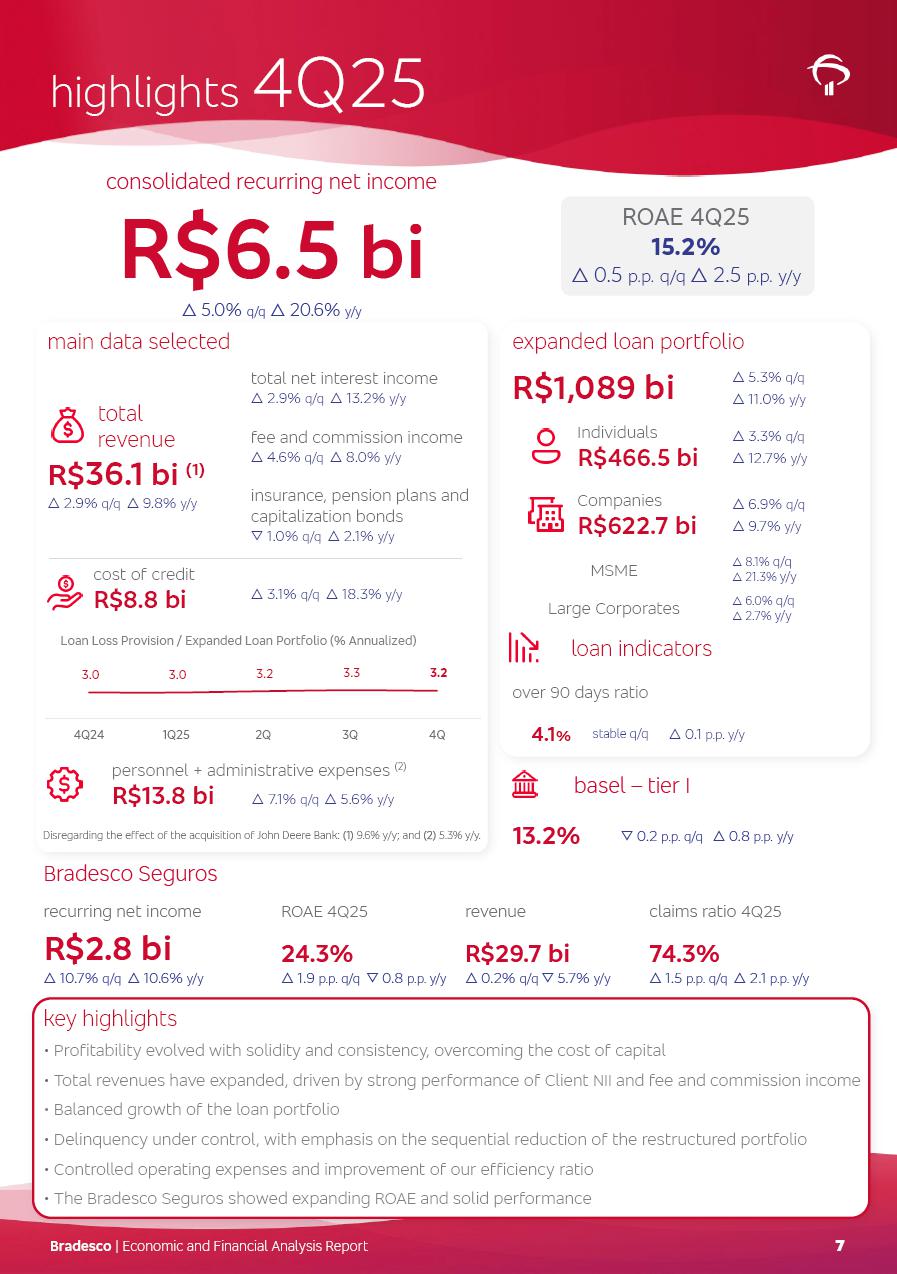
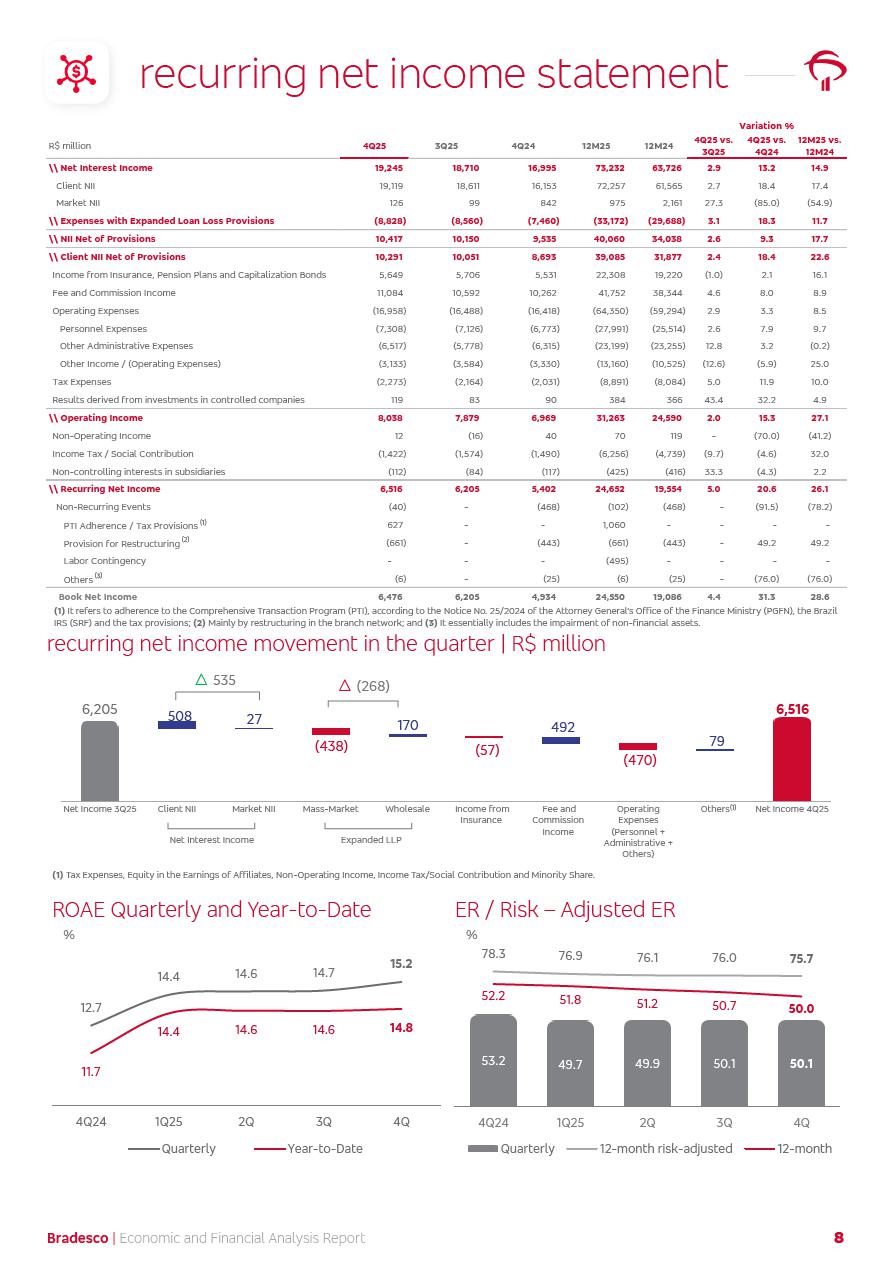
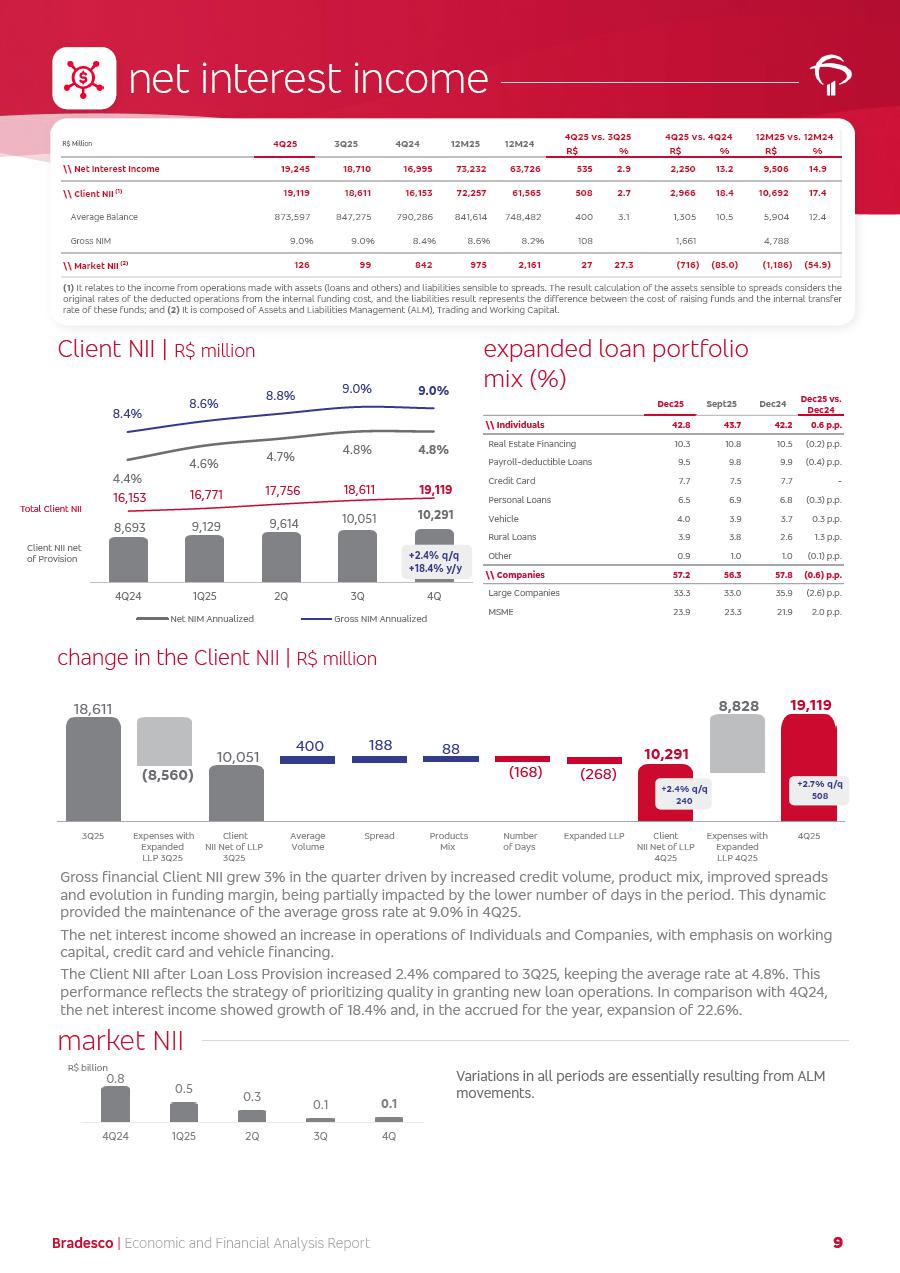
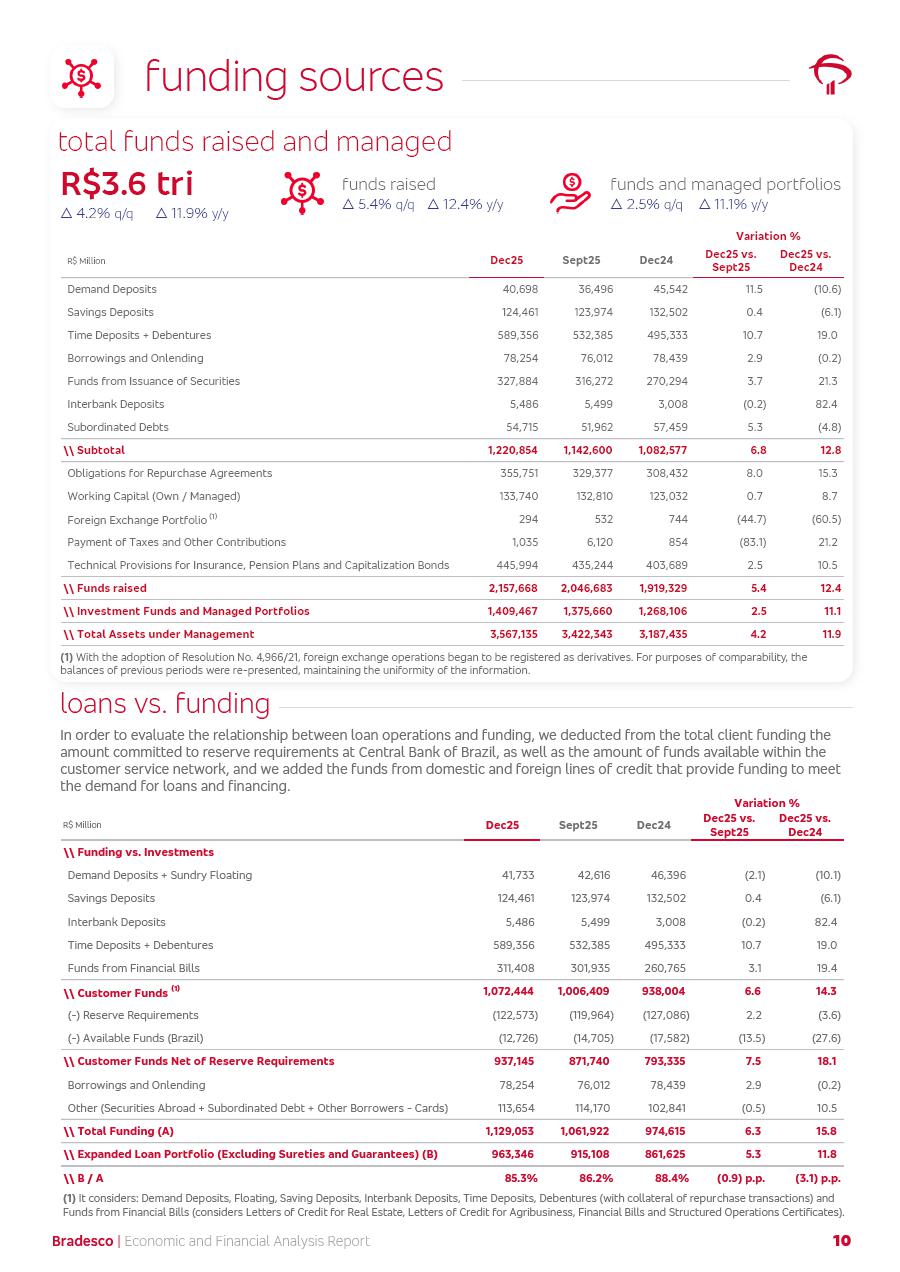
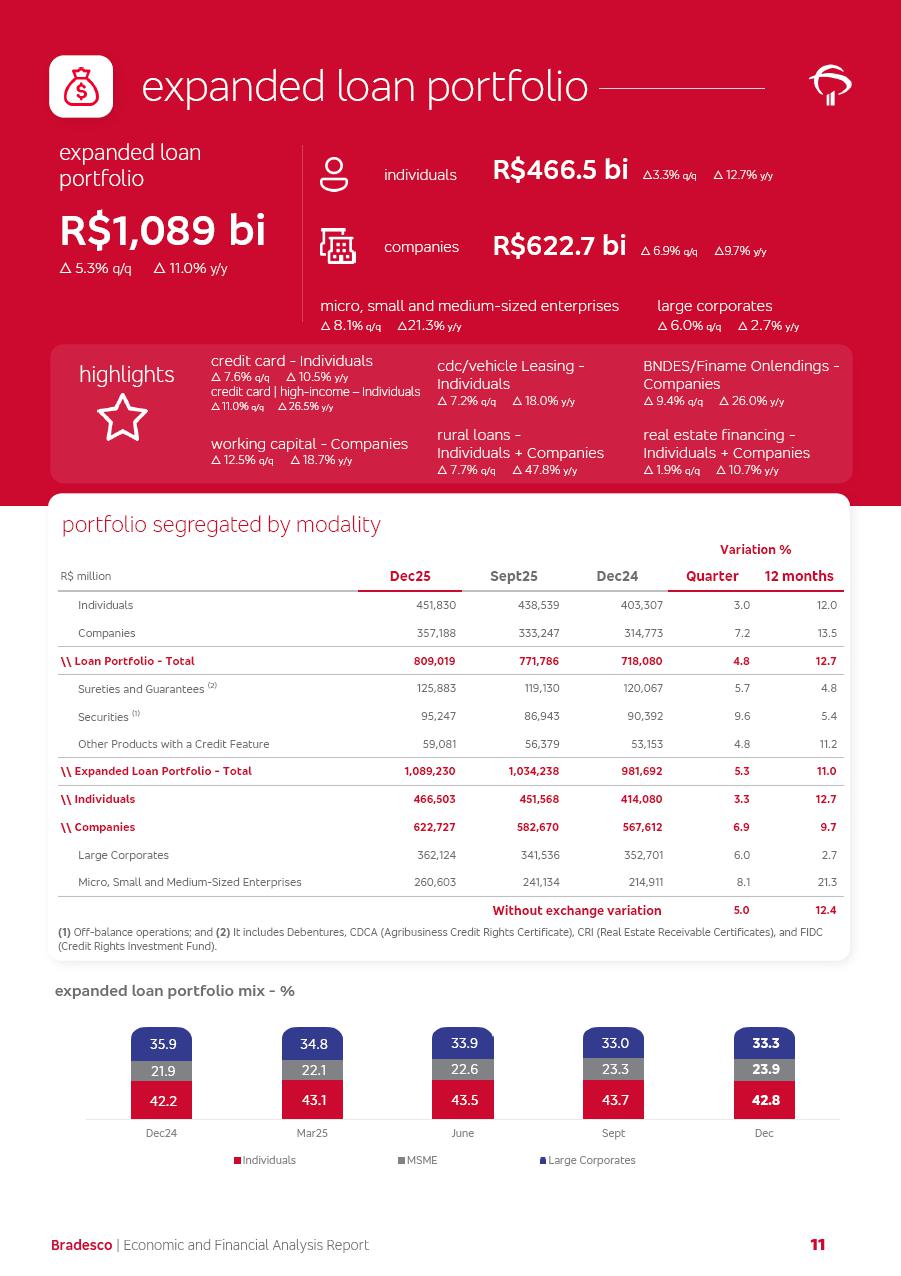
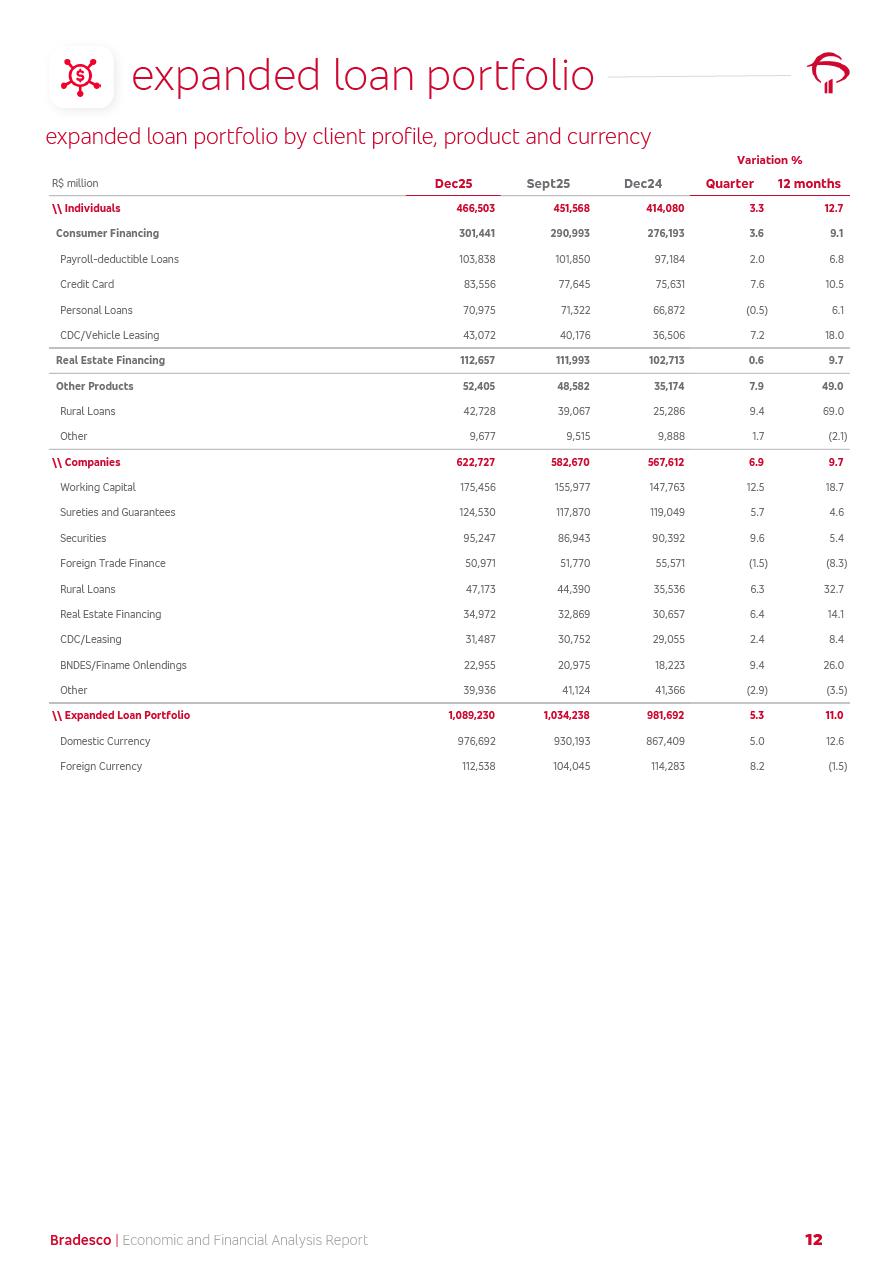
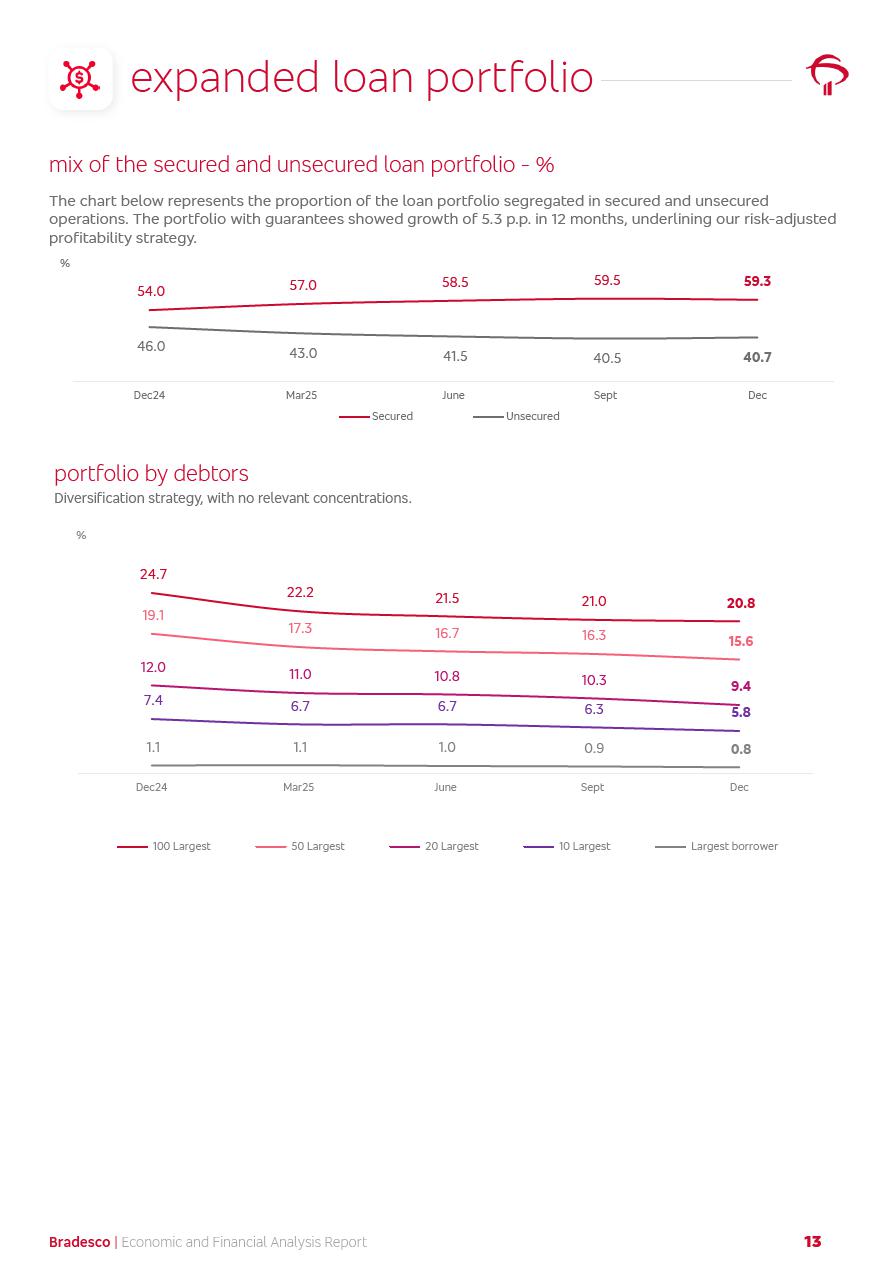
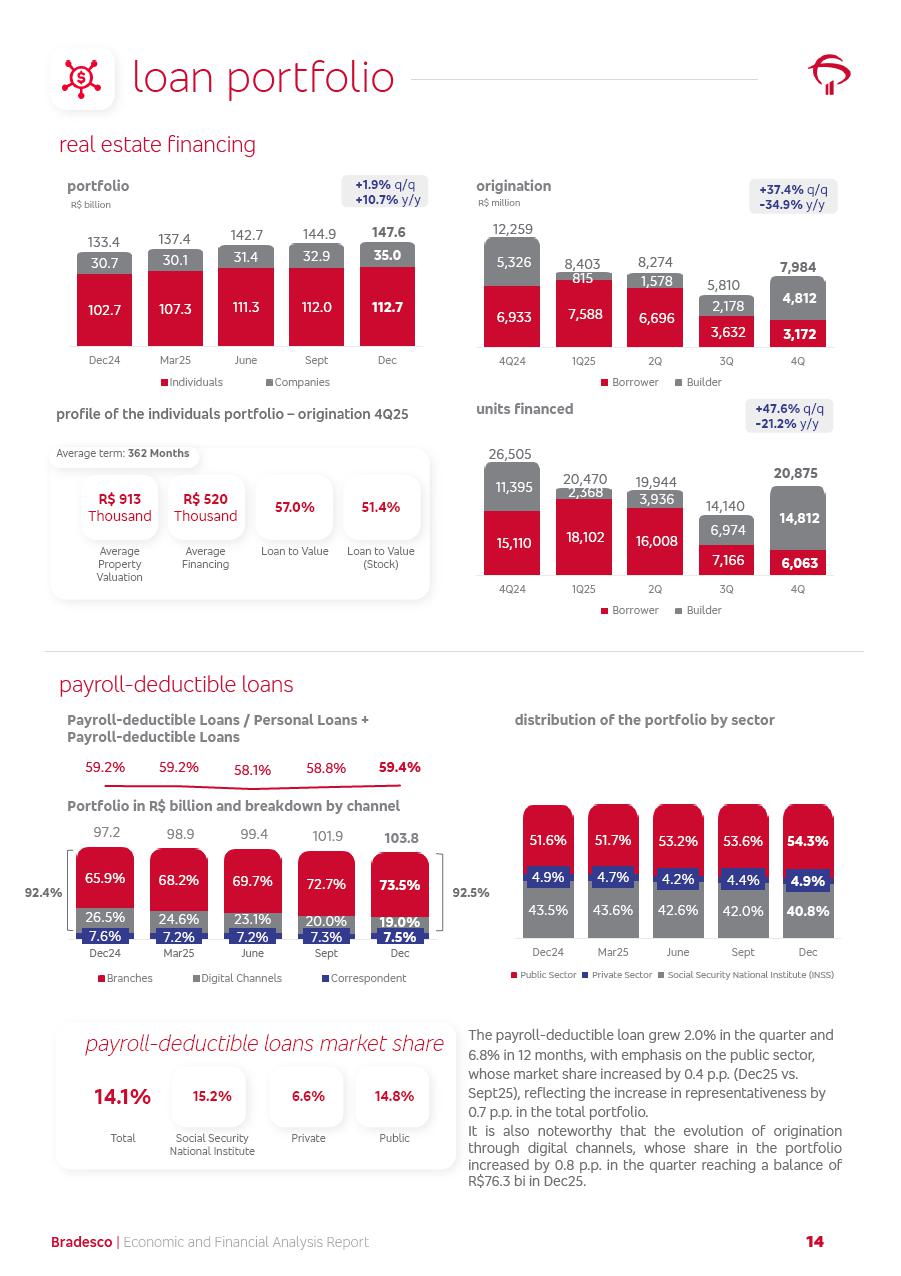
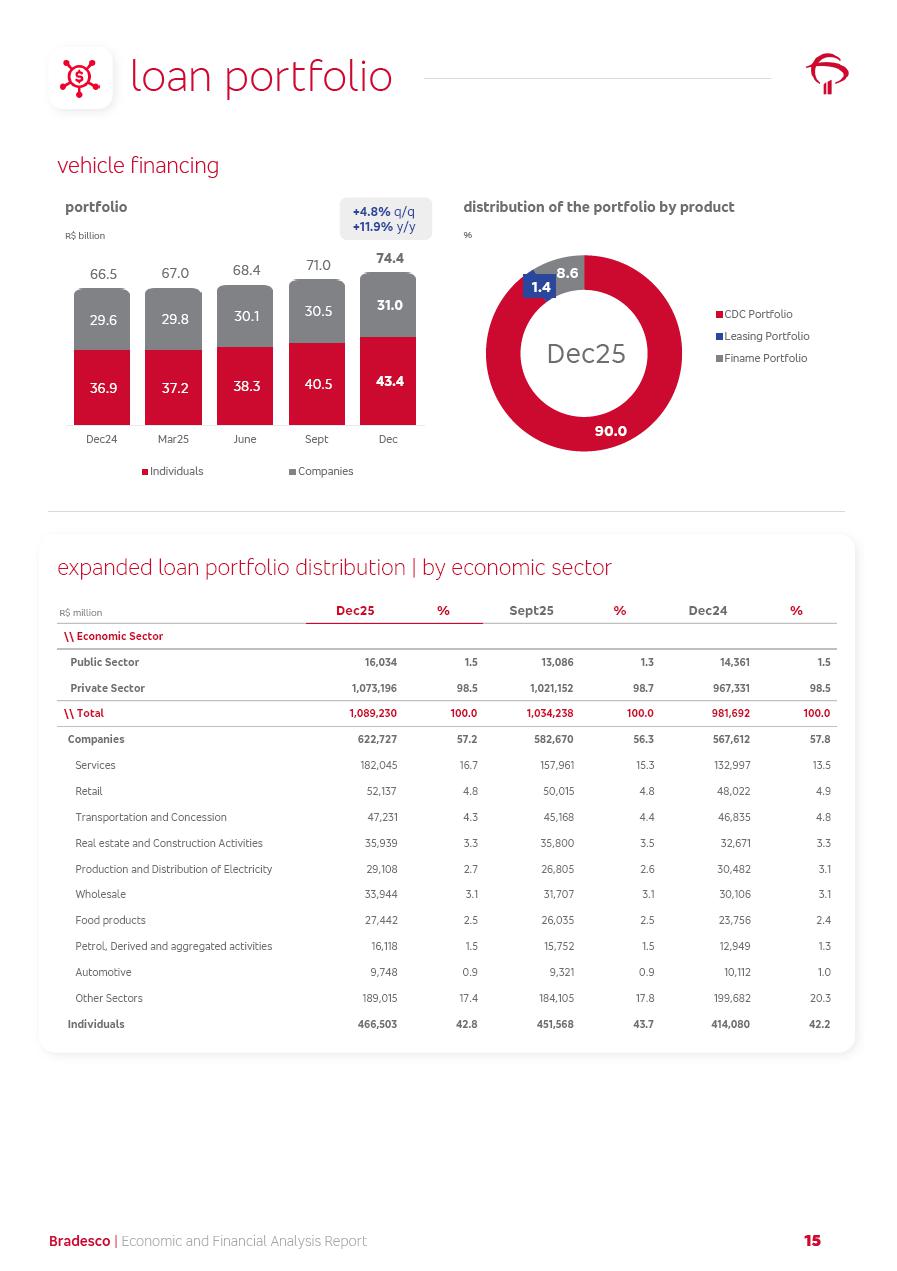
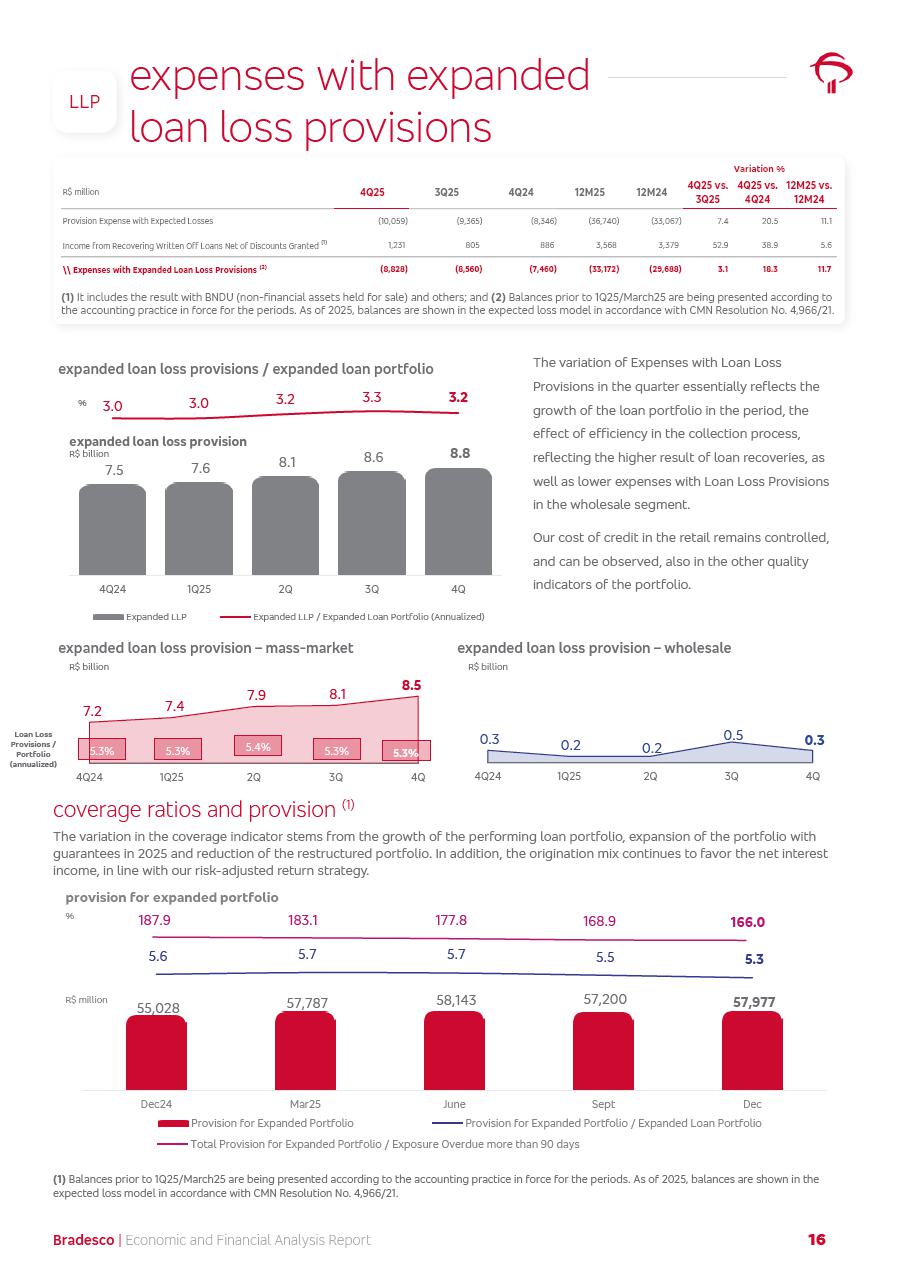
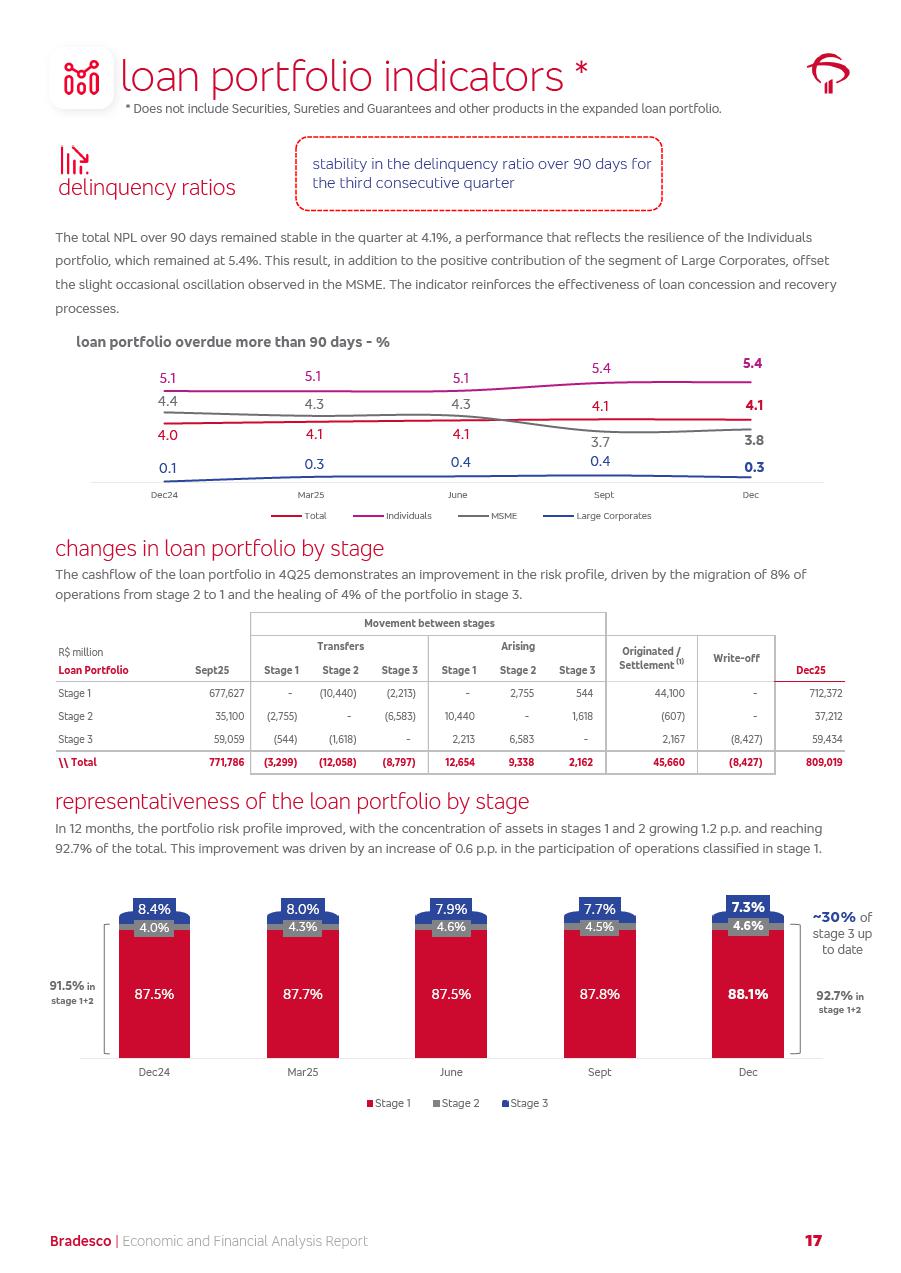
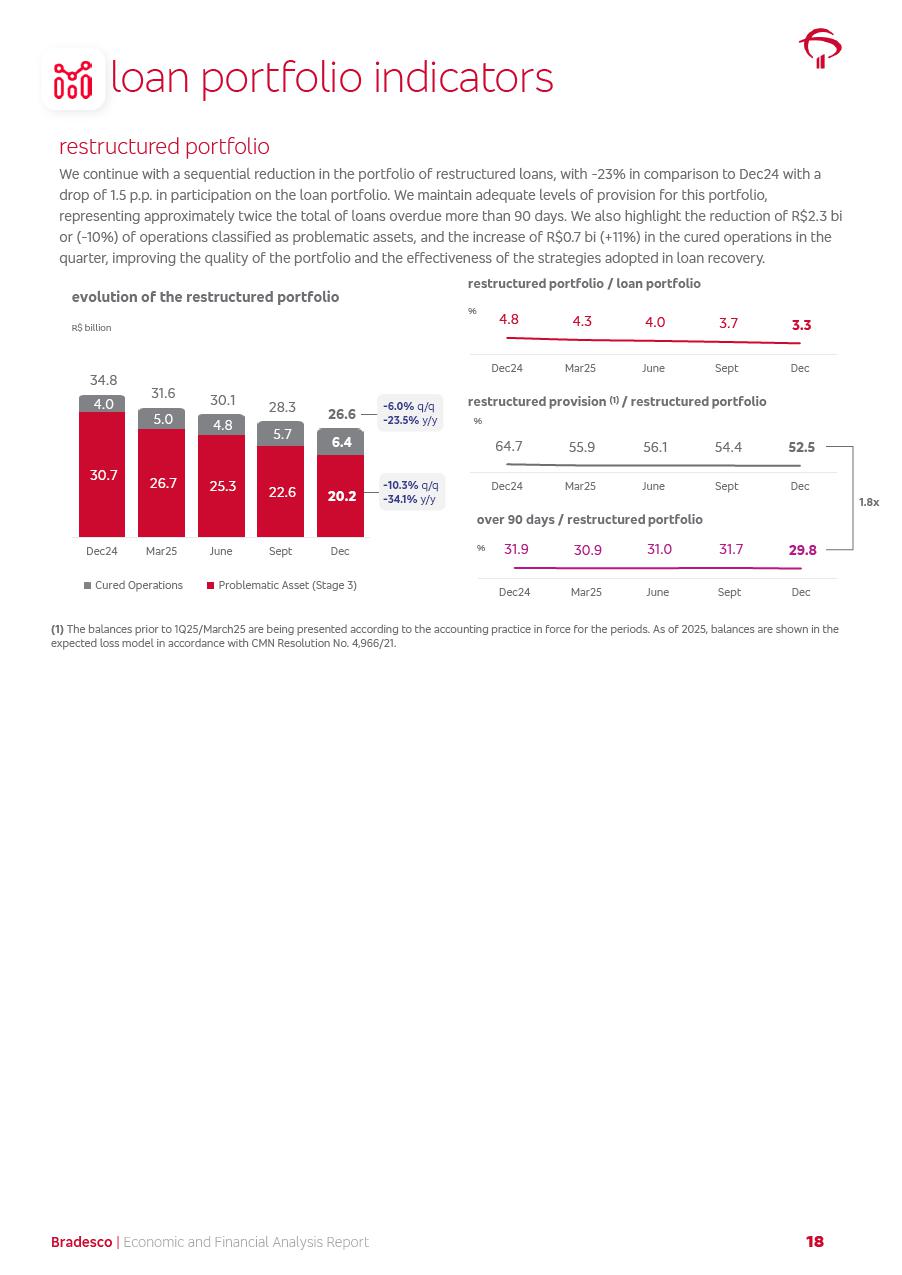
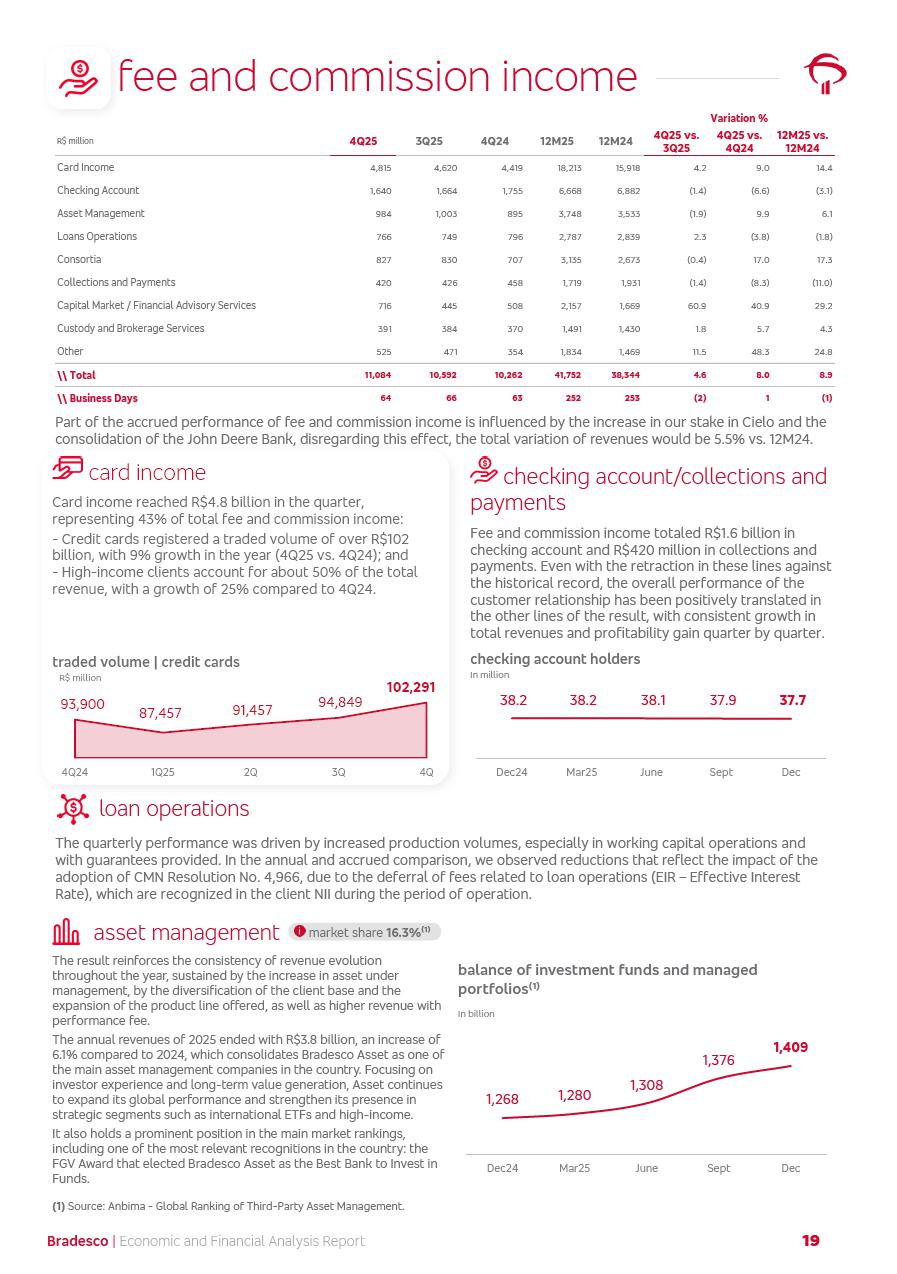
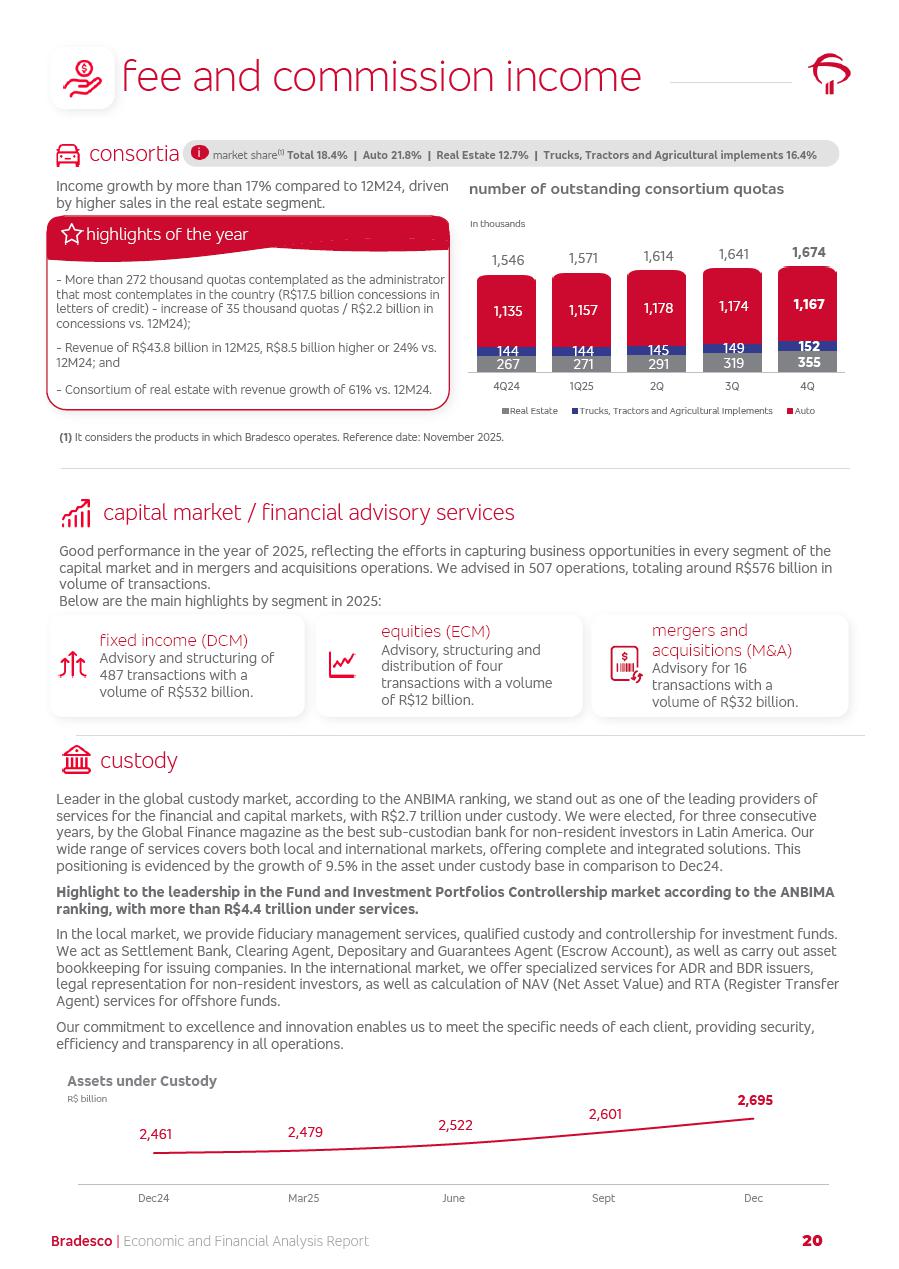
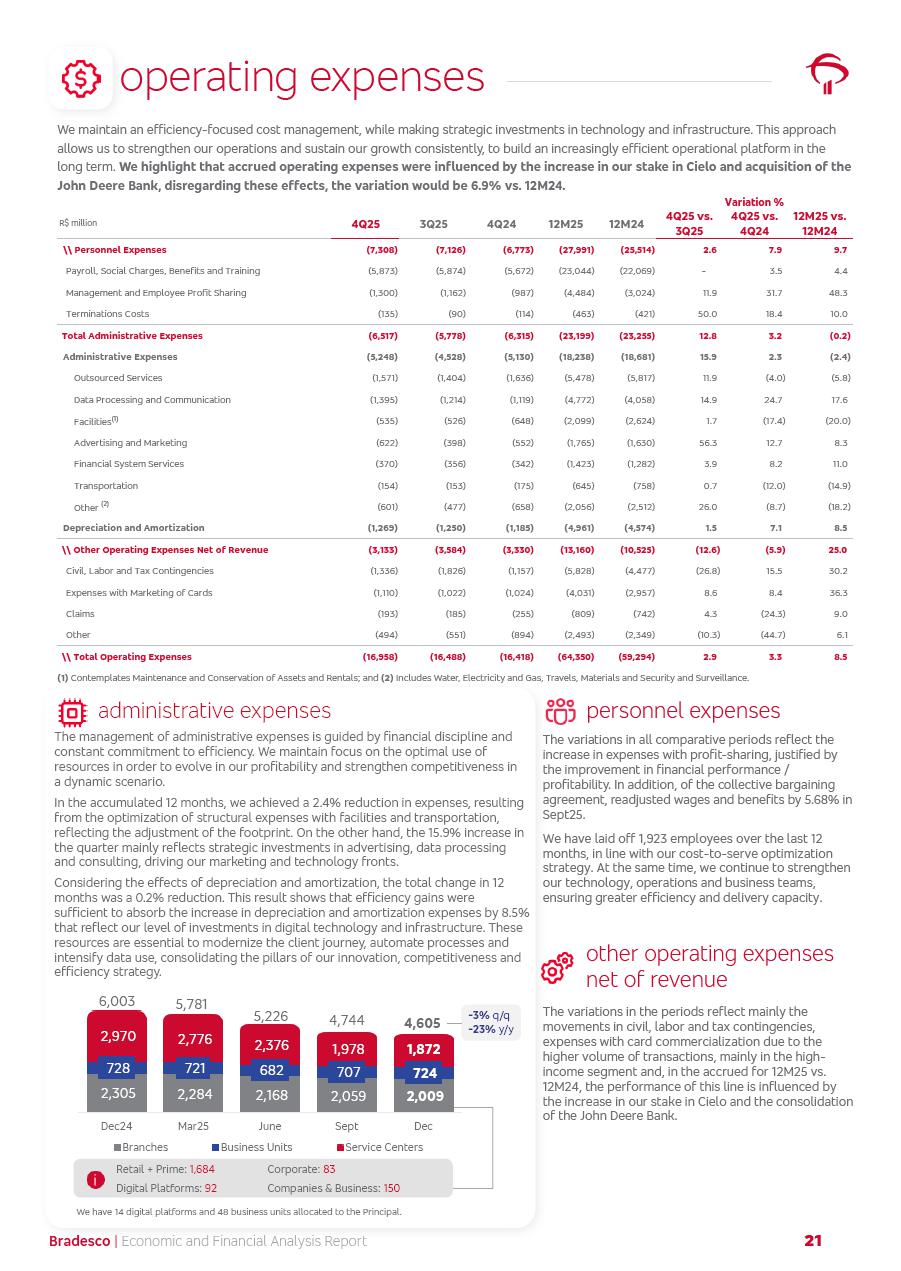
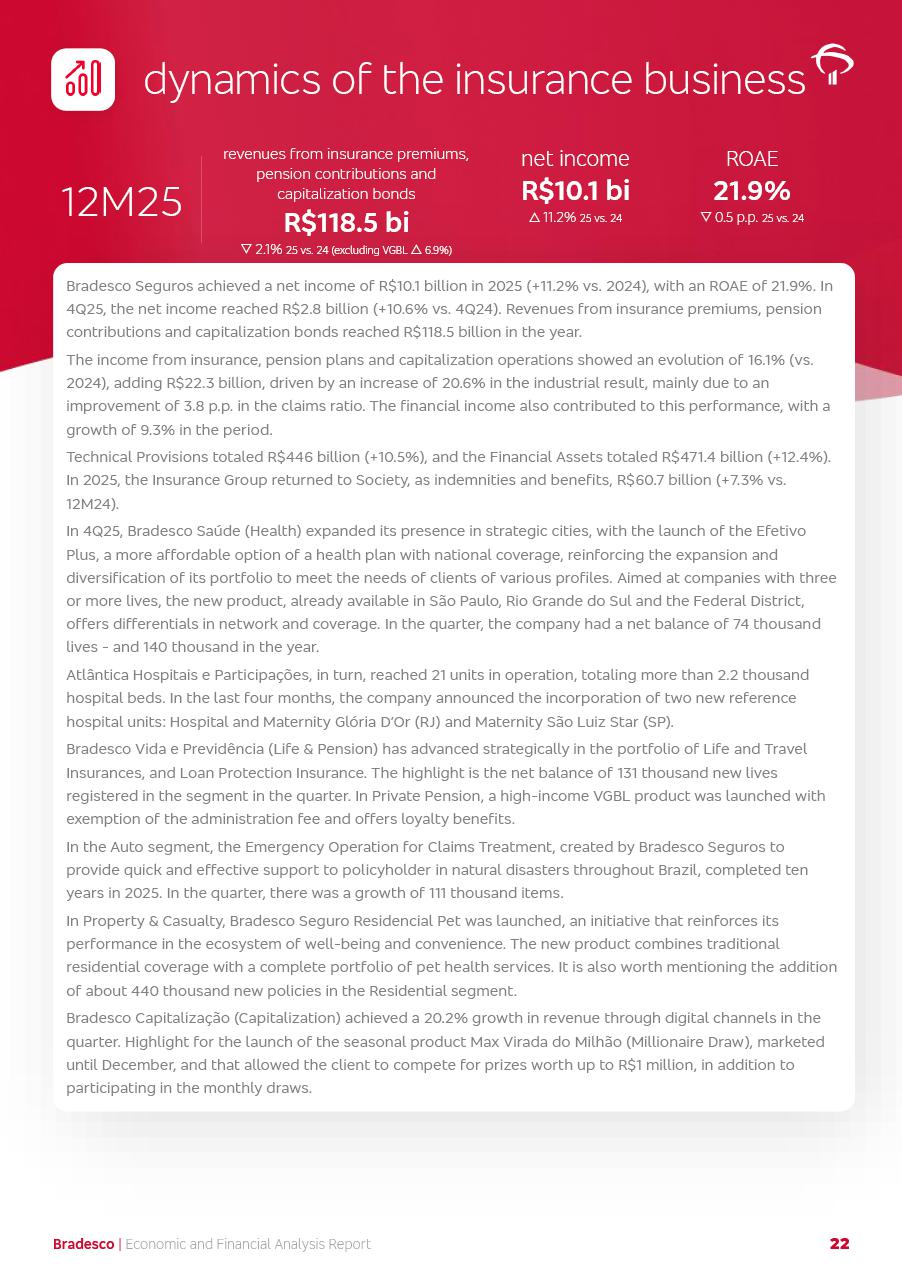
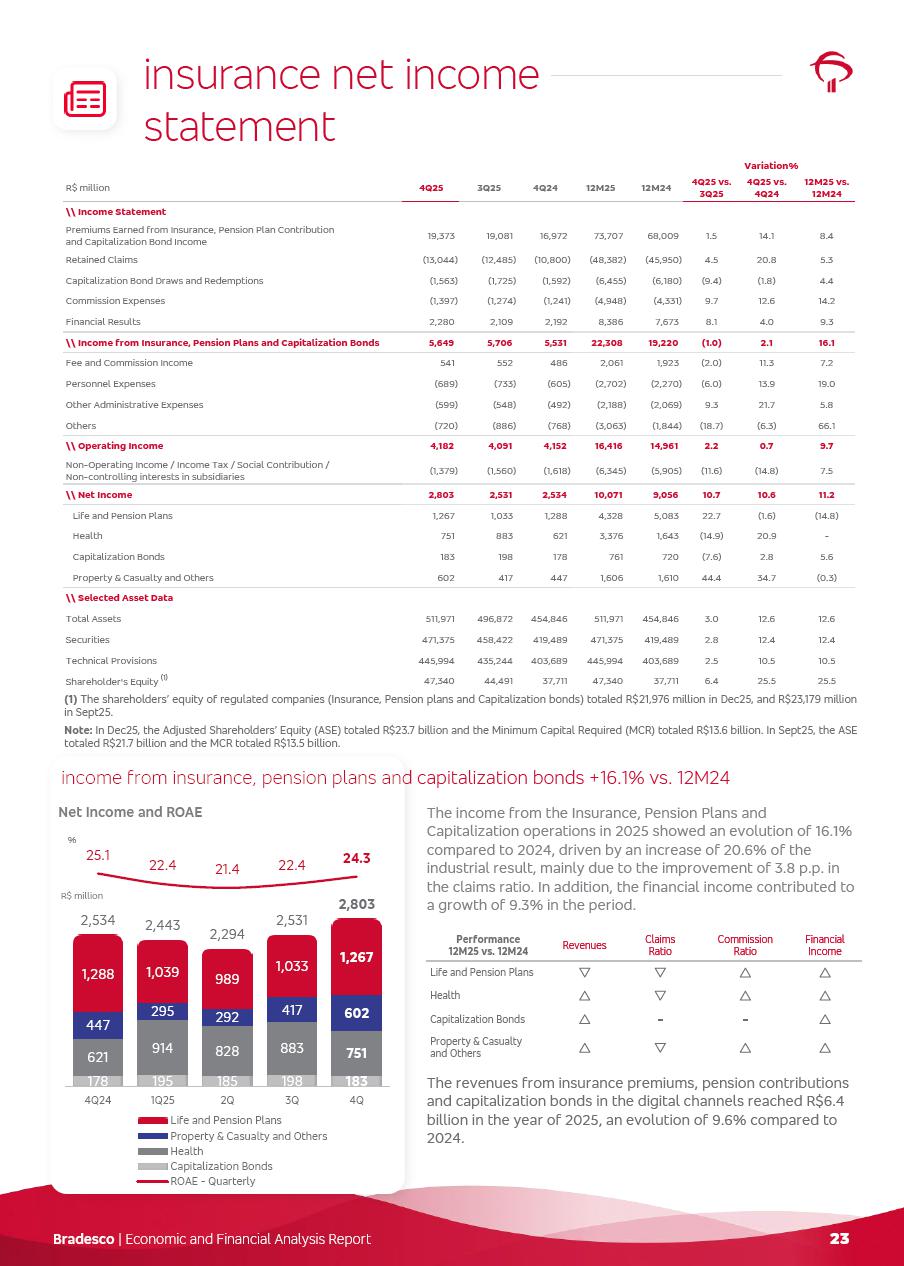
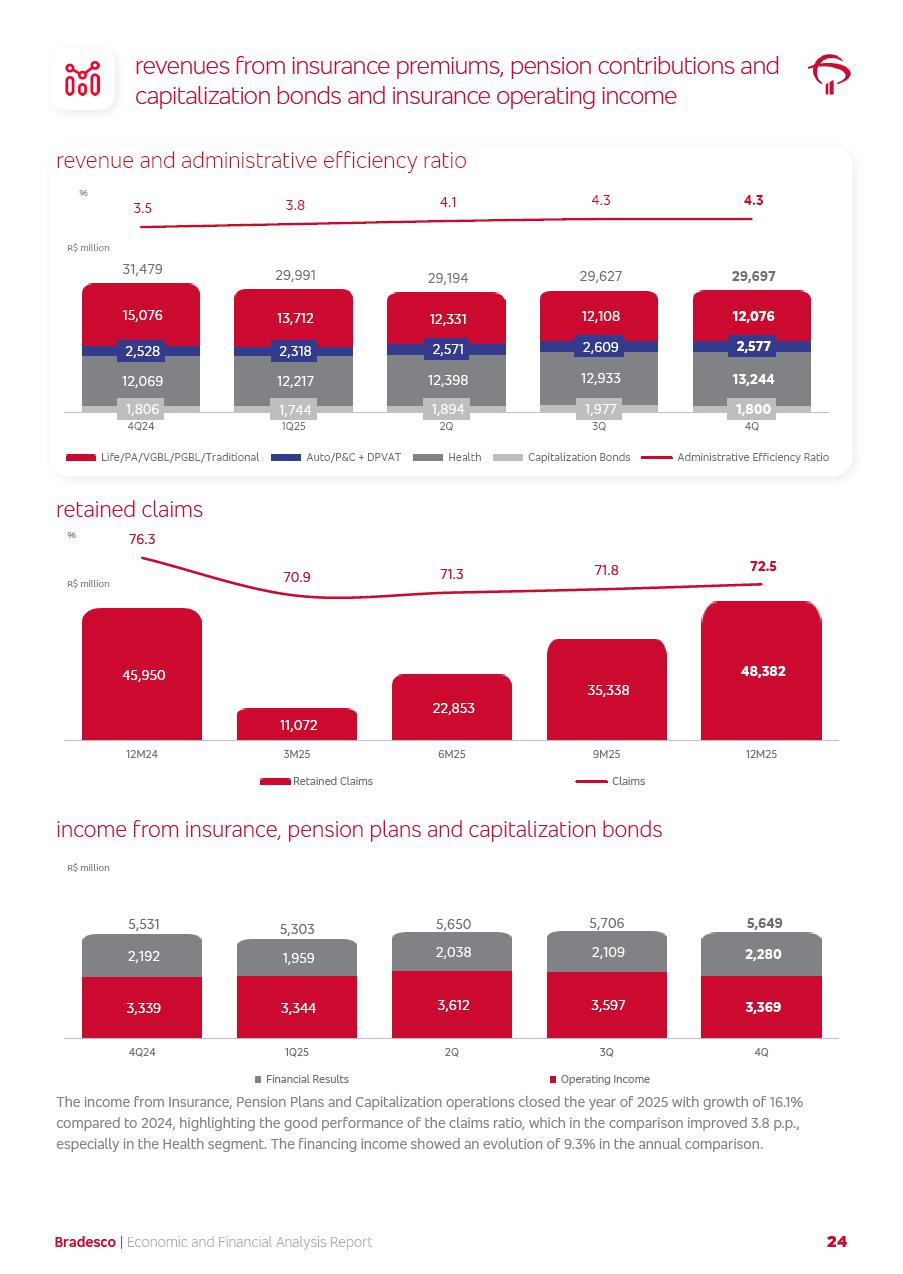
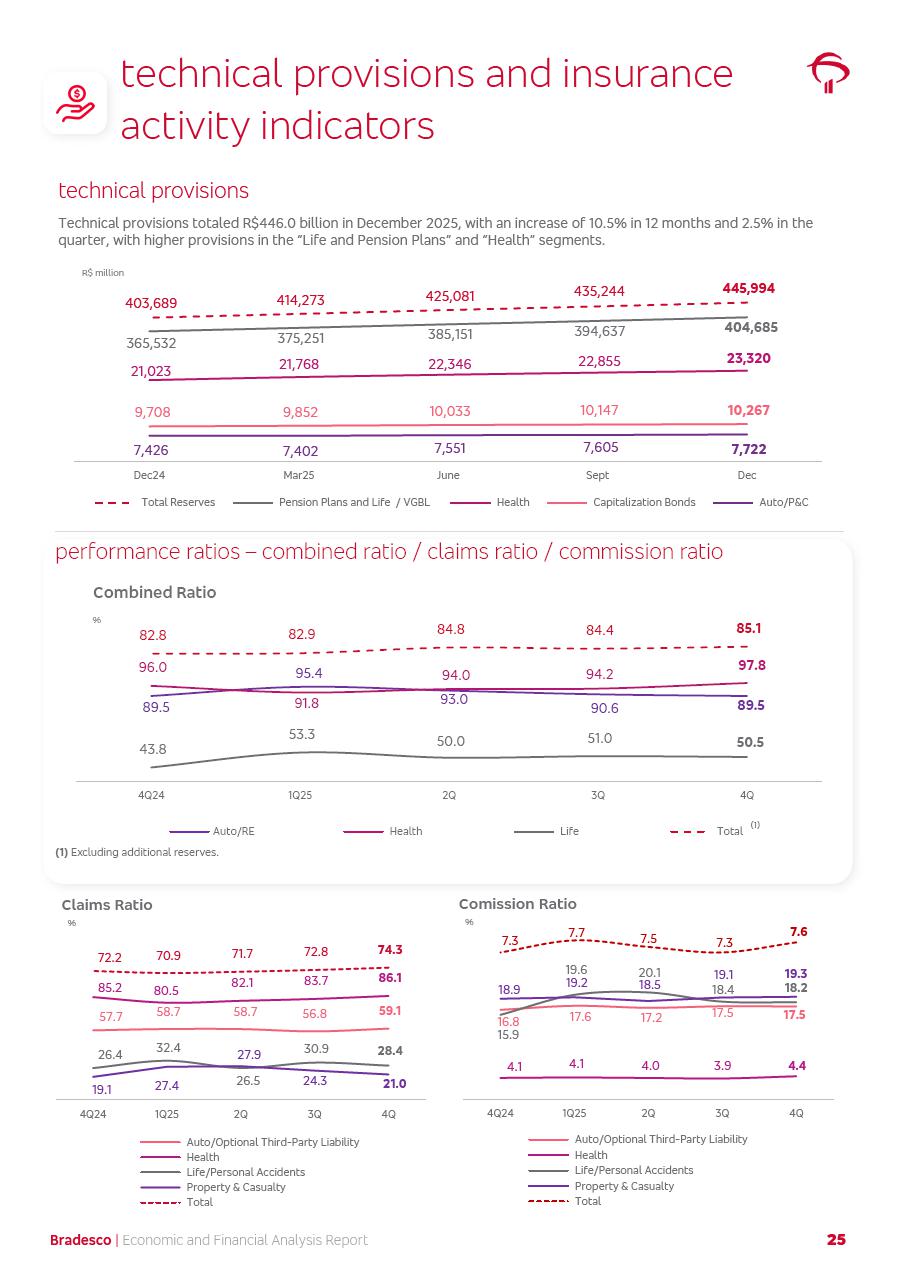
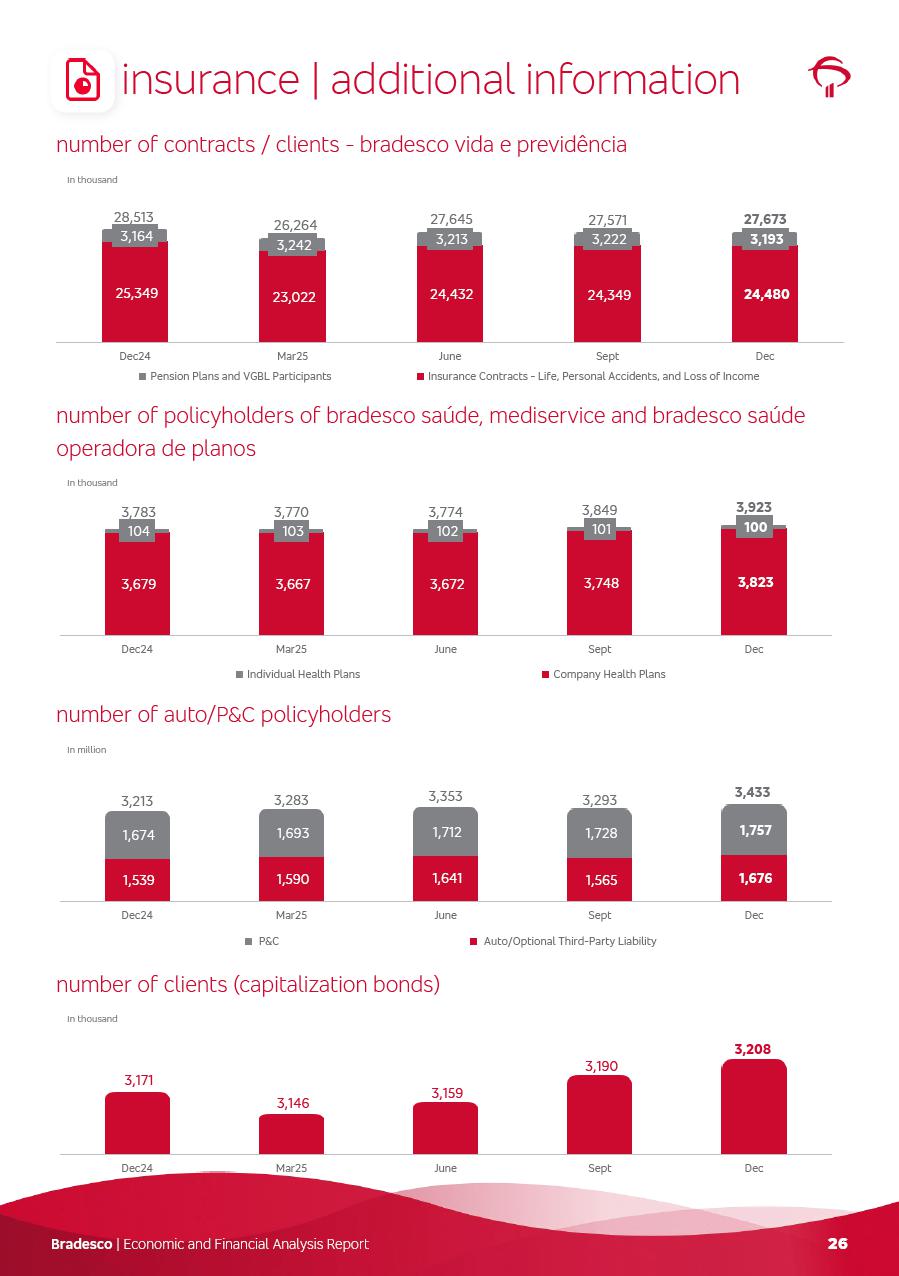
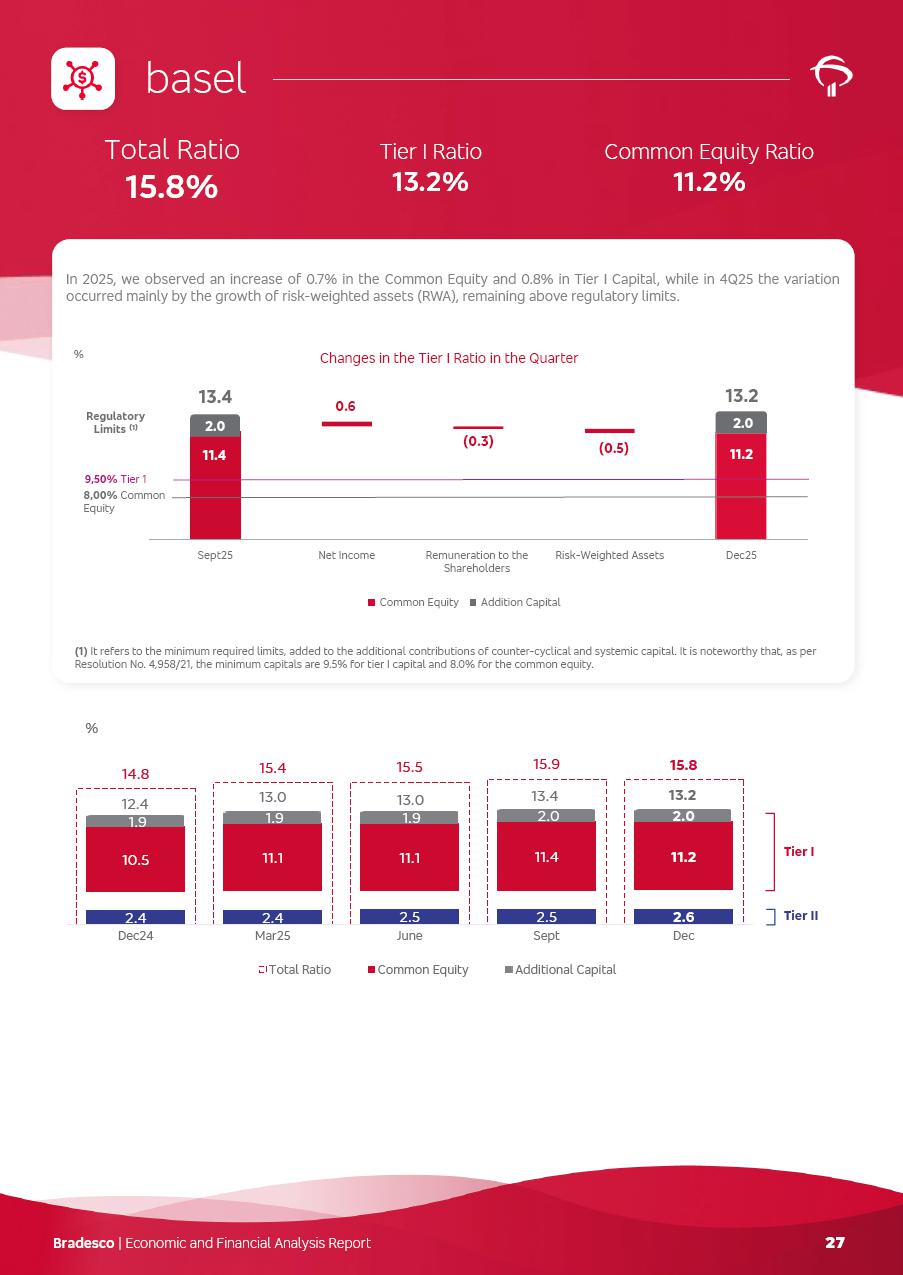
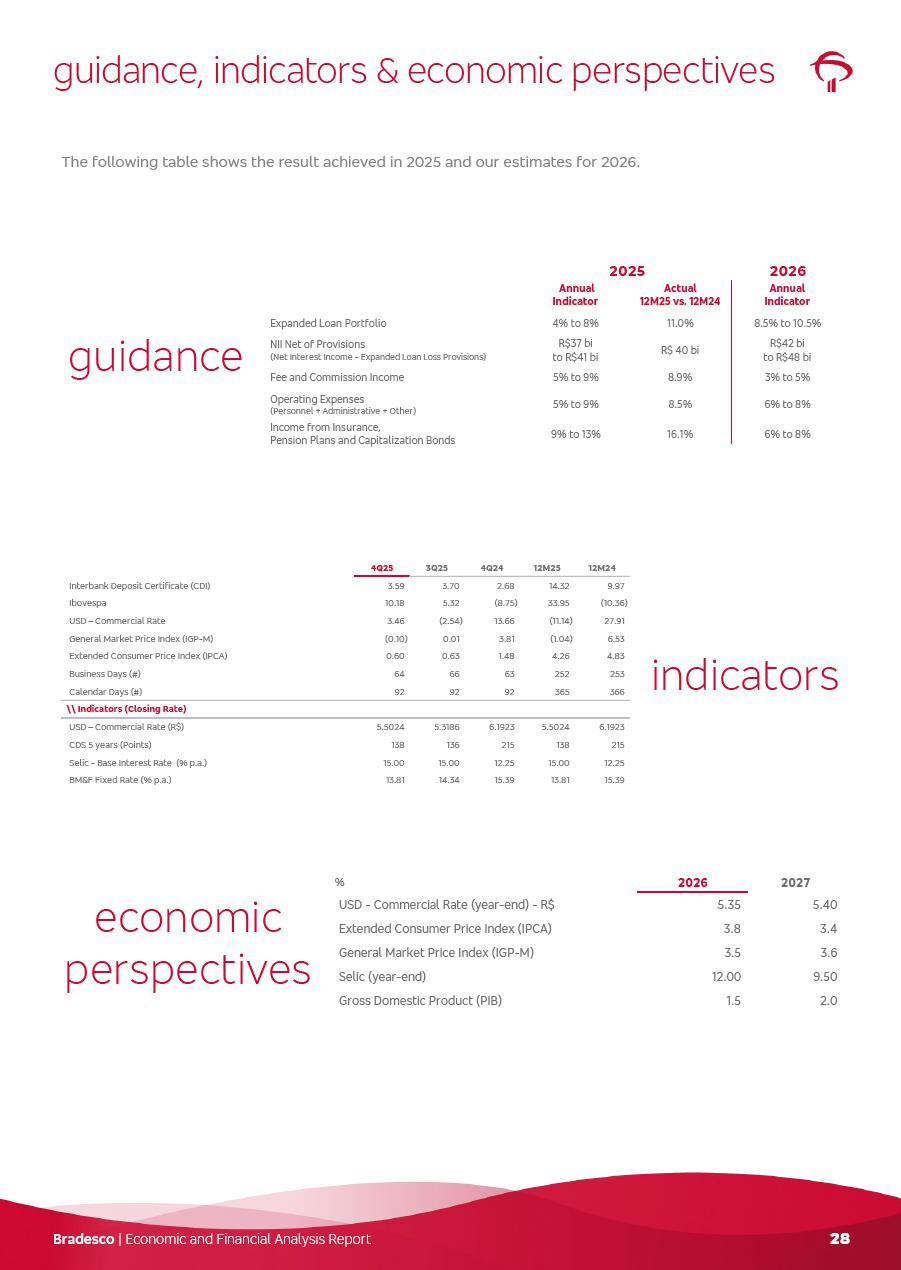


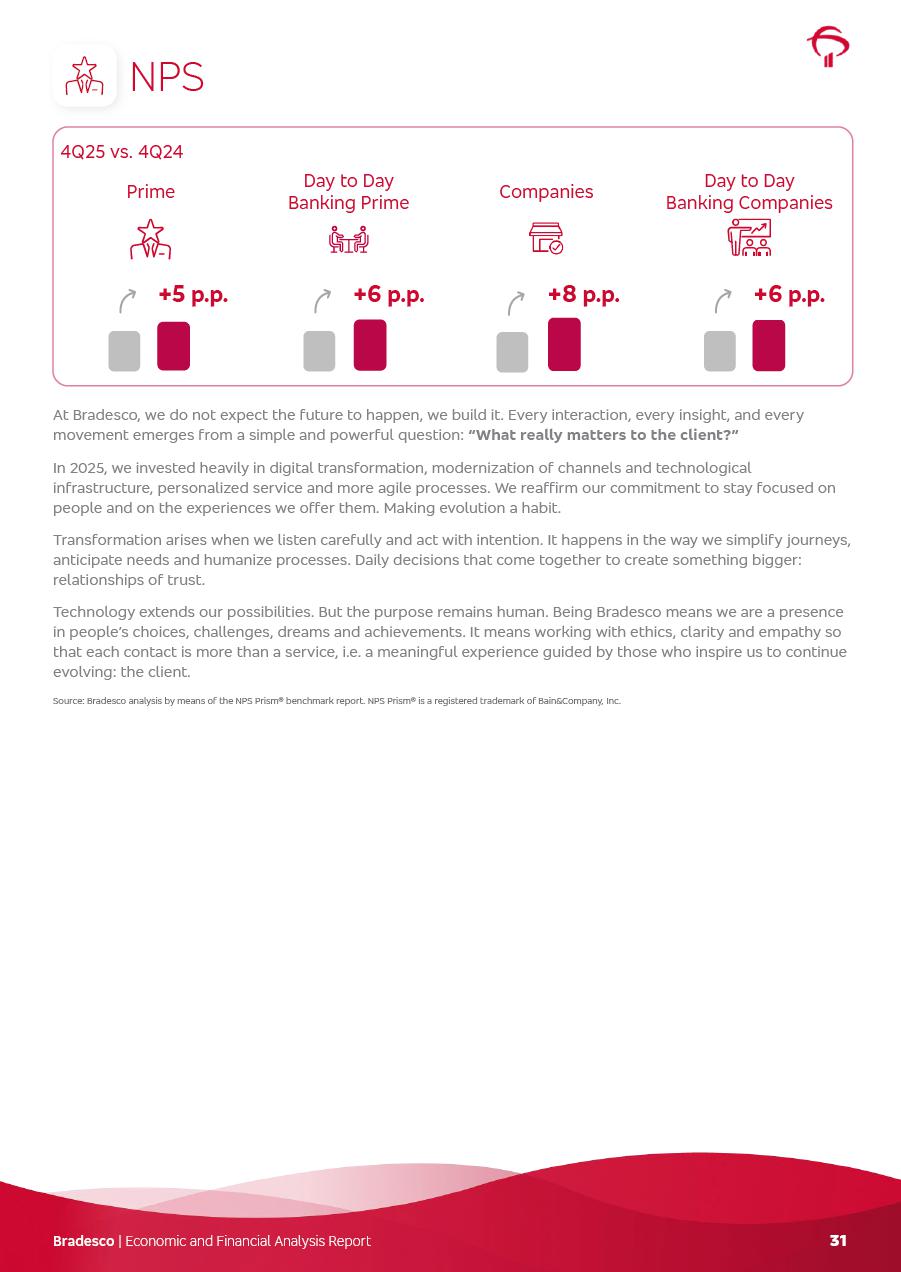
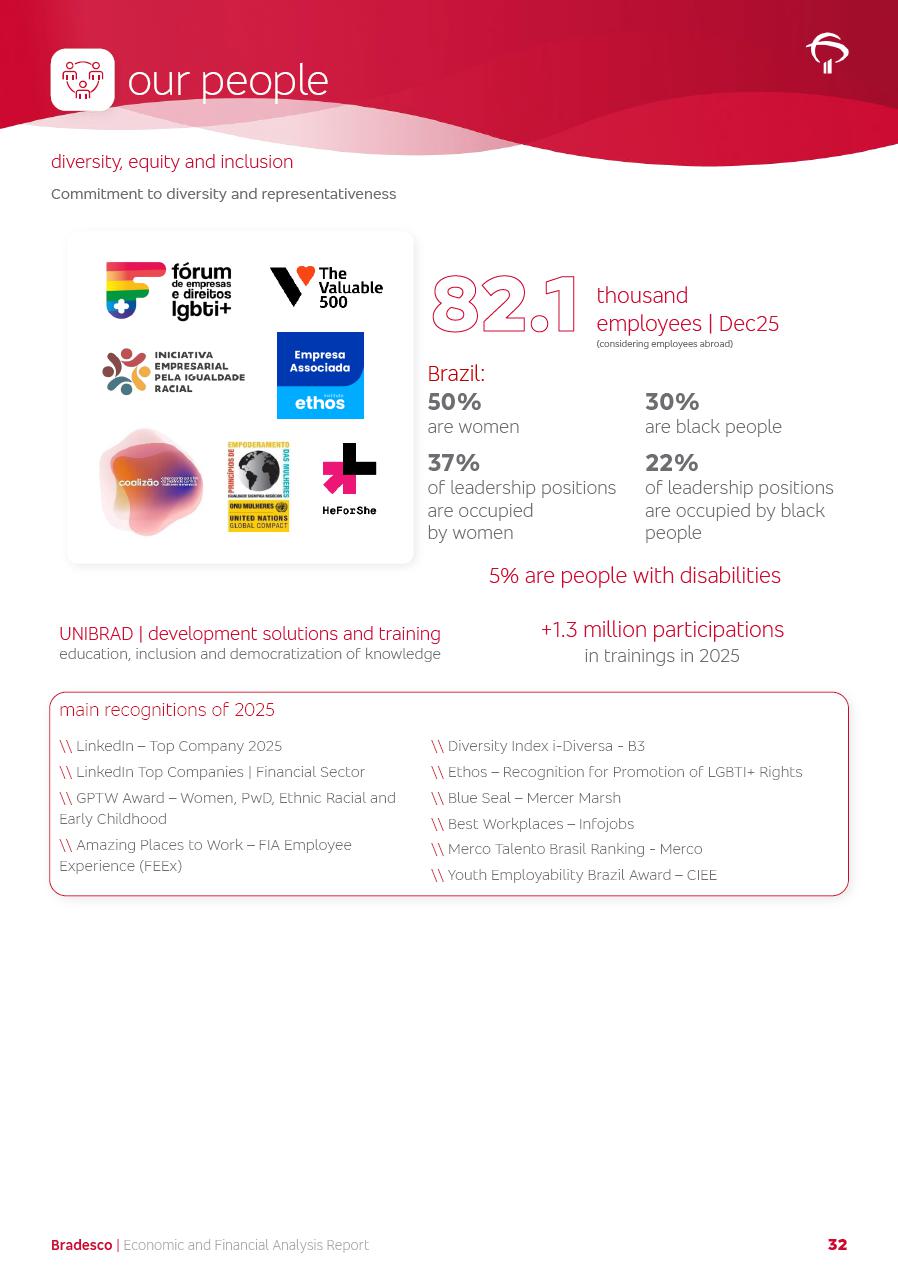
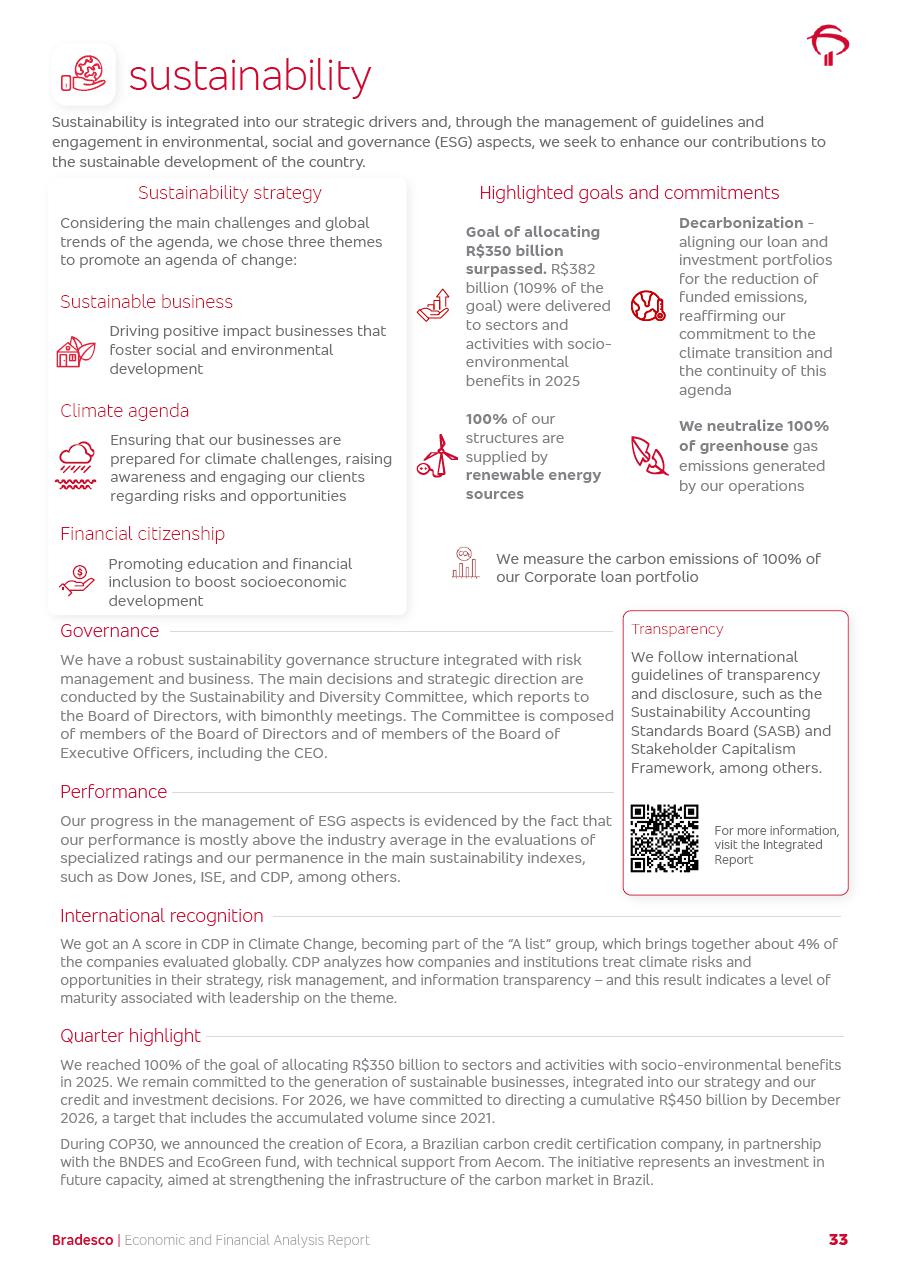
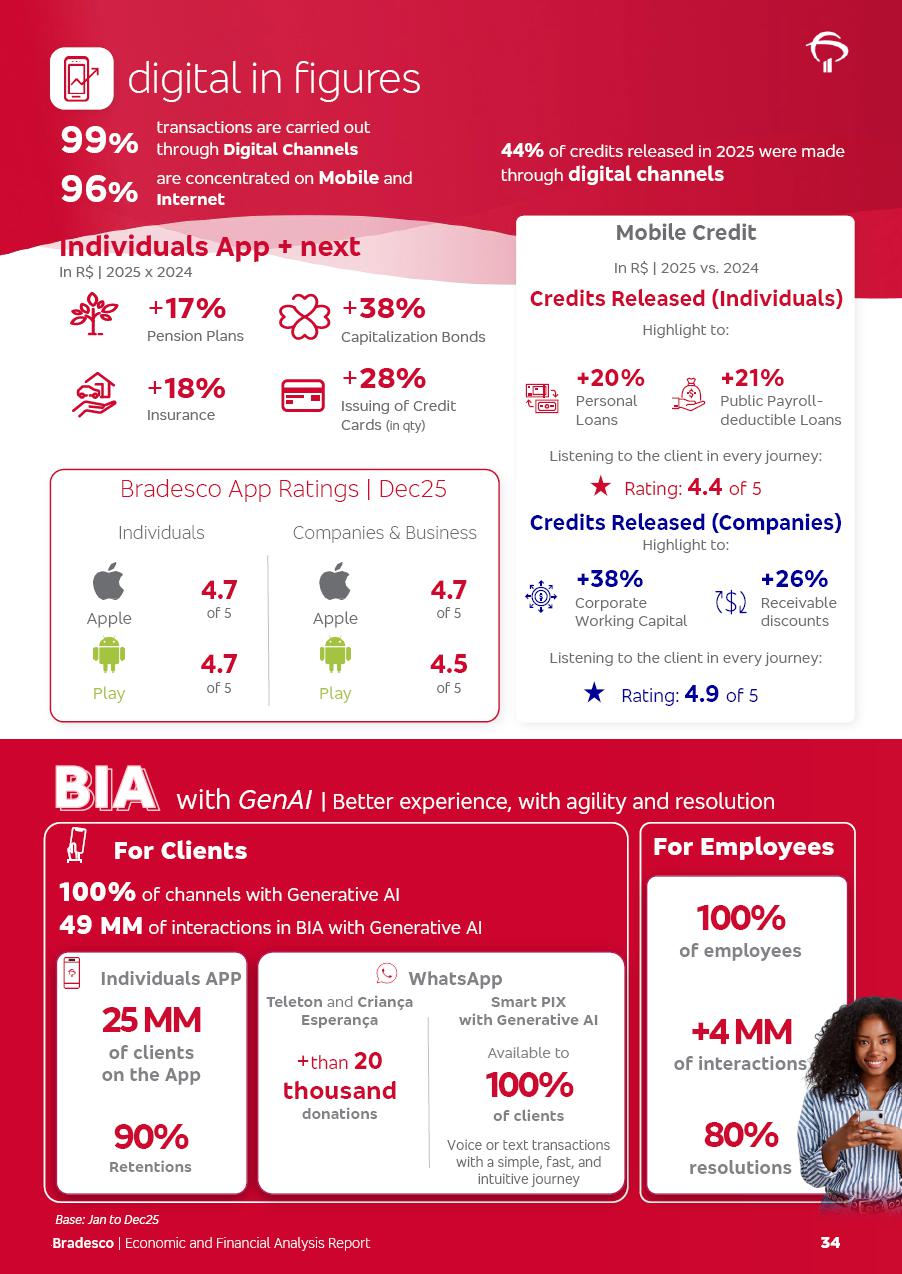

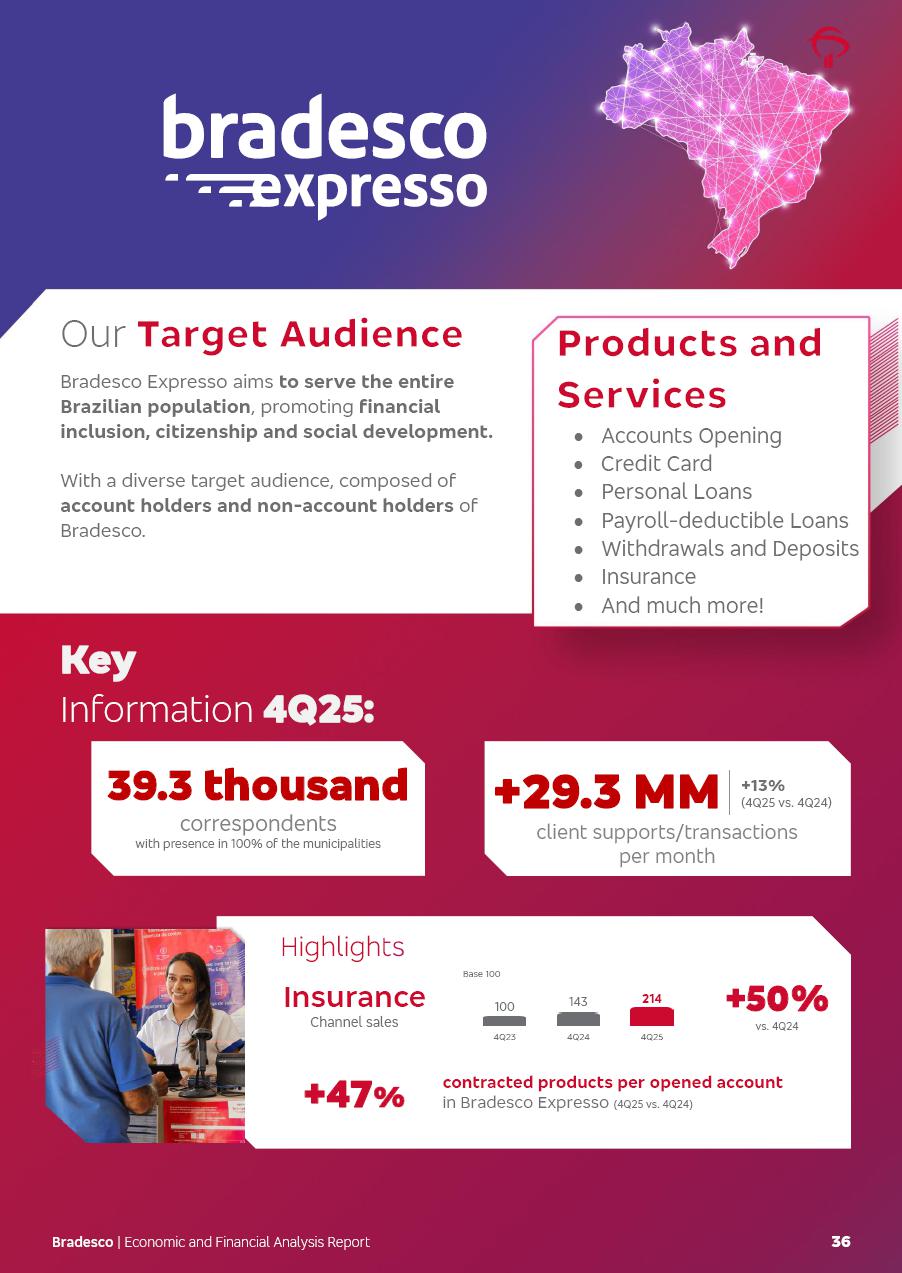
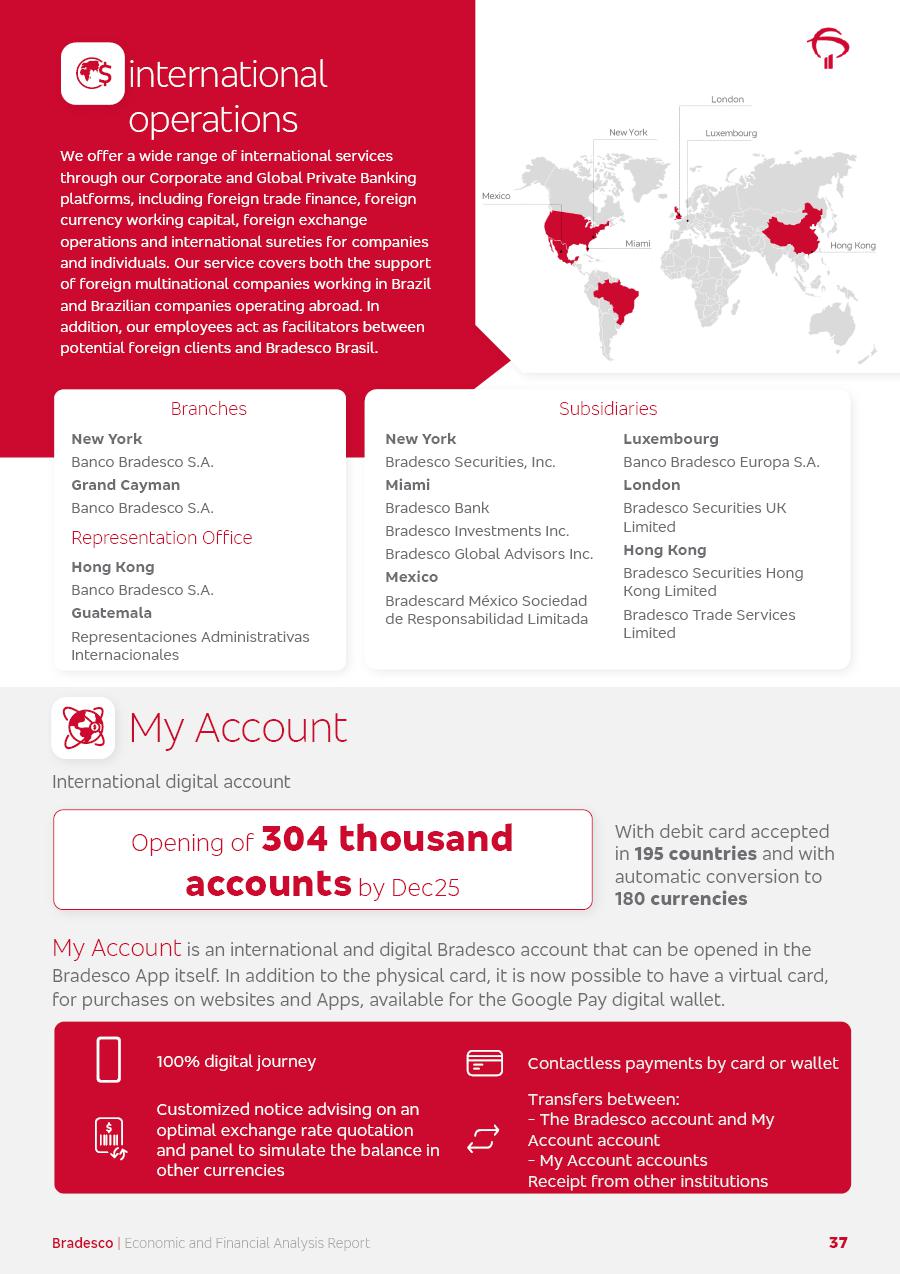
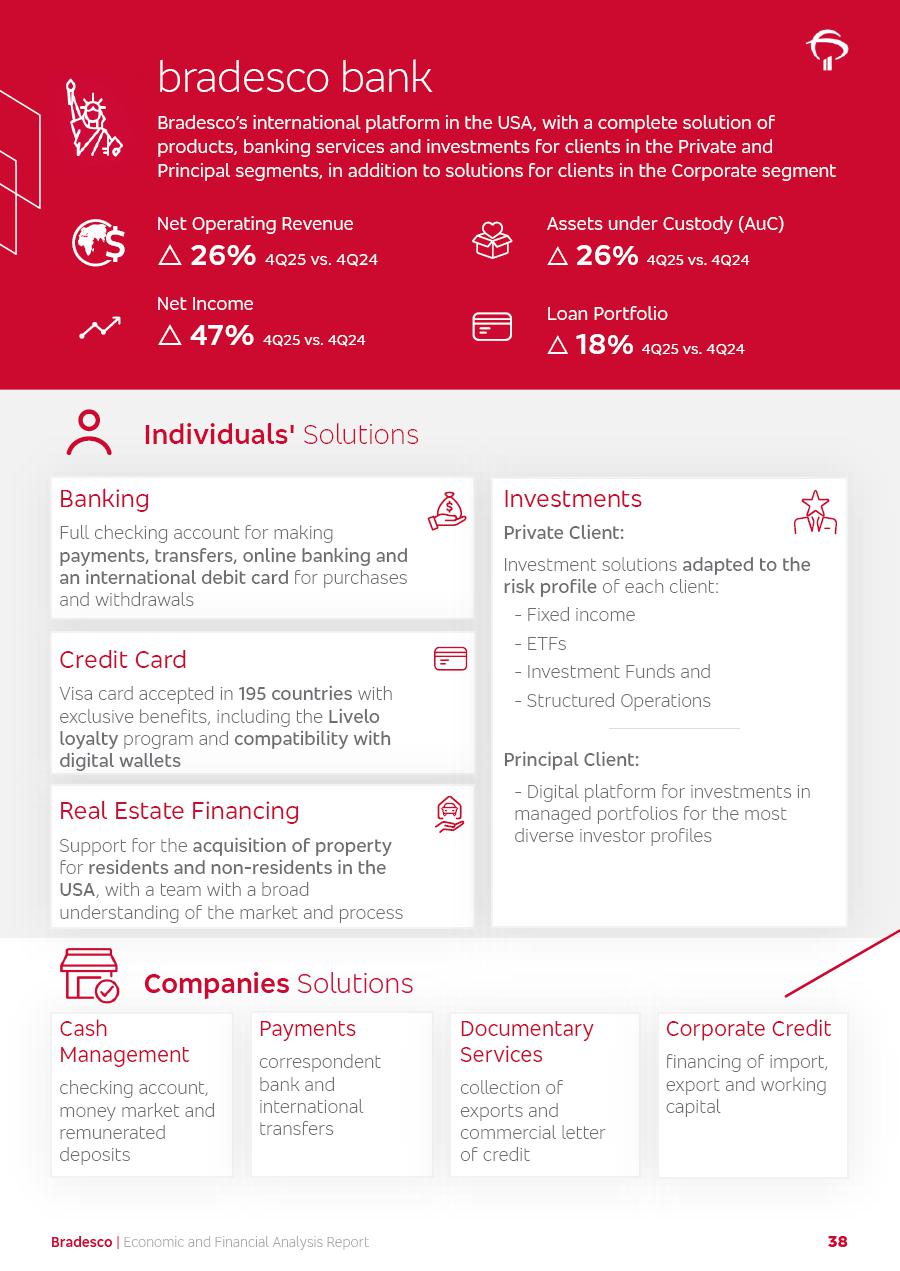
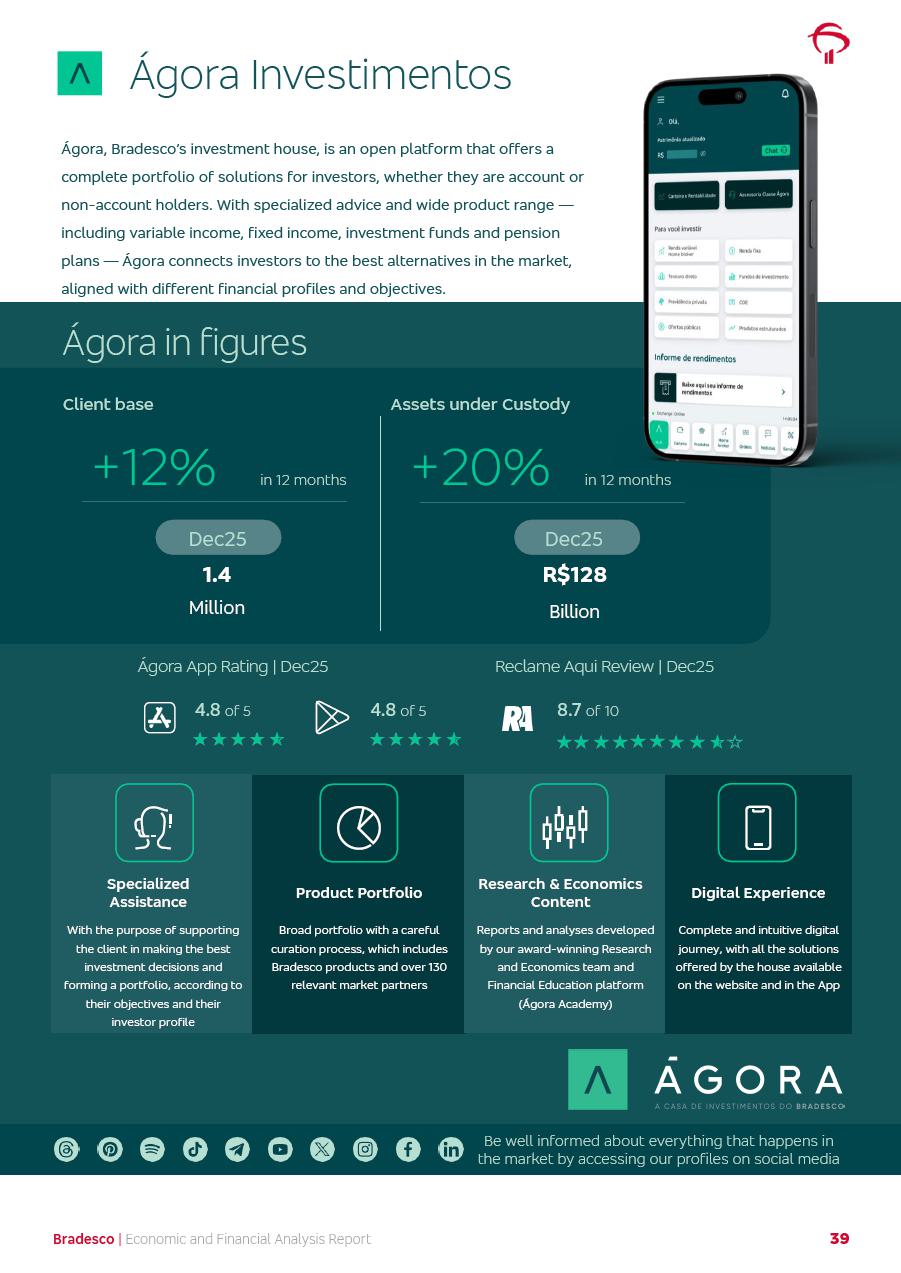
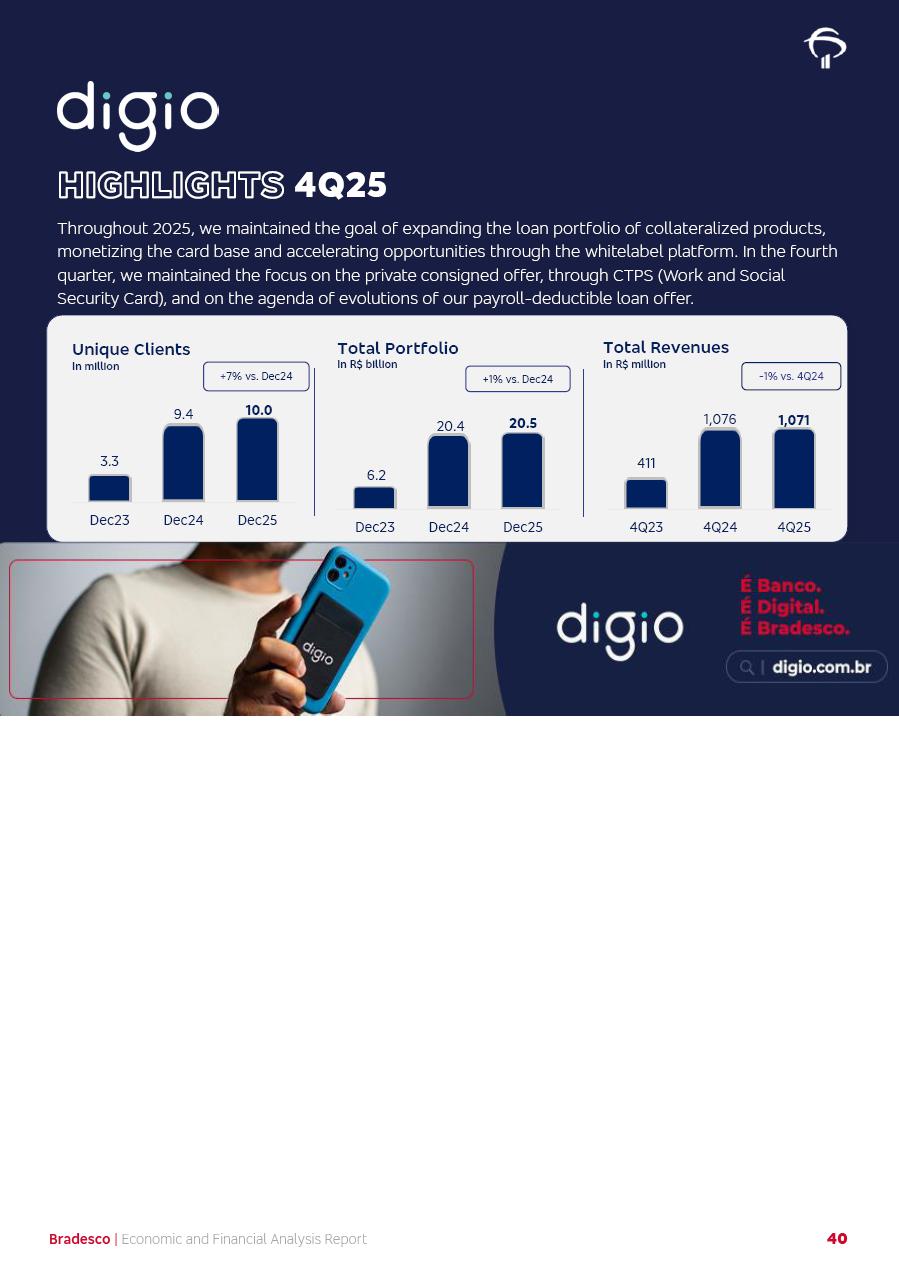
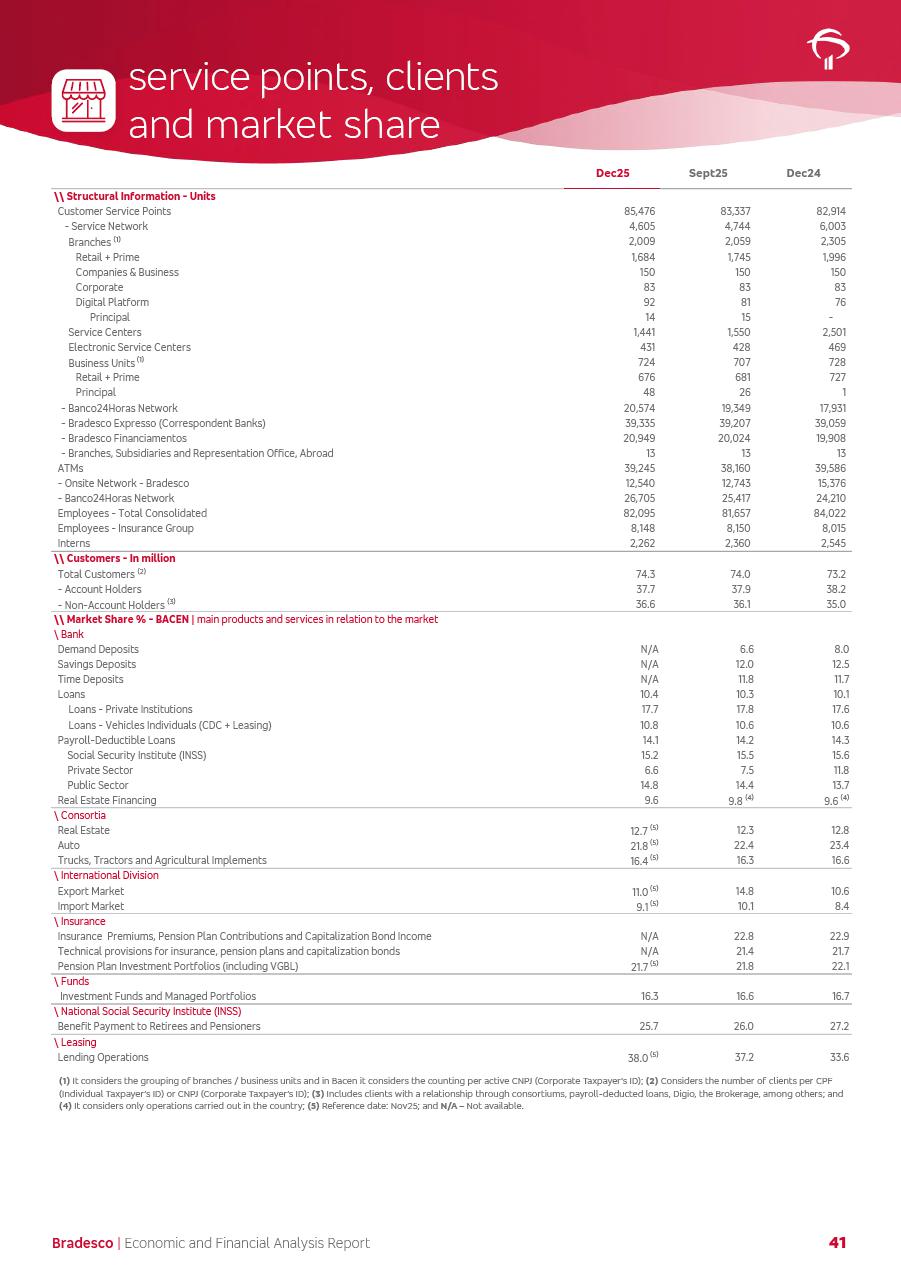
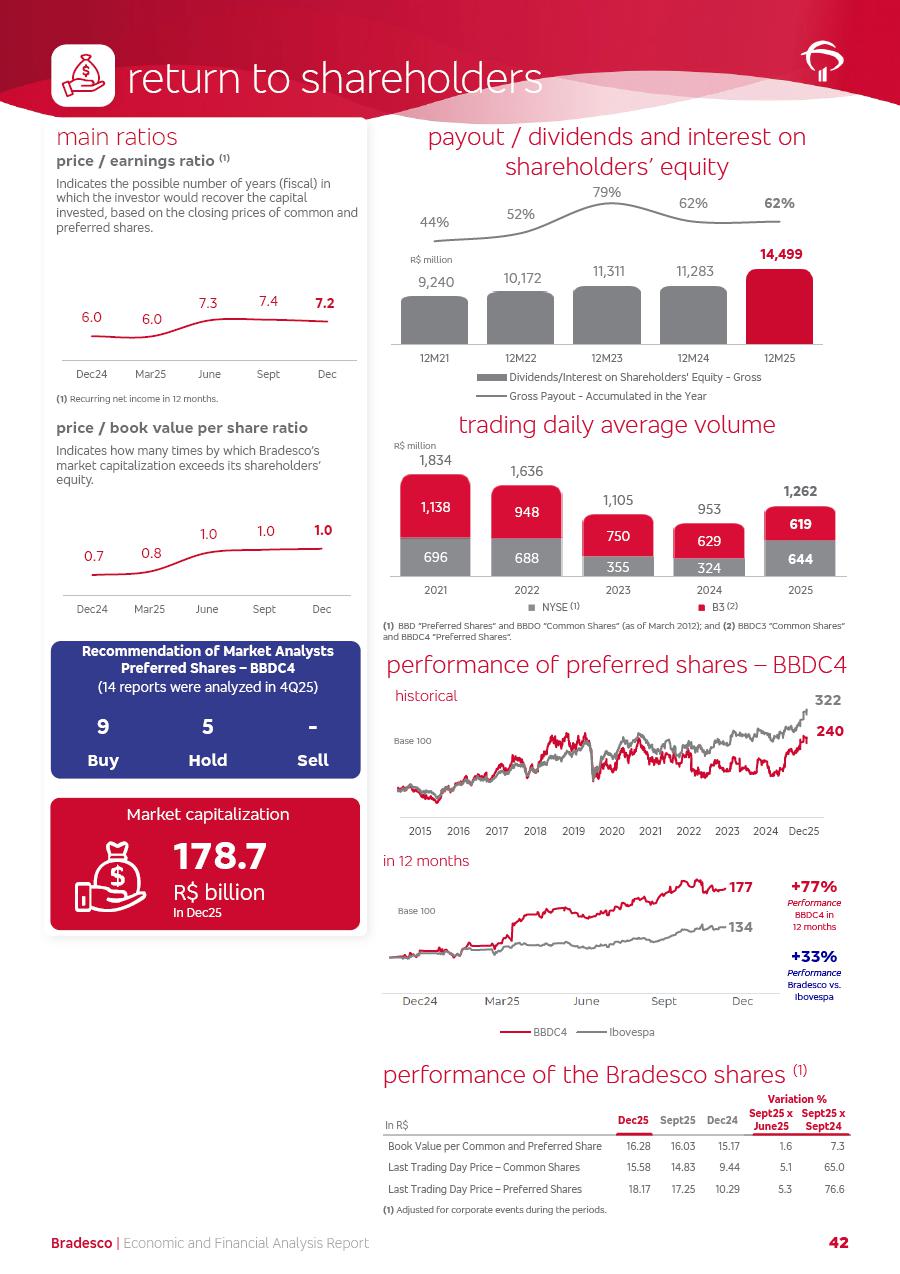
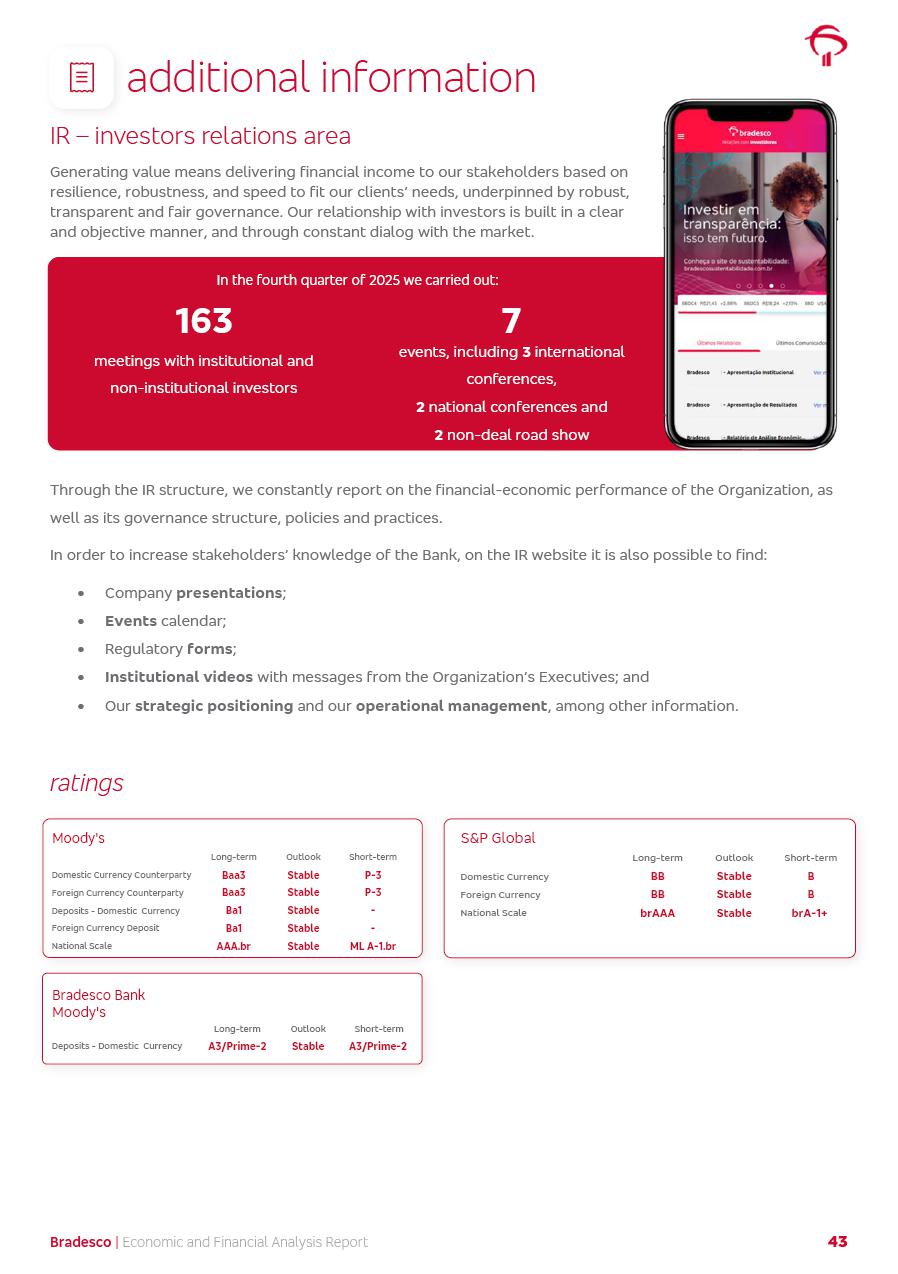
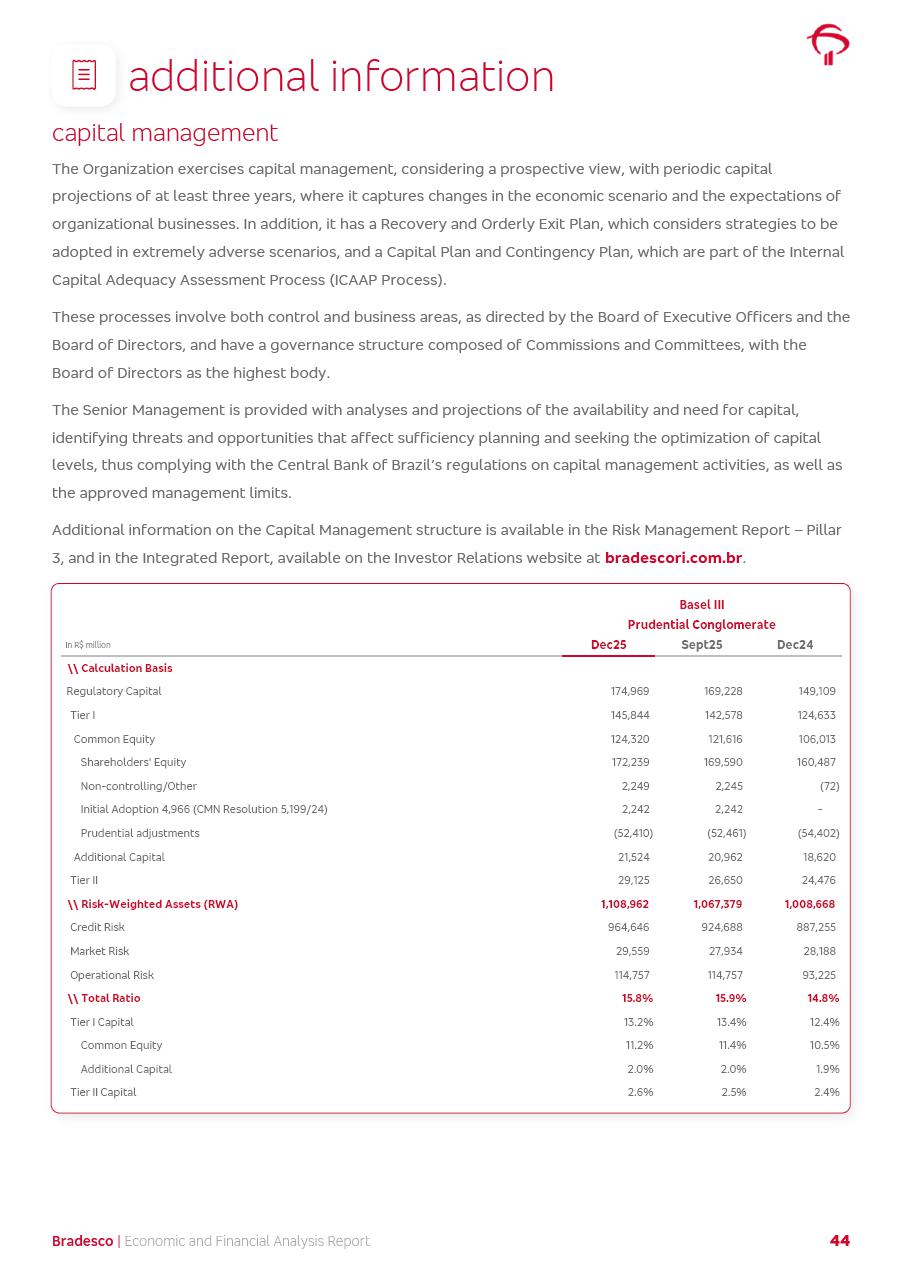
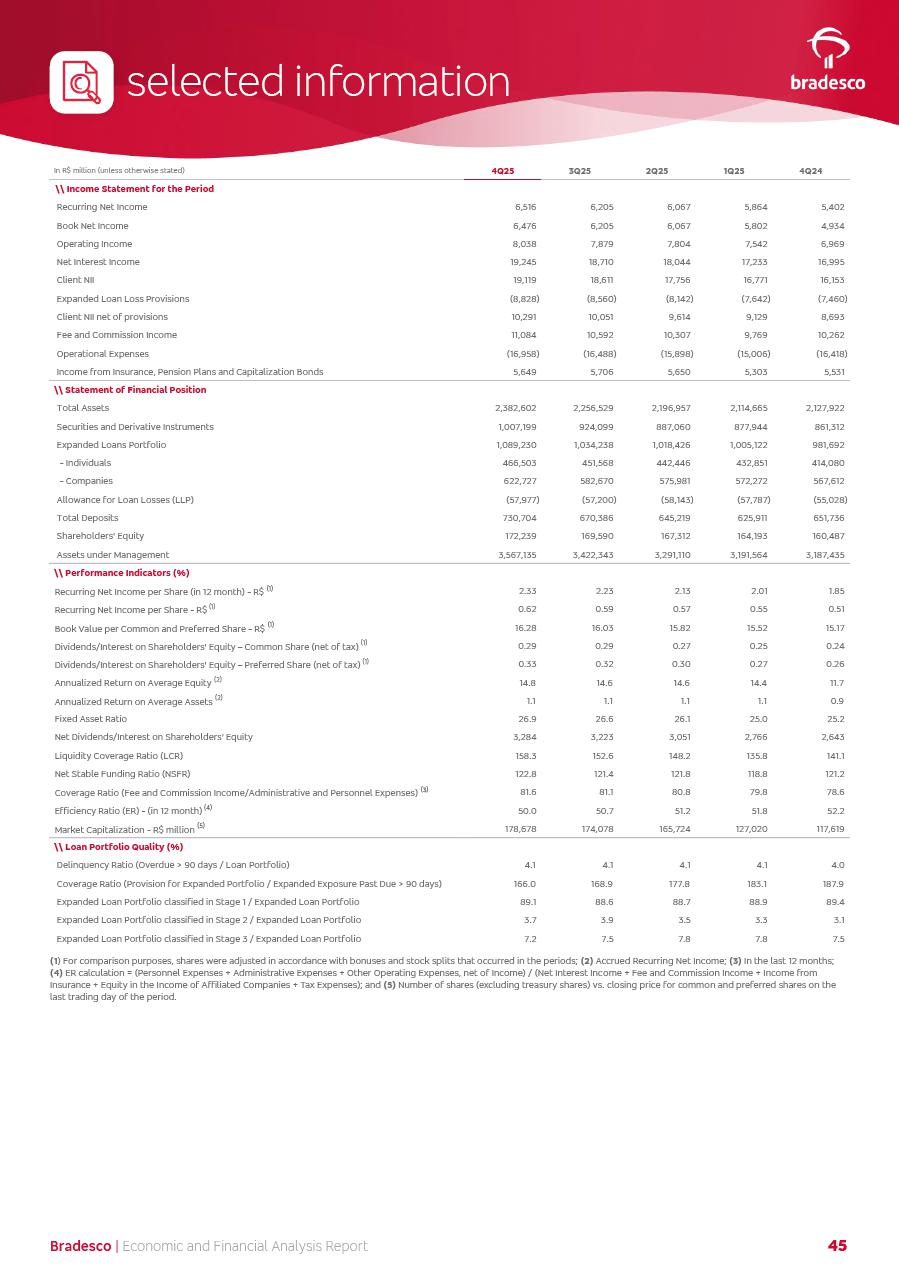
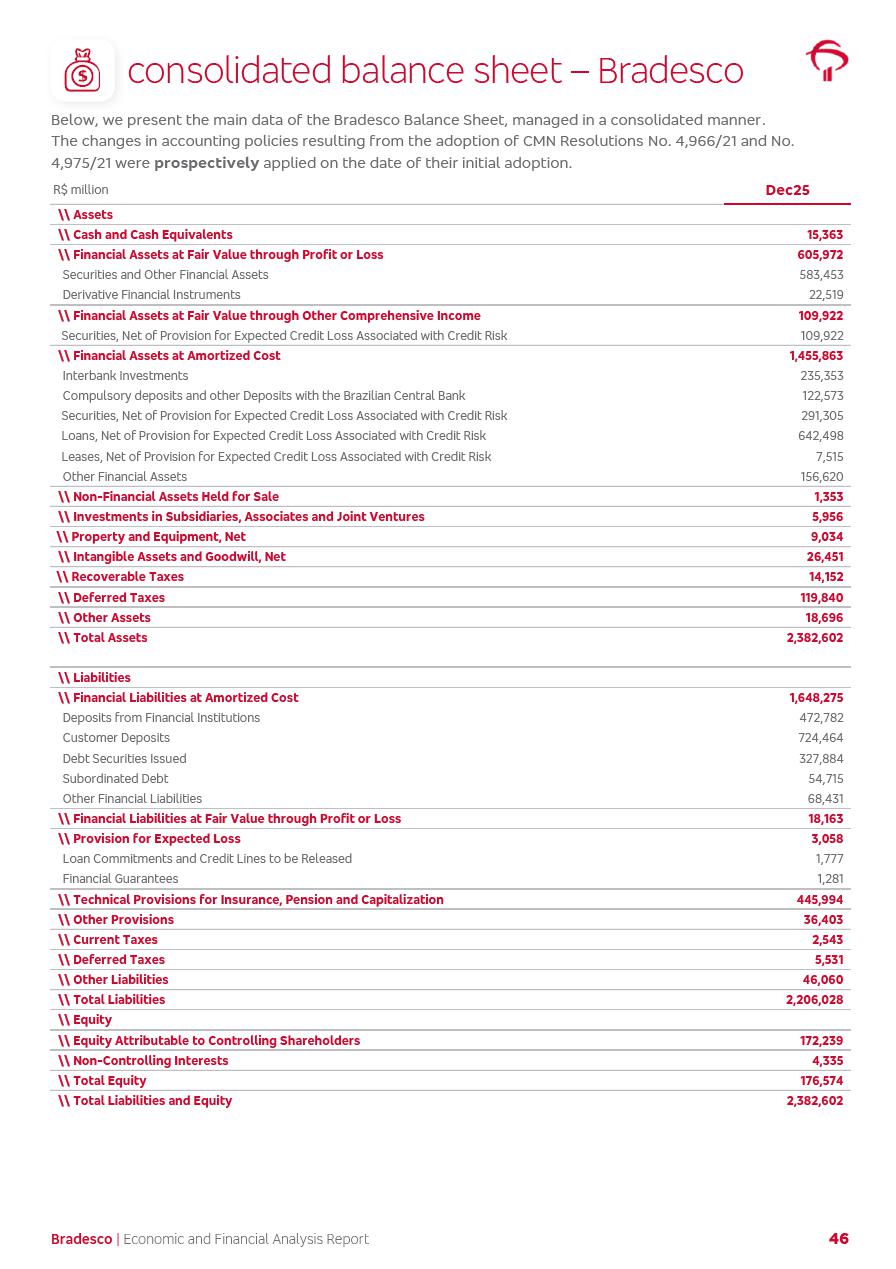
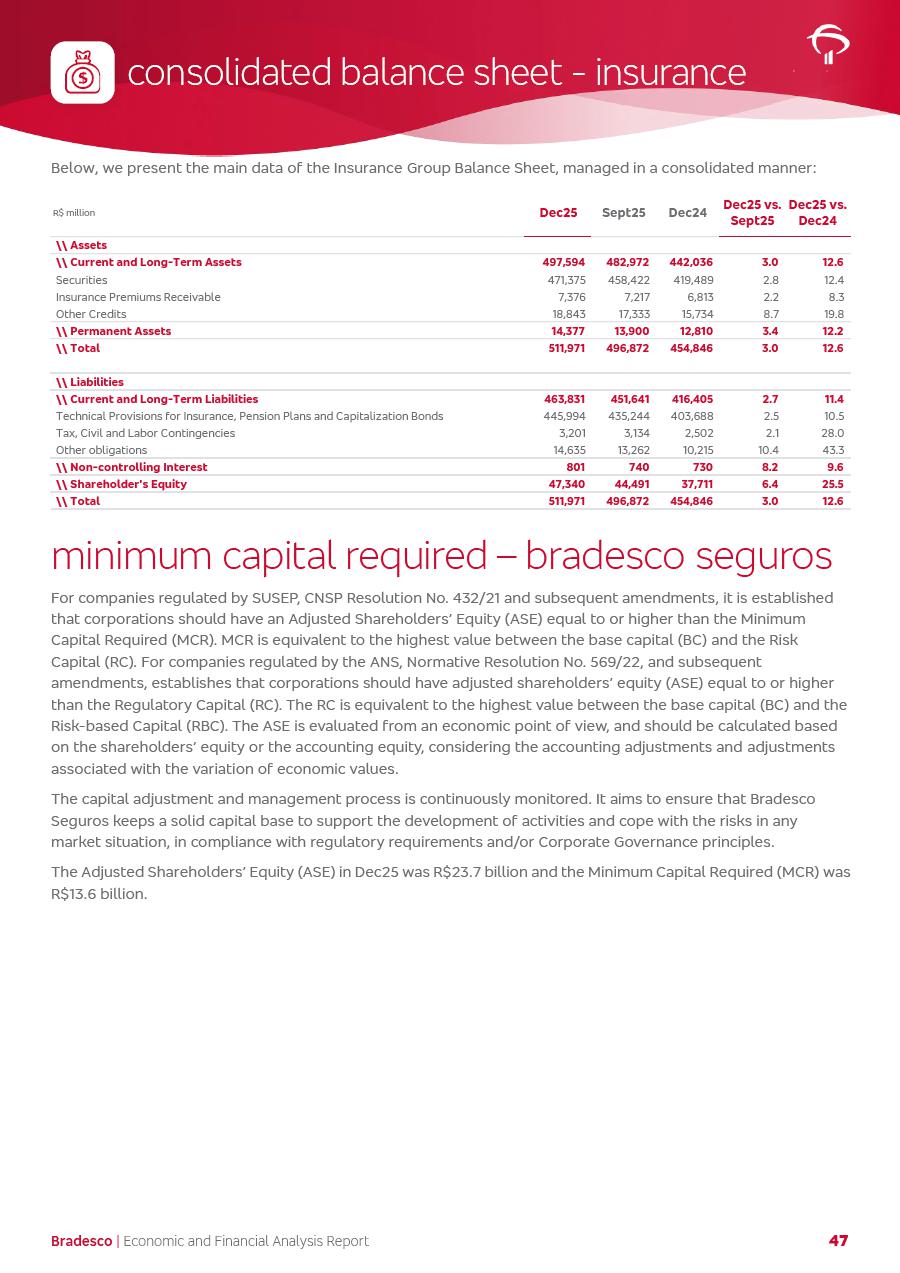
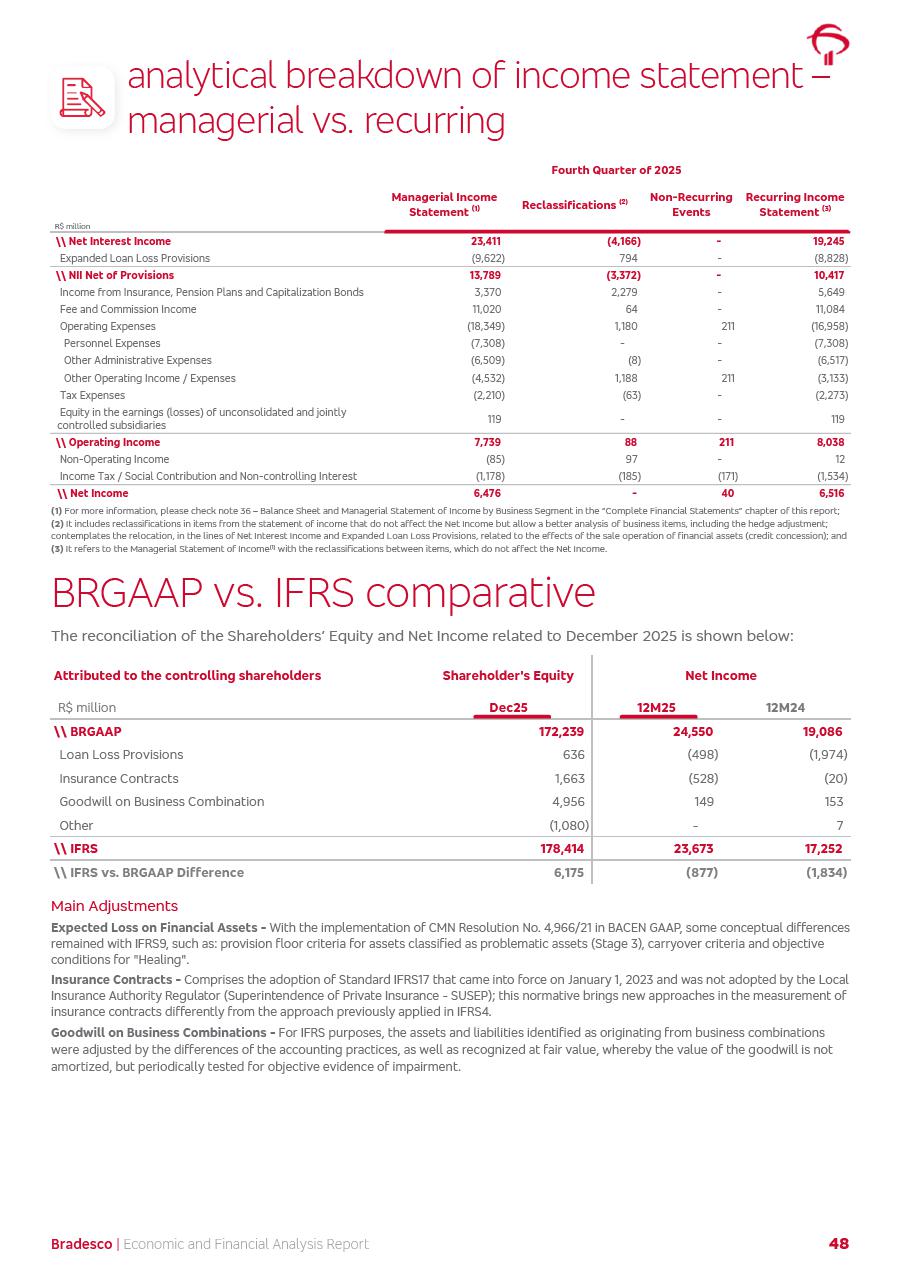

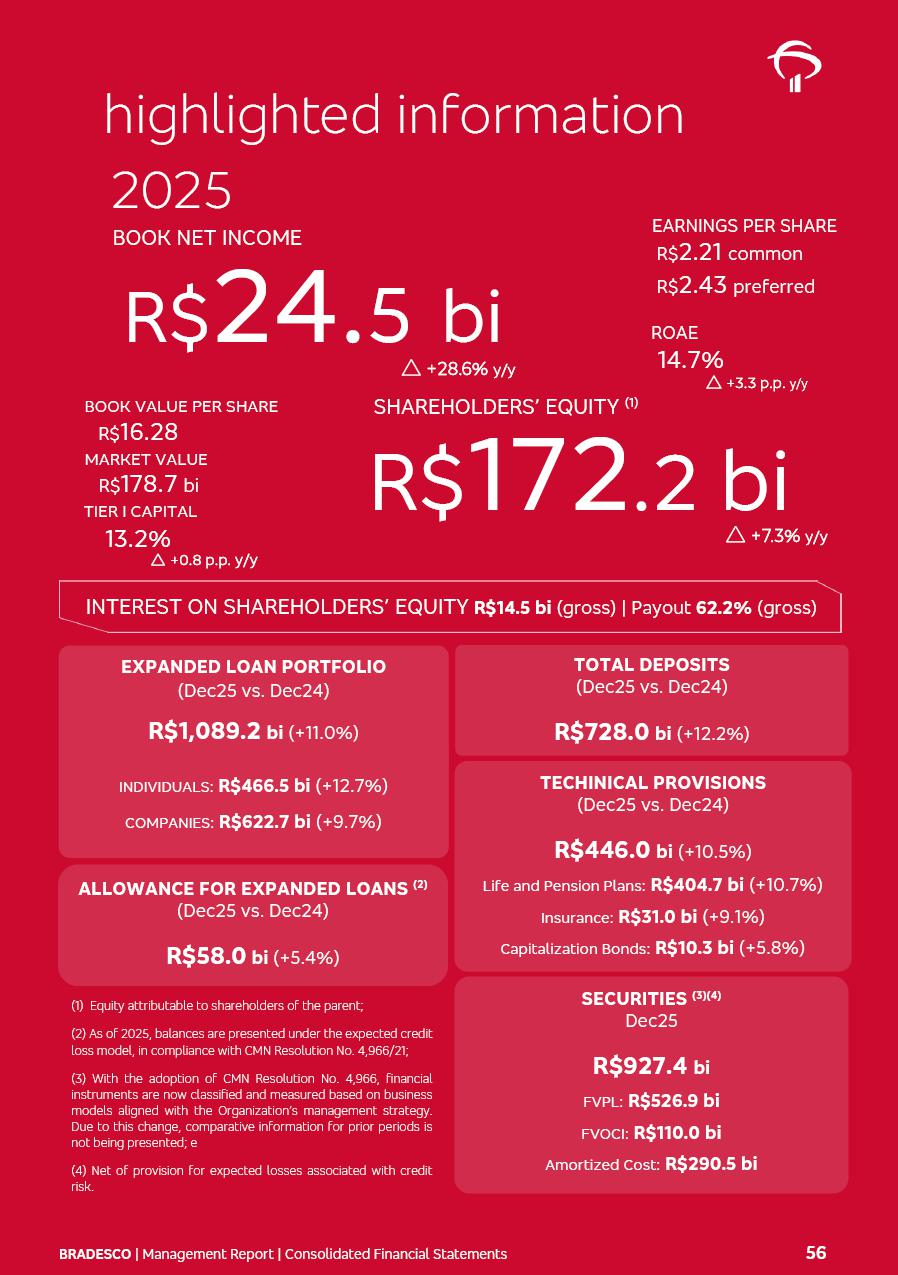
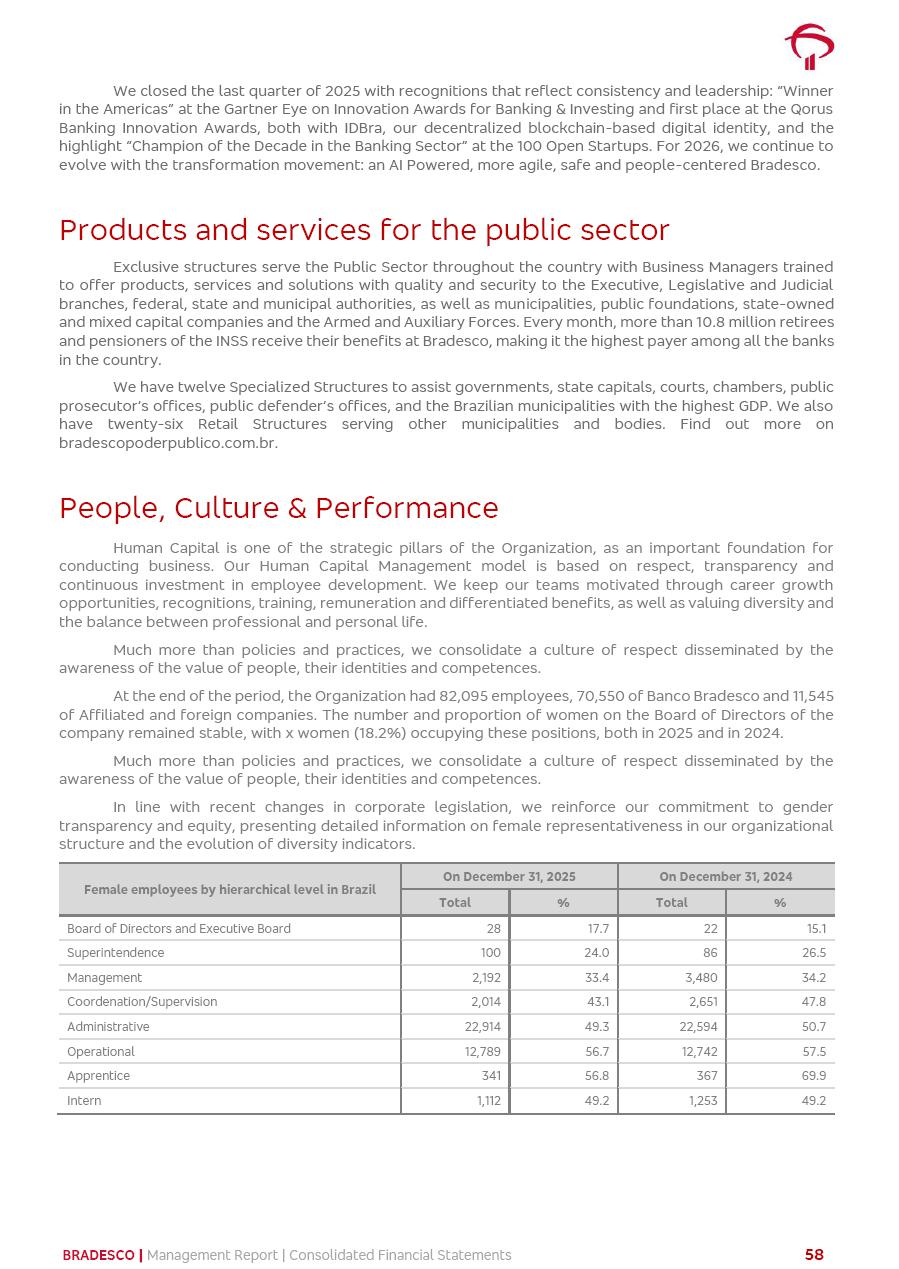

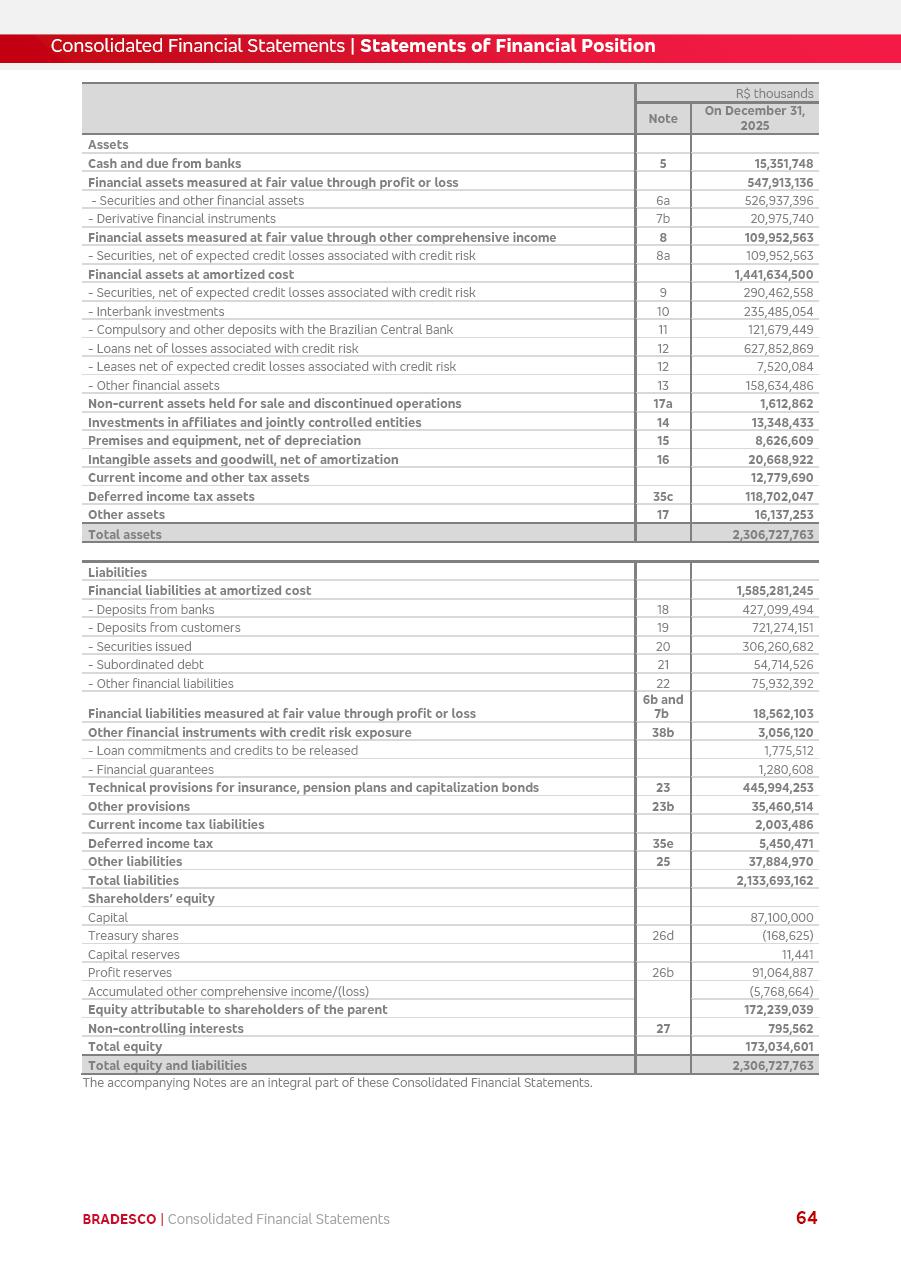
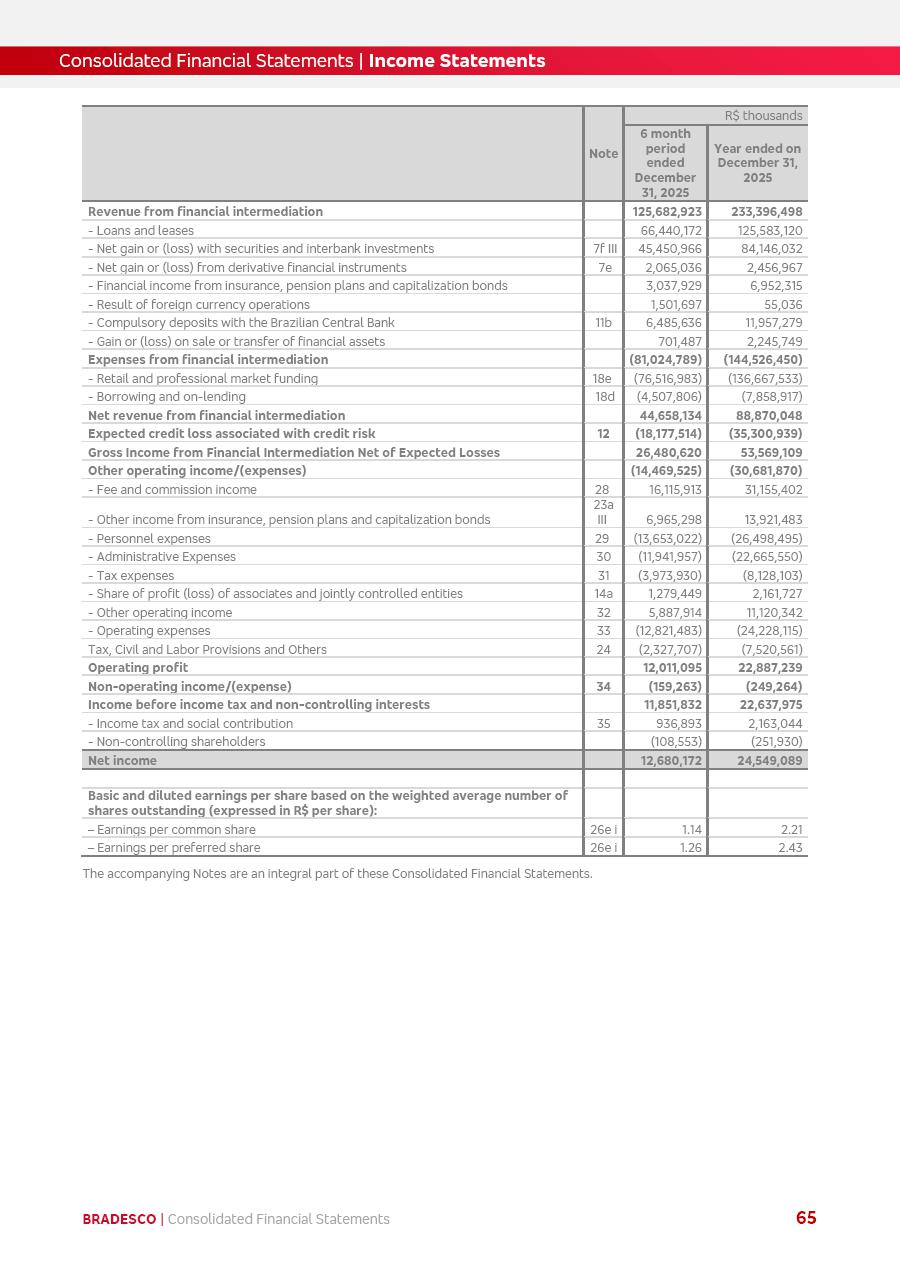
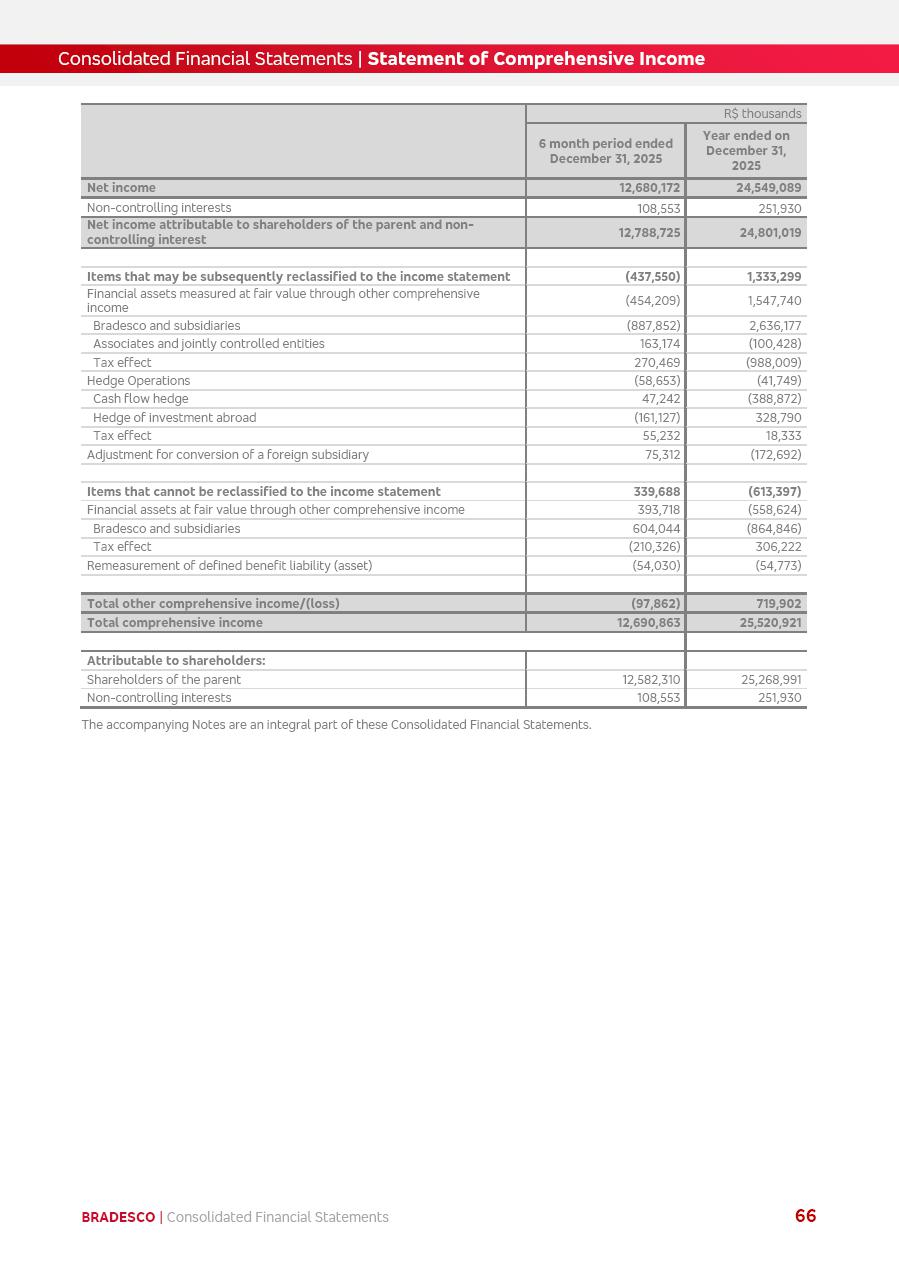
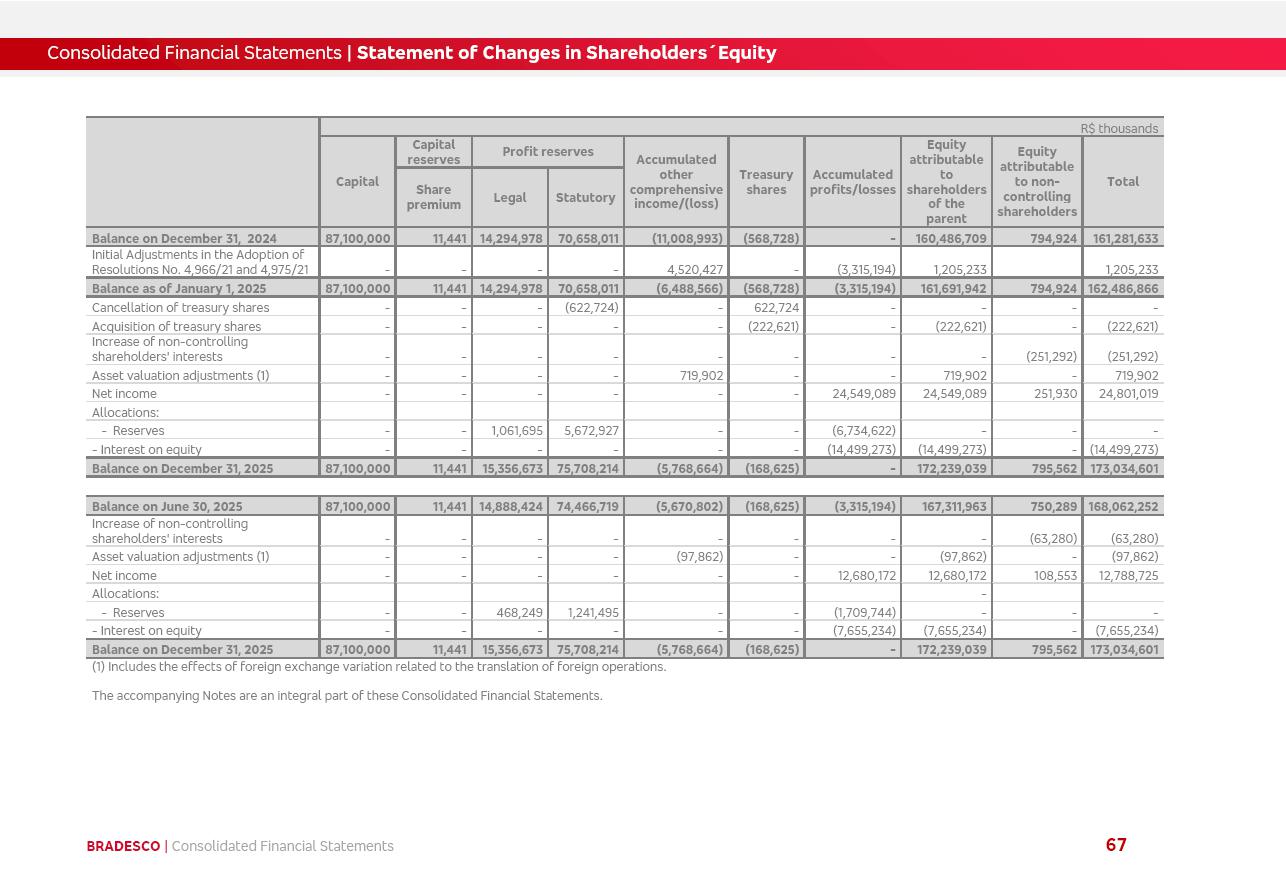
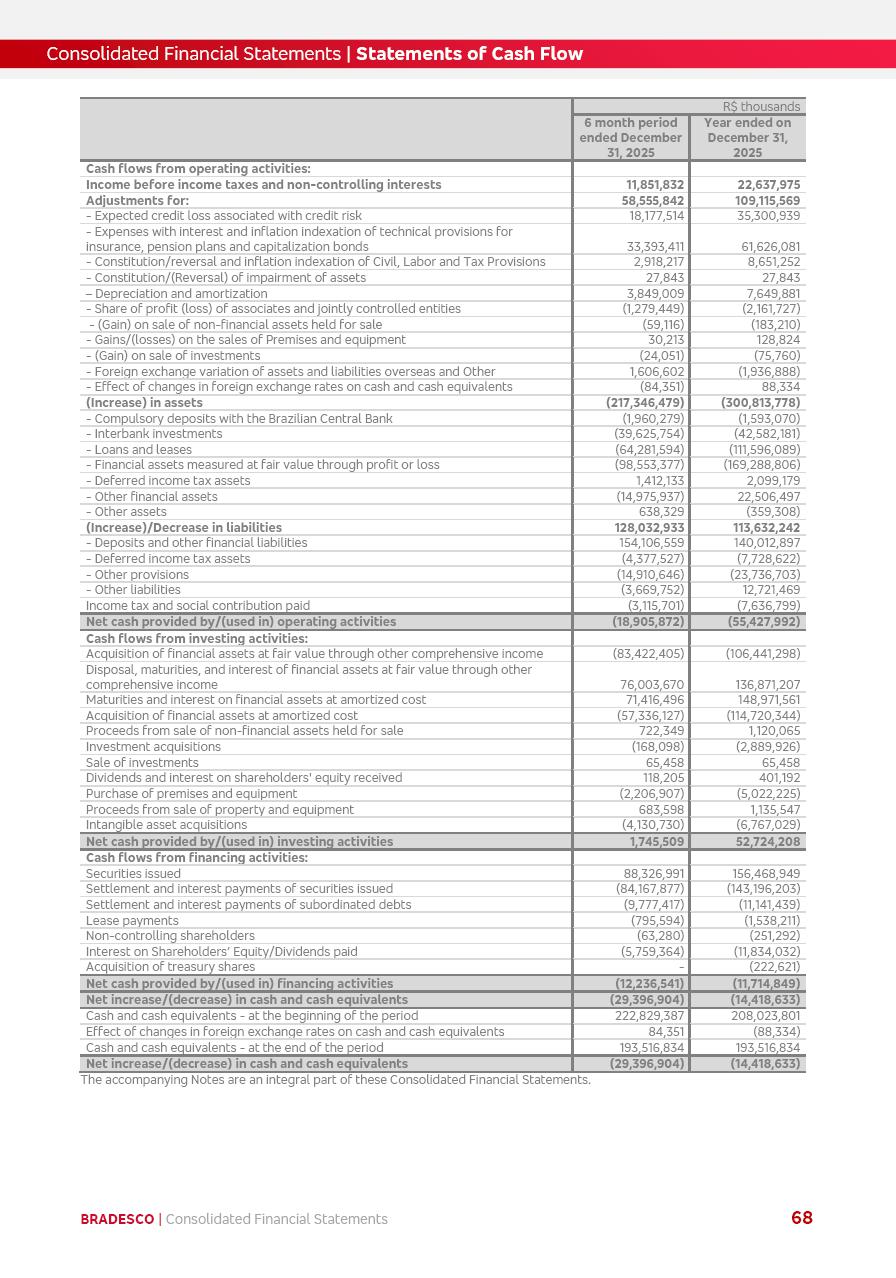
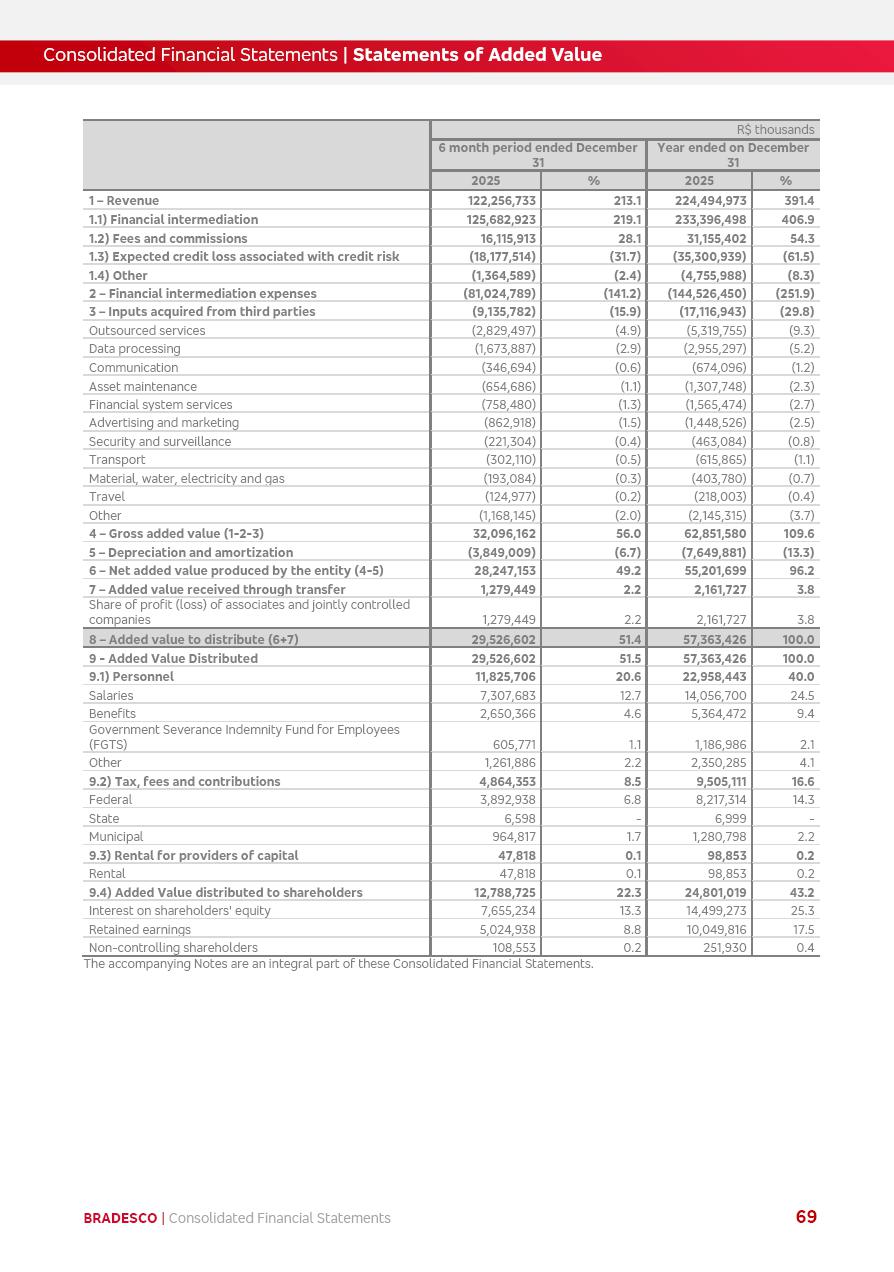
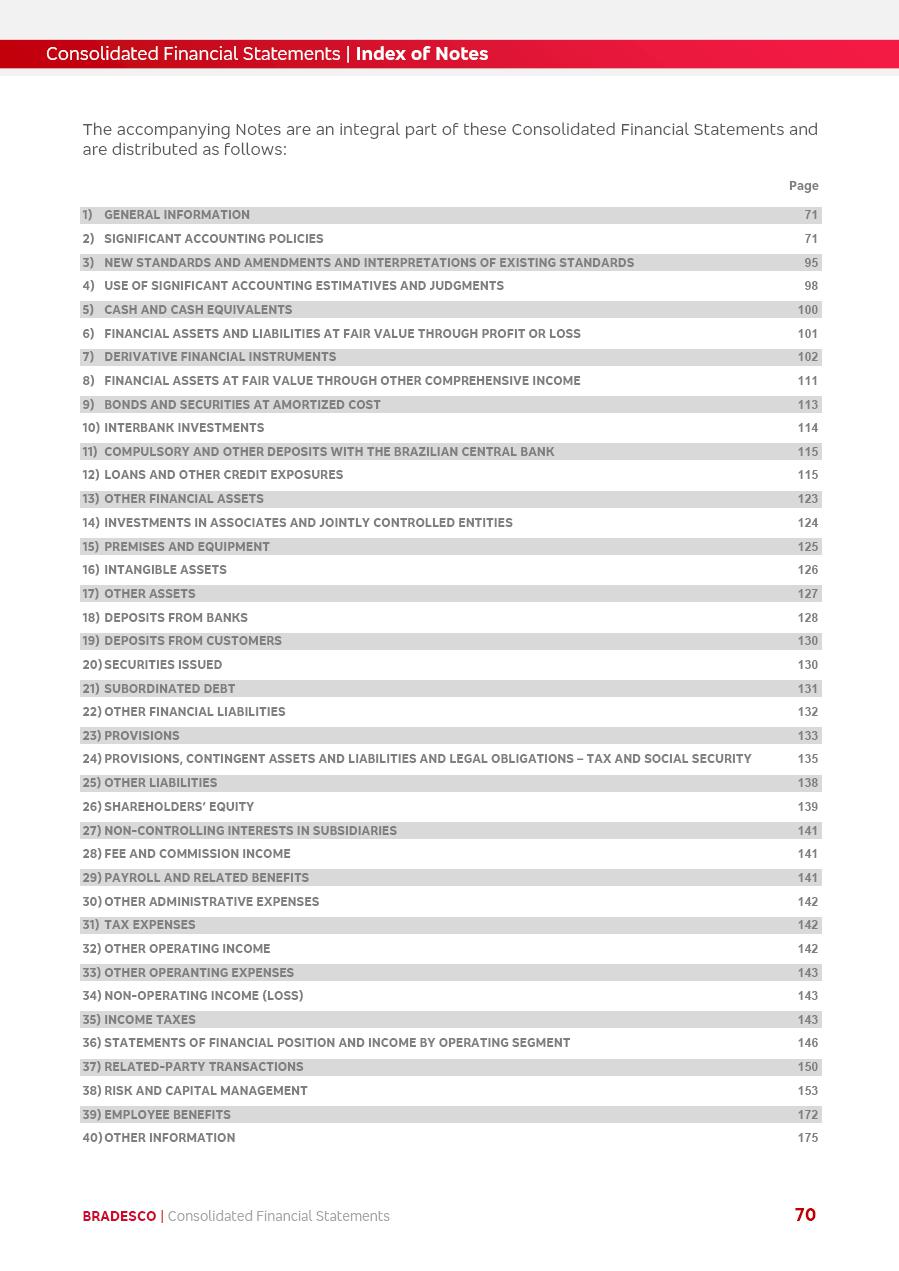
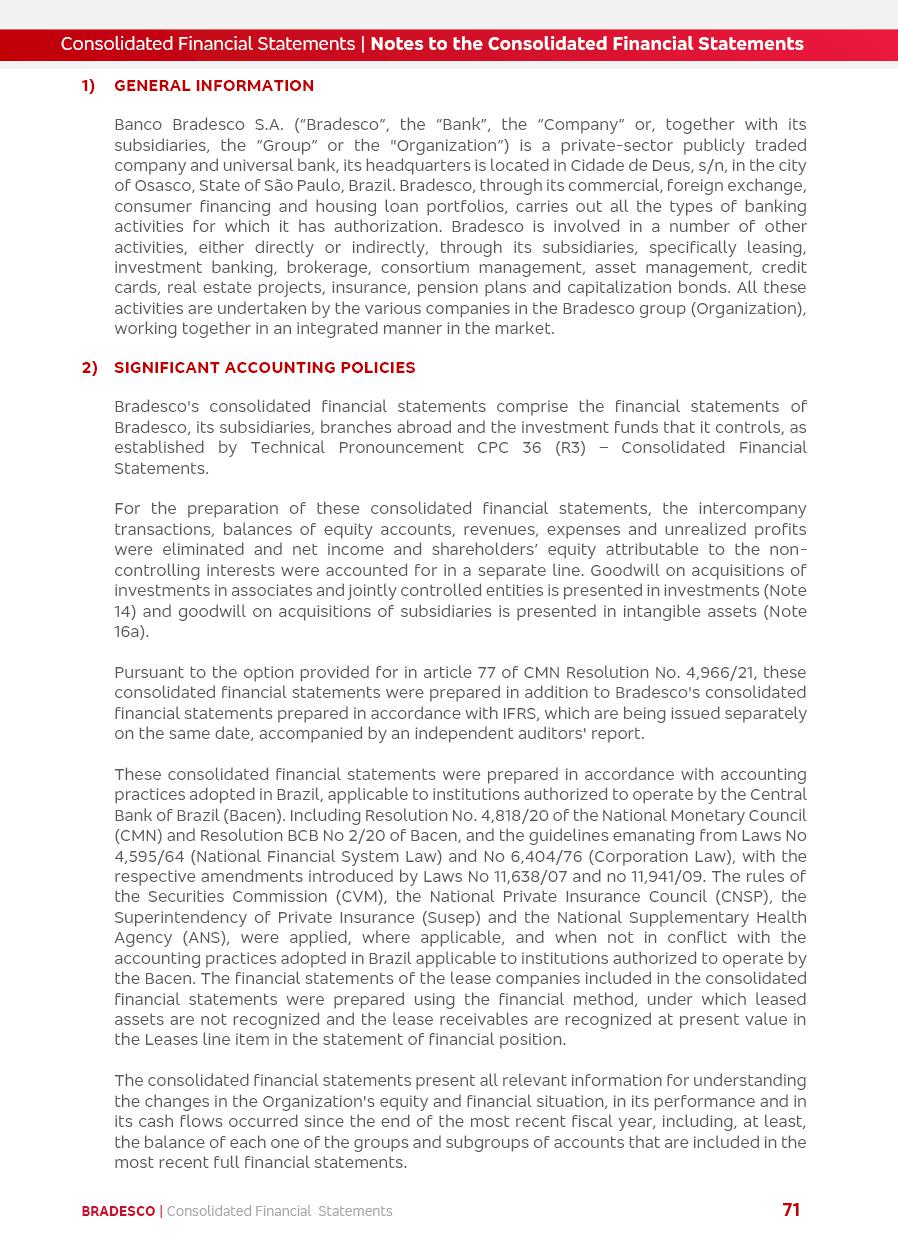
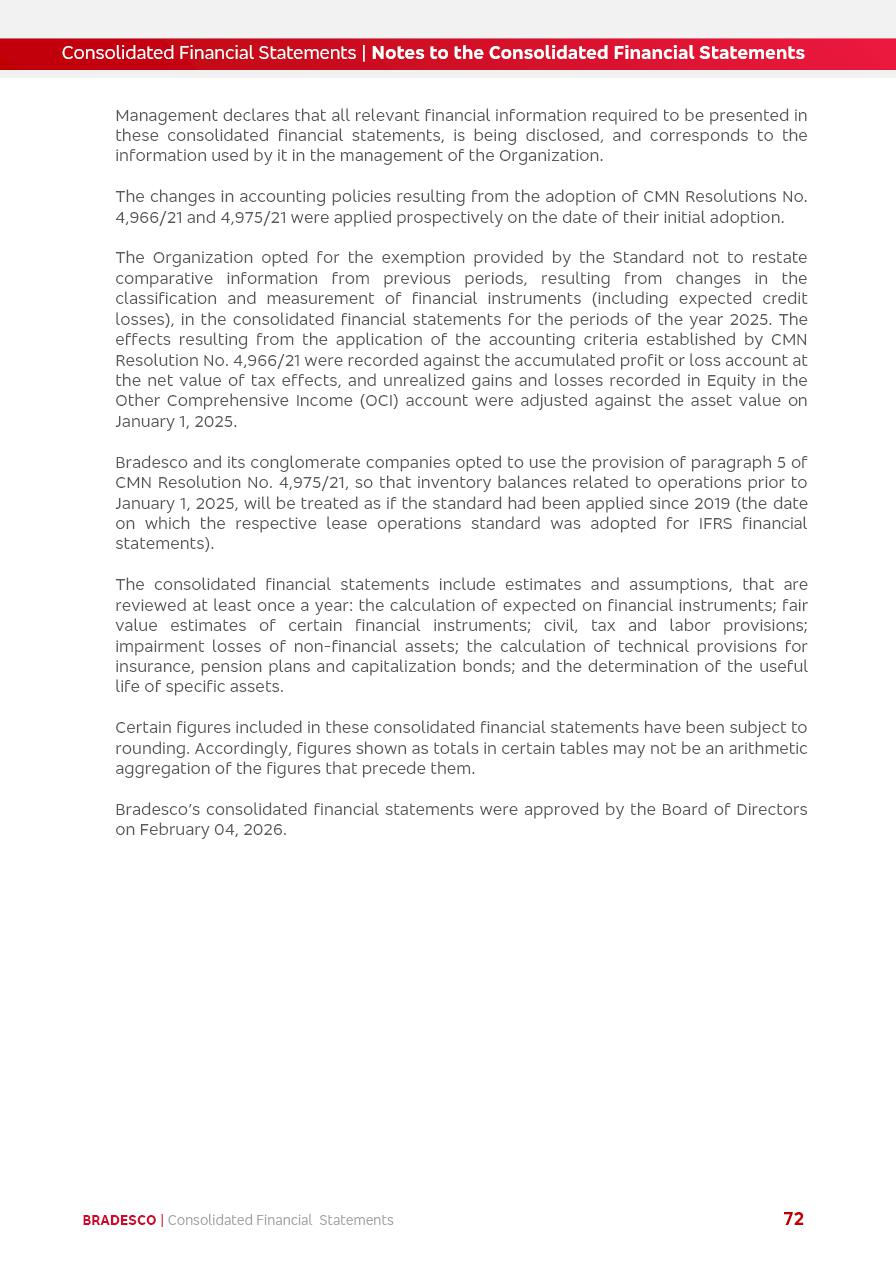
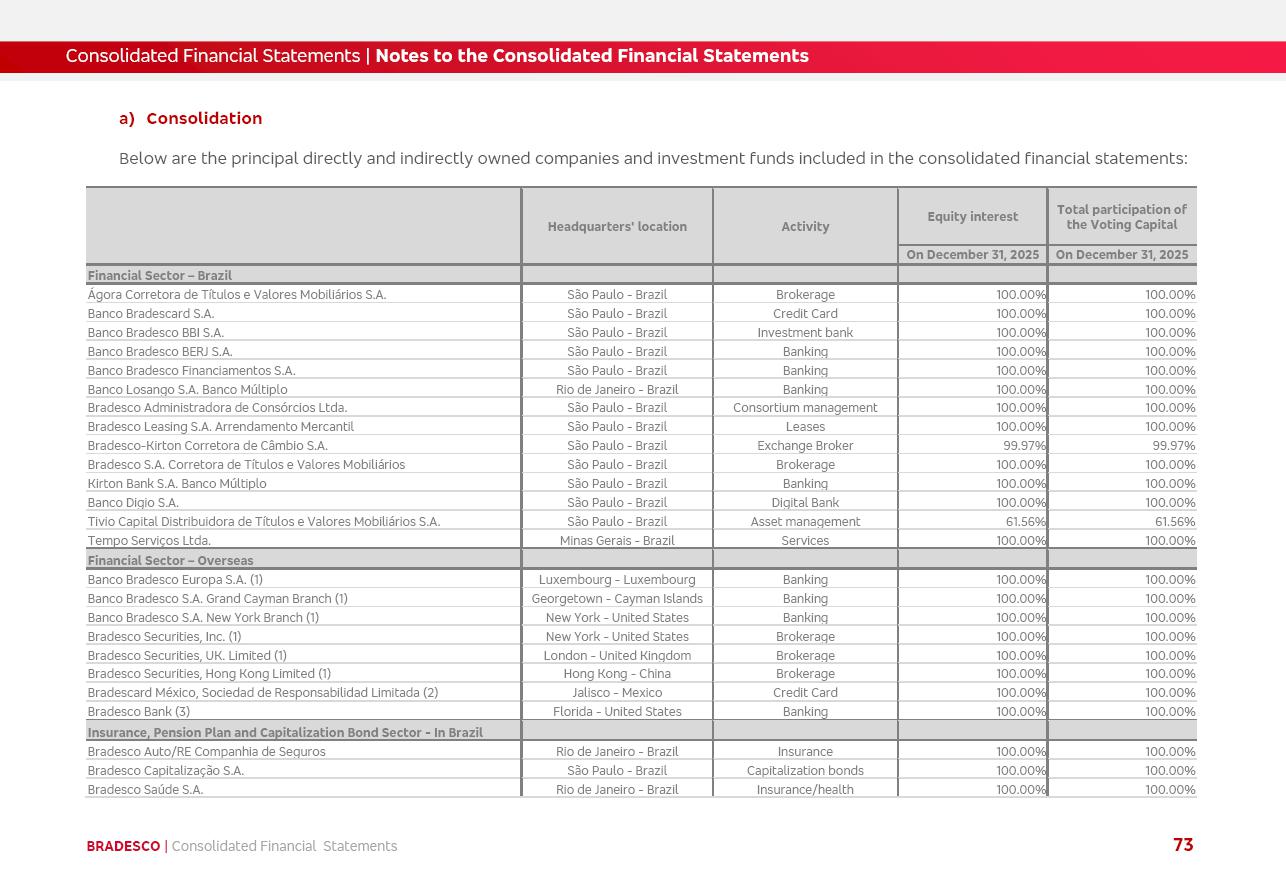
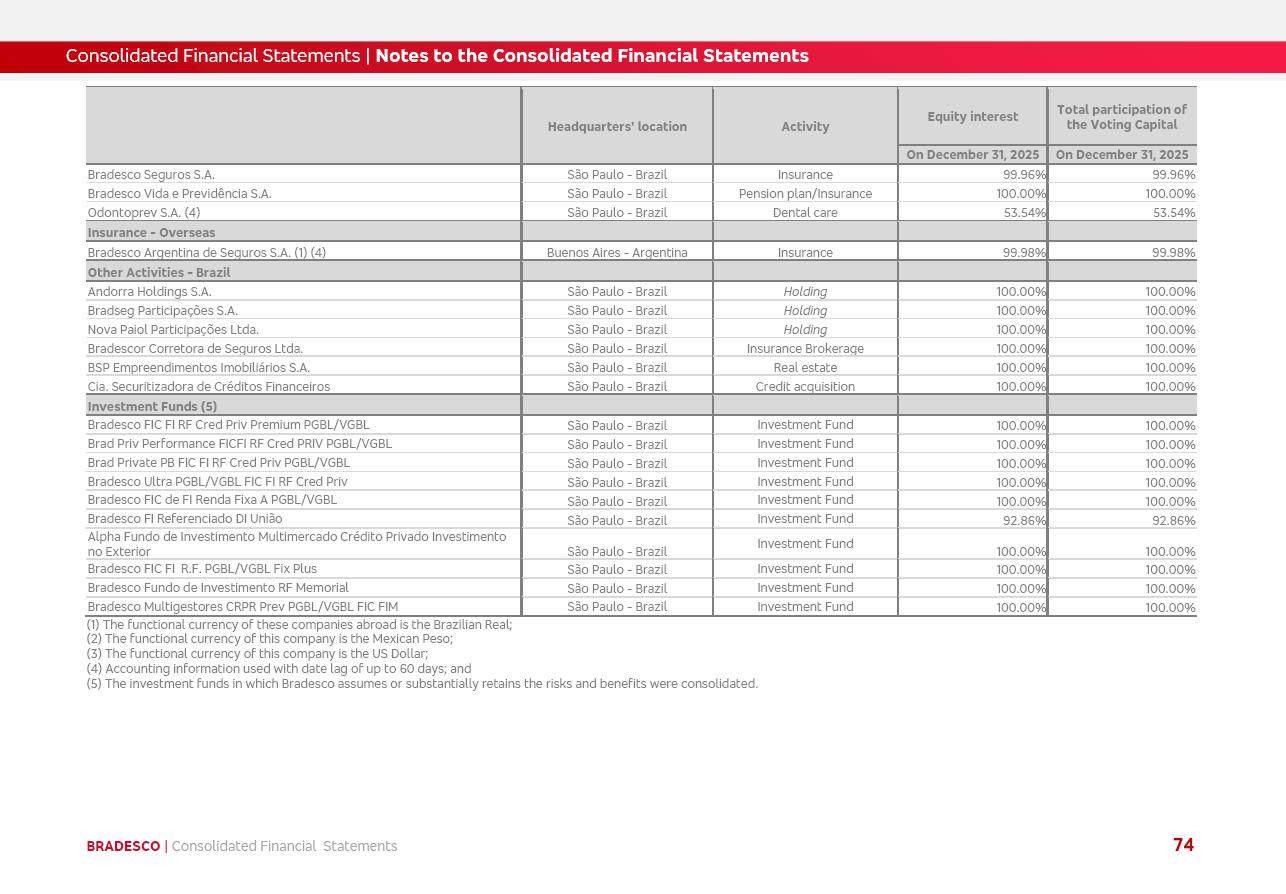
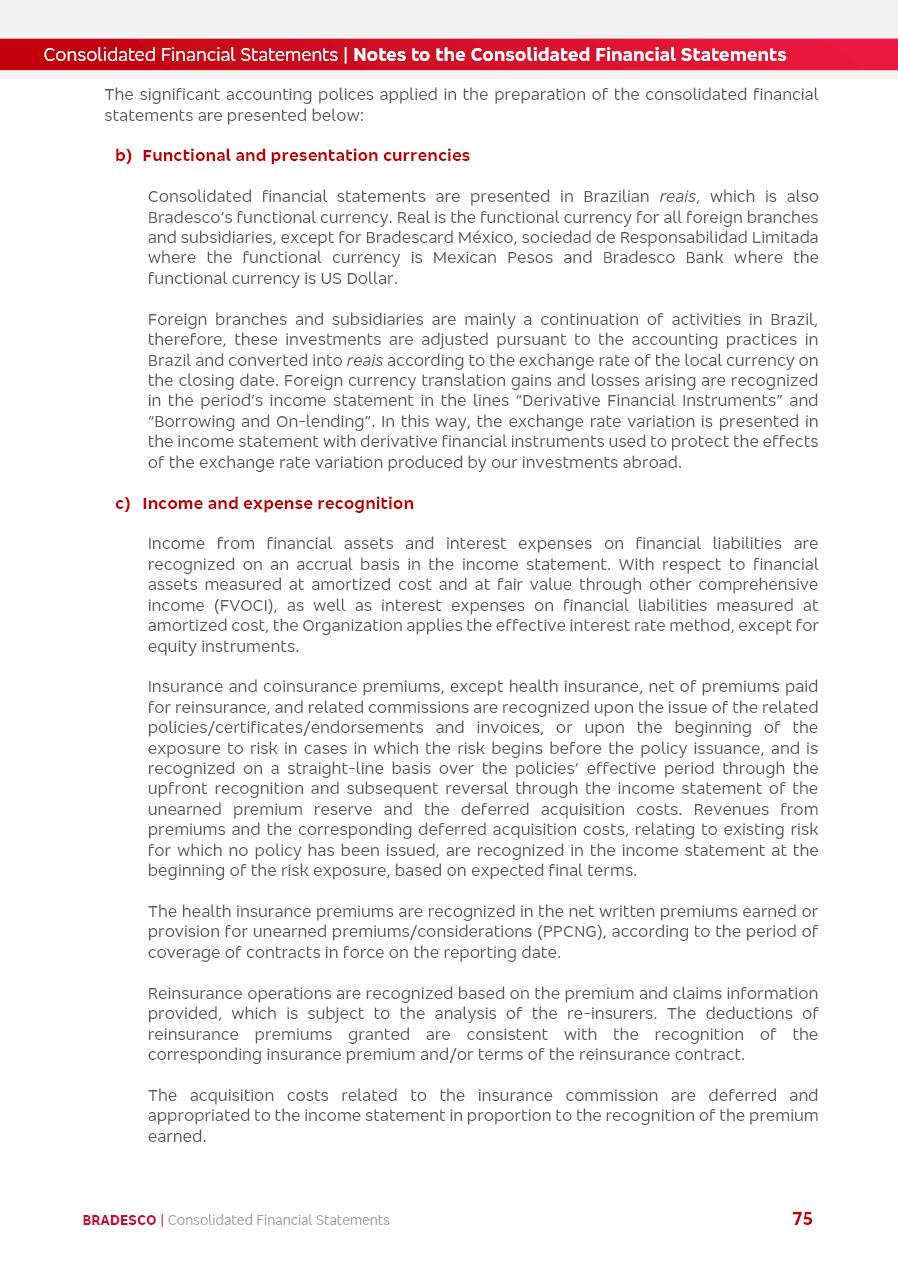

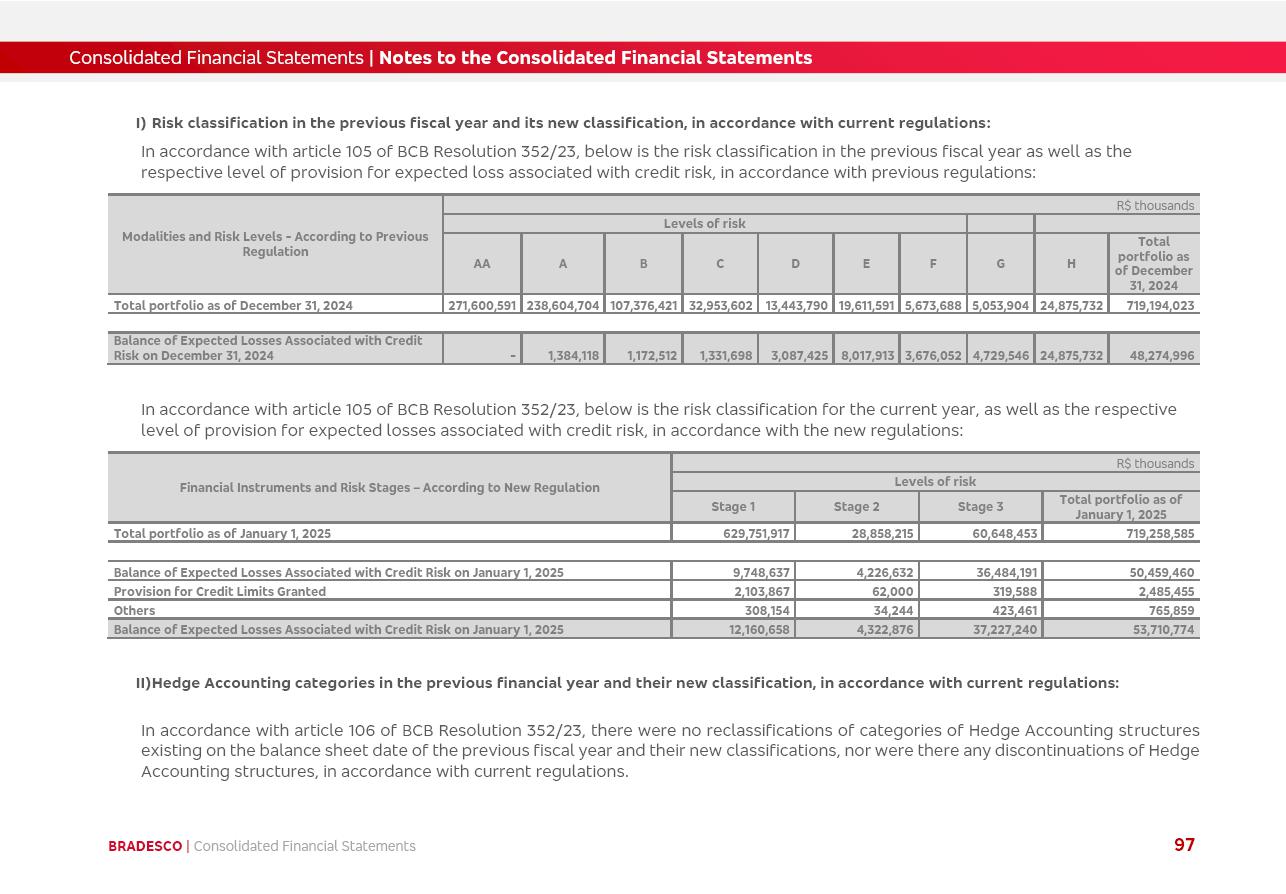
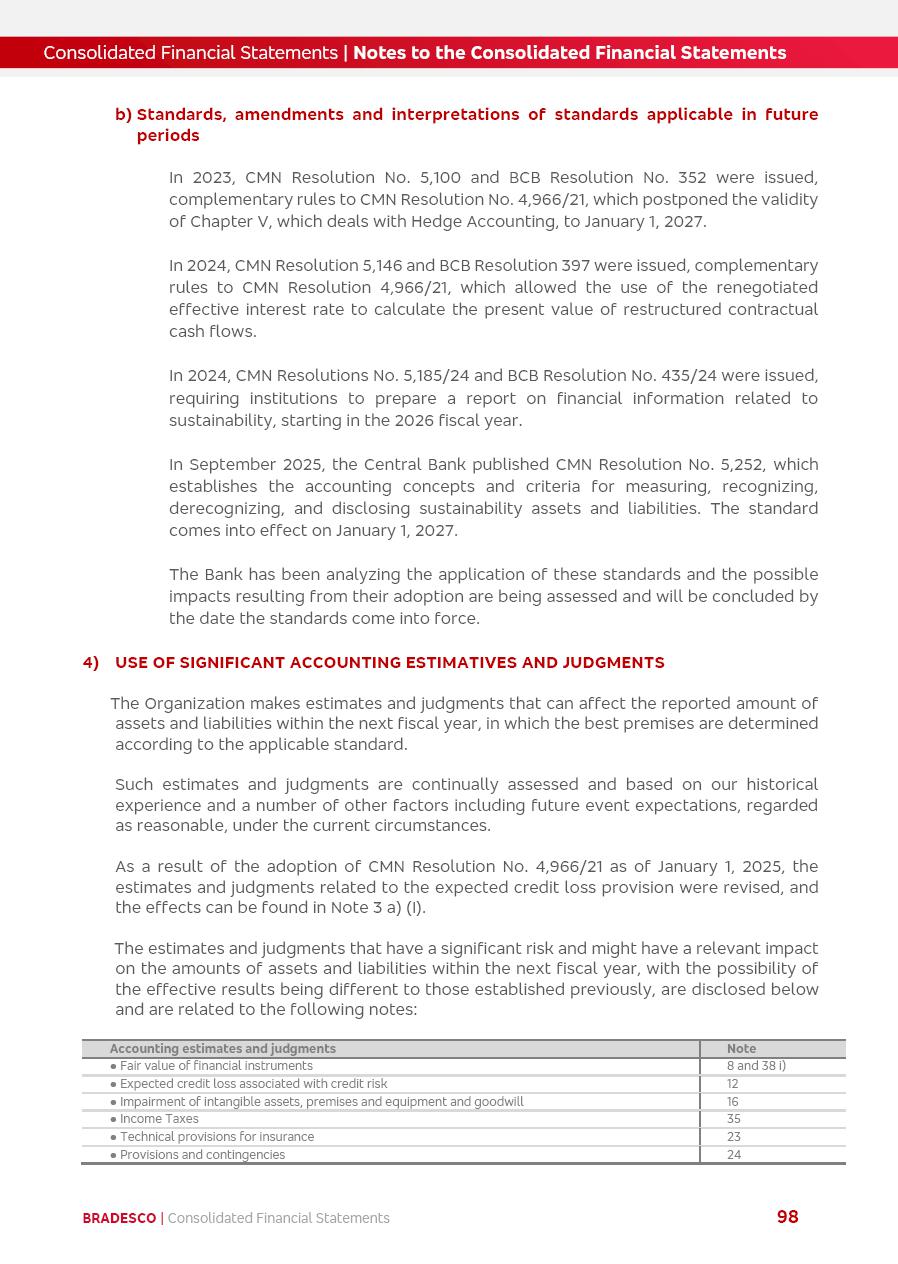
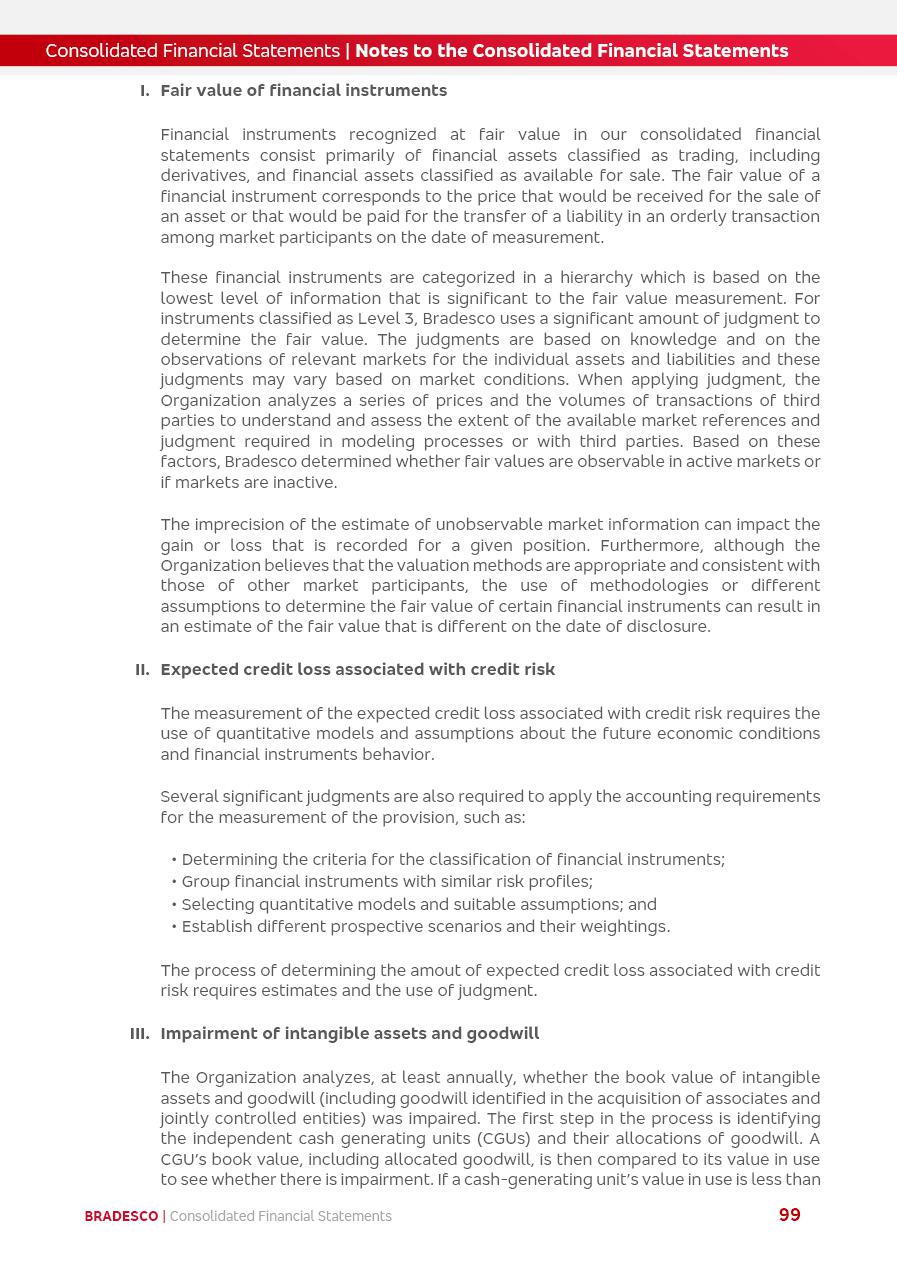
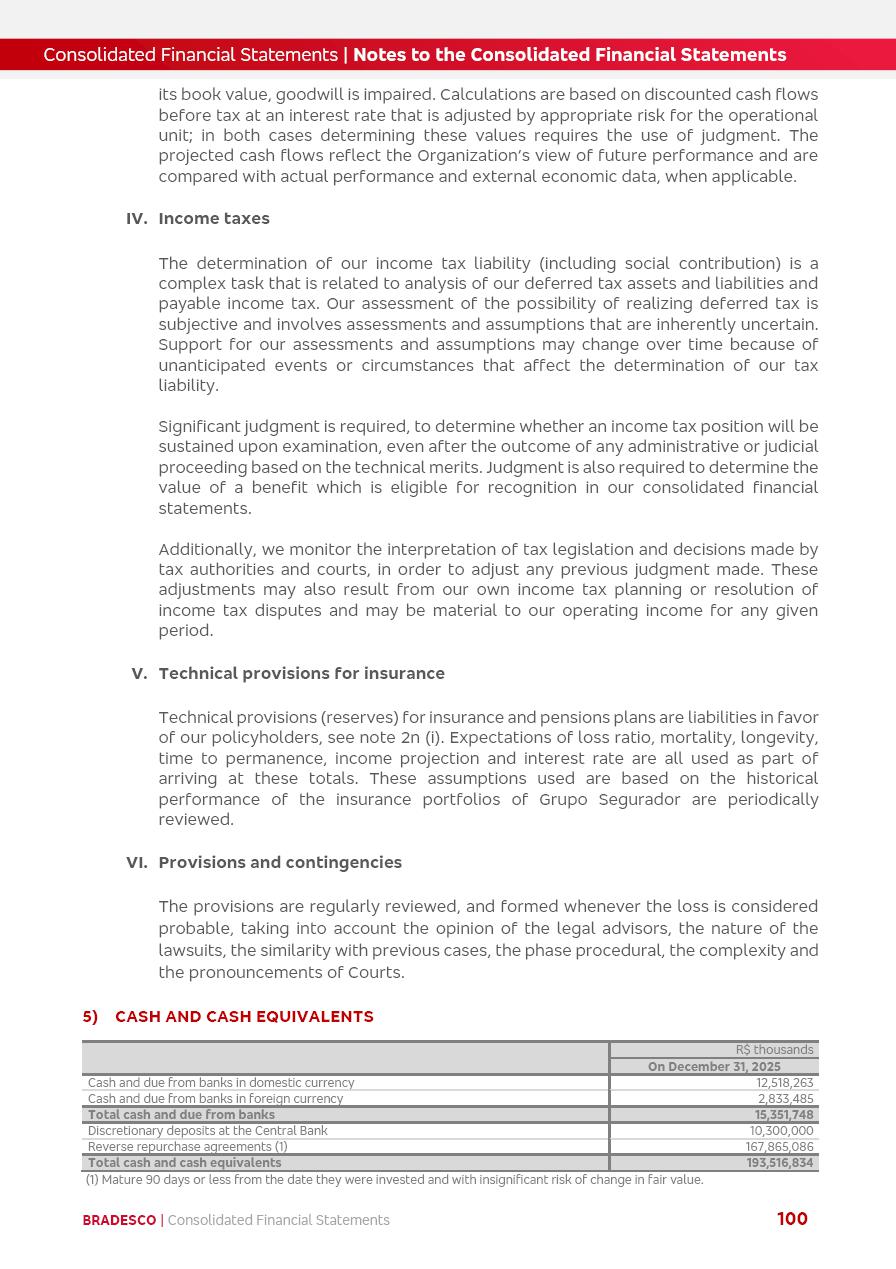
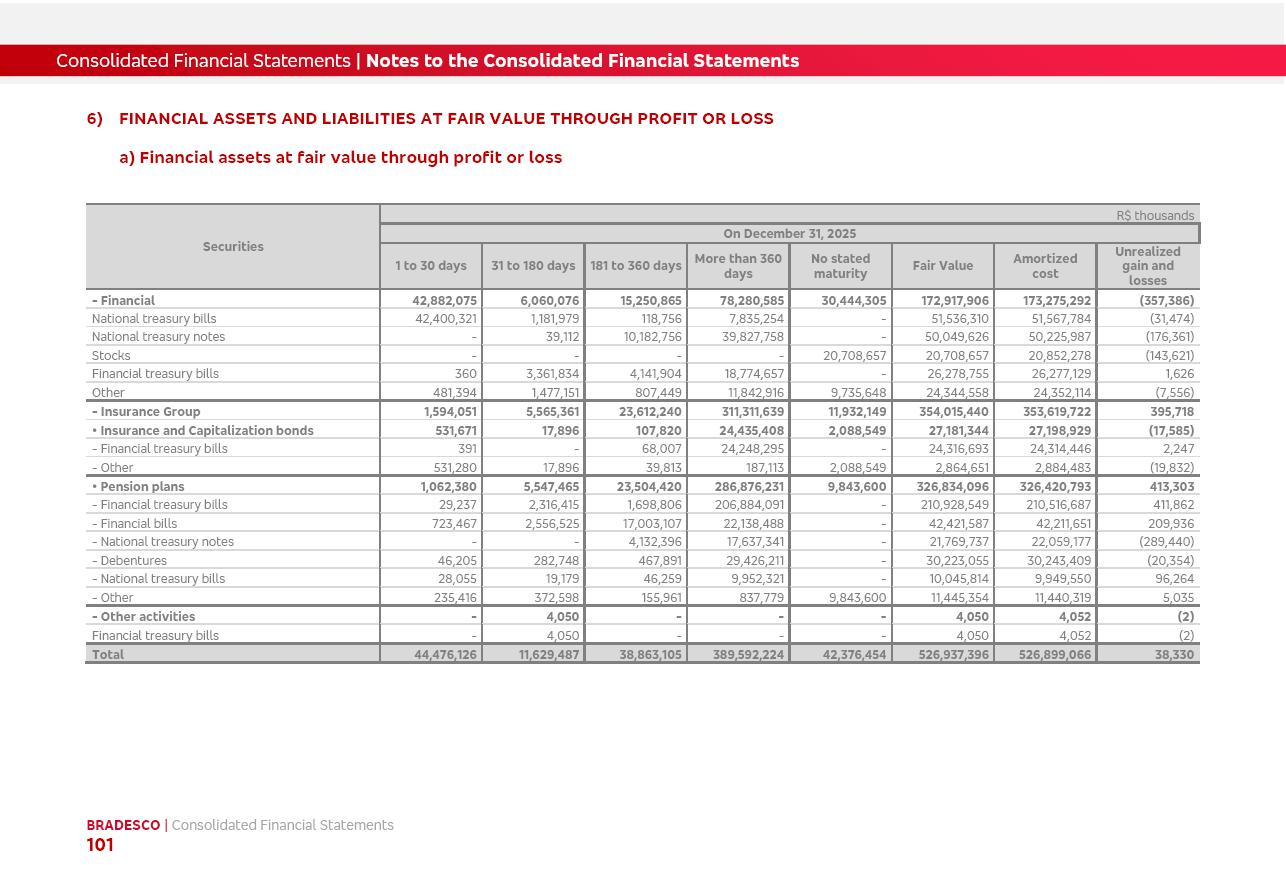
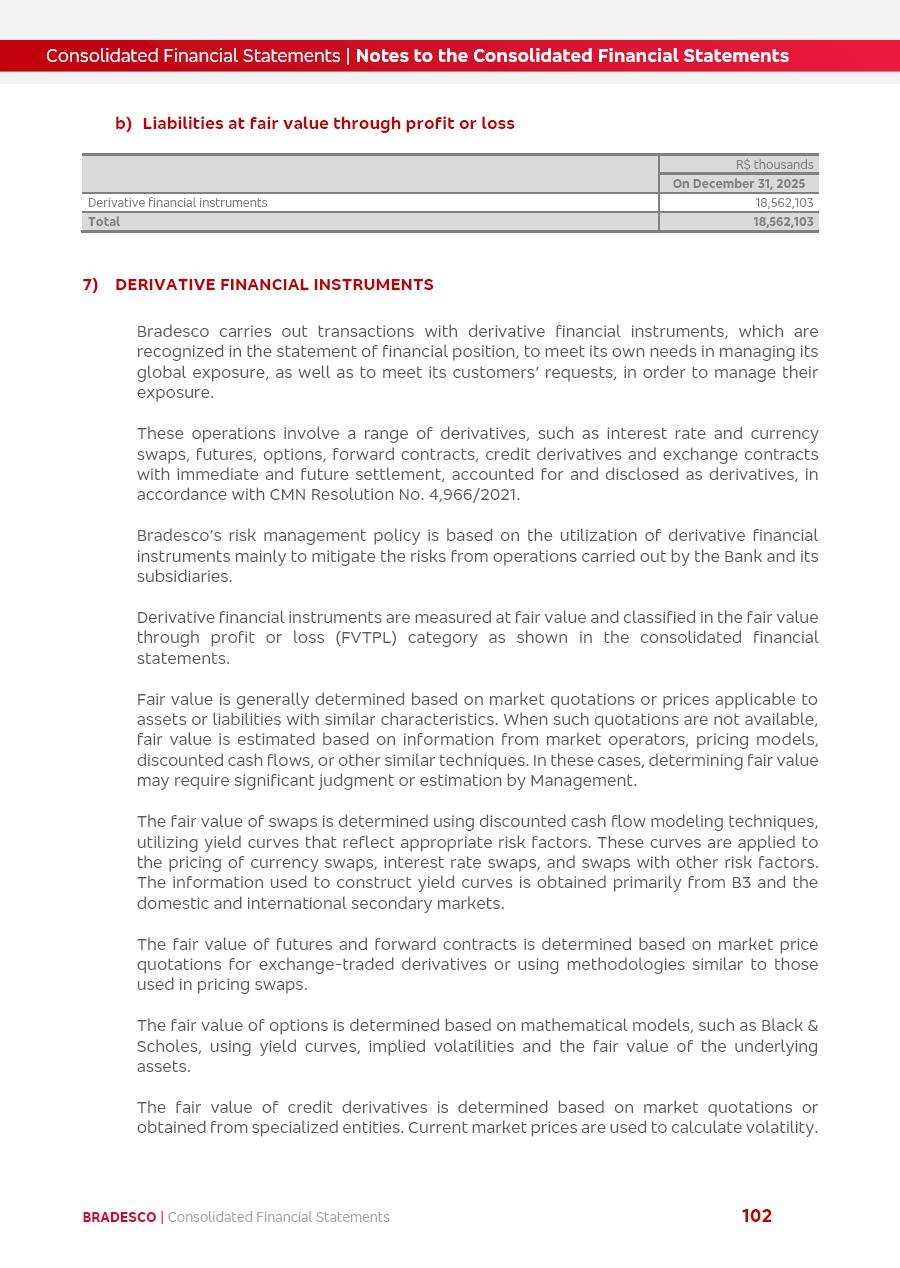
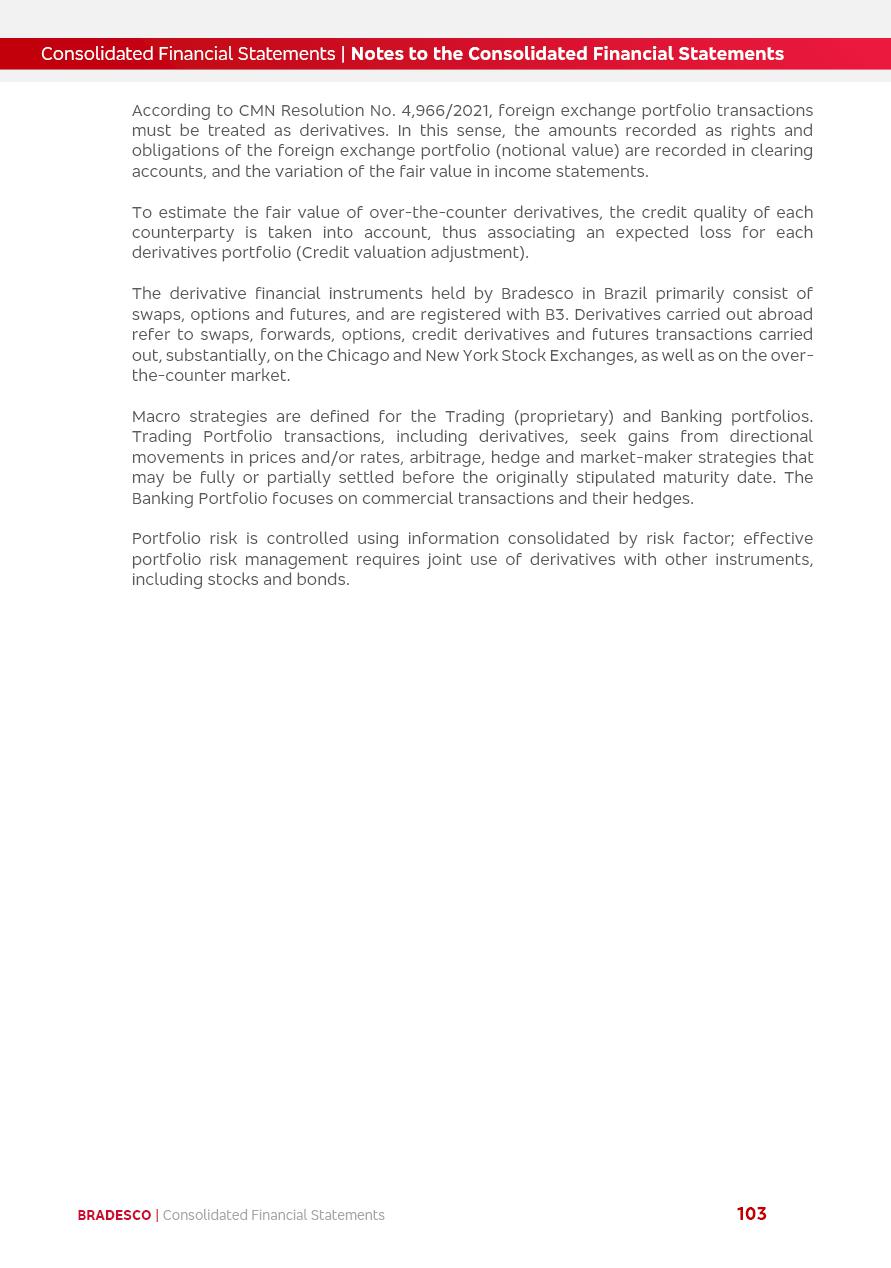
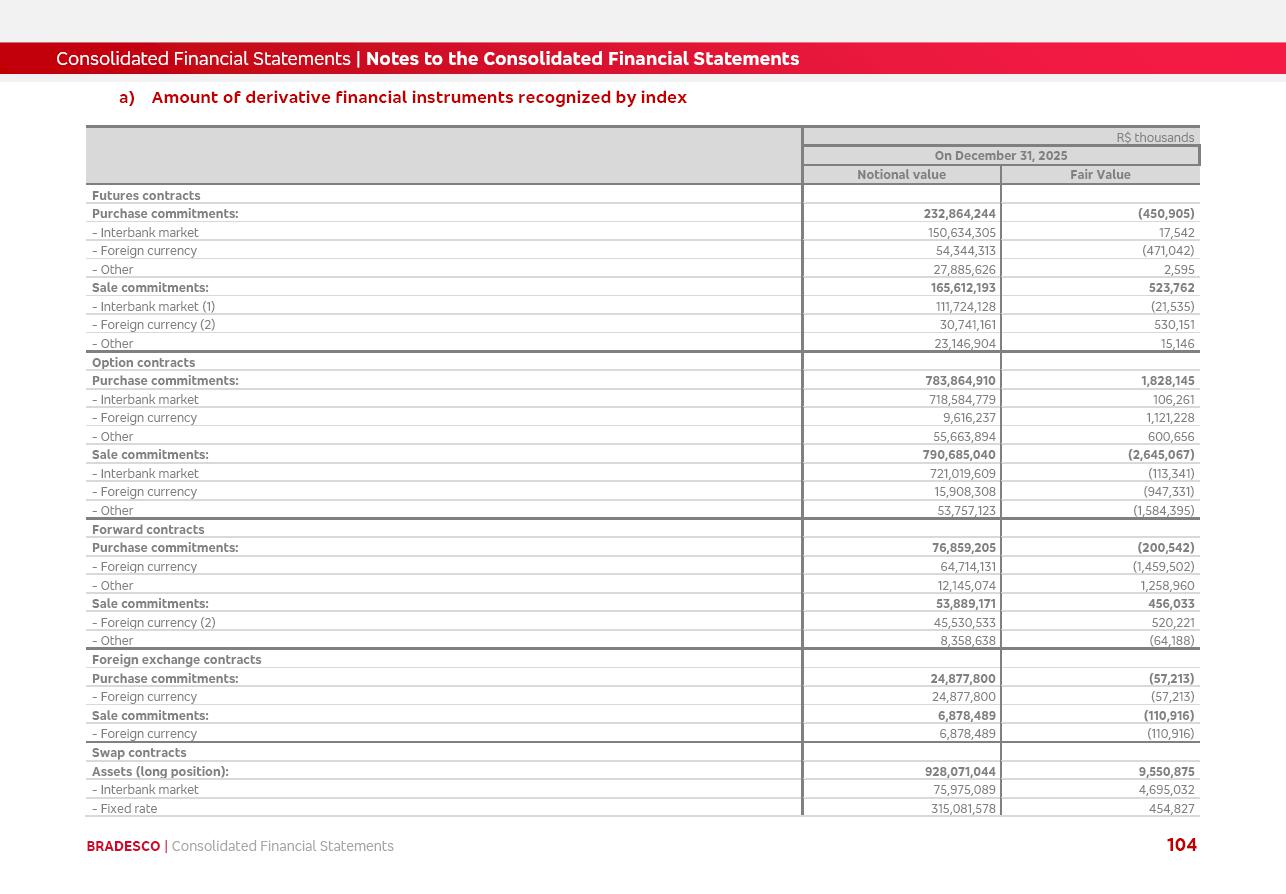
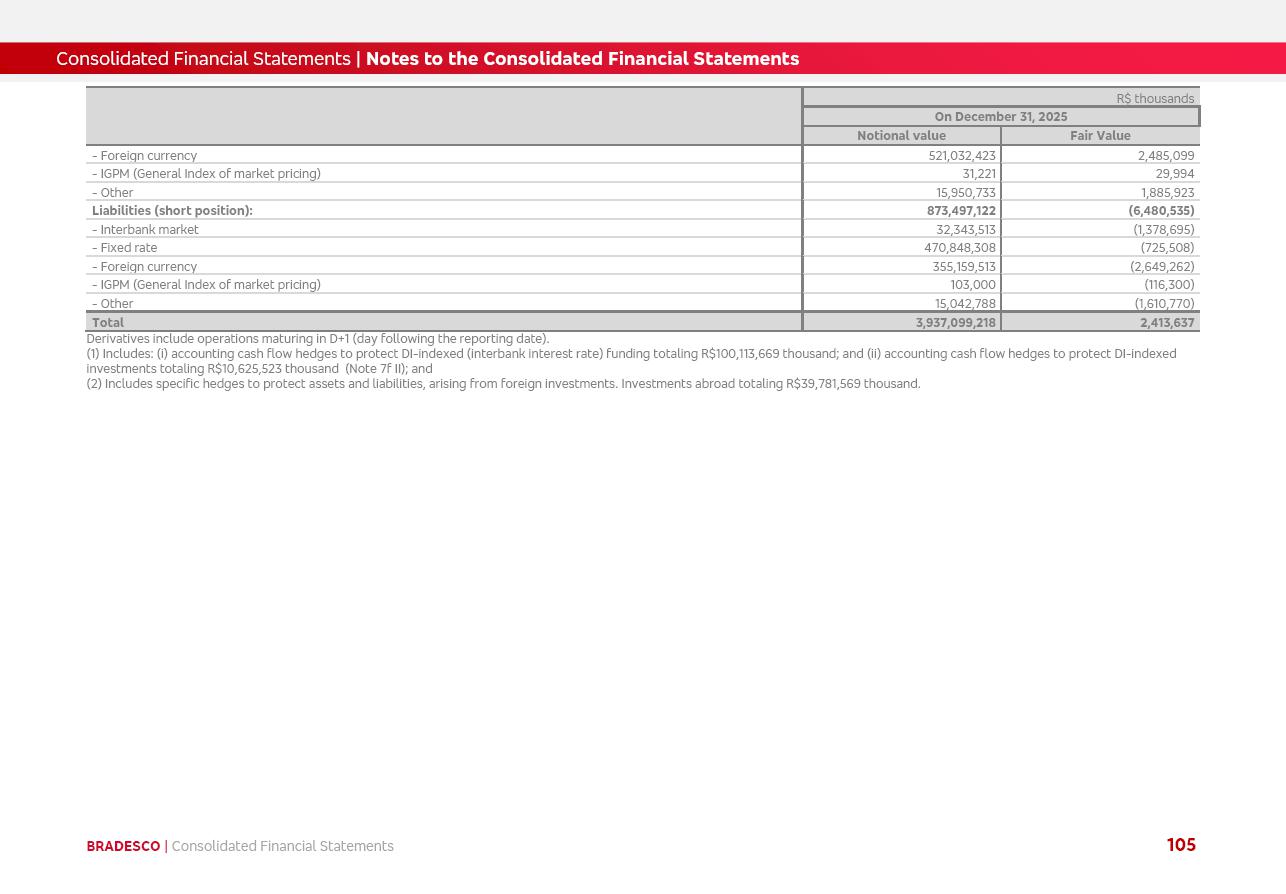
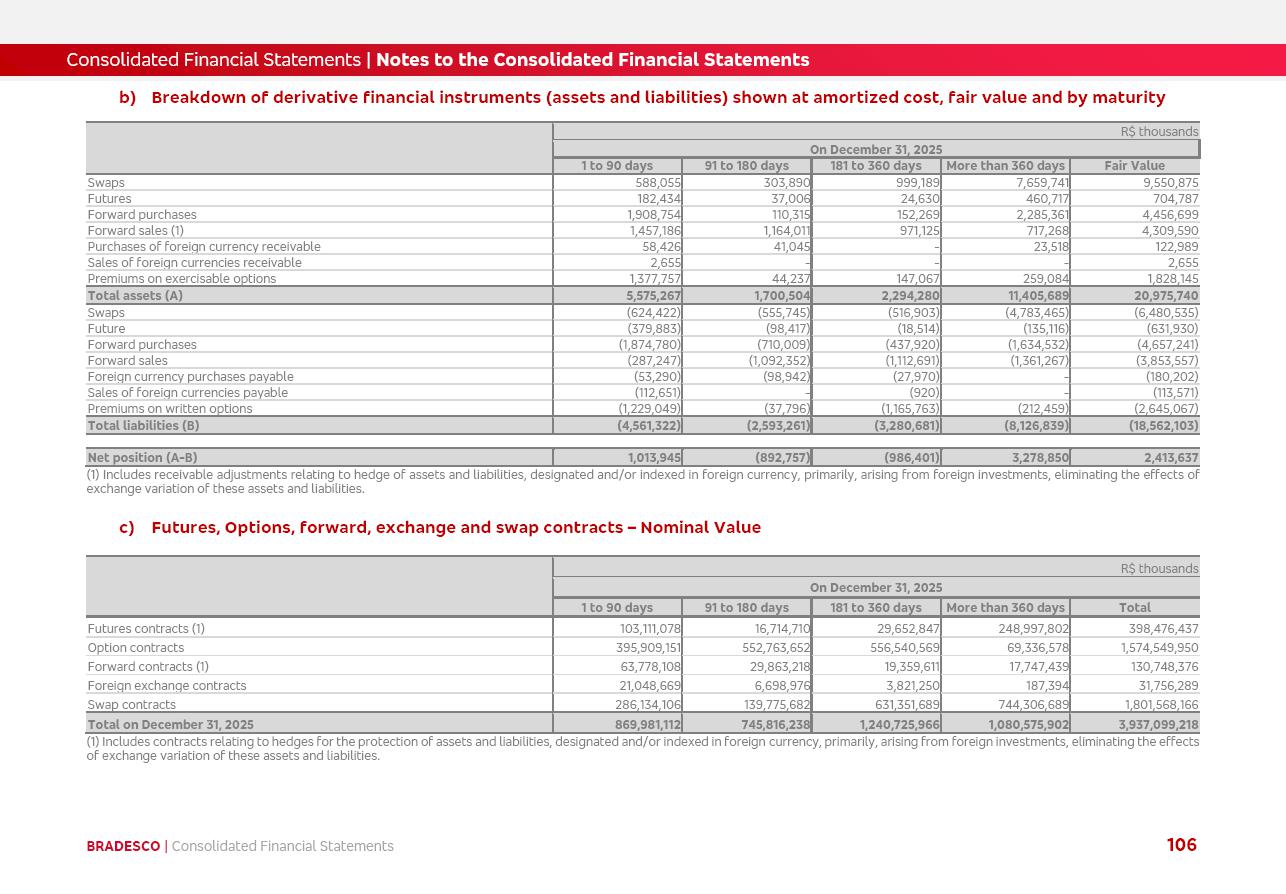
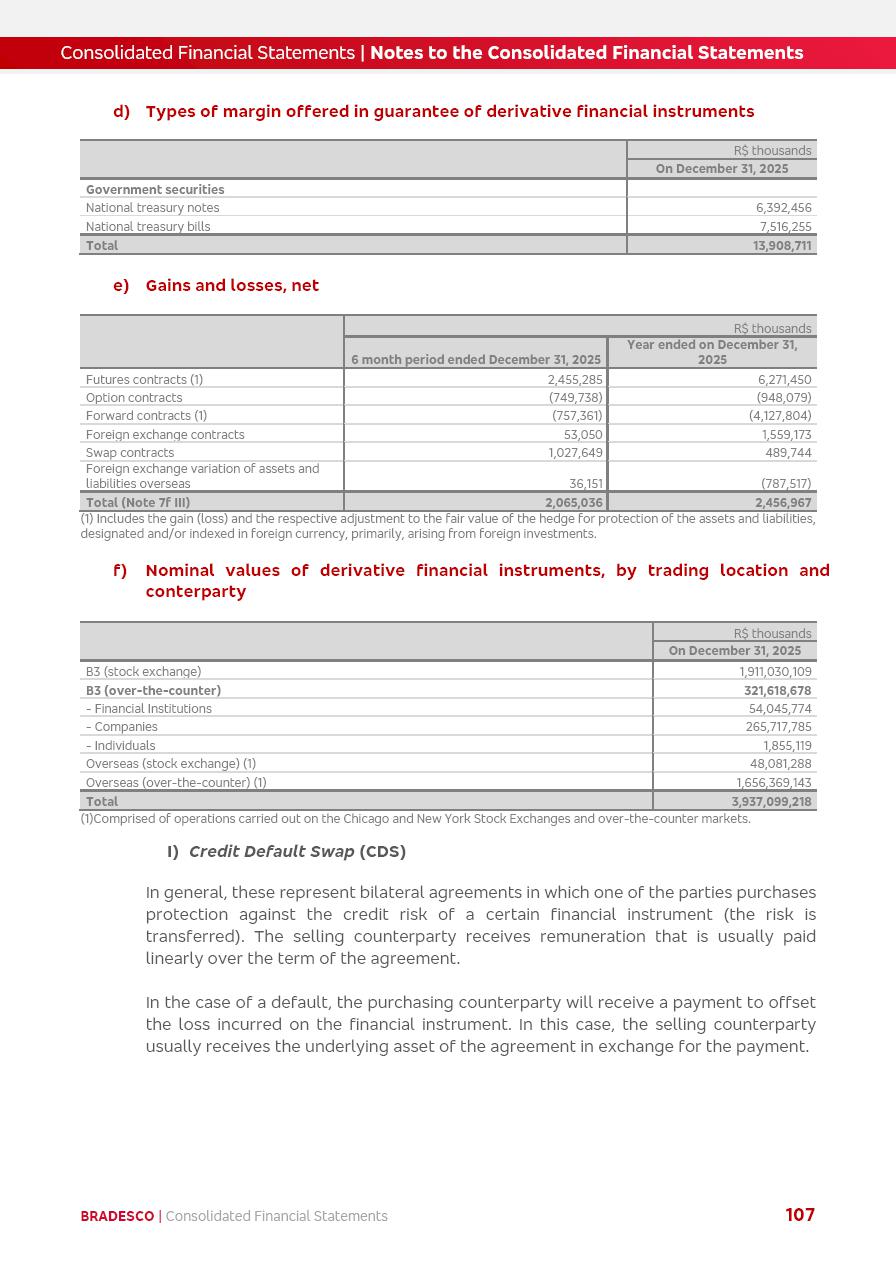
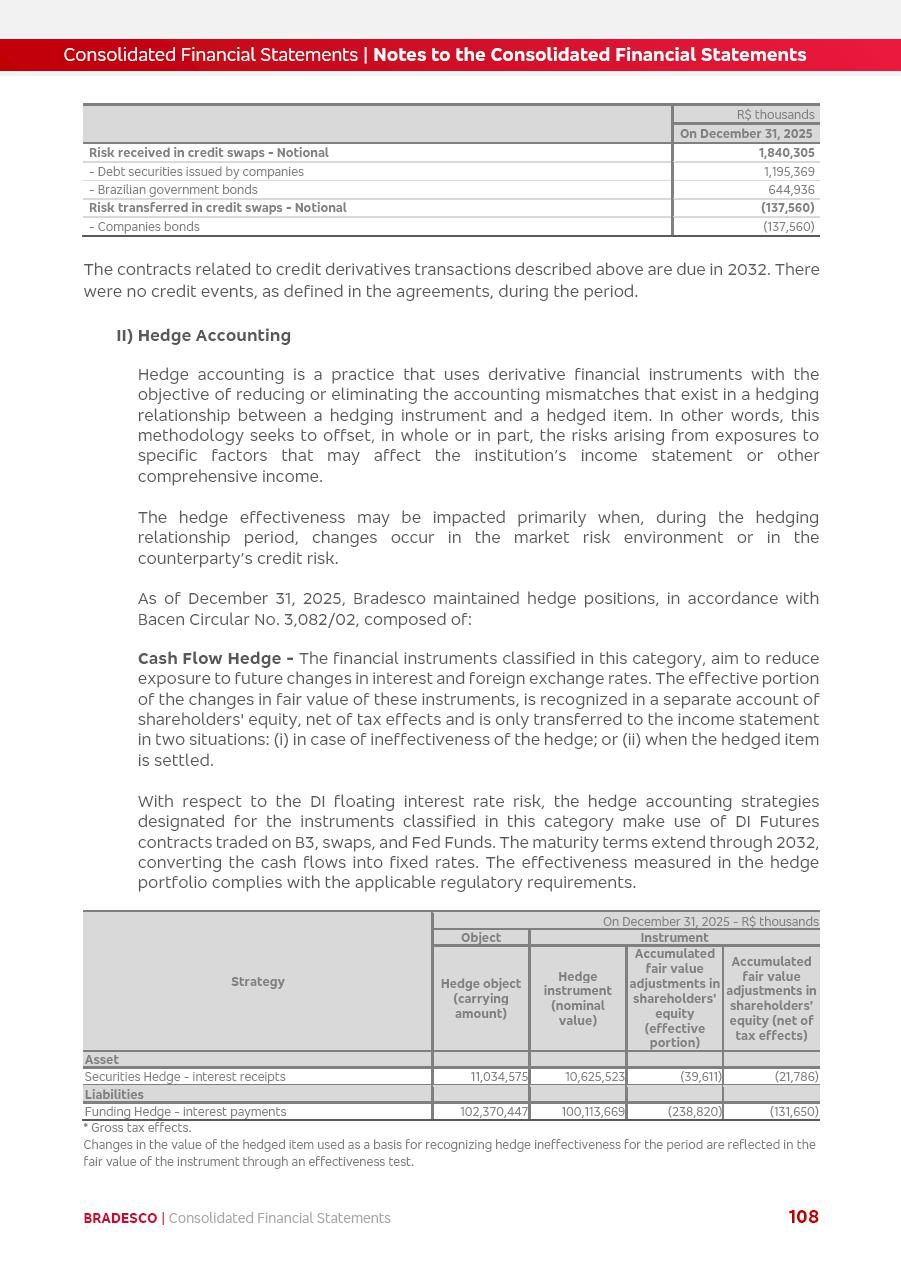
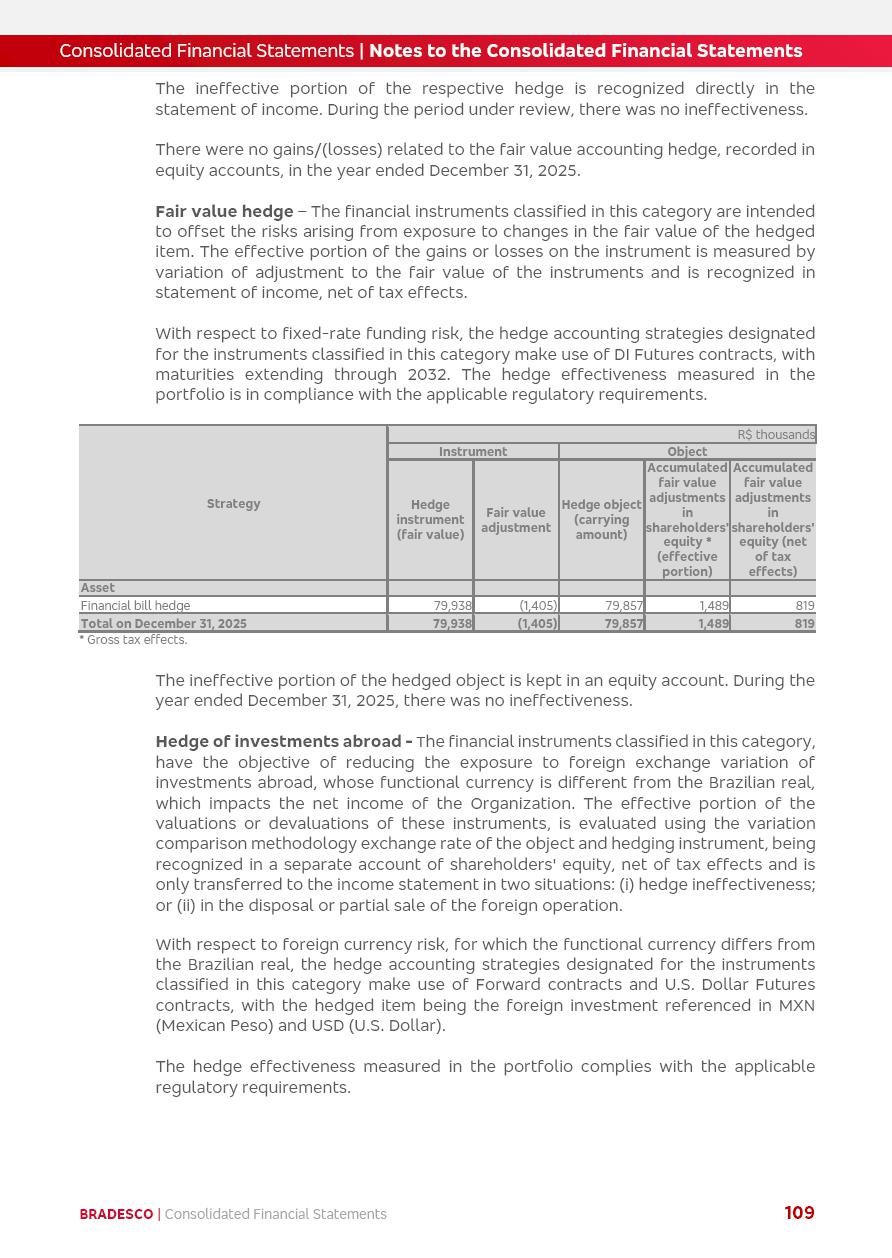
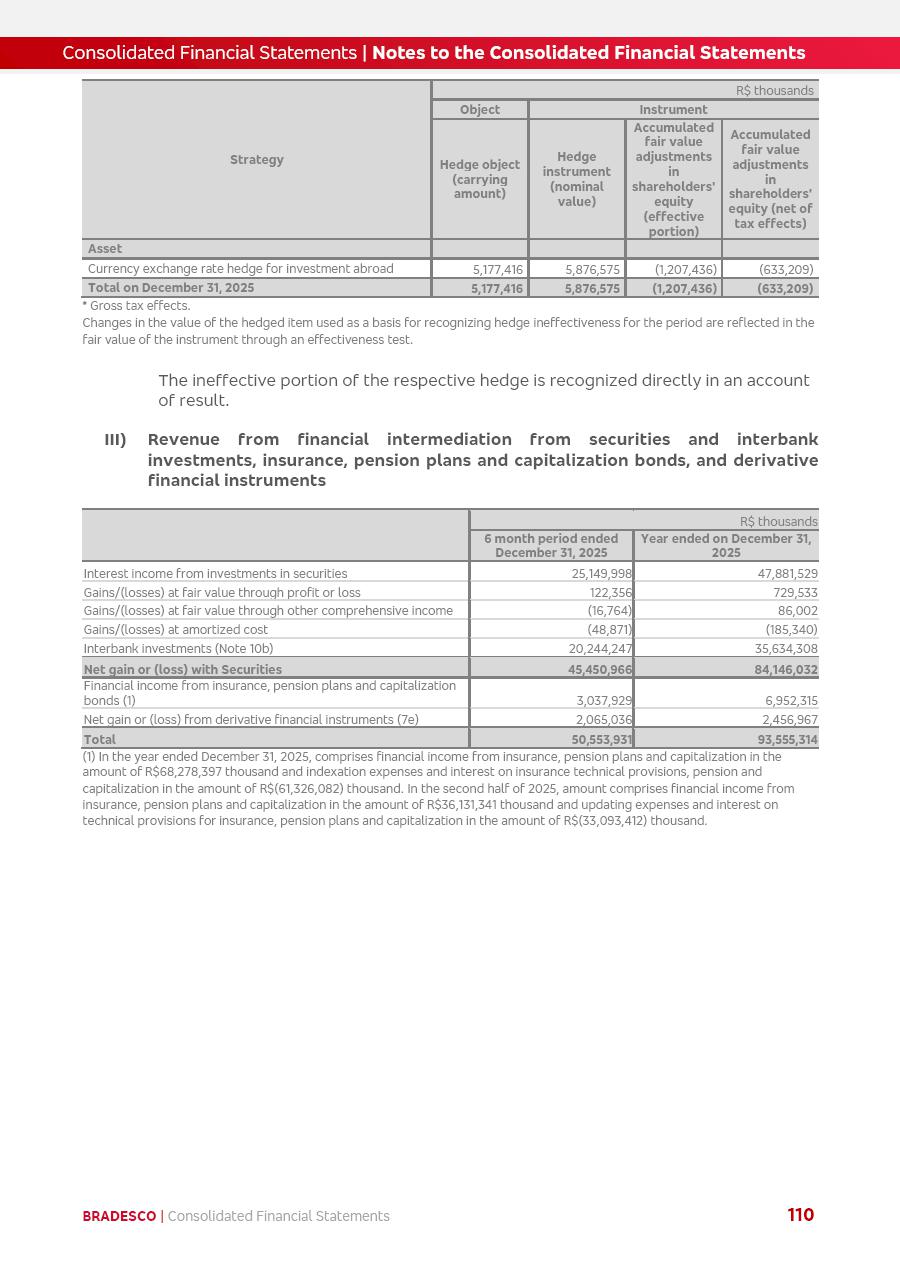
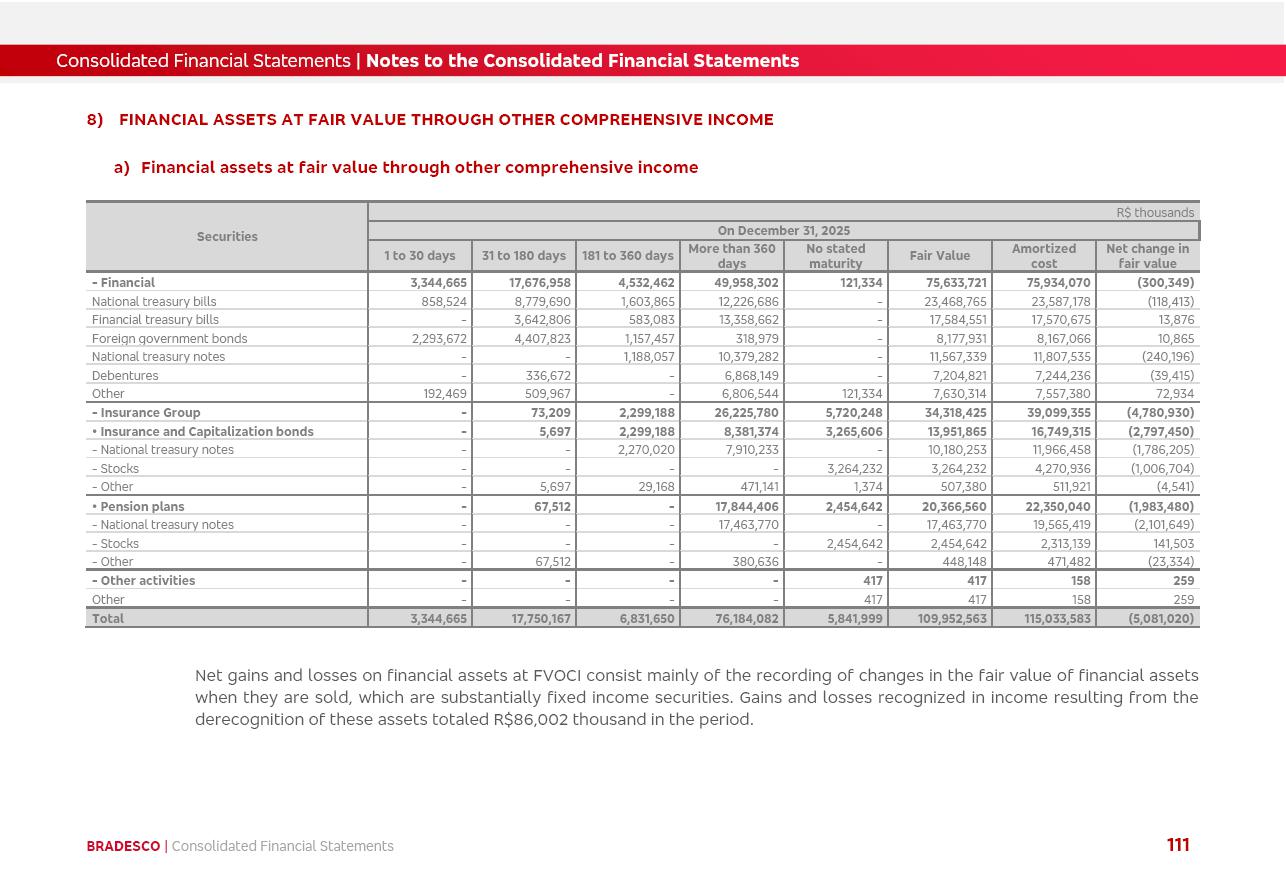
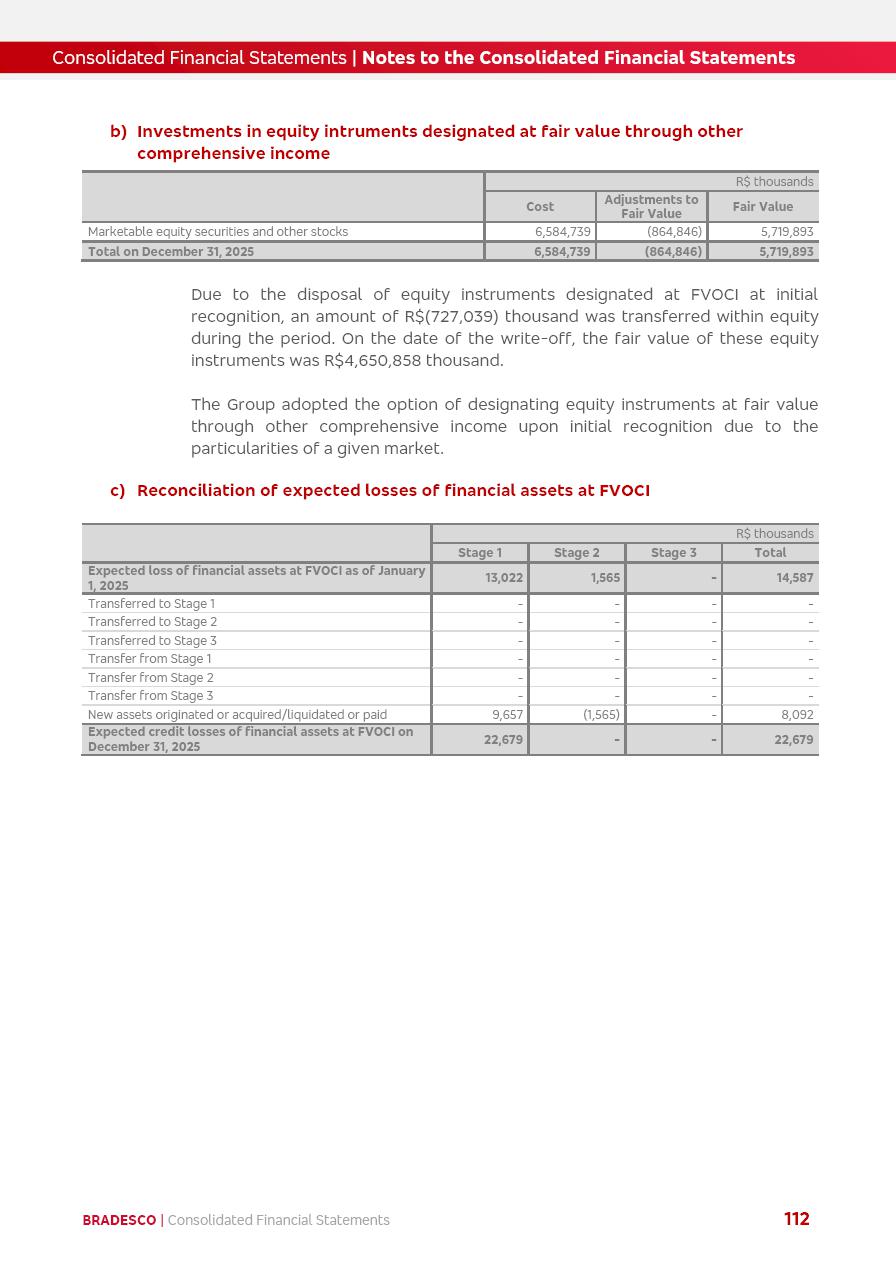
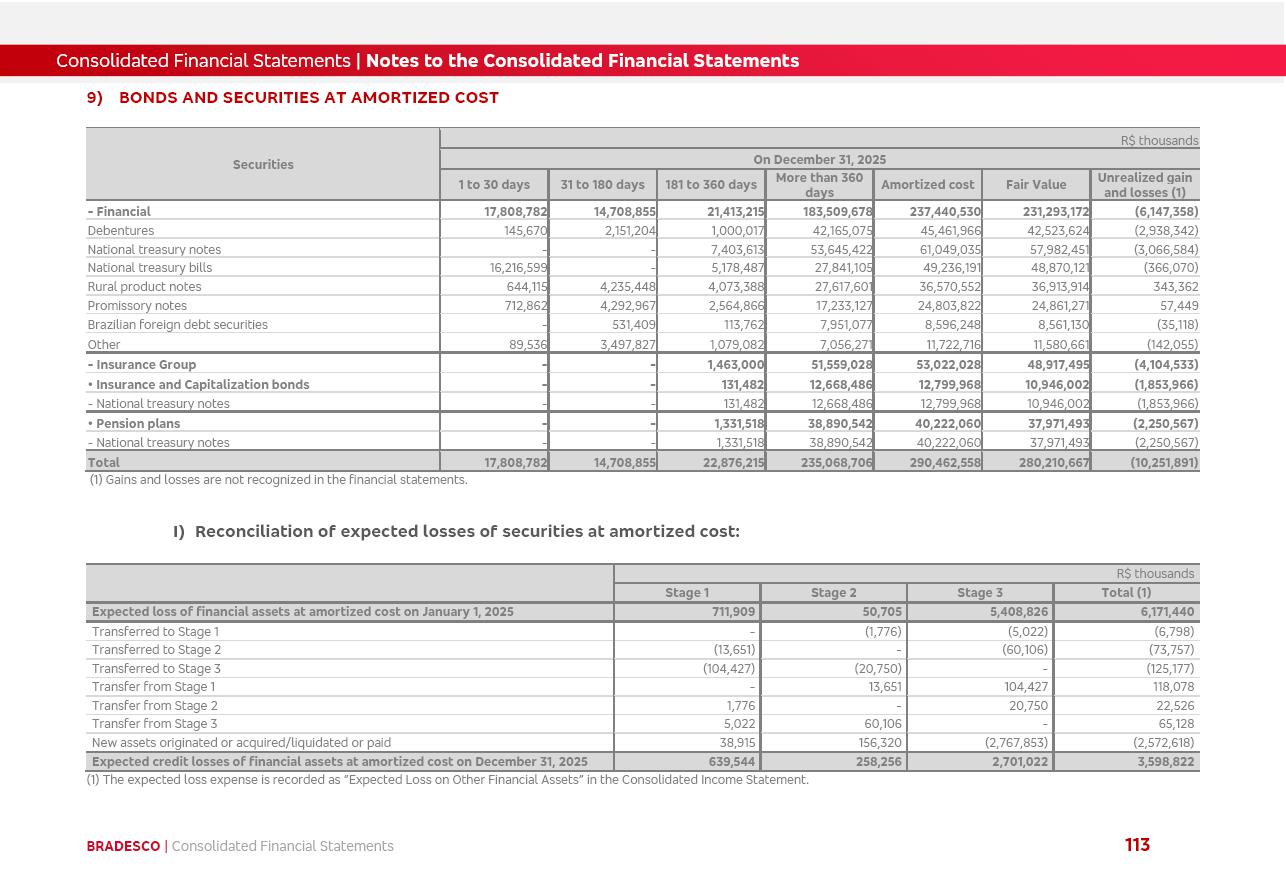
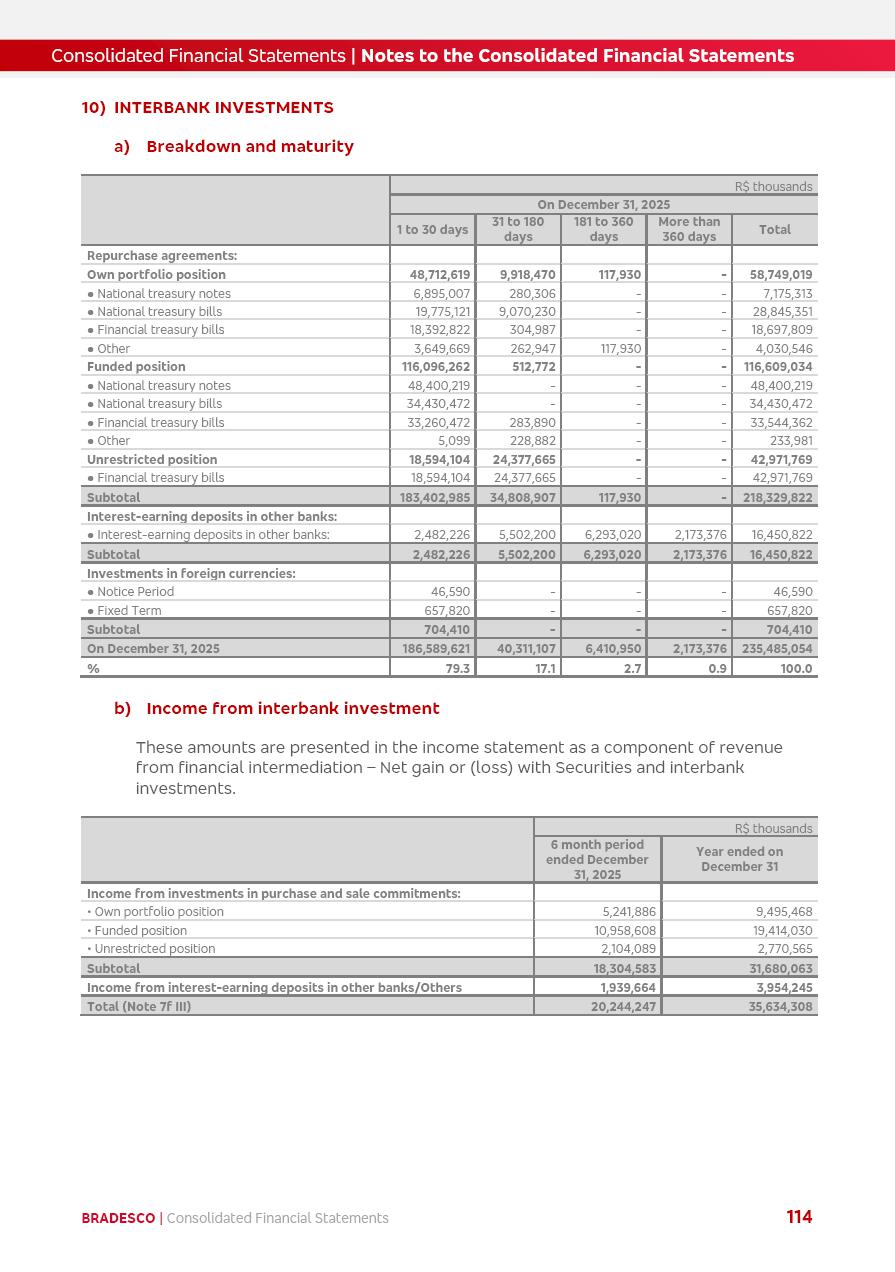
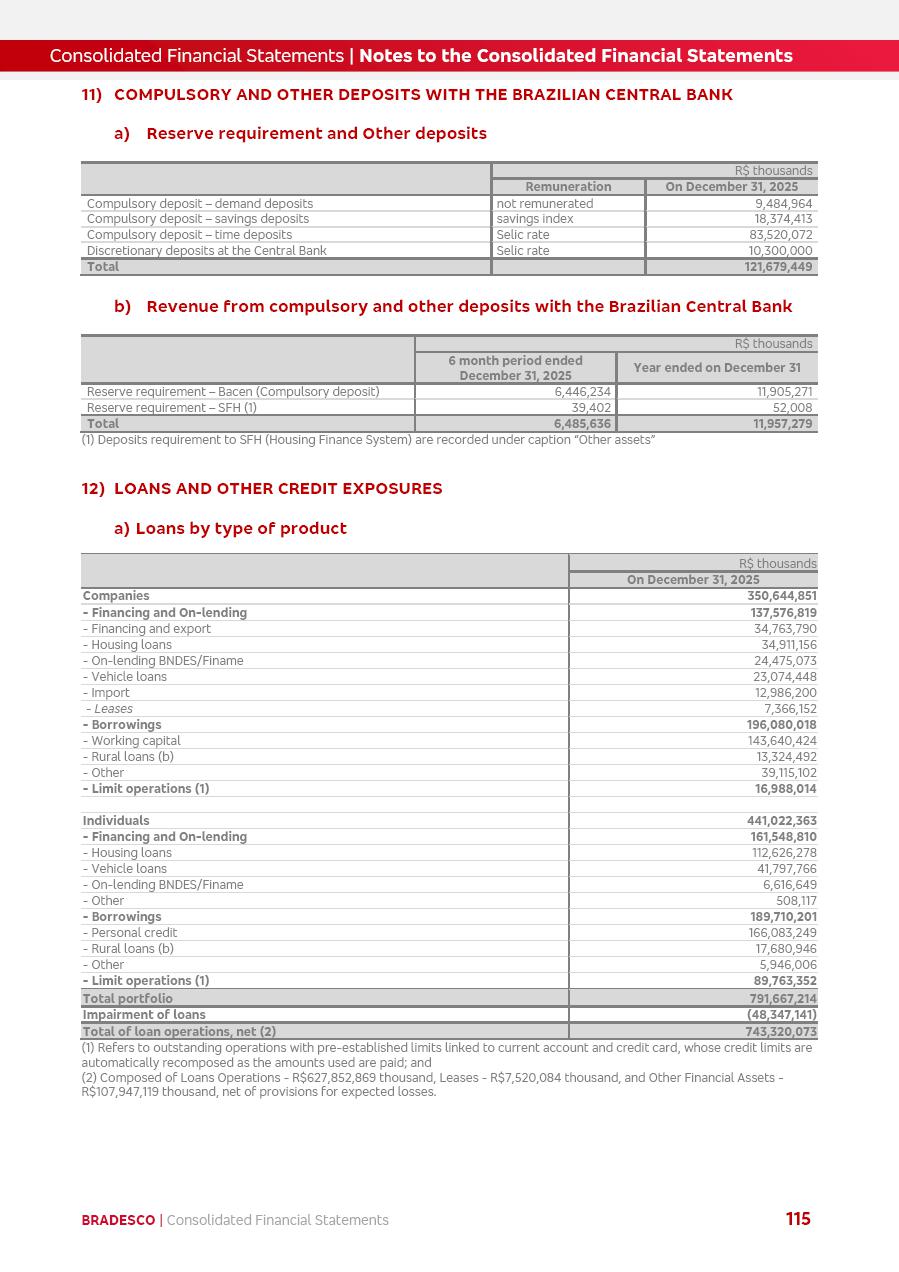

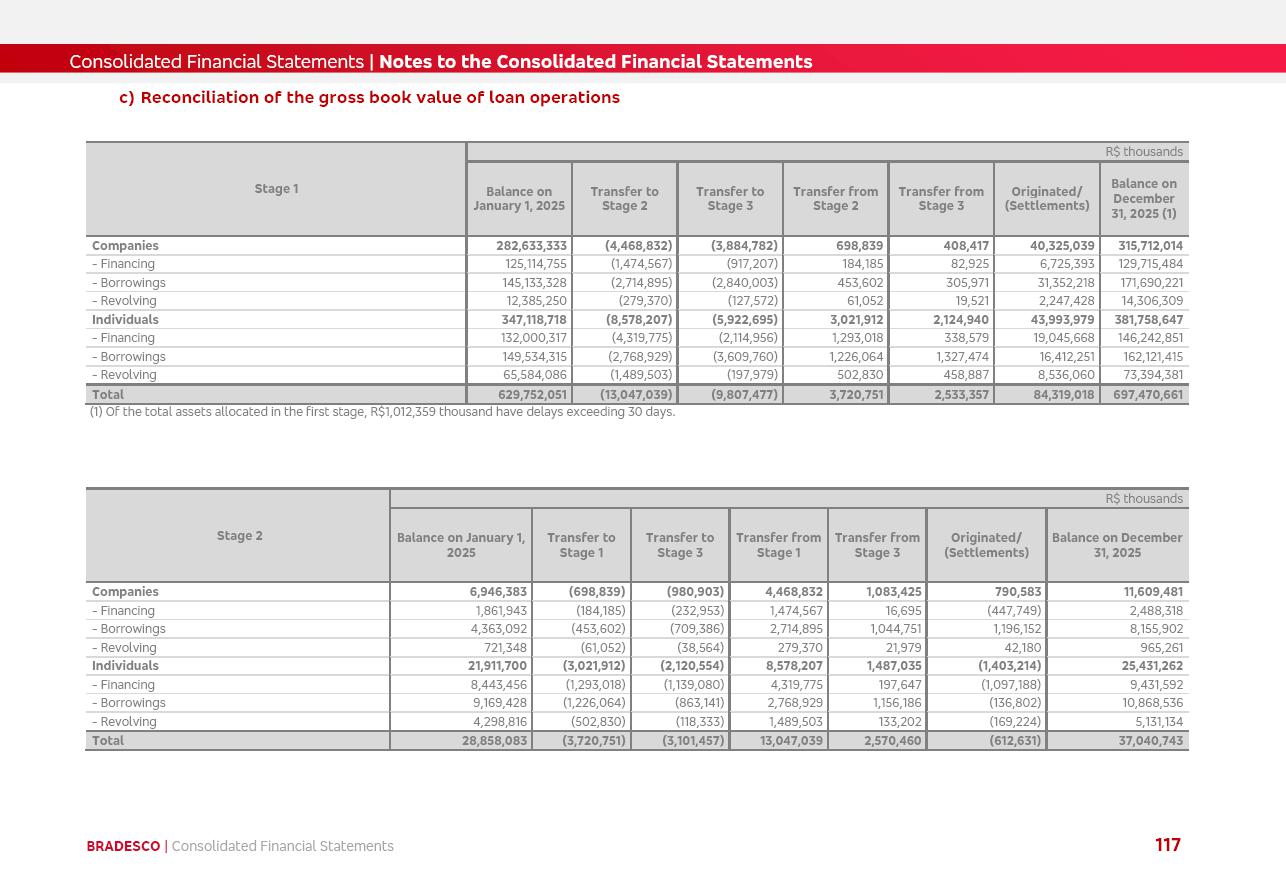
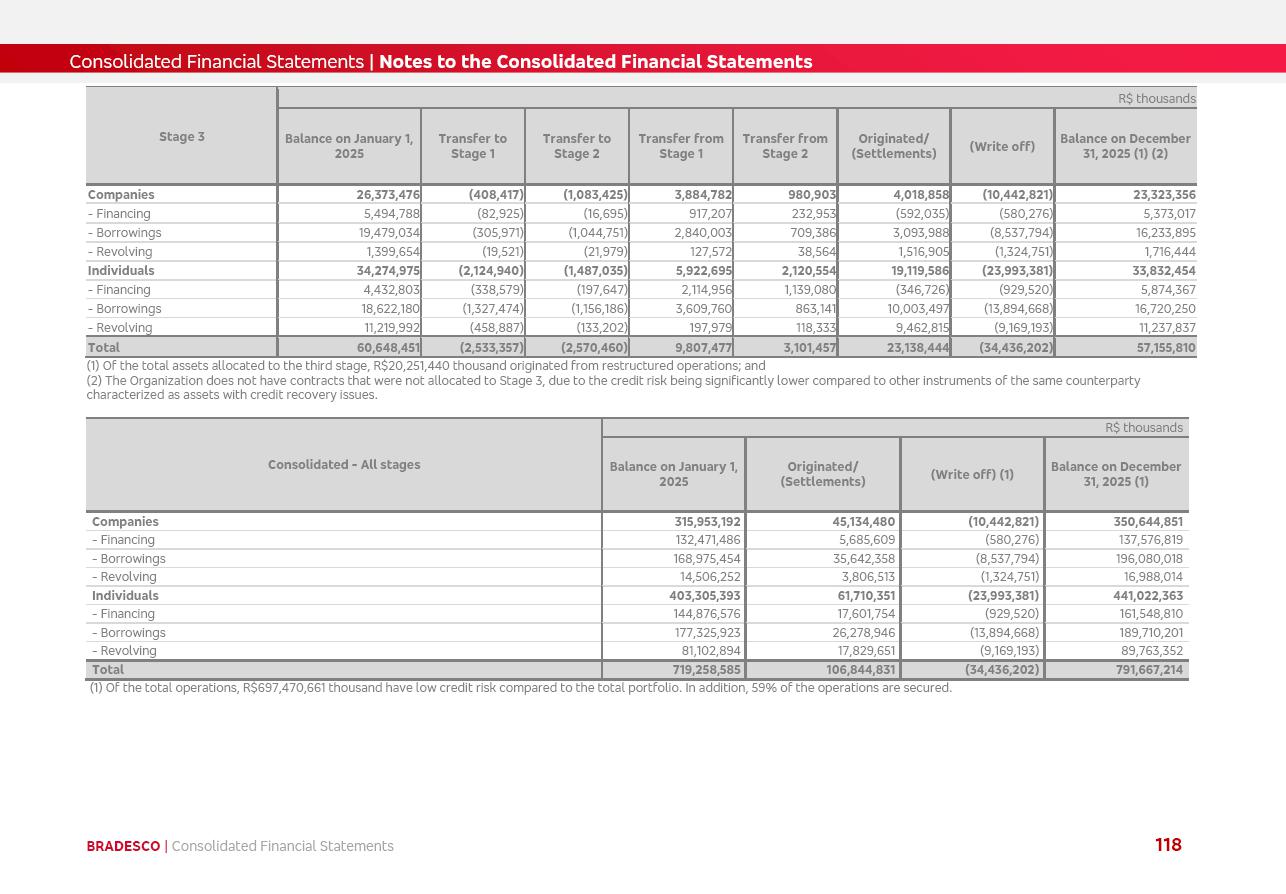
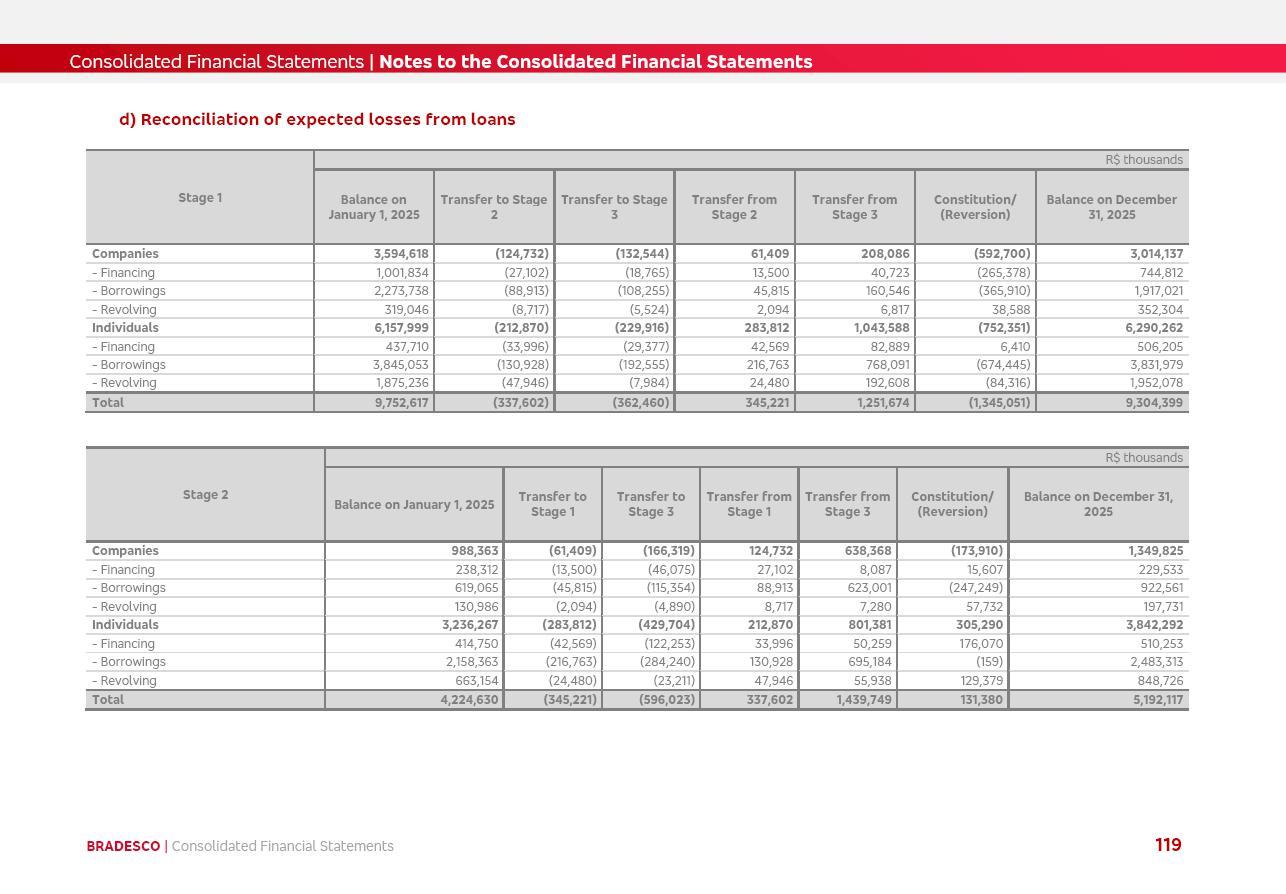
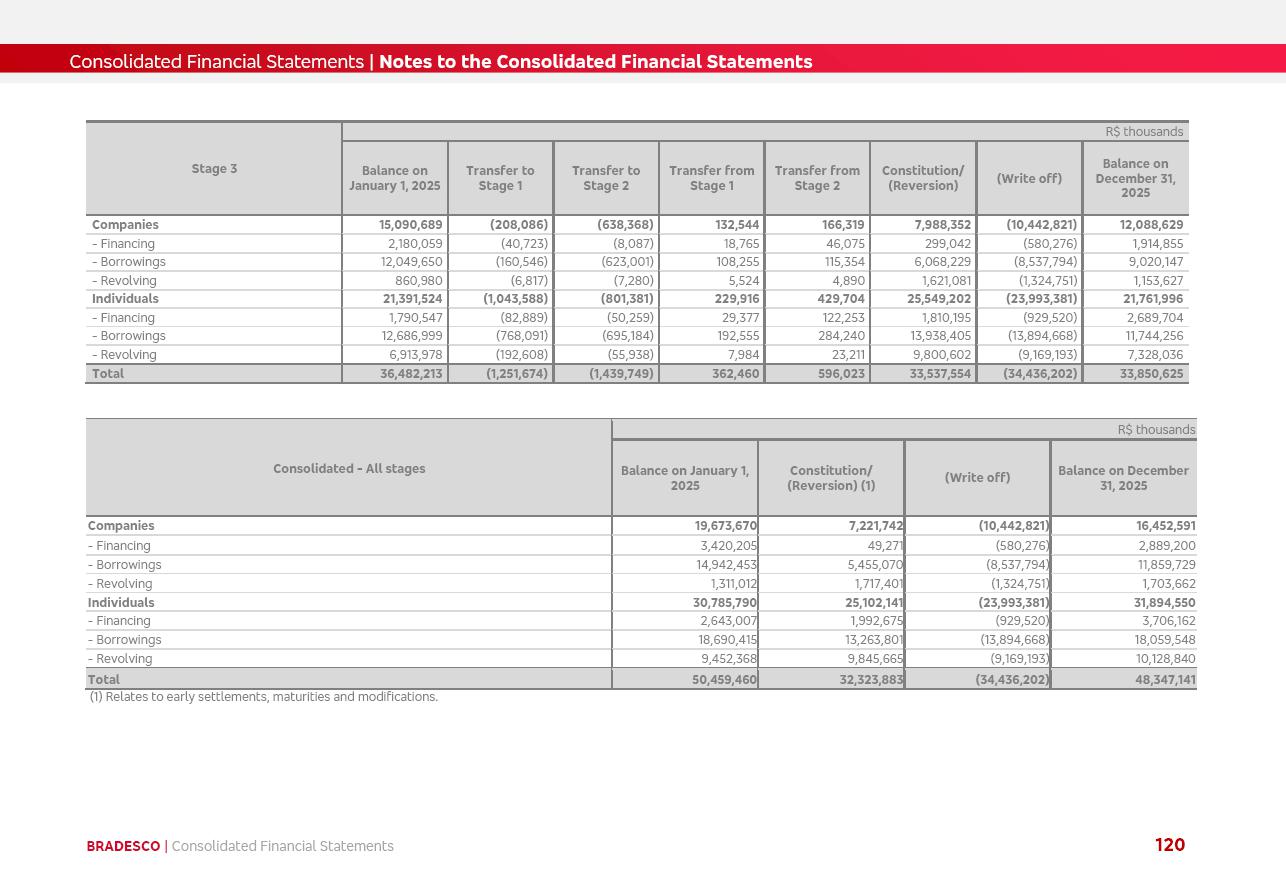
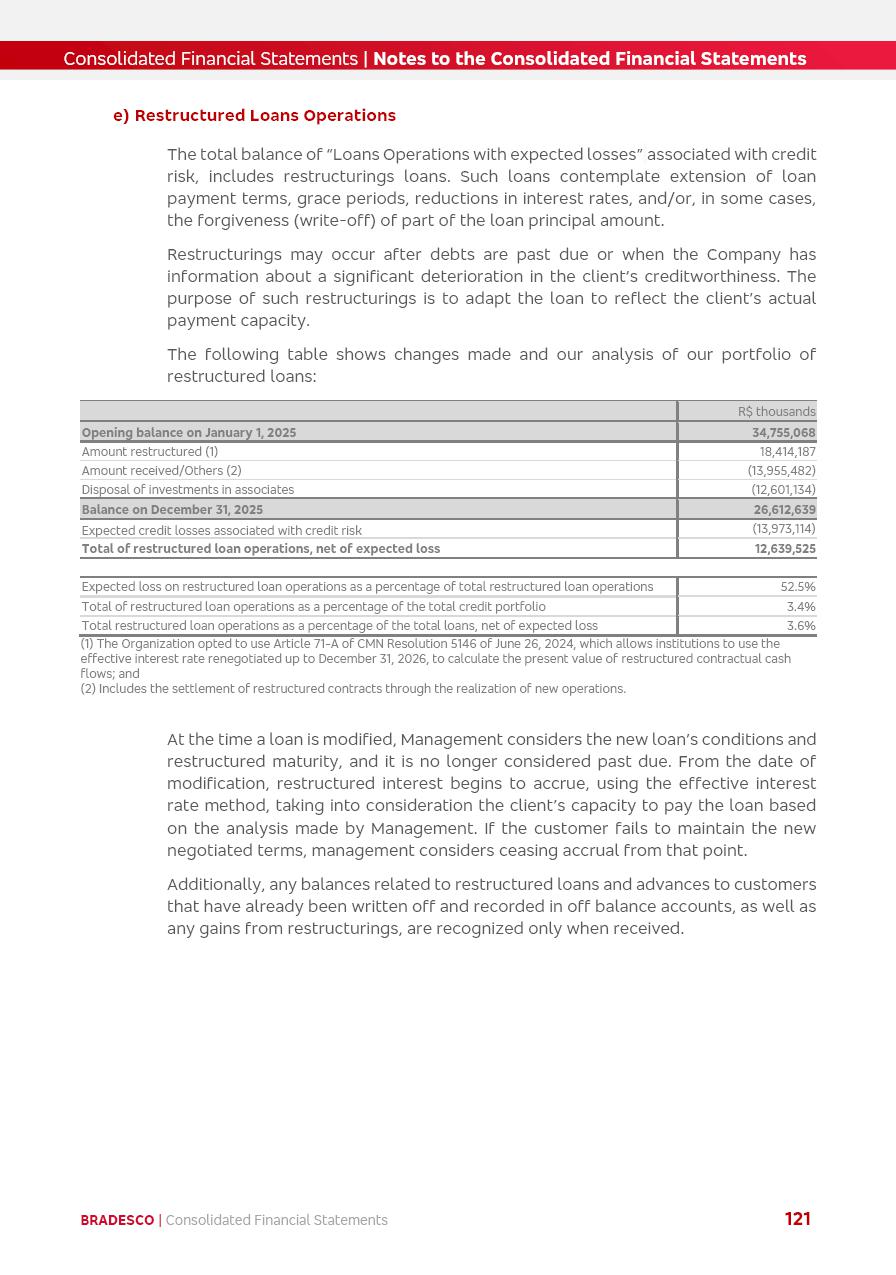
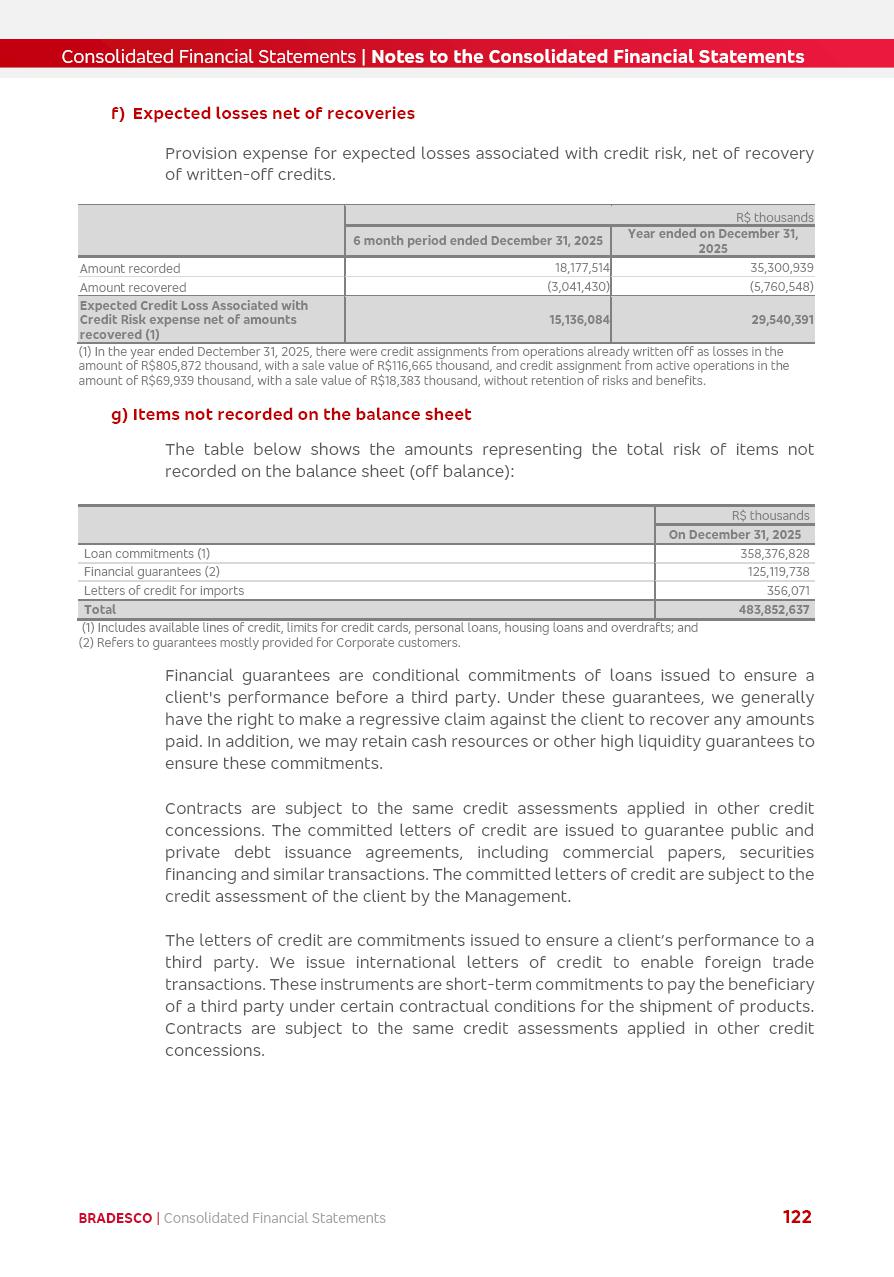
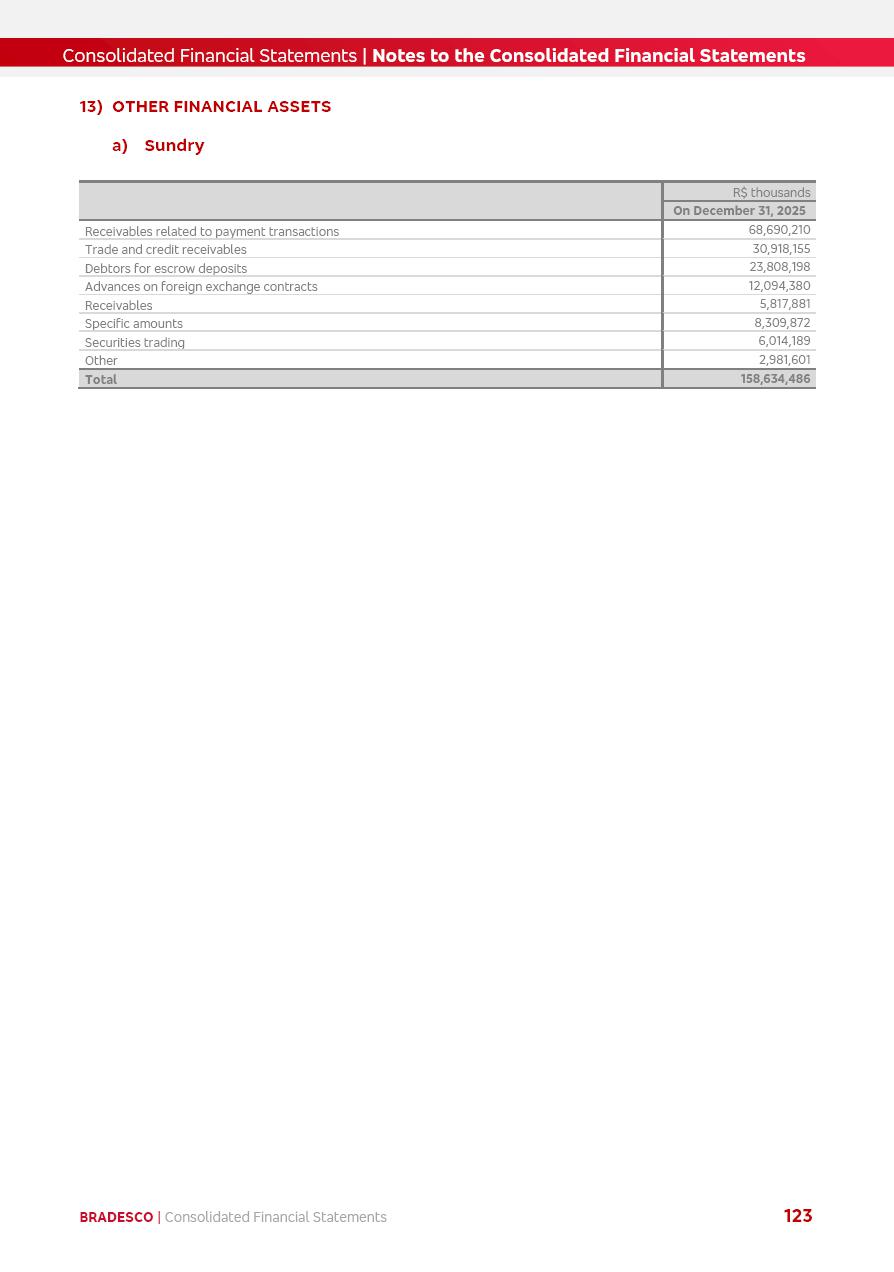
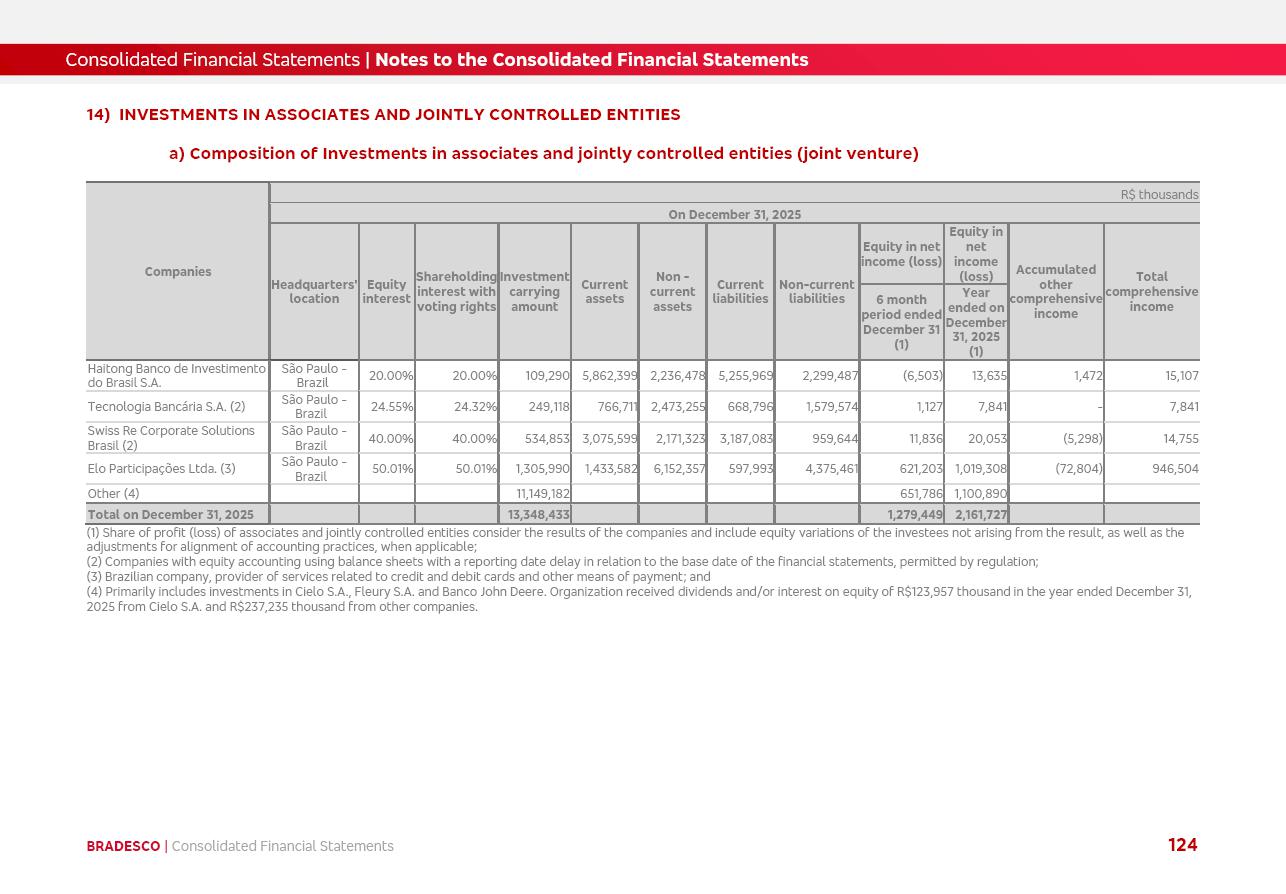
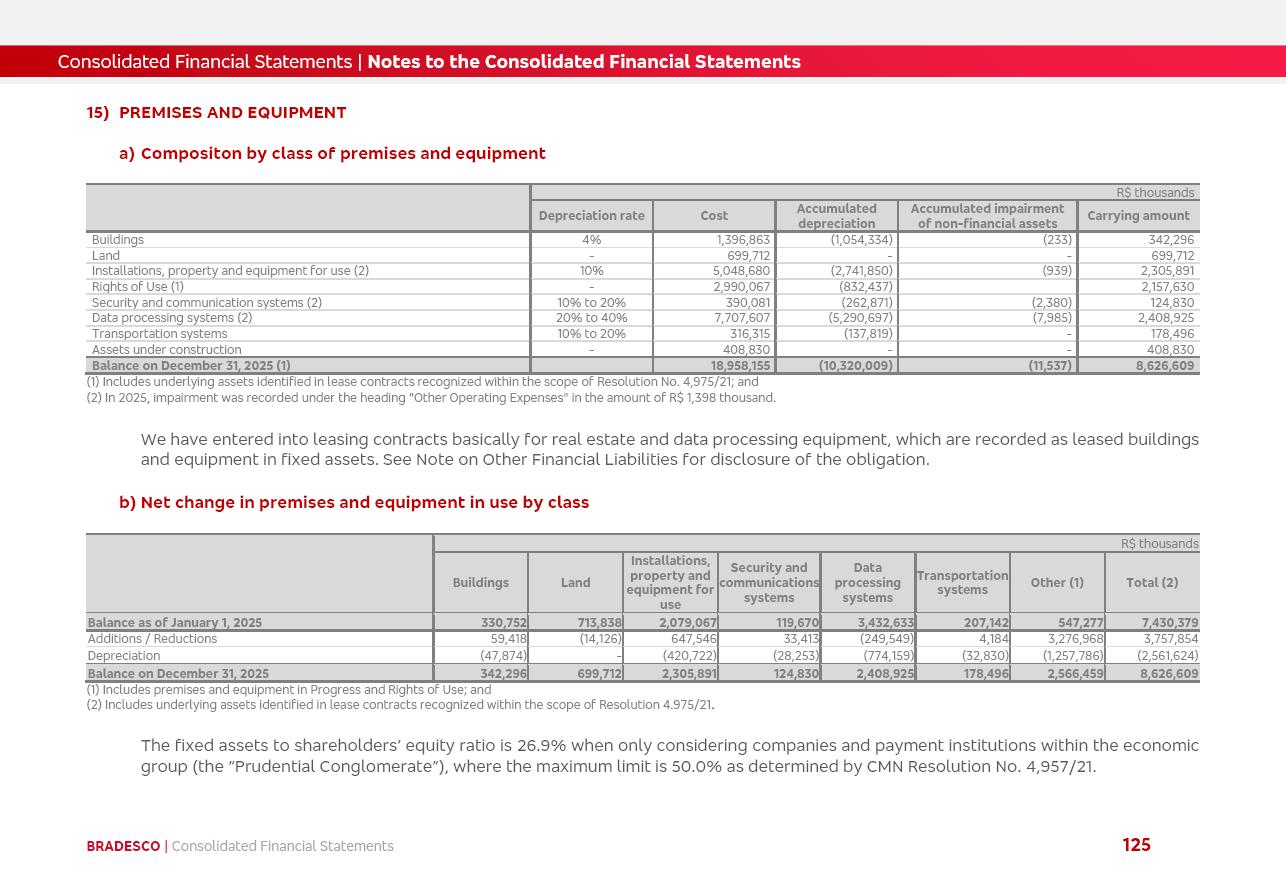
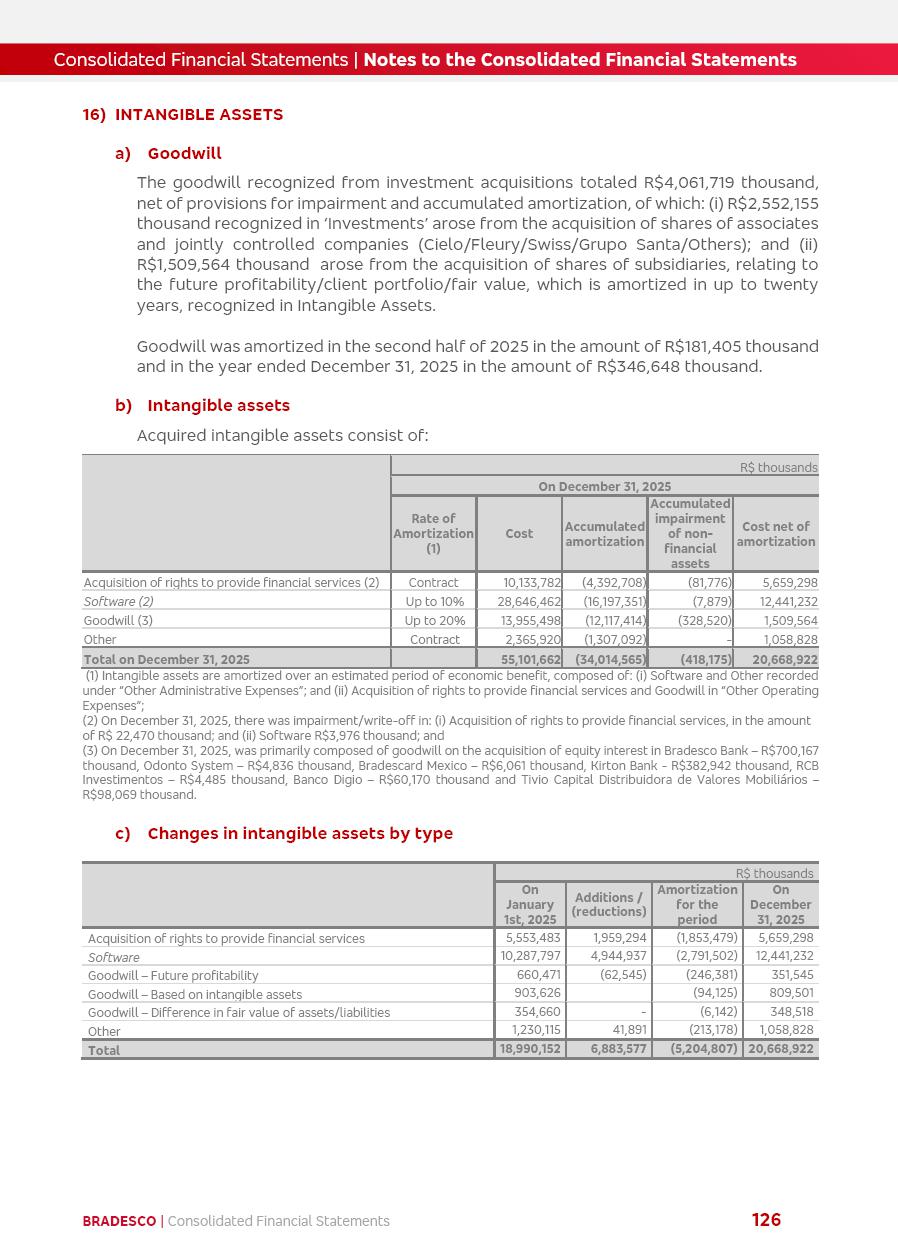
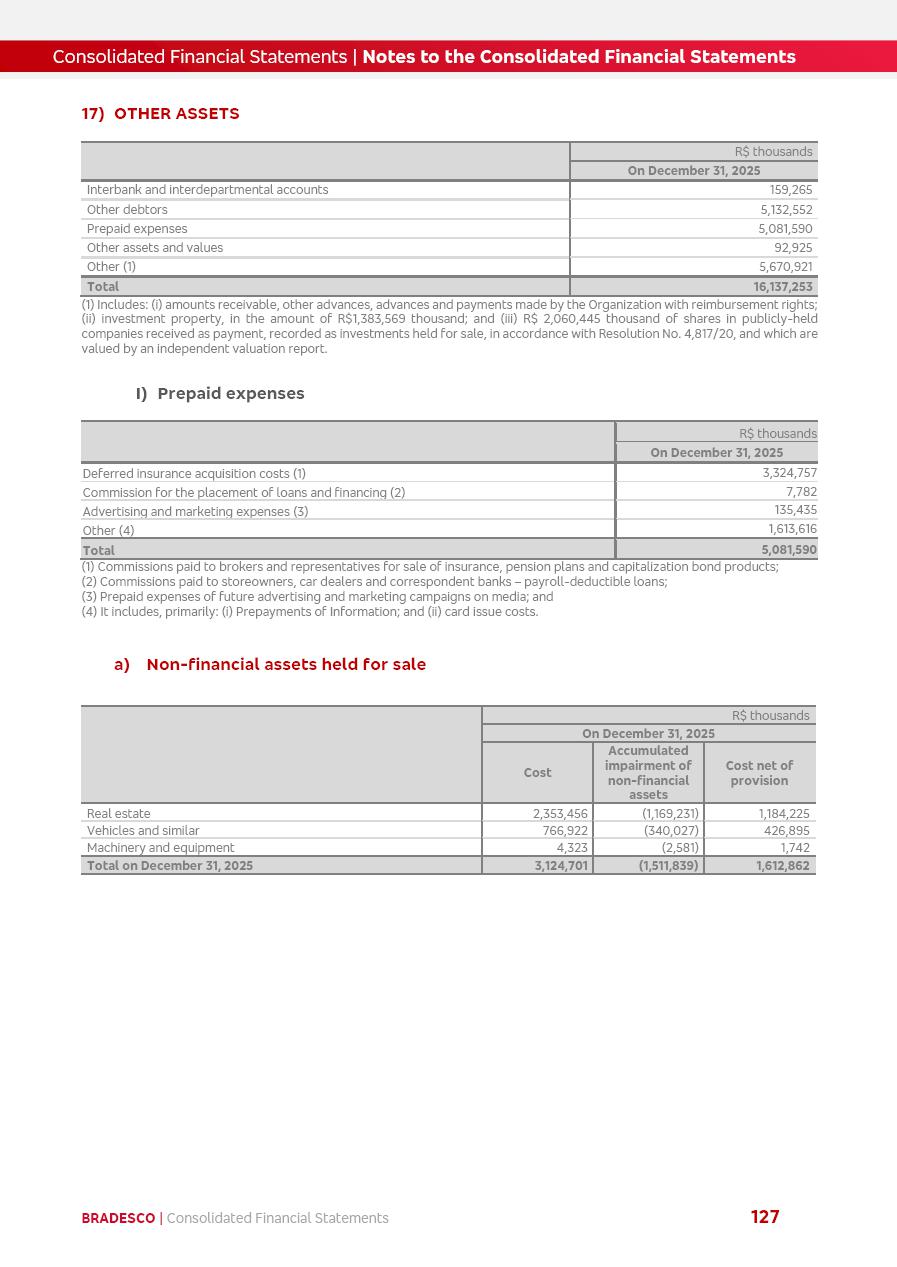
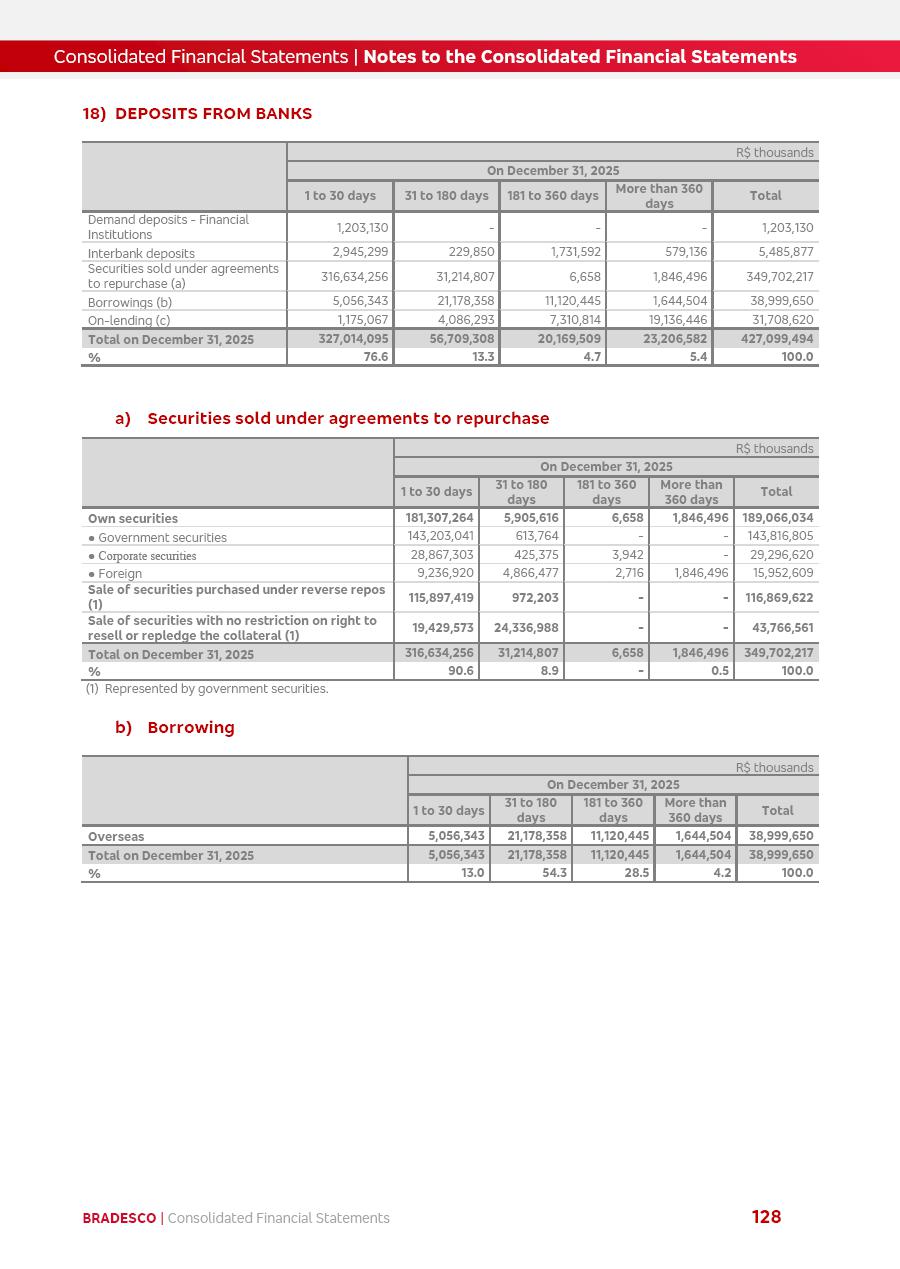
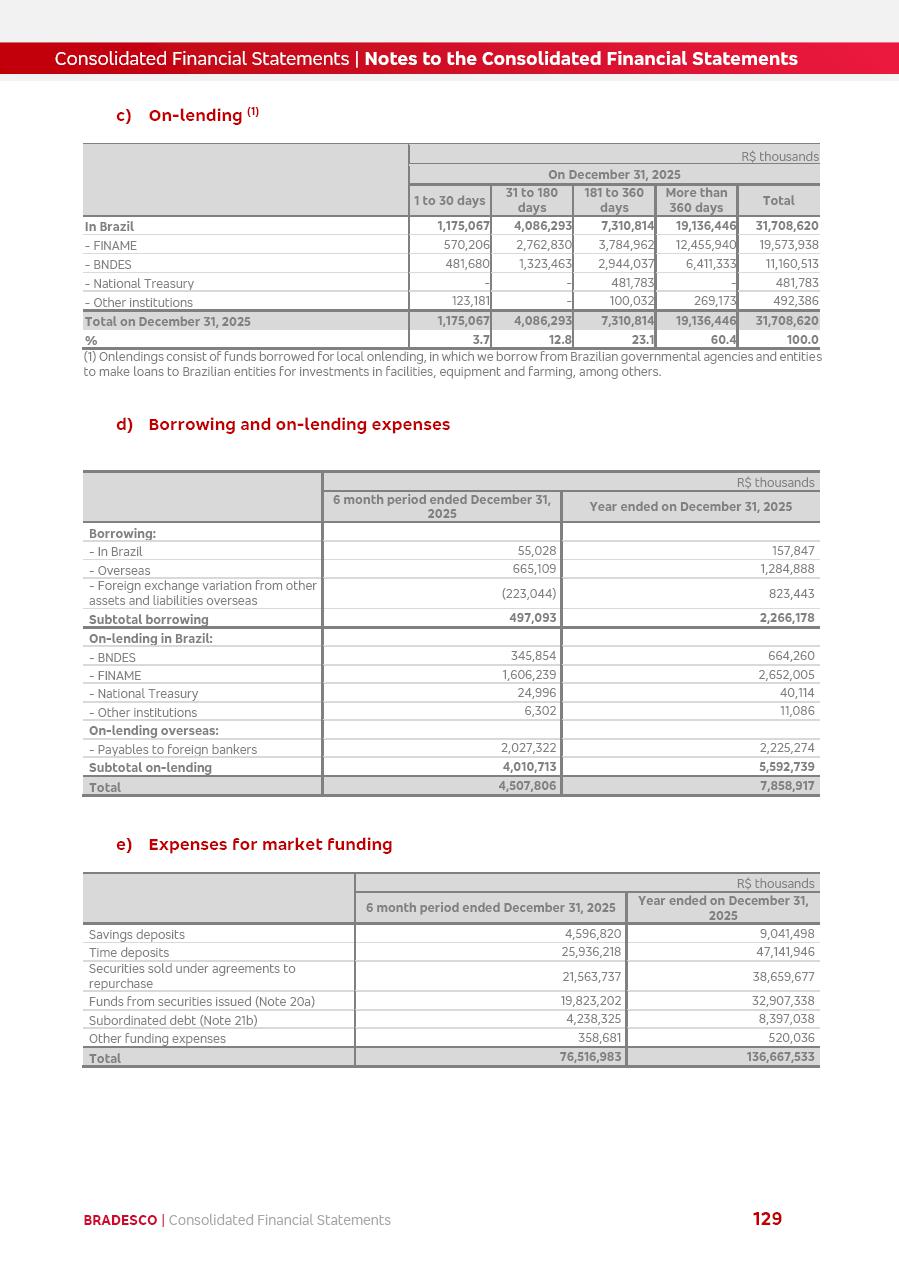
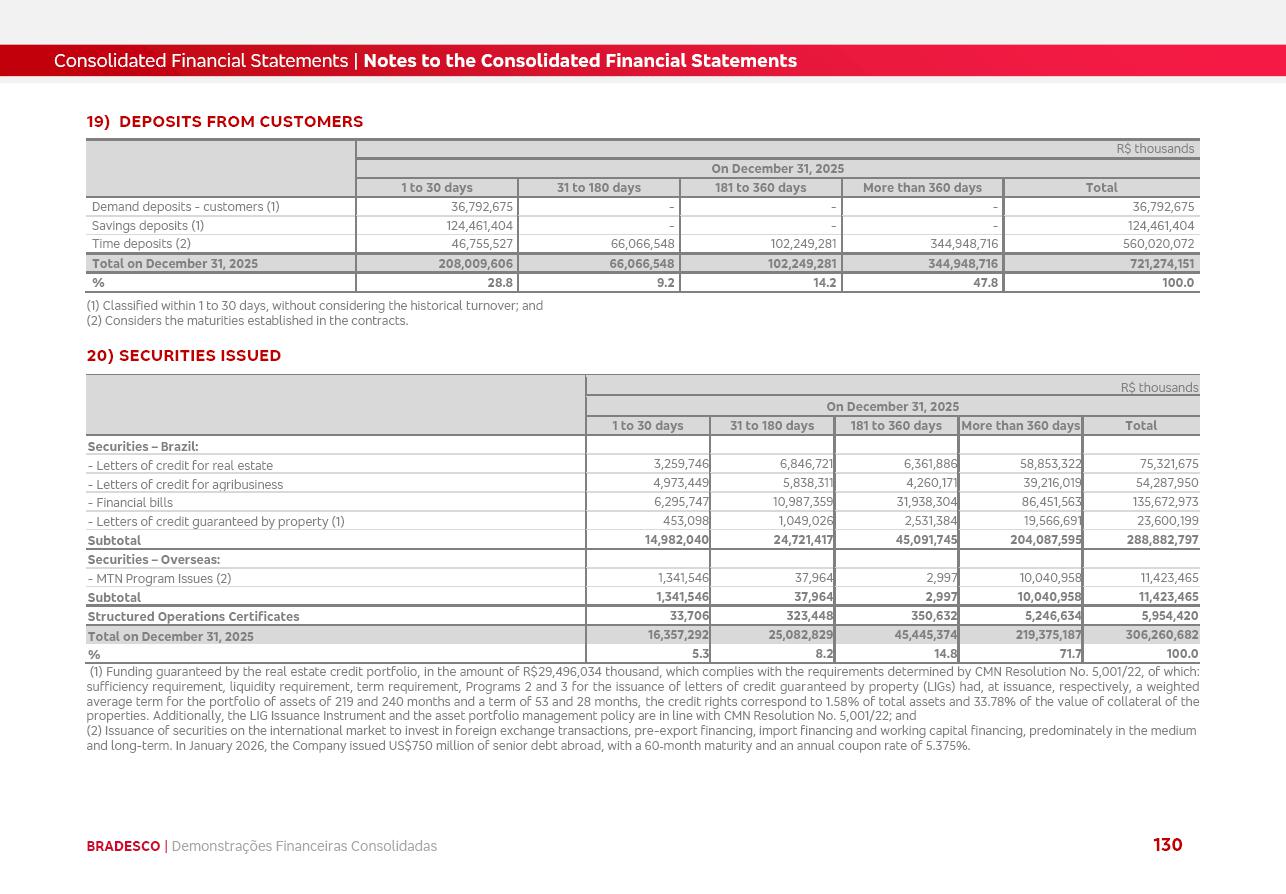
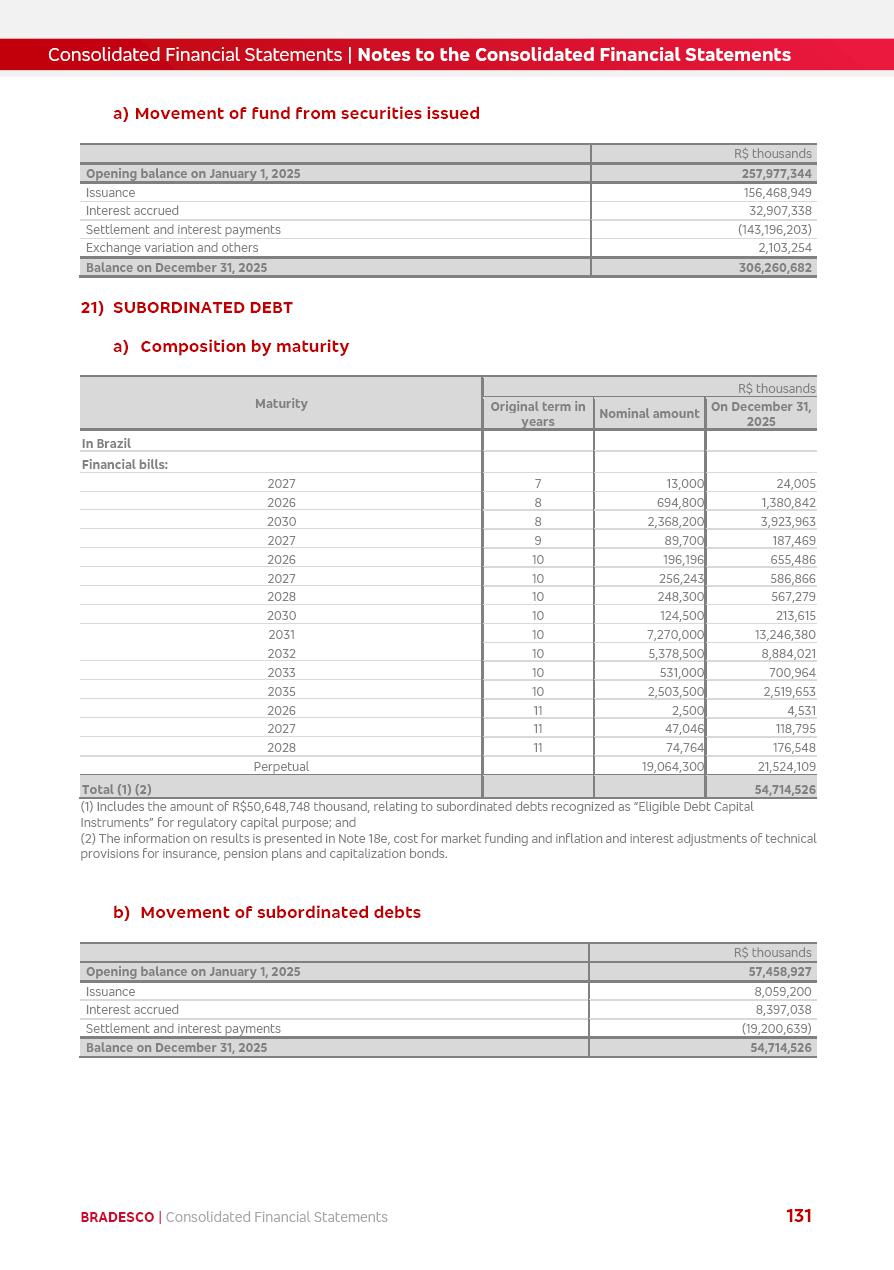
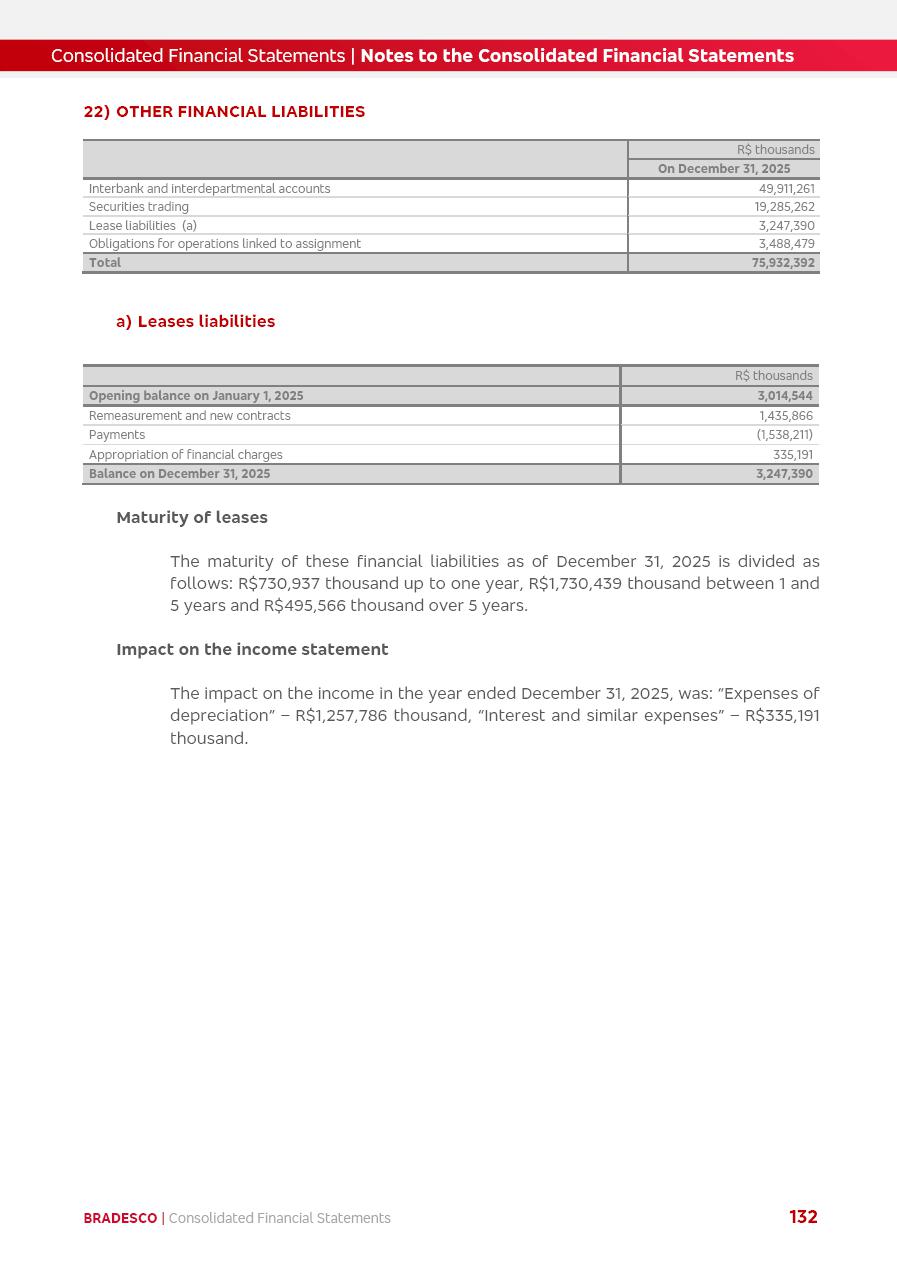
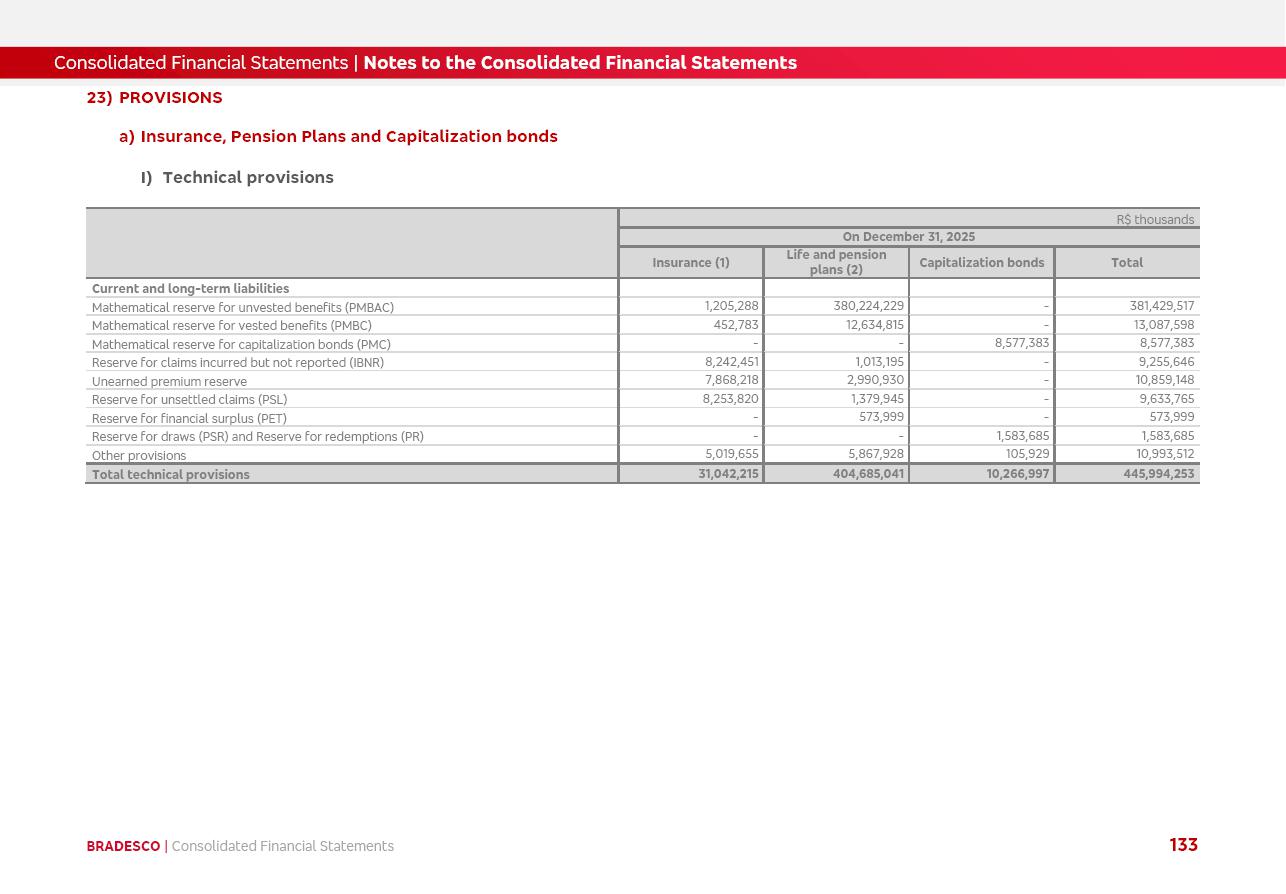
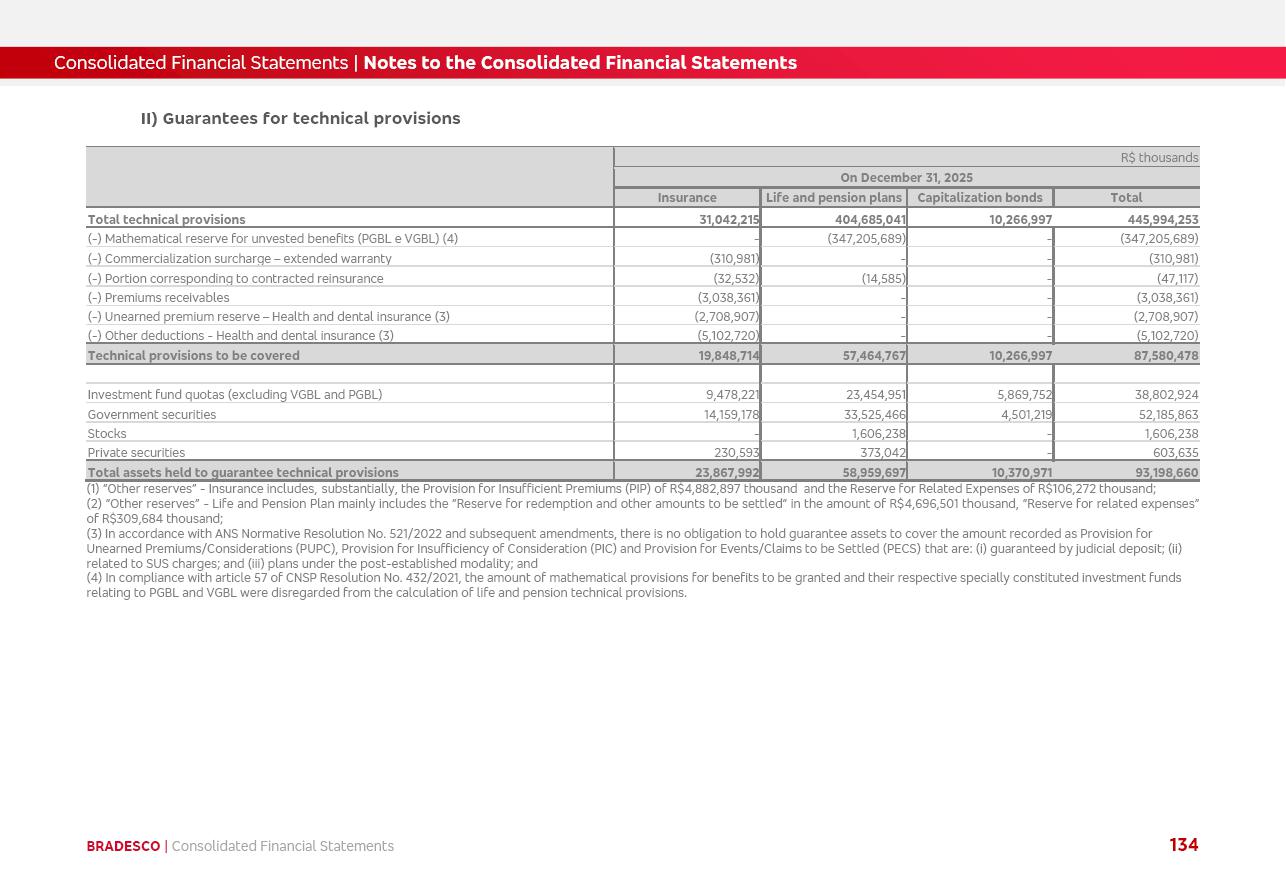
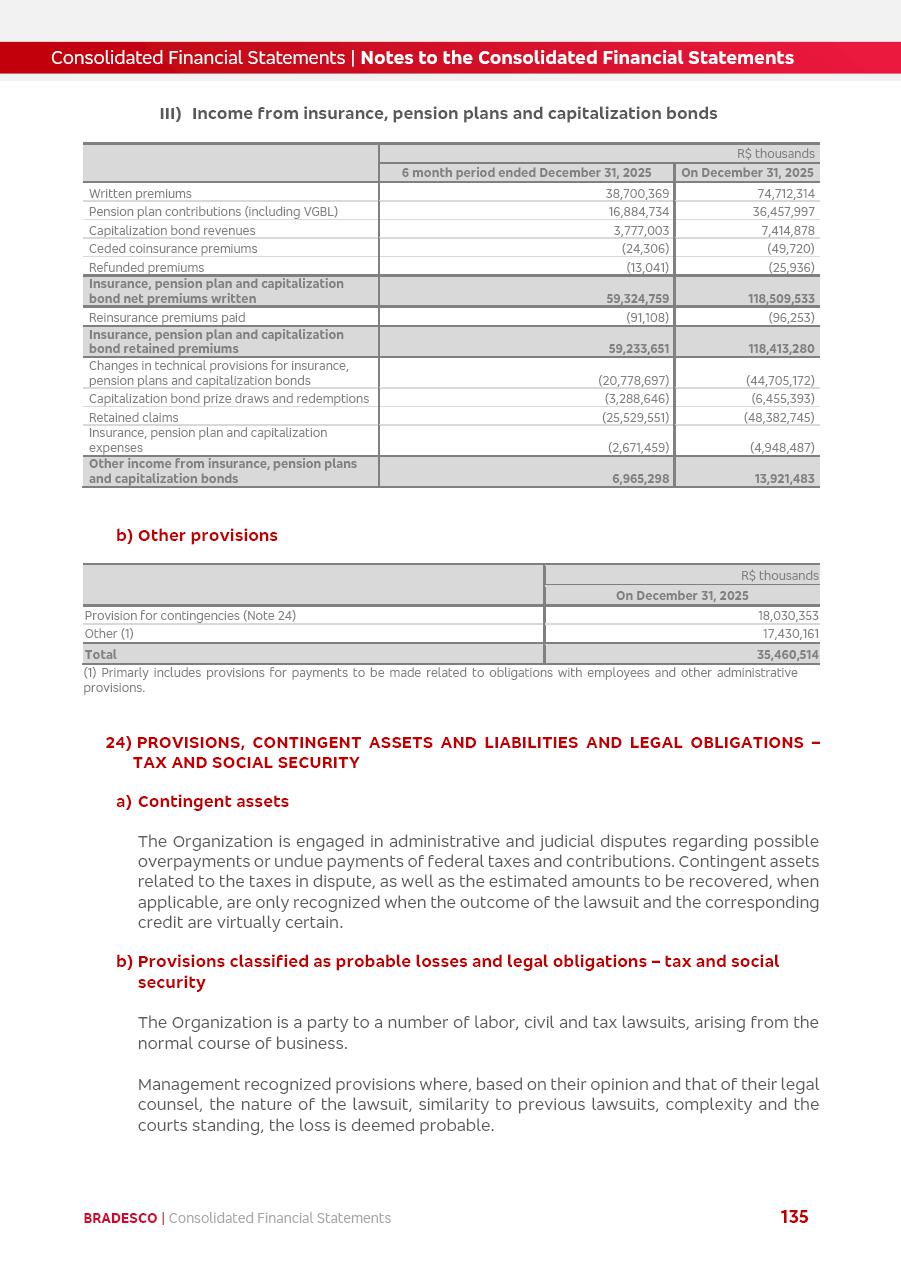
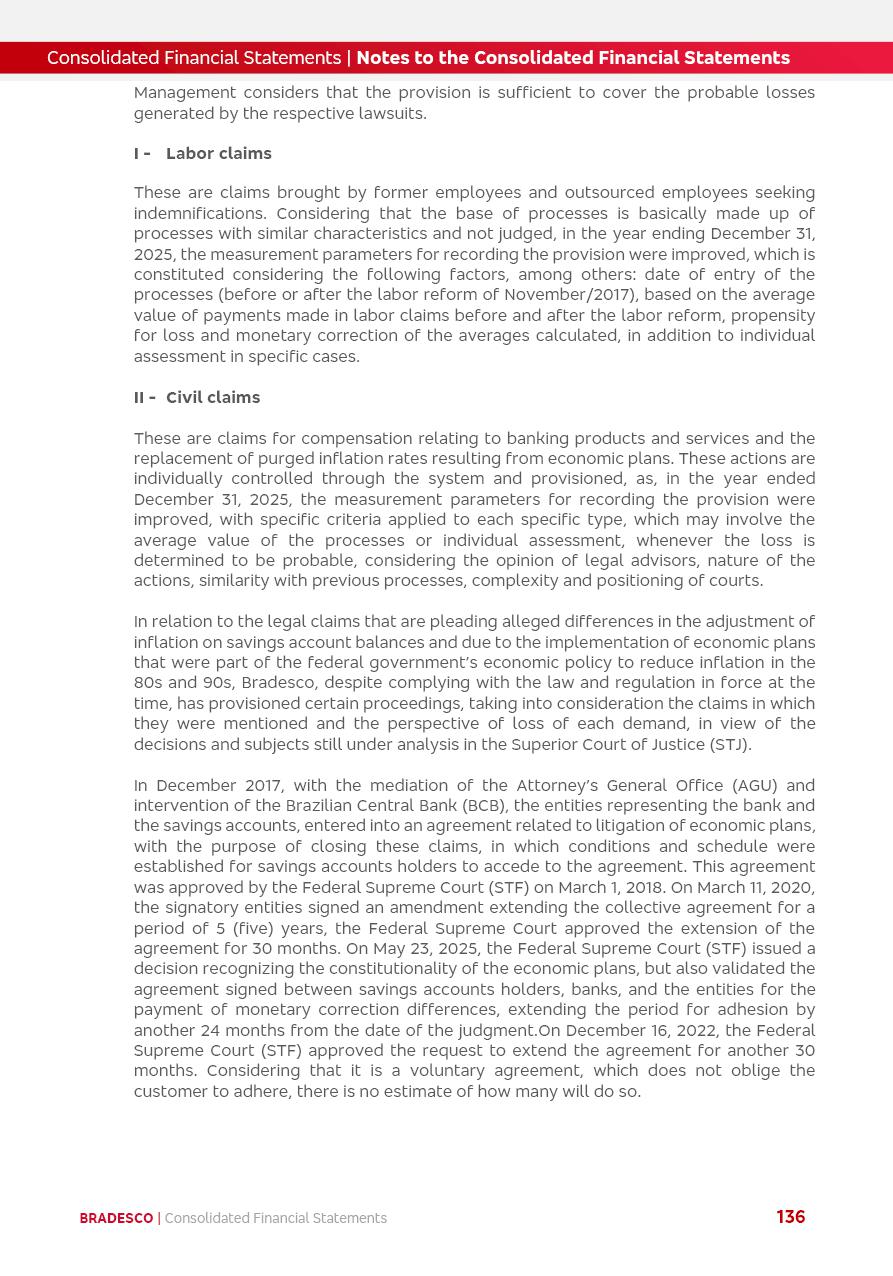
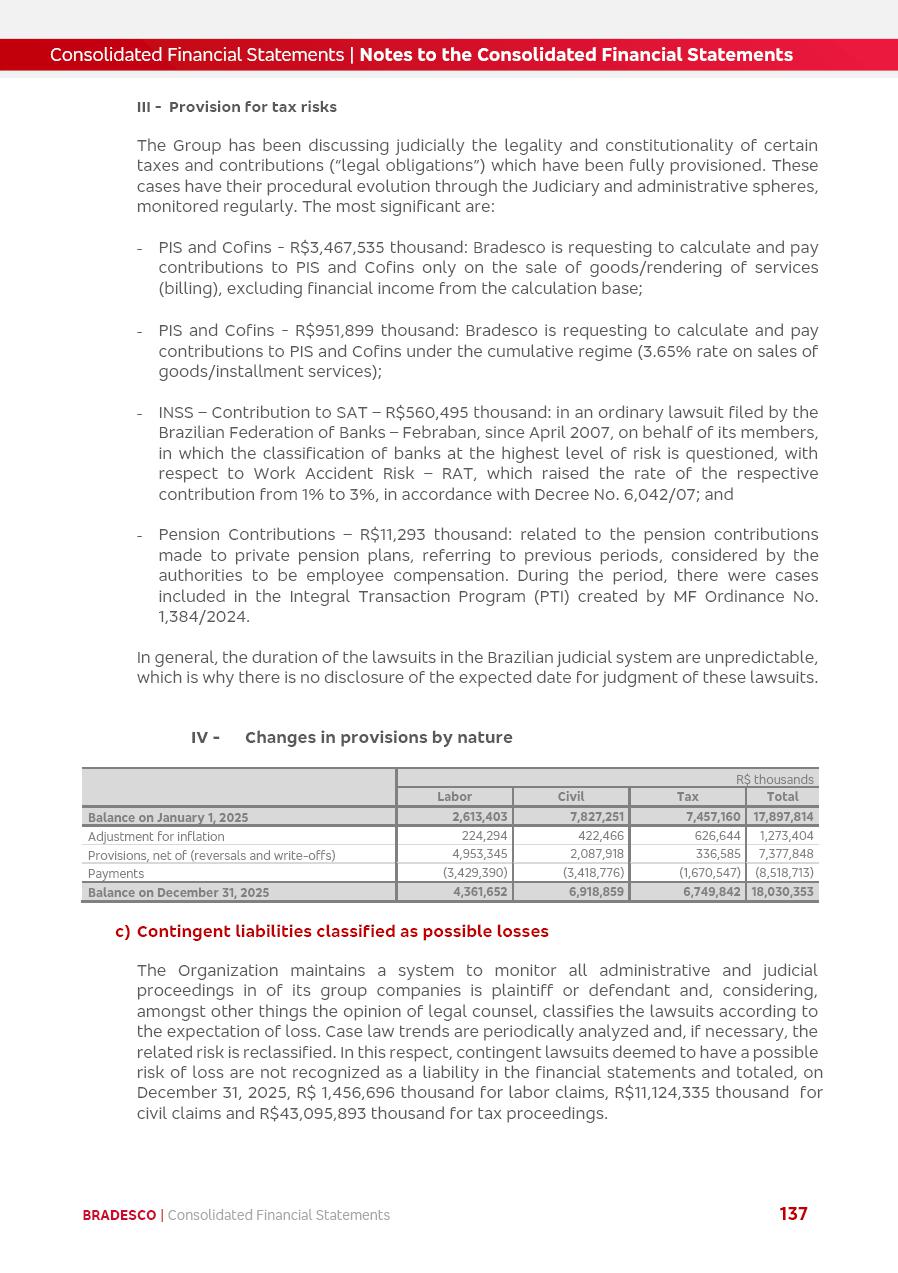
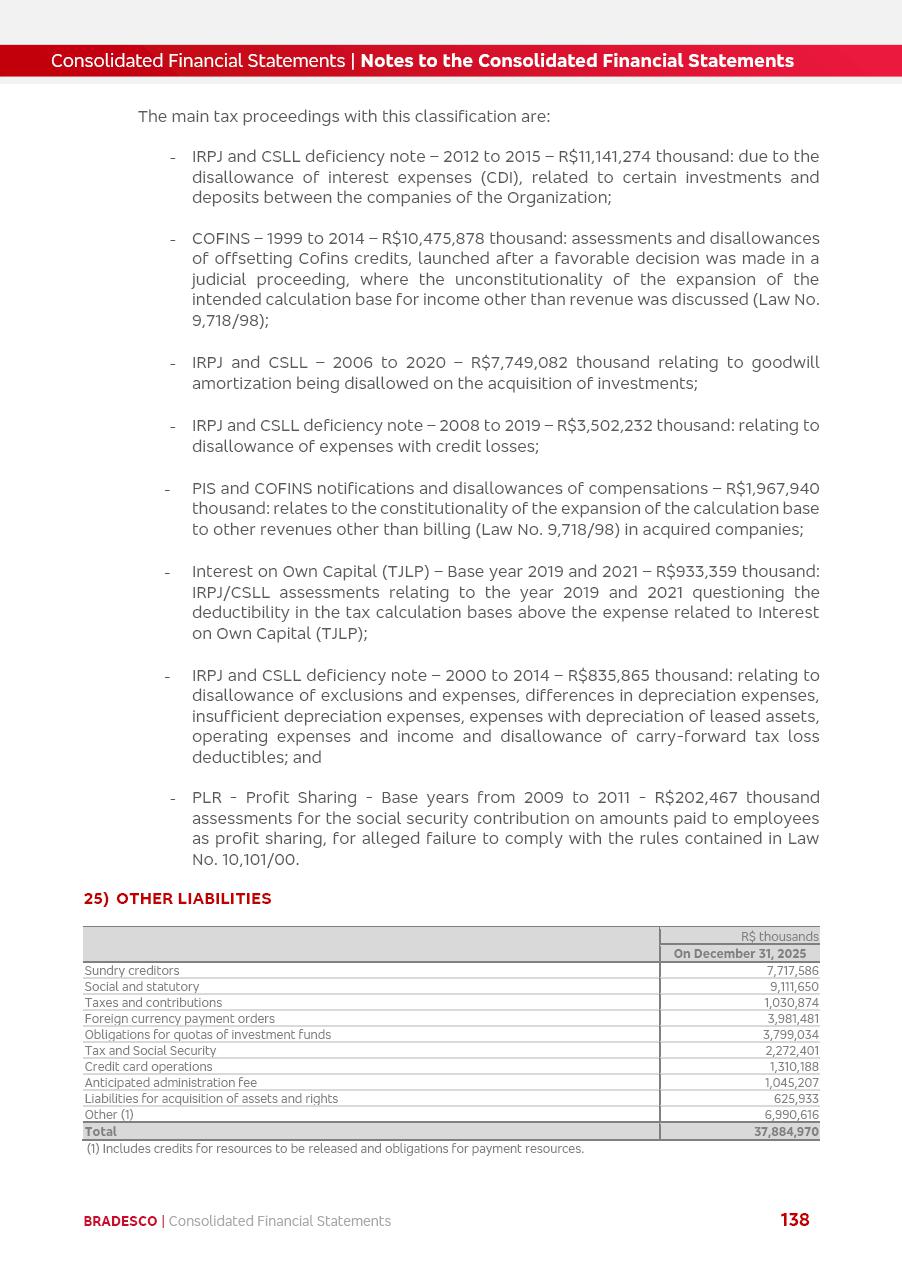
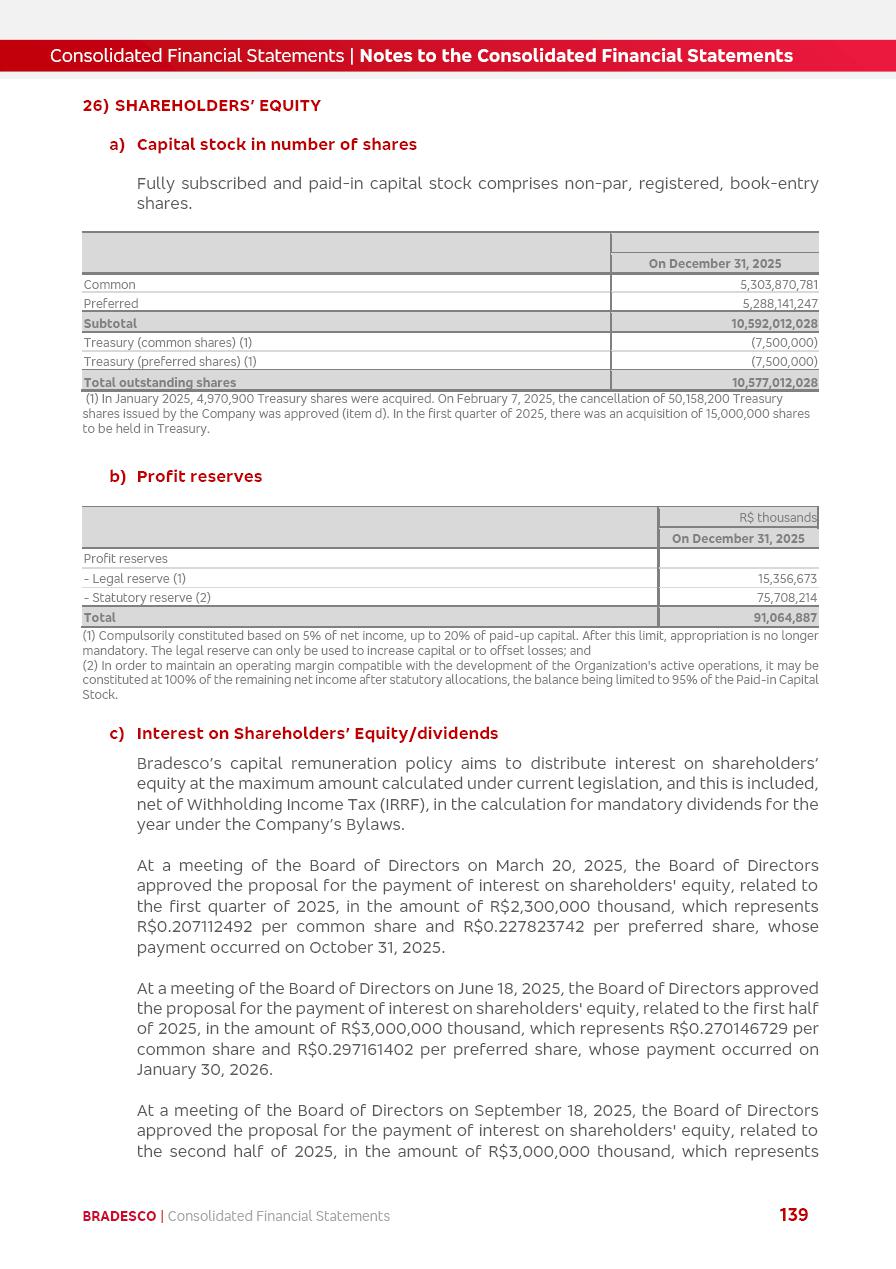
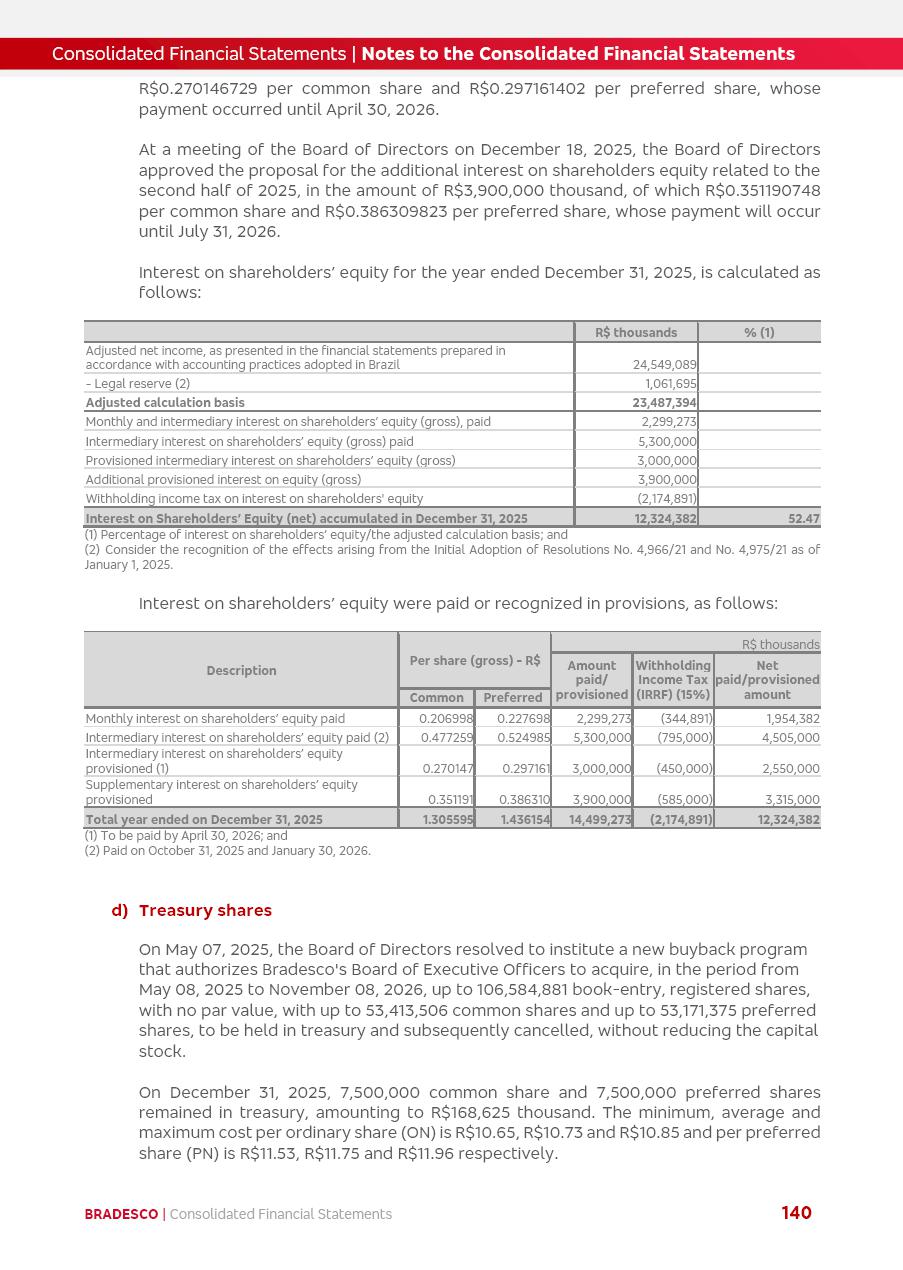
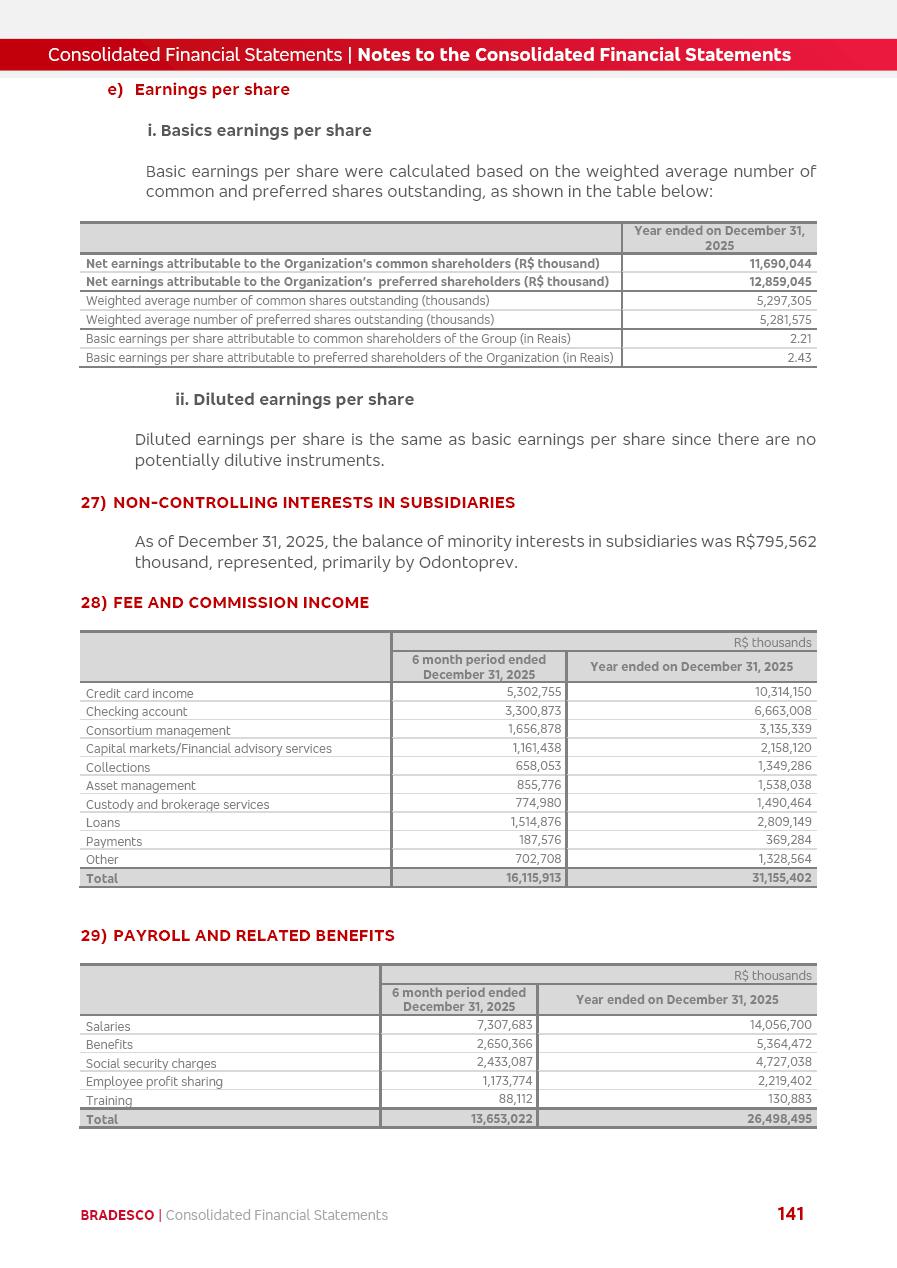
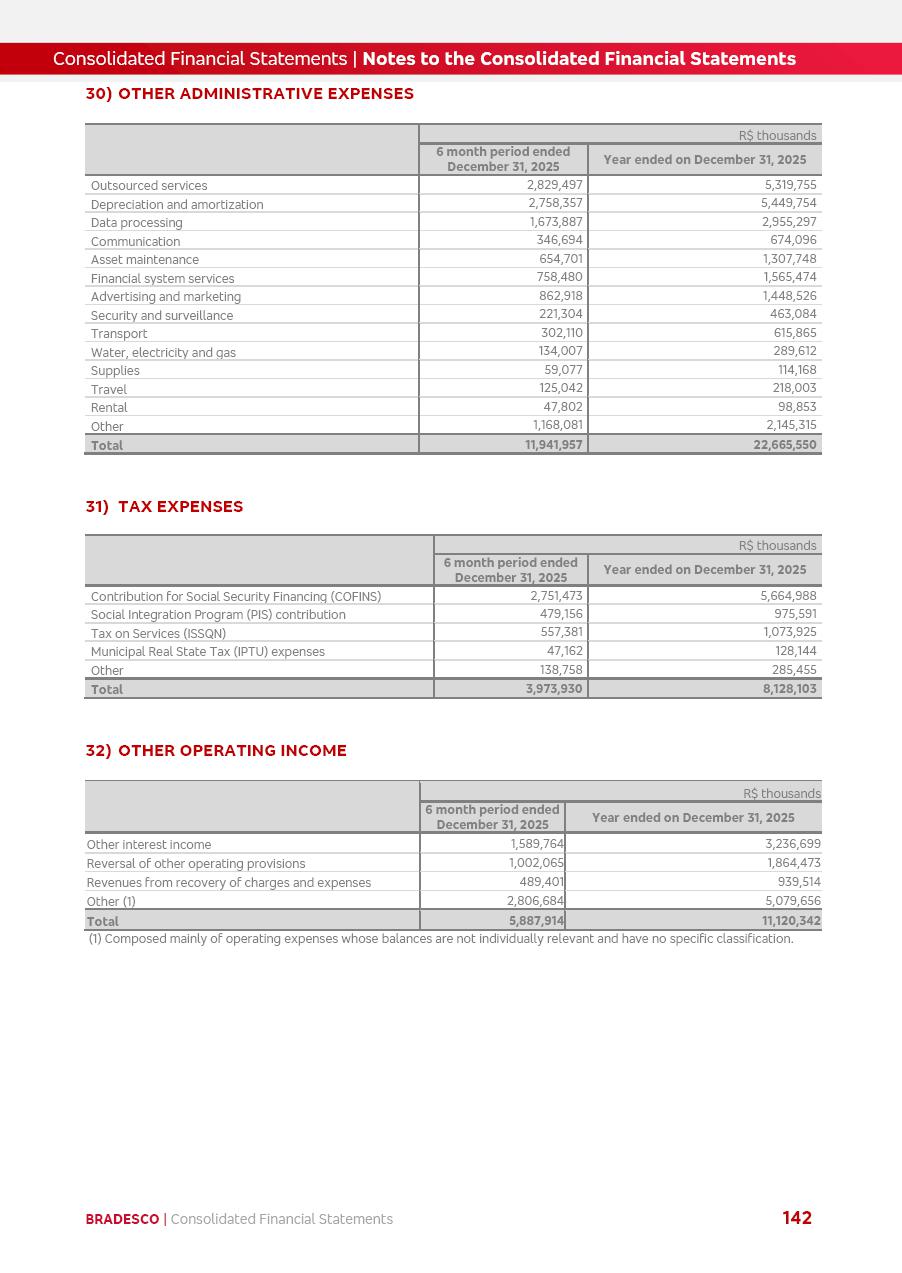
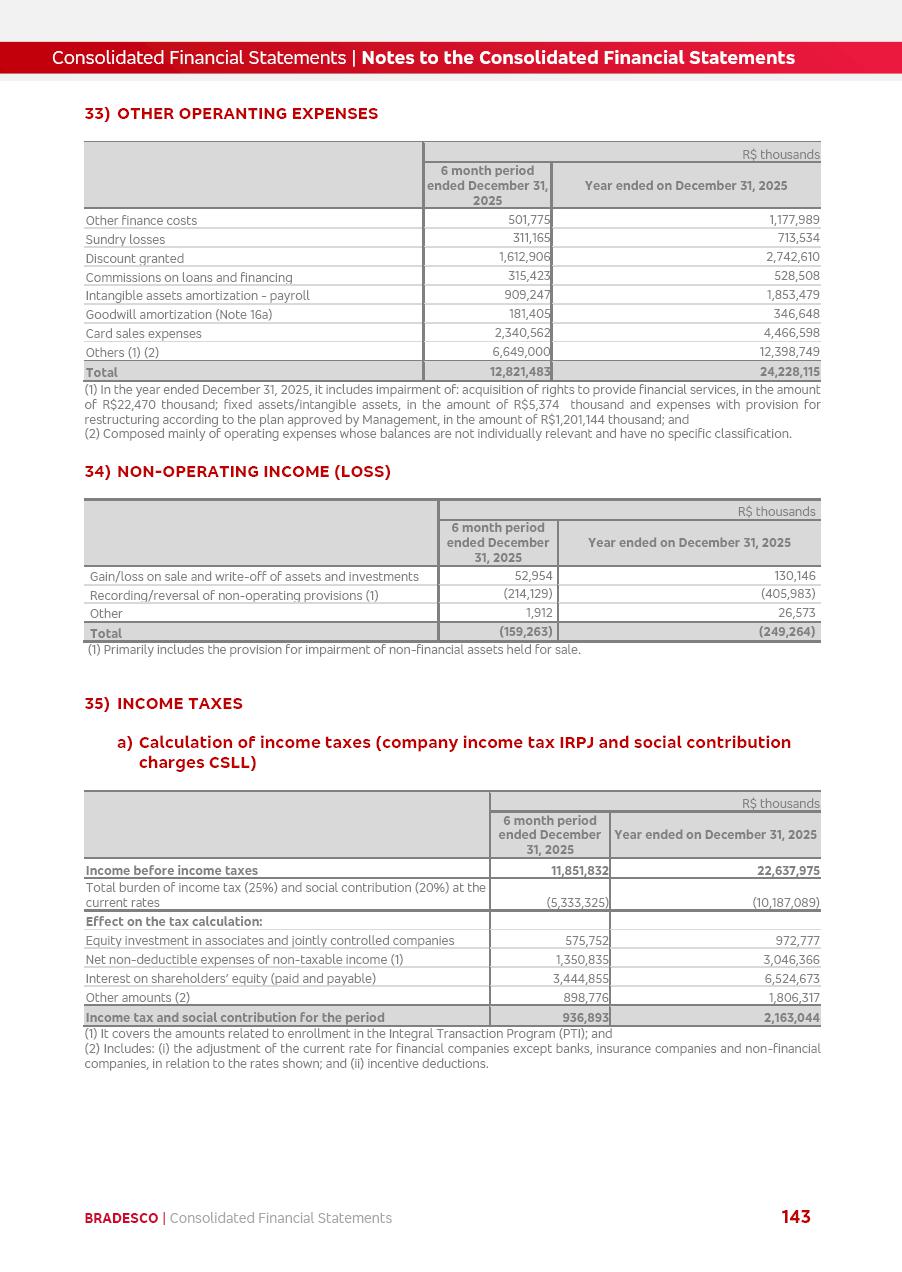
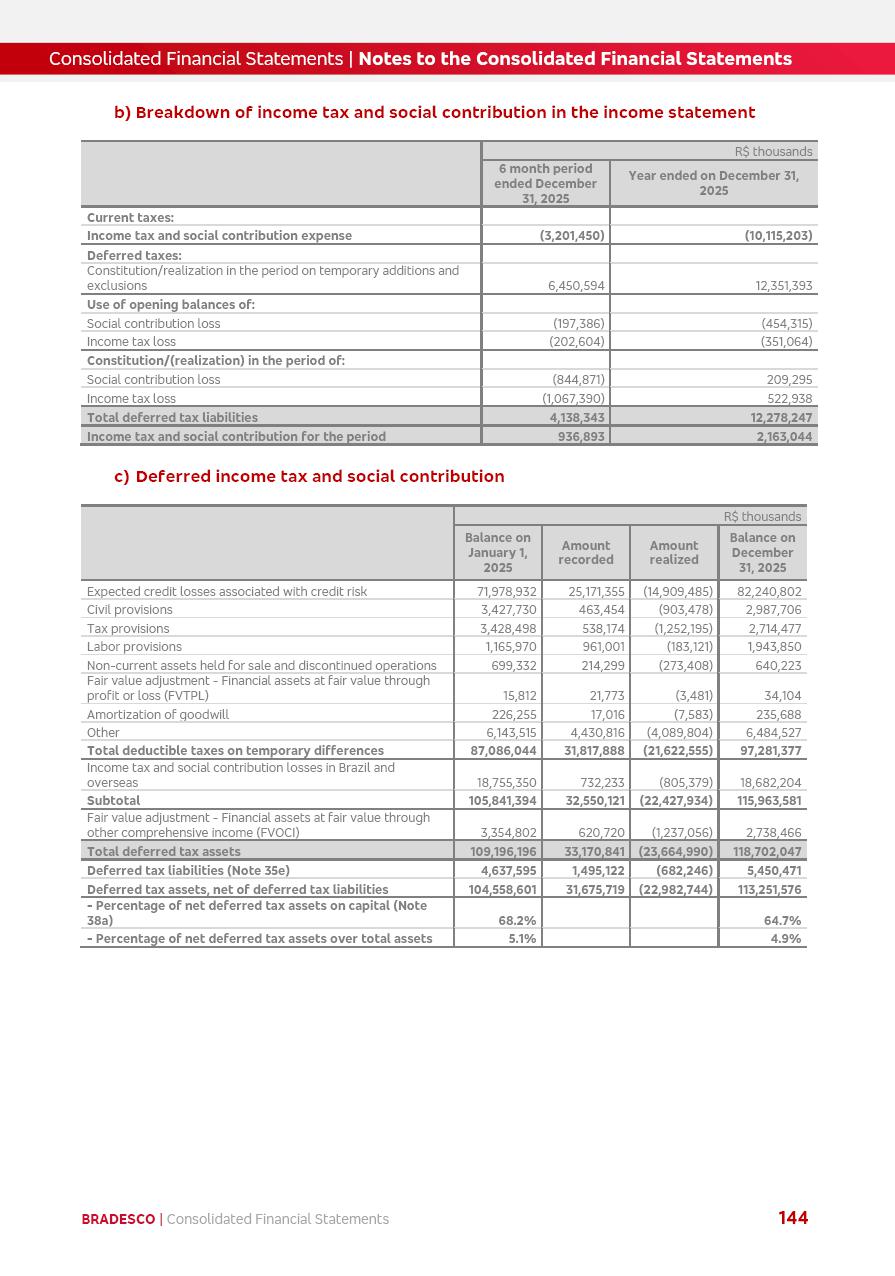
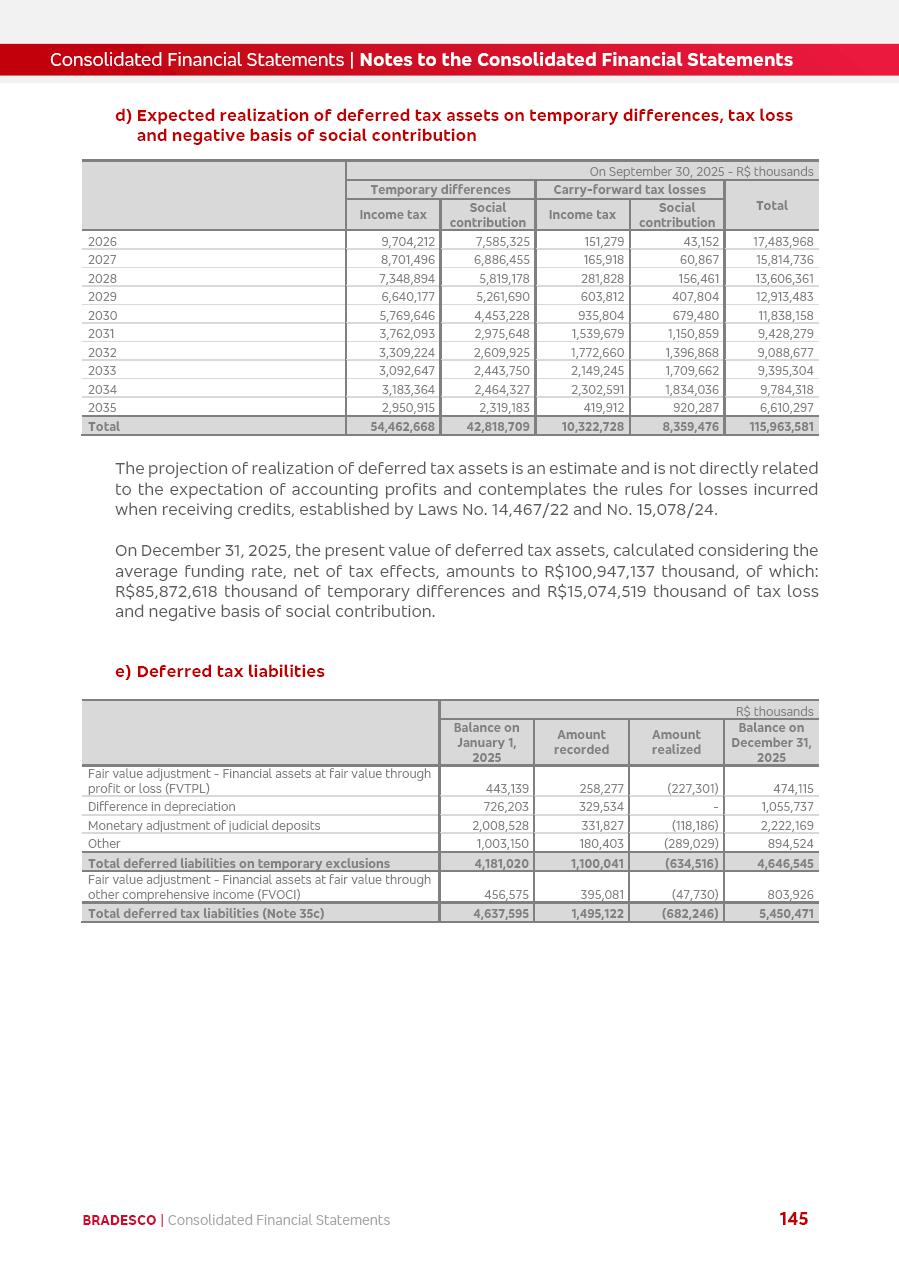
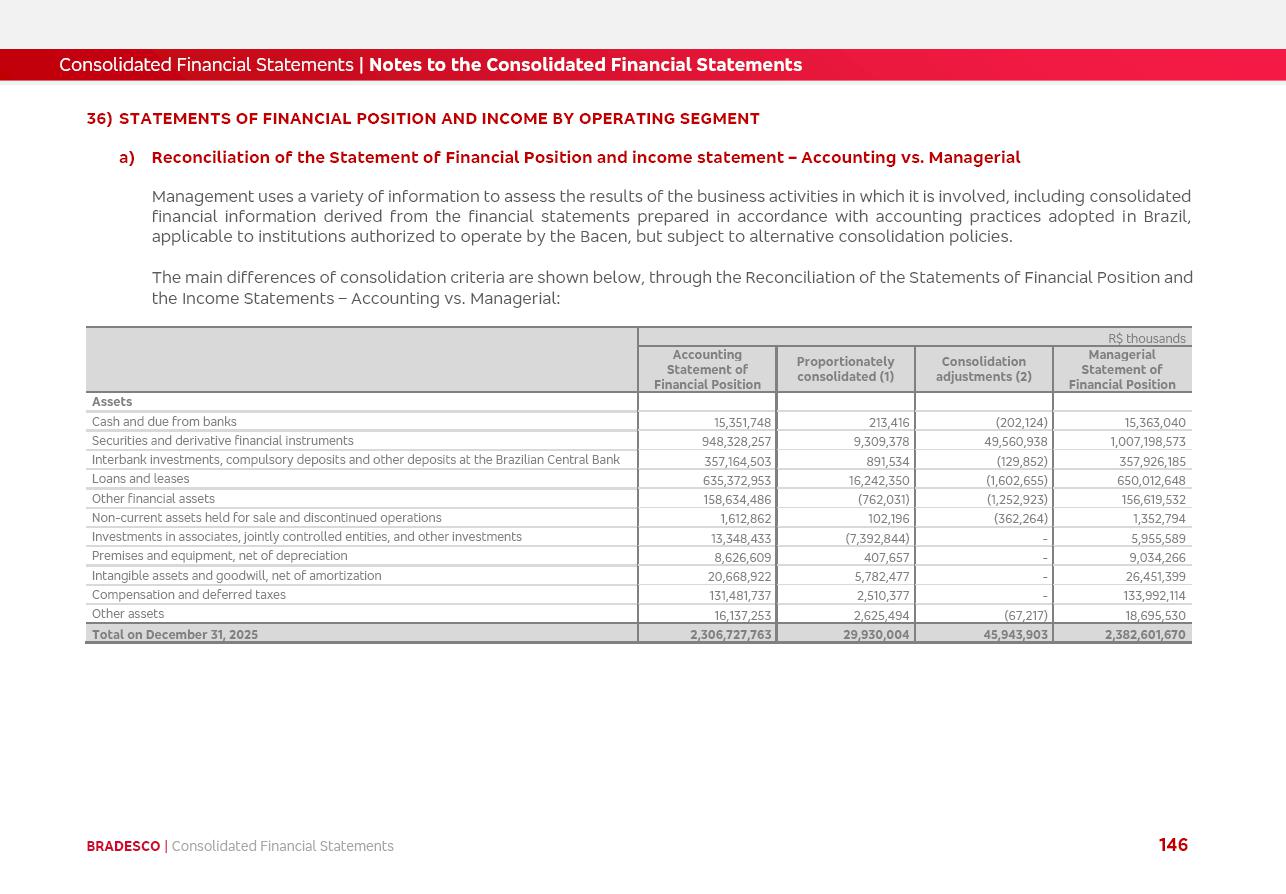
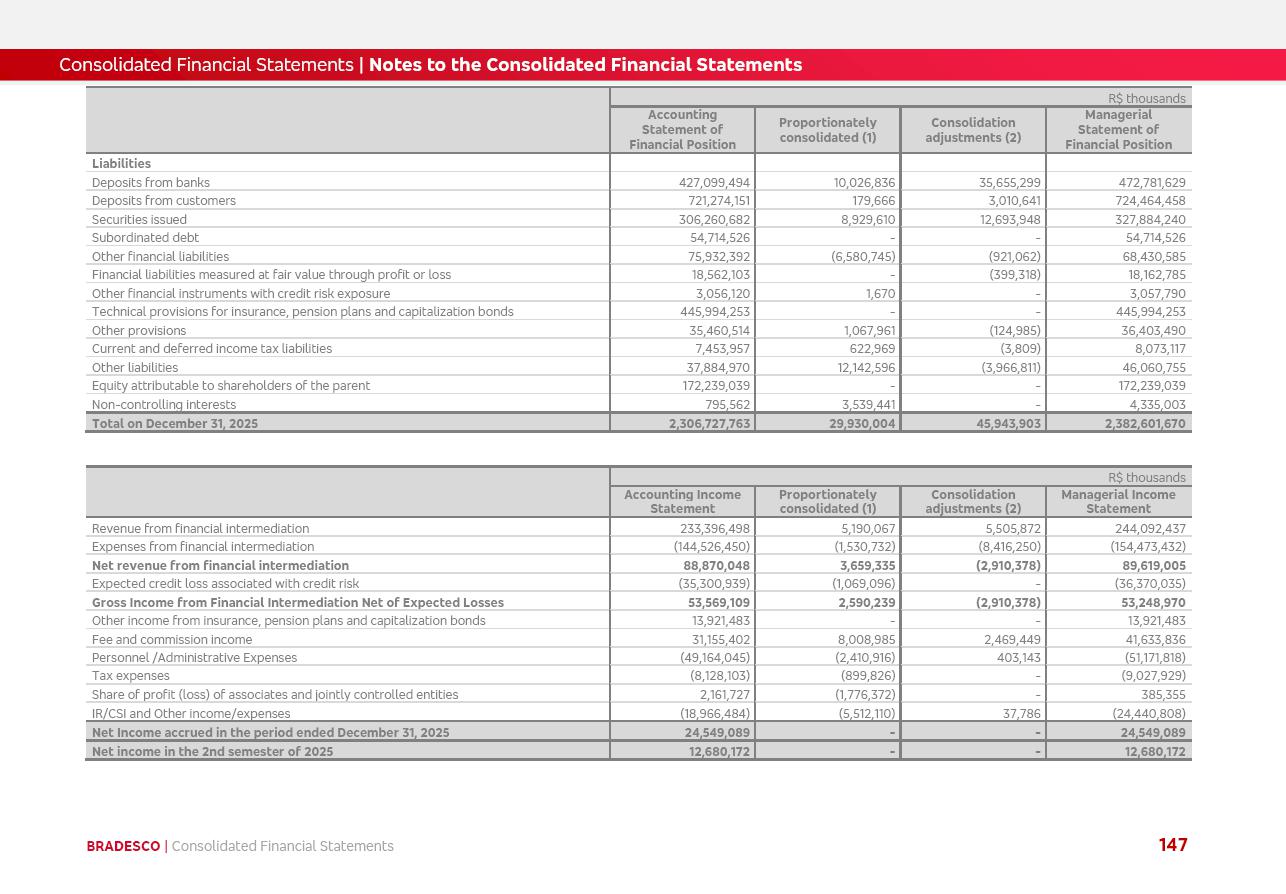
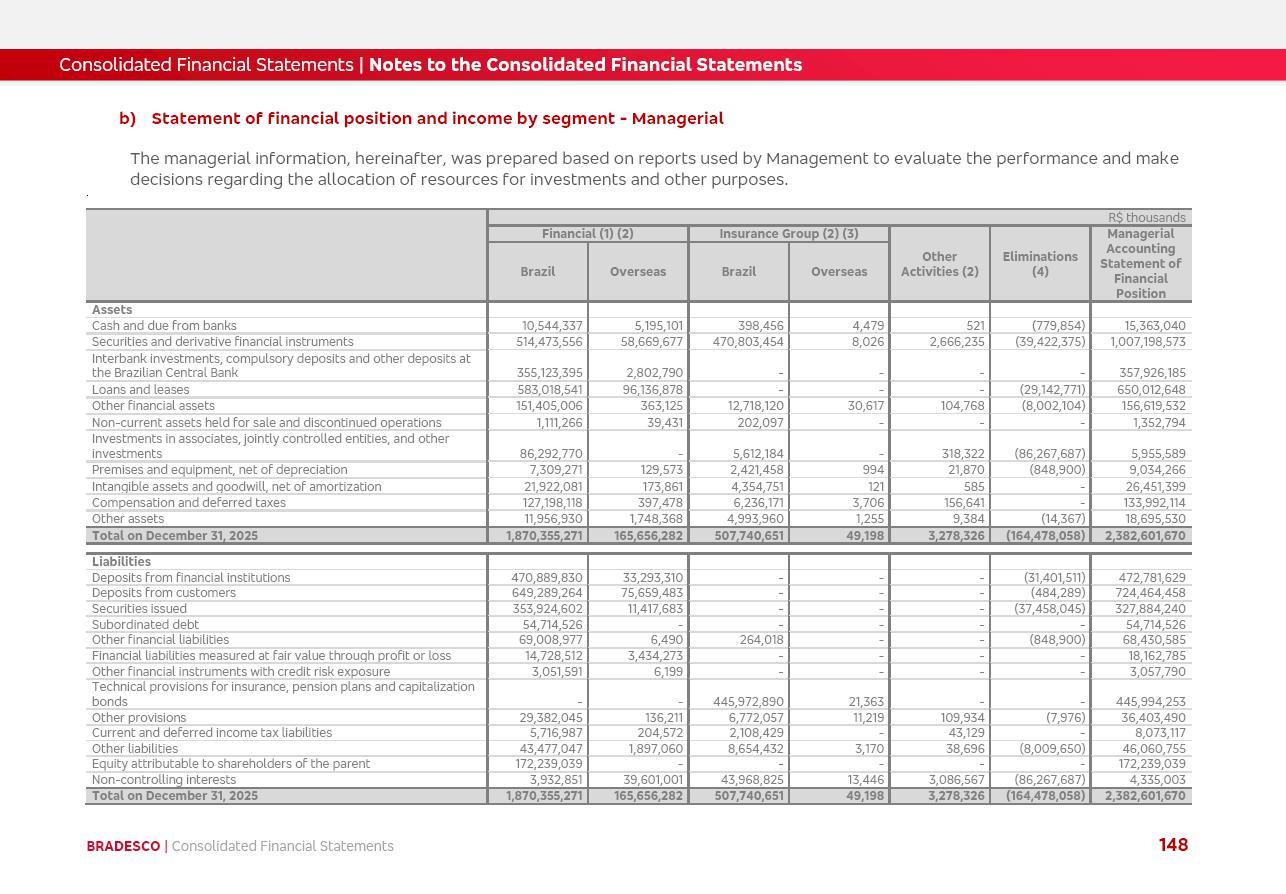
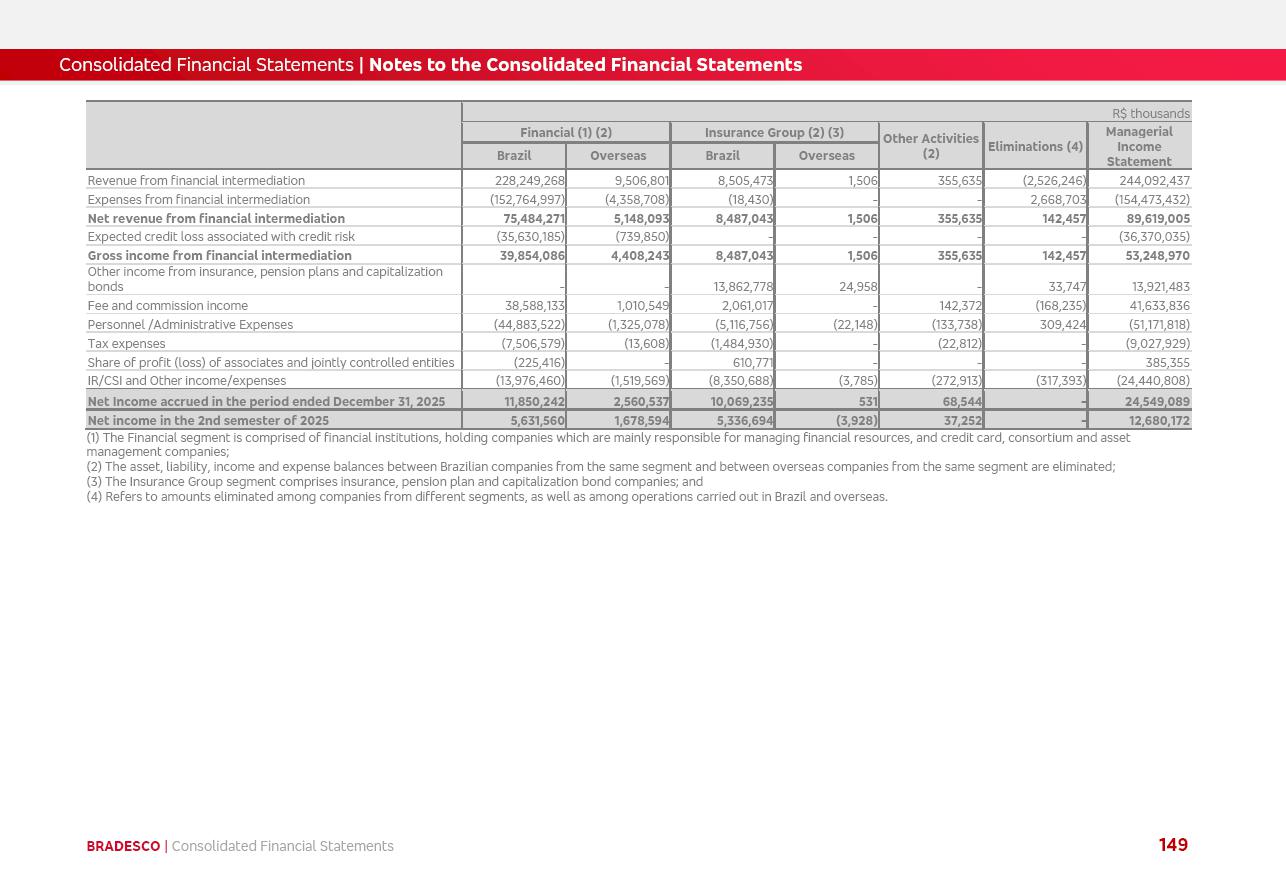
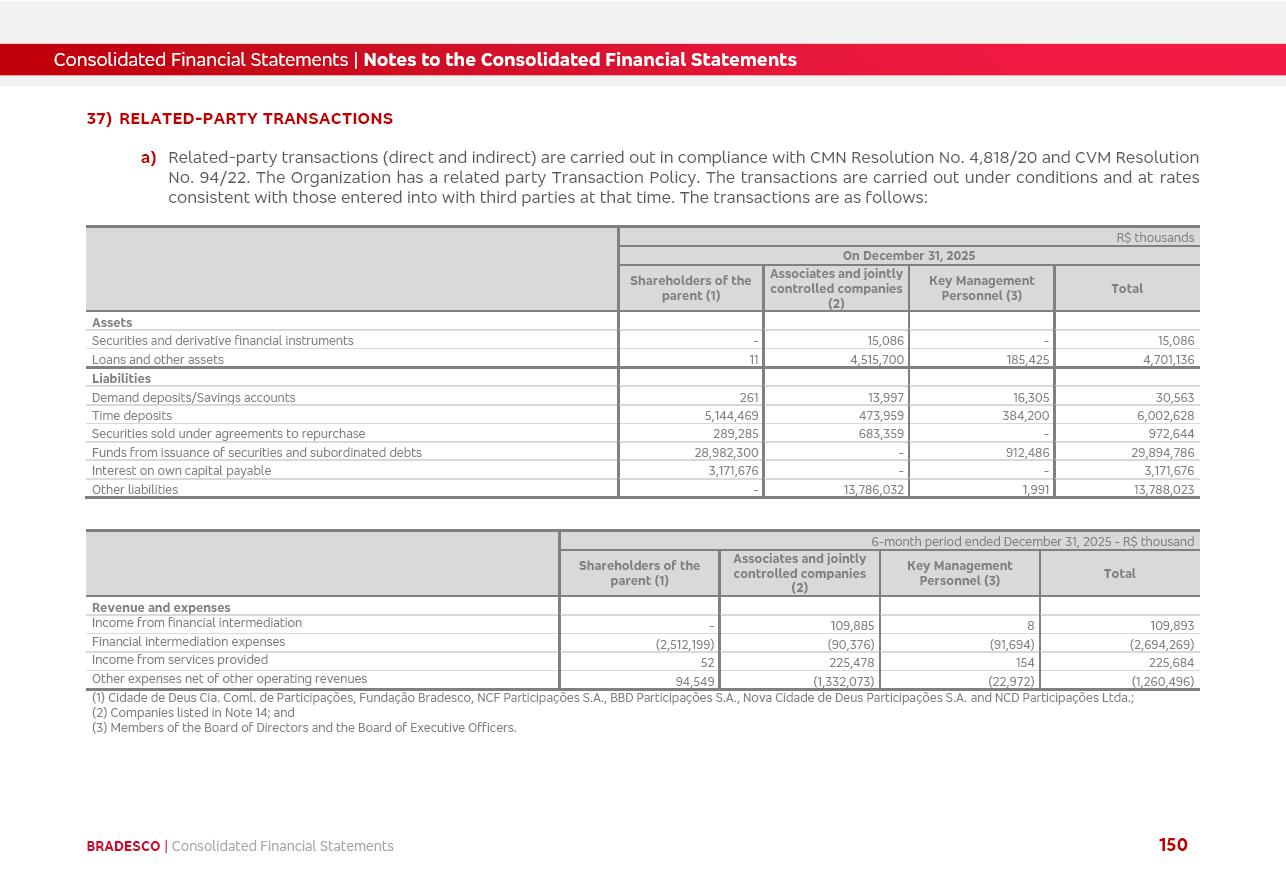
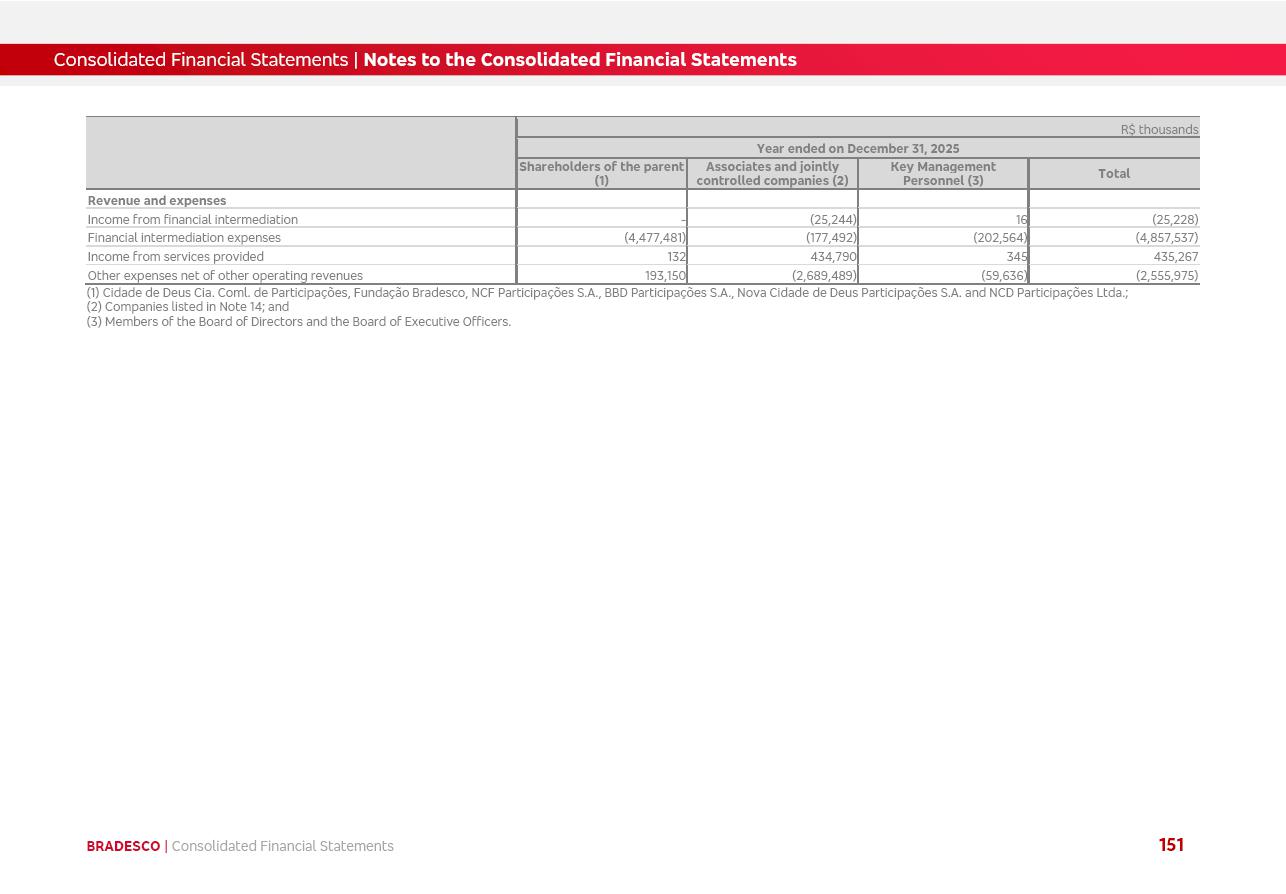
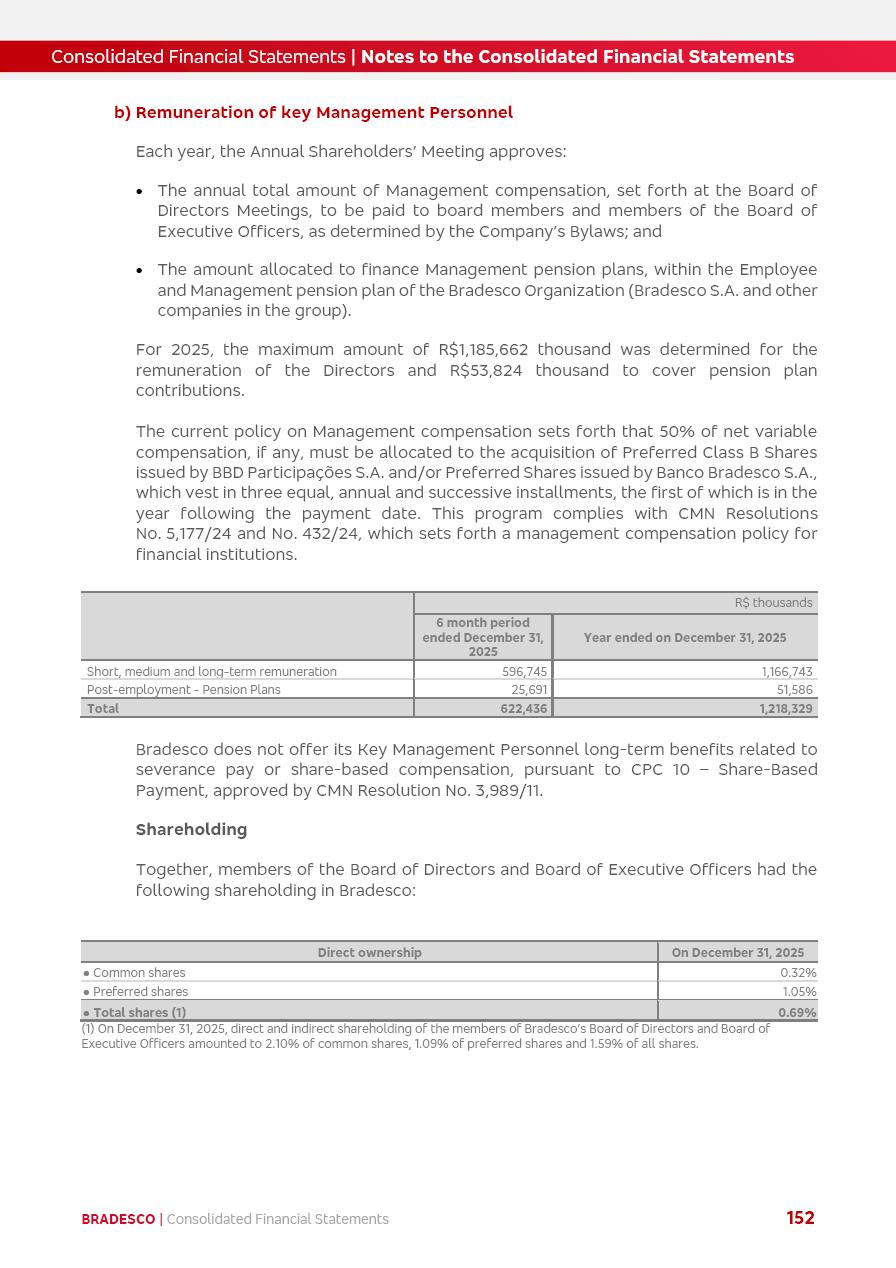
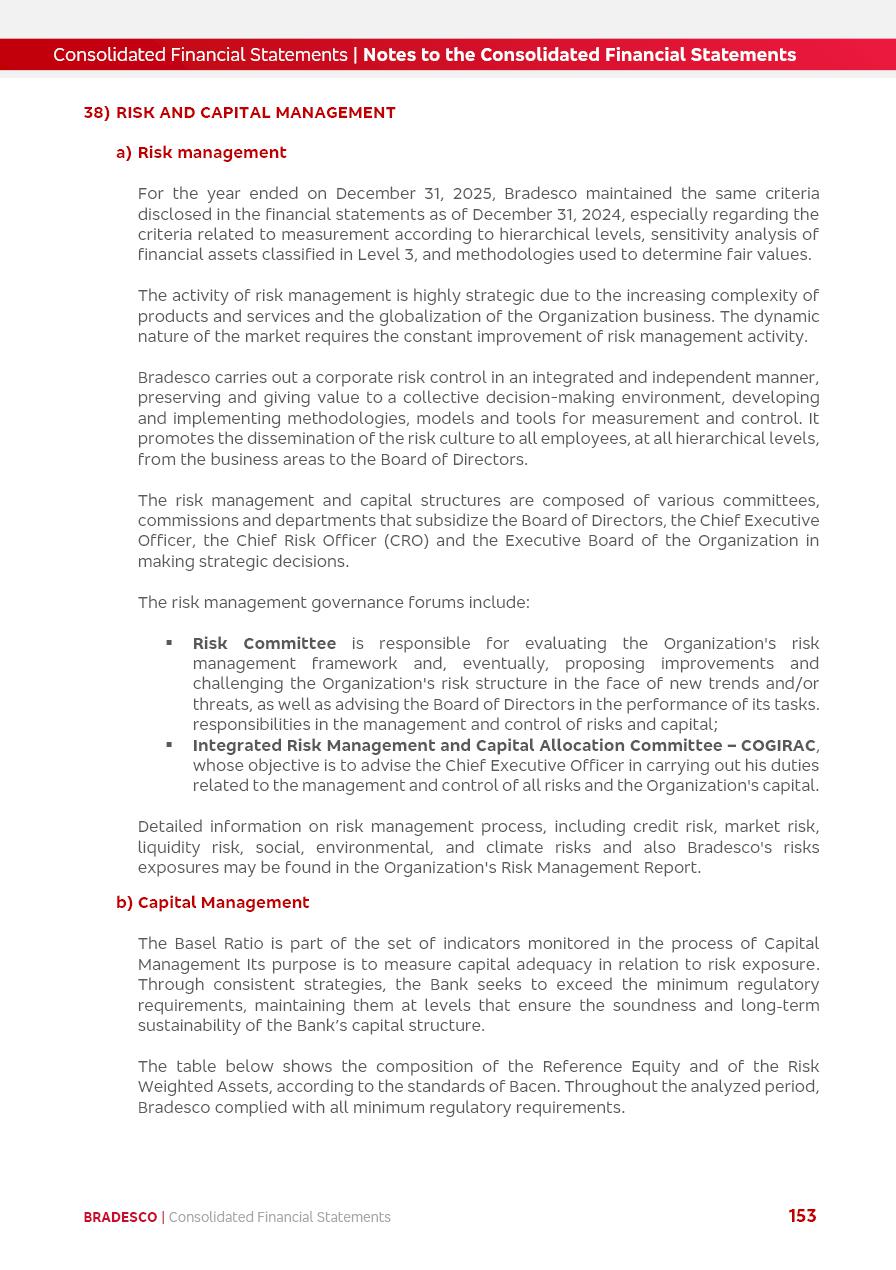
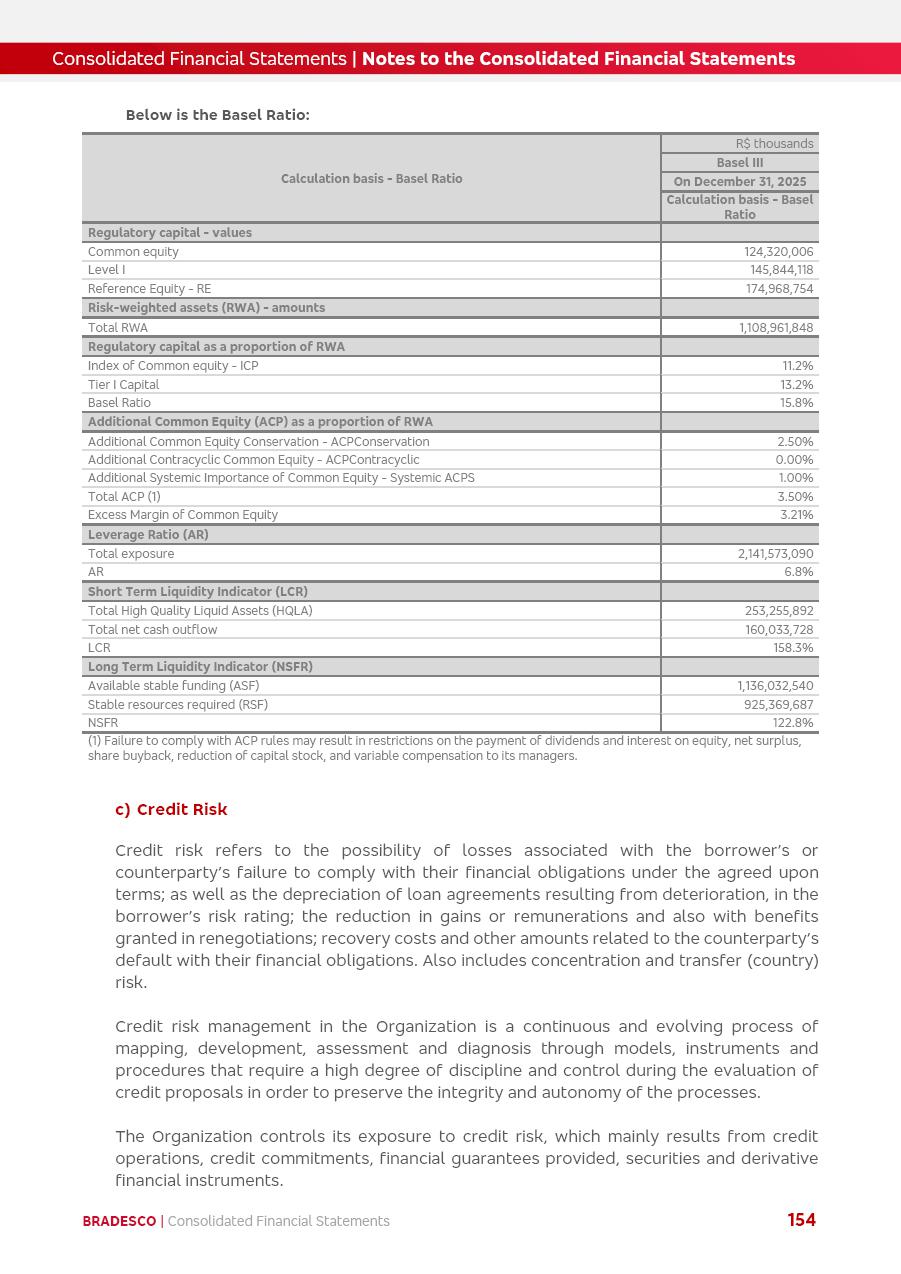
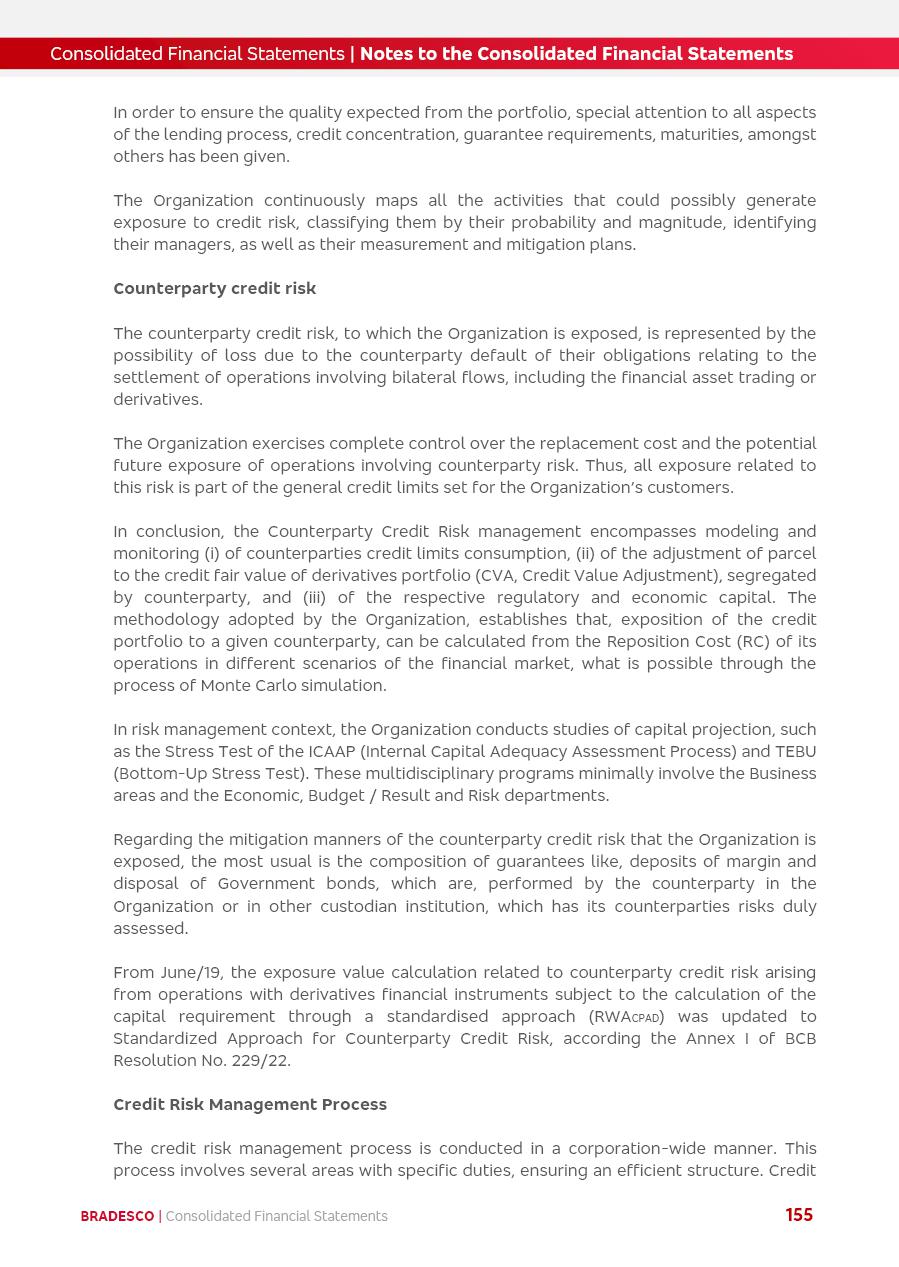
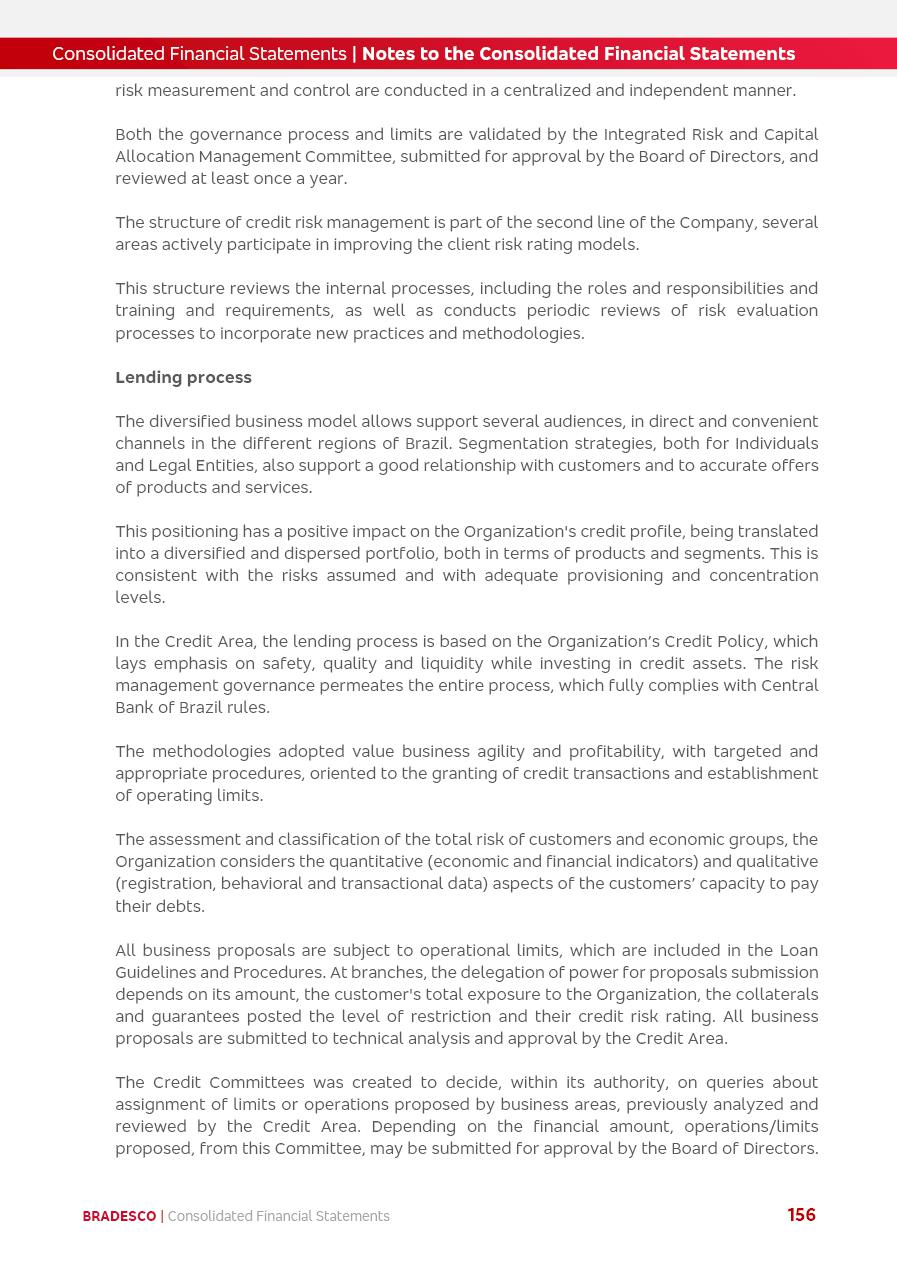
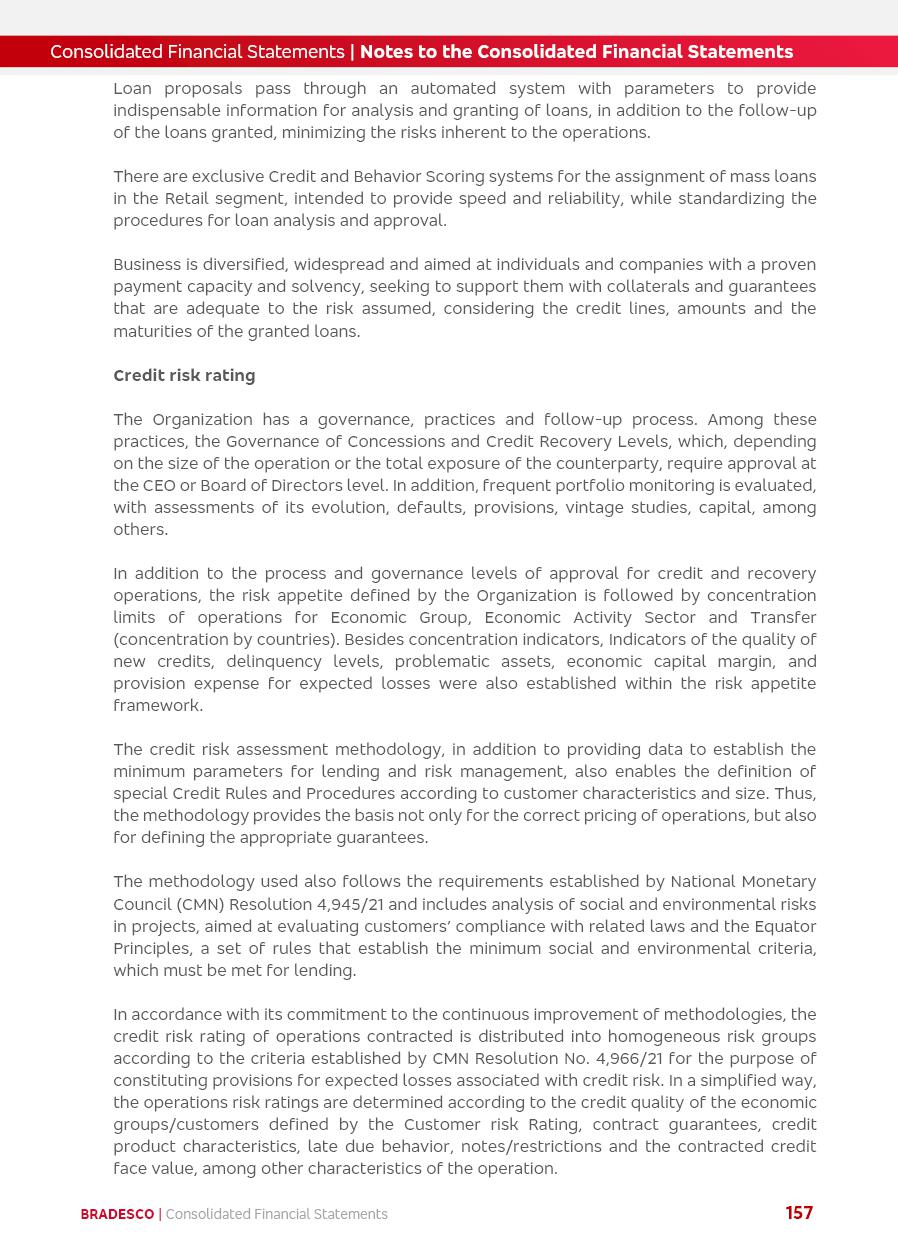
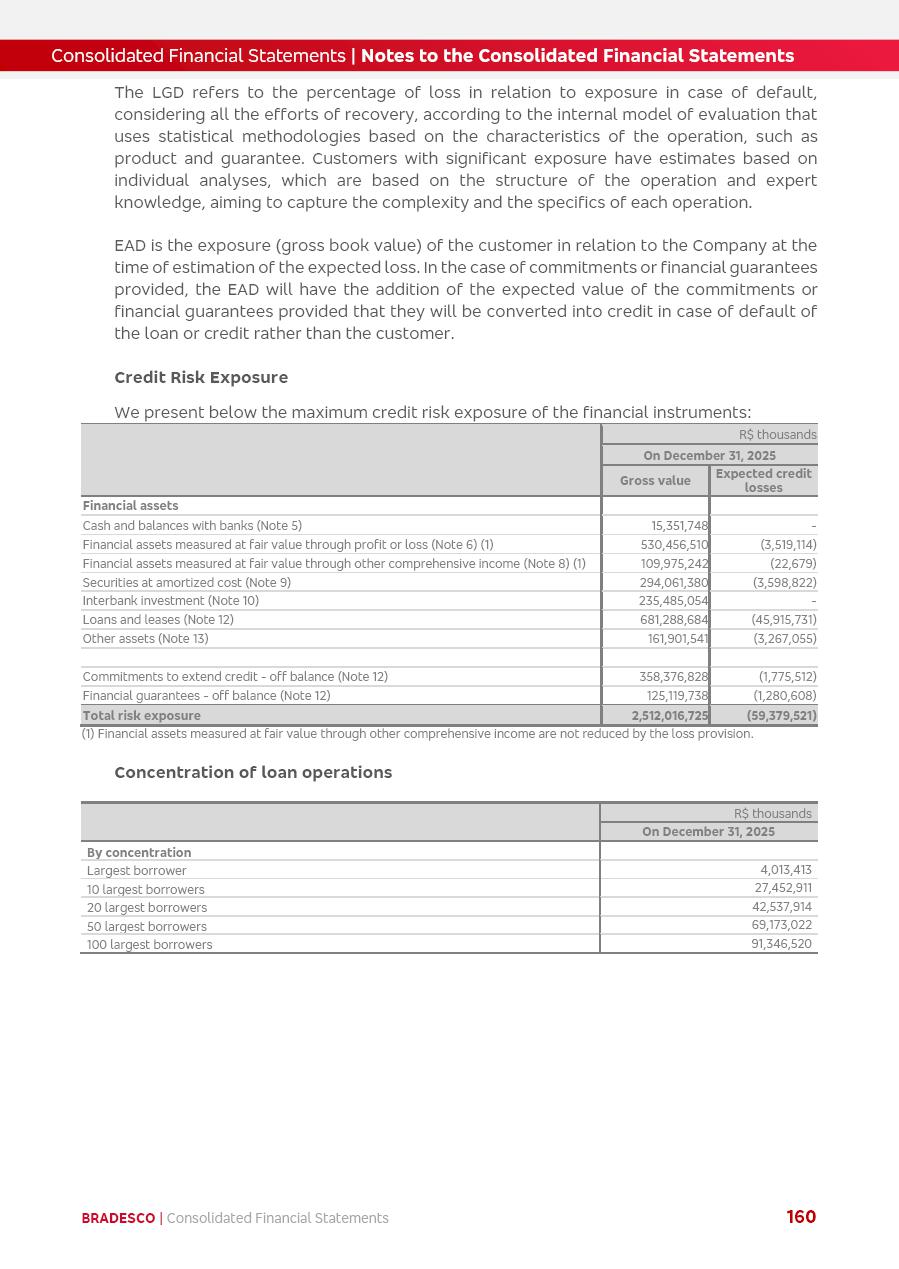
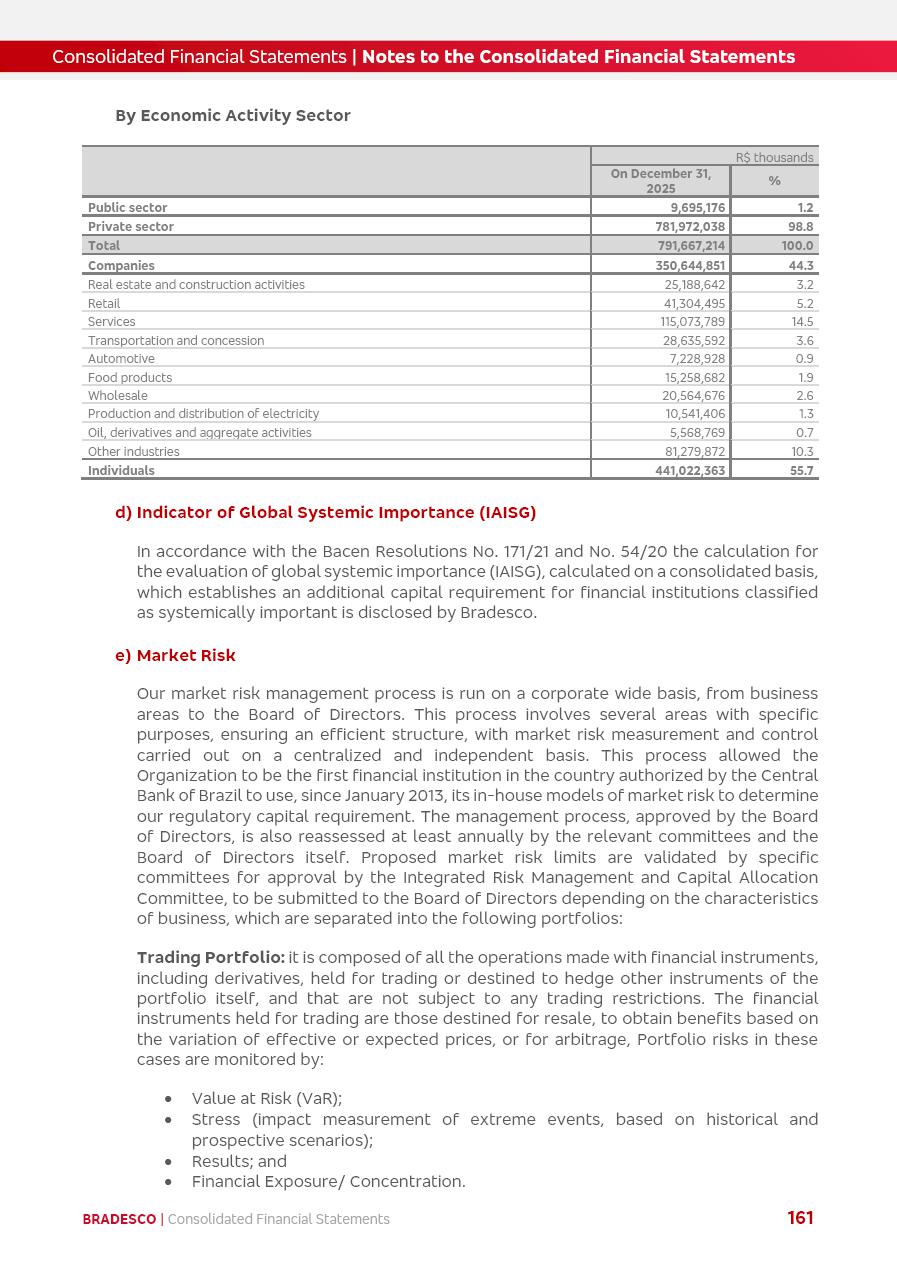
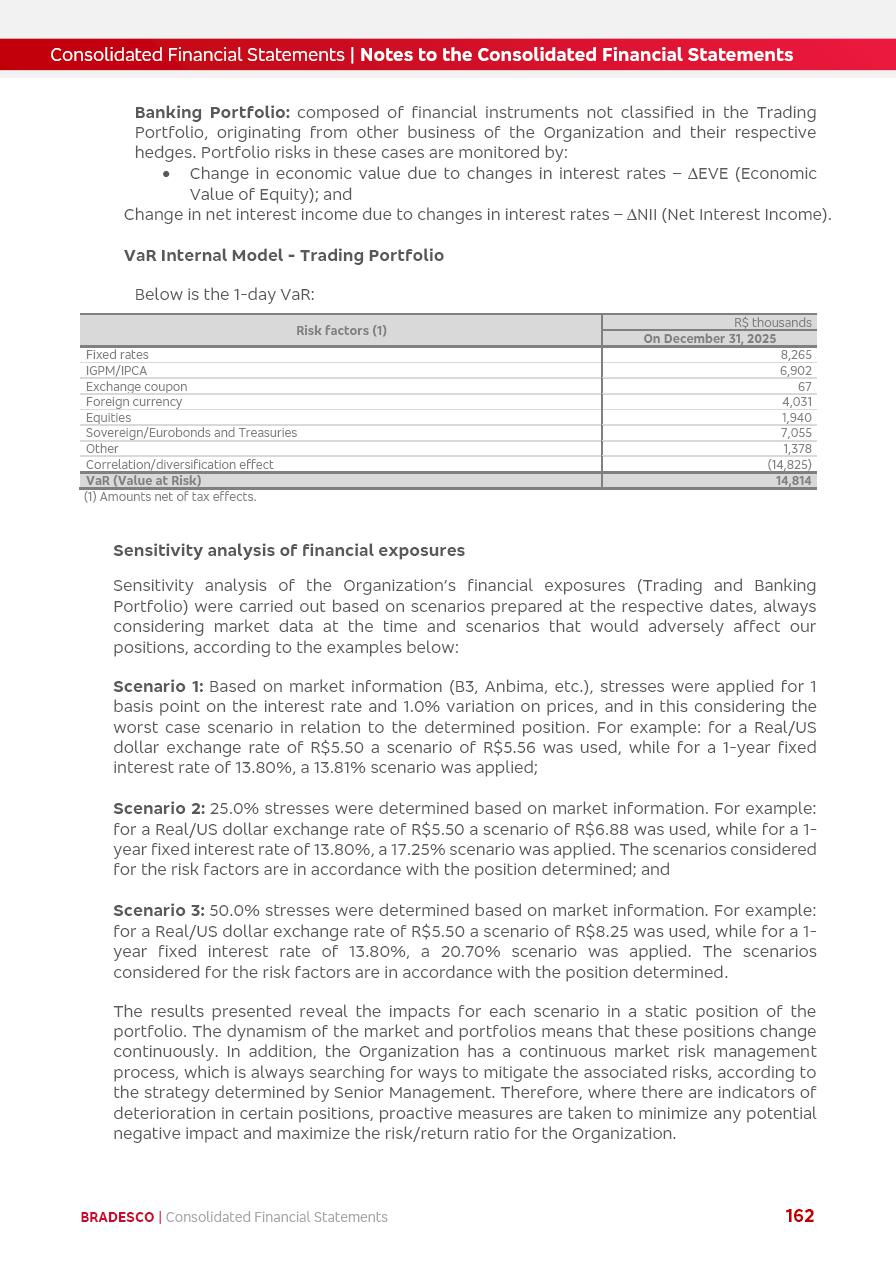
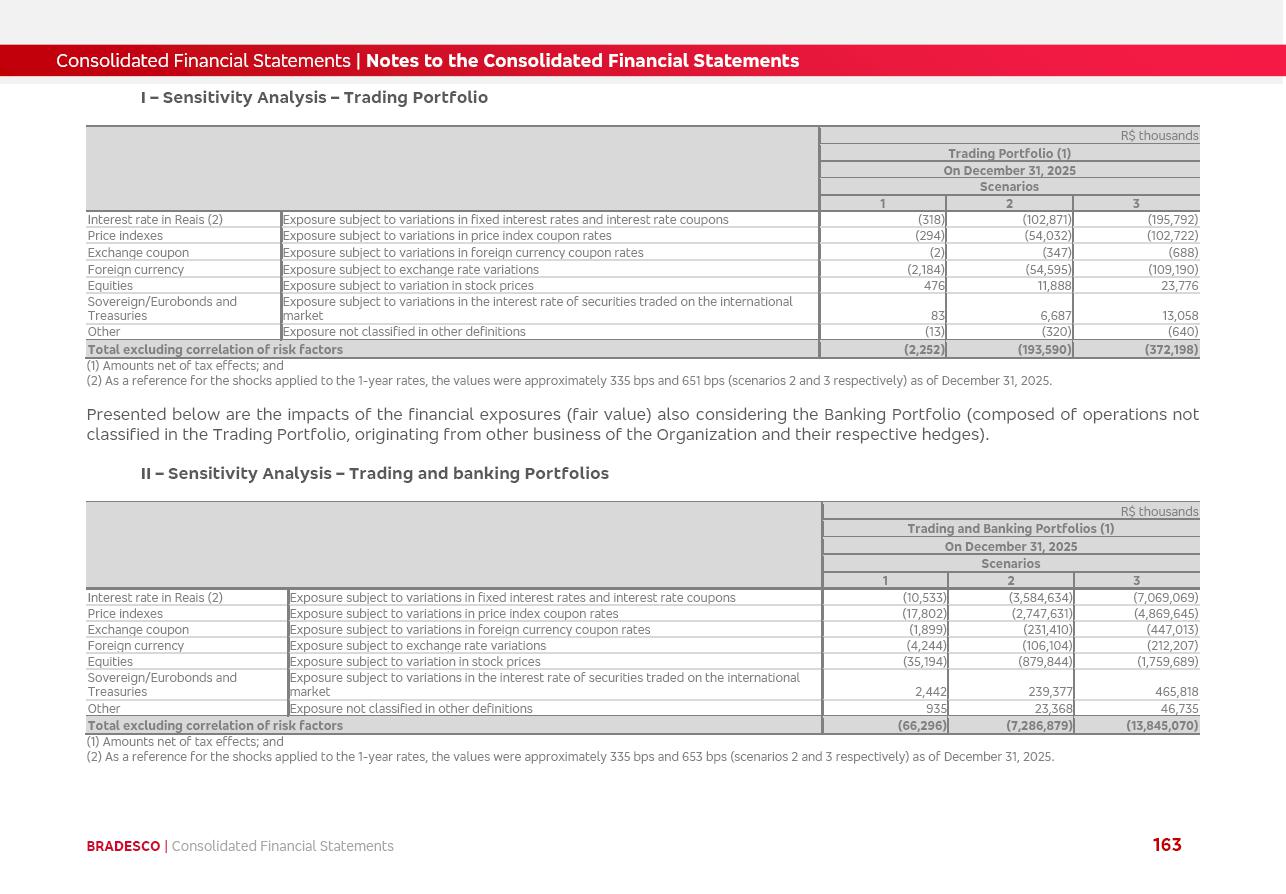
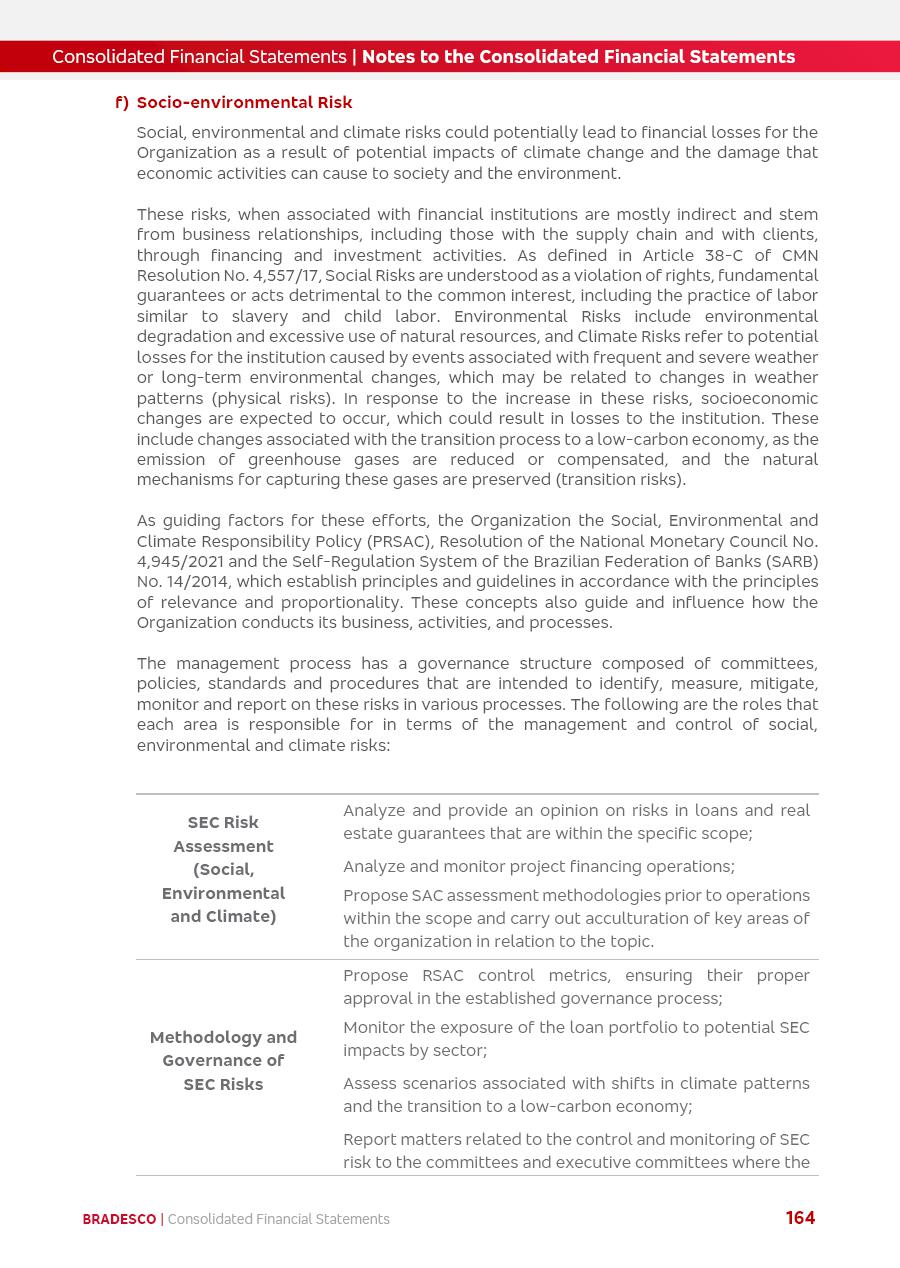
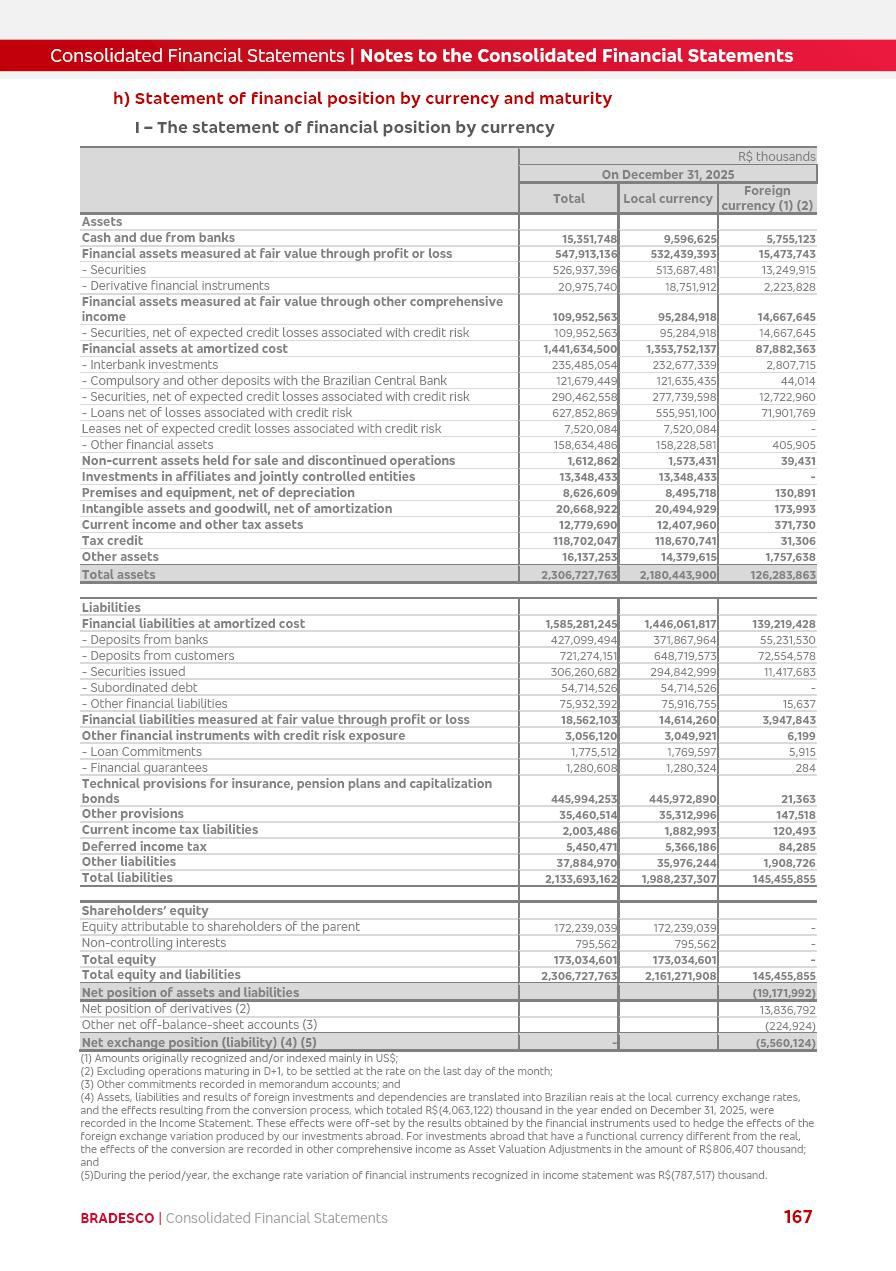
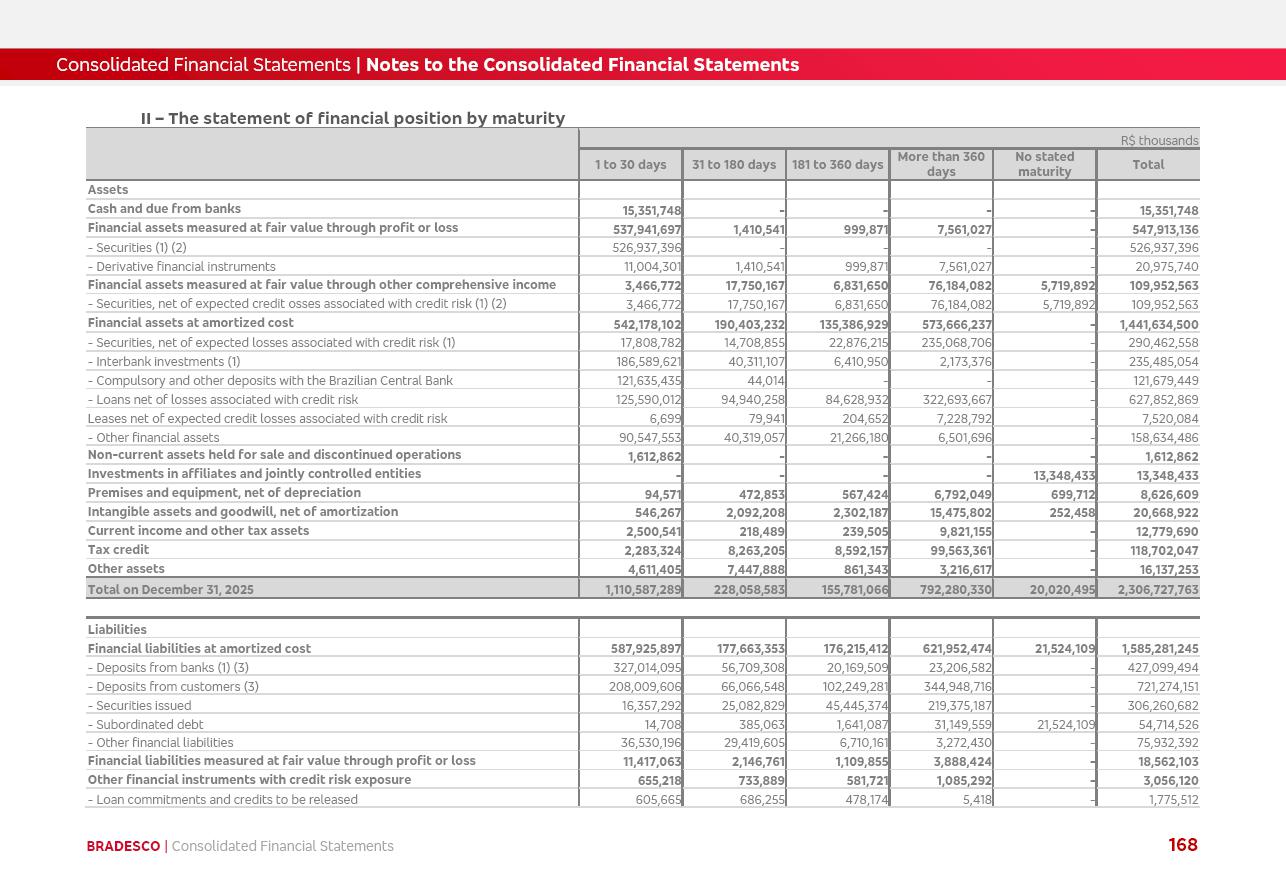
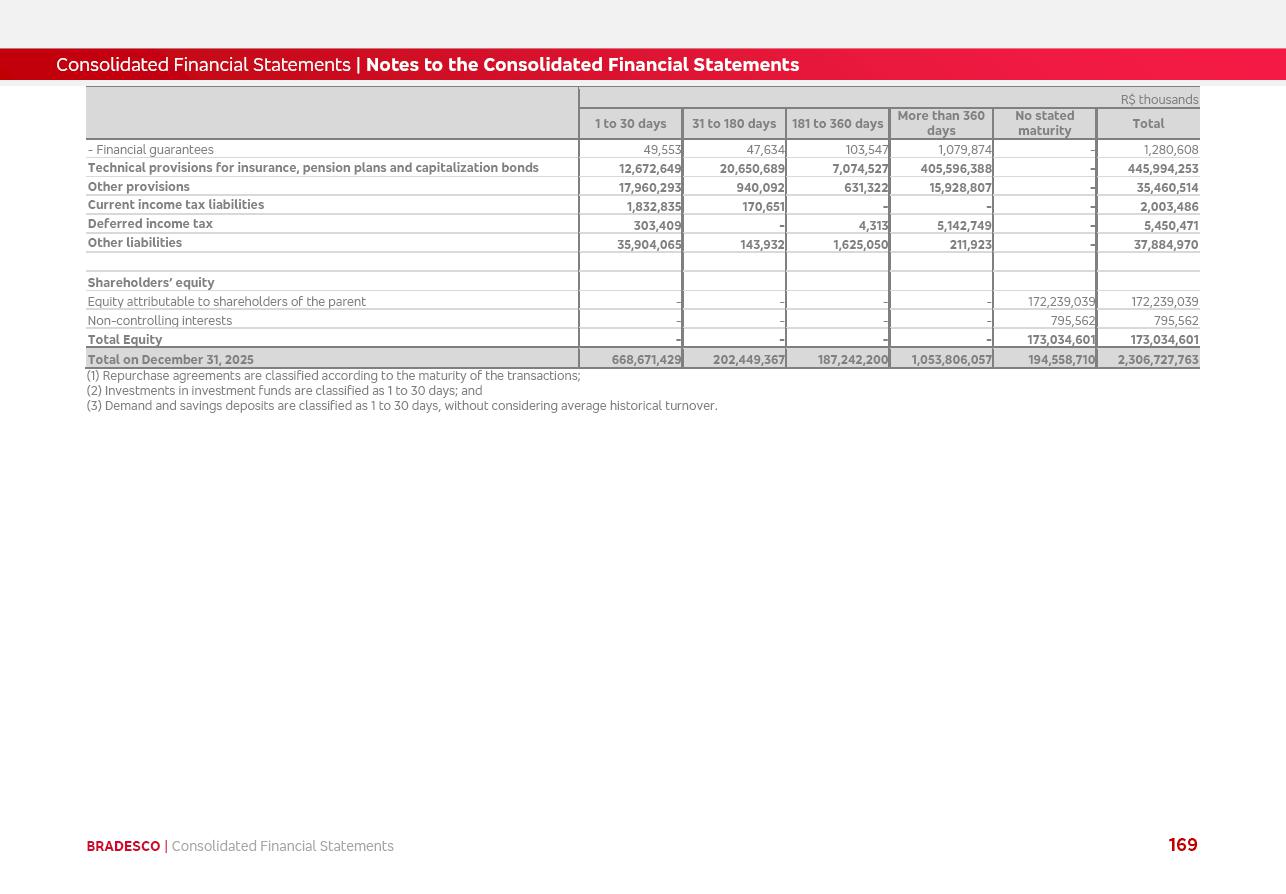
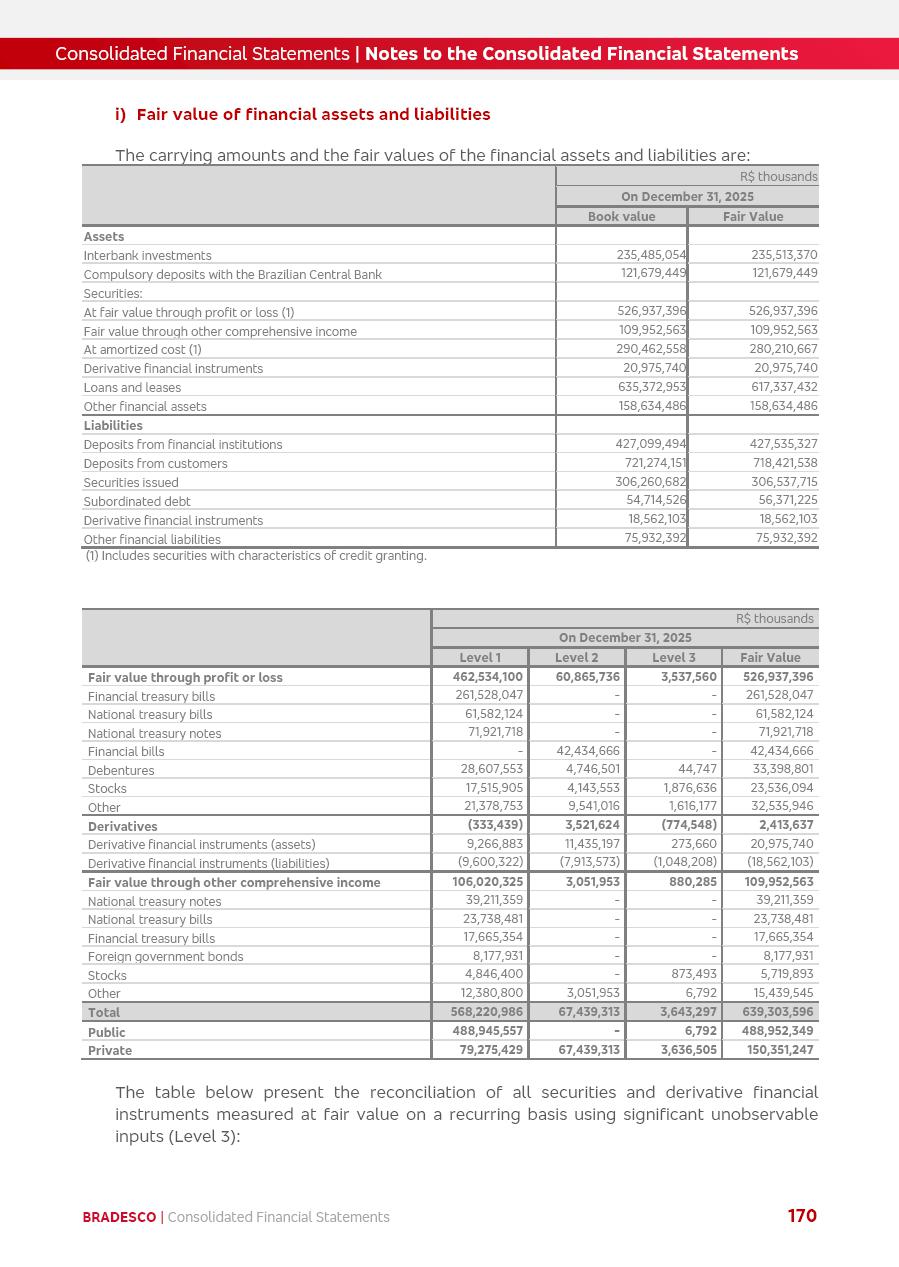
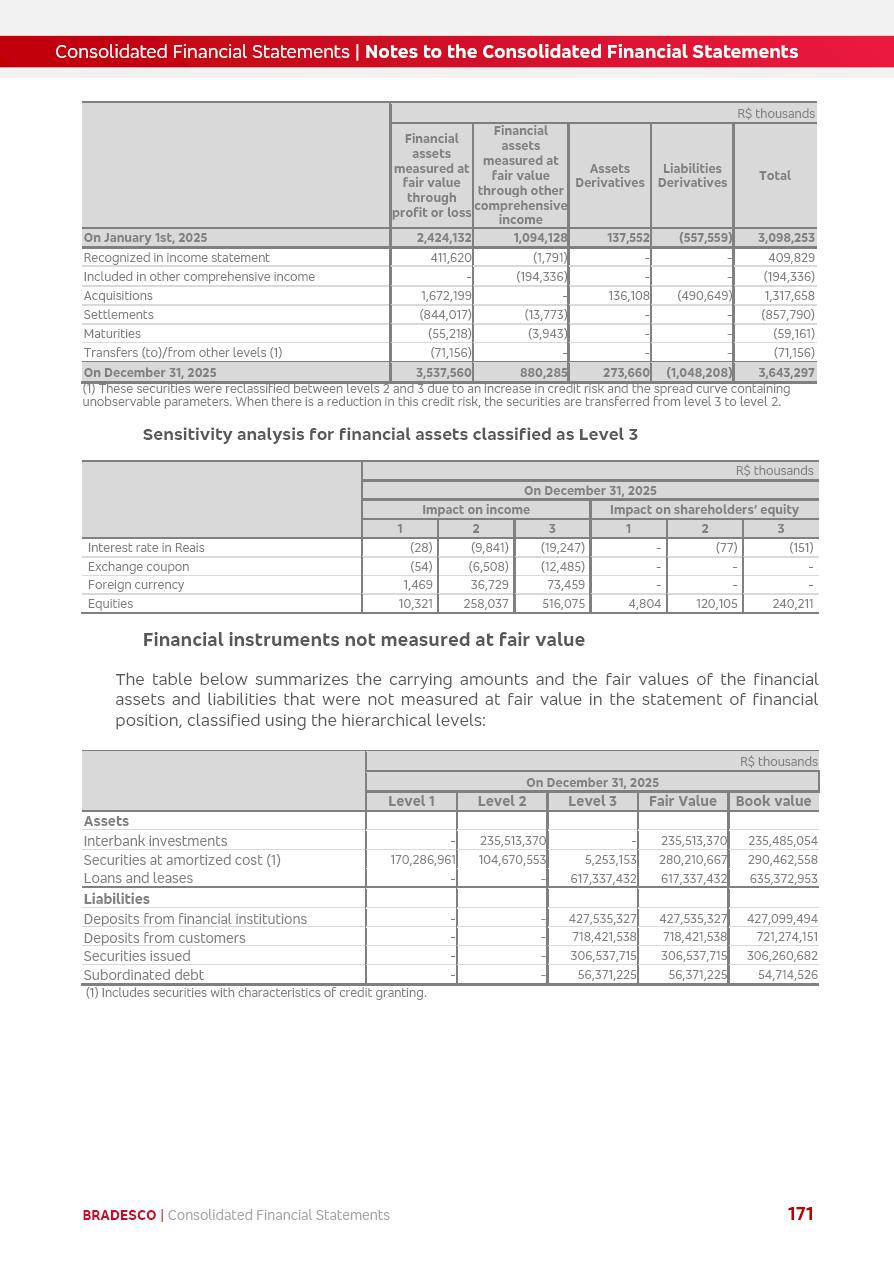

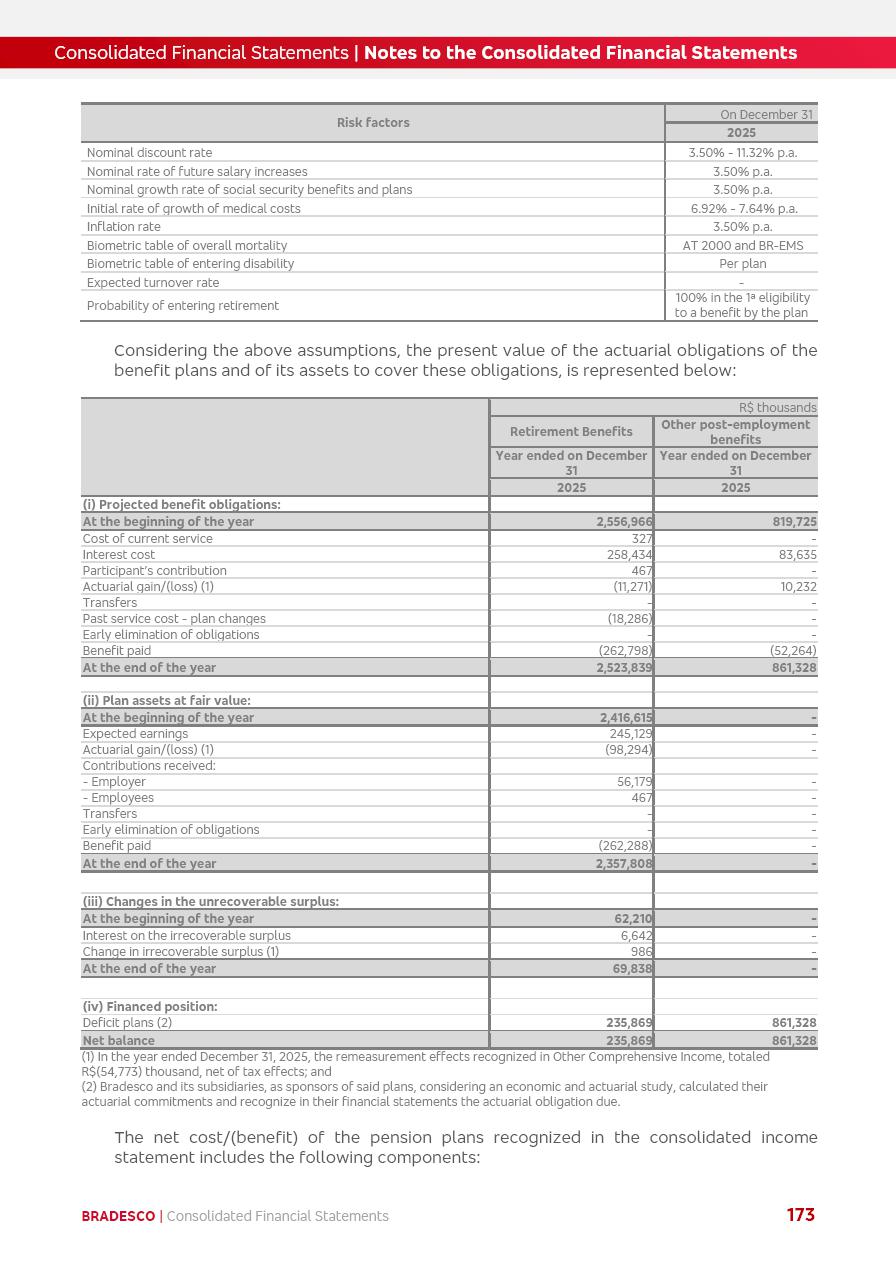
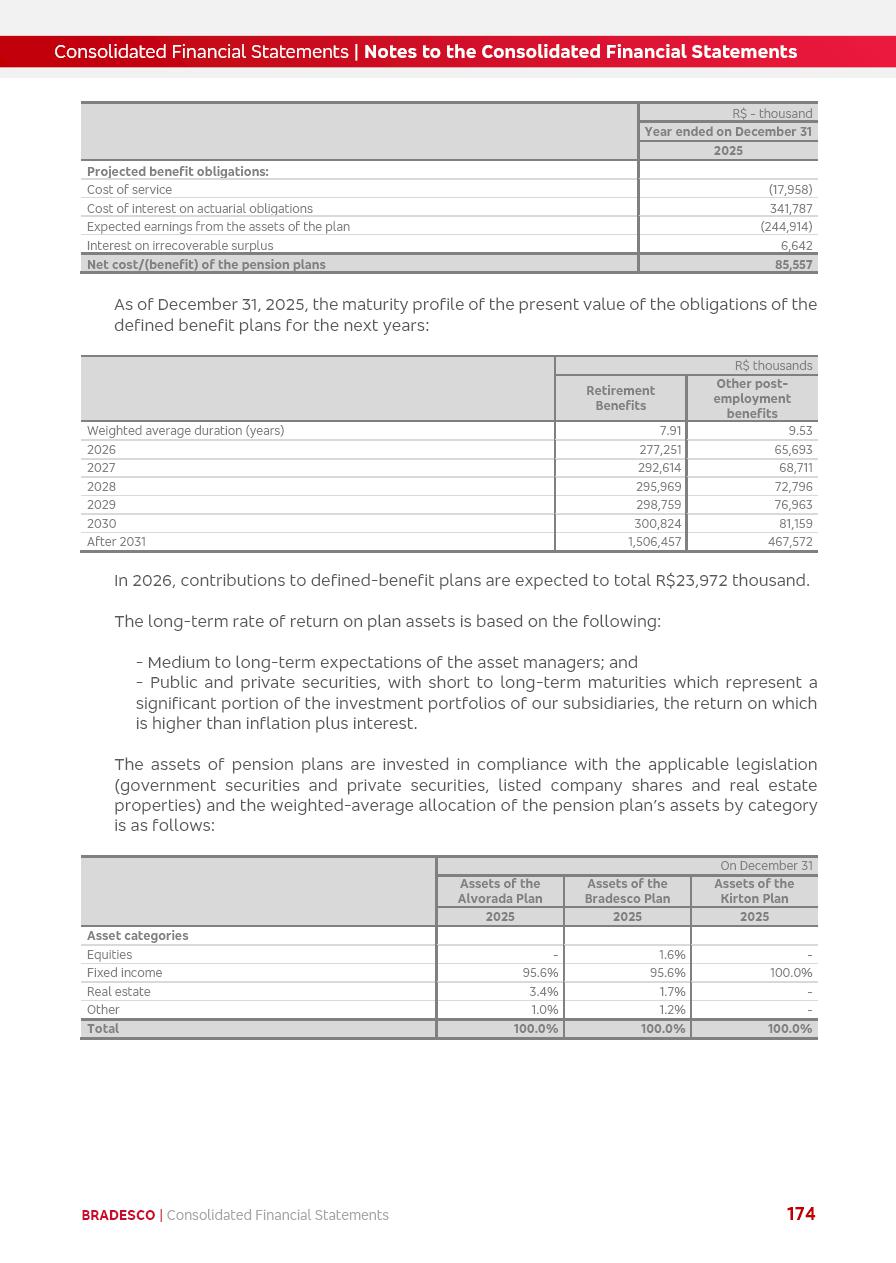
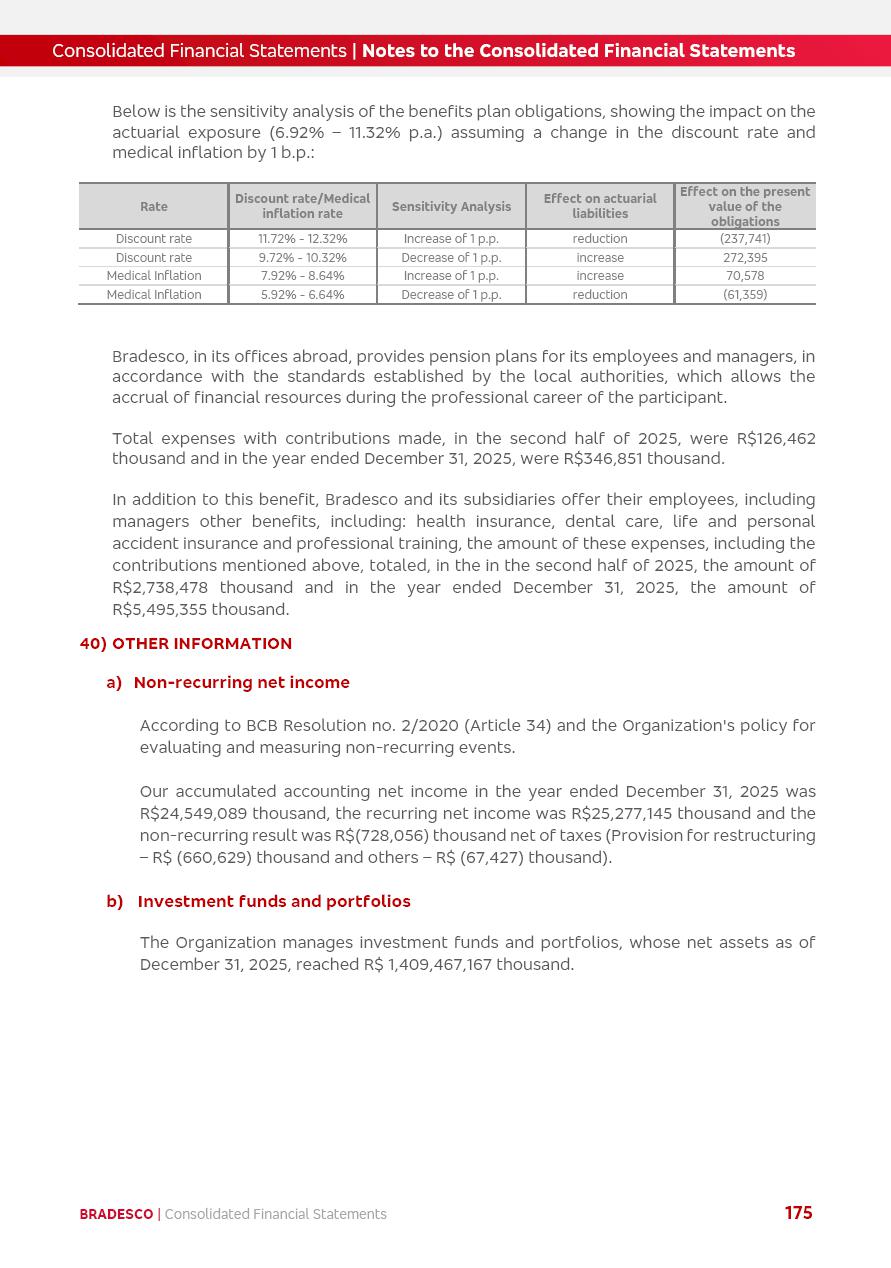
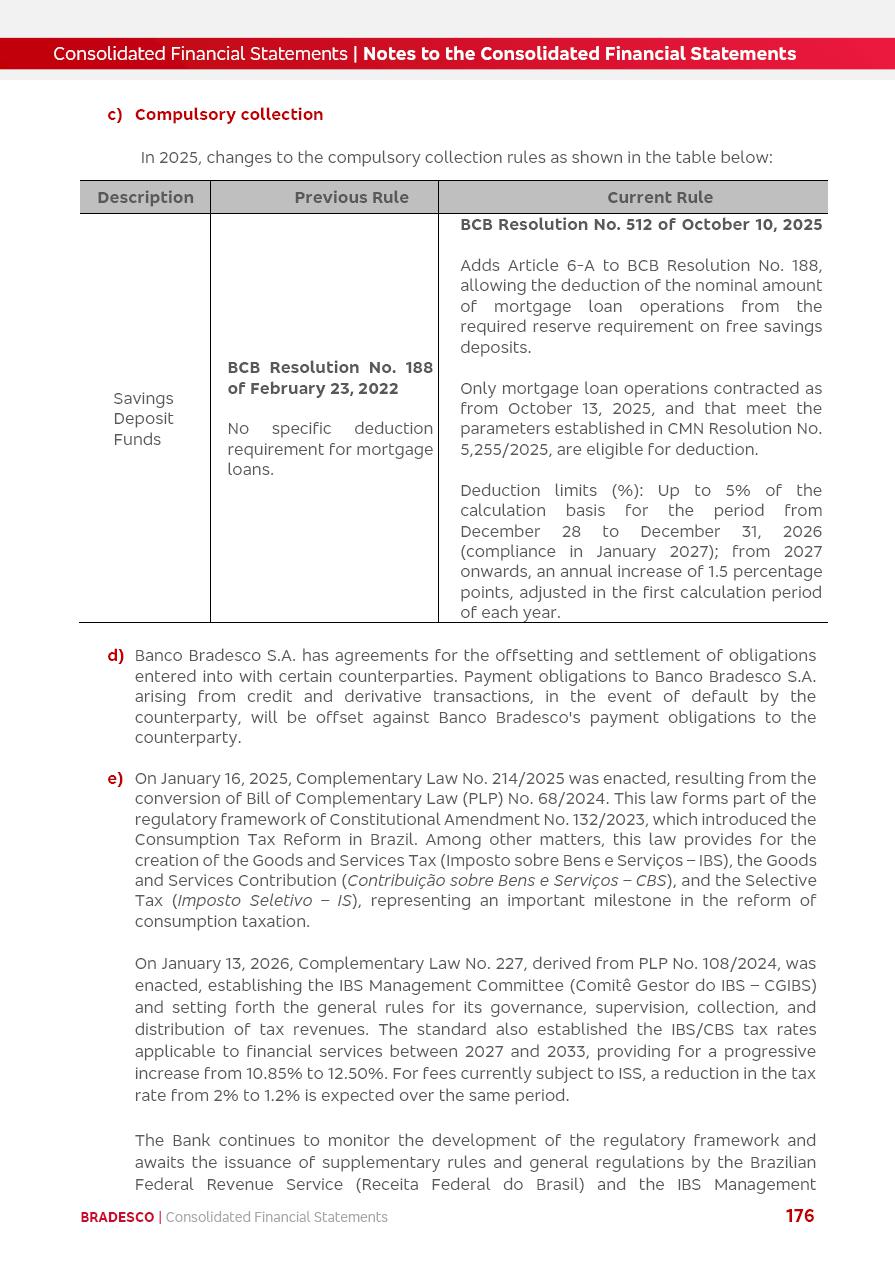
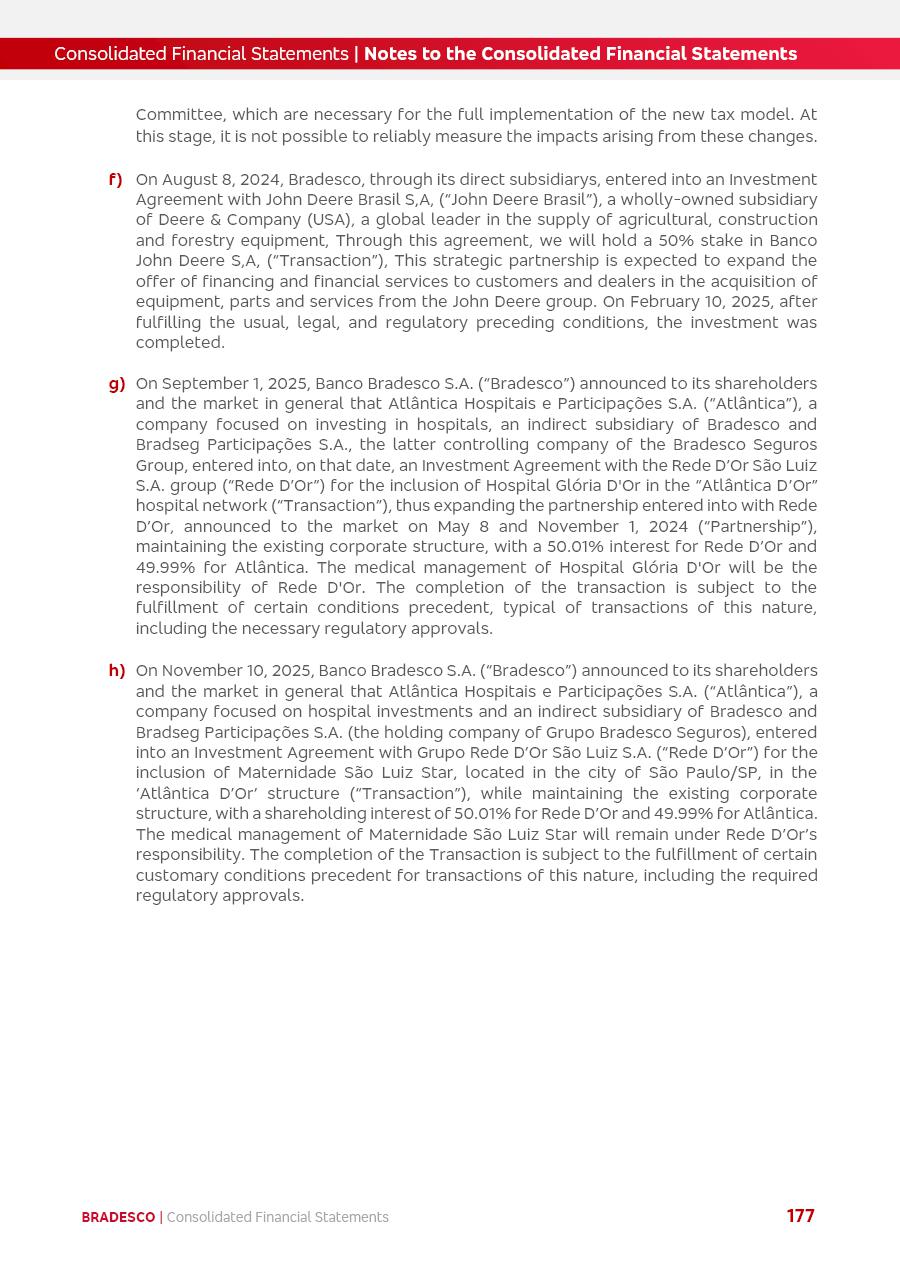
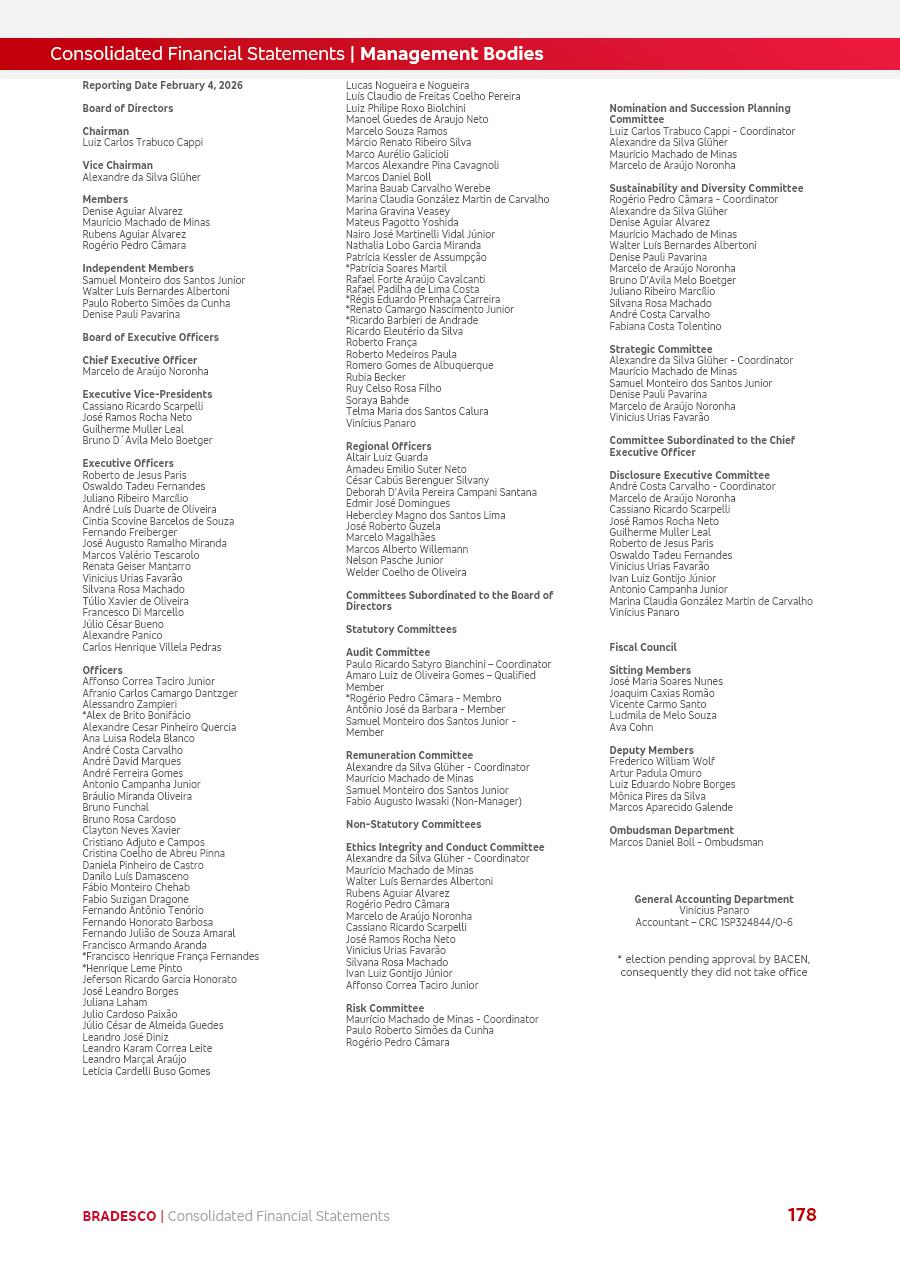
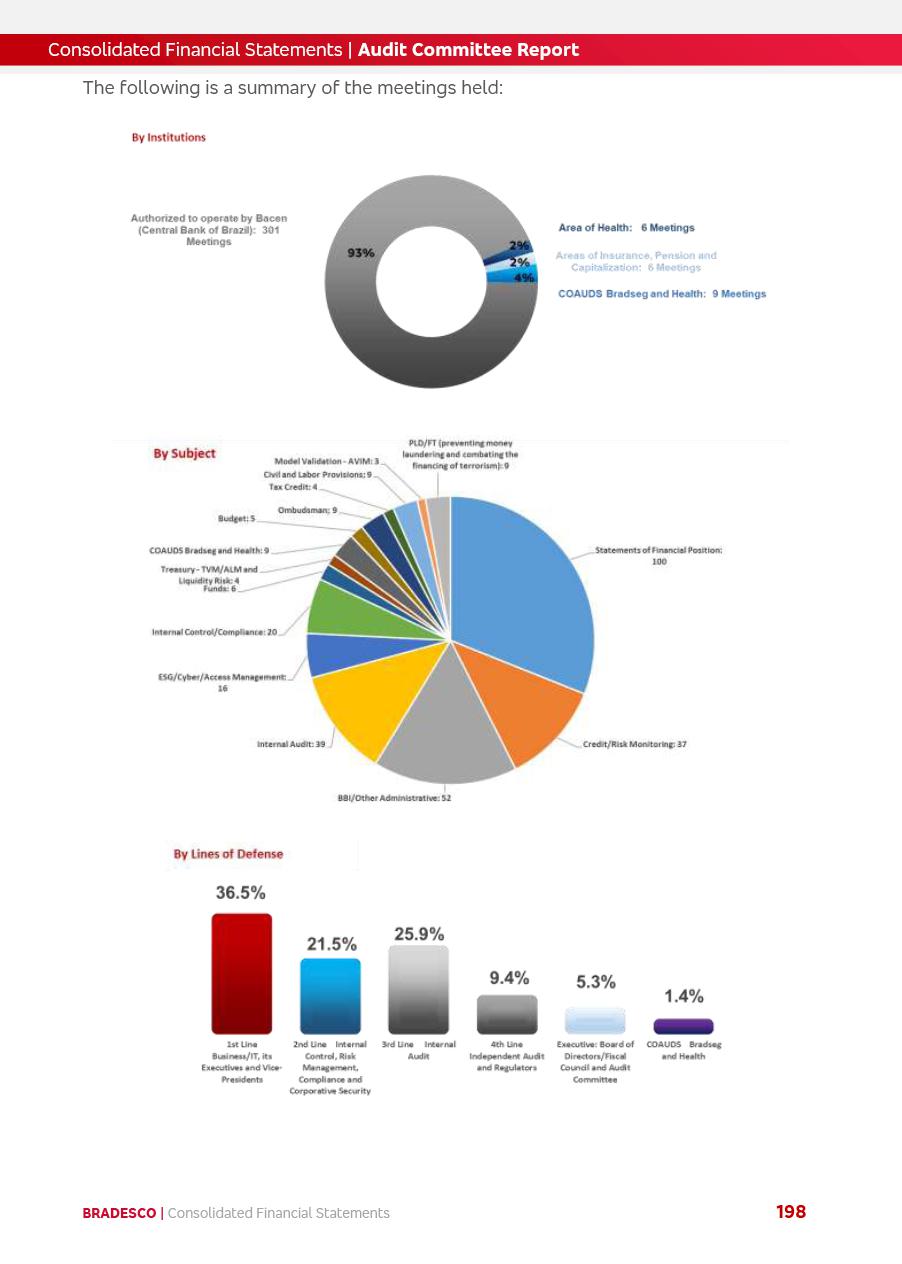
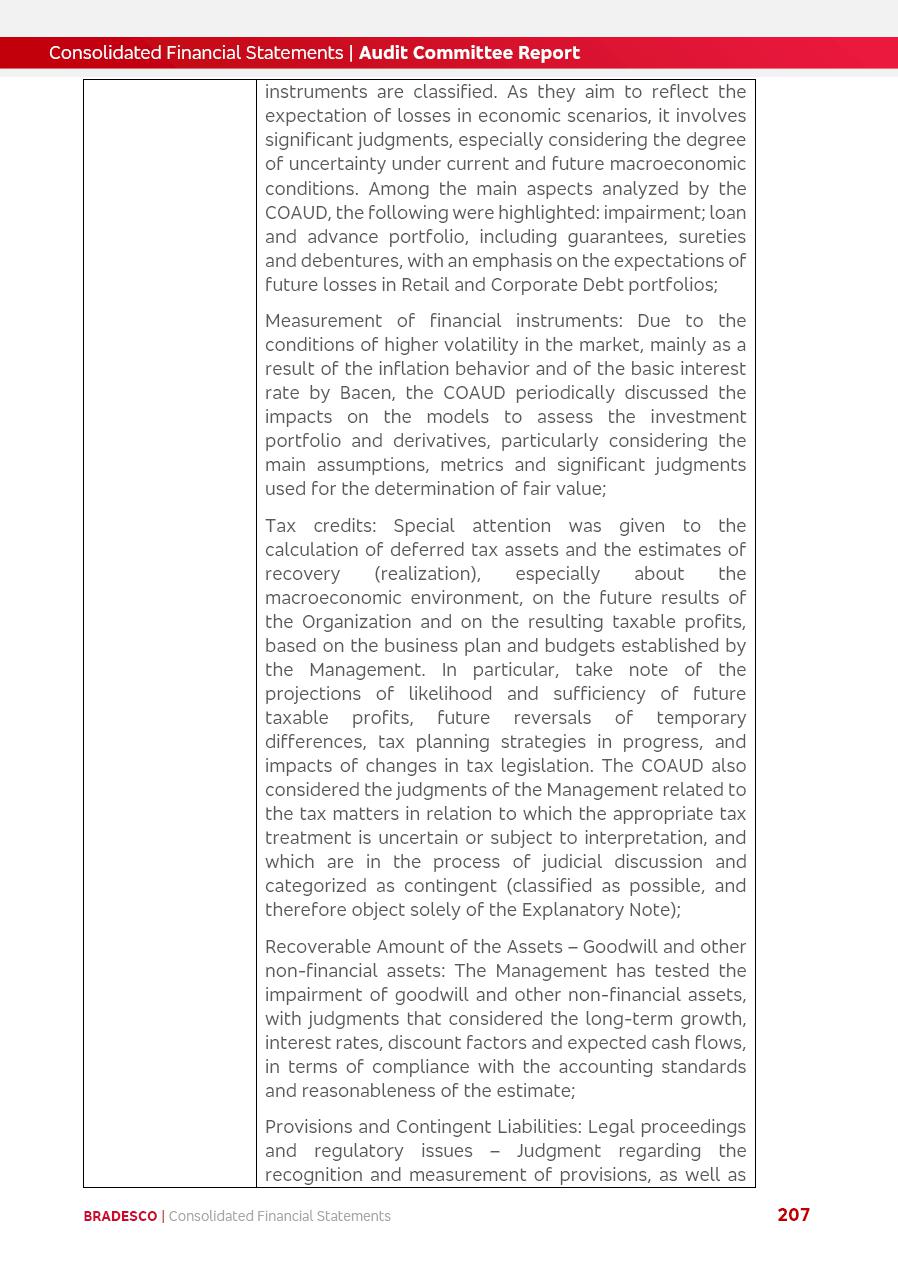
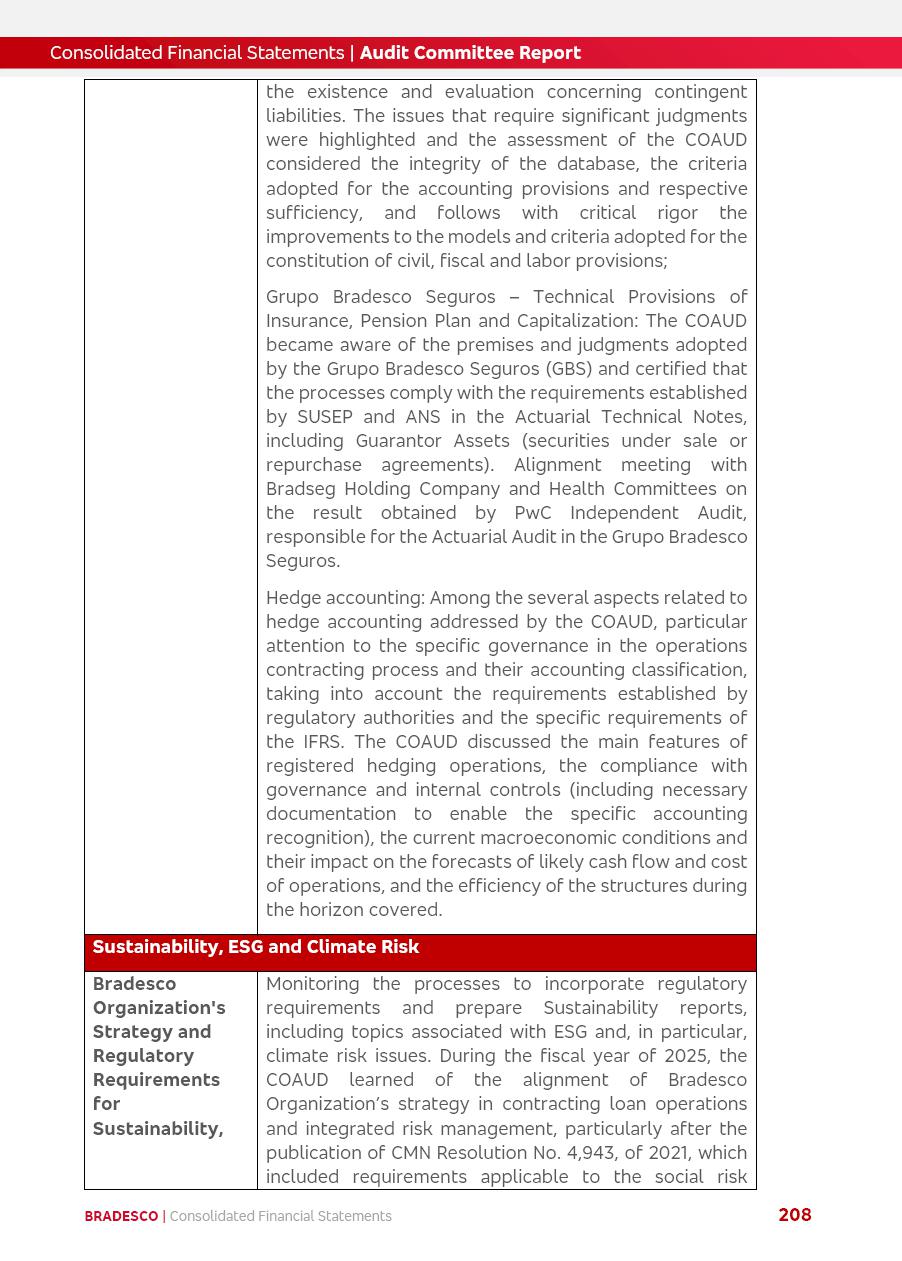
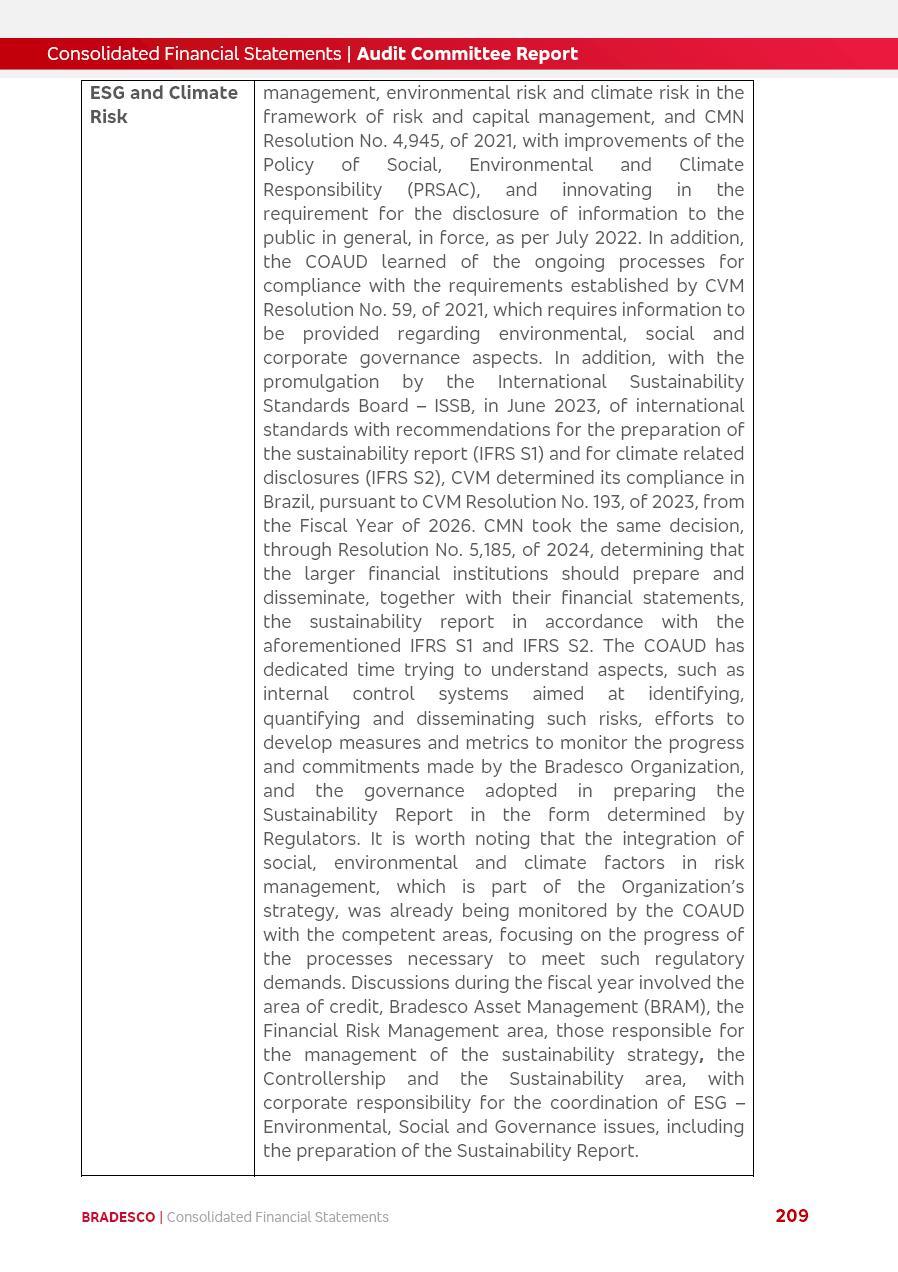
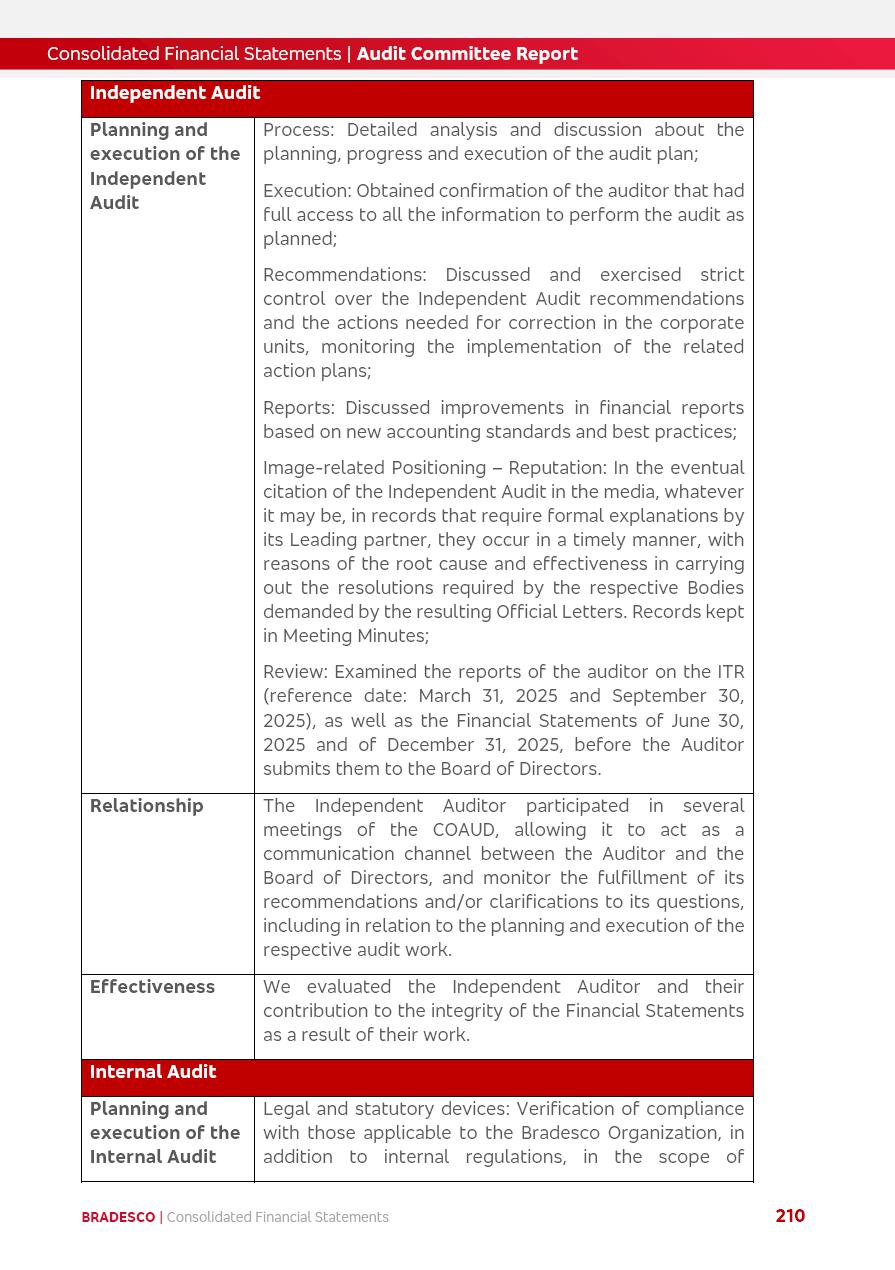
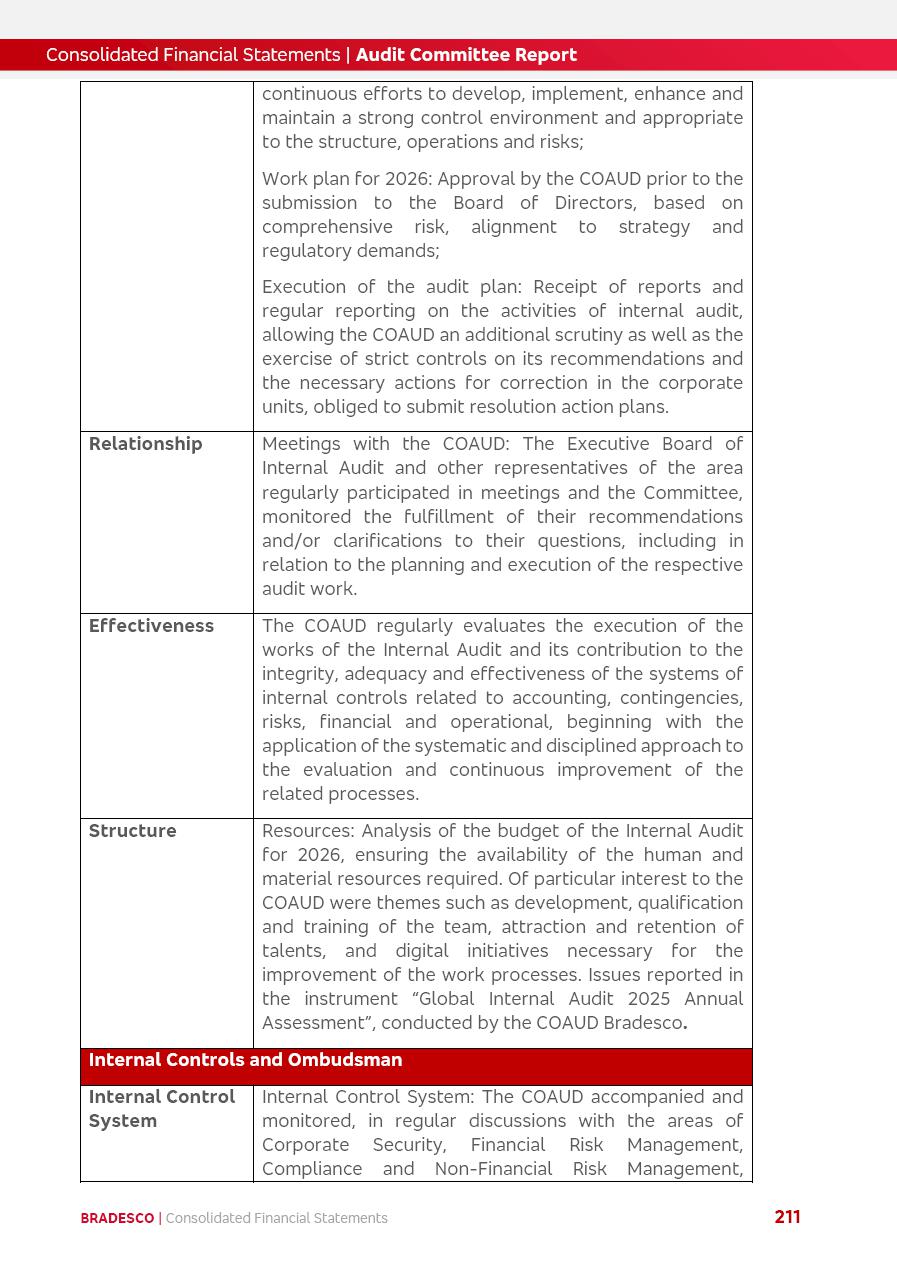
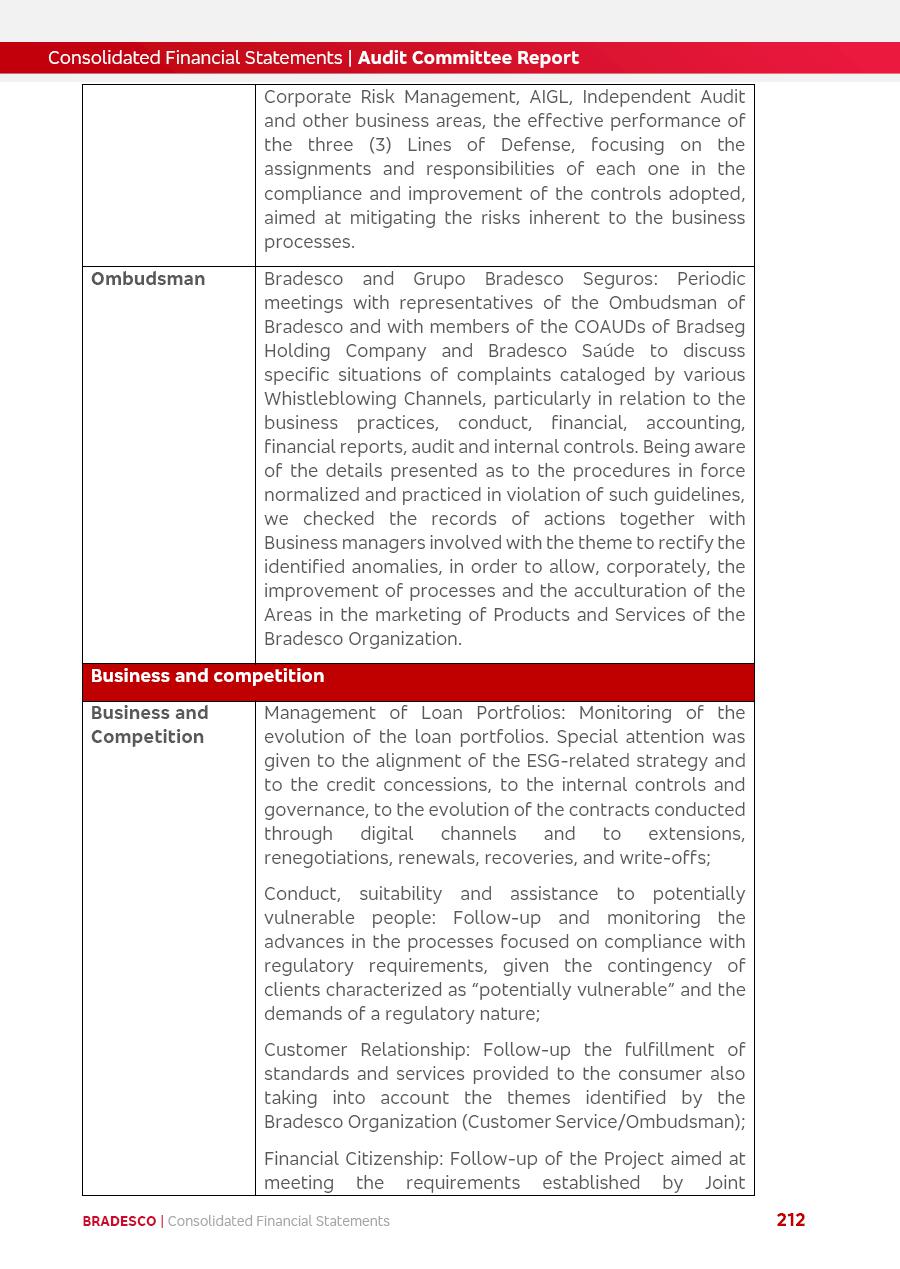
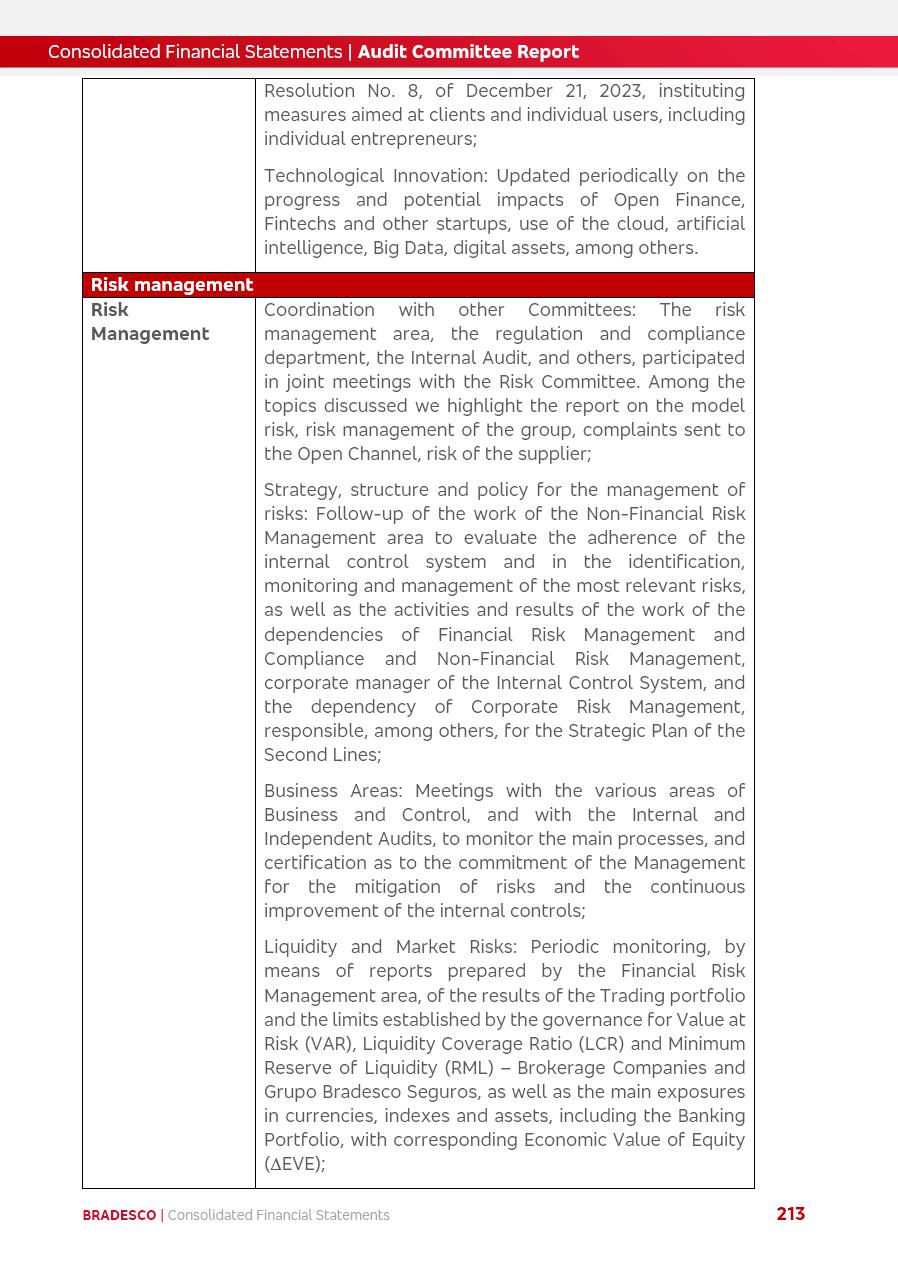
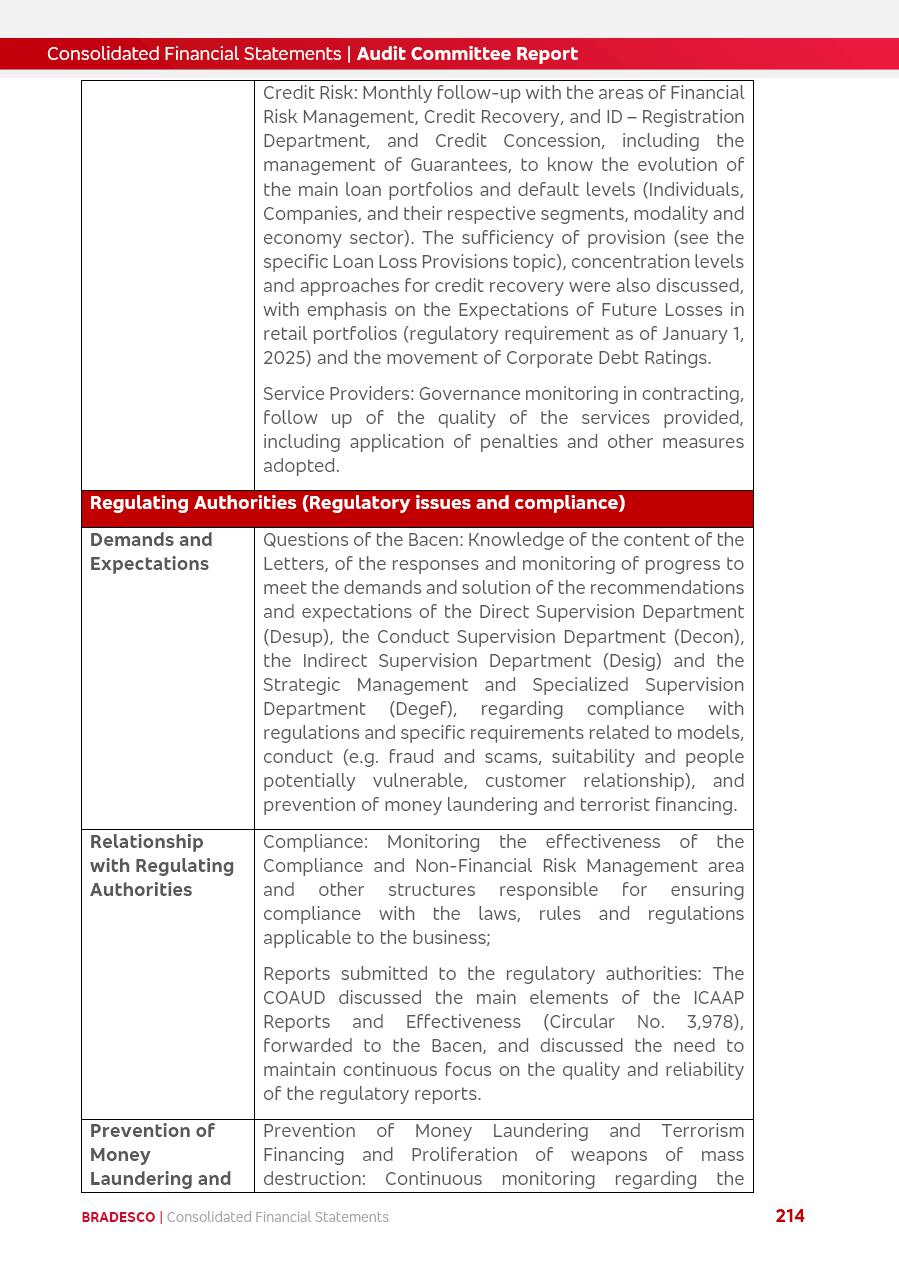
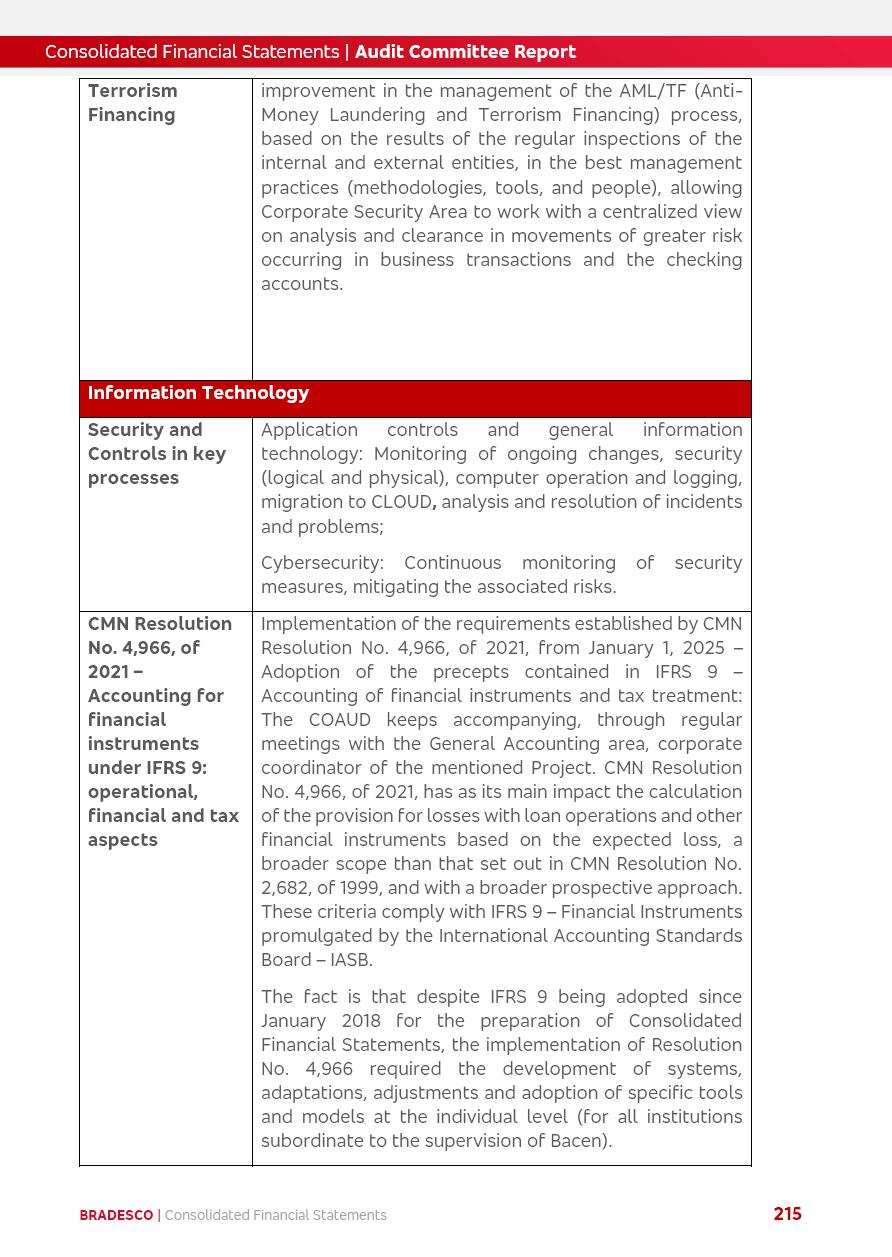
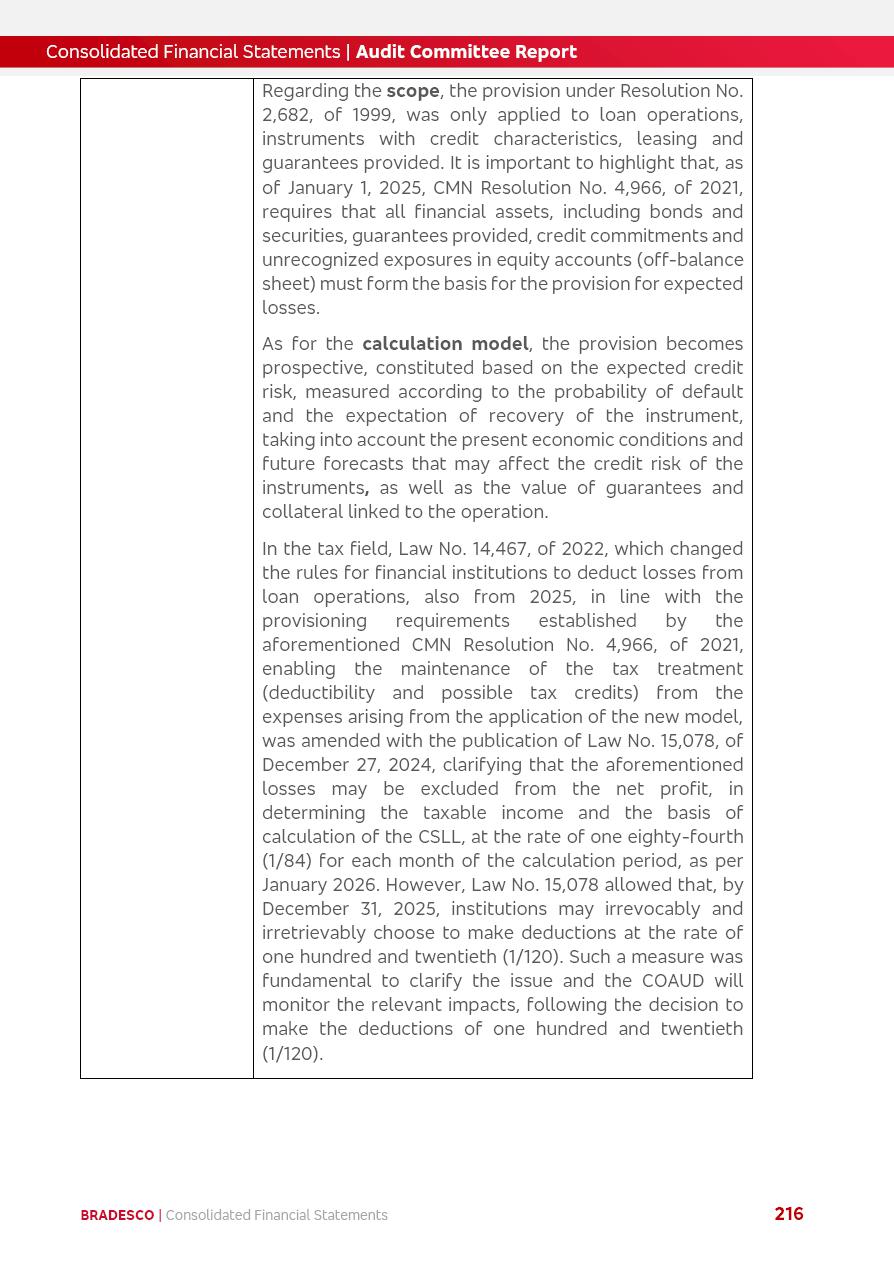
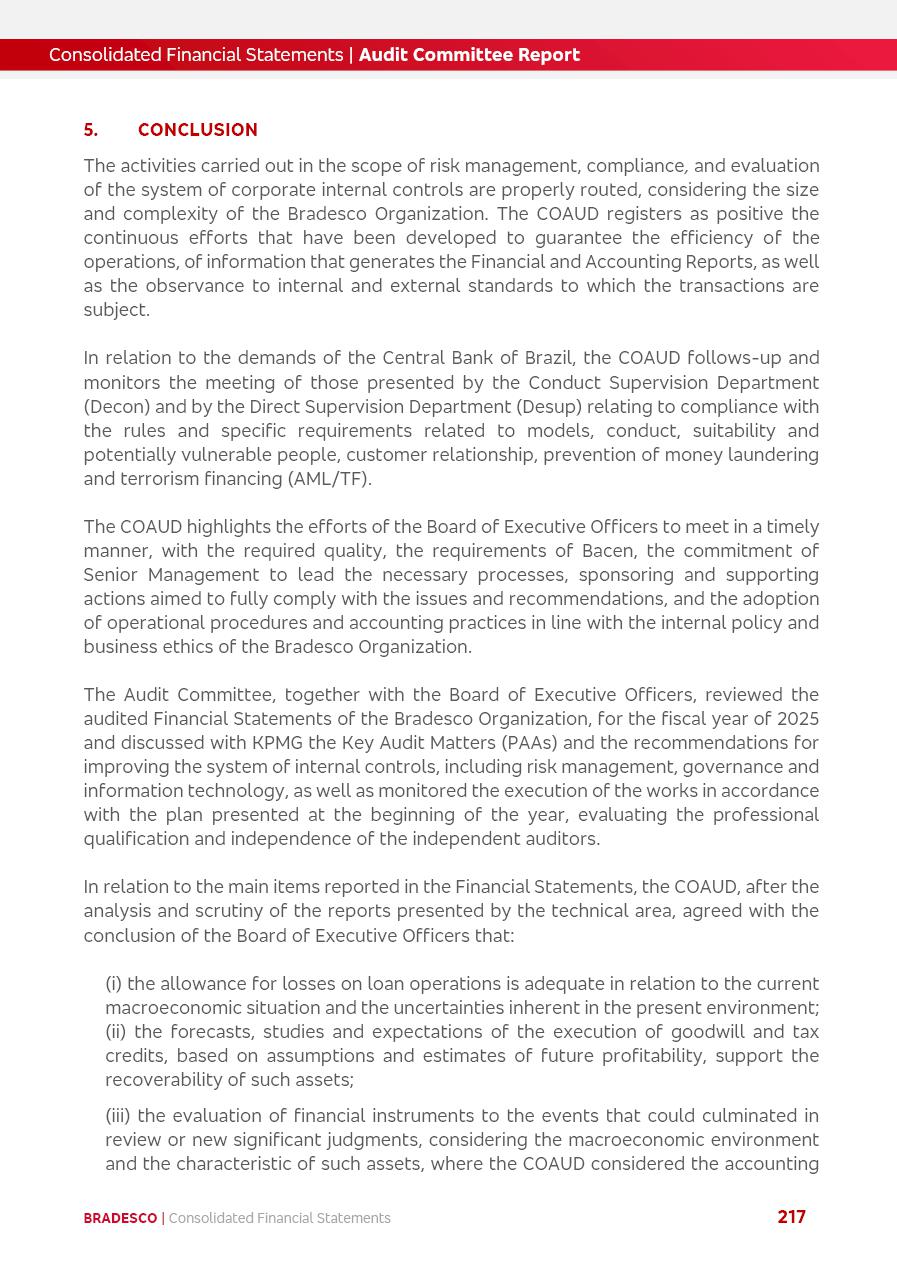
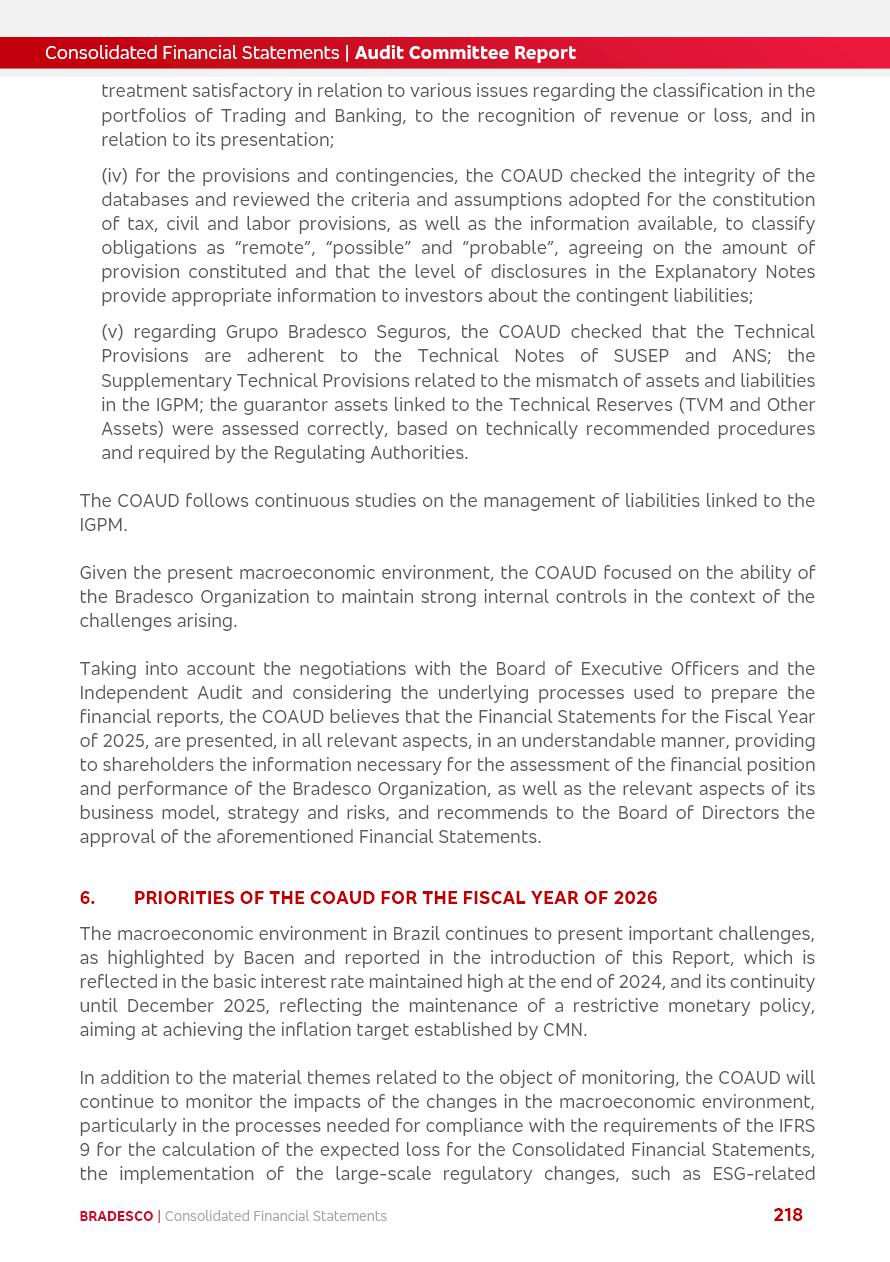

|
BANCO BRADESCO S.A. | ||
|
By: |
/S/André Costa Carvalho
| |
| André Costa Carvalho Investor Relations Officer | ||
This press release may contain forward-looking statements. These statements are statements that are not historical facts, and are based on management's current view and estimates of future economic circumstances, industry conditions, company performance and financial results. The words "anticipates", "believes", "estimates", "expects", "plans" and similar expressions, as they relate to the company, are intended to identify forward-looking statements. Statements regarding the declaration or payment of dividends, the implementation of principal operating and financing strategies and capital expenditure plans, the direction of future operations and the factors or trends affecting financial condition, liquidity or results of operations are examples of forward-looking statements. Such statements reflect the current views of management and are subject to a number of risks and uncertainties. There is no guarantee that the expected events, trends or results will actually occur. The statements are based on many assumptions and factors, including general economic and market conditions, industry conditions, and operating factors. Any changes in such assumptions or factors could cause actual results to differ materially from current expectations.