Please wait

.2

Disclaimer

Certain statements included or incorporated by reference in this document may constitute “forward-looking information” and “forward-looking statements” within the meaning of applicable Canadian securities laws and the United States Private Securities Litigation Reform Act of 1995, respectively (collectively referred to herein as “forward-looking statements or information”). Such forward-looking statements or information typically contain statements with words such as “anticipate”, “believe”, “expect”, “plan”, “intend”, “estimate”, “propose”, or similar words suggesting future outcomes or statements regarding an outlook. Forward-looking statements or information in this document may include, but are not limited to: capital expenditures and Vermilion’s ability to fund such expenditures; future fund flows from operations and free cash flows; shareholder returns; Vermilion’s anticipated future debt capacity and levels; Vermilion’s budget; the closing of the Westbrick Energy Ltd. acquisition and its anticipated effects, including integration of assets and employees; expected payment and settlement of the 2025 Notes (defined below) and timing thereof; cost saving measures; sales processes of Vermilion’s southeast Saskatchewan and United States assets; statements regarding the return of capital, the flexibility of Vermilion’s capital program and operations; business strategies, objectives and priorities; operational and financial performance; estimated volumes of reserves and the discounted present value of future net cash flows from such reserves; petroleum and natural gas sales; future production levels and the timing thereof, including Vermilion’s 2025 guidance, and rates of average annual production growth; the effect of changes in crude oil and natural gas prices, changes in exchange and interest rates and inflation rates; significant declines in production or sales volumes due to unforeseen circumstances; the effect of possible changes in critical accounting estimates; statements regarding the growth, number and production of Vermilion’s future wells expected to be drilled; exploration and development plans and the timing thereof; Vermilion’s aim and ability to reduce its debt; statements regarding Vermilion’s hedging program, its plans to add to its hedging positions, and the anticipated impact of Vermilion’s hedging program on project economics and free cash flows; the potential financial impact of climate-related risks; acquisition and disposition plans and the timing thereof; operating and other expenses, including the payment and amount of future dividends; royalty and income tax rates and Vermilion’s expectations regarding future taxes and taxability; use of proceeds from the 2033 Notes (defined below); ongoing contractual commitments; asset retirement obligations; emissions, targets, including reductions; sustainability and environmental, social and governance (ESG) and sustainability plans; and the timing of regulatory proceedings and approvals.

Such forward-looking statements or information are based on a number of assumptions of which all or any may prove to be incorrect. In addition to any other assumptions identified in this document, assumptions have been made regarding, among other things: the ability of Vermilion to obtain equipment, services and supplies in a timely manner to carry out its activities in Canada and internationally; the ability of Vermilion to market crude oil, natural gas liquids, and natural gas successfully to current and new customers; the timing and costs of pipeline and storage facility construction and expansion and the ability to secure adequate product transportation; the timely receipt of required regulatory approvals; the ability of Vermilion to obtain financing on acceptable terms; foreign currency exchange rates and interest rates and inflation rates; the success of the sales processes of Vermilion’s southeast Saskatchewan and United States assets; the accuracy of the McDaniel Reserves Report (defined below); the ability of the Company to identify attractive mergers and acquisitions opportunities; the ability of the Company to conduct operations in a safe manner; political stability of the areas in which the Company operates; the effects of changes to international trade policies; the accuracy of the Company’s 2025 budget; the ability of the Company to retain key employees; production and decline rates; the regulatory framework regarding royalties, taxes and environmental matters; the states of the capital markets; global economic conditions; the ability of the Company to execute plans, including exploration and development plans; the success of present and future wells; future crude oil, natural gas liquids, and natural gas prices; and management’s expectations relating to the timing and results of exploration and development activities.

Although Vermilion believes that the expectations reflected in such forward-looking statements or information are reasonable, undue reliance should not be placed on forward-looking statements or information because Vermilion can give no assurance that such expectations will prove to be correct. Financial outlooks are provided for the purpose of understanding Vermilion’s financial position and business objectives, and the information may not be appropriate for other purposes. Forward-looking statements or information are based on current expectations, estimates, and projections that involve a number of risks and uncertainties which could cause actual results to differ materially from those anticipated by Vermilion and described in the forward-looking statements or information. These risks and uncertainties include, but are not limited to: commodity prices; exchange rates; production and sales volumes; interest rates; geopolitical tensions; North American tariffs; volatility of oil and gas prices; constraints at processing facilities and/or on transportation; volatility of foreign exchange rates; volatility of market price of Common Shares (defined below); hedging arrangements; inflationary pressures; increase in operating costs or a decline in production level; operator performance and payment delays; weather conditions; cost of new technology; tax, royalty, and other government legislation; government regulations; policy and legal risks; political events and terrorist attacks; discretionary nature of dividends and share buybacks; additional financing; debt service; variations in interest rates and foreign exchange rates; environmental legislation; hydraulic fracturing regulations; climate change; competition; international operations and future geographical/industry expansion; acquisition assumptions; failure to realize anticipated benefits of prior acquisitions; reserves estimates; cyber security; accounting adjustments; ineffective internal controls; the potential for new and increased U.S. tariffs and protectionist trade measures on Canadian oil and gas imports; and other risks and uncertainties described elsewhere in this document or in Vermilion’s other filings with Canadian securities regulatory authorities.

Vermilion Energy Inc.  ■  Page 1  ■  2024 Management’s Discussion and Analysis


Many factors could cause Vermilion’s or any particular business unit’s actual results, performance, or achievements to vary from those described in this document, including, without limitation, those listed above and the assumptions upon which they are based proving incorrect. These factors should not be construed as exhaustive. Should one or more of these risks or uncertainties materialize, or should assumptions underlying forward-looking statements prove incorrect, actual results may vary materially from those described in this document as intended, planned, anticipated, believed, sought, proposed, estimated, forecasted, expected, projected, or targeted and such forward-looking statements included in this document should not be unduly relied upon. The impact of any one assumption, risk, uncertainty, or other factor on a particular forward-looking statement cannot be determined with certainty because they are interdependent and Vermilion’s future decisions and actions will depend on management’s assessment of all information at the relevant time. Such statements speak only as of the date of this document. The forward-looking statements or information contained in this document are made as of the date hereof and the Company undertakes no obligation to update publicly or revise any forward-looking statements or information, whether as a result of new information, future events or otherwise, unless required by applicable securities laws. The forward-looking statements contained in this document are expressly qualified by these cautionary statements.

This document contains references to sustainability/ESG data and performance that reflect metrics and concepts that are commonly used in such frameworks as the Global Reporting Initiative, the Task Force on Climate-related Financial Disclosures, and the Sustainability Accounting Standards Board. Vermilion has used best efforts to align with the most commonly accepted methodologies for ESG reporting, including with respect to climate data and information on potential future risks and opportunities, in order to provide a fuller context for our current and future operations. However, these methodologies are not yet standardized, are frequently based on calculation factors that change over time, and continue to evolve rapidly. Readers are particularly cautioned to evaluate the underlying definitions and measures used by other companies, as these may not be comparable to Vermilion's. While Vermilion will continue to monitor and adapt its reporting accordingly, the Company is not under any duty to update or revise the related sustainability/ESG data or statements except as required by applicable securities laws.

All oil and natural gas reserve information contained in this document is derived from the McDaniel Reserves Report (as defined below) and has been prepared and presented in accordance with the Canadian Oil and Gas Evaluation Handbook and National Instrument 51-101, Standards of Disclosure for Oil and Gas Activities (“NI 51-101”). In this document: (A) the net present value of future net revenues attributable to reserves do not represent the fair market value of reserves; (B) the recovery and reserve estimates of crude oil, NGL and natural gas reserves provided in this document are estimates only and there is no guarantee that the estimated reserves will be recovered. Actual crude oil, natural gas and NGL reserves may be greater than or less than the estimates provided in this document; and (C) the estimates of reserves and future net revenue for individual properties may not reflect the same confidence level as estimates of reserves and future net revenue for all properties, due to the effects of aggregation.

Under NI 51-01, disclosure of production volumes should include segmentation by product type as defined in the instrument. In this document, references to “crude oil” and “light and medium crude oil” mean “light crude oil and medium crude oil” and references to “natural gas” mean “conventional natural gas”.

Natural gas volumes have been converted on the basis of six thousand cubic feet of natural gas to one barrel of oil equivalent. Barrels of oil equivalent (boe) may be misleading, particularly if used in isolation. A boe conversion ratio of six thousand cubic feet to one barrel of oil is based on an energy equivalency conversion method primarily applicable at the burner tip and does not represent a value equivalency at the wellhead.

This document discloses test rates of production for certain wells over short periods of time (i.e., 5, 8 or 24 hours, IP30, IP60, IP90, etc.), which are preliminary and not determinative of the rates at which those or any other wells will commence production and thereafter decline. Short-term test rates are not necessarily indicative of long-term well or reservoir performance or of ultimate recovery. Although such rates are useful in confirming the presence of hydrocarbons, they are preliminary in nature, are subject to a high degree of predictive uncertainty as a result of limited data availability and may not be representative of stabilized on-stream production rates. A pressure transient analysis or well-test interpretation has not been carried out in respect of all wells. Production over a longer period will also experience natural decline rates, which can be high in certain plays in which the Company operates, and may not be consistent over the longer term with the decline experienced over an initial production period. Initial production or test rates may also include recovered “load” fluids used in well completion stimulation operations. Actual results will differ from those realized during an initial production period or short-term test period, and the difference may be material.

This document discloses certain oil and gas metrics, including reserve life index, finding, development and acquisition (“FD&A”) costs, future development (“FD”) costs, which do not have standardized meanings or standard methods of calculation and therefore such measures may not be comparable to similar measures used by other companies and should not be used to make comparisons. Such metrics have been included in this document to provide readers with additional measures to evaluate the Company's performance; however, such measures are not reliable indicators of the Company's future performance and future performance may not compare to the Company's performance in previous periods and therefore such metrics should not be unduly relied up-on.

Financial data contained within this document are reported in Canadian dollars unless otherwise stated. References herein to “US$” or “USD” are to United States dollars.

Vermilion Energy Inc.  ■  Page 2  ■  2024 Management’s Discussion and Analysis


Abbreviations

$M

thousand dollars

$MM

million dollars

AECO

the daily average benchmark price for natural gas at the AECO ‘C’ hub in Alberta

bbl(s)

barrel(s)

bbl(s)/d

barrels per day

boe

barrel of oil equivalent, including: crude oil, condensate, natural gas liquids, and natural gas (converted on the basis of one boe for six mcf of natural gas)

boe/d

barrel of oil equivalent per day

CO2

carbon dioxide

CO2e

carbon dioxide equivalent

GHG

greenhouse gas

GJ

gigajoules

LSB

light sour blend crude oil reference price

mbbls

thousand barrels

mmboe

thousand barrels of oil equivalent

mmbtu

million British Thermal Units

mcf

thousand cubic feet

mmcf/d

million cubic feet per day

MD

measured depth

NBP

the reference price paid for natural gas in the United Kingdom at the National Balancing Point Virtual Trading Point

NCIB

normal-course issuer bid

NGLs

natural gas liquids, which includes butane, propane, and ethane

PRRT

Petroleum Resource Rent Tax, a profit based tax levied on petroleum projects in Australia

psi

pounds per square inch

tCO2e

tonne of carbon dioxide equivalent

THE

the price for natural gas in Germany, quoted in megawatt hours of natural gas, at the Trading Hub Europe

TTF

the price for natural gas in the Netherlands, quoted in megawatt hours of natural gas, at the Title Transfer Facility Virtual Trading Point

US

the United States of America

WTI

West Texas Intermediate, the reference price paid for crude oil of standard grade in US dollars at Cushing, Oklahoma

Vermilion Energy Inc.  ■  Page 3  ■  2024 Management’s Discussion and Analysis


Management's Discussion and Analysis

The following is Management’s Discussion and Analysis (“MD&A”), dated March 5, 2025, of Vermilion Energy Inc.’s (“Vermilion”, “we”, “our”, “us” or the “Company”) operating and financial results as at and for the three months and year ended December 31, 2024 compared with the corresponding periods in the prior year.

This discussion should be read in conjunction with the audited consolidated financial statements for the year ended December 31, 2024 and 2023, together with the accompanying notes (the "Consolidated Financial Statements"). Additional information relating to Vermilion, including its Annual Information Form for the year ended December 31, 2024 ("Annual Information Form"), is available on SEDAR+ at www.sedarplus.ca or on Vermilion’s website at www.vermilionenergy.com.

The Consolidated Financial Statements and comparative information have been prepared in Canadian dollars and in accordance with IFRS® Accounting Standards as issued by the International Accounting Standards Board ("IFRS Accounting Standards").

Prior period amounts have been restated to conform with current period presentation as a result of the voluntary and retroactively applied change in the presentation of windfall taxes, as combined with current income taxes.

This MD&A includes references to certain financial measures which are not specified, defined, or determined under IFRS Accounting Standards and are therefore considered non-GAAP and other specified financial measures. These financial measures are unlikely to be comparable to similar financial measures presented by other issuers. For a full description of these non-GAAP and other specified financial measures and a reconciliation of these measures to their most directly comparable GAAP financial measures, please refer to “Non-GAAP and Other Specified Financial Measures”.

Product Type Disclosure

Under National Instrument 51-101 "Standards of Disclosure for Oil and Gas Activities", disclosure of production volumes should include segmentation by product type as defined in the instrument. In this report, references to "crude oil" and "light and medium crude oil" mean "light crude oil and medium crude oil" and references to "natural gas" mean "conventional natural gas".

In addition, in Supplemental Table 4 "Production", Vermilion provides a reconciliation from total production volumes to product type and also a reconciliation of "crude oil and condensate" and "NGLs" to the product types "light crude oil and medium crude oil" and "natural gas liquids".

Production volumes reported are based on quantities as measured at the first point of sale.

Guidance

On December 12, 2023, Vermilion released the 2024 capital budget and associated production guidance, which assumed a mid-year startup of the new BC Montney battery and Croatia gas plant. On May 1, 2024, the Company increased 2024 guidance for royalty rate and cash taxes to reflect the impact of higher forward pricing for crude oil on these items. On July 31, 2024, the Company increased 2024 production guidance to reflect consistently strong operational performance across the asset base over the first half of 2024. On November 6, 2024, the Company tightened the 2024 production guidance range to reflect increased certainty on annual production levels.

The Company’s guidance and results for 2024 are as follows:

Category


2024 Guidance (1)


2024 Actual (1)


Production (boe/d)


84,000 - 85,000


84,543

E&D capital expenditures ($MM)


$

600 - 625


$

623

Royalty rate (% of sales)


9 - 11

%  

9.0

%

Operating ($/boe)

$

17.00 - 18.00

$

18.22

Transportation ($/boe)

$

3.00 - 3.50

$

3.17

General and administration ($/boe)

$

2.50 - 3.00

$

3.19

Cash taxes (% of pre-tax FFO)


7 - 9

%  


6.1

%

Asset retirement obligations settled ($MM)

$

60

$

55

Payments on lease obligations ($MM)(2)

$

30 - 60

$

113

Vermilion Energy Inc.  ■  Page 4  ■  2024 Management’s Discussion and Analysis


On December 19, 2024, Vermilion released the 2025 capital budget and associated production guidance. On March 5, 2025, the Company updated the 2025 capital budget and associated production guidance following the close of the acquisition of Westbrick Energy Ltd. ("Westbrick"), with incremental capital expenditures and production from the acquired assets reflected in guidance for the remainder of the year. The Company’s guidance for 2025 is as follows:

Category


2025 Prior(1)


2025 Current(1)


Production (boe/d)


84,000 - 88,000


125,000 - 130,000

E&D capital expenditures ($MM)

$

600 - 625

$

730 - 760

Royalty rate (% of sales)


8 - 10

%


9 - 11

%

Operating ($/boe)

$

17.00 - 18.00

$

13.50 - 14.50

Transportation ($/boe)

$

3.50 - 4.00

$

3.00 - 3.50

General and administration ($/boe)

$

2.75 - 3.25

$

2.25 - 2.75

Cash taxes (% of pre-tax FFO)


7 - 9

%


6 - 10

%

Asset retirement obligations settled ($MM)

$

60

$

60

Payments on lease obligations ($MM) (2)

$

20

$

20

(1)Final 2024 guidance reflects foreign exchange assumptions of CAD/USD 1.37, CAD/EUR 1.49, and CAD/AUD 0.91. Actual 2024 results reflect foreign exchange rates of CAD/USD 1.37, CAD/EUR 1.48, and CAD/AUD 0.90. Current 2025 guidance reflects foreign exchange assumptions of CAD/USD 1.43, CAD/EUR 1.51, and CAD/AUD 0.90. Prior 2025 guidance reflects foreign exchange assumptions of CAD/USD 1.40, CAD/EUR 1.48, and CAD/AUD 0.91.
(2)Final 2024 guidance for payments on lease obligations includes contractual amounts owing on leases, as well as up to $30 million to account for accelerated principal payments that may be made in 2024. Actual 2024 payments on lease obligations includes contractual amounts owing on leases, and reflects the repayment of the entire lease obligation associated with the Montney Battery in December 2024. Current 2025 guidance reflects contractual amounts owing on leases.

Vermilion Energy Inc.  ■  Page 5  ■  2024 Management’s Discussion and Analysis


Vermilion's Business

Vermilion is a Calgary, Alberta-based international oil and gas producer focused on the acquisition, exploration, development, and optimization of producing properties in North America, Europe, and Australia. We manage our business through our Calgary head office and our international business unit offices.

2024 production of 84,543 boe/d

2024 capital expenditures of $623.0MM

Graphic

Graphic

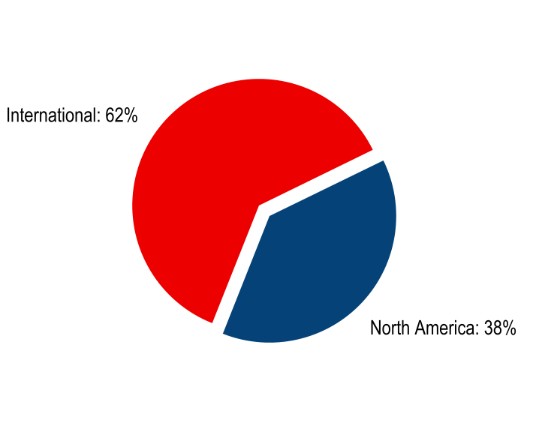
2024 fund flows from operations of $1,205.8MM (1)

Graphic

(1)

The fund flows from operations attributable to North America and International business units above excludes $246.8M of pre-tax fund flows from operations attributable to the Corporate segment. North America includes $1.4MM of corporate income tax recorded in the Corporate segment.

Vermilion Energy Inc.  ■  Page 6  ■  2024 Management’s Discussion and Analysis


Consolidated Results Overview

Q4/24 vs.

2024 vs.


Q4 2024


Q4 2023


  Q4/23


2024


2023


2023


Production (1)

Crude oil and condensate (bbls/d)


30,327


32,866

(8)

%  

31,427


31,727


(1)

%

NGLs (bbls/d)


6,612


7,412

(11)

%  

7,100


7,296


(3)

%

Natural gas (mmcf/d)


279.59


283.91

(2)

%  

276.10


269.83


2

%

Total (boe/d)


83,536


87,597

(5)

%  

84,543


83,994


1

%

Build (draw) in inventory (mbbls)


107


442


(220)


513


Financial metrics


Fund flows from operations ($M) (2)


262,698


372,117

(29)

%  

1,205,783


1,142,611


6

%

Per share ($/basic share)


1.70


2.27

(25)

%  

7.63


6.98


9

%

Net loss ($M)


(18,316)


(803,136)

(98)

%

(46,739)


(237,587)


(80)

%

Per share ($/basic share)


(0.12)


(4.91)

(98)

%

(0.30)


(1.45)


(79)

%

Cash flows from operating activities ($M)

212,587

343,831

(38)

%

967,751

1,024,528

(6)

%

Free cash flow ($M) (3)

62,039

229,230

(73)

%

582,803

552,420

6

%

Long-term debt ($M)


963,456


914,015

5

%  

963,456


914,015


5

%

Net debt ($M) (4)


966,882


1,078,567

(10)

%  

966,882


1,078,567


(10)

%

Activity


Capital expenditures ($M) (5)


200,659


142,887

40

%  

622,980


590,191


6

%

Acquisitions ($M) (6)


5,257


25,724

(80)

%

22,101


273,018


(92)

%

Dispositions ($M)


14,855


197,007


(1)

Please refer to Supplemental Table 4 "Production" for disclosure by product type.

(2)

Fund flows from operations (FFO) and FFO per share are a total of segments measure and supplementary financial measure most directly comparable to net loss and net loss per share, respectively. The measures do not have a standardized meaning under IFRS Accounting Standards and therefore may not be comparable to similar measures presented by other issuers. FFO is comprised of sales less royalties, transportation, operating, G&A, corporate income tax, PRRT, interest expense, equity based compensation settled in cash, realized gain (loss) on derivatives, plus realized gain (loss) on foreign exchange and realized other income (expense). The measure is used to assess the contribution of each business unit to Vermilion's ability to generate income necessary to pay dividends, repay debt, fund asset retirement obligations and make capital investments. A reconciliation to the primary financial statement measures can be found within the "Non-GAAP and Other Specified Financial Measures" section of this MD&A.

(3)

Free cash flow (FCF) is a non-GAAP financial measure most directly comparable to cash flows from operating activities; it does not have a standardized meaning under IFRS Accounting Standards and therefore may not be comparable to similar measures presented by other issuers. FCF is comprised of fund flows from operations less drilling and development costs and exploration and evaluation costs. The measure is used to determine the funding available for investing and financing activities including payment of dividends, repayment of long-term debt, reallocation into existing business units and deployment into new ventures. A reconciliation to primary financial statement measures can be found within the "Non-GAAP and Other Specified Financial Measures" section of this MD&A.

(4)

Net debt is a capital management measure in accordance with IAS 1 "Presentation of Financial Statements" and is most directly comparable to long-term debt. Net debt is comprised of long-term debt (excluding unrealized foreign exchange on swapped USD borrowings) plus adjusted working capital (defined as current assets less current liabilities, excluding current derivatives and current lease liabilities), and represents Vermilion's net financing obligations after adjusting for the timing of working capital fluctuations. Net debt excludes lease obligations which are secured by a corresponding right-of-use asset. A reconciliation to the primary financial statement measures can be found within the "Financial Position Review" section of this MD&A.

(5)

Capital expenditures is a non-GAAP financial measure that does not have a standardized meaning under IFRS Accounting Standards and therefore may not be comparable to similar measures presented by other issuers. The measure is calculated as the sum of drilling and development costs and exploration and evaluation costs from the Consolidated Statements of Cash Flows. We consider capital expenditures to be a useful measure of our investment in our existing asset base. Capital expenditures are also referred to as E&D capital. A reconciliation to the primary financial statement measures can be found within the "Non-GAAP and Other Specified Financial Measures" section of this MD&A.

(6)

Acquisitions is a non-GAAP financial measure that does not have a standardized meaning under IFRS Accounting Standards and therefore may not be comparable to similar measures presented by other issuers. The measure is calculated as the sum of acquisitions, net of cash and acquisitions of securities from the Consolidated Statements of Cash Flows, Vermilion common shares issued as consideration, the estimated value of contingent consideration, the amount of acquiree's outstanding long-term debt assumed, and net acquired working capital deficit or surplus. We believe that including these components provides a useful measure of the economic investment associated with our acquisition activity. A reconciliation to the acquisitions line item in the Consolidated Statements of Cash Flows can be found in "Supplemental Table 3: Capital Expenditures and Acquisitions" section of this MD&A.

Vermilion Energy Inc.  ■  Page 7  ■  2024 Management’s Discussion and Analysis


Financial performance review

Q4 2024 vs. Q4 2023

Graphic

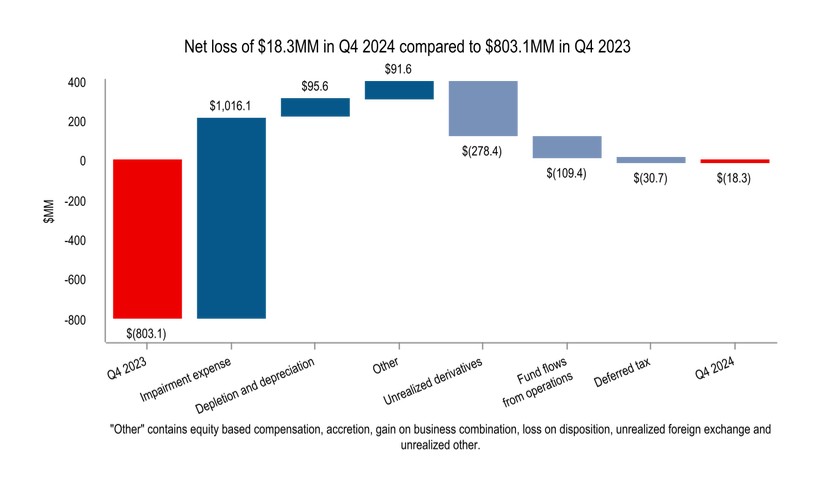
·We recorded net loss of $18.3 million ($0.12/basic share) for Q4 2024 compared to net loss of $803.1 million ($4.91/basic share) in Q4 2023. The decrease in net loss was primarily due to prior year impairment and lower depletion and depreciation on decreased depletable base, partially offset by changes in our unrealized derivative (loss) gain of $278.4 million due to unfavourable changes in our mark-to-market position.

Graphic

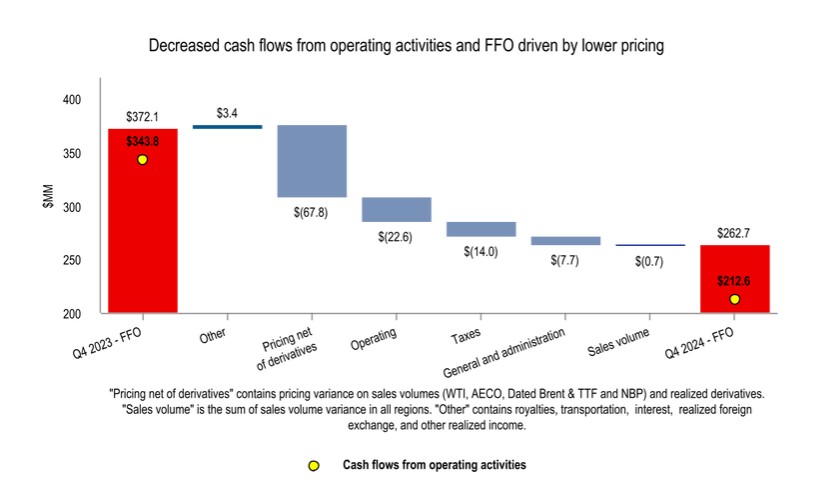
We generated cash flows from operating activities of $212.6 million in Q4 2024 compared to $343.8 million in Q4 2023 and fund flows from operations of $262.7 million in Q4 2024 compared to $372.1 million in Q4 2023. The decrease in fund flows from operations and cash flows from operating activities were primarily driven by lower realized gains on European gas derivative contracts, higher PRRT expense on Wandoo production and increased operating costs on gas processing costs in Canada, partially offset by lower windfall taxes.

Vermilion Energy Inc.  ■  Page 8  ■  2024 Management’s Discussion and Analysis


2024 vs. 2023

Graphic

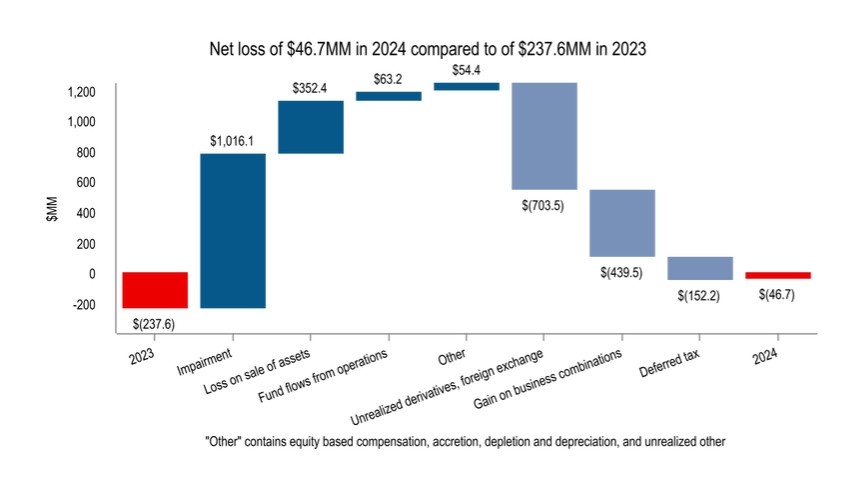
·For the year ended December 31, 2024, we recorded a net loss of $46.7 million compared to $237.6 million for the comparable period in 2023. The decrease in net loss was primarily attributable to impairment recorded in 2023, partially offset by unfavourable changes in our mark-to-market position on derivative contracts and the net gain recognized on acquisition and disposition activity in 2023.

Graphic

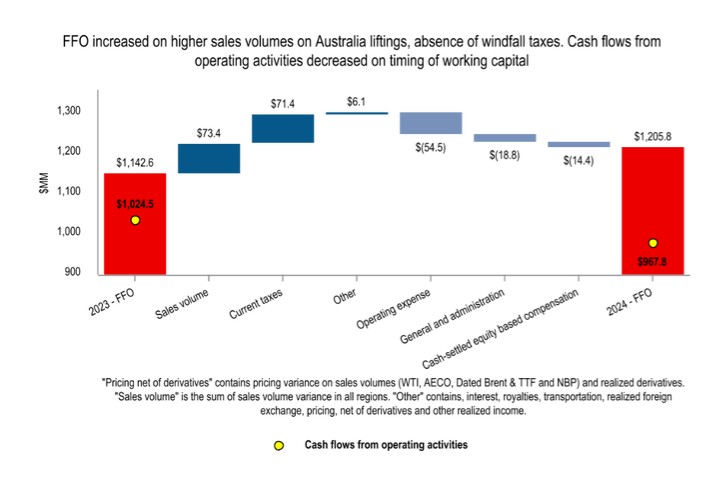
·For the year ended December 31, 2024 as compared to 2023, cash flows from operating activities decreased by $56.8 million to $967.8 million and fund flows from operations increased by $63.2 million to $1,205.8 million. The increase in fund flows from operations was primarily driven by higher sales volumes in Australia and the absence of windfall taxes. This was partially offset by higher operating costs primarily on processing fees in Canada and Germany and turnaround costs in Ireland, and higher general and administration costs on cash settled equity based compensation and headcount costs. Variances between cash flows from operating activities and fund flows from operations are primarily driven by working capital timing differences.

Vermilion Energy Inc.  ■  Page 9  ■  2024 Management’s Discussion and Analysis


Production review

Q4 2024 vs. Q4 2023

Consolidated average production of 83,536 boe/d in Q4 2024 decreased compared to Q4 2023 production of 87,597 boe/d. Production decreased primarily due to planned maintenance in the United States and Ireland and natural field decline in the Netherlands, partially offset by production starting on the SA-10 block in Croatia.

2024 vs. 2023

Consolidated average production of 84,543 boe/d in the year ended December 31, 2024 increased compared to the prior year comparative period production of 83,994 boe/d. Production increased primarily due to lower downtime in Australia in 2024, increased production in Ireland due to the acquisition of an additional 36.5% interest in the Corrib Natural Gas Project at the end of Q1 2023 and production starting on the SA-10 block in Croatia in 2024. This was partially offset by dispositions completed in 2023.

Activity review

For the three months ended December 31, 2024, capital expenditures were $200.7 million.

In our North America core region we invested capital expenditures of $134.2 million, comprised of $114.6 million of capital expenditure in Canada and $19.6 million in the United States:
oAt Mica, we drilled six (6.0 net) BC Montney liquids-rich shale gas wells;
oIn the Deep Basin, we drilled five (5.0 net), completed five (4.5 net), and brought on production five (3.8 net) liquids-rich conventional natural gas wells;
oIn Saskatchewan, we drilled and completed, six (5.9 net) and brought on production seven (6.9 net) light and medium crude oil wells;
oIn the United States, five (0.6 net) non-operated light and medium crude oil wells were drilled and completed.

In our International core region, capital expenditures of $66.5 million were invested:
oIn Germany, we invested $33.2 million as we continued drilling and testing of our second deep gas exploration well and made progress on completion of our successful first deep gas exploration well, which is planned to come on production first half 2025, and advanced drilling of our third deep gas exploration well, which was accelerated from the first quarter of 2025;
oIn the Netherlands, we invested $12.0 million, primarily on facilities and workover activities;
oIn France, we invested $11.9 million primarily on facilities activities and well optimization activities;
oIn Australia, $5.6 million was invested as we performed routine facilities maintenance;
oIn Central and Eastern Europe, $3.2 million was invested as we continued planning and permitting of the third well of the SA-10 block and initiated testing on the fourth well of our four-well program on the SA-07 block;
oIn Ireland, $0.6 million was invested on facilities.

2024 Financial sustainability review

Free cash flow

Free cash flow increased by $30.4 million to $582.8 million for the year ended December 31, 2024 compared to 2023 due to increased fund flows from operations primarily driven by non-recurring windfall taxes incurred in 2023, increased sales volumes, and increased realized hedge gains. These increases were partially offset by higher operating and general and administration expenses and higher capital expenditures.

Long-term debt and net debt

Long- term debt increased to $963.5 million as at December 31, 2024 (December 31, 2023 - $914.0 million) due to strengthening of the US dollar, partially offset by repurchases made on the 2025 senior notes. The revolving credit facility remained undrawn.
As at December 31, 2024, net debt decreased  by $112 million to $966.9 million (December 31, 2023 - $1,078.6 million) as a result of strong free cash flow generation.
The ratio of net debt to four quarter trailing fund flows from operations(1) decreased to 0.8 as at December 31, 2024 (December 31, 2023 - 0.9) primarily due to lower net debt and higher four quarter trailing fund flows from operations on lower windfall taxes, increased sales volume, and increased realized hedge gains.

(1)Net debt to four quarter trailing fund flows from operations is a supplementary financial measure that does not have a standardized meaning under IFRS Accounting Standards and therefore may not be comparable to similar measures presented by other issuers. It is calculated as net debt (capital measure) over the FFO from the preceding four quarters (total of segments measure). The measure is used to assess our ability to repay debt.

Vermilion Energy Inc.  ■  Page 10  ■  2024 Management’s Discussion and Analysis


Benchmark Commodity Prices


Q4/24 vs.


2024 vs.


Q4 2024

Q4 2023

 Q4/23

2024

2023

2023


Crude oil

WTI ($/bbl)


98.31


106.67


(8)

%  

103.72


104.77


(1)

%

WTI (US $/bbl)


70.27


78.32


(10)

%  

75.72


77.63


(2)

%

Edmonton Sweet index ($/bbl)


94.92


99.60


(5)

%  

97.54


100.37


(3)

%

Edmonton Sweet index (US $/bbl)


67.85


73.13


(7)

%  

71.21


74.36


(4)

%

Saskatchewan LSB index ($/bbl)


92.56


97.12


(5)

%  

95.54


97.97


(2)

%

Saskatchewan LSB index (US $/bbl)


66.16


71.31


(7)

%  

69.75


72.59


(4)

%

Canadian C5+ Condensate index ($/bbl)


98.85


103.83


(5)

%  

99.93


103.38


(3)

%

Canadian C5+ Condensate index (US $/bbl)


70.66


76.24


(7)

%  

72.95


76.60


(5)

%

Dated Brent ($/bbl)


104.46


114.46


(9)

%  

110.63


111.51


(1)

%

Dated Brent (US $/bbl)


74.67


84.05


(11)

%  

80.76


82.62


(2)

%

Natural gas


North America


AECO 5A ($/mcf)


1.48


2.30


(36)

%  

1.46


2.64


(45)

%

AECO 7A ($/mcf)

1.46

2.66

(45)

%

1.44

2.93

(51)

%

Henry Hub ($/mcf)


3.90


3.92


(1)

%  

3.11


4.00


(22)

%

Henry Hub (US $/mcf)

2.79


2.88


(3)

%  

2.27


2.74


(17)

%

Europe(1)

NBP Day Ahead ($/mmbtu)

19.10

16.69

14

%  

14.62

16.63

(12)

%  

NBP Month Ahead ($/mmbtu)

17.95

18.32

(2)

%  

14.53

19.85

(27)

%  

NBP Day Ahead (€/mmbtu)

12.81

11.38

13

%  

9.87

11.39

(13)

%  

NBP Month Ahead (€/mmbtu)

12.03

12.50

(4)

%  

9.81

13.60

(28)

%  

TTF Day Ahead ($/mmbtu)

18.73

17.45

7

%  

14.89

17.40

(14)

%  

TTF Month Ahead ($/mmbtu)


17.65


18.51


(5)

%  

14.68


20.52


(28)

%  

TTF Day Ahead (€/mmbtu)


12.56


11.90


6

%  

10.05


11.92


(16)

%

TTF Month Ahead (€/mmbtu)


11.83


12.63


(6)

%  

9.91


14.06


(30)

%

Average exchange rates


CDN $/US $


1.40


1.36


3

%  

1.37


1.35

1

%  

CDN $/Euro


1.49


1.47


1

%  

1.48


1.46


1

%

Realized prices


Crude oil and condensate ($/bbl)


100.06


107.91


(7)

%  

104.29


102.43


2

%

NGLs ($/bbl)


29.38


33.38


(12)

%  

30.61


31.54


(3)

%

Natural gas ($/mcf)


8.47


8.48


%  

6.72


8.17


(18)

%

Total ($/boe)


66.54


68.64


(3)

%  

63.58


67.10


(5)

%

(1)

NBP and TTF pricing can occur on a day-ahead ("DA") or month-ahead ("MA") basis. DA prices in a period reflect the average current day settled price on the next days' delivery and MA prices in a period represent daily one month futures contract prices which are determined at the end of each month. In a rising price environment, the DA price will tend to be greater than the MA price and vice versa. Natural gas in the Netherlands and Germany is benchmarked to the TTF and production is generally equally split between DA and MA contracts. Natural gas in Ireland is benchmarked to the NBP and is sold on DA contracts.

Vermilion Energy Inc.  ■  Page 11  ■  2024 Management’s Discussion and Analysis


As an internationally diversified producer, we are exposed to a range of commodity prices. In our North America core region, our crude oil is sold at benchmarks linked to WTI (including the Edmonton Sweet index, the Saskatchewan LSB index, and the Canadian C5+ index) and our natural gas is sold at benchmarks linked to the AECO index (in Canada) or the Henry Hub ("HH") index (in the United States). In our International core region, our crude oil is sold with reference to Dated Brent and our natural gas is sold with reference to NBP, TTF, or indices highly correlated to TTF.

Graphic

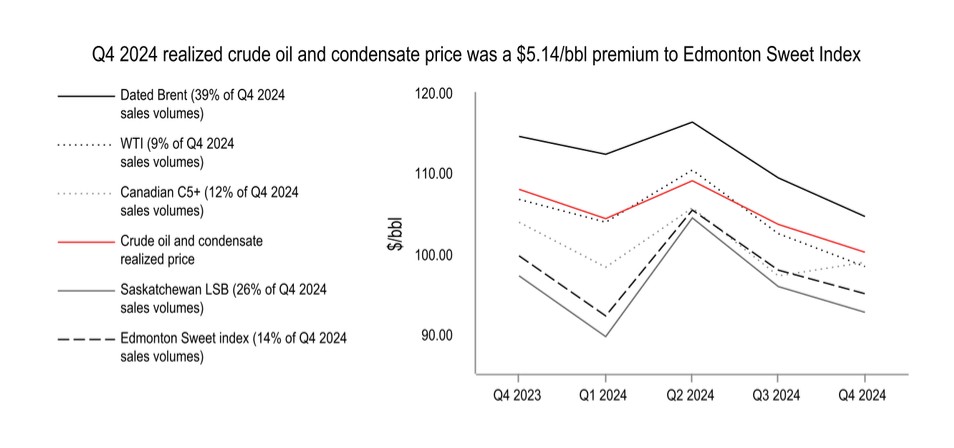
Crude oil prices decreased in Q4 2024 relative to Q4 2023 on weaker supply-demand fundamentals and macroeconomic uncertainty. Canadian dollar WTI decreased by 8% and Dated Brent decreased by 9% in Q4 2024 relative to Q4 2023.
In Canadian dollar terms, year-over-year, the Edmonton Sweet differential tightened by $3.66/bbl to a discount of $3.41/bbl against WTI, and the Saskatchewan LSB differential tightened by $3.75/bbl to a discount of $5.79/bbl against WTI.
Approximately 39% of Vermilion’s Q4 2024 crude oil and condensate production was priced at the Dated Brent index, which averaged a premium to WTI of US$4.40/bbl, while the remainder of our crude oil and condensate production was priced at the Saskatchewan LSB, Canadian C5+, Edmonton Sweet, and WTI indices.

Graphic

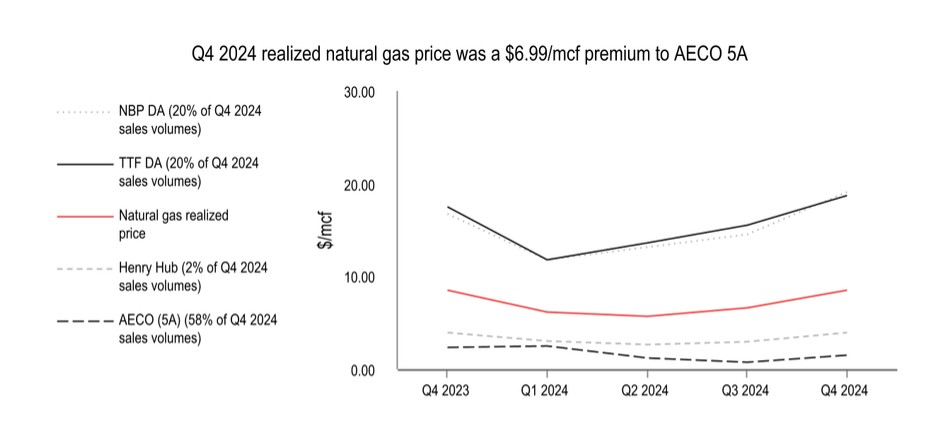
In Canadian dollar terms, year-over-year, prices for European natural gas at NBP and TTF increased by 14% and 7% respectively on a day-ahead basis. On a month ahead basis, NBP and TTF decreased by 2% and 5% respectively. Prices increased in response to greater competition in the global LNG market, higher demand and the risk of losing Russian gas flows transiting Ukraine.
Year-over-year natural gas prices in Canadian dollar terms at NYMEX HH stayed relatively flat and AECO 7A decreased by 45%. AECO prices declined due to strong production growth and historically high storage levels, whereas NYMEX HH performed relatively better due to stronger US natural gas demand and moderate supply growth.

Vermilion Energy Inc.  ■  Page 12  ■  2024 Management’s Discussion and Analysis


For Q4 2024, average European natural gas prices represented an $16.88/mcf premium to AECO. Approximately 40% of our natural gas production in Q4 2024 benefited from this premium European pricing.

North America


Q4 2024


Q4 2023


2024


2023

Production (1)


Crude oil and condensate (bbls/d)


17,825


18,862


19,065


20,925

NGLs (bbls/d)


6,612


7,412


7,100


7,296

Natural gas (mmcf/d)


167.15


167.65


164.27


168.22

Total production volume (boe/d)


52,293


54,216


53,542


56,257

(1)

Please refer to Supplemental Table 4 "Production" for disclosure by product type.


Q4 2024


Q4 2023


2024


2023

$M


$/boe

$M


$/boe

$M


$/boe

$M


$/boe

Sales


201,743


41.93

236,969


47.51


848,853


43.32


1,012,549


49.31

Royalties


(25,161)

(5.23)


(36,186)

(7.25)


(124,186)

(6.34)


(144,998)

(7.06)

Transportation


(14,625)

(3.04)


(12,151)

(2.44)


(55,556)

(2.83)


(43,914)

(2.14)

Operating


(70,125)

(14.58)


(57,368)

(11.50)


(267,220)

(13.64)


(256,841)

(12.51)

General and administration (1)


(10,250)

(2.13)


4,338

0.87


(36,573)

(1.87)


(4,267)

(0.21)

Corporate income tax recovery (expense) (1)

2,080

0.43

1,164

0.23

1,351

0.07

(20)

Fund flows from operations


83,662

17.38


136,766

27.42


366,669

18.71


562,509

27.39

Drilling and development


(134,164)


(58,704)


(410,364)


(380,200)

Free cash flow


(50,502)


78,062


(43,695)


182,309

(1)

General and administration includes amounts from our Corporate segment. Corporate income tax expense primarily relates to income taxes on Corporate segment activities.

Production from Vermilion's North American operations averaged 52,293 boe/d in Q4 2024, a decrease of 3% from Q3 2024 due to planned third-party turnaround activity in Alberta, partial shut-in of some Canadian gas production in response to weak AECO prices, and natural declines in the United States, partially offset by increased production at Mica. Production from Mica increased due to a full quarter contribution from the five-well 9-21 pad which started up in Q3 2024 and strong throughput on the 8-33 British Columbia Montney battery.

In Q4 2024, Vermilion drilled six (6.0 net) Montney liquids-rich shale gas wells, including five (5.0 net) wells on the new 8-4 pad in British Columbia and one land retention well in Alberta. In the Deep Basin, we drilled five (5.0 net), completed five (4.5 net), and brought on production five (3.8 net) liquids-rich conventional natural gas wells. In Saskatchewan, we drilled six (5.9 net), completed six (5.9 net), and brought on production seven (6.9 net) light and medium crude oil wells, while in the United States, we participated in the drilling and completion of five (0.6 net) non-operated light and medium crude oil wells.

Sales


Q4 2024


Q4 2023


2024


2023

$M


$/boe

$M


$/boe

$M


$/boe

$M


$/boe

Canada


175,830

39.83


200,102

44.73


711,290

40.34


861,391

46.73

United States


25,913

65.34


36,867

71.65


137,563

70.03


151,158

71.97

North America


201,743

41.93


236,969

47.51


848,853

43.32


1,012,549

49.31

Sales in North America decreased for the three months and year ended December 31, 2024 compared to the prior year primarily due to lower realized pricing combined with lower production volumes following the sale of non-core assets in southeast Saskatchewan and Wyoming in 2023.

Vermilion Energy Inc.  ■  Page 13  ■  2024 Management’s Discussion and Analysis


Royalties


Q4 2024


Q4 2023


2024


2023

$M


$/boe

$M


$/boe

$M


$/boe

$M


$/boe

Canada


(17,402)

(3.94)


(25,759)

(5.76)


(84,337)

(4.78)


(103,511)

(5.62)

United States


(7,759)


(19.56)


(10,427)


(20.27)


(39,849)


(20.29)


(41,487)


(19.75)

North America


(25,161)


(5.23)


(36,186)


(7.25)


(124,186)


(6.34)


(144,998)


(7.06)

Royalty rate (% of sales)

12.5

%

15.3

%

14.6

%

14.3

%

Royalties in North America decreased on a dollar and per unit basis for the three months and year ended December 31, 2024 compared to the prior year primarily due to lower realized pricing. The decrease in royalties was partially offset for the year ended December 31, 2024 by new wells drilled in Mica and the United States with higher royalty rates.

Transportation


Q4 2024


Q4 2023


2024


2023

$M


$/boe

$M


$/boe

$M


$/boe

$M


$/boe

Canada


(14,485)

(3.28)


(11,701)

(2.62)


(54,091)

(3.07)


(43,163)

(2.34)

United States


(140)


(0.35)


(450)


(0.87)


(1,465)


(0.75)


(751)


(0.36)

North America


(14,625)


(3.04)


(12,151)


(2.44)


(55,556)


(2.83)


(43,914)


(2.14)

Transportation expense in North America increased on a dollar and per boe basis for the three months and year ended December 31, 2024 compared to the prior year comparable periods primarily due to increased trucking expenses related to new activity on our Mica assets and higher pipeline fees.

Operating expense


Q4 2024


Q4 2023


2024


2023

$M


$/boe

$M


$/boe

$M


$/boe

$M


$/boe

Canada


(63,898)

(14.48)


(51,129)

(11.43)


(240,333)

(13.63)


(233,417)

(12.66)

United States


(6,227)


(15.70)


(6,239)


(12.13)


(26,887)


(13.69)


(23,424)


(11.15)

North America


(70,125)


(14.58)


(57,368)


(11.50)


(267,220)


(13.64)


(256,841)


(12.51)

Operating expense in North America increased on a dollar and per boe basis for the three months December 31, 2024 compared to the prior year comparable period primarily due to gas processing fees in Mica. For the year ended December 31, 2024, operating expense increased on a dollar and per boe basis primarily due to gas processing fees in Mica, partially offset by lower electricity costs in Canada.

International


Q4 2024


Q4 2023


2024


2023

Production (1)


Crude oil and condensate (bbls/d)


12,502


14,004


12,362


10,802

Natural gas (mmcf/d)


112.44


116.27


111.83


101.61

Total production volume (boe/d)


31,243


33,381


31,001


27,737

Total sales volume (boe/d)


30,101


28,598


31,601


26,330

(1)Please refer to Supplemental Table 4 "Production" for disclosure by product type.

Vermilion Energy Inc.  ■  Page 14  ■  2024 Management’s Discussion and Analysis


Q4 2024

Q4 2023

2024

2023


$M


$/boe


$M


$/boe


$M


$/boe


$M


$/boe

Sales


302,609

109.27


286,000

108.70


1,132,554

97.92


1,010,006

105.09

Royalties


(14,888)


(5.38)


(8,962)


(3.41)


(53,764)


(4.65)


(46,696)


(4.86)

Transportation


(9,336)


(3.37)


(10,290)


(3.91)


(43,377)


(3.75)


(44,942)


(4.68)

Operating


(69,441)


(25.08)


(59,569)


(22.64)


(300,693)


(26.00)


(256,540)


(26.69)

General and administration


(17,210)


(6.21)


(24,148)


(9.18)


(62,930)


(5.44)


(76,449)


(7.95)

Corporate income tax expense


(18,077)


(6.53)


(20,538)


(7.81)


(67,793)


(5.86)


(91,912)


(9.56)

PRRT


3,226


1.16


20,860


7.93


(11,702)


(1.01)


20,860


2.17

Fund flows from operations


176,883


63.86


183,353


69.68


592,295


51.21


514,327


53.52

Drilling and development


(42,341)


(73,604)


(176,598)


(188,910)


Exploration and evaluation

(24,154)

(10,579)

(36,018)

(21,081)

Free cash flow


110,388


99,170


379,679


304,336


Production from Vermilion's International operations averaged 31,243 boe/d in Q4 2024, an increase of 3% from the previous quarter primarily due to a full quarter of production in Australia following planned maintenance in Q3 2024, partially offset by natural decline across other international jurisdictions due to limited capital activity.

In Germany, Vermilion successfully tested the Wisselshorst deep gas exploration well (0.6 net) in December 2024. The well flow tested at a restricted rate of 21 mmcf/d(2) of natural gas with a flowing wellhead pressure of 6,200 psi. Subsequent to year-end, the Company tested a second zone in this well which flow tested at a restricted rate of 20 mmcf/d(2) of natural gas with a flowing wellhead pressure of 6,200 psi. Both tests were restricted due to limitations of the testing equipment. Vermilion's operated working interest in this well increased from 30% to 64% during the fourth quarter of 2024.

In Croatia, production averaged 1,869 boe/d, up slightly from the previous quarter following start up of the gas plant on the SA-10 block in June 2024. Planning and permitting activities continued during the fourth quarter for the third well to be drilled in the SA-10 block later this year to offset anticipated declines from the initial two wells. Testing operations on the fourth discovery well (0.6 net) in the SA-7 block were initiated in the fourth quarter and are continuing.

(2)

Wisselshorst Z1a well (64% working interest) was tested in December 2024. Flow rates, during the initial clean-up phase, of up to 21.2 mmcf/d with a flowing wellhead pressure of 6,150 psi on an adjustable choke were achieved. The completion fluid was recovered during the clean-up flow period. During the main flow period the well tested at a rate of 20.1mmcf/d over a five-hour flow period with a flowing wellhead pressure 6,250 psi on a 24/64” fixed choke. A final shut-in pressure of 7,020 psi and a bottom hole pressure of 8,679 psi were recorded following the well test of this zone. The zone being tested is the Rotliegend Havel formation, which was encountered at 5,054m MD and a 124.4m gas column was logged with 50.8m of net reservoir and average effective porosity of 9.3%. A second zone in the well was tested in January 2025 where peak rates of 20.3 mmcf/d at a flowing well head pressure of 6,189 psi were recorded. During the main flow period rates of 18.8 mmcf/d over a five-hour flow period with a flowing wellhead pressure of 6,334 psi were achieved on a 24/64” fixed choke. A final shut-in pressure of 7,001 psi and a bottom hole pressure of 8,756 psi were recorded following the well test of this zone. The second zone in the well is the Rotliegend Dethlingen formation, which was encountered at 5,000m MD and a 38.2m gas column was logged with 25.5m of net reservoir and average effective porosity of 9.9%. Test results are not necessarily indicative of production performance or ultimate recovery.

Sales

Q4 2024

Q4 2023

2024

2023


$M


$/boe


$M


$/boe


$M


$/boe


$M


$/boe

Australia


27,573

121.24


36,381

143.69


182,847

128.92


36,381

143.69

France


73,692


109.14


52,472


116.92


314,232


110.89


285,626


109.47

Netherlands


39,599


105.54


51,661


102.80


139,310


83.91


186,854


107.38

Germany


46,321


98.28


44,150


101.18


149,725


85.45


195,481


104.26

Ireland


97,735


115.22


100,430


102.28


311,325


87.84


302,404


97.24

Central and Eastern Europe


17,689


102.86


906


109.42


35,115


98.08


3,260


141.77

International


302,609


109.27


286,000


108.70


1,132,554


97.92


1,010,006


105.09

Vermilion Energy Inc.  ■  Page 15  ■  2024 Management’s Discussion and Analysis


As a result of changes in inventory levels, our sales volumes for crude oil in Australia, France, and Germany may differ from our production volumes in those business units. The following table provides the crude oil sales volumes (consisting entirely of "light crude oil and medium crude oil") for those jurisdictions.

Crude oil sales volumes (bbls/d)


Q4 2024


Q4 2023


2024


2023

Australia


2,472


2,752


3,875


694

France


7,339


4,878


7,742


7,149

Germany


1,504


1,472


1,270


1,481

International

11,315

9,102

12,887

9,324

Sales increased on a dollar basis for the three months ended December 31, 2024 compared to the prior year primarily due to production starting on the SA-10 block in Croatia and timing of transportation in France and Australia.

Sales increased on a dollar basis for the year ended December 31, 2024 compared to the prior year primarily due to sales in Australia after downtime in 2023, production starting on the SA-10 block in Croatia, and timing of transportation in France, partially offset by decrease in sales prices in Germany and the Netherlands.

Royalties

Q4 2024


Q4 2023

2024

2023


$M


$/boe

$M


$/boe


$M


$/boe


$M


$/boe

France


(9,712)


(14.38)


(7,150)


(15.93)


(41,585)


(14.68)


(37,425)


(14.34)

Netherlands


(27)


(0.07)


(692)


(1.38)


(244)


(0.15)


(1,567)


(0.90)

Germany


(1,565)


(3.32)


(736)


(1.69)


(5,703)


(3.25)


(5,993)


(3.20)

Central and Eastern Europe


(3,584)


(20.84)


(384)


(46.38)


(6,232)


(17.41)


(1,711)


(74.41)

International


(14,888)


(5.38)


(8,962)


(3.41)


(53,764)


(4.65)


(46,696)


(4.86)

Royalty rate (% of sales)


4.9

%

3.1

%

4.7

%

4.6

%

Royalties in our International core region are primarily incurred in France, Germany, the Netherlands and Croatia, where royalties, depending on jurisdiction, include charges based on a percentage of sales and fixed per boe charges. Our production in Australia and Ireland is not subject to royalties.

Royalties increased on a dollar basis for the three months and year ended December 31, 2024 compared to the prior year primarily due to the SA-10 block coming online in Croatia and an increase in France crude royalties on higher sales volumes. Royalties decreased on a per unit basis for the three months and the year ended December 31, 2024 primarily on lower gas commodity prices and lower royalty rates on Croatian production.

Transportation

Q4 2024

Q4 2023

2024

2023


$M


$/boe


$M


$/boe


$M


$/boe


$M


$/boe

France


(5,630)


(8.34)


(5,745)


(12.80)


(23,106)


(8.15)


(24,511)


(9.39)

Germany


(3,065)


(6.50)


(3,486)


(7.99)


(11,853)


(6.76)


(13,333)


(7.11)

Ireland


(641)


(0.76)


(1,059)


(1.08)


(8,418)


(2.38)


(7,098)


(2.28)

International


(9,336)


(3.37)


(10,290)


(3.91)


(43,377)


(3.75)


(44,942)


(4.68)

Transportation expense decreased on a per boe basis for the three months and year ended December 31, 2024 compared to the prior year primarily due to decreased vessel costs in France and prior year transportation tariffs in Germany partially offset by incremental transportation costs in Ireland on the acquired interest in Corrib.

Our production in Australia, Netherlands and Central and Eastern Europe is not subject to transportation expense.

Vermilion Energy Inc.  ■  Page 16  ■  2024 Management’s Discussion and Analysis


Operating expense

Q4 2024

Q4 2023

2024

2023


$M

$/boe


$M

$/boe


$M

$/boe


$M

$/boe

Australia


(10,866)


(47.78)


(10,677)


(42.17)


(80,347)


(56.65)


(52,360)


(206.80)

France


(18,597)


(27.54)


(17,021)


(37.93)


(69,376)


(24.48)


(80,134)


(30.71)

Netherlands


(11,921)


(31.77)


(9,143)


(18.19)


(41,127)


(24.77)


(39,157)


(22.50)

Germany


(13,544)


(28.74)


(8,233)


(18.87)


(53,129)


(30.32)


(43,857)


(23.39)

Ireland


(13,488)


(15.90)


(13,948)


(14.20)


(54,177)


(15.29)


(39,464)


(12.69)

Central and Eastern Europe


(1,025)


(5.96)


(547)


(66.06)


(2,537)


(7.09)


(1,568)


(68.19)

International


(69,441)


(25.08)


(59,569)


(22.64)


(300,693)


(26.00)


(256,540)


(26.69)

Operating expenses increased on a dollar and per boe basis for the three months ended December 31, 2024 primarily due to gas processing tariff adjustments in Germany and the resumption of production in Australia, partially offset by decreased fuel and electricity costs in France.

For the year ended December 31, 2024, operating expenses increased on a dollar basis primarily due to the resumption of production in Australia, an increased working interest acquired in Ireland at Q1 2023 (from 20% to 56.5)%, and higher facility maintenance and turnaround costs during Ireland planned downtime in Q2 2024, and gas processing tariff adjustments in Germany. This increase was partially offset by decreased fuel and electricity costs in France.

Operating expenses were relatively flat on a per boe basis for the year ended December 31, 2024 compared to the prior year primarily attributable to maintenance during shut-in of our Wandoo platform in Australia in the prior year offset by lower fuel and electricity costs in France and the Netherlands.

Vermilion Energy Inc.  ■  Page 17  ■  2024 Management’s Discussion and Analysis


Consolidated Financial Performance Review

($M except per share)


Dec 31, 2024


Dec 31, 2023


Dec 31, 2022

Total assets

6,115,576

6,235,821

6,991,058

Long-term debt


963,456


914,015


1,081,351

Petroleum and natural gas sales


1,981,407


2,022,555


3,476,394

Net (loss) earnings


(46,739)


(237,587)


1,313,062

Net (loss) earnings per share


Basic


(0.30)


(1.45)


8.03

Diluted


(0.30)


(1.45)


7.80

Cash dividends ($/share)


0.48


0.40


0.28

Financial performance

Q4 2024

Q4 2023

2024

2023


$M


$/boe


$M


$/boe


$M


$/boe


$M


$/boe

Sales


504,352


66.54


522,969


68.64


1,981,407


63.58


2,022,555


67.10

Royalties


(40,049)


(5.28)


(45,148)


(5.93)


(177,950)


(5.71)


(191,694)


(6.36)

Transportation


(23,961)


(3.16)


(22,441)


(2.95)


(98,933)


(3.17)


(88,856)


(2.95)

Operating


(139,566)


(18.41)


(116,937)


(15.35)


(567,913)


(18.22)


(513,381)


(17.03)

General and administration


(27,460)


(3.62)


(19,810)


(2.60)


(99,503)


(3.19)


(80,716)


(2.68)

Corporate income tax expense


(15,997)


(2.11)


(19,623)


(2.57)


(66,442)


(2.13)


(170,358)


(5.65)

Petroleum resource rent tax

3,226

0.43

20,860

2.74

(11,702)

(0.38)

20,860

0.69

Interest expense


(23,965)


(3.16)


(22,909)


(3.01)


(84,606)


(2.71)


(85,212)


(2.83)

Equity based compensation


(14,361)


(0.46)


Realized gain on derivatives


28,795


3.80


78,737


10.33


345,318


11.08


234,365


7.77

Realized foreign exchange gain (loss)


2,442


0.32


(5,529)


(0.73)


7,735


0.25


(4,532)


(0.15)

Realized other (expense) income


(5,119)


(0.68)


1,948


0.26


(7,267)


(0.23)


(420)


(0.01)

Fund flows from operations


262,698


34.67


372,117


48.83


1,205,783


38.71


1,142,611


37.90

Equity based compensation

(7,499)

(7,871)

(15,569)

(42,756)

Unrealized (loss) gain on derivative instruments (1)

(137,273)

141,126

(452,858)

179,707

Unrealized foreign exchange (loss) gain (1)

(28,517)

4,834

(58,471)

12,438

Accretion

(19,272)

(19,469)

(74,541)

(78,187)

Depletion and depreciation

(163,458)

(259,012)

(683,240)

(712,619)

Deferred tax recovery

80,016

110,758

37,991

190,193

Gain on business combination

(5,607)

439,487

Loss on disposition

(125,539)

(352,367)

Impairment expense

(1,016,094)

(1,016,094)

Unrealized other (expense) income (1)

(5,011)

1,621

(5,834)

Net loss

(18,316)

(803,136)

(46,739)

(237,587)

(1)Unrealized (loss) gain on derivative instruments, Unrealized foreign exchange (loss) gain, and Unrealized other expense are line items from the respective Consolidated Statements of Cash Flows.

Fluctuations in fund flows from operations may occur as a result of changes in production levels, commodity prices, and costs to produce petroleum and natural gas. In addition, fund flows from operations may be affected by the timing of crude oil shipments in Australia and France. When crude oil inventory is built up, the related operating expense, royalties, and depletion expense are deferred and carried as inventory on the consolidated balance sheet. When the crude oil inventory is subsequently drawn down, the related expenses are recognized within profit or loss.

General and administration

General and administration expense increased for the three months and year ended December 31, 2024 compared to the prior year primarily due to accounting for the cash settlement of previously issued equity based settled compensation (previously accounted for as a share-based settled expense) and headcount costs.

Vermilion Energy Inc.  ■  Page 18  ■  2024 Management’s Discussion and Analysis


Equity based compensation

Equity based compensation included within fund flows from operations for the three months and year ended December 31, 2024 is a result of settling withholding taxes via cash which were previously settled through the issuance and sale of shares from treasury.

PRRT and corporate income taxes

PRRT for the three months and year ended December 31, 2024 increased compared to the prior year due to downtime in Australia that resulted in no taxable income for the first nine months of the year ended December 31, 2023.
Corporate income taxes for the three months and year ended December 31, 2024 decreased compared to the same periods in the prior year due to combined lower taxable income mainly as a result of decreased commodity prices.
Windfall taxes were the temporary taxes levied in 2022 and 2023 pursuant to the European Union’s temporary solidarity contribution. During the three months and year ended December 31, 2024, a recovery was recorded related to favourable prior period adjustments related to provisions recognized.

Interest expense

Interest expense for the three months and year ended December 31, 2024 remained relatively flat.

Realized gain or loss on derivatives

For the three months and year ended December 31, 2024, we recorded realized gains on our natural gas and crude oil hedges due to lower commodity pricing compared to the strike prices.
A listing of derivative positions as at December 31, 2024 is included in “Supplemental Table 2” of this MD&A.

Realized other income or expense

In the three months and year ended December 31, 2023, realized income related to proceeds received from insurance claims in 2023, offset by miscellaneous transaction costs and other provisional charges.
In the three months and year ended December 31, 2024, realized other expense was primarily related to a legal provision.

Net earnings (loss)

Fluctuations in net loss from period-to-period are caused by changes in both cash and non-cash based income and charges. Cash based items are reflected in fund flows from operations. Non-cash items include: equity based compensation expense, unrealized gains and losses on derivative instruments, unrealized foreign exchange gains and losses, accretion, depletion and depreciation expense, and deferred taxes. In addition, non-cash items may also include gains or losses resulting from acquisition or disposition activity or charges resulting from impairment or impairment reversals.

Equity based compensation

Equity based compensation expense relates primarily to non-cash compensation expense attributable to long-term incentives granted to directors, officers, and employees under security-based arrangements. Equity based compensation expense for the three months ended December 31, 2024 remained relatively flat compared to the same period in the prior year. Equity based compensation expense for 2024 decreased compared to 2023  due to the cash settlement of previously share-based settled expenses and lower value of LTIP awards settled in the current year and.

Unrealized gain or loss on derivative instruments

Unrealized gain or loss on derivative instruments arises as a result of changes in forecasts for future prices and rates. As Vermilion uses derivative instruments to manage the commodity price exposure of our future crude oil and natural gas production, we will normally recognize unrealized gains on derivative instruments when future commodity price forecasts decline and vice-versa. As derivative instruments are settled, the unrealized gain or loss previously recognized is reversed, and the settlement results in a realized gain or loss on derivative instruments.

For the three months ended December 31, 2024, we recognized a net unrealized loss on derivative instruments of $137.3 million. This consists of unrealized losses of $109.0 million on our European natural gas commodity derivative instruments, $20.1 million on our crude oil commodity derivative instruments, $4.8 million on our USD-to-CAD foreign exchange swaps, and $4.7 million on our North American gas commodity derivative instruments, partially offset by an unrealized gain of $1.3 million on our equity swaps.

For the year ended December 31, 2024, we recognized a net unrealized loss on derivative instruments of $452.9 million. This consists of unrealized losses of $403.4 million on our European natural gas commodity derivative instruments, $29.8 million on our crude oil commodity derivative instruments, $9.0 million on our equity swaps, $8.4 million on our USD-to-CAD foreign exchange swaps, and $2.3 million on our North American gas commodity derivative instruments.

Vermilion Energy Inc.  ■  Page 19  ■  2024 Management’s Discussion and Analysis


Unrealized foreign exchange gains or losses

As a result of Vermilion’s international operations, Vermilion has monetary assets and liabilities denominated in currencies other than the Canadian dollar. These monetary assets and liabilities include cash, receivables, payables, long-term debt, derivative instruments and intercompany loans. Unrealized foreign exchange gains and losses result from translating these monetary assets and liabilities from their underlying currency to the Canadian dollar.

In 2024, unrealized foreign exchange gains and losses primarily resulted from:

The translation of Euro and US dollar denominated intercompany loans to and from our international subsidiaries to Vermilion Energy Inc. An appreciation in the Euro and/or the US dollar against the Canadian dollar will result in an unrealized foreign exchange loss (and vice-versa). Under IFRS Accounting Standards, the offsetting foreign exchange loss or gain is recorded as a currency translation adjustment within other comprehensive income. As a result, consolidated comprehensive income reflects the offsetting of these translation adjustments while net loss reflects only the parent company's side of the translation.
The translation of our USD denominated 2025 senior unsecured notes and USD denominated 2030 senior unsecured notes.

For the three months ended December 31, 2024, we recognized a net unrealized foreign exchange loss of $28.5 million, primarily driven by the effects of the US dollar strengthening 6.6% against the Canadian dollar on our USD senior notes, partially offset by the impact on US dollar denominated loans and the impact of the Euro weakening 1.0% on our Euro denominated loans. For the year ended December 31, 2024, we recognized an unrealized foreign exchange loss of $58.5 million, primarily driven by the effects of the US dollar strengthening 8.8% against the Canadian dollar on our USD senior notes combined with the impact of the Euro strengthening 2.1% against the Canadian dollar on our Euro denominated intercompany loans, partially offset by gains on our USD denominated intercompany loans.

Accretion

Accretion expense is recognized to update the present value of the asset retirement obligation balance. For the three months ended December 31, 2024, compared to the three months ended December 31, 2023, accretion remained relatively flat. For the year ended December 31, 2024, accretion expense decreased versus the prior year primarily due to a lower North American asset retirement balance related to dispositions completed in 2023 and changes in discount rates, partially offset by the Corrib acquisition completed in 2023.

Depletion and depreciation

Depletion and depreciation expense is recognized to allocate the cost of capital assets over the useful life of the respective assets. Depletion and depreciation expense per unit of production is determined for each depletion unit (which are groups of assets within a specific production area that have similar economic lives) by dividing the sum of the net book value of capital assets and future development costs by total proved plus probable reserves.

Fluctuations in depletion and depreciation expense are primarily the result of changes in produced crude oil and natural gas volumes, and changes in depletion and depreciation per unit. Fluctuations in depletion and depreciation per unit are the result of changes in reserves, depletable base (net book value of capital assets and future development costs), and relative production mix.

Depletion and depreciation on a per boe basis for the three months and year ended December 31, 2024 of $21.56 and $21.92 decreased from $34.00 and $23.64 in the same periods of the prior year, respectively, primarily due to decreases to the depletable base from the impairments and dispositions recorded in 2023, lower future development costs, and increased reserve estimates. The decrease was partially offset by the strengthening of the Euro against the Canadian dollar.

Deferred tax

Deferred tax assets arise when the tax basis of an asset exceeds its accounting basis (known as a deductible temporary difference). Conversely, deferred tax liabilities arise when the tax basis of an asset is less than its accounting basis (known as a taxable temporary difference). Deferred tax assets are recognized only to the extent that it is probable that there are future taxable profits against which the deductible temporary difference can be utilized. Deferred tax assets and liabilities are measured at the enacted or substantively enacted tax rate that is expected to apply when the asset is realized, or the liability is settled.

As such, fluctuations in deferred tax expenses and recoveries primarily arise as a result of: changes in the accounting basis of an asset or liability without a corresponding tax basis change (e.g. when derivative assets and liabilities are marked-to-market or when accounting depletion differs from tax depletion), changes in available tax losses (e.g. if they are utilized to offset taxable income), changes in estimated future taxable profits resulting in a derecognition or recognition of deferred tax assets, and changes in enacted or substantively enacted tax rates.

For the three months and year ended December 31, 2024, the Company recorded deferred tax recovery of $80.0 million and $38.0 million, respectively, compared to a deferred tax recovery of $110.8 million and $190.2 million, respectively, in the comparative periods in the prior year. The deferred tax

Vermilion Energy Inc.  ■  Page 20  ■  2024 Management’s Discussion and Analysis


recovery for both the three months and year ended December 31, 2024, was primarily driven by changes in our derivatives mark-to-market position, as well as, timing differences in the Netherlands with respects to tax and accounting depletion. The recoveries were partially offset by increases in taxable income which was sheltered by losses in Ireland.

Taxes

Current income tax rates

Vermilion typically pays corporate income taxes in France, Netherlands, Australia and Germany. In addition, Vermilion pays PRRT in Australia which is a profit based tax applied at a rate of 40% on sales less operating expenses, capital expenditures, and other eligible expenditures. PRRT is deductible in the calculation of taxable income in Australia.

For 2024 and 2023, taxable income was subject to corporate income tax at the following statutory rates:

Jurisdiction


2024


2023


Canada


24.4

%  

24.4

%

United States


21.0

%  

21.0

%

France


25.8

%  

25.8

%

Netherlands (1)


50.0

%  

50.0

%

Germany


31.1

%  

31.2

%

Ireland


25.0

%  

25.0

%

Australia


30.0

%  

30.0

%

(1)

In the Netherlands, an additional 10% uplift deduction is allowed against taxable income that is applied to operating expenses, eligible general and administration expenses, and tax deductions for depletion and abandonment retirement obligations.

Windfall Taxes

On October 6, 2022 the Council of the European Union adopted a regulation that implemented a temporary windfall tax on the profits of oil and gas producers resident in the European Union. This windfall tax was referred to as a temporary solidarity contribution and was calculated on the amount by which the taxable profits for the elected years exceeded the greater of zero and 120% of the average taxable profits for the 2018 to 2021 period. The regulation required Member States to implement the temporary solidarity contribution at a minimum rate of 33% while providing Member States with the option to apply the temporary solidarity contribution to fiscal years beginning on or after January 1, 2022, January 1, 2023, or both. The windfall tax does not apply to 2024 or later years.

The following table summarizes the manner of implementation of the temporary solidarity contribution by the Member States in which Vermilion operates:

Jurisdiction


2024


2023


France (1)


N/A


N/A


Netherlands (2)


N/A


N/A


Germany


N/A


33.0

%  

Ireland


N/A


75.0

%

(1)For 2022, France implemented a windfall tax; however, did not extend for 2023.
(2)For 2023 and 2024, Netherlands has implemented a windfall royalty which, for natural gas sales, is calculated as 65% of the excess of the realized price for a subject year versus the threshold price of €0.50/Nm3 (€13.40/mcf). This royalty is deductible against current income taxes.

Tax legislation changes

In December 2021, the Organization for Economic Co-operation and Development (“OECD”) issued model rules for a new global minimum tax framework (“Pillar Two”).  The objective of Pillar Two is to ensure that large multinational enterprises are subjected to a minimum 15% effective tax rate in each jurisdiction in which they operate.

Most of the countries where Vermilion operates have enacted tax legislation to comply with Pillar Two with effect from January 1, 2024. During the year-ended December 31, 2024, the Company recorded $6.5 million of income tax expense relating to Pillar Two.

Vermilion Energy Inc.  ■  Page 21  ■  2024 Management’s Discussion and Analysis


In May 2023, the International Accounting Standards Board (“IASB”) issued amendments to IAS 12, “Income Taxes” (“IAS 12”) to address the impacts and additional disclosure requirements related to Pillar Two.  Vermilion has applied the mandatory exception required by IAS 12 and accordingly has not accounted for any related deferred income tax assets or liabilities.

Tax pools

As at December 31, 2024, we had the following tax pools:

($M)


Oil & Gas
Assets


Tax Losses


Other


Total

Canada

1,636,161

(1)

1,286,472

(4)

23,735


2,946,368

United States

255,914

(2)

235,355

(6)

137,777


629,046

France

286,408

(2)

2,512

(5)


288,920

Netherlands

55,082

(3)


55,082

Germany

285,069

(3)

15,612


300,681

Ireland

1,230,530

(4)


1,230,530

Australia

150,624

(1)

122,333

(4)


272,957

Croatia

67,442

(2)

8,624

(4)

76,066

Total

2,736,700

2,885,826


177,124


5,799,650

(1)Deduction calculated using various declining balance rates.
(2)Deduction calculated using a combination of straight-line over the assets life and unit of production method.
(3)Deduction calculated using a unit of production method.
(4)Tax losses can be carried forward and applied at 100% against taxable income.
(5)Tax losses can be carried forward and are available to offset the first €1 million of taxable income and 50% of taxable profits in excess each taxation year.
(6)Tax losses of $53 million created prior to January 1, 2018 are carried forward and applied at 100% against taxable income, tax losses of $182 million created after January 1, 2018 are carried forward and applied to 80% of taxable income in each taxation year.

Financial Position Review

Balance sheet strategy

We regularly review whether our forecast of fund flows from operations is sufficient to finance planned capital expenditures, dividends, share buy-backs, and abandonment and reclamation expenditures. To the extent that fund flows from operations forecasts are not expected to be sufficient to fulfill such expenditures, we will evaluate our ability to finance any shortfall by reducing some or all categories of expenditures, with issuances of equity, and/or with debt (including borrowing using the unutilized capacity of our existing revolving credit facility). We have a long-term goal of maintaining a ratio of net debt to four quarter trailing fund flows from operations of approximately 1.0.

On December 23, 2024, Vermilion announced it entered into an arrangement agreement to acquire Westbrick Energy Ltd. ("Westbrick"), a private company with assets located adjacent to Vermilion's existing Alberta assets. On February 26, 2025, Vermilion completed the acquisition for total consideration of $1.075 billion.

On February 11, 2025, Vermilion closed a private offering of US $400.0 million of senior unsecured notes. The notes bear interest at a rate of 7.250% per annum, to be paid February 15 and August 15, commencing on August 15, 2025. The notes mature on February 15, 2033. As direct senior unsecured obligations of Vermilion, the notes rank equally with existing and future senior unsecured indebtedness of the Company.

Proceeds from the notes may be used at the Company's discretion to redeem or repay the outstanding 2025 senior notes, fund a portion of the Westbrick acquisition, or repay a portion of credit facility borrowings.

As at December 31, 2024, we have a ratio of net debt to four quarter trailing fund flows from operations of 0.8.

Vermilion Energy Inc.  ■  Page 22  ■  2024 Management’s Discussion and Analysis


Net debt

Net debt is reconciled to long-term debt, as follows:

As at

($M)


Dec 31,2024


Dec 31,2023

Long-term debt


963,456


914,015

Adjusted working capital (1)


3,426


164,552

Net debt


966,882


1,078,567

Ratio of net debt to four quarter trailing fund flows from operations


0.8


0.9

(1)

Adjusted working capital is a non-GAAP financial measure that is not standardized under IFRS Accounting Standards and may not be comparable to similar measures disclosed by other issuers. It is defined as current assets less current liabilities, excluding current derivatives and current lease liabilities. The measure is used to calculate net debt, a capital measure disclosed above. Reconciliation to the primary financial statement measures can be found in the “Non-GAAP and Other Specified Financial Measures” section of this document.

As at December 31, 2024, net debt decreased to $966.9 million (December 31, 2023 - $1.1 billion) primarily due to repurchases of senior notes and  strong free cash flow generation. The ratio of net debt to four quarter trailing fund flows from operations as at December 31, 2024 decreased to 0.8 (December 31, 2023 - 0.9) due to lower net debt and higher four quarter trailing fund flows from operations.

Long-term debt

The balances recognized on our balance sheet are as follows:

As at


Dec 31,2024


Dec 31,2023

2025 senior unsecured notes


398,275


395,839

2030 senior unsecured notes

565,181

518,176

Long-term debt


963,456


914,015

Revolving Credit Facility

As at December 31, 2024, Vermilion had in place a bank revolving credit facility maturing May 26, 2028 with terms and outstanding positions as follows:

As at

($M)


Dec 31,2024


Dec 31,2023

Total facility amount


1,350,000


1,600,000

Letters of credit outstanding


(22,731)


(18,116)

Unutilized capacity


1,327,269


1,581,884

As at December 31, 2024 and December 31, 2023, the revolving credit facility was undrawn. On May 17, 2024, the maturity date of the facility was extended to May 26, 2028 (previously May 28, 2027) and the total facility amount of $1.6 billion was reduced to $1.35 billion, with an accordion feature to increase the aggregate amount available under the facility to $1.6 billion.

As at December 31, 2024, the revolving credit facility was subject to the following financial covenants:

As at

Financial covenant


Limit


Dec 31,2024


Dec 31,2023

Consolidated total debt to consolidated EBITDA


Less than 4.0


0.72


0.65

Consolidated total senior debt to consolidated EBITDA


Less than 3.5


Consolidated EBITDA to consolidated interest expense


Greater than 2.5


16.59


17.33

Vermilion Energy Inc.  ■  Page 23  ■  2024 Management’s Discussion and Analysis


Our financial covenants include financial measures defined within our revolving credit facility agreement that are not defined under IFRS Accounting Standards. These financial measures are defined by our revolving credit facility agreement as follows:

Consolidated total debt: Includes all amounts classified as “Long-term debt”, “Current portion of long-term debt”, and “Lease obligations” (including the current portion included within "Accounts payable and accrued liabilities" but excluding operating leases as defined under IAS 17) on our consolidated balance sheet.
Consolidated total senior debt: Consolidated total debt excluding unsecured and subordinated debt.
Consolidated EBITDA: Consolidated net loss before interest, income taxes, depreciation, accretion and certain other non-cash items, adjusted for the impact of the acquisition of a material subsidiary.
Total interest expense: Includes all amounts classified as "Interest expense", but excludes interest on operating leases as defined under IAS 17.

In addition, our revolving credit facility has provisions relating to our liability management ratings in Alberta and Saskatchewan whereby if our security adjusted liability management ratings fall below specified limits in a province, a portion of the asset retirement obligations are included in the definitions of consolidated total debt and consolidated total senior debt. An event of default occurs if our security adjusted liability management ratings breach additional lower limits for a period greater than 90 days. As of December 31, 2024, Vermilion's liability management ratings were higher than the specified levels, and as such, no amounts relating to asset retirement obligations were included in the calculation of consolidated total debt and consolidated total senior debt.

As at December 31, 2024 and December 31, 2023, Vermilion was in compliance with the above covenants.

2025 senior unsecured notes

On March 13, 2017, Vermilion issued US $300.0 million of senior unsecured notes at par. The notes bear interest at a rate of 5.625% per annum, to be paid semi-annually on March 15 and September 15. The notes mature on March 15, 2025. As direct senior unsecured obligations of Vermilion, the notes rank equally with existing and future senior unsecured indebtedness of the Company.

The senior unsecured notes were recognized at amortized cost and include the transaction costs directly related to the issuance.

Subsequent to March 15, 2023, Vermilion may redeem some or all of the senior unsecured notes at a 100.00% redemption price plus any accrued and unpaid interest.

During the year ended December 31, 2024, Vermilion purchased $31.6 million of senior unsecured notes on the open market which were subsequently cancelled.

The Company has the right to roll over the senior unsecured notes under the existing revolving credit facility which matures May 26, 2028 and thus has continued to classify the senior unsecured notes as non-current.

2030 senior unsecured notes

On April 26, 2022, Vermilion closed a private offering of US $400.0 million of senior unsecured notes, priced at 99.241% of par. The notes bear interest at a rate of 6.875% per annum, to be paid semi-annually on May 1 and November 1. The notes mature on May 1, 2030. As direct senior unsecured obligations of Vermilion, the notes rank equally with existing and future senior unsecured indebtedness of the Company.

The senior unsecured notes were recognized at amortized cost and include the transaction costs directly related to the issuance.

Vermilion may, at its option, redeem the notes prior to maturity as follows:

Prior to May 1, 2025, Vermilion may redeem up to 35% of the original principal amount of the notes with an amount of cash not greater than the net cash proceeds of certain equity offerings at a redemption price of 106.875% of the principal amount of the notes, together with accrued and unpaid interest.
Prior to May 1, 2025, Vermilion may also redeem some or all of the notes at a price equal to 100% of the principal amount of the notes, plus a “make-whole premium,” together with applicable premium, accrued and unpaid interest.
On or after May 1, 2025, Vermilion may redeem some or all of the senior unsecured notes at the redemption prices set forth below, together with accrued and unpaid interest.

Vermilion Energy Inc.  ■  Page 24  ■  2024 Management’s Discussion and Analysis


Year


Redemption price


2025


103.438

%

2026


102.292

%

2027


101.146

%

2028 and thereafter


100.000

%

Shareholders' capital

The following table outlines our dividend payment history:

Date


Frequency


Dividend per unit or share

April 2022 to July 2022

Quarterly

$

0.06

August 2022 to March 2023

Quarterly

$

0.08

April 2023 to March 2024

Quarterly

$

0.10

April 2024 onwards

Quarterly

$

0.12

In conjunction with the release of our 2025 budget in December 2024, we increased the quarterly dividend by 8% to $0.13 per share, effective with the Q1 2025 dividend payable April 15, 2025.

The following table reconciles the change in shareholders’ capital:

Shareholders’ Capital


Shares ('000s)


Amount ($M)

Balance at January 1


162,271


4,142,566

Vesting of equity based awards


1,181


12,707

Shares issued for equity based compensation


72


985

Share-settled dividends on vested equity based awards

87

1,382

Repurchase of shares


(9,267)


(238,742)

Balance at December 31


154,344


3,918,898

As at December 31, 2024, there were approximately 3.9 million equity based compensation awards outstanding. As at March 5, 2025, there were approximately 154.6 million common shares issued and outstanding.

On July 8, 2024, the Toronto Stock Exchange approved our notice of intention to renew our normal course issuer bid ("the NCIB"). The NCIB renewal allows Vermilion to purchase up to 15,689,839 common shares (representing approximately 10% of outstanding common shares) beginning July 12, 2024 and ending July 11, 2025. Common shares purchased under the NCIB will be cancelled.

In the fourth quarter of 2024, Vermilion purchased 1.3 million common shares under the NCIB for total consideration of $17.6 million. Year-to-date, Vermilion purchased 9.3 million common shares under the NCIB for total consideration of 140.7 million. The common shares purchased under the NCIB were cancelled.

Subsequent to December 31, 2024, Vermilion purchased and cancelled 0.9 million common shares under the NCIB for total consideration of $12.1 million.

Contractual Obligations and Commitments

As at December 31, 2024, we had the following contractual obligations and commitments:

($M)


Less than 1 year


1 - 3 years


3 - 5 years


After 5 years


Total

Long-term debt (1)


448,303


79,140


79,140


595,345


1,201,928

Lease obligations (2)


33,527


38,315


32,665


49,010


153,517

Processing and transportation agreements


59,431


93,441


113,089


759,853


1,025,814

Purchase obligations


29,318


16,391


369


418


46,496

Drilling and service agreements


32,691


22,259


54,950

Total contractual obligations and commitments


603,270


249,546


225,263


1,404,626


2,482,705

(1)

Includes interest on senior unsecured notes.

Vermilion Energy Inc.  ■  Page 25  ■  2024 Management’s Discussion and Analysis


(2)

Includes undiscounted IFRS 16 - Leases obligations of $89.9 million recognized in the financial statements as at December 31, 2024, surface lease rental commitments of $61.9 million and other of $1.6 million that are not considered leases under IFRS 16 and are not represented on the balance sheet.

(3)

Commitments denominated in foreign currencies have been translated using the related spot rates on December 31, 2024.

Asset Retirement Obligations

As at December 31, 2024, asset retirement obligations were $1,224.7 million compared to $1,159.1 million as at December 31, 2023. The increase in asset retirement obligations is primarily attributable to accretion expense recognized and changes in rates. The credit spread decreased to 2.6% at December 31, 2024 compared to 3.6% at December 31, 2023 primarily due to a lower expected cost of borrowing.

The present value of the obligation is calculated using a credit-adjusted risk-free rate, calculated using a credit spread added to risk-free rates based on long-term, risk-free government bonds. Vermilion's credit spread is determined using the Company's expected cost of borrowing at the end of the reporting period.

The risk-free rates and credit spread used as inputs to discount the obligations were as follows:


Dec 31, 2024


Dec 31, 2023


Change


Credit spread added to below noted risk-free rates


2.6

%

3.6

%

(1.0)

%

Country specific risk-free rate


Canada


3.2

%

3.0

%

0.2

%

United States


4.8

%

4.2

%

0.6

%

France


3.7

%

3.0

%

0.7

%

Netherlands


2.7

%

2.1

%

0.6

%

Germany


2.6

%

2.3

%

0.3

%

Ireland


2.8

%

2.7

%

0.1

%

Australia


4.6

%

4.0

%

0.6

%

Central and Eastern Europe


4.7

%

4.4

%

0.3

%

Current cost estimates are inflated to the estimated time of abandonment using inflation rates of between 1.5% and 3.6% (as at 2023 - between 1.3% and 5.5%).

Risks and Uncertainties

Crude oil and natural gas exploration, production, acquisition and marketing operations involve a number of risks and uncertainties that have affected the financial statements and are reasonably likely to affect them in the future. Some of these risks and uncertainties are discussed further below. Many additional risks and uncertainties are outline in the Annual Information Form, which is available on our website at www.vermilionenergy.com and on SEDAR+ at www.sedarplus.ca. Additional risks and uncertainties, not discussed or that management may be unaware of, may become important factors which affect Vermilion.

Commodity prices

Crude oil and natural gas prices have fluctuated significantly in recent years due to supply and demand factors. Changes in crude oil and natural gas prices affect the level of revenue we generate, the amount of proceeds we receive and payments we make on our commodity derivative instruments, and the level of taxes that we pay. In addition, lower crude oil and natural gas prices would reduce the recoverable amount of our capital assets and could result in impairments or impairment reversals.

Exchange rates

Exchange rate changes impact the Canadian dollar equivalent revenue and costs that we recognize. The majority of our crude oil and condensate revenue stream is priced in US dollars and as such an increase in the strength of the Canadian dollar relative to the US dollar would result in the receipt of fewer Canadian dollars for our revenue. We also incur expenses and capital costs in US dollars, Euros and Australian dollars and thus a decrease in strength of the Canadian dollar relative to those currencies may result in the payment of more Canadian dollars for our expenditures.

In addition, exchange rate changes impact the Canadian equivalent carrying balances for our assets and liabilities. For foreign currency denominated monetary assets (such as cash and cash equivalents, long-term debt, and intercompany loans), the impact of changes in exchange rates is recorded in net loss as a foreign exchange gain or loss.

Vermilion Energy Inc.  ■  Page 26  ■  2024 Management’s Discussion and Analysis


Production and sales volumes

Our production and sales volumes affect the level of revenue we generate and correspondingly the royalties and taxes that we pay. In addition, significant declines in production or sales volumes due to unforeseen circumstances may also result in an indicator of impairment and potential impairment charges.

Interest rates

Changes in interest rates impact the amount of interest expense we pay on our variable rate debt and also our ability to obtain fixed rate financing in the future.

Tax and royalty rates

Changes in tax and royalty rates in the jurisdictions that we operate in would impact the amount of current taxes and royalties that we pay. In addition, changes to substantively enacted tax rates would impact the carrying balance of deferred tax assets and liabilities, potentially resulting in a deferred tax recovery or incremental deferred tax expense.

Vermilion was exposed to increased taxation and royalties due to windfall taxes on profits in 2022 and 2023. Windfall taxes were enacted within the European Union for oil and gas companies at a minimum rate of 33% calculated on taxable profits above a 20% increase in the average yearly taxable profits as compared to 2018 to 2021. There is risk that windfall taxes or similar mechanisms will be re-enacted or similar legislation could be enacted in other jurisdictions that Vermilion operates in periods of extraordinary commodity prices.

Geopolitical tensions

Ongoing global geopolitical tensions, including the war in Ukraine and conflicts in the Middle East, may have significant economic implications. Russia’s invasion of Ukraine in 2022 has disrupted regional oil and gas supplies, leading to widespread sanctions against Russia, which in turn have caused macroeconomic instability, meanwhile instability in the Middle East may continue to further threaten the global economies. The risks disclosed in our Annual Information Form for the year ended December 31, 2024 may be exacerbated as a result of these tensions, including: market risks including volatility of oil and gas prices, volatility of foreign exchange rates, volatility of market price of common shares, hedging arrangements; regulatory and political risks including tax, royalty, and other government legislation; financing risks including additional financing, debt service, variations in interest rates and foreign exchange rates; acquisition and expansion risks including international operations and future geographical/industry expansion, acquisition assumptions, failure to realize anticipated benefits of prior acquisitions.

North American tariffs

The global geopolitical landscape is being significantly shaped by the policies of the Trump administration, particularly in relation to trade and tariffs. The potential imposition of tariffs, especially on Canadian goods, including crude oil, may create economic challenges for the oil and gas sector. These trade barriers if fully enacted may disrupt supply chains, raise costs, and impact the competitiveness of Canadian exports. The risks disclosed in our Annual Information Form for the year ended December 31, 2024 may be exacerbated as a result of these tensions, including: market risks including volatility of oil and gas prices, volatility of foreign exchange rates, volatility of market price of common shares, hedging arrangements; regulatory and political risks including tax, royalty, and other government legislation; financing risks including additional financing, debt service, variations in interest rates and foreign exchange rates; acquisition and expansion risks including international operations and future geographical/industry expansion, acquisition assumptions, failure to realize anticipated benefits of prior acquisitions.

In addition to the above, we are exposed to risk factors that impact our company and business. For further information on these risk factors, please refer to our Annual Information Form, available on SEDAR+ at www.sedarplus.ca or on our website at www.vermilionenergy.com.

There has been no change in Vermilion’s internal control over financial reporting during the period covered by this MD&A that materially affected, or is reasonably likely to materially affect, its internal control over financial reporting.

Financial Risk Management

To mitigate the risks affecting our business whenever possible, we seek to hire personnel with experience in specific areas. In addition, we provide continued training and development to staff to further develop their skills. When appropriate, we use third party consultants with relevant experience to augment our internal capabilities with respect to certain risks.

We consider our commodity price risk management program as a form of insurance that protects our cash flow and rate of return. The primary objective of the risk management program is to support our return of capital and internal capital development programs. The level of commodity price risk management that occurs is dependent on the amount of debt that is carried. When debt levels are higher, we will be more active in protecting our cash flow stream through our commodity price risk management strategy.

Vermilion Energy Inc.  ■  Page 27  ■  2024 Management’s Discussion and Analysis


When executing our commodity price risk management programs, we use derivative financial instruments encompassing over-the-counter financial structures, as well as fixed and collar structures to economically hedge a part of our physical crude oil and natural gas production. We have strict controls and guidelines in relation to these activities and contract principally with counterparties that have investment grade credit ratings.

Critical Accounting Estimates

The preparation of financial statements in accordance with IFRS Accounting Standards requires us to make estimates. Critical accounting estimates are those accounting estimates that require us to make assumptions about matters that are highly uncertain at the time the estimate is made and a different estimate could have been made in the current period or the estimate could change period-to-period.

The carrying amount of asset retirement obligations

The carrying amount of asset retirement obligations ($1,224.7 million as at December 31, 2024) is the present value of estimated future costs, discounted from the estimated abandonment date using a credit-adjusted risk-free rate. Estimated future costs are based on our assessment of regulatory requirements and the present condition of our assets. The estimated abandonment date is based on the reserve life of the associated assets. The credit-adjusted risk-free rate is based on prevailing interest rates for the appropriate term, risk-free government bonds adjusted for our estimated credit spread (determined by reference to the trading prices for debt issued by similarly rated independent oil and gas producers, including our own senior unsecured notes). Changes in these estimates would result in a change in the carrying amount of asset retirement obligations and capital assets and, to a significantly lesser degree, future accretion and depletion expense.

The estimated abandonment date may change from period to period as the estimated abandonment date changes in response to new information, such as changes in reserve life assumptions or regulations. A one year increase or decrease in the estimated abandonment date would decrease or increase asset retirement obligations (with an offsetting increase to capital assets) by approximately $34.0 million.

The estimated credit-adjusted risk-free rate may change from period to period in response to market conditions in Canada and the international jurisdictions that we operate in. A 0.5% increase or decrease in the credit-adjusted risk-free rate would decrease or increase asset retirement obligations by approximately $85.1 million.

The fair value of capital assets acquired in business combinations

In preparing the purchase price allocation for the business combinations completed in 2023, we estimated the fair value of assets acquired. Assets acquired in an acquisition primarily relates to the crude oil and natural gas reserves. The estimated fair value of the crude oil and natural gas reserves acquired is based on the present value of proved plus probable reserves and forecast commodity prices. Changes in these assumptions, including the discount rate used, would change the amount of capital assets recognized and as a result may cause rise to goodwill or gains recognized on the acquisition and future depletion and depreciation expense.  

The recognition of deferred tax assets

The extent to which deferred tax assets are recognized are based on estimates of future profitability. These estimates are based on estimated future commodity prices and estimates of reserves. As at December 31, 2024, the deferred tax asset balance of $197.7 million mainly relates to Canada for $162.1 million and Ireland for $33.8 million.

In Ireland, we have $379.7 million of non-expiring tax loss pools where $94.9 million of deferred tax assets has not been recognized as there is uncertainty on our ability to fully use these losses based on estimated future taxable profits. Estimated future taxable profits are calculated using proved and probable reserves and forecast pricing.

In Canada, we have $95.3 million of non-expiring oil and gas tax pools where $23.3 million of deferred tax assets has not been recognized as there is uncertainty on our ability to fully use these pools based on estimated future taxable profits. Estimated future taxable profits are calculated using proved and probable reserves and forecast pricing.

Depletion and depreciation

Capital assets are grouped into depletion units, which are groups of assets within a specific production area that have similar economic lives. Depletion units represent the lowest level of disaggregation for which costs are accumulated for the purposes of calculating depletion and depreciation.

The net carrying value of each depletion unit is depleted using the unit of production method by reference to the ratio of production in the period to the total proved and probable reserves, taking into account the future development costs necessary to bring the applicable reserves into production. Key judgments that are made to reserve estimates such as revisions in reserves, changes in forecast commodity prices, foreign exchange rates, capital or operating costs would impact the amount of depletion and depreciation recorded in a period.

Vermilion Energy Inc.  ■  Page 28  ■  2024 Management’s Discussion and Analysis


The estimated recoverable amount of cash generating units

Each reporting period, we assess our CGUs for indicators of impairment or impairment reversal. If an indicator of impairment or impairment reversal is identified, we estimate the recoverable amount of the CGU. Judgment is required when determining whether indicators of impairment or impairment reversal exist, as well as judgments made when determining the recoverable amount of a CGU. Changes in any of the key judgments, such as a revision in reserves, changes in forecast commodity prices, foreign exchange rates, capital or operating costs would impact the estimated recoverable amount.

In the fourth quarter of 2023, indicators of impairment were present in our France CGU due to changes in forecasted cost assumptions and in our Saskatchewan and United States CGUs due to negative technical revisions. As a result of the indicators of impairment, the Company performed impairment calculations on the identified CGUs and the recoverable amounts were determined using fair value less costs to sell, which considered future after-tax cash flows from proved plus probable reserves and an after-tax discount rate of 13.0% for Saskatchewan and 15.0% for France and United States. Based on the results of the impairment tests completed, the Company recognized non-cash impairment charges of $1,016.1 million. Inputs used in the measurement of capital assets are not based on observable market data and fall within level 3 of the fair value hierarchy. A 1% increase in the assumed after-tax discount rate would reduce the estimated recoverable amount of assets tested and result in a higher impairment of $80.1 million while a 5% decrease in revenues (due to a decrease in commodity price forecasts or reserve estimates) would reduce the estimated recoverable amount of assets tested and result in higher impairment of $187.8 million.

Off Balance Sheet Arrangements

We have not entered into any guarantee or off balance sheet arrangements that would materially impact our financial position or results of operations.

Cybersecurity

Vermilion has an information security training and compliance program that is completed at least annually. We have not experienced a cybersecurity breach in the last three years.

Recently Adopted Accounting Pronouncements

Vermilion did not adopt any new accounting pronouncements as at December 31, 2024 that would have a material impact on the Consolidated Financial Statements.

Regulatory Pronouncements Not Yet Adopted

Issuance of IFRS Sustainability Standards - IFRS S1 "General Requirements for Disclosure of Sustainability-related Financial Information" and IFRS S2 "Climate-related Disclosures"

In June 2023, the International Sustainability Standards Board ("ISSB") issued its inaugural standards - IFRS S1 and IFRS S2 — as a  comprehensive global baseline of sustainability-related financial disclosures. In December 2024, the Canadian Sustainability Standards Board issued its inaugural standards — Canadian Sustainability Disclosure Standard 1 (CSDS 1) and CSDS 2 — based on the IFRS Standards with some additional transition relief.  

CSDS 1 and CSDS 2 are effective for annual reporting periods beginning on or after January 1, 2025. CSDS 1 provides a set of disclosure requirements designed to enable companies to communicate to investors about financially material sustainability-related risks and opportunities, while CSDS 2 sets out specific climate-related disclosures and is designed to be used in conjunction with CSDS 1. Canadian regulators have not yet mandated these standards; however, Vermilion will continue to assess the impact of the standards on its financial reporting.

Issuance of IFRS 18 - Presentation and Disclosure in Financial Statements

In April 2024, the IASB issued the new accounting standard, IFRS 18 ‘Presentation and Disclosure in Financial Statements’. IFRS 18 will replace IAS® 1 ‘Presentation of Financial Statements’ which is currently implemented. IFRS 18 provides a defined structure to the statement of comprehensive income and related disclosure requirements. The new standard is effective for annual reporting periods beginning on or after January 1, 2027 and is required to be adopted retrospectively. Vermilion is currently reviewing the impact the standard will have on the consolidated financial statements.

Vermilion Energy Inc.  ■  Page 29  ■  2024 Management’s Discussion and Analysis


Amendments to IFRS 9 - Financial Instruments and IFRS 7 Financial Instruments: Disclosure

In May 2024, the IASB issued amendments to IFRS 9 'Financial Instruments' and IFRS 7 ‘Financial Instruments: Disclosures’ relating to settling financial liabilities using an electronic payment system and assessing contractual cash flow characteristics of financial assets. The amendments will be effective for annual reporting periods beginning on January 1, 2026, but are not expected to have a material impact on the consolidated financial statements.

Health, Safety and Environment (HSE)

We are committed to ensuring we conduct our activities in a manner that protects the health and safety of our employees, our contractors and the public. Our HSE Vision is to consistently apply our core values of Excellence, Trust, Respect and Responsibility. Our goal is to create a workplace free of incidents by ensuring our proactive culture and behaviours create an organization where HSE is fully integrated into our business – it is our way of life. Our mantra is HSE: Everyone. Everywhere. Everyday.

Vermilion seeks to maintain health, safety and environmental practices and procedures that comply with or exceed regulatory requirements and industry standards. All of our personnel are expected to work safely and in accordance with established regulations and procedures, and we seek to reduce impacts to land, water and air. During 2024 we:

Maintained clear priorities around 5 key focus areas of HSE Culture, Communication and Knowledge Management, Management Systems, Environmental & Operational Stewardship, and Health;
Completed ongoing HSE performance monitoring through key performance indicator development, analysis and reporting;
Continued comprehensive investigations of our incidents and near misses to ensure root causes were identified and corrective actions effectively implemented;
Worked towards fulfilling our updated 2030 HSE Strategy;
Continued implementation of our Top Quartile HSE Performance Plan and launch of a Serious Injury & Fatality Prevention Program;
Completed Business Unit implementation plans as part of our Process Safety Management System implementation;
Continued reinforcement of the “Vermilion High 5”, an individual safety awareness initiative aimed at keeping front-line workers safe;
Advanced our Energy Safety Canada and International Oil and Gas Producers Life-Saving Rules implementation and competency development;
Submitted our CDP Climate and Water reports;
Managed our waste products by reducing, recycling and recovering;
Reduced long-term environmental liabilities through decommissioning, abandoning and reclaiming well leases and facilities;
Continued the development of a robust hazard identification and risk mitigation program specific to environmentally sensitive areas;
Performed auditing, management inspections and workforce observations to measure compliance and identify potential hazards and apply risk reduction measures; and
Assessed the effectiveness of our performance management standards across multiple business units.

We are a member of several organizations concerned with environment, health and safety, including numerous regional co-operatives and synergy groups. In the area of stakeholder relations, we work to build long-term relationships with environmental stakeholders and communities.

Vermilion Energy Inc.  ■  Page 30  ■  2024 Management’s Discussion and Analysis


Task Force on Climate-related Financial Disclosure (TCFD)

Environmental, Social and Governance (ESG)

As an international company, Vermilion's purpose is to responsibly produce essential energy while delivering long-term value to our stakeholders. We believe that integrating sustainability principles into our business increases shareholder returns, enhances development opportunities, reduces long-term risks, and supports the well-being of key stakeholders including the communities in which we operate.

Vermilion has reported on sustainability matters since 2014, originally aligned with the Global Reporting Initiative (GRI). We have since moved towards adopting recommendations from the Task Force on Climate-related Financial Disclosure (TCFD), the International Sustainability Standards Board (ISSB) (including the Sustainability Accounting Standards Board, SASB)  and the Canadian Sustainability Standards Board (CSSB).

In particular, we have applied the TCFD framework in the management of climate- and other sustainability-related risks and opportunities. This recognizes the importance of climate-specific disclosure while reflecting its intersection with other environment-related risks and opportunities, social factors such as safety and community engagement, and governance issues. Our Index follows:

Governance

Information Circular

Strategy

Annual Report MD&A

Risk Management

Annual Report MD&A

Metrics and Targets

Annual Report MD&A

Consolidated Climate (TCFD) Report

www.vermilionenergy.com/our-sustainability/sustainability-report/

Sustainability and Climate-Related Strategy

Vermilion understands our stakeholders’ expectations that we deliver strong financial results in a responsible and ethical way. As a result, we align our strategic priorities in the following order:

the safety and health of our staff and those involved directly or indirectly in our operations;
our responsibility to protect the environment. We follow the Precautionary Principle introduced in 1992 by the United Nations "Rio Declaration on Environment and Development" by using environmental risk as part of our development decision criteria, and by continually seeking improved environmental performance in our operations; and
economic success through a focus on operational excellence across our business, which includes technical and process excellence, efficiency, expertise, stakeholder relations, and respectful and fair treatment of staff, contractors, partners and suppliers.

Vermilion Energy Inc.  ■  Page 31  ■  2024 Management’s Discussion and Analysis


Description of Sustainability- and Climate-related Risks and Opportunities, and Impacts

We have identified climate-related risks and opportunities within short-term (0-3 years), medium-term (3-6 years) and long-term (6-50 years) horizons. These are described below, along with their potential impacts (assessed using processes such as scenario analysis, cost projections and our Emissions Long-Range Planning tool), and our resulting management approach. In 2024, we used the CSDS 1 definition of financially material to identify the risks to be disclosed in this document, setting the threshold at $30MM. This has resulted in the removal of the following risks compared to previous disclosure, as they do not reach the level of financial materiality:

increased pricing of GHG emissions (e.g. carbon taxes)
enhanced emissions and other ESG reporting obligations
changes in regulations with respect to products (e.g. methane reduction)

Risks related to shareholder divestment and increased costs related to capital and financing were also removed, due to the withdrawal of key institutional investment and finance institutions from alliances focused on climate and sustainability matters such as net zero targets. While we expect these entities to continue monitoring and engaging companies for related risk management, the risks of financially material divestment or increased financing costs are believed to have decreased significantly.

Category /
Issue

Description of Impacts

Potential Financial Impact

Management Approach

Short-term Transition Risks (0-3 Years)

Reputation: Changes in Customer Behaviour and Legal Challenges

Government and community relationships are strongly linked to both social and regulatory license to operate. Communities where we operate also bear potential impacts, including noise, dust, lights, traffic, etc. Legal challenges against the oil and gas industry are increasing, while adoption of electric vehicles and opposition to fossil fuels reflects customer sentiment in some areas. Windfall tax/solidarity contributions are possible during times of extraordinary commodity prices.

The impact of delays to permits or shutdowns to production would be measured in terms of production per day, impacting revenues, and varies depending on location. Windfall taxes were substantively enacted within the European Union for oil and gas companies for 2022 and/or 2023 at a minimum rate of 33% calculated on taxable profits above a 20% increase in the average yearly taxable profits as compared to 2018 to 2021.

Our Non-technical Risk Management Policy and framework provide guidelines for proactive community relations and social impact assessments, and includes our strategic community investment program, Ways of Caring. Our Lobbying Policy guides our engagement with governments, including on specific issues such as windfall tax.

Medium-term Transition Risks (3-6 Years)

Technology

Our emission reduction projects and climate strategy rely on technologies that are rapidly evolving, but in many cases unproven at larger scales and uneconomic for dispersed assets that are not, for example, near an electrical grid or pipeline gathering system. Assumptions by those outside the industry that broad generalizations on methane reduction are economical for all assets may be proven false. Some technology projects will fail; others will prove uneconomic.

The financial impact of a technology that proves uneconomic or unworkable varies widely depending on the project involved. A short to medium-term emission reduction project at a single site would not be financially material. A more significant, longer term project, such as hydrogen development, may be financially material if these projects proceed; however the risk is mitigated through our management approach.

We are mitigating this risk through a careful and deliberate approach to new technology adoption. We have established sustainability project criteria that need to be met in order to move into the Vermilion Opportunity Development Process, which provides various stage gates and off-ramps. In addition, for larger projects such as hydrogen development, risk management includes partnering with other entities, providing infrastructure, for example, rather than investing in the technology itself.

Medium-term Physical Risks (3-6 Years)

Acute:

Increased Severity of Extreme Weather Events such as Cyclones and Floods

Vermilion's Wandoo field off northwestern Australia, Corrib project off the Irish coast and oil fields in the coastal area of SW France can be impacted by extreme weather events such as cyclones, resulting in down time or damage to infrastructure. Such events can also impact the downstream handling capacity of our partners, resulting in a limitation to the distribution and sale of our products.

Based on the value of the Wandoo Platform and a 1-in-10,000-year cyclonic event, the financial implications associated with damage due to a severe weather event is estimated at $242MM (total impact before insurance).

Vermilion maintains insurance to reduce the financial impact associated with damage to our assets due to severe weather events. We also have a robust asset integrity program that maintains our offshore facilities to their original design specifications of CAT 5 hurricane force. We have protocols for monitoring and preparing for cyclones, and have invested in our emergency response capabilities in the event of damage to our assets due to severe weather.

Vermilion Energy Inc.  ■  Page 32  ■  2024 Management’s Discussion and Analysis


Category /
Issue

Description of Impacts

Potential Financial Impact

Management Approach

Long-term Transition Risks (6-50 Years)

Technology:

Substitution of existing products and services with lower emissions options, including market supply and demand

Although we see demand for oil and natural gas remaining robust in the short- to mid-term, it is likely that demand for oil and, to a lesser degree, natural gas will eventually fall as the energy transition evolves and various alternatives for renewable energy options become technologically and economically available. This could impact the need for our products in the longer term, post 2030 for oil and even further out for natural gas. As the past several years have demonstrated, it will be critical to maintain adequate supplies of both oil and natural gas during the energy transition, to provide both accessibility and affordability.

Given the uncertain timeline and progression of the energy transition, and supply-demand dynamics, we are not using a financial forecast for impact. We are, however, using our scenario analysis to identify potential opportunities that would mitigate the risk to our products.

Based on our scenario analysis, we identified the need to explore new and evolving technologies and processes to identify synergistic fits for our business in both traditional and renewable energy production. We are pursuing this via our established track record in geothermal energy from produced water, for which our internal expertise in engineering, geoscience and drilling is particularly well suited. We are also participating in partnerships in other areas close to our core competencies or infrastructure, such as biogas and the conversion of traditional oil and gas assets to geothermal and hydrogen production, to better understand the long-term potential.

Long-term Physical Risks (6-50 Years)

Chronic:

Rising Sea Levels

Chronic Physical: Potential rising sea levels could impact our Netherlands assets and operations due to issues such as flooding, transportation difficulties, supply chain interruptions and salinization of groundwater.

In 2024, we updated the financial impact estimate for a rise in sea level at our main gas processing facility Garijp (GTC) in the Netherlands, caused by an extreme 1-in-10000-years tide/extreme wind event, to be $103MM prior to mitigation or insurance.

Physical measures such as conventional berms may not provide complete protection. Based on Vermilion's assessment of less than 0.05% probability over the next 5 years we have accepted this level of risk, reviewing it annually.

Chronic:

Changes in Temperature Extremes, Including Rising Mean Temperatures; Changes In Precipitation Patterns and Extreme Variability in Weather Patterns

Chronic Physical: Based on RCP4.5, which limits warming to 3°C (overshooting 1.5-2°C), our assets and operations could experience climate changes between 2041 and 2070 such as: North America: 2-3°C increase, 12-14% increased precipitation, 7-8% increased aridity, >10 fewer frost days and <25% decrease in number of dry spells. Europe: 1-2°C increase, 0-5% increased precipitation, 4-12% increased aridity, generally decreased frost days, with several areas seeing <25% increase in number of dry spells. Australia: 1C increase; 8% increased precipitation (SMHI, Climate Information, https://climateinformation.org/, accessed: 9 July 2023). Overall warming temperatures, greater precipitation and generally drier conditions (due to increased evaporation) may increase capital costs for drilling, completion and workover operations due to increased timelines, equipment breakdown and restricted access in North America (fewer frost days). They may also impact the health and safety of workers, and create variability and potentially more severe weather events such as flooding, drought and wild fires. Flooding could result in limited access to locations; droughts could impact the availability of surface and / or groundwater required for drilling and completion. This could negatively impact growth by increasing timelines and capital costs to bring on new production.

The financial implications of a single time event (i.e. wildfire) have been assessed on a case-specific basis. Vermilion maintains insurance to mitigate the potential impact of precipitation-related extreme events (i.e. wildfire, flooding)

Each of our assets is assessed for potential risks and hazards, including those associated with weather events, from lightning to flooding to wild fires. These risks are reviewed at least annually on a case-by-case basis as part of our Enterprise Risk Management system. Mitigation approaches such as clearance of vegetation around facilities, and physical barriers to flooding, are implemented as per our HSE Management System, to protect the health and safety of our workers, contractors and the public, and to protect the environment.

Vermilion Energy Inc.  ■  Page 33  ■  2024 Management’s Discussion and Analysis


Category /
Issue

Description of Impacts

Potential Financial Impact

Management Approach

Short-term Opportunities (0-3 Years)

Products and Services:

Access to New Markets

More stringent global measures to reduce emissions from individual ships by 30% by 2030, established through amendments to MARPOL Annex VI, limit the sulphur content of bunker fuel to a maximum of 0.5%. Vermilion’s Australian Wandoo field produces low sulphur crude oil that meets the needs of refineries to meet IMO regulations.

Vermilion conservatively foresees achieving a premium of US$10/bbl for its Wandoo production over the next three years for cumulative incremental revenue of CAD$61.3MM based on an estimated production of 4000 bbl/d.

Vermilion continues to access local markets for our low sulphur production, while exploring regions to expand our operations. Our marketing group ensures that Vermilion meets its contractual obligation with our buyers in terms of volumes, delivery dates and crude quality.

Medium-term Opportunities (3-6 Years)

Products and Services:

Ability to Diversify Business Activities; Shift in Consumer Preferences

As consumers become more aware of and involved in the selection of their energy sources and associated carbon intensity, we believe that responsibly produced energy may offer access to premium pricing or new markets. Our sustainability performance has supported Vermilion's entry into markets such as Germany, Hungary, Croatia and Slovakia, for example.

The financial impact of changing consumer preferences in difficult to quantify, as it depends on a variety of factors, including commodity pricing that is impacted by geopolitical impacts on supply and demand.

Based on stakeholder engagement, Vermilion believes that independent assessments of our operations by third parties can help to demonstrate our responsible approach to operations. As a result, we have achieved Equitable Origin responsible gas producer certification for our Deep Basin and Mica assets in Canada, the AFNOR CSR Committed label in France, and the Business Working Responsibly Mark in Ireland.

Products and Services, and

Resilience:

Development of New Products and Services ; participation in renewable energy programs

Directly related to the long-term transitional risk associated with the substitution of low-carbon products, we have the opportunity to participate in the development of those products: for example, reusing our current infrastructure to provide alternative products, such as biogas or hydrogen, or to develop new products such as geothermal energy, creating new revenue streams.

As this opportunity is in the early stage of assessment, it is difficult to quantify the financial impact associated with this revenue; however, potential also exists for cost reduction, as assets slated for abandonment could be repurposed to enable them to continue to generate energy.

We are leveraging our technical expertise and external partnerships to provide input into, and potentially partner in, alternative energy projects. E.g. our France-based industry partnership with Avenia to expand the use of geothermal energy production in oil production. We have also developed criteria for approving the move of these ideas into our Vermilion Opportunity Development Process, which provides clear decision gates and criteria for considering and implementing such projects.

Long-term Opportunities (6-50 Years)

Products and Services:

Shift in Consumer Preferences, including domestically produced energy

As we move further into the energy transition, natural gas is expected to continue playing an impactful role as a less carbon intense fuel than options such as coal. At the same time, demand for affordable energy, including natural gas, may increase based on increased electrification (e.g. vehicles, home heating, data centres). The carbon intensity of energy is directly related to where it was produced; thus, domestically produced energy can result in a lower intensity than imported energy, due to the reduced transportation energy required and potentially to the original energy source.

As a global gas producer, Vermilion would benefit from an increase in marketable prices for natural gas in our Canadian operations that may result if demand increased for domestically produced natural gas. We believe the financial impact is not predictable at this time.

Vermilion continues to focus on the identification of resources and assets where we have the opportunity to apply our industry leading expertise to optimize production while reducing emissions. An example of our strategy to realize this opportunity is our acquisition of Westbrick Energy in the liquids rich gas Deep Basin play in Alberta, and our entry into the Montney in northeast British Columbia.

Vermilion Energy Inc.  ■  Page 34  ■  2024 Management’s Discussion and Analysis


Resilience of the Company’s Strategy

The Board of Directors and Executive Committee have responded to our risk and opportunity identification using the following scenario analyses. It should be noted that these analyses are neither predictions nor forecasts; while they rely on the work of credible third-party organizations, they are constructions based on circumstances and assumptions that are highly vulnerable to macroeconomic and geopolitical changes. We have used them to inform our discussions on business strategy and risk identification and management.

Vermilion initially examined two energy transition scenarios from the World Economic Forum. These compared a Gradual versus Rapid low-carbon transition based on inputs that included the International Energy Agency’s New Policies Scenario (Gradual) and Sustainable Development Scenario (Rapid), which meets the Paris Agreement’s goal to limit global temperature increases to 1.5 to 2ºC. Vermilion examined key factors impacting the speed of the transition – including the influence of new energy technologies; potential speed of their adoption; anticipated changes in policy and regulation; and emerging market pathways such as India – and resulting factors that could impact the company, including economics (demand, supply, consumer behaviour, and costs of energy); technological advancement; capital availability; government policy; and Company reputation. Among these, government policy was seen as most influential in the short- to mid-term, as countries in many of our operating regions have implemented policies aimed at creating a low-carbon future, consistent with limiting global warming to 1.5-2°C or lower. As a global energy producer, we believe we can contribute to the supply of safe, reliable and affordable energy during this transition.

We applied these findings to Vermilion’s strategy by announcing in 2021: an aspirational vision for net zero emissions in our own operations, including Scope 1 and Scope 2 emissions, by 2050, and a near-term target to reduce Scope 1 emissions intensity from our operations by 15 to 20% by 2025, using a baseline year of 2019. See Sustainability and Climate-Related Metrics and Targets, below, for more information.

In 2023, we augmented this work with a new scenario analysis, in which our Executive Committee and Board of Directors reviewed an internally developed comparison of a diverse range of climate-related transition scenarios. This focused on changes in demand for oil and for natural gas based on a Reference case (business as usual) and a Climate Policy case (government support for reduced greenhouse gas emissions) for Global, Advanced Economy and Emerging Economy sectors. Specific scenarios included the International Energy Agency (Stated Policy, Announced Pledges and Net Zero), Equinor (Walls, Bridges), and BP (New Momentum, Accelerated), with reference cases from Exxon, OPEC and the Energy Information Administration. The analysis showed the potential for energy demand declining over a 5- to 15-year horizon, but also showed greater impacts on specific assets based on government policies, location and logistics (landlocked vs waterborne), and proximity to petrochemical or carbon capture and sequestration capacities.

For example, the Reference case in advanced economies points to strong policy uptake in Europe and Industrialized Asia, as well as energy efficiency improvements in the residential and commercial sectors. Oil demand may decline as energy transition policy momentum pushes road transport towards electrification, with further displacement by biofuels after 2030. Efficiency gains reduce consumption, while demographic trends work against oil demand. Climate Policy scenarios see advanced economies driving a rapid uptake of renewables to a near full phase-out of combustible natural gas use, leading to a finale in the role of natural gas as a transition fuel. Natural gas use in 2050 is mostly consumed by the petrochemical sector and hydrogen production. Both scenarios rely on assumptions such as a continued improvement in advanced technology development for renewables (for example, battery improvement; economic hydrogen production at scale); and the addressing of supply chain human rights and environmental issues for critical minerals.

We also assessed the physical climate-related risks in our major operating regions using the International Panel on Climate Change’s Representative Concentration Pathway (RCP) 4.5 scenario. We selected RCP 4.5 because it reflects the physical risks our operations would face if CO2 emissions do not start declining until approximately 2045, reaching approximately half of 2050 levels by the end of the century. This is more likely than not to result in rising global temperatures above 2C; specific geographic scenarios are summarized above in the Risks table.

Using RCP 4.5 enabled us to identify impacts to operations such as rising temperatures, aridity and dry spells in many areas, rising precipitation in some areas, and rising sea levels. Since climate volatility would also increase, RCP 4.5 highlights the need to consider adaptation and mitigation tactics such as changing work schedules for daily heat cycles, along with greater wind, storm and wildfire protection for our assets. We note that RCP 2.6 (which requires CO2 emissions to have started declining by 2020) relies on reducing emissions and removing significant amounts of greenhouse gases from the atmosphere, and reflects similar physical risks as 4.5 in the next 10-15 years, with lesser effects from 2050 to 2100.

We incorporated the results of the discussions around these scenarios into our business strategy work in 2023 and 2024. Overall, our strategy to ensure our resilience under various scenarios continues to rest on three strategic activities:

Focusing on efficient and responsible production of oil and natural gas, viewing emissions as potential energy sources:
oLower carbon fuels. Since 2012, we have shifted our production mix towards natural gas as a cleaner burning fuel than other fossil fuels. We also sell our fuels within the country of production wherever possible, reducing the carbon footprint associated with transportation of the fuel to consumers while increasing national energy security.

Vermilion Energy Inc.  ■  Page 35  ■  2024 Management’s Discussion and Analysis


oSocially responsible fuels. We are committed to ensuring that our products are produced in an environmentally and socially responsible manner, respecting worker rights and community engagement. We seek to operate in regions noted for their stable, well-developed fiscal and regulatory policies related to oil and gas exploration and development, and for their robust health, safety, environmental and human rights legislation.
oTransparency and reporting. We have a strong record of reporting on greenhouse gas emissions, energy usage and other key environmental metrics, which has supported our emission reduction targets.
Implementing technically and economically feasible options for emission reduction, covering combustion, flaring, venting and fugitive emissions:
oGreater energy efficiency. Many energy and operational efficiency initiatives go hand-in-hand, which in turn helps us minimize our carbon footprint and reduce greenhouse gas emissions.
oLower greenhouse gas emission intensity. We are committed to reducing the greenhouse gas emissions associated with our production, with particular focus on methane.
Exploring new and evolving technologies and processes to identify synergistic fits for our business in both traditional and renewable energy production:
oAlternative energy. We are continuing to develop our knowledge and use of alternative energy sources, including geothermal energy, for which our internal expertise in engineering, geoscience and drilling is particularly well suited. This work has begun with the geothermal potential of our produced water, supporting a circular economy model that conserves, reuses and recycles resources to better protect our environment. It is also expanding into areas such as biogas and the conversion of traditional oil and gas assets to geothermal and hydrogen production.

Climate Strategy

In 2023-2024, we furthered this strategy by developing the next step towards our aspirational vision for net zero Scope 1 and 2 emissions by 2050. Our base assumptions included:

The definition of net zero emissions used by the Intergovernmental Panel on Climate Change (IPCC) as being achieved when human-caused greenhouse gas emissions to the atmosphere are balanced by human-created removals from the atmosphere1
The continuation of our current business model, in which our purpose is the responsible production of oil and natural gas, while we also develop economic energy alternatives that fit our infrastructure and expertise, using a low-risk approach that emphasizes partnerships
The plan is a product of our current understanding of transition issues and will evolve over time; we expect to update underlying data annually with a larger plan review every three to five years as economic, technological, legal and regulatory landscapes evolve

Our strategy evolved as we:

Assessed Scope 1 and 2 emission sources, identifying major sources of methane
Reviewed the accuracy and completeness of measurement and reporting
Developed a high-level project list for potential emission reductions based on a cost/tonne of CO2e

Through this work, it became clear that, given uncertainties around government policy, regulations, carbon taxation, technology development, geopolitics, methane reduction alternatives and costs, and carbon accounting changes, our focus should be on the period to 2030. We therefore prioritized emission intensity reduction and emissions considerations in acquisitions and divestments in this period, while establishing research and development partnerships to provide a foundation for greater adoption of energy alternatives beginning in the late 2020s and continuing in the 2030s.

Our next steps include:

Validating our high-level capital cost and carbon abatement costs/tCO2e in key business units for emission reduction projects, including potential cost increases
Monitoring government and regulatory support for energy alternatives with higher economic risks, such as carbon capture and storage, and hydrogen production
Implementation of centralized emissions quantification to allow more efficient tracking and forecasting towards our climate strategy objective

The four pillars of our climate strategy can be found on the following page.


1 IPCC, 2018: Annex I: Glossary [Matthews, J.B.R. (ed.)]. In: Global Warming of 1.5°C. An IPCC Special Report on the impacts of global warming of 1.5°C above pre-industrial levels and related global greenhouse gas emission pathways, in the context of strengthening the global response to the threat of climate change, sustainable development, and efforts to eradicate poverty [Masson-Delmotte, V., P. Zhai, H.-O. Pörtner, D. Roberts, J. Skea, P.R. Shukla, A. Pirani, W. Moufouma-Okia, C. Péan, R. Pidcock, S. Connors, J.B.R. Matthews, Y. Chen, X. Zhou, M.I. Gomis, E. Lonnoy, T. Maycock, M. Tignor, and T. Waterfield (eds.)]. Cambridge University Press, Cambridge, UK and New York, NY, USA, pp. 541-562, doi:10.1017/9781009157940.008.

Vermilion Energy Inc.  ■  Page 36  ■  2024 Management’s Discussion and Analysis


Pillar

Focus

Estimated
Contribution

2024-2030 Approach

Reduce

Reduce emissions(1) with methane a priority, by

Reducing flaring, venting and fugitive emissions
Driving operational and energy efficiencies
Electrifying operations if economical where grids are low-intensity
Assessing new technologies as they become feasible

35-40% by 2040

Achieve our emission-related targets compared to our baseline of 2019:

2025: Scope 1 emissions intensity reduction by 15-20%
2030: Scope 1+2 emissions intensity reduction by 25-30%

Calibrate

Calibrate our portfolio by considering emission intensity impact in acquisition and divestment decisions, including planning for field end-of-life

10-20% by 2040

Use acquisitions and divestments to impact achieving our targets, not our 2019 baseline. If we divest higher emitting assets or acquire lower emitting assets, this will reduce our intensity. If we divest lower emitting assets or acquire higher emitting assets, this will increase our intensity, and we will need to consider projected costs of emissions reductions in our financial decisions.

Adapt

Adapt our portfolio to new energy, considering carbon capture and storage, renewable energy associated with our core operations such as biogas, hydrogen and geothermal production, and other new technologies

35-45% by 2050

Evaluate early-stage alternative projects through partnerships, including:

Four existing geothermal energy from produced water projects in France
Biogas production at our Harlingen Treatment Centre site in Netherlands
Evaluating hydrogen production potential in France and Ireland, with potential for associated carbon capture and storage in France

Offset

Offset as a solution for the emissions that cannot be eliminated

10-15% by 2050

Consider in 2030-2050, when carbon markets are less volatile

(1)

Emissions calculated in general accordance with the GHG Protocol and IPCC guidance; reported intensities are based on operated throughput; Scope 1, 2 and 3 emissions externally verified (limited assurance) in accordance with the ISO 14064-3 standard; see also Targets and Metrics section for methodologies and dependencies in target setting.

In addition to our focus on carbon, or emissions, our sustainability strategy includes two other areas that are integral to managing sustainability- and climate-related issues:

Conservation

We are committed to reducing the impact our operations have, beginning with regulatory compliance. Our conservation efforts are further focused in three areas:

Water: We recognize water as a basic human right, and as a vital resource that is shared among many stakeholders in our communities. We are therefore committed to protecting both the supply and the quality of water sources in our areas of operation by:
oProactively preventing harm and supporting healthy surface and groundwater bodies
oReducing potable and freshwater usage to the lowest level practical, and
oTaking a lifecycle and circular economy approach to water, exploring opportunities to reuse and recycle products such as produced water
Asset Retirement Obligations: We have adapted our long-term asset retirement obligation management to include revitalizing or reusing assets to benefit our environment and our communities.
Biodiversity: We are focusing on protecting the species and habitats around us by proactively identifying biodiversity risks and opportunities, and implementing associated plans.

Community

Our communities care deeply about the safety, environmental stewardship and corporate citizenship that we bring to our local operations. In addition, our people care deeply about their communities — whether we work there or live there, these are the places we call home. We therefore steward our operations and relationships to demonstrate our commitment to being a responsible producer and a valued and trusted neighbor and business partner, including:

Transparency with respect to safe and environmentally responsible operations, including our potential impacts on local communities
Maintaining strong, genuine relationships with our communities, with engagement based on respect, listening and openness, and
Creating a shared value focused on local economic and social development

Vermilion Energy Inc.  ■  Page 37  ■  2024 Management’s Discussion and Analysis


Sustainability and Climate-Related Risk Management

Process for Identifying, Assessing and Managing Sustainability- and Climate-related Risks, and

Integration into the Company’s Enterprise Risk Management (ERM) System

Sustainability-related risks and opportunities, including those related to climate, are integrated into multi-disciplinary Company-wide risk identification, assessment, and management processes as part of our ERM system, based on the Committee of Sponsoring Organizations of the Treadway Commission (COSO) framework. This provides an integrated approach to managing risk as it impacts strategy and performance, and includes Operational, Market & Financial, Credit, Organizational, Political, Regulatory Compliance, Strategic and Reputational, and Sustainability categories.

Risk management is the responsibility of the Board and the Executive Committee based on a Top-Down, Bottom-Up approach to engage all staff. Top-Down begins with our Board and its committees with clear terms of reference, including oversight for identification and management of specific allocations of risk type. This is translated into action by our Executive Committee, which reviews and manages the ERM process through implementation of associated policies and procedures. Within our Executive Committee, the Vice President International and HSE and the Vice President North America have risk management responsibility on an operational level, while the Chief Financial Officer is responsible for overseeing risk management performance. Our staff help develop systems, standards and procedures. Bottom-Up is how staff implement, maintain and improve risk management processes, applying the hazard-risk-mitigation process in every part of our business.

Risks are identified by key staff across our Company, including our Operations, Finance, Health, Safety and Environment, Economics, Government and Public Relations, and Sustainability teams at corporate, business unit and asset levels. These employees have significant experience, and use a wide array of inputs, including operational and facility assessments, technical and research reports, external stakeholder organizations, government policy and regulation changes, industry initiatives, communities and landowners, and non-governmental entities.

The results are incorporated into our Corporate Risk Register, which provides a consistent framework to ensure the effective tracking and communication of our material risks. Using our Risk Matrix as a prioritization tool, teams assess severity, likelihood, speed of onset, and vulnerability using scales from 1 to 5 for each factor, described in terms of human, environment, financial, social license and cybersecurity impacts. In addition, risks such as commodity pricing, production and carbon taxes are stress-tested to identify the impact of changes over time. Our sustainability materiality analysis, which assesses issues with impact for both the Company and our key stakeholders, is integrated into our ERM system using the Corporate Risk Register through a collaboration between Finance, HSE, Operations and Sustainability teams. Every risk case includes whether climate-related risk is a contributing factor.

The results are reviewed annually at minimum by the responsible teams, and provided to the Executive Committee and the Board and its Committees as appropriate, who further review and assess the risks including interdependencies based on the company’s risk tolerance.

Our risk management approach focuses on reducing the risk to a level as low as reasonably practicable, accepting the risk, and/or controlling it (such as insuring it). For example, if direct mitigation is not possible (e.g. changes in temperature extremes), we would adapt our business processes to reduce the potential impact (e.g. changing work hours to avoid extreme mid-day heat). In other situations (e.g. increasing risk of flood), we may take measures to protect against the risk (e.g. flood controls) while also insuring our operations. Financial impact is deemed substantive if it could cause a business loss of more than $30 million CAD (unrisked and before mitigation/recovery instruments).

To support climate risk identification and management, we use our internally developed Emissions Long-Range Planning Tool. This is based on our long-range planning tool for production, and allows us to forecast emissions, carbon taxes and the impact of various emission reduction projects. This supports our decision-making on production, capital allocation, budgeting, target setting, and merger, acquisition and divestment decisions.
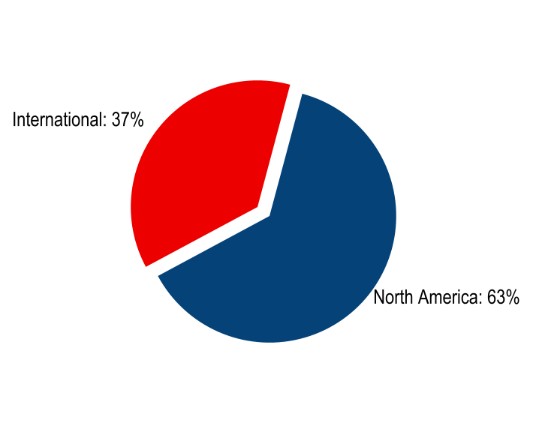
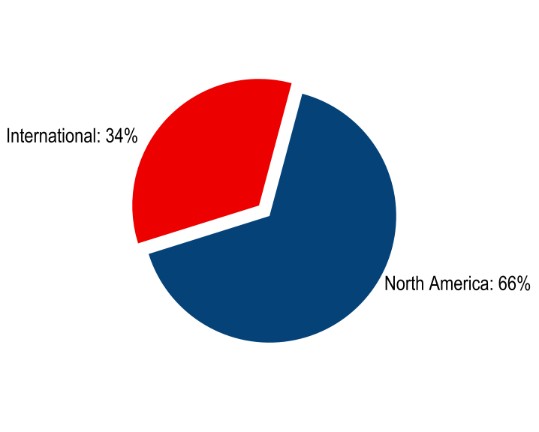
Vermilion Energy Inc.  ■  Page 38  ■  2024 Management’s Discussion and Analysis


Sustainability and Climate-Related Metrics and Targets

Metrics Used to Assess Sustainability- and Climate-Related Risks and Opportunities

Our sustainability reporting (www.vermilionenergy.com/sustainability) describes significant economic, environmental, social and governance measures, which are reported with reference to TCFD, SASB and GRI. These include but are not limited to:

Climate: energy consumption and intensity; investment in and generation of renewable energy; greenhouse gas emission and intensity, including flaring and venting, and avoided emissions; and water withdrawal, including from areas of high baseline water stress, and discharge.
Environment: Waste generation and management; Asset integrity and spills; and Environmental investment
Social: Health and Safety; People; and Community investment
Governance: Ethics

These metrics contribute to a sustainability contribution of 10% for the Corporate Performance Scorecard for our Long-term Incentive Plan, comprised of progress towards our 2025 emission intensity reduction target (5%) and 2027 ARO liability reduction target (3%), along with select ESG rating agency scores (2%). In 2025, this Scorecard eliminates ESG ratings, with the 10% split evenly between emissions intensity and ARO liability.

We also track carbon pricing, and have identified actual and likely pricing scenarios based on current government policies and related published research. For example, the carbon tax per tCO2e in 2024 in Canada was $80, and in Ireland, €56.

Scope 1, 2 and 3 GHG Emissions Disclosure

We report Scopes 1, 2 and 3 emissions, calculated in general accordance with the GHG Protocol and IPCC guidance and externally verified (limited assurance) in accordance with ISO 14064-3; reported intensities are based on operated throughput. Historical, corporate and business unit data can be found in the Energy and Emissions Performance Metric document available at www.vermilionenergy.com/our-sustainability/.

We have adopted the definitions of Scope 1, 2 and 3 emissions as developed by the GHG Protocol, an international standard for corporate accounting and reporting emissions from the World Resources Institute and the World Business Council for Sustainable Development:

Scope 1 refers to direct GHG emissions from sources that are owned or controlled by a company
Scope 2 refers to indirect GHG emissions from the generation of purchased electricity consumed by a company
Scope 3 refers to other indirect emissions related to a company's activities, but from sources not owned or controlled by that company.

Our Scope 1 and 2 emissions intensity and methane emissions intensity decreased in 2020, primarily related to our first full year of operatorship for the Corrib gas asset in Ireland, and our focus on reducing post-acquisition emissions over time in Saskatchewan. This was achieved through a variety of gas conservation and recovery initiatives including construction of new infrastructure, operational changes and increased infrastructure runtimes. Additional decreases have been achieved through improved measurement and methodologies, projects such as replacing diesel or propane with compressed natural gas for boilers and water heating for the drilling program in Alberta, converting pneumatic devices from high- to low-bleed, installing solar-powered chemical injection pumps, and the purchase of renewable energy certificates for electricity use in Netherlands and Ireland. Emissions intensity flattened and methane intensity increased in 2022 as a result of lower production; however, our Scope 1 emissions intensity decreased in 2023, to from 0.0173 to 0.0170 tCO2e/boe, reflecting a 12% decrease from our 2019 baseline of 0.019 tCO2e/boe and on track to our 2025 target (see below).

Graphic

Graphic

Vermilion Energy Inc.  ■  Page 39  ■  2024 Management’s Discussion and Analysis


Related Targets and Performance

Vermilion has an aspirational vision for net zero emissions in our own operations, including Scope 1 and Scope 2 emissions, by 2050, which we are working towards using our climate strategy. This includes setting new interim targets every five years. At the current time, we do not intend to set a Scope 3 reduction target.

In 2021, we set a target to reduce Scope 1 emissions intensity by 15 to 20% by 2025, using a baseline year of 2019.
In 2024, we set a target to reduce Scope 1+2 emissions intensity by 25 to 30% by 2030, using a baseline year of 2019.

These were developed, and approved by the Board, following our climate scenario analysis and extensive internal assessment. There are significant inherent uncertainties in how the energy transition will evolve over the next three decades. Our intention is to manage these by focusing on responsible production of essential oil and natural gas for as long as these forms of energy are needed, while developing opportunities in other areas that are an economic and synergistic fit for our business. To set both our 2025 and 2030 targets, we looked at our own operations – from how we manage emissions data to options for emission reduction and their economics –- and at how our peers and the majors are approaching this. From this, we identified emissions intensities and opportunities for reduction within our business units. This is being achieved, starting with our business units with higher emissions intensities, with an initial focus on efficiency, including process changes, venting reductions, instrumentation upgrades from gas to air, and power efficiency options, along with improved metering and field measurements.

Corporate Governance

We are committed to a high standard of corporate governance practices, a dedication that begins at the Board level and extends throughout the Company. We believe good corporate governance is in the best interest of our shareholders, and that successful companies are those that deliver growth and a competitive return along with a commitment to the environment, to the communities where they operate, and to their employees.

We comply with the objectives and guidelines relating to corporate governance adopted by the Canadian Securities Administrators and the Toronto Stock Exchange ("TSX"). In addition, the Board monitors and considers the implementation of corporate governance standards proposed by various regulatory and non-regulatory authorities in Canada. A discussion of corporate governance policies is included each year in our proxy materials for our annual general meeting of shareholders, copies of which are available on SEDAR+ (www.sedarplus.ca).

As a Canadian reporting issuer with securities listed on the TSX and the New York Stock Exchange (“NYSE”), Vermilion is required to comply with all applicable Canadian requirements adopted by the Canadian Securities Administrators and the TSX, and applicable rules for foreign private issuers adopted by the U.S. Securities and Exchange Commission that give effect to the provisions of the Sarbanes-Oxley Act of 2002.

Our corporate governance practices also incorporate many “best practices” derived from those required to be followed by US domestic companies under the NYSE listing standards. We are required by Section 303A.11 of the NYSE Listed Company Manual to identify any significant ways in which our corporate governance practices differ from those required to be followed by US domestic companies under NYSE listing standards. We believe that there are no such significant differences in our corporate governance practices, except as follows:

Shareholder Approval of Equity Compensation Plans. Section 303A.8 of the NYSE Listed Company Manual requires shareholder approval of all “equity compensation plans” and material revisions to those plans. The definition of “equity compensation plans” covers plans that provide for the delivery of newly issued securities, and also plans which rely on securities reacquired on the market by the issuing company for the purpose of redistribution to employees and directors. The TSX rules provide that equity compensation plans and material amendments thereto require shareholder approval only if they involve newly issued securities and the amendments are not otherwise addressed in the plan’s amendment procedures. In addition, the TSX rules require that every three years after institution, all unallocated options, rights or other entitlements under equity compensation plans which do not have a fixed maximum aggregate of securities issuable must be approved by shareholders. Vermilion follows the TSX rules with respect to equity compensation plan shareholder approval requirements.

Vermilion Energy Inc.  ■  Page 40  ■  2024 Management’s Discussion and Analysis


Disclosure Controls and Procedures

Our officers have established and maintained disclosure controls and procedures and evaluated the effectiveness of these controls in conjunction with our filings. As of December 31, 2024, we have evaluated the effectiveness of the design and operation of our disclosure controls and procedures. Based on this evaluation, the Chief Executive Officer and the Chief Financial Officer have concluded and certified that our disclosure controls and procedures are effective.

Internal Control Over Financial Reporting

A company's internal control over financial reporting is a process to provide reasonable assurance regarding the reliability of financial reporting and the preparation of financial statements for external purposes in accordance with generally accepted accounting principles. A company's internal control over financial reporting includes those policies and procedures that (1) pertain to the maintenance of records that, in reasonable detail, accurately and fairly reflect the transactions of the company; (2) provide reasonable assurance that transactions are recorded as necessary to permit preparation of financial statements in accordance with generally accepted accounting principles, and that receipts and expenditures of the company are being made only in accordance with authorizations of management and directors of the company; and (3) provide reasonable assurance regarding prevention or timely detection of unauthorized acquisition, use, or disposition of the company's assets that could have a material effect on the financial statements.

The Chief Executive Officer and the Chief Financial Officer of Vermilion have assessed the effectiveness of Vermilion’s internal control over financial reporting as defined in Rule 13a-15 under the US Securities Exchange Act of 1934 and as defined in Canada by National Instrument 52-109, Certification of Disclosure in Issuers’ Annual and Interim Filings. The assessment was based on the framework in Internal Control – Integrated Framework (2013) issued by the Committee of Sponsoring Organizations of the Treadway Commission. The Chief Executive Officer and the Chief Financial Officer of Vermilion have concluded that Vermilion’s internal control over financial reporting was effective as of December 31, 2024. The effectiveness of Vermilion’s internal control over financial reporting as of December 31, 2024 has been audited by Deloitte LLP, as reflected in their report included in the 2024 audited annual financial statements filed with the US Securities and Exchange Commission. No changes were made to Vermilion’s internal control over financial reporting during the three months ended December 31, 2024, that have materially affected, or are reasonably likely to materially affect, the internal controls over financial reporting.

Vermilion Energy Inc.  ■  Page 41  ■  2024 Management’s Discussion and Analysis


Supplemental Table 1: Operating Netbacks

The following table includes financial statement information on a per unit basis by business unit. Liquids includes crude oil, condensate, and NGLs. Natural gas sales volumes have been converted on a basis of six thousand cubic feet of natural gas to one barrel of oil equivalent.


Q4 2024


2024


Q4 2023


2023

Liquids

Natural Gas

Total

Liquids

Natural Gas

Total

Total

Total

$/bbl

$/mcf

$/boe

$/bbl

$/mcf

$/boe

$/boe

$/boe

Canada


Sales


75.44


1.98


39.83


77.22


1.56


40.34


44.73


46.73

Royalties


(7.22)


(0.23)


(3.94)


(9.81)


(0.09)


(4.78)


(5.76)


(5.62)

Transportation


(4.77)


(0.35)


(3.28)


(4.68)


(0.29)


(3.07)


(2.62)


(2.34)

Operating


(27.31)


(0.73)


(14.48)


(25.99)


(0.54)


(13.63)


(11.43)


(12.66)

Operating netback


36.14


0.67


18.13


36.74


0.64


18.86


24.92


26.11

General and administration


(0.77)


(1.31)


(5.65)


(5.22)

Fund flows from operations ($/boe)


17.36


17.55


19.27


20.89

United States


Sales


80.80


2.13


65.34


86.78


1.82


70.03


71.65


71.97

Royalties


(23.72)


(0.91)


(19.56)


(24.96)


(0.63)


(20.29)


(20.27)


(19.75)

Transportation


(0.46)


(0.35)


(0.96)


(0.75)


(0.87)


(0.36)

Operating


(19.51)


(0.46)


(15.70)


(17.04)


(0.31)


(13.69)


(12.13)


(11.15)

Operating netback


37.11


0.76


29.73


43.82


0.88


35.30


38.38


40.71

General and administration


(9.62)


(6.87)


(5.26)


(4.63)

Fund flows from operations ($/boe)


20.11


28.43


33.12


36.08

France


Sales


109.14


109.14


110.89


110.89


116.92


109.47

Royalties


(14.38)


(14.38)


(14.68)


(14.68)


(15.93)


(14.34)

Transportation


(8.34)


(8.34)


(8.15)


(8.15)


(12.80)


(9.39)

Operating


(27.54)


(27.54)


(24.48)


(24.48)


(37.93)


(30.71)

Operating netback


58.88


58.88


63.58


63.58


50.26


55.03

General and administration


(6.88)


(6.43)


(13.91)


(7.91)

Current income taxes


2.77


(4.31)


(13.12)


(5.49)

Fund flows from operations ($/boe)


54.77


52.84


23.23


41.63

Netherlands


Sales


92.36


17.61


105.54


92.06


13.96


83.91


102.80


107.38

Royalties


(0.01)


(0.07)


(0.02)


(0.15)


(1.38)


(0.90)

Transportation

Operating


(29.15)


(5.30)


(31.77)


(30.13)


(4.11)


(24.77)


(18.19)


(22.50)

Operating netback


63.21


12.30


73.70


61.93


9.83


58.99


83.23


83.98

General and administration


(6.88)


(5.02)


(1.15)


(4.78)

Current income taxes


(23.26)


(19.63)


(37.33)


(27.78)

Fund flows from operations ($/boe)


43.56


34.34


44.75


51.42

Germany


Sales


98.59


16.36


98.28


103.86


13.13


85.45


101.18


104.26

Royalties


(3.42)


(0.55)


(3.32)


(2.90)


(0.56)


(3.25)


(1.69)


(3.20)

Transportation


(14.70)


(0.52)


(6.50)


(17.48)


(0.48)


(6.76)


(7.99)


(7.11)

Operating


(28.38)


(4.81)


(28.74)


(36.58)


(4.68)


(30.32)


(18.87)


(23.39)

Operating netback


52.09


10.48


59.72


46.90


7.41


45.12


72.63


70.56

General and administration


(9.33)


(7.45)


(9.16)


(6.99)

Current income taxes

(21.38)

(10.59)

5.78

(15.22)

Fund flows from operations ($/boe)


29.01


27.08


69.25


48.35

Ireland


Sales


19.20


115.22


14.64


87.84


102.28


97.24

Transportation


(0.13)


(0.76)


(0.40)


(2.38)


(1.08)


(2.28)

Operating


(2.65)


(15.90)


(2.55)


(15.29)


(14.20)


(12.69)

Operating netback


16.42


98.56


11.69


70.17


87.00


82.27

General and administration


(2.00)


(2.27)


(9.25)


(6.13)

Current income taxes

(0.54)

(0.40)

(0.33)

(0.23)

Fund flows from operations ($/boe)

96.02

67.50

77.42

75.91

Vermilion Energy Inc.  ■  Page 42  ■  2024 Management’s Discussion and Analysis


Q4 2024

2024


Q4 2023


2023


Liquids


Natural Gas


Total


Liquids


Natural Gas


Total


Total


Total

$/bbl

$/mcf

$/boe

$/bbl

$/mcf

$/boe

$/boe

$/boe

Australia


Sales

121.24


121.24


128.92


128.92

143.69

143.69

Operating

(47.78)


(47.78)


(56.65)


(56.65)

(42.17)

(206.80)

PRRT (1)

14.19


14.19


(8.25)


(8.25)

82.39

82.39

Operating netback

87.65


87.65


64.02


64.02

183.91

19.28

General and administration


(10.01)


(5.70)

(9.91)

(32.32)

Current income taxes


(3.05)


(2.13)

7.60

0.05

Fund flows from operations ($/boe)


74.59


56.19

181.60

(12.99)

Central and Eastern Europe

Sales

56.60


17.15

102.86


58.18


16.36

98.08

109.42

141.77

Royalties


(3.47)

(20.84)


(4.72)


(2.90)

(17.41)

(46.38)

(74.41)

Operating


(0.99)

(5.96)


(1.18)

(7.09)

(66.06)

(68.19)

Operating netback

56.60


12.69

76.06


53.46


12.28

73.58

(3.02)

(0.83)

General and administration


(9.39)


(20.17)

(209.30)

(310.94)

Current income taxes


0.04


0.02

(1.81)

(0.61)

Fund flows from operations ($/boe)


66.71


53.43

(214.13)

(312.38)

Total Company


Sales

87.01


8.47

66.54


90.92


6.72

63.58

68.64

67.10

Realized hedging gain (loss)

4.11


0.59

3.80


1.79


3.16

11.08

10.33

7.77

Royalties

(9.55)


(0.33)

(5.28)


(11.18)


(0.18)

(5.71)

(5.93)

(6.36)

Transportation

(5.24)


(0.26)

(3.16)


(5.01)


(0.27)

(3.17)

(2.95)

(2.95)

Operating

(24.16)


(2.33)

(18.41)


(26.17)


(1.91)

(18.22)

(15.35)

(17.03)

PRRT(2)

0.98


0.43


(0.82)


(0.38)

2.74

0.69

Operating netback

53.15


6.14

43.92


49.53


7.52

47.18

57.48

49.22

General and administration


(3.62)


(3.19)

(2.60)

(2.68)

Interest expense


(3.16)


(2.71)

(3.01)

(2.83)

Equity based compensation


(0.46)

Realized foreign exchange gain


0.32


0.25

(0.73)

(0.15)

Other income


(0.68)


(0.23)

0.26

(0.01)

Corporate income taxes

(2.11)

(2.13)

(2.57)

(5.65)

Fund flows from operations ($/boe)


34.67


38.71

48.83

37.90

(1)Vermilion considers Australian PRRT to be an operating item and, accordingly, has included PRRT in the calculation of operating netbacks. Current income taxes presented above excludes PRRT.

Vermilion Energy Inc.  ■  Page 43  ■  2024 Management’s Discussion and Analysis


Supplemental Table 2: Hedges

The prices in these tables may represent the weighted averages for several contracts with foreign currency amounts translated to the disclosure currency using forward rates as at the month-end date. The weighted average price for the portfolio of options listed below may not have the same payoff profile as the individual contracts. As such, the presentation of the weighted average prices is purely for indicative purposes.

The following tables outline Vermilion’s outstanding risk management positions as at December 31, 2024:

Weighted


Weighted


Weighted 


Weighted


Weighted


Daily


Average

Daily

Average

Daily

Average

Daily

Average

Daily

Average

Bought

Bought

Bought Put

Bought Put

Sold Call

Sold Call

Sold Put

Sold Put

Sold Swap

Sold Swap

Swap

Swap

Unit

Currency

Volume

Price

Volume

Price

Volume

Price

Volume

Price

Volume

Price

Dated Brent


Q1 2025


bbl


USD


4,000


73.25


WTI


Q1 2025


bbl


USD


8,000


73.11


Q2 2025


bbl


USD


3,000


68.72


AECO


Q1 2025


mcf


CAD


4,739


3.17


4,739


4.22


23,695


3.89


Q2 2025


mcf


CAD


4,739


3.17


4,739


4.22


23,695


3.89


Q3 2025


mcf


CAD


4,739


3.17


4,739


4.22


23,695


3.89


Q4 2025


mcf


CAD


4,739


3.17


4,739


4.22


39,407


3.55


Q1 2026


mcf


CAD


4,739


3.17


4,739


4.22


47,391


3.46


Q2 2026


mcf


CAD


4,739


3.17


4,739


4.22


47,391


3.46


Q3 2026


mcf


CAD


4,739


3.17


4,739


4.22


47,391


3.46


Q4 2026


mcf


CAD


4,739


3.17


4,739


4.22


47,391


3.46


Q1 2027

mcf

CAD

23,695

3.03

Q2 2027

mcf

CAD

23,695

3.03

Q3 2027

mcf

CAD

23,695

3.03

Q4 2027

mcf

CAD

23,695

3.03

AECO Basis (AECO less NYMEX Henry Hub)


Q1 2025


mcf


USD


10,000


(1.15)


Q2 2025


mcf


USD


10,000


(1.15)


Q3 2025


mcf


USD


10,000


(1.15)


Q4 2025


mcf


USD


10,000


(1.15)


NYMEX Henry Hub


Q1 2025


mcf


USD


24,000


3.50


24,000


4.49


10,000


3.20


Q2 2025


mcf


USD


24,000


3.50


24,000


4.49


10,000


3.20


Q3 2025


mcf


USD


24,000


3.50


24,000


4.49


10,000


3.20


Q4 2025


mcf


USD


24,000


3.50


24,000


4.49


10,000


3.20


Q1 2026

mcf

USD

24,000

3.50

24,000

4.49

Q2 2026

mcf

USD

24,000

3.50

24,000

4.49

Q3 2026

mcf

USD

24,000

3.50

24,000

4.49

Q4 2026

mcf

USD

24,000

3.50

24,000

4.49

Q1 2027

mcf

CAD

24,000

3.76

Q2 2027

mcf

CAD

24,000

3.76

Q3 2027

mcf

CAD

24,000

3.76

Q4 2027

mcf

CAD

24,000

3.76

Vermilion Energy Inc.  ■  Page 44  ■  2024 Management’s Discussion and Analysis


Weighted


Weighted


Daily


Weighted


Weighted


Weighted


Daily


Average

Daily

Average

Sold

Average

Daily

Average

Daily

Average

Bought

Bought

Bought Put

Bought Put

Call

Sold Call

Sold Put

Sold Put

Sold Swap

Sold Swap

Swap

Swap

Unit

Currency

Volume

Price

Volume

Price

Volume

Price

Volume

Price

Volume

Price

TTF


Q1 2025


mcf


EUR


19,654


10.21


19,654


14.93


13,512


4.69


39,308


14.52


Q2 2025


mcf


EUR


22,111


8.31


22,111


12.88


22,111


4.01


24,567


12.99


Q3 2025


mcf

EUR

22,111

8.31

22,111

12.88

22,111

4.01

24,567

12.99

Q4 2025


mcf

EUR

31,938

8.05

31,938

12.50

31,938

3.67

20,882

11.87

Q1 2026


mcf

EUR

24,567

7.39

24,567

11.66

24,567

3.02

20,882

11.87

Q2 2026


mcf

EUR

24,567

7.39

24,567

11.66

24,567

3.02

18,426

9.60

Q3 2026


mcf

EUR

24,567

7.39

24,567

11.66

24,567

3.02

18,426

9.60

Q4 2026

mcf

EUR

28,253

7.43

28,253

11.66

28,253

2.93

4,913

8.54

Q1 2027

mcf

EUR

28,253

7.43

28,253

11.66

28,253

2.93

4,913

8.54

THE

Q1 2025

mcf

EUR

2,457

14.95

Q2 2025

mcf

EUR

2,457

14.95

Q3 2025

mcf

EUR

2,457

14.95

VET Equity Swaps


Initial Share Price


Share Volume

Swap


Jan 2020 - Apr 2025


20.9788


CAD


2,250,000

Swap


Jan 2020 - Jul 2025


22.4587


CAD


1,500,000

Weighted 

Monthly Sold

Weighted

Monthly Sold

Weighted 

Foreign

Monthly Bought

Average Bought

Call

Average Sold

Swap

Average  Sold

Exchange


Period


Put Amount


 Put Price


Amount


Call Price

Amount


Swap Price

Collar

Sell USD, Buy CAD

Jan 2025 - Jun 2025

5,000,000

USD

1.3740

5,000,000

USD

1.4551

Collar


Sell USD, Buy CAD


Jan 2025 - Dec 2025


12,500,000

USD


1.3637


12,500,000

USD


1.4133


The following sold option instruments allow the counterparties, at the specified date, to enter into a derivative instrument contract with Vermilion at the detailed terms:

Weighted 

Weighted 

Weighted

Weighted

Daily 

Average 

Average

 Average

Daily Sold 

 Average

Option Expiration

Bought Put

Bought Put

Daily Sold 

 Sold Call 

Daily Sold 

Sold Put

Swap 

 Sold Swap

Period if Option Exercised


Unit


Currency


 Date


 Volume


 Price


Call Volume


Price


Put Volume


  Price


Volume


 Price

TTF

Apr 2025 - Mar 2027

mcf

EUR

31-Mar-2025

2,457

10.99

Supplemental Table 3: Capital Expenditures and Acquisitions

By classification ($M)


Q4 2024


Q4 2023


2024


2023

Drilling and development


176,505


132,308


586,962


569,110

Exploration and evaluation


24,154


10,579


36,018


21,081

Capital expenditures


200,659


142,887


622,980


590,191

Acquisitions ($M)


Q4 2024


Q4 2023


2024


2023

Acquisitions, net of cash acquired


5,257


2,669


12,728


142,281

Acquisition of securities

17,448

9,373

21,603

Acquired working capital

5,607

109,134

Acquisitions


5,257


25,724


22,101


273,018

Dispositions ($M)


Q4 2024


Q4 2023


2024


2023

Canada


182,152

United States


14,855


14,855

Dispositions


14,855


197,007

Vermilion Energy Inc.  ■  Page 45  ■  2024 Management’s Discussion and Analysis


By category ($M)


Q4 2024


Q4 2023


2024


2023

Drilling, completion, new well equip and tie-in, workovers and recompletions


134,813


68,285


392,986


373,304

Production equipment and facilities


56,747


76,937


206,997


198,331

Seismic, studies, land and other


9,099


(2,335)


22,997


18,556

Capital expenditures


200,659


142,887


622,980


590,191

Acquisitions


5,257


25,724


22,101


273,018

Total capital expenditures and acquisitions


205,916


168,611


645,081


863,209

Capital expenditures by country ($M)


Q4 2024


Q4 2023


2024


2023

Canada


114,604


53,791


374,892


288,223

United States


19,560


4,913


35,472


91,977

France


11,901


11,217


45,671


48,297

Netherlands


12,037


10,787


25,905


44,147

Germany


33,191


33,046


94,588


59,711

Ireland


561


11,850


4,355


20,283

Australia


5,643


9,331


29,284


26,005

Central and Eastern Europe


3,162


7,952


12,813


11,548

Capital expenditures


200,659


142,887


622,980


590,191

Acquisitions by country ($M)


Q4 2024


Q4 2023


2024


2023

Canada


5,257


20,117


22,101


71,185

United States


3,808

Ireland

5,607

198,025

Acquisitions


5,257


25,724


22,101


273,018

Vermilion Energy Inc.  ■  Page 46  ■  2024 Management’s Discussion and Analysis


Supplemental Table 4: Production


Q4/24


Q3/24


Q2/24


Q1/24


Q4/23


Q3/23


Q2/23


Q1/23


Q4/22


Q3/22


Q2/22


Q1/22

Canada


Light and medium crude oil (bbls/d)


11,614


12,526


12,468


11,649


11,614


12,054


12,901


16,674


17,448


16,835


17,042


15,980

Condensate (1) (bbls/d)


3,728


3,598


3,853


4,075


4,034


4,410


3,506


4,719


4,525


4,204


4,873


4,892

Other NGLs (1) (bbls/d)


5,764


6,483


6,208


5,968


6,281


6,219


5,513


6,875


6,279


6,870


7,155


7,286

NGLs (bbls/d)


9,492


10,081


10,061


10,043


10,315


10,629


9,019


11,594


10,804


11,074


12,028


12,178

Conventional natural gas (mmcf/d)


161.27


156.99


158.48


151.84


160.16


163.94


159.26


160.34


146.81


145.04


143.94


140.55

Total (boe/d)


47,982


48,772


48,943


46,997


48,623


50,007


48,464


54,991


52,720


52,080


53,060


51,584

United States


Light and medium crude oil (bbls/d)


2,449


2,909


3,817


3,483


3,187


4,404


3,349


2,824


3,282


2,824


2,846


2,675

Condensate (1) (bbls/d)


34


12


27


29


27


15


22


20


36


35


40


24

Other NGLs (1) (bbls/d)


848


1,064


988


1,078


1,131


1,124


1,025


1,020


1,218


1,031


958


1,056

NGLs (bbls/d)


882


1,076


1,015


1,107


1,158


1,139


1,047


1,040


1,254


1,066


998


1,080

Conventional natural gas (mmcf/d)


5.88


7.08


7.27


8.23


7.49


7.25


7.23


7.14


7.45


7.03


6.74


7.56

Total (boe/d)


4,311


5,164


6,044


5,962


5,593


6,751


5,601


5,055


5,779


5,062


4,967


5,014

France


Light and medium crude oil (bbls/d)


7,083


7,115


7,246


7,308


7,395


7,578


7,788


7,578


7,247


6,818


8,126


8,389

Total (boe/d)


7,083


7,115


7,246


7,308


7,395


7,578


7,788


7,578


7,247


6,818


8,126


8,389

Netherlands


Light and medium crude oil (bbls/d)


1


1

Condensate (1) (bbls/d)


44


39


51


165


119


39


61


66


49


74


60


83

NGLs (bbls/d)


44


39


51


165


119


39


61


66


49


74


60


83

Conventional natural gas (mmcf/d)


24.20


25.06


26.84


31.02


32.06


24.32


27.28


29.07


27.41


29.15


35.22


39.03

Total (boe/d)


4,078


4,216


4,524


5,336


5,462


4,091


4,607


4,910


4,617


4,933


5,930


6,589

Germany


Light and medium crude oil (bbls/d)


1,596


1,598


1,698


1,722


1,775


1,713


1,715


1,410


1,481


1,764


1,331


1,158

Conventional natural gas (mmcf/d)


21.71


21.41


18.41


22.87


19.62


20.29


22.05


25.85


25.86


26.54


25.36


26.95

Total (boe/d)


5,215


5,167


4,766


5,533


5,046


5,095


5,391


5,717


5,791


6,187


5,558


5,650

Ireland


Conventional natural gas (mmcf/d)


55.32


59.06


57.70


60.34


64.04


47.96


67.51


24.58


26.04


25.74


27.93


30.26

Total (boe/d)


9,220


9,844


9,616


10,057


10,673


7,993


11,251


4,096


4,340


4,290


4,655


5,043

Australia


Light and medium crude oil (bbls/d)


3,778


2,040


3,713


4,264


4,715


1,204


4,847


4,763


2,465


3,888

Total (boe/d)


3,778


2,040


3,713


4,264


4,715


1,204


4,847


4,763


2,465


3,888

Central and Eastern Europe


Conventional natural gas (mmcf/d)


11.21


11.13


0.69


0.29


0.54


0.05


0.30


0.64


0.67


0.63


0.64


0.34

Total (boe/d)


1,869


1,855


122


48


90


8


50


107


111


104


106


57

Consolidated


Light and medium crude oil (bbls/d)


26,521


26,188


28,948


28,426


28,685


26,952


25,753


28,485


34,305


33,003


31,811


32,091

Condensate (1) (bbls/d)


3,806


3,649


3,931


4,269


4,180


4,463


3,589


4,805


4,610


4,312


4,973


4,999

Other NGLs (1) (bbls/d)


6,612


7,547


7,196


7,046


7,412


7,344


6,538


7,896


7,497


7,901


8,113


8,342

NGLs (bbls/d)


10,418


11,196


11,127


11,315


11,592


11,807


10,127


12,701


12,107


12,213


13,086


13,341

Conventional natural gas (mmcf/d)


279.59


280.73


269.39


274.59


283.91


263.80


283.63


247.61


234.23


234.12


239.83


244.69

Total (boe/d)


83,536


84,173


84,974


85,505


87,597


82,727


83,152


82,455


85,450


84,237


84,868


86,213

Vermilion Energy Inc.  ■  Page 47  ■  2024 Management’s Discussion and Analysis


2024


2023


2022


2021


2020


2019

Canada


Light and medium crude oil (bbls/d)


12,065

13,293

16,830


16,954


21,106


23,971

Condensate (1) (bbls/d)


3,813

4,166

4,621


4,831


4,886


4,295

Other NGLs (1) (bbls/d)


6,106

6,220

6,895


7,179


7,719


6,988

NGLs (bbls/d)


9,919

10,386

11,516


12,010


12,605


11,283

Conventional natural gas (mmcf/d)


157.16

160.94

144.10


138.03


151.38


148.35

Total (boe/d)


48,175

50,503

52,364


51,968


58,942


59,979

United States


Light and medium crude oil (bbls/d)


3,162

3,445

2,908


2,597


3,046


2,514

Condensate (1) (bbls/d)


25

21

34


8


5


18

Other NGLs (1) (bbls/d)


994

1,076

1,066


1,146


1,218


996

NGLs (bbls/d)


1,019

1,097

1,100


1,154


1,223


1,014

Conventional natural gas (mmcf/d)


7.11

7.28

7.20


6.84


7.47


6.89

Total (boe/d)


5,367

5,754

5,207


4,890


5,514


4,675

France


Light and medium crude oil (bbls/d)


7,188

7,584

7,639


8,799


8,903


10,435

Conventional natural gas (mmcf/d)


0.19

Total (boe/d)


7,188

7,584

7,639


8,799


8,903


10,467

Netherlands


Light and medium crude oil (bbls/d)


3


1


3

Condensate (1) (bbls/d)


75

71

66


97


88


88

NGLs (bbls/d)


75

71

66


97


88


88

Conventional natural gas (mmcf/d)


26.77

28.18

32.66


43.40


46.16


49.10

Total (boe/d)


4,536

4,768

5,510


7,334


7,782


8,274

Germany


Light and medium crude oil (bbls/d)


1,653

1,654

1,435


1,044


968


917

Conventional natural gas (mmcf/d)


21.10

21.93

26.18


15.81


12.65


15.31

Total (boe/d)


5,170

5,310

5,798


3,679


3,076


3,468

Ireland


Conventional natural gas (mmcf/d)


58.10

51.12

27.48


29.25


37.44


46.57

Total (boe/d)


9,683

8,520

4,579


4,875


6,240


7,762

Australia


Light and medium crude oil (bbls/d)


3,446

1,492

3,995


3,810


4,416


5,662

Total (boe/d)


3,446

1,492

3,995


3,810


4,416


5,662

Central and Eastern Europe


Conventional natural gas (mmcf/d)


5.86

0.38

0.57


0.31


1.90


0.42

Total (boe/d)


978

63

95


51


317


70

Consolidated


Light and medium crude oil (bbls/d)


27,514

27,469

32,809


33,208


38,441


43,502

Condensate (1) (bbls/d)


3,913

4,258

4,721


4,936


4,980


4,400

Other NGLs (1) (bbls/d)


7,100

7,296

7,961


8,325


8,937


7,984

NGLs (bbls/d)


11,013

11,554

12,682


13,261


13,917


12,384

Conventional natural gas (mmcf/d)


276.10

269.83

238.18


233.64


256.99


266.82

Total (boe/d)


84,543

83,994

85,187


85,408


95,190


100,357

Under National Instrument 51-101 "Standards of Disclosure for Oil and Gas Activities", disclosure of production volumes should include segmentation by product type as defined in the instrument. This table provides a reconciliation from "crude oil and condensate", "NGLs" and "natural gas" to the product types. In this report, references to "crude oil" and "light and medium crude oil" mean "light crude oil and medium crude oil" and references to "natural gas" mean "conventional natural gas". Production volumes reported are based on quantities as measured at the first point of sale.

Vermilion Energy Inc.  ■  Page 48  ■  2024 Management’s Discussion and Analysis


Supplemental Table 5: Segmented Financial Results


Three Months Ended December 31, 2024

($M)

Canada


USA


France


Netherlands


Germany


Ireland


Australia


CEE


Corporate


Total

Drilling and development


114,604


19,560


11,901


12,037


11,336


561


5,643


863


176,505

Exploration and evaluation


21,855


2,299


24,154

Crude oil and condensate sales


130,878


22,494


73,692


377


13,646


27,573


3


268,663

NGL sales


15,605


2,264


17,869

Natural gas sales


29,347


1,155


39,222


32,675


97,735


17,686


217,820

Sales of purchased commodities


11,364


11,364

Royalties


(17,402)


(7,759)


(9,712)


(27)


(1,565)


(3,584)


(40,049)

Revenue from external customers


158,428


18,154


63,980


39,572


44,756


97,735


27,573


14,105


11,364


475,667

Purchased commodities


(11,364)


(11,364)

Transportation


(14,485)


(140)


(5,630)


(3,065)


(641)


(23,961)

Operating


(63,898)


(6,227)


(18,597)


(11,921)


(13,544)


(13,488)


(10,866)


(1,025)


(139,566)

General and administration


(3,399)


(3,815)


(4,645)


(2,581)


(4,399)


(1,693)


(2,277)


(1,615)


(3,036)


(27,460)

Petroleum resource rent tax


3,226


3,226

Corporate income tax (expense) recovery


23


1,870


(8,726)


(10,075)


(460)


(693)


7


2,057


(15,997)

Interest expense


(23,965)


(23,965)

Realized gain on derivative instruments

28,795

28,795

Realized foreign exchange gain


2,442


2,442

Realized other expense


(5,119)


(5,119)

Fund flows from operations


76,669


7,972


36,978


16,344


13,673


81,453


16,963


11,472


1,174


262,698


Year Ended December 31, 2024

($M)

Canada


USA


France


Netherlands


Germany


Ireland


Australia


CEE


Corporate


Total

Total assets


2,075,273


269,686


630,120


190,023


469,295


921,331


283,880


95,908


1,180,060


6,115,576

Drilling and development


374,892


35,472


45,671


25,905


66,545


4,355


29,284


4,838


586,962

Exploration and evaluation


28,043


7,975


36,018

Crude oil and condensate sales


556,375


118,198


314,232


2,515


48,275


182,847


37


1,222,479

NGL sales


64,934


14,622


79,556

Natural gas sales


89,981


4,743


136,795


101,450


311,325


35,078


679,372

Sales of purchased commodities


92,843


92,843

Royalties


(84,337)


(39,849)


(41,585)


(244)


(5,703)


(6,232)


(177,950)

Revenue from external customers


626,953


97,714


272,647


139,066


144,022


311,325


182,847


28,883


92,843


1,896,300

Purchased commodities


(92,843)


(92,843)

Transportation


(54,091)


(1,465)


(23,106)


(11,853)


(8,418)


(98,933)

Operating


(240,333)


(26,887)


(69,376)


(41,127)


(53,129)


(54,177)


(80,347)


(2,537)


(567,913)

General and administration


(23,080)


(13,493)


(18,214)


(8,327)


(13,053)


(8,029)


(8,087)


(7,220)


(99,503)

Petroleum resource rent tax


(11,702)


(11,702)

Corporate income tax (expense) recovery


19


(12,225)


(32,592)


(18,558)


(1,403)


(3,022)


7


1,332


(66,442)

Interest expense


(84,606)


(84,606)

Equity based compensation


(14,361)


(14,361)

Realized gain on derivative instruments

345,318

345,318

Realized foreign exchange gain

7,735

7,735

Realized other expense


(7,267)


(7,267)

Fund flows from operations


309,468


55,869


149,726


57,020


47,429


239,298


79,689


19,133


248,151


1,205,783

Vermilion Energy Inc.  ■  Page 49  ■  2024 Management’s Discussion and Analysis


Supplemental Table 6: Operational and Financial Data by Core Region

Production volumes (1)


Q4/24


Q3/24


Q2/24


Q1/24


Q4/23


Q3/23


Q2/23


Q1/23


Q4/22


Q3/22


Q2/22


Q1/22

North America


Crude oil and condensate (bbls/d)


17,825


19,045


20,165


19,236


18,862


20,883


19,778


24,237


25,291


23,898


24,801


23,571

NGLs (bbls/d)


6,612


7,547


7,196


7,046


7,412


7,344


6,538


7,895


7,497


7,901


8,113


8,342

Natural gas (mmcf/d)


167.15


164.07


165.75


160.07


167.65


171.19


166.49


167.48


154.26


152.07


150.68


148.11

Total (boe/d)


52,293


53,936


54,987


52,959


54,216


56,758


54,065


60,046


58,499


57,142


58,027


56,598

International


Crude oil and condensate (bbls/d)


12,502


10,792


12,714


13,459


14,004


10,534


9,564


9,054


13,624


13,419


11,983


13,519

Natural gas (mmcf/d)


112.44


116.66


103.64


114.52


116.27


92.61


117.14


80.13


79.97


82.05


89.15


96.58

Total (boe/d)


31,243


30,237


29,987


32,546


33,381


25,969


29,087


22,408


26,953


27,095


26,840


29,616

Consolidated


Crude oil and condensate (bbls/d)


30,327


29,837


32,879


32,695


32,866


31,416


29,341


33,290


38,915


37,315


36,784


37,090

NGLs (bbls/d)


6,612


7,547


7,196


7,046


7,412


7,344


6,538


7,896


7,497


7,901


8,113


8,342

Natural gas (mmcf/d)


279.59


280.73


269.39


274.59


283.92


263.80


283.63


247.61


234.23


234.12


239.83


244.69

Total (boe/d)


83,536


84,173


84,974


85,505


87,597


82,727


83,152


82,455


85,450


84,237


84,868


86,213

(1)Please refer to Supplemental Table 4 "Production" for disclosure by product type.

Sales volumes


Q4/24


Q3/24


Q2/24


Q1/24


Q4/23


Q3/23


Q2/23


Q1/23


Q4/22


Q3/22


Q2/22


Q1/22

North America

Crude oil and condensate (bbls/d)


17,825


19,044


20,166


19,235


18,862


20,883


19,778


24,237


25,291


23,897


24,801


23,571

NGLs (bbls/d)


6,612


7,547


7,196


7,045


7,412


7,344


6,538


7,895


7,497


7,901


8,113


8,342

Natural gas (mmcf/d)


167.13


164.07


165.75


160.07


167.65


171.19


166.49


167.48


154.26


152.07


150.68


148.11

Total (boe/d)


52,292


53,936


54,987


52,960


54,216


56,758


54,065


60,046


58,499


57,142


58,027


56,598

International


Crude oil and condensate (bbls/d)


11,360


12,580


11,998


15,938


9,221


9,950


10,302


8,087


16,257


11,493


11,720


12,615

Natural gas (mmcf/d)


112.44


116.66


103.64


114.52


116.27


92.61


117.14


80.13


79.97


82.05


89.15


96.58

Total (boe/d)


30,101


32,024


29,271


35,026


28,598


25,386


29,824


21,442


29,585


25,169


26,578


28,712

Consolidated


Crude oil and condensate (bbls/d)


29,185


31,624


32,163


35,174


28,083


30,833


30,080


32,324


41,547


35,391


36,522


36,186

NGLs (bbls/d)


6,612


7,547


7,196


7,046


7,412


7,344


6,538


7,896


7,497


7,901


8,113


8,342

Natural gas (mmcf/d)


279.59


280.73


269.39


274.59


283.92


263.80


283.63


247.61


234.23


234.12


239.83


244.69

Total (boe/d)


82,394


85,960


84,258


87,985


82,814


82,144


83,889


81,489


88,083


82,312


84,607


85,310

Vermilion Energy Inc.  ■  Page 50  ■  2024 Management’s Discussion and Analysis


Financial results


Q4/24


Q3/24


Q2/24


Q1/24


Q4/23


Q3/23


Q2/23


Q1/23


Q4/22


Q3/22


Q2/22


Q1/22

North America

Crude oil and condensate sales ($/bbl)


93.53


96.54


104.57


91.50


100.16


103.46


94.78


95.63


106.66


114.82


134.72


111.42

NGL sales ($/bbl)


29.38


27.49


31.61


34.16


33.38


27.77


28.11


36.24


39.93


44.64


51.86


46.94

Natural gas sales ($/mcf)


1.98


0.90


1.29


2.14


2.62


2.52


2.29


4.11


5.96


6.41


7.13


4.80

Sales ($/boe)


41.93


40.67


46.37


44.25


47.51


49.26


45.12


54.84


66.95


71.24


83.34


65.88

Royalties ($/boe)


(5.23)


(6.14)


(6.93)


(7.03)


(7.25)


(7.75)


(5.45)


(7.68)


(9.47)


(12.58)


(12.51)


(11.24)

Transportation ($/boe)


(3.04)


(3.12)


(2.82)


(2.35)


(2.44)


(2.08)


(1.57)


(2.44)


(2.42)


(2.16)


(2.15)


(1.91)

Operating ($/boe)


(14.58)


(11.88)


(13.89)


(14.25)


(11.50)


(12.09)


(12.22)


(14.10)


(13.51)


(14.00)


(11.58)


(11.95)

General and administration ($/boe)


(2.13)


(1.09)


(2.54)


(1.70)


0.87


(0.72)


0.10


(0.99)


0.10


(1.27)


(1.52)


(1.26)

Corporate income taxes ($/boe)


0.43


(0.34)


0.82


(0.65)


0.23


(0.01)


(0.10)


(0.12)


(0.13)


(0.03)


(0.02)

Fund flows from operations ($/boe)


17.38


18.10


21.01

18.27


27.42


26.61


25.88


29.51


41.52


41.20


55.58


39.50

Fund flows from operations


83,662


89,793


105,187


88,027


136,766


138,960


127,346


159,435


223,443


216,579


293,470


201,193

Drilling and development

(134,164)

(78,171)

(61,520)

(136,509)

(58,704)

(69,703)

(135,723)

(116,070)

(113,892)

(112,238)

(54,913)

(57,513)

Free cash flow


(50,502)


11,622


43,667


(48,482)


78,062


69,257


(8,377)


43,365


109,551


104,341


238,557


143,680

International


Crude oil and condensate sales ($/bbl)


110.31


114.16


116.24


119.68


123.77


114.26


100.23


107.57


128.02


140.09


146.67


136.69

Natural gas sales ($/mcf)


18.11


14.55


12.72


11.63


16.92


13.34


14.58


24.69


39.54


58.55


32.33


36.75

Sales ($/boe)


109.27


97.85


92.68


92.48


108.70


93.46


91.89


132.84


177.23


254.86


173.14


183.66

Royalties ($/boe)


(5.38)


(4.16)


(4.49)


(4.60)


(3.41)


3.55


(7.43)


(13.39)


(6.38)


(7.21)


(7.23)


(5.43)

Transportation ($/boe)


(3.37)


(3.81)


(4.20)


(3.65)


(3.91)


(4.53)


(5.23)


(5.11)


(3.29)


(3.51)


(3.64)


(2.91)

Operating ($/boe)


(25.08)


(27.11)


(26.56)


(25.30)


(22.64)


(25.58)


(28.24)


(31.41)


(23.35)


(22.63)


(22.11)


(19.86)

General and administration ($/boe)


(6.21)


(5.56)


(5.20)


(4.86)


(9.18)


(7.37)


(7.58)


(7.52)


(5.09)


(3.34)


(3.16)


(3.02)

Corporate income taxes ($/boe)


(6.53)


(3.74)


(6.08)


(7.06)


(7.81)


(13.42)


(6.79)


(11.20)


(15.15)


(21.97)


(28.73)


(17.63)

PRRT ($/boe)


1.16


(0.17)


(1.37)


(3.38)


7.93


(1.85)


(1.96)


(0.83)


(2.60)

Fund flows from operations ($/boe)


63.86


53.30


44.78


43.63


69.68


46.11


36.62


64.21


122.12


194.24


107.44


132.21

Fund flows from operations


176,883


157,048


119,310


139,054


183,353


107,704


99,377


123,893


332,377


449,771


259,840


341,626

Drilling and development

(42,341)

(40,638)

(47,830)

(45,789)

(73,604)

(49,701)

(28,347)

(37,258)

(43,957)

(65,640)

(54,575)

(25,328)

Exploration and evaluation

(24,154)

(2,460)

(1,260)

(8,144)

(10,579)

(6,235)

(2,775)

(1,492)

(11,456)

(6,137)

(3,665)

(2,503)

Free cash flow


110,388


113,950


70,220


85,121


99,170


51,768


68,255


85,143


276,964


377,994


201,600


313,795


Q4/24


Q3/24


Q2/24


Q1/24


Q4/23


Q3/23


Q2/23


Q1/23


Q4/22


Q3/22


Q2/22


Q1/22

Consolidated


Crude oil and condensate sales ($/bbl)


100.06


103.55


108.93


104.26


107.91


106.94


96.64


98.62


115.02


123.02


138.55


120.23

NGL sales ($/bbl)


29.38


27.49


31.61


34.16


33.38


27.77


28.11


36.23


39.93


44.64


51.86


46.94

Natural gas sales ($/mcf)


8.47


6.57


5.69


6.10


8.48


6.32


7.37


10.77


17.43


24.68


16.50


17.41

Sales ($/boe)


66.54


61.97


62.46


63.45


68.64


62.92


61.74


75.36


103.99


127.39


111.55


105.52

Royalties ($/boe)


(5.28)


(5.40)


(6.08)


(6.06)


(5.93)


(4.26)


(6.16)


(9.18)


(8.43)


(10.94)


(10.85)


(9.29)

Transportation ($/boe)


(3.16)


(3.38)


(3.30)


(2.87)


(2.95)


(2.84)


(2.87)


(3.14)


(2.71)


(2.57)


(2.62)


(2.25)

Operating ($/boe)


(18.41)


(17.55)


(18.29)


(18.65)


(15.35)


(16.26)


(17.91)


(18.66)


(16.81)


(16.64)


(14.89)


(14.61)

General and administration ($/boe)


(3.62)


(2.76)


(3.46)


(2.96)


(2.60)


(2.77)


(2.63)


(2.71)


(1.65)


(1.90)


(2.04)


(1.85)

Corporate income taxes ($/boe)


(2.11)


(1.61)


(1.58)


(3.20)


(2.57)


(7.05)


(7.04)


(5.96)


(32.68)


(6.74)


(9.03)


(5.95)

PRRT ($/boe)


0.43


(0.06)


(0.47)


(1.35)


2.74


(0.62)


(0.60)


(0.26)


(0.87)

Interest ($/boe)


(3.16)


(2.68)


(2.75)


(2.30)


(3.01)


(2.68)


(2.65)


(2.98)


(2.78)


(3.23)


(2.74)


(1.93)

Equity based compensation ($/boe)


(1.87)


Realized derivatives ($/boe)


3.80


6.31


6.00


27.55


10.33


9.74


8.86


1.95


(5.42)


(18.22)


(10.36)


(18.78)

Realized foreign exchange ($/boe)


0.32


0.15


0.30


0.23


(0.73)


0.28


0.48


(0.65)


2.33


(0.28)


(0.30)


0.10

Realized other ($/boe)


(0.68)


(0.21)


(0.09)


0.02


0.26


(1.32)


0.53


0.49


(0.14)


0.80


0.36


0.70

Fund flows from operations ($/boe)

34.67

34.78

30.87

53.86

48.83

35.76

32.35

34.52

35.08


67.07


58.82


50.79

Fund flows from operations


262,698


275,024


236,703


431,358


372,117


270,218


247,109


253,167


284,220


507,876


452,901


389,868

Drilling and development

(176,505)

(118,809)

(109,350)

(182,298)

(132,308)

(119,404)

(164,070)

(153,328)

(157,849)

(177,878)

(109,488)

(82,841)

Exploration and evaluation

(24,154)

(2,460)

(1,260)

(8,144)

(10,579)

(6,235)

(2,775)

(1,492)

(11,456)

(6,137)

(3,665)

(2,503)

Free cash flow


62,039


153,755


126,093


240,916


229,230


144,579


80,264


98,347


114,915


323,861


339,748


304,524

Vermilion Energy Inc.  ■  Page 51  ■  2024 Management’s Discussion and Analysis


Non-GAAP and Other Specified Financial Measures

This MD&A includes references to certain financial measures which do not have standardized meanings and may not be comparable to similar measures presented by other issuers. These financial measures include fund flows from operations, a total of segments measure of profit or loss in accordance with IFRS 8 “Operating Segments” (please see Segmented Information in the Notes to the condensed Consolidated Financial Statements) and net debt, a capital management measure in accordance with IAS 1 “Presentation of Financial Statements” (please see Capital Disclosures in the Notes to the condensed Consolidated Financial Statements).

In addition, this MD&A includes financial measures which are not specified, defined, or determined under IFRS Accounting Standards and are therefore considered non-GAAP financial measures and may not be comparable to similar measures presented by other issuers. These non-GAAP financial measures include:

Total of Segments Measure

Fund flows from operations (FFO): Most directly comparable to net loss, FFO is a non-GAAP financial measure and total of segments measure comprised of sales less royalties, transportation, operating, G&A, corporate income tax, PRRT, interest expense, equity based compensation settled in cash, realized gain (loss) on derivatives, realized foreign exchange gain (loss), and realized other income (expense). The measure is used by management to assess the contribution of each business unit to Vermilion's ability to generate income necessary to pay dividends, repay debt, fund asset retirement obligations and make capital investments. Reconciliation to the most directly comparable primary financial statement measures can be found below.

Q4 2024

Q4 2023

2024

2023


$M


$/boe


$M


$/boe


$M


$/boe


$M


$/boe

Sales


504,352


66.54


522,969


68.64


1,981,407


63.58


2,022,555


67.10

Royalties


(40,049)


(5.28)


(45,148)


(5.93)


(177,950)


(5.71)


(191,694)


(6.36)

Transportation


(23,961)


(3.16)


(22,441)


(2.95)


(98,933)


(3.17)


(88,856)


(2.95)

Operating


(139,566)


(18.41)


(116,937)


(15.35)


(567,913)


(18.22)


(513,381)


(17.03)

General and administration


(27,460)


(3.62)


(19,810)


(2.60)


(99,503)


(3.19)


(80,716)


(2.68)

Corporate income tax expense


(15,997)


(2.11)


(19,623)


(2.57)


(66,442)


(2.13)


(170,358)


(5.65)

Petroleum resource rent tax

3,226

0.43

20,860

2.74

(11,702)

(0.38)

20,860

0.69

Interest expense


(23,965)


(3.16)


(22,909)


(3.01)


(84,606)


(2.71)


(85,212)


(2.83)

Equity based compensation


(14,361)


(0.46)


Realized gain on derivatives


28,795


3.80


78,737


10.33


345,318


11.08


234,365


7.77

Realized foreign exchange gain (loss)


2,442


0.32


(5,529)


(0.73)


7,735


0.25


(4,532)


(0.15)

Realized other (expense) income


(5,119)


(0.68)


1,948


0.26


(7,267)


(0.23)


(420)


(0.01)

Fund flows from operations


262,698


34.67


372,117


48.83


1,205,783


38.71


1,142,611


37.90

Equity based compensation

(7,499)

(7,871)

(15,569)

(42,756)

Unrealized (loss) gain on derivative instruments (1)

(137,273)

141,126

(452,858)

179,707

Unrealized foreign exchange (loss) gain (1)

(28,517)

4,834

(58,471)

12,438

Accretion

(19,272)

(19,469)

(74,541)

(78,187)

Depletion and depreciation

(163,458)

(259,012)

(683,240)

(712,619)

Deferred tax recovery

80,016

110,758

37,991

190,193

Gain on business combination

(5,607)

439,487

Loss on disposition

(125,539)

(352,367)

Impairment expense

(1,016,094)

(1,016,094)

Unrealized other (expense) income (1)

(5,011)

1,621

(5,834)

Net loss

(18,316)

(803,136)

(46,739)

(237,587)

(1)

Unrealized (loss) gain on derivative instruments, Unrealized foreign exchange (loss) gain, and Unrealized other expense are line items from the respective Consolidated Statements of Cash Flows.

Vermilion Energy Inc.  ■  Page 52  ■  2024 Management’s Discussion and Analysis


Non-GAAP Financial Measures and Non-GAAP Ratios

Fund flows from operations per basic and diluted share: FFO per share and diluted share are non-GAAP ratios. Management assesses fund flows from operations on a per share basis as we believe this provides a measure of our operating performance after taking into account the issuance and potential future issuance of Vermilion common shares. Fund flows from operations per basic share is calculated by dividing fund flows from operations (total of segments measure) by the basic weighted average shares outstanding as defined under IFRS Accounting Standards. Fund flows from operations per diluted share is calculated by dividing fund flows from operations by the sum of basic weighted average shares outstanding and incremental shares issuable under the equity based compensation plans as determined using the treasury stock method.

Fund flows from operations per boe: Management uses fund flows from operations per boe to assess the profitability of our business units and Vermilion as a whole. Fund flows from operations per boe is calculated by dividing fund flows from operations (total of segments measure) by boe production.

Free cash flow (FCF): Most directly comparable to cash flows from operating activities, FCF is a non-GAAP financial measure calculated as fund flows from operations less drilling and development costs and exploration and evaluation costs. FCF is used by management to determine the funding available for investing and financing activities including payment of dividends, repayment of long-term debt, reallocation into existing business units and deployment into new ventures. Reconciliation to the primary financial statement measures can be found in the following table.

($M)


Q4 2024


Q4 2023


2024


2023

Cash flows from operating activities


212,587


343,831


967,751


1,024,528

Changes in non-cash operating working capital


26,829


(651)


182,698


61,117

Asset retirement obligations settled


23,282


28,937


55,334


56,966

Fund flows from operations


262,698


372,117


1,205,783


1,142,611

Drilling and development


(176,505)


(132,308)


(586,962)


(569,110)

Exploration and evaluation


(24,154)


(10,579)


(36,018)


(21,081)

Free cash flow


62,039


229,230


582,803


552,420

Capital expenditures: Most directly comparable to cash flows used in investing activities, capital expenditures is a non-GAAP financial measure calculated as the sum of drilling and development costs and exploration and evaluation costs as derived from the Consolidated Statements of Cash Flows. We consider capital expenditures to be a useful measure of our investment in our existing asset base. Capital expenditures are also referred to as E&D capital. Reconciliation to the primary financial statement measures can be found below.

($M)


Q4 2024


Q4 2023


2024


2023

Drilling and development


176,505


132,308


586,962


569,110

Exploration and evaluation


24,154


10,579


36,018


21,081

Capital expenditures


200,659


142,887


622,980


590,191

Payout and payout % of FFO: Payout and payout % of FFO are, respectively, a non-GAAP financial measure and non-GAAP ratio. Payout is most directly comparable to dividends declared. Payout is comprised of dividends declared plus drilling and development costs, exploration and evaluation costs, and asset retirement obligations settled, and payout % of FFO is calculated as payout divided by FFO. The measure is used by management to assess the amount of cash distributed back to shareholders and reinvested in the business for maintaining production and organic growth. Payout as a percentage of FFO is also referred to as the payout ratio or sustainability ratio. The reconciliation of the measure to the primary financial statement measure can be found below.

($M)


Q4 2024


Q4 2023


2024


2023


Dividends declared


18,521


16,227


75,327


65,248

Drilling and development


176,505


132,308


586,962


569,110

Exploration and evaluation


24,154


10,579


36,018


21,081

Asset retirement obligations settled


23,282


28,937


55,334


56,966

Payout


242,462


188,051


753,641


712,405

% of fund flows from operations


92

%  

51

%  

63

%  

62

%

Vermilion Energy Inc.  ■  Page 53  ■  2024 Management’s Discussion and Analysis


Return on capital employed (ROCE): A non-GAAP ratio, ROCE is a measure that management uses to analyze our profitability and the efficiency of our capital allocation process; the comparable primary financial statement measure is earnings before income taxes. ROCE is calculated by dividing net loss before interest and taxes ("EBIT") by average capital employed over the preceding twelve months. Capital employed is calculated as total assets less current liabilities while average capital employed is calculated using the balance sheets at the beginning and end of the twelve-month period.


Twelve Months Ended


($M)

Dec 31, 2024


Dec 31, 2023


Net loss


(46,739)


(237,587)

Taxes


40,153


(40,695)

Interest expense


84,606


85,212

EBIT


78,020


(193,070)

Average capital employed


5,522,367


5,819,380

Return on capital employed


1

%  

(3)

%

Adjusted working capital (deficit): Adjusted working capital (deficit) is a non - GAAP financial measure calculated as current assets less current liabilities, excluding current derivatives and current lease liabilities. The measure is used by management to calculate net debt, a capital management measure disclosed below.

As at

($M)


Dec 31, 2024


Dec 31, 2023

Current assets


582,326


823,514

Current derivative asset


(40,312)


(313,792)

Current liabilities


(610,590)


(696,074)

Current lease liability


12,206


21,068

Current derivative liability


52,944


732

Adjusted working capital


(3,426)


(164,552)

Acquisitions: Acquisitions is a non-GAAP financial measure and is calculated as the sum of acquisitions, net of cash acquired and acquisitions of securities from the Consolidated Statements of Cash Flows, Vermilion common shares issued as consideration, the estimated value of contingent consideration, the amount of acquiree's outstanding long-term debt assumed, and net acquired working capital deficit or surplus. Management believes that including these components provides a useful measure of the economic investment associated with our acquisition activity and is most directly comparable to cash flows used in investing activities. A reconciliation to the acquisitions line items in the Consolidated Statements of Cash Flows can be found below.

($M)


Q4 2024


Q4 2023


Q4 2024


Q4 2023

Acquisitions, net of cash acquired


5,257


2,669


12,728


142,281

Acquisition of securities


17,448


9,373


21,603

Acquired working capital


5,607


109,134

Acquisitions


5,257


25,724


22,101


273,018

Operating netback: Operating netback is non-GAAP financial measure and is calculated as sales less royalties, operating expense, transportation costs, PRRT, and realized hedging gains and losses, and when presented on a per unit basis, is a non-GAAP ratio. Operating netback is most directly comparable to net loss. Management assesses operating netback as a measure of the profitability and efficiency of our field operations.

Net debt to four quarter trailing fund flows from operations: Management uses net debt (a capital management measure, as defined below) to four quarter trailing fund flows from operations to assess the Company's ability to repay debt. Net debt to four quarter trailing fund flows from operations is a non-GAAP ratio and is calculated as net debt (capital management measure) divided by fund flows from operations (total of segments measure) from the preceding four quarters.

Vermilion Energy Inc.  ■  Page 54  ■  2024 Management’s Discussion and Analysis


Capital Management Measure

Net debt: Net debt is a capital management measure in accordance with IAS 1 "Presentation of Financial Statements" that is most directly comparable to long-term debt. Net debt is comprised of long-term debt (excluding unrealized foreign exchange on swapped USD borrowings) plus adjusted working capital (defined as current assets less current liabilities, excluding current derivatives and current lease liabilities), and represents Vermilion's net financing obligations after adjusting for the timing of working capital fluctuations.


As at

($M)

Dec 31, 2024


Dec 31, 2023

Long-term debt


963,456


914,015

Adjusted working capital


3,426


164,552

Net debt


966,882


1,078,567

Ratio of net debt to four quarter trailing fund flows from operations


0.8


0.9

Supplementary Financial Measures

Diluted shares outstanding: The sum of shares outstanding at the period end plus outstanding awards under the Long-term Incentive Plan (“LTIP"), based on current estimates of future performance factors and forfeiture rates.

('000s of shares)


Q4 2024


Q4 2023

Shares outstanding


154,344


162,271

Potential shares issuable pursuant to the LTIP


3,493


4,185

Diluted shares outstanding


157,837


166,456

Vermilion Energy Inc.  ■  Page 55  ■  2024 Management’s Discussion and Analysis


DIRECTORS

Myron Stadnyk 1

Calgary, Alberta

Dion Hatcher

Calgary, Alberta

James J. Kleckner Jr. 7,9

Edwards, Colorado

Carin Knickel 4,7,11

Golden, Colorado

Stephen P. Larke 3,5,10

Calgary, Alberta

Timothy R. Marchant 6,9,11

Calgary, Alberta

Robert Michaleski 3,5

Calgary, Alberta

William Roby 7,8,11

Katy, Texas

Manjit Sharma 2,5

Toronto, Ontario

Judy Steele 3,5,11

Halifax, Nova Scotia

1 Chairman (Independent)

2 Audit Committee Chair (Independent)

3 Audit Committee Member (Independent)

4 Governance and Human Resources Committee Chair (Independent)

5 Governance and Human Resources Committee Member (Independent)

6 Health, Safety and Environment Committee Chair (Independent)

7 Health, Safety and Environment Committee Member (Independent)

8 Technical Committee Chair (Independent)

9 Technical Committee Member (Independent)

10 Sustainability Committee Chair (Independent)

11 Sustainability Committee Member (Independent)

OFFICERS / CORPORATE SECRETARY

Dion Hatcher *

President & Chief Executive Officer

Lars Glemser *

Vice President & Chief Financial Officer

Tamar Epstein

General Counsel & Corporate Secretary

Terry Hergott

Vice President Marketing

Yvonne Jeffery

Vice President Sustainability

Darcy Kerwin *

Vice President International & HSE

Geoff MacDonald

Vice President Geosciences

Randy McQuaig *

Vice President North America

Kyle Preston

Vice President Investor Relations

Averyl Schraven

Vice President People & Culture

Gerard Schut

Vice President European Operations

* Principal Executive Committee Member

AUDITORS

Deloitte LLP

Calgary, Alberta

BANKERS

The Toronto-Dominion Bank

The Bank of Nova Scotia

Canadian Imperial Bank of Commerce

National Bank of Canada

Royal Bank of Canada

Wells Fargo Bank N.A., Canadian Branch

ATB Financial

Bank of America N.A., Canada Branch

Export Development Canada

Fédération des caisses Desjardins du Québec

Citibank, N.A., Canadian Branch

Canadian Western Bank

JPMorgan Chase Bank, N.A., Toronto Branch

Goldman Sachs Lending Partners LLC

EVALUATION ENGINEERS

McDaniel & Associates

Calgary, Alberta

LEGAL COUNSEL

Norton Rose Fulbright Canada LLP

Calgary, Alberta

TRANSFER AGENT

Odyssey Trust Company

STOCK EXCHANGE LISTINGS

The Toronto Stock Exchange (“VET”)

The New York Stock Exchange (“VET”)

INVESTOR RELATIONS

Kyle Preston

Vice President Investor Relations

403-476-8431 TEL

403-476-8100 FAX

1-866-895-8101 IR TOLL FREE

investor_relations@vermilionenergy.com

h

Vermilion Energy Inc.  ■  Page 56  ■  2024 Management’s Discussion and Analysis