LUGANO Phase 3 Clinical Trial Topline Results DURAVYU in Wet AMD August 17, 2026 .2
Legal Disclaimers Various statements made in this presentation are forward-looking, within the meaning of the U.S. Private Securities Litigation Reform Act of 1995, and are inherently subject to risks, uncertainties and potentially inaccurate assumptions. All statements that address activities, events or developments that we intend, expect, plan or believe may occur in the future, are forward-looking statements, including but not limited to statements regarding: our expectations regarding our clinical development and regulatory plans, including the submission of a potential FDA New Drug Application for DURAVYU™ for the potential treatment of wet AMD in the first half of 2027; our confidence in DURAVYU as a potential treatment for wet AMD; our belief that DURAVYU is well positioned to be a potentially practice-changing product and potentially the first-to-market among all investigational sustained release treatments for the two largest retinal disease markets, wet AMD and DME; our belief that DURAVYU is the only TKI in development for DME; our belief that DURAVYU’s potential real-world application in multiple retinal disease indications and established trial designs position DURAVYU for clinical and commercial success; our belief that DURAVYU brings a potential new multi-mechanism of action and treatment paradigm for retinal diseases beyond existing anti-VEGF large molecule ligand blocking therapies; our expectations regarding the timing of the availability and release of wet AMD and DME clinical data, including the reporting of LUCIA data in the fourth quarter of 2026 and topline results for Phase 3 COMO and CAPRI clinical trials in diabetic macular edema in the fourth quarter of 2027; our plans to present additional details on the LUGANO dataset, including subgroup-analyses, at major retina conferences in the coming months; the size of the total addressable market for wet AMD and DME and related commercial market opportunities; our belief that DURAVYU has the potential to maintain patients with active disease with no supplemental anti-VEGF therapy for six months or longer; our expectations that if approved, physicians would incorporate DURAVYU into existing treatment approaches for a broad range of wet AMD patients; and other statements regarding the Company’s future plans, objectives, strategies and beliefs, including the use of future dates. Forward-looking statements by their nature address matters that are, to different degrees, uncertain. Uncertainties and risks may cause EyePoint’s actual results to be materially different than those expressed in or implied by EyePoint’s forward-looking statements. For EyePoint, these risks and uncertainties include the timing, progress and results of the Company’s clinical development activities; uncertainties and delays relating to communications with the U.S. Food and Drug Administration and the ability to obtain regulatory approval from FDA for the commercialization of DURAVYU; unanticipated costs and expenses; the Company’s cash and cash equivalents may not be sufficient to support its operating plan for as long as anticipated; the risk that results of clinical trials may not be predictive of future results, and interim and preliminary data are subject to further analysis and may change as more data becomes available; unexpected safety or efficacy data observed during clinical trials; uncertainties related to the regulatory authorization or approval process, and available development and regulatory pathways for approval of the Company’s product candidates; changes in the regulatory environment; disruptions at the FDA; changes in U.S. and international trade policies; changes in expected or existing competition; the success of current and future license agreements; our dependence on contract research organizations, and other outside vendors and service providers; product liability; the impact of general business and economic conditions; protection of our intellectual property and avoiding intellectual property infringement; retention of key personnel; delays, interruptions or failures in the manufacture and supply of our product candidates, including due to unanticipated regulatory compliance issues or warning letters relating to the Company’s manufacturing facilities; the availability of and the need for additional financing; our ability to obtain additional funding to support our clinical development programs; uncertainties regarding the FDA warning letter pertaining to the Company’s Watertown, Massachusetts manufacturing facility; and other factors described in our filings with the Securities and Exchange Commission (SEC). More detailed information on these and additional factors that could affect our actual results are described in our filings with the SEC, including our Annual Report on Form 10-K for the fiscal year ended December 31, 2025, as revised or supplemented by our Quarterly Reports on Form 10-Q and other documents filed with the SEC. We cannot guarantee that the results and other expectations expressed, anticipated or implied in any forward-looking statement will be realized. A variety of factors, including these risks, could cause our actual results and other expectations to differ materially from the anticipated results or other expectations expressed, anticipated or implied in our forward-looking statements. Should known or unknown risks materialize, or should underlying assumptions prove inaccurate, actual results could differ materially from past results and those anticipated, estimated or projected in the forward-looking statements. You should bear this in mind as you consider any forward-looking statements. Our forward-looking statements speak only as of the dates on which they are made. EyePoint undertakes no obligation to update or revise any forward-looking statement, whether as a result of new information, future events, or otherwise.
Agenda Introduction Phase 3 Wet AMD Program LUGANO Topline Results Conclusions & Next Steps
Introduction
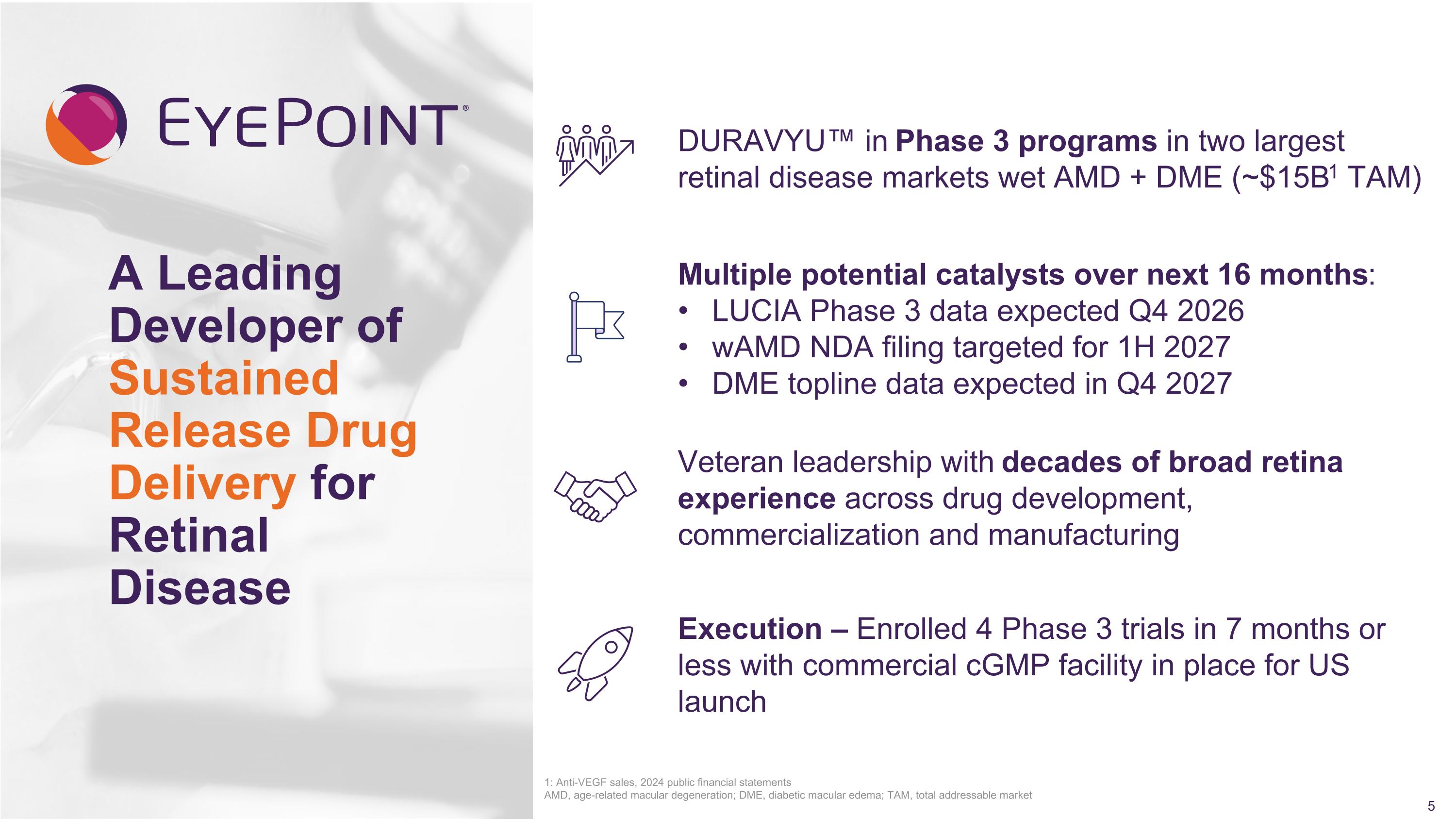
A Leading Developer of Sustained Release Drug Delivery for Retinal Disease 1: Anti-VEGF sales, 2024 public financial statements AMD, age-related macular degeneration; DME, diabetic macular edema; TAM, total addressable market Multiple potential catalysts over next 16 months: LUCIA Phase 3 data expected Q4 2026 wAMD NDA filing targeted for 1H 2027 DME topline data expected in Q4 2027 Veteran leadership with decades of broad retina experience across drug development, commercialization and manufacturing DURAVYU™ in Phase 3 programs in two largest retinal disease markets wet AMD + DME (~$15B1 TAM) Execution – Enrolled 4 Phase 3 trials in 7 months or less with commercial cGMP facility in place for US launch
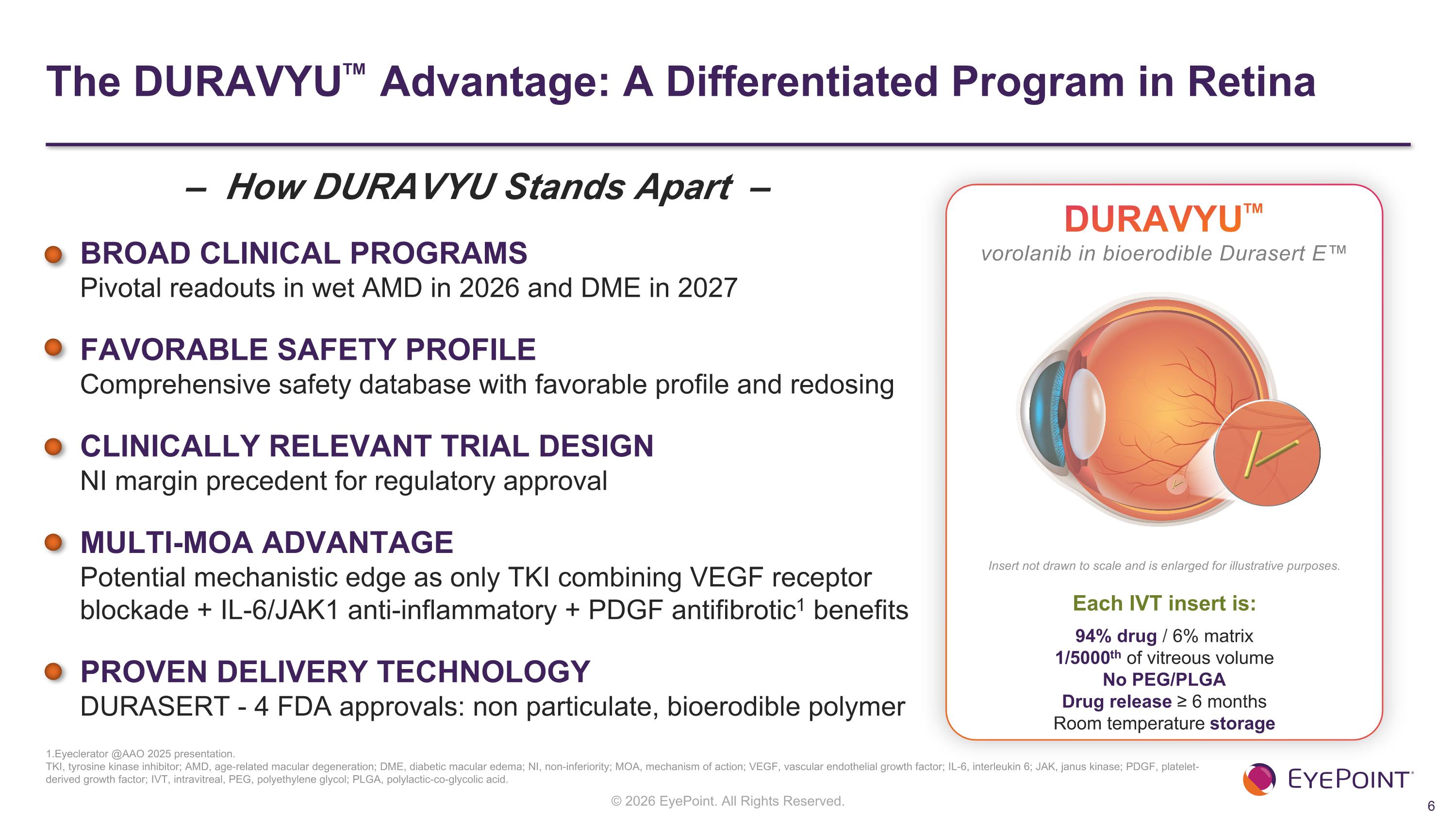
The DURAVYU™ Advantage: A Differentiated Program in Retina 1.Eyeclerator @AAO 2025 presentation. TKI, tyrosine kinase inhibitor; AMD, age-related macular degeneration; DME, diabetic macular edema; NI, non-inferiority; MOA, mechanism of action; VEGF, vascular endothelial growth factor; IL-6, interleukin 6; JAK, janus kinase; PDGF, platelet-derived growth factor; IVT, intravitreal, PEG, polyethylene glycol; PLGA, polylactic-co-glycolic acid. BROAD CLINICAL PROGRAMS Pivotal readouts in wet AMD in 2026 and DME in 2027 FAVORABLE SAFETY PROFILE Comprehensive safety database with favorable profile and redosing CLINICALLY RELEVANT TRIAL DESIGN NI margin precedent for regulatory approval MULTI-MOA ADVANTAGE Potential mechanistic edge as only TKI combining VEGF receptor blockade + IL-6/JAK1 anti-inflammatory + PDGF antifibrotic1 benefits PROVEN DELIVERY TECHNOLOGY DURASERT - 4 FDA approvals: non particulate, bioerodible polymer DURAVYU™ vorolanib in bioerodible Durasert E™ Each IVT insert is: 94% drug / 6% matrix 1/5000th of vitreous volume No PEG/PLGA Drug release ≥ 6 months Room temperature storage Insert not drawn to scale and is enlarged for illustrative purposes. – How DURAVYU Stands Apart –
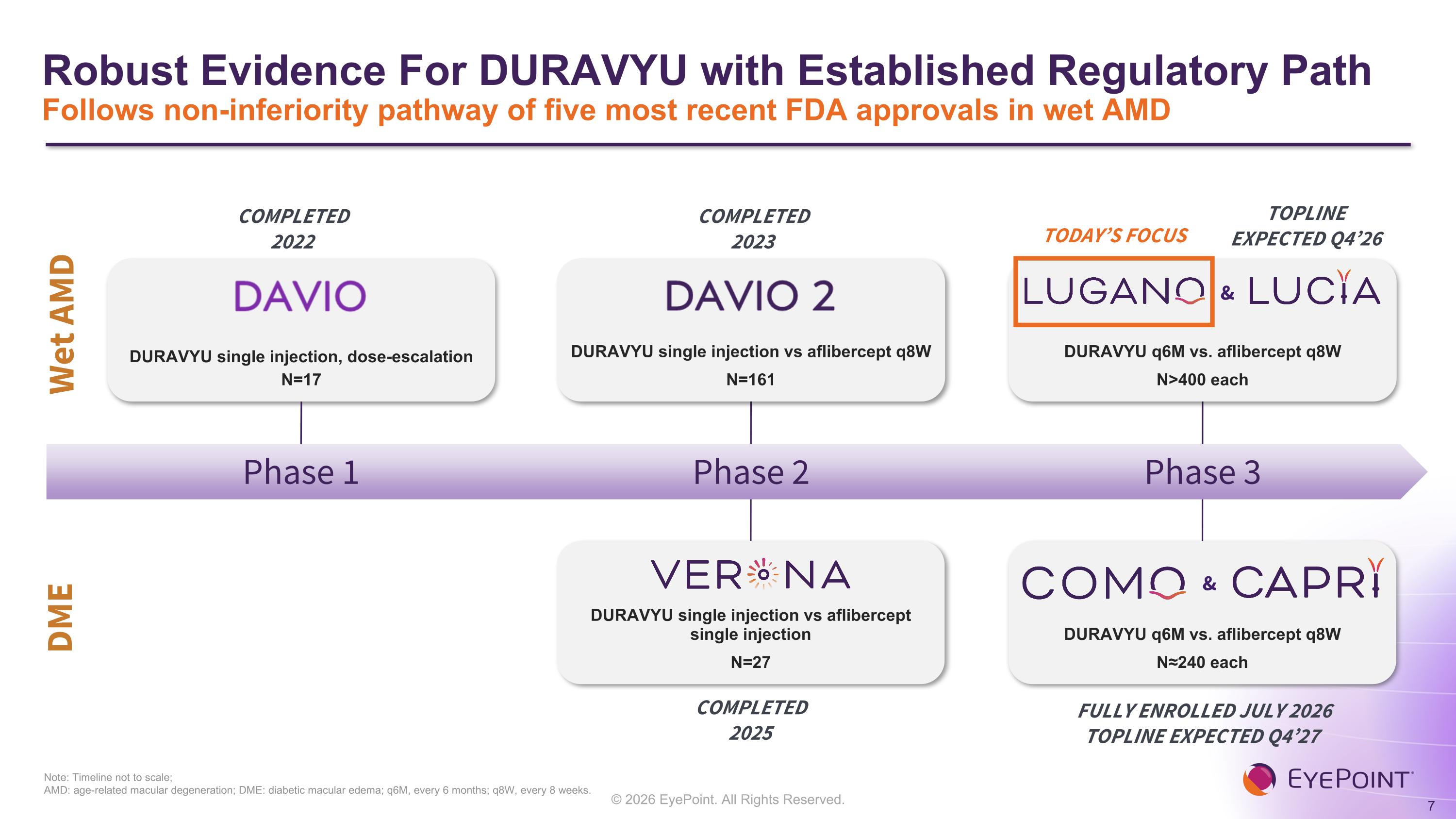
Robust Evidence For DURAVYU with Established Regulatory Path Follows non-inferiority pathway of five most recent FDA approvals in wet AMD Note: Timeline not to scale; AMD: age-related macular degeneration; DME: diabetic macular edema; q6M, every 6 months; q8W, every 8 weeks. Wet AMD DURAVYU single injection, dose-escalation N=17 Phase 1 COMPLETED 2022 DME Phase 2 COMPLETED 2023 COMPLETED 2025 DURAVYU single injection vs aflibercept single injection N=27 DURAVYU single injection vs aflibercept q8W N=161 Phase 3 FULLY ENROLLED JULY 2026 TOPLINE EXPECTED Q4’27 DURAVYU q6M vs. aflibercept q8W N≈240 each & DURAVYU q6M vs. aflibercept q8W N>400 each & TOPLINE EXPECTED Q4’26 TODAY’S FOCUS
Phase 3 Wet AMD Program LUGANO and LUCIA Pivotal Trials
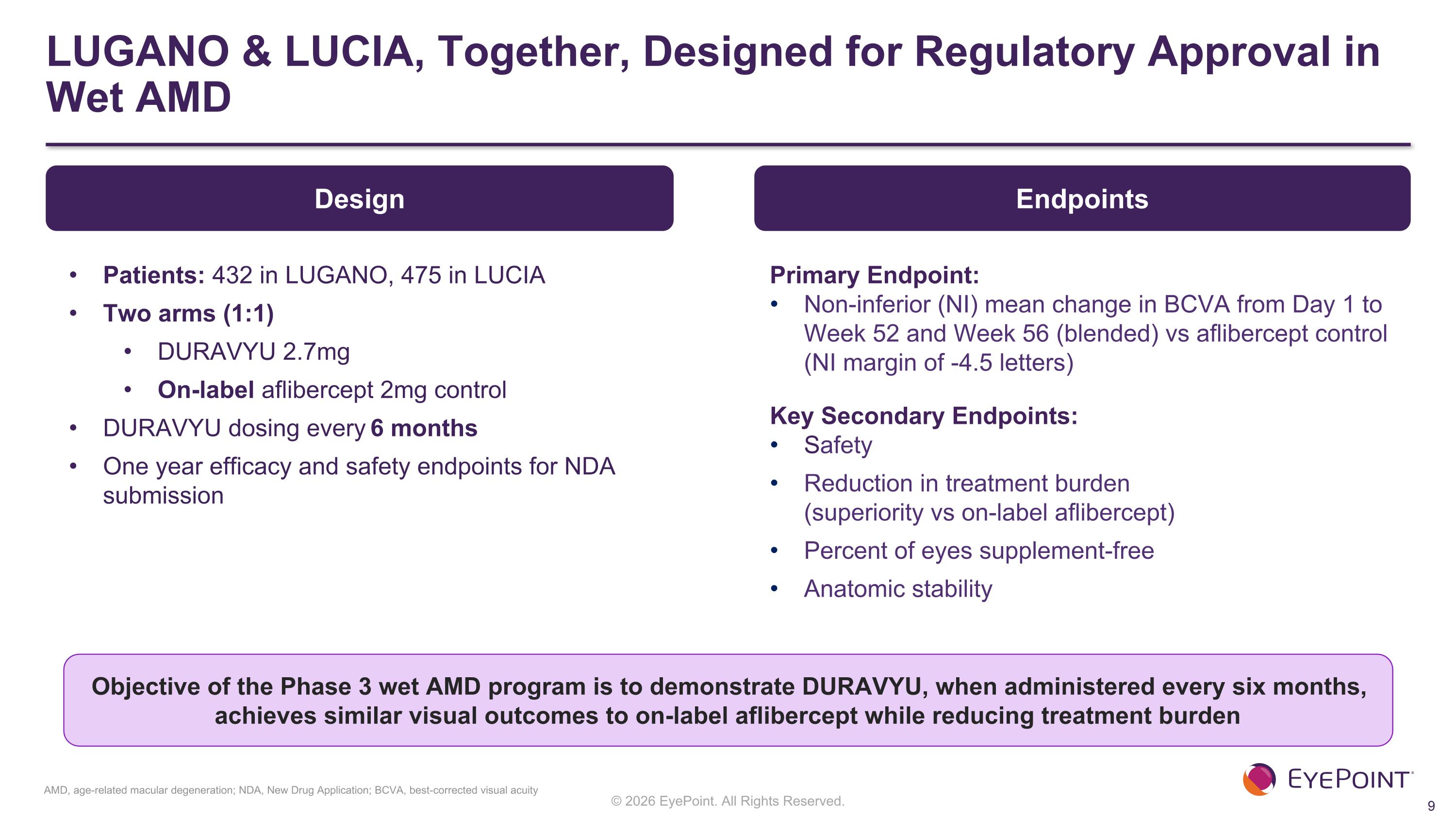
LUGANO & LUCIA, Together, Designed for Regulatory Approval in Wet AMD Endpoints Primary Endpoint: Non-inferior (NI) mean change in BCVA from Day 1 to Week 52 and Week 56 (blended) vs aflibercept control (NI margin of -4.5 letters) Key Secondary Endpoints: Safety Reduction in treatment burden (superiority vs on-label aflibercept) Percent of eyes supplement-free Anatomic stability Objective of the Phase 3 wet AMD program is to demonstrate DURAVYU, when administered every six months, achieves similar visual outcomes to on-label aflibercept while reducing treatment burden Design Patients: 432 in LUGANO, 475 in LUCIA Two arms (1:1) DURAVYU 2.7mg On-label aflibercept 2mg control DURAVYU dosing every 6 months One year efficacy and safety endpoints for NDA submission AMD, age-related macular degeneration; NDA, New Drug Application; BCVA, best-corrected visual acuity
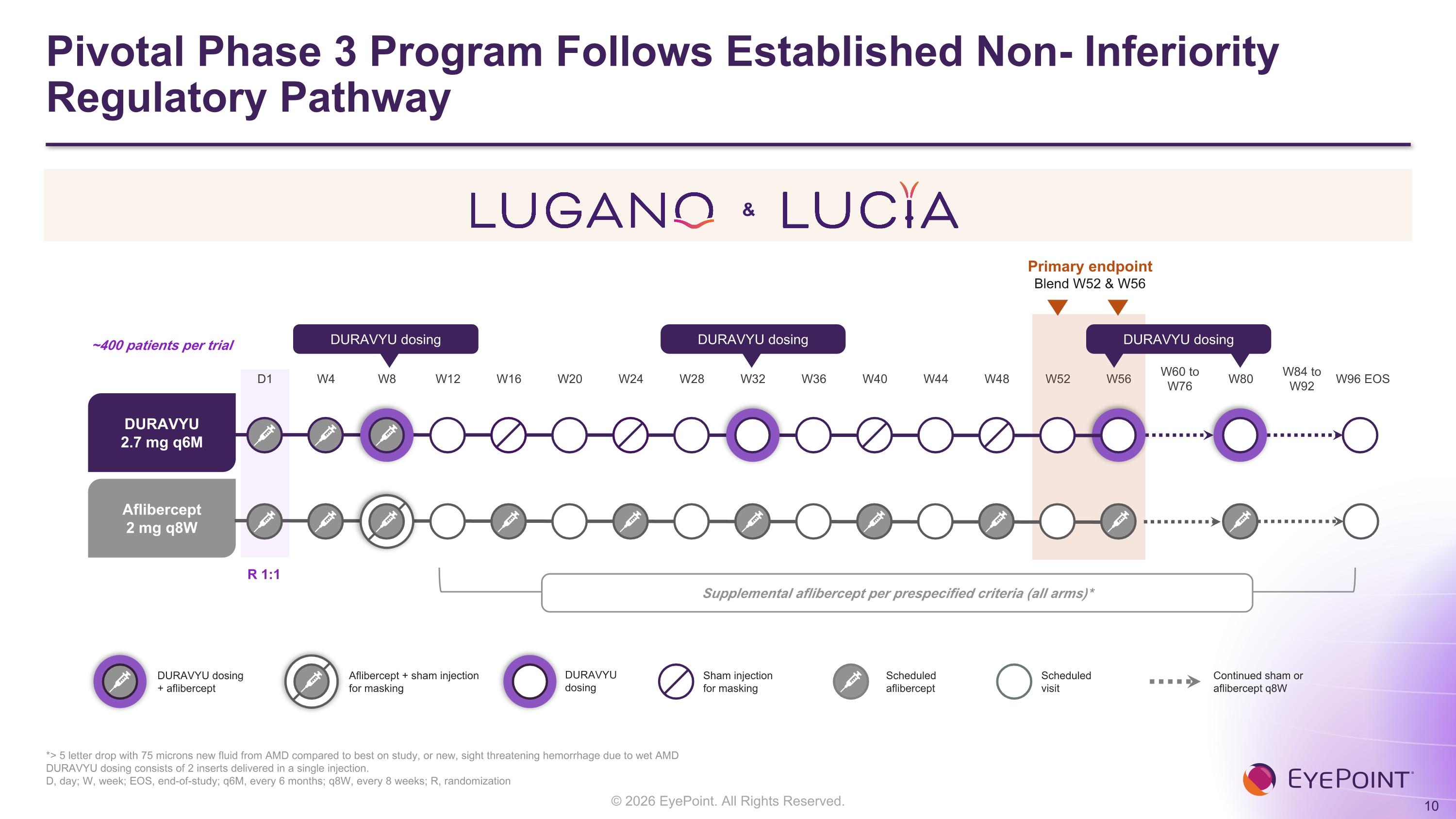
Pivotal Phase 3 Program Follows Established Non- Inferiority Regulatory Pathway *> 5 letter drop with 75 microns new fluid from AMD compared to best on study, or new, sight threatening hemorrhage due to wet AMD DURAVYU dosing consists of 2 inserts delivered in a single injection. D, day; W, week; EOS, end-of-study; q6M, every 6 months; q8W, every 8 weeks; R, randomization D1 W4 W8 W12 W16 W20 W24 W28 W32 W36 W40 W44 W48 W52 W56 W60 to W76 W80 W84 to W92 W96 EOS Primary endpoint Blend W52 & W56 DURAVYU 2.7 mg q6M Aflibercept 2 mg q8W DURAVYU dosing DURAVYU dosing DURAVYU dosing ~400 patients per trial R 1:1 Supplemental aflibercept per prespecified criteria (all arms)* Scheduled aflibercept Scheduled visit Sham injection for masking Continued sham or aflibercept q8W DURAVYU dosing + aflibercept Aflibercept + sham injection for masking DURAVYU dosing &
LUGANO Topline Results
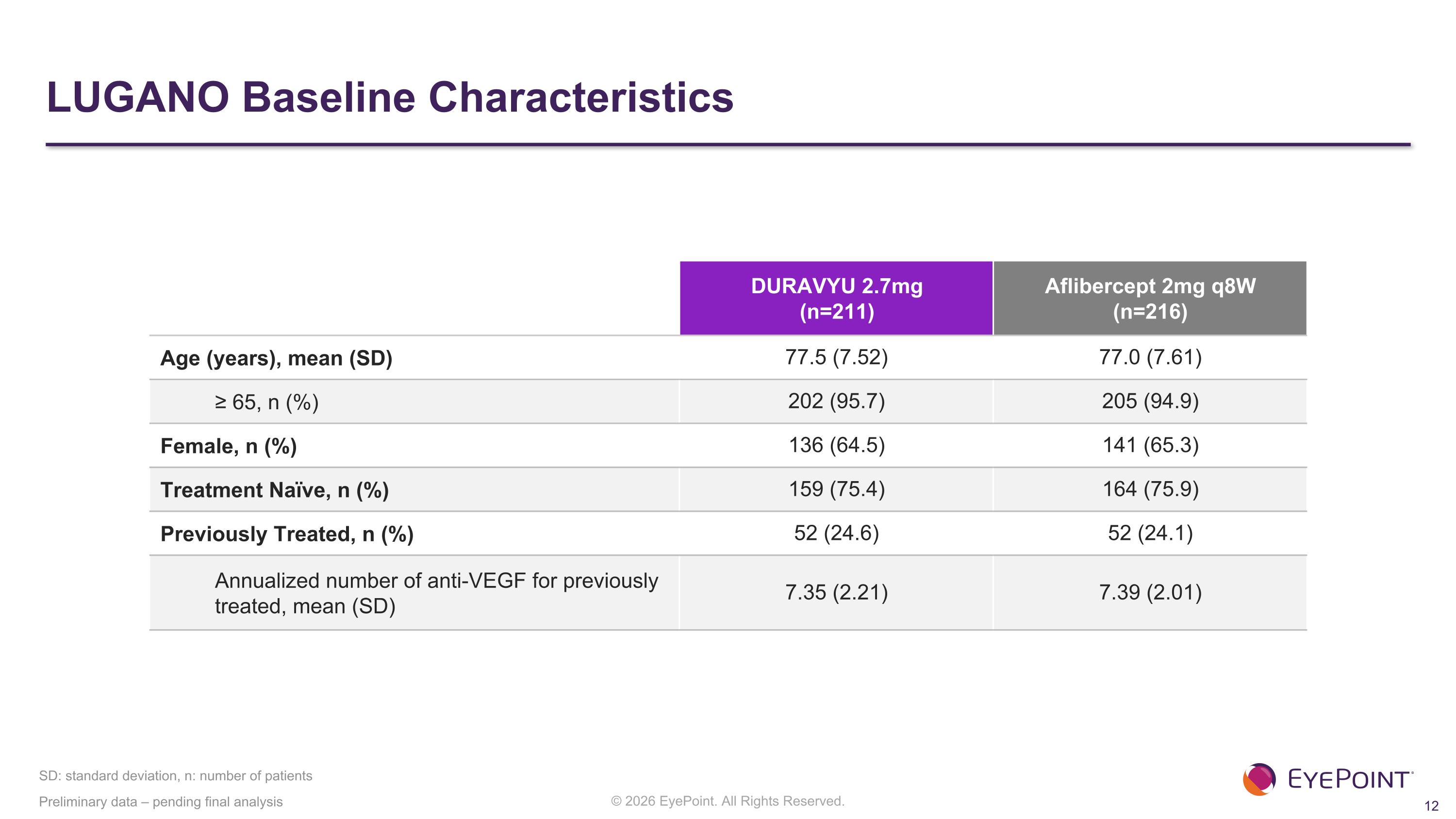
LUGANO Baseline Characteristics Preliminary data – pending final analysis DURAVYU 2.7mg (n=211) Aflibercept 2mg q8W (n=216) Age (years), mean (SD) 77.5 (7.52) 77.0 (7.61) ≥ 65, n (%) 202 (95.7) 205 (94.9) Female, n (%) 136 (64.5) 141 (65.3) Treatment Naïve, n (%) 159 (75.4) 164 (75.9) Previously Treated, n (%) 52 (24.6) 52 (24.1) Annualized number of anti-VEGF for previously treated, mean (SD) 7.35 (2.21) 7.39 (2.01) SD: standard deviation, n: number of patients
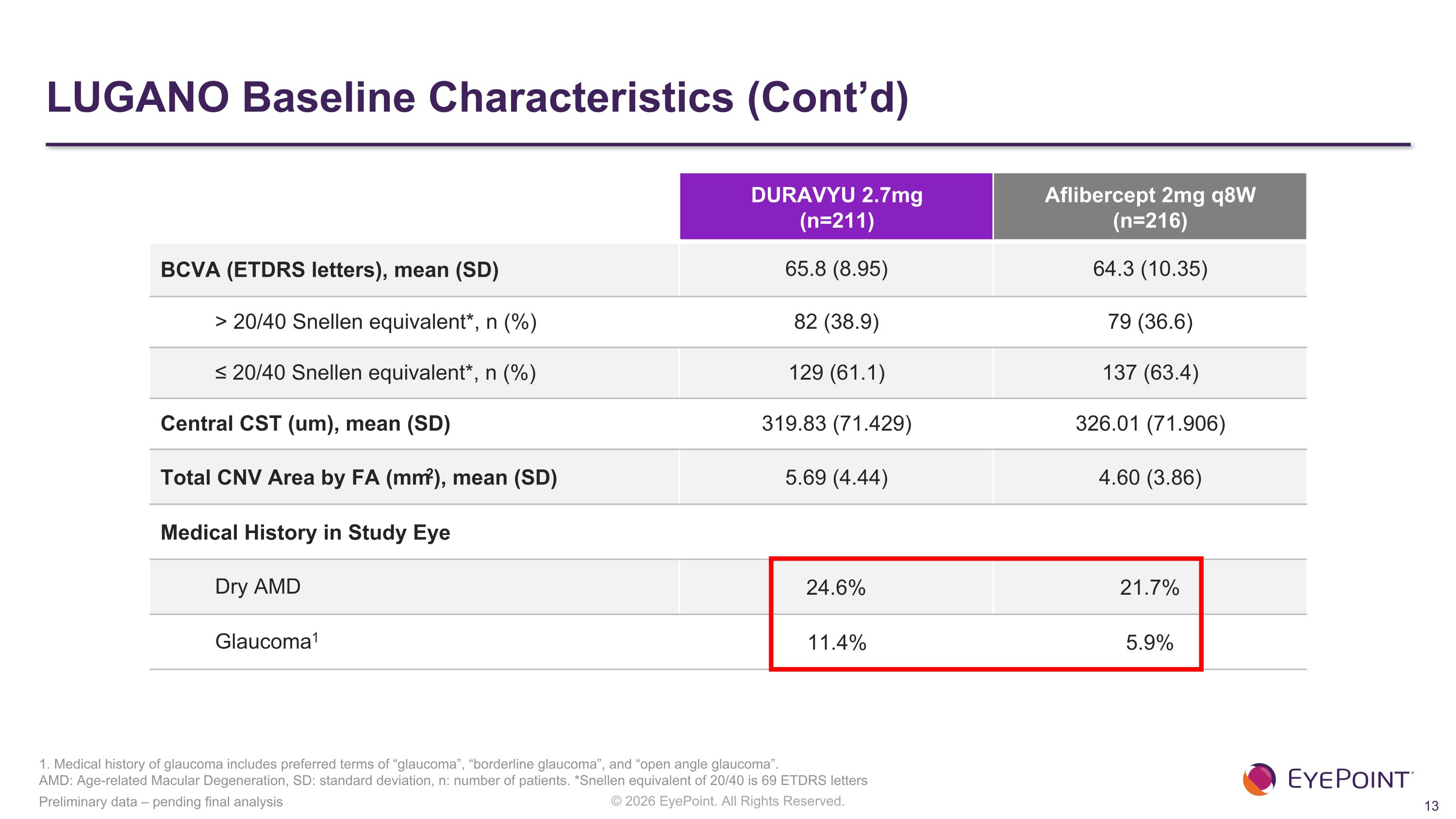
LUGANO Baseline Characteristics (Cont’d) DURAVYU 2.7mg (n=211) Aflibercept 2mg q8W (n=216) BCVA (ETDRS letters), mean (SD) 65.8 (8.95) 64.3 (10.35) > 20/40 Snellen equivalent*, n (%) 82 (38.9) 79 (36.6) ≤ 20/40 Snellen equivalent*, n (%) 129 (61.1) 137 (63.4) Central CST (um), mean (SD) 319.83 (71.429) 326.01 (71.906) Total CNV Area by FA (mm2), mean (SD) 5.69 (4.44) 4.60 (3.86) Medical History in Study Eye Dry AMD 24.6% 21.7% Glaucoma1 11.4% 5.9% Preliminary data – pending final analysis 1. Medical history of glaucoma includes preferred terms of “glaucoma”, “borderline glaucoma”, and “open angle glaucoma”. AMD: Age-related Macular Degeneration, SD: standard deviation, n: number of patients. *Snellen equivalent of 20/40 is 69 ETDRS letters
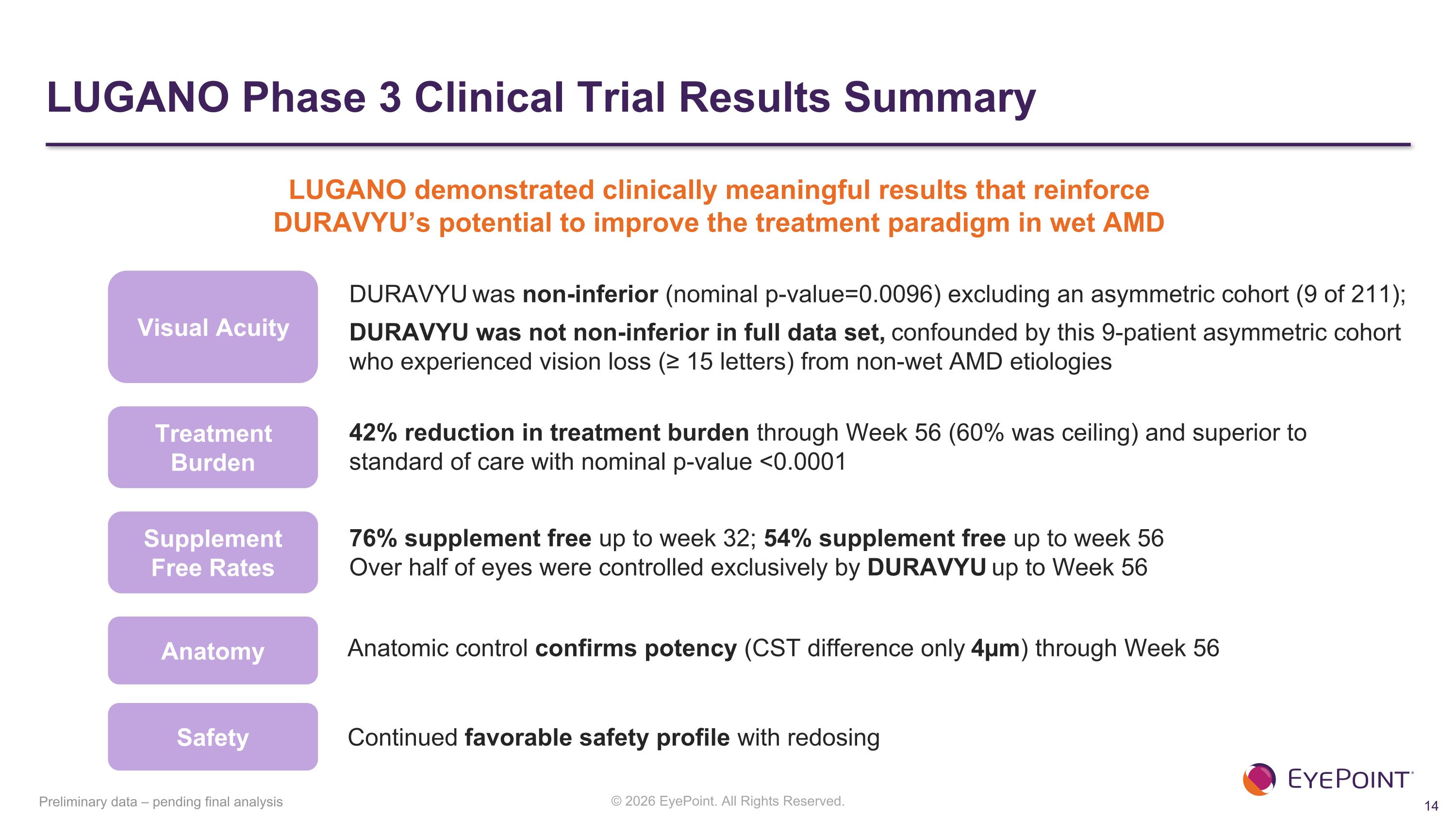
LUGANO Phase 3 Clinical Trial Results Summary Preliminary data – pending final analysis Visual Acuity DURAVYU was non-inferior (nominal p-value=0.0096) excluding an asymmetric cohort (9 of 211); DURAVYU was not non-inferior in full data set, confounded by this 9-patient asymmetric cohort who experienced vision loss (≥ 15 letters) from non-wet AMD etiologies Treatment Burden Safety Continued favorable safety profile with redosing 42% reduction in treatment burden through Week 56 (60% was ceiling) and superior to standard of care with nominal p-value <0.0001 Supplement Free Rates Anatomy Anatomic control confirms potency (CST difference only 4µm) through Week 56 76% supplement free up to week 32; 54% supplement free up to week 56 Over half of eyes were controlled exclusively by DURAVYU up to Week 56 LUGANO demonstrated clinically meaningful results that reinforce DURAVYU’s potential to improve the treatment paradigm in wet AMD
LUGANO Topline Results Visual Acuity
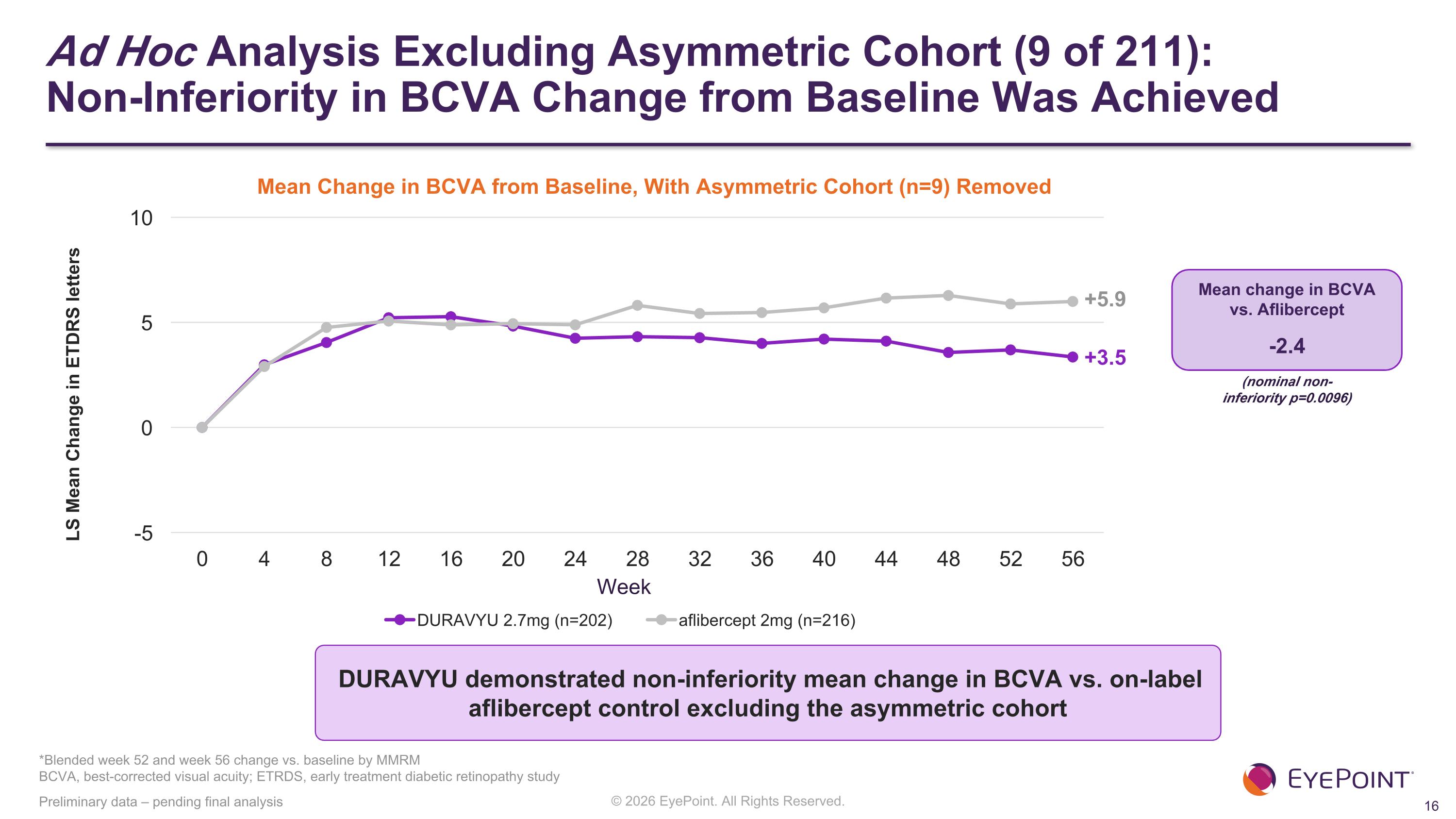
Ad Hoc Analysis Excluding Asymmetric Cohort (9 of 211): Non-Inferiority in BCVA Change from Baseline Was Achieved Preliminary data – pending final analysis DURAVYU demonstrated non-inferiority mean change in BCVA vs. on-label aflibercept control excluding the asymmetric cohort LS Mean Change in ETDRS letters Mean Change in BCVA from Baseline, With Asymmetric Cohort (n=9) Removed Week +5.9 +3.5 (nominal non-inferiority p=0.0096) Mean change in BCVA vs. Aflibercept -2.4 *Blended week 52 and week 56 change vs. baseline by MMRM BCVA, best-corrected visual acuity; ETRDS, early treatment diabetic retinopathy study
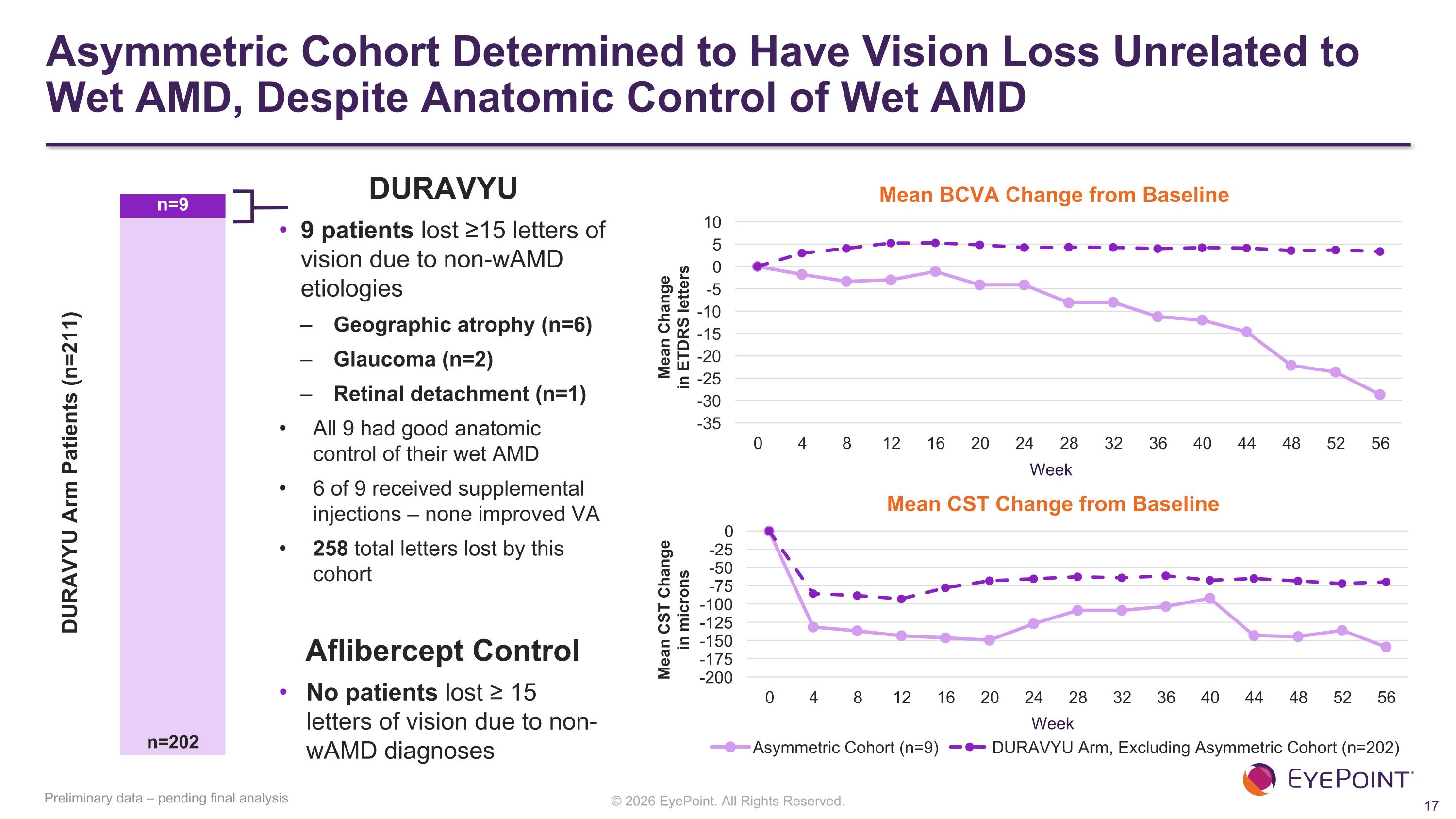
Asymmetric Cohort Determined to Have Vision Loss Unrelated to Wet AMD, Despite Anatomic Control of Wet AMD Preliminary data – pending final analysis n=202 n=9 Mean Change in ETDRS letters Mean BCVA Change from Baseline Week Mean CST Change from Baseline Mean CST Change in microns Week DURAVYU Arm Patients (n=211) DURAVYU 9 patients lost ≥15 letters of vision due to non-wAMD etiologies Geographic atrophy (n=6) Glaucoma (n=2) Retinal detachment (n=1) All 9 had good anatomic control of their wet AMD 6 of 9 received supplemental injections – none improved VA 258 total letters lost by this cohort Aflibercept Control No patients lost ≥ 15 letters of vision due to non-wAMD diagnoses
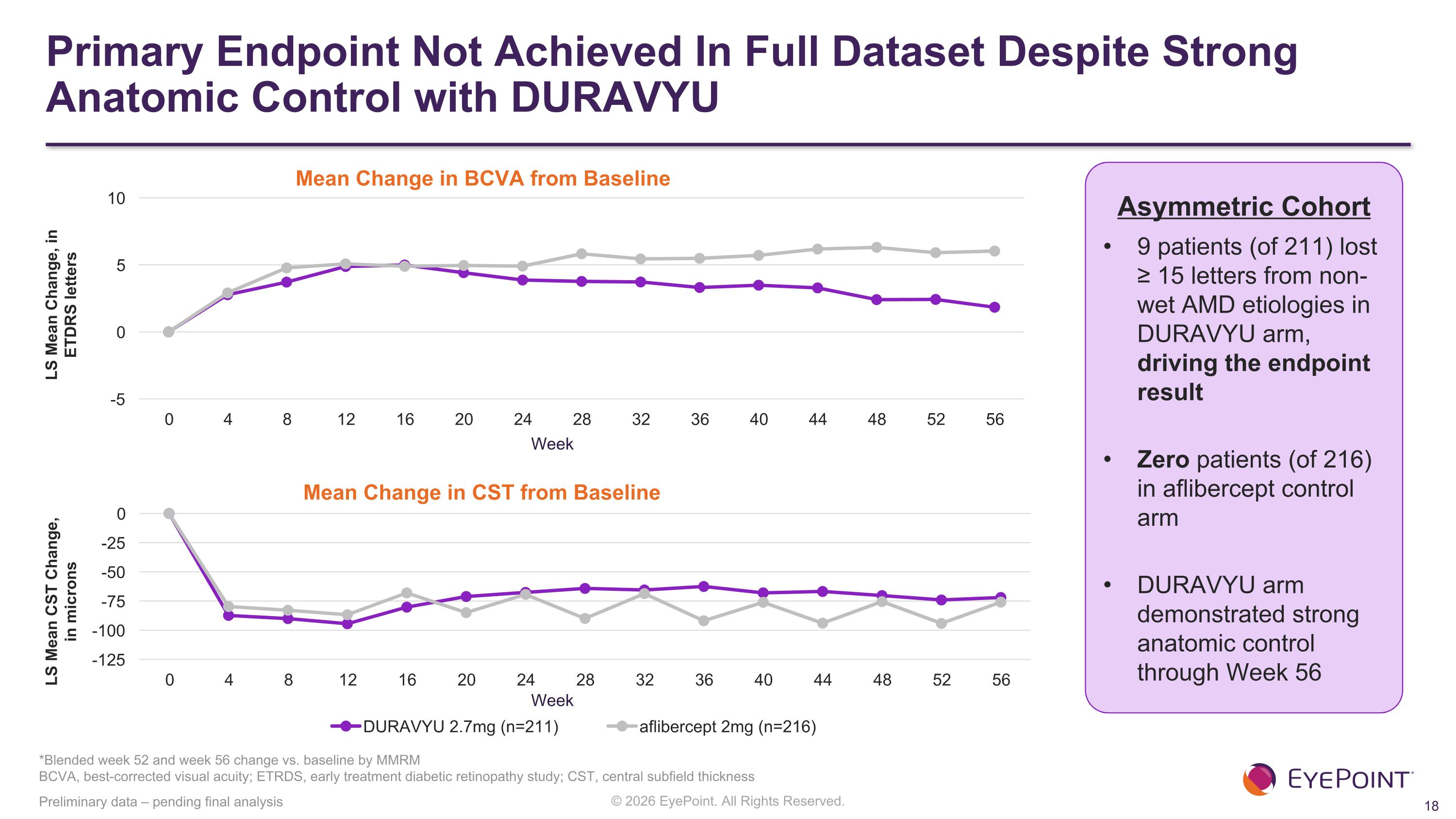
Primary Endpoint Not Achieved In Full Dataset Despite Strong Anatomic Control with DURAVYU LS Mean Change, in ETDRS letters *Blended week 52 and week 56 change vs. baseline by MMRM BCVA, best-corrected visual acuity; ETRDS, early treatment diabetic retinopathy study; CST, central subfield thickness Preliminary data – pending final analysis Mean Change in BCVA from Baseline Week Asymmetric Cohort 9 patients (of 211) lost ≥ 15 letters from non-wet AMD etiologies in DURAVYU arm, driving the endpoint result Zero patients (of 216) in aflibercept control arm DURAVYU arm demonstrated strong anatomic control through Week 56 Mean Change in CST from Baseline LS Mean CST Change, in microns Week
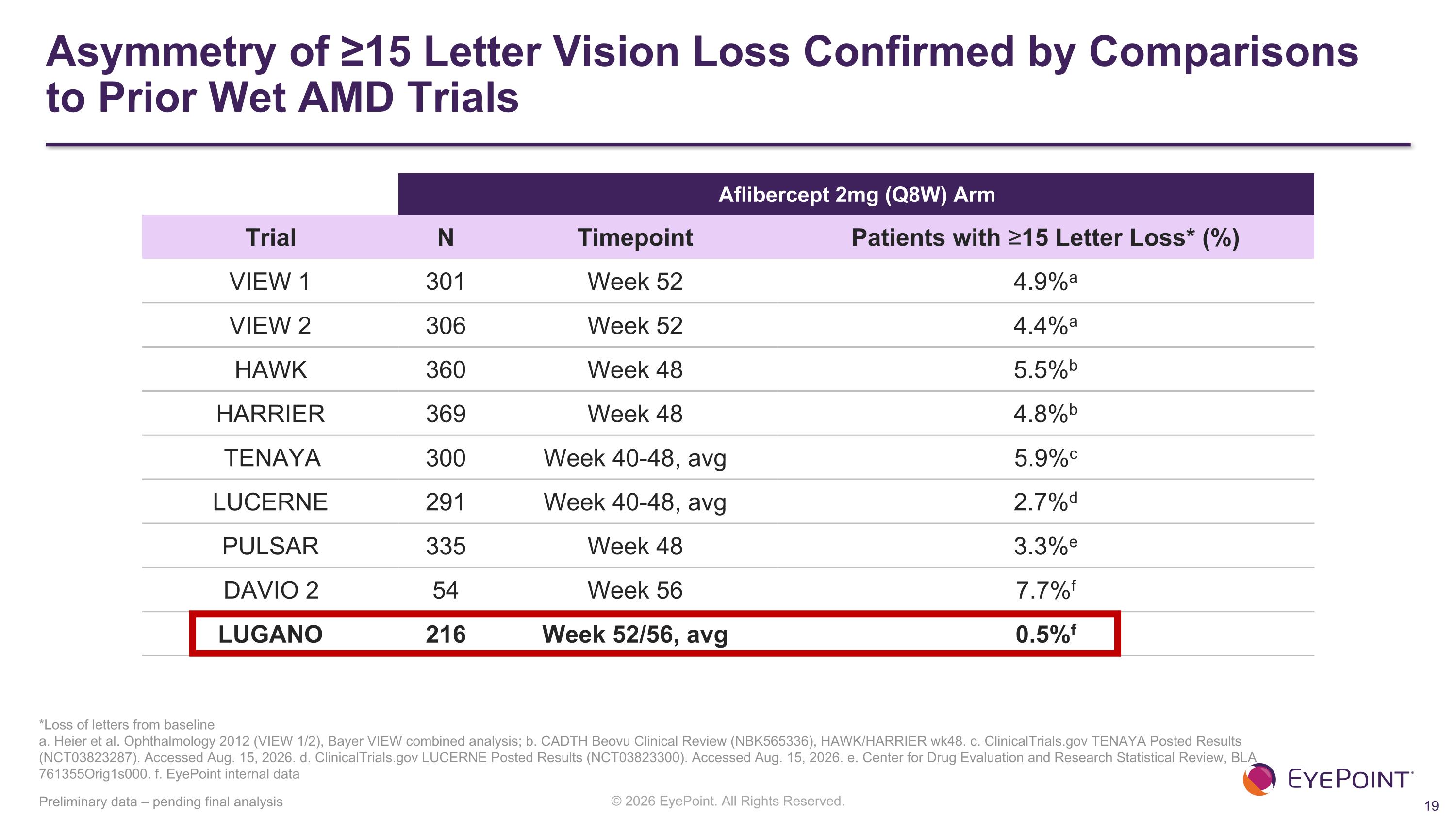
Asymmetry of ≥15 Letter Vision Loss Confirmed by Comparisons to Prior Wet AMD Trials Preliminary data – pending final analysis Aflibercept 2mg (Q8W) Arm Trial N Timepoint Patients with ≥15 Letter Loss* (%) VIEW 1 301 Week 52 4.9%a VIEW 2 306 Week 52 4.4%a HAWK 360 Week 48 5.5%b HARRIER 369 Week 48 4.8%b TENAYA 300 Week 40-48, avg 5.9%c LUCERNE 291 Week 40-48, avg 2.7%d PULSAR 335 Week 48 3.3%e DAVIO 2 54 Week 56 7.7%f LUGANO 216 Week 52/56, avg 0.5%f *Loss of letters from baseline a. Heier et al. Ophthalmology 2012 (VIEW 1/2), Bayer VIEW combined analysis; b. CADTH Beovu Clinical Review (NBK565336), HAWK/HARRIER wk48. c. ClinicalTrials.gov TENAYA Posted Results (NCT03823287). Accessed Aug. 15, 2026. d. ClinicalTrials.gov LUCERNE Posted Results (NCT03823300). Accessed Aug. 15, 2026. e. Center for Drug Evaluation and Research Statistical Review, BLA 761355Orig1s000. f. EyePoint internal data

What does our preliminary evaluation conclude?
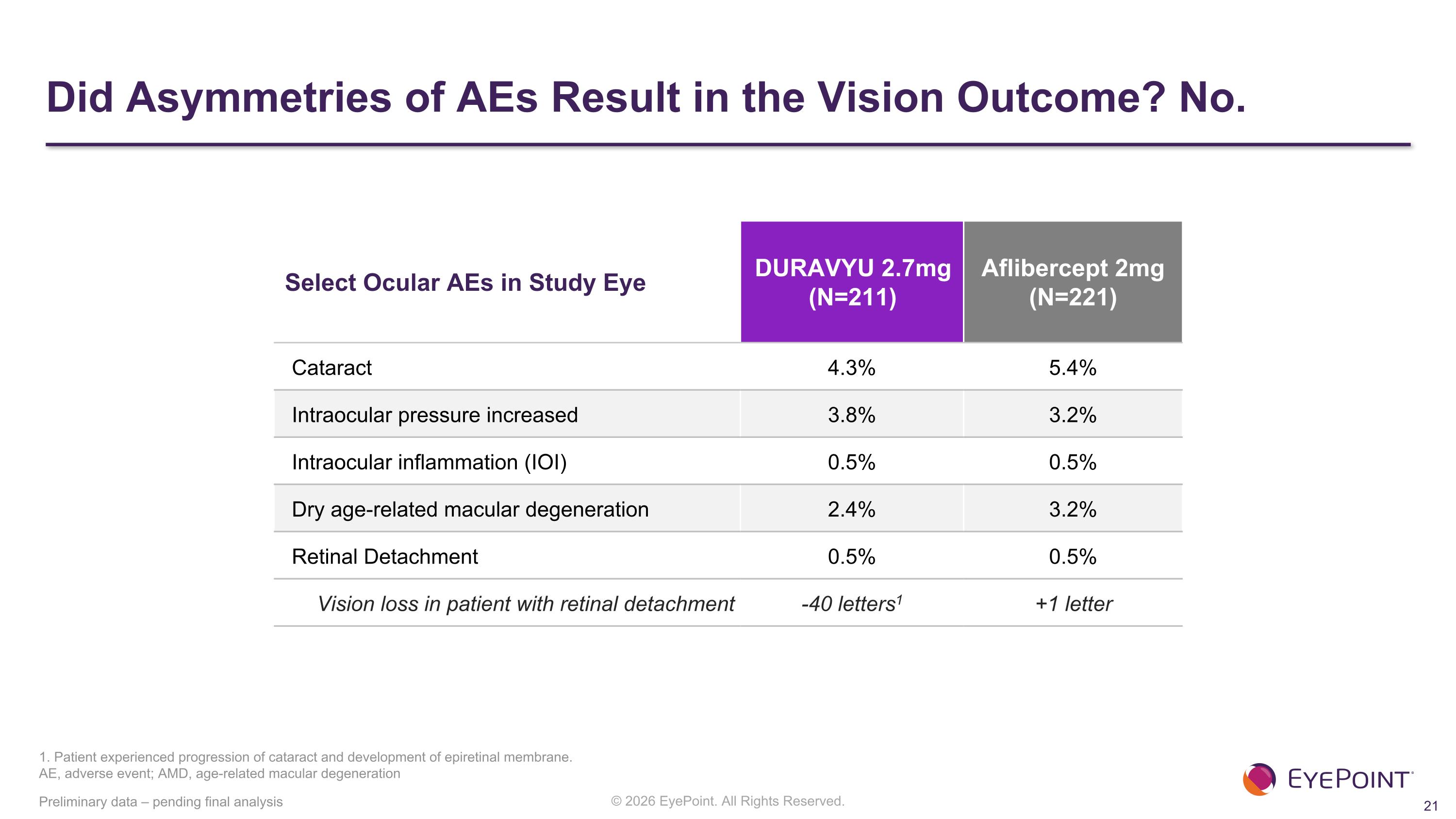
Select Ocular AEs in Study Eye DURAVYU 2.7mg (N=211) Aflibercept 2mg (N=221) Cataract 4.3% 5.4% Intraocular pressure increased 3.8% 3.2% Intraocular inflammation (IOI) 0.5% 0.5% Dry age-related macular degeneration 2.4% 3.2% Retinal Detachment 0.5% 0.5% Vision loss in patient with retinal detachment -40 letters1 +1 letter Did Asymmetries of AEs Result in the Vision Outcome? No. Preliminary data – pending final analysis 1. Patient experienced progression of cataract and development of epiretinal membrane. AE, adverse event; AMD, age-related macular degeneration
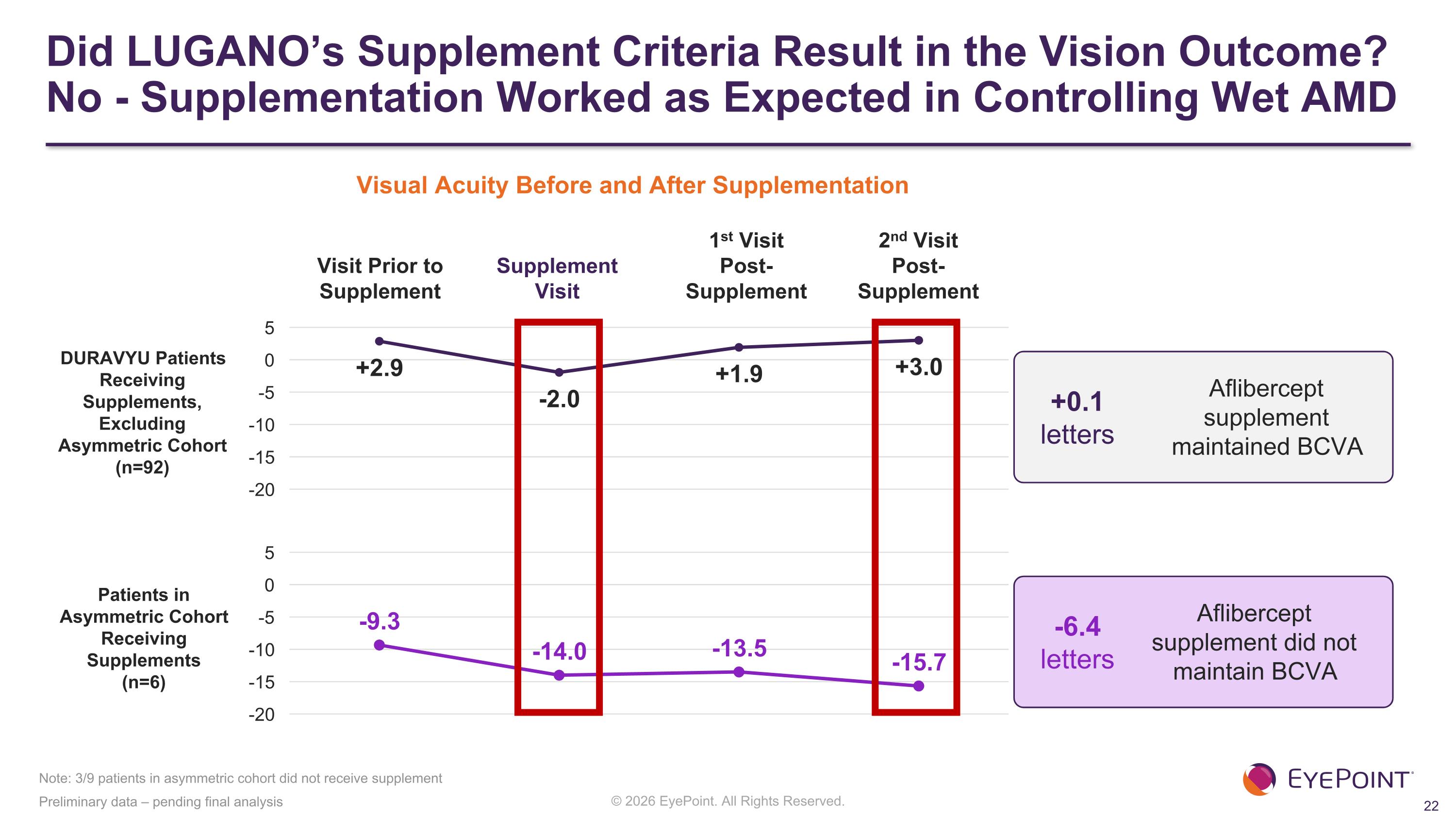
Did LUGANO’s Supplement Criteria Result in the Vision Outcome? No - Supplementation Worked as Expected in Controlling Wet AMD Preliminary data – pending final analysis Note: 3/9 patients in asymmetric cohort did not receive supplement Visit Prior to Supplement Supplement Visit 1st Visit Post-Supplement 2nd Visit Post-Supplement Visual Acuity Before and After Supplementation -6.4 letters +0.1 letters Aflibercept supplement did not maintain BCVA Aflibercept supplement maintained BCVA DURAVYU Patients Receiving Supplements, Excluding Asymmetric Cohort (n=92) Patients in Asymmetric Cohort Receiving Supplements (n=6)
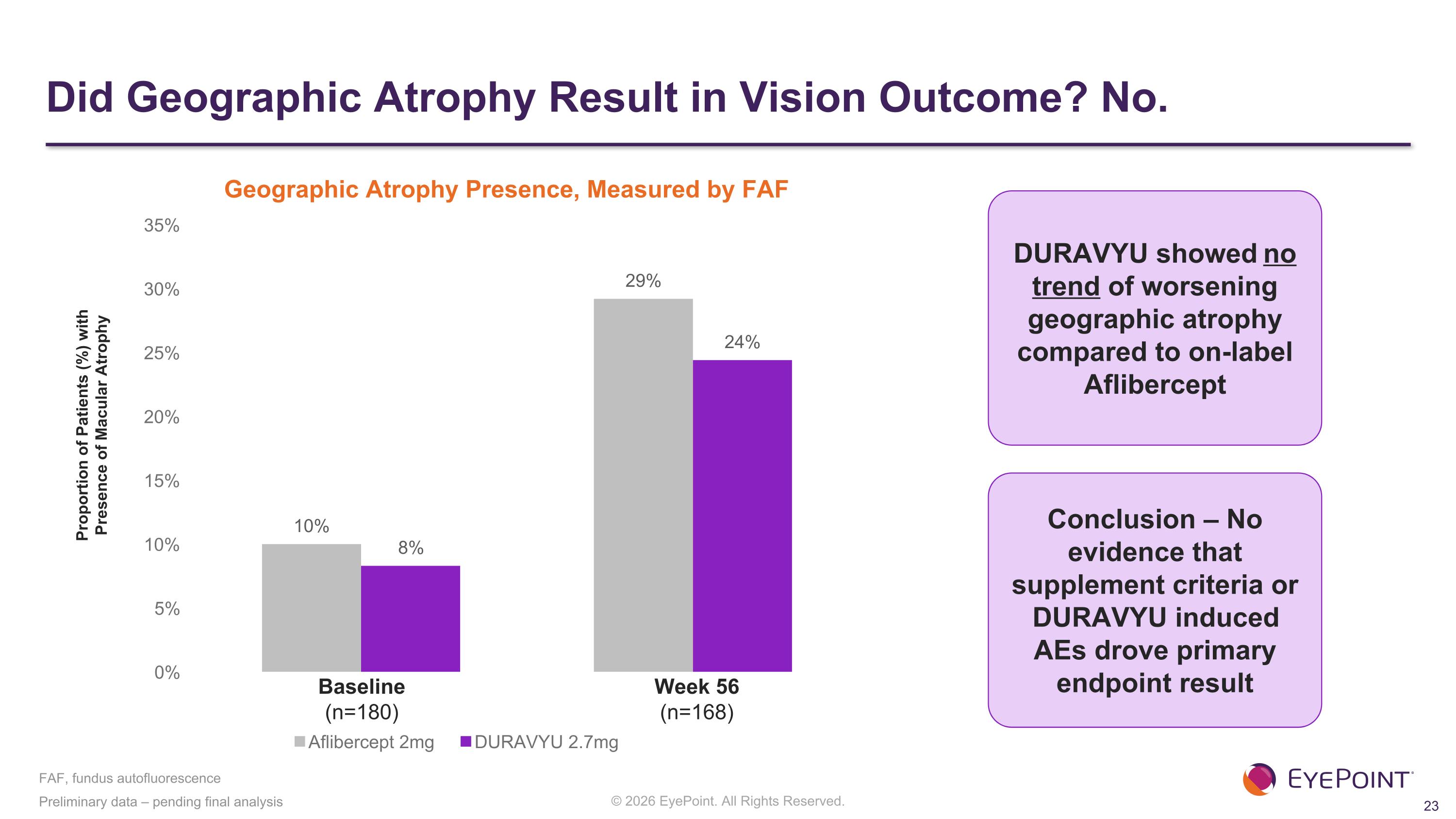
Did Geographic Atrophy Result in Vision Outcome? No. Preliminary data – pending final analysis DURAVYU showed no trend of worsening geographic atrophy compared to on-label Aflibercept Geographic Atrophy Presence, Measured by FAF Baseline (n=180) Week 56 (n=168) Proportion of Patients (%) with Presence of Macular Atrophy FAF, fundus autofluorescence Conclusion – No evidence that supplement criteria or DURAVYU induced AEs drove primary endpoint result
LUGANO Topline Results Reduction in Treatment Burden & Supplement Free Rates
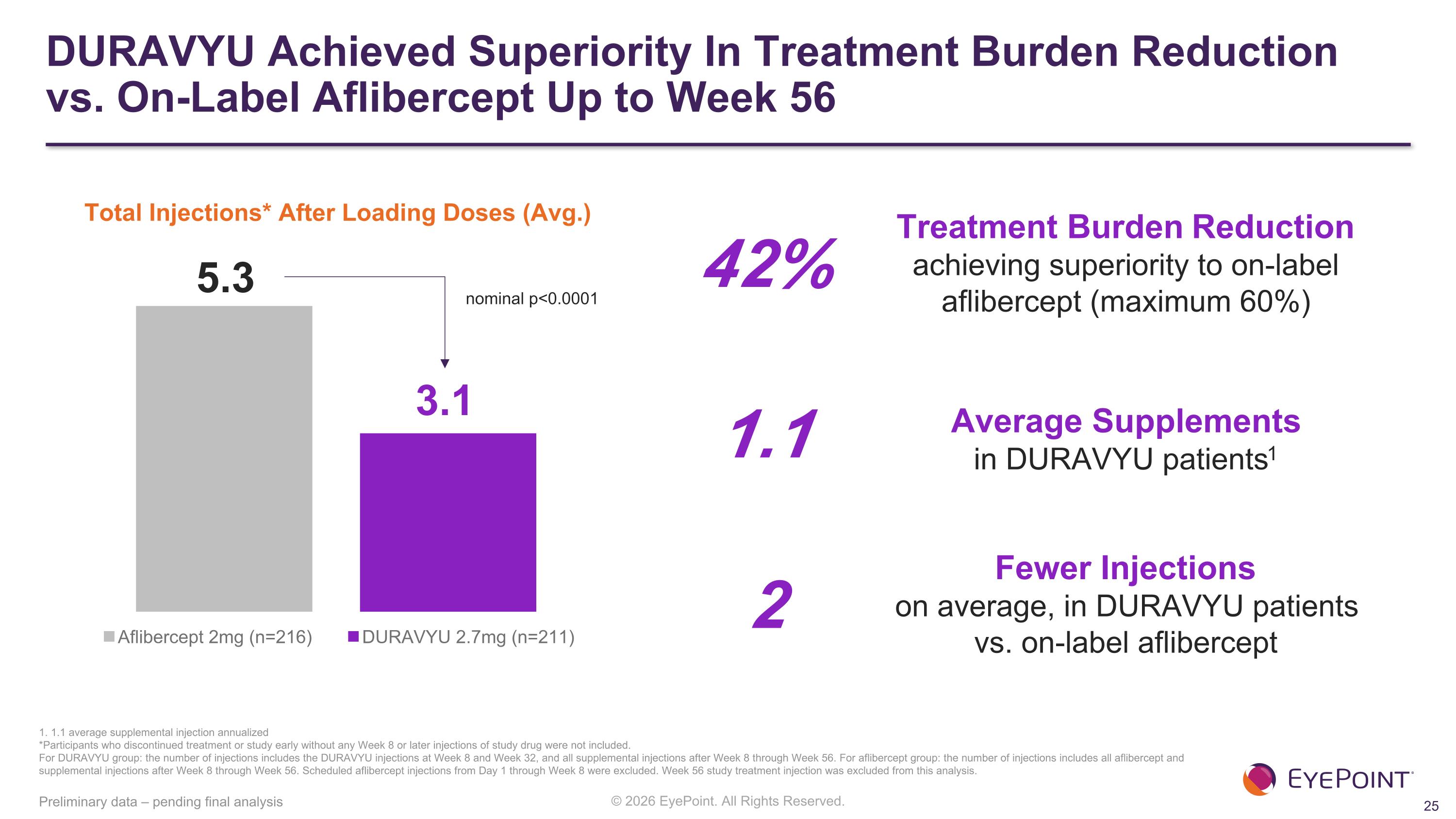
Average Supplements in DURAVYU patients1 DURAVYU Achieved Superiority In Treatment Burden Reduction vs. On-Label Aflibercept Up to Week 56 Preliminary data – pending final analysis Total Injections* After Loading Doses (Avg.) 1. 1.1 average supplemental injection annualized *Participants who discontinued treatment or study early without any Week 8 or later injections of study drug were not included. For DURAVYU group: the number of injections includes the DURAVYU injections at Week 8 and Week 32, and all supplemental injections after Week 8 through Week 56. For aflibercept group: the number of injections includes all aflibercept and supplemental injections after Week 8 through Week 56. Scheduled aflibercept injections from Day 1 through Week 8 were excluded. Week 56 study treatment injection was excluded from this analysis. 5.3 3.1 Treatment Burden Reduction achieving superiority to on-label aflibercept (maximum 60%) 42% Fewer Injections on average, in DURAVYU patients vs. on-label aflibercept 1.1 2 nominal p<0.0001
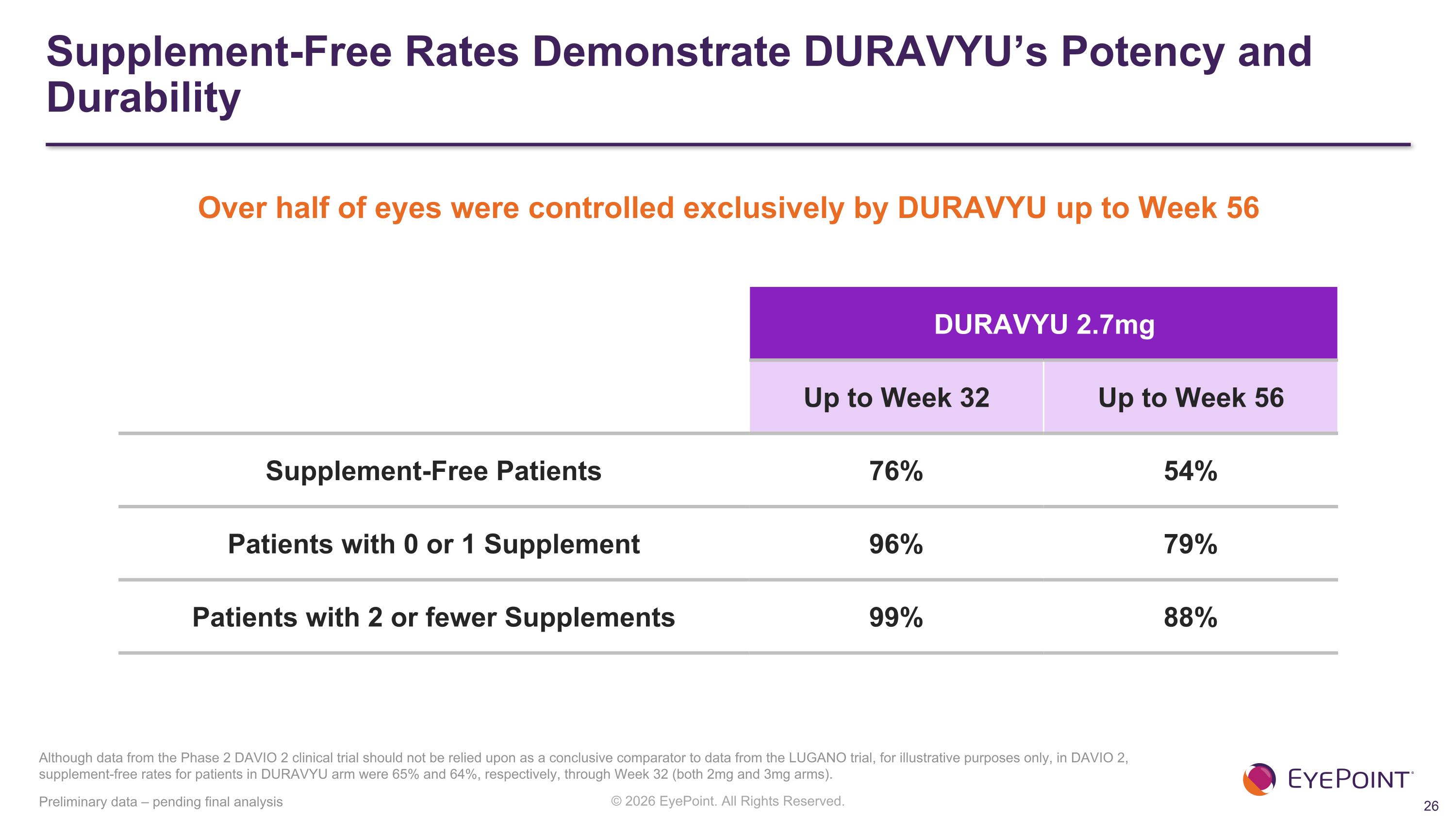
Supplement-Free Rates Demonstrate DURAVYU’s Potency and Durability Preliminary data – pending final analysis DURAVYU 2.7mg Up to Week 32 Up to Week 56 Supplement-Free Patients 76% 54% Patients with 0 or 1 Supplement 96% 79% Patients with 2 or fewer Supplements 99% 88% Although data from the Phase 2 DAVIO 2 clinical trial should not be relied upon as a conclusive comparator to data from the LUGANO trial, for illustrative purposes only, in DAVIO 2, supplement-free rates for patients in DURAVYU arm were 65% and 64%, respectively, through Week 32 (both 2mg and 3mg arms). Over half of eyes were controlled exclusively by DURAVYU up to Week 56
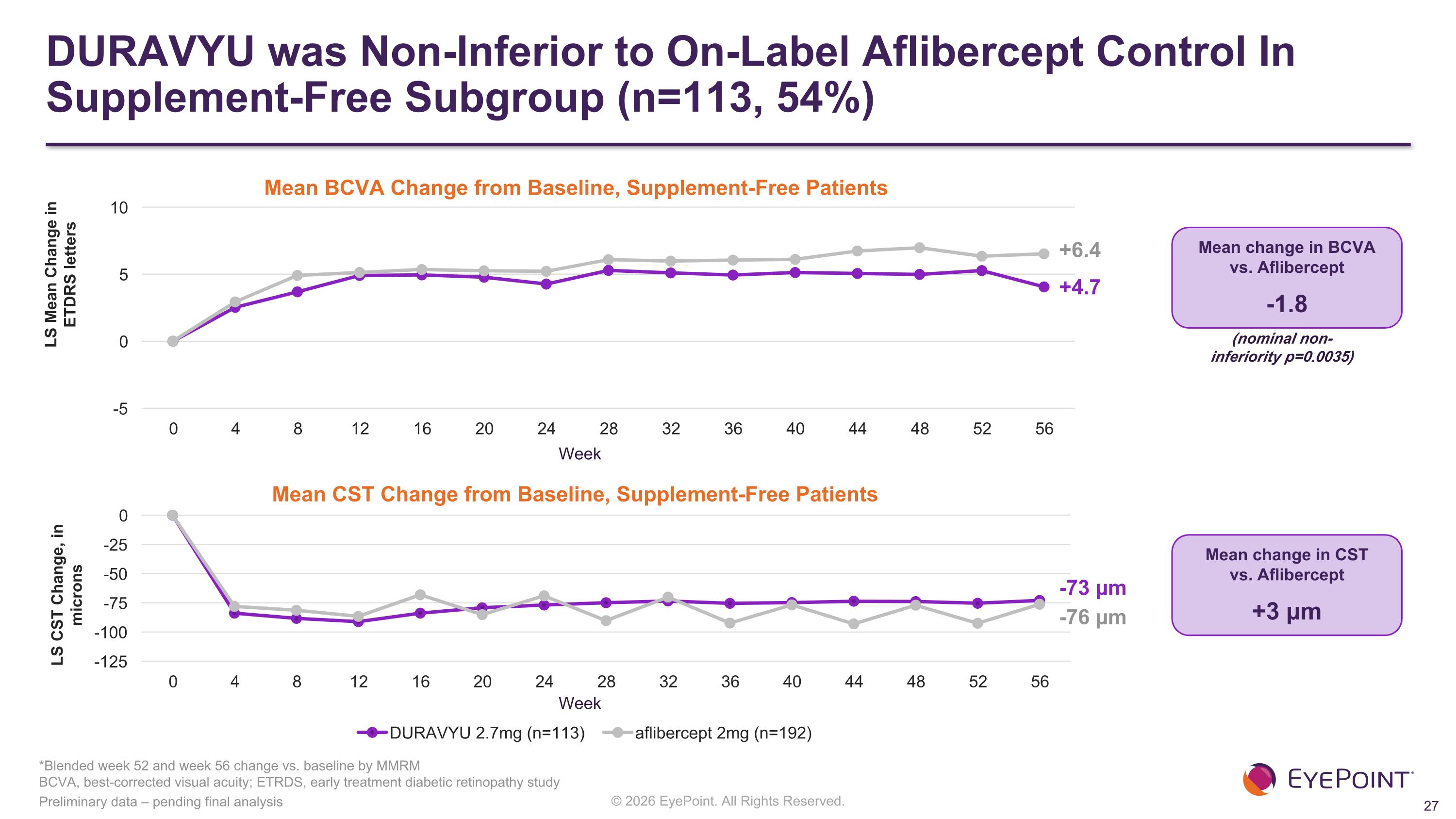
DURAVYU was Non-Inferior to On-Label Aflibercept Control In Supplement-Free Subgroup (n=113, 54%) -76 µm -73 µm +6.4 +4.7 (nominal non-inferiority p=0.0035) Preliminary data – pending final analysis LS Mean Change in ETDRS letters Mean BCVA Change from Baseline, Supplement-Free Patients Week Mean CST Change from Baseline, Supplement-Free Patients LS CST Change, in microns Week Mean change in CST vs. Aflibercept +3 µm Mean change in BCVA vs. Aflibercept -1.8 *Blended week 52 and week 56 change vs. baseline by MMRM BCVA, best-corrected visual acuity; ETRDS, early treatment diabetic retinopathy study
LUGANO Topline Results Anatomic Control
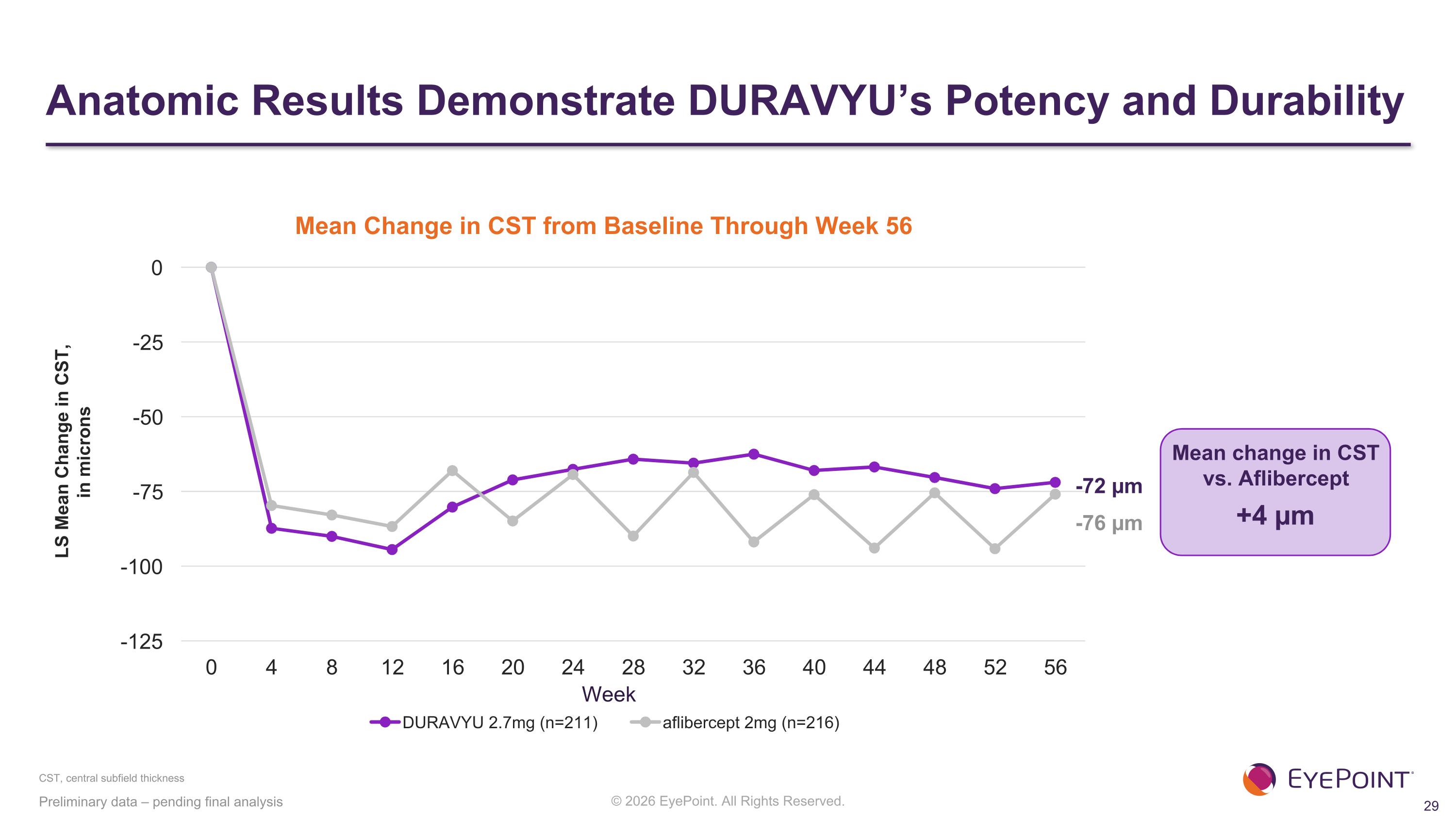
Anatomic Results Demonstrate DURAVYU’s Potency and Durability LS Mean Change in CST, in microns CST, central subfield thickness Preliminary data – pending final analysis Mean Change in CST from Baseline Through Week 56 Week -76 µm -72 µm Mean change in CST vs. Aflibercept +4 µm
LUGANO Topline Results Safety Data
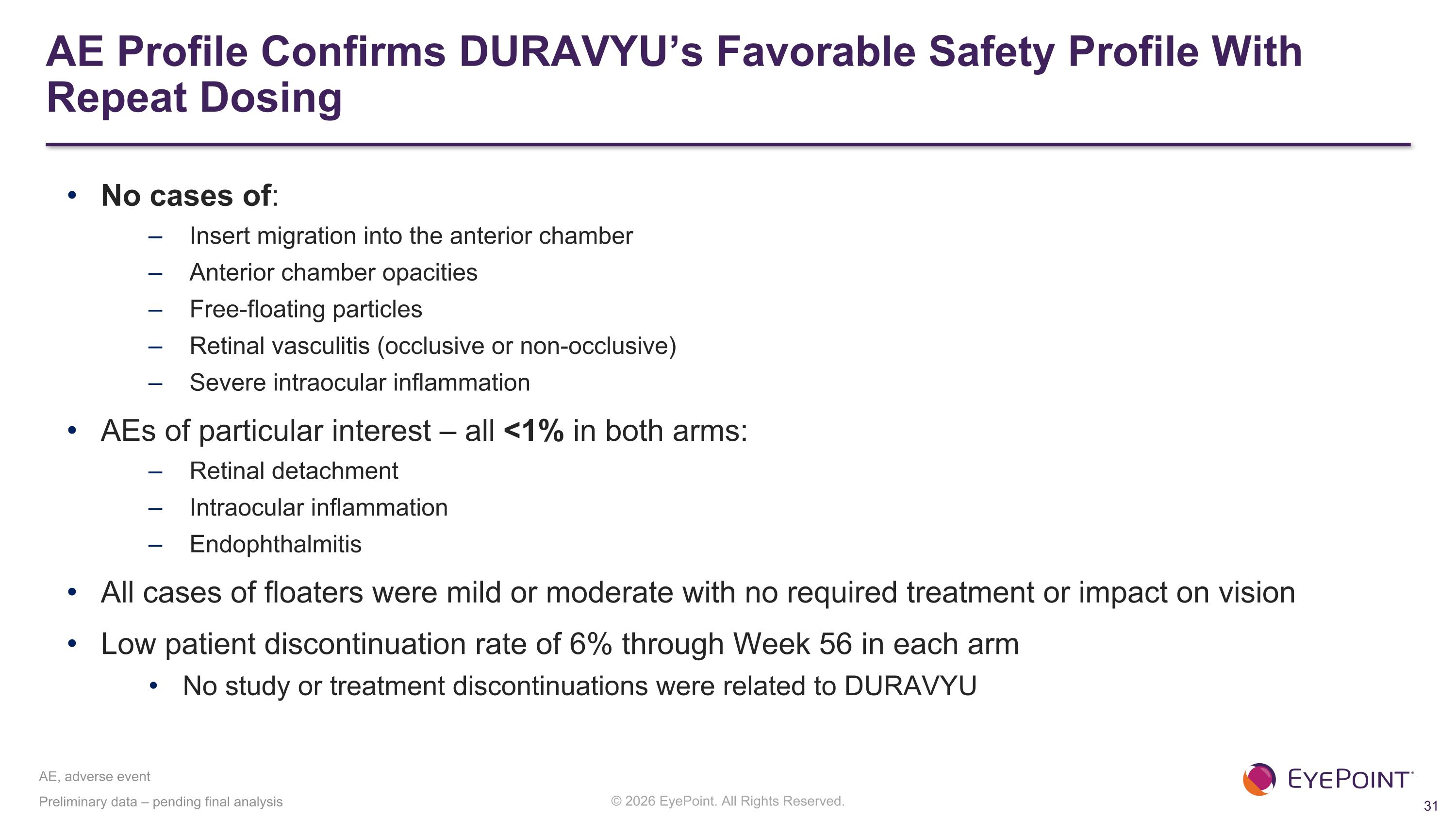
AE Profile Confirms DURAVYU’s Favorable Safety Profile With Repeat Dosing No cases of: Insert migration into the anterior chamber Anterior chamber opacities Free-floating particles Retinal vasculitis (occlusive or non-occlusive) Severe intraocular inflammation AEs of particular interest – all <1% in both arms: Retinal detachment Intraocular inflammation Endophthalmitis All cases of floaters were mild or moderate with no required treatment or impact on vision Low patient discontinuation rate of 6% through Week 56 in each arm No study or treatment discontinuations were related to DURAVYU Preliminary data – pending final analysis AE, adverse event
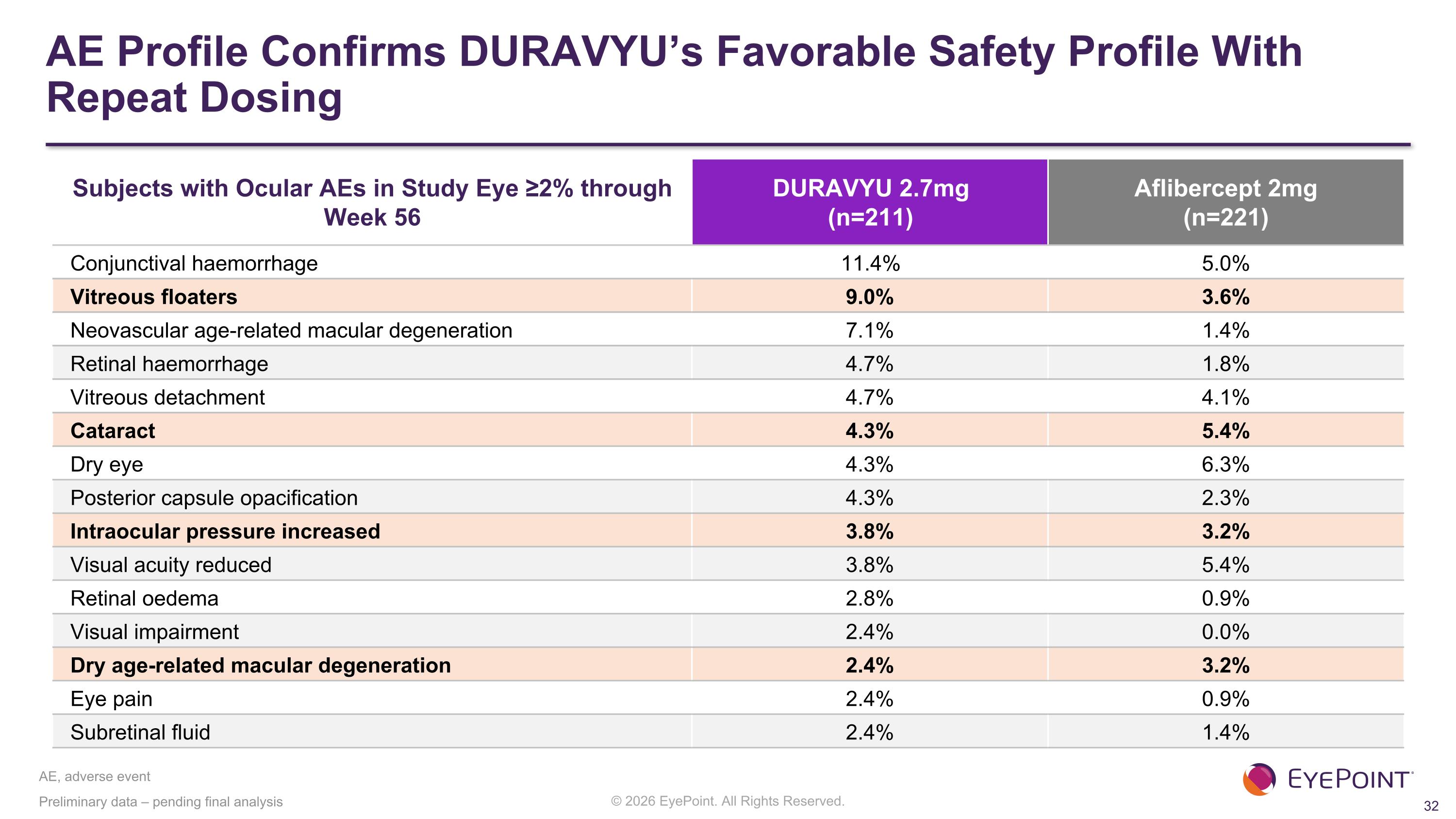
Preliminary data – pending final analysis Subjects with Ocular AEs in Study Eye ≥2% through Week 56 DURAVYU 2.7mg (n=211) Aflibercept 2mg (n=221) Conjunctival haemorrhage 11.4% 5.0% Vitreous floaters 9.0% 3.6% Neovascular age-related macular degeneration 7.1% 1.4% Retinal haemorrhage 4.7% 1.8% Vitreous detachment 4.7% 4.1% Cataract 4.3% 5.4% Dry eye 4.3% 6.3% Posterior capsule opacification 4.3% 2.3% Intraocular pressure increased 3.8% 3.2% Visual acuity reduced 3.8% 5.4% Retinal oedema 2.8% 0.9% Visual impairment 2.4% 0.0% Dry age-related macular degeneration 2.4% 3.2% Eye pain 2.4% 0.9% Subretinal fluid 2.4% 1.4% AE, adverse event AE Profile Confirms DURAVYU’s Favorable Safety Profile With Repeat Dosing

Conclusions & Next Steps
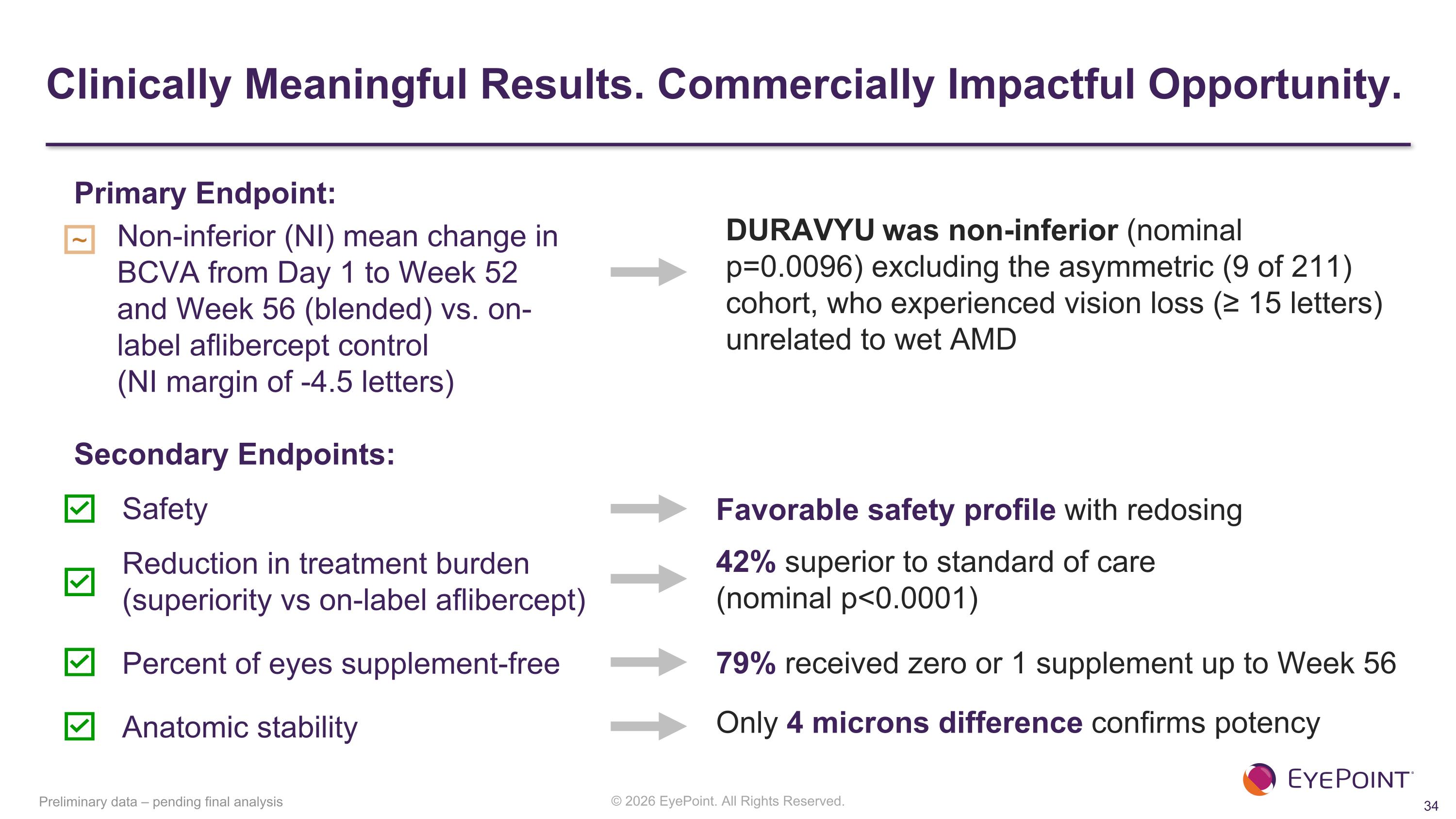
Clinically Meaningful Results. Commercially Impactful Opportunity. Secondary Endpoints: Safety Reduction in treatment burden (superiority vs on-label aflibercept) Percent of eyes supplement-free Anatomic stability ~ 42% superior to standard of care (nominal p<0.0001) 79% received zero or 1 supplement up to Week 56 Only 4 microns difference confirms potency Favorable safety profile with redosing Non-inferior (NI) mean change in BCVA from Day 1 to Week 52 and Week 56 (blended) vs. on-label aflibercept control (NI margin of -4.5 letters) DURAVYU was non-inferior (nominal p=0.0096) excluding the asymmetric (9 of 211) cohort, who experienced vision loss (≥ 15 letters) unrelated to wet AMD Primary Endpoint: Preliminary data – pending final analysis
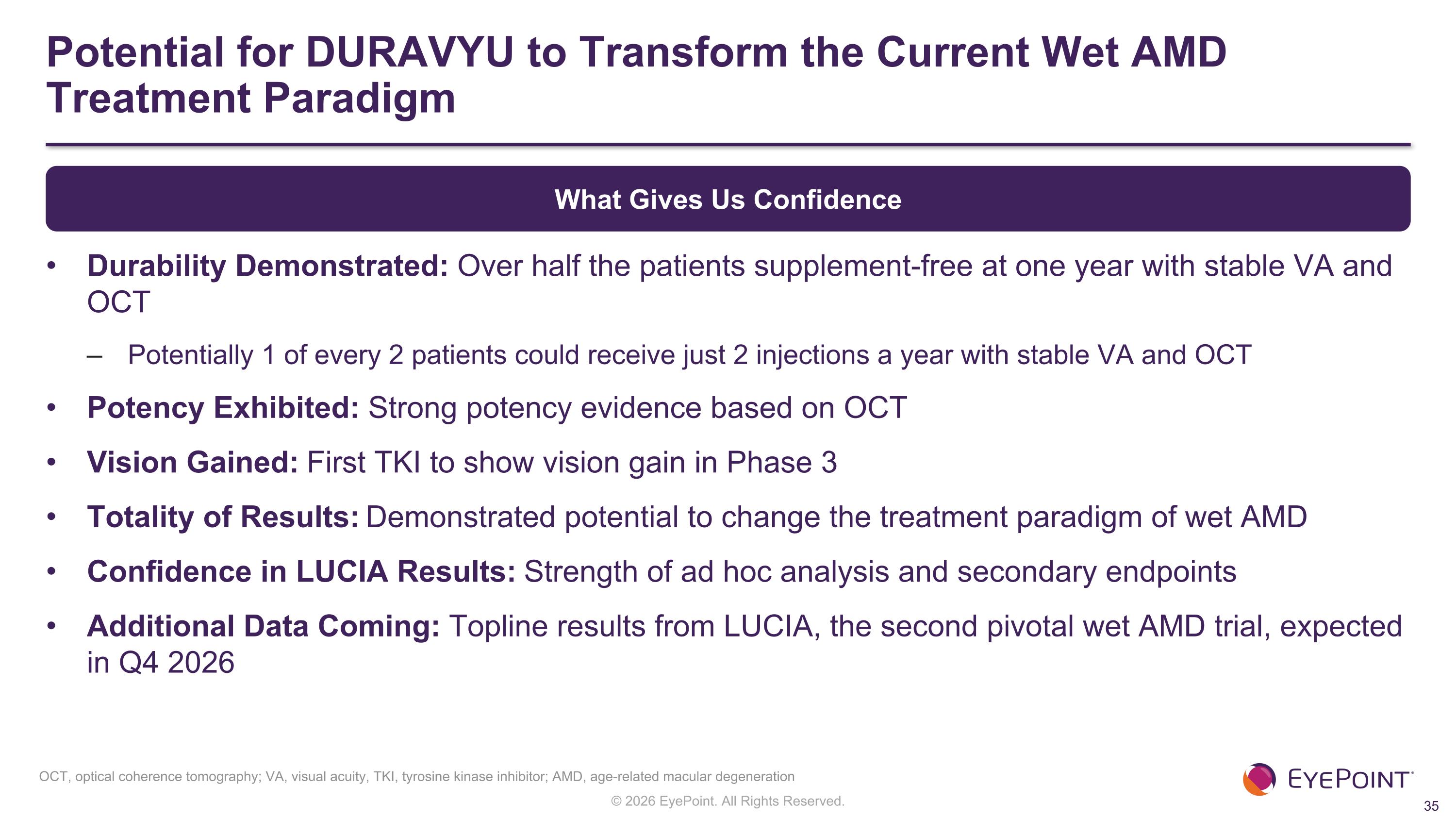
Potential for DURAVYU to Transform the Current Wet AMD Treatment Paradigm Durability Demonstrated: Over half the patients supplement-free at one year with stable VA and OCT Potentially 1 of every 2 patients could receive just 2 injections a year with stable VA and OCT Potency Exhibited: Strong potency evidence based on OCT Vision Gained: First TKI to show vision gain in Phase 3 Totality of Results: Demonstrated potential to change the treatment paradigm of wet AMD Confidence in LUCIA Results: Strength of ad hoc analysis and secondary endpoints Additional Data Coming: Topline results from LUCIA, the second pivotal wet AMD trial, expected in Q4 2026 What Gives Us Confidence OCT, optical coherence tomography; VA, visual acuity, TKI, tyrosine kinase inhibitor; AMD, age-related macular degeneration
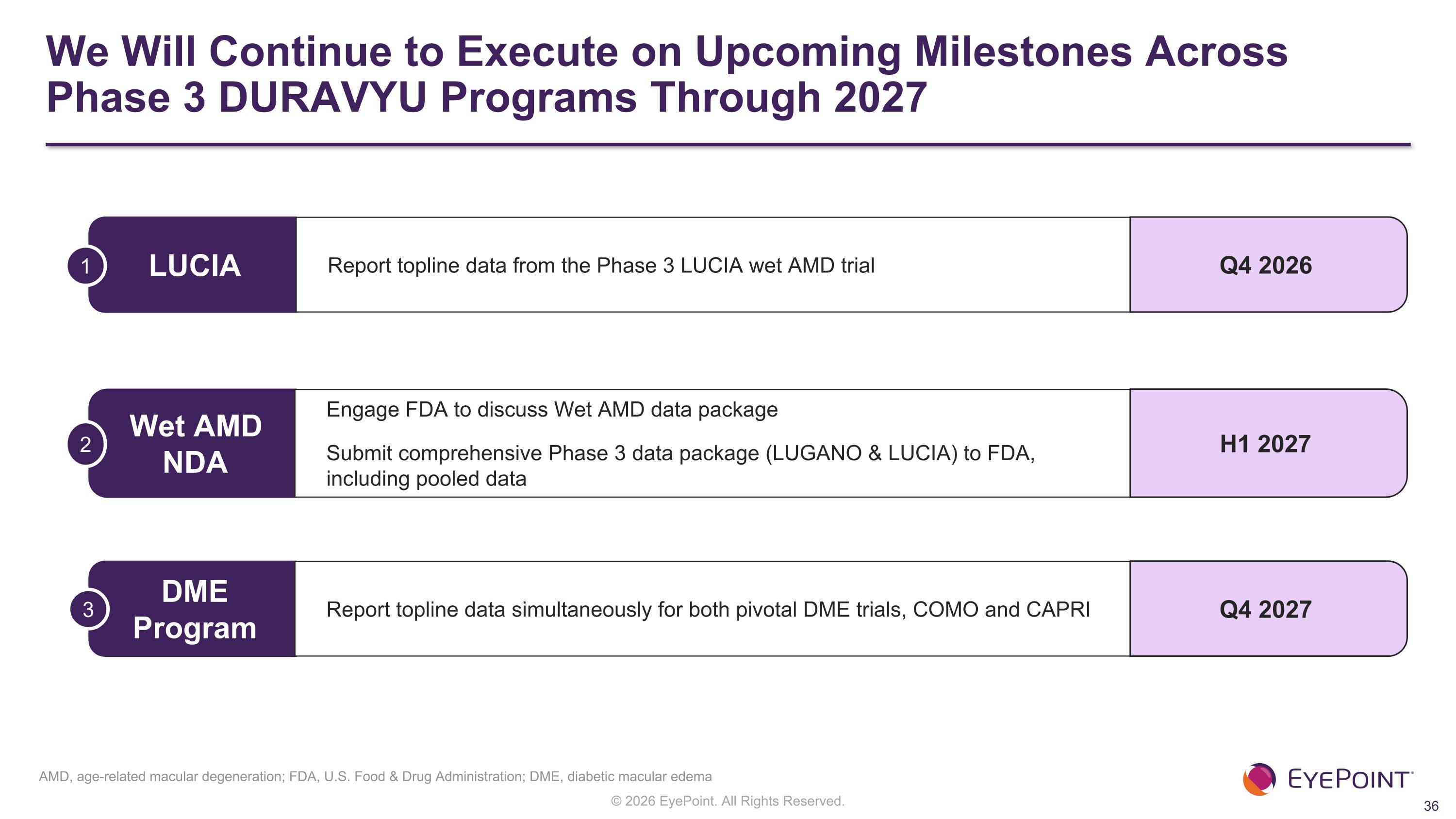
We Will Continue to Execute on Upcoming Milestones Across Phase 3 DURAVYU Programs Through 2027 LUCIA Report topline data from the Phase 3 LUCIA wet AMD trial Q4 2026 1 Wet AMD NDA Engage FDA to discuss Wet AMD data package Submit comprehensive Phase 3 data package (LUGANO & LUCIA) to FDA, including pooled data H1 2027 2 DME Program Report topline data simultaneously for both pivotal DME trials, COMO and CAPRI Q4 2027 3 AMD, age-related macular degeneration; FDA, U.S. Food & Drug Administration; DME, diabetic macular edema

Thank You
LUGANO Phase 3 Clinical Trial Topline Data DURAVYU in Wet AMD August 17, 2026