| Courageous Innovation Dedicated to Bringing Game-Changing Gene Therapies to Market and Working Even Harder to Provide Access to Patients Globally |

| 2 This presentation contains forward-looking statements within the meaning of The Private Securities Litigation Reform Act of 1995, including, but not limited to, strategy, business plans and objectives for Ocugen’s clinical programs, plans and timelines for the preclinical and clinical development of Ocugen’s product candidates, including the therapeutic potential, clinical benefits and potential safety thereof, expectations regarding timing, success and data announcements of current ongoing preclinical and clinical trials, the ability to initiate new clinical programs, statements regarding qualitative assessments of available data, potential benefits, expectations for ongoing clinical trials, anticipated regulatory filings and anticipated development timelines, which are subject to risks and uncertainties. We may, in some cases, use terms such as “predicts,” “believes,” “potential,” “proposed,” “continue,” “estimates,” “anticipates,” “expects,” “plans,” “intends,” “may,” “could,” “might,” “will,” “should,” or other words that convey uncertainty of future events or outcomes to identify these forward-looking statements. Such statements are subject to numerous important factors, risks, and uncertainties that may cause actual events or results to differ materially from our current expectations, including, but not limited to, the risks that preliminary, interim and top-line clinical trial results may not be indicative of, and may differ from, final clinical data; that unfavorable new clinical trial data may emerge in ongoing clinical trials or through further analyses of existing clinical trial data; that earlier non-clinical and clinical data and testing of may not be predictive of the results or success of later clinical trials; and that that clinical trial data are subject to differing interpretations and assessments, including by regulatory authorities. These and other risks and uncertainties are more fully described in our annual and periodic filings with the Securities and Exchange Commission (SEC), including the risk factors described in the section entitled “Risk Factors” in the quarterly and annual reports that we file with the SEC. Any forward-looking statements that we make in this presentation speak only as of the date of this presentation. Except as required by law, we assume no obligation to update forward-looking statements contained in this presentation whether as a result of new information, future events, or otherwise, after the date of this presentation. Forward Looking Statement Ocugen – September 2026 |
| Pioneering biotechnology company leading the way to address major blindness diseases with novel modifier gene therapy Leader in Ophthalmology Gene Therapy |

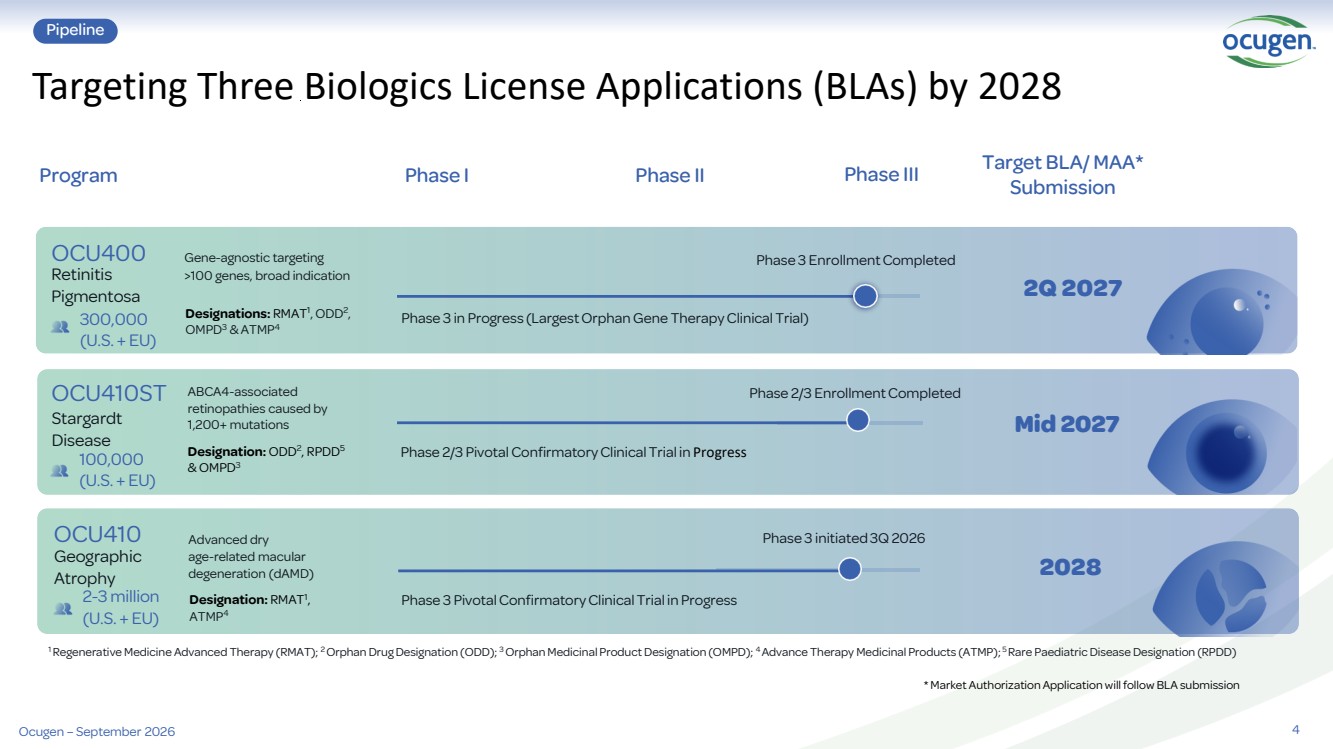
| 4 Targeting Three Biologics License Applications (BLAs) by 2028 Pipeline Phase I Phase II Phase III Target BLA/ MAA* Submission Program ABCA4-associated retinopathies caused by 1,200+ mutations Phase 2/3 Pivotal ConfirmatoryClinical Trial in Progress Mid 2027 100,000 (U.S. + EU) Stargardt Disease OCU410ST Designation: ODD2 , RPDD5 & OMPD3 1 Regenerative Medicine Advanced Therapy (RMAT); 2 Orphan Drug Designation (ODD); 3 Orphan Medicinal Product Designation (OMPD); 4 Advance Therapy Medicinal Products (ATMP); 5 Rare Paediatric Disease Designation (RPDD) * Market Authorization Application will follow BLA submission Phase 2/3 Enrollment Completed Ocugen – September 2026 Advanced dry age-related macular degeneration (dAMD) Phase 3 initiated 3Q 2026 2028 2-3 million (U.S. + EU) Geographic Atrophy OCU410 Designation: RMAT1 , ATMP4 300,000 (U.S. + EU) Gene-agnostic targeting >100 genes, broad indication Phase 3 in Progress (Largest Orphan Gene Therapy Clinical Trial) 2Q 2027 Retinitis Pigmentosa OCU400 Designations: RMAT1 , ODD2 , OMPD3 & ATMP4 Phase 3 Enrollment Completed Phase 3 Pivotal ConfirmatoryClinical Trial in Progress |
| Breakthrough technology designed to address many rare diseases as well as complex diseases that affect millions Modifier Gene Therapy Platform |

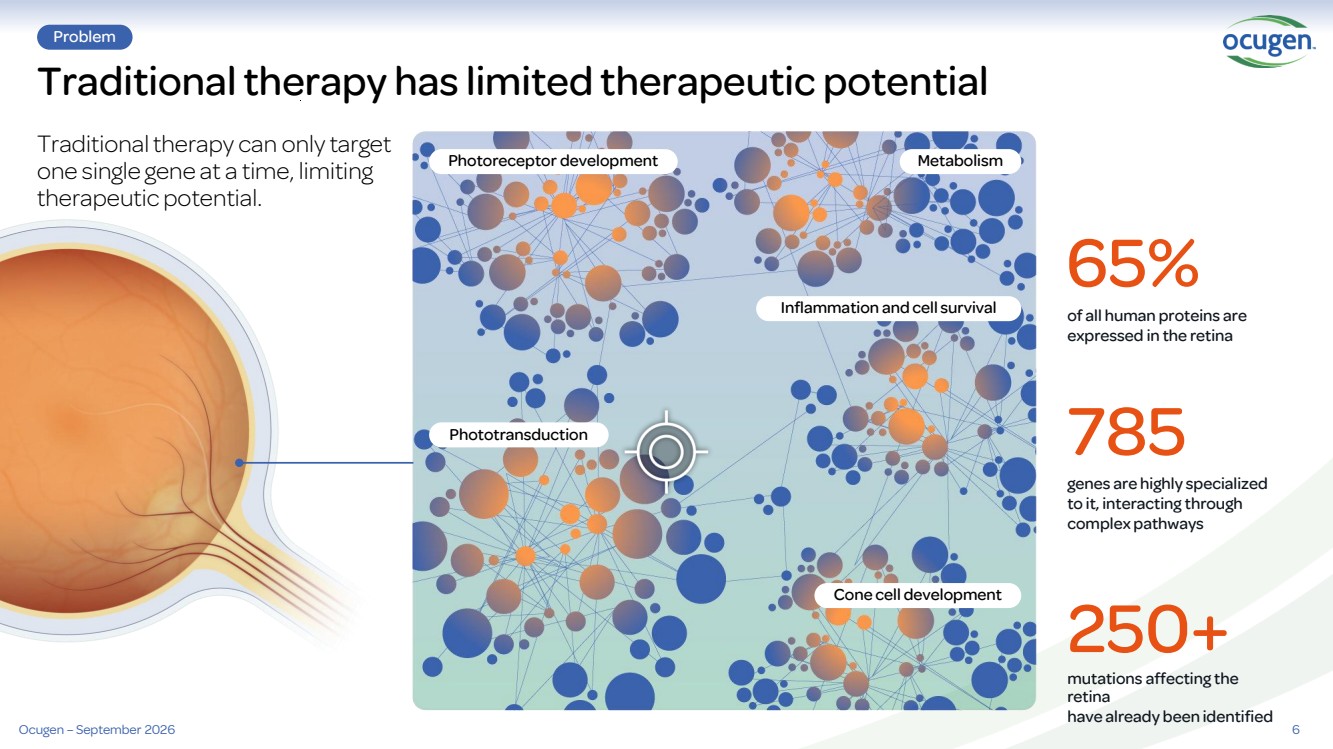
| Traditional therapy has limited therapeutic potential Traditional therapy can only target one single gene at a time, limiting therapeutic potential. Problem 6 of all human proteins are expressed in the retina genes are highly specialized to it, interacting through complex pathways mutations affecting the retina have already been identified 65% 785 250+ Photoreceptor development Inflammation and cell survival Phototransduction Cone cell development Metabolism Ocugen – September 2026 |
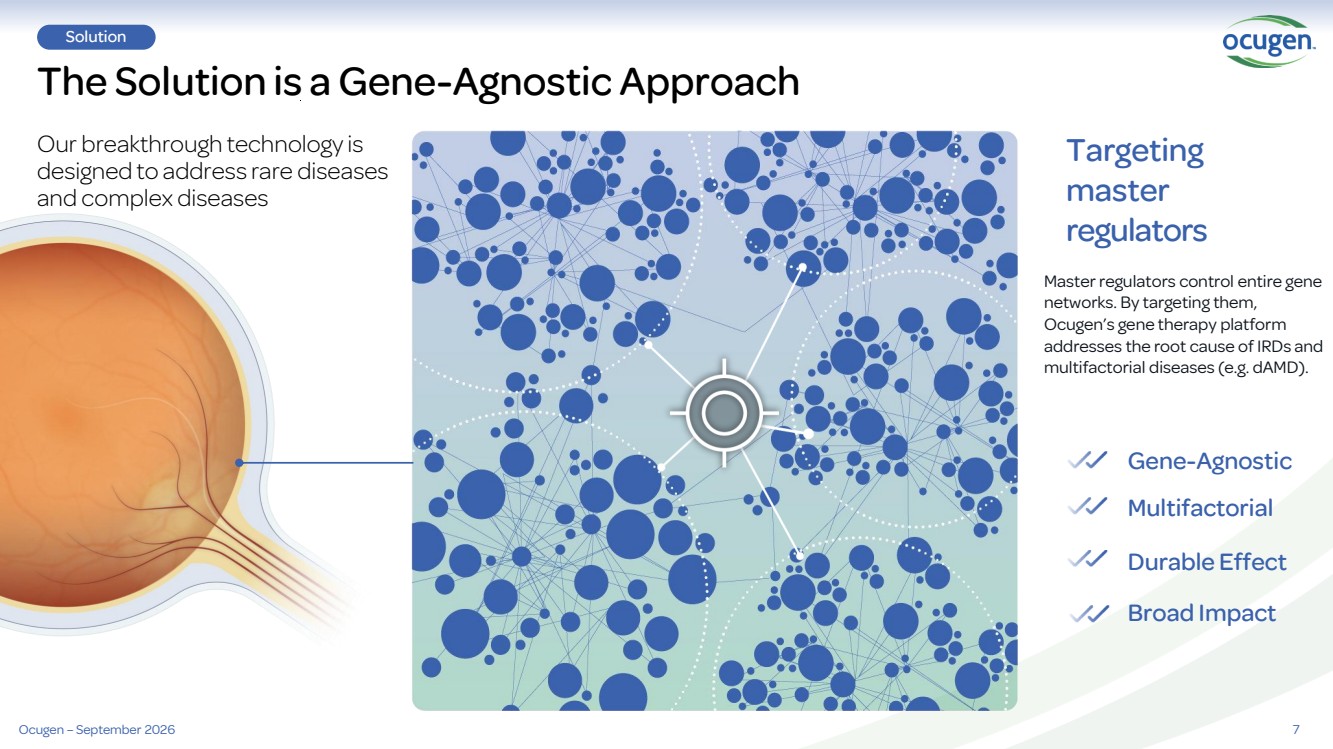
| 7 The Solution is a Gene-Agnostic Approach Solution Our breakthrough technology is designed to address rare diseases and complex diseases Targeting master regulators Master regulators control entire gene networks. By targeting them, Ocugen’s gene therapy platform addresses the root cause of IRDs and multifactorial diseases (e.g. dAMD). Gene-Agnostic Multifactorial Durable Effect Broad Impact Ocugen – September 2026 |
| OCU400 Retinitis Pigmentosa (RP) Broad indication, gene-agnostic, targets 100+ genes |
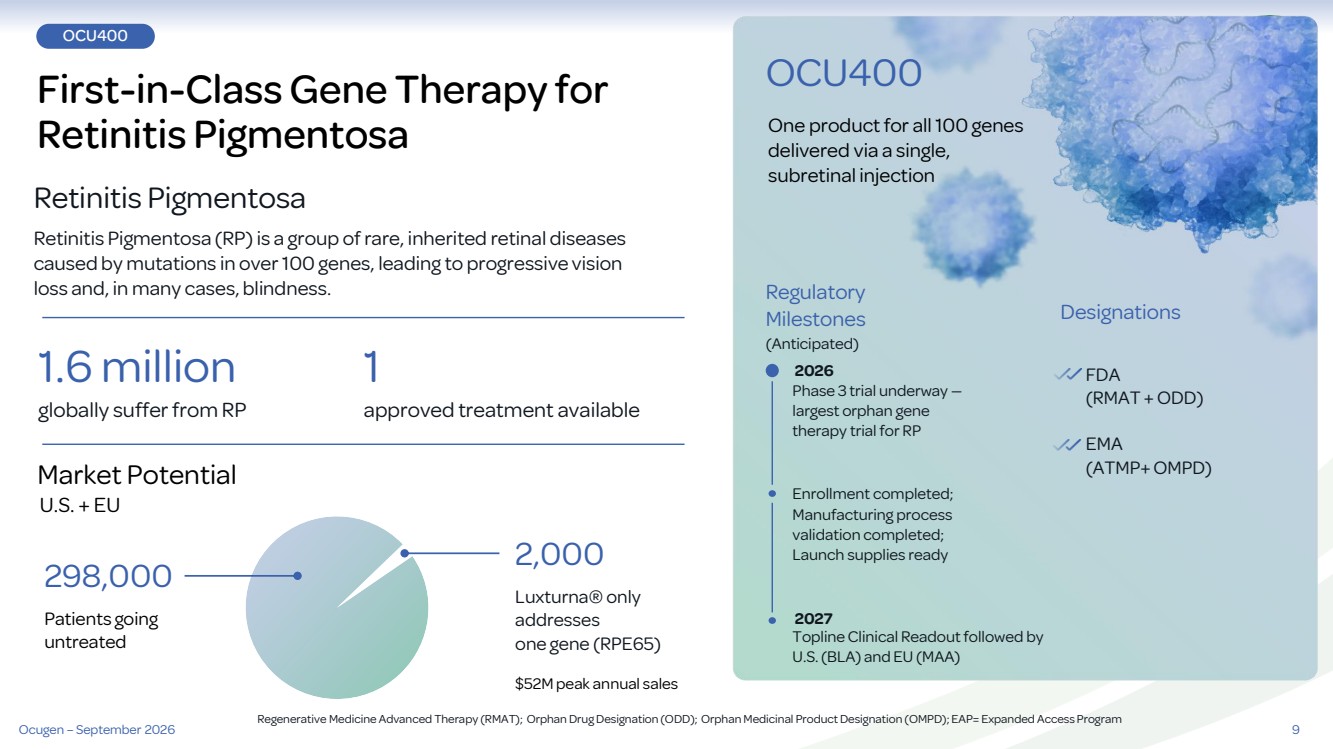
| 9 OCU400 First-in-Class Gene Therapy for Retinitis Pigmentosa Retinitis Pigmentosa Retinitis Pigmentosa (RP) is a group of rare, inherited retinal diseases caused by mutations in over 100 genes, leading to progressive vision loss and, in many cases, blindness. 1.6 million 2,000 1 Market Potential U.S. + EU globally suffer from RP approved treatment available $52M peak annual sales Luxturna® only addresses one gene (RPE65) Regulatory Milestones (Anticipated) One product for all 100 genes delivered via a single, subretinal injection Designations OCU400 Phase 3 trial underway — largest orphan gene therapy trial for RP Enrollment completed; Manufacturing process validation completed; Launch supplies ready Topline Clinical Readout followed by U.S. (BLA) and EU (MAA) FDA (RMAT + ODD) EMA (ATMP+ OMPD) Patients going untreated 298,000 Regenerative Medicine Advanced Therapy (RMAT); Orphan Drug Designation (ODD); Orphan Medicinal Product Designation (OMPD); EAP= Expanded Access Program 2026 Ocugen – September 2026 2027 |
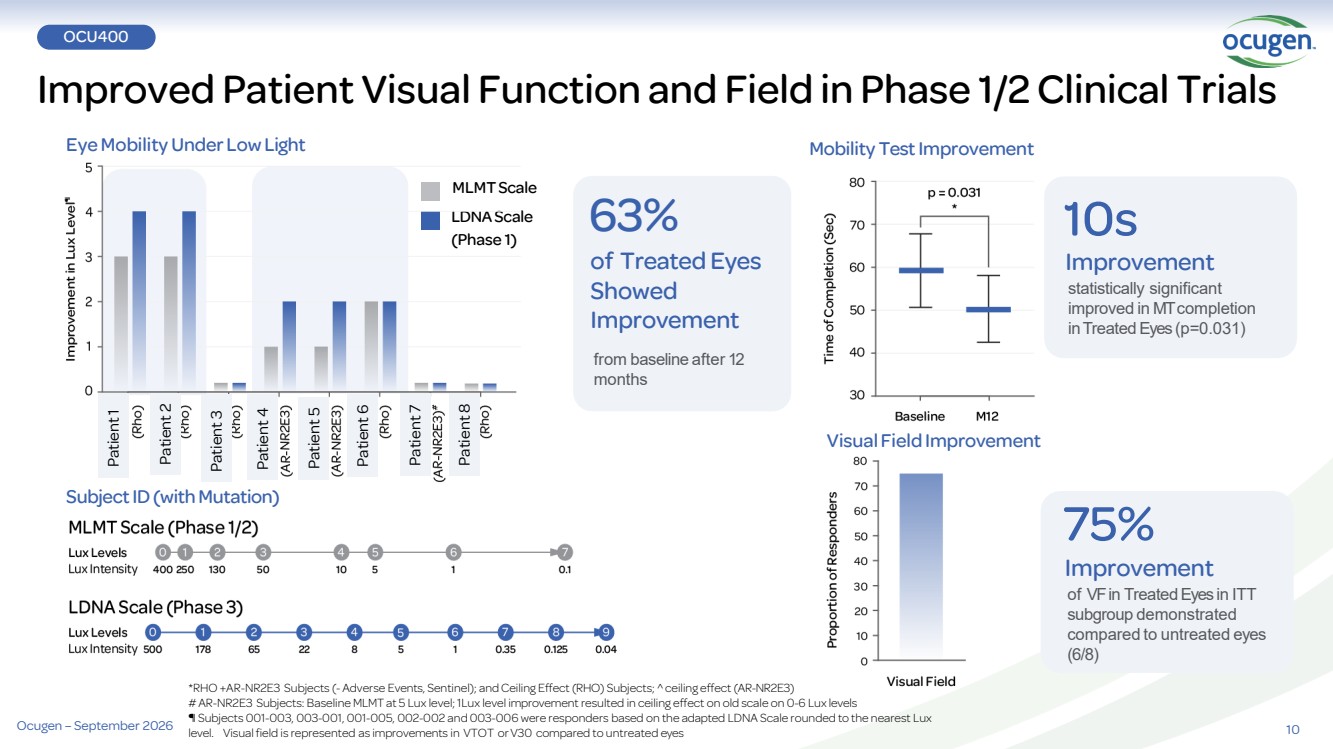
| 10 OCU400 Improved Patient Visual Function and Field in Phase 1/2 Clinical Trials *RHO +AR-NR2E3 Subjects (-Adverse Events, Sentinel); andCeiling Effect (RHO) Subjects; ceiling effect (AR-NR2E3) #AR-NR2E3 Subjects: Baseline MLMT at 5 Lux level;1Lux level improvement resulted in ceiling effect on old scale on 0-6 Lux levels ¶ Subjects 001-003, 003-001, 001-005, 002-002 and 003-006 were responders based on the adapted LDNA Scale rounded to the nearest Lux level. Visualfield is represented as improvements in VTOT orV30 compared to untreated eyes 63% of Treated Eyes Showed Improvement from baseline after 12 months 10s Improvement statistically significant improved in MTcompletion inTreatedEyes (p=0.031) 75% Improvement of VFin TreatedEyes in ITT subgroup demonstrated compared to untreated eyes (6/8) Eye Mobility Under Low Light SubjectID(withMutation) Mobility TestImprovement Visual FieldImprovement (Phase 1) MLMTScale LDNAScale Patient 1 Patient 2 Patient 3 Patient 4 Patient 5 Patient 6 Patient 7 Patient 8 Ocugen – September 2026 |
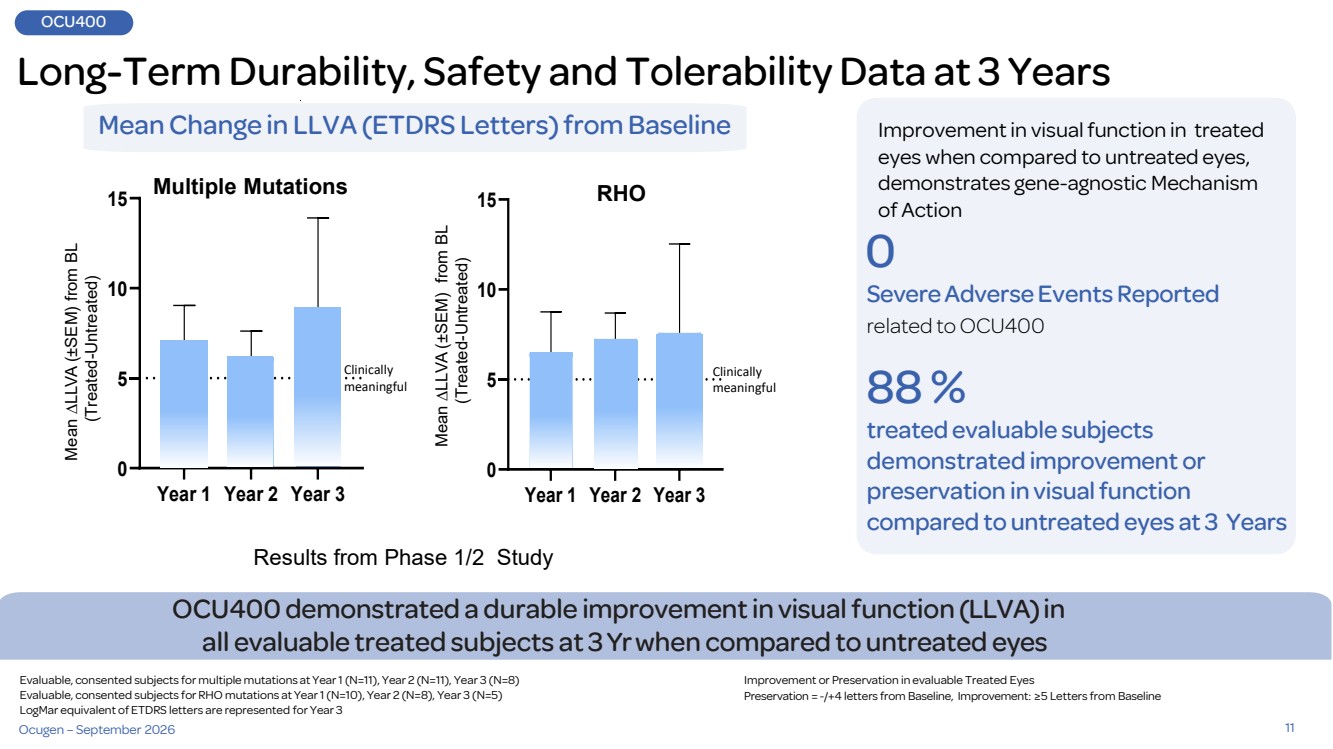
| 11 Long-Term Durability, Safety and Tolerability Data at 3 Years Year 1 Year 2 Year 3 0 5 10 15 Year 1 Year 2 Year 3 0 5 10 15 OCU400demonstrated a durable improvementin visual function (LLVA)in all evaluable treated subjects at 3Yr when compared to untreated eyes Mean Change in LLVA (ETDRS Letters) from Baseline Results from Phase 1/2 Study Improvement in visual function in treated eyes when compared to untreated eyes, demonstrates gene-agnostic Mechanism of Action 0 SevereAdverseEvents Reported related to OCU400 88 % treatedevaluable subjects demonstrated improvement or preservation in visual function compared to untreated eyes at 3 Years Mean ∆LLVA ( ±SEM) from BL (Treated-Untreated) Mean ∆LLVA ( ±SEM) from BL (Treated-Untreated) Multiple Mutations RHO Evaluable, consented subjects for multiple mutations at Year 1 (N=11), Year 2 (N=11), Year 3 (N=8) Evaluable, consented subjects for RHO mutations at Year 1 (N=10), Year 2 (N=8), Year 3 (N=5) LogMar equivalent of ETDRS letters are represented for Year 3 Improvement or Preservation in evaluable Treated Eyes Preservation = -/+4 letters from Baseline, Improvement: ≥5 Letters from Baseline Clinically meaningful Clinically meaningful OCU400 Ocugen – September 2026 |
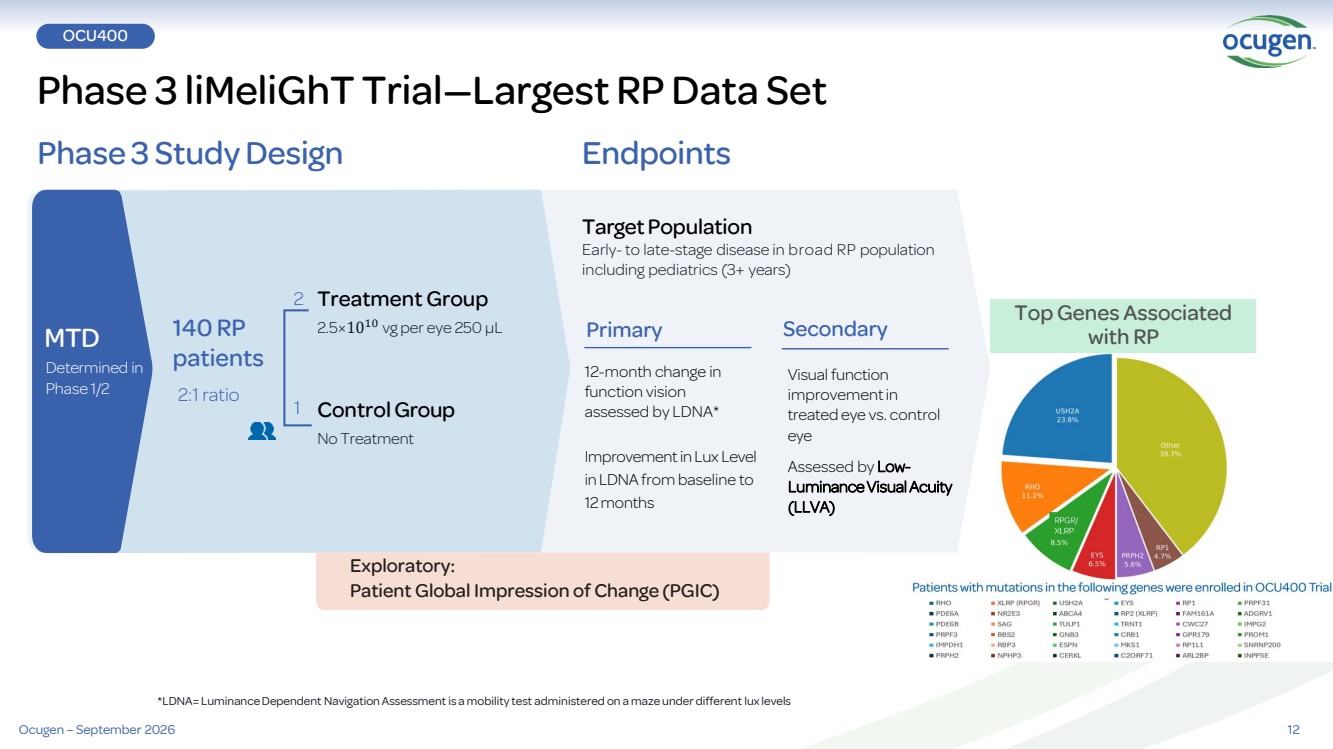
| 12 Phase 3 liMeliGhT Trial—Largest RP Data Set OCU400 Phase 3 StudyDesign Endpoints MTD Determined in Phase 1/2 Control Group No Treatment Treatment Group 2.5×10¹⁰ 140 RP vg per eye 250 µL patients 2:1 ratio Visual function improvementin treated eye vs. control eye Assessed by Low-Luminance Visual Acuity (LLVA) Target Population Early- to late-stage disease in broad RP population including pediatrics (3+ years) 12-month change in function vision assessed by LDNA* Improvement in Lux Level in LDNA from baseline to 12 months Primary Secondary 2 1 *LDNA= Luminance Dependent Navigation Assessment is a mobility test administered on a maze under different lux levels Exploratory: Patient Global Impression of Change (PGIC) Top Genes Associated with RP Ocugen – September 2026 |
| OCU410ST Stargardt Disease ABCA4 -associated retinopathies >1,200 mutations |
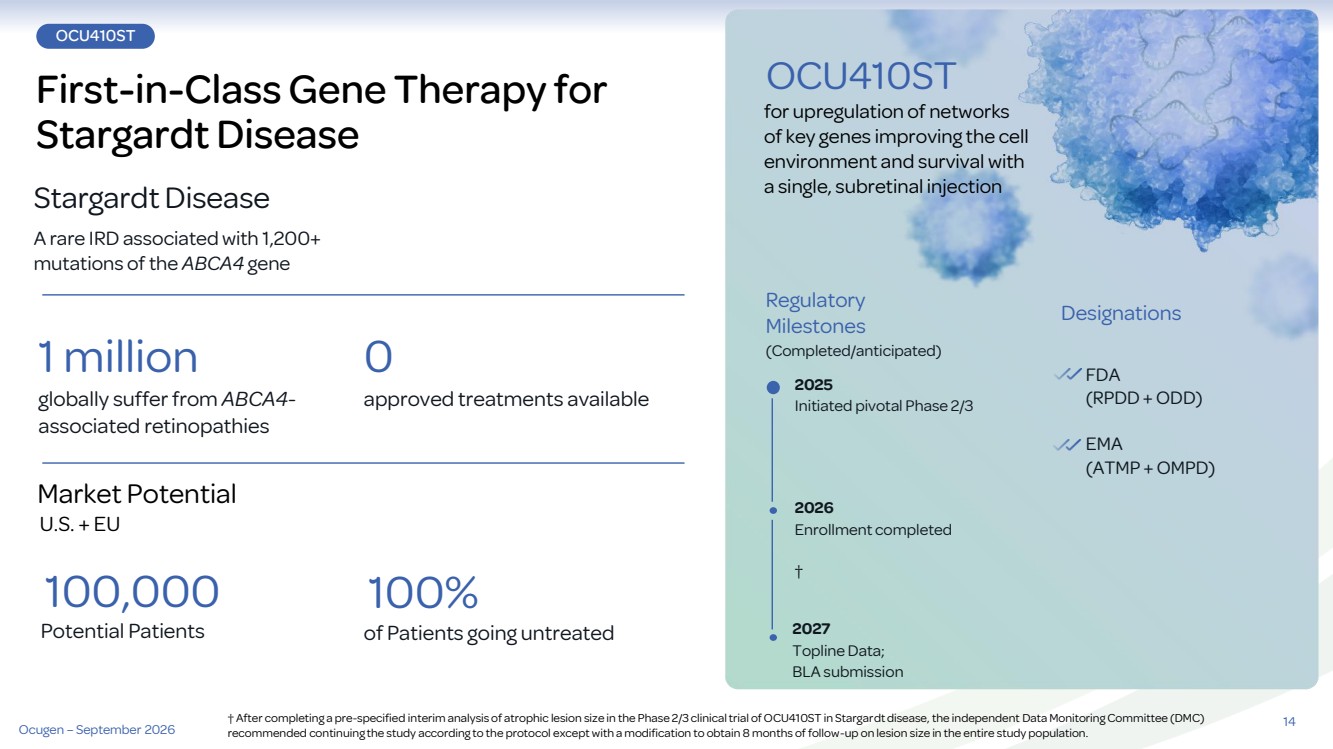
| OCU410ST First-in-Class Gene Therapy for Stargardt Disease Stargardt Disease A rare IRD associated with 1,200+ mutations of the ABCA4 gene 1 million 0 Market Potential U.S. + EU globally suffer from ABCA4- approved treatments available associated retinopathies Regulatory Milestones (Completed/anticipated) for upregulation of networks of key genes improving the cell environment and survival with a single, subretinal injection Designations OCU410ST 2025 Initiated pivotal Phase 2/3 2027 Topline Data; BLA submission FDA (RPDD+ ODD) EMA (ATMP + OMPD) 100% of Patients going untreated 100,000 Potential Patients 2026 Enrollment completed † 14 Ocugen – September 2026 † After completing a pre-specified interim analysis of atrophic lesion size in the Phase 2/3 clinical trial of OCU410ST in Stargardt disease, the independent Data Monitoring Committee (DMC) recommended continuing the study according to the protocol except with a modification to obtain 8 months of follow-up on lesion size in the entire study population. |
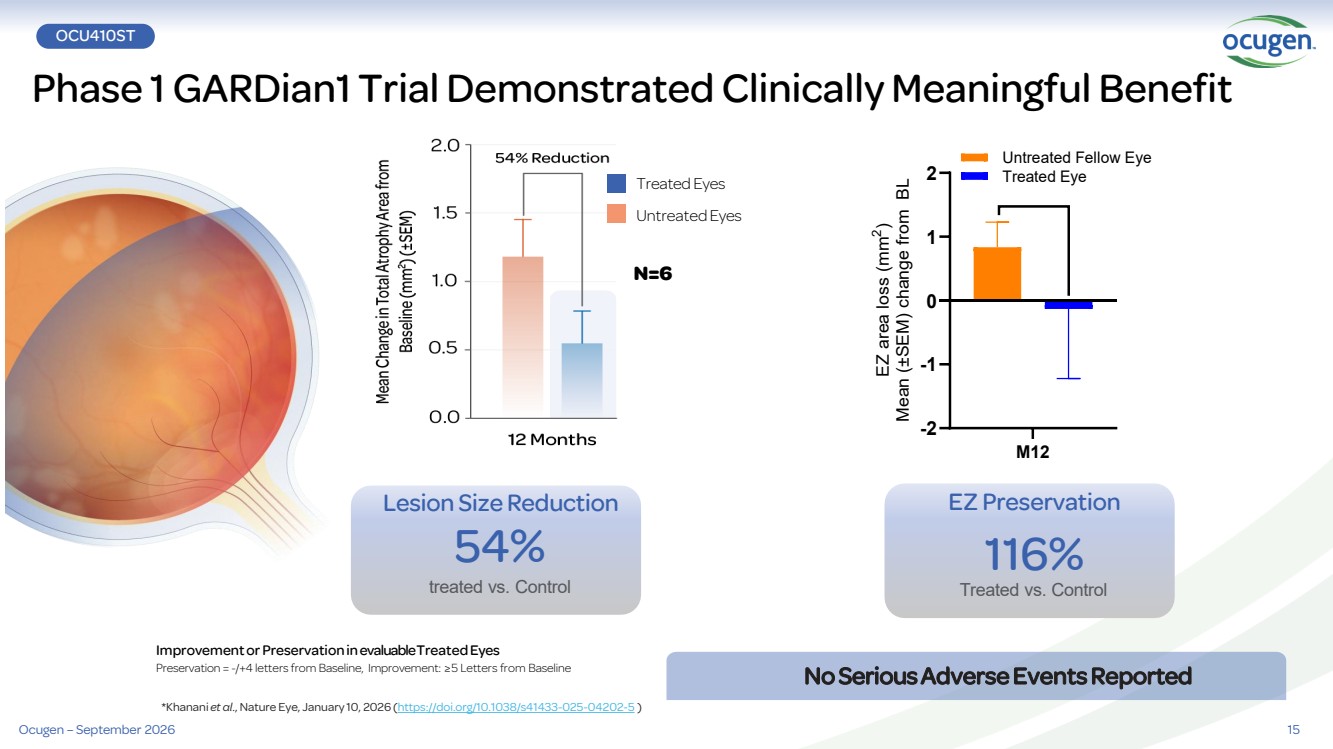
| 15 Phase 1 GARDian1 Trial Demonstrated Clinically Meaningful Benefit OCU410ST Lesion Size Reduction 54% treated vs. Control ImprovementorPreservationinevaluable TreatedEyes Preservation = -/+4 letters from Baseline, Improvement: ≥5 Letters from Baseline NoSeriousAdverseEventsReported N=6 *Khanani et al., Nature Eye, January 10, 2026 (https://doi.org/10.1038/s41433-025-04202-5 ) EZ Preservation 116% Treated vs. Control M12 -2 -1 0 1 2 EZ area loss (mm 2 ) Mean (±SEM) change from BL Treated Eye Untreated Fellow Eye Treated Eyes UntreatedEyes Ocugen – September 2026 |
| 16 Phase 1 GARDian1 Trial Demonstrated Clinically Meaningful Benefit Ocugen – September 2026 OCU410ST Treated Eyes UntreatedEyes Visual Function* 100% StabilizedorImproved compared to untreated eyes Nearly 1-line gain In visual acuity compared to untreated eyes Improvement1 from Baseline Decreasefrom Baseline Stabilization N=6 *Khanani et al., Nature Eye, January 10, 2026 (https://doi.org/10.1038/s41433-025-04202-5 ) Improvement: > 5 ETDRS letters; Stabilization : ±4 ETDRS letters Data points for M6 (N=6); M12 (N=6); *Nearly 6 Letters (Early Treatment Diabetic Retinopathy scale) Two patients with worsening cataract (1 Low, 1 Med), 1 High dose patient with loss-to-follow upwere not included in the analysis |
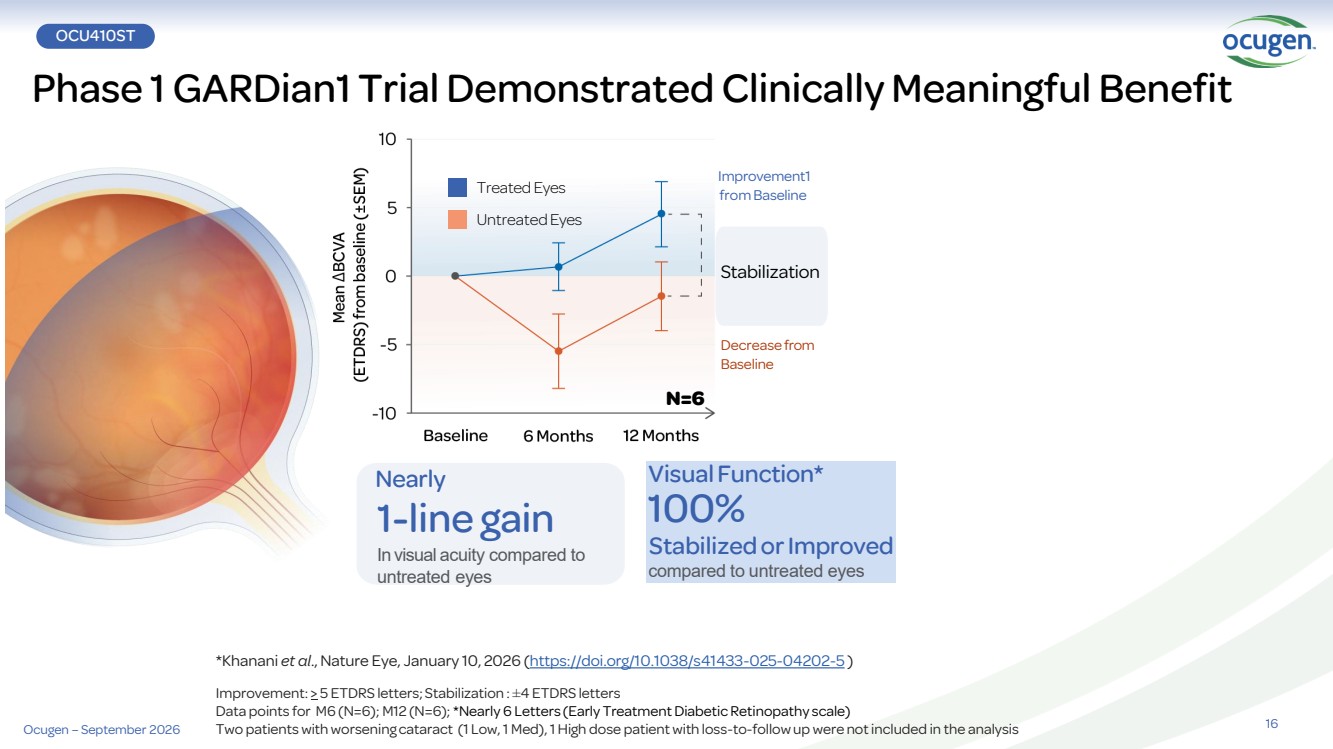
| 17 GARDian3- Phase 2/3 Pivotal Confirmatory Trial OCU410ST Trial Design Endpoints Randomized 2:1(N=51) DSMB 4-week Data Reviews Functional improvementinvision vs. control eye Assessed by LLVAand BCVA EZ analysis (exploratory) TargetPopulation Early- to late-stage disease population Including pediatrics (3+ years) 12-month change in atrophic lesion size from baseline vs. control Measured in mm2 by fundus autofluorescence (FAF) 34 Treatment Group 3×10¹⁰ vg per eye in 200 µL 17 ControlGroup No Treatment First Second 17 17 All Subjects MTD Established in Phase 1 Primary Secondary DMC Interim Outcome Ocugen – September 2026 |
| OCU410 Geographic Atrophy Advanced dry age-related macular degeneration (dAMD) |
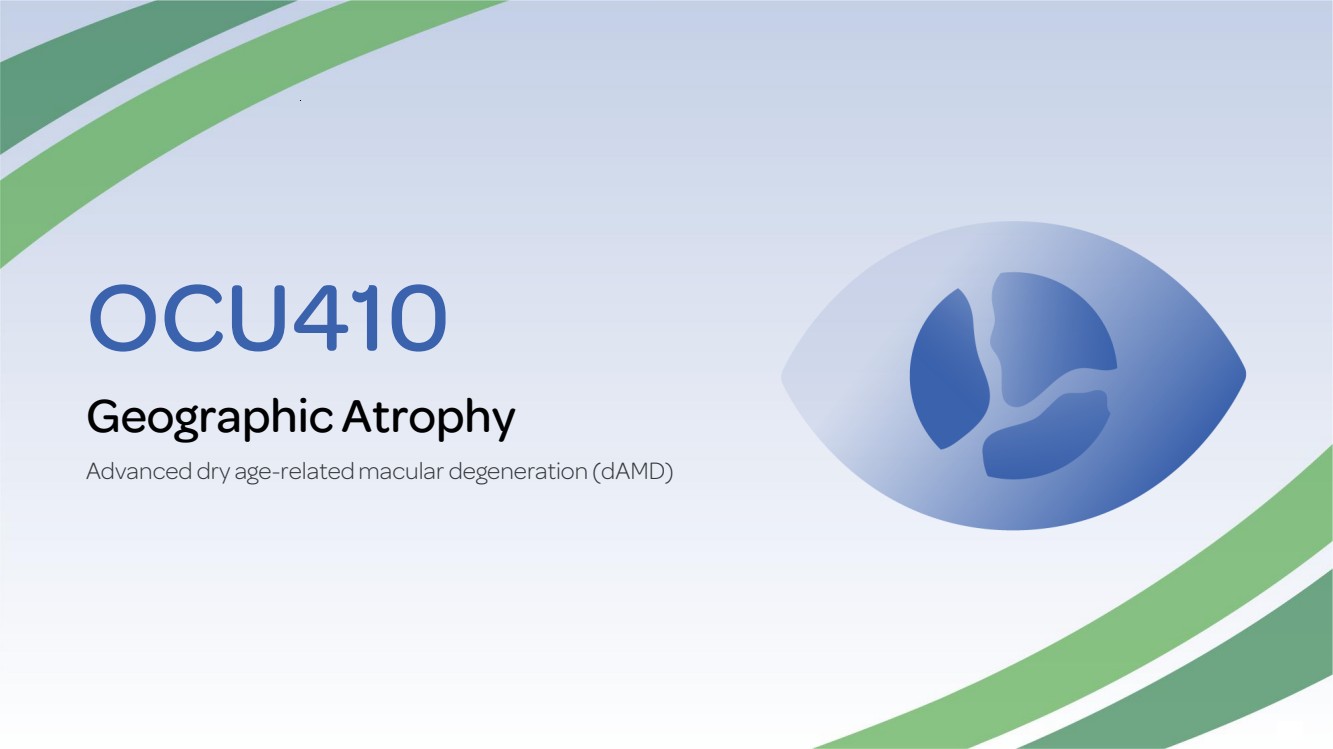
| 19 OCU410 First-in-Class Gene Therapy for GA Patients Geographic Atrophy Geographic Atrophy (GA) is an advanced form of dry AMD. GA causes irreversible degeneration of retina cells in the macula, leading to loss of central vision. ~8 million 2 Market Size U.S. + EU approved treatments available that address only 1 of the 4 pathways involved in disease progression globally suffer from advanced dAMD Regulatory Milestones (Anticipated) Designed to address all four pathways associated with GA without 6-12 injections per year and related side effects Designations OCU410 3Q 2026 Initiated Phase 3 2028 Phase 3 topline data; BLA submission EMA (ATMP) SYFOVRE® and IZERVAY® >$1B combinedannual sales 2-3M Patients Recent Milestone Positive 12-month Phase 2 data; first patient dosed in Phase 3 Approved Products in US 2026 Phase 2 topline data released 2027 Complete enrollment Ocugen – September 2026 FDA (RMAT) |
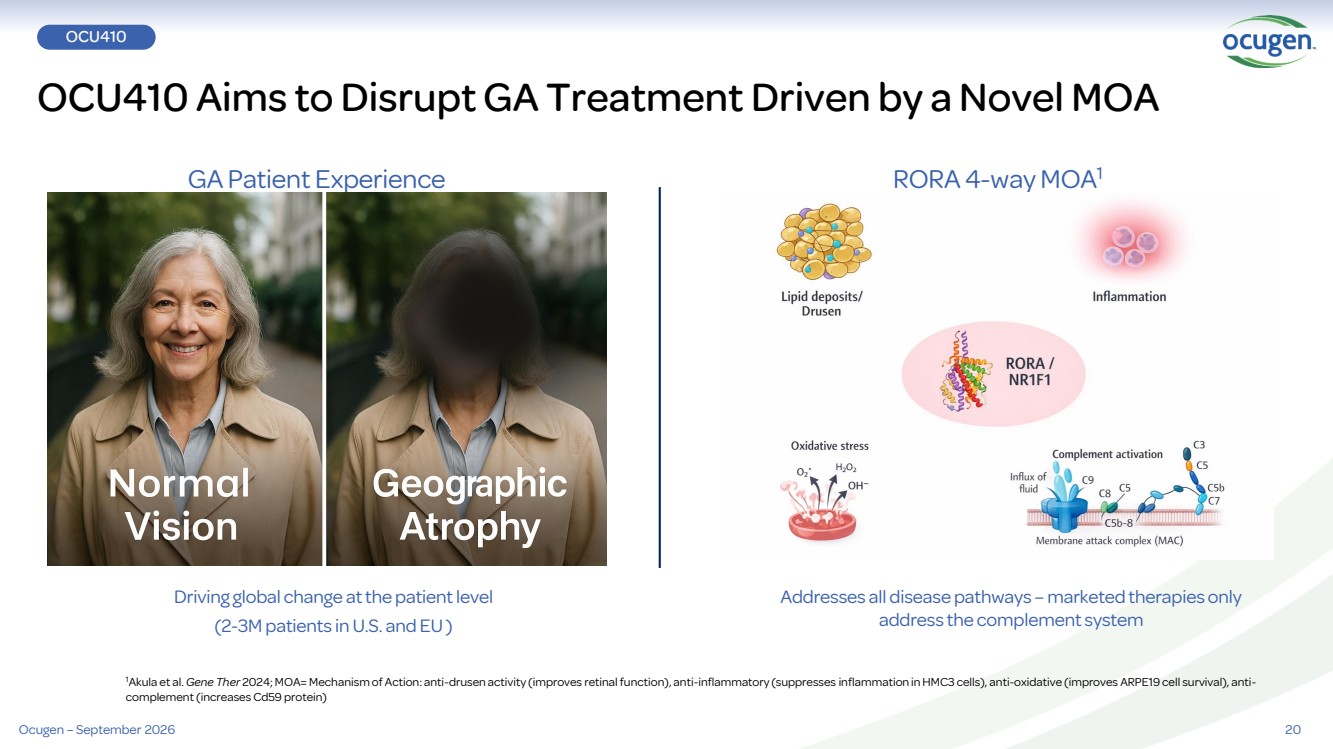
| 20 1Akula et al. Gene Ther 2024; MOA= Mechanism of Action: anti-drusen activity (improves retinal function), anti-inflammatory (suppresses inflammation in HMC3 cells), anti-oxidative (improves ARPE19 cell survival), anti-complement (increases Cd59 protein) OCU410 Aims to Disrupt GA Treatment Driven by a Novel MOA Driving global change at the patient level (2-3M patients in U.S. and EU ) GA Patient Experience RORA 4-way MOA1 Addresses all disease pathways – marketed therapies only address the complement system OCU410 Ocugen – September 2026 |
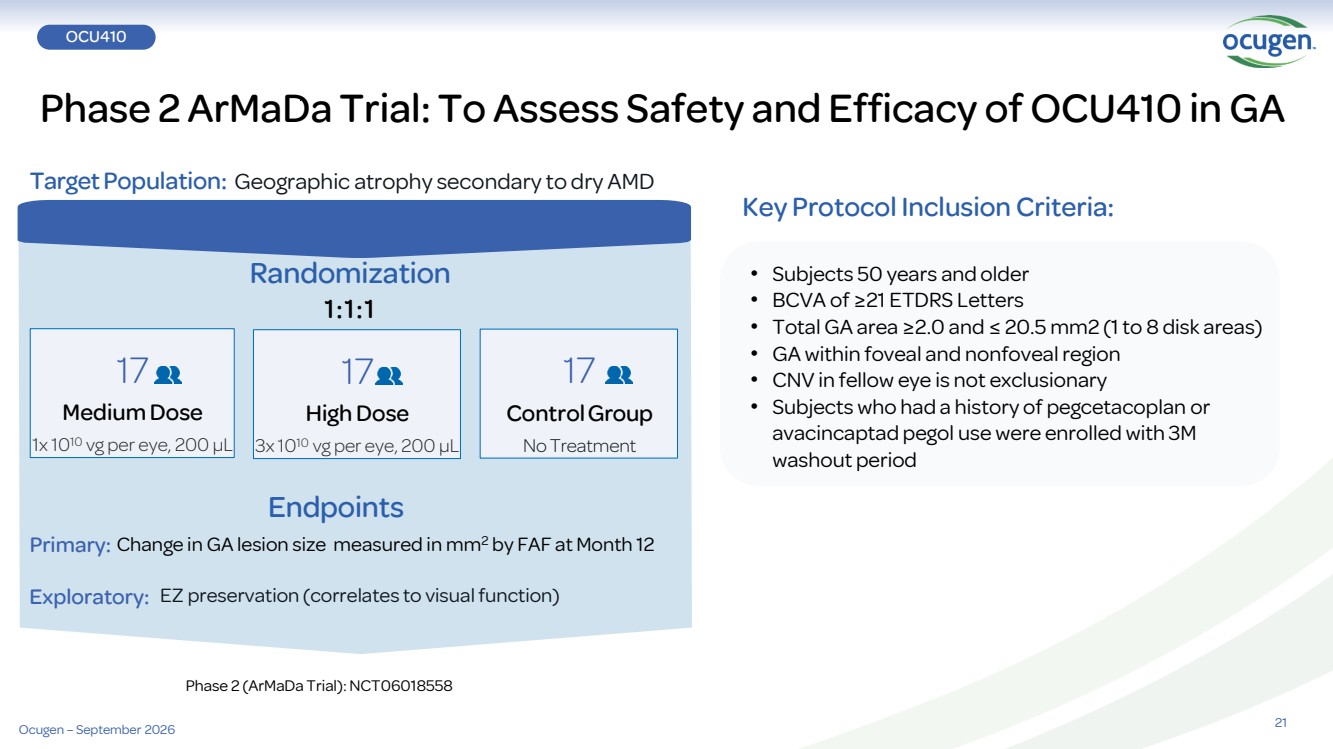
| Endpoints Randomization 1:1:1 EZ preservation (correlates to visualfunction) 17 ControlGroup No Treatment Primary: Exploratory: 17 Medium Dose 1x 10¹⁰ vg per eye, 200 µL 17 High Dose 3x 10¹⁰ vg per eye, 200 µL Phase 2 ArMaDa Trial: To Assess Safety and Efficacy of OCU410 in GA TargetPopulation: Geographic atrophy secondary to dry AMD 21 • Subjects 50 years and older • BCVA of ≥21 ETDRS Letters • Total GA area ≥2.0 and ≤ 20.5 mm2 (1 to 8 disk areas) • GA within foveal and nonfoveal region • CNV in fellow eye is not exclusionary • Subjects who had a history of pegcetacoplan or avacincaptad pegol use were enrolled with 3M washout period Key Protocol Inclusion Criteria: Change in GA lesion size measured in mm2 by FAF at Month 12 Phase 2 (ArMaDa Trial): NCT06018558 OCU410 Ocugen – September 2026 |
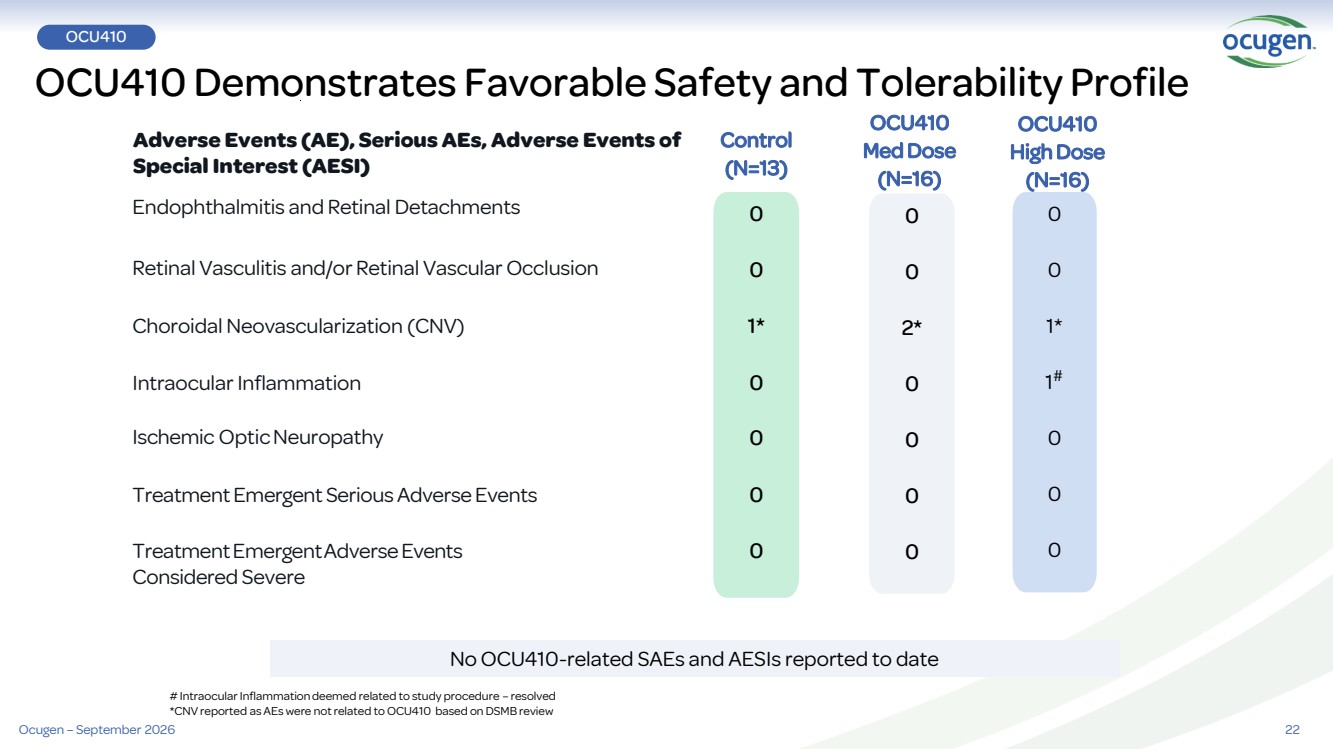
| 22 Retinal Vasculitis and/or Retinal Vascular Occlusion Choroidal Neovascularization (CNV) Intraocular Inflammation Ischemic OpticNeuropathy Treatment Emergent Serious Adverse Events TreatmentEmergentAdverse Events Considered Severe OCU410 Med Dose (N=16) Endophthalmitis and Retinal Detachments Adverse Events (AE), Serious AEs, Adverse Events of Special Interest (AESI) 0 0 1* 0 0 0 0 OCU410 High Dose (N=16) Control (N=13) 0 0 2* 0 0 0 0 0 0 1* 1 # 0 0 0 # Intraocular Inflammation deemed related to study procedure – resolved *CNV reported as AEs were not related to OCU410 based on DSMB review No OCU410-related SAEs and AESIs reported to date OCU410 Demonstrates Favorable Safety and Tolerability Profile OCU410 Ocugen – September 2026 |
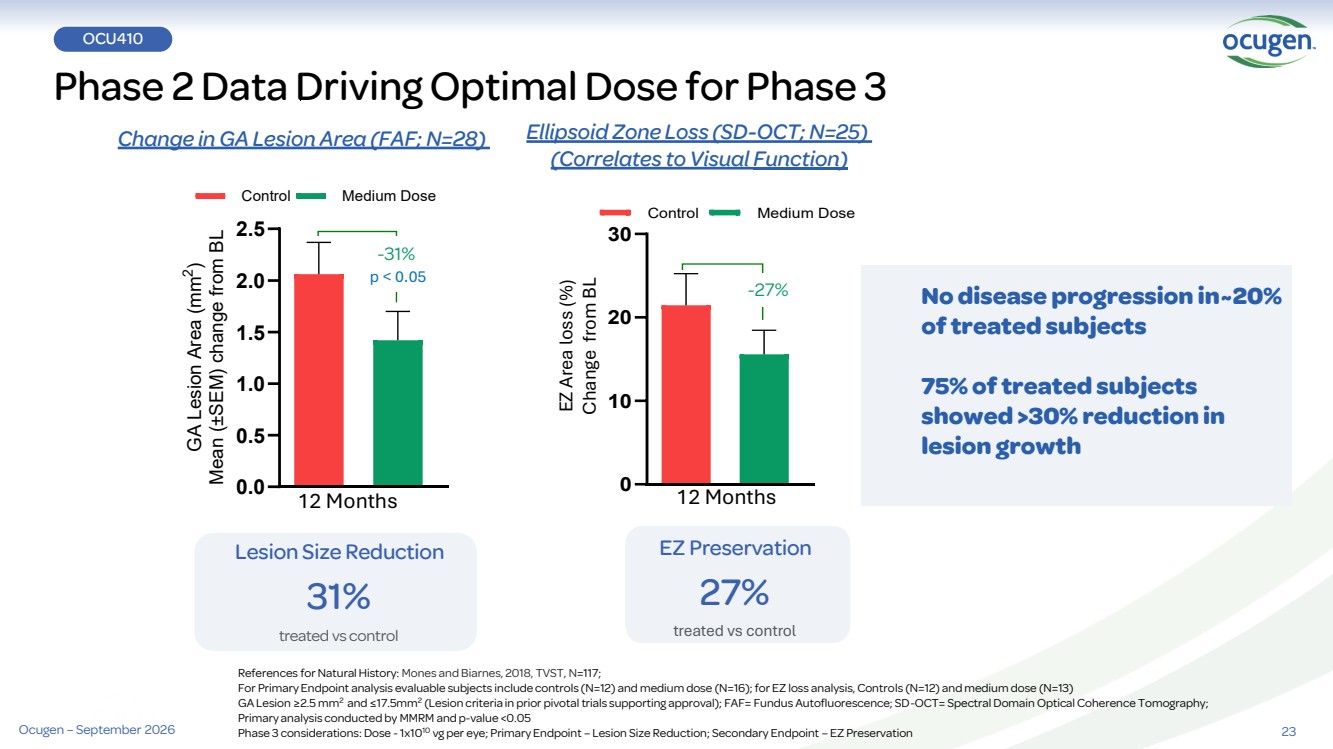
| 0 10 20 30 Control Medium Dose Lesion Size Reduction 31% treated vs control Phase 2 Data Driving Optimal Dose for Phase 3 References for Natural History: Mones and Biarnes, 2018, TVST, N=117; For Primary Endpoint analysis evaluable subjects include controls (N=12) and medium dose (N=16); for EZ loss analysis, Controls (N=12) and medium dose (N=13) GA Lesion ≥2.5 mm2 and ≤17.5mm2 (Lesion criteria in prior pivotal trials supporting approval); FAF= Fundus Autofluorescence; SD-OCT= Spectral Domain Optical Coherence Tomography; Primary analysis conducted by MMRM and p-value <0.05 Phase 3 considerations: Dose -1x10¹⁰ vg per eye; Primary Endpoint – Lesion Size Reduction; Secondary Endpoint – EZ Preservation EZ Preservation 27% treated vs control 0.0 0.5 1.0 1.5 2.0 2.5 GA Lesion Area (mm 2 ) Mean (±SEM) change from BL Control Medium Dose -31% Ellipsoid Zone Loss (SD-OCT; N=25) (Correlates to Visual Function) -27% Change in GA Lesion Area (FAF; N=28) EZ Area loss (%) Change from BL p < 0.05 23 No disease progression in~20% of treated subjects 75% of treated subjects showed >30% reduction in lesion growth OCU410 12 Months 12 Months Ocugen – September 2026 |
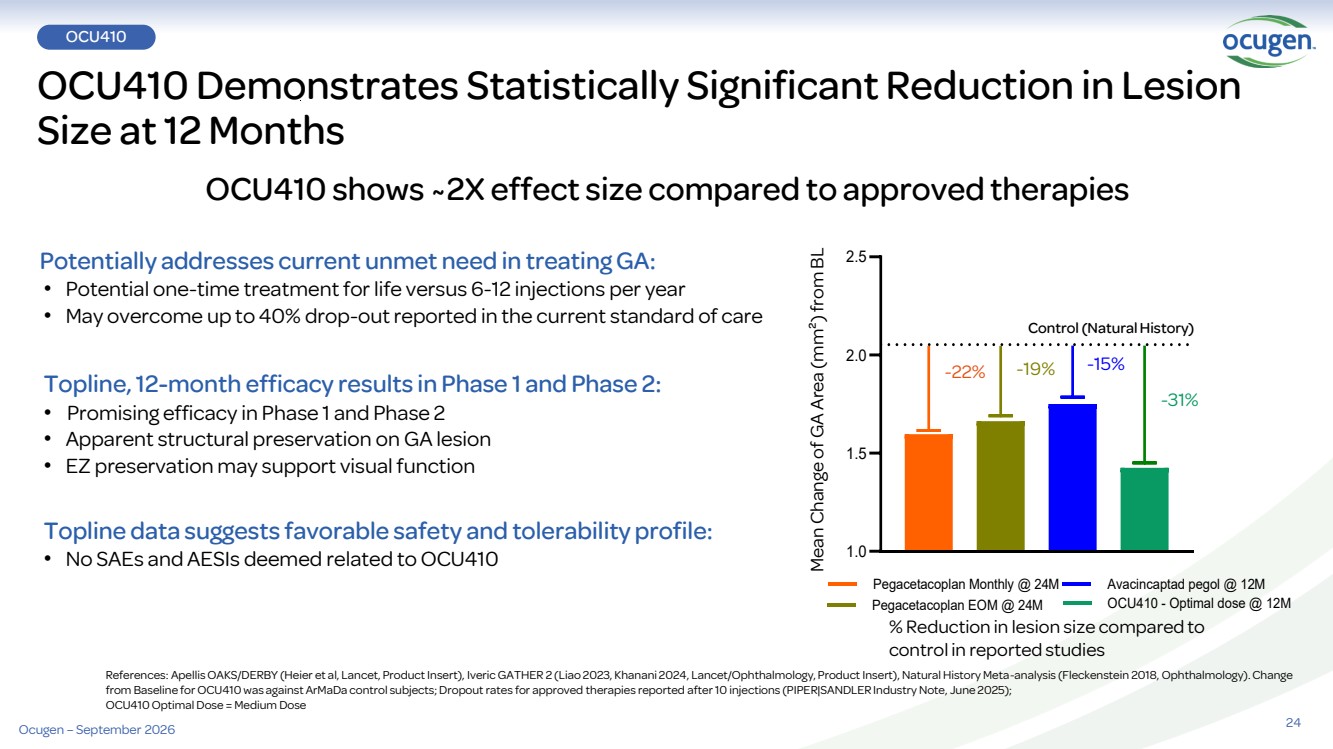
| OCU410 Demonstrates Statistically Significant Reduction in Lesion Size at 12 Months OCU410 shows ~2X effect size compared to approved therapies References: Apellis OAKS/DERBY (Heier et al, Lancet, Product Insert), IvericGATHER 2 (Liao 2023, Khanani 2024, Lancet/Ophthalmology, Product Insert), Natural History Meta-analysis (Fleckenstein 2018, Ophthalmology). Change from Baseline for OCU410 was against ArMaDa control subjects; Dropout rates for approved therapies reported after 10 injections (PIPER|SANDLER Industry Note, June 2025); OCU410 Optimal Dose = Medium Dose Potentially addresses current unmet need in treating GA: • Potential one-time treatment for life versus 6-12 injections per year • May overcome up to 40% drop-out reported in the current standard of care Topline, 12-month efficacy results in Phase 1 and Phase 2: • Promising efficacy in Phase 1 and Phase 2 • Apparent structural preservation on GA lesion • EZ preservation may support visual function Topline data suggests favorable safety and tolerability profile: • No SAEs and AESIs deemed related to OCU410 % Reduction in lesion size compared to control in reported studies 1.0 1.5 2.0 2.5 Pegacetacoplan Monthly @ 24M Pegacetacoplan EOM @ 24M Avacincaptad pegol @ 12M OCU410 - Optimal dose @ 12M Control (Natural History) -22% -19% -15% -31% Mean Change of GA Area (mm²) from BL 24 OCU410 Ocugen – September 2026 |
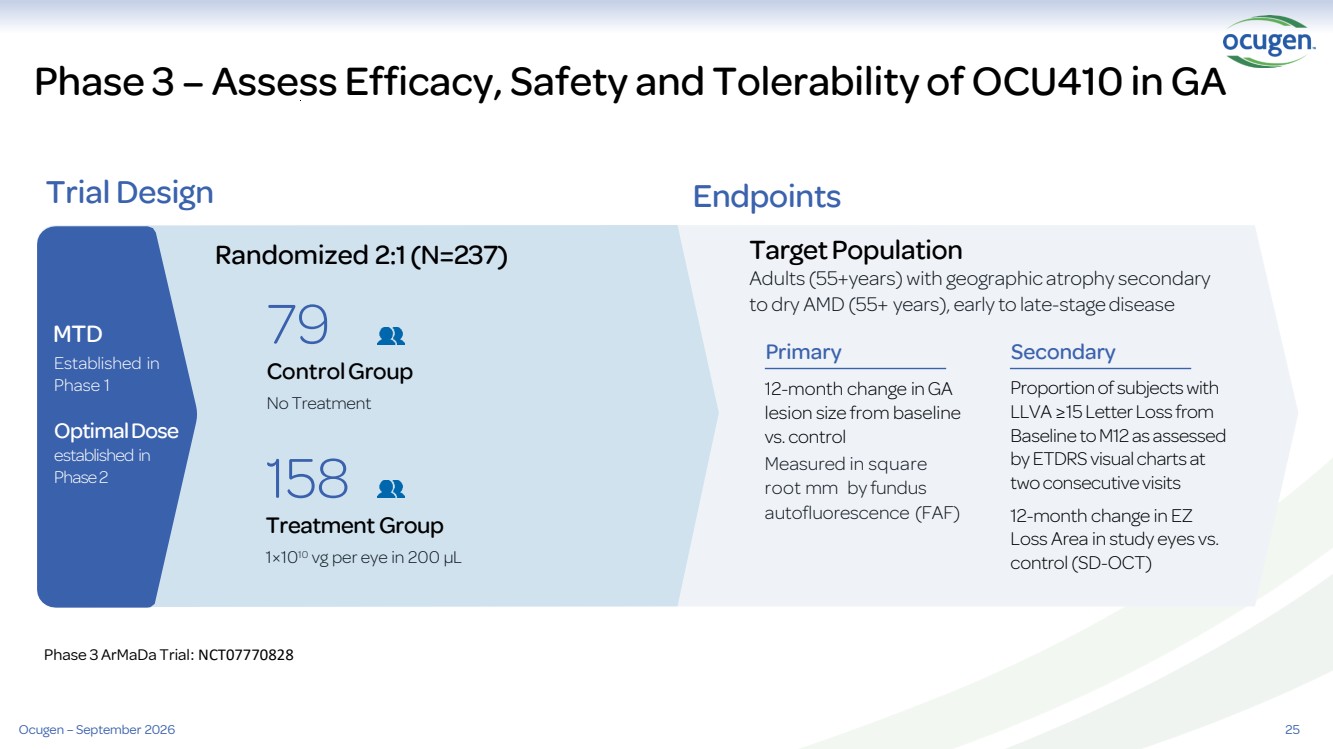
| 25 Phase 3 – Assess Efficacy, Safety and Tolerability of OCU410 in GA Trial Design Endpoints Randomized 2:1(N=237) Proportion of subjects with LLVA ≥15 Letter Loss from Baseline to M12 as assessed by ETDRS visual charts at two consecutive visits 12-month change in EZ Loss Area in study eyes vs. control (SD-OCT) TargetPopulation Adults (55+years) with geographic atrophy secondary to dry AMD (55+ years), early to late-stage disease 12-month change in GA lesion size from baseline vs. control Measured in square root mm by fundus autofluorescence (FAF) 158 Treatment Group 1×10¹⁰ vg per eye in 200 µL 79 ControlGroup No Treatment MTD Established in Phase 1 Optimal Dose established in Phase 2 Primary Secondary Ocugen – September 2026 Phase 3 ArMaDa Trial: NCT07770828 |
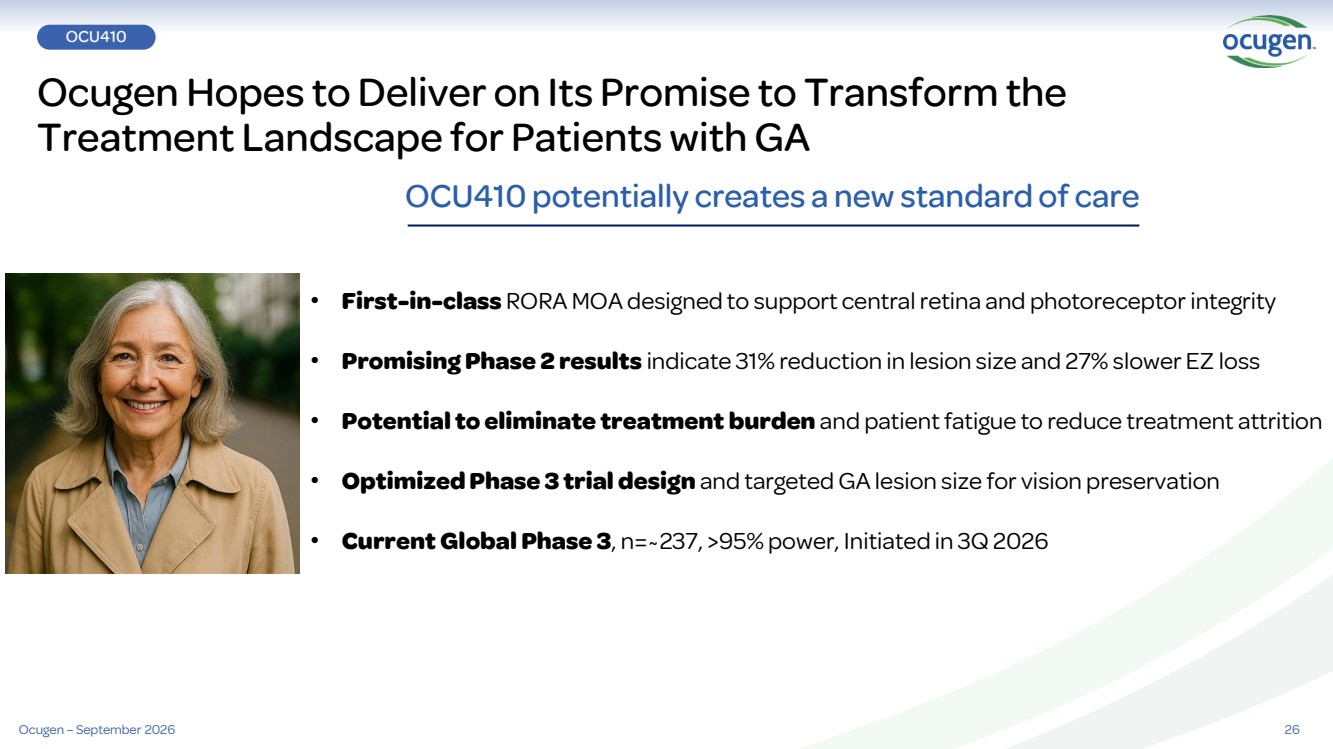
| Ocugen Hopes to Deliver on Its Promise to Transform the Treatment Landscape for Patients with GA 26 OCU410 potentially creates a new standard of care • First-in-class RORA MOA designed to support central retina and photoreceptor integrity • Promising Phase 2 results indicate 31% reduction in lesion size and 27% slower EZ loss • Potential to eliminate treatment burden and patient fatigue to reduce treatment attrition • Optimized Phase 3 trial design and targeted GA lesion size for vision preservation • Current Global Phase 3, n=~237, >95% power, Initiated in 3Q 2026 OCU410 Ocugen – September 2026 |
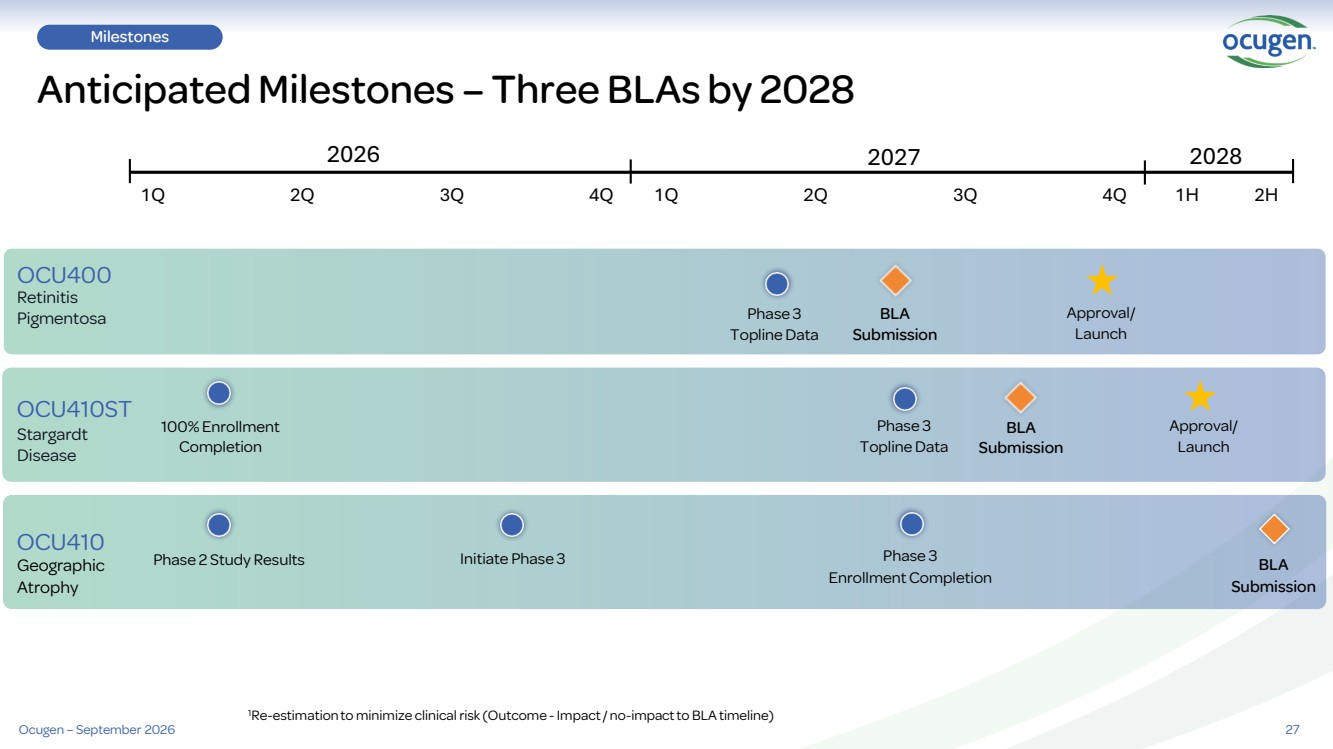
| 27 Milestones Anticipated Milestones – Three BLAs by 2028 Retinitis Pigmentosa Stargardt Disease Geographic Atrophy OCU400 OCU410ST OCU410 100% Enrollment Completion Phase 3 Topline Data Phase 2 Study Results Initiate Phase 3 2026 2027 1Q 2Q 3Q 4Q Phase 3 ToplineData BLA Submission Approval/ Launch Approval/ Launch BLA Submission 1H 2H 2028 Phase 3 Enrollment Completion 1Re-estimation to minimize clinical risk (Outcome -Impact / no-impact to BLA timeline) 1Q 2Q 3Q 4Q BLA Submission Ocugen – September 2026 |
| Advancing cures for blindness Advancing cures for blindness IR@ocugen.com |