
.2
COMPANY OVERVIEW Dinesh V. Patel, Ph.D. President & CEO August 5, 2026 1
Legal Disclaimer This presentation and any accompanying oral presentation contain forward - looking statements within the meaning of the Private Se curities Litigation Reform Act. All statements other than statements of historical facts contained in this presentation are forward - looking statemen ts, including statements regarding: our potential receipt of milestone and royalty payments from J&J and Takeda; market acceptance ICOTYDE TM (icotrokinra); the timing and results of ICOTYDE clinical trials; the commercial potential of rusfertide and other product candidates; our plans for future capital allocation ; t iming and results related to our pre - clinical and clinical product candidates (including PN - 881, PN - 477, PN - 458 and PN - 8047, among others) ; actions of the U.S. Food and Drug Administration (“FDA”) and foreign regulatory agencies, including expectations regarding timing of FDA approval of the NDA for rusfertide; and the scope of protection we are able to establish and maintain for intellectual property rights covering our p rod uct candidates. In some cases, you can identify forward - looking statements by terminology such as “anticipate,” “believe,” “continue,” “could,” “estimat e,” “expect,” “intend,” “may,” “plan,” “potentially,” “predict,” “should,” “will,” or the negative of these terms or other similar expressions. Forward - looking statements are subject to risks and uncertainties, including those discussed in our filings with the Securities and Exchange Commission, including in the “Risk Factors” and “Management’s Discussion and Analysis of Financial Condition and Results of O per ations” sections of our most recently filed periodic reports on Form 10 - K and Form 10 - Q and subsequent filings and in the documents incorporated by reference therein. Because forward - looking statements are inherently subject to risks and uncertainties, some of which cannot be predicted or quant ified and some of which are beyond our control, you should not rely on these forward - looking statements as predictions of future events. The event s and circumstances reflected in our forward - looking statements may not be achieved or occur and actual results could differ materially from those p rojected in the forward - looking statements. The information included in these materials is provided as of the date specified on the cover page of thi s p resentation, unless specified elsewhere herein, and is qualified as such. Except as required by applicable law, we undertake no obligation to upd ate any forward - looking statements or other information contained herein, whether as a result of any new information, future events, changed circumst anc es or otherwise. This presentation concerns products under clinical investigation which have not yet been approved for marketing by the FDA. T hey are currently limited by Federal law to investigational use. No representation is made as to their safety or effectiveness for the purposes for whi ch they are being investigated. All copyrights and trademarks included herein are the property of their respective owners. 2
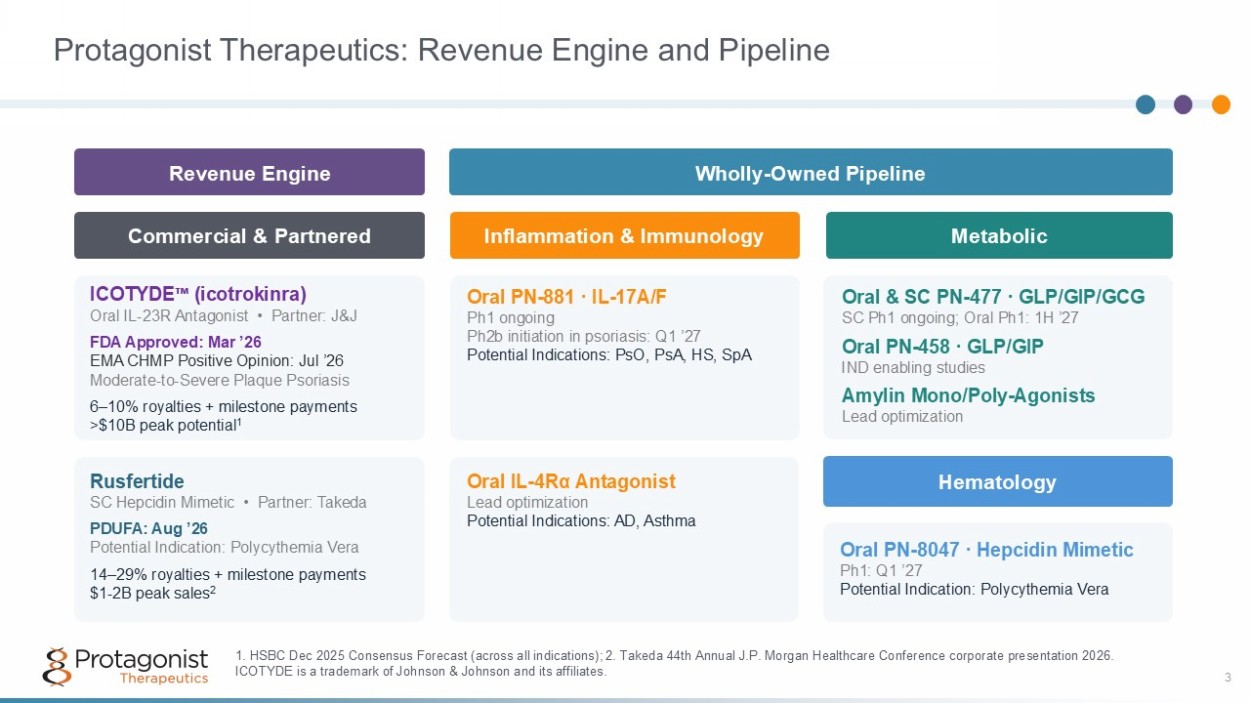
Commercial & Partnered Inflammation & Immunology Metabolic ICOTYDE ( icotrokinra ) Oral IL - 23R Antagonist • Partner: J&J FDA Approved: Mar ’26 EMA CHMP Positive Opinion: Jul ’26 Moderate - to - Severe Plaque Psoriasis 6 – 10% royalties + milestone payments >$10B peak potential 1 Rusfertide SC Hepcidin Mimetic • Partner: Takeda PDUFA: Aug ’26 Potential Indication: Polycythemia Vera 14 – 29% royalties + milestone payments $1 - 2B peak sales 2 Oral PN - 881 · IL - 17A/F Ph1 ongoing Ph2b initiation in psoriasis: Q1 ’27 Potential Indications: PsO, PsA, HS, SpA Oral IL - 4Rα Antagonist Lead optimization Potential Indications: AD, Asthma Oral & SC PN - 477 · GLP/GIP/GCG SC Ph1 ongoing; Oral Ph1: 1H ’27 Oral PN - 458 · GLP/GIP IND enabling studies Amylin Mono/Poly - Agonists Lead optimization Revenue Engine Wholly - Owned Pipeline Protagonist Therapeutics: Revenue Engine and Pipeline Oral PN - 8047 · Hepcidin Mimetic Ph1: Q1 ’27 Potential Indication: Polycythemia Vera Hematology 1. HSBC Dec 2025 Consensus Forecast (across all indications); 2. Takeda 44th Annual J.P. Morgan Healthcare Conference corporate presentation 2026. ICOTYDE is a trademark of Johnson & Johnson and its affiliates. 3
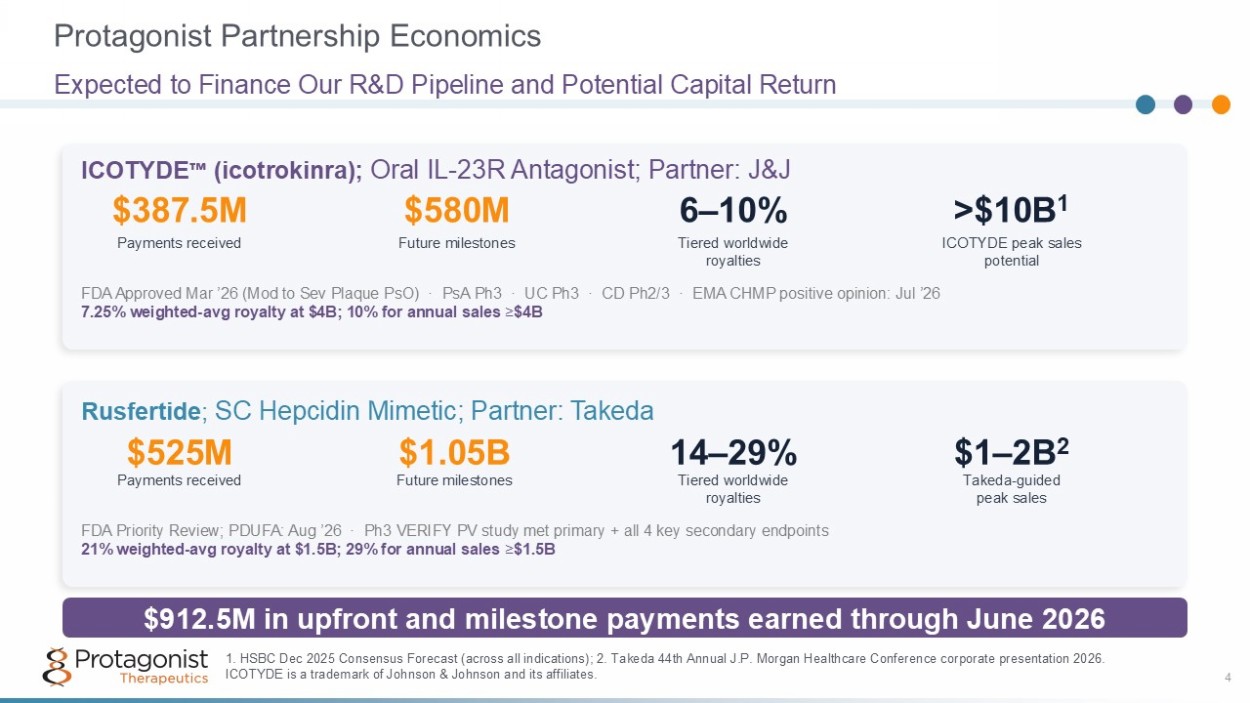
ICOTYDE (icotrokinra); Oral IL - 23R Antagonist; Partner: J&J $387.5M Payments received $580M Future milestones 6 – 10% Tiered worldwide royalties >$10B 1 ICOTYDE peak sales potential FDA Approved Mar ’26 (Mod to Sev Plaque PsO ) · PsA Ph3 · UC Ph3 · CD Ph2/3 · EMA CHMP positive opinion: Jul ’26 7.25% weighted - avg royalty at $4B; 10% for annual sales ≥ $4B Rusfertide ; SC Hepcidin Mimetic; Partner: Takeda $525M Payments received $1.05B Future milestones 14 – 29% Tiered worldwide royalties $1 – 2B 2 Takeda - guided peak sales FDA Priority Review; PDUFA: Aug ’26 · Ph3 VERIFY PV study met primary + all 4 key secondary endpoints 21% weighted - avg royalty at $1.5B; 29% for annual sales ≥ $1.5B Protagonist Partnership Economics Expected to Finance Our R&D Pipeline and Potential Capital Return 4 1. HSBC Dec 2025 Consensus Forecast (across all indications); 2. Takeda 44th Annual J.P. Morgan Healthcare Conference corporate presentation 2026. ICOTYDE is a trademark of Johnson & Johnson and its affiliates. $912.5M in upfront and milestone payments earned through June 2026
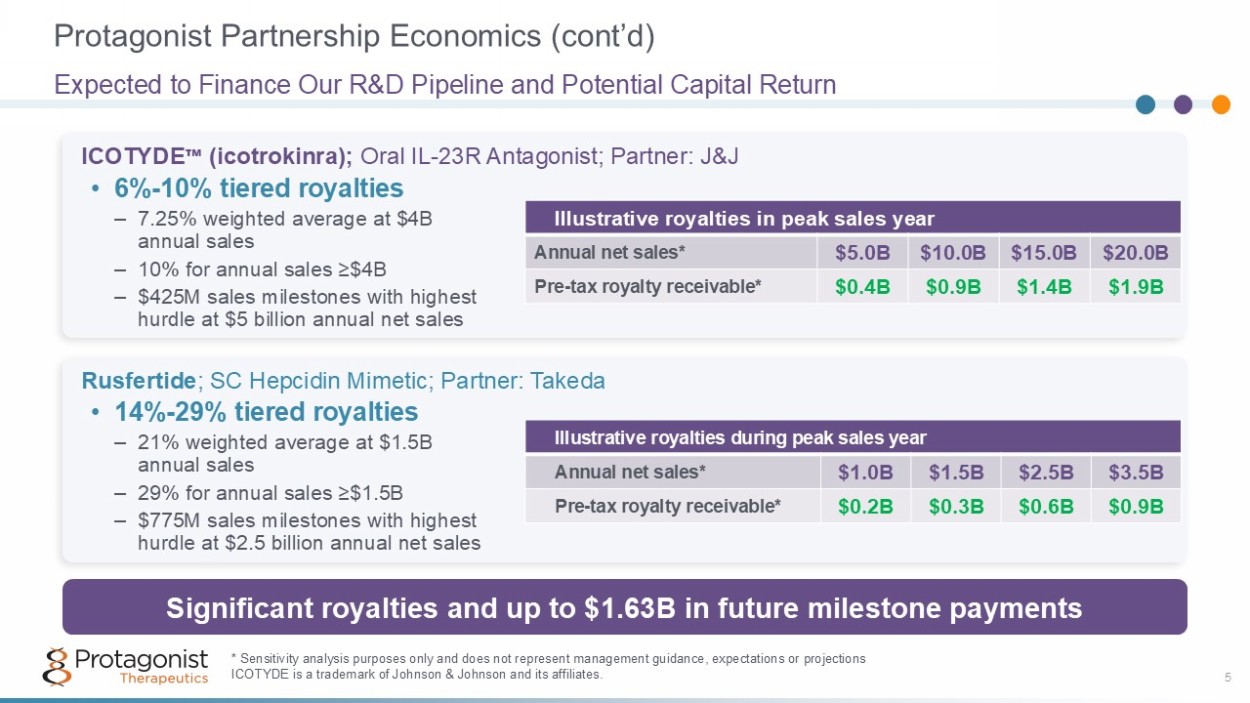
ICOTYDE (icotrokinra); Oral IL - 23R Antagonist; Partner: J&J Rusfertide ; SC Hepcidin Mimetic; Partner: Takeda Significant royalties and up to $1.63B in future milestone payments Protagonist Partnership Economics (cont’d) Expected to Finance Our R&D Pipeline and Potential Capital Return * Sensitivity analysis purposes only and does not represent management guidance, expectations or projections ICOTYDE is a trademark of Johnson & Johnson and its affiliates. Illustrative royalties in peak sales year $20.0B $15.0B $10.0B $5.0B Annual net sales* $1.9B $1.4B $0.9B $0.4B Pre - tax royalty receivable* • 6% - 10% tiered royalties – 7.25% weighted average at $4B annual sales – 10% for annual sales ≥$4B – $425M sales milestones with highest hurdle at $5 billion annual net sales • 14% - 29% tiered royalties – 21% weighted average at $1.5B annual sales – 29% for annual sales ≥$1.5B – $775M sales milestones with highest hurdle at $2.5 billion annual net sales lllustrative royalties during peak sales year $3.5B $2.5B $1.5B $1.0B Annual net sales* $0.9B $0.6B $0.3B $0.2B Pre - tax royalty receivable* 5
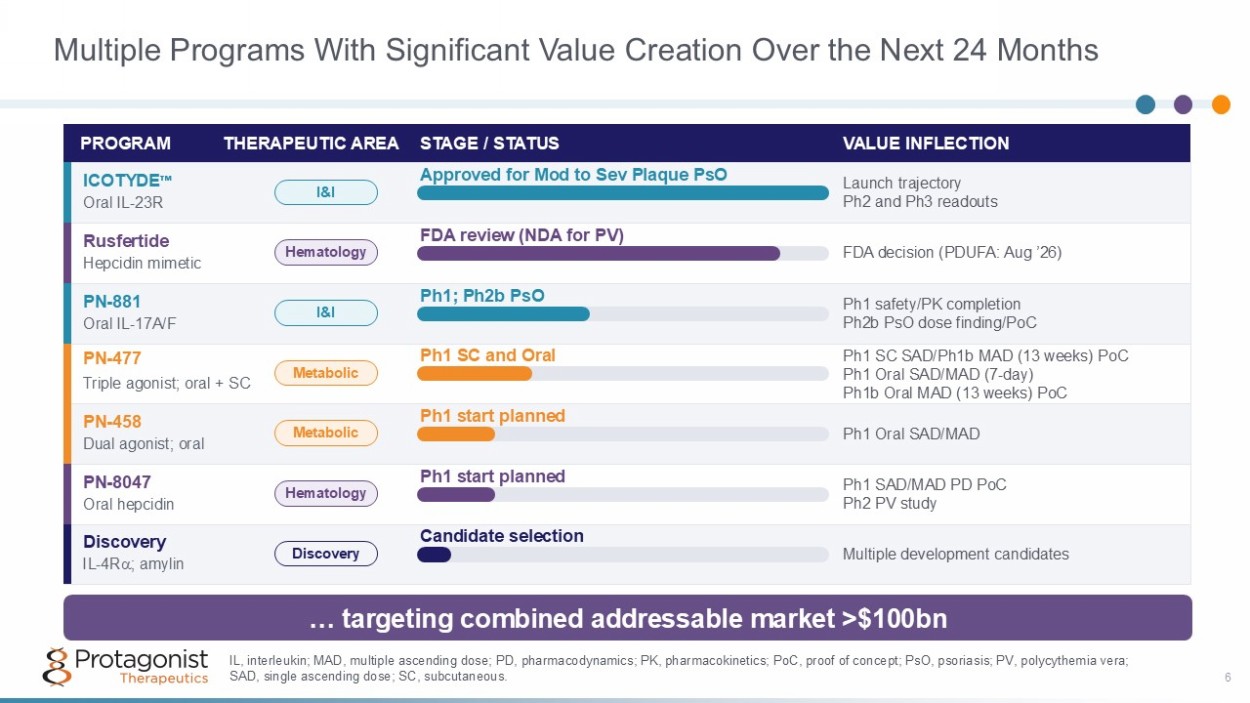
PROGRAM THERAPEUTIC AREA STAGE / STATUS VALUE INFLECTION ICOTYDE Oral IL - 23R I&I Approved for Mod to Sev Plaque PsO Launch trajectory Ph2 and Ph3 readouts Rusfertide Hepcidin mimetic Hematology FDA review (NDA for PV) FDA decision (PDUFA: Aug ’26) PN - 881 Oral IL - 17A/F I&I Ph1; Ph2b PsO Ph1 safety/PK completion Ph2b PsO dose finding/PoC PN - 477 Triple agonist; oral + SC Metabolic Ph1 SC and Oral Ph1 SC SAD/Ph1b MAD (13 weeks) PoC Ph1 Oral SAD/MAD (7 - day) Ph1b Oral MAD (13 weeks) PoC PN - 458 Dual agonist; oral Metabolic Ph1 start planned Ph1 Oral SAD/MAD PN - 8047 Oral hepcidin Hematology Ph1 start planned Ph1 SAD/MAD PD PoC Ph2 PV study Discovery IL - 4R ; amylin Discovery Candidate selection Multiple development candidates Multiple Programs With Significant Value Creation Over the Next 24 Months IL, interleukin; MAD, multiple ascending dose; PD, pharmacodynamics; PK, pharmacokinetics; PoC, proof of concept; PsO, psoria sis ; PV, polycythemia vera; SAD, single ascending dose; SC, subcutaneous. … targeting combined addressable market >$100bn 6
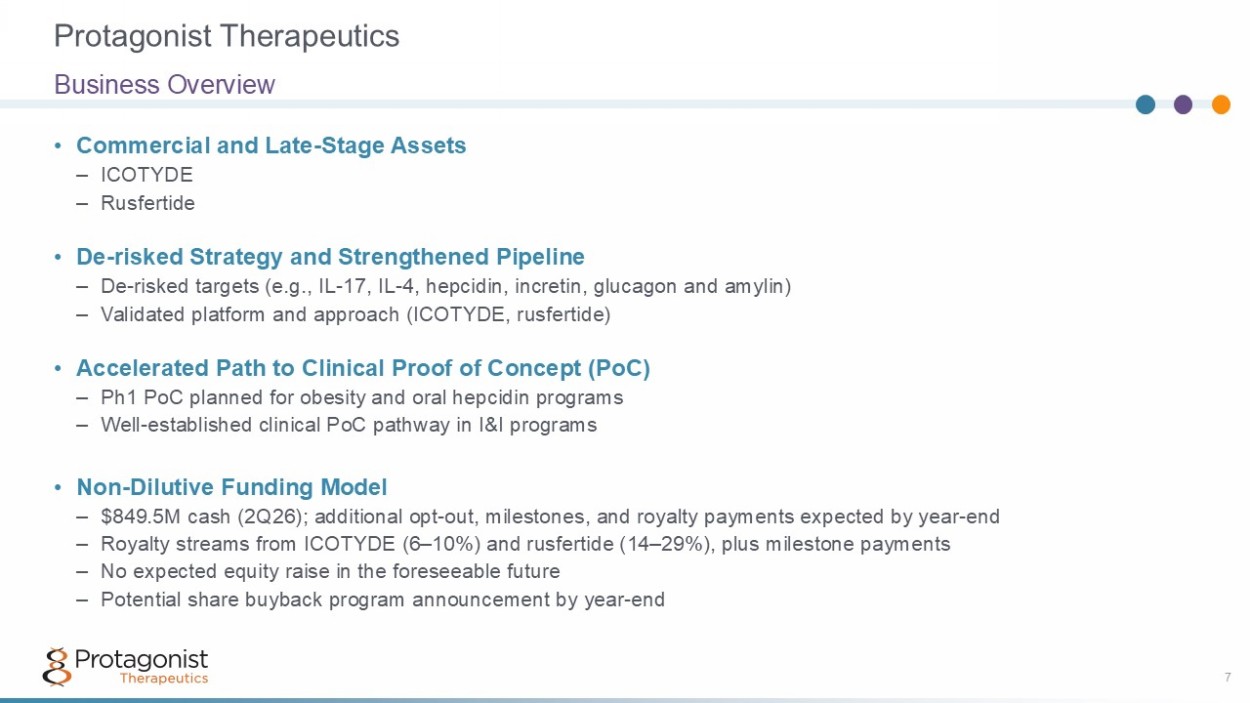
Protagonist Therapeutics 7 • Commercial and Late - Stage Assets – ICOTYDE – Rusfertide • De - risked Strategy and Strengthened Pipeline – De - risked targets (e.g., IL - 17, IL - 4, hepcidin, incretin, glucagon and amylin) – Validated platform and approach (ICOTYDE, rusfertide) • Accelerated Path to Clinical Proof of Concept (PoC) – Ph1 PoC planned for obesity and oral hepcidin programs – Well - established clinical PoC pathway in I&I programs • Non - Dilutive Funding Model – $849.5M cash (2Q26); additional opt - out, milestones, and royalty payments expected by year - end – Royalty streams from ICOTYDE (6 – 10%) and rusfertide (14 – 29%), plus milestone payments – No expected equity raise in the foreseeable future – Potential share buyback program announcement by year - end Business Overview
ICOTYDE (icotrokinra; JNJ - 2113, formerly PN - 235): Targeted Oral IL - 23 Receptor Antagonist Peptide Setting a new standard of treatment in moderate to severe plaque psoriasis and other IL - 23 mediated diseases J&J Partnership: 2017 to Present 8 ICOTYDE is a trademark of Johnson & Johnson and its affiliates
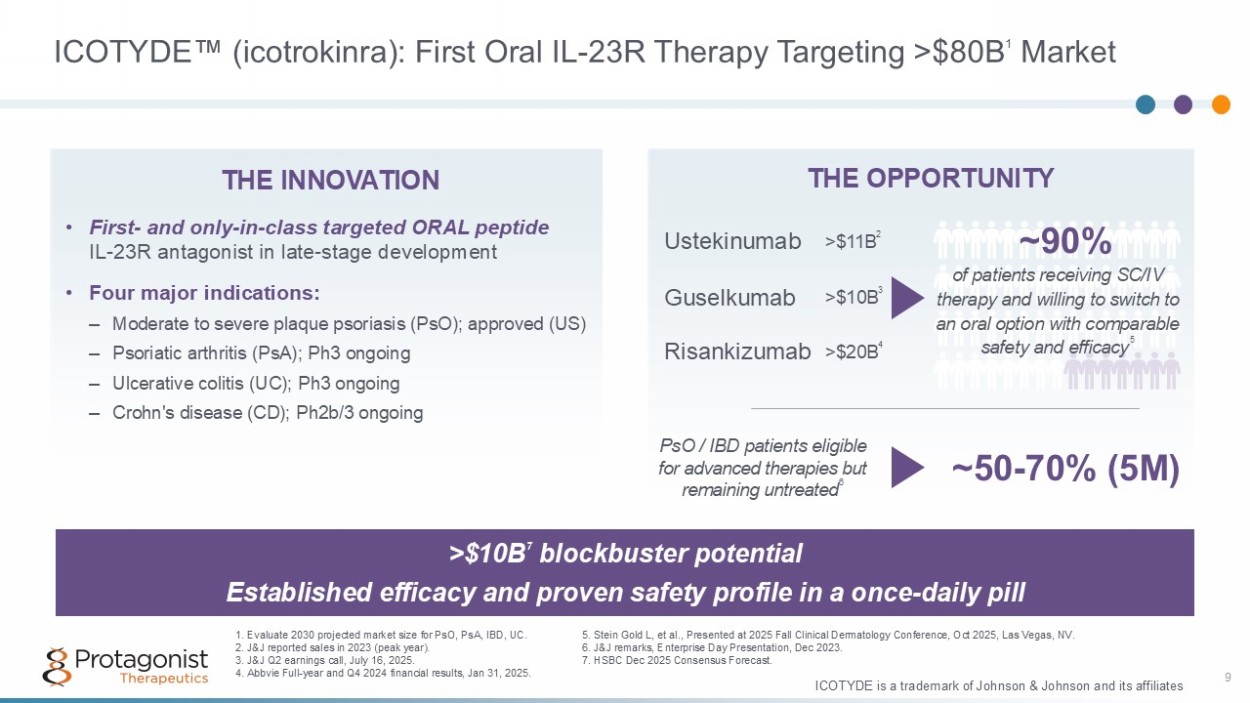
ICOTYDE (icotrokinra): First Oral IL - 23R Therapy Targeting >$80B 1 Market 9 >$10B 7 blockbuster potential Established efficacy and proven safety profile in a once - daily pill WW market Size 2030 est. (7 - yr CAGR) 1 THE OPPORTUNITY of patients receiving SC/IV therapy and willing to switch to an oral option with comparable safety and efficacy 5 ~90% WW market Size 2030 est. (7 - yr CAGR) 1 THE INNOVATION >$20B 4 1. Evaluate 2030 projected market size for PsO, PsA, IBD, UC. 2. J&J reported sales in 2023 (peak year). 3. J&J Q2 earnings call, July 16, 2025. 4. Abbvie Full - year and Q4 2024 financial results, Jan 31, 2025. >$11B 2 PsO / IBD patients eligible for advanced therapies but remaining untreated 6 ~50 - 70% (5M) >$10B 3 • First - and only - in - class targeted ORAL peptide IL - 23R antagonist in late - stage development • Four major indications: – Moderate to severe plaque psoriasis (PsO); approved (US) – Psoriatic arthritis (PsA) ; Ph3 ongoing – Ulcerative colitis (UC); Ph3 ongoing – Crohn's disease (CD); Ph2b/3 ongoing 5 . Stein Gold L, et al., Presented at 2025 Fall Clinical Dermatology Conference, Oct 2025, Las Vegas, NV. 6. J&J remarks, Enterprise Day Presentation, Dec 2023. 7. HSBC Dec 2025 Consensus Forecast. Ustekinumab Guselkumab Risankizumab ICOTYDE is a trademark of Johnson & Johnson and its affiliates
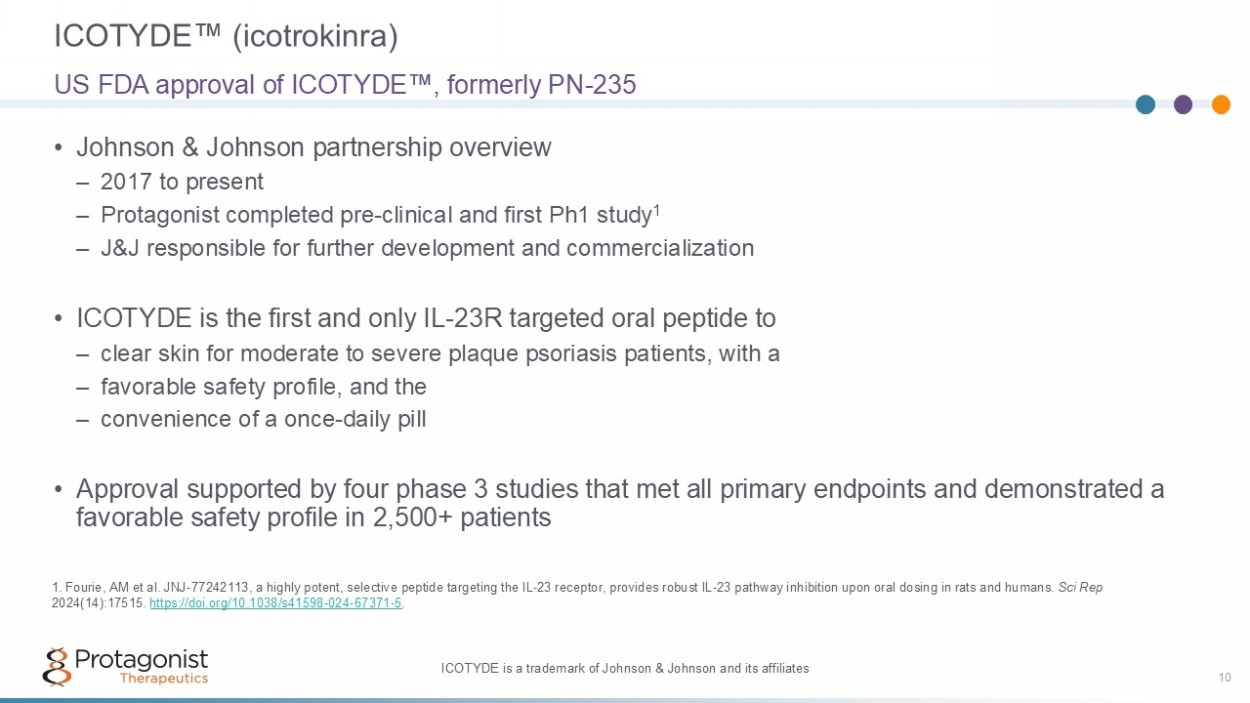
ICOTYDE (icotrokinra) 10 • Johnson & Johnson partnership overview – 2017 to present – Protagonist completed pre - clinical and first Ph1 study 1 – J&J responsible for further development and commercialization • ICOTYDE is the first and only IL - 23R targeted oral peptide to – clear skin for moderate to severe plaque psoriasis patients, with a – favorable safety profile, and the – convenience of a once - daily pill • Approval supported by four phase 3 studies that met all primary endpoints and demonstrated a favorable safety profile in 2,500+ patients US FDA approval of ICOTYDE , formerly PN - 235 1 . Fourie, AM et al. JNJ - 77242113, a highly potent, selective peptide targeting the IL - 23 receptor, provides robust IL - 23 pathway i nhibition upon oral dosing in rats and humans. Sci Rep 2024(14):17515. https://doi.org/10.1038/s41598 - 024 - 67371 - 5 . ICOTYDE is a trademark of Johnson & Johnson and its affiliates
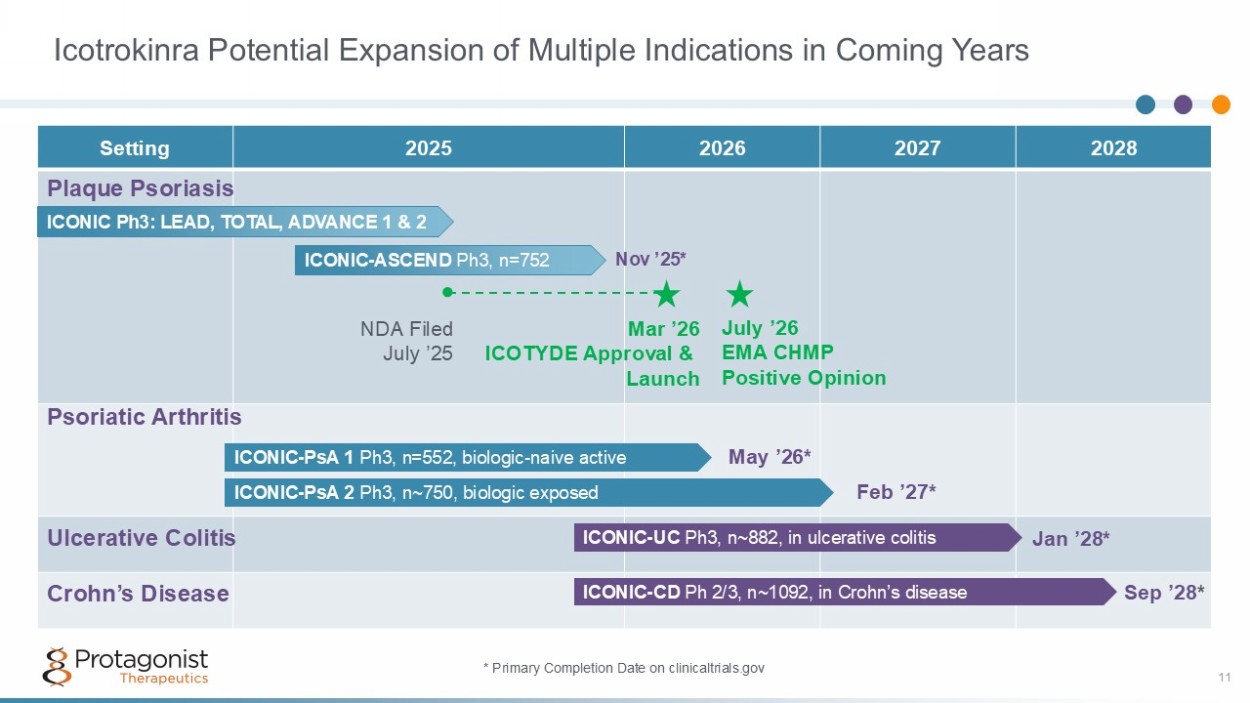
Icotrokinra Potential Expansion of Multiple Indications in Coming Years 11 2028 2027 2026 2025 Setting ICONIC - PsA 1 Ph3, n = 552, biologic - naive active ICONIC - PsA 2 Ph3, n~750, biologic exposed ICONIC - UC Ph3, n~882, in ulcerative colitis ICONIC - CD Ph 2/3, n~1092, in Crohn’s disease ICONIC Ph3: LEAD, TOTAL, ADVANCE 1 & 2 Sep ’28 * Jan ’28* Feb ’27* ● * Primary Completion Date on clinicaltrials.gov ICONIC - ASCEND Ph3, n=752 Nov ’25* NDA Filed July ’25 Mar ’26 ICOTYDE Approval & Launch Plaque Psoriasis Psoriatic Arthritis Ulcerative Colitis Crohn’s Disease May ’26* July ’26 EMA CHMP Positive Opinion
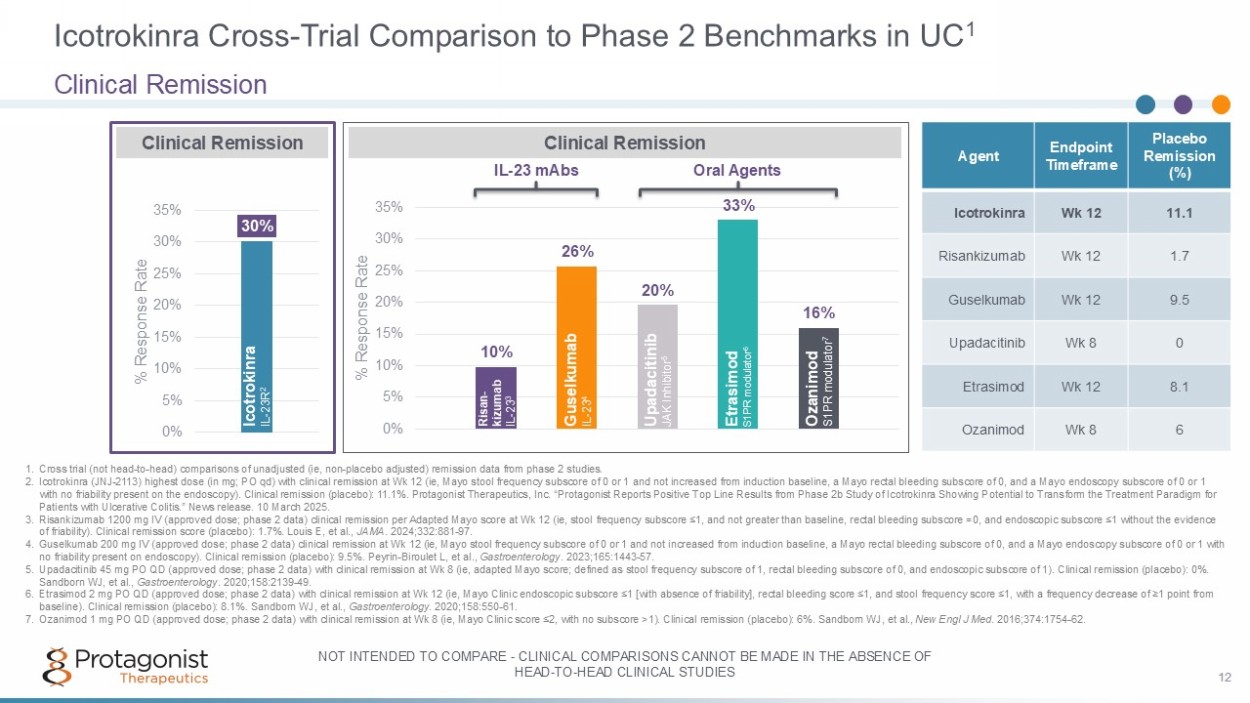
10% 26% 20% 33% 16% 0% 5% 10% 15% 20% 25% 30% 35% % Response Rate Icotrokinra Cross - Trial Comparison to Phase 2 Benchmarks in UC 1 30% 0% 5% 10% 15% 20% 25% 30% 35% % Response Rate Clinical Remission 12 1. Cross trial (not head - to - head) comparisons of unadjusted (ie, non - placebo adjusted) remission data from phase 2 studies. 2. Icotrokinra (JNJ - 2113) highest dose (in mg; PO qd) with clinical remission at Wk 12 (ie, Mayo stool frequency subscore of 0 or 1 and not increased from induction baseline, a Mayo rectal bleeding subscore of 0, and a Mayo endoscopy subscore of 0 or 1 with no friability present on the endoscopy). Clinical remission (placebo): 11.1 %. Protagonist Therapeutics, Inc. “ Protagonist Reports Positive Top Line Results from Phase 2b Study of Icotrokinra Showing Potential to Transform the Treatment Pa radigm for Patients with Ulcerative Colitis .” News release. 10 March 2025. 3. Risankizumab 1200 mg IV (approved dose; phase 2 data) clinical remission per Adapted Mayo score at Wk 12 (ie, stool frequency su bscore ≤1, and not greater than baseline, rectal bleeding subscore =0, and endoscopic subscore ≤1 without the evidence of friability). Clinical remission score (placebo): 1.7%. Louis E, et al., JAMA . 2024;332:881 - 97. 4. Guselkumab 200 mg IV (approved dose; phase 2 data) clinical remission at Wk 12 (ie, Mayo stool frequency subscore of 0 or 1 and not incr ea sed from induction baseline, a Mayo rectal bleeding subscore of 0, and a Mayo endoscopy subscore of 0 or 1 with no friability present on endoscopy). Clinical remission (placebo): 9.5%. Peyrin - Biroulet L, et al., Gastroenterology . 2023;165:1443 - 57. 5. Upadacitinib 45 mg PO QD (approved dose; phase 2 data) with clinical remission at Wk 8 (ie, adapted Mayo score; defined as stool frequency s ubscore of 1, rectal bleeding subscore of 0, and endoscopic subscore of 1). Clinical remission (placebo): 0%. Sandborn WJ, et al., Gastroenterology . 2020;158:2139 - 49. 6. Etrasimod 2 mg PO QD (approved dose; phase 2 data) with clinical remission at Wk 12 (ie, Mayo Clinic endoscopic subscore ≤1 [with absen ce of friability], rectal bleeding score ≤1, and stool frequency score ≤1, with a frequency decrease of ≥1 point from baseline). Clinical remission (placebo): 8.1%. Sandborn WJ, et al., Gastroenterology . 2020;158:550 - 61. 7. Ozanimod 1 mg PO QD (approved dose; phase 2 data) with clinical remission at Wk 8 (ie, Mayo Clinic score ≤2, with no subscore >1). Cli ni cal remission (placebo): 6%. Sandborn WJ, et al., New Engl J Med . 2016;374:1754 - 62. Clinical Remission Icotrokinra IL - 23R 2 Placebo Remission (%) Endpoint Timeframe Agent 11.1 Wk 12 Icotrokinra 1.7 Wk 12 Risankizumab 9.5 Wk 12 Guselkumab 0 Wk 8 Upadacitinib 8.1 Wk 12 Etrasimod 6 Wk 8 Ozanimod 12 NOT INTENDED TO COMPARE - CLINICAL COMPARISONS CANNOT BE MADE IN THE ABSENCE OF HEAD - TO - HEAD CLINICAL STUDIES Clinical Remission Oral Agents IL - 23 mAbs Upadacitinib JAK Inhibitor 5 Etrasimod S1PR modulator 6 Ozanimod S1PR modulator 7 Guselkumab IL - 23 4 Risan - kizumab IL - 23 3
13 Rusfertide: A Potential Practice - Changing, New Standard - of - Care in Polycythemia Vera (PV) PV: A rare myeloproliferative neoplasm characterized by excessive production of red blood cells 1 - Primary treatment goal is to maintain Hct <45% 2,3,4 , Polycythemia Vera. 1. https://rarediseases.org/rare - diseases/polycythemia - vera/ . 2. Spivak JL. Ann Hematol 2018;19(2):1 - 14. 3. Marchioli R, et al. N Engl J Med 2013;368:22 - 33. 4. Barbui, T, et al. Leukemia 2018;32;1057 - 69.
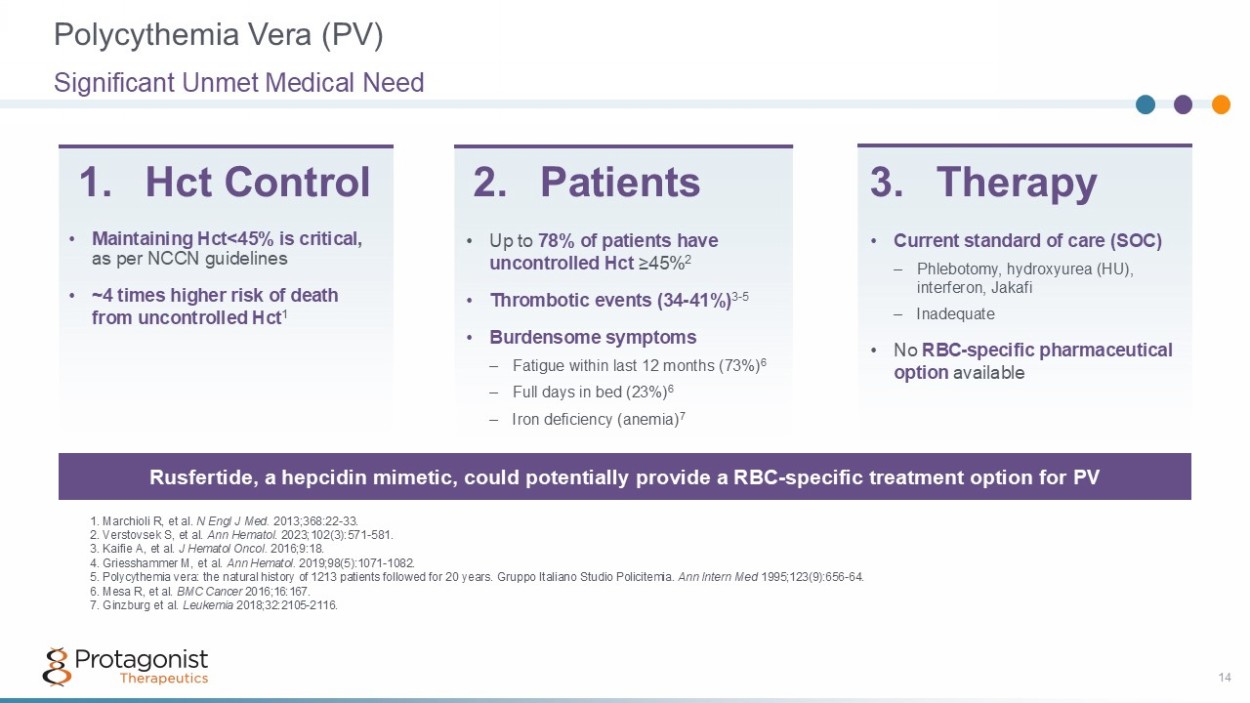
• Up to 78% of patients have uncontrolled Hct ≥45% 2 • Thrombotic events (34 - 41%) 3 - 5 • Burdensome symptoms – Fatigue within last 12 months (73%) 6 – Full days in bed (23%) 6 – Iron deficiency (anemia) 7 1. Marchioli R, et al. N Engl J Med. 2013;368:22 - 33. 2. Verstovsek S, et al. Ann Hematol . 2023;102(3):571 - 581. 3. Kaifie A, et al. J Hematol Oncol . 2016;9:18. 4. Griesshammer M, et al. Ann Hematol . 2019;98(5):1071 - 1082. 5. Polycythemia vera: the natural history of 1213 patients followed for 20 years. Gruppo Italiano Studio Policitemia. Ann Intern Med 1995;123(9):656 - 64. 6. Mesa R, et al. BMC Cancer 2016;16:167. 7. Ginzburg et al. Leukemia 2018;32:2105 - 2116. 1. Hct Control Rusfertide, a hepcidin mimetic, could potentially provide a RBC - specific treatment option for PV • Current standard of care (SOC) – Phlebotomy, hydroxyurea (HU), interferon, Jakafi – Inadequate • No RBC - specific pharmaceutical option available 2. Patients 3. Therapy • Maintaining Hct<45% is critical , as per NCCN guidelines • ~4 times higher risk of death from uncontrolled Hct 1 Polycythemia Vera (PV) Significant Unmet Medical Need 14
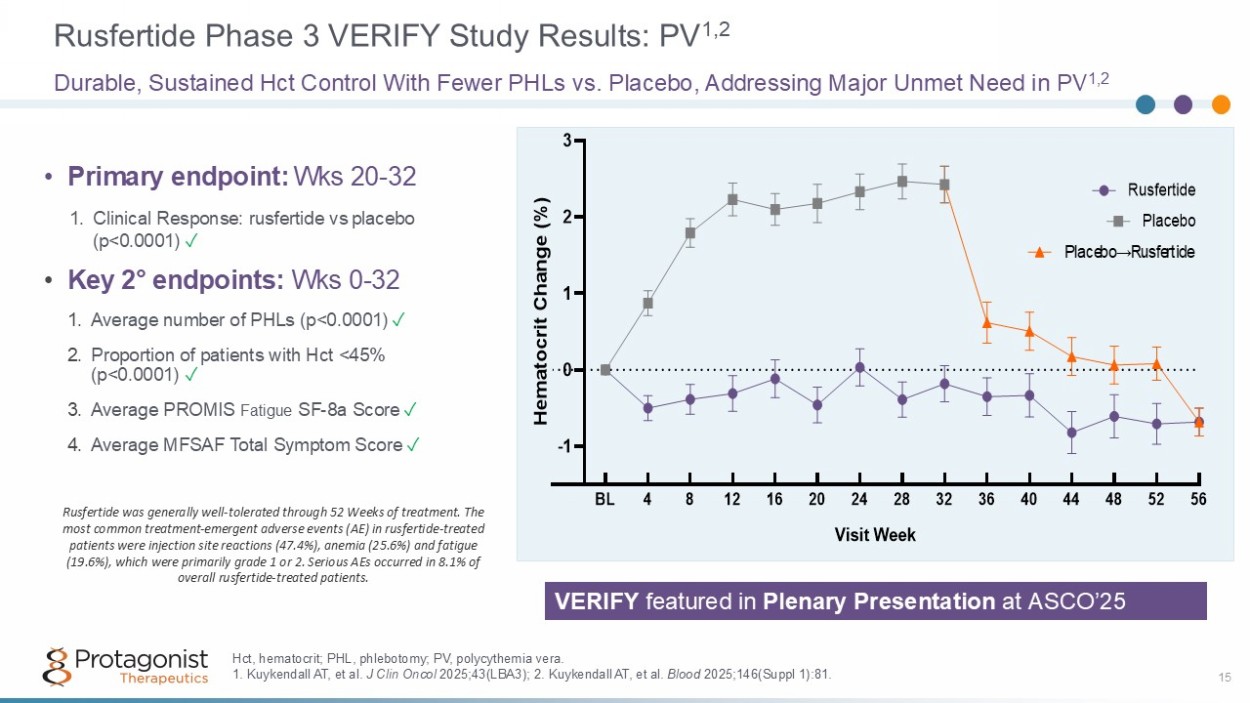
Rusfertide Phase 3 VERIFY Study Results: PV 1,2 15 Durable, Sustained Hct Control With Fewer PHLs vs. Placebo, Addressing Major Unmet Need in PV 1,2 -1 0 1 2 3 Visit Week H e m a t o c r i t C h a n g e ( % ) BL 4 8 12 16 20 24 28 32 36 40 44 48 52 56 Rusfertide Placebo Placebo→Rusfertide Hct, hematocrit; PHL, phlebotomy; PV, polycythemia vera. 1. Kuykendall AT, et al. J Clin Oncol 2025;43(LBA3); 2. Kuykendall AT, et al. Blood 2025;146(Suppl 1):81. • Primary endpoint: Wks 20 - 32 1. Clinical Response: rusfertide vs placebo (p<0.0001) ✓ • Key 2 ƒ endpoints: Wks 0 - 32 1. Average number of PHLs (p<0.0001) ✓ 2. Proportion of patients with Hct <45% (p<0.0001) ✓ 3. Average PROMIS Fatigue SF - 8a Score ✓ 4. Average MFSAF Total Symptom Score ✓ Rusfertide was generally well - tolerated through 52 Weeks of treatment. The most common treatment - emergent adverse events (AE) in rusfertide - treated patients were injection site reactions (47.4%), anemia (25.6%) and fatigue (19.6%), which were primarily grade 1 or 2. Serious AEs occurred in 8.1% of overall rusfertide - treated patients. VERIFY featured in Plenary Presentation at ASCO’25
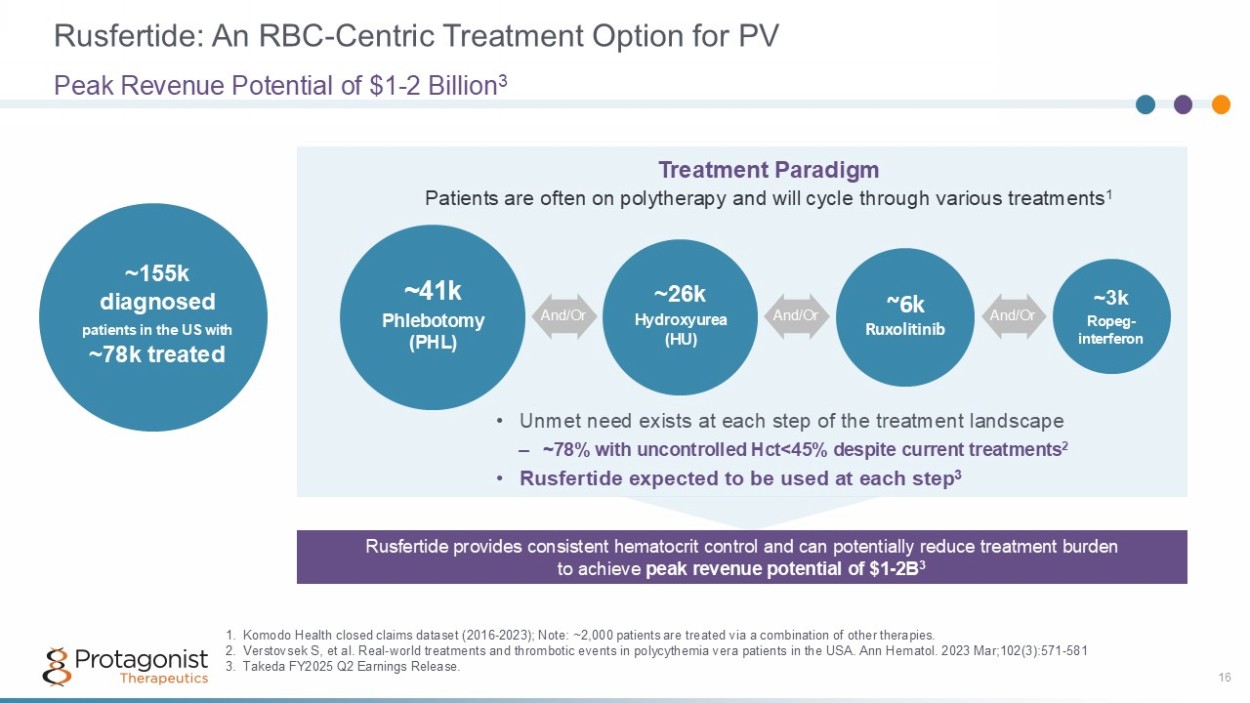
Rusfertide: An RBC - Centric Treatment Option for PV 16 Peak Revenue Potential of $1 - 2 Billion 3 ~155k diagnosed patients in the US with ~78k treated ~41k Phlebotomy (PHL) ~26k Hydroxy u rea (HU) ~6k Ruxolitinib ~3k Ropeg - interferon And/Or And/Or And/Or 1. Komodo Health closed claims dataset (2016 - 2023); Note: ~2,000 patients are treated via a combination of other therapies. 2. Verstovsek S, et al. Real - world treatments and thrombotic events in polycythemia vera patients in the USA. Ann Hematol. 2023 Mar ;102(3):571 - 581 3. Takeda FY2025 Q2 Earnings Release. Treatment Paradigm Patients are often on polytherapy and will cycle through various treatments 1 • Unmet need exists at each step of the treatment landscape – ~78% with uncontrolled Hct<45% despite current treatments 2 • Rusfertide expected to be used at each step 3 Rusfertide provides consistent hematocrit control and can potentially reduce treatment burden to achieve peak revenue potential of $1 - 2B 3
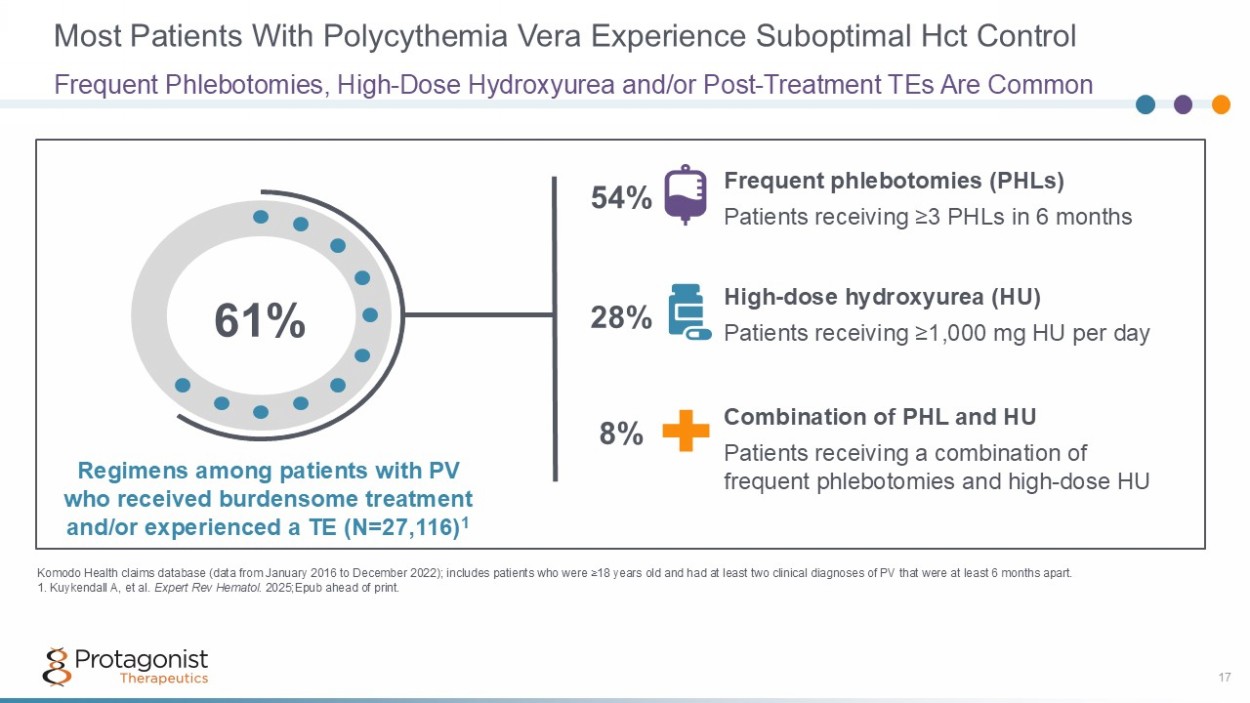
Most Patients With Polycythemia Vera Experience Suboptimal Hct Control Frequent Phlebotomies, High - Dose Hydroxyurea and/or Post - Treatment TEs Are Common Komodo Health claims database (data from January 2016 to December 2022); includes patients who were ≥18 years old and had at lea st two clinical diagnoses of PV that were at least 6 months apart. 1. Kuykendall A, et al. Expert Rev Hematol . 2025;Epub ahead of print. 17 61% Frequent phlebotomies (PHLs) Patients receiving ≥3 PHLs in 6 months High - dose hydroxyurea (HU) Patients receiving ≥1,000 mg HU per day Combination of PHL and HU Patients receiving a combination of frequent phlebotomies and high - dose HU Regimens among patients with PV who received burdensome treatment and/or experienced a TE (N=27,116) 1 54% 28% 8%
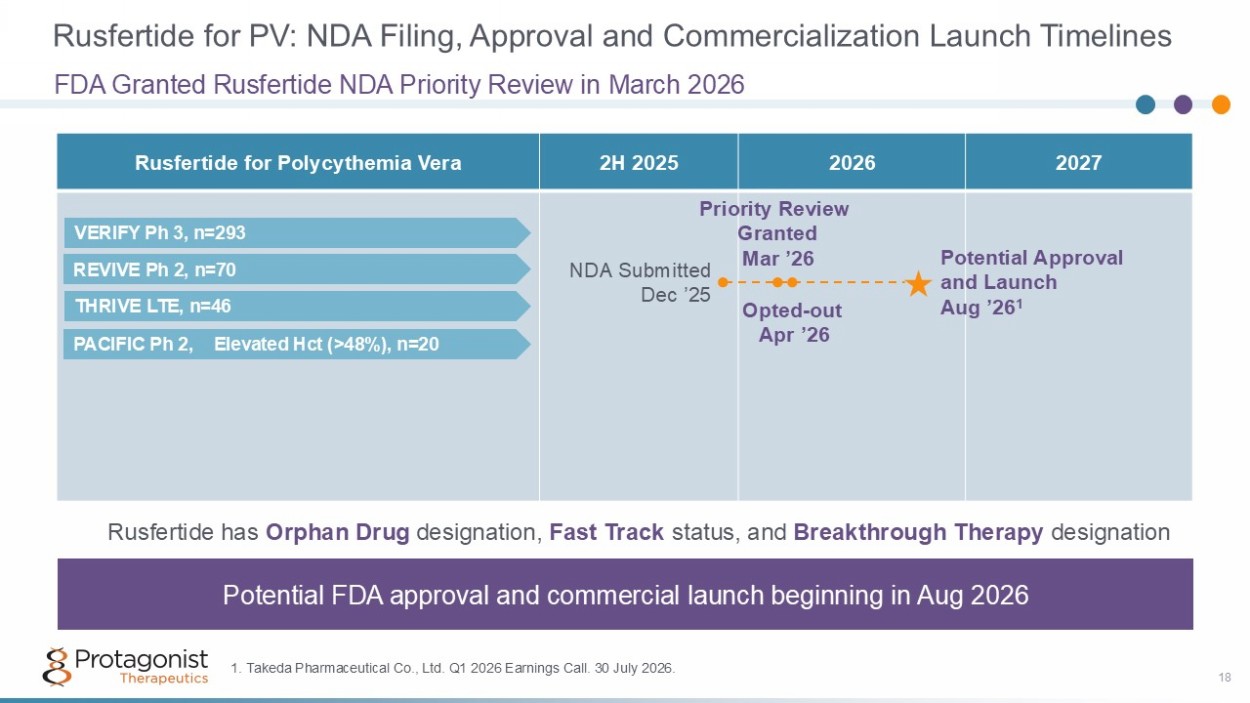
Rusfertide for PV: NDA Filing, Approval and Commercialization Launch Timelines 18 FDA Granted Rusfertide NDA Priority Review in March 2026 2027 2026 2H 2025 Rusfertide for Polycythemia Vera ● NDA Submitted Dec ’25 Potential Approval and Launch Aug ’26 1 Opted - out Apr ’26 Potential FDA approval and commercial launch beginning in Aug 2026 Rusfertide has Orphan Drug designation, Fast Track status, and Breakthrough Therapy designation PACIFIC Ph 2, Elevated Hct (>48%), n=20 REVIVE Ph 2, n=70 VERIFY Ph 3, n=293 THRIVE LTE, n=46 ● Priority Review Granted Mar ’26 ● 1. Takeda Pharmaceutical Co., Ltd. Q1 2026 Earnings Call. 30 July 2026.

R&D Pipeline I&I, Hematology, Obesity PN - 881: A Potential Best - in - Class Oral IL - 17A and IL - 17F Antagonist Clinically and commercially validated target for multiple inflammatory conditions
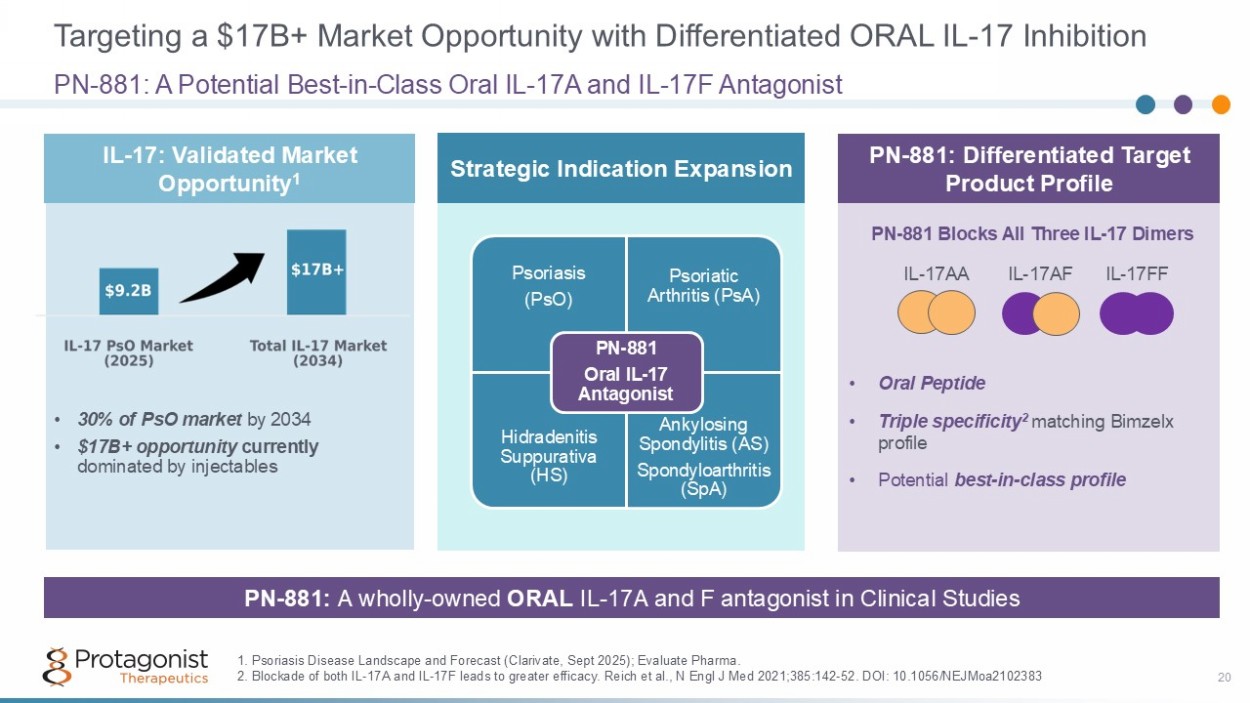
Targeting a $17B+ Market Opportunity with Differentiated ORAL IL - 17 Inhibition 20 • 30 % of PsO market by 2034 • $17B+ opportunity currently dominated by injectables PN - 881: A Potential Best - in - Class Oral IL - 17A and IL - 17F Antagonist 1. Psoriasis Disease Landscape and Forecast (Clarivate, Sept 2025 ); Evaluate Pharma. 2. Blockade of both IL - 17A and IL - 17F leads to greater efficacy. Reich et al., N Engl J Med 2021;385:142 - 52. DOI: 10.1056/NEJMoa 2102383 PN - 881: A wholly - owned ORAL IL - 17A and F antagonist in Clinical Studies • Oral Peptide • Triple specificity 2 matching Bimzelx profile • Potential best - in - class profile IL - 17: Validated Market Opportunity 1 PN - 881: Differentiated Target Product Profile IL - 17AA IL - 17AF IL - 17FF PN - 881 Blocks All Three IL - 17 Dimers Psoriasis (PsO) Psoriatic Arthritis (PsA) Hidradenitis Suppurativa (HS) Ankylosing Spondylitis (AS) Spondyloarthritis ( SpA) PN - 881 Oral IL - 17 Antagonist Strategic Indication Expansion
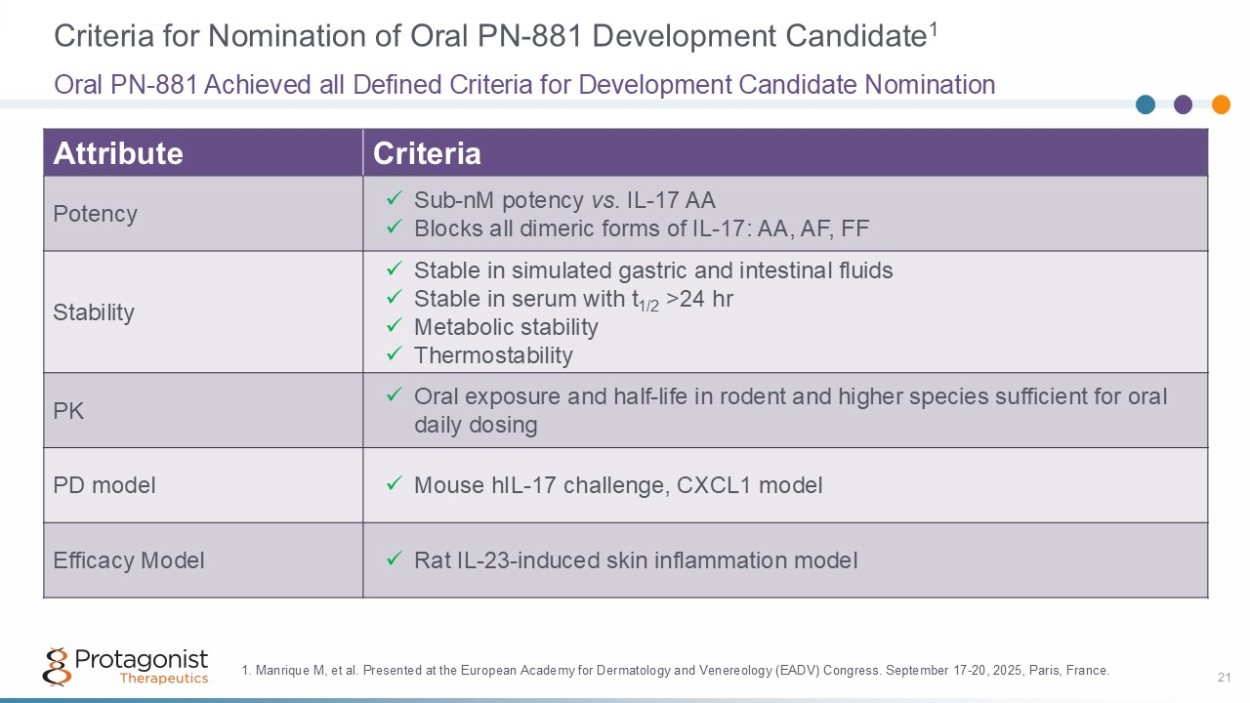
Criteria for Nomination of Oral PN - 881 Development Candidate 1 21 Criteria Attribute x Sub - nM potency vs. IL - 17 AA x Blocks all dimeric forms of IL - 17: AA, AF, FF Potency x Stable in simulated gastric and intestinal fluids x Stable in serum with t 1/2 >24 hr x Metabolic stability x Thermostability Stability x Oral exposure and half - life in rodent and higher species sufficient for oral daily dosing PK x Mouse hIL - 17 challenge, CXCL1 model PD model x Rat IL - 23 - induced skin inflammation model Efficacy Model Oral PN - 881 Achieved all Defined Criteria for Development Candidate Nomination 1. Manrique M, et al. Presented at the European Academy for Dermatology and Venereology (EADV) Congress. September 17 - 20, 2025, Paris, France.
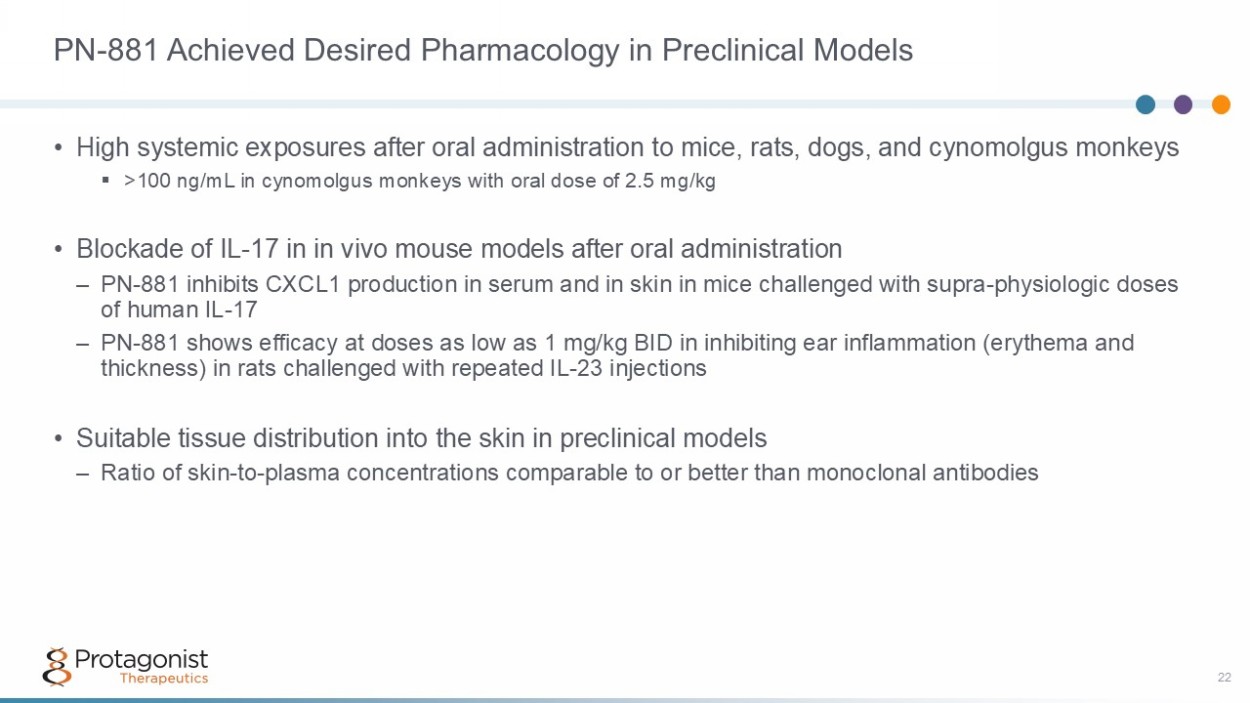
PN - 881 Achieved Desired Pharmacology in Preclinical Models • High systemic exposures after oral administration to mice, rats, dogs, and cynomolgus monkeys ▪ >100 ng/mL in cynomolgus monkeys with oral dose of 2.5 mg/kg • Blockade of IL - 17 in in vivo mouse models after oral administration – PN - 881 inhibits CXCL1 production in serum and in skin in mice challenged with supra - physiologic doses of human IL - 17 – PN - 881 shows efficacy at doses as low as 1 mg/kg BID in inhibiting ear inflammation (erythema and thickness) in rats challenged with repeated IL - 23 injections • Suitable tissue distribution into the skin in preclinical models – Ratio of skin - to - plasma concentrations comparable to or better than monoclonal antibodies 22
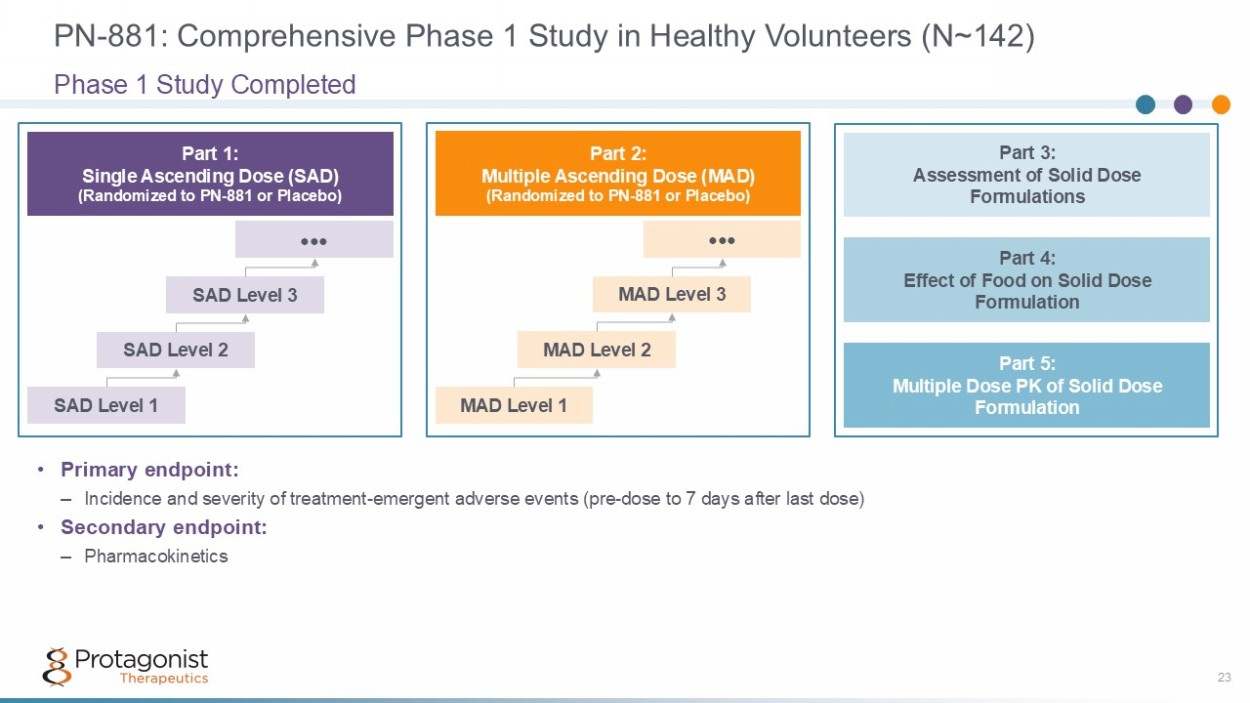
PN - 881: Comprehensive Phase 1 Study in Healthy Volunteers (N~142) 23 • Primary endpoint: – Incidence and severity of treatment - emergent adverse events (pre - dose to 7 days after last dose) • Secondary endpoint: – Pharmacokinetics Phase 1 Study Completed Part 3: Assessment of Solid Dose Formulations Part 5: Multiple Dose PK of Solid Dose Formulation Part 4: Effect of Food on Solid Dose Formulation Part 1: Single Ascending Dose (SAD) (Randomized to PN - 881 or Placebo) SAD Level 1 SAD Level 2 SAD Level 3 ●●● Part 2: Multiple Ascending Dose (MAD) (Randomized to PN - 881 or Placebo) MAD Level 1 MAD Level 2 MAD Level 3 ●●●
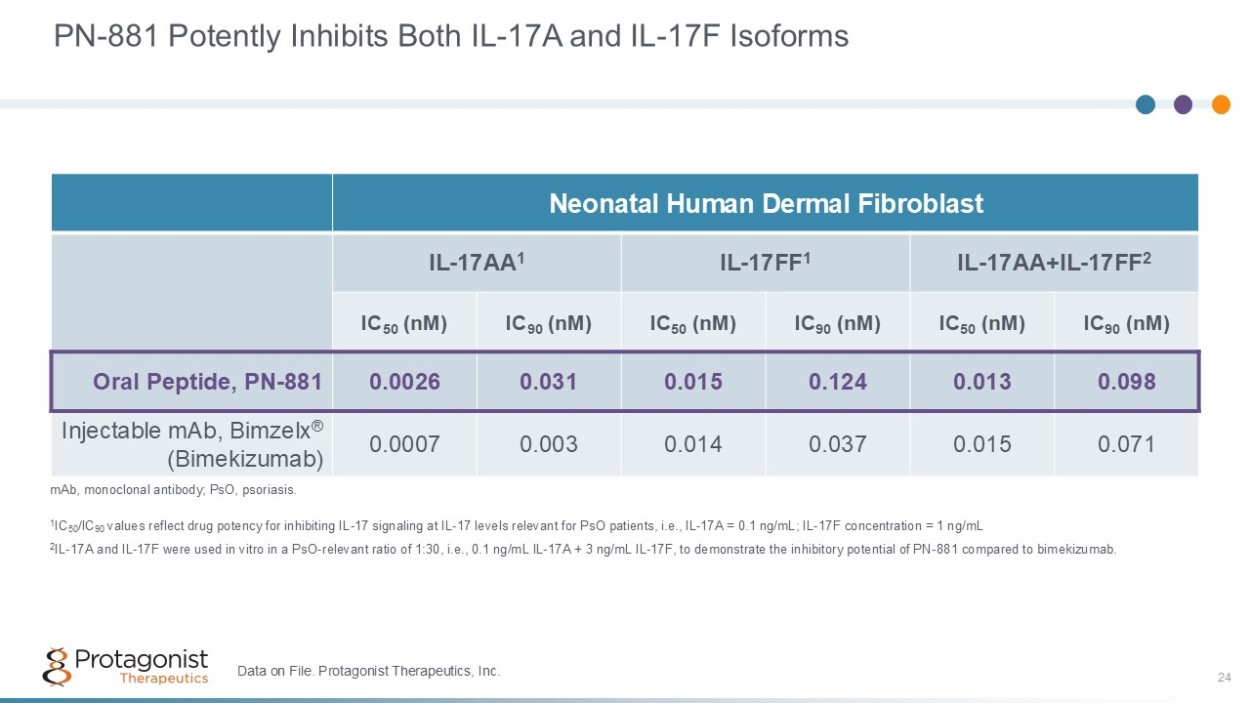
PN - 881 Potently Inhibits Both IL - 17A and IL - 17F Isoforms 24 Neonatal Human Dermal Fibroblast IL - 17AA+IL - 17FF 2 IL - 17FF 1 IL - 17AA 1 IC 90 (nM) IC 50 (nM) IC 90 (nM) IC 50 (nM) IC 90 (nM) IC 50 (nM) 0.098 0.013 0.124 0.015 0.031 0.0026 Oral Peptide, PN - 881 0.071 0.015 0.037 0.014 0.003 0.0007 Injectable mAb, Bimzelx ® (Bimekizumab) 1 IC 50 /IC 90 values reflect drug potency for inhibiting IL - 17 signaling at IL - 17 levels relevant for PsO patients, i.e., IL - 17A = 0.1 ng/mL; IL - 17F concentration = 1 ng/mL 2 IL - 17A and IL - 17F were used in vitro in a PsO - relevant ratio of 1:30, i.e., 0.1 ng/mL IL - 17A + 3 ng/mL IL - 17F, to demonstrate the inhibitory potential of PN - 881 compared to bimekizumab. mAb, monoclonal antibody; PsO, psoriasis. Data on File. Protagonist Therapeutics, Inc.
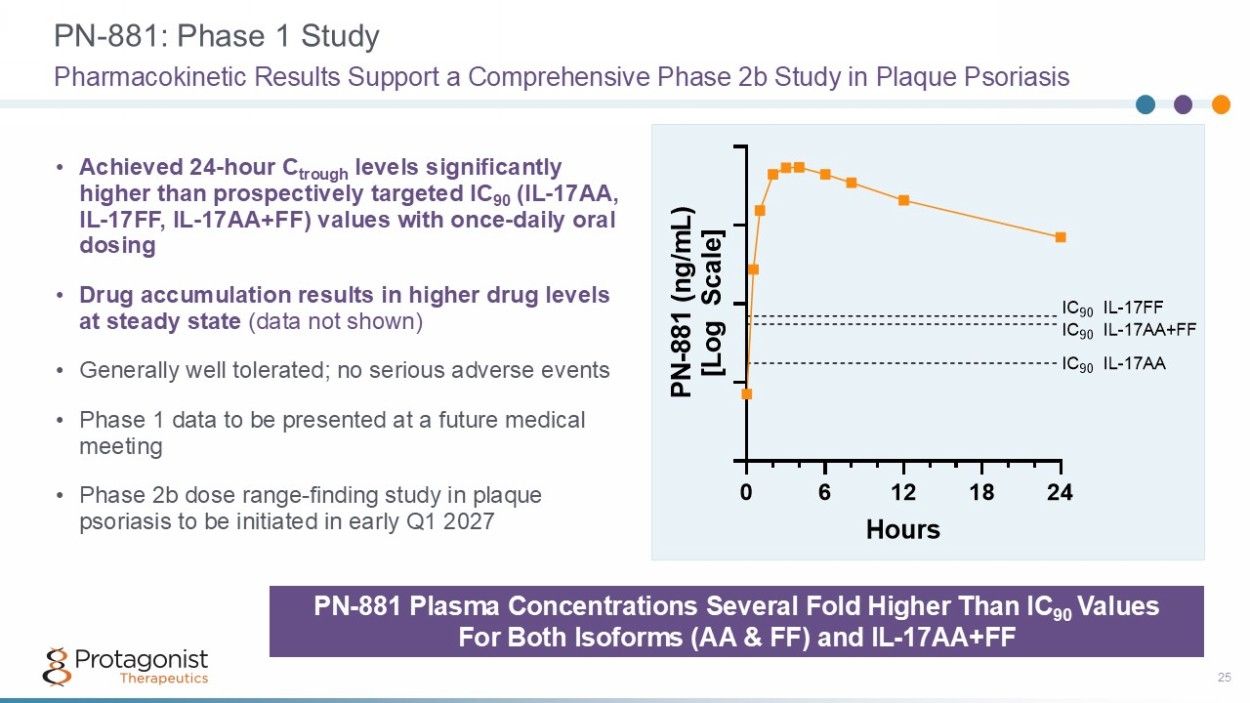
25 • Achieved 24 - hour C trough levels significantly higher than prospectively targeted IC 90 (IL - 17AA, IL - 17FF, IL - 17AA+FF) values with once - daily oral dosing • Drug accumulation results in higher drug levels at steady state (data not shown) • Generally well tolerated; no serious adverse events • Phase 1 data to be presented at a future medical meeting • Phase 2b dose range - finding study in plaque psoriasis to be initiated in early Q1 2027 PN - 881 Plasma Concentrations Several Fold Higher Than IC 90 Values For Both Isoforms (AA & FF) and IL - 17AA+FF PN - 881: Phase 1 Study Pharmacokinetic Results Support a Comprehensive Phase 2b Study in Plaque Psoriasis 0 6 12 18 24 Hours P N - 8 8 1 ( n g / m L ) [ L o g S c a l e ] IC 90 IL-17AA IC 90 IL-17FF IC 90 IL-17AA+FF
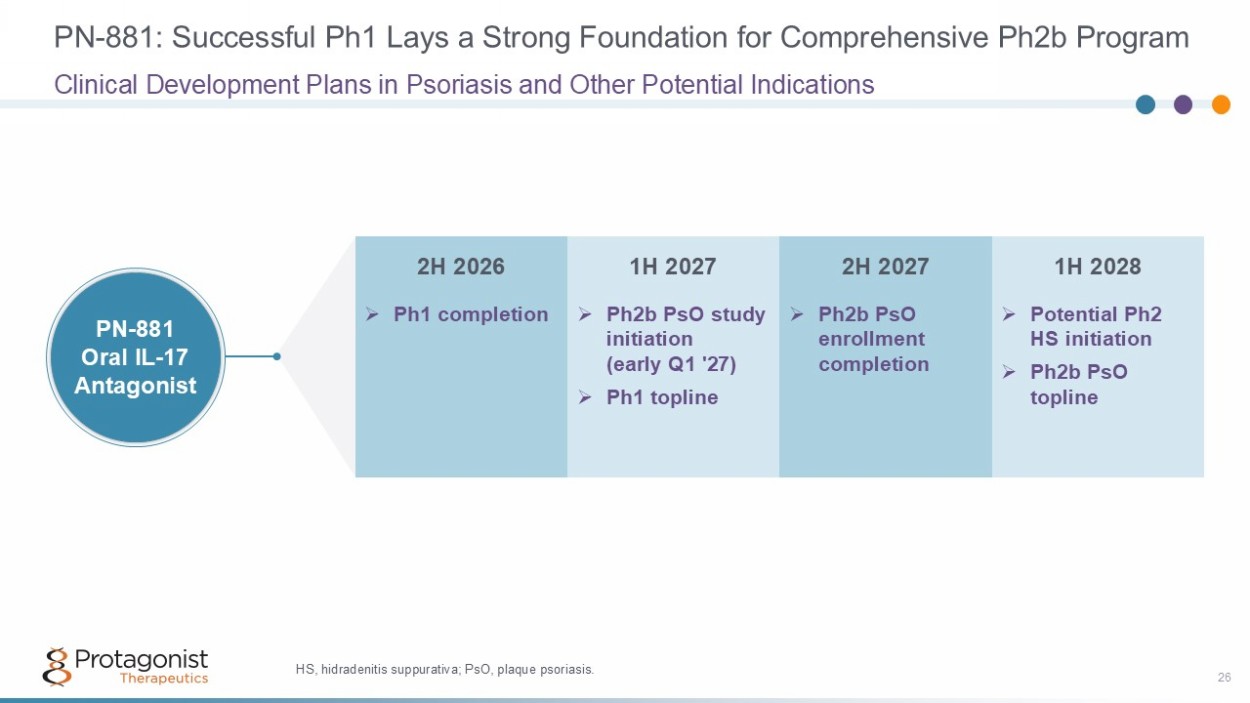
PN - 881: Successful Ph1 Lays a Strong Foundation for Comprehensive Ph2b Program 26 Clinical Development Plans in Psoriasis and Other Potential Indications 1H 2028 2H 2027 1H 2027 2H 2026 » Potential Ph2 HS initiation » Ph2b PsO topline » Ph2b PsO enrollment completion » Ph2b PsO study initiation (early Q1 '27) » Ph1 topline » Ph1 completion PN - 881 Oral IL - 17 Antagonist HS, hidradenitis suppurativa; PsO, plaque psoriasis.
27 PN - 8047: An Oral Hepcidin Functional Mimetic Working towards a Hepcidin pathway based ORAL option in polycythemia vera
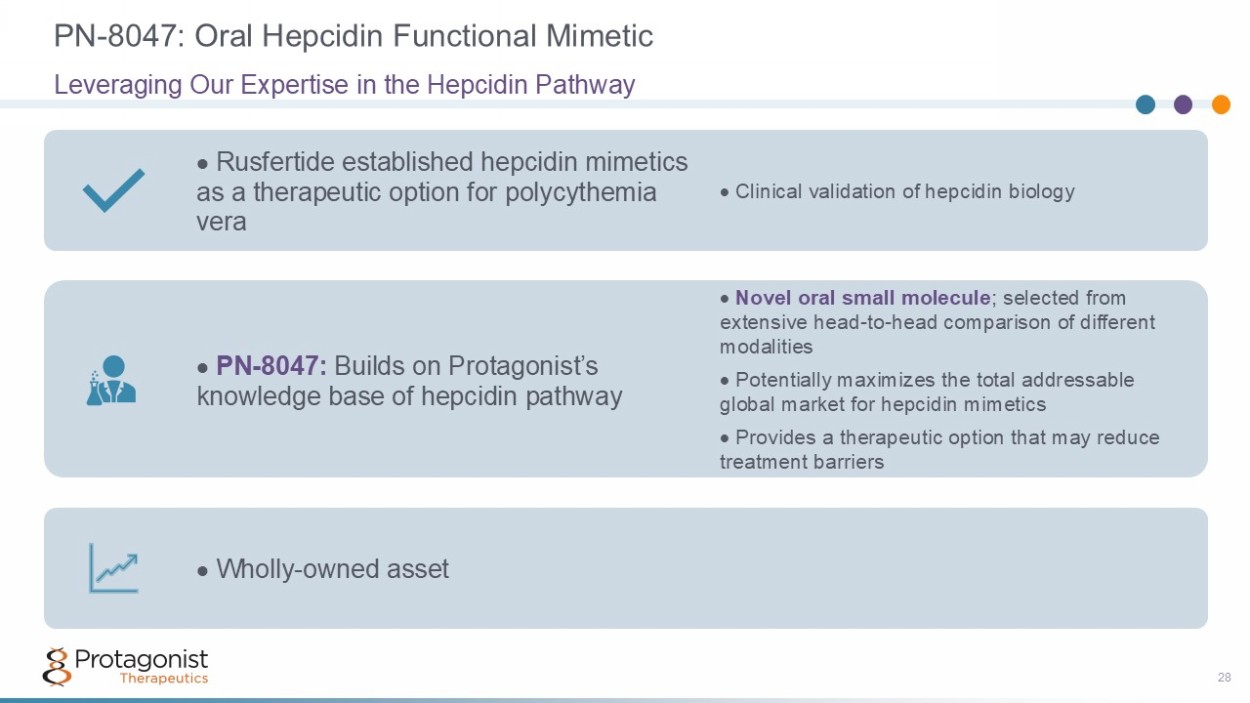
PN - 8047: Oral Hepcidin Functional Mimetic 28 Leveraging Our Expertise in the Hepcidin Pathway Rusfertide established hepcidin mimetics as a therapeutic option for polycythemia vera Clinical validation of hepcidin biology PN - 8047: Builds on Protagonist’s knowledge base of hepcidin pathway Novel oral small molecule ; selected from extensive head - to - head comparison of different modalities Potentially maximizes the total addressable global market for hepcidin mimetics Provides a therapeutic option that may reduce treatment barriers Wholly - owned asset
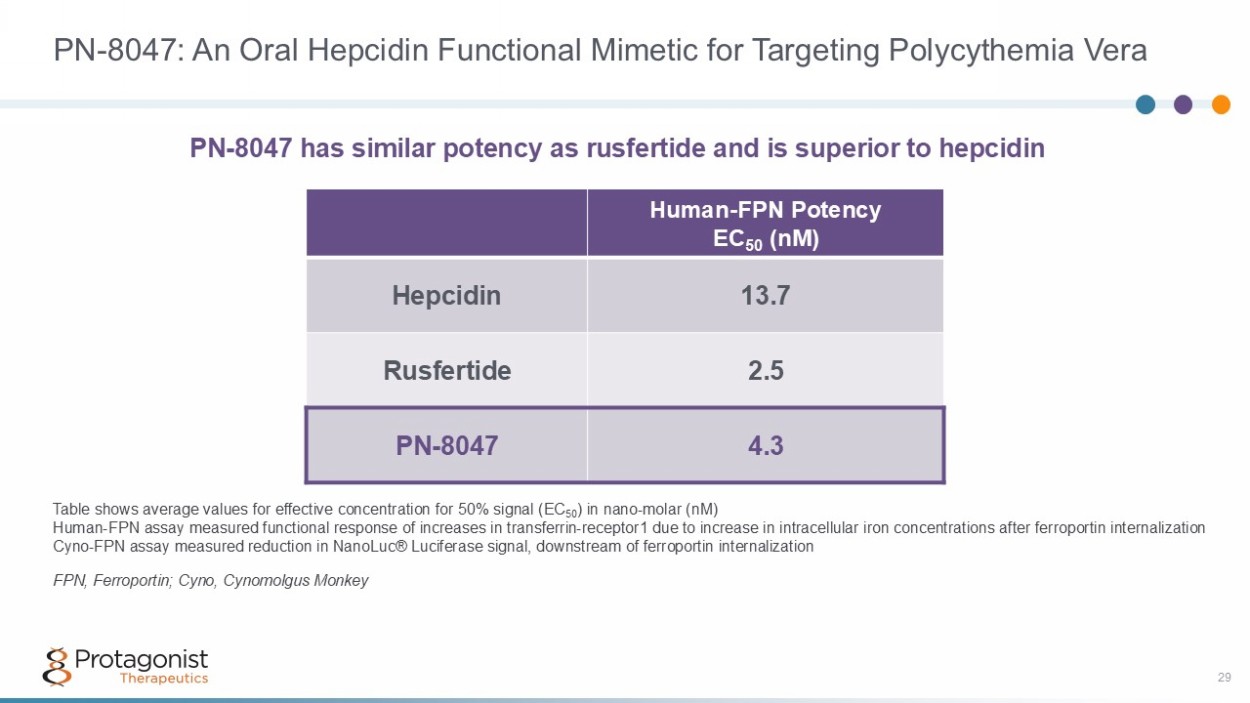
PN - 8047: An Oral Hepcidin Functional Mimetic for Targeting Polycythemia Vera 29 Human - FPN Potency EC 50 (nM) 13.7 Hepcidin 2.5 Rusfertide 4.3 PN - 8047 Table shows average values for effective concentration for 50% signal (EC 50 ) in nano - molar (nM) Human - FPN assay measured functional response of increases in transferrin - receptor1 due to increase in intracellular iron concent rations after ferroportin internalization Cyno - FPN assay measured reduction in NanoLuc® Luciferase signal, downstream of ferroportin internalization FPN, Ferroportin; Cyno, Cynomolgus Monkey PN - 8047 has similar potency as rusfertide and is superior to hepcidin
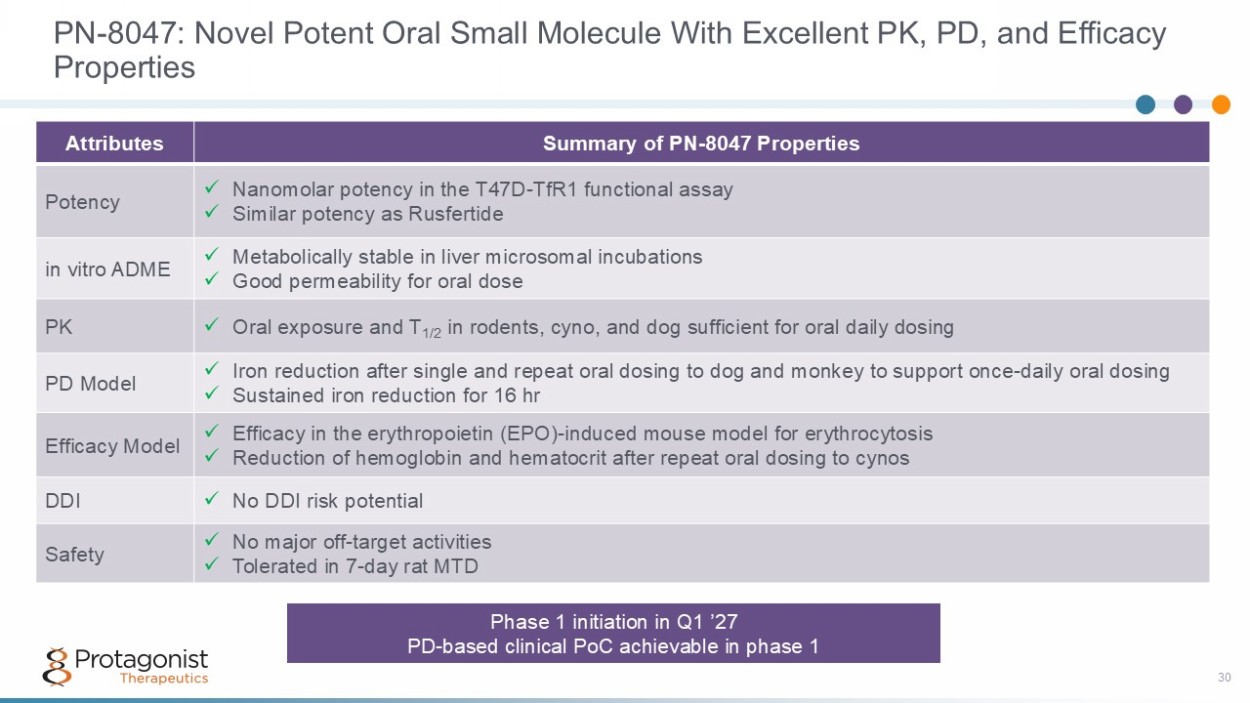
PN - 8047: Novel Potent Oral Small Molecule With Excellent PK, PD, and Efficacy Properties 30 Summary of PN - 8047 Properties Attributes x Nanomolar potency in the T47D - TfR1 functional assay x Similar potency as Rusfertide Potency x Metabolically stable in liver microsomal incubations x Good permeability for oral dose in vitro ADME x Oral exposure and T 1/2 in rodents, cyno, and dog sufficient for oral daily dosing PK x Iron reduction after single and repeat oral dosing to dog and monkey to support once - daily oral dosing x Sustained iron reduction for 16 hr PD Model x Efficacy in the erythropoietin (EPO) - induced mouse model for erythrocytosis x Reduction of hemoglobin and hematocrit after repeat oral dosing to cynos Efficacy Model x No DDI risk potential DDI x No major off - target activities x Tolerated in 7 - day rat MTD Safety Phase 1 initiation in Q1 ’27 PD - based clinical PoC achievable in phase 1
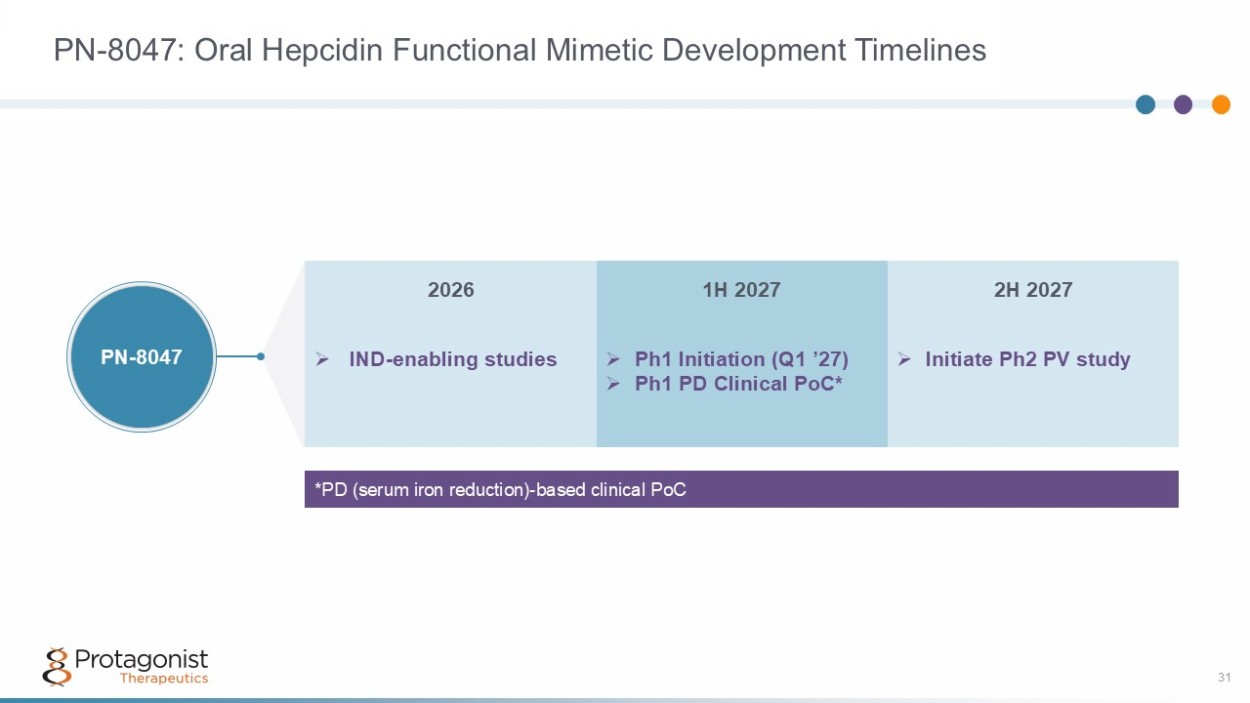
PN - 8047: Oral Hepcidin Functional Mimetic Development Timelines 31 *PD (serum iron reduction) - based clinical PoC 2H 2027 1H 2027 2026 » Initiate Ph2 PV study » Ph1 Initiation (Q1 ’27) » Ph1 PD Clinical PoC* » IND - enabling studies PN - 8047

Metabolic Pipeline: Addressing the Need For Unimolecular Oral Anti - Obesity Therapies Triple - G, Dual - G, and AmylinR Agonists
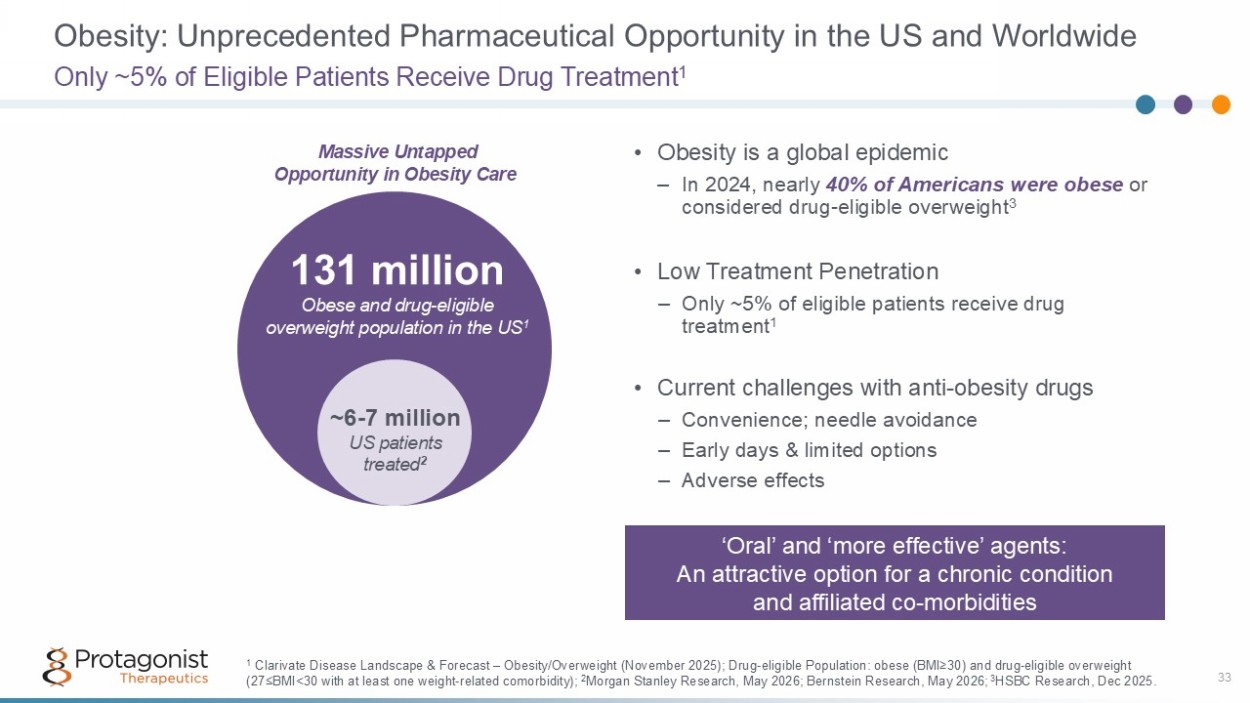
Obesity: Unprecedented Pharmaceutical Opportunity in the US and Worldwide Only ~5% of Eligible Patients Receive Drug Treatment 1 131 million Obese and d rug - eligible overweight population in the US 1 ~6 - 7 million US pa tients t reated 2 1 Clarivate Disease Landscape & Forecast – Obesity/Overweight (November 2025); Drug - eligible Population: obese (BMI ≥ 30) and drug - eligible overweight (27 ≤ BMI<30 with at least one weight - related comorbidity); 2 Morgan Stanley Research, May 2026; Bernstein Research, May 2026; 3 HSBC Research, Dec 2025. 33 Massive Untapped Opportunity in Obesity Care • Obesity is a global epidemic – In 2024, nearly 40% of Americans were obese or considered drug - eligible overweight 3 • Low Treatment Penetration – Only ~5% of eligible patients receive drug treatment 1 • Current challenges with anti - obesity drugs – Convenience; needle avoidance – Early days & limited options – Adverse effects ‘Oral’ and ‘more effective’ agents: An attractive option for a chronic condition and affiliated co - morbidities
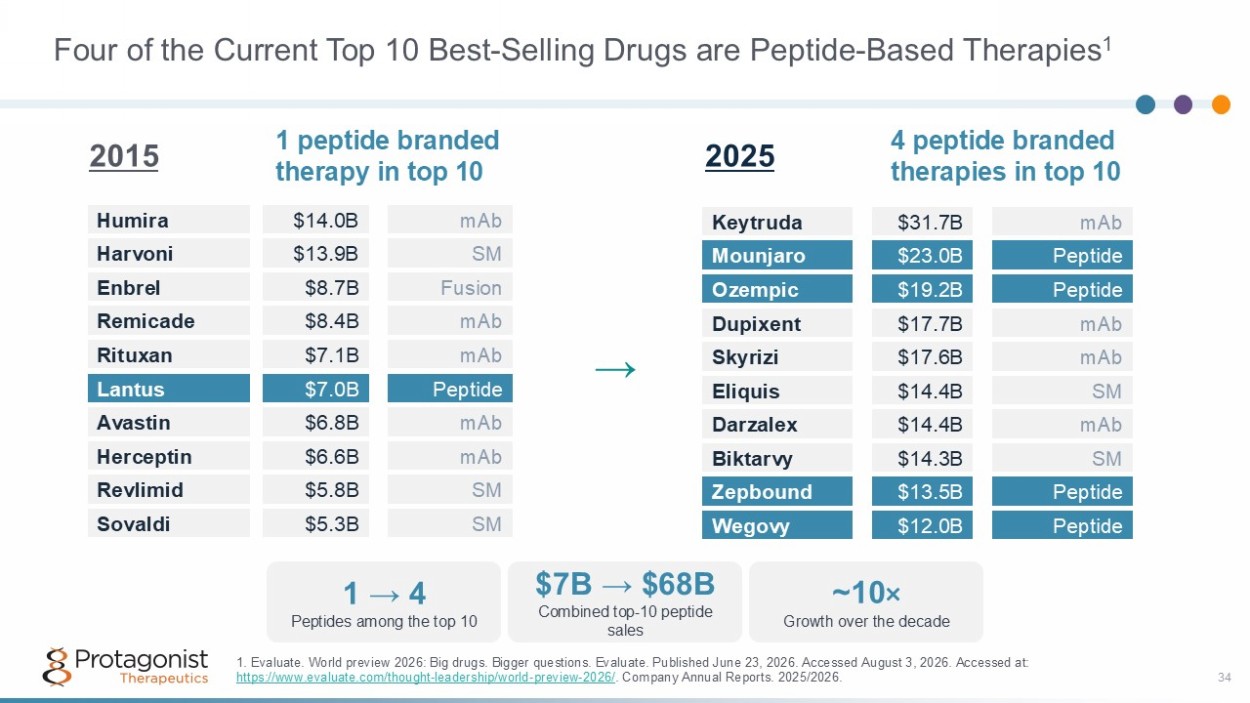
2015 1 peptide branded therapy in top 10 Humira $14.0B mAb Harvoni $13.9B SM Enbrel $8.7B Fusion Remicade $8.4B mAb Rituxan $7.1B mAb Lantus $7.0B Peptide Avastin $6.8B mAb Herceptin $6.6B mAb Revlimid $5.8B SM Sovaldi $5.3B SM → 2025 Keytruda $31.7B mAb Mounjaro $23.0B Peptide Ozempic $19.2B Peptide Dupixent $17.7B mAb Skyrizi $17.6B mAb Eliquis $14.4B SM Darzalex $14.4B mAb Biktarvy $14.3B SM Zepbound $13.5B Peptide Wegovy $12.0B Peptide 1 → 4 Peptides among the top 10 $7B → $68B Combined top - 10 peptide sales ~10 × Growth over the decade 4 peptide branded therapies in top 10 Four of the Current Top 10 Best - Selling Drugs are Peptide - Based Therapies 1 34 1. Evaluate. World preview 2026: Big drugs. Bigger questions. Evaluate. Published June 23, 2026. Accessed August 3, 2026. Acc ess ed at: https://www.evaluate.com/thought - leadership/world - preview - 2026/ . Company Annual Reports. 2025/2026.
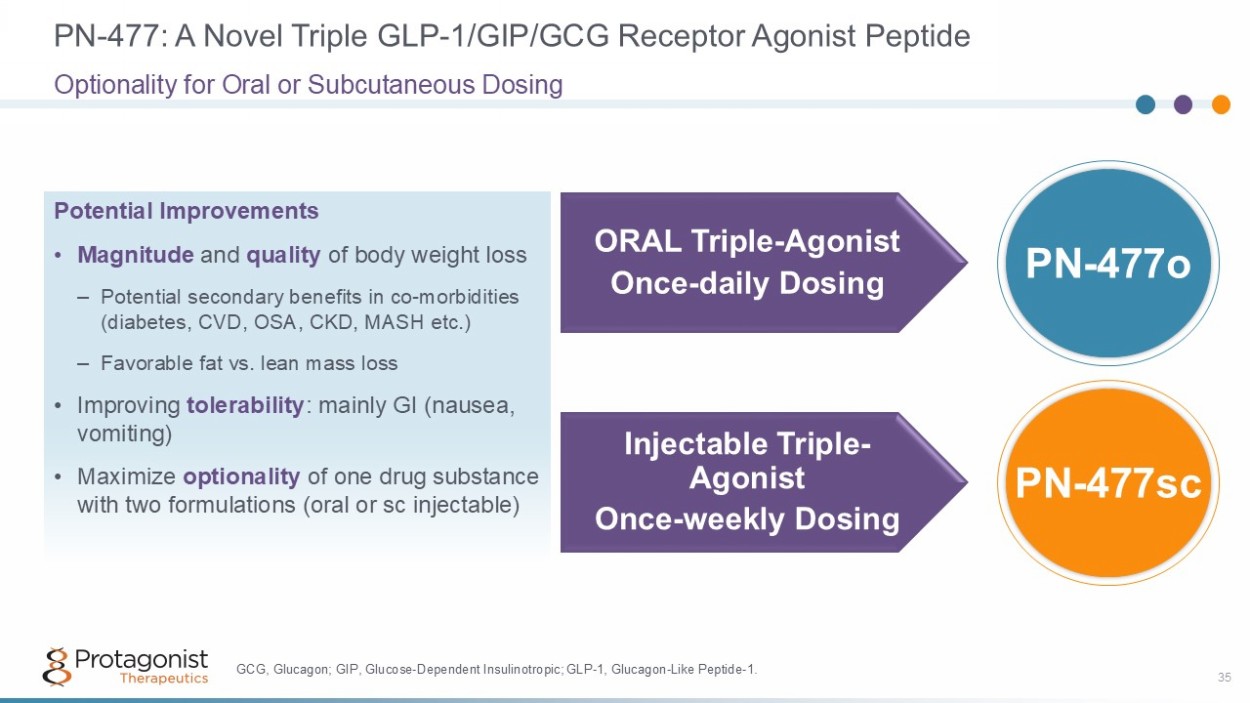
PN - 477: A Novel Triple GLP - 1/GIP/GCG Receptor Agonist Peptide 35 Optionality for Oral or Subcutaneous Dosing ORAL Triple - Agonist Once - daily Dosing Injectable Triple - Agonist Once - weekly Dosing PN - 477sc PN - 477o Potential Improvements • Magnitude and quality of body weight loss – Potential secondary benefits in co - morbidities (diabetes, CVD, OSA, CKD, MASH etc.) – Favorable fat vs. lean mass loss • Improving tolerability : mainly GI (nausea, vomiting) • Maximize optionality of one drug substance with two formulations (oral or sc injectable) GCG, Glucagon; GIP, Glucose - Dependent Insulinotropic; GLP - 1, Glucagon - Like Peptide - 1 .
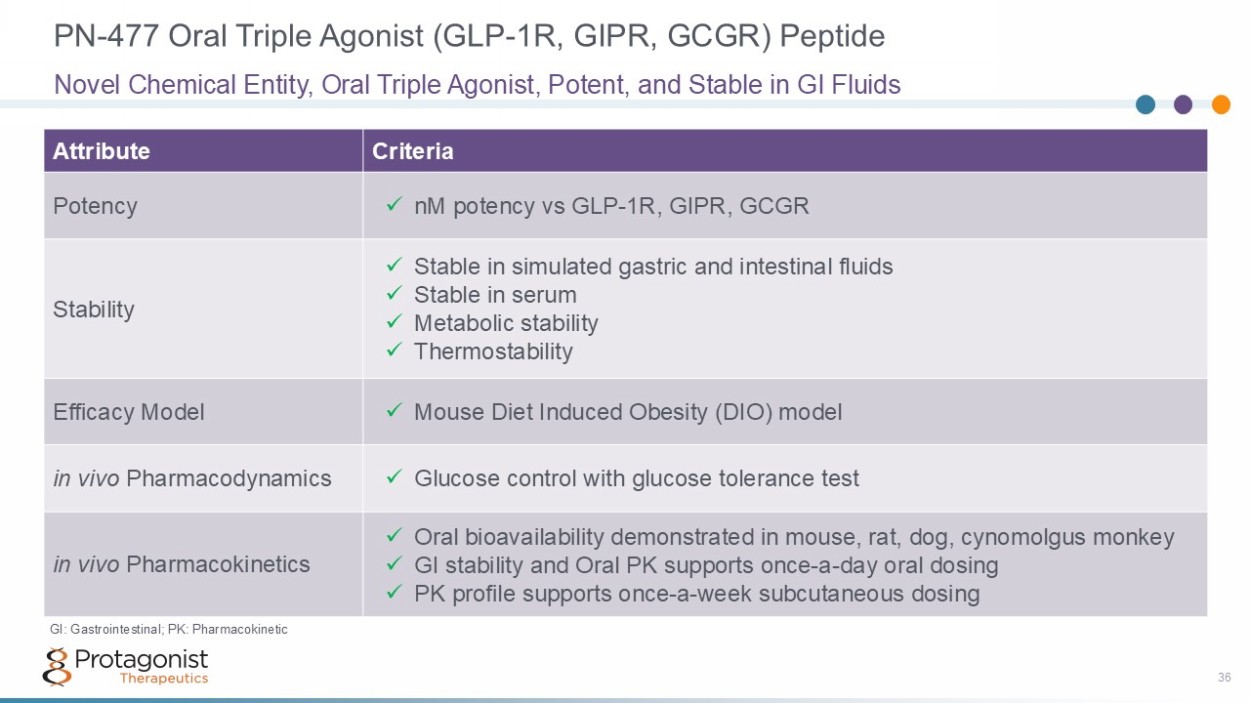
PN - 477 Oral Triple Agonist (GLP - 1R, GIPR, GCGR) Peptide 36 Criteria Attribute x nM potency vs GLP - 1R, GIPR, GCGR Potency x Stable in simulated gastric and intestinal fluids x Stable in serum x Metabolic stability x Thermostability Stability x Mouse Diet Induced Obesity (DIO) model Efficacy Model x Glucose control with glucose tolerance test in vivo Pharmacodynamics x Oral bioavailability demonstrated in mouse, rat, dog, cynomolgus monkey x GI stability and Oral PK supports once - a - day oral dosing x PK profile supports once - a - week subcutaneous dosing in vivo Pharmacokinetics Novel Chemical Entity, Oral Triple Agonist, Potent, and Stable in GI Fluids GI: Gastrointestinal; PK: Pharmacokinetic
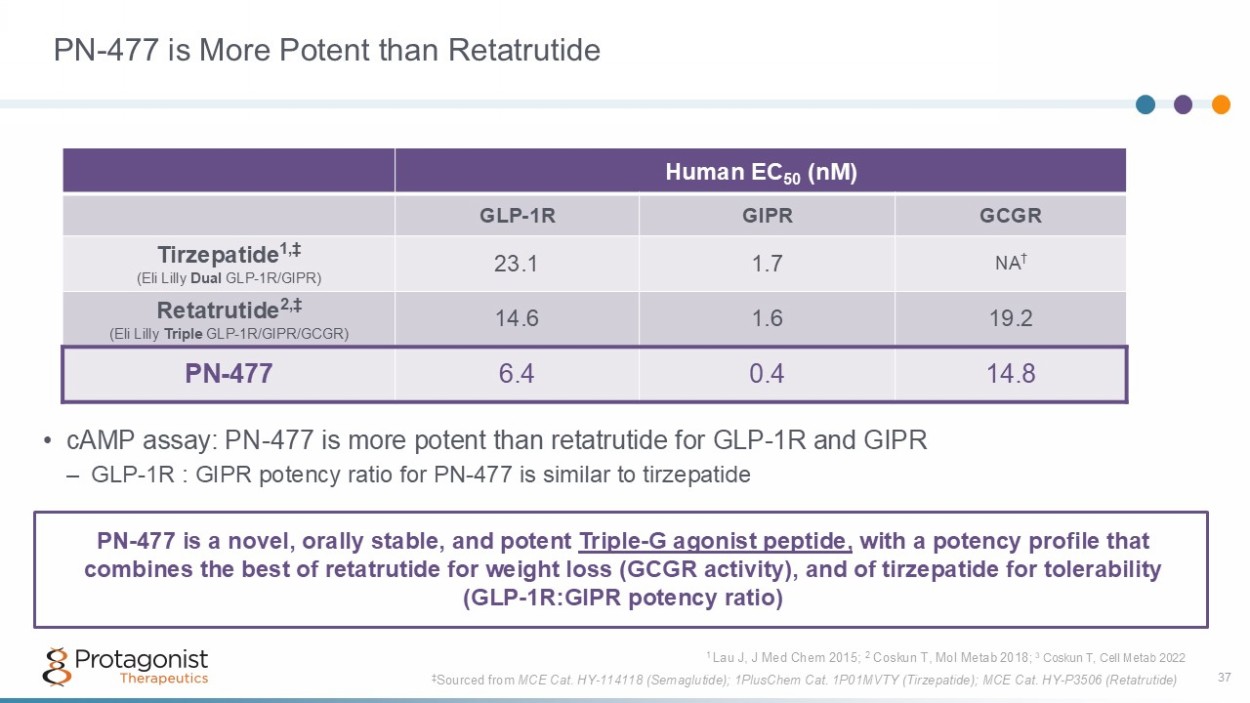
PN - 477 is More Potent than Retatrutide 37 • cAMP assay: PN - 477 is more potent than retatrutide for GLP - 1R and GIPR – GLP - 1R : GIPR potency ratio for PN - 477 is similar to tirzepatide ‡ Sourced from MCE Cat. HY - 114118 (Semaglutide); 1PlusChem Cat. 1P01MVTY (Tirzepatide); MCE Cat. HY - P3506 (Retatrutide) 1 Lau J, J Med Chem 2015; 2 Coskun T, Mol Metab 2018 ; 3 Coskun T, Cell Metab 2022 PN - 477 is a novel, orally stable, and potent Triple - G agonist peptide, with a potency profile that combines the best of retatrutide for weight loss (GCGR activity), and of tirzepatide for tolerability (GLP - 1R:GIPR potency ratio) Human EC 50 (nM) GCGR GIPR GLP - 1R NA † 1.7 23.1 Tirzepatide 1,‡ (Eli Lilly Dual GLP - 1R/GIPR) 19.2 1.6 14.6 Retatrutide 2,‡ (Eli Lilly Triple GLP - 1R/GIPR/GCGR) 14.8 0.4 6.4 PN - 477
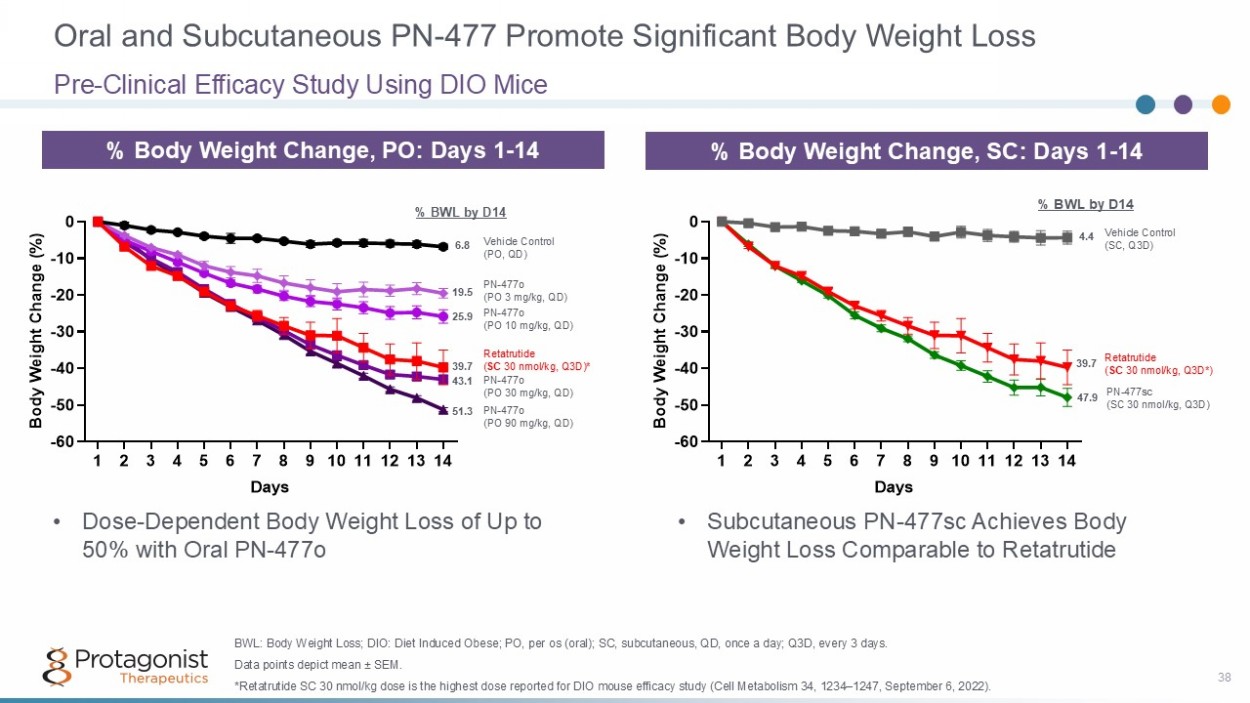
Oral and Subcutaneous PN - 477 Promote Significant Body Weight Loss 38 Pre - Clinical Efficacy Study Using DIO Mice % Body Weight Change, SC: Days 1 - 14 1 2 3 4 5 6 7 8 9 1011121314 -60 -50 -40 -30 -20 -10 0 Days B o d y W e i g h t C h a n g e ( % ) Vehicle Control (SC, Q3D) Retatrutide ( SC 30 nmol/kg, Q3D*) PN - 477sc (SC 30 nmol/kg, Q3D) 4.4 39.7 47.9 % BWL by D14 BWL: Body Weight Loss; DIO: Diet Induced Obes e; PO, per os (oral); SC, subcutaneous, QD, once a day ; Q3D, every 3 days. Data points depict mean ± SEM. * Retatrutide SC 30 nmol/kg dose is the highest dose reported for DIO mouse efficacy study (Cell Metabolism 34, 1234 – 1247, Septemb er 6, 2022). % Body Weight Change, PO: Days 1 - 14 1 2 3 4 5 6 7 8 9 1011121314 -60 -50 -40 -30 -20 -10 0 Days B o d y W e i g h t C h a n g e ( % ) Vehicle Control (PO, QD) PN - 477o (PO 3 mg/kg, QD) PN - 477o (PO 10 mg/kg, QD) PN - 477o (PO 30 mg/kg, QD) PN - 477o (PO 90 mg/kg, QD) Retatrutide ( SC 30 nmol/kg, Q3D)* 6.8 19.5 25.9 43.1 51.3 % BWL by D14 39.7 • Dose - Dependent Body Weight Loss of Up to 50% with Oral PN - 477o • Subcutaneous PN - 477sc Achieves Body Weight Loss Comparable to Retatrutide
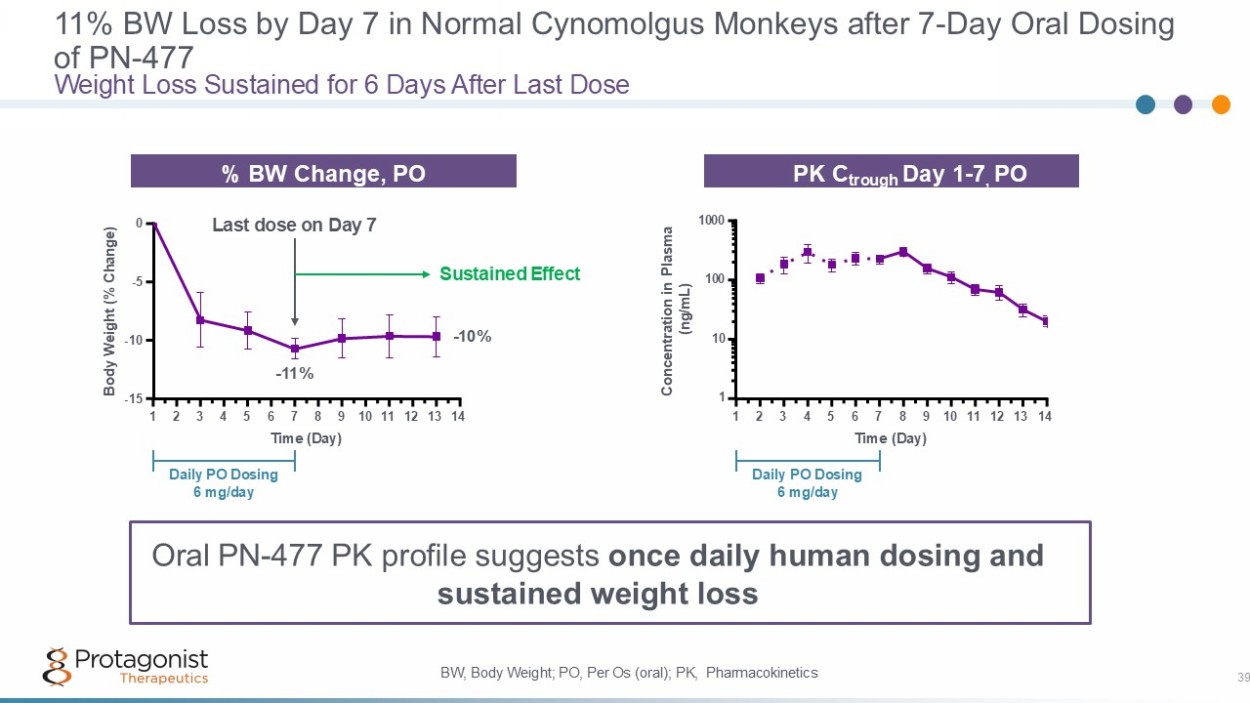
11% BW Loss by Day 7 in Normal Cynomolgus Monkeys after 7 - Day Oral Dosing of PN - 477 39 Weight Loss Sustained for 6 Days After Last Dose 1 2 3 4 5 6 7 8 9 10 11 12 13 14 Time (Day) - 15 - 10 - 5 0 Body Weight (% Change) - 10% - 11% % BW Change, PO PK C trough Day 1 - 7 , PO Last dose on Day 7 Sustained Effect Daily PO Dosing 6 mg/day Daily PO Dosing 6 mg/day Oral PN - 477 PK profile suggests once daily human dosing and sustained weight loss 1 2 3 4 5 6 7 8 9 10 11 12 13 14 BW , Body Weight; PO , Per Os (oral); PK , Pharmacokinetics 1 10 100 1000 Time (Day) Concentration in Plasma (ng/mL)
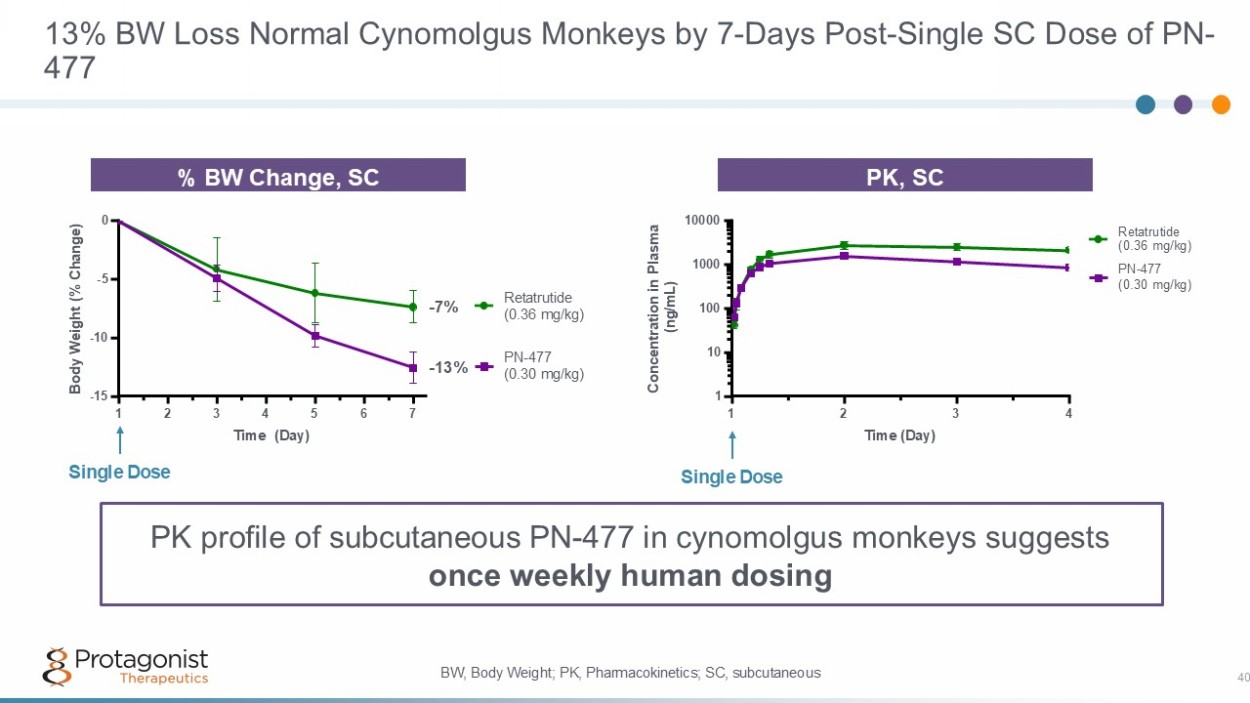
1 2 3 6 7 4 5 Time (Day) - 15 - 10 - 5 0 Body Weight (% Change) Retatrutide (0.36 mg/kg) PN - 477 (0.30 mg/kg) - 7% - 13% 13% BW Loss Normal Cynomolgus Monkeys by 7 - Days Post - Single SC Dose of PN - 477 40 1 2 3 4 1 10 100 1000 10000 Time (Day) Concentration in Plasma (ng/mL) Retatrutide (0.36 mg/kg) PN - 477 (0.30 mg/kg) % BW Change, SC PK, SC Single Dose Single Dose BW , Body Weight; PK , Pharmacokinetics; SC , subcutaneous PK profile of subcutaneous PN - 477 in cynomolgus monkeys s uggests once weekly human dosing
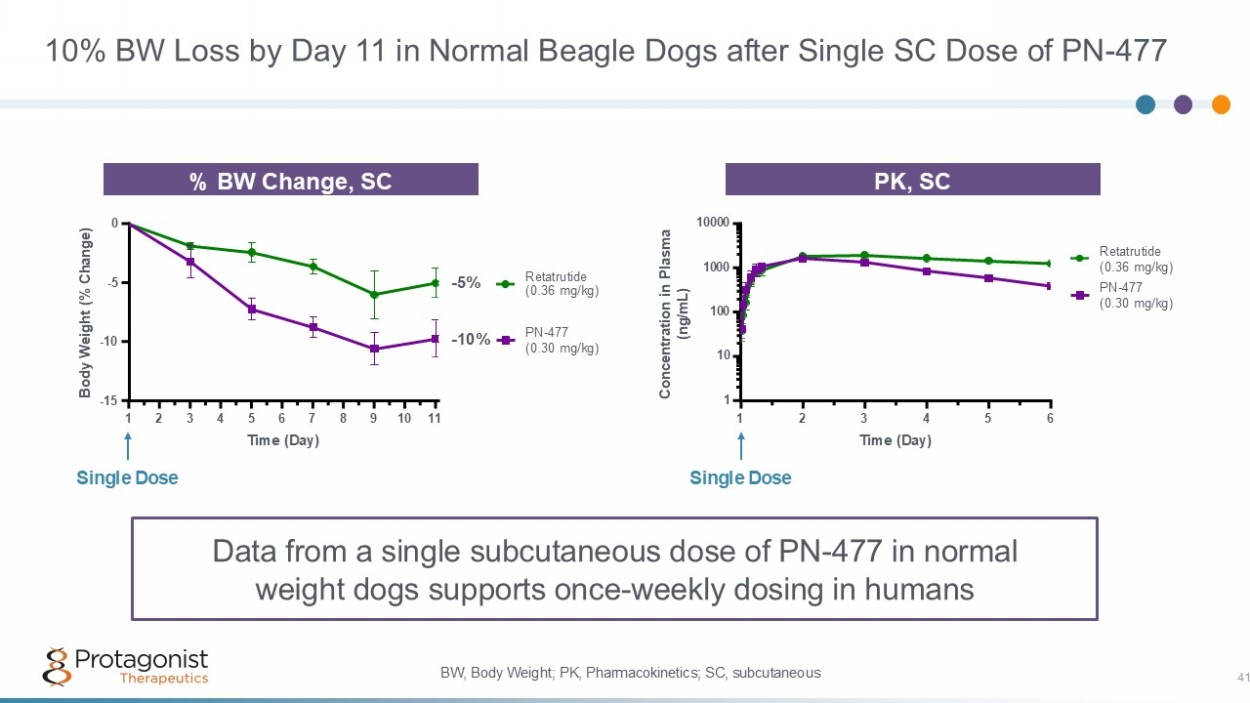
10% BW Loss by Day 11 in Normal Beagle Dogs after Single SC Dose of PN - 477 41 1 2 5 6 3 4 Time (Day) 1 10 100 1000 10000 Concentration in Plasma (ng/mL) Retatrutide (0.36 mg/kg) PN - 477 (0.30 mg/kg) 1 2 3 4 5 6 7 8 9 10 11 Time (Day) - 15 - 10 - 5 0 Body Weight (% Change) Retatrutide (0.36 mg/kg) PN - 477 (0.30 mg/kg) - 5% - 10% % BW Change, SC PK, SC Single Dose Single Dose BW , Body Weight; PK , Pharmacokinetics; SC , subcutaneous Data from a single subcutaneous dose of PN - 477 in normal weight dogs supports once - weekly dosing in humans
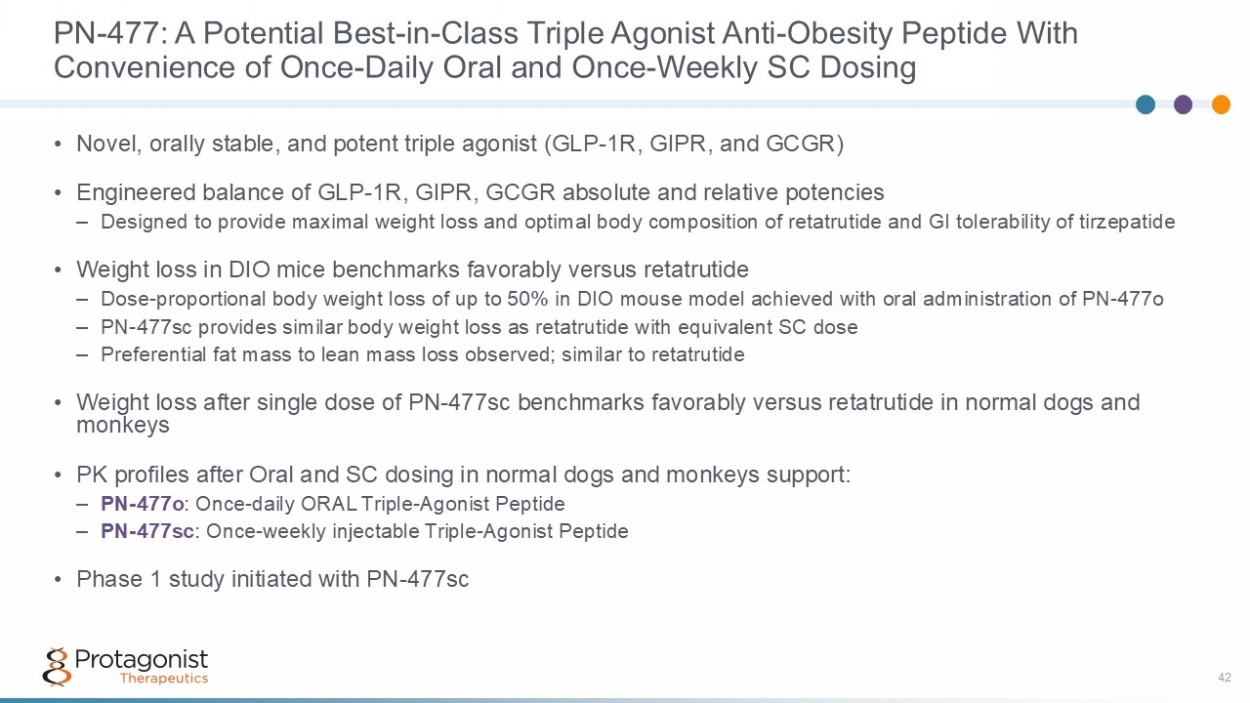
PN - 477: A Potential Best - in - Class Triple Agonist Anti - Obesity Peptide With Convenience of Once - Daily Oral and Once - Weekly SC Dosing • Novel, orally stable, and potent triple agonist (GLP - 1R, GIPR, and GCGR) • Engineered balance of GLP - 1R, GIPR, GCGR absolute and relative potencies – Designed to provide maximal weight loss and optimal body composition of retatrutide and GI tolerability of tirzepatide • Weight loss in DIO mice benchmarks favorably versus retatrutide – Dose - proportional body weight loss of up to 50% in DIO mouse model achieved with oral administration of PN - 477o – PN - 477sc provides similar body weight loss as retatrutide with equivalent SC dose – Preferential fat mass to lean mass loss observed; similar to retatrutide • Weight loss after single dose of PN - 477sc benchmarks favorably versus retatrutide in normal dogs and monkeys • PK profiles after Oral and SC dosing in normal dogs and monkeys support: – PN - 477o : Once - daily ORAL Triple - Agonist Peptide – PN - 477sc : Once - weekly injectable Triple - Agonist Peptide • Phase 1 study initiated with PN - 477sc 42
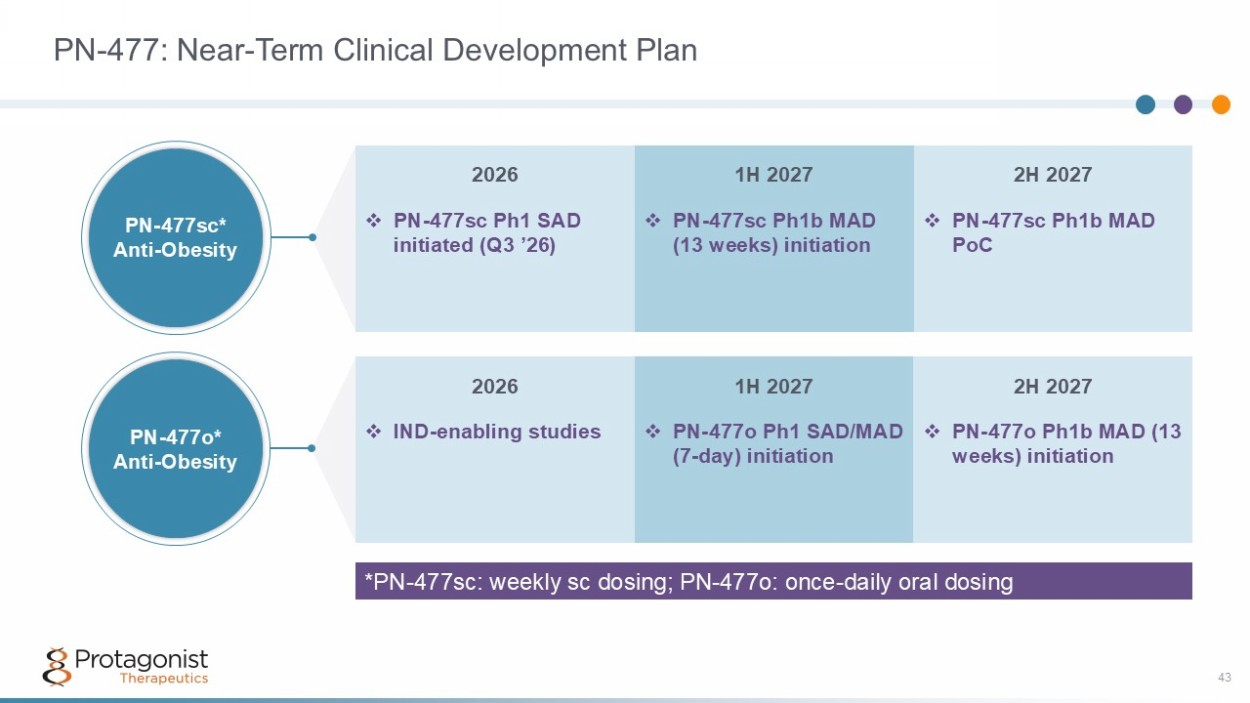
PN - 477: Near - Term Clinical Development Plan 43 2H 2027 1H 2027 2026 □ PN - 477sc Ph1b MAD PoC □ PN - 477sc Ph1b MAD (13 weeks) initiation □ PN - 477sc Ph1 SAD initiated (Q3 ’26) PN - 477sc* Anti - Obesity *PN - 477sc: weekly sc dosing; PN - 477o: once - daily oral dosing 2H 2027 1H 2027 2026 □ PN - 477o Ph1b MAD (13 weeks) initiation □ PN - 477o Ph1 SAD/MAD (7 - day) initiation □ IND - enabling studies PN - 477o* Anti - Obesity
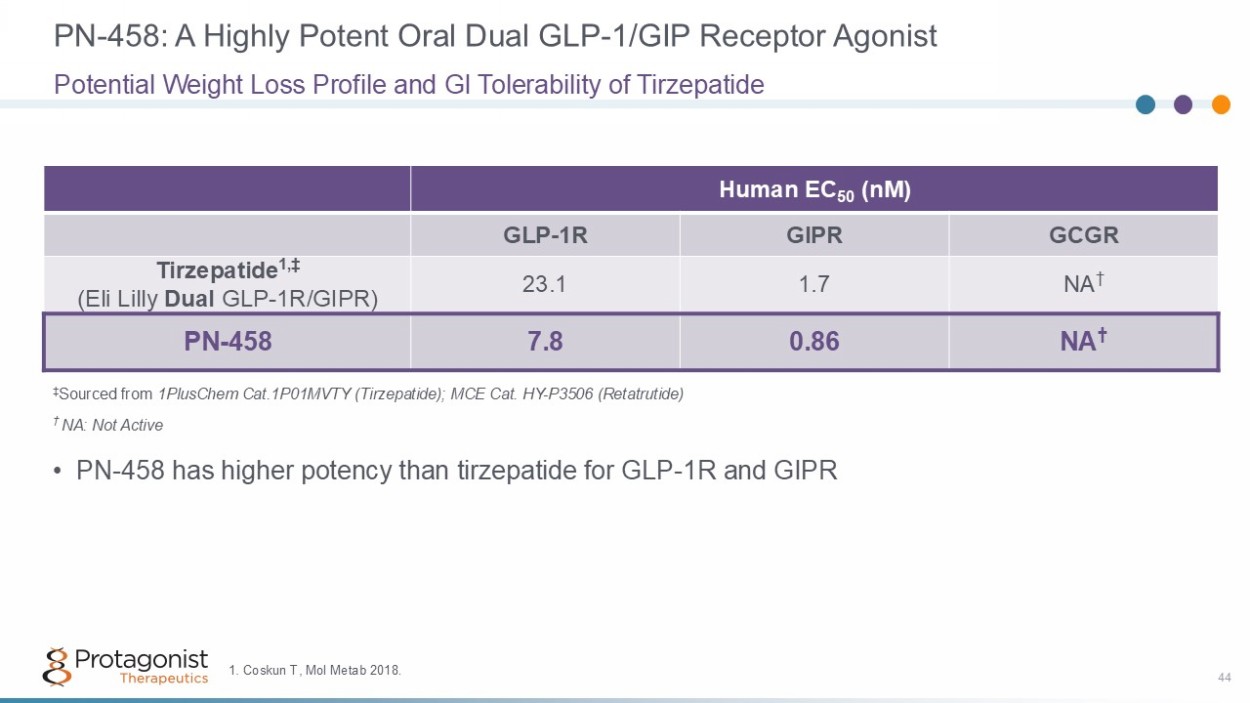
PN - 458: A Highly Potent Oral Dual GLP - 1/GIP Receptor Agonist 44 • PN - 458 has higher potency than tirzepatide for GLP - 1R and GIPR Potential Weight Loss Profile and GI Tolerability of Tirzepatide Human EC 50 (nM) GCGR GIPR GLP - 1R NA † 1.7 23.1 Tirzepatide 1,‡ (Eli Lilly Dual GLP - 1R/GIPR) NA † 0.86 7.8 PN - 458 † NA: Not Active ‡ Sourced from 1PlusChem Cat.1P01MVTY (Tirzepatide); MCE Cat. HY - P3506 (Retatrutide) 1. Coskun T, Mol Metab 2018 .
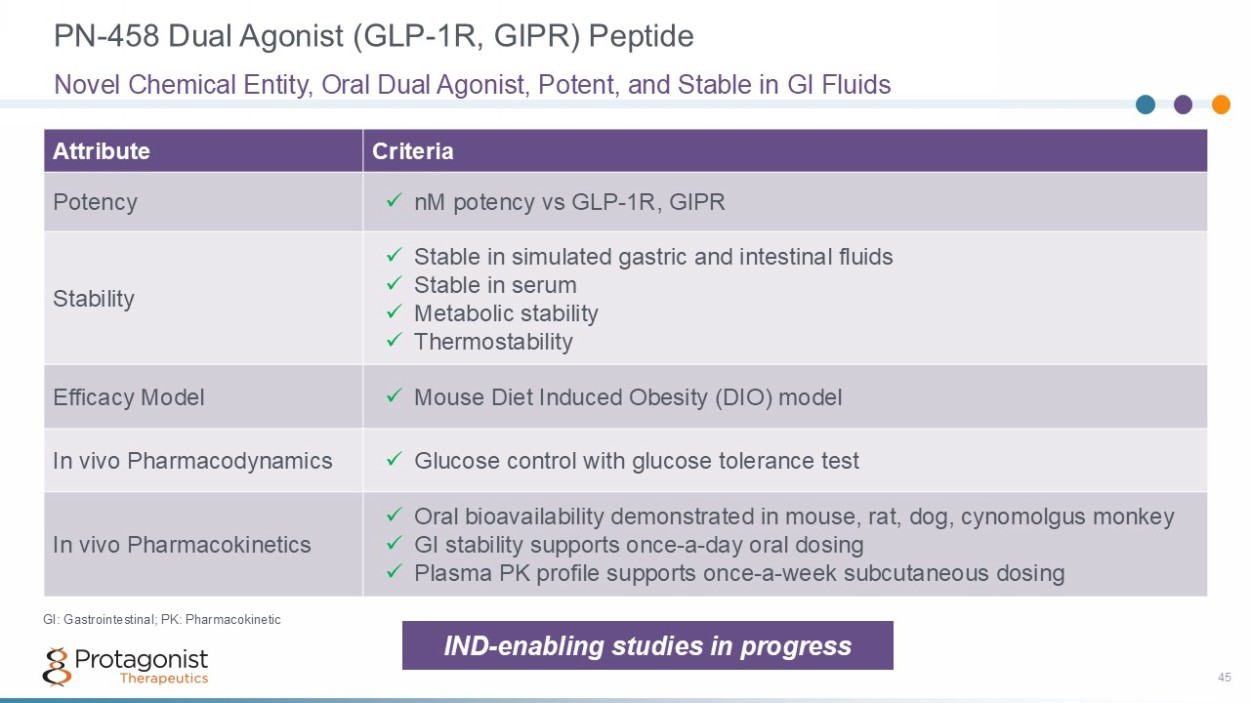
PN - 458 Dual Agonist (GLP - 1R, GIPR) Peptide 45 Criteria Attribute x nM potency vs GLP - 1R, GIPR Potency x Stable in simulated gastric and intestinal fluids x Stable in serum x Metabolic stability x Thermostability Stability x Mouse Diet Induced Obesity (DIO) model Efficacy Model x Glucose control with glucose tolerance test In vivo Pharmacodynamics x Oral bioavailability demonstrated in mouse, rat, dog, cynomolgus monkey x GI stability supports once - a - day oral dosing x Plasma PK profile supports once - a - week subcutaneous dosing In vivo Pharmacokinetics Novel Chemical Entity, Oral Dual Agonist, Potent, and Stable in GI Fluids GI: Gastrointestinal; PK: Pharmacokinetic IND - enabling studies in progress
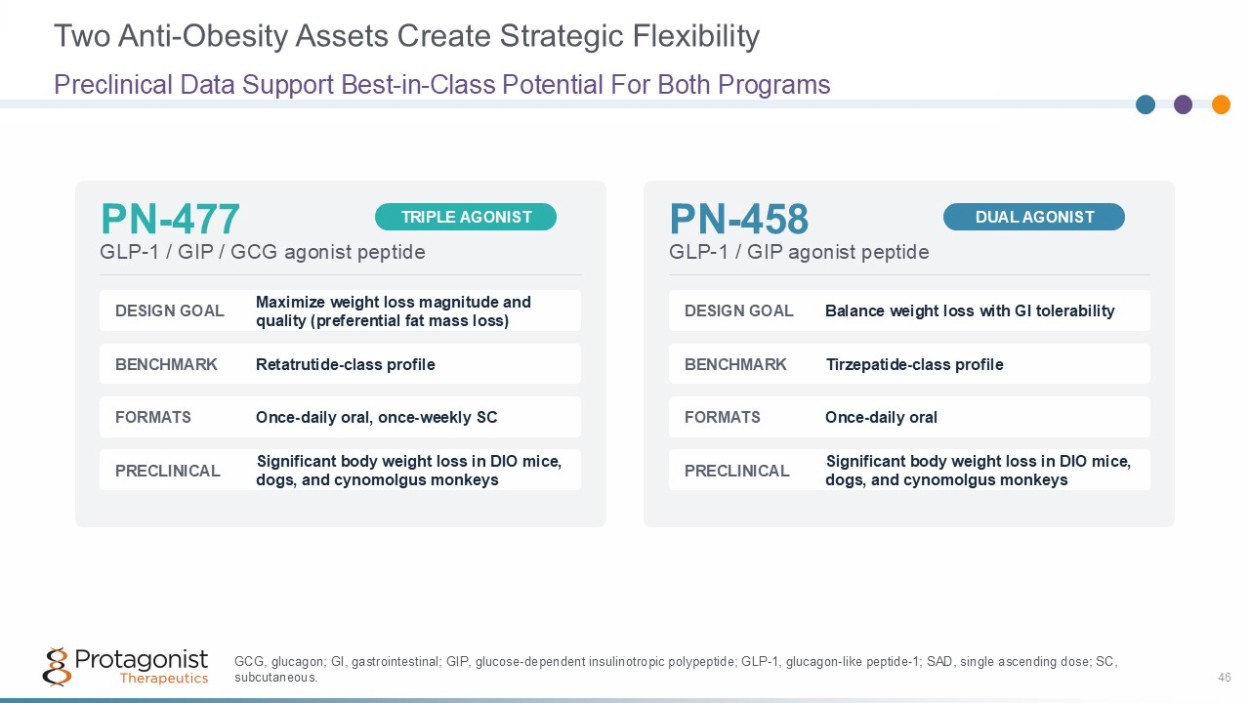
PN - 477 TRIPLE AGONIST GLP - 1 / GIP / GCG agonist peptide DESIGN GOAL Maximize weight loss magnitude and quality (preferential fat mass loss) BENCHMARK Retatrutide - class profile FORMATS Once - daily oral, once - weekly SC PRECLINICAL Significant body weight loss in DIO mice, dogs, and cynomolgus monkeys PN - 458 DUAL AGONIST GLP - 1 / GIP agonist peptide DESIGN GOAL Balance weight loss with GI tolerability BENCHMARK Tirzepatide - class profile FORMATS Once - daily oral PRECLINICAL Significant body weight loss in DIO mice, dogs, and cynomolgus monkeys Two Anti - Obesity Assets Create Strategic Flexibility 46 Preclinical Data Support Best - in - Class Potential For Both Programs GCG, glucagon; GI, gastrointestinal; GIP, glucose - dependent insulinotropic polypeptide; GLP - 1, glucagon - like peptide - 1; SAD, sin gle ascending dose; SC, subcutaneous.

What’s Next? 47
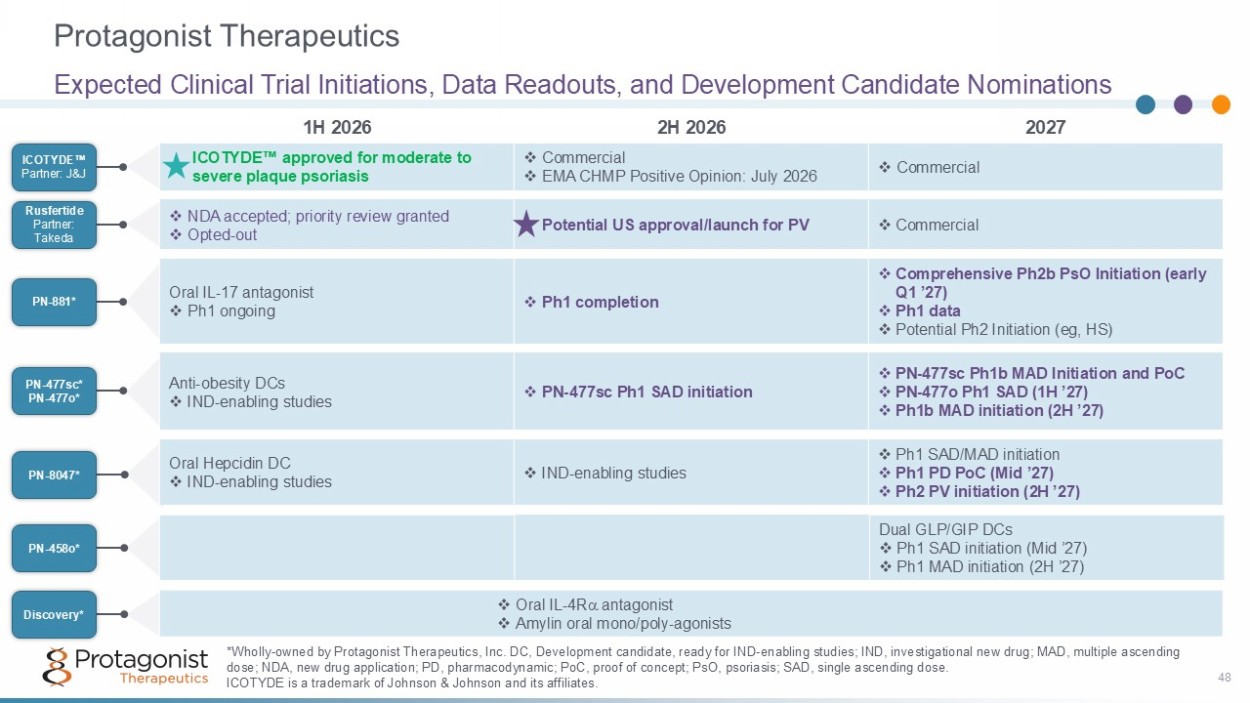
Protagonist Therapeutics 48 Expected Clinical Trial Initiations, Data Readouts, and Development Candidate Nominations *Wholly - owned by Protagonist Therapeutics, Inc . DC, Development candidate, ready for IND - enabling studies; IND, investigational new drug; MAD, multiple ascending dose; NDA, new drug application; PD, pharmacodynamic; PoC, proof of concept; PsO, psoriasis; SAD, single ascending dose. ICOTYDE is a trademark of Johnson & Johnson and its affiliates. □ Commercial Potential US approval/launch for PV □ NDA accepted; priority review granted □ Opted - out 2027 2H 2026 1H 2026 □ Commercial □ Commercial □ EMA CHMP Positive Opinion: July 2026 ICOTYDE approved for moderate to severe plaque psoriasis □ Comprehensive Ph2b PsO Initiation (early Q1 ’27) □ Ph1 data □ Potential Ph2 Initiation (eg, HS) □ Ph1 completion Oral IL - 17 antagonist □ Ph1 ongoing □ Ph1 SAD/MAD initiation □ Ph1 PD PoC (Mid ’27) □ Ph2 PV initiation (2H ’27) □ IND - enabling studies Oral Hepcidin DC □ IND - enabling studies Dual GLP/GIP DCs □ Ph1 SAD initiation (Mid ’27) □ Ph1 MAD initiation (2H ’27) □ PN - 477sc Ph1b MAD Initiation and PoC □ PN - 477o Ph1 SAD (1H ’27) □ Ph1b MAD initiation (2H ’27) □ PN - 477sc Ph1 SAD initiation Anti - obesity DCs □ IND - enabling studies PN - 8047* PN - 458o* PN - 477sc* PN - 477o* ICOTYDE Partner: J&J Rusfertide Partner: Takeda Discovery* PN - 881* □ Oral IL - 4R antagonist □ Amylin oral mono/poly - agonists

Thank you 49