Notice of Convocation of the 150th Annual General Meeting of Shareholders Date June 24, 2026 (Wednesday), 10:00 a.m. (The reception is scheduled to open at 8:50 a.m.) Venue Imperial Hotel, Osaka 3rd Floor Internet live stream will be delivered. Please refer to page 5. Contents Notice of Convocation of the 150th Annual General Meeting of Shareholders ……………………………… 1 Guidance for Exercising Voting Rights via Electronic Means (e.g., the Internet, etc.) ……………………………………………… 4 Internet live stream and the advance questions ………… 5 Reference Documents for the General Meeting of Shareholders …………………………………………… 6 Business Report ……………………………………………………… 26 Consolidated Financial Statements ………………………………77 Unconsolidated Financial Statements ………………………… 80 Audit Reports ……………………………………………………………… 83 Takeda Pharmaceutical Company Limited TSE Code: 4502 Please note that the following is an English translation of the original Japanese version, prepared only for the convenience of shareholders residing outside Japan. In case of any discrepancy between the translation and the Japanese original, the latter shall prevail. TAKEDA PHARMACEUTICAL COMPANY LIMITED (“TAKEDA”) HEREBY DISCLAIMS ALL REPRESENTATIONS AND WARRANTIES WITH RESPECT TO THIS TRANSLATION, WHETHER EXPRESS OR IMPLIED INCLUDING, BUT WITHOUT LIMITATION TO, ANY REPRESENTATIONS OR WARRANTIES WITH RESPECT TO ACCURACY, RELIABILITY OR COMPLETENESS OF THIS TRANSLATION. IN NO EVENT SHALL TAKEDA BE LIABLE FOR ANY DAMAGES OF ANY KIND OR NATURE INCLUDING, BUT WITHOUT LIMITATION TO, DIRECT, INDIRECT, SPECIAL, PUNITIVE, CONSEQUENTIAL OR INCIDENTAL DAMAGES ARISING FROM OR IN CONNECTION WITH THIS TRANSLATION. This translation includes a translation of the audit report of the financial statements included in the original Japanese version, prepared by KPMG AZSA LLC, TAKEDA’s independent auditor. KPMG AZSA LLC has not audited and makes no warranty as to the accuracy or otherwise of the translation of the financial statements or other financial information included in this translation.
- 1 - TSE Code: 4502 June 2, 2026 Dear Shareholders 1-1, Doshomachi 4-chome, Chuo-ku, Osaka 540-8645, Japan Takeda Pharmaceutical Company Limited Christophe Weber, President and Representative Director Notice of Convocation of the 150th Annual General Meeting of Shareholders We hereby announce the 150th Annual General Meeting of Shareholders (the “Meeting”) of TAKEDA PHARMACEUTICAL COMPANY LIMITED (the “Company” or “TAKEDA”) to be held as follows. When convening this Meeting, the Company provides the information including the Reference Documents for the General Meeting of Shareholders in electronic form (such content, the “matters subject to electronic provision”), and posts the matters subject to electronic provision as “Notice of Convocation of the 150th Annual General Meeting of Shareholders” on the Company’s website. To review such matters, please access the Company’s website by using the URL below. The Company’s website: https://www.takeda.com/investors/events Matters subject to electronic provision are posted on the website above as well as the following websites. Please access either of them. Shareholders’ Meeting Materials Published Website: https://d.sokai.jp/4502/teiji/ The Tokyo Stock Exchange (TSE)’s website (Listed Company Search): https://www2.jpx.co.jp/tseHpFront/JJK020010Action.do?Show=Show For accessing the TSE’s website above, enter the issue name (Takeda Pharmaceutical Company) or TSE code (4502), search for it, and click “Basic information” and select “Documents for public inspection/PR information” to see them. If you will not be attending the Meeting in person, you may exercise your voting rights via electronic means (e.g. the internet, etc.) or by postal mail. Please review the Reference Documents for the General Meeting of Shareholders described below and exercise your voting rights by 5:30 p.m. on June 23, 2026 (Tuesday) (JST). (The proceedings of the Meeting on the day can be viewed via an internet live stream in lieu of attending in person, and you may exercise your voting rights in advance. For details on the “Internet Live Stream,” please refer to page 5.)
- 2 - Exercise of Voting Rights via Electronic Means (e.g., the Internet, etc.) Please access the “Guidance for the Exercising Voting Rights via Electronic Means (e.g., the Internet, etc.)” on page 4, follow the instructions on the screen, and indicate your approval or disapproval of each proposal before the deadline indicated below. Deadline for Exercise (completion of entry): 5:30 p.m. on June 23, 2026 (Tuesday) (JST) Exercise of Voting Rights by Postal Mail Please indicate your approval or disapproval of each proposal on the enclosed “Voting Form” and return it to the Company by postal mail so that it arrives before the deadline indicated below. Deadline for Exercise (arrival): 5:30 p.m. on June 23, 2026 (Tuesday) (JST) Details 1. Date and time: June 24, 2026 (Wednesday), 10:00 a.m. (The reception is scheduled to open at 8:50 a.m.) 2. Venue: 8-50, Temmabashi 1-Chome, Kita-ku, Osaka, Japan Imperial Hotel, Osaka 3rd Floor 3. Objectives of the Meeting: Items to be reported: 1. The Business Report, Consolidated Financial Statements and Unconsolidated Financial Statements for the 149th fiscal year (from April 1, 2025 to March 31, 2026) 2. Results of audits of the Consolidated Financial Statements by the Accounting Auditor and Audit and Supervisory Committee for the 149th fiscal year Items to be resolved: Proposal No.1: Appropriation of Surplus Proposal No.2: Election of Eight (8) Directors who are not Audit and Supervisory Committee Members Proposal No.3: Election of Three (3) Directors who are Audit and Supervisory Committee Members Proposal No.4: Election of One (1) Substitute Director who is an Audit and Supervisory Committee Member Proposal No.5: Payment of Bonuses to Directors who are not Audit and Supervisory Committee Members ● If you attend the Meeting in person, please present the enclosed Voting Form at the reception desk of the Meeting. ● On the day of the Meeting, the directors, officers, and staff will be dressed in Cool Biz attire. We kindly request that you also attend in light clothing. ● Please also be so kind to cooperate with measures that the Company or the hotel deem necessary for the safety of shareholders as a whole. ● In case where the operation of the Meeting is significantly changed, those changes will be announced on our website (https://www.takeda.com/investors/events).
- 3 - Guidance Notes on the Treatment of Exercise of Voting Rights (1) If you exercise your voting rights both via electronic means (e.g., the Internet, etc.) and by postal mail, voting rights exercised via electronic means (e.g., the Internet, etc.) shall prevail, regardless of the time and date the votes are received. (2) If voting rights are exercised multiple times via electronic means (e.g., the Internet, etc.), the last exercise of voting rights shall prevail. (3) If you exercise your voting rights by proxy, you may delegate your voting rights to one shareholder who holds voting rights in the Company. However, please note that you are required to submit a document certifying the authority of such proxy. (4) If no indication of approval or disapproval is expressed for the proposals in the returned Voting Form, you will be deemed to have voted for the proposals. Other arrangements for convening the Meeting 1. Among the matters subject to electronic provision, the following matters are not provided in the paper-based documents delivered to shareholders who have requested the delivery of such documents, in accordance with laws and regulations and the provision of the Company’s Articles of Incorporation. The Audit and Supervisory Committee and Accounting Auditor audited the documents subject to audit, including the following matters: 1) The following matters in the Business Report ・Management Policy and Issues for the Takeda Group to Address ・Business Overview ・Business Performance ・Financial Position and Income Summary ・Main Businesses of the Takeda Group ・Major Offices of the Company ・Employees ・Principal lenders and loan amounts ・Common Stock of the Company ・Outline of the terms of the liability limitation agreement ・Outline of the terms of the company indemnification agreement ・Outlines of the terms of the directors & officers liability insurance ・External Directors (Major activities during this fiscal year and the summary of the duties which were conducted by the External Directors with regard to the roles which the Company had expected them to fulfill) ・Accounting Auditor ・Overview of the Systems to Ensure the Appropriateness of Operations of the Company and the Status of Implementation of such Systems 2) Consolidated Statement of Changes in Equity and Notes to the Consolidated Financial Statements 3) Unconsolidated Financial Statements (Unconsolidated Balance Sheet, Unconsolidated Statement of Operations, Unconsolidated Statements of Changes in Net Assets and Notes to the Unconsolidated Financial Statements) 2. Any modification made to the matters subject to electronic provision will be communicated by posting a notification to that effect and the pre-modified versions of those matters on the websites described in page 1. 3. The resolutions made at the 150th Annual General Meeting of Shareholders will be posted on our website after the completion thereof instead of sending the notice of resolutions in writing. Company’s website https://www.takeda.com/investors/events END OF DOCUMENT The CEO-Elect Letter to Shareholders is Now Available on Our Website We invite you to read CEO-Elect Julie Kim’s first shareholder letter via the following URL or two-dimensional code: URL: https://takeda.info/2026-letter-en

- 4 - Guidance for Exercising Voting Rights via Electronic Means (e.g., the Internet, etc.) (Not applicable for holders of American Depositary Shares) Website for exercising voting rights: https://evote.tr.mufg.jp/ You may exercise your voting rights via the Internet by accessing the website for exercising voting rights using a smartphone or a personal computer. Please exercise your voting rights following the instructions on the screen. ●Please note that you will not be able to access the above URL from 2:30 a.m. to 4:30 a.m. each day. ●Any Internet access fees or communication charges, etc., arising from access to the website for exercising voting rights shall be borne by the user. Method for Exercising Voting Rights by scanning QR code Method for Exercising Voting Rights by entering “Login ID” and “Tentative Password” (QR Code is the registered trademark of DENSO WAVE INCORPORATED) Scan “QR Code for Login” provided in the right side of the enclosed “Voting Form” In exercising your voting rights by using a smartphone, neither “Login ID” nor “Tentative Password” is required. (1) Access the website for exercising voting rights above by using a personal computer Click “Next Screen” (2) Enter “Login ID” and “Tentative Password” Enter “Login ID” and “Tentative Password” provided in the Voting Form (3) Login Click “Login” and enter your approval or disapproval of the proposals following the instructions on the screen. For inquiries with respect to systems, please contact: Mitsubishi UFJ Trust and Banking Corporation Corporate Agency Division (help desk) Telephone: 0120-173-027 (toll-free number) Operating Hours: 9:00 a.m. to 9:00 p.m. To Institutional Investors: “Electronic Voting Platform” is available as a method for exercising voting rights.
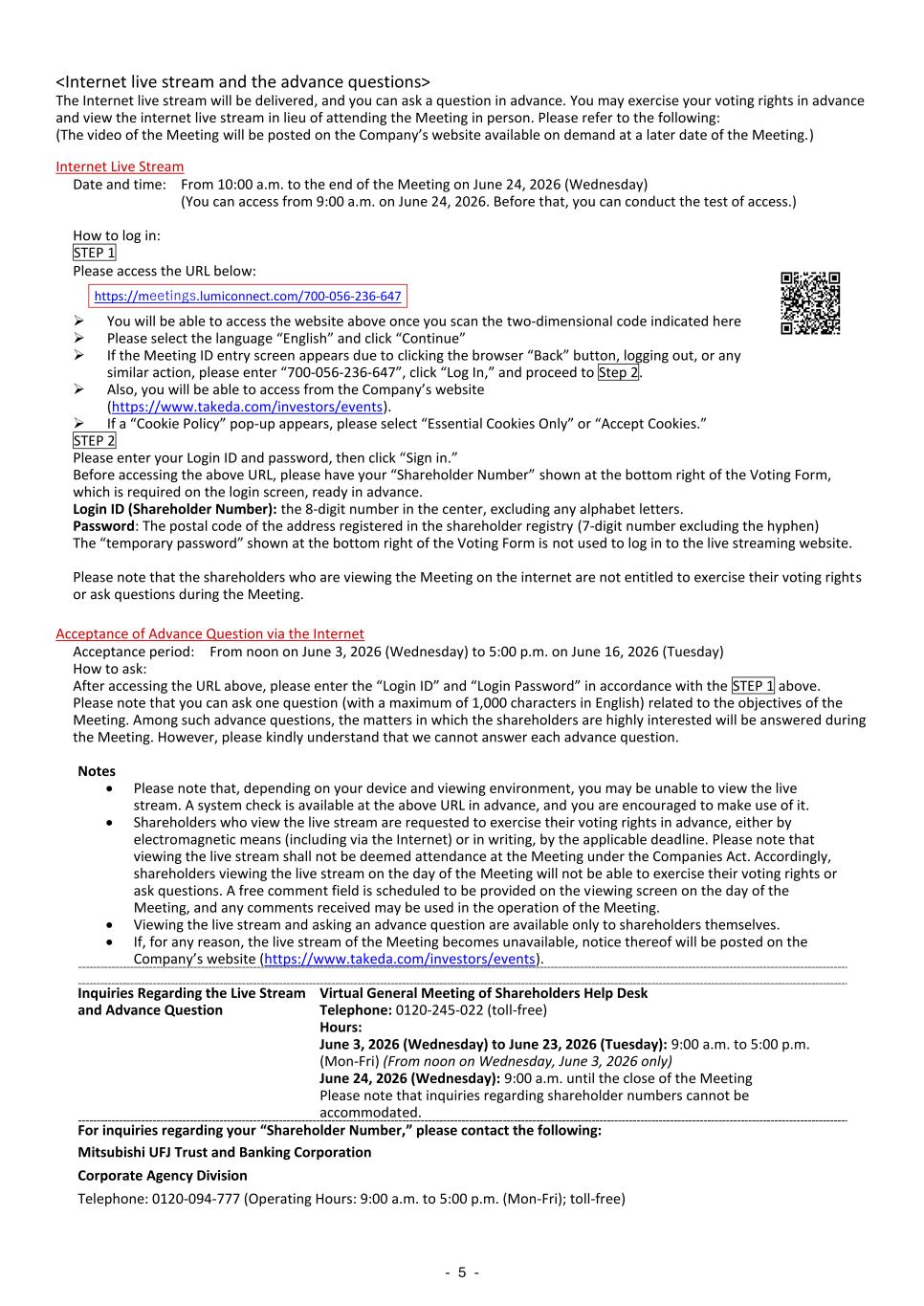
- 5 - <Internet live stream and the advance questions> The Internet live stream will be delivered, and you can ask a question in advance. You may exercise your voting rights in advance and view the internet live stream in lieu of attending the Meeting in person. Please refer to the following: (The video of the Meeting will be posted on the Company’s website available on demand at a later date of the Meeting.) Internet Live Stream Date and time: From 10:00 a.m. to the end of the Meeting on June 24, 2026 (Wednesday) (You can access from 9:00 a.m. on June 24, 2026. Before that, you can conduct the test of access.) How to log in: STEP 1 Please access the URL below: https://meetings.lumiconnect.com/700-056-236-647 ➢ You will be able to access the website above once you scan the two-dimensional code indicated here ➢ Please select the language “English” and click “Continue” ➢ If the Meeting ID entry screen appears due to clicking the browser “Back” button, logging out, or any similar action, please enter “700-056-236-647”, click “Log In,” and proceed to Step 2. ➢ Also, you will be able to access from the Company’s website (https://www.takeda.com/investors/events). ➢ If a “Cookie Policy” pop-up appears, please select “Essential Cookies Only” or “Accept Cookies.” STEP 2 Please enter your Login ID and password, then click “Sign in.” Before accessing the above URL, please have your “Shareholder Number” shown at the bottom right of the Voting Form, which is required on the login screen, ready in advance. Login ID (Shareholder Number): the 8-digit number in the center, excluding any alphabet letters. Password: The postal code of the address registered in the shareholder registry (7-digit number excluding the hyphen) The “temporary password” shown at the bottom right of the Voting Form is not used to log in to the live streaming website. Please note that the shareholders who are viewing the Meeting on the internet are not entitled to exercise their voting rights or ask questions during the Meeting. Acceptance of Advance Question via the Internet Acceptance period: From noon on June 3, 2026 (Wednesday) to 5:00 p.m. on June 16, 2026 (Tuesday) How to ask: After accessing the URL above, please enter the “Login ID” and “Login Password” in accordance with the STEP 1 above. Please note that you can ask one question (with a maximum of 1,000 characters in English) related to the objectives of the Meeting. Among such advance questions, the matters in which the shareholders are highly interested will be answered during the Meeting. However, please kindly understand that we cannot answer each advance question. Notes • Please note that, depending on your device and viewing environment, you may be unable to view the live stream. A system check is available at the above URL in advance, and you are encouraged to make use of it. • Shareholders who view the live stream are requested to exercise their voting rights in advance, either by electromagnetic means (including via the Internet) or in writing, by the applicable deadline. Please note that viewing the live stream shall not be deemed attendance at the Meeting under the Companies Act. Accordingly, shareholders viewing the live stream on the day of the Meeting will not be able to exercise their voting rights or ask questions. A free comment field is scheduled to be provided on the viewing screen on the day of the Meeting, and any comments received may be used in the operation of the Meeting. • Viewing the live stream and asking an advance question are available only to shareholders themselves. • If, for any reason, the live stream of the Meeting becomes unavailable, notice thereof will be posted on the Company’s website (https://www.takeda.com/investors/events). Inquiries Regarding the Live Stream and Advance Question Virtual General Meeting of Shareholders Help Desk Telephone: 0120-245-022 (toll-free) Hours: June 3, 2026 (Wednesday) to June 23, 2026 (Tuesday): 9:00 a.m. to 5:00 p.m. (Mon-Fri) (From noon on Wednesday, June 3, 2026 only) June 24, 2026 (Wednesday): 9:00 a.m. until the close of the Meeting Please note that inquiries regarding shareholder numbers cannot be accommodated. For inquiries regarding your “Shareholder Number,” please contact the following: Mitsubishi UFJ Trust and Banking Corporation Corporate Agency Division Telephone: 0120-094-777 (Operating Hours: 9:00 a.m. to 5:00 p.m. (Mon-Fri); toll-free)
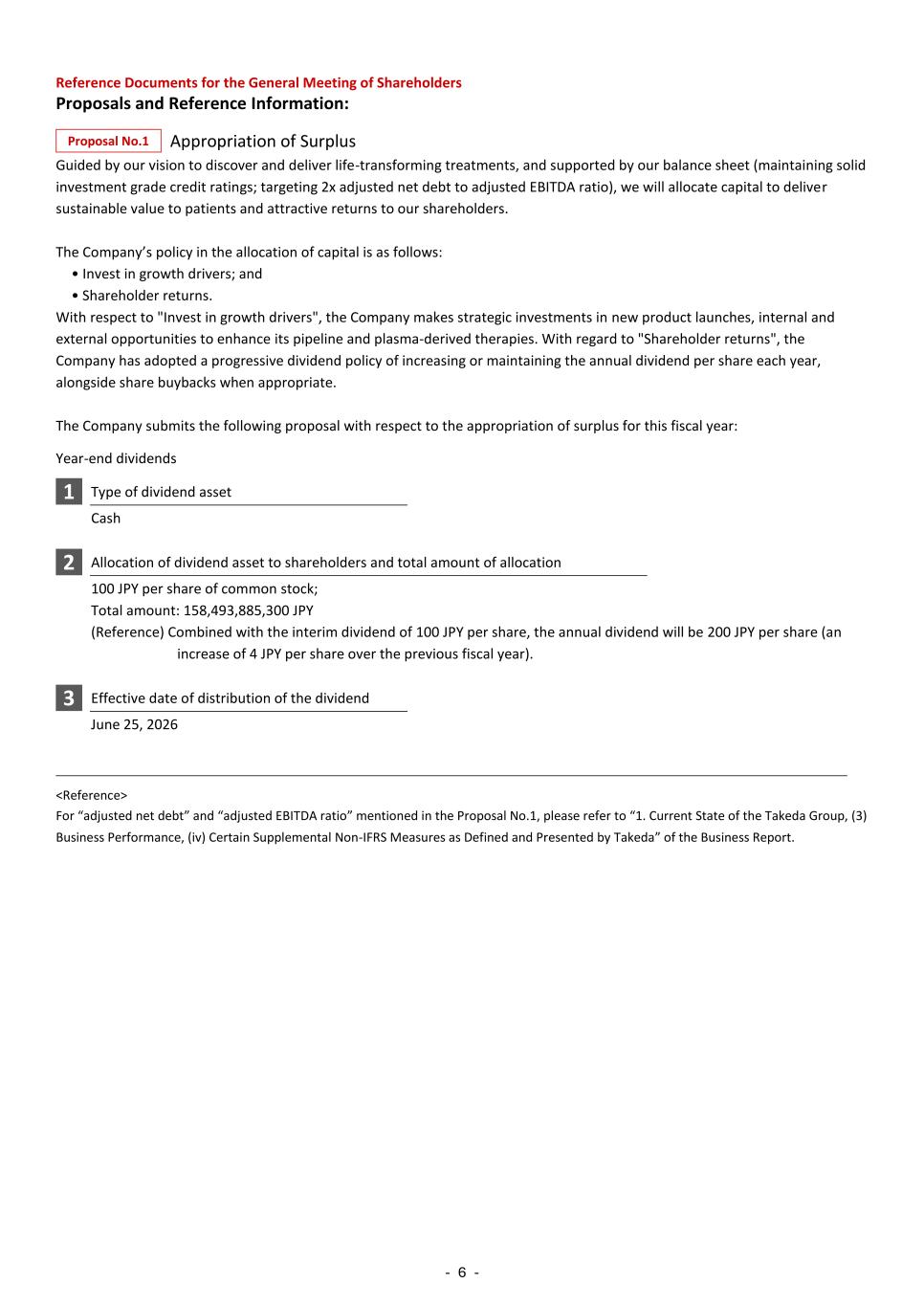
- 6 - Reference Documents for the General Meeting of Shareholders Proposals and Reference Information: Proposal No.1 Appropriation of Surplus Guided by our vision to discover and deliver life-transforming treatments, and supported by our balance sheet (maintaining solid investment grade credit ratings; targeting 2x adjusted net debt to adjusted EBITDA ratio), we will allocate capital to deliver sustainable value to patients and attractive returns to our shareholders. The Company’s policy in the allocation of capital is as follows: • Invest in growth drivers; and • Shareholder returns. With respect to "Invest in growth drivers", the Company makes strategic investments in new product launches, internal and external opportunities to enhance its pipeline and plasma-derived therapies. With regard to "Shareholder returns", the Company has adopted a progressive dividend policy of increasing or maintaining the annual dividend per share each year, alongside share buybacks when appropriate. The Company submits the following proposal with respect to the appropriation of surplus for this fiscal year: Year-end dividends 1 Type of dividend asset Cash 2 Allocation of dividend asset to shareholders and total amount of allocation 100 JPY per share of common stock; Total amount: 158,493,885,300 JPY (Reference) Combined with the interim dividend of 100 JPY per share, the annual dividend will be 200 JPY per share (an increase of 4 JPY per share over the previous fiscal year). 3 Effective date of distribution of the dividend June 25, 2026 <Reference> For “adjusted net debt” and “adjusted EBITDA ratio” mentioned in the Proposal No.1, please refer to “1. Current State of the Takeda Group, (3) Business Performance, (iv) Certain Supplemental Non-IFRS Measures as Defined and Presented by Takeda” of the Business Report.
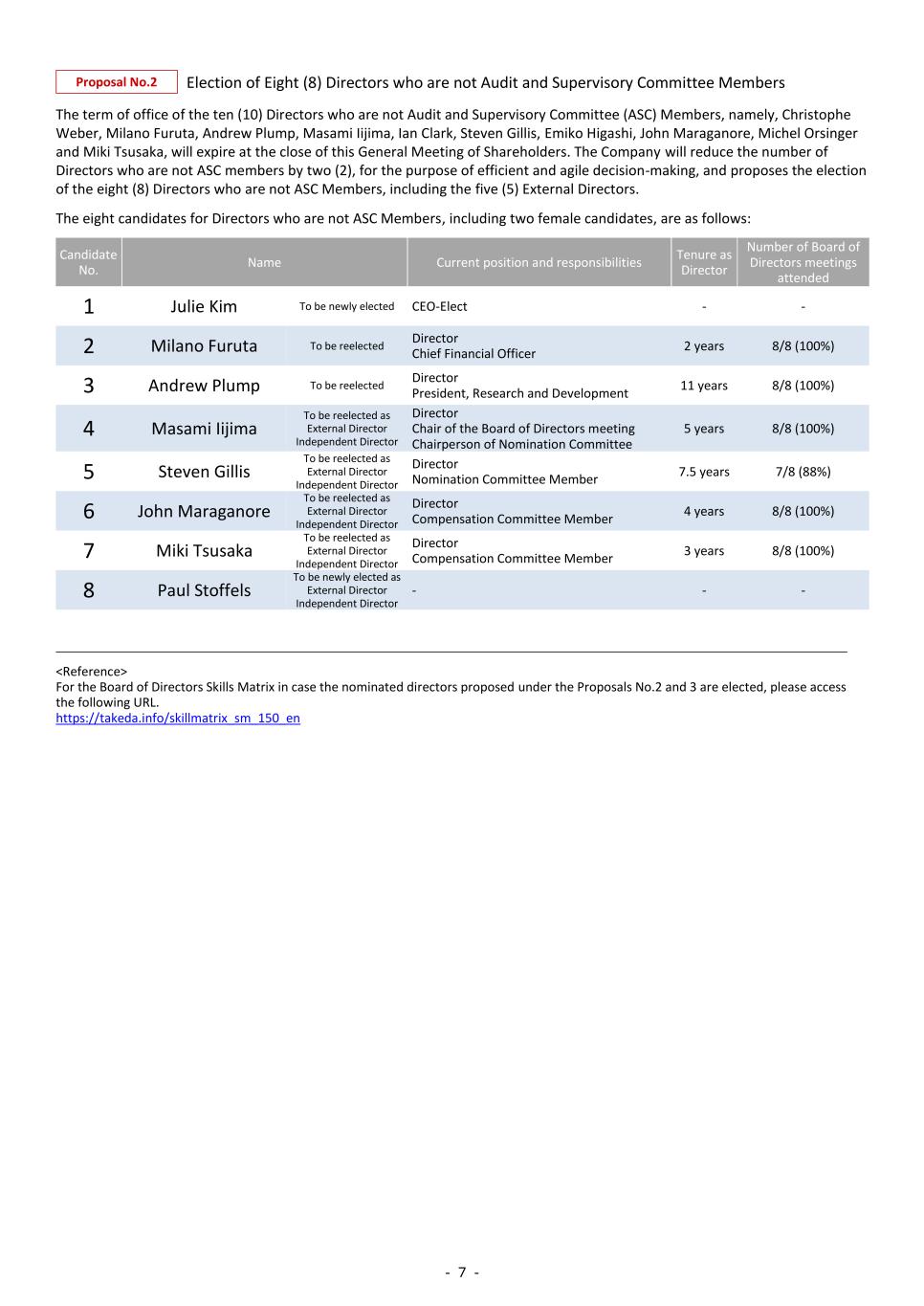
- 7 - Proposal No.2 Election of Eight (8) Directors who are not Audit and Supervisory Committee Members The term of office of the ten (10) Directors who are not Audit and Supervisory Committee (ASC) Members, namely, Christophe Weber, Milano Furuta, Andrew Plump, Masami Iijima, Ian Clark, Steven Gillis, Emiko Higashi, John Maraganore, Michel Orsinger and Miki Tsusaka, will expire at the close of this General Meeting of Shareholders. The Company will reduce the number of Directors who are not ASC members by two (2), for the purpose of efficient and agile decision-making, and proposes the election of the eight (8) Directors who are not ASC Members, including the five (5) External Directors. The eight candidates for Directors who are not ASC Members, including two female candidates, are as follows: Candidate No. Name Current position and responsibilities Tenure as Director Number of Board of Directors meetings attended 1 Julie Kim To be newly elected CEO-Elect - - 2 Milano Furuta To be reelected Director Chief Financial Officer 2 years 8/8 (100%) 3 Andrew Plump To be reelected Director President, Research and Development 11 years 8/8 (100%) 4 Masami Iijima To be reelected as External Director Independent Director Director Chair of the Board of Directors meeting Chairperson of Nomination Committee 5 years 8/8 (100%) 5 Steven Gillis To be reelected as External Director Independent Director Director Nomination Committee Member 7.5 years 7/8 (88%) 6 John Maraganore To be reelected as External Director Independent Director Director Compensation Committee Member 4 years 8/8 (100%) 7 Miki Tsusaka To be reelected as External Director Independent Director Director Compensation Committee Member 3 years 8/8 (100%) 8 Paul Stoffels To be newly elected as External Director Independent Director - - - <Reference> For the Board of Directors Skills Matrix in case the nominated directors proposed under the Proposals No.2 and 3 are elected, please access the following URL. https://takeda.info/skillmatrix_sm_150_en
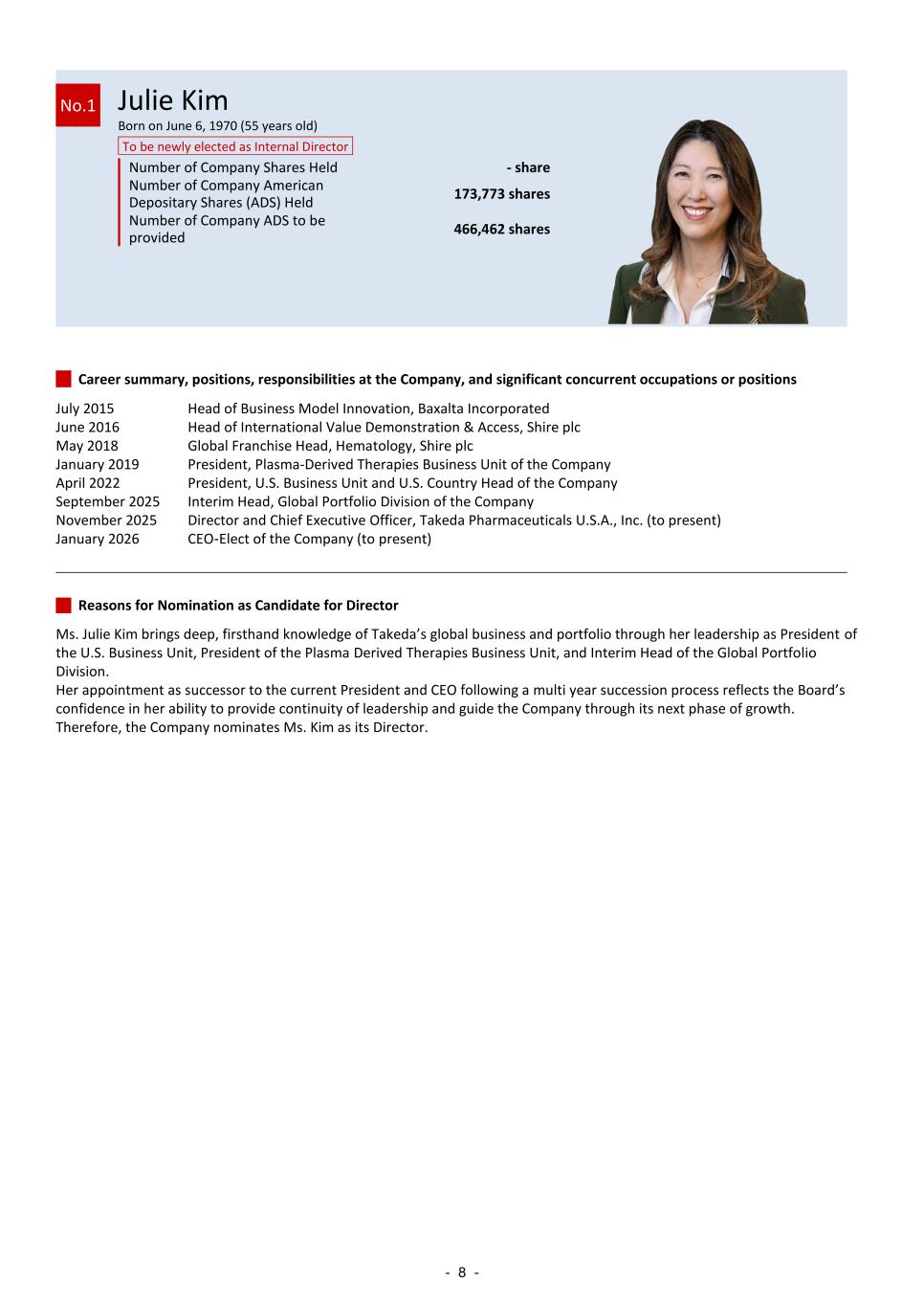
- 8 - No.1 Julie Kim Born on June 6, 1970 (55 years old) To be newly elected as Internal Director Number of Company Shares Held - share Number of Company American Depositary Shares (ADS) Held 173,773 shares Number of Company ADS to be provided 466,462 shares Career summary, positions, responsibilities at the Company, and significant concurrent occupations or positions July 2015 Head of Business Model Innovation, Baxalta Incorporated June 2016 Head of International Value Demonstration & Access, Shire plc May 2018 Global Franchise Head, Hematology, Shire plc January 2019 President, Plasma-Derived Therapies Business Unit of the Company April 2022 President, U.S. Business Unit and U.S. Country Head of the Company September 2025 Interim Head, Global Portfolio Division of the Company November 2025 Director and Chief Executive Officer, Takeda Pharmaceuticals U.S.A., Inc. (to present) January 2026 CEO‑Elect of the Company (to present) Reasons for Nomination as Candidate for Director Ms. Julie Kim brings deep, firsthand knowledge of Takeda’s global business and portfolio through her leadership as President of the U.S. Business Unit, President of the Plasma Derived Therapies Business Unit, and Interim Head of the Global Portfolio Division. Her appointment as successor to the current President and CEO following a multi year succession process reflects the Board’s confidence in her ability to provide continuity of leadership and guide the Company through its next phase of growth. Therefore, the Company nominates Ms. Kim as its Director.
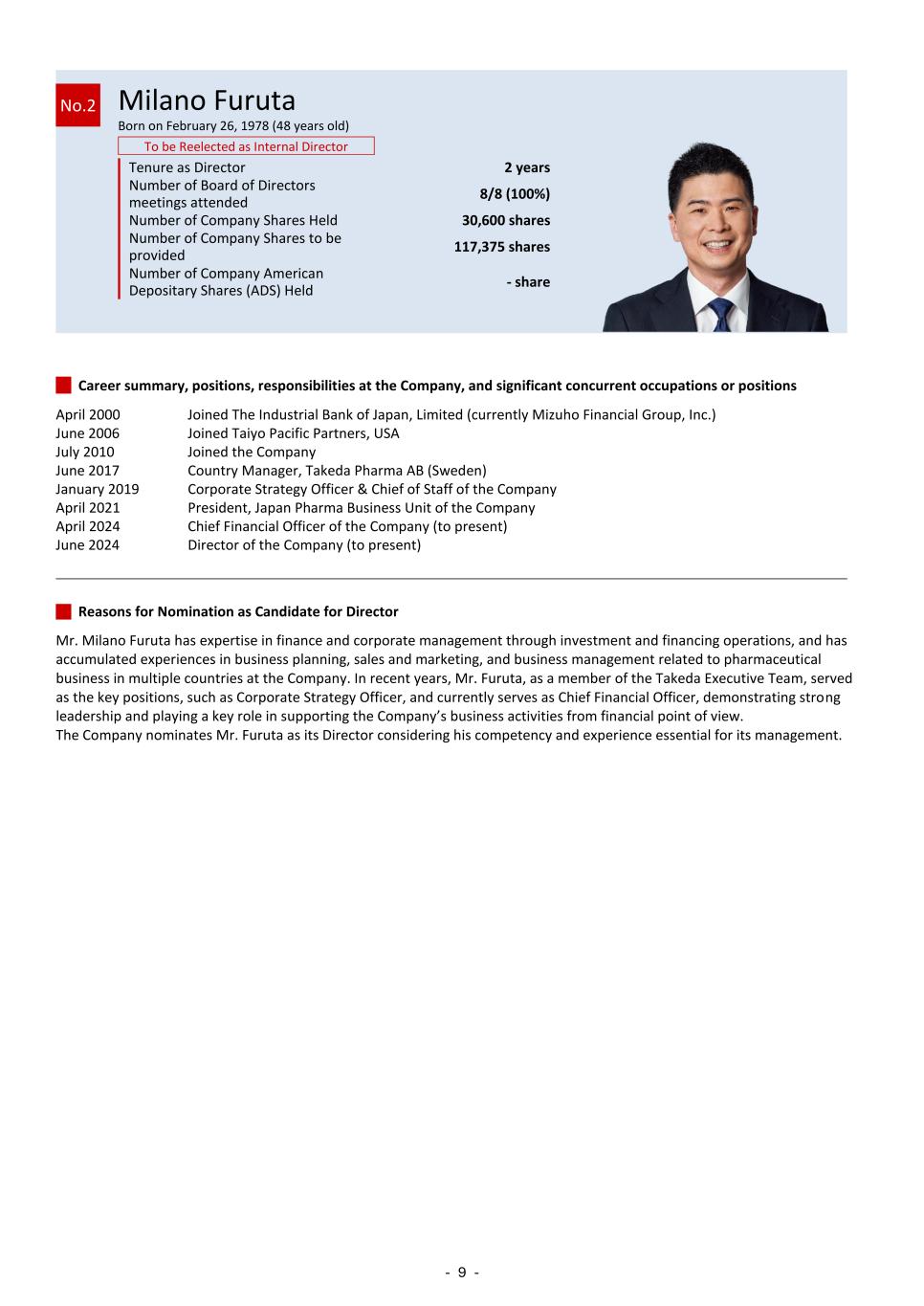
- 9 - No.2 Milano Furuta Born on February 26, 1978 (48 years old) To be Reelected as Internal Director Tenure as Director 2 years Number of Board of Directors meetings attended 8/8 (100%) Number of Company Shares Held 30,600 shares Number of Company Shares to be provided 117,375 shares Number of Company American Depositary Shares (ADS) Held - share Career summary, positions, responsibilities at the Company, and significant concurrent occupations or positions April 2000 Joined The Industrial Bank of Japan, Limited (currently Mizuho Financial Group, Inc.) June 2006 Joined Taiyo Pacific Partners, USA July 2010 Joined the Company June 2017 Country Manager, Takeda Pharma AB (Sweden) January 2019 Corporate Strategy Officer & Chief of Staff of the Company April 2021 President, Japan Pharma Business Unit of the Company April 2024 Chief Financial Officer of the Company (to present) June 2024 Director of the Company (to present) Reasons for Nomination as Candidate for Director Mr. Milano Furuta has expertise in finance and corporate management through investment and financing operations, and has accumulated experiences in business planning, sales and marketing, and business management related to pharmaceutical business in multiple countries at the Company. In recent years, Mr. Furuta, as a member of the Takeda Executive Team, served as the key positions, such as Corporate Strategy Officer, and currently serves as Chief Financial Officer, demonstrating strong leadership and playing a key role in supporting the Company’s business activities from financial point of view. The Company nominates Mr. Furuta as its Director considering his competency and experience essential for its management.
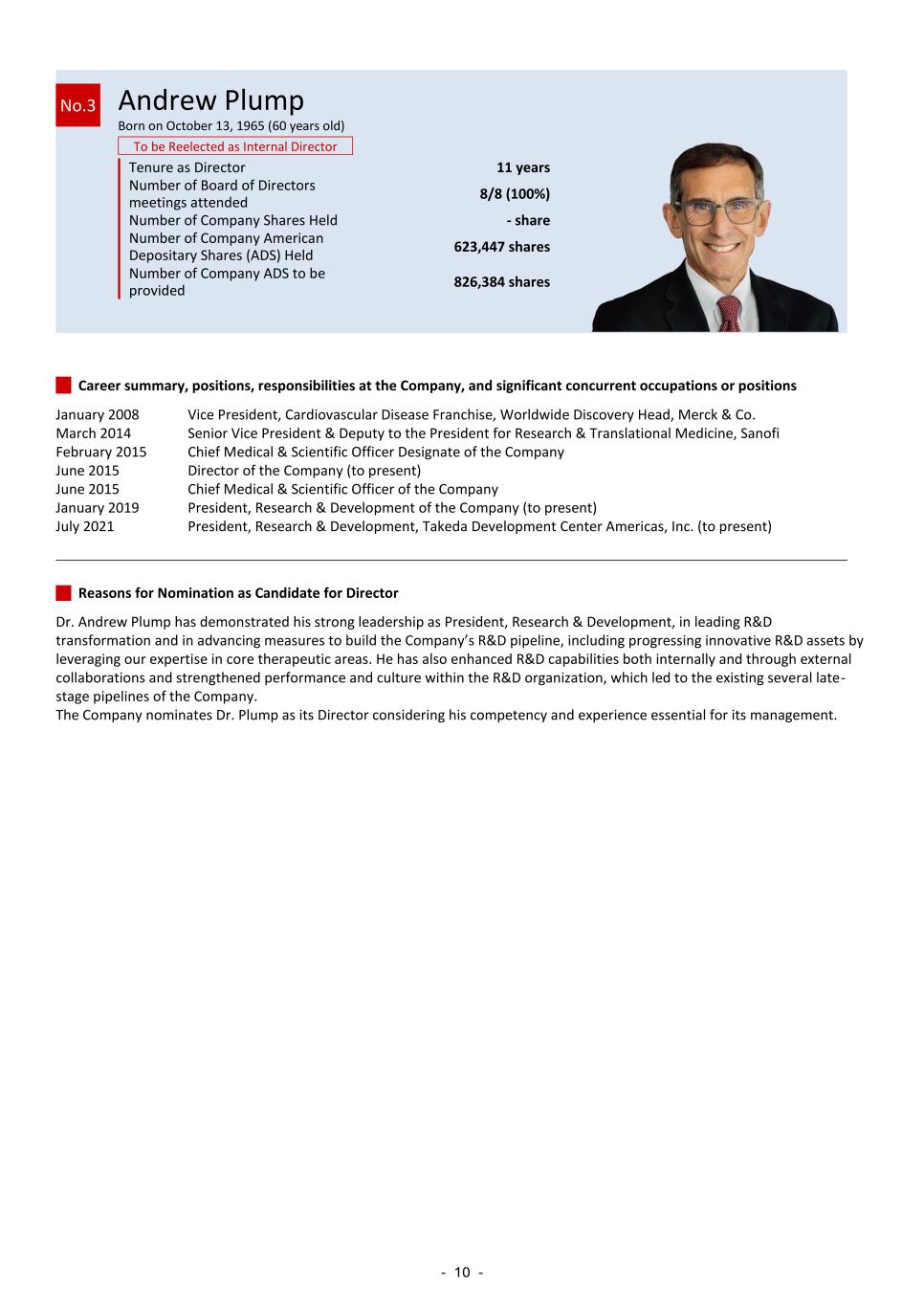
- 10 - No.3 Andrew Plump Born on October 13, 1965 (60 years old) To be Reelected as Internal Director Tenure as Director 11 years Number of Board of Directors meetings attended 8/8 (100%) Number of Company Shares Held - share Number of Company American Depositary Shares (ADS) Held 623,447 shares Number of Company ADS to be provided 826,384 shares Career summary, positions, responsibilities at the Company, and significant concurrent occupations or positions January 2008 Vice President, Cardiovascular Disease Franchise, Worldwide Discovery Head, Merck & Co. March 2014 Senior Vice President & Deputy to the President for Research & Translational Medicine, Sanofi February 2015 Chief Medical & Scientific Officer Designate of the Company June 2015 Director of the Company (to present) June 2015 Chief Medical & Scientific Officer of the Company January 2019 President, Research & Development of the Company (to present) July 2021 President, Research & Development, Takeda Development Center Americas, Inc. (to present) Reasons for Nomination as Candidate for Director Dr. Andrew Plump has demonstrated his strong leadership as President, Research & Development, in leading R&D transformation and in advancing measures to build the Company’s R&D pipeline, including progressing innovative R&D assets by leveraging our expertise in core therapeutic areas. He has also enhanced R&D capabilities both internally and through external collaborations and strengthened performance and culture within the R&D organization, which led to the existing several late- stage pipelines of the Company. The Company nominates Dr. Plump as its Director considering his competency and experience essential for its management.
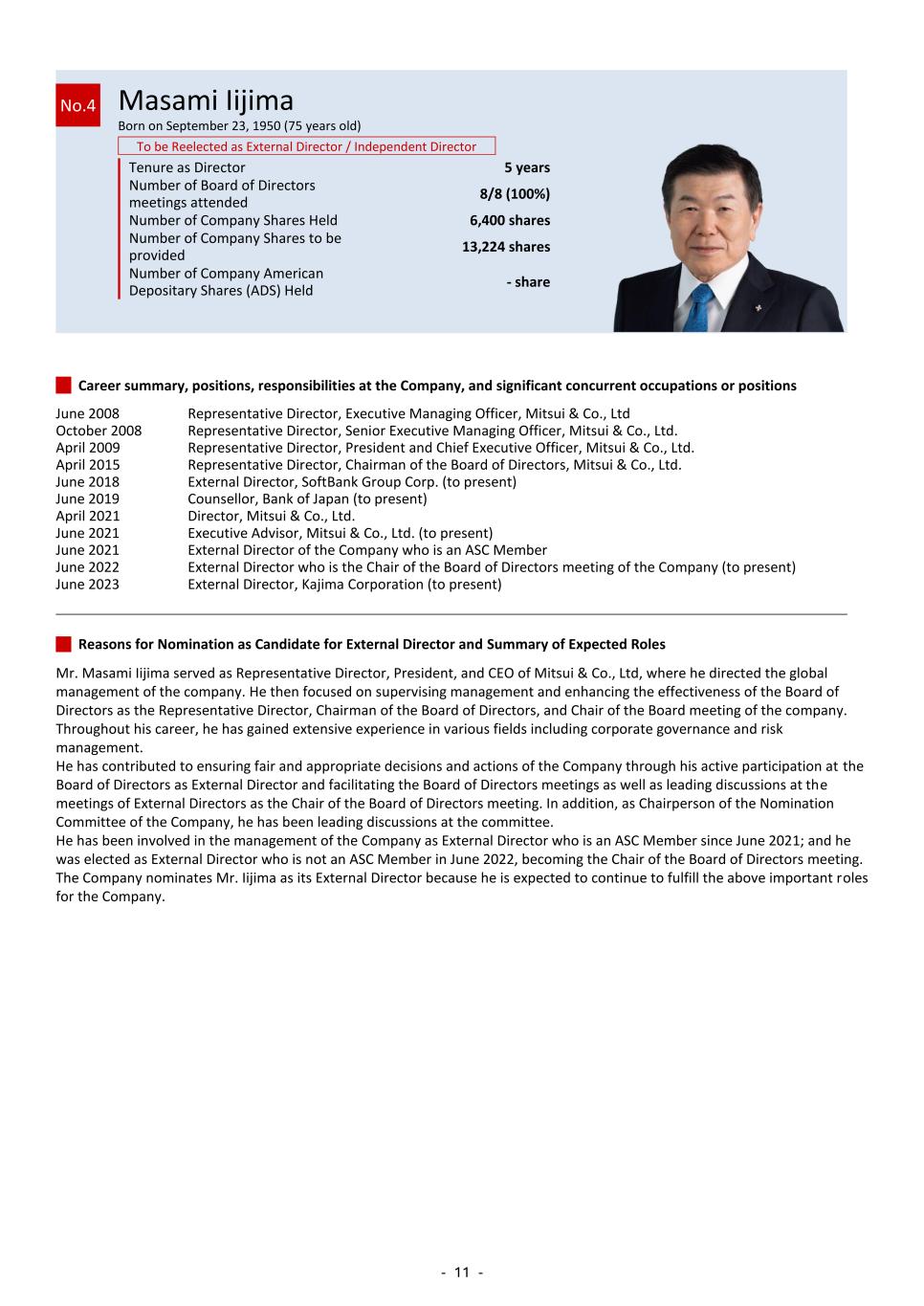
- 11 - No.4 Masami Iijima Born on September 23, 1950 (75 years old) To be Reelected as External Director / Independent Director Tenure as Director 5 years Number of Board of Directors meetings attended 8/8 (100%) Number of Company Shares Held 6,400 shares Number of Company Shares to be provided 13,224 shares Number of Company American Depositary Shares (ADS) Held - share Career summary, positions, responsibilities at the Company, and significant concurrent occupations or positions June 2008 Representative Director, Executive Managing Officer, Mitsui & Co., Ltd October 2008 Representative Director, Senior Executive Managing Officer, Mitsui & Co., Ltd. April 2009 Representative Director, President and Chief Executive Officer, Mitsui & Co., Ltd. April 2015 Representative Director, Chairman of the Board of Directors, Mitsui & Co., Ltd. June 2018 External Director, SoftBank Group Corp. (to present) June 2019 Counsellor, Bank of Japan (to present) April 2021 Director, Mitsui & Co., Ltd. June 2021 Executive Advisor, Mitsui & Co., Ltd. (to present) June 2021 External Director of the Company who is an ASC Member June 2022 External Director who is the Chair of the Board of Directors meeting of the Company (to present) June 2023 External Director, Kajima Corporation (to present) Reasons for Nomination as Candidate for External Director and Summary of Expected Roles Mr. Masami Iijima served as Representative Director, President, and CEO of Mitsui & Co., Ltd, where he directed the global management of the company. He then focused on supervising management and enhancing the effectiveness of the Board of Directors as the Representative Director, Chairman of the Board of Directors, and Chair of the Board meeting of the company. Throughout his career, he has gained extensive experience in various fields including corporate governance and risk management. He has contributed to ensuring fair and appropriate decisions and actions of the Company through his active participation at the Board of Directors as External Director and facilitating the Board of Directors meetings as well as leading discussions at the meetings of External Directors as the Chair of the Board of Directors meeting. In addition, as Chairperson of the Nomination Committee of the Company, he has been leading discussions at the committee. He has been involved in the management of the Company as External Director who is an ASC Member since June 2021; and he was elected as External Director who is not an ASC Member in June 2022, becoming the Chair of the Board of Directors meeting. The Company nominates Mr. Iijima as its External Director because he is expected to continue to fulfill the above important roles for the Company.
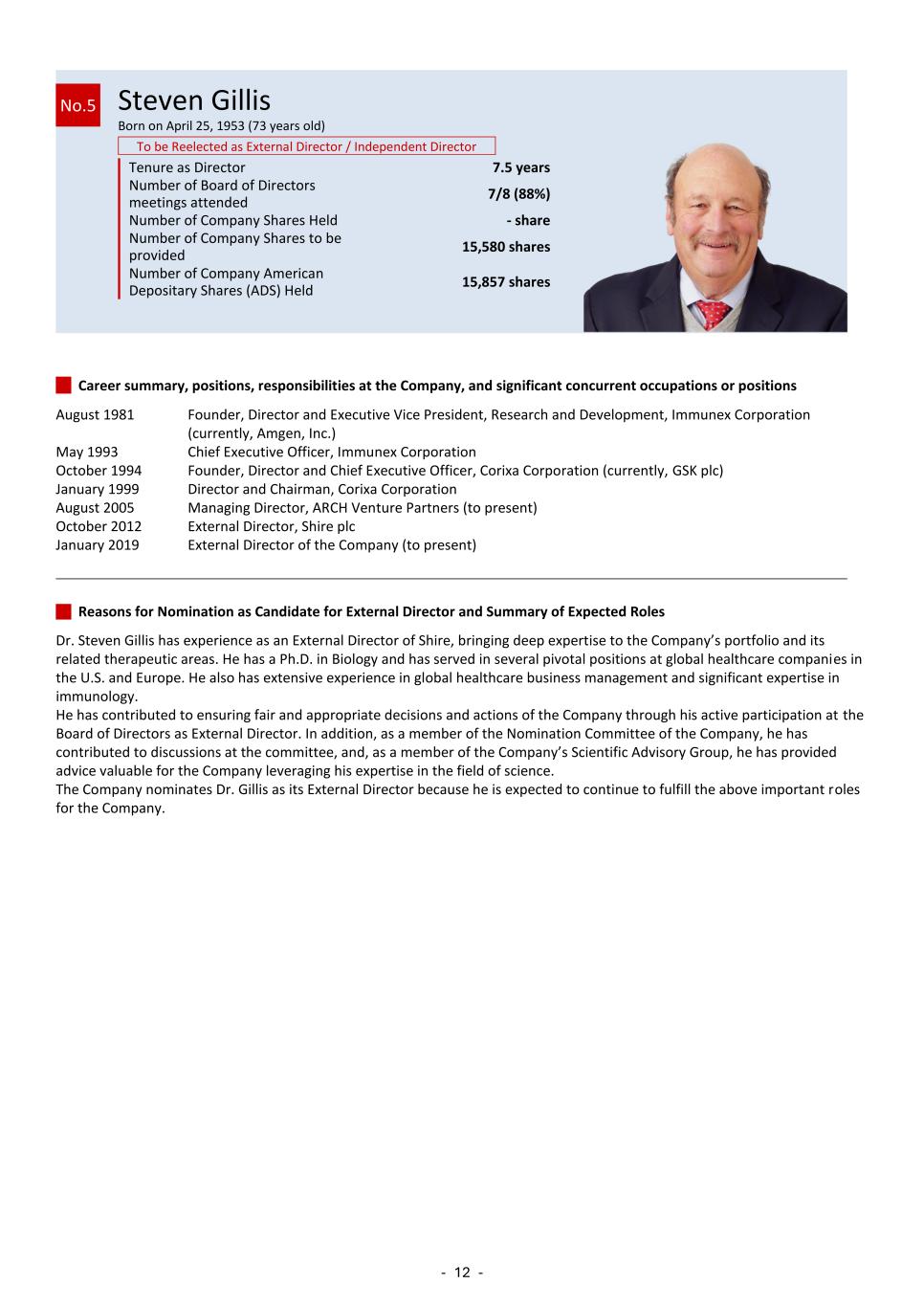
- 12 - No.5 Steven Gillis Born on April 25, 1953 (73 years old) To be Reelected as External Director / Independent Director Tenure as Director 7.5 years Number of Board of Directors meetings attended 7/8 (88%) Number of Company Shares Held - share Number of Company Shares to be provided 15,580 shares Number of Company American Depositary Shares (ADS) Held 15,857 shares Career summary, positions, responsibilities at the Company, and significant concurrent occupations or positions August 1981 Founder, Director and Executive Vice President, Research and Development, Immunex Corporation (currently, Amgen, Inc.) May 1993 Chief Executive Officer, Immunex Corporation October 1994 Founder, Director and Chief Executive Officer, Corixa Corporation (currently, GSK plc) January 1999 Director and Chairman, Corixa Corporation August 2005 Managing Director, ARCH Venture Partners (to present) October 2012 External Director, Shire plc January 2019 External Director of the Company (to present) Reasons for Nomination as Candidate for External Director and Summary of Expected Roles Dr. Steven Gillis has experience as an External Director of Shire, bringing deep expertise to the Company’s portfolio and its related therapeutic areas. He has a Ph.D. in Biology and has served in several pivotal positions at global healthcare companies in the U.S. and Europe. He also has extensive experience in global healthcare business management and significant expertise in immunology. He has contributed to ensuring fair and appropriate decisions and actions of the Company through his active participation at the Board of Directors as External Director. In addition, as a member of the Nomination Committee of the Company, he has contributed to discussions at the committee, and, as a member of the Company’s Scientific Advisory Group, he has provided advice valuable for the Company leveraging his expertise in the field of science. The Company nominates Dr. Gillis as its External Director because he is expected to continue to fulfill the above important roles for the Company.
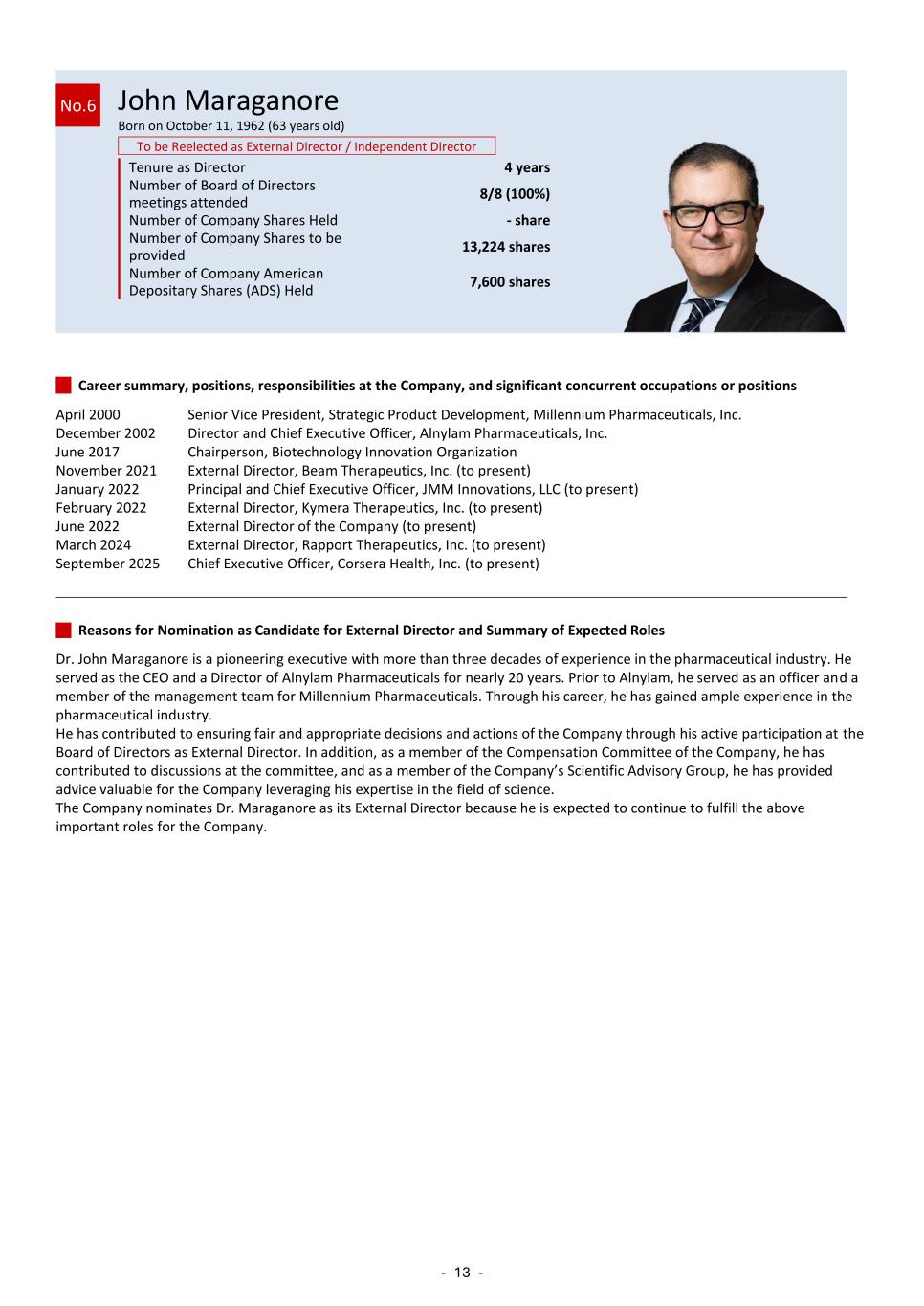
- 13 - No.6 John Maraganore Born on October 11, 1962 (63 years old) To be Reelected as External Director / Independent Director Tenure as Director 4 years Number of Board of Directors meetings attended 8/8 (100%) Number of Company Shares Held - share Number of Company Shares to be provided 13,224 shares Number of Company American Depositary Shares (ADS) Held 7,600 shares Career summary, positions, responsibilities at the Company, and significant concurrent occupations or positions April 2000 Senior Vice President, Strategic Product Development, Millennium Pharmaceuticals, Inc. December 2002 Director and Chief Executive Officer, Alnylam Pharmaceuticals, Inc. June 2017 Chairperson, Biotechnology Innovation Organization November 2021 External Director, Beam Therapeutics, Inc. (to present) January 2022 Principal and Chief Executive Officer, JMM Innovations, LLC (to present) February 2022 External Director, Kymera Therapeutics, Inc. (to present) June 2022 External Director of the Company (to present) March 2024 External Director, Rapport Therapeutics, Inc. (to present) September 2025 Chief Executive Officer, Corsera Health, Inc. (to present) Reasons for Nomination as Candidate for External Director and Summary of Expected Roles Dr. John Maraganore is a pioneering executive with more than three decades of experience in the pharmaceutical industry. He served as the CEO and a Director of Alnylam Pharmaceuticals for nearly 20 years. Prior to Alnylam, he served as an officer and a member of the management team for Millennium Pharmaceuticals. Through his career, he has gained ample experience in the pharmaceutical industry. He has contributed to ensuring fair and appropriate decisions and actions of the Company through his active participation at the Board of Directors as External Director. In addition, as a member of the Compensation Committee of the Company, he has contributed to discussions at the committee, and as a member of the Company’s Scientific Advisory Group, he has provided advice valuable for the Company leveraging his expertise in the field of science. The Company nominates Dr. Maraganore as its External Director because he is expected to continue to fulfill the above important roles for the Company.
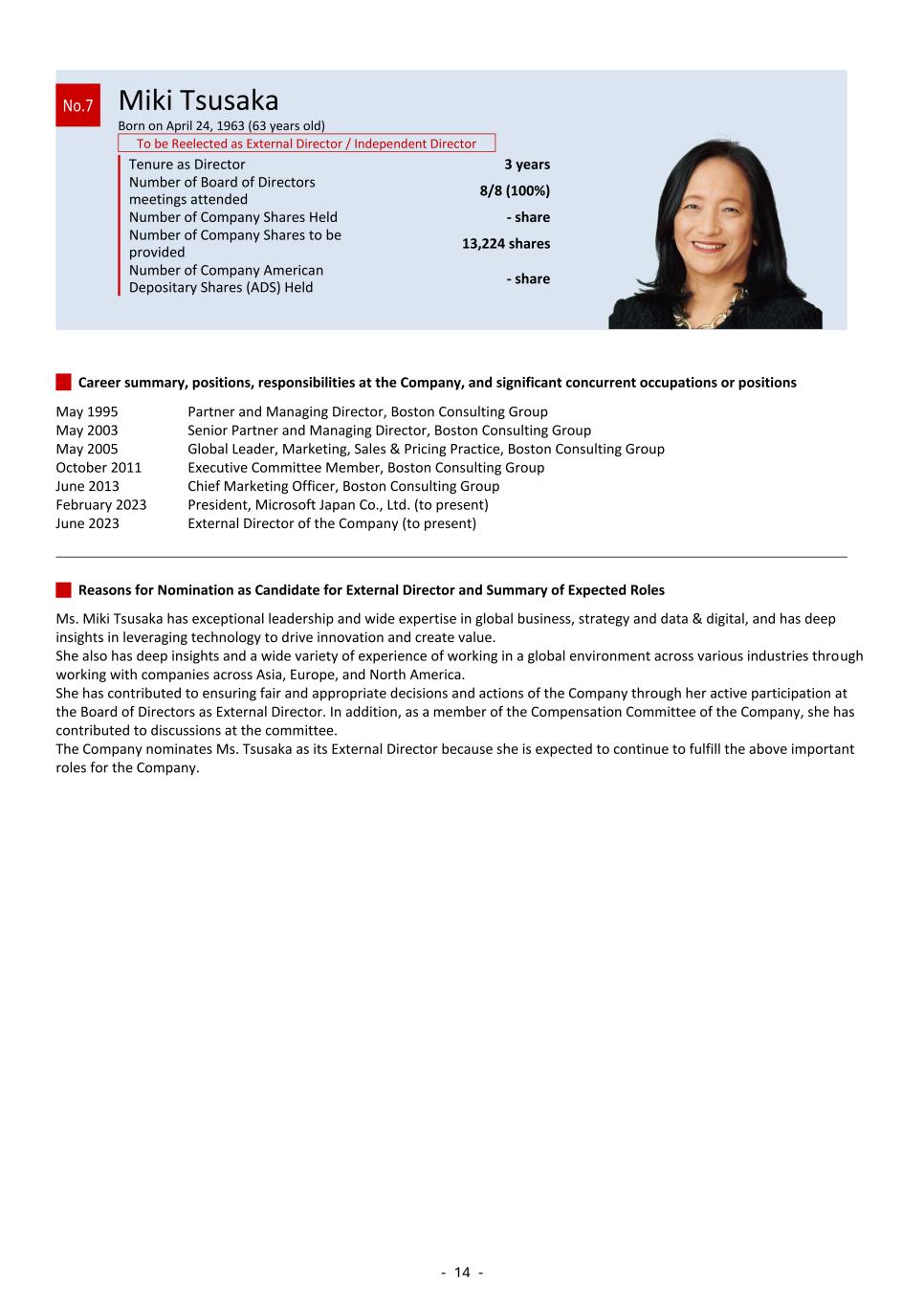
- 14 - No.7 Miki Tsusaka Born on April 24, 1963 (63 years old) To be Reelected as External Director / Independent Director Tenure as Director 3 years Number of Board of Directors meetings attended 8/8 (100%) Number of Company Shares Held - share Number of Company Shares to be provided 13,224 shares Number of Company American Depositary Shares (ADS) Held - share Career summary, positions, responsibilities at the Company, and significant concurrent occupations or positions May 1995 Partner and Managing Director, Boston Consulting Group May 2003 Senior Partner and Managing Director, Boston Consulting Group May 2005 Global Leader, Marketing, Sales & Pricing Practice, Boston Consulting Group October 2011 Executive Committee Member, Boston Consulting Group June 2013 Chief Marketing Officer, Boston Consulting Group February 2023 President, Microsoft Japan Co., Ltd. (to present) June 2023 External Director of the Company (to present) Reasons for Nomination as Candidate for External Director and Summary of Expected Roles Ms. Miki Tsusaka has exceptional leadership and wide expertise in global business, strategy and data & digital, and has deep insights in leveraging technology to drive innovation and create value. She also has deep insights and a wide variety of experience of working in a global environment across various industries through working with companies across Asia, Europe, and North America. She has contributed to ensuring fair and appropriate decisions and actions of the Company through her active participation at the Board of Directors as External Director. In addition, as a member of the Compensation Committee of the Company, she has contributed to discussions at the committee. The Company nominates Ms. Tsusaka as its External Director because she is expected to continue to fulfill the above important roles for the Company.
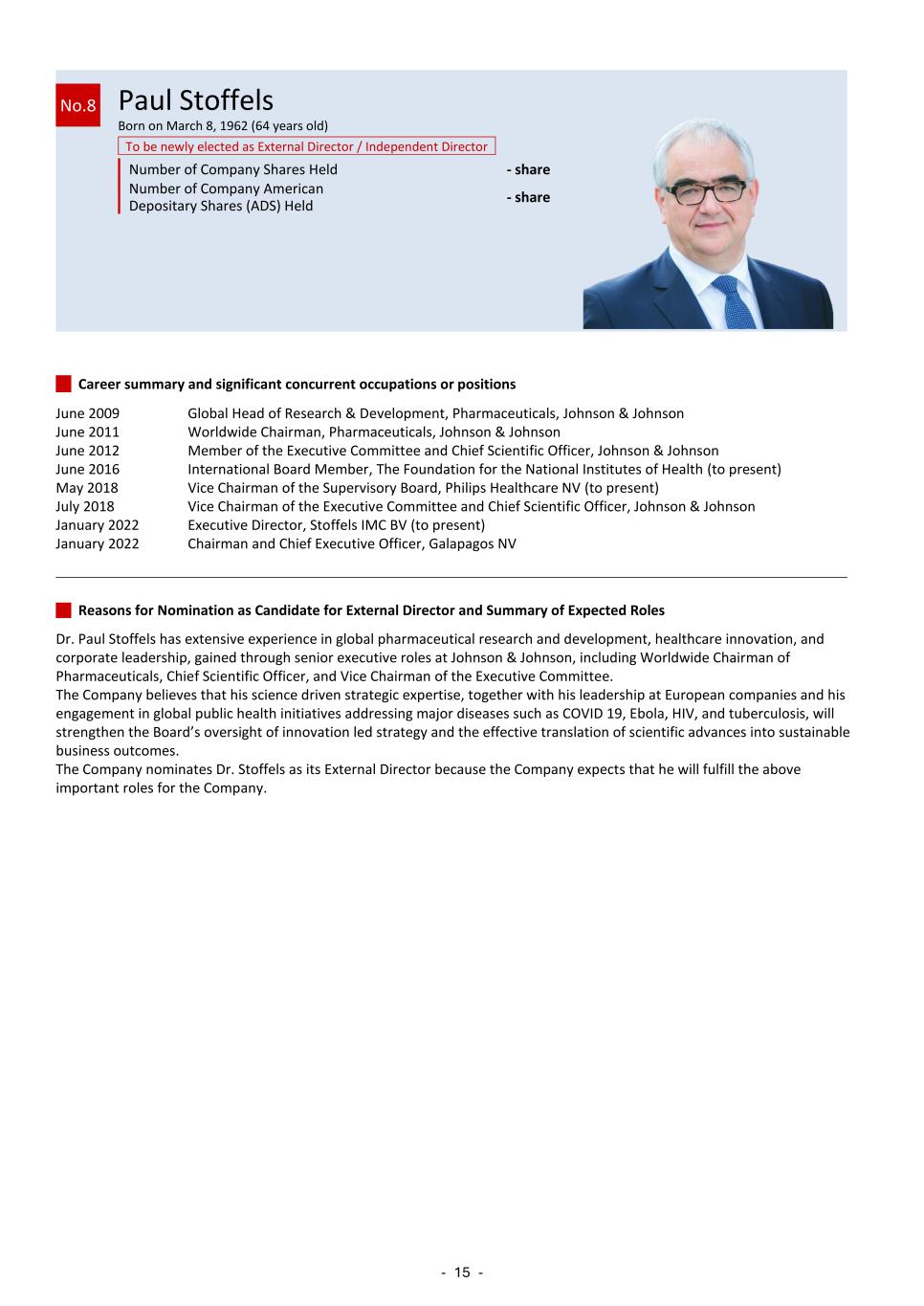
- 15 - No.8 Paul Stoffels Born on March 8, 1962 (64 years old) To be newly elected as External Director / Independent Director Number of Company Shares Held - share Number of Company American Depositary Shares (ADS) Held - share Career summary and significant concurrent occupations or positions June 2009 Global Head of Research & Development, Pharmaceuticals, Johnson & Johnson June 2011 Worldwide Chairman, Pharmaceuticals, Johnson & Johnson June 2012 Member of the Executive Committee and Chief Scientific Officer, Johnson & Johnson June 2016 International Board Member, The Foundation for the National Institutes of Health (to present) May 2018 Vice Chairman of the Supervisory Board, Philips Healthcare NV (to present) July 2018 Vice Chairman of the Executive Committee and Chief Scientific Officer, Johnson & Johnson January 2022 Executive Director, Stoffels IMC BV (to present) January 2022 Chairman and Chief Executive Officer, Galapagos NV Reasons for Nomination as Candidate for External Director and Summary of Expected Roles Dr. Paul Stoffels has extensive experience in global pharmaceutical research and development, healthcare innovation, and corporate leadership, gained through senior executive roles at Johnson & Johnson, including Worldwide Chairman of Pharmaceuticals, Chief Scientific Officer, and Vice Chairman of the Executive Committee. The Company believes that his science driven strategic expertise, together with his leadership at European companies and his engagement in global public health initiatives addressing major diseases such as COVID 19, Ebola, HIV, and tuberculosis, will strengthen the Board’s oversight of innovation led strategy and the effective translation of scientific advances into sustainable business outcomes. The Company nominates Dr. Stoffels as its External Director because the Company expects that he will fulfill the above important roles for the Company.
- 16 - (Notes) 1. No conflict of interest exists between any of the candidates and the Company. 2. The number of Company shares held represents the number of common stocks held as of March 31, 2026. The number of Company shares to be provided represents the number of common stocks vested but undelivered and scheduled to be vested, including those granted to Directors based outside of Japan that will be converted to ADSs for settlement following vesting, under the Board Incentive Plan (“BIP”) for Directors (excluding Directors based outside of Japan who are not External Directors) and the Employee Stock Ownership Plan (“ESOP”), a stock grant plan for Company management in Japan (which relates to the Company Shares to be provided to Mr. Milano Furuta under the Plan in 2023). The number of Company shares to be provided to candidates (excluding candidates for Directors who are External Directors) pursuant to the BIP or ESOP is comprised of Restricted Stock Unit awards (“RSU awards”) and Performance Share Unit awards (“PSU awards”). The number of Company shares to be provided to candidates for External Directors pursuant to the BIP is comprised only of RSU awards. RSU awards to be provided to candidates (excluding candidates for External Directors) vest one third each year over a three-year period and PSU awards vest three years from the date of grant. PSU awards to be vested in the future years represent the total number of shares to be provided assuming that relevant targets are met at the 100% level; the actual number of shares provided may be fewer or greater depending on the level at which targets are met. RSU awards to be provided to candidates for External Directors will be provided or paid three years from the date of grant. In addition, with regard to the Company’s shares to be provided under the BIP or ESOP, the voting rights thereof may not be exercised before such shares are provided to each candidate. 3. The number of Company ADS held represents the number of American Depositary Shares held as of March 31, 2026 and is rounded to the nearest whole number. Each ADS represents one half of a common stock. The number of Company ADS to be provided represents the number of American Depositary Shares vested but undelivered and scheduled to be vested under Long-Term Incentive Plan for Company Group Employees Overseas (“LTIP”). The number of Company ADS to be provided pursuant to the LTIP is comprised of RSU awards and Performance Share Unit awards (“PSU awards”). RSU awards vest one third each year over a three-year period and PSU awards vest three years from the date of grant. PSU awards to be vested in the future years represent the total number of ADS to be provided assuming that relevant targets are met at the 100% level; the actual number of ADS provided may be fewer or greater depending on the level at which targets are met. In addition, with regard to the ADS to be provided under the LTIP, the voting rights thereof may not be exercised before such shares are provided to each candidate. 4. Mr. Masami Iijima, Dr. Steven Gillis, Dr. John Maraganore, Ms. Miki Tsusaka and Dr. Paul Stoffels are candidates to become External Directors who are not ASC Members of the Company. The Company has set “Internal criteria for independence of external directors” (the contents of such criteria are as set forth on page 17.) and elected the External Directors based on such criteria. All of these 5 persons have met the requirements for Independent Directors based on the regulations of the financial instruments exchanges in Japan that the Company is listed on (e.g. Tokyo Stock Exchange, Inc.). The Company has notified each of such exchanges that Mr. Masami Iijima, Dr. Steven Gillis, Dr. John Maraganore and Ms. Miki Tsusaka have been designated as Independent Directors. Also, the Company plans to appoint Dr. Paul Stoffels as an Independent Director and will submit a notification to each of such exchanges. 5. The Company has entered into contracts with Mr. Masami Iijima, Dr. Steven Gillis, Dr. John Maraganore and Ms. Miki Tsusaka limiting the maximum amount of their liability for the damages set forth in Article 423, Paragraph 1 of the Companies Act to the legally stipulated value. If the re-election of Mr. Masami Iijima, Dr. Steven Gillis, Dr. John Maraganore and Ms. Miki Tsusaka is approved, the Company plans to continue the same contracts to limit their liability. Also, if election of Dr. Paul Stoffels is approved, the Company plans to conclude the same contract with him for limitation of liability. 6. The Company has entered into company indemnification agreements with all of the candidates, who are Directors at present, as defined in Article 430-2, Paragraph 1 of the Companies Act, which provide that the Company shall indemnify expenses set forth in Article 430-2, Paragraph 1, Item 1 thereof, and damages set forth in Article 430-2, Paragraph 1, Item 2 thereof within the scope permitted by the laws and regulations. If re-election of Mr. Milano Furuta, Dr. Andrew Plump, Mr. Masami Iijima, Dr. Steven Gillis, Dr. John Maraganore and Ms. Miki Tsusaka is approved, the Company plans to continue the same agreements. Also, if election of Ms. Julie Kim and Dr. Paul Stoffels is approved, the Company plans to conclude the same company indemnification agreement with them. 7. The Company has entered into directors & officers liability insurance contracts with insurance companies as defined in Article 430-3, Paragraph 1 of the Companies Act, under which Directors of the Company are insured. Such insurance covers damages which may arise from liability incurred by such insured persons in connection with the execution of their duties or claims made against such insured persons in relation to such liability. If re-election or election of the candidates is approved, such candidates will be insured under such insurance scheme. The insurance contracts are planned to be renewed during such candidates’ term of office.
- 17 - <Reference> Internal criteria for the independence of External Directors of the Company The Company will judge whether an External Director has sufficient independence against the Company with emphasis on his/her meeting the following quality requirements, on the premise that he/she meets the criteria for independence established by the financial instruments exchanges. The Company believes that such persons will truly meet the shareholders’ expectations as External Directors of the Company, i.e., persons who can exert a strong presence in a diverse group of people that comprise the directors of the Company by proactively continuing to inquire on the nature of, encourage improvement in, and make suggestions regarding the important matters of the Company doing a pharmaceutical business globally, for the purpose of facilitating an impartial and fair judgment of the Company’s business and securing the sound management of the Company. The Company requires that persons who will be external directors to meet two (2) or more items out of the following four (4) items of quality requirements: (1) He/She has advanced insight derived from experience in corporate management; (2) He/She has a high level of knowledge in areas requiring high expertise such as accounting and law; (3) He/She is well versed in the pharmaceutical and/or global business; and (4) He/She has advanced linguistic skills and/or broad experience, which enables him/her to understand diverse values and to actively participate in discussions with others.
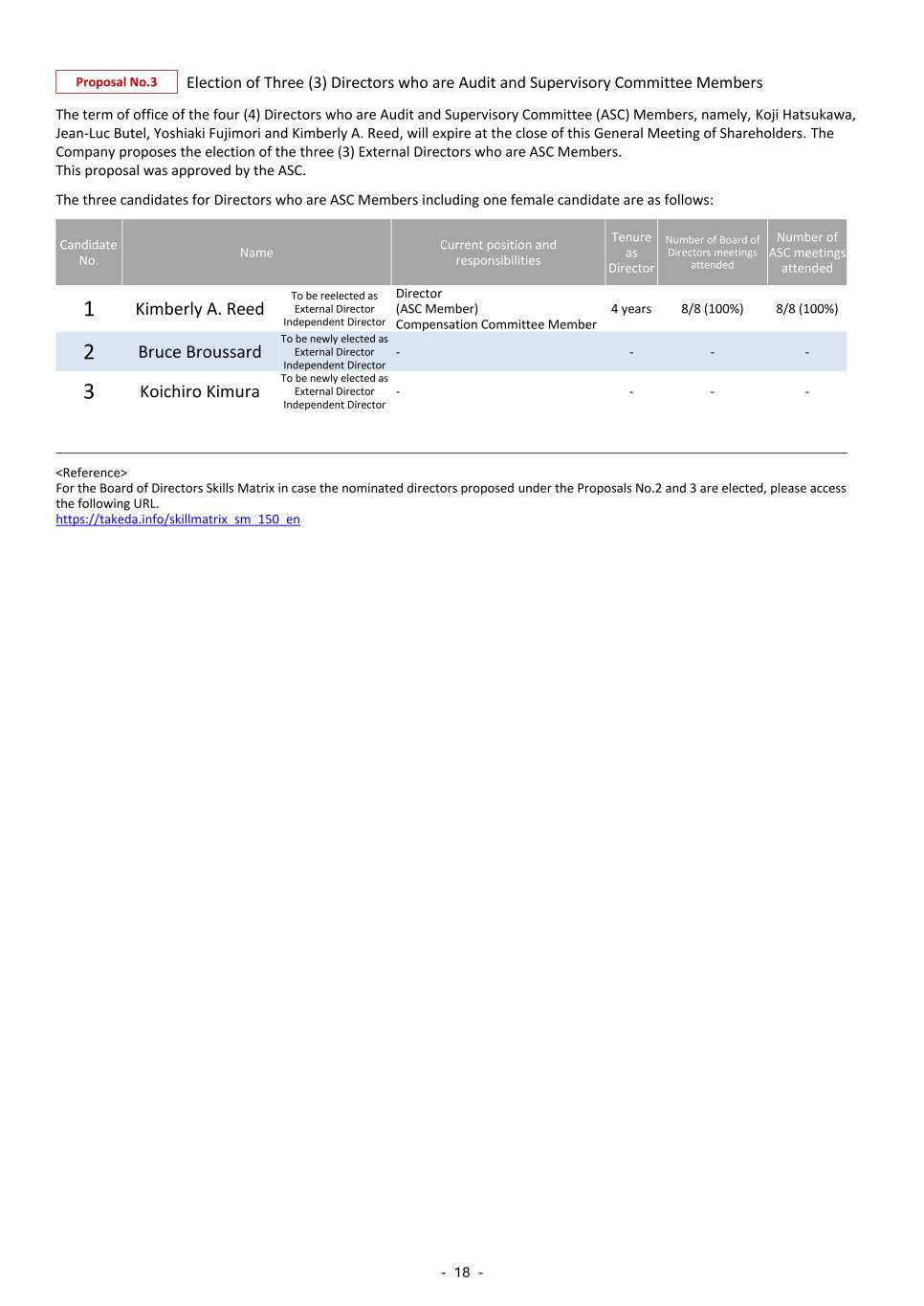
- 18 - Proposal No.3 Election of Three (3) Directors who are Audit and Supervisory Committee Members The term of office of the four (4) Directors who are Audit and Supervisory Committee (ASC) Members, namely, Koji Hatsukawa, Jean-Luc Butel, Yoshiaki Fujimori and Kimberly A. Reed, will expire at the close of this General Meeting of Shareholders. The Company proposes the election of the three (3) External Directors who are ASC Members. This proposal was approved by the ASC. The three candidates for Directors who are ASC Members including one female candidate are as follows: Candidate No. Name Current position and responsibilities Tenure as Director Number of Board of Directors meetings attended Number of ASC meetings attended 1 Kimberly A. Reed To be reelected as External Director Independent Director Director (ASC Member) Compensation Committee Member 4 years 8/8 (100%) 8/8 (100%) 2 Bruce Broussard To be newly elected as External Director Independent Director - - - - 3 Koichiro Kimura To be newly elected as External Director Independent Director - - - - <Reference> For the Board of Directors Skills Matrix in case the nominated directors proposed under the Proposals No.2 and 3 are elected, please access the following URL. https://takeda.info/skillmatrix_sm_150_en
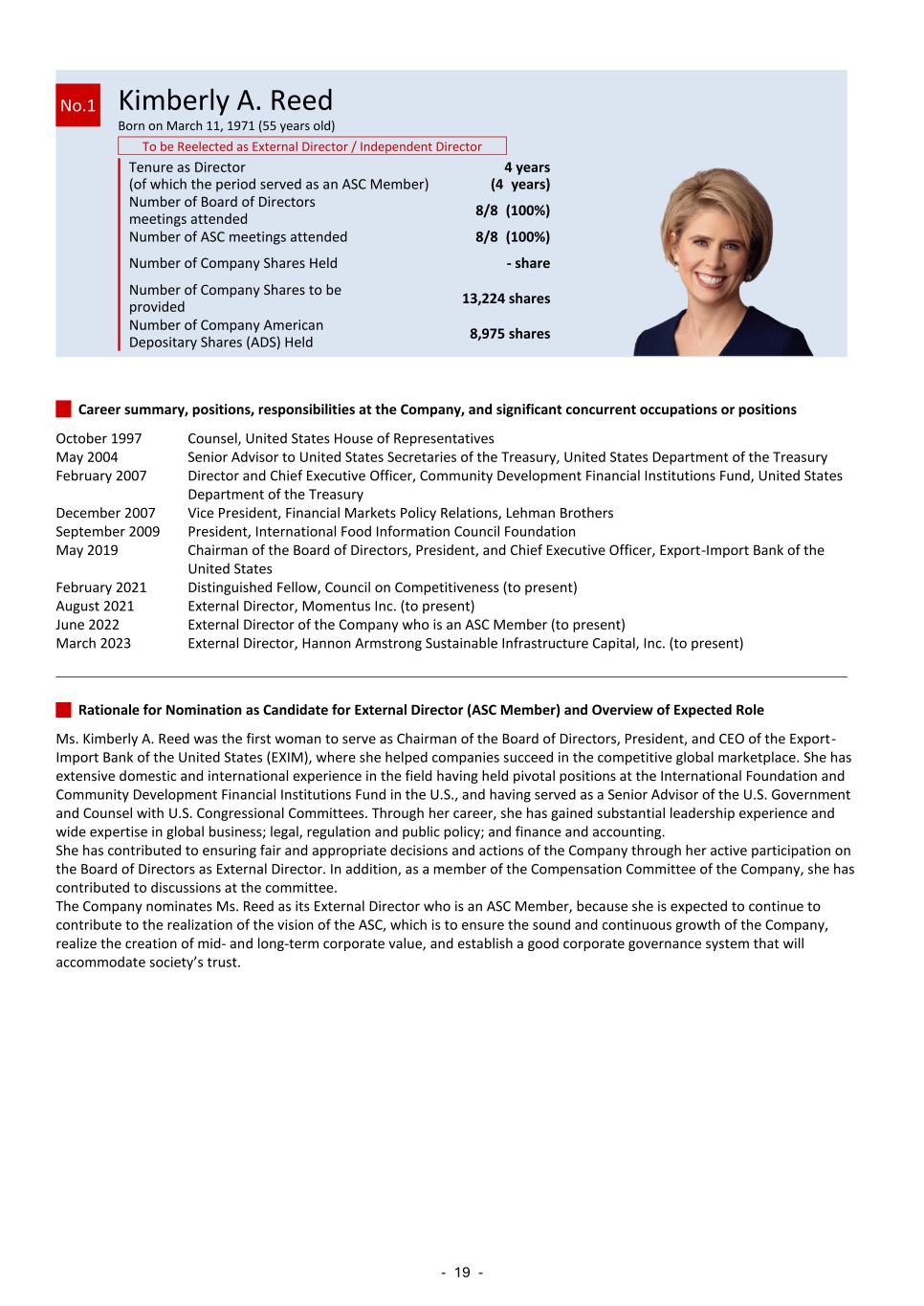
- 19 - No.1 Kimberly A. Reed Born on March 11, 1971 (55 years old) To be Reelected as External Director / Independent Director Tenure as Director (of which the period served as an ASC Member) 4 years (4 years) Number of Board of Directors meetings attended 8/8 (100%) Number of ASC meetings attended 8/8 (100%) Number of Company Shares Held - share Number of Company Shares to be provided 13,224 shares Number of Company American Depositary Shares (ADS) Held 8,975 shares Career summary, positions, responsibilities at the Company, and significant concurrent occupations or positions October 1997 Counsel, United States House of Representatives May 2004 Senior Advisor to United States Secretaries of the Treasury, United States Department of the Treasury February 2007 Director and Chief Executive Officer, Community Development Financial Institutions Fund, United States Department of the Treasury December 2007 Vice President, Financial Markets Policy Relations, Lehman Brothers September 2009 President, International Food Information Council Foundation May 2019 Chairman of the Board of Directors, President, and Chief Executive Officer, Export-Import Bank of the United States February 2021 Distinguished Fellow, Council on Competitiveness (to present) August 2021 External Director, Momentus Inc. (to present) June 2022 External Director of the Company who is an ASC Member (to present) March 2023 External Director, Hannon Armstrong Sustainable Infrastructure Capital, Inc. (to present) Rationale for Nomination as Candidate for External Director (ASC Member) and Overview of Expected Role Ms. Kimberly A. Reed was the first woman to serve as Chairman of the Board of Directors, President, and CEO of the Export- Import Bank of the United States (EXIM), where she helped companies succeed in the competitive global marketplace. She has extensive domestic and international experience in the field having held pivotal positions at the International Foundation and Community Development Financial Institutions Fund in the U.S., and having served as a Senior Advisor of the U.S. Government and Counsel with U.S. Congressional Committees. Through her career, she has gained substantial leadership experience and wide expertise in global business; legal, regulation and public policy; and finance and accounting. She has contributed to ensuring fair and appropriate decisions and actions of the Company through her active participation on the Board of Directors as External Director. In addition, as a member of the Compensation Committee of the Company, she has contributed to discussions at the committee. The Company nominates Ms. Reed as its External Director who is an ASC Member, because she is expected to continue to contribute to the realization of the vision of the ASC, which is to ensure the sound and continuous growth of the Company, realize the creation of mid- and long-term corporate value, and establish a good corporate governance system that will accommodate society’s trust.
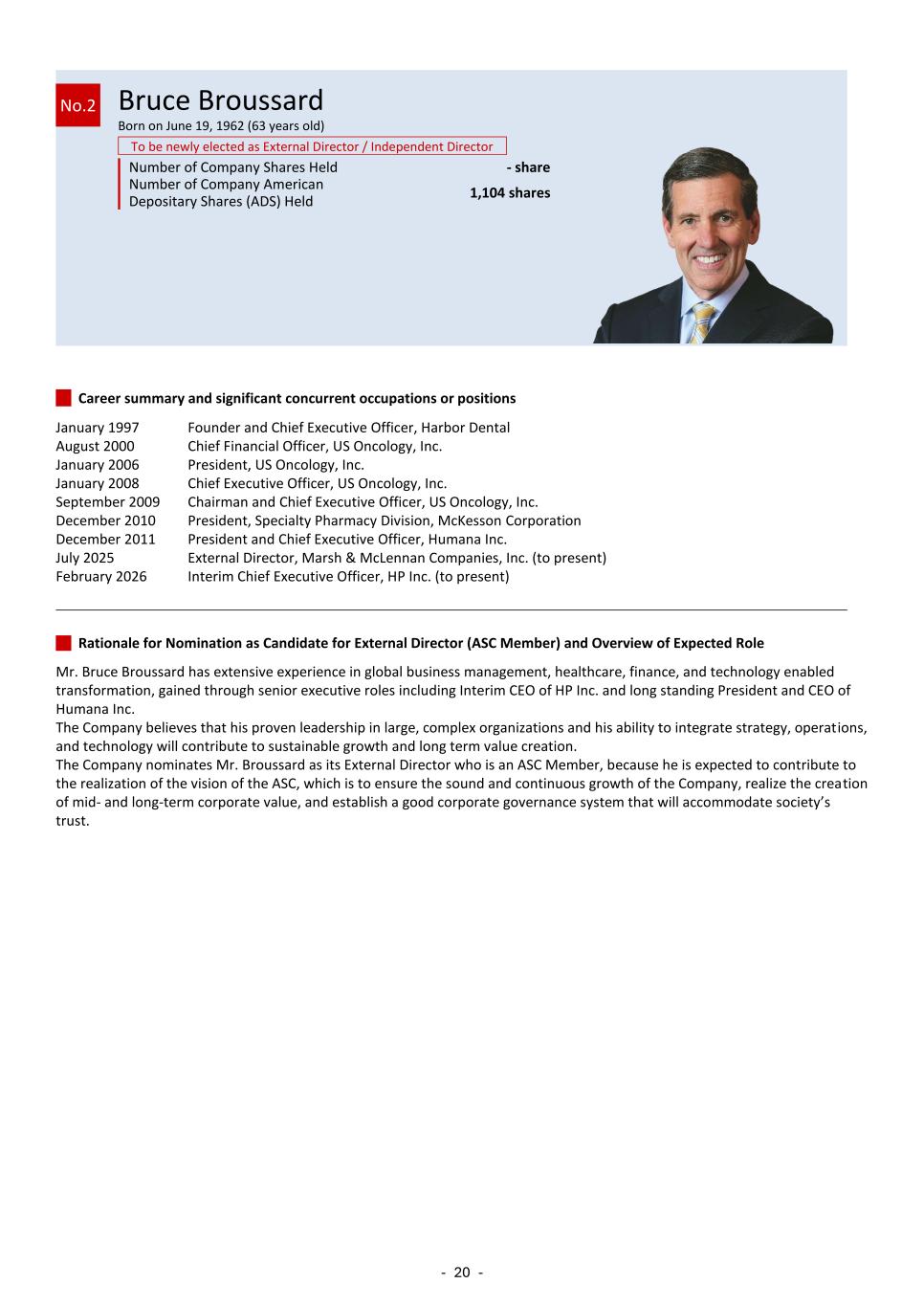
- 20 - No.2 Bruce Broussard Born on June 19, 1962 (63 years old) To be newly elected as External Director / Independent Director Number of Company Shares Held - share Number of Company American Depositary Shares (ADS) Held 1,104 shares Career summary and significant concurrent occupations or positions January 1997 Founder and Chief Executive Officer, Harbor Dental August 2000 Chief Financial Officer, US Oncology, Inc. January 2006 President, US Oncology, Inc. January 2008 Chief Executive Officer, US Oncology, Inc. September 2009 Chairman and Chief Executive Officer, US Oncology, Inc. December 2010 President, Specialty Pharmacy Division, McKesson Corporation December 2011 President and Chief Executive Officer, Humana Inc. July 2025 External Director, Marsh & McLennan Companies, Inc. (to present) February 2026 Interim Chief Executive Officer, HP Inc. (to present) Rationale for Nomination as Candidate for External Director (ASC Member) and Overview of Expected Role Mr. Bruce Broussard has extensive experience in global business management, healthcare, finance, and technology enabled transformation, gained through senior executive roles including Interim CEO of HP Inc. and long standing President and CEO of Humana Inc. The Company believes that his proven leadership in large, complex organizations and his ability to integrate strategy, operations, and technology will contribute to sustainable growth and long term value creation. The Company nominates Mr. Broussard as its External Director who is an ASC Member, because he is expected to contribute to the realization of the vision of the ASC, which is to ensure the sound and continuous growth of the Company, realize the creation of mid- and long-term corporate value, and establish a good corporate governance system that will accommodate society’s trust.
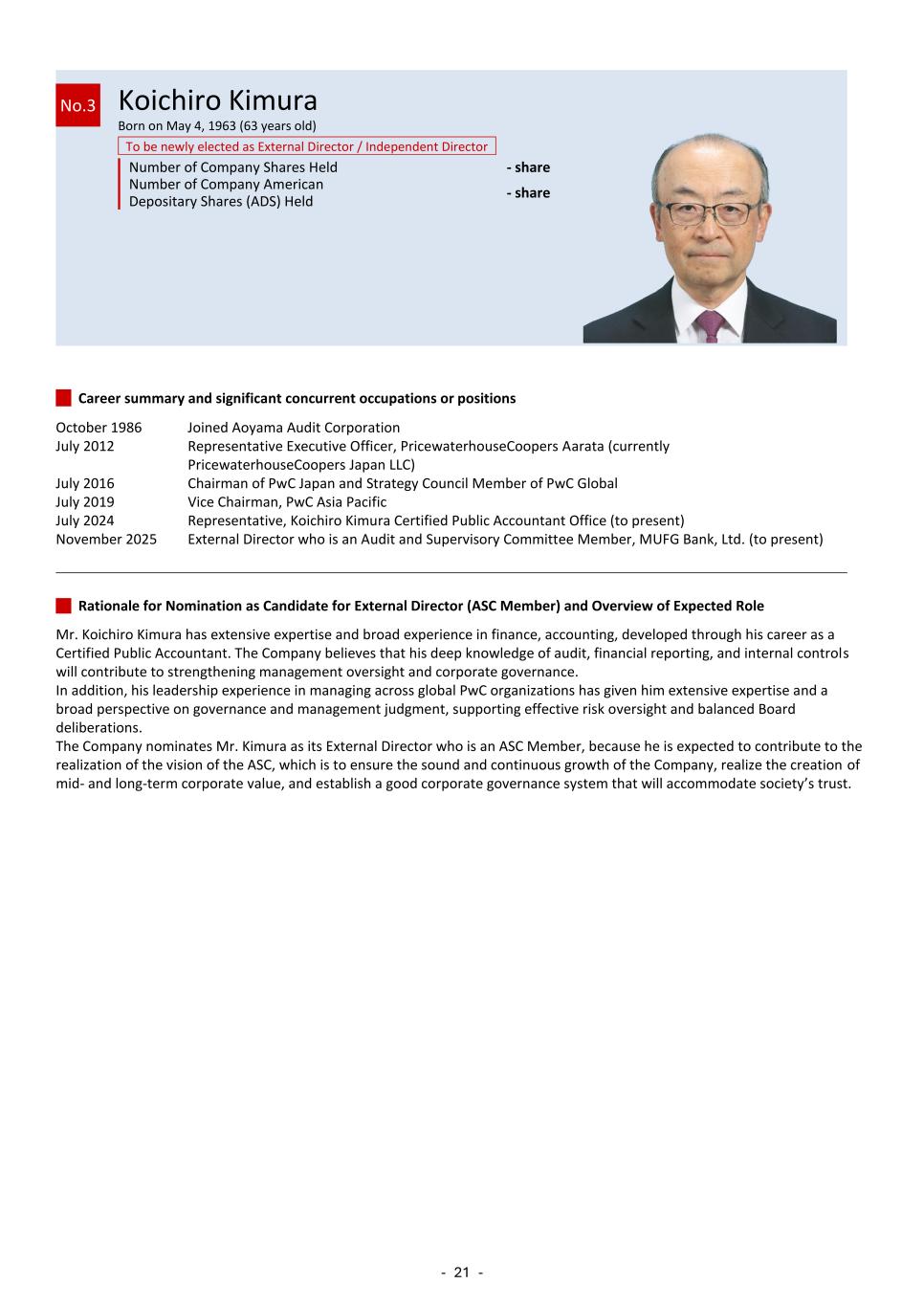
- 21 - No.3 Koichiro Kimura Born on May 4, 1963 (63 years old) To be newly elected as External Director / Independent Director Number of Company Shares Held - share Number of Company American Depositary Shares (ADS) Held - share Career summary and significant concurrent occupations or positions October 1986 Joined Aoyama Audit Corporation July 2012 Representative Executive Officer, PricewaterhouseCoopers Aarata (currently PricewaterhouseCoopers Japan LLC) July 2016 Chairman of PwC Japan and Strategy Council Member of PwC Global July 2019 Vice Chairman, PwC Asia Pacific July 2024 Representative, Koichiro Kimura Certified Public Accountant Office (to present) November 2025 External Director who is an Audit and Supervisory Committee Member, MUFG Bank, Ltd. (to present) Rationale for Nomination as Candidate for External Director (ASC Member) and Overview of Expected Role Mr. Koichiro Kimura has extensive expertise and broad experience in finance, accounting, developed through his career as a Certified Public Accountant. The Company believes that his deep knowledge of audit, financial reporting, and internal controls will contribute to strengthening management oversight and corporate governance. In addition, his leadership experience in managing across global PwC organizations has given him extensive expertise and a broad perspective on governance and management judgment, supporting effective risk oversight and balanced Board deliberations. The Company nominates Mr. Kimura as its External Director who is an ASC Member, because he is expected to contribute to the realization of the vision of the ASC, which is to ensure the sound and continuous growth of the Company, realize the creation of mid- and long-term corporate value, and establish a good corporate governance system that will accommodate society’s trust.

- 22 - (Notes) 1. No conflict of interests exist between the above candidates and the Company. 2. With regard to the number of Company shares held and the number of Company shares to be provided, please refer to Note 2 in the Proposal No.2. 3. The number of Company ADS held represents the number of American Depositary Shares held as of March 31, 2026 and is rounded to the nearest whole number. Each ADS represents one half of a common stock. 4. Ms. Kimberly A. Reed, Mr. Bruce Broussard and Mr. Koichiro Kimura are candidates to become External Directors of the Company who are ASC Members. The Company has set “Internal criteria for independence of External Directors of the Company” (The contents of such criteria are as set forth on page 17) and elected the External Directors based on such criteria. All of these 3 persons have met the requirements for Independent Directors based on the regulations of the financial instruments exchanges in Japan that the Company is listed on (e.g., Tokyo Stock Exchange, Inc.). The Company has notified each of such exchanges that Ms. Kimberly A. Reed has been designated as an Independent Director. Also, the Company plans to appoint Mr. Bruce Broussard and Mr. Koichiro Kimura as Independent Directors and will submit a notification to each of such exchanges. 5. The Company has entered into contracts with Ms. Kimberly A. Reed limiting the maximum amount of her liability for the damages set forth in Article 423, Paragraph 1 of the Companies Act to the legally stipulated value. If the re-election of Ms. Kimberly A. Reed is approved, the Company plans to continue the same contracts to limit their liability. Also, if election of Mr. Bruce Broussard and Mr. Koichiro Kimura is approved, the Company plans to conclude the same contract with them for limitation of liability. 6. The Company has entered into a company indemnification agreement with Ms. Kimberly A. Reed, as defined in Article 430-2, Paragraph 1 of the Companies Act, which provide that the Company shall indemnify expenses set forth in Article 430-2, Paragraph 1, Item 1 thereof, and damages set forth in Article 430-2, Paragraph 1, Item 2 thereof within the scope permitted by the laws and regulations. If re-election of Ms. Kimberly A. Reed is approved, the Company plans to continue the same agreement. Also, if election of Mr. Bruce Broussard and Mr. Koichiro Kimura is approved, the Company plans to conclude the same company indemnification agreements with them. 7. The Company has entered into directors & officers liability insurance contracts with insurance companies as defined in Article 430-3, Paragraph 1 of the Companies Act, under which Directors of the Company are insured. Such insurance covers damages which may arise from liability incurred by such insured persons in connection with the execution of their duties or claims made against such insured persons in relation to such liability. If re-election or election of the candidates is approved, such candidates will be insured under such insurance scheme. The insurance contracts are planned to be renewed during such candidates’ term of office.
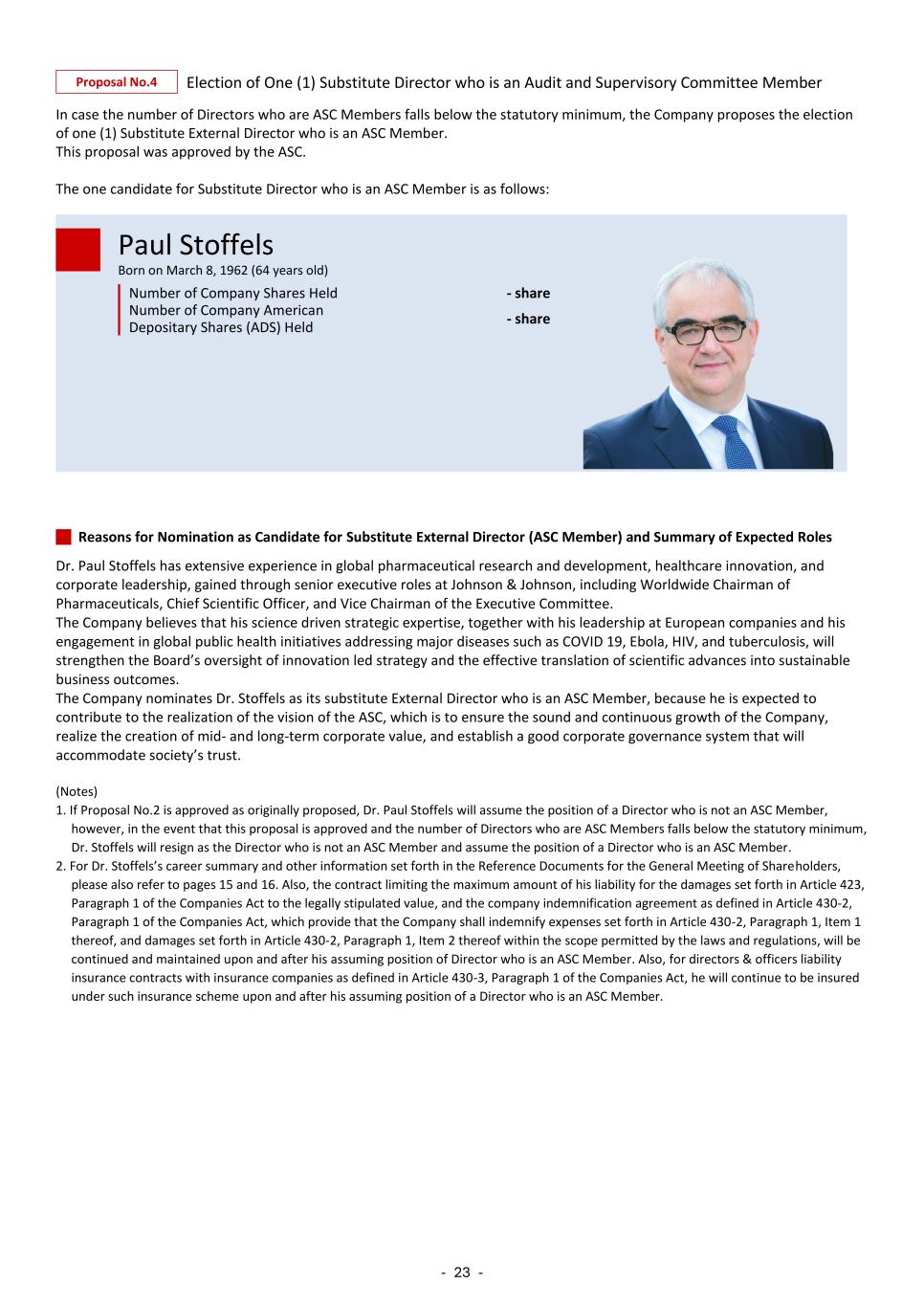
- 23 - Proposal No.4 Election of One (1) Substitute Director who is an Audit and Supervisory Committee Member In case the number of Directors who are ASC Members falls below the statutory minimum, the Company proposes the election of one (1) Substitute External Director who is an ASC Member. This proposal was approved by the ASC. The one candidate for Substitute Director who is an ASC Member is as follows: Paul Stoffels Born on March 8, 1962 (64 years old) Number of Company Shares Held - share Number of Company American Depositary Shares (ADS) Held - share Reasons for Nomination as Candidate for Substitute External Director (ASC Member) and Summary of Expected Roles Dr. Paul Stoffels has extensive experience in global pharmaceutical research and development, healthcare innovation, and corporate leadership, gained through senior executive roles at Johnson & Johnson, including Worldwide Chairman of Pharmaceuticals, Chief Scientific Officer, and Vice Chairman of the Executive Committee. The Company believes that his science driven strategic expertise, together with his leadership at European companies and his engagement in global public health initiatives addressing major diseases such as COVID 19, Ebola, HIV, and tuberculosis, will strengthen the Board’s oversight of innovation led strategy and the effective translation of scientific advances into sustainable business outcomes. The Company nominates Dr. Stoffels as its substitute External Director who is an ASC Member, because he is expected to contribute to the realization of the vision of the ASC, which is to ensure the sound and continuous growth of the Company, realize the creation of mid- and long-term corporate value, and establish a good corporate governance system that will accommodate society’s trust. (Notes) 1. If Proposal No.2 is approved as originally proposed, Dr. Paul Stoffels will assume the position of a Director who is not an ASC Member, however, in the event that this proposal is approved and the number of Directors who are ASC Members falls below the statutory minimum, Dr. Stoffels will resign as the Director who is not an ASC Member and assume the position of a Director who is an ASC Member. 2. For Dr. Stoffels’s career summary and other information set forth in the Reference Documents for the General Meeting of Shareholders, please also refer to pages 15 and 16. Also, the contract limiting the maximum amount of his liability for the damages set forth in Article 423, Paragraph 1 of the Companies Act to the legally stipulated value, and the company indemnification agreement as defined in Article 430-2, Paragraph 1 of the Companies Act, which provide that the Company shall indemnify expenses set forth in Article 430-2, Paragraph 1, Item 1 thereof, and damages set forth in Article 430-2, Paragraph 1, Item 2 thereof within the scope permitted by the laws and regulations, will be continued and maintained upon and after his assuming position of Director who is an ASC Member. Also, for directors & officers liability insurance contracts with insurance companies as defined in Article 430-3, Paragraph 1 of the Companies Act, he will continue to be insured under such insurance scheme upon and after his assuming position of a Director who is an ASC Member.
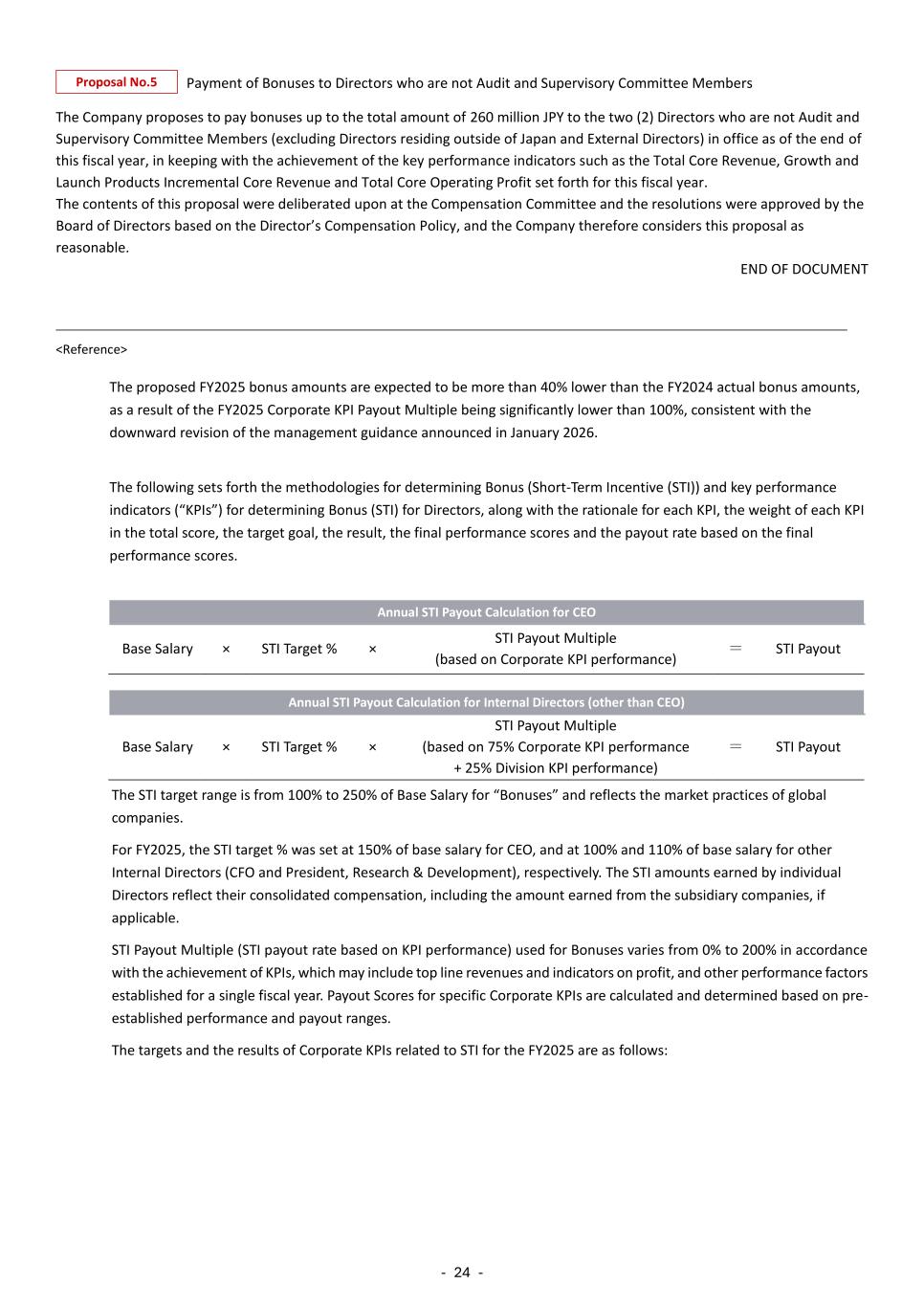
- 24 - Proposal No.5 Payment of Bonuses to Directors who are not Audit and Supervisory Committee Members The Company proposes to pay bonuses up to the total amount of 260 million JPY to the two (2) Directors who are not Audit and Supervisory Committee Members (excluding Directors residing outside of Japan and External Directors) in office as of the end of this fiscal year, in keeping with the achievement of the key performance indicators such as the Total Core Revenue, Growth and Launch Products Incremental Core Revenue and Total Core Operating Profit set forth for this fiscal year. The contents of this proposal were deliberated upon at the Compensation Committee and the resolutions were approved by the Board of Directors based on the Director’s Compensation Policy, and the Company therefore considers this proposal as reasonable. END OF DOCUMENT <Reference> The proposed FY2025 bonus amounts are expected to be more than 40% lower than the FY2024 actual bonus amounts, as a result of the FY2025 Corporate KPI Payout Multiple being significantly lower than 100%, consistent with the downward revision of the management guidance announced in January 2026. The following sets forth the methodologies for determining Bonus (Short-Term Incentive (STI)) and key performance indicators (“KPIs”) for determining Bonus (STI) for Directors, along with the rationale for each KPI, the weight of each KPI in the total score, the target goal, the result, the final performance scores and the payout rate based on the final performance scores. Annual STI Payout Calculation for CEO Base Salary × STI Target % × STI Payout Multiple (based on Corporate KPI performance) = STI Payout Annual STI Payout Calculation for Internal Directors (other than CEO) Base Salary × STI Target % × STI Payout Multiple (based on 75% Corporate KPI performance + 25% Division KPI performance) = STI Payout The STI target range is from 100% to 250% of Base Salary for “Bonuses” and reflects the market practices of global companies. For FY2025, the STI target % was set at 150% of base salary for CEO, and at 100% and 110% of base salary for other Internal Directors (CFO and President, Research & Development), respectively. The STI amounts earned by individual Directors reflect their consolidated compensation, including the amount earned from the subsidiary companies, if applicable. STI Payout Multiple (STI payout rate based on KPI performance) used for Bonuses varies from 0% to 200% in accordance with the achievement of KPIs, which may include top line revenues and indicators on profit, and other performance factors established for a single fiscal year. Payout Scores for specific Corporate KPIs are calculated and determined based on pre- established performance and payout ranges. The targets and the results of Corporate KPIs related to STI for the FY2025 are as follows:
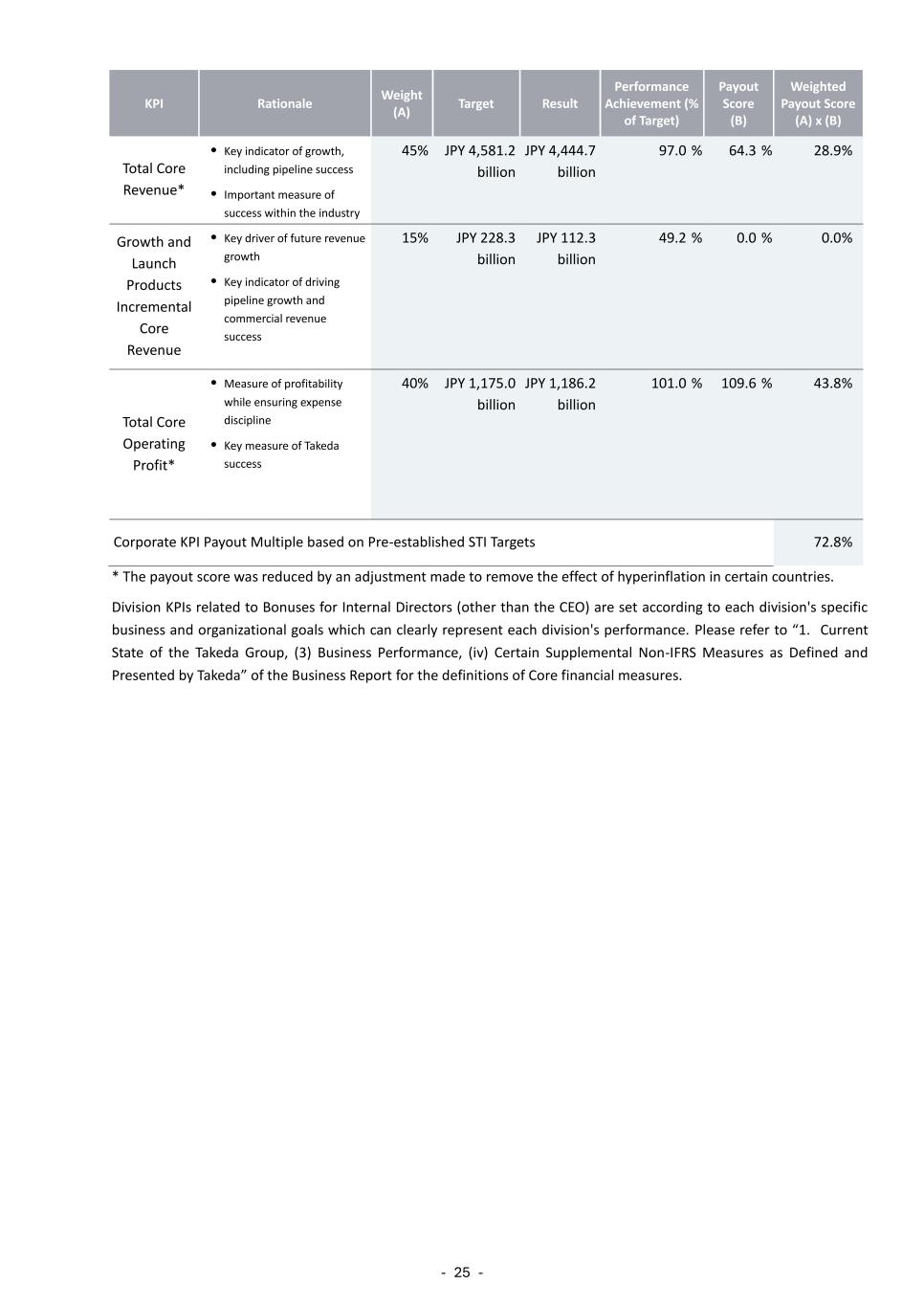
- 25 - KPI Rationale Weight (A) Target Result Performance Achievement (% of Target) Payout Score (B) Weighted Payout Score (A) x (B) Total Core Revenue* • Key indicator of growth, including pipeline success • Important measure of success within the industry 45% JPY 4,581.2 billion JPY 4,444.7 billion 97.0 % 64.3 % 28.9 % Growth and Launch Products Incremental Core Revenue • Key driver of future revenue growth • Key indicator of driving pipeline growth and commercial revenue success 15% JPY 228.3 billion JPY 112.3 billion 49.2 % 0.0 % 0.0 % Total Core Operating Profit* • Measure of profitability while ensuring expense discipline • Key measure of Takeda success 40% JPY 1,175.0 billion JPY 1,186.2 billion 101.0 % 109.6 % 43.8 % Corporate KPI Payout Multiple based on Pre-established STI Targets 72.8 % * The payout score was reduced by an adjustment made to remove the effect of hyperinflation in certain countries. Division KPIs related to Bonuses for Internal Directors (other than the CEO) are set according to each division's specific business and organizational goals which can clearly represent each division's performance. Please refer to “1. Current State of the Takeda Group, (3) Business Performance, (iv) Certain Supplemental Non-IFRS Measures as Defined and Presented by Takeda” of the Business Report for the definitions of Core financial measures.
- 26 - Business Report (From April 1, 2025 to March 31, 2026) 1. Current State of the Takeda Group (1) Management Policy and Issues for the Takeda Group to Address Takeda's Corporate Philosophy Our corporate philosophy tells the story of Takeda — who we are, what we do, how we do it and why it matters. As we embark on Takeda’s next era, we will stay committed to delivering on our generational promise to make our world healthier. Our purpose is to contribute to better health for people and a brighter future for the world. We do this through the pursuit of our vision to discover and deliver life-transforming treatments. Our employees are united in our purpose and grounded in the values of Integrity, Honesty, Fairness and Perseverance, which have defined us for 245 years. This is how we create long-term value for patients, shareholders and society while sustaining positive impact for our people, the communities we serve and the planet we share. Business Environment The external environment for global biopharmaceutical companies remains complex, defined by continued geopolitical fragmentation and international policy uncertainties. Ongoing tensions, shifting alliances and evolving trade policies are sustaining ambiguities for cross‑border operations and long‑term investment planning. These dynamics increasingly influence regulatory approaches, supply chain resilience and the overall stability of global health care markets. Across major geographies, pricing pressure remains a defining challenge. As governments shift budget priorities toward defense and confront slower growth, inflation, and broader fiscal pressures, public health care spending is coming under increasing strain and further intensifying pricing pressures. While governments would like to expand patient access, health care budgets continue to be more constrained, leading to tighter reimbursement frameworks and slower market access pathways around the world. In the U.S., continued implementation of pricing‑related policy changes adds further unpredictability for innovative therapies and may influence future investment decisions. In Europe and Japan, structural budget limitations continue to cap growth in several therapeutic areas. At the same time, the pace of scientific and technological change is accelerating rapidly. Advances in science, data analytics, automation and artificial intelligence are reshaping how we discover, develop and deliver new medicines. In this context, Takeda is prioritizing focused execution, strengthening supply and operating discipline, and advancing a technology-forward, human- centric transformation, while safeguarding scientific rigor and patient trust. Takeda’s continued progress in scientific discovery positions us well. Our work across targeted therapeutic areas and our growing use of digital tools strengthen our ability to deliver innovative medicines with greater speed and efficiency. As external pressures intensify, our commitment to patients — and to advancing science responsibly — remains foundational to how we navigate the years ahead. Vision for Takeda's Future In the face of rapid scientific advancement and complexity in global health care, Takeda’s strategy is designed to deliver near-term, as we prepare to launch a series of new, transformative medicines, while also positioning us for accelerated growth. In 2025, we achieved strong Phase 3 results across our three leading late-stage assets — oveporexton, rusfertide and zasocitinib — each with the potential for multi-billion-dollar revenue. These assets not only demonstrate the depth and rigor of our pipeline but also reflect our ability to deliver against demanding regulatory and commercial milestones. As we look towards the future, we are operating with two horizons in view: horizon one strengthens our competitiveness and builds a growth engine through investment and transformation near-term; horizon two delivers accelerated growth in the mid-to- long term as we scale for the first wave of launches (oveporexton, rusfertide, zasocitinib), while preparing for the next wave from our other late-stage assets, that will expand our impact for patients and create long-term growth for shareholder.
- 27 - Horizon One: Transforming for Growth The first horizon is focused on advancing product launches, executing on a robust late-stage pipeline and transforming how we operate. Since January, we have implemented changes to our organizational structure and ways of working as the final phase of the CEO transition plan. CEO-Elect Julie Kim established her leadership team and redesigned the organization to bring leaders and teams closer to patients and customers. And as we build our new teams, which includes standardizing, simplifying and accelerating adoption of advanced technologies, we are also instilling a focus on speed and performance while remaining grounded in our values. For more information on our major activities and progress on R&D from April 2025 to date, please see our discussion of Pipeline and R&D Activities in (3) Business Performance (v) Activities and Results of Research & Development. In this first horizon we are ensuring the necessary resources to flawlessly execute on the multiple launches that we expect in the next 12 months. This horizon is also about advancing our robust pipeline in our key therapeutic areas of Gastrointestinal and Inflammation, Neuroscience and Oncology, including five late-stage assets, and keeping brands, such as ENTYVIO and GAMMAGARD LIQUID/KIOVIG, resilient and competitive, despite challenging market dynamics. Cost discipline and strategic investment are the hallmarks of this horizon. We are pursuing more than JPY 200 billion in annualized gross savings by fiscal year 2028, reinvesting efficiencies into launches, pipeline development and technology — a commitment to maintaining financial discipline while positioning for accelerated growth. Generating strong adjusted Free Cash Flow* is core to our strategy, allowing us to fulfill our commitments and return value to shareholders. * Please refer to (iv) Certain Supplemental Non-IFRS Measures as Defined and Presented by Takeda in the (3) Business Performance for the definition. Horizon Two: Growth Acceleration Through the disciplined choices and a strong launch focus in Horizon One, we are building an engine to unlock Takeda's next era of growth in Horizon Two — shifting from a maturing portfolio to a new cohort of blockbuster brands. This new cohort will be led by oveporexton, rusfertide and zasocitinib, followed by additional new product introductions from our late-stage pipeline. The new product revenues plus a steadfast commitment to operating with greater efficiency will position us to grow sustainably beyond the anticipated challenges of our mature portfolio. The company also remains committed to scaling its positive impact on patients and society by deploying next-generation science and technology to redefine what is possible, both in the medicines it delivers and in the outcomes it helps enable. Technology as the Engine of Transformation In this new era, technology is not a standalone objective. It is central to Takeda’s transformation and inseparable from the way we discover, develop and deliver value — acting as multipliers for curiosity, creativity and the collective expertise of our teams. Artificial intelligence, digital platforms and advanced analytics are now embedded into every stage of the value chain. These technologies accelerate timelines, elevate the quality of decision-making and bring new standards of care to patients faster. Our digital capabilities also help break down silos, fostering a culture of rapid learning, cross-functional agility and operational excellence. Across Takeda, technology is not just a tool, it is a collaborator that expands the possibilities. By equipping our people with advanced platforms and data-driven insights, we empower them to focus on what matters most: meeting urgent patient needs, driving impact, fueling our growth and building lasting trust with all stakeholders. A Future Defined by Collaboration and Impact We know that meaningful progress in health care is the product of partnership. Takeda’s vision for the future continues to be grounded in collaboration — within our own teams, across the biopharmaceutical sector and in concert with the broader scientific, regulatory and patient communities. We actively seek diverse voices to co-create solutions, whether through public–private partnerships, global alliances or local community engagement. Our commitment to collaboration extends to how we build the next wave of innovation. Open science, shared platforms and coalition-building are central to addressing the complexity of tomorrow’s health challenges. By working together, across sectors and geographies, we will expand access, drive equitable outcomes and amplify the positive impact of our efforts for generations to come.
- 28 - Financial Prospects Built on a strong financial base and robust strategic framework, our financial approach is designed to support sustainable growth and long-term value creation. Over the near‑to‑mid term, we are focused on delivering key regulatory and commercial milestones for a number of high‑potential launches, including oveporexton, rusfertide and zasocitinib, and to advance the broader late‑stage pipeline, underpinned by the resilience and competitiveness of our maturing established portfolio. To protect profitability, we will optimize our organizational structure and leverage data and technology to enhance decision- making and operational efficiency. We will also reduce Other Operating Expenses, including restructuring expenses, and lower Finance Expenses through debt reduction to improve reported net profit, supporting dividends and helping deliver ROE above 5%. Disciplined capital allocation and cash generation will enable robust adjusted Free Cash Flow* to fund continued investment in growth, alongside further debt reduction and maintaining a progressive dividend policy, while enhancing capital efficiency. In the long term, we expect new products to replace the current maturing portfolio as the primary drivers of growth acceleration. Topline growth and continued cost discipline should position us to improve profitability, with Core Operating Profit* margin progressing toward low-to-mid 30s%. We also target an adjusted net debt to adjusted EBITDA ratio* of 2x, further strengthening our financial position and enhancing capital flexibility for further investment in sustainable growth. Taken together, these actions are expected to support sustained improvements in financial performance. Over time, this is expected to contribute to the continued enhancement of enterprise value and competitive total shareholder returns. * Please refer to (iv) Certain Supplemental Non-IFRS Measures as Defined and Presented by Takeda in the (3) Business Performance for the definition. Capital Allocation Policy Guided by our vision to discover and deliver life-transforming treatments, and supported by our balance sheet (maintaining solid investment grade credit ratings; targeting 2x adjusted net debt to adjusted EBITDA ratio*), we will allocate capital to deliver sustainable value to patients and attractive returns to our shareholders. Takeda's policy in the allocation of capital is as follows: • Invest in growth drivers; and • Shareholder returns. With respect to "Invest in growth drivers", Takeda makes strategic investments in new product launches, internal and external opportunities to enhance its pipeline, and plasma-derived therapies. With regard to "Shareholder returns", Takeda has adopted a progressive dividend policy of increasing or maintaining the annual dividend per share each year, alongside share buybacks when appropriate. * Please refer to (iv) Certain Supplemental Non-IFRS Measures as Defined and Presented by Takeda in the (3) Business Performance for the definition.
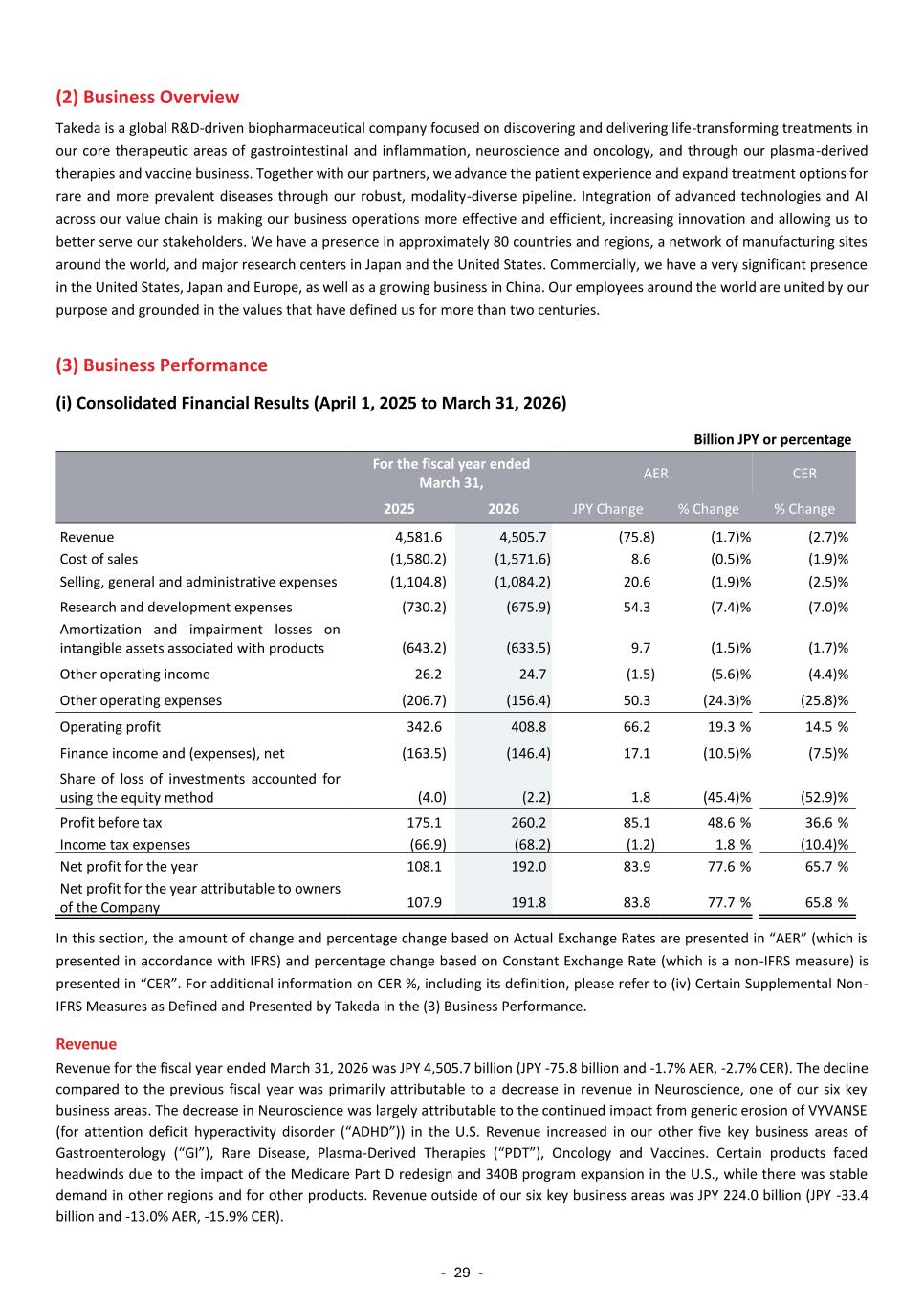
- 29 - (2) Business Overview Takeda is a global R&D-driven biopharmaceutical company focused on discovering and delivering life-transforming treatments in our core therapeutic areas of gastrointestinal and inflammation, neuroscience and oncology, and through our plasma-derived therapies and vaccine business. Together with our partners, we advance the patient experience and expand treatment options for rare and more prevalent diseases through our robust, modality-diverse pipeline. Integration of advanced technologies and AI across our value chain is making our business operations more effective and efficient, increasing innovation and allowing us to better serve our stakeholders. We have a presence in approximately 80 countries and regions, a network of manufacturing sites around the world, and major research centers in Japan and the United States. Commercially, we have a very significant presence in the United States, Japan and Europe, as well as a growing business in China. Our employees around the world are united by our purpose and grounded in the values that have defined us for more than two centuries. (3) Business Performance (i) Consolidated Financial Results (April 1, 2025 to March 31, 2026) Billion JPY or percentage For the fiscal year ended March 31, AER CER 2025 2026 JPY Change % Change % Change Revenue 4,581.6 4,505.7 (75.8) (1.7) % (2.7) % Cost of sales (1,580.2) (1,571.6) 8.6 (0.5) % (1.9) % Selling, general and administrative expenses (1,104.8) (1,084.2) 20.6 (1.9) % (2.5) % Research and development expenses (730.2) (675.9) 54.3 (7.4) % (7.0) % Amortization and impairment losses on intangible assets associated with products (643.2) (633.5) 9.7 (1.5) % (1.7) % Other operating income 26.2 24.7 (1.5) (5.6) % (4.4) % Other operating expenses (206.7) (156.4) 50.3 (24.3) % (25.8) % Operating profit 342.6 408.8 66.2 19.3 % 14.5 % Finance income and (expenses), net (163.5) (146.4) 17.1 (10.5) % (7.5) % Share of loss of investments accounted for using the equity method (4.0) (2.2) 1.8 (45.4) % (52.9) % Profit before tax 175.1 260.2 85.1 48.6 % 36.6 % Income tax expenses (66.9) (68.2) (1.2) 1.8 % (10.4) % Net profit for the year 108.1 192.0 83.9 77.6 % 65.7 % Net profit for the year attributable to owners of the Company 107.9 191.8 83.8 77.7 % 65.8 % In this section, the amount of change and percentage change based on Actual Exchange Rates are presented in “AER” (which is presented in accordance with IFRS) and percentage change based on Constant Exchange Rate (which is a non-IFRS measure) is presented in “CER”. For additional information on CER %, including its definition, please refer to (iv) Certain Supplemental Non- IFRS Measures as Defined and Presented by Takeda in the (3) Business Performance. Revenue Revenue for the fiscal year ended March 31, 2026 was JPY 4,505.7 billion (JPY -75.8 billion and -1.7% AER, -2.7% CER). The decline compared to the previous fiscal year was primarily attributable to a decrease in revenue in Neuroscience, one of our six key business areas. The decrease in Neuroscience was largely attributable to the continued impact from generic erosion of VYVANSE (for attention deficit hyperactivity disorder (“ADHD”)) in the U.S. Revenue increased in our other five key business areas of Gastroenterology (“GI”), Rare Disease, Plasma-Derived Therapies (“PDT”), Oncology and Vaccines. Certain products faced headwinds due to the impact of the Medicare Part D redesign and 340B program expansion in the U.S., while there was stable demand in other regions and for other products. Revenue outside of our six key business areas was JPY 224.0 billion (JPY -33.4 billion and -13.0% AER, -15.9% CER).
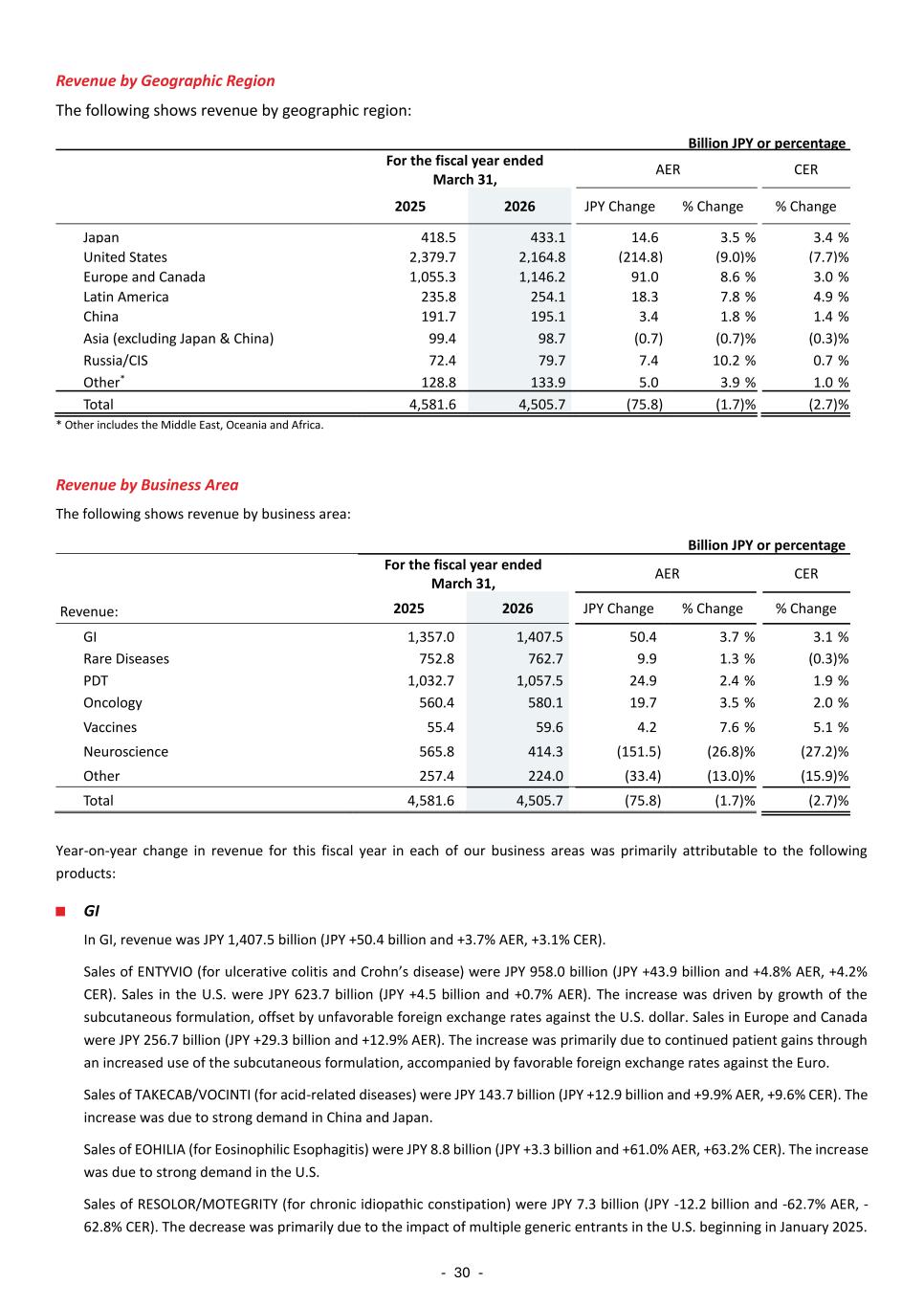
- 30 - Revenue by Geographic Region The following shows revenue by geographic region: Billion JPY or percentage For the fiscal year ended March 31, AER CER 2025 2026 JPY Change % Change % Change Japan 418.5 433.1 14.6 3.5 % 3.4 % United States 2,379.7 2,164.8 (214.8) (9.0) % (7.7) % Europe and Canada 1,055.3 1,146.2 91.0 8.6 % 3.0 % Latin America 235.8 254.1 18.3 7.8 % 4.9 % China 191.7 195.1 3.4 1.8 % 1.4 % Asia (excluding Japan & China) 99.4 98.7 (0.7) (0.7) % (0.3) % Russia/CIS 72.4 79.7 7.4 10.2 % 0.7 % Other* 128.8 133.9 5.0 3.9 % 1.0 % Total 4,581.6 4,505.7 (75.8) (1.7) % (2.7) % * Other includes the Middle East, Oceania and Africa. Revenue by Business Area The following shows revenue by business area: Billion JPY or percentage For the fiscal year ended March 31, AER CER Revenue: 2025 2026 JPY Change % Change % Change GI 1,357.0 1,407.5 50.4 3.7 % 3.1 % Rare Diseases 752.8 762.7 9.9 1.3 % (0.3) % PDT 1,032.7 1,057.5 24.9 2.4 % 1.9 % Oncology 560.4 580.1 19.7 3.5 % 2.0 % Vaccines 55.4 59.6 4.2 7.6 % 5.1 % Neuroscience 565.8 414.3 (151.5) (26.8) % (27.2) % Other 257.4 224.0 (33.4) (13.0) % (15.9) % Total 4,581.6 4,505.7 (75.8) (1.7) % (2.7) % Year-on-year change in revenue for this fiscal year in each of our business areas was primarily attributable to the following products: ■ GI In GI, revenue was JPY 1,407.5 billion (JPY +50.4 billion and +3.7% AER, +3.1% CER). Sales of ENTYVIO (for ulcerative colitis and Crohn’s disease) were JPY 958.0 billion (JPY +43.9 billion and +4.8% AER, +4.2% CER). Sales in the U.S. were JPY 623.7 billion (JPY +4.5 billion and +0.7% AER). The increase was driven by growth of the subcutaneous formulation, offset by unfavorable foreign exchange rates against the U.S. dollar. Sales in Europe and Canada were JPY 256.7 billion (JPY +29.3 billion and +12.9% AER). The increase was primarily due to continued patient gains through an increased use of the subcutaneous formulation, accompanied by favorable foreign exchange rates against the Euro. Sales of TAKECAB/VOCINTI (for acid-related diseases) were JPY 143.7 billion (JPY +12.9 billion and +9.9% AER, +9.6% CER). The increase was due to strong demand in China and Japan. Sales of EOHILIA (for Eosinophilic Esophagitis) were JPY 8.8 billion (JPY +3.3 billion and +61.0% AER, +63.2% CER). The increase was due to strong demand in the U.S. Sales of RESOLOR/MOTEGRITY (for chronic idiopathic constipation) were JPY 7.3 billion (JPY -12.2 billion and -62.7% AER, - 62.8% CER). The decrease was primarily due to the impact of multiple generic entrants in the U.S. beginning in January 2025.
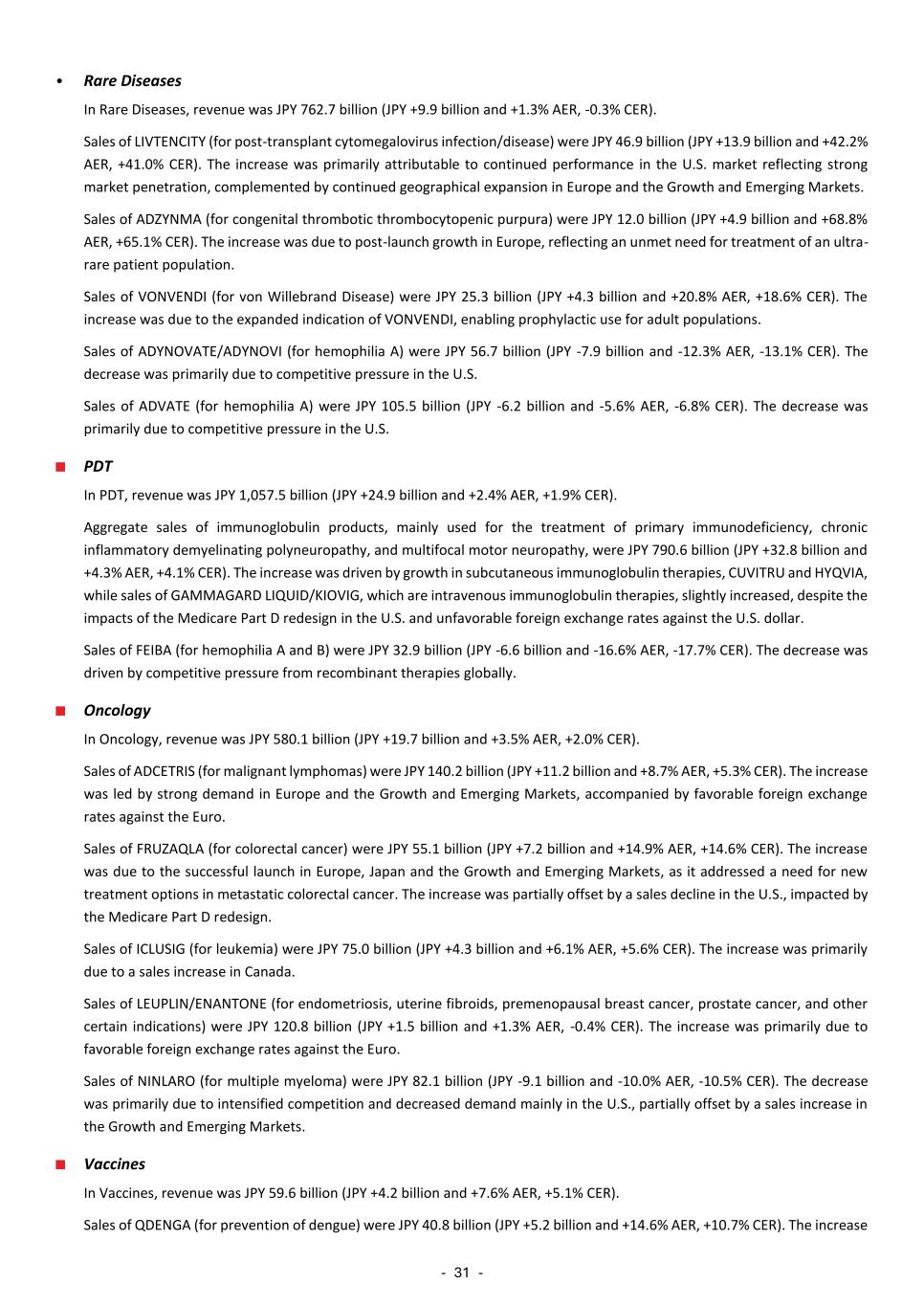
- 31 - • Rare Diseases In Rare Diseases, revenue was JPY 762.7 billion (JPY +9.9 billion and +1.3% AER, -0.3% CER). Sales of LIVTENCITY (for post-transplant cytomegalovirus infection/disease) were JPY 46.9 billion (JPY +13.9 billion and +42.2% AER, +41.0% CER). The increase was primarily attributable to continued performance in the U.S. market reflecting strong market penetration, complemented by continued geographical expansion in Europe and the Growth and Emerging Markets. Sales of ADZYNMA (for congenital thrombotic thrombocytopenic purpura) were JPY 12.0 billion (JPY +4.9 billion and +68.8% AER, +65.1% CER). The increase was due to post-launch growth in Europe, reflecting an unmet need for treatment of an ultra- rare patient population. Sales of VONVENDI (for von Willebrand Disease) were JPY 25.3 billion (JPY +4.3 billion and +20.8% AER, +18.6% CER). The increase was due to the expanded indication of VONVENDI, enabling prophylactic use for adult populations. Sales of ADYNOVATE/ADYNOVI (for hemophilia A) were JPY 56.7 billion (JPY -7.9 billion and -12.3% AER, -13.1% CER). The decrease was primarily due to competitive pressure in the U.S. Sales of ADVATE (for hemophilia A) were JPY 105.5 billion (JPY -6.2 billion and -5.6% AER, -6.8% CER). The decrease was primarily due to competitive pressure in the U.S. ■ PDT In PDT, revenue was JPY 1,057.5 billion (JPY +24.9 billion and +2.4% AER, +1.9% CER). Aggregate sales of immunoglobulin products, mainly used for the treatment of primary immunodeficiency, chronic inflammatory demyelinating polyneuropathy, and multifocal motor neuropathy, were JPY 790.6 billion (JPY +32.8 billion and +4.3% AER, +4.1% CER). The increase was driven by growth in subcutaneous immunoglobulin therapies, CUVITRU and HYQVIA, while sales of GAMMAGARD LIQUID/KIOVIG, which are intravenous immunoglobulin therapies, slightly increased, despite the impacts of the Medicare Part D redesign in the U.S. and unfavorable foreign exchange rates against the U.S. dollar. Sales of FEIBA (for hemophilia A and B) were JPY 32.9 billion (JPY -6.6 billion and -16.6% AER, -17.7% CER). The decrease was driven by competitive pressure from recombinant therapies globally. ■ Oncology In Oncology, revenue was JPY 580.1 billion (JPY +19.7 billion and +3.5% AER, +2.0% CER). Sales of ADCETRIS (for malignant lymphomas) were JPY 140.2 billion (JPY +11.2 billion and +8.7% AER, +5.3% CER). The increase was led by strong demand in Europe and the Growth and Emerging Markets, accompanied by favorable foreign exchange rates against the Euro. Sales of FRUZAQLA (for colorectal cancer) were JPY 55.1 billion (JPY +7.2 billion and +14.9% AER, +14.6% CER). The increase was due to the successful launch in Europe, Japan and the Growth and Emerging Markets, as it addressed a need for new treatment options in metastatic colorectal cancer. The increase was partially offset by a sales decline in the U.S., impacted by the Medicare Part D redesign. Sales of ICLUSIG (for leukemia) were JPY 75.0 billion (JPY +4.3 billion and +6.1% AER, +5.6% CER). The increase was primarily due to a sales increase in Canada. Sales of LEUPLIN/ENANTONE (for endometriosis, uterine fibroids, premenopausal breast cancer, prostate cancer, and other certain indications) were JPY 120.8 billion (JPY +1.5 billion and +1.3% AER, -0.4% CER). The increase was primarily due to favorable foreign exchange rates against the Euro. Sales of NINLARO (for multiple myeloma) were JPY 82.1 billion (JPY -9.1 billion and -10.0% AER, -10.5% CER). The decrease was primarily due to intensified competition and decreased demand mainly in the U.S., partially offset by a sales increase in the Growth and Emerging Markets. ■ Vaccines In Vaccines, revenue was JPY 59.6 billion (JPY +4.2 billion and +7.6% AER, +5.1% CER). Sales of QDENGA (for prevention of dengue) were JPY 40.8 billion (JPY +5.2 billion and +14.6% AER, +10.7% CER). The increase
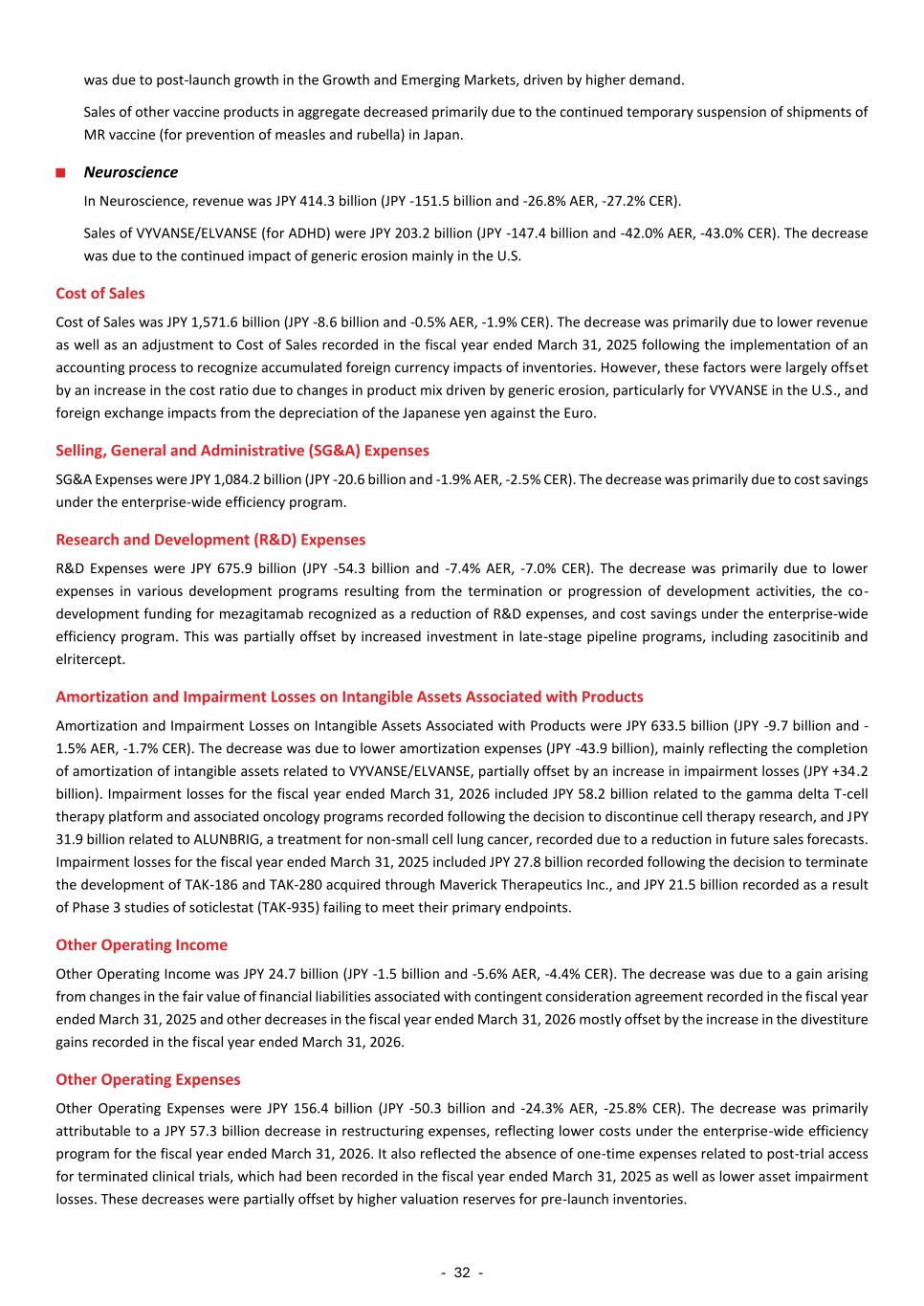
- 32 - was due to post-launch growth in the Growth and Emerging Markets, driven by higher demand. Sales of other vaccine products in aggregate decreased primarily due to the continued temporary suspension of shipments of MR vaccine (for prevention of measles and rubella) in Japan. ■ Neuroscience In Neuroscience, revenue was JPY 414.3 billion (JPY -151.5 billion and -26.8% AER, -27.2% CER). Sales of VYVANSE/ELVANSE (for ADHD) were JPY 203.2 billion (JPY -147.4 billion and -42.0% AER, -43.0% CER). The decrease was due to the continued impact of generic erosion mainly in the U.S. Cost of Sales Cost of Sales was JPY 1,571.6 billion (JPY -8.6 billion and -0.5% AER, -1.9% CER). The decrease was primarily due to lower revenue as well as an adjustment to Cost of Sales recorded in the fiscal year ended March 31, 2025 following the implementation of an accounting process to recognize accumulated foreign currency impacts of inventories. However, these factors were largely offset by an increase in the cost ratio due to changes in product mix driven by generic erosion, particularly for VYVANSE in the U.S., and foreign exchange impacts from the depreciation of the Japanese yen against the Euro. Selling, General and Administrative (SG&A) Expenses SG&A Expenses were JPY 1,084.2 billion (JPY -20.6 billion and -1.9% AER, -2.5% CER). The decrease was primarily due to cost savings under the enterprise-wide efficiency program. Research and Development (R&D) Expenses R&D Expenses were JPY 675.9 billion (JPY -54.3 billion and -7.4% AER, -7.0% CER). The decrease was primarily due to lower expenses in various development programs resulting from the termination or progression of development activities, the co- development funding for mezagitamab recognized as a reduction of R&D expenses, and cost savings under the enterprise-wide efficiency program. This was partially offset by increased investment in late-stage pipeline programs, including zasocitinib and elritercept. Amortization and Impairment Losses on Intangible Assets Associated with Products Amortization and Impairment Losses on Intangible Assets Associated with Products were JPY 633.5 billion (JPY -9.7 billion and - 1.5% AER, -1.7% CER). The decrease was due to lower amortization expenses (JPY -43.9 billion), mainly reflecting the completion of amortization of intangible assets related to VYVANSE/ELVANSE, partially offset by an increase in impairment losses (JPY +34.2 billion). Impairment losses for the fiscal year ended March 31, 2026 included JPY 58.2 billion related to the gamma delta T-cell therapy platform and associated oncology programs recorded following the decision to discontinue cell therapy research, and JPY 31.9 billion related to ALUNBRIG, a treatment for non-small cell lung cancer, recorded due to a reduction in future sales forecasts. Impairment losses for the fiscal year ended March 31, 2025 included JPY 27.8 billion recorded following the decision to terminate the development of TAK-186 and TAK-280 acquired through Maverick Therapeutics Inc., and JPY 21.5 billion recorded as a result of Phase 3 studies of soticlestat (TAK-935) failing to meet their primary endpoints. Other Operating Income Other Operating Income was JPY 24.7 billion (JPY -1.5 billion and -5.6% AER, -4.4% CER). The decrease was due to a gain arising from changes in the fair value of financial liabilities associated with contingent consideration agreement recorded in the fiscal year ended March 31, 2025 and other decreases in the fiscal year ended March 31, 2026 mostly offset by the increase in the divestiture gains recorded in the fiscal year ended March 31, 2026. Other Operating Expenses Other Operating Expenses were JPY 156.4 billion (JPY -50.3 billion and -24.3% AER, -25.8% CER). The decrease was primarily attributable to a JPY 57.3 billion decrease in restructuring expenses, reflecting lower costs under the enterprise-wide efficiency program for the fiscal year ended March 31, 2026. It also reflected the absence of one-time expenses related to post-trial access for terminated clinical trials, which had been recorded in the fiscal year ended March 31, 2025 as well as lower asset impairment losses. These decreases were partially offset by higher valuation reserves for pre-launch inventories.
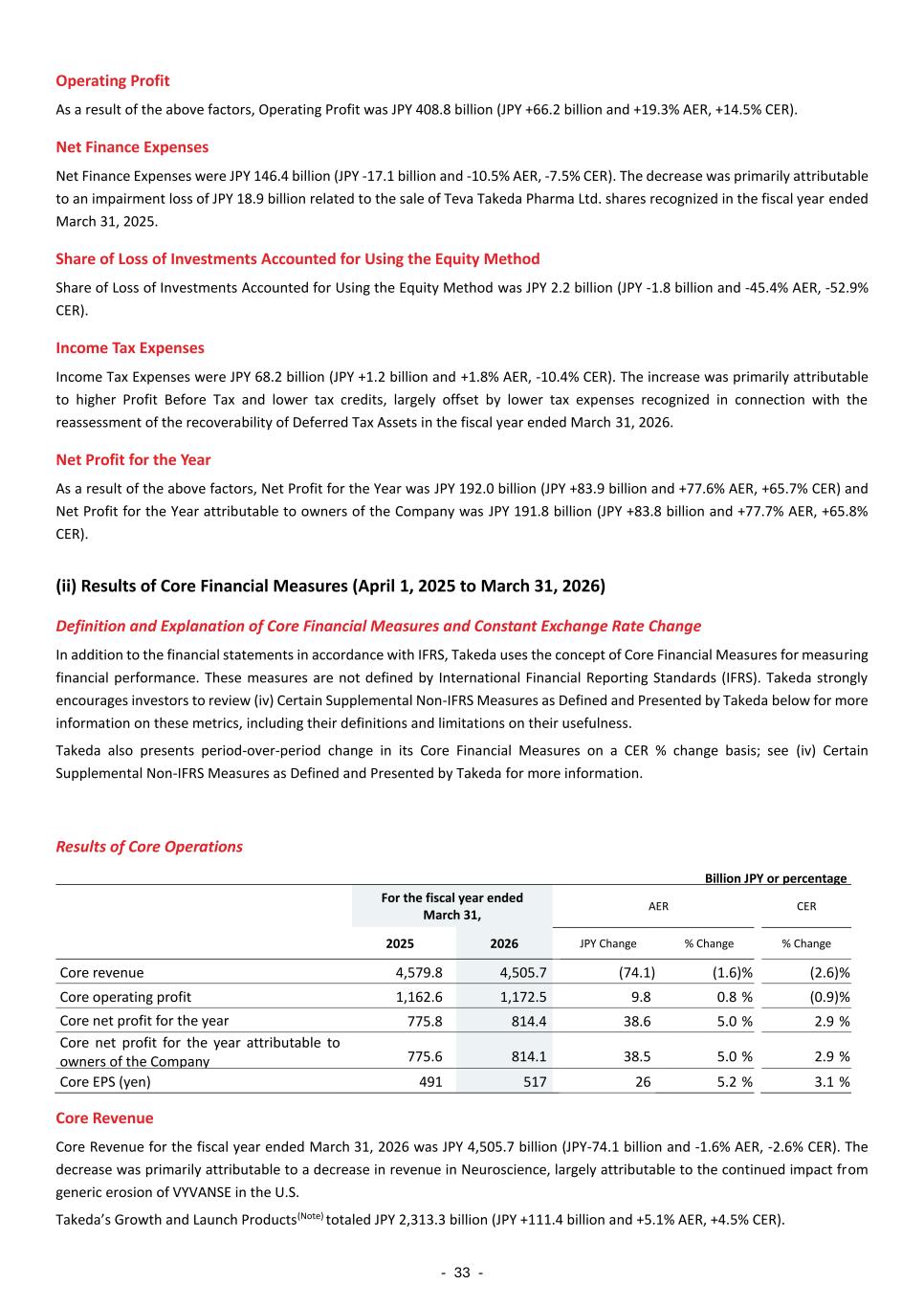
- 33 - Operating Profit As a result of the above factors, Operating Profit was JPY 408.8 billion (JPY +66.2 billion and +19.3% AER, +14.5% CER). Net Finance Expenses Net Finance Expenses were JPY 146.4 billion (JPY -17.1 billion and -10.5% AER, -7.5% CER). The decrease was primarily attributable to an impairment loss of JPY 18.9 billion related to the sale of Teva Takeda Pharma Ltd. shares recognized in the fiscal year ended March 31, 2025. Share of Loss of Investments Accounted for Using the Equity Method Share of Loss of Investments Accounted for Using the Equity Method was JPY 2.2 billion (JPY -1.8 billion and -45.4% AER, -52.9% CER). Income Tax Expenses Income Tax Expenses were JPY 68.2 billion (JPY +1.2 billion and +1.8% AER, -10.4% CER). The increase was primarily attributable to higher Profit Before Tax and lower tax credits, largely offset by lower tax expenses recognized in connection with the reassessment of the recoverability of Deferred Tax Assets in the fiscal year ended March 31, 2026. Net Profit for the Year As a result of the above factors, Net Profit for the Year was JPY 192.0 billion (JPY +83.9 billion and +77.6% AER, +65.7% CER) and Net Profit for the Year attributable to owners of the Company was JPY 191.8 billion (JPY +83.8 billion and +77.7% AER, +65.8% CER). (ii) Results of Core Financial Measures (April 1, 2025 to March 31, 2026) Definition and Explanation of Core Financial Measures and Constant Exchange Rate Change In addition to the financial statements in accordance with IFRS, Takeda uses the concept of Core Financial Measures for measuring financial performance. These measures are not defined by International Financial Reporting Standards (IFRS). Takeda strongly encourages investors to review (iv) Certain Supplemental Non-IFRS Measures as Defined and Presented by Takeda below for more information on these metrics, including their definitions and limitations on their usefulness. Takeda also presents period-over-period change in its Core Financial Measures on a CER % change basis; see (iv) Certain Supplemental Non-IFRS Measures as Defined and Presented by Takeda for more information. Results of Core Operations Billion JPY or percentage For the fiscal year ended March 31, AER CER 2025 2026 JPY Change % Change % Change Core revenue 4,579.8 4,505.7 (74.1) (1.6) % (2.6) % Core operating profit 1,162.6 1,172.5 9.8 0.8 % (0.9) % Core net profit for the year 775.8 814.4 38.6 5.0 % 2.9 % Core net profit for the year attributable to owners of the Company 775.6 814.1 38.5 5.0 % 2.9 % Core EPS (yen) 491 517 26 5.2 % 3.1 % Core Revenue Core Revenue for the fiscal year ended March 31, 2026 was JPY 4,505.7 billion (JPY-74.1 billion and -1.6% AER, -2.6% CER). The decrease was primarily attributable to a decrease in revenue in Neuroscience, largely attributable to the continued impact from generic erosion of VYVANSE in the U.S. Takeda’s Growth and Launch Products(Note) totaled JPY 2,313.3 billion (JPY +111.4 billion and +5.1% AER, +4.5% CER).
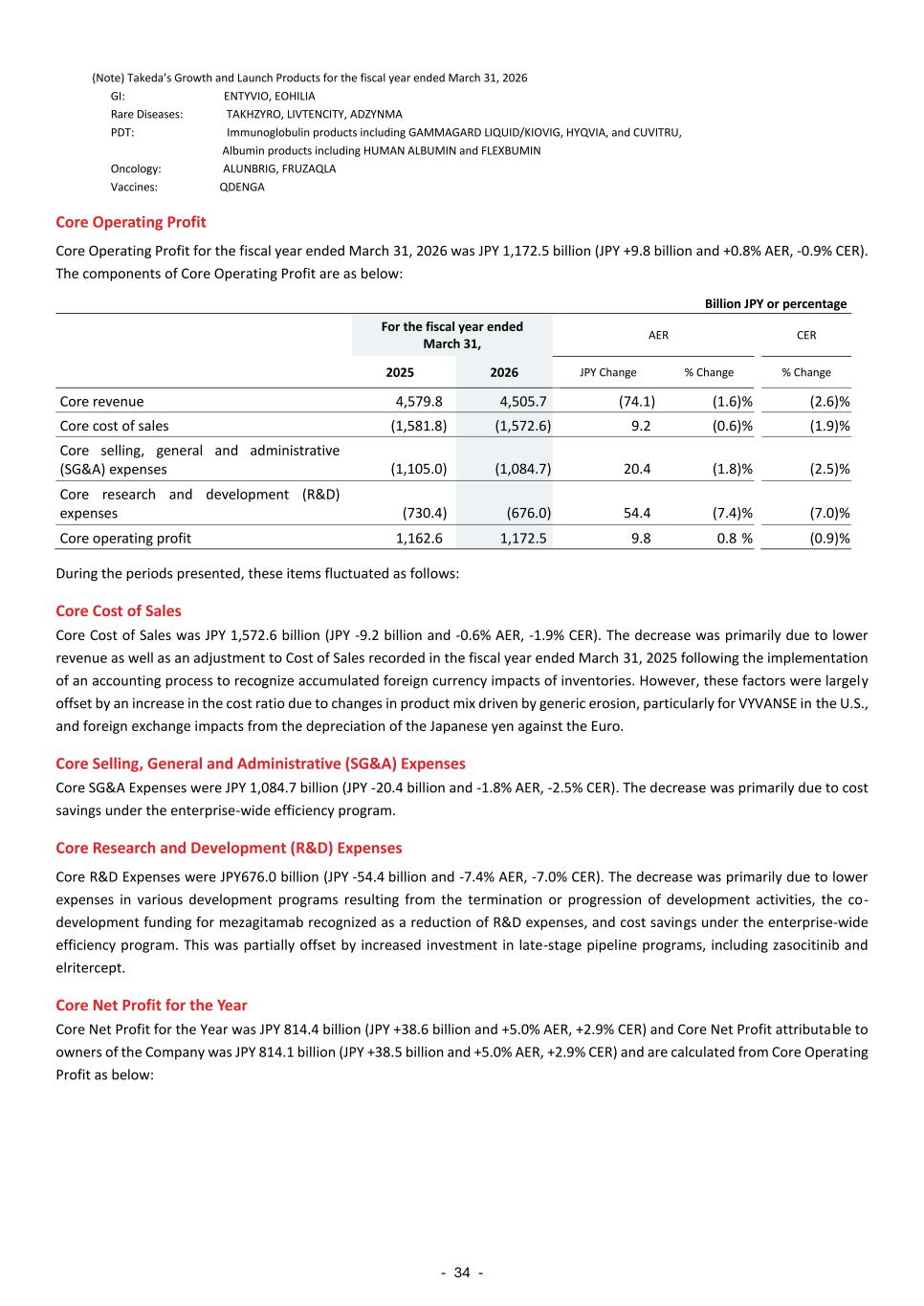
- 34 - (Note) Takeda’s Growth and Launch Products for the fiscal year ended March 31, 2026 GI: ENTYVIO, EOHILIA Rare Diseases: TAKHZYRO, LIVTENCITY, ADZYNMA PDT: Immunoglobulin products including GAMMAGARD LIQUID/KIOVIG, HYQVIA, and CUVITRU, Albumin products including HUMAN ALBUMIN and FLEXBUMIN Oncology: ALUNBRIG, FRUZAQLA Vaccines: QDENGA Core Operating Profit Core Operating Profit for the fiscal year ended March 31, 2026 was JPY 1,172.5 billion (JPY +9.8 billion and +0.8% AER, -0.9% CER). The components of Core Operating Profit are as below: Billion JPY or percentage For the fiscal year ended March 31, AER CER 2025 2026 JPY Change % Change % Change Core revenue 4,579.8 4,505.7 (74.1) (1.6) % (2.6) % Core cost of sales (1,581.8) (1,572.6) 9.2 (0.6) % (1.9) % Core selling, general and administrative (SG&A) expenses (1,105.0) (1,084.7) 20.4 (1.8) % (2.5) % Core research and development (R&D) expenses (730.4) (676.0) 54.4 (7.4) % (7.0) % Core operating profit 1,162.6 1,172.5 9.8 0.8 % (0.9) % During the periods presented, these items fluctuated as follows: Core Cost of Sales Core Cost of Sales was JPY 1,572.6 billion (JPY -9.2 billion and -0.6% AER, -1.9% CER). The decrease was primarily due to lower revenue as well as an adjustment to Cost of Sales recorded in the fiscal year ended March 31, 2025 following the implementation of an accounting process to recognize accumulated foreign currency impacts of inventories. However, these factors were largely offset by an increase in the cost ratio due to changes in product mix driven by generic erosion, particularly for VYVANSE in the U.S., and foreign exchange impacts from the depreciation of the Japanese yen against the Euro. Core Selling, General and Administrative (SG&A) Expenses Core SG&A Expenses were JPY 1,084.7 billion (JPY -20.4 billion and -1.8% AER, -2.5% CER). The decrease was primarily due to cost savings under the enterprise-wide efficiency program. Core Research and Development (R&D) Expenses Core R&D Expenses were JPY676.0 billion (JPY -54.4 billion and -7.4% AER, -7.0% CER). The decrease was primarily due to lower expenses in various development programs resulting from the termination or progression of development activities, the co- development funding for mezagitamab recognized as a reduction of R&D expenses, and cost savings under the enterprise-wide efficiency program. This was partially offset by increased investment in late-stage pipeline programs, including zasocitinib and elritercept. Core Net Profit for the Year Core Net Profit for the Year was JPY 814.4 billion (JPY +38.6 billion and +5.0% AER, +2.9% CER) and Core Net Profit attributable to owners of the Company was JPY 814.1 billion (JPY +38.5 billion and +5.0% AER, +2.9% CER) and are calculated from Core Operating Profit as below:
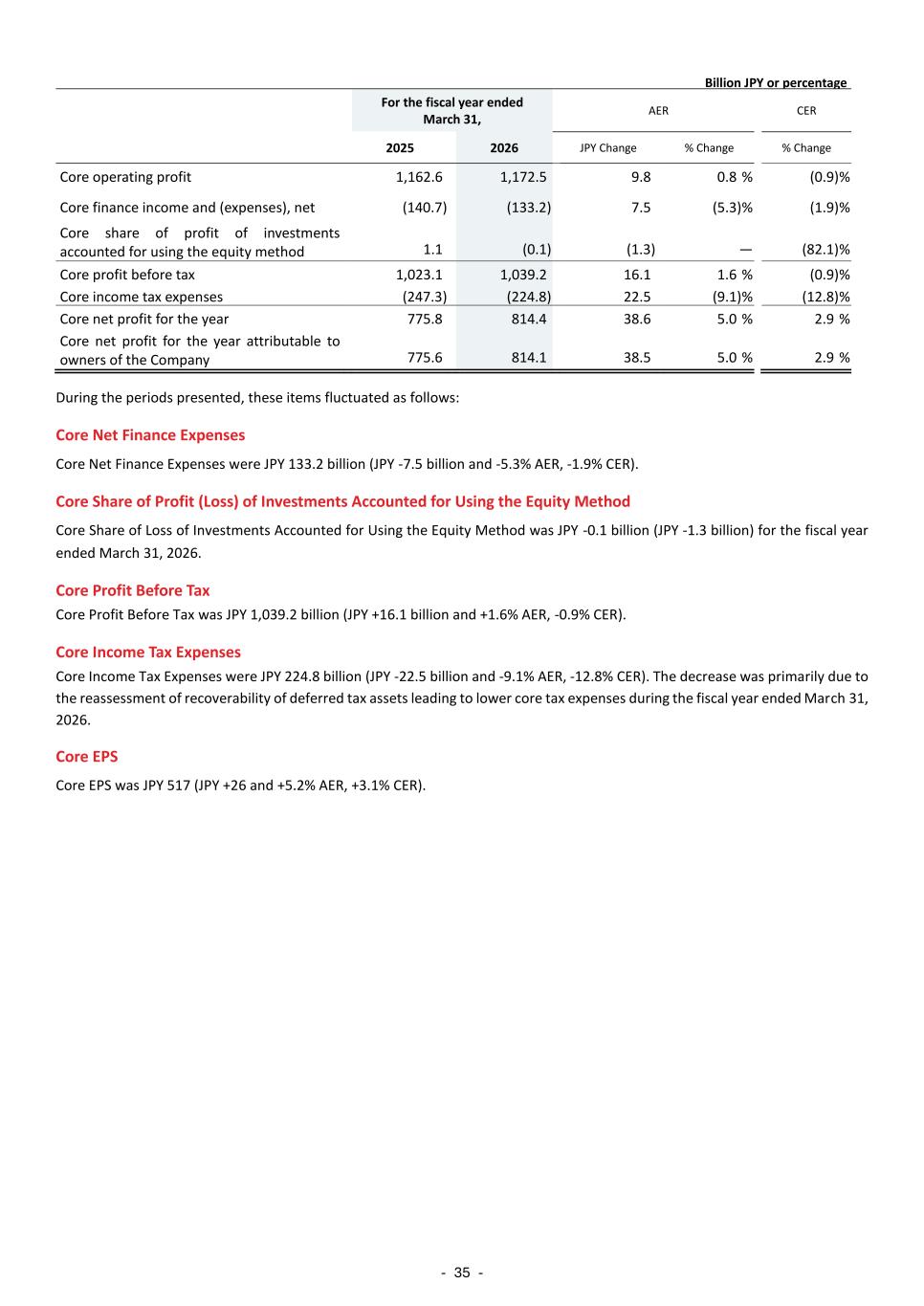
- 35 - Billion JPY or percentage For the fiscal year ended March 31, AER CER 2025 2026 JPY Change % Change % Change Core operating profit 1,162.6 1,172.5 9.8 0.8 % (0.9) % Core finance income and (expenses), net (140.7) (133.2) 7.5 (5.3) % (1.9) % Core share of profit of investments accounted for using the equity method 1.1 (0.1) (1.3) ― (82.1) % Core profit before tax 1,023.1 1,039.2 16.1 1.6 % (0.9) % Core income tax expenses (247.3) (224.8) 22.5 (9.1) % (12.8) % Core net profit for the year 775.8 814.4 38.6 5.0 % 2.9 % Core net profit for the year attributable to owners of the Company 775.6 814.1 38.5 5.0 % 2.9 % During the periods presented, these items fluctuated as follows: Core Net Finance Expenses Core Net Finance Expenses were JPY 133.2 billion (JPY -7.5 billion and -5.3% AER, -1.9% CER). Core Share of Profit (Loss) of Investments Accounted for Using the Equity Method Core Share of Loss of Investments Accounted for Using the Equity Method was JPY -0.1 billion (JPY -1.3 billion) for the fiscal year ended March 31, 2026. Core Profit Before Tax Core Profit Before Tax was JPY 1,039.2 billion (JPY +16.1 billion and +1.6% AER, -0.9% CER). Core Income Tax Expenses Core Income Tax Expenses were JPY 224.8 billion (JPY -22.5 billion and -9.1% AER, -12.8% CER). The decrease was primarily due to the reassessment of recoverability of deferred tax assets leading to lower core tax expenses during the fiscal year ended March 31, 2026. Core EPS Core EPS was JPY 517 (JPY +26 and +5.2% AER, +3.1% CER).
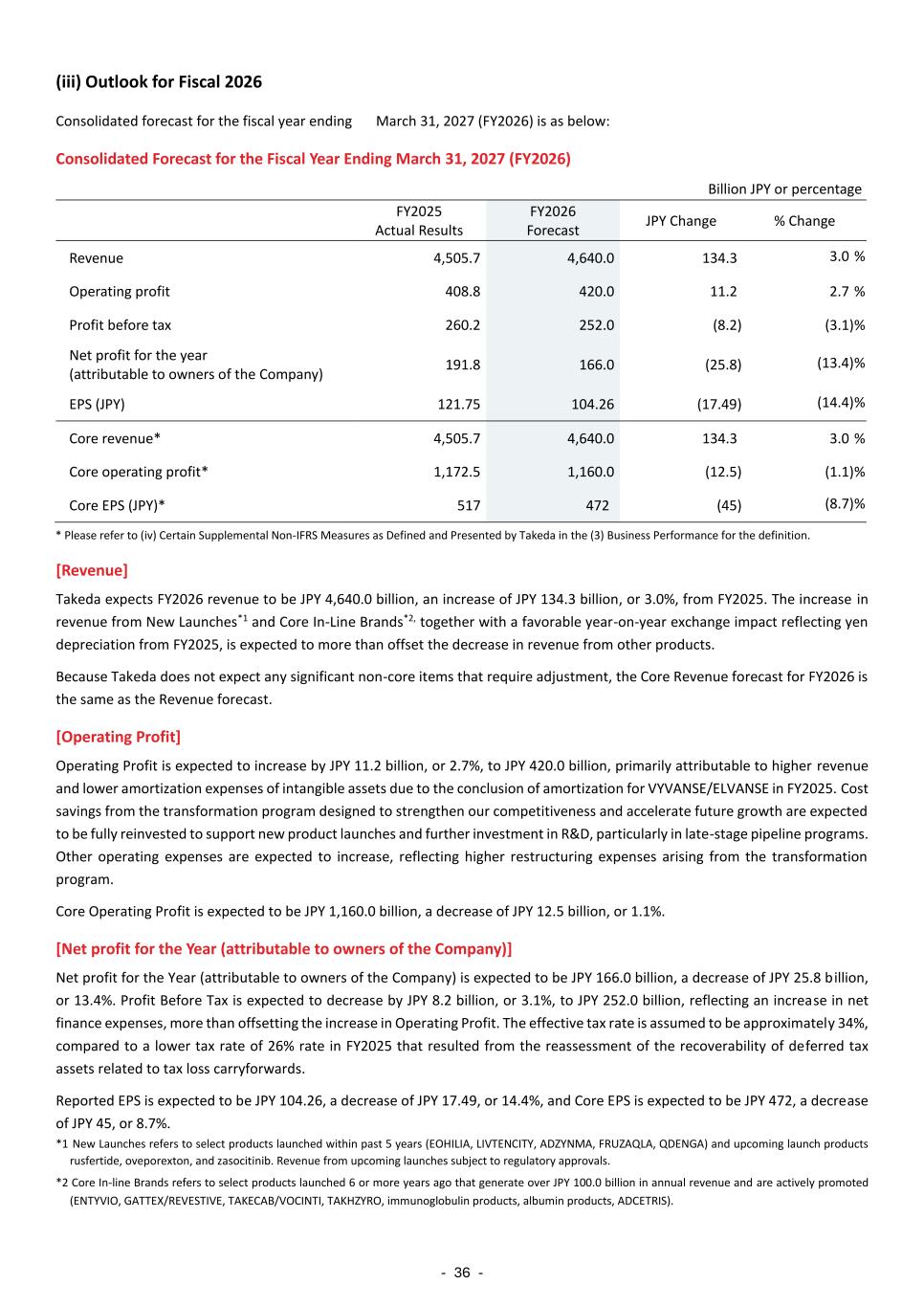
- 36 - (iii) Outlook for Fiscal 2026 Consolidated forecast for the fiscal year ending March 31, 2027 (FY2026) is as below: Consolidated Forecast for the Fiscal Year Ending March 31, 2027 (FY2026) Billion JPY or percentage FY2025 Actual Results FY2026 Forecast JPY Change % Change Revenue 4,505.7 4,640.0 134.3 3.0 % Operating profit 408.8 420.0 11.2 2.7 % Profit before tax 260.2 252.0 (8.2) (3.1) % Net profit for the year (attributable to owners of the Company) 191.8 166.0 (25.8) (13.4) % EPS (JPY) 121.75 104.26 (17.49) (14.4) % Core revenue* 4,505.7 4,640.0 134.3 3.0 % Core operating profit* 1,172.5 1,160.0 (12.5) (1.1) % Core EPS (JPY)* 517 472 (45) (8.7) % * Please refer to (iv) Certain Supplemental Non-IFRS Measures as Defined and Presented by Takeda in the (3) Business Performance for the definition. [Revenue] Takeda expects FY2026 revenue to be JPY 4,640.0 billion, an increase of JPY 134.3 billion, or 3.0%, from FY2025. The increase in revenue from New Launches*1 and Core In-Line Brands*2, together with a favorable year-on-year exchange impact reflecting yen depreciation from FY2025, is expected to more than offset the decrease in revenue from other products. Because Takeda does not expect any significant non-core items that require adjustment, the Core Revenue forecast for FY2026 is the same as the Revenue forecast. [Operating Profit] Operating Profit is expected to increase by JPY 11.2 billion, or 2.7%, to JPY 420.0 billion, primarily attributable to higher revenue and lower amortization expenses of intangible assets due to the conclusion of amortization for VYVANSE/ELVANSE in FY2025. Cost savings from the transformation program designed to strengthen our competitiveness and accelerate future growth are expected to be fully reinvested to support new product launches and further investment in R&D, particularly in late-stage pipeline programs. Other operating expenses are expected to increase, reflecting higher restructuring expenses arising from the transformation program. Core Operating Profit is expected to be JPY 1,160.0 billion, a decrease of JPY 12.5 billion, or 1.1%. [Net profit for the Year (attributable to owners of the Company)] Net profit for the Year (attributable to owners of the Company) is expected to be JPY 166.0 billion, a decrease of JPY 25.8 billion, or 13.4%. Profit Before Tax is expected to decrease by JPY 8.2 billion, or 3.1%, to JPY 252.0 billion, reflecting an increase in net finance expenses, more than offsetting the increase in Operating Profit. The effective tax rate is assumed to be approximately 34%, compared to a lower tax rate of 26% rate in FY2025 that resulted from the reassessment of the recoverability of deferred tax assets related to tax loss carryforwards. Reported EPS is expected to be JPY 104.26, a decrease of JPY 17.49, or 14.4%, and Core EPS is expected to be JPY 472, a decrease of JPY 45, or 8.7%. *1 New Launches refers to select products launched within past 5 years (EOHILIA, LIVTENCITY, ADZYNMA, FRUZAQLA, QDENGA) and upcoming launch products rusfertide, oveporexton, and zasocitinib. Revenue from upcoming launches subject to regulatory approvals. *2 Core In-line Brands refers to select products launched 6 or more years ago that generate over JPY 100.0 billion in annual revenue and are actively promoted (ENTYVIO, GATTEX/REVESTIVE, TAKECAB/VOCINTI, TAKHZYRO, immunoglobulin products, albumin products, ADCETRIS).
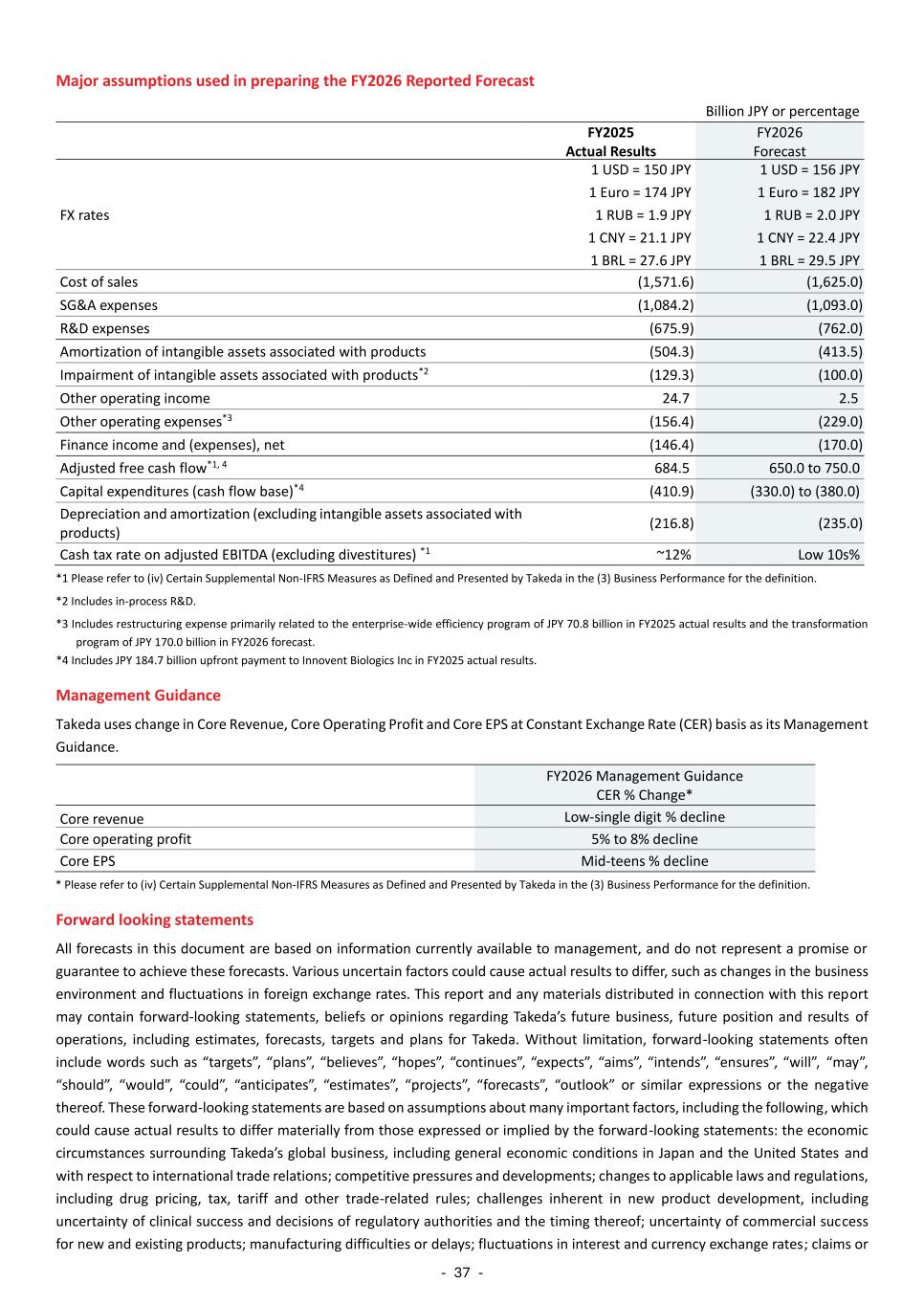
- 37 - Major assumptions used in preparing the FY2026 Reported Forecast Billion JPY or percentage FY2025 Actual Results FY2026 Forecast FX rates 1 USD = 150 JPY 1 Euro = 174 JPY 1 RUB = 1.9 JPY 1 CNY = 21.1 JPY 1 BRL = 27.6 JPY 1 USD = 156 JPY 1 Euro = 182 JPY 1 RUB = 2.0 JPY 1 CNY = 22.4 JPY 1 BRL = 29.5 JPY Cost of sales (1,571.6) (1,625.0) SG&A expenses (1,084.2) (1,093.0) R&D expenses (675.9) (762.0) Amortization of intangible assets associated with products (504.3) (413.5) Impairment of intangible assets associated with products*2 (129.3) (100.0) Other operating income 24.7 2.5 Other operating expenses*3 (156.4) (229.0) Finance income and (expenses), net (146.4) (170.0) Adjusted free cash flow*1, 4 684.5 650.0 to 750.0 Capital expenditures (cash flow base)*4 (410.9) (330.0) to (380.0) Depreciation and amortization (excluding intangible assets associated with products) (216.8) (235.0) Cash tax rate on adjusted EBITDA (excluding divestitures) *1 ~12% Low 10s% *1 Please refer to (iv) Certain Supplemental Non-IFRS Measures as Defined and Presented by Takeda in the (3) Business Performance for the definition. *2 Includes in-process R&D. *3 Includes restructuring expense primarily related to the enterprise-wide efficiency program of JPY 70.8 billion in FY2025 actual results and the transformation program of JPY 170.0 billion in FY2026 forecast. *4 Includes JPY 184.7 billion upfront payment to Innovent Biologics Inc in FY2025 actual results. Management Guidance Takeda uses change in Core Revenue, Core Operating Profit and Core EPS at Constant Exchange Rate (CER) basis as its Management Guidance. FY2026 Management Guidance CER % Change* Core revenue Low-single digit % decline Core operating profit 5% to 8% decline Core EPS Mid-teens % decline * Please refer to (iv) Certain Supplemental Non-IFRS Measures as Defined and Presented by Takeda in the (3) Business Performance for the definition. Forward looking statements All forecasts in this document are based on information currently available to management, and do not represent a promise or guarantee to achieve these forecasts. Various uncertain factors could cause actual results to differ, such as changes in the business environment and fluctuations in foreign exchange rates. This report and any materials distributed in connection with this report may contain forward-looking statements, beliefs or opinions regarding Takeda’s future business, future position and results of operations, including estimates, forecasts, targets and plans for Takeda. Without limitation, forward-looking statements often include words such as “targets”, “plans”, “believes”, “hopes”, “continues”, “expects”, “aims”, “intends”, “ensures”, “will”, “may”, “should”, “would”, “could”, “anticipates”, “estimates”, “projects”, “forecasts”, “outlook” or similar expressions or the negative thereof. These forward-looking statements are based on assumptions about many important factors, including the following, which could cause actual results to differ materially from those expressed or implied by the forward-looking statements: the economic circumstances surrounding Takeda’s global business, including general economic conditions in Japan and the United States and with respect to international trade relations; competitive pressures and developments; changes to applicable laws and regulations, including drug pricing, tax, tariff and other trade-related rules; challenges inherent in new product development, including uncertainty of clinical success and decisions of regulatory authorities and the timing thereof; uncertainty of commercial success for new and existing products; manufacturing difficulties or delays; fluctuations in interest and currency exchange rates; claims or
- 38 - concerns regarding the safety or efficacy of marketed products or product candidates; the impact of health crises, like the novel coronavirus pandemic; the success of our environmental sustainability efforts, in enabling us to reduce our greenhouse gas emissions or meet our other environmental goals; the extent to which our efforts to increase efficiency, productivity or cost-savings, such as the integration of digital technologies, including artificial intelligence, in our business or other initiatives to restructure our operations will lead to the expected benefits; and other factors identified in Takeda’s most recent Annual Report on Form 20-F and Takeda’s other reports filed with the U.S. Securities and Exchange Commission, available on Takeda’s website at: https://www.takeda.com/investors/sec-filings-and-security-reports/ or at www.sec.gov. Takeda does not undertake to update any of the forward-looking statements contained in this report or any other forward-looking statements it may make, except as required by law or stock exchange rule. Past performance is not an indicator of future results and the results or statements of Takeda in this report may not be indicative of, and are not an estimate, forecast, guarantee or projection of Takeda’s future results. Should any significant event occur which requires the forecast to be revised, the Company will disclose it in a timely manner. (iv) Certain Supplemental Non-IFRS Measures as Defined and Presented by Takeda In addition to its results presented in accordance with IFRS, Takeda presents certain “Non-IFRS” financial measures on a supplemental basis. These financial measures include Constant Exchange Rate (“CER”) Change, Core Financial Measures, Net Debt, Adjusted Net Debt, EBITDA, Adjusted EBITDA, Free Cash Flow and Adjusted Free Cash Flow. Takeda’s management evaluates its results of operations and financial condition and makes operating and investment decisions using both IFRS measures and the non-IFRS measures presented herein. Accordingly, Takeda presents both types of measures to provide investors with additional information to analyze Takeda’s results of operations and financial condition and understand how Takeda’s management assesses the same. Takeda’s non-IFRS measures exclude or adjust the calculation of certain income, cost, cash flow or statement of financial position items which are included in the most closely comparable measures presented in accordance with IFRS. These measures are not prepared in accordance with IFRS and such non-IFRS measures should be considered a supplement to, and not a substitute for, measures prepared in accordance with IFRS (which Takeda sometimes refer to as “reported” measures). Takeda strongly encourages investors to review its historical financial statements in their entirety and to use the measures presented in accordance with IFRS as the primary means of evaluating its performance. Moreover, Takeda encourages investors to review the definitions and the discussions of these non-IFRS financial measures—particularly the limitations on their usefulness—and to understand how such measures differ from similarly titled measures that may be presented by other companies in the pharmaceutical industry or in general. Core Financial Measures Takeda’s Core Financial Measures, particularly Core Revenue, Core Operating Profit, Core Net Profit for the Year attributable to owners of the Company and Core EPS, exclude revenue from divestments, amortization and impairment losses on intangible assets associated with products (including in-process R&D) and other impacts unrelated to the underlying trends and business performance of Takeda’s core operations, such as non-recurring items, purchase accounting effects and transaction related costs. Core Revenue represents revenue adjusted to exclude revenue items unrelated to the underlying trends and business performance of Takeda’s core operations (primarily revenue or related adjustments associated with divestments and liquidations). Core Operating Profit represents operating profit adjusted to exclude other operating expenses and income, amortization and impairment losses on intangible assets associated with products (including in-process R&D) and non-cash items or items unrelated to the underlying trends and business performance of Takeda’s core operations. Core Net Profit for the Year attributable to owners of the Company represents net profit for the year attributable to owners of the Company, adjusted to eliminate the impact of items excluded in the calculation of Core Operating Profit and other non-operating items (e.g. amongst other items, fair value adjustments and the imputed financial charge related to contingent consideration) that are unusual, non-recurring in nature or unrelated to the underlying trends and business performance of Takeda’s ongoing operations and the tax effect of each of the adjustments. Core EPS is calculated by dividing Core Net Profit for the Year attributable to owners of the Company by the average outstanding shares (excluding treasury shares) of the reporting periods presented. Takeda presents its Core Financial Measures because Takeda believes that these measures are useful to understanding its business without the effect of items that Takeda considers to be unrelated to the underlying trends and business performance of its core operations, including items (i) which may vary significantly from year-to-year or may not occur in each year or (ii) whose recognition Takeda believes is largely uncorrelated to trends in the underlying performance of our core business. Takeda believes that similar measures are frequently used by other companies in its industry and that providing these measures helps investors evaluate Takeda’s performance against not only its performance in prior years but on a similar basis as its competitors. Takeda
- 39 - also presents Core Financial Measures because these measures are used by Takeda for budgetary planning and compensation purposes (i.e., certain targets for the purposes of Takeda’s Short-Term Incentive and Long-Term Incentive compensation programs, including incentive compensation of the CEO and CFO, are set in relation to the results of Takeda’s Core Financial Measures). The usefulness of Core Financial Measures to investors has significant limitations including, but not limited to, (i) they are not necessarily identical to similarly titled measures used by other companies, including those in the pharmaceutical industry, (ii) they exclude financial information and events, such as the effects of non-cash expenses such as dispositions or amortization of intangible assets, that some may consider important in evaluating Takeda’s performance, value or prospects for the future, ( iii) they exclude items or types of items that may continue to occur from period to period in the future (however, it is Takeda’s policy not to adjust out normal, recurring cash operating expenses necessary to operate our business) and (iv) they may not include all items which investors may consider important to an understanding of our results of operations, or exclude all items which investors may not consider to be so. Constant Exchange Rate (“CER”) Change CER Change eliminates the effect of foreign exchange rates from year-over-year comparisons by translating financial results in accordance with IFRS or Core (non-IFRS) financial measures for the current period using corresponding exchange rates in the same period of the previous fiscal year, provided, however, that the results of operations of subsidiaries in countries experiencing hyperinflation, and for which IAS 29, Financial Reporting in Hyperinflationary Economies, is applied, are not adjusted for CER Change, and instead are calculated in accordance with IAS 29. Takeda presents CER change because we believe that this measure is useful to investors to better understand the effect of exchange rates on our business and to understand how our results of operations might have changed from year to year without the effect of fluctuations in exchange rates. These are the primary ways in which our management uses these measures to evaluate our results of operations. We also believe that this is a useful measure for investors as similar performance measures are frequently used by securities analysts, investors and other interested parties in the evaluation of the results of operations of other companies in our industry (many of whom similarly present measures that adjust for the effect of exchange rates). The usefulness of this presentation has significant limitations including but not limited to, that while CER change is calculated using the same exchange rates used to calculate financial results as presented under IFRS for the previous fiscal year, this does not necessarily mean that the transactions entered into during the relevant fiscal year could have been entered into or would have been recorded at the same exchange rates. Moreover, other companies in our industry using similarly titled measures may define and calculate those measures differently than we do and therefore such measures may not be directly comparable. Accordingly, CER change should not be considered in isolation and is not, and should not be viewed as, a substitute for change in financial results as prepared and presented in accordance with IFRS. Free Cash Flow and Adjusted Free Cash Flow Takeda defines Free Cash Flow as cash flows from operating activities less acquisition of property, plant and equipment (“PP&E”). Takeda defines Adjusted Free Cash Flow as cash flows from operating activities, subtracting payments for acquisition of PP&E, intangible assets, investments (excluding debt investments classified as Level 1 in the fair value hierarchy), shares in associates and businesses, net of cash and cash equivalents acquired and other transactional payments deemed related or similar in substance thereto as well as adding proceeds from sales of PP&E, sales and redemption of investments (excluding debt investments classified as Level 1 in the fair value hierarchy), sales of shares in associates and sales of businesses, net of cash and cash equivalents divested and further adjusting for the movement of any other cash that is not available to Takeda’s immediate or general business use. Takeda presents Free Cash Flow and Adjusted Free Cash Flow because Takeda believes that these measures are useful to investors as similar measures of liquidity are frequently used by securities analysts, investors and other interested parties in the evaluation of companies in our industry. Adjusted Free Cash Flow is also used by our management to evaluate our liquidity and our cash flows, particularly as they relate to our ability to meet our liquidity requirements and to support our capital allocation policies. Takeda also believes that Free Cash Flow and Adjusted Free Cash Flow are helpful to investors in understanding how our strategic acquisitions and divestitures of businesses contribute to our cash flows and liquidity. The usefulness of Free Cash Flow and Adjusted Free Cash Flow to investors has significant limitations including, but not limited to, (i) they may not be comparable to similarly titled measures used by other companies, including those in our industry, (ii) they do not reflect the effect of our current and future contractual and other commitments requiring the use or allocation of capital and
- 40 - (iii) the addition of proceeds from sales and redemption of investments and the proceeds from sales of business, net of cash and cash equivalents divested do not represent cash received from our core ongoing operations. Free Cash Flow and Adjusted Free Cash Flow should not be considered in isolation and are not, and should not be viewed as, substitutes for cash flows from operating activities or any other measure of liquidity presented in accordance with IFRS. The most directly comparable measure under IFRS for Free Cash Flow and Adjusted Free Cash Flow is net cash from operating activities. EBITDA and Adjusted EBITDA Takeda defines EBITDA as consolidated net profit before income tax expenses, depreciation and amortization and net interest expense. Takeda defines Adjusted EBITDA as EBITDA further adjusted to exclude impairment losses, other operating income and expenses (excluding depreciation and amortization, as well as impairment losses), finance income and expenses (excluding net interest expense), our share of profit or loss of investments accounted for using the equity method, other non-cash items such as non-cash equity-based compensation expense, and other items that management believes are unrelated to our core operations, including EBITDA from divested products, purchase accounting effects and transaction related costs. Takeda presents EBITDA and Adjusted EBITDA because Takeda believes that these measures are useful to investors as they are frequently used by securities analysts, investors and other interested parties in the evaluation of companies in our industry. Primarily, Adjusted EBITDA is used by Takeda for the purposes of monitoring its financial leverage. Takeda further believes that Adjusted EBITDA is helpful to investors in identifying trends in its business that could otherwise be obscured by certain items unrelated to ongoing operations because they are highly variable, difficult to predict, may substantially impact our results of operations and may limit the ability to evaluate our performance from one period to another on a consistent basis. The usefulness of EBITDA and Adjusted EBITDA to investors has significant limitations including, but not limited to, (i) they may not be comparable to similarly titled measures used by other companies, including those in the pharmaceutical industry, (ii) they exclude financial information and events, such as the effects of an acquisition, or amortization of intangible assets, that some may consider important in evaluating Takeda’s performance, value or prospects for the future, (iii) they exclude items or types of items that may continue to occur from period to period in the future and (iv) they may not include all items which investors may consider important to an understanding of our results of operations, or may not exclude all items which investors may not consider important for such understanding. EBITDA and Adjusted EBITDA should not be considered in isolation and are not, and should not be viewed as, substitutes for operating income, net profit for the year or any other measure of performance presented in accordance with IFRS. The most closely comparable measure presented in accordance with IFRS is net profit for the year. Net Debt and Adjusted Net Debt Takeda defines Net Debt as the book value of bonds and loans on consolidated statements of financial position adjusted only for cash and cash equivalents and Adjusted Net Debt first by calculating the sum of the current and non-current portions of bonds and loans as shown on our consolidated statement of financial position, which is then adjusted to reflect (i) the use of prior 12- month average exchange rates as of the fiscal year-end for non-JPY debt outstanding at the beginning of the fourth quarter and the use of relevant spot rates for new non-JPY debt incurred and existing non-JPY debt redeemed during the fourth quarter, which reflects the methodology our management uses to monitor our leverage, and (ii) the “equity credit” applied to Takeda’s “hybrid” subordinated indebtedness by S&P Global Rating Japan in recognition of the equity-like features of those instruments pursuant to such agency’s ratings methodology. To calculate Adjusted Net Debt, Takeda deducts from this figure cash and cash equivalents, excluding cash temporarily held by Takeda on behalf of third parties related to vaccine operations and to the trade receivables sales program, and debt investments classified as Level 1 in the fair value hierarchy being recorded as Other Financial Assets. Takeda presents Net Debt and Adjusted Net Debt because Takeda believes that these measures are useful to investors in that our management uses it to monitor and evaluate our indebtedness, net of cash and cash equivalents and, in conjunction with Adjusted EBITDA, to monitor our financial leverage (for the avoidance of doubt, Adjusted Net Debt and the ratio of Adjusted Net Debt to Adjusted EBITDA are not intended to be indicators of Takeda’s liquidity). Takeda also believes that similar measures of indebtedness are frequently used by securities analysts, investors and other interested parties in the evaluation of companies in our industry. Particularly following the acquisition of Shire, investors, analysts and, in particular, ratings agencies, have closely monitored Takeda’s leverage, as represented by the ratio of its Adjusted Net Debt to Adjusted EBITDA. In light of the weight given by ratings agencies in particular to this ratio, Takeda believes that such information is useful to investors to help understand not only Takeda’s financial leverage, but also how ratings agencies evaluate the level of financial leverage in evaluating Takeda’s quality of credit. Accordingly, as described below, Takeda includes an adjustment to its Adjusted Net Debt to reflect the “equity credit” afforded to certain of its subordinated indebtedness by ratings agencies (such indebtedness does not qualify for treatment as
- 41 - equity under IFRS). The usefulness of Adjusted Net Debt to investors has significant limitations including, but not limited to, (i) it may not be comparable to similarly titled measures used by other companies, including those in the pharmaceutical industry, (ii) it does not reflect the amounts of interest payments to be paid on Takeda’s indebtedness, (iii) it does not reflect any restrictions on Takeda’s ability to prepay or redeem any of our indebtedness, (iv) it does not reflect any fees, costs or other expenses that Takeda may incur in converting cash equivalents to cash, in converting cash from one currency into another or in moving cash within our consolidated group, (v) it applies to gross debt an adjustment for average foreign exchange rates which, although consistent with Takeda’s financing agreements, does not reflect the actual rates at which Takeda would be able to convert one currency into another and (vi) it reflects an equity credit despite the fact that Takeda’s subordinated bonds are not eligible for equity treatment under IFRS, although Takeda believes this adjustment to be reasonable and useful to investors. Adjusted Net Debt should not be considered in isolation and is not, and should not be viewed as, a substitute for bonds and loans or any other measure of indebtedness presented in accordance with IFRS. The most directly comparable measures under IFRS for Net Debt is bonds and loans. (v) Activities and Results of Research & Development Research and development expenses for the fiscal year ended March 31, 2026 were JPY 675.9 billion. Takeda does not report disaggregated R&D expenses, including by therapeutic area or clinical trial stage, as our R&D budget is determined on a company- wide basis and specific expenditures may be subject to re-allocation depending on development results and priorities. The research and development (R&D) of biopharmaceutical products is a lengthy and expensive process that can span more than 10 years. The process includes multiple studies to evaluate a product’s efficacy and safety, followed by submission to regulatory authorities who review the data and decide whether to grant marketing approval. Only a small number of therapeutic candidates pass such rigorous investigation and become available for use in clinical treatment. Once approved, there is ongoing R&D support for marketed products, including life-cycle management, medical affairs, and other investments. Clinical trials, which must comply with regional and international regulatory guidelines, generally take five to seven years or longer, and require substantial expenditures. In general, clinical trials are performed in accordance with the guidelines set by the International Conference on Harmonization of Technical Requirements for Registration of Pharmaceuticals for Human Use. The relevant regional regulatory authorities are the Food and Drug Administration (FDA) for the United States, the European Medicines Agency (EMA) for the EU, the Ministry of Health, Labour and Welfare (MHLW) for Japan and National Medical Products Administration (NMPA) for China. The three phases of human clinical trials, which may overlap with each other, are as follows: Phase 1 clinical trials Conducted using a small group of healthy adult volunteers in order to evaluate safety and absorption, distribution, metabolism and excretion of the drug. Phase 2 clinical trials Conducted using a small group of patient volunteers in order to evaluate safety, efficacy, dosage and administration methods. Phase 2 clinical trials may be divided into two sub-categories, Phase 2a and Phase 2b. Phase 2a are usually pilot studies designed to demonstrate clinical efficacy or biological activity. Phase 2b studies look to find the optimum dose at which the drug shows biological activity with minimal side-effects. Phase 3 clinical trials Conducted using a large number of patient volunteers in order to evaluate safety and efficacy in comparison to other medications already available or placebo. Of these three phases, Phase 3 requires the largest expenditures and thus the decision to proceed with Phase 3 testing is a critical business decision in the drug development process. For those drug candidates that pass Phase 3 clinical trials, a New Drug Application ("NDA"), Biologics License Application (“BLA”) or a Marketing Authorization Application (“MAA”) is submitted to the relevant governmental authorities for approval, which if granted permits the subsequent commercial launch of the drug. The preparation of an NDA, BLA or MAA submission involves considerable data collection, verification, analysis and expense. Even after the launch of the product, health authorities require post-marketing surveillance of adverse events, and they may request a post-
- 42 - marketing study to provide additional information regarding the risks and benefits of the product. Takeda’s R&D engine is focused on translating science into highly innovative, life-transforming medicines that make a critical difference to patients. Our R&D efforts focus on three core therapeutic areas: Gastrointestinal and Inflammation, Neuroscience, and Oncology. We also make targeted R&D investments in PDT. The R&D engine for our three core therapeutic areas are the largest component of our R&D investment and has produced exciting new molecular entities (“NMEs”) that represent potential best-in-class and/or first-in-class medicines in areas of high unmet medical need across our core therapeutic areas (Gastrointestinal and Inflammation, Neuroscience, and Oncology). Takeda is committed to developing therapies for both rare and more prevalent diseases, and many of the life-transforming medicines we are pursuing will treat rare diseases in our core therapeutic areas as well as in PDT. We are embracing data and digital technologies with the aim of improving the quality of innovation and accelerating execution. We seek to achieve a foundational shift that embeds AI into every stage of drug discovery, redesigning workflows to include automated, data-driven, predictive processes that accelerate innovation. Takeda’s pipeline is positioned to support both the near-term and long-term sustained growth of the company. Once first approval of a product is achieved, Takeda R&D is equipped to support geographic expansions of such approval and approvals in additional indications, as well as post-marketing commitment and potential additional formulation work. Takeda’s R&D team works closely with the commercial functions to maximize the value of marketed products and reflect commercial insights in its R&D strategies and portfolio. In addition to our concentrated efforts to increase our in-house R&D capabilities, external partnerships with third-party partners are a key component of our strategy for enhancing our R&D pipeline. Our strategy to expand and diversify our external partnerships allows us to take part in research of a wide variety of new products and increases the chances that we will be able to take part in a major research-related breakthrough. Our key R&D facilities include: – Greater Boston Area Research and Development Site: Our R&D sites are located in Cambridge and Lexington, Massachusetts in the United States. They are the R&D center for global Gastrointestinal and Inflammation, Oncology, and our global R&D Headquarters. They also support R&D in other areas including plasma-derived therapies. Furthermore, Takeda signed a 15-year lease for an approximately 600,000 square foot state-of-the-art R&D and office facility under construction in Kendall Square, which Takeda plans to occupy from 2026. – Takeda Research Center in Shonan Health Innovation Park: Located in Fujisawa and Kamakura in Kanagawa Prefecture in Japan, the site houses a Takeda Research laboratory where the company’s neuroscience research is conducted. The Shonan Health Innovation Park (“Shonan iPark”) was opened in 2018 when Takeda transformed its Shonan Research Center into the first pharma-led science park in Japan by opening its doors to external parties. To attract more diverse partners and to further the success of the Shonan iPark, Takeda transferred ownership rights of Shonan iPark to a trustee in 2020 and transferred operation of Shonan iPark to a company established by Takeda in 2023. Takeda, as a flagship tenant, is committed to invigorating life science research in Japan. – Vienna, Austria Research and Development Sites: Our R&D sites, located in Vienna, Austria, support programs in R&D and in PDT. The research centers focus on biologics programs in R&D and contain manufacturing sites for plasma derived products. Major progress on R&D events since April 2025 are listed as follows: R&D pipeline ■ Gastrointestinal and Inflammation In Gastrointestinal and Inflammation, Takeda focuses on delivering innovative, life-changing therapeutics for patients with gastrointestinal diseases (including those of the liver) as well as immune-mediated inflammatory diseases. Takeda is maximizing the potential of our inflammatory bowel disease (IBD) franchise around ENTYVIO, including the introduction of a subcutaneous formulation and running real-world evidence generation studies that demonstrate ENTYVIO’s place as a backbone therapy in the IBD treatment paradigm and further our understanding of how to improve outcomes for patients. Zasocitinib (TAK-279) is a next generation oral tyrosine kinase 2 (TYK2) inhibitor with potential to treat multiple immune-mediated inflammatory diseases. Fazirsiran (TAK-999) is a potential first-in-class RNAi treatment for alpha-1 antitrypsin-deficiency associated liver disease in late- stage development. Mezagitamab (TAK-079) is a potential best-in-class anti-CD38 antibody with disease modifying potential for multiple immune-mediated diseases like immune thrombocytopenia (ITP) and IgA nephropathy (IgAN). Furthermore, Takeda is
- 43 - making progress on its pipeline built through in-house discovery, partnerships and business development, which explores opportunities in inflammatory diseases (specifically in gastric, dermatological and rheumatic disorders), along with select rare hematological and renal disorders (ADZYNMA, mezagitamab (TAK-079)), liver diseases, and neurogastric disorders. ADZYNMA / Generic name: recombinant ADAMTS13 – In December 2025, Takeda announced that the Japanese Ministry of Health, Labour and Welfare (MHLW) approved ADZYNMA, expanding its indication to pediatric congenital thrombotic thrombocytopenic purpura (cTTP) under the age of 12. The approval is primarily based on safety and efficacy data of the global Phase 3 281102 trial in cTTP patients ages 0-70, which included five Japanese individuals, and the Phase 3b continuation trial TAK-755-3002. ENTYVIO / Generic name: vedolizumab – In February 2026, Takeda announced positive data from the pivotal Phase 3 KEPLER trial which evaluated vedolizumab intravenous (IV) in pediatric ulcerative colitis (UC) patients ages 2 to 17 who had an inadequate response to either conventional treatment options or tumor necrosis factor (TNF) antagonists. The study demonstrated that nearly half (47.3%) of patients achieved primary endpoint of clinical remission at 54 weeks. Vedolizumab’s safety profile was generally consistent with its known safety profile in adults. These results were presented at the 21st Congress of the European Crohn’s and Colitis Organisation (ECCO). Development code: TAK-079 / Generic name: mezagitamab – In June 2025, Takeda announced that the Japanese Ministry of Health, Labour and Welfare (MHLW) granted Orphan Drug Designation for mezagitamab, for the potential indication of chronic immune thrombocytopenia (ITP). – In November 2025, Takeda announced new interim data from the Phase 1b, open-label, proof-of-concept study of subcutaneous mezagitamab in primary IgA nephropathy (IgAN). The results, presented at the American Society of Nephrology (ASN) Kidney Week 2025, showed stable kidney function (eGFR) in patients treated with investigational mezagitamab through week 96 (18 months after last dose), as well as a rapid reductions in proteinuria and serum Gd-IgA1 levels that were sustained through week 96. In this study, mezagitamab was generally well tolerated with no new safety concerns identified. – In November 2025, Takeda announced that the MHLW granted Orphan Drug Designation for mezagitamab for the potential indication of IgAN. Development code: TAK-279 / Generic name: zasocitinib – In December 2025, Takeda announced positive topline results for two pivotal Phase 3 studies of zasocitinib in adults with moderate-to-severe plaque psoriasis (PsO). The studies demonstrated superiority of zasocitinib compared to placebo for the co-primary endpoints, static Physician Global Assessment (sPGA) 0/1 and Psoriasis Area and Severity Index (PASI) 75, at week 16. The studies also met all 44 ranked secondary endpoints, showing the potential of a convenient once-daily pill to deliver complete skin clearance for patients with PsO. More than half of study participants treated with zasocitinib achieved PASI 90, and on average about 30 percent achieved PASI 100 by week 16. Zasocitinib was generally well-tolerated with no new safety signals identified. – In March 2026, Takeda announced new data from the two pivotal Phase 3 studies of zasocitinib in adults with moderate-to- severe PsO. About 70% of patients treated with zasocitinib achieved clear or almost clear skin (sPGA 0/1) at week 16, and a significantly greater PASI 75 response rate versus placebo was observed as early as week 4. Zasocitinib also demonstrated statistically significant improvements in complete skin clearance, against placebo and apremilast, an increasingly important treatment goal for patients with PsO. Responses for co-primary and key secondary endpoints continued to increase through week 24 in both studies. Zasocitinib was generally well-tolerated, and safety profile was consistent with Phase 2b studies with no new safety signals identified. The results were presented as a late-breaking abstract at the 2026 American Academy of Dermatology (AAD) Annual Meeting. ■ Neuroscience In Neuroscience, Takeda is focusing its R&D investments on potentially transformative treatments for neurological and neuromuscular diseases of high unmet need building its innovative pipeline by leveraging internal expertise and external collaborations. Takeda Neuroscience’s core focus is orexin biology, rare neurology and neurodegeneration diseases. We are advancing a portfolio of tailored therapies designed to unlock the full power of orexin (i.e., oveporexton (TAK-861), TAK-360, TAK-495) to redefine the standard of care for people living with rare sleep-wake disorders and other conditions where orexin biology is implicated. Across our portfolio, we are harnessing advances in disease biology understanding, translational tools, innovative modalities and digital innovation to accelerate development and patient access.
- 44 - Development Code: TAK-861 / Generic name: oveporexton – In September 2025, Takeda presented orexin data from the landmark oveporexton Phase 3 program in NT1, during multiple oral presentations at the World Sleep 2025 Congress. Both the FirstLight and the RadiantLight studies met all primary and secondary endpoints demonstrating statistically significant (p<0.001) and clinically meaningful improvements in a broad range of NT1 symptoms compared to placebo across all doses (twice-daily 1mg/twice-daily 2mg) at week 12. The oral presentations at World Sleep included data from objective and patient-reported measures of wakefulness, cataplexy, symptom severity and quality of life. Oveporexton was generally well-tolerated with a safety profile consistent across clinical studies to date. – In February 2026, Takeda announced that the U.S. Food and Drug Administration (FDA) accepted its New Drug Application (NDA) and granted Priority Review for oveporexton for the treatment of NT1. The FDA has set a Prescription Drug User Fee Act (PDUFA) goal date in the third quarter of calendar year 2026. The NDA filing is supported by a comprehensive data package including the FirstLight and RadiantLight global Phase 3 studies. Oveporexton previously received Breakthrough Therapy designation for the treatment of excessive daytime sleepiness in NT1 from the U.S. FDA and the Center for Drug Evaluation of China’s National Medical Products Administration. – In March 2026, Takeda announced that it submitted the NDA to the Japanese Ministry of Health, Labour and Welfare (MHLW) for oveporexton for the expected indication of NT1. Oveporexton has received SAKIGAKE and Orphan Drug Designation from the MHLW. The NDA filing is supported by a comprehensive data package including the FirstLight and RadiantLight global Phase 3 studies. ■ Oncology In Oncology, we are advancing a pipeline of potential therapies across thoracic, gastrointestinal, and hematologic malignancies. In thoracic and gastrointestinal cancers, TAK‑928 (IBI363) and TAK‑921 (IBI343) are being evaluated across multiple indications. In hematologic cancers, we are growing a portfolio focused on myeloid malignancies, including rusfertide (TAK‑121) and elritercept (TAK‑226). Our deep internal expertise, global footprint and strong network of strategic collaborators underpin our ability to drive innovation and long‑term value creation. We aspire to cure cancer, with inspiration from patients and innovation from everywhere. ADCETRIS / Generic name: brentuximab vedotin – In June 2025, Takeda announced that the European Commission (EC) approved ADCETRIS in combination with etoposide, cyclophosphamide, doxorubicin, dacarbazine and dexamethasone (BrECADD) in adult patients with newly diagnosed Stage IIb with risk factors/III/IV Hodgkin lymphoma. The approval for this ADCETRIS-based combination regimen, known as BrECADD, in frontline Hodgkin lymphoma is based on the results of the randomized Phase 3 HD21 trial. VECTIBIX / Generic name: panitumumab – In September 2025, Takeda announced that the Japanese Ministry of Health, Labour and Welfare (MHLW) approved a partial change to the manufacturing and marketing authorization for VECTIBIX to include a new indication, dosage and administration in combination with LUMAKRAS (sotorasib), a KRAS G12C inhibitor, for the treatment of unresectable, advanced or recurrent KRAS G12C mutation-positive colorectal cancer progressed after chemotherapy. The approval is based on the results of the CodeBreaK 300 trial, a Phase 3, international, multicenter, randomized, open-label, active-controlled trial evaluating the efficacy and safety of combination therapy with VECTIBIX and LUMAKRAS in previously treated patients with KRAS G12C mutation-positive metastatic colorectal cancer. Development code: TAK-121 / Generic name: rusfertide – In June 2025, Takeda and Protagonist Therapeutics announced that detailed results from the Phase 3 VERIFY study were presented at the 61st American Society of Clinical Oncology (ASCO) Annual Meeting Plenary Session. The study met its primary endpoint, which was the proportion of patients achieving a clinical response, defined as the absence of phlebotomy eligibility during study weeks 20-32. Rusfertide plus current standard of care more than doubled clinical response rates across high- and low-risk polycythemia vera (PV) groups, significantly reducing phlebotomy eligibility compared to placebo plus current standard of care, which was the primary endpoint. Rusfertide was generally well tolerated. The majority of adverse events were low grade and non-serious, and no serious adverse events considered related to rusfertide were reported. There was no evidence of increased risk of cancer in rusfertide arm compared to placebo arm at the time of the primary analysis. – In December 2025 at the 67th American Society of Hematology (ASH) Annual Meeting, Takeda and Protagonist Therapeutics presented new 52-week results from the pivotal Phase 3 VERIFY study evaluating rusfertide in patients with PV. The new data demonstrated sustained hematocrit control and response, defined by absence of phlebotomy eligibility, with no new safety signals.
- 45 - – In March 2026, Takeda and Protagonist Therapeutics announced that the U.S. Food and Drug Administration (FDA) accepted the New Drug Application (NDA) and granted Priority Review for rusfertide for the treatment of adults with PV. The FDA has set a Prescription Drug User Fee Act (PDUFA) goal date in the third quarter of this calendar year. In addition to Priority Review, rusfertide has received Breakthrough Therapy designation, Orphan Drug designation and Fast Track designation from the U.S. FDA. The NDA for rusfertide was primarily based on the positive 32-week primary analysis and 52-week results from the Phase 3 VERIFY study, as well as four-year efficacy and safety data from the Phase 2 REVIVE study and long-term extension THRIVE study. Development code: TAK-853 / Generic name: mirvetuximab soravtansine – In January 2026, Takeda announced it submitted the New Drug Application (NDA) to the Japanese Ministry of Health, Labour and Welfare (MHLW) for mirvetuximab soravtansine for the treatment of folate receptor alpha (FRα)-positive, platinum- resistant recurrent ovarian cancer (PROC) in Japan. The NDA submission is based on the results of the MIRASOL and SORAYA trials, which are global Phase 3 studies in patients with FRα-positive PROC, as well as the TAK-853-1501 trial, a Phase 1/2 study conducted in Japan. Across these trials, mirvetuximab soravtansine demonstrated consistent efficacy and a favorable safety profile in the treatment of patients with FRα-positive PROC. Mirvetuximab soravtansine has been designated as an orphan drug by the MHLW for the anticipated indication of FRα-positive recurrent ovarian cancer, and this application is subject to priority review. ■ Other Rare Diseases programs Takeda’s R&D engine is focused on areas of high unmet medical need, both in rare and more prevalent conditions, across three core therapeutic areas (Gastrointestinal and Inflammation, Neuroscience, and Oncology). In other Rare Diseases programs, Takeda focuses on several areas of high unmet medical need, on top of marketed products such as TAKHZYRO in hereditary angioedema. In rare hematology, Takeda focuses on addressing today’s needs in the treatment of bleeding disorders, including through ADVATE and ADYNOVATE/ADYNOVI. In addition, Takeda aims to redefine the management of post-transplant cytomegalovirus (CMV) infection/disease with LIVTENCITY. Takeda commits to fulfilling our vision to deliver life-transforming medicines to patients with rare diseases. Takeda will continue to explore late-stage business development that may leverage our rare diseases capabilities as well as bolster our commitment and leadership in rare diseases. VONVENDI / Generic name: von Willebrand factor (Recombinant) – In September 2025, Takeda announced that the U.S. Food and Drug Administration (FDA) approved the supplemental Biologics License Application (sBLA) for VONVENDI, expanding the indication to include routine prophylaxis to reduce the frequency of bleeding episodes in adults with von Willebrand Disease (VWD), including those with Type 1 and 2 disease, and on-demand and perioperative management of bleeding in pediatric patients with VWD. The approval is based on data from three clinical trials – a Phase 3 trial in adults with VWD, a Phase 3 study in children with VWD, and a Phase 3b continuation trial in adults and children with VWD, as well as supportive real-world data. – In February 2026, Takeda announced that the Japanese Ministry of Health, Labour and Welfare (MHLW) approved a partial change to the manufacturing and marketing authorization for VONVENDI for an additional dosage and administration for patients under the age of 18 for the treatment of VWD. The application is primarily based on the safety and efficacy data related to bleeding episodes and perioperative management in VWD patients under 18 years old from Phase 3 open-label study (071102 trial) and Phase 3b extension study (SHP677-304 trial), both of which were conducted outside of Japan. TAKHZYRO / Generic name: lanadelumab – In September 2025, Takeda announced that the Japanese Ministry of Health, Labour and Welfare (MHLW) approved TAKHZYRO Pen 300mg for subcutaneous administration as an additional formulation to TAKHZYRO Syringe. ■ Plasma-Derived Therapies (PDT) Takeda has created a dedicated PDT business unit with a focus on managing the business end-to-end, from plasma donation to manufacturing, R&D, and commercialization. In PDT, we aspire to develop life-saving plasma-derived therapies, which are essential for patients with a variety of rare and complex chronic diseases. The dedicated R&D organization within PDT is charged with maximizing the value of existing therapies, identifying new targeted therapies, and optimizing efficiencies across the PDT value chain, from plasma donation to product manufacturing. Near-term, our priority is focused on delivering value from our broad immunoglobulin portfolio (HYQVIA, CUVITRU, GAMMAGARD LIQUID and GAMMAGARD LIQUID ERC) through the pursuit of new indications, geographic expansions, and enhanced patient experience through integrated healthcare technologies. Additionally, we are developing next generation immunoglobulin product with 20% facilitated SCIG (TAK-881) and are pursuing other early-
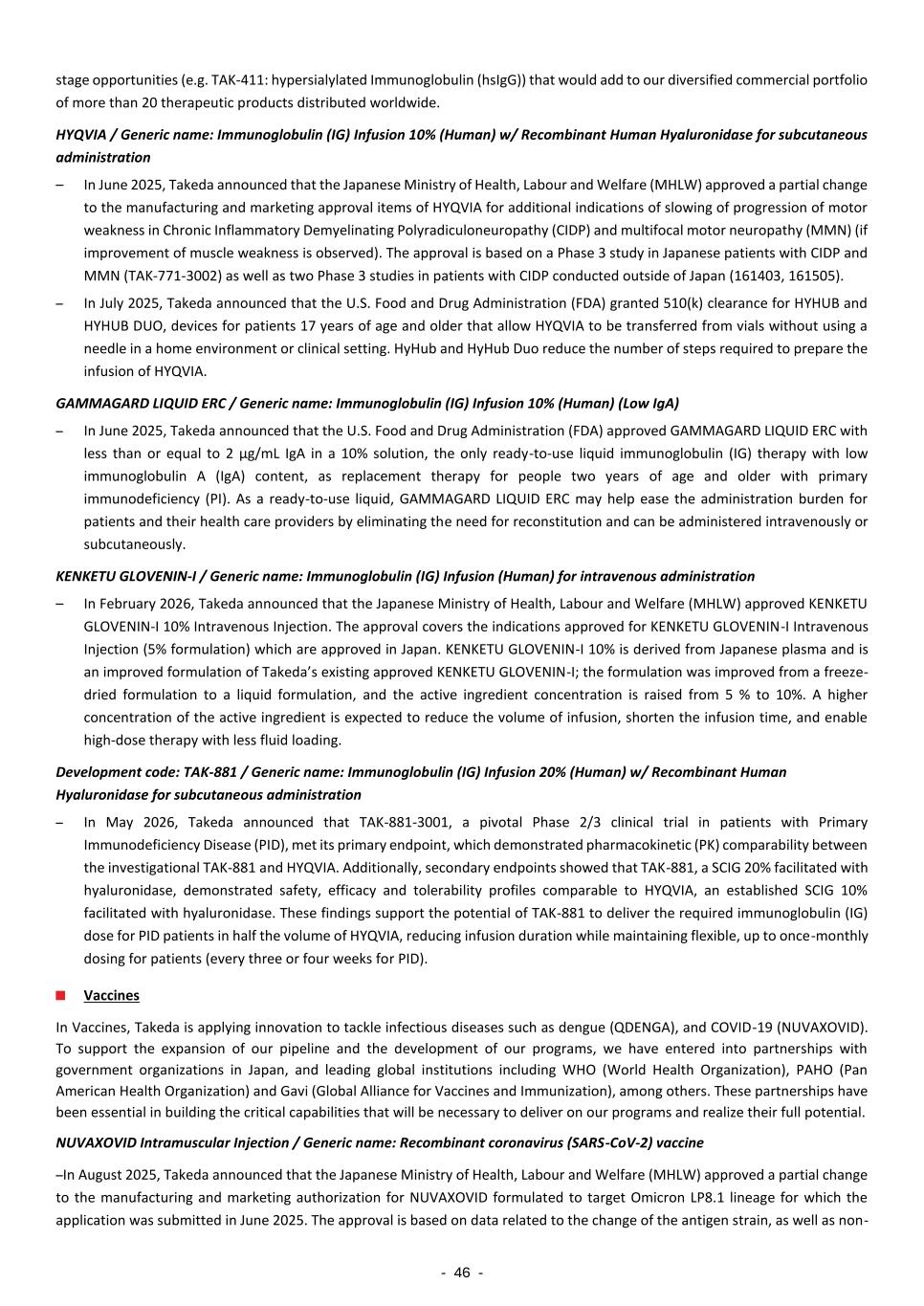
- 46 - stage opportunities (e.g. TAK-411: hypersialylated Immunoglobulin (hsIgG)) that would add to our diversified commercial portfolio of more than 20 therapeutic products distributed worldwide. HYQVIA / Generic name: Immunoglobulin (IG) Infusion 10% (Human) w/ Recombinant Human Hyaluronidase for subcutaneous administration – In June 2025, Takeda announced that the Japanese Ministry of Health, Labour and Welfare (MHLW) approved a partial change to the manufacturing and marketing approval items of HYQVIA for additional indications of slowing of progression of motor weakness in Chronic Inflammatory Demyelinating Polyradiculoneuropathy (CIDP) and multifocal motor neuropathy (MMN) (if improvement of muscle weakness is observed). The approval is based on a Phase 3 study in Japanese patients with CIDP and MMN (TAK-771-3002) as well as two Phase 3 studies in patients with CIDP conducted outside of Japan (161403, 161505). – In July 2025, Takeda announced that the U.S. Food and Drug Administration (FDA) granted 510(k) clearance for HYHUB and HYHUB DUO, devices for patients 17 years of age and older that allow HYQVIA to be transferred from vials without using a needle in a home environment or clinical setting. HyHub and HyHub Duo reduce the number of steps required to prepare the infusion of HYQVIA. GAMMAGARD LIQUID ERC / Generic name: Immunoglobulin (IG) Infusion 10% (Human) (Low IgA) – In June 2025, Takeda announced that the U.S. Food and Drug Administration (FDA) approved GAMMAGARD LIQUID ERC with less than or equal to 2 µg/mL IgA in a 10% solution, the only ready-to-use liquid immunoglobulin (IG) therapy with low immunoglobulin A (IgA) content, as replacement therapy for people two years of age and older with primary immunodeficiency (PI). As a ready-to-use liquid, GAMMAGARD LIQUID ERC may help ease the administration burden for patients and their health care providers by eliminating the need for reconstitution and can be administered intravenously or subcutaneously. KENKETU GLOVENIN-I / Generic name: Immunoglobulin (IG) Infusion (Human) for intravenous administration – In February 2026, Takeda announced that the Japanese Ministry of Health, Labour and Welfare (MHLW) approved KENKETU GLOVENIN-I 10% Intravenous Injection. The approval covers the indications approved for KENKETU GLOVENIN-I Intravenous Injection (5% formulation) which are approved in Japan. KENKETU GLOVENIN-I 10% is derived from Japanese plasma and is an improved formulation of Takeda’s existing approved KENKETU GLOVENIN-I; the formulation was improved from a freeze- dried formulation to a liquid formulation, and the active ingredient concentration is raised from 5 % to 10%. A higher concentration of the active ingredient is expected to reduce the volume of infusion, shorten the infusion time, and enable high-dose therapy with less fluid loading. Development code: TAK-881 / Generic name: Immunoglobulin (IG) Infusion 20% (Human) w/ Recombinant Human Hyaluronidase for subcutaneous administration – In May 2026, Takeda announced that TAK-881-3001, a pivotal Phase 2/3 clinical trial in patients with Primary Immunodeficiency Disease (PID), met its primary endpoint, which demonstrated pharmacokinetic (PK) comparability between the investigational TAK-881 and HYQVIA. Additionally, secondary endpoints showed that TAK-881, a SCIG 20% facilitated with hyaluronidase, demonstrated safety, efficacy and tolerability profiles comparable to HYQVIA, an established SCIG 10% facilitated with hyaluronidase. These findings support the potential of TAK-881 to deliver the required immunoglobulin (IG) dose for PID patients in half the volume of HYQVIA, reducing infusion duration while maintaining flexible, up to once-monthly dosing for patients (every three or four weeks for PID). ■ Vaccines In Vaccines, Takeda is applying innovation to tackle infectious diseases such as dengue (QDENGA), and COVID-19 (NUVAXOVID). To support the expansion of our pipeline and the development of our programs, we have entered into partnerships with government organizations in Japan, and leading global institutions including WHO (World Health Organization), PAHO (Pan American Health Organization) and Gavi (Global Alliance for Vaccines and Immunization), among others. These partnerships have been essential in building the critical capabilities that will be necessary to deliver on our programs and realize their full potential. NUVAXOVID Intramuscular Injection / Generic name: Recombinant coronavirus (SARS-CoV-2) vaccine –In August 2025, Takeda announced that the Japanese Ministry of Health, Labour and Welfare (MHLW) approved a partial change to the manufacturing and marketing authorization for NUVAXOVID formulated to target Omicron LP8.1 lineage for which the application was submitted in June 2025. The approval is based on data related to the change of the antigen strain, as well as non-
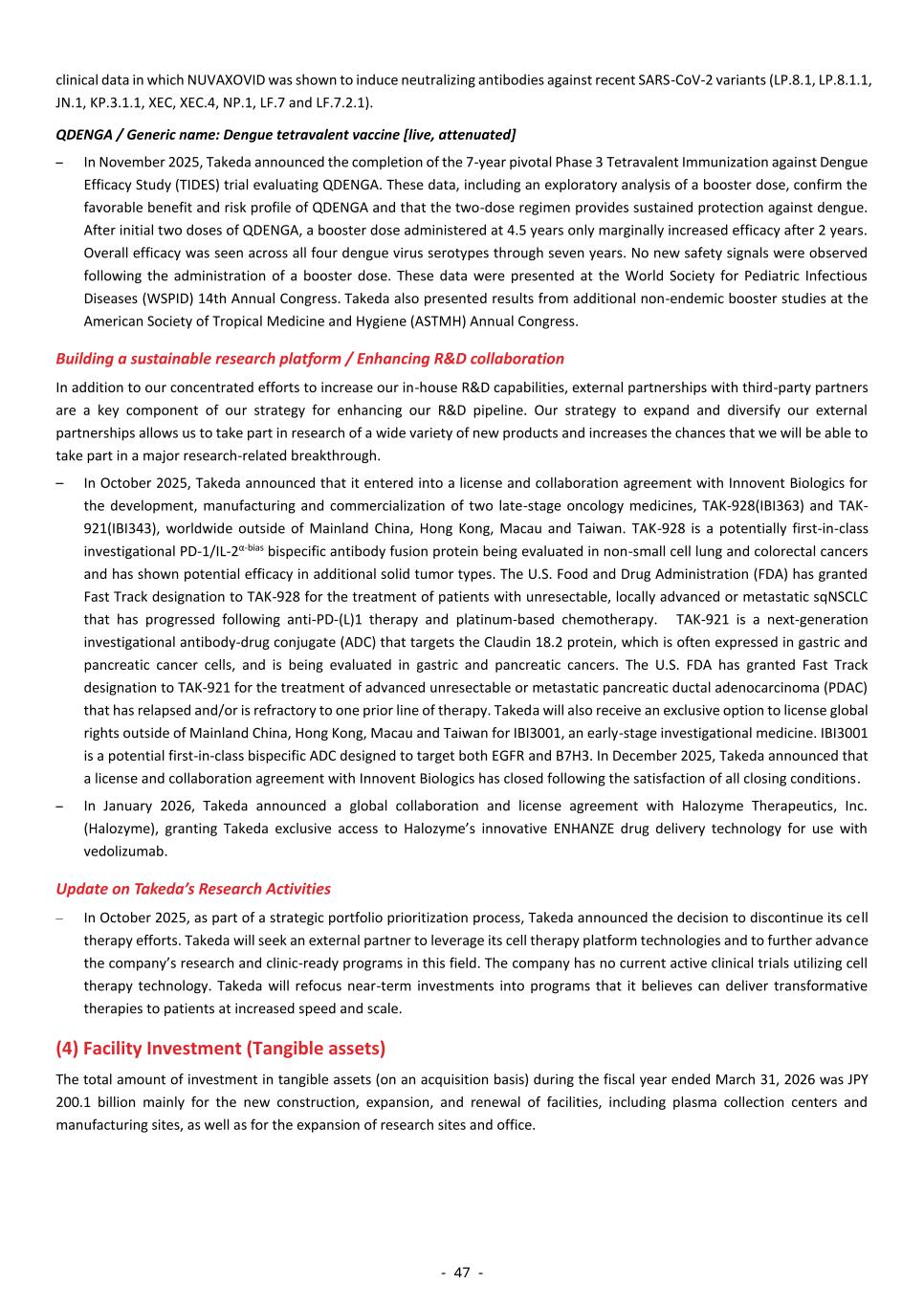
- 47 - clinical data in which NUVAXOVID was shown to induce neutralizing antibodies against recent SARS-CoV-2 variants (LP.8.1, LP.8.1.1, JN.1, KP.3.1.1, XEC, XEC.4, NP.1, LF.7 and LF.7.2.1). QDENGA / Generic name: Dengue tetravalent vaccine [live, attenuated] – In November 2025, Takeda announced the completion of the 7-year pivotal Phase 3 Tetravalent Immunization against Dengue Efficacy Study (TIDES) trial evaluating QDENGA. These data, including an exploratory analysis of a booster dose, confirm the favorable benefit and risk profile of QDENGA and that the two-dose regimen provides sustained protection against dengue. After initial two doses of QDENGA, a booster dose administered at 4.5 years only marginally increased efficacy after 2 years. Overall efficacy was seen across all four dengue virus serotypes through seven years. No new safety signals were observed following the administration of a booster dose. These data were presented at the World Society for Pediatric Infectious Diseases (WSPID) 14th Annual Congress. Takeda also presented results from additional non-endemic booster studies at the American Society of Tropical Medicine and Hygiene (ASTMH) Annual Congress. Building a sustainable research platform / Enhancing R&D collaboration In addition to our concentrated efforts to increase our in-house R&D capabilities, external partnerships with third-party partners are a key component of our strategy for enhancing our R&D pipeline. Our strategy to expand and diversify our external partnerships allows us to take part in research of a wide variety of new products and increases the chances that we will be able to take part in a major research-related breakthrough. – In October 2025, Takeda announced that it entered into a license and collaboration agreement with Innovent Biologics for the development, manufacturing and commercialization of two late-stage oncology medicines, TAK-928(IBI363) and TAK- 921(IBI343), worldwide outside of Mainland China, Hong Kong, Macau and Taiwan. TAK-928 is a potentially first-in-class investigational PD-1/IL-2α-bias bispecific antibody fusion protein being evaluated in non-small cell lung and colorectal cancers and has shown potential efficacy in additional solid tumor types. The U.S. Food and Drug Administration (FDA) has granted Fast Track designation to TAK-928 for the treatment of patients with unresectable, locally advanced or metastatic sqNSCLC that has progressed following anti-PD-(L)1 therapy and platinum-based chemotherapy. TAK-921 is a next-generation investigational antibody-drug conjugate (ADC) that targets the Claudin 18.2 protein, which is often expressed in gastric and pancreatic cancer cells, and is being evaluated in gastric and pancreatic cancers. The U.S. FDA has granted Fast Track designation to TAK-921 for the treatment of advanced unresectable or metastatic pancreatic ductal adenocarcinoma (PDAC) that has relapsed and/or is refractory to one prior line of therapy. Takeda will also receive an exclusive option to license global rights outside of Mainland China, Hong Kong, Macau and Taiwan for IBI3001, an early-stage investigational medicine. IBI3001 is a potential first-in-class bispecific ADC designed to target both EGFR and B7H3. In December 2025, Takeda announced that a license and collaboration agreement with Innovent Biologics has closed following the satisfaction of all closing conditions. – In January 2026, Takeda announced a global collaboration and license agreement with Halozyme Therapeutics, Inc. (Halozyme), granting Takeda exclusive access to Halozyme’s innovative ENHANZE drug delivery technology for use with vedolizumab. Update on Takeda’s Research Activities – In October 2025, as part of a strategic portfolio prioritization process, Takeda announced the decision to discontinue its cell therapy efforts. Takeda will seek an external partner to leverage its cell therapy platform technologies and to further advance the company’s research and clinic-ready programs in this field. The company has no current active clinical trials utilizing cell therapy technology. Takeda will refocus near-term investments into programs that it believes can deliver transformative therapies to patients at increased speed and scale. (4) Facility Investment (Tangible assets) The total amount of investment in tangible assets (on an acquisition basis) during the fiscal year ended March 31, 2026 was JPY 200.1 billion mainly for the new construction, expansion, and renewal of facilities, including plasma collection centers and manufacturing sites, as well as for the expansion of research sites and office.

- 48 - (5) Fund Procurement During the fiscal year ended March 31, 2026, Takeda executed multiple debt transactions. Takeda raised JPY 184.0 billion in Unsecured Senior Bonds with maturities ranging from 2030 to 2035, to repay outstanding Commercial Paper drawings. Subsequently, Takeda redeemed USD 800 million of Unsecured Senior Notes upon their maturity. In addition, Takeda raised USD 2,400 million in Unsecured Senior Guaranteed Notes with maturities of 2035 and 2055, primarily to repay USD 500 million Bilateral Loan and outstanding Commercial Paper drawings. Accordingly, no Commercial Paper remained outstanding as of March 31, 2026. Takeda also repaid total JPY 85.0 billion in Bilateral Bank Loans matured in the fiscal year ended March 31, 2026 and refinanced JPY 60.0 billion with a new maturity of March 2034. The consolidated outstanding balances of bonds and loans as of March 31, 2026 were JPY 4,656.8 billion and JPY 225.0 billion respectively following the impact of the above noted debt repayment and refinancing activity during the fiscal year ended March 31, 2026.
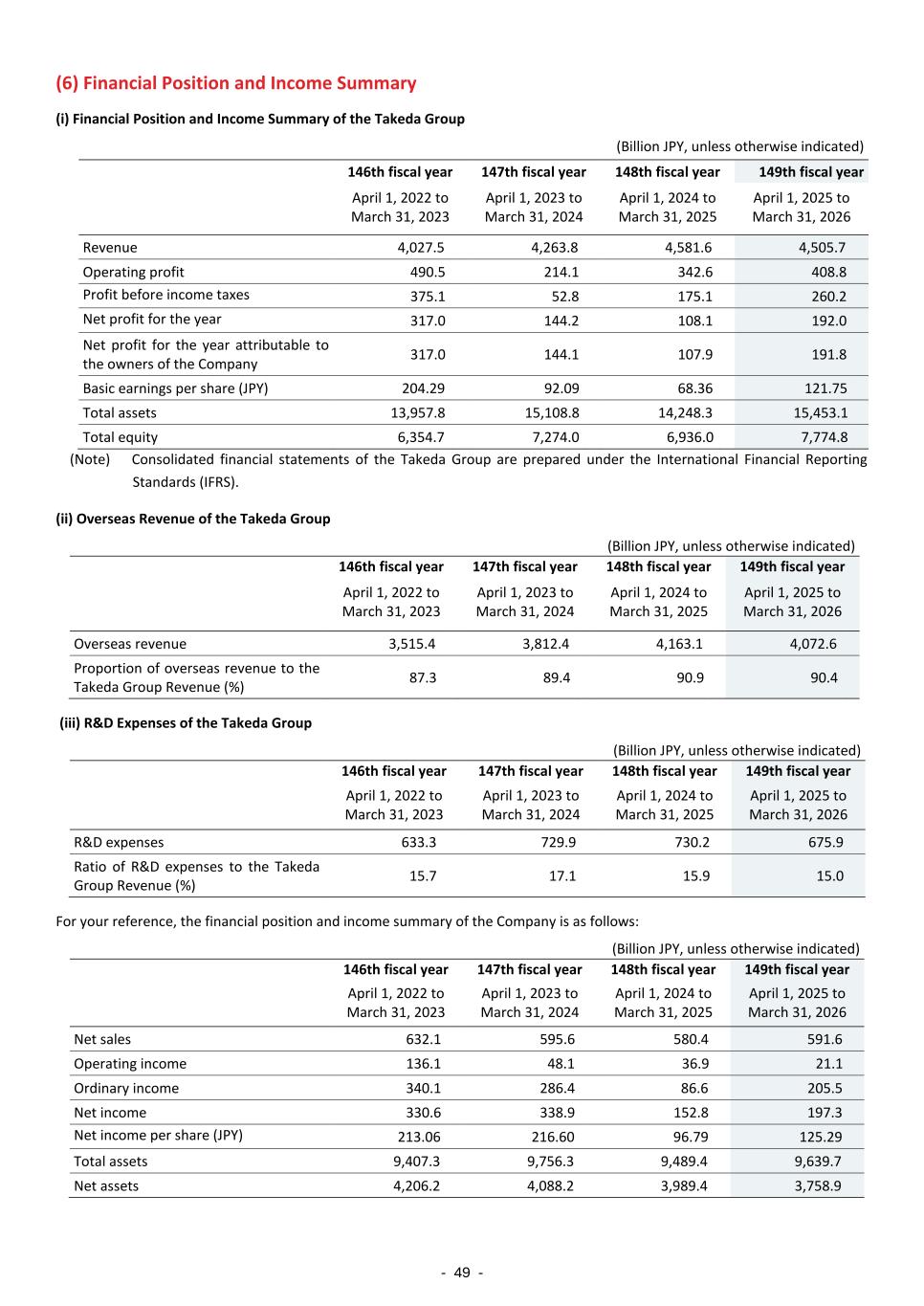
- 49 - (6) Financial Position and Income Summary (i) Financial Position and Income Summary of the Takeda Group (Billion JPY, unless otherwise indicated) 146th fiscal year 147th fiscal year 148th fiscal year 149th fiscal year April 1, 2022 to March 31, 2023 April 1, 2023 to March 31, 2024 April 1, 2024 to March 31, 2025 April 1, 2025 to March 31, 2026 Revenue 4,027.5 4,263.8 4,581.6 4,505.7 Operating profit 490.5 214.1 342.6 408.8 Profit before income taxes 375.1 52.8 175.1 260.2 Net profit for the year 317.0 144.2 108.1 192.0 Net profit for the year attributable to the owners of the Company 317.0 144.1 107.9 191.8 Basic earnings per share (JPY) 204.29 92.09 68.36 121.75 Total assets 13,957.8 15,108.8 14,248.3 15,453.1 Total equity 6,354.7 7,274.0 6,936.0 7,774.8 (Note) Consolidated financial statements of the Takeda Group are prepared under the International Financial Reporting Standards (IFRS). (ii) Overseas Revenue of the Takeda Group (Billion JPY, unless otherwise indicated) 146th fiscal year 147th fiscal year 148th fiscal year 149th fiscal year April 1, 2022 to March 31, 2023 April 1, 2023 to March 31, 2024 April 1, 2024 to March 31, 2025 April 1, 2025 to March 31, 2026 Overseas revenue 3,515.4 3,812.4 4,163.1 4,072.6 Proportion of overseas revenue to the Takeda Group Revenue (%) 87.3 89.4 90.9 90.4 (iii) R&D Expenses of the Takeda Group (Billion JPY, unless otherwise indicated) 146th fiscal year 147th fiscal year 148th fiscal year 149th fiscal year April 1, 2022 to March 31, 2023 April 1, 2023 to March 31, 2024 April 1, 2024 to March 31, 2025 April 1, 2025 to March 31, 2026 R&D expenses 633.3 729.9 730.2 675.9 Ratio of R&D expenses to the Takeda Group Revenue (%) 15.7 17.1 15.9 15.0 For your reference, the financial position and income summary of the Company is as follows: (Billion JPY, unless otherwise indicated) 146th fiscal year 147th fiscal year 148th fiscal year 149th fiscal year April 1, 2022 to March 31, 2023 April 1, 2023 to March 31, 2024 April 1, 2024 to March 31, 2025 April 1, 2025 to March 31, 2026 Net sales 632.1 595.6 580.4 591.6 Operating income 136.1 48.1 36.9 21.1 Ordinary income 340.1 286.4 86.6 205.5 Net income 330.6 338.9 152.8 197.3 Net income per share (JPY) 213.06 216.60 96.79 125.29 Total assets 9,407.3 9,756.3 9,489.4 9,639.7 Net assets 4,206.2 4,088.2 3,989.4 3,758.9
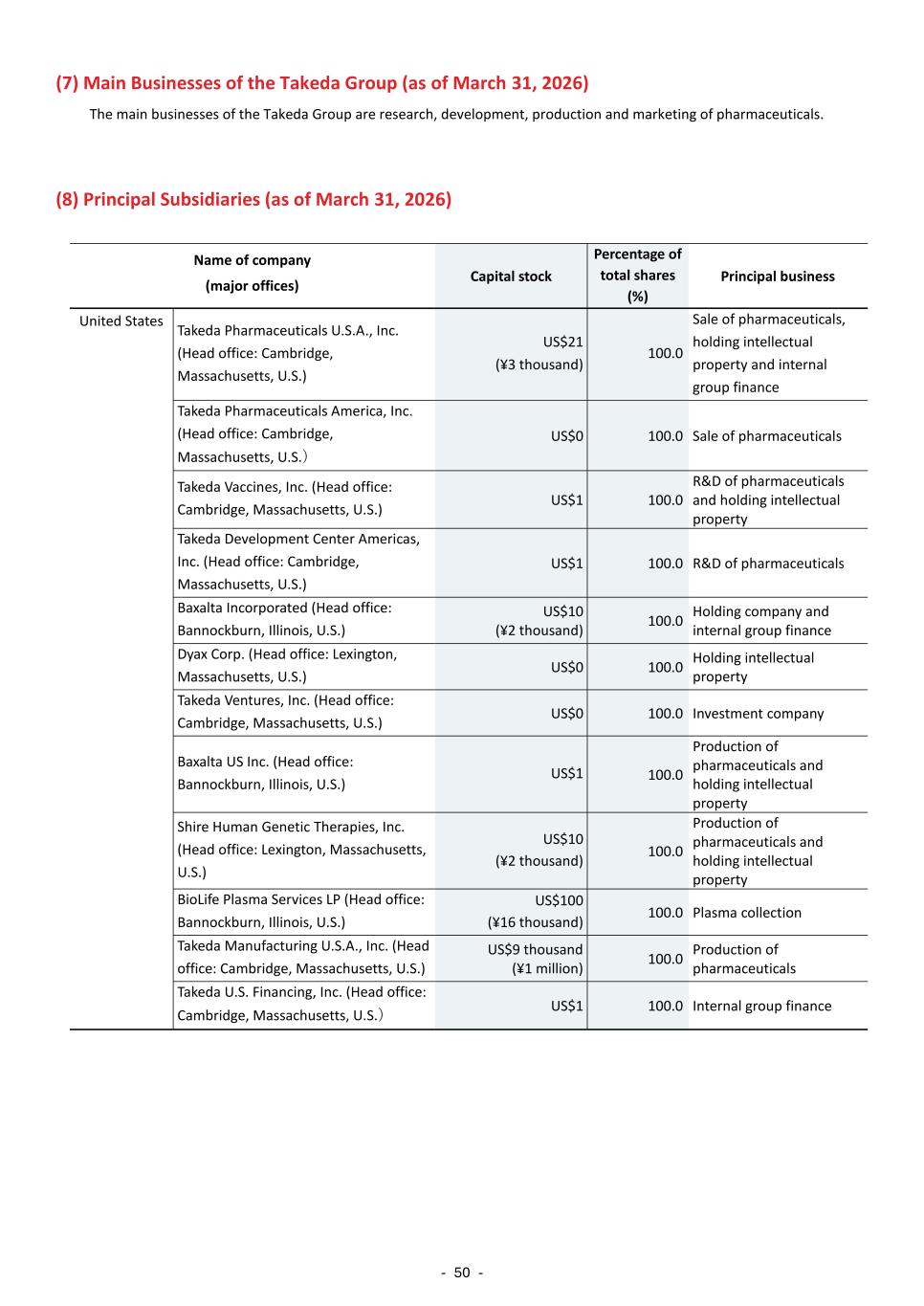
- 50 - (7) Main Businesses of the Takeda Group (as of March 31, 2026) The main businesses of the Takeda Group are research, development, production and marketing of pharmaceuticals. (8) Principal Subsidiaries (as of March 31, 2026) Name of company (major offices) Capital stock Percentage of total shares (%) Principal business United States Takeda Pharmaceuticals U.S.A., Inc. (Head office: Cambridge, Massachusetts, U.S.) US$21 (¥3 thousand) 100.0 Sale of pharmaceuticals, holding intellectual property and internal group finance Takeda Pharmaceuticals America, Inc. (Head office: Cambridge, Massachusetts, U.S.) US$0 100.0 Sale of pharmaceuticals Takeda Vaccines, Inc. (Head office: Cambridge, Massachusetts, U.S.) US$1 100.0 R&D of pharmaceuticals and holding intellectual property Takeda Development Center Americas, Inc. (Head office: Cambridge, Massachusetts, U.S.) US$1 100.0 R&D of pharmaceuticals Baxalta Incorporated (Head office: Bannockburn, Illinois, U.S.) US$10 (¥2 thousand) 100.0 Holding company and internal group finance Dyax Corp. (Head office: Lexington, Massachusetts, U.S.) US$0 100.0 Holding intellectual property Takeda Ventures, Inc. (Head office: Cambridge, Massachusetts, U.S.) US$0 100.0 Investment company Baxalta US Inc. (Head office: Bannockburn, Illinois, U.S.) US$1 100.0 Production of pharmaceuticals and holding intellectual property Shire Human Genetic Therapies, Inc. (Head office: Lexington, Massachusetts, U.S.) US$10 (¥2 thousand) 100.0 Production of pharmaceuticals and holding intellectual property BioLife Plasma Services LP (Head office: Bannockburn, Illinois, U.S.) US$100 (¥16 thousand) 100.0 Plasma collection Takeda Manufacturing U.S.A., Inc. (Head office: Cambridge, Massachusetts, U.S.) US$9 thousand (¥1 million) 100.0 Production of pharmaceuticals Takeda U.S. Financing, Inc. (Head office: Cambridge, Massachusetts, U.S.) US$1 100.0 Internal group finance
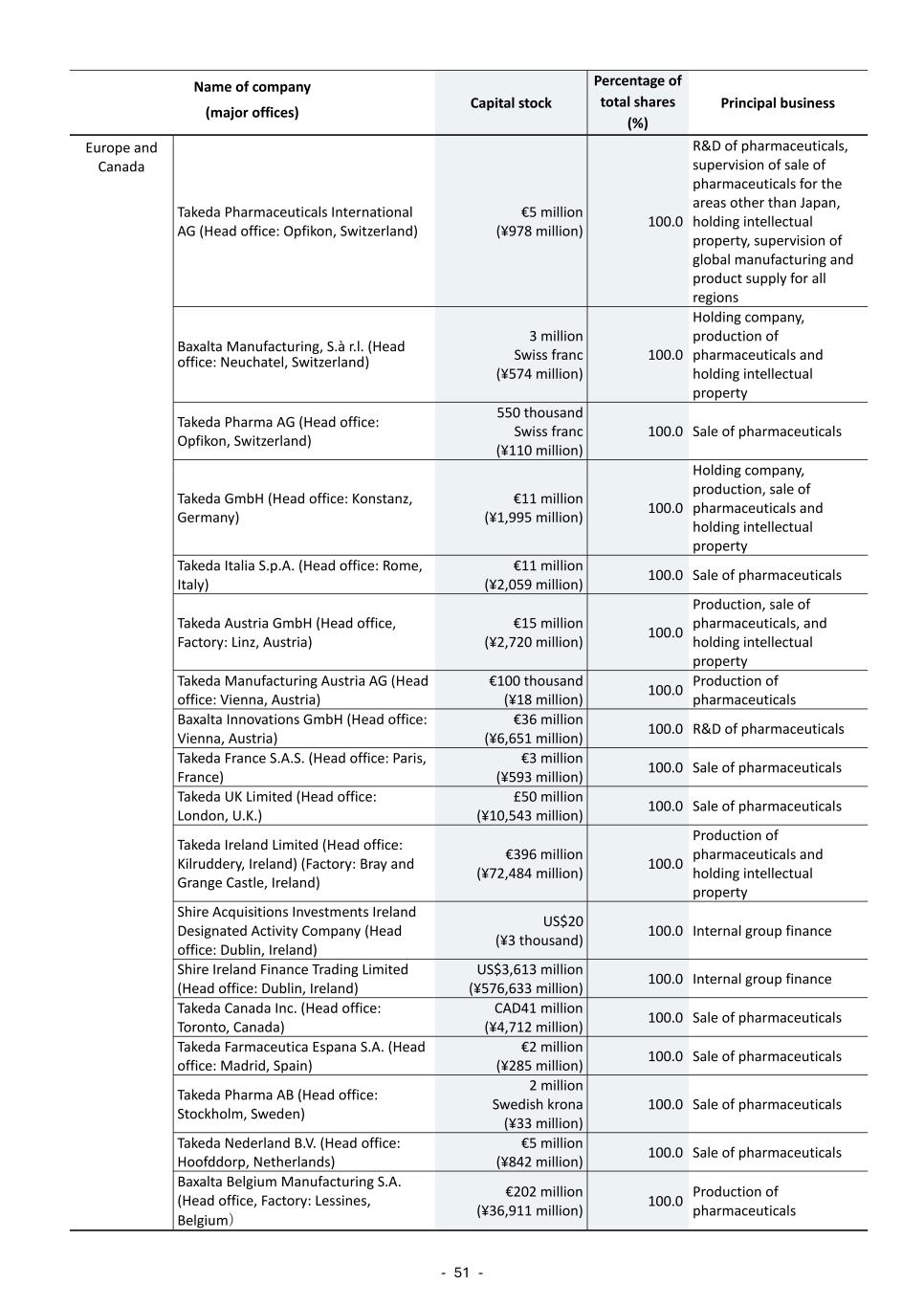
- 51 - Name of company (major offices) Capital stock Percentage of total shares (%) Principal business Europe and Canada Takeda Pharmaceuticals International AG (Head office: Opfikon, Switzerland) €5 million (¥978 million) 100.0 R&D of pharmaceuticals, supervision of sale of pharmaceuticals for the areas other than Japan, holding intellectual property, supervision of global manufacturing and product supply for all regions Baxalta Manufacturing, S.à r.l. (Head office: Neuchatel, Switzerland) 3 million Swiss franc (¥574 million) 100.0 Holding company, production of pharmaceuticals and holding intellectual property Takeda Pharma AG (Head office: Opfikon, Switzerland) 550 thousand Swiss franc (¥110 million) 100.0 Sale of pharmaceuticals Takeda GmbH (Head office: Konstanz, Germany) €11 million (¥1,995 million) 100.0 Holding company, production, sale of pharmaceuticals and holding intellectual property Takeda Italia S.p.A. (Head office: Rome, Italy) €11 million (¥2,059 million) 100.0 Sale of pharmaceuticals Takeda Austria GmbH (Head office, Factory: Linz, Austria) €15 million (¥2,720 million) 100.0 Production, sale of pharmaceuticals, and holding intellectual property Takeda Manufacturing Austria AG (Head office: Vienna, Austria) €100 thousand (¥18 million) 100.0 Production of pharmaceuticals Baxalta Innovations GmbH (Head office: Vienna, Austria) €36 million (¥6,651 million) 100.0 R&D of pharmaceuticals Takeda France S.A.S. (Head office: Paris, France) €3 million (¥593 million) 100.0 Sale of pharmaceuticals Takeda UK Limited (Head office: London, U.K.) £50 million (¥10,543 million) 100.0 Sale of pharmaceuticals Takeda Ireland Limited (Head office: Kilruddery, Ireland) (Factory: Bray and Grange Castle, Ireland) €396 million (¥72,484 million) 100.0 Production of pharmaceuticals and holding intellectual property Shire Acquisitions Investments Ireland Designated Activity Company (Head office: Dublin, Ireland) US$20 (¥3 thousand) 100.0 Internal group finance Shire Ireland Finance Trading Limited (Head office: Dublin, Ireland) US$3,613 million (¥576,633 million) 100.0 Internal group finance Takeda Canada Inc. (Head office: Toronto, Canada) CAD41 million (¥4,712 million) 100.0 Sale of pharmaceuticals Takeda Farmaceutica Espana S.A. (Head office: Madrid, Spain) €2 million (¥285 million) 100.0 Sale of pharmaceuticals Takeda Pharma AB (Head office: Stockholm, Sweden) 2 million Swedish krona (¥33 million) 100.0 Sale of pharmaceuticals Takeda Nederland B.V. (Head office: Hoofddorp, Netherlands) €5 million (¥842 million) 100.0 Sale of pharmaceuticals Baxalta Belgium Manufacturing S.A. (Head office, Factory: Lessines, Belgium) €202 million (¥36,911 million) 100.0 Production of pharmaceuticals
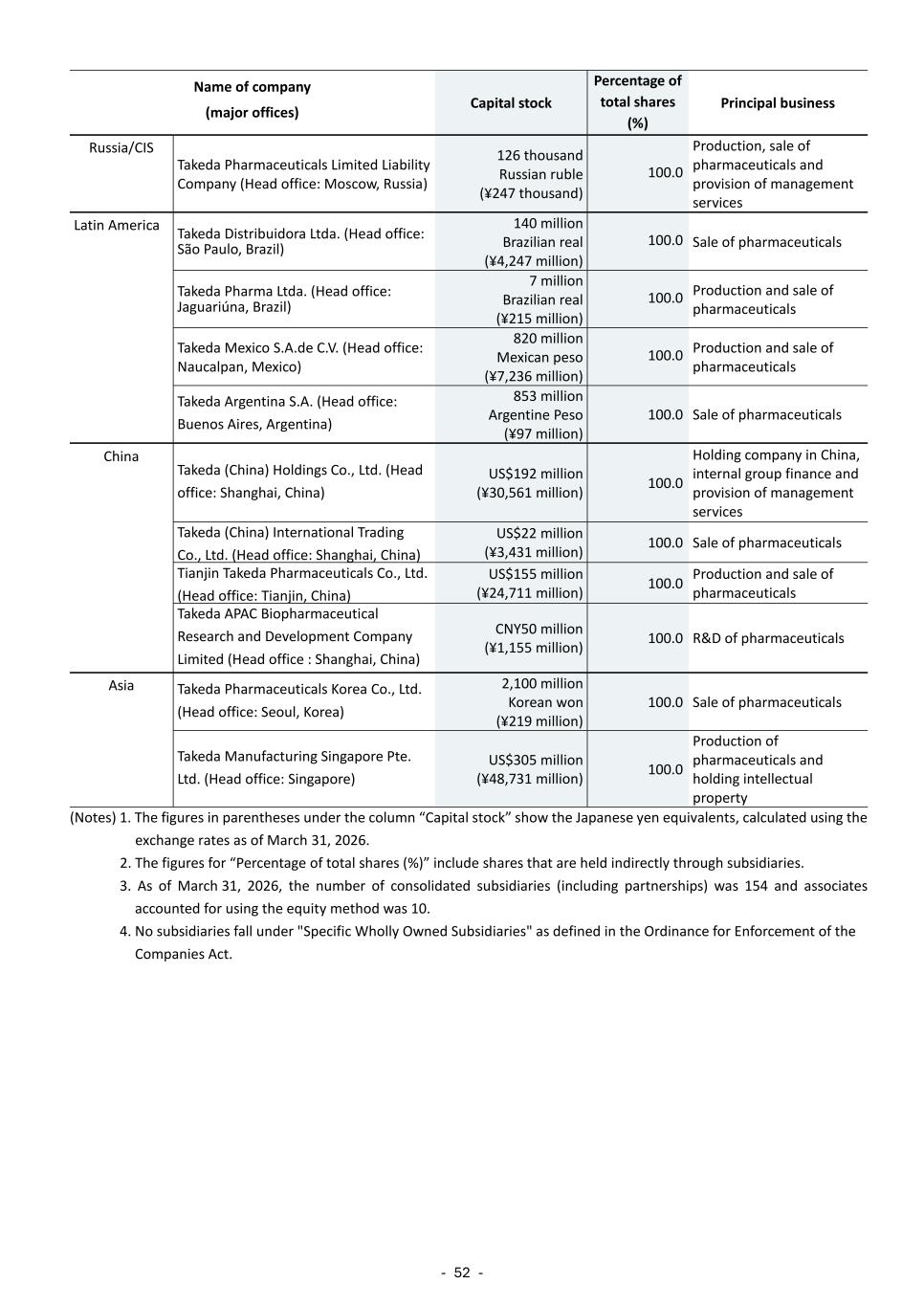
- 52 - Name of company (major offices) Capital stock Percentage of total shares (%) Principal business Russia/CIS Takeda Pharmaceuticals Limited Liability Company (Head office: Moscow, Russia) 126 thousand Russian ruble (¥247 thousand) 100.0 Production, sale of pharmaceuticals and provision of management services Latin America Takeda Distribuidora Ltda. (Head office: São Paulo, Brazil) 140 million Brazilian real (¥4,247 million) 100.0 Sale of pharmaceuticals Takeda Pharma Ltda. (Head office: Jaguariúna, Brazil) 7 million Brazilian real (¥215 million) 100.0 Production and sale of pharmaceuticals Takeda Mexico S.A.de C.V. (Head office: Naucalpan, Mexico) 820 million Mexican peso (¥7,236 million) 100.0 Production and sale of pharmaceuticals Takeda Argentina S.A. (Head office: Buenos Aires, Argentina) 853 million Argentine Peso (¥97 million) 100.0 Sale of pharmaceuticals China Takeda (China) Holdings Co., Ltd. (Head office: Shanghai, China) US$192 million (¥30,561 million) 100.0 Holding company in China, internal group finance and provision of management services Takeda (China) International Trading Co., Ltd. (Head office: Shanghai, China) US$22 million (¥3,431 million) 100.0 Sale of pharmaceuticals Tianjin Takeda Pharmaceuticals Co., Ltd. (Head office: Tianjin, China) US$155 million (¥24,711 million) 100.0 Production and sale of pharmaceuticals Takeda APAC Biopharmaceutical Research and Development Company Limited (Head office : Shanghai, China) CNY50 million (¥1,155 million) 100.0 R&D of pharmaceuticals Asia Takeda Pharmaceuticals Korea Co., Ltd. (Head office: Seoul, Korea) 2,100 million Korean won (¥219 million) 100.0 Sale of pharmaceuticals Takeda Manufacturing Singapore Pte. Ltd. (Head office: Singapore) US$305 million (¥48,731 million) 100.0 Production of pharmaceuticals and holding intellectual property (Notes) 1. The figures in parentheses under the column “Capital stock” show the Japanese yen equivalents, calculated using the exchange rates as of March 31, 2026. 2. The figures for “Percentage of total shares (%)” include shares that are held indirectly through subsidiaries. 3. As of March 31, 2026, the number of consolidated subsidiaries (including partnerships) was 154 and associates accounted for using the equity method was 10. 4. No subsidiaries fall under "Specific Wholly Owned Subsidiaries" as defined in the Ordinance for Enforcement of the Companies Act.
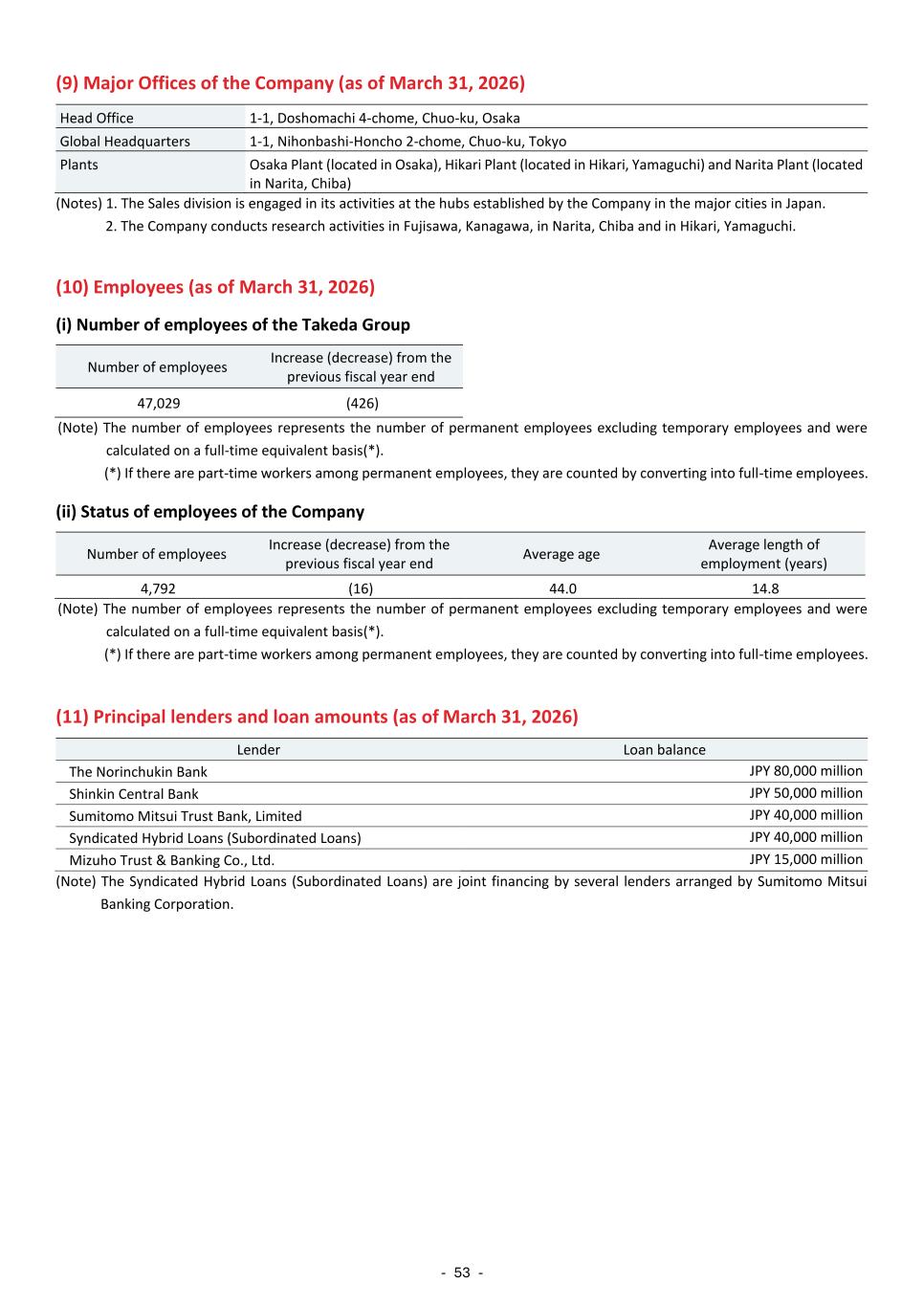
- 53 - (9) Major Offices of the Company (as of March 31, 2026) Head Office 1-1, Doshomachi 4-chome, Chuo-ku, Osaka Global Headquarters 1-1, Nihonbashi-Honcho 2-chome, Chuo-ku, Tokyo Plants Osaka Plant (located in Osaka), Hikari Plant (located in Hikari, Yamaguchi) and Narita Plant (located in Narita, Chiba) (Notes) 1. The Sales division is engaged in its activities at the hubs established by the Company in the major cities in Japan. 2. The Company conducts research activities in Fujisawa, Kanagawa, in Narita, Chiba and in Hikari, Yamaguchi. (10) Employees (as of March 31, 2026) (i) Number of employees of the Takeda Group Number of employees Increase (decrease) from the previous fiscal year end 47,029 (426) (Note) The number of employees represents the number of permanent employees excluding temporary employees and were calculated on a full-time equivalent basis(*). (*) If there are part-time workers among permanent employees, they are counted by converting into full-time employees. (ii) Status of employees of the Company Number of employees Increase (decrease) from the previous fiscal year end Average age Average length of employment (years) 4,792 (16) 44.0 14.8 (Note) The number of employees represents the number of permanent employees excluding temporary employees and were calculated on a full-time equivalent basis(*). (*) If there are part-time workers among permanent employees, they are counted by converting into full-time employees. (11) Principal lenders and loan amounts (as of March 31, 2026) Lender Loan balance The Norinchukin Bank JPY 80,000 million Shinkin Central Bank JPY 50,000 million Sumitomo Mitsui Trust Bank, Limited JPY 40,000 million Syndicated Hybrid Loans (Subordinated Loans) JPY 40,000 million Mizuho Trust & Banking Co., Ltd. JPY 15,000 million (Note) The Syndicated Hybrid Loans (Subordinated Loans) are joint financing by several lenders arranged by Sumitomo Mitsui Banking Corporation.
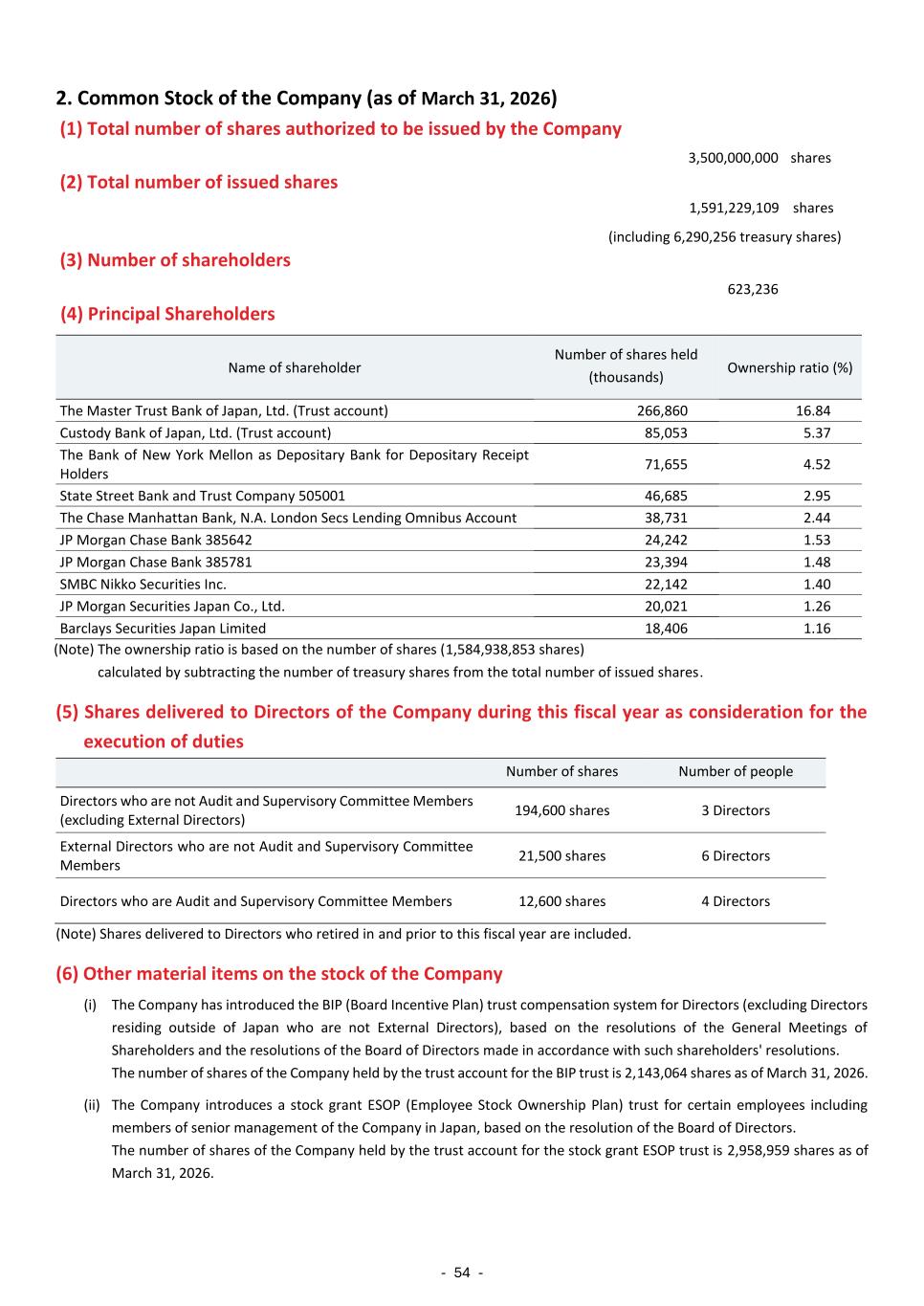
- 54 - 2. Common Stock of the Company (as of March 31, 2026) (1) Total number of shares authorized to be issued by the Company 3,500,000,000 shares (2) Total number of issued shares 1,591,229,109 shares (including 6,290,256 treasury shares) (3) Number of shareholders 623,236 (4) Principal Shareholders Name of shareholder Number of shares held (thousands) Ownership ratio (%) The Master Trust Bank of Japan, Ltd. (Trust account) 266,860 16.84 Custody Bank of Japan, Ltd. (Trust account) 85,053 5.37 The Bank of New York Mellon as Depositary Bank for Depositary Receipt Holders 71,655 4.52 State Street Bank and Trust Company 505001 46,685 2.95 The Chase Manhattan Bank, N.A. London Secs Lending Omnibus Account 38,731 2.44 JP Morgan Chase Bank 385642 24,242 1.53 JP Morgan Chase Bank 385781 23,394 1.48 SMBC Nikko Securities Inc. 22,142 1.40 JP Morgan Securities Japan Co., Ltd. 20,021 1.26 Barclays Securities Japan Limited 18,406 1.16 (Note) The ownership ratio is based on the number of shares (1,584,938,853 shares) calculated by subtracting the number of treasury shares from the total number of issued shares. (5) Shares delivered to Directors of the Company during this fiscal year as consideration for the execution of duties Number of shares Number of people Directors who are not Audit and Supervisory Committee Members (excluding External Directors) 194,600 shares 3 Directors External Directors who are not Audit and Supervisory Committee Members 21,500 shares 6 Directors Directors who are Audit and Supervisory Committee Members 12,600 shares 4 Directors (Note) Shares delivered to Directors who retired in and prior to this fiscal year are included. (6) Other material items on the stock of the Company (i) The Company has introduced the BIP (Board Incentive Plan) trust compensation system for Directors (excluding Directors residing outside of Japan who are not External Directors), based on the resolutions of the General Meetings of Shareholders and the resolutions of the Board of Directors made in accordance with such shareholders' resolutions. The number of shares of the Company held by the trust account for the BIP trust is 2,143,064 shares as of March 31, 2026. (ii) The Company introduces a stock grant ESOP (Employee Stock Ownership Plan) trust for certain employees including members of senior management of the Company in Japan, based on the resolution of the Board of Directors. The number of shares of the Company held by the trust account for the stock grant ESOP trust is 2,958,959 shares as of March 31, 2026.
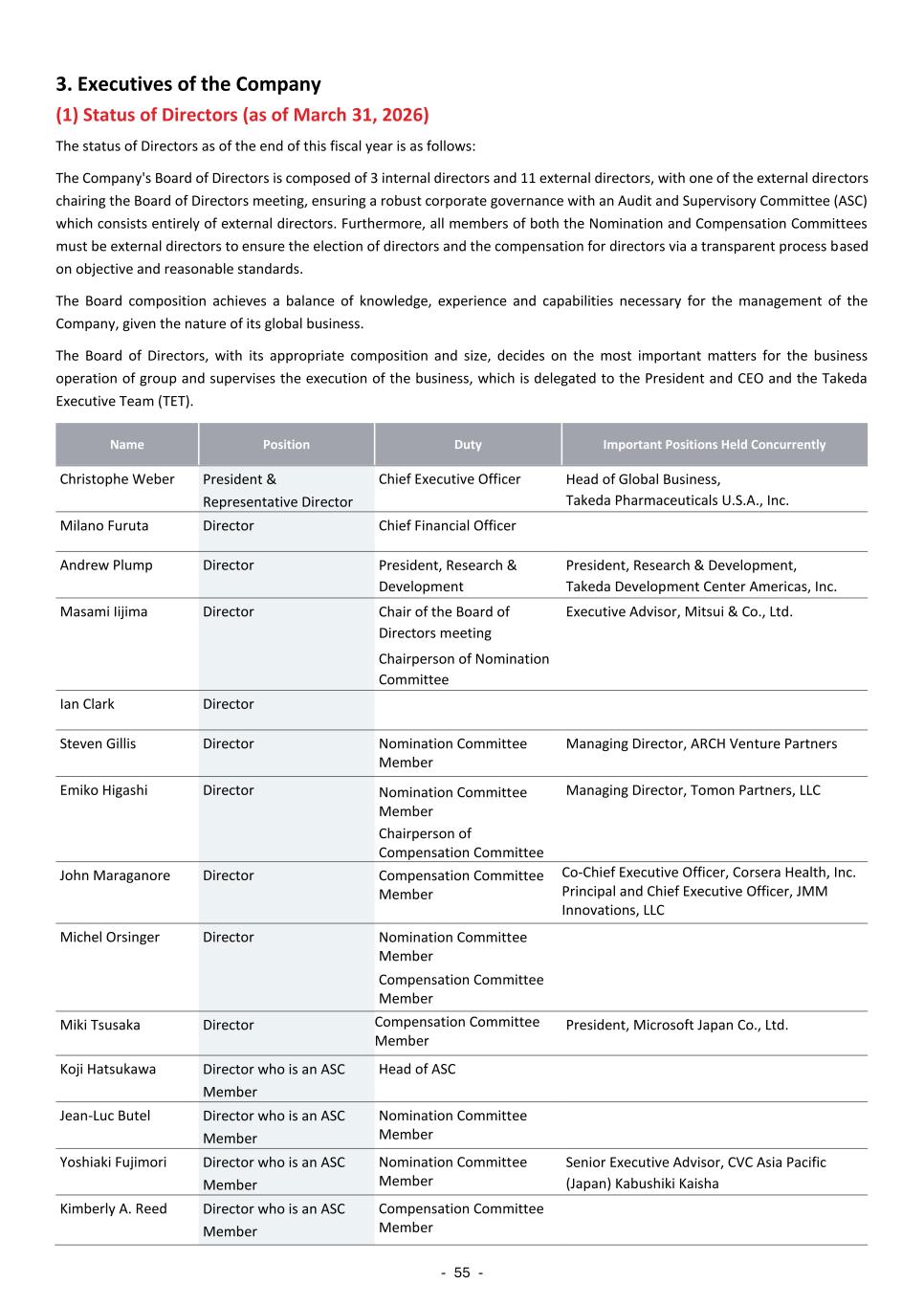
- 55 - 3. Executives of the Company (1) Status of Directors (as of March 31, 2026) The status of Directors as of the end of this fiscal year is as follows: The Company's Board of Directors is composed of 3 internal directors and 11 external directors, with one of the external directors chairing the Board of Directors meeting, ensuring a robust corporate governance with an Audit and Supervisory Committee (ASC) which consists entirely of external directors. Furthermore, all members of both the Nomination and Compensation Committees must be external directors to ensure the election of directors and the compensation for directors via a transparent process based on objective and reasonable standards. The Board composition achieves a balance of knowledge, experience and capabilities necessary for the management of the Company, given the nature of its global business. The Board of Directors, with its appropriate composition and size, decides on the most important matters for the business operation of group and supervises the execution of the business, which is delegated to the President and CEO and the Takeda Executive Team (TET). Name Position Duty Important Positions Held Concurrently Christophe Weber President & Representative Director Chief Executive Officer Head of Global Business, Takeda Pharmaceuticals U.S.A., Inc. Milano Furuta Director Chief Financial Officer Andrew Plump Director President, Research & Development President, Research & Development, Takeda Development Center Americas, Inc. Masami Iijima Director Chair of the Board of Directors meeting Chairperson of Nomination Committee Executive Advisor, Mitsui & Co., Ltd. Ian Clark Director Steven Gillis Director Nomination Committee Member Managing Director, ARCH Venture Partners Emiko Higashi Director Nomination Committee Member Chairperson of Compensation Committee Managing Director, Tomon Partners, LLC John Maraganore Director Compensation Committee Member Co-Chief Executive Officer, Corsera Health, Inc. Principal and Chief Executive Officer, JMM Innovations, LLC Michel Orsinger Director Nomination Committee Member Compensation Committee Member Miki Tsusaka Director Compensation Committee Member President, Microsoft Japan Co., Ltd. Koji Hatsukawa Director who is an ASC Member Head of ASC Jean-Luc Butel Director who is an ASC Member Nomination Committee Member Yoshiaki Fujimori Director who is an ASC Member Nomination Committee Member Senior Executive Advisor, CVC Asia Pacific (Japan) Kabushiki Kaisha Kimberly A. Reed Director who is an ASC Member Compensation Committee Member
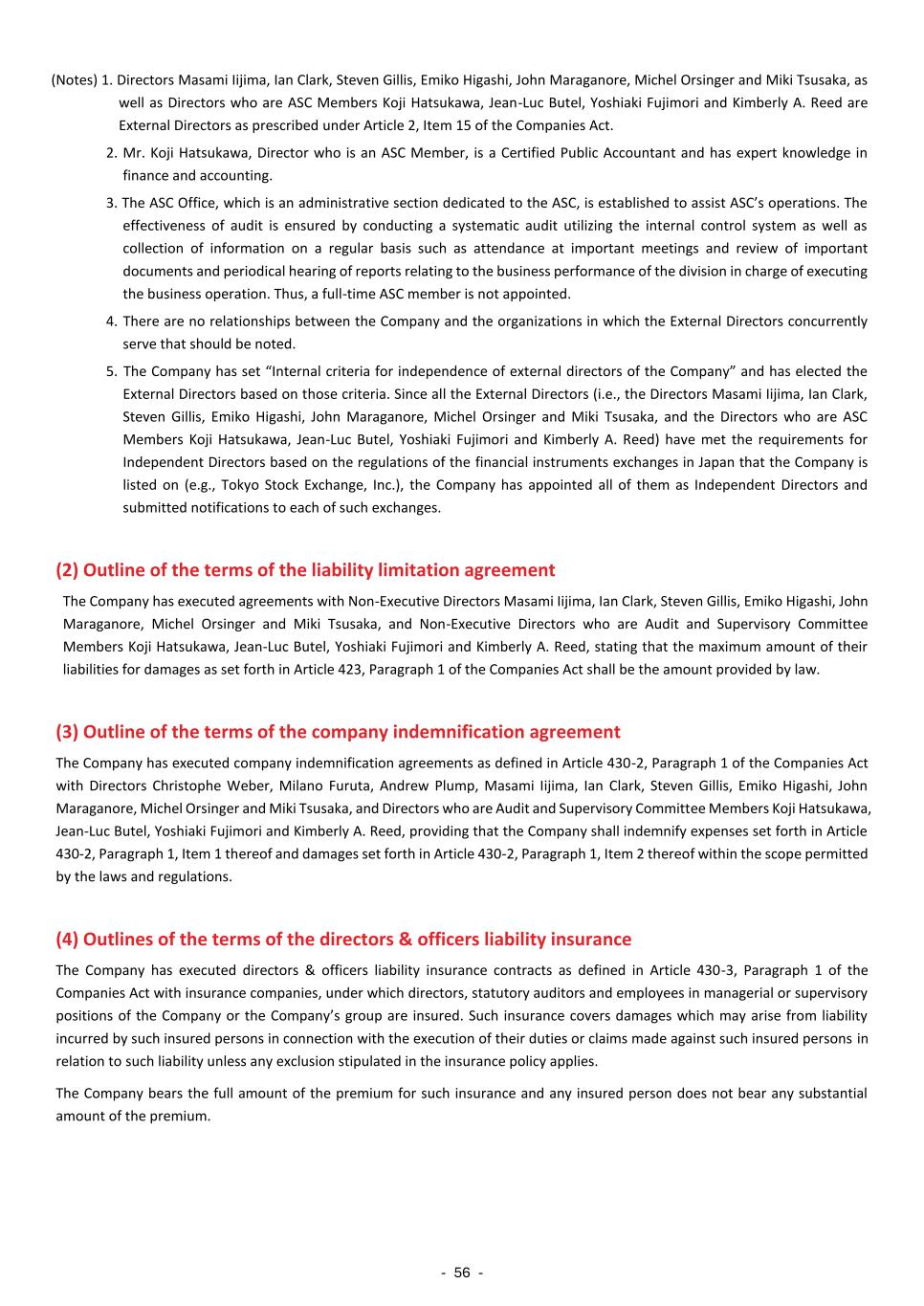
- 56 - (Notes) 1. Directors Masami Iijima, Ian Clark, Steven Gillis, Emiko Higashi, John Maraganore, Michel Orsinger and Miki Tsusaka, as well as Directors who are ASC Members Koji Hatsukawa, Jean-Luc Butel, Yoshiaki Fujimori and Kimberly A. Reed are External Directors as prescribed under Article 2, Item 15 of the Companies Act. 2. Mr. Koji Hatsukawa, Director who is an ASC Member, is a Certified Public Accountant and has expert knowledge in finance and accounting. 3. The ASC Office, which is an administrative section dedicated to the ASC, is established to assist ASC’s operations. The effectiveness of audit is ensured by conducting a systematic audit utilizing the internal control system as well as collection of information on a regular basis such as attendance at important meetings and review of important documents and periodical hearing of reports relating to the business performance of the division in charge of executing the business operation. Thus, a full-time ASC member is not appointed. 4. There are no relationships between the Company and the organizations in which the External Directors concurrently serve that should be noted. 5. The Company has set “Internal criteria for independence of external directors of the Company” and has elected the External Directors based on those criteria. Since all the External Directors (i.e., the Directors Masami Iijima, Ian Clark, Steven Gillis, Emiko Higashi, John Maraganore, Michel Orsinger and Miki Tsusaka, and the Directors who are ASC Members Koji Hatsukawa, Jean-Luc Butel, Yoshiaki Fujimori and Kimberly A. Reed) have met the requirements for Independent Directors based on the regulations of the financial instruments exchanges in Japan that the Company is listed on (e.g., Tokyo Stock Exchange, Inc.), the Company has appointed all of them as Independent Directors and submitted notifications to each of such exchanges. (2) Outline of the terms of the liability limitation agreement The Company has executed agreements with Non-Executive Directors Masami Iijima, Ian Clark, Steven Gillis, Emiko Higashi, John Maraganore, Michel Orsinger and Miki Tsusaka, and Non-Executive Directors who are Audit and Supervisory Committee Members Koji Hatsukawa, Jean-Luc Butel, Yoshiaki Fujimori and Kimberly A. Reed, stating that the maximum amount of their liabilities for damages as set forth in Article 423, Paragraph 1 of the Companies Act shall be the amount provided by law. (3) Outline of the terms of the company indemnification agreement The Company has executed company indemnification agreements as defined in Article 430-2, Paragraph 1 of the Companies Act with Directors Christophe Weber, Milano Furuta, Andrew Plump, Masami Iijima, Ian Clark, Steven Gillis, Emiko Higashi, John Maraganore, Michel Orsinger and Miki Tsusaka, and Directors who are Audit and Supervisory Committee Members Koji Hatsukawa, Jean-Luc Butel, Yoshiaki Fujimori and Kimberly A. Reed, providing that the Company shall indemnify expenses set forth in Article 430-2, Paragraph 1, Item 1 thereof and damages set forth in Article 430-2, Paragraph 1, Item 2 thereof within the scope permitted by the laws and regulations. (4) Outlines of the terms of the directors & officers liability insurance The Company has executed directors & officers liability insurance contracts as defined in Article 430-3, Paragraph 1 of the Companies Act with insurance companies, under which directors, statutory auditors and employees in managerial or supervisory positions of the Company or the Company’s group are insured. Such insurance covers damages which may arise from liability incurred by such insured persons in connection with the execution of their duties or claims made against such insured persons in relation to such liability unless any exclusion stipulated in the insurance policy applies. The Company bears the full amount of the premium for such insurance and any insured person does not bear any substantial amount of the premium.
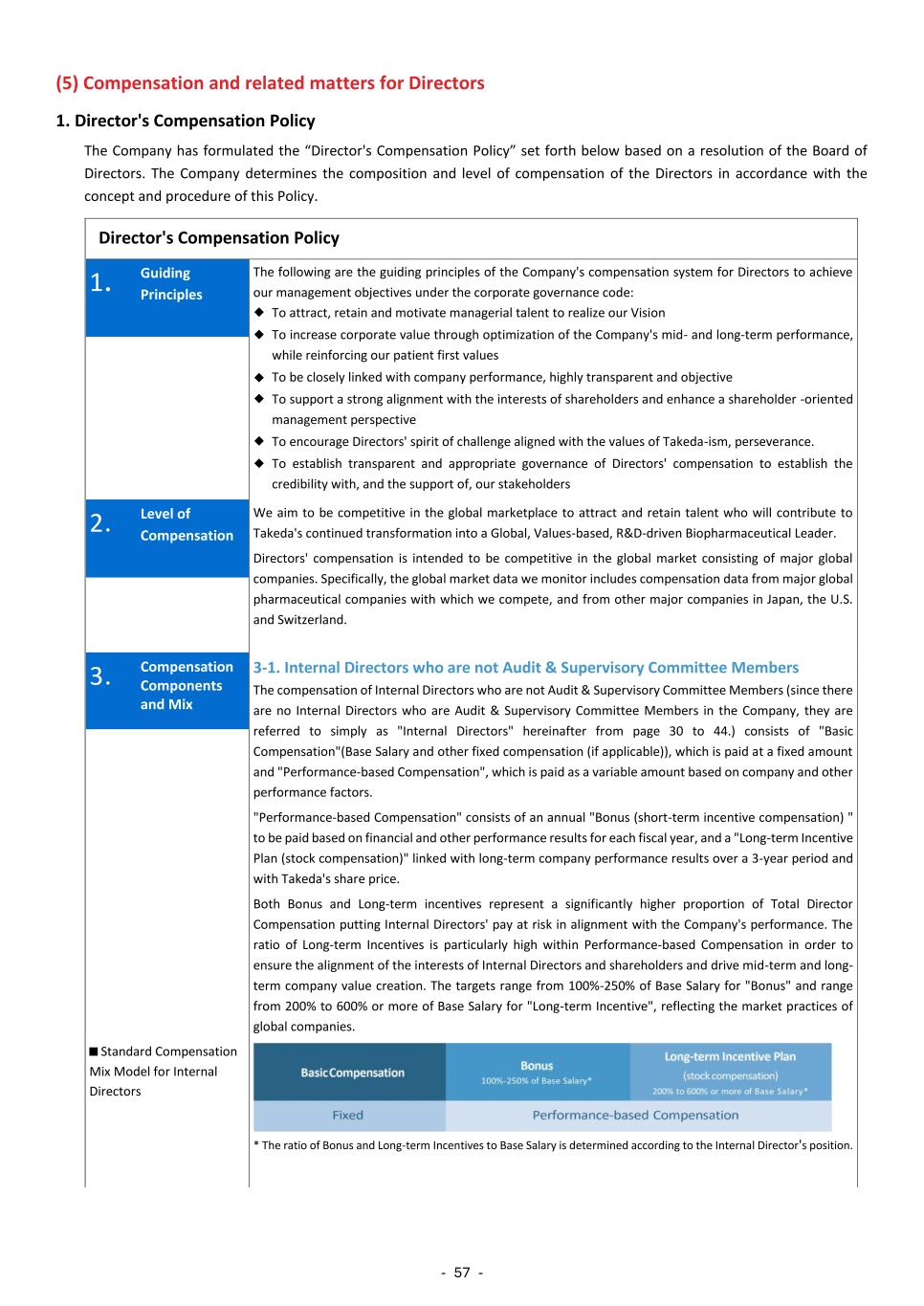
- 57 - (5) Compensation and related matters for Directors 1. Director's Compensation Policy The Company has formulated the “Director's Compensation Policy” set forth below based on a resolution of the Board of Directors. The Company determines the composition and level of compensation of the Directors in accordance with the concept and procedure of this Policy. Director's Compensation Policy 1. Guiding Principles The following are the guiding principles of the Company's compensation system for Directors to achieve our management objectives under the corporate governance code: ◆ ◆ ◆ ◆ ◆ ◆ To attract, retain and motivate managerial talent to realize our Vision To increase corporate value through optimization of the Company's mid- and long-term performance, while reinforcing our patient first values To be closely linked with company performance, highly transparent and objective To support a strong alignment with the interests of shareholders and enhance a shareholder -oriented management perspective To encourage Directors' spirit of challenge aligned with the values of Takeda-ism, perseverance. To establish transparent and appropriate governance of Directors' compensation to establish the credibility with, and the support of, our stakeholders 2. Level of Compensation We aim to be competitive in the global marketplace to attract and retain talent who will contribute to Takeda's continued transformation into a Global, Values-based, R&D-driven Biopharmaceutical Leader. Directors' compensation is intended to be competitive in the global market consisting of major global companies. Specifically, the global market data we monitor includes compensation data from major global pharmaceutical companies with which we compete, and from other major companies in Japan, the U.S. and Switzerland. 3. Compensation Components and Mix 3-1. Internal Directors who are not Audit & Supervisory Committee Members The compensation of Internal Directors who are not Audit & Supervisory Committee Members (since there are no Internal Directors who are Audit & Supervisory Committee Members in the Company, they are referred to simply as "Internal Directors" hereinafter from page 30 to 44.) consists of "Basic Compensation"(Base Salary and other fixed compensation (if applicable)), which is paid at a fixed amount and "Performance-based Compensation", which is paid as a variable amount based on company and other performance factors. "Performance-based Compensation" consists of an annual "Bonus (short-term incentive compensation) " to be paid based on financial and other performance results for each fiscal year, and a "Long-term Incentive Plan (stock compensation)" linked with long-term company performance results over a 3-year period and with Takeda's share price. Both Bonus and Long-term incentives represent a significantly higher proportion of Total Director Compensation putting Internal Directors' pay at risk in alignment with the Company's performance. The ratio of Long-term Incentives is particularly high within Performance-based Compensation in order to ensure the alignment of the interests of Internal Directors and shareholders and drive mid-term and long- term company value creation. The targets range from 100%-250% of Base Salary for "Bonus" and range from 200% to 600% or more of Base Salary for "Long-term Incentive", reflecting the market practices of global companies. ■ Standard Compensation Mix Model for Internal Directors * The ratio of Bonus and Long-term Incentives to Base Salary is determined according to the Internal Director's position.
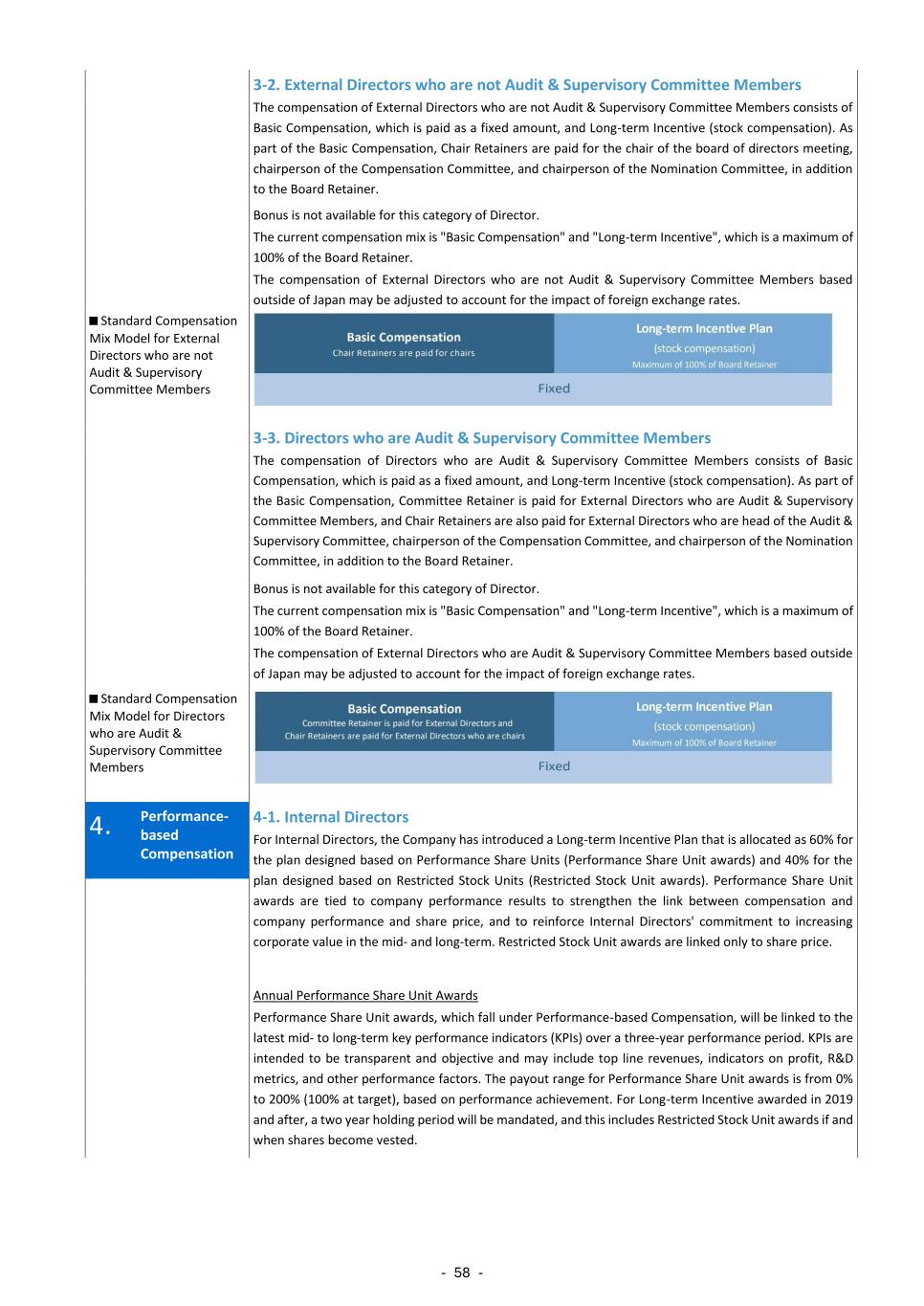
- 58 - 3-2. External Directors who are not Audit & Supervisory Committee Members The compensation of External Directors who are not Audit & Supervisory Committee Members consists of Basic Compensation, which is paid as a fixed amount, and Long-term Incentive (stock compensation). As part of the Basic Compensation, Chair Retainers are paid for the chair of the board of directors meeting, chairperson of the Compensation Committee, and chairperson of the Nomination Committee, in addition to the Board Retainer. Bonus is not available for this category of Director. The current compensation mix is "Basic Compensation" and "Long-term Incentive", which is a maximum of 100% of the Board Retainer. The compensation of External Directors who are not Audit & Supervisory Committee Members based outside of Japan may be adjusted to account for the impact of foreign exchange rates. ■ Standard Compensation Mix Model for External Directors who are not Audit & Supervisory Committee Members 3-3. Directors who are Audit & Supervisory Committee Members The compensation of Directors who are Audit & Supervisory Committee Members consists of Basic Compensation, which is paid as a fixed amount, and Long-term Incentive (stock compensation). As part of the Basic Compensation, Committee Retainer is paid for External Directors who are Audit & Supervisory Committee Members, and Chair Retainers are also paid for External Directors who are head of the Audit & Supervisory Committee, chairperson of the Compensation Committee, and chairperson of the Nomination Committee, in addition to the Board Retainer. Bonus is not available for this category of Director. The current compensation mix is "Basic Compensation" and "Long-term Incentive", which is a maximum of 100% of the Board Retainer. The compensation of External Directors who are Audit & Supervisory Committee Members based outside of Japan may be adjusted to account for the impact of foreign exchange rates. ■ Standard Compensation Mix Model for Directors who are Audit & Supervisory Committee Members 4. Performance- based Compensation 4-1. Internal Directors For Internal Directors, the Company has introduced a Long-term Incentive Plan that is allocated as 60% for the plan designed based on Performance Share Units (Performance Share Unit awards) and 40% for the plan designed based on Restricted Stock Units (Restricted Stock Unit awards). Performance Share Unit awards are tied to company performance results to strengthen the link between compensation and company performance and share price, and to reinforce Internal Directors' commitment to increasing corporate value in the mid- and long-term. Restricted Stock Unit awards are linked only to share price. Annual Performance Share Unit Awards Performance Share Unit awards, which fall under Performance-based Compensation, will be linked to the latest mid- to long-term key performance indicators (KPIs) over a three-year performance period. KPIs are intended to be transparent and objective and may include top line revenues, indicators on profit, R&D metrics, and other performance factors. The payout range for Performance Share Unit awards is from 0% to 200% (100% at target), based on performance achievement. For Long-term Incentive awarded in 2019 and after, a two year holding period will be mandated, and this includes Restricted Stock Unit awards if and when shares become vested.
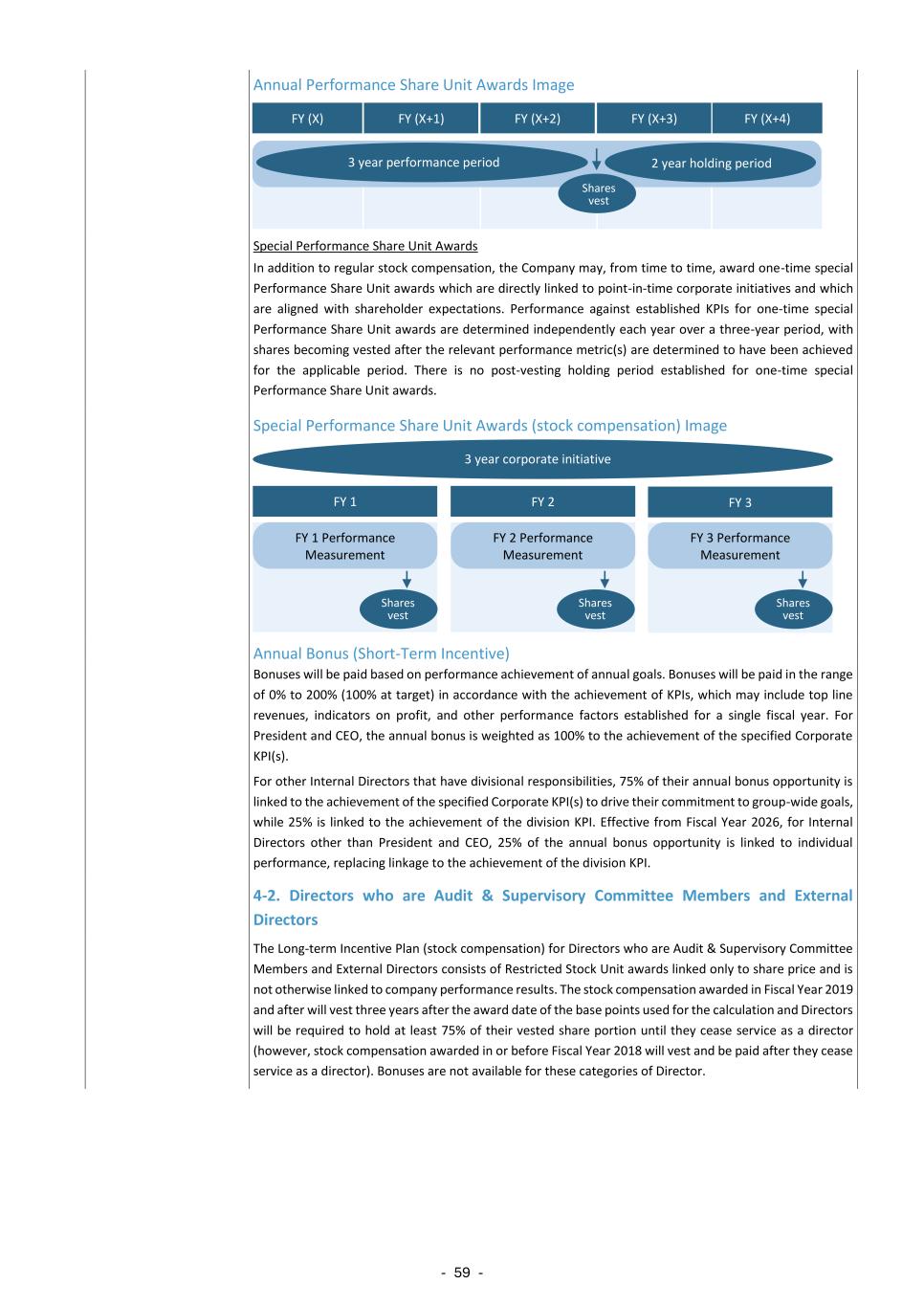
- 59 - Annual Performance Share Unit Awards Image Special Performance Share Unit Awards In addition to regular stock compensation, the Company may, from time to time, award one-time special Performance Share Unit awards which are directly linked to point-in-time corporate initiatives and which are aligned with shareholder expectations. Performance against established KPIs for one-time special Performance Share Unit awards are determined independently each year over a three-year period, with shares becoming vested after the relevant performance metric(s) are determined to have been achieved for the applicable period. There is no post-vesting holding period established for one-time special Performance Share Unit awards. Special Performance Share Unit Awards (stock compensation) Image Annual Bonus (Short-Term Incentive) Bonuses will be paid based on performance achievement of annual goals. Bonuses will be paid in the range of 0% to 200% (100% at target) in accordance with the achievement of KPIs, which may include top line revenues, indicators on profit, and other performance factors established for a single fiscal year. For President and CEO, the annual bonus is weighted as 100% to the achievement of the specified Corporate KPI(s). For other Internal Directors that have divisional responsibilities, 75% of their annual bonus opportunity is linked to the achievement of the specified Corporate KPI(s) to drive their commitment to group-wide goals, while 25% is linked to the achievement of the division KPI. Effective from Fiscal Year 2026, for Internal Directors other than President and CEO, 25% of the annual bonus opportunity is linked to individual performance, replacing linkage to the achievement of the division KPI. 4-2. Directors who are Audit & Supervisory Committee Members and External Directors The Long-term Incentive Plan (stock compensation) for Directors who are Audit & Supervisory Committee Members and External Directors consists of Restricted Stock Unit awards linked only to share price and is not otherwise linked to company performance results. The stock compensation awarded in Fiscal Year 2019 and after will vest three years after the award date of the base points used for the calculation and Directors will be required to hold at least 75% of their vested share portion until they cease service as a director (however, stock compensation awarded in or before Fiscal Year 2018 will vest and be paid after they cease service as a director). Bonuses are not available for these categories of Director. 3 year performance period 2 year holding period Shares vest FY (X) FY (X+3) FY (X+2) FY (X+1) FY (X+4) 3 year corporate initiative FY 1 FY 3 FY 2 FY 1 Performance Measurement FY 2 Performance Measurement FY 3 Performance Measurement Shares vest Shares vest Shares vest
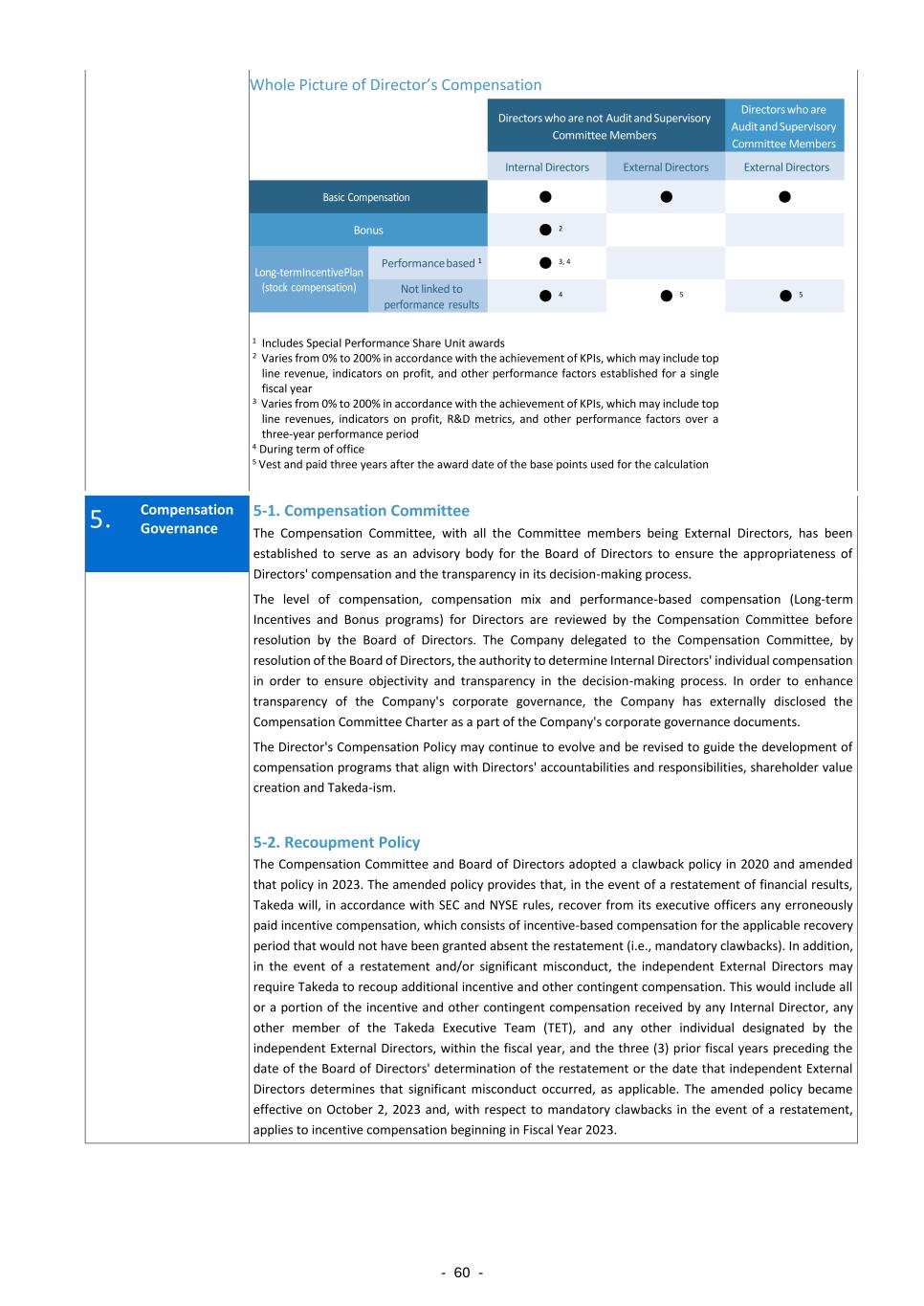
- 60 - Whole Picture of Director’s Compensation Directors who are not Audit and Supervisory Committee Members Directors who are Audit and Supervisory Committee Members Internal Directors External Directors External Directors Basic Compensation ● ● ● Bonus ● 2 Long-term Incentive Plan (stock compensation) Performance based 1 ● 3, 4 Not linked to performance results ● 4 ● 5 ● 5 1 Includes Special Performance Share Unit awards 2 Varies from 0% to 200% in accordance with the achievement of KPIs, which may include top line revenue, indicators on profit, and other performance factors established for a single fiscal year 3 Varies from 0% to 200% in accordance with the achievement of KPIs, which may include top line revenues, indicators on profit, R&D metrics, and other performance factors over a three-year performance period 4 During term of office 5 Vest and paid three years after the award date of the base points used for the calculation 5. Compensation Governance 5-1. Compensation Committee The Compensation Committee, with all the Committee members being External Directors, has been established to serve as an advisory body for the Board of Directors to ensure the appropriateness of Directors' compensation and the transparency in its decision-making process. The level of compensation, compensation mix and performance-based compensation (Long-term Incentives and Bonus programs) for Directors are reviewed by the Compensation Committee before resolution by the Board of Directors. The Company delegated to the Compensation Committee, by resolution of the Board of Directors, the authority to determine Internal Directors' individual compensation in order to ensure objectivity and transparency in the decision-making process. In order to enhance transparency of the Company's corporate governance, the Company has externally disclosed the Compensation Committee Charter as a part of the Company's corporate governance documents. The Director's Compensation Policy may continue to evolve and be revised to guide the development of compensation programs that align with Directors' accountabilities and responsibilities, shareholder value creation and Takeda-ism. 5-2. Recoupment Policy The Compensation Committee and Board of Directors adopted a clawback policy in 2020 and amended that policy in 2023. The amended policy provides that, in the event of a restatement of financial results, Takeda will, in accordance with SEC and NYSE rules, recover from its executive officers any erroneously paid incentive compensation, which consists of incentive-based compensation for the applicable recovery period that would not have been granted absent the restatement (i.e., mandatory clawbacks). In addition, in the event of a restatement and/or significant misconduct, the independent External Directors may require Takeda to recoup additional incentive and other contingent compensation. This would include all or a portion of the incentive and other contingent compensation received by any Internal Director, any other member of the Takeda Executive Team (TET), and any other individual designated by the independent External Directors, within the fiscal year, and the three (3) prior fiscal years preceding the date of the Board of Directors' determination of the restatement or the date that independent External Directors determines that significant misconduct occurred, as applicable. The amended policy became effective on October 2, 2023 and, with respect to mandatory clawbacks in the event of a restatement, applies to incentive compensation beginning in Fiscal Year 2023.
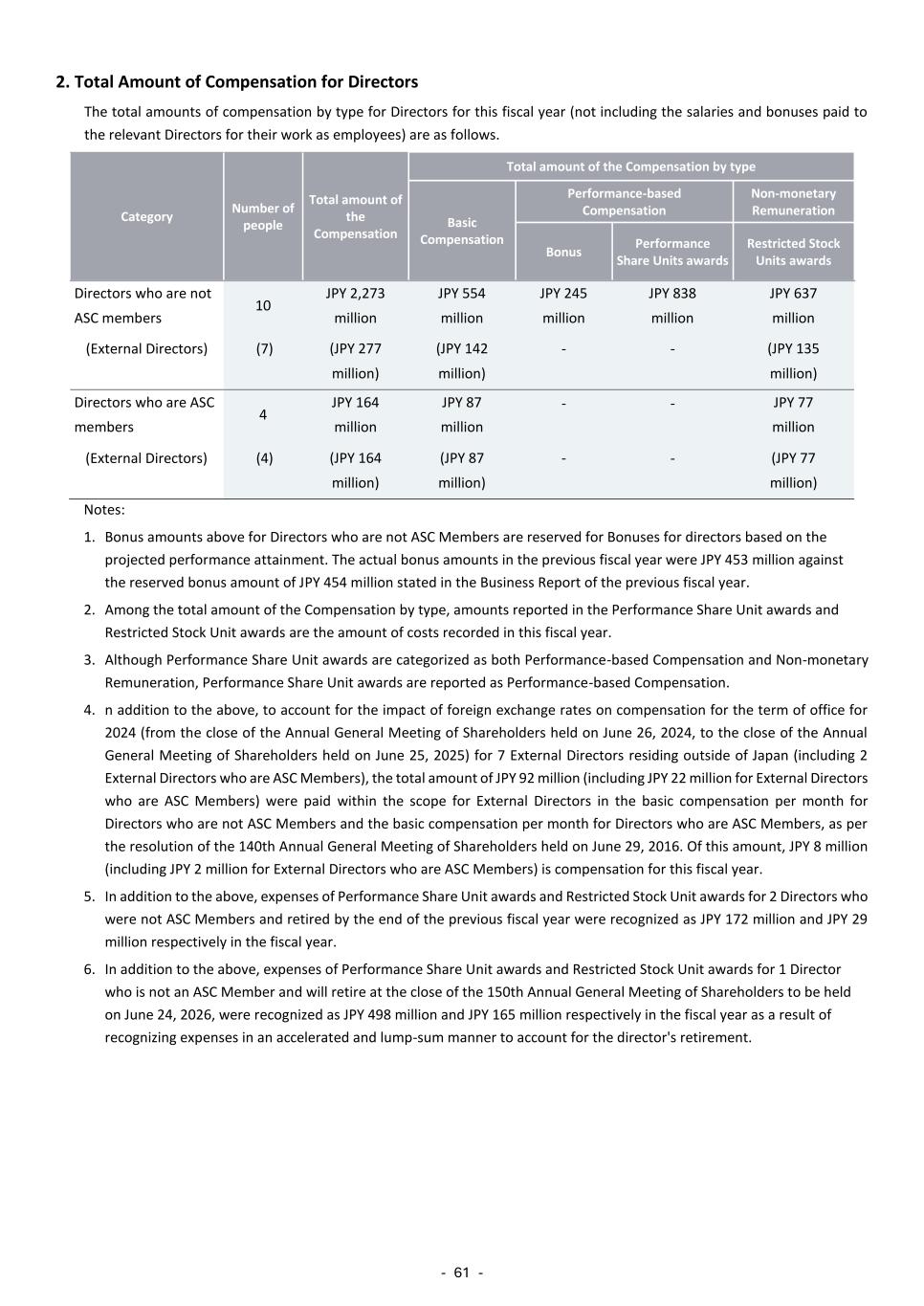
- 61 - 2. Total Amount of Compensation for Directors The total amounts of compensation by type for Directors for this fiscal year (not including the salaries and bonuses paid to the relevant Directors for their work as employees) are as follows. Category Number of people Total amount of the Compensation Total amount of the Compensation by type Basic Compensation Performance-based Compensation Non-monetary Remuneration Bonus Performance Share Units awards Restricted Stock Units awards Directors who are not ASC members 10 JPY 2,273 million JPY 554 million JPY 245 million JPY 838 million JPY 637 million (External Directors) (7) (JPY 277 million) (JPY 142 million) - - (JPY 135 million) Directors who are ASC members 4 JPY 164 million JPY 87 million - - JPY 77 million (External Directors) (4) (JPY 164 million) (JPY 87 million) - - (JPY 77 million) Notes: 1. Bonus amounts above for Directors who are not ASC Members are reserved for Bonuses for directors based on the projected performance attainment. The actual bonus amounts in the previous fiscal year were JPY 453 million against the reserved bonus amount of JPY 454 million stated in the Business Report of the previous fiscal year. 2. Among the total amount of the Compensation by type, amounts reported in the Performance Share Unit awards and Restricted Stock Unit awards are the amount of costs recorded in this fiscal year. 3. Although Performance Share Unit awards are categorized as both Performance-based Compensation and Non-monetary Remuneration, Performance Share Unit awards are reported as Performance-based Compensation. 4. n addition to the above, to account for the impact of foreign exchange rates on compensation for the term of office for 2024 (from the close of the Annual General Meeting of Shareholders held on June 26, 2024, to the close of the Annual General Meeting of Shareholders held on June 25, 2025) for 7 External Directors residing outside of Japan (including 2 External Directors who are ASC Members), the total amount of JPY 92 million (including JPY 22 million for External Directors who are ASC Members) were paid within the scope for External Directors in the basic compensation per month for Directors who are not ASC Members and the basic compensation per month for Directors who are ASC Members, as per the resolution of the 140th Annual General Meeting of Shareholders held on June 29, 2016. Of this amount, JPY 8 million (including JPY 2 million for External Directors who are ASC Members) is compensation for this fiscal year. 5. In addition to the above, expenses of Performance Share Unit awards and Restricted Stock Unit awards for 2 Directors who were not ASC Members and retired by the end of the previous fiscal year were recognized as JPY 172 million and JPY 29 million respectively in the fiscal year. 6. In addition to the above, expenses of Performance Share Unit awards and Restricted Stock Unit awards for 1 Director who is not an ASC Member and will retire at the close of the 150th Annual General Meeting of Shareholders to be held on June 24, 2026, were recognized as JPY 498 million and JPY 165 million respectively in the fiscal year as a result of recognizing expenses in an accelerated and lump-sum manner to account for the director's retirement.
- 62 - 3. Resolutions at General Meeting of Shareholders regarding Director Compensation etc., 1. Resolutions regarding Directors excluding ASC Members [1] The basic compensation is a fixed amount depending on each position, and its total amount per month is no more than JPY 150 million (within this amount, no more than JPY 30 million per month is for External Directors) (based on a resolution of the 140th Annual General Meeting of Shareholders held on June 29, 2016). There were 11 Directors, including 6 External Directors, related to this resolution as of the end of the Annual General Meeting of Shareholders. [2] Bonus for each fiscal year is resolved at the Annual General Meeting of Shareholders. [3] Stock compensation (Performance Share Unit awards and Restricted Stock Unit awards) is based on the resolution of the 143rd Annual General Meeting of Shareholders held on June 27, 2019. The upper limit of the amount contributed for that stock compensation and the number of shares to be granted is as follows (There were 11 Directors, including 8 External Directors, related to this resolution as of the end of the Annual General Meeting of Shareholders). (A) Stock compensation granted to Internal Directors (excluding Internal Directors residing outside of Japan): Upper limit of JPY 4.5 billion per year for three consecutive fiscal years (the upper limit of the number of stocks to be granted is calculated by dividing the amount of the above-mentioned upper limit by the closing price of the stocks of the Company at the Tokyo Stock Exchange on a predetermined day for this fiscal year) (B) Stock compensation granted to External Directors who are not ASC Members: Upper limit of JPY 0.3 billion for each fiscal year (the upper limit of the number of stocks to be granted is calculated by dividing the amount of the above-mentioned upper limit by the closing price of the stocks of the Company at the Tokyo Stock Exchange on a predetermined day for this fiscal year) 2. Resolutions regarding Directors (ASC Members) [1] The basic compensation is a fixed amount depending on each position, and its total amount per month is no more than JPY 15 million (based on a resolution of the 140th Annual General Meeting of Shareholders held on June 29, 2016). There were 4 Directors related to this resolution as of the end of the Annual General Meeting of Shareholders. [2] Stock compensation (Restricted Stock Unit awards) for Directors (ASC Members) is based on a resolution of the 143rd Annual General Meeting of Shareholders held on June 27, 2019, for which no more than JPY 200 million will be contributed for this fiscal year. The upper limit of the number of stocks to be granted is calculated by dividing the amount of the above-mentioned upper limit by the closing price of the stocks of the Company at the Tokyo Stock Exchange on a predetermined day for this fiscal year. There were 4 Directors related to this resolution as of the end of the Annual General Meeting of Shareholders. 4. Delegation of authority to make decisions on individual compensation for Directors As stated in the governance section of 1. the Director's Compensation Policy (5. Compensation Governance), in order to ensure the appropriateness of Directors' compensation and transparency in its decision-making process, based on the resolution by the Board of Directors, the authority to determine individual compensation for Internal Directors has been delegated to the Compensation Committee. Through the procedures based on such governance, the Compensation Committee determined the amount of individual compensation for Internal Directors for this fiscal year. In this fiscal year, the Compensation Committee was comprised of the following members: Emiko Higashi (Chairperson), John Maraganore, Michel Orsinger, Miki Tsusaka and Kimberly A. Reed (ASC member), all of whom are External Directors.
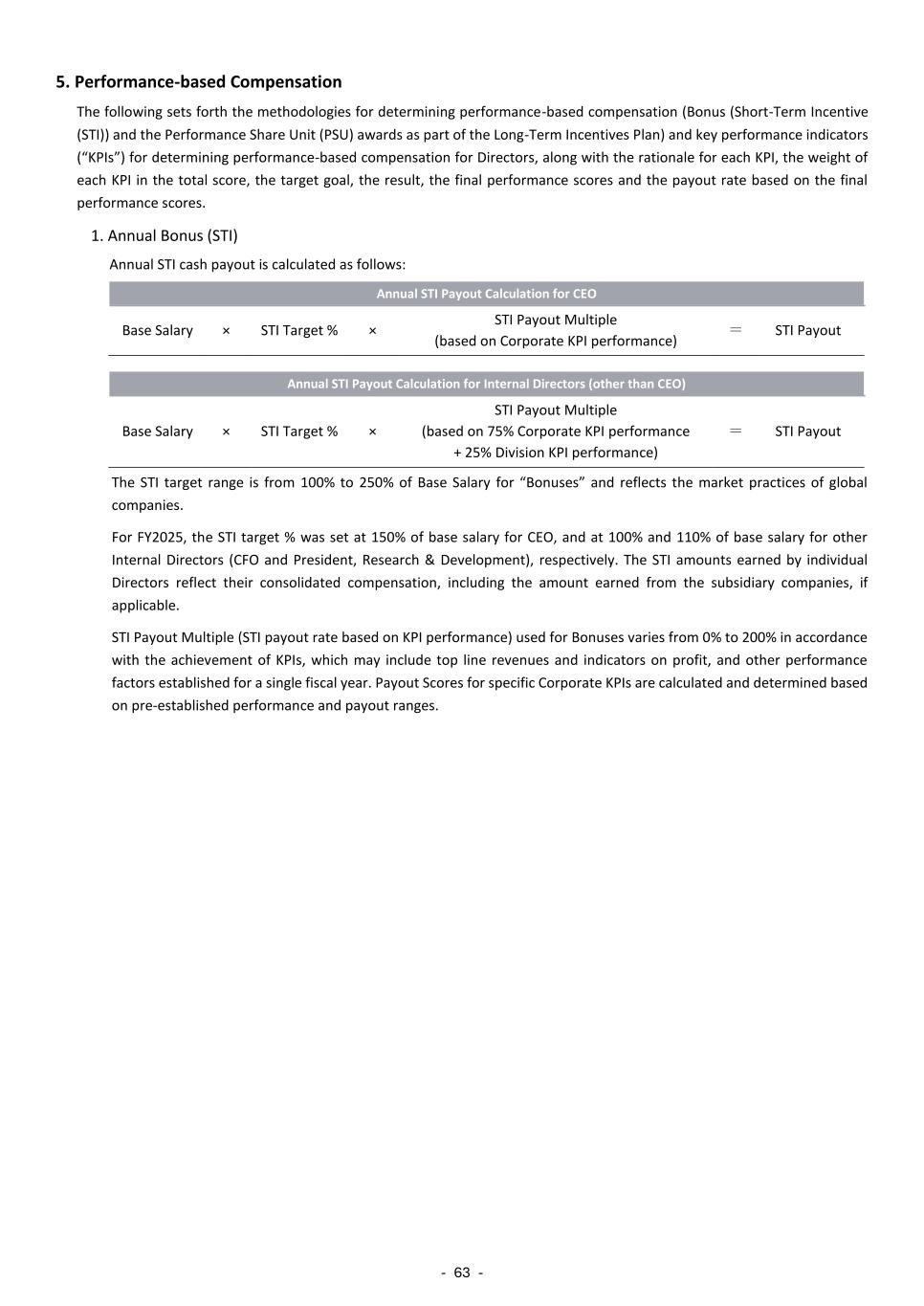
- 63 - 5. Performance-based Compensation The following sets forth the methodologies for determining performance-based compensation (Bonus (Short-Term Incentive (STI)) and the Performance Share Unit (PSU) awards as part of the Long-Term Incentives Plan) and key performance indicators (“KPIs”) for determining performance-based compensation for Directors, along with the rationale for each KPI, the weight of each KPI in the total score, the target goal, the result, the final performance scores and the payout rate based on the final performance scores. 1. Annual Bonus (STI) Annual STI cash payout is calculated as follows: Annual STI Payout Calculation for CEO Base Salary × STI Target % × STI Payout Multiple (based on Corporate KPI performance) = STI Payout Annual STI Payout Calculation for Internal Directors (other than CEO) Base Salary × STI Target % × STI Payout Multiple (based on 75% Corporate KPI performance + 25% Division KPI performance) = STI Payout The STI target range is from 100% to 250% of Base Salary for “Bonuses” and reflects the market practices of global companies. For FY2025, the STI target % was set at 150% of base salary for CEO, and at 100% and 110% of base salary for other Internal Directors (CFO and President, Research & Development), respectively. The STI amounts earned by individual Directors reflect their consolidated compensation, including the amount earned from the subsidiary companies, if applicable. STI Payout Multiple (STI payout rate based on KPI performance) used for Bonuses varies from 0% to 200% in accordance with the achievement of KPIs, which may include top line revenues and indicators on profit, and other performance factors established for a single fiscal year. Payout Scores for specific Corporate KPIs are calculated and determined based on pre-established performance and payout ranges.
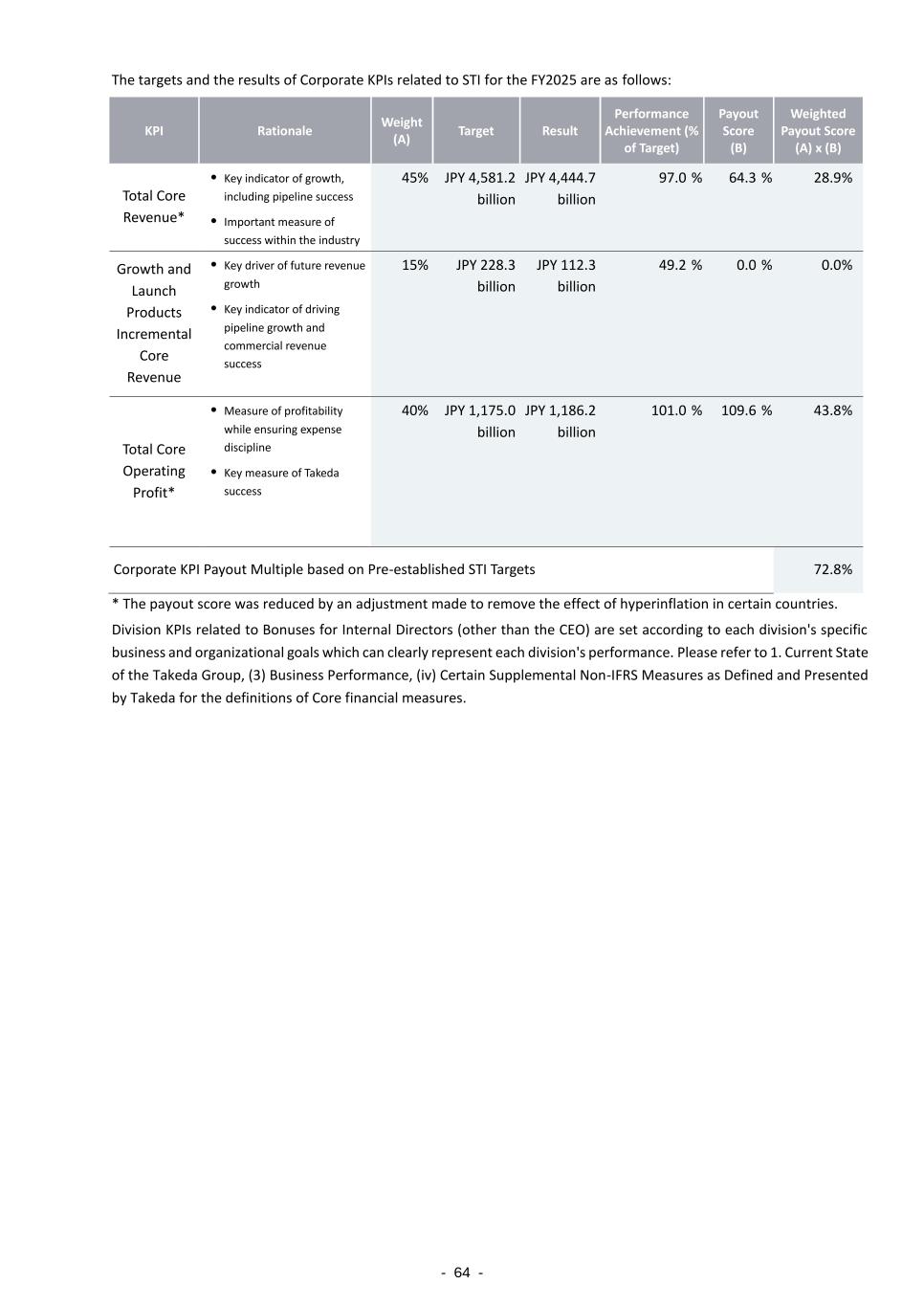
- 64 - The targets and the results of Corporate KPIs related to STI for the FY2025 are as follows: KPI Rationale Weight (A) Target Result Performance Achievement (% of Target) Payout Score (B) Weighted Payout Score (A) x (B) Total Core Revenue* • Key indicator of growth, including pipeline success • Important measure of success within the industry 45% JPY 4,581.2 billion JPY 4,444.7 billion 97.0 % 64.3 % 28.9 % Growth and Launch Products Incremental Core Revenue • Key driver of future revenue growth • Key indicator of driving pipeline growth and commercial revenue success 15% JPY 228.3 billion JPY 112.3 billion 49.2 % 0.0 % 0.0 % Total Core Operating Profit* • Measure of profitability while ensuring expense discipline • Key measure of Takeda success 40% JPY 1,175.0 billion JPY 1,186.2 billion 101.0 % 109.6 % 43.8 % Corporate KPI Payout Multiple based on Pre-established STI Targets 72.8 % * The payout score was reduced by an adjustment made to remove the effect of hyperinflation in certain countries. Division KPIs related to Bonuses for Internal Directors (other than the CEO) are set according to each division's specific business and organizational goals which can clearly represent each division's performance. Please refer to 1. Current State of the Takeda Group, (3) Business Performance, (iv) Certain Supplemental Non-IFRS Measures as Defined and Presented by Takeda for the definitions of Core financial measures.
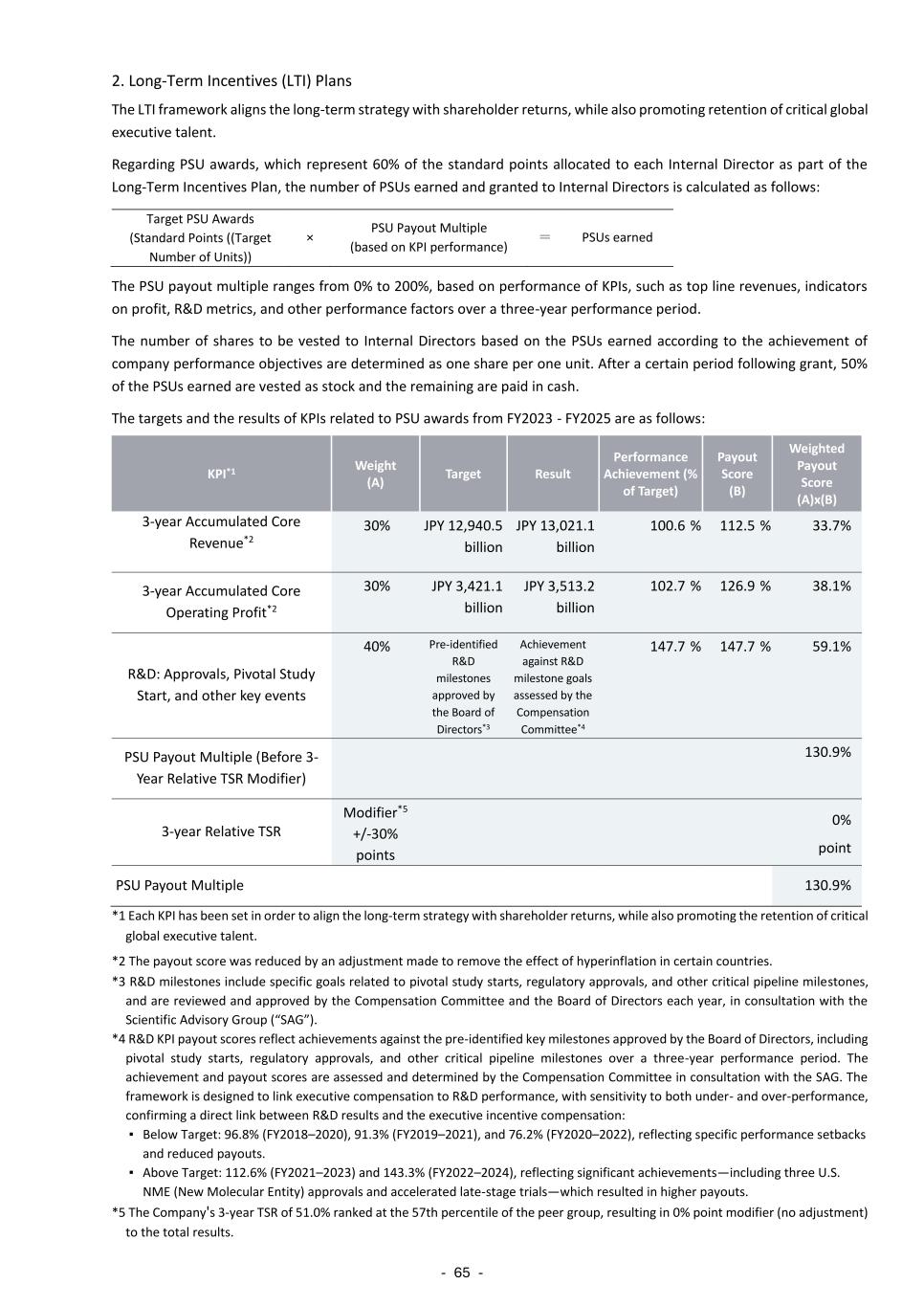
- 65 - 2. Long-Term Incentives (LTI) Plans The LTI framework aligns the long-term strategy with shareholder returns, while also promoting retention of critical global executive talent. Regarding PSU awards, which represent 60% of the standard points allocated to each Internal Director as part of the Long-Term Incentives Plan, the number of PSUs earned and granted to Internal Directors is calculated as follows: Target PSU Awards (Standard Points ((Target Number of Units)) × PSU Payout Multiple (based on KPI performance) = PSUs earned The PSU payout multiple ranges from 0% to 200%, based on performance of KPIs, such as top line revenues, indicators on profit, R&D metrics, and other performance factors over a three-year performance period. The number of shares to be vested to Internal Directors based on the PSUs earned according to the achievement of company performance objectives are determined as one share per one unit. After a certain period following grant, 50% of the PSUs earned are vested as stock and the remaining are paid in cash. The targets and the results of KPIs related to PSU awards from FY2023 - FY2025 are as follows: KPI*1 Weight (A) Target Result Performance Achievement (% of Target) Payout Score (B) Weighted Payout Score (A)x(B) 3-year Accumulated Core Revenue*2 30% JPY 12,940.5 billion JPY 13,021.1 billion 100.6 % 112.5 % 33.7 % 3-year Accumulated Core Operating Profit*2 30% JPY 3,421.1 billion JPY 3,513.2 billion 102.7 % 126.9 % 38.1 % R&D: Approvals, Pivotal Study Start, and other key events 40% Pre-identified R&D milestones approved by the Board of Directors*3 Achievement against R&D milestone goals assessed by the Compensation Committee*4 147.7 % 147.7 % 59.1 % PSU Payout Multiple (Before 3- Year Relative TSR Modifier) 130.9 % 3-year Relative TSR Modifier*5 +/-30% points 0 % point PSU Payout Multiple 130.9 % *1 Each KPI has been set in order to align the long-term strategy with shareholder returns, while also promoting the retention of critical global executive talent. *2 The payout score was reduced by an adjustment made to remove the effect of hyperinflation in certain countries. *3 R&D milestones include specific goals related to pivotal study starts, regulatory approvals, and other critical pipeline milestones, and are reviewed and approved by the Compensation Committee and the Board of Directors each year, in consultation with the Scientific Advisory Group (“SAG”). *4 R&D KPI payout scores reflect achievements against the pre-identified key milestones approved by the Board of Directors, including pivotal study starts, regulatory approvals, and other critical pipeline milestones over a three-year performance period. The achievement and payout scores are assessed and determined by the Compensation Committee in consultation with the SAG. The framework is designed to link executive compensation to R&D performance, with sensitivity to both under- and over-performance, confirming a direct link between R&D results and the executive incentive compensation: ▪ Below Target: 96.8% (FY2018–2020), 91.3% (FY2019–2021), and 76.2% (FY2020–2022), reflecting specific performance setbacks and reduced payouts. ▪ Above Target: 112.6% (FY2021–2023) and 143.3% (FY2022–2024), reflecting significant achievements—including three U.S. NME (New Molecular Entity) approvals and accelerated late-stage trials—which resulted in higher payouts. *5 The Company's 3-year TSR of 51.0% ranked at the 57th percentile of the peer group, resulting in 0% point modifier (no adjustment) to the total results.

- 66 - FY2023-2025 Target PSU awards were 120,610 units (standard points) for CEO under BIP and 11,928 units (standard points) for CFO under ESOP, respectively. In addition, FY2023-2025 Target PSU awards were 126,334 units (to be settled in ADS) for CEO and 162,316 units (to be settled in ADS) for President, Research & Development, respectively under the LTIP for Company Group Employees Overseas. The PSUs earned by individual Directors reflect their consolidated compensation, including the amount earned from the subsidiary companies, if applicable.
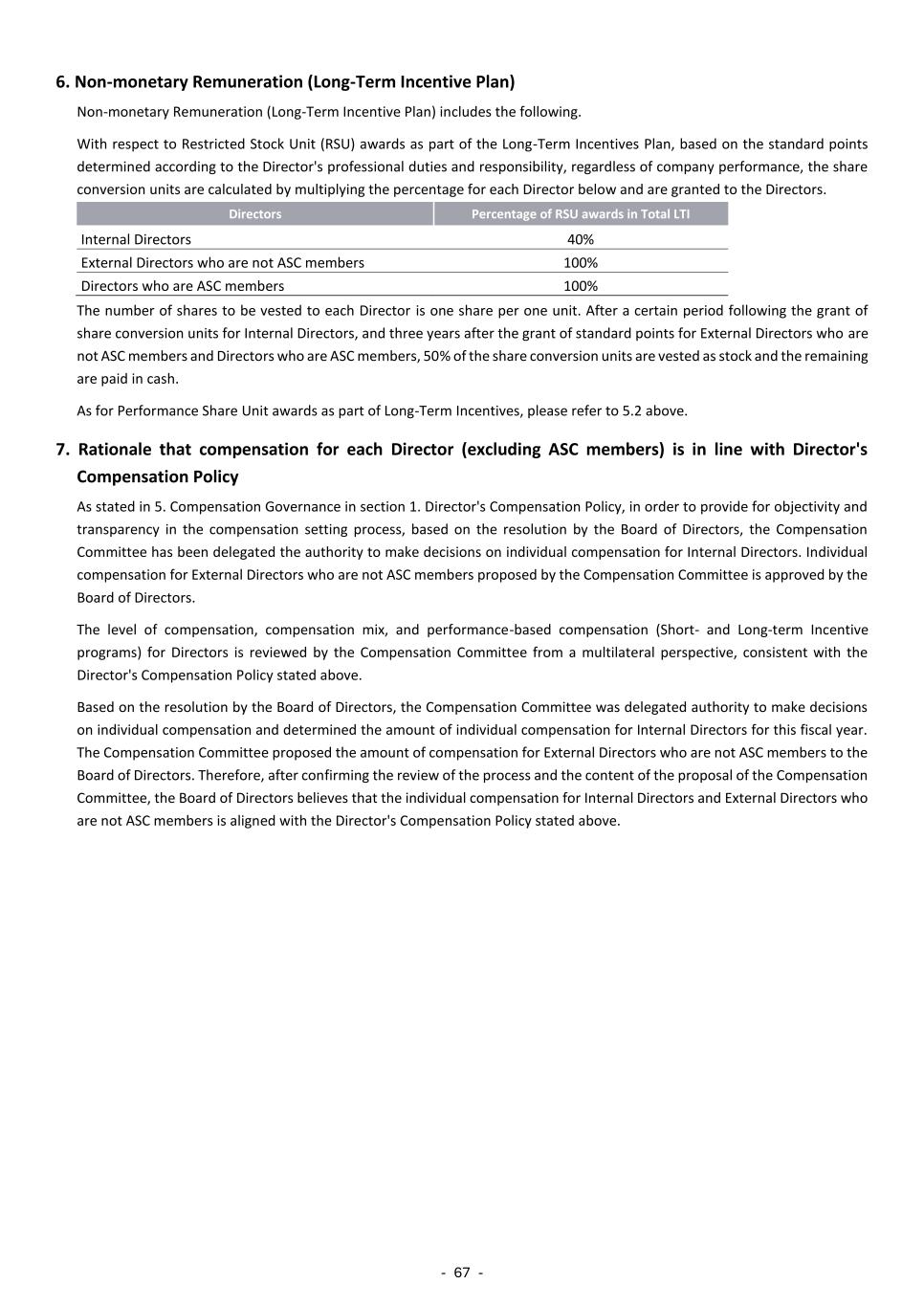
- 67 - 6. Non-monetary Remuneration (Long-Term Incentive Plan) Non-monetary Remuneration (Long-Term Incentive Plan) includes the following. With respect to Restricted Stock Unit (RSU) awards as part of the Long-Term Incentives Plan, based on the standard points determined according to the Director's professional duties and responsibility, regardless of company performance, the share conversion units are calculated by multiplying the percentage for each Director below and are granted to the Directors. Directors Percentage of RSU awards in Total LTI Internal Directors 40% External Directors who are not ASC members 100% Directors who are ASC members 100% The number of shares to be vested to each Director is one share per one unit. After a certain period following the grant of share conversion units for Internal Directors, and three years after the grant of standard points for External Directors who are not ASC members and Directors who are ASC members, 50% of the share conversion units are vested as stock and the remaining are paid in cash. As for Performance Share Unit awards as part of Long-Term Incentives, please refer to 5.2 above. 7. Rationale that compensation for each Director (excluding ASC members) is in line with Director's Compensation Policy As stated in 5. Compensation Governance in section 1. Director's Compensation Policy, in order to provide for objectivity and transparency in the compensation setting process, based on the resolution by the Board of Directors, the Compensation Committee has been delegated the authority to make decisions on individual compensation for Internal Directors. Individual compensation for External Directors who are not ASC members proposed by the Compensation Committee is approved by the Board of Directors. The level of compensation, compensation mix, and performance-based compensation (Short- and Long-term Incentive programs) for Directors is reviewed by the Compensation Committee from a multilateral perspective, consistent with the Director's Compensation Policy stated above. Based on the resolution by the Board of Directors, the Compensation Committee was delegated authority to make decisions on individual compensation and determined the amount of individual compensation for Internal Directors for this fiscal year. The Compensation Committee proposed the amount of compensation for External Directors who are not ASC members to the Board of Directors. Therefore, after confirming the review of the process and the content of the proposal of the Compensation Committee, the Board of Directors believes that the individual compensation for Internal Directors and External Directors who are not ASC members is aligned with the Director's Compensation Policy stated above.
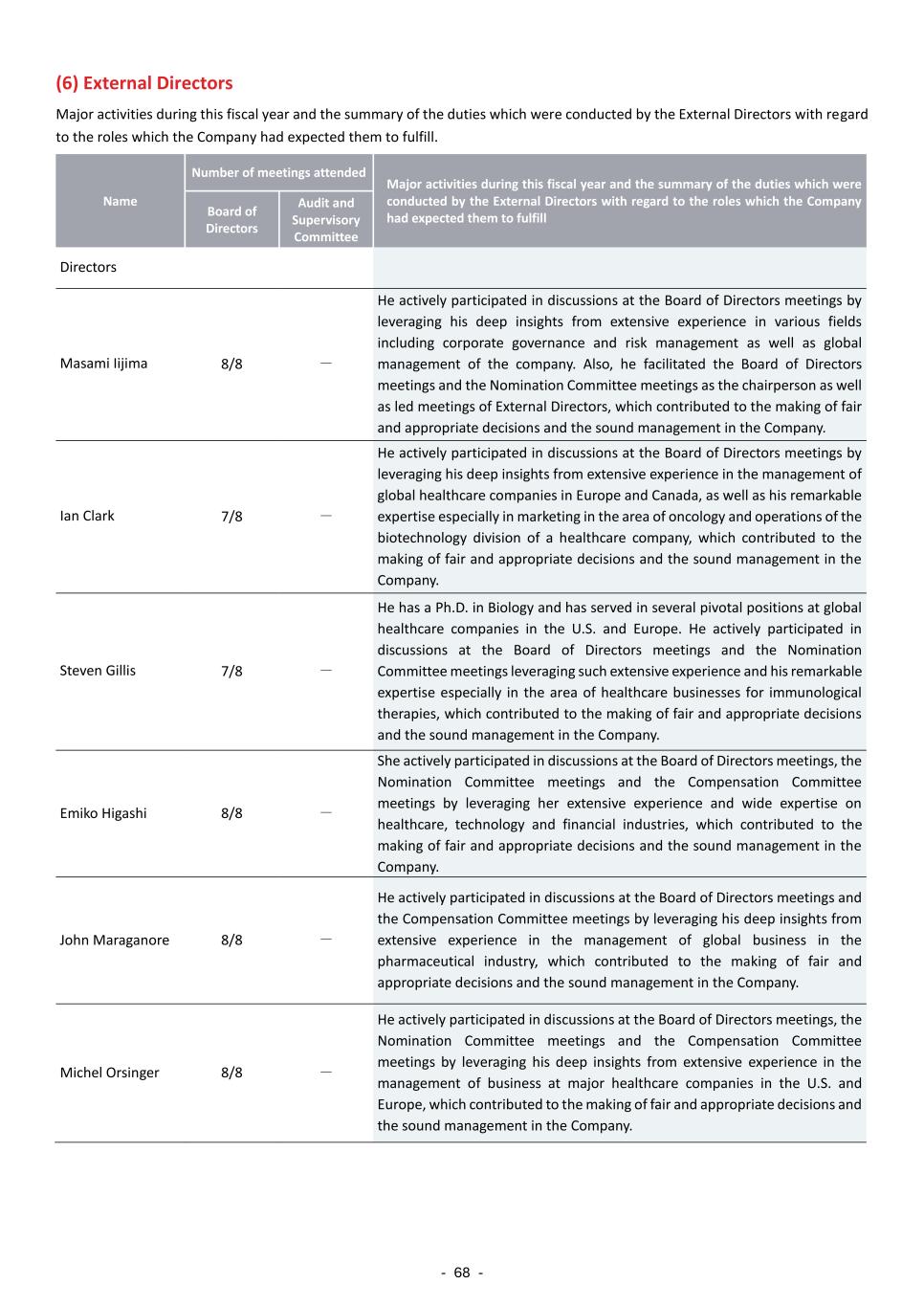
- 68 - (6) External Directors Major activities during this fiscal year and the summary of the duties which were conducted by the External Directors with regard to the roles which the Company had expected them to fulfill. Name Number of meetings attended Major activities during this fiscal year and the summary of the duties which were conducted by the External Directors with regard to the roles which the Company had expected them to fulfill Board of Directors Audit and Supervisory Committee Directors Masami Iijima 8/8 - He actively participated in discussions at the Board of Directors meetings by leveraging his deep insights from extensive experience in various fields including corporate governance and risk management as well as global management of the company. Also, he facilitated the Board of Directors meetings and the Nomination Committee meetings as the chairperson as well as led meetings of External Directors, which contributed to the making of fair and appropriate decisions and the sound management in the Company. Ian Clark 7/8 - He actively participated in discussions at the Board of Directors meetings by leveraging his deep insights from extensive experience in the management of global healthcare companies in Europe and Canada, as well as his remarkable expertise especially in marketing in the area of oncology and operations of the biotechnology division of a healthcare company, which contributed to the making of fair and appropriate decisions and the sound management in the Company. Steven Gillis 7/8 - He has a Ph.D. in Biology and has served in several pivotal positions at global healthcare companies in the U.S. and Europe. He actively participated in discussions at the Board of Directors meetings and the Nomination Committee meetings leveraging such extensive experience and his remarkable expertise especially in the area of healthcare businesses for immunological therapies, which contributed to the making of fair and appropriate decisions and the sound management in the Company. Emiko Higashi 8/8 - She actively participated in discussions at the Board of Directors meetings, the Nomination Committee meetings and the Compensation Committee meetings by leveraging her extensive experience and wide expertise on healthcare, technology and financial industries, which contributed to the making of fair and appropriate decisions and the sound management in the Company. John Maraganore 8/8 - He actively participated in discussions at the Board of Directors meetings and the Compensation Committee meetings by leveraging his deep insights from extensive experience in the management of global business in the pharmaceutical industry, which contributed to the making of fair and appropriate decisions and the sound management in the Company. Michel Orsinger 8/8 - He actively participated in discussions at the Board of Directors meetings, the Nomination Committee meetings and the Compensation Committee meetings by leveraging his deep insights from extensive experience in the management of business at major healthcare companies in the U.S. and Europe, which contributed to the making of fair and appropriate decisions and the sound management in the Company.
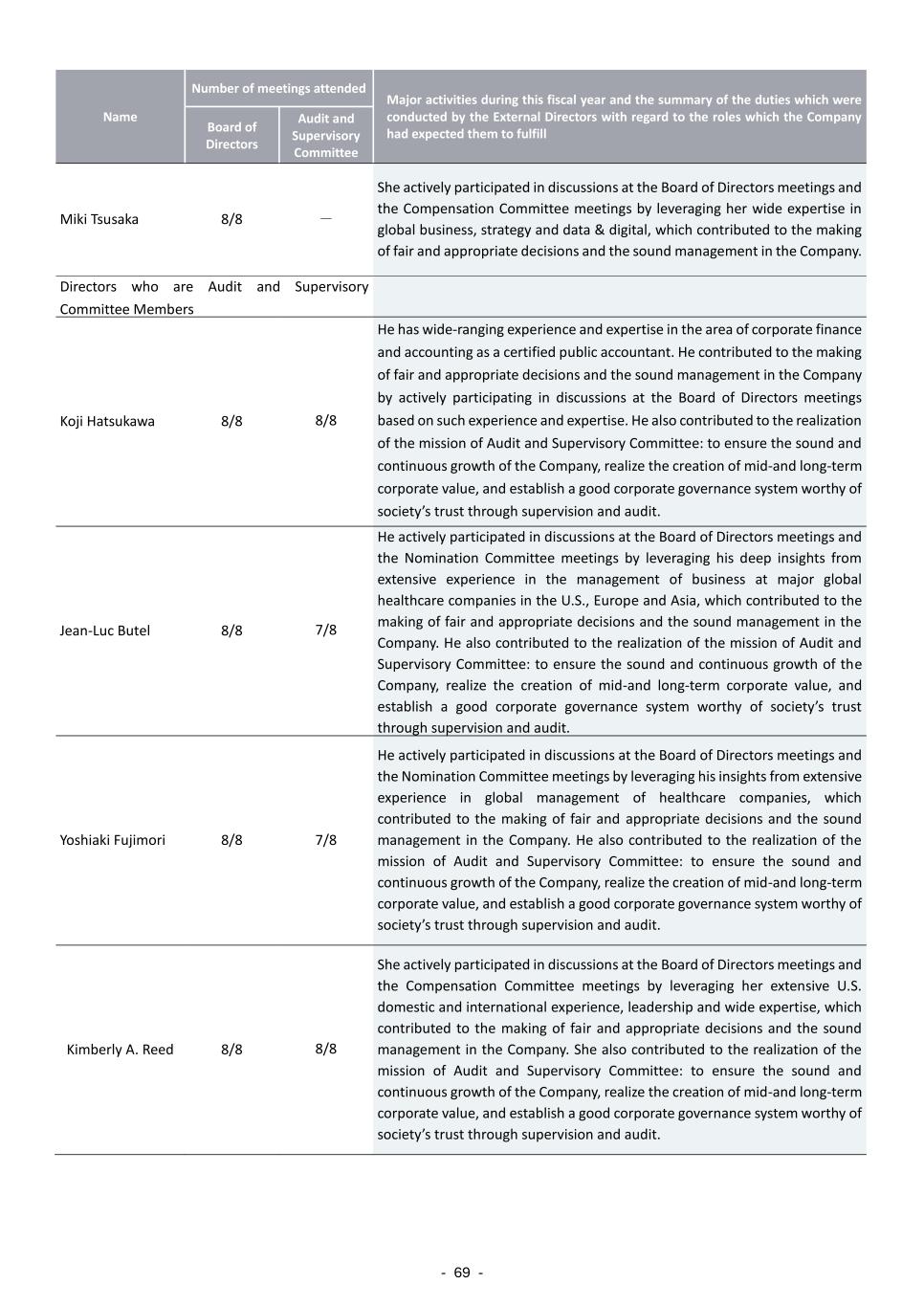
- 69 - Name Number of meetings attended Major activities during this fiscal year and the summary of the duties which were conducted by the External Directors with regard to the roles which the Company had expected them to fulfill Board of Directors Audit and Supervisory Committee Miki Tsusaka 8/8 - She actively participated in discussions at the Board of Directors meetings and the Compensation Committee meetings by leveraging her wide expertise in global business, strategy and data & digital, which contributed to the making of fair and appropriate decisions and the sound management in the Company. Directors who are Audit and Supervisory Committee Members Koji Hatsukawa 8/8 8/8 He has wide-ranging experience and expertise in the area of corporate finance and accounting as a certified public accountant. He contributed to the making of fair and appropriate decisions and the sound management in the Company by actively participating in discussions at the Board of Directors meetings based on such experience and expertise. He also contributed to the realization of the mission of Audit and Supervisory Committee: to ensure the sound and continuous growth of the Company, realize the creation of mid-and long-term corporate value, and establish a good corporate governance system worthy of society’s trust through supervision and audit. Jean-Luc Butel 8/8 7/8 He actively participated in discussions at the Board of Directors meetings and the Nomination Committee meetings by leveraging his deep insights from extensive experience in the management of business at major global healthcare companies in the U.S., Europe and Asia, which contributed to the making of fair and appropriate decisions and the sound management in the Company. He also contributed to the realization of the mission of Audit and Supervisory Committee: to ensure the sound and continuous growth of the Company, realize the creation of mid-and long-term corporate value, and establish a good corporate governance system worthy of society’s trust through supervision and audit. Yoshiaki Fujimori 8/8 7/8 He actively participated in discussions at the Board of Directors meetings and the Nomination Committee meetings by leveraging his insights from extensive experience in global management of healthcare companies, which contributed to the making of fair and appropriate decisions and the sound management in the Company. He also contributed to the realization of the mission of Audit and Supervisory Committee: to ensure the sound and continuous growth of the Company, realize the creation of mid-and long-term corporate value, and establish a good corporate governance system worthy of society’s trust through supervision and audit. Kimberly A. Reed 8/8 8/8 She actively participated in discussions at the Board of Directors meetings and the Compensation Committee meetings by leveraging her extensive U.S. domestic and international experience, leadership and wide expertise, which contributed to the making of fair and appropriate decisions and the sound management in the Company. She also contributed to the realization of the mission of Audit and Supervisory Committee: to ensure the sound and continuous growth of the Company, realize the creation of mid-and long-term corporate value, and establish a good corporate governance system worthy of society’s trust through supervision and audit.
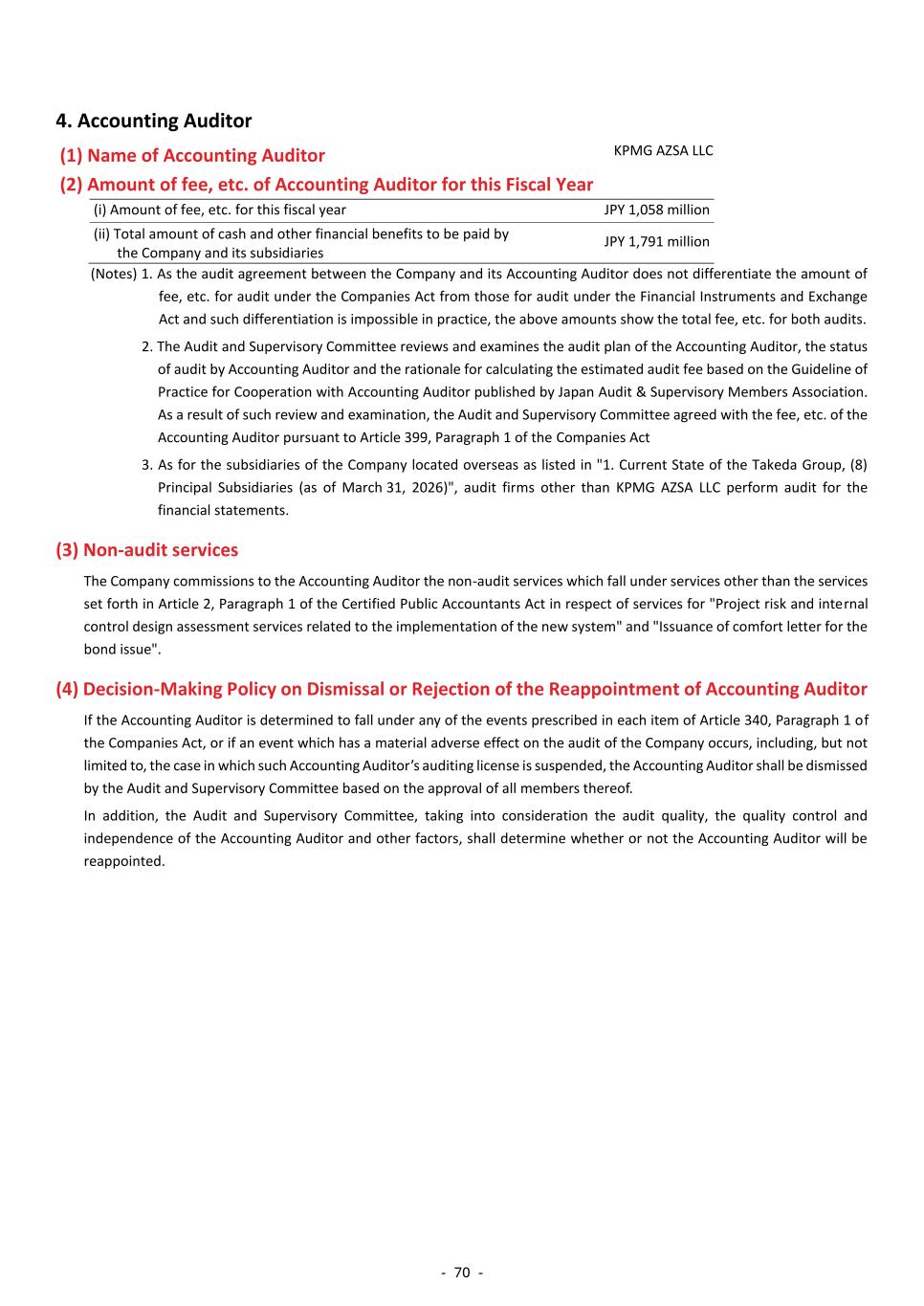
- 70 - 4. Accounting Auditor (1) Name of Accounting Auditor KPMG AZSA LLC (2) Amount of fee, etc. of Accounting Auditor for this Fiscal Year (i) Amount of fee, etc. for this fiscal year JPY 1,058 million (ii) Total amount of cash and other financial benefits to be paid by the Company and its subsidiaries JPY 1,791 million (Notes) 1. As the audit agreement between the Company and its Accounting Auditor does not differentiate the amount of fee, etc. for audit under the Companies Act from those for audit under the Financial Instruments and Exchange Act and such differentiation is impossible in practice, the above amounts show the total fee, etc. for both audits. 2. The Audit and Supervisory Committee reviews and examines the audit plan of the Accounting Auditor, the status of audit by Accounting Auditor and the rationale for calculating the estimated audit fee based on the Guideline of Practice for Cooperation with Accounting Auditor published by Japan Audit & Supervisory Members Association. As a result of such review and examination, the Audit and Supervisory Committee agreed with the fee, etc. of the Accounting Auditor pursuant to Article 399, Paragraph 1 of the Companies Act 3. As for the subsidiaries of the Company located overseas as listed in "1. Current State of the Takeda Group, (8) Principal Subsidiaries (as of March 31, 2026)", audit firms other than KPMG AZSA LLC perform audit for the financial statements. (3) Non-audit services The Company commissions to the Accounting Auditor the non-audit services which fall under services other than the services set forth in Article 2, Paragraph 1 of the Certified Public Accountants Act in respect of services for "Project risk and internal control design assessment services related to the implementation of the new system" and "Issuance of comfort letter for the bond issue". (4) Decision-Making Policy on Dismissal or Rejection of the Reappointment of Accounting Auditor If the Accounting Auditor is determined to fall under any of the events prescribed in each item of Article 340, Paragraph 1 of the Companies Act, or if an event which has a material adverse effect on the audit of the Company occurs, including, but not limited to, the case in which such Accounting Auditor’s auditing license is suspended, the Accounting Auditor shall be dismissed by the Audit and Supervisory Committee based on the approval of all members thereof. In addition, the Audit and Supervisory Committee, taking into consideration the audit quality, the quality control and independence of the Accounting Auditor and other factors, shall determine whether or not the Accounting Auditor will be reappointed.
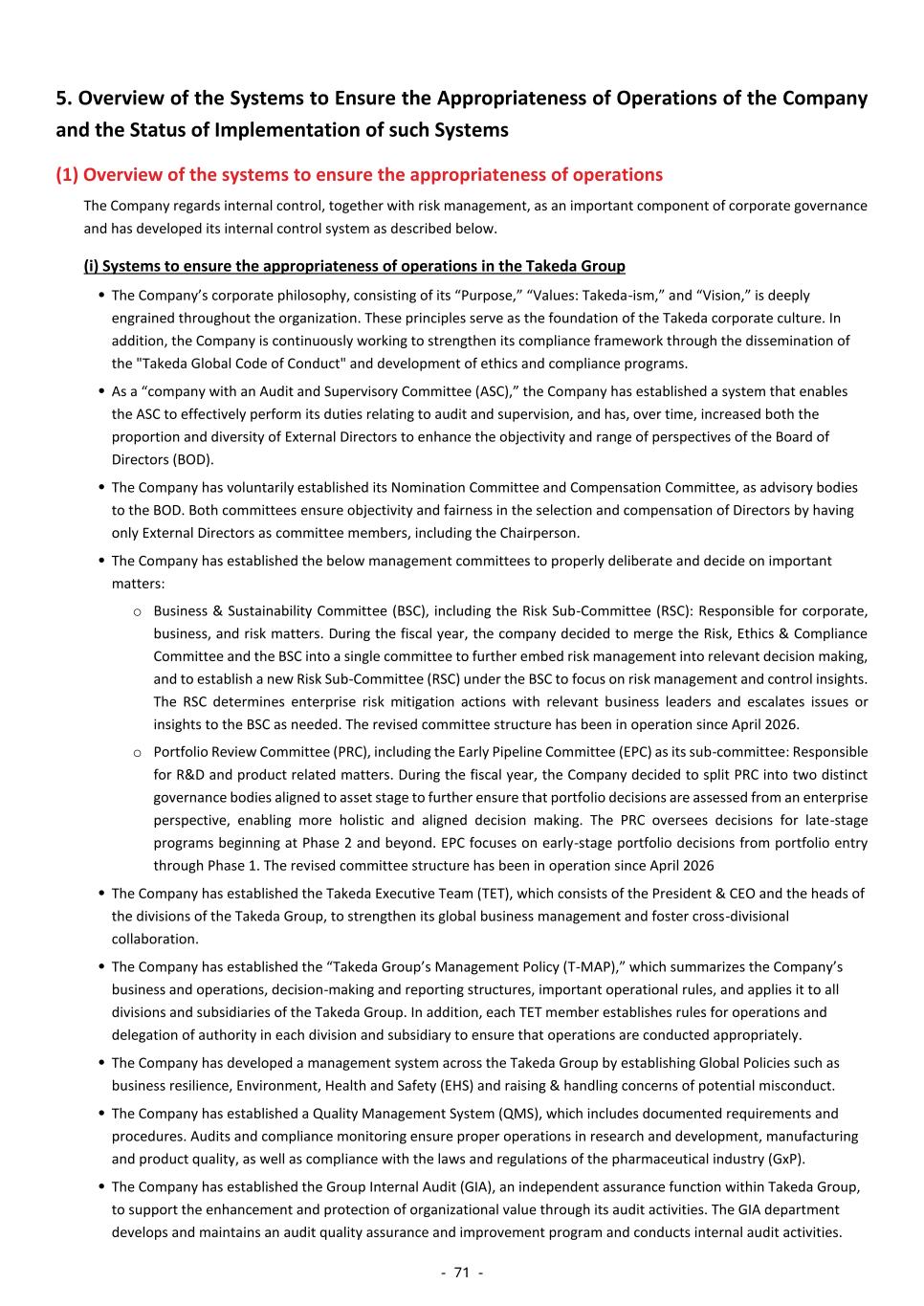
- 71 - 5. Overview of the Systems to Ensure the Appropriateness of Operations of the Company and the Status of Implementation of such Systems (1) Overview of the systems to ensure the appropriateness of operations The Company regards internal control, together with risk management, as an important component of corporate governance and has developed its internal control system as described below. (i) Systems to ensure the appropriateness of operations in the Takeda Group • The Company’s corporate philosophy, consisting of its “Purpose,” “Values: Takeda-ism,” and “Vision,” is deeply engrained throughout the organization. These principles serve as the foundation of the Takeda corporate culture. In addition, the Company is continuously working to strengthen its compliance framework through the dissemination of the "Takeda Global Code of Conduct" and development of ethics and compliance programs. • As a “company with an Audit and Supervisory Committee (ASC),” the Company has established a system that enables the ASC to effectively perform its duties relating to audit and supervision, and has, over time, increased both the proportion and diversity of External Directors to enhance the objectivity and range of perspectives of the Board of Directors (BOD). • The Company has voluntarily established its Nomination Committee and Compensation Committee, as advisory bodies to the BOD. Both committees ensure objectivity and fairness in the selection and compensation of Directors by having only External Directors as committee members, including the Chairperson. • The Company has established the below management committees to properly deliberate and decide on important matters: o Business & Sustainability Committee (BSC), including the Risk Sub-Committee (RSC): Responsible for corporate, business, and risk matters. During the fiscal year, the company decided to merge the Risk, Ethics & Compliance Committee and the BSC into a single committee to further embed risk management into relevant decision making, and to establish a new Risk Sub-Committee (RSC) under the BSC to focus on risk management and control insights. The RSC determines enterprise risk mitigation actions with relevant business leaders and escalates issues or insights to the BSC as needed. The revised committee structure has been in operation since April 2026. o Portfolio Review Committee (PRC), including the Early Pipeline Committee (EPC) as its sub-committee: Responsible for R&D and product related matters. During the fiscal year, the Company decided to split PRC into two distinct governance bodies aligned to asset stage to further ensure that portfolio decisions are assessed from an enterprise perspective, enabling more holistic and aligned decision making. The PRC oversees decisions for late-stage programs beginning at Phase 2 and beyond. EPC focuses on early-stage portfolio decisions from portfolio entry through Phase 1. The revised committee structure has been in operation since April 2026 • The Company has established the Takeda Executive Team (TET), which consists of the President & CEO and the heads of the divisions of the Takeda Group, to strengthen its global business management and foster cross-divisional collaboration. • The Company has established the “Takeda Group’s Management Policy (T-MAP),” which summarizes the Company’s business and operations, decision-making and reporting structures, important operational rules, and applies it to all divisions and subsidiaries of the Takeda Group. In addition, each TET member establishes rules for operations and delegation of authority in each division and subsidiary to ensure that operations are conducted appropriately. • The Company has developed a management system across the Takeda Group by establishing Global Policies such as business resilience, Environment, Health and Safety (EHS) and raising & handling concerns of potential misconduct. • The Company has established a Quality Management System (QMS), which includes documented requirements and procedures. Audits and compliance monitoring ensure proper operations in research and development, manufacturing and product quality, as well as compliance with the laws and regulations of the pharmaceutical industry (GxP). • The Company has established the Group Internal Audit (GIA), an independent assurance function within Takeda Group, to support the enhancement and protection of organizational value through its audit activities. The GIA department develops and maintains an audit quality assurance and improvement program and conducts internal audit activities.
- 72 - (ii) System for retention and management of information concerning the execution of the duties of Directors • The Company has established the “Global Records and Information Management (RIM) Policy” and properly retains and manages the BOD meeting minutes, approvals of management decisions, and other information concerning the execution of the duties of Directors. (iii) Rules and other systems for managing the risk of loss • The Company has established an integrated system that brings together the three areas of enterprise risk management, business continuity management, and crisis management based on the “Global Business Resilience Policy.” ◦ The Company conducts annual enterprise risk assessment for the identification, evaluation, and mitigation planning for prioritized risks. ◦ The Company develops business continuity plans for major risks and essential business areas. ◦ The Company formulates crisis management plans to identify, manage and recover from a crisis and responds to it by organizing a Crisis Management Committee according to the level of impact • The Company has established principles and processes to identify, monitor and report high-risk business activities based on the “Global Monitoring Policy.” • The Company has established a patient safety and quality management framework, under both normal state and crisis mode, to initiate necessary actions for patient safety and quality issues including product recall. (iv) System to ensure that the duties of Directors are executed efficiently • Under the provisions of its Articles of Incorporations, the Company has established a structure that delegates a certain degree of decision-making authorities with respect to business execution to certain Directors. This enables the BOD to focus more on business strategies, internal controls and other important business matters of the Takeda Group. • These matters delegated to certain Directors are discussed and decided at the appropriate management committees, to ensure an agile and effective decision-making process. • The Company has established delegation of authority and decision-making rules such as the "Board of Directors Charter" and "T-MAP" to ensure the duties of the Directors are executed in an appropriate and efficient manner. (v) Systems to ensure that Directors and employees comply with laws and regulations and the Company’s Articles of Incorporation in executing their duties • The Company has established a dedicated department responsible for business ethics and compliance in order to strengthen group-wide compliance systems. • The Company has established its Code of Conduct, global policies (prohibition of bribery, handling of personal information, prohibition of insider trading, etc.) and other compliance-related internal rules and implements training programs throughout the Takeda Group. • The Company has established global policies and internal rules for interactions with healthcare professionals, healthcare entities, patients, patient organizations, government officials and government entities to comply with laws and regulations, which are essential for pharmaceutical companies. • The Company has established guidelines for raising and handling concerns of potential misconduct and has procedures for employees to remain anonymous and ensure their confidentiality through the Takeda Ethics Line. (vi) System to ensure the reliability of financial reporting • The Company ensures the reliability of disclosed materials by establishing and implementing an internal control system for financial reporting based on the 2013 Internal Control - Integrated Framework issued by the Committee of Sponsoring Organizations of the Treadway Commission (COSO). (vii) Basic Views on Eliminating Anti-Social Forces • The Company’s basic policy is to eliminate any relationship, including normal transactions, with antisocial forces that pose a threat to the order or safety of civil society. The Company works to avert any damage from antisocial forces by
- 73 - maintaining close contact with the police, collecting information and providing information and training opportunities internally. (viii) System to ensure that the audits by the Audit and Supervisory Committee are conducted effectively • The Company has established the following system that defines the roles, authority, duties, etc. of the ASC through the “Audit and Supervisory Committee Charter,” as well as internal guidelines regarding the audit and supervision of the ASC. ◦ The ASC Office is established, with dedicated staff members appointed to assist ASC in the execution of duties under the direction of the ASC. The appointment, personnel changes, personnel evaluations and other matters related to the dedicated staff members require the consent of the ASC to ensure the independence from the Directors, of employees who assist the ASC, and the effectiveness of instructions given to such employees by the ASC. ◦ The ASC can access the minutes and materials of important meetings at any time, and is informed on matters concerning the Company’s basic management policy and plans, and material matters including those related to subsidiaries and affiliates of the Company. In addition, any facts that could cause significant damage to the Takeda Group need to be immediately reported to the ASC. ◦ The Company has established a system to ensure that the Directors and employees, would not be subject to any unfavorable treatment for reporting to the ASC. ◦ The Company has established an environment that enables the ASC to conduct systematic audits in cooperation with the internal audit division (to which the ASC is authorized to give instructions), the internal control promotion division and the accounting auditor. ◦ Expenses necessary for the execution of duties by the ASC and the ASC members are borne by the Company.
- 74 - (2) Overview of the status of the implementation of systems to ensure the appropriateness of operations During this fiscal year, the Company made efforts to appropriately implement the systems described in (1) above. The major efforts made by the Company during this fiscal year that are considered important for internal control, are as follows: [Dissemination of the Company’s Corporate Philosophy] • TET members including the President & CEO, are working to permeate the Company’s corporate philosophy throughout the Takeda Group and to its employees. This philosophy includes the company's “Purpose,” “Values: Takeda-ism,” and “Vision.” They are achieving this through various means such as delivering internal messages and holding town hall meetings. [Strengthening of the Corporate Governance Structure] • The Company is a “company with an Audit and Supervisory Committee (ASC)” and has, over time, increased the proportion and diversity of its External Directors to enhance both the objectivity and range of perspectives of the Board of Directors. As of the end of this fiscal year, the BOD consists of 14 members (including three female Directors), of which 11 are External Directors (with the three other Directors being referred to herein as “Internal Directors”). Six Directors are Japanese and eight are foreign nationals. All External Directors meet the applicable criteria of independence established by the financial instruments exchanges. • All ASC members, including the head, are External Directors. • The Company has voluntarily established the Nomination Committee and the Compensation Committee as advisory bodies for the BOD. All members of each Committee, including the Chairperson, are External Directors. [Status of the BOD] • The BOD held eight meetings during this fiscal year, chaired by an External Director. Each Director, drawing from their diverse backgrounds, made appropriate statements from their respective points of view. • As mentioned above, the BOD delegates the authority to decide on important business execution matters to the Internal Directors. This allows the BOD to allocate more time to deliberate on issues that can have a significant impact on the Takeda Group and its management strategies and oversee the performance of the Internal Directors in executing the business. • Prior to each BOD meeting, External Directors receive an explanation of the meeting agenda from the Internal Directors. In addition, when new External Directors are appointed, the Company ensures that they thoroughly understand their legal obligations and provides them with information on the Company’s business environment, strategy, etc. to deepen their understanding. • During the BOD meetings, each External Director actively participates in the discussions and expresses their opinions on the agenda items as appropriate. They provide valuable insights based on their broad experience in corporate management or their deep expertise in specialized areas such as accounting and law. • An evaluation of this fiscal year’s performance and effectiveness of the BOD was conducted by a third-party organization through individual interviews with all of the Directors. The interviews asked directors to assess the BOD across key evaluation areas, including Oversight & Structure, Composition & Recruitment, Process & Operations, Training & Development, and BOD culture and dynamics. Following the interviews, the third-party organization analyzed the results and prepared observations and recommendations. These outcomes were presented to the BOD by the organization and subsequently discussed by all directors at a BOD meeting. • With regard to the effectiveness of the Nomination Committee, committee members conducted a self‑evaluation to confirm its effectiveness, and the results were reported to the BOD. The effectiveness of the Compensation Committee was assessed through committee members’ evaluation using questionnaires developed with support from a third‑party organization, and the Compensation Committee confirmed that it maintains a high level of effectiveness. Based on the results of the self- evaluation, the Compensation Committee reported to the BOD its commitment to continuing efforts to further enhance its effectiveness. • In the BOD’s discussions, based on third‑party interviews, the following were identified as key strengths of the Company’s BOD: a trusted CEO–Board relationship, a distinctive BOD culture, experienced directors, methodical governance practices, and thoughtfully calibrated BOD support. As a result, the evaluation concluded that the Company’s BOD is operating effectively. • Given that the Company’s BOD is currently navigating a period of transition, including the offboarding of experienced directors and a CEO transition, the BOD discussed, as near‑term priorities, three areas: sustaining BOD culture through the transition, prioritizing director onboarding, and strengthening oversight of strategy, risk and performance, particularly with
- 75 - respect to the successful execution of strategic product launches. The effectiveness of the ASC was confirmed through self- evaluations. [Efforts to develop the internal control system in the Takeda Group] • For matters other than those that need to be resolved by the Company’s decision-making bodies (specifically, the BOD, the Business & Sustainability Committee, the Portfolio Review Committee), decision-making authority is delegated to the TET members which consists of the President & CEO and the heads of the Takeda Group. The delegation of authority from TET members to their subordinates is conducted based on the “Global Policy - Delegation of Authority.” • The Group Internal Audit (GIA) department conducted an internal audit of each business unit/function of the Company and each group company based on the “Group Internal Audit Charter,” and reported the results to the President & CEO, ASC, and BOD. In addition, the GIA department conducted verification procedures to assess the effectiveness of internal control systems for financial reporting and reported the results to the Global Finance division. • The Global Finance division confirmed the effectiveness of the internal controls of financial reporting of the Company’s business unit/function. This was confirmed based on (i) the results of its testing program, which evaluated the design and operating effectiveness of our controls, as well as (ii) answers to self-assessment through questionnaires received from the heads of each business unit/function of the Company. In addition, the Global Finance division reported the final assessment, including the results of the testing, to the Chief Financial Officer (CFO), President & CEO, ASC and BOD. • The Global Quality division maintained the Company’s commitment to, and vision for quality, and conducted global quality assurance for the Takeda Group based on the “Global Quality Policy.” • The Corporate EHS department confirmed the roles and responsibilities of its personnel to effectively monitor and execute the Company’s environmental, occupational health and safety management activities. Additionally, based on Takeda's "Global Environment, Health, and Safety Policy" and other publicly available Takeda environmental positions, the Corporate EHS department sets specific targets and conducted internal audits of the Takeda group from the perspectives of environmental management, occupational health and safety, and compliance. [Efforts to promote compliance] • The Company monitored potentially high-risk business activities, and made continuous improvements based on identified root causes. • Takeda Group’s compliance-related issues were regularly reported to the Risk, Ethics & Compliance Committee and the ASC, and to the BOD and the TET in a timely manner. [Efforts relating to risk management] • The principal enterprise risks and their mitigation measures of this fiscal year were discussed and validated at the Risk, Ethics & Compliance Committee through an enterprise risk assessment report. • The enterprise risk assessment report was discussed and approved by the BOD. Responsibility for execution of the risk mitigation measures was delegated to TET risk owners. • Other concrete efforts relating to risk management for this fiscal year are as follows: † Through the risk coordinator community within the Takeda Group, the Company promotes upskilling in risk management practices and knowledge sharing. The Company also uses a simple and user-friendly enterprise risk assessment tool, which facilitates a single view of risk across the Company. Based on this technology-based solution, the Company expects to promote efficiency and improve its ability to analyze risk data and trends and take a more data-driven approach. † In addition, the Company undertakes educational initiatives and simulations for the purpose of enhancing processes and level of proficiency associated with crisis management activities such as pandemic situations, shortages of critical therapies and market actions, natural disasters, and geopolitical risks. † With respect to product quality risk, the Company integrates the identification, assessment and control of risks into its Quality Management System and provides risk management tools, training and support to employees who are involved in R&D, manufacturing and quality. † The Company conducts various risk assessments and assurance activities in relation to data privacy and Artificial Intelligence (AI) risks. † The Company conducted the following actions for cybersecurity: – Since the Company recognizes the critical role that cybersecurity plays in ensuring trusted digital interactions with the Company’s stakeholders, the Data, Digital & Technology Risk, Ethics & Compliance Committee continued to meet regularly throughout the year to address digital risk decisions, including those related to cybersecurity.
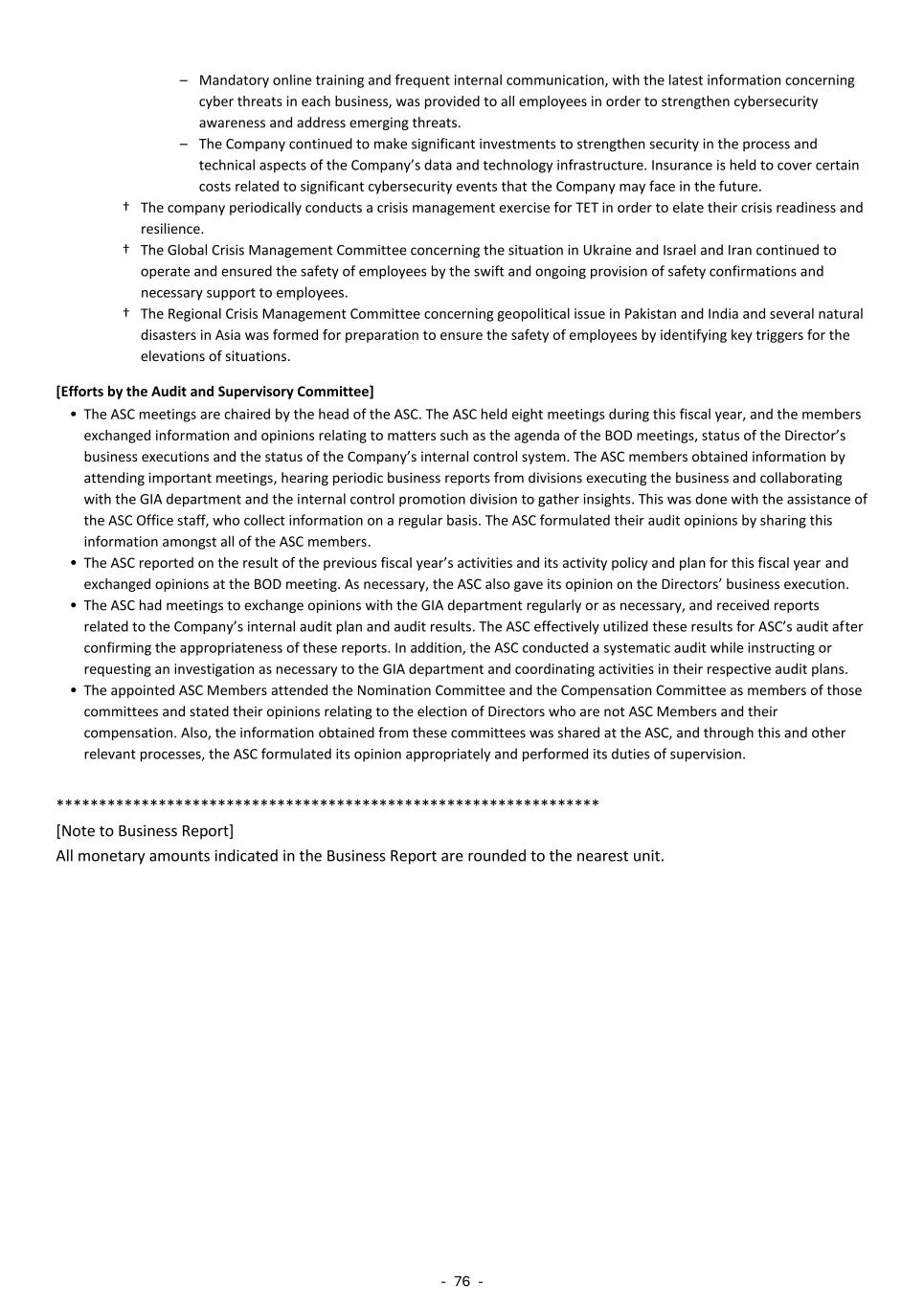
- 76 - – Mandatory online training and frequent internal communication, with the latest information concerning cyber threats in each business, was provided to all employees in order to strengthen cybersecurity awareness and address emerging threats. – The Company continued to make significant investments to strengthen security in the process and technical aspects of the Company’s data and technology infrastructure. Insurance is held to cover certain costs related to significant cybersecurity events that the Company may face in the future. † The company periodically conducts a crisis management exercise for TET in order to elate their crisis readiness and resilience. † The Global Crisis Management Committee concerning the situation in Ukraine and Israel and Iran continued to operate and ensured the safety of employees by the swift and ongoing provision of safety confirmations and necessary support to employees. † The Regional Crisis Management Committee concerning geopolitical issue in Pakistan and India and several natural disasters in Asia was formed for preparation to ensure the safety of employees by identifying key triggers for the elevations of situations. [Efforts by the Audit and Supervisory Committee] • The ASC meetings are chaired by the head of the ASC. The ASC held eight meetings during this fiscal year, and the members exchanged information and opinions relating to matters such as the agenda of the BOD meetings, status of the Director’s business executions and the status of the Company’s internal control system. The ASC members obtained information by attending important meetings, hearing periodic business reports from divisions executing the business and collaborating with the GIA department and the internal control promotion division to gather insights. This was done with the assistance of the ASC Office staff, who collect information on a regular basis. The ASC formulated their audit opinions by sharing this information amongst all of the ASC members. • The ASC reported on the result of the previous fiscal year’s activities and its activity policy and plan for this fiscal year and exchanged opinions at the BOD meeting. As necessary, the ASC also gave its opinion on the Directors’ business execution. • The ASC had meetings to exchange opinions with the GIA department regularly or as necessary, and received reports related to the Company’s internal audit plan and audit results. The ASC effectively utilized these results for ASC’s audit after confirming the appropriateness of these reports. In addition, the ASC conducted a systematic audit while instructing or requesting an investigation as necessary to the GIA department and coordinating activities in their respective audit plans. • The appointed ASC Members attended the Nomination Committee and the Compensation Committee as members of those committees and stated their opinions relating to the election of Directors who are not ASC Members and their compensation. Also, the information obtained from these committees was shared at the ASC, and through this and other relevant processes, the ASC formulated its opinion appropriately and performed its duties of supervision. **************************************************************** [Note to Business Report] All monetary amounts indicated in the Business Report are rounded to the nearest unit.
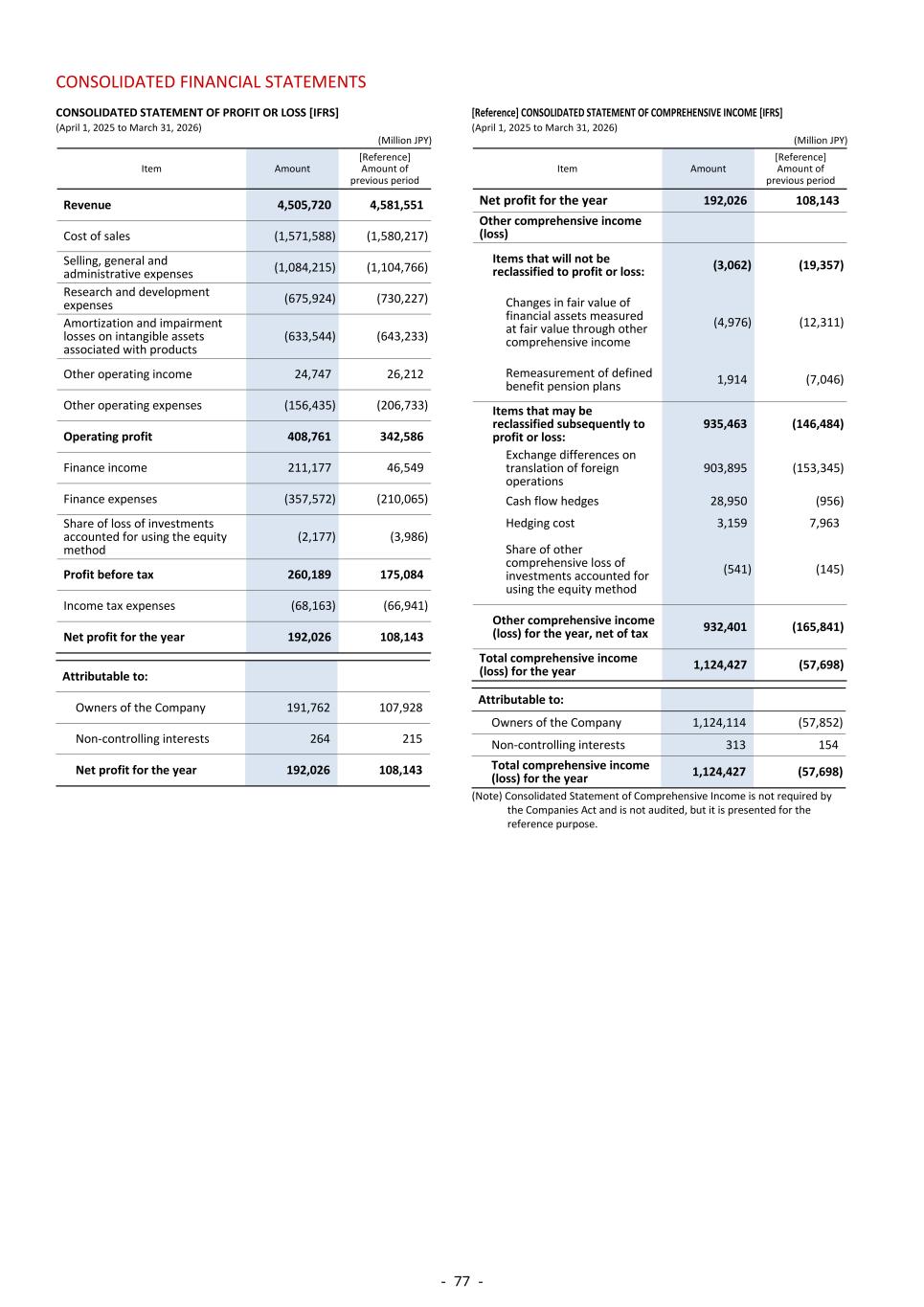
- 77 - CONSOLIDATED FINANCIAL STATEMENTS CONSOLIDATED STATEMENT OF PROFIT OR LOSS [IFRS] [Reference] CONSOLIDATED STATEMENT OF COMPREHENSIVE INCOME [IFRS] (April 1, 2025 to March 31, 2026) (April 1, 2025 to March 31, 2026) (Million JPY) (Million JPY) Item Amount [Reference] Amount of previous period Revenue 4,505,720 4,581,551 Cost of sales (1,571,588) (1,580,217) Selling, general and administrative expenses (1,084,215) (1,104,766) Research and development expenses (675,924) (730,227) Amortization and impairment losses on intangible assets associated with products (633,544) (643,233) Other operating income 24,747 26,212 Other operating expenses (156,435) (206,733) Operating profit 408,761 342,586 Finance income 211,177 46,549 Finance expenses (357,572) (210,065) Share of loss of investments accounted for using the equity method (2,177) (3,986) Profit before tax 260,189 175,084 Income tax expenses (68,163) (66,941) Net profit for the year 192,026 108,143 Attributable to: Owners of the Company 191,762 107,928 Non-controlling interests 264 215 Net profit for the year 192,026 108,143 Item Amount [Reference] Amount of previous period Net profit for the year 192,026 108,143 Other comprehensive income (loss) Items that will not be reclassified to profit or loss: (3,062) (19,357) Changes in fair value of financial assets measured at fair value through other comprehensive income (4,976) (12,311) Remeasurement of defined benefit pension plans 1,914 (7,046) Items that may be reclassified subsequently to profit or loss: 935,463 (146,484) Exchange differences on translation of foreign operations 903,895 (153,345) Cash flow hedges 28,950 (956) Hedging cost 3,159 7,963 Share of other comprehensive loss of investments accounted for using the equity method (541) (145) Other comprehensive income (loss) for the year, net of tax 932,401 (165,841) Total comprehensive income (loss) for the year 1,124,427 (57,698) Attributable to: Owners of the Company 1,124,114 (57,852) Non-controlling interests 313 154 Total comprehensive income (loss) for the year 1,124,427 (57,698) (Note) Consolidated Statement of Comprehensive Income is not required by the Companies Act and is not audited, but it is presented for the reference purpose.
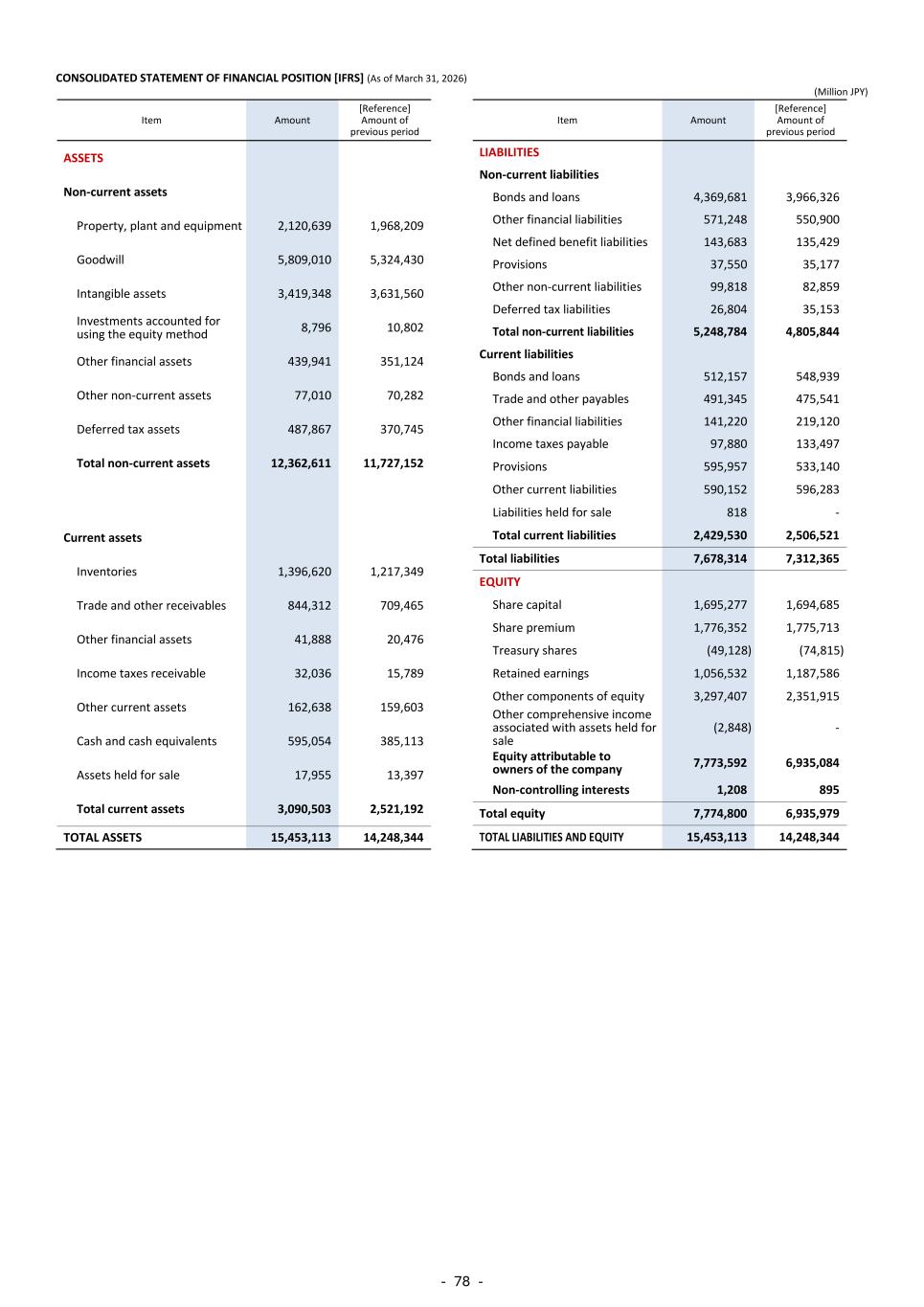
- 78 - CONSOLIDATED STATEMENT OF FINANCIAL POSITION [IFRS] (As of March 31, 2026) (Million JPY) Item Amount [Reference] Amount of previous period ASSETS Non-current assets Property, plant and equipment 2,120,639 1,968,209 Goodwill 5,809,010 5,324,430 Intangible assets 3,419,348 3,631,560 Investments accounted for using the equity method 8,796 10,802 Other financial assets 439,941 351,124 Other non-current assets 77,010 70,282 Deferred tax assets 487,867 370,745 Total non-current assets 12,362,611 11,727,152 Current assets Inventories 1,396,620 1,217,349 Trade and other receivables 844,312 709,465 Other financial assets 41,888 20,476 Income taxes receivable 32,036 15,789 Other current assets 162,638 159,603 Cash and cash equivalents 595,054 385,113 Assets held for sale 17,955 13,397 Total current assets 3,090,503 2,521,192 TOTAL ASSETS 15,453,113 14,248,344 Item Amount [Reference] Amount of previous period LIABILITIES Non-current liabilities Bonds and loans 4,369,681 3,966,326 Other financial liabilities 571,248 550,900 Net defined benefit liabilities 143,683 135,429 Provisions 37,550 35,177 Other non-current liabilities 99,818 82,859 Deferred tax liabilities 26,804 35,153 Total non-current liabilities 5,248,784 4,805,844 Current liabilities Bonds and loans 512,157 548,939 Trade and other payables 491,345 475,541 Other financial liabilities 141,220 219,120 Income taxes payable 97,880 133,497 Provisions 595,957 533,140 Other current liabilities 590,152 596,283 Liabilities held for sale 818 - Total current liabilities 2,429,530 2,506,521 Total liabilities 7,678,314 7,312,365 EQUITY Share capital 1,695,277 1,694,685 Share premium 1,776,352 1,775,713 Treasury shares (49,128) (74,815) Retained earnings 1,056,532 1,187,586 Other components of equity 3,297,407 2,351,915 Other comprehensive income associated with assets held for sale (2,848) - Equity attributable to owners of the company 7,773,592 6,935,084 Non-controlling interests 1,208 895 Total equity 7,774,800 6,935,979 TOTAL LIABILITIES AND EQUITY 15,453,113 14,248,344
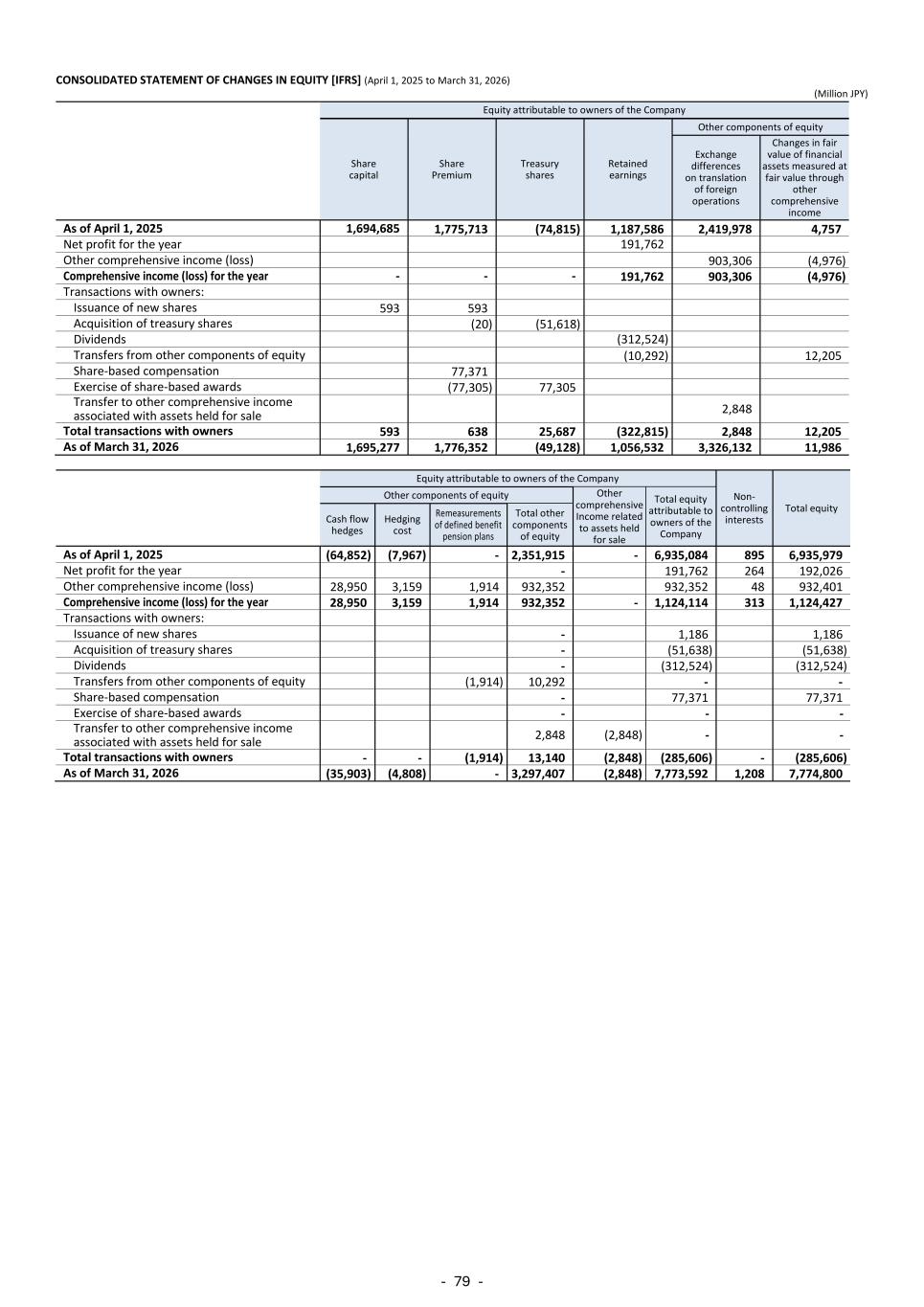
- 79 - CONSOLIDATED STATEMENT OF CHANGES IN EQUITY [IFRS] (April 1, 2025 to March 31, 2026) (Million JPY) Equity attributable to owners of the Company Share capital Share Premium Treasury shares Retained earnings Other components of equity Exchange differences on translation of foreign operations Changes in fair value of financial assets measured at fair value through other comprehensive income As of April 1, 2025 1,694,685 1,775,713 (74,815) 1,187,586 2,419,978 4,757 Net profit for the year 191,762 Other comprehensive income (loss) 903,306 (4,976) Comprehensive income (loss) for the year - - - 191,762 903,306 (4,976) Transactions with owners: Issuance of new shares 593 593 Acquisition of treasury shares (20) (51,618) Dividends (312,524) Transfers from other components of equity (10,292) 12,205 Share-based compensation 77,371 Exercise of share-based awards (77,305) 77,305 Transfer to other comprehensive income associated with assets held for sale 2,848 Total transactions with owners 593 638 25,687 (322,815) 2,848 12,205 As of March 31, 2026 1,695,277 1,776,352 (49,128) 1,056,532 3,326,132 11,986 Equity attributable to owners of the Company Non- controlling interests Total equity Other components of equity Other comprehensive Income related to assets held for sale Total equity attributable to owners of the Company Cash flow hedges Hedging cost Remeasurements of defined benefit pension plans Total other components of equity As of April 1, 2025 (64,852) (7,967) - 2,351,915 - 6,935,084 895 6,935,979 Net profit for the year - 191,762 264 192,026 Other comprehensive income (loss) 28,950 3,159 1,914 932,352 932,352 48 932,401 Comprehensive income (loss) for the year 28,950 3,159 1,914 932,352 - 1,124,114 313 1,124,427 Transactions with owners: Issuance of new shares - 1,186 1,186 Acquisition of treasury shares - (51,638) (51,638) Dividends - (312,524) (312,524) Transfers from other components of equity (1,914) 10,292 - - Share-based compensation - 77,371 77,371 Exercise of share-based awards - - - Transfer to other comprehensive income associated with assets held for sale 2,848 (2,848) - - Total transactions with owners - - (1,914) 13,140 (2,848) (285,606) - (285,606) As of March 31, 2026 (35,903) (4,808) - 3,297,407 (2,848) 7,773,592 1,208 7,774,800
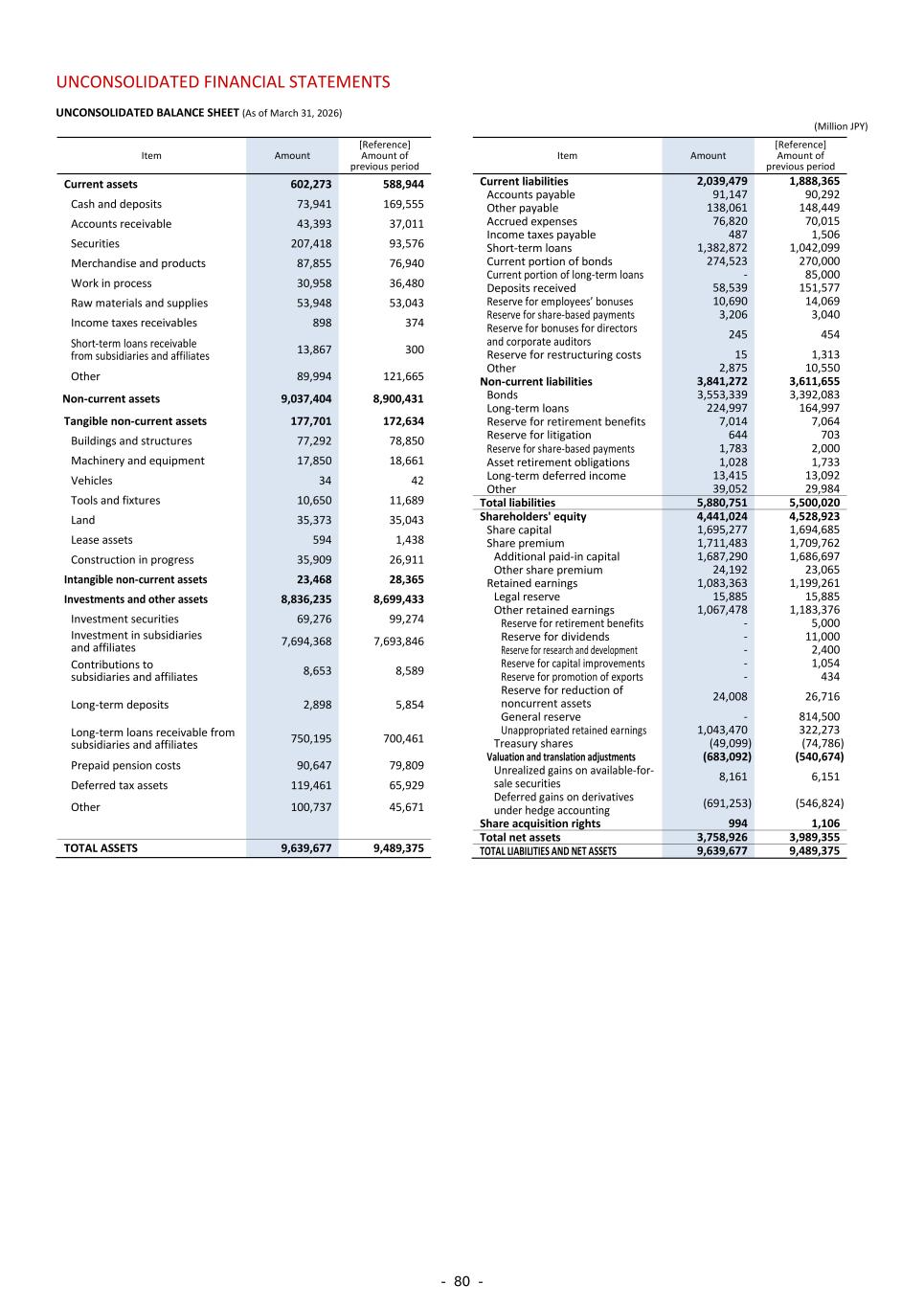
- 80 - UNCONSOLIDATED FINANCIAL STATEMENTS UNCONSOLIDATED BALANCE SHEET (As of March 31, 2026) (Million JPY) Item Amount [Reference] Amount of previous period Current assets 602,273 588,944 Cash and deposits 73,941 169,555 Accounts receivable 43,393 37,011 Securities 207,418 93,576 Merchandise and products 87,855 76,940 Work in process 30,958 36,480 Raw materials and supplies 53,948 53,043 Income taxes receivables 898 374 Short-term loans receivable from subsidiaries and affiliates 13,867 300 Other 89,994 121,665 Non-current assets 9,037,404 8,900,431 Tangible non-current assets 177,701 172,634 Buildings and structures 77,292 78,850 Machinery and equipment 17,850 18,661 Vehicles 34 42 Tools and fixtures 10,650 11,689 Land 35,373 35,043 Lease assets 594 1,438 Construction in progress 35,909 26,911 Intangible non-current assets 23,468 28,365 Investments and other assets 8,836,235 8,699,433 Investment securities 69,276 99,274 Investment in subsidiaries and affiliates 7,694,368 7,693,846 Contributions to subsidiaries and affiliates 8,653 8,589 Long-term deposits 2,898 5,854 Long-term loans receivable from subsidiaries and affiliates 750,195 700,461 Prepaid pension costs 90,647 79,809 Deferred tax assets 119,461 65,929 Other 100,737 45,671 TOTAL ASSETS 9,639,677 9,489,375 Item Amount [Reference] Amount of previous period Current liabilities 2,039,479 1,888,365 Accounts payable 91,147 90,292 Other payable 138,061 148,449 Accrued expenses 76,820 70,015 Income taxes payable 487 1,506 Short-term loans 1,382,872 1,042,099 Current portion of bonds 274,523 270,000 Current portion of long-term loans - 85,000 Deposits received 58,539 151,577 Reserve for employees’ bonuses 10,690 14,069 Reserve for share-based payments 3,206 3,040 Reserve for bonuses for directors and corporate auditors 245 454 Reserve for restructuring costs 15 1,313 Other 2,875 10,550 Non-current liabilities 3,841,272 3,611,655 Bonds 3,553,339 3,392,083 Long-term loans 224,997 164,997 Reserve for retirement benefits 7,014 7,064 Reserve for litigation 644 703 Reserve for share-based payments 1,783 2,000 Asset retirement obligations 1,028 1,733 Long-term deferred income 13,415 13,092 Other 39,052 29,984 Total liabilities 5,880,751 5,500,020 Shareholders' equity 4,441,024 4,528,923 Share capital 1,695,277 1,694,685 Share premium 1,711,483 1,709,762 Additional paid-in capital 1,687,290 1,686,697 Other share premium 24,192 23,065 Retained earnings 1,083,363 1,199,261 Legal reserve 15,885 15,885 Other retained earnings 1,067,478 1,183,376 Reserve for retirement benefits - 5,000 Reserve for dividends - 11,000 Reserve for research and development - 2,400 Reserve for capital improvements - 1,054 Reserve for promotion of exports - 434 Reserve for reduction of noncurrent assets 24,008 26,716 General reserve - 814,500 Unappropriated retained earnings 1,043,470 322,273 Treasury shares (49,099) (74,786) Valuation and translation adjustments (683,092) (540,674) Unrealized gains on available-for- sale securities 8,161 6,151 Deferred gains on derivatives under hedge accounting (691,253) (546,824) Share acquisition rights 994 1,106 Total net assets 3,758,926 3,989,355 TOTAL LIABILITIES AND NET ASSETS 9,639,677 9,489,375
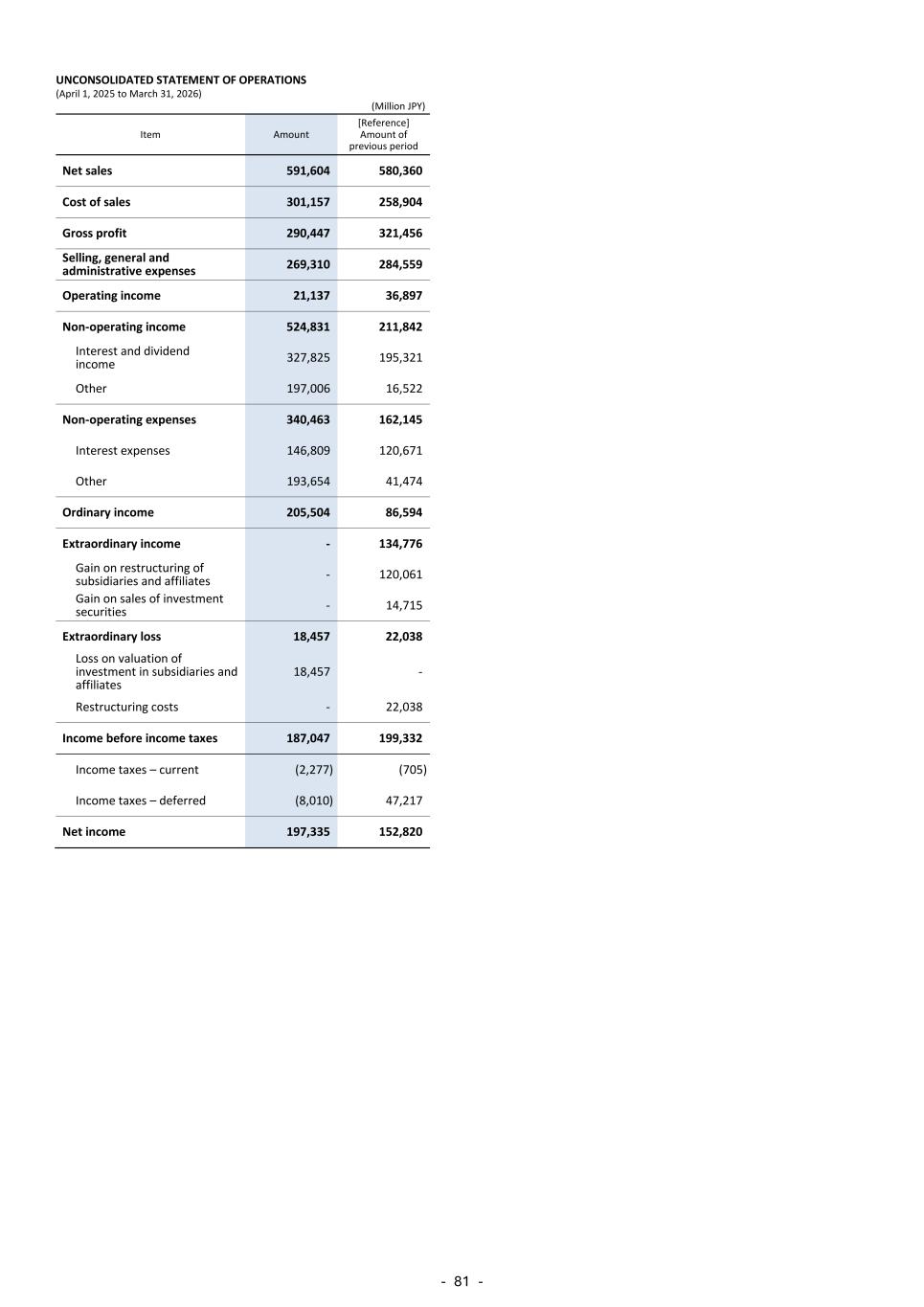
- 81 - UNCONSOLIDATED STATEMENT OF OPERATIONS (April 1, 2025 to March 31, 2026) (Million JPY) Item Amount [Reference] Amount of previous period Net sales 591,604 580,360 Cost of sales 301,157 258,904 Gross profit 290,447 321,456 Selling, general and administrative expenses 269,310 284,559 Operating income 21,137 36,897 Non-operating income 524,831 211,842 Interest and dividend income 327,825 195,321 Other 197,006 16,522 Non-operating expenses 340,463 162,145 Interest expenses 146,809 120,671 Other 193,654 41,474 Ordinary income 205,504 86,594 Extraordinary income - 134,776 Gain on restructuring of subsidiaries and affiliates - 120,061 Gain on sales of investment securities - 14,715 Extraordinary loss 18,457 22,038 Loss on valuation of investment in subsidiaries and affiliates 18,457 - Restructuring costs - 22,038 Income before income taxes 187,047 199,332 Income taxes – current (2,277) (705) Income taxes – deferred (8,010) 47,217 Net income 197,335 152,820
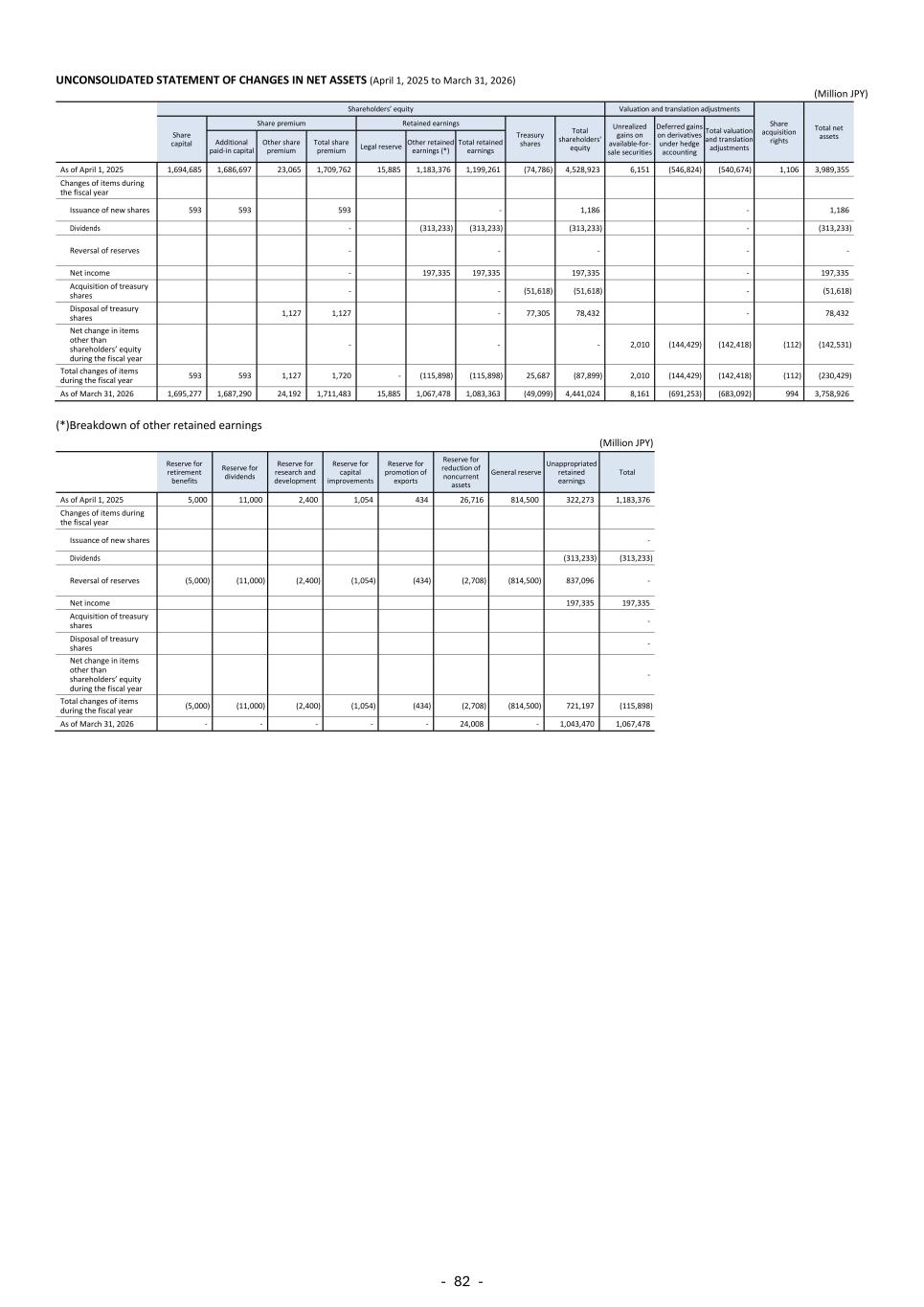
- 82 - UNCONSOLIDATED STATEMENT OF CHANGES IN NET ASSETS (April 1, 2025 to March 31, 2026) (Million JPY) Shareholders’ equity Valuation and translation adjustments Share acquisition rights Total net assets Share capital Share premium Retained earnings Treasury shares Total shareholders' equity Unrealized gains on available-for- sale securities Deferred gains on derivatives under hedge accounting Total valuation and translation adjustments Additional paid-in capital Other share premium Total share premium Legal reserve Other retained earnings (*) Total retained earnings As of April 1, 2025 1,694,685 1,686,697 23,065 1,709,762 15,885 1,183,376 1,199,261 (74,786) 4,528,923 6,151 (546,824) (540,674) 1,106 3,989,355 Changes of items during the fiscal year Issuance of new shares 593 593 593 - 1,186 - 1,186 Dividends - (313,233) (313,233) (313,233) - (313,233) Reversal of reserves - - - - - Net income - 197,335 197,335 197,335 - 197,335 Acquisition of treasury shares - - (51,618) (51,618) - (51,618) Disposal of treasury shares 1,127 1,127 - 77,305 78,432 - 78,432 Net change in items other than shareholders’ equity during the fiscal year - - - 2,010 (144,429) (142,418) (112) (142,531) Total changes of items during the fiscal year 593 593 1,127 1,720 - (115,898) (115,898) 25,687 (87,899) 2,010 (144,429) (142,418) (112) (230,429) As of March 31, 2026 1,695,277 1,687,290 24,192 1,711,483 15,885 1,067,478 1,083,363 (49,099) 4,441,024 8,161 (691,253) (683,092) 994 3,758,926 (*)Breakdown of other retained earnings (Million JPY) Reserve for retirement benefits Reserve for dividends Reserve for research and development Reserve for capital improvements Reserve for promotion of exports Reserve for reduction of noncurrent assets General reserve Unappropriated retained earnings Total As of April 1, 2025 5,000 11,000 2,400 1,054 434 26,716 814,500 322,273 1,183,376 Changes of items during the fiscal year Issuance of new shares - Dividends (313,233) (313,233) Reversal of reserves (5,000) (11,000) (2,400) (1,054) (434) (2,708) (814,500) 837,096 - Net income 197,335 197,335 Acquisition of treasury shares - Disposal of treasury shares - Net change in items other than shareholders’ equity during the fiscal year - Total changes of items during the fiscal year (5,000) (11,000) (2,400) (1,054) (434) (2,708) (814,500) 721,197 (115,898) As of March 31, 2026 - - - - - 24,008 - 1,043,470 1,067,478
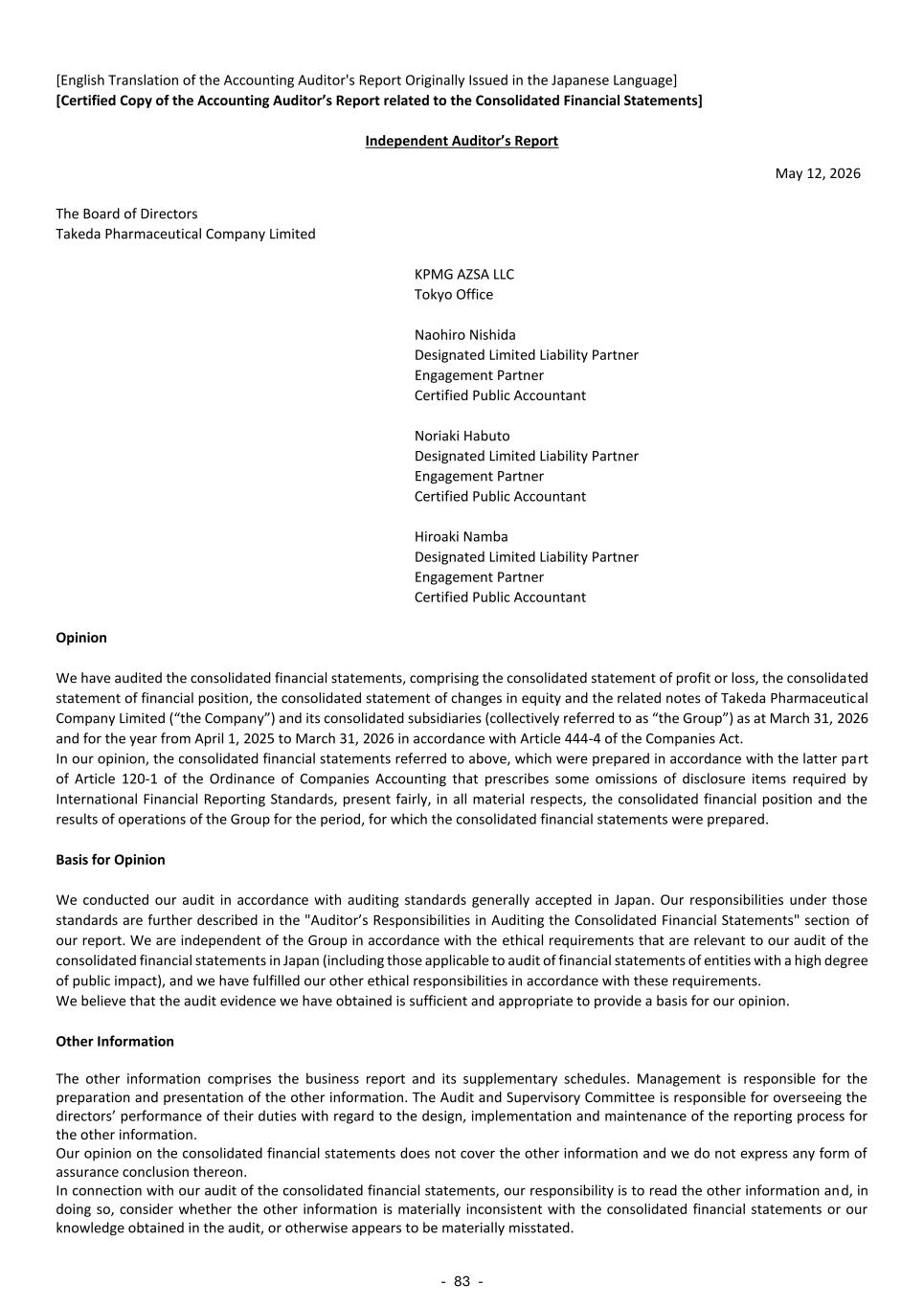
- 83 - [English Translation of the Accounting Auditor's Report Originally Issued in the Japanese Language] [Certified Copy of the Accounting Auditor’s Report related to the Consolidated Financial Statements] Independent Auditor’s Report May 12, 2026 The Board of Directors Takeda Pharmaceutical Company Limited KPMG AZSA LLC Tokyo Office Naohiro Nishida Designated Limited Liability Partner Engagement Partner Certified Public Accountant Noriaki Habuto Designated Limited Liability Partner Engagement Partner Certified Public Accountant Hiroaki Namba Designated Limited Liability Partner Engagement Partner Certified Public Accountant Opinion We have audited the consolidated financial statements, comprising the consolidated statement of profit or loss, the consolidated statement of financial position, the consolidated statement of changes in equity and the related notes of Takeda Pharmaceutical Company Limited (“the Company”) and its consolidated subsidiaries (collectively referred to as “the Group”) as at March 31, 2026 and for the year from April 1, 2025 to March 31, 2026 in accordance with Article 444-4 of the Companies Act. In our opinion, the consolidated financial statements referred to above, which were prepared in accordance with the latter part of Article 120-1 of the Ordinance of Companies Accounting that prescribes some omissions of disclosure items required by International Financial Reporting Standards, present fairly, in all material respects, the consolidated financial position and the results of operations of the Group for the period, for which the consolidated financial statements were prepared. Basis for Opinion We conducted our audit in accordance with auditing standards generally accepted in Japan. Our responsibilities under those standards are further described in the "Auditor’s Responsibilities in Auditing the Consolidated Financial Statements" section of our report. We are independent of the Group in accordance with the ethical requirements that are relevant to our audit of the consolidated financial statements in Japan (including those applicable to audit of financial statements of entities with a high degree of public impact), and we have fulfilled our other ethical responsibilities in accordance with these requirements. We believe that the audit evidence we have obtained is sufficient and appropriate to provide a basis for our opinion. Other Information The other information comprises the business report and its supplementary schedules. Management is responsible for the preparation and presentation of the other information. The Audit and Supervisory Committee is responsible for overseeing the directors’ performance of their duties with regard to the design, implementation and maintenance of the reporting process for the other information. Our opinion on the consolidated financial statements does not cover the other information and we do not express any form of assurance conclusion thereon. In connection with our audit of the consolidated financial statements, our responsibility is to read the other information and, in doing so, consider whether the other information is materially inconsistent with the consolidated financial statements or our knowledge obtained in the audit, or otherwise appears to be materially misstated.
- 84 - If, based on the work we have performed, we conclude that there is a material misstatement of this other information, we are required to report that fact. We have nothing to report in this regard. Responsibilities of the Management and Audit and Supervisory Committee for the Consolidated Financial Statements Management is responsible for the preparation and fair presentation of the consolidated financial statements in accordance with the latter part of Article 120-1 of the Ordinance of Companies Accounting that prescribes some omissions of disclosure items required by International Financial Reporting Standards, and for such internal control as management determines is necessary to enable the preparation of consolidated financial statements that are free from material misstatements, whether due to fraud or error. In preparing the consolidated financial statements, management shall (i) evaluate whether or not it is appropriate to prepare the consolidated financial statements based on the premise of a going concern, unless the management intends to liquidate or suspend the business or there is no other practical alternative but to do so, and (ii) disclose matters relating to a going concern if it is necessary to do so in accordance with the provisions of the latter part of Article 120-1 of the Ordinance of Companies Accounting that prescribes some omissions of disclosure items required by International Financial Reporting Standards. The Audit and Supervisory Committee is responsible for overseeing the directors’ performance of their duties with regards to the design, implementation, and maintenance of the Group’s financial reporting process. Auditor’s Responsibilities in Auditing the Consolidated Financial Statements Our responsibilities are to express an opinion on the consolidated financial statements based on our audit as independent auditor in the Auditor’s Report, obtaining reasonable assurance as to whether the consolidated financial statements as a whole are free of material misstatements, whether due to fraud or error. Misstatements can arise from fraud or error, and if it is reasonably expected to affect the decision-making of users of the consolidated financial statements individually or in the aggregate, it is considered material. In accordance with auditing standards generally accepted in Japan, we exercise professional judgment throughout the course of audit, maintain professional skepticism, and perform the following: ⚫ We identify and assess the risks of material misstatements, whether due to fraud or error. Also, we design and implement audit procedures that address the risks of material misstatements. The selection and application of audit procedures is at our discretion. In addition, we obtain sufficient and appropriate audit evidence to form the basis of the opinion. ⚫ In making those risk assessments, we consider internal control relevant to the audit in order to design audit procedures that are appropriate in the circumstances, while the objective of auditing the consolidated financial statements is not for the purpose of expressing an opinion on the effectiveness of the Group’s internal control. ⚫ We evaluate the appropriateness of the accounting policies adopted by management and the method of application thereof, as well as the reasonableness of accounting estimates made by management and the adequacy of related disclosures. ⚫ We conclude whether it is appropriate for management to prepare consolidated financial statements on the premise of a going concern, and whether there is significant uncertainty regarding events or circumstances that may cause significant doubts on the premise of a going concern based on the audit evidence obtained. We are required to draw attention to the related disclosures on the consolidated financial statements in the Auditor’s Report if significant uncertainties regarding the premise of a going concern are observed, or to express a qualified opinion with a description of qualification if such disclosures on the consolidated financial statements regarding significant uncertainties are not appropriate. Though our conclusions are based on audit evidence obtained up to the date of the Auditor’s Report, future events and circumstances may prevent the Group from continuing as a going concern. ⚫ We evaluate whether the presentation and disclosures of the consolidated financial statements comply with the provisions of the latter part of Article 120-1 of the Ordinance of Companies Accounting that prescribes some omissions of disclosure items required by International Financial Reporting Standards. In addition, we evaluate whether the presentation, structure and content of the consolidated financial statements, including the disclosures, properly present the underlying transactions and accounting events. ⚫ We plan and perform the group audit to obtain sufficient appropriate audit evidence regarding the financial information of the entities or business activities within the Group as a basis for forming an opinion on the group financial statements. We are responsible for the direction, supervision and review of the audit work performed for the purpose of the group audit. We remain solely responsible for our audit opinion. We report to the Audit and Supervisory Committee regarding, among other matters, the planned scope and timing of the audit, significant findings regarding the audit including any significant deficiencies in internal controls identified during the audit process, and any other matters required by relevant audit standards. We report to the Audit and Supervisory Committee on our compliance with Japan's professional ethics regulations regarding independence, and communicate with them matters that could reasonably be considered to bear on our independence, and where applicable, measures taken to eliminate threats or safeguards applied.

- 85 - Interest required to be disclosed by the Certified Public Accountants Act of Japan Our firm and its designated engagement partners have no interest in the Group which should be disclosed pursuant to the provisions of the Certified Public Accountants Act of Japan. Notes to the Reader of Independent Auditor’s Report: The Independent Auditor’s Report herein is the English translation of the Independent Auditor’s Report as required by the Companies Act. End of Document
- 86 - [English Translation of the Accounting Auditor's Report Originally Issued in the Japanese Language] [Certified Copy of the Accounting Auditor’s Report] Independent Auditor’s Report May 12, 2026 The Board of Directors Takeda Pharmaceutical Company Limited KPMG AZSA LLC Tokyo Office Naohiro Nishida Designated Limited Liability Partner Engagement Partner Certified Public Accountant Noriaki Habuto Designated Limited Liability Partner Engagement Partner Certified Public Accountant Hiroaki Namba Designated Limited Liability Partner Engagement Partner Certified Public Accountant Opinion We have audited the financial statements, comprising the unconsolidated balance sheet, the unconsolidated statement of operations, the unconsolidated statement of changes in net assets and the related notes to the unconsolidated financial statements, as well as the supplementary schedules of Takeda Pharmaceutical Company Limited (“the Company”) as at March 31, 2026 and for the 149th fiscal year from April 1, 2025 to March 31, 2026 (“the Financial Statements and Others”) in accordance with Article 436-2-1 of the Companies Act. In our opinion, the Financial Statements and Others referred to above present fairly, in all material respects, the financial position and the results of operations of the Company for the period, for which the Financial Statements and Others were prepared, in accordance with accounting principles generally accepted in Japan. Basis for Opinion We conducted our audit in accordance with auditing standards generally accepted in Japan. Our responsibilities under those standards are further described in the "Auditor’s Responsibilities in Auditing the Financial Statements and Others" section of our report. We are independent of the Company in accordance with the ethical requirements that are relevant to our audit of the financial statements in Japan (including those applicable to audit of financial statements of entities with a high degree of public impact) and we have fulfilled our other ethical responsibilities in accordance with these requirements. We believe that the audit evidence we have obtained is sufficient and appropriate to provide a basis for our opinion. Other Information The other information comprises the business report and its supplementary schedules. Management is responsible for the preparation and presentation of the other information. The Audit and Supervisory Committee is responsible for overseeing the directors’ performance of their duties with regard to the design, implementation and maintenance of the reporting process for the other information. Our opinion on the financial statements and the accompanying supplementary schedules does not cover the other information and we do not express any form of assurance conclusion thereon. In connection with our audit of the financial statements and the accompanying supplementary schedules, our responsibility is to read the other information and, in doing so, consider whether the other information is materially inconsistent with the financial statements and the accompanying supplementary schedules or our knowledge obtained in the audit, or otherwise appears to be materially misstated.
- 87 - If, based on the work we have performed, we conclude that there is a material misstatement of this other information, we are required to report that fact. We have nothing to report in this regard. Responsibilities of the Management and Audit and Supervisory Committee for the Financial Statements and Others Management is responsible for the preparation and fair presentation of the Financial Statements and Others in accordance with accounting principles generally accepted in Japan, and for such internal control as management determines is necessary to enable the preparation of the Financial Statements and Others that are free from material misstatements, whether due to fraud or error. In preparing the Financial Statements and Others, the management shall (i) evaluate whether or not it is appropriate to prepare the Financial Statements and Others based on the premise of a going concern, and (ii) disclose matters relating to a going concern if it is necessary to do so in accordance with accounting principles generally accepted in Japan. The Audit and Supervisory Committee is responsible for overseeing the directors’ performance of their with regards to the design, implementation and maintenance of the financial reporting process. Auditor’s Responsibilities in Auditing the Financial Statements and Others Our responsibilities are to express an opinion on the Financial Statements and Others based on our audit as independent auditor in the Auditor’s Report, obtaining reasonable assurance as to whether the Financial Statements and Others as a whole are free of material misstatements, whether due to fraud or error. Misstatements can arise from fraud or error, and if it is reasonably expected to affect the decision-making of users of the Financial Statements and Others when individually or in the aggregate, it is considered material. In accordance with auditing standards generally accepted in Japan, we exercise professional judgment throughout the course of audit, maintain professional skepticism, and perform the following: ⚫ We identify and assess the risks of material misstatements, whether due to fraud or error. Also, we design and implement audit procedures that address the risks of material misstatements. The selection and application of audit procedures is at our discretion. In addition, we obtain sufficient and appropriate audit evidence to form the basis of the opinion. ⚫ In making those risk assessments, we consider internal control relevant to the audit in order to design audit procedures that are appropriate in the circumstances, while the objective of auditing the Financial Statements and Others is not for the purpose of expressing an opinion on the effectiveness of the Company’s internal control. ⚫ We evaluate the appropriateness of the accounting policies adopted by management and the method of application thereof, as well as the reasonableness of accounting estimates made by management and the adequacy of related disclosures. ⚫ We conclude whether it is appropriate for management to prepare Financial Statements and Others on the premise of a going concern, and whether there is significant uncertainty regarding events or circumstances that may cause significant doubts on the premise of a going concern based on the audit evidence obtained. We are required to draw attention to the related disclosures on the Financial Statements and Others in the Auditor’s Report if significant uncertainties regarding the premise of a going concern are observed, or to express a qualified opinion with a description of qualification if such disclosures on the Financial Statements and Others regarding significant uncertainties are not appropriate. Though our conclusions are based on audit evidence obtained up to the date of the Auditor’s Report, future events and circumstances may prevent the Company from continuing as a going concern. ⚫ We evaluate whether the presentation and disclosures of the Financial Statements and Others comply with accounting standards generally accepted in Japan. In addition, we evaluate whether the presentation, structure and content of the Financial Statements and Others, including the disclosures, properly present the underlying transactions and accounting events. We report to the Audit and Supervisory Committee regarding, among other matters, the planned scope and timing of the audit, significant findings regarding the audit including any significant deficiencies in internal controls identified during the audit process, and any other matters required by relevant audit standards. We report to the Audit and Supervisory Committee on our compliance with Japan's professional ethics regulations regarding independence, and communicate with them matters that could reasonably be considered to bear on our independence, and where applicable, measures taken to eliminate threats or safeguards applied. Interest required to be disclosed by the Certified Public Accountants Act of Japan Our firm and its designated engagement partners have no interest in the Company which should be disclosed pursuant to the provisions of the Certified Public Accountants Act of Japan. Notes to the Reader of Independent Auditor’s Report: The Independent Auditor’s Report herein is the English translation of the Independent Auditor’s Report as required by the Companies Act. End of Document
- 88 - [English Translation of the Report of the Audit and Supervisory Committee Originally Issued in the Japanese Language] [Certified Copy of the Audit Report of the Audit and Supervisory Committee] Audit Report The Audit and Supervisory Committee has audited the Directors’ performance of their duties for the 149th business year from April 1, 2025 to March 31, 2026, and hereby reports the method and results of those audits, as follows: 1. Method and Contents of Audits (1) With regard to the content of the resolutions of the Board of Directors regarding the matters stated in Article 399-13, Paragraph (1), Items (i)(b) and (i)(c) of the Companies Act, as well as the systems developed pursuant to those resolutions (i.e., internal control systems), the Audit and Supervisory Committee periodically received reports from the Directors and employees, etc. regarding the status of the establishment and operation of those systems and, as necessary, requested explanations and expressed opinions with regard thereto. The Committee also received reports from Directors, etc. and KPMG AZSA LLC on the status of the evaluation and audit of the internal controls related to financial reporting and requested explanations as necessary. (2) The Audit and Supervisory Committee performed its duties based on the Audit and Supervisory Committee Charter determined by the Audit and Supervisory Committee. In accordance with the audit policies, audit plan and division of duties, etc., the Audit and Supervisory Committee attended important meetings, received reports from the Directors and employees, etc. regarding matters related to the performance of their duties, requested explanations as necessary, reviewed the important materials used for the deliberation and reporting, and inspected the status of operations and assets in cooperation with the internal audit division and the internal control promotion division to which the Audit and Supervisory Committee is authorized to give instructions. As for subsidiaries of the Company, the Audit and Supervisory Committee received reports on the audit results from the internal audit division, and, as necessary, received reports on the businesses of the subsidiaries from the Directors and employees, etc. of the subsidiaries and exchanged opinions with them. (3) The Audit and Supervisory Committee oversaw and verified whether the Accounting Auditor maintained an independent position and conducted an appropriate audit, received reports from the Accounting Auditor on the status of the performance of its duties, and requested explanations as necessary. Additionally, the Audit and Supervisory Committee received a notification from the Accounting Auditor that, in accordance with the “Quality Control Standard for Audits” (Business Accounting Council), etc., it had developed systems in order to ensure that its duties are appropriately performed (i.e., notification of the matters stated in the items under Article 131 of the Ordinance on Accounting of Companies) and requested explanations as necessary. Using the methods above, the Audit and Supervisory Committee examined the Business Report, the supplementary schedules thereto, the unconsolidated financial statements (i.e., the unconsolidated balance sheet, the unconsolidated statements of operations, the unconsolidated statements of changes in net assets, and the notes to the unconsolidated financial statements), the supplementary schedules to the unconsolidated financial statements, and the consolidated financial statements (i.e., the consolidated statement of financial position, consolidated statement of profit or loss, consolidated statement of changes in equity and the notes to the consolidated financial statements, which were prepared omitting the part of the items required to be disclosed using the International Financial Reporting Standards in accordance with the latter clause of Paragraph 1, Article 120 of the Ordinance on Accounting of Companies) for the business year. 2. Audit Results (1) Results of the audit of the Business Report, etc. (i) We find that the Business Report and the supplementary schedules thereto accurately present the status of the Company in accordance with laws, regulations, and the Articles of Incorporation. (ii) We do not find any misconduct or any material fact constituting a violation of any law, regulation, or the Articles of Incorporation with respect to the Directors’ performance of their duties. (iii) We find the content of the resolutions of the Board of Directors regarding internal control systems to be reasonable. Additionally, we do not find any matters that should be commented upon with regard to the statement of Business Report or the Directors’ performance of their duties relating to the internal control systems, including the internal

- 89 - controls over financial reporting. (2) Results of the audit of the unconsolidated financial statements and the supplementary schedules thereto We find the methods and results of the audit by the Accounting Auditors, KPMG AZSA LLC to be reasonable. (3) Results of the audit of the consolidated financial statements We find the methods and the results of the audit by the Accounting Auditors, KPMG AZSA LLC to be reasonable. May 12, 2026 The Audit and Supervisory Committee of Takeda Pharmaceutical Company Limited Audit and Supervisory Committee Member Koji Hatsukawa Audit and Supervisory Committee Member Jean-Luc Butel Audit and Supervisory Committee Member Yoshiaki Fujimori Audit and Supervisory Committee Member Kimberly A. Reed Note: Audit and Supervisory Committee Members Koji Hatsukawa, Jean-Luc Butel, Yoshiaki Fujimori and Kimberly A. Reed are External Directors provided for in Article 2, Item 15 and Article 331, Paragraph 6 of the Companies Act. (END)