
SECURITIES AND EXCHANGE COMMISSION
Washington, D.C. 20549
FORM 6-K
Report of Foreign Private Issuer
Pursuant to Rule 13a-16 or 15d-16 of the
Securities Exchange Act of 1934
For the month of July, 2026
Commission File Number 1-34129
AXIA Energia S.A.
(Exact name of registrant as specified in its charter)
AXIA Energia S.A.
(Translation of Registrant's name into English)
Avenida Graça Aranha, 26
Centro, CEP 20030-900
Rio de Janeiro, RJ, Brazil
(Address of principal executive office)
Indicate by check mark whether the registrant files or will file annual reports under cover Form 20-F or Form 40-F.
Form 20-F ___X___ Form 40-F _______
Indicate by check mark whether the registrant by furnishing the information contained in this Form is also thereby furnishing the information to the Commission pursuant to Rule 12g3-2(b) under the Securities Exchange Act of 1934.
Yes _______ No___X____
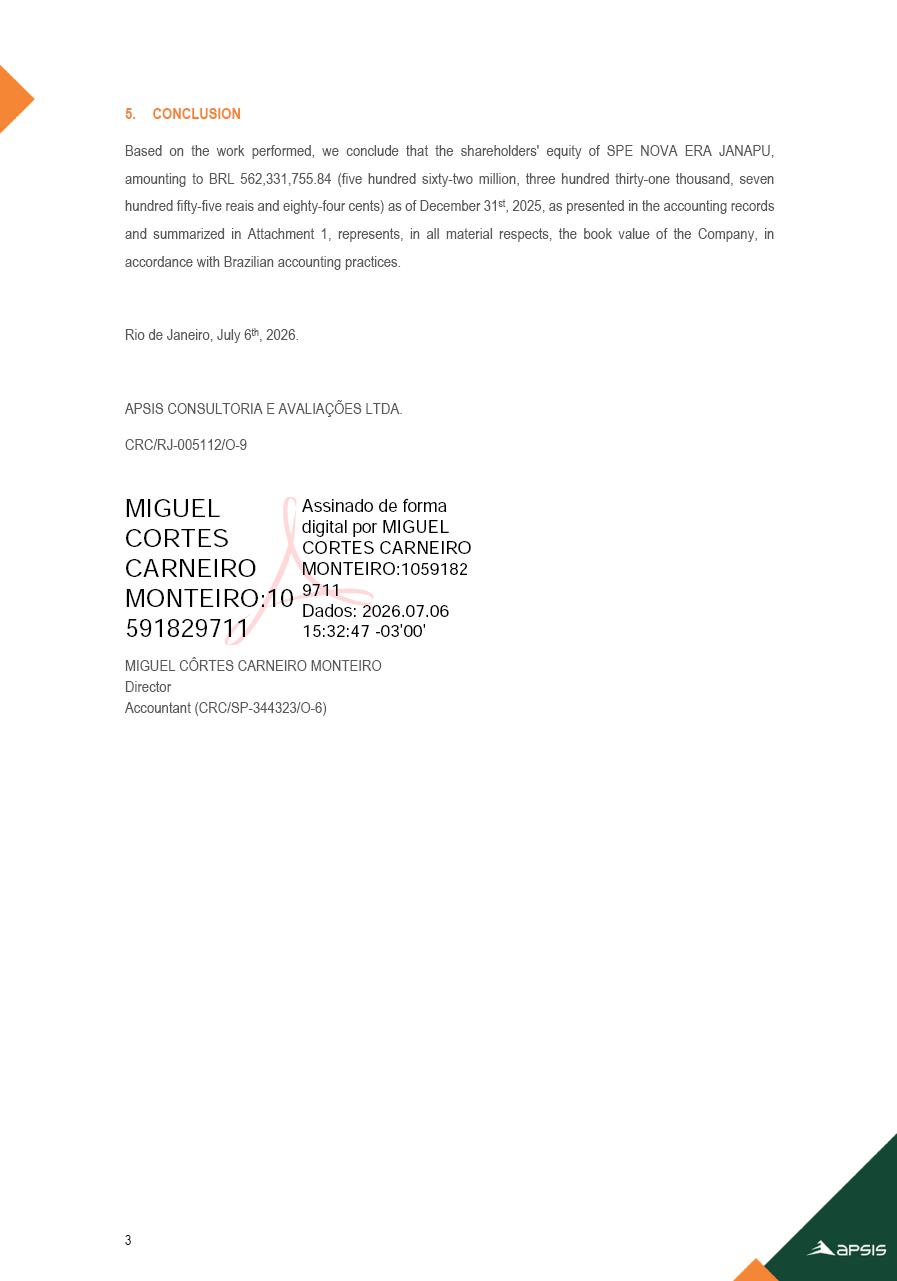
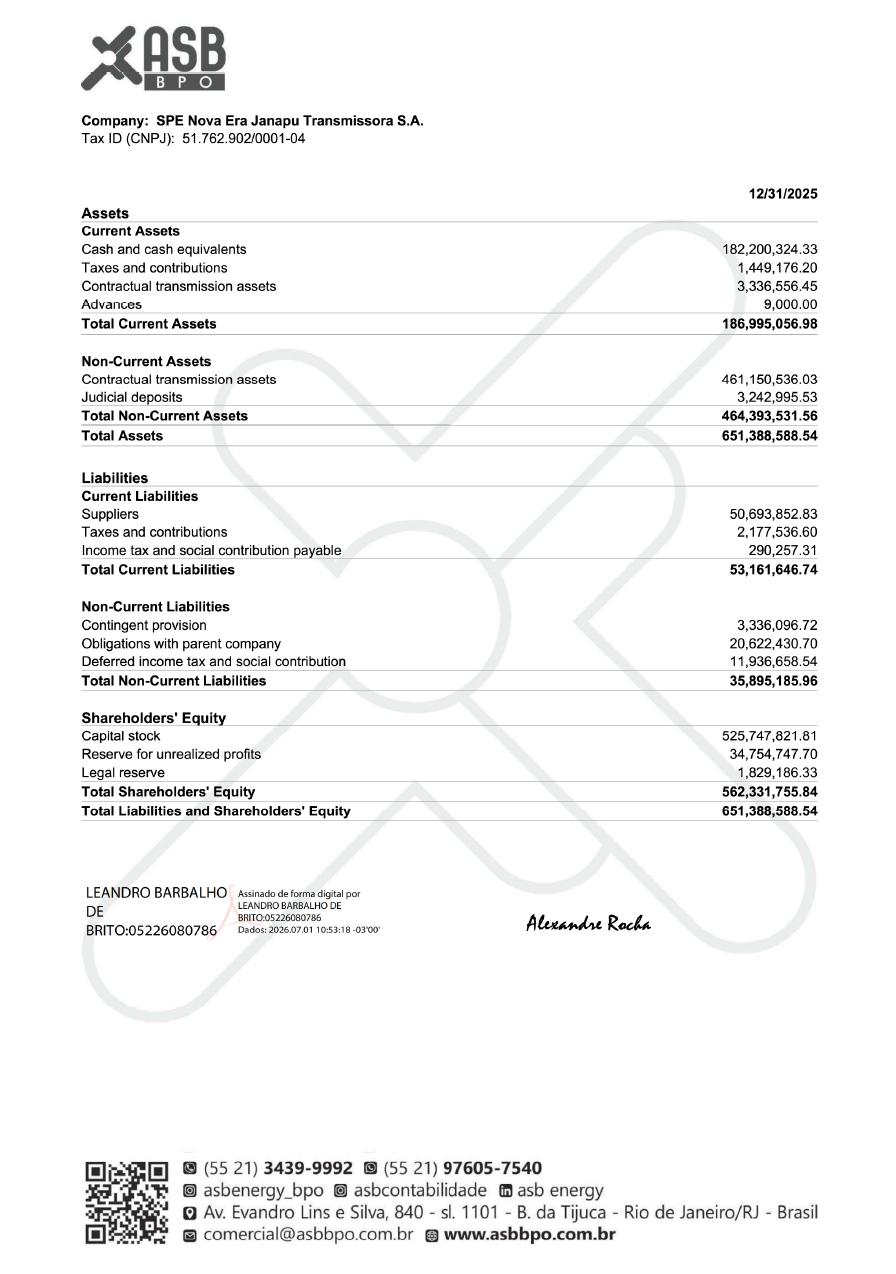
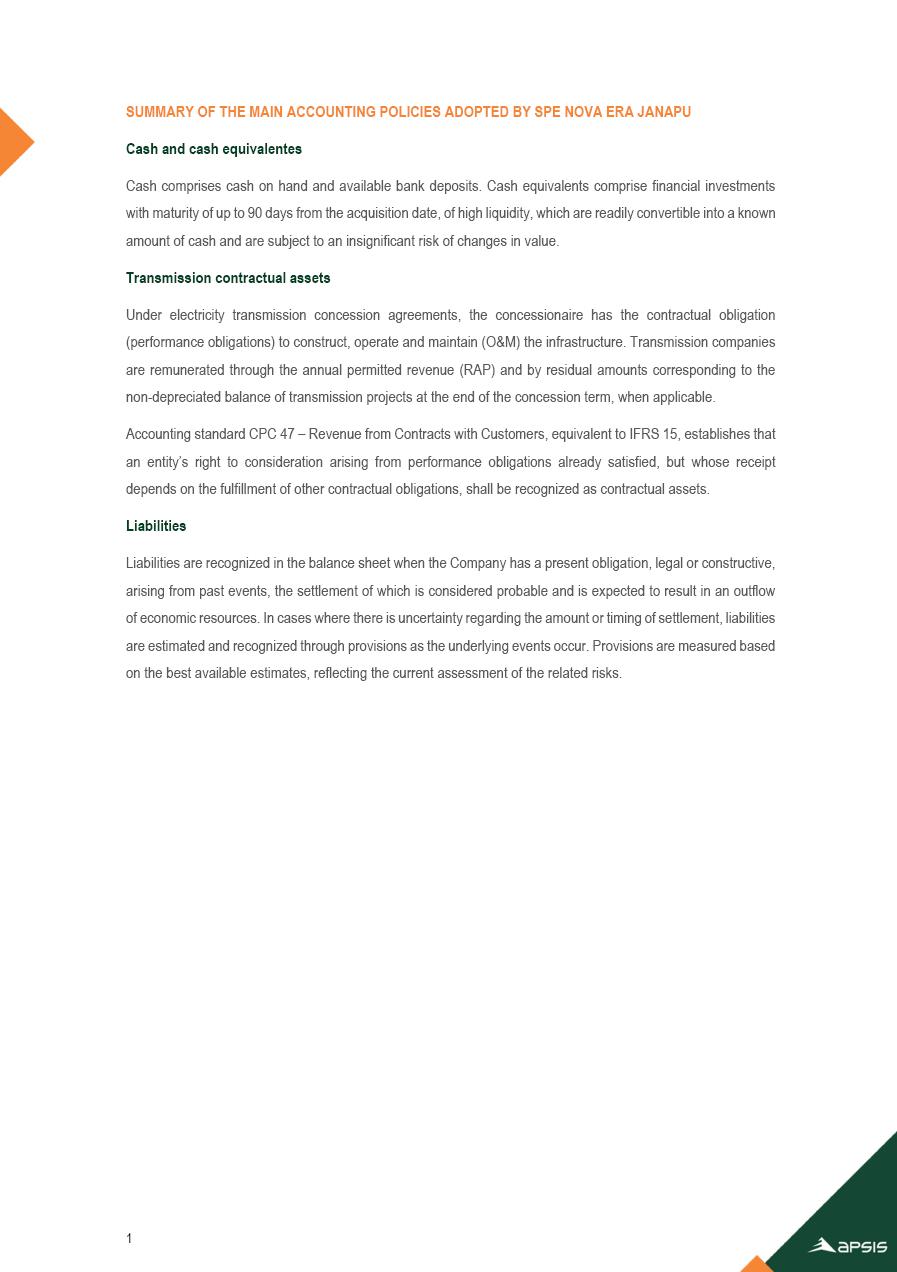
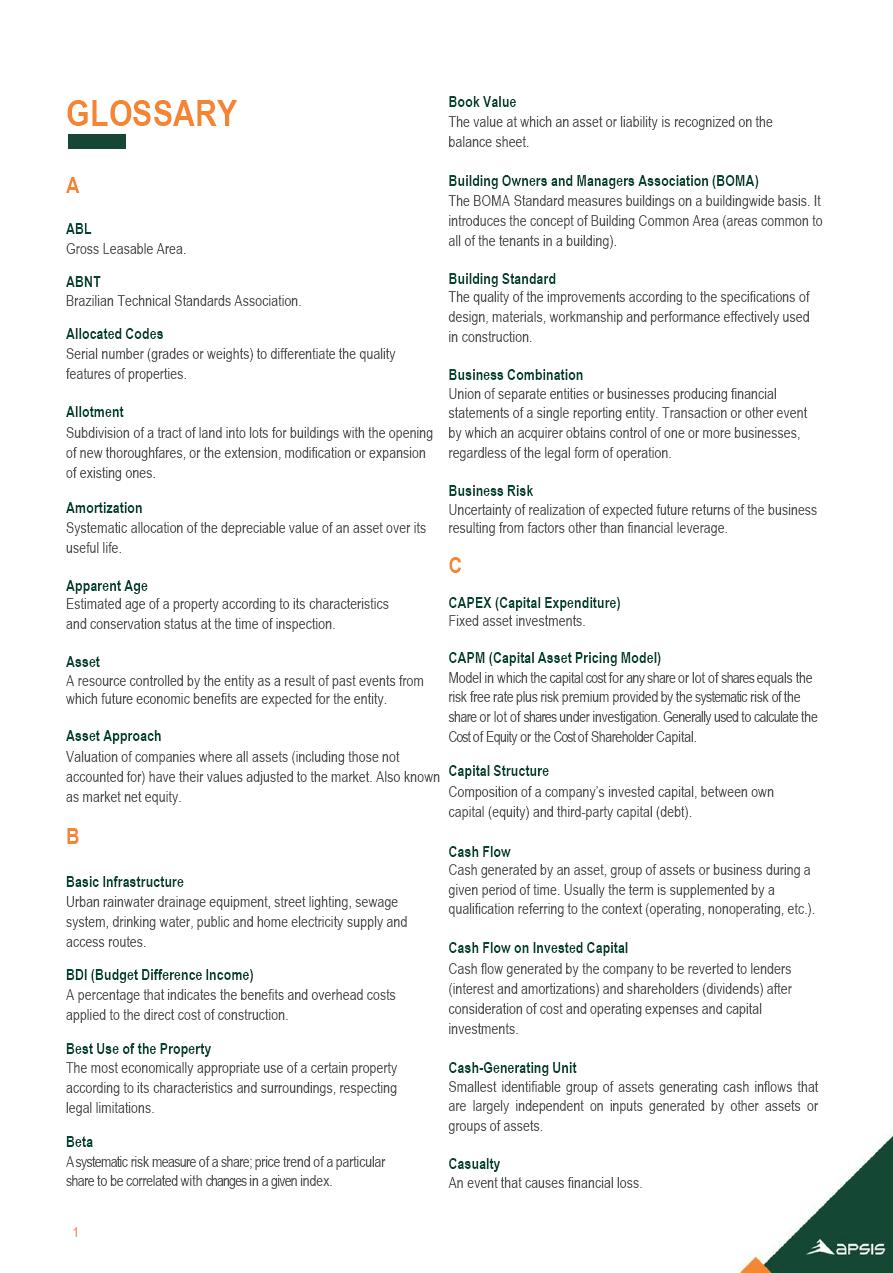
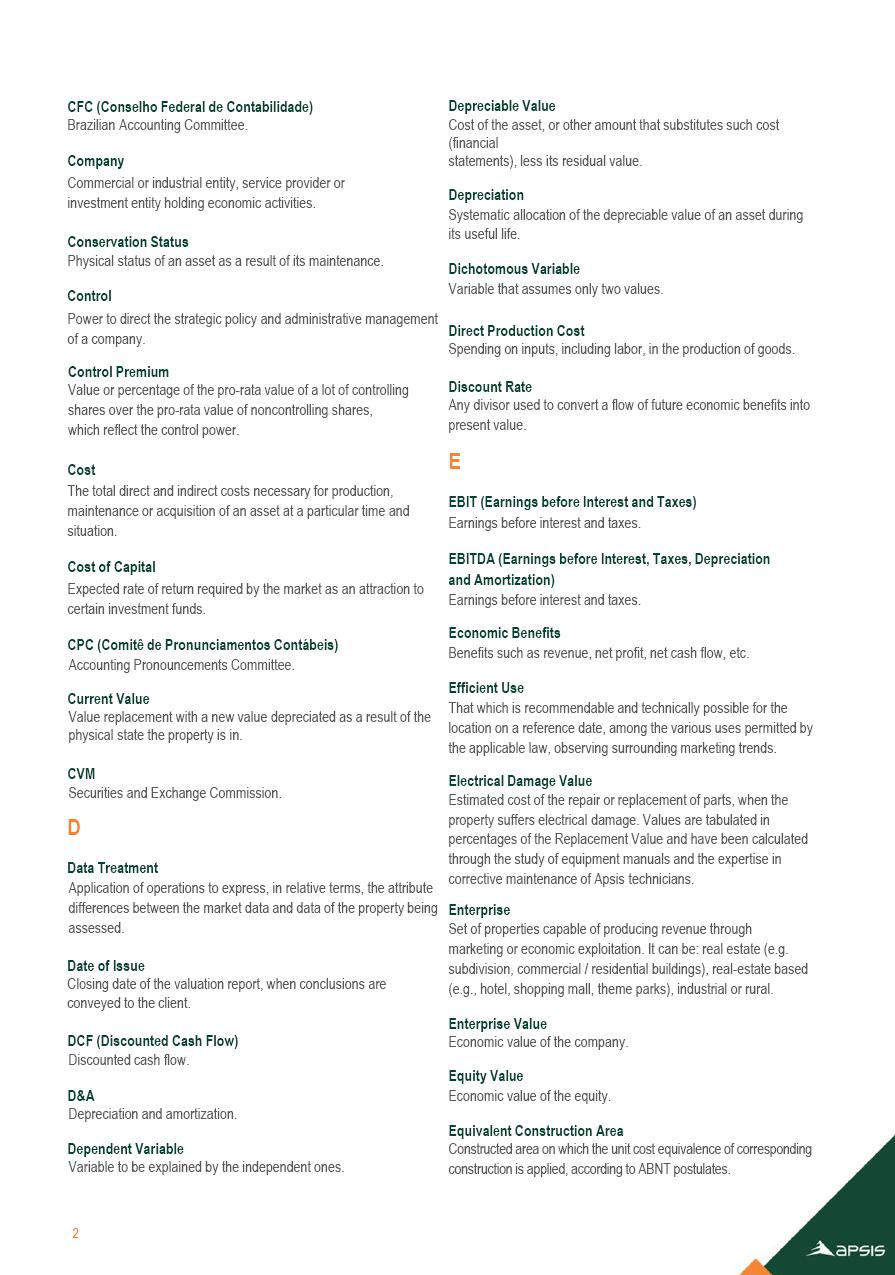
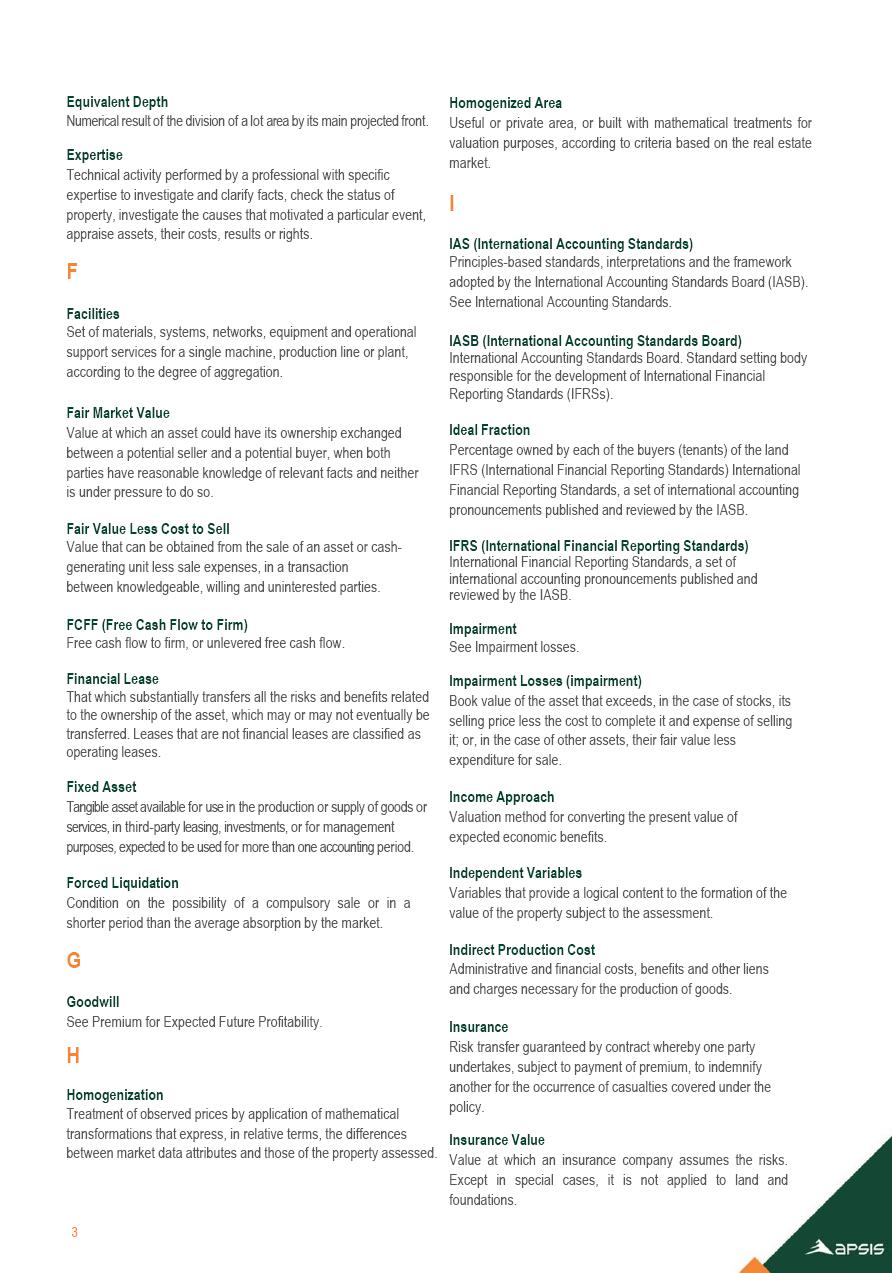
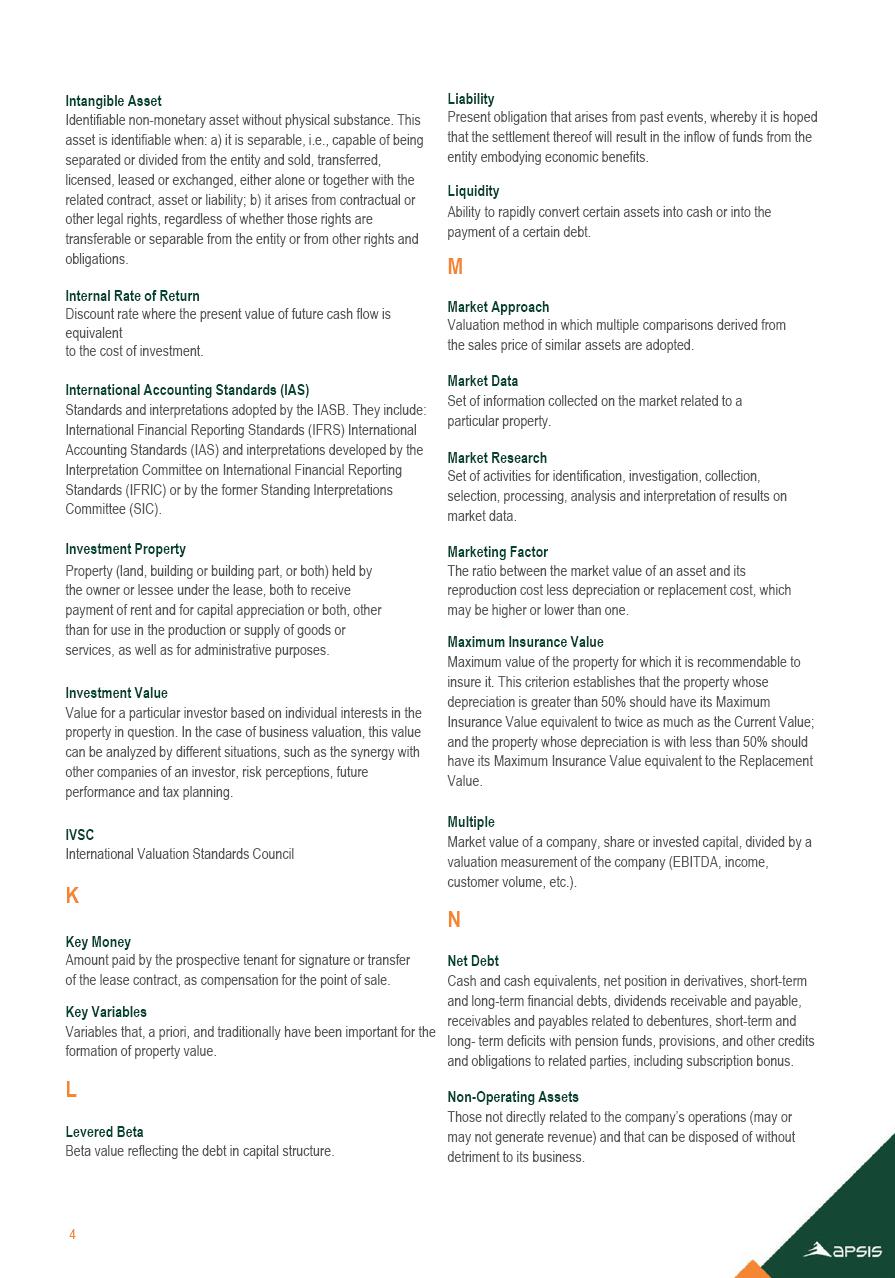
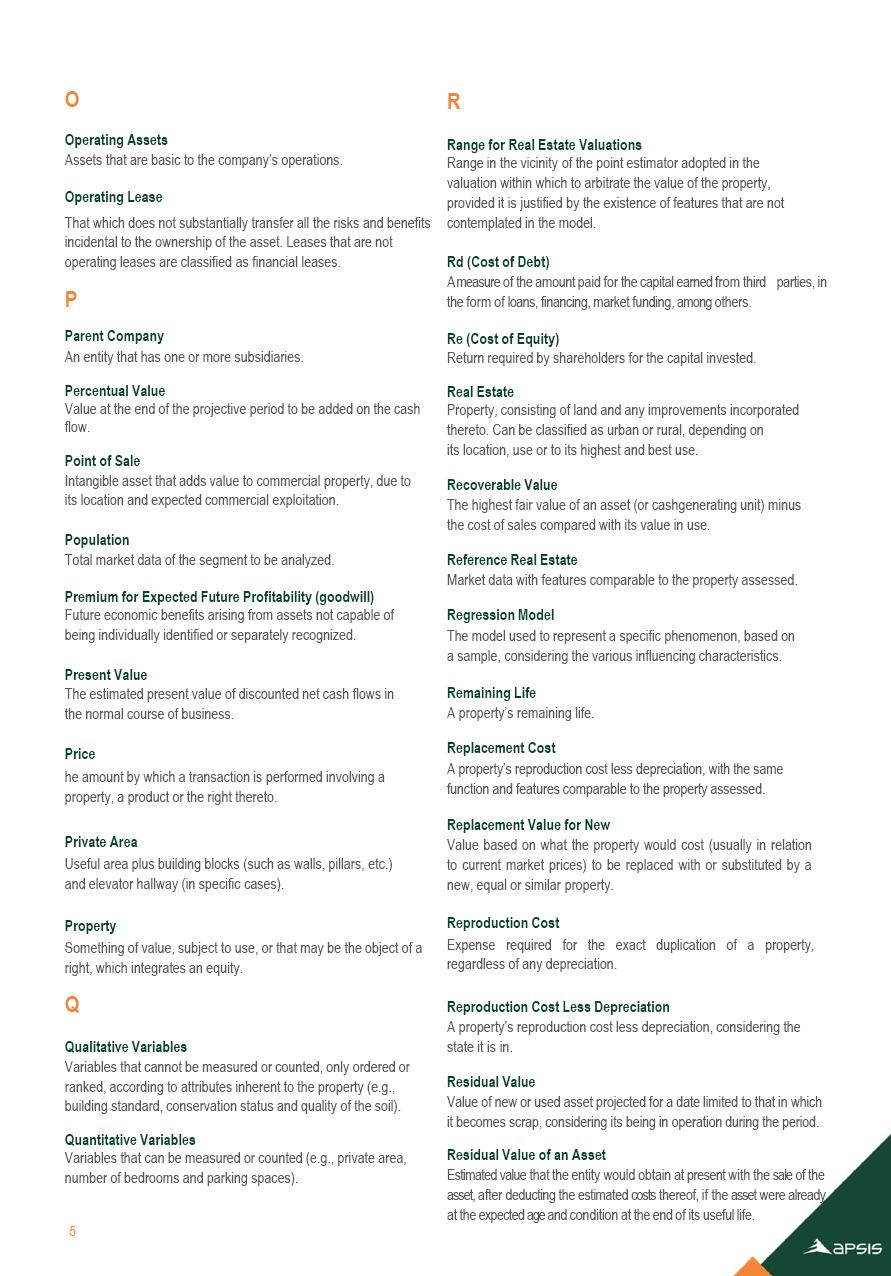
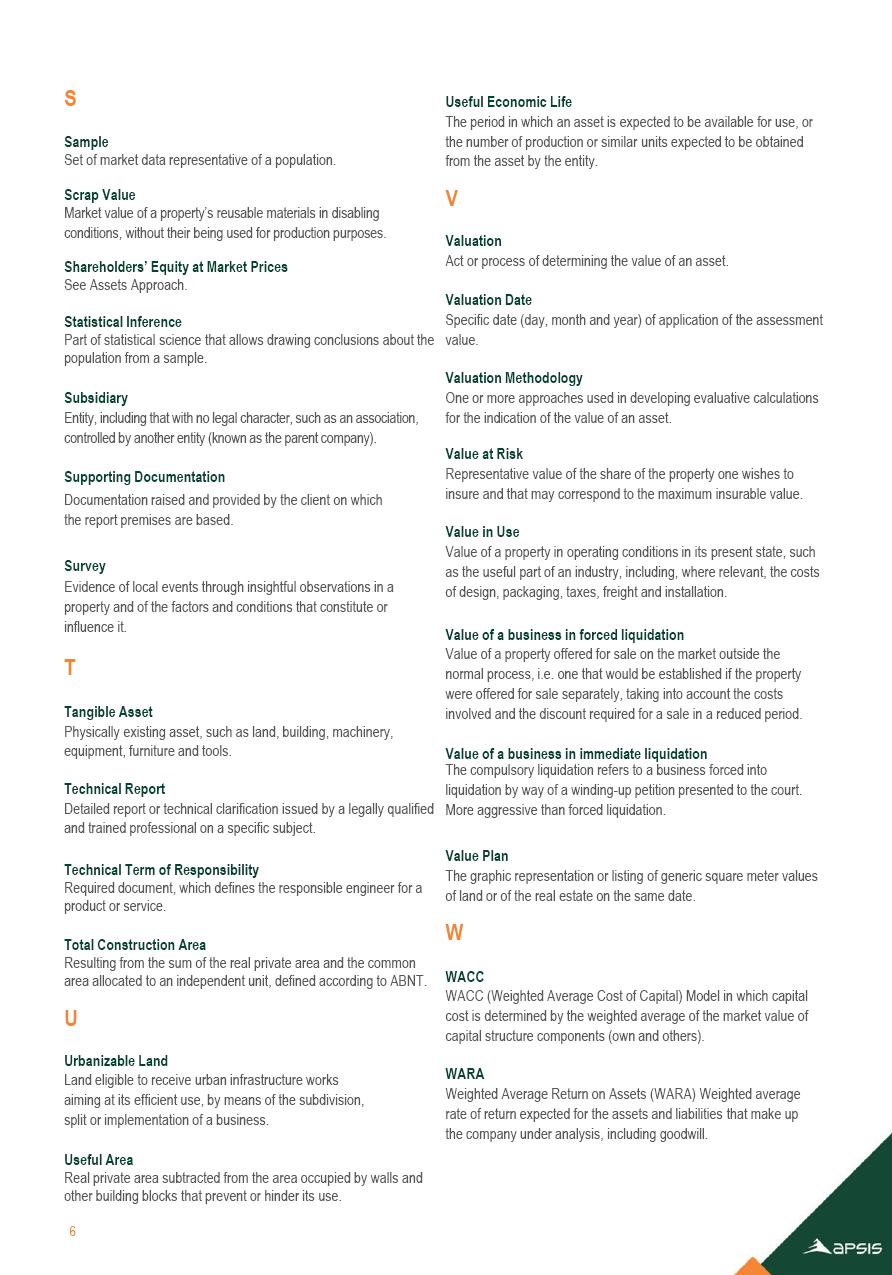
APPRAISAL REPORT AP-00651/26-01 (Free translation) SPE Nova Era Janapu Transmissora S.A. 1 APPRAISAL REPORT: AP-00651/26-01 APPRAISAL DATE: December 31st, 2025 APPRAISAL REPORT OF THE SHAREHOLDERS' EQUITY OF SPE NOVA ERA JANAPU TRANSMISSORA S.A., BASED ON FINANCIAL STATEMENTS 1. INTRODUCTION APSIS CONSULTORIA E AVALIAÇÕES LTDA., located at Rua do Passeio, Number 62, 6th Floor, Centro, Rio de Janeiro, RJ, Brazil, registered with the National Register of Legal Entities (CNPJ) under Number 08.681.365/0001-30 and with the Regional Accounting Council of Rio de Janeiro under Number 005112/O-9, represented by its partner, MIGUEL CÔRTES CARNEIRO MONTEIRO, accountant, holder of National Identity Document Number 25.647.900-7 (DETRAN/RJ), Brazilian Individual Taxpayer Registry Number (CPF) 105.918.297-11, and registered with the Regional Accounting Council of São Paulo under Number 344.323/O-6, residing in São Paulo, SP, with offices at Rua Bela Cintra, Number 1,200, Cerqueira César, was engaged by AXIA ENERGIA S.A., hereinafter referred to as AXIA ENERGIA, located at Avenida Graça Aranha, Number 26, Loja A, Centro, Rio de Janeiro, RJ, Brazil, registered with CNPJ Number 00.001.180/0001-26 to proceed with the shareholders’ equity appraisal of SPE NOVA ERA JANAPU TRANSMISSORA S.A., hereinafter referred to as SPE NOVA ERA JANAPU or Company, located at Avenida Graça Aranha, Number 26, 18th floor, Centro, Rio de Janeiro, RJ, Brazil, registered with CNPJ Number 51.762.902/0001-04, as of December 31st, 2025, under Brazilian accounting practices, including Brazilian Corporate Law and the pronouncements, guidelines, and interpretations issued by the Accounting Pronouncements Committee (CPC) and approved by the Federal Accounting Council (CFC). The results of this appraisal are presented below. 2 2. PURPOSE OF APPRAISAL The appraisal of SPE NOVA ERA JANAPU shareholders' equity, as of December 31st, 2025, under the terms of Articles 226 and 227 of Brazilian Corporate Law No. 6,404/76, is intended to support the merger of the Company by AXIA ENERGIA. 3. MANAGEMENT´S RESPONSIBILITY FOR FINANCIAL INFORMATION SPE NOVA ERA JANAPU management is responsible for preparing financial statements in accordance with Brazilian accounting practices, including Brazilian Corporate Law and the pronouncements, guidelines, and interpretations issued by the CPC and approved by the CFC. Management is also responsible for maintaining internal controls deemed necessary to ensure that the financial statements are free from material misstatement, whether due to fraud or error. A summary of the key accounting policies adopted by the Company is provided in Attachment 2 of this Appraisal Report. 4. SCOPE OF WORK AND ACCOUNTANT'S RESPONSIBILITY Our responsibility is to express a conclusion on the book value of SPE NOVA ERA JANAPU shareholders' equity as of December 31st, 2025, in accordance with Technical Communication CTG 2002, approved by the CFC, which provides the examination of balance sheets for appraisal reports. We examined the Company’s balance sheet in accordance with applicable Brazilian accounting standards, adhering to ethical requirements and to plan and execute procedures to obtain reasonable assurance that the financial information is free from material misstatement. The preparation of this appraisal report involves specific procedures to obtain evidence regarding the recorded amounts, based on the accountant’s professional judgment, including an assessment of the risks of material misstatement in shareholders' equity, whether due to fraud or error. In this assessment, we considered internal controls relevant to the preparation of the Company’s balance sheet to design procedures appropriate to the circumstances, but not to express an opinion on the effectiveness of those controls. The work also included evaluating the appropriateness of the accounting policies applied and the reasonableness of significant accounting estimates’ judgments made by the Company’s management. We believe that the evidence obtained provides sufficient and appropriate basis for our conclusion. 3 5. CONCLUSION Based on the work performed, we conclude that the shareholders' equity of SPE NOVA ERA JANAPU, amounting to BRL 562,331,755.84 (five hundred sixty-two million, three hundred thirty-one thousand, seven hundred fifty-five reais and eighty-four cents) as of December 31st, 2025, as presented in the accounting records and summarized in Attachment 1, represents, in all material respects, the book value of the Company, in accordance with Brazilian accounting practices. Rio de Janeiro, July 6th, 2026. APSIS CONSULTORIA E AVALIAÇÕES LTDA. CRC/RJ-005112/O-9 MIGUEL CÔRTES CARNEIRO MONTEIRO Director Accountant (CRC/SP-344323/O-6) MIGUEL CORTES CARNEIRO MONTEIRO:10 591829711 Assinado de forma digital por MIGUEL CORTES CARNEIRO MONTEIRO:1059182 9711 Dados: 2026.07.06 15:32:47 -03'00' 4 6. LIST OF ATTACHMENTS 1. Support financial statements 2. Summary of the key accounting practices adopted by SPE NOVA ERA JANAPU 3. Glossary ATTACHMENT 1ATTACHMENT 2 1 SUMMARY OF THE MAIN ACCOUNTING POLICIES ADOPTED BY SPE NOVA ERA JANAPU Cash and cash equivalentes Cash comprises cash on hand and available bank deposits. Cash equivalents comprise financial investments with maturity of up to 90 days from the acquisition date, of high liquidity, which are readily convertible into a known amount of cash and are subject to an insignificant risk of changes in value. Transmission contractual assets Under electricity transmission concession agreements, the concessionaire has the contractual obligation (performance obligations) to construct, operate and maintain (O&M) the infrastructure. Transmission companies are remunerated through the annual permitted revenue (RAP) and by residual amounts corresponding to the non-depreciated balance of transmission projects at the end of the concession term, when applicable. Accounting standard CPC 47 – Revenue from Contracts with Customers, equivalent to IFRS 15, establishes that an entity’s right to consideration arising from performance obligations already satisfied, but whose receipt depends on the fulfillment of other contractual obligations, shall be recognized as contractual assets. Liabilities Liabilities are recognized in the balance sheet when the Company has a present obligation, legal or constructive, arising from past events, the settlement of which is considered probable and is expected to result in an outflow of economic resources. In cases where there is uncertainty regarding the amount or timing of settlement, liabilities are estimated and recognized through provisions as the underlying events occur. Provisions are measured based on the best available estimates, reflecting the current assessment of the related risks. ATTACHMENT 3 GLOSSARY Book Value The value at which an asset or liability is recognized on the balance sheet. Building Owners and Managers Association (BOMA) The BOMA Standard measures buildings on a buildingwide basis. It introduces the concept of Building Common Area (areas common to all of the tenants in a building). Building Standard The quality of the improvements according to the specifications of design, materials, workmanship and performance effectively used in construction. Business Combination Union of separate entities or businesses producing financial statements of a single reporting entity. Transaction or other event by which an acquirer obtains control of one or more businesses, regardless of the legal form of operation. Business Risk Uncertainty of realization of expected future returns of the business resulting from factors other than financial leverage. C CAPEX (Capital Expenditure) Fixed asset investments. CAPM (Capital Asset Pricing Model) Model in which the capital cost for any share or lot of shares equals the risk free rate plus risk premium provided by the systematic risk of the share or lot of shares under investigation. Generally used to calculate the Cost of Equity or the Cost of Shareholder Capital. Capital Structure Composition of a company’s invested capital, between own capital (equity) and third-party capital (debt). Cash Flow Cash generated by an asset, group of assets or business during a given period of time. Usually the term is supplemented by a qualification referring to the context (operating, nonoperating, etc.). Cash Flow on Invested Capital Cash flow generated by the company to be reverted to lenders (interest and amortizations) and shareholders (dividends) after consideration of cost and operating expenses and capital investments. Cash-Generating Unit Smallest identifiable group of assets generating cash inflows that are largely independent on inputs generated by other assets or groups of assets. Casualty An event that causes financial loss. 1 A ABL Gross Leasable Area. ABNT Brazilian Technical Standards Association. Allocated Codes Serial number (grades or weights) to differentiate the quality features of properties. Allotment Subdivision of a tract of land into lots for buildings with the opening of new thoroughfares, or the extension, modification or expansion of existing ones. Amortization Systematic allocation of the depreciable value of an asset over its useful life. Apparent Age Estimated age of a property according to its characteristics and conservation status at the time of inspection. Asset A resource controlled by the entity as a result of past events from which future economic benefits are expected for the entity. Asset Approach Valuation of companies where all assets (including those not accounted for) have their values adjusted to the market. Also known as market net equity. B Basic Infrastructure Urban rainwater drainage equipment, street lighting, sewage system, drinking water, public and home electricity supply and access routes. BDI (Budget Difference Income) A percentage that indicates the benefits and overhead costs applied to the direct cost of construction. Best Use of the Property The most economically appropriate use of a certain property according to its characteristics and surroundings, respecting legal limitations. Beta Asystematic risk measure of a share; price trend of a particular share to be correlated with changes in a given index. CFC (Conselho Federal de Contabilidade) Brazilian Accounting Committee. Company Commercial or industrial entity, service provider or investment entity holding economic activities. Conservation Status Physical status of an asset as a result of its maintenance. Control Power to direct the strategic policy and administrative management of a company. Control Premium Value or percentage of the pro-rata value of a lot of controlling shares over the pro-rata value of noncontrolling shares, which reflect the control power. Cost The total direct and indirect costs necessary for production, maintenance or acquisition of an asset at a particular time and situation. Cost of Capital Expected rate of return required by the market as an attraction to certain investment funds. CPC (Comitê de Pronunciamentos Contábeis) Accounting Pronouncements Committee. Current Value Value replacement with a new value depreciated as a result of the physical state the property is in. CVM Securities and Exchange Commission. D Data Treatment Application of operations to express, in relative terms, the attribute differences between the market data and data of the property being assessed. Date of Issue Closing date of the valuation report, when conclusions are conveyed to the client. DCF (Discounted Cash Flow) Discounted cash flow. D&A Depreciation and amortization. Dependent Variable Variable to be explained by the independent ones. Depreciable Value Cost of the asset, or other amount that substitutes such cost (financial statements), less its residual value. Depreciation Systematic allocation of the depreciable value of an asset during its useful life. Dichotomous Variable Variable that assumes only two values. Direct Production Cost Spending on inputs, including labor, in the production of goods. Discount Rate Any divisor used to convert a flow of future economic benefits into present value. E EBIT (Earnings before Interest and Taxes) Earnings before interest and taxes. EBITDA (Earnings before Interest, Taxes, Depreciation and Amortization) Earnings before interest and taxes. Economic Benefits Benefits such as revenue, net profit, net cash flow, etc. Efficient Use That which is recommendable and technically possible for the location on a reference date, among the various uses permitted by the applicable law, observing surrounding marketing trends. Electrical Damage Value Estimated cost of the repair or replacement of parts, when the property suffers electrical damage. Values are tabulated in percentages of the Replacement Value and have been calculated through the study of equipment manuals and the expertise in corrective maintenance of Apsis technicians. Enterprise Set of properties capable of producing revenue through marketing or economic exploitation. It can be: real estate (e.g. subdivision, commercial / residential buildings), real-estate based (e.g., hotel, shopping mall, theme parks), industrial or rural. Enterprise Value Economic value of the company. Equity Value Economic value of the equity. Equivalent Construction Area Constructed area on which the unit cost equivalence of corresponding construction is applied, according to ABNT postulates. 2 Equivalent Depth Numerical result of the division of a lot area by its main projected front. Expertise Technical activity performed by a professional with specific expertise to investigate and clarify facts, check the status of property, investigate the causes that motivated a particular event, appraise assets, their costs, results or rights. F Facilities Set of materials, systems, networks, equipment and operational support services for a single machine, production line or plant, according to the degree of aggregation. Fair Market Value Value at which an asset could have its ownership exchanged between a potential seller and a potential buyer, when both parties have reasonable knowledge of relevant facts and neither is under pressure to do so. Fair Value Less Cost to Sell Value that can be obtained from the sale of an asset or cashgenerating unit less sale expenses, in a transaction between knowledgeable, willing and uninterested parties. FCFF (Free Cash Flow to Firm) Free cash flow to firm, or unlevered free cash flow. Financial Lease That which substantially transfers all the risks and benefits related to the ownership of the asset, which may or may not eventually be transferred. Leases that are not financial leases are classified as operating leases. Fixed Asset Tangible asset available for use in the production or supply of goods or services, in third-party leasing, investments, or for management purposes, expected to be used for more than one accounting period. Forced Liquidation Condition on the possibility of a compulsory sale or in a shorter period than the average absorption by the market. G Goodwill See Premium for Expected Future Profitability. H Homogenization Treatment of observed prices by application of mathematical transformations that express, in relative terms, the differences between market data attributes and those of the property assessed. Homogenized Area Useful or private area, or built with mathematical treatments for valuation purposes, according to criteria based on the real estate market. I IAS (International Accounting Standards) Principles-based standards, interpretations and the framework adopted by the International Accounting Standards Board (IASB). See International Accounting Standards. IASB (International Accounting Standards Board) International Accounting Standards Board. Standard setting body responsible for the development of International Financial Reporting Standards (IFRSs). Ideal Fraction Percentage owned by each of the buyers (tenants) of the land IFRS (International Financial Reporting Standards) International Financial Reporting Standards, a set of international accounting pronouncements published and reviewed by the IASB. IFRS (International Financial Reporting Standards) International Financial Reporting Standards, a set of international accounting pronouncements published and reviewed by the IASB. Impairment See Impairment losses. Impairment Losses (impairment) Book value of the asset that exceeds, in the case of stocks, its selling price less the cost to complete it and expense of selling it; or, in the case of other assets, their fair value less expenditure for sale. Income Approach Valuation method for converting the present value of expected economic benefits. Independent Variables Variables that provide a logical content to the formation of the value of the property subject to the assessment. Indirect Production Cost Administrative and financial costs, benefits and other liens and charges necessary for the production of goods. Insurance Risk transfer guaranteed by contract whereby one party undertakes, subject to payment of premium, to indemnify another for the occurrence of casualties covered under the policy. Insurance Value Value at which an insurance company assumes the risks. Except in special cases, it is not applied to land and foundations. 3 Intangible Asset Identifiable non-monetary asset without physical substance. This asset is identifiable when: a) it is separable, i.e., capable of being separated or divided from the entity and sold, transferred, licensed, leased or exchanged, either alone or together with the related contract, asset or liability; b) it arises from contractual or other legal rights, regardless of whether those rights are transferable or separable from the entity or from other rights and obligations. Internal Rate of Return Discount rate where the present value of future cash flow is equivalent to the cost of investment. International Accounting Standards (IAS) Standards and interpretations adopted by the IASB. They include: International Financial Reporting Standards (IFRS) International Accounting Standards (IAS) and interpretations developed by the Interpretation Committee on International Financial Reporting Standards (IFRIC) or by the former Standing Interpretations Committee (SIC). Investment Property Property (land, building or building part, or both) held by the owner or lessee under the lease, both to receive payment of rent and for capital appreciation or both, other than for use in the production or supply of goods or services, as well as for administrative purposes. Investment Value Value for a particular investor based on individual interests in the property in question. In the case of business valuation, this value can be analyzed by different situations, such as the synergy with other companies of an investor, risk perceptions, future performance and tax planning. IVSC International Valuation Standards Council K Key Money Amount paid by the prospective tenant for signature or transfer of the lease contract, as compensation for the point of sale. Key Variables Variables that, a priori, and traditionally have been important for the formation of property value. L Levered Beta Beta value reflecting the debt in capital structure. Liability Present obligation that arises from past events, whereby it is hoped that the settlement thereof will result in the inflow of funds from the entity embodying economic benefits. Liquidity Ability to rapidly convert certain assets into cash or into the payment of a certain debt. M Market Approach Valuation method in which multiple comparisons derived from the sales price of similar assets are adopted. Market Data Set of information collected on the market related to a particular property. Market Research Set of activities for identification, investigation, collection, selection, processing, analysis and interpretation of results on market data. Marketing Factor The ratio between the market value of an asset and its reproduction cost less depreciation or replacement cost, which may be higher or lower than one. Maximum Insurance Value Maximum value of the property for which it is recommendable to insure it. This criterion establishes that the property whose depreciation is greater than 50% should have its Maximum Insurance Value equivalent to twice as much as the Current Value; and the property whose depreciation is with less than 50% should have its Maximum Insurance Value equivalent to the Replacement Value. Multiple Market value of a company, share or invested capital, divided by a valuation measurement of the company (EBITDA, income, customer volume, etc.). N Net Debt Cash and cash equivalents, net position in derivatives, short-term and long-term financial debts, dividends receivable and payable, receivables and payables related to debentures, short-term and long- term deficits with pension funds, provisions, and other credits and obligations to related parties, including subscription bonus. Non-Operating Assets Those not directly related to the company’s operations (may or may not generate revenue) and that can be disposed of without detriment to its business. 4 O Operating Assets Assets that are basic to the company’s operations. Operating Lease That which does not substantially transfer all the risks and benefits incidental to the ownership of the asset. Leases that are not operating leases are classified as financial leases. P Parent Company An entity that has one or more subsidiaries. Percentual Value Value at the end of the projective period to be added on the cash flow. Point of Sale Intangible asset that adds value to commercial property, due to its location and expected commercial exploitation. Population Total market data of the segment to be analyzed. Premium for Expected Future Profitability (goodwill) Future economic benefits arising from assets not capable of being individually identified or separately recognized. Present Value The estimated present value of discounted net cash flows in the normal course of business. Price he amount by which a transaction is performed involving a property, a product or the right thereto. Private Area Useful area plus building blocks (such as walls, pillars, etc.) and elevator hallway (in specific cases). Property Something of value, subject to use, or that may be the object of a right, which integrates an equity. Q Qualitative Variables Variables that cannot be measured or counted, only ordered or ranked, according to attributes inherent to the property (e.g., building standard, conservation status and quality of the soil). Quantitative Variables Variables that can be measured or counted (e.g., private area, number of bedrooms and parking spaces). R Range for Real Estate Valuations Range in the vicinity of the point estimator adopted in the valuation within which to arbitrate the value of the property, provided it is justified by the existence of features that are not contemplated in the model. Rd (Cost of Debt) Ameasure of the amount paid for the capital earned from third parties, in the form of loans, financing, market funding, among others. Re (Cost of Equity) Return required by shareholders for the capital invested. Real Estate Property, consisting of land and any improvements incorporated thereto. Can be classified as urban or rural, depending on its location, use or to its highest and best use. Recoverable Value The highest fair value of an asset (or cashgenerating unit) minus the cost of sales compared with its value in use. Reference Real Estate Market data with features comparable to the property assessed. Regression Model The model used to represent a specific phenomenon, based on a sample, considering the various influencing characteristics. Remaining Life A property’s remaining life. Replacement Cost A property’s reproduction cost less depreciation, with the same function and features comparable to the property assessed. Replacement Value for New Value based on what the property would cost (usually in relation to current market prices) to be replaced with or substituted by a new, equal or similar property. Reproduction Cost Expense required for the exact duplication of a property, regardless of any depreciation. Reproduction Cost Less Depreciation A property’s reproduction cost less depreciation, considering the state it is in. Residual Value Value of new or used asset projected for a date limited to that in which it becomes scrap, considering its being in operation during the period. Residual Value of an Asset Estimated value that the entity would obtain at present with the sale of the asset, after deducting the estimated costs thereof, if the asset were already at the expected ageand condition at the end of its useful life. 5 S Sample Set of market data representative of a population. Scrap Value Market value of a property’s reusable materials in disabling conditions, without their being used for production purposes. Shareholders’ Equity at Market Prices See Assets Approach. Statistical Inference Part of statistical science that allows drawing conclusions about the population from a sample. Subsidiary Entity, including that with no legal character, such as an association, controlled by another entity (known as the parent company). Supporting Documentation Documentation raised and provided by the client on which the report premises are based. Survey Evidence of local events through insightful observations in a property and of the factors and conditions that constitute or influence it. T Tangible Asset Physically existing asset, such as land, building, machinery, equipment, furniture and tools. Technical Report Detailed report or technical clarification issued by a legally qualified and trained professional on a specific subject. Technical Term of Responsibility Required document, which defines the responsible engineer for a product or service. Total Construction Area Resulting from the sum of the real private area and the common area allocated to an independent unit, defined according to ABNT. U Urbanizable Land Land eligible to receive urban infrastructure works aiming at its efficient use, by means of the subdivision, split or implementation of a business. Useful Area Real private area subtracted from the area occupied by walls and other building blocks that prevent or hinder its use. Useful Economic Life The period in which an asset is expected to be available for use, or the number of production or similar units expected to be obtained from the asset by the entity. V Valuation Act or process of determining the value of an asset. Valuation Date Specific date (day, month and year) of application of the assessment value. Valuation Methodology One or more approaches used in developing evaluative calculations for the indication of the value of an asset. Value at Risk Representative value of the share of the property one wishes to insure and that may correspond to the maximum insurable value. Value in Use Value of a property in operating conditions in its present state, such as the useful part of an industry, including, where relevant, the costs of design, packaging, taxes, freight and installation. Value of a business in forced liquidation Value of a property offered for sale on the market outside the normal process, i.e. one that would be established if the property were offered for sale separately, taking into account the costs involved and the discount required for a sale in a reduced period. Value of a business in immediate liquidation The compulsory liquidation refers to a business forced into liquidation by way of a winding-up petition presented to the court. More aggressive than forced liquidation. Value Plan The graphic representation or listing of generic square meter values of land or of the real estate on the same date. W WACC WACC (Weighted Average Cost of Capital) Model in which capital cost is determined by the weighted average of the market value of capital structure components (own and others). WARA Weighted Average Return on Assets (WARA) Weighted average rate of return expected for the assets and liabilities that make up the company under analysis, including goodwill. 6 Rio de Janeiro +55 21 2212-6850 apsis.rj@apsis.com.br São Paulo 55 11 4550-2701 apsis.sp@apsis.com.br Minas Gerais +55 31 98299-6678 apsis.mg@apsis.com.br apsis.com.br





SIGNATURE
Pursuant to the requirements of the Securities Exchange Act of 1934, the registrant has duly caused this report to be signed on its behalf by the undersigned, thereunto duly authorized.
Date: July 23, 2026
| AXIA Energia S.A. | ||
| By: |
/S/ Eduardo Haiama |
|
|
Eduardo Haiama Vice-President of Finance and Investor Relations |
||
FORWARD-LOOKING STATEMENTS
This document may contain estimates and projections that are not statements of past events but reflect our management’s beliefs and expectations and may constitute forward-looking statements under Section 27A of the Securities Act of 1933, as amended, and Section 21E of the Securities and Exchange Act of 1934, as amended. The words “believes”, “may”, “can”, “estimates”, “continues”, “anticipates”, “intends”, “expects”, and similar expressions are intended to identify estimates that necessarily involve known and unknown risks and uncertainties. Known risks and uncertainties include, but are not limited to: general economic, regulatory, political, and business conditions in Brazil and abroad; fluctuations in interest rates, inflation, and the value of the Brazilian Real; changes in consumer electricity usage patterns and volumes; competitive conditions; our level of indebtedness; the possibility of receiving payments related to our receivables; changes in rainfall and water levels in reservoirs used to operate our hydroelectric plants; our financing and capital investment plans; existing and future government regulations; and other risks described in our annual report and other documents filed with the CVM and SEC. Estimates and projections refer only to the date they were expressed, and we do not assume any obligation to update any of these estimates or projections due to new information or future events. Future results of the Company’s operations and initiatives may differ from current expectations, and investors should not rely solely on the information contained herein. This material contains calculations that may not reflect precise results due to rounding.