
Investor Presentation 4QFY25 1
Forward-Looking Statements This presentation contains “forward-looking statements” within the meaning of Section 27A of the Securities Act of 1933, as amended, and Section 21E of the Securities Exchange Act of 1934, as amended. In some cases, you can identify forward-looking statements by terms such as “anticipate,” “believe,” “can,” “continue,” “could,” “estimate,” “expect,” “explore,” “future,” “intend,” “long-term operating model,” “medium to longer term goals,” “may,” “might,” “outlook,” “plan,” “potential,” “predict,” “project,” “should,” “strategy,” “target,” “will,” “would,” or the negative of these terms, and similar expressions intended to identify forward-looking statements. However, not all forward-looking statements contain these identifying words. These statements may relate to our market size and growth strategy, our estimated and projected costs, margins, revenue, expenditures and customer and financial growth rates, our Q1 2026 and 2026 financial outlook and performance against our multi-year financial framework, our medium to longer term goals, our plans and objectives for future operations, growth, initiatives or strategies, including our investments in research and development, our expectations about the benefits of the NewsWhip acquisition and other statements that are not historical facts. By their nature, these statements are subject to numerous uncertainties and risks, including factors beyond our control, that could cause actual results, performance or achievement to differ materially and adversely from those anticipated or implied in the forward-looking statements. These assumptions, uncertainties and risks include that, among others: we may not be able to sustain our revenue and customer growth rate in the future, including due to risks associated with our strategic focus on midmarket and enterprise customers; price increases have negatively impacted and pricing and packaging changes may in the future negatively impact demand for our products, customer acquisition and retention and reduce the total number of customers or customer additions; our business would be harmed by any significant interruptions, delays or outages in services from our platform, our API providers, or certain social media platforms, or if we are unable to renew agreements governing access to the data provided by such APIs on terms acceptable to us or at all; if we are unable to attract potential customers through unpaid channels, or other sources of demand, including expansion opportunities from existing customers and outbound sales efforts, or convert prospective customers and expansion opportunities into paid subscriptions, our business and results of operations may be adversely affected; technological advances in AI may in the future disrupt the social media industry, which could significantly reduce the demand for our services or otherwise adversely impact our business or reputation if we are unable to keep pace and navigate this evolving environment; we may be unable to successfully enter new markets, manage our international expansion and comply with any applicable international laws and regulations; we may be unable to integrate acquired businesses or technologies successfully or achieve the expected benefits of such acquisitions and investments; unstable market, economic, and geopolitical conditions, such as recession risks, effects of inflation, trade tensions, changes in government spending, labor shortages, supply chain issues, geopolitical instability and uncertainty, and fluctuating interest rates have and could continue to adversely impact our business and that of our existing and prospective customers, which may result in reduced demand for our products; we may not be able to generate sufficient cash to service our indebtedness; covenants in our credit agreement may restrict our operations, and if we do not effectively manage our business to comply with these covenants, our financial condition could be adversely impacted; any cybersecurity-related attack, significant data breach or disruption of the information technology systems or networks on which we rely could negatively affect our business; changing regulations relating to privacy, information security and data protection could increase our costs, affect or limit how we collect and use personal information and harm our brand; and risks related to ongoing legal proceedings. Additional risks and uncertainties that could cause actual outcomes and results to differ materially from those contemplated by the forward-looking statements are included under the caption “Risk Factors” and elsewhere in our filings with the Securities and Exchange Commission (the “SEC”), including our Annual Report on Form 10-K for the year ended December 31, 2024 filed with the SEC on February 26, 2025, our Quarterly Report on Form 10-Q for the quarter ended September 30, 2025 filed with the SEC on November 6, 2025 and our Annual Report on Form 10-K for the year ended December 31, 2025, to be filed with the SEC, as well as any future reports that we file with the SEC. Moreover, you should interpret many of the risks identified in those reports as being heightened as a result of the current and ongoing instability in market and economic conditions. Forward-looking statements speak only as of the date the statements are made and are based on information available to Sprout Social at the time those statements are made and/or management's good faith belief as of that time with respect to future events. Sprout Social assumes no obligation to update forward-looking statements to reflect events or circumstances after the date they were made, except as required by law. Use of Non-GAAP Financial Measures We have provided in this presentation certain financial information that has not been prepared in accordance with generally accepted accounting principles in the United States (“GAAP”). Our management uses these non-GAAP financial measures internally in analyzing our financial results and believes that use of these non-GAAP financial measures is useful to investors as an additional tool to evaluate ongoing operating results and trends and in comparing our financial results with other companies in our industry, many of which present similar non-GAAP financial measures. Non-GAAP financial measures are not meant to be considered in isolation or as a substitute for comparable financial measures prepared in accordance with GAAP and should be read only in conjunction with our consolidated financial statements prepared in accordance with GAAP. A reconciliation of our historical non-GAAP financial measures to the most directly comparable GAAP measures has been provided in the financial statement tables included at the end of this presentation, and investors are encouraged to review these reconciliations. The Company cannot provide reconciliations between its forecasted non-GAAP measures and the most comparable GAAP measures without unreasonable effort due to the unavailability of reliable estimates for certain items. These items are not within the Company’s control and may vary greatly between periods and could significantly impact future financial results. Customer Metrics and Market Data This presentation includes useful customer metrics and other data, which are defined at the back of this presentation. Unless otherwise noted, information in this presentation concerning our industry, including industry statistics and forecasts, competitive position and the markets in which we operate is based on information from independent industry and research organizations, other third-party sources and management estimates. Management estimates are derived from publicly available information released by independent industry analysts and other third party sources, as well as data from our internal research, and are based on assumptions made by us upon reviewing such data, and our experience in, and knowledge of, such industry and markets, which we believe to be reasonable. Projections, forecasts, assumptions and estimates of the future performance of the industry in which we operate and our future performance are necessarily subject to uncertainty and risk due to a variety of factors. We have not independently verified the accuracy or completeness of the information provided by independent industry and research organizations, other third parties or other publicly available information. Accordingly, we make no representations as to the accuracy or completeness of that information nor do we undertake to update such information after the date of this presentation. Disclaimerisclaimer 2

4Q FY2025 Results 3
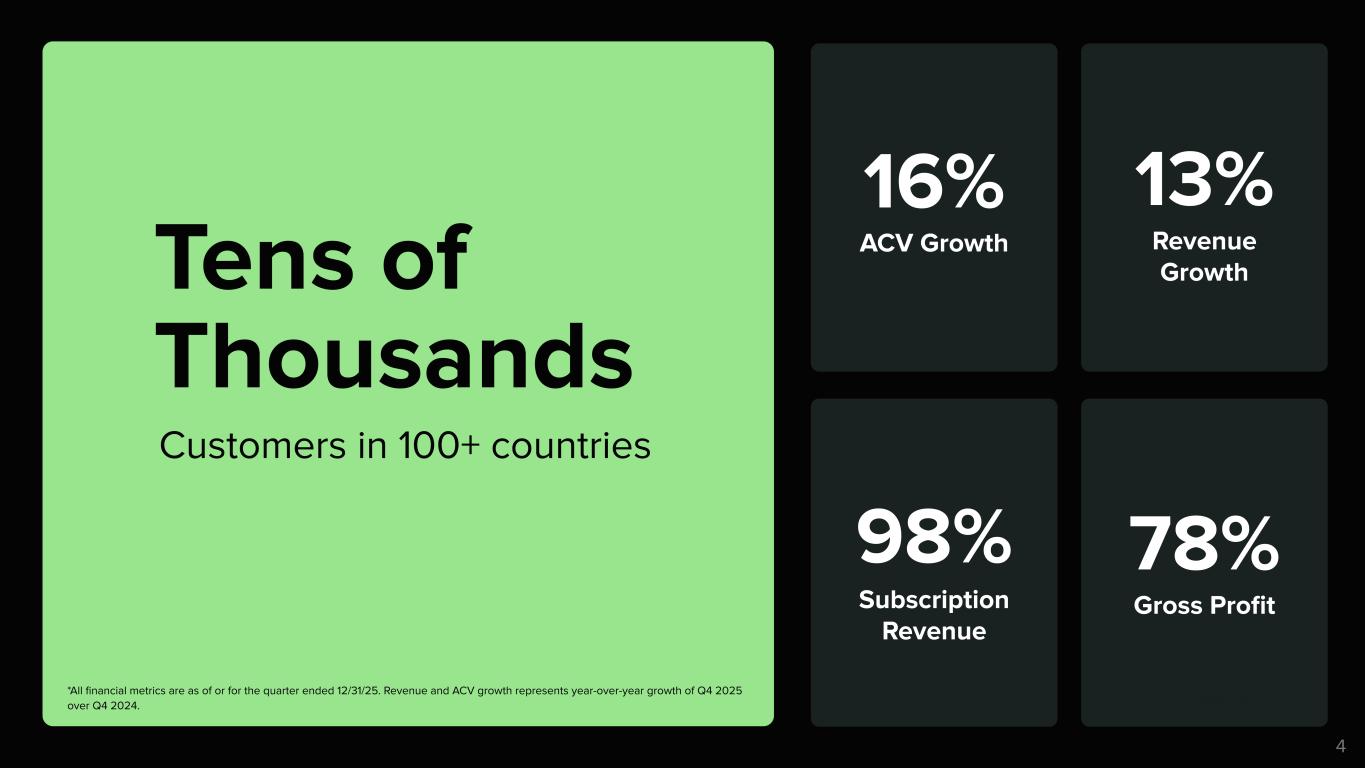
*All financial metrics are as of or for the quarter ended 12/31/25. Revenue and ACV growth represents year-over-year growth of Q4 2025 over Q4 2024. Fin Reporting Signoff: NAME: Brian Flynn DATE: 2/20/2026 Tens of Thousands Customers in 100+ countries 4 16% ACV Growth 13% Revenue Growth 98% Subscription Revenue 78% Gross Profit
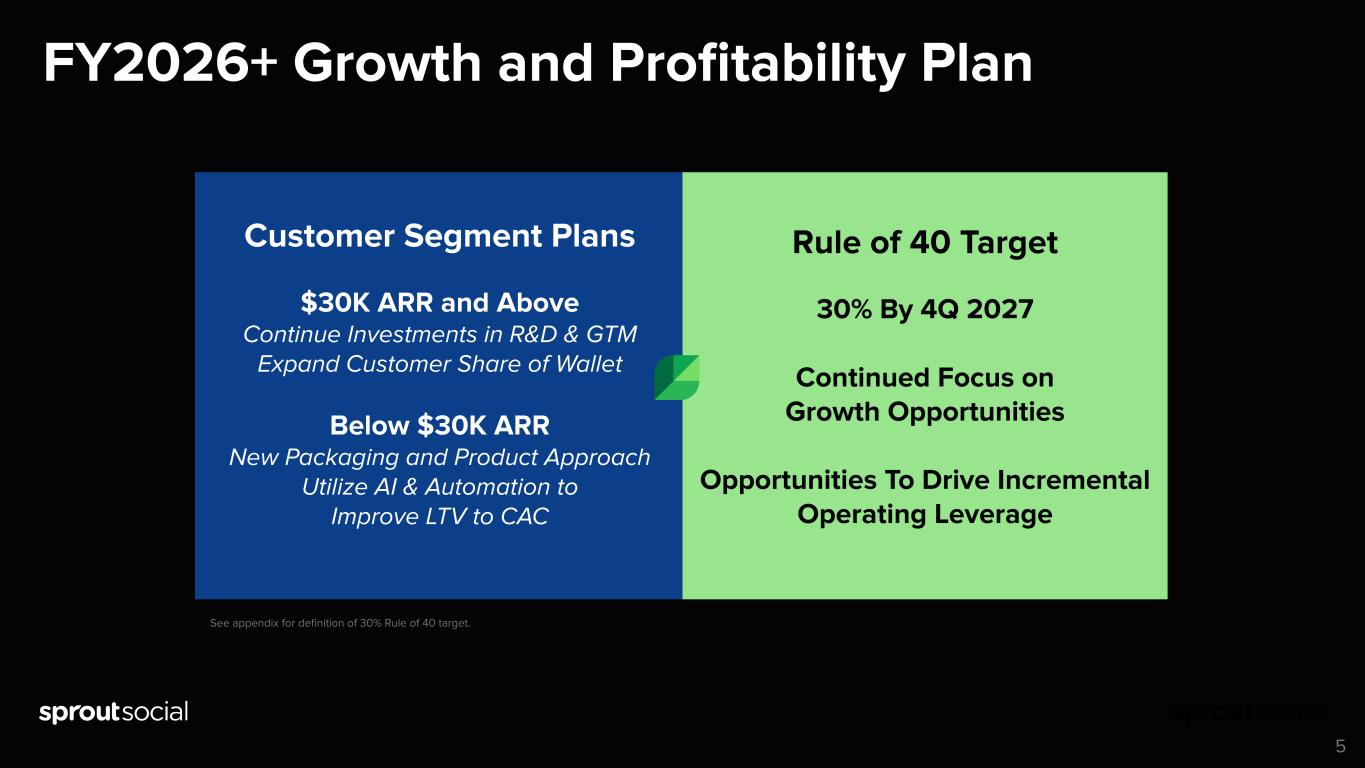
5 FY2026+ Growth and Profitability Plan Customer Segment Plans $30K ARR and Above Continue Investments in R&D & GTM Expand Customer Share of Wallet Below $30K ARR New Packaging and Product Approach Utilize AI & Automation to Improve LTV to CAC Rule of 40 Target 30% By 4Q 2027 Continued Focus on Growth Opportunities Opportunities To Drive Incremental Operating Leverage See appendix for definition of 30% Rule of 40 target.
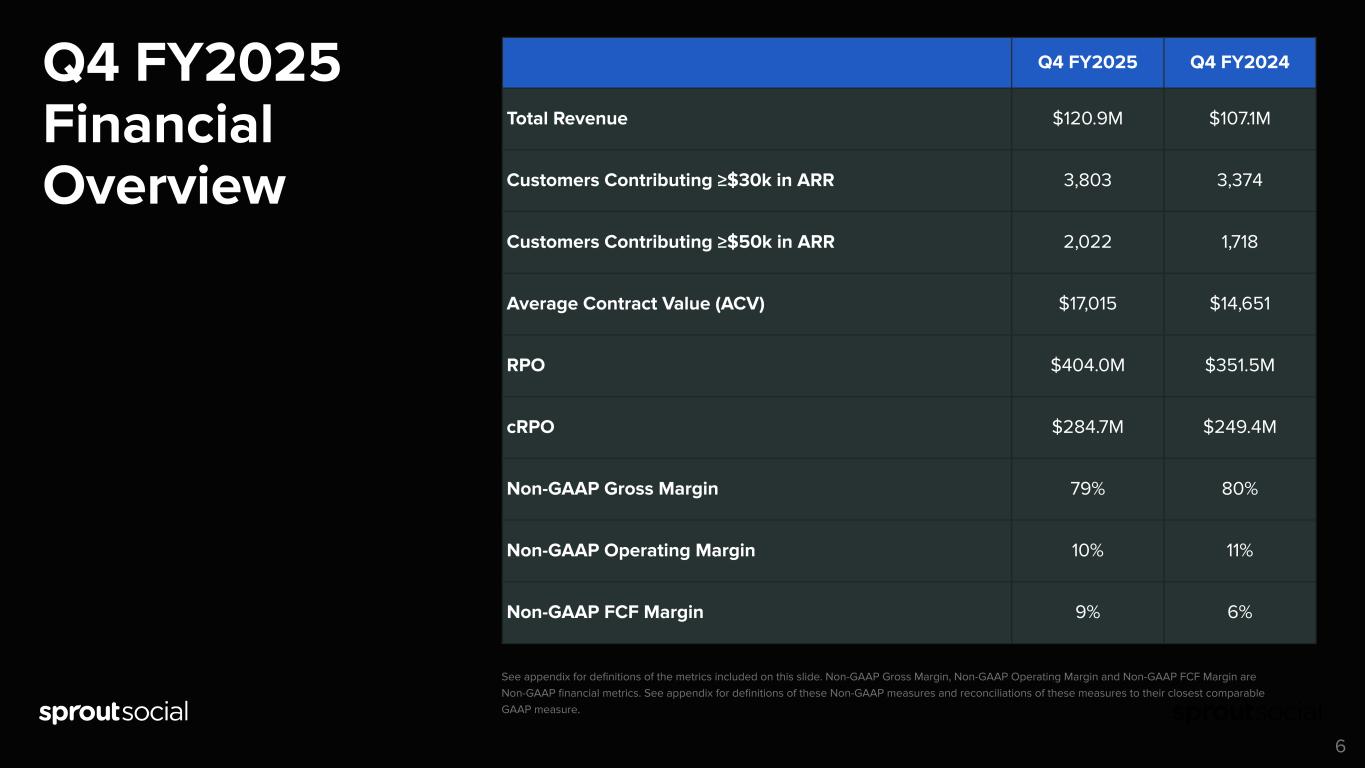
Q4 FY2025 Financial Overview See appendix for definitions of the metrics included on this slide. Non-GAAP Gross Margin, Non-GAAP Operating Margin and Non-GAAP FCF Margin are Non-GAAP financial metrics. See appendix for definitions of these Non-GAAP measures and reconciliations of these measures to their closest comparable GAAP measure. 6 Q4 FY2025 Q4 FY2024 Total Revenue $120.9M $107.1M Customers Contributing ≥$30k in ARR 3,803 3,374 Customers Contributing ≥$50k in ARR 2,022 1,718 Average Contract Value (ACV) $17,015 $14,651 RPO $404.0M $351.5M cRPO $284.7M $249.4M Non-GAAP Gross Margin 79% 80% Non-GAAP Operating Margin 10% 11% Non-GAAP FCF Margin 9% 6%
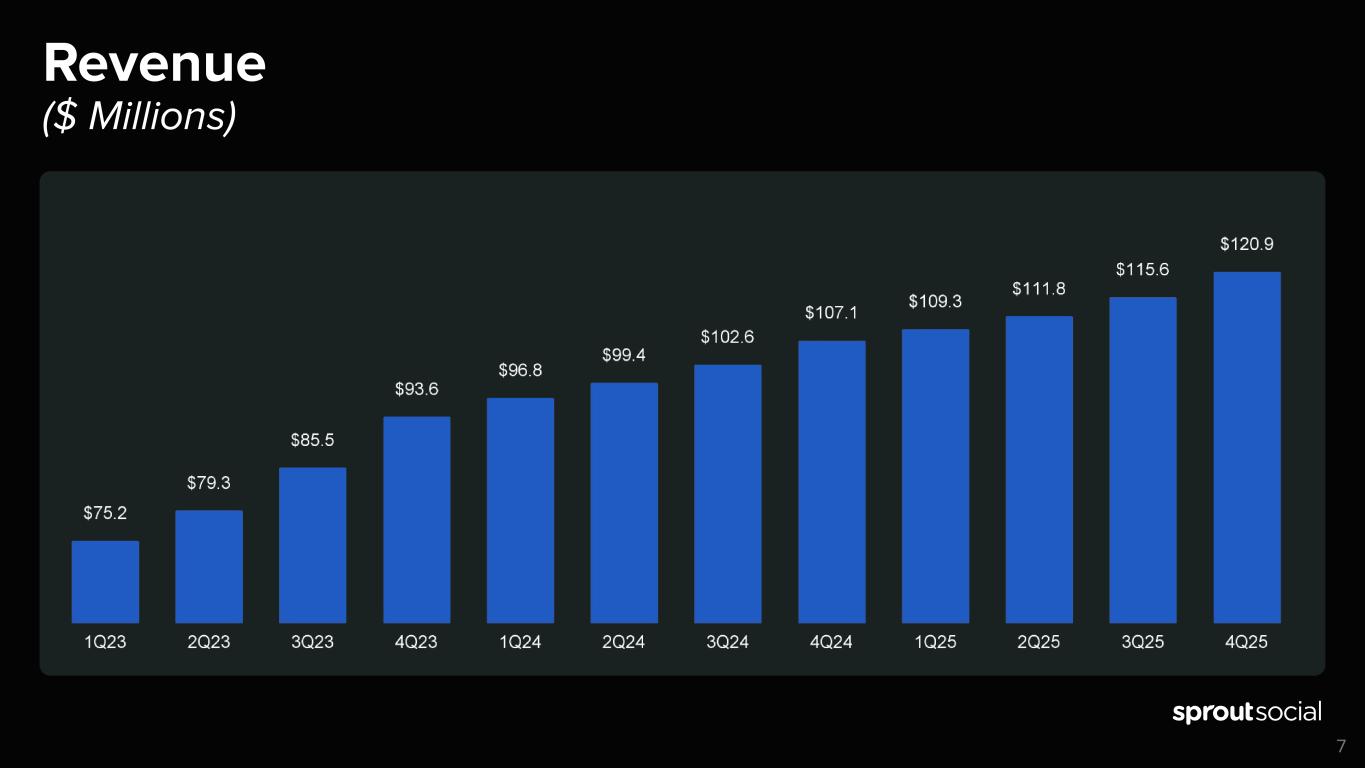
Revenue ($ Millions) 7
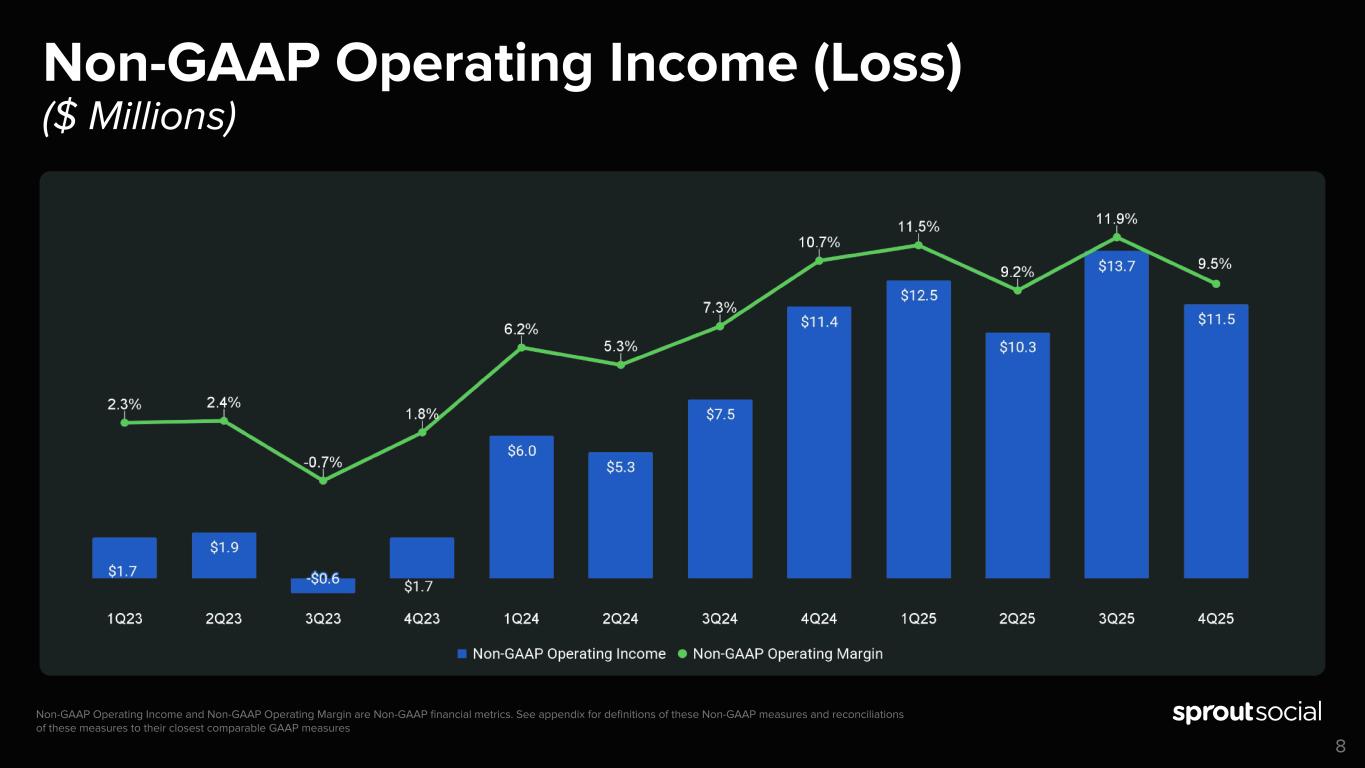
Non-GAAP Operating Income (Loss) Non-GAAP Operating Income and Non-GAAP Operating Margin are Non-GAAP financial metrics. See appendix for definitions of these Non-GAAP measures and reconciliations of these measures to their closest comparable GAAP measures. 8 ($ Millions)
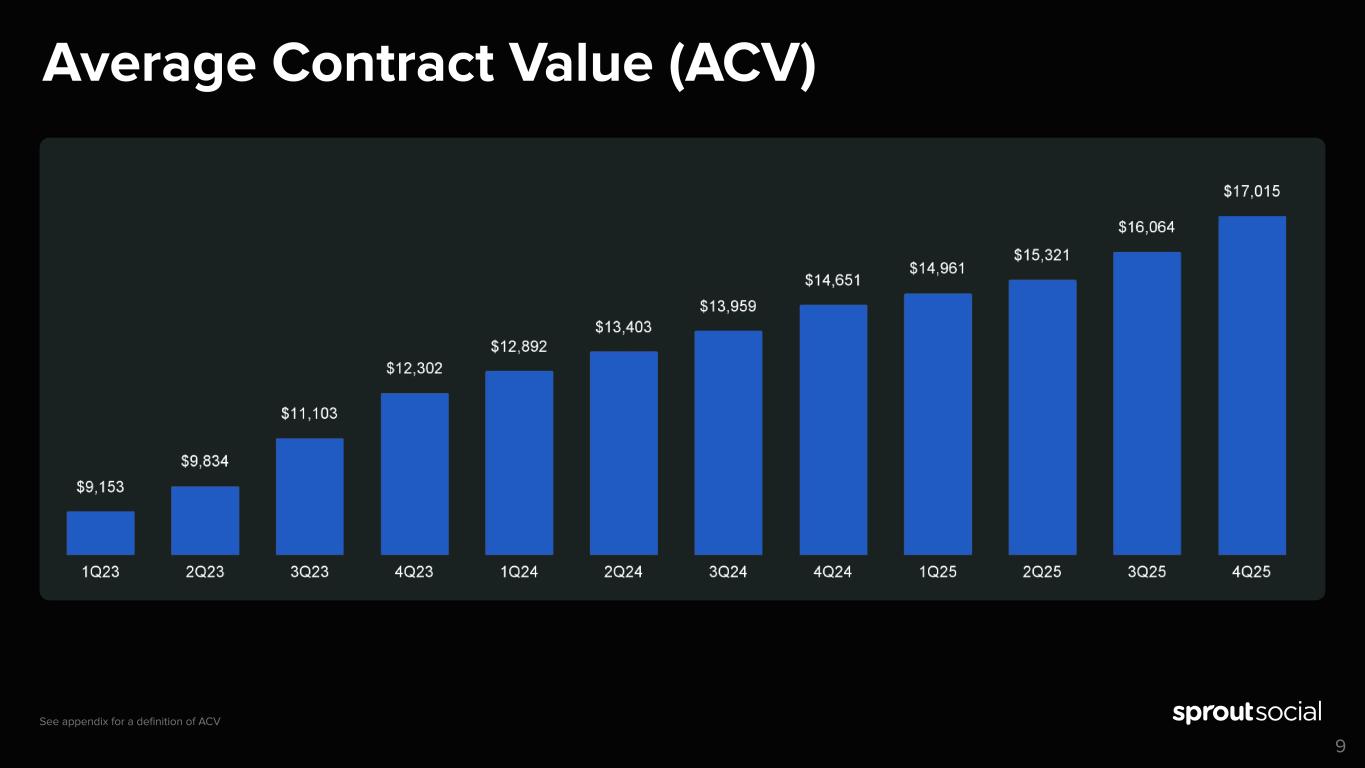
Average Contract Value (ACV) See appendix for a definition of ACV 9
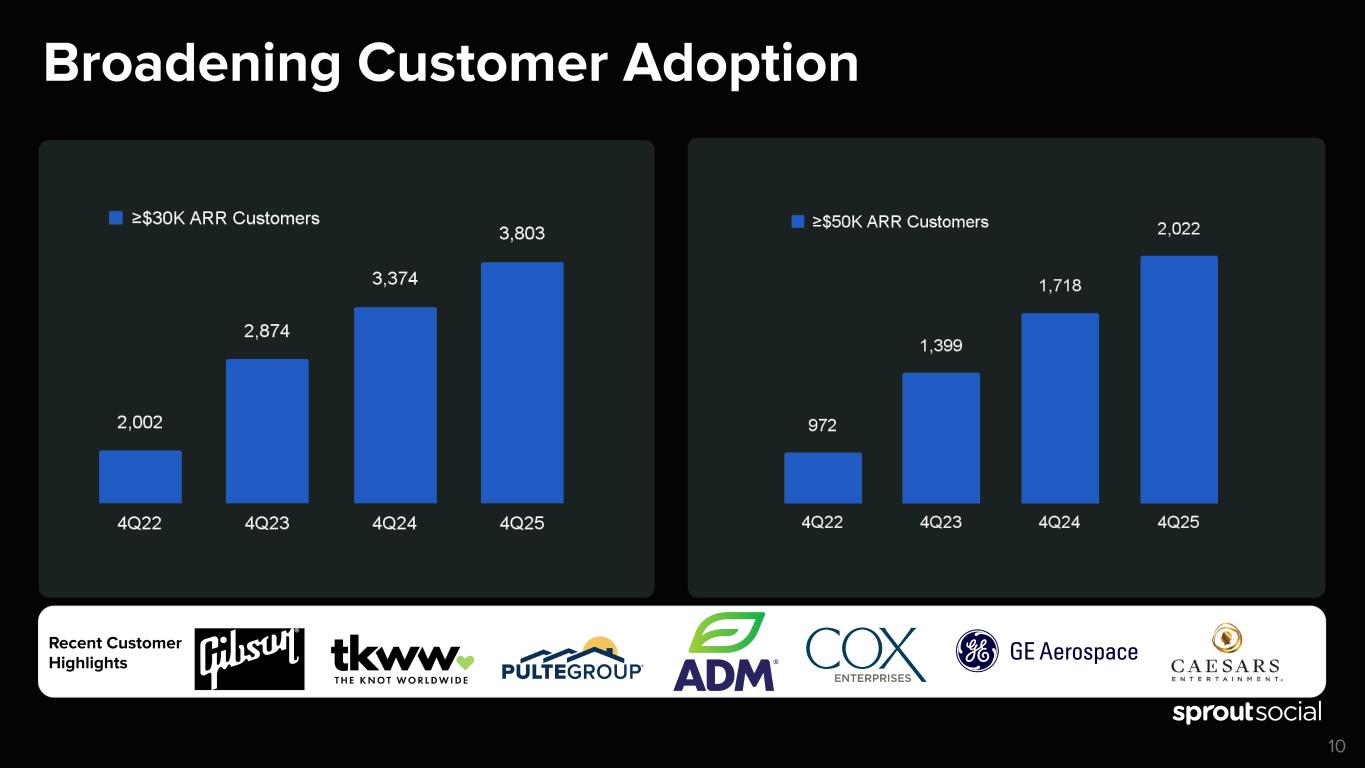
Broadening Customer Adoption 10 Recent Customer Highlights
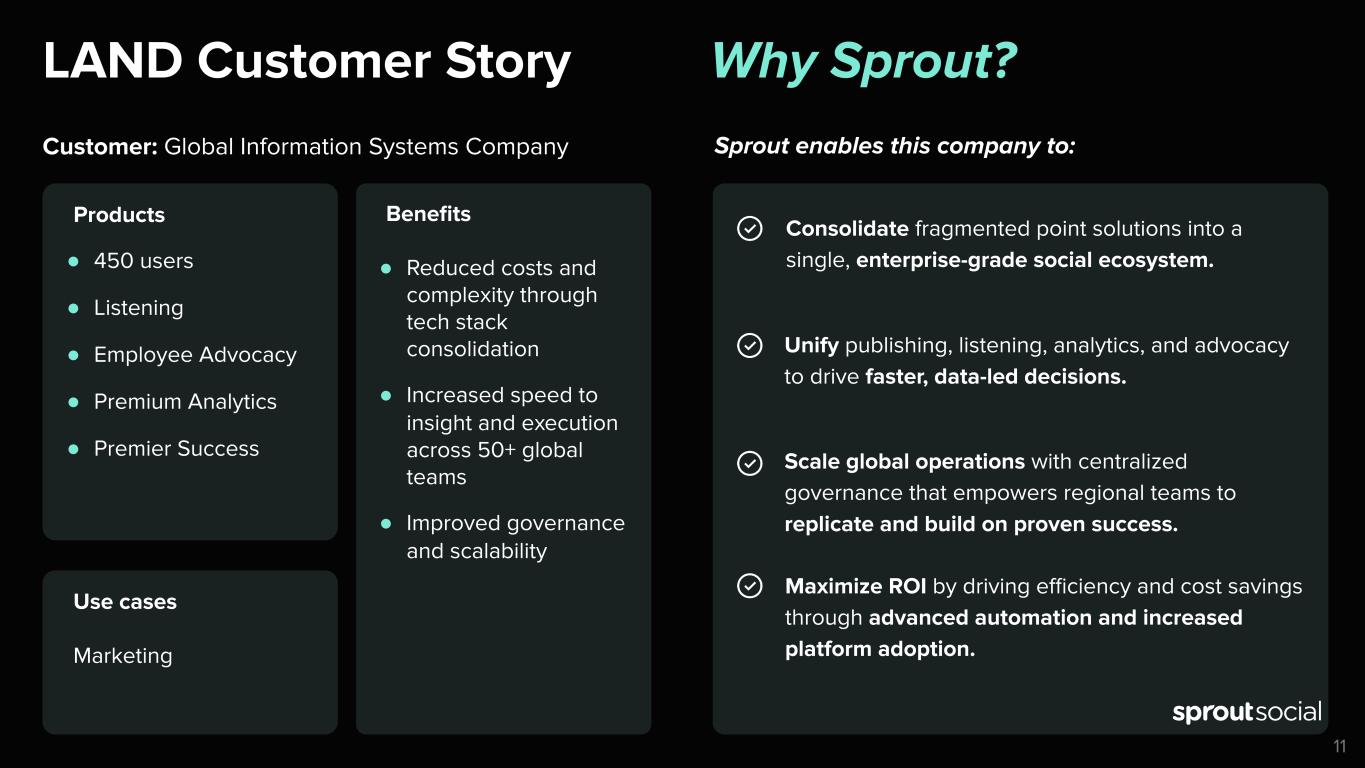
11 Use cases Marketing Benefits ● Reduced costs and complexity through tech stack consolidation ● Increased speed to insight and execution across 50+ global teams ● Improved governance and scalability Products ● 450 users ● Listening ● Employee Advocacy ● Premium Analytics ● Premier Success Customer: Global Information Systems Company Sprout enables this company to: Unify publishing, listening, analytics, and advocacy to drive faster, data-led decisions. Scale global operations with centralized governance that empowers regional teams to replicate and build on proven success. LAND Customer Story Consolidate fragmented point solutions into a single, enterprise-grade social ecosystem. Why Sprout? Maximize ROI by driving efficiency and cost savings through advanced automation and increased platform adoption.
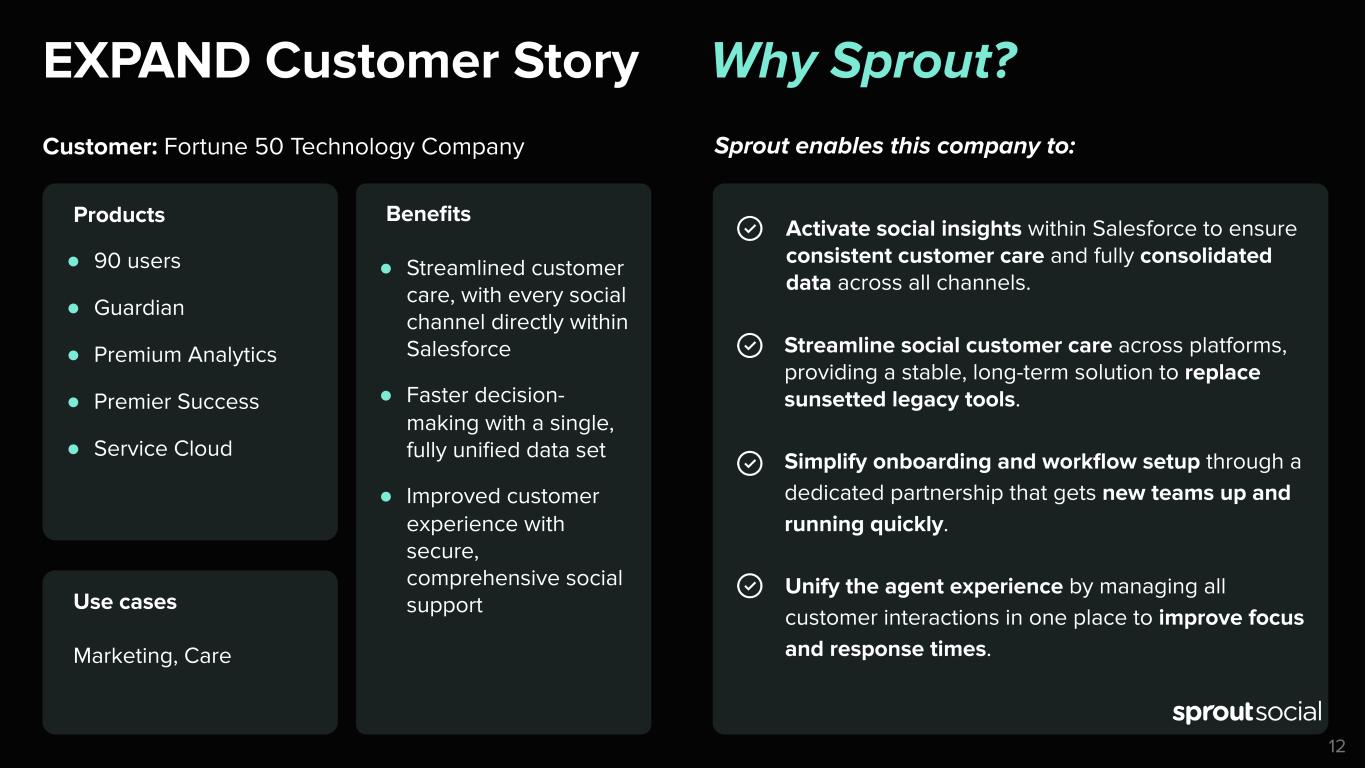
12 Use cases Marketing, Care Benefits ● Streamlined customer care, with every social channel directly within Salesforce ● Faster decision- making with a single, fully unified data set ● Improved customer experience with secure, comprehensive social support Products ● 90 users ● Guardian ● Premium Analytics ● Premier Success ● Service Cloud Customer: Fortune 50 Technology Company Sprout enables this company to: Streamline social customer care across platforms, providing a stable, long-term solution to replace sunsetted legacy tools. Simplify onboarding and workflow setup through a dedicated partnership that gets new teams up and running quickly. EXPAND Customer Story Activate social insights within Salesforce to ensure consistent customer care and fully consolidated data across all channels. Why Sprout? Unify the agent experience by managing all customer interactions in one place to improve focus and response times.
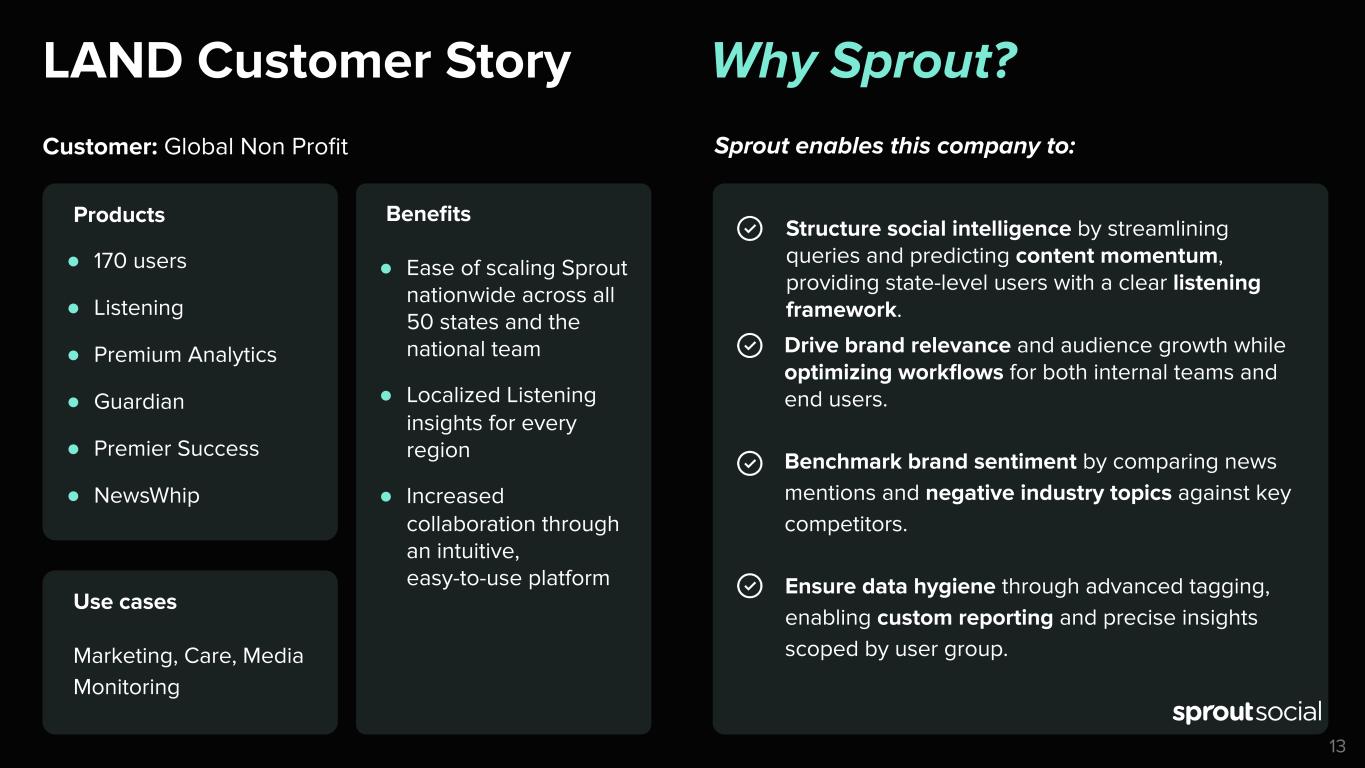
13 Use cases Marketing, Care, Media Monitoring Benefits ● Ease of scaling Sprout nationwide across all 50 states and the national team ● Localized Listening insights for every region ● Increased collaboration through an intuitive, easy-to-use platform Products ● 170 users ● Listening ● Premium Analytics ● Guardian ● Premier Success ● NewsWhip Customer: Global Non Profit Sprout enables this company to: Drive brand relevance and audience growth while optimizing workflows for both internal teams and end users. Benchmark brand sentiment by comparing news mentions and negative industry topics against key competitors. LAND Customer Story Structure social intelligence by streamlining queries and predicting content momentum, providing state-level users with a clear listening framework. Why Sprout? Ensure data hygiene through advanced tagging, enabling custom reporting and precise insights scoped by user group.
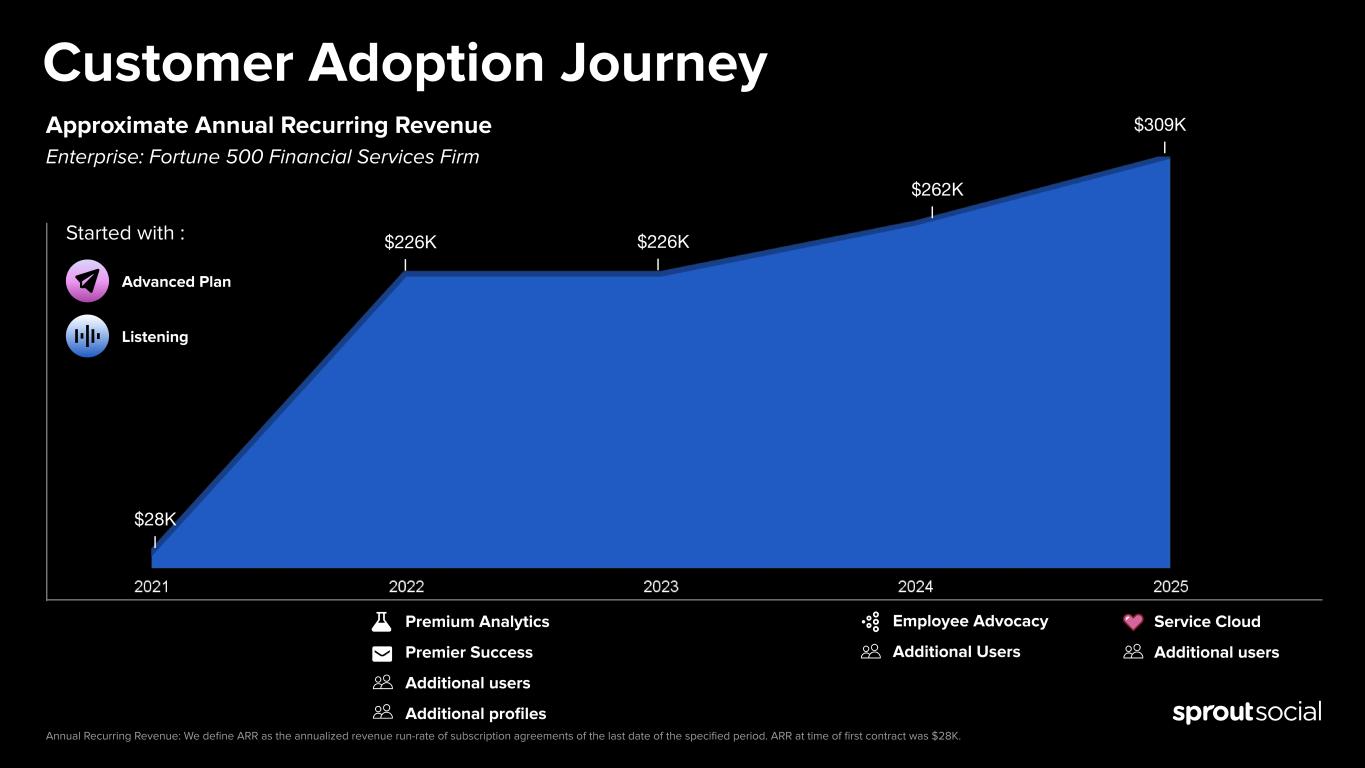
Approximate Annual Recurring Revenue Enterprise: Fortune 500 Financial Services Firm Customer Adoption Journey Premium Analytics Premier Success Additional users Additional profiles $309K Started with : Advanced Plan $28K Service Cloud Additional users Employee Advocacy Additional Users $226K $226K $262K Listening Annual Recurring Revenue: We define ARR as the annualized revenue run-rate of subscription agreements of the last date of the specified period. ARR at time of first contract was $28K.
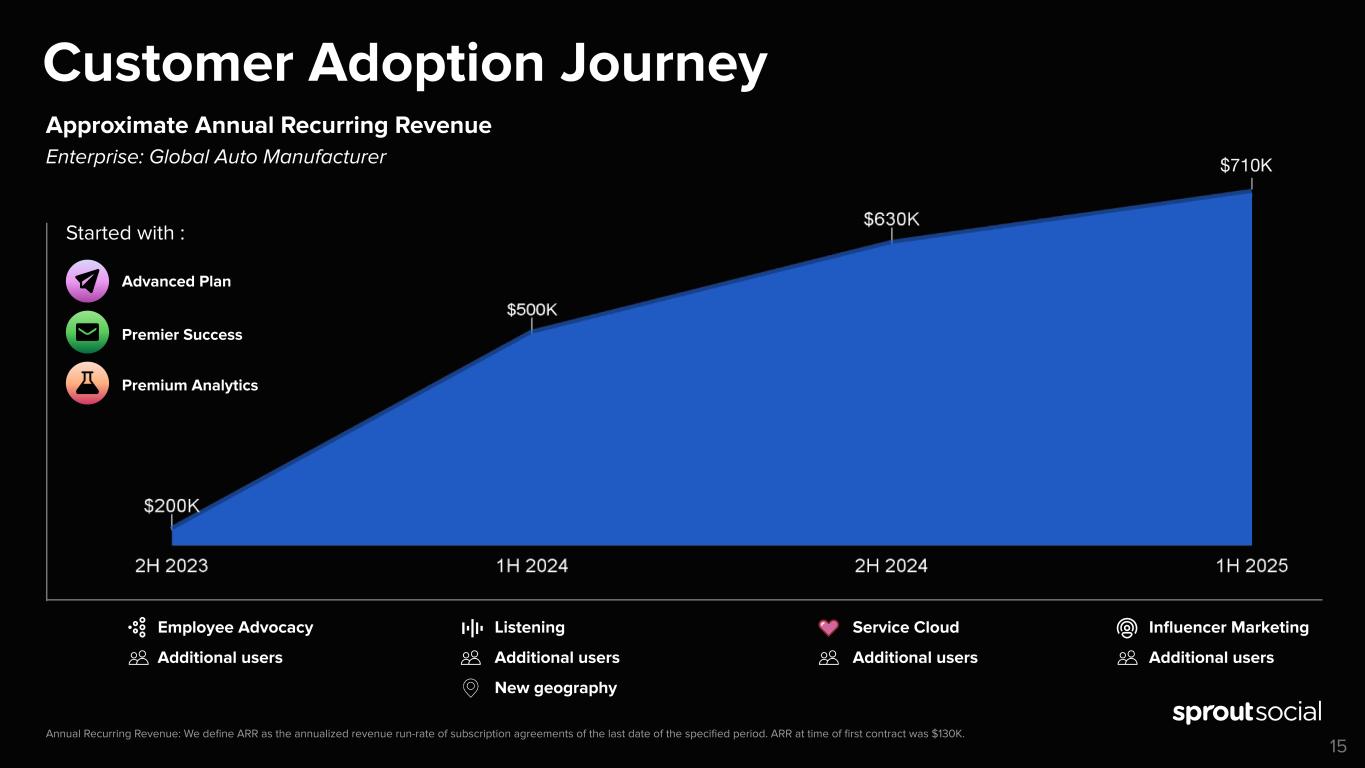
Approximate Annual Recurring Revenue Enterprise: Global Auto Manufacturer Annual Recurring Revenue: We define ARR as the annualized revenue run-rate of subscription agreements of the last date of the specified period. ARR at time of first contract was $130K. 15 Customer Adoption Journey Employee Advocacy Additional users Service Cloud Additional users Influencer Marketing Additional users $710K Started with : Advanced Plan Premier Success Premium Analytics Listening Additional users New geography
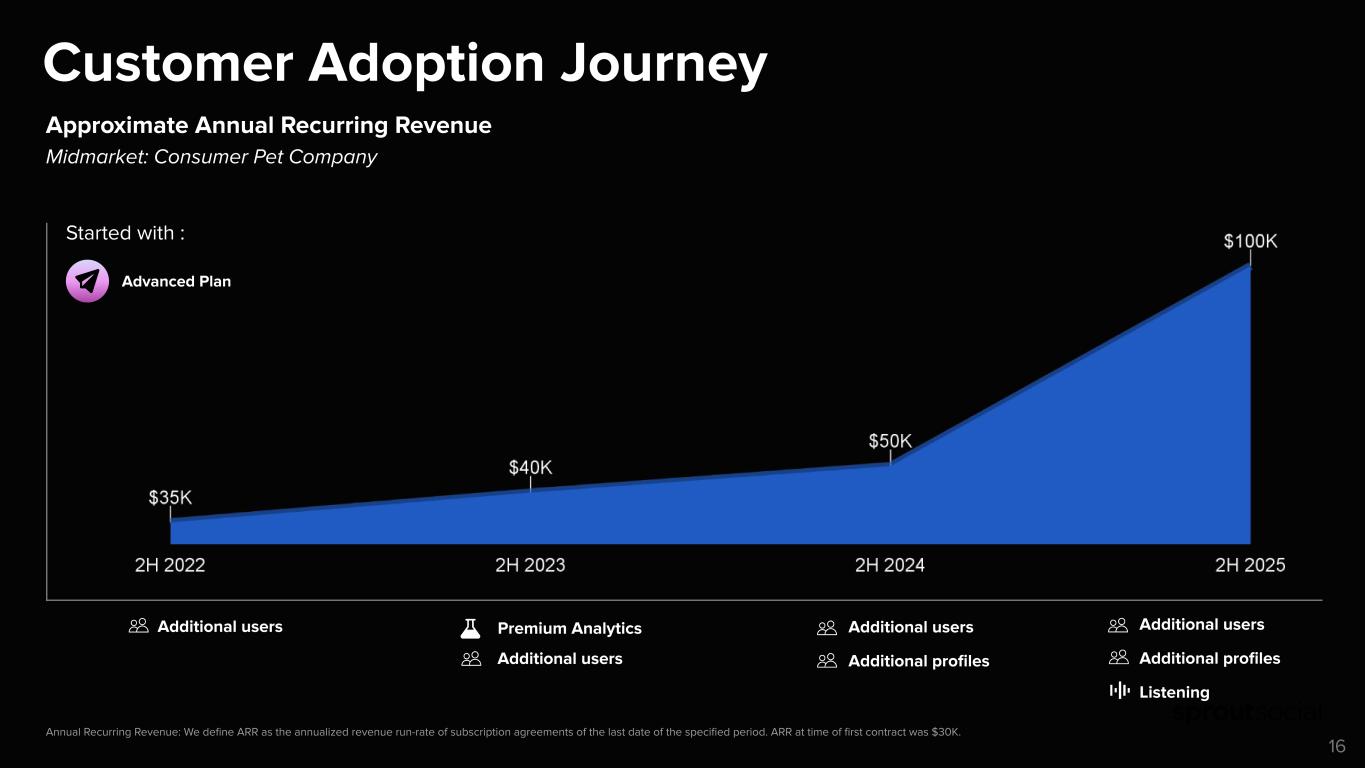
Annual Recurring Revenue: We define ARR as the annualized revenue run-rate of subscription agreements of the last date of the specified period. ARR at time of first contract was $30K. 16 Approximate Annual Recurring Revenue Midmarket: Consumer Pet Company Customer Adoption Journey Additional users Additional users Additional profiles Listening Premium Analytics Additional users Additional users Additional profiles Advanced Plan Started with :
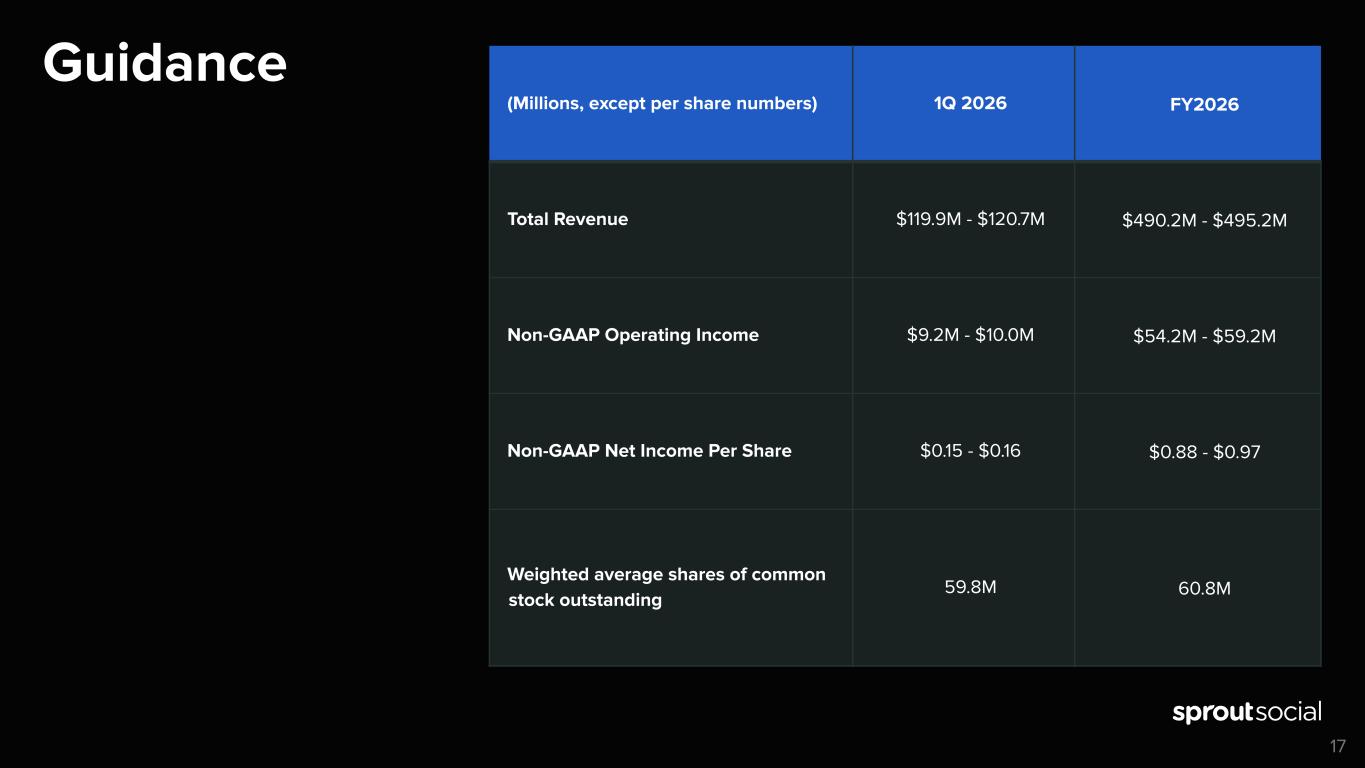
(Millions, except per share numbers) 1Q 2026 FY2026 Total Revenue $119.9M - $120.7M $490.2M - $495.2M Non-GAAP Operating Income $9.2M - $10.0M $54.2M - $59.2M Non-GAAP Net Income Per Share $0.15 - $0.16 $0.88 - $0.97 Weighted average shares of common stock outstanding 59.8M 60.8M 17 Guidance
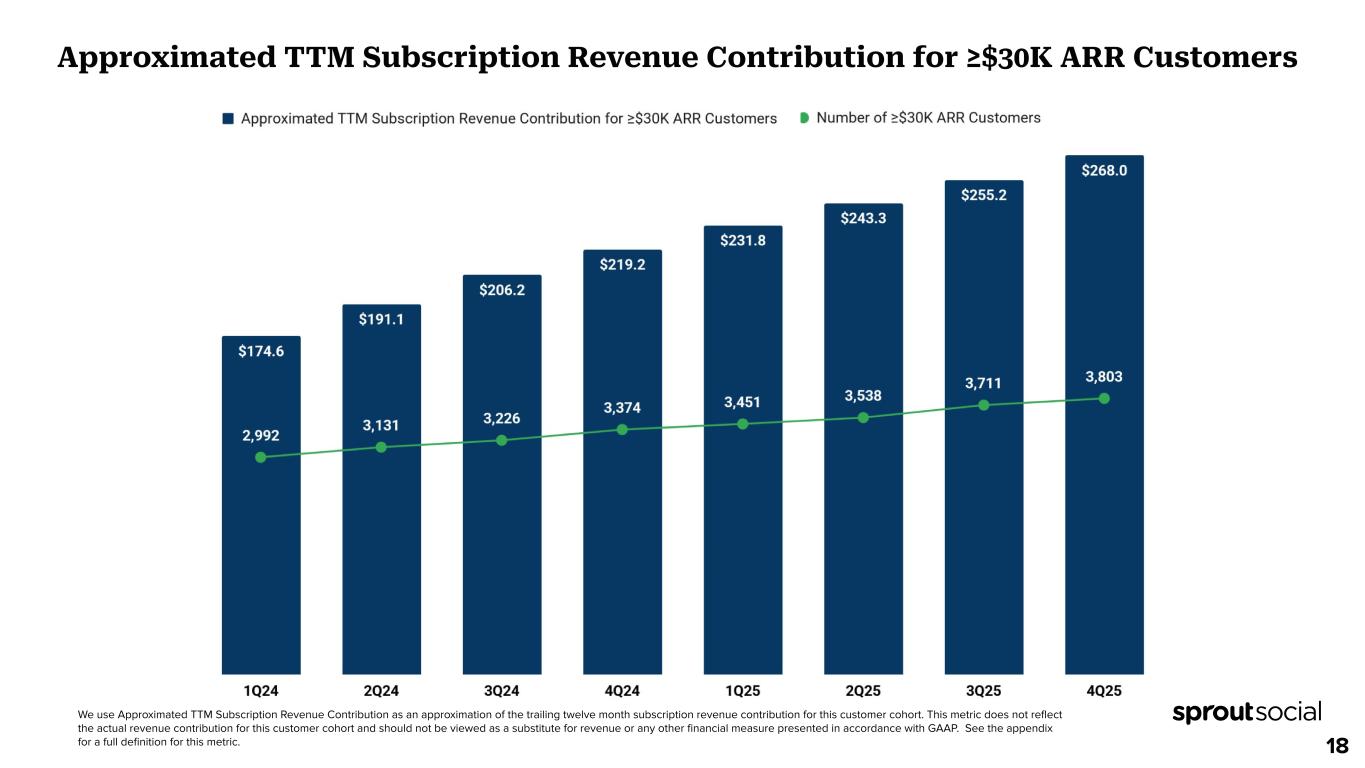
Approximated TTM Subscription Revenue Contribution for ≥$30K ARR Customers 18 What are top negatives in this slide 1. If investors assumes 200-300 additions this year, guidance implies TTM ARPU grows 1% in FY25 vs 5% in prior year 2. Even on a TTM basis, there is a chance ARPU could be negative y/y or Q/Q - out of our control 4. Lag effects in metrics like the Qtry Average ARR 3. GTM is not focused on net $50K adds, yes other Enterprise OKRs but not specifically this number so we are blind each quarter on the adds 4. Basic physics - we just can’t overnight move this segment to 50-60% of revenue - it will take time We use Approximated TTM Subscription Revenue Contribution as an approximation of the trailing twelve month subscription revenue contribution for this customer cohort. This metric does not reflect the actual revenue contribution for this customer cohort and should not be viewed as a substitute for revenue or any other financial measure presented in accordance with GAAP. See the appendix for a full definition for this metric.
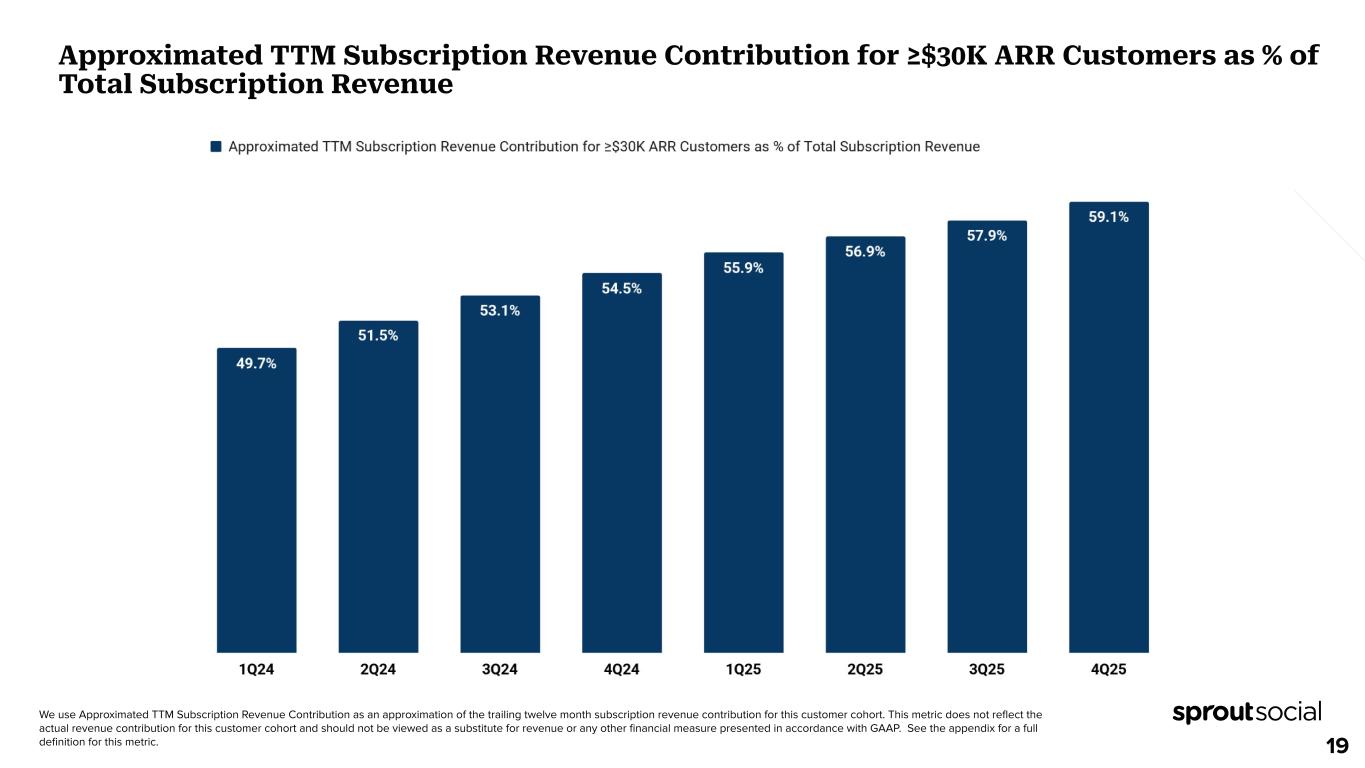
19 What are top negatives in this slide 1. If investors assumes 200-300 additions this year, guidance implies TTM ARPU grows 1% in FY25 vs 5% in prior year 2. Even on a TTM basis, there is a chance ARPU could be negative y/y or Q/Q - out of our control 4. Lag effects in metrics like the Qtry Average ARR 3. GTM is not focused on net $50K adds, yes other Enterprise OKRs but not specifically this number so we are blind each quarter on the adds 4. Basic physics - we just can’t overnight move this segment to 50-60% of revenue - it will take time Approximated TTM Subscription Revenue Contribution for ≥$30K ARR Customers as % of Total Subscription Revenue We use Approximated TTM Subscription Revenue Contribution as an approximation of the trailing twelve month subscription revenue contribution for this customer cohort. This metric does not reflect the actual revenue contribution for this customer cohort and should not be viewed as a substitute for revenue or any other financial measure presented in accordance with GAAP. See the appendix for a full definition for this metric.
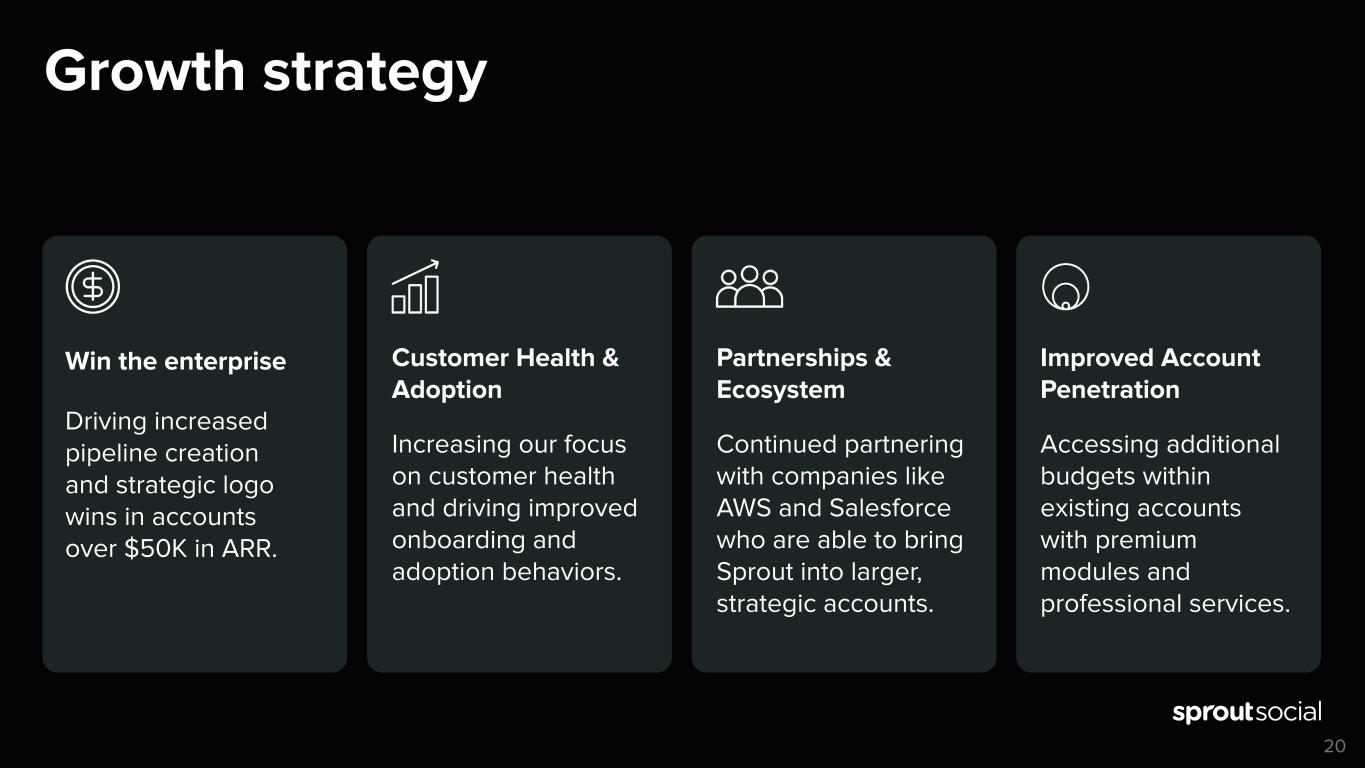
Customer Health & Adoption Increasing our focus on customer health and driving improved onboarding and adoption behaviors. Partnerships & Ecosystem Continued partnering with companies like AWS and Salesforce who are able to bring Sprout into larger, strategic accounts. Improved Account Penetration Accessing additional budgets within existing accounts with premium modules and professional services. 20 Growth strategy Win the enterprise Driving increased pipeline creation and strategic logo wins in accounts over $50K in ARR.
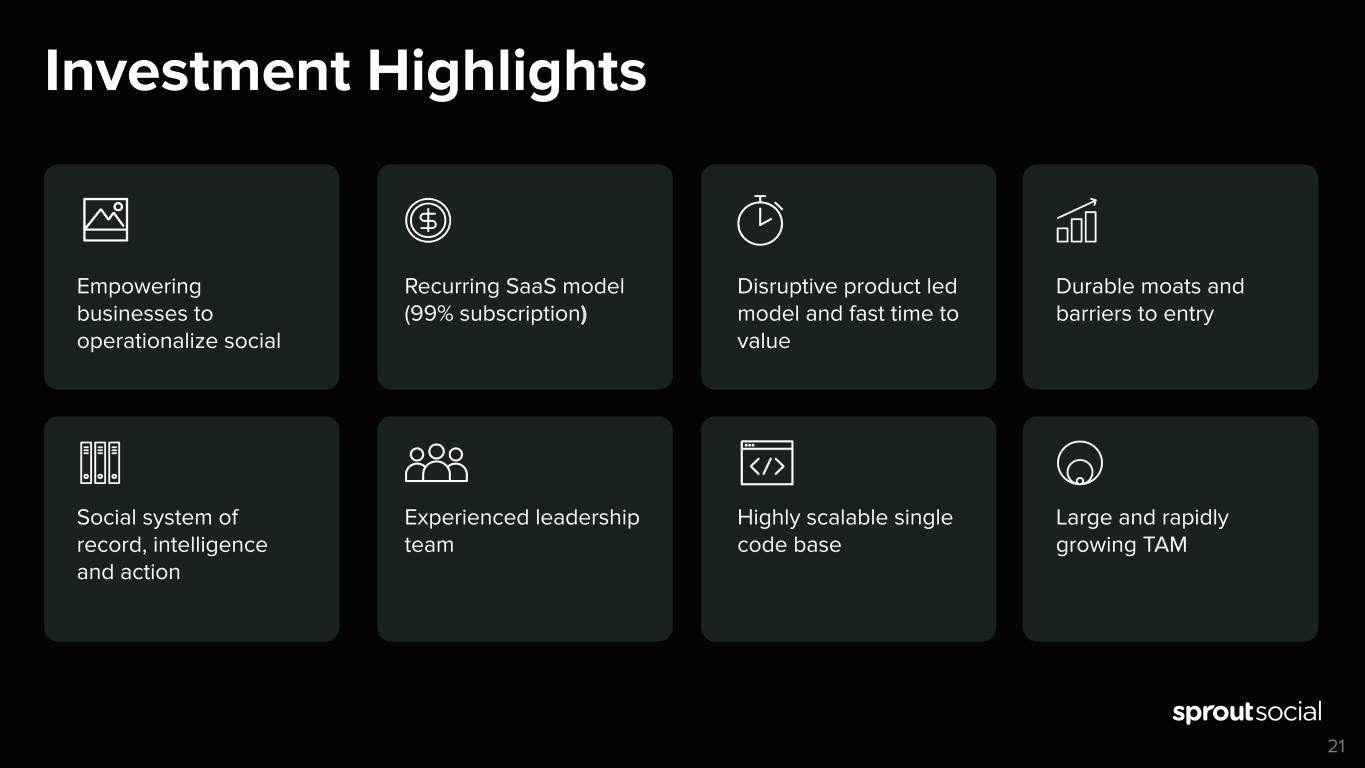
Empowering businesses to operationalize social Disruptive product led model and fast time to value Recurring SaaS model (99% subscription) Durable moats and barriers to entry Social system of record, intelligence and action Highly scalable single code base Experienced leadership team Large and rapidly growing TAM 21 Investment Highlights

Driven by a world-class executive leadership team Ryan Barretto CEO Joe Del Preto* CFO Rachael Pfenning Chief of Staff to the CEO Alan Boyce CTO Crystal Boysen CPO, People Heidi Jonas General Counsel Scott Morris CMO Team background: Srinivas Somayajula CPO, Product Lori Jiménez CRO Colleen Geiselhart SVP, Customer Experience *Joe Del Preto will depart his role as Chief Financial Officer effective March 11, 2026.
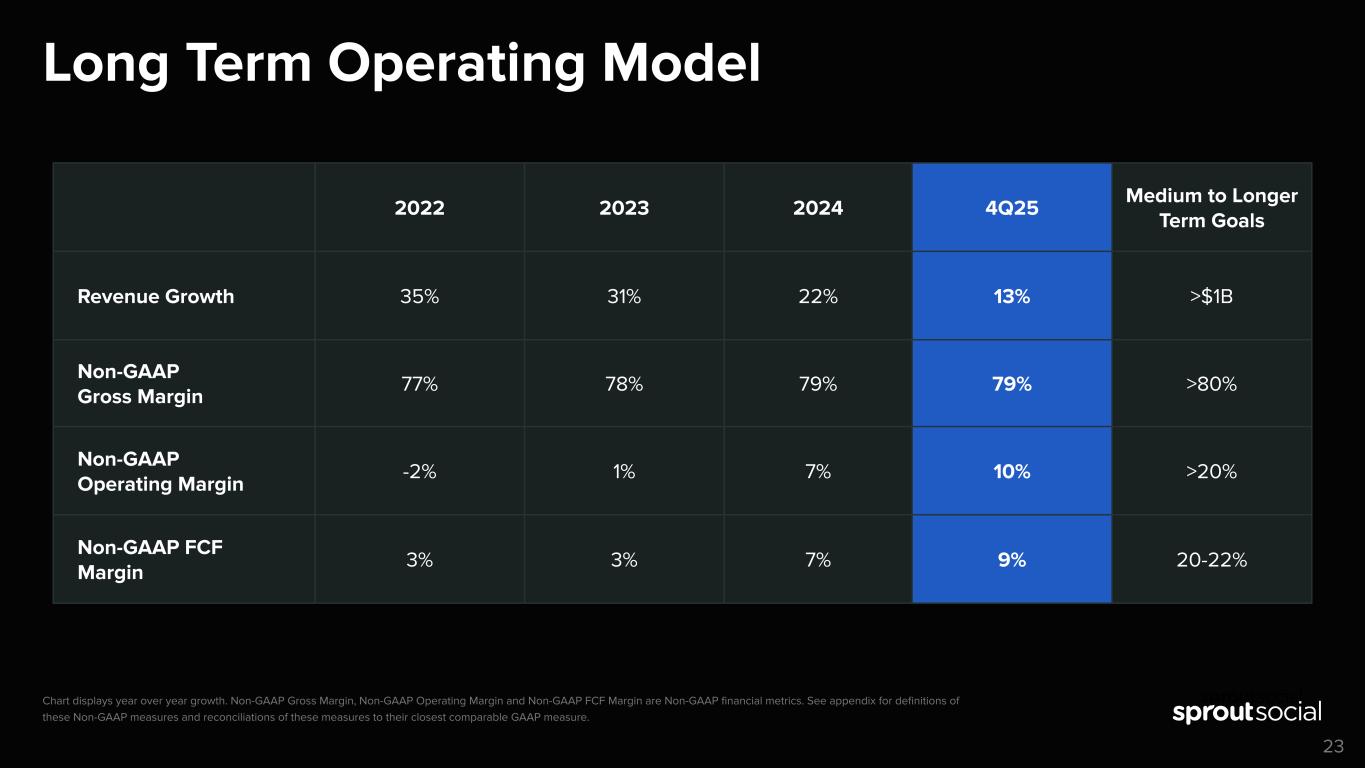
Long Term Operating Model Chart displays year over year growth. Non-GAAP Gross Margin, Non-GAAP Operating Margin and Non-GAAP FCF Margin are Non-GAAP financial metrics. See appendix for definitions of these Non-GAAP measures and reconciliations of these measures to their closest comparable GAAP measure. 2022 2023 2024 4Q25 Medium to Longer Term Goals Revenue Growth 35% 31% 22% 13% >$1B Non-GAAP Gross Margin 77% 78% 79% 79% >80% Non-GAAP Operating Margin -2% 1% 7% 10% >20% Non-GAAP FCF Margin 3% 3% 7% 9% 20-22% Fin Reporting Signoff: NAME: Brian Flynn DATE: 2/20/2026 23
Corporate Overview Sprout System of Record and Action 24
Fin Reporting Signoff: NAME: Brian Flynn DATE: 2/20/2026 26 Appendix
Fin Reporting Signoff: NAME: Brian Flynn DATE: 2/20/2026 27 Appendix
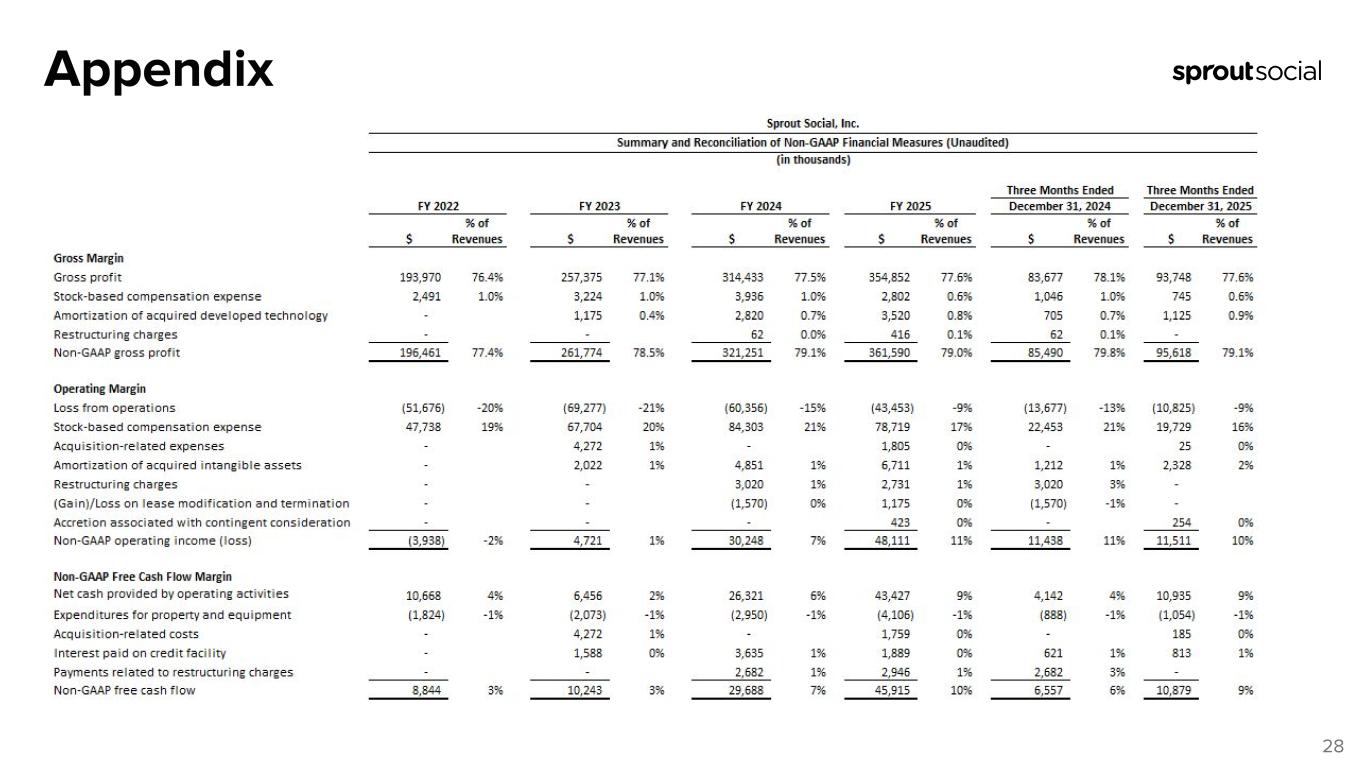
Fin Reporting Signoff: NAME: Brian Flynn DATE: 2/20/2026 28 Appendix
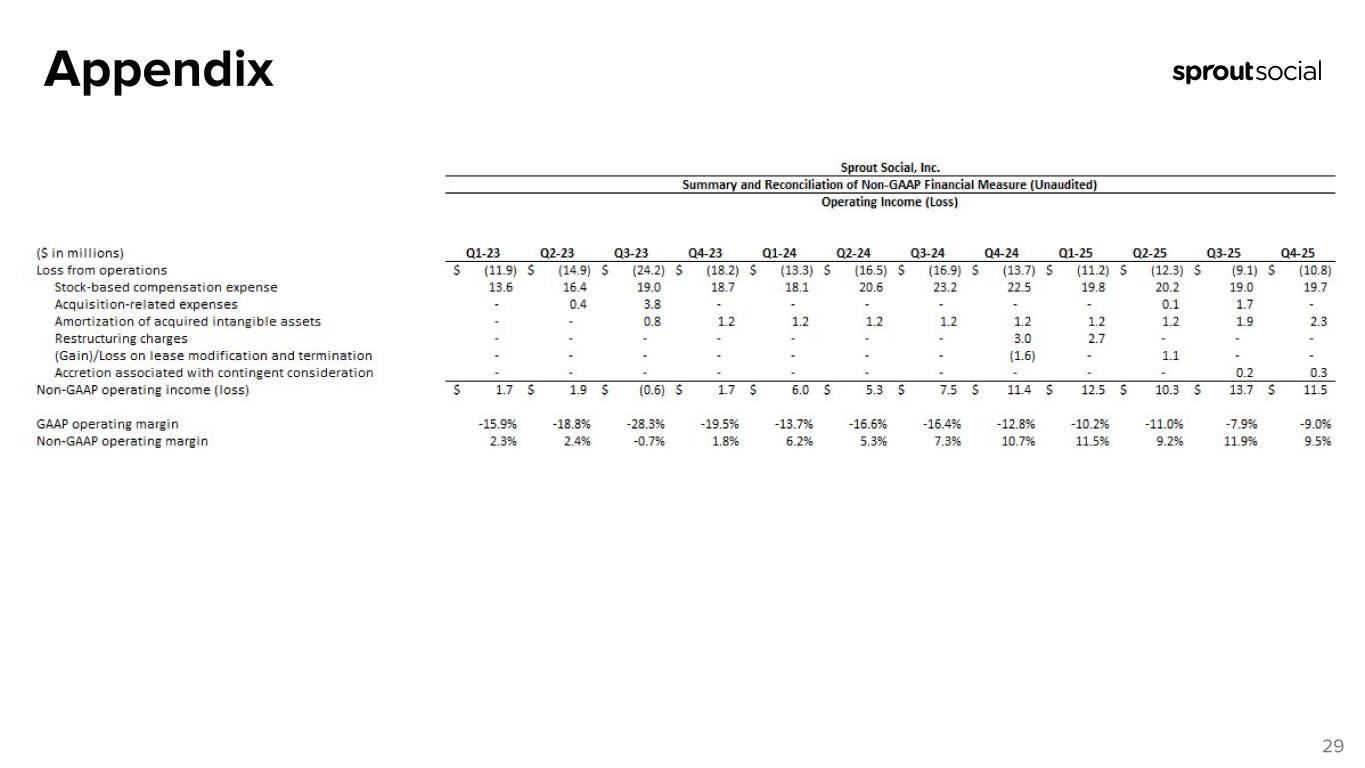
Fin Reporting Signoff: NAME: Brian Flynn DATE: 2/20/2026 29 Appendix
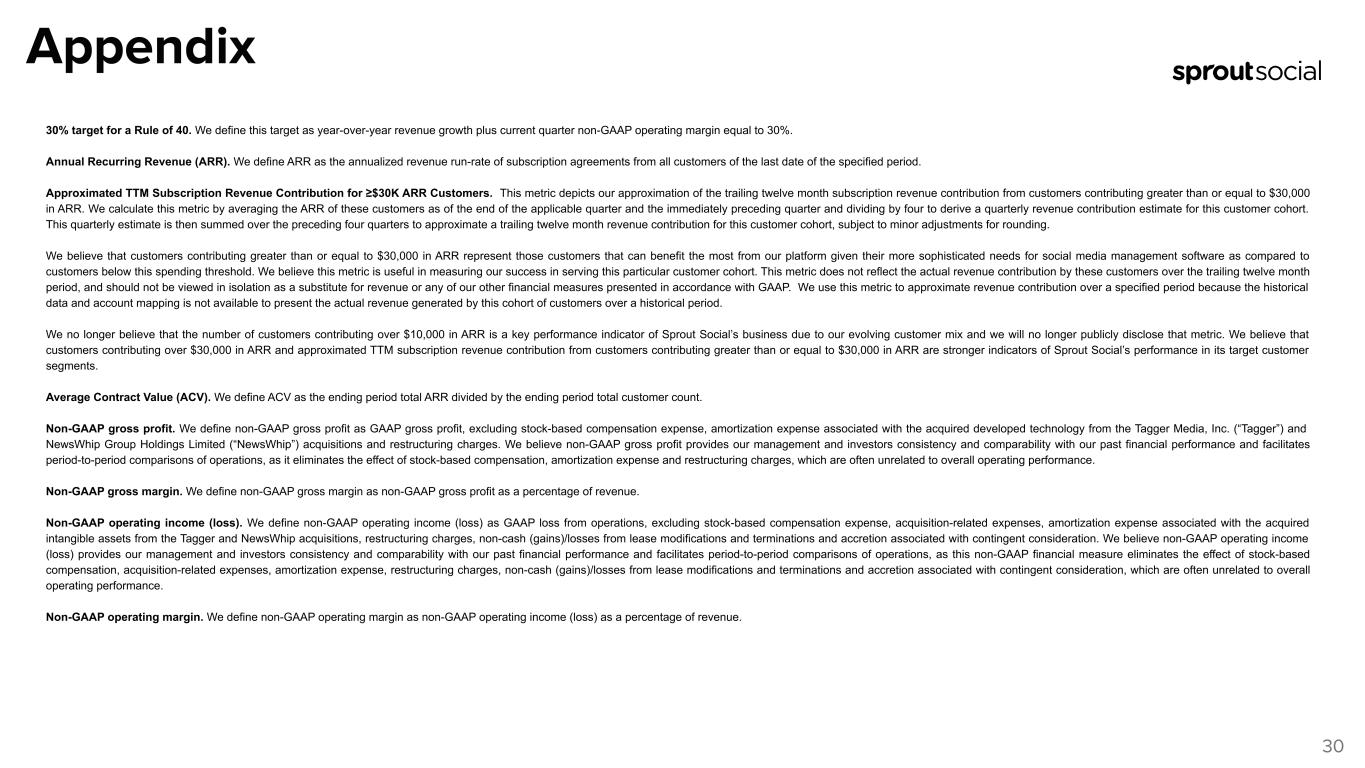
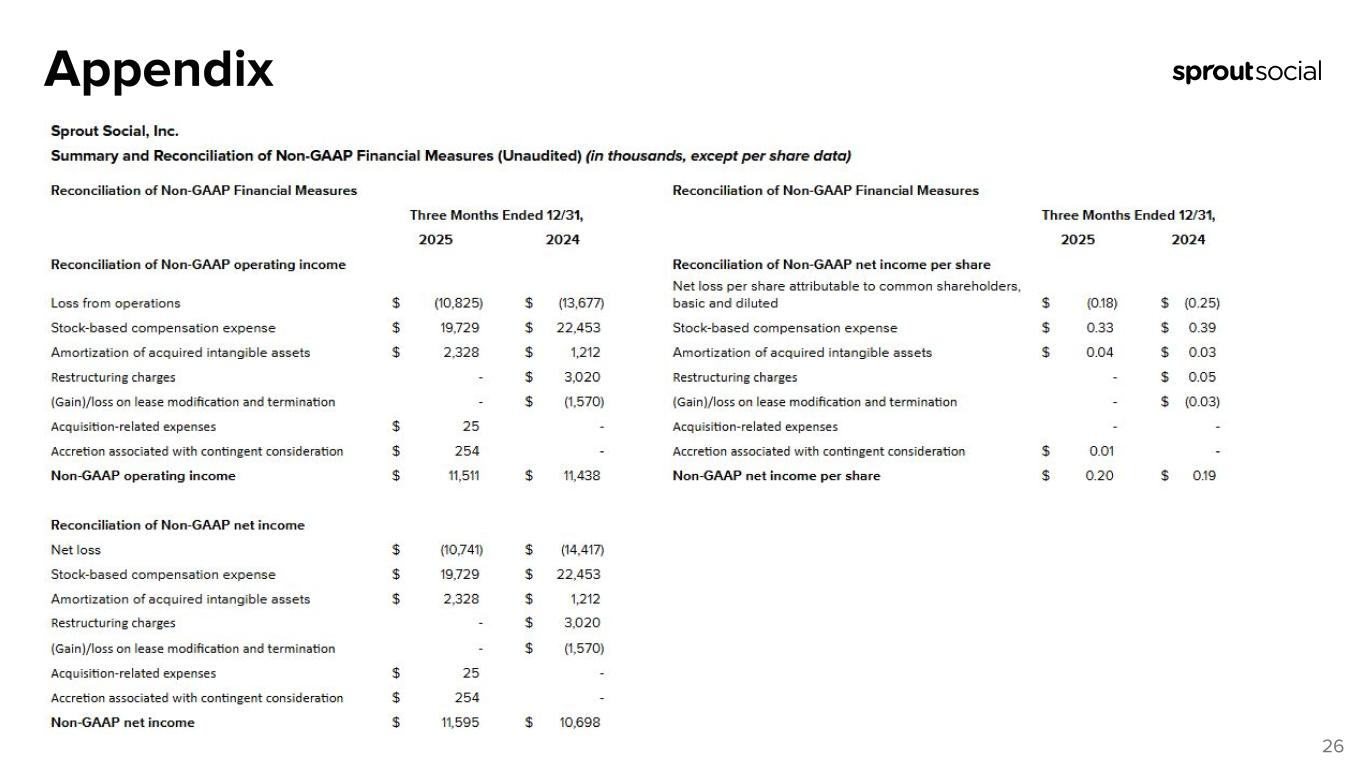
30 Appendix 30% target for a Rule of 40. We define this target as year-over-year revenue growth plus current quarter non-GAAP operating margin equal to 30%. Annual Recurring Revenue (ARR). We define ARR as the annualized revenue run-rate of subscription agreements from all customers of the last date of the specified period. Approximated TTM Subscription Revenue Contribution for ≥$30K ARR Customers. This metric depicts our approximation of the trailing twelve month subscription revenue contribution from customers contributing greater than or equal to $30,000 in ARR. We calculate this metric by averaging the ARR of these customers as of the end of the applicable quarter and the immediately preceding quarter and dividing by four to derive a quarterly revenue contribution estimate for this customer cohort. This quarterly estimate is then summed over the preceding four quarters to approximate a trailing twelve month revenue contribution for this customer cohort, subject to minor adjustments for rounding. We believe that customers contributing greater than or equal to $30,000 in ARR represent those customers that can benefit the most from our platform given their more sophisticated needs for social media management software as compared to customers below this spending threshold. We believe this metric is useful in measuring our success in serving this particular customer cohort. This metric does not reflect the actual revenue contribution by these customers over the trailing twelve month period, and should not be viewed in isolation as a substitute for revenue or any of our other financial measures presented in accordance with GAAP. We use this metric to approximate revenue contribution over a specified period because the historical data and account mapping is not available to present the actual revenue generated by this cohort of customers over a historical period. We no longer believe that the number of customers contributing over $10,000 in ARR is a key performance indicator of Sprout Social’s business due to our evolving customer mix and we will no longer publicly disclose that metric. We believe that customers contributing over $30,000 in ARR and approximated TTM subscription revenue contribution from customers contributing greater than or equal to $30,000 in ARR are stronger indicators of Sprout Social’s performance in its target customer segments. Average Contract Value (ACV). We define ACV as the ending period total ARR divided by the ending period total customer count. Non-GAAP gross profit. We define non-GAAP gross profit as GAAP gross profit, excluding stock-based compensation expense, amortization expense associated with the acquired developed technology from the Tagger Media, Inc. (“Tagger”) and NewsWhip Group Holdings Limited (“NewsWhip”) acquisitions and restructuring charges. We believe non-GAAP gross profit provides our management and investors consistency and comparability with our past financial performance and facilitates period-to-period comparisons of operations, as it eliminates the effect of stock-based compensation, amortization expense and restructuring charges, which are often unrelated to overall operating performance. Non-GAAP gross margin. We define non-GAAP gross margin as non-GAAP gross profit as a percentage of revenue. Non-GAAP operating income (loss). We define non-GAAP operating income (loss) as GAAP loss from operations, excluding stock-based compensation expense, acquisition-related expenses, amortization expense associated with the acquired intangible assets from the Tagger and NewsWhip acquisitions, restructuring charges, non-cash (gains)/losses from lease modifications and terminations and accretion associated with contingent consideration. We believe non-GAAP operating income (loss) provides our management and investors consistency and comparability with our past financial performance and facilitates period-to-period comparisons of operations, as this non-GAAP financial measure eliminates the effect of stock-based compensation, acquisition-related expenses, amortization expense, restructuring charges, non-cash (gains)/losses from lease modifications and terminations and accretion associated with contingent consideration, which are often unrelated to overall operating performance. Non-GAAP operating margin. We define non-GAAP operating margin as non-GAAP operating income (loss) as a percentage of revenue.
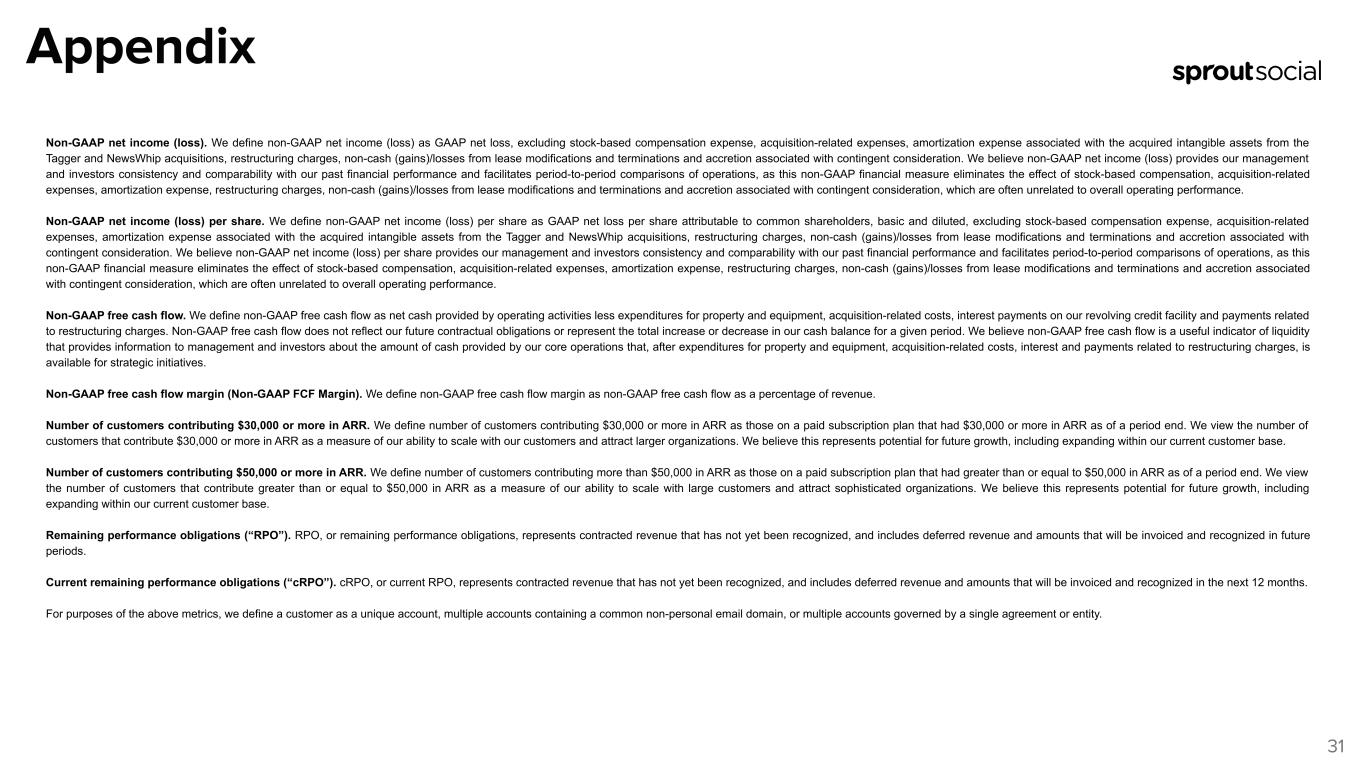
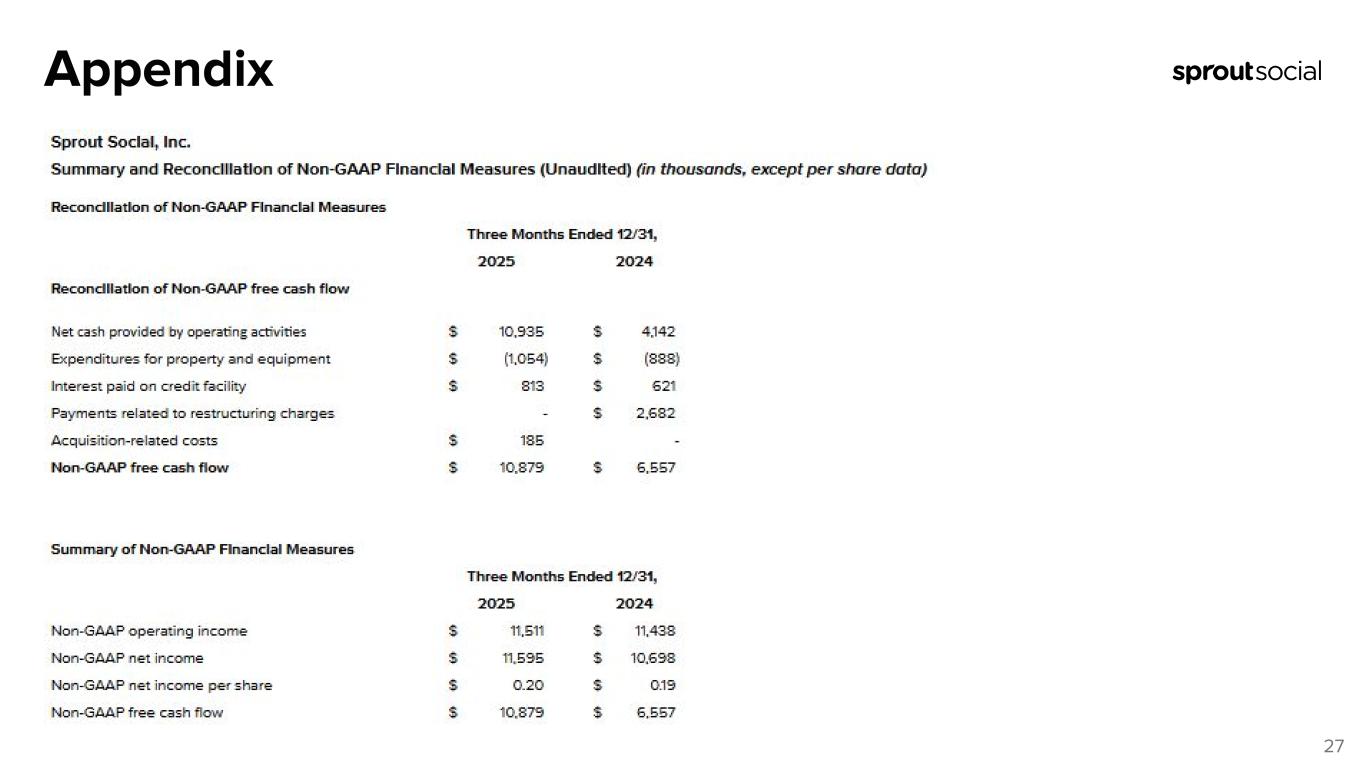
31 Appendix Non-GAAP net income (loss). We define non-GAAP net income (loss) as GAAP net loss, excluding stock-based compensation expense, acquisition-related expenses, amortization expense associated with the acquired intangible assets from the Tagger and NewsWhip acquisitions, restructuring charges, non-cash (gains)/losses from lease modifications and terminations and accretion associated with contingent consideration. We believe non-GAAP net income (loss) provides our management and investors consistency and comparability with our past financial performance and facilitates period-to-period comparisons of operations, as this non-GAAP financial measure eliminates the effect of stock-based compensation, acquisition-related expenses, amortization expense, restructuring charges, non-cash (gains)/losses from lease modifications and terminations and accretion associated with contingent consideration, which are often unrelated to overall operating performance. Non-GAAP net income (loss) per share. We define non-GAAP net income (loss) per share as GAAP net loss per share attributable to common shareholders, basic and diluted, excluding stock-based compensation expense, acquisition-related expenses, amortization expense associated with the acquired intangible assets from the Tagger and NewsWhip acquisitions, restructuring charges, non-cash (gains)/losses from lease modifications and terminations and accretion associated with contingent consideration. We believe non-GAAP net income (loss) per share provides our management and investors consistency and comparability with our past financial performance and facilitates period-to-period comparisons of operations, as this non-GAAP financial measure eliminates the effect of stock-based compensation, acquisition-related expenses, amortization expense, restructuring charges, non-cash (gains)/losses from lease modifications and terminations and accretion associated with contingent consideration, which are often unrelated to overall operating performance. Non-GAAP free cash flow. We define non-GAAP free cash flow as net cash provided by operating activities less expenditures for property and equipment, acquisition-related costs, interest payments on our revolving credit facility and payments related to restructuring charges. Non-GAAP free cash flow does not reflect our future contractual obligations or represent the total increase or decrease in our cash balance for a given period. We believe non-GAAP free cash flow is a useful indicator of liquidity that provides information to management and investors about the amount of cash provided by our core operations that, after expenditures for property and equipment, acquisition-related costs, interest and payments related to restructuring charges, is available for strategic initiatives. Non-GAAP free cash flow margin (Non-GAAP FCF Margin). We define non-GAAP free cash flow margin as non-GAAP free cash flow as a percentage of revenue. Number of customers contributing $30,000 or more in ARR. We define number of customers contributing $30,000 or more in ARR as those on a paid subscription plan that had $30,000 or more in ARR as of a period end. We view the number of customers that contribute $30,000 or more in ARR as a measure of our ability to scale with our customers and attract larger organizations. We believe this represents potential for future growth, including expanding within our current customer base. Number of customers contributing $50,000 or more in ARR. We define number of customers contributing more than $50,000 in ARR as those on a paid subscription plan that had greater than or equal to $50,000 in ARR as of a period end. We view the number of customers that contribute greater than or equal to $50,000 in ARR as a measure of our ability to scale with large customers and attract sophisticated organizations. We believe this represents potential for future growth, including expanding within our current customer base. Remaining performance obligations (“RPO”). RPO, or remaining performance obligations, represents contracted revenue that has not yet been recognized, and includes deferred revenue and amounts that will be invoiced and recognized in future periods. Current remaining performance obligations (“cRPO”). cRPO, or current RPO, represents contracted revenue that has not yet been recognized, and includes deferred revenue and amounts that will be invoiced and recognized in the next 12 months. For purposes of the above metrics, we define a customer as a unique account, multiple accounts containing a common non-personal email domain, or multiple accounts governed by a single agreement or entity.