Please wait

TABLE OF CONTENTS

UNITED STATES
SECURITIES AND EXCHANGE COMMISSION
Washington, D.C. 20549
SCHEDULE 14A
Proxy Statement Pursuant to Section 14(a)
of the Securities Exchange Act of 1934
(Amendment No.  )
Filed by the Registrant ☒
Filed by a Party other than the Registrant ☐
Check the appropriate box:
☐ Preliminary Proxy Statement
☐ Confidential, for Use of the Commission Only (as permitted by Rule 14a-6(e)(2))
☒ Definitive Proxy Statement
☐ Definitive Additional Materials
☐ Soliciting Material under §240.14a-12
TRONOX HOLDINGS PLC
(Name of Registrant as Specified In Its Charter)
(Name of Person(s) Filing Proxy Statement, if other than the Registrant)
Payment of Filing Fee (Check the appropriate box):
No fee required.
 
 
Fee paid previously with preliminary materials.


Fee computed on table in exhibit required by Item 25(b) per Exchange Act Rules 14a-6(i)(1) and 0-11.

TABLE OF CONTENTS


Dear Fellow Shareholder:
On behalf of Tronox’s entire Board of Directors, I am pleased to invite you to the 2025 Annual General Meeting of Shareholders of Tronox Holdings plc (“Tronox” or the Company”) in London, England.
From the perspective of myself and the entire Board, our primary focus during 2024 was severalfold:
Supporting and mentoring Mr. John D. Romano in his first full year as Tronox’s sole CEO following the retirement of Jean-Francois Turgeon as co-CEO at the beginning of 2024.
Navigating difficult market conditions characterized by subdued demand for our principal products --- titanium dioxide (TiO2) and zircon --- coupled with excess supply caused primarily by Chinese dumping of TiO2 in every jurisdiction other than the United States.
Continuing to refresh the Board by retaining and onboarding highly qualified board members, with an emphasis on increasing the representation of women on the Board.
Exercising oversight of the principle risks of a mining and chemical business like Tronox which we regard as the health and safety of our workers and contractors and the communities in which we operate and the long-term sustainability of our processes.
As we communicated last year at this time, it was the Board’s intention to have 30% female representation by the time of the 2025 annual general meeting of shareholders. In the last year we have recruited two highly qualified individuals with the right balance of experiences, skills and perspective. In 2024 we onboarded Lucrèce Foufopoulos-De Ridder, an individual with extensive international executive leadership experience in the chemicals industry, particularly related to technology and innovation coupled with a passion for sustainability. At the February 2025 Board meeting, we appointed another new Board member, Julie Beck, who as the former CFO of Terex Corporation, brings strong finance and accounting skills together with relevant industry experience. You can read more about Lucrèce, Julie and our other director nominees beginning on page 10 of the Proxy Statement.
Shareholders will have an opportunity to express their support for the Board and our executive leadership team at the Annual General Meeting of Shareholders of Tronox Holdings plc, which will be held at 10:00 a.m. BST on May 7, 2025.
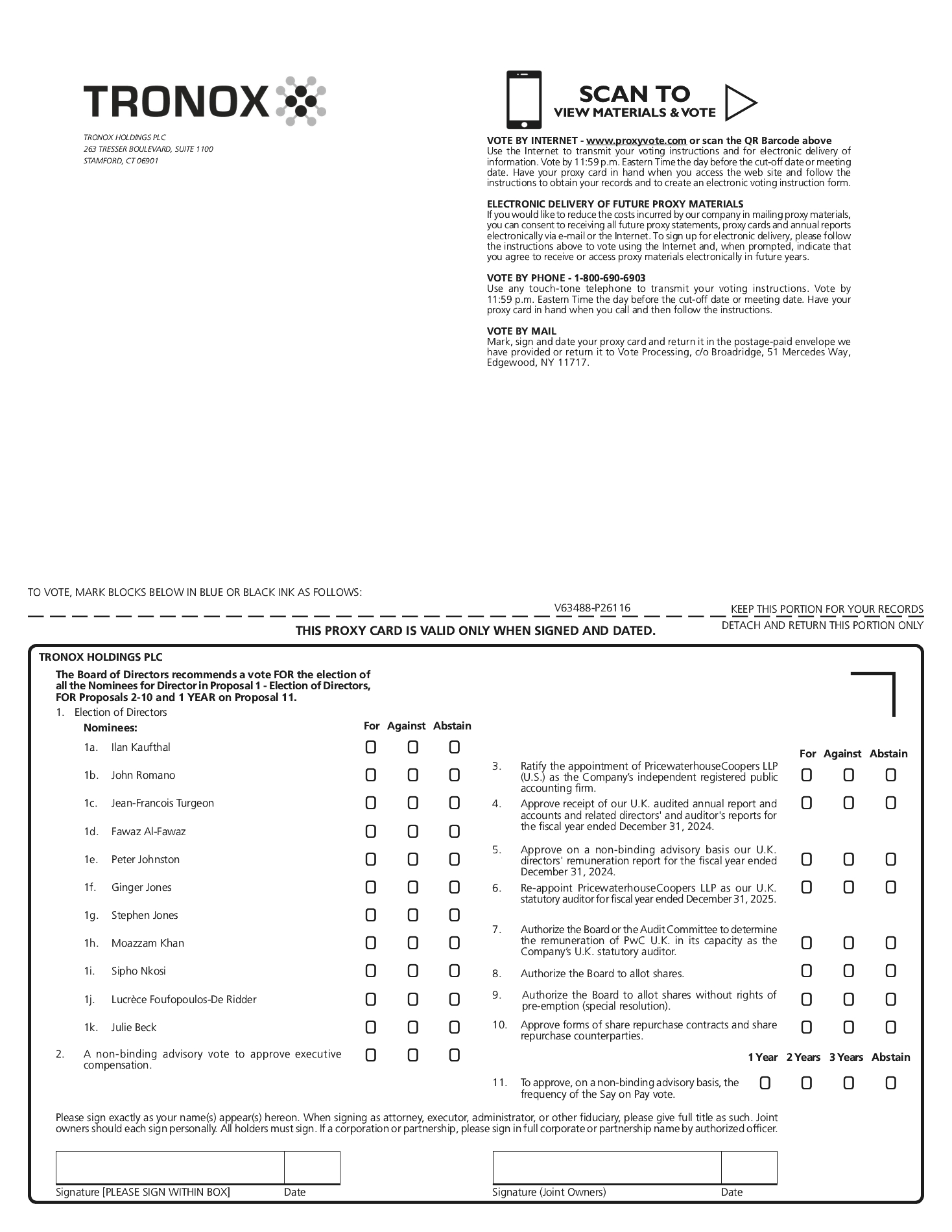
We encourage you to read the Proxy Statement which describes the matters to be voted on at the meeting. Shareholders may vote via the Internet, by telephone or by completing and returning a proxy card. The Board of Directors recommends that you vote FOR all the proposals set forth in the accompanying notice of meeting and Proxy Statement.
On behalf of the Board of Directors, we want to thank you for your continued support of Tronox.
Sincerely,

Ilan Kaufthal
Chair of the Board

TABLE OF CONTENTS


NOTICE OF
ANNUAL GENERAL MEETING OF SHAREHOLDERS
OF TRONOX HOLDINGS PLC
(Registered Company No. 11653089)
Date:
May 7, 2025
 
 
Time:
10:00 am British Summer Time
 
Location:
6 Waterloo Place, St. James, SW1Y 4AN, London, United Kingdom
 
 
Record Date:
5:00 p.m. (U.S. Eastern Daylight Time) on March 10, 2025
 
 
Meeting Agenda:
1.
Election of each of the eleven director nominees listed in the accompanying Proxy Statement by separate ordinary resolutions.
 
2.
A non-binding advisory vote to approve executive compensation.
 
3.
Ratify the appointment of PricewaterhouseCoopers LLP (U.S.) as the Company’s independent registered public accounting firm.
 
4.
Receipt of our U.K. audited annual report and accounts and related directors’ and auditor’s reports for the fiscal year ended December 31, 2024 included in Appendix A to this Proxy Statement (the “Annual Report and Accounts”).
 
5.
Approve on a non-binding advisory basis our U.K. directors’ remuneration report for the fiscal year ended December 31, 2024, contained in the Annual Report and Accounts and included in Appendix A to this Proxy Statement (the “Directors’ Remuneration Report”).
 
6.
Re-appoint PricewaterhouseCoopers LLP (“PwC U.K.”) as our U.K. statutory auditor under the U.K. Companies Act 2006 to hold office from the conclusion of the Annual Meeting until the conclusion of the next general meeting at which the annual report and accounts are laid before the Company.
 
7.
Authorize the Board of Directors (the “Board”) or the Audit Committee to determine the remuneration of PwC U.K. in its capacity as the Company’s U.K. statutory auditor.
 
8.
Authorize the Board to allot shares.
 
9.
Authorize the Board to allot shares without rights of pre-emption.
 
10.
Approve forms of share repurchase contracts and share repurchase counterparties.
 
11.
Approve on a non-binding advisory basis the frequency of voting on the compensation paid to the Company’s named executive officers.

TABLE OF CONTENTS

Resolutions 1-8, 10 and 11 are proposed as ordinary resolutions. Resolution 9 is proposed as a special resolution. The full text of each resolution, the Board’s recommendation on how shareholders should vote on each resolution and certain explanatory notes on each resolution are set out in the accompanying Proxy Statement, which forms part of this notice.
We encourage shareholders to vote as soon as possible. Shareholders of record on the Record Date are entitled to vote in the following ways:
By Internet:
By Telephone:
By Mail:


You can vote your shares online at www.proxyvote.com
In the U.S. or Canada, you can vote your shares by calling +1-800-690-6903.
You can vote by mail by marking, dating and signing your proxy card and returning it in the business reply envelope to Tronox Holdings plc, 263 Tresser Boulevard, Suite 1100, Stamford, Connecticut 06901 U.S.A.
A shareholder of record is entitled to appoint more than one proxy in relation to the 2025 Annual Meeting (provided that each proxy is appointed to exercise the rights attached to different ordinary shares). Such proxy need not be a shareholder of record, but must attend the 2025 Annual Meeting and vote as the shareholder of record instructs for such vote to be counted. The proxy may exercise all or any of a shareholder’s right to attend, ask questions and vote at the 2025 Annual Meeting and need not be a shareholder of Tronox Holdings plc.
This Notice of Annual General Meeting of Shareholders and related proxy materials are being distributed or made available to shareholders beginning on or about March 27, 2025.
By Order of the Board of Directors,

Jeffrey N. Neuman
Senior Vice President,
General Counsel and Secretary
Registered Office: Laporte Road, Stallingborough, Grimsby, North East Lincolnshire, DN40 2PR, United Kingdom

TABLE OF CONTENTS

TABLE OF CONTENTS
 
Page
In the Notice of Annual Meeting and this Proxy Statement, references to “Tronox,” the “Company,” “we,” “us,” or “our” and similar expressions refer to Tronox Holdings plc and “Annual Meeting” refers to the annual general meeting of the shareholders of Tronox Holdings plc, unless the context of a particular reference provides otherwise. In this Proxy Statement, references to “shares” refer to ordinary shares of Tronox Holdings plc.

TABLE OF CONTENTS

PROXY SUMMARY
Throughout 2024 we continued to experience an extremely challenging operating environment. End-market demand for TiO2 and zircon did not recover to the levels initially anticipated at the beginning of the year. Compounding market headwinds, Chinese TiO2 exports continued to increase as compared to 2023 despite the imposition of antidumping duties in the European Union and Brazil, China’s #1 and #3 export markets, respectively. Despite these challenges, Tronox continues to maintain industry best-in-class EBITDA margins as compared to our direct non-Chinese TiO2 peers while prudently investing capital to maintain our mineral resource base and improving the efficiency of our pigment plants.
2024 Highlights
CEO Succession
2024 was the first full-year in which Mr. John D. Romano served as Tronox’s sole CEO since the retirement of Jean-Francois Turgeon as Co-CEO. Mr. Romano has been part of the Tronox organization for over 30 years, and the Board was extremely satisfied with his performance in which he demonstrated strong leadership skills, a strategic mindset and deep understanding of our industry and customers.
Key Strategic Projects
2024 continued to reflect the Company’s commitment to sustaining and strengthening its vertical integration competitive advantage. During 2024, Tronox invested approximately $135 million in two key mining projects in South Africa – Namakwa East OFS and Fairbreeze extension – which are expected to replace existing mines in South Africa reaching end of life. We believe these new mining sites are abundant in natural rutile and zircon, and will be a significant source of high-grade ilmenite suitable for direct use or slag processing. These investments are expected to generate returns above the Company’s cost of capital. In addition, we are continuing to evaluate opportunities to leverage our expertise in mining and the exposure we have to rare earth materials, including monazite, through our operations.
Strengthening our Balance Sheet
In addition to returning $80 million in cash to shareholders in the form of dividends and investing $370 million of capital in the Company’s future, Tronox continued to prudently manage liquidity and its balance sheet. During 2024, we executed several term loan refinancing transactions which extended the maturities in such instruments while also reducing the applicable interest rates thereunder. The absence of any significant principal repayments on our outstanding indebtedness until 2029 should give shareholders further confidence in the strength of our balance sheet. Finally, we believe we have access to ample liquidity. At the end of 2024, we had cash on hand of $151 million and untapped short-term borrowing capacity of $427 million.
Emphasis on Safety
Safety is the cornerstone of all operations at Tronox. As a mining and manufacturing company, we understand there are inherent risks in the work we do, which is why we believe our primary responsibility is to ensure our employees and contractors return home safe and healthy every day. Each year, the Board sets ambitious goals for safety to drive us closer to a business with zero injuries, zero incidents, zero harm. We believe our 2024 safety targets - Disabling Injury Frequency Rate (DIFR) of 0.15 and Total Recordable Injury Frequency Rate (TRIFR) of 0.36 - are equivalent to top-quartile peer performance, and similar to past years, our Board tied 15% of the annual incentive plan to safety metrics. Our improved safety performance in 2024 was in part due to the continued emphasis on Tronox’s leading safety indicator program. We believe this program encourages employees to proactively identify and mitigate workplace hazards across our work sites before incidents occur.
1

TABLE OF CONTENTS

PROXY SUMMARY
What We Do and How We Do It
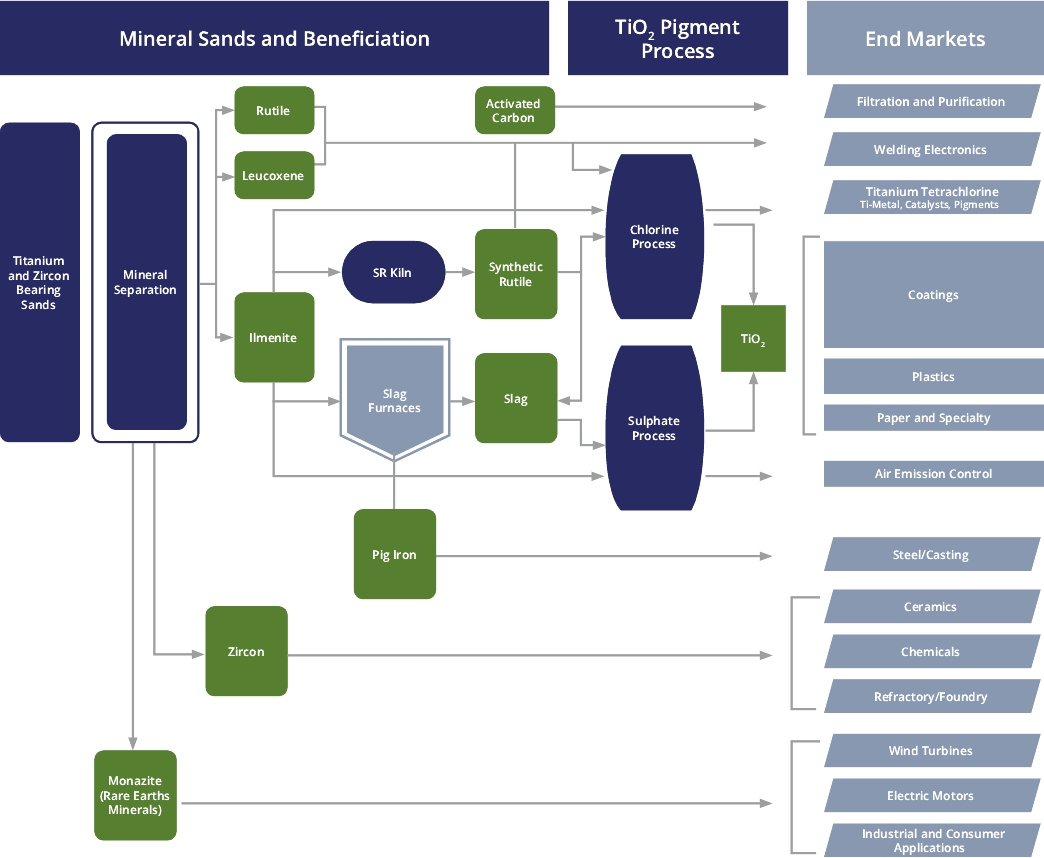
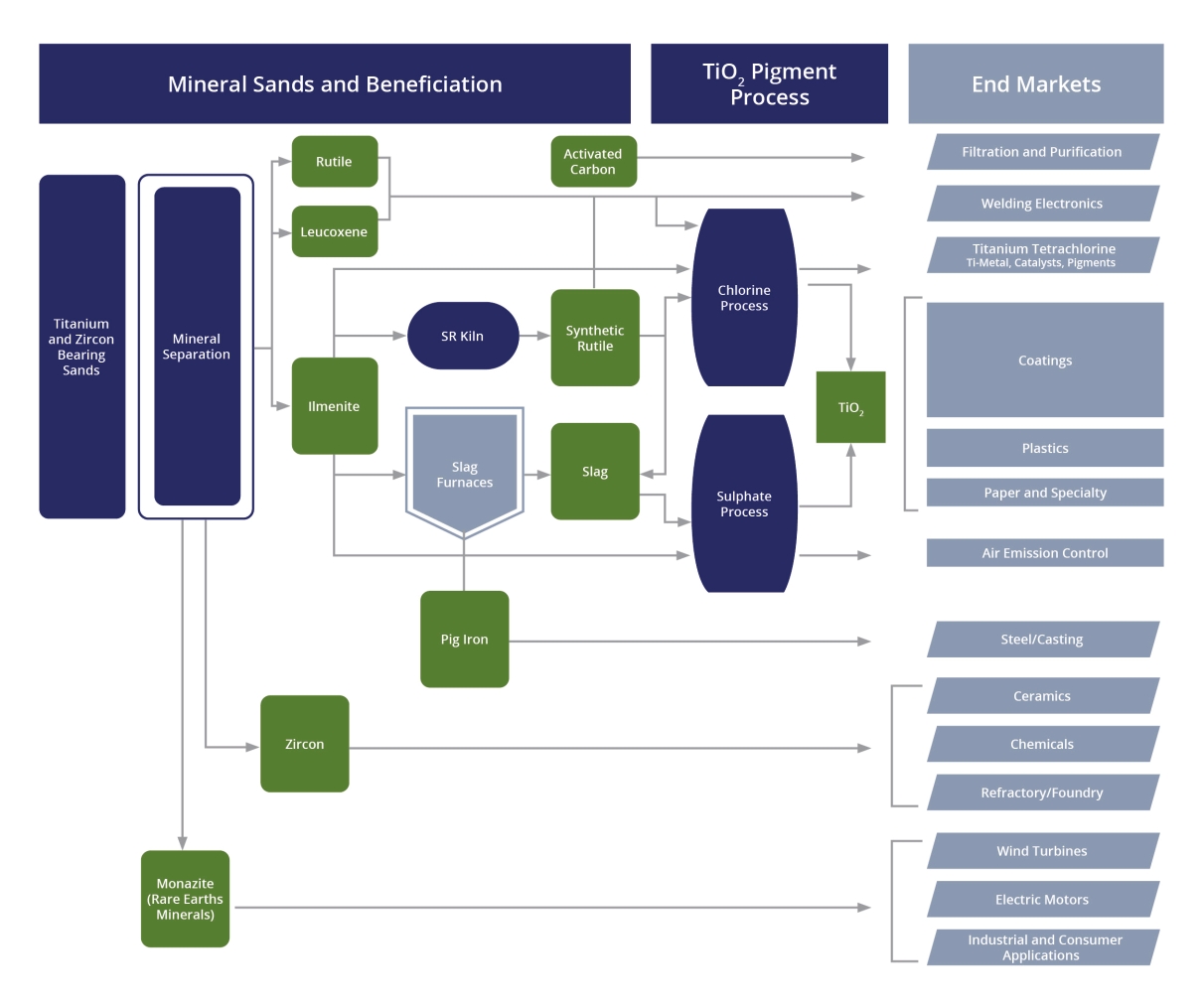
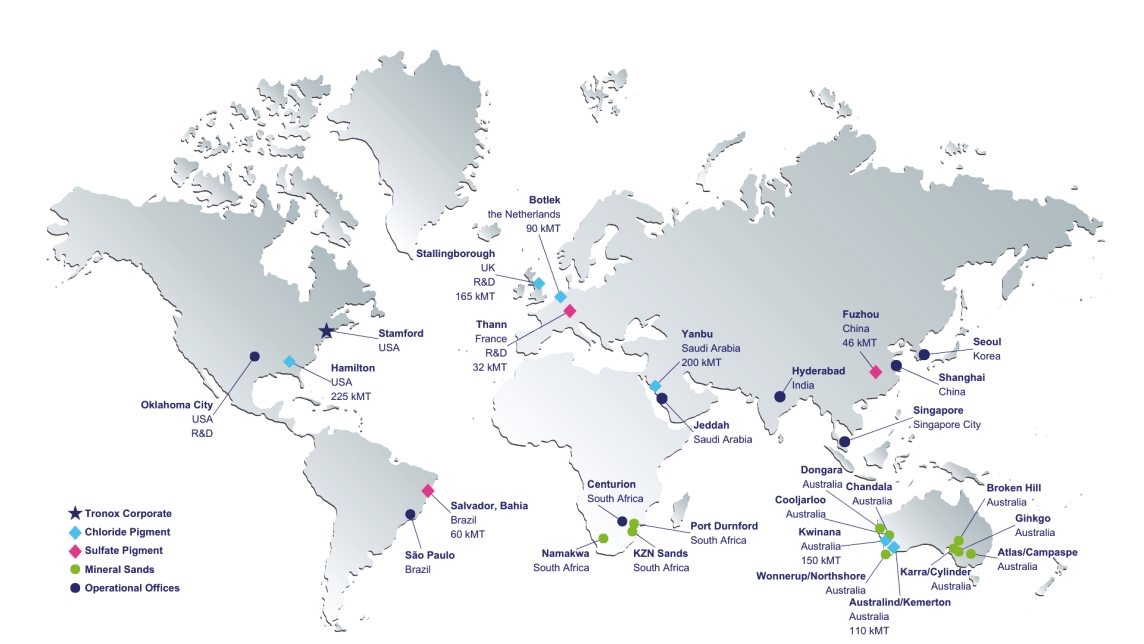
We are the world’s leading integrated manufacturer of TiO2 pigment. We operate titanium-bearing mineral sand mines and beneficiation and smelting operations in Australia and South Africa to produce feedstock materials that can be processed into TiO2 for pigment, high purity titanium chemicals, including titanium tetrachloride, and ultrafine TiO2 used in certain specialty applications. Our strategy is to be vertically integrated and produce enough feedstock materials so as to be as self-sufficient as possible in the production of TiO2 at our 9 pigment facilities located in the United States, Australia, Brazil, UK, France, the Netherlands, China and the Kingdom of Saudi Arabia. We believe that vertical integration is the best way to achieve our ultimate goal of delivering low cost, high-quality pigment to our approximately 1,200 TiO2 customers throughout the world. The mining, beneficiation and smelting of titanium bearing mineral sands also creates meaningful quantities of co-products including zircon, pig iron and the rare-earth bearing mineral, monazite, which we also supply to customers around the world.
The following chart highlights our fully integrated business across the TiO2 value chain.

Shareholder Engagement
At our most recent annual meeting of shareholders held on May 8, 2024, our Say-on-Pay advisory vote passed with the affirmative vote of approximately 97% of the votes cast and our Say-on-Pay advisory vote has passed with the affirmative vote of at least 96% for each of the last 6 years. We believe the positive 2024 Say-on-Pay advisory vote continued to reflect the focus and commitment by the Board and the Company’s Human Resources and Compensation Committee (the “HRCC”) to align our compensation program with the interests of our stakeholders.
2

TABLE OF CONTENTS

PROXY SUMMARY
During the past year and into 2025, we continued our practice of active engagement with shareholders on many levels. These interactions were aimed at providing insight and transparency into our financial results, operations and long-term strategy.
In terms of shareholder engagement specifically related to compensation, governance and sustainability, we invited our top shareholders to meet telephonically with our Board Chair and members of management in early 2025. Five shareholders representing approximately 21% of our outstanding ordinary shares responded to our invitation and met with the Company. At those meetings, shareholders continued to express strong support for our governance and executive compensation practices. Shareholders were particularly complimentary that our long-term incentive program and annual incentive plan metrics are aligned with shareholder interests.
Corporate Governance Highlights
The Board is committed to continually improving its corporate governance processes, practices and procedures. Our governance policies and structures are designed to promote the Board’s thoughtful oversight of Tronox’s business decisions and ensure intelligent risk-taking, with the goal of furthering our long-term strategic goal of being the world’s most vertically integrated and lowest cost producer of TiO2 as well as becoming a sustainable mining and materials company.
Highlights include:

Enhanced oversight of ESG at the Board level through the Corporate Governance and Sustainability Committee. Management is required to regularly report to the Corporate Governance and Sustainability Committee on key ESG initiatives;

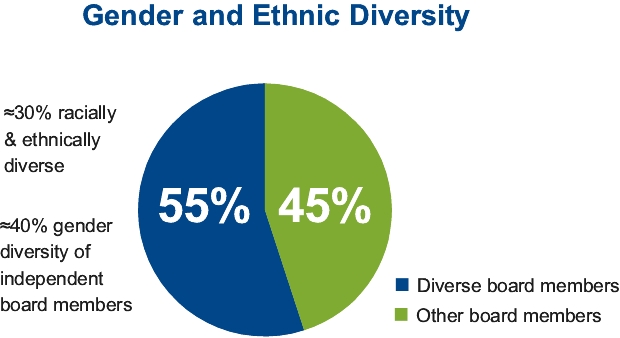
A diverse Board with the appropriate mix of skills, experience and perspective. Assuming all director nominees are elected at the Annual Meeting, ~27% will be women, including the chair of our Audit Committee, ~45% will be non-U.S. citizens and ~10% will be black South Africans.

Assuming all director nominees are elected at the Annual Meeting, not taking into consideration the 2 directors appointed by Cristal Netherlands, our ~24% shareholder, pursuant to the terms of a shareholder agreement, 33% of the directors will be gender diverse.

Separation of Board Chair and CEO roles enables our CEO to focus on managing the Company while our independent Board Chair takes a more active role in oversight of management and the Company’s overall corporate governance;

Sustainability disclosures align with Sustainability Accounting Standards Board (SASB) and Global Reporting Initiative (GRI) Framework For Sustainability Reporting, while our climate-related disclosures are aligned with the Task Force on Climate-Related Financial Disclosures (TCFD);

Assuming all director nominees are elected at the Annual Meeting, seven of our eleven Directors will be independent under NYSE listing standards, with the non-independent Directors consisting of John Romano, our CEO, Jean-Francois Turgeon, our former Co-CEO who is considered non-independent, and Moazzam Khan and Fawaz Al-Fawaz, the two members appointed by Cristal Netherlands, our largest shareholder;

Directors are elected annually under a majority voting standard;

All Board Committees are fully independent;

Policy limiting the number of public company boards on which Directors may serve;

Minimum share ownership requirements for Directors and executive officers;

Anti-Hedging of Company Securities Policy; and

Adoption of Dodd-Frank Clawback Policy.
3

TABLE OF CONTENTS

PROXY SUMMARY
Executive Compensation Program Highlights
Our executive compensation program is designed to incentivize and motivate our executive officers to manage our business well over the long-term, to drive performance improvements, and to increase shareholder value. The incentive compensation elements of our program are designed to closely align the financial interests of our executive with those of our shareholders. Highlights include:

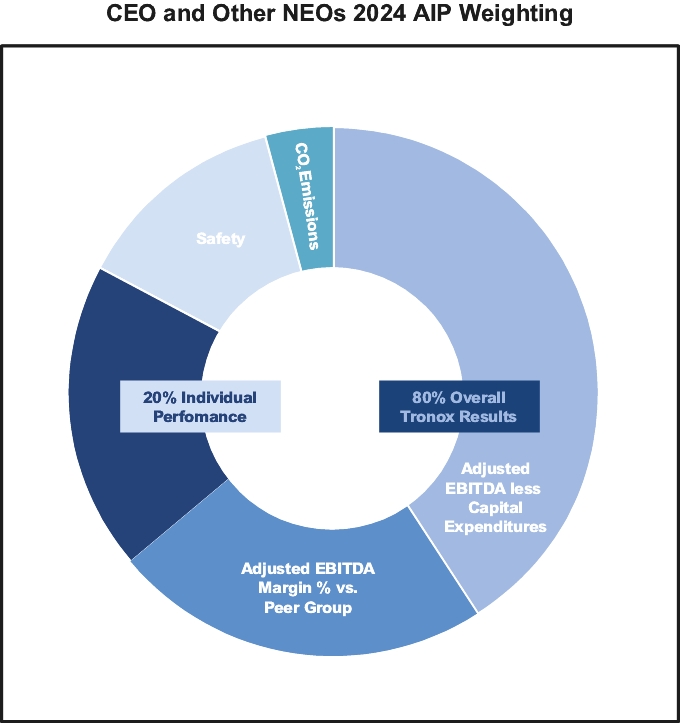
In 2025, similar to 2024, we will include a reduction in our carbon emissions, measured as tons of CO2 emissions per ton of production, as one of the metrics used to determine the cash bonus payable to our executives. 20% of our annual bonus plan is linked to ESG metric - 15% to safety and 5% to carbon emission reduction;

In response to shareholder feedback, similar to 2024, 50% of the long-term incentive program equity grants only vest if the Company achieves pre-determined performance metrics (i.e., TSR, ROIC) aligned with shareholder interests;

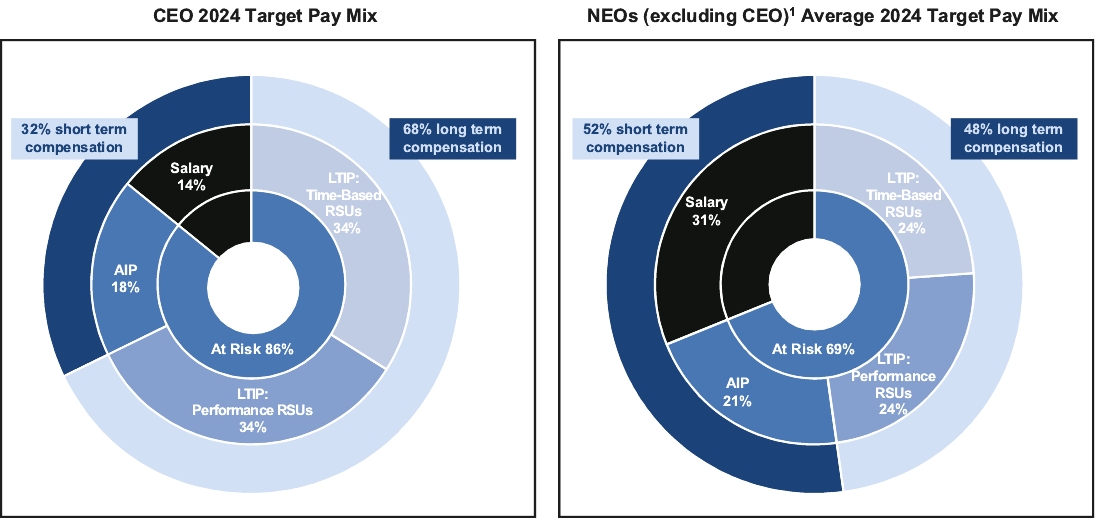
Emphasis on performance-based compensation: in 2024, 86% of our CEO target compensation and average of 69% of our other current NEOs’ target compensation is “at-risk”;

Use of metrics in the annual incentive compensation plans for the CEO and other NEOs which are expected to drive long-term shareholder value;

Minimum share ownership requirements for the CEO (5x base salary) and other NEOs, (3x base salary) which reinforce our focus on shareholder alignment;

No excise tax gross-up provisions in any change-in-control provisions;

No re-pricing of stock options without shareholder approval;

No cash buyout of underwater options;

Annual review of executive compensation design, market competitiveness, and best practices; and

Retention of an independent compensation consultant to provide guidance and support to the HRCC.
4

TABLE OF CONTENTS

SUSTAINABILITY AND CORPORATE RESPONSIBILITY
Sustainability has always been a part of how we do business at Tronox. As a sustainable mining and chemical company, our operations connect us closely to the land, the environment and the communities in which we operate. We believe operating as a vertically integrated mining and chemicals enterprise gives us greater control over our supply chain and provides a competitive advantage as our end customers are increasingly focused on sustainability of their suppliers, particularly when it comes to Scope 3 emissions.
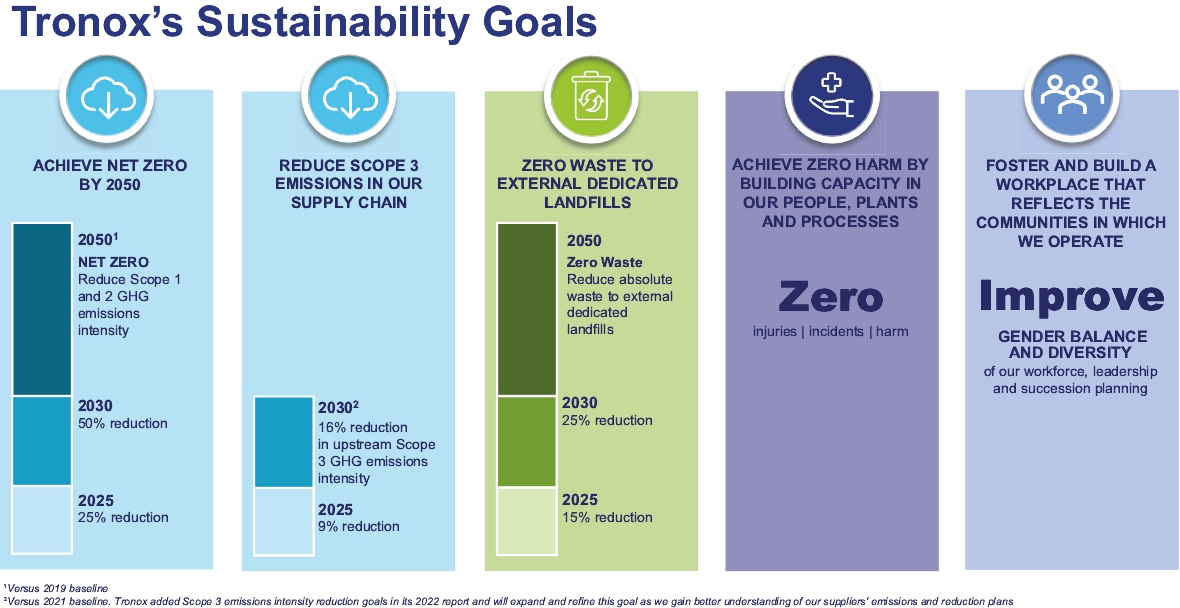
We believe in taking accountability for the economic, environmental and social consequences of our activities. Our goal is to minimize the unintended consequences of our actions while becoming a more efficient business that creates long-term value. The table below sets forth our goals and aspirations in 4 key areas related to sustainability.

2024 Accomplishments
Carbon Emission Reductions
Our detailed and actionable roadmap for reducing carbon emissions in the short-, medium- and long-term demonstrates Tronox’s commitment to mitigating the impact of climate change. Our roadmap covers 100% of our operations and is based on a thorough analysis of our carbon footprint and step-by-step plans to reduce it. The roadmap is not just a paper exercise, but is supported by well-resourced projects and initiatives. The majority of our GHG emissions are generated from our TiO2 slag furnaces in South Africa, synthetic rutile kiln in Western Australia, and TiO2 pigment plants in the United States, United Kingdom, France, Brazil, China, Netherlands, Australia, and Kingdom of Saudi Arabia.
We aim to reduce Scope 1 and Scope 2 emission intensity 25% by the end of 2025 and 50% by the end of 2030, in each case against a 2019 baseline. During 2024, a 200 MW solar energy project in South Africa we first announced in Q1 2022 became fully operational. Not only is the project one of South Africa’s largest renewable power projects which will help address the country’s chronic electricity shortage, but it also is expected to reduce Tronox’s global Scope 1 and 2 emissions by approximately 13%. Management regards this as a substantial achievement. In addition, in June 2024, we announced a second large-scale renewable energy project in South Africa that is expected to be fully operational by the end of 2027. Upon completion of such project, the Company expects that approximately 70% of its South African needs will be satisfied by renewable energy.
Furthermore, during 2024, we entered into a power purchase agreement with Pacific Energy to design and deliver a new 26 MW hybrid renewable power system for our Atlas mine site in New South Wales, Australia. This power system is expected to provide up to 40% renewable energy to the mine site’s power supply which would reduce our
5

TABLE OF CONTENTS

SUSTAINABILITY AND CORPORATE RESPONSIBILITY
annual carbon emissions by approximately 13,000 tonnes and diesel usage by nearly five million liters per year. We currently estimate this new system will be operational by mid-2025.
We believe the Company’s determination to bring on-stream these significant renewable energy projects are just two examples of how Tronox is committed to being a leader when it comes to corporate sustainability and protection of the environment.
In another example of our leadership in sustainability, in 2023 we publicly announced targets to reduce upstream Scope 3 carbon emission intensity by 9% by 2025 and 16% by 2030, each against our 2021 baseline.
Key Highlights of Tronox’s Roadmap for CO2 Emission Reduction


Established a GHG and energy reduction project portfolio for our entire business.
The 200 MW solar energy project in South Africa announced in 2022 was commissioned in April 2024, achieving 40% renewable electricity for our South African operations and increasing the share of renewables from purchased electricity globally to over 25%.
Announced a second large renewable energy project in South Africa with additional 200 MW of wind and solar power with the objective of increasing renewable energy usage in our South African operations to 70% by the end of 2027.
Achieved 99% renewable electricity (wind) in Brazil.
Commenced strategic renewable energy purchasing in China.
Entered into a 26 MW power purchase agreement for our Atlas mine in Australia with the hybrid power system which includes an 11 MW solar farm and a 3 MW/6MWh battery expected to provide up to 40% renewable energy to the site.
Commenced exploration of a renewable power purchase agreement for our EU operations in the Netherlands and France.
Commenced exploration of alternative renewable energy supply to our UK site to replace fossil-based gas supply.
Advanced Process Control (APC) projects rolled-out to TiO2 pigment sites, with the objective of reducing the use of pet coke and natural gas, as well as improving operating efficiency.
Energy management systems introduced at key sites including energy performance indicators and targets.
Three of our pigment plants became ISO5001-certified, with the fourth expected to be certified in 2025 covering the whole EMEA region.
Initiated R&D projects for alternative reductants (e.g., bio sources) to replace the use of metallurgical coal in our smelters and synthetic rutile kiln as well as pet coke at our TiO2 pigment sites.
Completed accounting for Scope 3 emissions and established initial targets to reduce Scope 3 emissions intensity by 9% by 2025 and 16% by 2030, each against a 2021 baseline.
Met with our top 20 suppliers to explore Scope 3 reduction opportunities and to inform our future Scope 3 emissions intensity reduction targets.
Global GHG reduction roadmap updated to account for new innovation, opportunities and Scope 3 initiatives.
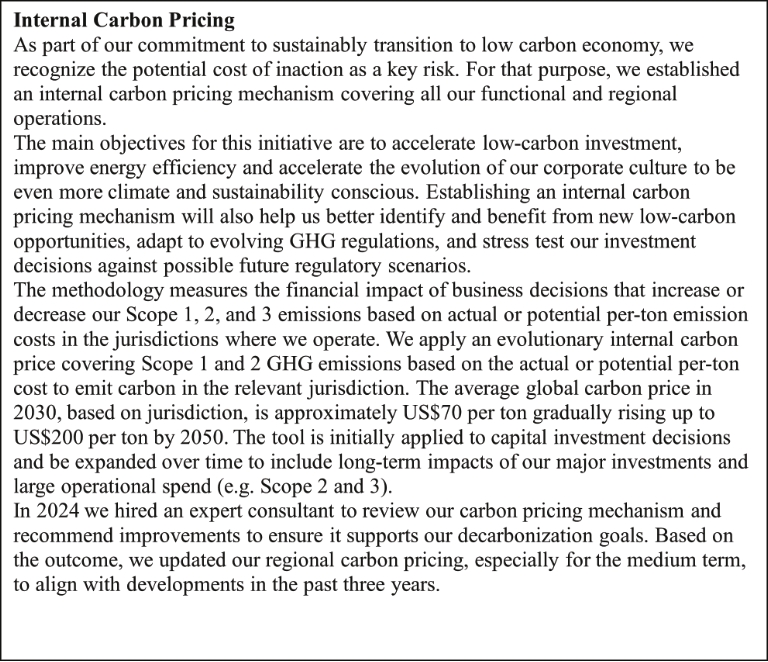
Implemented our internal carbon pricing tool to enable management to make more informed decisions on capital projects that takes into account carbon emissions.
Updated our carbon pricing mechanism to reflect most recent carbon pricing scenarios.
Explored process for the development and endorsement of Science-Based Targets (i.e. SBTi Chemical Industry Sectoral Decarbonization Approach).
6

TABLE OF CONTENTS

SUSTAINABILITY AND CORPORATE RESPONSIBILITY
Emission Reduction Targets and How We’ll Do It
(All targets are versus a 2019 baseline, based on Scope 1 and Scope 2 emission intensity to produce a ton of TiO2)
PERIOD
HOW WE’LL DO IT
TARGET
2024
Tronox reduced its GHG emission intensity by 20% versus the 17% target. The target was based on several initiatives, including, the solar renewable power project in South Africa becoming fully operational in the first half of 2024, the implementation of APCs across all our pigment plants, as well as other energy efficiency initiatives and green power purchase agreements.
17%
2025
The 2025 target is premised on receiving the full year benefit of the solar renewable power in South Africa. In addition, the target assumes we execute our 2025 production plan and continue to realize the benefits from our power purchase agreements and other renewable initiatives.
25% (1)
2030
The 2030 target is premised on the conversion of electricity supply in substantially all of the jurisdictions in which we operate to renewable energy sources. We also intend to commence conversion of natural gas-fired industrial boilers at our TiO2 facilities to green electricity or bio-sources. Finally, we are exploring the timing of carbon capture projects at several facilities in Europe.
50% (1)
2050
Achieving net zero carbon emissions by 2050 is dependent on a range of initiatives. First and foremost, we will need to eliminate the use of fossil-based reductants (e.g., coal, coke and anthracite) in our ilmenite beneficiation operations and pigment production. All of our purchased power will need to be generated by renewable sources. We will also need to electrify our mining and earthmoving equipment which currently runs on diesel, or switch to bio-alternative. Though we are not relying on purchasing third-party carbon off-set credits, we may need to consider this as a last resort if feasible technologies are not available for “hard-to-abate” carbon sources.
100% (1)
 (1)
Projects in the pipeline to achieve our greenhouse gas emissions reduction roadmap will, however, depend on partners and third parties in the jurisdictions in which we operate, and therefore, are subject to adjustments based on delays outside of our control.
Other Highlights
Reduced waste sent to external landfills by 13% on an absolute basis versus the 2019 baseline thereby staying on course to reach our 2025 and 2030 reduction targets of 15% and 25%, respectively. The reduction was mainly due to acid recycling and reuse efforts at our sulfate plants, together with polyferric sulfate (PFS) production from waste acid in Fuzhou, China.
At our Yanbu chloride pigment plant in Saudi Arabia and sulfate pigment plant in Bahia, Brazil, we progressed solid waste beneficial re-use projects working closely with third party partners.
Worked with a number of our largest pigment customers to help them reduce their Scope 3 emissions by providing more information and transparency on the carbon content of our pigment products.
In 2024, our water withdrawal intensity was reduced by 4% as compared to 2023 due to water efficiency programs especially at our sites operating in high water stress areas as well as improved water consumption at our pigment plants.
During 2024, we entered into a strategic relationship with a third-party consultancy group to assist us in the development of context based water targets.
Conducted a 3rd party verification audit against the Global International Standard on Tailings Management (GISTM) for our high and medium classification tailings storage facilities and established an internal steering committee to follow-up on the actions needed to achieve full compliance prior to the target date of August 2025.
Life Cycle Assessment updated for all our products and sites.
7

TABLE OF CONTENTS

SUSTAINABILITY AND CORPORATE RESPONSIBILITY
Addressing Climate Change and the Environment Through Product Innovation
Our business development and new product initiatives are supporting the global fight against climate change and improving the environment in numerous ways.
Rare Earth Minerals. Our mines produce significant quantities of a mineral co-product, monazite, which is rich in various rare earth-bearing minerals needed to produce powerful permanent magnets required in the manufacture of the latest generation of electric motors and wind turbines, to name the two most prominent applications. We are significantly increasing our focus on recovering and processing monazite from both our ongoing production and tailing piles with a goal of becoming one of the world’s significant suppliers of rare earth oxides to alloy and metallization customers.
Catalysts for NoX/SoX Emission Controls. Titania-based catalysts developed by Tronox help vehicle manufacturers around the world meet the latest generation of strict particulate matters emissions standards to improve the air we breathe.
Carbon Capture and Storage Technologies. Tronox is working with one of the world’s leading direct air carbon capture companies to develop titania-based catalysts that can be deployed in scale to help selectively trap CO2 for collection, use or storage.
Lithium Ion Extraction. Tronox is working with a French business partner, several academic institutions and the French government to develop a patented clean technology to recover lithium from brines coming out of geothermal wells located in the South of France.
Safety and Emission Targets and Goals Included in the Annual Incentive Program
As further described in the CD&A section included elsewhere in this Proxy Statement, the Annual Incentive Program (AIP) includes two safety and sustainability-related metrics representing 20% of the annual payout – 15% to safety and 5% to carbon emission reduction. The AIP is the annual broad-based cashed incentive program in which all salaried employees participate. The carbon-related targets are described above.
Safety Component of AIP
The Board believes that the two key metrics for measuring our overall safety performance for purposes of the AIP should be Disabling Injury Frequency Rate (DIFR) and Total Recordable Injury Frequency Rate (TRIFR), each of which are measured per 200,000 work hours (employees plus contractors).
In 2024, we achieved the TRIFR safety target, but slightly missed the DIFR safety target. We are proud that the TRIFR was the lowest rate the Company has achieved in two decades.
2024 SAFETY TARGETS
2024 ACTUAL SAFETY PERFORMANCE
DIFR* OF 0.15
0.17
TRIFR* OF 0.36
0.33
*
Disabling Frequency Rate (DIFR) and Total Recordable Injury Frequency Rate (TRIFR)
For 2025, the HRCC approved a DIFR target of 0.15 and a TRIFR target of 0.31 which we believe are equivalent to top-quartile peer performance.
8

TABLE OF CONTENTS

SUSTAINABILITY AND CORPORATE RESPONSIBILITY
Emission Reduction Component of AIP
We measure carbon intensity of TiO2 (CO2 per ton of TiO2) for Scope 1 (direct emissions from sources owned or controlled by us) and Scope 2 (indirect emissions from purchased energy). We believe using pro forma 2019 as the baseline is appropriate as it is our most reliable carbon intensity data due to the closing of the Cristal acquisition in April 2019.
In 2024, we reduced our GHG emission intensity by 20% versus our 17% target. The 20% reduction was primarily the result of the renewal power project in South Africa becoming fully operational in the first half of 2024.
2024 EMISSION REDUCTION TARGETS
2024 ACTUAL EMISSION REDUCTION PERFORMANCE
1.386 tCO2e/t product (represents a 17% reduction against the 2019 baseline)
1.338 tCO2e/t product (represents a 20% reduction against the 2019 baseline)
For 2025, the HRCC approved an emission reduction target of 1.260 tCO2e/t which represents an approximately 25% reduction against the 2019 baseline. Tronox’s 2025 target is based on the Company receiving electricity from the 200 MW solar power project in South Africa for the entirety of 2025, as well as assumes the Company will execute its 2025 production plan and continue to realize the benefits from its purchase power agreements and other renewable initiatives.
Culture and Workforce
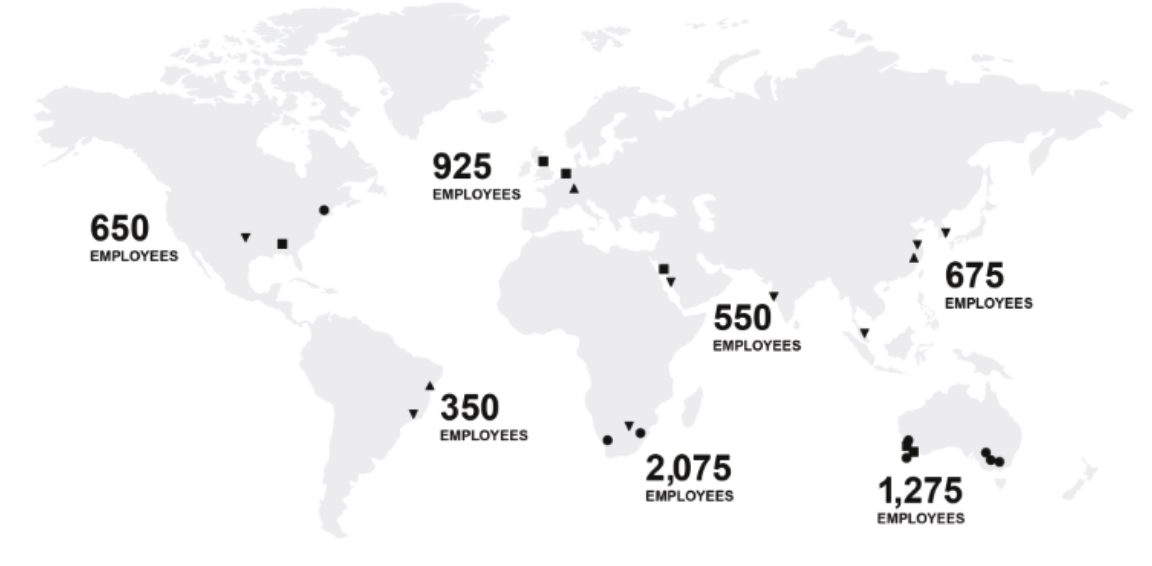
Tronox employs approximately 6,500 people across six continents. The rich diversity and exceptional operational and technical expertise of our employees is one of our key competitive advantages. Recognizing the importance of our human capital, one of our core strategies is to foster a high-performance culture in which we strive for zero harm and operational excellence, harnessing technology and encouraging innovation to create value, all while empowering our people. In addition, we have placed a priority around developing leaders who will help us effectively (i) acquire, develop and nurture our talent, and (ii) foster a culture that embodies the values that are important to us, starting with safety and operating our business responsibly. We are committed to creating an organization where leaders foster and encourage a diverse workforce, where people feel valued and respected, have access to opportunities, and in which a variety of different voices are encouraged and heard.
Values
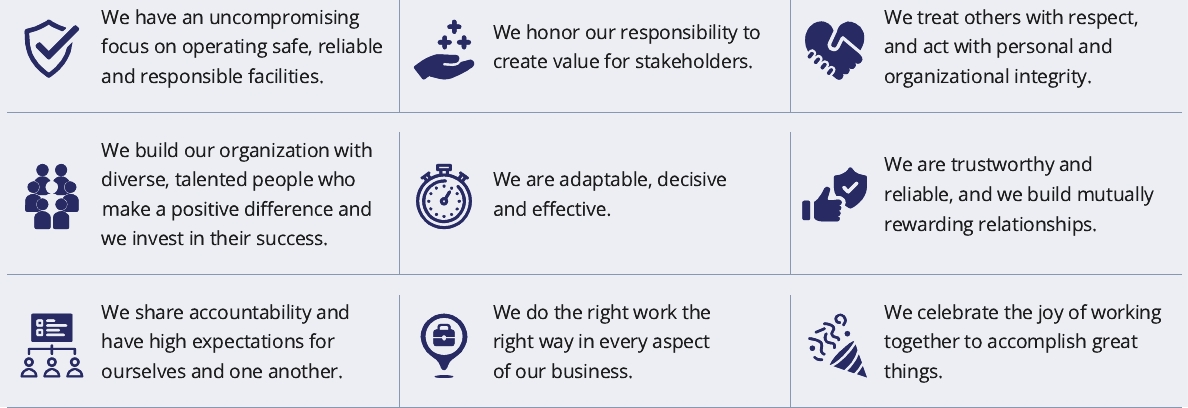
The following reflect our core values that are we believe are each supportive of strong sustainable practices:

9

TABLE OF CONTENTS

PROPOSAL 1—ELECTION OF DIRECTORS
Tronox’s business and affairs are managed under the direction of the Board, which assuming all the director nominees are elected at the Annual Meeting, will be comprised of eleven members. Seven of those members are independent.
The following table provides summary information about each Director nominee, all of whom are currently members of the Board other than Mr. Fawaz Al-Fawaz, as well as the expected composition of each Board committee following the Annual Meeting, assuming each Director nominee is elected.
DIRECTOR
AGE (1)
DIRECTOR SINCE
CURRENT OCCUPATION
INDEPENDENT
A
HRCC
CG
Ilan Kaufthal
77
2011
Chair of the Board, Tronox Holdings plc; Eastwind Advisors
X
 
 
C
Fawaz Al- Fawaz
63
 
CEO, TASNEE


Julie Beck
63
2025
Former Senior Vice President, CFO, Terex Corporation
X
X
 
 
Lucrèce Foufopoulos-De Ridder
56
2024
Former Executive Vice President, Borealis
X
 
 
X
Peter B. Johnston
73
2012
Former Interim CEO, Tronox Limited; Former Global Head of Nickel Assets, Glencore
X
X
X
 
Ginger M. Jones
60
2018
Former Senior Vice President and CFO, Cooper Tire & Rubber Company
X
C
 
X
Stephen Jones
63
2019
Former President & CEO, Covanta Holding Corporation
X
X
C
 
Moazzam Khan
67
2019
Managing Director, Cristal International Holdings B.V.


Sipho Nkosi
70
2012
Former CEO, Exxaro Resources Limited
X
 
X
X
John Romano
60
2021
Chief Executive Officer


Jean-Francois Turgeon
58
2021
Former Co-Chief Executive Officer, Tronox Holdings plc


 (1) As of March 15, 2025
A
Audit Committee
C
Chair
HRCC
Human Resources and Compensation Committee
M
Member
CG
Corporate Governance and Sustainability Committee
 
 
Each of the nominees, other than Messrs. Khan and Al-Fawaz, have been nominated by the Corporate Governance and Sustainability Committee in accordance with our Articles of Association. Each of the nominees must be elected by a majority of votes cast in favor of the proposal at the Annual Meeting to hold office until their successors are duly named and approved at the next annual general meeting of the Company. Your Board of Directors recommends a vote FOR these nominees by shareholders. Shares represented by proxy will be voted FOR the nominees unless you specify otherwise in your voting instructions.
We expect each nominee for election as a Director to be able to serve if elected. Separate resolutions for the election of each nominee will be submitted for shareholder vote at the Annual Meeting.
Cristal Nominees. Upon closing of the Cristal transaction, Cristal Netherlands, which is under the control of a Saudi Arabian publicly listed company, Tasnee, became our largest single shareholder. Pursuant to the terms of a shareholders agreement with Cristal Netherlands and Cristal which was signed in April 2019, Cristal Netherlands has the right to nominate two of our directors. Similar to last year, Cristal Netherlands has again nominated Mr. Moazzam Khan to stand for re-election, and for the first time, has nominated Mr. Al-Fawaz, currently the CEO of Tasnee, to stand for election. Messrs. Al-Fawaz and Khan bring a wealth of business experience in the TiO2 and chemical industries and will be of invaluable assistance in managing our operations in Saudi Arabia. Due to their lack of independence under NYSE listing standards, neither gentlemen will serve on any of our committees.
In addition, upon consummation of the Cristal transaction, the Board appointed Dr. Talal Al-Shair as director emeritus for the purpose of providing such consulting and advisory service to the Board as the Board shall request from time to time. Dr. Talal is the founder of Cristal, was formerly on the Board of Tasnee, and has extensive experience and knowledge regarding Cristal and industry-related matters.
10

TABLE OF CONTENTS

PROPOSAL 1—ELECTION OF DIRECTORS
Board Diversity and Qualifications
Our Board consists of world-class directors with the diversity of skills, experience, ethnicity, and gender necessary to provide exceptional leadership for Tronox. The selection criteria for our directors includes, among other things:
high professional and personal ethics and values consistent with our long-standing values and standards;
sufficient time to devote to the Board and our Company; and
diversity of ethnicity, gender, background, geographic location and experience including: senior leadership and operating experience in a publicly-listed company; board experience in a publicly-listed company; financial, industrial/mining and/or international expertise.
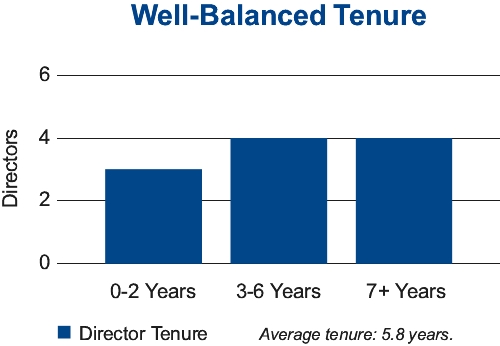
We continually assess whether our Board maintains the right balance of skills, experience, diversity and business acumen required for exceptional leadership. The Board believes it brings a diverse set of backgrounds, skills, and experiences to Tronox to provide effective oversight of management and drive Tronox’s strategy forward. Our Board represents a balance of longer-tenured members with in-depth knowledge of our business and newer members who bring valuable additional attributes, skills and experience.
Gender Diversity
The Board is committed to having a Board that is gender diverse and publicly expressed its intention to have 30% female representation by the time of the 2025 annual general meeting of shareholders. To that end, during Q4 2023, the Governance and Sustainability Committee retained a reputable international recruitment firm to undertake a search for new Board members with the express intent of recruiting gender diverse candidates who also possess the requisite skills, experience and perspective to make the Board more effective. The Board is proud that since the 2024 annual meeting of shareholders the Board appointed two new directors – Lucrèce Foufopoulos-De Ridder and Julie Beck. Both Mrs. Foufopoulos-De Ridder and Ms. Beck bring a wealth of valuable skills and experience which the Board believes will be an asset to the Company and its stakeholders. Assuming all the director nominees are elected at the Annual Meeting, we are proud that ~40% of the independent directors will be gender diverse, with ~27% of the total Board represented by women.
In addition, as noted above, pursuant to a shareholders agreement with Cristal and Cristal Netherlands entered into in April 2019 in connection with the closing of the Cristal transaction, so long as Cristal and Cristal Netherlands collectively own at least 24,900,000 or more of our ordinary shares, they have the right to designate for nomination two directors of our Board. As of today’s date, Cristal Netherlands owns 37,580,000 shares, and thus, is entitled to designate two director nominees. As such, the Board presently does not have the ability to control the appointment of two directors of the Board. Not taking into consideration the 2 director nominees appointed by Cristal, the Board would be 33% gender diverse.
Skills Matrix
The Board believes that the below skills matrix represents of realistic assessment of the strengths and weaknesses of the Director nominees skills and experiences in the key areas related to Tronox’s business.
 
Kaufthal
AI-Fawaz
Johnston
G. Jones
S. Jones
Khan
Nkosi
Romano
Turgeon
Foufopoulos-
De Ridder
Beck
Total
Core Skills and Experience
 
Senior Leadership
11
Public Company Board


8
Strategic Planning and M&A
11
Mining Experience


5
Chemicals Experience
 
 
9
Global Business Experience
11
Environmental and Sustainability
 
 
9
11

TABLE OF CONTENTS

PROPOSAL 1—ELECTION OF DIRECTORS
 
Kaufthal
AI-Fawaz
Johnston
G. Jones
S. Jones
Khan
Nkosi
Romano
Turgeon
Foufopoulos-
De Ridder
Beck
Total
Finance and Accounting
11
Risk Management
11
Additional Skills and Experience
 
Logistics & Supply Chain
11
Technology and Cybersecurity


2
Emerging Green Industries


4
Relevant End-Market Expertise


6
Senior Leadership. Business and management experience in a significant corporate leadership position
Public Company Board. Experience as a board member of another publicly traded company
Strategic Planning and M&A. Significant experience with formulating and implementing strategic plans and processes, including mergers and acquisitions, joint ventures and other strategic transactions
Mining Experience. Significant experience in the mining industry other than Tronox or its predecessors
Chemicals Experience. Significant experience in the chemicals industry other than Tronox or its predecessors
Global Business Experience. Significant experience developing, operating and managing businesses in countries in which we operate
Environmental and Sustainability. Experience with ESG-related issues, including knowledge and experience with creating and implementing strategies to reduce carbon emissions and managing climate-related threats.
Finance and Accounting. General background and experience in finance and accounting*
Risk Management. Experience assessing and managing risk whether arising from operations, finance, geopolitics, and environmental compliance as well as formulating and implementing the appropriate policies/procedures necessary to manage such risks
Logistics & Supply Chain. Familiarity with logistics and supply chain issues associated with operating a large-scale mining and chemical business with a geographically distributed production footprint
Technology and Cybersecurity. Relevant to the Company as it looks to improve, automate and digitize its internal systems, as well as oversee cybersecurity risk
Emerging Green Industries. Insight and understanding of emerging green industries, including electric vehicles manufacturing and wind turbine manufacturing, that could benefit Tronox’s entry into the rare earth minerals industry
Relevant End-Market Experience. Experience working with the end-markets in which our products are sold or used such paint, construction, plastics and home decor industries
  *
Does not necessarily mean that each Director noted would satisfy the financial literacy definition for Audit Committee members pursuant to NYSE rules.
12

TABLE OF CONTENTS

PROPOSAL 1—ELECTION OF DIRECTORS
Other Important Metrics Related to Diversity and Tenure
Assuming all Director nominees are approved at the 2025 annual general meeting of shareholders, the below tables reflects the diversity and tenure of our Board.


Nominees Standing for Election at the Annual Meeting
The Board of Directors recommends that shareholders vote “FOR” the election of each of the following nominees:
NAME
AGE (1)
POSITION
Ilan Kaufthal
77
Independent Chair of the Board
Fawaz Al-Fawaz
63
Director
Julie Beck
63
Independent Director
Lucrèce Foufopoulos-De Ridder
56
Independent DIrector
Peter B. Johnston
73
Independent Director
Ginger M. Jones
60
Independent Director
Stephen Jones
63
Independent Director
Moazzam Khan
67
Director
Sipho Nkosi
70
Independent Director
John Romano
60
Director
Jean-Francois Turgeon
58
Director
13

TABLE OF CONTENTS

PROPOSAL 1—ELECTION OF DIRECTORS
Biographical Information on our Director Nominees
Set forth below is a description of the backgrounds of the Director nominees. There are no family relationships among any of our Directors.
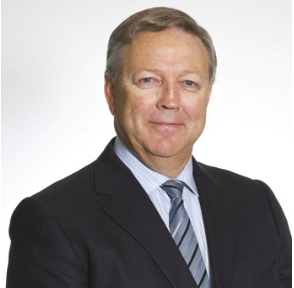
Ilan Kaufthal
 

Director since 2011

Chair of the Board

Chair of Corporate Governance and Sustainability Committee

Independent Director
Ilan Kaufthal has been Chair of the Board since March 18, 2021, and a director of Tronox Holdings plc effective as of March 29, 2019, which was the effective date of the Company’s redomiciling to the United Kingdom. Mr. Kaufthal was appointed Lead Independent Director on March 28, 2019 and served in such capacity until his appointment as Chair on an interim basis on December 27, 2020. Prior to the re-domicile transaction, Mr. Kaufthal was Non-Executive Chair of Tronox Limited from June 27, 2017 to March 28, 2019, was its Lead Independent Director from September 6, 2016 to June 27, 2017, a Director since June 15, 2012 and was a Director of Tronox Incorporated from February 2011 until June 15, 2012. He is Chairman of East Wind Advisors, a specialized investment banking firm serving companies in the media, education and information industries. Mr. Kaufthal joined East Wind in 2010 as Chairman, bringing over 30 years of experience as an investment banker and senior corporate executive to the franchise. From 2008 until 2013, Mr. Kaufthal served as Senior Advisor for Irving Place Capital. Until 2008, Kaufthal was a Vice Chairman of Investment Banking at Bear, Stearns & Co and prior to joining Bear, Stearns in 2000, he served for 13 years as Vice Chairman and head of mergers and acquisitions of Schroders & Co. Preceding Schroders, he was with NL Industries and served as its Senior Vice President and Chief Financial Officer. Mr. Kaufthal is the Chairman of IDB Bank NY and serves on the Board of Directors of MacSteel Ltd. Mr. Kaufthal was formerly a director of Cambrex Corporation (NYSE: CBM), a supplier to the pharmaceutical industries, and formerly a director of Quinpario Acquisition Corp 2 (NASDAQ: QPACU), a special purpose acquisition company. He also serves on the Advisory Board of Jerusalem Venture Partners Media Fund and is a Trustee of the Russell Berrie Foundation. He is the Chairman of the Board of the American Friends of Bezalel and a member of the Board of Visitors at Columbia University Medical Center. Ilan holds an MBA from New York University and a BS from Columbia University. Mr. Kaufthal brings to the Board his financial, investment, business skills and previous experience in the titanium dioxide business.
14

TABLE OF CONTENTS

PROPOSAL 1—ELECTION OF DIRECTORS
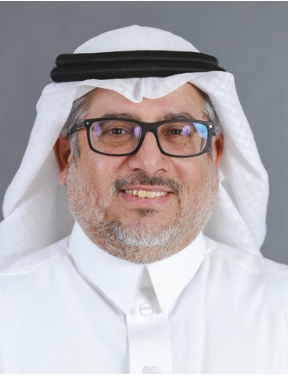
Fawaz Al-Fawaz


Non-Independent Director
Fawaz Al-Fawaz is the Chief Executive Officer of National Industrialization Company (Saudi Stock Exchange: TASNEE), which is a 79% shareholder of Cristal and one of the largest Saudi diversified industrial companies having investments in several fields. Prior to his appointment as CEO of Tasnee, Mr. Al-Fawaz was the Chief Financial Officer of Tasnee since April 2015. Prior to Tasnee, Mr. Al-Fawaz held several leadership positions in the Saudi Basic Industries Corporation (SABIC) including Vice President of Finance, General Manager of Finance, General Manager of Accounting Services and Assistant Vice President of Finance at Sabic Marketing Company. Mr. Al-Fawaz is currently the Chairman of the board of Saudi Chemical Holding Company (Saudi Stock Exchange: “SCCH”) as well as Chairman of the board of Saudi Logistics Company (Saudi Stock Exchange: “SAL”) and a Director and member of the Audit Committee of Saudi Electricity Company (Saudi Stock Exchange). He is also currently a board member of several privately held Saudi companies. Mr. Al-Fawaz holds a Bachelor Degree in Accounting and Financing from King Saudi University. Mr. Al-Fawaz brings to the Board years of extensive senior management, business, and leadership experience, as well as an extensive financial, accounting and auditing background, in the TiO2 and other chemicals businesses.
Board Candidacy of Fawaz Al-Fawaz
Since April 2024, Mr. Al-Fawaz has been the CEO of Tasnee, the parent company of our largest (24%) shareholder, Cristal.
Under its shareholder’s agreement, Cristal has the right to nominate two members and for the first time has chosen Mr. Al-Fawaz.
Assuming Mr. Al-Fawaz is approved by shareholders at the 2025 annual general meeting of shareholders, other than his directorship on Tronox, Mr. Al-Fawaz also serves on the Board of three other Saudi-listed companies.
Mr. Al-Fawaz is uniquely positioned to help us succeed in Saudi Arabia where we operate one of our largest TiO2 facilities.
As the CEO of our largest shareholder, Mr. Al-Fawaz is well positioned to represent all shareholders’ interests.
The Tronox Board has fully considered that some shareholders may deem Mr. Al-Fawaz “over-boarded” due to the fact that he is a sitting CEO yet serves on other boards. However, the Board strongly believes that Mr. Al-Fawaz will be an exemplary Board member, fully dedicated to his Tronox board-related responsibilities, and should be elected at the 2025 annual general meeting
The Board urges shareholders to vote “FOR” Mr. Al-Morished.
15

TABLE OF CONTENTS

PROPOSAL 1—ELECTION OF DIRECTORS
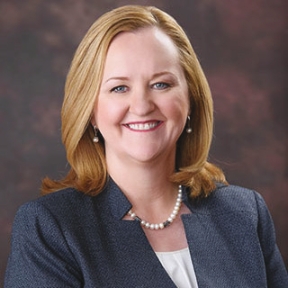
Julie Beck


Director since 2025

Audit Committee

Independent Director
Ms. Beck has been a director of the Company since March 2025. From January 2022 to February 2025, Ms. Beck was Senior Vice President, Chief Financial Officer of Terex Corporation (NYSE: TEX), a global industrial equipment manufacturer, and has been with Terex since November 2021. Previously, Ms. Beck served as Senior Vice President and Chief Financial Officer of NOVA Chemicals Corporation from 2016 to 2021. Prior to joining NOVA Chemicals, from 2008 to 2016, she served as Chief Financial Officer of the mining and machinery business of Joy Global, Inc., a former NYSE-listed manufacturer and servicer of heavy equipment used for minerals extraction. From 2014 to 2016, Ms. beck also served as Global Vice President of Supply Chain, Operational Excellence, and Quality for Joy Global, Inc. Ms. Beck previously served in various positions, including Chief Financial Officer, at both the Journal Register Company, a former NYSE-listed publishing organization, and Norwood Promotional Products, Inc., a global consumer products and promotional products manufacturer. Prior to that, Ms. Beck served in financial roles for Temple-Inland, Inc., a corrugated packaging and building products company, and Rockwell Automation, an industrial automation equipment manufacturer. Ms. Beck also serves as a director of Carpenter Technology Corporation (NYSE: CRS), a leader in high-performance specialty alloy materials and process solutions for critical applications in the aerospace and defense, medical, and other markets. Ms. Beck has previously served on the audit committee for three public companies and non-profit boards in the past, including the Leukemia Society of America, where she was an Executive Board member. A Certified Public Accountant, she holds a BBA in Accounting from the University of Wisconsin-Madison and serves on the Wisconsin School of Business Executive Advisory Board. Ms. Beck brings to the Board a deep and extensive financial, accounting and auditing background with senior leadership experience in the industrial and manufacturing industry.
16

TABLE OF CONTENTS

PROPOSAL 1—ELECTION OF DIRECTORS
Lucrèce Foufopoulos-De Ridder

Director since 2024

Corporate Governance and Sustainability Committee

Independent Director
Lucrèce Foufopoulos-De Ridder has been a director of Tronox since May 2024. Mrs. Foufopoulos-De Ridder previously served as both an officer and board member of the Borealis Group, one of the world’s leading providers of advanced and sustainable polyolefin solutions, where she was the Executive Vice President Polyolefins, Circular Economy Solutions and Innovation & Technology from January 2019 to December 2023. Prior to this, she served Eastman Chemical Company as Vice President and General Manager, Rubber Additives, from 2015 to 2018 and Chief Commercial Officer from 2014 to 2015. Preceding her time at Eastman Chemicals, Mrs. Foufopoulos-De Ridder held a variety of business, strategy, commercial and technology leadership roles at the Dow Chemical Company, Rohm and Haas, Dow Corning and Raychem Corporation. Mrs. Foufopoulos-De Ridder also serves as a director and member of the compensation committee of Amcor PLC (NYSE: AMCR), a global leader in responsible packaging solutions for food, beverage, pharmaceutical, medical, home and personal-care and other industries. In addition, Mrs. Foufopoulos-De Ridder is a director and chair of the sustainability committee of Sika AG (SIX Swiss Exchange: SIKA), a global specialty chemicals leader in solutions for the building sector and automotive industry; a director and member of the audit committee and remuneration committee of Royal Vopak N.V. (Euronext Amsterdam: VPK), a global independent infrastructure provider; and a director and member of the compensation and HR committee and sustainability committee of Quaker Houghton (NYSE: KWS), a global leader in industrial process fluids. Mrs. Foufopoulos-De Ridder brings to the Board extensive senior management experience with global chemical businesses and a deep understanding of technologies and innovations related to sustainability and the circular economy.
17

TABLE OF CONTENTS

PROPOSAL 1—ELECTION OF DIRECTORS
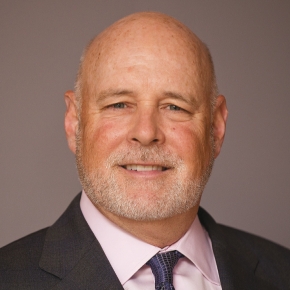
Peter B. Johnston
 

Director since 2012

Audit Committee

Human Resources and Compensation Committee

Independent Director
Peter B. Johnston has been a Director of Tronox Holdings plc effective as of March 29, 2019, which was the effective date of the Company’s redomiciling to the United Kingdom. Previously, Mr. Johnston was interim CEO of Tronox Limited from May 15, 2017 to November 30, 2017 and had been a Director of Tronox Limited since August 1, 2012. He was appointed Global Head of Nickel Assets for Glencore in May 2013 and held that position until his retirement in December 2015. Previously he was Managing Director and Chief Executive Officer of Minara Resources Pty Ltd from 2001 to 2013. He was also employed by WMC Ltd between 1993 and 2001, during which he held the position of Executive General Manager with responsibility over nickel and gold operations, Olympic Dam Operations, Queensland Fertilizers Ltd., and human resources. He was Vice Chairman of the Nickel Institute; past Chairman of the Minerals Council of Australia; past President of the Chamber of Minerals & Energy (WA); and past Vice President of the Australian Mines and Metals Association. Mr. Johnston also was formerly a director of Silver Lake Resources Limited (ASX:SLR) and NRW Holdings Limited (ASX:NWH), as well as was a member of NRW Holdings sustainability, audit and nomination and remunerations committees. Mr. Johnston is also presently the non-executive Chairman of the board of directors of Jervois Global Ltd., a leading cobalt minerals, metals and chemicals company, as well as a member of its audit and remuneration and nomination committees. In addition, Mr. Johnston is currently a member of the board of directors of Vault Minerals Ltd. (formerly known as Red 5 Limited) (ASX: RED), an Australian gold producer. Mr. Johnston brings to the Board extensive senior management, operating and leadership experience through his business career in the mining industry.
18

TABLE OF CONTENTS

PROPOSAL 1—ELECTION OF DIRECTORS
Ginger M. Jones
 

Director since 2018

Chair of Audit Committee

Corporate Governance and Sustainability Committee

Independent Director
Ginger M. Jones has been a Director of Tronox Holdings plc effective as of March 29, 2019, which was the effective date of the Company’s redomiciling to the United Kingdom. Prior to such date, Ms. Jones had been a Director of Tronox Limited since April 4, 2018. Jones served as Vice President and Chief Financial Officer of Cooper Tire & Rubber Company beginning in December 2014 and was promoted to Senior Vice President and Chief Financial Officer in February 2016. Ms. Jones retired from Cooper Tire & Rubber Company in December 2018, where she was responsible for Cooper’s financial operations, investor relations, business information systems and corporate strategic planning. Prior to joining Cooper, Ms. Jones served as Senior Vice President and Chief Financial Officer of Plexus Corp. from 2007 to 2014, and Vice President and Corporate Controller of Banta Corporation from 2002 to 2007. A certified public accountant, Ms. Jones began her career with Deloitte & Touche. Ms. Jones holds a Master of Business Administration from The Ohio State University and a bachelor’s degree in Accounting from the University of Utah. Ms. Jones is a board member of Nordson Corporation (NASDAQ:NDSN), an American multinational corporation that designs and manufactures dispensing equipment for consumer and industrial adhesives, sealants and coating, and currently serves on its audit and compensation committees. In addition, Ms. Jones is a board member and Chairperson of the audit committee of Holley Inc. (NYSE: HLLY), a leading designer, marketer, and manufacturer of high-performance products for car and truck enthusiasts, as well as currently sits on its compensation committee. Ms. Jones was formerly a member of the board of directors of Libbey Inc. Ms. Jones brings to the Board her financial, accounting and auditing experience and her public company director experience.
19

TABLE OF CONTENTS

PROPOSAL 1—ELECTION OF DIRECTORS
Stephen Jones
 

Director since 2019

Chair of Human Resources and Compensation Committee

Audit Committee

Independent Director
Stephen Jones has been a Director of Tronox Holdings plc since March 28, 2019. From March 2015 through October 2020, Mr. Jones was President, Chief Executive Officer and a director of Covanta Holding Corporation (formerly NYSE: CVA, now owned by private equity), a leading global provider of sustainable waste and energy solutions. Prior to joining Covanta in January 2015, Mr. Jones was employed from 1992 through September 2014 by Air Products and Chemicals, Inc. (“Air Products”), a global supplier of industrial gases and equipment. Mr. Jones held a variety of senior-level management positions at Air Products including in the company’s tonnage gases, equipment, energy and industrial chemicals businesses, culminating with his role as Air Products’ China president based at the company’s office in Shanghai. Mr. Jones is also Chairman of the board of directors of Badger Infrastructure Solutions Ltd., a Canadian infrastructure solutions company specializing in non-destructive excavation services (TSE: BDGI). Mr. Jones also serves as a special advisor to the supervisory board of Hitachi Zosen Inova AG, a global cleantech company. Prior to joining Air Products in 1992, Mr. Jones practiced corporate law at Dechert LLP in Philadelphia, PA, primarily in the area of mergers and acquisitions. Mr. Jones earned a Bachelor of Science degree in economics from Bloomsburg University of Pennsylvania, a Master of Business Administration with a concentration in finance from Temple University and a law degree from the University of Pennsylvania. In addition, he participated in the INSEAD Advanced Management Program in Fontainebleau, France. Mr. Jones is also a director of the Bloomsburg University Foundation. Mr. Jones’ experience managing and growing domestic and international companies and his business acumen are valuable assets to the Board.
Moazzam Khan
 

Director since 2019

Non-Independent Director
Moazzam Khan has been a director of the Company since April 2019. In addition to serving on the Board of Directors of Tronox, Mr. Khan serves as the managing director of Cristal International Holdings BV (formerly known as Cristal Inorganic Chemicals Netherlands Cooperateif W.A.). Prior to joining Cristal, Mr. Khan worked for Saudi Basic Industries Corporation (SABIC) for over twenty years and was the Chief Financial Officer of SABIC Capital B.V. from April 2009 to September 2015. At SABIC, Mr. Khan held various leadership roles in Finance, Treasury, Corporate Ratings, Mergers and Acquisitions, Corporate Integration and Restructurings, Taxation and SAP implementations. Prior to SABIC, Mr. Khan worked for KPMG in Saudi Arabia. Mr. Khan was the Chairman of the Board of SABIC Luxembourg S.à r.l., and the Managing Board of SABIC Capital B.V. as well as held directorship roles at SABIC International Holdings B.V., SABIC Ventures B.V., SABIC Ventures US Holdings LLC, JVSS Holding Company, Inc., SD Verwaltungs GmbH and Cristal International B.V. Mr. Khan is a fellow member of The Institute of Chartered Accountants in England and Wales (FCA) and holds a degree in Economics as well as leadership and business accreditations from Wharton Business School.
20

TABLE OF CONTENTS

PROPOSAL 1—ELECTION OF DIRECTORS
Sipho Nkosi
 

Director since 2012

Human Resources and Compensation Committee

Corporate Governance and Sustainability Committee

Independent Director
Sipho Nkosi has been a Director of Tronox Holdings plc effective as of March 29, 2019, which was the effective date of the Company’s redomiciling to the United Kingdom. Prior to such date, Mr. Nkosi had been a Director of Tronox Limited since June 15, 2012. Mr. Nkosi is the former Chief Executive Officer of Exxaro Resources. Mr. Nkosi was formerly the independent non-executive chairman of Sasol Limited (NYSE:SSL), an integrated energy and chemical company based in South Africa, and served as chairman of its corporate governance and nominating committee and a member of its remuneration committee. Mr. Nkosi is also a director of Sanlam Limited (JSE: SLM), a diversified South African financial services group. Mr. Nkosi is also a co-founder and chairman of Talent10, an investment holding company. He began his career as a market analyst with Ford Motor Company South Africa in 1980 after which he was appointed as marketing coordinator at Anglo American Coal in 1986. He joined Southern Life Association as senior manager, strategic planning in 1992 and the following year accepted the position of marketing manager, new business development at Trans-Natal Coal Corporation, which later became Ingwe Coal Corporation. Mr. Nkosi joined Asea Brown Boveri (South Africa) Ltd. in 1997 as Vice President Marketing and ABB Power Generation in 1998 as Managing Director. He was the founder and chief executive officer of Eyesizwe Holdings and following its merger with Kumba’s non-iron ore resources was appointed Chief Executive Officer of the renamed entity Exxaro Resources Limited in 2007. Mr. Nkosi holds a Bachelor of Commerce degree from the University of Zululand, an Honors degree in Commerce (Economics) from the University of South Africa and a Master of Business Administration from the University of Massachusetts in the United States. In February 2022, the President of South Africa announced that Mr. Nkosi was to be appointed in an advisory capacity to lead a team tasked with identifying and removing governmental red tape aimed at promoting business growth in South Africa. Mr. Nkosi also holds the Advanced Management Diploma from Oxford University. Mr. Nkosi brings to the Board his experiences and skills in growing leading businesses, innovation and strategy, and leadership development.
21

TABLE OF CONTENTS

PROPOSAL 1—ELECTION OF DIRECTORS
John Romano
 

Director since 2021

Chief Executive Officer

Non-Independent Director
Mr. Romano has been our CEO since April 1, 2024 and a member of the Board since March 18, 2021. Mr. Romano was one of our Co-CEOs from March 18, 2021 until his appointment as sole CEO effective April 1, 2024. Prior to such appointment as Co-CEO, Mr. Romano was Executive Vice President and Chief Commercial and Strategy Officer since June 2019 and was appointed our interim Co-CEO on December 27, 2020. Prior to such appointment in June 2019, Mr. Romano was Senior Vice President and Chief Commercial Officer since October 2014. Before such time he served as our Senior Vice President and President, Pigment and Electrolytic Operations from June 15, 2012 to October 2014; the Executive Vice President of Tronox Incorporated since January 1, 2011 and Vice President, Sales and Marketing of Tronox Incorporated since January 2008. Mr. Romano was an executive officer of Tronox Incorporated during its bankruptcy proceedings, from which it emerged in 2011. Before that he served as Vice President, Sales for Tronox Incorporated from 2005 to January 2008; Vice President, Global Pigment Sales for Tronox LLC from January 2005 to November 2005; Vice President, Global Pigment Marketing for Tronox LLC from 2002 to 2005 and Regional Marketing Manager for Tronox LLC from 1994 to 2002. Mr. Romano started his career with Tronox in September of 1988. Mr. Romano holds a Bachelor’s degree in Accounting from Oklahoma State University.
Jean-Francois Turgeon

Director since 2021

Non-Independent Director
Mr. Turgeon was our Co-CEO from March 18, 2021 until his retirement effective April 1, 2024 and has been a Director of the Company since March 18, 2021. Prior to his appointment as Co-CEO, Mr. Turgeon was Executive Vice President and Chief Operating Officer since September 2017 and was appointed our interim Co-CEO on December 27, 2020. Before that he served as our Executive Vice President and President of Tronox Titanium Dioxide since January 2014. Prior to joining Tronox, Mr. Turgeon worked for Rio Tinto Group for 24 years, serving as the managing director of Rio Tinto’s iron and titanium business. He is also the former chairman of Richards Bay Mineral in South Africa and Rio Tinto, Fer et Titane, in Canada. Mr. Turgeon holds a Bachelor’s degree in chemical engineering from Université Laval and a Master’s degree in hydrometallurgy from McGill University.
22

TABLE OF CONTENTS

The Board’s Role in Risk Oversight, Our Board Structure and Other Governance Matters
Tronox’s Board as a whole takes a uniquely active, hands-on role in the risk oversight function. The Board sees its primary functions as setting the right “tone at the top” and promoting strong governance at every level of the enterprise. Management control is the first line of defense to identify and mitigate not only commercial and financial risks but the wide range of environmental and sustainability risks that can derail a company like Tronox.
Enterprise Risk Management (ERM)
Board-level oversight
Our entire Board is actively engaged in the ERM process and views it as an important component of its risk oversight responsibilities. Feedback from our directors is used to help identify key risks and improve the effectiveness of the mitigation activities. After the ERM process is complete, the Vice President, Internal Audit and other key “risk owners” presents the results of the analysis to the full Board typically at its February meeting. A more in-depth discussion on key risks is led by the key “risk owner” as part of the Board’s ERM discussion. Frequently, these reviews lead to requests for additional work and analysis on sub-components of each risk.
Management-level oversight
At the management level, Tronox has formed a Global Risk Committee (GRC), comprising senior leaders from around the globe representing all functions and business units, which is charged with assisting Tronox’s Board to identify significant enterprise risks, assess its risk mitigation strategies and, where appropriate, help implement those strategies, and review and suggest specific risk tolerances and risk appetite. The GRC meets in Q2 of each year to review the scope and appropriateness of the ERM plan, taking into consideration any changes since the prior year ERM process, including changes in Tronox’s scope of business activities, events in the prior year suggesting lapses in the prior year’s ERM process, geopolitical events, and evolving stakeholder expectations. In addition, the GRC reviews the results of any specific risk mitigation activities that resulted from the prior year’s ERM process and the implementation of any specific risk tolerances or “risk appetite” adopted. The GRC meets again after the ERM process is completed. It reviews results of that year’s ERM process and suggests specific risk mitigation actions that result from (or should result from) the ERM process and ensure adequate resources available to undertake activities. This may include updates to existing policies or adoption and implementation of new policies; employee education and training related to specific risks; and desktop risk mitigation exercises, specific risk tolerances or “risk appetite” standards that result from the ERM process.
Oversight of ESG
Our sustainability-related governance structure starts at the highest level of the enterprise: a dedicated committee of the Board of Directors called, “The Governance and Sustainability Committee,” comprised of independent members of the Board of Directors, including the Company’s non-executive chair who is also the chair of the committee. Management briefs the Corporate Governance and Sustainability Committee quarterly on ESG topics covering risks and opportunities, impacts, and strategies. With the ever-growing importance of the “social” aspect within ESG, our Board and the Human Resources and Compensation Committee play important roles in overseeing critical topics such as gender and diversity metrics. Underneath the Board is a governance structure comprised of multiple layers, starting with Tronox’s senior executives and cascading down to each local site. Climate change is a core focus: reducing emissions, mitigating risk and optimizing opportunities. The governance structure includes processes and initiatives to align the activities of the cross-enterprise global functions with individual sites and regions to effectively implement the sustainability and climate change-related strategies.
23

TABLE OF CONTENTS

The Board’s Role in Risk Oversight, Our Board Structure and Other Governance Matters
ESG oversight by the Board of Directors
The Board
Our Board is responsible for ensuring EHS&S risks and opportunities are integrated into our overall long-term strategy.
Corporate Governance and Sustainability Committee
Primarily responsible for corporate social responsibility and sustainability oversight, including reviewing and assessing the Company’s processes and procedures with respect to its corporate social responsibility and sustainability program and initiatives.
Considers the corporate social responsibility and sustainability issues that may have strategic, business and reputational implications for the Company and ensure that the Company’s strategic plan and business goals have adequately considered the Company’s corporate social responsibility and sustainability policies, priorities and plans.
Annually reviews the Company’s short-, medium- and long-term sustainability goals and targets, including greenhouse gas reduction targets.
Collaborates with the HRCC on establishing annual environmental sustainability targets for inclusion in the Company’s annual incentive plan.
Monitors the process for preparing the Company’s annual sustainability report.
Reviews our community relations initiatives and programs including how we treat indigenous peoples.
Human Resources and Compensation Committee
Oversees corporate culture and employee relations topics, including inclusion and diversity initiatives, pay equity, and well as compensation philosophy and succession planning.
Oversees the Company’s programs and plans relating to cultural awareness, human rights and labor rights that may have strategic, business or reputational implications for the Company.
Periodically reviews the Company’s strategy, initiatives and programs relating to the Company’s culture.
Reviews shareholder sentiment and perspectives, which includes an increasing focus on sustainability matters, to ensure alignment and engagement.
Audit Committee
Reviews the Company’s implementation of mandatory sustainability and disclosure requirement affecting Tronox around the world including the EU’s Corporate Sustainability Directive and the UK’s Sustainability Reporting Standards.
ESG oversight by Management
The Company has established a Global Sustainability Council that meets on a periodic basis and which is comprised of senior leaders from Tronox’s key functional groups to drive progress on our various sustainability initiatives and support the Board to make informed decisions on sustainability strategy. The Sustainability Council also ensures implementation of the Company’s ESG strategy across all the Company’s relevant regions and groups. During 2024, the primary focus of the Global Sustainability Council was to ensure that management understood the wide range of new and enhanced ESG legislation promulgated by various governmental authorities around the world which may be applicable to Tronox as well as putting in place the resources, policies and practices to comply with such legislation. In pursuit of that goal, the Council established a sub-committee comprised of Company executives responsible for implementing and complying with such new ESG regulations, particularly those related to public disclosure.
24

TABLE OF CONTENTS

The Board’s Role in Risk Oversight, Our Board Structure and Other Governance Matters
In addition, the Company has formed regional GHG leadership teams that meet monthly to, among other things, develop GHG regional roadmaps and integrate such roadmaps into the relevant region’s business planning. Furthermore, we have established internal Centers of Excellence focused on carbon neutrality, waste, energy efficiency and diversity, equity and inclusion. These Centers of Excellence typically meet monthly and are comprised of cross-functional teams that build on the cumulative experience within Tronox to help address common issues and share best practices and technologies.
Cybersecurity
Cybersecurity and the resiliency and sustainability of our information systems is a risk which the entire Board monitors carefully. Our VP, Cyber Security reports on a periodic basis to the Audit Committee regarding cybersecurity risk exposure and cybersecurity risk management strategy. The Board also reviews and assesses cybersecurity risks in connection with its annual Enterprise Risk Management review. Our dedicated team of cybersecurity specialists has implemented a robust program designed to detect, prevent and respond to threats and malicious activity. We also maintain a Security Operations Center (SOC) that provides a mechanism for addressing cyberthreats before they compromise data security. Through a combination of a threat management platform and our dedicated team of cybersecurity specialists, our SOC continuously monitors and proactively isolates and analyzes cybersecurity alerts to enable rapid mitigation of cybersecurity risks and events. Through company-wide policies, mandatory training and end-user testing, we train our employees to recognize threats and report (and when appropriate, escalate) them quickly. We have developed an incident response plan to handle suspected loss of, or unauthorized access to, information. We work with third-party industry experts to conduct annual vulnerability assessments and penetration testing. Like most major corporations, during the normal course of business, we have been the target of cyberattacks, from time to time, and we expect to be the target of such attacks in the future. In the past three years, however, we have not experienced a material information security breach. As such, we have not incurred any material expenses from cybersecurity breaches or any expenses from penalties or settlements related to a cybersecurity breach.
With the strong support of the Board, in 2020 Tronox established an IT Security Council to help set corporate risk tolerance and related policy. The council meets quarterly, is chaired by the General Counsel and managed by our VP, Cyber Security with senior level representation from key functions and business units. The Board believes that the substantial investments being made by the Company in a multi-year operational and business transformation program will continue to advance the cybersecurity protection and IT capabilities of the Company.
Audit Committee
The Audit Committee oversees the management of risks related to the Company’s financial performance and financial statements, the financial reporting process and internal controls, internal and external audit functions, tax and accounting matters, anti-bribery and corruption, and other exposures. The primary responsibilities of the Audit Committee are to:
Oversee the accounting and financial reporting processes of the Company as well as its affiliated and subsidiary companies, as well as oversee the internal and external audit processes;
Assist the Board in fulfilling its oversight responsibilities by reviewing the financial information which is provided to shareholders and others, and the system of internal controls which management has established;
Oversee the Company’s independent registered public accounting firm, including their independence and objectivity; and
Review with management and our independent registered public accounting firm financial risk exposures, including risks related to financial reporting, tax, accounting, disclosure, internal control over financial reporting, financial policies and credit and liquidity matters, steps taken to manage those exposures and our Company’s risk tolerance in relation to our overall strategy.
25

TABLE OF CONTENTS

The Board’s Role in Risk Oversight, Our Board Structure and Other Governance Matters
However, the committee members are not acting as professional accountants or auditors, and their functions are not intended to duplicate or substitute for the activities of management and our independent registered public accounting firm. The Audit Committee is empowered to retain independent legal counsel and other advisors as it deems necessary or appropriate to assist the Audit Committee in fulfilling its responsibilities, and to approve the fees and other retention terms of the advisors. The Company maintains an internal audit function to provide management and the Audit Committee with ongoing assessments of the Company’s risk management processes and system of internal control.
The Audit Committee is currently comprised of four members, each of whom was elected by the Board of Directors. Ginger Jones and Julie Beck, because of their accounting backgrounds and extensive financial experience, meet the NYSE listing standard of having accounting or related financial management expertise and the SEC definition of an “Audit Committee financial expert”. Each of the other members of our Audit Committee has financial management experience or is financially literate. Each committee member meets the additional independence requirements for members of an Audit Committee under the NYSE Corporate Governance Rules.
Human Resources and Compensation Committee
The HRCC has oversight responsibility with respect to the risks relating to the design and implementation of our compensation and benefit plans. In addition, the HRCC administers our executive compensation program and assists the Board in fulfilling its oversight responsibilities with respect to the compensation we pay to our executive officers. Among its duties, the HRCC:
Evaluates and determines the salary, incentives and benefits making up the total compensation of our CEO and other executive officers;
Reviews and monitors management succession planning and development, including promotability of all officers;
Defines the terms and conditions, including performance metrics, for the restricted shares units and other long-term equity awards for our executive officers and approves all grants made to the executive officers;
Reviews and approves the annual corporate goals and objectives of our CEO; and
Considers industry conditions, relevant market conditions and our prospects and achievements when making recommendations with respect to compensation matters.
Each member of the HRCC is independent as defined by SEC rules and NYSE listing standards and is a “non-employee director” as defined in Rule 16b-3 under the Securities Exchange Act of 1934, as amended (“Exchange Act”) and an “outside director” as defined in Section 162(m) of the Internal Revenue Code.
Corporate Governance and Sustainability Committee
The Corporate Governance and Sustainability Committee’s focus is to ensure that the Board has the policies, practices and procedures in place to adequately oversee risk through board membership and structure, succession planning for our Directors, and corporate governance more generally. In addition, the Corporate Governance and Sustainability Committee promotes, supports, monitors and assesses the Company’s corporate social responsibility and sustainability programs, including environmental initiatives.
The Corporate Governance and Sustainability Committee assists the Board with respect to the following governance-related matters:
the organization and function of the Board including the structure, format and frequency of Board meetings;
corporate governance principles applicable to the Company;
the Company’s policies and programs that relate to matters of corporate responsibility and community engagement;
26

TABLE OF CONTENTS

The Board’s Role in Risk Oversight, Our Board Structure and Other Governance Matters
the policies, programs and actions underlying Tronox’s sustainability targets whether related to emissions, solid waste, or water conservation;
remuneration of non-executive Directors; and
if and when the Board determines to recruit new members, establishing the requirements, qualities and characteristics such new Board members should possess and obtaining suitable candidates for the Board to select.
The Corporate Governance and Sustainability Committee has not formally established any specific, minimum qualifications that must be met by each candidate for the Board or specific qualities or skills that are necessary for one or more of the members of the Board to possess.
The Corporate Governance and Sustainability Committee also assists the Board with respect to environmental and sustainability matters as described above under “ESG Oversight by the Board of Directors.”
Board Leadership Structure
Chair of the Board of Directors
Since March 2021, Mr. Ilan Kaufthal has served as our non-executive Chair of the Board of Directors. The Board believes that this leadership structure, in which the roles of Chair and CEO are separated, best serves the Board’s ability to carry out its roles and responsibilities on behalf of the Company’s shareholders and other stakeholders, including its oversight of management, and the Company’s overall corporate governance.
The Company’s Articles of Association allows the roles of Chair of the Board and Chief Executive Officer to be filled by the same or different individuals. The Board does not have a policy on whether the roles of Chair of the Board and Chief Executive Officer should be separate or combined. This approach gives the Board flexibility to determine whether the two roles should be separate or combined based on the Company’s needs and the Board’s assessment of the Company’s leadership from time to time. However, if the Chair of the Board and the Chief Executive Officer roles are vested in the same person then the Board considers it to be useful and appropriate that an independent lead director be designated to perform such duties, and have specific responsibilities, as described in the Company’s Corporate Governance Guidelines.
As Chair, Mr. Kaufthal presided over numerous executive sessions in which the Directors met without the presence of the Company’s executive management team, including the CEO. At these executive sessions, the Directors review, among other things, the performance of the Company’s management. In fiscal year 2024, the Directors met in executive session 4 times.
The Company’s Corporate Governance Guidelines, a copy of which is available on Tronox’s website at www.tronox.com, under “Investors - Governance,” sets forth the policy and procedure with respect to meetings of non-management Directors and the role, if applicable, of lead independent Directors at such executive sessions, including the procedure by which a lead independent Director is chosen.
Human Resources and Compensation Committee Interlocks and Insider Participation
During the fiscal year ended December 31, 2024, none of our HRCC members: (i) have ever been an executive officer or employee of our Company; or (ii) is or was a participant in a “related person” transaction in fiscal year 2024. During the fiscal year ended December 31, 2024, no executive officer of our Company served on the compensation committee (or its equivalent) or board of directors of any company that has an executive officer that serves on the Board or our HRCC.
Code of Ethics and Business Conduct
Tronox’s Code of Ethics and Business Conduct (the “Code of Conduct”) applies to all officers, directors and employees of Tronox as well our agents, suppliers, contractors and other partners who are providing goods
27

TABLE OF CONTENTS

The Board’s Role in Risk Oversight, Our Board Structure and Other Governance Matters
and services to Tronox or acting on our behalf. The purpose of the Code of Conduct is to ensure that Tronox conducts business ethically, honestly, and in full compliance with applicable laws and regulations. This applies to every business decision in every area of the company worldwide.
The Code of Conduct is available on the Company’s website at https://investor.tronox.com/governance/governance-documents. If the Company makes any substantive amendments to the Code of Conduct or grants any waiver from a provision of the Code of Conduct to any executive officer or Director, the Company will promptly disclose the nature of the amendment or waiver on our website.
Corporate Governance Guidelines
Tronox has adopted a set of Corporate Governance Guidelines which address qualifications for members of the Board, Director responsibilities, Director access to management and independent advisors, Director compensation and many other matters related to the governance of the Company. The Corporate Governance Guidelines are available on Tronox’s website at www.tronox.com, under “Investors - Governance.”
Director Independence
The listing standards of the NYSE, as well as our Corporate Governance Guidelines, require that a majority of the Board be comprised of independent directors. For a director to be considered independent under these standards:
The director must meet the bright–line independence tests under the listing standards of the NYSE; and
The board must affirmatively determine that the director otherwise has no material relationship with us, directly or as a partner, shareholder or officer of an organization that has a relationship with us.
Based on these standards, the Board has affirmatively determined that all of the current Directors, except for Messrs. Romano, Turgeon, Al-Morished and Khan, are independent. The Board based these determinations primarily on a review of the responses of our Directors to questions regarding employment and compensation history, affiliations and family and other relationships and on discussions with the Directors. As mentioned elsewhere, Mr. Al-Fawaz, the director nominee nominated by Cristal Netherlands, will not be deemed independent.
Majority Vote Standard
Pursuant to our Articles of Association, we have adopted a majority vote standard for the election of our Directors. Each Director shall be elected if such Director receives a majority of the votes cast by the holder of shares present in person or represented by proxy at the meeting and entitled to vote. For this purpose, a “majority of the votes cast” shall mean that number of votes cast “for” a Director’s election exceeds the number of votes cast “against” that Directors’ election.
Over-Boarding Policy
Our Corporate Governance Guidelines limit the number of public company directorships Board members may hold. Specifically, a Director cannot sit on the board of directors of more than five public companies (including the Company’s Board); however, any Director who is a chief executive officer of a public company cannot sit on more than two public company boards (other than the company for which he or she serves as the chief executive officer). All current Directors are in compliance with this policy.
28

TABLE OF CONTENTS

The Board’s Role in Risk Oversight, Our Board Structure and Other Governance Matters
Share Ownership Guidelines
We have share ownership guidelines that apply to each of our CEO, all executive officers and all other direct reports of the CEO at the Vice President level, as well as our Directors. The guidelines ensure that executives and Directors are aligned with the interests of our shareholders by requiring them to hold significant levels of Company stock. All shares owned outright and 60% of time-based restricted share units count towards share ownership. Unvested performance-based restricted share units do not count towards share ownership. Executives and Directors have five years to reach their ownership guidelines.
The share ownership guidelines provide that once a covered person has satisfied their respective share ownership guidelines, a decrease in the Company’s share price will not be considered to result in non-compliance on a subsequent determination date as long as such covered person holds the guideline or greater number of shares held at the time the guidelines were initially met.
The ownership guidelines are as follows:
POSITION
PERCENTAGE OF
BASE SALARY
 
Chief Executive Officer
500%
 
Executive Officers
300%
 
Other Direct Reports of the CEO at VP Level and Above
100%
 
 
Percentage of
Annual Cash Retainer
 
Non-employee Directors
500%
 
As of the date of this Proxy Statement, all of our current NEOs other than Mr. AlJunaidi have met their ownership guideline. In addition, as of the date hereof, each of our current non-executive directors have met their ownership guidelines other than Mrs. Foufopoulos-De Ridder and Ms. Beck, each of whom only joined the Board in the last year.
Claw-Back Policy
In October 2023, the HRCC approved a new Company clawback policy in compliance with the rules of the New York Stock Exchange requirements. Under the clawback policy, the Company may recoup “excess” incentive compensation, if any, earned by current and former executive officers during a three-year look back period in the event of a financial restatement due to material noncompliance with any financial reporting requirement under the securities laws (with no fault required). The foregoing summary of the clawback policy does not purport to be complete and is qualified in its entirety by reference to the full text of the clawback policy, a copy of which can be found as an exhibit to the Company’s Annual Report on Form 10-K for the year ended December 31, 2024.
Anti-Hedging Policy
The Company has adopted a policy prohibiting Directors, executive officers, employees on our restricted trading list and related persons thereto from hedging or entering into monetization transactions or similar arrangements with respect to Company securities. This policy was established in order to avoid the appearance of improper or inappropriate conduct by any such Director, executive officer, employee or related person.
In addition, all Directors, executive officers, employees on our restricted trading list and related persons thereto are prohibited from engaging in short sales of our securities. Further, such individuals are prohibited from buying or selling puts or calls or other derivative securities on the Company’s securities.
29

TABLE OF CONTENTS

The Board’s Role in Risk Oversight, Our Board Structure and Other Governance Matters
Political Contributions
Our Code of Conduct prohibits us from using any corporate funds to make political contributions, whether direct or indirect.
Board Meetings and Committees
During 2024, the Board of Directors held a total of 5 meetings. All Directors attended 100% of the Board meetings held during 2024 and all Directors attended 100% of the committee meetings on which they served that were held during the aforementioned period. The Board of Directors has established three committees: a Corporate Governance and Sustainability Committee, a Human Resources and Compensation Committee and an Audit Committee. During 2024, the Corporate Governance and Sustainability Committee held a total of 5 meetings, the Human Resources and Compensation Committee held a total of 4 meetings, and the Audit Committee held a total of 8 meetings. Each such committee is governed by a written charter, and a current copy of each such charter is available on Tronox’s website at www.tronox.com, under “Investors - Governance”.
The table below provides current membership for each of the Board committees.
NAME
AUDIT
HUMAN RESOURCES
AND COMPENSATION
CORPORATE
GOVERNANCE AND
SUSTAINABILITY
Ilan Kaufthal
 
 
C
Julie Beck
M
 
 
Lucrèce Foufopoulos-De Ridder
 
 
M
Peter B. Johnston
M
M
 
Ginger M. Jones
C
 
M
Stephen Jones
M
C
 
Sipho Nkosi
 
M
M
C
Chair
M
Member
Annual Board and Committee Self-Evaluations
Annual Board Self-Evaluations
The Board conducts an annual self-evaluation that is intended to determine whether the Board, its committees, and each member of the Board are functioning effectively, and to provide an opportunity to reflect upon, and improve, processes and effectiveness. The self-evaluations provide each director with an opportunity to assess the effectiveness and performance of the Board, its committees, as well as topics such as, among others, Board and committee composition and refreshment; timing, agenda, and content of Board and committee meetings; Board dynamics and function; and executive succession planning. A summary of the results is presented to the Board on an anonymous basis, identifying any themes or issues that have emerged. The Board considers the results and ways in which Board processes and effectiveness may be improved.
Annual Committee Self-Evaluations
Each committee conducts its own annual self-evaluation and reports the results to the Board. Each committee’s evaluation includes an assessment of the committee’s compliance with the committee’s charter, as well as ways in which committee processes and effectiveness may be improved.
30

TABLE OF CONTENTS

The Board’s Role in Risk Oversight, Our Board Structure and Other Governance Matters
Communications with the Board of Directors
The Board of Directors has established a process to receive communications from shareholders and other interested parties. Shareholders and other interested parties may contact any member (or all members) of the Board of Directors, including Mr. Ilan Kaufthal, our Chair of the Board, any Board committee or any chair of any such committee by mail or electronically. To communicate with the Board of Directors, the non-management independent Directors, any individual Directors or committee of Directors, correspondence should be addressed to the Board of Directors or any such individual Directors or committee of Directors by either name or title. All such correspondence should be sent to Tronox Holdings plc, c/o Corporate Secretary, 263 Tresser Boulevard, Suite 1100, Stamford, Connecticut 06901, USA with a request to forward the same to the intended recipient. To communicate with the Board of Directors electronically, shareholders and other interested parties should go to our website at www.tronox.com. Under the heading “Investors – Governance – Contact the Board” you will find an on-line form that may be used for writing an electronic message to the Board of Directors. In general, all communications delivered to the Company’s Corporate Secretary for forwarding to the Board of Directors or specified members will be forwarded in accordance with the shareholder’s instructions. However, the Company’s Corporate Secretary reserves the right not to forward to members any abusive, threatening or otherwise inappropriate materials.
31

TABLE OF CONTENTS

2024 NON-EMPLOYEE DIRECTOR COMPENSATION
Non-employee directors receive compensation for Board service, which is designed to fairly compensate them for their Board responsibilities and align their interests with the long-term interests of shareholders. The Corporate Governance and Sustainability Committee, which consists solely of independent directors, has the primary responsibility to review and consider any revisions to directors’ compensation.
The principal components of our non-employee directors’ compensation are as follows:
Each non-employee director receives:
An annual cash retainer of $100,000 for service on the Board of Directors payable quarterly in arrears; and
An annual equity grant of time-based restricted share units (RSUs) with a grant value of $150,000 that is granted on the date of the Company’s annual general meeting (AGM) of shareholders and vests the earlier of (a) the date of the next annual general meeting of shareholders or (b) May 31st of the year following the grant date (assuming such individual is a Board member at the time of vesting). Dividend equivalents accrue and are paid when the RSUs vest.
A non-executive Chair of the Board will receive an additional annual retainer of $120,000. A Lead Independent Director (in the situation whereby the Chair of the Board role is held by an executive of the Company) will receive an additional annual retainer of $50,000;
The chair of the Audit Committee will receive an additional annual retainer of $50,000;
The chair of the HRCC will receive an additional annual retainer of $20,000;
The chair of the Corporate Governance and Sustainability Committee will receive an additional annual retainer of $20,000; and
A committee member of each of the Audit Committee, HRCC, Corporate Governance and Sustainability Committee, or any other committee established by the Board of Directors, respectively, who is not serving as chair of such committee, will receive an additional annual committee retainer of $15,000.
In addition to the foregoing components of non-employee director compensation, because none of our Directors are tax residents of the UK, we tax equalize our Directors to eliminate any additional incremental tax burden that arises due to the fact that we are a company domiciled in the UK. We also pay the cost to prepare our directors’ UK tax filings.
On March 18, 2021, the Board elected Mr. Kaufthal to the role of Chair of the Board, after initially electing him in an interim capacity in December 2020, and approved a monthly cash stipend of $15,000 for his role as Chair. The monthly cash stipend is in addition to the other components of non-employee director compensation he receives (described above). Mr. Kaufthal is involved in a wide range of Tronox matters that far exceeds the involvement of other non-executive Chair at similarly situated NYSE companies of which the Board is aware. Examples of Mr. Kaufthal’s contributions to Tronox include:
Spearheading the search for new directors which has resulted in the appointment of two new female directors - Mrs. Foufopoulos-De Ridder and Ms. Beck - in 2024, and 2025, respectively.
Providing guidance and advice on capital market activities including the multiple term loan refinancing transactions that occurred during 2024;
Advising on our investor relations strategy and holding frequent meetings with shareholders, particularly to discuss executive compensation and ESG matters;
Helping drive Tronox’s carbon reduction initiatives and other sustainability efforts;
Managing the relationship with our largest shareholder, Tasnee; and
Formulation of an appropriate growth and M&A strategy.
The Corporate Governance and Sustainability Committee periodically reviews Mr. Kaufthal’s compensation package to ensure that it remains appropriate and commensurate with his activities on behalf of Tronox.
32

TABLE OF CONTENTS

2024 NON-EMPLOYEE DIRECTOR COMPENSATION
The following table sets forth the total compensation for the year ended December 31, 2024 paid to our non-employee Directors during 2024.
NON-EMPLOYEE DIRECTOR COMPENSATION FOR 2024
NAME
FEES EARNED
OR PAID IN
CASH
($) (1)
STOCK
AWARDS
($) (2)
ALL
OTHER
COMPENSATION
($)
TOTAL
($) (3)
Ilan Kaufthal
420,000
159,738
_
579,738
Mutlaq Al-Morished
100,000
159,738
_
259,738
Lucrèce Foufopoulos-De Ridder
74,560
159,738
 
234,298
Vanessa Guthrie
18,057
_
18,057
Peter B. Johnston
130,000
159,738
_
289,738
Ginger M. Jones
165,000
159,738
_
324,738
Stephen Jones
135,000
159,738
_
294,738
Moazzam Khan
100,000
159,738
_
259,738
Sipho Nkosi
130,000
159,738
_
289,738
Compensation relating to Mr. Turgeon is disclosed in the Summary Compensation Table of the Compensation found elsewhere in this proxy statement. Ms. Foufopoulos-De Ridder commenced board service on May 8, 2024. Ms. Guthrie voluntarily stepped down from the board effective from February 21, 2024.
 (1)
Amounts reported in this column include quarterly cash fees paid in arrears. For Mr. Kaufthal, this column also includes a total of $180,000 paid as cash stipend. For Ms. Foufopoulos-De Ridder and Ms. Guthrie, this column reflects pro-rated fees earned.
 (2)
Amounts reported in this column represent the aggregate grant date fair value for restricted shares units granted to each Director in 2024 computed in accordance with the share-based compensation accounting guidance under ASC Topic 718. Each Director received the annual equity grant on the date of the Company’s annual general meeting of shareholders (on May 8, 2024) that vests the earlier of (a) the date of the next annual general meeting of shareholders or (b) May 31st of the year following the grant date (assuming such individual is a Board member at the time of vesting). As such, on May 8, 2024, each Director received a grant of 8,324 restricted share units, reflecting the annual equity grant value of $150,000 divided by the ten (10) day average closing price for the Company’s shares prior to the grant date of $18.02 and valued at the NYSE closing price on May 8, 2024 of $19.19. Dividends will be accrued on all restricted share units until the units vest and will be paid at that time. As of December 31, 2024, each non-employee Director held 8,324 unvested restricted share units.
 (3)
Amounts reported below are excluded from this column. The Company maintains certain tax equalization and other tax-related benefits for Directors to mitigate or eliminate additional incremental tax burden because the Company is a UK domiciled company. Although all of our directors are non-resident UK taxpayers, they are liable for UK tax on items such as accommodations and meals while conducting business in the UK that are not considered taxable benefits in the US. Because of these unusual circumstances, the Company pays the cost to prepare their UK income tax filings, provides tax reimbursements associated with the UK travel-related expenses and cost of the UK tax filing, and may make certain tax equalization payments as reflected in the table below (based on December 31, 2024 Fx rate). In 2024, UK tax preparation fees includes two UK tax filings (UK tax filing period ending April 2023 and filed in January 2024 and UK tax filing period ending April 2024 and filed in December 2024). Tax reimbursements reflect those paid along with the two UK fillings. In 2024, Mutlaq Al-Morished received a total of $93,846 in tax equalization payments. While the Company anticipates that only some of our future Board meetings will take place in the UK, we intend to continue to mitigate or eliminate any associated incremental tax burden our Directors might incur as a consequence of those meetings.
NAME
UK Tax
Preparation
($)
Tax
Reimbursements
($)
Tax
Equalization
($)
Total
($)
Ilan Kaufthal
4,350
14,561
18,911
Mutlaq Al-Morished
4,350
7,064
93,846
105,260
Lucrèce Foufopoulos-De Ridder
Vanessa Guthrie
4,350
7,140
11,490
Peter B. Johnston
4,350
3,062
7,412
Ginger M. Jones
4,350
11,387
15,737
Stephen Jones
4,350
6,171
10,521
Moazzam Khan
4,350
5,122
9,472
Sipho Nkosi
4,350
7,877
12,227
33

TABLE OF CONTENTS

SECURITY OWNERSHIP OF CERTAIN BENEFICIAL OWNERS
The following table shows information regarding the beneficial ownership of shares of Tronox Holdings plc as of March 10, 2025 by:
Each current Director and Nominee of Tronox Holdings plc;
The current CEO and each named executive officer;
All persons currently serving as Directors and executive officers of Tronox Holdings plc, as a group; and
Each person known to us to own beneficially 5.0% or more of Tronox Holdings plc outstanding shares.
Beneficial ownership and percentage ownership are determined in accordance with the SEC’s rules and regulations. To our knowledge, except as indicated in the footnotes to this table and subject to community property laws where applicable, the persons named in the table below have sole voting and investment power with respect to all shares of Tronox Holdings plc shown as beneficially owned by them. The table is based on 158,462,071 shares outstanding as of March 10, 2025. All information concerning security ownership of certain beneficial owners is based upon filings made by such persons with the SEC or upon information provided by such persons to us. Unless otherwise noted below, the address for each beneficial owner listed in the table below is: c/o Tronox Holdings plc, 263 Tresser Boulevard, Suite 1100, Stamford, Connecticut 06901, USA.
NAME AND ADDRESS OF BENEFICIAL OWNER
NUMBER OF ORDINARY
SHARES
BENEFICIALLY OWNED
% OF
TOTAL OWNED
5% Shareholders
 
 
Cristal International Holdings B.V.
Strawinskylaan 1543, Tower C, fifteenth floor, 1077 XX
Amsterdam, the Netherlands
37,580,000
24%
FMR LLC (1)
23,517,975
15%
The Vanguard Group (2)
12,460,249
8%
Dimensional Fund Advisors LP (3)
9,248,469
6%
BlackRock, Inc. (4)
9,119,348
6%
Named Executive Officers and Directors (5)
 
 
John Romano
734,552
*
D. John Srivisal
102,487
*
Jeffrey Neuman
209,561
*
Jeffrey Engle
66,655
*
Emad AlJunaidi
42,809
*
Russ Austin
106,357
*
Melissa Zona
77,742
*
Ilan Kaufthal
268,232
*
Mutlaq Al-Morished
70,743
*
Julie Beck
0
*
Lucrèce Foufopoulos-De Ridder
8,324
*
Peter B. Johnston
144,879
*
Ginger M. Jones
97,568
*
Stephen Jones
98,912
*
Moazzam Khan
42,386
*
Sipho Nkosi
61,909
*
Jean-Francois Turgeon
685,074
*
Fawaz Al-Fawaz
0
*
All Executive Officers, Directors and Nominees as a group
(19 persons)
2,714,082
1.7%
 (1)
Information regarding FMR LLC is based solely on the Amendment to the 13G filed with the SEC on February 9, 2024 for the calendar year ended December 31, 2023. FMR LLC has the sole power to dispose of or to direct the disposition of 23,517,975 of the ordinary shares and the sole power to vote or direct the vote of 23,476,377 of the ordinary shares. The filing reports that Abigail P. Johnson is a Director, the Chairman and the Chief Executive Officer of FMR LLC. Members of the Johnson family, including Abigail P. Johnson, are the predominant owners, directly or through trusts, of Series B voting common shares of FMR LLC, representing 49% of the voting power of FMR LLC. The Johnson family group and all other Series B shareholders have
34

TABLE OF CONTENTS

SECURITY OWNERSHIP OF CERTAIN BENEFICIAL OWNERS
entered into a shareholders’ voting agreement under which all Series B voting common shares will be voted in accordance with the majority vote of Series B voting common shares. Accordingly, through their ownership of voting common shares and the execution of the shareholders’ voting agreement, members of the Johnson family may be deemed, under the Investment Company Act of 1940, to form a controlling group with respect to FMR LLC. Neither FMR LLC nor Abigail P. Johnson has the sole power to vote or direct the voting of the shares owned directly by the various investment companies registered under the Investment Company Act (“Fidelity Funds”) advised by Fidelity Management & Research Company (“FMR Co”), a wholly owned subsidiary of FMR LLC, which power resides with the Fidelity Funds’ Boards of Trustees. The address of FMR LLC is 245 Summer Street, Boston, MA 02210.
 (2)
Information regarding The Vanguard Group, Inc. is based solely on the Amendment to the 13G filed with the SEC on February 13, 2024 for the calendar year ended on December 31, 2023. The Vanguard Group, Inc. has the shared power to vote or direct the vote of 151,452 of the ordinary shares, the sole power to dispose of or to direct the disposition of 12,190,863 of the ordinary shares and the shared power to dispose or to direct the disposition of 269,386 ordinary shares. The address of The Vanguard Group, Inc. is 100 Vanguard Blvd., Malvern, PA 19355.
 (3)
Information regarding Dimensional Fund Advisors LP is based solely on the Schedule 13G filed with the SEC on February 9, 2024 for the calendar year ended December 31, 2023. Dimensional Fund Advisors LP has the sole power to vote or direct the vote of 9,101,580 of the ordinary shares and the sole power to dispose of or to direct the disposition of 9,248,469 of the ordinary shares. The address of Dimensional Fund Advisors LP is 6300 Bee Cave Road, Building One, Austin, TX 78746.
 (4)
Information regarding BlackRock, Inc. is based solely on the Amendment to the 13G with the SEC on February 2, 2024 for the calendar year ended on December 31, 2023. Blackrock, Inc. has the sole power to vote or direct the vote of 8,868,428 of the ordinary shares and the sole power to dispose or to direct the disposition of 9,119,348 of the ordinary shares. The address of BlackRock, Inc. is 55 East 52nd Street, New York, NY 10055.
 (5)
Shares listed for each Executive Officer, Director and Nominee includes: (i) shares owned by the individual and (ii) restricted share units that will vest within 60 days of March 10, 2025. Shares scheduled to vest within 60 days of March 10, 2025 include 9,156 restricted share units for Mr. Turgeon and 8,324 restricted share units for each of our other current non-employee Directors (other than Ms. Beck).
35

TABLE OF CONTENTS

CERTAIN RELATIONSHIPS AND RELATED TRANSACTIONS
The Company has adopted a written Related Party Transactions Policy that is administered by the Corporate Governance and Sustainability Committee. A copy of the Company’s Related Party Transactions Policy can be found on the Company’s website, http://www.tronox.com, under “Investors - Governance.”
The Related Party Transactions Policy applies to any transaction or series of transactions in which the Company or a subsidiary is a participant, the amount involved exceeds $120,000, and a related person has a direct or indirect material interest. Related persons subject to the policy include executive officers, Directors, nominees for election as a Director, owners of more than 5% of our total equity, and any members of the immediate family of any of the foregoing persons. Under the Related Party Transactions Policy, our General Counsel determines whether a transaction requires review by the Corporate Governance and Sustainability Committee, and transactions requiring review are referred to the Corporate Governance and Sustainability Committee for a determination as to whether or not the related party transaction is fair, reasonable and consistent with the policy, and whether it or the Board has the authority under the laws of the United Kingdom to approve or ratify the Related Party Transaction or whether it should be ratified or approved by shareholders. The ratification or approval by the Governance and Sustainability Committee, or recommendation that such transaction needs to be approved by shareholders, shall be made in accordance with applicable law, including the laws of the United Kingdom, and the Company’s organizational documents as from time to time in effect. If the Company becomes aware of an existing transaction with a related person that has not been approved under this policy, the matter is referred to the Corporate Governance and Sustainability Committee. The Corporate Governance and Sustainability Committee then evaluates all options available, including ratification, revision, termination or whether the approval of shareholders should be sought.
In conjunction with the closing of the Cristal acquisition, we entered into agreements with Tasnee and certain of its affiliates related to transition and technical services, as well as certain commercial-related agreements. For further details with respect to these related-party transactions, see Note 22 to our Annual Report on Form 10-K for the year ended December 31, 2024.
36

TABLE OF CONTENTS

PROPOSAL 2 - ADVISORY (NON-BINDING) VOTE ON EXECUTIVE COMPENSATION (SAY-ON-PAY)
In accordance with Section 951 of the Dodd-Frank Wall Street Reform and Consumer Protection Act and Section 14A of the Exchange Act, we are seeking a non-binding advisory vote from our shareholders to approve the compensation paid to our named executive officers as disclosed in this Proxy Statement. We encourage shareholders to read the “Compensation Discussion and Analysis” section of this Proxy Statement and the executive compensation tables that follow such section for a more detailed discussion of our compensation program and policies, the compensation and governance-related actions taken in fiscal year 2024 and the compensation awarded to our named executive officers.
The primary goal of our executive compensation program is the same as our goal for operating the Company—to maximize corporate performance and thereby create value for our shareholders. To achieve this goal we have designed an executive compensation program based on the following principles:
Paying for performance - A significant portion of each executive’s potential cash compensation is made subject to achieving business performance measures.
Alignment with the interests of shareholders - Equity awards align our executives’ financial interests with those of our shareholders by providing value to our executives if the market price of our shares increases.
Attracting and retaining top talent - The compensation of our executives must be competitive so that we may attract and retain talented and experienced executives in our industry.
Integration of ESG into executive compensation: 20% of our executives’ annual incentive compensation is determined by their individual performance, a significant portion of which is an evaluation of how they lead, manage and live our values, the first one of which is: We have an uncompromising focus on operating safe, reliable and responsible facilities. Another 20% of our annual bonus plan is linked to ESG metrics - 15% to safety and 5% to carbon emission reduction. The Compensation Discussion and Analysis also discusses the compensation objectives and principles that underlie the Company’s executive compensation program, the elements of the program and how performance is measured, evaluated and rewarded.
Our executive compensation program is aligned with our business strategy and with creating long-term shareholder value by paying for performance consistent with an acceptable risk profile. The foundation of our compensation philosophy is to:
Promote creation of long-term shareholder value;
Recruit and retain qualified high performing executive officers;
Motivate high levels of performance; and
Offers compensation that is competitive in the marketplace.
Our executive compensation program emphasizes delivering compensation at a competitive market level which will allow executive officers who demonstrate consistent on-target performance over a multi-year period to earn compensation that is competitive and consistent with targeted performance levels of total compensation. For executives where performance is above target over the long term, we believe the program will reward above the competitive median. Conversely, the program will provide less than the annual target compensation when performance does not meet expectations. Individual executive compensation may be above or below the annual target level, based on the Company’s performance; economic and market conditions; the individual’s performance, contribution to the organization, experience, expertise, and skills; and other relevant factors.
For these reasons, our Board of Directors recommends that shareholders vote in favor of the following resolution:
“RESOLVED, that the compensation paid to the Company’s named executive officers, as disclosed in this Proxy Statement, including the Compensation Discussion and Analysis, compensation tables and narrative discussion, is hereby APPROVED, on an advisory basis.”
This vote is not intended to address any specific item of compensation, but rather the overall compensation that is paid to our named executive officers resulting from our compensation objectives, policies and practices
37

TABLE OF CONTENTS

PROPOSAL 2 - ADVISORY (NON-BINDING) VOTE ON EXECUTIVE COMPENSATION (SAY-ON-PAY)
as described in this Proxy Statement. Because your vote is advisory, it will not be binding upon the Board of Directors. However, the Board of Directors and the HRCC value the opinions expressed by our shareholders and will review the voting results in connection with their ongoing evaluation of our executive compensation program.
The accompanying proxy will be voted in favor of the proposal to approve, on an advisory basis, the compensation of the Company’s named executive officers, as stated in the above advisory resolution, unless the shareholder indicates to the contrary on the proxy.
Vote Required to Approve, on an Advisory Basis, the Executive Compensation Paid to our Named Executive Officers
The advisory vote on executive compensation will be approved if the votes cast favoring the proposal exceed the votes cast opposing the proposal. The proxies will be voted for or against the proposal or as an abstention in accordance with the instructions specified on the proxy form. If no instructions are given by owners of record, proxies will be voted for approval of the executive compensation.
The Board of Directors recommends a vote “FOR”, on an advisory basis, the compensation paid to our named executive officers, as disclosed in this Proxy Statement.
38

TABLE OF CONTENTS

COMPENSATION DISCUSSION AND ANALYSIS
Overview
The following Compensation Discussion and Analysis (“CD&A”) provides a detailed description of our executive compensation philosophy and programs, the decisions that the HRCC have made under those programs, and the factors considered in those decisions. This CD&A focuses on the compensation of the following individuals for the 2024 fiscal year that we refer to collectively as our “NEOs”.
2024 NAMED EXECUTIVE OFFICERS
NAME
AGE (1)
TITLE
John D. Romano
60
Chief Executive Officer
D. John Srivisal
46
Senior Vice President, Chief Financial Officer
Jeffrey N. Neuman
63
Senior Vice President, General Counsel and Secretary
Jeffrey A. Engle
47
Senior Vice President, Commercial and Strategy
Emad AlJunaidi
54
Senior Vice President, Integrated Supply Chain and Digital Transformation
Jean-François Turgeon
58
Former Co-Chief Executive Officer
Russell Austin
59
Former Senior Vice President, Global Operations
Melissa Zona
47
Former Senior Vice President, Chief Human Resources Officer and Head of SHEQ
 (1)
As of March 15, 2025.
Set forth below is a description of the backgrounds of our NEOs. There are no family relationships among any of our NEOs.
John Romano
Chief Executive Officer
Mr. Romano’s biographical information is set forth under the caption “—Election of Directors,” above.
D. John Srivisal
Senior Vice President, Chief Financial Officer
Mr. Srivisal has served as our Senior Vice President and Chief Financial Officer since April 2023. Mr. Srivisal joined Tronox in March 2018 as Senior Vice President, Business Development to lead the company’s merger, acquisition, divestiture and joint venture transactions. In May 2019, Mr. Srivisal became the Company’s Chief Integration Officer and on May 1, 2020, Mr. Srivisal became SVP, Business Development and Finance. Mr. Srivisal brings over 20 years of transaction experience that includes acting as a principal, as well as advising companies, creditors, financial sponsors and government entities in a variety of industries on recapitalizations, restructurings, financings, leveraged buyouts, mergers, acquisitions, divestitures and joint ventures. Mr. Srivisal previously served as CEO of Quinpario Acquisition Corp. 2, and he was a partner in Quinpario Partners, LLC. He was also VP, Transaction Execution at Solutia Inc., where he had global responsibility for merger, acquisition, divestiture and joint venture transactions. Prior to joining Solutia, Mr. Srivisal was an investment banker at Rothschild Inc., and Peter J. Solomon Company. Mr. Srivisal graduated magna cum laude with a Bachelor of Science degree in economics (concentration in finance) and a minor in mathematics from the Wharton School of the University of Pennsylvania.
Jeffrey N. Neuman
Senior Vice President, General Counsel & Secretary
Mr. Neuman has served as our Senior Vice President, General Counsel and Corporate Secretary since April 2018. He is responsible for managing all of Tronox’s legal, regulatory, corporate governance and compliance matters. Before joining Tronox, Mr. Neuman served as vice president, corporate secretary and deputy general counsel of Honeywell International Inc. In that capacity, he oversaw many aspects of Honeywell’s corporate law department, including corporate governance, SEC and NYSE compliance, shareholder relations, corporate transactions, including mergers and acquisitions, treasury operations, and company-wide intellectual property and trademark functions. Mr. Neuman joined Honeywell in 2002, and during his time there held various roles of increasing responsibility. Earlier in his career, he worked as an M&A attorney with the New York law firm of
39

TABLE OF CONTENTS

COMPENSATION DISCUSSION AND ANALYSIS
Davis Polk & Wardwell. Prior to becoming an attorney, he was an investment banker at Merrill Lynch. Mr. Neuman earned his Bachelor of Arts in history from Wesleyan University, a Master of Arts in regional studies of East Asia from Harvard University and a Juris Doctorate from Northwestern University School of Law.
Jeffrey A. Engle
Senior Vice President, Commercial and Strategy
Mr. Engle was appointed to his role in March 2021. Prior to such appointment, Mr. Engle served as the Company’s Vice President, Global Marketing and R&D. Mr. Engle joined Tronox in July 2001 as an engineer in the technical sales and service laboratory. He has worked in various areas at Tronox over the last 20 years including sales and marketing, research and development, strategic planning, and business development. Mr. Engle holds a Bachelor of Science degree in Chemical Engineering from Oklahoma State University and an MBA from Auburn University.
Emad AlJunaidi
Senior Vice President, Integrated Supply Chain and Digital Transformation
Appointed to his current role in January 2024, Mr. AlJunaidi is responsible for leading the company’s global Supply Chain, Business Transformation and IT functions. For more than 25 years, Mr. AlJunaidi has delivered results by driving growth and enhancing profitability through leadership in manufacturing, procurement, strategic sourcing, negotiations and high-performance team building. Prior to joining Tronox in 2009, he led the Sourcing Department of the Renewables Division at GE, then a $5 billion division. His previous experience includes operations roles at GE, Lucent Technologies and Chrysler. Mr. AlJunaidi holds an MBA from the University of Maryland, two MS degrees in Manufacturing Engineering and Engineering Management from Syracuse University, and a BSc degree in Mechanical Engineering from the American University in Cairo.
Jean-Francois Turgeon
Former Co-Chief Executive Officer
Mr. Turgeon’s biographical information is set forth under the caption “—Election of Directors,” above.
Russell Austin
Former Senior Vice President, Global Operations
Mr. Austin was appointed to his former role in March 2021 and separated from the Company in December 2024. He has held various leadership roles throughout his 15 years at Tronox, most recently as Managing Director-Australia, which enabled him to oversee complex strategy change—including the merger of two business units in 2016 and the 2019 integration with Cristal—as well as the operations, safety and leadership of 1,100 team members across 10 sites. Mr. Austin has 35 years of experience in the Australian resource sector across chemicals, oil and gas, mining, minerals processing and smelting. His areas of expertise include operational excellence and financial management, project management, maintenance, reliability and lean manufacturing. Mr. Austin holds an MBA from University of Southern Queensland.
Melissa H. Zona
Former Senior Vice President, Chief Human Resources Officer and Head of SHEQ
Ms. Zona was appointed to her former role as Chief Human Resources in April 2022 and Head of SHEQ in January 2024 and separated from the Company in July 2024. Prior such roles, Ms. Zona had been our Senior Vice President, Chief Sustainability Officer from September 2019 to March 2023. Ms. Zona joined Tronox in January 2018 as Vice President, Corporate Communications and Public Relations, bringing 20 years of communications and public relations experience, primarily in the chemicals and manufacturing industries. Ms. Zona spent the majority of her career with Solutia, Inc., a specialty chemicals company that was acquired by Eastman Chemical in 2012. During her time at Solutia, she led the evolution of the corporation’s global voice, ensuring communications were engaging, informative and valued by employees and company influencers. Ms. Zona holds a Bachelor of Science degree in criminal justice from Jacksonville State University.
40

TABLE OF CONTENTS

COMPENSATION DISCUSSION AND ANALYSIS
OTHER EXECUTIVE OFFICERS
Jennifer Guenther
Vice President, Chief Sustainability Officer, Head of Investor Relations and External Affairs
Ms. Guenther, age 37, was appointed to her current position in June 2024. She previously served as Chief Sustainability Officer and Head of Investor Relations since April 2023 and as Vice President, Investor Relations since April 2020. Prior to joining Tronox in 2018 as Vice President, Business Development, she was a Vice President at Goldman Sachs in the Investment Banking Division. In this role, she advised companies on mergers, acquisitions, financings, equity issuances, leveraged buyouts, and recapitalizations in both the Industrial and Leveraged Finance teams. Ms. Guenther began her career at Solutia Inc., in the Corporate Strategy & Development group, where she focused on emerging market growth and mergers and acquisitions and subsequently worked as the Chief of Staff to the CEO. Ms. Guenther holds a Bachelor of Science degree in Business Administration (magna cum laude) emphasizing International Business and Finance, a Bachelor of Arts degree (cum laude) in International Business Studies from the University of Missouri and an MBA from Harvard Business School.
Amy Webb
Vice President, Chief Human Resources Officer
Ms. Webb, age 53, was appointed to her current role in June 2024 to lead the Company’s people and high-performance culture initiatives. She joined Tronox in August of 1992 as a cooperative education student in the laboratory. She has worked in various areas at Tronox over the last 29 years including quality laboratory, operations, continuous improvement, and human resources. Most recently she has served the company as Vice President, Global HR Operations. Ms. Webb holds a Bachelor of Science degree in Chemistry from Mississippi State University and an EMBA from the University of Alabama.
Jonathan Flood
Vice President, Corporate Controller and Principal Accounting Officer
Mr. Flood, age 44, has served as our Vice President, Corporate Controller since May 6, 2020 and Principal Accounting Officer since February 2022. Prior to such roles he served as Assistant Corporate Controller since November 2019. He is responsible for global consolidations, technical accounting, worldwide external financial reporting, corporate financial policies and procedures, as well as the implementation of new accounting pronouncements and SEC rules and regulations. Prior to joining Tronox, Mr. Flood held various accounting positions at Linde plc (formerly Praxair, Inc.), a dual-listed, publicly traded global supplier of industrial gases and engineering company. He served as a key team member for pre- and post-merger accounting compliance and integration related activities for a 2018 merger. He has more than 15 years of accounting experience with U.S. GAAP and International Financial Reporting Standards (“IFRS”), technical accounting, global consolidation & integrations, financial statement preparation, multi-jurisdictional regulatory compliance including the SEC, and financial statement audits. Mr. Flood holds a Bachelor of Business Administration degree in Accounting from Pace University and is a certified public accountant.
Chief Executive Officer Succession
In 2023, the Board successfully executed its leadership succession plan with the elevation of John D. Romano to sole CEO upon the retirement of Jean-Francois Turgeon as Co-CEO. When Mr. Turgeon decided to retire effective April 1, 2024, the Board believed that the time was right to move to a unified leadership structure with Mr. Romano as sole CEO leading Tronox. Mr. Romano has been part of the Tronox organization for over 30 years and the Board is confident that with his strategic global mindset, deep understanding of our industry and customers, and a clear vision for Tronox, he is the right CEO to lead the Company into the future.
41

TABLE OF CONTENTS

COMPENSATION DISCUSSION AND ANALYSIS
Compensation Philosophy - How Executive Pay is Linked to Company Performance
Our executive compensation program is designed to incentivize and motivate our executive officers to lead and manage our business over the long-term, drive performance improvements, and increase shareholder value. It is also designed to enable us to compete effectively with other chemical and mining companies in attracting, motivating and retaining talented executives.
The incentive compensation elements of our program are designed to closely align the financial interests of our executives with those of our shareholders. We believe the portion of compensation that is at-risk and tied to organization-wide performance metrics should increase as the level of responsibility increases.
We also believe a portion of at-risk compensation should be tied to an executive’s individual performance, and those leaders should be measured not just on results, but also on how each leader delivers results. We expect our executives to manage wisely and with good judgment, to develop strong, engaged and motivated management teams, and to lead with our values. Because of the inherent risk in mining and chemical operations, we place a high priority on leaders able to create, maintain and reinforce a strong culture of safety. Because of the environmental risks in our business, we place a high priority on sustainably.
We regularly assess how our executive compensation program compares to companies with a similar profile to ours. Our objective is to deliver compensation at a competitive market level which will enable executive officers who demonstrate consistent performance over a multi-year period to earn compensation that is competitive and consistent with targeted performance levels of total compensation. For executives who deliver performance that is above target over the long-term, we believe the program will reward above the competitive median. Conversely, the program will pay less than the annual target compensation when performance does not meet expectations. Individual executive compensation may be above or below the annual target level, based on our performance; economic and market conditions; the individual’s performance, contribution to the organization, experience, expertise, and skills; and other relevant factors.
Summary of our Executive Compensation Program
Set forth below is a summary of our key executive compensation practices.
We seek and carefully consider shareholder feedback regarding our compensation practices.
We strive to link our executive compensation to our performance as follows:

In 2024, 86.0% of the target compensation for CEO and an average of 69.0% of the target compensation for other NEOs (excluding Mr. Turgeon who retired in 2024 and Mr. Austin and Ms. Zona who separated from the company during 2024) is “at-risk”.

We select metrics in our short-term incentive plan that focus our NEOs on achieving key annual financial and operational goals and objectives that drive overall performance that are expected to drive long-term shareholder value. Our short-term incentive plan also has an individual performance metric whereby our CEO and other NEOs performance is measured against pre-defined objectives.

Metrics in our long-term incentive plan focus our NEOs on achieving long-term financial goals that are expected to lead to increased shareholder value; annual grants with overlapping performance periods reward sustained performance over the long-term.

For our NEOs, 80% of targeted 2024 short-term incentive plan payout was linked to overall Tronox results, including Adjusted EBITDA less Capital Expenditures, Adjusted EBITDA Margin Relative to TiO2 Peers, safety metrics and a CO2 emissions metric.

50% of the annual long-term equity awards are performance-based RSUs with 50% linked to three-year TSR performance percentile ranking versus a peer group and the other 50% based on Return on Invested Capital (ROIC) performance in 2026 (the third year of the measurement period). The maximum overall vesting payout is subject to 200% of target RSUs.
42

TABLE OF CONTENTS

COMPENSATION DISCUSSION AND ANALYSIS

50% of the annual long-term equity awards are time-based RSUs that vest over a three-year time period. These time-based RSUs are intended to incentivize executives to create shareholder value through share price appreciation and provide an employee retention incentive.

Metrics and targets for both the short-term and long-term incentive plans are based on the Company’s strategic and business plans and annual budgets that are approved by the full Board and are analyzed and tested for reasonableness by the HRCC at the beginning of the performance period. The HRCC actively evaluates the appropriateness of the financial measures used in incentive plans and the degree of difficulty in achieving specific performance targets.
The HRCC also reviewed compensation programs in hindsight when evaluating any future proposed changes.
The HRCC also assesses the effectiveness of our compensation programs based on past pay versus performance when evaluating any future proposed changes.
We review our Peer group annually to ensure appropriateness.

Our 2024 compensation benchmarking peer group includes 13 companies that the HRCC believes reflect appropriate industry, size, geographic scope, and market dynamics.
We do not re-price stock options.
Our compensation consultants are independent.

The HRCC directly retained Frederic W. Cook & Co. (“FW Cook”) and FIT Remuneration Consultants, LLP for 2024. Neither consulting firm provided any other services to the Company.
2024 Business Performance & Accomplishments
During 2024, similar to 2023, our top priority and focus remained on the safety, health and well-being of our employees and their families; operating safely in all respects while managing our ongoing operations; and protecting, preserving, and strengthening our business and laying the foundation for the future.
Throughout 2024, we continued to experience an extremely difficult operating environment. End-market demand for TiO2 and zircon did not recover to the levels initially anticipated at the beginning of the year and our full-year results reflected industry and macroeconomic challenges. Despite the imposition of antidumping duties in the European Union and Brazil, respectively, aggressive export behavior by Chinese competitors, who now account for over 50% of global TiO2 production capacity, exacerbated poor end market conditions. Notwithstanding these challenges, we continued to maintain industry best-in-class EBITDA margins as compared to our direct Western TiO2 peers, and continued to invest in our long-term strategic vision of being the world’s leading vertically integrated producer of TiO2. We were able to achieve 2024 full-year net sales of approximately $3.1 billion, Adjusted EBITDA of $564 million and Adjusted EBITDA margins of approximately 18%.
In addition, during 2024, we returned $80 million in cash to shareholders in the form of dividends as well as invested $370 million of capital in the Company’s future. During 2024, we executed several term loan refinancing transactions which extended the maturities in such instruments while also reducing the applicable interest rates thereunder.
As it relates to the Company’s sustainability initiatives, in 2024, we were able to reduce carbon emissions by 20% against the 2019 baseline, which exceeded our target, primarily due to a 200 MW solar energy project in South Africa becoming fully operational in the first half of 2024. In addition, in June 2024, we announced a second large-scale renewable energy project in South Africa that is expected to be fully operational by the end of 2027. Upon completion of such project, the Company expects that approximately 70% of its South African needs will be satisfied by renewable energy.
43

TABLE OF CONTENTS

COMPENSATION DISCUSSION AND ANALYSIS
The Executive Compensation Process
Role of the Human Resources and Compensation Committee
The HRCC administers our executive compensation program and assists the Board of Directors in fulfilling its oversight responsibilities with respect to the compensation of executive officers. Among its other duties, the HRCC:
Evaluates and determines the salary, incentives, and benefits making up the total compensation of our CEO, other NEOs and other executive officers;
Reviews and monitors management succession planning and development, including the readiness for promotion of all officers;
Defines the terms and conditions, including performance metrics, for restricted shares/units, and other long-term equity awards for our executive officers and reviews and approves all grants made to the executive officers;
Reviews and approves the annual corporate goals and objectives of our CEO; and,
Considers industry conditions, relevant market conditions and our prospects and achievements when making recommendations with respect to compensation matters. The HRCC cannot delegate this authority and regularly reports its activities to the Board.
The HRCC is comprised of three members, each of whom is independent as defined by SEC rules and NYSE listing standards and is a “non-employee director” as defined in Rule 16b-3 under the Exchange Act and an “outside director” as defined in Section 162(m) of the Internal Revenue Code. Currently, the members of the HRCC are Stephen Jones, Chair, Peter Johnston, and Sipho Nkosi.
The HRCC operates pursuant to a written charter (available on Tronox’s website at www.tronox.com, under “Investors – Governance”) which is reviewed by the HRCC on an annual basis with any changes approved by the Board. The HRCC meets at least three times a year and more frequently as circumstances require, including in executive session with the HRCC’s independent compensation consultant.
The compensation of our CEO is reviewed and approved by the non-employee, independent members of the Board of Directors. When making recommendations with respect to our executive officers other than the CEO, the HRCC considers the recommendations made by the CEO and his evaluation of the other executive officers’ performance.
Aspects considered by the HRCC and our CEO when reviewing the Company’s performance include: share price, the Company’s performance as measured against the performance goals established for the previous year, non-controllable events that may impact the Company’s performance, attainment of significant non-financial milestones and any other factors or goals it determines to be relevant to measuring the Company’s performance. The individual performance of our executive officers is measured against individual performance goals that were set for each executive officer by our CEO.
Use of Compensation Consultants
The HRCC has the sole authority to hire and terminate its consultant, approve its compensation, determine the nature and scope of its services, and evaluate its performance. The HRCC engaged two consulting firms during 2024, FW Cook and FIT Remuneration Consultants, LLP.
The HRCC has engaged FW Cook since 2016 as its compensation consultant to provide information to the HRCC to assist it in making determinations regarding our compensation programs for executives. For the Corporate Governance and Sustainability Committee, FW Cook provides information regarding non-employee director compensation.
In October 2023, FW Cook provided the HRCC with, among other things, a competitive pay analysis comparing the compensation of our executive officers against benchmark compensation statistics to assist the HRCC in determining 2024 executive officer compensation actions. During 2024, FW Cook provided the HRCC with program design advice, an independent review of 2024 compensation proposals developed by management,
44

TABLE OF CONTENTS

COMPENSATION DISCUSSION AND ANALYSIS
review of trends and regulatory developments, review of the Company’s proxy advisory firm reports, assistance with peer group review, risk assessment review of incentive programs, review of CD&A disclosure, program advice on 2025 compensation programs, and assistance with share replenishment and amendment to the Tronox Holdings plc Amended and Restated Management Equity Incentive Plan. In October 2024, FW Cook provided the HRCC with a competitive pay analysis comparing the compensation of our executive officers against benchmark compensation statistics to assist the HRCC in determining 2025 executive officer compensation actions. In October 2024, FW Cook also provided the Corporate Governance and Sustainability Committee with a comparative analysis of non-employee director compensation.
A representative from FW Cook attended all HRCC meetings in 2024, and FW Cook did not perform any other services for the Company or its management other than those described above.
FW Cook provides information and data to the HRCC from surveys, proprietary databases and other sources, which the HRCC utilizes along with information provided by management and obtained from other sources. In making its decisions, the HRCC reviews such information and data provided to it by FW Cook and management and also draws on the knowledge and experience of its members as well as the expertise and information from within the Company, including from the human resources, legal, and finance groups. The HRCC considers executive compensation matters at its quarterly meetings and at special meetings as needed based on our annual compensation schedule.
During 2024, the HRCC also engaged FIT Remuneration Consultants, LLP to assist the HRCC and the Corporate Governance and Sustainability Committee in drafting required fiscal year end 2023 UK disclosure as a result of the Company’s re-domiciling to the UK in March 2019. A representative from this firm participated in the combined relevant committee meeting during 2024 to discuss draft UK required disclosures for fiscal year end 2023.
In connection with its engagement of FW Cook and FIT Remuneration Consultants, LLP, the HRCC considered various factors bearing upon each firm’s independence including, but not limited to, the amount of fees received by each firm from Tronox as a percentage of each firm’s respective total revenue, their policies and procedures designed to prevent conflicts of interest, and the existence of any business or personal relationship that could impact their independence. After reviewing these and other factors, the HRCC determined that both firms were independent and that their engagements did not present any conflicts of interest. Both FW Cook and FIT Remuneration also determined that they were independent from management and confirmed this in written statements delivered to the Chair of the HRCC.
CEO’s Role in the Compensation-Setting Process
Typically, at an HRCC meeting early in the year, the CEO makes recommendations to the HRCC regarding compensation for the executive officers other than himself. The CEO participates in the HRCC discussion at the HRCC’s request to provide background information regarding our strategic objectives and to evaluate the performance of and make compensation recommendations for the executive officers. The HRCC utilizes the information provided by the CEO along with other information from within the Company, input from its independent compensation consultant, and the knowledge and experience of the HRCC members in making compensation decisions. The Chair of the HRCC recommends the CEO’s compensation to the HRCC in executive session, not attended by the CEO.
Annual Evaluation
At the end of the fiscal year, the CEO prepares a self-evaluation of his and the executive team’s performance and provides it to the HRCC. In executive session, the full board also provides its input on the CEO’s performance for consolidation by the HRCC. The Chair of the HRCC and the Chair of the Corporate Governance and Sustainability Committee communicate to the CEO the Board’s assessment of the CEO’s performance. The HRCC also determines the incentive amount, long-term incentive award, and any base salary change for the CEO.
In addition, each executive officer provides a self-evaluation for his/her own performance and reviews his/her evaluation with the CEO. The CEO then provides his recommendation for each executive’s base salary increase, annual incentive award, and long-term incentive award. The HRCC then determines the amounts for any base salary increase and annual and long-term incentive awards for each executive officer.
45

TABLE OF CONTENTS

COMPENSATION DISCUSSION AND ANALYSIS
Performance Objectives
At the beginning of the year our CEO recommended, and the HRCC approved, performance objectives for the 2024 fiscal year based, in part, on an active dialogue with the CEO regarding strategic objectives and performance targets for the Company. Metrics are tied to our strategic business plans and to annual budgets reviewed by the full Board. Short-term management objectives are designed to achieve specific goals that are expected to drive long-term shareholder value. Metrics are analyzed and tested for reasonableness prior to HRCC approval at the beginning of the performance period. The HRCC actively evaluates the appropriateness of the financial measures used in incentive plans and the degree of difficulty in achieving specific performance targets.
Competitive Market Overview
Our executive compensation program is designed to be competitive within the various marketplaces in which we compete for employees. While the HRCC does not believe that it is appropriate to establish compensation levels based solely on benchmarking, it believes that information regarding pay practices at peer companies is useful in two respects. First, the HRCC recognizes that our compensation practices must be competitive in the marketplace and reviewing market pay practices provides a framework for assessing competitiveness. Second, marketplace information is one of the many factors that the HRCC considers in assessing the reasonableness of compensation and for our NEOs we start by targeting to deliver median levels of each element of target direct compensation compared to the peer group. Although the HRCC considers compensation levels for executive officers of other companies, it does not mechanically apply the data but rather engages in a rigorous quantitative and qualitative review and weighing of the competitive information with other Company and individual performance factors, such as our specific business strategy, financial situation, and performance, in making its compensation determinations.
With the input of its independent compensation consultant, the HRCC reviews the peer group annually and revises such group as appropriate. We endeavor to identify companies that are comparable to our core businesses as well as comparable from a size perspective.
In August 2023, the HRCC, with the assistance of FW Cook, conducted its annual review of the Company’s peer group to be used in connection with 2024 compensation determinations and determined the continued suitability of the peer group. After reviewing various attributes (e.g. annual revenues and number of employees) of the 2023 Peer Group, the HRCC agreed that both Ferro Corporation (acquired by Prince International in April 2022) and Venator Materials (filed for bankruptcy in 2023) should be eliminated from the peer group resulting in 13 remaining peer companies that would be used for 2024 (the “2024 Peer Group”).
Our peer group for fiscal year 2024 (the “2024 Peer Group”) includes the following 13 companies:
Chemical Companies
with TiO2 Segments
Specialty and Diversified
Chemical Companies
Commodity Chemical
Companies & Other
The Chemours Co.
Albemarle Corp
H.B. Fuller Co.
Cabot Corp
 
Ashland Global Holdings
Huntsman Corp.
Koppers Holdings
 
Avient Corp1
Minerals Technologies
Olin Corp.
 
Celanese Corp
Stepan Co.
Trinseo
1 Name change from PolyOne Corp. to Avient Corp. in July 2020.
As of August 2023, our revenue and number of employees were between the 31st and 50th percentiles of the 2024 Peer Group companies.
In August 2024, the HRCC, with the assistance of FW Cook, conducted its annual review of the Company’s peer group to be used in connection with 2025 compensation determinations and determined the continued suitability of the 2024 Peer Group based on a review of various attributes (e.g. company annual revenues and number of employees). As a result of this review, the HRCC approved the companies listed above along with the addition of three companies (Axalta Coating Systems, Element Solutions, and Ingevity Corporation) as the “2025 Peer Group”.
As of August 2024, our revenue and number of employees were between the 31st and 61st percentiles of the 2025 Peer Group companies.
46

TABLE OF CONTENTS

COMPENSATION DISCUSSION AND ANALYSIS
Elements of Compensation
These are the components of the 2024 fiscal year executive compensation included in the Summary Compensation Table, and benefits under broad-based benefit plans in which executive officers participate. As described above, we target the median of each element of direct compensation as compared to the 2024 Peer Group (as described under “The Executive Compensation Process – Competitive Market Overview”). We also provide additional benefits and perquisites to be competitive with local practices and with our peer group.
Component
Key Features
Objectives
Principal 2024 Actions
Base Pay
Fixed annual cash amount, paid at regular payroll intervals

Reviewed annually and adjusted if needed based on performance and market comparison
Provide a regular source of income at reasonable, competitive levels.
In February 2024, the Board approved a 15.8% promotional salary increase (including merit increase) for our then Co-CEO, Mr. Romano who became our sole CEO. Mr. Romano’s salary increased from $950,000 to $1,100,000. Other NEOs (excluding Mr. Turgeon) received merit increases that ranged from 2.5% to 5.1% (excluding Mr. AlJunaidi who received a promotional salary increase of 19.6%, including merit increase).
Short-term Incentive
Performance-based cash compensation opportunity: committee determines payout based on company, regional or site performance, if applicable, and levels of individual contributions.

Proxy officers participate in the same AIP with our other executives and our other employees, but payout is determined based on overall company performance and levels of individual contribution.
Focus executive officers and organizations they lead on achieving key annual financial and operational goals and objectives that drive overall performance and reward for successful performance.
AIP payments were calculated using a predetermined formula based on overall company metrics established at the beginning of the year, plus personal performance results.

On February 21, 2024, the Board approved an increase to Mr. Romano’s Target AIP from 100% to 130% of salary commencing 2024 given his new role as sole CEO. Messrs. Srivisal and AlJunaidi received an increase in Target AIP from 70% to 80% of salary and from 50% to 60% of salary, respectively, commencing 2024.

2024 AIP payments for the NEOs (excluding Messrs. Turgeon and Austin and Ms. Zona) resulted in payouts of 70.1% of target on the overall Tronox component.
Long-term Incentive (1)
Equity-based compensation: amount realized, if any, dependent on company achieving long-range financial goals and sustained or increased stock price.

LTIP opportunity delivered through:

- Time-based RSUs (50% of total LTIP award):

• 
Vest in 3 equal annual installments

• 
over a three-year service period.

• 
Award settled in ordinary shares of company stock.

• 
Dividend equivalents accrue and paid only upon vesting.

- Performance-based RSUs (50% of total
LTIP award):

• 
50% eligible for vesting based on achievement of Company performance Total Shareholder Return (TSR) performance versus Capital Markets Peer Group over a three-year performance period.

• 
50% eligible for vesting based on achievement of Company Return on Invested Capital (ROIC) and will vest based on 2026 ROIC (the third year of the measurement period).

Focus executive officers on achieving and sustaining longer-term business results and reward performance.

Performance-based RSUs motivate officers to achieve three-year financial goals that are expected to lead to increased shareholder value; annual grants with overlapping performance periods reward sustained performance over the long-term.
On February 21, 2024, as part of the annual equity grant cycle, LTIP awards were granted to each NEO. For the CEO, the Board approved a Target LTIP award with a dollar value of $5,500,000 that increased from $3,100,000 as a result of his new role as sole CEO. Mr. Turgeon did not receive an LTIP award due to his April 1, 2024 planned retirement date. LTIP grants were awarded to other NEOs with a dollar value based on the guideline of 180% of base salary for Messrs. Srivisal and Neuman and 150% for the remaining NEOs. Mr. AlJunaidi’s LTIP award as a percent of salary was increased from 100% to 150% based on his promotion.

The LTIP dollar value is converted to number of RSUs based on the closing price of the Company’s stock on the date of grant.

Amounts actually earned will vary based on stock price and corporate performance.
47

TABLE OF CONTENTS

COMPENSATION DISCUSSION AND ANALYSIS
Component
Key Features
Objectives
Principal 2024 Actions
 
• 
Maximum overall vesting is subject to 200% of target RSUs.

• 
Vest shortly after the end of three-year performance/vesting period.

• 
Award settled in ordinary shares of company stock.

• 
Dividend equivalents accrue and paid only upon vesting.
 
 
Benefits
Additional elements defined by local practice including medical and other insurance benefits, pension and other long-term savings plans, and post-employment compensation. Cost of health and welfare benefits partially borne by employees, including executive officers.
Intended to provide competitive benefits that promote employee health, financial security, and income security in the event of an executive’s involuntary termination.
No significant changes to programs in 2024 other than the Company offered an executive physical examination program intended to encourage executives to proactively manage their health as well as paid for the associated tax reimbursements. Two of our NEOs participated in such program during 2024.
Limited Perquisites
Financial counseling assistance valued at up to $10,000 per year per executive officer to assist with financial planning given significant Company stockholdings and/or complex foreign tax situations.

Full or partial tax equalization payments (inclusive of any additional tax reimbursements associated with the tax paid, as appropriate) and payment of UK tax incurred on accommodation and meals while conducting business in the UK (inclusive of any additional tax reimbursements associated with the tax paid).
Intended to provide assistance to executives in making strategic decisions regarding their financial and tax arrangements.

Intended to mitigate or eliminate incremental tax burden as a result of the Company conducting business in the UK, where applicable for UK activities.
Due to our jurisdiction of incorporation in the UK, Mr. Romano, as an executive director of Tronox and Mr. Turgeon, as a former executive director, were subject to UK tax and we provided tax payments and related tax reimbursement payments regarding UK tax to mitigate or eliminate incremental tax burden.
(1)
The LTIP dollar value awarded may differ from the Fair Value of the award as reported in the 2024 Summary Compensation Table which reports the value of long-term incentives granted in accordance with applicable accounting rules.
We combine the aforementioned elements in order to formulate compensation packages that provide competitive pay, reward the achievement of financial, operational and strategic objectives, but do not reward failure to perform on these objectives, and align the interests of our executive officers and other senior personnel with those of our shareholders.
We utilize the particular elements of compensation described above because we believe that they provide a mix of secure compensation, retention value and at-risk compensation which produce short-term and long-term performance incentives and rewards. By following this approach, we provide the executive with a measure of financial security, while motivating him or her to focus on business metrics that will produce a high level of short-term and long-term performance for Tronox that will create value for shareholders. Our compensation mix, which includes short-term and long-term incentives as well as time and performance vesting features, is competitive and reduces the risk of recruitment of our top executive talent by competitors. The mix of metrics used for our annual performance bonus and long-term incentive program likewise provides an appropriate balance between short-term and long-term financial and stock performance. All incentives are intended to be aligned with our stated compensation philosophy of providing compensation commensurate with performance, while targeting pay at approximately the 50th percentile of the competitive market. For purposes of compensation competitiveness, the competitive market consists of our current peer group as described previously under “The Executive Compensation Process – Competitive Market Overview.”
The HRCC focuses on the total compensation opportunity for each NEO but also on the mix of compensation. A substantial portion of the compensation opportunity beyond base salary is at-risk and must be earned based upon achievement of annual and long-term performance goals. The proportion of compensation designed to be delivered in base salary versus variable pay depends on such NEO’s position and the opportunity for that position to influence performance outcomes; the relative levels of compensation are based on differences in the levels and scope of responsibilities of the NEOs. Generally, the more senior the level of such NEO and the broader his or her responsibilities, the greater the amount of pay opportunity that is variable.
48

TABLE OF CONTENTS

COMPENSATION DISCUSSION AND ANALYSIS
The relationship between fixed and variable pay and between fixed and short-term and long-term incentives in our compensation program is illustrated by the following charts which show the relative portions of base salary, target annual incentive, and the target value of equity awards that, in aggregate, comprised the 2024 fiscal year target total direct compensation.
For purposes of the illustration below, we have modeled the pay mix of our CEO and other NEOs.

AIP = Annual Incentive Plan; LTIP = Long-Term Incentive Plan; RSUs = Restricted Stock Units.
1  Chart also excludes those NEOs that separated from the Company during 2024 (Messrs. Turgeon and Austin and Ms. Zona).
Components of Compensation
Base Salary
We consider base salary an element of total compensation that is tied to job responsibility and individual contributions to our success and is intended to attract and retain highly talented executive officers. While the HRCC uses benchmark statistics to guide it in its decisions regarding levels of base salary, it has considerable discretion and considers the experience, tenure and recent individual performance of our NEOs when making decisions regarding base salary.
In February 2024, after reviewing competitive pay levels, the current industry and business climate, the HRCC approved salary increases that ranged from 2.5% to 5.1% for the NEOs reporting to the CEO (excluding Mr. Aljunaidi who was promoted to Senior Vice President, Integrated Supply Chain and Digital Transformation and received a 19.6% promotional salary increase, including merit increase). The HRCC recommended, and our Board approved a 15.8% promotional salary increase (including merit increase) for our Co-CEO, Mr. Romano, who became our sole CEO. Mr. Romano’s salary increased from $950,000 to $1,100,000. Mr. Turgeon received no increase due to his April 1, 2024 planned retirement.
2024 Short-Term Incentive Plan
For 2024, Tronox’s executive officers were eligible to receive cash awards under the 2024 Annual Incentive Plan. This plan is covered under the Tronox Holdings plc Amended and Restated Annual Bonus Incentive Plan.
The size of the target incentive payable to each executive officer is set as a percentage of each executive officer’s base salary (the “Target Percentage”). The target incentive is paid for achieving the targeted objectives described below. The threshold level of performance pays 50% of target and achieving maximum performance pays 200% of target.
49

TABLE OF CONTENTS

COMPENSATION DISCUSSION AND ANALYSIS
Annually, the HRCC reviews the competitive analysis of total cash compensation and total direct compensation for the NEOs, and considers the input of our CEO and our independent compensation consultant, FW Cook. Based on this evaluation, the HRCC may selectively adjust the annual incentive award target of the NEOs. In February 2024, the HRCC approved increases in the Target Percentage for Messrs. Srivisal and AlJunaidi from 70% to 80% of salary and from 50% to 60% of salary, respectively, commencing 2024. The AIP Target Percentages of the other NEOs remained as 70% for Mr. Neuman and 60% for the remaining NEOs. In addition, the HRCC recommended and the Board approved an increase to Mr. Romano’s Target Percentage from 100% to 130% of salary commencing 2024 given his new role as sole CEO.
Our NEOs have a portion of their incentive tied to overall Tronox performance (80%) and a portion tied to individual performance (20%). Each year the HRCC determines appropriate metrics for measuring overall Tronox performance and makes changes from time-to-time to drive shareholder value and to best measure and motivate management’s delivery of the Company’s strategic priorities at that point in time.
Historically, financial results have represented 80% of the overall Tronox performance metrics and 20% have represented safety metrics. For 2024, plan structure remained unchanged and similar to 2023 included an environmental sustainability metric (reduction in tons of CO2 emissions per ton of production) at a 5% weight.
For 2024, the HRCC established overall Tronox performance objectives that included two financial metrics, two safety metrics and one sustainability metric:
2024 Adjusted EBITDA less Capital Expenditures weighted at 50%. We are using this metric as a measure of our free cash flow, which is one of the primary metrics that our investors use to evaluate our financial performance. We have assigned it our highest weighting.
Adjusted EBITDA Margin Relative to TiO2 Peers (Adjusted EBITDA margin as compared to the average Adjusted EBITDA margin achieved by the Company’s TiO2 Peers) weighted at 30%. Given that our Adjusted EBITDA can rise or fall with TiO2 market demand, irrespective of management actions, the HRCC has incorporated a metric that measures management’s performance independent of market cyclicality. Since we typically see our direct TiO2 peers’ financial performance rise and fall in a similar fashion to ours, we sought a metric that would assess whether Tronox management had delivered differentiated performance relative to its TiO2 peers. This metric rewards management only if Tronox management outperforms its peers, as measured by Adjusted EBITDA margin. For 2024, the HRCC approved 3 peer companies for this metric (Chemours Titanium Technologies Segment, Kronos Holdings and LB Group (LB Group replaced Venator Titanium Dioxide Segment as Venator filed for bankruptcy the prior year)).
2024 Disabling Injury Frequency Rate (DIFR) weighted at 7.5%. This metric measures the frequency of serious injuries to our employees and contractors. Safety is one of our highest priorities, and we have observed that a strong safety culture and work environment has a correlation with financial and operating performance.
2024 Total Recordable Injury Frequency Rate (TRIFR) weighted at 7.5%. This metric measures the frequency of all injuries, with the exception of first aid cases, to our employees and contractors.
2024 Tons of CO2 Emissions Per Ton of Production weighted at 5%. This metric measures the number of tons of CO2 emissions per ton of product. CO2 emissions include both Scope 1 and Scope 2 emissions and the percentage reductions are tied to a 2019 baseline.
For purposes of the 2024 Annual Incentive Program, the results were calculated as follows:
2024 Adjusted EBITDA less Capital Expenditures is calculated by deducting 2024 capital expenditures as reported in the Company’s Statement of Cash Flows from reported 2024 Adjusted EBITDA, a non-GAAP measure.
Adjusted EBITDA Margin Relative to TiO2 Peers is determined by first calculating the Adjusted EBITDA Margin for each of our peer companies (Chemours Titanium Technologies Segment, Kronos Holdings and LB Group) and then calculating a simple average Adjusted EBITDA Margin for the peer companies. The TiO2 Peer’s simple average Adjusted EBITDA Margin is then deducted from Tronox’s Adjusted EBITDA Margin.
50

TABLE OF CONTENTS

COMPENSATION DISCUSSION AND ANALYSIS
2024 Disabling Injury Frequency Rate is calculated by dividing the total reported number of employee and contractor lost time injuries and restricted work injuries during the year by the number of total employee and contractor hours worked during the year and multiplying by 200,000.
2024 Total Recordable Injury Frequency Rate is calculated dividing the total reported number of employee and contractor recordable injuries during the year by the number of total employee and contractor hours worked during the year and multiplying by 200,000.
CO2 emissions is calculated by dividing the number of tons of CO2 emissions (both Scope 1 and Scope 2) by total number of tons of product.
In the event of a fatality to an employee, contractor or visitor at a Tronox location, or the loss of life to someone in the community near a Tronox site caused by a site-specific event, the HRCC has full discretion to adjust safety payouts downward for individuals, sites, regions or all of Tronox, including eliminating the payout of any and all safety components. In determining the scale and application of the downward adjustment, the HRCC evaluates and considers:
The facts and circumstances of the fatality, and the response to the incident at the site;
The trended monthly and full year safety metrics for the site where the incident occurred and for all of Tronox, compared to prior year and to target, assessing whether safety improved following the incident; and,
The actions taken by management following the incident to address gaps and prevent something like it from occurring again, at the site, in the region, and across all of Tronox.
To reflect performance above or below targets, the overall Tronox metrics each have sliding scales that provide for annual incentive bonus payouts greater than the target bonus if results are greater than target (up to a maximum 200% payout) or less than the target bonus if results are lower than the target (down to a threshold of 50% of target payout, below which there would be no payout).
The following chart summarizes the 2024 Annual Incentive Plan metrics and their relative weighting for the CEO and other named executive officers.

51

TABLE OF CONTENTS

COMPENSATION DISCUSSION AND ANALYSIS
At its February 20, 2024 meeting, the committee set the overall Tronox objectives as follows:
Objective
Weighting
Threshold
50%
Target
100%
Maximum
200%
Adj EBITDA less Capital Expenditures
50%
$154M
$209M to $259M
$314M
Adj EBITDA Margin Relative to TiO2 Peers
30%
3.4%
7.4%
11.4%
Safety: Disabling Injury Frequency Rate
7.5%
0.19
0.15
≤ 0.11
Safety: Total Recordable Injury Frequency Rate
7.5%
0.44
0.36
≤ 0.30
Sustainability: Tons of CO2 Emissions Per Ton of Production
5%
1.481
1.386
≤ 1.339
At its February 18, 2025 meeting, the HRCC reviewed the Company’s performance compared to the overall Tronox objectives and determined the following:
For the fiscal year 2024, Tronox reported actual Adjusted EBITDA of $564 million and capital expenditures of $370 million resulting in Adjusted EBITDA less Capital Expenditures of $194 million. The $194 million in Adjusted EBITDA less Capital Expenditures was between threshold of $154 million and target of $209 million, resulting in a between threshold and target payout for this component.
Adjusted EBITDA Margin Relative to TiO2 Peers was determined by first calculating the Adjusted EBITDA Margin for Tronox and each of our peer companies (Chemours Titanium Technologies Segment, Kronos Holdings and LB Group) for the four quarters ending September 30, 2024 and then calculating a simple average Adjusted EBITDA Margin for the peer companies. The TiO2 Peer’s simple average Adjusted EBITDA Margin of 16.3% was then deducted from Tronox’s Adjusted EBITDA Margin of 17.1% resulting in a difference of 0.8%. This performance corresponded to below threshold performance and resulted in a payout of 0% for this component.
In the fiscal year 2024, our disabling injury frequency rate (DIFR) of 0.17 injuries to employees and contractors per 200,000 hours corresponded to performance between threshold and target performance levels, resulting in a payout of 75% for this component. Our total recordable injury frequency rate (TRIFR) of 0.33 injuries to employees and contractors per 200,000 hours worked corresponded to performance between target and maximum performance levels, resulting in a payout of 150% for this component.
For fiscal year 2024 Tronox achieved 1.338 tons of CO2 emissions per ton of product that was above the maximum performance level established of 1.386 tons of CO2 emissions per ton of product, respectively, resulting in a 200% payout for this component.
The actual 2024 overall Tronox results versus the AIP metrics were calculated as follows:
 
Performance Levels


Threshold
(50%)
Target
(100%)
Maximum
(200%)
Actual
Performance
Actual
Payout %
Metric
Weighting
Resulting
Payout %
Adj EBITDA less Capital Expenditures
$154M
$209M to $259M
$314M
$194M
86.4%
50.0%
43.2%
Adj EBITDA Margin Relative to TiO2 Peers
3.4%
7.4%
11.4%
0.8%
0.0%
30.0%
0.0%
Safety DIFR
0.19
0.15
≤0.11
0.17
75.0%
7.5%
5.6%
Safety TRIFR
0.44
0.36
≤0.30
0.33
150.0%
7.5%
11.3%
Sustainability CO2 Emissions
1.481
1.386
≤1.386
1.338
200.0%
5.0%
10.0%


TOTAL PAYOUT %:
70.1%
At the February 18, 2025 meeting the HRCC approved the overall 2024 Tronox results that resulted in a payout of 70.1% of target. The overall Tronox payout represents 80% of our NEOs’ annual incentive opportunity. The remaining 20% is based on the HRCC’s evaluation of individual performance.
52

TABLE OF CONTENTS

COMPENSATION DISCUSSION AND ANALYSIS
At the same Committee meeting, our CEO, Mr. Romano, reviewed his own performance and that of the other NEOs with the Committee. The following factors influenced the Committee’s and the independent members of our Board’s decisions on 2024 cash compensation for the CEO and other NEOs with respect to the 20% component of AIP linked to individual performance:
Safety and Sustainability:
• 
Each year, the Board sets ambitious goals for safety metrics – Disabling Injury Frequency Rate (DIFR) and Total Recordable Injury Frequency Rate (TRIFR) - to drive a safety culture throughout the Company. The DIFR and TRIFR 2024 targets were once again deemed “stretch”, reflecting first quartile peer performance among peer companies. The Company achieved the TRIFR safety target, but slightly missed the DIFR safety target. The TRFIR was the lowest rate the Company has achieved in two decades.
• 
In 2024, the Company was able to achieve its carbon emission reduction target, reducing carbon emissions by 20% against the 2019 baseline. The intensity reduction was primarily the result of the renewal power project in South Africa becoming fully operational in the first half of 2024, as well as the implementation of APCs across all our pigment plants and other energy efficiency initiatives and green power purchase agreements.
Production and Operations:
• 
Despite 2024 seeing the continuation of an extremely difficult operating environment, the Company again delivered strong Adjusted EBITDA margin in 2024 which was higher than its direct TiO2 pigment western peers.
• 
Management successfully leveraged the Company’s global footprint to continue to reliably supply customers despite the unexpected operational challenges experienced at some of its operating sites.
Financial Results:
• 
Although the Company fell short of the financial targets established at the beginning of 2024, the Committee considered the unprecedented length and severity of the industry’s down cycle which began in mid-2022 and which is attributable to both weakened end-user demand as well as the aggressive growth in Chinese TiO2 production capacity and exports.
• 
Despite end-market demand for TiO2 and zircon not recovering to the levels initially anticipated at the beginning of 2024, the Company reported full-year revenue of approximately $3.1 billion and full-year Adjusted EBITDA of $564 million.
Capital Deployment:
• 
Notwithstanding the difficult industry conditions during 2024, management maintained capital expenditures in-line with its initial forecast.
• 
During 2024, management continued to prudently manage liquidity and its balance sheet by executing several term loan refinancing transactions which both extended maturities and reduced interest payments. In addition, the Company returned $80 million in cash to shareholders in the form of dividends.
The final bonus payment awarded to each NEO (excluding Messrs. Turgeon and Austin and Ms. Zona) for their 2024 fiscal year performance is provided in the table below, disaggregated to show the overall Tronox result and the individual performance result.
 
 
Overall Tronox Results
Individual Performance
Total Payout
Executive
Target
Award
$
Weighting
Result
Amount
Weighting
Result
Amount
$
as a
percent of
Target
award
John D. Romano
$1,430,000
80%
70.1%
$801,944
20%
100%
$286,000
$1,087,944
76.1%
D. John Srivisal
$462,400
80%
70.1%
$259,314
20%
125%
$115,600
$374,914
81.1%
Jeffrey N. Neuman
$415,554
80%
70.1%
$233,043
20%
100%
$83,111
$316,153
76.1%
Jeffrey A. Engle
$288,630
80%
70.1%
$161,864
20%
125%
$72,158
$234,021
81.1%
Emad AlJunaidi
$270,000
80%
70.1%
$151,416
20%
100%
$54,000
$205,416
76.1%
Long-Term Incentive Program
We provide a long-term incentive opportunity to motivate and reward our executive officers for contributions in driving our overall performance and for retention purposes. The amounts of the grants were determined by a pre-established formula guideline (unchanged since the original appointment of each executive to their positions) that was formulated using competitive market data. Our CEO’s LTIP award is based on a dollar amount, not based on a percent of salary.
53

TABLE OF CONTENTS

COMPENSATION DISCUSSION AND ANALYSIS
On February 21, 2024, as part of the annual equity grant cycle, the HRCC recommended and the Board approved a Target LTIP award for Mr. Romano with a dollar value of $5,500,000 that increased from $3,100,000 as a result of his new role as sole CEO. Mr. Turgeon did not receive an LTIP award due to his April 1, 2024 planned retirement date. The CEO’s new Target LTIP was determined and recommended by the HRCC following their review of benchmark peer data provided by FW Cook.
The guideline Target LTIP award for all other participants is tied to the level of the role and denominated as a percentage of base salary. For our NEOs this equates to 180% of base salary for Messrs. Srivisal and Neuman and 150% of base salary for the remaining NEOs (for Mr. AlJunadi, his LTIP increased from 100% to 150% based on his new role). The HRCC has discretion to adjust actual LTIP awards above or below the guideline. The new guideline Target LTIP awards were determined and recommended by the HRCC following their review of benchmark peer data provided by FW Cook.
The LTIP dollar value awarded is divided by the company’s closing stock price on the date of grant to determine the number of RSUs granted. The Target LTIP dollar value may differ from the Fair Value of the award as reported in the 2024 Summary Compensation Table which reports the value of long-term incentives granted in accordance with applicable accounting rules. RSU awards are granted consistently throughout all jurisdictions in which we operate. We believe RSUs provide value based on the NYSE value of our shares without any discount, but there is the risk that some or all of the granted RSUs will not vest if the executive does not remain employed with us, and with respect to performance-based RSUs, if performance is not achieved. Commencing with awards granted in February 2019, the Company moved the vest date for employee equity from anniversary date of grant to fixed vesting date of March 5 so that the vesting date is always outside of a black-out period. Hence, performance-based RSUs vest on March 5 following the three-year measurement period and time-based RSUs vest one-third on each March 5 starting with March 5 in the calendar year following the grant date.
Dividend equivalents on both performance-based and time-based RSUs are accumulated and paid only when the RSUs vest. Dividends equivalents will not be paid in the event that such RSUs do not vest. Time-based RSUs are intended to incentivize executives to create shareholder value through share price appreciation and provide an employee retention incentive. We believe performance-based RSUs provide value by linking the award vesting and payments to the long-term results of the Company.
2024 Long-Term Incentive Program
The 2024 long-term incentive program maintains the same allocation between time-based and performance-based RSUs.
On February 21, 2024, the HRCC granted long-term incentives using a mix of performance-based RSUs and time-based RSUs to each of the NEOs. The 2024 grant (dated February 21, 2024) to our NEOs was allocated as follows:
AWARD TYPE
PERCENTAGE
Performance-based Restricted Share Units
50%
Time-based Restricted Share Units
50%
For 2024, the HRCC approved utilizing Total Shareholder Return (TSR) and Return on Invested Capital (ROIC) as the two metrics for performance-based awards whereby 50% of the performance-based RSUs are tied to each respective metric. TSR has been utilized as a long-term incentive metric since 2019 and ROIC has been utilized as a long-term incentive metric since 2021. The HRCC determined that the use of both TSR and ROIC best balances the focus of our NEOs on achievement of building shareholder value and long-term profitable growth of the business.
Since 2019, TSR performance-based awards, including the 2024 awards, utilized three-year TSR performance of a “Capital Markets Peer Group” (see below for listing of companies) versus the peer group used for compensation purposes that must also consider companies of similar size and scope. The HRCC determined that the Capital Markets Peer Group, regardless of company size, better reflects companies that have similar market characteristics, economics (margins, capital intensity, and cycle dynamics), and trade at similar EBITDA multiples. The Capital Markets Peer Group was also developed as part of our strategic planning efforts
54

TABLE OF CONTENTS

COMPENSATION DISCUSSION AND ANALYSIS
and reflect companies that our NEOs regularly monitor our company’s performance against. As such, the HRCC determined it was in the best interest of shareholders to continue to align the incentives of our NEOs with the performance of our company versus the performance of those companies in the Capital Markets Peer Group.
RSUs vest annually on March 5. Hence, the vest date for the performance-based RSUs, subject to performance criteria as specified below is March 5, 2027 and the vest dates for the service-based RSUs are March 5, 2025, March 5, 2026, and March 5, 2027. If the vest date is not a trading day then the award vests on the next trading day.
Details of the long-term incentives granted during 2024 are shown below:
50% of the performance-based RSUs granted are tied to Total Shareholder Return (TSR) and will vest based on the percentile rank of our TSR (defined as share price appreciation plus dividends reinvested) over the three-year measurement period of January 1, 2024 to December 31, 2026 as compared to companies in the “Capital Markets Peer Group” as defined below. For purposes of calculating TSR, the starting price for the period will be based on the 30-day average closing price prior to the measurement period and the ending price will be based on the 30-day average closing price prior to the end of the measurement period. The actual number of units that will vest will be equal to the aggregate number of units granted multiplied by the applicable TSR payout percentage. The TSR payout percentage will be determined using straight-line interpolation between Threshold and Target and between Target and Maximum.
THREE-YEAR TOTAL SHAREHOLDER RETURN PERCENTILE RANKING
TSR PAYOUT
PERCENTAGE
65th percentile (Maximum)
200%
50th percentile (Target)
100%
35th percentile (Threshold)
25%
Below 35th percentile
0%
The HRCC approved the use of the Capital Markets Peer Group that included the following 18 companies: Ashland Inc (ASH); Avient Corporation (AVNT); Axalta Coating Systems Ltd. (AXTA); Cabot Corporation (CBT); Eastman Chemical Company (EMN); FMC Corporation (FMC); H.B. Fuller Company (FUL); Iluka Resources Limited (ILU.AX); Koppers Holdings Inc. (KOP); Kronos Worldwide, Inc. (KRO); Minerals Technologies Inc. (MTX); Olin Corporation (OLN); Orion Engineered Carbons, S.A. (OEC); Quaker Chemical Corporation (KWR); Rayonier Advanced Materials Inc. (RYAM); RPM International Inc.(RPM); The Chemours Company (CC); and U.S. Silica Holdings, Inc. (SLCA). Note that the Capital Markets Peer Group has decreased from 18 companies to 17 companies since U.S. Silica Holdings was acquired in 2024.
50% of the performance-based RSUs granted are tied to Return on Invested Capital (ROIC) and will vest based on ROIC in the third year of the measurement period. The ROIC performance measure has been set with relevant Threshold, Target and Maximum target levels; however, the actual targets are not being disclosed at the current time due to these being considered by the Company to be commercially sensitive. For Threshold, Target, and Maximum ROIC performance, the corresponding ROIC payout percentages are 25%, 100% and 200%, respectively. The actual number of units that will vest will be equal to the aggregate number of units granted multiplied by the applicable ROIC payout percentage. The ROIC payout percentage will be determined using straight-line interpolation between Threshold and Target and between Target and Maximum.
55

TABLE OF CONTENTS

COMPENSATION DISCUSSION AND ANALYSIS
Performance Results for Prior Performance-based Long-Term Incentive Awards Vesting in March 2025
During the first quarter of 2025, the performance-based restricted share units from the February 2022 long-term incentive plan, covering the 2022 to 2024 performance period vested. The performance-based restricted share units vested based upon two metrics each weighted as follows:
50% of the performance-based RSUs vested based upon the percentile rank of our Total Shareholder Return (“TSR” defined as share price appreciation plus dividends reinvested) over the three-year measurement period of January 1, 2022 to December 31, 2024 as compared to companies in the “Capital Markets Peer Group” as defined below. The targets applying for the TSR measure are as follows:
Performance Metric
Below threshold
(0% vesting)
Threshold
(25% vesting)
Target
(100% vesting)
Maximum
(200% vesting)
TSR percentile ranking
<35th percentile
35th percentile
50th percentile
≥ 65th percentile
For purposes of calculating TSR, the starting price for the period was based on the 30-day average closing price prior to the performance period and the ending price was based on the 30-day average closing price prior to the end of the performance period. The Company achieved -45.9% TSR over the period that equated to a 16.6th percentile ranking that resulted in a below threshold (below 35th percentile performance level) payout of 0.0% for this metric. The actual number of units that vested based on this metric equaled the aggregate number of shares granted multiplied by 50% and then multiplied by the 0.0% TSR payout percentage.
The 2022 Capital Markets Peer Group included the following companies: Cabot Corporation (CBT); Ferro Corporation (FOE); GCP Applied Technologies Inc. (GCP); H.B. Fuller Company (FUL); Iluka Resources Limited (ILU.AX); Koppers Holdings Inc. (KOP); Kraton Corporation (KRA); Kronos Worldwide, Inc. (KRO); Minerals Technologies Inc. (MTX); Orion Engineered Carbons, S.A. (OEC); Quaker Chemical Corporation (KWR); Rayonier Advanced Materials Inc. (RYAM); Synthomer PLC (SYNT.L), The Chemours Company (CC); U.S. Silica Holdings, Inc. (SLCA); and Venator Materials PLC (VNTR). Since the award grant date, Ferro Corporation was acquired in 2022, GCP Applied Technologies Inc. was acquired in 2022, Kraton Corporation was acquired in 2022, U.S. Silica Holdings, Inc. was acquired in 2024 and therefore, the Capital Markets Peer Group excluded the results of these companies for purposes of determining the final payout. Venator Materials PLC filed for Chapter 11 bankruptcy in 2023 and TSR results for this company was counted as negative 100% TSR for the three-year period.
50% of the performance-based RSUs vested based upon the Company’s 3-year average annual Return on Invested Capital (“ROIC”) improvement versus 2021 ROIC during the three-year measurement period which covered calendar years 2022, 2023, and 2024. The Company achieved -8.0% 3-year average annual ROIC improvement over the period that resulted in a 0.0% payout (below threshold) for this metric. The actual number of units that vested based on this metric equaled the aggregate number of shares granted multiplied by 50% and then multiplied by the 0.0% ROIC payout percentage.
The table below details the ROIC performance metric targets, actual performance, and resulting payout %:
 
PERFORMANCE LEVELS
 
METRIC
THRESHOLD (25%)
TARGET (100%)
MAXIMUM (200%)
ACTUAL
PERFORMANCE
RESULTING
PAYOUT %
3-Yr Average Annual ROIC Improvement vs 2021 ROIC
1.6%
3.2%
≥4.8%
-8.0%
0.0%
The overall weighed payout considering both TSR and ROIC performance metrics and their respective 50% weightings resulted in an overall payout of 0.0% of the aggregate number of shares granted.
2025 Long-Term Incentive Program
For 2025, the long-term incentive program maintains the same mix between time-based (50%) and performance-based RSUs (50%). The HRCC approved utilizing Total Shareholder Return (TSR) and Return on Invested Capital (ROIC) as the two metrics for performance-based awards whereby 50% of the performance-based RSUs will be tied to each respective metric. TSR has been utilized as a long-term incentive Company financial metric for performance-based RSUs granted since 2019. The HRCC determined that the
56

TABLE OF CONTENTS

COMPENSATION DISCUSSION AND ANALYSIS
use of both TSR and ROIC continues to best balance the focus of our NEOs on achievement of building shareholder value and long-term profitable growth of the business.
For RSUs tied to TSR, the HRCC approved utilizing the same long-term incentive metric design utilized since the 2019 TSR RSU awards (3-year TSR performance of the Capital Markets Peer Group versus Company TSR performance). The HRCC continues to support using the Capital Markets Peer Group for long-term incentives as this peer group better reflects companies that have similar market characteristics, economics (margins, capital intensity, and cycle dynamics), and trade at similar EBITDA multiples, regardless of company size.
For RSUs tied to ROIC, the HRCC approved utilizing ROIC in the third year of the measurement period as the performance metric.
U.S. Savings & Retirement Plans
All our U.S. employees, including our U.S. executive officers, are eligible to participate in our savings plans. These plans are intended to provide our employees, including our executive officers, with the opportunity to save for retirement and have the Company contribute to these savings.
We sponsor a tax-qualified retirement savings plan (the “Savings Plan”) pursuant to which all our U.S.-based employees, including our U.S. based executive officers, are able to contribute the lesser of up to 85% of their annual salary or the limit prescribed by the Internal Revenue Service to the Savings Plan on a before-tax basis. During 2024, the Company matched 100% of the first 6% of pay that each employee contributed. In addition, there was a discretionary profit-sharing Company contribution to the Savings Plan of 6% of employee’s eligible compensation. All contributions to the Savings Plan, as well as any Company matching contributions, are fully vested upon contribution. All Company profit sharing contributions vest after three years of service.
In addition to the Savings Plan, U.S. executive officers and certain other eligible executives can participate in a nonqualified retirement savings plan (the “Savings Restoration Plan”). Pursuant to the Savings Restoration Plan, the Company will contribute at the appropriate level to the Savings Restoration Plan on a before-tax basis any amounts that would be provided under the Savings Plan but for limitations imposed by the Internal Revenue Code on qualified retirement plans. Also, U.S. executive officers and certain other eligible executives can participate in a nonqualified deferred compensation plan, which allows deferral of up to 20% of base salary and annual bonus.
Tronox also sponsors a qualified defined benefit retirement plan (the “Qualified Plan”) for its U.S. employees, which was frozen in April 2009, following Tronox Incorporated’s filing for Chapter 11 bankruptcy protection. As part of Tronox’s Plan of Reorganization, the Qualified Plan is frozen going forward and the Savings Plans are our sole employee retirement plans. Messrs. Romano and Engle are the only NEOs participating in this plan as described in the Pension Benefits as of December 31, 2024 table.
Australian Superannuation Program
All our Australian employees are eligible to participate in our Australian Superannuation Plan (of which Mr. Austin participated until his separation date in 2024) into which employers have a legislative requirement to contribute a minimum Superannuation Guarantee (11.0% for January to June 2024 and 11.5% for July to December 2024) of an employee’s eligible earnings (base pay, bonus, commissions and other specific compensation items as defined by superannuation legislation). The Company has committed to maintain contributions 1% above the Superannuation Guarantee until 2026 and even applies the Company’s contribution percentage to eligible earnings that are in excess of legislated quarterly maximum income amounts whereby the Company is not required to make contributions. In addition to Superannuation Guarantee contributions, Company contributions to an employee’s superannuation fund may be in the form of death and permanent disability insurance premiums and payment for fund administration fees.
Employees can also elect to contribute a portion of salary (salary sacrifice) and/or a portion of his/her Annual Incentive Plan payout as superannuation contributions. These amounts can be contributed either before-tax or after-tax subject to annual caps as provided by the Australian Tax Office and are based on age and current year. Employees are responsible for managing their contributions in line with the contribution caps.
57

TABLE OF CONTENTS

COMPENSATION DISCUSSION AND ANALYSIS
Other Compensation Practices
Compensation Recoupment Policy
In October 2023, the HRCC approved a new Company recoupment or “claw-back” policy in compliance with the rules of the New York Stock Exchange requirements. Under the claw-back policy, the Company may recoup “excess” incentive compensation, if any, earned by current and former executive officers during three year look back period in the event of a financial restatement due to material noncompliance with any financial reporting requirement under the securities laws (with no fault required). The foregoing summary of the Claw-back policy does not purport to be complete and is qualified in its entirety by reference to the full text of the claw-back policy, a copy of which can be found as an exhibit to the Company’s Annual Report on Form 10-K for the year ended December 31, 2024.
Deductibility of Executive Compensation
Under Section 162(m) of the Internal Revenue Code (the “Code”), compensation paid to each of the CEO, the CFO, and certain of our other current or former named executive officers (together, “covered employees”)” that exceeds $1 million per taxable year is generally non-deductible. Although the HRCC may review and consider tax implications as one factor in determining executive compensation, the HRCC also looks at other factors in making its decisions and retains the flexibility to provide compensation for the Company’s covered employees in a manner consistent with the goals of the Company’s executive compensation program and the best interests of the Company and its shareholders, which may include providing for compensation that is not deductible by the Company due to the deduction limit under Section 162(m) of the Code.
Annual Equity Grant Timing Practices
We make equity grants to our NEOs under our shareholder-approved Equity Incentive Plan on pre-established dates pursuant to our equity grant guidelines. Each year, the HRCC approves the annual awards to our NEOs and other direct reports of our CEO at its regularly-scheduled February meeting. The HRCC has delegated authority to our CEO to make annual grants, within certain parameters, to all other LTIP eligible employees, and at quarterly intervals to newly hired or newly promoted LTIP eligible employees as required. The grant date varies each year, but is always before the end of the month in which the grants were approved by the HRCC. The grant price is the “fair market value” of a share of our ordinary shares on the grant date, which we define as the closing price on the New York Stock Exchange on the grant date.
Post Termination and Change of Control
Pursuant to relevant employment agreements and subject to applicable UK law, we are obligated to make certain payments to our executive officers and/or accelerate the vesting of their equity awards upon a termination of their employment, including termination of their employment in connection with a Change of Control. For further details on these arrangements, please refer to the sections “—Potential Payments upon Termination” and “—Employment Agreements.” We offer the benefits provided by such employment agreements, the retirement plans and awards granted under the Equity Incentive Plan upon a change of control in order to be competitive with other employers who provide similar or enhanced benefits and to diminish the potential distraction due to personal uncertainties and risks that are inevitable in a Change of Control situation or threat. We believe that maintaining such benefits will help keep the management team focused on our performance and the benefit to the shareholders in the event of a Change of Control.
Moreover, under the UK Companies Act 2006, a payment for loss of office may not be made to a person who is, or has been, a director of Tronox Holdings unless either: (a) the payment is consistent with the Company’s approved directors’ remuneration policy prepared in accordance with the UK Companies Act 2006; (b) the payment is approved by resolution of the shareholders of the Company in accordance with the requirements of the UK Companies Act 2006; or (c) an exemption applies. The Company’s directors’ remuneration policy was approved by shareholders in 2023.
58

TABLE OF CONTENTS

COMPENSATION DISCUSSION AND ANALYSIS
Risk Assessment and Monitoring
The HRCC has analyzed and continues to monitor whether our compensation practices with respect to executive officers or any of our employees create incentives for risk-taking that could harm Tronox or its business. Our compensation programs and policies mitigate risk and guard against undue risk-taking through careful balancing of short-term and long-term incentive compensation opportunities and by employing different and diverse performance measures in each compensation plan. The combination of performance measures for annual bonuses and the equity compensation programs as well as the multiyear vesting schedules for equity awards encourage employees to maintain both a short and a long-term view with respect to company performance. The HRCC has determined that none of our compensation practices creates a risk that is reasonably likely to have a material adverse effect on the Company.
Human Resources and Compensation Committee Report
The HRCC of the Board of Directors has reviewed and discussed the Compensation Discussion and Analysis required by Item 402(b) of Regulation S-K with management and, based on such review and discussions, the HRCC has recommended to the Board of Directors that the Compensation Discussion and Analysis be included in this Proxy Statement and incorporated by reference into our Annual Report on Form 10-K for the year ended December 31, 2024. This report is provided by the following independent Directors, who comprise the HRCC.
Stephen Jones (Chair)
Peter B. Johnston
Sipho Nkosi
59

TABLE OF CONTENTS

COMPENSATION DISCUSSION AND ANALYSIS
SUMMARY COMPENSATION TABLE FOR YEAR ENDED DECEMBER 31, 2024
The following table sets forth the total compensation for the years ended December 31, 2024, December 31, 2023, and December 31, 2022 for our Chief Executive Officer (for 2024 we report our current CEO and our former Co-CEO), our Chief Financial Officer, our three most highly compensated other executive officers who were serving as executive officers as of December 31, 2024 and two former executives for whom disclosure would have been provided if they were serving as executive officers as of December 31, 2024. For Mr. Austin, December 31, 2024 exchange rate was used to convert any non-US compensation to US dollars.
Name and Principal Position (1)
Year
Salary
($)
Bonus
($)
Stock
Awards
($) (2)
Option
Awards
($)
Non-Equity
Incentive Plan
Compensation
($) (3)
Change in
Pension
Value and
Nonqualified
Deferred
Compensation
Earnings
($) (4)
All Other
Compensation
($) (5)
Total
($)
John D. Romano
Chief Executive Officer
2024
1,059,616
6,132,420
1,087,944
51,303
276,882
8,608,165
2023
941,385
3,479,551
570,000
24,209
263,783
5,278,928
2022
913,154
2,756,924
672,894
341,857
4,684,829
D. John Srivisal
Senior Vice President, Chief Financial Officer
2024
570,462
1,103,855
374,914
102,982
2,152,213
2023
529,269
1,111,225
231,000
95,708
1,967,202
2022
470,846
784,915
242,696
137,128
1,635,585
Jeffrey N. Neuman Senior Vice President, General Counsel & Secretary
2024
589,448
1,160,136
316,153
103,540
2,169,277
2023
572,785
1,128,381
242,780
117,154
2,061,100
2022
555,538
924,150
286,566
161,124
1,927,378
Jeffrey A. Engle
Senior Vice President, Commercial & Strategy
2024
476,204
774,442
234,021
2,315
90,086
1,577,068
2023
457,114
742,501
166,698
4,239
92,654
1,463,206
Emad AlJunaidi
Senior Vice President, Integrated Supply Chain and Digital Transformation
2024
448,581
752,638
205,416
78,014
1,484,649
Jean-François Turgeon, Former Co-Chief Executive Officer
2024
237,501
175,704
1,108,148
1,521,353
2023
942,000
3,479,551
570,000
302,701
5,294,252
2022
913,500
2,756,924
672,894
384,306
4,727,624
Russell Austin,
Former Senior Vice President, Operations
2024
345,922
676,738
1,687,561
2,710,221
2023
400,279
650,401
121,388
411,430
1,583,498
2022
383,491
540,485
169,893
355,741
1,449,610
Melissa Zona,
Former Senior Vice President, Chief Human Resources Officer & Head of SHEQ
2024
232,637
733,299
959,164
1,925,100
 (1)
Mr. Romano was appointed Chief Executive Officer effective April 1, 2024. Mr. Turgeon retired from the Company on April 1, 2024 and transitioned to a non-employee Board member effective April 2, 2024. Mr. Austin and Ms. Zona separated from the Company on December 2, 2024 and July 1, 2024, respectively.
 (2)
Amounts reported in this column represent the aggregate grant date fair value for our shares (without a discount to reflect the risk of some or all of the performance vested shares not vesting) in each respective year computed in accordance with the share-based accounting guidance under ASC Topic 718. Further information regarding the 2024 awards is included in the “Grants of Plan-Based Awards During 2024” and “Outstanding Equity Awards at December 31, 2024” tables appearing later in this Proxy Statement. Further details related to these awards can be found in the “Long Term Incentive Plan” section in this Proxy Statement. For assumptions for these awards, please see Note 20 to our Consolidated Financial Statements beginning on page 107 of our Annual Report on Form 10-K for the fiscal year ended December 31, 2024.
60

TABLE OF CONTENTS

COMPENSATION DISCUSSION AND ANALYSIS
 (3)
Amounts reflected in this column represent the incentive compensation earned for each year’s performance against predetermined objectives. Amounts also include payments that were deferred at the election of the NEOs under the terms of the Savings Restoration Plan. For 2023 AIP paid in 2024, Messrs. Neuman, Engle, and AlJunaidi deferred $48,556, $16,670, and $12,227 respectively.
 (4)
Messrs. Romano and Engle are the only NEOs that participate in the Tronox Inc. Retirement plan. The present value of accumulated benefits as of December 31, 2024 was determined using the estimated ASC 715 assumptions in effect on December 31, 2024. The ASC 715 discount rate was 5.76%. Our deferred compensation program does not allow for above-market earnings and therefore there is no value included for this amount. Includes the actuarial increases/decreases in the present values of the named executive officer’s benefits under our pension plans determined using interest rate and mortality rate assumptions consistent with those used in our financial statements. For a full description of the pension plan assumptions used by us for financial reporting purposes, see Note 21 to our Consolidated Financial Statements beginning on page 109 of the Annual Report on Form 10-K for the fiscal year ended December 31, 2024.
 (5)
The following table shows the components of “All Other Compensation” in the Summary Compensation Table for the years ended December 31, 2024, December 31, 2023, and December 31, 2022:
ALL OTHER COMPENSATION TABLE
Name
Year
Savings Plan,
Discretionary
Contribution, and
Restoration Plan
($) (1)(2)(3)
Other
($) (4)
John D. Romano
2024
195,554
81,328
 
2023
194,638
69,145
 
2022
320,070
21,787
D.John Srivisal
2024
92,624
10,358
 
2023
92,636
3,072
 
2022
129,114
8,014
Jeffrey N. Neuman
2024
99,868
3,672
 
2023
103,122
14,032
 
2022
152,160
8,964
Jeffrey A. Engle
2024
77,148
12,938
 
2023
79,716
12,938
Emad AlJunaidi
2024
68,502
9,512
Jean-François Turgeon
2024
1,108,148
 
2023
302,701
 
2022
384,306
Russell Austin
2024
41,669
1,645,892
 
2023
42,997
368,433
 
2022
43,150
312,591
Melissa Zona
2024
46,856
912,308
 (1)
The Company match into the U.S. Savings Plan was 100% of the first 6% of employee’s contributions up to the IRC limits for each year and the same match went into the Savings Restoration Plan for all eligible income above the IRC limit.
 (2)
The Company made a discretionary contribution of 6% of employee’s earnings into the U.S. Savings Plan up to the IRC limit for each year and the same contribution went into the Savings Restoration Plan for all eligible income above the IRC limit.
 (3)
For Mr. Austin, the Company made contribution of 12.0% of salary for first six months of 2024 and 12.5% of salary for second six months of 2024 into the Australian Superannuation Fund.
 (4)
This column reflects all other compensation that is not reported elsewhere. For 2024, we are reporting the following: For Mr. Romano: $4,154 for disability & life insurance premiums, $10,000 for financial consulting, $5,173 for executive physical and $4,082 related tax reimbursement, $688 for UK tax preparation fees, and $57,231 for tax equalization; for Mr. Srivisal: $3,072 for disability & life insurance premiums, $7,286 for financial consulting; for Mr. Neuman: $3,672 for disability & life insurance premiums; for Mr. Engle: $2,938 for disability & life insurance premiums and $10,000 for financial consulting; for Mr. AlJunaidi: $3,415 for disability & life insurance premiums and $1,712 for financial consulting, and $2,258 for executive physical and $2,127 related tax reimbursement; for Mr. Turgeon:, $1,052 for disability & life insurance premiums, $10,000 for financial consulting, $688 for UK tax preparation fees, $41,400 payment in lieu of employer contributions to 401(k) Plan and $39,529 related tax reimbursement, $68,320 for tax equalization; $14,775 for miscellaneous retirement benefit (sporting equipment) and $14,195 related tax reimbursement, $604,064 for accrued unused vacation and sick time, $239,400 for pro-rated 2024 target AIP payment consistent with AIP administrative policy for retirees, and $74,725 for Board cash retainer fees; for
61

TABLE OF CONTENTS

COMPENSATION DISCUSSION AND ANALYSIS
Mr. Austin: $5,000 for financial consulting, $81,005 for housing allowance, $122,983 expatriate assignment allowances/benefits and $144,457 for expatriate assignment-related tax reimbursements, $735,556 for separation pay, $95,868 for relocation expenses, and $254,647 for accrued unused annual leave and long service leave, and $206,376 for pro-rated 2024 target AIP payment consistent with AIP administrative policy for those receiving separation pay; and for Ms. Zona: $1,459 for disability & life insurance premiums, $1,750 for financial consulting, $722,301 for separation pay, $51,366 for accrued unused vacation, and $135,432 for pro-rated 2024 target AIP payment consistent with AIP administrative policy for those receiving separation pay.
GRANTS OF PLAN-BASED AWARDS DURING 2024
The following table provides information on grants of awards to our named executive officers in the fiscal year ended December 31, 2024.


Estimated Future Payouts
Under Non-Equity Incentive
Plan Awards (2)
Estimated Future Payouts
Under Equity Incentive
Plan Awards (3)


Name
Grant
Date
Grant
Date
Approval (1)
Threshold
($)
Target
($)
Maximum
($)
Threshold
(#)
Target
(#)
Maximum
(#)
All Other
Stock
Awards:
Number
of
Shares
of
Stock or
Units
(#) (4)
All Other
Option
Awards:
Number of
Securities
Underlying
Options
(#)
Exercise
or
Base
Price of
Option
Awards
($/Sh)
Grant Date
Fair Value
of Stock
and
Option
Awards
($) (5)
John D. Romano
 
715,000
1,430,000
2,860,001


2/21/2024
2/21/2024


185,185
 
 
2,749,997
2/21/2024
2/21/2024


23,148
92,593
185,186


2,007,416
2/21/2024
2/21/2024


23,148
92,593
185,186


1,375,006
D. John Srivisal
 
231,200
462,400
924,800


2/21/2024
2/21/2024


33,334
 
 
495,010
2/21/2024
2/21/2024


4,167
16,667
33,334


361,341
2/21/2024
2/21/2024


4,167
16,667
33,334


247,505
Jeffrey N. Neuman
 
207,777
415,554
831,107


2/21/2024
2/21/2024


35,033
 
 
520,240
2/21/2024
2/21/2024


4,379
17,517
35,034


379,769
2/21/2024
2/21/2024


4,379
17,517
35,034


260,127
Jeffrey A. Engle
 
144,315
288,630
577,260


2/21/2024
2/21/2024


23,387
 
 
347,297
2/21/2024
2/21/2024


2,923
11,693
23,386


253,504
2/21/2024
2/21/2024


2,923
11,693
23,386


173,641
Emad AlJunaidi
 
135,000
270,000
540,000


2/21/2024
2/21/2024


22,728
 
 
337,511
2/21/2024
2/21/2024


2,841
11,364
22,728


246,372
2/21/2024
2/21/2024


2,841
11,364
22,728


168,755
Jean- François Turgeon


2/21/2024
2/21/2024


5/8/2024
5/8/2024


9,156
 
 
175,704
Russell Austin
 
112,569
225,137
450,275


2/21/2024
2/21/2024


20,436
 
 
303,475
2/21/2024
2/21/2024


2,555
10,218
20,436


221,526
2/21/2024
2/21/2024


2,555
10,218
20,436


151,737
Melissa Zona
 
135,431
270,863
541,726


2/21/2024
2/21/2024


22,144
 
 
328,838
2/21/2024
2/21/2024


2,768
11,072
22,144


240,041
2/21/2024
2/21/2024


2,768
11,072
22,144


164,419
 (1)
The HRCC approved the February 21, 2024 grants at its meeting on February 20, 2024. In accordance with the policy of the Governance and Sustainability Committee as it pertains to Board RSU grants, Mr. Turgeon, as a member of the Board of Directors of the Company, received a RSU grant on May 8, 2024 for his board service.
 (2)
Amounts in these columns reflect the threshold, target and maximum payout levels for the 2024 annual incentive award. Further details regarding these awards can be found in the section titled “2024 Short-Term Incentive Plan.”
62

TABLE OF CONTENTS

COMPENSATION DISCUSSION AND ANALYSIS
 (3)
Amounts in these columns reflect the threshold, target and maximum amount of performance-based units that were granted to the NEOs under the equity program. For performance-based units granted on February 21, 2024, the payout for 50% of the performance-based RSUs is determined at the end of the three-year measurement period based on the percentile rank of our TSR (defined as share price appreciation plus dividends reinvested) as compared to companies in the “Capital Markets Peer Group”. The payout for 50% of the performance-based awards is determined at the end of the three-year measurement period based on the Company’s 2026 ROIC. Further details regarding these grants can be found in the sections titled “Long-Term Incentive Program” and “2024 Long-Term Incentive Program”.
 (4)
Amounts in this column (other than for Mr. Turgeon) represent the number of time-based restricted units granted to the NEOs under the equity program. The units granted on February 21, 2024 vest one-third on March 5, 2025, March 5, 2026, and March 5, 2027. Mr. Turgeon, as a non-employee Director, received the annual equity grant on the date of the Company’s annual general meeting of shareholders (on May 8, 2024) that vests the earlier of (a) the date of the next annual general meeting of shareholders or (b) May 31st of the year following the grant date (assuming such individual is a Board member at the time of vesting). As such, on May 8, 2024, Mr. Turgeon received a grant of 9,156 restricted share units, reflecting the equity grant value of $164,991 (pro-rated to reflect April 2, 2024 start date as a board member) divided by the ten (10) day average closing price for the Company’s shares prior to the grant date of $18.02.
 (5)
The amounts in this column have been calculated in accordance with FASB ASC Topic 718. For the grants made on February 21, 2024, the value of both the time-based restricted share units and 50% of total performance-based restricted share units (with ROIC metric) is the number of units granted multiplied by the closing price of our ordinary shares on the grant date of $14.85 and the value of 50% of total performance-based restricted share units (with TSR metric) is the number of units granted multiplied by the grant date fair value of $21.68 which was determined using a Monte-Carlo simulation and is 146% of the closing price of our ordinary shares on that date of $14.85. For the grants made to Mr. Turgeon on May 8, 2024, the value of time-based restricted share units is the number of units granted multiplied by the closing price of our ordinary shares on the grant date of $19.19.
63

TABLE OF CONTENTS

COMPENSATION DISCUSSION AND ANALYSIS
OUTSTANDING EQUITY AWARDS AT DECEMBER 31, 2024
The following table shows the number of shares covered by exercisable and unexercisable options and unvested stock awards owned by our named executive officers on December 31, 2024.
 
Option Awards (1)
Stock Awards (2)
Name
Grant Date
Number of
Securities
Underlying
Unexercised
Options (#)
Exercisable
Number of
Securities
Underlying
Unexercised
Options (#)
Unexercisable
Option
Exercise
Price
($)
Option
Expiration
Date
Number of
Shares or
Units of
Stock
That
Have Not
Vested
(#)
Market
Value of
Shares
or Units
of Stock
That
Have Not
Vested
($) (3)
Equity
Incentive
Plan
Awards:
Number of
Unearned
Shares,
Units
or Other
Rights That
Have Not
Vested
(#)
Equity
Incentive
Plan
Awards:
Market or
Payout
Value of
Unearned
Shares,
Units or
Other
Rights
That Have
Not
Vested
($) (3)
John D. Romano
2/3/2022
 
17,639
177,625
52,916
532,864
2/21/2023
 
68,570
690,500
102,854
1,035,740
2/21/2024
 
185,185
1,864,813
185,186
1,864,823
D. John Srivisal
2/3/2022
 
5,022
50,572
15,066
151,715
2/21/2023
 
18,832
189,638
28,248
284,457
4/3/2023
 
3,232
32,546
4,846
48,799
2/21/2024
 
33,334
335,673
33,334
335,673
Jeffrey N. Neuman
2/3/2022
 
5,913
59,544
17,738
178,622
2/21/2023
 
22,237
223,927
33,354
335,875
2/21/2024
 
35,033
352,782
35,034
352,792
Jeffrey A. Engle
2/3/2022
 
3,672
36,977
11,016
110,931
2/21/2023
 
14,632
147,344
21,948
221,016
2/21/2024
 
23,387
235,507
23,386
235,497
Emad AlJunaidi
2/3/2022
 
2,142
21,570
6,426
64,710
2/21/2023
 
7,964
80,197
11,944
120,276
2/21/2024
 
22,728
228,871
22,728
228,871
Jean-François Turgeon
2/3/2022


17,639
177,625
52,916
532,864
2/21/2023


68,570
690,500
102,854
1,035,740
5/8/2024


9,156
92,201
Russell Austin
 
Melissa Zona
2/3/2022
 
7,752
78,063
2/21/2023
 
9,364
94,295
 (1)
None of the Named Executive Officers have any outstanding stock options. Historically, option awards generally vested at the rate of one-third per year on the anniversary of the grant date.
 (2)
Time-based awards vest one-third each March 5 starting with March 5 in the calendar year following the grant date. Performance-based awards granted in 2022, 2023 and 2024 vest on March 5, 2025 and March 5, 2026, and March 5, 2027 respectively, subject to Company performance. For the 9,156 time-based award granted to Mr. Turgeon (as a non-employee board member) on May 8, 2024, this award vests the earlier of (a) the date of the next annual general meeting of shareholders or (b) May 31st of the year following the grant date (assuming such individual is a Board member at the time of vesting).
 (3)
Market value of shares is based on a share price of $10.07, the closing price of our ordinary shares on December 31, 2024, the last trading day of 2024.
64

TABLE OF CONTENTS

COMPENSATION DISCUSSION AND ANALYSIS
OPTION EXERCISES AND SHARES VESTED DURING 2024
The table below provides information regarding the vesting during 2024 of restricted share/unit awards held by our named executive officers. None of our named executive officers exercised stock options during 2024.
 
OPTION AWARDS
STOCK AWARDS
NAME
NUMBER OF SHARES
ACQUIRED ON EXERCISE
(#)
VALUE REALIZED
ON EXERCISE
($)
NUMBER OF SHARES
ACQUIRED ON VESTING
(#)
VALUE REALIZED
ON VESTING
($) (1)
John D. Romano
96,093
1,450,043
D. John Srivisal
37,105
559,914
Jeffrey N. Neuman
41,802
630,792
Jeffrey A. Engle
26,460
399,281
Emad AlJunaidi
14,765
222,804
Jean-François Turgeon
96,190
1,451,507
Russell Austin
 
 
44,610
614,852
Melissa Zona
30,022
457,090
 (1)
Amounts reflect the closing price of our stock on the date the shares/units vested.
PENSION BENEFITS
Messrs. Romano and Engle are participants in the Tronox Incorporated Retirement Plan. We maintain this Qualified Plan and related trust, which were frozen in April of 2009, for all U.S. employees. As part of Tronox Incorporated’s separation from Kerr-McGee, it established the retirement plan and the trusts related to our retirement plan and accepted the transfer of assets and liabilities from the corresponding trusts for the Kerr-McGee retirement plans. All employees received credit for their service as Kerr-McGee employees prior to the establishment of our retirement plan. All amounts set forth in the table below reflect normal retirement benefits that would be paid to each executive officer who is a participant in the Plan assuming the executive officer retired at the earliest retirement age that they could receive unreduced benefits (generally age 65). In addition, as part of the Cristal acquisition, we assumed Cristal’s U.S. Pension Plan which was frozen in December 2020 and merged into the Qualified Plan.
PENSION BENEFITS AS OF DECEMBER 31, 2024
NAME
PLAN NAME
NUMBER OF
YEARS
CREDITED
SERVICE
(#) (1)
PRESENT VALUE OF
ACCUMULATED
BENEFIT
($) (2)
John D. Romano
Tronox Incorporated Retirement Plan
20.167
671,200
Jeffrey A. Engle
Tronox Incorporated Retirement Plan
7.833
61,831
 (1)
The years of credited service is fixed as of the date the plan was frozen in 2009.
 (2)
The present value of accumulated benefits for the Tronox Incorporated Retirement Plan as of December 31, 2024 was determined using the estimated ASC 715 assumptions in effect on December 31, 2024. The ASC 715 discount rate was 5.76%.
The lump sum assumption for the Tronox Incorporated Retirement Plan is based on the most recently published IRS 417(e) interest rates available and mortality based on PPA 2024 optional combined, unisex.
The present value of accumulated benefit amount shown above is determined according to prescribed SEC assumptions and may not reflect the benefits actually payable from the retirement plan if the named executive had retired during the last fiscal year. The above present value assumes that the executive commences his accrued benefits at his earliest unreduced age under the plan provisions in effect at December 31, 2024.
Retirement benefits are calculated based upon years of service and “final average monthly compensation”. For benefits earned prior to January 1, 2009, an employee’s final average monthly compensation is the highest
65

TABLE OF CONTENTS

COMPENSATION DISCUSSION AND ANALYSIS
average compensation for any period of 36 consecutive calendar months out of the final 120 consecutive calendar months prior to that employee’s termination. For benefits earned beginning January 1, 2009, final average monthly compensation is the highest average compensation for any period of 60 consecutive calendar months out of the final 120 consecutive calendar months prior to that employee’s termination. Upon retirement, benefits are payable in a lump-sum or various annuity forms.
Tronox did not pay any retirement benefits to its NEOs in the fiscal year ended December 31, 2024.
NONQUALIFIED DEFERRED COMPENSATION
All U.S. employees, including our named executive officers, are eligible to participate in our Savings Plan. In addition, we offer a nonqualified deferred compensation plan, known as the Savings Restoration Plan. This plan allows certain employees the ability to defer up to 20% of their base salary and/or their annual incentive award. This plan also provides Company match and profit sharing credits for compensation in excess of the IRS maximum limit. The Company match was 100% up to 6% of employee contributions and the profit-sharing match is 6%. Employees have immediate vesting of the Company match and the Company profit sharing match vests after three years of service. Distributions from the plan for employer contributions will be in the form of a lump sum and paid six months following separation from service. All payments from these plans are made from the general assets of the Company and no special fund or trust has been established for this money.
Employees who elect to defer any of their base salary or annual incentive award have their funds contributed into the Savings Restoration Plan. Employees elect the investment options for this money from the range of investment choices in the Savings Plan, including money market funds, equity funds, and bond funds. Because this is an unfunded plan, the investment elections are used only for the purpose of crediting earnings and determining the future benefit to be received from the plan. Distributions from the plan for employee contributions will be made either as a lump sum at a specified date in the future or within six months of separation from service.
NONQUALIFIED DEFERRED COMPENSATION FOR 2024
NAME
EXECUTIVE
CONTRIBUTIONS
IN LAST
FY
($) (1)
REGISTRANT
CONTRIBUTIONS
IN LAST
FY
($) (2)
AGGREGATE
EARNINGS
IN LAST
FY
($)
AGGREGATE
WITHDRAWALS/
DISTRIBUTIONS
($) (3)
AGGREGATE
BALANCE
AT LAST
FYE
($) (4)(5)
John D. Romano
155,728
431,506
2,880,212
D. John Srivisal
55,269
72,276
554,003
Jeffrey N. Neuman
166,446
72,498
244,117
2,064,610
Jeffrey A. Engle
64,290
35,748
55,350
537,680
Emad AlJunaidi
57,085
27,101
44,896
387,711
Jean-François Turgeon
258,378
2,008,016
0
Russell Austin
Melissa Zona
 
6,437
32,465
282,879
 (1)
Amounts for Mr. Neuman in this column are also included in the Summary Compensation Table as follows: $117,890 was included in the 2024 Salary column and $48,556 was included in the 2023 Non-equity Incentive Plan Compensation column. Amounts for Mr. Engle in this column are also included in the Summary Compensation Table as follows: $47,620 was included in the 2024 Salary column and $16,670 was included in the 2023 Non-equity Incentive Plan Compensation column. Amounts for Mr. AlJunaidi in this column are also included in the Summary Compensation Table as follows: $44,858 was included in the 2024 Salary column and $12,227 was included in the 2023 Non-equity Incentive Plan Compensation column. These amounts represent deferral of pay elected by the NEOs under our Savings Restoration Plan.
 (2)
Amounts reflected in this column are also included in the “all other compensation” column in the Summary Compensation Table as of December 31, 2024.
 (3)
Mr. Turgeon received a lump sum distribution of balance six months following separation of service.
 (4)
Amounts in this column include amounts previously included in current or prior year Summary Compensation Tables as follows: Mr. Romano - $1,502,375; Mr. Srivisal - $287,875; Mr. Neuman - $1,606,628; Mr. Engle - $183,728; Mr. AlJunaidi - $84,186; Mr. Turgeon - $1,057,716; Mr. Austin - not applicable; and Ms. Zona - $6,437.
 (5)
Mr. Austin does not participate in any retirement plans that would be considered non-qualified under US tax regulations.
66

TABLE OF CONTENTS

COMPENSATION DISCUSSION AND ANALYSIS
POTENTIAL PAYMENTS UPON TERMINATION OR A CHANGE OF CONTROL
The below summary sets forth potential payments upon termination or change of change in control as of December 31, 2024.
Potential Payments Upon Termination
We will be obligated to make certain payments to our named executive officers or accelerate the vesting of their equity awards pursuant to the following plans or agreements upon a termination of their employment (and subject to their execution of a release of claims), including termination of their employment in connection with a Change of Control:
 (1)
Employment agreements or offer letters;
 (2)
Our retirement plans; and,
 (3)
Award agreements issued under the Company’s Amended and Restated Management Equity Incentive Plan.
Payments upon Resignation or Termination for Cause
If the named executive officer’s employment is terminated by reason of resignation or termination for cause, the named executive officer will receive: (i) any unpaid annual base salary; (ii) any earned but unpaid bonus; (iii) any accrued and unpaid vacation and/or sick days; (iv) any amounts or benefits owing to the named executive officer or their beneficiaries under the then applicable benefit plans of the Company (excluding any severance); and (v) any outstanding amounts owed for reimbursements properly incurred (collectively, “Accrued Benefits”).
Payments Made Upon Termination for Death or Disability
If the named executive officer’s employment is terminated by reason of death or disability, the named executive officer will receive the following amounts:
 (1)
Any Accrued Benefits; and
 (2)
The pro-rata portion of the named executive officer’s annual bonus in the year of termination based on target.
Payments Made Upon Termination without Cause or for Good Reason Not in Connection With a Change of Control
If a named executive officer’s (including Mr. Romano’s) employment is terminated by Tronox without cause or voluntarily by Mr. Romano for good reason and the termination is not made subject to the provisions related to termination in connection with a Change of Control (as defined in the named executive officer’s applicable employment agreement or offer letter), the named executive officer will be entitled to receive the following amounts:
 (1)
Any Accrued Benefits;
 (2)
For Mr. Romano, the pro-rata portion of his annual bonus in the year of termination based on the actual results for such year. For all other named executive officers, the pro-rata portion of their annual bonus in the year of termination based upon target.
 (3)
Continued medical, dental, and vision coverage for Mr. Romano and his eligible dependents for a maximum period of 18 months. Messrs. Srivisal, Neuman, Engle, and Aljunaidi do not receive any Company-paid medical benefits upon termination; and
67

TABLE OF CONTENTS

COMPENSATION DISCUSSION AND ANALYSIS
 (4)
Either two (2) times (for Mr. Romano) or one (1) times (for Messrs. Srivisal, Engle, and Aljunaidi) the sum of (i) the named executive officer’s annual base salary, and (ii) the named executive officer’s target bonus in the year of termination. Mr. Neuman receives one times his annual salary in the year of termination.
Payments Made Upon Termination without Cause or for Good Reason in Connection With a Change of Control
In the event that Mr. Romano is terminated without Cause or for Good Reason within the period of 90 days preceding and 24 months following a Change of Control, Mr. Romano will be entitled to receive the following amounts:
 (1)
Any Accrued Benefits;
 (2)
The pro-rata portion of their annual bonus in the year of termination based on the actual results for such year;
 (3)
Continued medical, dental, and vision coverage for himself and his eligible dependents for a maximum period of 18 months following the date of termination;
 (4)
Three (3) times the sum of (i) his annual base salary, and (ii) his target bonus in the year of such termination; and
 (5)
Vesting of all equity-based incentive compensation, and with respect to any equity-based incentive awards subject to performance-based vesting, such vesting will assume performance at target.
In the event that a named executive officer (other than Mr. Romano) is terminated without Cause within 12 months after a Change of Control, such named executive officer will be entitled to receive the following amounts:
 (1)
Any Accrued Benefits;
 (2)
The pro-rata portion of the named executive officer’s annual bonus in the year of termination based on target; and
 (3)
For Messrs. Srivisal, Neuman, Engle, and AlJunaidi one (1) times the sum of (i) the named executive officer’s annual base salary, and (ii) the named executive officer’s target bonus in the year of his termination, as well as an additional one (1) times annual base salary in the year of their termination.
In the event that a named executive officer (other than Mr. Romano) is terminated within 24 months after a Change of Control other than for cause, death or disability, or if the named executive officer resigns for good reason, such named executive officer will be entitled to the vesting of all equity-based incentive compensation, and with respect to any equity-based incentive awards subject to performance-based vesting, such vesting will assume performance at target.
Retirement Plans
Executive officers who are eligible under our U.S. Pension Plan will receive benefits upon their termination and achievement of certain age and service requirements. Executive officers could also be eligible for early enhanced retirement benefits in the event that their position is eliminated involuntarily or due to death, disability or retirement. (See the discussion under U.S. Savings and Retirement Plans for a summary of the U.S. retirement plans.)
Long-Term Incentives
For the treatment of our equity awards under various termination scenarios with respect to our named executive officers, see footnote 5 under the table set forth below entitled “Estimated Post-Termination Payments and Benefits As of December 31, 2024.”
68

TABLE OF CONTENTS

COMPENSATION DISCUSSION AND ANALYSIS
Employment Agreements in Effect as of December 31, 2024
John D. Romano
On February 28, 2024, the Company entered into an employment agreement with John D. Romano (the “CEO Employment Agreement”) for Mr. Romano to serve as sole CEO of the Company.
Under the CEO Employment Agreement, Mr. Romano shall be entitled to the following: (1) a base salary of not less than $1,100,000 per year; (b) an annual target bonus of not less than 130% of his annual salary; (c) a grant of long-term incentive compensation under the Company’s Long-Term Incentive Plan (“LTIP”) for 2024 in the amount of $5,500,000; (d) employee benefits as are made available by the Company to its senior executives, including medical, dental, vision, life and disability insurance, as well as participation in the Company’s 401(k) plan; and (e) an annual stipend of $10,000 for personal financial advisory and/or tax preparation services.
In the event that Mr. Romano is terminated from his position without “Cause” or for “Good Reason” (as those terms are defined in the CEO Employment Agreement), he shall be entitled to a severance payment that includes: (a) two times the sum of his annual base salary and target bonus; (b) his COBRA expenses for up to the earlier of 18 months or the date on which he becomes eligible for group medical insurance through another employer; (c) a pro-rata portion of his annual bonus for the year in which his termination occurs with such calculation being based on the Company’s actual results of that year multiplied by the percentage of the year that he worked at the Company prior to his termination; and (d) the vesting of any equity awards based on the terms of such awards and their underlying plans. In order to receive such severance benefits, Mr. Romano shall be obligated to enter into a Release Agreement that waives and releases any and all claims that he may have against the Company as of the date of the Release Agreement.
In the event that Mr. Romano is terminated from his position without “Cause” or for “Good Reason” during the 90 days preceding or 24 months following a “Change in Control” (as those terms are defined in the CEO Employment Agreement), he shall be entitled to a severance payment that includes: (a) three times the sum of his annual base salary and target bonus; (b) his COBRA expenses for up to the earlier of 18 months or the date on which he becomes eligible for group medical insurance through another employer; (c) a pro-rata portion of his annual bonus for the year in which his termination occurs with such calculation being based on the Company’s actual results of that year multiplied by the percentage of the year that he worked at the Company prior to his termination; and (d) the accelerated and full vesting of all equity awards based on an assumption of performance at target levels. In order to receive such severance benefits, Mr. Romano shall be obligated to enter into a Release Agreement that waives and releases any and all claims that he may have against the Company as of the date of the Release Agreement.
D. John Srivisal
Effective April 1, 2023, Tronox entered into a letter agreement with D. John Srivisal with respect to Mr. Srivisal’s services as the Company’s Senior Vice President and Chief Financial Officer which replaced in its entirety the letter agreement dated March 8, 2018 between Mr. Srivisal and Tronox. The employment letter provides for an annual base salary of $550,000, and annual target bonus opportunity of 70% of salary if the Company achieves 100% of its targets. The letter also provides for an annual equity award with a grant value of 180% of salary. His employment letter specifies that in the event of termination without cause, he will receive 12 months of base salary and annual target bonus severance, paid as a lump sum in accordance with the Company’s payroll practices, following the execution of a general release of claims. If the termination without cause occurs within 12 months following a change in control, he will receive one times the sum of his annual base salary and annual target bonus in addition to 12 months of base salary severance.
Jeffrey N. Neuman
Effective April 5, 2018 Tronox entered into a letter agreement with Jeffrey N. Neuman to serve as its Senior Vice President, General Counsel and Secretary. The employment letter provides for an annual base salary of $500,000, annual target bonus opportunity of 70% of salary, pro-rated for 2018 fiscal year. The letter also provides for an annual equity award with a grant value of 150% of salary.
Mr. Neuman was awarded on April 6, 2018 an initial equity award upon joining the Company of 41,276 RSUs with 50% of these units vesting in February 8, 2021, subject to the achievement of specific performance goals
69

TABLE OF CONTENTS

COMPENSATION DISCUSSION AND ANALYSIS
to be measured during the performance period commencing January 1, 2018 and ending December 31, 2020 and 50% vesting in three equal installments on February 8, 2019, February 8, 2020, and February 8, 2021, provided that Mr. Neuman is then providing services to the Company on such dates. Dividends will be accrued until units vest and then paid at that time. In addition, on April 6, 2018, Mr. Neuman was awarded a one-time grant of 53,548 performance-based units pursuant to the terms of the Company’s Integration Incentive Award Program created in connection with the proposed Cristal Transaction.
His employment letter specifies that in the event of termination without cause, he will receive 12 months of base salary severance, paid as a lump sum in accordance with the Company’s payroll practices, following the execution of a general release of claims. If the termination without cause occurs within 12 months following a Change in Control, he will receive one times the sum of his annual base salary and annual target bonus in addition to 12 months of base salary severance.
Jeffrey A. Engle
Effective September 13, 2021, Tronox entered into a letter agreement with Jeffrey A. Engle to serve as its Senior Vice President, Commercial and Strategy. The employment letter provides for an annual base salary of $425,000, and annual target bonus opportunity of 60% of salary if the Company achieves 100% of its targets. The letter also provides for an annual equity award with a grant value of 120% of salary. His employment letter specifies that in the event of termination without cause, he will receive 12 months of base salary and annual target bonus severance, paid as a lump sum in accordance with the Company’s payroll practices, following the execution of a general release of claims. If the termination without cause occurs within 12 months following a Change in Control, he will receive one times the sum of his annual base salary and annual target bonus in addition to 12 months of base salary severance.
Emad AlJunaidi
Effective January 1, 2024, Tronox entered into a letter agreement with Emad AlJunaidi to serve as its Senior Vice President, Integrated Supply Chain and Digital Transformation. The employment letter provides for an annual base salary of $450,000, and annual target bonus opportunity of 60% of salary if the Company achieves 100% of its targets. The letter also provides for an annual equity award with a grant value of 150% of salary. His employment letter specifies that in the event of termination without cause, he will receive 12 months of base salary and annual target bonus severance, paid as a lump sum in accordance with the Company’s payroll practices, following the execution of a general release of claims. If the termination without cause occurs within 12 months following a Change in Control, he will receive one times the sum of his annual base salary and annual target bonus in addition to 12 months of base salary severance.
Calculation of Total Amounts Payable upon Termination
The following table provides the amount of compensation payable to each named executive officer upon various termination reasons. Except as noted, the amounts shown below assume that such termination was effective as of December 31, 2024, and thus includes amounts earned through such time and are estimates of the amounts which would be paid to each executive officer upon his or her termination. The actual amounts to be paid to each executive officer can only be determined at the time of that named executive officer’s termination. All cash payments are expected to be made in a lump sum.
70

TABLE OF CONTENTS

COMPENSATION DISCUSSION AND ANALYSIS
ESTIMATED POST-TERMINATION PAYMENTS AND BENEFITS AS OF DECEMBER 31, 2024
NAME
TYPE OF PAYMENT OR BENEFIT
VOLUNTARY
RESIGNATION
($)
DEATH
OR DISABILITY
($)
INVOLUNTARY
NOT FOR CAUSE
TERMINATION OR
TERMINATION FOR
GOOD REASON
($) (1)
TERMINATION
RESULTING FROM
A CHANGE of
CONTROL (CIC)
($)
John D. Romano
Cash Severance:


Cash Severance (2)
5,060,000
7,590,000
 
Accrued Sick & Vacation Pay (3)
1,252,309
1,252,309
1,252,309
1,252,309
 
Accrued Target Bonus (4)
1,430,000
1,430,000
1,430,000
 
Equity:


Restricted Shares/Units (5)
6,628,807
4,954,696
6,628,807
 
Stock Options (6)
 
Pension Benefits (8)
911,516
911,516
911,516
911,516
 
Medical Benefits (7)
41,636
41,636
 
Total
2,163,825
10,222,632
13,650,157
17,854,268
D. John Srivisal
Cash Severance:


Cash Severance (2)
1,040,400
1,618,400
 
Accrued Sick & Vacation Pay (3)
88,922
88,922
88,922
88,922
 
Accrued Target Bonus (4)
462,400
462,400
462,400
 
Equity:


Restricted Shares/Units (5)
1,546,688
592,848
1,546,688
 
Stock Options (6)
 
Medical Benefits (7)
 
Total
88,922
2,098,010
2,184,570
3,716,410
Jeffrey N. Neuman
Cash Severance:


Cash Severance (2)
593,648
1,602,850
 
Accrued Sick & Vacation Pay (3)
102,748
102,748
102,748
102,748
 
Accrued Target Bonus (4)
415,554
415,554
415,554
 
Equity:


Restricted Shares/Units (5)
1,629,643
634,866
1,629,643
 
Stock Options (6)
 
Medical Benefits (7)
 
Total
102,748
2,147,945
1,746,816
3,750,795
Jeffrey A. Engle
Cash Severance:


Cash Severance (2)
 
 
769,680
1,250,730
 
Accrued Sick & Vacation Pay (3)
74,006
74,006
74,006
74,006
 
Accrued Target Bonus (4)
288,630
288,630
288,630
 
Equity:


Restricted Shares/Units (5)
1,069,271
410,425
1,069,271
 
Stock Options (6)
 
Pension Benefits (8)
60,090
60,090
60,090
60,090
 
Medical Benefits (7)
 
Total
134,096
1,491,997
1,602,831
2,742,727
Emad AlJunaidi
Cash Severance:


Cash Severance (2)
720,000
1,170,000
 
Accrued Sick & Vacation Pay (3)
57,116
57,116
57,116
57,116
 
Accrued Target Bonus (4)
270,000
270,000
270,000
 
Equity:


Restricted Shares/Units (5)
799,983
258,115
799,983
 
Stock Options (6)
 
Medical Benefits (7)
 
Total
57,116
1,127,099
1,305,231
2,297,099
71

TABLE OF CONTENTS

COMPENSATION DISCUSSION AND ANALYSIS
 (1)
Resignation for Good Reason only applies to Mr. Romano.
 (2)
Cash Severance is based on annual rate of pay plus annual target bonus for all NEOs (other than Mr. Neuman). For Mr. Romano, this amount is two times the sum of base salary plus target bonus for Involuntary without Cause Termination or Termination for Good Reason and three times the sum of base salary plus target bonus for Involuntary without Cause Termination or Termination for Good Reason following a Change in Control. For Messrs. Srivisal, Engle, and Aljunaidi, this amount is one times base salary plus target bonus for Involuntary without Cause Termination and two times base salary plus one times target bonus for Involuntary without Cause Termination following a Change in Control. For Mr. Neuman, this amount is one times base salary for Involuntary without Cause Termination and two times base salary plus one times target bonus for Involuntary without Cause Termination following a Change in Control.
 (3)
Per each NEO’s employment agreement or company policy, accrued vacation (for all NEOs) and sick leave balances (for CEO only) will be paid out upon termination.
 (4)
Accrued Bonus is defined as the prorated incentive amount due for performance up to the date of termination. For this schedule, this amount is shown at target amounts for the full calendar year. However, for Mr. Romano, if his termination is due to Involuntary without Cause or for Good Reason, his actual payment will be based on actual time worked and actual performance results for the Company. For Messrs. Srivisal, Neuman, Engle, and AlJunaidi for all terminations other than voluntary and for cause (and for Mr. Romano for death or disability terminations), their actual payment will be based on actual time worked and target bonus amount.
 (5)
The treatment of the Restricted Share Units is based on the Company’s Amended and Restated Management Equity Incentive Plan, award agreement, or employment agreement. For Death and Disability, all outstanding units, including performance-based units will vest immediately (performance-based units vest at target levels). For Involuntary without Cause Terminations (and for Mr. Romano, this includes Termination for Good Reason), if the termination date is before the March 5 of the calendar year following the grant date, then the grant of performance-based RSUs is forfeited. If the termination date is on or after the March 5 of the calendar year following the grant date, a pro-rated portion (pro-rated based on time worked from Grant date to Termination date) of the unvested performance-based RSUs that would have been eligible to vest on the vesting date will remain outstanding and be eligible to vest on the normally scheduled vest date based upon the Company’s actual performance. The portion of the unvested time-based RSUs that would have become vested on the next regularly scheduled time-based vesting date, for example March 5, 2024, is pro-rated based on time worked from the Grant date (or last vesting date of the previous tranche) to Termination date. In the event of Involuntary without Cause Terminations resulting from a Change in Control, all outstanding units, including performance-based units, will vest immediately; value of performance-based units is based on target number of performance-based units. For Mr. Romano, the Change in Control termination window is any time during the 90-day period preceding, or twenty-four (24) month period following a change in control of the Company. For all other NEOs, the Change in Control termination window is any time during the twenty-four (24) month period following a change in control of the Company. Amounts are calculated using December 31, 2024 NYSE closing price of our stock of $10.07. Includes dividend equivalent payments for RSUs that vest on December 31, 2024.
 (6)
None of our NEOs have any unvested options.
 (7)
For Mr. Romano, the Company will pay 100% of their healthcare premiums for a maximum of 18 months.
 (8)
Pension benefits are calculated as the lump-sum walk-away value under the U.S. Pension Plan. The lump-sum assumption is based on IRS 417(e) interest rates and mortality using a one-year stability period with a two-month look-back period.
72

TABLE OF CONTENTS

COMPENSATION DISCUSSION AND ANALYSIS
CEO PAY RATIO
The Company has selected December 31 of each fiscal year as the determination date for the calculation of the CEO pay ratio.
Our methodology for identifying the median employee for the 2024 determination date (December 31, 2024) included the following:
Our total global employee workforce was 6,628, and we did not exclude any employees (other than our CEO) from this total using permitted exceptions.
We used a consistently applied compensation measure of “annual total compensation paid”. We collected annual total compensation paid information for calendar year 2024 from each of our respective payroll registers for all employees of the Company and its consolidated subsidiaries. Annual total compensation paid generally included an employee’s gross income, including wages, overtime, bonuses and other cash incentives paid during 2024, allowances, employer retirement contributions, benefits, and equity vests.
We then converted these amounts in local currencies to U.S. dollars by applying the exchange rate as of the determination date.
We annualized total compensation paid for our new and mid-year hires and for those employees on unpaid leave for any period of time during the respective measurement period.
We then sorted the annual total compensation paid for each employee (excluding the CEO) from lowest to highest and identified the employee who was paid the median 2024 annual total compensation paid amount. Our fiscal year 2024 median employee is employed in Australia at our Kwinana location.
For the median employee, we then excluded 2023 bonus paid in 2024 and included bonus attributable to fiscal year 2024 and calculated total compensation for 2024 for purposes of calculating the CEO pay ratio.
Our analysis determined that our median employee earned $59,711 in total compensation for 2024 and the total compensation value as disclosed in the Summary Compensation Table for 2024 for Mr. Romano was $8,608,165. Based on this information, the ratio of CEO to median employee pay was 144 to 1 for Mr. Romano.
As the SEC rules allow for companies to adopt a wide range of methodologies to calculate their CEO pay ratio, therefore, the estimated ratio should not be used as a basis for comparison to that of other companies.
73

TABLE OF CONTENTS

COMPENSATION DISCUSSION AND ANALYSIS
PAY VERSUS PERFORMANCE
The table below provides the following information regarding compensation paid to our Named Executive Officers (NEOs) as required by the SEC for fiscal years 2020, 2021, 2022, 2023, and 2024:
Total Compensation from the Summary Compensation Table (SCT) for our CEO, former Co-CEO, former CEO, and other NEOs.
Compensation Actually Paid (CAP) for our CEO, former Co-CEO, and former CEO and “Average CAP” for all other NEOs calculated in a manner consistent with Item 402(v) of Regulation S-K. Footnotes (4), (5), (6), (7) and (8) below set forth the adjustments from the Total Compensation for NEOs reported in the Summary Compensation Table. The dollar amounts are presented in accordance with the SEC rules and hence do not reflect the actual amount of compensation earned by, or paid to, each NEO during the applicable year.
Total Shareholder Return (TSR) for both Tronox and the Company Selected Peer Group (S&P Midcap 400 Chemicals Index) as reflected in our Annual Report on Form 10-K for the year ended December 31, 2024. Each year reflects what the cumulative value of $100 would be, including the reinvestment of dividends, if such amount had been invested on December 31, 2019.
Net income attributable to Tronox Holdings plc as reported in accordance with US GAAP.
The financial metric we selected as the most important for linking CAP to performance: Adjusted EBITDA less Capital Expenditures (Capex). We selected this metric because it represents the largest weighting (40%) of the NEOs’ AIP.
 
CEO
(Mr. Romano)
(1)
Former Co-CEO
(Mr. Turgeon)
(1)
Former CEO
(Mr. Quinn)
(1)
Other Named
Executive Officers
(2)
Value of Initial
Fixed $100
Value
Investment
 
 
Year
SCT
Total
$ (1)
CAP $
(3)(4)(5)(6)(7)(8)
SCT
Total
$ (1)
CAP $
(3)(4)(5)(6)(7)(8)
SCT
Total
$ (1)
CAP $
(3)(4)(5)(6)(7)(8)
Average
SCT
Total
$
Average
CAP $
(3)(4)(5)
(6)(7)(8)
Tronox
TSR
Peer
Group
TSR
Net
(Loss)
Income
($M)
Adj
EBITDA
Less
Capex
($M) (9)
2024
8,608,165
4,742,553
1,521,353
(199,220)
2,003,088
1,131,787
$103
$138
(54.0)
194.0
2023
5,278,928
4,795,990
5,294,252
4,832,625
1,471,792
1,273,195
$140
$150
(316.0)
263.0
2022
4,684,829
(536,685)
4,727,624
(770,243)
1,777,413
(728,045)
$131
$130
497.0
447.0
2021
5,080,235
9,799,541
5,117,860
10,468,109
347,281
9,754,034
2,138,038
4,932,238
$222
$152
286.0
675.0
2020
3,248,157
4,652,174
3,388,817
5,093,402
8,661,566
15,288,344
2,066,981
3,393,822
$133
$120
969.0
473.0
 (1)
Mr. Quinn requested, and the Board approved, a leave of absence starting December 27, 2020, during which period he continued to receive his salary. Messrs. Turgeon and Romano were each appointed as Interim Co-CEO during the period of Mr. Quinn’s leave of absence. On March 18, 2021, the Company entered into a retirement agreement with Mr. Quinn pursuant to which he retired from his positions with Tronox at which point Messrs. Turgeon and Romano were appointed permanent Co-CEOs of the Company and received the same compensation including salary, AIP payouts and equity grants since this date. Effective April 1, 2024, Mr. Romano became the Company’s sole CEO and effective April 1, 2024 Mr. Turgeon retired from the Company and transitioned to become a board member as of April 2, 2024.
 (2)
Our other NEOs for which SCT Total Compensation and CAP are shown as an average in the table above include the following individuals: For 2024, Messrs. Srivisal, Neuman, Engle, AlJunaidi, and Austin and Ms. Zona; for 2023, Messrs. Neuman, Srivisal, Austin, Engle, and Carlson; for 2022 and 2021, Messrs. Carlson, Neuman, Srivisal, and Austin; and for 2020, Messrs. Carlson, Van Niekerk, Neuman, and Mancini. For 2024, if Mr. Austin and Ms. Zona (both separated from the Company during 2024) were excluded, the Average SCT Total would be $1,845,802 and the Average CAP would be $1,110,314. For 2023, if Mr. Carlson (retired in April 2023 and received no LTIP award in 2023) was excluded, the Average SCT Total would be $1,768,752 and the Average CAP would be $1,588,413.
 (3)
For the portion of Compensation Actually Paid (CAP) that is based on year-end stock prices, the following prices were used: for 2024: $10.07 (31.1% reduction from prior year), for 2023: $14.16 (3.3% increase from prior year), for 2022: $13.71 (42.9% reduction from prior year), for 2021: $24.03 (64.4% increase from prior year), and for 2020: $14.62 (28.0% increase from prior year).
74

TABLE OF CONTENTS

COMPENSATION DISCUSSION AND ANALYSIS
 (4)
2024 Compensation Actually Paid (CAP) to the CEO and former Co-CEO and the average CAP to the NEOs reflect the following adjustments from Total Compensation reported in the Summary Compensation Table:
 
2024
 
CEO
(Mr. Romano)
($)
Former Co-CEO
(Mr. Turgeon)
($)
Other NEOs
(Average) ($)
Total Reported in 2024 Summary Compensation Table (SCT)
8,608,165
1,521,353
2,003,088
Minus, Reported SCT Value of Equity Awards
(6,132,420)
(175,704)
(866,851)
Plus, Year-End value of Awards Granted in Fiscal Year that are Unvested and Outstanding
3,907,414
95,634
402,595
Plus, Change in Fair Value of Prior Year awards that are Outstanding and Unvested
(1,741,984)
(1,741,984)
(305,453)
Plus, FMV of Awards Granted this Year and that Vested this Year
0
0
0
Plus, Change in Fair Value (from Prior Year-End) of Prior Year awards that Vested this year
101,378
101,480
44,651
Plus, Deduction of Prior Fair Value of Prior Year Awards that failed to meet applicable vesting conditions this year
0
0
(146,243)
Plus Total CAP Equity Adjustments
2,266,808
(1,544,869)
(4,450)
“Compensation Actually Paid” for Fiscal Year 2024
4,742,553
(199,220)
1,131,787
 (5)
2023 Compensation Actually Paid (CAP) to the Co-CEOs and the average CAP to the NEOs reflect the following adjustments from Total Compensation reported in the Summary Compensation Table:
 
2023
 
Co-CEO
(Mr. Romano)
($)
Co-CEO
(Mr. Turgeon)
($)
Other NEOs
(Average) ($)
Total Reported in 2023 Summary Compensation Table (SCT)
5,278,928
5,294,252
1,471,792
Minus, Reported SCT Value of Equity Awards
(3,479,551)
(3,479,551)
(726,502)
Plus, Year-End value of Awards Granted in Fiscal Year that are Unvested and Outstanding
3,235,273
3,235,273
676,871
Plus, Change in Fair Value of Prior Year awards that are Outstanding and Unvested
(640,232)
(641,309)
(243,770)
Plus, FMV of Awards Granted this Year and that Vested this Year
0
0
0
Plus, Change in Fair Value (from Prior Year-End) of Prior Year awards that Vested this year
401,572
423,960
150,180
Plus, Deduction of Prior Fair Value of Prior Year Awards that failed to meet applicable vesting conditions this year
0
0
(55,376)
Plus Total CAP Equity Adjustments
2,996,613
3,017,924
527,905
“Compensation Actually Paid” for Fiscal Year 2023
4,795,990
4,832,625
1,273,195
 (6)
2022 Compensation Actually Paid (CAP) to the Co-CEOs and the average CAP to the NEOs reflect the following adjustments from Total Compensation reported in the Summary Compensation Table:
 
2022
 
Co-CEO
(Mr. Romano)
($)
Co-CEO
(Mr. Turgeon)
($)
Other NEOs
(Average) ($)
Total Reported in 2022 Summary Compensation Table (SCT)
4,684,829
4,727,624
1,777,413
Minus, Reported SCT Value of Equity Awards
(2,756,924)
(2,756,924)
(812,416)
Plus, Year-End value of Awards Granted in Fiscal Year that are Unvested and Outstanding
1,124,730
1,124,730
331,436
Plus, Change in Fair Value of Prior Year awards that are Outstanding and Unvested
(2,864,773)
(3,039,939)
(1,506,474)
Plus, FMV of Awards Granted this Year and that Vested this Year
0
0
0
Plus, Change in Fair Value (from Prior Year-End) of Prior Year awards that Vested this year
(724,547)
(825,734)
(518,005)
Plus, Deduction of Prior Fair Value of Prior Year Awards that failed to meet applicable vesting conditions this year
0
0
0
Plus Total CAP Equity Adjustments
(2,464,590)
(2,740,943)
(1,693,042)
“Compensation Actually Paid” for Fiscal Year 2022
(536,685)
(770,243)
(728,045)
75

TABLE OF CONTENTS

COMPENSATION DISCUSSION AND ANALYSIS
 (7)
2021 Compensation Actually Paid (CAP) to the Co-CEOs, former CEO and the average CAP to the NEOs reflect the following adjustments from Total Compensation reported in the Summary Compensation Table:
 
2021
 
Co-CEO
(Mr. Romano)
($)
Co-CEO
(Mr. Turgeon)
($)
Former CEO
(Mr. Quinn)
($)
Other NEOs
(Average) ($)
Total Reported in 2021 Summary Compensation Table (SCT)
5,080,235
5,117,860
347,281
2,138,038
Minus, Reported SCT Value of Equity Awards
(1,671,133)
(1,671,158)
0
(825,529)
Plus, Year-End value of Awards Granted in Fiscal Year that are Unvested and Outstanding
2,534,845
2,540,803
0
1,264,268
Plus, Change in Fair Value of Prior Year awards that are Outstanding and Unvested
3,208,178
3,574,548
7,946,307
1,971,602
Plus, FMV of Awards Granted this Year and that Vested this Year
0
0
0
0
Plus, Change in Fair Value (from Prior Year-End) of Prior Year awards that Vested this year
647,416
906,056
1,460,446
383,859
Plus, Deduction of Prior Fair Value of Prior Year Awards that failed to meet applicable vesting conditions this year
0
0
0
0
Plus Total CAP Equity Adjustments
6,390,439
7,021,407
9,406,753
3,619,729
“Compensation Actually Paid” for Fiscal Year 2021
9,799,541
10,468,109
9,754,034
4,932,238
 (8)
2020 Compensation Actually Paid (CAP) to the Co-CEOs, former CEO and the average CAP to the NEOs reflect the following adjustments from Total Compensation reported in the Summary Compensation Table:
 
2020
 
Co-CEO
(Mr. Romano)
($)
Co-CEO
(Mr. Turgeon)
($)
Former CEO
(Mr. Quinn)
($)
Other NEOs
(Average) ($)
Total Reported in 2020 Summary Compensation Table (SCT)
3,248,157
3,388,817
8,661,566
2,066,981
Minus, Reported SCT Value of Equity Awards
(1,692,831)
(1,802,825)
(4,923,615)
(845,990)
Plus, Year-End value of Awards Granted in Fiscal Year that are Unvested and Outstanding
2,553,761
2,762,733
9,354,174
1,607,261
Plus, Change in Fair Value of Prior Year awards that are Outstanding and Unvested
820,742
1,076,141
2,571,238
787,184
Plus, FMV of Awards Granted this Year and that Vested this Year
0
0
0
0
Plus, Change in Fair Value (from Prior Year-End) of Prior Year awards that Vested this year
(277,655)
(331,464)
(375,019)
(221,614)
Plus, Deduction of Prior Fair Value of Prior Year Awards that failed to meet applicable vesting conditions this year
0
0
0
0
Plus Total CAP Equity Adjustments
3,096,848
3,507,410
11,550,393
2,172,832
“Compensation Actually Paid” for Fiscal Year 2020
4,652,174
5,093,402
15,288,344
3,393,822
 (9)
Company Selected Metric is Adjusted EBITDA Less Capex and is a non-GAAP measure. We define EBITDA (also a non-GAAP measure) as net income (loss) excluding the impact of income taxes, interest expense, interest income and depreciation, depletion and amortization. We define Adjusted EBITDA as EBITDA excluding the impact of nonrecurring items such as restructuring charges, gain or loss on debt extinguishments, impairment charges, gains or losses on sale of assets, acquisition-related transaction costs and pension settlements and curtailment gains or losses. Adjusted EBITDA also excludes non-cash items such as share-based compensation costs, pension and postretirement costs, and realized and unrealized foreign currency remeasurement gains and losses. Adjusted EBITDA is subsequently reduced by capital expenditures of the Company.
76

TABLE OF CONTENTS

COMPENSATION DISCUSSION AND ANALYSIS
Pay for Performance Alignment
We list below the most important financial measures used by the Company to link compensation actually paid to our NEOs for 2024 to Company performance. These measures are used to determine the AIP payouts or long-term incentive vesting for each of the NEOs. For further information regarding these performance measures and their function in our executive compensation program, please see “Compensation Discussion and Analysis” beginning on page 39 of this proxy statement. The following most important performance measures are not ranked by relative importance:
EBITDA less CAPEX
EBITDA Margin
Relative Total Shareholder Return versus Peers
Return on Invested Capital (ROIC)
The following graphs further illustrate the relationship between the pay and performance figures that are included in the pay versus performance tabular disclosure above. As noted above, “compensation actually paid” for purposes of the tabular disclosure and the following graphs were calculated in accordance with SEC rules and do not fully represent the actual final amount of compensation earned by, or actually paid to, our NEOs during the applicable years.
Relationship between CAP and Company/Peer Group TSR. In the chart below, the calculated CAP for the CEO (for 2024 this includes the CEO and former Co-CEO as separate and for years 2020 to 2023 this includes both the Co-CEOs (shown as an aggregate amount)) and the other NEOs is correlated with both the Company’s TSR and the Peer Group’s TSR (S&P Midcap 400 Chemicals Index) for 2020, 2021, 2022, 2023 and 2024. The data shows significant alignment because a significant component of our NEOs’ compensation is in the form of equity. In addition, the impact of equity incentive compensation is even greater for our CEO (and historically for the Co-CEOs) because the portion of his compensation that is delivered in the form of equity incentives is even greater than the equity portion of compensation for the other NEOs. Tronox grants its NEOs equity awards in the long-term incentive compensation plan in order to align the value of our executives’ outstanding and unvested awards with shareholder interests.

For 2021, Tronox’s common stock price increased 64.4%, from $14.62 to $24.03, resulting in a substantially greater fair value of outstanding and unvested equity awards and a substantial increase in year-over-year CAP.

Conversely, for 2022, the CAP decreased significantly driven primarily by a 42.9% decrease in the stock price from $24.03 at the end of 2021 to $13.71 at the end of 2022. In addition, the projected payout of the performance-based ROIC RSUs granted in 2022 was reduced to 0%.

For 2023, the CAP increased primarily from a board-approved increase in LTIP for the Co-CEOs and an increase in the value of the equity that vested during 2023 at a stock price of $16.24 versus prior fiscal year-end stock price of $13.71. Regarding the value of outstanding equity awards granted in prior years, the impact of the increase in the year-end stock price from 2022 ($13.71) to 2023 ($14.16) was more than offset by a decrease in projected vesting percent (200%) versus actual vesting percent (95.3%) of the RSUs granted in 2021 whose payout in 2024 was tied to Tronox’s ROIC and a decrease in the Monte Carlo valuation ($14.09 as of year-end 2022 to $6.21 as of year-end 2023) of the TSR RSUs granted in 2022.

For 2024, the CEO received a larger LTIP award as a result of his promotion to sole CEO, but this increase was offset primarily due to the decrease in the value of outstanding equity awards from prior years. This decrease in equity value included the Company’s stock price decrease of 29% (from $14.16 at the end of 2023 to $10.07 at the end of 2024), 100% forfeiture of the performance-based TSR RSUs granted in 2022 with performance period ending December 31, 2024, the decrease in the Monte Carlo valuation of the TSR RSUs granted in 2023 by 53% (from $18.93 at the end of 2023 to
77

TABLE OF CONTENTS

COMPENSATION DISCUSSION AND ANALYSIS
$8.93 at the end of 2024) and 100% forfeiture at the end of 2024 of the ROIC RSUs granted in 2023. For the other NEOs, the increase in 2024 SCT values as a result of separation payments of two of the other NEOs were also offset primarily due to the decrease in value of outstanding equity awards from prior years.


Relationship between CAP and Net Income. As shown in the chart below, the Company’s net income attributable to Tronox Holdings plc decreased significantly from 2020 to 2021, then increased from 2021 to 2022, then decreased from 2022 to 2023, and then increased from 2023 to 2024. This measure is not directly correlated to CAP for the CEO (and historically for the Co-CEOs) and the other NEOs. As described above, changes in the Company’s year-end stock price have a significant impact on CAP primarily because the portion of compensation paid in the form of equity is high. Notably, the Company does not use net income as a measure in our AIP or LTIP.

78

TABLE OF CONTENTS

COMPENSATION DISCUSSION AND ANALYSIS
Relationship between CAP and Selected Financial Measure. As shown in the chart below, the Company’s selected financial measure (Adjusted EBITDA less Capex) significantly increased from 2020 to 2021 and as a result of the global economic downturn in 2022, and in particular, the precipitous downturn in end market demand for TiO2 during the second half of 2022, decreased from 2021 to 2022, again decreased from 2022 to 2023, and then again decreased from 2023 to 2024 from continued low end market demand in addition to industry and macroeconomic challenges. This measure directly correlates to CAP for both the CEO (and historically for the Co-CEOs) and the other NEOs by impacting their AIP payout (this measure has a weighting of 40% of target AIP). As noted above, Tronox stock price also significantly impacts CAP for our NEOs. For 2021, Tronox’s common stock price increased 64.4%, from $14.62 to $24.03, resulting in a substantially greater fair value of outstanding and unvested equity awards and a substantial increase in year-over-year CAP. Conversely, for 2022, the CAP decreased significantly driven primarily by a 42.9% decrease in the stock price from $24.03 at the end of 2021 to $13.71 at the end of 2022. In addition, the projected payout of the performance-based ROIC RSUs granted in 2022 was reduced to 0%. For 2023, the CAP increased primarily from a board-approved increase in LTIP for the Co-CEOs and an increase in the value of the equity that vested during 2023 at a stock price of $16.24 versus prior fiscal year-end stock price of $13.71. Regarding the value of outstanding equity awards granted in prior years, the impact of the increase in the year-end stock price from 2022 ($13.71) to 2023 ($14.16) was more than offset by a decrease in projected vesting percent (200%) versus actual vesting percent (95.3%) of the ROIC RSUs granted in 2021 and a decrease in the Monte Carlo valuation ($14.09 as of year-end 2022 to $6.21 as of year-end 2023) of the TSR RSUs granted in 2022. For 2024, the CEO received a larger LTIP award as a result of his promotion to sole CEO, but this increase was offset primarily due to the decrease in the value of outstanding equity awards from prior years. This decrease in equity value included the Company’s stock price decrease of 29% (from $14.16 at the end of 2023 to $10.07 at the end of 2024), 100% forfeiture of the performance-based TSR RSUs granted in 2022 with performance period ending December 31, 2024, the decrease in the Monte Carlo valuation of the TSR RSUs granted in 2023 by 53% (from $18.93 at the end of 2023 to $8.93 at the end of 2024) and 100% forfeiture at the end of 2024 of the ROIC RSUs granted in 2023. For the other NEOs, the increase in 2024 SCT values as a result of separation payments of two of the other NEOs were also offset primarily due to the decrease in value of outstanding equity awards from prior years.

79

TABLE OF CONTENTS

REPORT OF THE AUDIT COMMITTEE
In accordance with its charter, the Audit Committee assists the Board in fulfilling its responsibility for oversight of the Company’s accounting and financial reporting processes and its internal and external audit processes. The Audit Committee has implemented procedures to ensure that it devotes the attention necessary to each of the matters assigned to it under its charter.
In discharging its oversight responsibility, the Audit Committee has reviewed and discussed the Company’s audited consolidated financial statements and related footnotes and the effectiveness of the Company’s internal control over financial reporting for the fiscal year ended December 31, 2024 and the independent registered public accounting firm’s report on those financial statements and report on the Company’s internal control over financial reporting, with our management and with PwC our independent registered public accounting firm. Management represented to the Audit Committee that our financial statements were prepared in accordance with generally accepted accounting principles (“GAAP”). The Audit Committee has discussed with PwC the matters required to be discussed under Auditing Standard No. 1301, “Communications with Audit Committees,” adopted by the Public Company Accounting Oversight Board.
As part of its responsibilities for oversight of risk management, the Audit Committee reviewed and discussed Company policies with respect to risk assessment and risk management, including discussions of individual risk areas.
The Audit Committee recognizes the importance of maintaining the independence of the Company’s independent registered public accounting firm. Consistent with its charter, the Audit Committee has evaluated PwC’s qualifications, performance, and independence, including that of the lead audit partner. The Audit Committee has received and reviewed the written disclosures and the letter from PwC required by the applicable requirements of the Public Company Accounting Oversight Board regarding the independent accountant’s communications with the Audit Committee, and has discussed with PwC, its independence from the Company.
Based on the review and discussions described above, the Audit Committee recommended to the Board of Directors that the audited consolidated financial statements be included in our Annual Report on Form 10-K for the fiscal year ended December 31, 2024, for filing with the SEC.
AUDIT COMMITTEE
Ginger M. Jones (Chair)
Peter B. Johnston
Stephen Jones
Julie Beck
80

TABLE OF CONTENTS

PROPOSAL 3 - RATIFICATION OF APPOINTMENT OF INDEPENDENT REGISTERED PUBLIC ACCOUNTING FIRM
We are asking shareholders to ratify the appointment of PricewaterhouseCoopers LLP (U.S.) (“PwC”) as the Company’s independent registered public accounting firm.
The accounting firm of PwC has been appointed by our Audit Committee as the independent registered public accounting firm for the Company for the fiscal year ended December 31, 2025. Although the appointment of PwC does not require ratification, the Board of Directors has directed that the appointment of PwC be submitted to the shareholders for ratification because we value our shareholders’ views on the Company’s independent registered public accounting firm and as a matter of good corporate governance. A representative of PwC will be present at the Annual Meeting, will have the opportunity to make a statement if they desire to do so and will be available to respond to appropriate questions.
The affirmative vote of holders of a majority of ordinary shares cast at the Annual Meeting is required to ratify the appointment of PwC as the Company’s independent registered public accounting firm. In the event that shareholders do not ratify the appointment, the audit committee will reconsider the appointment.
The accompanying proxy will be voted for the ratification of PwC as the Company’s independent registered public accounting firm unless the shareholder indicates to the contrary on the proxy.
The Board of Directors recommends that shareholders vote “FOR” the ratification of the appointment of PwC as the Company’s independent registered public accounting firm for 2025.
Fees Paid to Independent Registered Public Accounting Firm
The following table shows the fees for professional services rendered by PwC for the audit of the Company’s annual financial statements for each of the fiscal years ended December 31, 2024 and 2023, respectively, and fees billed for other services rendered by PwC during those periods:
AMOUNTS IN $000S
2024
2023
Audit Fees (1)
$6,237
$5,777
Audit Related Fees (2)
98
3
Tax Fees (3)
1,190
851
All Other Fees (4)
152
Total Fees
$7,677
$6,631
 (1)
Fees for professional services performed for the integrated audit of the Company’s annual consolidated financial statements and review of financial statements included in the Company’s Form 10-K and 10-Q filings, and other services that are normally provided in connection with statutory and regulatory filings or engagements.
 (2)
Fees for services performed that are reasonably related to the performance of the audit or review of the Company’s financial statements. This may include any attestations that are required by statute or regulation, and employee benefit and compensation plan audits.
 (3)
Fees for professional services performed with respect to tax compliance, tax advice and tax planning. This includes preparation of original and amended tax returns for the Company and consolidated subsidiaries, refund claims, payment planning and tax audit assistance.
 (4)
Fees for other permitted work performed that does not fall within the categories set forth above.
81

TABLE OF CONTENTS

PROPOSAL 3 - RATIFICATION OF APPOINTMENT OF INDEPENDENT REGISTERED PUBLIC ACCOUNTING FIRM
Under the Sarbanes-Oxley Act of 2002, all audit and non-audit services performed by our independent accountants must be approved in advance by the Audit Committee to assure that such services do not impair the accountants’ independence from the Company. Accordingly, all audit and non-audit services provided by PwC to us must be pre-approved in advance by our Audit Committee unless the following conditions are met:
The service is one of a set of permitted services that the independent registered public accounting firm is allowed to provide; and
The services must be brought to the attention of the Audit Committee and approved prior to the completion of the annual audit.
All other permitted services must be pre-approved by either the Audit Committee or a delegate of the Audit Committee. If pre-approval is obtained from a delegate of the Audit Committee, the service may be performed provided that the service must be presented to the Audit Committee at the next scheduled meeting. In 2024 and 2023, all the fees paid to our independent auditors were approved in advance by the Audit Committee.
82

TABLE OF CONTENTS

PROPOSAL 4 - VOTE TO RECEIVE THE ANNUAL REPORT AND ACCOUNTS
Along with this Proxy Statement, we are providing shareholders with our U.K. audited annual report and accounts and related directors’ and auditor’s reports for the fiscal year ended December 31, 2024 which are included as Appendix A to this Proxy Statement (the “Annual Report and Accounts”).
Under the U.K. Companies Act 2006 (the “Companies Act”), we are required to present the Annual Report and Accounts at a meeting of shareholders, which include the U.K. statutory audited annual accounts and related directors’ and auditor’s reports for the fiscal year ended December 31, 2024 and we are providing our shareholders at the Annual Meeting an opportunity to receive the Annual Report and Accounts. The Annual Report and Accounts will be delivered to the Registrar of Companies in the U.K. following the Annual Meeting.
We will also provide our shareholders an opportunity at the Annual Meeting to ask relevant questions of the representative of PwC in attendance at the Annual Meeting.
The following resolution is submitted for shareholder vote at the Annual Meeting:
“RESOLVED, that the shareholders hereby receive, on an advisory basis, Tronox Holdings plc’s annual report and accounts for the fiscal year ended December 31, 2024, together with the reports of the directors and the auditors thereon.”
The affirmative vote of holders of a majority of ordinary shares cast at the Annual Meeting is required to pass the aforementioned resolution. Please note that this vote is advisory and not binding on us or the Board in any way.
The Board of Directors recommends that shareholders vote “FOR” the receipt of the Annual Report and Accounts for fiscal year ended December 31, 2024.
83

TABLE OF CONTENTS

PROPOSAL 5 - VOTE TO approve, as a non-binding advisory resolution, the U.K. directors’ remuneration report for the fiscal year ended December 31, 2024
The Company is required, pursuant to the Companies Act, to seek an annual non-binding advisory vote from its shareholders to approve the U.K. Directors’ Remuneration Report.
We are therefore asking our shareholders to approve, on a non-binding advisory basis, the U.K. Directors’ Remuneration Report for the fiscal year ended December 31, 2024. The U.K. Directors’ Remuneration Report has been approved by and signed on behalf of the Board and will be delivered to the Registrar of Companies in the U.K. following the Annual Meeting.
This proposal is similar to Proposal 2 in respect of the compensation of our NEOs, however, the U.K. Directors’ Remuneration Report solely considers the remuneration of our executive and non-executive directors as is required under the Companies Act during the fiscal year ended December 31, 2024.
We encourage shareholders to read the U.K. Directors’ Remuneration Report, which can be found in pages A-88 to A-103 of the Annual Report and Accounts contained in Appendix A to this Proxy Statement.
The following resolution is submitted for shareholder vote at the Annual Meeting:
“RESOLVED, to approve, on an advisory basis, the U.K. Directors’ Remuneration Report for the fiscal year ended December 31, 2024 as included in Tronox Holdings plc’s annual report and accounts for the fiscal year ended December 31, 2024.”
The affirmative vote of holders of a majority of ordinary shares cast at the Annual Meeting is required to pass the aforementioned resolution.
Please note that this vote is advisory and not binding on our company or the Board in any way. Our directors’ entitlement to receive remuneration is not conditional on it and payments made or promised to directors will not have to be repaid, reduced, or withheld in the event that the resolution is not passed.
The resolution and vote are a means of providing shareholder feedback to the Board. The Board values shareholders’ feedback, and the HRCC and Corporate Governance and Sustainability Committee, respectively, will review and consider the outcome of the vote in connection with its ongoing review of our executive director and non-executive director compensation programs.
The Board of Directors recommends that shareholders vote “FOR” the advisory approval of the U.K. Directors’ Remuneration Report for the fiscal year ended December 31, 2024, as included in the Annual Report and Accounts.
84

TABLE OF CONTENTS

PROPOSAL 6 - RE-APPOINTMENT OF OUR U.K. STATUTORY AUDITOR
The statutory auditor of an English-incorporated company is responsible for conducting the statutory audit of such company’s U.K. statutory accounts in accordance with the Companies Act.
Under the Companies Act, our U.K. statutory auditor must be appointed at each meeting at which the annual report and accounts are presented to shareholders. Our current U.K. statutory auditor is PricewaterhouseCoopers LLP and our Audit Committee has approved their re-appointment to serve as our U.K. statutory auditor for 2025. We are asking shareholders to approve the re-appointment of PricewaterhouseCoopers U.K. to hold office from the conclusion of the Annual Meeting until the conclusion of the next general meeting at which the annual report and accounts are laid.
The following resolution is submitted for shareholder vote at the Annual Meeting:
“RESOLVED, that the re-appointment of PricewaterhouseCoopers LLP as Tronox Holdings plc’s U.K. statutory auditor under the U.K. Companies Act 2006, to hold office from the conclusion of the annual general meeting held on May 7, 2025 until the conclusion of the next general meeting at which the annual report and accounts are laid be, and it hereby is, approved.
The affirmative vote of holders of a majority of ordinary shares cast at the Annual Meeting is required to pass the aforementioned resolution.
If the re-appointment of PricewaterhouseCoopers U.K. as our U.K. statutory auditor is not approved at the Annual Meeting, the Board may appoint an auditor to fill the vacancy.
The Board of Directors recommends that shareholders vote “FOR” the re-appointment of PricewaterhouseCoopers LLP (U.K.) as our statutory auditor to hold office until the conclusion of the next general meeting at which the annual report and accounts are laid.
85

TABLE OF CONTENTS

PROPOSAL 7 - AUTHORIZATION OF THE BOARD OR THE AUDIT COMMITTEE TO DETERMINE THE REMUNERATION OF PRICEWATERHOUSECOOPERS LLP AS OUR U.K. STATUTORY AUDITOR
Under the Companies Act, the remuneration of our U.K. statutory auditor must be fixed in a general meeting or in such manner as may be determined in a general meeting.
We are asking our shareholders to authorize the Board to determine the remuneration of PwC U.K. in its capacity as our U.K. statutory auditor. It is proposed that, going forward, the Board would delegate this authority to determine the remuneration of our U.K. statutory auditor to the Audit Committee in accordance with the Board’s procedures and applicable law.
The following resolution is submitted for shareholder vote at the Annual Meeting:
“RESOLVED, that the directors on the board of, or the Audit Committee of, Tronox Holdings plc be, and they hereby are, authorized to determine PricewaterhouseCoopers LLP’s remuneration as Tronox Holdings plc’s U.K. statutory auditor.”
The affirmative vote of holders of a majority of ordinary shares cast at the Annual Meeting is required to pass the aforementioned resolution.
The Board of Directors recommends that shareholders vote “FOR” the authorization of the Board or Audit Committee to determine the remuneration of PricewaterhouseCoopers (U.K.) LLP as our U.K. statutory auditor.
86

TABLE OF CONTENTS

PROPOSAL 8 - AUTHORIZATION OF THE BOARD TO ALLOT SHARES
The resolution described in this Proposal 8 is required under the Companies Act for the Company to have the on-going flexibility to allot shares or to grant rights to subscribe for, or to convert any security into, shares and is customary for public limited companies incorporated under the laws of England and Wales. This authorization is required as a matter of English law and is an additional step not generally required when companies organized within the United States are issuing shares.
Under the Companies Act, directors are, with certain exceptions, unable to allot, or issue, shares without being authorized either by the shareholders in a general meeting or by the company’s articles of association. In either case, any such authorization may only last for a maximum period of 5 years. The Company’s existing authorization (granted pursuant to a shareholder resolution passed on May 8, 2024) expires at the end of this 2025 Annual General Meeting.
The directors have no present intention to exercise the authority sought under this resolution other than to satisfy awards under the Company’s incentive schemes in the ordinary course of business. However, the directors believe that it is important for the Company to retain the flexibility to allot shares on an accelerated basis should circumstances change and the directors determine it is necessary or advisable and in the best interests of shareholders, without incurring the costs or delays associated with calling a special meeting and preparing and circulating proxy materials to approve specific allotments of shares.
The Company therefore proposes that the shareholders at the 2025 Annual Meeting provide the directors of the Company with a new authorization to allot shares in the Company and to grant rights to subscribe for or to convert any security into shares in the Company up to a maximum aggregate nominal amount of $316,924, which represents an amount that is approximately 20% of the Company’s existing issued share capital as of March 10, 2025. If granted, this authorization will replace the existing authorization passed on May 8, 2024 and will expire at the end of the next annual general meeting of the Company or, if earlier, the close of business on the date that is fifteen (15) months after the date on which the resolution is passed, which is in line with the approach taken by public companies listed in the UK. Going forward, the Company intends to seek renewal of this authorization at each year’s annual general meeting.
The following resolution is submitted for shareholder vote at the Annual Meeting:
“RESOLVED, to generally and unconditionally authorize the directors, for the purposes of section 551 of the Companies Act 2006 (the “Companies Act”) to exercise all powers of the Company to allot shares in the Company and to grant rights to subscribe for, or to convert any security into, shares in the Company up to an aggregate nominal amount of $316,924, provided that:
(A)
(unless previously revoked, varied or renewed by the Company) this authority will expire at the end of the next annual general meeting of the Company or, if earlier, the close of business on the date that is fifteen (15) months after the date on which this resolution is passed, save that the directors may, before this authority expires, make offers or agreements which would or might require shares in the Company to be allotted, or rights to subscribe for, or convert securities into, shares to be granted, after its expiry and the directors may allot shares or grant rights to subscribe for, or convert securities into, shares pursuant to such offers or agreements as if this authority had not expired, and
(B)
this authority replaces all subsisting authorities previously granted to the directors for the purposes of section 551 of the Companies Act which, to the extent unused at the date of this resolution, are revoked with immediate effect without prejudice to any allotment of shares or grant of rights already made, offered or agreed to be made under such authorities.”
The affirmative vote of holders of a majority of ordinary shares cast at the Annual Meeting is required to pass the aforementioned resolution.
The approval of this resolution by the Company’s shareholders will not substitute for any approvals that may be required for a specific transaction under any applicable NYSE listing rules.
The Board of Directors recommends that shareholders vote “FOR” the authorization of the Board to allot shares.
87

TABLE OF CONTENTS

PROPOSAL 9 - AUTHORIZATION OF THE BOARD TO ALLOT SHARES WITHOUT RIGHTS OF PRE-EMPTION
This action, like Proposal 8, is required because the Company is incorporated in England and Wales. Under the Companies Act, when an allotment of shares is for cash, the Company must first offer those shares on the same terms to existing shareholders of the Company on a pro-rata basis (commonly referred to as statutory pre-emption rights) unless disapplied by authorization of the shareholders in a general meeting or by the company’s articles of association. In either case, any such disapplication may only last for a maximum period of 5 years. The Company’s existing disapplication (granted pursuant to a shareholder resolution passed on May 8, 2024) expires at the end of this 2025 Annual General Meeting.
The requirement to first offer shares to existing shareholders is an additional step not generally required when companies domiciled in the United States are issuing securities. The directors believe that it is important for the Company to retain the flexibility to issue shares for cash on an accelerated basis should the directors determine it is necessary or advisable and in the best interests of shareholders, without incurring the costs or delays associated with calling a special meeting and preparing and circulating proxy materials to disapply pre-emption rights in connection with specific allotments of shares.
The directors have no present intention to exercise the authority sought under this resolution other than to satisfy awards under the Company’s incentive schemes in the ordinary course of business, but believe it is in the interests of shareholders for the directors to have this flexibility to allot shares for cash, should circumstances change.
In this proposal, the Company is requesting that when the Board allots (issues) shares for cash up to an aggregate nominal amount of $316,924, which is equivalent to approximately 20% of the Company’s existing issued share capital as of March 10, 2025, it not be required to offer pre-emption rights to existing shareholders.
If granted, this authorization will replace the existing authorization passed on May 8, 2024 and will expire at the end of the next annual general meeting of the Company or, if earlier, the close of business on the date that is fifteen (15) months after the date on which the resolution is passed, which is in line with the approach taken by public companies listed in the UK. The Company intends to seek renewal of this authorization at each year’s annual general meeting.
The following resolution is submitted as a special resolution for shareholder vote at the Annual Meeting:
“RESOLVED, that, subject to the passing of resolution 8 and in accordance with sections 570 and 573 of the Companies Act, to empower the directors generally to allot equity securities (as defined in section 560 of the Companies Act) for cash pursuant to the authority conferred by resolution 8, and/or to sell ordinary shares (as defined in section 560 of the Companies Act) held by the Company as treasury shares for cash, in each case as if section 561 of the Companies Act (existing shareholders’ pre-emption rights) did not apply to any such allotment or sale, provided that this power is limited to the allotment of equity securities or sale of treasury shares for cash up to an aggregate nominal amount of $316,924, provided that:
(A)
(unless previously revoked, varied or renewed by the Company) this power will expire at the end of the next annual general meeting of the Company or, if earlier, the close of business on the date that is fifteen (15) months after the date on which this resolution is passed, save that the directors may, before this power expires, make offers or agreements which would or might require equity securities to be allotted and/or treasury shares to be sold after its expiry and the directors may allot equity securities and/or sell treasury shares pursuant to such offers or agreement as if this power had not expired; and
(B)
this power replaces (except for any power conferred by resolution 8) all subsisting powers previously granted to the directors for the purposes of section 570 of the Companies Act which, to the extent unused at the date of this resolution, are revoked with immediate effect, without prejudice to any allotment of equity securities already made, offered or agreed to be made under such powers.”
88

TABLE OF CONTENTS

PROPOSAL 9 - AUTHORIZATION OF THE BOARD TO ALLOT SHARES WITHOUT RIGHTS OF PRE-EMPTION
The affirmative vote of holders of a majority of 75% (or more) of the total ordinary shares cast at the Annual Meeting is required to pass the aforementioned resolution.
The approval of this resolution by the Company’s shareholders will not substitute for any approvals that may be required for a specific transaction under any applicable NYSE listing rules.
The Board of Directors recommends that shareholders vote “FOR” the authorization of the Board to allot equity securities without rights of pre-emption rights.
89

TABLE OF CONTENTS

PROPOSAL 10 – APPROVAL OF FORMS OF SHARE REPURCHASE CONTRACTS AND COUNTERPARTIES
Under the Companies Act, we may only repurchase ordinary shares in accordance with specific procedures for “off-market purchases” of such shares because, and solely for the purposes of the Companies Act, any repurchase of our shares through the NYSE constitutes an “off-market” transaction. As such, these repurchases may only be made pursuant to a form of share repurchase contract that has been approved by our shareholders. In addition, we must only conduct share repurchases under these contracts through counterparties approved by our shareholders. Approval of the forms of contracts and counterparties is not an approval of the share repurchase program or the amount or timing of any repurchase activity (subject to the limits set forth below). The Company will repurchase shares at its discretion in accordance with a repurchase program to be approved by the Board. There can be no assurance as to whether the Company will repurchase any of its shares or as to the amount of any such repurchases or the prices at which such repurchases may be made, save as set out below.
Material Contract Terms
We are seeking approval of two share repurchase contract forms. The form of agreement attached as Appendix B to this proxy statement provides that the counterparty will purchase shares on the NYSE at such prices and in such quantities as Tronox may instruct from time to time, subject to the limitations set forth in Rule 10b-18 of the Exchange Act, as amended. The agreement provides that the counterparty will purchase the ordinary shares as principal and sell any ordinary shares purchased to Tronox in record form.
The form of agreement attached as Appendix C to this proxy statement is a form of repurchase plan that we may execute from time to time to purchase a specified dollar amount of ordinary shares on the NYSE each day if our ordinary shares are trading below a specified price. The amount to be purchased each day, the limit price and the total amount that may be purchased under the agreement will be determined at the time the agreement is executed (subject to the limits set forth below). The agreement provides that the counterparty will purchase the ordinary shares as principal and sell any ordinary shares purchased to Tronox in record form.
Counterparties for Approval
We may only enter into share repurchase contracts with counterparties approved by our shareholders. As a result, we are seeking approval to conduct repurchases through any of the counterparties (or their subsidiaries or affiliates from time to time) set out in Appendix D to this proxy statement. Copies of the share repurchase contracts and the list of repurchase counterparties will be made available for shareholders to inspect at the Company’s registered office at Laporte Road, Stallingborough, Grimsby DN40 2PR, United Kingdom for the period of 15 days ending on the date of the Annual Meeting. Copies of the share repurchase contracts and list of repurchase counterparties also will be available for inspection at the Annual Meeting.
Under the UK Companies Act, we must seek authorization for share repurchase contracts and counterparties at least every five years. The Company intends to seek authorization for this proposal on an annual basis. If this proposal is approved, we may repurchase shares pursuant to the form of contracts attached at Appendix B and Appendix C with the approved counterparties set out in Appendix D until the end of the Annual Meeting of the Company to be held in 2026 or the date that is fifteen (15) months after the date on which this resolution is passed, whichever is the earlier.
In February 2024, the Board authorized a share repurchase program up to $300 million which program shall expire in February 2027. As of the date hereof, the Company has not repurchased any ordinary shares pursuant to this share repurchase program. To the extent the Board believes that our shares may be undervalued at the market levels at which they are then trading, repurchases of our share capital may represent an attractive investment for us. The reduction in our issued capital resulting from any such purchases would increase the proportionate interest of the remaining shareholders in our net worth and whatever future profits we may earn. However, the number of shares repurchased, if any, and the timing and manner of any repurchases would be determined by the Board, in light of prevailing market conditions, our available resources and other factors that cannot be predicted now.
90

TABLE OF CONTENTS

PROPOSAL 10 – APPROVAL OF FORMS OF SHARE REPURCHASE CONTRACTS AND COUNTERPARTIES
The following resolution is submitted for shareholder vote at the Annual Meeting:
“RESOLVED THAT the terms of the proposed share repurchase agreements set out in Appendix B and Appendix C of this proxy statement (the “Share Repurchase Agreements”) be and hereby are, approved, provided that:
a.
the maximum price that may be paid to purchase an ordinary share shall be 110% of the last reported sale price per share for ordinary shares on the NYSE or such other exchange on which the ordinary shares are principally listed from time to time, in each case determined at the time that the purchase is made;
b.
the maximum aggregate number or ordinary shares that may be purchased pursuant to the Share Repurchase Agreements shall not exceed 20% of the total issued ordinary shares of the Company as at 5:00 pm (NY time) on March 10, 2025, as adjusted on a proportionate basis to take into account any consolidation or division of shares from time to time; and
c.
the authority conferred by this resolution shall, unless varied, revoked, or renewed prior to such time, apply until the earlier of the end of the next annual meeting of the Company and the date that is fifteen (15) months after the date on which this resolution is passed, and the directors and officers of the Company, any one of whom individually or jointly with other director(s) and/or officer(s), be and are hereby authorized to enter into and complete the Share Repurchase Agreements between the Company and any of the approved counterparties listed in Appendix D of this proxy statement as the Company may determine.”
The affirmative vote of holders of a majority of ordinary shares cast at the Annual Meeting is required to pass the aforementioned resolution.
The Board of Directors recommends that shareholders vote “FOR” the approval of the forms of share repurchase contracts and the approval of the counterparties.
91

TABLE OF CONTENTS

PROPOSAL 11 – ADVISORY (NON-BINDING) VOTE ON THE FREQUENCY OF VOTING ON THE COMPENSATION PAID TOTHE COMPANY’S NAMED EXECUTIVE OFFICERS
In accordance with Section 14A of the Securities Exchange Act of 1934, as amended (the “Exchange Act”), shareholders are being given the opportunity to vote on an advisory (non-binding) resolution at the Annual Meeting to approve the compensation paid to our named executive officers (the “say-on-pay” advisory vote in “Proposal 2—Advisory (Non-Binding) Vote on Executive Compensation.” Pursuant to Section 14A of the Exchange Act, at the Annual Meeting, we are also asking shareholders to vote on whether future “say-on-pay” advisory votes on executive compensation should occur every 1, 2 or 3 years. Our shareholders voted on a similar proposal at our annual meeting of shareholders in 2019, with a majority of the votes cast voting to hold the say-on-pay vote every year. Since 2013, we have held the say-on-pay vote at every annual meeting, including this Annual Meeting.
The Board recommends to the shareholders of the Company that they vote for the option of every one year as the preferred frequency of advisory votes on executive compensation. The determination was based upon the premise that executive compensation is evaluated, adjusted and approved on an annual basis by the Board of Directors upon a recommendation from the Human Resources and Compensation Committee and the belief that investor sentiment should be a factor taken into consideration by the Human Resources and Compensation Committee in making its annual recommendation.
While the Board of Directors recommends a “say-on-pay” vote every one year, shareholders will be able to specify one of three choices for this proposal on the proxy card: 1, 2 or 3 years. Shareholders are not voting to approve or disapprove the Board of Directors’ recommendation.
Although this vote is advisory and is not binding, the Board and the Human Resources and Compensation Committee value the opinions of our shareholders and will take into account the outcome of the vote in considering the frequency of future “say-on-pay” advisory votes.
The Board of Directors recommends that shareholders vote for every “1 YEAR” on Proposal 11 on an advisory basis.
92

TABLE OF CONTENTS

GENERAL INFORMATION
This Proxy Statement is being furnished to you in connection with the solicitation of proxies by the Board of Directors of Tronox Holdings plc for use at our 2025 Annual Meeting of Shareholders.
2025 Annual Meeting Date and Location
Tronox’s 2025 Annual Meeting will be held at 6 Waterloo Place, St. James, SW1Y 4AN, London, United Kingdom on May 7, 2025 at 10:00 am British Summer Time, or at such other time and place to which the Annual Meeting may be adjourned. For directions to the Annual Meeting, please contact us at +1 (203) 705-3800. References in this Proxy Statement to the Annual Meeting also refer to any adjournments or changes in location of the meeting, to the extent applicable.
Voting Matters
Management Proposals
Board Vote
Recommendation
Page
Reference
Proposal 1
Election of Directors
For Each Nominee
Proposal 2
Non-binding Advisory Vote to Approve the Compensation of Our Named Executive Officers (Say-On-Pay)
For
Proposal 3
Ratification of Appointment of Independent Registered Public Accounting Firm
For
Proposal 4
Receive U.K. Audited Annual Report and Accounts
For
Proposal 5
Approve U.K. Directors’ Remuneration Report
For
Proposal 6
Approve Re-Appointment of U.K. Statutory Auditor
For
Proposal 7
Authorize the Board or the Audit Committee to Determine Remuneration of U.K. Statutory Auditor
For
Proposal 8
Authorize the Board to Allot Shares
For
Proposal 9
Authorize the Board to Allot Shares Without Rights of Pre-emption
For
Proposal 10
Authorize the Forms of Share Repurchase Contracts and the Approval of the Counterparties
For
Proposal 11
Advisory (Non-Binding) Vote on the Frequency of Voting on the Compensation Paid to the Company’s Named Executive Officers
For
The approval of the aforementioned proposals (other than Proposal 9) requires the affirmative vote of a majority of the shares present in person or represented by proxy at the Annual Meeting and actually cast on each such specific proposal. Proposal 9 is proposed as a special resolution and requires the affirmative vote of at least 75% of the shares present in person or represented by proxy at the Annual Meeting and actually cast on Proposal 9. In determining the number of shares present and entitled to vote, and in counting how many votes are cast for each specific proposal, broker non-votes may or may not be counted as described below. Under English law, an abstention (including a broker non-vote) is not a vote in law and will not be counted in the calculation of the proportion of votes ‘for’ or ‘against’ the resolution.
With respect to Proposal 1, separate resolutions for the election of each director will be submitted for shareholder vote at the Annual Meeting.
Each of our current Directors (other than Mr. Al-Morished) is standing for re-election to hold office until the next annual meeting of shareholders or until his or her successor is duly elected and qualified.
With respect to Proposals 3, 4, 6, 7, 8 and 9, if your shares are held through a broker, bank or other nominee, they will have discretion to vote on your behalf if you do not provide voting instructions. If you own your ordinary shares through a bank, broker or other nominee and you do not provide them with specific voting instructions, the bank, broker or nominee will be permitted to vote only on routine matters and will submit a “broker non-vote” on non-routine matters. So called broker non-votes are not considered entitled to vote for purposes of determining whether Proposals 1, 2, 5, 10 and 11 have been approved by shareholders, and thus will not be counted as votes “for” or “against” on such proposals.
93

TABLE OF CONTENTS

GENERAL INFORMATION
Certain proposals on which shareholders are being asked to vote are customary, or required for public limited companies incorporated in England and Wales to present to shareholders at each annual general meeting. These proposals may be unfamiliar to shareholders accustomed to proxy statements for companies organized in other jurisdictions. Specifically, proposals 4 through 10 are customary proposals, and may be mandated by English law.
Delivery of Proxy Materials
These materials were first sent or made available to shareholders on, or about, March 27, 2025. If you previously chose to receive proxy material by e-mail, we have arranged to have these materials delivered to you in accordance with that election. Shareholders may request to receive proxy materials electronically by e-mail during the voting period. Choosing to receive your future proxy materials by e-mail will save us the cost of printing and mailing documents to you, as well as solicitation costs, if any. If you choose to receive future proxy materials by e-mail, you will receive an e-mail next year with instructions containing a link to those materials and a link to the proxy voting site. Your election to receive proxy materials by e-mail will remain in effect until you terminate it.
If your ordinary shares are registered directly in your name with our transfer agent you are considered, with respect to those shares, the registered shareholder of record, and we are sending this Proxy Statement and the other proxy materials directly to you. As the shareholder of record, you have the right to grant your voting proxy directly to the named proxy holder or to vote in person at the meeting. We have enclosed a Proxy Card for you to use.
Most shareholders hold their shares through a broker or other nominee rather than directly in their own name. If your shares are held by a broker or by another nominee, you are considered the beneficial owner of these shares even though they are held in “street-name,” and these proxy materials should be forwarded to you by the broker, trustee or nominee together with a voting instruction card. As the beneficial owner, you have the right to direct your broker, trustee or nominee how to vote and you are invited to attend the Annual Meeting. Since a beneficial owner is not the shareholder of record, you may not vote these shares at the meeting unless you obtain a “legal proxy” from the broker, trustee or nominee that holds your shares, giving you the right to vote the shares at the meeting. Your broker, trustee or nominee has enclosed or provided voting instructions for you to use in directing the broker, trustee or nominee how to vote your shares.
Each registered shareholder will receive one copy of each such Notice per account even if at the same address, while most banks and brokers will deliver only one copy of such Notice to consenting “street-name” shareholders (you own shares beneficially in the name of a bank, broker or other holder of record on the books of our transfer agent) who share the same address. This procedure reduces our printing and distribution costs. Those who wish to receive separate copies may do so by contacting their bank, broker or other nominee. Similarly, “street-name” shareholders who receive multiple copies of the Notice at a single address may request that only a single copy be sent to them in the future by contacting their bank, broker or other nominee. If you hold your shares in “street-name” through a broker, bank or other nominee, you must provide the record holder of your shares with instructions on how to vote the shares.
Please follow the voting instructions provided by the bank or broker. Brokers, banks and other nominees who hold Tronox Holdings plc ordinary shares on behalf of their beneficial owners may not give a proxy to Tronox Holdings plc to vote those shares with respect to any proposals other than Proposals 3, 4, 6, 7, 8 and 9 and without specific voting instructions from such beneficial owners, as none of these other matters to be voted upon at the Annual Meeting are considered routine matters under the New York Stock Exchange (“NYSE”) Rule 452 and brokers, banks and other nominees do not have discretionary voting power for such non-routine matters. Any votes cast by street-name shareholders or brokers, banks or other nominees will be treated as though they were votes cast by the shareholder of record. You may not vote shares held in street-name by returning a proxy card directly to Tronox Holdings plc or by voting in person at the Annual Meeting unless you provide a “legal proxy,” which you must obtain from your broker, bank or other nominee. Any votes cast pursuant to a “legal proxy” will be treated as though they were cast by the shareholder of record.
Procedural Matters
Only holders of shares as of 5:00 p.m., U.S. Eastern Daylight Time, on Monday, March 10, 2025 will be entitled to attend and to vote at the Annual Meeting. As of March 10, 2025, there were 158,462,071 shares outstanding.
94

TABLE OF CONTENTS

GENERAL INFORMATION
Each of our shares entitles its holder to one vote on all matters on which holders of such shares have the right to vote. Shareholders do not have cumulative voting rights.
Voting Procedures
Registered Shareholders: Registered shareholders may vote their shares by mail, by phone or via the Internet as described below.
Beneficial owners whose shares are held in a brokerage account may vote by using the voting instruction form provided by the broker or by phone or the Internet as described below.
Beneficial owners whose shares are held by a bank, and who have the power to vote or to direct the voting of the shares, can vote using the proxy or voting information form provided by the bank or, if made available by the bank, by phone or the Internet as described below.
Beneficial owners whose shares are held in a trust under an arrangement that provides the beneficial owner with the power to vote or to direct the voting of the shares in accordance with the provisions of such arrangement.
Beneficial owners can vote at the meeting provided that he or she obtains a “legal proxy” from the person or entity holding the shares for him or her (typically a broker, bank or trustee). A beneficial owner can obtain a legal proxy by making a request to the broker, bank or trustee. Under a legal proxy, the bank, broker or trustee confers all of its rights as a record holder to grant proxies or to vote at the Annual Meeting.
Vote by Internet
Prior to the Annual Meeting – Shareholders of record and beneficial owners of the Company’s ordinary shares can vote via the Internet 24 hours a day until 11:59 p.m. Eastern Time on Tuesday, May 6, 2025.
Voting via the Internet is permitted regardless of whether shareholders receive the Annual Meeting materials through the mail or via the Internet. Instructions for voting are provided along with your notice, proxy card or voting instruction form. If you vote on the Internet, please do not mail your proxy card if you received one (unless you intend for it to revoke your prior Internet vote). Your Internet vote will authorize the named proxies to vote your shares in the same manner as if you marked, signed and returned your proxy card.
During the Annual Meeting – Shareholders of record and beneficial owners (with a legal proxy from the bank, broker or trustee) of the Company’s ordinary shares can vote via the Internet during the Annual Meeting by visiting www.proxyvote.com and following the instructions provided along with your notice, proxy card or voting instruction form.
Voting by Internet is fast and convenient, and your vote is immediately confirmed and tabulated. By using the Internet to vote, you help Tronox conserve natural resources and reduce postage and proxy tabulation costs.
Vote by phone
Prior to the Annual Meeting – Stockholders of record and beneficial owners of the Company’s ordinary shares can vote by phone. Instructions are provided along with your notice, proxy card or voting instruction form. If you vote by phone, do not mail your proxy card if you received one (unless you intend for it to revoke your prior vote submitted by phone). Your vote by phone will authorize the named proxies to vote your shares in the same manner as if you marked, signed and returned your proxy card.
Voting by phone is fast and convenient and your vote is immediately confirmed and tabulated. By using the phone to vote, you help Tronox conserve natural resources and reduce postage and proxy tabulation costs.
Vote by mail
Prior to the Annual Meeting – If you received this Proxy Statement by mail, simply sign and date the enclosed proxy card or voting instruction form and mail it in the enclosed prepaid and addressed envelope. If you mark your choices on the card or voting instruction form, your shares will be voted as you instruct.
95

TABLE OF CONTENTS

GENERAL INFORMATION
Tabulation of Votes
Votes cast by proxy or in person at the meeting will be tabulated by a proxy tabulator.
Quorum Requirements and Effect of Abstention and Broker Non-Votes
Abstentions and broker non-votes will be counted as present and entitled to vote for the purposes of determining a quorum at the Annual Meeting. A shareholder present in person, or by proxy, at the Annual Meeting, who abstains from voting on any or all proposals will be included in the determination of shareholders present at the Annual Meeting for the purpose of determining the presence of a quorum, as will broker non-votes. Generally, broker non-votes occur when shares held by a broker for a beneficial owner are not voted with respect to a particular proposal because the proposal is not a routine matter, and the broker has not received voting instructions from the beneficial owner of the shares. All items on this year’s ballot are “non-routine” matters under NYSE rules except Proposals 3, 4, 6, 7, 8 and 9. Under NYSE rules, a depository cannot cast a vote in favor of non-routine matters absent instruction from the underlying beneficial owner.
Our Articles of Association require that a quorum of shareholders—the holders of a majority of outstanding shares entitled to vote at the Annual Meeting—be present or represented by proxy to conduct business at the Annual Meeting. Any shareholder that is a shareholder of record may authorize such person as it thinks fit to act as its representative at the Annual Meeting and the person so authorized shall (on production at the Annual Meeting of a certified copy of such resolution) be entitled to exercise the same powers on behalf of the corporation as that corporation could exercise if it were an individual shareholder of Tronox Holdings plc.
Although abstentions and broker non-votes count as “shares present” at the meeting for purposes of determining a quorum, they will not be counted as votes in favor of or against the election of the Director nominees or other proposals.
Revocation of Proxies
Shareholders of record may revoke their proxy at any time before it is voted at the Annual Meeting by either:
Submitting another timely, later-dated proxy by mail;
Delivering timely written notice of revocation to our Secretary in accordance with our Articles of Association; or,
Voting during the Annual Meeting via the Internet. If your ordinary shares are held beneficially in street-name, you may revoke your proxy by following the instructions provided by your broker, trustee, nominee or depositary, as applicable.
Vote Confidentiality
Tronox has a confidential voting policy to protect our shareholders’ voting privacy. Under this policy, ballots, proxy forms and voting instructions returned to brokerage firms, banks and other holders are kept confidential. Only the proxy tabulator and Inspector of Elections have access to the ballots, proxy forms and voting instructions. The proxy tabulator will disclose information taken from the ballots, proxy forms and voting instructions only if there is a proxy contest, if the shareholder authorizes disclosure, to defend legal claims or as otherwise required by law.
Annual Meeting Admission
Attendance at the Annual Meeting is limited to shareholders (or their proxies) and a guest. Admission to the Annual Meeting is on a first-come, first-served basis. Registration begins at 9:30 a.m., British Summer Time, on May 7, 2025, and you will be asked to present a valid picture identification and proof of Tronox share ownership as of the record date. If you hold Tronox shares in a brokerage account, you must bring a copy of a brokerage account statement reflecting your share ownership as of the record date. If you plan to attend as the proxy or attorney of a shareholder, the shareholder must provide valid proof of your appointment no later than 11:59 p.m., U.S. Eastern Daylight Time, on Tuesday, May 6, 2025. If you plan to attend as a representative of a body corporate you must bring evidence of appointment to the Annual Meeting. Submitting your proxy now will not prevent you from voting your shares at the Annual Meeting if you desire to do so, as your proxy is
96

TABLE OF CONTENTS

GENERAL INFORMATION
revocable at your option. The use of cameras at the Annual Meeting is prohibited and they will not be allowed into the Annual Meeting or any other related areas. We realize that many cellular phones have built-in digital cameras, and while these phones may be brought into the meeting room, they may not be used at any time.
Announcement of the Voting Results
We will announce the preliminary voting results at the Annual Meeting. We will report the final results in a current report on Form 8-K filed with the SEC shortly after the Annual Meeting. The results of the polls taken on the resolutions at the Annual Meeting and any other information required under the U.K. Companies Act 2006 will be made available on our website at www.tronox.com under “Investors – Governance” as soon as reasonably practicable following the Annual Meeting and for a period of two years thereafter.
Notice and Access
The Notice of 2025 Annual Meeting, 2025 Proxy Statement, and 2024 Annual Report are available at www.proxyvote.com. This year, we are furnishing Proxy Materials over the Internet to a number of our shareholders under the SEC’s notice and access rules. Many of our shareholders will receive a Notice Regarding the Availability of Proxy Materials (the “Notice”) in the mail instead of a paper copy of this Proxy Statement, a proxy card or voting instruction card, and our 2024 Annual Report. We believe that this process will conserve natural resources and reduce the costs of printing and distributing our Proxy Materials. The Notice contains instructions on how to access our Proxy Materials and vote over the Internet at www.proxyvote.com and how shareholders can receive a paper copy of our Proxy Materials, including this Proxy Statement, a proxy card or voting instruction card, and our 2024 Annual Report. At www.proxyvote.com, shareholders can also request to receive future Proxy Materials in printed form by mail or electronically by email. All shareholders who do not receive a Notice will receive a paper copy of the Proxy Materials by mail unless they have previously elected to receive Proxy Materials by email. We remind shareholders who receive a Notice that the Notice is not itself a proxy card and should not be returned with voting instructions. If you would like an additional copy of the 2024 Annual Report or the 2025 Proxy Statement, with exhibits, these documents are available on the Company’s website, https://www.tronox.com. These documents are also available without charge to any shareholder, upon request, by writing to: c/o Corporate Secretary, 263 Tresser Boulevard, Suite 1100, Stamford, Connecticut 06901, U.S.A.
Section 527 Notice – Website Materials
Under section 527 of the Companies Act, shareholders meeting the threshold requirements set out in that section have the right to require the Company to publish on a website a statement setting out any matter relating to: (i) the audit of the Company’s accounts (including the auditor’s report and the conduct of the audit) that are to be laid before the meeting; or (ii) any circumstance connected with an auditor of the Company ceasing to hold office since the previous meeting at which annual accounts and reports were laid in accordance with section 437 of the Companies Act. The Company may not require the shareholders requesting any such website publication to pay its expenses in complying with section 527 or section 528 of the Companies Act. Where the Company is required to place a statement on a website under section 527 of the Companies Act, it must forward the statement to the Company’s auditor not later than the time when it makes the statement available on the website. The business which may be dealt with at the meeting includes any statement that the Company has been required under section 527 of the Companies Act to publish on a website.
97

TABLE OF CONTENTS

ADDITIONAL INFORMATION
SOLICITATION OF PROXIES
The Proxy accompanying this Proxy Statement is solicited by the Board of Directors of the Company. Proxies may be solicited by officers, Directors and executive employees of the Company, none of whom will receive any additional compensation for their services. We have retained Okapi Partners LLC (“Okapi”), 1212 Avenue of the Americas, New York, NY 10036 to distribute and solicit proxies. We will pay Okapi a base fee not to exceed $18,000, plus reasonable expenses for these services. The Company will bear the cost of solicitations and the fees related to the solicitation of proxies.
SHAREHOLDER PROPOSALS FOR PRESENTATION AND NOMINATIONS FOR DIRECTORS AT THE 2026 ANNUAL MEETING
Shareholders who, in accordance with SEC Rule 14a-8, wish to present proposals for inclusion in the Company’s 2026 proxy materials to be distributed in connection with next year’s annual meeting must submit their proposal so they are received by our Corporate Secretary at the address provided below no later than the close of business (5:00 p.m., U.S. Eastern Daylight Time) on November 28, 2025.
Our Articles of Association provide for an advance notice procedure outside of SEC Rule 14a-8 for shareholders who wish to nominate persons for election to the Board. Should an eligible shareholder or shareholders desire to nominate a candidate for Director or propose any other business at the 2026 Annual Meeting outside of the process for inclusion of such nomination or proposal in the Proxy Statement, such shareholder must give us timely written notice. As required under our Articles of Association, to be timely for the 2026 Annual Meeting, a shareholder’s notice of a Director nomination must be delivered to our Corporate Secretary at the address provided below not earlier than the 120th day, no later than the 90th day before the anniversary of the date of the 2025 Annual Meeting. As a result, any nomination given by a shareholder pursuant to these provisions of our Articles of Association (and not pursuant to SEC Rule 14a-8) must be received no earlier than the close of business (5:00 p.m. U.S. Eastern Standard Time) on January 7, 2026, and no later than the close of business (5:00 p.m., U.S. Eastern Standard Time) on February 6, 2026, unless our 2026 Annual Meeting date occurs more than 30 days before or 70 days after May 7, 2026. In that case, notice of the nomination must be received by our Corporate Secretary not earlier than close of business on the 120th day before the 2025 Annual Meeting and not later than the close of business on the date that is the later of (i) the 90th day before the 2026 Annual Meeting, or (ii) the 10th day following the day on which Tronox first publicly announces the date of such meeting. The public announcement of an adjournment or postponement of an Annual Meeting of Shareholders shall not commence a new time period (or extend any time period) for the giving of a shareholder’s nomination as described above.
In addition to SEC Rule 14a-8 and our Articles of Association, Section 338 of the Companies Act provides that (i) shareholders representing 5% or more of the total voting rights of all shareholders (excluding voting rights attached to any treasury shares) or (ii) 100 or more persons (being either (A) members who have a right to vote at the 2025 Annual Meeting and hold shares in Tronox Holdings plc on which there has been paid up an average sum, per shareholder, of at least £100 or (B) persons satisfying the requirements set out in Section 153(2) of the U.K. Companies Act 2006) have the right to require us to give shareholders notice of a resolution which may properly be moved and is intended to be moved at the 2025 Annual Meeting. Such requests, made by the requisite number of shareholders, must be received by us not later than six weeks before the 2025 Annual Meeting or, if later, the date on which notice of the 2024 Annual meeting is given. In addition, requests may be in hard copy form or in electronic form, must identify the resolution of which notice is to be given and must be authenticated by the person or persons making it. Requests are to be submitted to our Corporate Secretary (c/o Corporate Secretary, 263 Tresser Boulevard, Suite 1100, Stamford, Connecticut 06901, U.S.A.). Pursuant to Section 338 of the U.K. Companies Act 2006, a resolution will not be moved if (i) it would, if passed, be ineffective (whether by reason of inconsistency with any enactment or our Articles of Association or otherwise); (ii) it is defamatory of any person; or (iii) it is frivolous or vexatious.
Notice of intention to submit a nomination or other proposal at the 2025 Annual Meeting must comply with applicable laws and our Articles of Association, and any request for a copy of our Articles of Association must be addressed to the Corporate Secretary at Tronox Holdings plc, 263 Tresser Boulevard, Suite 1100, Stamford, Connecticut 06901, USA. Our Articles of Association is also available on our website at www.tronox.com
98

TABLE OF CONTENTS

ADDITIONAL INFORMATION
HOUSE HOLDING AND COMBINING ACCOUNTS
Each registered shareholder (those that own shares in their own name on the books of our transfer agent) will receive one copy each of this Proxy Statement per account, even if at the same address.
The SEC permits companies and intermediaries (such as brokers and banks) to satisfy delivery requirements for Proxy Statements and annual reports with respect to two or more shareholders sharing the same address by delivering a single Proxy Statement and annual report to those shareholders. This process, which is commonly referred to as “house holding,” is intended to reduce the volume of duplicate information shareholders receive and also reduce expenses for companies. While we do not utilize house holding, some intermediaries may be house holding our proxy materials and annual report. Once you have received notice from your broker or another intermediary that it will be house holding materials to your address, house holding will continue until you are notified otherwise or until you revoke your consent. If you hold your shares through an intermediary that sent a single Proxy Statement and annual report to multiple shareholders in your household, we will promptly deliver a separate copy of each of these documents to you if you send a written request to: 263 Tresser Boulevard, Suite 1100, Stamford, Connecticut 06901, USA or fax a request to +1 (203) 705-3703 (USA). You may also submit a request by telephone (from U.S. and Canada only) using the toll-free number listed on the proxy card. If you hold your shares through an intermediary that is utilizing house holding and you want to receive separate copies of our annual report and Proxy Statement in the future, or if you are receiving multiple copies of our proxy materials and annual report and wish to receive only one, you should contact your bank, broker or other nominee record holder.
WHERE YOU CAN FIND MORE INFORMATION
Our public internet site is http://www.tronox.com. We make available free of charge, on our website at www.tronox.com, under “Investors – Financials”, our annual reports on Form 10-K, quarterly reports on Form 10-Q, current reports on Form 8-K, Proxy Statements and Forms 3, 4 and 5 filed on behalf of Directors and executive officers and any amendments to those reports filed or furnished pursuant to the Exchange Act as soon as reasonably practicable after we electronically file such material with, or furnish it to, the SEC. Also posted on our website are charters for the Company’s Audit Committee, HRCC and Corporate Governance and Sustainability Committee. Copies of these charters and our Corporate Governance Guidelines (which includes The Lead Independent Director Charter) and Code of Ethics and Business Conduct governing our Directors, officers and employees are also posted on our website under “Investors – Governance”. Copies of these documents may be requested in print, at no cost, by telephone at +1 (203) 705-3800 or by mail at Tronox Holdings plc, 263 Tresser Boulevard, Suite 1100, Stamford, CT 06901, USA, Attention: Investor Relations. The information included on the website is not incorporated by reference into this Proxy Statement.
BY ORDER OF THE BOARD OF DIRECTORS

Jeffrey N. Neuman
Senior Vice President,
General Counsel and Secretary
March 27, 2025
99

TABLE OF CONTENTS

Appendix A
TRONOX HOLDINGS PLC

Annual Report and Financial Statements

For the Year Ended 31 December 2024
A-1

TABLE OF CONTENTS

A-2

TABLE OF CONTENTS

Tronox Holdings PLC, Company Registration No.11653089

Annual Report and Financial Statements
For the year ended 31 December 2024
PARENT COMPANY INFORMATION
Directors
Ilan Kaufthal
 
Mutlaq Al-Morished
 
Julie Beck
 
Peter B. Johnston
 
Ginger M. Jones
 
Stephen Jones
 
Mozzam Khan
 
Sipho Nkosi
 
Lucrèce Foufopoulos-De Ridder
 
John Romano
 
Jean-Francois Turgeon
 
 
Company Secretary
Jeffrey Neuman
 
 
Principal office in United States
One Stamford Plaza
263 Tresser Boulevard, Suite 1100
Stamford, CT 06901
 
 
Registered office in United Kingdom
Laporte Road, Stallingborough
Grimsby, North East Lincolnshire, DN402PR
United Kingdom
 
 
Auditor
PricewaterhouseCoopers LLP
23 Forbury Road
Reading, RG1 3JH
United Kingdom
 
 
Website address
http://www.tronox.com
A-3

TABLE OF CONTENTS

Tronox Holdings PLC, Company Registration No.11653089

Annual Report and Financial Statements
For the year ended 31 December 2024
STRATEGIC REPORT
The Directors present their Strategic Report on the group for the year ended 31 December 2024, which further complies with the requirements of s414CB of the Companies Act 2006 by including certain non-financial information. Tronox Holdings PLC is a public limited company listed on the New York Stock Exchange and is incorporated under the laws of England and Wales.
Financial Overview
Similar to 2023, 2024 was a challenging year for the overall industry. Although net revenues increased from $2,850 million for the year ended December 31, 2023 to $3,074 million for the year ended December 31, 2024, the Company generated a net loss of $53 million for the year ended December 31, 2024 ($197 million net loss for 2023). For the year ended December 31, 2024, TiO2 revenue increased $159 million, or 7%, compared to the prior year due to a $290 million increase in sales volumes partially offset by a decrease of $129 million in average selling prices, including mix. Foreign currency negatively impacted TiO2 revenue by $2 million due primarily to the weakening of the Euro. Zircon revenues increased $65 million primarily due to a 41% increase in sales volumes partially offset by a 16% decrease in average selling prices. Other products revenue remained consistent period over periods. Increases in Cost of goods sold, SG&A, interest and debt expense resulted in Income before income taxes of $73 million. Income tax expense for the year was $126 million, inclusive of approximately $41 million of a derecognition of previously recognized tax losses, credits, and temporary differences in the Netherlands and Brazil, resulting in the net loss of $53 million for the year.
Business Overview
Tronox is the world’s leading vertically integrated manufacturer of TiO2 pigment. We operate titanium-bearing mineral sand mines and beneficiation and smelting operations in Australia and South Africa to produce feedstock materials that can be processed into TiO2 for pigment, high purity titanium chemicals, including titanium tetrachloride, and ultrafine TiO2 used in certain specialty applications. Our strategy is to be vertically integrated and produce enough feedstock materials to be as self- sufficient as possible in the production of TiO2 at our nine pigment facilities located in the United States, Australia, Brazil, UK, France, the Netherlands, China and the Kingdom of Saudi Arabia. We believe that vertical integration is the best way to achieve our ultimate goal of delivering low cost, high-quality pigment to our approximately 1,200 TiO2 customers throughout the world. The mining, beneficiation and smelting of titanium bearing mineral sands also creates meaningful quantities of co-products including zircon, pig iron and the rare-earth bearing mineral, monazite, which we also supply to customers around the world.
A-4

TABLE OF CONTENTS

The following chart highlights the TiO2 value chain we participate in.

The following sets forth the percentage of our revenue derived from revenues of our products by geographic region for the year ended December 31, 2024.

A-5

TABLE OF CONTENTS

The below sets forth the percentage of our revenue derived from revenues of our products for the year ended December 31, 2024.

For further financial information regarding our products and geographic regions, see the section entitled “Item III. Results from Operations and Key Performance Indicators (“KPI”)”, as well as Notes 4 of notes to our consolidated financial statements, each included elsewhere in these consolidated financial statements.
2024 Key Strategic Initiatives
The following sets forth the key strategic initiatives underway in 2024:
Become the Low Cost TiO2 Producer by Investing in our Business Processes and Strengthening Vertical Integration
Our ability to compete effectively in the TiO2 industry is determined by many factors, including innovation, reliability, product quality, customer service and price. The business processes that allow us to maximize the benefit of our vertical integration and global footprint --- the so-called “hidden factory” --- needs to be optimized if we are to successfully meet the pricing and other competitive pressures that characterize our industry. During 2024, we continued to progress with our multi-year IT-enabled transformation program that includes both operational and business transformation.
In addition, in terms of strengthening vertical integration, during 2024, the Company invested approximately $135 million in two key mining projects in South Africa - Namakwa East OFS and Fairbreeze extension - which are expected to replace existing mines in South Africa reaching end of life. We believe these new mining sites are abundant in natural rutile and zircon, and will be a significant source of high grade ilmenite suitable for direct use or slag processing. These investments are expected to generate returns above the Company's cost of capital. In addition, we also have a mine development project in the early stages of development in Australia which is intended to maintain our level of feedstock vertical integration.
In addition, we are also continuing to evaluate opportunities to leverage our expertise in mining and the exposure we have to rare earth materials, including monazite, through our operations.
Capital Allocation
In addition to returning approximately $80 million in cash to shareholders in the form of dividends and investing $370 million of capital during 2024, we believe we continued to prudently manage liquidity and our balance sheet. During 2024, we executed several term loan refinancing transactions which extended the maturities in such instruments while also reducing the applicable interest rates thereunder. At the end of 2024, we had cash on hand of $151 million and untapped short-term borrowing capacity of $427 million.
Develop Our Position as a Significant Supplier of Rare Earth Oxides
Tronox’s existing mining operations and tailing piles in South Africa and Australia contain significant quantities of monazite, a mineral containing rare earth elements (REEs) widely recognized as a critical mineral for the energy transformation underway to decarbonize the world’s economy. For these applications, REE must first be
A-6

TABLE OF CONTENTS

processed into an oxide form --- rare earth oxides or “REO” --- that can then be metallized for the production of permanent magnets. Every step of the REE supply chain today is dominated by China. China’s dominance of the processing of REO and production of permanent magnets is widely recognized as a serious strategic challenge by democratic governments around the world.
The separation, beneficiation and processing technologies that Tronox uses to turn titanium-bearing ores into TiO2 are applicable for turning monazite into REO. In the past, we sold our monazite in unconcentrated form as a waste product but given the increased value associated with REE, we are now seeking to maximize the value of our existing geologic resources and deploy our substantial technical know-how and human capital to become a significant supplier of REO to non-Chinese producers of metals and permanent magnets.
Our Principal Products
TiO2
TiO2 Pigment
TiO2 pigment is used in a wide range of products due to its ability to impart whiteness, brightness, and opacity. TiO2 pigment is used extensively in the manufacture of paint and other coatings, plastics and paper, and in a wide range of other applications. Moreover, it is a critical component of everyday consumer applications due to its superior ability to cover or mask other materials effectively and efficiently relative to alternative white pigments and extenders. TiO2 pigment is considered to be a quality of life product. At present, it is our belief that there is no effective substitute for TiO2 pigment because no other white pigment has the physical properties for achieving comparable opacity and brightness or can be incorporated as cost effectively.
Ultrafine Specialty TiO2
We produce ultrafine TiO2 at our manufacturing facility in Thann, France. We market ultrafine TiO2 products under the CristalActiv® trademark. Ultrafine TiO2 has highly catalytic properties due to the relatively high surface area of each TiO2 molecule. The principal use of ultrafine TiO2 products is in NOx emission control products utilized in stationary, mobile and marine applications.
In 2024, we generated $2.4 billion in revenue from sales of TiO2.
Zircon
Zircon (ZrSiO4) is a co-product of mining mineral sands deposits for titanium feedstock. Zircon is used as an additive in ceramic glazes, which makes the ceramic glaze more water, chemical and abrasion resistant. It is also used for the production of zirconium metal and zirconium chemicals, in refractories, as molding sand in foundries, and for TV screen glass, where it adds its structural stability at high temperatures and resistance to abrasive and corrosive conditions. Zircon typically represents a relatively low proportion of the in-situ heavy mineral sands deposits we mine, but has a relatively high value compared to other heavy mineral products. Refractories containing zircon are expensive and are only used in demanding, high-wear and corrosive applications in the glass, steel and cement industries. Foundry applications use zircon when casting articles of high quality and value where accurate sizing is crucial, such as aerospace, automotive, medical, and other high-end applications.
In 2024, we generated $322 million in revenue from sales of zircon.
Other Products
High Purity Pig Iron
During the process of smelting ilmenite at our smelters to increase the concentration of titanium and produce titanium slag, high purity pig iron is produced as a co-product. High purity pig iron is used as a raw material in foundries for the production of high-quality ductile iron castings. Ductile iron is used extensively throughout the world for the production of safety critical automotive parts, such as engine blocks, brake calipers and steering knuckles in cars and trucks.
Monazite
Like zircon, monazite is a co-product of mining mineral sands deposits for titanium feedstock. Monazite is concentrated and processed to remove contaminants, such as uranium and thorium, before being separated into
A-7

TABLE OF CONTENTS

specific rare earth oxides (REOs) such as neodymium (Nd), praseodymium (Pr), terbium (Tb), and dysprosium (Dy). These REOs can then be metallized and formed into permanent magnets, particularly NdFeB magnets, that are needed to manufacture electric vehicle motors, wind turbines and other green economy applications.
Feedstock
Most TiO2 products are derived from three naturally occurring minerals which are commonly referred to as heavy minerals or mineral sands: ilmenite, leucoxene and rutile. Ilmenite, rutile, leucoxene, as well as titanium slag and synthetic rutile which are processed from ilmenite, are the primary feedstock materials that we use for the production of TiO2 pigment. Titanium slag is produced by smelting ilmenite in an electric arc furnace to separate titanium-oxide from the iron and other impurities. Synthetic rutile is produced by reducing ilmenite in a rotary kiln, followed by leaching under various conditions to remove the metallic iron from the reduced ilmenite grains. The purpose of both processes is to increase the titanium concentration of the ilmenite. There is substantial overlap amongst each of the aforementioned with the primary differentiating factor being the level of titanium content. For instance, rutile has the highest titanium dioxide content of approximately 94% to 96%, while ilmenite has the lowest of approximately 45% to 65%. As a result of our continued pursuit of our vertical integration strategy, we currently do not expect to actively sell feedstock going forward.
Titanium Tetrachloride
We sell titanium tetrachloride (“TiCl4”) from our facilities in Thann, France and Yanbu, KSA. At our Thann facility in France, we produce TiCl4 dedicated for merchant market sales to customers for use mainly in the production of various types of pigments and catalyst products. At our Yanbu facility, we produce excess TiCl4 which we both sell directly to a joint venture between Advanced Metal Industries Cluster and Toho Titanium Metal Co. Ltd. (“ATTM”) for use at ATTM's titanium sponge plant facility that is adjacent to our Yanbu facility and in the merchant market.
In 2024, we generated $345 million in revenue from the sale of high purity pig iron, monazite, titanium tetrachloride and other products.
The demand for certain of our products during a given year is subject to seasonal fluctuations. See “Risk Factors – Risks Relating to our Business - The markets for many of our products have seasonally affected sales patterns”.
Mining and Beneficiation of Mineral Sands Deposits
Our current operational mining and beneficiation of mineral sands deposits are comprised of the following:
KwaZulu-Natal (“KZN”) Sands operations located on the eastern coast of South Africa consisting of the Fairbreeze mine, a concentration plant, a mineral separation plant and two smelting furnaces that produce titanium slag;
Our Namakwa Sands operations located on the western coast of South Africa consisting of the Namakwa mine, two concentration plants, a mineral separation plant, as well as two smelting furnaces that produce titanium slag;
Our Northern Operations complex in Western Australia consisting of the Cooljarloo dredge mine and floating heavy mineral concentration plant and the Chandala metallurgical site which includes a mineral separation plant and a synthetic rutile plant that produces synthetic rutile;
Eastern Australia operations consisting of the Atlas mine and a heavy mineral concentration plant located there and a mineral separation plant located at Broken Hill, New South Wales; and
Perth Basin operations in Western Australia consisting of the Wonnerup mine and a mineral separation plant.
Zircon and monazite are often, but not always, found in mineral sands deposits containing ilmenite. They are extracted, alongside ilmenite and rutile, as part of the initial mineral sands separation process.
The mining of mineral sands deposits is conducted either “wet,” by dredging or hydraulic water jets, or “dry,” by using earth- moving equipment to excavate and transport the sands. The type of mining operation we deploy is dependent upon the characteristics of the ore body. Dredge mining is generally the favored method of mining
A-8

TABLE OF CONTENTS

mineral sands, provided that the ground conditions are suitable, water is readily available and the deposit is low in slime content. Dry mining techniques are generally preferred in situations involving hard ground, discontinuous ore bodies, small tonnage, high slimes contents and/or very high grades.
Regardless of the type of mining technique, the first step in the beneficiation process after the mineral sands have been mined is to utilize wet concentrator plants to produce a high grade of heavy mineral concentrate (typically approximately 90% to 98% heavy mineral content). Screened ore is first de-slimed, a process by which slimes are separated from larger particles of minerals, and then processed through a series of spiral separators that use gravity to separate the heavy mineral sands from lighter materials, such as quartz. Residue from the concentration process is pumped back into either the open pits or slimes dams for rehabilitation and water recovery.
After producing heavy mineral concentrate in our wet concentrator plants, we separate the non-magnetic (rutile, zircon and monazite) and magnetic (ilmenite) fractions utilizing a variety of techniques. Through the separation process, we produce zircon which is sold directly to customers, rutile and leucoxene which can immediately be used as feedstock material to make TiO2 pigment, and monazite which we currently sell in a relatively unconcentrated form but which we plan on further processing before sale to extract greater value.
Ilmenite is generally further refined for use in our TiO2 pigment manufacturing processes. Depending on the characteristics of the ilmenite we use two fundamental processes to refine ilmenite. Both processes involve the removal of iron and other non- titanium material.
Titanium slag is made by smelting ilmenite in an electric arc furnace to separate titanium-oxide from the iron and other impurities. The result is two products: “slag” which contains 86% to 89% titanium dioxide and is considered a TiO2 feedstock material, and high purity pig iron which is ready for sale to end-use customers.
Synthetic rutile is made by reducing ilmenite in a rotary kiln, followed by leaching under various conditions to remove the iron from the reduced ilmenite grains. Activated carbon is a byproduct of this process. Our synthetic rutile has a titanium dioxide content of approximately 89% to 92% and is also considered a TiO2 feedstock material.
Our current mining and beneficiation operations have an annual production capacity of approximately 832,000 metric tons (“MT”) of titanium feedstock, which is comprised of 182,000 MT of rutile and leucoxene, 240,000 MT of synthetic rutile and 410,000 MT of titanium slag. We currently have the capability to produce approximately 297,000 MT of zircon and 250,000 MT of pig iron per year.
Competitive Conditions of Mining and Feedstock Production
Globally, there are a large number of mining companies that mine mineral sand deposits containing ilmenite, as well as zircon. However, there is a smaller number of mining companies that are also involved in upgrading the underlying ilmenite to produce feedstock typically utilized by TiO2 producers.
Pigment producers procure a range of types of feedstocks from multiple feedstock producers to create varying blends of feedstock materials that maximize the efficiency and economic returns of their unique production technique under conditions applicable at the time of production. Pigment producers frequently switch the relative amount of each feedstock they procure based on a number of factors including: the relative cost of feedstocks, feedstock logistics costs, the cost of, and availability of, chemicals used to process feedstocks, as well as waste management costs. Hence, there is a high degree of substitutability between and among titanium feedstocks.
Production of TiO2 Pigment
TiO2 pigment is produced using a combination of processes involving the manufacture of base pigment particles through either the chloride or sulfate process followed by surface treatment, drying and milling (collectively known as finishing). Currently, approximately 87% of our TiO2 pigment production capacity is produced using the chloride process and approximately 13% of our TiO2 production capacity is produced using the sulfate process.
We use the sulfate process at our manufacturing facility in Thann, France to produce ultrafine TiO2 products.
In the chloride process, feedstock (slag, synthetic rutile, natural rutile or ilmenite ores) are reacted with chlorine (the chlorination step) and carbon to form TiCl4 in a continuous fluid bed reactor. Purification of TiCl4 to remove
A-9

TABLE OF CONTENTS

impurities is accomplished using selective condensation and distillation processes. The purified TiCl4 is then oxidized in a vapor phase form to produce raw pigment particles and chlorine gas. The latter is recycled back to the chlorination step for reuse. Raw pigment is then typically slurried with water and dispersants prior to entering the finishing step. Due to the nature of the production process, the final pigment product is not sensitive to the feedstocks used to create it, as substantially all substances other than TiO2 are removed during the process. The chloride process currently accounts for substantially all of the industry-wide TiO2 production capacity in North America, and approximately 41% of industry-wide capacity globally.
In the sulfate process, ilmenite and/or slag are dissolved in concentrated sulfuric acid. After removing impurities, dissolved titanium is hydrolyzed and separated from the remaining sulfuric acid. The titanium hydrolysate is subsequently calcined in a rotary kiln to produce a raw TiO2. The product is then further finished in a similar way to TiO2 produced through the chloride process.
Commercial production of TiO2 pigment results in one of two different crystal forms: rutile, which is manufactured using either the chloride process or the sulfate process, or anatase, which is only produced using the sulfate process. Rutile TiO2 is preferred over anatase TiO2 for many of the largest end-use applications, such as coatings and plastics, because its higher refractive index imparts better hiding power at lower quantities than the anatase crystal form and it is more suitable for outdoor use because it is more durable.
The primary raw materials used in the production of chloride TiO2 pigment include titanium feedstock, chlorine and coke. As discussed above, we believe we are unique in the degree to which we produce our own high-grade titanium feedstock. Other chemicals used in the production of TiO2 are purchased from various companies under short and long-term supply contracts. In the past, we have been, and we expect that we will continue to be, successful in obtaining extensions to these and other existing supply contracts prior to their expiration. We expect the raw materials purchased under these contracts, and contracts that we enter into the near term, to meet our requirements over the next several years.
Marketing of TiO2
We supply and market TiO2 under the brand name TIONA® and CristalActiv® to approximately 1,200 customers in approximately 120 countries, including market leaders in each of the key end-use markets for TiO2, and we have supplied each of our top ten customers with TiO2 for more than 10 years. We have implemented a margin stabilization program which we believe provides relative certainty over availability of product and price stability to customers who choose to participate, and have also initiated a long-term partnership strategy that we believe will strengthen the commitments from our customers across all regions and products. The long-term partnership strategy and margin stabilization programs are key parts of our TiO2 marketing and sales strategy, enabling us to focus on predictability and reliability of TiO2 delivery across the supply and demand cycle.
The following sets forth the percentage of our TiO2 sales volume by end-use market for the year ended December 31, 2024:

In addition to price and product quality, we compete on the basis of technical support and customer service. We sell our products through both a direct sales force and third-party agents and distributors. Our direct sales, marketing and technical service organizations execute our sales and marketing strategy on a global basis. Due to the technical requirements of TiO2 applications, our technical service organization and direct sales offices are supported by a regional customer service staff located in each of our major geographic markets.
A-10

TABLE OF CONTENTS

Our sales and marketing strategy focuses on aligning ourselves with customers growing faster than the market and effective customer management through the development and maintenance of strong relationships. We develop customer relationships and manage customer contact across multiple contact points within the organization including our sales, technical service and marketing, research and development, and customer service teams. These primary points of contact are supplemented by direct contact with plant operations personnel, supply chain specialists, and senior management. We believe that multiple points of customer contact facilitate efficient problem solving, supply chain support, formula optimization and co-development of products.
Competitive Conditions of TiO2 Pigment
The global market in which our TiO2 pigment business operates is highly competitive. Competition is based on a number of factors such as price, product quality and service. We face competition from both chloride process pigment producers and sulfate process pigment producers. Moreover, because transportation costs are minor relative to the cost of our product, there is also competition between products produced in one region versus products produced in another region.
We face competition from global competitors with headquarters in Europe, the United States and China, including Chemours, LB Group, Kronos Worldwide Inc., INEOS, and Venator. In addition, we compete with numerous regional producers particularly in Eastern Europe and China.
Research and Development
We have research and development facilities that aim to develop new products, service our products, and focus on applied research and development of both new and existing processes. The majority of scientists supporting our TiO2 pigment product development and testing are located in Oklahoma City, Oklahoma, USA and Stallingborough, UK, while the majority of scientists supporting our TiO2 ultrafine specialty business are located in Thann, France. In addition, the research and development personnel relating to our mineral sands operations are located in Australia and South Africa. Our research and development initiatives for concentration and separation of REOs is centered in Perth, Australia.
New process developments are focused on increased throughput, efficiency gains and general processing-related improvements for our customers. Ongoing development of process technology contributes to cost reduction, enhanced production flexibility, increased capacity, and improved consistency of product quality. Process technology research also pertains to concentration and separation of monazite into neodymium (Nd), praseodymium (Pr), terbium (Tb), and dysprosium (Dy), the types of REOs that are most in demand for EV and wind turbine applications.
During 2024, as a result of changes in certain regulations regarding a key treatment chemical used in the manufacturing of TiO2 products, we launched a new global coatings product. In addition, sustainable by design principals continue to be a focus of our research and development activities to align with the Company’s stated sustainability goals. Moreover, we continued to focus on technology transfers across our pigment plants to help us realize the full potential of our global manufacturing footprint. During 2024, we also made progress on expanding our coatings and plastics capabilities in EMEA and APAC to support growth within those regions. In addition, we also continued to support rare earth initiatives which resulted in improvements in the characterization and transformation of raw materials that could be used in the rare earth space. With regards to our TiO2 ultrafine specialty business, in 2024, research and development activities focused on a broad array of areas including direct lithium extraction, carbon capture, catalysts for low carbon fuels and developing more effective DeNOx catalysts for use in automotive and power generation.
Patents, Trademarks, Trade Secrets and Other Intellectual Property Rights
Protection of our proprietary intellectual property is important to our business. At December 31, 2024, we held 73 patents and 4 patent applications in the U.S., and approximately 541 in foreign counterparts, including both issued patents and pending patent applications. Our U.S. patents have expiration dates ranging through 2044. Additionally, we have 11 trademark registrations in the U.S. and 3 trademark applications in the U.S., as well as 313 trademark counterpart registrations and applications in foreign jurisdictions.
We also rely upon our unpatented proprietary technology, know-how and other trade secrets. The substantial majority of our patents and trade secrets relate to our chloride products, surface treatments, chlorination
A-11

TABLE OF CONTENTS

expertise, and oxidation process technology, and this proprietary chloride production technology is an important part of our overall technology position. However, much of the fundamental intellectual property associated with both chloride and sulfate pigment production is no longer subject to patent protection. At Namakwa Sands, we rely on intellectual property for our smelting technology, which was granted to us in perpetuity by Anglo American South Africa Limited for use on a worldwide basis, pursuant to a non-exclusive license.
While certain of our patents relating to our products and production processes are important to our long-term success, more important is the operational knowledge we possess. We also use and rely upon unpatented proprietary knowledge, continuing technological innovation and other trade secrets to develop and maintain our competitive position. We conduct research activities and protect the confidentiality of our trade secrets through reasonable measures, including confidentiality agreements and security procedures. We protect the trademarks that we use in connection with the products we manufacture and sell, and have developed value in connection with our long-term use of our trademarks. See “Risk Factors—If our intellectual property were compromised or copied by competitors, or if competitors were to develop similar intellectual property, our results of operations could be negatively affected. Further, third parties may claim that we infringe on their intellectual property rights which could result in costly litigation.”
Human Capital
Tronox employs approximately 6,500 people across six continents, and we believe it is our rich diversity and exceptional operational and technical expertise that, combined with our vertical integration model, position Tronox as the world's leading vertically integrated manufacturer of titanium dioxide pigment. Recognizing the importance of our human capital, one of our core strategies is to foster a high-performance culture in which we strive for zero harm and operational excellence, while harnessing technology and encouraging innovation to create value, all while empowering our people. In addition, we have placed a priority around developing leaders who will help us effectively (i) acquire, develop and nurture our talent, and (ii) foster a culture that embodies the values that are important to us, starting with safety and operating our business responsibly.
People
Because we operate both titanium ore mines and titanium dioxide pigment plants, and because our operations span the world, we require specialty skills in mining and TiO2 pigment manufacturing. We also need people who are willing to learn skills across both mining and chemicals operations and who can help us extract value from our integrated model. The below map sets forth the approximate number of employees as of December 31, 2024, in each of the global regions in which we operate.

A-12

TABLE OF CONTENTS

Employee Gender Diversity
The following table summarizes our diversity data as at 31 December 2024 and 2023. The group's employee gender split as at 31 December 2024 and 2023 are as follows:
 
2024
2023
 
Male
Female
Male
Female
Directors
8
2
7
2
Senior managers
83
25
87
25
Other associates
5,088
1,304
5,082
1,304
Total
5,179
1,331
5,176
1,331
Accordingly, we place a high priority on knowledge transfer (including by relocating skilled leaders across countries and between mining and TiO2 pigment operations, by staffing high-potential employees in regions on global projects, and by enabling collaboration in global centers of excellence), and we place a high priority on fostering diversity, equity and inclusion. We are committed to creating an organization where leaders encourage a diverse workforce, where people feel valued and respected, have access to opportunities, and in which a variety of different voices are encouraged and heard. For instance, during 2024, we continued our cultural awareness program in which employees were invited to attend panel-style webinars to learn more about the cultures of the countries where we operate. In addition, in 2024, our D&I regional chapters focused on implementing global initiatives around improvements to our new employee onboarding process to ensure new hires are aware of our D&I programs and how they can participate.
We also place an uncompromising focus on operating safe, reliable, and responsible facilities, and we measure our progress with both safety metrics and leading indicators. We believe every employee and contractor has a responsibility for safety, and we proactively identify and manage risk, conduct ourselves responsibly, exercise good judgement, and take accountability for our actions. In 2024, our employees worked approximately 12 million hours with 20 recordable injuries and no fatalities from our operations, and our contractors worked approximately 12 million hours with 19 recordable injuries and no fatalities from our operations.
Culture
We aim to create an organizational culture where employees unleash their full value through living our values, and fostering a high-performance culture. We apply an “outward mindset” by which we mean that each employee should be highly aware of the organization's goals and how his or her individual actions affect the entire organization. In 2024, we utilized focus groups around the organization to gain further insight into the results of a cultural survey initiated during 2023. As a result of the feedback from the survey, we developed and launched several new programs and initiatives. We believe we can have the most success fostering a high performance culture by setting high expectations for each other and modelling ways of work done well, enrolling our people into fulfilling our vision and strategy, and investing the success and fulfillment of our people.
Nearly all of our employees have been through training and development courses which instill the principles of working with an outward mindset. The consistent training and reinforcement of the importance of acting with an outward mindset has enabled us to transform our culture. We believe this cultural transformation is reflected in our results, starting with safety: our people truly care for one another, and not only other employees, but also our contractors, visitors and communities. Shaped by an outward mindset, our people have embraced our global diversity and are naturally inclusive.
Today, we are a collaborative group of people who naturally want to be helpful to others, and we adjust our own efforts to make our colleagues’ work easier, however we can.
Building on the foundation of applying an outward mindset, we have adopted a set of core values that describes our expectations of one another, starting with safety. Every performance review starts with a self-assessment and manager’s assessment of our consistency in living our values. Employees are encouraged – and provided a toolkit – to develop in the values where they are weak, and to help coach others in the values where they are strong.
A-13

TABLE OF CONTENTS

Tronox Core Values
We have an uncompromising focus on operating safe, reliable and responsible facilities.
We honor our responsibility to create value for stakeholders.
We treat others with respect, and act with personal and organizational integrity.
We build our organization with diverse, talented people who make a positive difference and we invest in their success.
We are adaptable, decisive and effective.
We are trustworthy and reliable, and we build mutually rewarding relationships.
We share accountability, and have high expectations for ourselves and one another.
We do the right work the right way in every aspect of our business.
We celebrate the joy of working together to accomplish great things.
Capabilities
At Tronox we lead with safety. To ensure we live this value with impact, a key focus of our strategy is to drive risk reduction with an updated safety program focused on leading indicators. This program is intended to help find areas for the Company to make improvements and make our business safer with initiatives that would not be accomplished otherwise. In 2024, we completed numerous projects to reduce risk and increase workplace pride. In 2025, we plan to broaden the scope of such activities as our teams continue to generate action items that we believe will make our operations safer.
In addition, our employees are further guided by our code of conduct and business ethics and we conduct annual global training to help them fully understand and comply with our code of conduct.
We also have a rigorous succession planning process with respect to key positions throughout the organization. We believe such process allows us to proactively develop the talent of the future and allows us to move with speed and agility when leadership changes are required. As part of the succession planning process, high potential leaders are identified and development plans are completed for each candidate.
Sustainability
Our business requires an unwavering focus on sustainable operating practices, and our commitment to sustainability supports our overall vision to be the leader in shaping a sustainable, thriving world through enriched and refined minerals and a key pillar of our strategy to be the benchmark for sustainability. As such, we integrate sustainability into every aspect of our business— from our culture and our strategy to our operating practices. We believe sustainable operations enable us to better control costs and manage our environmental footprint. Sustainability also encompasses providing our employees with a safe, diverse workplace and offering them opportunities to grow and develop. Ultimately, safe, environmentally sustainable operations demonstrates our respect for our communities and supports our continued privilege to operate.
Our sustainability efforts are also focused on reducing Tronox’s carbon footprint. Our detailed and actionable roadmap for reducing carbon emissions in the short-, medium- and long-term demonstrates Tronox’s commitment to mitigating the impact of climate change. Our roadmap covers 100% of our operations and is based on a thorough analysis of our carbon footprint and step-by-step plans to reduce it. The majority of our greenhouse gas (“GHG”) emissions are generated from our TiO2 slag furnaces in South Africa, synthetic rutile kiln in Western Australia, and TiO2 pigment plants in the United States, United Kingdom, France, Brazil, China, Netherlands, Australia, and the Kingdom of Saudi Arabia.
We aim to reduce Scope 1 and Scope 2 emission intensity 25% by the end of 2025 and 50% by the end of 2030, in each case against a 2019 baseline. During 2024, a 200 MW solar energy project in South Africa we first announced in Q1 2022 became fully operational. This project is expected to reduce Tronox’s global Scope 1 and 2 emissions by approximately 13%. In addition, in June 2024, we announced a second large-scale renewable energy project in South Africa that is expected to be fully operational by the end of 2027. Upon completion of such project, the Company expects that approximately 70% of its South African needs will be satisfied by
A-14

TABLE OF CONTENTS

renewable energy. It remains our long-term goal to achieve “net zero” carbon emissions by 2050. We believe the Company’s dedication to these significant renewable energy projects are just two examples of how Tronox is committed to being a leader when it comes to corporate sustainability and protection of the environment.
Environmental, Health and Safety Authorizations
Mining
Our facilities and operations are subject to extensive general and industry-specific environmental, health and safety regulations in jurisdictions where we operate, but particularly South Africa and Australia. These regulations include those relating to mine rehabilitation, liability provision, water management, the handling and disposal of hazardous and non-hazardous materials, and occupational health and safety. The various legislation and regulations are subject to a number of internal and external audits. We believe our mineral sands operations are in compliance, in all material respects, with existing health, safety and environmental legislation and regulations.
Regulation of the Mining Industry in South Africa
The South African mining regulatory regime is comprehensive and requires regular reporting to applicable government departments. A failure to, among other things, comply with any such reporting requirements or the conditions of any mining license could result in extended mandatory shutdown periods, license and/or mining right suspensions or revocations all of which could impact our business.
In South Africa, the primary legislative enactments with which our mines are required to comply are the Mineral and Petroleum Resources Development Act (“MPRDA”) which governs the acquisition and retention of prospecting and mining rights. In addition, the Mine Health and Safety Act governs the manner in which mining must be conducted from a health and safety perspective, while the National Environmental Management Act (and its subsidiary legislation) provides the underlying framework with respect to environmental rules and regulation for which our operations must comply. For additional details regarding other South African legislative enactments that govern our mining licenses please see the section entitled “Risk Factors” set forth elsewhere in these financial statements.
Regulation of the Mining Industry in Australia
Each Australian state and territory has its own legislation regulating the exploration for and mining of minerals. Our key exploration and mining operations are regulated by the Mining Act 1978 (WA), the Mining Act 1992 (NSW) and their related regulations.
In Western Australia, State Agreements are contracts between the State and the proponents of major resources projects within Western Australia, and are intended to foster resource development and related infrastructure investments. These agreements are approved and ratified by the Parliament of Western Australia. The State Agreement relevant to the development of certain of our Western Australian operations is the agreement authorized by the Mineral Sands (Cooljarloo) Mining and Processing Agreement Act 1988 (WA). This agreement concluded in March 2020 and Tronox's rights and obligations are now covered by the Western Australian Mining Act.
Regulation of Finished Product Manufacturing
Our business is subject to extensive regulation by federal, state, local and foreign governments. Governmental authorities regulate the generation and treatment of waste and air emissions at our operations and facilities. At many of our operations, we also comply with worldwide, voluntary standards developed by the International Organization for Standardization (“ISO”), a nongovernmental organization that promotes the development of standards and serves as a bridging organization for quality and environmental standards, such as ISO 9002 for quality management and ISO 14001 for environmental management.
Chemical Registration
As a chemical manufacturer with global operations, we are subject to a wide array of regulations regarding the import, export, labelling, use, storage and disposal of our products. We are obliged to comply with the regulation of chemical substances and inventories under the Toxic Substances Control Act in the United States and the
A-15

TABLE OF CONTENTS

Registration, Evaluation and Authorization of Chemicals (“REACH”) regulation in Europe, as well as a growing list of analogous regimes in other parts of the world, including China, South Korea and Taiwan. Manufacturers and importers of chemical substances must register information regarding the properties of their existing chemical substances with the European Chemicals Agency (“ECHA”). REACH regulations require chemical substances which are newly imported or manufactured in the EU to be registered before being placed on the market, assessed for human health or environmental risk and for registrations to be updated periodically such as when new information emerges relevant to human health or environmental risks associated with the production or use of the substance. For additional information on this topic, see section entitled “Risk Factors - Risks Relating to our Legal and Regulatory Environment - Our TiO2 products are subject to increased regulatory scrutiny that may impede or inhibit widespread usage of TiO2 and / or diminish the Company's ability to sustain or grow its business or may add significant costs of doing business.”
Greenhouse Gas Regulation
Globally, our operations are subject to regulations that seek to reduce emissions of GHGs. We currently report and manage GHG emissions as required by law for sites located in jurisdictions requiring such managing and reporting of GHGs, primarily the European Union, United Kingdom and Australia. For additional information on this topic, see section entitled “Risk Factors – Risks Relating to our Legal and Regulatory Environment - ESG issues, including those related to climate change and sustainability, may subject us to additional costs and restrictions, including increased energy and raw material costs, which could have an adverse effect on our business, financial condition and results of operations, as well as damage our reputation.”
Environmental Matters
We are subject to a broad array of international, federal, state, and local laws and regulations relating to safety, pollution, protection of the environment, and the generation, storage, handling, transportation, treatment, disposal, and remediation of hazardous substances and waste materials. In the ordinary course of business, we are subject to frequent environmental inspections and monitoring, and occasional investigations by governmental enforcement authorities. Under these laws, we are or may be required to obtain or maintain permits or licenses in connection with our operations. In addition, under these laws, we are or may be required to remove or mitigate the effects on the environment of the disposal or release of chemical, petroleum, low- level radioactive and other substances at our facilities. We may incur future costs for capital improvements and general compliance under environmental, health, and safety laws, including costs to acquire, maintain, and repair pollution control equipment. Environmental laws and regulations are becoming increasingly stringent, and compliance costs are significant and will continue to be significant in the foreseeable future. There can be no assurance that such laws and regulations or any environmental law or regulation enacted in the future is not likely to have a material effect on our business. We believe we are in compliance with applicable environmental rules and regulations in all material respects.
Properties
SUMMARY DISCLOSURE
Below are our primary offices and facilities at December 31, 2024. We believe our properties are in good operating condition, and are well maintained. Pursuant to separate financing agreements, substantially all our material U.S., European and Australian properties are pledged or encumbered to support or otherwise provide security for our indebtedness.
Our primary office locations consisted of the following:
Location
Owned/Leased
Offices
Stamford, Connecticut
Leased
263 Tresser Boulevard, Suite 1100
Stallingborough, United Kingdom
Owned
Laporte Road
Oklahoma City, Oklahoma
Owned
3301 NW 150 Street
Overview of Our Vertical Integration
Tronox is the world's leading vertically integrated manufacturer of TiO2 pigment. We produce the majority of our internal TiO2 pigment feedstock requirements internally at our mine and mineral processing facilities. Our supply chain consists of mining operations in South Africa and Australia, separation and upgrading facilities
A-16

TABLE OF CONTENTS

located near our mines where we separate and process raw ore and then “upgrade” the titanium content of the raw ore to produce specialized chloride TiO2 feedstock materials (titanium slag and synthetic rutile) and nine TiO2 pigment production facilities located on six continents. The internal TiO2 feedstocks we produce include titanium slag, synthetic rutile, natural rutile, leucoxene, chloride ilmenite and sulfate ilmenite.
As part of our TiO2 value chain, we explore, acquire, mine and process heavy mineral sands to produce Heavy Mineral Concentrate (“HMC”) from which the Valuable Heavy Mineral (VHM) titanium and zircon products are made. HMC is produced from heavy mineral sands primarily through spiral gravity concentration at our mines. Mined material is transported to our nearby integrated mineral separation plants (MSP) to separate and concentrate VHMs by gravity, magnetic and electrostatic techniques. Multiple grades of titanium minerals and zircon may be produced from each MSP. The three titanium feedstocks which result from the MSP process (natural rutile, leucoxene and ilmenite) are each handled differently. Natural rutile and leucoxene are ordinarily shipped from the MSP to one of our TiO2 pigment production facilities. Depending on the TiO2 content of mined ilmenite, we either use it directly to produce TiO2 pigment or we upgrade it to produce titanium slag at our two South African smelter operations and synthetic rutile (SR) at our Chandala metallurgical complex in Western Australia. Our internally sourced titanium mineral products provide a secure, long-term low-cost supply of high-grade feedstock for our TiO2 pigment manufacturing facilities.
There is a high degree of substitutability among natural rutile, synthetic rutile, titanium slag, leucoxene and chloride ilmenite as titanium feedstocks for chloride pigment production. The commercial value of titanium feedstock is a function not only of TiO2 content and supply and demand balances, but also particle size, trace element geochemistry, logistics and other factors. The global TiO2 industry is a value-added supply chain, with final product prices for TiO2 pigment, typically significantly higher than that of chloride or sulfate ilmenite, the backbone of the global titanium mineral supply. The revenue assumptions for titanium feedstocks we applied to determine our reserve estimates, as described below, are based on market intelligence gathered from internal and external experts, sales contracts and historic pricing. The economic assessment is done on a minerals only basis and no value of downstream upgrading is attributed to the minerals units.
In 2024, we produced concentrates of ilmenite, rutile, leucoxene, and zircon from five operations:
Namakwa Sands, Western Cape, South Africa;
KwaZulu-Natal (“KZN”) Sands, KwaZulu-Natal, South Africa;
Northern Operations, Western Australia;
Southern Operations, Western Australia; and
Eastern Operations, Murray Basin, New South Wales, Australia.
Ilmenite from our Namakwa and KZN Sands mines in South Africa is converted to titanium slag at our smelters at Saldanha Bay, Western Cape and Empangeni, KwaZulu-Natal, respectively. Ilmenite from our Cooljarloo mine in Western Australia is converted to SR at our Chandala metallurgical complex which is most commonly used as feedstock to our TiO2 pigment plants at Kwinana and Kemerton, both of which are south of Perth in Western Australia.
Mining Operations
Tronox owns and operates five mining and mineral processing operations, each including one or more heavy mineral sand (“HMS”) mines producing HMC which is separated into valuable co-products, primarily zircon and TiO2 feedstocks --- ilmenite, natural rutile or leucoxene --- in a dedicated mineral separation plant.
In South Africa, the Namakwa Sands operations include two open-pit mines at Brand-se-Baai, each with a dedicated primary gravity concentration plant and a secondary concentration plant (SCP) that processes the HMC from both primary plants. Products from the SCP are further processed to finished mineral products at a nearby MSP in Koekenaap. Ilmenite product is further processed into titanium slag and pig iron at a two-furnace smelter at Saldanha, Western Cape, South Africa which is two hundred kilometers south of Koekenaap. The KZN operations have an open pit hydraulic mine at Fairbreeze with a primary gravity concentration plant, a MSP at nearby Empangeni alongside a two-furnace smelter complex, and export facilities at the port of Richards Bay.
A-17

TABLE OF CONTENTS

In Australia, the Northern Operations consist of the Cooljarloo dredge mine and floating primary gravity concentration plant, and the Chandala metallurgical complex, consisting of a mineral separation plant and SR plant. The Southern Operations consist of a dry open pit mine and primary concentration at Wonnerup and a mineral separation plant at Bunbury.
The Eastern Operations in the Murray Basin of Australia consists of a dry open pit mine at Atlas Campaspe and a mineral separation plant at Broken Hill, NSW. The Snapper mine ceased production in April 2022 after 12 years of production. The Gingko and Crayfish mines ceased production in June 2024 after 20 years of production. Construction at Atlas commenced in 2022 and ramped up to full production in the first quarter of 2023. The Atlas Campaspe mine is abundant in natural rutile and high value zircon and will be a significant source of high-grade ilmenite suitable for direct use or upgraded feedstock production.

Figure 1 Showing global site and offices including locations with resources and reserves.
Pigment Operations
Our pigment production facilities utilize the titanium mineral feedstock from our mining and processing operations to produce TiO2 pigment products. The following table lists our TiO2 pigment production facilities and capacity (in metric tonnes per year), by location:
Facility
Production
TiO2
Capacity
Process
Hamilton, Mississippi, USA
TiO2
225,000
Chloride
Yanbu, Saudi Arabia
TiO2
200,000
Chloride
Stallingborough, England, United Kingdom
TiO2
165,000
Chloride
Kwinana, Western Australia
TiO2
150,000
Chloride
Kemerton, Western Australia
TiO2
110,000
Chloride
Botlek, the Netherlands
TiO2
90,000
Chloride
Salvador, Bahia, Brazil
TiO2
60,000
Sulfate
Fuzhou, Jiangxi Province, China
TiO2
46,000
Sulfate
Thann, Alsace, France
TiO2
32,000
Sulfate
A-18

TABLE OF CONTENTS

Aggregate Annual Production
TRONOX MINERAL SAND - AGGREGATE MINERAL PRODUCTION FOR THE PAST THREE YEARS
(metric tonnes per year)
Product
2024
2023
2022
Rutile(1)


Australia


Cooljarloo
11,707
15,453
18,850
Atlas-Campaspe
83,111
61,576
South Africa


Namakwa Sands
26,772
27,929
31,304
KZN Sands
22,686
18,427
16,326
All Other Properties
27,719
29,154
92,644
Total
171,995
152,539
159,124
Ilmenite(2)


Australia


Cooljarloo
110,745
126,675
143,049
Atlas-Campaspe
262,884
172,079
South Africa


Namakwa Sands
521,186
532,538
567,050
KZN Sands
420,048
318,771
290,407
All Other Properties
100,994
94,649
155,593
Total
1,415,857
1,244,712
1,156,099
Zircon(3)
Australia


Cooljarloo
19,300
18,995
21,694
Atlas-Campaspe
39,760
25,763
South Africa


Namakwa Sands
83,335
89,803
107,967
KZN Sands
37,943
30,974
31,839
All Other Properties
16,816
14,376
38,233
Total
197,154
179,911
199,733
HMC(4)


Australia


Cooljarloo
212,761
231,969
265,982
Atlas-Campaspe
430,019
398,607
South Africa


Namakwa Sands
2,322,429
2,350,156
1,576,618
KZN Sands
601,690
509,778
429,521
All Other Properties
198,612
202,249
321,902
Total
3,765,511
3,692,759
2,594,023
(1)
includes natural rutile + leucoxene
(2)
includes multiple grades of TiO2 grades of ilmenite
(3)
includes multiple grades of zircon
(4)
HMC = Heavy Mineral Concentrate
A-19

TABLE OF CONTENTS

Mineral Properties
Mining and Mineral Tenure
Our heavy mineral exploration and mining activities in South Africa and Australia are regulated by the South African Department of Mineral Resources, the Western Australia Department of Mines, Industry Regulation and Safety and the New South Wales Department of Planning, Industry and Environment. All exploration and mining activities are subject to multiple levels of environmental regulatory review, including approvals of environmental plans and public comment periods as pre- conditions to granting of mineral tenure.
Mineral Tenure - South Africa
Our two South African mineral sand mining processing chains are operated by Namakwa Sands and KZN Sands, both indirect, wholly-owned subsidiaries of Tronox Holdings plc. The South African Department of Mineral Resources and Energy (“DMRE”) is the regulatory administrator of mineral rights in South Africa, subject to the provisions of the Mineral and Petroleum Resources Development Act (“MPRDA”), No. 28 of 2004, as amended in 2016. The MPRDA vests all mineral rights in South Africa in the national government and establishes conditions for the acquisition and maintenance of prospecting and mining rights. Prospecting rights and mining rights may only be granted by the DMRE. Prospecting rights are granted for a maximum period of five years and can be renewed once for an extension of up to three years. Prospecting rights may be revoked for non-compliance with the terms of the prospecting right.
Mining right applications require additional approvals by the Department of Environmental Affairs (“DEA”) of an Environmental Management Program (“EMP”) and an Integrated Water and Land Use License.
Mining rights are valid for up to 30 years and may be extended by 30-year renewals, subject to compliance with conditions established in the EMP and by the MPRDA. Environmental permitting and compliance are co-administered by the regional offices of DEA and Development Planning. All rights, licenses and permits for Namakwa Sands and KZN Sands are in good standing.
On the Western Cape of South Africa, Tronox holds mining rights over an area of 19,205 hectares (47,457 acres) and surface rights totaling 17,111 hectares (43,542 acres) at the active mining site near Brand-se-Baai, commonly referred to as our Namakwa Sands operation. On the Eastern coast of South Africa, Tronox controls mining and prospecting rights covering approximately 4,041 hectares (9,986 acres) at KZN, where surface access rights are either owned directly by KZN Sands or secured by agreements with Mondi Ltd. A further 4,790 hectares (11,836 acres) of prospecting rights are held by a direct, wholly-owned subsidiary of KZN Sands at the nearby Port Durnford and Waterloo project areas which we are currently in the process of converting into a mining right.
Mineral Tenure - Australia
Our Australian mineral properties are divided into the Northern and Southern Operations on the Swan Coastal Plain of Western Australia and the Eastern Operations in the Murray Basin of New South Wales and Victoria. Mining tenements in Australia are managed at the State or Territorial level. In Western Australia, Mining Leases, Exploration Licenses and Retention Licenses are granted and administered by the Western Australian Department of Mines, Industry Regulation and Safety, and in New South Wales by the NSW Department of Planning, Industry and Environment, under the authority of the Western Australian Mining Act 1978 and the New South Wales Mining Act 1992, respectively. Principal environmental authorities are the Western Australian Department of Water and Environmental Regulation and the NSW Environment Protection Authority.
At the Northern Operations in Western Australia, Tronox controls mining leases, exploration and other licenses and rights covering a total 48,255 hectares (119,240 acres). Mining and Public Environmental Review plans are approved for the Cooljarloo mine and approval to extend the environmental plans for Dongara were recently approved. Environmental Protection Agency approval of Cooljarloo West has also been approved. The main Cooljarloo Mining Lease covers 9,744 hectares (24,078 acres). We hold 14 mining leases at the Dongara project. Three older mining leases are held at our Jurien property, the site of a former heavy minerals open pit mine operated by another party in the 1970’s.
Tronox holds mining and exploration licenses totaling 528,800 hectares (1,306,693 acres) in the South Perth Basin and Murray Basin heavy mineral provinces of Australia.
A-20

TABLE OF CONTENTS

The Southern Operations in the southwest of Western Australia comprises 29 mining leases, 2 exploration licenses, 2 retention licenses, 2 general purpose leases and 2 miscellaneous licenses totaling 8,465 hectares.
Tronox holds 6 mining leases, 15 exploration licenses and 2 retention licenses in our Eastern Operations in the Murray Basin of New South Wales and Victoria. The tenements cover approximately 432,100 hectares (1,668 sq miles). Four mining leases west of Pooncarie, NSW cover approximately 6,795 hectares (16,790 acres) surrounding our rehabilitation sites at Snapper, Ginkgo and Crayfish. Two mining leases of 6,133 hectares are located at the Atlas Campaspe mining project in NSW.
Mineral Sands - South Africa and Australia
HMS deposits are natural concentrations of granular minerals of high density (conventionally above about 2.85 gm/cm3). Titanium-rich HMS deposit source rocks are typically granitic and/or high-grade metamorphic crystalline rocks. The heavy mineral assemblage of a particular HMS deposit generally reflects the ilmenite, leucoxene, natural rutile and zircon contained in local and regional source rocks. Factors that influence the formation of HMS deposits include erosion of crystalline source rocks, fluvial transport to the coastline, longshore drift, coastal geomorphology, deposition of heavy minerals, and prolonged natural sorting of heavy minerals by water and wind, according to the density, size and shape of HM grains. Post-depositional geological processes that can affect the economic viability of a HMS deposit include in situ weathering, induration of the host sands, and natural preservation or destruction of the HMS deposit.
Not all heavy minerals have commercial value, and a distinction is made between the Total Heavy Minerals (“THM”) and VHM. Typical VHM assemblages include the titanium-iron oxide mineral, ilmenite (FeTiO3); rutile, a premium TiO2 feedstock mineral; leucoxene, a natural alteration product of weathered ilmenite; and zircon, a zirconium silicate (ZrSiO4) valuable for its use in a diverse range of industrial and construction applications. Other HM of commercial value, such as garnet, staurolite, kyanite and monazite, may be recovered as by-products.
Of interest recently is the potential use of monazite, both in contained ore bodies and in stockpiled sources located near the mineral separation processes at Namakwa Sands. Monazite has increasing commercial value due to a high concentration of rare earth metals which can be separated by well-established methods. Rare earths are expected to remain in high demand as demand grows for electric vehicles, wind turbines, and consumer goods that require rare earth-containing permanent magnets. We currently do not know the metallurgical recovery potential for the monazite as our processes have historically focused on traditional value minerals. Given the increasing importance of monazite, we are evaluating new processes to better understand the grade and recoverability of monazite in our mining tenements.
Reporting of Reserves and Resources
The following tables summarize our reserves and resources as well as their contained in situ total heavy minerals (THM) and heavy mineral (HM) assemblages as of December 31, 2024 based on long-term price assumptions. The sole purpose of the operational and related financial data presented is to demonstrate the economic feasibility of the mineral reserves. The information presented originates from comprehensive techno-economic modelling, which is subject to change as assumptions and inputs are updated, and as a result does not guarantee future operational or financial performance. Consistent with industry standards, Tronox values its mineral reserves based on the prices at which its titanium and zircon mineral products would sell on freely traded markets, as forecasted by third-party industry consultancies.
All of our reserves are reported on the basis of our 100% ownership of in-place, economically extractable ore, determined from comprehensive geological, mining, processing and economic models. Reserve classifications of proven or probable are based on the level of confidence in the appropriate resource estimates. Our residual resources are those areas of mineralized ground which have either had insufficient drilling to confidently define the shape, grade and recoverability of the valuable minerals as well as not yet having been subjected to a detailed assessment of the impact of validated “modifying factors” on the revenue generating potential of a deposit.
Our mineral resource and reserve estimates are based on extensive geological resource models modified by various mining and processing factors and assessed in a techno-economic model for commercial viability. This constitutes a Life-of-Mine-Plan (LOMP) for each operation. Our LOMP and reserve estimates are optimized with respect to anticipated revenues and costs.
A-21

TABLE OF CONTENTS

Assumptions are developed from our extensive experience and include mining parameters, processing recoveries, operating costs, foreign exchange, and rehabilitation. Each of our operations reconcile predicted mining and processing metrics with actual production and recovery data on a monthly basis. Our models are updated as necessary and used to determine ore boundaries based on economic assumptions, certain of which are set forth below the following tables. For reserves where there is substantial asset investment post the minerals production stage, parameters that best utilize the whole value chain may take precedence over maximizing value from the minerals business unit, therefore impacting the optimal mining shell and effective cut-off grade.
Not all HMS deposits are alike. Our reserves, as set forth in the table below, have a higher confidence level because we have undertaken sufficient drilling density and validation. Resources present unconfirmed continuity and variability in grade, HM assemblage, or other characteristics, as well as the indeterminate impact of modifying factors, and hence are not classified as reserves.
Within the broad category of resources, inferred resources have a lower level of geological confidence than do indicated resources with measured resources being the highest confidence level from a geological perspective. Only indicated resources and measured resources can be converted to reserves with proven reserves having a higher level of economically exploitable confidence than probable reserves. The following tables have been determined to be economically- exploitable by individuals competent and qualified to act under the new disclosure requirements as “Qualified Persons.” Each of the Qualified Persons is an employee of an indirect, wholly owned subsidiary of the Company.
For clarity, in the tables below, our reserves have been excised from the resources as they can be proven to be profitably mined and processed. The remaining deposit exceeds cut-off grade, but have not yet been demonstrated to be profitable by virtue of either recoverable grade, operating cost or capital required to develop, are separately defined as resources.
The overall 0.5% decrease in resources at all operating sites in 2024 as compared to 2023 is primarily attributed to the identification of additional resources in South Africa offset by the downgrading of some material from Cooljarloo in the Australian Northern Operations.
The overall 4.4% decrease in reserves at all operating sites in 2024 as compared to 2023 is primarily attributed to mining depletion. In June 2024, mining ceased at Ginkgo as the project had reached the end of mine life. The remaining Ginkgo material was removed from reserves.
TRONOX MINERAL SANDS - 2024-2023 RESOURCES(1)
 
2024
2023
 
Resource
Category
Material
(million
tonnes)
HM%
Mineral Assemblage
(% of THM)
Change
(+/-)
from
2023
(%)(1)
Material
(million
tonnes)
HM%
Mineral Assemblage
(% of THM)
MINE/
DEPOSIT
Ilmenite
Rutile and
Leucoxene
Zircon
Ilmenite
Rutile and
Leucoxene
Zircon
Namakwa Sands Dry Mine - Western Cape RSA(2)
 
Measured
122
6.8 %
33.5
6.3
7.6
 
112
7.0 %
32.6
6.1
7.8
 
Indicated
84
6.5 %
28.3
5.6
6.9
 
84
6.5 %
28.3
5.6
6.9
 
Measured + Indicated
206
6.6 %
31.4
6.0
7.3
 
196
6.7 %
30.8
5.9
7.4
 
Inferred
110
5.5 %
35.1
8.1
6.6
110
5.5 %
35.1
8.1
6.6
 
Total
316
6.3 %
32.7
6.7
7.0
3.2
306
6.3 %
32.3
6.7
7.1
KZN Sands Hydraulic Mine - KwaZulu-Natal RSA(3)
 
Measured
43
4.1 %
63.5
8.9
7.8
 
38
4.1 %
63.5
9.4
7.7
 
Indicated
%
 
%
 
Measured + Indicated
43
4.1 %
63.5
8.9
7.8
 
38
4.1 %
63.5
9.4
7.7
 
Inferred
58
3.5 %
55.3
6.9
7.2
55
3.4 %
54.6
7.1
7.1
 
Total
101
3.8 %
58.8
7.8
7.5
9.0
93
3.7 %
58.2
8.0
7.4
A-22

TABLE OF CONTENTS

 
2024
2023
 
Resource
Category
Material
(million
tonnes)
HM%
Mineral Assemblage
(% of THM)
Change
(+/-)
from
2023
(%)(1)
Material
(million
tonnes)
HM%
Mineral Assemblage
(% of THM)
MINE/
DEPOSIT
Ilmenite
Rutile and
Leucoxene
Zircon
Ilmenite
Rutile and
Leucoxene
Zircon
Cooljarloo – Dredge Mine - Western Australia(4)
 
Measured
4
2.2 %
59.4
8.3
10.3
 
1
0.9 %
54.9
7.2
9.3
 
Indicated
263
1.5 %
61.6
6.8
10.6
 
282
1.5 %
61.3
6.7
10.5
 
Measured + Indicated
267
1.6 %
61.6
6.8
10.6
 
283
1.5 %
61.3
6.7
10.5
 
Inferred
%
12
2.9 %
58.0
7.3
9.0
 
Total
267
1.6 %
61.6
6.8
10.6
(9.5)
295
1.6 %
61.2
6.8
10.4
Dongara Planned Dry Mine - Western Australia(5)
 
Measured
109
4.1%
50.2
9.0
10.8
 
109
4.1%
50.2
9.0
10.8
 
Indicated
31
3.5 %
53.7
9.1
12.4
 
31
3.5 %
53.7
9.1
12.4
 
Measured + Indicated
140
3.9 %
52.0
9.1
11.6
 
140
3.9 %
52.0
9.1
11.6
 
Inferred
46
3.7 %
56.1
8.9
9.2
46
3.7 %
56.1
8.9
9.2
 
Total
186
3.9 %
52.1
9.0
10.7
0.0
186
3.9 %
52.1
9.0
10.7
Atlas-Campaspe Dry Mine - New South Wales Australia(6)
 
Measured
27
2.5 %
58.8
10.9
11.7
 
27
2.5 %
58.8
10.9
11.7
 
Indicated
%
 
%
 
Measured + Indicated
27
2.5 %
58.8
10.9
11.7
 
27
2.5 %
58.8
10.9
11.7
 
Inferred
83
4.4 %
60.1
5.8
13.1
83
3.1 %
60.1
5.8
13.1
 
Total
110
3.9 %
59.9
6.6
12.9
0.3
110
3.0 %
59.8
6.9
12.8
Port Durnford - KwaZulu-Natal RSA(7)
 
Measured
143
4.5 %
67.6
6.0
9.3
 
143
4.5 %
67.6
6.0
9.3
 
Indicated
340
4.1 %
67.4
6.1
9.3
 
340
4.1 %
67.4
6.1
9.3
 
Measured + Indicated
483
4.2 %
67.4
6.1
9.3
 
483
4.2 %
67.5
6.1
9.3
 
Inferred
466
3.5 %
71.8
6.3
10.0
466
3.5 %
71.8
6.3
10.0
 
Total
949
3.9 %
69.4
6.2
9.6
0.0
949
3.9 %
69.4
6.2
9.6
Kara/Cylinder - New South Wales Australia(9)
 
Measured
— %
 
— %
 
Indicated
165
4.4 %
49.4
12.9
12.0
 
165
4.4 %
49.4
12.9
12.0
 
Measured + Indicated
165
4.4 %
49.4
12.9
12.0
 
165
4.4 %
49.4
12.9
12.0
 
Inferred
26
2.8 %
51.1
19.6
14.3
26
2.8 %
51.1
19.6
14.3
 
Total
191
4.1 %
49.5
13.5
12.2
0.0
191
4.1 %
49.5
13.5
12.2
Total Resources
 
Measured
448
4.8 %
50.4
7.1
8.9
 
430
4.9 %
50.2
7.1
9.0
 
 
Indicated
883
3.6 %
55.4
7.8
9.8
 
902
3.5 %
55.4
7.7
9.8
 
Measured + Indicated
1,331
4.0 %
53.4
7.5
9.4
 
1,332
4.0 %
53.3
7.5
9.5
 
Inferred
789
3.9 %
60.6
7.1
9.5
798
3.7 %
60.6
7.1
9.4
 
Total
2,120
4.0 %
56.0
7.4
9.5
(0.5)
2,130
3.9 %
56.0
7.4
9.4
(See footnotes below the following table.)
A-23

TABLE OF CONTENTS

TRONOX MINERAL SANDS - 2024-2023 RESERVES
 
 
2024
2023
 
Reserve
Category
Material
(million
tonnes)
HM%
Mineral Assemblage
(% of THM)
Change
(+/-)
from
2023
(%)(1)
Material
(million
tonnes)
HM%
Mineral Assemblage
(% of THM)
MINE/
DEPOSIT
Ilmenite
Rutile and
Leucoxene
Zircon
Ilmenite
Rutile and
Leucoxene
Zircon
Namakwa Sands Dry Mine - Western Cape RSA(2)
 
Proven
96
7.3 %
37.8
9.0
9.3
 
121
7.2 %
37.8
8.8
9.1
 
Probable
550
5.7 %
51.5
10.7
10.9
545
5.7 %
51.6
10.7
10.8
 
Total Reserves
646
5.9 %
49.0
10.4
10.6
(3.1)
666
5.9 %
48.6
10.3
10.5
KZN Sands Hydraulic Mine KwaZulu-Natal RSA(3)
 
Proven
175
5.6 %
61.4
7.7
7.5
 
187
5.6 %
61.3
7.6
7.5
 
Probable
15
3.9 %
54.8
5.6
7.3
15
3.9 %
54.8
5.6
7.3
 
Total Reserves
190
5.5 %
61.0
7.6
7.5
(6.0)
202
5.5 %
61.0
7.5
7.5
Cooljarloo – Dredge Mine - Western Australia(4)
 
Proven
157
1.7 %
61.9
7.8
11.0
 
177
1.7 %
61.9
7.7
11.0
 
Probable
134
2.0 %
60.4
8.3
12.2
130
2.0 %
60.5
8.3
12.3
 
Total Reserves
291
1.8 %
60.2
7.9
11.4
(5.0)
307
1.8 %
61.2
8.0
11.6
Atlas-Campaspe Dry Mine - New South Wales Australia(6)
 
Proven
105
5.8 %
60.5
11.3
12.8
 
107
6.0 %
60.7
11.5
12.7
 
Probable
%
%
 
Total Reserves
105
5.8 %
60.5
11.3
12.8
(2.2)
107
6.0 %
60.7
11.5
12.7
Wonnerup Dry Mine - Western Australia(8)
 
Proven
7
5.4 %
75.6
14.3
8.7
 
7
5.4 %
71.1
18.4
9.4
 
Probable
2
5.0 %
62.5
24.3
11.0
4
5.7 %
77.0
11.9
8.9
 
Total Reserves
9
5.3 %
72.9
16.4
9.2
(20.3)
11
5.5 %
73.3
15.9
9.2
Ginkgo Dredge/ Dry Mines - New South Wales Australia
 
Proven
— %
 
4
1.3 %
57.1
13.0
13.2
 
Probable
%
 
Total Reserves
%
(100.0)
4
1.3 %
57.1
13.0
13.2
Total Reserves
 
Proven
540
4.8 %
55.1
9.0
9.6
 
603
4.8 %
54.3
9.0
9.5
 
Probable
701
4.9 %
52.3
10.4
10.9
694
5.0 %
52.5
10.4
10.9
 
Total Reserves
1,241
4.9%
53.5
9.8
10.3
(4.4)
1,297
4.9%
53.3
9.8
10.2
1.
Mineral resources are exclusive of reserves. Mineral resources and reserves are reported using in-situ points of reference. The term “saleable product yield (recovery)” is used herein to refer to the conversion of contained, in-situ mineral to saleable products, which is equivalent to the term “metallurgical or processing recoveries” used in subpart 1300 of Regulation S-K.
2.
For Namakwa Sands, see further below in “Individual Property Disclosure” section for discussion on assumptions utilized.
3.
For KZN Sands, see further below in “Individual Property Disclosure” section for discussion on assumptions utilized.
4.
For Cooljarloo, see further below in “Individual Property Disclosure” section for discussion on assumptions utilized.
5.
For Dongara, price assumptions used for preliminary resource economic assessments are $1,491 per metric ton of Zircon, $313 per metric ton of Chloride Ilmenite, $960 per metric ton of Rutile and $900 per metric ton of Leucoxene.
6.
For Atlas-Campaspe, see further below in “Individual Property Disclosure” section for discussion on assumptions utilized.
7.
For Port Durnford, price assumptions used for preliminary resource economic assessments are $1,835 per metric ton of Zircon, $248 per metric ton of Ilmenite and $1328 per metric ton of Rutile.
8.
For Wonnerup, price assumptions used for resource and reserve estimations are $2,023 per metric ton of Zircon, $291 per metric ton of Chloride Ilmenite, $256 per metric ton of Sulfate Ilmenite, $333 per metric ton of Secondary Ilmenite and $1,122 per metric ton of Leucoxene.
9.
For Kara/Cylinder, price assumptions used for preliminary resource economic assessments are $1,356 per metric ton of Zircon, $239 per metric ton of Chloride Ilmenite, $168 per metric ton of Sulfate Ilmenite, $1,247 per metric ton of Rutile and $347 per metric ton of Leucoxene (East).
A-24

TABLE OF CONTENTS

Abbreviations, Definitions, and Notations
Reserves — mineralized material inclusive of dilution, determined to be economically and legally exploitable as of December 31, 2024, classified as either Probable Reserves or Proven Reserves, based on level of confidence.
Resources – mineralized ground which has either had insufficient drilling to confidently define the shape, grade and recoverability of the valuable minerals as well as not yet having been subjected to a detailed assessment of the impact of validated modifying factors on the revenue generating potential of a deposit.
LOMP — Life-of-Mine-Plans (LOMPs) have been developed for each mine site by teams of Tronox professionals based on the mineral reserves and resources, realistic assumptions of geological, mining, metallurgical, economic, marketing, legal, environmental, social, governmental, engineering, operational and all other modifying factors in sufficient detail to demonstrate at the time of reporting that extraction is reasonably justified.
THM — total heavy minerals, densities >2.85 g/cm3 regardless of commercial value
VHM — valuable heavy minerals, including Ilmenite, Rutile, Leucoxene & zircon, reported as percentage of THM. Minor computational discrepancies may be due to rounding.
Cooljarloo Dredge Mine reserves include Cooljarloo and Cooljarloo West
Key Assumptions — economic viability is determined by techno-economic modeling that integrates geological, analytical and geotechnical databases, mining parameters, metallurgical recoveries, known or forecast operating costs, cost of capital, and product sales prices at time of production. Historical sales prices by themselves are unreliable predictors of future prices, and our forecasts are based on our private contracts, internal and external market research.
Disclosures of mineral reserves traditionally include a cut-off grade, the grade in a mineral deposit below which material cannot be profitably mined and processed. However, economic exploitability is determined by many modifying factors other than grade, and most modern mining operations, including ours, use detailed computer models utilized by employees who possess the experience and technical expertise to identify what parts of a deposit are economically exploitable.
Production forecasts of commercial-quality titanium mineral and zircon concentrates from reserves are taken from our Life- of-Mine Plans. Mining recoveries are typically close to 100%, but metallurgical recoveries in each concentration step can vary widely, as a function of ore and mineral characteristics. We apply recovery factors based on actual operating data.
Mineral reserve estimates, life-of mine projections, and revenue assumptions are inherently forward-looking and subject to market conditions, uncertainties, and unanticipated events beyond our control.
INDIVIDUAL PROPERTY DISCLOSURE
Tronox Northern Operations (Cooljarloo)
Tronox Management Pty Ltd is a subsidiary of Tronox Holdings plc and is the operator of Tronox Northern Operations which includes:
Cooljarloo Mine, 170 km north of Perth, where heavy mineral concentrates are produced from dredge mining operations;
Cooljarloo West and Osprey deposits, which conjoin the Cooljarloo Mine operations;
Chandala Processing Plant, 60 km north of Perth, where the heavy mineral concentrates (HMC) are separated into saleable mineral products and also where ilmenite is further upgraded to synthetic rutile;
The laboratory and mineral testing facility is also located at the Chandala site.
Mining tenements in Australia are managed at the State or Territorial level. In Western Australia, Mining Leases, Exploration Licenses and Retention Licenses are granted and administered by the Western Australian Department of Mines, Industry Regulation and Safety.
A-25

TABLE OF CONTENTS

Tronox operates under four (4) mining leases which are 100% held by Tronox Management Pty Ltd., a wholly owned subsidiary of Tronox Holdings plc as shown in the table below.
Mining Tenement Schedule
Region
Tenement
Tenement Type
Area
(Ha)
Grant Date
Expiry/
Renewal
Date
Commitment
US$/a
Rent
US$/a
Status of
Rights
Cooljarloo
M70/1398
(Previously
MSA 268)
Mining Lease
9,744
2-Mar-20
1-Mar-41
602,728
172,380
Active
Mining
Lease
Cooljarloo (West)
M70/1314
Mining Lease
3,782
18-Mar-15
17-Mar-36
233,917
66,900
EPA
approval
pending
Cooljarloo (West)
M70/1333
Mining Lease
420
4-Apr-16
3-Apr-37
26,039
7,447
EPA
approval
pending
Osprey
M70/1413
Mining Lease
1,319
5-Jul-22
4-Jul-43
81,642
23,350
Approvals
process
commenced
Tronox has one active mine site at Cooljarloo that was originally controlled by a State Agreement Act with the State of Western Australia. This area was covered by State Agreement Act MSA 268 which was originally granted in 1989 for a period of 21 years. It was extended for a further 10-year term which expired in 2020. MSA 268 was replaced by Mining Lease M70/1398 which will expire in 2041.
Cooljarloo West is located within Mining Leases 70/1314 and 70/1333. Osprey is located within Mining Lease 70/1413. Granting of rights to mine are pending environmental approval.
The minerals in Western Australia belong to the Crown (the State of Western Australia) and Tronox is obligated to pay a 5% revenue- based royalty on saleable mineral products. This is factored into the valuation models and optimizations conducted by Tronox.
A private royalty of 10c/t of VHM is paid for a portion of the northern section of the Cooljarloo tenement. Based on the current mine plan, mining in this royalty agreement area will cease by 2025 and the amounts paid are not material to the business.
On Mining Lease 70/1333 Tronox agrees to pay the previous holder of the exploration lease a royalty of 1% of a previously agreed price for each tonne of Valuable Heavy Mineral recovered from the Mining Lease. The cost will also be immaterial to the business.
The Cooljarloo Mine is located at coordinates latitude 30°39'S and longitude 115°27'E.
A-26

TABLE OF CONTENTS

Location of Western Australian Operations

Infrastructure
The Brand Highway is a major bitumen road running from Muchea, just North of Perth up to Geraldton, a provincial city 450 km north of Perth. The road runs just past the Western boundary of the Chandala site and just past the Eastern boundary of the Cooljarloo mine site. It is suitable for all weather and wide loads.
There is a 132 kV power line that also runs from Perth to Geraldton which passes near the Chandala site and through the mine site. Tronox has a substation on its property that draws and reticulates 22 kV power from the sub-station connected to the main high voltage distribution line. At the various locations power is ultimately transformed down to 415 V. The same situation exists for Chandala and it gets power from the same main line.
Two gas pipelines run just a kilometer to the West of the Chandala site. They are referred to as the Dampier to Bunbury Natural Gas pipeline (DBNG) and also the Parmelia line which originates just south of Geraldton. The Chandala Mineral Separation Plant currently gets supply for driers and re-heaters from the Parmelia line.
The countryside surrounding both Chandala and Cooljarloo is relatively flat. This made the construction of buildings and fixed plant straightforward. Storage ponds for solid waste from the MSP were able to be made quite shallow only being a few meters above natural ground level.
There is a large freshwater aquifer (Yarragadee) immediately to the west of the Brand highway adjacent to the Chandala site. Tronox has a borefield there that supplies the licensed 1 megaliter per annum of water that the site requires. Even in times of severe drought, supply from this aquifer has never been at risk. Cooljarloo draws from an extensive field of relatively shallow bores and also an extension of the Yarragadee aquifer. To limit pumping distances, it has been preferable to have multiple smaller bores around the site since the dredging operation has travelled more than 40 km within the mining lease area since 1989. Tailings disposal at Cooljarloo is all placed behind the dredging operations and incorporated into the rehabilitated profile. There is a registered waste disposal pit where wastes from the MSP, the Synthetic Rutile plant and from the Kwinana pigment plant are licensed to be stored. These pits cells are constructed above the water table and are clay lined. When each cell is full it is capped to minimize the ingress and egress of water.
A-27

TABLE OF CONTENTS

The Chandala operation utilizes two port facilities. The Port of Fremantle is used for export of bagged and containerized mineral products and the Port of Bunbury is used for bulk shipments. Tronox rents storage and warehousing facilities at or nearby to those sites.
For Cooljarloo there is a well-equipped modern permanent single person’s quarters (SPQ), capable of accommodating up to 160 people or approximately 70% of the work force. At Chandala, employees and contractors are primarily sourced from the Perth metropolitan and surrounding areas.
History
Cooljarloo
The Cooljarloo tenements were originally pegged in 1972 by Kamilaroi Oil Company following the discovery of the Eneabba Deposits. They were subsequently obtained by Yalgoo Minerals Pty Ltd and Tific Pty Ltd in 1985 which became part of TiO2 Corporation NL (TiO2).
In 1988 prior to mining commencing, the Cooljarloo Joint Venture was formed between Kerr-McGee Chemical Corp and Minproc Ltd, subsequent reorganizations of both partners led to 100% ownership under Tronox in 2012.
No geological data generated by owners prior to the formation of the Cooljarloo Joint Venture is in use.
Cooljarloo West
In 1990 drilling by Peko Exploration Ltd delineated a zone of deep low-grade mineralization but further drilling failed to intercept economic mineralization. The tenements were relinquished in 1992.
Image Resources later pegged the area which were acquired by Tronox in 2005. Drilling completed by Tronox in 2007 delineated the deposits named Woolka Road, Harrier and Kestrel and Resources and Reserves are based only on data generated by Tronox.
Summary of Resources and Reserves
Cooljarloo Summary of Mineral Resources as of December 31, 2024


Mineral Assemblage
(% of THM)
 
Mine / Deposit
Resource Category
Material
(million
tonnes)
HM%
Ilmenite
Rutile +
Leucoxene
Zircon
Change from
2023 (%)
Cooljarloo
Measured
4
2.2
59.4
8.3
10.3
 
 
Indicated
183
1.7
62.0
6.2
10.2
 
 
Measured + Indicated
187
1.7
61.9
6.3
10.2
 
 
Inferred
 
 
Total
187
1.7
61.9
6.3
10.2
 
Cooljarloo West
Measured
 
 
Indicated
80
1.3
60.7
8.5
11.6
 
 
Measured + Indicated
80
1.3
60.7
8.5
11.6
 
 
Inferred
 
 
Total
80
1.3
60.7
8.5
11.6
 
 
Total Mineral Resources
267
1.6
61.6
6.8
10.6
(9.5)
(1)
Mineral resources are exclusive of mineral reserves.
(2)
Price assumptions used for resource and reserve estimations are $1,378 per metric ton of zircon, $293 per metric ton of Chloride Ilmenite, $973 per metric ton of Rutile and $911 per metric ton of Leucoxene. Mineral prices used in Reserve estimation are substantially in line with the prices for each of our products published quarterly by independent consulting companies.
For a comparison of the reported resources as of December 31, 2024 with the resources as of December 31, 2023, see table on page 22. The decrease in resources in 2024 as compared to 2023 is primarily attributable to mining depletion.
A-28

TABLE OF CONTENTS

Cooljarloo Summary of Mineral Reserves as of December 31, 2024


Mineral Assemblage
(% of THM)
 
Mine / Deposit
Reserve Category
Material
(million
tonnes)
HM%
Ilmenite
Rutile +
Leucoxene
Zircon
Change from
2023 (%)
Cooljarloo
Proven
157
1.7
61.9
7.8
11.0
 
 
Probable
4
2.2
59.4
8.3
10.3
 
 
Total
161
1.7
61.9
7.8
11.0
 
Cooljarloo West
Proven
 
 
Probable
130
2.0
60.5
8.3
12.3
 
 
Total
130
2.0
60.5
8.3
12.3
 
 
Total Mineral Reserves
291
1.8
60.2
7.9
11.4
(5.0)
(1)
Price assumptions used for resource and reserve estimations are $1,378 per metric ton of zircon, $293 per metric ton of Chloride Ilmenite, $973 per metric ton of Rutile and $911 per metric ton of Leucoxene. Mineral prices used in Reserve estimation are substantially in line with the prices for each of our products published quarterly by independent consulting companies.
(2)
Conversion of in ground grade to saleable product yield (recovery), considering all the losses during mining and processing, is typically 85% for ilmenite, 88% for rutile, 79% for Leucoxene and 83% for zircon.
For a comparison of the reported reserves as of December 31, 2024 with the reserves as of December 31, 2023, see table on page 22. The decrease in reserves in 2024 as compared to 2023 is primarily attributable to mining depletion.
Condition of Property
The Cooljarloo project was established in 1988. Being situated on an historical coastline, the ore body is made up of conventional mineral sands strandlines and eminently suited to dredge mining and gravity concentration.
Since commencement, the operation has been running continuously and has thus far consumed 657 Mt of ore at approximately 2.8% HM grade. The current reserves are 287 Mt tons at 1.8% HM grade, which gives a further 15 years of life. The current resources, which are exclusive of reserves, are 271 Mt at 1.6% HM.
Extensive and systematic exploration drilling activities are conducted at Cooljarloo and adjacent deposits on an annual basis to upgrade resources and reserves. Final reserve delineation drilling is completed to a 50m x 40m or 50m x 20m spacing depending on the geological complexities of the orebody. Final drilling is completed three or more years in advance of the mining face to allow timely and accurate mine planning to be completed. Over the past 14 years there has been an average of 52,000 meters of drilling completely annually at Cooljarloo. Drilling will continue in 2025.
Cooljarloo mine has operated with 2 dredges in the one pond since 1999. The original Ellicott Cooljarloo1 dredge operates in tandem with the smaller capacity Neumann built Pelican dredge which was brought into service in 2012. These bucket wheel dredges operate in a purpose-built pond which sits within the ore mining limit. The original dredge and concentrator were sized to operate at 12 Mt per annum but the original dredge has progressively been expanded and addition of the second dredge has seen the project expand to a maximum of 25Mt per annum to counteract the impact of lower ore grades and also enable improved resource utilization through economies of scale and increased product values.
A wet concentrator also floats in the dredge pond and is on two pontoons covering 2,250 square meters. Spiral gravity concentrators separate the higher density valuable minerals from the lower density trash mineral and lowest density tailings quartz grains. The spiral circuit consists of five stages. Roughers, middlings, cleaners, recleaners and classifiers. Both dredges pump their feed simultaneously to the floating wet concentrator via floating pipelines and high voltage cables for power.
Over the past 36 years of operation the metallurgical circuitry of the wet plant has remained relatively unchanged save for expanding the throughput to approximately 2850 tph. This allowed the processing of lower grade ore which has been shown to have a better revenue to cost ratio compared to the original project assumptions. At the time of the capacity increase, spirals that were at the end of their useful life were replaced with more modern
A-29

TABLE OF CONTENTS

units, of higher efficiency, to cope with both additional throughputs, the lower average feed grade, higher clay fines in the ore and maintain an acceptable mineral recovery.
HMC at Cooljarloo is loaded by front end loader into 93 tonne triple road trains for haulage to the Chandala Mineral Separation Plant (MSP). Both the mine and MSP are based on physical separation processes. There is no need for chemical or physical alteration to achieve good product recovery and quality. Attritioning is a critical process step to ensure clean mineral surfaces that are responsive to the electrostatic HT separators. The attritioned HMC is presented by filter belt to a natural gas fired drier that not only removes the moisture but heats the mineral so that it is most responsive to the primary stage electrostatic separation circuit.
The unit operations at the MSP are many and varied but the significant ones are as follows:
vibrating and reciprocating woven wire screening;
mechanical slurry attritioning;
gas fired fluid bed drying, reheating and cooling;
HT Roll, Coronastat and Plate electrostatic separators;
Rare Earth Drum, Rare Earth Roll, Induced Roll and Semi-Lift magnetic separators;
Hydrosizing; and
spiral gravity and centrifugal jig concentrators.
The equipment and infrastructure at both Cooljarloo and Chandala are in good order having been upgraded several times such that the total throughput of the mining operation now averages 21 Mt per annum and whilst the MSP has not needed capacity increase, updated technology and implementation of continuous improvement programs have resulted in significant increases in mineral recoveries.
Since Cooljarloo is an operating mine and processing plant, capital is mostly a sunk cost. There is minor stay in business capital incurred annually and there is US$55M of capital forecast with the move to the nearby Cooljarloo West dredging orebody expected in approximately 2033.
Tronox Eastern Operations (Atlas-Campaspe)
Tronox Mining Australia Ltd is a subsidiary of Tronox Holdings plc and is the operator of Tronox Eastern Operations which includes:
The Snapper, Ginkgo and Crayfish rehabilitation sites, located 110 km north of Wentworth in southwestern New South Wales, where former mineral sands mines are undergoing restoration following the completion of mining;
The Atlas-Campaspe project in southwestern New South Wales, 120 km northeast of Mildura, where heavy mineral concentrates are currently produced from dry mining operations at Atlas and site development and approval activities have commenced for future mining operations at Campaspe;
A rail siding and HMC stockpile facility at Ivanhoe, approximately 140 km northeast of the Atlas Mine, where HMC is dispatched to Broken Hill for further processing;
Broken Hill Mineral Separation Plant in southwestern New South Wales, where the HMCs are separated into mineral products and either railed approximately 430 km to the Port of Adelaide or railed directly to Western Australia using the Trans Australian Railway; and
Port of Adelaide, South Australia, where bulk mineral sands products from Broken Hill are loaded for export.
Mining tenements in Australia are managed at the State or Territorial level. In New South Wales, Mining Leases, Exploration Licenses and Assessment Leases are granted and administered by the New South Wales Department of Primary Industries Mineral Resources Division.
The Development Consent for Atlas and Campaspe was granted in June 2014 and construction of the Atlas Project was completed in early 2023. The Atlas deposit is secured by Mining Lease 1767. The Campaspe deposit is secured by Mining Lease 1882 which was granted in September 2024.
A-30

TABLE OF CONTENTS

The minerals in New South Wales belong to the Crown (the State of NSW) and Tronox is obligated to pay a 4% revenue- based royalty on all saleable minerals produced.
All the land encompassing the intended mining area has been purchased by Tronox so no mining compensation payments to landowners will be required as part of the Atlas-Campaspe Project.
The Atlas mine is located at coordinates latitude 33°53’S and longitude 143°21’E. The Campaspe mine is located at coordinates latitude 33°49’S and longitude 143°22’E.
Regional location of Atlas/Campaspe Project

Infrastructure
Atlas
The Atlas mine site is located in southwestern New South Wales, 120 km northeast of Mildura and 90 km north of Balranald. Access to the license area is via the Balranald Ivanhoe Hwy, the Boree Plains – Gol Gol road and then through the official Atlas Mine Access Road. The Atlas mine consists of a centrally based Wet Concentrator Plant (WCP) and a Dry Mining Unit (DMU) both rated to 500 tph.
An on-site 200-person accommodation village has been constructed to house the workforce and consists of permanent and demountable buildings and facilities such as: Administration and Office Building; Workshops; Process Area Crib Room and Amenities; Gymnasium; Basketball Court and Main Store. Electrical power is supplied directly from a centralized 5 Mwh diesel generation system.
Hydrological investigations identified a bore field location at the Northern end of the mine path, approximately 5km from the central start-up pit location. This bore field supplies water for the mining operations and ancillaries. A total of seven bore pumps supply the required volume.
A RO Plant and potable water treatment plant sized to deliver 115m3/hour has been installed to supply wash water for the HMC and potable water for site buildings, wash pads and the accommodation village.
A-31

TABLE OF CONTENTS

A communication building is located adjacent to the communication tower for telecom and the Local Area Network (LAN). Data and telephone connection between the communications building, process area, administration area and accommodation village are via a buried fiber optic cable.
HMC from the Atlas mine is transported by a combination of trucks and train. The road network consists of approximately 37 km of existing unsealed roads between the Atlas-Campaspe Mine site access road and the intersection with the sealed
Balranald-Ivanhoe Road. The remaining section is a 138 km long bitumen road leading to the Ivanhoe rail siding. HMC is loaded into a train for transport to the Broken Hill Mineral Separation Plant (BH MSP) over approximately 301 km of railway.
Campaspe Project Status and Site Development Works
At the conclusion of mining at Atlas production will transition to Campaspe. Detailed mine planning and final approvals are underway. The development of the Campaspe site and required plant to operate includes:
fencing of the mine lease (47 km);
construction of the access road (11 km);
construction of the mine corridor road (5.4 km);
construction of the process water dam (210,000 m3);
development of the mining pit;
development of the bore field and water reticulation systems;
relocation of workshops and amenities;
expansion of the accommodation village from 200 to 300 beds;
construction of a Primary Concentration Plant (PCP) and
relocation of Ginkgo/Snapper field booster pumps and piping
History
In the Murray Basin fine heavy mineral occurrences were identified from 1982 to 1986 by Rio Tinto. Subsequently many smaller, coarser and high-grade deposits were also identified, and these formed the first mineral sands mines to be developed in the region. Bemax Resources discovered the Ginkgo, Snapper and Crayfish deposits at Pooncarie in the early to mid-2000’s. Mining commenced at Ginkgo in 2005 and Snapper in 2010. Mining at Snapper was completed in April 2022, Crayfish was completed in July 2023 and Ginkgo was completed in June 2024.
The Atlas-Campaspe Project replaces production from the completed Snapper, Ginkgo and Crayfish deposits. Atlas commenced full production in early 2023.
A-32

TABLE OF CONTENTS

Summary of Resources and Reserves
Atlas-Campaspe Summary of Mineral Resources as of December 31, 2024


Mineral Assemblage
(% of THM)
 
Mine / Deposit
Resource Category
Material
(million
tonnes)
HM%
Ilmenite
Rutile +
Leucoxene
Zircon
Change from
2023 (%)
Atlas
Measured
9
2.4
57.9
14.1
8.3
 
 
Indicated
 
 
Measured + Indicated
9
2.4
57.9
14.1
8.3
 
 
Inferred
 
 
Total
9
2.4
57.9
14.1
8.3
 
Campaspe
Measured
18
2.6
59.3
9.4
13.3
 
 
Indicated
 
 
Measured + Indicated
18
2.6
59.3
9.4
13.3
 
 
Inferred
83
4.4
60.1
5.8
13.1
 
 
Total
101
4.0
60.0
6.2
13.1
 
 
Total Mineral Resources
110
3.9
59.9
6.6
12.9
0.3
(1)
Mineral resources are exclusive of mineral reserves.
(2)
Price assumptions used for resource and reserve estimations are $1,495 per metric ton of zircon, $246 per metric ton of Chloride Ilmenite, $162 per metric ton of Sulfate Ilmenite, $1,088 per metric ton of Rutile and $314 per metric ton of Leucoxene (East). Mineral prices used in reserve estimation are substantially in line with the prices for each of our products, published quarterly by independent consulting companies.
For a comparison of the reported resources as of December 31, 2024 with the resources as of December 31, 2023, see table on page 22.
Atlas-Campaspe Summary of Mineral Reserves as of December 31, 2024


Mineral Assemblage
(% of THM)
 
Mine / Deposit
Reserve Category
Material
(million
tonnes)
HM%
Ilmenite
Rutile +
Leucoxene
Zircon
Change from
2023 (%)
Atlas
Proven
7
14.4
59.7
17.3
10.7
 
 
Probable
 
Campaspe
Proven
98
5.3
60.7
10.3
13.2
 
 
Probable
 
 
Total Mineral Reserves
105
5.8
60.5
11.3
12.8
(2.2)
(1)
Price assumptions used for resource and reserve estimations are $1,495 per metric ton of zircon, $246 per metric ton of Chloride Ilmenite, $162 per metric ton of Sulfate Ilmenite, $1,088 per metric ton of Rutile and $314 per metric ton of Leucoxene (East). Mineral prices used in reserve estimation are substantially in line with the prices for each of our products, published quarterly by independent consulting companies.
(2)
Conversion of in ground grade to saleable product yield (recovery), considering all the losses during mining and processing, is typically 96% for ilmenite, 92% for rutile, 87% for Leucoxene and 79% for zircon.
For a comparison of the reported reserves as of December 31, 2024 with the reserves as of December 31, 2023, see table on page 22. The decrease in reserves in 2024 as compared to 2023 is primarily attributable to mining depletion.
A-33

TABLE OF CONTENTS

Condition of Property
Construction at Atlas commenced in 2022 and ramped up to full production in the first quarter of 2023. The Atlas deposit is mined using a dry mining method for both the overburden stripping and ore extraction.
As the equipment and infrastructure (including the DMU, WCP and all associated infrastructure) at Atlas is new and within its first year of operational life it is in good condition.
Dry mining at Campaspe will replace production from Atlas when Atlas finishes in early 2027. Detailed design work and additional approvals are presently being undertaken.
Extensive and systematic exploration drilling activities have been conducted at Atlas and Campaspe on an annual basis to upgrade resources and reserves. Final reserve delineation drilling is completed to 100m x 20m spacing. Final drilling is completed three or more years in advance of the mining face to allow timely and accurate mine planning to be completed. As such, all drilling has been completed at Atlas. Final infill drilling has also been completed for the first five (5) years of mining at Campaspe. Over the past 13 years there has been an average of 50,000 meters of drilling completed annually at Tronox’s Eastern Operations. Drilling will continue at Campaspe and surrounding areas in 2025.
Namakwa Mine
Tronox Mineral Sands Pty Ltd is a subsidiary of Tronox Holdings Plc and holds 100% of the rights at the Namakwa Sands Operations, which is located along the west coast of the Western Cape province, South Africa. The Namakwa Sands Operations includes:
The Northern operations consisting of the Namakwa Sands Mine at Brand-se-Baai and the Mineral Separation Plant at Koekenaap.
The Southern operations that consist of the Smelting Operations at Saldanha Bay along with administrative headquarters.
Run of mine production at the Namakwa Sands Mine comes from two shallow open-cast mines where excavators and front- end loaders extract free-flowing and lightly cemented sand. The ore is conveyed to two primary concentrator plants (PCP) that utilize wet spirals to produce a heavy mineral concentrate. These concentrates are pumped to a secondary concentrator plant (SCP) where wet high-intensity magnetic separators (WHIMS) and spirals are used to produce a zircon-rich non-magnetic concentrate, and a magnetic concentrate comprising mainly ilmenite. An ilmenite rich secondary stream from the SCP is reprocessed at a separate plant called the UMM Plant to produce a crude ilmenite. SCP and UMM concentrates are separately trucked to and treated at the MSP near Koekenaap, where a series of magnetic and electrical high-tension separators are employed to produce finale saleable ilmenite, rutile, and zircon products. These products are transported from the Mineral Separation Plant to the Smelter using the Saldanha-Sishen railway network.
The Southern Operations consist of the administrative headquarters and smelter operations and are located 3 km from the Saldanha export harbor. The smelting process comprises the carbonaceous reduction of ilmenite using DC arc furnaces to produce titanium slag and pig iron. The received rutile and zircon products as well as the titanium slag are stored in on-site silos from where it is distributed in bag, container, or bulk shipment format.
Mining tenements in South Africa are managed at a national level. In the Western Cape, Mining Rights and Prospecting Rights are granted and administered by the South African Department of Mineral Resources and Energy (DMR&E).
A-34

TABLE OF CONTENTS

The Mining Rights for Namakwa are shown in the table and figure below.
Tronox Mining Rights, west coast of South Africa
Area/Farm
DMRE Reference number
Area (ha) Current status
Goeraap 140 Portion 17
WC 30/5/1/2/2/114 MR
250 active, expires 17 August 2038
Graauwduinen 152 Portion 1
WC 30/5/1/2/2/114 MR
2,978 active, expires 17 August 2038
Hartebeeste Kom 156 Portion 1 & 2
WC 30/5/1/2/2/114 MR
3,903 active, expires 17 August 2038
Rietfontein Ext 151 Portion 1 & 2
WC 30/5/1/2/2/114 MR
2,084 active, expires 17 August 2038
Hartebeeste Kom 156 Portion 3
WC 30/5/1/2/2/113 MR
1,790 active, expires 17 August 2038
Houtkraal 143 Portion 3
WC 30/5/1/2/2/113 MR
1,780 active, expires 17 August 2038
Graauwduinen 152 Portion 2
WC 30/5/1/2/2/10040 MR
599 active, expires 29 March 2046
Graauwduinen 152 Remaining Extent
WC 30/5/1/2/2/10040 MR
1,776 active, expires 29 March 2046
Rietfontein Ext 151 Remaining Extent
WC 30/5/1/2/2/10040 MR
2,536 active, expires 29 March 2046
Houtkraal 143 Remainder of Portion 2
WC 30/5/1/2/2/10040 MR
645 active, expires 29 March 2046
Houtkraal 143 Remaining Extent
WC 30/5/1/2/2/10040 MR
864 active, expires 29 March 2046
The Namakwa Sands Mine is located at coordinates 31°16’S and 17°54’E.
Location of Western Cape operations

Infrastructure
Potable water is sourced from the Olifants River Irrigation Scheme canal system. Water is distributed to the MSP and Brand-se-Baai (BsB) for process and domestic use. Water is pumped to BsB via a 56 km pipeline at the rate of 280 m3/h. This line also provides water to farmers along the line and rehabilitation areas at the Namakwa Sands Mine. Namakwa Sands holds servitude rights in the area adjacent to the tar sealed road between the Mineral Separation Plant and the Mine. Seawater is used in the primary and secondary separation processes and is pumped via the seawater pump station installation close to the Namakwa Sands Mine.
ESCOM supplies the MSP via the 132 kV line from the Juno substation. A 132/22 kV, 20 MVA transformer from ESCOM supplies both the MSP and a local farm.
A-35

TABLE OF CONTENTS

The minerals are transported with purpose-built trailers and trucks between the Namakwa Sands and the MSP at Koekenaap. The trucks travel on a tar seal road constructed for this purpose. A Sishen-Saldanha railway line connects the MSP and Smelter sites. The minerals are transported from the MSP to the Smelter/port storage in closed container trucks, to prevent mineral losses and contamination.
History
Exploration for heavy minerals along the coastal strip of southwest Africa led to the discovery and subsequent delineation of the Namakwa Sands deposit near Brand-se-Baai in 1987. In September 1994 Anglo Operations Ltd commenced mining and processing at the West mine ore body. In 2008 Exxaro Resources acquired the Namakwa operations from Anglo and then in 2012 Tronox acquired 74% of Namakwa Mineral Sands Pty Ltd. In 2021 Tronox acquired the whole of Namakwa Mineral Sands Pty Ltd.
Summary of Resources and Reserves
Namakwa Sands Summary of Mineral Resources as of December 31, 2024


Mineral Assemblage
(% of THM)
 
Resource Category
Material
(million
tonnes)
HM%
Ilmenite
Rutile +
Leucoxene
Zircon
Change from
2023 (%)
Measured
122
6.8
33.5
6.3
7.6
 
Indicated
84
6.5
28.3
5.6
6.9
 
Measured + Indicated
206
6.6
31.4
6.0
7.3
 
Inferred
110
5.5
35.1
8.1
6.6
 
Total Mineral Resources
316
6.3
32.7
6.7
7.0
3.2
(1)
Cutoff grade applied is 0.3% zircon
(2)
Mineral Resources are exclusive of mineral reserves. Price assumptions used for resource and reserve estimations are $1,499 per metric ton of zircon, $194 per metric ton of Ilmenite and $925 per metric ton of Rutile.
For a comparison of the reported resources as of December 31, 2024 with the resources as of December 31, 2023, see table on page 22. The increase in resources in 2024 as compared to 2023 is primarily attributable to updated information.
Namakwa Sands Summary of Mineral Reserves as of December 31, 2024


Mineral Assemblage
(% of THM)
 
Reserve Category
Material
(million
tonnes)
HM%
Ilmenite
Rutile +
Leucoxene
Zircon
Change from
2023 (%)
Proven
96
7.3
37.8
9.0
9.3
 
Probable
550
5.7
51.5
10.7
10.9
 
Total Mineral Reserves
646
5.9
49.0
10.4
10.6
(3.1)
(1)
Price assumptions used for resource and reserve estimations are $1,499 per metric ton of zircon, $194 per metric ton of Ilmenite and $925 per metric ton of Rutile. Mineral prices used in Reserve estimation are substantially in line with the prices for each of our products published quarterly by third-party industry consultancies.
(2)
Conversion of in ground grade to saleable product yield (recovery), considering all the losses during mining and processing, is typically 68% for ilmenite, 63% for rutile, and 63% for zircon.
For a comparison of the reported reserves as of December 31, 2024 with the reserves as of December 31, 2023, see table on page 22. The decrease in reserves in 2024 as compared to 2023 is primarily attributable to mining depletion.
A-36

TABLE OF CONTENTS

Condition of Property
The operations at Namakwa Sands were originally established by Anglo in 1996 and have operated continuously since that time. Open-cast mining, also known as strip mining, both classified as surface mining techniques, takes place in two distinct areas known as the East and West Mines. The East Mine comprises predominantly shallow mineral sands stripping, whereas the West Mine entails shallow stripping of mineral sands followed by a deeper open-cast mining operation recovering lightly cemented materials to about 40 meters.
More than 200,000 meters of drilling has been completed to date, to define the pre-mine Namakwa mineral resources base from surface down to bedrock. In-fill drilling, assaying and metallurgical test work will continue over the next decade with the strategy to upgrade current mineral resources to fully measured status, as well as converting mineral resources to mineral reserves, with a focus on proven mineral reserves realization.
The mining and mineral processing flowsheet and equipment of the Northern Operations have remained basically the same since the last throughput upgrade in 2008. The equipment and infrastructure at both mines are in sound working order, having been upgraded such that the total throughput of the mining operations now averages around 23 Mt per annum. A major mine development project, expected to be operational in 2026 is currently in the execution stage to extract and beneficiate the deeper lying ore in the East Mine beneath the shallow sands that are nearing its end of life.
Other changes include minor equipment replacements and technology updates, as well as circuit re-configurations as part of an embedded continuous improvement drive. Most recently, a small standalone scavenger plant has been added to the SCP flowsheet to augment attritioned magnetic concentrate production by consuming excess unattritioned ilmenite produced from the WHIMS circuit. Routine work maintenance programs are solidly entrenched, being directed by physical asset care plans targeting the maximum life and efficiency of plant, property and equipment holistically.
KZN Sands
Tronox KZN Sands Operations, which are located along the east coast of the Kwa-Zulu Natal province, South Africa are wholly owned subsidiaries of Tronox Holdings Plc, and include the:
Fairbreeze Mine, immediately south of the Mtunzini township with the Primary Wet Plant (PWP) situated a further 8 km south of Mtunzini.
Central Processing Complex (CPC), 50 road km north of Mtunzini, just outside the town of Empangeni, is where heavy mineral concentrates are processed into mineral products and ilmenite is further converted to titanium rich slag and pig iron in two direct current arc furnaces. The laboratory and mineral testing facilities are also located at CPC.
A hybrid mining method is employed at Fairbreeze Mine, utilizing track dozers to break lightly cemented ore layers in combination with high- pressure hydraulic mining using water monitor guns to pump slurried ore to the Primary Wet Concentrator (PWP) for wet gravity recovery of heavy minerals.
The resultant heavy mineral concentrate is trucked to the CPC, which is configured with relatively standard equipment to produce saleable ilmenite, rutile and zircon products. The ilmenite is dispatched to the bordering smelting process encompassing the carbonaceous reduction of ilmenite using DC arc furnaces to produce titanium slag and pig iron. The rutile and zircon products as well as the titanium slag are stored in on-site silos from where it is distributed in bag, container, or bulk shipment format destined for the Richards Bay harbor.
Mining tenements in South Africa are managed at a national government level. In KwaZulu-Natal, Mining Rights and Prospecting Rights are granted and administered by the regional office of the South African Department of Mineral Resources and Energy (DMRE).
A-37

TABLE OF CONTENTS

The Mining Rights for Fairbreeze are shown in the table and figure below.
Tronox Mining Rights for Fairbreeze
Area/Farm
DMRE Reference number
Area (ha)
Current status
Fairbreeze A, B, C, D
KZN 30/5/1/2/2/123 MR
3,810
active, expires 24 March 2035
Fairbreeze CX
KZN 30/5/1/2/2/164 MR
231
active, expires 04 August 2039
The Fairbreeze Mine is located at coordinates 29°00’S and 31°42’E.
Mining Rights and Surface Ownership

Infrastructure
Fresh water is sourced from the Mhlathuze River upgraded installation that originally supplied the Hillendale Mine. This system was upgraded to a pipeline of 750 mm nominal diameter over approximately 33 km to the Fairbreeze Mine and discharging into the raw water dam, from where it is further distributed for mining and minerals processing, as well as potable use.
Bulk electricity supply for the Fairbreeze Mine is from 88 kV and 132 kV ESCOM power lines that run adjacent to the residue storage facilities and feeds the Fairbreeze substation.
Access to the PWP is from off ramps at Bridge 4 on the national highway N2, south of the town of Mtunzini. Road transport for HMC to the MSP at Empangeni, a distance of 50 km, is along the N2 highway utilizing side tipping trucks. Gypsum waste and MSP sand tailings are returned on the backhaul. There is another route between Fairbreeze and the MSP along the R102 that can be used in emergencies. Railway networks in and around the region are suitable for the cargo requirements of the harbor and local industry and are directly connected to the national network for import/export purposes. The Richards Bay harbor operates a very large coal-handling terminal and controls a wide range of import and export cargos. Durban also has port facilities that Tronox uses to export containerized and bagged product from.
History
Natal Mineral Sands (NMS), prospected for mineral sands on Hillendale and Fairbreeze in the northern coast of KwaZulu- Natal during the 1980’s. Iscor Limited purchased NMS in 1994 and mining activities commenced in 2001 at the Hillendale Mine. In 2012, Tronox announced the acquisition of 74% of KZN Mineral Sands operations. Production commenced at Fairbreeze in 2015 and in 2021 Tronox acquired the whole of the remaining portion it did not own of the KZN Sands operations.
A-38

TABLE OF CONTENTS

Summary of Resources and Reserves
Fairbreeze Summary of Mineral Resources as of December 31, 2024


Mineral Assemblage
(% of THM)
 
Resource Category
Material
(million
tonnes)
HM%
Ilmenite
Rutile +
Leucoxene
Zircon
Change from
2023 (%)
Measured
43
4.1
63.5
8.9
7.8
 
Indicated
 
Measured + Indicated
43
4.1
63.5
8.9
7.8
 
Inferred
58
3.5
55.3
6.9
7.2
 
Total Mineral Resources
101
3.8
58.8
7.8
7.5
9.0
(1)
Cutoff grade applied is 1.5% ilmenite.
(2)
Mineral Resources are exclusive of mineral reserves. Price assumptions used for resource and reserve estimations are $1,554 per metric ton of zircon, $205 per metric ton of Ilmenite and $1,183 per metric ton of Rutile.
For a comparison of the reported resources as of December 31, 2024 with the resources as of December 31, 2023, see table on page 22. The increase in resources in 2024 as compared to 2023 is primarily attributable to updated information.
Fairbreeze Summary of Mineral Reserves as of December 31, 2024


Mineral Assemblage
(% of THM)
 
Reserve Category
Material
(million
tonnes)
HM%
Ilmenite
Rutile +
Leucoxene
Zircon
Change from
2023 (%)
Proven
175
5.6
61.4
7.7
7.5
 
Probable
15
3.9
54.8
5.6
7.3
 
Total Mineral Reserves
190
5.5
61.0
7.6
7.5
(6.0)
(1)
Price assumptions used for resource and reserve estimations are $1,554 per metric ton of zircon, $205 per metric ton of Ilmenite and $1,183 per metric ton of Rutile. Mineral prices used in Reserve estimation are substantially in line with the prices for each of our products published quarterly by third-party industry consultancies.
(2)
Conversion of in ground grade to saleable product yield (recovery), considering all the losses during mining and processing, is typically 76% for ilmenite, 75% for rutile, and 80% for zircon.
For a comparison of the reported reserves as of December 31, 2024 with the reserves as of December 31, 2023, see table on page 22. The decrease in reserves in 2024 as compared to 2023 is primarily attributable to updated information.
Condition of Property
In 2001, the Hillendale Mine started to supply HMC concentrate to the CPC, in Empangeni for further minerals processing to saleable mineral products. In 2015 after its useful life, and a production-break, most of the Hillendale Mine’s useful, movable equipment was transferred to the nearby newly established Fairbreeze Mine. Mining at Hillendale Mine was exclusively hydraulic mining, but due to the partially semi-consolidated nature of the Fairbreeze ore bodies, a hybrid open-cast mining method is employed at Fairbreeze Mine, utilizing track dozers to break up the ore where required to assist high- pressure hydraulic mining using water monitor guns to pump slurried ore to the PWP for wet gravity recovery of heavy minerals.
Close to 90,000 meters of drilling has been completed to date to define the pre-mine Fairbreeze mineral resources base from surface down to bedrock. Drilling, assaying and metallurgical test work will continue over the next decade with the strategy to upgrade current mineral resources to fully measured status, as well as converting mineral resources to mineral reserves, with a focus on proven mineral reserves realization.
A-39

TABLE OF CONTENTS

The equipment and infrastructure of the Fairbreeze Mine and PWP are in sound working order, having been upgraded as such that the total throughput of the mining operation averaged around 10 Mt per annum for the initial Phase 1 upgrade. Freshly supplied HMC continued to utilize the existing infrastructure at the CPC, Empangeni, being a fully functional mineral separation plant for zircon, ilmenite and rutile products and smelting operations using two DC arc furnaces to produce of TiO2 slag and pig iron, on the same site.
More recently a Phase 2 expansion of the operation at Fairbreeze Mine was commissioned in order to maintain heavy mineral concentrate (HMC) production due to lower THM grades in the ore. The expansion involves increasing the mining and PWP processing rate to about 16 Mt per annum, which require upgrades to the upfront desliming circuit, a further upgrade of the clay fines thickening and residue disposal equipment, rougher spiral capacity, increased concentrator building and additional process water pumping capacity. Mineral recoveries will be maintained following the expansion as will product quality. A residue storage facility (RSF) called MegaSebeka is currently in place and operational, however with the recent increase in mineral reserves, mine life and planned mining rate, an adjacent area called the Everglades RSF will be constructed nearby.
Otherwise, the MSP used to convert HMC into saleable mineral products is the same that was used for the KZN project’s original mining at Hillendale. Other changes include minor equipment replacements and technology updates, as well as circuit re- configurations as part of an embedded continuous improvement drive. Routine work maintenance programs are solidly entrenched, being directed by physical asset care plans targeting the maximum life and efficiency of plant, property and equipment holistically.
Risk Factors
You should carefully consider the risk factors set forth below, as well as the other information contained in this report, including our consolidated financial statements and related notes. This report contains forward-looking statements that involve risks and uncertainties. Any of the following risks could materially and adversely affect our business, financial condition and results of operations. Additional risks and uncertainties not currently known to us or those we currently view to be immaterial may also materially and adversely affect our business, financial condition and results of operations. The following risk factors are not necessarily presented in order of relative importance and should not be considered to represent a complete set of all potential risks that could affect our business, financial condition and results of operations.
RISKS RELATING TO OUR BUSINESS
Market conditions, as well as global and regional economic downturns that adversely affect the demand for our end-use products, could adversely affect the results of our operations and the prices at which we can sell our products, thus, negatively impacting our financial results.
Our revenue and results of operations are significantly dependent on sales of TiO2 products and zircon. Demand for these products historically have been linked to global, regional and local GDP and discretionary spending, which can be negatively impacted by regional and world events or economic and market conditions. Such events can cause a decrease in demand for our products and market prices to fall, which may have an adverse effect on our results of operations and financial condition. A substantial portion of our products and raw materials are commodities that reprice as market supply and demand fundamentals change. Accordingly, product margins and the results of operations tend to vary with changes in the business cycle.
A significant portion of the demand for our TiO2 products comes from manufacturers of paint and plastics. A significant portion of the demand for zircon comes from the construction and other industrial end markets. Our customers may experience significant fluctuations in demand for their own end products because of economic conditions, changes in consumer demand, or increases in raw material and energy costs. In addition, with respect to the zircon market, we believe that China currently accounts for approximately 50% of the world’s demand for zircon. As such, any prolonged economic downturn in China could result in reduced zircon and TiO2 demand in China which could have a material adverse effect on our business and financial results.
A-40

TABLE OF CONTENTS

The price of our products, in particular, TiO2, zircon, and pig iron, have been, and in the future may be, volatile. Price declines for our products will negatively affect our financial position and results of operations.
Historically, the global market for TiO2, zircon and pig iron have been volatile, and those markets are likely to remain volatile in the future. Prices for TiO2, zircon and pig iron may fluctuate in response to relatively minor changes in the supply of, and demand for, these products, market uncertainty and other factors beyond our control. Factors that affect the price of our products include, among other things:
overall economic conditions;
the level of customer demand particularly in the paint, plastics and construction industries;
the level of production and exports of our products globally, including the impact of competitors increasing their capacity and exports;
the level of production and cost of materials, such as chlorine, sulfuric acid and anthracite, used to produce our products, including rising prices of raw materials due to inflation;
the cost of energy consumed in the production of TiO2 and zircon, including the price of natural gas, electricity and pet coke;
domestic and foreign governmental regulations, tariffs or other trade disputes, regulations and taxes;
political conditions or hostilities and unrest in regions where we manufacture and/or export our TiO2, zircon and feedstock/other products; and
major public health issues, such as COVID-19, which could cause, among other things, macroeconomic disruptions.
Pricing pressure, along with demand fluctuations, with respect to our TiO2 products, zircon and pig iron can make it difficult to predict the cash we may have on hand at any given time, and a prolonged period of price declines and/or demand declines may materially and adversely affect our financial position, liquidity, ability to service and repay our debt, pay dividends, operate our business, fund our liquidity and capital needs, including to finance planned capital expenditures and results of operations.
Our industry and the end-use markets in which we compete are highly competitive and are characterized by excessive production capacity, particularly in China. Competition and excess production capacity may adversely affect our results of operations and operating cash flows.
Each of our markets is highly competitive. Competition in the TiO2 industry is based on a number of factors such as price, product quality, and service. We face significant competition from major international and smaller regional competitors, especially producers in China. Chinese producers have significantly expanded their TiO2 production capacity in recent years and the volume of their exports and have publicly announced their intention to continue to expand their TiO2 production capacity and aggressive exports efforts. Moreover, the increased Chinese TiO2 production capacity, along with the prolonged economic downturn in China, is resulting in increasing quantities of TiO2 being exported to other regions of the world in which we compete typically at lower prices.
We compete with a large number of mining companies with respect to zircon. Zircon producers generally compete on the basis of price, quality, logistics, delivery, payment terms and consistency of supply. Moreover, increased Chinese production of zircon from heavy mineral concentrates imported from Africa and Australia, along with the prolonged economic downturn in China, is resulting in increasing quantities of zircon being exported by China to other regions of the world in which we compete.
In addition, we face substantial risk that our customers could switch to our competitors’ products in response to any number of developments including lower price offerings by our competitors for substantially the same products, new product development by competitors, or with respect to zircon customers, switching to lower priced substitute products. Our inability to develop, produce or market our products to compete effectively against our competitors could have a material adverse effect on our business, financial condition, results of operations and cash flow.
A-41

TABLE OF CONTENTS

Although certain jurisdictions have imposed anti-dumping duties or similar duties against TiO2 imports from China, there can be no assurance that such duties will benefit our business, and if such duties are reduced, removed or not extended, it could have a material adverse effect on our results of operations and financial position.
The European Commission and Brazilian governments have both imposed anti-dumping duties on the importation of TiO2 products originating in China. The anti-dumping duties imposed by the European Commission in January 2025 are definitive and will remain in effect for an initial period of five years until January 2030 with the possibility of an extension for an additional five years. The anti-dumping duties imposed by Brazil’s Chamber of Foreign Trade are provisional and will be in place until April 2025 with the possibility that they will become definitive on or around June 2025 for a five-year period. In addition, the trade defense agency in India has announced anti-dumping duties that, subject to approval by the Indian Ministry of Finance, will go into effect in the near future and the Kingdom of Saudi Arabia (KSA) has announced that it is investigating whether dumping of TiO2 products originating in China may be imposed in the Kingdom.
We may benefit from these duties due to the impact they may have on the price at which Chinese importers sell TiO2 in these jurisdiction as well as on the volume of exports of Chinese-made TiO2 to these jurisdictions. However, there can be no assurance that these duties will prove effective in increasing the price at which such Chinese producers sell TiO2 in the jurisdictions that have or will impose anti-dumping duties nor in decreasing the volume of TiO2 sold by Chinese exporters. Moreover, the Brazilian government may elect to allow the provisional duties to expire without imposing definitive duties; the Indian Ministry of Finance may not approve the anti-dumping duties recommended by the Indian trade defense agency; and KSA may determine that Chinese producers are not, in fact, dumping TiO2 in the KSA market or may impose duties that are insufficient to effect Chinese export behavior. Any of these outcomes could have a material adverse effect on our results of operations and financial position. Anti-dumping duties are generally subject to periodic reviews and, occasionally, legal challenges, which can result in their revocation, suspension or reduction. If these anti-dumping duties and tariffs were to be revoked or reduced in the future, or if they do not adequately combat China’s unfair trade practices, our results of operations and financial position could be adversely impacted.
We also benefit from the duties issued by the U.S. government pursuant to Section 301 of the Trade Act of 1974 on Chinese- origin TiO2 products, which are currently set at 25% (“Section 301 Duties”). Similar to anti-dumping duties, these duties impact the volume and price of Chinese TiO2 products originating in China imported into the United States. Section 301 Duties may be modified, removed, extended, reduced or increased by executive action, or TiO2 could be excluded from the Section 301 Duties in the future. Any such changes to the Section 301 Duties on TiO2 products could have a material adverse effect on our results of operations and financial position.
An increase in the price of energy or other raw materials, or an interruption in our energy or other raw material supply, could have a material adverse effect on our business, financial condition and results of operations.
Our mining, beneficiation, smelting and production processes consume significant amounts of energy and raw materials, the costs of which can be subject to worldwide, as well as, local supply and demand, as well as other factors beyond our control. Fuel and energy linked to commodities, such as diesel, natural gas, heavy fuel oil and pet coke, and other consumables, such as chlorine, sulfuric acid, illuminating paraffin, electrodes, sulfur and anthracite, consumed in our TiO2 manufacturing and mining operations form an important part of our TiO2 operating costs. We have no control over the costs of these consumables, many of which are linked to some degree to the price of oil, and the costs of many of these raw materials may fluctuate widely for a variety of reasons, including changes in availability, major capacity additions or reductions, or significant facility operating problems. Moreover, the ongoing Russia and Ukraine conflict has resulted in, and may continue to result in, increased uncertainty with respect to the supply of energy and other energy-dependent commodities for our TiO2 production facilities located in the European Union and the United Kingdom, as well as other raw materials, such as anthracite, for our slag furnaces located in South Africa. Increased costs of electricity and disruptions in the supply of electricity due to long-standing operational issues at the sole, state-owned energy supplier in the Republic of South Africa, Eskom, could increase the costs of production, or disrupt operations, at our mines and beneficiation operations in that country. Availability of such consumables could also be impacted by transportation capacity constraints or other interruptions. These fluctuations could negatively affect our operating margins, our results of operations or planned capital expenditures. In addition, due to our global footprint and
A-42

TABLE OF CONTENTS

reliance on key raw materials from around the world, we are particularly reliant on shipping vessels to transport such raw materials as well as our finished goods. As a result of the current Middle East conflict, there is increasing pressure on shipping vessels to potentially avoid key shipping routes through the Red Sea and the Suez Canal which could result in a reduction of available shipping vessels and/or increased shipping costs. As the costs of raw materials, utilities, transportation and similar costs rise, our operating expenses will increase and could adversely affect our business, especially if we are unable to pass price increases relating to raw materials, utilities, transportation and similar costs through to our customers.
The markets for many of our products have seasonally affected sales patterns.
Historically, the demand for our products is subject to seasonal fluctuations. TiO2 is widely used in paint and other coatings where demand increases prior to the painting season in the Northern Hemisphere (spring and summer). Additionally, although zircon is generally a non-seasonal product, it is negatively impacted by the winter and Chinese New Year celebrations due to reduced zircon demand from China. We may be adversely affected by existing or future cyclical changes, and such conditions may be sustained or further aggravated by anticipated or unanticipated changes in regional weather conditions. For example, poor weather conditions in a region can lead to an abbreviated painting season, which can depress consumer sales of paint products that use TiO2.
We are dependent on, and compete with other mining and chemical businesses for, key human resources in the countries in which we operate, and our business will suffer if we are unable to hire or deploy highly skilled employees.
We compete with other chemical and mining companies, and other companies generally, in the countries in which we operate to attract and retain key human resources at all levels with the appropriate technical skills and operating and managerial experience necessary to continue operating and expanding our businesses. These operations use modern techniques and equipment and accordingly require various types of skilled workers. The success of our business will be materially dependent upon the skills, experience and efforts of our key officers and skilled employees. Competition for skilled employees may cost us in terms of higher labor costs or reduced productivity. In addition, certain of our production facilities and mining operations are situated in remote locations which may make it more difficult to attract and retain the skilled workers required. As a result, we may not be able to attract, retain and deploy skilled and experienced employees. Should we lose any of our key personnel or fail to attract, retain and deploy key qualified personnel or other skilled employees, our business may be harmed and our operational results and financial condition could be affected.
Given the nature of our chemical, mining and smelting operations, we face a material risk of liability, production delays and additional expenditures from industrial accidents.
Our business is exposed to, among other things, industrial accidents the occurrence of which could delay production, suspend operations, increase repair, maintenance or medical costs and, due to the vertical integration of our operations, could have an adverse effect on the productivity and results of operations of a particular manufacturing facility or on our business as a whole. Furthermore, during operational breakdowns resulting from any such industrial accident, the relevant facility may not be restored to full operations within the anticipated timeframe, which could result in further business losses. Over our operating history, we have incurred incidents of this nature. For instance, in 2023, as a result of a fire at the supplier of 100% of our Botlek, Netherlands TiO2 pigment plant's steam needs, such plant was forced to be taken offline for several months which impacted our 2023 financial results. If any of the equipment on which we depend were severely damaged or were destroyed by fire or otherwise, we may be unable to replace or repair it in a timely manner or at a reasonable cost, which would impact our ability to produce and ship our products, which would have a material adverse effect on our business, financial condition and results of operations.
Equipment failures and deterioration of assets may lead to production curtailments, shutdowns or additional expenditures.
Our operations depend upon critical equipment that must be periodically maintained and upgraded in order to avoid suffering unanticipated breakdowns or failures. The occurrence of equipment failures or deterioration of assets could delay production, suspend operations, increase repair, maintenance or medical costs and, due to the vertical integration of our operations, could have an adverse effect on the productivity and results of operations
A-43

TABLE OF CONTENTS

of a particular manufacturing facility or on our business as a whole. In addition, assets critical to our mining and chemical processing operations may deteriorate due to wear and tear or otherwise sooner than we currently estimate. Such deterioration may result in additional maintenance spending and additional capital expenditures. If these assets do not generate the amount of future cash flows that we expect, and we are not able to refurbish them or procure replacement assets in an economically feasible manner, our future results of operations may be materially and adversely affected.
Our results of operations and financial condition could be seriously impacted by security breaches, including cybersecurity incidents.
We rely on information technology systems across our operations to manage our business including, but not limited to, our accounting, finance, and supply chain functions. Our information technology is provided by a combination of internal and external services and service providers. Further, our business involves the use, processing, storage and transmission of information about customers, suppliers and employees using such information technology systems. Our ability to effectively operate our business depends on the security, reliability and capacity of these systems.
Like most major corporations, during the normal course of business, we have been the target of cyberattacks, including phishing or ransomware attacks, from time to time, and we expect to be the target of such cyberattacks in the future. For instance, the Cristal business we acquired in April 2019 was subject to a significant cybersecurity attack in 2017. Failure to effectively prevent, detect and recover from security breaches, including attacks on information technology and infrastructure by hackers; viruses; breaches due to employee error or actions; or other disruptions could seriously harm our operations as well as the operations of our customers and suppliers. Such serious harm can involve, among other things, misuse of our assets, business disruptions, loss of data, unauthorized access to trade secrets and confidential business information, unauthorized access to personal information, legal claims or proceedings, reporting errors, processing inefficiencies, negative media attention, reputational harm, loss of sales, remediation and increased insurance costs, and interference with regulatory compliance. We have experienced, and expect to continue to experience, these types of cybersecurity threats and incidents, which may be material.
We have put in place training and security measures designed to protect against cyberattacks, phishing, security breaches and misappropriation or corruption of our systems, intentional or unintentional disclosure of confidential information, or disruption of our operations. As these threats continue to evolve, particularly around cybersecurity, we may be required to expend significant resources to enhance our control environment, processes, practices and other protective measures. Despite these efforts, we may not be able to prevent cyberattacks and other security breaches and such events could materially adversely affect our business, financial condition and results of operations.
Our ore resources and reserve estimates are based on a number of assumptions, including mining and recovery factors, future cash costs of production and ore demand and pricing. As a result, ore resources and reserve quantities actually produced may differ from current estimates.
The mineral resource and reserve estimates are estimates of the quantity and ore grades in our mines based on the interpretation of geological data obtained from drill holes and other sampling techniques, as well as from feasibility studies. The accuracy of these estimates is dependent on the assumptions and judgments made in interpreting the geological data in accordance with established guidelines and standards. Our mineral reserves represent the amount of ore that we believe can be economically mined and processed, and are estimated based on a number of factors.
There is significant uncertainty in any mineral reserve or mineral resource estimate. Factors that are beyond our control, such as the ability to secure mineral rights, the sufficiency of mineralization to support mining and beneficiation practices and the suitability of the market may significantly impact mineral resource and reserve estimates. The actual deposits encountered and the economic viability of mining a deposit may differ materially from our estimates. Since these mineral resources and reserves are estimates based on assumptions, we may revise these estimates in the future as we become aware of new developments. To maintain TiO2 feedstock and zircon production beyond the expected lives of our existing mines or to increase production materially above projected levels, we will need to access additional reserves through exploration or discovery.
A-44

TABLE OF CONTENTS

If we are unable to innovate and successfully introduce new products, or new technologies or processes reduce the demand for our products or the price at which we can sell products, our results of operations could be adversely affected.
Our industries and the end-use markets into which we sell our products experience periodic technological change and product improvement. Our financial condition and results of operations could be adversely affected if we are unable to gauge the direction of commercial and technological progress in key end-use markets or if we fail to fund and successfully develop, manufacture and market products in such changing end-use markets.
In addition, new technologies or processes have the potential to replace or provide lower-cost alternatives to our products, such as new processes that reduce the amount of TiO2 or zircon content in consumer products which in turn could depress the demand and pricing for TiO2 or zircon, respectively. We cannot predict whether technological innovations will, in the future, result in a lower demand for our products or affect the competitiveness of our business. We may be required to invest significant resources to adapt to changing technologies, markets and competitive environments.
RISKS RELATING TO THE GLOBAL NATURE OF OUR BUSINESS
We are exposed to the risks of operating a global business.
We have operations in jurisdictions around the globe which subjects us to a number of risks, including:
adapting to unfamiliar regional and geopolitical conditions and demands, including political instability, civil unrest, expropriation, nationalization of properties by a government, imposition of sanctions, changes to import or export regulations and fees, renegotiation or nullification of existing agreements, mining leases and permits;
increased difficulties with regard to political and social attitudes, laws, rules, regulations and policies within countries that favor domestic companies over non-domestic companies, including customer- or government-supported efforts to promote the development and growth of local competitors;
economic and commercial instability risks, including those caused by sovereign and private debt default, corruption, and new and unfamiliar laws and regulations at national, regional and local levels, including taxation regimes, tariffs and trade barriers, including any additional tariffs in the United States or retaliatory tariffs imposed by other governments, exchange controls, repatriation of earnings, and labor and environmental and health and safety laws and regulations;
implementation of additional technological and cybersecurity measures and cost reduction efforts, including restructuring activities, which may adversely affect our ability to capitalize on opportunities;
major public health issues, such as COVID-19, which could cause, and have caused, disruptions in our operations or workforce;
war, political conditions, hostilities, including, but not limited to, the ongoing Russia and Ukraine and Middle East conflicts, or terrorist activities;
difficulties enforcing intellectual property and contractual rights in certain jurisdictions; and
unexpected events, including fires or explosions at facilities, and natural disasters, including as a result of climate-related events.
South Africa, where we have large mining assets and derive a significant portion of our revenue and profit, poses distinct operational risks which could affect our business, financial condition and results of operations.
In South Africa, we currently operate two significant mining assets, as well as accompanying separation plants and smelting operations, and derive a significant portion of our profit from the sale of zircon. Our mining and smelting operations depend on the electrical grid operated by Eskom, the sole-state-owned energy supplier, as well as the electrical power generated by Eskom. In the past, Eskom has not been able to reliably provide electrical power and there is no assurance that such reliability of electrical power and the associated energy grid will continue in the future which could have a material adverse effect on our business, financial condition and results of operations. In addition, we have also experienced increased electricity prices in the past and future price increases are expected to occur.
A-45

TABLE OF CONTENTS

Our operations in South Africa are reliant on services provided by the State-owned, sole provider of rail transport, Transnet Freight Rail and ocean transport, Transnet National Port Authority (collectively “Transnet”). Furthermore, Transnet provides extensive dockside services at both the ports of Richards Bay and Saldanha Bay from where we export bulk quantities of TiO2 feedstock to our pigment plants worldwide and pig iron. Like Eskom, Transnet faces chronic operational and financial challenges. In 2021, Port of Richards Bay, which is owned and operated by Transnet, was impacted by two separate events, including a significant fire, which damaged part of the Port's infrastructure, causing increased shipment delays and costs to us. Currently, Transnet's rail transport services at the Port of Richards Bay is not operational, and as such, we are presently using trucking services to transport all of our raw material from our KZN operations to the port of Richards Bay. Shipment delays at the port of Richards Bay have persisted for the last several years, including 2024, and we believe such delays will continue in 2025 and beyond. Delays or interruptions at either the rail service or the ports in which we receive and/or export material could have a negative impact on our business, financial condition and results of operations.
In addition, our KZN Sands operations currently use approximately 348,000 gigajoules of Sasol gas annually, which is currently available only from Sasol Limited (Sasol). As such, an interruption in the supply of gas from Sasol could have a material adverse effect on our business, financial conditions and results of operations.
In addition, under South African law, our South African mining operations are subject to various environmental authorizations that govern each operation. These authorizations require, among other conditions, that mining operations maintain certain environmental standards, including air and water quality limits and post-rehabilitation obligations. Any changes by governmental authorities to these limits and license conditions could increase our costs of operations thereby affecting our operational results and financial condition.
The aforementioned operational risks, as well as any other foreseen or unforeseen operational risks primarily related to doing business in South Africa, could have a material adverse effect on our business, financial condition and results of operations.
As an emerging market, South Africa poses a challenging array of long-term political, social and economic risks.
South Africa continues to undergo political, social and economic challenges. For example, in 2021, unprecedented and politically motivated civil unrest in South Africa resulted in significant damage to the national supply chains and logistics. The primary area of unrest was near to our KZN operations. Changes to, or instability in, the economic, social or political environment in South Africa which cause civil unrest, shortages of production materials, interruptions to transportation networks, or labor unrest could result in production delays and production shortfalls, and materially impact our production and results of operations.
The South African government has recently embarked on a process of identifying and securing land for persons who were previously dispossessed of such land as a result of Apartheid policies. In December 2019, the South African government released a draft land expropriation bill for public comment. The land expropriation bill contemplates that, where it is in the “public interest”, land may be expropriated by the South African government, without compensation being payable to the current owners. While the South African government has indicated that such measures will be applied initially to state-owned land, it is possible that such measures may extend to agricultural and mining areas. In the event that the land on which the Namakwa Sands and KZN Sands operations are situated become the subject of a land claim under any such proposed or future land expropriation bill, it may have a material adverse effect on our business, financial condition and results of operations.
The South African government's exchange control regulations require resident companies to obtain the prior approval of the South African Reserve Bank to raise capital in any currency other than the Rand, and restrict the export of capital from South Africa. While the South African government has relaxed exchange controls in recent years, it is difficult to predict whether or how it will further change or abolish exchange control measures in the future. These exchange control restrictions could hinder our financial and strategic flexibility, particularly our ability to use South African capital to fund acquisitions, capital expenditures, and new projects outside of South Africa.
Our South African operations have been affected by inflation in South Africa in recent years. Employment costs and wages in South Africa have increased in recent years, resulting in significant cost pressures for the mining industry. Prolonged or heightened inflation and associated cost pressures could have a material adverse effect on our business, financial condition and results of operations.
A-46

TABLE OF CONTENTS

Our South African operations have entered into various collective agreements with organized labor regulating wages and working conditions at our mines and smelter operations. There have been periods when various stakeholders have been unable to agree on dispute resolution processes, leading to threats of disruptive industrial action disputes. Due to the high level of employee union membership, our South African operations are at risk of production stoppages for indefinite periods due to strikes and other labor disputes. Although we believe that we have good labor relations with our South African employees, we may experience labor disputes in the future.
In addition, although we believe that our relationships with our various local communities are good, the areas in which our South African operations are situated are the traditional homelands of various tribal groupings that are historically politically volatile. This volatility persists today and frequently results in violent, destructive behaviors. In addition, the physical security situation continues to deteriorate and we have been the victim of immaterial theft and are aware that other industrial mining operations near ours are frequently the target of sophisticated mineral syndicates capable of stealing industrial minerals on a relatively large scale. Increased volatility, related civil unrest and further deterioration in the security situation may result in production stoppages and/or the destruction and theft of assets, any of which could have a material adverse effect on our business, financial condition and results of operations.
Political and social instability, and unrest, and actual, or potential, armed conflicts in the Middle East region may affect the Company's results of operations and financial position.
Our operations in KSA have been affected in the past, and may be affected in the future, by political, social and economic conditions from time to time prevailing in, or affecting, KSA or the wider Middle East region, including by rocket attacks from armed rebel groups. For example, since 2011, a number of countries in the Middle East region have witnessed, and are currently witnessing, significant social unrest, including widespread public demonstrations, and, in certain cases, armed conflict, terrorist attacks, diplomatic disputes, foreign military intervention and a change of government. In addition, there has recently been an increasing number of attacks on commercial shipping vessels in and around the Red Sea which could ultimately impact the availability of shipping routes and/or ocean freight, as well as increase the shipping costs, for raw material to our Yanbu pigment plant as well as TiO2 exports out of our Yanbu plant. Specifically, KSA faces a number of challenges arising mainly from the relatively high levels of unemployment among the Saudi youth population, requests for political and social changes, and the security threat posed by certain groups. Should KSA experience similar political and social unrest as found in other countries in the Middle East, the Saudi Arabian economy could be adversely affected, our TiO2 plant located in Yanbu could be temporarily disrupted or materially adversely affected and our business and operating results could be materially adversely affected.
Our results of operations may be adversely affected by fluctuations in currency exchange rates.
The financial condition and results of operations of our operating entities outside the U.S. are reported in various foreign currencies, primarily the South African Rand, Australian Dollars, Euros, Pound Sterling and Brazilian Real and then converted into U.S. dollars at the applicable exchange rate for inclusion in the financial statements. A significant portion of our costs are denominated in currencies other than the U.S. dollar. As a result, any volatility of the U.S. dollar against these foreign currencies creates uncertainty for, and may have a negative impact on, reported revenues and operating margin. In addition, our operating entities often need to convert currencies they receive for their products into currencies in which they purchase raw materials or pay for services, which could result in a gain or loss depending on fluctuations in exchange rates. In order to manage this risk, we have from time to time, entered into forward contracts to buy and sell foreign currencies.
RISKS RELATING TO OUR DEBT AND CAPITAL STRUCTURE
We are a holding company that is dependent on cash flows from our operating subsidiaries to fund our debt obligations, capital expenditures and ongoing operations.
All of our operations are conducted, and all of our assets are owned, by our operating companies, which are our subsidiaries. We intend to continue to conduct our operations at the operating company level. Consequently, our cash flow and our ability to meet our obligations or make cash distributions depends upon the cash flow of our operating companies, and the payment of funds by our operating companies in the form of dividends or otherwise. The ability of our operating companies to make any payments to us depends on their earnings, the terms of their indebtedness, including the terms of any credit facilities, or indentures, and legal restrictions regarding the transfer of funds.
A-47

TABLE OF CONTENTS

Our ability to service our debt and fund our planned capital expenditures and ongoing operations will depend on our ability to generate and increase cash flow, and our access to additional liquidity sources. Our ability to generate and increase cash flow is dependent on many factors, including many of other risks described in this section entitled “Risk Factors”.
The agreements and instruments governing our debt contain restrictions and limitations that could affect our ability to operate our business, as well as impact our liquidity.
As of December 31, 2024, our total principal amount of debt was approximately $3.1 billion. Our credit facilities contain covenants that could adversely affect our ability to operate our business, our liquidity, and our results of operations. These covenants may restrict, among other things, our and our subsidiaries' ability to:
incur or guarantee additional indebtedness;
complete asset sales, acquisitions or mergers;
make investments and capital expenditures;
prepay other indebtedness;
enter into transactions with affiliates; and
fund additional dividends or repurchase shares.
Certain of our indebtedness facilities and senior notes include requirements relating to the ratio of adjusted EBITDA to indebtedness or certain fixed charges. The breach of any covenants or obligations in our credit facilities, not otherwise waived or amended, could result in a default under the applicable debt obligations (and cross-defaults to certain other debt obligations) and could trigger acceleration of those obligations, which in turn could trigger other cross defaults under other existing or future agreements governing our long-term indebtedness. In addition, the secured lenders under the credit facilities could foreclose on their collateral, which includes equity interests in our subsidiaries, and exercise other rights of secured creditors. Any default under those credit facilities could adversely affect our growth, our financial condition, our results of operations and our ability to make payments on our credit facilities, and could force us to seek the protection of bankruptcy laws.
We may need additional capital in the future and may not be able to obtain it on favorable terms, and such capital expenditure projects may not realize expected investment returns.
Our business is capital intensive, and our success depends to a significant degree on our ability to maintain our manufacturing operations and invest in those operations to expand capacity and remain competitive from a cost perspective. We may require additional capital in the future to finance capital investments, for a variety of purposes, including (i) replacement of mines that are end of life, (ii) expansion or optimization of existing production facilities or mining operations, (iii) ongoing research and development activities, (iv) business development opportunities in rare earth or other critical minerals, and (v) general working capital needs. For instance, in 2020 we began the implementation of a multi-year global business transformation that includes the acquisition and implementation of new operational and financial systems, technology and processes, including a global ERP system. The implementation of our business transformation involves numerous risks, including (i) new information and operational technologies and systems not being properly designed, integrated, managed and implemented or a delay in such implementation, (ii) diversion of management's attention away from normal daily business operations, (iii) significant or material weaknesses in our financial controls or delays in timely reporting our results of operations, and (iv) initial dependence on unfamiliar systems while training personnel to use new systems. Such risks could significantly increase the program’s costs, cause us to fail to achieve the anticipated benefits from the program, and negatively impact our operations, including, our plant’s system safety, functionality and effectiveness. Although we have taken, and will continue to take, significant steps to mitigate the potential negative impact of the implementation of such new digital systems, there can be no assurance that these procedures will be completely successful.
Additionally, if we undertake these projects, they may not be completed on schedule, at the budgeted cost, or at all. Moreover, our revenue may not increase immediately upon the expenditure of funds on a particular project. As a result, we may not be able to realize our expected investment return, which could adversely affect our results of operations and financial condition.
A-48

TABLE OF CONTENTS

RISKS RELATING TO OUR LEGAL AND REGULATORY ENVIRONMENT
Our South African mining rights are subject to onerous regulatory requirements imposed by legislation and the Department of Mineral Resources and Energy, the compliance with which could have a material adverse effect on our business, financial condition and results of operations.
Black economic empowerment (BEE) legislation was introduced in South Africa to address inequalities from the Apartheid system by including historically disadvantaged South Africans in the mainstream economy. BEE legislation requires certain operations to be partially owned by historically disadvantaged South Africans and comply with provisions related to procurement and employment opportunities. On March 1, 2019, Mining Charter III came into effect requiring a 30% BEE shareholding structured through a special purpose vehicle as well as setting forth stringent requirements for procurement, employment quotas, and workers' living conditions. In September 2021, the South African High Court ruled certain provisions of Mining Charter III unconstitutional, creating uncertainty about its status. Prior to Mining Charter III, Mining Charter II governed BEE in the mining sector, with a 26% ownership obligation. Our two South African operating subsidiaries are considered “once empowered always empowered” meaning that those companies with the requisite shareholding base as of December 31, 2014, will always qualify as “empowered” for retaining existing mining rights. This principle was confirmed by the South African High Court and applies to the renewal and transfer of mining rights. However, there is no assurance that any new legislation won't undermine this ruling, potentially having a material adverse effect on the South African companies ownership regime, requiring re-empowerment which will impact our business, financial condition and results of operations. However, there is no assurance that new legislation will not be enacted that would undermine the court's ruling regarding the applicability of “once empowered always empowered” to the renewal and transfer of mining rights. In the event that “once empowered always empowered” does not ultimately apply to the renewal or transfer of mining rights it could have a material adverse effect on our business, financial condition and results of operations.
Our failure to comply with the anti-corruption laws of the U.S. and various international jurisdictions could negatively impact our reputation and results of operations.
Doing business on a global basis requires us to comply with the laws and regulations of the U.S. government and those of various international jurisdictions, and our failure to successfully comply with these rules and regulations may expose us to liabilities. In particular, our operations are subject to U.S. and foreign anti-corruption laws and regulations, such as the U.S. Foreign Corrupt Practices Act (“FCPA”), the U.K. Bribery Act 2010 (“U.K. Bribery Act”), as well as anti-corruption laws of the various jurisdictions in which we operate. Our global operations may expose us to the risk of violating, or being accused of violating, the foregoing or other anti-corruption laws. Such violations could be punishable by criminal fines, imprisonment, civil penalties, disgorgement of profits, injunctions, and exclusion from government contracts, as well as other remedial measures. Investigations of alleged violations can be very expensive, disruptive, and damaging to our reputation. Although we have implemented anti-corruption policies and procedures, there can be no guarantee that these policies, procedures, and training will effectively prevent violations by our employees or representatives in the future. Additionally, we face a risk that our distributors and other business partners may violate the FCPA, the U.K. Bribery Act, or similar laws or regulations. Such violations could expose us to FCPA and U.K. Bribery Act liability and/or our reputation may potentially be harmed by their violations and resulting sanctions and fines.
We are subject to many environmental, health and safety regulations.
Our operations and production facilities are subject to extensive environmental and health and safety laws and regulations at national, international and local levels in numerous jurisdictions relating to use of natural resources, pollution, protection of the environment, mine site remediation, transporting and storing raw materials and finished products, and storing and disposing of hazardous wastes among other materials. Moreover, certain environmental laws impose joint and several and/or strict liability for costs to clean up and restore sites where pollutants have been disposed or otherwise spilled or released. We cannot be certain that we will not incur significant costs and liabilities for remediation or damage to property, natural resources or persons as a result of spills or releases from our operations or those of a third party.
The costs of compliance with the extensive environmental, health and safety laws and regulations or the inability to obtain, update or renew permits required for operation or expansion of our business could negatively impact our results of operations or otherwise adversely affect our business. If we fail to comply with the conditions of our permits governing the production and management of regulated materials, mineral sands mining licenses or
A-49

TABLE OF CONTENTS

leases or the provisions of the relevant jurisdictional laws in which we operate, these permits, mining licenses or leases and mining rights could be canceled or suspended, and we could be prevented from obtaining new mining and prospecting rights, which could materially and adversely affect our business, operating results and financial condition. Additionally, we could incur substantial costs, including fines, damages, criminal or civil sanctions and remediation costs, or experience interruptions in our operations, for violations arising under these laws and regulations, including operating without the required permits, mining licenses or leases and/or mining rights. In the event of a catastrophic incident involving any of the raw materials we use, or chemicals or mineral products we produce, we could incur material costs as a result of addressing the consequences of such event.
Changes to existing laws governing operations, especially changes in laws relating to transportation of mineral resources, the treatment of land and infrastructure, contaminated land, the remediation of mines, tax royalties, waste handling and management, exchange control restrictions, environmental remediation, mineral rights, ownership of mining assets, or the rights to prospect and mine may have a material adverse effect on our future business operations and financial performance. There is risk that onerous conditions may be attached to authorizations in the form of mining rights, water-use licenses, miscellaneous licenses and environmental approvals, or that the grant of these approvals may be delayed or not granted.
Our TiO2 products are subject to increased regulatory scrutiny, that may impede or inhibit widespread usage of TiO2 and / or diminish the Company’s ability to sustain or grow its business or may add significant costs of doing business.
Current regulatory and societal demands for increased protection against products which may cause cancer, genetic mutations or other long-term health problems are resulting in increased pressure for more stringent regulation of our TiO2 products. We expect these trends to continue and the ultimate cost of compliance could be material. In particular, changes to product safety regulations could limit the use of, and demand for, our TiO2 products, require investment in new product development or the way we manufacture our existing products, and increase regulatory compliance expenditures for us and our suppliers.
For instance, in 2020, the European Commission adopted a regulation classifying certain forms of TiO2 with a particular aerodynamic diameter as a Category 2 carcinogen by inhalation. However, in November 2022, the European Court of Justice annulled the European Commission's classification of TiO2 as a carcinogen primarily on the basis that there was no evidence that TiO2 may cause cancer when inhaled. The European Commission is currently appealing such decision and we currently expect a decision in the first half of 2025. In the event that the European Commission's appeal is ultimately successful, the classification of TiO2 as a Category 2 Carcinogen could impact our business by inhibiting the marketing of products containing TiO2 to consumers, and subject our manufacturing operations to new regulations that could increase costs. In addition, notwithstanding the European Court of Justice decision, the proposed Category 2 classification and labelling requirements could have additional effects under other EU laws (e.g., those affecting medical and pharmaceutical applications, cosmetics, food packaging and food additives) and/or trigger heightened regulatory scrutiny in countries and local jurisdictions outside the EU based on health and safety grounds. For instance, the Health and Safety Executive in the U.K. has published the U.K.’s mandatory classification and labelling list, which includes the classification of TiO2 as a suspected carcinogen (in a powder form containing 1% or more of particles with aerodynamic diameter ≤ 10 μm). The classification became mandatory in the U.K. in October 2021.
In May 2021, the European Food Safety Authority (EFSA) announced new guidelines which concluded that a certain digestible form of TiO2 known as E171 is no longer considered safe as a food additive due to uncertainty for genotoxicity. Though we do not manufacture E171, the EFSA guidelines indicate additional regulatory review of our TiO2 products is likely which could result in more stringent qualifications and use-restriction being applied or to the introduction of further classifications. It is also possible that heightened regulatory scrutiny could lead to claims by consumers or those involved in the production of such products alleging adverse health impacts. Any adverse outcomes with respect to regulatory investigations into the ongoing use of TiO2 in various sectors could have a material adverse effect on our business, financial condition and results of operations. In addition, there is no assurance that other materials which we add to our TiO2 products could be subject to increased regulations which could negatively impact our business.
A-50

TABLE OF CONTENTS

ESG issues, including those related to climate change and sustainability as well as the European Union's Corporate Sustainability Reporting Directive (CSRD), may subject us to additional costs and restrictions, including increased energy and raw material costs, which could have an adverse effect on our business, financial condition and results of operations, as well as damage our reputation.
Climate change resulting from increased concentrations of carbon dioxide and other greenhouse gases in the atmosphere could present risks to our present and future operations from natural disasters and extreme weather conditions, such as flooding, hurricanes, earthquakes and wildfires. Such extreme weather conditions could pose physical risks to our facilities and disrupt the operation of our supply chain, increase operational costs and have a material adverse effect on our business and results of operations. In addition, if any of the equipment on which we depend were severely damaged or were destroyed by environmental hazards or otherwise, we may be unable to replace or repair it in a timely manner or at a reasonable cost, which would impact our ability to produce and ship our products, which would have a material adverse effect on our business, financial condition or results of operations. For instance, in the fourth quarter of 2022, the region of New South Wales, Australia where our Eastern Operations mining operations are located experienced historic flooding which resulted in, among other things, a delay in the commissioning of our new Atlas Campaspe mine as well as prevented feedstock mined at such sites from being transported to our Australian pigment plants in a timely manner. Such flooding had an adverse effect on our business, financial condition and results of operations in 2022 and 2023. Moreover, the impacts of climate change on global water resources may result in water scarcity, which could impact our ability to access sufficient quantities of water in certain locations and result in increased costs. For instance, we use significant amounts of water in our South Africa operations. Certain regions of South Africa have experienced in the past, and are prone to, drought conditions resulting in water restrictions being imposed in such areas. A prolonged drought in a region of South Africa where our operations are located may lead to water use restrictions which could have a material adverse effect on our business, financial condition and results of operations.
The majority of our greenhouse gas emissions are generated from our TiO2 slag furnaces in South Africa, synthetic rutile kiln in Australia, and TiO2 pigment plants in the United States, United Kingdom, France, Brazil, China, Netherlands, Australia, and Saudi Arabia. Concerns about the relationship between greenhouse gases and global climate change, and an increased focus on carbon neutrality, may result in new or increased legal and regulatory requirements on both national and supranational levels, to monitor, regulate, control and tax emissions of carbon dioxide and other greenhouse gases. A number of governmental bodies have already introduced, or are contemplating, regulatory changes in response to climate change, including regulating greenhouse gas emissions. Any laws or regulations that are adopted to reduce emissions of greenhouse gases could, among other things, (i) cause an increase to our raw material costs, (ii) increase our costs to operate and maintain our facilities including potentially causing the operation or maintenance of certain sites to be uneconomical, and (iii) increase costs to administer and manage emissions programs.
In addition, companies across all industries are facing increasing scrutiny relating to their ESG policies. Increased focus and activism related to ESG may hinder the Company’s access to capital, as investors may reconsider their capital investment as a result of their assessment of the Company’s ESG practices. In particular, customers, investors and other stakeholders are increasingly focusing on environmental issues, including climate change, water use, and other sustainability concerns. Moreover, increased regulatory requirements, including in relation to various aspects of ESG including disclosure requirements, such as the European Union's Corporate Sustainability Reporting Directive (CSRD), may result in increased compliance or input costs of energy, raw materials or compliance with emissions standards, which may cause disruptions in the manufacture of our products or an increase in operating costs. Any failure to achieve our ESG goals or a perception of our failure to act responsibly with respect to the environment or to effectively respond to new, or changes in, legal or regulatory requirements concerning environmental or other ESG matters, or increased operating or manufacturing costs due to increased regulation, could adversely affect our business, financial condition and results of operations, as well as our reputation.
If our intellectual property were compromised or copied by competitors, or if competitors were to develop similar intellectual property independently, our results of operations could be negatively affected. Further, third parties may claim that we infringe on their intellectual property rights which could result in costly litigation.
Our success depends to a significant degree upon our ability to protect and preserve our patents and unpatented proprietary technology, operational knowledge and other trade secrets (collectively “intellectual property rights”).
A-51

TABLE OF CONTENTS

The undetected or unremedied unauthorized use of our intellectual property rights or the legitimate development or acquisition of intellectual property related to our industry by third parties could reduce or eliminate any competitive advantage we have as a result of our intellectual property rights. If we must take legal action to protect, defend or enforce our intellectual property rights, any suits or proceedings could result in significant costs and diversion of our resources and our management’s attention, and we may not prevail in any such suits or proceedings. A failure to protect, defend or enforce our intellectual property rights could have an adverse effect on our financial condition and results of operations.
Although there are currently no pending or threatened proceedings or claims known to us that are material relating to alleged infringement, misappropriation or violation of the intellectual property rights of others, we may be subject to legal proceedings and claims in the future in which third parties allege that their patents or other intellectual property rights are infringed, misappropriated or otherwise violated by us or our products or processes. In the event that any such infringement, misappropriation or violation of the intellectual property rights of others is found, we may need to obtain licenses from those parties or substantially re-engineer our products or processes to avoid such infringement, misappropriation or violation. We might not be able to obtain the necessary licenses on acceptable terms or be able to re-engineer our products or processes successfully. Moreover, if we are found by a court of law to infringe, misappropriate or otherwise violate the intellectual property rights of others, we could be required to pay substantial damages or be enjoined from making, using or selling the infringing products or technology. We also could be enjoined from making, using or selling the allegedly infringing products or technology pending the final outcome of the suit. Any of the foregoing could adversely affect our financial condition and results of operations.
We may be subject to litigation, the disposition of which could have a material adverse effect on our results of operations.
The nature of our operations exposes us to possible litigation claims, including disputes with competitors, customers, equipment vendors, environmental groups and other non-governmental organizations, providers of shipping services as well as governmental agencies. Some of the lawsuits may seek fines or penalties and damages in large amounts, or seek to restrict our business activities. Because of the uncertain nature of any litigation and coverage decisions, we cannot predict the outcome of these matters or whether insurance claims may mitigate any damages to us. Litigation is very costly, and the costs associated with prosecuting and defending litigation matters could have a material adverse effect on our results of operations and financial condition. See Note 22 of notes to our consolidated financial statements, included elsewhere in this report for further information regarding our commitments and contingencies.
We may be subject to claims that arise from activities prior to our emergence from bankruptcy in 2011.
On November 30, 2010, the U.S. Bankruptcy Court for the Southern District of New York (the “Bankruptcy Court”) confirmed our plan of reorganization (the “Plan”), which became effective in February 2011. The Plan included a discharge and release of any and all claims based on liabilities arising prior to emergence from the bankruptcy. Nonetheless, from time to time, we have received and in the future may receive inquiries or notices of potential or asserted claims arising under certain environmental laws or regulations with respect to properties our predecessor companies, or companies they acquired, may have owned or operated before our emergence from bankruptcy. We believe that the Plan confirmed by the Bankruptcy Court extinguished all such claims, and intend to vigorously defend against such claim. However, there can be no assurance that we will be successful in defending against such claims and any adverse outcomes with respect to such claims could have a material adverse effect on our business, financial condition and results of operations.
Our flexibility in managing our labor force may be adversely affected by labor and employment laws in the jurisdictions in which we operate, many of which are more onerous than those of the U.S.; and some of our labor force has substantial workers' council or trade union participation, which creates a risk of disruption from labor disputes and new laws affecting employment policies.
The vast majority of our employees are located outside the U.S. In most of those countries, labor and employment laws are more onerous than in the U.S. and, in many cases, grant significant job protection to employees, including rights on termination of employment. Moreover, many of our workforce outside the U.S. belong to unions and/or are represented by a collective bargaining agreement. As such, in such jurisdictions we
A-52

TABLE OF CONTENTS

are required to consult with, and seek the consent or advice of, various employee groups or works’ councils that represent our employees for any changes to our activities or employee benefits. This requirement could have a significant impact on our flexibility in managing costs and responding to market changes.
RISKS RELATING TO ACCOUNTING AND TAXATION
If our intangible assets or other long-lived assets become impaired, we may be required to record a significant noncash charge to earnings.
We have a significant amount of intangible assets and other long-lived assets on our consolidated balance sheets. Under IFRS, we review our intangible assets and other long-lived assets for impairment when events or changes in circumstances indicate the carrying value may not be recoverable. Factors that may be considered a change in circumstances, indicating that the carrying value of our intangible assets and other long-lived assets may not be recoverable, include, but are not limited to, a significant decline in share price and market capitalization, changes in the industries in which we operate, particularly the impact of a downturn in the global economy, as well as competition or other factors leading to reduction in expected long-term sales or results of operations. We may be required to record a significant noncash charge in our financial statements during the period in which any impairment of our intangible assets and other long-lived assets is determined, negatively impacting our results of operations.
Our ability to use our tax attributes to offset future income may be limited.
Our ability to use net operating losses (“NOLs”) and Section 163(j) interest expense carryforwards generated by us could be substantially limited if we were to experience an “ownership change” as defined under Section 382 of the U.S. Internal Revenue Code of 1986, as amended (“the Code”). In general, an ownership change would occur if our “5-percent shareholders,” as defined under Section 382 of the Code and including certain groups of persons treated as “5-percent shareholders,” collectively increased their ownership in us by more than 50 percentage points over a rolling three-year period. Although we believe we have sufficient protection of our approximately $4.2 billion of NOLs and/or approximately $507 million of Section 163(j) interest expense carryforwards, there can be no assurance that an ownership change for U.S. federal and applicable state income tax purposes will not occur in the future. A corporation that experiences an ownership change will generally be subject to an annual limitation on the use of certain pre-ownership change losses and/or credits. Such a limitation could, for any given year, have the effect of increasing the amount of our U.S. federal and/or state income tax liability, which would negatively impact our financial condition and the amount of after-tax cash available for distribution to holders of our ordinary shares if declared by our board of directors.
We could be subject to changes in tax rates, adoption of new tax laws or additional tax liabilities.
We are subject to taxation in all of the jurisdictions in which we operate. Our future effective tax rate could be affected by, among other things, changes in statutory rates and other legislative changes, or changes in determinations regarding the jurisdictions in which we are subject to tax or changes in the valuation of our deferred tax assets and liabilities. From time to time, the U.S. federal, state and local and foreign governments make substantive changes to tax rules and their application, which could result in higher corporate taxes than would be incurred under existing tax law and could have an adverse effect on our results of operations or financial condition. From time to time, we are also subject to tax audits by various taxing authorities. Although we believe our tax positions are appropriate, the final determination of any future tax audits could be materially different from our income tax provisions, accruals and reserves and any such unfavorable outcome from a future tax audit could have a material adverse effect on our results of operations or financial condition.
Failure to meet some or all of our key financial and non-financial targets could negatively impact the value of our business and adversely affect our stock price.
From time to time, we may announce certain key financial and non-financial targets that are expected to serve as benchmarks for our performance for a given time period, such as, projections for our future revenue growth, Adjusted EBITDA, Adjusted diluted earnings per share and free cash flow. Our failure to meet one or more of these key financial targets may negatively impact our results of operations, stock price, and shareholder returns. The factors influencing our ability to meet these key financial targets include, but are not limited to, changes in the global economic environment relating to our TiO2 products and zircon, changes in our competitive landscape,
A-53

TABLE OF CONTENTS

including our relationships with new or existing customers, our ability to introduce new products, applications, or technologies, our inability to complete strategic projects on budget or on schedule, our undertaking an acquisition, joint venture, or other strategic arrangement, and other factors described within this report, many of which are beyond our control.
RISKS RELATING TO INVESTING IN OUR ORDINARY SHARES
Concentrated ownership of our ordinary shares by Cristal may prevent minority shareholders from influencing significant corporate decisions and may result in conflicts of interest.
As of December 31, 2024, Cristal International Holdings B.V. (formerly known as Cristal Inorganic Chemical Netherlands Cooperatief W.A.), an affiliate of the National Titanium Dioxide Company Limited (“Cristal”), owned approximately 24% of our outstanding ordinary shares. As such, Cristal International may be able to influence fundamental corporate matters and transactions. This concentration of ownership, may delay, deter or prevent acts that would be favored by our other shareholders. The interests of Cristal International may not always coincide with our interests or the interests of our other shareholders. Also, Cristal International may seek to cause us to take courses of action that, in their judgment, could enhance their investment in us, but which might involve risks to our other shareholders or adversely affect us or our other shareholders.
In addition, under the shareholders agreement (the “Cristal Shareholders Agreement”) we entered into at the closing of the Cristal transaction with Cristal, as long as Cristal International and the three shareholders of Cristal (collectively, the “Cristal Shareholders”) collectively beneficially own at least 24,900,000 or more of our ordinary shares, they have the right to designate for nomination two directors of our board of directors (the “Board”). As long as the Cristal Shareholders collectively beneficially own at least 12,450,000 ordinary shares but less than 24,900,000 ordinary shares, they have the right to designate for nomination one director of the Board. The Cristal Shareholders Agreement also provides that as long as the Cristal Shareholders collectively beneficially own at least 12,450,000 ordinary shares they have certain preemptive rights. Also, pursuant to the Cristal Shareholders Agreement, we have filed a universal shelf registration statement which is currently effective and which would cover shares owned by Cristal.
As a result of these or other factors, including as a result of any offering of shares by Cristal, or the perception that such sales may occur, the market price of our ordinary shares could decline. In addition, this concentration of share ownership may adversely affect the trading price of our ordinary shares because investors may perceive disadvantages in owning shares in a company with significant shareholders or with significant outstanding shares with registration rights.
English law and provisions in our articles of association may have anti-takeover effects that could discourage an acquisition of us by others, even if an acquisition would be beneficial to our shareholders, and may prevent attempts by our shareholders to replace or remove our current management.
Certain provisions of the U.K. Companies Act 2006 (the “Companies Act”) and our articles of association may have the effect of delaying or preventing a change in control of us or changes in our management. For example, our articles of association include provisions that:
maintain an advance notice procedure for proposed nominations of persons for election to our board of directors;
provide certain mandatory offer provisions, including, among other provisions, that a shareholder, together with persons acting in concert, that acquires 30 percent or more of our issued shares without making an offer to all of our other shareholders that is in cash or accompanied by a cash alternative would be at risk of certain sanctions from our board of directors unless they acted with the prior consent of our board of directors or the prior approval of the shareholders; and
provide that vacancies on our board of directors may be filled by a vote of the directors or by an ordinary resolution of the shareholders.
In addition, public limited companies are prohibited under the Companies Act from taking shareholder action by written resolution. These provisions, alone or together, could delay or prevent hostile takeovers and changes in control or changes in our management.
A-54

TABLE OF CONTENTS

Although we do not anticipate being subject to the U.K. City Code on Takeovers and Mergers, such Takeover Code may still have anti-takeover effects in the event the Takeover Panel determines that such Code is applicable to us.
The U.K. City Code on Takeovers and Mergers (the “Takeover Code”) applies, among other things, to an offer for a public company whose registered office is in the U.K. (or the Channel Islands or the Isle of Man) and whose securities are not admitted to trading on a regulated market in the U.K. (or on any stock exchange in the Channel Islands or the Isle of Man) if the company is considered by the Panel on Takeovers and Mergers (the “Takeover Panel”) to have its place of central management and control in the U.K. (or the Channel Islands or the Isle of Man). This is known as the “residency test.” The test for central management and control under the Takeover Code is different from that used by the U.K. tax authorities. Under the Takeover Code, the Takeover Panel will determine whether we have our place of central management and control in the U.K. by looking at various factors, including the structure of our board of directors, the functions of the directors and where they are resident.
Given that currently all of the members of our Board of Directors reside outside the United Kingdom, we do not anticipate that we will be subject to the Takeover Code. However, if at the time of a takeover offer, the Takeover Panel determines that we have our place of central management and control in the U.K., we would be subject to a number of rules and restrictions, including but not limited to the following: (1) our ability to enter into deal protection arrangements with a bidder would be extremely limited; (2) we might not, without the approval of our shareholders, be able to perform certain actions that could have the effect of frustrating an offer, such as issuing shares or carrying out acquisitions or disposals; and (3) we would be obliged to provide equality of information to all bona fide competing bidders.
As a public limited company incorporated in England and Wales, certain capital structure decisions requires approval of our shareholders, which may limit our flexibility to manage our capital structure.
The Companies Act generally provides that a board of directors of a public limited company may only allot shares (or grant rights to subscribe for or convertible into shares) with the prior authorization of shareholders, such authorization stating the maximum amount of shares that may be allotted under such authorization and specifying the date on which such authorization will expire, being not more than five years, each as specified in the articles of association or relevant shareholder resolution. We obtained previous shareholder authority to allot additional shares for a period from May 7, 2024 through the end of the Company's 2025 annual general meeting of shareholder, or if earlier, the close of business on the date that is fifteen (15) months after May 7, 2024.
The Companies Act generally provides that existing shareholders of a company have statutory pre-emption rights when new shares in such company are allotted and issued for cash. However, it is possible for such statutory pre-emption right to be disapplied by either shareholders passing a special resolution at a general meeting, being a resolution passed by at least 75% of the votes cast, or by inclusion of relevant provisions in the articles of association of the company. Such a disapplication of statutory pre-emption rights may not be for more than five years. We obtained previous shareholder authority to disapply statutory pre-emption rights for a period from May 7, 2024 through the end of the Company's 2025 annual general meeting of shareholder, or if earlier, the close of business on the date that is fifteen (15) months of May 7, 2024.
The Companies Act generally prohibits a public limited company from repurchasing its own shares without the prior approval of its shareholders by ordinary resolution, being a resolution passed by a simple majority of votes cast, and subject to compliance with other statutory formalities. Such authorization may not be for more than five years from the date on which such ordinary resolution is passed. We obtained previous shareholder authority to repurchase shares for a period from May 7, 2024 through the end of the Company's 2025 annual general meeting of shareholder, of if earlier, the close of business on the date that is fifteen (15) months after May 7, 2024.
Transfers of our ordinary shares outside The Depository Trust may be subject to stamp duty or stamp duty reserve tax in the U.K., which would increase the cost of dealing in our shares.
Except for ordinary shares received by a holder deemed to be an affiliate of us for purposes of U.S. securities laws, our ordinary shares have been issued to a nominee for The Depository Trust Company (“DTC”) and corresponding book-entry interests credited in the facilities of DTC. On the basis of current law and HM Revenue and Customs (“HMRC”) practice, no charges to U.K. stamp duty or stamp duty reserve tax (“SDRT”) are expected to arise on the issue of the ordinary shares into DTC’s facilities or on transfers of book-entry interests in ordinary shares within DTC’s facilities.
A-55

TABLE OF CONTENTS

Shareholders are strongly encouraged to hold their ordinary shares in book entry form through DTC. Transfers of shares held in book entry form through DTC currently do not attract a charge to stamp duty or SDRT in the U.K. A transfer of title in the shares from within the DTC system out of DTC, including to certificate shares, and any subsequent transfers that occur entirely outside the DTC system will attract a charge to stamp duty at a rate of 0.5% of any consideration, which is payable by the transferee of the shares. Any such duty must be paid (and the relevant transfer document, if any, stamped by HMRC) before the transfer can be registered in our books. However, if those shares are redeposited into DTC, the redeposit will attract stamp duty or SDRT at the rate of 1.5% to be paid by the transferor.
We have put arrangements in place such that directly held ordinary shares cannot be transferred into the DTC system until the transferor of the ordinary shares has first delivered the ordinary shares to a depositary specified by us so that SDRT may be collected in connection with the initial delivery to the depositary. Any such ordinary shares will be evidenced by a receipt issued by the depositary. Before the transfer can be registered in our books, the transferor will also be required to put the depositary in funds to settle the resultant liability to SDRT, which will be charged at a rate of 1.5% of the value of the shares.
Our articles of association provide that the courts of England and Wales have exclusive jurisdiction to determine any dispute brought by a shareholder in that shareholder's capacity as such and certain other matters.
Our articles of association provide that the courts of England and Wales have exclusive jurisdiction to determine any dispute brought by a shareholder in that shareholder's capacity as such, or related to or connected with any derivative claim in respect of a cause of action vested in us or seeking relief on our behalf, against us and/or the board and/or any of the directors, former directors, officers, employees or shareholders individually, arising out of or in connection with our articles of association or (to the maximum extent permitted by applicable law) otherwise. This choice of forum provision may limit a shareholder's ability to bring a claim in a judicial forum that the shareholder believes is favorable for disputes with us or our directors, former directors, officers, employees or shareholders which may discourage lawsuits against us and our directors, former directors, officers, employees or shareholders.
There may be difficulty in effecting service of legal process and enforcing judgments against us and our directors and management.
We are incorporated under the laws of England and Wales and a substantial portion of our assets are located outside of the U.S. The U.S. and the U.K. do not currently have a treaty providing for the recognition and enforcement of judgments, other than arbitration awards, in civil and commercial matters. The enforceability of any judgment of a U.S. federal or state court in the U.K. will depend on the laws and any treaties in effect at the time, including conflicts of laws principles (such as those bearing on the question of whether a U.K. court would recognize the basis on which a U.S. court had purported to exercise jurisdiction over a defendant). In this context, there is doubt as to the enforceability in the U.K. of civil liabilities based solely on the federal securities laws of the U.S. In addition, awards for punitive damages in actions brought in the U.S. or elsewhere may be unenforceable in the U.K.. An award for monetary damages under U.S. securities laws would likely be considered punitive if it did not seek to compensate the claimant for loss or damage suffered and was intended to punish the defendant.
Results from Operations and Key Performance Indicators (“KPI”)
Business Environment
The following discussion includes trends and factors that may affect future operating results:
Fourth quarter revenue decreased 1% compared to the prior year, driven by unfavorable average selling prices including mix and lower other product sales volumes, partially offset by higher sales volumes of zircon and TiO2. For the fourth quarter of 2024 as compared to the fourth quarter of 2023, TiO2 revenue increased 3%, driven by a 4% increase in volumes partially offset by a 1% decrease in average selling prices including mix. Zircon sales volumes increased 43% partially offset by an 11% decrease in average selling prices including mix. Revenue from other products decreased 38% due to opportunistic sales of ilmenite and heavy mineral concentrate tailings which occurred in the prior year quarter, but did not reoccur in the current year quarter. Gross profit
A-56

TABLE OF CONTENTS

increased for the fourth quarter of 2024 as compared to the fourth quarter of 2023 due to lower production costs and higher TiO2 and zircon sales volumes. These favorable impacts were partially offset by lower sales volumes of other products, unfavorable impacts of average selling prices and mix and unfavorable impacts of foreign currency.
Sequentially, revenue decreased 16% in the fourth quarter of 2024 compared to the third quarter of 2024 driven by lower TiO2 and other products sales volumes and unfavorable average selling prices including mix partially offset by higher sales volumes of zircon. TiO2 revenue decreased 13% in the fourth quarter of 2024 compared to the third quarter of 2024 driven by an 11% decrease in volumes, a 1% decline in average selling prices including mix and a 1% exchange rate headwind. Zircon sales volumes increased 9% partially offset by an 8% decrease in average selling prices including mix. Other products revenues decreased 40% sequentially primarily due to opportunistic sales of ilmenite and heavy mineral concentrate tailings that occurred in the third quarter of 2024, but did not reoccur in the fourth quarter of 2024. Gross profit decreased sequentially from the third quarter of 2024 to the fourth quarter of 2024 due to lower sales volumes of other products and TiO2 and headwinds from average selling prices and mix. These unfavorable impacts were partially offset by improved production costs and favorable impacts of foreign currency.
As of December 31, 2024, our total available liquidity was $578 million, including $151 million in cash and cash equivalents and $427 million available under revolving credit agreements. At December 31, 2024 our Noncurrent borrowings, net of unamortized discount and issuance costs was $3.0 billion. The Company also has no financial covenants on its term loans or bonds and only one springing financial covenant on its Cash Flow revolver facility. Refer to Note 19 of notes to consolidated financial statements for further details.
Consolidated Results of Profit or (Loss)
Year Ended December 31, 2024 Compared to the Year Ended December 31, 2023
 
Reported Amounts
 
Year Ended December 31,
 
2024
2023
Variance
 
(Millions of U.S. Dollars)
Net revenues
$3,074
$2,850
$224
Cost of goods sold
$2,551
$2,380
   171
Gross profit
$523
$470
$53
Gross Margin
17.0%
16.5%
0.5 pts
Selling, general and administrative expenses
278
257
21
Other operating income, net
8
5
    3
Income from operations
253
218
35
Interest and debt expense
(209)
(193)
(16)
Interest income
10
18
(8)
Loss on extinguishment of debt
(3)
(3)
Other non-operating income, net
22
3
    19
Income before income taxes
73
46
27
Income tax (provision) benefit
(126)
(243)
   117
Net loss
(53)
(197)
   $144
Effective tax rate
(172.6)%
(528.3)%
355.7 pts
A-57

TABLE OF CONTENTS

Net revenues of $3,074 million for the year ended December 31, 2024 increased by 8% compared to $2,850 million for the same period in 2023. Revenue increased primarily due to higher TiO2 and zircon sales volumes. Net revenues by type of product for the years ended December 31, 2024 and 2023 were as follows:
The table below presents reported revenue by product:
 
Year Ended December 31,
 
 
(Millions of dollars, except percentages)
2024
2023
Variance
Percentage
TiO2
$2,407
$2,248
$159
7 %
Zircon
$322
$257
65
25 %
Feedstock and other products
345
345
%
Total net revenues
$3,074
$2,850
$224
8 %
For the year ended December 31, 2024, TiO2 revenue increased $159 million, or 7%, compared to the prior year due to a $290 million increase in sales volumes partially offset by a decrease of $129 million in average selling prices, including mix. Foreign currency negatively impacted TiO2 revenue by $2 million due primarily to the weakening of the Euro. Zircon revenues increased $65 million primarily due to a 41% increase in sales volumes partially offset by a 16% decrease in average selling prices. Other products revenue remained consistent period over periods.
Gross profit of $523 million for the year ended December 31, 2024 was 17% of net revenues compared to 16.5% of net revenues for the same period in 2023. The increase in gross margin is primarily due to:
the favorable impact of 4 points due to improved absorption from higher production volumes, and
the favorable impact of 1 point due to improved production costs and lower idle facility charges, partially offset by
the unfavorable impact of 5 points primarily due to a decrease in TiO2 and Zircon selling prices, including mix.
Selling, general and administrative (“SG&A”) expenses increased $21 million when comparing the year ended December 31, 2023 to the prior year. The SG&A expenses increase was primarily driven by a $11 million increase in employee costs and a $9 million increase in professional services. The remaining net increase was driven by individually immaterial amounts.
Income from operations for the year ended December 31, 2024 of $253 million, increased by $35 million or 16% compared to the same period in 2023 which was primarily driven by an increase in gross margin partially offset by increased SG&A period over period.
Interest expense for the year ended December 31, 2024 increased $16 million compared to the same period in 2023. The increase is primarily due to the increase in the effective interest rates period over period.
Interest income for the year ended December 31, 2024 decreased $8 million compared to the same period in 2023 primarily due to an overall decrease in our cash investments period over period.
Other non-operating income (expense), net for the year ended December 31, 2024 was $22 million as compared to $3 million for the prior year. This increase of $19 million was primarily driven by a $28 million (net of associated transaction costs) related to a sale of royalty interest in certain Canadian mineral properties partially offset by an incremental $3 million of fees associated with the utilization of the Securitization Facility year over year. The remaining amount was driven by other individually immaterial amounts.
The effective tax rate was 173% and 528% for the years ended December 31, 2024 and 2023, respectively. The effective tax rates for the year ended December 31, 2024 and 2023 are influenced by a variety of factors, primarily income and losses in jurisdictions with valuation allowances, non-taxable income and expenses, withholding taxes, prior year accruals, and our jurisdictional mix of income at tax rates different than the U.K. statutory rate. Additionally, the effective tax rates for each year is significantly influenced by the the derecognition of previously recognized tax losses, credits and temporary differences in Brazil and the Netherlands during the year ended December 31, 2024 and Australia during the year ended December 31, 2023. Refer to Note 11 of notes to consolidated financial statements for further information.
A-58

TABLE OF CONTENTS

Other Comprehensive Income (Loss)
There was an other comprehensive loss of $72 million for the year ended December 31, 2024 compared to other comprehensive loss of $26 million for the year ended December 31, 2023. This increase of $46 million in comprehensive loss was primarily driven by increased unfavorable foreign currency translation adjustments of $68 million period over period, partially offset by a $19 million favorable change in our actuarial assumptions.
Liquidity and Capital Resources
During 2024, our liquidity decreased by $183 million to $578 million.
The table below presents our liquidity, including amounts available under our credit facilities, as of the following dates:
 
December 31,
2024
December 31,
2023
Cash and cash equivalents
$151
$273
Available under the Cash Flow Revolver
305
343
Available under the Standard Credit Facility
55
Available under RMB Credit Facility
42
Available under the Emirates Revolver
63
64
Available under the SABB Facility
12
20
Available under the Bank Itau Facility
5
6
Total
$578
$761
Historically, we have funded our operations and met our commitments through cash generated by operations, issuance of unsecured notes, bank financings and borrowings under lines of credit. In the next twelve months, we expect that our operations will provide sufficient cash for our operating expenses, capital expenditures, interest payments and debt repayments, however, if necessary, we have the ability to borrow under our short-term credit facilities (see Note 19 of notes to consolidated financial statements). This is predicated on our achieving our forecast which could be negatively impacted by items outside of our control, including, among other things, macroeconomic conditions, inflationary pressures, political instability including the ongoing Russia and Ukraine and Middle East conflicts and any expansion of such conflicts, and supply chain disruptions. If negative events occur in the future, we may need to reduce our capital spend, cut back on operating costs, and other items within our control to maintain appropriate liquidity.
Working capital (calculated as current assets less current liabilities) was $1.3 billion at December 31, 2024, compared to $1.6 billion at December 31, 2023.
At December 31, 2024, we had outstanding letters of credit and bank guarantees of $131 million.
Principal factors that could affect our ability to obtain cash from external sources include (i) debt covenants that limit our total borrowing capacity; (ii) increasing interest rates applicable to our floating rate debt; (iii) increasing demands from third parties for financial assurance or credit enhancement; (iv) credit rating downgrades, which could limit our access to additional debt; (v) a decrease in the market price of our common stock and debt obligations; and (vi) volatility in public debt and equity markets.
As of December 31, 2024, our credit rating with Moody’s remained unchanged from December 31, 2023 at Ba3 stable outlook. In the first quarter of 2025, Moody's changed our outlook to negative. As of December 31, 2024, our credit rating with Standard & Poor's remained unchanged at B positive and stable.
Cash and Cash Equivalents
We consider all investments with original maturities of three months or less to be cash equivalents. As of December 31, 2024, our cash and cash equivalents were invested in money market funds and we also receive earnings credits for some balances left in our bank operating accounts. We maintain cash and cash equivalents in bank deposit and money market accounts that may exceed federally insured limits. The financial institutions where our cash and cash equivalents are held are highly rated and geographically dispersed, and we have a policy to limit the amount of credit exposure with any one institution. We have not experienced any losses in such accounts and believe we are not exposed to significant credit risk.
A-59

TABLE OF CONTENTS

The use of our cash includes payment of our operating expenses, capital expenditures, servicing our interest and debt repayment obligations, cash taxes, making pension contributions and making quarterly dividend payments. Going forward, we expect to continue to invest in our businesses through cost reduction, as well as growth and vertical integration-related capital expenditures including projects such as newTRON and various mine development projects, continued reductions in our debt, continued dividends and share repurchases.
Repatriation of Cash
At December 31, 2024, we held $151 million in cash and cash equivalents in these respective jurisdictions: $17 million in the United States, $38 million in South Africa, $26 million in Australia, $28 million in Brazil, $7 million in Saudi Arabia, $17 million in China, $17 million in Europe and $1 million in India. Our credit facilities limit transfers of funds from subsidiaries in the United States to certain foreign subsidiaries. In addition, at December 31, 2024, we held approximately $1 million of restricted cash which is in South Africa related to a profit-sharing arrangement as well as in Australia related to performance bonds.
At December 31, 2024, Tronox Holdings plc had foreign subsidiaries with undistributed earnings. Although we would not be subject to income tax on these earnings, we have asserted that amounts in specific jurisdictions are indefinitely reinvested outside of the parent's taxing jurisdictions. These amounts could be subject to withholding tax if distributed, but the Company has made no provision for tax related to these undistributed earnings. The Company has removed its assertion that earnings in China are indefinitely reinvested, and the withholding tax accruals for potential repatriations from that jurisdiction are now reflected in the effective tax rate reconciliation in Note 11 to the consolidated financial statements.
Stock Repurchases
On February 21, 2024, in connection with the expiration in February 2024 of the Company's previous share repurchase program, the Company's Board of Directors authorized the repurchase of up to $300 million of the Company's stock through February 21, 2027. During the year ended December 31, 2024, we made no repurchases of the Company's stock.
Cash Dividends on Ordinary Shares
On February 18, 2025, the Board declared a quarterly dividend of $0.125 per share to holders of our ordinary shares at the close of business on March 3, 2025, which will be paid on April 4, 2025.
Debt Obligations
On May 1, 2024, Tronox Finance LLC (the “Borrower”), Tronox Holdings plc (the “Company”), certain of the Company’s subsidiaries, the incremental term lender party thereto and HSBC Bank USA, National Association, as Administrative Agent and Collateral Agent, entered into Amendment No. 4 to the Amended and Restated First Lien Credit Agreement (the “2024 Amendment”). The 2024 Amendment provides the Borrower with a new five-year incremental term loan facility (“the 2024 Term Loan Facility”) under its credit agreement in an aggregate initial principal amount of $741 million. The 2024 Term Loan Facility was used to refinance in full the Company's outstanding 2022 Term Loan and 2023 Term Loan.
On August 15, 2024, the Borrower (as defined above), together with the Company and certain of the Company's subsidiaries, entered into Amendment No. 5 to the Credit Agreement (as defined above) with the revolving lenders party thereto and HSBC Bank USA, National Association, as Administrative Agent and Collateral Agent. Amendment No. 5 provides for a $350 million replacement revolving loan facility (the “New Cash Flow Revolver”) which refinances and replaces the Borrower's existing $350 million revolving loan facility (the “Cash Flow Revolver”).
On September 30, 2024, the Borrower (as defined above), together with the Company and certain of the Company's subsidiaries, entered into Amendment No. 6 to the Credit Agreement (as defined above) with the term lenders party thereto and HSBC Bank USA, National Association, as Administrative Agent and Collateral Agent. Amendment No. 6 provides the Borrower with a new seven-year incremental term loan facility (the “2024-B Term Loan Facility”) in an aggregate principal amount of $902 million. The proceeds of the 2024-B Term Loan Facility was used to refinance in full all of the outstanding amounts of the existing Term Loan Facility.
A-60

TABLE OF CONTENTS

On August 16, 2024, Tronox Minerals Sands Proprietary Limited and Tronox KZN Sands Proprietary Limited, wholly-owned subsidiaries of the Company, entered into Amendment No. 2 (“the Amendment”) and restatement of a credit facility with RMB, that supersedes and replaces the Standard Bank Limited Term Loan Facility in its entirety. The amended credit facility provides the Company with (a) a new five-year term loan facility in an aggregate principal amount of R1.1 billion (approximately $58 million at December 31, 2024 exchange rate) (the “RMB Term Loan Facility”) and (b) a new three-year revolving credit facility (the “RMB Revolving Credit Facility”) providing an increase of the revolving commitments of R1.2 billion (approximately $63 million at December 31, 2024 exchange rate).
At December 31, 2024 and 2023, our Noncurrent borrowings, net of unamortized discount and issuance costs was $3.0 billion and $3.0 billion, respectively.
At December 31, 2024 and 2023, our net debt (the excess of our borrowings over cash and cash equivalents) was $2.9 billion and $2.7 billion, respectively.
As of March 10, 2025, the total outstanding principal balance on our short-term debt facilities was approximately $167 million.
Securitization Program
In March 2022, the Company entered into an accounts receivable securitization program (“Securitization Facility”) with a financial institution, through our wholly-owned special purpose bankruptcy-remote subsidiary, Tronox Securitization LLC (“SPE”). The Securitization Facility permitted the SPE to sell accounts receivable up to $75 million.
In November 2022, the Company amended the receivable purchase agreement to expand the program to include receivables generated by its wholly-owned Australian operating subsidiaries, Tronox Pigment Pty Ltd., Tronox Pigment Bunbury Ltd. and Tronox Mining Australia Ltd. which increased the facility limit to $200 million and to extend the program term to November 2025.
In June 2023, the Company entered into an additional amendment (the “Second Amendment”) to further include receivables generated by our wholly-owned European operating subsidiaries, Tronox Pigment Holland BV and Tronox Pigment UK Limited. Neither the facility limit nor the program term were changed as a result of the Second Amendment, and remain at $200 million and November 2025, respectively.
In March 2024, we entered into a Securitization Facility technical amendment (the “Third Amendment”), to increase the percentage of certain receivables eligible for sale to the Purchaser. In April 2024, we again amended the Securitization Facility (the “Fourth Amendment”), to increase the Facility Limit from $200 million to $230 million.
See Note 19 of notes to consolidated financial statements for additional information relating to the Company's borrowings.
Off-Balance Sheet Arrangements
The Company does not currently have off balance sheet arrangements requiring disclosure at this time.
Cash Flows
Years Ended December 31, 2024 and 2023
The following table presents cash flow for the periods indicated:
 
Year Ended December 31,
 
2024
2023
 
(Millions of U.S. dollars)
Net cash provided by operating activities
$291
$174
Net cash used in investing activities
(343)
(255)
Net cash (used in) provided by financing activities
(62)
186
Effect of exchange rate changes on cash and cash equivalents
(7)
4
Net (decrease) increase in cash and cash equivalents
$(121)
$109
A-61

TABLE OF CONTENTS

Cash Flows provided by Operating Activities — Cash provided by our operating activities is driven by net income adjusted for non-cash items and changes in working capital items. The following table summarizes our net cash provided by operating activities for 2024 and 2023:
 
Year Ended December 31,
 
2024
2023
 
(Millions of U.S. dollars)
Net loss
$(53)
$(197)
Net adjustments to reconcile net loss to net cash provided by operating activities
470
569
Income related cash generation
417
372
Net change in assets and liabilities
(126)
(198)
Net cash provided by our operating activities
$291
$174
Net cash provided by operating activities was $291 million in 2024 as compared to $174 million in 2023. The increase of $117 million period over period is primarily due to a $45 million reduction in net loss net of non-cash adjustments and an increase of $72 million use of cash for net assets and liabilities. The lower use of cash for working capital was primarily driven by a $36 million lower use of cash for inventories, improved cash flow from accounts payables and accruals of $53 million and improved working capital of $34 million due to income taxes payable / receivable net. These improvements were partially offset by a $40 million use of cash related to increased accounts receivable.
Cash Flows used in Investing Activities — Net cash used in investing activities for the year ended December 31, 2024 was $343 million as compared to $255 million for the year ended December 31, 2023. The $88 million increase in use of cash year over year is primarily driven by higher capital expenditures of $370 million as compared to $261 million in the prior year. This was partially offset by $21 million of proceeds from the sale of a royalty interest in certain Canadian mineral properties during the current year.
Cash Flows provided by (used in) Financing Activities — Net cash used by financing activities during the year ended December 31, 2024 was $62 million as compared to cash provided by financing activities of $186 million for the year ended December 31, 2023. The current year is primarily comprised $80 millions of dividends paid which was partially offset by the $18 million inflow from the net issuance and repayment, of debt (inclusive of lease payments) throughout the year.
Contractual Obligations
The following table sets forth information relating to our contractual obligations as of December 31, 2024:
 
 
Contractual Obligation Payments Due by Period(3)
 
Total
Less than
1 year
1-3
years
3-5
years
More than
5 years
 
(Millions of U.S. dollars)
Borrowings (including interest)(1)
$3,888
$442
$390
$2,093
$963
Purchase obligations(2)
$3,431
$395
$399
$472
$2,165
Lease payments(3)
$302
$47
$60
$49
$146
Pension and other post-retirement benefit obligations(4)
$219
$27
$46
$44
$102
Asset retirement obligations(5)
$480
$24
$54
$48
$354
Total
$8,320
$935
$949
$2,706
$3,730
(1)
We calculated our various term loan facilities' interest at a SOFR plus an applicable margin. See Note 19 of notes to our consolidated financial statements.
(2)
Includes obligations to purchase requirements of process chemicals, supplies, utilities and services. We have various purchase commitments for materials, supplies, and services entered into in the ordinary course of business. Included in the purchase commitments table above are contracts, which require minimum volume purchases that extend beyond one year or are renewable annually and have been renewed for 2025. Certain contracts allow for changes in minimum required purchase volumes in the event of a temporary or permanent shutdown of a facility. We believe that all of our purchase obligations will be utilized in our normal operations.
(3)
The table excludes contingent obligations, as well as any possible payments for uncertain tax positions given the inability to estimate the possible amounts and timing of any such payments.
A-62

TABLE OF CONTENTS

(4)
Pension and other post-retirement benefit (“OPEB”) obligations of $219 million include estimates of pension plan contributions and expected future benefit payments for unfunded pension and OPEB plans. Pension plan contributions are forecasted for 2025 only. Expected future unfunded pension and OPEB benefit payments are forecasted only through 2032. Contribution and unfunded benefit payment estimates are based upon current valuation assumptions. Estimates of pension contributions after 2025 and unfunded benefit payments after 2034 are not included in the table because the timing of their resolution cannot be estimated. Refer to Note 26 in notes to consolidated financial statements for further discussion on our pension and OPEB plans.
(5)
Asset retirement obligations are shown at the undiscounted and uninflated values.
Other Information
Directors’ Duties
The Directors of Tronox Holdings plc (the “Company,” “we,” “our” or “us”) must act in accordance with a set of general duties. As a company incorporated in the UK, these duties are detailed in Section 172 of the UK Companies Act 2006, which is summarized as follows:
A director of a company must act in the way they consider, in good faith, would be most likely to promote the success of the company for the benefit of its shareholders as a whole and, in doing so have regard (amongst other matters) to:
1.
The likely consequences of any decisions in the long-term;
2.
The interests of the company’s employees;
3.
The need to foster the company’s business relationships with suppliers, customers and others;
4.
The impact of the company’s operations on the community and the environment;
5.
The desirability of the company maintaining a reputation for high standards of business conduct; and
6.
The need to act fairly as between shareholders of the company.
As part of their induction, a director of the Company (each a “Director” and together the “Directors” or “Board”) is briefed on their duties and they can access professional advice on these, either from the Company’s Corporate Secretary, of if they judge it necessary, from an independent adviser. Additionally, we believe that it is important to recognize that in a large organization such as ours, the Directors fulfill their duties partly through a governance framework that delegates day-to-day decision-making authority to senior management of the Company.
One key principal decision taken by the Board in 2024 was the approval of a quarterly $0.125 dividend payments to shareholders amounting to approximately $80 million. This represents a return on investment to our shareholders as well as preserving sufficient reserves in the company to, among other things, support its workforce and continue product development which we believe benefits our end-use customers. In addition, the Board approved a new share buyback program at the February 22nd, 2024 meeting, which allows the Company to repurchase up to $300 million of its outstanding stock through February 21st of 2027.
Decision-Making / Governance and Performance Oversight / Risk
Boards of large companies typically delegate day-to-day management and decision-making to senior management. Directors should maintain oversight of a company’s performance and ensure that management is acting in accordance with the strategy and plans agreed by a board, and its delegated authorities. The culture, values and standards that underpin this delegation should help ensure that when decisions are made, their wider impact has been considered. A board should also reserve certain matters for its own consideration so that it can exercise judgement directly when making major decisions, and in doing so promote the success of the company while having regard to all necessary matters. A board needs assurance that a company’s financial reporting, risk management, and governance and internal control processes are operating efficiently.
Overview of how the Board discharges its duties
The Board administers its risk oversight function directly and through its various standing committees, namely the Audit Committee, the Corporate Governance and Sustainability Committee and the Human Resources and Compensation Committee. The charters of each of these committees can be found at investor.tronox.com/governance/governance-documents. The Audit Committee works closely with members of senior management to ensure that management undertakes a robust annual Enterprise Risk Management (“ERM”) program
A-63

TABLE OF CONTENTS

whereby members of management assess the key risks inherent to, among other things, the Company’s commercial, operational and environmental sustainability activities, as well as the efficacy of the Company’s mitigation efforts to ensure that those risks do not impact long- term shareholder value. A detailed report-out of the results of the ERM process is made to the full Board and throughout the year the Board receives periodic reports from members of senior management on areas of material risk to our Company, including operational, financial, competitive, human capital, cybersecurity and legal risks. The Board routinely discusses with senior management our major risk exposures, their potential financial impact on our Company, and the steps (both short-term and long-term) we take to manage them.
In addition, each year, the Board undertakes an in-depth review of the Company’s business plan and budget for the following year. In conducting its review, the Board has regard to a variety of matters, including the need to balance the achievement of short-term financial and commercial objectives against the creation of long-term stakeholder value and sustainability.
Culture, Values and Standards
Culture, values and standards underpin how a company creates and sustains value over the longer term and are key elements of how it maintains a reputation for high standards of business conduct. They also guide and assist in decision making and thereby help promote a company’s long-term success and positive impact on all stakeholders. The Board recognizes its role in establishing appropriate values and standards that positively influence the behavior of executives, employees and other parties who represent, and interact with, the Company.
Company's Code of Ethics and Business Conduct
The Board sets the values and standards required of all employees through the review and approval of the Company’s Code of Ethics and Business Conduct. The Code of Conduct applies to employees and Directors, as well as our agents, suppliers and contractors. Each employee is responsible for demonstrating integrity and leadership by complying with the provisions of the Code of Conduct, Company policies and all applicable laws. By fully including ethics and integrity in our ongoing business relationships and decision making, we believe we demonstrate a commitment to a culture that promotes the highest ethical standards.
In addition, the Company has deployed an Ethics and Compliance Hotline throughout its global operations. The Ethics and Compliance Hotline allows any individual, including employees, to report alleged violations of the Company’s Code of Ethics and Business Conduct anonymously, free of any concern that the Company will retaliate. The Audit Committee of the Board regularly monitors the nature of issues reported through such hotline.
Shareholders, Employees, Customers, Suppliers and Community and Environment
A board should communicate effectively with stakeholders and understand their views, and also to act fairly between different shareholders. Employees are central to the long-term success of a company, and as such, a board should consider their interests, and, to assist in doing so, have means of engaging with and understanding their views. Fostering business relationships with key stakeholders, such as customers and suppliers, is also important to a company’s success. In their decision making, directors need to have regard to the impact of a company’s operations on the community and environment.
In our UK Statutory Directors’ Report under “Stakeholder Engagement” we describe how we identify and communicate with our key stakeholders, and why the Board believes each stakeholder group is important to the Company. By engaging with stakeholders on a regular basis, the Board is able to understand stakeholder concerns and incorporate those concerns, where possible, into its decision making.
Shareholders
The Board is committed to regularly and consistently engaging with our shareholders on many levels. During 2024, we continued our practice of active engagement with shareholders on many levels. Members of our executive team interacted frequently with shareholders during our quarterly earnings calls, at 1:1 meetings and at investor conferences. Our Chair and members of the executive team periodically meet 1:1 with our largest institutional holders to discuss ESG matters. These interactions were aimed at providing insight and transparency into our financial results, operations and long-term strategy. During these shareholder interactions, we received
A-64

TABLE OF CONTENTS

valuable insight into how shareholders view our executive compensation and governance practices that the Board will take into consideration in making future decisions. Shareholders appreciated our transparency and the willingness by our senior management and members of the Board to engage with, and listen to, them.
Furthermore, the Board has established a process to receive communications from shareholders and other interested parties. Shareholders and other interested parties may contact any member (or all members) of the Board of Directors, including our Board Chair, any Board committee or any chair of any such committee by mail or electronically through our Corporate Secretary.
Our intention is to treat shareholders fairly and equally, so they may benefit from the successful delivery of our strategy. The Company implements an outward mindset approach that allows it to see beyond itself and be accountable for the whole. We believe such an outward mindset approach results in producing safe, quality, low-cost, sustainable tons for customers and delivering shareholder returns.
Community and Environment
The Company is the world’s leading vertically integrated manufacturer of TiO2 pigment. With an unmatched global footprint on 6 continents, the Company has approximately 1.1 million tons of nameplate TiO2 pigment capacity. The Company’s global footprint allows the Company, among other things, to better serve its global customer base. In addition, the Company has the most geographically diverse employee population in the industry with deep expertise at every step of the value chain. The Company is committed to investing in, and developing, our employees throughout the world.
Tronox strives to be a good corporate citizen everywhere it operates. We believe that our business can and should play a leadership role in improving the quality of life in the communities in which we operate. We are continually challenging ourselves to promote sustainable growth, be more transparent in all our business operations, and make positive contributions in the communities where we live and work. We believe that these efforts promote the long-term interests of all our stakeholders, including employees, customers, suppliers, business partners, shareholders, local communities, and the mining and minerals industry at large.
In addition, we believe purposeful and positive engagement in our communities is key to our success. We understand the social impacts of our activities and are committed to being viewed as good stewards of our communities. Our employees act as advocates for the community within our organization, fostering a culture of employee volunteerism, and promoting community initiatives related to education in science and the arts.
In addition, each year we publish a comprehensive sustainability report available on our external website that is prepared in accordance with the guidance from Global Reporting Initiative (GRI) Framework, Sustainability Accounting Standards Boards (SABS) and Task Force on Climate-Related Financial Disclosure (TCFD). Our Sustainability Report provides disclosure on a variety of economic, environmental and social sustainability indicators we deem material to us, including energy, water, biodiversity, emissions, effluents and waste. We believe the Sustainability Report serves several purposes. For our Directors and management, we believe the Sustainability Report helps us better understand risk and ensures that we are taking appropriate steps to mitigate those risks. For stakeholders, customers and suppliers, we believe the Sustainability Report highlights the commitment of the Company and its employees to environmental, social and governance values.
On behalf of the Board of Directors
/s/ Ilan Kaufthal
 
Ilan Kaufthal
Chair of the Board of Directors
March 14, 2025
 
A-65

TABLE OF CONTENTS

DIRECTORS’ REPORT
The Directors present their report and the audited financial statements for the year ended December 31, 2024.
Directors
The following persons held office as directors of Tronox Holdings PLC during the financial year and up to the date of this report:
Ilan Kaufthal
Mutlaq Al-Morished
Peter B. Johnston
Ginger M. Jones
Stephen Jones
Mozzam Khan
Sipho Nkosi
Lucrèce Foufopoulos-De Ridder
Julie Beck (appointed March 2025)
John Romano
Jean-Francois Turgeon
Statement of directors' responsibilities in respect of the financial statements
The directors are responsible for preparing the Annual Report and the financial statements in accordance with applicable law and regulation.
Company law requires the directors to prepare financial statements for each financial year. Under that law the directors have prepared the group financial statements in accordance with UK-adopted international accounting standards and the parent company financial statements in accordance with United Kingdom Generally Accepted Accounting Practice (United Kingdom Accounting Standards, comprising FRS 102 “The Financial Reporting Standard applicable in the UK and Republic of Ireland”, and applicable law). Under company law the directors must not approve the financial statements unless they are satisfied that they give a true and fair view of the state of affairs of the group and parent company and of the profit or loss of the group for that period. In preparing the financial statements, the directors are required to:
1.
select suitable accounting policies and then apply them consistently;
2.
state whether applicable UK-adopted internal accounting standards have been followed for the group financial statements and United Kingdom Accounting Standards, comprising FRS 102, have been followed for the company financial statements, subject to any material departures disclosed and explained in the financial statements;
3.
make judgements and accounting estimates that are reasonable and prudent; and
4.
prepare the financial statements on the going concern basis unless it is inappropriate to presume that the group and parent company will continue in business.
The directors are also responsible for safeguarding the assets of the group and parent company and hence for taking reasonable steps for the prevention and detection of fraud and other irregularities.
The directors are responsible for keeping adequate accounting records that are sufficient to show and explain the group and parent company's transactions and disclose with reasonable accuracy at any time the financial position of the group and parent company and enable them to ensure that the financial statements and the Directors’ Remuneration Report comply with the Companies Act 2006.
The directors are responsible for the maintenance and integrity of the parent company’s website. Legislation in the United Kingdom governing the preparation and dissemination of financial statements may differ from legislation in other jurisdictions
Directors’ Indemnity
The Company has entered into deeds of indemnification with each of its directors pursuant to which the Company has agreed to indemnify the directors to the fullest extent permissible under English law against
A-66

TABLE OF CONTENTS

liabilities arising out of, or in connection with, the actual or purported exercise of, or failure to exercise, any of his or her powers, duties or responsibilities as a director or officer, and to advance expenses incurred as a result of any proceeding against them as to which they could be indemnified.
Directors’ confirmations
In the case of each director in office at the date the directors’ report is approved:
1.
so far as the director is aware, there is no relevant audit information of which the company and parent company’s auditors are unaware; and
2.
they have taken all the steps that they ought to have taken as a director in order to make themselves aware of any relevant audit information and to establish that the company and parent company’s auditors are aware of that information.
Stakeholder Engagement
Tronox places considerable value on the involvement of our employees and ensure that we keep them informed on matters affecting them, the overall organization as well as on the performance of the Company.
Tronox conducts formal and informal meetings with employees and maintains a company intranet website with key information and other matters of interest. Tronox arranges periodic town halls at its operations in the UK where senior executives provides updates on the group affairs and answers questions from employees regarding the state and strategy of Tronox.
The Company is committed to being a responsible business. For our business to succeed we need to manage people’s performance and develop and bring talent while ensuring we operate as efficiently and safely as possible. We must also ensure that we share common values that inform and guide our behavior, so we achieve our goals in the right way. Accordingly, the Company has established a set of core values that we have communicated throughout the organization, such as: (i) we have an uncompromising focus on operating safe, reliable and responsible facilities, (ii) we honor our responsibility to create value for stakeholders, iii) we treat others with respect, and act with personal and organizational integrity, (iv) we build our organization with talented people who make a positive difference and we invest in their success, (v) we are adaptable, decisive and effective, (vi) we are trustworthy and reliable, and we build mutually rewarding relationships, (vii) we share accountability and have high expectations for ourselves and one another, (viii) we do the right work the right way in every aspect of our business, and (ix) we celebrate the joy of working together to accomplish great things.
In addition, throughout the year, members of our senior management hold employee town halls, either in person or virtually, at our operating sites throughout the world in order to communicate directly with employees and address any questions or concerns that employees may have. During such town halls, our senior executives provide updates on the group’s affairs and the state and strategy of Tronox.
Tronox is dedicated to creating an ethical, engaged and thriving diverse corporate culture, and as such has implemented an ethics and compliance hotline for employees to confidentially report any concerns or violations of the Company’s Code of Ethics and Business Conduct, or any other corporate policies, as well as violations of government laws, rules and regulations, or any other ethical concerns. Through regular updates by management, the Board’s audit committee is made aware of any issues raised through the ethics and compliance hotline.
The Company’s commitment to safety is also reflected by its requiring employees who visit any Company site around the world to participate in a safety training prior to entering such facility.
The Company values its partnerships with suppliers and fully recognizes that its mutual success is built on open communication and a commitment to common principles and business practices. The Company undertakes a due diligence process prior to entering into commercial arrangements with any new supplier.
In addition, the Company’s sales and marketing strategy focuses on effective customer management through development of strong relationships with our customers around the world. We believe that multiple points of customer contact facilitate efficient problem solving, supply chain support, formula optimization and co-development of products.
Furthermore, the Board has established a process to receive communications from shareholders and other interested parties. Shareholders and other interested parties may contact any member (or all members) of the
A-67

TABLE OF CONTENTS

Board of Directors, including our Chair of the Board, any Board committee or any chair of any such committee by mail or electronically through our Corporate Secretary.
Quantitative and Qualitative Disclosures About Market Risk
We are exposed to various price, capital, market, credit, operational, and liquidity risks in the normal course of business, which are discussed below. We manage these risks through normal operating and financing activities and, when appropriate, with derivative instruments. We do not invest in derivative instruments for speculative purposes, but historically have entered into, and may enter into, derivative instruments for hedging purposes in order to reduce the exposure to fluctuations in interest rates, natural gas prices and exchange rates.
Price Risk
Our products and raw materials are subject to price fluctuations as market supply and demand change. Accordingly, product margins and the level of profitability tend to fluctuate with changes in the business cycle. At December 31, 2024, with all other variables held constant, if the price of pigment strengthened by 5% against the prevailing prices, pre-tax income for the year would have been approximately $127 million higher (2023: pre-tax income, $118 million higher), and, with all other variables held constant, if the price of pigment weakened by 5% against the prevailing prices, pre-tax income for the year would have been approximately $127 million lower (2023: pre-tax income $118 million lower). At December 31, 2024, with all other variables held constant, if the price of zircon and other products strengthened by 5% against prevailing prices, pre-tax income for the year would have been approximately $27 million higher (2023: pre-tax income $25 million higher), and, with all other variables held constant, if the price of zircon and other products weakened by 5% against prevailing prices, pre-tax income for the year would have been approximately $27 million lower (2023: pre-tax income $25 million lower).
Foreign Exchange Risk
We manufacture and market our products in a number of countries throughout the world and, as a result, we enter into transactions that give rise to financial assets and liabilities that are denominated in foreign currencies. The following tables disclose our exposure to foreign currency denominated financial assets and financial liabilities as of December 31, 2024 and 2023:
FX Exposure and Sensitivity Analysis
December 31, 2024
U.S.
Dollars
Exposure
Australian
Dollars
Exposure
Euro
Exposure
GBP
Exposure
Other
Financial assets
$85
$44
$93
$11
$4
Financial liabilities
(83)
(229)
(101)
(3)
(1)
Total exposure
$2
$(185)
$(8)
$8
$3
December 31, 2023
U.S.
Dollars
Exposure
Australian
Dollars
Exposure
Euro
Exposure
GBP
Exposure
Other
Financial assets
$98
$58
$80
$6
$1
Financial liabilities
(51)
(231)
(140)
Total exposure
$47
$(173)
$(60)
$6
$1
At December 31, 2024, our primary foreign exchange exposure is to the Australian dollar denominated trade payables and asset retirement obligation balances in our U.S. dollar functional currency entities. If the U.S. dollar had weakened by 5% against the Australian dollar, with all variables held constant, pre-tax income for the year would have been approximately $9 million lower; and if the U.S. dollar had strengthened by 5% against the Australian dollar, with all other variables held constant, pre-tax income for the year would have been approximately $9 million higher.
At December 31, 2023, our primary foreign exchange exposure was to Australian dollar denominated trade payables and asset retirement obligation balances in our U.S. dollar functional currency entities. If the U.S. dollar had weakened by 5% against the Australian dollar, with all other variables held constant, pre-tax income for the year would have
A-68

TABLE OF CONTENTS

been approximately $9 million lower, and if the U.S. dollar had strengthened by 5% against the Australian dollar, with all other variables held constant, pre-tax income for the year would have been approximately $9 million higher. We also had exposure to the U.S. dollar denominated trade receivable balances, primarily from zircon and pig iron sales in our ZAR functional currency entities. If the ZAR had weakened by 5% against the U.S. dollar, with all other variables held constant, pre-tax income for the year would have been approximately $2 million higher, and conversely, if the ZAR had strengthened by 5% against the U.S. dollar, with all other variables held constant, pre-tax income for the year would have been approximately $2 million lower.
Interest Rate Risk
Interest rate risk arises from the possibility that changes in interest rates will impact our financial results. We are exposed to interest rate risk on our floating rate debt, the Term Loan Facility, 2022 Term Loan Facility, the 2023 Term Loan Facility, Standard Bank Term Loan Facility, Cash Flow Revolver, Standard Bank Revolver, Emirates Revolver and SABB Credit Facility balances. Using a sensitivity analysis as of December 31, 2024, a hypothetical 1% increase in interest rates would result in a net decrease to pre-tax income of approximately $8 million on an annualized basis. This is due to the fact that earnings on our interest earning financial assets of $31 million at December 31, 2024 would increase by the full 1%, offsetting the impact of a 1% increase in interest expense on our floating rate debt of $824 million.
During 2019, we entered into interest-rate swap agreements for a portion of our previous Term Loan Facility, which effectively convert the variable rate to a fixed rate for a portion of the loan. The agreements were to expire in September 2024.
On March 27, 2023, the Company entered into amendments with two of our existing interest rate swap agreements with the counterparty banks. As a result of these amendments, the Company terminated two of our existing interest rate swap contracts which were indexed to LIBOR with an aggregate notional value of $500 million which had maturity dates of September 2024. At the time of these amendments, the Company determined that the interest payments hedged are still probable to occur, therefore, the gains accumulated of $11 million on the interest rate swaps prior to the amendments are being amortized into interest expense through September 22, 2024, the original maturity of the interest rate swap agreements.
We simultaneously entered into two SOFR-indexed forward starting interest rate swaps with the same counterparty banks with no change to the aggregate notional value. The forward starting swaps became effective from June 2023 and will mature in March 2028 which will align with the maturity date of the Term Loan Facility. Indexing forward starting swaps to SOFR will also ensure that the reference rates in our hedge instruments will align with the interest rate terms of the Term Loan Facility which changed from LIBOR to SOFR effective June 30, 2023 in anticipation of Reference Rate Reform and pursuant to the loan agreement. We elected to apply the hedge accounting expedients in related to the following: 1) the assertion that the future forecasted transaction is still probable of occurring despite reference rate changes and 2) the assumption that the index of the future hedged transactions will match the index of the corresponding hedge instruments for the assessment of effectiveness.
Additionally, on March 27, 2023, the Company entered into a new interest rate swap with a $200 million notional value which matures in March 2028 and effectively converts the variable rate to a fixed rate for that portion of the 2022 Term Loan Facility.
On May 17, 2023, the Company entered into an agreement with the counterparty bank to amend the remaining $250 million notional of the three original interest rate swap contracts of $750 million aggregate notional value. As a result of this amendment, the Company changed the rate indexed in the contract from LIBOR to SOFR, effective June 30, 2023 in anticipation of the Reference Rate Reform and to align the index rate in this contract to that in the Term Loan Facility, as described above. This amendment did not change the notional value and the expiration date of this contract, which is set to expire in September 2024. We completed a hedge effectiveness test as a result of this amendment and determined that this hedge instrument continues to be highly effective, enabling us to continue to apply hedge accounting over the remaining term of this hedge relationship.
As a result of the 2024 Amendment (discussed in Note 13), the Company noted that the hedged transaction associated with the interest rate swap with a notional value of $200 million (which converted the variable rate to a fixed rate for a portion of the 2022 Term Loan Facility) had changed as the hedged transaction would now convert the variable rate to a fixed rate for a portion of the 2024 Term Loan Facility. There were no amendments
A-69

TABLE OF CONTENTS

to the terms of the $200 million interest rate swap, including the notional value, index rate, or expiration date as a result of the 2024 Amendment. However, given the change in the hedged transaction, we completed a hedge effectiveness test and determined that this hedge instrument continues to be highly effective at achieving offsetting cash flows related to the hedged transaction, enabling us to continue to apply hedge accounting over the remaining term of this hedge relationship.
In line with the original maturity date, one of the interest rate swap agreements (notional value of $250 million) expired in September 2024. As a result of this, on September 26, 2024, the Company entered into two new interest-rate swap agreements for a notional of $125 million each with two counterparty banks, for an aggregate notional of $250 million. These new agreements are effective as of September 30, 2024 and will mature on September 30, 2031, in line with the maturity date of the 2024-B Term Loan Facility following Amendment No.6 (discussed in Note 13). The Company has designated these two new hedges as cash flow hedges with the objective of ensuring that the Company continues to achieve the offsetting effect to the interest rate volatility associated with the $250 million portion of the 2024-B Term Loan Facility.
Additionally, on September 26, 2024, the counterparty bank associated with one of the existing interest rate swap contracts (notional value of $250 million) novated its rights and obligations in the interest rate swap contracts to a new counterparty. No other terms and conditions of the interest rate swap contract were impacted by this transaction. We also determined that it is probable the new counterparty will perform its obligations under the interest rate swap agreements. However, following the novation, the Company terminated the existing interest rate swap agreement and simultaneously entered into a new interest rate swap agreement with the new counterparty bank with an effective date of September 30, 2024 and expiring on September 30, 2031 (in line with the maturity date of the 2024-B Term Loan Facility). At the time of this change, the Company determined that the interest payments hedged are still probable to occur, therefore, the gains accumulated of $3 million on the previous interest rate swap are being amortized into interest expense through March 11, 2028, the original maturity of the previous term loan agreement. As a result of this transaction, we completed a hedge effectiveness test and determined that this hedge instrument is highly effective at achieving offsetting cash flows related to the hedged transaction, enabling us to apply hedge accounting over the term of the new hedge relationship.
As of December 31, 2024, the Company maintains a total of $950 million of interest rate swaps (with $450 million maturing in March 2028 and $500 million maturing in September 2031) with the objective in using the interest-rate swap agreements to add stability to interest expense and to manage the Company's exposure to interest rate movements. These interest rate swaps have been designated as cash flow hedges and involve the receipt of variable amounts from a counterparty in exchange for the Company making fixed-rate payments over the life of the agreements without exchange of the underlying notional amount. Fair value gains or losses on these cash flow hedges are recorded in accumulated other comprehensive loss and are subsequently reclassified into interest expense in the same periods during which the hedged transactions affect earnings.
Credit Risk
Credit risk is the risk that a borrower or a counterparty will fail to meet their obligations. A significant portion of our liquidity is concentrated in trade accounts receivable that arise from sales of our products to customers. In the case of TiO2, the high level of industry concentration has the potential to impact our overall exposure to credit risk, either positively or negatively, in that our customers may be similarly affected by changes in economic, industry or other conditions. We have significant exposure to credit risk in industries that are affected by cyclical economic fluctuations such as mining. We perform ongoing credit evaluations of our customers and use credit risk insurance policies from time to time, as deemed appropriate, to mitigate credit risk but generally do not require collateral. Our contracts typically enable us to tighten credit terms if we perceive additional credit risk and historic losses due to write offs of bad debt have been relatively low. In addition, due to our international operations in our TiO2 segment, we are subject to potential trade restrictions and sovereign risk in certain countries in which we operate. We maintain allowances for potential credit losses based on specific customer review and current financial conditions. During 2024 and 2023, our ten largest third-party TiO2 customers represented 37% and 39%, respectively, of our consolidated net revenues. During both 2024 and 2023, no single customer accounted for 10% of our consolidated net revenues.
We apply the IFRS 9 simplified approach to measuring expected credit losses which uses a lifetime expected loss allowance for all trade receivables. We have concluded that the lifetime expected losses on trade receivable under the new expected loss model approximates the allowance for credit losses estimated under our current method.
A-70

TABLE OF CONTENTS

This conclusion was based on historical payment profile of sales over the last three years. We do not expect this profile to change as our business model and our customer profile is not expected to change significantly in the foreseeable future.
The financial institutions where our cash and cash equivalents are held are generally highly rated and geographically dispersed, and we have a policy to limit the amount of credit exposure with any one institution. We have not experienced any losses in such accounts and believe we are not exposed to significant credit risk. The maximum exposure is the carrying values which were $151 million and $273 million at December 31, 2024 and 2023, respectively.
Liquidity Risk
Liquidity risk is the risk that we may not be able to meet or settle our financial liabilities and obligations as they fall due. Our liquidity position is managed to ensure that sufficient liquid funds are available to meet our financial obligations in a timely manner. We manage liquidity risk by continuously monitoring forecast and actual cash flows and ensuring that we have the ability to access required funding.
Our non-derivative financial liabilities include trade payables and borrowings. Trade payables are recorded at undiscounted contractual amounts, and maturities are based on the earliest date on which we may be required to pay. At December 31, 2024 and 2023, trade payables of $483 million and $457 million, respectively, were due within one year. See Note 19 for the maturity analysis for borrowings.
Capital Risk Management
Our objectives when managing capital are to safeguard our ability to continue as a going concern in order to provide returns for shareholders and benefits for other stakeholders, and to maintain an optimal capital structure to reduce the cost of capital. Additionally, our objective is to establish funding sources and a debt management structure that is appropriate for and supports our corporate initiatives. To achieve these objectives, we follow a disciplined and prudent capital management strategy that focuses on developing reputable, low cost, flexible, and committed sources of funding from funding providers over time. We continuously monitor our credit ratings to preserve funding flexibility. We have also entered into covenants that give us access to credit facilities, which further enhances our funding flexibility. Our treasury policy includes securing a mix of funding sources at acceptable terms and conditions to ensure we can meet our financial obligations as they are due. To mitigate liquidity pressures, we manage maturity profiles of debt to avoid large concentrations of debt maturing or being reissued in periods where credit margins are high.
At December 31, 2024 and 2023, our net debt (the excess of our debt over cash and cash equivalents) was $2.9 billion and $2.7 billion, respectively.
We manage our capital structure and make adjustments in light of changes in economic conditions. To maintain or adjust the capital structure, we may adjust the dividend payments to shareholders, return capital to shareholders, or issue new shares. No changes were made in the objectives, policies or processes during 2024 and 2023.
We are subject to externally imposed capital requirements in the form of loan covenants, which may have an impact on the manner in which capital is utilized. We have complied with these capital requirements during the reporting years.
Branches outside the UK
As of December 31, 2024 several branches were maintained by the Company outside of the United Kingdom:
1.
Singapore Branch - Branch for Tronox Pigment Bunbury Ltd
2.
Germany, Spain, Belgium and French branches - Branches for Tronox Pigment UK Limited
Share Repurchases
On February 21, 2024, in connection with the expiration in February 2024 of the Company's previous share repurchase program, the Company's Board of Directors authorized the repurchase up to $300 million of the Company's stock through February 21, 2027. During the year ended December 31, 2024, we made no repurchases of the Company's stock.
A-71

TABLE OF CONTENTS

Dividends
During 2024, the Board approved four quarterly dividends of $0.125 per share resulting in an annual dividend of $0.50 per share for all outstanding shares as of the respective record dates. This resulted in approximately $80 million returned to the shareholders during the year ended December 31, 2024.
Independent Auditors
PricewaterhouseCoopers LLP, have indicated their willingness to continue in office, and a resolution that they be re-appointed will be proposed at the annual general meeting.
Greenhouse Gas Emissions Report
Carbon emissions disclosure
In compliance with the Environmental Reporting Guidelines: Including Mandatory Greenhouse Gas Emissions Reporting Guidance March 2019, as stipulated by the Companies Act 2006, Tronox Holdings plc (“Tronox”) has calculated the greenhouse gas (“GHG”) emissions for the whole Tronox group for the year ended 31 December 2024.
The period presented in the GHG reporting is the same annual period as covered by the Directors’ Report for year ended 31 December 2024.
The method used is in line with the GHG Protocol Corporate Accounting and Reporting Standard. The organization reporting boundary is based on operational control.
This report constitutes Tronox’s mandatory statement for 2024, outlining Energy Consumption, Scope 1 and 2 GHG emissions, water consumption, waste generation and emission to air, alongside associated intensities.
Scope 1 Emissions: These include emissions from activities owned or controlled by your organization that release emissions into the atmosphere. They are direct emissions. Examples of Scope 1 emissions include emissions from combustion owned or controlled boilers, furnaces, vehicles; emissions from chemical production in owned or controlled process equipment.
Scope 2 Emissions: These include emissions released into the atmosphere associated with the generation of purchased or acquired electricity, heat, steam and cooling. These are indirect emissions that are a consequence of your organization’s activities, but which occur at sources you do not own or control.
We are targeting a 25% reduction in Scope 1 and Scope 2 emissions intensity by 2025 as well as a 50% reduction in Scope 1 and Scope 2 emissions intensity by 2030, in each case against our 2019 baseline. In addition, in 2022 we completed our accounting of Scope 3 emissions, established for ourselves specific targets to reduce the intensity of those emissions against our 2021 baseline, and completed work on a methodology for including carbon pricing when assessing capital projects which we began to implement in 2023.
Performance Data Standards, Methodologies and Assumptions
Energy consumption
Energy consumption includes the following components:
a.
Non-renewable fuel consumed.
b.
Electricity and steam sold. Efficiencies of the equipment, which generates electricity and steam, are taken into account to arrive at primary energy.
c.
Electricity and steam purchased for consumption, based on net energy intake.
In case non-renewable fuel sources were consumed to produce electricity or steam used on-site, only the non-renewable fuel sources were counted, in order to prevent double counting of energy consumption.
Calorific values that were used to convert volumes of non-renewable fuel sources into primary energy were taken from the energy suppliers where possible, or from the Guidelines for National Greenhouse Gas Inventories.
In addition, efficiencies used for electricity and steam sold were based on local metered input and output values and annual efficiency samples, respectively.
A-72

TABLE OF CONTENTS

Energy Intensity
The total primary energy intensity is calculated by dividing the sum of direct and indirect energy consumption by the total weight of products produced. All energy sources (non-renewable fuel, electricity and steam, minus electricity and steam sold) are included in the energy intensity calculations.
Direct (Scope 1) GHG Emissions and Energy Indirect (Scope 2) GHG Emissions
Greenhouse gases included are in line with the GHGs covered by the United Nations Kyoto Protocol, the World Resources Institute, and the World Business Council for Sustainable Development (WBCSD) GHG Protocol Corporate Accounting and Reporting Standard and include the following, (i) Carbon dioxide (CO2), (ii) Methane (CH4), (iii) Nitrous oxide (N2O), (iv) Hydrofluorocarbons (HFCs), (v) Perfluorocarbons (PFCs) and (vi) Sulphur Hexafluoride (SF6).
Furthermore, the reporting of Scope 1 and Scope 2 GHG emissions is in line with the WBCSD Standard’s Operational Control Approach.
GHG emission factors for CO2 are based on data provided by local energy suppliers. In case this data is not readily available, the emission factors used are in line with the 2006 Intergovernmental Panel on Climate Change Guidelines (IPCC) for National Greenhouse Gas Inventories (default emission factors on a net calorific basis). For GHGs other than CO2, Global Warming Potentials (GWPs) are used to convert GHG emissions into CO2 equivalents. These GWPs are in line with the IPCC Fifth Assessment Report.
GHG Emissions Intensity
The GHG emissions intensity is calculated by dividing the sum of direct and indirect GHG emissions by the total weight of products produced. All GHG emissions included (Scope 1 and Scope 2) are included in the GHG emissions intensity calculations.
Water Withdrawal by Source
Total water withdrawal only takes into account water that is used for the first time. Water that is reused or recycled to be consumed twice or more times, either in the same process or in a different process, is not included in this indicator.
Waste by Type and Disposal Method
This indicator reflects the total weight of waste produced.
Energy Use – Global
Emission Source
Absolute (kWh)
Energy Intensity
(kWh/tonne of product)
Year
2023
2024
2023
2024
Fuel consumption
7,178,490,594
8,067,455,280
3,078
3,117
Purchased energy
2,165,489,439
2,378,983,330
928
919
Energy for business travel
NA
NA
NA
NA
Total
9,343,980,033
10,446,438,610
4,006
4,036
A-73

TABLE OF CONTENTS

Energy Use – UK
Emission Source
Absolute (kWh
Energy Intensity
(kWh/tonne of product)
Year
2023
2024
2023
2024
Fuel consumption
731,846,428
789,884,444
8,271
7,203
Purchased energy
3,858,450
58,129,722
44
530
Energy for business travel
NA
NA
NA
NA
Total
735,704,878
848,014,166
8,315
7,733
GHG Emissions – Global
Scope 1 & 2 emissions include emissions from gas, electricity and fuel from transport purchased for business use, at a minimum
Emission Source
GHG Emissions (tC02e)
GHG Emissions Intensity
(tC02e/tonne)
Year
2023
2024
2023
2024
Scope 1 (Direct)
2,019,715
2,224,656
0.87
0.86
Scope 2 (Indirect)
1,727,334
1,238,302
0.74
0.48
Total
3,747,049
3,462,958
1.61
1.34
GHG Emissions – UK
Scope 1 & 2 emissions include emissions from gas, electricity and fuel from transport purchased for business use, at a minimum
Emission Source
GHG Emissions (tC02e)
GHG Emissions Intensity
(tC02e/tonne)
Year
2023
2024
2023
2024
Scope 1 (Direct)
199,008
224,276
2.249
2.045
Scope 2 (Indirect)
1,455
825
0.016
0.008
Total
200,463
225,101
2.265
2.053
Water
Water Consumption (m3)
Water Intensity (m3/tonne)
2023
2024
2023
2024
80,499,666
85,914,259
34.51
33.20
Waste
This indicator reflects the total weight of waste produced during the fiscal year 2024.
Waste Type
Waste Produced (tonnes)
Waste Intensity (tonne)
Year
2023
2024
2023
2024
Hazardous Waste
76,828
90,075
0.03
0.03
Non-Hazardous Waste
1,487,684
1,661,829
0.64
0.64
Total
1,564,512
1,751,904
0.67
0.67
A-74

TABLE OF CONTENTS

Overview 2024 Performance and actions:
Tronox reduced its Scope 1 & 2 GHG emission intensity by 20.4% in 2024 and we believe we are on track to achieve the 25% reduction target in 2025.
Established a GHG and energy reduction project portfolio for our entire business.
The 200 MW solar energy project in South Africa announced in 2022 was commissioned in April 2024, achieving 40% renewable electricity for our South African operations and increasing the share of renewables from purchased electricity globally to over 25%.
Announced the second large renewable energy project in South Africa with additional 200 MW of wind and solar power with the objective of increasing renewable energy usage in our South African operations to 70% by the end of 2027.
Achieved 99% renewable electricity (wind) in Brazil.
Commenced strategic renewable energy purchasing in China.
Entered into a 26 MW power purchase agreement for our Atlas mine in Australia with the hybrid power system which includes an 11 MW solar farm and a 3 MW/6MWh battery expected to provide up to 40% renewable energy to the site.
Commenced exploration of a renewable power purchase agreement for our EU operations in the Netherlands and France.
Commenced exploration of alternative renewable energy supply to our UK site to replace fossil-based gas supply.
Advanced Process Control projects rolled-out to TiO2 pigment sites, with the objective of reducing the use of pet coke and natural gas, as well as improving operating efficiency.
Energy management systems introduced at key sites including energy performance indicators and targets.
Three of our pigment plants became ISO5001-certified, with the fourth expected to be certified in 2025 covering the whole EMEA region.
Initiated R&D projects for alternative reductants (e.g., bio sources) to replace the use of metallurgical coal in our smelters and synthetic rutile kiln as well as pet coke at our TiO2 pigment sites.
Met with our top 20 suppliers to explore Scope 3 reduction opportunities and to inform our future Scope 3 emissions intensity reduction targets.
Global GHG reduction roadmap updated to account for new innovation, opportunities and Scope 3 initiatives.
Implemented our internal carbon pricing tool to enable management to make more informed decisions on capital projects that takes into account carbon emissions.
Updated our carbon pricing mechanism to reflect most recent carbon pricing scenarios.
Reduced waste sent to external landfills by 13% on an absolute basis versus the 2019 baseline thereby staying on course to reach our 2025 and 2030 reduction targets of 15% and 25%, respectively. The reduction was mainly due to acid recycling and reuse efforts at our sulfate plants, together with polyferric sulfate (PFS) production from waste acid in Fuzhou, China.
At our Yanbu chloride pigment plant in Saudi Arabia and sulfate pigment plant in Bahia, Brazil we progressed solid waste beneficial re-use projects working closely with third party partners.
In 2024, our water withdrawal intensity was reduced by 4% compared to 2023 due to water efficiency programs especially in our sites operating in high water stress areas in addition to improved water consumption in our pigment plants.
During 2024, we entered into a strategic relationship with a third-party consultancy group to assist us in the development of context based water targets.
A-75

TABLE OF CONTENTS

We conducted a 3rd party verification audit against the Global International Standard on Tailings Management (GISTM) for our high and medium classification tailings storage facilities and established an internal steering committee to follow- up on the actions needed to achieve full compliance prior to the target date of August 2025.
Life Cycle Assessment updated for all our products and sites.
Climate-related financial disclosure report 2024
This TCFD-aligned report details climate-related financial disclosures required to be included in a non-financial and sustainability information statement (“NFSIS”)
a.
Governance (414CB (2A)(a, b))
Creating a strong governance structure and policies to support that structure reflects our belief that management control is the first line of defense to identify and mitigate not only commercial and financial risks, but environmental and sustainability risks that can derail a company.
In addition to core business risks, such as human capital management, the viability of our business model and supply chain resilience, Tronox’s Board of Directors is actively engaged in monitoring sustainability-related risks, like progress on our decarbonization roadmap to achieve net zero emissions by 2050.
We continually assess whether our Board of Directors maintains the right balance of skills, experience, diversity and business acumen to provide effective oversight of management and drive our strategy forward. The Board of Directors has undergone significant refreshment over the last several years to broaden its perspective to enhance its performance.
Tronox’s sustainability-related governance structure starts at the highest level of the enterprise: a dedicated committee of the Board of Directors called, “The Governance and Sustainability Committee,” comprised of four independent members of the Board of Directors, including the non-executive chairman of the Board, Ilan Kaufthal. The Board of Directors is evaluated by the Corporate Governance and Sustainability Committee at least annually.
Underneath the board is a governance structure comprised of multiple layers, starting with Tronox’s senior executives and cascading down to each local site. Climate change is a core focus: reducing emissions, mitigating risk and optimizing opportunities.
The governance structure includes processes and initiatives to align the activities of the cross-enterprise global functions with individual sites and regions to effectively implement the sustainability and climate change-related strategies.
The Sustainability Council is the most senior level executive body charged with managing sustainability-related matters at Tronox. In 2022, to reflect the importance of sustainability to our investors, customers and employees, we increased the seniority of the members and shrank its size to create more of a sense of ownership. The Council is now comprised of Tronox's most senior executives responsible for operations, finance, commercial, supply chain, legal and investor relations. It is chaired by the Chief Sustainability Officer and Head of Investor Relations and Financial Planning. The Council reviews and provides the direction on management of climate related risks and opportunities leveraging updates from the Sustainability team.
The Council meets on a regular basis. During 2024, the primary focus of the Council was to ensure that management understood the wide range of new and enhanced ESG legislation promulgated by various governmental authorities around the world which may be applicable to Tronox as well as putting in place the resources, policies and practices to comply with such legislation. In pursuit of that goal, the Council established a sub-committee comprised of Company executives responsible for implementing and complying with such new ESG regulations, particularly those related to public disclosure, such as the European Union's Corporate Sustainability Reporting Directive.
The Chief Sustainability Officer and Head of Investor Relations and Financial Planning, as well as the Vice President of Sustainability who reports to the Chief Sustainability Officer continue to lead the sustainability strategy.
The Sustainability team led by the VP, Sustainability is tasked with identifying climate-related risks and opportunities. These risks and opportunities are regularly updated to proactively address rapid changes in the
A-76

TABLE OF CONTENTS

regulatory and macro-economic environment. Any new or modified sustainability risks and opportunities are documented through the Enterpise Risk Management Review processes, which are used to shape the company's strategy and tactics.
The Sustainability team also monitors a wide spectrum of sustainability workstreams, ensuring the timely execution of improvement projects and mitigation initiatives. Similar to the governance of GHG, each workstream is overseen by a senior leader who acts as a portfolio owner, supported by a cross-functional team to achieve project milestones.
Responding to emerging market opportunities, in 2024 the Sustainability team was expanded to now include a Regional Sustainability Advisor for Europe, who also leads the global Waste Center of Excellence. Management believes that the addition of this position will assist in driving circular economy opportunities, increase stakeholder collaboration, embed sustainability improvements and escalate the achievement of sustainability goals.
Under senior-level executive direction, our operating sites and the regional leadership teams are responsible for the development and execution of their respective GHG reduction roadmaps and integrating key GHG and energy reduction projects into their 5-year execution plans. 5% of the executive Annual Incentive Plan is associated with the achievement of annual GHG reduction goals.
b.
Strategy (414CB (2A)(g))
Our strategy on climate change is three-fold.
Achieve net zero carbon emissions by 2050.
Ensure the resilience of our communities and operations against the physical impacts of climate change.
Offer our customers products with the lowest carbon-content that is reasonably achievable to help them transition to a low carbon economy.
To move towards net zero carbon emissions, we continue to track initiative execution and work to ensure that our short, medium and long term GHG reduction roadmaps are integrated into regional strategic and capital planning processes.
Our goals are set forth below and we continue to publicly disclose annually our progress against these goals.
 
Target*
How We’ll do it
2025
5% (Intensity)
for Scope 1 + 2

9% (Intensity) for upstream Scope 3
• 
Replacing 40% of coal-intensive electricity power supply in South Africa with cleaner renewable sources (wind/solar)
• 
Continued implementation of process optimization/efficiency programs
• 
Introduction of Energy Management Systems
• 
Increasing the % of procured renewable energy globally
• 
Collaborating with top emitting suppliers to: obtain more accurate data on their product carbon footprint; and to explore opportunities for reducing their GHG emissions on products sold to Tronox
2030
50% (Intensity)

16% (Intensity) for upstream Scope 3
• 
Convert power supply to renewable sources at our mining sites and most of our pigment plants
• 
Electrification of processes at selected sites
• 
Conversion to renewable fuel alternatives such as waste to energy, biogas and biomass at selected sites
2050
Net Zero
• 
Utilize alternative renewable reductants
• 
Electrification of mining earthmoving equipment
• 
Installation of carbon capture technology
*
In the event of any mergers, acquisitions or divestments the baseline will be re-calculated based on the GHG Protocol Accounting Standards. Additionally, our GHG intensity targets are in each case against a 2019 baseline.
One of the most significant projects that was completed in 2024 was the 200MW solar energy project in the Republic of South Africa, which partially replaces power that we consume from the coal-fired power grid
A-77

TABLE OF CONTENTS

operated by Eskom. This project came on-line in April 2024, with renewable penetration around 40% of the total electricity supply in South Africa. During 2024, we also signed a second large renewable power project in South Africa, which we believe will bring the penetration of renewable energy for our South African operations to around 70%. The project is expected to supply our operations by the end of 2026.
In 2024 we also increased the renewable energy usage in our pigment plants in Brazil (to 99%) and China (to 72%). In mid-2025, we expect to receive first power from the solar farm currently under construction at our Atlas mine in Australia.
In 2024 we also continued to work on efficiency improvement and process optimization programs that help to reduce energy intensity. These initiatives and projects helped reduce our global Scope 1 & 2 emissions intensity by 20% against our baseline, which keeps us on track to achieve the 2025 GHG reduction target.
The pie chart below shows the key contributors to 2024 Scope 1 & 2 emissions. The main contributor is CO2 emissions for purchased electricity, accounting for approximately 1.3 million tons (down from around 2 million tons in 2019), followed by carbon-based reductants for minerals beneficiation and pigment production contributing approximately 1 million tons (down from 1.2M in 2019). The third largest contributor is natural gas contributing approximately 0.91 million (down from 0.95 in 2019). Other sources contribute around 0.2 million tons (down from 0.25 in 2019).

Our global decarbonization roadmap stems from extensive analysis using a ISSB-compliant methodology, involving all our internal climate governance teams and as well as representatives of each business unit and operational function. This work was two-fold:
Undertaking detailed climate-related transition risk assessment based on various scenarios (see Climate Risks and Opportunities and Scenario Analysis) to identify the key transition risks for the business.
Identification of key climate mitigation opportunities and a techno-economic performance assessment to model their potential future impact on GHG emissions, energy consumption and mix, and economic performance.
As a result, we have been able to model projections of GHG emission reduction strategies for Tronox based on market insights (e.g. evolution of energy prices and national electrical grid carbon intensities) and a range of the most significant transition mitigation opportunities that could be implemented through to 2050.
Our roadmap covers three key focus areas to achieve our long-term emissions reductions goals: sourcing of 100% renewable electricity, switching to low-carbon reductants, and phaseout of fossil fuel energy for thermal needs (natural gas in particular).
A-78

TABLE OF CONTENTS

In 2024, we updated the transitional risk assessment to align with the reporting requirements for IFRS S2 Disclosure and CSRD ESRS E1 – Climate Change. This includes: better definition of short, medium and long-term time horizons; disclosing further details on the scenario analysis undertaken; and use a scenario limiting warming to 1.5°C.
The confirmed time-horizons for Tronox are shown below:
Time Horizon
Description
Short-term
• 
0-3 years up until 2027
• 
Covering Tronox GHG 2025 GHG target and data reporting in sustainability report
Medium-term
• 
3-6 years up until 2030
• 
Aligning with Tronox 2030 GHG target
Long-term
• 
6-26 years, up until 2050
• 
Aligning with Tronox long-term net-zero target
Short-term up until 2027
To meet our emissions reduction target of 25% (intensity) by 2025 compared with our 2019 baseline, we have focused most intensively on commencing the decarbonization of our electricity supply in geographies where the power grid supply has a high carbon content. As noted, the first significant project in South Africa has already been implemented, with further significant renewable power expected to come online in late 2026.
In addition to Scope 2 reductions, we aim to tackle Scope 1 emissions related to our consumption of fossil fuels and carbon-intensive reductants. We are deploying energy efficiency projects, such as automated process control, as well as energy management systems, and continuing a program to optimize our coke consumption in all pigment plants by the end of 2025.
Medium-term up until 2030
2030 Targets will be underpinned by sourcing renewable energy at all available operations. Mirroring activities in South Africa, work is currently underway in Australia assessing a variety of PPA-type style projects to provide green energy prior to 2030.
There will also be a significant focus on reducing Scope 1 emissions, as they will become the main contributor to our product carbon intensity by 2030. Our strategy is to electrify certain pieces of equipment such as natural-gas powered steam/boilers, which will result in a switch from fossil fuels to the newly available renewable electricity.
Other renewable fuels will also be introduced if available and economically viable. Improved process efficiency will remain a continuous focus as part of our Operational Excellence program. Such initiatives are being explored within regional decarbonization roadmaps.
In parallel in the medium term we intend to explore Carbon Capture, Utilization and Storage (CCUS) opportunities at our Botlek (NL) pigment manufacturing plant, with common use infrastructure being commissioned in this industrial area.
Long-term up until 2050
To reach our long-term 2050 net zero target, our main challenge will be to develop and implement projects to tackle our remaining “hard-to-abate” GHG emissions. Within our global decarbonization roadmap, we have so far identified four main opportunities to be explored further.
The first opportunity focuses on finding alternative reductants to switch from anthracite and coke, which currently represent 1 Mt CO2 of total GHG emissions. A few concept study projects are currently underway to including: pre- reduction with green hydrogen at our smelting operations; and the introduction of bio sourced reductants. These initiatives will require significant investment in R&D programs, pilots and plant revamps over the next 10 years in order for possible deployment by 2035+, depending on the development scenario.
A-79

TABLE OF CONTENTS

The second key opportunity in the long-term roadmap is the increased electrification of operating activities that will benefit from the renewable supply projects implemented in the 2020-2030 period. For example, as OEM’s develop viable electric powered heavy machinery or haulage equipment, we believe we will be positioned to take advantage of this technological breakthrough.
It should be noted that by increasing the electrification of our operations and the potential for green hydrogen production through electrolysis, we believe this will lead to greater electricity consumption in all scenarios modelled. A cheap and clean electricity supply is therefore critical both to mitigate scope 2 emissions and optimise costs.
Residual scope 1 emissions related to thermal energy needs will also need to be tackled, with a focus on switching from natural gas across all sites. Relatively mature solutions to phase out natural gas from our processes are being explored as part of the region-specific decarbonisation roadmaps (e.g. switch to synthetic methane or biomethane), as they can gain maturity and become cost-competitive over time.
Finally, as all emissions may not be reduced to zero to reach our net zero target, several actions are being contemplated in the long-term to mitigate those residual emissions such as expanding CCUS projects to other plants.
Scope 3 Emissions and Becoming the Low-Carbon Supplier of TiO2
Tronox management approved the following Scope 3 GHG emissions intensity targets against our revised 2021 baseline:
9% reduction in upstream Scope 3 emissions intensity by 2025
16% reduction in upstream Scope 3 emissions intensity by 2030
To be able to publicly announce Scope 3 targets, throughout 2022 we worked to ensure the methodology used meets the latest international standards. Refinements to our methodology continued into 2024.
66% of our carbon footprint arises from Scope 1 and 2 emissions and hence lies within our operational control under. This is important because by aggressively reducing these emissions, we can offer our customers TiO2 products that will help them reduce their Scope 3 emissions. Significantly reducing our own Scope 3 emissions is also part of our strategic goal of offering our customers products with the lowest carbon-content that is reasonably achievable.
In 2024, our upstream Scope 3 emissions were approximately 1.5M tons (down from 2.1M tons in 2021). The main contributor to our Scope 3 emissions is the manufacturing and transportation of the chemical and other raw materials used in our production processes. A detailed breakdown of our Scope 3 emissions performance including the categories quantified are shown in the table below:
Scope 3 GHG Emission
Category per year
CAT 1:
Purchased
Goods
CAT 3:
Fuel and
Energy
CAT 4:
Upstream
Transportation
CAT 5:
Waste
Generated
Total
GHG Emissions (t CO2e)
1,037,869
289,409
210,138
2,950
1,540,366
The bulk of our Scope 3 emissions are from the manufacturing and transportation of raw materials for our intermediate or final products. For example: pet coke to produce an intermediate product (TiCl4); or alumina to produce pigment.
It is important to note that we are focused on cradle-to-gate greenhouse gas emissions. The diversity of our products in terms of number of end-markets we serve (e.g. everything from architectural paint to coatings for plastics and paper) and the global geographical distribution of our sales makes it very difficult to estimate downstream Scope 3 emissions.
c.
Risk Management (414CB (2A)(c))
Tronox’s primary tool for managing risk is through the Enterprise Risk Management process (ERM).
Board-Level Oversight
Our entire Board is actively engaged in the ERM process and views it as an important component of its risk oversight responsibilities. Feedback from our directors is used to help identify key risks and improve the
A-80

TABLE OF CONTENTS

effectiveness of the mitigation activities. After the ERM process is complete, the Vice President, Internal Audit and other key “risk owners” presents the results of the analysis to the full Board typically at its February meeting. A more in-depth discussion on key risks is led by the key “risk owner” as part of the Board’s ERM discussion. Frequently, these reviews lead to requests for additional work and analysis on sub-components of each risk.
Management-Level Oversight
At the management level, Tronox has formed a Global Risk Committee (GRC), comprising senior leaders from around the globe representing all functions and business units, which is charged with assisting Tronox’s Board to identify significant enterprise risks, assess its risk mitigation strategies and, where appropriate, help implement those strategies, and review and suggest specific risk tolerances and risk appetite. The GRC meets in Q2 of each year to review the scope and appropriateness of the ERM plan, taking into consideration any changes since the prior year ERM process, including changes in Tronox’s scope of business activities, events in the prior year suggesting lapses in the prior year’s ERM process, geopolitical events, and evolving stakeholder expectations. In addition, the GRC reviews the results of any specific risk mitigation activities that resulted from the prior year’s ERM process and the implementation of any specific risk tolerances or “risk appetite” adopted. The GRC meets again after the ERM process is completed. It reviews results of that year’s ERM process and suggests specific risk mitigation actions that result from (or should result from) the ERM process and ensure adequate resources available to undertake activities. This may include updates to existing policies or adoption and implementation of new policies; employee education and training related to specific risks; and desktop risk mitigation exercises, specific risk tolerances or “risk appetite” standards that result from the ERM process.
Climate Risks and Opportunities (414CB (2A)(d))
In 2024 we worked to update the physical and transitional risk assessments originally conducted in 2021, aligning with the newly established ISSB S2 standards. These “transition scenarios” were based on the global community’s ability to act against climate change ranging from inaction to sustainable development. We discussed with our internal and external stakeholders how these transition scenarios would impact Tronox and ways Tronox could adjust under each scenario. Next, we conducted a quantitative evaluation of how each scenario would likely impact Tronox’s commercial activity. The outcomes of the quantitative risk assessment were reviewed through a cross functional team to prioritize risks and explore opportunities with the aim of updating our climate change roadmap and review our strategy on climate change. The outline of the roadmap is presented above.


A-81

TABLE OF CONTENTS

Climate Risk Analysis – (414CB (2A)(f))
1.
Transitional Risks and Opportunities Methodology Summary
Updated Climate Scenarios
In 2021, Tronox undertook an exercise to review transition risks from policy and legal, technology, market and reputation (aligning with the TCFD framework). These risks where then reviewed and reported in the 2023 TCFD report. The assessments used three scenarios:
1.
Announced Actions (~+2.7°C in 2100) a scenario reflecting current and announced polices but does achieve net-zero pledges made by countries. Technology development is insufficient to meet decarbonization needs.
2.
Fast Technological Change (~+2°C in 2100) a scenario where rapid technological progress decreases energy and carbon intensity of the economy.
3.
Sustainable World (~ <2°C in 2100) a scenario reflecting a combination of technology developments, ambitious policies and a rapid shift in socioeconomic behaviors, where all current net zero pledges are fully achieved.
In 2024, we updated the well-below 2°C scenario (previously sustainable world) to include a 1.5ºC scenario. Additionally, in the 2022 IEA World Energy Outlook the ‘Sustainable Development Scenario’ was removed as the Announced Pledges Scenario (APS) outcomes are stated to be somewhat similar. As 2030 approaches, mandatory climate-related reporting and legislation is increasing and the urgency of 1.5°C is reflected in these policies. The table below details the updated scenarios


A-82

TABLE OF CONTENTS

Qualitative Scoring methodology
The figure below illustrates the scoring method


Sensitivity:
Scored from 1-5 with 5 indicated that a large number of critical assets or operations will be significantly affected by physical or transition risks and 1 meaning that the company does not have any critical assets that will be affected by physical or transition risks.
Adaptive capacity:
Scored from 1-5 with 5 being that the company is well positioned to manage transition or physical risks (e.g. able to easily implement steps to reduce sensitivity and easily able to reduce carbon footprint) and 1 being that the company is poorly positioned to manage transition or physical climate risks (e.g. high costs associated with addressing the risk and significant alteration to business).
Likelihood:
Scored from 1-5 where a score of 5 means there is a 90-100% probability of the risk occurring within a given timeframe and a score of 1 means there is a 0-10% probability of the risk occurring within a given timeframe.
Magnitude:
Scored from 1-5 with 5 meaning that the impact has the potential to be catastrophic (e.g. complete need to cease operations, financial losses resulting in bankruptcy, and litigation against company directors) and a score of 1 means the impact does not have the potential to materially impact profitability, operations, reputation etc (i.e. minimal impact).
A-83

TABLE OF CONTENTS

Summary of Scored Transitional Risks
1
Carbon Mechanisms
The expansion and increase of carbon pricing and the adoption of carbon border adjustments (CBAM) taxes could lead to direct costs and indirect costs associated with raw materials. The risk is most prominent over fast technology changes and climate first scenarios in the medium to long-term. For vulnerability, Tronox is exposed and sensitive to the risk as it operates in a carbon intensive industry but has a medium adaptive capacity due to the internal carbon price and detailed net-zero roadmap.

2
Customer Pressure
Reporting regulation on climate change puts a spotlight on companies' ability to act, therefore many customers have increasing climate commitments and decarbonization goals. This results in an increasing demand from clients and customers for products with a lower carbon footprint. The risk is most prominent over fast technology changes and climate first scenarios in the medium to long-term. For vulnerability, Tronox is exposed and sensitive to the risk as it operates in a carbon intensive industry supplying may end users but has a medium adaptive capacity due the detailed net-zero roadmap and robust reporting.

3
Stricter Regulations & Eco- design
Tighter regulations for end products like paints, coatings and plastics are expected to impose stricter requirements around sustainability and waste management. These measures may limit the production of less environmentally friendly products. The risk is most prominent over fast technology changes and climate first scenarios in the long-term. For vulnerability, Tronox is exposed and sensitive to the risk but has a medium to high adaptive capacity as it is actively reviewing eco-design, product strategy and replacement of substances.

4
Fossil Fuel Phase Out
Increasing number of countries with regulations to phase out coal and other fossil fuels. This could decrease the availability of natural gas for Tronox’s direct use, lowering production and therefore revenue. Tronox may also experience increased raw material costs due to the indirect impact of fossil fuel phase out on petroleum companies supplying petroleum coke, anthracite and sulfur. In the short-term the risk is low as fossil fuel production remains similar to today but over the med-long term, in the lower warming scenarios the risk increases as supply is limited and raw material costs will increase significantly. Tronox’s decarbonization plan will increase the adaptive capacity, but it will still be reliant on reductants.

5
Cost of Reaching Net Zero
Tronox may experience challenges reaching net zero by 2050 if some technologies are unavailable at a sufficiently competitive cost (e.g. green hydrogen, carbon capture, biocoke, etc.). Tronox can also face a high cost to implement those technologies. The risk is low under the climate first and fast technology changes scenarios as nascent technology becomes more cost competitive. The risk in the announced actions scenario only emerges in the med-long-term aligning with Tronox net-zero roadmap and technologies used.

A-84

TABLE OF CONTENTS

6
Natural Resources Restrictions
Increased pressure on natural resources could lead to increasing pressure on supply. This is likely to impact energy security and nature related dependencies. Inability to access energy would impact production while emissions resulting from land use or use of natural resources (e.g. water) could lead to direct costs. Tronox may also experience higher energy costs to processes lower quality ores. The risk in the short term is medium in announced actions and fast technology changes as energy resources and prices recover from the global crisis. The climate first scenario relies on international cooperation and easy access to clean energy so presents as a low risk.

We also updated the assessment of climate-related physical risks. We scored the risks considering pre and post mitigation. The figure below illustrates method used

Hazard: climate hazards that have the potential to impact operations. Full hazards assessed and thresholds are detailed.
Exposure: presence of processes that could be affected.
Sensitivity: the degree to which processes could be affected. Highly sensitive would be where a large number of critical assets or operations will be significantly affected by risks.
Adaptive capacity: the ability to adjust or respond to risks. High adaptive capacity would be where the company is well positioned to manage risks.
Risk (pre-mitigation): level of risk to the site without any adaptation or mitigation measures based on impact, exposure, sensitivity.
Risk (post-mitigation): level of risk to the site considering adaptation or mitigation measures that are already in place (not planned for future implementation) based on impact, exposure, sensitivity.
Climate Scenarios
Scenario
Reference
CMIP6 SSP2-4.5
• CMIP - Coupled Model Intercomparison Projects,
• 2021 IPCC sixth assessment report (AR6
CMIP6 SP5-8.5
• CMIP - Coupled Model Intercomparison Projects
• 2021 IPCC sixth assessment report (AR6)
A-85

TABLE OF CONTENTS

Pre-mitigation – Top Physical Risks
Climate hazard
Impact
Risk Scoring
Drought
Mining and mineral processing are water intensive processes. Sulfate pigment processing plants are similarly water intensive. Water shortages caused by drought can lead to operation disruptions and equipment damage. Impact is significantly greater in the long-term SSP5-8.5 scenario where extreme drought events become increasingly common.
Drought is a risk for all sites. However, risk scores vary across sites ranging from very low to very high. Risk scores are significantly higher in the long-term
SSP5-8.5 scenario where the probability of extreme drought is greater. Drought is a high to very high risk for regions such as Australia, South Africa, Brazil, and the Middle East which are particularly prone to drought.
Extreme wind speed
High winds can disrupt operations by forcing aerial equipment and height work to cease. In some sites across Europe and Australia, wind speeds are sufficient to cause slight to widespread damage to assets and equipment as well. Impact is more significant in mine sites which are mostly unsheltered compared to processing plants.
Extreme wind is a risk for multiple sites across Australia, Europe, and South Africa. Extreme wind is particularly high risk in mine sites which are unsheltered and vulnerable to aerial equipment disruptions. Extreme wind is a medium to very high risk in Atlas Campaspe, Cooljarloo Mine, Wonnerup Mine, and all sites in South Africa where wind speeds can reach up to 30 m/s.
Heat wave
Heat waves put workers at increased risk of heat-related illness which can lead to operation disruptions and reduced productivity. Impact is similarly more significant in mine sites which are mostly unsheltered and/or unshaded and workers are particularly exposed to the elements as compared to processing plants.
Heat waves are particularly evident in Yanbu where it is a medium to high risk. In other sites, like Fuzhou, Bahia, Hamilton, and KZN Sands Fairbreeze, heatwaves are a low risk but increase to medium and high in the long-term. Heat waves are similarly a risk in Europe and Australia although to a lesser extent. It is a low risk in the long-term for Thann and Cooljarloo.
Acute heavy rain
Acute heavy precipitation can flood sites and impede access, leading to operation disruptions and damage to assets. Like extreme wind speed and heat waves, impact is more significant in mine sites which are particularly vulnerable to land slides, runoff, ect. due to the nature of the site.
Acute heavy precipitation is a low risk in the long-term for multiple sites across Australia, Europe, South Africa and Brazil. Due to acute heavy precipitation being defined as a 1-in-100-year event, the likelihood of this risk occurring in the next 27 years is low (>25%) and the highest risk scoring attainable for this risk is similarly low and limited to the long-term.
Post-mitigation
Climate hazard
Impact
Adaptation and Mitigation Measures
Additional measures for consideration when feasible
Drought
Drought remains a medium to very high risk for several sites post mitigation. While most sites already have a water efficiency management plan in place, some sites do not. Drought remains very high risk particularly in some Australian sites where likelihood of and sensitivity to extreme drought is high but there are few high impact adaptation and mitigation measures currently in place
• 
Many sites rely on groundwater which is less exposed to drought although some of these sites will see a decrease in seasonal rainfall in the future which can impact aquifers
• 
Many sites also have water efficiency programs in place, particularly in regions identified as high- water stress areas such as Australia, South Africa, and the Middle East
• 
Regular inspection and maintenance of equipment and processes
• 
Install more water efficient equipment
• 
Water recovery, treatment, and recycling
• 
Rainwater harvesting
• 
Install water storage units onsite
Extreme
wind speed
Extreme wind remains a generally medium risk post mitigation except in Atlas Campaspe where speeds reach 30 m/s and high wind remains a very high risk. At such speeds, widespread damage is likely. While some sites have windbreaks in place, additional reinforcement may be required especially in sites where winds reach sufficient speeds to cause damage and assets are particularly vulnerable (e.g. old building).
• 
Provide training and guidance on managing high winds
• 
Some sites have also installed windbreaks
• 
Some sites, particularly mine sites, additionally carry out dust suppression
• 
Review and assess wind levels for critical infrastructure and provide suitable reinforcement (e.g. reinforce walls)
• 
Where not already done, install windbreaks in areas prone to erosion
Heat wave
Heat waves remains a medium risk for Bahia and KZN Sands Fairbreeze. While some adaptation and mitigation measures are already in place, additional measures such as limiting outdoor work during the hottest times and providing hydration, supplements, and PPE can further reduce risk
• 
Provide training and guidance on managing high temperatures
• 
Some sites additionally provide hydration, supplements, and PPE particularly in regions with regular high temperatures such as the Middle East and China
• 
Legislations in these regions also limit outdoor work during the hottest times of the day
• 
Continue to provide guidance and emphasize this to high-risk workers
• 
Ensure suitability and redundancy in HVAC systems to cope as temperatures rise
• 
Investigate options for lighter or more breathable PPE as alternatives where feasible
• 
Where not already done, limit outdoor work during the hottest times of the day
A-86

TABLE OF CONTENTS

Acute heavy rain
While acute heavy rain is a very low to low risk in the post mitigation scenario, it remains the 4th greatest physical risk for Tronox based on overall cumulative score. While most sites have pumps, drainage systems, and/or culverts in place to remove floodwater from the site, operations may be impacted by floods in the surrounding areas which can impede access to and from the site.
• 
Some sites have pumps, drainage systems, and/or culverts in place to remove floodwater and redirect it into more suitable locations
• 
Most of these locations also carry out regular inspections, maintenance, and upgrades of existing systems
• 
Fuzhou also stockpiles raw materials in the event of road closures that impede access to and from the site
• 
Review and assess flood immunity levels for critical infrastructure and provide suitable reinforcement
• 
Where not already done, carry out regular inspections, maintenance, and upgrades of drainage systems
• 
Inspect stockpiles in mine sites during heavy rain to ensure stability and safety
• 
Consider a divergent system to divert floodwater in the site and surrounding areas to more suitable locations or an attenuation pond where space permits
• 
Implement water sensitive urban design principles to slow the conveyance, increase the infiltration, or actively attenuate rainwater (e.g. porous pavements)
d.
Metrics (414CB (2A)(h))
Accounting Metric
Unit of Measure
2023
2024
Scope 1 GHG Emissions
t CO2e
2,019,715
2,224,656
tCO2e/t product
0.87
0.86
Scope 2 GHG Emissions
t CO2e
1,727,334
1,238,302
tCO2e/t product
0.74
0.48
Upstream Scope 3 GHG Emissions
t CO2e
1,634,889
1,519,949
Energy Consumption
kWh
9,343,980,033
10,446,438,610
Energy intensity
kWh/t product
4,006
4,037
Fuel consumption
kWh
7,178,490,594
8,067,455,280
Fuel intensity
kWh/t product
3,078
3,078
Purchased energy
kWh
2,165,489,439
2,378,983,330
Purchased energy intensity
kWh/t product
928
919
Renewable Energy
kWh
219,280,833
683,897,650
% to total energy
2.27%
6.55%
% to purchased energy
10.13%
28.75%
Grid Electricity
% to total energy
22.43%
20.96%
The calculation method for the Key Performance Indicators mentioned in this section is detailed on our website: tronox.com
On behalf of the Board of Directors
 
/s/ Ilan Kaufthal
 
Ilan Kaufthal
 
Chair of the Board of Directors
 
March 14, 2025
 
A-87

TABLE OF CONTENTS

DIRECTORS REMUNERATION REPORT
Directors’ Remuneration Report
Introduction
Tronox Holdings plc (the “Company”) is subject to disclosure regimes in both the United States and United Kingdom. While some of the disclosure requirements in these jurisdictions overlap or are otherwise similar, some differ and require distinct disclosures. This report represents our UK statutory Directors’ Remuneration Report which includes disclosures required by English law and which forms part of the statutory Annual Accounts and Reports of Tronox Holdings plc for the year ended December 31, 2024. Related and complementary information is included in the Compensation Discussion and Analysis (“CD&A”) section of the proxy statement for the year ended December 31, 2024 as required by the United States SEC. The CD&A section of the proxy statement for the year ended December 31, 2024 can be found at investor.tronox.com. The UK Directors’ Remuneration Report is approved by the Human Resources and Compensation Committee (“HRCC”) with respect to the compensation for any Executive Directors and by our Corporate Governance and Sustainability Committee (“G&S” Committee) with respect to the Non-Executive Directors (defined as non-employee Directors who serve on the Company’s board), in each case, on behalf of the Board of Directors on March 14, 2025. In addition, the UK Directors' Remuneration Report has been approved by and signed on behalf of the Board. For the avoidance of doubt, the HRCC oversees the remuneration of any Executive Directors and the G&S Committee oversees the remuneration of the Non-Executive Directors.
Annual statement by the Chairs of the Human Resources and Compensation Committee and Corporate Governance and Sustainability Committee
On behalf of the Board, we are pleased to introduce the statutory UK Directors’ Remuneration Report for the year ended December 31, 2024.
In line with UK remuneration reporting regulations, the Company is required (i) to seek binding approval from shareholders for a UK Directors’ Remuneration Policy (at least every three years) and (ii) to seek, annually, advisory approval for an Annual Report on Remuneration which describes the implementation of the Policy.
This UK Directors’ Remuneration Report includes this Annual Statement along with the Annual Report on Remuneration for the financial year ended December 31, 2024 which, together, will be subject to an advisory shareholder vote at the AGM on May 7, 2025.
The most recent Directors’ Remuneration Policy was approved by the shareholders at the AGM on May 3, 2023. The Policy took formal effect from the date of approval and is intended to apply until the 2026 AGM, unless a new version is presented to shareholders in the interim. The full shareholder approved Policy can be found in the Annual Accounts and Reports for the year ended December 31, 2022 which can be found at investor.tronox.com. All payments to Directors (both Executive and Non- Executive) during the policy period will be consistent with the approved policy.
Although we are required to report on remuneration in the UK, being solely US listed, the HRCC and the G&S Committee continue to design and implement the compensation arrangements for Executive Directors and Non- Executive Directors respectively, primarily within a US context. As stated above, related and complementary information is included in the CD&A section of the proxy statement for the year ended December 31, 2024 which can be found at investor.tronox.com.
In the year ended December 31, 2024, all decisions taken on remuneration were in accordance with the terms of reference of the HRCC and the G&S Committee and involved the exercise of appropriate commercial judgement. No positive discretions were exercised in relation to directors’ remuneration in the year beyond the exercise of the commercial judgement of the Committees.
Annual Report on Remuneration
The Annual Report on Remuneration sets out how we implemented our remuneration arrangements in 2024 and how we intend to implement the Directors’ Remuneration Policy for the 2025 financial year. An advisory resolution to approve this report will be put to shareholders at the 2025 AGM.
A-88

TABLE OF CONTENTS

DIRECTORS REMUNERATION REPORT
Single figure table
Executive Directors
The following is provided on an audited basis.
Year
Name
Base salary
$
Benefits
$
AIP
$
LTIP
$
Pension
(retirement
plan)
$
Other
$
Total
$
Total Fixed
(Includes
Salary,
Benefits and
Retirement
& Other)
$
Total
Variable
(Includes
AIP and
LTIP)
$
2024
John D. Romano1
$1,059,616
$101,7982
$1,087,9444
$2,749,9975,6
$195,5548
N/A
$5,194,909
$1,356,968
$3,837,941
Jean- Francois Turgeon1
$237,501
$109,0303
$04
$05,6
$80,9298
$843,4649
$1,270,924
$1,270,924
$0
2023
Jean- Francois Turgeon
$942,000
$54,070
$570,000
$2,016,4577
$226,765
N/A
$3,809,292
$1,222,835
$2,586,457
John D. Romano
$941,385
$54,692
$570,000
$2,015,4307
$194,638
N/A
$3,776,145
$1,190,715
$2,585,430
Notes:
1.
On March 18, 2021, Messrs. Turgeon and Romano were appointed as permanent Co-CEOs and members of the Board of Directors. On April 1, 2024, John Romano was appointed sole Chief Executive Officer effective April 1, 2024. Mr. Turgeon retired from his role of Co-CEO of the Company on April 1, 2024 and transitioned to a Non-Executive Director effective April 2, 2024 (his Non-Executive Director compensation paid to him commencing April 2, 2024 is reported with other Non-Executive Directors).
2.
For Mr. Romano this figure reflects benefit amounts (assuming December 31, 2024 GBP to USD Fx rate of 1.25, where applicable) that include the following: $4,154 for disability & life insurance premiums, $10,000 for financial consulting, $5,173 for executive physical and $4,082 related tax reimbursement, $688 for UK tax preparation fees, $12,282 for UK BOD meeting accommodations/meals and corresponding estimated $8,188 tax reimbursements, and $57,231 for tax equalization.
3.
For Mr. Turgeon (as former Co-CEO) this figure reflects benefit amounts (assuming December 31, 2024 GBP to USD Fx rate of 1.25, where applicable) that include the following: $1,052 for disability & life insurance premiums, $10,000 for financial consulting, $688 for UK tax preparation fees, $68,320 for tax equalization, and $14,775 for miscellaneous retirement benefit (sporting equipment) and $14,195 related tax reimbursement.
4.
For Mr. Romano, the details of the performance measures, targets, and results applicable to the AIP for 2024 are as follows (Mr. Turgeon, as former Co-CEO did not receive a performance-based AIP payout and he also is not eligible as a Non-Executive Director):
 
Performance Metrics
 
Performance Metric
Threshold
(50%)
Target
(100%)
Maximum
(200%)
Actual
Performance
Actual
Payout %
Metric
Weighting
Resulting
Payout%
Adj EBITDA less Capital Expenditures
$154M
$209M to
$259M
$314M
$194M
86.4%
50.0%
43.2%
Adj EBITDA Margin Relative to TiO2 Peers
3.4%
7.4%
11.4%
0.8%
0.0%
30.0%
0.0%
Safety: Disabling Injury Frequency Rate
0.19
0.15
≤ 0.11
0.17
75.0%
7.5%
5.6%
Safety: Total Recordable Injury Frequency Rate
0.44
0.36
≤ 0.30
0.33
150.0%
7.5%
11.3%
Sustainability CO2 Emissions
1.481
1.386
≤ 1.386
1.338
200.0%
5.0%
10.0%


TOTAL PAYOUT %
70.1%
More details of the calculation methodologies for the performance metrics in the above table are in the CD&A.
At the February 18, 2025 meeting the HRCC approved the overall 2024 Tronox results that resulted in a payout of 70.1% of target. The overall Tronox payout represents 80% of our CEO’s annual incentive opportunity. The remaining 20% is based on the HRCC’s evaluation of individual performance.
Mr. Romano has a target Annual Incentive of 130% of base salary, or $1,430,000 in 2024 with 80% of target, or $1,144,000, linked to overall Tronox results, and 20% of the target, or $286,000, linked to individual results.
The HRCC recommended a payout of $801,944 (70.1% of $1,144,000) for overall Tronox results and an Individual Performance payout of $286,000 (100% of $286,000) resulting in a total payout of $1,087,944 for Mr. Romano and the Tronox Board of Directors approved the payment.
A-89

TABLE OF CONTENTS

DIRECTORS REMUNERATION REPORT
The HRCC noted the following strong Tronox results in making its overall determinations:

Safety and Sustainability:
– 
Each year, the Board sets ambitious goals for safety metrics - Disabling Injury Frequency Rate (DIFR) and Total Recordable Injury Frequency Rate (TRIFR) - to drive a safety culture throughout the Company. The 2024 DIFR and TRIFR targets were once again deemed “stretch”, reflecting first quartile peer performance among peer companies. The Company achieved the TRIFR safety target, but slightly missed the DIFR safety target. The TRFIR was the lowest rate the Company has achieved in two decades.
– 
In 2024, the Company was able to achieve its carbon emission reduction target, reducing carbon emissions by 20% against the 2019 baseline. The intensity reduction was primarily the result of the renewal power project in South Africa becoming fully operational in the first half of 2024, as well as the implementation of APCs across all our pigment plants and other energy efficiency initiatives and green power purchase agreements.

Production and Operations:
– 
Despite 2024 seeing the continuation of an extremely difficult operating environment, the Company again delivered strong Adjusted EBITDA margins which were higher than its direct TiO2 pigment western peers.
– 
Management successfully leveraged the Company’s global footprint to continue to reliably supply customers despite the unexpected operational challenges experienced at some of its operating sites.

Financial Results:
– 
Although the Company fell short of the financial targets established at the beginning of 2024, the Committee considered the unprecedented length and severity of the industry’s down cycle which began in mid-2022 and which is attributable to both weakened end-user demand as well as the aggressive growth in Chinese TiO2 production capacity and exports.
– 
Despite end-market demand for TiO2 and zircon not recovering to the levels initially anticipated at the beginning of 2024, the Company reported full-year revenue of approximately $3.1 billion and full-year Adjusted EBITDA of $564 million.

Capital Deployment:
– 
Notwithstanding the difficult industry conditions during 2024, management maintained capital expenditures in-line with its initial forecast.
– 
During 2024, management continued to prudently manage liquidity and its balance sheet by executing several term loan refinancing transactions which both extended maturities and reduced interest payments. In addition, the Company returned approximately $80 million in cash to shareholders in the form of dividends.
5.
Details of the performance measures and targets applicable to the performance-based RSUs granted on February 3, 2022 with a performance period ending on December 31, 2024 and that were eligible to vest on March 5, 2025 are as follows:

50% of the performance-based RSUs vested based upon the percentile rank of our Total Shareholder Return (“TSR” defined as share price appreciation plus dividends reinvested) over the three-year measurement period of January 1, 2022 to December 31, 2024 as compared to companies in the “Capital Markets Peer Group” as defined below. The targets applying for the TSR measure are as follows:
Performance Metric
Below threshold
(0% vesting)
Threshold
(25% vesting)
Target
(100% vesting)
Maximum
(200% vesting)
TSR percentile ranking
<35th percentile
35th percentile
50th percentile
≥ 65th percentile
For purposes of calculating TSR, the starting price for the period was based on the 30-day average closing price prior to the performance period and the ending price was based on the 30-day average closing price prior to the end of the performance period. The Company achieved -45.9% TSR over the period that equated to a 16.6th percentile ranking that resulted in a below threshold (below 35th percentile performance level) payout of 0.0% for this metric. The actual number of units that vested based on this metric equaled the aggregate number of shares granted multiplied by 50% and then multiplied by the 0.0% TSR payout percentage.
The 2022 Capital Markets Peer Group included the following companies: Cabot Corporation (CBT); Ferro Corporation (FOE); GCP Applied Technologies Inc. (GCP); H.B. Fuller Company (FUL); Iluka Resources Limited (ILU.AX); Koppers Holdings Inc. (KOP); Kraton Corporation (KRA); Kronos Worldwide, Inc. (KRO); Minerals Technologies Inc. (MTX); Orion Engineered Carbons, S.A. (OEC); Quaker Chemical Corporation (KWR); Rayonier Advanced Materials Inc. (RYAM); Synthomer PLC (SYNT.L), The Chemours Company (CC); U.S. Silica Holdings, Inc. (SLCA); and Venator Materials PLC (VNTR). Since the award grant date, Ferro Corporation was acquired in 2022, GCP Applied Technologies Inc. was acquired in 2022, Kraton Corporation was acquired in 2022, U.S. Silica Holdings, Inc. was acquired in 2024 and therefore, the Capital Markets Peer Group excluded the results of these companies for purposes of determining the final payout. Venator Materials PLC filed for Chapter 11 bankruptcy in 2023 and TSR results for this company was counted as negative 100% TSR for the three-year period.

50% of the performance-based RSUs vested based upon the Company’s 3-year average annual Return on Invested Capital (“ROIC”) improvement versus 2021 ROIC during the three-year measurement period which covered calendar years 2022, 2023, and 2024. The Company achieved -8.0% 3-year average annual ROIC improvement over the period that resulted in a 0.0% payout (below threshold) for this metric. The actual number of units that vested based on this metric equaled the aggregate number of shares granted multiplied by 50% and then multiplied by the 0.0% ROIC payout percentage.
A-90

TABLE OF CONTENTS

DIRECTORS REMUNERATION REPORT
The table below details the ROIC performance metric targets, actual performance, and resulting payout %:
 
PERFORMANCE LEVELS
 
METRIC
THRESHOLD
(25%)
TARGET
(100%)
MAXIMUM
(200%)
ACTUAL
PERFORMANCE
RESULTING
PAYOUT %
3-Yr Average Annual ROIC Improvement vs 2021 ROIC
1.6%
3.2%
≥ 4.8%
-8.0%
0.0%
The overall weighed payout considering both TSR and ROIC performance metrics and their respective 50% weightings resulted in an overall payout of 0.0% of the aggregate number of shares granted.
6.
For 2024, the figure for Mr. Romano reflects the value of the time-based restricted share unit award (185,185 RSUs) granted on February 21, 2024 with closing stock price on the date of grant of $14.85. Mr. Turgeon as former Co-CEO did not receive an LTIP award on February 21, 2024 due to his April 1, 2024 planned retirement date. The amount for both Messrs. Romano and Turgeon also includes the vesting of performance-based RSUs that were granted on February 3, 2022 for which the vesting was based on two performance metrics as described in footnote 5 and measured to December 31, 2024 and resulted in a final overall payout percent of 0.0%.
7.
For Messrs. Romano and Turgeon, last year’s reported 2023 total LTIP value of $1,929,379 and $1,930,215, respectively has been restated in the table above based on actual closing stock price on the date of vest for the performance-based RSUs with performance period ending December 31, 2023 that vested on March 5, 2024. The totals include elements for time-based RSUs granted in 2023 and performance-based awards with performance periods ending in 2023 that vested in early 2024 (as described in the 2023 Directors' remuneration report). The values for the time-based RSUs did not change from those reported last year. The number of performance-based RSUs for Messrs. Romano and Turgeon (30,843 and 30,911, respectively) which vested on March 5, 2024 and which are now recalculated for this total are now multiplied by the closing stock price on March 5, 2024 of $15.09 instead of $12.30 which was the stock price assumption (average closing stock price from October 1, 2023 to December 31, 2023) used in last year’s report.
8.
Employer contributions to retirement plans for 2024 include the following: The Company match into the US Savings Plan was 100% of the first 6% of employee’s contributions up to the IRC limits for each year and the same match went into the Savings Restoration Plan for all eligible income above the IRC limit. The Company made a discretionary contribution of 6% of employee’s earnings into the US Savings Plan up to the IRC limit for each year and the same contribution went into the Savings Restoration Plan for all eligible income above the IRC limit. For Mr. Romano amounts reflect employer contributions to the US retirement plans described above. For Mr. Turgeon (as former Co-CEO), the 2024 amount includes $0 employer contributions to the US retirement plans listed above and a $80,929 cash payment in lieu of employer retirement plan contributions. Mr. Romano is also a deferred member of the Tronox Incorporated Retirement Plan which was frozen for new benefit accruals from 2009 and, as such, the value included in his 2024 amount relating to this plan is $0. The present value of Mr. Romano’s accumulated benefits for the Tronox Incorporated Retirement Plan as of December 31, 2024 as determined using the estimated IFRS assumptions in effect on December 31, 2024 was $671,200. The earliest retirement age that Mr. Romano can receive unreduced benefits under the plan is age 65.
9.
For Mr. Turgeon this figure includes $604,064 for accrued unused vacation and sick time and $239,400 for pro-rated 2024 target AIP payment consistent with AIP administrative policy for retirees.
Non-Executive Directors
The following is provided on an audited basis.
Non-Executive Directors receive annual fees in lieu of a base salary. As non-employees of the Company and in accordance with Non-Executive Director compensation practices in the US, Non-Executive Directors are not eligible to receive an annual bonus or other benefits, including participation in the Company’s pension plans. The figures below for Mr. Turgeon reflect only the fees, benefits, and RSU awards that he received pertaining to his Non-Executive Director role that commenced as of April 2, 2024. The table below provides cash fees, benefits, and equity grants attributable to 2024 (the period from January 1, 2024 to December 31, 2024) and 2023 (the period from January 1, 2023 to December 31, 2023).
 
Fees1
$
Benefits
$
RSU6
$
Total
$
Director
20242
20233
20244
20235
2024
2023
2024
2023
Ilan Kaufthal
420,000
395,000
24,687
18,722
159,738
147,519
604,425
561,241
Mutlaq Al-Morished
100,000
75,000
105,174
63,714
159,738
147,519
364,912
286,233
Lucrèce Foufopoulos- DeRidder
74,560
NA
9,463
NA
159,738
NA
243,761
NA
Vanessa Guthrie
18,057
105,000
7,250
11,270
NA
147,519
25,307
263,789
Peter Johnston
130,000
105,000
14,354
9,590
159,738
147,519
304,092
262,109
Ginger M. Jones
165,000
140,000
14,842
11,677
159,738
147,519
339,580
299,196
Stephen Jones
135,000
110,000
15,070
9,938
159,738
147,519
309,808
267,457
Moazzam Khan
100,000
75,000
14,208
7,797
159,738
147,519
273,946
230,316
Sipho Nkosi
130,000
105,000
19,232
13,752
159,738
147,519
308,970
266,271
Jean-Francois Turgeon
74,725
NA
12,053
NA
175,704
NA
262,482
NA
A-91

TABLE OF CONTENTS

DIRECTORS REMUNERATION REPORT
Notes:
1.
Fees are paid quarterly in arrears.
2.
Reflects actual fees earned from January 1, 2024 to December 31, 2024. For Mr. Kaufthal, who was appointed Chair of the Board on March 18, 2021, the amount includes Chair of the Board retainer fees ($120,000 annually) and monthly stipend ($15,000 monthly). Fees are pro-rated based on board service commencement date or end date (Ms. Foufopoulos-De Ridder commenced her board service on May 8, 2024, Mr. Turgeon commenced his board service on April 2, 2024 and Ms. Guthrie voluntarily stepped down from the board effective from February 21, 2024).
3.
Reflects actual fees earned from January 1, 2023 to December 31, 2023. For Mr. Kaufthal, who was appointed Chair of the Board on March 18, 2021, the amount includes Chair of the Board retainer fees ($120,000 annually) and monthly stipend ($15,000 monthly).
4.
Benefits amounts include UK taxable benefits associated with accommodations and meals expenses incurred while attending UK meetings and related UK tax reimbursements, UK tax preparation fees and related tax reimbursements, and tax equalization payments. Amounts in the table below are based on December 31, 2024 Fx rate. After April 2024, there were two Board meetings held in the UK, and therefore, there are UK taxable benefits associated with accommodations and meals shown in the table below. In 2024, UK tax preparation fees includes two UK tax filings (UK tax filing period ending April 2023 and filed in January 2024 and UK tax filing period ending April 2024 and filed in December 2024). Figures shown under Tax Reimbursements represent actual tax reimbursements paid as part of the UK tax filing period ending April 2023 relating to this filing and filed in January 2024, tax estimates related to accommodations and meals for 2024, and tax estimates related to the UK tax filing fee (for UK tax filing period ending April 2024 and filed in December 2024). In addition, in 2024, tax equalization payments totaling $93,846 were paid to Mutlaq Al-Morished. We intend to continue to mitigate or eliminate any associated incremental tax burden our Directors might incur as a consequence of Board meetings held in the United Kingdom.
Director
UK Tax
Preparation
($)
Taxable
Accommodation &
Meals in UK
($)
Tax
Reimbursements
($)
Tax Equalization
Payment
($)
Total
($)
Ilan Kaufthal
4,350
9,228
11,109
24,687
Mutlaq Al-Morished
4,350
2,447
4,531
93,846
105,17
Lucrèce Foufopoulos- De Ridder
5,678
3,785
 
9,463
Vanessa Guthrie
4,350
2,900
7,250
Peter B. Johnston
4,350
7,133
2,871
14,354
Ginger M. Jones
4,350
4,555
5,937
14,842
Stephen Jones
4,350
4,692
6,028
15,070
Moazzam Khan
4,350
4,175
5,683
14,208
Sipho Nkosi
4,350
7,189
7,693
19,232
Jean-Francois Turgeon
7,232
4,821
12,053
5.
The figures in the Benefits 2023 column have been updated from those reported in the corresponding table in the 2023 Directors’ Remuneration Report excluding benefits figures for Mr. Johnston and Ms. Jones whose benefits figures remained the same. The reason for the updates to the figures in the 2023 Directors’ Remuneration Report is that the figures in that report included estimates for Tax Reimbursements related to travel and accommodation for Board meetings in London and these items have now been finalized. The aggregate amount of the updates across all Non-Executive Directors is an additional $14,736 in benefits.
6.
The value of RSUs shown represents equity grants that occurred during the year, as applicable, made to Non-Executive Directors based upon the number of RSUs awarded in 2024 and 2023, respectively and the closing share price on the date of grant. See below for more details regarding equity granted in 2024.
A-92

TABLE OF CONTENTS

DIRECTORS REMUNERATION REPORT
Long-term incentive awards granted in 2024
The following is provided on an audited basis.
The table below provides details of equity awards granted in the year ended December 31, 2024 to all Executive Directors and Non-Executive Directors.
Director
Grant
date
Type of award
Number of
shares
Face value
$
Threshold
vesting level
Maximum
vesting level
Anticipated
vesting date
John D. Romano
2/21/2024
Time-based RSU1
185,185
2,749,997
NA
NA
3/5/2027
John D. Romano
2/21/2024
Performance-based
TSR RSU2
92,593
1,375,006
25%
200%
3/5/2027
John D. Romano
2/21/2024
Performance-based
ROIC RSU2
92,593
1,375,006
25%
200%
3/5/2027
Ilan Kaufthal
5/8/2024
Time-based RSU3
8,324
159,738
NA
NA
5/7/2025
Mutlaq Al-Morished
5/8/2024
Time-based RSU3
8,324
159,738
NA
NA
5/7/2025
Lucrèce Foufopoulos-De Ridder
5/8/2024
Time-based RSU3
8,324
159,738
NA
NA
5/7/2025
Vanessa Guthrie5
NA
NA
-
-
NA
NA
NA
Peter Johnston
5/8/2024
Time-based RSU3
8,324
159,738
NA
NA
5/7/2025
Ginger M. Jones
5/8/2024
Time-based RSU3
8,324
159,738
NA
NA
5/7/2025
Stephen Jones
5/8/2024
Time-based RSU3
8,324
159,738
NA
NA
5/7/2025
Moazzam Khan
5/8/2024
Time-based RSU3
8,324
159,738
NA
NA
5/7/2025
Sipho Nkosi
5/8/2024
Time-based RSU3
8,324
159,738
NA
NA
5/7/2025
Jean-Francois Turgeon
5/8/2024
Time-based RSU3
9,156
175,7044
NA
NA
5/7/2025
Notes:
1.
Subject to a service condition and vesting in three equal annual installments on March 5, 2025, March 5, 2026 and March 5, 2027. Fifty percent (50%) of the Target Long-Term Incentive Plan (LTIP) award is delivered as time-based RSUs. The number of time-based restricted share units (RSUs) awarded has been calculated based on the LTIP award dollar amount divided by the grant date closing price (NYSE closing price on February 21, 2024 of $14.85). The face value is calculated based on the number of RSUs awarded multiplied by the grant date closing price (NYSE closing price on February 21, 2024 of $14.85). Dividend equivalents will be accrued on all RSUs until the units vest and will be paid at that time.
2.
Subject to a service condition and performance measured over the period January 1, 2024 to December 31, 2026. Fifty percent (50%) of the Target Long-Term Incentive Plan (LTIP) award is delivered as performance-based RSUs of which 50% of the performance-based RSUs were awarded as Total Shareholder Return (“TSR”) RSUs, whereby the vesting is based on TSR measured relative to a Capital Markets Peer Group of companies (see below for listing of companies) over the three-year period, and 50% of the performance-based RSUs were awarded as Return on Invested Capital (“ROIC”) RSUs, whereby the vesting is based on the 2026 ROIC.
The targets applying for the TSR measure are as follows:
Performance Metric
Below
Threshold
(0% vesting)
Threshold
(25% vesting)
Target
(100% vesting)
Maximum
(200% vesting)
TSR percentile ranking
<35th percentile
35th percentile
50th percentile
≥65th percentile
The HRCC approved the use of the Capital Markets Peer Group that included the following 18 companies: Ashland Inc (ASH); Avient Corporation (AVNT); Axalta Coating Systems Ltd. (AXTA); Cabot Corporation (CBT); Eastman Chemical Company (EMN); FMC Corporation (FMC); H.B. Fuller Company (FUL); Iluka Resources Limited (ILU.AX); Koppers Holdings Inc. (KOP); Kronos Worldwide, Inc. (KRO); Minerals Technologies Inc. (MTX); Olin Corporation (OLN); Orion Engineered Carbons, S.A. (OEC); Quaker Chemical Corporation (KWR); Rayonier Advanced Materials Inc. (RYAM); RPM International Inc.(RPM); The Chemours Company (CC); and U.S. Silica Holdings, Inc. (SLCA). Note that the Capital Markets Peer Group has decreased from 20 companies to 18 companies since Univar Solutions Inc. was acquired in 2023 and Venator Materials PLC filed for Chapter 11 bankruptcy in 2023. Both companies are no longer peer companies in the Capital Markets Peer Group.
The ROIC performance measure has been set with relevant Threshold, Target and Maximum target levels; however, the actual targets are not being disclosed at the current time due to these being considered by the Company to be commercially sensitive. For Threshold, Target, and Maximum ROIC performance, the corresponding ROIC payout percentages are 25%, 100% and 200%, respectively.
The number of performance-based RSUs awarded has been calculated based on the LTIP award amount divided by the grant date closing price (NYSE closing price on February 21, 2024 of $14.85. The face value is calculated based on the number of RSUs awarded multiplied by the grant date closing price (NYSE closing price on February 21, 2024 of $14.85).
Dividend equivalents on both performance-based RSU awards are accumulated and paid only when the RSUs vest. Dividends equivalents will not be paid in the event that such RSUs do not vest.
A-93

TABLE OF CONTENTS

DIRECTORS REMUNERATION REPORT
3.
Subject to a service condition and cliff vest on the earlier of (a) the date of the next AGM (anticipated to be May 7, 2025) or (b) May 31 of the year following the grant date. The number of RSUs awarded has been calculated based on $150,000 divided by the ten (10) trading day average closing price prior to the grant date of $18.02. The face value is calculated based on the number of RSUs awarded multiplied by the grant date NYSE closing price on May 8, 2024 of $19.19. Dividend equivalents will be accrued on all RSUs until the units vest and will be paid at that time.
4.
Mr. Turgeon transitioned to a Non-Executive Director on April 2, 2024 and received a pro-rated Board equity grant on May 8, 2024 that included additional pro-ration to take into consideration his board service from April 2, 2024 to the May 8, 2024 grant date.
5.
Ms. Guthrie voluntarily stepped down from the board effective from February 21, 2024 and thus did not receive an equity grant on May 8, 2024.
Directors’ shareholdings and share interests
The following is provided on an audited basis.
Director
Shares held
outright
Outstanding
time-based RSUs
Outstanding
performance-based RSUs
Total holding of shares
and share interests
John D. Romano
670,777
271,394
340,956
1,283,127
Ilan Kaufthal
259,908
8,324
NA
268,232
Mutlaq Al-Morished
62,419
8,324
NA
70,743
Lucrèce Foufopoulos-De Ridder
0
8,324
NA
8,324
Vanessa Guthrie
37,208
0
NA
37,208
Peter Johnston
136,555
8,324
NA
144,879
Ginger M. Jones
89,244
8,324
NA
97,568
Stephen Jones
60,588
8,324
NA
68,912
Moazzam Khan
34,062
8,324
NA
42,386
Sipho Nkosi
53,585
8,324
NA
61,909
Jean-Francois Turgeon
649,438
95,365
155,770
900,573
Notes:
1.
The share interests of the CEO and Non-Executive Directors (including Mr. Turgeon) at December 31, 2024 (together with interests held by his or her connected persons) are set out in the table above. Share interests for Ms. Guthrie is as of May 8, 2024 and includes the pro-rated RSUs from her 2023 equity grant that vested on that date net of shares withheld to cover taxes. The HRCC has implemented shareholding guidelines of 5x base salary for the CEO and 5x BOD cash retainer for the Non-Executive Directors. As of December 31, 2024, Mr. Romano was subject to shareholding guidelines of 5x base salary and has achieved his shareholding guidelines. For Non-Executive Directors (including Mr. Turgeon who transitioned to a Non- Executive Director on April 2, 2024 and excluding Ms. Guthrie who voluntarily ended her board service effective from February 21, 2024), all have achieved their shareholding guideline with the exception of Ms. Foufopoulos-De Ridder who commenced her board service on May 8, 2024.
Payments for loss of office and to past Directors
The following is provided on an audited basis.
There were no payments for loss of office or payments to past Directors in 2024.
However, Ms. Guthrie voluntarily stepped down from the board effective from February 21, 2024 at which time the Corporate Governance and Sustainability Committee, on February 20, 2024, approved that her outstanding time-based RSUs (11,261 RSUs) would be pro-rated resulting in 8,896 RSUs vesting on May 8, 2024 (the date that they were normally scheduled to vest) and 2,365 RSUs would be forfeited. The corresponding number of accrued dividend equivalents of $4,448 were paid based on the number of RSUs that vested. The Company will continue to cover the cost of UK tax preparation for trailing UK sourced income related to board compensation and benefits and any corresponding tax reimbursements or tax equalization payments.
A-94

TABLE OF CONTENTS

DIRECTORS REMUNERATION REPORT
Mr. Turgeon retired from the Company effective April 1, 2024 and transitioned to become a Non-Executive Director of the board effective April 2, 2024. Per the Company’s Management Equity Incentive Plan (MEIP), since he transitioned from an employee to a board member, his outstanding time-based and performance-based equity awards that he received as Co-CEO are eligible to continue to vest in accordance with each award’s vesting schedule and for performance-based awards, vesting is also subject to Company performance achievement. The details of the RSUs that vest or require a true-up valuation based on final vest price will be reported in this section of the appropriate future report. His outstanding equity granted to him in his former role of Co-CEO as of December 31, 2024 includes the following:
February 3, 2022 Grant

Time-based RSUs of which the remaining 17,639 will vest on March 5, 2025

Performance-based RSUs of which 52,916 with performance period ending December 31, 2024 will forfeit on March 5, 2025 as reported in the 2024 LTIP column of the Single Figure Table.
February 21, 2023 Grant

Time-based RSUs of which 34,285 will vest on March 5, 2025 and the remaining 34,285 will vest on March 5, 2026.

Performance-based RSUs with performance period ending December 31, 2025 are eligible to vest on March 5, 2026 of which the vesting of 51,427 RSUs are subject to Company performance based on a TSR metric and the vesting of 51,427 RSUs are subject to Company performance based on a Return on Invested Capital metric.
The corresponding number of accrued dividend equivalents will be paid based on the number of RSUs that vest. In addition, the Company will continue to cover the cost of UK tax preparation for trailing UK sourced income related to his former Co-CEO role compensation and benefits and any corresponding tax reimbursements or tax equalization payments.
Payments to Ms. Guthrie and to Mr. Turgeon for their service in 2024 are disclosed in the Single Figure Tables for Non- Executive Directors and Executive Directors above.
Shareholder voting on remuneration matters
The Remuneration Policy was last approved for the year ended December 31, 2022 at the AGM held on May 3, 2023, the voting outcome of which was:
 
Votes for and
Discretionary
Votes Against
Total Votes
Abstain
Broker
Non-Votes
UK directors’ remuneration policy
132,804,350
3,805,370
136,609,720
94,305
8,100,081
 
97.21%
2.79%
100.00%
 
 
At last year’s AGM (May 8, 2024), the UK statutory Directors’ Remuneration Report received the following votes from shareholders:
 
Votes for and
Discretionary
Votes Against
Total Votes
Abstain
Broker
Non-Votes
UK directors' remuneration report
140,172,441
2,822,606
142,995,047
28,170
6,740,332
 
98.02%
1.98%
100.00%
 
 
Information not required to be audited
Performance graph and CEO remuneration table
The graph below presents the investment performance of the Company’s shares relative to the S&P 400 Mid Cap Chemicals, S&P 400 Materials, and S&P 500 indices for the period from the effective date of the re-domiciliation of the Company as a UK public limited company on March 27, 2019. In the opinion of the Board, these indices represent the appropriate broad indices against which the total shareholder return of the Company should be measured for the purposes of the UK reporting requirements and is consistent with what is disclosed in our Annual Report.
A-95

TABLE OF CONTENTS

DIRECTORS REMUNERATION REPORT

For comparison with the performance graph above, the table below sets out the following in relation to total compensation for the CEO over an equivalent period:
the total remuneration as reported in the single figure table;
the bonus paid as a percentage of the maximum opportunity; and
the proportion of long-term incentive awards meeting performance targets and vesting as a percentage of the maximum possible number of awards that could have vested.
Year
Name
Single figure
$
Bonus Paid
(As % of max)
LTI
(% of max)
2024
John D. Romano6,7
$5,194,909
38.0%
0.0%
2023
Jean-Francois Turgeon5
$3,809,292
30.0%
38.6%
John D. Romano5
$3,776,145
30.0%
38.6%
2022
Jean-Francois Turgeon4
$4,251,366
36.7%
54.4%
John D. Romano4
$4,102,184
36.7%
54.4%
2021
Jean-Francois Turgeon3
$9,767,254
194.9%
100.0%
John D. Romano3
$8,366,311
194.9%
100.0%
2020
Jeffry N. Quinn2
$6,503,768
75%
19.9%
2019
Jeffry N. Quinn1
$2,461,789
50%
Notes:
1.
Mr. Quinn did not hold any LTIs with a performance measurement period ending in the 2019 financial year. A portion of his LTI that was granted on February 8, 2018 with a performance measurement period ending in the 2020 financial year, vested at 39.7% of target or 19.9% of maximum.
2.
Mr. Quinn commenced a leave of absence on December 27, 2020, after which he continued to receive his salary and remain bonus eligible through December 31, 2020. Also on December 27, 2020, two Interim Co-CEOs were appointed, Messrs. Turgeon and Romano (neither of which served as a member of the Board of Directors in 2020).
3.
Mr. Quinn retired on March 18, 2021 and Messrs. Turgeon and Romano were appointed Co-CEOs. A portion of Messrs. Turgeon and Romano’s LTI that was granted on February 7, 2019 with a performance measurement period that ended in the 2021 financial year, vested at 200% of target or 100% of maximum and a portion of their LTI value includes a one-time Cristal Transaction Integration Synergy Savings performance-based RSU award that vested at 100% of target (also the maximum) on March 15, 2021. In addition, Messrs. Turgeon and Romano received interim Co-CEO compensation for the Interim Co-CEO period.
4.
A portion of Messrs. Turgeon and Romano’s LTI that was granted on February 6, 2020 with a performance measurement period that ended in the 2022 financial year, vested at 108.8% of target or 54.4% of maximum (details are provided in a footnote of the Single Figure Table in the 2022 Directors’ Remuneration Report). The disclosed Single Figures for 2022 shown above for Messrs. Turgeon and Romano ($4,251,366 and $4,102,184, respectively) differ from the figure disclosed in the equivalent table in the 2022 Annual Report on Remuneration ($4,060,384 and
A-96

TABLE OF CONTENTS

DIRECTORS REMUNERATION REPORT
$3,930,530, respectively). The reason for the updates to the figures in the 2022 Directors’ Remuneration Report is that the figures in that report included estimates for Tax Reimbursements related to travel and accommodation for Board meetings in London and included assumed average stock price from October 1, 2022 to December 31, 2022 to determine the value of performance-based RSUs with performance periods that ended in 2022. Both the actual value of the Tax Reimbursements and the final value of the performance-based RSUs have been determined and are reflected in the Single Figures for 2022 in the table above.
5.
A portion of Messrs. Turgeon and Romano’s LTI that was granted on February 4, 2021 and March 18, 2021 with a performance measurement period that ended in the 2023 financial year, vested at 77.2% of target or 38.6% of maximum (details are provided in a footnote of the Single Figure Table in the 2023 Directors’ Remuneration Report). The disclosed Single Figures for 2023 shown above for Messrs. Turgeon and Romano ($3,809,292 and $3,776,145, respectively) differ from the figure disclosed in the equivalent table in the 2023 Annual Report on Remuneration ($3,723,050 and $3,690,094, respectively). The reason for the updates to the figures in the 2023 Directors’ Remuneration Report is that the figures in that report included assumed average stock price from October 1, 2023 to December 31, 2023 to determine the value of performance-based RSUs with performance periods that ended in 2023. The final value of the performance-based RSUs have been determined and are reflected in the Single Figures for 2023 in the table above.
6.
Mr. Romano become our CEO from April 1, 2024. Mr. Turgeon retired as Co-CEO from April 1, 2024 and accordingly his part-year position as Co-CEO is not included in this table.
7.
All of Mr. Romano’s LTI that was granted on February 3, 2022 with a performance measurement period that ended in the 2024 financial year, vested at 0% of target or 0% of maximum (details are provided in a footnote of the Single Figure Table).
The performance graph and CEO table will build up over time to ultimately show a 10-year history of pay- performance alignment.
Percentage change in pay of directors and employees
The table below shows the percentage change in each executive and non-executive director’s pay compared with the average change for all employees of the parent company for the years ending December 31, 2024, 2023, 2022, 2021, and 2020. This disclosure covers a rolling five year period.
 
Salary/Fees
Benefits
Bonus
% Change from 2023 to 202411,12
John D. Romano
12.6%
86.1%
90.9%
Jean-Francois Turgeon
(74.8)%
101.6%
(100.0)%
Ilan Kaufthal
6.3%
31.9%
N/A
Mutlaq Al-Morished
33.3%
65.1%
N/A
Lucrèce Foufopoulos-De Ridder
N/A
N/A
N/A
Vanessa Guthrie
(82.8)%
(35.7)%
N/A
Peter Johnston
23.8%
49.7%
N/A
Ginger M. Jones
17.9%
27.1%
N/A
Stephen Jones
22.7%
51.6%
N/A
Moazzam Khan
33.3%
82.2%
N/A
Sipho Nkosi
23.8%
39.8%
N/A
Average employees
8.9%
17.8%
1.6%
 
Salary/Fees
Benefits
Bonus
% Change from 2022 to 20239,10
Jean-Francois Turgeon
3.1%
86.0%
(15.3)%
John D. Romano
3.1%
75.3%
(15.3)%
Ilan Kaufthal
0%
62.7%
N/A
Mutlaq Al-Morished
0%
586.9%
N/A
Vanessa Guthrie
0%
63.3%
N/A
Peter Johnston
0%
184.8%
N/A
Ginger M. Jones
0%
(16.8)%
N/A
Stephen Jones
0%
110.0%
N/A
Moazzam Khan
0%
40.4%
N/A
Sipho Nkosi
0%
144.2%
N/A
Average employees
7.8%
7.2%
19.8%
A-97

TABLE OF CONTENTS

DIRECTORS REMUNERATION REPORT
 
Salary/Fees
Benefits
Bonus
% Change from 2021 to 20227,8
Jean-Francois Turgeon
7.6%
16.8%
(61.6)%
John D. Romano
9.6%
118.8%
(61.6)%
Ilan Kaufthal
0%
N/A
N/A
Mutlaq Al-Morished
0%
N/A
N/A
Vanessa Guthrie
0%
N/A
N/A
Peter Johnston
0%
N/A
N/A
Ginger M. Jones
0%
N/A
N/A
Stephen Jones
0%
N/A
N/A
Moazzam Khan
0%
128.0%
N/A
Sipho Nkosi
0%
N/A
N/A
Average employees
5.7%
7.6%
(49.7)%
 
% Change from 2020 to 20214,5,6
Jean-Francois Turgeon
N/A
N/A
N/A
John D. Romano
N/A
N/A
N/A
Ilan Kaufthal
171.9%
(100.0)%
N/A
Mutlaq Al-Morished
0%
(100.0)%
N/A
Vanessa Guthrie
0%
(100.0)%
N/A
Peter Johnston
0%
(100.0)%
N/A
Ginger M. Jones
0%
(100.0)%
N/A
Stephen Jones
0%
(100.0)%
N/A
Moazzam Khan
0%
(5.0)%
N/A
Sipho Nkosi
0%
(100.0)%
N/A
Average employees
4.4%
6.3%
17.1%
 
% Change from 2019 to 20201,2
Jeffry N. Quinn
40.1%
55.0%
65.0%
Ilan Kaufthal
38.4%
(63.4)%
N/A
Mutlaq Al-Morished
37.9%
171.8%
N/A
Vanessa Guthrie
31.4%
(32.2)%
N/A
Peter Johnston
33.3%
(63.0)%
N/A
Ginger M. Jones
39.6%
(52.1)%
N/A
Stephen Jones
32.6%
(4.6)%
N/A
Moazzam Khan
37.9%
70.2%
N/A
Sipho Nkosi
33.0%
(57.7)%
N/A
Andrew P. Hines3
(15.5)%
(97.3)%
N/A
Wayne A. Hinman3
(11.9)%
(92.2)%
N/A
Average employees
3.9%
7.2%
39.9%
Notes:
1.
For the CEO and Non-Executive Directors, 2019 salary/fees reflect pro-rated amounts for March 27, 2019 (the date of the Company’s re-domicile to the UK) to December 31, 2019, whereas 2020 reflects a full year. The CEO received a tax equalization payment in 2020 and no such payment in 2019. For average employees, both 2019 and 2020 reflect full years.
2.
For the CEO and Non-Executive Directors, 2019 benefits reflect pro-rated amounts for March 27, 2019 (the date of the Company’s re-domicile to the UK) to December 31, 2019, whereas 2020 reflects a full year. Messrs. Hines and Hinman received tax equalization payments in 2019 and no such payments in 2020. For average employees, both 2019 and 2020 reflect full years.
3.
Messrs. Hines and Hinman retired from the Board on June 24, 2020.
4.
For Mr. Kaufthal the increase in fees is for 2021 primarily due to the addition of $15k per month stipend.
5.
For Non-Executive Directors, the decrease in benefits for 2021 is a result of COVID travel restrictions and, as such, no Board meetings took place in the UK, however tax preparation services were continued for Mr. Khan for tax equalization continuity purposes since he personally files a UK tax return.
A-98

TABLE OF CONTENTS

DIRECTORS REMUNERATION REPORT
6.
Both Messrs. Turgeon and Romano were appointed as Interim Co-CEOs on December 27, 2020 and neither served as a member of the Board of Directors in 2020. As such, there is not a full year of 2020 data to allow for comparison.
7.
For Non-Executive Directors, the increase in benefits in 2022 is a result of the lifting of COVID travel restrictions and, as such, two Board meetings took place in the UK during 2022. Accordingly, as the 2022 figure compares to a 2021 year of nil benefits, we show the percentage increase for 2022 as “N/A”. In addition, tax preparation services were continued for Mr. Khan for tax equalization continuity purposes since he personally files a UK tax return. The % Change for Benefits for Mr. Khan is updated to reflect the actual 2022 benefit figure of $5,555 that results in a slightly higher % Change for Benefits than disclosed in the equivalent table in the 2022 Directors’ Remuneration Report that reflected the estimated 2022 benefit figure of $5,402.
8.
On March 18, 2021, Messrs. Turgeon and Romano were appointed as permanent Co-CEOs and members of the Board of Directors, so salary for 2021 includes lower pre-CEO salary level for period January 1, 2021 to March 17, 2021. The increase in benefits is a result of the lifting of COVID travel restrictions and, as such, two Board meetings took place in the UK during 2022. The % Change for Benefits for Messrs. Turgeon and Romano is updated to reflect actual 2022 benefit figures ($29,073 and $31,203, respectively) that results in a slightly higher % Change for Benefits than disclosed in the equivalent table in the 2022 Directors’ Remuneration Report that reflected estimated benefit figures ($28,088 and $29,696, respectively). The decrease in bonus payout is a result of lower Company performance results for 2022 versus 2021.
9.
For Non-Executive Directors, the increase in benefits in 2023 is primarily due to general increases in the costs of related travel and accommodation for Board meetings in London and associated tax reimbursements. Mr. Johnson attended more UK board meetings than in the prior year. Mr. Al- Morished's increase in benefits is primarily due to a total of $53,258 in tax equalization payments. The % Change for Benefits for Mr. Kaufthal, Mr. Al-Morished, Ms. Guthrie, Mr. Jones, Mr. Khan and Mr. Nkosi is updated to reflect the actual 2023 benefit figures of $18,722, $63,714, $11,270, $9,938, $7,797, and $13,752, respectively that results in a higher % Change for Benefits than disclosed in the equivalent table in the 2023 Directors’ Remuneration Report that reflected the estimated 2023 benefit figures ($17,162, $61,200, $8,452, $7,454, $5,848, and $10,314, respectively). For Mr. Johnston and Ms. Jones their % Change for Benefits remains the same as disclosed in last year’s report since there was no difference between the 2023 projected benefits and 2023 actual benefits figures.
10.
For Messrs. Turgeon and Romano, the increase in benefits in 2023 is primarily due to tax equalization payments. For Messrs. Romano and Turgeon their % Change for Benefits remains the same as disclosed in the 2023 Directors’ Remuneration Report since there was no difference between the 2023 projected benefits and 2023 actual benefits figures. The decrease in bonus payout is a result of lower Company performance results for 2023 versus 2022.
11.
For Non-Executive Directors (excluding Ms. Foufopoulos-De Ridder and Ms. Guthrie), the increase in 2024 fees reflects the increase of the annual board retainer from $75,000 to $100,000 annually that commenced as of January 1, 2024. Since Ms. Foufopoulos-De Ridder commenced her board service on May 8, 2024, we show the % Change from 2023 to 2024 as “N/A” for both fees and benefits. Since Ms. Guthrie voluntarily stepped down from the board effective February 21, 2024, the decrease in fees reflects the pro-rated fees she received in 2024 versus a full year of fees she received in 2023. The increase in 2024 benefits is primarily due to the cost of doing two UK filings during 2024 and the related tax reimbursements.
12.
For Mr. Romano, the increase in salary in 2024 reflects the promotional salary increase he received as a result of him transitioning from Co-CEO to the sole CEO as of April 1, 2024, the increase in benefits is primarily due to increased tax equalization amount, increased cost of UK accommodation & meals and estimated related tax reimbursements, and cost of executive physical exam and related tax reimbursement, and the increase in bonus payout reflects the increase in target bonus opportunity from 100% to 130% of salary as a result of his promotion to sole CEO in 2024. For Mr. Turgeon, the decrease in salary reflects his retirement from the Company as Co-CEO on April 2, 2024, the increase in benefits is primarily due to increased tax equalization amount and retirement gift and related tax reimbursement, and the decrease in bonus reflects that he was not eligible to receive a performance-based bonus payment for 2024 given his retirement date of April 2, 2024. In the 2025 Directors’ Remuneration Report, we will list Mr. Turgeon along with the other Non-Executive Directors and report year over year percentage increase or decrease comparing his 2025 Non-Executive Director fees and benefits to his 2024 Non-Executive Director fees and benefits.
CEO to employee pay ratio
The table below sets out the ratio between the total pay of the CEO (and Co-CEOs, Messrs. Turgeon and Romano, for 2021 to 2023) and the total pay of the UK-based employees at the 25th, 50th (median) and 75th percentiles of the UK workforce.
Year
Name
Method
25th percentile
Pay Ratio
50th percentile
Pay Ratio
75th percentile
Pay Ratio
2024
John D. Romano
C
79:1
62:1
50:1
2023
Jean-Francois Turgeon
C
57:12
46:12
39:12
John D. Romano
C
57:12
45:12
38:12
2022
Jean-Francois Turgeon
C
70:11
59:11
48:11
John D. Romano
C
68:11
57:11
47:11
2021
Jean-Francois Turgeon
C
152:1
123:1
104:1
John D. Romano
C
130:1
106:1
89:1
2020
Jeffry N. Quinn
C
104:1
84:1
71:1
2019
Jeffry N. Quinn
C
72:1
43:1
37:1
As allowed for under method C of the UK reporting requirements, the 25th, 50th and 75th percentile ranked individuals have been identified from the UK sub-set of our global employee data set used for determining the
A-99

TABLE OF CONTENTS

DIRECTORS REMUNERATION REPORT
CEO pay ratio for US disclosure purposes. The global data set includes annual total compensation paid information for all employees on our payrolls as of December 31 of the respective calendar year. Annual total compensation paid generally includes an employee’s gross income, including wages, overtime, bonuses and other cash incentives paid during 2024, allowances, employer retirement contributions, benefits, and equity vests. We then convert these amounts paid in local currencies to US dollars by applying the exchange rate as of December 31. We annualize the amounts for our new and mid-year hires and for those employees on unpaid leave for any period of time during the respective measurement period. We then extract the UK employee data, sort the annual total compensation paid for each employee from lowest to highest and identified the employees who were paid the 25th, 50th and 75th percentile. This methodology was deemed to be the most reasonable, consistent, and practical approach to identifying the relevant individuals for the purposes of this disclosure. Once the three employees were identified, we determined the breakdown of pay elements (salary, employer paid benefits and employer retirement contributions that reflect the time period from January 1, 2024 to December 31, 2024), backed out the 2023 bonus paid in 2024 and added the 2024 bonus paid in 2025. The day by reference to which the 25th, 50th and 75th percentile employees were determined was December 31, 2024.
The CEO pay figure is the total remuneration figure as set out in the single figure table within this report and equivalent figures (on a full-time equivalent basis) have been calculated for the relevant 25th, 50th and 75th percentile employees as described above. For 2024, a CEO pay ratio has been calculated based on full year 2024 pay for Mr. Romano who transitioned to CEO as of April 2, 2024. As Mr. Turgeon ceased to be Co-CEO on April 1, 2024, no CEO pay ratio is shown in respect to his part-year service as Co-CEO. For 2022 and 2023, a separate CEO pay ratio has been calculated based on full year 2022 and 2023 pay, respectively, for Messrs. Turgeon and Romano who each served as Co-CEO and members of the Board of Directors for the full year. For 2021, a separate CEO pay ratio has been calculated based on full year 2021 pay for Messrs. Turgeon and Romano who each served as Interim Co-CEO from December 27, 2020 to March 17, 2021 and then each were appointed as Co-CEO and members of the Board of Directors as of March 18, 2021. The 2019 CEO pay figure reflects compensation from March 27, 2019 (the date of the Company’s re-domicile to the UK) to December 31, 2019. The HRCC is comfortable that the resulting calculations are representative of pay levels at the respective quartiles.
The table below shows the breakdown of remuneration for each percentile employee used to calculate the CEO to employee pay ratios.
 
Salary
Total Pay and Benefits3
Year
25th
percentile
50th
percentile
75th
percentile
25th
percentile
50th
percentile
75th
percentile
2024
$41,095
$67,387
$83,466
$65,519
$83,913
$103,375
Notes:
1.
The disclosed CEO to employee pay ratios for 2022 shown above for Messrs. Turgeon and Romano are based on Single Figures of $4,251,366 and $4,102,184, respectively and differ from the ratios disclosed in the equivalent table in the 2022 Annual Report on Remuneration which are based on Single Figures of $4,060,384 and $3,930,530, respectively. The reason for the updates to the Single Figures in the 2022 Directors’ Remuneration Report is that the figures in that report included estimates for Tax Reimbursements related to travel and accommodation for Board meetings in London and included assumed average stock price from October 1, 2022 to December 31, 2022 to determine the value of performance-based RSUs with performance periods that ended in 2022. Both the actual value of the Tax Reimbursements and the final value of the performance-based RSUs have been determined and are reflected in the Single Figures for 2022 which have been used to recalculate the 2022 ratios in the table above.
2.
The disclosed CEO to employee pay ratios for 2023 shown above for Messrs. Turgeon and Romano are based on Single Figures of $3,809,292 and $3,776,145, respectively and differ from the ratios disclosed in the equivalent table in the 2023 Annual Report on Remuneration which are based on Single Figures of $3,723,050 and $3,690,094, respectively. The reason for the updates to the Single Figures in the 2023 Directors’ Remuneration Report is that the figures in that report included assumed average stock price from October 1, 2023 to December 31, 2023 to determine the value of performance-based RSUs with performance periods that ended in 2023. The final value of the performance-based RSUs have been determined and are reflected in the Single Figures for 2023 which have been used to recalculate the 2023 ratios in the table above.
3.
Total Pay and Benefits figures include salary, employer medical contributions, retirement contributions, and full 2024 annual bonus payout.
A-100

TABLE OF CONTENTS

DIRECTORS REMUNERATION REPORT
Relative importance of spend on pay
The following table sets out the percentage change in dividends, share buy-backs, and remuneration paid to or receivable by all employees in the financial year being reported compared with the previous year.
 
2024
$M
2023
$M
% change
Distribution to shareholders by way of dividends
$80.0
$89.0
(10.1)%1
Distribution to shareholders by way of share buy-back
Nil
Nil
0.0%2
Remuneration paid to or receivable by all employees
$620.2
$590.6
5.0%3
Notes:
1.
2023 figure includes $8 million of minority interest dividends to our shareholder in our Brazilian subsidiary.
2.
During 2024 there were no share buy-backs.
3.
Driven by increases in compensation wages and associated bonus increases.
The Group has not made any other significant distribution and payments or other uses of profit or cash flow deemed by the directors to assist in understanding the relative importance of spend on pay.
Consideration by the Human Resources and Compensation Committee of matters relating to Executive Directors’ remuneration and the Governance and Sustainability Committee of matters relating to Non-Executive Directors’ remuneration
The HRCC is responsible for overseeing the remuneration of the pay of the Executive Directors while the G&S Committee oversees the pay of the Non-Executive Directors. The members of the HRCC during 2024 were Stephen Jones (Chair), Peter Johnston, Ginger Jones (until March 31, 2024), and Sipho Nkosi. The members of the G&S Committee during 2024 were Ilan Kaufthal (Chair), Lucrèce Foufopoulos-De Ridder (as of May 8, 2024 when she commenced her board service), Vanessa Guthrie (until she voluntarily stepped down from the board effective from February 21, 2024), Ginger Jones (commencing April 1, 2024) and Sipho Nkosi.
The members of the HRCC have no personal financial interest, other than as shareholders, in matters to be decided, and no potential conflicts of interest arising from cross-directorships. The members of the HRCC are all independent Directors and have no day to day involvement in running the business.
The HRCC Committee Chair, with input from the other committee members, directs the agenda for each committee meeting and seeks input from management and the HRCC’s independent compensation consultants.
The HRCC retained Frederic W. Cook & Co, Inc. (“FW Cook”) as its external independent compensation consultant to the HRCC and FIT Remuneration Consultants LLP (FW Cook’s associated firm in the UK) to assist with UK related issues. The HRCC has determined that both consulting firms are independent. The compensation consultants provide no other services to the Company and accordingly are considered to be independent by the HRCC and to provide independent and objective advice.
Fees paid to the HRCC’s external compensation consultants with respect to 2024 were approximately $296,265 to FW Cook and approximately $8,714 to FIT Remuneration Consultants LLP, such fees being charged on the firms’ standard terms of business for advice provided.
A-101

TABLE OF CONTENTS

DIRECTORS REMUNERATION REPORT
Implementation of policy for fiscal year 2025
Details of how the Policy will be implemented with respect to the CEO for fiscal year 2025 is set out in the table below:
Executive Director (CEO)
Remuneration Element
Implementation of Remuneration Policy for FY 2025
Base salary
On February 19, 2025, the HRCC recommended and the Board approved a 2.8% salary increase for Mr. Romano. Effective April 1, 2025, Mr. Romano’s salary will increase from $1,100,000 to $1,130,800.
AIP
On February 19, 2025, the HRCC recommended and the Board approved Mr. Romano’s AIP target of 130% of salary for 2025.

The HRCC’s approach for the 2025 AIP will be the same as for the 2024 AIP. Measures for 2025 will be based 80% on overall Tronox results and 20% on individual performance. There are no changes to the metrics or metric weightings. Further details of the measures and targets will be set out in next year’s Directors’ Remuneration Report to the extent the information is not considered to be commercially sensitive at that time.
LTI
On February 19, 2025, the HRCC recommended and the Board approved no increase in LTIP target amount for Mr. Romano. On February 19, 2025, Mr. Romano’s target LTIP remained the same as the previous year at $5,500,000.

Consistent with 2024, awards in 2025 will be made as a mix of 50% time-based and 50% performance-based RSUs and the target LTI award amount. The February 2025 LTI award is structured as follows:

• 
Time-based RSUs: subject to a service condition and normally vesting in three equal installments each March 5 commencing on the March 5 after the year of grant.

• 
Performance-based RSUs: subject to performance measures and a service condition and normally vesting shortly after the end of the performance period. Performance measures in 2025 will be as follows:

  – 
50% of performance-based RSUs: based on Total Shareholder Return measured relative to a Capital Markets Peer Group of companies. There is a threshold to maximum vesting range of 25% to 200% of the initial target number of units based on the level of actual performance achievement.

  – 
50% of performance-based RSUs: based on the third year (2027) Annual Return on Invested Capital (“ROIC”). There is a threshold to maximum vesting range of 25% to 200% of the initial target number of units with ROIC targets established for threshold, target, and maximum vesting levels.
Pension (retirement plan) and benefits
Mr. Romano participates in the US Savings Plan and Savings Restoration Plan and in the Qualified retirement plan. Details of these pension arrangements and benefits are provided in footnote 8 of the Executive Director Single Figure Table. With regard to pension and benefits arrangements no material changes are anticipated for 2025 other than the Company will tax equalize Mr. Romano for any individual income and/or social taxes in the UK that become due and payable from him in connection with his executive/board business conducted in the UK. In 2024 the Company offered (and the Company will offer going forward for 2025) an executive physical examination program intended to encourage executives to proactively manage their health as well as paid for the associated tax reimbursements and the CEO received an executive physical. The Company will engage an external accounting firm to assess and manage any tax payments required in the UK and cover any costs associated with those accounting services, including the preparation and filing of any required UK tax return on his behalf.
A-102

TABLE OF CONTENTS

DIRECTORS REMUNERATION REPORT
Non-Executive Directors
Remuneration Element
Implementation of Remuneration Policy for FY 2025
Fees
On October 31, 2023, the Corporate Governance and Sustainability Committee recommended and the Board approved increasing the annual cash retainer from $75,000 to $100,000 effective January 1, 2024. All other forms of compensation remain the same. For 2024, fees are:

• 
Board annual fee: $100,000

• 
Non-Executive Chair annual fee (in addition to Board annual fee): $120,000

• 
A Lead Independent Director (in the situation whereby the Chair of the Board role is held by an executive of the Company) will receive an additional annual retainer of $50,000

• 
Audit Committee chair: $50,000 (in addition to Board annual fee)

• 
HRCC chair: $20,000 (in addition to Board annual fee)

• 
Corporate Governance and Sustainability Committee chair: $20,000 (in addition to Board annual fee)

• 
Audit Committee, HRCC, Corporate Governance and Sustainability Committee members: $15,000 (per Committee; in addition to Board annual fee; and only where not serving as chair of the Committee)

On March 18, 2021, the Board elected Mr. Kaufthal to the role of Chair of the Board, after initially electing him in an interim capacity in December 2020, and approved a monthly cash stipend of $15,000 for his role as Chair. The monthly cash stipend is in addition to the other components of non-employee director compensation he receives (described above) and is paid to Mr. Kaufthal in recognition of his involvement in a wide range of Tronox matters that far exceeds the involvement of other non-executive Chair at similarly-situated NYSE companies of which the Board is aware.
Equity-based awards
As in 2023, Non-Executive Directors will also receive an equity grant of time-based RSUs in 2024 with a face value of $150,000. RSUs will be granted on the date of the annual general meeting of shareholders and vest the earlier of: a) the date of the next annual general meeting of shareholders or b) May 31st of the year following the grant date (assuming such individual is a board member at the time of vesting).
Signed on behalf of the Board of Directors by:
 
 
/s/ Stephen Jones
 
Stephen Jones, Chair of the HRCC
 
 
/s/ Ilan Kaufthal
 
Ilan Kaufthal, Chair of the G&S Committee
 
A-103

TABLE OF CONTENTS

Independent auditors’ report to the members of
Tronox Holdings Plc
Report on the audit of the financial statements
Opinion
In our opinion:
Tronox Holdings plc’s group financial statements and company financial statements (the “financial statements”) give a true and fair view of the state of the group’s and of the company’s affairs as at 31 December 2024 and of the group’s loss and the group’s cash flows for the year then ended;
the group financial statements have been properly prepared in accordance with UK-adopted international accounting standards as applied in accordance with the provisions of the Companies Act 2006;
the company financial statements have been properly prepared in accordance with United Kingdom Generally Accepted Accounting Practice (United Kingdom Accounting Standards, including FRS 102 “The Financial Reporting Standard applicable in the UK and Republic of Ireland”, and applicable law); and
the financial statements have been prepared in accordance with the requirements of the Companies Act 2006.
We have audited the financial statements, included within the Annual Report and Financial Statements (the “Annual Report”), which comprise: the consolidated balance sheet and the company statement of financial position as at 31 December 2024; the consolidated statement of profit or (loss), the consolidated statement of comprehensive (loss) income, the consolidated statement of cash flows, the consolidated statement of shareholders' equity and the company statement of changes in equity for the year then ended; and the notes to the financial statements, comprising material accounting policy information and other explanatory information.
Basis for opinion
We conducted our audit in accordance with International Standards on Auditing (UK) (“ISAs (UK)”) and applicable law. Our responsibilities under ISAs (UK) are further described in the Auditors’ responsibilities for the audit of the financial statements section of our report. We believe that the audit evidence we have obtained is sufficient and appropriate to provide a basis for our opinion.
Independence
We remained independent of the group in accordance with the ethical requirements that are relevant to our audit of the financial statements in the UK, which includes the FRC’s Ethical Standard, and we have fulfilled our other ethical responsibilities in accordance with these requirements.
Our audit approach
Overview
Audit scope
Tronox Holdings plc is a public limited company incorporated under the laws of England and Wales and is listed on the New York Stock Exchange: therefore, the group is subject to group financial statement audits in both the United Kingdom (UK) and the United States of America (US).
The group’s headquarters are in the UK, however it maintains its head office finance team in Stamford, Connecticut, USA. We have directed, supervised and reviewed the US corporate component team who perform the on-site testing in the US in relation to testing of balances accounted for on a centralized basis, including the audit of the consolidation, as well as for the Hamilton (USA) component. We have also directed, supervised and reviewed other component teams to perform the on-site testing for other global sites in scope. The UK group team have performed the remainder of the audit work, which principally relates to the audit of specified areas on the UK site in Stallingborough and the audit of the parent company financial statements.
A-104

TABLE OF CONTENTS

We identified three reporting units which, in our view, required a full scope audit based on their size and risk. In addition, we determined that audit procedures over certain accounts or balances were required at a further five reporting units to provide sufficient overall group coverage of particular financial statement line items.
We used component teams in five countries to perform a combination of full scope audit procedures and audits of specific accounts or balances. Certain group financial statement disclosures and a number of complex areas, prepared by the head office finance function, were audited by the US corporate component team.
Our full scope audits combined with our audits of specific accounts or balances accounted for 89% of group revenue, 77% of group total assets and 92% of group loss. Our audit scope provided sufficient appropriate audit evidence as a basis for our opinion on the group financial statements as a whole. Where work was performed by teams outside of the UK, we determined the level of independent involvement needed at those local operations to be able to conclude whether sufficient, appropriate audit evidence had been obtained as a basis for our opinion on the consolidated financial statements as a whole. We issued formal, written instructions to the teams outside the UK, setting out the work to be performed by each of them and maintained regular communication throughout the audit cycle. These interactions included participating in planning and clearance meetings with our teams in US, Australia, South Africa and Dubai, holding regular video conference calls, as well as reviewing working papers remotely and assessing matters reported.
Key audit matters
Recoverability of Deferred Tax Assets (group)
Revenue recognition (group)
Recoverability of investment and intercompany receivable (parent)
Materiality
Overall group materiality: $14,000,000 (2023: $14,000,000) based on approximately 2.5% of adjusted EBITDA (2023: 5.6% of loss before tax).
Overall company materiality: $19,600,000 (2023: $22,000,000) based on 1% of total assets.
Performance materiality: $10,500,000 (2023: $10,500,000) (group) and $14,700,000 (2023: $16,500,000) (company).
The scope of our audit
As part of designing our audit, we determined materiality and assessed the risks of material misstatement in the financial statements.
Key audit matters
Key audit matters are those matters that, in the auditors’ professional judgement, were of most significance in the audit of the financial statements of the current period and include the most significant assessed risks of material misstatement (whether or not due to fraud) identified by the auditors, including those which had the greatest effect on: the overall audit strategy; the allocation of resources in the audit; and directing the efforts of the engagement team. These matters, and any comments we make on the results of our procedures thereon, were addressed in the context of our audit of the financial statements as a whole, and in forming our opinion thereon, and we do not provide a separate opinion on these matters.
This is not a complete list of all risks identified by our audit.
Recoverability of Deferred Tax Assets (group) is a new key audit matter this year. Recoverability of Australia Deferred Tax Asset (group), which was a key audit matter last year, is no longer included because of the increased scope of the new key audit matter which covers all territories, including Australia. Otherwise, the key audit matters below are consistent with last year.
A-105

TABLE OF CONTENTS

Key audit matter
How our audit addressed the key audit matter
Recoverability of Deferred Tax Assets (group)
 
As described in Note 11 to the consolidated financial statements, as of 31 December 2024, the Company has $668 million of net deferred tax assets, however an additional $1,752 million has not been recognised as it has been deemed to be irrecoverable. Deferred tax assets and liabilities are determined based on temporary differences between the financial reporting and tax bases of assets and liabilities using enacted tax rates expected to apply to taxable income in the years in which those temporary differences are expected to be recovered or settled. The principal considerations relating to the recoverability of deferred tax assets are the significant judgement by management, particularly as it relates to the assessment of cumulative tax losses, estimates of future taxable income and assessment of factors that may limit the recoverability of certain deferred tax assets.
We evaluated the recoverability of deferred tax assets by performing the following procedures:

- Tested the effectiveness of controls relating to the income tax process, including controls over management’s assessment of the recoverability of deferred tax assets;

- Tested the completeness and accuracy of underlying data used in management’s assessment; and

- Evaluated management’s assessment of the recoverability of deferred tax assets by jurisdiction including considering management’s assumptions relating to the assessment of cumulative tax losses by jurisdiction and management’s assessment of factors that may limit the recoverability of deferred tax assets. We did not identify any material misstatement as a result of the procedures performed.
 
 
Revenue recognition (group)
 
As described in Note 4 to the consolidated financial statements, Tronox has recorded $3,074m of revenue for the year ended 31 December 2024. Tronox recognise revenue at a point in time when the customer obtains control of the promised products. For most transactions this occurs when products are shipped from the manufacturing facilities or at a later point when control of the products transfers to the customer at a specified destination or time. Accruals are made for sales returns, rebates and other allowances, which are recorded in “Net Revenues” in the Consolidated Statement of Profit or (Loss) and are based on historical experience and current business conditions. We determined that a high degree of resources and effort were required in performing procedures related to the Company’s revenue recognition.
Testing of revenue has been performed by the component teams which cover 89% of the overall group revenue balance. The procedures performed are as follows:

- Evaluated the design and tested the operating effectiveness of management's controls to ensure revenue is correctly recognised in the correct period;

- For certain locations, tested revenue transactions through data auditing techniques, alongside certain controls testing to support this approach, that enabled us to test whether the entire revenue has been matched to receivables or cash recorded;

- For the remaining locations, tested a sample of revenue transactions recognised to the appropriate support such as signed contracts, purchase orders, invoices, proof of delivery and cash receipts;

- Tested unusual manual journal entries that credited revenue;

- Tested a sample of shipments made in the year to the revenue ledger to ensure the revenue transactions recorded are complete;

- Tested a sample of credit notes raised, including sales returns and rebates, to appropriate supporting documentation; and

A-106

TABLE OF CONTENTS

Key audit matter
How our audit addressed the key audit matter
 
- For components not in scope, we have performed disaggregated revenue analytics based on products and location to assess the revenue balances and any unusual movements.

We did not identify any material misstatement as a result of the procedures performed.
 
 
Recoverability of investment and intercompany receivable (parent)
 
As described in notes 4 and 5 to the parent company financial statements, the parent company has an investment in the Tronox group subsidiaries and an intercompany receivable with Tronox Investment Holdings Limited. The valuation of this investment and intercompany receivable is significant to the company balance sheet. The value of the investment held by the company at year end was $268 million, following an impairment of $258 million being recognised and the intercompany receivable is $1,640 million. Investments are tested for impairment where indicators exist and given the reduction in the share price from $14.16 on 31 December 2023, to $10.07 on 31 December 2024, an impairment trigger is deemed to have occurred. Accounting standards require the recoverable amount to be calculated as the higher of fair value less cost of disposal (FVLCD) and value in use (VIU). Management determined that FVLCD was higher. This was calculated as the market capitalisation of the Group at the balance sheet date, plus a control premium less reasonable costs of disposal. Due to the investment's significance and the judgements required for impairment assessment, this was identified as a key audit matter.
We have performed the work below:

- Evaluated managements’ assessment regarding whether an impairment trigger existed;

- Obtained management's impairment assessment and ensured the calculations were mathematically accurate;

- Confirmed the recoverable amount of the investment as the higher of the fair value less cost of disposal and value in use models;

- Assessed management's key assumptions used within the model to which the value was most sensitive, being the control premium and the associated costs of disposal; and

- Obtained supporting evidence for those assumptions, including engaging with our valuations experts to assess the reasonableness of the control premium applied and the estimated costs of disposal.

Based on the work performed, as summarised above, we concluded that the carrying value of the Investment in the Tronox group subsidiary and intercompany receivable with Tronox Investment Holdings Limited is appropriate after recording an impairment charge in the period of $258m.
How we tailored the audit scope
We tailored the scope of our audit to ensure that we performed enough work to be able to give an opinion on the financial statements as a whole, taking into account the structure of the group and the company, the accounting processes and controls, and the industry in which they operate.
The group’s accounting process is structured around a local finance function in each of the group’s reporting units. These functions maintain their own accounting records and controls (although transactional processing and certain controls for some reporting units are performed at a shared service centre) and report to the head office finance team through an integrated consolidation system.
In establishing the overall group audit strategy and plan, we determined the type of work that needed to be performed at the reporting units by the group engagement team and by component auditors from other PwC network firms. Where the work was performed by component auditors, we determined the level of involvement we needed to have in the audit work at those reporting units so as to be able to conclude whether sufficient appropriate audit evidence had been obtained as a basis for our opinion on the group financial statements as a whole.
A-107

TABLE OF CONTENTS

For each reporting unit, we determined whether we required an audit of their complete financial information (“full scope”) or whether procedures on specified accounts or balances would be sufficient. Those where a full scope audit was required included the largest reporting units (Hamilton plant and Australian business), determined as significant because of their size. We performed a full scope audit at one further reporting unit (Corporate) based on its size and risk. We maintained regular communication with the local teams during the planning, execution and completion phases of their audits. We directed the work of the component teams, reviewed their approach and findings and participated in the closing meetings of the significant components.
In addition, we determined that audit procedures over certain accounts or balances were required at a further five reporting units (UK, Kingdom of Saudi Arabia, South Africa, Botlek and France) to provide sufficient overall group coverage of particular financial statement line items. We performed a detailed review of the working papers for the significant components and other component teams as deemed appropriate. We maintained regular communication with the local teams during the planning, execution and completion phases of their audits. We directed the work of the component teams, reviewed their approach and findings and participated in the closing meetings of the components.
The US corporate component team performed audit procedures over certain areas that are being managed by the corporate finance team based in Stamford. These include revenue for four components (Hamilton, Botlek, France and UK), current income tax receivable/payable, deferred tax asset/liabilities, derivative financial instruments and related hedge accounting, bonus accruals and bank and other borrowings and related finance costs.
Our full scope audits combined with our audits of specific accounts or balances accounted for 89% of group revenue, 77% of group total assets and 92% of group loss.
In determining the nature, timing, and extent of audit procedures to be performed at non-significant components, the US corporate component team performed analytical procedures at a group level. Those not subject to analytical review procedures were individually, and in aggregate, immaterial. This gave us the evidence we needed for our opinion on the financial statements as a whole.
The impact of climate risk on our audit
As part of our audit, we made enquiries of management to understand the process management adopted to assess the extent of the potential impact of climate risk on the group and parent’s financial statements and support the disclosures made within the Directors’ Report. In addition to enquiries with management, we also:
-
Understood managements processes in place to assess climate risk.
-
Read additional reporting made by the entity on climate including its sustainability report. which includes managements commitment to achieve carbon neutrality by 2050.
We considered the consistency of the disclosures in relation to climate change within the Annual Report and Financial Statements and our knowledge obtained from our audit.
Our procedures did not identify any material impact in the context of our audit of the financial statements as a whole, or our key audit matters for the year ended.
Materiality
The scope of our audit was influenced by our application of materiality. We set certain quantitative thresholds for materiality. These, together with qualitative considerations, helped us to determine the scope of our audit and the nature, timing and extent of our audit procedures on the individual financial statement line items and disclosures and in evaluating the effect of misstatements, both individually and in aggregate on the financial statements as a whole.
A-108

TABLE OF CONTENTS

Based on our professional judgement, we determined materiality for the financial statements as a whole as follows:
 
Financial statements - group
Financial statements - company
Overall materiality
$14,000,000 (2023: $14,000,000).
$19,600,000 (2023: $22,000,000).


How we determined it
approximately 2.5% of adjusted EBITDA (2023: 5.6% of loss before tax).
1% of total assets


Rationale for benchmark applied
We considered materiality in a number of different ways, including revenue benchmarks; income statement benchmarks, average adjusted profit metrics and asset benchmarks. We determined that an appropriate level of materiality for performing the 2024 audit would be within the range of the above benchmarks, whilst at neither the upper nor lower ends. Based on our professional judgment, we selected an overall materiality level of $14,000,000 which represents 2.5% of adjusted EBITDA.
We determined materiality to be calculated as 1% of total assets. Total assets is the primary measure used by shareholders in assessing the performance of the entity. The parent company is primarily a holding company with an investment in a subsidiary company.
For each component in the scope of our group audit, we allocated a materiality that is less than our overall group materiality. The range of materiality allocated across components was $5.1 million to $13.3 million. Certain components were audited to a local statutory audit materiality that was also less than our overall group materiality.
We use performance materiality to reduce to an appropriately low level the probability that the aggregate of uncorrected and undetected misstatements exceeds overall materiality. Specifically, we use performance materiality in determining the scope of our audit and the nature and extent of our testing of account balances, classes of transactions and disclosures, for example in determining sample sizes. Our performance materiality was 75% (2023: 75%) of overall materiality, amounting to $10,500,000 (2023: $10,500,000) for the group financial statements and $14,700,000 (2023: $16,500,000) for the company financial statements.
In determining the performance materiality, we considered a number of factors - the history of misstatements, risk assessment and aggregation risk and the effectiveness of controls - and concluded that an amount at the upper end of our normal range was appropriate.
We agreed with those charged with governance that we would report to them misstatements identified during our audit above $1,100,000 (group audit) (2023: $1,100,000) and $980,000 (company audit) (2023: $1,100,000) as well as misstatements below those amounts that, in our view, warranted reporting for qualitative reasons.
Conclusions relating to going concern
Our evaluation of the directors’ assessment of the group's and the company’s ability to continue to adopt the going concern basis of accounting included:
Understanding and evaluating the group’s assessment of its going concern;
Performing a risk assessment to identify factors that could impact the going concern basis of accounting;
Evaluating the financial forecasts and the group’s stress testing of liquidity, including the severity of the downside scenarios that were used to support the going concern assumption and testing the mathematical accuracy of the model;
A-109

TABLE OF CONTENTS

Reading loan agreements to identify all relevant terms and covenants in order to test compliance with all objectively determinable debt covenants; and
Reading and evaluating the adequacy of the disclosures made in the financial statements in relation to going concern.
Based on the work we have performed, we have not identified any material uncertainties relating to events or conditions that, individually or collectively, may cast significant doubt on the group's and the company’s ability to continue as a going concern for a period of at least twelve months from when the financial statements are authorised for issue.
In auditing the financial statements, we have concluded that the directors’ use of the going concern basis of accounting in the preparation of the financial statements is appropriate.
However, because not all future events or conditions can be predicted, this conclusion is not a guarantee as to the group's and the company's ability to continue as a going concern.
Our responsibilities and the responsibilities of the directors with respect to going concern are described in the relevant sections of this report.
Reporting on other information
The other information comprises all of the information in the Annual Report other than the financial statements and our auditors’ report thereon. The directors are responsible for the other information. Our opinion on the financial statements does not cover the other information and, accordingly, we do not express an audit opinion or, except to the extent otherwise explicitly stated in this report, any form of assurance thereon.
In connection with our audit of the financial statements, our responsibility is to read the other information and, in doing so, consider whether the other information is materially inconsistent with the financial statements or our knowledge obtained in the audit, or otherwise appears to be materially misstated. If we identify an apparent material inconsistency or material misstatement, we are required to perform procedures to conclude whether there is a material misstatement of the financial statements or a material misstatement of the other information. If, based on the work we have performed, we conclude that there is a material misstatement of this other information, we are required to report that fact. We have nothing to report based on these responsibilities.
With respect to the Strategic report and Directors' Report, we also considered whether the disclosures required by the UK Companies Act 2006 have been included.
Based on our work undertaken in the course of the audit, the Companies Act 2006 requires us also to report certain opinions and matters as described below.
Strategic report and Directors' Report
In our opinion, based on the work undertaken in the course of the audit, the information given in the Strategic report and Directors' Report for the year ended 31 December 2024 is consistent with the financial statements and has been prepared in accordance with applicable legal requirements.
In light of the knowledge and understanding of the group and company and their environment obtained in the course of the audit, we did not identify any material misstatements in the Strategic report and Directors' Report.
Directors' Remuneration
In our opinion, the part of the Directors' Remuneration Report to be audited has been properly prepared in accordance with the Companies Act 2006.
Responsibilities for the financial statements and the audit
Responsibilities of the directors for the financial statements
As explained more fully in the Statement of directors' responsibilities in respect of the financial statements, the directors are responsible for the preparation of the financial statements in accordance with the applicable framework and for being satisfied that they give a true and fair view. The directors are also responsible for such internal control as they determine is necessary to enable the preparation of financial statements that are free from material misstatement, whether due to fraud or error.
A-110

TABLE OF CONTENTS

In preparing the financial statements, the directors are responsible for assessing the group’s and the company’s ability to continue as a going concern, disclosing, as applicable, matters related to going concern and using the going concern basis of accounting unless the directors either intend to liquidate the group or the company or to cease operations, or have no realistic alternative but to do so.
Auditors’ responsibilities for the audit of the financial statements
Our objectives are to obtain reasonable assurance about whether the financial statements as a whole are free from material misstatement, whether due to fraud or error, and to issue an auditors’ report that includes our opinion. Reasonable assurance is a high level of assurance, but is not a guarantee that an audit conducted in accordance with ISAs (UK) will always detect a material misstatement when it exists. Misstatements can arise from fraud or error and are considered material if, individually or in the aggregate, they could reasonably be expected to influence the economic decisions of users taken on the basis of these financial statements.
Irregularities, including fraud, are instances of non-compliance with laws and regulations. We design procedures in line with our responsibilities, outlined above, to detect material misstatements in respect of irregularities, including fraud. The extent to which our procedures are capable of detecting irregularities, including fraud, is detailed below.
Based on our understanding of the group and industry, we identified that the principal risks of non-compliance with laws and regulations related to mining regulations, and we considered the extent to which non-compliance might have a material effect on the financial statements. We also considered those laws and regulations that have a direct impact on the financial statements such as tax legislation and the Companies Act 2006. We evaluated management’s incentives and opportunities for fraudulent manipulation of the financial statements (including the risk of override of controls), and determined that the principal risks were related to posting unauthorised manual journal entries to create fictitious revenue during the reporting period and management bias in significant accounting estimates or judgments to manipulate results. The group engagement team shared this risk assessment with the component auditors so that they could include appropriate audit procedures in response to such risks in their work. Audit procedures performed by the group engagement team and/or component auditors included:
Holding discussions with Group management, Internal Audit, legal and tax advisors, including consideration of known or suspected instances of non compliance with laws and regulation and fraud;
Evaluation of management’s controls designed to prevent and detect irregularities;
Review of Board meeting minutes;
Challenging assumptions and judgements made by management in their significant accounting estimates and judgments,particularly in relation to the key audit matters above;
Identifying and testing journal entries based on our risk assessment and evaluating whether there was evidence of management bias that represents a risk of material misstatement due to fraud; and
Incorporating elements of unpredictability into the audit procedures performed.
There are inherent limitations in the audit procedures described above. We are less likely to become aware of instances of non-compliance with laws and regulations that are not closely related to events and transactions reflected in the financial statements. Also, the risk of not detecting a material misstatement due to fraud is higher than the risk of not detecting one resulting from error, as fraud may involve deliberate concealment by, for example, forgery or intentional misrepresentations, or through collusion.
Our audit testing might include testing complete populations of certain transactions and balances, possibly using data auditing techniques. However, it typically involves selecting a limited number of items for testing, rather than testing complete populations. We will often seek to target particular items for testing based on their size or risk characteristics. In other cases, we will use audit sampling to enable us to draw a conclusion about the population from which the sample is selected.
A further description of our responsibilities for the audit of the financial statements is located on the FRC’s website at: www.frc.org.uk/auditorsresponsibilities. This description forms part of our auditors’ report.
A-111

TABLE OF CONTENTS

Use of this report
This report, including the opinions, has been prepared for and only for the company’s members as a body in accordance with Chapter 3 of Part 16 of the Companies Act 2006 and for no other purpose. We do not, in giving these opinions, accept or assume responsibility for any other purpose or to any other person to whom this report is shown or into whose hands it may come save where expressly agreed by our prior consent in writing.
Other required reporting
Companies Act 2006 exception reporting
Under the Companies Act 2006 we are required to report to you if, in our opinion:
we have not obtained all the information and explanations we require for our audit; or
adequate accounting records have not been kept by the company, or returns adequate for our audit have not been received from branches not visited by us; or
certain disclosures of directors’ remuneration specified by law are not made; or
the company financial statements and the part of the Directors' Remuneration Report to be audited are not in agreement with the accounting records and returns.
We have no exceptions to report arising from this responsibility.

Katherine Birch-Evans (Senior Statutory Auditor)
for and on behalf of PricewaterhouseCoopers LLP
Chartered Accountants and Statutory Auditors Reading
March 14, 2025
A-112

TABLE OF CONTENTS

TRONOX HOLDINGS PLC
CONSOLIDATED STATEMENT OF PROFIT OR (LOSS)
(Millions of U.S. dollars, except per share data)
 
 
Year Ended
December 31,
 
Note
2024
2023
Net revenues
4, 29
$3,074
$2,850
Cost of goods sold
7
2,551
2,380
Gross profit
 
523
470
Selling, general and administrative expenses
7
278
257
Other operating income, net
9
8
5
Income from operations
 
253
218
Interest and debt expense
19
(209)
(193)
Interest income
 
10
18
Loss on extinguishment of debt
19
(3)
Other non-operating income, net
10
22
3
Income before income taxes
 
73
46
Income tax expense
11
(126)
(243)
Net loss
 
$(53)
$(197)
Net (loss) income attributable to:


Tronox Holdings PLC
 
$(49)
$(200)
Noncontrolling interest
28
(4)
3
Net loss
 
$(53)
$(197)
Net loss per share, basic and diluted:


Basic
12
$(0.31)
$(1.28)
Diluted
12
$(0.31)
$(1.28)
The accompanying notes are an integral part of the financial statements
A-113

TABLE OF CONTENTS

TRONOX HOLDINGS PLC
CONSOLIDATED STATEMENT OF COMPREHENSIVE (LOSS) INCOME
(Millions of U.S. dollars)
 
Year Ended
December 31,
 
2024
2023
Net loss
$(53)
$(197)
Other comprehensive income (loss):
 
 
Items that may be reclassified subsequently to profit or loss:
 
 
Foreign currency translation differences
(83)
(15)
Realized (gains) losses on derivative instruments reclassified to profit or loss
(5)
2
Unrealized gains (losses) on derivative financial instruments, net of tax
4
(6)
Items that will not be reclassified subsequently to profit or loss:
 
 
Actuarial gains (losses) transferred to accumulated losses, net of tax
12
(7)
Other comprehensive loss
(72)
(26)
Total comprehensive loss
$(125)
$(223)


Comprehensive loss attributable to Tronox Holdings PLC
$(112)
$(231)
Comprehensive (loss) income attributable to noncontrolling interest
(13)
8
Total comprehensive loss
$(125)
$(223)
The accompanying notes are an integral part of the financial statements
A-114

TABLE OF CONTENTS

TRONOX HOLDINGS PLC
CONSOLIDATED BALANCE SHEET
(Millions of U.S. dollars)
 
 
December 31,
 
Note
2024
2023
Current Assets


Cash and cash equivalents
3
$151
$273
Restricted cash
3
1
Trade receivables, net
13
481
475
Inventories, net
14
1,570
1,425
Prepaids and Other
 
178
152
Income Taxes Receivable
11
2
10
Derivative financial instruments
18
34
19
Total current assets
 
2,417
2,354
Noncurrent Assets


Property, plant and equipment, net
15
1,946
1,827
Mineral leaseholds, net
15
922
975
Intangible assets, net
16
213
192
Inventories, net
14
59
57
Deferred tax assets
11
845
937
Financial assets at amortized cost
21
92
Financial assets at fair value through profit or loss
21
16
15
Lease Right of Use Asset, net
23
165
162
Other noncurrent assets
 
52
55
Total noncurrent assets
 
4,218
4,312
Total assets
 
$6,635
$6,666


Current Liabilities


Trade and other payables
17
$689
$662
Derivative financial instruments
18
18
2
Current tax liabilities
11
4
Current borrowings
19
65
11
Noncurrent borrowings due within one year
19
260
27
Short-term lease liabilities
23
30
29
Current provisions
20
23
22
Total current liabilities
 
1,089
753
Noncurrent Liabilities


Borrowings, net
19
2,721
2,933
Deferred tax liabilities
11
177
152
Retirement benefit obligations
26
84
103
Asset Retirement Obligations
20
278
247
Noncurrent provisions
20
46
53
Long-term lease liability
23
145
142
Other noncurrent payables
 
30
32
Total noncurrent liabilities
 
3,481
3,662
 
 
Total liabilities
 
4,570
4,415
Net assets
 
$2,065
$2,251
Equity


Share capital
24
$3,126
$3,107
Reserves
24
(787)
(712)
Accumulated (losses) gains
 
(306)
(189)
Total shareholders’ equity
 
2,033
2,206
Noncontrolling interest
28
32
45
Total equity
 
$2,065
$2,251
The accompanying notes are an integral part of the financial statements
A-115

TABLE OF CONTENTS

These financial statements on pages 113 to 184 were approved by the board of directors on March 14, 2025 and were signed on its behalf by:
/s/ Ilan Kaufthal
 
 
Ilan Kaufthal
 
Chair of the Board of Directors
 
Date March 14, 2025


Registered number 11653089
 
A-116

TABLE OF CONTENTS

TRONOX HOLDINGS PLC
CONSOLIDATED STATEMENT OF CASH FLOWS
(Millions of U.S. dollars)
 
Year Ended December, 31
 
2024
2023
Cash Flows from Operating Activities:
 
 
Net loss
$(53)
$(197)
Adjustments to reconcile net loss to net cash provided by operating activities:
 
 
Depreciation, depletion and amortization
318
298
Deferred income taxes
110
209
Amortization of debt issuance costs and discount on debt
10
9
Share-based compensation expense
21
22
Loss on extinguishment of debt
1
Other non-cash affecting net loss
10
31
Changes in operating assets and liabilities:
(Increase) decrease in trade receivable, net
(18)
22
Increase in inventories, net
(115)
(151)
Decrease in prepaids and other assets
40
37
Increase (decrease) in accounts payable and accrued liabilities
1
(52)
Net changes in income taxes payable and receivable
10
(24)
Decrease in provisions
(22)
(12)
Changes in other non-current assets and liabilities
(22)
(18)
Cash provided by operating activities
291
174
Cash Flows from Investing Activities:
 
 
Capital expenditures
(370)
(261)
Proceeds from the sale of assets
27
6
Cash used in investing activities
(343)
(255)
Cash Flows from Financing Activities
 
 
Repayments of current borrowings
(18)
(148)
Proceeds from current borrowings
55
86
Repayments of borrowings
(233)
(41)
Proceeds from borrowings
260
413
Debt issuance costs
(16)
(3)
Dividends paid
(80)
(89)
Principal element of lease payments
(30)
(32)
Cash (used in) provided by financing activities
(62)
186
Effects of exchange rate changes on cash and cash equivalents
(7)
4
Net (decrease) increase in cash and cash equivalents
(121)
109
Cash and cash equivalents and restricted cash at beginning of year
273
164
Cash and cash equivalents and restricted cash at end of year
152
273
Supplemental cash flow information:
Interest paid
$151
$143
Income taxes paid
$10
$54
Net Debt Reconciliation:
 
 
Cash and cash equivalents (excluding restricted cash)
$151
$273
Short-term borrowings
(65)
(11)
Long-term borrowings – repayable within one year
(260)
(27)
Long-term borrowings – repayable after one year
(2,721)
(2,933)
Net debt
$(2,895)
$(2,698)
Cash and cash equivalents (excluding restricted cash)
151
273
Fixed interest borrowings
(2,025)
(2,025)
Variable interest borrowings
(1,021)
(946)
Net debt
$(2,895)
$(2,698)
The accompanying notes are an integral part of the financial statements
A-117

TABLE OF CONTENTS

TRONOX HOLDINGS PLC
CONSOLIDATED STATEMENT OF SHAREHOLDERS’ EQUITY
(Millions of U.S. dollars)
 
Note
Share
Capital
Reserves
Accumulated
(Loss)
Earnings
Total
Shareholders’
Equity
Non-
controlling
Interest
Total
Equity
Balance at January 1, 2023
 
$3,083
$(688)
$98
$2,493
$46
$2,539
Net (loss) income
 
(200)
(200)
3
(197)
Other comprehensive (loss) income
 
(24)
(7)
(31)
5
(26)
Transactions with owners in their capacity as owners:


Share-based compensation
25
22
22
22
Excess tax benefit on share-based compensation
 
2
2
2
Dividends
24
(80)
(80)
(9)
(89)
Balance at December 31, 2023
 
3,107
(712)
(189)
2,206
45
2,251
Net loss
 
(49)
(49)
(4)
(53)
Other comprehensive income (loss)
 
(75)
12
(63)
(9)
(72)
Transactions with owners in their capacity as owners:


Share-based compensation
25
21
21
21
Shares cancelled
 
(1)
(1)
(1)
Excess tax benefit on share-based compensation
 
(1)
(1)
(1)
Dividends
24
(80)
(80)
(80)
Balance at December 31, 2024
 
$3,126
$(787)
$(306)
$2,033
$32
$2,065
The accompanying notes are an integral part of the financial statements
A-118

TABLE OF CONTENTS

TRONOX HOLDINGS PLC
NOTES TO CONSOLIDATED FINANCIAL STATEMENTS
(Millions of U.S. dollars, except share and per share data and metric tons data or unless otherwise noted)
1.
The Company
Tronox Holdings PLC (referred to herein as “Tronox”, the “Company”, “we”, “us”, or “our”) operates titanium-bearing mineral sand mines and beneficiation operations in Australia and South Africa to produce feedstock materials that can be processed into TiO2 for pigment, high purity titanium chemicals, including titanium tetrachloride, and Ultrafine© titanium dioxide used in certain specialty applications. Our strategy is to be vertically integrated and produce enough feedstock materials to be as self-sufficient as possible in the production of TiO2 at our nine pigment facilities located in the United States, Australia, Brazil, UK, France, the Netherlands, China and the Kingdom of Saudi Arabia (“KSA”). We believe that vertical integration is the best way to achieve our ultimate goal of delivering low cost, high-quality pigment to our coatings and other TiO2 customers throughout the world. The mining, beneficiation and smelting of titanium bearing mineral sands creates meaningful quantities of zircon, pig iron and the rare-earth bearing mineral, monazite, which we also supply to customers around the world.
We are a public limited company listed on the New York Stock Exchange and are registered under the laws of England and Wales. On March 28, 2019, we completed the transaction to re-domicile Tronox Holdings PLC from Australia to the United Kingdom. Since re-domiciliation, we were filing Tronox Holdings PLC consolidated Financial Statements as per US GAAP basis subject to the Accounting Standards (Prescribed Bodies) (United States of America and Japan) Regulations 2015 up to and including December 31, 2023. For the year ended December 31, 2024 the consolidated financial statements of the Tronox Holdings Plc group have been prepared in accordance with UK-adopted international accounting standards and with the requirements of the Companies Act 2006 as applicable to companies reporting under those standards. Before re-domiciliation to the UK the company was domiciled in Australia where the company was required to file consolidated Financial Statements on IFRS basis as issued by IASB.
These consolidated financial statements have been authorized for issue on March 14, 2025 by the Board of Directors.
2.
Basis of Presentation
We are considered a domestic company in the United Kingdom (“UK”) and, as such, are required to comply with filing requirements in the United Kingdom. The consolidated financial statements of the Tronox Holdings Plc group have been prepared in accordance with UK-adopted international accounting standards and with the requirements of the Companies Act 2006 as applicable to companies reporting under those standards.
Our consolidated financial statements include the accounts of all majority-owned subsidiary companies. All intercompany balances and transactions have been eliminated in consolidation.
The consolidated financial statements have been prepared under the historical cost convention, as modified by financial assets and liabilities (including derivative financial instruments) which are recognized at fair value.
Use of Estimates
The preparation of financial statements in conformity with IFRS requires management to make estimates and assumptions that affect the reported amounts of assets and liabilities, the disclosure of contingent assets and liabilities at the date of the financial statements, and the reported amounts of revenues and expenses during the reporting periods. It is at least reasonably possible that the effect on the financial statements of a change in estimate due to one or more future confirming events could have a material effect on the financial statements.
See note 5 for additional information.
Going concern
At the time of preparing and approving these financial statements, the directors have a reasonable expectation that the company has adequate resources to continue in operational existence for a period of at
A-119

TABLE OF CONTENTS

least 12 months from the date of approval of these financial statements based on the operations and activities of its subsidiaries. The directors continue to adopt the going concern basis of accounting in preparing the financial statements.
3.
Significant Accounting Policies
The principal accounting policies applied in the preparation of these consolidated financial statements are set out below.
These policies have been consistently applied, unless otherwise stated.
Foreign Currency
The U.S. dollar is the reporting currency for our consolidated financial statements. We determine the functional currency of each subsidiary based on a number of factors, including the predominant currency for revenues, expenditures and borrowings. Adjustments from the remeasurement of non-functional currency monetary assets and liabilities are recorded in “Other operating income (expense), net” in the Consolidated Statement of Profit or (Loss). When the subsidiary’s functional currency is not the U.S. dollar, translation adjustments resulting from translating the functional currency financial statements into U.S. dollar equivalents, are charged or credited to Reserves, a component of shareholders’ equity, in the Consolidated Balance Sheet.
Translation adjustments on intercompany foreign currency receivables and payables that are not expected to be settled in the foreseeable future are reported in the same manner as translation adjustments.
None of our subsidiaries operated in a hyper-inflationary economy for the years presented. The consolidated financial statements are presented in U.S. dollars, which is our presentation currency.
Rounding of Amounts
All the amounts contained in this financial report have been rounded to the nearest a million dollars, except share, per share and metric tons data or unless otherwise noted.
Revenue Recognition
We recognize revenue at a point in time when the customer obtains control of the promised products. For most transactions this occurs when products are shipped from our manufacturing facilities or at a later point when control of the products transfers to the customer at a specified destination or time. All amounts billed to a customer in a sales transaction related to shipping and handling represent revenues earned and are reported as “Net revenues” in the Consolidated Statements of Profit or (Loss).
Accruals are made for sales returns, rebates and other allowances, which are recorded in “Net revenues” in the Consolidated Statements of Profit or (Loss) and are based on our historical experience and current business conditions. See Note 4.
Cost of Goods Sold
Cost of goods sold includes costs for purchasing, receiving, manufacturing, and distributing products, including raw materials, energy, labor, depreciation, depletion, shipping and handling, freight, warehousing, and other production costs.
Research and Development
Research and development costs are accounted for in accordance with IAS 38, Intangible Assets (“IAS 38”). Costs associated with the creation of intangible assets are classified into research phase costs and development phase costs. Costs in the research phase are always expensed. Costs in the development phase are capitalized, if all of the following criteria in IAS 38 are met:
1.
it is technically feasible to complete the project so that it will be available for use;
2.
management intends to complete the project and use or sell the resulting intangible asset;
A-120

TABLE OF CONTENTS

3.
there is an ability to use or sell the intangible asset;
4.
it can be demonstrated how the asset will generate probable future economic benefits;
5.
adequate technical, financial and other resources to complete the development and to use or sell the asset are available; and
6.
the expenditure attributable to the asset during its development can be reliably measured.
Research and development costs were $14 million and $12 million for 2024 and 2023, respectively. Development costs are capitalized; however, there were no development costs capitalized for the years presented.
Selling, General and Administrative Expenses
Selling, general and administrative expenses include costs related to marketing, research and development, agent commissions, and legal and administrative functions such as corporate management, human resources, information technology, investor relations, accounting, treasury, and tax compliance.
Income Taxes
We have operations in countries around the world and are subject to income and similar taxes in these countries. The estimation of the amounts of income tax involves the interpretation of complex tax laws and regulations, as well as the analysis of the realizability of deferred tax assets, tax audit findings and uncertain tax positions.
The tax expense for the period comprises current and deferred tax. Tax expense is recognized in the Consolidated Statement of Profit or (Loss), except to the extent that it relates to items recognized in other comprehensive income or equity, in which case, the tax expense is recognized in other comprehensive income or equity, respectively.
The current income tax expense is calculated on the basis of the tax laws enacted or substantively enacted at the reporting date in the countries where we and our subsidiaries operate and generate taxable income. Management periodically evaluates positions taken in tax returns with respect to situations in which applicable tax regulation is subject to interpretation. It establishes provisions, where appropriate, on the basis of amounts expected to be paid to the tax authorities.
The amount of income taxes we pay is subject to ongoing audits by federal, state and foreign tax authorities, which may result in proposed assessments. Any estimate for the potential outcome for any uncertain tax issue is highly judgmental. We assess our income tax positions and record tax benefits for all years subject to examination based upon our evaluation of the facts, circumstances and information available at the reporting date.
Deferred income tax is recognized, using the liability method, on temporary differences arising between the tax bases of assets and liabilities and their carrying amounts in the consolidated financial statements. Deferred income tax is determined using tax rates (and laws) that have been enacted or substantively enacted by the reporting date. The amount of deferred tax recognized is based on the expected manner and timing of realization or settlement of the carrying amount of assets and liabilities.
Deferred income tax assets are recognized only to the extent that it is probable that future taxable profit will be available against which temporary differences can be utilized. Deferred income tax is provided on temporary differences arising on investments in subsidiaries and associates, except for deferred income tax liability where the timing of the reversal of the temporary difference is controlled by us, and it is probable that the temporary difference will not reverse in the foreseeable future.
Deferred income tax assets and liabilities are offset when there is a legally enforceable right to offset current tax assets against current tax liabilities and when the deferred income taxes assets and liabilities relate to income taxes levied by the same taxation authority on either the same taxable entity or different taxable entities where there is an intention to settle the balances on a net basis.
During the year ended December 31, 2023, the United Kingdom enacted legislation consistent with guidance from the Organization for Economic Co-operation and Development (“OECD”) for the implementation of
A-121

TABLE OF CONTENTS

Pillar Two, effective in 2024. Additionally, various jurisdictions have now implemented Domestic Minimum Taxes which are also effective for 2024. Neither the UK Multinational Top-up Tax nor any jurisdiction's Domestic Minimum Tax have an impact on our income tax provisions for 2024.
See Note 11.
Value Added Tax (VAT)
Revenues, expenses and assets are recognized net of the amount of associated VAT, unless the VAT incurred is not recoverable from the taxation authority. If the VAT is not recoverable, it is recognized as part of the cost of the asset or as part of the expense. The net amount of VAT recoverable from, or payable to, the taxation authority is included in “Prepaid and other” or “trade and other payables,” respectively, in the Consolidated Balance Sheet.
Cash flows are presented on a gross basis. The VAT components of cash flows arising from investing or financing activities which are recoverable from, or payable to the tax authority, are presented as operating cash flows.
Fair Value Measurement
We use the following hierarchy when determining fair values:
Level 1 –
Quoted prices (unadjusted) in active markets for identical assets or liabilities;
Level 2 –
Inputs other than quoted prices included in Level 1 that are observable for the asset or liability, either directly (prices) or indirectly (derived from prices); and,
Level 3 –
Inputs for the asset or liability that are not based on observable market data.
The fair value of financial instruments traded in active markets is based on quoted market prices at the Consolidated Balance Sheet dates. A market is regarded as active if quoted prices are readily and regularly available from an exchange, dealer, broker, industry group, pricing service, or regulatory agency, and those prices represent actual and regularly occurring market transactions on an arm’s length basis. The fair value for these instruments is determined using Level 1 inputs.
The fair value of financial instruments that are not traded in an active market (for example, over-the-counter derivatives) is determined by using valuation techniques. These valuation techniques maximize the use of observable market data where it is available and rely as little as possible on entity specific estimates. If all significant inputs required to fair value an instrument are observable, the instrument is fair valued using level 2 inputs.
If one or more of the significant inputs is not based on observable market data, the instrument is fair valued using Level 3 inputs. Specific valuation techniques used to value financial instruments include:
Quoted market prices or dealer quotes for similar instruments;
The fair value of interest rate swaps is calculated as the present value of the estimated future cash flows based on observable yield curves;
The fair value of forward foreign exchange contracts is determined using forward exchange rates at the Consolidated Balance Sheet dates, with the resulting value discounted back to present value;
Other techniques, such as discounted cash flow analysis, are used to determine fair value for the remaining financial instruments.
See Note 6.
Cash and Cash Equivalents
We consider all investments with original maturities of three months or less that are readily convertible to known amounts of cash to be cash equivalents. We maintain cash and cash equivalents in bank deposit and money market accounts that may exceed federally insured limits. The financial institutions where our cash and cash equivalents are held are generally highly rated and geographically dispersed, and we have a policy to limit the amount of credit exposure with any one institution. We have not experienced any losses in such accounts and believe we are not exposed to significant credit risk.
A-122

TABLE OF CONTENTS

At December 31, 2024 and December 31, 2023, we had $1 million and less than $1 million, respectively, of restricted cash.
Trade Receivables, net of allowance for doubtful accounts
We apply the IFRS 9 simplified approach to measuring expected credit losses which uses a lifetime expected loss allowance for all trade receivables. See Note 21.
Inventories, net
Pigment inventories are stated at the lower of actual cost or net realizable value, net of allowances for obsolete and slow-moving inventory. The cost of inventories is determined using the first-in, first-out method. Carrying values include material costs, labor, and associated indirect manufacturing expenses. Costs for materials and supplies, excluding titanium ore, are determined by average cost to acquire. Feedstock and co-products inventories including titanium ore are stated at the lower of the weighted-average cost of production or market. Inventory costs include those costs directly attributable to products, including all manufacturing overhead but excluding distribution costs. Raw materials are carried at actual cost.
We review, annually and at the end of each quarter, the cost of our inventory in comparison to its net realizable value. We also periodically review our inventory for obsolescence (inventory that is no longer marketable or suitable for its intended use). In either case, we record any write-down equal to the difference between the cost of inventory and its estimated net realizable value based on assumptions about alternative uses, market conditions and other factors. Inventories expected to be sold or consumed within twelve months after the balance sheet date are classified as current assets and all other inventories are classified as non-current assets. See Note 14.
Long Lived Assets
Property, plant and equipment, net is stated at cost less accumulated depreciation, and is depreciated over its estimated useful life using the straight-line method as follows:
Land improvements
10 — 20 years
Buildings
10 — 40 years
Machinery and equipment
2 — 25 years
Furniture and fixtures
10 years
Land is not depreciated. Maintenance and repairs are expensed as incurred, except the costs of replacements or renewals that improve or extend the lives of existing properties, which are capitalized. Upon retirement or sale, the cost and related accumulated depreciation are removed from the respective account, and any resulting gain or loss is included in “Cost of goods sold” or “Selling, general, and administrative expenses” in the Consolidated Statement of Profit or (Loss). See Note 15.
Borrowing costs are recognized in “Interest and debt expense” in the Consolidated Statement of Profit or (Loss) in the period in which they are incurred. General and specific borrowing costs directly attributable to the acquisition, construction, or production of qualifying assets, which are assets that necessarily take a substantial period of time to get ready for their intended use or sale, are added to the cost of those assets, until such time as the assets are substantially ready for their intended use or sale. Investment income earned on the temporary investment of specific borrowings pending their expenditure on qualifying assets is deducted from the borrowing costs eligible for capitalization. See Note 19.
We capitalize costs associated with our asset retirement obligations which are generally included in machinery and equipment. See Note 15.
Mineral property acquisition costs are capitalized as tangible assets when management determines that probable future benefits consisting of a contribution to future cash inflows have been identified and adequate financial resources are available or are expected to be available as required to meet the terms of property acquisition and anticipated exploration and development expenditures. Mineral leaseholds are depleted over their useful lives as determined under the units of production method. Mineral property exploration costs are expensed as incurred. When it has been determined that a mineral property can be economically developed as a result of establishing proven and probable reserves, the costs incurred to develop such property through the commencement of production are capitalized. See Note 15.
A-123

TABLE OF CONTENTS

Finite-lived intangible assets are stated at cost and are amortized on a straight-line basis over their estimated useful lives, which range from 3 to 20 years. See Note 16.
We evaluate the recoverability of the carrying value of long-lived assets that are held and used whenever events or changes in circumstances indicate that the carrying value may not be recoverable. Under such circumstances, we evaluate impairments by cash-generating units for which the lowest level of independent cash flows can be identified. If the sum of the recoverable amount (the higher of fair value less cost of disposal and value in use) is less than the carrying amount of the asset, an impairment loss is recognized for the excess of the carrying amount of the asset over its recoverable amount. Fair value is determined either using prices for similar assets in the marketplace (market approach) or discounted future cash flows (income approach). For assets that satisfy the criteria to be classified as held for sale, an impairment loss, if any, is recognized to the extent the carrying amount exceeds the fair value, less cost to sell.
The amount of the impairment of long-lived assets is written off against earnings in the period in which the impairment is determined. Long-lived assets are subsequently reassessed for indications that an impairment loss previously recognized may no longer exist. An impairment loss is reversed to profit or loss if the asset’s or cash-generating unit’s recoverable amount exceeds its carrying amount.
Stripping costs
Costs associated with stripping activity, which is the process of removing mine waste materials to gain access to the mineral deposits underneath, during the production phase of surface mining are accounted for as either inventory or other asset in accordance with IFRIC 20, Stripping costs in the Production Phase of a Surface Mine. To the extent that the benefit from the stripping activity is realized in the form of inventory produced, we account for the costs of that stripping activity in accordance with the principles of IAS 2, Inventories (“IAS 2”). To the extent the benefit is improved access to ore, we recognize these costs as a noncurrent asset provided that:
it is probable that the future economic benefit (improved access to the ore body) associated with the stripping activity will be realized;
the component of the ore body for which access has been improved can be identified; and
the costs relating to the stripping activity associated with that component can be measured reliably.
Stripping activity assets are initially measured at cost, being the accumulation of costs directly incurred to perform the stripping activity that improves access to the identified component of ore plus an allocation of directly attributable overhead costs. In addition, stripping activity assets are accounted for as an addition to, or as an enhancement to, an existing asset. Accordingly, the nature of the existing asset determines whether we classify the stripping activity asset as tangible or intangible, and the basis on which the stripping activity asset is measured subsequent to initial recognition.
Trade Payables
Trade payables are obligations to pay for goods or services that have been acquired in the ordinary course of business from suppliers. Trade payables are classified as current liabilities if payment is due within one year or less. If not, they are presented as noncurrent liabilities. The amounts are unsecured and are usually paid within 30-60 days of recognition. See Note 17.
Derivative financial instruments
Derivative instruments are recorded in the Consolidated Balance Sheet at their fair values. Changes in the fair value of derivative instruments not designated for hedge accounting treatment are recorded in “Other non-operating income (expense), net” in the Consolidated Statement of Profit or (Loss). The effective portion of the change in the fair value of cash flow hedges is deferred in other comprehensive loss and is subsequently recognized in “Cost of goods sold” in the Consolidated Statement of Profit or (Loss) for commodity hedges, when the hedged item impacts earnings. Changes in fair value of derivative assets and liabilities designated as hedging instruments are shown in “Other non-cash affecting net income (loss), net” within operating activities in the Consolidated Statement of Cash Flows. Any portion of the change in fair value of derivatives designated as hedging instruments that is determined to be ineffective is recorded in “Other non-operating income (expense), net” in the Consolidated Statement of Profit or (Loss).
A-124

TABLE OF CONTENTS

Borrowings
Borrowings are initially recognized at fair value, net of transaction costs incurred, and are subsequently carried at amortized cost. Any difference between the proceeds (net of transaction costs) and the redemption value is expensed over the period of the borrowings using the effective interest method with amortization expense recorded in “Interest and debt expense” in the Consolidated Statement of Profit or (Loss). See Note 19.
Fees paid on the establishment of loan facilities are recognized as transaction costs of the loan to the extent that it is probable that some or all of the facility will be drawn down. In this case, the fee is deferred until the draw-down occurs. To the extent there is no evidence that it is probable that some or all of the facility will be drawn down, the fee is capitalized as a pre-payment for liquidity services and amortized over the period of the facility to which it relates.
Borrowings are classified as current liabilities unless we have an unconditional right to defer settlement of the liability for at least twelve months after the reporting date. See Note 19.
Provisions
Litigation
We recognize a provision when litigation has commenced, or a claim or assessment has been asserted, or, based on available information, commencement of litigation or assertion of a claim or assessment is probable, when it is probable that an outflow of resources will be required to settle the obligation, and when the amount can be reasonably estimated. See Note 22.
Asset Retirement Obligations
We recognize a decommissioning liability when we have a present legal or constructive obligation as a result of a past event, when it is probable that an outflow of resources will be required to settle the obligation, and when the amount can be reasonably estimated. Accretion expense is recognized over time in “Interest and debt expense” in the Consolidated Statement of Profit or (Loss) as the discounted liability is accreted to its expected settlement value. Fair value is measured using expected future cash outflows discounted using a discount rate that reflects the current market assessment of the time value of money and risk specific to the liability. See Note 20.
Financial Assets and Liabilities
Our financial assets include cash and cash equivalents, trade and other receivables, net, environmental rehabilitation trust fund and long-term loans receivable. Our financial liabilities include trade and other payables, and borrowings. Financial assets and liabilities are recognized and measured in accordance with IFRS 9, Financial Instruments (“IFRS 9”).
We classify our financial assets in the following measurement categories:
those to be measured subsequently at fair value either through other comprehensive income (“OCI”) or through profit or loss; and
those to be measured at amortized cost.
The classification depends on our business model for managing the financial assets and the contractual terms of the cash flows.
For assets measured at fair value, gains and losses are either recorded in profit or loss or other comprehensive income. For investments in equity instruments that are not held for trading, this depends on whether we have made an irrevocable election at the time of initial recognition to account for the equity investment at fair value through other comprehensive income (“FVOCI”). For assets measured at amortized costs, the interest income is calculated by applying the effective interest rate to the gross carrying amount of the asset and are recorded in profit or loss.
We reclassify debt investments when and only when our business model for managing those assets change.
A-125

TABLE OF CONTENTS

Recognition and derecognition
We recognize purchases and sales of financial assets on trade-date, the date on which we commit to purchase or sell the asset.
Financial assets are derecognized when the rights to receive cash flows from the financial assets have expired or have been transferred and we have transferred substantially all the risks and rewards of ownership.
Measurement
At initial recognition of financial assets at amortized costs or a FVOCI asset, we measure a financial asset at its fair value plus, the transaction costs that are directly attributable to the acquisition of the financial asset. Transaction costs of financial assets carried at fair value through profit or loss (“FVPL”), are expensed in profit or loss. We measure trade receivables at their transaction price at initial recognition if the trade receivables do not contain significant financing component.
Subsequent measurement of debt instruments depends on our business model for managing the asset and the cash flow characteristics of the asset. There are three measurement categories into which we classify debt instruments:
Amortized cost: Assets that are held for collection of contractual cash flows where those cash flows represent solely payments of principal and interest are measured at amortized cost. Interest income from these financial assets is included in interest income using the effective interest rate method. Any gain or loss arising on derecognition is recognized directly in profit or loss and presented in “other non-operating income (expense), net” in the Consolidated Statement of Profit or (Loss).
Impairment losses are presented as separate line item in the Consolidated Statement of Profit or (Loss).
FVOCI: Assets that are held for collection of contractual cash flows and for selling the financial assets, where the assets’ cash flows represent solely payments of principal and interest, are measured at FVOCI. Movements in the carrying amount are taken through OCI, except for the recognition of impairment gains or losses, interest income and foreign exchange gains and losses which are recognized in profit or loss. When the financial asset is derecognized, the cumulative gain or loss previously recognized in OCI is reclassified from equity to “other non-operating income (expense), net” in the Consolidated Statement of Profit or (Loss). Interest income from these financial assets is included in “interest income” in the Consolidated Statement of Profit or (Loss) using the effective interest rate method.
FVPL: Assets that do not meet the criteria for amortized cost or FVOCI are measured at FVPL. A gain or loss on a debt investment that measured at FVPL is recognized in the Consolidated Statement of Profit or (Loss) within “other non-operating income (expense), net” in the period in which it arises.
We assess on a forward-looking basis, the expected credit losses associated with our debt instruments carried at amortized cost. The impairment methodology applied depends on whether there has been a significant increase in credit risk. For trade receivables, we apply the simplified approach permitted by IFRS 9, which requires expected lifetime losses to be recognized from initial recognition of the receivables. See Note 21.
Our exposure to financial risks is discussed in Note 6. The carrying amounts of financial assets and financial liabilities are disclosed in Note 21.
Leases
We determine if a contract is a lease or contains a lease at inception. Leased assets primarily include office buildings, rail cars and motor vehicles, forklifts, and other machinery and equipment. Our leases primarily have fixed lease payments, with real estate leases typically requiring additional payments for real estate taxes and occupancy-related costs. Certain of our leases also have variable lease payments. Variable lease payments that are based on an index or rate are initially measured at the commencement date, with any future changes in the index or rate excluded from the lease liability until they take effect, at which point the lease liability is reassessed and adjusted against the right-of-use asset. Variable lease payments that are not index or rate based, such as variable payments based on our performance or use of the leased assets, are recorded as expense when incurred and excluded from the measurement of right of use assets and lease liabilities. Our leases typically have initial lease terms ranging from 1 to 25 years. Some of our lease
A-126

TABLE OF CONTENTS

agreements include options to renew, extend or early terminate the leases. Lease term is the non-cancellable period of a lease, adjusted by the period covered by an option to extend or terminate the lease if we are reasonably certain to exercise (or not exercise) that option. Our leases typically do not contain purchase options we expect to exercise, residual value guarantees or other material covenants.
Assets and liabilities arising from a lease are initially measured on a present value basis. Lease liabilities include the net present value of (a) fixed payments (including in-substance fixed payments) less any lease incentives receivable, (b) variable lease payment that are based on an index or a rate, initially measured using the index or rate as at the commencement date, (c) amounts expected to be payable by the group under residual value guarantees, (d) the exercise price of a purchase option if the group is reasonably certain to exercise that option and (e) payments of penalties for terminating the lease, if the lease term reflects the Company exercising that option. As most of our leases do not provide an implicit discount rate, we use our incremental borrowing rate based on the information available at the lease commencement date in determining the present value of future payments. Each lease payment is allocated between repayment of the lease liability and interest expense. The interest expense is charged to the income statement over the lease term to produce a constant periodic rate of interest on the lease liability.
Right-of-use assets are measured at cost comprising (a) the amount of the initial measurement of lease liability, (b) any lease payments made at or before the commencement date less any lease incentives received, (c) any initial direct costs, and (d) restoration costs. Right-of-use assets are generally depreciated over the shorter of the asset's useful life and the lease term on a straight-line basis. If the group is reasonably certain to exercise a purchase option, the right-of-use asset is depreciated over the underlying asset's useful life.
Payments associated with (a) leases of low-value assets where the value of the asset when it is new is $15,000 or lower, and (b) short-term leases where the lease term is 12 or fewer months, are recognized on the Consolidated Statement of Profit or (Loss). See Note 23.
Share Capital
Ordinary shares are classified as equity. Incremental costs directly attributable to the issuance of new ordinary shares or options are shown in equity as a deduction, net of tax, from the proceeds.
Dividends
Dividends declared to our shareholders are recognized as a liability in our financial statements in the period in which the dividends are declared, being appropriately authorized and no longer at our discretion, on or before the end of the reporting period but not distributed. See Note 24.
Self-Insurance
We are self-insured for certain levels of general and vehicle liability, property, workers’ compensation and health care coverage. The cost of these self-insurance programs is accrued based upon estimated fully developed settlements for known and anticipated claims. Any resulting adjustments to previously recorded reserves are reflected in current operating results. We do not accrue for general or unspecific business risks.
Share-Based Compensation
We account for our share-based compensation in accordance with IFRS 2, Share-based Payment, (“IFRS 2”). See Note 25.
Equity Restricted Share and Restricted Share Unit Awards (“RSUs”) – In accordance with IFRS 2, compensation expense related to restricted share awards that contain service, market and/or performance conditions and have graded vesting provisions is determined using the grant date fair value of our shares, excluding the effects of any non-market-based vesting conditions.
However, the grant date fair value excludes the service and performance conditions, as they are included in the assumptions about the number of awards expected to vest. We reassess the effects of non-market vesting conditions on the number of awards expected to vest at the end of each reporting period and recognize the
A-127

TABLE OF CONTENTS

impact of any revisions to the original estimate as a result of the reassessment in “Selling, general and administrative expenses” in the Consolidated Statement of Profit or (Loss). For awards containing a market condition, the fair value of the award is measured using the Monte Carlo simulation under a lattice model.
Under IFRS 2, each vesting tranche of a graded vesting award is considered a separate award and is amortized separately over its requisite vesting period resulting in accelerated recognition of the compensation expense. See Note 24.
Employee Benefits
Pensions and Postretirement Benefits
We provide pension and other postretirement plans for qualifying employees in certain jurisdictions, which are accounted for in accordance with IAS 19 Employee Benefits (“IAS 19”). See Note 26.
Defined contribution plans – Contributions are recognized as expenses when they are due.
Defined benefit plans – The obligation is calculated annually by an independent actuary using the projected unit credit method. The present value of the defined benefit obligation is determined by discounting the estimated future cash outflow using interest rates of high-quality bonds that are denominated in the currency in which the benefits will be paid and with durations similar to those of the benefit obligations. In jurisdictions with no active market for such bonds, the market rates on government bonds are used. The liability is the present value of the defined benefit obligation net of the fair value of the plan assets at the end of the reporting period. We charge or credit actuarial gains (losses) arising from changes in actuarial assumptions to equity in “Accumulated (losses) gains in the Consolidated Balance Sheet” in the period in which they arise. We recognize prior service costs in the Consolidated Statement of Profit or (Loss).
Changes in the present value of the defined benefit plans resulting from plan amendments or curtailments are recognized immediately in the Consolidated Statement of Profit or (Loss). Settlement gains or losses are recognized in the Consolidated Statement of Profit or (Loss) when the settlement occurs.
Postretirement healthcare plans – The expected costs are accrued over the period of employment using the same accounting methodology as the defined benefit plans. We recognize actuarial gains and losses that arise from changes in assumptions as a charge or a credit to Accumulated (losses) gains within the Consolidated Balance Sheet. The obligation that arises from these plans is calculated annually by an independent actuary using the projected credit unit method. Changes in the present value of the postretirement healthcare plans resulting from plan amendments or curtailments are recognized immediately in the Consolidated Statement of Profit or (Loss). Settlement gains or losses are recognized in the Consolidated Statement of Profit or (Loss) when the settlement occurs.
Short-term compensated absences – Employee entitlements to annual leave are recognized when they accrue to employees. A provision is made for the estimated liability for annual leave as a result of services rendered by employees up to the balance sheet date.
Consolidations
Subsidiaries
Subsidiaries are all entities (including structured entities) over which we have control. We control an entity when we are exposed to, or have rights to, variable returns from our involvement with the entity and have the ability to affect those returns through the existence of power over the entity. Subsidiaries are fully consolidated from the date on which control is transferred to us. They are deconsolidated from the date that control ceases.
In preparing the consolidated financial statements, inter-company transactions, balances and unrealized gains on transactions between group entities are eliminated. When necessary, amounts reported by subsidiaries have been adjusted to conform to our accounting policies.
Noncontrolling interests are that part of the net results of operations and of net assets of a subsidiary attributable to the interests which are not owned directly or indirectly by us. They are shown separately in the Consolidated Statement of Profit or (Loss), Consolidated Statement of Comprehensive (Loss) Income,
A-128

TABLE OF CONTENTS

Consolidated Balance Sheet and Consolidated Statement of Shareholders’ Equity. Total comprehensive income is attributed to the noncontrolling interests based on their respective interests in a subsidiary, even if this results in the non-controlling interests having a deficit balance.
Business Combinations
We apply the acquisition method to account for business combinations in accordance with IFRS 3. The consideration transferred for the acquisition of a subsidiary is the fair value of the net assets transferred, the liabilities incurred to the former owners of the acquiree and the equity interests issued by us. The identifiable assets acquired, and liabilities assumed are measured initially at their fair values on the acquisition date. We recognize noncontrolling interest in the acquiree on an acquisition by acquisition basis, either at fair value or at the noncontrolling interest’s proportionate share of the recognized amounts of acquiree’s identifiable net assets. Acquisition costs and transaction costs are expensed as incurred.
If a business combination is achieved in stages, the acquisition date fair value of the acquirer’s previously held undivided interest in the acquiree is remeasured to fair value at the acquisition date through profit and loss.
Segment Reporting
Operating segments are reported in a manner consistent with the internal reporting provided to the chief operating decision- maker (“CODM”). The CODM is responsible for allocating resources and assessing performance of the operating segments. See Note 29.
New and revised standards effective for annual periods beginning on or after January 1, 2024
Amendments to IAS 1 Presentation of Financial statements regarding the classification of debt with covenants
In October 2022, the amendments to IAS 1 were published to clarify that covenants of loan arrangements with which an entity must comply only after the reporting date would not affect classification of a liability as current or non-current at the reporting date. The amendments also introduce an additional disclosure requirement. When an entity classifies a liability arising from a loan arrangement as noncurrent and that liability is subject to the covenants which an entity is required to comply with within twelve months of the reporting date, the entity shall disclose information in the notes that enables users of financial statements to understand the risk that the liability could become repayable within twelve months of the reporting period. The guidance is effective for annual periods beginning on or after 1 January 2024, and early adoption is permitted. The company adopted the guidance as of the effective date. As the guidance is a change to disclosures only, it did not have a material impact on our consolidated financial statements.
Recently issued accounting standards to be Implemented
The standards and interpretations that are issued and applicable to Tronox, but not yet effective as of the date of issuance of the financial statements, are disclosed below. We intend to adopt these standards when they become effective. We are currently assessing the potential impact of adopting these new standards and interpretations on the financial statements of the group and the company.
Amendments to IFRS 9 and IFRS 7- Classification and Measurement of Financial Instruments
In May 2024, the amendments to IFRS 9 and IFRS 7 were published focusing on the classification and measurement of financial instruments. These amendments clarify the timing of recognition and derecognition of certain financial assets and liabilities, including a new exception for financial liabilities settled via electronic cash transfers. They also provide additional guidance on assessing whether a financial asset meets the solely payments of principal and interest (SPPI) criterion. Furthermore, the amendments introduce new disclosure requirements for instruments with contractual terms that may alter cash flows, such as those linked to environmental, social, and governance (ESG) targets, and update disclosure requirements for equity instruments designated at Fair Value through Other Comprehensive Income (FVOCI). The amendments are effective for annual periods beginning on or after January 1, 2026, with early adoption permitted. The company is currently evaluating the impact of these changes on its financial statements and will adopt the guidance as of the effective date.
A-129

TABLE OF CONTENTS

IFRS 18, Presentation and Disclosure in Financial Statements
On April 2024, the IASB issued IFRS 18, Presentation and Disclosure in Financial Statements, which introduces new requirements for structuring the statement of profit or loss, disclosing management-defined performance measures, and enhancing principles on aggregation and disaggregation. This standard is effective for annual reporting periods beginning on or after 1 January 2027. The company is currently evaluating the guidance and will adopt the guidance as of the effective date.
4.
Revenue
Nature of Contracts and Performance Obligations
We primarily generate revenue from selling TiO2 pigment products and related co-products, primarily zircon and pig iron, to our customers. These products are used for the manufacture of paints, coatings, plastics, paper, and a wide range of other applications. We account for a contract with our customer when it has approval and commitment from both parties, the rights of the parties are identified, payment terms are identified, the contract has commercial substance, and collectability of consideration is probable.
Our promise in a contract typically relates to the transferring of a product or multiple distinct products that are substantially the same and that have the same pattern of transfer, representing a single performance obligation within a contract. We account for shipping and handling activities that occur before control of the products has transferred to the customer as contract fulfillment activities, and shipping and handling activities that occur after control of products has transferred to customers as a separate performance obligation. Based on our contract terms and timing of control transfer, unsatisfied performance obligation related to shipping and handling at any given time is not expected to be material. Amounts billed to a customer in a sales transaction related to shipping and handling activities continue to be reported as “Net revenues” and related costs as “Cost of goods sold” in the Consolidated Statements of Profit or (Loss).
The duration of our contract period is one year or less. As such, we have elected to recognize incremental costs incurred to obtain contracts, which primarily consist of commissions paid to third-party sales agents, as “Selling, general and administrative expenses” in the Consolidated Statements of Profit or (Loss). Furthermore, we have elected not to disclose the value of unsatisfied performance obligations at each period end, given the original expected duration of our contracts are one year or less.
Transaction Price
Revenue is measured as the amount of consideration that we expect to be entitled in exchange for transferring products to the customer. The transaction price typically consists of fixed cash consideration. We also offer various incentive programs to our customers, such as rebates, discounts, and other price adjustments that represent variable consideration. We estimate variable consideration and include such consideration amounts in the transaction price to the extent it is probable that a significant reversal of cumulative revenue recognized will not occur when the uncertainty associated with the variable consideration is resolved. Our estimates of variable consideration and determination of whether to include estimated amounts in the transaction price are based largely on an assessment of our anticipated performance and all information (historical, current and forecasted) that is reasonably available to us. We adjust our estimate of revenue at the earlier of when the amount of consideration we expect to receive changes or when the consideration becomes fixed. Sales returns rarely happen in our business, therefore it is unlikely that a significant reversal of revenue will occur.
Sales and similar taxes we collect on behalf of governmental authorities are excluded from the transaction price for the determination of revenue. The expected costs associated with product warranties continue to be recognized as expense when the products are sold. Customer payment terms and conditions vary by contract and customer, although the timing of revenue recognition typically does not differ from the timing of invoicing. Additionally, as we generally do not grant extended payment terms, we have determined that our contracts generally do not include a significant financing component.
Revenue Recognition
We recognize revenue at a point in time when the customer obtains control of the promised products. For most transactions this occurs when products are shipped from our manufacturing facilities or at a later point when control of the products transfers to the customer at a specified destination or time.
A-130

TABLE OF CONTENTS

Contract Balances
Contract assets represent our rights to consideration in exchange for products that have transferred to a customer when the right is conditional on situations other than the passage of time. For products that we have transferred to our customers, our rights to the consideration are typically unconditional and only the passage of time is required before payments become due. These unconditional rights are recorded as accounts receivable. As of December 31, 2024, and December 31, 2023, we did not have material contract asset balances.
Contract liabilities represent our obligations to transfer products to a customer for which we have received consideration from the customer. When a customer has poor credit worthiness, we may receive advance payment that is accounted for as deferred revenue. Deferred revenue is earned when control of the product transfers to the customer, which is typically within a short period of time from when we received the advanced payment. Contract liability balance as of December 31, 2024 and December 31, 2023 were less than $1 million. Contract liability balances were included within “Trade and other payables” in the Consolidated Balance Sheets. All contract liabilities as of December 31, 2023 were recognized as revenue within “Net revenues” in the Consolidated Statements of Profit or (Loss) during the first quarter of 2024.
Disaggregation of Revenue
We operate under one operating and reportable segment, TiO2. See Note 29 for details. We disaggregate our revenue from contracts with customers by product type and geographic area. We believe this level of disaggregation appropriately depicts how the nature, amount, timing and uncertainty of our revenue and cash flows are affected by economic factors and reflects how our business is managed.
Net revenues to external customers by geographic areas where our customers are located were as follows:
 
Year Ended December 31,
 
2024
2023
North America
$796
$754
South and Central America
208
159
Europe, Middle-East and Africa
1,191
1,131
Asia Pacific
879
806
Total net revenues
$3,074
$2,850
Net revenues from external customers for each similar type of product were as follows:
 
Year Ended December 31,
 
2024
2023
TiO2
$2,407
$2,248
Zircon
322
257
Feedstock and other products
345
345
Total net revenues
$3,074
$2,850
Feedstock and other products mainly include pig iron, ilmenite, chloride (“CP”) slag, TiCl4 and other mining products. The nature, amount, timing and uncertainty of revenue and cash flows typically do not differ significantly among different products.
A-131

TABLE OF CONTENTS

5.
Critical Accounting Estimates and Judgments
Pensions Benefits Plan
The following are considered significant assumptions related to our retirement plan, with a brief description of the methodology used by management to develop the significant assumptions included below:
U.K. Plan
Discount Rate — The discount rates selected for estimation of the actuarial present value of the benefit obligations for the U.K. DB Scheme were 5.40% and 4.48% as of December 31, 2024 and 2023, respectively. The 2024 and 2023 rates were selected based on the results of a cash flow matching analysis, which projected the expected cash flows of the plans using a yield curves model developed from a universe of AA rated Sterling-denominated corporate bonds.
Long-lived Assets
Key estimates related to long-lived assets (property, plant and equipment, mineral leaseholds, and intangible assets) include useful lives, recoverability of carrying values, and the existence of any retirement obligations. As a result of future decisions, such estimates could be significantly modified. The estimated useful lives of property, plant and equipment range from three to forty years, and depreciation is recognized on a straight-line basis. Useful lives are estimated based upon our historical experience, engineering estimates and industry information. These estimates include an assumption regarding periodic maintenance. Mineral leaseholds are depreciated over their useful lives as determined under the units of production method based on mine reserves.
Intangible assets with finite useful lives are amortized on the straight-line basis over their estimated useful lives. The amortization methods and remaining useful lives are reviewed quarterly.
We evaluate the recoverability of the carrying value of long-lived assets whenever events or changes in circumstances indicate that the carrying value may not be recoverable. Under such circumstances, we calculate the recoverable amount (being the higher of fair value less costs of disposal or value in use) and compare this to the carrying amount of the assets being tested. If the carrying amount is greater than the recoverable amount then the excess is recorded as an impairment. The amount of the impairment is written off against earnings in the period in which the impairment is determined.
Asset Retirement Obligations
To the extent a legal obligation exists, a liability is recorded at its estimated fair value and accretion expense is recognized over time as the discounted liability is accreted to its expected settlement value. Fair value is measured using expected future cash outflows discounted at a pretax discount rate which reflects both the time-value of money as well as the risk specific to the obligation.
Management used the following assumptions in determining obligations associated with mine closure and rehabilitation costs:
 
December 31,
 
2024
2023
Inflation
1.5%-4.3%
1.6%-5.5%
Life of mine
2-22 years
2-23 years
Useful life of assets
4-28 years
5-29 years
South African discount rates
10.9%-11.2%
12.4%-12.7%
Saudi Arabia discount rates
4.9%-5.8%
5.7%-6.6%
U.S. discount rate
4.2%
4.9%
Brazil discount rate
13.00%
11.70%
Botlek discount rate
2.70%
3.30%
France discount rate
3.3%-3.6%
3.7%-4%
Australian discount rate
4.0%-5.0%
2.3%-5.3%
China discount rate
2.30%
2.80%
A-132

TABLE OF CONTENTS

Income taxes and deferred taxes
We have operations in countries around the world and are subject to income and similar taxes in these countries. The estimation of the amounts of income tax involves the interpretation of complex tax laws and regulations, as well as the analysis of the realizability of deferred tax assets, tax audit findings and uncertain tax positions.
Deferred tax assets and liabilities are determined based on temporary differences between the financial reporting and tax bases of assets and liabilities using enacted or substantially enacted tax rates expected to apply to taxable income in the years in which those temporary differences are expected to be recovered or settled.
We are subject to ongoing audits by federal, state, and foreign tax authorities, which may result in proposed assessments. Any estimate for the potential outcome for any uncertain tax issue is highly judgmental. We assess our income tax positions, and record tax provisions for all years subject to examination based upon management’s evaluation of the facts, circumstances, and information available at the reporting date. For those tax positions for which it is more likely than not that a tax benefit will be sustained, we record the amount that has a greater than 50% likelihood of being realized upon settlement with a taxing authority that has full knowledge of all relevant information. Interest and penalties are accrued as part of tax expense, where applicable. If we do not believe that it is more likely than not that a tax benefit will be sustained, no tax benefit is recognized.
See Note 11 Income Taxes.
6.
Financial Risk Management
In the normal course of our operations, we are exposed to various financial risks: market risk (including currency risk, interest rate risk and price risk), credit risk and liquidity risks. We manage these risks through normal operating and financing activities and, when appropriate, through the use of derivative instruments. We do not invest in derivative instruments for speculative purposes, but have entered into derivative instruments for hedging purposes in order to reduce the exposure to fluctuations in interest rates and natural gas prices. Our management of financial risks is aimed at ensuring that net cash flows are sufficient to meet financial commitments, and to maintain the capacity to fund our forecast project development strategy by:
Safeguarding our core earnings stream from our major assets through the effective control and management of financial risk;
Effective and efficient usage of credit facilities through the adoption of reliable liquidity management planning and procedures; and
Ensuring that investment and hedging transactions are undertaken with creditworthy counterparts.
Price Risk
Our products and raw materials are subject to price fluctuations as market supply and demand change. Accordingly, product margins and the level of profitability tend to fluctuate with changes in the business cycle. At December 31, 2024, with all other variables held constant, if the price of pigment strengthened by 5% against the prevailing prices, pre-tax income for the year would have been approximately $127 million higher (2023: pre-tax income, $118 million higher), and, with all other variables held constant, if the price of pigment weakened by 5% against the prevailing prices, pre-tax income for the year would have been approximately $127 million lower (2023: pre-tax income $118 million lower). At December 31, 2024, with all other variables held constant, if the price of zircon and other products strengthened by 5% against prevailing prices, pre-tax income for the year would have been approximately $27 million higher (2023: pre-tax income $25 million higher), and, with all other variables held constant, if the price of zircon and other products weakened by 5% against prevailing prices, pre-tax income for the year would have been approximately $27 million lower (2023: pre-tax income $25 million lower).
Foreign Exchange Risk
We manufacture and market our products in a number of countries throughout the world and, as a result, we enter into transactions that give rise to financial assets and liabilities that are denominated in foreign
A-133

TABLE OF CONTENTS

currencies. The following tables disclose our exposure to foreign currency denominated financial assets and financial liabilities as of December 31, 2024 and 2023:
FX Exposure and Sensitivity Analysis
December 31, 2024
U.S.
Dollars
Exposure
Australian
Dollars
Exposure
Euro
Exposure
GBP
Exposure
Other
Currency
Exposure
Financial assets
$85
$44
$93
$11
$4
Financial liabilities
(83)
(229)
(101)
(3)
(1)
Net exposure
$2
$(185)
$(8)
$8
$3
December 31, 2023
U.S.
Dollars
Exposure
Australian
Dollars
Exposure
Euro
Exposure
GBP
Exposure
Other
Currency
Exposure
Financial assets
$98
$58
$80
$6
$1
Financial liabilities
(51)
(231)
(140)
Net exposure
$47
$(173)
$(60)
$6
$1
At December 31, 2024, our primary foreign exchange exposure is to the Australian dollar denominated trade payables and asset retirement obligation balances in our U.S. dollar functional currency entities. If the U.S. dollar had weakened by 5% against the Australian dollar, with all variables held constant, pre-tax income for the year would have been approximately $9 million lower; and if the U.S. dollar had strengthened by 5% against the Australian dollar, with all other variables held constant, pre-tax income for the year would have been approximately $9 million higher.
At December 31, 2023, our primary foreign exchange exposure was to Australian dollar denominated trade payables and asset retirement obligation balances in our U.S. dollar functional currency entities. If the U.S. dollar had weakened by 5% against the Australian dollar, with all other variables held constant, pre-tax income for the year would have been approximately $9 million lower, and if the U.S. dollar had strengthened by 5% against the Australian dollar, with all other variables held constant, pre-tax income for the year would have been approximately $9 million higher. We also had exposure to the U.S. dollar denominated trade receivable balances, primarily from zircon and pig iron sales in our ZAR functional currency entities. If the ZAR had weakened by 5% against the U.S. dollar, with all other variables held constant, pre-tax income for the year would have been approximately $2 million higher, and conversely, if the ZAR had strengthened by 5% against the U.S. dollar, with all other variables held constant, pre-tax income for the year would have been approximately $2 million lower.
Interest Rate Risk
Interest rate risk arises from the possibility that changes in interest rates will impact our financial results. We are exposed to interest rate risk on our floating rate debt, the Term Loan Facility, 2022 Term Loan Facility, the 2023 Term Loan Facility, Standard Bank Term Loan Facility, Cash Flow Revolver, Standard Bank Revolver, Emirates Revolver and SABB Credit Facility balances. Using a sensitivity analysis as of December 31, 2024, a hypothetical 1% increase in interest rates would result in a net decrease to pre-tax income of approximately $8 million on an annualized basis. This is due to the fact that earnings on our interest earning financial assets of $31 million at December 31, 2024 would increase by the full 1%, offsetting the impact of a 1% increase in interest expense on our floating rate debt of $824 million.
During 2019, we entered into interest-rate swap agreements for a portion of our previous Term Loan Facility, which effectively convert the variable rate to a fixed rate for a portion of the loan. The agreements were to expire in September 2024.
On March 27, 2023, the Company entered into amendments with two of our existing interest rate swap agreements with the counterparty banks. As a result of these amendments, the Company terminated two of our existing interest rate swap contracts which were indexed to LIBOR with an aggregate notional value of $500 million which had maturity dates of September 2024. At the time of these amendments, the Company
A-134

TABLE OF CONTENTS

determined that the interest payments hedged are still probable to occur, therefore, the gains accumulated of $11 million on the interest rate swaps prior to the amendments are being amortized into interest expense through September 22, 2024, the original maturity of the interest rate swap agreements.
We simultaneously entered into two SOFR-indexed forward starting interest rate swaps with the same counterparty banks with no change to the aggregate notional value. The forward starting swaps became effective from June 2023 and will mature in March 2028 which will align with the maturity date of the Term Loan Facility. Indexing forward starting swaps to SOFR will also ensure that the reference rates in our hedge instruments will align with the interest rate terms of the Term Loan Facility which changed from LIBOR to SOFR effective June 30, 2023 in anticipation of Reference Rate Reform and pursuant to the loan agreement. We elected to apply the hedge accounting expedients in related to the following: 1) the assertion that the future forecasted transaction is still probable of occurring despite reference rate changes and 2) the assumption that the index of the future hedged transactions will match the index of the corresponding hedge instruments for the assessment of effectiveness.
Additionally, on March 27, 2023, the Company entered into a new interest rate swap with a $200 million notional value which matures in March 2028 and effectively converts the variable rate to a fixed rate for that portion of the 2022 Term Loan Facility.
On May 17, 2023, the Company entered into an agreement with the counterparty bank to amend the remaining $250 million notional of the three original interest rate swap contracts of $750 million aggregate notional value. As a result of this amendment, the Company changed the rate indexed in the contract from LIBOR to SOFR, effective June 30, 2023 in anticipation of the Reference Rate Reform and to align the index rate in this contract to that in the Term Loan Facility, as described above. This amendment did not change the notional value and the expiration date of this contract, which is set to expire in September 2024. We completed a hedge effectiveness test as a result of this amendment and determined that this hedge instrument continues to be highly effective, enabling us to continue to apply hedge accounting over the remaining term of this hedge relationship.
As a result of the 2024 Amendment (discussed in Note 13), the Company noted that the hedged transaction associated with the interest rate swap with a notional value of $200 million (which converted the variable rate to a fixed rate for a portion of the 2022 Term Loan Facility) had changed as the hedged transaction would now convert the variable rate to a fixed rate for a portion of the 2024 Term Loan Facility. There were no amendments to the terms of the $200 million interest rate swap, including the notional value, index rate, or expiration date as a result of the 2024 Amendment. However, given the change in the hedged transaction, we completed a hedge effectiveness test and determined that this hedge instrument continues to be highly effective at achieving offsetting cash flows related to the hedged transaction, enabling us to continue to apply hedge accounting over the remaining term of this hedge relationship.
In line with the original maturity date, one of the interest rate swap agreements (notional value of $250 million) expired in September 2024. As a result of this, on September 26, 2024, the Company entered into two new interest-rate swap agreements for a notional of $125 million each with two counterparty banks, for an aggregate notional of $250 million. These new agreements are effective as of September 30, 2024 and will mature on September 30, 2031, in line with the maturity date of the 2024-B Term Loan Facility following Amendment No.6 (discussed in Note 13). The Company has designated these two new hedges as cash flow hedges with the objective of ensuring that the Company continues to achieve the offsetting effect to the interest rate volatility associated with the $250 million portion of the 2024-B Term Loan Facility.
Additionally, on September 26, 2024, the counterparty bank associated with one of the existing interest rate swap contracts (notional value of $250 million) novated its rights and obligations in the interest rate swap contracts to a new counterparty. No other terms and conditions of the interest rate swap contract were impacted by this transaction. We also determined that it is probable the new counterparty will perform its obligations under the interest rate swap agreements. However, following the novation, the Company terminated the existing interest rate swap agreement and simultaneously entered into a new interest rate swap agreement with the new counterparty bank with an effective date of September 30, 2024 and expiring on September 30, 2031 (in line with the maturity date of the 2024-B Term Loan Facility). At the time of this change, the Company determined that the interest payments hedged are still probable to occur, therefore, the gains accumulated of $3 million on the previous interest rate swap are being amortized into
A-135

TABLE OF CONTENTS

interest expense through March 11, 2028, the original maturity of the previous term loan agreement. As a result of this transaction, we completed a hedge effectiveness test and determined that this hedge instrument is highly effective at achieving offsetting cash flows related to the hedged transaction, enabling us to apply hedge accounting over the term of the new hedge relationship.
As of December 31, 2024, the Company maintains a total of $950 million of interest rate swaps (with $450 million maturing in March 2028 and $500 million maturing in September 2031) with the objective in using the interest-rate swap agreements to add stability to interest expense and to manage the Company's exposure to interest rate movements. These interest rate swaps have been designated as cash flow hedges and involve the receipt of variable amounts from a counterparty in exchange for the Company making fixed-rate payments over the life of the agreements without exchange of the underlying notional amount. Fair value gains or losses on these cash flow hedges are recorded in accumulated other comprehensive loss and are subsequently reclassified into interest expense in the same periods during which the hedged transactions affect earnings.
Currency Risk
Credit Risk
Credit risk is the risk that a borrower or a counterparty will fail to meet their obligations. A significant portion of our liquidity is concentrated in trade accounts receivable that arise from sales of our products to customers. In the case of TiO2, the high level of industry concentration has the potential to impact our overall exposure to credit risk, either positively or negatively, in that our customers may be similarly affected by changes in economic, industry or other conditions. We have significant exposure to credit risk in industries that are affected by cyclical economic fluctuations such as mining. We perform ongoing credit evaluations of our customers and use credit risk insurance policies from time to time, as deemed appropriate, to mitigate credit risk but generally do not require collateral. Our contracts typically enable us to tighten credit terms if we perceive additional credit risk and historic losses due to write offs of bad debt have been relatively low. In addition, due to our international operations in our TiO2 segment, we are subject to potential trade restrictions and sovereign risk in certain countries in which we operate. We maintain allowances for potential credit losses based on specific customer review and current financial conditions. During 2024 and 2023, our ten largest third-party TiO2 customers represented 37% and 39%, respectively, of our consolidated net revenues. During both 2024 and 2023, no single customer accounted for 10% of our consolidated net revenues.
We apply the IFRS 9 simplified approach to measuring expected credit losses which uses a lifetime expected loss allowance for all trade receivables. We have concluded that the lifetime expected losses on trade receivable under the new expected loss model approximates the allowance for credit losses estimated under our current method. This conclusion was based on historical payment profile of sales over the last three years. We do not expect this profile to change as our business model and our customer profile is not expected to change significantly in the foreseeable future.
The financial institutions where our cash and cash equivalents are held are generally highly rated and geographically dispersed, and we have a policy to limit the amount of credit exposure with any one institution. We have not experienced any losses in such accounts and believe we are not exposed to significant credit risk. The maximum exposure is the carrying values which were $151 million and $273 million at December 31, 2024 and 2023, respectively.
Liquidity Risk
Liquidity risk is the risk that we may not be able to meet or settle our financial liabilities and obligations as they fall due. Our liquidity position is managed to ensure that sufficient liquid funds are available to meet our financial obligations in a timely manner. We manage liquidity risk by continuously monitoring forecast and actual cash flows and ensuring that we have the ability to access required funding.
Our non-derivative financial liabilities include trade payables and borrowings. Trade payables are recorded at undiscounted contractual amounts, and maturities are based on the earliest date on which we may be required to pay. At December 31, 2024 and 2023, trade payables of $483 million and $457 million, respectively, were due within one year. See Note 19 for the maturity analysis for borrowings.
A-136

TABLE OF CONTENTS

Capital Risk Management
Our objectives when managing capital are to safeguard our ability to continue as a going concern in order to provide returns for shareholders and benefits for other stakeholders, and to maintain an optimal capital structure to reduce the cost of capital.
Additionally, our objective is to establish funding sources and a debt management structure that is appropriate for and supports our corporate initiatives. To achieve these objectives, we follow a disciplined and prudent capital management strategy that focuses on developing reputable, low cost, flexible, and committed sources of funding from funding providers over time. We continuously monitor our credit ratings to preserve funding flexibility. We have also entered into covenants that give us access to credit facilities, which further enhances our funding flexibility. Our treasury policy includes securing a mix of funding sources at acceptable terms and conditions to ensure we can meet our financial obligations as they are due. To mitigate liquidity pressures, we manage maturity profiles of debt to avoid large concentrations of debt maturing or being reissued in periods where credit margins are high.
At December 31, 2024 and 2023, our net debt (the excess of our debt over cash and cash equivalents) was $2.9 billion and $2.7 billion, respectively.
We manage our capital structure and make adjustments in light of changes in economic conditions. To maintain or adjust the capital structure, we may adjust the dividend payments to shareholders, return capital to shareholders, or issue new shares. No changes were made in the objectives, policies or processes during 2024 and 2023.
We are subject to externally imposed capital requirements in the form of loan covenants, which may have an impact on the manner in which capital is utilized. We have complied with these capital requirements during the reporting years.
Fair Value Estimation
For financial instruments that are subsequently measured at fair value, the fair value measurement is grouped into levels. See Note 3 for additional information on Level descriptions. At December 31, 2024 and 2023, financial instruments that are measured at fair value include the environmental rehabilitation trust (see Note 20). At December 31, 2024 and 2023, the environmental rehabilitation trust of $16 million and $15 million, respectively, was categorized as Level 2.
The carrying value of cash and cash equivalents, trade and other receivables and trade and other payables approximates fair value due to their short-term nature. See Note 19 for additional information regarding our borrowings.
7.
Expense by Nature
Expenses by nature consisted of the following:
 
Year Ended December 31,
 
2024
2023
Raw materials and consumables used
$1,236
$1,164
Employee-related expenses
620
591
Depreciation and Depletion
272
255
Amortization
46
43
Other
655
584
Total
$2,829
$2,637
A-137

TABLE OF CONTENTS

8.
Employee-Related Expenses
Employee-related expenses consisted of the following:
 
Year Ended December 31,
 
2024
2023
Wages and salaries, including bonuses
$420
$397
Stock-based payment expenses
21
22
Pension cost - defined contribution plans
32
26
Pension cost - defined benefit plans
8
7
Other costs
139
139
Total
$620
$591
Average monthly number of people (including directors) employed:
 
2024
2023
Employees
 
 
UK / Europe
927
941
Australia
1,272
1,264
South Africa
2,076
2,091
North America
650
649
South America
348
350
KSA
548
555
Asia-Pacific
680
707
Total Average headcount
6,501
6,557
Directors
 
 
Total Average headcount
10
9
9.
Other Operating Income, net
Other operating income, net consisted of the following:
 
Year Ended December 31,
 
2024
2023
Net realized and unrealized foreign currency gains
$8
$6
Gain (loss) of disposition of assets
(1)
Total
$8
$5
10.
Other Non-Operating Income, net
Other non-operating income, net consisted of the following:
 
Year Ended December 31,
 
2024
2023
Pension and postretirement benefit net interest costs
(6)
(5)
Sale of royalty interest in certain Canadian mineral properties, net of fees
28
Other
8
Total
$ 22
$3
A-138

TABLE OF CONTENTS

11.
Income Taxes
The income tax (expense) benefit as reflected in the Consolidated Statement of Profit or (Loss) is summarized below:
 
Year Ended December 31,
 
2024
2023
United Kingdom
 
 
Current Tax:


Current Year
$
$
Prior Year
Deferred Tax:
 
Current Year
Prior Year


International
 
Current Tax:
 
Current year
(10)
(36)
Prior year
2
Deferred Tax:
 
Current year
(105)
(211)
Prior year
(3)
2
Withholding Tax
(8)
Income tax (expense) benefit
$ (126)
$ (243)
International current tax for the current year in the 2024 column includes the use of previously unrecognized tax losses of $5 million which fully offset current year taxable income in the US. The impact of this unrecognized loss to tax expense was nil. International deferred tax for the current year in the 2024 column includes the derecognition of previously recognized tax losses, credits, and temporary differences for a total impact of $44 million.
International current tax for the current year in the 2023 column includes the use of previously unrecognized tax losses of $7 million which fully offset current year taxable income in the US. The impact of this unrecognized loss to tax expense was nil. International deferred tax for the current year in the 2023 column includes the derecognition of previously unrecognized tax losses, credits, and temporary differences for a total impact of $172 million.
In the following table, the statutory income tax rate is reconciled to the Company’s effective income tax rates for income (loss) before income taxes as reflected in the Consolidated Statement of Profit or (Loss):
 
Year Ended December 31,
 
2024
2023
Statutory tax rate
25.0%
24%
Increases (decreases) resulting from:
 
 
Tax rate differences
(15.0)
(30)
Tax rate changes
3.0
2
(Recognition) derecognition of deferred tax
126.0
461
State and local taxes
2.0
16
Withholding taxes
8.0
Prior year accruals
(2.0)
13
Non-taxable income and expenses
22.0
31
NOL expirations
12
Tax Credits
Other, net
1.0
(1)
Effective tax rate
170.0%
528%
A-139

TABLE OF CONTENTS

Tronox Holdings plc is a U.K. public limited company and the parent company for the business group. The statutory tax rate in the U.K. at December 31, 2024 and 2023 was 25%. The statutory rate in the U.K. changed to 25% effective April 1, 2023 and a weighted average rate of 23.5% was applied for the full year 2023.
The effective tax rates for the years ended December 31, 2024 and 2023 are impacted by a variety of factors, primarily income and losses in jurisdictions with valuation allowances, changes in tax rates, non-taxable income and expenses, prior year accruals, and rates different than the United Kingdom statutory rate.
At each reporting date, we perform an analysis to determine the likelihood of realizing our deferred tax assets. The ultimate realization of deferred tax assets is dependent upon the generation of future taxable income (including the reversals of deferred tax liabilities) during the periods in which those deferred tax assets will become deductible. Our analysis takes into consideration all available positive and negative evidence, including prior operating results, the nature and reason for any losses, our forecast of future taxable income, utilization of tax planning strategies, and the dates on which any deferred tax assets are expected to expire. These assumptions and estimates require a significant amount of judgment and are made based on current and projected circumstances and conditions.
During the year ended December 31, 2023, the Company identified negative evidence concerning our ability to realize our Australian deferred tax assets. This evidence primarily relates to losses generated during the current year and uncertainty regarding the region's ability to generate income in the near term. After weighing all the positive and negative evidence, we determined that it is more likely than not that the Australia deferred tax assets may not be realized. As a result, we recorded a $172 million non-cash charge to tax expense.
During the year ended December 31, 2024, the Company identified negative evidence concerning our ability to realize our deferred tax assets in Brazil and the Netherlands. This evidence primarily relates to operational losses generated during the year, a three-year cumulative loss threshold crossed during the year, and fluctuating levels of income and expenses which have led to uncertainty regarding the ability to generate net income in these regions for the foreseeable future. After weighing all the positive and negative evidence, we determined that it is more likely than not that Brazil and the Netherlands deferred tax assets may not be realized. As a result, we recorded non-cash charges of $10 million and $34 million to tax expense for Brazil and the Netherlands, respectively.
The movement on the deferred tax assets is shown below:
 
2024
2023
Balance at beginning of year
$786
$970
Foreign currency translation differences
(8)
13
Statement of operations charge:
 
 
Current year
(105)
(211)
Prior year
(3)
2
Item charged directly to other components of equity
 
 
Tax charge to accumulated other comprehensive income (loss)
(2)
12
Balance at end of year
$668
$786
A-140

TABLE OF CONTENTS

Net deferred tax assets at December 31, 2024 and 2023 are comprised of the following:
 
2024
2023
Net operating loss and other carry forwards
$136
$175
Property, plant and equipment
(296)
(252)
Obligations for pension and other employee benefits
36
48
Investments
3
Reserves for environmental remediation and restoration
26
54
Inventory
3
7
Lease Assets
5
3
Grantor trusts
603
608
Interest
144
143
Unrealized foreign exchange gains and losses
(3)
(9)
Intangible assets
13
7
Other
1
(1)
Total net deferred tax assets
$668
$786
The net deferred tax liabilities reflected in the above table include deferred tax assets related to grantor trusts, which were established as Tronox Incorporated emerged from bankruptcy during 2011. The balances relate to the assets contributed to such grantor trusts by Tronox Incorporated and the proceeds from the resolution of previous litigation of $5.2 billion during 2014, which resulted in additional deferred tax assets of $2.0 billion. As the grantor trusts continue to spend funds received from the litigation and earn income from the investment of those funds, the U.S. net operating loss will increase or decrease.
The tax losses as of December 31, 2024, which are available to offset future taxable income, are shown by expiration date below:
 
2025
2026
2027
2028
2029
2030-2044
Unlimited
Total Tax Loss
Carryforwards
United Kingdom
$
$
$—
$
$—
$
$(140)
$(140)
Australia
(675)
(675)
The Netherlands
(109)
(109)
France
(165)
(165)
Saudi Arabia
(3)
(3)
China
(3)
(6)
(1)
(10)
Brazil
(21)
(21)
Other
(1)
(1)
U.S. Federal
(3,911)
(334)
(4,245)
U.S. State
(27)
(55)
(2)
(4)
(1)
(4,001)
(34)
(4,124)
Total tax loss carryforwards
$(27)
$(55)
$(5)
$(10)
$(2)
$(7,912)
$(1,482)
$(9,493)
We continue to derecognize the total net deferred tax assets in the United Kingdom, as we cannot objectively assert that these deferred tax assets are more likely than not to be realized. Until these deferred tax assets are recognized, future provisions for income taxes in Australia, Brazil, The Netherlands and the United Kingdom will include no tax benefits with respect to losses incurred and tax expense only to the extent of current tax payments. Additionally, we continue to derecognized specific deferred tax assets in China, South Africa, and the United States.
Deferred tax assets are recognized to the extent of deferred tax liabilities in a jurisdiction which has full derecognition of its total net deferred tax assets. The unrecognized deferred tax assets associated with tax losses at December 31, 2024 and 2023were $1,661 million and $1,635 million, respectively, while the total unrecognized deferred tax assets at December 31, 2024 and 2023 were $1,752 million and $1,657 million, respectively.
A-141

TABLE OF CONTENTS

At December 31, 2024, Tronox Holdings plc had foreign subsidiaries with undistributed earnings. Although we would not be subject to income tax on these earnings, amounts totaling $600 million could be subject to withholding tax if distributed. We have made no provision for deferred taxes for Tronox Holdings plc related to these undistributed earnings because they are in the specific jurisdictions which we assert are indefinitely reinvested outside of the parents’ taxing jurisdictions.
During the year ended December 31, 2023, the United Kingdom enacted legislation consistent with guidance from the Organization for Economic Co-operation and Development (“OECD”) for the implementation of Pillar Two, effective in 2024. Additionally, various jurisdictions have now implemented Domestic Minimum Taxes which are also effective for 2024. Neither the UK Multinational Top-up Tax nor any jurisdiction's Domestic Minimum Tax have an impact on our income tax provisions for 2024.
12.
Loss Per Share
The computation of basic and diluted loss per share for the periods indicated is as follows:
 
Year Ended December 31
 
2024
2023
Numerator – Basic and Diluted:
 
 
Net loss
$(53)
$(197)
Less: Net (loss) income attributable to noncontrolling interest
(4)
3
Net loss available to ordinary shares
$(49)
$(200)
Denominator – Basic (in thousands)
157,819
156,397
Denominator – Diluted (in thousands)
157,819
156,397


Net loss per Basic and Diluted Share:
 
 
Basic net loss per oridinary share
$(0.31)
$(1.28)
Diluted net loss per ordinary share
$(0.31)
$(1.28)
Net loss per ordinary share amounts were calculated from exact, unrounded net loss and share information. Anti-dilutive shares not recognized in the diluted net loss per share calculation for the years ended December 31, 2024 and 2023 were as follows:
 
Shares
 
2024
2023
Options
217,643
Restricted share units
1,997,987
2,475,125
13.
Trade Receivables, net
Trade receivables, net of allowance for impairments, and other receivables consisted of the following:
 
December 31,
 
2024
2023
Trade receivables
$482
$478
Allowance for impairment
(1)
(3)
Net trade receivables
$481
$475
Our exposure to financial risks is discussed in Note 6.
Trade receivables are amounts due from customers for goods sold or services performed in the ordinary course of business. They are generally due for settlement within 30 days and therefore are all classified as current. Trade receivables are recognized initially at the amount of consideration that is unconditional unless they contain significant financing components, when they are recognized at fair value. We hold trade receivables with the objective to collect the contractual cash flows and therefore measure them subsequently at amortized cost using the effective interest method. Details about our impairment policies and the calculation of the loss allowance are provided in Note 21.
A-142

TABLE OF CONTENTS

The carrying amounts of the trade receivables include receivables which are subject to a securitization facility—see Note 19. Under this arrangement, Tronox has transferred the relevant receivables to the financial institution in exchange for cash. However, the company has retained late payment and credit risk. The company therefore continues to recognize the transferred trade receivables in their entirety in its Consolidated Balance Sheet. The amount repayable under the securitization arrangement is presented as secured borrowing. The Company considers that the held to collect business model remains appropriate for these receivables and hence continues measuring them at amortized cost.
The relevant carrying amounts are as follows:
 
2024
2023
Transferred receivables
$230
$190
Associated secured borrowings recognized in Borrowings, net
185
Associated secured borrowing recognized in Noncurrent borrowings due within one year
230
5
14.
Inventories, net
Inventories consisted of the following:
 
December 31,
 
2024
2023
Raw materials
$329
$352
Work-in-process
130
141
Finished goods
873
692
Materials and supplies, net(1)
238
240
Total
$1,570
$1,425
(1)
Materials and supplies, net consists of processing chemicals, maintenance supplies, and spare parts, which will be consumed directly and indirectly in the production of our products.
At December 31, 2024 and 2023, inventory obsolescence reserves were $44 million and $42 million, respectively. At December 31, 2024 and December 31, 2023, reserves for lower of cost and net realizable value were $28 million and $50 million, respectively.
In addition to the above, there was $59 million of inventory recorded as a noncurrent asset on the Consolidated Balance Sheet as it is not expected to be sold within one year.
A-143

TABLE OF CONTENTS

15.
Property, Plant and Equipment and Mineral Leaseholds, net
A summary of the changes in property, plant, and equipment and mineral leaseholds was as follows:
 
Land and
land
improvements
Buildings
Machinery
and
equipment
Construction-
in-
progress
Other
Total
Property,
Plant and
Equipment
Mineral
Properties
Total
Gross carrying amount January 1, 2024
$232
$396
$2,521
$319
$58
$3,526
$2,015
$5,541
Additions, including ARO adjustments
5
49
350
404
$404
Disposals
(3)
(44)
(1)
(4)
(52)
$(52)
Translation
(2)
(9)
(44)
(16)
(1)
(72)
(10)
$(82)
Write-offs and transfers between categories
12
146
(162)
3
(1)
$(1)
Transfers from/(to) other assets
(non-PP&E)
16
(23)
(7)
$(7)
December 31, 2024
$232
$399
$2,644
$490
$33
$3,798
$2,005
$5,803
Accumulated depreciation
January 1, 2024
$(56)
$(143)
$ (1,456)
$
$(44)
$ (1,699)
$ (1,040)
$ (2,739)
Depreciation and Depletion expense
(10)
(19)
(193)
(4)
$(226)
(46)
$(272)
Disposals
37
2
$39
$39
Write-offs and transfers between categories
$
$
Translation
3
24
1
$28
3
$31
Transfer from(to) other assets
(non-PP&E)
$
$
$(11)
$
$17
$6
$
$6
December 31, 2024
$(66)
$(159)
$ (1,599)
$
$(28)
$ (1,852)
$ (1,083)
$(2,935)
Net carrying amount at December 31, 2024
$166
$240
$1,045
$490
$5
$1,946
$922
$2,868
Gross carrying amount January 1, 2023
$221
$382
$2,332
$371
$60
$3,366
$2,037
$5,403
Additions, including ARO adjustments
4
230
234
234
Disposals
(1)
(30)
(1)
(6)
(38)
(38)
Translation
 
(9)
(21)
(6)
(36)
(22)
(58)
Write-offs and transfers between categories
Transfers from/(to) other assets
(non-PP&E)
11
24
236
(275)
4
December 31, 2023
$232
$396
$2,521
$319
$58
$3,526
$2,015
$5,541
Accumulated depreciation January 1, 2023
$(44)
$(128)
$ (1,321)
$
$(43)
$ (1,536)
$ (1,001)
$ (2,537)
Depreciation and Depletion expense
(11)
(19)
(175)
(5)
(210)
(45)
(255)
Disposals
27
3
30
30
Write-offs and
transfers between categories
(2)
2
Translation
1
4
11
1
17
6
23
December 31, 2023
$(56)
$(143)
$ (1,456)
$
$(44)
(1,699)
(1,040)
(2,739)
Net carrying amount at December 31, 2023
$176
$253
$1,065
$319
$14
$1,827
$975
$2,802
A-144

TABLE OF CONTENTS

Depreciation expense was $226 million and $210 million during 2024 and 2023, respectively, of which $222 million and $206 million, respectively, was included in “Cost of goods sold” and $4 million and $4 million, respectively, was included in “Selling, general and administrative expenses” in the Consolidated Statement of Profit or (Loss). All depletion expense was recorded within “Cost of goods sold”.
Property, plant and equipment of certain legal entities have been pledged as collateral for debt obligations. See Note 19.
16.
Intangible Assets, net
Intangible assets, net of accumulated amortization, consisted of the following:
Cost
TiO2
Technology
Internal-use
software and
other
Total
Balance at 1 January 2024
$62
$ 200
$ 262
Additions for the year and transfers
31
31
Transfers from other asset (non-intangible asset)
1
7
8
Balance at 31 December 2024
$63
$ 238
$ 301
Accumulated amortization


Balance at 1 January 2024
$ (23)
$(47)
$(70)
Charge for the year
(5)
(6)
(11)
Transfers from other asset (non-intangible asset)
(1)
(6)
(7)
Balance at 31 December 2024
$ (29)
$(59)
(88)
Net carrying amount at December 31, 2024
$34
$ 179
$ 213
Cost
TiO2
Technology
Internal-use
software and
other
Total
Balance at 1 January 2023
$62
$ 178
$ 240
Additions for the year
23
23
Disposals in the year
(1)
(1)
Balance at 31 December 2023
$62
$ 200
$ 262
Accumulated amortization


Balance at 1 January 2023
$ (18)
$(45)
$(63)
Charge for the year
(5)
(4)
(9)
Disposals in the year
1
1
Effect of movements in exchange rates
1
1
Balance at 31 December 2023
$ (23)
$(47)
$(70)
Net carrying amount at December 31, 2023
$39
$ 153
$ 192
The table below summarizes amortization expense related to intangible assets for the periods presented, recorded in the specific line items in our Consolidated Statement of Profit or (Loss):
 
Year Ended December 31,
 
2024
2023
Cost of goods sold
$6
$3
Selling, general and administrative expenses
5
6
Total
$11
$9
Estimated future amortization expense related to intangible assets is $17 million for 2025, $25 million for 2026, $31 million for 2027, $31 million for 2028 and $109 million thereafter.
A-145

TABLE OF CONTENTS

17.
Trade and Other Payables
Trade and other payables are measured at amortized cost and consisted of the following:
 
December 31,
 
2024
2023
Trade payables
$483
$457
Taxes other than income taxes
9
6
Employee-related expenses
106
111
Interest
17
16
Sales rebates
40
36
Contract liability
1
1
Other
33
35
Total
$689
$662
18.
Derivative Financial Instruments
Derivatives recorded on the Consolidated Balance Sheet:
The following table is a summary of the fair value of derivatives outstanding at December 31, 2024 and 2023:
 
Fair Value
 
December 31, 2024
December 31, 2023
 
Assets(a)
Derivative
Financial
Instruments
Assets(a)
Derivative
Financial
Instruments
Derivatives Designated as Cash Flow Hedges


Currency Contracts
$—
$13
$—
$—
Interest Rate Swaps
33
18
Natural Gas Hedges
1
Total Hedges
$33
$13
$18
$1
Derivatives Not Designated as Cash Flow Hedges
Currency Contracts
$1
$5
$1
$1
Total Derivatives
$34
$18
$19
$2
(a)
At December 31, 2024 and 2023, current assets of $34 million and $19 million, respectively, are recorded in Derivative financial instruments on the Consolidated Balance Sheet.
Derivatives' Impact on the Consolidated Statement of Profit or (Loss)
The following table summarizes the impact of the Company's derivatives on the Consolidated Statement of Profit or (Loss):
 
Amount of Pre-Tax Gain (Loss) Recognized in Earnings
 
Revenue
Cost of
Goods Sold
Other non-
operating
income,
net
Revenue
Cost of
Goods Sold
Other non-
operating
income,
net
 
Year Ended December 31, 2024
Year Ended December 31, 2023
Derivatives Not Designated as Hedging Instruments
Currency Contracts
$—
$—
$(11)
$—
$—
$3
Derivatives Designated as Hedging Instruments
Currency Contracts
$3
$—
$
$—
$(4)
$—
Natural Gas
(2)
(5)
Total Derivatives
$3
$(2)
$(11)
$—
$(9)
$3
A-146

TABLE OF CONTENTS

Interest Rate Risk
During the second quarter of 2019, we entered into interest-rate swap agreements with an aggregate notional value of $750 million representing a portion of our Term Loan Facility, which effectively converts the variable rate to a fixed rate for that portion of the loan. The agreements were to expire in September 2024.
On March 27, 2023, the Company entered into amendments to 2 of our existing interest rate swap agreements with the counterparty banks. As a result of these amendments, the Company terminated 2 of our existing interest rate swap contracts which were indexed to LIBOR with an aggregate notional value of $500 million which had maturity dates of September 2024. At the time of these amendments, the Company determined that the interest payments hedged are still probable to occur, therefore, the gains accumulated of $11 million on the interest rate swaps prior to the amendments are being amortized into interest expense through September 22, 2024, the original maturity of the interest rate swap agreements.
We simultaneously entered into two SOFR-indexed forward starting interest rate swaps with the same counterparty banks with no change to the aggregate notional value. The forward starting swaps became effective in June 2023 and will mature in March 2028 which is aligned with the maturity date of the Term Loan Facility. Indexing forward starting swaps to SOFR also ensured that the reference rates in our hedge instruments are now aligned with the interest rate terms of the Term Loan Facility which also changed from LIBOR to SOFR in June 2023 in anticipation of Reference Rate Reform and pursuant to the loan agreement. We elected to apply the hedge accounting expedients related to the following: 1) the assertion that the future forecasted transaction is still probable of occurring despite reference rate changes and 2) the assumption that the index of the future hedged transactions will match the index of the corresponding hedge instruments for the assessment of effectiveness.
Additionally, on March 27, 2023, the Company entered into a new interest rate swap with a $200 million notional value which matures in March 2028 and effectively converts the variable rate to a fixed rate for that portion of the 2022 Term Loan Facility.
On May 17, 2023, the Company entered into an agreement with the counterparty bank to amend the remaining $250 million notional of the three original interest rate swap contracts of $750 million aggregate notional value. As a result of this amendment, the Company changed the rate indexed in the contract from LIBOR to SOFR, effective June 30, 2023 in anticipation of the Reference Rate Reform and to align the index rate in this contract to that in the Term Loan Facility, as described above. This amendment did not change the notional value and the expiration date of this contract, which is set to expire in September 2024. We completed a hedge effectiveness test as a result of this amendment and determined that this hedge instrument continues to be highly effective, enabling us to continue to apply hedge accounting over the remaining term of this hedge relationship.
As a result of the 2024 Amendment (discussed in Note 19), the Company noted that the hedged transaction associated with the interest rate swap with a notional value of $200 million (which converted the variable rate to a fixed rate for a portion of the 2022 Term Loan Facility) had changed as the hedged transaction would now convert the variable rate to a fixed rate for a portion of the 2024 Term Loan Facility. There were no amendments to the terms of the $200 million interest rate swap, including the notional value, index rate, or expiration date as a result of the 2024 Amendment. However, given the change in the hedged transaction, we completed a hedge effectiveness test and determined that this hedge instrument continues to be highly effective at achieving offsetting cash flows related to the hedged transaction, enabling us to continue to apply hedge accounting over the remaining term of this hedge relationship.
In line with the original maturity date, one of the interest rate swap agreements (notional value of $250 million) expired in September 2024. As a result of this, on September 26, 2024, the Company entered into two new interest-rate swap agreements for a notional of $125 million each with two counterparty banks, for an aggregate notional of $250 million. These new agreements are effective as of September 30, 2024 and will mature on September 30, 2031, in line with the maturity date of the 2024-B Term Loan Facility following Amendment No.6 (discussed in Note 19). The Company has designated these two new hedges as cash flow hedges with the objective of ensuring that the Company continues to achieve the offsetting effect to the interest rate volatility associated with the $250 million portion of the 2024-B Term Loan Facility.
Additionally, on September 26, 2024, the counterparty bank associated with one of the existing interest rate swap contracts (notional value of $250 million) novated its rights and obligations in the interest rate swap
A-147

TABLE OF CONTENTS

contracts to a new counterparty. No other terms and conditions of the interest rate swap contract were impacted by this transaction. We also determined that it is probable the new counterparty will perform its obligations under the interest rate swap agreements. However, following the novation, the Company terminated the existing interest rate swap agreement and simultaneously entered into a new interest rate swap agreement with the new counterparty bank with an effective date of September 30, 2024 and expiring on September 30, 2031 (in line with the maturity date of the 2024-B Term Loan Facility). At the time of this change, the Company determined that the interest payments hedged are still probable to occur, therefore, the gains accumulated of $3 million on the previous interest rate swap are being amortized into interest expense through March 11, 2028, the original maturity of the previous term loan agreement. As a result of this transaction, we completed a hedge effectiveness test and determined that this hedge instrument is highly effective at achieving offsetting cash flows related to the hedged transaction, enabling us to apply hedge accounting over the term of the new hedge relationship.
As of December 31, 2024, the Company maintains a total of $950 million of interest rate swaps (with $450 million maturing in March 2028 and $500 million maturing in September 2031) with the objective in using the interest-rate swap agreements to add stability to interest expense and to manage the Company's exposure to interest rate movements. These interest rate swaps have been designated as cash flow hedges and involve the receipt of variable amounts from a counterparty in exchange for the Company making fixed-rate payments over the life of the agreements without exchange of the underlying notional amount. Fair value gains or losses on these cash flow hedges are recorded in Reserves and are subsequently reclassified into interest expense in the same periods during which the hedged transactions affect earnings.
For the year ended December 31, 2024 and 2023, the amounts recorded in interest expense related to the interest-rate swap agreements were $26 million and $26 million, respectively. At December 31, 2024 and 2023, the net unrealized gain was $26 million and the unrealized gain was $18 million, respectively, and was recorded in “Reserves” on the Consolidated Balance Sheet.
Foreign Currency Risk
From time to time, we enter into foreign currency contracts used to hedge forecasted third party non-functional currency sales for our South African subsidiaries and forecasted non-functional currency cost of goods sold and forecasted non-functional currency selling, general and administrative expenses (“SG&A expenses”) for our Australian subsidiaries. These foreign currency contracts are designated as cash flow hedges. Changes to the fair value of these foreign currency contracts are recorded as a component of other comprehensive (loss) income, if these contracts remain highly effective, and are recognized in net revenues, costs of goods sold or SG&A expenses in the period in which the forecasted transaction affects earnings or are recognized in other non-operating income (expense), net when the transactions are no longer probable of occurring.
As of December 31, 2024, we had 516 million Australian dollars (or approximately $319 million at the December 31, 2024 exchange rate) and 26 million Australian dollars (or approximately $16 million at the December 31, 2024 exchange rate) of outstanding amounts to reduce the exposure of our Australian subsidiaries’ cost of sales and SG&A expenses, respectively, to fluctuations in currency rates, and we had no oustanding amounts to reduce the exposure of our South African subsidiaries' third party sales to fluctuations in currency rates. At December 31, 2024, there was a net loss of $14 million ($13 million unrealized and less than $1 million unrealized) recorded in “Reserves” on the Consolidated Balance Sheet, of which $8 million is expected to be fully recognized in earnings during the year ended December 31, 2025.
From time to time, we enter into foreign currency contracts for the South African Rand, Australian Dollar, Euro, Pound Sterling and Saudi Riyal to reduce exposure of our subsidiaries’ balance sheet accounts not denominated in our subsidiaries’ functional currency to fluctuations in foreign currency exchange rates. Historically, we have used forward contracts to reduce the exposure. For accounting purposes, these foreign currency contracts are not considered hedges. The change in fair value associated with these contracts is recorded in “Other non-operating income (expense), net” within the Consolidated Statements Profit of (Loss) and partially offsets the change in value of third party and intercompany-related receivables not denominated in the functional currency of the subsidiary. At December 31, 2024, there was (i) 1.4 billion South African Rand (or approximately $73 million at the December 31, 2024 exchange rate), (ii) 113 million Australian dollars (or approximately $70 million at the
A-148

TABLE OF CONTENTS

December 31, 2024 exchange rate), (iii) 34 million Pound Sterling (or approximately $42 million at the December 31, 2024 exchange rate, (iv) 91 million Euro (or approximately $94 million at the December 31, 2024 exchange rate) and (v) 71 million Saudi Riyal (or approximately $19 million at the December 31, 2024 exchange rate) of notional amount of outstanding foreign currency contracts.
19.
Borrowings
Noncurrent borrowings
Borrowings, net of an unamortized discount and debt issuance costs, consisted of the following:


Year Ended December 31,
 
Original
Principal
Annual
Interest
Rate
Maturity
Date
2024
2023
Term Loan Facility, net of unamortized discount(1)
1,300
Variable
3/11/2028
$
898
2022 Term Loan Facility, net of unamortized discount(1)
400
Variable
4/4/2029
390
2023 Term Loan Facility, net of unamortized discount(1)
350
Variable
8/16/2028
347
2024 Term Loan Facility, net of unamortized discount(1)
741
Variable
4/4/2029
735
2024-B Term Loan Facility, net of unamortized discount(1)
902
Variable
9/30/2031
896
Senior Notes due 2029
1,075
4.625%
3/15/2029
1,075
1,075
Standard Bank Term Loan Facility(1)
98
Variable
11/11/2026
64
RMB Term Loan Facility(1)
64
Variable
8/16/2029
58
Australian Government Loan, net of unamortized discount
N/A
N/A
12/31/2036
1
1
MGT Loan(2)
36
Variable
Refer below
19
25
Securitization


230
190
Borrowings


3,014
2,990
Less: Noncurrent borrowings due within one year


(260)
(27)
Debt issuance costs


(33)
(30)
Borrowings, net


$2,721
$2,933
(1)
The average effective interest rate, including impacts of our interest rate swap, for the Term Loan Facility was 5.9% and 6.6% for the year ended December 31, 2024 and 2023, respectively. The average effective interest rate on the 2022 Term Loan Facility was 9.2% and 8.7% for the year ended December 31, 2024 and 2023, respectively. The average effective interest rate on the 2023 Term Loan Facility was 9.3% and 10.1% for the year ended December 31, 2024 and 2023, respectively. The average effective interest rate on the 2024 Term Loan Facility, including the impacts of our interest rate swap, was 7.7% for the year ended December 31, 2024. The average effective interest rate on the 2024-B Term Loan Facility, including the impacts of our interest rate swap, was 6.1% for the year ended December 31, 2024. The average effective interest rate on the Standard Bank Term Loan Facility was 10.8% and 10.3% for the year ended December 31, 2024 and 2023, respectively. The average effective interest rate on the RMB Term Loan Facility was 10.4% for the year ended December 31, 2024.
(2)
The MGT loan is a related party debt facility. Average effective interest rate on the MGT loan was 6.1% and 6.0% during the years ended December 31, 2024 and 2023, respectively. Refer below for further details.
A-149

TABLE OF CONTENTS

At December 31, 2024, the scheduled maturities of our borrowings (including interest) were as follows:
 
Total
Borrowings
2025
$442
2026
198
2027
192
2028
185
2029
1,908
Thereafter
963
Total
3,888
Remaining accretion associated with the 2024 Term Loan Facility and the 2024-B Term Loan Facility
(13)
Total borrowings
$3,875
Long-term Debt
Term Loan Facility and Cash Flow Revolver
On March 11, 2021, Tronox Finance LLC (the “Borrower”, the Borrower's indirect parent company, Tronox Holdings plc (the “Company”), and certain of the Company's subsidiaries, entered into an amendment and restatement of its then existing senior secured first lien term loan credit facility dated as of September 22, 2017 pursuant to which, among other things, the Borrower amended and restated such existing credit facility with a new amended and restated senior secured first lien credit agreement dated as of September 22, 2017 (as amended through and including March 11, 2021, the “New Credit Agreement”) with a syndicate of lenders and HSBC Bank USA, National Association, as administrative agent and collateral agent. The New Credit Agreement provided the Borrower with (a) a new seven-year term loan facility (the “Term Loan Facility”) in an aggregate initial principal amount of $1.3 billion and (b) new five-year cash flow revolving facility (the “Cash Flow Revolver”) providing initial revolving commitments of $350 million and a sublimit of $125 million for letters of credit. The maturity date on the Term Loan Facility and the Cash Flow Revolver was March 11, 2028 and March 11, 2026, respectively.
Subject to certain customary and other exceptions, the obligations of the Borrower under the New Credit Agreement were (a) guaranteed on a joint and several basis by the Company and certain of the Company's restricted subsidiaries, and (b) secured by a first priority lien on substantially all of the Borrower's and guarantors' assets, including inventory, receivables and related assets, and equipment, equity interests in subsidiaries, and material real property, in each case subject to certain limitations and principles.
In June 2023, in anticipation of Reference Rate Reform, we amended our interest rate terms of the Term Loan Facility and Cash Flow Revolver from LIBOR to SOFR pursuant to the New Credit Agreement (the “Second Amendment”). The Term Loan Facility and Cash Flow Revolver bore interest at either the base rate or the SOFR rate, at the Company's discretion, in each case plus an applicable margin.
Commencing June 30, 2021, the Cash Flow Revolver contained a springing financial covenant when a loan amount is drawn exceeding 35% of the Cash Flow Revolver. In this instance, the first lien net leverage ratio shall not exceed 4.75x at quarter end testing period.
As of December 31, 2022, there was $30 million outstanding revolving credit loans (recorded within “Current Borrowings” on the Consolidated Balance Sheet) under the Cash Flow Revolver, which was fully repaid during the year ended December 31, 2023. Additionally, there was $7 million of issued and undrawn letters of credit under the Cash Flow Revolver as of December 31, 2023. Additionally, in connection with the sale of the Hawkins Point Plant (refer to Note 22 - Commitments & Contingencies for further details), in December 2022, a $50 million undrawn letter of credit was issued as a bi-lateral, stand-alone arrangement. Debt issuance costs associated with the Cash Flow Revolver of $1 million were included in “Other noncurrent assets” in the Consolidated Balance Sheets at December 31, 2023 and were amortized over the life of the Cash Flow Revolver.
In August 2024 and September 2024, we refinanced the Cash Flow Revolver and the Term Loan Facility, respectively, with the New Cash Flow Revolver and the 2024-B Term Loan Facility as discussed below.
A-150

TABLE OF CONTENTS

2022 Term Loan Facility
On April 4, 2022, the Borrower, the Company, certain of the Company's subsidiaries, the incremental term lender party thereto, and HSBC Bank USA. National Association, as Administrative Agent and Collateral Agent, entered into Amendment No. 1 to the New Credit Agreement (the “First Amendment”). The First Amendment provided the Borrower with a new seven-year incremental term loan facility (the “2022 Term Loan Facility” and, the loans thereunder, the “2022 Incremental Term Loans”) under the New Credit Agreement in an aggregate initial principal amount of $400 million.
The obligations of the Borrower under the 2022 Term Loan Facility were guaranteed and secured by the same guarantees and liens under the New Credit Agreement with respect to the Term Loan Facility (as discussed above). The 2022 Incremental Term Loans were a separate class of loans under the credit agreement, and if the Borrower elected to make an optional prepayment under the credit agreement or was required to make a mandatory prepayment under the credit agreement, the Borrower, may have, in each case, selected which class or classes of loans to prepay.
The 2022 Incremental Term Loans amortized in equal quarterly installments in an aggregate annual amount equal to 1.0% of the original principal amount of the 2022 Incremental Term Loans commencing with the second full fiscal quarter after the effective date of the 2022 Incremental Term Loan Facility. The final maturity of the 2022 Incremental Term Loans was to occur on the seventh anniversary of the effective date of the 2022 Incremental Term Loan Facility. The 2022 Incremental Term Loan Facility permitted amendments thereto whereby individual lenders may have extended the maturity date of their outstanding loans upon the Borrower's request without the consent of any other lender, so long as certain conditions were met.
The 2022 Incremental Term Loans shall bore interest, at the Borrower's option, at either the base or the SOFR rate, in each case plus an applicable margin. The applicable margin in respect of the 2022 Incremental Loans is 2.25% per annum, for base rate loans, or 3.25% per annum, for SOFR rate loans. The 2022 Incremental Term Loans had an interest rate floor of 0.50%.
The 2022 Incremental Term Loan Facility contained the same negative covenants applicable to the term loans outstanding under the New Credit Agreement immediately prior to the effectiveness of the First Amendment, which covenants, subject to certain limitations, thresholds and exceptions, limit the Company and its restricted subsidiaries to (among other restrictions): incur indebtedness; grant liens; pay dividends and make subsidiary and certain other distributions; sell assets; make investments; enter into transactions with affiliates; and make certain modifications to material documents (including organizational documents).
As of December 31, 2023, the total outstanding principal balance is $393 million, of which $4 million was recorded within “Noncurrent borrowings due within one year” on the Consolidated Balance Sheet. In May 2024, the 2022 Term Loan Facility was refinanced, along with the 2023 Term Loan Facility, with the 2024 Term Loan Facility (as discussed below).
2023 Term Loan Facility
In August 2023, the Borrower, the Company, certain of the Company’s subsidiaries, the incremental term lender party thereto and HSBC Bank USA, National Association, as Administrative Agent and Collateral Agent, entered into Amendment No. 3 to the New Credit Agreement (the “Third Amendment”). The Third Amendment provided the Borrower with a new five-year incremental term loan facility (“the 2023 Term Loan Facility” and, the loans thereunder, the “2023 Incremental Term Loans”) under the New Credit Agreement in an aggregate initial principal amount of $350 million. A portion of the proceeds of the 2023 Term Loan Facility were used to repay $159 million of then-outstanding borrowings under the Company's existing revolving credit facilities and to enhance available liquidity for upcoming capital expenditures.
The obligations of the Borrower under the 2023 Term Loan Facility were guaranteed and secured by the same guarantees and liens under the New Credit Agreement with respect to the Term Loan Facility and 2022 Term Loan Facility (as discussed above). The 2023 Incremental Term Loans were a separate class of loans under the credit agreement, and if the Borrower elected to make an optional prepayment under the credit agreement or was required to make a mandatory prepayment under the credit agreement, the Borrower, may have, in each case, select which class or classes of loans to prepay.
A-151

TABLE OF CONTENTS

The 2023 Incremental Term Loans amortized in equal quarterly installments in an aggregate annual amount equal to 1.0% of the original principal amount of the 2023 Incremental Term Loans commencing with the second full fiscal quarter after the effective date of the 2023 Incremental Term Loan Facility. The final maturity of the 2023 Incremental Term Loans was to occur on August 16, 2028. The 2023 Incremental Term Loan Facility permitted amendments thereto whereby individual lenders may have extended the maturity date of their outstanding loans upon the Borrower’s request without the consent of any other lender, so long as certain conditions were met.
The 2023 Incremental Term Loans bore interest, at the Borrower's option, at either the base or the SOFR rate, in each case plus an applicable margin. The applicable margin in respect of the 2023 Incremental Term Loans was 2.50% per annum for base rate loans, or 3.50% per annum for SOFR rate loans. The 2023 Incremental Term Loans had an interest rate floor of 0.50%.
The 2023 Incremental Term Loan Facility contained the same negative covenants applicable to the term loans outstanding under the New Credit Agreement immediately prior to the effectiveness of the Third Amendment, which covenants, subject to certain limitations, thresholds and exceptions, limit the Company and its restricted subsidiaries to (among other restrictions): incur indebtedness; grant liens; pay dividends and make subsidiary and certain other distributions; sell assets; make investments; enter into transactions with affiliates; and make certain modifications to material documents (including organizational documents).
As of December 31, 2023, the total outstanding principal balance was $350 million, of which $4 million was recorded within “Noncurrent borrowings due within one year” on the Consolidated Balance Sheet. In May 2024, the 2023 Term Loan Facility was refinanced, along with the 2022 Term Loan Facility, with the 2024 Term Loan Facility (as discussed below).
2024 Term Loan Facility
On May 1, 2024, Tronox Finance LLC (the “Borrower”), an indirect subsidiary of Tronox Holdings plc (the “Company”), together with the Company and certain of the Company’s subsidiaries, entered into Amendment No. 4 (the “2024 Amendment”) to the Credit Agreement (as defined below) with the term lenders party thereto and HSBC Bank USA, National Association, as Administrative Agent and Collateral Agent. The 2024 Amendment provides the Borrower with a new five-year incremental term loan facility (“the 2024 Term Loan Facility” and the loan thereunder, the “2024 Term Loans”) in an aggregate initial principal amount of $741 million under its Amended and Restated Credit Agreement, dated as of March 11, 2021 (as amended through the date hereof, the “Credit Agreement”) among the Borrower, the Company, certain of the Company's subsidiaries, the lenders party thereto from time to time and HSBC Bank USA, National Association, as Administrative Agent and Collateral Agent. The 2024 Term Loan Facility was used to refinance in full the Company's outstanding 2022 Term Loan Facility and the 2023 Term Loan Facility.
The obligations of the Borrower under the 2024 Term Loan Facility are guaranteed and secured by the same guarantees and liens under the Credit Agreement prior to the effectiveness of the Amendment. The 2024 Term Loan Facility is a separate class of loans under the Credit Agreement, and if the Borrower elects to make an optional payment under the Credit Agreement or is required to make a mandatory prepayment under the Credit Agreement, the Borrower may, in each case, select which class or classes of loans to prepay.
The 2024 Term Loan Facility will amortize in equal quarterly installments in an aggregate annual amount equal to 1.0% of the original principal amount of the 2024 Term Loan Facility commencing with the second full fiscal quarter after the effective date of the 2024 Term Loan Facility. The final maturity of the 2024 Term Loan Facility will occur on April 4, 2029. The 2024 Term Loan Facility permits amendments thereto whereby individual lenders may extend the maturity date of their outstanding loans upon the Borrower's request without the consent of any other lender, so long as certain conditions are met. The 2024 Term Loan Facility shall bear interest, at the Borrower's option, at either the base rate or the SOFR rate, in each case plus an applicable margin. The applicable margin in respect of the 2024 Term Loan Facility is 1.75% per annum for base rate loans or 2.75% per annum for SOFR rate loans.
The 2024 Term Loan Facility contains the same negative covenants applicable to the term loans outstanding under the Credit Agreement immediately prior to the effectiveness of the Amendment, which covenants, subject to certain limitations, thresholds and exceptions, limit the Company and its restricted subsidiaries to (among other restrictions): incur indebtedness; grant liens; pay dividends and make subsidiary and certain
A-152

TABLE OF CONTENTS

other distributions; sell assets; make investments; enter into transactions with affiliates; and make certain modifications to material documents (including organizational documents).
On December 18, 2024, the Borrower, together with the Company and certain of the Company's subsidiaries, entered into Amendment No. 7 (the “Repricing Agreement”) with the term lenders party thereto and HSBC Bank USA, National Association, as Administrative Agent and Collateral Agent. The Repricing Amendment amended the 2024 Term Loan Facility by (i) reducing the applicable rate per annum applicable thereto by 50 basis points to 1.25% per annum for base rate loans or 2.25% per annum for SOFR rate loans and (ii) implementing certain mechanical and other related changes. As of December 31, 2024, the applicable margin under the 2024 Term Loan Facility was 2.25%. As of December 31, 2024, the total outstanding principal balance was $741 million, of which $6 million is recorded within “Noncurrent borrowings due within one year” on the Consolidated Balance Sheet.
2024-B Term Loan Facility
On September 30, 2024, the Borrower (as defined above), together with the Company and certain of the Company's subsidiaries, entered into Amendment No. 6 to the Credit Agreement (as defined above) with the term lenders party thereto and HSBC Bank USA, National Association, as Administrative Agent and Collateral Agent. Amendment No. 6 provides the Borrower with a new seven-year incremental term loan facility (the “2024-B Term Loan Facility”) in an aggregate principal amount of $902 million. The proceeds of the 2024-B Term Loan Facility was used to refinance in full all of the outstanding amounts of the existing Term Loan Facility.
The obligations of the Borrower under the 2024-B Term Loan Facility are guaranteed and secured by the same guarantees and liens under the Credit Agreement prior to the effectiveness of Amendment No. 6. The 2024-B Term Loan Facility is a separate class of loans under the Credit Agreement, and if the Borrower elects to make an optional payment under the Credit Agreement or is required to make a mandatory prepayment under the Credit Agreement, the Borrower may, in each case, select which class or classes of loans to prepay.
The 2024-B Term Loan Facility will amortize in equal quarterly installments in an aggregate annual amount equal to 1.0% of the original principal amount of the 2024-B Term Loans commencing with the second full fiscal quarter after the effective date of the 2024-B Term Loan Facility. The final maturity of the 2024-B Term Loan Facility will occur on September 30, 2031. The 2024-B Refinancing Facility permits amendments thereto whereby individual lenders may extend the maturity date of their outstanding loans upon the Borrower’s request without the consent of any other lender, so long as certain conditions are met. The 2024-B Term Loans shall bear interest, at the Borrower’s option, at either the base rate or the SOFR rate, in each case plus an applicable margin. The applicable margin in respect of the 2024-B Term Loan Facility is 1.5% per annum for base rate loans or 2.5% per annum for SOFR rate loans. Based on our first lien net leverage ratio pursuant to the credit agreement, the applicable margin under the 2024-B Term Loan Facility as of December 31, 2024 was 2.50%.
The 2024-B Term Loan Facility contains the same negative covenants applicable to the term loans outstanding under the Credit Agreement immediately prior to the effectiveness of Amendment No. 6, which covenants, subject to certain limitations, thresholds and exceptions, limit the Company and its restricted subsidiaries to (among other restrictions): incur indebtedness; grant liens; pay dividends and make subsidiary and certain other distributions; sell assets; make investments; enter into transactions with affiliates; and make certain modifications to material documents (including organizational documents). The 2024-B Term Loan Facility also contains the same representations and warranties, affirmative covenants and events of default applicable to the term loans outstanding under the Credit Agreement immediately prior to the effectiveness of Amendment No. 6. If an event of default occurs under the 2024-B Term Loan Facility, then a majority of the lenders through the administrative agent, may (a) declare the 2024-B Term Loan Facility (and all other loans) to be immediately due and payable and/or (b) foreclose on the collateral securing the obligations under the Credit Agreement.
As a result of this transaction, we recognized approximately $2 million in “Loss on extinguishment of debt” on the Consolidated Statement of Profit or (Loss) for the year ended December 31, 2024. As of December 31, 2024, the total outstanding principal balance was $902 million, of which $9 million is recorded within “Noncurrent borrowings due within one year” on the Consolidated Balance Sheet.
A-153

TABLE OF CONTENTS

Senior Notes due 2029
On March 15, 2021, Tronox Incorporated closed an offering of $1,075 million aggregate principal amount of its 4.625% senior notes due 2029 (the “Senior Notes due 2029”). The notes were offered at par and issued under an indenture dated as of March 15, 2021 among the Company and certain of the Company's restricted subsidiaries as guarantors and Wilmington Trust, National Association. The Senior Notes due 2029 provide, among other thing, that the Senior Notes due 2029 are guaranteed by the Company and certain of the Company's restricted subsidiaries, subject to certain exceptions. The Senior Notes due 2029 and related guarantees are the senior obligations of the Company and the guarantors. The Senior Notes due 2029 have not been registered under the Securities Act, or any state securities laws, and may not be offered or sold in the United States absent registration requirements. The terms of the indenture, among other things, limit, in certain circumstances, the ability of the Company and its restricted subsidiaries to: incur secured indebtedness, incur indebtedness at a non-guarantor subsidiary, engage in certain sale-leaseback transactions and merge, consolidate or sell substantially all of their assets.
Standard Bank Term Loan Facility and Revolving Credit Facility
On October 1, 2021, Tronox Minerals Sands Proprietary Limited, a wholly-owned subsidiary of the Company, entered into an amendment and restatement of a new credit facility with Standard Bank. The new credit facility provided the Company with (a) a new five-year term loan facility in an aggregate principal amount of R1.5 billion (approximately $98 million) (the “Standard Bank Term Loan Facility”) and (b) a new three-year revolving credit facility (the “Standard Bank Revolving Credit Facility”) providing initial revolving commitments of R1.0 billion (approximately $55 million). The maturity date on the Standard Bank Term Loan Facility and the Standard Bank Revolving Credit Facility was November 11, 2026 and October 1, 2024, respectively. The Standard Bank Term Loan Facility had a delayed draw feature up to thirty business days from the effective date of the executed credit agreement. Mandatory capital repayments of R37.5 million (approximately $2 million) were scheduled quarterly with the first mandatory repayment which started in December 2021. Both the Standard Bank Term Loan Facility and the Standard Bank Revolving Credit Facility bore interest at an adjusted JIBAR rate plus an applicable margin. The applicable margin on the Standard Bank Term Loan Facility was 2.35%. The applicable margin on the Standard Bank Revolving Credit Facility was based upon average credit utilization during any interest period. If the revolving credit facility utilization was less than 33%, less than 66% but greater than 33%, or greater than 66%, the applicable margin was 2.10%, 2.25%, and 2.40%, respectively.
Pursuant to the credit agreement, on November 11, 2021, the Company drew down the total outstanding principal balance of R1.5 billion (approximately $98 million) on the Standard Bank Term Loan Facility. As of December 31, 2023, the total outstanding principal balance is R1.2 billion (approximately $64 million), of which R150 million (approximately $8 million) was recorded within “Noncurrent borrowings due within one year” on the Consolidated Balance Sheet. Additionally, during the year ended December 31, 2023, we drew down R650 million (approximately $36 million) under the Standard Bank Revolving Credit Facility for general corporate purposes and fully repaid the outstanding amount during the year.
In August 2024, we refinanced the Standard Bank Term Loan Facility and the Standard Bank Revolving Credit Facility as is discussed below under “RMB Term Loan Facility and RMB Revolving Credit Facility”.
RMB Term Loan Facility and RMB Revolving Credit Facility
On August 16, 2024, Tronox Minerals Sands Proprietary Limited and Tronox KZN Sands Proprietary Limited, wholly-owned subsidiaries of the Company, entered into Amendment No. 2 (“the Amendment”) and restatement of a credit facility with RMB, that supersedes and replaces the Standard Bank Term Loan Facility and the Standard Bank Revolving Credit Facility in their entirety. The amended credit facility provides the Company with (a) a new five-year term loan facility in an aggregate principal amount of R1.1 billion (approximately $58 million at the December 31, 2024 exchange rate) (the “RMB Term Loan Facility”) and (b) a new three-year revolving credit facility (the “RMB Revolving Credit Facility”) providing an increase of the revolving commitments of R1.2 billion (approximately $63 million at the December 31, 2024 exchange rate). The maturity date on the RMB Term Loan Facility and the RMB Revolving Credit Facility is August 16, 2029 and August 16, 2027, respectively. Mandatory capital
A-154

TABLE OF CONTENTS

repayments of R37.5 million (approximately $2 million at the December 31, 2024 exchange rate) are scheduled quarterly with the first mandatory repayment starting in March 31, 2025.
Both the RMB Term Loan Facility and RMB Revolving Credit Facility shall bear interest at an adjusted JIBAR rate plus an applicable margin. The applicable margin on the RMB Term Loan Facility is 2.35%. The applicable margin on the RMB Revolving Credit Facility is based upon average credit utilization during any interest period. If the revolving credit facility utilization is less than 33%, less than 66% but greater than 33%, or greater than 66%, the applicable margin is 1.95%, 2.10%, and 2.25%, respectively. The RMB Revolving Credit Facility requires the borrower to pay customary agency fees.
As of December 31, 2024, we drew down 400 million ZAR (approximately $21 million at the December 31, 2024 exchange rate) on the RMB Revolving Credit Facility for general corporate purposes, which is recorded in “Current Borrowings” on the Consolidated Balance Sheet.
As of March 10, 2025, the outstanding principal balance on the RMB Revolving Credit Facility was 1.1 billion ZAR (approximately $61 million at the December 31, 2024 exchange rate).
Australian Government Loan
We maintain an interest-free loan with the Australian government (“Australian Government Loan”) that is subject to renewal every 5 years and is contingent on renewal of our Australind site leases with final maturity in December 2036. The loan balance due upon maturity is AUD 6 million (approximately $4 million at the December 31, 2024 exchange rate). At December 31, 2024, the discounted value on the Australian Government Loan was approximately AUD 2 million (approximately $1 million at the December 31, 2024 exchange rate).
MGT Loan
On December 17, 2020, we completed our agreement with Cristal to acquire certain assets co-located at our Yanbu facility which produce metal grade TiCl4 (“MGT”) in exchange for a $36 million note payable. Repayment of the note payable is based on a fixed U.S. dollar per metric ton quantity of MGT delivered by us to Advanced Metal Industries Cluster and Toho Titanium Metal Co. Ltd (ATTM) over time and therefore the ultimate maturity date is variable in nature. If ATTM fails to purchase MGT from us under certain contractually agreed upon conditions, then at our election we may terminate the MGT supply agreement with ATTM and will no longer owe any amount under the loan agreement with Cristal. We currently estimate the ultimate maturity to be between approximately five to six years, subject to actual future MGT production levels. The interest rate is based on the Saudi Arabian Interbank Offered Rate (“SAIBOR”) plus a premium. As of December 31, 2024, the outstanding balance of the note payable was $19 million, of which $7 million is expected to be paid within the next twelve months (recorded within “Noncurrent borrowings due within one year” on our Consolidated Balance Sheet). Refer to Note 27 for further information on the MGT transaction.
Securitization
On March 15, 2022, the Company entered into an accounts receivable securitization program (“Securitization Facility”) with a financial institution (“Purchaser”), through our wholly-owned special purpose bankruptcy-remote subsidiary Tronox Securitization LLC (“ SPE”). The purpose of this program is to enhance the Company's financial flexibility by providing additional liquidity. The Securitization Facility permitted the SPE to sell accounts receivable up to $75 million (the “Facility Limit”). Under the Securitization Facility, our wholly-owned U.S. operating subsidiary, Tronox LLC (“Originator”), sells its entire accounts receivable on a periodic basis to the SPE which the SPE can then use to obtain funds, up to the limit, of the Securitization Facility.
In November 2022, the Securitization Facility was amended (the “First Amendment”) to include receivables generated by our wholly-owned Australian operating subsidiaries, Tronox Pigment Pty Ltd., Tronox Pigment Bunbury Ltd. and Tronox Mining Australia Ltd. which increased the Facility Limit to $200 million with a term expiration of November 2025.
In June 2023, the Company entered into an additional amendment (the “Second Amendment”) to further include receivables generated by our wholly-owned European operating subsidiaries Tronox Pigment
A-155

TABLE OF CONTENTS

Holland BV and Tronox Pigment UK Limited. Neither the facility limit nor the program term were changed as a result of the Second Amendment, which remain at $200 million and November 2025, respectively.
In March 2024, we entered into a Securitization Facility technical agreement (the “Third Amendment”), to increase the percentage of certain receivables eligible for sale to the Purchaser. In April 2024, we again amended the Securitization (the “Fourth Amendment”), to increase the Facility Limit from $200 million to $230 million.
Current Borrowings
Cash Flow Revolver
For a description of the Cash Flow Revolver, see details above under “Term Loan Facility and Cash Flow Revolver”.
New Cash Flow Revolver
On August 15, 2024, the Borrower (as defined above), together with the Company and certain of the Company's subsidiaries, entered into Amendment No. 5 to the Credit Agreement (as defined above) with the revolving lenders party thereto and HSBC Bank USA, National Association, as Administrative Agent and Collateral Agent. Amendment No. 5 provides for a $350 million replacement revolving loan facility (the “New Cash Flow Revolver”) which refinanced and replaced the Borrower's existing $350 million revolving loan facility (the “Cash Flow Revolver”).
The obligations of the Borrower under the New Cash Flow Revolver are guaranteed and secured by the same guarantees and liens under the Credit Agreement prior to the effective date of Amendment No. 5. The New Cash Flow Revolver is a separate class of loans under the Credit Agreement.
The maturity date of the New Cash Flow Revolver will occur on the earlier of (a) August 15, 2029 and (b) the Springing Maturity Date. The Springing Maturity Date is defined under the Credit Agreement as the earlier of the date that is 91 days prior to (i) the scheduled maturity date of the Borrower's 2028 term loans if on such date the outstanding amount of 2028 term loans is greater than $200 million, (ii) the scheduled maturity date of the Borrower's 2029 term loans if on such date the outstanding amount of 2029 term loans is greater than $200 million, (iii) the stated maturity date of the Senior Unsecured 2029 if on such date the aggregate outstanding principal amount of the Senior Unsecured 2029 Notes is greater than $200 million, and (iv) the stated maturity date of certain debt-for-borrowed money (excluding debt issued under the Borrower's inside maturity date basket and certain other debt baskets under the Credit Agreement) incurred after the date of Amendment No. 5 if on such date the aggregate outstanding principal amount of such debt-for-borrowed money is greater than $200 million.
The New Cash Flow Revolver shall bear interest, at the Borrower's option, at either the base rate or the SOFR rate, in each case plus an applicable margin. The applicable margin in respect of the New Cash Flow Revolver shall be determined based on the Borrower's first lien net leverage ratio as of the then most recently ended fiscal quarter and shall range from 1.25% to 0.75% per annum for base rate loans or 2.25% to 1.75% per annum for SOFR rate loans. As of December 31, 2024, the applicable margin on the New Cash Flow Revolver was 2.25%.
The New Cash Flow Revolver contains substantially the same negative covenants applicable to the existing Cash Flow Revolver, which covenants, subject to certain limitations, thresholds and exceptions, limit the Company and its restricted subsidiaries to (among other restrictions): incur indebtedness; grant liens; pay dividends and make subsidiary and certain other distributions; sell assets; make investments; enter into transactions with affiliates; and make certain modifications to material documents (including organizational documents). The New Cash Flow Revolver contains the same springing financial covenant that was applicable to the existing Cash Flow Revolver. The New Cash Flow Revolver also contains substantially the same representations and warranties, affirmative covenants and events of default applicable to the existing Cash Flow Revolver. If an event of default occurs under the New Cash Flow Revolver, then a majority of the lenders acting through the administrative agent, may (a) declare the New Term Loans (and all other loans) to be immediately due and payable and/or (b) foreclose on the collateral securing the obligations under the Credit Agreement.
A-156

TABLE OF CONTENTS

As a result of this transaction, we recorded less than $1 million in “Loss on extinguishment of debt” on the Consolidated Statement of Profit (Loss) for the year ended December 31, 2024. As of December 31, 2024, we drew down $33 million on the new Cash Flow Revolver, which is recorded in “Current borrowings” on the Consolidated Balance Sheet. Debt issuance costs associated with the new Cash Flow Revolver of $2 million were included in “Other noncurrent assets” in the Consolidated Balance Sheets at December 31, 2024, and were amortized over the life of the new Cash Flow Revolver. The average effective interest rate on the new Cash Flow Revolver was 6.60% for the year ended December 31, 2024.
As of March 10, 2025, the total outstanding principal balance on the new Cash Flow Revolver was $31 million.
Additionally, there is $12 million of issued and undrawn letters of credit under the new Cash Flow Revolver as of December 31, 2024. Additionally, the undrawn letter of credit that was issued as a bi-lateral, stand-alone arrangement in connection with the sale of the Hawkins Point Plant (as discussed above under “Term Loan Facility and Cash Flow Revolver”) had an outstanding balance of $47 million as of December 31, 2024.
Standard Bank Revolving Credit Facility
For a description of the Standard Bank Revolving Credit Facility, see details above under “Standard Bank Term Loan Facility and Revolving Credit Facility”.
RMB Revolving Credit Facility
For a description of the RMB Revolving Credit Facility, see details above under “RMB Term Loan Facility and RMB Revolving Credit Facility”.
Emirates Revolver
In June 2023, Tronox Pigment UK Limited, as borrower, and Tronox Holdings plc, as guarantor, entered into a new revolving credit facility with Emirates NBD PJSC (“Emirates”) which replaced the existing revolving credit facility with Emirates. The new Emirates revolving credit facility is secured by inventory of Tronox Pigment UK Limited and matured in June 2024. In June 2024, the Company entered into an amendment to extend the maturity date of the Emirates Revolver from June 2024 to December 2024. In December 2024, the Company entered into an amendment to extend the maturity date of the Emirates Revolver from December 2024 to June 2025. The facility limit is 50 million Pound Sterling (approximately $63 million at the December 31, 2024 exchange rate) and can be drawn in either Pound Sterling, Euro or US Dollar. Under the terms of the revolver, for U.S. dollar borrowings, the interest rate is SOFR plus 1.75%, for Euro borrowings, the interest rate is Euribor plus 1.75% and for Pound Sterling borrowings, the interest rate is SONIA plus 1.75%. During the year ended December 31, 2023, we drew down 35 million Pound Sterling (approximately $43 million) and fully repaid the outstanding amount as of December 31, 2023.
As of March 10, 2025, the total outstanding principal balance of the Emirates Revolver was 50 million Pound Sterling (approximately $64 million at the December 31, 2024 exchange rate).
SABB Credit Facility
On October 16, 2019, our KSA subsidiary entered into a short-term working capital facility with the Saudi British Bank (“SABB Facility”) for an amount up to SAR 70 million (approximately $19 million). The SABB Facility bears interest at the Saudi Inter Bank Offered Rate plus 180 basis points on outstanding balances. In November 2023, the Company amended the agreement which amongst other things, extended the maturity date of the SABB Credit Facility from November 30, 2023 to November 30, 2024 and increased the facility limit to SAR 75 million (approximately $20 million at the December 31, 2024 exchange rate). During the year ended December 31, 2023, we drew down SAR 16 million (approximately $4 million at the December 31, 2024 exchange rate) under the SABB Facility for general corporate purposes and fully repaid the outstanding amount as of December 31, 2023. In December 2024, the Company amended the agreement to extend the maturity date of the SABB Credit Facility to December 2025. The facility limit was reduced from SAR 75 million (approximately $20 million at the December 31, 2024 exchange rate) to SAR 45 million (approximately $12 million at the December 31, 2024 exchange rate).
A-157

TABLE OF CONTENTS

As of March 10, 2025, the total outstanding principal balance of the SABB Credit Facility was SAR 40 million (approximately $11 million at the December 31, 2024 exchange rate).
Itaù Unibanco S.A. Credit Facility
In November 2022, our Brazilian subsidiary entered into a working capital facility with Itaù Unibanco S.A. in Brazil for an amount up to 30 million BRL (approximately $5 million at the December 31, 2024 exchange rate). There is no maturity date under this facility until written notice is given. The facility bears interest at the Bolsa do Brasil reference rate on outstanding balances. There is no borrowings outstanding under this facility at December 31, 2024.
Insurance premium financing
In August 2022, the Company entered into a $21 million insurance premium financing agreement with a third-party financing company. The balance was repaid in monthly installments over 10 months at a 5% fixed annual interest rate. In August 2023, the Company entered into a $27 million insurance premium financing agreement with a third-party financing company.
The financing balance required a 33% down payment and will be repaid in monthly installments over 9 months at a 8% fixed annual interest rate.
In August 2024, the Company entered into a $29 million insurance premium financing agreement with a third-party financing company. The financing balance required a 37% down payment and will be repaid in monthly installments over 9 months at an 8.6% fixed annual interest rate. As of both December 31, 2024 and 2023, the financing balance of these arrangements was $11 million and is recorded in “Current borrowings” in the Consolidated Balance Sheet.
Debt Covenants
At December 31, 2024, we are in compliance with all financial covenants in our debt facilities.
Interest and Debt Expense
Interest and debt expense in the Consolidated Statements of Profit or (Loss) consisted of the following:
 
2024
2023
Interest on bank borrowings
$178
$157
Amortization of deferred debt issuance costs and discounts on borrowings
10
9
Capitalized interest
(21)
(18)
Accretion of asset retirement obligations
12
10
Interest on leases
19
19
Interest on related party debt
1
2
Interest on letters of credit and commitments
10
14
Total interest and debt expense, net
$209
$193
In connection with obtaining debt, we incurred debt issuance costs, which are being amortized through the respective maturity dates on a straight-line basis for all of our debt facilities. At December 31, 2024 and December 31, 2023, we had deferred debt issuance costs of $2 million and $1 million, respectively, related to the new Cash Flow Revolver and Cash Flow Revolver, respectively, which is recorded in “Other noncurrent assets” in the Consolidated Balance Sheets. At December 31, 2024 and December 31, 2023, we had debt discounts of $13 million and $10 million, respectively, and debt issuance costs of $33 million and $30 million, respectively, primarily related to our term loans and senior notes, which were recorded as a direct reduction of the carrying value of the Noncurrent borrowings in the Consolidated Balance Sheets.
A-158

TABLE OF CONTENTS

20.
Provisions for Other Liabilities and Charges
A summary of the changes in provisions and other liabilities and charges during 2024 and 2023 is as follows:
 
Asset
Retirement
Obligations(1)
Environmental
Reserves
Legal
Restructuring
and Severance
Workers
Compensation
and Other
Total
Balance at January 1, 2023
$250
$53
$1
$2
$7
$313
Additions
6
1
3
1
11
Settlements
(9)
(1)
(1)
(1)
(12)
Accretion expense
10
10
Change in estimates
(1)
(1)
(2)
Effects of movements in exchange rates
2
2
Other
3
(3)
Balance at
December 31, 2023
$261
$49
$1
$4
$7
$322
 
Non-current
247
47
6
300
Current
14
2
1
4
1
22
 
Balance at January 1, 2024
$261
$49
$1
$4
$7
$322
Additions
10
1
1
12
Settlements
(13)
(2)
(1)
(5)
(1)
(22)
Accretion expenses
12
12
Change in estimates
42
42
Effects of movements in exchange rates
(20)
1
1
(1)
(19)
Other
Balance at
December 31, 2024
$292
$47
$1
$1
$6
$347
 
Non-current
278
40
1
5
324
Current
14
7
1
1
23
(1)
Refer to Note 5 for a summary of the significant assumptions used
Environmental Rehabilitation Scheme
In accordance with applicable regulations, we have established an environmental rehabilitation scheme for the prospecting and mining operations in South Africa, which receives, holds, and invests funds for the rehabilitation or management of asset retirement obligations. At December 31, 2024 and 2023 the total value of the assets held in, the environmental rehabilitation trust scheme were $16 million and $15 million, respectively, which were recorded in Financial assets at fair value through profit or loss in the Consolidated Balance Sheet.
Worker’s Compensation and General Auto – We are self-insured for certain levels of general and vehicle liability, property, workers’ compensation and health care coverage. The cost of these self-insurance programs is accrued based upon estimated fully developed settlements for known and anticipated claims. Any resulting adjustments to previously recorded reserves are reflected in current operating results. We do not accrue for general or unspecified business risks.
A-159

TABLE OF CONTENTS

21.
Financial Assets and Liabilities
The carrying amount of each category of financial assets and financial liabilities is as follows:
 
December 31,
 
2024
2023
Financial assets at amortized cost
 
 
Cash and cash equivalents
$151
$273
Trade receivables
481
475
Other receivables - related parties
41
8
Long-term loan receivable, inclusive of interest - related party
92
 
Financial assets at fair value through other comprehensive income
 
 
Derivative financial instruments
34
19


Financial assets at fair value through profit or loss
 
 
Environmental rehabilitation trust
16
15
Total financial assets
$723
$882
 
December 31,
 
2024
2023
Financial liabilities at amortized cost
 
 
Trade payables
$689
$662
Current borrowings
65
11
Non-current borrowings due within one year - 3rd party
253
20
Borrowings, net - 3rd party
2,710
2,915
Borrowings - related party
19
25


Financial liabilities at fair value through other comprehensive income
Derivative financial instruments
18
2
Total financial liabilities
$3,754
$3,635
Details of the significant accounting policies and methods adopted, including the criteria for recognition, the basis of measurement, and the basis on which income and expenses are recognized with respect to each class of financial asset and financial liability are disclosed in Note 3.
Impairment of financial assets
We have two types of financial assets that are subject to the expected credit loss model:
trade receivables from sales of products; and
other receivables-related party.
While cash and cash equivalents are also subject to the impairment requirements of IFRS 9, we do not expect any credit losses based on consideration of our historical experience.
We apply the IFRS 9 simplified approach to measuring expected credit losses which uses a lifetime expected loss allowance for all trade receivables. We have concluded that the lifetime expected losses on trade receivable under the new expected loss model approximates the allowance for credit losses estimated under our current method. This conclusion was based on historical payment profile of sales over the last three years. We do not expect this profile to change as our business model and our customer profile is not expected to change significantly in the foreseeable future.
Our other receivables-related party are considered to have low credit risk, and therefore we concluded there were no expected losses to record during the year ended December 31, 2024. Our counterparty has the ability to meet its contractual cash flow obligations based on many years of actual experience with this counterparty and therefore, we do not expect any credit exposure under this transaction.
A-160

TABLE OF CONTENTS

22.
Commitments and Contingencies
Purchase and Capital Commitments—At December 31, 2024, purchase commitments were $395 million for 2025, $212 million for 2026, $187 million for 2027, $313 million for 2028, $159 million for 2029, and $2,165 million thereafter.
Letters of Credit—At December 31, 2024, we had outstanding letters of credit and bank guarantees of $131 million, of which $59 million were letters of credit (inclusive of $47 million related to the sale of Hawkins Point as discussed below) and $72 million were bank guarantees. Amounts for performance bonds were not material.
Environmental Matters—It is our policy to record appropriate liabilities for environmental matters when remedial efforts are probable and the costs can be reasonably estimated. Such liabilities are based on our best estimate of the undiscounted future costs required to complete the remedial work. The recorded liabilities are adjusted periodically as remediation efforts progress or as additional technical, regulatory or legal information becomes available. Given the uncertainties regarding the status of laws, regulations, enforcement policies, the impact of other potentially responsible parties, technology and information related to individual sites, we do not believe it is possible to develop an estimate of the range of reasonably possible environmental loss in excess of our recorded liabilities. We expect to fund expenditures for these matters from operating cash flows. The timing of cash expenditures depends principally on the timing of remedial investigations and feasibility studies, regulatory approval of cleanup projects, remedial techniques to be utilized and agreements with other parties. Included in these environmental matters are the following:
Hawkins Point Plant. Residual waste mud, known as Batch Attack Mud, and a spent sulfuric waste stream were deposited in an onsite repository (the “Batch Attack Lagoon”) at a former TiO2 manufacturing site, Hawkins Point Plant in Baltimore, Maryland, operated by Cristal USA, Inc. from 1954 until 2011. We assumed responsibility for remediation of the Hawkins Point Plant when we acquired the TiO2 business of Cristal in April 2019. On December 21, 2022, we sold the Hawkins Point Plant to the Maryland Port Administration (“MPA”), a state agency controlled by the Maryland Department of Transportation. Pursuant to the terms of the transaction, MPA became the lead party in developing and implementing appropriate measures to address, treat, control, and mitigate the environmental conditions at the property under the regulatory oversight of the Maryland Department of the Environment (“MPE”). Under MPA ownership, the Hawkins Point Plant will be utilized for storage and beneficial reuse of dredged material from the Port of Baltimore. In exchange for transferring ownership of the site to MPA, Tronox has agreed to make scheduled, annual payments to MPA which together with scheduled, annual contributions from MPA will be used to remediate the property. The sale of the property to MPA did not have a material impact to the Consolidated Statements of Profit or (Loss). As of December 31, 2024, we have a provision of $41 million included in “Noncurrent provisions” in our Consolidated Balance Sheet for the Hawkins Point Plant consistent with the accounting policy described above.
Other Matters—We are subject to a number of other lawsuits, investigations and disputes (some of which involve substantial amounts claimed) arising out of the conduct of our business, including matters relating to commercial transactions, prior acquisitions and divestitures, including our acquisition of Cristal, employee benefit plans, intellectual property, and environmental, health and safety matters. We recognize a liability for any contingency that is probable of occurrence and reasonably estimable. We continually assess the likelihood of adverse judgments of outcomes in these matters, as well as potential ranges of possible losses (taking into consideration any insurance recoveries), based on a careful analysis of each matter with the assistance of outside legal counsel and, if applicable, other experts. Included in these other matters is the following:
UK Health and Safety Matter. In February 2024, we received a summons from the UK Health and Safety Executive alleging non-compliance with UK health and safety legislation at the Stallingborough pigment plant resulting from an incident involving an employee in August 2022. The sentencing hearing to determine monetary penalties occurred in September 2024. At such hearing, the judge imposed a monetary penalty in the amount of £292,425, inclusive of costs. We do not believe this matter will have a material adverse effect on our business, financial condition and results of operations.
A-161

TABLE OF CONTENTS

23.
Leases
Refer to Note 3 for more information on our accounting for leases where we are a lessee. The table below summarizes our right of use assets for the years ended December 31, 2024 and December 31, 2023:
 
December 31,
 
2024
2023
Asset Category
 
 
Right-of-use assets
Land and Buildings
$43
$35
Machinery and Equipment
122
127
Total
$165
$162
Included in the right-of-use asset balances above are additions of $38 million and $25 million for the years ended December 31, 2024 and December 31, 2023, respectively.
The Consolidated Statement of Profit or (Loss) contains the following amounts relating to leases:
 
Year Ended December 31,
 
2024
2023
Depreciation charge of right-of-use assets
 
 
Land and Buildings
$14
$13
Machinery and Equipment
21
21
Total
35
34
Interest expense
19
19
Expense relating to short-term leases
41
36
Expense relating to variable lease payments not included in lease liabilities
$8
$5
Total cash outflows relating to leases were $48 million and $50 million for the years ended December 31, 2024 and December 31, 2023, respectively.
The maturity of lease liabilities were as follows:
 
December 31,
 
2024
2023
Payments due:
 
 
Less than one year
47
45
One to three years
60
61
Three to five years
49
46
More than five years
146
147
Total lease payments
302
299
Less: Interest
(129)
(128)
Present value of lease payments
$173
$171
As of December 31, 2024, we have additional leases, primarily for equipment and machinery, that have not yet commenced. The related right-of-use assets of the leases are approximately $39 million. These leases will commence in 2025 and in 2026 with lease terms of between approximately 10 and 15 years.
A-162

TABLE OF CONTENTS

24.
Shareholders’ Equity
Share Capital
 
Share Capital
Balance at January 1, 2023
$3,083
Share-based compensation
22
Shares issued for stock compensation programs
Shares repurchased and cancelled
Excess tax benefit on share-based compensation
2
Balance at December 31, 2023
$3,107
Share-based compensation
21
Shares issued for stock compensation programs
Shares repurchased and cancelled
(1)
Excess tax benefit on share-based compensation
(1)
Balance at December 31, 2024
$3,126
Tronox Holdings plc Ordinary Shares
At December 31, 2024, the Company had the following shares outstanding, which were fully paid.
The changes in outstanding for 2024 were as follows:
 
Ordinary
Shares
Balance at January 1, 2023
154,497
Shares issued for share-based compensation
2,320
Shares cancelled for share-based compensation
(23)
Shares issued upon options exercised
Shares repurchased and cancelled
Balance at December 31, 2023
156,794
Shares issued for share-based compensation
1,184
Shares cancelled for share-based compensation
(40)
Shares issued upon options exercised
Shares repurchased and cancelled
Balance at December 31, 2024
157,938
Dividends Declared
During 2024 and 2023, we declared and paid quarterly dividends to holders of our Shares as follows:
 
Q1 2024
Q2 2024
Q3 2024
Q4 2024
Dividend per share
$0.125
$0.125
$0.125
$0.125
Total dividend
$20
$20
$20
$20
Record date (close of business)
March 4, 2024
May 20, 2024
August 26, 2024
November 11, 2024
 
Q1 2023
Q2 2023
Q3 2023
Q4 2023
Dividend per share
$0.125
$0.125
$0.125
$0.125
Total dividend
$19
$20
$20
$20
Record date (close of business)
March 6, 2023
May 15, 2023
August 14, 2023
November 13, 2023
A-163

TABLE OF CONTENTS

Equity Reserve
The tables below present changes in Reserve by component for the years ended 2024 and 2023.
 
Reserve
Balance, January 1, 2023
$(688)
Other comprehensive (loss)
(31)
Amounts reclassified from equity reserve
7
Balance, December 31, 2023
(712)
Other comprehensive loss
(63)
Amounts reclassified from equity reserve
(12)
Balance, December 31, 2024
$(787)
25.
Share-Based Compensation
Share-based compensation expense consisted of the following:
 
Year Ended December 31,
 
2024
2023
Total share-based compensation expense from restricted share units
$21
$22
Tronox Holdings PLC Amended and Restated Management Equity Incentive Plan
On March 27, 2019, Tronox Holdings PLC assumed the management equity incentive plan previously adopted by Tronox Holdings PLC, which plan was renamed the Tronox Holdings PLC Amended and Restated Management Equity Incentive Plan. The MEIP permits the grant of awards that are comprised of incentive options, nonqualified options, share appreciation rights, restricted shares, restricted share units, performance awards, and other share-based awards, cash payments, and other forms as the compensation committee of the Board of Directors (the “Board”) in its discretion deems appropriate, including any combination of the above. The maximum number of shares which were initially subjected to awards (inclusive of incentive options) was 20,781,225 ordinary shares and was increased by 8,000,000 on the affirmative vote of our shareholders on June 24, 2020, and further increased by 3,200,000 on the affirmative vote of our shareholders on May 8, 2024.
Restricted Share Units (“RSUs”)
On an annual basis, the Company grants RSUs which have time and/or performance conditions. Both the time-based awards and the performance-based awards are classified as equity awards.
2024 Grants—The Company granted both time-based and performance-based awards to certain members of management. A total of 819,048 of time-based awards were granted to management which will vest ratably over a three-year period ending March 5, 2027. A total of 75,748 of time-based awards were granted to non-employee members of the Board which will vest in May 2025. A total of 819,054 of performance-based awards were granted, of which 409,527 of the awards vest based on a relative Total Shareholder Return (“TSR”) calculation and 409,527 of the awards vest based on certain performance metrics of the Company. The non-TSR performance-based awards vest on March 5, 2027 based on the actual 2026 annual return on invested capital (ROIC). Similar to the Company's historical TSR awards granted in prior years, the TSR awards vest based on the Company's three-year TSR versus the peer group performance levels. Given these terms, the TSR metric is considered a market condition for which we used a Monte Carlo simulation to determine the weighted average grant date fair value of $21.70.
A-164

TABLE OF CONTENTS

Similar TSR awards were granted during 2023 and 2022 with grant date fair values of $22.42 and $34.41, respectively, which were calculated utilizing a Monte Carlo simulation. The following weighted-average assumptions were utilized to value the grants in 2024, 2023 and 2022:
 
2024
2023
2022
Dividend yield
—%
N/A
3.22%
Expected historical volatility
47.90%
67.10%
68.00%
Risk free interest rate
4.46%
4.47%
3.06%
Expected life (in years)
3
3
3
The following table presents a summary of activity for RSUs for 2024:
 
Number
of Shares
Weighted
Average
Grant Date
Fair Value
Outstanding, January 1, 2023
3,790,404
$17.01
Granted
1,958,242
16.33
Vested
(2,326,611)
11.72
Forfeited
(103,691)
19.92
Outstanding, December 31, 2023
3,318,344
$20.22
Granted
1,713,850
16.69
Vested
(1,185,122)
19.18
Forfeited
(378,298)
21.39
Outstanding, December 31, 2024
3,468,774
$18.70
Expected to vest, December 31, 2024
1,940,745
$17.53
At December 31, 2024, there was $26 million of unrecognized compensation expense related to nonvested RSUs, adjusted for estimated forfeitures, which is expected to be recognized over a weighted-average period of 1.8 years. The weighted-average grant-date fair value of RSUs granted during 2024, 2023 and 2022 was $16.69 per unit, $16.33 per unit, and $19.47 per unit, respectively. The total fair value of RSUs that vested during 2024, 2023 and 2022 was $23 million, $27 million and $44 million, respectively.
Options
The company did not have material stock option activity during the years presented. All 217,643 options outstanding as of December 31, 2023 were forfeited during the current year without a significant impact to the financial statements.
26.
Pensions and Other Postretirement Healthcare Benefits
The following provides information regarding our U.K. and foreign plans:
Pension Plans — Tronox has defined benefit commitments in the United Kingdom (“U.K. DB Scheme”). The U.K. DB Scheme is a funded qualified defined benefit plan in the United Kingdom, which is frozen with no additional benefits accruing to the participants. Benefits under the U.K. DB Scheme are generally calculated based on years of credit service and final compensation when benefits ceased to accrue as defined under the plan provisions.
Foreign Plans
Pension Plans —Tronox also has defined benefit commitments in the Saudi Arabia. We maintain a Saudi Arabia Cristal End of Service Benefit plan which provides end of service benefits to qualifying participants. End of service benefits are based on years of service and the reasons for which a participant's services to the Company are terminated.
U.S. Plans
Pension and Postretirement Healthcare Plans— Tronox has one main U.S. defined benefit plan: the U.S. Qualified Plan. The U.S. Qualified Plan is a funded noncontributory qualified benefit plan which is in accordance with the Employee Retirement Income Security Act of 1974 (“ERISA”) and the Internal
A-165

TABLE OF CONTENTS

Revenue Code. We made contributions into funds managed by a third party, and those funds are held exclusively for the benefit of the plan participants. Benefits under the U.S. Qualified Plan were generally calculated based on years of service and final average pay. The U.S. Qualified Plan was frozen and closed to new participants on June 1, 2009. We also maintain one postretirement healthcare plan - the U.S. retiree welfare plan. In October 2022, the Company entered into a irrevocable arrangement with an insurance provider to settle certain lower dollar valued accounts within its frozen U.S. Qualified Plan to reduce PBGC premiums. As a result of this arrangement, the Company recorded a non-cash pension settlement gain of approximately $9 million during the fourth quarter of 2022.
Netherlands Collective Contribution Plan—Effective January 1, 2015, we ceased offering benefits under the former defined benefit plan to our qualifying employees in The Netherlands and replaced it with a new multiemployer plan, the collective contribution plan (“CDC plan”). Under the CDC plan, employees earn benefits based on their pensionable salaries each year determined using a career average benefit formula. The collective bargaining agreement between us and the participants requires us to contribute 20.4% of the participants’ pensionable salaries into a pooled fund administered by the industry wide Pension Fund for the Graphical Industry (“PGB”). The pensionable salary is the annual income of employees subject to a cap, which is adjusted each year to reflect the current requirements of The Netherlands’ Wages and Salaries Tax Act of 1964. Our obligation under this plan is limited to the fixed percentage contribution we make each year. The employees are entitled to any returns generated from the investment activities of the fund. We account for this plan as a defined contribution plan. Compensation expense associated with our fixed contribution to the PGB was $5 million during both 2024 and 2023, which was primarily recorded in “Cost of Goods sold” in the Consolidated Statements of Profit or (Loss)
South Africa and Brazil Postretirement Healthcare Plan—We also maintain postretirement healthcare plans in South Africa (the “South African Plan”) and Brazil (the “Brazil Medical Plan”). The South African Plan provides medical and dental benefits to certain South African employees, retired employees and their registered dependents. The South African Plan provides benefits as follows: (i) members employed before March 1, 1994 receive 100% post-retirement and death-in-service benefits; (ii) members employed on or after March 1, 1994 but before January 1, 2002 receive 2% per year of completed service subject to a maximum of 50% post-retirement and death-in-service benefits; and, (iii) members employed on or after January 1, 2002 receive no post- retirement and death-in-service benefits. The Brazil Medical Plan provides post-employment medical benefits to employees who contributed to the medical plan while employed. Retirees receiving a benefit under the plan are required to pay a contribution that varies based on the coverage level elected.
The Company’s post-employment benefit plans are recorded in the consolidated financial statements as follows:
 
December 31
 
2024
2023
Recognized in the Consolidated Balance Sheet:
 
 
Defined pension plan asset
$7
$10
Defined pension plan liability
(77)
(89)
Postretirement healthcare plan liability
(17)
(25)
Net Liability
$(87)
$(104)
Expense recognized in Consolidated Statement of Profit or (Loss):
 
 
Defined pension plan
$12
$11
Postretirement healthcare plan
2
1
 
$14
$12
Remeasurement gains (losses) recognized in other comprehensive income:
 
 
Defined pension plan
$15
$5
Postretirement healthcare plan
6
5
 
$21
$10
A-166

TABLE OF CONTENTS

Funded Status—The tables below reflects the funded status recognized in the Consolidated Balance Sheet for pension and postretirement healthcare plans as of December 31, 2024 and 2023.
Defined Benefit Pension Plans
At December 31, 2024, our defined benefit plan underfunded status is as follows:
 
Pension
 
December 31,
 
2024
2023
Present value of obligations
$(329)
$(357)
Fair value of plan assets
259
278
Funded status - underfunded
$(70)
$(79)
Postretirement Healthcare Plans
The postretirement healthcare obligation as at December 31, 2024 and 2023 primarily represents representing the net impact of the South African and Brazilian postretirement benefits we provide for our employees within those respective regions.
 
Postretirement Healthcare Plans
 
December 31,
 
2024
2023
Present value of obligations
$(17)
$(25)
Fair value of plan assets
Surplus/(deficit) of funded plans
(17)
(25)
Funded status (under)/over funded
$(17)
$(25)
Expected Benefit Payments—The following table shows the expected cash benefit payments for the next five years and in the aggregate for the years 2030 through 2034:
 
2025
2026
2027
2028
2029
2030-2034
Retirement Plans
33
28
28
28
26
122
Postretirement Healthcare Plan
1
1
1
1
1
10
Benefit Obligations and Funded Status—The following provides a reconciliation of beginning and ending benefit obligations, beginning and ending plan assets, and funded status, of our pension plans and a reconciliation of beginning and ending benefit obligations of our postretirement healthcare plans as of and for the years ended December 31, 2024 and 2023. The benefit obligations and plan assets associated with our principal benefit plans are measured on December 31.
Defined Benefit Pension Plans
 
Present Value
of Obligation
Fair Value of
Plan Assets
Total
Benefit obligation, January 1, 2023
$(349)
$280
$(69)
Service cost
(3)
(3)
Interest income/(expense)
(18)
14
(4)
Administrative costs and taxes
(4)
(4)
Remeasurements:


Return on plan assets excluding amounts in interest income/(expense)
12
12
Gain/(loss) from change in demographic assumptions
1
1
Gain/(loss) from change in financial assumptions
(7)
(7)
A-167

TABLE OF CONTENTS

 
Present Value
of Obligation
Fair Value of
Plan Assets
Total
Experience gain/(loss)
(11)
(11)
Foreign currency
(5)
5
Contributions:


Employer
6
6
Payment from plans:


Benefit payments
39
(39)
Settlements
Benefit obligation at December 31, 2023
$(357)
$278
$(79)
Service cost
(4)
(4)
Interest income/(expense)
(17)
13
(4)
Administrative costs and taxes
(4)
(4)
Remeasurements:
Return on plan assets excluding amounts in interest income/(expense)
(5)
(5)
Gain/(loss) from change in demographic assumptions
1
1
Gain/(loss) from change in financial assumptions
16
16
Experience gain/(loss)
3
3
Foreign currency
2
(2)
Contributions:
Employer
6
6
Payment from plans:
Benefit payments
31
(31)
Settlements
Benefit obligation at December 31, 2024
$(329)
$259
$(70)
Postretirement Health Care Plans
 
Present Value
of Obligation
Benefit obligation, January 1, 2023
$(18)
Service cost
Interest income/(expense)
(2)
Remeasurements:
Gain/(loss) from change in financial assumptions
(2)
Experience gain/(loss)
(3)
Past Service Costs - Plan Amendments
1
Benefit payments
Exchange Differences
(1)
Benefit obligation at December 31, 2023
$(25)
Service cost
Interest income/(expense)
(2)
Settlement of U.S. postretirement liability
Remeasurements:
Gain/(loss) from change in demographic assumptions
1
Gain/(loss) from change in financial assumptions
5
Experience gain/(loss)
Past Service Costs - Plan Amendments
Benefit payments
1
Exchange Differences
3
Benefit obligation at December 31, 2024
$(17)
A-168

TABLE OF CONTENTS

The following weighted average assumptions were used in estimating the net periodic cost:
 
Pension
 
2024
2023
 
UK
International
UK
International
Discount rate
4.48%
4.81%
4.80%
4.99%
 
OPEB
 
2024
2023
 
UK
International
UK
International
Discount rate
N/A
10.88%
N/A
11.28%
The following weighted average assumptions were used in estimating the actuarial present value of benefit obligation:
 
Pension
 
2024
2023
 
UK
International
UK
International
Discount rate
5.40%
5.59%
4.48%
5.16%
Rate of Compensation Increase
N/A
4.68%
N/A
1.17%
 
OPEB
 
2024
2023
 
UK
International
UK
International
Discount rate
N/A
11.52%
N/A
10.24%
Rate of Compensation Increase
N/A
N/A
N/A
N/A
Discount Rate—The discount rates selected for estimation of the actuarial present value of the benefit obligations for the U.K. Qualified Plan were 5.40% and 4.48% as of December 31, 2024 and 2023, respectively. The 2024 and 2023 rates were selected based on the results of a cash flow matching analysis, which projected the expected cash flows of the plans using a yield curves model developed from a universe of AA rated Sterling-denominated corporate bonds.
A 1% decrease in the 2024 discount rate while holding all other assumptions constant would result in approximately 10.85% increase in the U.K. Qualified Plan’s pension obligation. Conversely, a 1% increase in the discount rate while holding all other assumptions constant would decrease the U.K. Qualified Plan’s obligation by approximately 9.5%.
While the above sensitivity analysis has been prepared based on changes in the various underlying significant actuarial assumptions that are reasonably possible to occur, the analysis assumes that the related outcomes are true if all other variables are held constant. In practice, different assumptions could vary together which could result in different outcomes than those generated in this analysis. When calculating the sensitivity of the defined benefit plans to the significant actuarial assumptions, the same method (present value of the defined benefit obligation with the projected unit credit method at the end of the reporting period) as used in calculating the pension obligation has been applied.
A-169

TABLE OF CONTENTS

Plan Assets — The investments of the U.K. and International pension plans are managed to meet the future expected benefit liabilities of the plan over the long term by investing in diversified portfolios consistent with prudent diversification and historical and expected capital market returns. Tronox's U.S. and international pension plans’ weighted-average asset allocations at December 31, 2024 and 2023, and the target asset allocation ranges, by major asset category, are as follows:
 
December 31,
 
2024
2023
 
UK
International
UK
International
 
Actual
Target
Actual
Target
Actual
Target
Actual
Target
Equity securities
—%
—%
48%
48%
—%
—%
49%
50%
Debt securities
44
38
48
48
45
38
47
47
Real estate
1
1
1
1
Other
56
62
3
3
55
62
3
2
Total
100%
100%
100%
100%
100%
100%
100%
100%
The fair values of pension investments as of December 31, 2024 are summarized below:
 
Fair Value Measurement at December 31, 2024 Using:
 
Quoted Prices
in Active
Markets for
Identical
Assets
(Level 1)
Significant Other
Observable
Inputs
(Level 2)
Significant
Unobservable
Inputs
(Level 3)
Total
Asset category:


Equities securities:
Global equity securities
$46(1)
$—
$—
$46
Global comingled equity funds
36(2)
36
Debt securities:


US government bonds
50(3)
50
Foreign government bonds
17(3)
17
US corporate bonds
31(4)
31
Foreign corporate bonds
19(4)
19
Real Estate:


Property/ real estate fund
1(5)
1
Other:


Insurance contracts
49(7)
49
Cash & cash equivalents
10(6)
10
Total at fair value
$159
$51
$49
$259
(1)
For global equity securities, this category is comprised of shares of common stock in both U.S. and international companies from a diverse set of industries and size. Common stock is valuated at the closing market price reported on a U.S. or international exchange where the security is actively traded. Equity securities are classified within level 1 of the fair value hierarchy.
(2)
Global commingled equity funds are comprised of managed funds that invest in common stock of both U.S. and international companies shares from a diverse set of industries and size. Common stock are valued at the closing market price reported on a U.S. or international exchange where the security is actively traded. These funds are classified within level 1 of the fair value hierarchy.
(3)
For US and foreign government bonds, this category includes U.S. treasuries, U.S. federal agency obligations and international government debt. The fair value of these investments are based on observable quoted prices on active exchanges, which are level 1 inputs.
(4)
For US corporate bonds and foreign corporate bonds, this category is comprised of corporate bonds of U.S. and foreign companies from a diverse set of industries and size. The fair values for the U.S. and foreign corporate bonds are determined using quoted prices of similar securities in active markets and observable data or broker or dealer quotations. The fair values for these investments are classified as level 2 within the valuation hierarchy.
A-170

TABLE OF CONTENTS

(5)
For property / real estate funds, this category includes real estate properties, partnership equities and investments in operating companies. The fair value of the assets is determined using discounted cash flows by estimating an income stream for the property plus a reversion into a present value at a risk adjusted rate. Yield rates and growth assumptions utilized are derived from market transactions as well as other financial and industry data. The fair value of these investments are classified as level 2 in the valuation hierarchy.
(6)
Cash and cash equivalents include cash and short-interest bearing investments with maturities of three months or less. Investments are valued at cost plus accrued interest. Cash and cash equivalents are classified within level 1 of the valuation hierarchy.
(7)
For insurance contracts, the fair value is estimated as the cost of purchasing equivalent annuities on terms consistent with those currently available in the market. The contracts are with highly rated insurance companies and are classified within level 3 of the valuation hierarchy. The following table summarizes changes in fair value of the pension plan assets classified as level 3 for the year ended December 31, 2024:
 
Insurance
Contracts
Balance, December 31, 2023
$56
Actual return on plan assets
(1)
Purchases, sales, settlements
(5)
Transfers in/out of Level 3
Foreign currency translation
(1)
Balance, December 31, 2024
$49
The fair values of pension investments as of December 31, 2023 are summarized below:
 
Fair Value Measurement at December 31, 2023 Using:
 
Quoted Prices
in Active
Markets for
Identical
Assets
(Level 1)
Significant Other
Observable
Inputs
(Level 2)
Significant
Unobservable
Inputs
(Level 3)
Total
Asset category:


Equities securities:
Global equity securities
$48(1)
$—
$—
$48
Global comingled equity funds
38(2)
38
Debt securities:


US government bonds
48(3)
48
Foreign government bonds
22(3)
22
US corporate bonds
34(4)
34
Foreign corporate bonds
21(4)
21
Real Estate:


Property/ real estate fund
1(5)
1
Other:


Insurance contracts
56(7)
56
Cash & cash equivalents
10(6)
10
Total at fair value
$166
$56
$56
$278
(1)
For global equity securities, this category is comprised of shares of common stock in both U.S. and international companies from a diverse set of industries and size. Common stock is valuated at the closing market price reported on a U.S. or international exchange where the security is actively traded. Equity securities are classified within level 1 of the fair value hierarchy.
(2)
Global commingled equity funds are comprised of managed funds that invest in common stock of both U.S. and international companies shares from a diverse set of industries and size. Common stock are valued at the closing market price reported on a U.S. or international exchange where the security is actively traded. These funds are classified within level 1 of the fair value hierarchy.
(3)
For US and foreign government bonds, this category includes U.S. treasuries, U.S. federal agency obligations and international government debt. The fair value of these investments are based on observable quoted prices on active exchanges, which are level 1 inputs.
(4)
For US corporate bonds and foreign corporate bonds, this category is comprised of corporate bonds of U.S. and foreign companies from a diverse set of industries and size. The fair values for the U.S. and foreign corporate bonds are determined using quoted prices of similar securities in active markets and observable data or broker or dealer quotations. The fair values for these investments are classified as level 2 within the valuation hierarchy.
A-171

TABLE OF CONTENTS

(5)
For property / real estate funds, this category includes real estate properties, partnership equities and investments in operating companies. The fair value of the assets is determined using discounted cash flows by estimating an income stream for the property plus a reversion into a present value at a risk adjusted rate. Yield rates and growth assumptions utilized are derived from market transactions as well as other financial and industry data. The fair value of these investments are classified as level 2 in the valuation hierarchy.
(6)
Cash and cash equivalents include cash and short-interest bearing investments with maturities of three months or less. Investments are valued at cost plus accrued interest. Cash and cash equivalents are classified within level 1 of the valuation hierarchy.
(7)
For insurance contracts, the fair value is estimated as the cost of purchasing equivalent annuities on terms consistent with those currently available in the market. The contracts are with highly rated insurance companies and are classified within level 3 of the valuation hierarchy. The following table summarizes changes in fair value of the pension plan assets classified as level 3 for the year ended December 31, 2023:
 
Insurance
Contracts
Balance, December 31, 2022
$57
Actual return on plan assets
2
Purchases, sales, settlements
(5)
Transfers in/out of Level 3
Foreign currency translation
2
Balance, December 31, 2023
$56
Defined Contribution Plans
U.S. Savings Investment Plan
In 2006, we established the U.S. Savings Investment Plan (the “SIP”), a qualified defined contribution plan under section 401(k) of the Internal Revenue Code. Under the SIP, our regular full-time and part-time employees contribute a portion of their earnings, and we match these contributions up to a predefined threshold. Our matching contribution is 100% of the first 6% of employee contributions. Effective January 1, 2013, we established a profit sharing contribution at 6% of employees’ pay (“discretionary contribution”). A discretionary contribution of 6% was made for 2024 and 2023. Our matching contribution to the SIP vests immediately; however, our discretionary contribution is subject to vesting conditions that must be satisfied over a three- year vesting period. Contributions under the SIP, including our match, are invested in accordance with the investment options elected by plan participants. Compensation expenses associated with our matching contribution to the SIP was $5 million and $4 million during 2024 and 2023, respectively, which was included in “Selling, general and administrative expenses” in the Consolidated Statement of Profit or (Loss). Compensation expense associated with our discretionary contribution was $4 million in 2024 and $5 million in 2023, which was included in “Selling, general and administrative expenses” in the Consolidated Statement of Profit or (Loss).
U.S. Benefit Restoration Plan
In 2006, we established the U.S. Benefit Restoration Plan (the “BRP”), a nonqualified defined contribution plan, for employees whose eligible compensation is expected to exceed the IRS compensation limits for qualified plans. Under the BRP, participants can contribute up to 20% of their annual compensation and incentive. Our matching contribution under the BRP is the same as the SIP. Our matching contribution under this plan vests immediately to plan participants. Contributions under the BRP, including our match, are invested in accordance with the investment options elected by plan participants. Compensation expense associated with our matching contribution to the BRP was $1 million and $1 million during 2024 and 2023, which was included in “Selling, general and administrative expenses” in the Consolidated Statement of Profit or (Loss).
South Africa Defined Contribution Plans
Tronox Mineral Sands Proprietary Limited, a wholly owned subsidiary of the Company, participates in several defined contribution plans which are registered in the Republic of South Africa and are governed by the South African Pension Funds Act of 1956. These plans provide retirement and other benefits to all permanent employees, and where applicable, retired employees and their dependents. The Company contributes a range of 10% to 15% (depending on the plan) of the employees' predefined pre-tax
A-172

TABLE OF CONTENTS

pensionable earnings. Compensation expense associated with these plans was $8 million and $8 million during 2024 and 2023, respectively, which was included in both “Costs of goods sold” and “Selling, general and administrative expenses” in the Consolidated Statements of Profit or (Loss).
27.
Related Party Transactions
Tasnee / Cristal
At December 31, 2024 Cristal International Holdings B.V. (formerly known as Cristal Inorganic Chemical Netherlands Cooperatief W.A.), a subsidiary of Tasnee, owned 37,580,000 shares of Tronox, or a 24% ownership interest.
On May 9, 2018, we entered into an Option Agreement with AMIC which is owned equally by Tasnee and Cristal. Under the terms of the Option Agreement, AMIC granted us an option (the “Option”) to acquire 90% of a special purpose vehicle (the “SPV”), to which AMIC’s ownership in a titanium slag smelter facility (the “Slagger”) in The Jazan City for Primary and Downstream Industries in KSA will be contributed together with $322 million of AMIC indebtedness (the “AMIC Debt”). Furthermore, pursuant to the Option Agreement we lent AMIC $125 million for capital expenditures and operational expenses intended to facilitate the start-up of the Slagger (the “Tronox Loans”).
On May 13, 2020, May 23, 2023 and finally on February 21, 2024, we amended the Option Agreement with AMIC (the “First Amendment”, the “Second Amendment”, and the “Third Amendment”, respectively, and collectively, the “Amendments”) to, among other things, establish a definitive period during which Tronox and AMIC would discuss whether, and under what circumstances Tronox may acquire the Slagger (the “Renegotiation Period”). In the Third Amendment, we agreed that the Renegotiation Period would extend until December 31, 2024. The Amendments also addressed repayment of the Tronox Loan. In the Third Amendment, we also agreed that until the end of the Renegotiation Period, 65% of all chloride slag produced by the Slagger would be delivered to Tronox as repayment in-kind of the Tronox Loans. The chloride slag was to be valued based on a widely published index for feedstock less an nominal discount (the “Slag Price”). With regard to the remaining 35% of chloride slag produced by the Slagger, under the Third Amendment, Tronox would purchase such chloride slag for cash at the Slag Price. Furthermore, the Third Amendment provided that at the end of the Renegotiation Period full repayment of the Tronox Loan would be due on January 10, 2025 in cash.
The Renegotiation Period expired on December 31, 2024 without any agreement on whether and under what circumstances Tronox would acquire the Slagger.
The following table shows the outstanding balance of the Tronox Loans, which is recorded in “Prepaids and Other” and “Financial assets at amortized cost” on the Consolidated Balance Sheet as of December 31, 2024 and December 31, 2023, respectively:
 
December 31,
 
2024
2023
Principal balance
$22
$80
Accrued interest income balance
4
12
Total outstanding balance
$26
$92
The following table shows the interest income earned on the Tronox Loans, which is recorded in “Interest income” on our Consolidated Statement of Profit or (Loss):
 
December 31,
 
2024
2023
Interest income
$2
$5
A-173

TABLE OF CONTENTS

The following table shows the amount of feedstock purchased from the Slagger, which is subsequently recorded in “Cost of goods sold” on our Consolidated Statement of Profit or (Loss):
 
December 31,
 
2024
2023
Settled as in-kind repayment of Tronox Loans
$58
$44
Settled in cash
33
80
Total chloride slag purchases
$91
$124
The following table shows the amounts due to AMIC at period-end regarding the purchase feedstock purchased from the Slagger, which are recorded in “Trade and Other Payables” on our Consolidated Balance Sheet:
 
December 31,
 
2024
2023
Amount due to AMIC for slag purchases
$6
$—
On February 11, 2025, we entered into a letter agreement with AMIC and its wholly owned subsidiary, Advanced Smelting Industries Co. Ltd. (“ASIC”) pursuant to which all provisions of the Option Agreement and all the related letter agreements referenced above were extinguished including the parties' respective rights and obligations in and to the Option Agreement and related letter agreements and any claims arising thereunder except for AMIC's obligation to repay the balance and all interest accrued thereunder in cash on February 20, 2025. In addition, the parties agreed to that for a period of two-years, Tronox would purchase certain quantities of Slag from ASIC based on the Slag Price.
In addition, on March 15, 2018 Tronox and AMIC entered into a Technical Services Agreement (the “Original Technical Services Agreement”), which was subsequently amended on May 13, 2020, May 10, 2023 and February 21, 2024 (the “Restated Technical Services Agreement”). Through September 30, 2023 we provided technical advice and project management services, however AMIC and its consultants were still responsible for engineering and construction of the Slagger. As compensation for these services, Tronox received certain fees, including a management fee. In the Consolidated Statement of Profit or (Loss) and shown in the table below, the management fees per the Original Technical Services Agreement were recorded within “Other non-operating income (expense), net” and other technical support fees, including fees per the Restated Technical Services Agreement, are recorded within “Selling, general and administrative” costs. From and after October 1, 2023, we no longer receive a management fee and the scope of services we provide is more limited, for which we receive cost reimbursement plus a nominal margin.
 
December 31,
 
2024
2023
Management fees
$—
$6
Other technical support fees
2
Total fees received
$—
$8
Outstanding balances for these fees receivable are shown below, which are recorded within “Prepaids and other” on the Consolidated Balance Sheet:
 
December 31,
 
2024
2023
Management fees and other technical support fees
$—
$1
On December 29, 2019, we entered into an agreement (the “MGT Purchase Agreement”) with Cristal to acquire certain assets co-located at our Yanbu facility which produce metal grade TiCl4 (“MGT”). Consideration for the acquisition was the assumption by Tronox of a $36 million note payable to Cristal (the “MGT Loan”). MGT is used at a titanium “sponge” plant facility, 65% of the ownership interests of which are held by Advanced Metal Industries Cluster and Toho Titanium Metal Co. Ltd (“ATTM”), a joint venture between AMIC and Toho Titanium Company Ltd. ATTM uses the TiCl4, which we supply by pipeline, for
A-174

TABLE OF CONTENTS

the production of titanium sponge, a precursor material used in the production of titanium metal. The terms of our supply of TiCl4 to ATTM are set forth in the Amended and Restated TiCL4 Supply Agreement by and among ATTM, Cristal and ourselves dated December 17, 2020 (the “ARTSA”).
On December 17, 2020 we completed the MGT transaction. Repayment of the $36 million note payable is based on a fixed U.S. dollar per metric ton quantity of MGT delivered by us to ATTM over time and therefore the ultimate maturity date is variable in nature. If ATTM fails to purchase MGT from us under certain contractually agreed upon conditions set forth in the ARTSA, then at our election we may terminate the MGT supply agreement with ATTM and will no longer owe any amount under the loan agreement with Cristal. We currently estimate the ultimate maturity to be between approximately three and four years, subject to actual future MGT production levels. The interest rate on the note payable is based on the SAIBOR plus a premium. As shown in the table below, the note payable is recorded within “Borrowings, net” and “Noncurrent borrowings due within one year” on the Consolidated Balance Sheet.
 
December 31,
 
2024
2023
Note payable, due within 1 year
$7
$7
Note payable, due longer than 1 year from now
12
18
Total outstanding note payable
$19
$25
Amounts regarding interest expense and loan repayments for the MGT loan, which are recorded on the Consolidated Statement of Profit or (Loss) within “Interest and debt expense” and “Net revenues,” respectively, are shown below:
 
December 31,
 
2024
2023
Interest expense
$1
$2
Loan Repayment via MGT delivered to ATTM
$6
$6
As a result of these transactions we have entered into related to the MGT assets, Tronox purchases chlorine gas from ATTM for use in the production of MGT and such transactions are reflected as follows:
 
December 31,
 
2024
2023
Purchases of chlorine gas
$5
$5
These purchases are subsequently recorded within “Cost of goods sold” on the Consolidated Statement of Profit or (Loss). Amounts due at period end, which are presented below, are recorded within “Trade and other payables” on the Consolidated Balance Sheet.
 
December 31,
 
2024
2023
Amount due related to purchases of chlorine gas
$6
$1
As Tronox delivers MGT product to ATTM, amounts are recorded within “Net revenues” on the Consolidated Statement of Profit or (Loss), as shown below:
 
December 31,
 
2024
2023
MGT sales made to ATTM as product is delivered
$52
$47
A-175

TABLE OF CONTENTS

Amounts related to MGT deliveries that are outstanding at period end are recorded in “Prepaids and other” on the Consolidated Balance Sheet, as shown below:
 
December 31,
 
2024
2023
Due from ATTM for MGT deliveries
$14
$9
On February 11, 2025, we entered into a Settlement Deed with AMIC, Cristal and ATTM (collectively, the “AMIC Parties”), pursuant to which we resolved certain outstanding matters related to Tronox and the AMIC Parties' performance of their respective obligations under the MGT Purchase Agreement and the ARTSA. Specifically, Cristal agreed to pay us approximately $2 million in cash in exchange for a mutual release of all claims arising prior to December 31, 2024 under the MGT Purchase Agreement and the ARTSA relating to, among other things, certain amounts related to MGT deliveries that were outstanding as of December 31, 2024. As part of the settlement, we also agreed to increase the MGT loan amount by approximately $300,000 and issue a credit note for ATTM's benefit of approximately $500,000.
Directors and key management compensation
Key management of the Company include executive members of the Board and named executive offices of the organization which have been deemed as key management personnel. Key management personnel’s remuneration includes the following expenses:
 
Year Ended December 31,
 
2024
2023
 
(In Thousands)
Short-term employee benefits:
 
 
Salaries including bonuses (employees)
$6,760
$5,908
Fees earned or paid in cash (directors)
1,273
1,110
Total short-term employee benefits
8,033
7,018
Restricted share and restricted share units awards
12,787
11,772
Other compensation
3,879
1,564
Total
$24,699
$20,354
28.
Interest in Subsidiaries
In accordance with Section 409 of the Companies Act 2006 a full list of related undertakings, the country of incorporation and the effective percentage of equity owned as at December 31, 2024 is disclosed below. Unless otherwise disclosed all entities with an indirect equity holding of greater than 50% are considered subsidiary undertakings:
Name
Ownership Interest
Country of Incorporation
Nature of Business
Registered Address
Bemax Sales Pty Ltd
50% owned by Peregrine Mineral Sands Pty Ltd; 25% owned by Imperial Mining (Aust) Pty Ltd; 25% owned by Probo Mining Pty Ltd
Australia
Mining Tenement
Lot 962 Koombana Drive Bunbury WA 6230 Australia


Cable Sands (WA) Pty Ltd
50% owned by Cable Sands Holdings Pty Ltd; 50% owned by Cable Sands Investments Pty Ltd.
Australia
Mining Tenement; Holds Cable Sands JV
Lot 962 Koombana Drive Bunbury WA 6230 Australia


A-176

TABLE OF CONTENTS

Name
Ownership Interest
Country of Incorporation
Nature of Business
Registered Address
Cable Sands Holdings Pty Ltd
100% owned by Tronox Mining Australia Ltd.
Australia
Mining Tenement
Lot 962 Koombana Drive Bunbury WA 6230 Australia


Cable Sands Investments Pty Ltd
100% owned by Tronox Mining Australia Ltd.
Australia
Mining Tenement
Lot 962 Koombana Drive Bunbury WA 6230 Australia


Cable Sands Pty Ltd
50% owned by Cable Sands Holdings Pty Ltd; 50% owned by Cable Sands Investments Pty Ltd
Australia
Mining Tenement; Holds Cable Sands JV
Lot 962 Koombana Drive Bunbury WA 6230 Australia


Coffs Harbour Rutile Pty Ltd.
95.3% owned by Kathleen Investments (Australia) Pty Ltd; 4.7% owned by Nissho Iwai Mineral Sands (Australia) Pty Ltd
Australia
Mining Tenement
Lot 962 Koombana Drive Bunbury WA 6230 Australia


Cristal Inorganic Chemicals Switzerland Ltd.
100% owned by Tronox Investments Netherlands BV
Switzerland
Holding company
Zugerstrasse 76B, 6340 Baar, Switzerland


Cristal Metals, LLC
100% owned by Tronox US Holdings Inc.
Delaware, USA
Holding company
The Corporation Trust Company, Corporation Trust Center, 1209 Orange Street, Wilmington, Delaware 19801


Hawkins Point LLC
100% owned by Tronox LLC
Delaware, USA
Holding company
The Corporation Trust Company, Corporation Trust Center, 1209 Orange Street, Wilmington, Delaware 19801
Hong Kong Titanium Products Company Limited
100% owned by Tronox Investment Holdings Limited
Hong Kong
Holding company
Unit 417, 4th Floor, Lippo Centre, Tower Two, No. 89 Queensway, Admiralty,
Hong Kong


Imperial Mining (Aust) Pty Ltd
100% owned by Tronox Mining Australia Ltd.
Australia
Mining Tenement
Lot 962 Koombana Drive Bunbury WA 6230 Australia


Jiangxi Tikon Titanium Products Company Limited
100% owned by Hong Kong Titanium Products Company Limited
China
Operating company
No. 4, Antang Road, Fubei Town, Linchuan District, Fuzhou City, Jiangxi Province China


Kathleen Investments (Australia) Pty Ltd
100% owned by Nissho Iwai Mineral Sands (Australia) Pty Ltd
Australia
Mining Tenement
Lot 962 Koombana Drive Bunbury WA 6230 Australia


Millennium Inorganic Chemicals Holdings Brasil Ltda.
99.94% owned by Tronox Investments Netherlands BV; 0.06% owned by Tronox International BV
Brazil
Holding company
Est. BA 099, KM 20 – Bairro Abrantes – Camaçari, BA – CEP 42840-000 Brazil


Millennium Inorganic Chemicals Le Havre SAS
100% owned by Millennium Inorganic Chemicals SAS
France
Holding company
Route du Pont VII, 76600 Le Havre, France
 
A-177

TABLE OF CONTENTS

Name
Ownership Interest
Country of Incorporation
Nature of Business
Registered Address
Millennium Inorganic Chemicals Overseas Holdings
100% owned by Tronox UK Holdings Limited
United Kingdom
Holding company
Laporte Road, Stallingborough, Grimsby, North East Lincolnshire, England, DN40 2PR
 
Millennium Inorganic Chemicals SAS
100% Tronox Pigment UK Limited
France
Holding company
95 rue du Général de Gaulle – 68800 Thann, France
 
Murray Basin Titanium Pty Ltd
50% owned by NIMSA Murray Basin Pty Ltd; 50% owned by Tronox Mining Australia Ltd.
Australia
Mining Tenement; Holds Murray Basis JV
Lot 962 Koombana Drive Bunbury WA 6230 Australia
 
NIMSA Murray Basin Pty Ltd
100% owned by Coffs Harbour Rutile Pty Ltd
Australia
Mining Tenement
Lot 962 Koombana Drive Bunbury WA 6230 Australia


Nissho Iwai Mineral Sands (Australia) Pty Ltd
50% owned by Cable Sands Holdings Pty Ltd; 50% owned by Cable Sands Investments Pty Ltd.
Australia
Mining Tenement
Lot 962 Koombana Drive Bunbury WA 6230 Australia
 
Peregrine Gold Mining Pty Ltd
100% owned by Tronox Mining Australia Ltd.
Australia
Mining Tenement
Lot 962 Koombana Drive Bunbury WA 6230 Australia
 
Peregrine Mineral Sands Pty Ltd
100% owned by Tronox Mining Australia Ltd.
Australia
Mining Tenement
Lot 962 Koombana Drive Bunbury WA 6230 Australia
 
Pooncarie Operations Pty Ltd
100% owned by Tronox Mining Australia Ltd.
Australia
Mining Tenement
Lot 962 Koombana Drive Bunbury WA 6230 Australia
 
Probo Mining Pty Ltd
100% owned by Tronox Mining Australia Ltd.
Australia
Mining Tenement
Lot 962 Koombana Drive Bunbury WA 6230 Australia
 
Rutile and Zircon Mines (Newcastle) Pty Ltd
100% owned by Coffs Harbour Rutile Pty Ltd
Australia
Mining Tenement
Lot 962 Koombana Drive Bunbury WA 6230 Australia
 
RZM Pty Ltd
100% owned by Coffs Harbour Rutile Pty Ltd
Australia
Mining Tenement; Holds Bayfield JV
Lot 962 Koombana Drive Bunbury WA 6230 Australia
 
Shanghai Millennium Chemicals Trading Limited
100% owned by Tronox Pigment Bunbury Ltd
China
Sales company
Room 817, 8 Huajing Road, China (Shanghai) Pilot Free Trade Zone
 
Titanium Technology (Australia) Pty Ltd
100% owned by Coffs Harbour Rutile Pty Ltd
Australia
Mining Tenement
Lot 962 Koombana Drive Bunbury WA 6230 Australia


A-178

TABLE OF CONTENTS

Name
Ownership Interest
Country of Incorporation
Nature of Business
Registered Address
Tronox Belgium bvba
99.99% owned by Tronox Investment Holdings Limited; 0.01% owned by Millennium Inorganic Chemicals Overseas Holdings
Belgium
Operating company (Willebroek)
23 Avenue Marnix
5th floor, 1000 Brussels Belgium


Tronox Finance LLC
100% owned by Tronox Global Holdings Pty Limited
Delaware, USA
Holding company
The Corporation Trust Company, Corporation Trust Center, 1209 Orange Street, Wilmington, Delaware 19801


Tronox France SAS
100% owned by Millennium Inorganic Chemicals SAS
France
Operating company
95 rue du Général de Gaulle – 68800 Thann, France


Tronox Global Holdings Pty Limited
100% owned by Tronox Limited
Australia
Holding company
Lot 22 Mason Road Kwinana Beach WA 6167 Australia


Tronox Incorporated
100% owned by Tronox US Holdings Inc.
Delaware, USA
Holding company
The Corporation Trust Company, Corporation Trust Center, 1209 Orange Street, Wilmington, Delaware 19801


Tronox India Private Limited
99% owned by Tronox Pigments (Holland) B.V.; 1% owned by Tronox Investments Netherlands BV
India
Employing entity for IT personnel
404, 4th Floor, Shangrila Plaza, Road No.2, Park View Enclave, Jubilee Hills, HYDERABAD, Hyderabad, Telangana, India, 500034


Tronox International BV
100% owned by Tronox Investment Netherlands BV
Netherlands
Holds CMA
Professor Gerbrandyweg 2, 3197KK Botlek, Rotterdam, The Netherlands
Amsterdam


Tronox Investment Holdings Limited
100% owned by Tronox Holdings plc
United Kingdom
Holding company
Laporte Road, Stallingborough, Grimsby, North East Lincolnshire, England, DN40 2PR


Tronox Investment Netherlands BV
100% owned by Tronox Pigments (Holland) B.V.
Netherlands
Holding company
Professor Gerbrandyweg 2, 3197KK Botlek, Rotterdam, The Netherlands
Amsterdam


Tronox Investments UK Limited
100% owned by Millennium Inorganic Chemicals Overseas Holdings
United Kingdom
Holding company
Laporte Road, Stallingborough, Grimsby, North East Lincolnshire, England, DN40 2PR


Tronox Italy Srl
95% owned by Tronox Pigment UK Limited; 5% owned by Millennium Inorganic Chemicals Overseas Holdings
Italy
Sales company
Via Torino 61, 20123 – Milano (MI), Italia


A-179

TABLE OF CONTENTS

Name
Ownership Interest
Country of Incorporation
Nature of Business
Registered Address
Tronox Korea Ltd.
100% owned by Tronox Pigment UK Limited
South Korea
Sales company
6th Floor (Dohwa-dong, Ilsin Building), 38 Mapo-daero, Mapo-gu, Seoul, 04174


Tronox KZN Sands (Pty) Ltd
100% owned by Tronox Sands Holdings Pty Limited
South Africa
Operating company
River Falls Office Park Wild Pear Buildings 262 Rose Avenue Dooringkloof Centurion 0157 South Africa


Tronox Limited
100% owned by Tronox Investment Holdings Limited
Australia
Holding company
Lot 22 Mason Road Kwinana Beach WA 6167 Australia


Tronox LLC
100% owned by Tronox Incorporated
Delaware, USA
Operating company (Hamilton)
The Corporation Trust Company, Corporation Trust Center, 1209 Orange Street, Wilmington, Delaware 19801


Tronox Management Pty Ltd
100% owned by Tronox Global Holdings Pty Limited
Australia
Operating company; Tiwest (Kwinana)
Lot 22 Mason Road Kwinana Beach WA 6167 Australia


Tronox Mineral Sands (Pty) Ltd
100% owned by Tronox Sands Holdings Pty Limited
South Africa
Operating company (Namakwa)
River Falls Office Park Wild Pear Buildings 262 Rose Avenue Dooringkloof Centurion 0157 South Africa


Tronox Mining Australia Ltd.
100% owned by Tronox Limited
Australia
Mining Tenement
Lot 962 Koombana Drive Bunbury Western Australia 6230


Tronox Pigment Bunbury Ltd
100% owned by Tronox Limited
Australia
Operating company (Bunbury)
Lot 350 Old Coast Road Australind Western Australia 6233
Tronox Pigment UK Limited
100% owned by Millennium Inorganic Chemicals Overseas Holdings
United Kingdom
Operating company (Stallingborough)
Laporte Road, Stallingborough, Grimsby, North East Lincolnshire, England, DN40 2PR


Tronox Pigmentos do Brasil SA
72% owned by Millennium Inorganic Chemicals Holdings Brasil Ltda.
Brazil
Public company listed on Brazil Exchange
Rodovia BA-099, Km 20, Camaçari, BA 42829-710
Brazil


Tronox Pigments (Holland) B.V.
100% owned by Tronox Investment Holdings Limited
Netherlands
Operating company (Botlek)
Professor Gerbrandyweg 2 3197KK Botlek Rotterdam The Netherlands


Tronox Pigments (Singapore) Pte. Ltd.
100% owned by Tronox Global Holdings Pty Limited
Singapore
Sales company
51 Goldhill Plaza 308900 Singapore
 
Tronox Pigments Pty Limited
100% owned by Tronox Global Holdings Pty Limited
Australia
Holding company
Lot 22 Mason Road Kwinana Beach WA 6167 Australia
 
Tronox Port Durnford Mining (Pty) Ltd
100% owned by Tronox KZN Sands (Pty) Ltd
South Africa
Private company (1)
Wild Pear Building River Falls Office Park, 262 Rose Avenue Dooringkloof, Centurion, Gauteng, 0157
South Africa


A-180

TABLE OF CONTENTS

Name
Ownership Interest
Country of Incorporation
Nature of Business
Registered Address
Tronox Sands Holdings Pty Limited
100% owned by Tronox Global Holdings Pty Limited
Australia
Holding company
Lot 22 Mason Road Kwinana Beach WA 6167 Australia


Tronox Saudi Industries Company
100% owned by Tronox UK Holdings Limited
Kingdom of Saudi Arabia
Operating company
Jeddah, Al Rabwah district, P.O. Box 13586 Jeddah 22514
Kingdom of Saudi Arabia


Tronox UK Holdings Limited
100% owned by Tronox Investment Holdings Limited
United Kingdom
Holding company
Laporte Road, Stallingborough, Grimsby, North East Lincolnshire, England, DN40 2PR


Tronox UK Merger Company Limited
100% owned by Tronox UK Holdings Limited
United Kingdom
Holding company
Laporte Road, Stallingborough, Grimsby, North East Lincolnshire, England, DN40 2PR
Tronox US Holdings Inc.
100% owned by Tronox UK Holdings Limited
Delaware, USA
Holding company
The Corporation Trust Company, Corporation Trust Center, 1209 Orange Street, Wilmington, Delaware 19801


Tronox US Securitization LLC
100% owned by Tronox LLC
Delaware, USA
Holding company
The Corporation Trust Company, Corporation Trust Center, 1209 Orange Street, Wilmington, Delaware 19801
(1)
Trust is owned by employees of South Africa operating subsidiaries but is controlled by the company
Subsidiaries with material noncontrolling interests
Tronox Holdings PLC has one subsidiary with material non-controlling interests as of December 31, 2024: Tronox Pigmentos do Brasil SA.
 
Proportion of ownership
interests and voting rights
held by the NCI
(Loss) Profit
allocated to the NCI
Accumulated NCI
 
December 31,
Year Ended December 31,
December 31,
 
2024
2023
2024
2023
2024
2023
Tronox Pigmentos do Brasil SA
28%
28%
(4)
3
32
45
Summarized financial information for Tronox Pigmentos do Brasil SA and Tronox UK entities, before inter-company eliminations with other consolidated entities of Tronox Holdings plc, are as follows:
STATEMENT OF COMPREHENSIVE INCOME
(Millions of U.S. dollars)
 
Tronox Pigmentos do Brasil SA
 
Year Ended December 31,
 
2024
2023
Net Revenues
$123
$115
 
(Loss) income attributable to Tronox Holdings PLC
(11)
6
(Loss) income attributable to noncontrolling interest
(4)
3
Net (loss) income
(15)
9
Other comprehensive (loss) income attributable to Tronox Holdings PLC
(20)
12
Other comprehensive (loss) income attributable to noncontrolling interest
(8)
5
Total comprehensive (loss) income
$(43)
$26
A-181

TABLE OF CONTENTS

BALANCE SHEET
(Millions of U.S. dollars)
 
Tronox Pigmentos do Brasil SA
 
December 31,
 
2024
2023
Noncurrent assets
$55
$69
Current assets
91
136
Total assets
146
205
Noncurrent liabilities
19
31
Current liabilities
26
30
Total liabilities
45
61
Equity attributable to Tronox Holdings PLC
69
99
Noncontrolling interest
32
45
Total equity
$101
$144
STATEMENT OF CASH FLOWS
(Millions of U.S. dollars)
 
Tronox Pigmentos do Brasil SA
 
Year Ended December 31,
 
2024
2023
Net cash provided by operating activities
$
$17
Net cash used in investing activities
(6)
(7)
Net cash used in financing activities
(2)
(13)
Effects of exchange rates on cash and cash equivalents
(4)
4
Net increase (decrease) in cash and cash equivalents
$(12)
$1
29.
Segment Information
We operate our business under one operating segment, Tronox, which is also our reportable segment. The Company's chief operating decision maker, who is the CEO, reviews financial information presented at the consolidated level for purposes of allocating resources and evaluating financial performance. Since we operate our business under one segment, there is no difference between our consolidated results and segment results.
We disaggregate revenue from contracts with customers by product type and geographic area as well as sales based on country of production. We believe this level of disaggregation appropriately depicts how the nature, amount, timing and uncertainty of our revenue and cash flows are affected by economic factors and reflects how our business is managed.
During 2024 and 2023 our ten largest third-party customers represented 37% and 39%, respectively, of our consolidated net sales. During 2024 and 2023, no single customer accounted for 10% of our consolidated net revenues.
A-182

TABLE OF CONTENTS

Net revenues to external customers based on country of production, were as follows:
 
Year Ended December 31,
 
2024
2023
U.K. operations
$307
$267
International operations:
 
 
United States of America
763
686
Saudi Arabia
349
318
South Africa
419
398
Australia
704
659
Other - international
532
522
Total net revenues
$3,074
$2,850
See Note 4 for further information on revenues.
There is no difference between the total consolidated assets and our segment assets. Property, plant and equipment, net, mineral leaseholds, net, and lease right of use assets, net by geographic region, were as follows:
 
December 31,
 
2024
2023
U.K. operations
$107
$103
International operations:
 
 
United States of America
291
297
Saudi Arabia
219
226
South Africa
818
698
Australia
1,344
1,392
Other - international
254
248
Total
$3,033
$2,964
30.
Auditors’ Remuneration
Services provided by the company's auditors and its associates.
During the year the group (including its overseas subsidiaries) obtained the following services from the company's auditor and its associates:
 
Year Ended December 31,
Group
2024
2023
 
(In Thousands)
Fees payable to company's auditor and its associates for the audit of parent company and consolidated financial statements
$397
$350
Fees payable to company's auditors and their associates for other services:
 
 
Audit of company's subsidiaries
5,855
5,427
Audit-related assurance services
98
3
Other non-audit services
152
Tax compliance services
97
144
Tax consulting services
1,093
791
Total auditors' remuneration
$7,692
$6,715
A-183

TABLE OF CONTENTS

31.
Cash Flows Supplemental Information
Additional supplemental cash flow information for the year ended December 31, 2024 and 2023 is as follows:
 
Year Ended December 31,
 
2024
2023
Supplemental non cash information:
 
 
Operating activities - Chloride slag inventory purchases made from AMIC
$67
$51
Operating activities - MGT sales made to AMIC
$6
$6
Operating activities - Interest expense on MGT loan
$1
$2
Operating activities - Withholding tax on sale of royalty interest(1)
$7
$—
Investing activities - In-kind receipt of AMIC loan repayment
$67
$51
Investing activities - Withholding tax on sale of royalty interest(1)
$7
$—
Financing activities - Repayment of MGT loan
$6
$6
Financing activities - Initial commercial insurance premium financing
agreement
$18
$18
 
Year Ended December 31,
 
2024
2023
Capital expenditures acquired but not yet paid
$91
$67
(1)
During the year ended December 31, 2024, the Company sold a royalty interest in certain Canadian mineral properties for proceeds of $28 million (net of associated transaction costs) which was recorded in “Other (expense) income, net” on the consolidated statement of operations. Of the total proceeds, $7 million were withheld for tax purposes and never collected by the Company.
A-184

TABLE OF CONTENTS

TRONOX HOLDINGS PLC
COMPANY STATEMENT OF FINANCIAL POSITION
 
Notes
At 31 December
2024
$
At 31 December
2023
$
Noncurrent Assets


Investments
4
268,456,608
526,120,001
Loans to group undertakings
5
1,640,066,861
1,547,489,998
Related party receivable
6
91,924,596
Debtors: amounts falling due after more than one year
 
1,435,771
625,000
Total noncurrent assets
 
1,909,959,240
2,166,159,595
Current Assets


Debtors: amounts falling due within one year
7
26,337,316
37,782,507
Related party receivable
6
26,117,655
4,681
Cash at bank and in hand
 
826,276
891,298
Total current assets
 
53,281,247
38,678,486
Creditors: amounts falling due within one year
8
(28,409,058)
(20,306,836)
Net current assets / (liabilities)
 
24,872,189
18,371,650
Total assets less current liabilities
 
1,934,831,429
2,184,531,245
Creditors: amounts falling due after more than one year
9
(214,969,875)
(202,125,279)
Net assets
 
1,719,861,554
1,982,405,966


Capital and reserves


Called up share capital
10
1,579,381
1,567,938
Share premium account
11
527,351,180
502,132,705
Capital redemption reserve
10
28,438
28,438
Retained earnings
12
1,162,566,534
1,445,771,896
Share based payment reserve
 
28,336,021
32,904,989
Total equity
 
1,719,861,554
1,982,405,966
As permitted by Section 408 of the Companies Act, 2006, the Company has elected not to present its own profit and loss account for the year. During the year ended 31 December 2024 and 31 December 2023, the company reported a loss of $202,795,183 and a profit of $71,765,778, respectively.
The notes on pages 187 to 194 are an integral are an integral part of the financial statements.
These financial statements on pages 185 to 194 were approved by the board of directors on 14 March 2025 and were signed on its behalf by:
/s/ Ilan Kaufthal                
Ilan Kaufthal
Chair of the Board of Directors
Date March 14, 2025

Registered number 11653089
A-185

TABLE OF CONTENTS

TRONOX HOLDINGS PLC
COMPANY STATEMENT OF CHANGES IN EQUITY
 
Note
Share
capital
$
Share
premium
$
Capital
redemption
reserve
$
Retained
earnings
$
Share
based
payment
reserve
$
Total
$
At 1 January 2023
 
1,545,042
476,590,193
28,438
1,454,145,890
37,563,518
1,969,873,081


Equity awards
10
23,132
25,864,469
(4,658,529)
21,229,072


Equity awards cancelled for taxes
10
(236)
(321,957)
(322,193)


Dividends
12
(80,139,772)
(80,139,772)


Profit for the year
12
71,765,778
71,765,778
At 31 December 2023
 
1,567,938
502,132,705
28,438
1,445,771,896
32,904,989
1,982,405,966


Equity awards
10
11,839
25,877,813
(4,568,968)
21,320,684


Equity awards cancelled for taxes
10
(396)
(659,338)
(659,734)


Dividends
12
(80,410,179)
(80,410,179)


Loss for the year
12
(202,795,183)
(202,795,183)
 
At 31 December 2024
 
1,579,381
527,351,180
28,438
1,162,566,534
28,336,021
1,719,861,554
A-186

TABLE OF CONTENTS

TRONOX HOLDINGS PLC
NOTES TO THE FINANCIAL STATEMENTS
1.
Company Information
The company's principal activity is that of a holding company for Tronox Investment Holdings Limited whose main activities through its subsidiaries is the production and marketing of titanium bearing mineral sands and titanium dioxide (“TiO2”) pigment.
Tronox Holdings plc (referred to herein as “Tronox”, “the company”, “we”, ‘us” or “our”) is an England and Wales incorporated public company limited by shares and is registered in England and domiciled in the United Kingdom. The registered office is Laporte Road, Stallingborough, Grimsby, North East Lincolnshire, England, DN40 2PR.
2.
Accounting Policies
Basis of preparation of company financial statements
These financial statements have been prepared in compliance with United Kingdom Accounting Standards, including Financial Reporting Standard 102, “The Financial Reporting Standard applicable in the United Kingdom and the Republic of Ireland” (“FRS 102”) and the Companies Act 2006 and the Large and Medium-sized Companies and Groups (Accounts and Reports) Regulations 2008.
The financial statements are prepared in U.S. Dollars ($), which is the functional and presentation currency of the company.
The financial statements have been prepared on a going concern basis, under the historical cost convention. The principal accounting policies and critical accounting estimates adopted are set out below. These policies have been consistently applied to all the years presented, unless otherwise noted.
The preparation of the financial statements requires the use of certain critical accounting estimates. It also requires management to exercise its judgment in the process of applying the group and company accounting policies. The areas involving a higher degree of judgment or complexity, or areas where assumptions and estimates are significant to the financial statements, are disclosed in Note 3.
The company has taken advantage of the exemption in section 408 of the Companies Act from presenting its individual profit and loss account.
Exemptions for qualifying entities under FRS 102
In accordance with FRS 102, the company has taken advantage of the exemptions from the following disclosure requirements;
Section 7 ‘Statement of Cash Flows’ – Presentation of a Statement of Cash Flows and related notes and disclosure
Section 33 ‘Related Party Disclosures’ – Compensation for key management personnel from disclosing the company key management personnel compensation, as required by FRS 102 paragraph 33.7
from disclosing share-based payment arrangements, required under FRS 102 paragraphs 26.18(b), 26.19 to 26.21 and 26.23, concerning its own equity instruments, as the company financial statements are presented with the consolidated financial statements and the relevant disclosures are included therein.
Certain financial instrument disclosures required under FRS 102 paragraphs 11.42, 11.44, 11.45, 11.47, 11.48(a)(iii), 11.48(a)(iv), 11.48(b), 11.48(c), 12.26, 12.27, 12.29(a), 12.29(b) and 12.29A.
These financial statements present information about the company as an individual undertaking and not about its group. The consolidated financial statements of Tronox Holdings plc are presented separately within this filing.
A-187

TABLE OF CONTENTS

TRONOX HOLDINGS PLC
NOTES TO THE FINANCIAL STATEMENTS
Going concern
At the time of preparing and approving these financial statements, the directors have a reasonable expectation that the company has adequate resources to continue in operational existence for a period of at least 12 months from the date of these financial statements based on the operations and activities of its subsidiaries. The company is in a net asset position which supports the going concern assumptions. The directors expect the company to continue to hold its investments in subsidiaries for the foreseeable future.
The directors continue to adopt the going concern basis of accounting in preparing the financial statements.
Investments
Investments in subsidiary are initially measured at cost and subsequently measured at cost less any accumulated impairment losses. The investments are assessed for indicators of impairment at each reporting date and any impairment losses or reversals of impairment losses are recognized immediately in the statement of profit or loss. Annually, the Directors consider whether any events or circumstances have occurred which indicate that the carrying value of fixed investments may not be recoverable. If such circumstances do exist, a full impairment review is undertaken to establish whether the carrying amounts exceeds the recoverable amount, being the higher of fair value less costs of disposal or value in use. If this is the case, an impairment charge is recorded to reduce the carrying value of the related investment. The value in use is defined as the present value of the future cash flows expected to be derived.
Financial instruments
The company has elected to apply the provisions of Section 11 ‘Basic Financial Instruments’ and Section 12 Other Financial Instruments Issues’ of FRS 102 to all of its financial instruments.
Financial instruments are recognised when the company becomes party to the contractual provisions of the instrument.
Financial assets and liabilities are offset, with the net amounts presented in the financial statements, when there is a legally enforceable right to set off the recognised amounts and there is an intention to settle on a net basis or to realise the asset and settle the liability simultaneously.
Impairment of financial assets
Financial assets are assessed for indicators of impairment at each reporting date.
Financial assets are impaired when there is objective evidence that, as a result of one or more events that occurred after the initial recognition of the financial asset, the estimated future cash flows have been affected. The impairment loss is recognised in the Statement of Profit and Loss.
Derecognition of financial assets
Financial assets are derecognised only when the contractual rights to the cash flows from the asset expire or are settled, or when the company transfers the financial asset and substantially all the risks and rewards of ownership to another entity, or if some significant risks and rewards of ownership are retained but control of the asset has transferred to another party that is able to sell the asset in its entirety to an unrelated third party.
Classification of financial liabilities and equity instruments
Financial liabilities and equity instruments are classified according to the substance of the contractual arrangements entered into. An equity instrument is any contract that evidences a residual interest in the assets of the company after deducting all of its liabilities.
Basic financial liabilities
Basic financial liabilities comprise amounts due to group undertakings that are repayable on demand and loans from group undertakings.
A-188

TABLE OF CONTENTS

TRONOX HOLDINGS PLC
NOTES TO THE FINANCIAL STATEMENTS
Amounts due to group undertakings that are repayable on demand are initially recognised at transaction price and subsequently measured at amortised cost, being transaction price less amounts settled.
Amounts due to group relating to long term loans are initially measured at transaction price and are subsequently carried at amortised cost using the effective interest method. The effective interest method is a method of calculating the amortised cost of a debt instrument and of allocating the interest expense over the relevant period. The effective interest rate is the rate that exactly discounts estimated future cash payments through the expected life of the debt instrument to the net carrying amount on initial recognition.
Derecognition of financial liabilities
Financial liabilities are derecognised when, and only when, the company’s contractual obligations are discharged, cancelled, or expire.
Equity instruments
Ordinary shares are classified as equity. Equity instruments issued by the company are recorded at the fair value of proceeds received, net of direct issue costs. Dividends payable on equity instruments are recognised as liabilities upon board approval of the declaration on the record holding date.
Share buybacks
A share buyback is an equity instrument that has been issued and subsequently reacquired by the Company. Initially, the Company deducts the fair value of the consideration given for the shares repurchased from equity, with an associated offset to cash. A transfer relating to the shares repurchased is performed from share capital to the capital redemption reserve.
Foreign exchange
Transactions in currencies other than the functional currency (foreign currency) are initially recorded at the exchange rate prevailing on the date of the transaction.
Monetary assets and liabilities denominated in foreign currencies are remeasured at the rate of exchange ruling at the reporting date. Non-monetary assets and liabilities denominated in foreign currencies are translated at the rate ruling at the date of the transaction.
All remeasurements are taken to the Statement of Profit and Loss.
Cash at bank and in hand
Cash balances represent cash held with a bank. We maintain cash in bank deposit accounts that may exceed federally insured limits. The financial institutions where our cash is held are generally highly rated and we have a policy to limit the amount of credit exposure with any one institution. We have not experienced any losses in such accounts and believe we are not exposed to significant credit risk.
Dividends
Dividend distributions to the Company’s shareholders are recognised as a liability in the Company’s statement of financial position in the period in which the dividends are approved.
Taxation
Current taxation is provided at amounts expected to be paid (or recovered) using tax rates and laws that have been enacted or substantively enacted at the balance sheet date.
Deferred income tax is recognised on temporary differences arising between the tax bases of assets and liabilities and their carrying amounts in the separate financial statements. Deferred income tax is determined using tax rates (and laws) that have been enacted or substantively enacted by the balance sheet date and are
A-189

TABLE OF CONTENTS

TRONOX HOLDINGS PLC
NOTES TO THE FINANCIAL STATEMENTS
expected to apply when the related deferred income tax asset is realised or the deferred income tax liability is settled. Deferred income tax assets are recognised only to the extent that it is probable that future taxable income will be available against which the temporary differences can be utilised.
Share based payments
Equity awards are granted to members of the board and to certain members of management. Equity awards granted to Board members vest ratably over approximate one-year period and are valued at the weighted average grant date fair value. Time based equity awards granted to management vest ratably over approximately 3-year period and are valued at the weighted average grant date fair value.
Vesting of the performance-based awards is based on a relative Total Shareholder Return (“TSR”) calculation compared to a peer group performance over the applicable three-year measurement period. The Company’s three-year TSR versus the peer group performance levels determines the payout percentage. The TSR metric is considered a market condition for which we use a Monte Carlo simulation to determine the grant date fair value.
We also have vesting of performance-based awards determined based on: 1) the actual 2025 return on invested capital Return on Invested Capital (“ROIC”) for awards granted in 2023 and 2) the actual 2026 annual return on invested capital ROIC for awards granted in 2024.
The share-based compensation expense for the Board members, management and company employees is recorded in the company’s statement of comprehensive income. The shared based compensation expense of subsidiary employees is recorded in the respective subsidiaries.
Related party transactions
The Company discloses transactions with related parties which are not wholly owned within the same group. Where appropriate, transactions of a similar nature are aggregated unless, in the opinion of the directors, separate disclosure is necessary to understand the effect of the transactions on the group financial statements.
Interest income
Interest income is recognised using the effective interest rate method.
3.
Critical Accounting Judgements, Estimates and Assumptions
Assessment of impairment of subsidiary
Consistent with our policy stated in Note 2 “Investments”, we continue to evaluate investments in subsidiary for impairment on an annual basis or whenever events or changes in circumstances indicate that the carrying amount may not be recoverable. As part of our impairment analysis, we make assumptions and estimates regarding future market conditions and estimation of free cash flows. To the extent actual results do not meet our estimated assumptions, we may take an impairment loss in the future. If impairment triggers are present at year end, we perform an analysis based on the fair value and/or value in use models. Fair value is generally calculated by examining the market capitalization plus a control premium acceptable for accounting purposes, which is a management estimate. The key assumptions used include control premium, discount rate and free cash flows.
Estimates and judgments are continually evaluated and are based on historical experience and other factors, including expectations of future events that are believed to be reasonable under the circumstances.
4.
Investments
The carrying amount of the company’s investment in Tronox Investment Holdings Limited decreased to $268,456,608 as of 31 December 2024 ($526,120,001 at 31 December 2023). During the current year, the Company recorded an impairment loss of $258 million related its investment in Tronox Investment Holdings Limited, resulting in an ending investment balance of $268 million as determined by the fair value less cost
A-190

TABLE OF CONTENTS

TRONOX HOLDINGS PLC
NOTES TO THE FINANCIAL STATEMENTS
to sell methodology. This impairment was prompted by a reduction in the share price from $14.16 on December 31, 2023, to $10.07 on December 31, 2024, indicating a potential impairment and necessitating an assessment. The assessment evaluated both the fair value less cost to sell and value in use models, with the former yielding a higher recoverable amount. The fair value less cost to sell was calculated using Tronox's publicly traded stock price, adjusted for a reasonable control premium and estimated selling costs, based on market norms. A sensitivity analysis indicates that a 1% stock price variation would affect the asset’s value by approximately $19 million, while a 1% change in the control premium would alter the value by approximately $16 million. The impairment assessment follows FRS 102, reflecting key management judgments regarding a reasonable control premium and estimated associated selling costs.
Further information about subsidiaries is provided in Note 28 Interest in Subsidiaries to the Tronox Consolidated Financial Statements.
5.
Loans to group undertakings
 
At 31 December
2024
$
At 31 December
2023
$
Amounts owed by group undertakings
 
 
Total amounts due after one year from group undertakings
1,300,845,857
1,300,845,858
Interest receivable on note from TIHL
339,221,004
246,644,140
 
1,640,066,861
1,547,489,998
Amounts owed by group undertakings are due from Tronox Investment Holdings Limited (“TIHL”) and relate to the sale of Tronox Limited shares in exchange for a long-term note receivable.
Interest on unpaid principal accrues at a rate of 7% per annum. All outstanding principal and accrued interest is payable in full upon maturity of the note which is 11 March 2028.
6.
Related party receivable
As of 31 December 2024, the outstanding balance of the Tronox Loans is $26 million (2023: $92 million) inclusive of related interest of $4 million (2023: $12 million) and is recorded within “related party receivable” under current assets and noncurrent assets for 2024 and 2023, respectively. Refer to Note 27. Related Party Transactions in the “Tronox Holdings plc Annual Report and Financial Statements” for further details.
7.
Debtors: amounts falling due within one year
 
At 31 December
2024
$
At 31 December
2023
$
Amounts owed from group undertakings
25,185,892
36,300,217
Shared based compensation
1,151,424
1,482,290
 
26,337,316
37,782,507
Amounts owed from group undertakings are receivable on demand and represent amounts owed by Tronox Saudi Industries Company (“TSIC”) and related to the in-kind loan repayments of the related party receivable that TSIC received from Advanced Metal Industries Cluster (“AMIC”). Refer to Note 27. Related Party Transactions in the “Tronox Holdings plc Annual Report and Financial Statements” for further details.
Shared based compensation represents amounts receivable from subsidiaries for equity awards granted to employees in the respective subsidiaries as part of the Management Equity Incentive Plan (MEIP).
A-191

TABLE OF CONTENTS

TRONOX HOLDINGS PLC
NOTES TO THE FINANCIAL STATEMENTS
Tronox Holdings plc Amended and Restated Management Equity Incentive Plan
On March 27, 2019, Tronox Holdings plc assumed the management equity incentive plan previously adopted by Tronox Limited, which plan was renamed the Tronox Holdings plc Amended and Restated Management Equity Incentive Plan. The MEIP permits the grant of awards that are comprised of incentive options, nonqualified options, share appreciation rights, restricted shares, restricted share units, performance awards, and other share-based awards, cash payments, and other forms as the compensation committee of the Board of Directors (the “Board”) in its discretion deems appropriate, including any combination of the above. The maximum number of shares which may be the subject of awards (inclusive of incentive options) was 20,781,225 ordinary shares and was increased by 8,000,000 on the affirmative vote of our shareholders on June 24, 2020, and further increased by 3,200,000 on the affirmative vote of our shareholders on May 8, 2024.
During 2024, a total of 75,748 of time-based awards were granted to members of the Board which will vest in May 2025.
During 2023, a total of 90,088 of time-based awards were granted to members of the Board and vested in 2024.
Awards to board members are valued at the weighted average grant date fair value.
8.
Creditors: amounts falling due within one year
Creditors amounts are primarily payables associated with various transactions with the company’s subsidiaries. Intercompany payable transactions primarily relate to funds received from other company subsidiaries to fund dividend payments. Accrued liabilities and other creditors primarily relate to professional fees payable.
 
At 31 December
2024
$
At 31 December
2023
$
Amounts owed to group undertakings
24,011,478
16,357,662
Accruals
184,745
38,780
Other creditors
1,866,077
1,662,970
Dividends payable
2,346,758
2,247,424
 
28,409,058
20,306,836
Amounts owed to group undertakings increased from 31 December 2023 to 31 December 2024 primarily due to interest owed on the intercompany note payable between the company and Tronox UK Holdings Limited. Refer to Note 9 for further details.
9.
Creditors: amounts falling due after more than one year
 
At 31 December
2024
$
At 31 December
2023
$
Intercompany note payable
213,301,633
200,793,621
Deferred dividends on unvested RSU's
1,668,242
1,331,658
 
214,969,875
202,125,279
Intercompany note payable is comprised of two loans. The carrying amount on the first loan is $95,401,173 (2023: $95,401,173) and is due to Tronox UK Holdings Limited (“TUKHL”), an indirect subsidiary of the company, for payments made by the subsidiary on the company’s behalf during the year. The interest rates charged on the note payable to TUKHL ranged from 8.09% to 8.83% (2023: 8.27% to 8.90%). All outstanding principal on the note payable is payable on 11 March 2028. Interest is repayable on demand and thus has been included in “Creditors falling due within one year” on the Statement of Financial Position. The carrying amount
A-192

TABLE OF CONTENTS

TRONOX HOLDINGS PLC
NOTES TO THE FINANCIAL STATEMENTS
on the second loan is $117,900,460 (2023: $105,392,449) and is due to Tronox LLC, an indirect subsidiary of the company, for payments made by the subsidiary on the company’s behalf during the year. During 2024, the interest rates charged on the note payable to Tronox LLC ranged from 8.59% to 9.33% (2023: 9.40%). All outstanding principal on the note payable is payable on 16 August 2028. Interest is repayable on demand and thus has been included in “Creditors falling due within one year” on the Statement of Financial Position.
10.
Called up share Capital
This represents 157,938,056 (2023: 156,793,755) ordinary shares of $0.01 each issued and outstanding at par value.
 
Number of shares
Share capital
$
Shares outstanding as of 1 January 2023
154,496,923
1,545,042
Shares issued upon vesting of restricted stock units
2,320,409
23,132
Shares cancelled
(23,577)
(236)
Shares outstanding as of 31 December 2023
156,793,755
1,567,938
Shares issued upon vesting of restricted stock units
1,183,907
11,839
Shares cancelled
(39,606)
(396)
Shares outstanding as of 31 December 2024
157,938,056
1,579,381
Repurchase of Common Stock
On November 9, 2021, the Company’s Board of Directors authorized the repurchase of up to $300 million of the Company’s stock through February 2024. During the year ended December 31, 2024, we made no repurchases of the Company’s stock. In connection with the expiration in February 2024 of the Company’s existing share repurchase program, on February 21, 2024, the Company’s Board of Directors authorized the repurchase of up to $300 million of the Company’s stock through February 21, 2027.
11.
Share premium account
Share premium account represents the dollar value of the number of shares issued in excess of common stock at par value.
12.
Retained earnings
During the year, the retained earnings were reduced by dividends declared and paid to ordinary shareholders of $80,410,179 or $0.50 per share (2023: $80,139,772 or $0.50 per share). No final dividend has been proposed for the year.
Retained earnings includes loss for the year of $202,795,183 (2023: profit of $71,765,778).
13.
Guarantees
The company, with some of its subsidiaries, were guarantors of a credit agreement with a maturity date of 4 April 2029 and with an outstanding balance of $735 million at 31 December 2024. The company, with some of its subsidiaries, was also party to a seven-year incremental term loan facility under the credit agreement with a maturity date of 30 September 2031 and with an outstanding balance of $896 million at 31 December 2024.
Additionally, the company, with some of its subsidiaries, were guarantors of the Senior Notes due 2029 with an outstanding balance of $1.075 billion at both 31 December 2024 and 2023 which was entered into on 15 March 2021.
The company was also a guarantor to the new Cash Flow Revolver facility with a maturity date of the earlier of 15 August 2029 or the Springing Maturity Date (as defined by the credit agreement) with an outstanding balance of $31 million as of 10 March 2025.
A-193

TABLE OF CONTENTS

TRONOX HOLDINGS PLC
NOTES TO THE FINANCIAL STATEMENTS
In 2024, Tronox Pigment UK Limited, a subsidiary of the company, and the company, as guarantor, entered into an amendment to extend the maturity date from December 2024 to June 2025 on our Emirates revolving credit facility of which no drawdowns had been made on the facility as of 31 December 2024. As of 10 March 2025, the outstanding balance on the Emirates revolving credit facility was 50 million Pound Sterling (approximately $64 million at the 31 December 2024 exchange rate)
All of these loan agreements and senior notes were recorded in the consolidated financial statements of the company as of 31 December 2024 and 2023, respectively.
The company was also a guarantor to a solar energy contract entered into by one of the company’s subsidiaries.
14.
Subsequent Events
Dividends
On 18 February 2025, the Board declared a quarterly dividend of $0.125 per share to holders of our ordinary shares at the close of business on 3 March 2025, which will be paid on 4 April 2025.
A-194

TABLE OF CONTENTS

Appendix B
APPENDIX B – FORM OF SHARE REPURCHASE CONTRACT
This Share Repurchase Agreement (this “Agreement”) is made on [     ] between:
Tronox Holdings plc (“Tronox Holdings”)
Laporte Road
Stallingborough, Grimsby DN40 2PR,
United Kingdom
Registered No. 11653089
[Bank of America Merrill Lynch] [Barclays Bank Inc.] [Citibank] [Credit Suisse Securities (USA) LLC] [Deutsche Bank AG] [Goldman Sachs & Co. LLC] [HSBC Securities] [J.P. Morgan Securities, LLC] [Wells Fargo & Company] [Morgan Stanley & Co LLC] [UBS] (the “Counterparty”)
It is agreed that the Counterparty will purchase on a principal basis ordinary shares of Tronox Holdings, par value US$0.01 per share (the “Ordinary Shares”), for subsequent sale and delivery to Tronox Holdings under the terms of this Agreement as follows:
1.
Ordinary Shares will be purchased up to the quantity and purchase price level advised by telephone from an authorised person at Tronox Holdings (the “Purchase Price”), such authorised person(s) to be notified in writing to the Counterparty by Tronox Holdings from time to time (each an “Authorised Person”).
2.
Unless otherwise instructed, Ordinary Shares will be purchased in accordance with all applicable laws and regulations, including (without limitation) in accordance with:
(a)
the volume limitations of Rules 10b-18(b)(4) and 10b-18(c)(2) of the Securities Exchange Act of 1934, as may be amended or superseded from time to time (the “Exchange Act”). The maximum value of Ordinary Shares, at acquisition cost, to be purchased under this program will be advised to the Counterparty by an Authorised Person from time to time following the execution of this Agreement;
(b)
Rules 10b-18(b)(2) and 10b-18(c)(1) of the Exchange Act, as may be amended or superseded from time to time; and
(c)
Rule 10b-18(b)(3) of the Exchange Act, as may be amended or superseded from time to time.
3.
All purchases by the Counterparty will be effected pursuant to Rule 10b-18 of the Exchange Act, as may be amended or superseded from time to time, from or through only one broker or dealer on any single day or as otherwise allowed by Rule 10b-18(b)(1) of the Exchange Act, as may be amended or superseded from time to time.
4.
Purchases by the Counterparty may be made on any national securities exchange, electronic communication network (“ECN”), alternative trading system (“ATS”) or in over-the-counter (“OTC”) transactions.
5.
Before purchases commence under this Agreement, Tronox Holdings will have officially disclosed the repurchase program to the public.
6.
Tronox Holdings represents that the purchases of Ordinary Shares by the Counterparty pursuant to the terms of this Agreement will not violate or contravene any legal, regulatory or contractual restriction applicable to Tronox Holdings or the Ordinary Shares, including Section 10(b) and Rule 10b-5 of the Exchange Act.
7.
Purchases of Ordinary Shares, in accordance with the instructions contained herein, will commence on the date to be agreed between Tronox Holdings and the Counterparty.
8.
Daily purchase information will be provided to Tronox Holdings by phone or e-mail, and trade confirmations will be sent by e-mail or fax the following day to [        ], attention: [      ] or by e-mail to [       ].
9.
The Counterparty shall, including, without limitation, by liaising with Computershare Trust Company, N.A. or its successor or assign as transfer agent and registrar of Tronox Holdings (the “Transfer
B-1

TABLE OF CONTENTS

Agent”), procure that any Ordinary Shares to be sold by the Counterparty to Tronox Holdings are transmitted or delivered by DWAC or similar means of transmission so that such Ordinary Shares are withdrawn from the facilities of the Depositary Trust Company (the “DTC System”) (in particular by removing any Ordinary Share deposited with the depositary of the DTC System, Cede & Co.) and Tronox Holdings receives the Ordinary Shares in record form (“Record Shares”).
10.
In accordance with paragraph 9, Counterparty shall sell, and Tronox Holdings shall purchase, such Record Shares, and following such purchase and delivery, Tronox Holdings shall be registered as the record holder of such Record Shares, or such Record Shares shall otherwise be cancelled. Tronox Holdings shall be responsible for any stamp duty that is due in respect of the purchase of Record Shares from Counterparty.
11.
Counterparty shall deliver to the Transfer Agent any documents as may be necessary or as may be reasonably requested by the Transfer Agent to give effect to the purchase, delivery, registration or cancellation of any Record Shares to Tronox Holdings in accordance with the terms of this Agreement.
12.
Tronox Holdings will pay for any and all Record Shares purchased by it by wiring funds to the bank account of the Counterparty or other designee against the delivery of Record Shares. Any commission payable by Tronox Holdings in respect of the delivery of Record Shares shall be agreed in writing from time to time between Tronox Holdings and the Counterparty, and shall be paid to the Counterparty by Tronox Holdings on delivery of Record Shares. The relevant bank account details of the Counterparty shall be notified to Tronox Holdings by the Counterparty in writing from time to time.
13.
Tronox Holdings’ tax identification number is [       ].
14.
Notices for the attention of Tronox Holdings shall be sent to:
General Counsel
Tronox Holdings plc
263 Tresser Boulevard
Suite 1100,
Stamford,
Connecticut 06901
USA
Notices for the attention of the Counterparty shall be sent to the address notified in writing to Tronox Holdings by the Counterparty.
15.
The Counterparty and Tronox Holdings each acknowledge and agree that:
(a)
prior to an acquisition by Tronox Holdings under paragraph 10 hereof, Tronox Holdings shall not acquire, nor have any legal or beneficial interest in, any Ordinary Share purchased by Counterparty pursuant to this Agreement;
(b)
nothing in this Agreement is or shall constitute a party acting as the agent of the other for any purpose. Neither party shall describe itself as an agent or in any way hold itself out as being an agent of the other;
(c)
the Counterparty shall act as principal in respect of its acquisition of the Ordinary Shares and shall effect purchases of shares hereunder in “riskless principal transactions” as defined in Rule 10b-18(a)(12) of the Exchange Act; [and
(d)
notwithstanding anything to the contrary in this Agreement, but without varying the parties’ rights and obligations to a material extent, Tronox Holdings (acting by any director or its secretary) may unilaterally modify the terms, timing and methodology of any sale and purchase pursuant to this Agreement to the extent it deems necessary or desirable in order to comply with applicable law and best practice from time to time.]
16.
This Agreement will be governed by and construed in accordance with the internal laws of the State of New York.
B-2

TABLE OF CONTENTS

17.
This Agreement constitutes the entire agreement between Tronox Holdings and the Counterparty and supersedes any prior agreements or understandings regarding this Agreement.
18.
This Agreement may be signed in counterparts, each of which will be an original.
19.
Counterparty may transfer or assign its rights and obligations hereunder to any registered broker-dealer under common control with Counterparty.
Tronox Holdings plc
 
Counterparty


By:
 
 
By:
 
Name:
 
 
Name:
 
Title:
 
 
Title:
 
B-3

TABLE OF CONTENTS

Appendix C
APPENDIX C – FORM OF RULE 10B5-1 REPURCHASE PLAN
This Repurchase Plan (this “Repurchase Plan”) is made on [      ] between:
Tronox Holdings plc (“Tronox Holdings”)
Laporte Road
Stallingborough, Grimsby DN40 2PR,
United Kingdom
Registered No. 11653089
[Bank of America Merrill Lynch] [Barclays Bank Inc.] [Citibank] [Credit Suisse Securities (USA) LLC] [Deutsche Bank AG] [Goldman Sachs & Co. LLC] [HSBC Securities] [J.P. Morgan Securities, LLC] [Wells Fargo & Company] [Morgan Stanley & Co LLC] [UBS] (the “Counterparty”)
Capitalized terms used and not otherwise defined in the body of this Repurchase Plan shall have the meaning given to such terms in “Exhibit A” hereto, which is incorporated herein and made part of this Repurchase Plan.
WHEREAS, Tronox Holdings desires to establish this Repurchase Plan to purchase its ordinary shares, par value US$0.01 per share (the “Ordinary Shares”); and
WHEREAS, Tronox Holdings desires to purchase Ordinary Shares from the Counterparty in accordance with this Repurchase Plan.
NOW, THEREFORE, Tronox Holdings and the Counterparty hereby agree as follows:
20.
Prior to the commencement of transactions contemplated by this Repurchase Plan the parties shall agree in writing in a form substantially as set forth on Exhibit A hereto certain terms in respect of the proposed repurchase.
21.
During the Trading Period, the Counterparty shall purchase as principal Ordinary Shares having a maximum aggregate value of no more than the Total Repurchase Amount. On each day (each, a “Trading Day”) during the Trading Period on which the New York Stock Exchange (the “Exchange”) is open for trading, the Counterparty shall purchase that number of Ordinary Shares having an aggregate value of up to the Maximum Amount, plus or minus up to $1,000, using its reasonable efforts to purchase such Ordinary Shares at a price equal to the volume weighted average price for such day’s trading session. Notwithstanding the foregoing, the Counterparty shall not purchase any Ordinary Shares at a price exceeding the Limit Price.
22.
The Counterparty shall, including without limitation, by liaising with Computershare Trust Company N.A. (or its successor or assign) as transfer agent and registrar of Tronox Holdings (the “Transfer Agent”), procure that any Ordinary Shares to be sold by the Counterparty to Tronox Holdings are transmitted or delivered by DWAC or similar means of transmission so that such Ordinary Shares are withdrawn from the facilities of the Depositary Trust Company (the “DTC System”) (in particular by removing any Ordinary Shares deposited with the nominee of the DTC System, Cede & Co.) and Tronox Holdings receives the Ordinary Shares in record form (“Record Shares”).
23.
In accordance with paragraph 3, the Counterparty shall sell, and Tronox Holdings shall purchase all such Record Shares, and following such purchase and delivery, Tronox Holdings shall be registered as the record holder of such Record Shares or such Record Shares shall otherwise be cancelled. Tronox Holdings shall be responsible for any stamp duty that is due in respect of the purchase of Record Shares from the Counterparty. The Counterparty shall deliver to the Transfer Agent any documents as may be necessary or as may be reasonably requested by the Transfer Agent to give effect to the purchase, delivery, registration or cancellation of any Record Shares to Tronox Holdings in accordance with the terms of this letter.
24.
Tronox Holdings will pay for any Record Shares purchased by it in accordance with paragraph 4 above by wiring funds to the bank account of the Counterparty or other designee against the delivery of the Record Shares. Any commission payable by Tronox Holdings in respect of the delivery of Record Shares shall be set forth on Exhibit A, and shall be paid to the Counterparty by Tronox Holdings on delivery of the Record Shares. The relevant bank account details of the Counterparty or its designee shall be notified to Tronox Holdings by the Counterparty in writing from time to time.
C-1

TABLE OF CONTENTS

25.
The Repurchase Plan shall terminate upon the earliest of:
(a)
the repurchase of the Total Repurchase Amount contemplated by the Repurchase Plan, as set forth in paragraph 2;
(b)
the close of business on the last day of the Trading Period;
(c)
the close of business on the second business day following the date of receipt by the Counterparty of notice of early termination, delivered by Tronox Holdings by facsimile to [     ], attention: [     ] or by e-mail to [     ];
(d)
the commencement of any voluntary or involuntary case or other proceeding seeking liquidation, reorganization or other relief under any bankruptcy, insolvency or similar law or seeking the appointment of a trustee, receiver or other similar official, or the taking of any corporate action by Tronox Holdings to authorize or commence any of the foregoing; or
(e)
the public announcement of a tender or exchange offer for the Ordinary Shares or of a merger, acquisition, recapitalization or other similar business combination or transaction as a result of which the Ordinary Shares would be exchanged for or converted into cash, securities or other property.
26.
The Counterparty shall comply with the requirements of paragraphs (b)(2), (b)(3) and (b)(4) of Rule 10b-18 under the Exchange Act, in connection with purchases of the Ordinary Shares in the open market pursuant to this Repurchase Plan. Tronox Holdings agrees not to take any action that would cause purchases not to comply with Rule 10b-18, Rule 10b5-1 or Regulation M.
27.
Tronox Holdings confirms that, on the date hereof that (a) it is not aware of material, non-public information with respect to Tronox Holdings or the Ordinary Shares, (b) it is entering into this Repurchase Plan in good faith and not as part of a plan or scheme to evade the prohibitions of Rule 10b5-1 under the Exchange Act or other applicable securities laws, (c) it understands the proscriptions of Rule 10b5-1 in respect of offsetting and hedging transactions, (d) it will not disclose to any persons at the Counterparty effecting purchases under the Repurchase Plan any information regarding Tronox Holdings that might influence the execution of the Repurchase Plan and (e) it will inform the Counterparty as soon as possible of any subsequent legal or contractual restrictions affecting the execution of the Repurchase Plan by the Counterparty or by Tronox Holdings and of the occurrence of any event that would cause the Repurchase Plan to end or be suspended as contemplated in paragraph 6.
28.
If the Counterparty must suspend purchases of Ordinary Shares under this Repurchase Plan on a particular day for any of the following reasons:
(a)
a day specified by the Repurchase Plan is not a day on which the Ordinary Shares trade in a regular way on the Exchange;
(b)
trading of the Ordinary Shares on the Exchange is suspended for any reason; or
(c)
the Counterparty cannot effect a purchase of Ordinary Shares due to legal, regulatory or contractual restrictions applicable to it or to Tronox Holdings (including without limitation, Regulation M, Rule 10b-5 or Rule 10b-18), the Counterparty will resume purchases in accordance with this Agreement on the next day specified in the Repurchase Plan after the condition causing the suspension of purchases has been resolved.
29.
It is the intent of Tronox Holdings and the Counterparty that this Repurchase Plan comply with the requirements of Rule 10b5-1(c)(1)(i) and Rule 10b-18 under the Securities Exchange Act of 1934, as amended, and this Repurchase Plan shall be interpreted to comply with the requirements thereof.
30.
The number of Ordinary Shares, together with other share amounts and prices, if applicable, as set forth in paragraph 2 shall be adjusted automatically on a proportionate basis to take into account any stock split, reverse stock split or stock dividend with respect to the Ordinary Shares or any change in capitalization with respect to Tronox Holdings that occurs during the term of this Repurchase Plan.
C-2

TABLE OF CONTENTS

31.
Except as otherwise set forth in this Repurchase Plan, Tronox Holdings acknowledges and agrees that it does not have authority, influence or control over any purchase executed by the Counterparty pursuant to this Repurchase Plan, and Tronox Holdings will not attempt to exercise any authority, influence or control over purchases. The Counterparty agrees not to seek advice from Tronox Holdings with respect to the manner in which it executes purchases under this Repurchase Plan.
32.
All notices given by the parties under this Repurchase Plan will be as follows:
General Counsel
Tronox Holdings plc
263 Tresser Boulevard,
Suite 1100,
Stamford,
Connecticut 06901
USA
Notices for the attention of the Counterparty shall be sent to the address notified in writing to Tronox Holdings by the Counterparty.
33.
The Counterparty and Tronox Holdings each acknowledges and agrees that:
(a)
prior to an acquisition by Tronox Holdings pursuant to paragraph 4, Tronox Holdings shall not acquire, nor have any legal or beneficial interest in, any Ordinary Shares purchased by Counterparty pursuant to this Repurchase Plan;
(b)
nothing in this Repurchase Plan is or shall constitute a party acting as the agent of the other for any purpose. Neither party shall describe itself as an agent or in any way hold itself out as being an agent of the other;
(c)
the Counterparty shall act as principal in respect of its acquisition of Ordinary Shares and shall effect purchases of Ordinary Shares hereunder in “riskless principal transactions” as defined in Rule 10b-18(a)(12) of the Exchange Act; [and
(d)
notwithstanding anything to the contrary in this Repurchase Plan, but without varying the parties’ rights and obligations to a material extent, Tronox Holdings (acting by any director or its secretary) may unilaterally modify the terms, timing and methodology of any sale and purchase pursuant to this Repurchase Plan to the extent it deems necessary or desirable in order to comply with applicable law and best practice from time to time.]
34.
This Repurchase Plan will be governed by and construed in accordance with the internal laws of the State of New York.
35.
This Repurchase Plan constitutes the entire agreement between Tronox Holdings and the Counterparty and supersedes any prior agreements or understandings regarding this Repurchase Plan.
36.
This Repurchase Plan may be signed in counterparts, each of which will be an original format.
37.
Counterparty may transfer or assign its rights and obligations hereunder to any registered broker-dealer under common control with Counterparty.
IN WITNESS WHEREOF, the parties hereto have executed this Repurchase Plan as of the date first written above.
Tronox Holdings plc
 
Counterparty


By:
 
 
By:
 
Name:
 
 
Name:
 
Title:
 
 
Title:
C-3

TABLE OF CONTENTS

EXHIBIT A
The Counterparty and Tronox Holdings hereby agree that the following terms shall have the following meanings:
Limit Price” shall mean a per share price of US$[     ].
Maximum Amount” is the maximum purchase amount in a single trading day and shall mean US$[    ].
Trading Period” shall mean the period commencing on [     ] and terminating at close of business on [     ].
Total Repurchase Amount” is the maximum aggregate purchase amount in the Trading Period and shall mean US$[     ]. Commission paid under this Repurchase Plan shall equal US$[     ] per Record Share sold to Tronox Holdings.
C-4

TABLE OF CONTENTS

Appendix D
APPENDIX D - APPROVAL COUNTERPARTIES
Bank of America Merrill Lynch
Barclays Bank Inc.
Citibank
Credit Suisse Securities (USA) LLC
Deutsche Bank AG
Goldman Sachs & Co. LLC
HSBC Securities
J.P. Morgan Securities, LLC
Wells Fargo & Company
Morgan Stanley & Co LLC
UBS
D-1

TABLE OF CONTENTS


TABLE OF CONTENTS


DEF 14A 0001530804 false 0001530804 2024-01-01 2024-12-31 0001530804 trox:MrRomanoMember 2024-01-01 2024-12-31 0001530804 trox:MrRomanoMember 2023-01-01 2023-12-31 0001530804 trox:MrRomanoMember 2022-01-01 2022-12-31 0001530804 trox:MrRomanoMember 2021-01-01 2021-12-31 0001530804 trox:MrRomanoMember 2020-12-27 2020-12-31 0001530804 trox:MrTurgeonMember 2024-01-01 2024-04-01 0001530804 trox:MrTurgeonMember 2023-01-01 2023-12-31 0001530804 trox:MrTurgeonMember 2022-01-01 2022-12-31 0001530804 trox:MrTurgeonMember 2021-01-01 2021-12-31 0001530804 trox:MrTurgeonMember 2020-12-27 2020-12-31 0001530804 trox:MrQuinnMember 2021-01-01 2021-03-18 0001530804 trox:MrQuinnMember 2020-01-01 2020-12-31 0001530804 trox:MrTurgeonMember 2024-01-01 2024-12-31 0001530804 trox:MrQuinnMember 2024-01-01 2024-12-31 0001530804 trox:MrQuinnMember 2023-01-01 2023-12-31 0001530804 2023-01-01 2023-12-31 0001530804 trox:MrQuinnMember 2022-01-01 2022-12-31 0001530804 2022-01-01 2022-12-31 0001530804 trox:MrQuinnMember 2021-01-01 2021-12-31 0001530804 2021-01-01 2021-12-31 0001530804 trox:MrRomanoMember 2020-01-01 2020-12-31 0001530804 trox:MrTurgeonMember 2020-01-01 2020-12-31 0001530804 2020-01-01 2020-12-31 0001530804 2024-12-31 0001530804 2023-12-31 0001530804 2022-12-31 0001530804 2021-12-31 0001530804 2020-12-31 0001530804 ecd:EqtyAwrdsInSummryCompstnTblForAplblYrMember ecd:PeoMember trox:MrRomanoMember 2024-01-01 2024-12-31 0001530804 ecd:EqtyAwrdsInSummryCompstnTblForAplblYrMember ecd:PeoMember trox:MrTurgeonMember 2024-01-01 2024-12-31 0001530804 ecd:EqtyAwrdsInSummryCompstnTblForAplblYrMember ecd:NonPeoNeoMember 2024-01-01 2024-12-31 0001530804 ecd:YrEndFrValOfEqtyAwrdsGrntdInCvrdYrOutsdngAndUnvstdMember ecd:PeoMember trox:MrRomanoMember 2024-01-01 2024-12-31 0001530804 ecd:YrEndFrValOfEqtyAwrdsGrntdInCvrdYrOutsdngAndUnvstdMember ecd:PeoMember trox:MrTurgeonMember 2024-01-01 2024-12-31 0001530804 ecd:YrEndFrValOfEqtyAwrdsGrntdInCvrdYrOutsdngAndUnvstdMember ecd:NonPeoNeoMember 2024-01-01 2024-12-31 0001530804 ecd:ChngInFrValOfOutsdngAndUnvstdEqtyAwrdsGrntdInPrrYrsMember ecd:PeoMember trox:MrRomanoMember 2024-01-01 2024-12-31 0001530804 ecd:ChngInFrValOfOutsdngAndUnvstdEqtyAwrdsGrntdInPrrYrsMember ecd:PeoMember trox:MrTurgeonMember 2024-01-01 2024-12-31 0001530804 ecd:ChngInFrValOfOutsdngAndUnvstdEqtyAwrdsGrntdInPrrYrsMember ecd:NonPeoNeoMember 2024-01-01 2024-12-31 0001530804 ecd:VstngDtFrValOfEqtyAwrdsGrntdAndVstdInCvrdYrMember ecd:PeoMember trox:MrRomanoMember 2024-01-01 2024-12-31 0001530804 ecd:VstngDtFrValOfEqtyAwrdsGrntdAndVstdInCvrdYrMember ecd:PeoMember trox:MrTurgeonMember 2024-01-01 2024-12-31 0001530804 ecd:VstngDtFrValOfEqtyAwrdsGrntdAndVstdInCvrdYrMember ecd:NonPeoNeoMember 2024-01-01 2024-12-31 0001530804 ecd:ChngInFrValAsOfVstngDtOfPrrYrEqtyAwrdsVstdInCvrdYrMember ecd:PeoMember trox:MrRomanoMember 2024-01-01 2024-12-31 0001530804 ecd:ChngInFrValAsOfVstngDtOfPrrYrEqtyAwrdsVstdInCvrdYrMember ecd:PeoMember trox:MrTurgeonMember 2024-01-01 2024-12-31 0001530804 ecd:ChngInFrValAsOfVstngDtOfPrrYrEqtyAwrdsVstdInCvrdYrMember ecd:NonPeoNeoMember 2024-01-01 2024-12-31 0001530804 ecd:FrValAsOfPrrYrEndOfEqtyAwrdsGrntdInPrrYrsFldVstngCondsDrngCvrdYrMember ecd:PeoMember trox:MrRomanoMember 2024-01-01 2024-12-31 0001530804 ecd:FrValAsOfPrrYrEndOfEqtyAwrdsGrntdInPrrYrsFldVstngCondsDrngCvrdYrMember ecd:PeoMember trox:MrTurgeonMember 2024-01-01 2024-12-31 0001530804 ecd:FrValAsOfPrrYrEndOfEqtyAwrdsGrntdInPrrYrsFldVstngCondsDrngCvrdYrMember ecd:NonPeoNeoMember 2024-01-01 2024-12-31 0001530804 ecd:EqtyAwrdsAdjsExclgValRprtdInSummryCompstnTblMember ecd:PeoMember trox:MrRomanoMember 2024-01-01 2024-12-31 0001530804 ecd:EqtyAwrdsAdjsExclgValRprtdInSummryCompstnTblMember ecd:PeoMember trox:MrTurgeonMember 2024-01-01 2024-12-31 0001530804 ecd:EqtyAwrdsAdjsExclgValRprtdInSummryCompstnTblMember ecd:NonPeoNeoMember 2024-01-01 2024-12-31 0001530804 ecd:EqtyAwrdsInSummryCompstnTblForAplblYrMember ecd:PeoMember trox:MrRomanoMember 2023-01-01 2023-12-31 0001530804 ecd:EqtyAwrdsInSummryCompstnTblForAplblYrMember ecd:PeoMember trox:MrTurgeonMember 2023-01-01 2023-12-31 0001530804 ecd:EqtyAwrdsInSummryCompstnTblForAplblYrMember ecd:NonPeoNeoMember 2023-01-01 2023-12-31 0001530804 ecd:YrEndFrValOfEqtyAwrdsGrntdInCvrdYrOutsdngAndUnvstdMember ecd:PeoMember trox:MrRomanoMember 2023-01-01 2023-12-31 0001530804 ecd:YrEndFrValOfEqtyAwrdsGrntdInCvrdYrOutsdngAndUnvstdMember ecd:PeoMember trox:MrTurgeonMember 2023-01-01 2023-12-31 0001530804 ecd:YrEndFrValOfEqtyAwrdsGrntdInCvrdYrOutsdngAndUnvstdMember ecd:NonPeoNeoMember 2023-01-01 2023-12-31 0001530804 ecd:ChngInFrValOfOutsdngAndUnvstdEqtyAwrdsGrntdInPrrYrsMember ecd:PeoMember trox:MrRomanoMember 2023-01-01 2023-12-31 0001530804 ecd:ChngInFrValOfOutsdngAndUnvstdEqtyAwrdsGrntdInPrrYrsMember ecd:PeoMember trox:MrTurgeonMember 2023-01-01 2023-12-31 0001530804 ecd:ChngInFrValOfOutsdngAndUnvstdEqtyAwrdsGrntdInPrrYrsMember ecd:NonPeoNeoMember 2023-01-01 2023-12-31 0001530804 ecd:VstngDtFrValOfEqtyAwrdsGrntdAndVstdInCvrdYrMember ecd:PeoMember trox:MrRomanoMember 2023-01-01 2023-12-31 0001530804 ecd:VstngDtFrValOfEqtyAwrdsGrntdAndVstdInCvrdYrMember ecd:PeoMember trox:MrTurgeonMember 2023-01-01 2023-12-31 0001530804 ecd:VstngDtFrValOfEqtyAwrdsGrntdAndVstdInCvrdYrMember ecd:NonPeoNeoMember 2023-01-01 2023-12-31 0001530804 ecd:ChngInFrValAsOfVstngDtOfPrrYrEqtyAwrdsVstdInCvrdYrMember ecd:PeoMember trox:MrRomanoMember 2023-01-01 2023-12-31 0001530804 ecd:ChngInFrValAsOfVstngDtOfPrrYrEqtyAwrdsVstdInCvrdYrMember ecd:PeoMember trox:MrTurgeonMember 2023-01-01 2023-12-31 0001530804 ecd:ChngInFrValAsOfVstngDtOfPrrYrEqtyAwrdsVstdInCvrdYrMember ecd:NonPeoNeoMember 2023-01-01 2023-12-31 0001530804 ecd:FrValAsOfPrrYrEndOfEqtyAwrdsGrntdInPrrYrsFldVstngCondsDrngCvrdYrMember ecd:PeoMember trox:MrRomanoMember 2023-01-01 2023-12-31 0001530804 ecd:FrValAsOfPrrYrEndOfEqtyAwrdsGrntdInPrrYrsFldVstngCondsDrngCvrdYrMember ecd:PeoMember trox:MrTurgeonMember 2023-01-01 2023-12-31 0001530804 ecd:FrValAsOfPrrYrEndOfEqtyAwrdsGrntdInPrrYrsFldVstngCondsDrngCvrdYrMember ecd:NonPeoNeoMember 2023-01-01 2023-12-31 0001530804 ecd:EqtyAwrdsAdjsExclgValRprtdInSummryCompstnTblMember ecd:PeoMember trox:MrRomanoMember 2023-01-01 2023-12-31 0001530804 ecd:EqtyAwrdsAdjsExclgValRprtdInSummryCompstnTblMember ecd:PeoMember trox:MrTurgeonMember 2023-01-01 2023-12-31 0001530804 ecd:EqtyAwrdsAdjsExclgValRprtdInSummryCompstnTblMember ecd:NonPeoNeoMember 2023-01-01 2023-12-31 0001530804 ecd:EqtyAwrdsInSummryCompstnTblForAplblYrMember ecd:PeoMember trox:MrRomanoMember 2022-01-01 2022-12-31 0001530804 ecd:EqtyAwrdsInSummryCompstnTblForAplblYrMember ecd:PeoMember trox:MrTurgeonMember 2022-01-01 2022-12-31 0001530804 ecd:EqtyAwrdsInSummryCompstnTblForAplblYrMember ecd:NonPeoNeoMember 2022-01-01 2022-12-31 0001530804 ecd:YrEndFrValOfEqtyAwrdsGrntdInCvrdYrOutsdngAndUnvstdMember ecd:PeoMember trox:MrRomanoMember 2022-01-01 2022-12-31 0001530804 ecd:YrEndFrValOfEqtyAwrdsGrntdInCvrdYrOutsdngAndUnvstdMember ecd:PeoMember trox:MrTurgeonMember 2022-01-01 2022-12-31 0001530804 ecd:YrEndFrValOfEqtyAwrdsGrntdInCvrdYrOutsdngAndUnvstdMember ecd:NonPeoNeoMember 2022-01-01 2022-12-31 0001530804 ecd:ChngInFrValOfOutsdngAndUnvstdEqtyAwrdsGrntdInPrrYrsMember ecd:PeoMember trox:MrRomanoMember 2022-01-01 2022-12-31 0001530804 ecd:ChngInFrValOfOutsdngAndUnvstdEqtyAwrdsGrntdInPrrYrsMember ecd:PeoMember trox:MrTurgeonMember 2022-01-01 2022-12-31 0001530804 ecd:ChngInFrValOfOutsdngAndUnvstdEqtyAwrdsGrntdInPrrYrsMember ecd:NonPeoNeoMember 2022-01-01 2022-12-31 0001530804 ecd:VstngDtFrValOfEqtyAwrdsGrntdAndVstdInCvrdYrMember ecd:PeoMember trox:MrRomanoMember 2022-01-01 2022-12-31 0001530804 ecd:VstngDtFrValOfEqtyAwrdsGrntdAndVstdInCvrdYrMember ecd:PeoMember trox:MrTurgeonMember 2022-01-01 2022-12-31 0001530804 ecd:VstngDtFrValOfEqtyAwrdsGrntdAndVstdInCvrdYrMember ecd:NonPeoNeoMember 2022-01-01 2022-12-31 0001530804 ecd:ChngInFrValAsOfVstngDtOfPrrYrEqtyAwrdsVstdInCvrdYrMember ecd:PeoMember trox:MrRomanoMember 2022-01-01 2022-12-31 0001530804 ecd:ChngInFrValAsOfVstngDtOfPrrYrEqtyAwrdsVstdInCvrdYrMember ecd:PeoMember trox:MrTurgeonMember 2022-01-01 2022-12-31 0001530804 ecd:ChngInFrValAsOfVstngDtOfPrrYrEqtyAwrdsVstdInCvrdYrMember ecd:NonPeoNeoMember 2022-01-01 2022-12-31 0001530804 ecd:FrValAsOfPrrYrEndOfEqtyAwrdsGrntdInPrrYrsFldVstngCondsDrngCvrdYrMember ecd:PeoMember trox:MrRomanoMember 2022-01-01 2022-12-31 0001530804 ecd:FrValAsOfPrrYrEndOfEqtyAwrdsGrntdInPrrYrsFldVstngCondsDrngCvrdYrMember ecd:PeoMember trox:MrTurgeonMember 2022-01-01 2022-12-31 0001530804 ecd:FrValAsOfPrrYrEndOfEqtyAwrdsGrntdInPrrYrsFldVstngCondsDrngCvrdYrMember ecd:NonPeoNeoMember 2022-01-01 2022-12-31 0001530804 ecd:EqtyAwrdsAdjsExclgValRprtdInSummryCompstnTblMember ecd:PeoMember trox:MrRomanoMember 2022-01-01 2022-12-31 0001530804 ecd:EqtyAwrdsAdjsExclgValRprtdInSummryCompstnTblMember ecd:PeoMember trox:MrTurgeonMember 2022-01-01 2022-12-31 0001530804 ecd:EqtyAwrdsAdjsExclgValRprtdInSummryCompstnTblMember ecd:NonPeoNeoMember 2022-01-01 2022-12-31 0001530804 ecd:EqtyAwrdsInSummryCompstnTblForAplblYrMember ecd:PeoMember trox:MrRomanoMember 2021-01-01 2021-12-31 0001530804 ecd:EqtyAwrdsInSummryCompstnTblForAplblYrMember ecd:PeoMember trox:MrTurgeonMember 2021-01-01 2021-12-31 0001530804 ecd:EqtyAwrdsInSummryCompstnTblForAplblYrMember ecd:PeoMember trox:MrQuinnMember 2021-01-01 2021-12-31 0001530804 ecd:EqtyAwrdsInSummryCompstnTblForAplblYrMember ecd:NonPeoNeoMember 2021-01-01 2021-12-31 0001530804 ecd:YrEndFrValOfEqtyAwrdsGrntdInCvrdYrOutsdngAndUnvstdMember ecd:PeoMember trox:MrRomanoMember 2021-01-01 2021-12-31 0001530804 ecd:YrEndFrValOfEqtyAwrdsGrntdInCvrdYrOutsdngAndUnvstdMember ecd:PeoMember trox:MrTurgeonMember 2021-01-01 2021-12-31 0001530804 ecd:YrEndFrValOfEqtyAwrdsGrntdInCvrdYrOutsdngAndUnvstdMember ecd:PeoMember trox:MrQuinnMember 2021-01-01 2021-12-31 0001530804 ecd:YrEndFrValOfEqtyAwrdsGrntdInCvrdYrOutsdngAndUnvstdMember ecd:NonPeoNeoMember 2021-01-01 2021-12-31 0001530804 ecd:ChngInFrValOfOutsdngAndUnvstdEqtyAwrdsGrntdInPrrYrsMember ecd:PeoMember trox:MrRomanoMember 2021-01-01 2021-12-31 0001530804 ecd:ChngInFrValOfOutsdngAndUnvstdEqtyAwrdsGrntdInPrrYrsMember ecd:PeoMember trox:MrTurgeonMember 2021-01-01 2021-12-31 0001530804 ecd:ChngInFrValOfOutsdngAndUnvstdEqtyAwrdsGrntdInPrrYrsMember ecd:PeoMember trox:MrQuinnMember 2021-01-01 2021-12-31 0001530804 ecd:ChngInFrValOfOutsdngAndUnvstdEqtyAwrdsGrntdInPrrYrsMember ecd:NonPeoNeoMember 2021-01-01 2021-12-31 0001530804 ecd:VstngDtFrValOfEqtyAwrdsGrntdAndVstdInCvrdYrMember ecd:PeoMember trox:MrRomanoMember 2021-01-01 2021-12-31 0001530804 ecd:VstngDtFrValOfEqtyAwrdsGrntdAndVstdInCvrdYrMember ecd:PeoMember trox:MrTurgeonMember 2021-01-01 2021-12-31 0001530804 ecd:VstngDtFrValOfEqtyAwrdsGrntdAndVstdInCvrdYrMember ecd:PeoMember trox:MrQuinnMember 2021-01-01 2021-12-31 0001530804 ecd:VstngDtFrValOfEqtyAwrdsGrntdAndVstdInCvrdYrMember ecd:NonPeoNeoMember 2021-01-01 2021-12-31 0001530804 ecd:ChngInFrValAsOfVstngDtOfPrrYrEqtyAwrdsVstdInCvrdYrMember ecd:PeoMember trox:MrRomanoMember 2021-01-01 2021-12-31 0001530804 ecd:ChngInFrValAsOfVstngDtOfPrrYrEqtyAwrdsVstdInCvrdYrMember ecd:PeoMember trox:MrTurgeonMember 2021-01-01 2021-12-31 0001530804 ecd:ChngInFrValAsOfVstngDtOfPrrYrEqtyAwrdsVstdInCvrdYrMember ecd:PeoMember trox:MrQuinnMember 2021-01-01 2021-12-31 0001530804 ecd:ChngInFrValAsOfVstngDtOfPrrYrEqtyAwrdsVstdInCvrdYrMember ecd:NonPeoNeoMember 2021-01-01 2021-12-31 0001530804 ecd:FrValAsOfPrrYrEndOfEqtyAwrdsGrntdInPrrYrsFldVstngCondsDrngCvrdYrMember ecd:PeoMember trox:MrRomanoMember 2021-01-01 2021-12-31 0001530804 ecd:FrValAsOfPrrYrEndOfEqtyAwrdsGrntdInPrrYrsFldVstngCondsDrngCvrdYrMember ecd:PeoMember trox:MrTurgeonMember 2021-01-01 2021-12-31 0001530804 ecd:FrValAsOfPrrYrEndOfEqtyAwrdsGrntdInPrrYrsFldVstngCondsDrngCvrdYrMember ecd:PeoMember trox:MrQuinnMember 2021-01-01 2021-12-31 0001530804 ecd:FrValAsOfPrrYrEndOfEqtyAwrdsGrntdInPrrYrsFldVstngCondsDrngCvrdYrMember ecd:NonPeoNeoMember 2021-01-01 2021-12-31 0001530804 ecd:EqtyAwrdsAdjsExclgValRprtdInSummryCompstnTblMember ecd:PeoMember trox:MrRomanoMember 2021-01-01 2021-12-31 0001530804 ecd:EqtyAwrdsAdjsExclgValRprtdInSummryCompstnTblMember ecd:PeoMember trox:MrTurgeonMember 2021-01-01 2021-12-31 0001530804 ecd:EqtyAwrdsAdjsExclgValRprtdInSummryCompstnTblMember ecd:PeoMember trox:MrQuinnMember 2021-01-01 2021-12-31 0001530804 ecd:EqtyAwrdsAdjsExclgValRprtdInSummryCompstnTblMember ecd:NonPeoNeoMember 2021-01-01 2021-12-31 0001530804 ecd:EqtyAwrdsInSummryCompstnTblForAplblYrMember ecd:PeoMember trox:MrRomanoMember 2020-01-01 2020-12-31 0001530804 ecd:EqtyAwrdsInSummryCompstnTblForAplblYrMember ecd:PeoMember trox:MrTurgeonMember 2020-01-01 2020-12-31 0001530804 ecd:EqtyAwrdsInSummryCompstnTblForAplblYrMember ecd:PeoMember trox:MrQuinnMember 2020-01-01 2020-12-31 0001530804 ecd:EqtyAwrdsInSummryCompstnTblForAplblYrMember ecd:NonPeoNeoMember 2020-01-01 2020-12-31 0001530804 ecd:YrEndFrValOfEqtyAwrdsGrntdInCvrdYrOutsdngAndUnvstdMember ecd:PeoMember trox:MrRomanoMember 2020-01-01 2020-12-31 0001530804 ecd:YrEndFrValOfEqtyAwrdsGrntdInCvrdYrOutsdngAndUnvstdMember ecd:PeoMember trox:MrTurgeonMember 2020-01-01 2020-12-31 0001530804 ecd:YrEndFrValOfEqtyAwrdsGrntdInCvrdYrOutsdngAndUnvstdMember ecd:PeoMember trox:MrQuinnMember 2020-01-01 2020-12-31 0001530804 ecd:YrEndFrValOfEqtyAwrdsGrntdInCvrdYrOutsdngAndUnvstdMember ecd:NonPeoNeoMember 2020-01-01 2020-12-31 0001530804 ecd:ChngInFrValOfOutsdngAndUnvstdEqtyAwrdsGrntdInPrrYrsMember ecd:PeoMember trox:MrRomanoMember 2020-01-01 2020-12-31 0001530804 ecd:ChngInFrValOfOutsdngAndUnvstdEqtyAwrdsGrntdInPrrYrsMember ecd:PeoMember trox:MrTurgeonMember 2020-01-01 2020-12-31 0001530804 ecd:ChngInFrValOfOutsdngAndUnvstdEqtyAwrdsGrntdInPrrYrsMember ecd:PeoMember trox:MrQuinnMember 2020-01-01 2020-12-31 0001530804 ecd:ChngInFrValOfOutsdngAndUnvstdEqtyAwrdsGrntdInPrrYrsMember ecd:NonPeoNeoMember 2020-01-01 2020-12-31 0001530804 ecd:VstngDtFrValOfEqtyAwrdsGrntdAndVstdInCvrdYrMember ecd:PeoMember trox:MrRomanoMember 2020-01-01 2020-12-31 0001530804 ecd:VstngDtFrValOfEqtyAwrdsGrntdAndVstdInCvrdYrMember ecd:PeoMember trox:MrTurgeonMember 2020-01-01 2020-12-31 0001530804 ecd:VstngDtFrValOfEqtyAwrdsGrntdAndVstdInCvrdYrMember ecd:PeoMember trox:MrQuinnMember 2020-01-01 2020-12-31 0001530804 ecd:VstngDtFrValOfEqtyAwrdsGrntdAndVstdInCvrdYrMember ecd:NonPeoNeoMember 2020-01-01 2020-12-31 0001530804 ecd:ChngInFrValAsOfVstngDtOfPrrYrEqtyAwrdsVstdInCvrdYrMember ecd:PeoMember trox:MrRomanoMember 2020-01-01 2020-12-31 0001530804 ecd:ChngInFrValAsOfVstngDtOfPrrYrEqtyAwrdsVstdInCvrdYrMember ecd:PeoMember trox:MrTurgeonMember 2020-01-01 2020-12-31 0001530804 ecd:ChngInFrValAsOfVstngDtOfPrrYrEqtyAwrdsVstdInCvrdYrMember ecd:PeoMember trox:MrQuinnMember 2020-01-01 2020-12-31 0001530804 ecd:ChngInFrValAsOfVstngDtOfPrrYrEqtyAwrdsVstdInCvrdYrMember ecd:NonPeoNeoMember 2020-01-01 2020-12-31 0001530804 ecd:FrValAsOfPrrYrEndOfEqtyAwrdsGrntdInPrrYrsFldVstngCondsDrngCvrdYrMember ecd:PeoMember trox:MrRomanoMember 2020-01-01 2020-12-31 0001530804 ecd:FrValAsOfPrrYrEndOfEqtyAwrdsGrntdInPrrYrsFldVstngCondsDrngCvrdYrMember ecd:PeoMember trox:MrTurgeonMember 2020-01-01 2020-12-31 0001530804 ecd:FrValAsOfPrrYrEndOfEqtyAwrdsGrntdInPrrYrsFldVstngCondsDrngCvrdYrMember ecd:PeoMember trox:MrQuinnMember 2020-01-01 2020-12-31 0001530804 ecd:FrValAsOfPrrYrEndOfEqtyAwrdsGrntdInPrrYrsFldVstngCondsDrngCvrdYrMember ecd:NonPeoNeoMember 2020-01-01 2020-12-31 0001530804 ecd:EqtyAwrdsAdjsExclgValRprtdInSummryCompstnTblMember ecd:PeoMember trox:MrRomanoMember 2020-01-01 2020-12-31 0001530804 ecd:EqtyAwrdsAdjsExclgValRprtdInSummryCompstnTblMember ecd:PeoMember trox:MrTurgeonMember 2020-01-01 2020-12-31 0001530804 ecd:EqtyAwrdsAdjsExclgValRprtdInSummryCompstnTblMember ecd:PeoMember trox:MrQuinnMember 2020-01-01 2020-12-31 0001530804 ecd:EqtyAwrdsAdjsExclgValRprtdInSummryCompstnTblMember ecd:NonPeoNeoMember 2020-01-01 2020-12-31 0001530804 1 2024-01-01 2024-12-31 0001530804 2 2024-01-01 2024-12-31 0001530804 3 2024-01-01 2024-12-31 0001530804 4 2024-01-01 2024-12-31 iso4217:USD iso4217:USD xbrli:shares xbrli:pure