.2
Management’s Discussion and Analysis
FOR THE YEAR ENDED JUNE 30, 2024
.2
Management’s Discussion and Analysis
FOR THE YEAR ENDED JUNE 30, 2024
STANDARD LITHIUM LTD.
Management’s Discussion and Analysis
For the Year Ended June 30, 2024
INTRODUCTION
The following management’s discussion and analysis (“MD&A”) for Standard Lithium Ltd. was prepared by management based on information available as of September 24, 2024 and it should be reviewed in conjunction with the audited consolidated financial statements and related notes thereto of the Company for the year ended June 30, 2024. The consolidated financial statements of the Company have been prepared in accordance with International Financial Reporting Standards as issued by the International Accounting Standards Board (“IFRS Accounting Standards”). All dollar figures are expressed in thousands (“000”) of Canadian dollars unless otherwise stated, except for share and per share amounts. These documents and additional information on the Company are available on SEDAR+ at www.sedarplus.ca and on EDGAR at www.sec.gov.
References in this MD&A to “Standard Lithium”, “Standard”, “SLI”, “our” and the “Company” mean Standard Lithium Ltd., unless the context clearly requires otherwise.
Additional information related to the Company, including the Company’s AIF (as defined below), is available under the Company’s SEDAR+ profile at www.sedarplus.ca and on EDGAR at www.sec.gov. Unless indicated, additional external information, and documents referenced within this MD&A, do not form part of this MD&A.
FORWARD-LOOKING INFORMATION
Except for statements of historical fact, this MD&A contains certain “forward-looking information” within the meaning of applicable Canadian securities legislation and “forward-looking statements” within the meaning of the United States Private Securities Litigation Reform Act of 1995 (collectively referred to herein as “forward-looking information”). The statements relate to future events or the Company’s future performance. All statements, other than statements of historical fact, may be forward-looking information. Information concerning mineral resource and mineral reserve estimates also may be deemed to be forward-looking information in that it reflects a prediction of mineralization that would be encountered if a mineral deposit were developed and mined. Forward-looking information generally can be identified by the use of words such as “seek”, “anticipate”, “plan”, “continue”, “estimate”, “expect”, “may”, “will”, “project”, “predict”, “propose”, “potential”, “target”, “intend”, “could”, “might”, “should”, “believe”, “scheduled”, “implement” and similar words or expressions. These statements involve known and unknown risks, uncertainties and other factors that may cause actual results or events to differ materially from those anticipated in such forward-looking information.
In particular, this MD&A contains forward-looking information, including, without limitation, with respect to the following matters or the Company’s expectations relating to such matters: the Company’s planned exploration, research and development programs (including, but not limited to, plans and expectations regarding advancement, testing and operation of the lithium extraction Demonstration Plant (as defined below) (formerly pilot plant)); commercial opportunities for lithium products; delivery of studies; filing of technical reports; expected results of exploration; accuracy of mineral or resource exploration activity; accuracy of mineral reserves or mineral resources estimates, including the ability to develop and realize such estimates; whether mineral resources will ever be developed into mineral reserves, and information and underlying assumptions related thereto; budget estimates and expected expenditures by the Company on its properties; regulatory or government requirements or approvals; the reliability of third party information; continued access to mineral properties or infrastructure; payments and share issuances pursuant to property agreements; fluctuations in the market for lithium and its derivatives; expected timing of the expenditures; performance of the Company’s business and operations; changes in exploration costs and government regulation in Canada and the United States; competition for, among other things, capital, acquisitions, undeveloped lands and skilled personnel; changes in commodity prices and exchange rates; currency and interest rate fluctuations; the Company’s funding requirements and ability to raise capital; geopolitical instability; war (such as Russia’s invasion of Ukraine and ongoing war in the Middle East); and other factors or information.
2
STANDARD LITHIUM LTD.
Management’s Discussion and Analysis
For the Year Ended June 30, 2024
Forward-looking information does not take into account the effect of transactions or other items announced or occurring after the statements are made. Forward-looking information is based upon a number of expectations and assumptions and is subject to a number of risks and uncertainties, many of which are beyond the Company’s control, that could cause actual results to differ materially from those that are disclosed in or implied by such forward-looking information. With respect to forward-looking information listed above, the Company has made assumptions regarding, among other things: current technological trends; ability to fund, advance and develop the Company’s properties; the Company’s ability to operate in a safe and effective manner; uncertainties with respect to receiving, and maintaining, mining, exploration, environmental and other permits; pricing and demand for lithium, including that such demand is supported by growth in the electric vehicle market and the energy storage market; impact of increasing competition; commodity prices, currency rates, interest rates and general economic conditions; the legislative, regulatory and community environments in the jurisdictions where the Company operates; impact of unknown financial contingencies; market prices for lithium products; budgets and estimates of capital and operating costs; estimates of mineral resources and mineral reserves; reliability of technical data; the ability to negotiate access agreements on commercially reasonable terms, anticipated timing and results of operation and development; inflation; and the impacts of war (such as Russia’s invasion of Ukraine and ongoing war in the Middle East) on the Company and its business. Although the Company believes that the assumptions and expectations reflected in such forward-looking information are reasonable, the Company can give no assurance that these assumptions and expectations will prove to be correct. Since forward-looking information inherently involves risks and uncertainties, undue reliance should not be placed on such information.
Forward-looking information involves known and unknown risks, uncertainties and other factors that may cause the actual results, performance or achievements of the Company to be materially different from any future results, performance or achievements expressed or implied by the forward-looking information. Such factors include, but are not limited to: general economic conditions in Canada, the United States and globally; industry conditions, including the state of the electric vehicle market and the energy storage market; governmental regulation of the mining industry, including environmental regulation; geological, technical and drilling problems; unanticipated operating events; negotiation of commercial access agreements, competition for and/or inability to retain drilling rigs and other services and to obtain capital, undeveloped lands, skilled personnel, equipment and inputs; reliance on third parties; potential or ongoing joint ventures; the availability of capital on acceptable terms; the need to obtain required approvals from regulatory authorities; uncertainties associated with estimating mineral resources and mineral reserves, including uncertainties relating to the assumptions underlying mineral resource and mineral reserve estimates; whether mineral resources will ever be converted into mineral reserves; uncertainties in estimating capital and operating costs, cash flows and other project economics; liabilities and risks, including environmental liabilities and risks inherent in mineral extraction operations; health and safety risks; risks related to unknown financial contingencies, including litigation costs, on the Company’s operations; unanticipated results of exploration activities; unpredictable weather conditions; unanticipated delays in preparing technical studies; inability to generate profitable operations; restrictive covenants in debt instruments; lack of availability of additional financing on terms acceptable to the Company; intellectual property (“IP”) risk; stock market volatility; volatility in market prices for commodities; liabilities inherent in the mining industry; inflation risks; risks related to war (such as Russia’s invasion of Ukraine and ongoing war in the Middle East); changes in tax laws and incentive programs relating to the mining industry; other risks pertaining to the mining industry; conflicts of interest; dependency on key personnel; and fluctuations in currency and interest rates, as well as those factors discussed in the section entitled “Risk Factors” in the Company’s annual information form for the year ended June 30, 2024 (the “AIF”).
Although the Company has attempted to identify important factors that could cause actual actions, events or results to differ materially from those described in forward-looking information, there may be other factors that cause actions, events or results to differ from those anticipated, estimated or intended.
Readers are cautioned that the foregoing lists of factors are not exhaustive. All forward-looking information in this MD&A speaks as of the date of this MD&A. The Company does not undertake any obligation to update or revise any forward-looking information, whether as a result of new information, future events or otherwise, except as required by law. All forward-looking information contained in this MD&A is expressly qualified in its entirety by this cautionary statement. Additional information about these assumptions and risks and uncertainties is contained in the Company’s filings with securities regulators, including the Company’s most recent AIF, which are available on SEDAR+ at www.sedarplus.ca and EDGAR at www.sec.gov.
3
STANDARD LITHIUM LTD.
Management’s Discussion and Analysis
For the Year Ended June 30, 2024
CAUTIONARY NOTES TO U.S. INVESTORS CONCERNING RESOURCE ESTIMATES
This MD&A has been prepared in accordance with the requirements of the securities laws in effect in Canada, which differ from the requirements of the securities laws in effect in the U.S. In particular, and without limiting the generality of the foregoing, the terms “mineral reserve”, “proven mineral reserve”, “probable mineral reserve”, “inferred mineral resources,” “indicated mineral resources,” “measured mineral resources” and “mineral resources” used or referenced in this MD&A are Canadian mineral disclosure terms as defined in accordance with National Instrument 43-101 – Standards of Disclosure for Mineral Projects (“NI 43-101”) under the guidelines set out in the 2014 Canadian Institute of Mining, Metallurgy and Petroleum Standards for Mineral Resources and Mineral Reserves, Definitions and Guidelines, May 2014 (the “CIM Standards”). The CIM Standards differ from the mineral property disclosure requirements of the U.S. Securities and Exchange Commission (the “SEC”) in Regulation S-K Subpart 1300 (the “SEC Modernization Rules”) under the U.S. Securities Act of 1933, as amended (the “Securities Act”).
As a foreign private issuer that is eligible to file reports with the SEC pursuant to the multi-jurisdictional disclosure system, the Company is not required to provide disclosure on its mineral properties under the SEC Modernization Rules and will continue to provide disclosure under NI 43-101 and the CIM Standards. Accordingly, the Company’s disclosure of mineralization and other technical information may differ significantly from the information that would be disclosed had the Company prepared the information under the standards adopted under the SEC Modernization Rules.
SUMMARY OF STANDARD LITHIUM’S BUSINESS
Standard Lithium is a leading near-commercial lithium company focused on the sustainable development of a portfolio of lithium-brine bearing properties in the United States. The Company prioritizes brine projects characterized by high-grade resources, robust infrastructure, skilled labor, and streamlined permitting. The Company aims to achieve sustainable, commercial-scale lithium production via the application of a scalable and fully integrated Direct Lithium Extraction (“DLE”) and purification process. Recognised as a critical mineral, lithium holds strategic importance for the rapidly expanding sectors of electric vehicles and renewable energy storage, further influencing the broader economy and national security.
The Company’s flagship projects, the South West Arkansas Project (as defined below) and the Lanxess Property Project (as defined below), are located on the Smackover Formation in southern Arkansas, a region with a long-standing and established industry of mineral extraction from brine. The Company considers the South West Arkansas Project and the Lanxess Property Project to be separate and independent projects, as they are not contiguous or located within immediate proximity of each other, do not share common ownership of underlying brine rights, and are unlikely to be developed using common infrastructure or financing.
The resource development project in southwest Arkansas (the “South West Arkansas Project”), being developed in partnership with Equinor ASA (“Equinor”), a multi-national energy company, encompasses a significant area of land of over 27,000 net mineral acres and is a key project in the Company’s portfolio due to its scale and the quality of its lithium-brine resources. The Company completed a Preliminary Feasibility Study (“PFS”) in the third quarter of 2023 for the South West Arkansas Project. A Definitive Feasibility Study (“DFS”) and a Front-End Engineering Study (“FEED”) are currently underway for the South West Arkansas Project. Construction is targeted to begin in 2025, with first production expected in 2027, subject to, among other things, continued project definition, due diligence, available financing, and positive DFS results.
4
STANDARD LITHIUM LTD.
Management’s Discussion and Analysis
For the Year Ended June 30, 2024
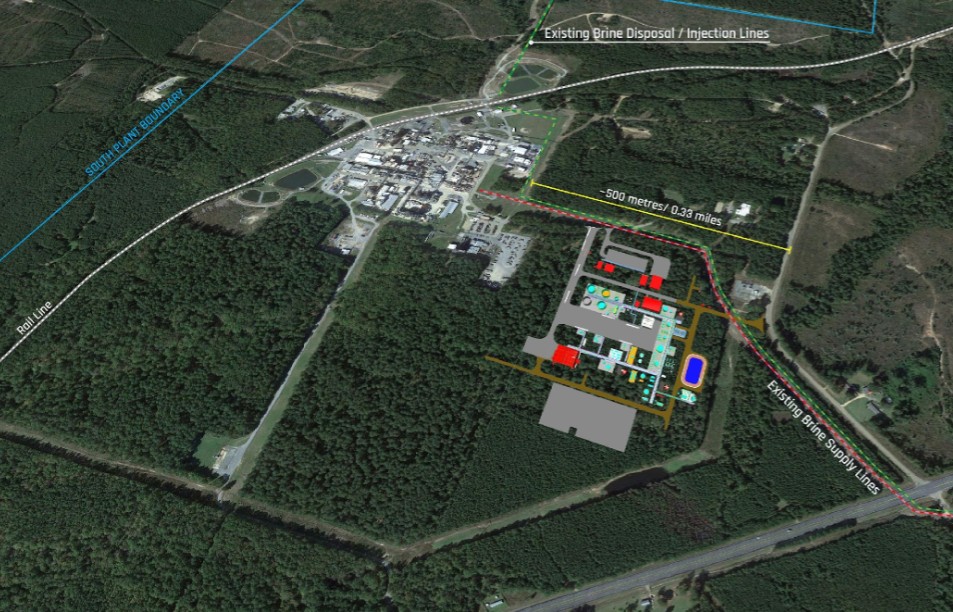
The Lanxess Property Project centers on the development of the Lanxess 1A Project (as defined below), the first commercial lithium extraction initiative on the extensive brine leases operated by LANXESS Corporation (“LANXESS”) in Arkansas. LANXESS operates three existing brine processing facilities for bromine extraction, covering over 150,000 acres of unitized brine leases in southern Arkansas. The first phase of the Lanxess Property Project (the “Lanxess 1A Project”) is located at the LANXESS South facility near El Dorado, Arkansas (the “Lanxess South Plant”). The Company and LANXESS are focusing on the Lanxess 1A Project as the initial step. The cooperative framework between the Company and LANXESS is expected to include a brine supply and disposal agreement, a lease agreement for the production facility site, and the provisioning of certain infrastructure services. Details of the future cooperation are the subject of ongoing negotiations, and these agreements will form the basis of the operational framework for the Lanxess 1A Project. The Company has been successfully operating an industrial-scale DLE demonstration plant (the “Demonstration Plant”) at the Lanxess 1A Project location for over four years. The Demonstration Plant serves as a testing and optimization facility, refining the commercial blueprint for scalable and replicable DLE processes. In Q4 of 2023, the Company completed a DFS for the Lanxess 1A Project, which is planned to be situated at the Lanxess South Plant. This innovative project, utilizing DLE technology to extract lithium from an existing brine pipeline system, aims to produce battery-quality lithium carbonate. The Company is advancing toward a Final Investment Decision (“FID”) for the Lanxess 1A Project, with the timing contingent upon ongoing project definition and the completion of project financing initiatives.
The Company, in partnership with Equinor, is also developing prospective lithium brine areas within the Smackover Formation in East Texas (the “East Texas Properties”). The Company published exploration drilling results and testing in October of 2023, which demonstrated lithium concentrations of 644 mg/L on average. In partnership with Equinor, the Company plans to continue securing further leasehold positions and to perform further exploration drilling in East Texas, and will pursue developing a resource assessment for the project area.
The Company’s interests also extend to certain mineral leases in the Mojave Desert, San Bernardino County, California.
CORPORATE SUMMARY
The Company was incorporated under the laws of the Province of British Columbia on August 14, 1998, under the name “Tango Capital Corp.” Effective April 7, 1999, Tango Capital Corp. changed its name to “Patriot Capital Corp.” Effective March 5, 2002, Patriot Capital Corp. changed its name to “Patriot Petroleum Corp.” On December 1, 2016, the Company changed its name to “Standard Lithium Ltd.” and continued its corporate existence from the Business Corporations Act (British Columbia) to the Canada Business Corporations Act.
The Company is listed on the TSX Venture Exchange (the “TSXV”) and the NYSE American, LLC (the “NYSE American”) under the symbol “SLI”. The Company is a reporting issuer in each of the Provinces and Territories of Canada and files its continuous disclosure documents with the Canadian Securities Authorities in such Provinces and Territories. Such documents are available on SEDAR+ at www.sedarplus.ca and on EDGAR at www.sec.gov.
The Company’s corporate office is located at Suite 1625, 1075 West Georgia Street, Vancouver, British Columbia, V6E 3C9 and its registered office is located at Suite 2200, 885 West Georgia Street, Vancouver, British Columbia, V6C 3E8.
HIGHLIGHTS FOR THE YEAR ENDED JUNE 30, 2024
· | On July 5, 2023, the Company appointed David Park as Senior Strategic Advisor of the Company. |
· | On August 8, 2023, the Company announced positive results of a PFS for the South West Arkansas Project, including an upgraded mineral resource for a portion of the project. |
· | On September 6, 2023, the Company announced positive results of a DFS for the Lanxess Property Project (“Lanxess DFS”). |
5
STANDARD LITHIUM LTD.
Management’s Discussion and Analysis
For the Year Ended June 30, 2024
· | On September 13, 2023, the Company announced it had acquired 118 acres of land within the South West Arkansas Project providing a strategic location that enhances the project’s development options. |
· | On September 18, 2023, the Company filed a PFS and updated mineral resource for the South West Arkansas Project. |
· | On October 1, 2023, the Company appointed Salah Gamoudi as Chief Financial Officer following Kara Norman’s appointment as Chief Accounting Officer of the Company. |
· | On October 8, 2023, the Company appointed Michael Barman as Chief Development Officer. |
· | On October 18, 2023, the Company filed the Lanxess DFS, which included a mineral reserve and resource estimate on Phase 1A of the Lanxess Property Project. |
· | On October 31, 2023, the Company exercised its option agreement with TETRA Technologies Inc.(“TETRA”) to acquire brine production rights for the South West Arkansas Project. |
· | On December 1, 2023, LANXESS announced its intention to act as a brine supplier for the first phase project at the Lanxess Property Project, allowing the Company further optionality to seek project level equity investments and offtake arrangements. |
· | On January 24, 2024, the Company announced that Ausenco Engineering Canada ULC has been selected to complete the Definitive Feasibility Study and Front-End Engineering Design services for the South West Arkansas Project. |
· | On March 13, 2024, the Company announced the successful installation of a commercial scale full-size Direct Lithium Extraction column at its demonstration plant near El Dorado, Arkansas. The column is a LiProTM Lithium Selective Sorption (“LSS”) unit, supplied by Koch Technology Solutions, LLC . |
· | On May 7, 2024, Equinor, an arms-length party, acquired an interest in two Standard Lithium subsidiaries, one of which holds the South West Arkansas Project and the other, which holds the East Texas Properties (the “Equinor Transaction”). The Equinor Transaction combined the Company’s DLE and Smackover brine processing expertise, and attractive assets, with a major global energy player with deep experience in sub-surface assessment and production, project development, financing, construction and operations. |
The Equinor Transaction significantly de-risks project execution for Standard Lithium, and allows for development at the South West Arkansas Project. The Equinor Transaction immediately strengthened Standard Lithium’s financial position by providing immediate parent company level liquidity, in addition to significantly reduced future capital requirements to reach a FID. We further believe that we have strong alignment between Standard Lithium and Equinor to develop a sustainable lithium business, adhering to high levels of environmental and social responsibility.
Pursuant to the terms of the Equinor Transaction, Equinor acquired a 45% interest in each of the two Company subsidiaries for an initial cash payment of US$30 million to Standard Lithium and the commitment to invest up to an additional US$130 million as follows:
· | Equinor will solely fund the first US$40 million of development costs at the South West Arkansas Project, after which all additional capital expenditures will be funded on a pro-rata basis; |
· | Equinor will solely fund the first US$20 million in exploration and development costs at the East Texas Properties, after which all additional capital expenditures will be funded on a pro rata basis; |
6
STANDARD LITHIUM LTD.
Management’s Discussion and Analysis
For the Year Ended June 30, 2024
· | Standard Lithium will receive up to US$70 million in milestone payments associated with the South West Arkansas Project and the East Texas Properties subject to final investment decisions being made by certain dates; |
· | Standard Lithium will maintain majority ownership and operatorships pursuant to a development services agreement at each of the South West Arkansas Project and the East Texas Properties; |
· | Each subsidiary will be operated with a management structure that integrates the expertise and resources from both companies; and |
· | No parent-level common equity ownership dilution occurred at Standard Lithium as a result of the Equinor Transaction. |
· | During the year ended June 30, 2024, the Company issued 10,613,059 Shares (as defined below) for gross proceeds of $21,309 and incurred transaction costs of $1,663 under the Company’s at-the-market offering (the “ATM”). |
EVENTS SUBSEQUENT TO THE YEAR ENDED JUNE 30, 2024
· | On September 1, 2024, David Park was appointed as the Chief Executive Officer and Director of the Company following the retirement of Robert Mintak. |
· | On September 20, 2024, the Company announced that SWA Lithium LLC, which holds the South West Arkansas project, and that the Company holds a 55% joint venture interest in, had been selected for a US$225 million grant from the U.S. Department of Energy (“DOE”). The provisional grant is dependent on completing successful final negotiations with the DOE. |
PROJECT OVERVIEW
Standard Lithium currently has the following material projects:
SOUTH WEST ARKANSAS PROJECT
The South West Arkansas Project is maintained pursuant to an option agreement dated December 29, 2017, between TETRA and the Company (the “TETRA Option Agreement”) to acquire certain rights to conduct brine exploration and production and lithium extraction activities on approximately 27,262 net mineral acres of brine leases and deeds located in Columbia and Lafayette Counties, Arkansas.
Thereunder, the Company paid TETRA US$500 by January 28, 2018, US$600 by December 29, 2018, US$700 by January 31, 2020, and US$750 by December 29, 2020. Under the TETRA Option Agreement, the Company is also required to pay additional annual payments of US$1,000 by each annual anniversary date beginning on the date that is 48 months following the date of the TETRA Option Agreement, until the earlier of the expiration of 10 years from the date of the agreement or the execution of a limited mineral assignment, or, if the Company exercises the option, the Company beginning payment of a 2.5% percent royalty derived from the sale of lithium produced. During the lease period, as specified in the TETRA Option Agreement, at any time following the commencement of commercial production of the lithium, the Company agreed to pay a royalty of 2.5% (minimum royalty US$1,000) to TETRA. On October 31, 2023, the Company exercised the TETRA 1st Option Agreement.
The South West Arkansas Project brine lease area has been historically drilled for oil and gas exploration, and approximately 424 exploration and production wells have been completed in the Smackover Formation in or immediately adjacent to Company’s lease area. A portion of these wells had available petro-physical logs of the Smackover Formation brine-bearing zone.
7
STANDARD LITHIUM LTD.
Management’s Discussion and Analysis
For the Year Ended June 30, 2024
On August 8, 2023, the Company announced the results of a PFS on the South West Arkansas Project, the highlights of which are provided below.
SOUTH WEST ARKANSAS PROJECT
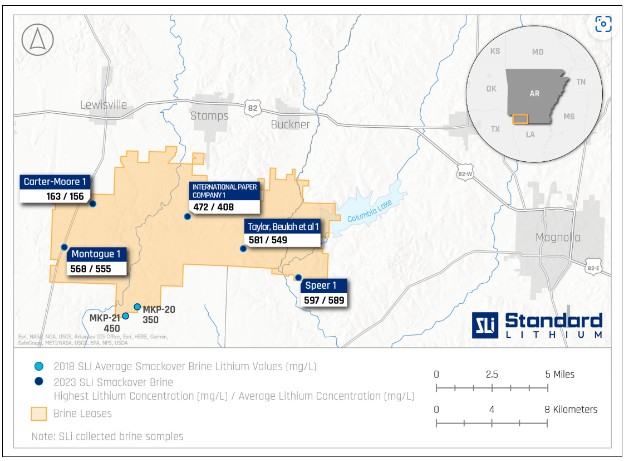
| ● | 40 kilometres west of the Lanxess Property Project. |
| ● | 27,262-net mineral acres greenfield project. |
| ● | Indicated resource of 1.43 Mt in the Upper Smackover FM and an inferred resource of 0.39 Mt in the Middle Smackover FM. |
| ● | Average lithium grade of 437 milligrams per litre (mg/L). |
| ● | Filed PEA in November 2021 and commenced the PFS in May 2022. |
| ● | Filed PFS in September 2023. |
8
STANDARD LITHIUM LTD.
Management’s Discussion and Analysis
For the Year Ended June 30, 2024
| ● | US$4.47 billion pre-tax NPV. |
| ● | Targeted 30,000 tonne per annum lithium hydroxide monohydrate. |
| ● | Operating costs of US$5,229 per tonne of lithium hydroxide. |
| ● | Capital expenditures of US$1.27 billion including 20% contingency on total installed costs. |
Please refer to the technical report titled “NI 43-101 Technical Report, South West Arkansas Project” dated effective August 8, 2023 (the “South West Arkansas PFS”), as filed on the Company’s SEDAR+ profile at www.sedarplus.ca and on EDGAR at www.sec.gov for further information with respect to the South West Arkansas Project.
South West Arkansas Project Background & Outlook
The South West Arkansas Project is located approximately 40 km from the Lanxess Property Project and shares the same long history of oil and gas drilling and nearby brine extraction. There are 424 exploration and production wells greater than 2,234 m depth (7,000 ft) in or immediately adjacent to the South West Arkansas Project. A portion of these wells have available petro-physical logs of the Smackover Formation brine-bearing zone. Around 38 additional wells have core reports with porosity and permeability data.
On August 8, 2023, the Company announced the results of a PFS on the South West Arkansas Project. On September 18, 2023, the Company filed a PFS and updated inferred mineral resource for the South West Arkansas Project. The Company intends on expending funds during the upcoming year to advance the South West Arkansas Project, including advancing a DFS and FEED study. On May 7, 2024, the Company completed the Equinor Transaction, forming a partnership with Equinor for the further development of the South West Arkansas Project.
The Company has filed three NI 43-101 technical reports for the South West Arkansas Project:
| ● | In March 2019, the first mineral resource estimate was filed and comprised an inferred mineral resource estimate for lithium contained in brine. |
| ● | In November 2021, the Company filed a PEA, which comprised an updated inferred mineral resource estimate for a proposed unitized property, as well as a PEA for the proposed commercial plant at the property. |
| ● | In September 2023, the Company filed the PFS which comprised an upgraded indicated mineral resource estimate for a portion of the property. |
South West Arkansas Project Economics – South West Arkansas PFS
The discounted cash flow economic analysis, at a discount rate of 8%, indicates that the South West Arkansas Project is economically viable. The key economic indicators – an NPV of US$4.47 billion (pre-tax) and an IRR of 41.3% (pre-tax), are very positive.
The South West Arkansas Project economics assumed a selling price of battery quality lithium hydroxide monohydrate based on an initial price of US$30,000/tonne in 2023, adjusted for inflation at 2% per annum. The results for IRR and NPV from the assumed CAPEX, OPEX and price scenario at full production, are presented in the table below.
9
STANDARD LITHIUM LTD.
Management’s Discussion and Analysis
For the Year Ended June 30, 2024
Economic Evaluation Summary
Description |
| Units |
| Values |
Average Annual Production (as LiOH·H2O) | | tpa[1] | | 30,000[2] |
Plant Operation | | years | | 20 |
Total Capital Cost (CAPEX) | | Million US$1,274[3] | | |
All-in OPEX per tonne | | US$/t | | 5,229 |
Selling Price | | US$/t | | 30,000[5] |
Average Annual Revenue | | Million US$900[6] | | |
Discount Rate | | % | | 8.0 |
Net Present Value (NPV) Pre-Tax | | Million US$ | | 4,473 |
Net Present Value (NPV) Post-Tax | | Million US$ | | 3,090 |
Internal Rate of Return (IRR) Pre-Tax | | % | | 41.3 |
Internal Rate of Return (IRR) Post-Tax | | % | | 32.8 |
Notes:
All model outputs are expressed on a 100% project ownership basis with no adjustments for project financing assumptions. Any discrepancies in the totals are due to rounding effects.
1. | Metric tonnes (1,000 kg) per annum. |
2. | Total production for years 1 to 20 is 30,000 tpa lithium hydroxide. |
3. | AACE Class 4 estimate includes 20% contingency on direct capital costs. |
4. | Includes all operating expenditures, ongoing land costs, established Royalties, sustaining capital and allowance for mine closure. |
5. | Selling price of battery quality hydroxide based on a selling price of US$30,000/t in 2023, adjusted for inflation of 2% per annum. |
6. | Average annual revenue over projected 20 year mine-life. |
Please refer to South West Arkansas PFS titled “NI-43-101 Technical Report South Arkansas Project Pre-Feasibility Study” dated September 18, 2023, as filed on the Company’s SEDAR+ profile at www.sedarplus.ca and on EDGAR at www.sec.gov for further information with respect to the South West Arkansas Project.
On May 7, 2024, Equinor, an arms-length party, acquired an interest in two Standard Lithium subsidiaries, one of which holds the South West Arkansas Project as part of the Equinor Transaction.
Next Steps
On January 24, 2024, the Company announced the selection of Ausenco Engineering Canada to complete the Definitive Feasibility Study and Front-End Engineering Design Services (“FEED”) for the South West Arkansas project. Target completion of the DFS and FEED is mid-calendar year 2025.
10
STANDARD LITHIUM LTD.
Management’s Discussion and Analysis
For the Year Ended June 30, 2024
On September 20, 2024, the Company announced that SWA Lithium LLC, which holds the South West Arkansas project, and that the Company holds a 55% joint venture interest in, had been selected for a US$225 million grant from the DOE. This grant, one of the largest ever awarded to a U.S. critical minerals mining project, is part of the second wave of funding under the Infrastructure Investment and Jobs Act, aimed at expanding domestic manufacturing of all segments of the battery supply chain and increasing production of critical minerals in the U.S. The provisional grant is dependent on completing successful final negotiations with the DOE.
Further, on September 20, 2024, the Company announced that the South West Arkansas project’s design is being updated from its original PFS, and now targets a larger total output of 45,000 tonnes per annum of lithium carbonate, to be developed in two phases of 22,500 tonnes each. A DFS and FEED study are currently underway to support this expansion.
South West Arkansas Project Related Risks and Uncertainties
As with any development project there exists risks and uncertainties. The Company will attempt to reduce risk/uncertainty through effective project management, engaging technical experts and developing contingency plans. See the Company’s AIF with respect to highlights of risks and uncertainties which have been identified at this stage of project development.
Expenditures
Expenditures for the South West Arkansas Project consist of exploration and evaluation costs for the year ended June 30, 2024 was $40,249, including $9,779 of acquisition costs and $30,470 of exploration costs. As a result of the Equinor Joint Venture, these assets were deconsolidated as of May 7, 2024 and exploration and evaluation assets were decreased by $40,249.
LANXESS PROPERTY PROJECT
In accordance with the amended and restated memorandum of understanding (the “Lanxess MOU”) dated February 23, 2022, Standard Lithium has established a framework for cooperation with LANXESS. The Lanxess MOU, which replaces previous agreements from May 4, 2018, and the joint venture term sheet from November 9, 2018, sets out the terms for advancing the Lanxess 1A Project, located within the LANXESS South Facility. The structured collaboration with LANXESS will result in definitive commercial agreements that include the supply and management of brine resources, leasing of the commercial production site facilities for the development of the first commercial lithium project in Arkansas to be constructed at the Lanxess Property Project, and provision of certain infrastructure services by LANXESS. These negotiations are expected to formalize the operational framework for the Lanxess 1A Project. Standard Lithium will retain ownership and control over the marketing of the lithium carbonate produced from the Lanxess 1A Project. The Company has the discretion to pursue additional strategic partnerships at the project level to support the project’s development and enhance its economic potential.
The strategy for the Lanxess 1A Project leverages the established infrastructure and the current permitting framework at the LANXESS South Facility, which will enable an effective scale-up of the Company’s DLE process. This phase aims to validate the commercial viability of the DLE technology, with plans to replicate this process across Standard Lithium’s Smackover Formation assets in a manner consistent with the Company’s operational objectives and financial considerations.
11
STANDARD LITHIUM LTD.
Management’s Discussion and Analysis
For the Year Ended June 30, 2024
THE LANXESS PROJECT
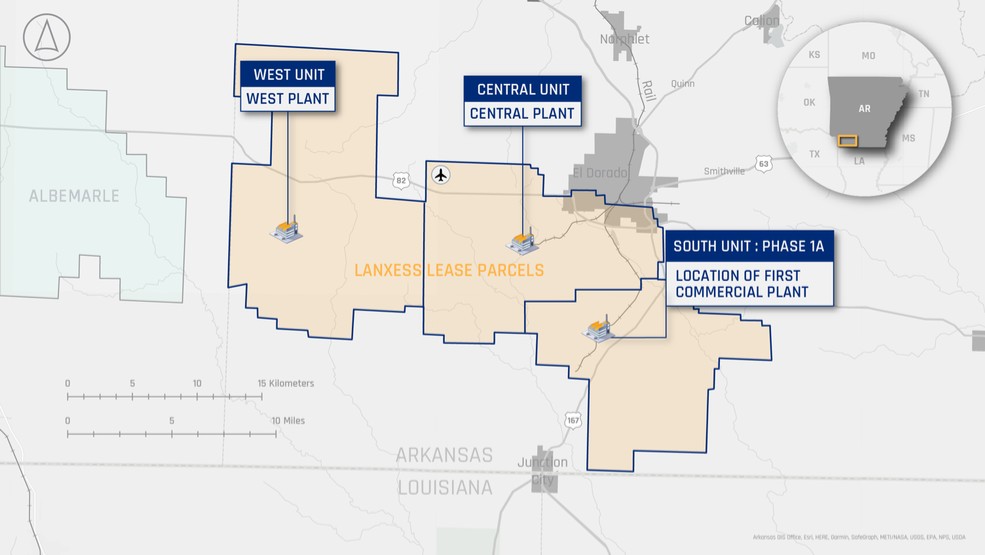
· | Located 10 kilometers from El Dorado, Arkansas, in a geopolitically stable, business-friendly, and cost-efficient region. |
· | One of the largest lithium brine projects in the U.S., with a 2.8 million tonnes (“Mt”) lithium carbonate equivalent (LCE) measured and indicated mineral resource. Phase 1A is set to tap into approximately 5% of the total measured and indicated resource over the 25-year operating life. |
· | Strategic partnership with LANXESS, a global chemical industry leader and operator of the largest brine processing operations in North America. |
· | Control of 150,000-acres across three brownfield sites within the Lanxess Property Project, utilizing existing commercial brine operations to expedite production. |
· | Completion of extensive testing has largely validated the commercial viability of lithium extraction using DLE technology, which processes the lithium from the brine by-product pf LANXESS’s existing operations. |
· | The projected environmental footprint is minimal, benefiting from the use of existing industrial sites, infrastructure, and the environmentally considerate DLE technology. |
· | Strong support from stakeholders and the community. |
· | The projected initial production target is 5,700 tonnes per annum (“tpa”) of battery-quality (“BQ”) lithium carbonate with an average 5,400 tpa BQ lithium carbonate over the 25-year operating life. |
· | Estimated all-in operating costs are US$7,390 per tonne of BQ lithium carbonate. |
12
STANDARD LITHIUM LTD.
Management’s Discussion and Analysis
For the Year Ended June 30, 2024
· | Capital expenditures are estimated at US$365 million, including a 15% contingency to total direct and indirect costs. |
For more detailed information regarding the Lanxess Property Project, please refer to the technical report titled “Technical Report for the Definitive Feasibility Study for Commercial Lithium Extraction Plant at Lanxess South Plant” dated October 18, 2023, as filed on the Company’s SEDAR+ profile at www.sedarplus.ca and on EDGAR at www.sec.gov.
Lanxess Property Project Background & Outlook
South Arkansas has a longstanding and established industry of mineral extraction from brine, with activities beginning in the 1950s. The Smackover Formation, a limestone aquifer stretching approximately 1,000 kilometers from central Texas to Florida, has been central to oil and gas production for over a century. Due to its high porosity and permeability, this formation is particularly suited for extensive brine pumping, processing, and reinjection. While the primary mineral historically extracted from this brine has been bromine, the resource is also rich in lithium.
With headquarters in Cologne, Germany, LANXESS maintains the most substantial brine extraction and processing operations in south Arkansas. This operation includes three distinct facilities: the South, West, and Central plants, each equipped with its brine supply, disposal system, and bromine processing facilities.
In 2018, Standard Lithium and LANXESS signed an agreement to test and prove the commercial viability of extracting lithium from brine (“tail-brine”) at LANXESS’ bromine extraction operation (see AIF for more information about the Lanxess Project information including history, ownership, geology and mineralization). The agreement has since been replaced by the Lanxess MOU.
13
STANDARD LITHIUM LTD.
Management’s Discussion and Analysis
For the Year Ended June 30, 2024
Lanxess Project – Demonstration Plant
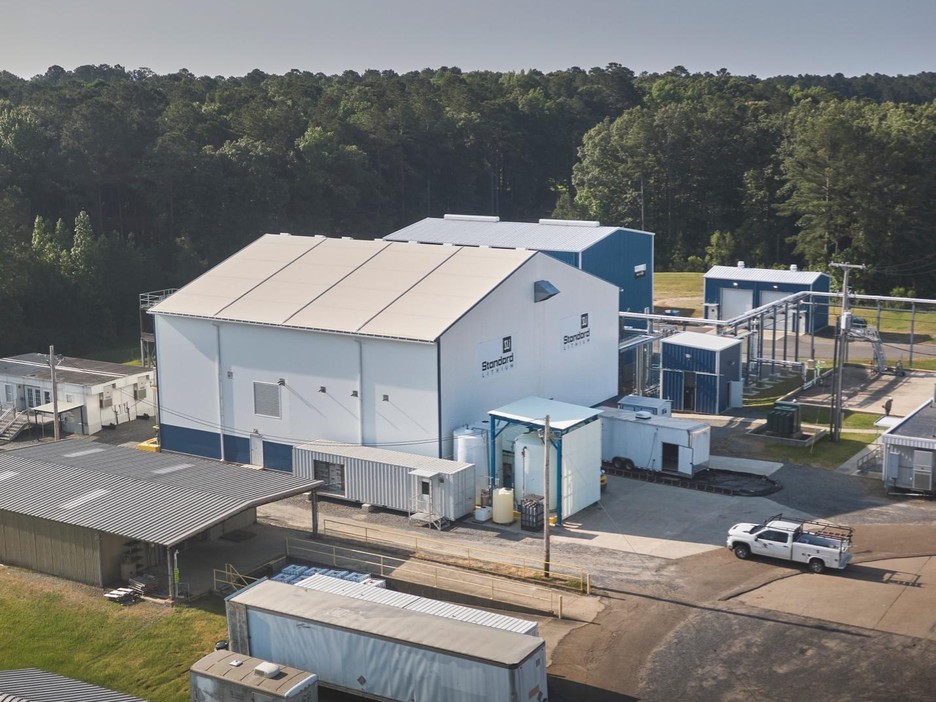
In May 2020, the Company commissioned its industrial-scale DLE Demonstration Plant at LANXESS’ South Plant. The Demonstration Plant, which is the first-of-its-kind in the world, utilizes, among other technologies, the Company’s proprietary DLE process to extract lithium from LANXESS’ post bromine extraction tail-brine.
This Demonstration Plant serves as a testing and optimization facility, refining the commercial blueprint for scalable and replicable DLE processes. The focus is on extracting lithium from LANXESS’ post bromine extraction tail-brine, yielding a high-purity lithium chloride (LiCl). This LiCl can then undergo further refinement into battery-quality lithium carbonate or lithium hydroxide. The highly automated three-story Demonstration Plant is complemented by adjacent separate buildings housing the control room, office, and an analytical laboratory, ensuring precise and monitored lithium extraction processes. The resulting high-purity lithium chloride is typically managed in the following ways: sample volumes of the LiCl material are either sent for analysis, or when applicable, they are sent off-site for further conversion into battery-quality lithium carbonate or lithium hydroxide. In the majority of cases, the material is returned, along with spent brine, for re-injection The Company entered into the Lanxess MOU with LANXESS to streamline and expedite the development of Lanxess 1A Project the first commercial lithium project in Arkansas to be constructed at the Lanxess Property Project. The overall objective is to produce battery-grade lithium carbonate from all three of the LANXESS facilities starting with the Lanxess South Plant. Each facility will have its own primary plant that will produce purified and concentrated lithium chloride solutions. These solutions will be conveyed, via pipelines, to one location (the Central Plant) for further processing to the final product – lithium carbonate.
14
STANDARD LITHIUM LTD.
Management’s Discussion and Analysis
For the Year Ended June 30, 2024
Proposed location of Phase 1A commercial facility adjacent to LANXESS South Plant
The Company has filed three NI 43-101 technical reports for the Lanxess Property Project.
· | In November 2018, the first mineral resource estimate was filed and comprised an inferred mineral resource estimate for lithium contained in brine. |
· | In August 2019, the Company filed a Preliminary Economic Assessment (“PEA”), which comprised an upgraded indicated mineral resource estimate for the Lanxess Property Project, as well as a PEA for proposed commercial plants at the Lanxess Property Project. |
· | In October 2023, the Company filed the current Lanxess DFS, which comprised a mineral reserve estimate on the Lanxess 1A Project and an updated mineral resource for the Lanxess Property Project. |
On December 15, 2021, the Company announced that it signed a letter of intent with Koch Engineered Solutions (“KES”) for support with pre-FEED at the Company’s proposed first commercial plant located at the LANXESS facility in southern Arkansas.
On September 7, 2022, the Company announced that it had completed the FEED and DFS selection process for the Lanxess 1A Project and awarded the contract to OPD LLC, a Koch-owned business based in Katy, Texas. The Lanxess DFS was completed in Q3 2023. A final investment decision is expected to follow, with construction on the first commercial plant, adjacent to the Demonstration Plant beginning soon after. The Company intends on expending additional funds during the upcoming year to advance the Lanxess Property Project.
15
STANDARD LITHIUM LTD.
Management’s Discussion and Analysis
For the Year Ended June 30, 2024
On October 27, 2022, the Company successfully commissioned a first-of-its-kind chloride-to-hydroxide conversion pilot plant. The plant was installed at the Lanxess Property Project and operates as a self-contained unit taking the lithium chloride feed produced by the existing Demonstration Plant and converting this feed directly into a lithium hydroxide solution using a novel ion-exchange process.
On December 6, 2022, the Company completed all of the necessary agreements with LANXESS to secure access to the proposed commercial plant site at the Lanxess Property Project and to conduct all required fieldwork to support the Lanxess DFS.
On October 18, 2023, the Company filed the Lanxess DFS, which comprised a mineral reserve estimate on the Lanxess 1A Project.
On December 1, 2023, LANXESS announced their intention to act as a brine supplier for the Lanxess 1A Project, allowing the Company further optionality to seek project level equity investments and offtake arrangements.
Economics
The Lanxess Property Project economics were derived from inputs based on the annual production schedule, capital expense estimate, and operating expense estimate as set forth in the Lanxess DFS. The positive results from the economic analysis are summarized in the table below.
Description |
| Units |
| Values |
Initial Annual Production of Li2CO3 | | tpa[1] | | 5,730[2] |
Average Annual Production of Li2CO3 | | tpa[1] | | 5,400 |
Plant Operating Life | | Years | | 25[3] |
Total Capital Expenditures (“CAPEX”) | | Million US$365[4,5] | | |
Average Annual Operating Cost | | US$/t | | 6,810 |
Average Annual All-In Operating Cost | | US$/t | | 7,390[6,7] |
Selling Price | | US$/t | | 30,000[8] |
Discount Rate | | % | | 8 |
Net Present Value (NPV) Pre-Tax | | Million US$ | | 772 |
Net Present Value (NPV) Post-Tax | | Million US$ | | 550[9] |
Internal Rate of Return (IRR) Pre-Tax | | % | | 29.5 |
Internal Rate of Return (IRR) Post-Tax | | % | | 24.0 |
16
STANDARD LITHIUM LTD.
Management’s Discussion and Analysis
For the Year Ended June 30, 2024
Notes:
All model outputs are expressed on a 100% project ownership basis with no adjustments for project financing assumptions. Any discrepancies in the totals are due to rounding effects.
1. | Tonnes (1,000 kg) per annum. |
2. | Initial annual production figure represents Year 2 production, following a ramp-up period in Year 1. |
3. | Plant design and financial modelling based on 25-year economic life. Proven and probable reserves support a 40-year operating life. |
4. | Capital expenditures include 15% contingency to total direct and indirect costs. |
5. | No inflation or escalation has been carried for the economic modelling. |
6. | Includes operating expenditures, assumed brine supply fees, and sustaining capital. |
7. | Brine lease-fees-in-lieu-of-royalties (to be approved by the Arkansas Oil and Gas Commission) have not been defined and are not currently included in the economic modelling. |
8. | Selling price of BQ lithium carbonate based on a flatline price of $30,000/t over total project lifetime. |
9. | Assumes a US Federal tax rate of 21% and State of Arkansas Tax rate of 5.1%, as well as variable property taxes. |
Expenditures and Operating Costs
Expenditures for the Demonstration Plant consist of operating costs for the Demonstration Plant which for the three months ended June 30, 2024 were $2,747 (June 30, 2023 - $3,572) and the year ended June 30, 2024, were $9,924 (June 30, 2023 - $13,974). The major changes in the Company’s operating costs for the Demonstration Plant for the three months and the year ended June 30, 2024, was predominantly due to a decrease in supplies, personnel and reagents costs. The supplies costs decreased due to no significant operational changes in Q4-2024 compared to Q4-2023. The reagent costs were lower as the Company stopped running LiSTR and moved to Lithium Selective Sorption (“LSS”). The personnel costs decreased during the year ended June 30, 2024 as all the plant employees transitioned to employees of the Company. See Overall Performance section for more details.
OTHER PROJECTS
The Company has also identified a number of highly prospective lithium brine project areas in the Smackover Formation in East Texas and began an extensive mineral leasing program to lease brine rights in the key project areas. The Company has completed an initial drilling and sampling program across these new project areas for the purposes of assessing viability for project expansion and future development, with positive results. In addition, the Company has an interest in certain mineral leases located in the Mojave Desert in San Bernardino County, California.
ENVIRONMENTAL
Standard Lithium is firmly committed to the responsible production of sustainable lithium chemicals, essential for the progression toward a lower carbon economy. Our project selection process underscores this dedication, opting, where feasible, to use existing infrastructure, roads, rail, water, and power within well-established industrial areas with a history of timber harvesting, oil, gas, and brine industries. Implementing DLE technology is aimed at ensuring an environmentally responsible approach, offering a reduced footprint and environmental impact when compared to traditional evaporation pond methods and hard-rock lithium mining operations.
Beyond our main operations, our environmental ethos is also evident. In September 2021, our collaboration with Aqualung Carbon Capture AS (“Aqualung”) marked a significant step in advancing carbon capture technology. This partnership solidified in May 2022 when we made an investment in Aqualung. This was followed by a master service agreement (the “MSA”) with Telescope Innovations Corp. (“Telescope”), signaling our intent to further investigate the possible applications of captured carbon dioxide (CO2) in various chemical processes, emphasizing our forward-thinking approach to environmental sustainability.
17
STANDARD LITHIUM LTD.
Management’s Discussion and Analysis
For the Year Ended June 30, 2024
SOCIAL RESPONSIBILITY AND COMMUNITY RELATIONS
The Company remains committed to community engagement as a central element of its operations. In support of the communities surrounding the South West Arkansas Project and the Lanxess Property Project, the Company has actively participated in and sponsored various local events, including the El Dorado MusicFest, Holiday Lighting Ceremony, Independence Day Celebration, and the Mayhaw Festival. These initiatives reflect the Company’s ongoing dedication to fostering positive relationships and contributing to the cultural and social vitality of the regions in which it operates.
To further support local workforce development, the Company has established partnerships with institutions such as South Arkansas Community College. These collaborations are aimed at enhancing training programs to prepare community members for specialized roles within the Company’s projects. Currently, the Company employs approximately 28 engineers, operators, technicians, and administrative staff, predominantly drawn from nearby communities. This strategy underscores the Company’s commitment to local employment and economic development.
As the Company extends its operations into East Texas, a similar approach will be adopted, with efforts focused on engaging local stakeholders and ensuring that the benefits of its projects are shared with the surrounding communities. The Company’s ongoing focus on sustainable development seeks to balance environmental stewardship with the social and economic needs of the regions in which it operates.
SCIENTIFIC AND TECHNICAL INFORMATION
The scientific and technical information contained in this MD&A has been reviewed and approved by Steve Ross, P. Geol., VP Resource Development of the Company, who is a “qualified person” as defined in NI 43-101.
OVERALL PERFORMANCE
Revenue
The Company raises capital through the issuance of common shares, debt instruments, non-core assets sales, and other forms of financing. As at June 30, 2024, the Company has not generated revenue.
Office and administration
Office and administration costs are associated with the Company’s Vancouver, BC corporate head office, the El Dorado office in Arkansas, the Austin office in Texas and related professional and corporate costs.
Office and administration costs were $4,914 for the year ended June 30, 2024, as compared to $4,148 for the year ended June 30, 2023. The increase is mainly due to higher insurance costs, information technology costs, the new Austin office set up, and costs associated with the growth of our offices in USA.
Demonstration Plant operations (formerly Pilot Plant operations)
Demonstration Plant operating costs relate to personnel, supplies, reagents, site office, utilities, repairs and maintenance, vehicle, waste and disposal recycling fees, and ongoing testing of the production end product. The overall costs decreased for the year ended June 30, 2024, by $4,050 or 29.0% to $9,924 from $13,974 for the year ended June 30, 2023. The main reasons are as follows: 1) there was no updates to the operation during the fiscal year compared to prior year when the Company was testing the LSS columns and reconfiguring the plant; 2) The reagent costs were lower as the Company stopped running LiSTR and moved to LSS; and 3) the personnel costs decreased over the year as all the plant employees were hired directly by the Company which reduced the billable rates paid to the intermediary companies.
18
STANDARD LITHIUM LTD.
Management’s Discussion and Analysis
For the Year Ended June 30, 2024
Foreign exchange gain
The Company recorded a foreign exchange gain of $866 for the year ended June 30, 2024, as compared to a foreign exchange gain of $4,035 for the year ended June 30, 2023. The United States Dollar (“USD”) spot rate strengthened by 3.1% year over year. A stronger USD created a foreign exchange gain on the Company’s income statement due to held cash on hand, prepayments and accounts payable in USD.
Other income
The Company earned $1,249 of interest and other income, net of fees on the investment of cash on hand during the year ended June 30, 2024 (June 30, 2023: $3,348).
Net income (loss) before income taxes
The Company had net income before income taxes of $182,489 for the year ended June 30, 2024, as compared to net loss of $41,989 for the year ended June 30, 2023. The change to net income from net loss resulted primarily from the gain recognised on the deconsolidation of subsidiaries and retainment of our Investments in Joint Ventures recorded at fair value, in addition to the recognition of financial assets associated with the Equinor Transaction.
Deferred income tax expense
The Company had deferred income tax expense of $35,040 for the year ended June 30, 2024. There was no such balance for the year ended June 30, 2023. The deferred income tax expense is primarily driven by the Equinor Transaction, and the resultant difference in the tax basis and fair value of our retained interests in our Investments in Joint Ventures, and has no impact on cash taxes paid.
SHARE ISSUANCES
On July 27, 2023, the Company filed a final base shelf prospectus relating to the offering for sale from time to time up to US$250,000 of Shares, preferred shares, debt securities, subscription receipts, warrants or units. This filing replaced the base shelf prospectus previously filed by the Company on September 10, 2021.
On November 17, 2023, the Company announced the establishment of an at-the-market (“ATM”) equity program allowing the Company to issue and sell, from time to time through agents, up to US$50,000 of Shares from the treasury to the public. During the year ended June 30, 2024, the Company issued a total of 1,532,100 Shares on the TSX Venture Exchange at an average price of C$1.89 per share and 9,080,959 Shares on the NYSE American LLC at an average price of US$1.51 under the at-the-market program, providing gross proceeds of C$2,891, and US$13,677, respectively. Commissions of approximately C$72 and US$342 were paid to the agents in relation to these distributions, and the Company received net proceeds of C$2,819 and US$13,335, respectively.
During the year ended June 30, 2024, the Company issued a total of 550,000 Shares for the exercise of stock options. The Company received proceeds of $1,463 and reclassified $693 from reserves to share capital upon exercise.
On July 23, 2024 the Company signed an agreement with an arms-length third-party advisor to settle a fee of US$800,000 in consideration for the issuance of 666,667 common shares at a deemed price of US$1.20 per Advisory Share. The consultant was subsequently appointed as a member of executive management. Services provided were advisory in nature and did not assume management responsibilities.
19
STANDARD LITHIUM LTD.
Management’s Discussion and Analysis
For the Year Ended June 30, 2024
STOCK OPTION GRANTS
On September 25, 2023, the Company granted 1,750,000 stock options to an advisor, management and a consultant of the Company pursuant to the Company’s stock option plan, with an exercise price of $4.00 for a period of 5 years. The stock options vest as follows:
| ● | 1,000,000 stock options granted to an advisor of the Company vesting in thirds, with one third vesting on March 31, 2024, one third vesting on March 31, 2025 and one third vesting on March 31, 2026; |
| ● | 350,000 stock options granted to an employee of the Company, with 100,000 options vesting on March 28, 2024, 83,333 options vesting on September 28, 2024, 83,333 options vesting on September 28, 2025, and 83,334 options vesting on September 28, 2026; |
| ● | 350,000 stock options granted to an employee of the Company, with 100,000 options vesting on April 8, 2024, 83,333 options vesting on October 8, 2024, 83,333 options vesting on October 8, 2025, and 83,334 options vesting on October 8, 2026; and |
| ● | 50,000 stock options granted to a consultant of the Company all vesting on September 25, 2024. |
On April 17, 2024, 100,000 stock options were granted to an employee of the Company, with 25,000 options vesting on October 17, 2024, 25,000 options vesting on April 17, 2025, 25,000 options vesting on April 17, 2026 and 25,000 options vesting on April 17, 2027.
SELECTED ANNUAL FINANCIAL INFORMATION
The following table contains a summary of the Company’s financial results for each of the three most recently completed financial years, as reported under IFRS in thousands of Canadian dollars, except per share amounts:
| | June 30, | | June 30, | | June 30, | |
| | 2024 | | 2023 | | 2022 | |
|
| $ |
| $ |
| $ |
|
Total revenue | | — | | — | | — | |
Total assets | | 392,986 | | 173,497 | | 183,645 | |
Working capital(1) | | 39,559 | | 48,800 | | 125,025 | |
Total non-current liabilities | | 35,978 | | 872 | | 337 | |
Net income (loss) before income taxes | | 182,489 | | (41,989) | | (38,100) | |
Earnings (loss) per share | | | | | | | |
Basic | | 0.83 | | (0.25) | | (0.25) | |
Diluted | | 0.82 | | (0.25) | | (0.25) | |
Cash dividends declared | | Nil | | Nil | | Nil | |
(1)Working capital is defined as current assets less current liabilities
RESULTS OF OPERATIONS
Three months ended June 30, 2024 compared to the three months ended June 30, 2023:
20
STANDARD LITHIUM LTD.
Management’s Discussion and Analysis
For the Year Ended June 30, 2024
The Company had net income before income taxes of $212,778 for the quarter ended June 30, 2024 (“Q4-2024”) compared to a net loss of $26,450 for the quarter ended June 30, 2023 (“Q4-2023”). The primary reason for the change to income from loss was related to gain on deconsolidation of subsidiaries. Consulting fees increased to $3,652 during Q4-2024 as compared to $1,375 in Q4-2023 primarily due to $2,827 of non-recurring charges associated with engaging strategic advisors for the Equinor transaction during Q4-2024. Additionally, consulting fees increased as a result of additional consultant engagement to support the Company in the next stage of development and lobbyist engagement to pursue federal grant and critical mineral policy program opportunities. Management fees incurred during Q4-2024 of $1,385 were lower than fees incurred during Q4-2023 of $1,665 as the Company started allocating time of management to each project during Q4-2024. Office and administration costs of $1,592 were lower than the costs of $1,690 incurred during the comparative quarter. The primary reason for the decrease was that during Q4-2023, the Company incurred costs relating to the Vancouver head office move. Costs related to investor relations for Q4-2024 amounted to $88, a decrease from the $259 recorded during Q4-2023. The primary reason for the decrease was the Company hired VP Corporate Communication personnel instead of outsourcing to IR consulting firms. Travel costs of $187 incurred during Q4-2024 were lower than costs of $266 incurred during Q4-2023 due to less travel costs related to promotional activities. The share-based compensation during the period was $779 as compared to $15,847 recognised in Q4-2023. The decrease was related to the issuance of stock options to an advisor, employees, and a consultant of the Company and the issuance of deferred share units to the directors and management of the Company during Q4-2023 which vested on grant date. All of the stock options will be fully vested by April 2027. The Company incurred $277 in costs related to patent applications as compared to $275 in costs incurred during Q4-2023. The slight increase in fees related to the advancement of the worldwide IP applications. Demonstration Plant operating costs incurred during Q4-2024 of $2,747 were lower than the costs of $3,572 incurred during Q4-2023. The decrease mainly relates to decline in supplies, personnel, and reagents costs (see page 18-19, Overall Performance section for more details). The salaries and benefits of $1,275 were recognised during Q4-2024 compared to $159 recognised during Q4-2023. The increase was related to hiring additional resources to support the growth of the Company.
Year ended June 30, 2024 compared to the year ended June 30, 2023:
The Company had net income before income taxes of $182,489 for the year ended June 30, 2024 (“FY2024”) compared to a net loss before income taxes of $41,989 for the year ended June 30, 2023 (“FY2023”). The primary reason for the change from loss to income was related to gain on deconsolidation of subsidiaries. Management and directors’ fees incurred during FY2024 of $3,372 were higher than fees incurred during FY2023 of $3,244 mainly due to the revision of director’s renumeration plan and the new CFO. Consulting fees increased to $6,444 during FY2024 as compared to $3,876 in FY2023 primarily as a result of $2,827 of non-recurring charges associated with the Equinor transaction, consultant costs to support and advance the Company and the engagement of lobbyists, as discussed above. Filing and transfer agent fees of $533 were lower than fees of $585 during FY2023 due to lower annual general meeting and proxy costs incurred during FY2024. Office and administration costs of $4,914 were higher than the costs of $4,149 incurred during the comparative period due to higher costs of insurance renewals, information technology and the growth of the EL Dorado office in Arkansas and the addition of the Austin office in Texas. Costs related to investor relations for FY2024 amounted to $308, a decrease from the $545 recorded during FY2023. The decrease was related to the Company hiring internal investor relations personnel. Travel costs of $842 incurred during FY2024 were higher than costs of $600 incurred during FY2023 due to more frequent travel of management and consultants to the Company’s project sites. The share-based compensation during the period was $10,751 as compared to $16,983 recognised during FY2023. The primary reason for the higher costs during FY2023 was related to 3,750,000 stock options that were granted in April 2023 were fully vested on the grant date and expensed during the year ended June 30, 2024. The Company incurred $975 of costs related to patent applications as compared to $932 in costs incurred during FY2023. The increase in fees was related to the advancement of the worldwide IP applications. Demonstration Plant operating costs incurred during FY2024 of $9,924 were lower than the costs incurred of $13,974 during FY2023 mainly due to the decrease in supplies, personnel, reagents and utilities costs (see pages 18-19, Overall Performance section for more details). The project investigation costs were $nil in FY2024 compared to $1,208 of costs incurred during FY2023. The primary reason for the decrease in costs relates to the Company commencing the capitalisation of the Texas projects to Exploration and Evaluation Assets. The salaries and benefits of $2,946 was recognised during FY2024 compared to $310 recognised during FY2023 as prior to January 2023, all positions were engaged as consultants. In addition, another reason of the increase was related to hiring additional resources to support the growth of the Company in Canada and USA.
21
STANDARD LITHIUM LTD.
Management’s Discussion and Analysis
For the Year Ended June 30, 2024
SUMMARY OF QUARTERLY RESULTS
The following table presents selected unaudited consolidated financial information for the last eight quarters, derived from financial statements prepared in accordance with IFRS Accounting Standards (as issued by the International Accounting Standards Board) applicable to preparation of interim financial statements under IAS 34, Interim Financial Reporting, stated in Canadian dollars:
Quarter Ended |
| | Total Revenues |
| | Net Income (Loss) |
| | Earnings (Loss) |
| | Earnings (Loss) |
September 30, 2022 | | $ | Nil | | $ | (1,558) | | $ | (0.01) | | $ | (0.01) |
December 31, 2022 | | $ | Nil | | $ | (6,880) | | $ | (0.04) | | $ | (0.04) |
March 31, 2023 | | $ | Nil | | $ | (7,101) | | $ | (0.04) | | $ | (0.04) |
June 30, 2023 | | $ | Nil | | $ | (26,450) | | $ | (0.15) | | $ | (0.15) |
September 30, 2023 | | $ | Nil | | $ | (9,734) | | $ | (0.06) | | $ | (0.06) |
December 31, 2023 | | $ | Nil | | $ | (10,197) | | $ | (0.06) | | $ | (0.06) |
March 31, 2024 | | $ | Nil | | $ | (10,358) | | $ | (0.06) | | $ | (0.06) |
June 30, 2024 | | $ | Nil | | $ | 212,778 | | $ | 0.97 | | $ | 0.96 |
LIQUIDITY AND CAPITAL RESOURCES
The Company does not have a mineral property in production and consequently does not receive revenue from the sale of lithium-based products. The Company currently has no operations that generate cash flow. The Company has financed its operations primarily through the issuance of Shares. The continued operations of the Company are dependent on its ability to complete sufficient equity, debt or other financings or generate cash flow from operations in the future.
As of June 30, 2024, the Company had working capital (current assets less current liabilities) of $39,559 compared to working capital of $48,800 as of June 30, 2023. Cash and cash equivalents at June 30, 2024 totaled $52,893 compared to $59,612 at June 30, 2023. During the year ended June 30, 2024, the Company had a net cash outflow of $6,719. Working capital decreased in the current period compared to the year ended June 30, 2023 mostly due to expenditures on the development of the Company’s projects.
During the year ended June 30, 2024, the Company issued 550,000 Shares for the exercise of stock options. The Company received proceeds of $1,463 and reclassified $693 from reserves to Share capital upon exercise.
22
STANDARD LITHIUM LTD.
Management’s Discussion and Analysis
For the Year Ended June 30, 2024
During the year ended June 30, 2024, the Company issued a total of 1,532,100 Shares on the TSXV at an average price of $1.89 per share and 9,080,959 Shares on the NYSE American at an average price of US$1.51 under the ATM program, providing gross proceeds of $2,891 and US$13,677, respectively.
Contractual Obligations
Contractual Obligations |
| | Payments due by Periods |
| ||||||||||||
| | | Total | | | Less than 1 year | | | 1 – 3 years | | | 4 – 5 years | | | After 5 years | |
Obligations Under Office and Storage Leases | | $ | 989 | | $ | 521 | | $ | 468 | | $ | Nil | | $ | Nil | |
Other Obligations | | $ | 4,623 | | $ | 123 | | $ | 4,131 | | $ | 246 | | $ | 123 | |
Total Contractual Obligations | | $ | 5,612 | | $ | 644 | | $ | 4,599 | | $ | 246 | | $ | 123 | |
Management expects to be fully funded through the preparation of the FEED study for the South West Arkansas project and that cash resources will be sufficient to continue planned operations through Q4-2025. However, management does expect that additional resources will be required to sustain certain of the Company’s ongoing investments in certain projects to achieve a desired FID outcome. As a result, the Company will continue to attempt to raise funds through equity financing, debt financing, non-core asset sales, non-dilutive sources, or other financings to achieve its desired outcome. There can be no certainty that such additional funds may be raised on a timely basis or on terms acceptable to the Company when required.
Except as disclosed, the Company does not know of any trends, demands, commitments, events or uncertainties that will result in, or that are reasonably likely to result in, its liquidity and capital resources either materially increasing or decreasing at present or in the foreseeable future. The Company does not engage in currency hedging to offset any risk of currency fluctuations.
LITIGATION MATTERS
On January 27, 2022, a putative securities class action lawsuit was filed against the Company, Robert Mintak and Kara Norman in the United States District Court for the Eastern District of New York, captioned Gloster v. Standard Lithium Ltd., et al., 22-cv-0507 (E.D.N.Y.) (the “Action”). The complaint purports to seek relief on behalf of a class of investors who purchased or otherwise acquired the Company’s publicly traded securities between May 19, 2020, and November 17, 2021, and asserts violations of Section 10(b) of the U.S. Securities Exchange Act of 1934, as amended (the “Exchange Act”) against all defendants and Section 20(a) of the Exchange Act against the individually named defendants. On April 27, 2022, the court granted Curtis T. Arata’s (“Lead Plaintiff”) motion for appointment as lead plaintiff in the Action. Lead plaintiff filed an amended complaint on June 29, 2022, adding Andrew Robinson as a defendant and extending the class period to February 3, 2022. The amended complaint alleges, among other things, that during the proposed class period, defendants misrepresented and/or failed to disclose certain facts regarding the Company’s LiSTR DLE technology and “final product lithium recovery percentage” at its DLE Demonstration Plant in southern Arkansas. The amended complaint seeks various forms of relief, including monetary damages in an unspecified amount. Defendants filed a motion to dismiss the amended complaint on August 10, 2022, which became fully briefed on September 28, 2022. The Company intends to vigorously defend against the Action. As at June 30, 2024, the Company has not recorded a provision associated with this matter, as the outcome is undeterminable at this time.
23
STANDARD LITHIUM LTD.
Management’s Discussion and Analysis
For the Year Ended June 30, 2024
TRANSACTIONS WITH RELATED PARTIES
Key management personnel are persons responsible for planning, directing and controlling the activities of the entity, which are directors and officers of the Company.
Compensation to key management is comprised of the following:
|
| | June 30, |
| | June 30, |
|
Non-Executive Chair of the Board, Robert Cross (Paloduro Investments Inc.) | | $ | 136 | | $ | 134 | |
President and Chief Operating Officer, Dr. Andy Robinson (Green Core Consulting Ltd.) | | | 849 | | | 961 | |
Chief Executive Officer, Robert Mintak (Rodhan Consulting & Management Services) | | | 895 | | | 961 | |
Director, Anthony Alvaro (Varo Corp Capital Partners Inc.) (1) | | | 250 | | | 250 | |
Director, Jeffrey Barber (JSB Investments Inc.) | | | 109 | | | 135 | |
Director, Volker Berl (New Age Ventures LLC) | | | 139 | | | 100 | |
Director, Claudia D’Orazio(2) | | | 128 | | | 51 | |
Director, Anca Rusu(2) | | | 136 | | | 51 | |
Chief Financial Officer, Kara Norman(3) | | | 73 | | | 601 | |
Chief Financial Officer, Salah Gamoudi (4) | | | 657 | | | — | |
Share-based compensation | | | 7,653 | | | 11,535 | |
| | $ | 11,025 | | $ | 14,779 | |
Notes:
1. | This individual resigned as a director of the Company in 2024. |
2. | The individual became a director of the Company in 2023. |
3. | Kara Norman resigned as Chief Financial Officer on September 30, 2023 and was appointed Chief Accounting Officer on October 1, 2023. |
4. | Salah Gamoudi was appointed Chief Financial Officer on October 1, 2023. The Company also reimbursed him in total of $212 for higher education costs. |
As at June 30, 2024, there is $1,115 (June 30, 2023: $1,373) in accounts payable and accrued liabilities owing to officers of the Company. Amounts due to/from the key management personnel are non-interest bearing, unsecured and have no fixed terms of repayment.
On June 17, 2022, the Company entered into the MSA with Telescope, a related party of the Company. Robert Mintak, the former Chief Executive Officer of the Company and Dr. Andy Robinson, President and Chief Operating Officer of the Company are independent directors of Telescope. Under the MSA, Telescope would provide various research and development (“R&D”) services for the purpose of developing new technologies. The Company would fund an initial project for one year under the MSA, which would aim to evaluate the use of captured CO2 in the Company’s various chemical processes, as well as investigate the potential for permanent geological sequestration of CO2 within the lithium brine extraction and reinjection processes contemplated by the Company. Other R&D projects may be performed for the Company by Telescope, as required. The Company incurred $1,013 (June 30, 2023: $764) of costs related to this agreement during the year ended June 30, 2024.
24
STANDARD LITHIUM LTD.
Management’s Discussion and Analysis
For the Year Ended June 30, 2024
As at June 30, 2024, there is $53 (June 30, 2023: $115) in accounts payable and accrued liabilities owing to Telescope. Amounts due to Telescope are non-interest bearing, unsecured and have no fixed terms of repayment.
On November 7, 2023, the Company adopted an Executive Officer Incentive Compensation Clawback Policy to comply with new rules of the NYSE American Company Guide Manual Section 811 – Erroneously Awarded Compensation and Section 954 of the Dodd-Frank Wall Street Reform and Consumer Protection Act of 2010, as codified by Section 10D and Rule 10D-1 of the Exchange Act of 1934.
The balances of receivables and payables with the Company’s joint ventures as of June 30, are as follows:
|
| 2024 |
| 2023 |
|
Accounts receivable – unconsolidated affiliates | | 1,160 | | — | |
Accounts payable – unconsolidated affiliates | | 5,472 | | — | |
As of June 30, 2024, Accounts receivable – unconsolidated affiliates was $1,160. This represents receivables from the subsidiaries holding the South West Arkansas Project and the East Texas Properties for reimbursement of costs paid by the Company on behalf of these entities.
As of June 30, 2024, Accounts payable – unconsolidated affiliates was $5,472. This represents cash received from the subsidiaries holding the South West Arkansas Project and the East Texas Properties and is held by the Company in a separate account and designated for working capital needs associated with deconsolidated subsidiaries. The maturity of this working capital balance is May 7, 2025.
OUTSTANDING SHARE DATA
The authorized capital of Standard Lithium consists of an unlimited number of common shares (the “Shares”) and preferred shares without par value.
As of the date of this MD&A, there were 184,581,923 Shares issued and outstanding, 10,133,394 stock options, 2,432,939 deferred share units and 1,357,289 restricted share units outstanding.
25
STANDARD LITHIUM LTD.
Management’s Discussion and Analysis
For the Year Ended June 30, 2024
Details of options outstanding and exercisable at the date of this report are as follows:
| Options Outstanding |
| Options Exercisable |
| |||||||
| | | | Weighted | | Weighted | | | | Weighted | |
| | | | Average | | Average | | | | Average | |
Exercise | | Number | | Remaining | | Exercise | | | | Exercise | |
Price | | of | | Contractual Life | | Price | | Number | | Price | |
$ | | Shares | | (years) | | $ | | Exercisable | | $ | |
1.40 | | 900,000 | | — | | 1.40 | | 900,000 | | 1.40 | |
7.55 | | 500,000 | | 0.40 | | 7.55 | | 500,000 | | 7.55 | |
3.39 | | 1,200,000 | | 1.33 | | 3.39 | | 1,200,000 | | 3.39 | |
6.08 | | 200,000 | | 1.83 | | 6.08 | | 200,000 | | 6.08 | |
6.31 | | 200,000 | | 2.46 | | 6.31 | | 200,000 | | 6.31 | |
8.25 | | 170,000 | | 2.49 | | 8.25 | | 170,000 | | 8.25 | |
9.40 | | 100,000 | | 2.56 | | 9.40 | | 100,000 | | 9.40 | |
5.08 | | 3,750,000 | | 3.56 | | 5.08 | | 3,750,000 | | 5.08 | |
5.23 | | 200,000 | | 3.67 | | 5.23 | | 200,000 | | 5.23 | |
4.00 | | 1,750,000 | | 4.01 | | 4.00 | | 533,333 | | 4.00 | |
1.47 | | 100,000 | | 4.58 | | 1.47 | | — | | — | |
1.55 | | 1,063,394 | | 4.89 | | 1.55 | | — | | — | |
| | 10,133,394 | | 2.97 | | 4.23 | | 7,753,333 | | 4.66 | |
OFF-BALANCE SHEET ARRANGEMENTS
The Company does not have any off-balance sheet arrangements that have or are reasonably likely to have a current or future effect on the Company’s financial condition, changes in financial condition, revenues or expenses, results of operations, liquidity, capital expenditures or capital resources that are material to investors.
CRITICAL ACCOUNTING ESTIMATES AND JUDGMENTS
The preparation of the financial statements requires management to make judgments, estimates and assumptions that affect the application of policies and reported amounts of assets, liabilities, and contingent liabilities as at the date of the financial statements and the reported amount of revenues and expenses during the reporting period. Estimates and judgements are continuously evaluated and are based on management’s experience and other factors, including expectations of future events that are believed to be reasonable under the circumstances. Actual results may differ from these estimates.
Significant accounting judgments that management has made in the process of applying accounting policies and that have the most significant effect on the amounts recognised in the consolidated financial statements are as follows:
Assessment of Impairment indicators
At each reporting period end, management applies judgment in assessing whether there are any indicators of impairment relating to exploration and evaluation assets. If there are indicators of impairment, the recoverable amount of the related asset is estimated in order to determine the extent of any impairment. An impairment loss is recognised to the extent that the carrying amount exceeds the recoverable amount.
Management’s judgment in evaluating potential impairment indicators includes whether:
| ● | the right to explore in the specific area has expired during the period or will expire in the near future and is not expected to be renewed. |
| ● | substantive expenditure on further E&E of mineral resources in the specific area is neither budgeted nor planned. |
26
STANDARD LITHIUM LTD.
Management’s Discussion and Analysis
For the Year Ended June 30, 2024
| ● | there has been no discovery of commercially viable quantities of mineral resources and the Company has decided to discontinue such activities in the specific area; and |
| ● | sufficient data exist to indicate that, although a development in the specific area is likely to proceed, the carrying amount of the asset is unlikely to be fully recovered. |
As at June 30, 2024, the Company has assessed its E&E assets and there were no indications of impairment.
The key sources of estimation uncertainty that have a significant risk of causing adjustment to the amounts recognised in the financial statements are as follows:
Valuation of financial asset
Fair value of the financial asset is determined using a discounted cash flow methodology which uses the S&P corporate bond yield curve based on the credit rating of the third party and considers the probability of occurrence of certain events. The Company’s management engaged independent valuation consultants to assist in the valuation of the financial asset.
Valuation of investment in joint ventures
The Company holds an investment in joint ventures, which is accounted for using the equity method of accounting. The investment was initially recorded at fair value using a discounted cash flow methodology which uses production estimates and the expected forward price of lithium carbonate. The Company’s management engaged independent valuation consultants to assist in the valuation of the joint ventures.
Valuation of investment in Aqualung Carbon Capture SA
The Company holds an investment in Aqualung Carbon Capture SA, a private company, which is measured at fair value through profit and loss.
Company‐specific information relating to Aqualung Carbon Capture SA is considered when determining the fair value of the investment. In addition to company‐specific information, the Company takes into account trends in general market conditions and the share performance of comparable publicly‐traded companies when valuing privately‐held investments.
The determinations of fair value of the Company’s investment are subject to certain limitations. Financial information for the privately‐held investment may not be available and, even if available, that information may be limited and/or unreliable. Use of the valuation approach described above may involve uncertainties and determinations based on the Company’s judgment and any value estimated from these techniques may not be recognised or realisable.
FINANCIAL INSTRUMENTS AND RISK MANAGEMENT
The Company’s financial instruments consist of cash, restricted cash, receivables, long-term investments, financial asset, accounts payable and accrued liabilities. A fair value hierarchy establishes three levels to classify the inputs of valuation technique used to measure fair value of financial instruments’ recorded on the consolidated statements of financial position. The lowest level of significant input is used to determine the instruments’ classification within the hierarchy.
The fair value hierarchy has three levels:
Level 1 – quoted prices (unadjusted) in active markets for identical assets or liabilities;
Level 2 – inputs other than quoted prices included within Level 1 that are observable for the asset or liability, either directly or indirectly for similar items in active markets. The Company maximizes the use of observable market data and relies on entity-specific estimates at least possible; and
27
STANDARD LITHIUM LTD.
Management’s Discussion and Analysis
For the Year Ended June 30, 2024
Level 3 – inputs for the asset or liability that are not based on observable market data (unobservable inputs).
There were no transfers between Levels 1, 2 or 3 for the years ended June 30, 2024 and 2023.
The following table sets forth the Company’s financial assets measured at fair value by level within the fair value hierarchy:
June 30, 2024 |
| Level 1 |
| Level 2 |
| Level 3 |
| Total |
|
Fair value of financial asset – FID(1) | | — | | — | | 64,409 | | 64,409 | |
Investment in Aqualung Carbon Capture SA | | — | | — | | 3,420 | | 3,420 | |
(1) | Includes $38,224 and $26,185 related to the South West Arkansas Project and East Texas Properties, respectively |
June 30, 2023 |
| Level 1 |
| Level 2 |
| Level 3 |
| Total |
|
Investment in Aqualung Carbon Capture SA | | — | | — | | 3,314 | | 3,314 | |
The Company’s board of directors has the overall responsibility for the establishment and oversight of the Company’s risk management framework. The Company’s risk management policies are established to identify and analyze the risks faced by the Company, to set appropriate risk limits and controls, and to monitor risks and adherence to limits. Risk management policies and systems are reviewed regularly to reflect changes in market conditions and in response to the Company’s activities. Management regularly monitors compliance with the Company’s risk management policies and procedures and reviews the adequacy of the risk management framework in relation to the risks faced by the Company.
In the normal course of operations, the Company is exposed to various risks such as commodity, interest rate, credit and liquidity risk. To manage these risks, management determines what activities must be undertaken to minimize potential exposure to risks. The objectives of the Company in managing risk are as follows:
· | maintaining sound financial condition; |
· | financing operations; and |
· | ensuring liquidity to all operations. |
In order to satisfy these objectives, the Company has adopted the following policies:
· | recognise and observe the extent of operating risk within the business; and |
· | identify the magnitude of the impact of market risk factors on the overall risk of the business and take advantage of natural risk reductions that arise from these relationships. |
(i) | Interest rate risk |
The Company does not have any financial instruments which are subject to interest rate risk.
(ii) | Credit risk |
Credit risk is the risk of loss if counterparties do not fulfill their contractual obligations and arises principally from cash deposits. The maximum credit risk is the total of our cash. The Company maintains substantially all its cash with two major financial institutions. The majority of cash held with these institutions exceed the amount of insurance provided on such deposits.
(iii) | Liquidity risk |
28
STANDARD LITHIUM LTD.
Management’s Discussion and Analysis
For the Year Ended June 30, 2024
Liquidity risk is the risk that the Company will not be able to meet its financial obligations as they come due. The Company manages this risk by careful management of its working capital to ensure its expenditures will not exceed available resources. As at June 30, 2024, the Company had working capital of $39,559 (June 30, 2023: working capital balance of $48,800). The Company is actively engaged in raising additional capital to fund its capital projects and meet financial obligations.
(iv) | Foreign Exchange Risk |
Currency risk is the risk to the Company’s earnings that arises from fluctuations of foreign exchange rates and the degree of volatility of these rates. The Company does not use derivative instruments to reduce its exposure to foreign currency risk. The Company is exposed to currency risk through the following assets and liabilities denominated in US dollars:
|
| June 30, 2024 |
| June 30, 2023 |
|
Cash | | 8,042 | | 42,745 | |
Accounts payable | | (5) | | (5,926) | |
At June 30, 2024, US Dollar amounts were converted at a rate of USD 1.00 to CAD 1.3679. A 10% increase or decrease in the US dollar relative to the Canadian dollar would result in a change of approximately $804 (June 30, 2023: $3,304) in the Company’s comprehensive income (loss) for the year to date.
DISCLOSURE CONTROLS AND PROCEDURES
Disclosure controls and procedures are designed to provide reasonable assurance that material information is gathered and reported to management, as appropriate to allow for timely decisions about public disclosure.
As described below, in our assessment of the effectiveness of our Company’s internal control over financial reporting as at June 30, 2024, material weaknesses were identified. As a result of these material weaknesses, management has concluded that, as of the end of the period covered by this report, the Company’s disclosure controls and procedures were not effective to ensure that information required to be disclosed by the Company in reports that it files or submits under the Exchange Act are (i) recorded, processed, summarized and reported within the time periods specified in the applicable Securities and Exchange Commission rules and forms and (ii) accumulated and communicated to the Company’s management, as appropriate to allow timely decisions regarding required disclosure.
Notwithstanding the identified material weaknesses, management believes the financial statements fairly represent in all material respects our financial condition, results of operations and cash flows at and for the periods presented in accordance with IFRS Accounting Standards.
MANAGEMENT’S REPORT ON INTERNAL CONTROLS OVER FINANCIAL REPORTING
Management is responsible for establishing and maintaining adequate internal controls over financial reporting as such term is defined in the rules of the National Instrument 52-109 – Certification of Disclosure in Issuers’ Annual and Interim Filings in Canada and Rules 13a-15(f) and 15d-15(f) of the Exchange Act in the United States. The Company’s internal controls over financial reporting are designed to provide reasonable assurance regarding the reliability of the Company’s financial reporting for external purposes in accordance with IFRS Accounting Standards.
29
STANDARD LITHIUM LTD.
Management’s Discussion and Analysis
For the Year Ended June 30, 2024
An evaluation of the Company’s internal controls over financial reporting at June 30, 2024 was conducted based on the Committee of Sponsoring Organizations of the Treadway Commission’s Internal Control—Integrated Framework (2013). This evaluation identified material weaknesses in both the design and operational effectiveness of internal controls over financial reporting. A material weakness is a deficiency or combination of deficiencies in internal control over financial reporting such that there is a reasonable possibility that a material misstatement of our financial statements will not be prevented or detected on a timely basis.
As at June 30, 2023, management previously reported material weaknesses which have not been remediated as at June 30, 2024. Specifically, the Company identified a material weakness due to a need for additional personnel with accounting expertise to improve the timeliness and accuracy of financial disclosures, as well as to maintain appropriate segregation of duties and system user access controls. These areas for improvement also pointed to a material weakness in the Company’s formal accounting policies, procedures, and controls related to financial accounting, reporting, and disclosures to achieve complete and accurate financial reporting.
Until they are remediated, the material weaknesses could result in a material misstatement to the annual or interim financial statements that would not be prevented or detected. To address these material weaknesses in future periods, management has developed a remediation plan aimed at enhancing internal controls over financial reporting. This plan includes: (i) the recruitment of additional accounting and finance personnel to improve the overall effectiveness of the financial reporting process; (ii) the revision and implementation of controls concerning journal entry review, user access rights, and segregation of duties; and (iii) the formalization and documentation of accounting policies and internal controls. These improvements are targeted for completion in the upcoming fiscal year and will require additional financial resources.
The Company has begun taking steps to remedy the identified material weaknesses. On October 1, 2023, the Company took a significant step forward in its commitment to enhance internal controls by appointing Salah Gamoudi as Chief Financial Officer. Mr. Gamoudi’s extensive expertise in financial management is a key part of the strategy to address the previously noted deficiencies. The Company has also hired several additional accounting staff during 2024, including a Controller, Director of Financial Reporting, and SOX & Internal Audit personnel whom management believes has the requisite experience and expertise to remediate all material weaknesses in internal control, and gives Standard Lithium the depth and diversity of talent to ensure adequate segregation of duties.
There have been no other changes in our internal control over financial reporting that occurred during our fiscal year ended June 30, 2024, that have materially affected or are reasonably likely to materially affect our internal control over financial reporting.
LIMITATION OF CONTROLS AND PROCEDURES
Management believes that any disclosure controls and procedures or internal controls over financial reporting, no matter how well designed and operated, have their inherent limitations. Due to those limitations (resulting from unrealistic or unsuitable objectives, human judgment in decision making, human errors, management overriding internal control, circumventing controls by the individual acts of some persons, by collusion of two or more people, external events beyond the entity’s control), internal control can only provide reasonable assurance that the objectives of the control system are met.
The design of a control system must reflect the fact that there are resource constraints, and the benefits of controls must be considered relative to their costs. Due to the inherent limitations in a cost-effective control system, misstatements due to error or fraud may occur and not be detected.
RISK FACTORS
There are a number of risks that may have a material and adverse impact on the future operating and financial performance of the Company and could cause the Company’s operating and financial performance to differ materially from the estimates described in forward-looking statements relating to the Company. These include widespread risks associated with any form of business and specific risks associated with the Company’s business and its involvement in the lithium exploration and development industry. Readers are advised to review and consider risk factors disclosed in the AIF for the fiscal year ended June 30, 2024 available under the Company’s profile on SEDAR+ at www.sedarplus.ca and on EDGAR at www.sec.gov, as well as the following additional risk factors:
30
STANDARD LITHIUM LTD.
Management’s Discussion and Analysis
For the Year Ended June 30, 2024
Reliance on Third Parties
The Company relies on third parties to fulfil their obligations under agreements entered into between the Company and the third parties. The Company currently has entered into, may enter into, or will enter into multiple agreements, including the option agreement with TETRA for the South West Arkansas Project brine production, the joint development agreement with Koch Technology Solutions, and the brine supply and disposal agreement, the service agreement, the offtake participation agreement and the lease agreement with LANXESS for the Lanxess Property Project, and the membership interest purchase and sale agreement with Equinor.
Third parties may, as a result of financial or other reasons, may be unable or unwilling to fulfill their obligations under the respective option, earn-in right or other agreement(s). Any one or a combination of these could result in liabilities for the Company and could adversely affect the value of the related project(s) and, by association, damage the Company’s reputation and consequently its ability to acquire or advance other projects and/or attract future partners.
Joint Venture Risks
On May 7, 2024, the Company completed the Equinor Transaction, pursuant to which Equinor acquired a minority participating interest in the South West Arkansas Project, and the Company’s brine leases located in the East Texas Properties. Pursuant to the Equinor Transaction, the parties intend to collaborate in the development of the South West Arkansas Project and the East Texas properties. The Company has assessed the nature of the Equinor transaction and determined it to be a joint venture. Joint ventures are joint arrangements whereby the parties that have joint control have rights to the net assets of the arrangement. The Equinor Transaction indicates joint control as both parties are required to act together to direct relevant activities. Additionally, significant decisions regarding the South West Arkansas Project and the East Texas properties require unanimous consent from both parties.
Third-party ownership of interests in the properties and projects of the Company are subject to the risks normally associated with the conduct of joint ownership structures. These include the following: disagreements between the parties as to project development and operating matters; the inability of any or both parties to meet contractual obligations under the relevant agreements, such as funding requirements, or to third parties; and disputes or litigation between the parties regarding budgets, development activities, reporting requirements and other matters. The occurrence of any such matters could have a material adverse impact on the Company and the viability of its interests in the project over which a joint venture is created. This in turn could have a material adverse impact on the Company’s business prospects, results of operations and financial condition.
Royalty Regime Risks
Changes in royalty policies, including the taxation of royalties, in jurisdictions where the Company operates could impact the economics of current and future lithium extraction projects. New or revised royalties or other fiscal regimes could affect project costs and profitability, potentially having a material adverse effect on the Company’s financial performance and project viability. An increase in royalties could also reduce earnings and make future capital investments and operations less economic.
31
STANDARD LITHIUM LTD.
Management’s Discussion and Analysis
For the Year Ended June 30, 2024
Preliminary Feasibility Study
The South West Arkansas PFS does not have sufficient certainty to constitute a DFS. The Company cannot give assurance that it will ever be in a position to declare a proven or probable mineral reserve at the South West Arkansas Project. Whether the Company completes the anticipated DFS on this project, and thereby delineates proven or probable mineral reserves, depends on a number of factors, including:
· | the particular attributes of the deposit (including its size, grade, geological formation and proximity to infrastructure); |
· | lithium prices, which are highly cyclical; |
· | government regulations (including regulations relating to taxes, royalties, land tenure, land use and permitting); and |
· | environmental protection considerations. |
We cannot determine at this time whether any of the mineral resource estimates will ultimately be converted into mineral reserves.
Development and Production Uncertainties
Feasibility studies are used to determine the economic viability of a deposit. Many factors are involved in the determination of the economic viability of a deposit, including the achievement of satisfactory mineral reserve estimates, the level of estimated metallurgical recoveries, capital and operating estimates and the estimate of future commodity prices. Capital and operating cost estimates are based on many factors, including anticipated tonnage and grades to be mined, the configuration of the ore body, ground and mining conditions, expected recovery rates of the ore and anticipated environmental and regulatory compliance costs. Each of these factors involves uncertainties and, as a result, the Company cannot give any assurance that the estimates in the Lanxess DFS will be correct or that the Lanxess Project will produce profitable operating mine(s). If a mine is developed, actual operating results may differ from those anticipated in the Lanxess DFS. There can be no assurance that delays will not be experienced. Should there be any delays, such delays may result in an increase in capital requirements, costs and expenditures.
Mineral Resource Uncertainties
Calculations of mineral resources, mineral reserves and metal recovery are estimates only, and there can be no assurance about the quantity and grade of minerals until reserves or resources are actually mined. Until mineral reserves or mineral resources are actually mined and processed, the quantity of mineral reserves or mineral resources and grades must be considered as estimates only. In addition, the quantity of mineral reserves or mineral resources may vary depending on commodity prices. Any material change in the quantity of mineral resources, grade or stripping ratio or recovery rates may adversely affect the economic viability of the Company’s projects and the Company’s financial condition and prospects.
Mineral resources that are not mineral reserves do not have demonstrated economic viability. Due to the uncertainty which may attach to mineral resources, there can be no assurances that mineral resources will be upgraded to mineral reserves as a result of continued exploration or during the course of operations. There can be no assurances that any of the mineral resources or mineral reserves stated in the published technical reports of the Company will be realized. Until a deposit is actually extracted and processed, the quantity of mineral resources or mineral reserves, grades, recoveries and costs must be considered as estimates only. In addition, the quantity of mineral resources or mineral reserves may vary depending on, among other things, product prices. Any material change in the quantity of mineral resources or mineral reserves, grades, dilution occurring during mining operations, recoveries, costs or other factors may affect the economic viability of stated mineral resources or mineral reserves. In addition, there is no assurance that mineral recoveries in limited, small scale laboratory tests or pilot plants will be duplicated by larger scale tests or during production. Fluctuations in lithium prices, results of future drilling, metallurgical testing, actual mining and operating results, and other events subsequent to the date of stated mineral resources and mineral reserves estimates may require revision of such estimates. Any material reductions in estimates of mineral resources or mineral reserves could have a material adverse effect on the Company.
32
STANDARD LITHIUM LTD.
Management’s Discussion and Analysis
For the Year Ended June 30, 2024
To date, the Company has established mineral reserves at its Lanxess Property Project pursuant to the Lanxess DFS and mineral resources at its South West Arkansas Project pursuant to the South West Arkansas PFS. In addition, the Company is engaged in exploration on its other properties in order to determine if any economic deposits exist thereon. The Company may expend substantial funds in exploring some of its properties only to abandon them and lose its entire expenditure on the properties if no commercial or economic quantities of minerals are found. Even if commercial quantities of minerals are discovered, the exploration properties might not be brought into a state of commercial production. Finding mineral deposits is dependent on a number of factors, including the technical skill of exploration personnel involved.
The commercial viability of a mineral deposit once discovered is also dependent on a number of factors, some of which are the particular attributes of the deposit, such as content of the deposit including harmful substances, size, grade and proximity to infrastructure, as well as metal prices and the availability of power and water in sufficient supply to permit development. Most of these factors are beyond the control of the entity conducting such mineral exploration. The Company is an exploration and development stage company with no history of pre-tax profit and no income from its operations. There can be no assurance that the Company’s operations will be profitable in the future. There is no certainty that the expenditures to be made by the Company in the exploration and development of its properties will result in discoveries of mineralized material in commercial quantities. Most exploration projects do not result in the discovery of commercially mineable deposits and no assurance can be given that any particular level of recovery of mineral reserves will in fact be realized or that any identified mineral deposit will ever qualify as a commercially mineable (or viable) mineral deposit which can be legally and economically exploited. There can be no assurance that minerals recovered in small scale tests will be duplicated in large scale tests under on-site conditions or in production. If the Company is unsuccessful in its exploration and development efforts, it may be forced to acquire additional projects or cease operations.
Global Financial Conditions
Global financial conditions have been subject to continued volatility. Government debt, the risk of sovereign defaults, political instability and wider economic concerns in many countries have been causing significant uncertainties in the markets. Disruptions in the credit and capital markets can have a negative impact on the availability and terms of credit and capital. Uncertainties in these markets could have a material adverse effect on the Company’s liquidity, ability to raise capital and cost of capital. High levels of volatility and market turmoil could also adversely impact commodity prices, exchange rates and interest rates and have a detrimental effect on the Company’s business.
The recent global economic and geopolitical events, such as the wars in Ukraine and in the Middle East, sanctions imposed on Russia and higher energy costs coupled with supply concerns have been extremely disruptive to the world economy, with increased volatility in commodity markets, international trade and financial markets and oil and gasoline prices, all of which have a trickle-down effect on supply chains, equipment and construction. The extent and duration of the current conflicts in the Ukraine and the Middle East and related international action cannot be accurately predicted at this time and the effects of such conflicts may magnify the impact of the other risks identified, including those relating to commodity price volatility and global financial conditions.
There is a risk of substantial market and financial turmoil arising from further conflict which could have a material adverse effect on the economics of the Company’s projects and the Company’s ability to operate its business and advance project development. There is also a risk of recession, which may cause decreases in asset values and may result in impairment losses which could adversely impact the Company’s operations and the trading price of the Company’s Shares.
33