| Clinical Pipeline Update: ATI-052: Full SAD MAD Results ATI-2138: Potential Mechanistically Complete Therapy for Lichen Planus April 28, 2026 |
| 2 Any statements contained in this press release that do not describe historical facts may constitute forward-looking statements as that term is defined in the Private Securities Litigation Reform Act of 1995. These statements may be identified by words such as “anticipate,” “believe,” “expect,” “intend,” “may,” “plan,” “potential,” “will,” and similar expressions, and are based on Aclaris’ current beliefs and expectations. These forward-looking statements include expectations regarding its development plans for ATI-052 and ATI-2138, including the timing to report results from its Phase 1b trials of ATI-052 in asthma and atopic dermatitis, the timing to initiate a Phase 2b trial of ATI-052 in asthma, and the timing and plans to initiate a Phase 2b basket study of ATI-2138 in LP, the therapeutic potential for ATI-052 and ATI-2138, including the potential for ATI-052 to be best-in-class, and the potential for ATI-052 to support dosing of up to three months, and the potential for ATI-052 to treat atopic, immunologic, and respiratory diseases and ATI-2138 to treat atopic and autoimmune diseases. These statements involve risks and uncertainties that could cause actual results to differ materially from those reflected in such statements. Risks and uncertainties that may cause actual results to differ materially include uncertainties inherent in the conduct of clinical trials, Aclaris’ reliance on third parties over which it may not always have full control, Aclaris’ ability to enter into strategic partnerships on commercially reasonable terms, the uncertainty regarding the macroeconomic environment and other risks and uncertainties that are described in the “Risk Factors” section of Aclaris’ Annual Report on Form 10-K for the year ended December 31, 2025, and other filings Aclaris makes with the U.S. Securities and Exchange Commission (the “SEC”) from time to time. These documents are available under the “SEC Filings” page of the “Investors” section of Aclaris’ website at www.aclaristx.com. Any forward-looking statements speak only as of the date of this press release and are based on information available to Aclaris as of the date of this release, and Aclaris assumes no obligation to, and does not intend to, update any forward-looking statements, whether as a result of new information, future events or otherwise. Tradenames, trademarks and service marks of other companies appearing in this presentation are the property of their respective owners. This presentation also contains estimates and other statistical data made by independent parties and by us relating to market size and other data about our industry. These data involve a number of assumptions and limitations, and you are cautioned not to give undue weight to such estimates. In addition, projections, assumptions and estimates of our future performance and the future performance of the markets in which we operate are necessarily subject to a high degree of uncertainty and risk. All future development, clinical, and regulatory timelines are expectations, are based on current beliefs and assumptions, and are subject to change based on a variety of factors. Disclaimer and Cautionary Note Regarding Forward-Looking Statements |
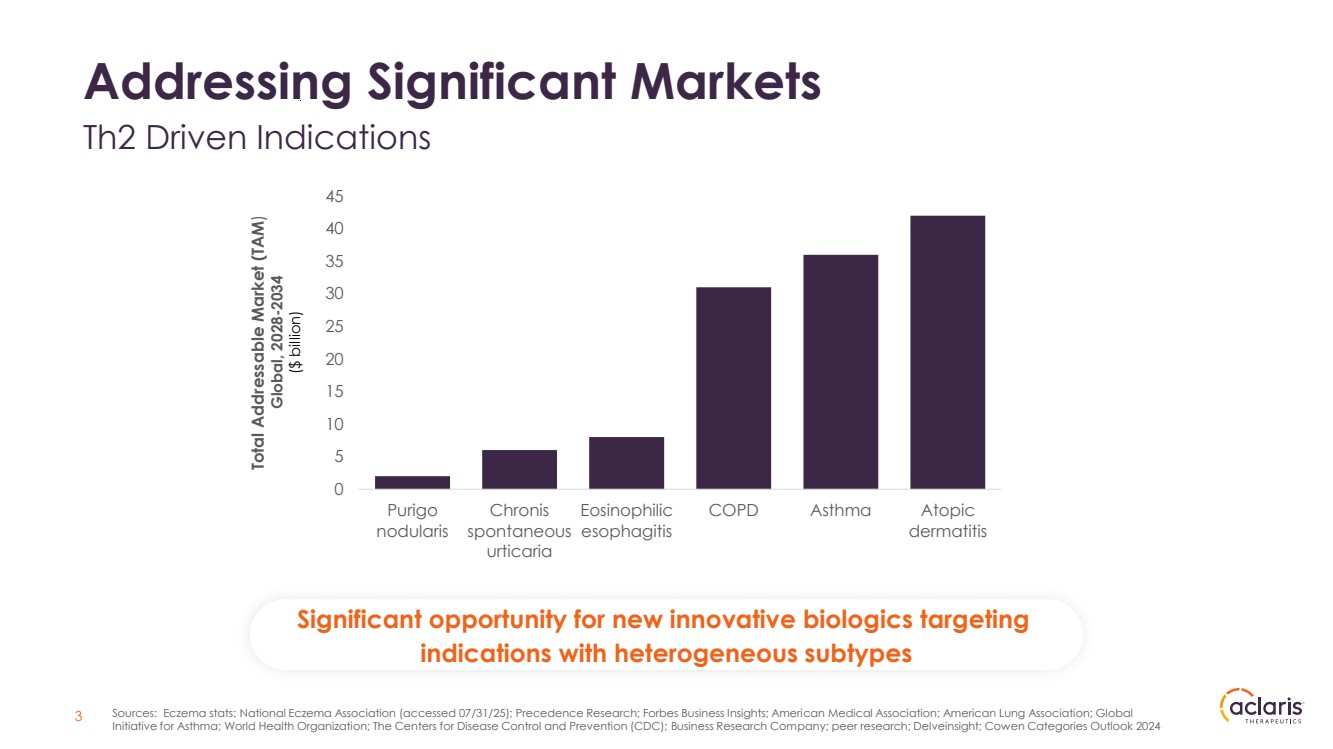
| Addressing Significant Markets Th2 Driven Indications 3 Sources: Eczema stats: National Eczema Association (accessed 07/31/25); Precedence Research; Forbes Business Insights; American Medical Association; American Lung Association; Global Initiative for Asthma; World Health Organization; The Centers for Disease Control and Prevention (CDC); Business Research Company; peer research; Delveinsight; Cowen Categories Outlook 2024 0 5 10 15 20 25 30 35 40 45 Purigo nodularis Chronis spontaneous urticaria Eosinophilic esophagitis COPD Asthma Atopic dermatitis Total Addressable Market (TAM) Global, 2028-2034 ($ billion) Significant opportunity for new innovative biologics targeting indications with heterogeneous subtypes |
| Opportunity to Redefine the Standard in Th2 Disease • ATI-052: Harnesses the power of TSLP and IL-4R inhibition to create a potential best-in-class bispecific • Tezepelumab and Dupilumab drive multibillion dollar annual revenues across numerous indications • Combining mechanisms has the potential to better address the unmet needs across approved indications • Potential opportunities for ATI-052 • Potential first line therapy • Raise efficacy ceiling • Inhibition upstream and downstream of Th2 cascade • Faster onset, better symptom control, durable, deeper, and more consistent effect • Better address breadth of inflammatory mediators involved in Th2 diseases • Improved convenience and practical dosing schedule • Potential Q3 month dosing 4 |
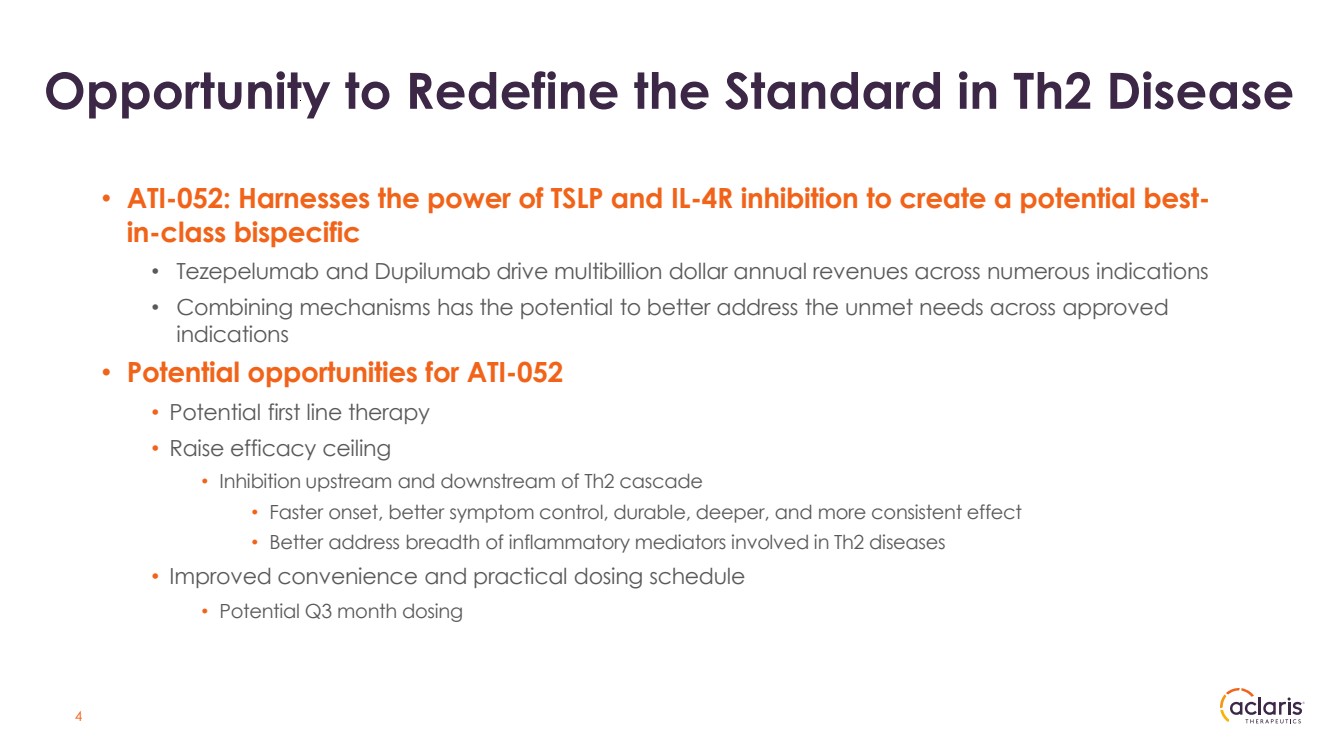
| ATI-052: Potential Best-in-Class Bispecific mAb Effective Dual Binding of TSLP and IL-4Rα ATI-052 CH2 CH3 CH2 CH3 5 Same anti-TSLP antibody binding regions of Bosakitug, designed to inhibit TSLP upstream of the Th2 cascade • Retains dissociation kinetics, residence time, and potency advantages of bosakitug over comparator antibodies Designed to inhibit immune cells downstream of the Th2 cascade Anti-TSLP Fab Anti-IL4Rα scFV Fc engineered to bind more tightly to FcRn, potentially extending half-life YTE Mutation Fc mutation limits effector functionality, potentially reducing off-target binding and potential toxicity AQQ Mutation |
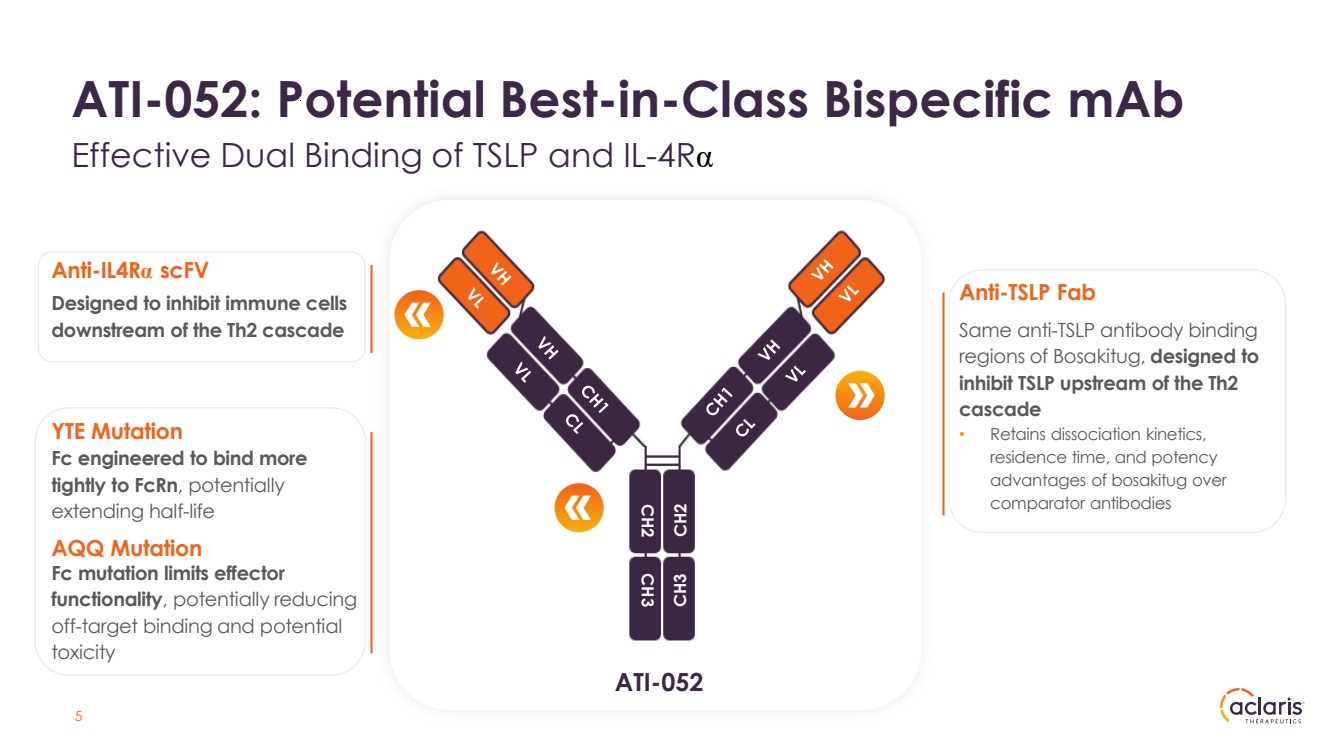
| Dissociation of TSLP from mAbs (TR-FRET) 0 1000 2000 3000 4000 0.0 0.5 1.0 Time (min) Fractional Response (yi/yo ) ATI-045 ATI-052 GSK-5784283 V1 (hu3-13)* GSK-5784283 V2 (hu179-33)* Solrikitug/MK-8226** Tezepelumab** Residence Time (hours) 416 402 14.3 8.11 22.1 3.59 20.7 ATI-052 ATI-045 Tezepelumab** Solrikitug/MK-8226** GSK-5784283 V2 (hu179- 33)* GSK-5784283 V1 (hu3-13)* UPB-101 TSLPR1 (n=2) TSLP (n=3) bosakitug ATI-052 demonstrates very slow dissociation kinetics from TSLP Residence time for ATI-052 is ~30-116x longer than comparator antibodies 6 ATI-052: Longest Residence Time on TSLP Lower Dissociation Rate Drives Longer Residence Time 1. SPR: Residence Time based on apparent kd (dissociation constant) using standard TSLPR immobilization density and bivalent fit; *Analog mAb; **Biosimilar mAb bosakitug ATI-052 ATI-052 |
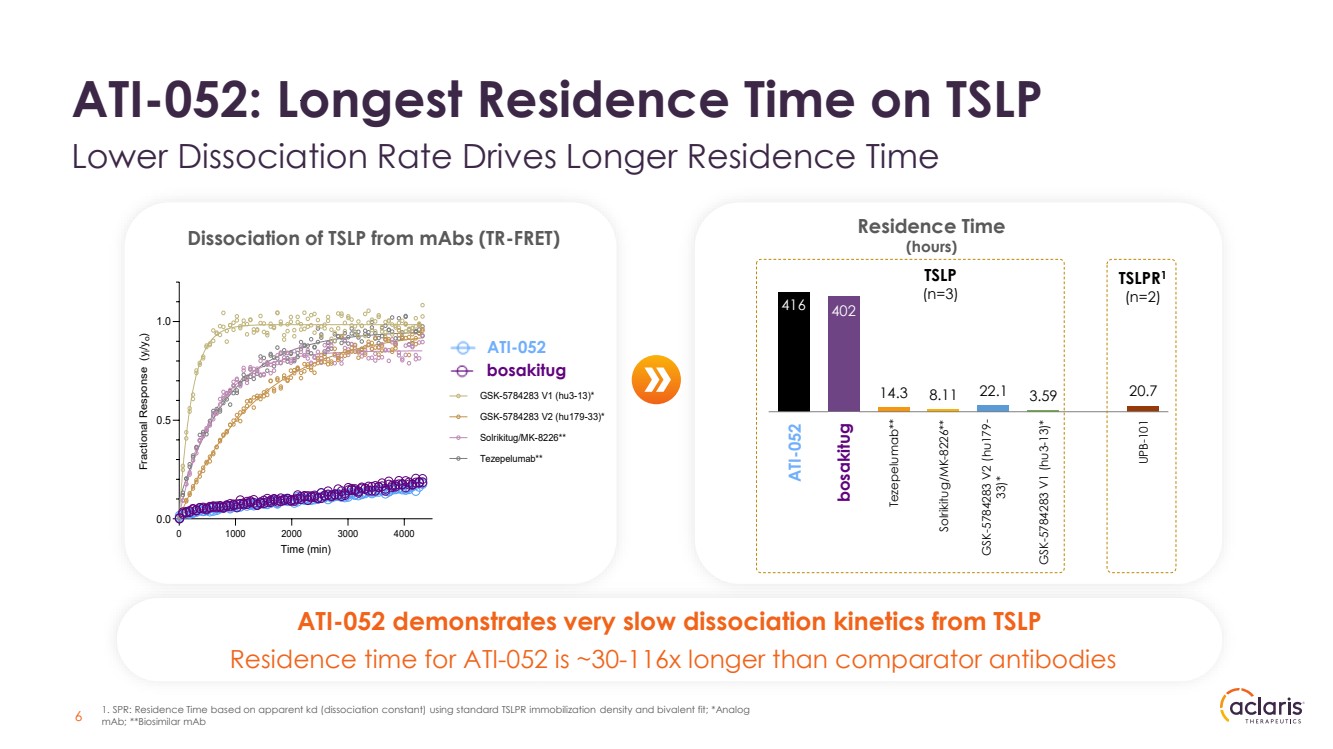
| Bosakitug Extensively Binds TSLP Binding Interface ATI-052 Has the Same Anti-TSLP Antibody Binding Regions of Bosakitug 7 Only Bosakitug binds all six Light Chain and Heavy Chain CDRs Bosakitug interface uniquely spans from TSLP N-terminal Y29 to C-terminal P154 Tezepelumab Bosakitug (ATI-045) Bosakitug: Extensive Binding Interface Drives Higher Retention Time and Neutralization Duration of TSLP |
| Concurrent Binding of TSLP and sIL-4R to ATI-052 Simultaneous Binding of TSLP and IL-4R 8 a ATI-052 Demonstrates High Affinity to Both Targets Simultaneously: ATI-052 binds ~two molecules of TSLP and sIL-4R with the potential to saturate all 4 binding sites at the same time TSLP:ATI-052 sIL-4Ra:ATI-052 Binding Sequence Stoichiometry* Stoichiometry* ATI-052 capture / sIL-4Ra dose-response n/a 2.25 ATI-052 capture / TSLP load / sIL-4Ra dose-response 1.83 2.10 ATI-052 capture / TSLP dose-response 2.04 n/a ATI-052 capture / sIL-4Ra load / TSLP dose-response 1.83 1.97 * determined using molecular weights based on amino acid sequence, does not account for glycosylated species • ~2 molecules of sIL-4R bound to ATI-052 in the absence (2.25:1) and presence (2.10:1) of TSLP • ~2 molecules of TSLP bound to ATI-052 in the absence (2.04:1) and presence (1.82:1) of sIL-4R |
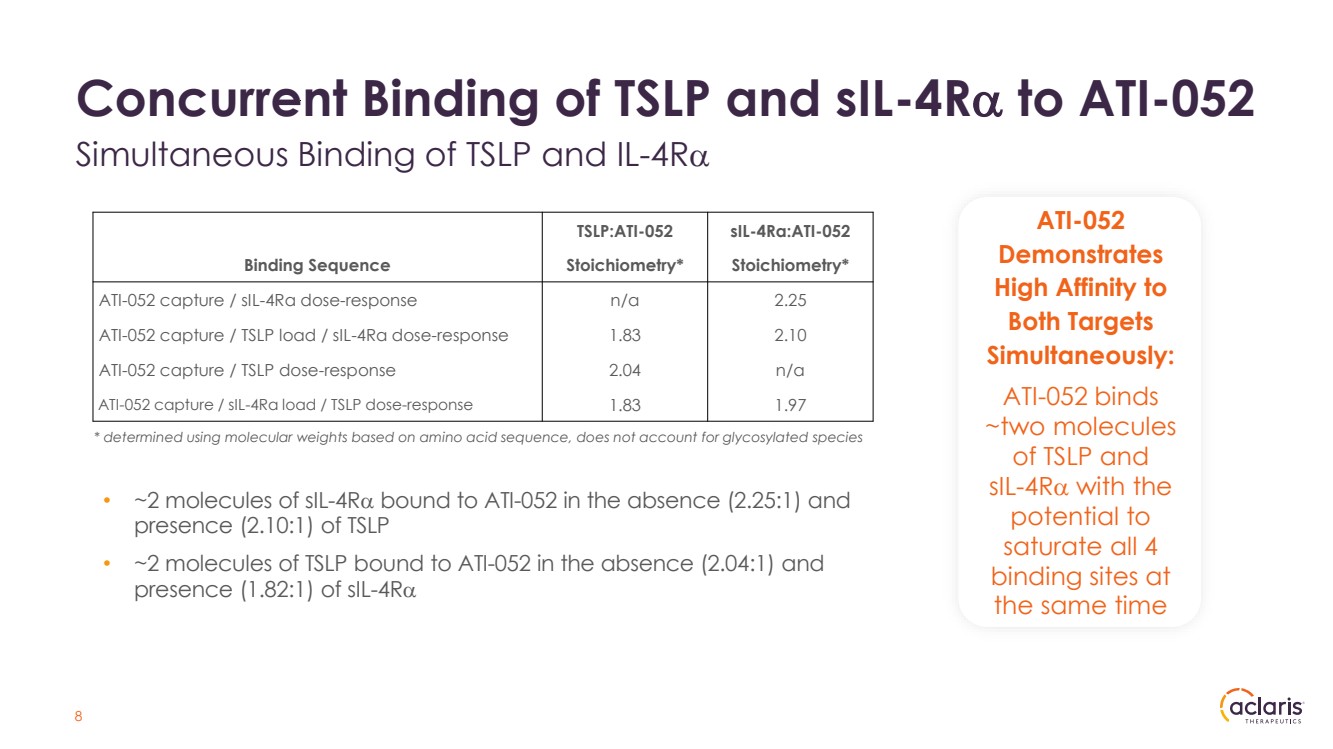
| Concurrent Binding of TSLP and sIL-4R to ATI-052 High Affinity to Both TSLP and IL-4R 9 a ATI-052 Binds Both Targets Effectively High affinity to either target is not altered by the binding to the other Comparison of Affinity for sIL-4R Binding to ATI-052 or ATI-052:TSLP Complex Comparison of Affinity for TSLP Binding to ATI-052 or ATI-052:sIL-4R Complex Parameter ATI-052 ATI-052:TSLP KD (pM) 348 215 Parameter ATI-052 ATI-052:sIL-4R KD (pM) 41.2 33.9 |
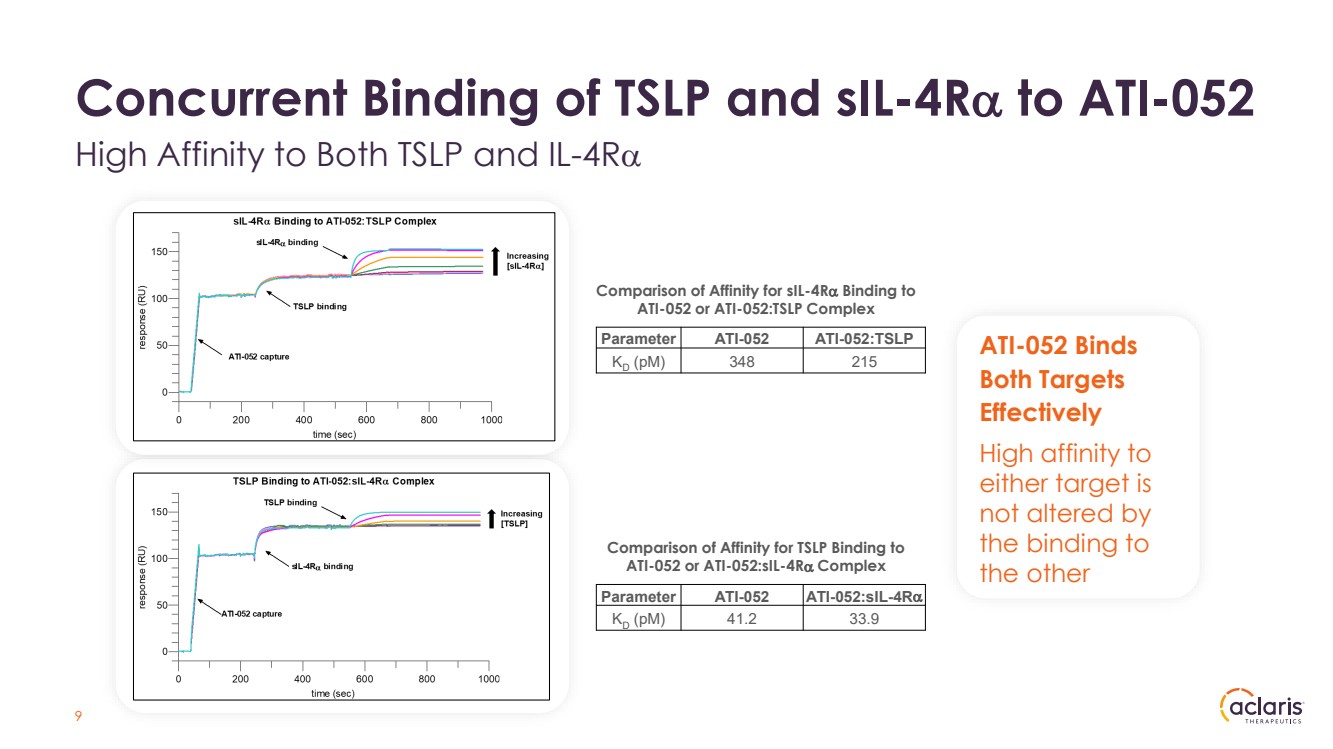
| Comparison of ATI-052 vs Dupilumab + Tezepelumab ATI-052 Demonstrates Greater Potency than the mAb Combination ATI-052 is Substantially More Potent than the Combination of Dupilumab and Tezepelumab mAb Concentration Antibody IC50 (nM) ATI-052 0.016 Dupilumab + Tezepelumab 0.069 Fold change 4.3 10 |
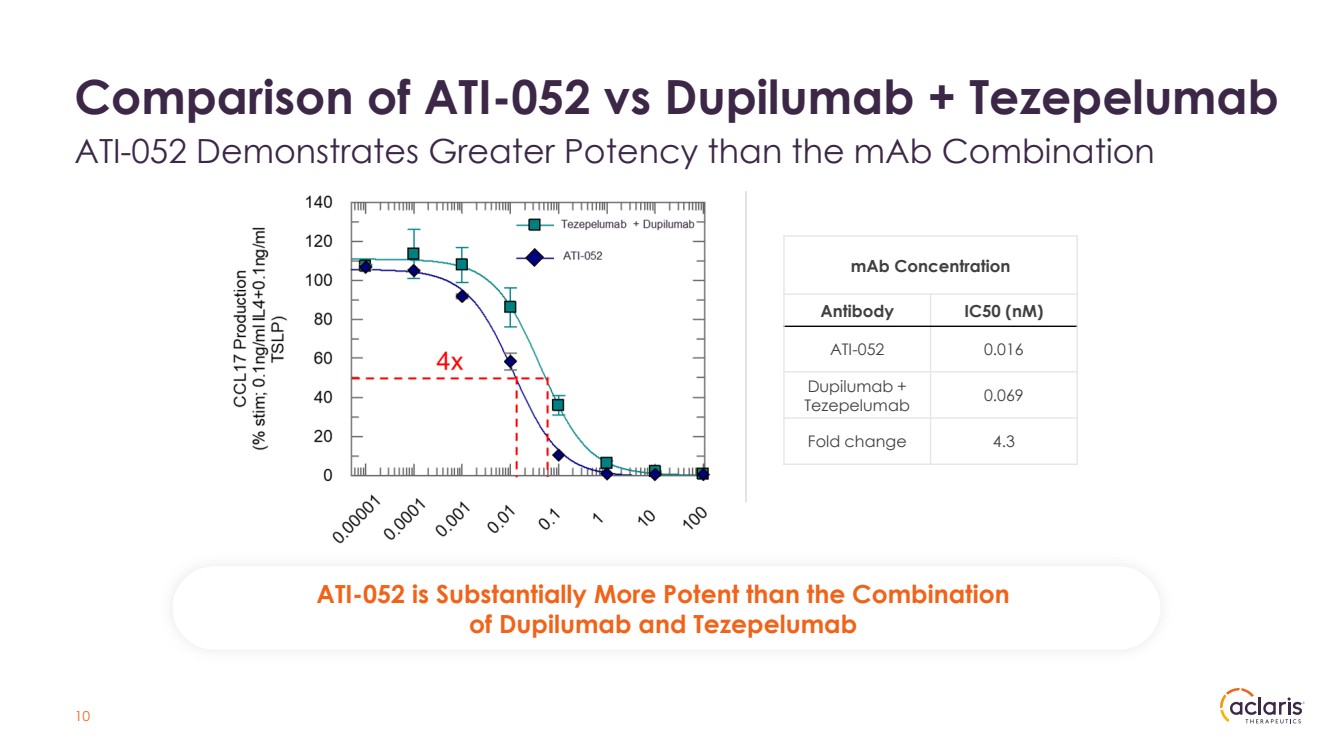
| ATI-052 Placebo Controlled Phase 1a Program 11 Cohort 1 (30mg): SC, N=8 D1-113 Screening Randomization 3:1 Cohort 3 (360mg): SC, N=8 D1-113 Cohort 4 (720mg): SC, N=8 D1-113 Cohort 2 (120mg): SC, N=8 D1-113 Part A Single Ascending Dose (SAD) in Healthy Volunteers (HV) Part B Multiple Ascending Dose (MAD) in Healthy Volunteers Screening Randomization 3:1 D1 D8 D15 D22 D29 D1 D8 D15 D22 D29 D141 D141 Cohort 1 (240mg): SC, N=8 Q7D x 5 Doses Cohort 2 (480mg): SC, N=8 Q7D x 5 Doses Treatment and Follow-up Period Treatment and Follow-up Period |
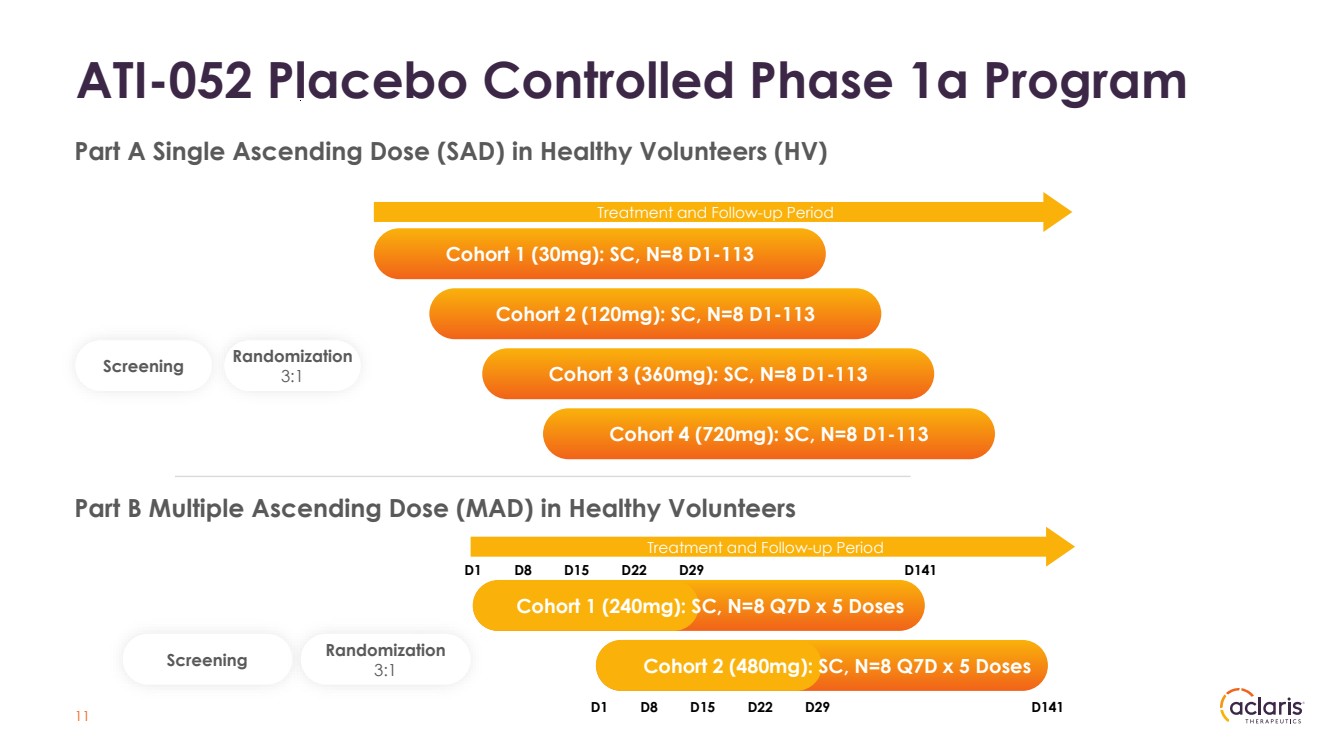
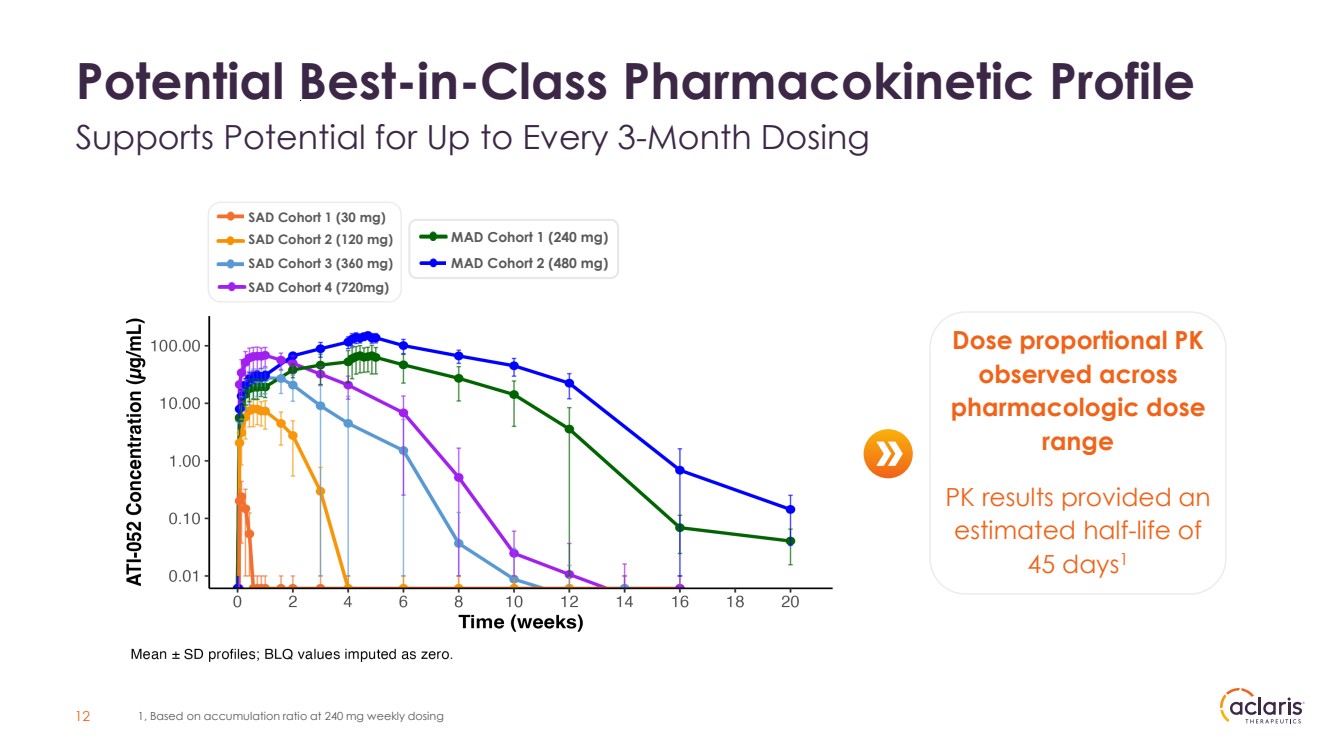
| 12 Potential Best-in-Class Pharmacokinetic Profile Supports Potential for Up to Every 3-Month Dosing Dose proportional PK observed across pharmacologic dose range PK results provided an estimated half-life of 45 days1 MAD Cohort 1 (240 mg) MAD Cohort 2 (480 mg) SAD Cohort 1 (30 mg) SAD Cohort 2 (120 mg) SAD Cohort 3 (360 mg) SAD Cohort 4 (720mg) 1, Based on accumulation ratio at 240 mg weekly dosing |
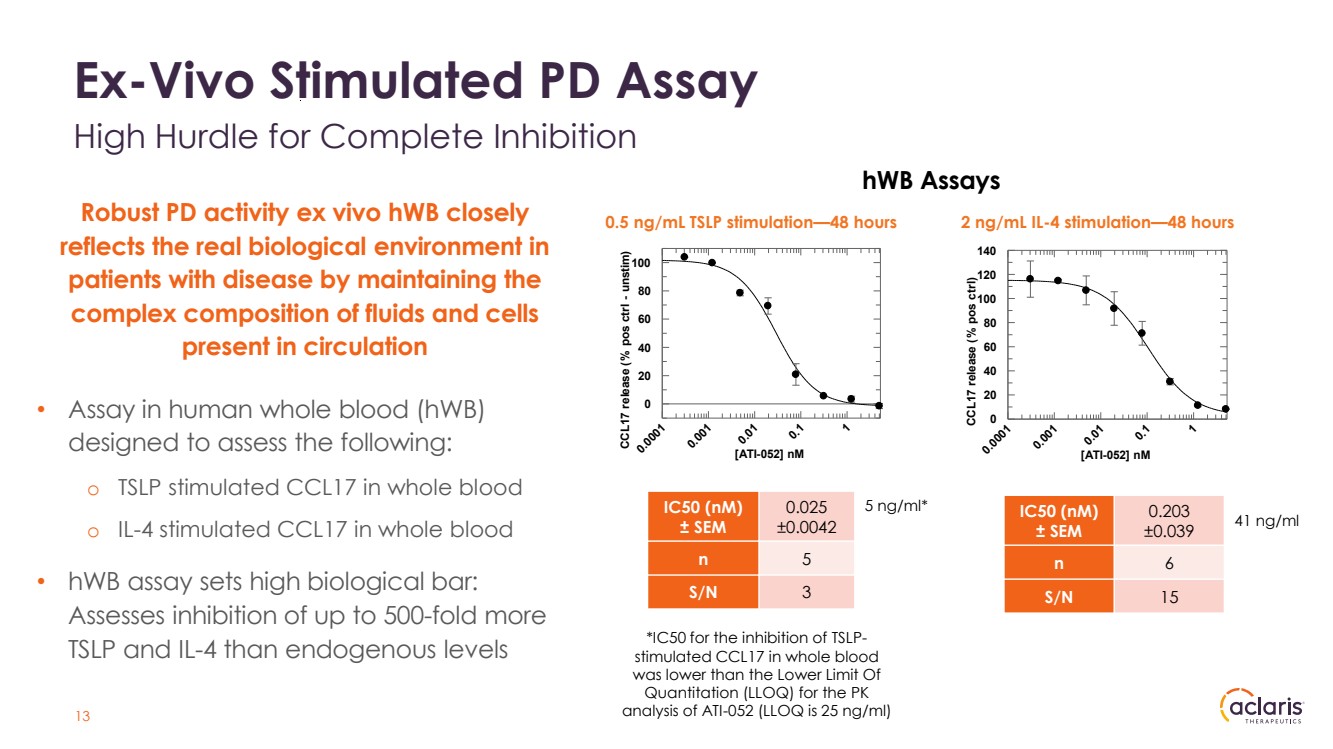
| Ex-Vivo Stimulated PD Assay High Hurdle for Complete Inhibition Robust PD activity ex vivo hWB closely reflects the real biological environment in patients with disease by maintaining the complex composition of fluids and cells present in circulation • Assay in human whole blood (hWB) designed to assess the following: o TSLP stimulated CCL17 in whole blood o IL-4 stimulated CCL17 in whole blood • hWB assay sets high biological bar: Assesses inhibition of up to 500-fold more TSLP and IL-4 than endogenous levels hWB Assays 0.0001 0.001 0.01 0.1 1 CCL17 release (% pos ctrl) 0 20 40 60 80 100 120 140 [ATI-052] nM IC50 (nM) ± SEM 0.025 ±0.0042 n 5 S/N 3 IC50 (nM) ± SEM 0.203 ±0.039 n 6 S/N 15 0.5 ng/mL TSLP stimulation—48 hours 2 ng/mL IL-4 stimulation—48 hours 5 ng/ml* 41 ng/ml 0.0001 0.001 0.01 0.1 1 CCL17 release (% pos ctrl - unstim) 0 20 40 60 80 100 [ATI-052] nM *IC50 for the inhibition of TSLP-stimulated CCL17 in whole blood was lower than the Lower Limit Of Quantitation (LLOQ) for the PK analysis of ATI-052 (LLOQ is 25 ng/ml) 13 |
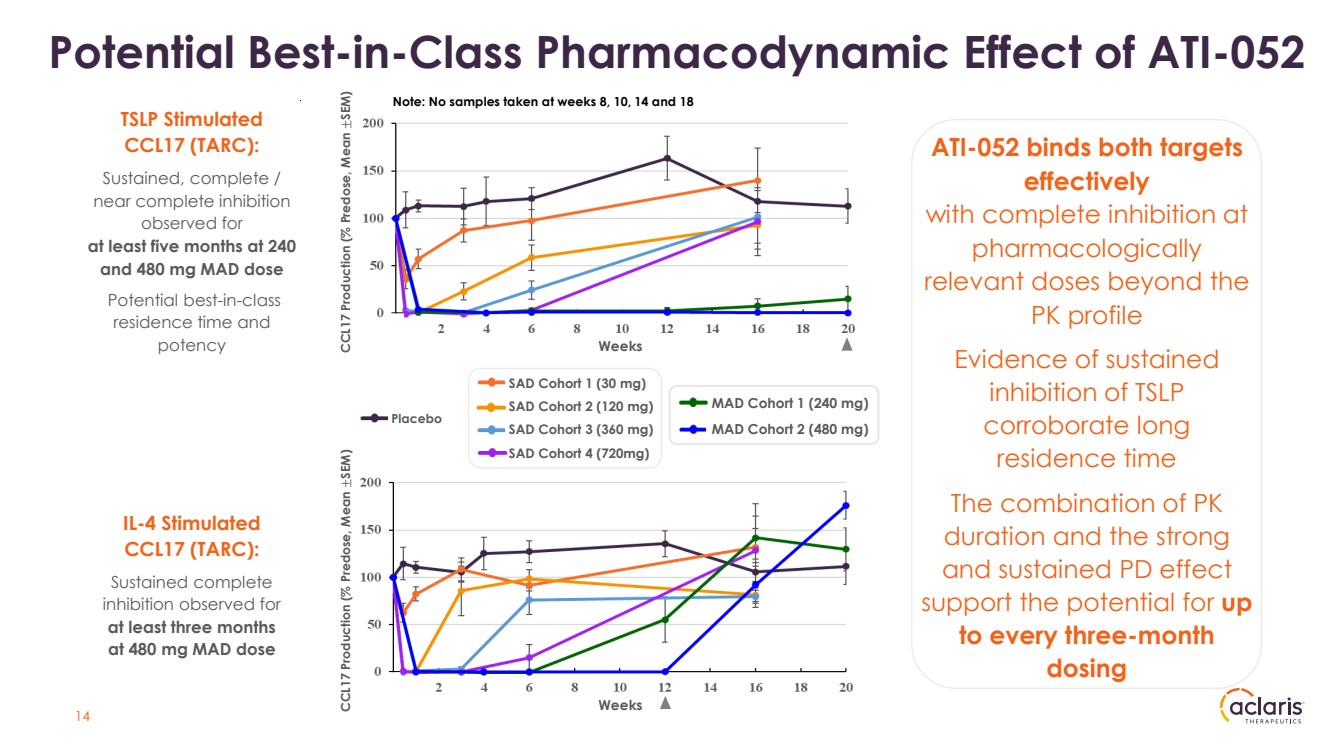
| Potential Best-in-Class Pharmacodynamic Effect of ATI-052 ATI-052 binds both targets effectively with complete inhibition at pharmacologically relevant doses beyond the PK profile Sustained complete inhibition observed for at least three months at 480 mg MAD dose IL-4 Stimulated CCL17 (TARC): 14 Evidence of sustained inhibition of TSLP corroborate long residence time The combination of PK duration and the strong and sustained PD effect support the potential for up to every three-month dosing MAD Cohort 1 (240 mg) MAD Cohort 2 (480 mg) CCL17 Production (% Predose, Mean Weeks ±SEM) Sustained, complete / near complete inhibition observed for at least five months at 240 and 480 mg MAD dose Potential best-in-class residence time and potency TSLP Stimulated CCL17 (TARC): CCL17 Production (% Predose, Mean ±SEM) SAD Cohort 1 (30 mg) SAD Cohort 2 (120 mg) SAD Cohort 3 (360 mg) SAD Cohort 4 (720mg) Placebo Weeks Note: No samples taken at weeks 8, 10, 14 and 18 |
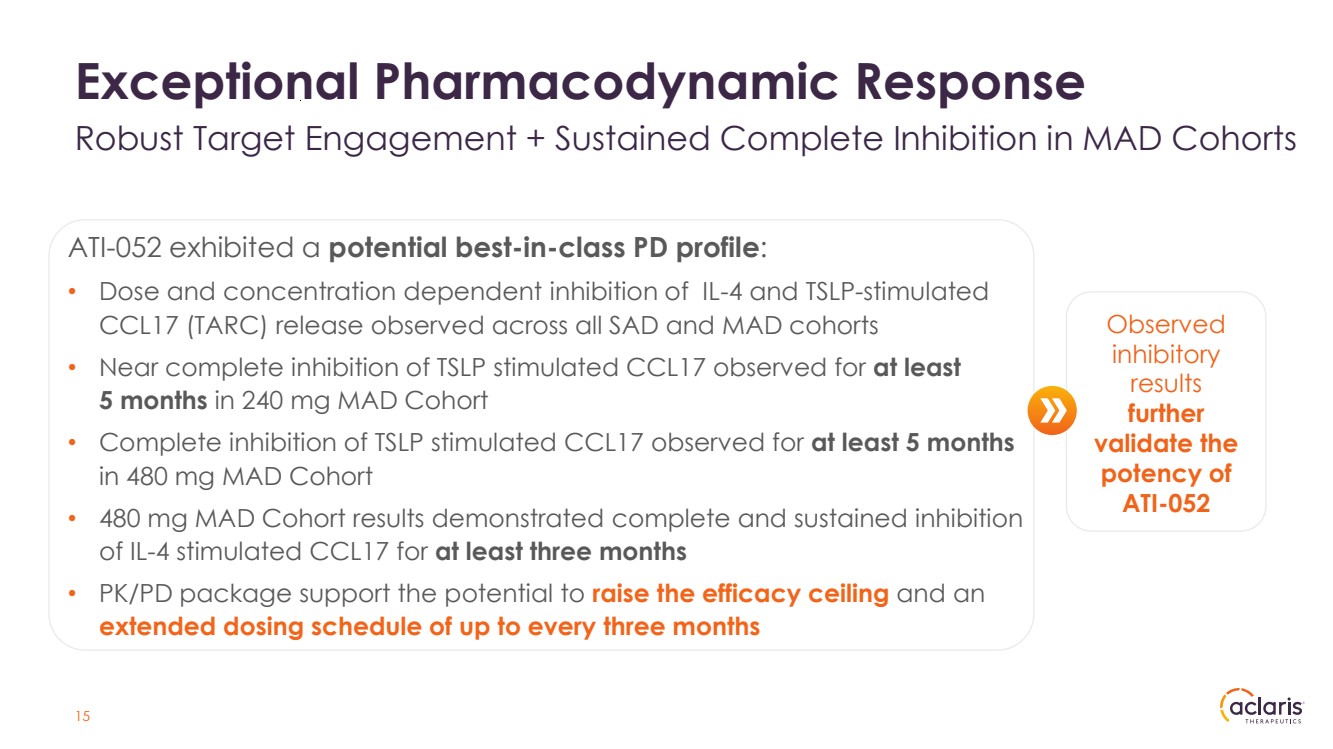
| 15 Exceptional Pharmacodynamic Response Robust Target Engagement + Sustained Complete Inhibition in MAD Cohorts ATI-052 exhibited a potential best-in-class PD profile: • Dose and concentration dependent inhibition of IL-4 and TSLP-stimulated CCL17 (TARC) release observed across all SAD and MAD cohorts • Near complete inhibition of TSLP stimulated CCL17 observed for at least 5 months in 240 mg MAD Cohort • Complete inhibition of TSLP stimulated CCL17 observed for at least 5 months in 480 mg MAD Cohort • 480 mg MAD Cohort results demonstrated complete and sustained inhibition of IL-4 stimulated CCL17 for at least three months • PK/PD package support the potential to raise the efficacy ceiling and an extended dosing schedule of up to every three months Observed inhibitory results further validate the potency of ATI-052 |
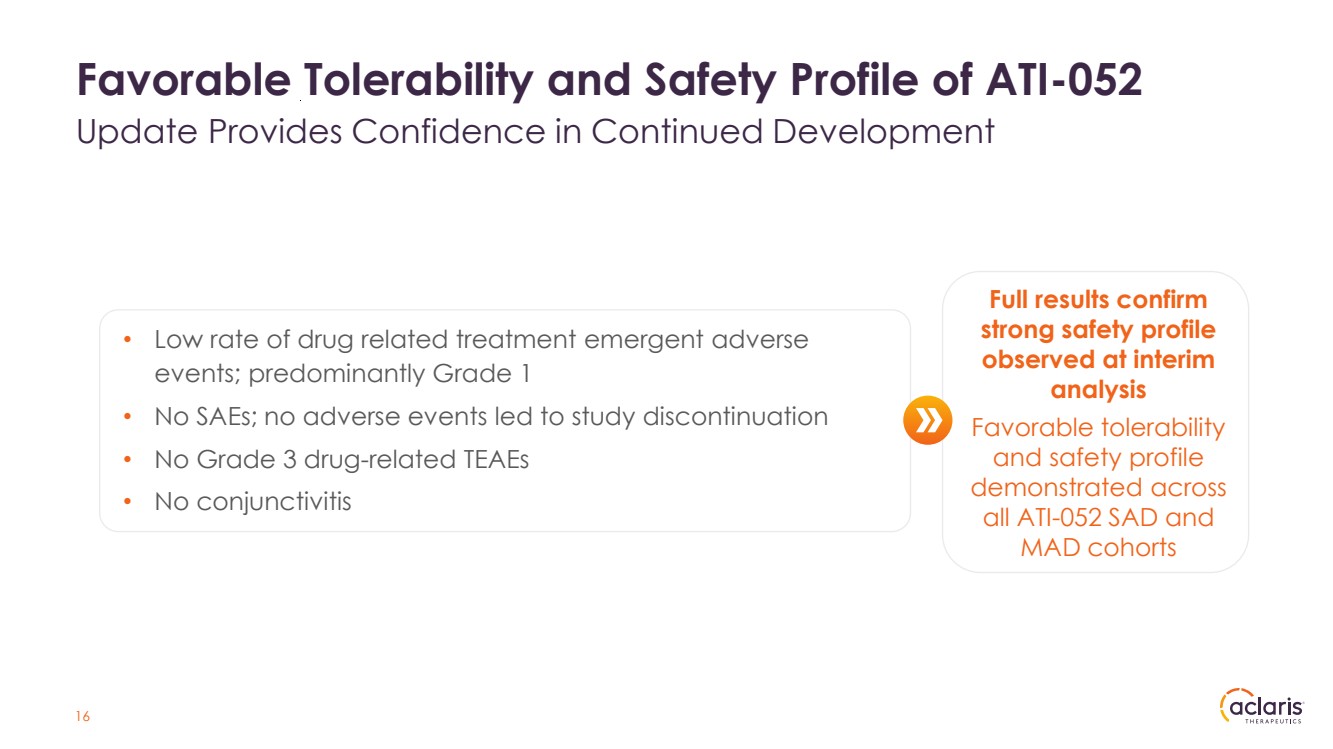
| 16 Favorable Tolerability and Safety Profile of ATI-052 Update Provides Confidence in Continued Development • Low rate of drug related treatment emergent adverse events; predominantly Grade 1 • No SAEs; no adverse events led to study discontinuation • No Grade 3 drug-related TEAEs • No conjunctivitis Full results confirm strong safety profile observed at interim analysis Favorable tolerability and safety profile demonstrated across all ATI-052 SAD and MAD cohorts |
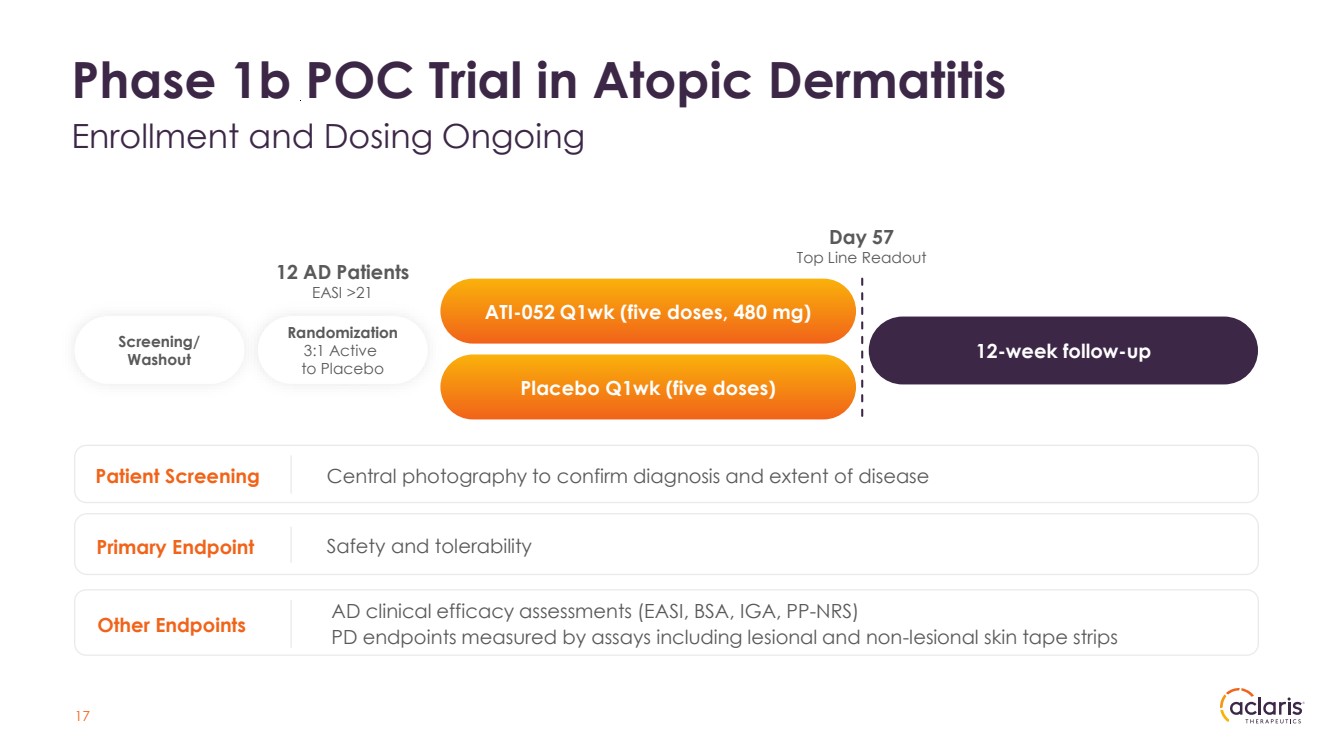
| 17 Screening/ Washout Randomization 3:1 Active to Placebo Primary Endpoint Safety and tolerability Phase 1b POC Trial in Atopic Dermatitis Enrollment and Dosing Ongoing 12 AD Patients EASI >21 Placebo Q1wk (five doses) ATI-052 Q1wk (five doses, 480 mg) 12-week follow-up Day 57 Top Line Readout Other Endpoints AD clinical efficacy assessments (EASI, BSA, IGA, PP-NRS) PD endpoints measured by assays including lesional and non-lesional skin tape strips Patient Screening Central photography to confirm diagnosis and extent of disease |
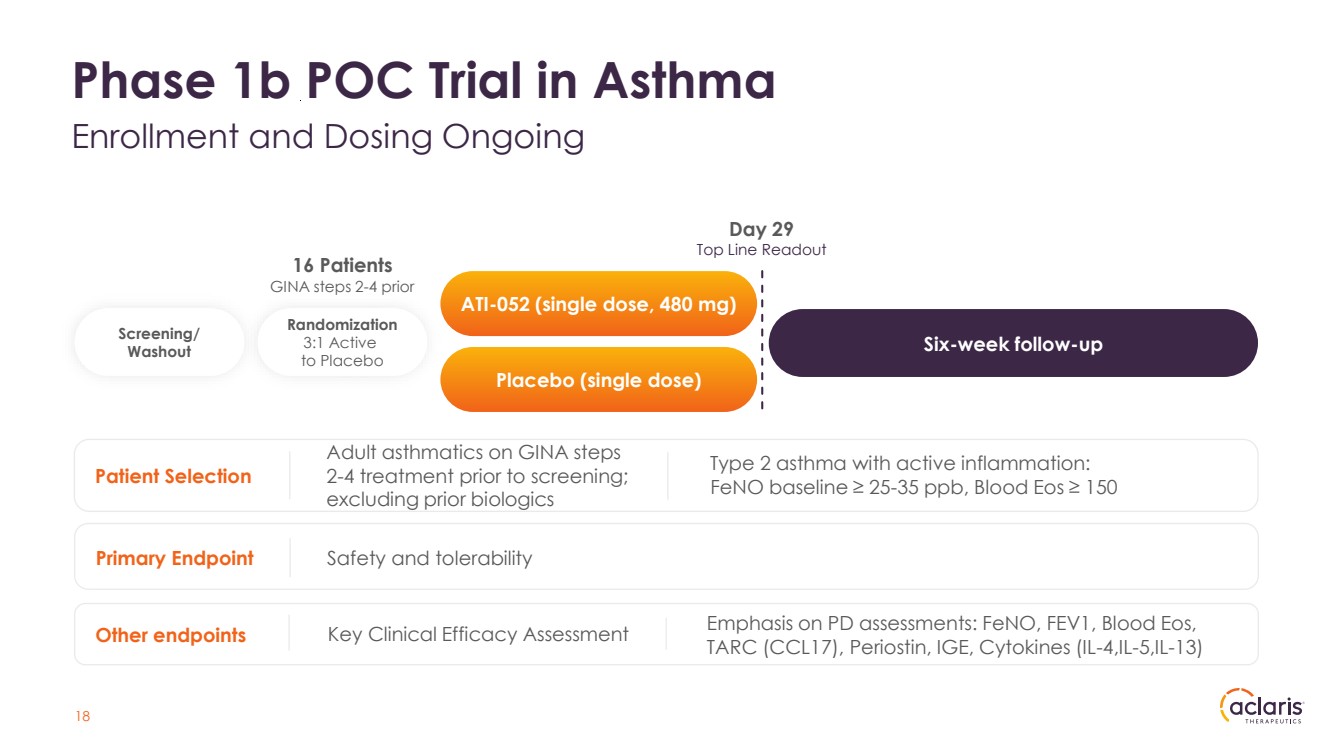
| 18 Placebo (single dose) ATI-052 (single dose, 480 mg) Screening/ Washout Six-week follow-up Randomization 3:1 Active to Placebo Day 29 Top Line Readout Primary Endpoint Safety and tolerability Phase 1b POC Trial in Asthma Enrollment and Dosing Ongoing 16 Patients GINA steps 2-4 prior Other endpoints Key Clinical Efficacy Assessment Emphasis on PD assessments: FeNO, FEV1, Blood Eos, TARC (CCL17), Periostin, IGE, Cytokines (IL-4,IL-5,IL-13) Patient Selection Adult asthmatics on GINA steps 2-4 treatment prior to screening; excluding prior biologics Type 2 asthma with active inflammation: FeNO baseline ≥ 25-35 ppb, Blood Eos ≥ 150 |
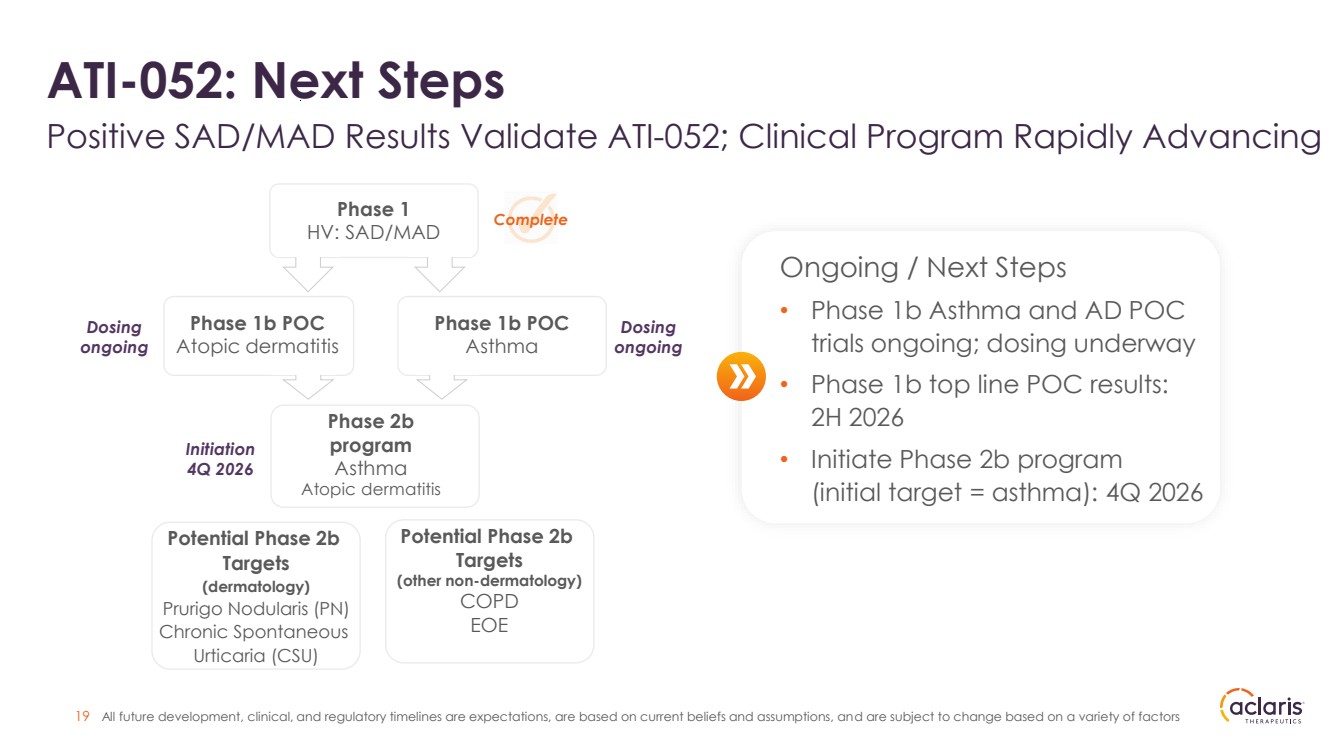
| ATI-052: Next Steps Positive SAD/MAD Results Validate ATI-052; Clinical Program Rapidly Advancing 19 Ongoing / Next Steps • Phase 1b Asthma and AD POC trials ongoing; dosing underway • Phase 1b top line POC results: 2H 2026 • Initiate Phase 2b program (initial target = asthma): 4Q 2026 Phase 1 HV: SAD/MAD Phase 1b POC Atopic dermatitis Phase 1b POC Asthma Dosing ongoing Complete Dosing ongoing Initiation 4Q 2026 Phase 2b program Asthma Atopic dermatitis Potential Phase 2b Targets (other non-dermatology) COPD EOE Potential Phase 2b Targets (dermatology) Prurigo Nodularis (PN) Chronic Spontaneous Urticaria (CSU) All future development, clinical, and regulatory timelines are expectations, are based on current beliefs and assumptions, and are subject to change based on a variety of factors |
| Clinical Pipeline Update: ATI-2138: Potential Mechanistically Complete Therapy for Lichen Planus |
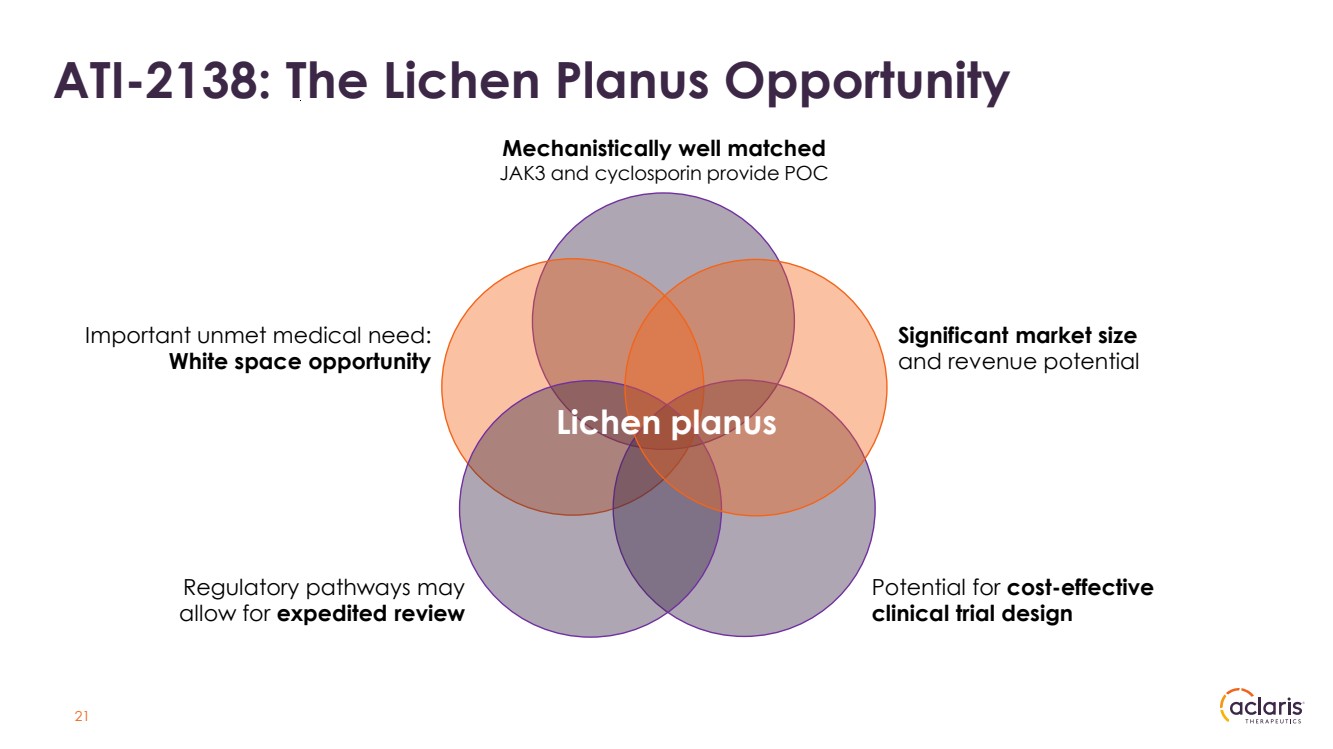
| 21 Mechanistically well matched JAK3 and cyclosporin provide POC Important unmet medical need: White space opportunity Significant market size and revenue potential Potential for cost-effective clinical trial design Regulatory pathways may allow for expedited review ATI-2138: The Lichen Planus Opportunity Lichen planus |
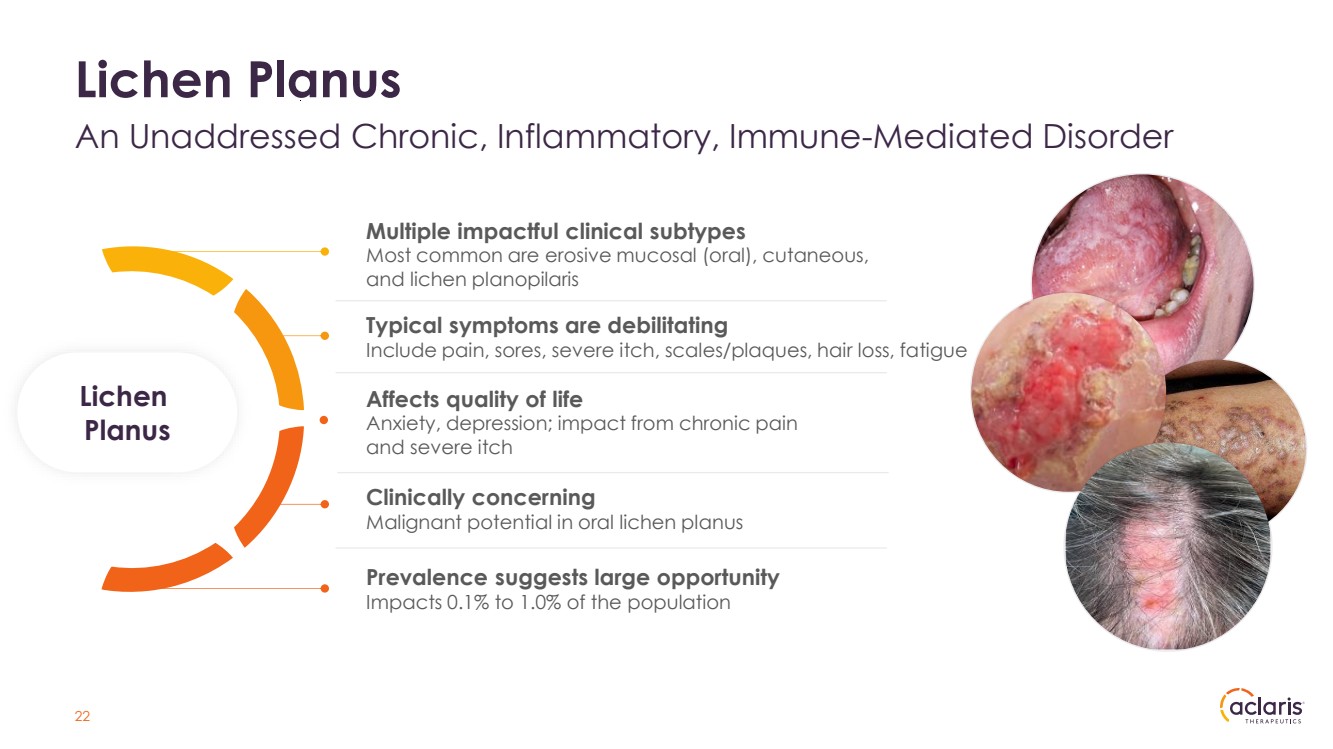
| Typical symptoms are debilitating Include pain, sores, severe itch, scales/plaques, hair loss, fatigue Multiple impactful clinical subtypes Most common are erosive mucosal (oral), cutaneous, and lichen planopilaris Affects quality of life Anxiety, depression; impact from chronic pain and severe itch Clinically concerning Malignant potential in oral lichen planus 22 Lichen Planus An Unaddressed Chronic, Inflammatory, Immune-Mediated Disorder Lichen Planus Prevalence suggests large opportunity Impacts 0.1% to 1.0% of the population |
| 23 Lichen Planus is a Large and Unsatisfied Market Significant “White Space” US Opportunity • Prevalence of between 0.1% and 1.0% of the population – Up to 40% of patients seek treatment despite no FDA-approved targeted therapeutic interventions – ~25% of patients have moderate-to-severe disease • Steroid failure rate of up to 60% • No approved therapy; unsatisfied market – Disease management has focused on immunosuppression and topical symptom control (TCS, tacrolimus, etc.) • Opportunity for biologics-like pricing • New, targeted therapeutics have the potential to: – Increase diagnosis rates and % of patients seeking Tx – Provide rapid itch relief; minimize flares – Address multi-site disease involvement – Provide more practical Tx than topical for widespread lesions Estimated Peak U.S. revenue potential: $1B - $4B |
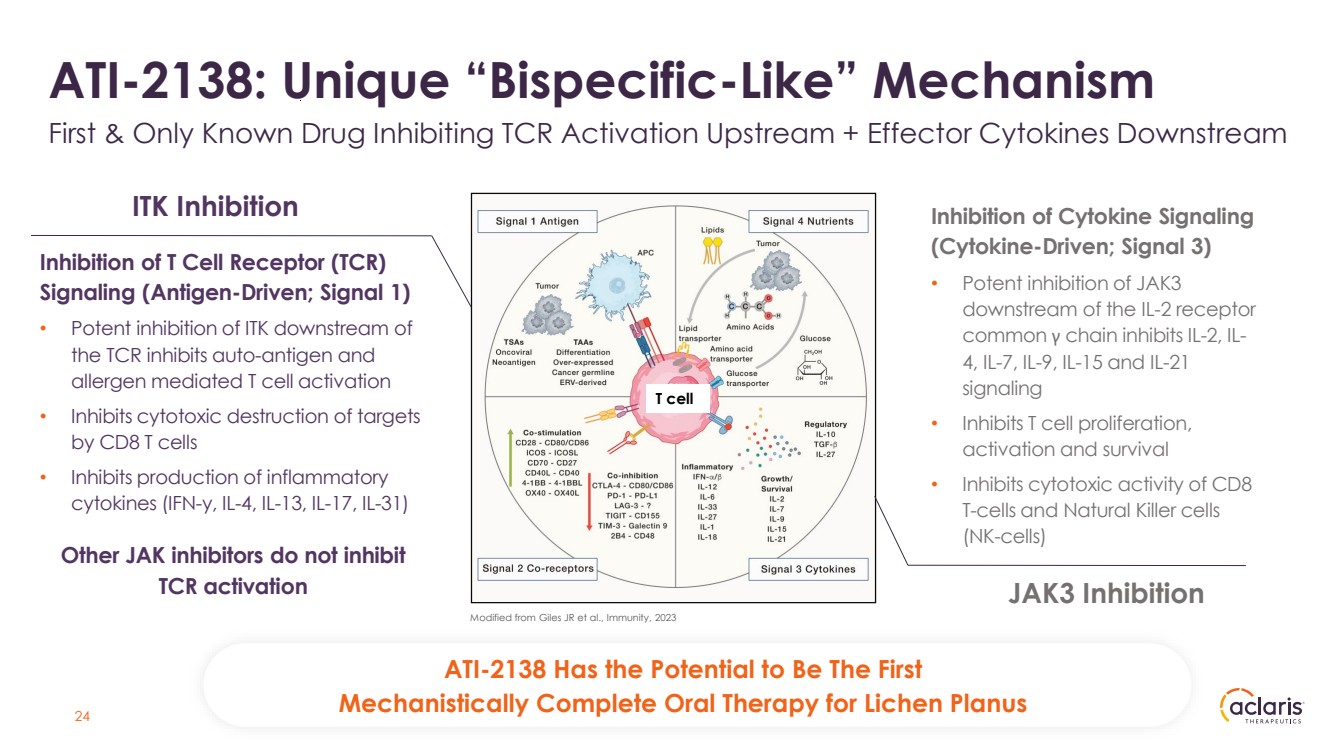
| 24 Modified from Giles JR et al., Immunity, 2023 ATI-2138: Unique “Bispecific-Like” Mechanism First & Only Known Drug Inhibiting TCR Activation Upstream + Effector Cytokines Downstream Inhibition of T Cell Receptor (TCR) Signaling (Antigen-Driven; Signal 1) • Potent inhibition of ITK downstream of the TCR inhibits auto-antigen and allergen mediated T cell activation • Inhibits cytotoxic destruction of targets by CD8 T cells • Inhibits production of inflammatory cytokines (IFN-y, IL-4, IL-13, IL-17, IL-31) Other JAK inhibitors do not inhibit TCR activation Inhibition of Cytokine Signaling (Cytokine-Driven; Signal 3) • Potent inhibition of JAK3 downstream of the IL-2 receptor common γ chain inhibits IL-2, IL-4, IL-7, IL-9, IL-15 and IL-21 signaling • Inhibits T cell proliferation, activation and survival • Inhibits cytotoxic activity of CD8 T-cells and Natural Killer cells (NK-cells) T cell ITK Inhibition JAK3 Inhibition ATI-2138 Has the Potential to Be The First Mechanistically Complete Oral Therapy for Lichen Planus |
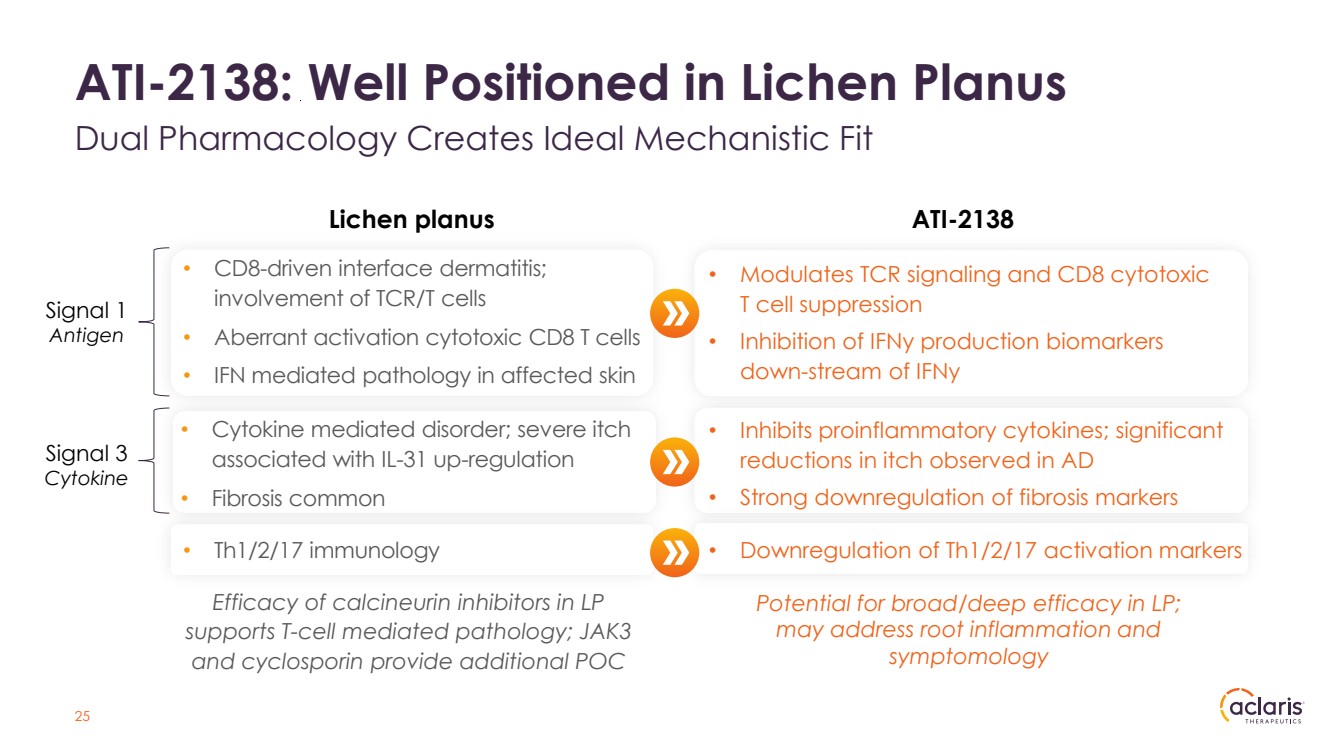
| 25 ATI-2138: Well Positioned in Lichen Planus Dual Pharmacology Creates Ideal Mechanistic Fit • CD8-driven interface dermatitis; involvement of TCR/T cells • Aberrant activation cytotoxic CD8 T cells • IFN mediated pathology in affected skin • Modulates TCR signaling and CD8 cytotoxic T cell suppression • Inhibition of IFNy production biomarkers down-stream of IFNy Lichen planus ATI-2138 Signal 1 Antigen Signal 3 Cytokine Efficacy of calcineurin inhibitors in LP supports T-cell mediated pathology; JAK3 and cyclosporin provide additional POC Potential for broad/deep efficacy in LP; may address root inflammation and symptomology • Cytokine mediated disorder; severe itch associated with IL-31 up-regulation • Fibrosis common • Th1/2/17 immunology • Inhibits proinflammatory cytokines; significant reductions in itch observed in AD • Strong downregulation of fibrosis markers • Downregulation of Th1/2/17 activation markers |
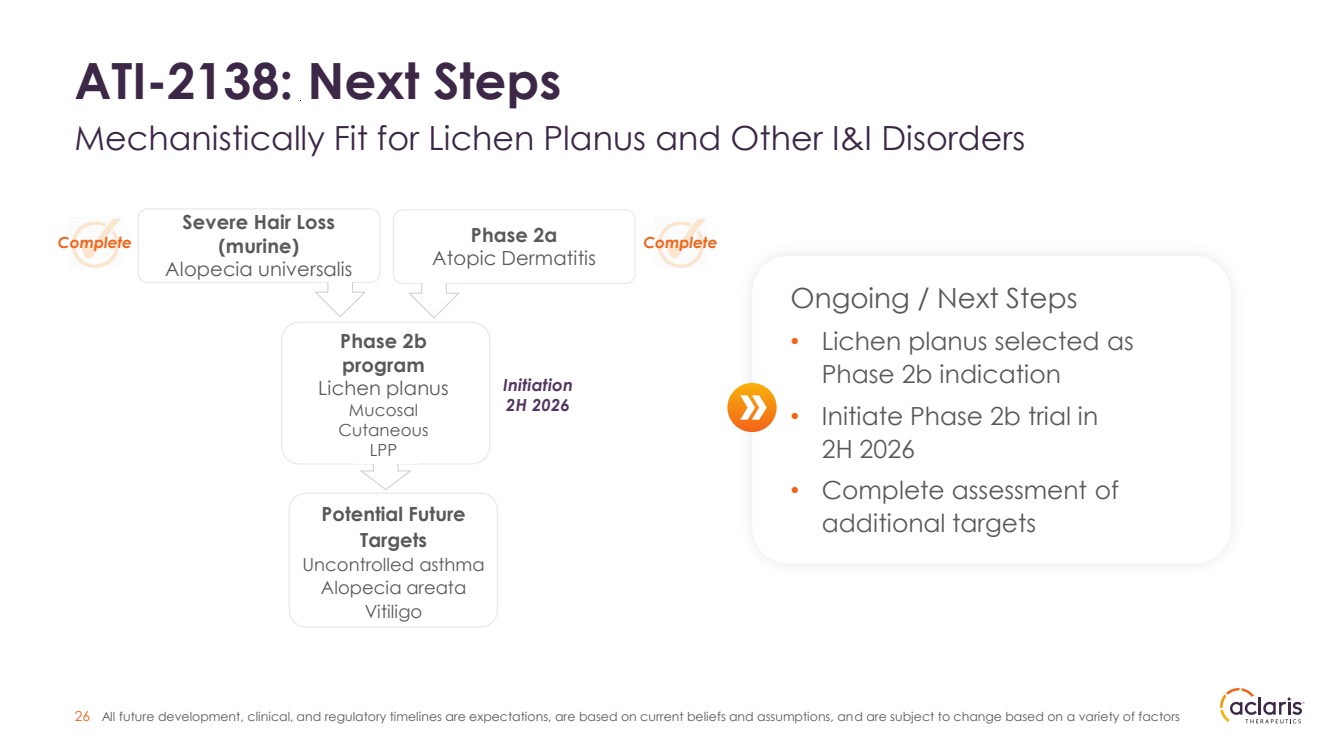
| ATI-2138: Next Steps Mechanistically Fit for Lichen Planus and Other I&I Disorders 26 Ongoing / Next Steps • Lichen planus selected as Phase 2b indication • Initiate Phase 2b trial in 2H 2026 • Complete assessment of additional targets Phase 2a Atopic Dermatitis Complete Initiation 2H 2026 Potential Future Targets Uncontrolled asthma Alopecia areata Vitiligo Phase 2b program Lichen planus Mucosal Cutaneous LPP Severe Hair Loss (murine) Alopecia universalis Complete All future development, clinical, and regulatory timelines are expectations, are based on current beliefs and assumptions, and are subject to change based on a variety of factors |
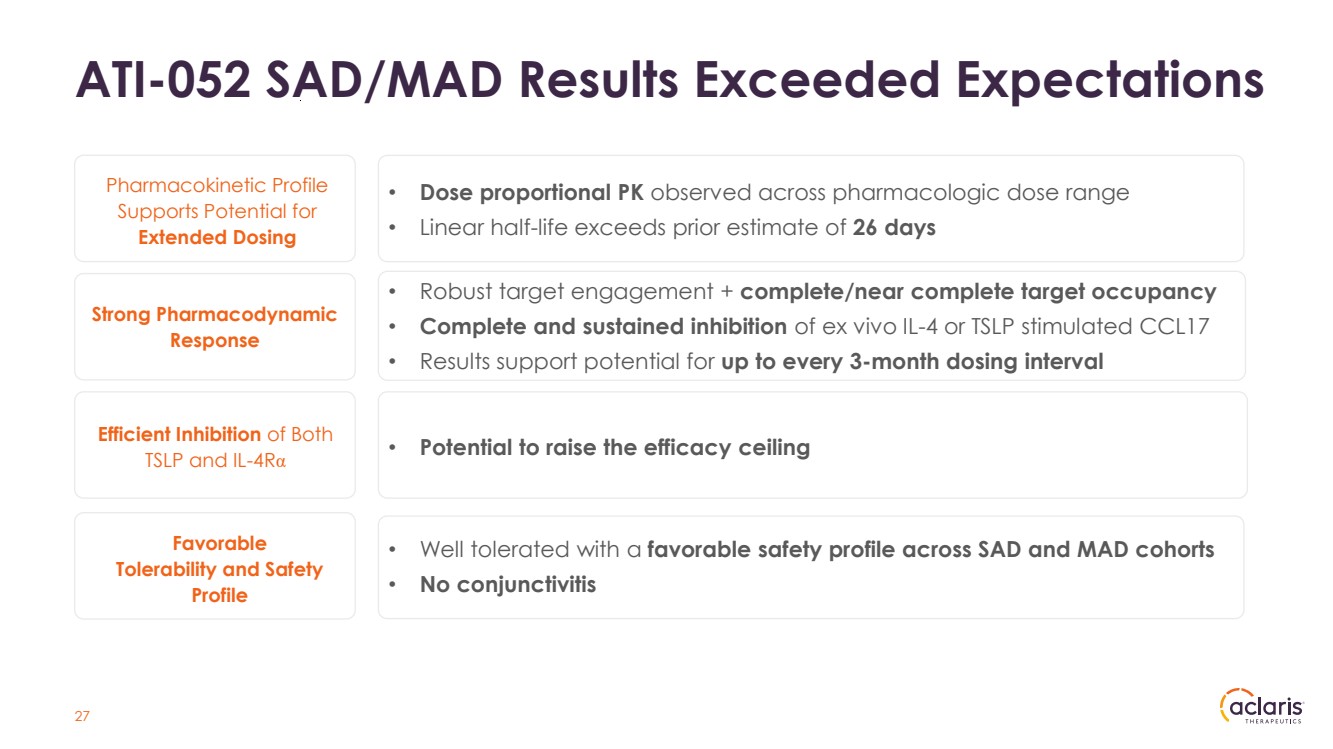
| ATI-052 SAD/MAD Results Exceeded Expectations 27 • Well tolerated with a favorable safety profile across SAD and MAD cohorts • No conjunctivitis Favorable Tolerability and Safety Profile Pharmacokinetic Profile Supports Potential for Extended Dosing Strong Pharmacodynamic Response Efficient Inhibition of Both TSLP and IL-4Rα • Dose proportional PK observed across pharmacologic dose range • Linear half-life exceeds prior estimate of 26 days • Robust target engagement + complete/near complete target occupancy • Complete and sustained inhibition of ex vivo IL-4 or TSLP stimulated CCL17 • Results support potential for up to every 3-month dosing interval • Potential to raise the efficacy ceiling |
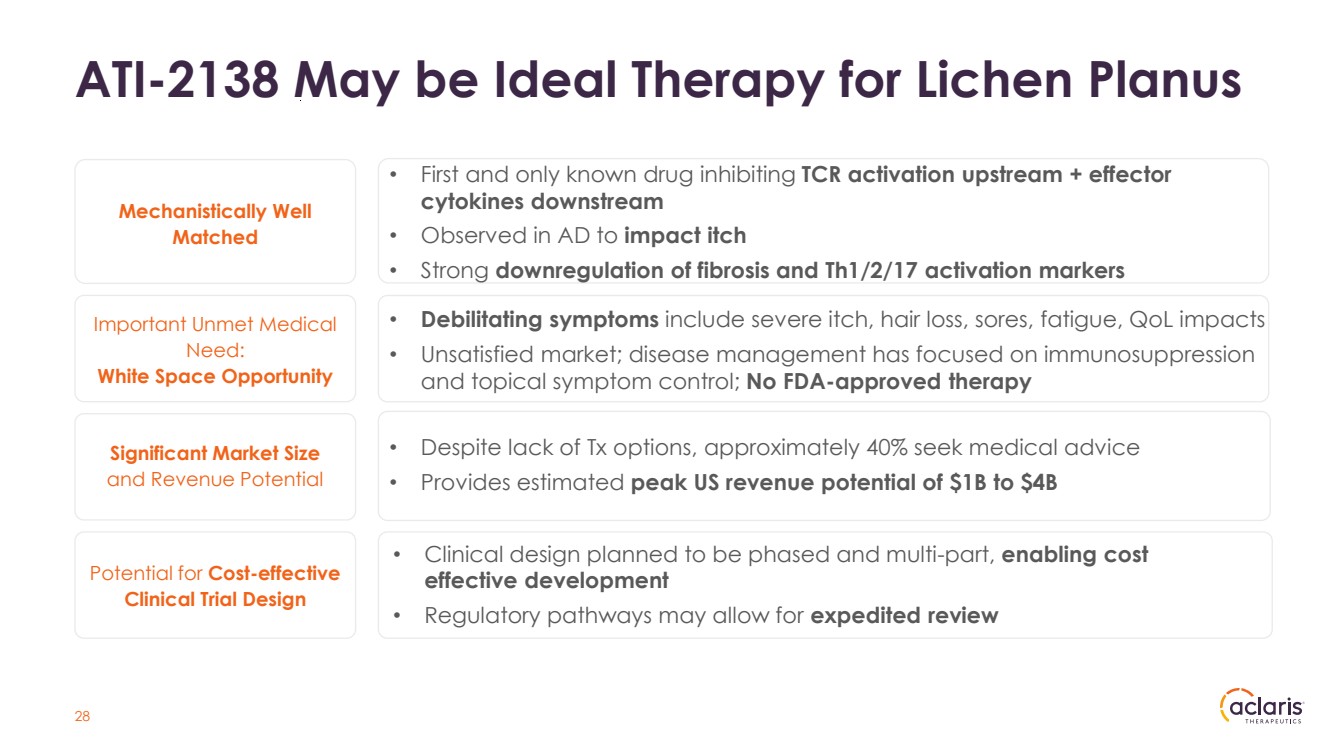
| ATI-2138 May be Ideal Therapy for Lichen Planus 28 • First and only known drug inhibiting TCR activation upstream + effector cytokines downstream • Observed in AD to impact itch • Strong downregulation of fibrosis and Th1/2/17 activation markers Mechanistically Well Matched Important Unmet Medical Need: White Space Opportunity Significant Market Size and Revenue Potential Potential for Cost-effective Clinical Trial Design • Debilitating symptoms include severe itch, hair loss, sores, fatigue, QoL impacts • Unsatisfied market; disease management has focused on immunosuppression and topical symptom control; No FDA-approved therapy • Despite lack of Tx options, approximately 40% seek medical advice • Provides estimated peak US revenue potential of $1B to $4B • Clinical design planned to be phased and multi-part, enabling cost effective development • Regulatory pathways may allow for expedited review |
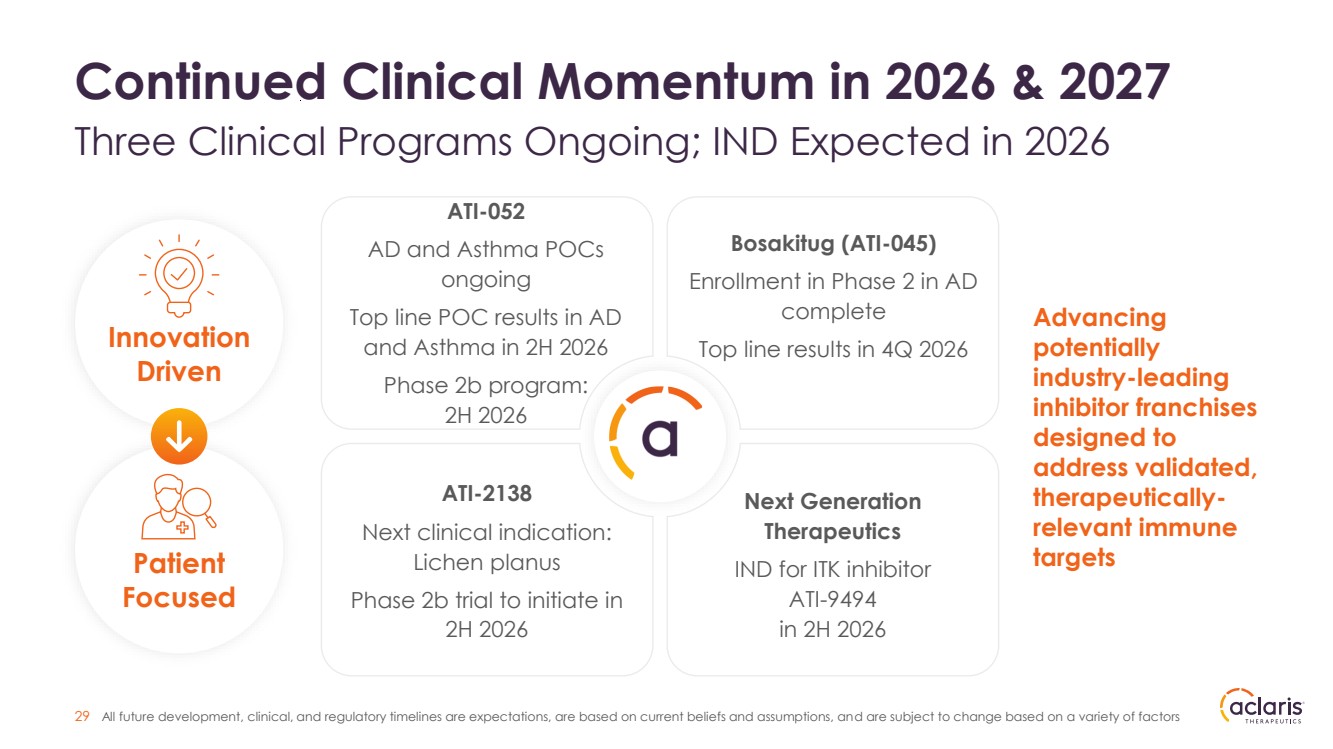
| Continued Clinical Momentum in 2026 & 2027 Three Clinical Programs Ongoing; IND Expected in 2026 Bosakitug (ATI-045) Enrollment in Phase 2 in AD complete Top line results in 4Q 2026 ATI-052 AD and Asthma POCs ongoing Top line POC results in AD and Asthma in 2H 2026 Phase 2b program: 2H 2026 ATI-2138 Next clinical indication: Lichen planus Phase 2b trial to initiate in 2H 2026 Next Generation Therapeutics IND for ITK inhibitor ATI-9494 in 2H 2026 Advancing potentially industry-leading inhibitor franchises designed to address validated, therapeutically-relevant immune targets Innovation Driven Patient Focused 29 All future development, clinical, and regulatory timelines are expectations, are based on current beliefs and assumptions, and are subject to change based on a variety of factors |
| Clinical Pipeline Update: ATI-052: Full SAD MAD Results ATI-2138: Potential Mechanistically-Complete Therapy for Lichen Planus April 28, 2026 |