
Recursion October 2026
Legal Disclaimer This presentation does not constitute an offer to sell or a solicitation of an offer to buy securities Recursion Pharmaceuticals, Inc. (“Recursion,” “we,” “us,” or “our”) or an invitation or inducement to engage in investment activity, nor shall there be any sale of securities in any jurisdiction in which such offer, solicitation or sale would be unlawful prior to registration or qualification of such securities under the securities law of any such jurisdiction. The Company has filed a shelf registration statement on Form S-3 with the SEC for the offering to which this presentation relates. Before you invest in any of the securities of the Company, you should read the prospectus in that registration statement, together with the information incorporated therein by reference, as well as any free writing prospectus provided in connection with the offering and any other documents the Company has filed with the SEC for more complete information about the Company and the offering. You may get these documents, and the prospectus supplement, when available, for free by visiting EDGAR on the SEC website at www.sec.gov. Alternatively, the Company, any underwriter or any dealer participating in the offering will arrange to send you the prospectus and accompanying prospectus supplement, if you request it by contacting: Leerink Partners LLC, Attention: Syndicate Department 53 State Street, 40th Floor, Boston, MA 02109, by telephone at 1-800-808- 7525 ex. 6105 or by email at syndicate@leerink.com; Goldman Sachs & Co. LLC, Attention: Prospectus Department, 200 West Street, New York, New York 10282, telephone: 1-866-471-2526, facsimile: 212-902-9316, or email: prospectus-ny@ny.email.gs.com; or Morgan Stanley & Co. LLC, Attention: Prospectus Department, 180 Varick Street, 2nd Floor, New York, NY 10014, by phone: 1-866-718-1649 or by email: prospectus@morganstanley.com. This presentation is not a prospectus and is neither an offer to sell nor a solicitation of an offer to buy any securities, and shall not constitute an offer, solicitation or sale in any jurisdiction in which such offer, solicitation or sale is unlawful. Important Information 2
Forward Looking Information This presentation contains, and any accompanying discussion may contain, statements that are not historical facts may be considered forward-looking statements under federal securities laws. Such statements may be identified by words such as “anticipates,” “believes,” “estimates,” “expects,” “intends,” “plans,” “potential,” “predicts,” “projects,” “seeks,” “should,” “will,” or words of similar meaning and include, but are not limited to, statements regarding the impact of the acceptance of the target validated option milestone by Genentech on future developments and potential treatments; the possibility of targets and development candidates to be optioned by program partners; timing of future clinical and preclinical trials; the impact of REC-4881 trial on the Recursion OS and other clinical and preclinical programs; the anticipated benefits of our agentic AI tools, including expected improvements in scientific productivity, design and analysis cycle times, and clinical trial enrollment rates; financial position, cash runway, and ability to reduce our cash operating expense; our ability to use AI to translate complex science into medicines faster and better; Recursion’s OS industrializing first- and best-in-class drug discovery; our ability to industrialize clinical development and the effect of doing so on clinical trial outcomes; the occurrence or realization of potential milestones and their potential timing or amounts; current and future preclinical and clinical studies, including timelines for enrollment in studies, data readouts, progression toward IND-enabling and other potential studies, and engagement with the FDA; advancements of and other decisions regarding our pipeline, partnerships, and data strategies; the potential size of the market opportunity for our drug candidates; outcomes and benefits from licenses, partnerships and collaborations, including option exercises by partners; the initiation, timing, progress, results, and cost of our research and development programs; advancements of our Recursion OS; and many others. We have based these forward-looking statements largely on our current expectations and projections about our business, the industry in which we operate, and financial trends that we believe may affect our business, financial condition, results of operations, and prospects. These forward-looking statements are not guarantees of future performance or development. These statements speak only as of the date of this report and are subject to a number of risks, uncertainties and assumptions. Because forward-looking statements are inherently subject to risks and uncertainties, some of which cannot be predicted or quantified, you should not rely on these forward-looking statements as predictions of future events. The events and circumstances reflected in our forward-looking statements may not be achieved or occur and actual results could differ materially from those projected in the forward-looking statements. A further discussion of these and other important factors and information are contained in our most recent Annual Report on Form 10-K, Quarterly Reports on Form 10-Q, and the Company’s other filings with the U.S. Securities and Exchange Commission (the “SEC”), which can be accessed at https://ir.recursion.com, or www.sec.gov. All forward-looking statements are qualified by these cautionary statements and apply only as of the date they are made. Except as required by applicable law, we undertake no obligation to update or revise any forward-looking statements contained herein, whether as a result of any new information, future events, or otherwise. Important Information 3
Preliminary Financial Information This presentation also includes financial information that is presented as of September 30, 2026, which information is preliminary, has not been audited, reviewed or compiled by our independent registered public accounting firm and is subject to change. Our actual results remain subject to the completion of management's final review and our other closing procedures and may differ materially from such financial information included in this presentation due to the completion of our financial closing procedures, audit procedures and final adjustments. These preliminary estimates are not a comprehensive statement of our financial results for the quarter-ended September 30, 2026, and should not be viewed as a substitute for full financial statements prepared in accordance with US GAAP. In addition, these preliminary estimates are not necessarily indicative of the results to be achieved in any future period. Accordingly, you should not place undue reliance on these preliminary financial results. Non-GAAP Financial Measures This presentation includes certain unaudited financial measures not presented in accordance with generally accepted accounting principles in the United States (“GAAP”), and certain ratios and other metrics derived therefrom, including cash and cash operating expense, each of which are used by management as a supplemental measure, have certain limitations, and should not be construed as alternatives to financial measures determined in accordance with GAAP. Non- GAAP financial measures should not be construed as being more important than comparable GAAP measures. The non-GAAP measures as defined by us may not be comparable to similar non-GAAP financial measures presented by other companies, which could limit such measures’ usefulness as comparative measures. Our presentation of such measures, which may include adjustments to exclude unusual or non-recurring items, should not be construed as an inference that our future results will be unaffected by other unusual or non-recurring items. Such information may contain inaccuracies because of the assumptions used and is not necessarily indicative of future performance. A reconciliation to the most directly comparable GAAP measures is provided in the appendix of this presentation. Market and Industry Data Certain information contained in this presentation relates to or is based on studies, publications, surveys and other data obtained from third-party sources and the company’s own internal estimates and research. While the company believes these third-party sources to be reliable as of the date of this presentation, it has not independently verified, and makes no representation as to the adequacy, fairness, accuracy or completeness of, any information obtained from third- party sources. In addition, all of the market data included in this presentation involves a number of assumptions and limitat ions, and there can be no guarantee as to the accuracy or reliability of such assumptions. Finally, while the company believes its own internal research is reliable, such research has not been verified by any independent source. Information contained in, or that can be accessed through our website is not a part of and is not incorporated into this presentation. Cross-trial or cross-candidate information about other investigational assets and drug candidates are not based on head-to-head studies and are presented for informational purposes; data presented are based on publicly available information for other clinical trials and other drug candidates. ® 2026 Recursion Pharmaceuticals, Inc. Recursion and its related logo are registered trademarks of Recursion Pharmaceuticals, Inc. All other trademarks are property of their respective owners. Important Information 4
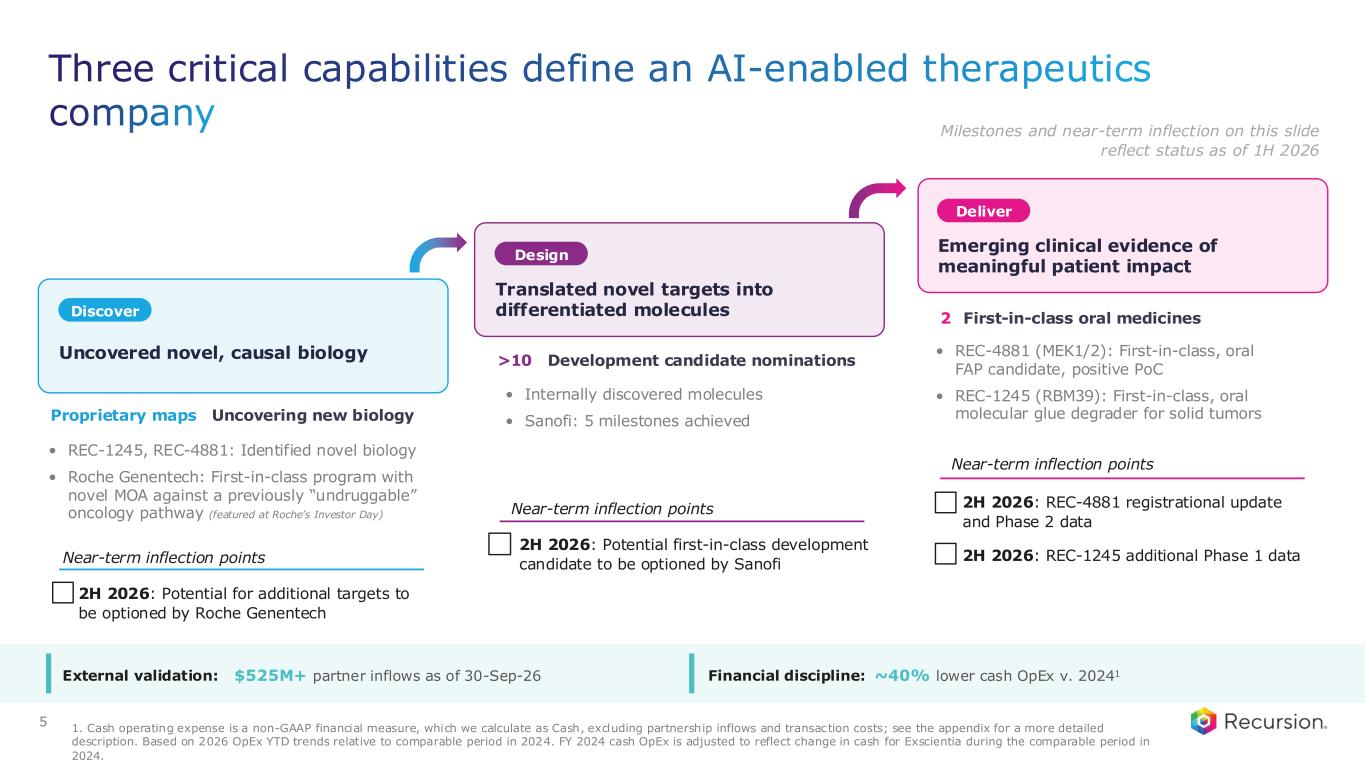
Three critical capabilities define an AI-enabled therapeutics company Proprietary maps Uncovering new biology • REC-1245, REC-4881: Identified novel biology • Roche Genentech: First-in-class program with novel MOA against a previously “undruggable” oncology pathway (featured at Roche’s Investor Day) >10 Development candidate nominations • Internally discovered molecules • Sanofi: 5 milestones achieved 2 First-in-class oral medicines • REC-4881 (MEK1/2): First-in-class, oral FAP candidate, positive PoC • REC-1245 (RBM39): First-in-class, oral molecular glue degrader for solid tumors 1. Cash operating expense is a non-GAAP financial measure, which we calculate as Cash, excluding partnership inflows and transaction costs; see the appendix for a more detailed description. Based on 2026 OpEx YTD trends relative to comparable period in 2024. FY 2024 cash OpEx is adjusted to reflect change in cash for Exscientia during the comparable period in 2024. • 2H 2026: Potential for additional targets to be optioned by Roche Genentech • 2H 2026: Potential first-in-class development candidate to be optioned by Sanofi • 2H 2026: REC-4881 registrational update and Phase 2 data • 2H 2026: REC-1245 additional Phase 1 dataNear-term inflection points Near-term inflection points Near-term inflection points Uncovered novel, causal biology Discover Design Deliver Translated novel targets into differentiated molecules Emerging clinical evidence of meaningful patient impact 5 External validation: $525M+ partner inflows as of 30-Sep-26 Financial discipline: ~40% lower cash OpEx v. 20241 Milestones and near-term inflection on this slide reflect status as of 1H 2026
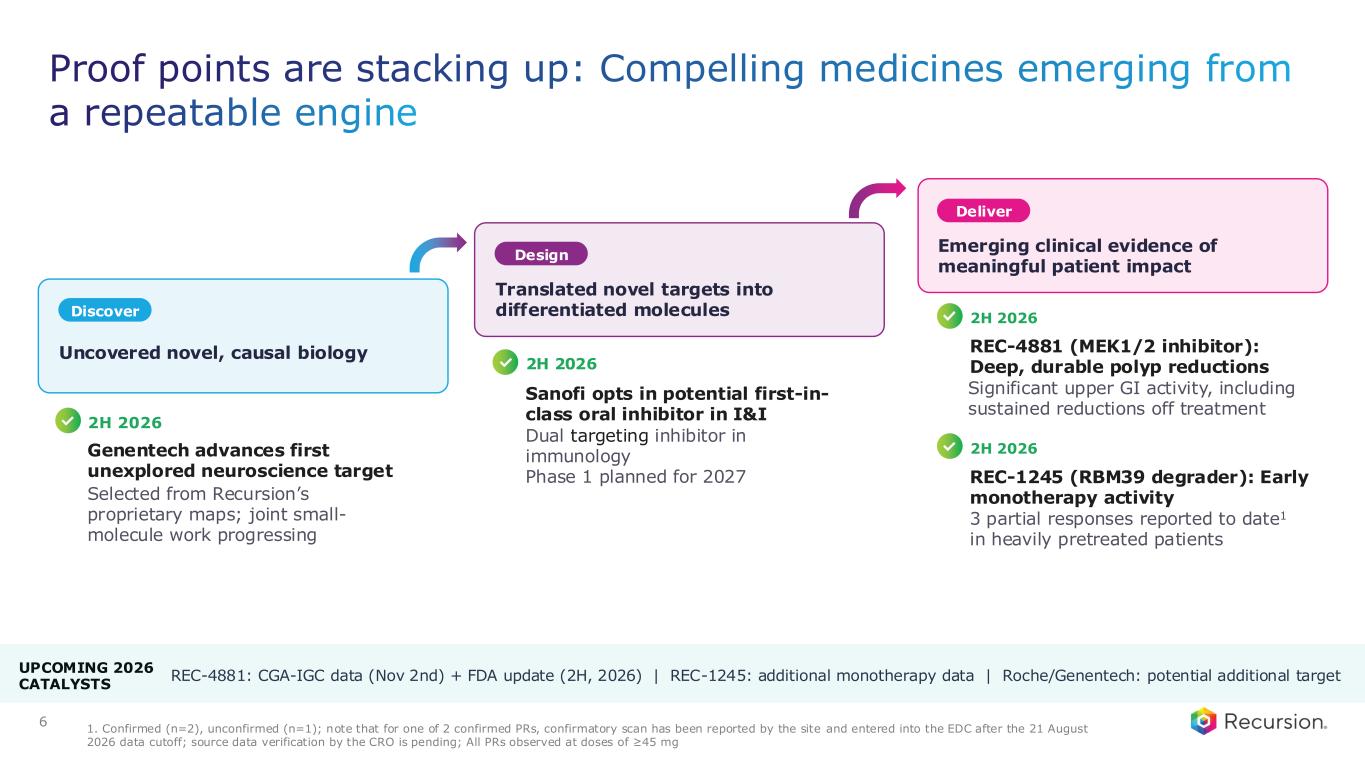
Proof points are stacking up: Compelling medicines emerging from a repeatable engine Uncovered novel, causal biology Discover Design Deliver Translated novel targets into differentiated molecules Emerging clinical evidence of meaningful patient impact 6 Selected from Recursion’s proprietary maps; joint small- molecule work progressing Dual targeting inhibitor in immunology Phase 1 planned for 2027 2H 2026 Genentech advances first unexplored neuroscience target 2H 2026 Sanofi opts in potential first-in- class oral inhibitor in I&I REC-4881 (MEK1/2 inhibitor): Deep, durable polyp reductions 2H 2026 REC-1245 (RBM39 degrader): Early monotherapy activity 3 partial responses reported to date1 in heavily pretreated patients Significant upper GI activity, including sustained reductions off treatment 2H 2026 1. Confirmed (n=2), unconfirmed (n=1); note that for one of 2 confirmed PRs, confirmatory scan has been reported by the site and entered into the EDC after the 21 August 2026 data cutoff; source data verification by the CRO is pending; All PRs observed at doses of ≥45 mg UPCOMING 2026 CATALYSTS REC-4881: CGA-IGC data (Nov 2nd) + FDA update (2H, 2026) | REC-1245: additional monotherapy data | Roche/Genentech: potential additional target
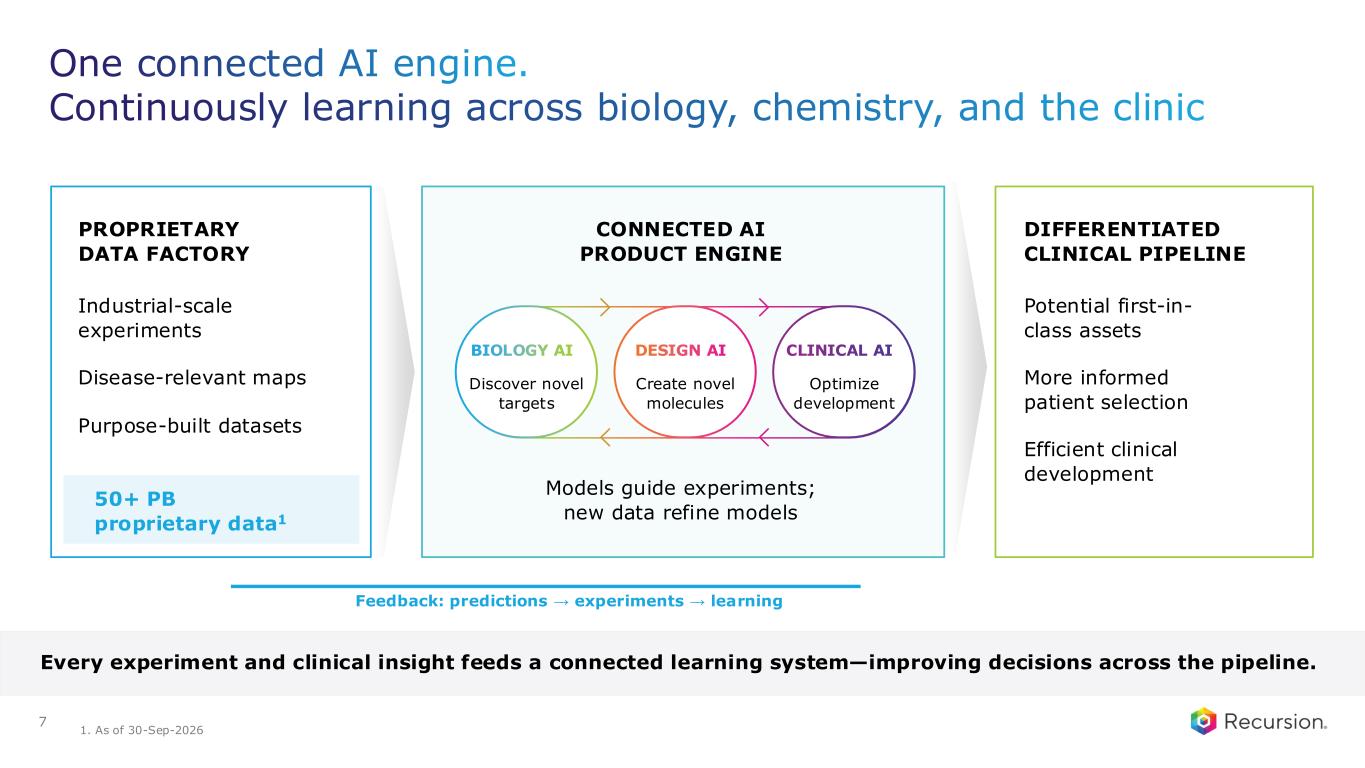
One connected AI engine. Continuously learning across biology, chemistry, and the clinic 7 PROPRIETARY DATA FACTORY Industrial-scale experiments Disease-relevant maps Purpose-built datasets 50+ PB proprietary data1 CONNECTED AI PRODUCT ENGINE Models guide experiments; new data refine models DIFFERENTIATED CLINICAL PIPELINE Potential first-in- class assets More informed patient selection Efficient clinical development Feedback: predictions → experiments → learning Every experiment and clinical insight feeds a connected learning system—improving decisions across the pipeline. BIOLOGY AI Discover novel targets DESIGN AI Create novel molecules CLINICAL AI Optimize development 1. As of 30-Sep-2026

REC-4881 MEK1/2 Translating proof to products
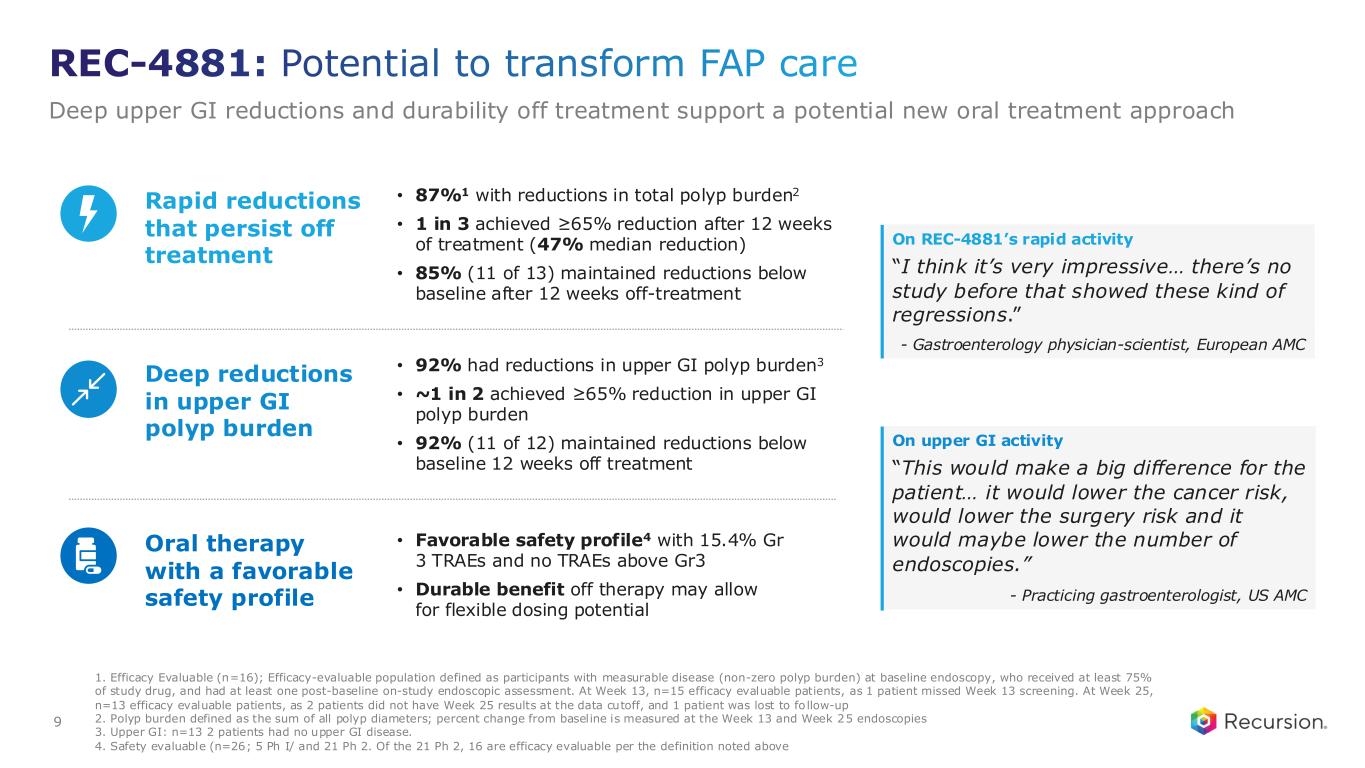
REC-4881: Potential to transform FAP care Deep upper GI reductions and durability off treatment support a potential new oral treatment approach 9 • Favorable safety profile4 with 15.4% Gr 3 TRAEs and no TRAEs above Gr3 • Durable benefit off therapy may allow for flexible dosing potential Oral therapy with a favorable safety profile • 87%1 with reductions in total polyp burden2 • 1 in 3 achieved ≥65% reduction after 12 weeks of treatment (47% median reduction) • 85% (11 of 13) maintained reductions below baseline after 12 weeks off-treatment Rapid reductions that persist off treatment On REC-4881’s rapid activity “I think it’s very impressive… there’s no study before that showed these kind of regressions.” - Gastroenterology physician-scientist, European AMC • 92% had reductions in upper GI polyp burden3 • ~1 in 2 achieved ≥65% reduction in upper GI polyp burden • 92% (11 of 12) maintained reductions below baseline 12 weeks off treatment Deep reductions in upper GI polyp burden On upper GI activity “This would make a big difference for the patient… it would lower the cancer risk, would lower the surgery risk and it would maybe lower the number of endoscopies.” - Practicing gastroenterologist, US AMC 1. Efficacy Evaluable (n=16); Efficacy-evaluable population defined as participants with measurable disease (non-zero polyp burden) at baseline endoscopy, who received at least 75% of study drug, and had at least one post-baseline on-study endoscopic assessment. At Week 13, n=15 efficacy evaluable patients, as 1 patient missed Week 13 screening. At Week 25, n=13 efficacy evaluable patients, as 2 patients did not have Week 25 results at the data cutoff, and 1 patient was lost to fo llow-up 2. Polyp burden defined as the sum of all polyp diameters; percent change from baseline is measured at the Week 13 and Week 25 endoscopies 3. Upper GI: n=13 2 patients had no upper GI disease. 4. Safety evaluable (n=26; 5 Ph I/ and 21 Ph 2. Of the 21 Ph 2, 16 are efficacy evaluable per the definition noted above
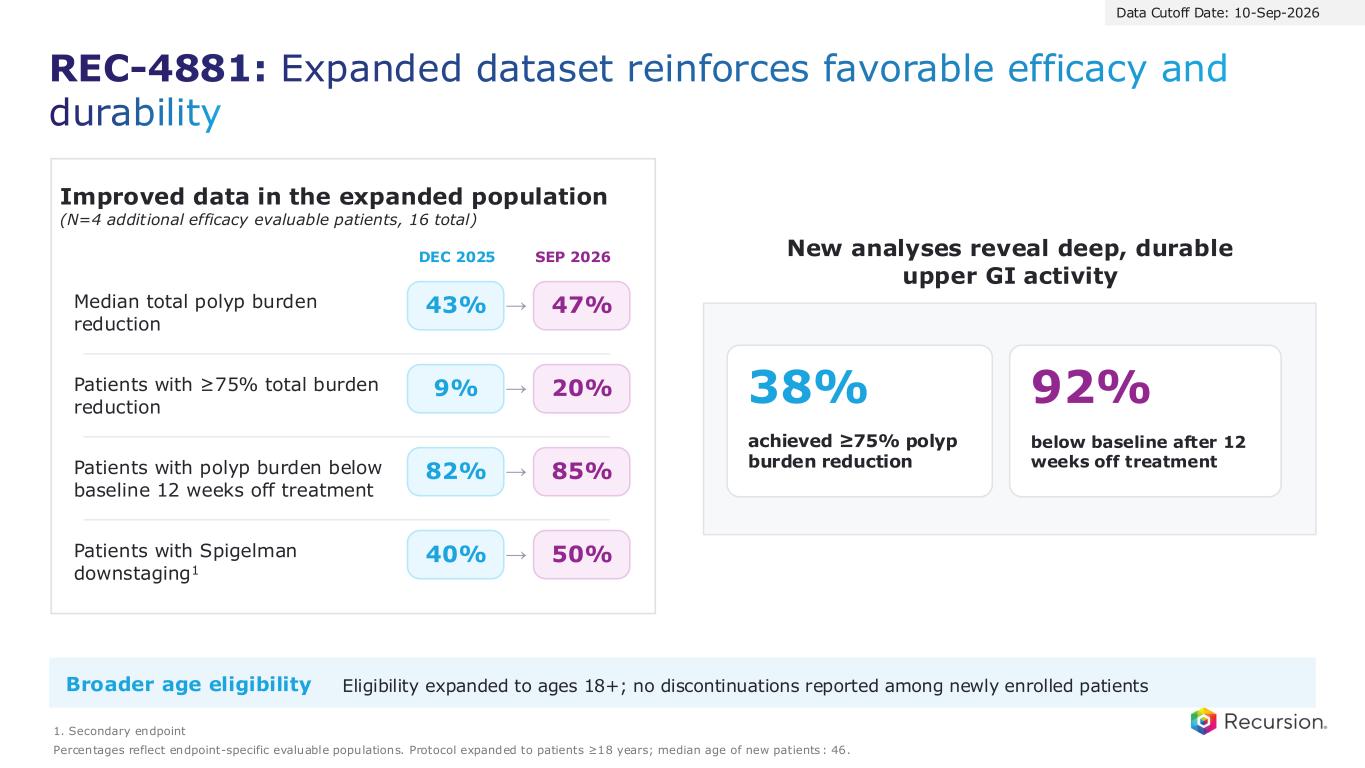
Improved data in the expanded population (N=4 additional efficacy evaluable patients, 16 total) DEC 2025 SEP 2026 Median total polyp burden reduction 43% → 47% Patients with ≥75% total burden reduction 9% → 20% Patients with Spigelman downstaging1 40% → 50% Patients with polyp burden below baseline 12 weeks off treatment 82% → 85% 38% achieved ≥75% polyp burden reduction 92% below baseline after 12 weeks off treatment Broader age eligibility Eligibility expanded to ages 18+; no discontinuations reported among newly enrolled patients 1. Secondary endpoint Percentages reflect endpoint-specific evaluable populations. Protocol expanded to patients ≥18 years; median age of new patients : 46. REC-4881: Expanded dataset reinforces favorable efficacy and durability New analyses reveal deep, durable upper GI activity Data Cutoff Date: 10-Sep-2026
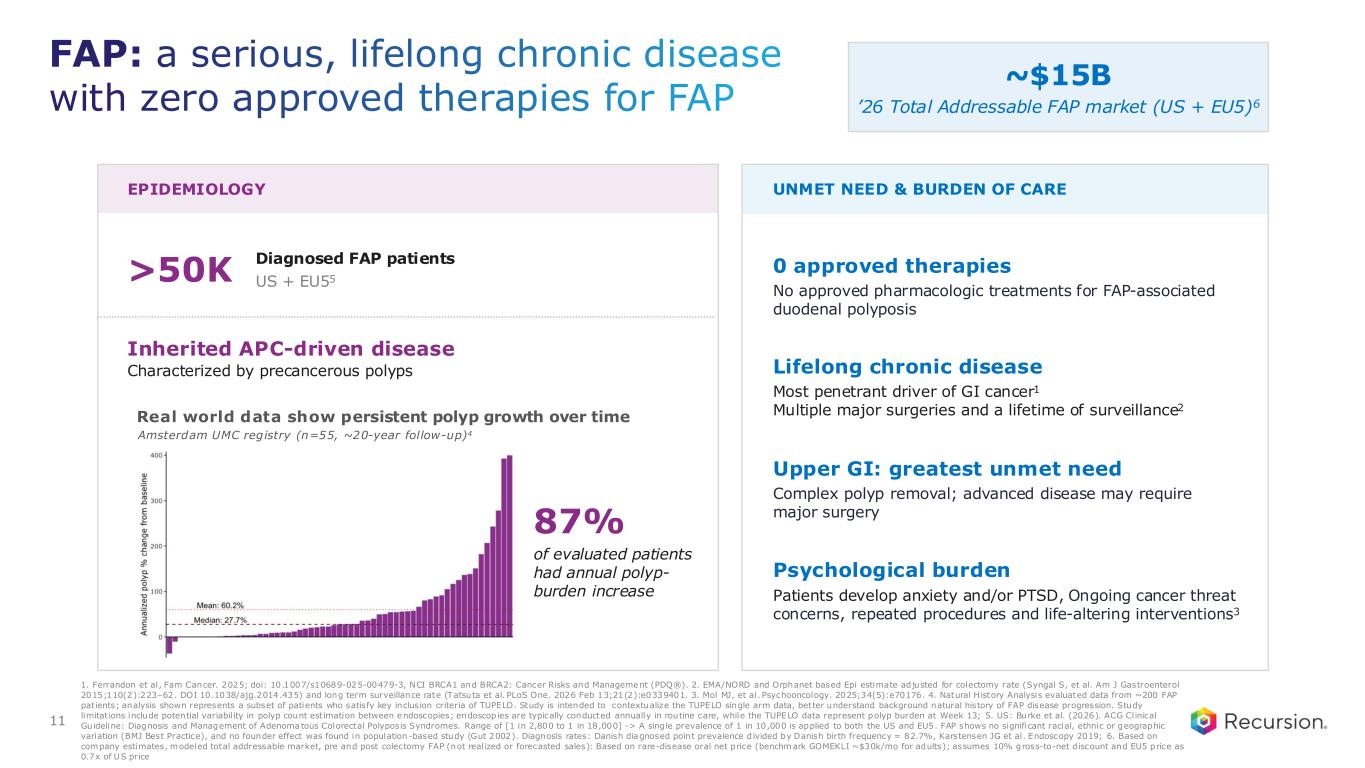
EPIDEMIOLOGY UNMET NEED & BURDEN OF CARE >50K Diagnosed FAP patients US + EU55 Inherited APC-driven disease Characterized by precancerous polyps Real world data show persistent polyp growth over time 0 approved therapies No approved pharmacologic treatments for FAP-associated duodenal polyposis Lifelong chronic disease Most penetrant driver of GI cancer1 Multiple major surgeries and a lifetime of surveillance2 Upper GI: greatest unmet need Complex polyp removal; advanced disease may require major surgery Psychological burden Patients develop anxiety and/or PTSD, Ongoing cancer threat concerns, repeated procedures and life-altering interventions3 Amsterdam UMC registry (n=55, ~20-year follow-up)4 87% of evaluated patients had annual polyp- burden increase 1. Ferrandon et al, Fam Cancer. 2025; doi: 10.1007/s10689-025-00479-3, NCI BRCA1 and BRCA2: Cancer Risks and Management (PDQ®). 2. EMA/NORD and Orphanet based Epi estimate adjusted for colectomy rate (Syngal S, et al. Am J Gastroenterol 2015;110(2):223–62. DOI 10.1038/ajg.2014.435) and long term surveillance rate (Tatsuta et al. PLoS One. 2026 Feb 13;21(2):e0339401. 3. Mol MJ, et al. Psychooncology. 2025;34(5):e70176. 4. Natural History Analysis evaluated data from ~200 FAP patients; analysis shown represents a subset of patients who satisfy key inclusion criteria of TUPELO. Study is intended to contextualize the TUPELO single arm data, better understand background natural history of FAP disease progression. Study limitations include potential variabil ity in polyp count estimation between endoscopies; endoscopies are typically conducted annually in routine care, while the TUPELO data represent polyp burden at Week 13; 5. US: Burke et al. (2026). ACG Clinical Guideline: Diagnosis and Management of Adenomatous Colorectal Polyposis Syndromes. Range of [1 in 2,800 to 1 in 18,000] -> A sing le prevalence of 1 in 10,000 is applied to both the US and EU5. FAP shows no significant racial, ethnic or geographic variation (BMJ Best Practice), and no founder effect was found in population-based study (Gut 2002). Diagnosis rates: Danish diagnosed point prevalence d ivided by Danish birth frequency = 82.7%, Karstensen JG et al. Endoscopy 2019; 6. Based on company estimates, modeled total addressable market, pre and post colectomy FAP (not realized or forecasted sales): Based on rare-disease oral net price (benchmark GOMEKLI ~$30k/mo for adults); assumes 10% gross-to-net d iscount and EU5 price as 0.7x of US price ~$15B ’26 Total Addressable FAP market (US + EU5)6 FAP: a serious, lifelong chronic disease with zero approved therapies for FAP 11
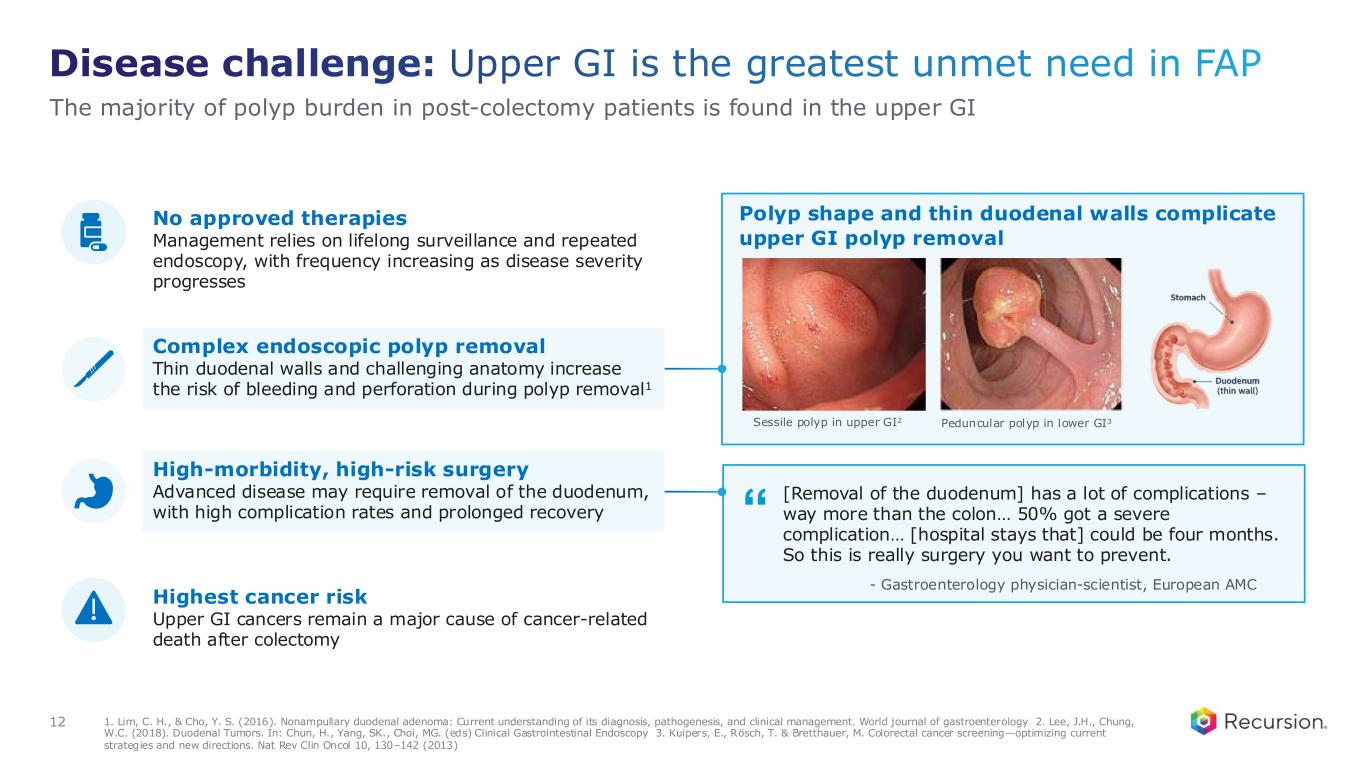
“ Disease challenge: Upper GI is the greatest unmet need in FAP 1. Lim, C. H., & Cho, Y. S. (2016). Nonampullary duodenal adenoma: Current understanding of its diagnosis, pathogenesis, and clinical management. World journal of gastroenterology 2. Lee, J.H., Chung, W.C. (2018). Duodenal Tumors. In: Chun, H., Yang, SK., Choi, MG. (eds) Clinical Gastrointestinal Endoscopy 3. Kuipers, E., Rösch, T. & Bretthauer, M. Colorectal cancer screening—optimizing current strategies and new directions. Nat Rev Clin Oncol 10, 130–142 (2013) No approved therapies Management relies on lifelong surveillance and repeated endoscopy, with frequency increasing as disease severity progresses Complex endoscopic polyp removal Thin duodenal walls and challenging anatomy increase the risk of bleeding and perforation during polyp removal1 High-morbidity, high-risk surgery Advanced disease may require removal of the duodenum, with high complication rates and prolonged recovery Highest cancer risk Upper GI cancers remain a major cause of cancer-related death after colectomy Polyp shape and thin duodenal walls complicate upper GI polyp removal Sessile polyp in upper GI2 Peduncular polyp in lower GI3 [Removal of the duodenum] has a lot of complications – way more than the colon… 50% got a severe complication… [hospital stays that] could be four months. So this is really surgery you want to prevent. - Gastroenterology physician-scientist, European AMC The majority of polyp burden in post-colectomy patients is found in the upper GI 12
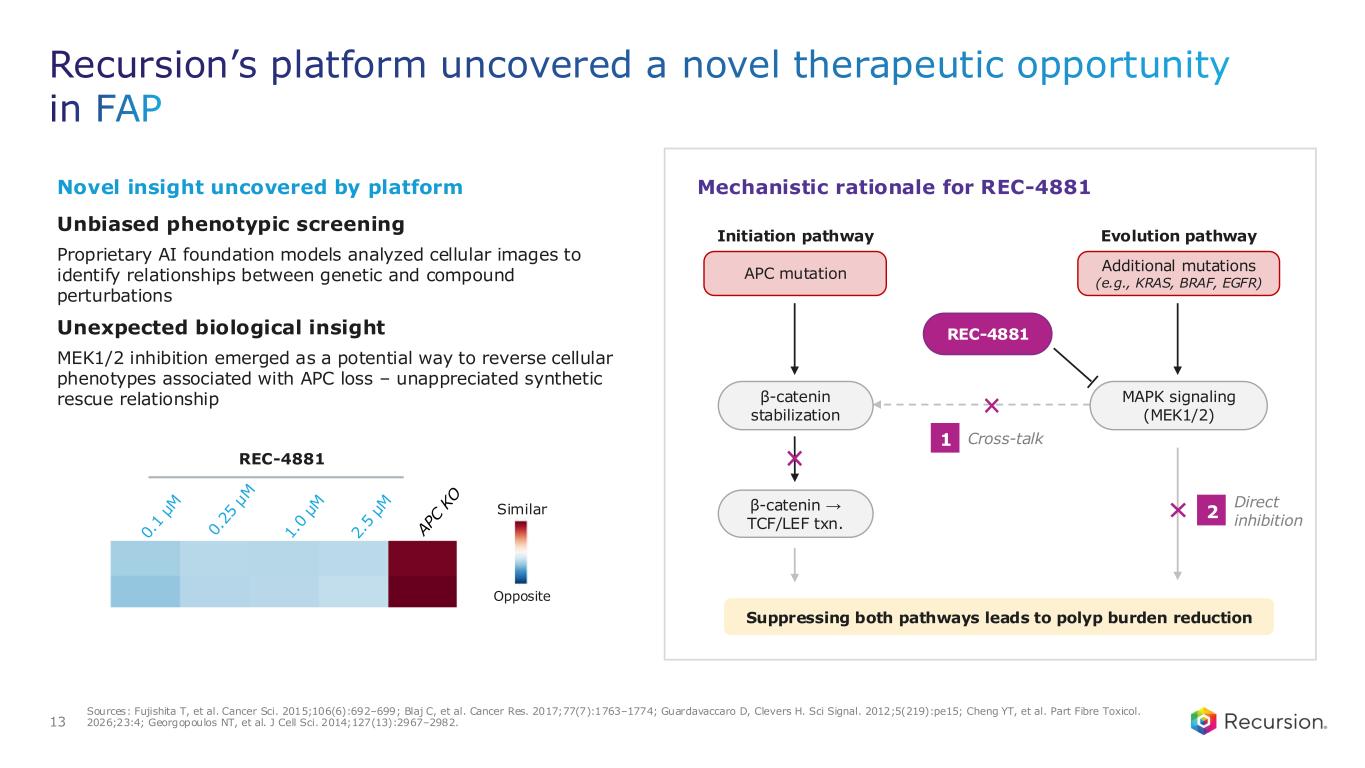
Recursion’s platform uncovered a novel therapeutic opportunity in FAP 13 Sources: Fujishita T, et al. Cancer Sci. 2015;106(6):692–699; Blaj C, et al. Cancer Res. 2017;77(7):1763–1774; Guardavaccaro D, Clevers H. Sci Signal. 2012;5(219):pe15; Cheng YT, et al. Part Fibre Toxicol. 2026;23:4; Georgopoulos NT, et al. J Cell Sci. 2014;127(13):2967–2982. REC-4881 Similar Opposite Unbiased phenotypic screening Proprietary AI foundation models analyzed cellular images to identify relationships between genetic and compound perturbations Novel insight uncovered by platform Suppressing both pathways leads to polyp burden reduction Initiation pathway APC mutation β-catenin stabilization β-catenin → TCF/LEF txn. Evolution pathway Additional mutations (e.g., KRAS, BRAF, EGFR) MAPK signaling (MEK1/2) REC-4881 Cross-talk1 Direct inhibition 2 Mechanistic rationale for REC-4881 Unexpected biological insight MEK1/2 inhibition emerged as a potential way to reverse cellular phenotypes associated with APC loss – unappreciated synthetic rescue relationship
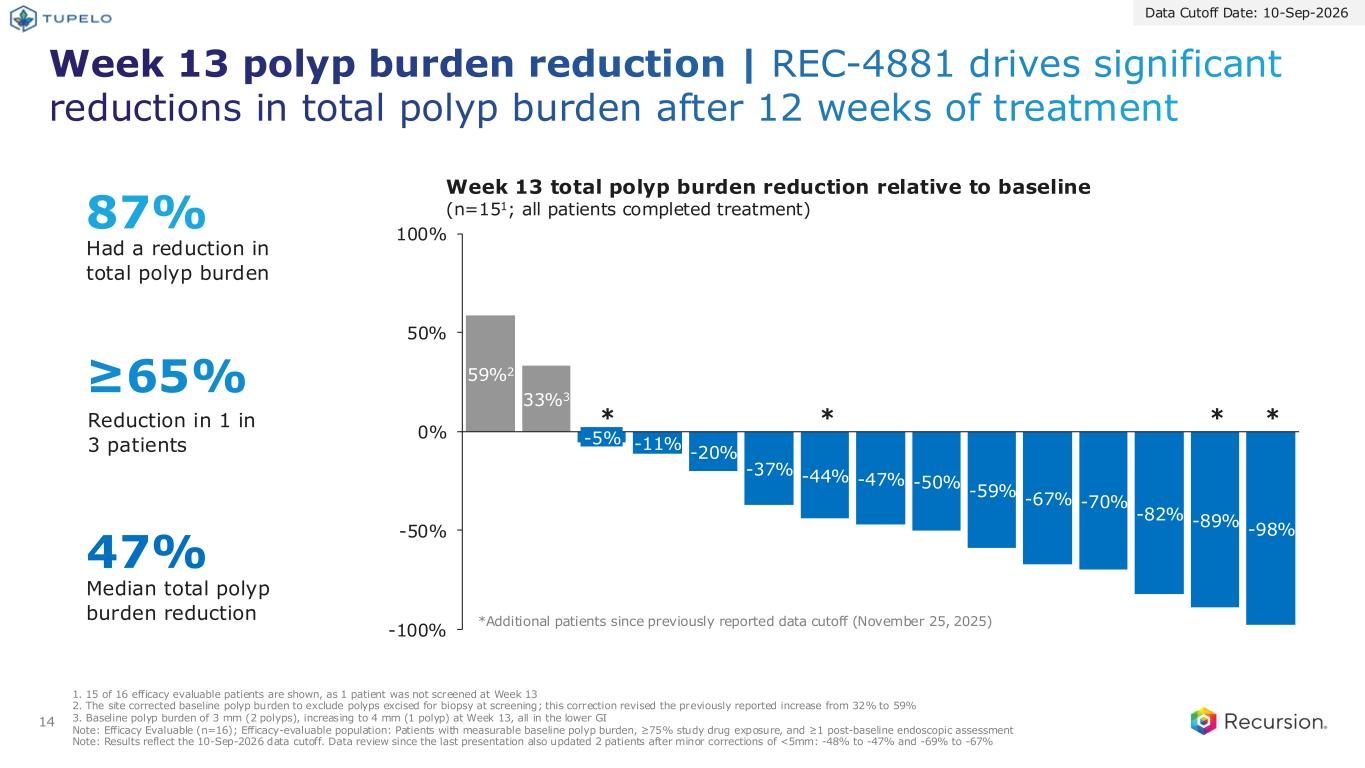
Week 13 polyp burden reduction | REC-4881 drives significant reductions in total polyp burden after 12 weeks of treatment 14 -11% -20% -37% -44% -47% -50% -59% -67% -70% -82% -89% -98% -100% -50% 0% 50% 100% -5% 59%2 33%3 Data Cutoff Date: 10-Sep-2026 87% Had a reduction in total polyp burden ≥65% Reduction in 1 in 3 patients 47% Median total polyp burden reduction Week 13 total polyp burden reduction relative to baseline (n=151; all patients completed treatment) 1. 15 of 16 efficacy evaluable patients are shown, as 1 patient was not screened at Week 13 2. The site corrected baseline polyp burden to exclude polyps excised for biopsy at screening; this correction revised the previously reported increase from 32% to 59% 3. Baseline polyp burden of 3 mm (2 polyps), increasing to 4 mm (1 polyp) at Week 13, all in the lower GI Note: Efficacy Evaluable (n=16); Efficacy-evaluable population: Patients with measurable baseline polyp burden, ≥75% study drug exposure, and ≥1 post-baseline endoscopic assessment Note: Results reflect the 10-Sep-2026 data cutoff. Data review since the last presentation also updated 2 patients after minor corrections of <5mm: -48% to -47% and -69% to -67% *** * *Additional patients since previously reported data cutoff (November 25, 2025)
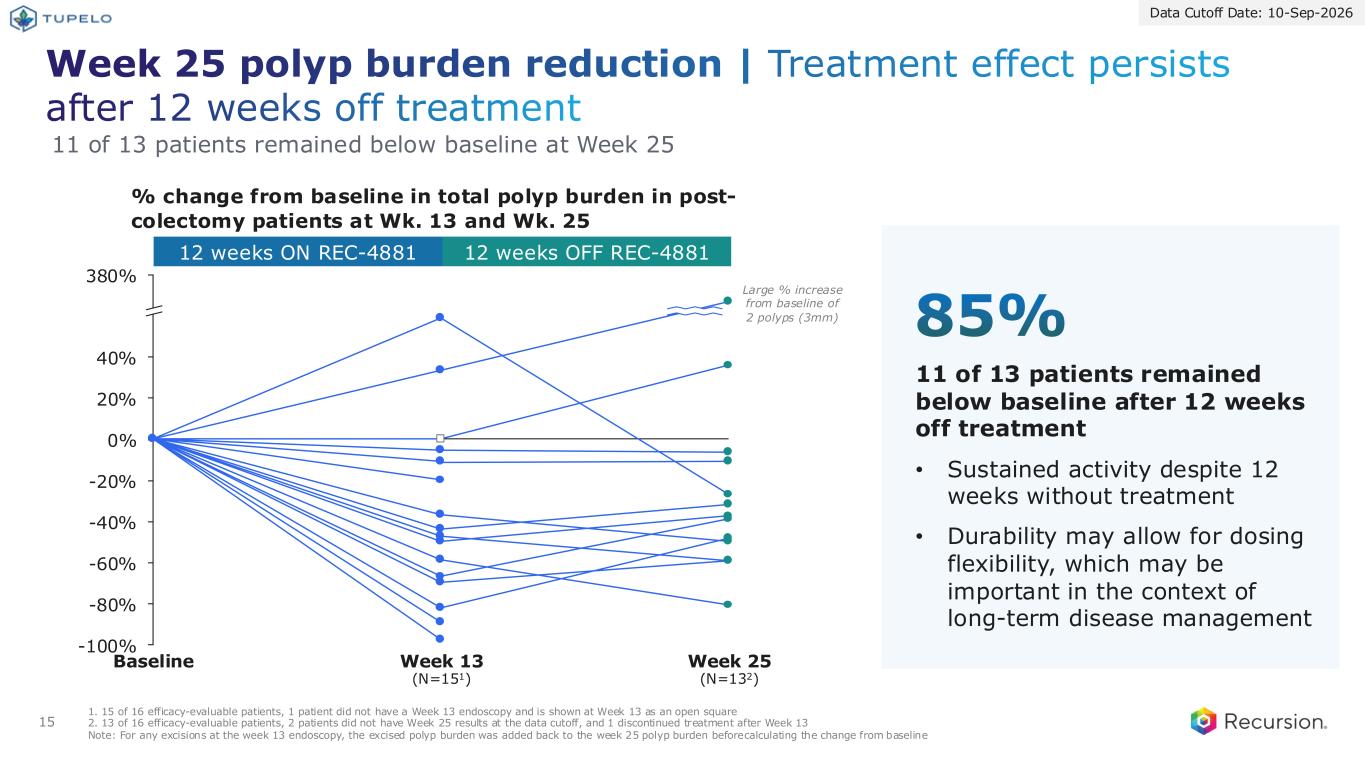
Week 25 polyp burden reduction | Treatment effect persists after 12 weeks off treatment 15 12 weeks ON REC-4881 12 weeks OFF REC-4881 % change from baseline in total polyp burden in post- colectomy patients at Wk. 13 and Wk. 25 1. 15 of 16 efficacy-evaluable patients, 1 patient did not have a Week 13 endoscopy and is shown at Week 13 as an open square 2. 13 of 16 efficacy-evaluable patients, 2 patients did not have Week 25 results at the data cutoff, and 1 discontinued treatment after Week 13 Note: For any excisions at the week 13 endoscopy, the excised polyp burden was added back to the week 25 polyp burden before calculating the change from baseline -100% -80% -60% -40% -20% 0% 20% 40% 380% Baseline Week 13 (N=151) Week 25 (N=132) 11 of 13 patients remained below baseline at Week 25 Large % increase from baseline of 2 polyps (3mm) 11 of 13 patients remained below baseline after 12 weeks off treatment • Sustained activity despite 12 weeks without treatment • Durability may allow for dosing flexibility, which may be important in the context of long-term disease management 85% Data Cutoff Date: 10-Sep-2026
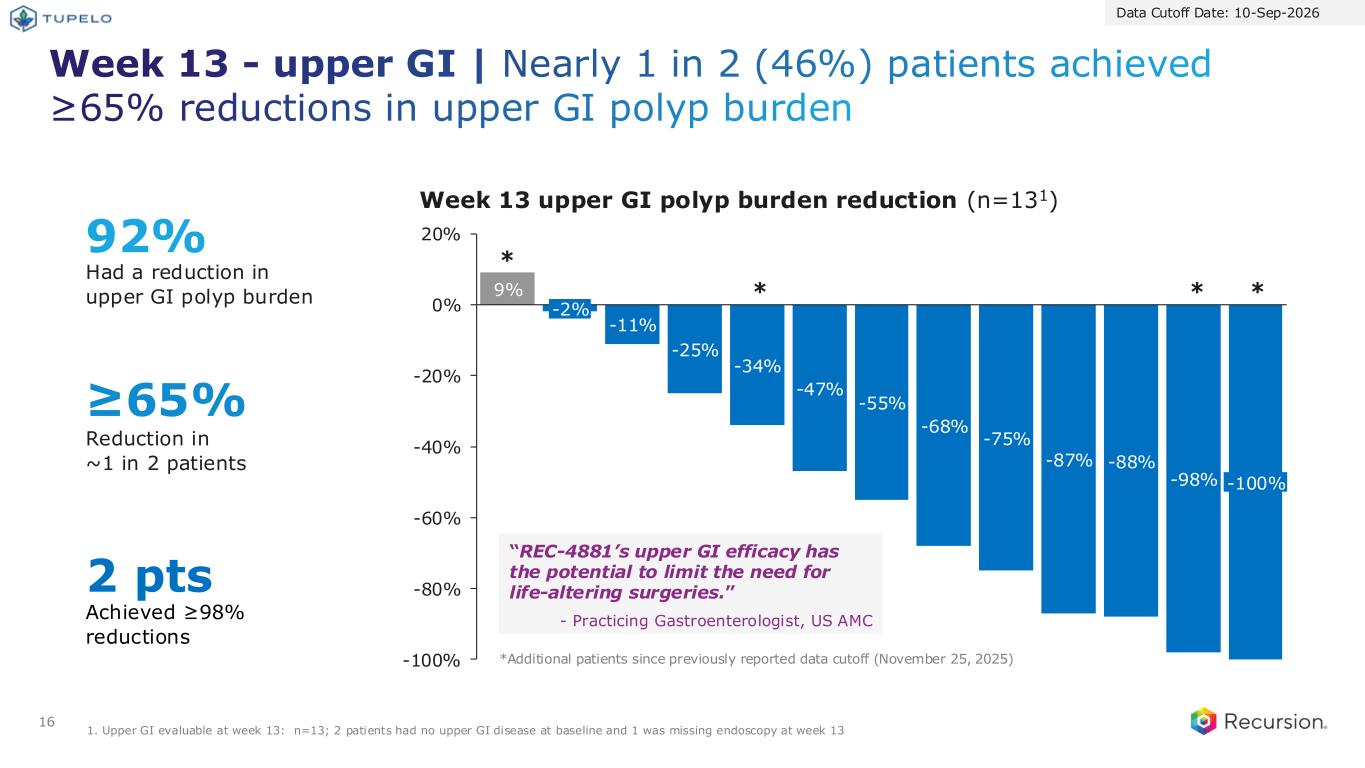
Week 13 - upper GI | Nearly 1 in 2 (46%) patients achieved ≥65% reductions in upper GI polyp burden 16 9% -11% -25% -34% -47% -55% -68% -75% -87% -88% -98% -100% -80% -60% -40% -20% 0% 20% -2% -100% Data Cutoff Date: 10-Sep-2026 Week 13 upper GI polyp burden reduction (n=131) “REC-4881’s upper GI efficacy has the potential to limit the need for life-altering surgeries.” - Practicing Gastroenterologist, US AMC *** * 92% Had a reduction in upper GI polyp burden ≥65% Reduction in ~1 in 2 patients 2 pts Achieved ≥98% reductions 1. Upper GI evaluable at week 13: n=13; 2 patients had no upper GI disease at baseline and 1 was missing endoscopy at week 13 *Additional patients since previously reported data cutoff (November 25, 2025)
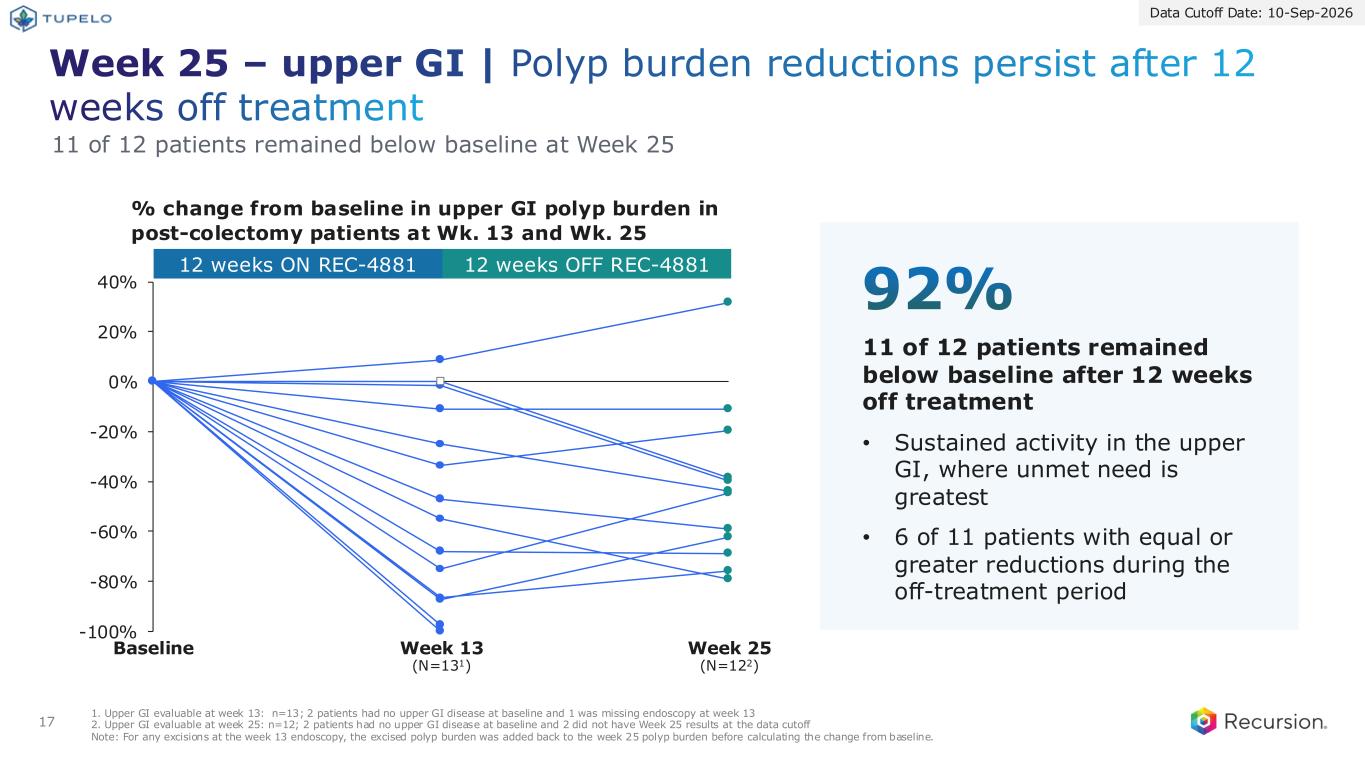
17 Week 25 – upper GI | Polyp burden reductions persist after 12 weeks off treatment -100% -80% -60% -40% -20% 0% 20% 40% Baseline Week 13 (N=131) Week 25 (N=122) 11 of 12 patients remained below baseline at Week 25 11 of 12 patients remained below baseline after 12 weeks off treatment • Sustained activity in the upper GI, where unmet need is greatest • 6 of 11 patients with equal or greater reductions during the off-treatment period 92% 12 weeks ON REC-4881 12 weeks OFF REC-4881 % change from baseline in upper GI polyp burden in post-colectomy patients at Wk. 13 and Wk. 25 1. Upper GI evaluable at week 13: n=13; 2 patients had no upper GI disease at baseline and 1 was missing endoscopy at week 13 2. Upper GI evaluable at week 25: n=12; 2 patients had no upper GI disease at baseline and 2 did not have Week 25 results at the data cutoff Note: For any excisions at the week 13 endoscopy, the excised polyp burden was added back to the week 25 polyp burden before calculating the change from baseline. Data Cutoff Date: 10-Sep-2026
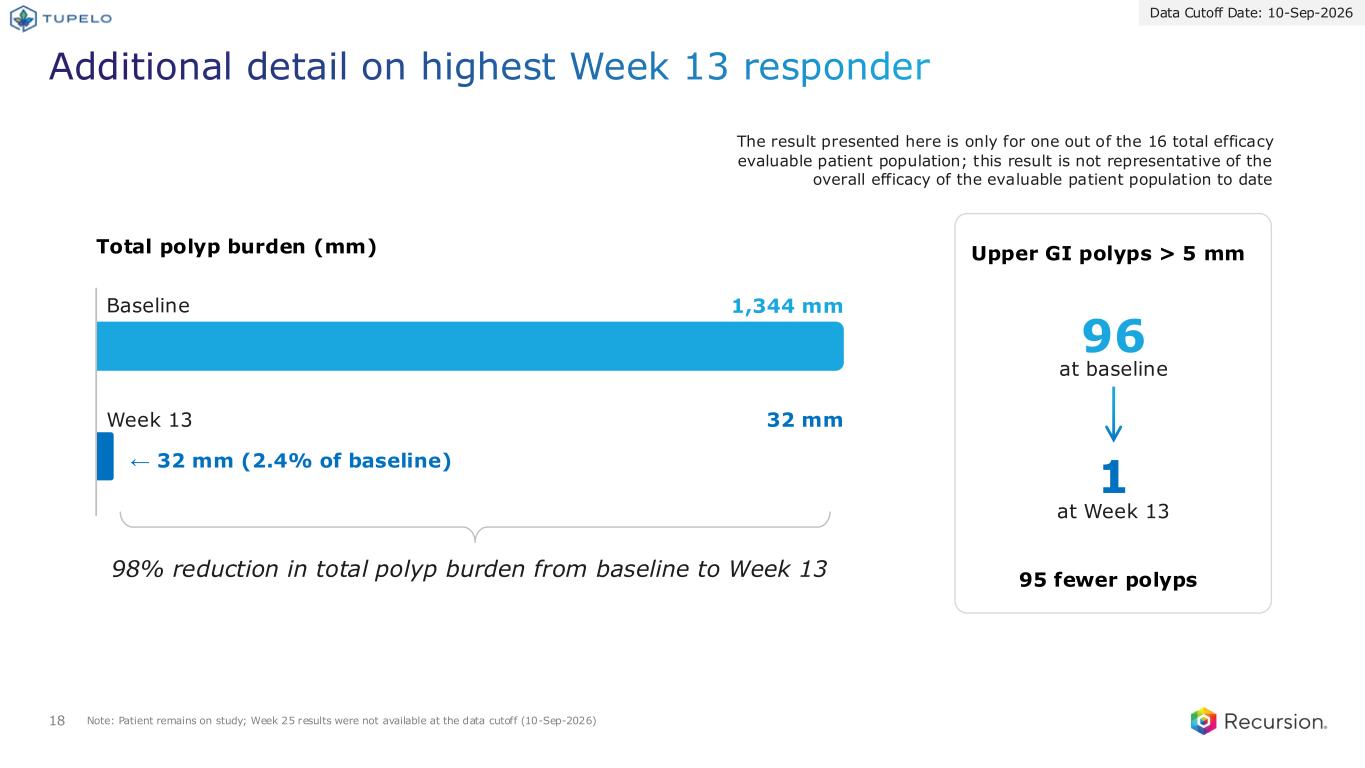
Total polyp burden (mm) 18 Additional detail on highest Week 13 responder 1,344 mm 32 mm ← 32 mm (2.4% of baseline) Baseline Week 13 96 1 at baseline at Week 13 Upper GI polyps > 5 mm 95 fewer polyps Note: Patient remains on study; Week 25 results were not available at the data cutoff (10-Sep-2026) Data Cutoff Date: 10-Sep-2026 The result presented here is only for one out of the 16 total efficacy evaluable patient population; this result is not representative of the overall efficacy of the evaluable patient population to date 98% reduction in total polyp burden from baseline to Week 13
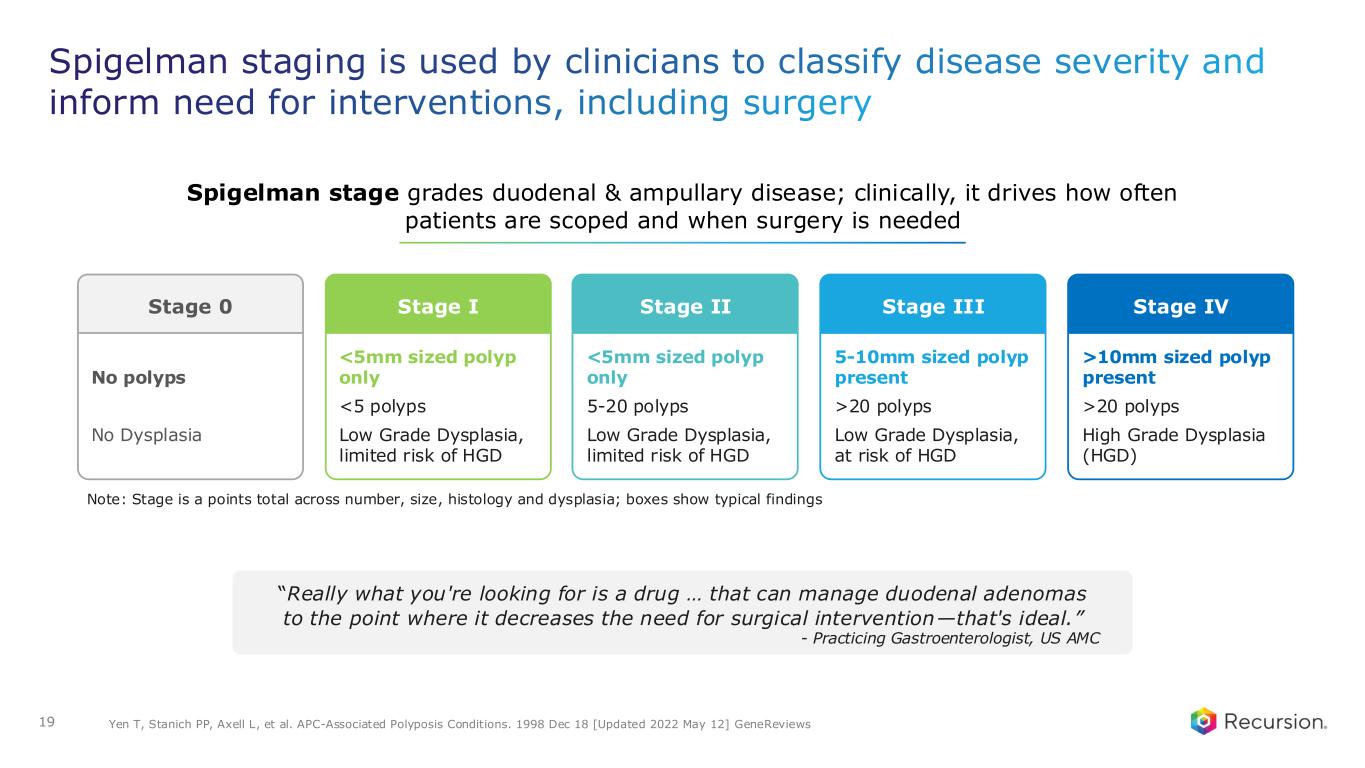
Spigelman staging is used by clinicians to classify disease severity and inform need for interventions, including surgery 19 “Really what you're looking for is a drug … that can manage duodenal adenomas to the point where it decreases the need for surgical intervention—that's ideal.” - Practicing Gastroenterologist, US AMC Spigelman stage grades duodenal & ampullary disease; clinically, it drives how often patients are scoped and when surgery is needed >10mm sized polyp present >20 polyps High Grade Dysplasia (HGD) Stage IV 5-10mm sized polyp present >20 polyps Low Grade Dysplasia, at risk of HGD Stage III <5mm sized polyp only 5-20 polyps Low Grade Dysplasia, limited risk of HGD Stage II <5mm sized polyp only <5 polyps Low Grade Dysplasia, limited risk of HGD Stage I Yen T, Stanich PP, Axell L, et al. APC-Associated Polyposis Conditions. 1998 Dec 18 [Updated 2022 May 12] GeneReviews No polyps No Dysplasia Stage 0 Note: Stage is a points total across number, size, histology and dysplasia; boxes show typical findings
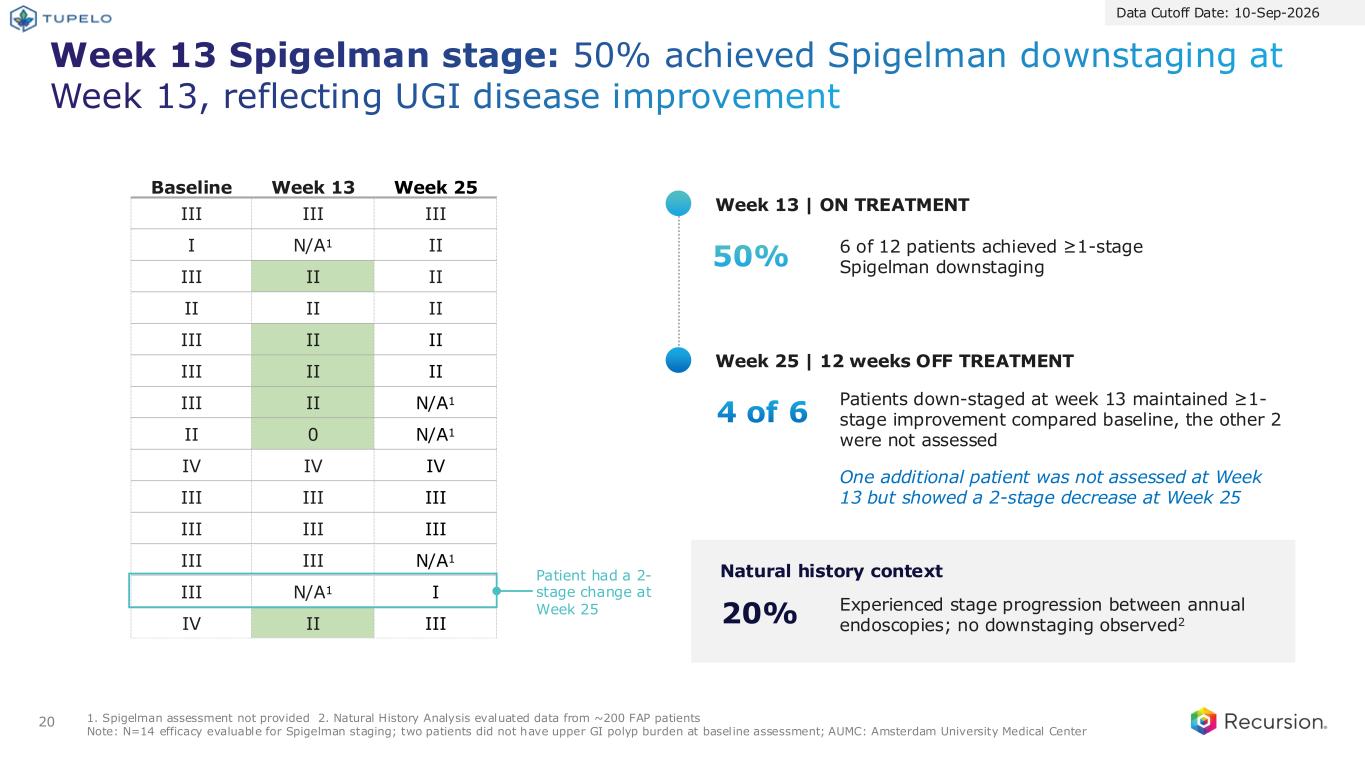
Week 13 Spigelman stage: 50% achieved Spigelman downstaging at Week 13, reflecting UGI disease improvement 20 1. Spigelman assessment not provided 2. Natural History Analysis evaluated data from ~200 FAP patients Note: N=14 efficacy evaluable for Spigelman staging; two patients did not have upper GI polyp burden at baseline assessment; AUMC: Amsterdam University Medical Center Data Cutoff Date: 10-Sep-2026 50% 4 of 6 Baseline Week 13 Week 25 III III III I N/A1 II III II II II II II III II II III II II III II N/A1 II 0 N/A1 IV IV IV III III III III III III III III N/A1 III N/A1 I IV II III 6 of 12 patients achieved ≥1-stage Spigelman downstaging Patients down-staged at week 13 maintained ≥1- stage improvement compared baseline, the other 2 were not assessed One additional patient was not assessed at Week 13 but showed a 2-stage decrease at Week 25 20% Experienced stage progression between annual endoscopies; no downstaging observed2 Patient had a 2- stage change at Week 25 Week 13 | ON TREATMENT Week 25 | 12 weeks OFF TREATMENT Natural history context
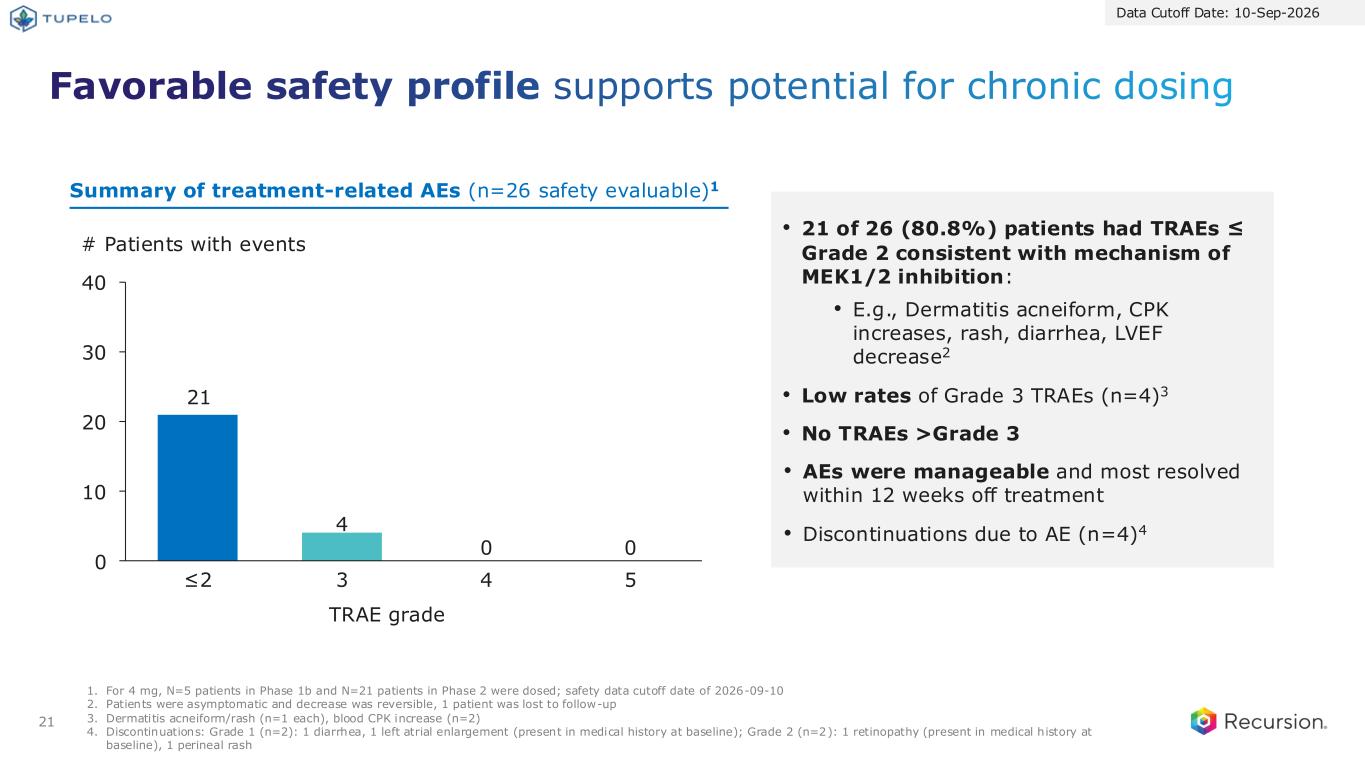
Favorable safety profile supports potential for chronic dosing 21 1. For 4 mg, N=5 patients in Phase 1b and N=21 patients in Phase 2 were dosed; safety data cutoff date of 2026-09-10 2. Patients were asymptomatic and decrease was reversible, 1 patient was lost to follow-up 3. Dermatitis acneiform/rash (n=1 each), blood CPK increase (n=2) 4. Discontinuations: Grade 1 (n=2): 1 diarrhea, 1 left atrial enlargement (present in medical history at baseline); Grade 2 (n=2): 1 retinopathy (present in medical history at baseline), 1 perineal rash • 21 of 26 (80.8%) patients had TRAEs ≤ Grade 2 consistent with mechanism of MEK1/2 inhibition: • E.g., Dermatitis acneiform, CPK increases, rash, diarrhea, LVEF decrease2 • Low rates of Grade 3 TRAEs (n=4)3 • No TRAEs >Grade 3 • AEs were manageable and most resolved within 12 weeks off treatment • Discontinuations due to AE (n=4)4 # Patients with events ≤2 3 4 5 0 0 TRAE grade Summary of treatment-related AEs (n=26 safety evaluable)1 21 4 0 10 20 30 40 Data Cutoff Date: 10-Sep-2026
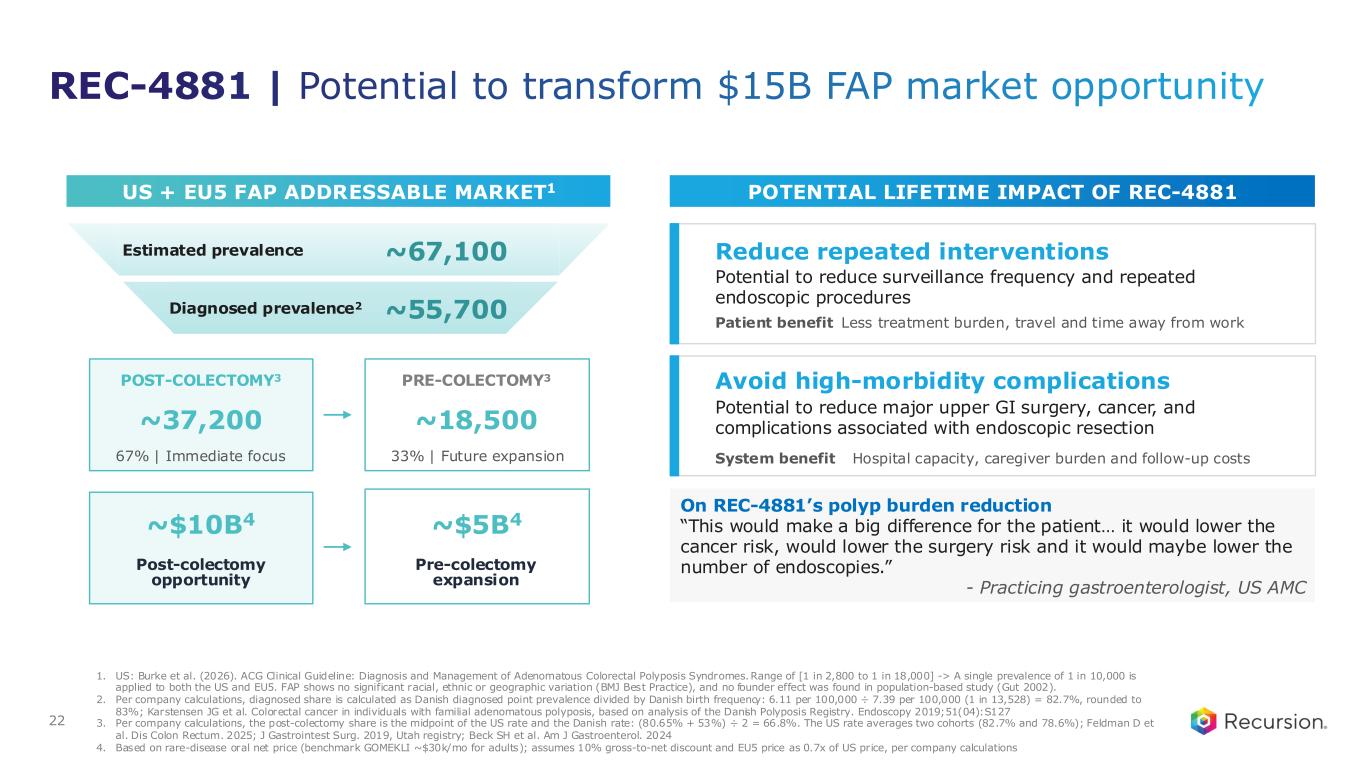
US + EU5 FAP ADDRESSABLE MARKET1 POTENTIAL LIFETIME IMPACT OF REC-4881 Reduce repeated interventions Potential to reduce surveillance frequency and repeated endoscopic procedures Patient benefit Less treatment burden, travel and time away from work Avoid high-morbidity complications Potential to reduce major upper GI surgery, cancer, and complications associated with endoscopic resection System benefit Hospital capacity, caregiver burden and follow-up costs 1. US: Burke et al. (2026). ACG Clinical Guideline: Diagnosis and Management of Adenomatous Colorectal Polyposis Syndromes.Range of [1 in 2,800 to 1 in 18,000] -> A single prevalence of 1 in 10,000 is applied to both the US and EU5. FAP shows no significant racial, ethnic or geographic variation (BMJ Best Practice), and no founder effect was found in population-based study (Gut 2002). 2. Per company calculations, diagnosed share is calculated as Danish diagnosed point prevalence divided by Danish birth frequency: 6.11 per 100,000 ÷ 7.39 per 100,000 (1 in 13,528) = 82.7%, rounded to 83%; Karstensen JG et al. Colorectal cancer in individuals with familial adenomatous polyposis, based on analysis of the Danish Polyposis Registry. Endoscopy 2019;51(04):S127 3. Per company calculations, the post-colectomy share is the midpoint of the US rate and the Danish rate: (80.65% + 53%) ÷ 2 = 66.8%. The US rate averages two cohorts (82.7% and 78.6%); Feldman D et al. Dis Colon Rectum. 2025; J Gastrointest Surg. 2019, Utah registry; Beck SH et al. Am J Gastroenterol. 2024 4. Based on rare-disease oral net price (benchmark GOMEKLI ~$30k/mo for adults); assumes 10% gross-to-net discount and EU5 price as 0.7x of US price, per company calculations Estimated prevalence ~67,100 Diagnosed prevalence2 ~55,700 POST-COLECTOMY3 ~37,200 67% | Immediate focus PRE-COLECTOMY3 ~18,500 33% | Future expansion ~$10B4 Post-colectomy opportunity ~$5B4 Pre-colectomy expansion On REC-4881’s polyp burden reduction “This would make a big difference for the patient… it would lower the cancer risk, would lower the surgery risk and it would maybe lower the number of endoscopies.” - Practicing gastroenterologist, US AMC REC-4881 | Potential to transform $15B FAP market opportunity 22

REC-1245 First-in-class RBM39 degrader Translating proof to products
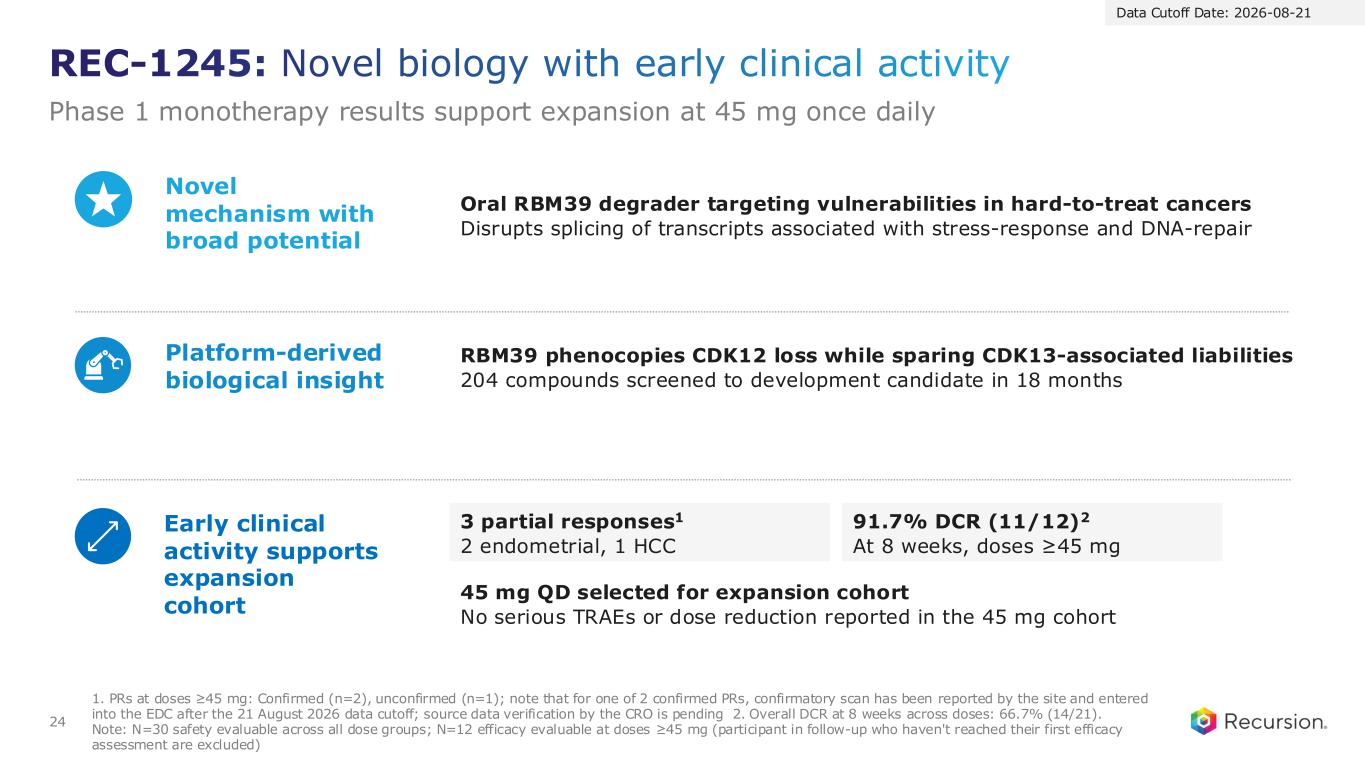
REC-1245: Novel biology with early clinical activity Phase 1 monotherapy results support expansion at 45 mg once daily 24 Oral RBM39 degrader targeting vulnerabilities in hard-to-treat cancers Disrupts splicing of transcripts associated with stress-response and DNA-repair 3 partial responses1 2 endometrial, 1 HCC Novel mechanism with broad potential Platform-derived biological insight Early clinical activity supports expansion cohort 1. PRs at doses ≥45 mg: Confirmed (n=2), unconfirmed (n=1); note that for one of 2 confirmed PRs, confirmatory scan has been reported by the site and entered into the EDC after the 21 August 2026 data cutoff; source data verification by the CRO is pending 2. Overall DCR at 8 weeks across doses: 66.7% (14/21). Note: N=30 safety evaluable across all dose groups; N=12 efficacy evaluable at doses ≥45 mg (participant in follow-up who haven't reached their first efficacy assessment are excluded) 91.7% DCR (11/12)2 At 8 weeks, doses ≥45 mg 45 mg QD selected for expansion cohort No serious TRAEs or dose reduction reported in the 45 mg cohort Data Cutoff Date: 2026-08-21 RBM39 phenocopies CDK12 loss while sparing CDK13-associated liabilities 204 compounds screened to development candidate in 18 months
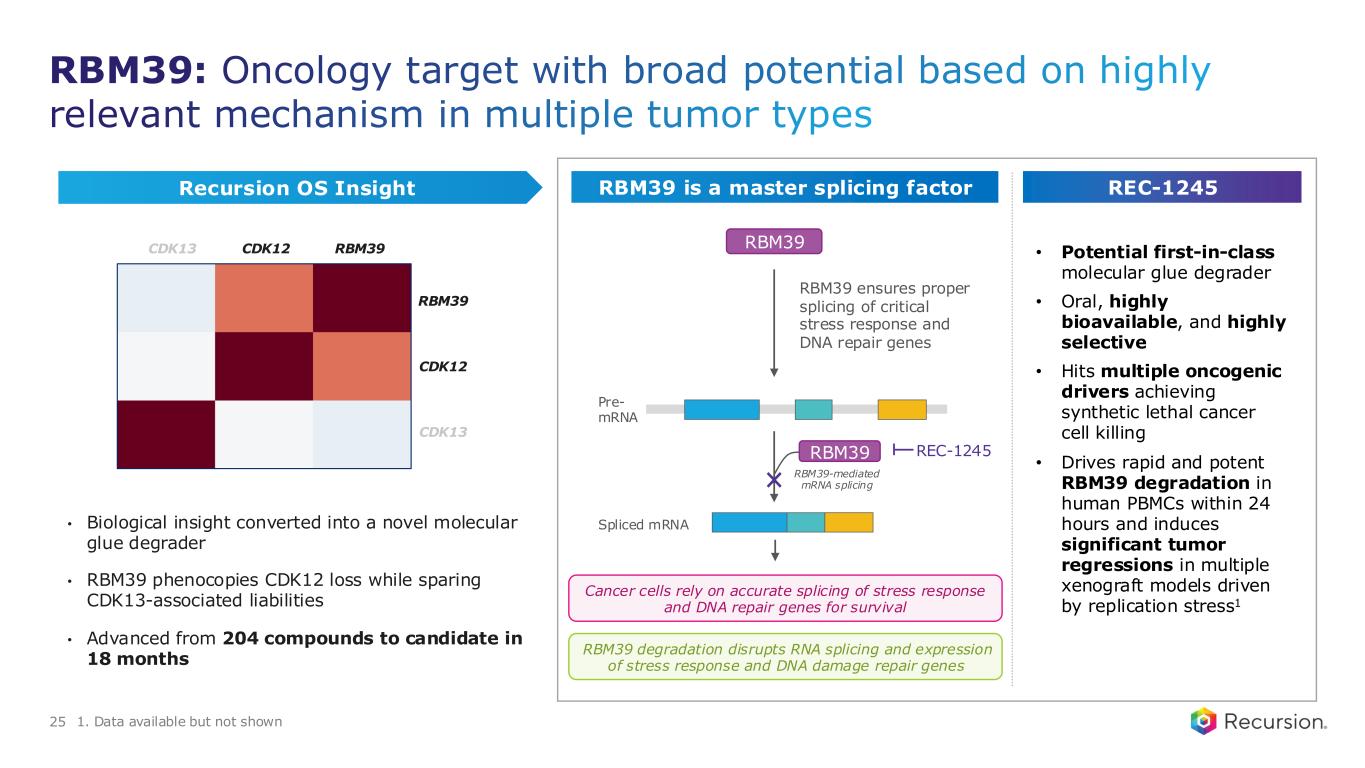
• Potential first-in-class molecular glue degrader • Oral, highly bioavailable, and highly selective • Hits multiple oncogenic drivers achieving synthetic lethal cancer cell killing • Drives rapid and potent RBM39 degradation in human PBMCs within 24 hours and induces significant tumor regressions in multiple xenograft models driven by replication stress1 RBM39 Pre- mRNA RBM39-mediated mRNA splicing Spliced mRNA Cancer cells rely on accurate splicing of stress response and DNA repair genes for survival RBM39 ensures proper splicing of critical stress response and DNA repair genes RBM39 RBM39: Oncology target with broad potential based on highly relevant mechanism in multiple tumor types • Biological insight converted into a novel molecular glue degrader • RBM39 phenocopies CDK12 loss while sparing CDK13-associated liabilities • Advanced from 204 compounds to candidate in 18 months 25 Recursion OS Insight RBM39 is a master splicing factor REC-1245 RBM39 degradation disrupts RNA splicing and expression of stress response and DNA damage repair genes 1. Data available but not shown CDK12 RBM39CDK13 RBM39 CDK12 CDK13 REC-1245
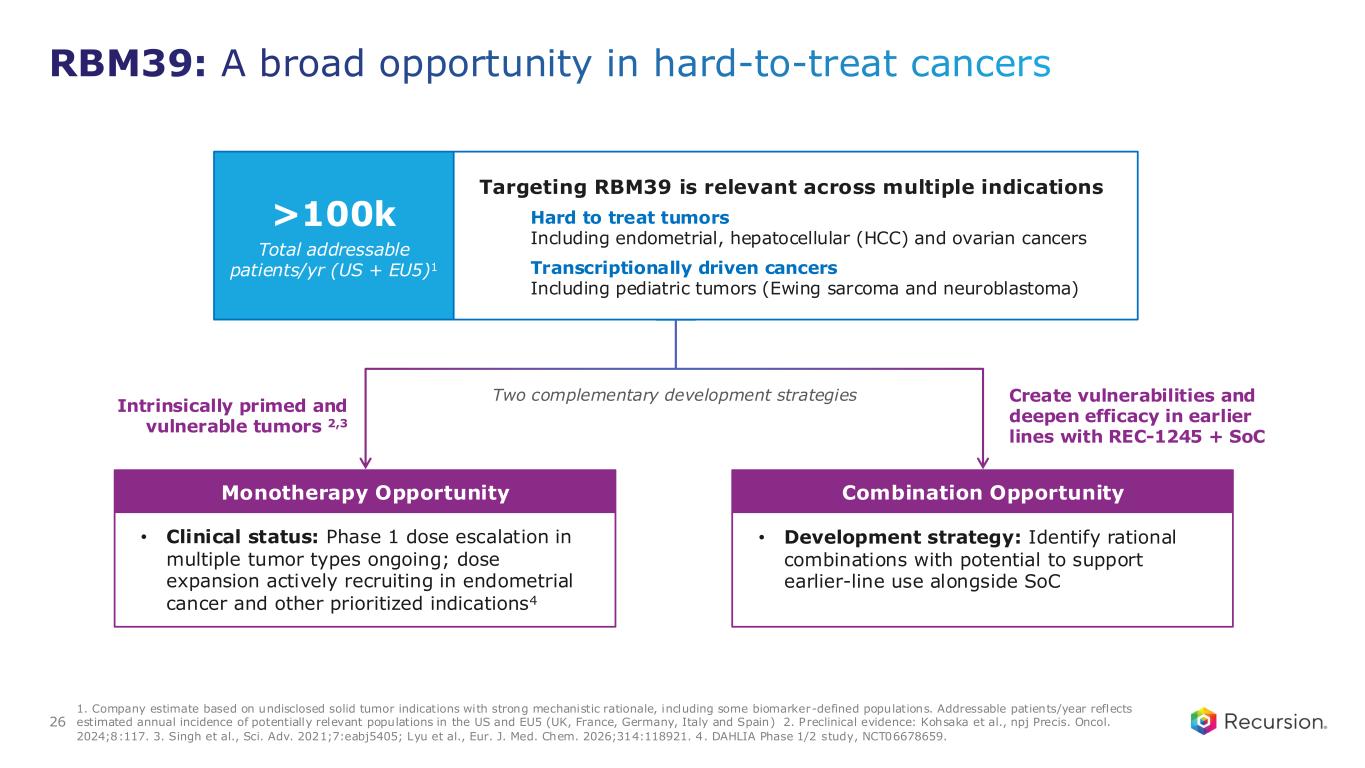
Monotherapy Opportunity Combination Opportunity RBM39: A broad opportunity in hard-to-treat cancers Targeting RBM39 is relevant across multiple indications Hard to treat tumors Including endometrial, hepatocellular (HCC) and ovarian cancers Transcriptionally driven cancers Including pediatric tumors (Ewing sarcoma and neuroblastoma) >100k Total addressable patients/yr (US + EU5)1 Two complementary development strategies Intrinsically primed and vulnerable tumors 2,3 Create vulnerabilities and deepen efficacy in earlier lines with REC-1245 + SoC • Clinical status: Phase 1 dose escalation in multiple tumor types ongoing; dose expansion actively recruiting in endometrial cancer and other prioritized indications4 • Development strategy: Identify rational combinations with potential to support earlier-line use alongside SoC 1. Company estimate based on undisclosed solid tumor indications with strong mechanistic rationale, including some biomarker-defined populations. Addressable patients/year reflects estimated annual incidence of potentially relevant populations in the US and EU5 (UK, France, Germany, Italy and Spain) 2. Preclinical evidence: Kohsaka et al., npj Precis. Oncol. 2024;8:117. 3. Singh et al., Sci. Adv. 2021;7:eabj5405; Lyu et al., Eur. J. Med. Chem. 2026;314:118921. 4. DAHLIA Phase 1/2 study, NCT06678659. 26
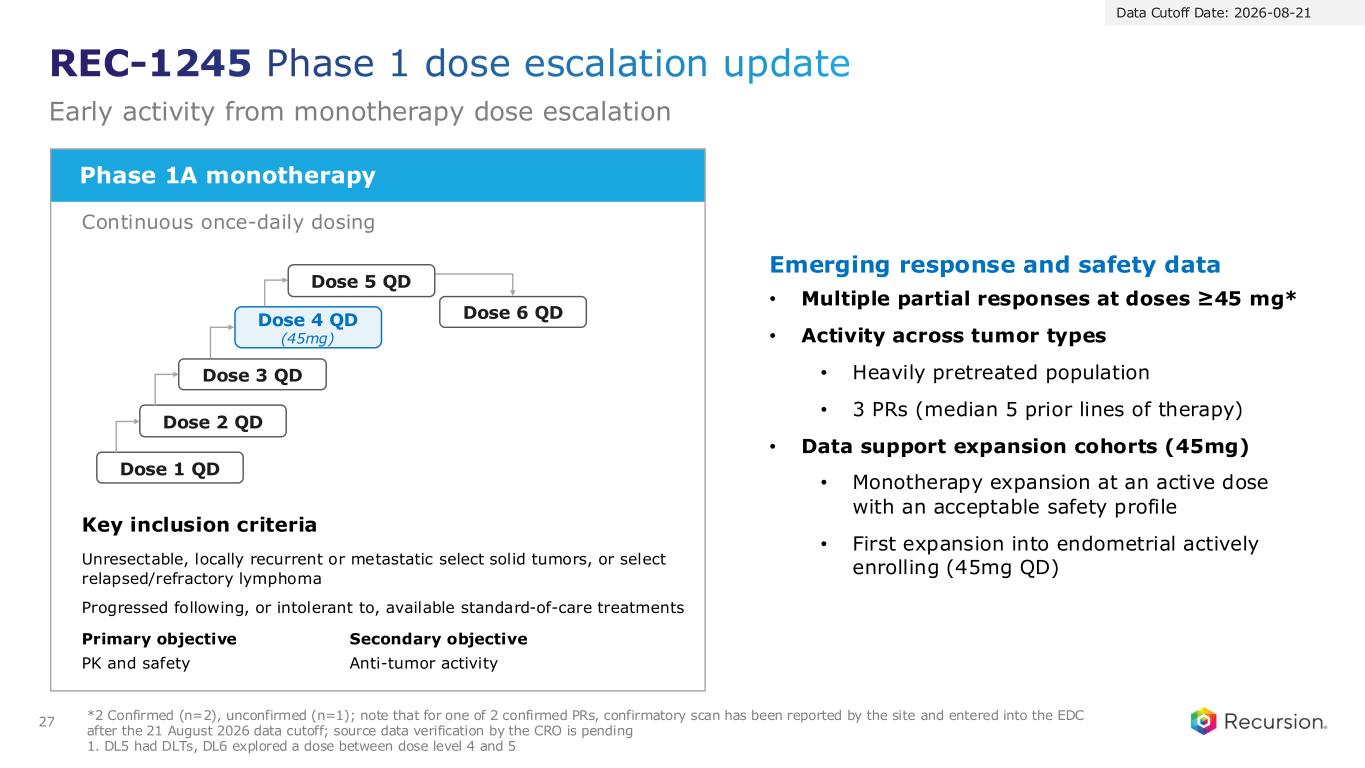
Phase 1A monotherapy Continuous once-daily dosing Key inclusion criteria Unresectable, locally recurrent or metastatic select solid tumors, or select relapsed/refractory lymphoma Progressed following, or intolerant to, available standard-of-care treatments Primary objective PK and safety Secondary objective Anti-tumor activity *2 Confirmed (n=2), unconfirmed (n=1); note that for one of 2 confirmed PRs, confirmatory scan has been reported by the site and entered into the EDC after the 21 August 2026 data cutoff; source data verification by the CRO is pending 1. DL5 had DLTs, DL6 explored a dose between dose level 4 and 5 Data Cutoff Date: 2026-08-21 REC-1245 Phase 1 dose escalation update Early activity from monotherapy dose escalation 27 Emerging response and safety data • Multiple partial responses at doses ≥45 mg* • Activity across tumor types • Heavily pretreated population • 3 PRs (median 5 prior lines of therapy) • Data support expansion cohorts (45mg) • Monotherapy expansion at an active dose with an acceptable safety profile • First expansion into endometrial actively enrolling (45mg QD) Dose 1 QD Dose 2 QD Dose 3 QD Dose 4 QD (45mg) Dose 6 QD Dose 5 QD
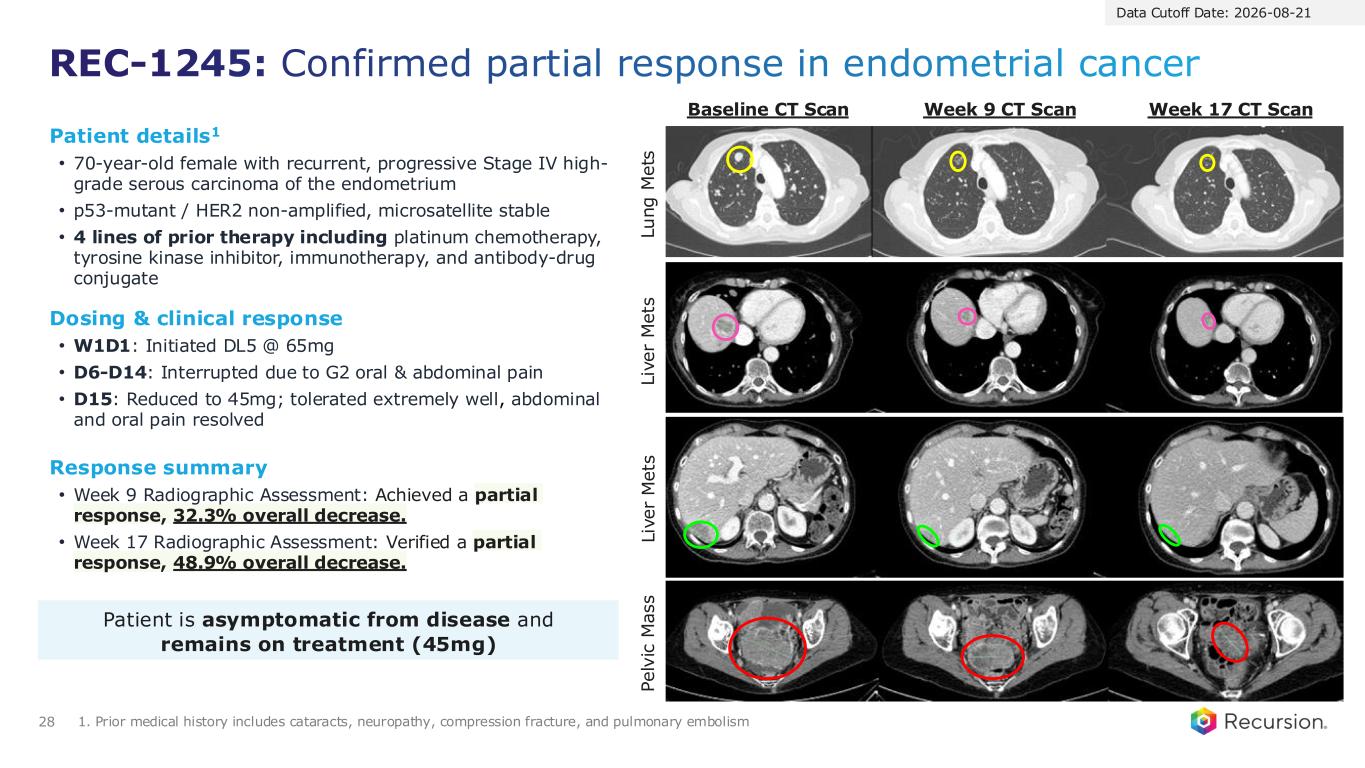
REC-1245: Confirmed partial response in endometrial cancer 28 1. Prior medical history includes cataracts, neuropathy, compression fracture, and pulmonary embolism Response summary • Week 9 Radiographic Assessment: Achieved a partial response, 32.3% overall decrease. • Week 17 Radiographic Assessment: Verified a partial response, 48.9% overall decrease. Patient details1 • 70-year-old female with recurrent, progressive Stage IV high- grade serous carcinoma of the endometrium • p53-mutant / HER2 non-amplified, microsatellite stable • 4 lines of prior therapy including platinum chemotherapy, tyrosine kinase inhibitor, immunotherapy, and antibody-drug conjugate Dosing & clinical response • W1D1: Initiated DL5 @ 65mg • D6-D14: Interrupted due to G2 oral & abdominal pain • D15: Reduced to 45mg; tolerated extremely well, abdominal and oral pain resolved Patient is asymptomatic from disease and remains on treatment (45mg) L iv e r M e ts P e lv ic M a s s L u n g M e ts L iv e r M e ts Baseline CT Scan Week 9 CT Scan Week 17 CT Scan Data Cutoff Date: 2026-08-21
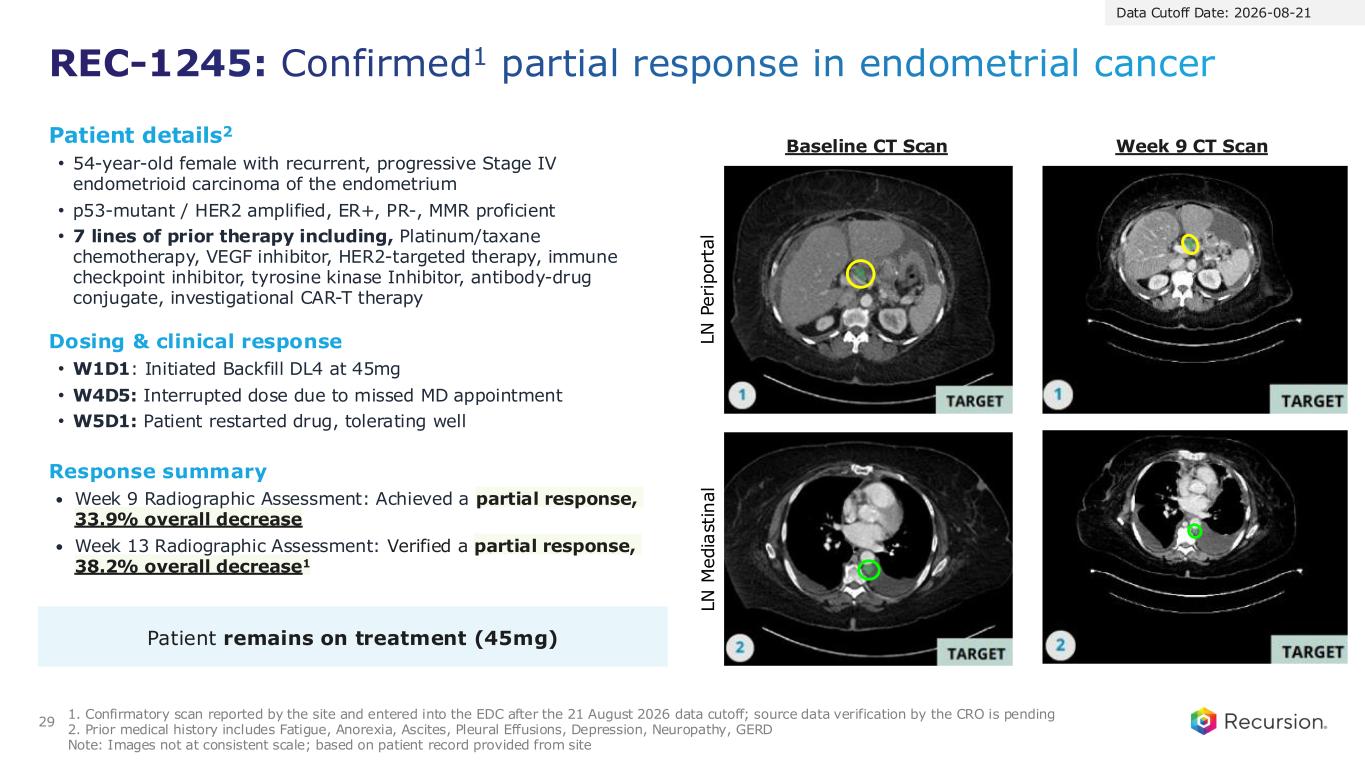
REC-1245: Confirmed1 partial response in endometrial cancer 29 1. Confirmatory scan reported by the site and entered into the EDC after the 21 August 2026 data cutoff; source data verification by the CRO is pending 2. Prior medical history includes Fatigue, Anorexia, Ascites, Pleural Effusions, Depression, Neuropathy, GERD Note: Images not at consistent scale; based on patient record provided from site Response summary • Week 9 Radiographic Assessment: Achieved a partial response, 33.9% overall decrease • Week 13 Radiographic Assessment: Verified a partial response, 38.2% overall decrease1 Patient details2 • 54-year-old female with recurrent, progressive Stage IV endometrioid carcinoma of the endometrium • p53-mutant / HER2 amplified, ER+, PR-, MMR proficient • 7 lines of prior therapy including, Platinum/taxane chemotherapy, VEGF inhibitor, HER2-targeted therapy, immune checkpoint inhibitor, tyrosine kinase Inhibitor, antibody-drug conjugate, investigational CAR-T therapy Dosing & clinical response • W1D1: Initiated Backfill DL4 at 45mg • W4D5: Interrupted dose due to missed MD appointment • W5D1: Patient restarted drug, tolerating well Patient remains on treatment (45mg) L N P e ri p o rt a l L N M e d ia st in a l Baseline CT Scan Week 9 CT Scan Data Cutoff Date: 2026-08-21
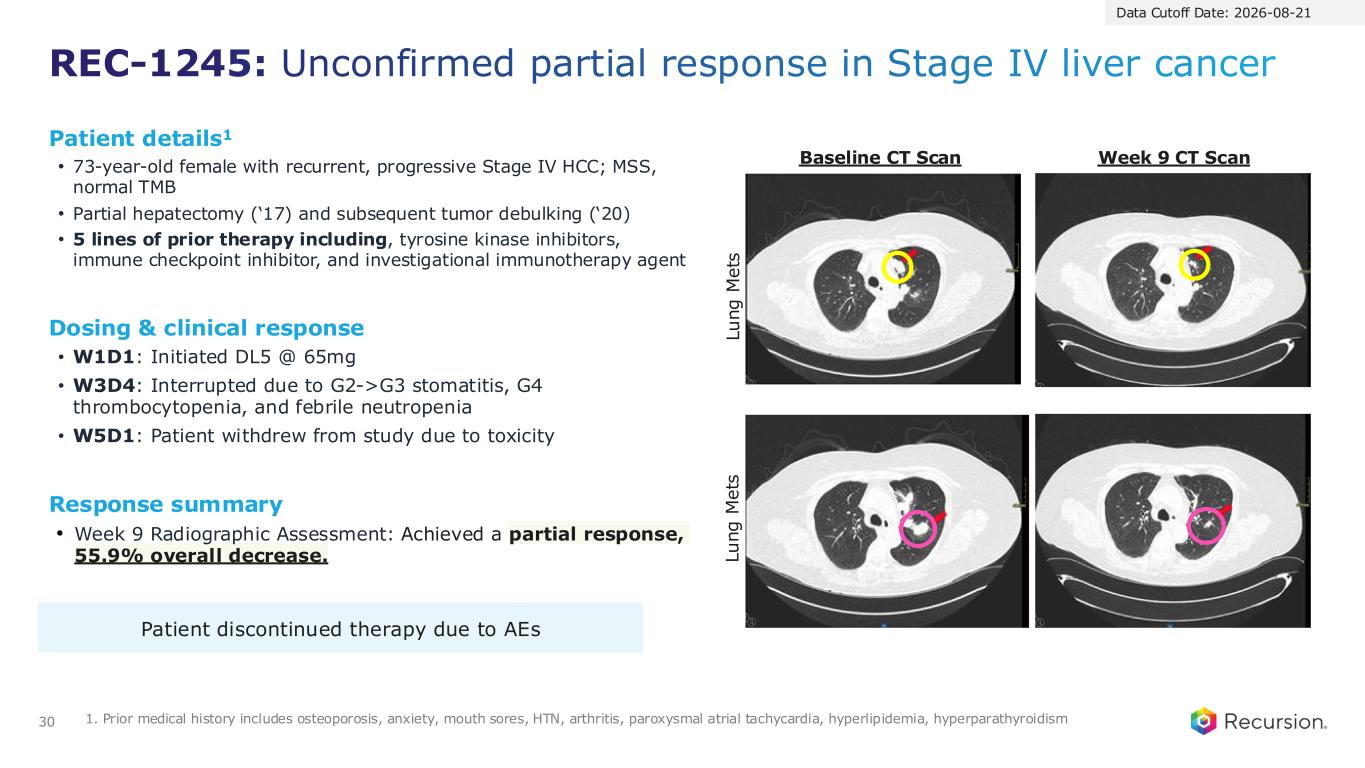
REC-1245: Unconfirmed partial response in Stage IV liver cancer 30 1. Prior medical history includes osteoporosis, anxiety, mouth sores, HTN, arthritis, paroxysmal atrial tachycardia, hyperlipidemia, hyperparathyroidism Response summary • Week 9 Radiographic Assessment: Achieved a partial response, 55.9% overall decrease. Patient details1 • 73-year-old female with recurrent, progressive Stage IV HCC; MSS, normal TMB • Partial hepatectomy (‘17) and subsequent tumor debulking (‘20) • 5 lines of prior therapy including, tyrosine kinase inhibitors, immune checkpoint inhibitor, and investigational immunotherapy agent Dosing & clinical response • W1D1: Initiated DL5 @ 65mg • W3D4: Interrupted due to G2->G3 stomatitis, G4 thrombocytopenia, and febrile neutropenia • W5D1: Patient withdrew from study due to toxicity Patient discontinued therapy due to AEs Baseline CT Scan L u n g M e ts L u n g M e ts Week 9 CT Scan Data Cutoff Date: 2026-08-21
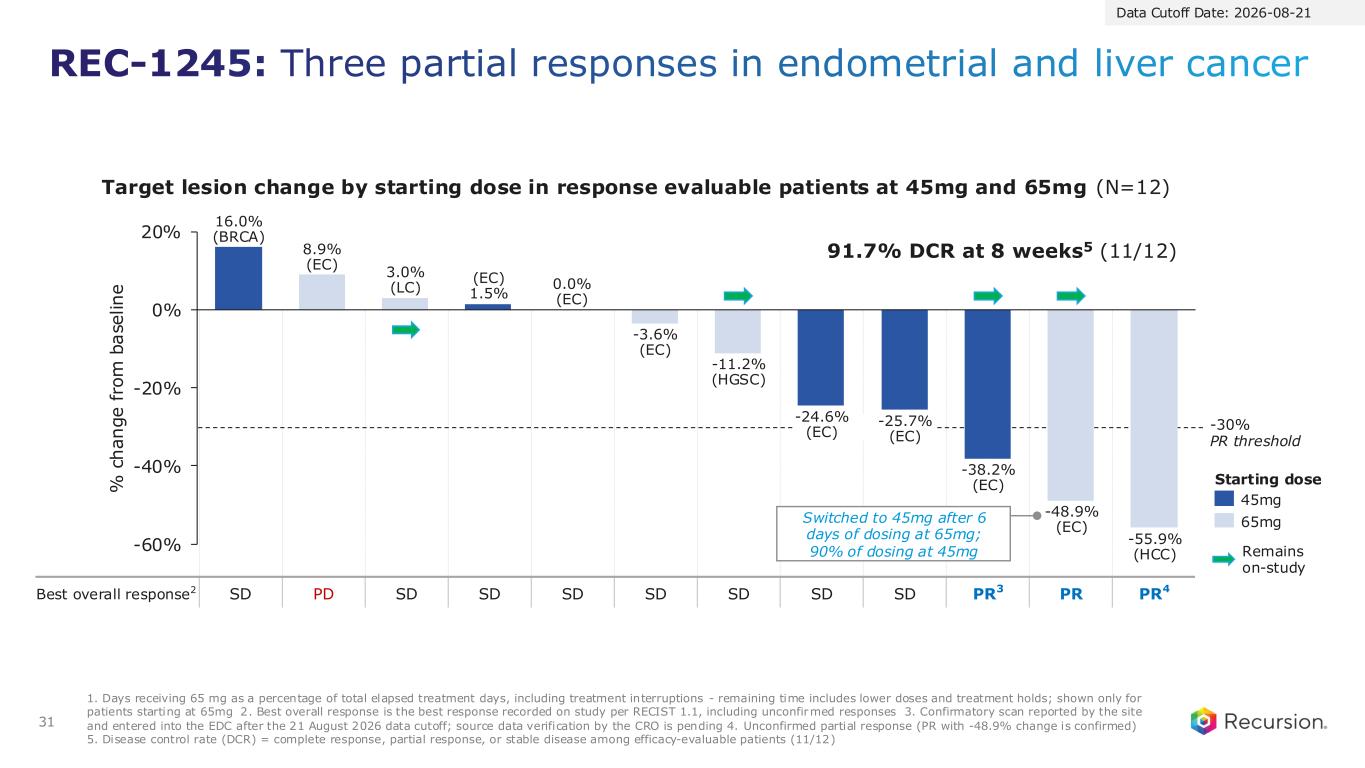
Best overall response2 SD PD SD SD SD SD SD SD SD PR3 PR PR4 REC-1245: Three partial responses in endometrial and liver cancer 31 -60% -40% -20% 0% 20% 16.0% (BRCA) 8.9% (EC) 3.0% (LC) (EC) 1.5% 0.0% (EC) -3.6% (EC) -11.2% (HGSC) -24.6% (EC) -25.7% (EC) -38.2% (EC) -48.9% (EC) -55.9% (HCC) 45mg 65mg Data Cutoff Date: 2026-08-21 % c h a n g e f ro m b a se li n e Remains on-study Target lesion change by starting dose in response evaluable patients at 45mg and 65mg (N=12) -30% PR threshold 1. Days receiving 65 mg as a percentage of total elapsed treatment days, including treatment interruptions - remaining time includes lower doses and treatment holds; shown only for patients starting at 65mg 2. Best overall response is the best response recorded on study per RECIST 1.1, including unconfirmed responses 3. Confirmatory scan reported by the site and entered into the EDC after the 21 August 2026 data cutoff; source data verification by the CRO is pending 4. Unconfirmed partial response (PR with -48.9% change is confirmed) 5. Disease control rate (DCR) = complete response, partial response, or stable disease among efficacy-evaluable patients (11/12) 91.7% DCR at 8 weeks5 (11/12) Switched to 45mg after 6 days of dosing at 65mg; 90% of dosing at 45mg Starting dose
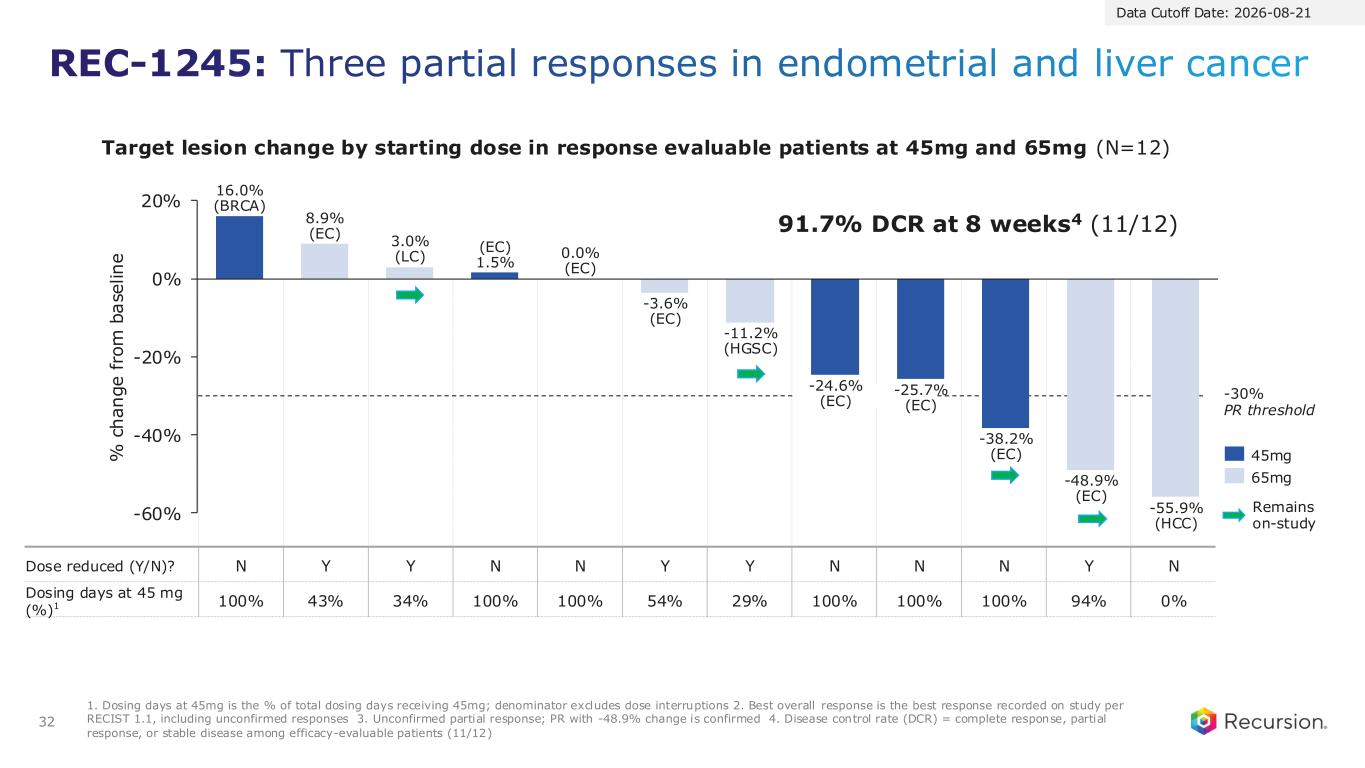
Dose reduced (Y/N)? N Y Y N N Y Y N N N Y N Dosing days at 45 mg (%)1 100% 43% 34% 100% 100% 54% 29% 100% 100% 100% 94% 0% REC-1245: Three partial responses in endometrial and liver cancer 32 -60% -40% -20% 0% 20% 16.0% (BRCA) 8.9% (EC) 3.0% (LC) (EC) 1.5% 0.0% (EC) -3.6% (EC) -11.2% (HGSC) -24.6% (EC) -25.7% (EC) -38.2% (EC) -48.9% (EC) -55.9% (HCC) 45mg 65mg Data Cutoff Date: 2026-08-21 % c h a n g e f ro m b a se li n e Remains on-study -30% PR threshold 1. Dosing days at 45mg is the % of total dosing days receiving 45mg; denominator excludes dose interruptions 2. Best overall response is the best response recorded on study per RECIST 1.1, including unconfirmed responses 3. Unconfirmed partial response; PR with -48.9% change is confirmed 4. Disease control rate (DCR) = complete response, partial response, or stable disease among efficacy-evaluable patients (11/12) 91.7% DCR at 8 weeks4 (11/12) Target lesion change by starting dose in response evaluable patients at 45mg and 65mg (N=12)
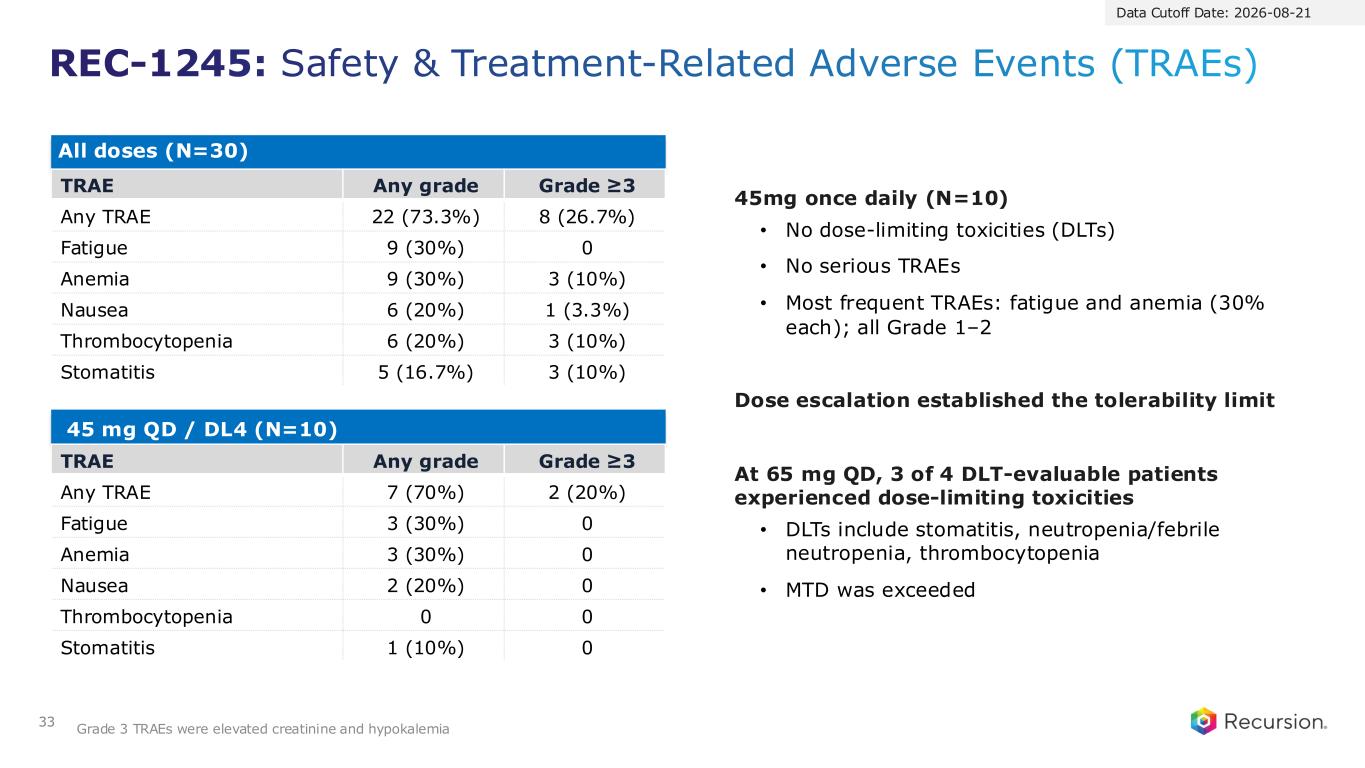
All doses (N=30) TRAE Any grade Grade ≥3 Any TRAE 22 (73.3%) 8 (26.7%) Fatigue 9 (30%) 0 Anemia 9 (30%) 3 (10%) Nausea 6 (20%) 1 (3.3%) Thrombocytopenia 6 (20%) 3 (10%) Stomatitis 5 (16.7%) 3 (10%) 45 mg QD / DL4 (N=10) TRAE Any grade Grade ≥3 Any TRAE 7 (70%) 2 (20%) Fatigue 3 (30%) 0 Anemia 3 (30%) 0 Nausea 2 (20%) 0 Thrombocytopenia 0 0 Stomatitis 1 (10%) 0 Data Cutoff Date: 2026-08-21 REC-1245: Safety & Treatment-Related Adverse Events (TRAEs) 33 Grade 3 TRAEs were elevated creatinine and hypokalemia 45mg once daily (N=10) • No dose-limiting toxicities (DLTs) • No serious TRAEs • Most frequent TRAEs: fatigue and anemia (30% each); all Grade 1–2 Dose escalation established the tolerability limit At 65 mg QD, 3 of 4 DLT-evaluable patients experienced dose-limiting toxicities • DLTs include stomatitis, neutropenia/febrile neutropenia, thrombocytopenia • MTD was exceeded
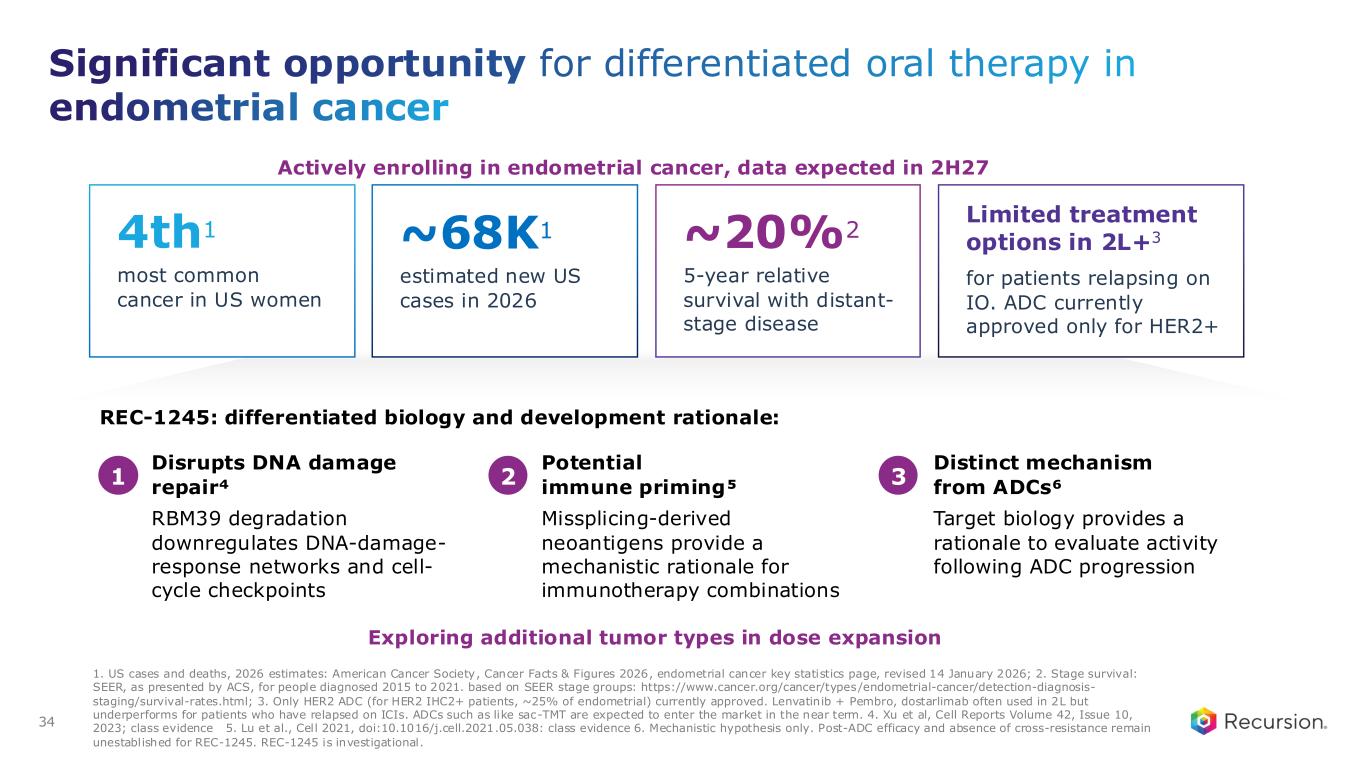
most common cancer in US women REC-1245: differentiated biology and development rationale: Disrupts DNA damage repair⁴ Potential immune priming⁵ Distinct mechanism from ADCs⁶ RBM39 degradation downregulates DNA-damage- response networks and cell- cycle checkpoints Missplicing-derived neoantigens provide a mechanistic rationale for immunotherapy combinations Target biology provides a rationale to evaluate activity following ADC progression 1. US cases and deaths, 2026 estimates: American Cancer Society, Cancer Facts & Figures 2026, endometrial cancer key statistics page, revised 14 January 2026; 2. Stage survival: SEER, as presented by ACS, for people diagnosed 2015 to 2021. based on SEER stage groups: https://www.cancer.org/cancer/types/endometrial-cancer/detection-diagnosis- staging/survival-rates.html; 3. Only HER2 ADC (for HER2 IHC2+ patients, ~25% of endometrial) currently approved. Lenvatinib + Pembro, dostarlimab often used in 2L but underperforms for patients who have relapsed on ICIs. ADCs such as like sac-TMT are expected to enter the market in the near term. 4. Xu et al, Cell Reports Volume 42, Issue 10, 2023; class evidence 5. Lu et al., Cell 2021, doi:10.1016/j.cell.2021.05.038: class evidence 6. Mechanistic hypothesis only. Post-ADC efficacy and absence of cross-resistance remain unestablished for REC-1245. REC-1245 is investigational. Significant opportunity for differentiated oral therapy in endometrial cancer 34 4th1 estimated new US cases in 2026 ~68K1 5-year relative survival with distant- stage disease ~20%2 for patients relapsing on IO. ADC currently approved only for HER2+ Limited treatment options in 2L+3 1 2 3 Actively enrolling in endometrial cancer, data expected in 2H27 Exploring additional tumor types in dose expansion

Partnerships Novel targets and programs Translating proof to products
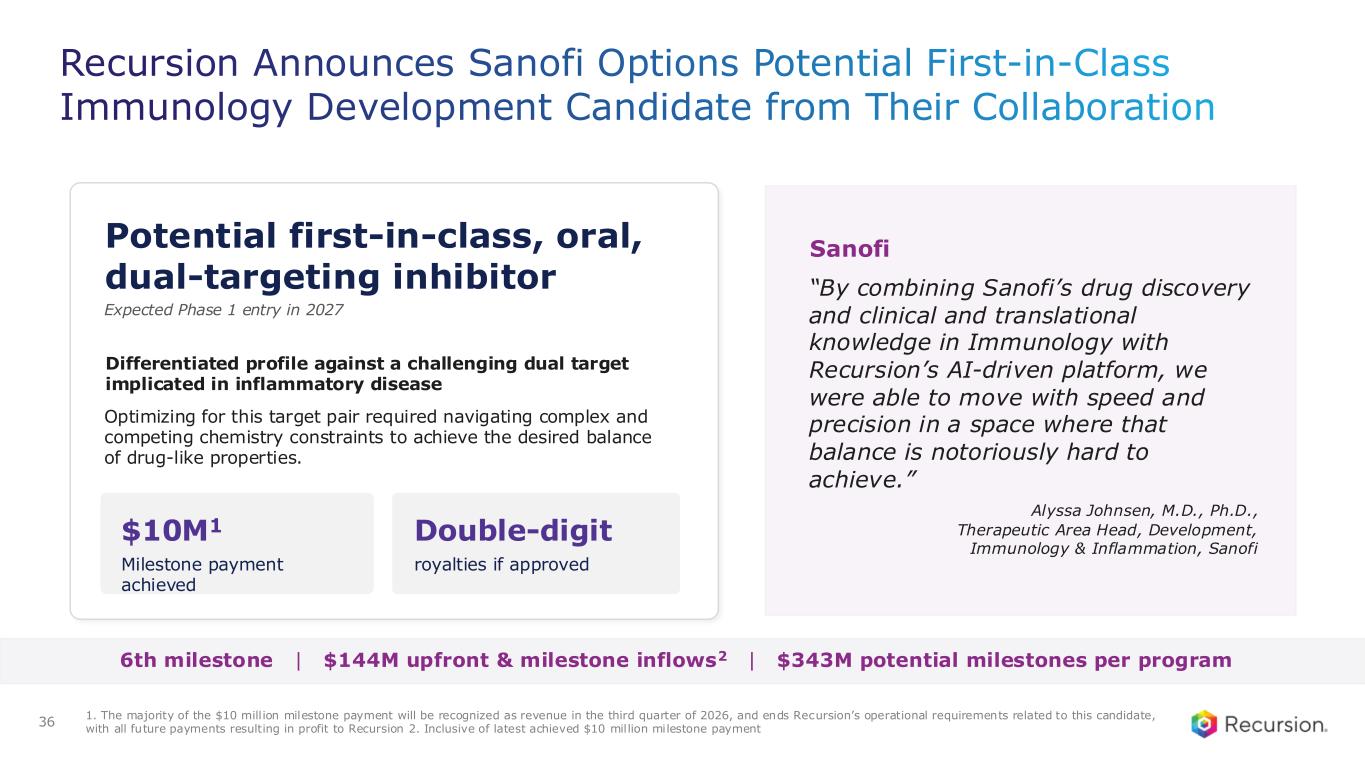
Recursion Announces Sanofi Options Potential First-in-Class Immunology Development Candidate from Their Collaboration 1. The majority of the $10 million milestone payment will be recognized as revenue in the third quarter of 2026, and ends Recursion’s operational requirements related to this candidate, with all future payments resulting in profit to Recursion 2. Inclusive of latest achieved $10 million milestone payment Potential first-in-class, oral, dual-targeting inhibitor $10M1 Milestone payment achieved Double-digit royalties if approved 36 Sanofi “By combining Sanofi’s drug discovery and clinical and translational knowledge in Immunology with Recursion’s AI-driven platform, we were able to move with speed and precision in a space where that balance is notoriously hard to achieve.” Alyssa Johnsen, M.D., Ph.D., Therapeutic Area Head, Development, Immunology & Inflammation, Sanofi 6th milestone | $144M upfront & milestone inflows2 | $343M potential milestones per program Expected Phase 1 entry in 2027 Differentiated profile against a challenging dual target implicated in inflammatory disease Optimizing for this target pair required navigating complex and competing chemistry constraints to achieve the desired balance of drug-like properties.
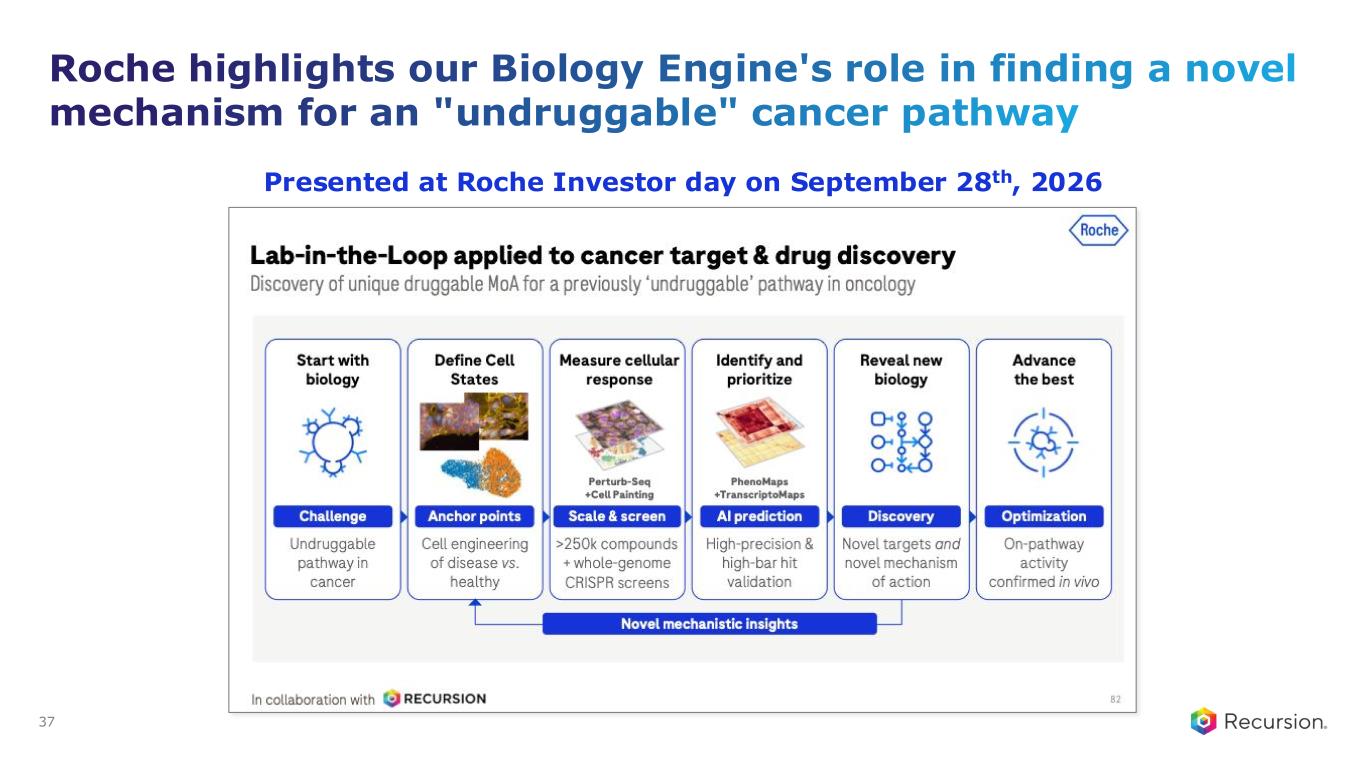
Roche highlights our Biology Engine's role in finding a novel mechanism for an "undruggable" cancer pathway Presented at Roche Investor day on September 28th, 2026 37
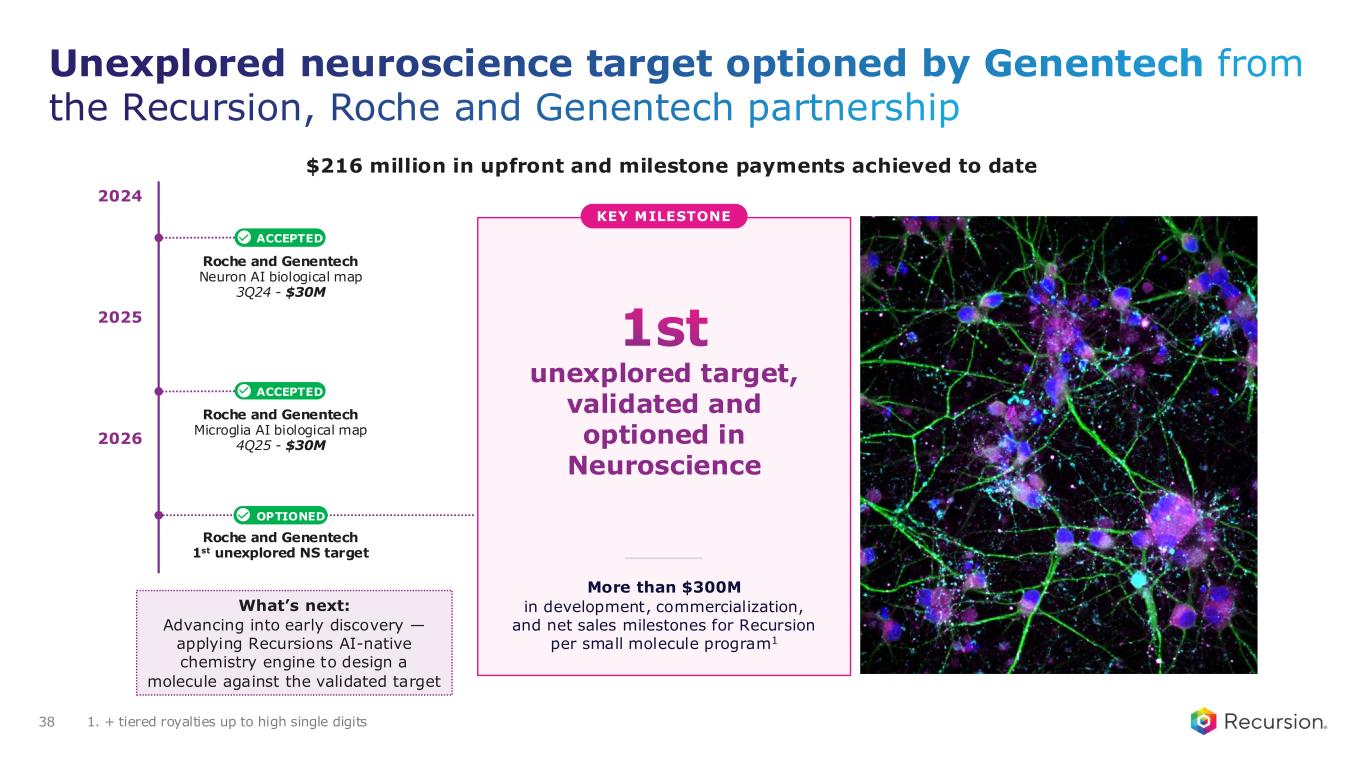
Unexplored neuroscience target optioned by Genentech from the Recursion, Roche and Genentech partnership 38 Roche and Genentech Neuron AI biological map 3Q24 - $30M Roche and Genentech Microglia AI biological map 4Q25 - $30M ACCEPTED ACCEPTED More than $300M in development, commercialization, and net sales milestones for Recursion per small molecule program1 OPTIONED 2026 2025 2024 Roche and Genentech 1st unexplored NS target What’s next: Advancing into early discovery — applying Recursions AI-native chemistry engine to design a molecule against the validated target 1st unexplored target, validated and optioned in Neuroscience KEY MILESTONE 1. + tiered royalties up to high single digits $216 million in upfront and milestone payments achieved to date
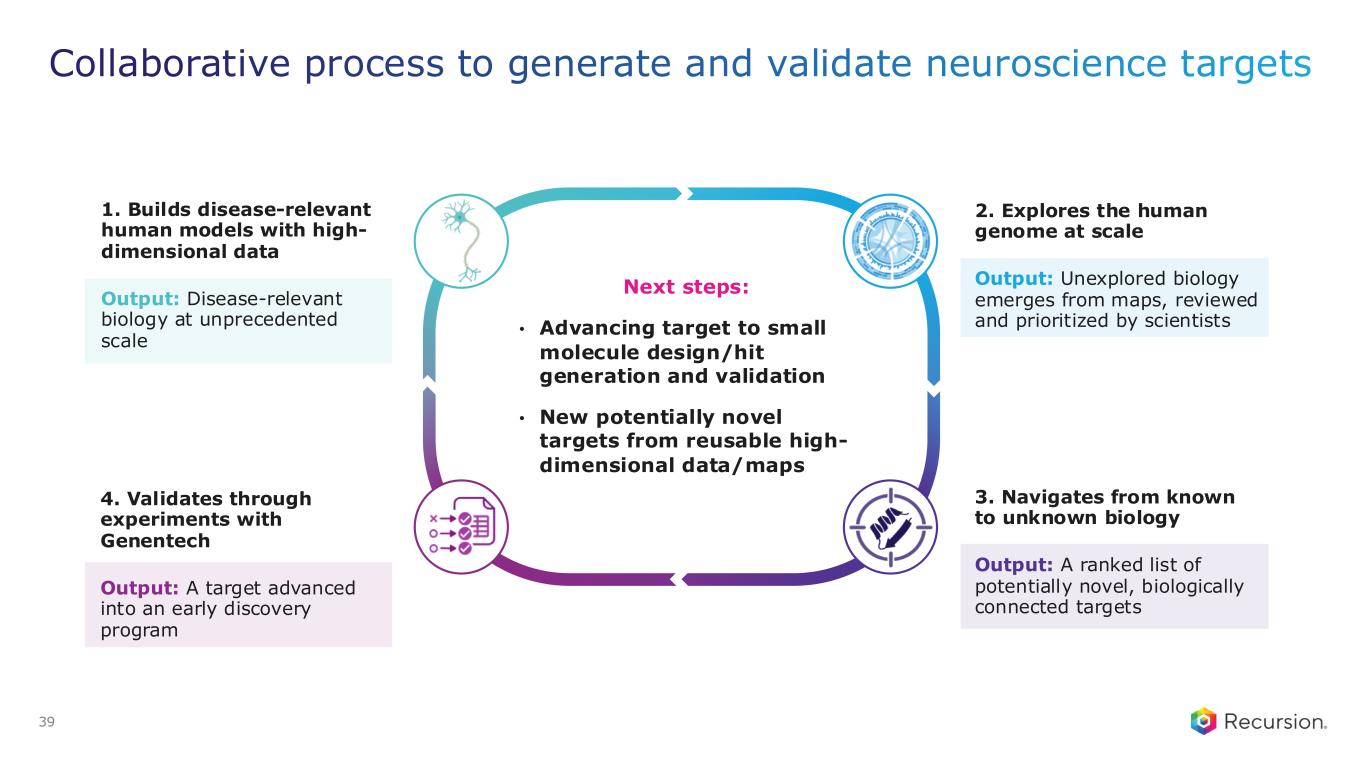
Collaborative process to generate and validate neuroscience targets 39 1. Builds disease-relevant human models with high- dimensional data Output: Disease-relevant biology at unprecedented scale 4. Validates through experiments with Genentech Output: A target advanced into an early discovery program 2. Explores the human genome at scale Output: Unexplored biology emerges from maps, reviewed and prioritized by scientists 3. Navigates from known to unknown biology Output: A ranked list of potentially novel, biologically connected targets Next steps: • Advancing target to small molecule design/hit generation and validation • New potentially novel targets from reusable high- dimensional data/maps
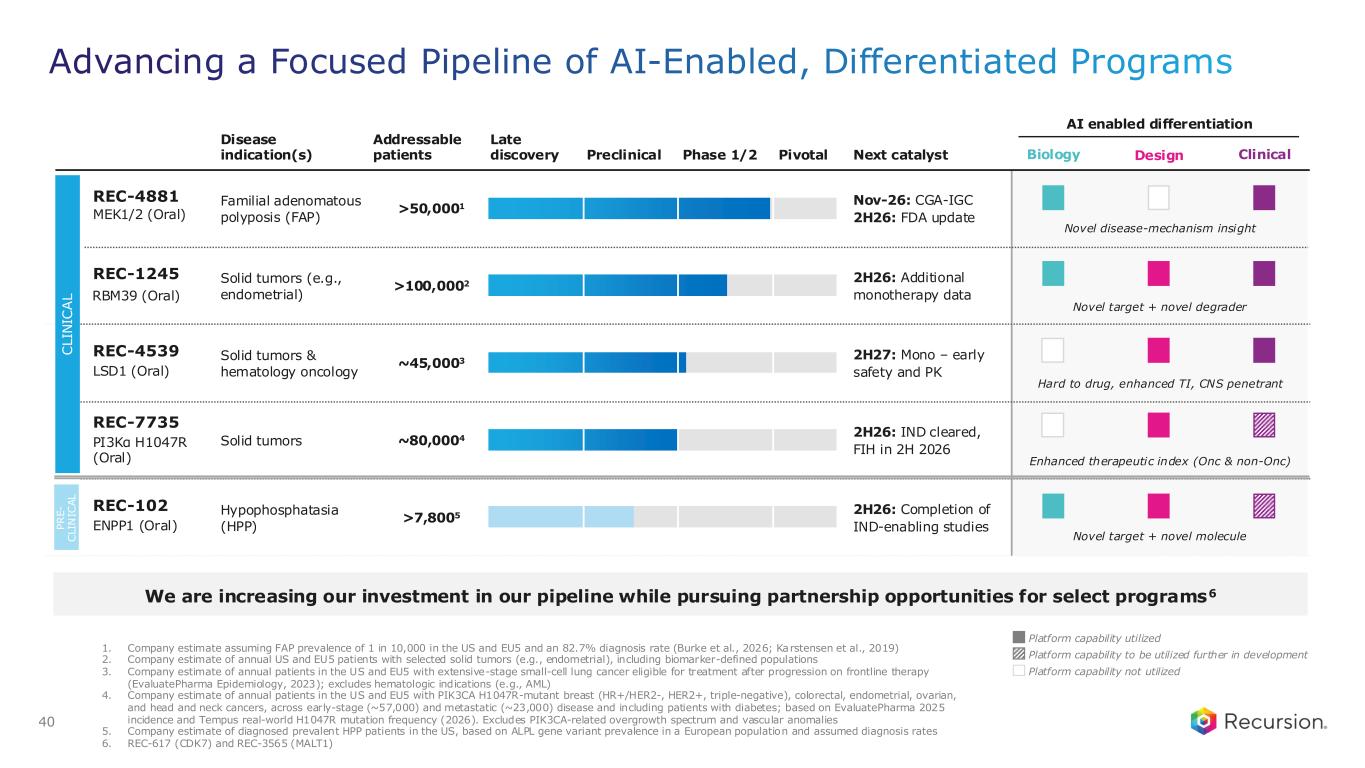
Advancing a Focused Pipeline of AI-Enabled, Differentiated Programs 40 Platform capability utilized Platform capability not utilized Platform capability to be utilized further in development Disease indication(s) Addressable patients Next catalyst AI enabled differentiation Late discovery Preclinical Phase 1/2 Pivotal Familial adenomatous polyposis (FAP) >50,0001 Nov-26: CGA-IGC 2H26: FDA update Solid tumors (e.g., endometrial) >100,0002 2H26: Additional monotherapy data Solid tumors & hematology oncology ~45,0003 2H27: Mono – early safety and PK Solid tumors ~80,0004 2H26: IND cleared, FIH in 2H 2026 Hypophosphatasia (HPP) >7,8005 2H26: Completion of IND-enabling studies C L IN IC A L P R E - C L IN IC A L Design Clinical REC-4881 MEK1/2 (Oral) REC-1245 RBM39 (Oral) REC-4539 LSD1 (Oral) REC-7735 PI3Kα H1047R (Oral) REC-102 ENPP1 (Oral) Biology Novel disease-mechanism insight Novel target + novel degrader Hard to drug, enhanced TI, CNS penetrant Enhanced therapeutic index (Onc & non-Onc) Novel target + novel molecule We are increasing our investment in our pipeline while pursuing partnership opportunities for select programs6 1. Company estimate assuming FAP prevalence of 1 in 10,000 in the US and EU5 and an 82.7% diagnosis rate (Burke et al., 2026; Karstensen et al., 2019) 2. Company estimate of annual US and EU5 patients with selected solid tumors (e.g., endometrial), including biomarker-defined populations 3. Company estimate of annual patients in the US and EU5 with extensive-stage small-cell lung cancer eligible for treatment after progression on frontline therapy (EvaluatePharma Epidemiology, 2023); excludes hematologic indications (e.g., AML) 4. Company estimate of annual patients in the US and EU5 with PIK3CA H1047R-mutant breast (HR+/HER2-, HER2+, triple-negative), colorectal, endometrial, ovarian, and head and neck cancers, across early-stage (~57,000) and metastatic (~23,000) disease and including patients with diabetes; based on EvaluatePharma 2025 incidence and Tempus real-world H1047R mutation frequency (2026). Excludes PIK3CA-related overgrowth spectrum and vascular anomalies 5. Company estimate of diagnosed prevalent HPP patients in the US, based on ALPL gene variant prevalence in a European population and assumed diagnosis rates 6. REC-617 (CDK7) and REC-3565 (MALT1)
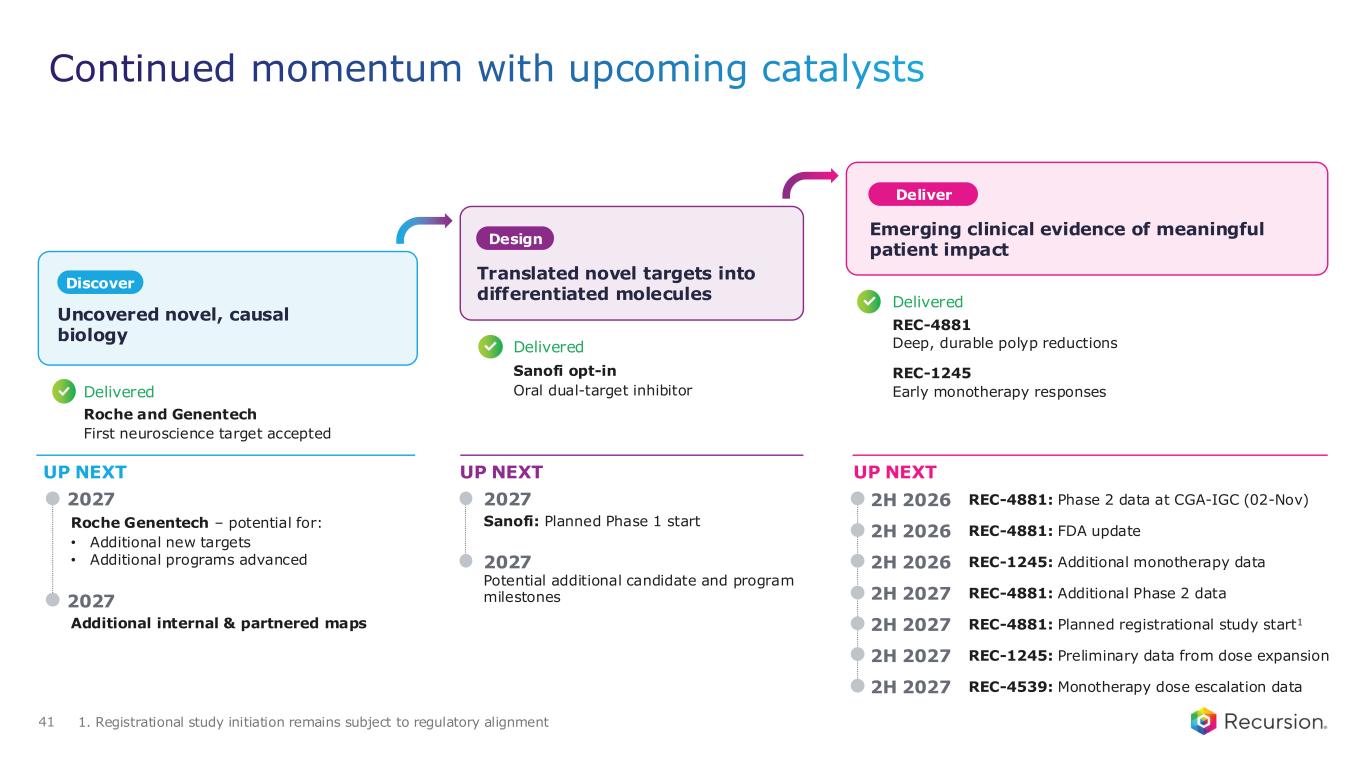
Sanofi: Planned Phase 1 start Continued momentum with upcoming catalysts 1. Registrational study initiation remains subject to regulatory alignment UP NEXT UP NEXT UP NEXT 2027 2027 2027 Potential additional candidate and program milestones 2H 2026 REC-4881: FDA update 2H 2027 REC-4881: Additional Phase 2 data 2H 2027 REC-4881: Planned registrational study start1 2H 2027 REC-1245: Preliminary data from dose expansion 2H 2027 REC-4539: Monotherapy dose escalation data Delivered Roche and Genentech First neuroscience target accepted Delivered Sanofi opt-in Oral dual-target inhibitor Delivered REC-4881 Deep, durable polyp reductions REC-1245 Early monotherapy responses Uncovered novel, causal biology Discover Design Translated novel targets into differentiated molecules Deliver Emerging clinical evidence of meaningful patient impact Roche Genentech – potential for: • Additional new targets • Additional programs advanced Additional internal & partnered maps 2027 2H 2026 REC-1245: Additional monotherapy data 2H 2026 REC-4881: Phase 2 data at CGA-IGC (02-Nov) 41
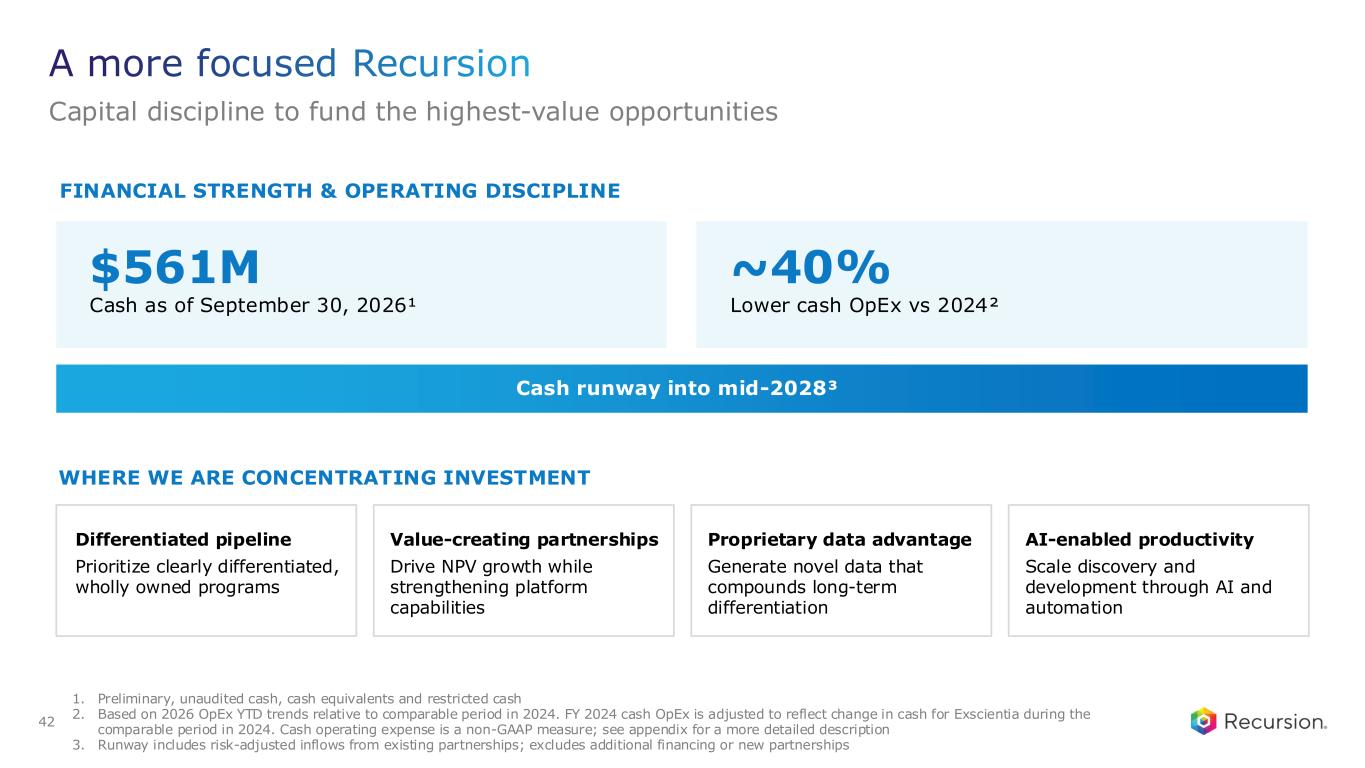
FINANCIAL STRENGTH & OPERATING DISCIPLINE $561M Cash as of September 30, 2026¹ ~40% Lower cash OpEx vs 2024² Cash runway into mid-2028³ WHERE WE ARE CONCENTRATING INVESTMENT Differentiated pipeline Prioritize clearly differentiated, wholly owned programs Value-creating partnerships Drive NPV growth while strengthening platform capabilities Proprietary data advantage Generate novel data that compounds long-term differentiation AI-enabled productivity Scale discovery and development through AI and automation A more focused Recursion Capital discipline to fund the highest-value opportunities 42 1. Preliminary, unaudited cash, cash equivalents and restricted cash 2. Based on 2026 OpEx YTD trends relative to comparable period in 2024. FY 2024 cash OpEx is adjusted to reflect change in cash for Exscientia during the comparable period in 2024. Cash operating expense is a non-GAAP measure; see appendix for a more detailed description 3. Runway includes risk-adjusted inflows from existing partnerships; excludes additional financing or new partnerships

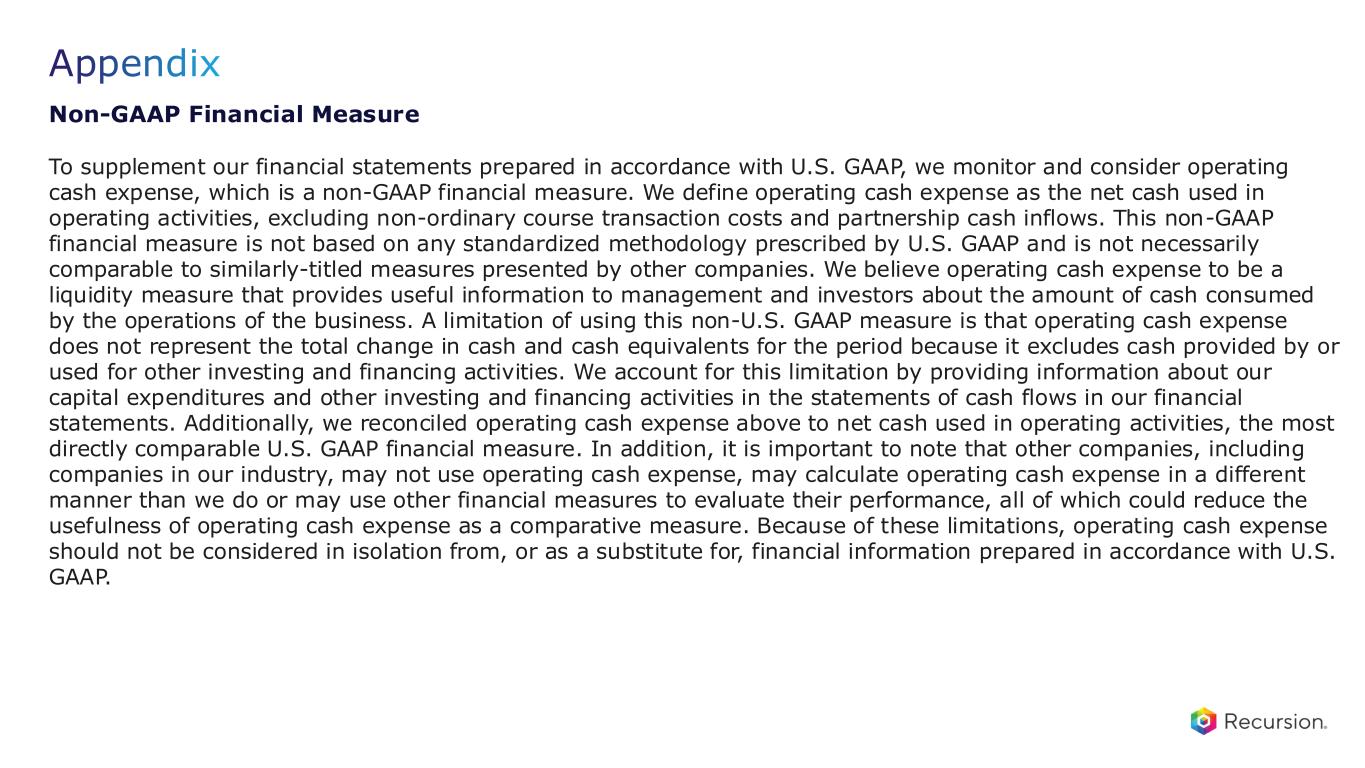
Appendix Non-GAAP Financial Measure To supplement our financial statements prepared in accordance with U.S. GAAP, we monitor and consider operating cash expense, which is a non-GAAP financial measure. We define operating cash expense as the net cash used in operating activities, excluding non-ordinary course transaction costs and partnership cash inflows. This non-GAAP financial measure is not based on any standardized methodology prescribed by U.S. GAAP and is not necessarily comparable to similarly-titled measures presented by other companies. We believe operating cash expense to be a liquidity measure that provides useful information to management and investors about the amount of cash consumed by the operations of the business. A limitation of using this non-U.S. GAAP measure is that operating cash expense does not represent the total change in cash and cash equivalents for the period because it excludes cash provided by or used for other investing and financing activities. We account for this limitation by providing information about our capital expenditures and other investing and financing activities in the statements of cash flows in our financial statements. Additionally, we reconciled operating cash expense above to net cash used in operating activities, the most directly comparable U.S. GAAP financial measure. In addition, it is important to note that other companies, including companies in our industry, may not use operating cash expense, may calculate operating cash expense in a different manner than we do or may use other financial measures to evaluate their performance, all of which could reduce the usefulness of operating cash expense as a comparative measure. Because of these limitations, operating cash expense should not be considered in isolation from, or as a substitute for, financial information prepared in accordance with U.S. GAAP.