
INDEX TO CONSOLIDATED FINANCIAL STATEMENTS
Audited consolidated financial statements — AC IMMUNE SA
2 | |
Consolidated Balance Sheets as of December 31, 2025 and 2024 | 8 |
9 | |
10 | |
Consolidated Statements of Cash Flows for the fiscal years ended December 31, 2025, 2024 and 2023 | 11 |
12 |
1

Report of the statutory auditor to the General Meeting of AC Immune SA, Ecublens
Report on the audit of the consolidated financial statements
Opinion
We have audited the consolidated financial statements of AC Immune SA and its subsidiary (the Group), which comprise the consolidated balance sheet as at December 31, 2025, and the consolidated statement of income/(loss), the consolidated statement of comprehensive income/(loss), the consolidated statement of changes in equity and the consolidated statement of cash flows for the year then ended, and notes to the consolidated financial statements, including material accounting policy information.
In our opinion, the accompanying consolidated financial statements give a true and fair view of the consolidated financial position of the Group as at December 31, 2025 and of its consolidated financial performance and its consolidated cash flows for the year then ended in accordance with IFRS Accounting Standards and comply with Swiss law.
Basis for opinion
We conducted our audit in accordance with Swiss law, International Standards on Auditing (ISA) and Swiss Standards on Auditing (SA-CH). Our responsibilities under those provisions and standards are further described in the 'Auditor’s responsibilities for the audit of the consolidated financial statements' section of our report. We are independent of the Group in accordance with the provisions of Swiss law and the requirements of the Swiss audit profession that are relevant to audits of the financial statements of public interest entities, as well as the International Code of Ethics for Professional Accountants (including International Independence Standards) issued by the International Ethics Standards Board for Accountants (IESBA Code), as applicable to audits of financial statements of public interest entities. We have also fulfilled our other ethical responsibilities in accordance with these requirements.
We believe that the audit evidence we have obtained is sufficient and appropriate to provide a basis for our opinion.
Our audit approach
|
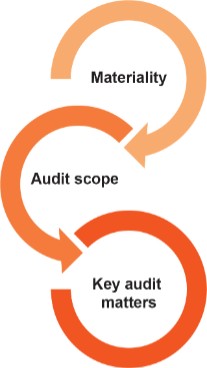
Overview
Overall group materiality: CHF 2,900 thousand
The entities addressed by our full scope audit work contribute to 99% of the Group’s total assets.
As key audit matter the following area of focus has been identified:
Intangible asset - valuation
|
Materiality
The scope of our audit was influenced by our application of materiality. Our audit opinion aims to provide reasonable assurance that the consolidated financial statements are free from material misstatement. Misstatements may arise due to fraud or error. They are considered material if, individually or in aggregate, they could reasonably be expected to influence the economic decisions of users taken on the basis of the consolidated financial statements.
Based on our professional judgement, we determined certain quantitative thresholds for materiality, including the overall Group materiality for the consolidated financial statements as a whole as set out in the table below. These, together with qualitative considerations, helped us to determine the scope of our audit and the nature, timing and extent of our audit procedures and to evaluate the effect of misstatements, both individually and in aggregate, on the consolidated financial statements as a whole.
| |
Overall group materiality | CHF 2,900 thousand |
| |
Benchmark applied | 3 years average loss before tax |
| |
Rationale for the materiality benchmark applied | Based on our analysis and professional judgement we determined that the average of 3 years loss before tax is the most appropriate benchmark. We chose the average of 3 years of loss before tax because it is the benchmark against which the performance of the Group is most commonly measured, and it is a generally accepted benchmark. In addition, in our view, the selected materiality threshold is aligned with investors and Audit & Finance Committee expectations. |
| |
2
We agreed with the Audit & Finance Committee that we would report to them misstatements above CHF 290 thousand identified during our audit as well as any misstatements below that amount which, in our view, warranted reporting for qualitative reasons.
Audit scope
We designed our audit by determining materiality and assessing the risks of material misstatement in the consolidated financial statements. In particular, we considered where subjective judgements were made; for example, in respect of significant accounting estimates that involved making assumptions and considering future events that are inherently uncertain. As in all of our audits, we also addressed the risk of management override of internal controls, including among other matters consideration of whether there was evidence of bias that represented a risk of material misstatement due to fraud.
We tailored the scope of our audit in order to perform sufficient work to enable us to provide an opinion on the consolidated financial statements as a whole, taking into account the structure of the Group, the accounting processes and controls, and the industry in which the Group operates.
Key audit matters
Key audit matters are those matters that, in our professional judgement, were of most significance in our audit of the consolidated financial statements of the current period. These matters were addressed in the context of our audit of the consolidated financial statements as a whole, and in forming our opinion thereon, and we do not provide a separate opinion on these matters.
Intangible asset - valuation
| |
Key audit matter | How our audit addressed the key audit matter |
| |
As described in Note 6 to the consolidated financial statements, the Company has CHF 50.4 million of an in-process research and development (IPR&D) intangible asset as of December 31, 2025. The asset is not yet ready for use until the asset obtains market approval. Therefore, in accordance with IAS 36 ‘Impairment of asset’, the IPR&D asset is reviewed at least annually for impairment by assessing the fair value less costs to sell (recoverable amount) and comparing this to the carrying value of the asset. The significant assumptions used in the model include anticipated research and development costs, anticipated costs of goods and sales and marketing expenditures, probability of achieving clinical and regulatory development milestones in accordance with certain industry benchmarks, target indication prevalence and incidence rates, anticipated market share, general commercialization expectations such as | Addressing the matter involved performing procedures and evaluating audit evidence in connection with forming our overall opinion on the consolidated financial statements. These procedures included testing the effectiveness of controls relating to management’s valuation of the intangible asset. These procedures also included, among others, (i) testing management’s process for developing the fair value estimate; (ii) evaluating the appropriateness of the discounted cash flow model; (iii) testing the completeness and accuracy of underlying data used in the model; and (iv) evaluating the reasonableness of the significant assumptions used by management related anticipated research and development costs, anticipated costs of goods and sales and marketing expenditures, probability of achieving clinical and regulatory development milestones in accordance with certain industry benchmarks, target |
4
anticipated pricing and uptake, expected patent life and market exclusivity periods, and the discount rate used to discount future cash flows. The Company’s valuation model calculates the risk-adjusted, net cash flows through the period of market exclusivity across target sales regions. The principal considerations for our determination that performing procedures relating to the intangible asset – valuation is a key audit matter are (i) the significant judgment by management when determining the value of the intangible asset; (ii) a high degree of auditor judgment, subjectivity and effort in performing procedures and evaluating the audit evidence obtained related to the valuation of the intangible asset and management’s assumptions related to anticipated research and development costs, anticipated costs of goods and sales and marketing expenditures, probability of achieving clinical and regulatory development milestones in accordance with certain industry benchmarks, target indication prevalence and incidence rates, anticipated market share, general commercialization expectations such as anticipated pricing and uptake, expected patent life and market exclusivity periods, and the discount rate used to discount future cash flows; and (iii) the audit effort involved the use of professionals with specialized skill and knowledge. | indication prevalence and incidence rates, anticipated market share, general commercialization expectations such as anticipated pricing and uptake, expected patent life and market exclusivity periods, and the discount rate. Evaluating management’s assumptions related to anticipated research and development costs, anticipated costs of goods and sales and marketing expenditures, probability of achieving clinical and regulatory development milestones in accordance with certain industry benchmarks, target indication prevalence and incidence rates, anticipated market share, general commercialization expectations such as anticipated pricing and uptake, expected patent life and market exclusivity periods, involved evaluating whether the assumptions used by management were reasonable considering (i) the consistency with market and industry data; and (ii) whether these assumptions were consistent with evidence obtained in other areas of the audit. Professionals with specialized skill and knowledge were used to assist in the evaluation of the Company’s discounted cash flow model and the discount rate assumption. |
| |
Other information
The Board of Directors is responsible for the other information. The other information comprises the information included in the annual report, but does not include the financial statements, the consolidated financial statements, the compensation report and our auditor’s reports thereon.
Our opinion on the consolidated financial statements does not cover the other information and we do not express any form of assurance conclusion thereon.
In connection with our audit of the consolidated financial statements, our responsibility is to read the other information and, in doing so, consider whether the other information is materially inconsistent with the consolidated financial statements or our knowledge obtained in the audit or otherwise appears to be materially misstated.
5
If, based on the work we have performed, we conclude that there is a material misstatement of this other information, we are required to report that fact. We have nothing to report in this regard.
Board of Directors’ responsibilities for the consolidated financial statements
The Board of Directors is responsible for the preparation of consolidated financial statements, that give a true and fair view in accordance with IFRS Accounting Standards and the provisions of Swiss law, and for such internal control as the Board of Directors determines is necessary to enable the preparation of consolidated financial statements that are free from material misstatement, whether due to fraud or error.
In preparing the consolidated financial statements, the Board of Directors is responsible for assessing the Group’s ability to continue as a going concern, disclosing, as applicable, matters related to going concern and using the going concern basis of accounting unless the Board of Directors either intends to liquidate the Group or to cease operations, or has no realistic alternative but to do so.
Auditor’s responsibilities for the audit of the consolidated financial statements
Our objectives are to obtain reasonable assurance about whether the consolidated financial statements as a whole are free from material misstatement, whether due to fraud or error, and to issue an auditor’s report that includes our opinion. Reasonable assurance is a high level of assurance, but is not a guarantee that an audit conducted in accordance with Swiss law, ISA and SA-CH will always detect a material misstatement when it exists. Misstatements can arise from fraud or error and are considered material if, individually or in the aggregate, they could reasonably be expected to influence the economic decisions of users taken on the basis of these consolidated financial statements.
As part of an audit in accordance with Swiss law, ISA and SA-CH, we exercise professional judgement and maintain professional scepticism throughout the audit. We also:
| ● | Evaluate the appropriateness of accounting policies used and the reasonableness of accounting estimates and related disclosures made. |
6
| our opinion. Our conclusions are based on the audit evidence obtained up to the date of our auditor’s report. However, future events or conditions may cause the Group to cease to continue as a going concern. |
We communicate with the Board of Directors or its relevant committee regarding, among other matters, the planned scope and timing of the audit and significant audit findings, including any significant deficiencies in internal control that we identify during our audit.
We also provide the Board of Directors or its relevant committee with a statement that we have complied with relevant ethical requirements regarding independence, and communicate with them regarding all relationships and other matters that may reasonably be thought to bear on our independence, and where applicable, actions taken to eliminate threats or safeguards applied.
From the matters communicated with the Board of Directors or its relevant committee, we determine those matters that were of most significance in the audit of the consolidated financial statements of the current period and are therefore the key audit matters. We describe these matters in our auditor’s report unless law or regulation precludes public disclosure about the matter or when, in extremely rare circumstances, we determine that a matter should not be communicated in our report because the adverse consequences of doing so would reasonably be expected to outweigh the public interest benefits of such communication.
Report on other legal and regulatory requirements
In accordance with article 728a para. 1 item 3 CO and PS-CH 890, we confirm the existence of an internal control system that has been designed, pursuant to the instructions of the Board of Directors, for the preparation of the consolidated financial statements.
We recommend that the consolidated financial statements submitted to you be approved.
PricewaterhouseCoopers SA
/s/ Alex Fuhrer | /s/ Thomas Kohler |
Licensed audit expert | Licensed audit expert |
Auditor in charge |
|
Lausanne, March 13, 2026
7
Consolidated Financial Statements (IFRS Accounting Standards)
AC Immune SA
(In CHF thousands)
| | | | As of | ||
| | | | December 31, | ||
| | Note | | 2025 | | 2024 |
Assets |
| |
| |
| |
Non-current assets |
| |
| |
| |
Property, plant and equipment |
| 4 |
| 1,989 |
| 2,651 |
Right-of-use assets |
| 5 |
| 4,540 |
| 5,437 |
Intangible asset |
| 6 |
| 50,416 |
| 50,416 |
Long-term financial assets |
| 5 |
| 584 |
| 415 |
Total non-current assets | | |
| 57,529 |
| 58,919 |
| | | | | | |
Current assets | | |
| |
| |
Prepaid expenses |
| 8 |
| 3,972 |
| 4,302 |
Accrued income |
| 8/13 |
| 360 |
| 1,099 |
Other current receivables |
| 10 |
| 978 |
| 1,104 |
Short-term financial assets |
| 7 |
| 64,617 |
| 129,214 |
Cash and cash equivalents |
| 7 |
| 26,795 |
| 36,275 |
Total current assets | | |
| 96,722 |
| 171,994 |
Total assets | | |
| 154,251 |
| 230,913 |
| | | | | | |
Shareholders' equity and liabilities | | |
| |
| |
| | | | | | |
Shareholders’ equity | | |
| |
| |
Share capital |
| 11 |
| 2,253 |
| 2,226 |
Share premium |
| 11 |
| 481,863 |
| 478,506 |
Treasury shares |
| 11 |
| (218) |
| (218) |
Currency translation differences | | | | 7 | | (5) |
Accumulated losses | | |
| (439,021) |
| (368,239) |
Total shareholders’ equity | | |
| 44,884 |
| 112,270 |
| | | | | | |
Non-current liabilities | | |
| |
| |
Long-term deferred contract revenue | | 13 | | 2,339 | | 4,560 |
Long-term lease liabilities |
| 5 |
| 3,689 |
| 4,401 |
Net employee defined benefit liabilities |
| 17 |
| 8,646 |
| 8,844 |
Total non-current liabilities | | |
| 14,674 |
| 17,805 |
| | | | | | |
Current liabilities | | |
| |
| |
Trade and other payables |
| 12 |
| 2,068 |
| 2,658 |
Accrued expenses |
| 9/12 |
| 8,067 |
| 12,098 |
Short-term deferred contract revenue | | 13 | | 83,706 | | 85,056 |
Short-term lease liabilities |
| 5 |
| 852 |
| 1,026 |
Total current liabilities | | |
| 94,693 |
| 100,838 |
Total liabilities | | |
| 109,367 |
| 118,643 |
Total shareholders’ equity and liabilities | | |
| 154,251 |
| 230,913 |
The accompanying notes are an integral part of these consolidated financial statements.
8
AC Immune SA
Consolidated Statements of Income/(Loss)
(In CHF thousands, except for per-share data)
| | | | For the Year Ended | ||||
| | | | December 31, | ||||
| | Note | | 2025 | | 2024 | | 2023 |
Revenue | | | | | | | | |
Contract revenue |
| 13 |
| 3,573 |
| 27,309 |
| 14,801 |
Total revenue | | |
| 3,573 |
| 27,309 |
| 14,801 |
| | |
| |
| |
| |
Operating expenses | | |
| |
| |
| |
Research & development expenses |
| 14 |
| (56,436) |
| (62,570) |
| (54,606) |
General & administrative expenses |
| 14 |
| (16,094) |
| (17,259) | | (15,305) |
Other operating income/(expense), net |
| 13.2 |
| 94 |
| 142 |
| 1,486 |
Restructuring expenses, net | | 9 | | (455) |
| — |
| — |
Total operating expenses | | |
| (72,891) |
| (79,687) |
| (68,425) |
Operating loss | | |
| (69,318) |
| (52,378) |
| (53,624) |
| | | | | | | | |
Financial income |
| 14 |
| 1,865 |
| 3,196 |
| 1,044 |
Financial expense |
| 14 |
| (191) |
| (133) |
| (176) |
Exchange differences |
| 14 |
| (2,803) |
| (1,598) |
| (1,467) |
Finance result, net | | |
| (1,129) |
| 1,465 |
| (599) |
| | | | | | | | |
Loss before tax | | |
| (70,447) |
| (50,913) |
| (54,223) |
Income tax expense |
| 16 |
| — |
| (3) |
| (10) |
Loss for the period | | |
| (70,447) |
| (50,916) |
| (54,233) |
| | | | | | | | |
Loss per share: | | |
| |
| |
| |
Basic and diluted loss for the period attributable to equity holders |
| 20 |
| (0.70) |
| (0.51) |
| (0.64) |
Consolidated Statements of Comprehensive Income/(Loss)
(In CHF thousands)
| | | | For the Year Ended | ||||
| | | | December 31, | ||||
| | Note | | 2025 | | 2024 | | 2023 |
Loss for the period | | |
| (70,447) |
| (50,916) |
| (54,233) |
Items that may be reclassified to income or loss in subsequent periods (net of tax): | | |
| |
| |
| |
Currency translation differences | | |
| 12 |
| 46 |
| (61) |
Items that will not to be reclassified to income or loss in subsequent periods (net of tax): | | |
| |
| |
| |
Remeasurement gains/(losses) on defined-benefit plans (net of tax) |
| 17 |
| (1,353) |
| (3,084) |
| (1,669) |
Other comprehensive income/(loss) | | |
| (1,341) |
| (3,038) |
| (1,730) |
Total comprehensive loss, net of tax | | |
| (71,788) |
| (53,954) |
| (55,963) |
The accompanying notes are an integral part of these consolidated financial statements.
9
AC Immune SA
Consolidated Statements of Changes in Equity
(In CHF thousands)
| | | | | | | | | | | | Currency | | |
| | | | Share | | Share | | Treasury | | Accumulated | | translation | | |
| | Note | | capital | | premium | | shares | | losses | | differences | | Total |
Balance as of January 1, 2023 | | |
| 1,797 |
| 431,323 |
| (124) |
| (264,015) | | 10 |
| 168,991 |
Loss for the period | | |
| — | | — | | — | | (54,233) | | — | | (54,233) |
Other comprehensive loss | | 17 |
| — |
| — |
| — |
| (1,669) | | (61) |
| (1,730) |
Total comprehensive loss | | |
| — |
| — |
| — |
| (55,902) | | (61) |
| (55,963) |
| | |
| | | | | | | | | | | |
Share-based payments |
| 18 |
| — |
| — |
| — |
| 4,365 | | — |
| 4,365 |
Proceeds from public offerings, net of underwriting fees, transaction costs and stamp duty | | 11 | | 286 | | 40,249 | | — | | — | | — | | 40,535 |
Proceeds from sale of treasury shares in public offerings, net of underwriting fees and transaction costs |
| 11 |
| — |
| 2,631 |
| 19 |
| — | | — |
| 2,650 |
Issuance of shares, net of transaction costs: |
| | | |
| |
| |
| | | |
| |
Restricted share awards |
| 18 |
| 5 | | 645 |
| — |
| (645) | | — |
| 5 |
Exercise of options |
| 18 |
| 1 |
| 59 |
| — |
| — | | — |
| 60 |
Balance as of December 31, 2023 | | |
| 2,089 |
| 474,907 |
| (105) |
| (316,197) | | (51) |
| 160,643 |
| | | | | | | | | | | | Currency | | |
| | | | Share | | Share | | Treasury | | Accumulated | | translation | | |
| | Note | | capital | | premium | | shares | | losses | | differences | | Total |
Balance as of January 1, 2024 | | |
| 2,089 |
| 474,907 |
| (105) |
| (316,197) | | (51) |
| 160,643 |
Loss for the period | | |
| — | | — | | — | | (50,916) | | — | | (50,916) |
Other comprehensive loss | | 17 |
| — |
| — |
| — |
| (3,084) | | 46 |
| (3,038) |
Total comprehensive loss | | |
| — |
| — |
| — |
| (54,000) | | 46 |
| (53,954) |
| | |
| | | | | | | | | | | |
Share-based payments |
| 18 |
| — |
| — |
| — |
| 5,470 |
| — |
| 5,470 |
Proceeds from public offerings, net of underwriting fees, transaction costs and stamp duty | | 11 | | — | | 103 | | 1 | | — | | — | | 104 |
Proceeds from sale of treasury shares in public offerings, net of underwriting fees and transaction costs |
| 11 | | 114 | | — | | (114) | | — | | — | | — |
Issuance of shares, net of transaction costs: |
| | | |
| |
| |
| |
| |
| |
Restricted share awards |
| 18 |
| 23 |
| 3,489 |
| — |
| (3,512) |
| — |
| — |
Exercise of options |
| 18 |
| 0 |
| 7 |
| — |
| — |
| — |
| 7 |
Balance as of December 31, 2024 |
| |
| 2,226 |
| 478,506 |
| (218) |
| (368,239) | | (5) |
| 112,270 |
| | | | | | | | | | | | Currency | | |
| | | | Share | | Share | | Treasury | | Accumulated | | translation | | |
| | Note | | capital | | premium | | shares | | losses | | differences | | Total |
Balance as of January 1, 2025 | | | | 2,226 | | 478,506 | | (218) | | (368,239) | | (5) | | 112,270 |
Loss for the period | | | | — | | — | | — | | (70,447) | | — | | (70,447) |
Other comprehensive income/(loss) |
| 17 | | — | | — | | — | | (1,353) | | 12 | | (1,341) |
Total comprehensive loss | | | | — | | — | | — | | (71,800) | | 12 | | (71,788) |
| | | | | | | | | | | | | | |
Share-based payments | | 18 | | — | | — | | — | | 4,396 | | — | | 4,396 |
Issuance of shares, net of transaction costs: | | | | | | | | | | | | | | |
Restricted share awards | | 18 | | 26 | | 3,352 | | — | | (3,378) | | — | | — |
Exercise of options | | 18 | | 1 | | 5 | | — | | — | | — | | 6 |
Balance as of December 31, 2025 | | | | 2,253 | | 481,863 | | (218) | | (439,021) | | 7 | | 44,884 |
The accompanying notes are an integral part of these consolidated financial statements.
10
AC Immune SA
Consolidated Statements of Cash Flows
(In CHF thousands)
| | For the Year Ended | ||||||
| | December 31, | ||||||
| | Note | | 2025 | | 2024 | | 2023 |
Operating activities | | | | | | | | |
Loss for the period | | |
| (70,447) |
| (50,916) | | (54,233) |
Adjustments to reconcile net loss for the period to net cash flows: | | |
| |
| |
| |
Depreciation of property, plant and equipment |
| 4 |
| 1,393 |
| 1,485 |
| 1,672 |
Depreciation of right-of-use assets |
| 5 |
| 1,110 |
| 677 |
| 543 |
Finance (income)/expense, net |
| 14 |
| 803 |
| 57 |
| 922 |
Share-based compensation expense |
| 18 |
| 4,396 |
| 5,470 |
| 4,365 |
Change in net employee defined benefit liability |
| 17 |
| (1,551) |
| (10) |
| 888 |
Interest expense |
| 5/14 |
| 189 |
| 131 |
| 176 |
(Gain)/loss on lease modifications | | 5 | | (73) | | — | | — |
(Gain)/loss on sale of fixed assets | | |
| (15) |
| — |
| — |
Changes in working capital: | | |
| |
| |
| |
(Increase)/decrease in prepaid expenses |
| 8 |
| 330 |
| 2,135 |
| (1,748) |
(Increase)/decrease in accrued income |
| 8 |
| 739 |
| (853) |
| 162 |
(Increase)/decrease in accounts receivable | | 9 | | — | | 14,800 | | (14,800) |
(Increase)/decrease in other current receivables |
| 10 |
| 180 |
| (396) |
| (232) |
(Decrease)/increase in accrued expenses |
| 12 |
| (3,861) |
| 1,373 |
| 1,137 |
(Decrease)/increase in deferred contract revenue, short-term | | 13 | | (1,350) | | 85,056 | | — |
(Decrease)/increase in deferred income |
| |
| — |
| (138) |
| (449) |
(Decrease)/increase in trade and other payables |
| 12 |
| (592) |
| 977 |
| 770 |
(Decrease)/increase in deferred contract revenue, long-term | | 13 | | (2,221) |
| 4,560 |
| — |
Cash provided by/(used in) operating activities | | |
| (70,970) |
| 64,408 |
| (60,827) |
Interest received |
| 14 |
| 1,897 |
| 1,563 |
| 595 |
Interest paid |
| 5/14 |
| (174) |
| (113) |
| (163) |
Finance expenses paid |
| 14 |
| (15) |
| (16) |
| (13) |
Net cash flows provided by/(used in) operating activities | | |
| (69,262) |
| 65,842 |
| (60,408) |
| | |
| |
| |
| |
Investing activities | | |
| |
| |
| |
Short-term financial assets, net |
| 7 |
| 64,597 |
| (104,660) |
| 66,446 |
Purchases of property, plant and equipment |
| 4 |
| (900) |
| (576) |
| (801) |
Proceeds from sale of property, plant and equipment |
| 4 |
| 15 |
| — |
| — |
Rental deposits |
| 5 |
| (170) |
| (54) |
| — |
Net cash flows provided by/(used in) investing activities | | |
| 63,542 |
| (105,290) |
| 65,645 |
| | |
| |
| |
| |
Financing activities | | |
| |
| |
| |
Proceeds from public offerings of common shares, net of underwriting fees and transaction costs | | 11 | | — | | — | | 41,056 |
Proceeds from sale of treasury shares in public offerings, net of underwriting fees and transaction costs |
| 11 |
| — |
| 104 |
| 2,677 |
Proceeds from issuance of common shares – equity plan, net of transaction costs |
| 11 |
| 6 |
| 7 |
| 65 |
Transaction costs and stamp duty associated with the public offerings of common shares previously recorded in Accrued expenses | | 11 | | — | | (521) | | — |
Transaction costs associated with the sale of treasury shares in public offering previously recorded in Accrued expenses | | 11 | | — | | (27) | | — |
Principal payments of lease obligations |
| 5 |
| (1,026) |
| (683) |
| (548) |
Net cash flows (used in)/provided by financing activities | | |
| (1,020) |
| (1,120) |
| 43,250 |
| | |
| |
| |
| |
Net increase/(decrease) in cash and cash equivalents | | |
| (6,740) |
| (40,568) |
| 48,487 |
| | | | | | | | |
Cash and cash equivalents at January 1 | | |
| 36,275 |
| 78,494 |
| 31,586 |
Exchange gain/(loss) on cash and cash equivalents | | |
| (2,740) |
| (1,651) |
| (1,579) |
Cash and cash equivalents at December 31 | | |
| 26,795 |
| 36,275 |
| 78,494 |
| | | | | | | | |
Net increase/(decrease) in cash and cash equivalents | | |
| (6,740) |
| (40,568) |
| 48,487 |
| | | | | | | | |
Supplemental non-cash activity | | |
| |
| |
| |
Capital expenditures in Trade and other payables or Accrued expenses |
| 4 |
| 15 |
| 184 |
| — |
Transaction costs and stamp duty associated with the public offerings of common shares recorded in Accrued expenses | | 11 | | — | | — | | 521 |
Transaction costs associated with the sale of treasury shares in public offering recorded in Accrued expenses |
| 11 |
| — |
| — |
| 27 |
The accompanying notes are an integral part of these consolidated financial statements.
11
AC Immune SA
Notes to the Consolidated Financial Statements
(In CHF thousands except for share and per share data)
1.General information
AC Immune SA was founded in 2003. The Company controls a fully-owned subsidiary, AC Immune USA, Inc. (“AC Immune USA” or “Subsidiary” and, together with AC Immune SA, “AC Immune,” “ACIU,” “Company,” “we,” “our,” “ours,” “us”), which was registered and organized under the laws of Delaware, USA in June 2021. The Company and its Subsidiary form the Group.
AC Immune SA is a clinical-stage biopharmaceutical company leveraging our two proprietary technology platforms to discover, design and develop novel proprietary medicines and diagnostics for prevention and treatment of neurodegenerative diseases (NDD) associated with protein misfolding. Misfolded proteins are generally recognized as the leading cause of NDD, such as Alzheimer’s disease (AD) and Parkinson’s disease (PD), with common mechanisms and drug targets, such as amyloid beta (Abeta), Tau, alpha-synuclein (a-syn) and TDP-43. Our goal is to continue leveraging our proprietary discovery platforms, SupraAntigen and Morphomer, to shift the treatment paradigm for neurodegenerative disease towards Precision Medicine. Our corporate strategy is focused on two core value drivers: (i) Active Immunotherapies being developed for the treatment and prevention of Alzheimer’s disease (AD) and Parkinson’s disease (PD); and (ii) Intracellular targeting with brain penetrant small molecule programs targeting intracellular pathologies.
The Company was initially incorporated as a limited liability company on February 13, 2003 in Basel, and effective August 25, 2003 was transformed into a stock company. The Company’s corporate headquarters are located at EPFL Innovation Park Building B, 1015 Lausanne, Switzerland.
2.Basis of preparation
Going concern
The Company believes that it will be able to meet all of its obligations as they fall due for at least 12 months from the filing date of this Form 20-F, after considering the Company’s cash position of CHF 26.8 million and short-term financial assets of CHF 64.6 million as of December 31, 2025. Hence, these consolidated financial statements have been prepared on a going-concern basis.
To date, the Company has financed its cash requirements primarily from its public offerings, share issuances, contract revenues from option, license and collaboration agreements (OLCAs) and grants. The Company is a clinical stage company and is exposed to all the risks inherent to establishing a business. Inherent to the Company’s business are various risks and uncertainties, including the substantial uncertainty as to whether current projects will succeed and our ability to raise additional capital as needed. These risks may require us to take certain measures such as delaying, reducing or eliminating certain programs. The Company’s success may depend in part upon its ability to (i) establish and maintain a strong patent position and protection, (ii) enter into collaborations with partners in the pharmaceutical and biopharmaceutical industries, (iii) successfully move its product candidates through clinical development, (iv) attract and retain key personnel and (v) acquire capital to support its operations.
Statement of compliance
The consolidated financial statements have been prepared in accordance with IFRS Accounting Standards (IFRS) as issued by the International Accounting Standards Board (IASB). These consolidated financial statements were approved for issue by the Board of Directors on March 11, 2026.
12
Basis of measurement
The consolidated financial statements have been prepared under the historical cost convention except for items that are required to be accounted for at fair value.
3.Summary of material accounting policies
The principal accounting policies adopted in the preparation of these consolidated financial statements are set out below. These policies have been consistently applied to all the years presented, unless otherwise stated.
Functional and reporting currency
These consolidated financial statements and accompanying notes are presented in Swiss Francs (CHF), which is AC Immune SA’s functional currency and the Group’s reporting currency. The Company’s subsidiary has a functional currency of the U.S. Dollar (USD). The respective functional currency represents the primary economic environment in which the entities operate.
The following exchange rates have been used for the translation of the financial statements of AC Immune USA:
| | For the Year Ended | ||||
| | December 31, | ||||
| | 2025 | | 2024 | | 2023 |
CHF/USD |
| |
| |
| |
Closing rate, USD 1 |
| 0.800 |
| 0.912 |
| 0.851 |
Weighted average exchange rate, USD 1 |
| 0.840 |
| 0.889 |
| 0.908 |
The results and financial position of AC Immune USA are translated into the presentation currency as follows:
| i. | assets and liabilities for each balance sheet presented are translated at the closing rate at the date of that balance sheet; |
| ii. | income and expenses for each statement of income/(loss) are translated at average exchange rates; and |
| iii. | all resulting exchange differences are recognized in other comprehensive income/(loss), within cumulative translation differences. |
Basis of consolidation
The annual closing date of the individual financial statements is December 31. The Company fully-owns its Subsidiary and fully consolidates its financial statements into these consolidated financial statements. All intercompany transactions have been eliminated.
Foreign currency transactions
Foreign currency transactions are translated into the respective functional currency using prevailing exchange rates at the dates of the transactions. Foreign exchange gains and losses resulting from the settlement of such transactions and from the translation at year-end exchange rates of monetary assets and liabilities denominated in foreign currencies are recognized in the consolidated statements of income/(loss). Any gains or losses from these translations are included in the consolidated statements of income/(loss) in the period in which they arise.
Current vs. non-current classification
The Company presents assets and liabilities in the consolidated balance sheets based on a current/non-current classification. The Company classifies as current all amounts (assets) that are to be realized within 12 months after the
13
reporting period and classifies as non-current all other amounts (assets). For liabilities, in accordance with IAS 1, any amounts expected to be settled within 12 months after the reporting period are classified as current if the Company does not have the right to defer settlement for at least 12 months after the reporting period - all other amounts (liabilities) are classified as non-current.
Revenue recognition
The Company applies IFRS 15 Revenue from Contracts with Customers. This standard applies to all contracts with customers, except for contracts that are within the scope of other standards, such as leases, insurance, certain collaboration arrangements and financial instruments. Under IFRS 15, an entity recognizes revenue when its customer obtains control of promised goods or services, in an amount that reflects the consideration that the entity expects to receive in exchange for those goods or services. To determine revenue recognition for arrangements that an entity determines are within the scope of IFRS 15, the entity performs the following five steps: (i) identify the contract(s) with a customer; (ii) identify the performance obligations in the contract; (iii) determine the transaction price; (iv) allocate the transaction price to the performance obligations in the contract; and (v) recognize revenue when (or as) the entity satisfies a performance obligation. The Company applies the five-step model to contracts only when it is probable that the entity will collect the consideration it is entitled to in exchange for the goods or services it transfers to the customer. At contract inception, once the contract is determined to be within the scope of IFRS 15, the Company assesses the goods or services promised within each contract, and determines those that are performance obligations, and assesses whether each promised good or service is distinct. The Company then recognizes as revenue the amount of the transaction price that is allocated to the respective performance obligation when (or as) the performance obligation is satisfied.
The Company enters into OLCAs which are within the scope of IFRS 15, under which it licenses certain rights to its product candidates and intellectual property to third parties. The terms of these arrangements typically include payment to the Company of one or more of the following: non-refundable, upfront license fees, development, regulatory and/or commercial milestone payments; payments for research and clinical services the Company provides through either its full-time employees or third-party vendors, and royalties on net sales of licensed products commercialized from the Company’s intellectual property. Each of these payments results in license, collaboration and other revenues, which are classified as contract revenue on the consolidated statements of income/(loss).
Licenses of intellectual property
If the license to the Company’s intellectual property is determined to be distinct from the other performance obligations identified in the arrangement, the Company recognizes revenues from non-refundable, upfront fees allocated to the license when the license is transferred to the customer and the customer is able to use and benefit from the license. For licenses that are sold in conjunction with a related service, the Company uses judgment to assess the nature of the combined performance obligation to determine whether the combined performance obligation is satisfied over time or at a point in time. If the performance obligation is settled over time, the Company determines the appropriate method of measuring progress for purposes of recognizing revenue from non-refundable, upfront fees. The Company evaluates the measure of progress each reporting period and, if necessary, adjusts the measure of performance and related revenue recognition.
Milestone payments
At the inception of each arrangement that includes development, regulatory and/or commercial milestone payments, the Company evaluates whether the milestones are considered highly probable of being reached and estimates the amount to be included in the transaction price using the most likely amount method. If it is highly probable that a significant cumulative revenue reversal would not occur in future periods, the associated milestone value is included in the transaction price. These amounts for the performance obligations under the contract are recognized as they are satisfied. At the end of each subsequent reporting period, the Company re-evaluates the probability of achievement of such milestones and any related constraint, and if necessary, adjusts its estimate of the overall transaction price. Any such adjustments recorded would affect contract revenues and earnings in the period of adjustment.
14
Research and development services
The Company has certain arrangements with our collaboration partners that include contracting our employees for research and development programs. The Company assesses if these services are considered distinct in the context of each contract and, if so, they are accounted for as separate performance obligations. These revenues are recorded in contract revenue as the services are performed.
Sublicense revenues
The Company has certain arrangements with our collaboration partners that include provisions for sublicensing. The Company recognizes any sublicense revenues at the point in time it is highly probable to obtain and not subject to reversal in the future.
Contract balances
The Company receives payments and determines credit terms from its customers for its various performance obligations based on billing schedules established in each contract. The timing of revenue recognition, billings and cash collections results in billed other current receivables, accrued income (contract assets), and deferred income (contract liabilities) on the consolidated balance sheets. Amounts are recorded as accounts receivable when the Company’s right to consideration is unconditional. The Company does not assess whether a contract has a significant financing component if the expectation at contract inception is such that the period between payment by the licensees and the transfer of the promised goods or services to the licensees will be 1 year or less.
For a complete discussion of accounting for contract revenue, see “Note 13. Contract revenues.”
Research and development expenses
Given the stage of development of the Company’s products, all research and development expenditure is expensed as incurred as it does not meet the capitalization criteria outlined in IAS 38 Intangible Assets. The Company has not capitalized any R&D expenses to date. Research and development expenditures include:
| ● | the cost of acquiring, developing and manufacturing active pharmaceutical ingredients for product candidates that have not received regulatory approval, clinical trial materials and other research and development materials; |
| ● | fees and expenses incurred under agreements with contract research organizations, investigative sites and other entities in connection with the conduct of clinical trials and preclinical studies and related services, such as administrative, data-management and laboratory services; |
| ● | fees and costs related to regulatory filings and activities; |
| ● | costs associated with preclinical and clinical activities; |
| ● | employee-related expenses, including salaries and bonuses, benefits, travel and share-based compensation expenses; and |
| ● | all other allocated expenses such as facilities and information technology (IT) costs. |
For external research contracts, expenses include those associated with contract research organizations, or CROs, or contract manufacturing organizations, or CMOs. The invoicing from CROs or CMOs for services rendered do not always align with work performed. We accrue the cost of services rendered in connection with CRO or CMO activities based on our estimate of the “stage of completion” for such contracted services. We maintain regular communication
15
with our CRO or CMO vendors to gauge the reasonableness of our estimates and accrued expenses as of the balance sheet date in the consolidated financial statements based on facts and circumstances known at the time.
Registration costs for patents are part of the expenditure for research and development projects. Therefore, registration costs for patents are expensed when incurred as long as the research and development project concerned does not meet the criteria for capitalization.
General and administrative expenses
General and administrative expenses are expensed as incurred and include personnel costs, expenses for outside professional services and all other allocated expenses. Personnel costs consist of salaries, cash bonuses, benefits and share-based compensation. Outside professional services consist of legal, accounting and audit services, IT and other consulting fees. Allocated expenses consist of certain IT, facilities and depreciation expenses.
Restructuring expenses
During September 2025, the Company incurred restructuring costs associated with planned initiatives to reduce its costs. The most significant restructuring costs are termination benefits provided to employees. In connection with developing a detailed formal plan for the restructuring, the Company established a provision for restructuring costs and, through execution of the plan and announcement of its main features to those affected by it, a valid expectation has been raised in those affected that the plan would be implemented.
Grant income
The Company has received grants, from time to time, from the Michael J. Fox Foundation (MJFF), the Target ALS Foundation (Target ALS) and other institutions to support certain research projects. Grants are recorded at their fair value in the consolidated statements of income/(loss) within other operating income/(expenses), net when there is reasonable assurance that the Company will satisfy the underlying grant conditions and the grants will be received. In certain circumstances, grant income may be recognized before formal grantor acknowledgement of milestone achievements. To the extent required, grant income is deferred and recognized on a systematic basis over the periods in which the Company expects to recognize the related expenses for which the grants are intended to compensate.
Leases
The Company applies IFRS 16 Leases, which provides the model for lessee accounting in which all leases, other than short-term and low-value leases, are accounted for by the recognition on the consolidated balance sheet of a right-of-use asset and a lease liability, and the subsequent amortization of the right-of-use asset over the earlier of the end of the useful life or the lease term. In accordance with IFRS 16, the Company (i) does not recognize right-of-use assets and lease liabilities for leases of low value (i.e. approximate fair value of USD 5,000). For a complete discussion of accounting, see “Note 5. Right-of-use assets, long-term financial assets and lease liabilities.”
Right-of-use assets and lease liabilities
At inception of a leasing contract, the Company assesses whether a contract is, or contains, a lease based on whether the contract conveys the right to control the use of an identified asset for a period of time in exchange for consideration. The Company recognizes a right-of-use asset and a lease liability at the lease commencement date. The lease liability is initially measured at the present value of the lease payments that are not paid at the commencement date, discounted using the interest rate implicit in the lease or, if that rate cannot be readily determined, the Company’s incremental borrowing rate. The lease liabilities are classified as current or non-current based on the due dates of the underlying principal payments.
Lease payments generally are fixed for the contract term. The lease liability is measured at amortized cost using the effective interest method. The lease liability is re-measured if there is a change in the estimated lease term, a change in future lease payments arising from a change in an index or rate, a change in the Company’s estimate of the amount
16
expected to be payable under a residual value guarantee or a change in assessment of whether it will exercise a purchase, extension or termination option.
At inception, the right-of-use asset comprises the initial lease liability and any initial direct costs. The right-of-use asset is depreciated over the shorter of the lease term or the useful life of the underlying asset. The right-of-use asset is periodically reduced by impairment losses, if any, and adjusted for certain re-measurements of the lease liability performed on as certain potential triggering events may arise (e.g. lease modifications). When the lease liability is re-measured, a corresponding adjustment is made to the carrying amount of the right-of-use asset or is recorded in profit or loss if the carrying amount of the right-of-use asset has been reduced to zero.
The estimated lease term by right-of-use asset categories are as follows:
Buildings | | 5 | years |
Office equipment | | 5 | years |
IT equipment | | 5 | years |
Both the right-of-use-assets and lease liabilities are recognized in the consolidated balance sheets.
Property, plant and equipment
Equipment is shown at historical acquisition cost, less accumulated depreciation and any accumulated impairment losses. Historical costs include expenditures that are directly attributable to the acquisition of the property, plant and equipment. Depreciation is calculated using a straight-line method to write off the cost of each asset to its residual value over its estimated useful life as follows:
IT equipment | | 3 | years |
Laboratory equipment | | 5 | years |
Leasehold improvements/furniture | | 5 | years |
The assets’ residual values and useful lives are reviewed, and adjusted if appropriate, at each balance sheet date. Where an asset’s carrying amount is greater than its estimated recoverable amount, it is written down to its recoverable amount.
Gains and losses on disposals are determined by comparing the disposal proceeds with the carrying amount and are included in the consolidated statements of income/(loss).
Intangible assets
AC Immune’s acquired in process research and development (IPR&D) asset is stated at cost less any impairments. The Company does not deem this asset ready for use until the asset obtains market approval. Therefore, during the development period after the date of acquisition until market approval, the IPR&D asset is not amortized. Upon market approval, the Company will determine the useful life of the asset, reclassify it from IPR&D and commence amortization. If the associated R&D effort is abandoned, the related IPR&D will likely be written off and we will record the relevant impairment charge. Finally, the Company will not capitalize future development costs in respect to this IPR&D asset until they meet the criteria for capitalization of research and development costs in accordance with IAS 38 Intangible Assets.
Our IPR&D asset is subject to impairment testing at least annually or when there are indications that the carrying value may not be recoverable until the completion of the development process. The determination of the recoverable amounts include key estimates which are highly sensitive to, and dependent upon, key assumptions.
The Company uses a discounted cash flow method to determine the fair value less costs to sell (recoverable amount) of our IPR&D intangible asset. The Company starts with a forecast of all the expected net cash flows, which
17
incorporates the consideration of a terminal value and then the Company applies a discount rate to arrive at a risk-adjusted net present value amount.
Any impairment losses are recognized immediately in the consolidated statements of income/(loss).
Fair value of financial assets and liabilities
The Company’s financial assets and liabilities are composed of receivables, short-term financial assets, cash and cash equivalents, trade payables and lease liabilities. The fair value of these financial instruments approximates their respective carrying values due to the short-term maturity of these instruments, and are held at their amortized cost in accordance with IFRS 9, unless otherwise explicitly noted.
Receivables
Receivables are recognized at their billing value. An allowance for doubtful accounts is recorded for potential estimated losses when there is evidence of the debtor’s inability to make required payments and the Company assesses on a forward-looking basis the expected credit losses associated with these receivables held at amortized cost.
Short-term financial assets
Short-term financial assets are held with external financial institutions and comprise fixed-term deposits with maturities ranging from more than 3 through 12 months in duration.
The Company assesses whether there is objective evidence that financial assets are impaired annually or whenever potential impairment triggers may occur.
Cash and cash equivalents
Cash and cash equivalents include deposits held with external financial institutions and cash on hand. All cash and cash equivalents are either in cash or in deposits with original duration of less than 3 months.
Trade payables
Trade payables are amounts due to third parties in the ordinary course of business.
Share capital and public offerings
Common shares are classified as equity. Share issuance costs are capitalized as incurred and will be shown in equity as a deduction, net of tax, from the proceeds received from existing or future offerings. Should a planned equity offering not be assessed as probable, the issuance costs would be expensed immediately in the consolidated statements of income/(loss). See “Note 11. Share capital.”
Treasury shares
Treasury shares are recognized at acquisition cost and deducted from shareholders’ equity at the time of acquisition, until they are subsequently resold, distributed or cancelled. Where such shares are subsequently sold, any consideration received is included in shareholders’ equity. See “Note 11. Share capital.”
18
Employee benefits
Post-employment benefits
The Company operates the mandatory pension schemes for its employees in Switzerland. The schemes are generally funded through payments to insurance companies. The Company has a pension plan designed to pay pensions based on accumulated contributions on individual savings accounts. However, this plan is classified as a defined benefit plan under IAS 19.
The net defined benefit liability is the present value of the defined benefit obligation at the balance sheet date minus the fair value of plan assets. Significant estimates are used in determining the assumptions incorporated in the calculation of the pension obligations, which is supported by input from independent actuaries. The defined benefit obligation is calculated annually with the assistance of an independent actuary using the projected unit credit method, which reflects services rendered by employees to the date of valuation, incorporates assumptions concerning employees’ projected salaries and pension increases as well as discount rates of highly liquid corporate bonds that have terms to maturity approximating the terms of the related liability.
To the extent that the fair value of the plan assets is greater than the present value of the defined benefit obligation as calculated by our independent actuary, the Company accounts for the effect of the asset ceiling test under IAS 19.
Re-measurements of the net defined benefit liability, which comprise actuarial gains and losses and the return on plan assets (excluding interest) are recognized immediately in the consolidated statements of other comprehensive income/(loss). Past service costs, including curtailment gains or losses, are recognized immediately allocated to the appropriate operating results category, including research and development, general and administrative expenses, or restructuring expenses as applicable. Settlement gains or losses are recognized in either research and development and/or general and administrative expenses within the operating results. The Company determines the net interest expense/(income) on the net defined benefit liability for the period by applying the discount rate used to measure the defined benefit obligation at the beginning of the annual period or in case of any significant events between measurement dates to the then-net defined benefit liability, considering any changes in the net defined benefit liability during the period as a result of contributions and benefit payments. Net interest expense/(income) and other expenses related to defined benefit plans are recognized in the consolidated statements of income/(loss).
Share-based compensation
The Company operates an equity-settled, share-based compensation plan. The fair value of the employee services received in exchange for the grant of equity-based awards is recognized as an expense. The total amount to be expensed over the vesting period is determined by reference to the fair value of the instruments granted, excluding the impact of any non-market vesting conditions. Non-market vesting conditions are included in assumptions about the number of instruments that are expected to become exercisable. At each balance sheet date, the Company revises its estimates of the number of instruments that are expected to become exercisable. It recognizes the impact of the revision of original estimates, if any, prospectively in the consolidated statements of income/(loss), and a corresponding adjustment to equity over the remaining vesting period.
Stock options granted under the Company’s stock option plans C1 and the 2016 Stock Option and Incentive Plan are valued using the Black-Scholes option-pricing model (see “Note 18. Share-based compensation”). This valuation model as well as parameters used such as expected volatility and expected term of the stock options are partially based on management’s estimates.
The proceeds received net of any directly attributable transaction costs are credited to share capital (nominal value) and share premium when the options are exercised.
We estimate the fair value of restricted share units using the market value of the common shares on the date of the award. We classify our share-based payments as equity-classified awards as they are settled in common shares. We measure equity-classified awards at their grant date fair value and do not subsequently re-measure them. Compensation
19
costs related to equity-classified awards are equal to the fair value of the award at grant date amortized over the vesting period of the award using the graded method. We reclassify that portion of vested awards to share capital and share premium as the awards vest.
Provisions
Provisions are recognized when the Company has a present legal or constructive obligation as a result of past events where it is more likely than not that an outflow of resources will be required to settle the obligation, and a reliable estimate of the amount can be made.
Taxation
Current income tax assets and liabilities for the period are measured at the amount expected to be recovered from or paid to the taxation authorities. The tax rates and tax laws used to compute the tax amounts are those that are enacted or substantively enacted, at the reporting date in accordance with the fiscal regulations of the respective country where the Company operates and generates taxable income. Deferred tax is provided using the liability method on temporary differences between the tax bases of assets and liabilities and their carrying amounts for financial reporting purposes at the reporting date.
Deferred tax assets and liabilities are measured at the tax rates that are expected to apply in the year when the asset is realized or the liability is settled, based on tax rates (and tax laws) that have been enacted or substantively enacted at the reporting date. If required, deferred taxation is provided in full using the liability method, on all temporary differences at the reporting dates. It is calculated at the tax rates that are expected to apply to the period when it is anticipated the liabilities will be settled, and it is based on tax rates (and laws) that have been enacted or substantively enacted at the reporting date.
Deferred income tax assets are recognized to the extent that it is probable that future taxable profit will be available against which the temporary differences can be utilized. Deferred tax assets are reviewed at each reporting date and are reduced to the extent that it is no longer probable that the related tax benefit will be realized. Although the Company has substantial tax loss carry-forwards, historically, due to the fact that the Company had limited certainty on the achievement of key milestones, it has not recognized any deferred tax assets because it’s more likely than not that it will not be recovered.
As disclosed in “Note 16. Income taxes,” the Company has tax losses that can generally be carried forward for a period of 7 years from the period the loss was incurred. These tax losses represent potential value to the Company to the extent that the Company is able to create taxable profits before the expiry period of these tax losses. The Company has not recorded any deferred tax assets in relation to these tax losses.
Earnings per share
The Company presents basic earnings per share for each period in the consolidated financial statements. The earnings per share are calculated by dividing the earnings of the period by the weighted-average number of shares outstanding during the period. Diluted earnings per share reflect the potential dilution that could occur if dilutive securities such as share options or non-vested restricted share units were vested or exercised into common shares or resulted in the issuance of common shares that would participate in net income. Anti-dilutive shares are excluded from the dilutive earnings per share calculation.
Critical judgments and accounting estimates
The preparation of financial statements in conformity with IFRS Accounting Standards requires management to make judgments, estimates and assumptions that affect the application of accounting policies and the reported amounts of assets, liabilities, income and expenses.
20
The areas where AC Immune has had to make judgments, estimates and assumptions relate to (i) revenue recognition on OLCAs (Note 13), (ii) clinical development accruals (Note 12), (iii) net employee defined benefit liability (Note 17), (iv) share-based compensation (Note 18), (v) right-of-use assets and lease liabilities (Note 5) and (vi) our IPR&D asset (Note 6). Actual results may differ from these estimates. Estimates and underlying assumptions are reviewed on an ongoing basis. Revisions to accounting estimates are recognized in the period in which the estimates are revised and in any future periods affected.
Segment reporting
The Company has one segment. The Company currently focuses most of its resources on discovering and developing therapeutic and diagnostic products targeting misfolded proteins.
The Company is managed and operated as one business. The chief operating decision maker comprehensively manages the entire business as one segment. Accordingly, the Company views its business and manages its operations as one operating segment. Non-current assets are located in, and revenue is allocated and recorded within, the Company’s country of domicile, Switzerland.
Accounting policies, standards, interpretations and amendments adopted by the Company
There are no new IFRS standards, amendments or interpretations that are mandatory as of January 1, 2025 that are relevant to the Company. Additionally, the Company has not adopted any standard, interpretation or amendment that has been issued but is not yet effective. Such standards are not currently expected to have a material impact on the entity in the current or future reporting periods and on foreseeable future transactions.
New standards that are not yet effective
In April 2024, the IASB issued IFRS 18 Presentation and Disclosure in Financial Statements (IFRS 18). The new standard on presentation and disclosure in the financial statements will change the structure of the statement of profit or loss, require disclosures for certain profit or loss performance measure that are reported outside of the financial statements, and will enhance principles on aggregation and disaggregation within the notes to the financial statements. It also establishes a new starting point and revised requirements for interest and dividends in the statement of cash flows. This new standard will be effective for annual and interim reporting periods beginning on January 1, 2027 and will require retrospective application. The Company is currently evaluating the new standard to determine how it will impact the presentation and disclosure in its financial statements.
In May and December 2024, the IASB issued narrow scope amendments to IFRS 9 Financial Instruments and IFRS 7 Financial Instruments: Disclosures. These amendments clarify the requirements for determining contractual cash flows of financial assets, financial liabilities and lease liabilities, as well as guidance on contracts referencing nature-dependent electricity. These amendments are effective January 1, 2026. The Company is currently evaluating the new standard to determine how it will impact the presentation and disclosure in its financial statements, at this time the amendments are not expected to have a material impact on the presentation and disclosure in its financial statements.
21
4.Property, plant and equipment
The following tables show the movements in the net book values of property, plant and equipment for the years ended December 31, 2025 and 2024, respectively:
| | As of December 31, 2025 | ||||||||
| | | | IT | | Laboratory | | Leasehold | | |
In CHF thousands | | Furniture | | equipment | | equipment | | improvements | | Total |
Acquisition cost: |
| |
| |
| |
| |
| |
Balance at December 31, 2024 |
| 333 |
| 2,387 |
| 10,536 |
| 1,863 |
| 15,119 |
Additions |
| 1 |
| 158 |
| 545 |
| 27 |
| 731 |
Disposals | | — | | — | | (146) | | — | | (146) |
Balance at December 31, 2025 |
| 334 |
| 2,545 |
| 10,935 |
| 1,890 |
| 15,704 |
| | | | | | | | | | |
Accumulated depreciation: |
| |
| |
| |
| |
| |
Balance at December 31, 2024 |
| (258) |
| (2,056) |
| (9,053) |
| (1,101) |
| (12,468) |
Depreciation expenses |
| (32) |
| (221) |
| (847) |
| (293) |
| (1,393) |
Disposals | | — | | — | | 146 | | — | | 146 |
Balance at December 31, 2025 |
| (290) |
| (2,277) |
| (9,754) |
| (1,395) |
| (13,715) |
| | | | | | | | | | |
Carrying amount: |
| |
| |
| |
| |
| |
December 31, 2024 |
| 75 |
| 331 |
| 1,483 |
| 762 |
| 2,651 |
December 31, 2025 |
| 44 |
| 269 |
| 1,182 |
| 495 |
| 1,989 |
| | As of December 31, 2024 | ||||||||
| | | | IT | | Laboratory | | Leasehold | | |
In CHF thousands | | Furniture | | equipment | | equipment | | improvements | | Total |
Acquisition cost: |
| |
| |
| |
| |
| |
Balance at December 31, 2023 |
| 309 |
| 2,168 |
| 10,233 |
| 1,662 |
| 14,372 |
Additions |
| 24 |
| 219 |
| 316 |
| 201 |
| 760 |
Disposals | | — | | — | | (13) | | — | | (13) |
Balance at December 31, 2024 |
| 333 |
| 2,387 |
| 10,536 |
| 1,863 |
| 15,119 |
| | | | | | | | | | |
Accumulated depreciation: |
| |
| |
| |
| |
| |
Balance at December 31, 2023 |
| (212) |
| (1,851) |
| (8,101) |
| (832) |
| (10,996) |
Depreciation expenses |
| (46) |
| (205) |
| (965) |
| (269) |
| (1,485) |
Disposals | | — | | — | | 13 | | — | | 13 |
Balance at December 31, 2024 |
| (258) |
| (2,056) |
| (9,053) |
| (1,101) |
| (12,468) |
| | | | | | | | | | |
Carrying amount: |
| |
| |
| |
| |
| |
December 31, 2023 |
| 97 |
| 317 |
| 2,133 |
| 830 |
| 3,377 |
December 31, 2024 |
| 75 |
| 331 |
| 1,483 |
| 762 |
| 2,651 |
For the years ended December 31, 2025, 2024 and 2023, the Company incurred CHF 1.4 million, CHF 1.5 million and CHF 1.7 million in depreciation expenses, respectively.
5.Right-of-use assets, long-term financial assets and lease liabilities
The Company recognized additions and reassessment of right-of-use of leased assets for buildings or for office equipment totaling CHF 0.2 million and CHF 2.6 million for the years ended December 31, 2025 and 2024, respectively. In 2025, the change pertained to a reduction of lease space, offset by the reassessment of the lease term of a separate
22
lease space. In 2024, the increase was predominantly associated with a new lease and the reassessment of our existing leased office space.
Regarding lease liabilities, the amortization depends on the rate implicit in the contract or the incremental borrowing rate for the respective lease component. The weighted averages of the incremental borrowing rates as of December 31, 2025 are 5.5% (3.5% for 2024) for buildings, 3.3% (3.3% for 2024) for office equipment and 7.2% (7.2% for 2024) for IT equipment.
The following tables show the movements in the net book values of right-of-use of leased assets for the years ended December 31, 2025 and 2024, respectively:
| | | | Office | | IT | | |
In CHF thousands | | Buildings | | equipment | | equipment | | Total |
Balance as of December 31, 2024 |
| 5,320 |
| 91 |
| 26 |
| 5,437 |
Lease modification and reassessment |
| 213 |
| — |
| — |
| 213 |
Depreciation |
| (1,064) |
| (40) |
| (6) |
| (1,110) |
Balance as of December 31, 2025 |
| 4,469 |
| 51 |
| 20 |
| 4,540 |
| | | | Office | | IT | | |
In CHF thousands | | Buildings | | equipment | | equipment | | Total |
Balance as of December 31, 2023 | | 3,446 |
| 50 |
| 12 |
| 3,508 |
Additions and reassessment |
| 2,516 |
| 64 |
| 26 |
| 2,606 |
Depreciation |
| (642) |
| (23) |
| (12) |
| (677) |
Balance as of December 31, 2024 |
| 5,320 |
| 91 |
| 26 |
| 5,437 |
For the years ended December 31, 2025, and 2024, the impact on the Company’s consolidated statements of income/(loss) and consolidated statements of cash flows is detailed in the table below.
| | For the Year Ended | ||
| | December 31, | ||
In CHF thousands | | 2025 | | 2024 |
Statements of income/(loss) | | |
| |
Depreciation of right-of-use assets | | 1,110 |
| 677 |
Interest expense on lease liabilities | | 174 |
| 113 |
Expense for short-term leases and leases of low value | | 690 |
| 752 |
Total | | 1,975 |
| 1,542 |
| | | | |
Statements of cash flows | | |
| |
Total cash outflow for leases | | 1,891 |
| 1,549 |
The following table presents the contractual undiscounted cash flows for lease liabilities as of December 31, 2025 and 2024:
| | As of | ||
| | December 31, | ||
In CHF thousands | | 2025 | | 2024 |
Less than one year |
| 1,079 |
| 1,200 |
1-3 years |
| 2,077 |
| 2,372 |
3-5 years |
| 2,038 |
| 2,352 |
Total |
| 5,194 |
| 5,924 |
23
The Company also has two deposits in escrow accounts totaling CHF 0.6 million and CHF 0.4 million for the lease of the Company’s premises as of December 31, 2025 and 2024, respectively.
6.Intangible assets
AC Immune’s acquired IPR&D asset is a clinically-validated active immunotherapy candidate for the treatment of Parkinson’s disease. The asset is not yet ready for use until the asset obtains market approval. The carrying amount and net book value are detailed below:
| | As of December 31, 2025 | | As of December 31, 2024 | ||||||||
| | Gross | | | | | | Gross | | | | |
| | carrying | | Accumulated | | Net book | | carrying | | Accumulated | | Net book |
In CHF thousands | | amount | | amortization | | value | | amount | | amortization | | value |
Acquired IPR&D asset | | 50,416 |
| — |
| 50,416 |
| 50,416 |
| — |
| 50,416 |
Total intangible assets | | 50,416 |
| — |
| 50,416 |
| 50,416 |
| — |
| 50,416 |
In accordance with IAS 36 Impairment of Assets, the IPR&D asset is reviewed at least annually for impairment by assessing the fair value less costs to sell (recoverable amount) and comparing this to the carrying value of the asset. The valuation is considered to be Level 3 in the fair value hierarchy in accordance with IFRS 13 Fair Value Measurement due to unobservable inputs used in the valuation. The Company has determined the IPR&D asset was not impaired as of December 31, 2025 and 2024, respectively.
The key assumptions used in the valuation model in accordance with an income approach to determine the recoverable amount include observable and unobservable key inputs as follows:
| ● | Anticipated research and development costs; |
| ● | Anticipated costs of goods and sales and marketing expenditures; |
| ● | Probability of achieving clinical and regulatory development milestones in accordance with certain industry benchmarks; |
| ● | Target indication prevalence and incidence rates; |
| ● | Anticipated market share; |
| ● | General commercialization expectations such as anticipated pricing and uptake; |
| ● | Expected patent life and market exclusivity periods; and |
| ● | Other metrics such as the tax rate. |
The Company’s valuation model calculates the risk-adjusted, net cash flows through the projected period of market exclusivity across target sales regions. The Company uses a discount rate of 16% (17% for 2024), based on the assumed cost of capital for the Company over the forecast period.
24
7.Cash and cash equivalents and short-term financial assets
The Company’s cash and cash equivalents are maintained in the following respective currencies as of December 31, 2025 and 2024:
| | As of | ||
| | December 31, | ||
In CHF thousands | | 2025 | | 2024 |
Cash and cash equivalents |
| 26,795 |
| 36,275 |
Total |
| 26,795 |
| 36,275 |
By currency |
| |
| |
CHF |
| 21,815 |
| 20,798 |
EUR |
| 3,632 |
| 7,308 |
USD |
| 1,221 |
| 8,169 |
Other | | 127 | | — |
Total cash and cash equivalents |
| 26,795 |
| 36,275 |
As of December 31, 2025 and 2024, the Company’s funds were predominantly held in CHF, EUR and USD currencies. Funds held in EUR and USD were translated into CHF at a rate of 0.940 and 0.800 and 0.949 and 0.912, respectively, for each currency and year.
The following table summarizes the Company’s short-term financial assets as of December 31, 2025 and 2024:
| | As of | ||
| | December 31, | ||
In CHF thousands | | 2025 | | 2024 |
Short-term financial assets due in one year or less |
| 64,617 |
| 129,214 |
Total | | 64,617 | | 129,214 |
By currency | | | | |
CHF | | 37,068 | | 95,006 |
EUR | | 17,384 | | 18,705 |
USD | | 10,165 | | 15,503 |
Total short-term financial assets |
| 64,617 |
| 129,214 |
8.Prepaid expenses and accrued income
| | As of | ||
| | December 31, | ||
In CHF thousands | | 2025 | | 2024 |
Prepaid expenses |
| 3,972 |
| 4,302 |
Accrued income |
| 360 |
| 1,099 |
Total prepaid expenses and accrued income |
| 4,332 |
| 5,401 |
The Company’s prepaid expenses relate mainly to research contracts with down-payments at contract signature with the related activities to start or continue into the next year, prepaid expenses recorded as part of our cost sharing arrangement with Janssen, as well as prepaid payroll-related expenses. The decrease in prepaid expenses is mainly due to the reduction in cost-sharing prepaid expenses, which decreased as our clinical development costs for ACI-35.030 decreased following the completion of Phase 1b/2a and the advancement into Phase 2b, where the costs are borne by Janssen.
As of December 31, 2025, the Company recorded CHF 0.4 million in accrued income from interest on cash term deposits, compared to CHF 1.1 million as of December 31, 2024.
25
9.Restructuring
On September 4, 2025, the Company announced that following a strategic review, the Company would sharpen its focused investment on its most important assets and implementing cost reduction measures accordingly. As a result of the initiatives announced in September 2025, the Company recorded CHF 0.5 million of net restructuring expenses in 2025, comprising CHF 2.1 million of termination benefits to be paid to the employees impacted by the restructuring, a CHF 1.8 million gain on curtailment related to the defined benefit liability, and less than CHF 0.1 million of expenses related to the acceleration of share-based compensation expenses.
As of December 31, 2025, the Company had a provision of CHF 0.3 million for termination benefits recorded under accrued expenses, compared to a provision of nil at the beginning of the year. The costs remaining in the provision are expected to be paid during the first quarter of 2026.
The curtailment event required a remeasurement of the defined benefit liability using updated actuarial assumptions and current fair value of plan assets, in accordance with IAS 19. The impact of the curtailment is to be recognized in the same period as the restructuring. As a result of the curtailment, the Company recognized a CHF 1.8 million gain in 2025, compared to nil in the corresponding years 2024 and 2023. The curtailment gain is non-cash and arises due to the acceleration or elimination of future benefit accruals under the defined benefit plan.
10.Other current receivables
| | As of | ||
| | December 31, | ||
In CHF thousands | | 2025 | | 2024 |
Other current receivable |
| 80 |
| 144 |
Swiss VAT |
| 241 |
| 271 |
Withholding tax |
| 657 |
| 689 |
Total other current receivables |
| 978 |
| 1,104 |
The maturity of these assets is less than 3 months. The Company considers the counterparty risk as low and the carrying amount of these receivables is considered to approximate their fair value.
11.Share capital
As of December 31, 2025 and 2024, the issued share capital amounted to CHF 2,252,840 and CHF 2,226,203, respectively, and is composed of outstanding common shares of 101,742,231 and 100,410,377, respectively, and treasury shares of 10,899,773 and 10,899,773, respectively.
26
The table below summarizes the Company’s capital structure:
| | | | | | In CHF thousands | ||||
| | Common | | Treasury | | Share | | Share | | Treasury |
| | shares | | shares | | capital | | premium | | shares |
December 31, 2023 |
| 104,441,787 |
| (5,243,958) |
| 2,089 |
| 474,907 |
| (105) |
Proceeds from public offerings, net of underwriting fees and transaction costs |
| — | | 30,232 | | — | | 103 | | 1 |
Proceeds from sale of treasury shares in public offerings, net of underwriting fees and transaction costs | | 5,700,000 | | (5,700,000) | | 114 | | — | | (114) |
Issuance of shares – incentive plans, net of transaction costs | | 1,168,363 | | 13,953 | | 23 | | 3,496 | | — |
December 31, 2024 |
| 111,310,150 |
| (10,899,773) |
| 2,226 |
| 478,506 |
| (218) |
Issuance of shares – incentive plans, net of transaction costs |
| 1,331,854 | | — | | 27 | | 3,357 | | — |
December 31, 2025 |
| 112,642,004 |
| (10,899,773) |
| 2,253 |
| 481,863 |
| (218) |
The common shares and treasury shares have nominal values of CHF 0.02 per share. All shares have been fully paid. These treasury shares held by the Company are not considered outstanding shares as of December 31, 2025 or 2024.
Conditional share capital for financing and other purposes
The Company’s share capital may be increased by a maximum aggregate amount of CHF 100,000 through the issuance of a maximum of 5,000,000 registered shares, payable in full, each with a nominal value of CHF 0.02 per share, through the exercise of conversion and/or option or warrant rights granted in connection with bonds or similar instruments, issued or to be issued by the Company or by subsidiaries of the Company, including convertible debt instruments.
Conditional share capital for employee benefit plans
The Company’s share capital may be increased by a maximum aggregate amount of CHF 90,057.34 through the issuance of not more than 4,502,867 common shares, payable in full, each with a nominal value of CHF 0.02 per share, by the exercise of options rights that have been granted to employees, consultants, members of the board of directors, or other person providing services to the Company or a subsidiary. As of December 31, 2025, 168,677 of our common shares, which were issued upon the exercise of options and restricted share units, have not yet been registered with the commercial register of the Canton of Vaud.
Follow-On Offering
On December 19, 2023, the Company announced that it had closed an underwritten offering of 14,300,000 common shares, resulting in gross proceeds of approximately USD 50.1 (CHF 43.8) million. Net underwriting fees and transaction costs totaled CHF 3.3 million for net proceeds of CHF 40.5 million. Transaction costs associated with these offerings and related to the issuance of new shares were charged directly against the share premium account thereby reducing the total equity reported.
Shelf registration statement
On March 14, 2024, the Company filed a Shelf Registration Statement on Form F-3 (Reg. No. 333-277940) (the “Shelf Registration Statement”), which was subsequently amended on July 26, 2024, with the SEC. The Shelf Registration Statement was declared effective by the SEC on July 31, 2024.
27
The Shelf Registration Statement allows the Company to offer and sell, from time to time, up to USD 350,000,000 of common shares, debt securities, warrants, purchase contracts, units, subscription rights or any combination of the foregoing in one or more future public offerings. The terms of any future offering would be determined at the time of the offering and would be subject to market conditions and approval by the Company’s Board of Directors. Any offering of securities covered by the Shelf Registration Statement will be made only by means of a written prospectus and prospectus supplement authorized and filed by the Company.
At the market equity offering
Commencing in September 2020, the Company established an “at the market offering” (ATM) for the sale of up to USD 80.0 (CHF 64.0) million worth of our common shares from time to time by entering into an Open Market Sale Agreement (“Sales Agreement”) with Jefferies LLC (“Jefferies”).
In Q2 2021 and Q2 2024, we filed a new registration statement on Form F-3 and entered into a new Sales Agreement in Q2 2021 and Q3 2024 to replace and extend the ATM program.
In Q2 2024, the Company issued 5,700,000 common shares with a nominal value of CHF 0.02 to be held as treasury shares.
Through December 31, 2025, the Company has cumulatively sold 2,179,434 common shares previously held as treasury shares pursuant to the Sales Agreement, raising USD 16.4 (CHF 14.9) million, net of underwriting fees and transaction costs. We have paid commissions to Jefferies totaling USD 0.5 (CHF 0.5) million through December 31, 2025, for share issuances in accordance with our ATM programs. In 2025, the Company had no share activity related to the ATM program.
12.Trade and other payables and accrued expenses
| | As of | ||
| | December 31, | ||
In CHF thousands | | 2025 | | 2024 |
Trade and other payables | | 2,068 | | 2,658 |
Total trade and other payables |
| 2,068 |
| 2,658 |
| | | | |
Accrued research and development costs |
| 2,410 |
| 6,505 |
Accrued payroll expenses |
| 4,238 |
| 4,176 |
Restructuring provision | | 290 | | — |
Other accrued expenses |
| 1,128 |
| 1,417 |
Total accrued expenses |
| 8,067 |
| 12,098 |
The decrease in trade payables and accrued research and development costs is primarily due a decrease in research and development expenses in 2025 leading up to and at year end including reduced activities in early-stage programs and reduction in manufacturing activities on clinical stage programs which did not recur in the current year.
13.Contract revenues
For the years ended December 31, 2025, 2024 and 2023, AC Immune generated contract revenues of CHF 3.6 million, CHF 27.3 million and CHF 14.8 million, respectively.
28
The following tables provide contract revenue amounts from its OLCAs for the years ended December 31, 2025, 2024 and 2023, respectively.
| | For the Year Ended | ||||
| | December 31, | ||||
In CHF thousands | | 2025 | | 2024 | | 2023 |
Janssen |
| — |
| 24,600 |
| 14,800 |
Takeda | | 3,573 | | 2,709 | | — |
Other | | — | | — | | 1 |
Total contract revenues |
| 3,573 |
| 27,309 |
| 14,801 |
During the years ended December 31, 2025, 2024 and 2023, the Company recognized the following contract revenues as a result of changes in the contract asset and the contract liability balances in the respective periods:
| | For the Year Ended | ||||
| | December 31, | ||||
In CHF thousands | | 2025 | | 2024 | | 2023 |
Revenues recognized in the period from: | | | | | | |
Amounts included in the contract liability at the beginning of the period | | 3,573 |
| — |
| — |
Performance obligations satisfied in previous periods | | — | | 24,600 | | 14,801 |
13.1 Licensing and collaboration agreements
Morphomer Tau small molecule – 2018 license agreement with Eli Lilly and Company
In December 2018, we entered into an exclusive, worldwide licensing agreement with Eli Lilly and Company (Lilly) to research and develop Morphomer Tau small molecules for the treatment of AD and other neurodegenerative diseases. More specifically, this is an exclusive license with the right to Lilly to grant sublicenses under the ACIU Patents, the ACIU know-how, and ACIU’s interests in the Joint Patents and the joint know-how to Exploit the Licensed Compounds and Licensed Products. The agreement became effective on January 23, 2019 (the “effective date”) when the waiting period under the Hart-Scott-Rodino Antitrust Improvements Act of 1976, as amended, expired. In Q3 2019, the Company and Lilly entered into the first amendment to divide the first discretionary milestone payment under the agreement of CHF 60 million into two installments, with the first CHF 30 million paid in Q3 2019 and the second CHF 30 million to be paid on or before March 31, 2020 unless Lilly terminated the agreement earlier. In Q1 2020, the Company and Lilly entered into a second amendment to replace the second CHF 30 million to be paid on or before March 31, 2020 with two milestone payments, one of CHF 10 million to be paid on or before March 31, 2020 and the other of CHF 60 million following the first patient dosed in a Phase 2 clinical study of a licensed product in the U.S. or EU.
Per the terms of the agreement, the Company received an initial upfront payment of CHF 80 million in Q1 2019 for the rights granted by the Company to Lilly. To date, the Company has completed a Phase 1 clinical study with ACI-3024.
Additionally, the Company and Lilly have continued candidate characterization across the research program, identifying new and highly differentiated candidates with desired cerebrospinal fluid exposure and selectivity for pathological aggregated Tau. These will be broadly developed in Tau-dependent neurodegenerative diseases by Lilly. Lilly is responsible for leading and funding further clinical development and will retain global commercialization rights for all indications.
Per the terms of the agreement, the Company may become eligible to receive additional milestone payments totaling up to approximately CHF 880 million for clinical and regulatory milestones and CHF 900 million upon achievement of certain commercial milestones. In addition to milestones, we will be eligible to receive royalties on sales at a percentage rate ranging from the low double-digits to the mid-teens. The agreement will terminate by the date of expiration of the
29
last royalty term for the last licensed product. However, under the terms of the agreement, Lilly may terminate the agreement at any time by providing 3 months’ prior notice to us.
AC Immune assessed this arrangement in accordance with IFRS 15 and concluded that Lilly is a customer. The Company identified the following significant performance obligations under the contract: (i) a right-of-use license and (ii) research and development activities outlined in the development plan. Per the agreement, the Company was responsible for the preclinical and Phase 1 activities for the first clinical candidate, ACI-3024, which the Company determined was distinct and capable of being completed by Lilly or a third party. Preclinical activities for which AC Immune was responsible prior to their completion in Q2 2019 included final manufacturing of materials for use in the regulatory submission of the protocol and in the Phase 1 study. For the completed Phase 1, AC Immune was responsible for leading the study design, obtaining relevant regulatory agency approvals, arranging necessary third-party contracts, completing patient selection, ensuring patient treatment, following up with patients, drafting the clinical study report development and other relevant clinical activities to ensure that the primary objective of the study was completed. The Company used CMOs for certain of its preclinical activities and CROs to complete certain Phase 1 activities and to issue the final clinical study report.
Finally, per the agreement, each party has three representatives on a joint steering committee (JSC). Depending upon the agenda, additional field experts can attend the JSC to provide the technical and scientific contribution required. The JSC meets on a regular basis depending on agreements between the representatives. The JSC is responsible for serving as the forum to (i) discuss, review and approve certain activities by reviewing and discussing the development progress with updates on back-up candidates, (ii) discuss, review and approve all amendments to the global development plan, (iii) periodically discuss and review commercialization of licensed products and (iv) review and approve reports related to development costs among other activities. The JSC is intended to ensure that communication between the parties remains consistent and that the development plan is progressing as intended.
The valuation of each performance obligation involves estimates and assumptions with revenue recognition timing to be determined by either delivery or the provision of services.
The Company used the residual approach to estimate the selling price for the right-of-use license and an expected cost plus margin approach for estimating the research and development activities. The right-of-use license was delivered on the effective date. The research and development activities were delivered over time as the services were performed. For these services, revenue was recognized over time using the input method, based on costs incurred to perform the services, as the level of costs incurred over time is thought to best reflect the transfer of services to Lilly. The Company determined the value of the research and development activities to be CHF 6.9 million and deferred this balance from the effective date. To date, the Company has cumulatively recognized CHF 6.9 million in contract revenue, resulting in no deferred income (contract liability) on the consolidated balance sheets. The remaining CHF 73.1 million from the upfront payment was allocated to the right-of-use license and recognized on the effective date.
At inception of the agreement, none of the clinical, regulatory or commercial milestones had been included in the transaction price, as all milestone amounts were fully constrained. To date, the Company has recognized CHF 40 million from milestone payments triggered in Q3 2019 and Q1 2020 related to the right-of-use license for intellectual property as there were no further constraints related to these milestones. In assessing that future clinical, regulatory or commercial milestones are fully constrained, the Company considered numerous factors to determine that these milestones are not highly probable to obtain, including that receipt of the milestones is outside the control of the Company and contingent upon success in future clinical trials and the licensee’s efforts. Any consideration related to sales-based milestones (including royalties) will be recognized when the related sales occur as they were determined to relate predominantly to the license granted to Lilly and therefore have also been excluded from the transaction price. The Company will re-evaluate the transaction price in each reporting period and as uncertain events are resolved or other changes in circumstances occur.
For the years ended December 31, 2025, 2024 and 2023, we have recognized no revenues from this arrangement.
30
Tau active immunotherapy in AD – 2014 agreement with Janssen Pharmaceuticals, Inc. (Janssen), a Johnson & Johnson company
In December 2014, we entered into an agreement with Janssen Pharmaceuticals, Inc. (Janssen), a Johnson & Johnson company, to develop and commercialize therapeutic anti-Tau active immunotherapies for the treatment of AD and potentially other tauopathies. The value of this collaboration is potentially up to CHF 500 million and includes upfront and clinical, regulatory and commercial milestones. In addition to milestones, we will be eligible to receive royalties on sales at a percentage rate ranging from the low-double digits to the mid-teens for the ACI-35.030 active immunotherapy program. In April 2016, July 2017, January 2019, November 2019, December 2022, November 2023, September 2024 and December 2024, the companies entered into the first, second, third, fourth, fifth, sixth, seventh and eighth amendments, respectively. These amendments allow for the alignment of certain payment and activity provisions with the Development Plan and Research Plan activities. We and Janssen have completed the co-development of the second-generation lead active immunotherapies, ACI-35.030 and JACI-35.054, through Phase 1b/2a. In November 2022, it was announced that ACI-35.030 was selected to advance into further development based on interim data from the ongoing Phase 1b/2a trial. In December 2023, it was announced that Janssen has programmed the launch of Phase 2b clinical study to evaluate ACI-35.030/JNJ-2056 in patients with preclinical AD, those individuals not yet showing symptoms. AC Immune and Janssen will jointly share research and development costs until the completion of the first Phase 2b (AC Immune’s contribution to the first Phase 2b trial is capped). From Phase 2b and onwards, Janssen will assume responsibility for the clinical development, manufacturing and commercialization of ACI-35.030. In July 2024, JNJ-2056 was granted Fast Track designation from the FDA, for the treatment of AD.
Under the terms of the agreement, Janssen may terminate the agreement at any time after completion of the first Phase 1b clinical study in 2016 by providing 90 days’ notice to us. If not otherwise terminated, the agreement shall continue until the expiration of all royalty obligations as outlined in the contract.
The agreement also allows for the expansion to a second indication based on the same anti-Tau active immunotherapy program and based on intellectual property related to this program.
The Company received an upfront, non-refundable license fee of CHF 25.9 million, which we recognized as revenue in 2014. In May 2016, we received a payment of CHF 4.9 million for reaching a clinical milestone in the first Phase 1b study. In February 2024, we received a payment of CHF 14.8 million for the commencement of the first Phase 2b clinical study. In October 2024, we received a payment of CHF 24.6 million for triggering the rapid rate of prescreening in the potentially registrational Phase 2b ReTain trial. The Company recognized this income as revenue because we deemed it highly probable that this milestone would be obtained and would not be subject to reversal in the future.
AC Immune assessed this arrangement in accordance with IFRS 15 and concluded that Janssen is a customer. The Company identified the following performance obligations under the contract: (i) a right-of-use license and (ii) research and development services including a development and chemistry, manufacturing and controls work plan. The Company considered the research and development capabilities of Janssen, Janssen’s right to sublicense, and the fact that the research and development services are not proprietary and can be provided by other vendors, to conclude that the license has stand-alone functionality and is distinct. The Company’s obligation to perform research and development services does not significantly impact or modify the licenses’ granted functionality. Based on these assessments, the Company identified the license and the research and development services as the performance obligations at the inception of the arrangement, which were deemed to be distinct in the context of the contract.
At execution of the agreement, the transaction price included only the upfront consideration received of CHF 25.9 million. At inception, none of the clinical, regulatory or commercial milestones has been included in the transaction price, as all milestone amounts were fully constrained. As described above, the Company has earned and received various milestone payments related to this contract. In the future, the Company could also receive up to more than CHF 418 million in clinical, regulatory and commercial milestones as well as tiered, low-double digits to mid-teen royalties on aggregate net sales for the ACI-35.030 active immunotherapy program. In assessing that future clinical, regulatory or commercial milestones are fully constrained, the Company considered numerous factors to determine that these milestones are not highly probable to obtain, including that receipt of the milestones is outside the control of the
31
Company and contingent upon success in future clinical trials and the licensee’s efforts. Any consideration related to sales-based milestones (including royalties) will be recognized when the related sales occur as they were determined to relate predominantly to the license granted to Janssen and therefore have also been excluded from the transaction price. The Company will re-evaluate the transaction price in each reporting period and as uncertain events are resolved or other changes in circumstances occur.
For the years ended December 31, 2025, 2024 and 2023, we have recognized nil, CHF 24.6 million, and CHF 14.8 million, respectively, from this arrangement.
Tau-PET imaging agent – 2014 agreement with Life Molecular Imaging (LMI)
In May 2014 (as amended in June 2022), we entered into an agreement, our first diagnostic partnership, with LMI, the former Piramal Imaging SA. The partnership with LMI is an exclusive, worldwide licensing agreement for the research, development and commercialization of the Company’s Tau protein PET tracers supporting the early diagnosis and clinical management of AD and other Tau-related disorders and includes upfront and sales milestone payments totaling up to EUR 160 (CHF 150) million, plus royalties on sales at a percentage rate ranging from mid-single digits to low-teens. To date, the Company has received EUR 7.5 million (CHF 7.9 million) of payments related to these milestones and is eligible to receive the remaining EUR 152.5 million (CHF 142.9 million) related to achievement of certain clinical milestones as well as regulatory and sales-based milestones. No payments have been received in 2023, 2024, or 2025.
AC Immune assessed this arrangement in accordance with IFRS 15 and concluded that LMI is a customer. The Company has identified that the right-of-use license as the only performance obligation. The Company determined that transaction price based on the defined terms allocated to each performance obligation specified in the contract.
The upfront payment constitutes the amount of consideration to be included in the transaction price and has been allocated to the license. None of the clinical, regulatory or commercial milestones has been included in the transaction price as these variable consideration elements are considered fully constrained. As part of its evaluation of the constraint, the Company considered numerous factors, including that receipt of the milestones is outside the control of the Company and contingent upon success in future clinical trials and the licensee’s efforts.
Any consideration related to sales-based milestones (including royalties) will be recognized when the related sales occur as these amounts have been determined to relate predominantly to the license granted to LMI and therefore are recognized at the later of when the performance obligation is satisfied or the related sales occur. The Company considered LMI’s right to sublicense and develop the Tau protein PET tracers, and the fact that LMI could perform the research and development work themselves within the license term without AC Immune, to conclude that the license has stand-alone functionality and is distinct. The Company believes that the contracted amount represents the fair value. The Company will re-evaluate the transaction price in each reporting period and as uncertain events are resolved or other changes in circumstances occur.
For the years ended December 31, 2025, 2024 and 2023, the Company has recognized no revenues from this arrangement.
Anti-Abeta Active Immunotherapy in AD – 2024 agreement with Takeda Pharmaceuticals, USA, Inc
In May 2024, the Company entered into a worldwide option and license agreement with Takeda Pharmaceuticals, USA, Inc. (Takeda) for our active immunotherapies targeting Abeta, including ACI-24.060 for the treatment of AD. AC Immune will be responsible for completing the ABATE trial. Following option exercise, Takeda would conduct and fund all further clinical development and be responsible for all global regulatory activities as well as worldwide commercialization. Under the terms of the agreement, AC Immune received an upfront payment of USD 100.0 (CHF 92.3) million in May 2024 and is eligible to receive an option exercise fee in the low-to-mid nine-figure USD range and additional potential development, commercial and sales-based milestones of up to approximately USD 2.1 (CHF 1.7) billion if all related milestones are achieved over the course of the agreement. Upon commercialization, AC Immune will be entitled to receive tiered mid-to-high teens percentages royalties on worldwide net sales.
32
Under the terms of the agreement, Takeda may terminate the agreement at any time by providing 90 days’ notice to the Company. If not otherwise terminated, the agreement shall continue until Takeda decides not to exercise its license option or until the expiration of all royalty obligations as outlined in the contract.
AC Immune assessed this arrangement in accordance with IFRS 15 and concluded that Takeda is a customer. The Company identified the following performance obligations under the contract: (i) a license option and (ii) development, chemistry, manufacturing, and controls (“CMC”) and regulatory activities as outlined in the development and CMC plans, which are necessary to deliver the data package to Takeda. AC Immune concluded that the license option is considered a material right, as the value of the license exceeds the option exercise fee, thereby considering it a distinct performance obligation. The development, CMC, and regulatory activities are treated as one distinct performance obligation because the underlying activities are not distinguishable in the context of the contract and are inputs to an integrated development program that will generate valuable data and information for Takeda in determining whether to exercise the option.
At the agreement's execution, the transaction price included only the upfront and non-refundable consideration of USD 100.0 (CHF 92.3) million. At inception, none of the development milestones, which may occur prior to the Takeda option exercise, were included in the transaction price, as all milestone amounts were fully constrained. The Takeda option exercise payment and any future development and commercial milestone payments, and royalties following the Takeda option exercise were excluded from the initial transaction price at contract inception. The option exercise fee is considered variable consideration as it depends on Takeda's decision to exercise. In assessing that future development or commercial milestones are fully constrained, the Company considered numerous factors, including that the receipt of these milestones is contingent upon success in future clinical trials and the licensee’s efforts, and thus not highly probable to obtain. Any consideration related to sales-based milestones (including royalties) will be recognized when the related sales occur, as they predominantly relate to the license that will be granted to Takeda upon exercise and therefore have also been excluded from the transaction price. The Company will re-evaluate the transaction price in each reporting period as uncertain events are resolved or other changes in circumstances occur.
The valuation of each performance obligation involves estimates and assumptions, with the timing of revenue recognition determined by either delivery or the provision of services. In line with the allocation objective under IFRS 15, the Company allocated the USD 100.0 (CHF 92.3) million upfront payment within the transaction price to the license option and development, CMC, and regulatory activities, using the relative stand-alone selling price method. For the standalone selling price of the license option, the Company utilized an income-based approach, which included key assumptions such as the post-option development timeline and costs, revenue forecasts, discount rates, and probabilities of development and regulatory success. The standalone selling price for the development, CMC and regulatory activities was calculated using a cost-plus margin approach based on the estimated development timeline. The Company allocated the transaction price based on the relative standalone selling prices, assigning USD 87.4 (CHF 80.7) million to the license option and USD 12.6 (CHF 11.6) million to development, CMC, and regulatory activities.
The Company has deferred revenue recognition for the license option and will recognize the entirety of the revenue either when the option is exercised and Takeda obtains the exclusive license, or when the option expires. The Company will recognize revenue related to the development, CMC and regulatory performance obligation over the estimated period of completion of these obligations, using an input method reflecting the costs incurred relative to the total costs expected to be incurred.
For the years ended December 31, 2025, 2024, and 2023, the Company recorded contract revenue of CHF 3.6 million, CHF 2.7 million, and nil, respectively, reflecting its efforts under this agreement.
As of December 31, 2025, the Company recorded CHF 86.0 million in deferred contract revenue related to the unsatisfied performance obligations under this agreement, compared to 89.6 million of December 31, 2024. The deferred contract revenue allocated to the license option is classified as short-term on the consolidated balance sheets because, in accordance with IAS 1, the Company does not have the right to defer the settlement of that portion for at least twelve months after the reporting period. The deferred contract revenue allocated to development, CMC, and regulatory activities will be recognized over the remaining performance period and classified as either current or non-current on the consolidated balance sheets, based on the expected timing of satisfaction of the performance obligations.
33
13.2 Grant income
Grants from the Michael J. Fox Foundation
In December 2021, the Company announced that it had been awarded two grants totaling USD 1.5 (CHF 1.4) million to advance small molecule PD programs. One award supported an existing early-stage program to develop small molecules that can prevent intracellular aggregation and spreading of a-syn. The other award funded research on the therapeutic potential of chemically and mechanistically novel, brain penetrant small molecule inhibitors of NLRP3 inflammasome activation for the treatment of PD.
In August 2022, the Company received follow-on grant funding as part of its joint arrangement with Skåne in Sweden totaling USD 0.5 (CHF 0.5) million for the continued development of its alpha-synuclein PET imaging diagnostic agent. As part of this grant, AC Immune received USD 0.4 (CHF 0.4) million directly from the MJFF. Skåne received USD 0.1 (CHF 0.1) million of the total grant directly from the MJFF over the duration of the grant period.
In February 2023, the Company announced that it had been awarded a new grant totaling USD 0.5 (CHF 0.4) million from the MJFF to support the development of its TDP-43 PET tracer program.
For the years ended December 31, 2025, the Company has recognized nil, less than CHF 0.1 million for the year ended December 31, 2024 and CHF 1.2 million for the year ended December 31, 2023, from its MJFF grants, under “Other operating income/(expense), net”.
14.Expenses by category
Research and development
| | For the Year Ended | ||||
| | December 31, | ||||
In CHF thousands | | 2025 | | 2024 | | 2023 |
Operating expenses |
| 33,890 |
| 39,177 |
| 32,076 |
Depreciation expense | | 886 | | 986 | | 1,122 |
Payroll expenses |
| 20,213 |
| 20,195 |
| 19,499 |
Share-based compensation |
| 1,447 |
| 2,212 |
| 1,909 |
Total research and development expenses |
| 56,436 |
| 62,570 |
| 54,606 |
The decrease of research and development expenses in 2025 compared with the prior period is predominantly driven by decreases in manufacturing costs not recurring in the current period for ACI-7104.056 and reduced activity in the Company’s discovery and preclinical expenses for the TDP-43 antibody and PET tracer programs.
For the years ended December 31, 2025, 2024 and 2023, the Company had 105.0, 122.5 and 115.4 FTEs in our research and development functions.
General and administrative
| | For the Year Ended | ||||
| | December 31, | ||||
In CHF thousands | | 2025 | | 2024 | | 2023 |
Operating expenses |
| 2,825 |
| 4,672 |
| 3,658 |
Depreciation expense | | 1,617 | | 1,153 | | 1,071 |
Payroll expenses |
| 8,529 |
| 8,222 |
| 7,755 |
Share-based compensation |
| 3,123 |
| 3,212 |
| 2,821 |
Total general and administrative expenses |
| 16,094 |
| 17,259 |
| 15,305 |
34
In 2025, general and administrative expenses decreased compared to the previous year, primarily driven by a decrease in legal fees related to business development and licensing activities, as well as lower salaries and related costs as a result of the restructuring, partly offset by increased severance costs.
For the years ended December 31, 2025, 2024 and 2023, the Company had 26.7, 30.9 and 26.2 FTEs in our general and administrative functions.
Financial result, net
| | For the Year Ended | ||||
| | December 31, | ||||
In CHF thousands | | 2025 | | 2024 | | 2023 |
Financial income |
| 1,865 |
| 3,196 |
| 1,044 |
Financial expense |
| (191) |
| (133) |
| (176) |
Exchange differences |
| (2,803) |
| (1,598) |
| (1,467) |
Finance result, net |
| (1,129) |
| 1,465 |
| (599) |
Our finance result primarily consists of interest income associated with our short-term financial assets and interest expense associated with lease liabilities as well as foreign currency exchange differences.
For the year ended December 31, 2025, the unfavorable change in net finance result of CHF 2.5 million primarily related to a decrease of CHF 1.3 million in financial income attributed to lower interest received on net investments in short-term financial assets, with less deposits made in 2025 compared to the previous period. The unfavorable change in exchange differences was caused by foreign currencies depreciating against the Swiss franc, predominantly the U.S. Dollar.
15.Related-party transactions
Board of directors and executive management compensation
Key management includes the board of directors and executive management. For 2025, there were six members (2024: six members and 2023: eight) of the Board (excluding the CEO) and three members (2024: seven and 2023: seven) of executive management (including the CEO). Compensation was as follows:
| | For the Year Ended | ||||
| | December 31, | ||||
In CHF thousands | | 2025 | | 2024 | | 2023 |
Short-term employee benefits | | 3,533 | | 5,071 | | 4,661 |
Post-employment benefits |
| 418 |
| 476 |
| 446 |
Share-based compensation |
| 3,051 |
| 3,571 |
| 3,251 |
Total compensation |
| 7,002 |
| 9,118 |
| 8,358 |
16.Income taxes
The Group recognized less than CHF 0.1 million in income taxes and no deferred tax asset or liability positions for the years ended December 31, 2025, 2024 and 2023, respectively. The Group’s expected tax expense for each year is based on the applicable tax rates in each jurisdiction. In 2025, these rates ranged from 13.6% to 34.0% (13.6% - 33.8% for 2024 and 2023) in the Group’s respective tax jurisdictions. The weighted average tax rate applicable to the Group was 13.6% (13.6% for 2024 and 2023, respectively).
35
The Group’s income tax expense for each year can be reconciled to loss before tax as follows:
| | For the Year Ended | ||||
| | December 31, | ||||
In CHF thousands | | 2025 | | 2024 | | 2023 |
Loss before income tax |
| (70,447) |
| (50,913) |
| (54,223) |
Tax benefit calculated at the domestic rates applicable in the respective countries |
| (9,586) |
| (6,925) |
| (7,371) |
(Income not subject to tax)/expenses not deductible for tax purposes |
| 598 |
| 692 |
| 611 |
Effect of unused tax losses and tax offsets not recognized as deferred tax assets |
| 8,988 |
| 6,236 |
| 6,770 |
Effective income tax rate expense |
| — |
| 3 |
| 10 |
The Swiss tax rate used for the 2025 reconciliations is the corporate tax rate of 13.6% (13.6% in 2024 and 2023, respectively) payable by corporate entities in the Canton of Vaud, Switzerland on taxable profits under tax law in that jurisdiction.
The below table details the total unrecognized deductible temporary differences, unused tax losses and unused tax credits:
| | As of | ||
| | December 31, | ||
In CHF thousands | | 2025 | | 2024 |
Unrecognized deductible temporary differences, unused tax losses and unused tax credits |
| |
| |
Deductible temporary differences, unused tax losses and unused tax credits for which no deferred tax assets have been recognized are attributable to the following: |
| |
| |
Tax losses |
| 362,290 |
| 343,589 |
Deductible temporary differences related to: |
| |
| |
Retirement benefit plan |
| 8,645 |
| 8,844 |
Total |
| 370,935 |
| 352,433 |
The following table details the tax losses carry forwards of the Company and their respective expiry dates:
| | As of | | ||
| | December 31, | | ||
In CHF thousands | | 2025 | | 2024 | |
Tax losses split by expiry date: | | | | | |
December 31, 2025 | | — | | 48,894 |
|
December 31, 2026 | | — |
| — |
|
December 31, 2027 |
| 57,824 |
| 57,824 |
|
December 31, 2028 |
| 75,204 |
| 75,204 |
|
December 31, 2029 |
| 66,936 |
| 66,936 |
|
December 31, 2030 |
| 48,883 |
| 48,883 |
|
December 31, 2031 |
| 45,848 | | 45,848 | |
December 31, 2032 | | 67,595 | | — | |
Total unrecorded tax loss carryforwards |
| 362,290 |
| 343,589 |
|
The tax losses available for future offset against taxable profits have increased by CHF 18.7 million from 2024, representing the amount of tax losses that are additionally available as an offset reduced by expiring tax losses in 2025 of CHF 48.9 million, subject to expiration as disclosed in the table above, against future taxable income.
36
Consistent with prior years, the Company has not recorded any deferred tax assets in relation to the past tax losses available for offset against future profits as the recognition criteria were not met at the balance sheet date.
17.Retirement benefit plan
The Company participates in a collective foundation covering all of its employees including its executive officers. In addition to retirement benefits, the plan provides death or long-term disability benefits.
Contributions paid to the plan are computed as a percentage of salary, adjusted for the age of the employee and shared approximately 47% and 53% by employee and employer, respectively.
This plan is governed by the Swiss Law on Occupational Retirement, Survivors and Disability Pension Plans (BVG), which requires contributions to be made to a separately administered fund. The fund has the legal form of a foundation and it is governed by a board of trustees, which consists of an equal number of employer and employee representatives of its members. The board of trustees is responsible for the administration of the plan assets and for the definition of the investment strategy. The Company has no direct influence on the investment strategy of the foundation board.
The assets are invested by the pension plan, to which many companies contribute, in a diversified portfolio that respects the requirements of the Swiss BVG. Therefore, disaggregation of the pension assets and presentation of plan assets in classes that distinguish the nature and risks of those assets is not possible. Under the plan, both the Company and the employee share the costs. The structure of the plan and the legal provisions of the BVG mean that the employer is exposed to actuarial risks. The main risks are investment risk, interest risk, disability risk and the life expectancy of pensioners. Through our affiliation with the pension plan, the Company has minimized these risks, as they are shared between a much greater number of participants. On leaving the Company, a departing employee’s retirement savings are transferred to the pension institution of the new employer or to a vested benefits institution. This transfer mechanism may result in pension payments varying considerably from year to year.
The pension plan is exposed to Swiss inflation, interest rate risks and changes in the life expectancy for pensioners. For accounting purposes under IFRS Accounting Standards, the plan is treated as a defined benefit plan in accordance with IAS 19.
The following table sets forth the status of the defined benefit pension plan and the amount that is recognized in the consolidated balance sheets:
| | As of | ||||
| | December 31, | ||||
In CHF thousands | | 2025 | | 2024 | | 2023 |
Defined benefit obligation | | (48,261) | | (52,455) | | (41,060) |
Fair value of plan assets |
| 39,615 |
| 43,611 |
| 35,290 |
Total liability |
| (8,646) |
| (8,844) |
| (5,770) |
37
The following amounts have been recorded as net pension cost in the consolidated statements of income/(loss):
| | For the Year Ended | ||||
| | December 31, | ||||
In CHF thousands | | 2025 | | 2024 | | 2023 |
Current service cost | | 1,952 | | 1,688 | | 1,453 |
Past service cost | | — | | — | | 903 |
(Gains) and losses on settlement / curtailment | | (1,757) | | — | | — |
Interest cost |
| 544 |
| 680 |
| 804 |
Interest income |
| (438) |
| (574) |
| (705) |
Net pension cost |
| 301 |
| 1,794 |
| 2,455 |
The changes in defined benefit obligation, fair value of plan assets and unrecognized gains/(losses) are as follows.
A. Change in defined benefit obligation
| | For the Year Ended | ||||
| | December 31, | ||||
In CHF thousands | | 2025 | | 2024 | | 2023 |
Defined benefit obligation as of January 1 |
| (52,455) |
| (41,060) |
| (32,410) |
Current service cost |
| (1,952) |
| (1,688) |
| (1,453) |
Past service cost | | — | | — | | (903) |
Interest cost |
| (544) |
| (680) |
| (804) |
Change in demographic assumptions |
| — |
| (16) |
| 136 |
Change in financial assumptions |
| (2,652) |
| (3,846) |
| (2,908) |
Change in experience assumptions |
| 831 |
| (1,078) |
| (57) |
Benefits (deposited)/paid |
| 4,119 |
| (2,504) |
| (1,265) |
Gains and (losses) on settlement / curtailment | | 6,057 | | — | | — |
Employees’ contributions |
| (1,665) |
| (1,583) |
| (1,396) |
Defined benefit obligation as of December 31 |
| (48,261) |
| (52,455) |
| (41,060) |
B.Change in fair value of plan assets
| | For the Year Ended | ||||
| | December 31, | ||||
In CHF thousands | | 2025 | | 2024 | | 2023 |
Fair value of plan assets as of January 1 | | 43,611 | | 35,290 | | 29,197 |
Interest income |
| 438 |
| 574 |
| 705 |
Employees’ contributions |
| 1,665 |
| 1,583 |
| 1,396 |
Employer’s contributions |
| 1,853 |
| 1,804 |
| 1,567 |
Benefits (paid) / deposited |
| (4,119) |
| 2,504 |
| 1,265 |
Gains and (losses) on settlement / curtailment | | (4,300) | | — | | — |
Return on plan assets excluding interest income |
| 467 |
| 1,856 |
| 1,160 |
Fair value of plan assets as of December 31 |
| 39,615 |
| 43,611 |
| 35,290 |
Expected contributions by the employer to be paid to the post-employment benefit plans during the annual period beginning after the end of the reporting period amount to approximately CHF 1.5 million.
38
C.Change in net defined benefit liability
| | For the Year Ended | ||||
| | December 31, | ||||
In CHF thousands | | 2025 | | 2024 | | 2023 |
Net defined benefit liabilities as of January 1 | | 8,844 | | 5,770 | | 3,213 |
Net pension cost through statement of income/(loss) |
| 301 |
| 1,794 |
| 2,455 |
Remeasurement through other comprehensive income/(loss) |
| 1,353 |
| 3,084 |
| 1,669 |
Employer’s contribution |
| (1,853) |
| (1,804) |
| (1,567) |
Net defined benefit liabilities as of December 31 |
| 8,645 |
| 8,844 |
| 5,770 |
D.Other comprehensive gains/(losses)
| | For the Year Ended | ||||
| | December 31, | ||||
In CHF thousands | | 2025 | | 2024 | | 2023 |
Effect of changes in demographic assumptions | | — | | (16) | | 136 |
Effect of changes in financial assumptions |
| (2,652) |
| (3,846) |
| (2,908) |
Effect of changes in experience assumptions |
| 831 |
| (1,078) |
| (57) |
Return on plan assets excluding interest income |
| 467 |
| 1,856 |
| 1,160 |
Total other comprehensive gain/(loss) |
| (1,353) |
| (3,084) |
| (1,669) |
In 2024, the change in experience assumptions mainly due to new active insured and pensioners. In 2025, the change in experience assumptions is mainly due to leavers after the restructuring. The experience changes are offset by an increase in the interest rate on savings capital which was updated based on emerging long-term trends of increased returns on capital.
The fair value of the plan assets is the cash surrender value of the insurance with the insurance company (AXA). The investment strategy defined by the board of trustees follows a conservative profile.
The weighted-average duration of the defined benefit obligation is 16.1 years and 16.3 years as of December 31, 2025 and 2024, respectively.
The actuarial assumptions used for the calculation of the pension cost and the defined benefit obligation of the defined benefit pension plan for the years ended December 31, 2025, 2024 and 2023, respectively, are as follows:
| | For the Year Ended |
| ||||
| | December 31, |
| ||||
| | 2025 | | 2024 | | 2023 |
|
Discount rate |
| 1.30 | % | 1.00 | % | 1.50 | % |
Rate of future increase in compensations |
| 2.00 | % | 2.00 | % | 1.75 | % |
Rate of future increase in current pensions |
| 0.00 | % | 0.00 | % | 0.00 | % |
Interest rate on retirement savings capital |
| 3.25 | % | 1.25 | % | 1.50 | % |
Mortality and disability rates |
| 2020 GT (CMI) |
| BVG 2020 GT (CMI) |
| BVG 2020 GT (CMI) | |
In defining the benefits, the minimum requirements of the Swiss BVG and its implementing provisions must be observed. The BVG defines the minimum pensionable salary and the minimum retirement credits.
39
A quantitative sensitivity analysis for significant assumptions as of December 31, 2025 is shown below:
| | | | | | | | | | | | | | Interest rate on | ||
| | Discount rate | | Future salary increase | | Future pension cost | | savings capital | ||||||||
| | 0.5% | | 0.5% | | 0.5% | | 0.5% | | 0.5% | | 0.5% | | 0.5% | | 0.5% |
Assumptions | | increase | | decrease | | increase | | decrease | | increase | | decrease | | increase | | decrease |
|
| In CHF thousands | ||||||||||||||
Potential defined benefit obligation |
| 44,698 |
| 52,332 |
| 49,343 |
| 47,256 |
| 50,262 |
| 46,435 |
| 49,613 |
| 46,984 |
Decrease/(increase) from actual defined benefit obligation |
| 3,563 |
| (4,071) |
| (1,082) |
| 1,005 |
| (2,001) |
| 1,826 |
| (1,352) |
| 1,277 |
A quantitative sensitivity analysis for significant assumptions as of December 31, 2024 is shown below:
| | | | | | | | | | | | | | Interest rate on | ||
| | Discount rate | | Future salary increase | | Future pension cost | | savings capital | ||||||||
| | 0.5% | | 0.5% | | 0.5% | | 0.5% | | 0.5% | | 0.5% | | 0.5% | | 0.5% |
Assumptions | | increase | | decrease | | increase | | decrease | | increase | | decrease | | increase | | decrease |
|
| In CHF thousands | ||||||||||||||
Potential defined benefit obligation |
| 48,532 |
| 56,936 |
| 53,728 |
| 51,262 |
| 54,683 |
| 50,423 |
| 53,865 |
| 51,118 |
Decrease/(increase) from actual defined benefit obligation |
| 3,923 |
| (4,481) |
| (1,273) |
| 1,193 |
| (2,228) |
| 2,032 |
| (1,410) |
| 1,337 |
The sensitivity analyses above are subject to limitations and have been determined based on a method that extrapolates the impact on net defined benefit obligation as a result of reasonable changes in key assumptions occurring at the end of the reporting period.
18.Share-based compensation
Share-based option awards
As of December 31, 2025, there are equity-based instruments outstanding that the Company has granted under two different plans.
The Company’s 2016 Share Option and Incentive Plan (SOIP) was approved by the shareholders at the ordinary shareholders’ meeting in November 2016. The 2016 Plan authorizes the grant of incentive and non-qualified share options, share appreciation rights, restricted share awards, restricted share units, unrestricted share awards, performance share awards, performance-based awards to covered employees and dividend equivalent rights. The Company only grants equity-based instruments from the SOIP as of December 31, 2025.
The following table summarizes equity-settled share option grants for plans that existed during the period:
| | Number of | | | | |
| | options awarded | | | | Contractual |
Plan | | (since inception) | | Vesting conditions | | life of options |
Share option plan C1 |
| 6,775,250 | | 4 years’ service from grant date |
| 10 years |
2016 SOIP: |
| |
| |
| |
Executives and directors |
| 5,869,455 |
| 1 year, 3 year and 4 years’ service from the date of grant, quarterly and annually |
| 10 years |
Employees |
| 1,888,258 |
| 4 years’ service from the date of grant, annually |
| 10 years |
40
The number and weighted-average exercise prices (in CHF) of options under the share option programs for Plans C1 and the 2016 SOIP are as follows:
| | | | Weighted- | | Weighted- |
| | | | average | | average |
| | Number of | | exercise price | | remaining |
| | options | | (CHF) | | term (years) |
Outstanding at January 1, 2023 |
| 4,261,017 | | 5.65 | | 7.6 |
Forfeited during the year |
| (824,084) | | 5.34 | | — |
Exercised during the year |
| (42,037) | | 1.52 | | — |
Granted during the year |
| 1,554,281 | | 1.75 | | — |
Outstanding at December 31, 2023 |
| 4,949,177 | | 4.11 | | 7.2 |
Exercisable at December 31, 2023 |
| 3,022,345 |
| 4.88 | | 6.4 |
Outstanding at January 1, 2024 |
| 4,949,177 | | 4.11 | | 7.2 |
Forfeited during the year |
| (135,118) | | 3.28 | | — |
Expired during the year | | (205,634) | | 5.41 | | |
Exercised during the year |
| (4,278) | | 3.11 | | — |
Granted during the year |
| 406,680 | | 3.40 | | — |
Outstanding at December 31, 2024 |
| 5,010,827 | | 4.50 | | 6.3 |
Exercisable at December 31, 2024 |
| 4,097,932 |
| 4.79 | | 5.9 |
Outstanding at January 1, 2025 |
| 5,010,827 | | 4.50 | | 6.3 |
Forfeited during the year |
| (69,422) | | 3.46 | | — |
Expired during the year | | (89,722) | | 3.77 | | — |
Exercised during the year |
| (41,140) | | 0.23 | | — |
Granted during the year |
| 708,021 | | 2.09 | | — |
Outstanding at December 31, 2025 |
| 5,518,564 |
| 4.25 | | 5.9 |
Exercisable at December 31, 2025 |
| 4,815,928 |
| 4.54 | | 5.5 |
The outstanding stock options as of December 31, 2025 have the following range of exercise prices:
| | | | Weighted- |
| | | | average |
| | | | remaining |
| | Total options | | term (years) |
Range of exercise prices |
| |
| |
CHF 0.15 |
| 15,625 |
| 0.40 |
CHF 9.53 |
| 109,665 |
| 1.50 |
USD 2.03 to USD 3.00 |
| 2,031,586 |
| 7.65 |
USD 3.00 to USD 6.00 | | 1,885,863 | | 5.43 |
USD 6.00 to USD 9.00 | | 1,356,455 | | 4.54 |
USD 9.00 to USD 12.30 | | 119,370 | | 2.06 |
Total outstanding options |
| 5,518,564 |
| |
The weighted-average exercise price for options granted in 2025, 2024 and 2023 is USD 2.40 (CHF 2.09), USD 3.99 (CHF 3.40) and USD 2.08 (CHF 1.75), respectively. The range of exercise prices for outstanding options was CHF 0.15 to CHF 9.53 for awards previously granted in CHF (prior to 2018) and USD 1.84 to USD 12.30 for awards granted in USD as of December 31, 2025.
For awards issued in 2024, the volatility is based on the Company’s actual volatility for the period congruent with the expected term of the underlying option. The risk-free interest rate is based on yields of long-dated U.S. Treasury notes that align with the expected term of the award. The weighted-average share price of common share options exercised in 2025 is USD 2.57 (CHF 2.12).
41
The weighted-average grant date fair values of the options granted in 2025, 2024 and 2023 are USD 1.69 (CHF 1.47), USD 3.68 (CHF 3.13) and USD 1.57 (CHF 1.33), respectively. The following table illustrates the weighted-average assumptions for the Black-Scholes option-pricing model used in determining the fair value of these awards:
| | For the Year Ended |
| ||||
| | December 31, |
| ||||
| | 2025 | | 2024 | | 2023 |
|
Exercise price (USD) | | 1.84-2.91 | | 3.39-4.23 | | 2.03-3.11 | |
Share price (USD and weighted average) |
| 2.40 |
| 3.99 |
| 2.08 | |
Risk-free interest rate |
| 4.2-4.5 | % | 3.7-4.2 | % | 4.0-4.6 | % |
Expected volatility |
| 56-85 | % | 82-107 | % | 72-86 | % |
Expected term (in years) |
| 6.25-8.25 |
| 5.5-6 |
| 5.5-6 | |
Dividend yield |
| — |
| — |
| — | |
Restricted share awards
A summary of share awards (restricted share and restricted share units) activity as of December 31, 2025 and changes during the year then ended is presented below:
| | | | | | Contractual |
| | Number of | | | | life of non- |
| | share awards granted | | | | vested share |
Grantee type | | (since inception) | | Vesting conditions | | awards |
Restricted share units |
| |
| |
| |
Directors |
| 431,875 |
| 1 year and 3 years' service from date of grant, annually |
| 10 years |
Executives |
| 2,189,707 |
| 1 year and 3 years' service from the date of grant, quarterly |
| 10 years |
Employees |
| 1,571,569 |
| 3 years’ service from the date of grant, annually |
| 10 years |
42
| | | | Weighted- |
| | | | average |
| | Number of | | grant date fair |
| | shares | | value (CHF) |
Non-vested at January 1, 2023 |
| 216,486 | | 3.06 |
Forfeited during the year | | (134,947) | | 2.05 |
Exercised during the year | | (55,503) |
| 2.37 |
Granted during the year |
| 1,187,570 | | 1.89 |
Vested during the year |
| (265,366) |
| 2.46 |
Non-vested at December 31, 2023 |
| 1,003,743 |
| 1.97 |
Vested and exercisable at December 31, 2023 |
| 298,883 |
| 4.08 |
Non-vested at December 31, 2023 |
| 1,003,743 | | 1.97 |
Forfeited during the year | | (97,841) | | 3.26 |
Exercised during the year | | (99,018) |
| 2.54 |
Granted during the year |
| 1,094,876 | | 4.04 |
Vested during the year |
| (1,064,554) |
| 3.05 |
Non-vested at December 31, 2024 |
| 822,740 |
| 3.12 |
Vested and exercisable at December 31, 2024 |
| 1,377,903 |
| 3.25 |
Non-vested at December 31, 2024 |
| 822,740 | | 3.12 |
Forfeited during the year | | (176,609) | | 3.16 |
Exercised during the year |
| (127,537) |
| 2.96 |
Cancelled during the year | | (34,612) | | 2.04 |
Granted during the year | | 1,477,623 |
| 2.34 |
Vested during the year |
| (1,309,210) |
| 2.55 |
Non-vested at December 31, 2025 |
| 763,816 |
| 2.62 |
Vested and exercisable at December 31, 2025 |
| 2,575,692 |
| 2.91 |
The weighted-average grant date fair values of the remaining non-vested share awards as of the respective year end for the restricted share units were CHF 2.62, CHF 3.12 and CHF 1.97 for the years ended December 31, 2025, 2024 and 2023, respectively. The fair values of these non-vested share awards granted were determined using the market value of the common shares on the date of the award.
The expense charged against the income statement related to all share-based compensation was CHF 4.4 million, CHF 5.5 million and CHF 4.4 million for the years ended December 31, 2025, 2024 and 2023, respectively. The expense is determined by the Company based on the number of instruments that are expected to become exercisable.
19.Commitments and contingencies
The Company’s commitments and contingencies relate to its ongoing operating activities, mainly research and development programs, as well as its leased corporate space.
In the normal course of business, we conduct product research and development programs through collaborative programs that include, among others, arrangements with universities, contract research organizations and clinical research sites. We have contractual arrangements with these organizations.
We lease our corporate, laboratory and other facilities under multiple leases at the EPFL Innovation Park in Ecublens, near Lausanne, Canton of Vaud, Switzerland. Our lease agreements have no termination clauses longer than a 12-month contractual notice period. The Company recognizes a right-of-use asset for its leases, except for short-term and low-value leases as indicated in Note 3. See “Note 5. Right-of-use assets, long-term financial assets and lease liabilities” for the contractual undiscounted cash flows for lease obligations. The below table represents contractual
43
commitments excluding capitalized leases which are recorded on the balance sheet, the related future cash flows are presented in Note 5.
| | As of | ||
| | December 31, | ||
In CHF thousands |
| 2025 |
| 2024 |
Within 1 year | | 23,357 | | 27,554 |
Between 1 and 3 years |
| 21,865 |
| 11,652 |
Between 3 and 5 years |
| 7,178 |
| 4,008 |
More than 5 years |
| 144 |
| 65 |
Total |
| 52,544 |
| 43,279 |
20.Earnings per share
| | For the Year Ended | ||||
| | December 31, | ||||
In CHF thousands except for share and per share data | | 2025 | | 2024 | | 2023 |
Loss per share (EPS) | | | | | | |
Numerator | | |
| |
| |
Net loss attributable to equity holders of the Company | | (70,447) |
| (50,916) |
| (54,233) |
Denominator | | |
| |
| |
Weighted-average number of shares outstanding used to compute EPS basic and diluted attributable to equity holders | | 100,751,705 |
| 99,691,971 |
| 84,694,616 |
Basic and diluted loss per share for the period attributable to equity holders | | (0.70) |
| (0.51) |
| (0.64) |
In periods for which we have a loss, basic net loss per share is the same as diluted net loss per share. We have excluded from our calculation of diluted loss per share all potentially dilutive in-the-money (i) share options and (ii) non-vested restricted share awards. See “Note 18. Share-based compensation” for the potentially dilutive equity awards.
21.Financial instruments and risk management
The Company’s activities expose it to the following financial risks: market risk (foreign exchange and interest rate risk), credit risk and liquidity risk. The Company’s overall risk management program focuses on the unpredictability of financial markets and seeks to minimize potential adverse effects on the Company’s financial performance.
The following table shows the carrying amounts of financial assets and financial liabilities:
| | As of | ||
| | December 31, | ||
In CHF thousands | | 2025 | | 2024 |
Financial assets | | | | |
Long-term financial assets |
| 584 |
| 415 |
Other current receivables |
| 978 |
| 1,104 |
Short-term financial assets |
| 64,617 |
| 129,214 |
Cash and cash equivalents |
| 26,795 |
| 36,275 |
Total financial assets |
| 92,974 |
| 167,008 |
44
| | As of | ||
| | December 31, | ||
In CHF thousands | | 2025 | | 2024 |
Financial liabilities | | | | |
Long-term lease liabilities |
| 3,689 |
| 4,401 |
Trade and other payables |
| 2,068 |
| 2,658 |
Accrued expenses |
| 8,067 |
| 12,098 |
Short-term lease liabilities |
| 852 |
| 1,026 |
Total financial liabilities |
| 14,676 |
| 20,183 |
Foreign exchange risk
The Company is exposed to foreign exchange risk arising from currency exposures, primarily with respect to the EUR, USD and to a lesser extent to GBP, DKK and SEK. The currency exposure is not hedged. However, the Company has a policy of matching its cash holdings to the currency structure of its expenses, which means that the Company holds predominately CHF, with lesser balances of EUR and USD (see “Note 7. Cash and cash equivalents and short-term financial assets”). The Company recognized a loss of CHF 2.8 million, a loss of CHF 1.6 million and a loss of CHF 1.5 million for the years ended December 31, 2025, 2024 and 2023, respectively, within “Finance result, net.”
As of December 31, 2025, if the CHF had strengthened/weakened by 10% against the EUR and the USD with all other variables held constant, the net loss for the period would have been lower/higher by CHF 3.3 million (2024: CHF 5.0 million), mainly as a result of foreign exchange gains/losses on predominantly EUR/USD denominated cash and cash equivalents and short-term financial assets.
Interest rates
The Company’s CHF cash holdings (inclusive of those held in short-term financial assets) were subject to positive interest rates at certain counterparty thresholds through 2025. As of December 31, 2025 if the interest rates granted by the counterparties had increased/decreased by 10%, the net income for the period would have been higher/lower by CHF 0.1 million. Interest income and interest expense are recorded within finance results, net in our consolidated statements of income/(loss).
Credit risk
The Company maintains a formal treasury risk and investment management policy to limit counterparty credit risk. As of December 31, 2025, the Company’s cash and cash equivalents and short-term financial assets are held with six financial institutions, each with a high credit rating ranging from A+ to AA- assigned by international credit-rating agencies. The maximum amount of credit risk is the carrying amount of the financial assets. Other receivables are fully performing, not past due and not impaired (see “Note 7. Cash and cash equivalents and short-term financial assets” and “Note 10. Other current receivables”).
Liquidity risk
Inherent in the Company’s business are various risks and uncertainties, including the high uncertainty that new therapeutic concepts will succeed. AC Immune’s success may depend in part upon its ability to (i) establish and maintain a strong patent position and protection, (ii) enter into collaborations with partners in the pharmaceutical and biopharmaceutical industries, (iii) acquire and keep key personnel employed and (iv) acquire additional capital to support its operations.
The Company’s approach of managing liquidity is to ensure sufficient cash to meet its liabilities when due. Therefore, management closely monitors the cash position on rolling forecasts based on expected cash flow to enable the Company to finance its operations for at least 12 months. The Company has CHF 2.1 million (CHF 2.7 million in prior
45
year) in trade and other payables, and CHF 8.1 million (CHF 12.1 million in prior year) in accrued expenses which are due within 12 months from the reporting date. Finally, as it relates to the Company’s lease liabilities please see “Note 5. Right-of-use assets, long-term financial assets and lease liabilities” for detail of when corresponding lease liabilities are due.
22.Capital risk management
The Company’s objectives when managing capital are to safeguard the Company’s ability to continue as a going concern and to preserve the capital on the required statutory level in order to succeed in developing a cure against (i) AD, (ii) focused non-Alzheimer’s neurodegenerative diseases including NeuroOrphan indications and (iii) diagnostics.
23.Subsequent events
Management has evaluated subsequent events after the balance sheet date, through the issuance of these consolidated financial statements, for appropriate accounting and disclosures. The Company has determined that there were no other such events that warrant disclosure or recognition in these consolidated financial statements.
46