Corporate Presentation May 2026 GENERATIVE AI DRUG CREATION CONFIDENTIAL AND PROPRIETARY | COPYRIGHT © 2026 ABSCI CORPORATION | ALL RIGHTS RESERVED
Disclaimers F O R W A R D - L O O K I N G S T A T E M E N T S Statements contained in this press release regarding matters that are not historical facts are “forward-looking statements” within the meaning of the Private Securities Litigation Reform Act of 1995. Because such statements are subject to risks and uncertainties, actual results may differ materially from those expressed or implied by such forward-looking statements. Such statements include, but are not limited to, statements regarding any or all of the following: (i) Absci’s preclinical studies, clinical trials, as well as partnered and internally developed programs, including, without limitation, manufacturing capabilities, status of such studies and trials and expectations regarding data, safety and efficacy generally; (ii) data included in the above-described oral presentation, as well as the ability to use data from ongoing and planned clinical trials for the design and initiation of further clinical trials; (iii) projections regarding potential market opportunity, potential regulatory approval, the final approved label, and evolving competitive landscapes, as well as certain research findings based on participant responses to a hypothetical product profile and not any clinical results for ABS-201; (iv) Absci’s strategy, goals, anticipated financial performance and the sufficiency of its cash resources; (v) regulatory submissions and authorizations, including timelines for and expectations regarding any anticipated regulatory agency decisions; (vi) the expected benefits of its collaborations with partners; and (vii) the therapeutic value, development, and commercial potential of antibody therapies, as well as other technologies. Risks that contribute to the uncertain nature of the forward-looking statements include, without limitation, the risks and uncertainties discussed under the heading “Risk Factors” in Absci Corporation’s most recent annual report on Form 10-K and in any other subsequent filings made by Absci Corporation with the U.S. Securities and Exchange Commission. Existing and prospective investors are cautioned not to place undue reliance on these forward-looking statements, which speak only as of the date they are made. We disclaim any obligation or undertaking to update or revise any forward-looking statements contained in this press release, other than to the extent required by law. 1 M A R K E T A N D S T A T I S T I C A L I N F O R M A T I O N This presentation also contains estimates and other statistical data made by independent parties and by us relating to market size and growth and other industry data. These data involve a number of assumptions and limitations, and you are cautioned not to give undue weight to such estimates. We have not independently verified the data generated by independent parties and cannot guarantee their accuracy or completeness. 2 T R A D E M A R K U S A G E This presentation/document/webpage contains references to our trademarks and service marks and to those belonging to third parties. Absci®, ®, SoluPro®, Bionic SoluPro® and SoluPure® are Absci registered trademarks with the U.S. Patent and Trademark Office. We also use various other trademarks, service marks and trade names in our business, including the Absci AI logo mark ( ), the Unlimit with us mark ( ), Denovium, Integrated Drug Creation, HiPrBind, and IgDesign. All other trademarks, service marks or trade names referred to in this presentation/document/webpage are the property of their respective owners. Solely for convenience, the trademarks and trade names in this presentation/document/webpage may be referred to with or without the trademark symbols, but references which omit the symbols should not be construed as any indicator that their respective owners will not assert, to the fullest extent under applicable law, their rights thereto 3 COPYRIGHT © 2026 ABSCI CORPORATION | ALL RIGHTS RESERVED 2 D I S C L O S U R E S
AI NATIVE PLATFORM1. DIFFERENTIATED PIPELINE2. From Code to Clinic CONFIDENTIAL AND PROPRIETARY | COPYRIGHT © 2026 ABSCI CORPORATION | ALL RIGHTS RESERVED 3 A B S C I | I N T R O o Interdisciplinary Team with 10+ approved drugs and AI expertise o Integrated Lab-in-the-Loop leveraging 77k ft² automated wet-lab o Leading AI platform for de novo design and AI optimization of antibody-based therapeutics o ABS-201 (anti-prolactin receptor) o Androgenetic Alopecia (AGA): Accelerated Ph1/2a trial on track to initiate December 2025, with interim POC readout 2H 2026 o Endometriosis (Endo): Indication expansion into endometriosis with anticipated Ph2 initiation in 4Q2026 with PoC readout as early as 2H 2027 o Preclinical pipeline focused on metabolism and I&I
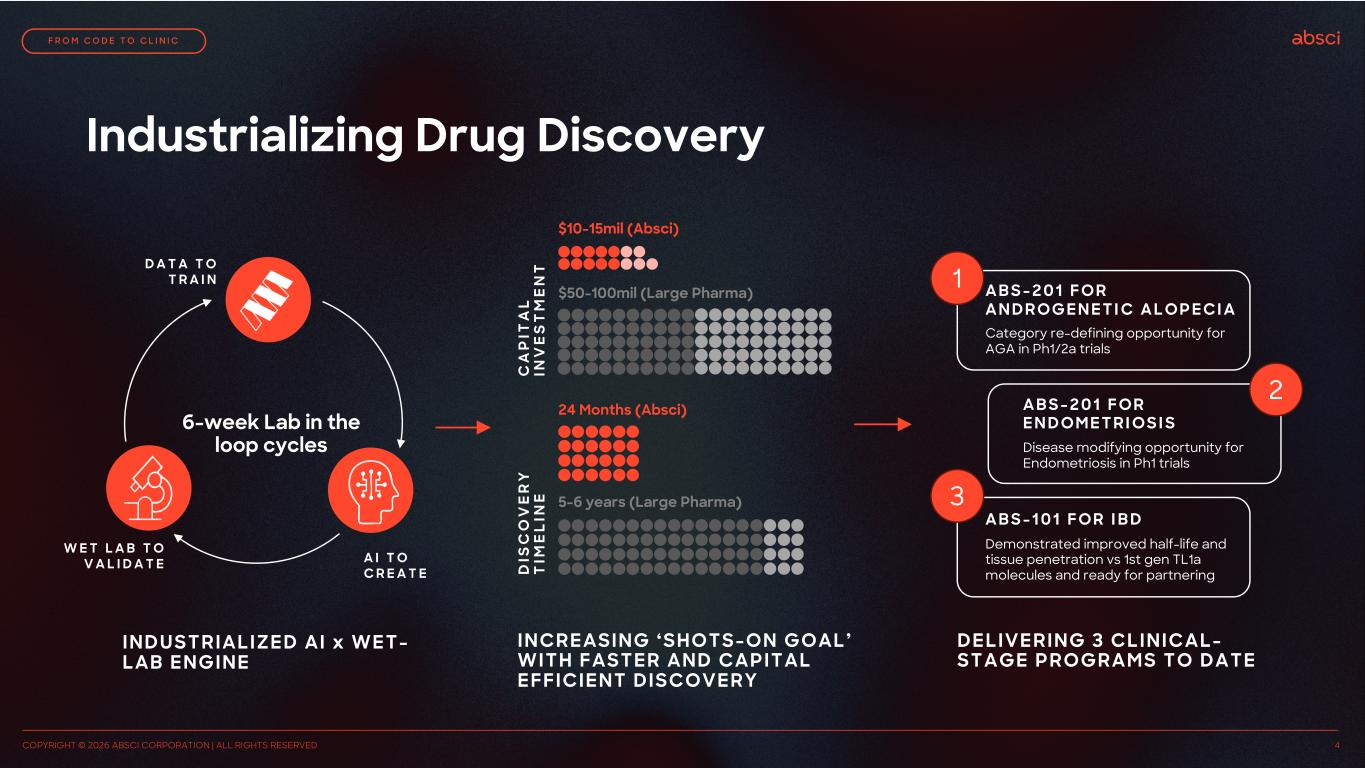
Industrializing Drug Discovery INCREASING ‘SHOTS-ON GOAL’ WITH FASTER AND CAPITAL EFFICIENT DISCOVERY $10-15mil (Absci) $50-100mil (Large Pharma) 24 Months (Absci) 5-6 years (Large Pharma) C A P IT A L IN V E S T M E N T D IS C O V E R Y T IM E L IN E DELIVERING 3 CLINICAL- STAGE PROGRAMS TO DATE 1 2 3 A B S - 2 0 1 FOR A NDROGENETI C A LOP ECI A A B S - 2 0 1 FOR ENDOMETRI OS I S A B S - 1 0 1 FOR I B D Category re-defining opportunity for AGA in Ph1/2a trials Disease modifying opportunity for Endometriosis in Ph1 trials Demonstrated improved half-life and tissue penetration vs 1st gen TL1a molecules and ready for partnering COPYRIGHT © 2026 ABSCI CORPORATION | ALL RIGHTS RESERVED 4 F R O M C O D E T O C L I N I C INDUSTRIALIZED AI x WET- LAB ENGINE 6-week Lab in the loop cycles D A T A T O T R A I N W E T L A B T O V A L I D A T E A I T O C R E A T E
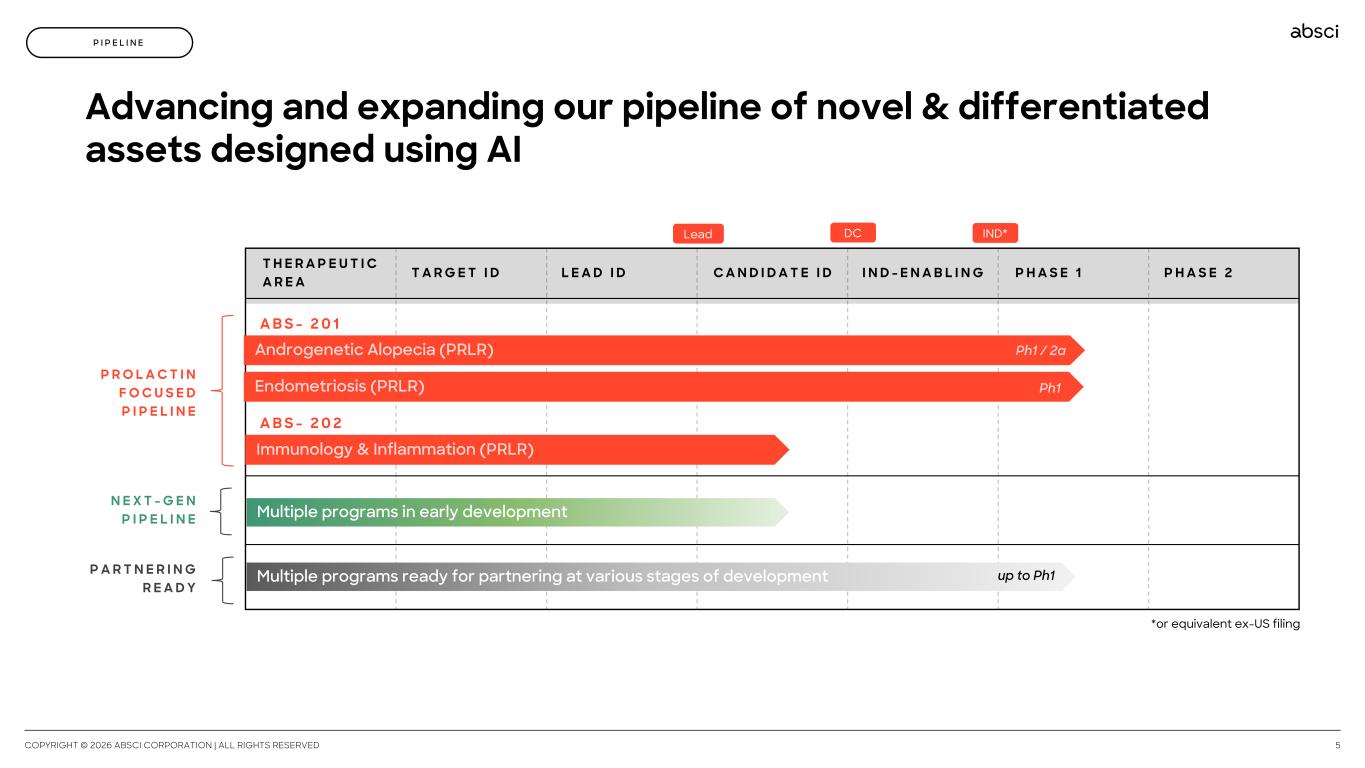
*or equivalent ex-US filing N E X T - G E N P I P E L I N E COPYRIGHT © 2026 ABSCI CORPORATION | ALL RIGHTS RESERVED 5 P I P E L I N E T H E R A P E U T I C A R E A T A R G E T I D L E A D I D C A N D I D A T E I D I N D - E N A B L I N G P H A S E 1 P H A S E 2 A B S - 2 0 1 Androgenetic Alopecia (PRLR) Endometriosis (PRLR) A B S - 2 0 2 Immunology & Inflammation (PRLR) Ph1 IND*DCLead Ph1 / 2a Advancing and expanding our pipeline of novel & differentiated assets designed using AI Multiple programs ready for partnering at various stages of development P R O L A C T I N F O C U S E D P I P E L I N E P A R T N E R I N G R E A D Y Multiple programs in early development up to Ph1
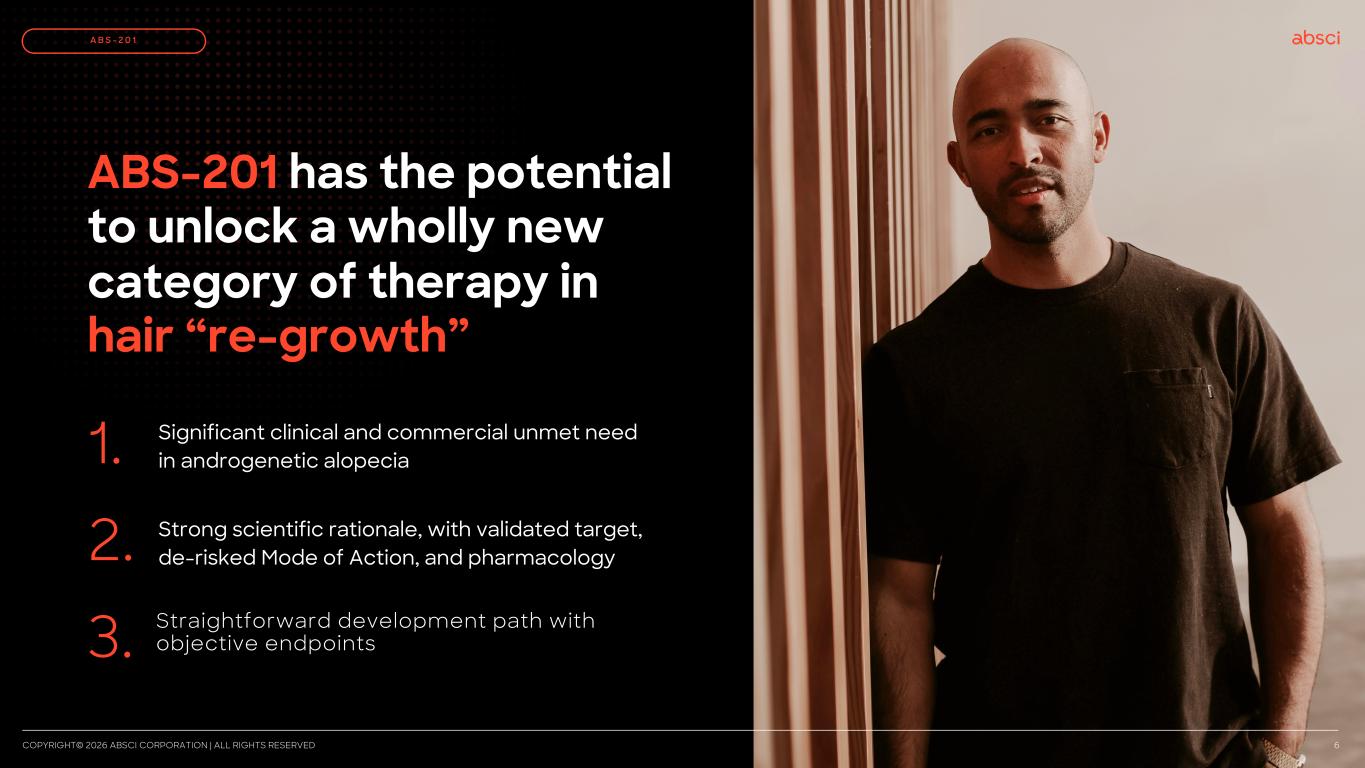
ABS-201 has the potential to unlock a wholly new category of therapy in hair “re-growth” Significant clinical and commercial unmet need in androgenetic alopecia1. Strong scientific rationale, with validated target, de-risked Mode of Action, and pharmacology2. 3. COPYRIGHT© 2026 ABSCI CORPORATION | ALL RIGHTS RESERVED 6 A B S - 2 0 1 Straightforward development path with objective endpoints
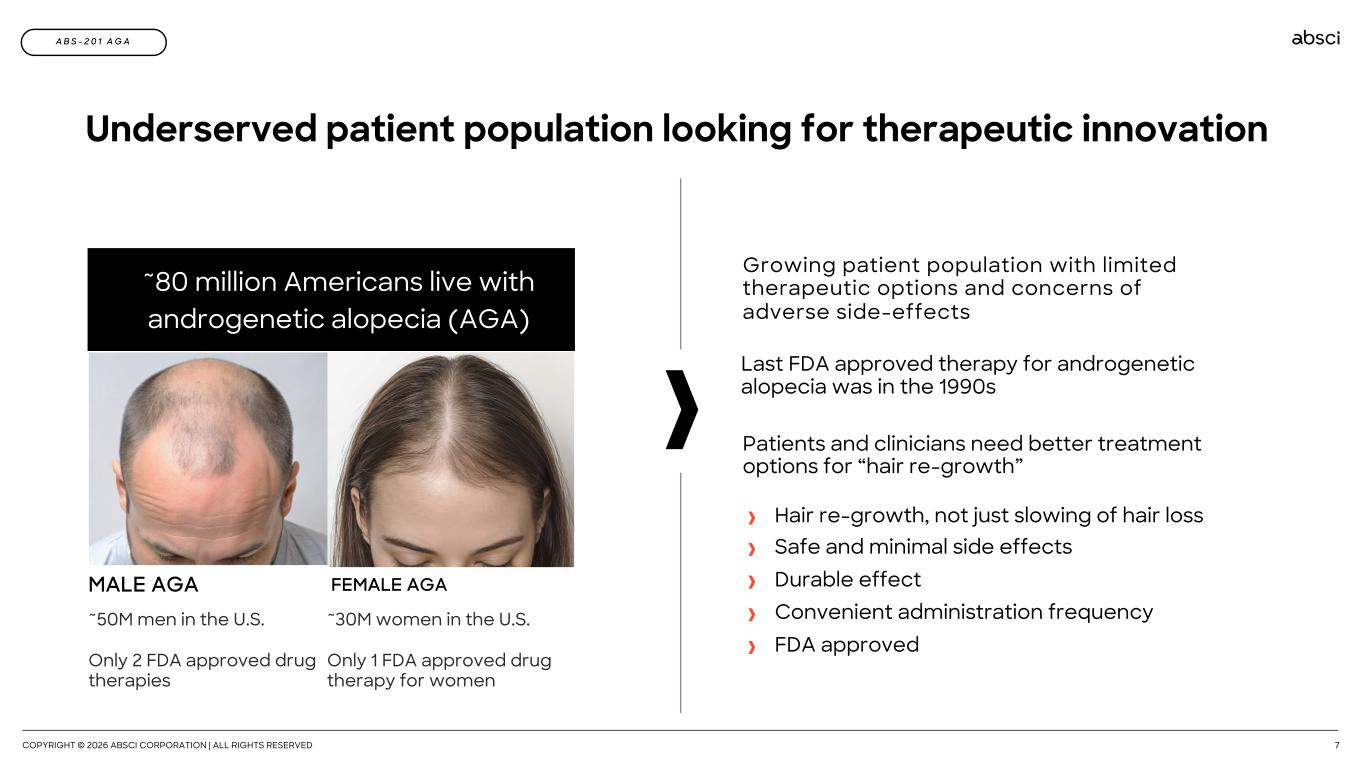
COPYRIGHT © 2026 ABSCI CORPORATION | ALL RIGHTS RESERVED 7 A B S - 2 0 1 A G A Underserved patient population looking for therapeutic innovation ~80 million Americans live with androgenetic alopecia (AGA) FEMALE AGA ~30M women in the U.S. Only 1 FDA approved drug therapy for women ~50M men in the U.S. Only 2 FDA approved drug therapies MALE AGA Growing patient population with limited therapeutic options and concerns of adverse side-effects Last FDA approved therapy for androgenetic alopecia was in the 1990s Patients and clinicians need better treatment options for “hair re-growth” Hair re-growth, not just slowing of hair loss Safe and minimal side effects Durable effect Convenient administration frequency FDA approved
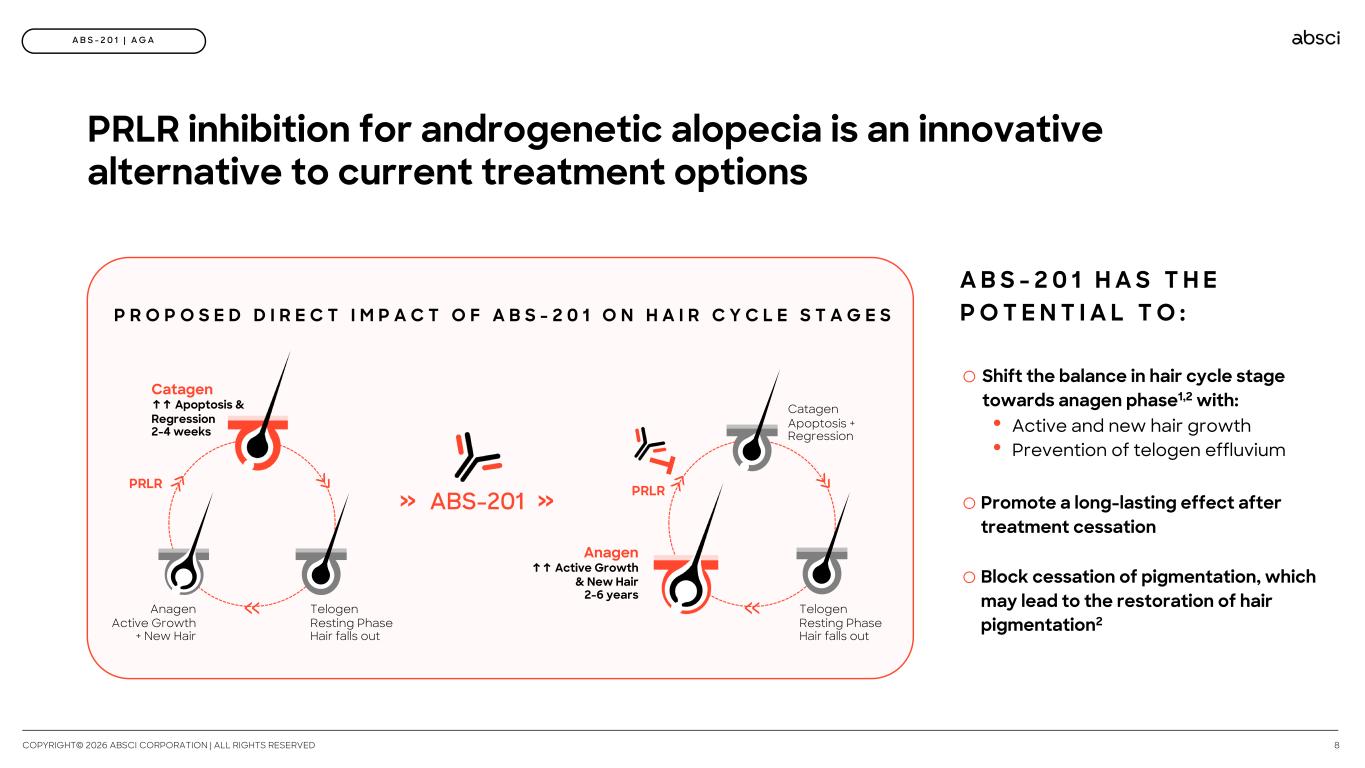
8 A B S - 2 0 1 | A G A PRLR inhibition for androgenetic alopecia is an innovative alternative to current treatment options P R O P O S E D D I R E C T I M P A C T O F A B S - 2 0 1 O N H A I R C Y C L E S T A G E S Telogen Resting Phase Hair falls out Catagen ↑↑ Apoptosis & Regression 2-4 weeks Anagen Active Growth + New Hair » »»PRLR ABS-201 »» Anagen ↑↑ Active Growth & New Hair 2-6 years Catagen Apoptosis + Regression Telogen Resting Phase Hair falls out »» » PRLR o Shift the balance in hair cycle stage towards anagen phase1,2 with: • Active and new hair growth • Prevention of telogen effluvium o Promote a long-lasting effect after treatment cessation o Block cessation of pigmentation, which may lead to the restoration of hair pigmentation2 A B S - 2 0 1 H A S T H E P O T E N T I A L T O : COPYRIGHT© 2026 ABSCI CORPORATION | ALL RIGHTS RESERVED
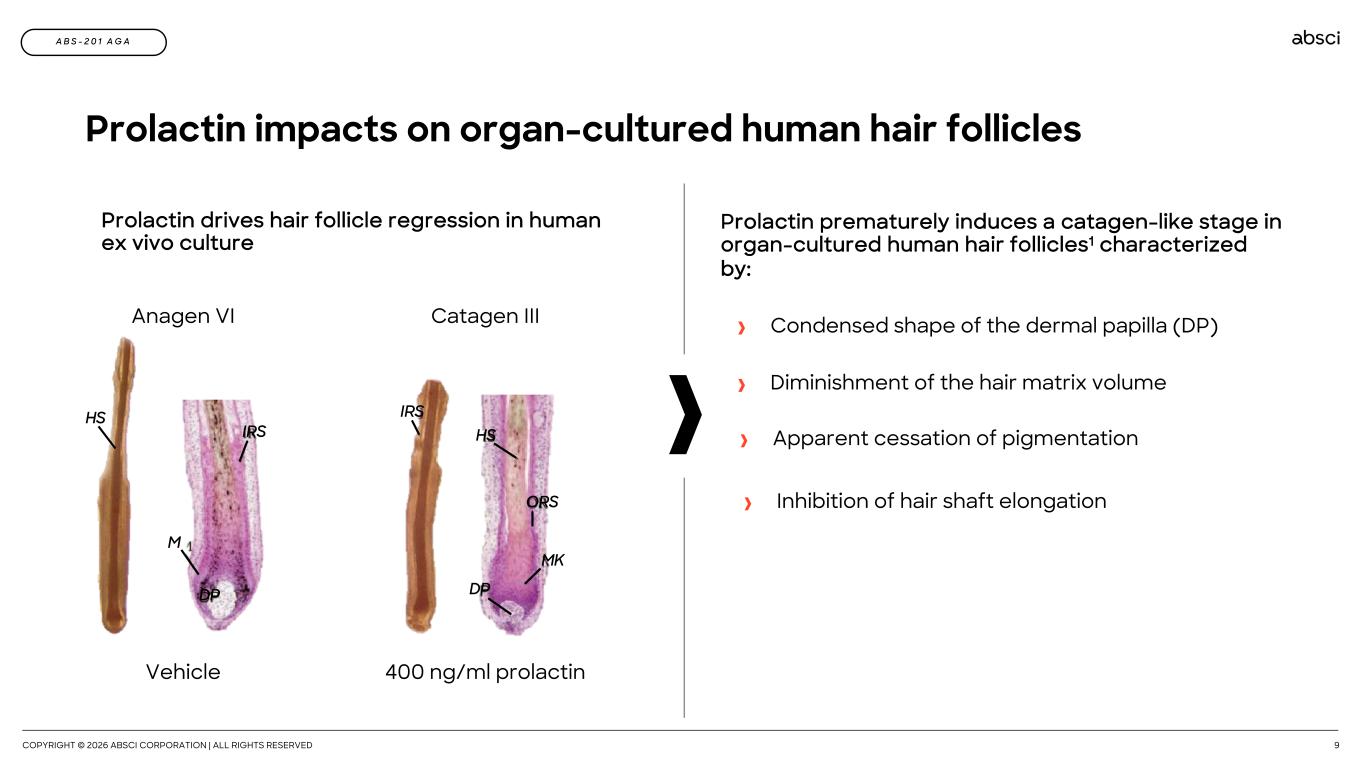
COPYRIGHT © 2026 ABSCI CORPORATION | ALL RIGHTS RESERVED 9 A B S - 2 0 1 A G A Prolactin impacts on organ-cultured human hair follicles Prolactin prematurely induces a catagen-like stage in organ-cultured human hair follicles1 characterized by: Vehicle 400 ng/ml prolactin Catagen IIIAnagen VI HS M DP IRS IRS HS ORS DP MK Apparent cessation of pigmentation Condensed shape of the dermal papilla (DP) Diminishment of the hair matrix volume Inhibition of hair shaft elongation Prolactin drives hair follicle regression in human ex vivo culture
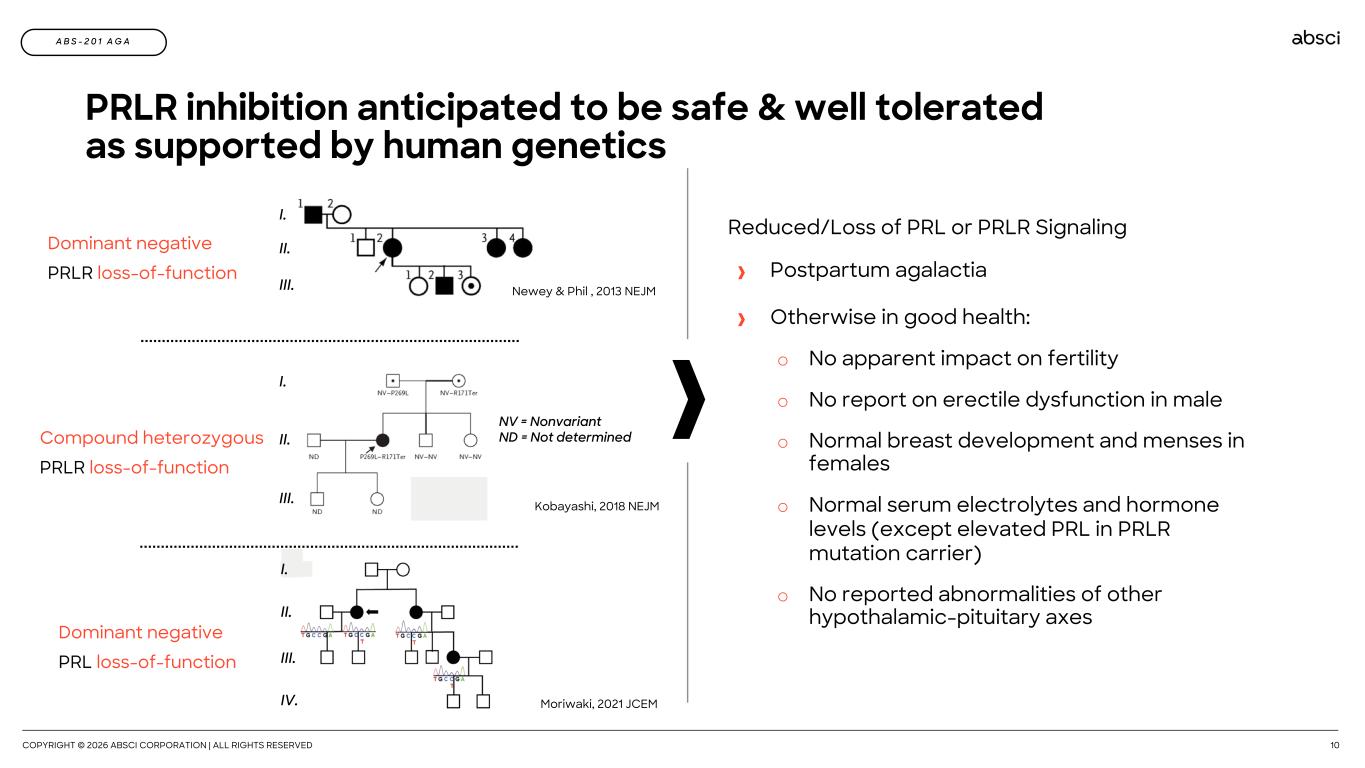
COPYRIGHT © 2026 ABSCI CORPORATION | ALL RIGHTS RESERVED 10 A B S - 2 0 1 A G A PRLR inhibition anticipated to be safe & well tolerated as supported by human genetics I. II. III. NV = Nonvariant ND = Not determined I. II. III. I. II. III. IV. Kobayashi, 2018 NEJM Moriwaki, 2021 JCEM Newey & Phil , 2013 NEJM Compound heterozygous PRLR loss-of-function Dominant negative PRL loss-of-function Dominant negative PRLR loss-of-function Reduced/Loss of PRL or PRLR Signaling Postpartum agalactia Otherwise in good health: o No apparent impact on fertility o No report on erectile dysfunction in male o Normal breast development and menses in females o Normal serum electrolytes and hormone levels (except elevated PRL in PRLR mutation carrier) o No reported abnormalities of other hypothalamic-pituitary axes
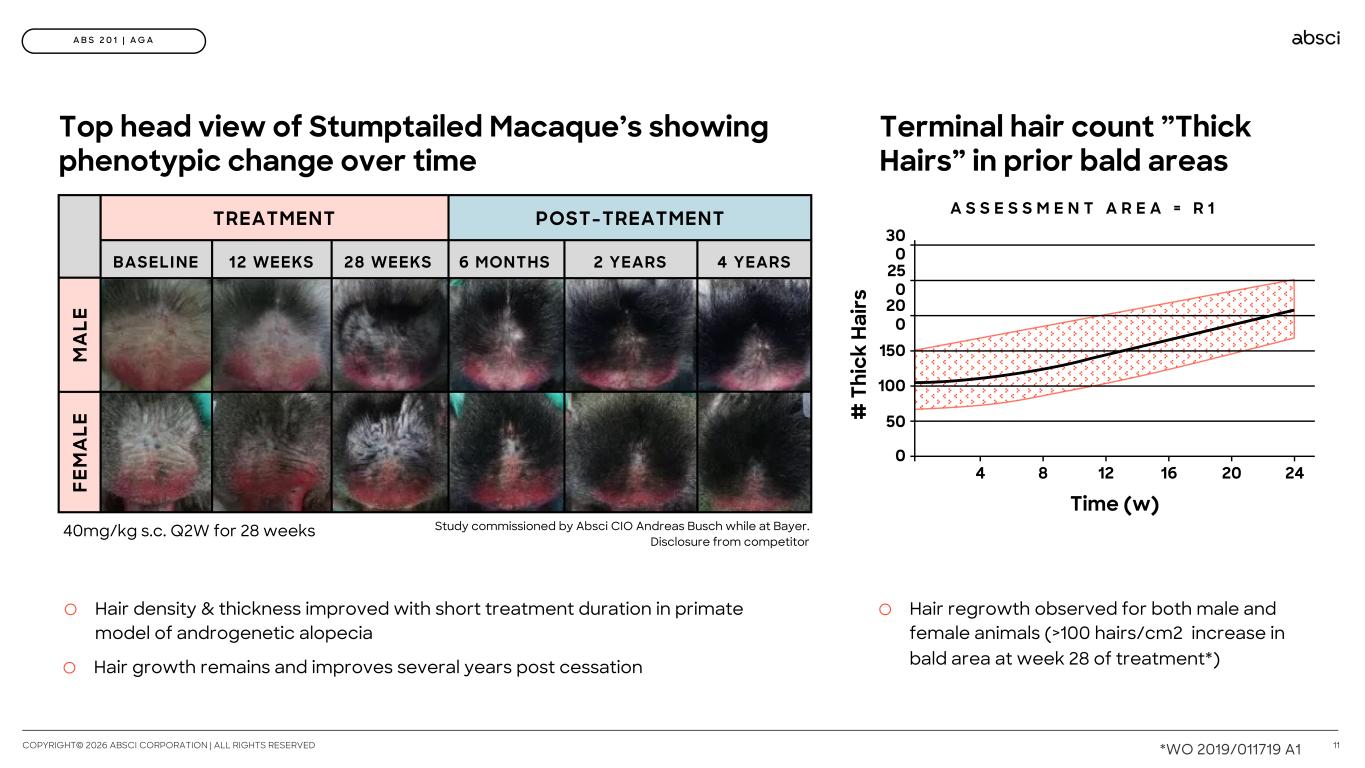
11 A B S 2 0 1 | A G A Terminal hair count ”Thick Hairs” in prior bald areas o Hair regrowth observed for both male and female animals (>100 hairs/cm2 increase in bald area at week 28 of treatment*) # T hi ck H ai rs Time (w) 20 0 100 0 25 0 150 50 30 0 4 8 12 16 20 24 A S S E S S M E N T A R E A = R 1TREATMENT POST-TREATMENT 12 WEEKSBASELINE 28 WEEKS 6 MONTHS 2 YEARS 4 YEARS FE M A LE M A LE Top head view of Stumptailed Macaque’s showing phenotypic change over time o Hair density & thickness improved with short treatment duration in primate model of androgenetic alopecia o Hair growth remains and improves several years post cessation 40mg/kg s.c. Q2W for 28 weeks Study commissioned by Absci CIO Andreas Busch while at Bayer. Disclosure from competitor COPYRIGHT© 2026 ABSCI CORPORATION | ALL RIGHTS RESERVED *WO 2019/011719 A1
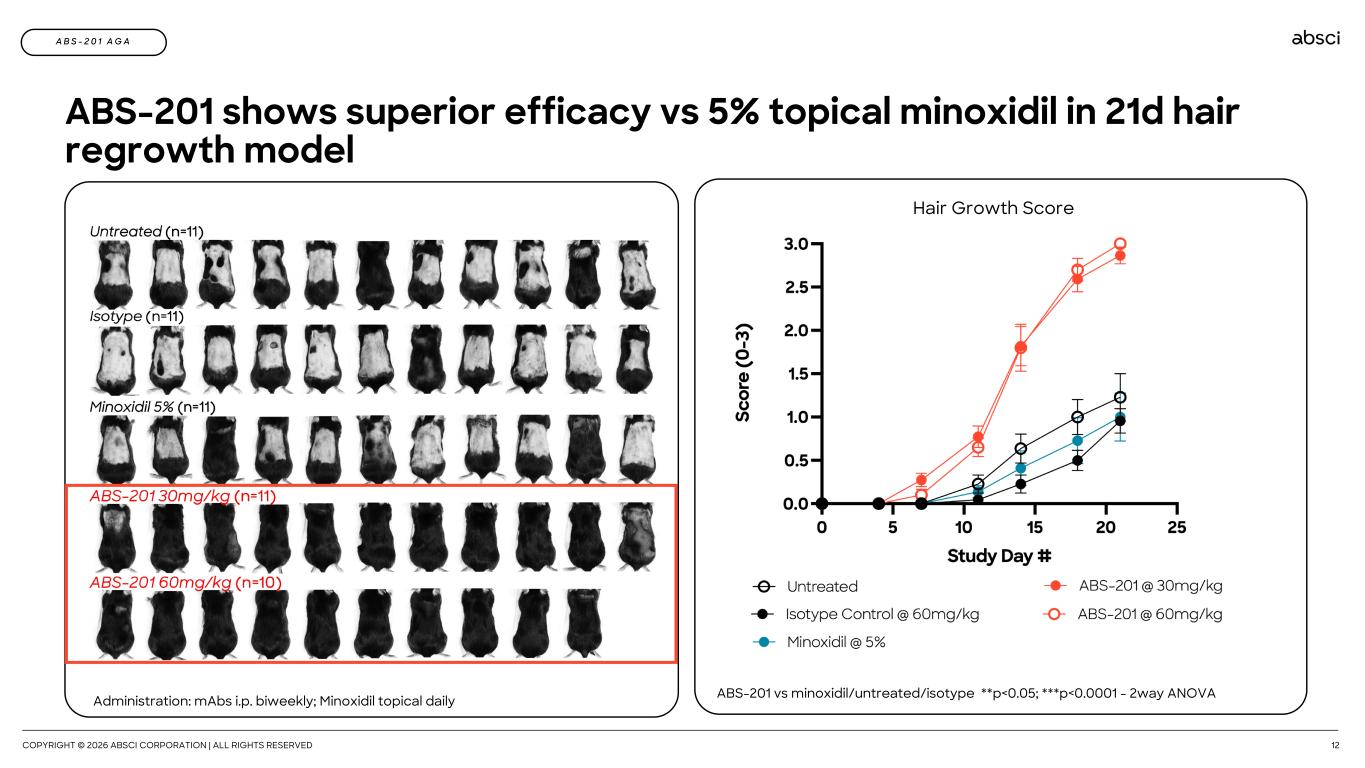
COPYRIGHT © 2026 ABSCI CORPORATION | ALL RIGHTS RESERVED 12 A B S - 2 0 1 A G A ABS-201 shows superior efficacy vs 5% topical minoxidil in 21d hair regrowth model Administration: mAbs i.p. biweekly; Minoxidil topical daily ABS-201 vs minoxidil/untreated/isotype **p<0.05; ***p<0.0001 - 2way ANOVA Hair Growth Score
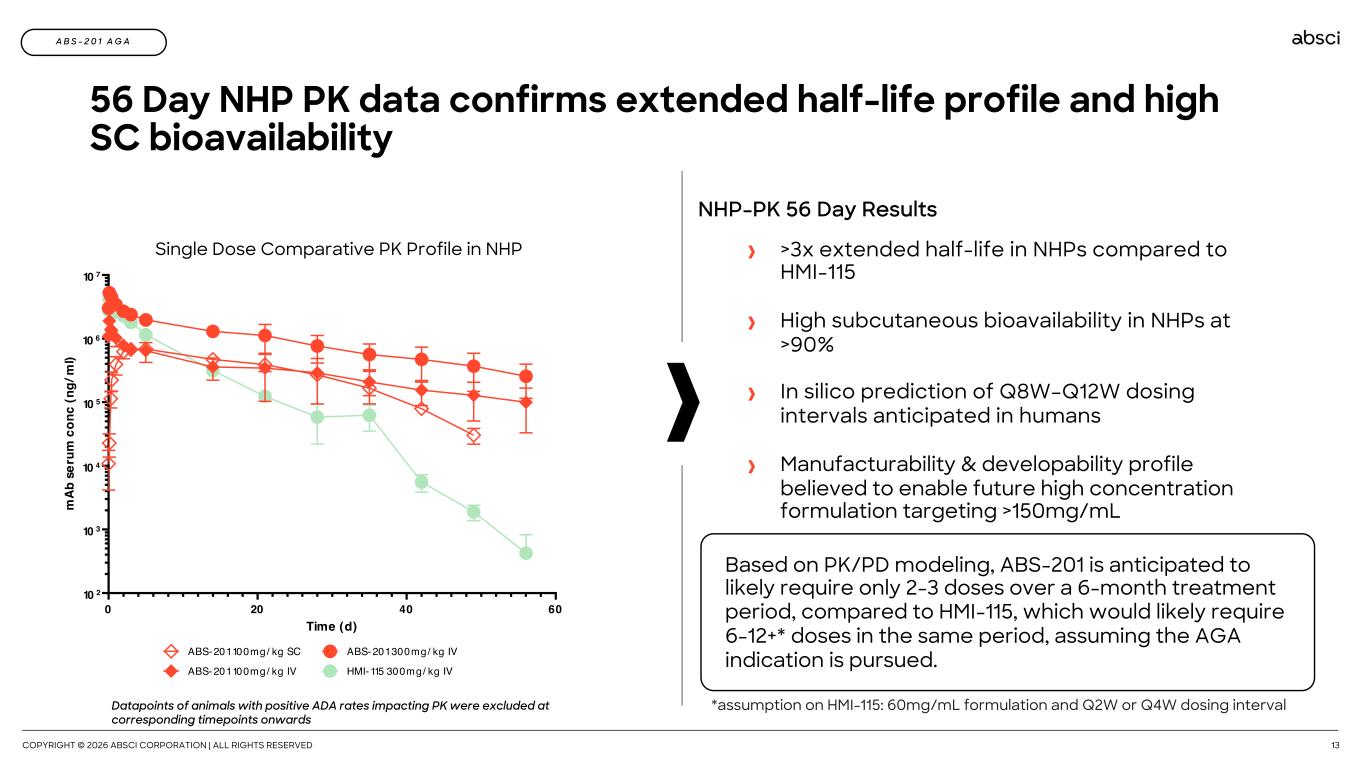
COPYRIGHT © 2026 ABSCI CORPORATION | ALL RIGHTS RESERVED 13 A B S - 2 0 1 A G A 56 Day NHP PK data confirms extended half-life profile and high SC bioavailability 0 20 40 60 10 2 10 3 10 4 10 5 10 6 10 7 Single Dose Comparative PK Profile in NHPs Time (d) m Ab s er um c on c (n g/ m l) ABS-201 100mg/ kg SC ABS- 201 100mg/ kg IV ABS- 201 300mg/ kg IV HMI-115 300mg/ kg IV Datapoints of animals with positive ADA rates impacting PK were excluded at corresponding timepoints onwards l ose Comparative PK Profile in NHP >3x extended half-life in NHPs compared to HMI-115 High subcutaneous bioavailability in NHPs at >90% In silico prediction of Q8W–Q12W dosing intervals anticipated in humans Manufacturability & developability profile believed to enable future high concentration formulation targeting >150mg/mL NHP-PK 56 Day Results Based on PK/PD modeling, ABS-201 is anticipated to likely require only 2-3 doses over a 6-month treatment period, compared to HMI-115, which would likely require 6-12+* doses in the same period, assuming the AGA indication is pursued. *assumption on HMI-115: 60mg/mL formulation and Q2W or Q4W dosing interval
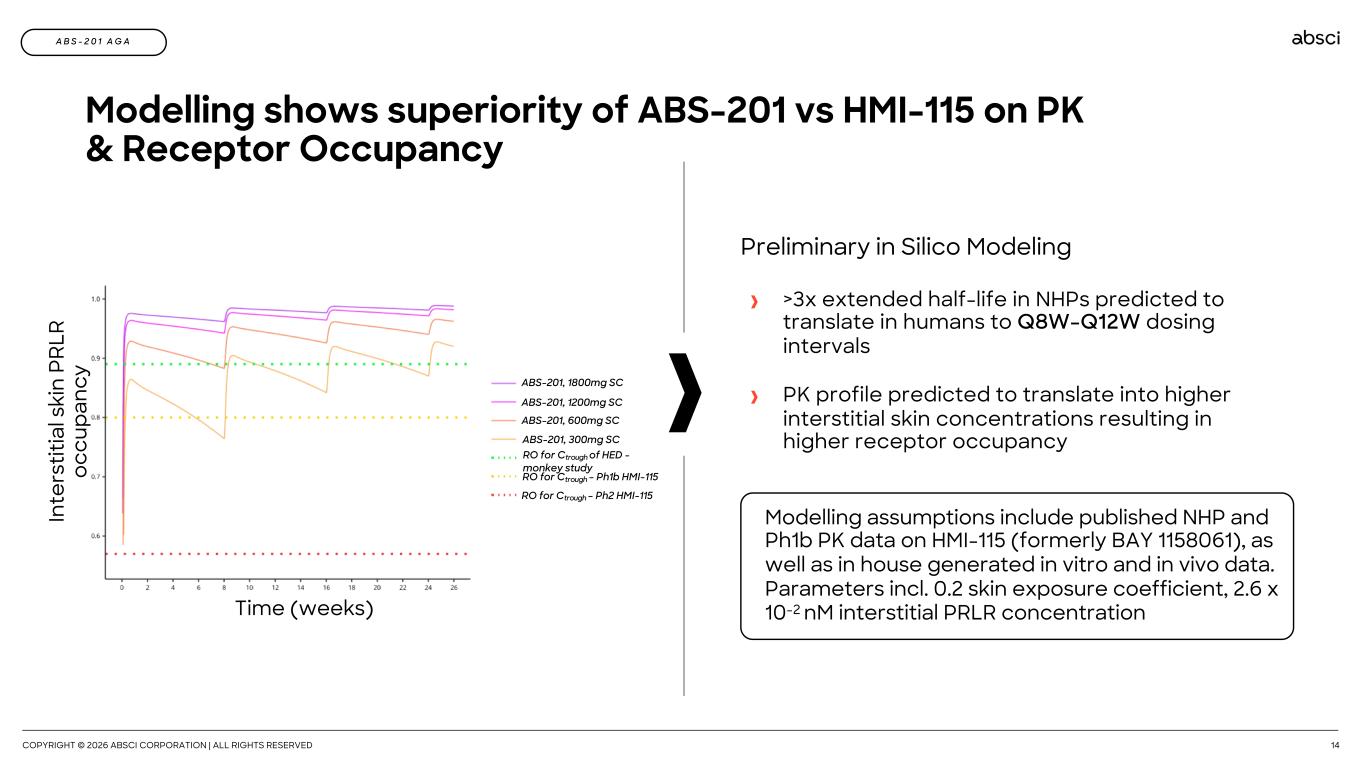
COPYRIGHT © 2026 ABSCI CORPORATION | ALL RIGHTS RESERVED 14 A B S - 2 0 1 A G A Modelling shows superiority of ABS-201 vs HMI-115 on PK & Receptor Occupancy >3x extended half-life in NHPs predicted to translate in humans to Q8W-Q12W dosing intervals PK profile predicted to translate into higher interstitial skin concentrations resulting in higher receptor occupancy Modelling assumptions include published NHP and Ph1b PK data on HMI-115 (formerly BAY 1158061), as well as in house generated in vitro and in vivo data. Parameters incl. 0.2 skin exposure coefficient, 2.6 x 10⁻² nM interstitial PRLR concentration Preliminary in Silico Modeling ABS-201, 1800mg SC ABS-201, 1200mg SC ABS-201, 600mg SC ABS-201, 300mg SC RO for Ctrough of HED - monkey study RO for Ctrough – Ph1b HMI-115 RO for Ctrough – Ph2 HMI-115 Time (weeks) In te rs tit ia l s ki n PR LR oc cu pa nc y
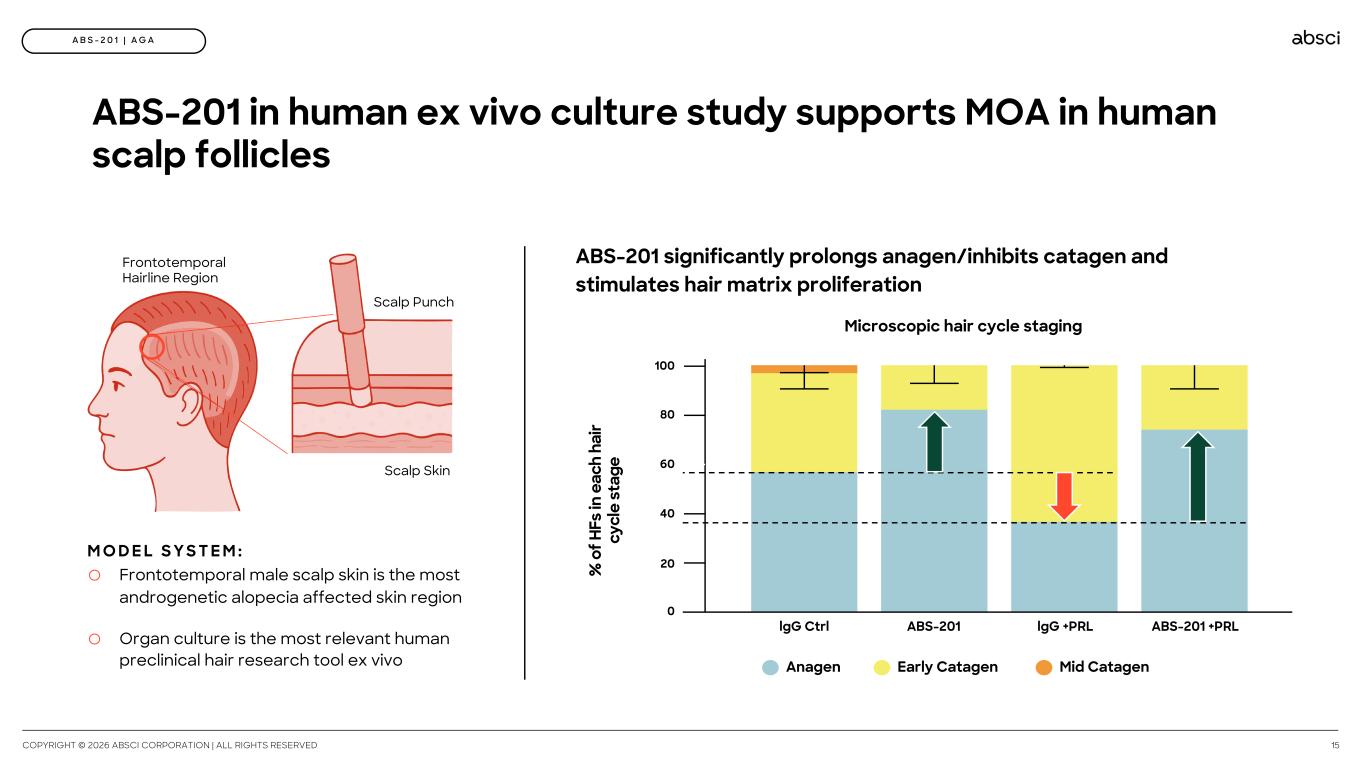
COPYRIGHT © 2026 ABSCI CORPORATION | ALL RIGHTS RESERVED 15 A B S - 2 0 1 | A G A ABS-201 in human ex vivo culture study supports MOA in human scalp follicles ABS-201 significantly prolongs anagen/inhibits catagen and stimulates hair matrix proliferation Anagen Early Catagen Mid Catagen lgG Ctrl ABS-201 lgG +PRL ABS-201 +PRL 80 40 0 100 60 20 Frontotemporal Hairline Region Scalp Punch Scalp Skin o Frontotemporal male scalp skin is the most androgenetic alopecia affected skin region o Organ culture is the most relevant human preclinical hair research tool ex vivo M O D E L S Y S T E M : Microscopic hair cycle staging % o f H Fs in e ac h ha ir cy cl e st ag e
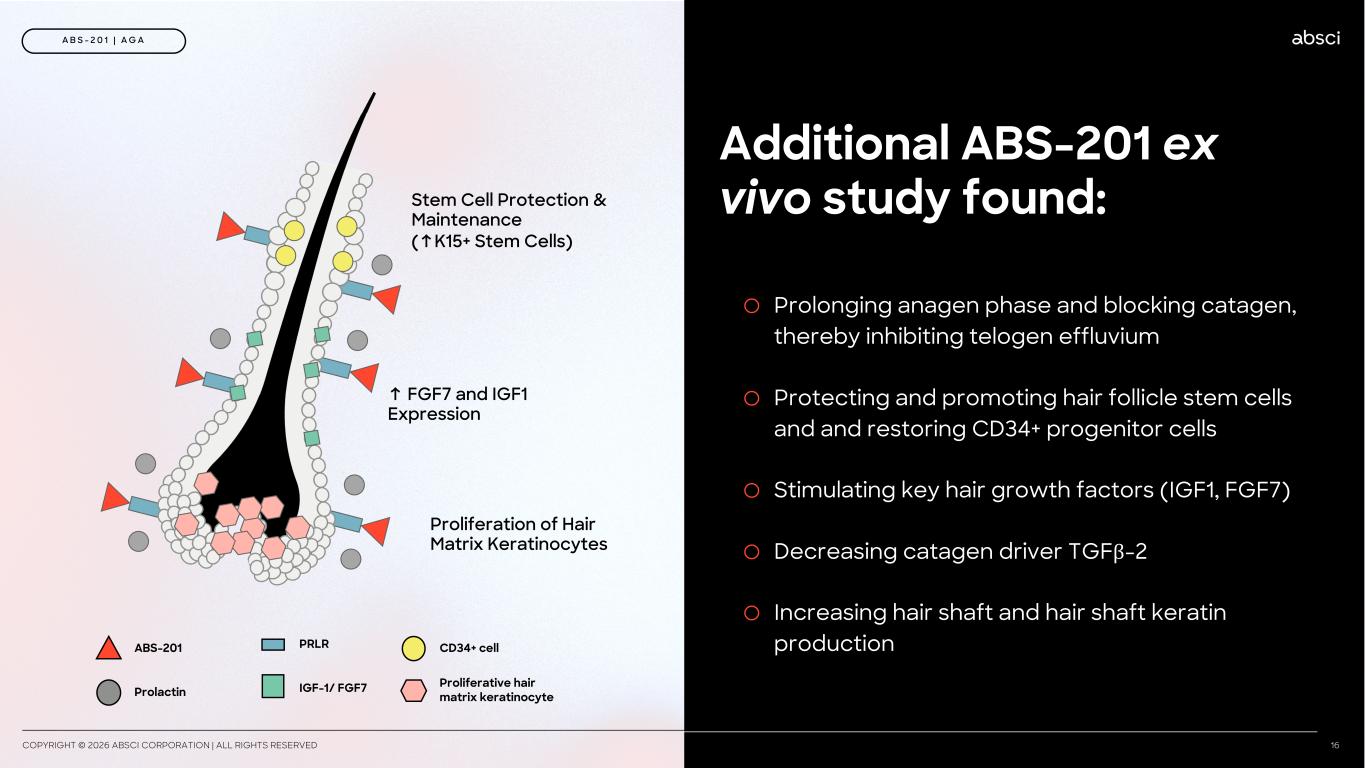
COPYRIGHT © 2026 ABSCI CORPORATION | ALL RIGHTS RESERVED 16 A B S - 2 0 1 | A G A Additional ABS-201 ex vivo study found: o Prolonging anagen phase and blocking catagen, thereby inhibiting telogen effluvium o Protecting and promoting hair follicle stem cells and and restoring CD34+ progenitor cells o Stimulating key hair growth factors (IGF1, FGF7) o Decreasing catagen driver TGFβ-2 o Increasing hair shaft and hair shaft keratin production IGF-1/ FGF7 PRLRABS-201 CD34+ cell Proliferative hair matrix keratinocyteProlactin Stem Cell Protection & Maintenance (↑K15+ Stem Cells) ↑ FGF7 and IGF1 Expression Proliferation of Hair Matrix Keratinocytes
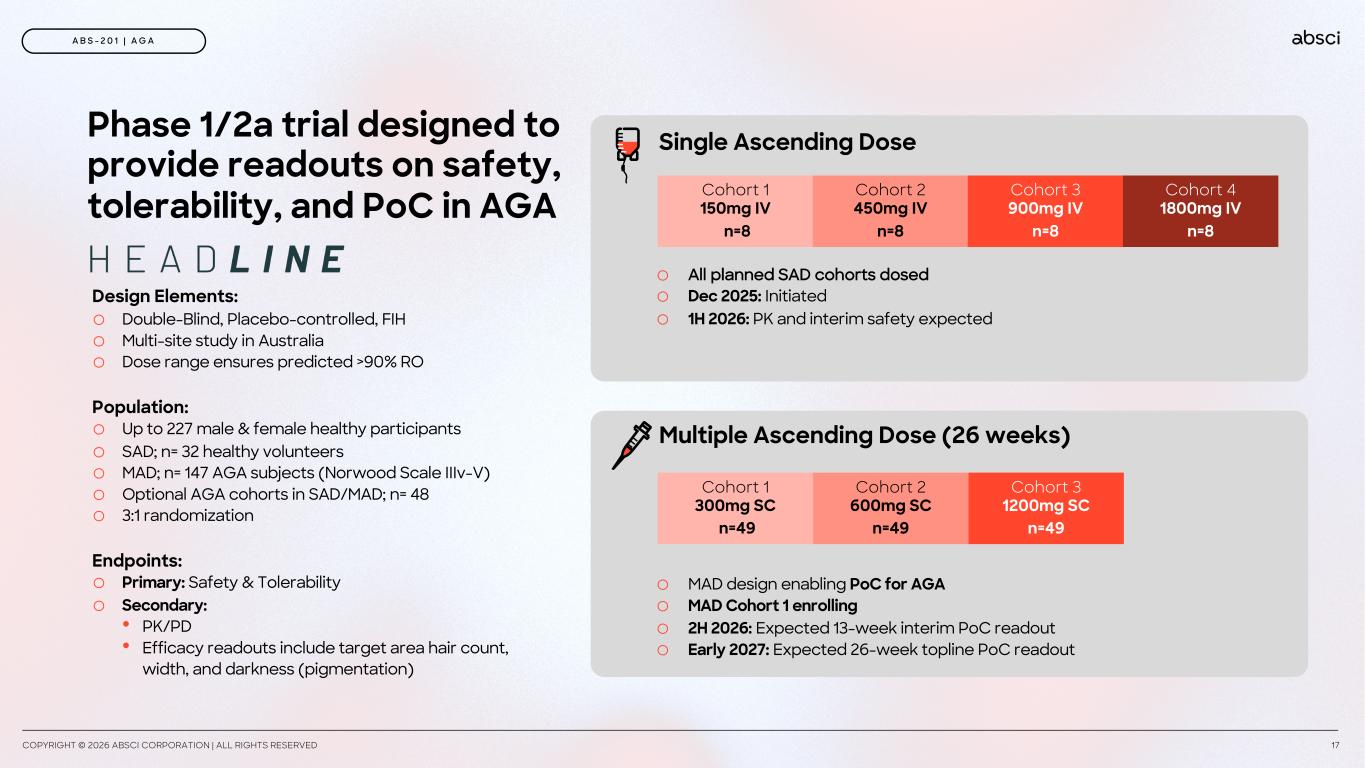
Phase 1/2a trial designed to provide readouts on safety, tolerability, and PoC in AGA Design Elements: o Double-Blind, Placebo-controlled, FIH o Multi-site study in Australia o Dose range ensures predicted >90% RO Population: o Up to 227 male & female healthy participants o SAD; n= 32 healthy volunteers o MAD; n= 147 AGA subjects (Norwood Scale IIIv-V) o Optional AGA cohorts in SAD/MAD; n= 48 o 3:1 randomization Endpoints: o Primary: Safety & Tolerability o Secondary: • PK/PD • Efficacy readouts include target area hair count, width, and darkness (pigmentation) COPYRIGHT © 2026 ABSCI CORPORATION | ALL RIGHTS RESERVED 17 A B S - 2 0 1 | A G A Single Ascending Dose Cohort 1 150mg IV n=8 Cohort 2 450mg IV n=8 Cohort 3 900mg IV n=8 Cohort 4 1800mg IV n=8 Cohort 1 300mg SC n=49 Cohort 2 600mg SC n=49 Cohort 3 1200mg SC n=49 Multiple Ascending Dose (26 weeks) o All planned SAD cohorts dosed o Dec 2025: Initiated o 1H 2026: PK and interim safety expected o MAD design enabling PoC for AGA o MAD Cohort 1 enrolling o 2H 2026: Expected 13-week interim PoC readout o Early 2027: Expected 26-week topline PoC readout
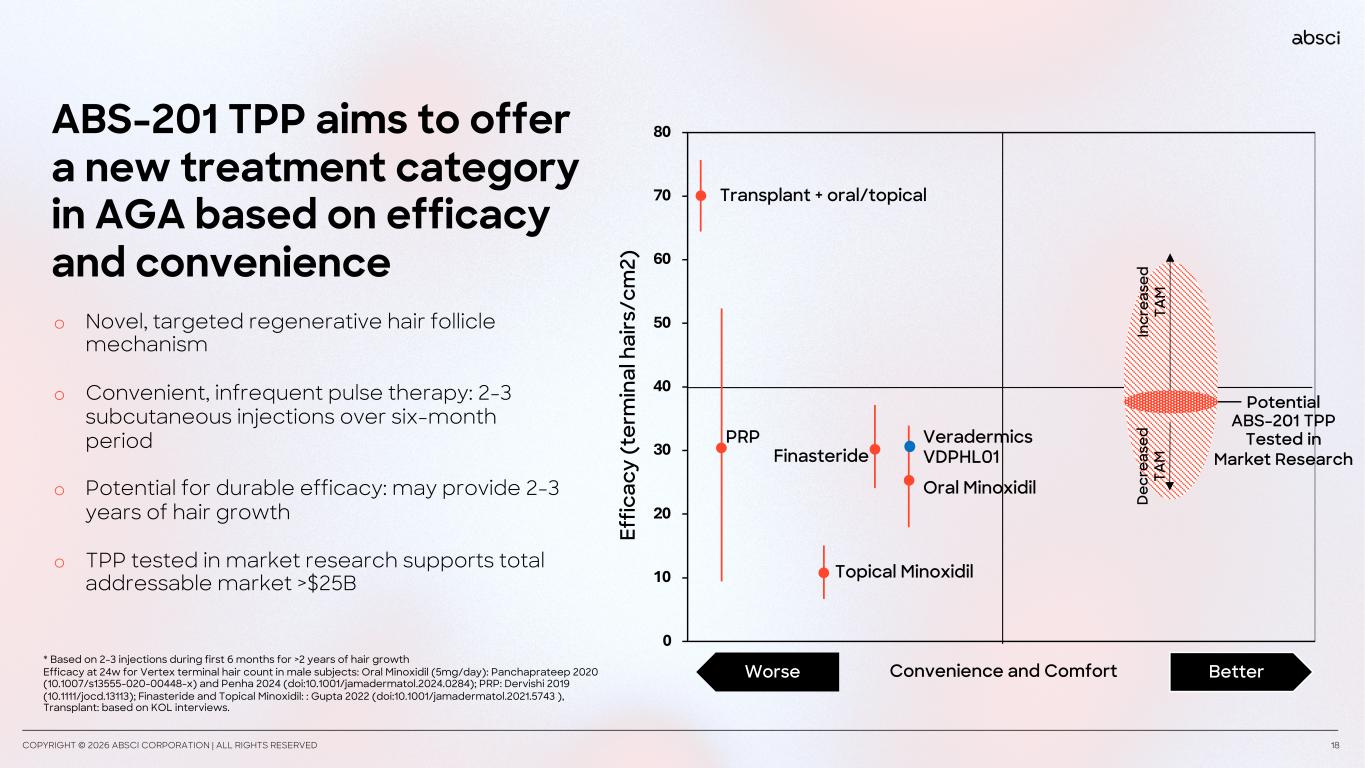
A B S - 2 0 1 | A G A COPYRIGHT © 2026 ABSCI CORPORATION | ALL RIGHTS RESERVED 18 ABS-201 TPP aims to offer a new treatment category in AGA based on efficacy and convenience 0 10 20 30 40 50 60 70 80 Ef fic ac y (t er m in al h ai rs /c m 2) Topical Minoxidil Oral Minoxidil Finasteride PRP Transplant + oral/topical * Based on 2-3 injections during first 6 months for >2 years of hair growth Efficacy at 24w for Vertex terminal hair count in male subjects: Oral Minoxidil (5mg/day): Panchaprateep 2020 (10.1007/s13555-020-00448-x) and Penha 2024 (doi:10.1001/jamadermatol.2024.0284); PRP: Dervishi 2019 (10.1111/jocd.13113); Finasteride and Topical Minoxidil: : Gupta 2022 (doi:10.1001/jamadermatol.2021.5743 ), Transplant: based on KOL interviews. Convenience and Comfort BetterWorse Veradermics VDPHL01 In cr ea se d TA M D ec re as ed TA M o Novel, targeted regenerative hair follicle mechanism o Convenient, infrequent pulse therapy: 2-3 subcutaneous injections over six-month period o Potential for durable efficacy: may provide 2-3 years of hair growth o TPP tested in market research supports total addressable market >$25B Potential ABS-201 TPP Tested in Market Research
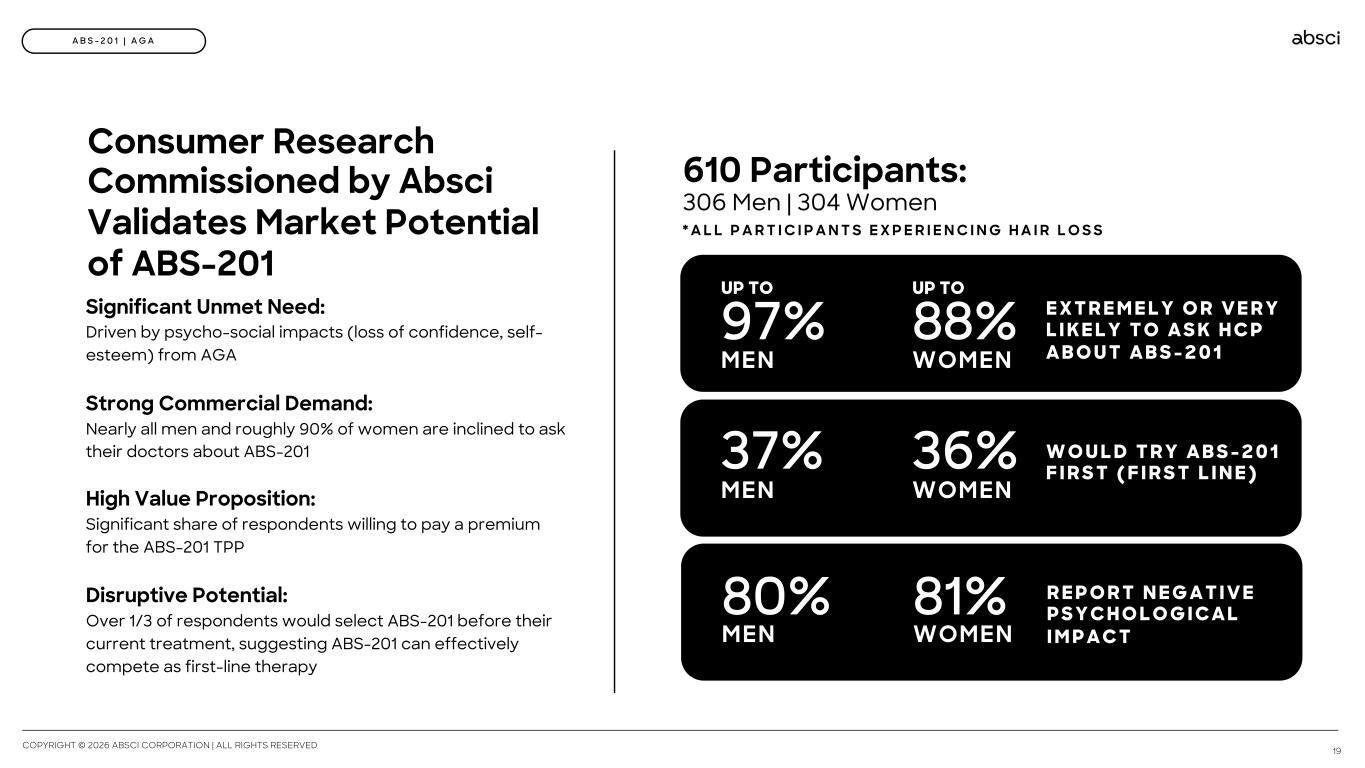
Consumer Research Commissioned by Absci Validates Market Potential of ABS-201 Significant Unmet Need: Driven by psycho-social impacts (loss of confidence, self- esteem) from AGA Strong Commercial Demand: Nearly all men and roughly 90% of women are inclined to ask their doctors about ABS-201 High Value Proposition: Significant share of respondents willing to pay a premium for the ABS-201 TPP Disruptive Potential: Over 1/3 of respondents would select ABS-201 before their current treatment, suggesting ABS-201 can effectively compete as first-line therapy 610 Participants: 306 Men | 304 Women COPYRIGHT © 2026 ABSCI CORPORATION | ALL RIGHTS RESERVED 19 A B S - 2 0 1 | A G A * A L L P A R T I C I P A N T S E X P E R I E N C I N G H A I R L O S S R E P O R T N E G A T I V E P S Y C H O L O G I C A L I M P A C T 80% MEN 81% WOMEN W O U L D T R Y A B S - 2 0 1 F I R S T ( F I R S T L I N E )37% MEN 36% WOMEN E X T R E M E L Y O R V E R Y L I K E L Y T O A S K H C P A B O U T A B S - 2 0 1 UP TO 97% MEN WOMEN UP TO 88%
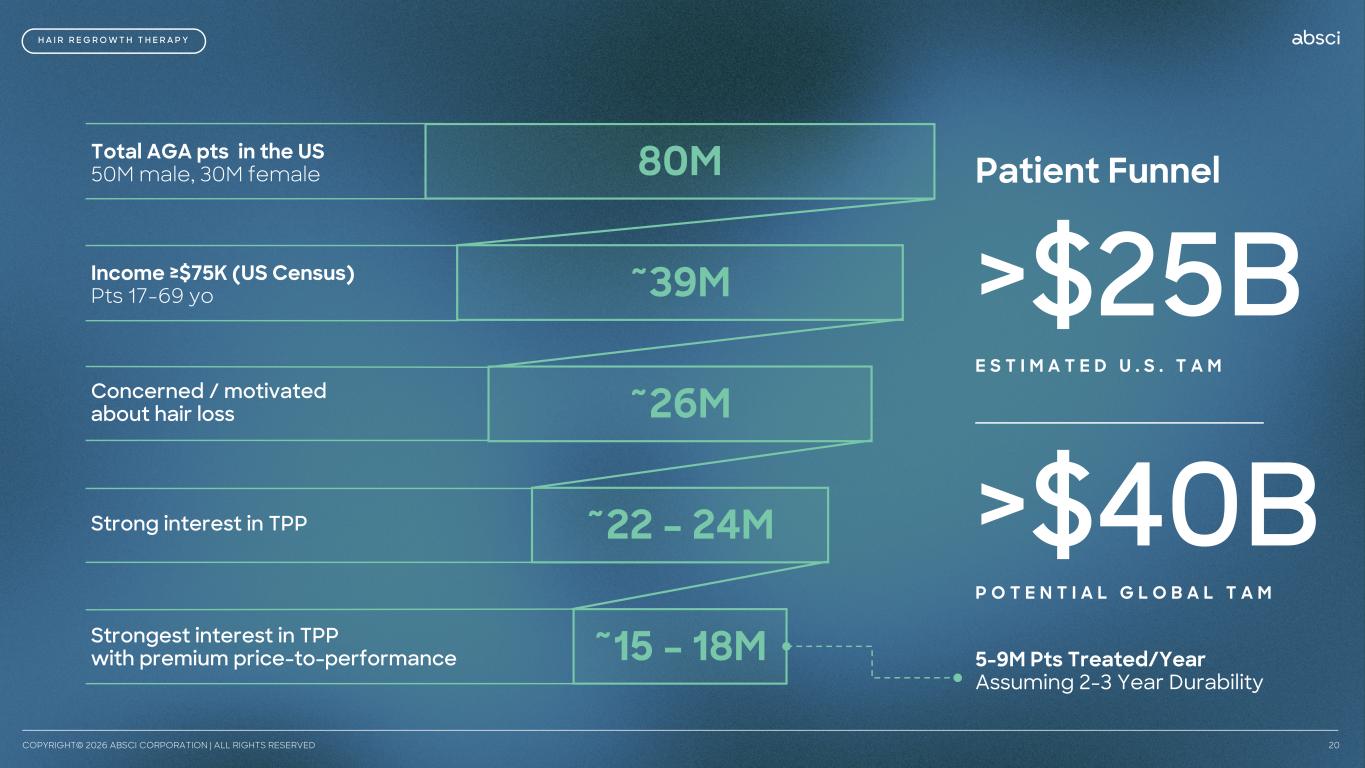
5-9M Pts Treated/Year Assuming 2-3 Year Durability Patient Funnel >$25B E S T I M A T E D U . S . T A M >$40B P O T E N T I A L G L O B A L T A M Total AGA pts in the US 50M male, 30M female Income ≥$75K (US Census) Pts 17-69 yo Concerned / motivated about hair loss Strong interest in TPP Strongest interest in TPP with premium price-to-performance COPYRIGHT© 2026 ABSCI CORPORATION | ALL RIGHTS RESERVED 20 H A I R R E G R O W T H T H E R A P Y 80M ~39M ~26M ~22 – 24M ~15 – 18M
Development of ABS-201 in Endometriosis Addresses Long-standing Unmet Medical Need and Poor standard of care 1. Large, untapped market offers significant upside potential 2. Strong Biological And Clinical Rationale: Including POC for PRLR mechanism in humans 3. COPYRIGHT© 2026 ABSCI CORPORATION | ALL RIGHTS RESERVED 21 A B S 2 0 1 | E N D O M E T R I O S I S
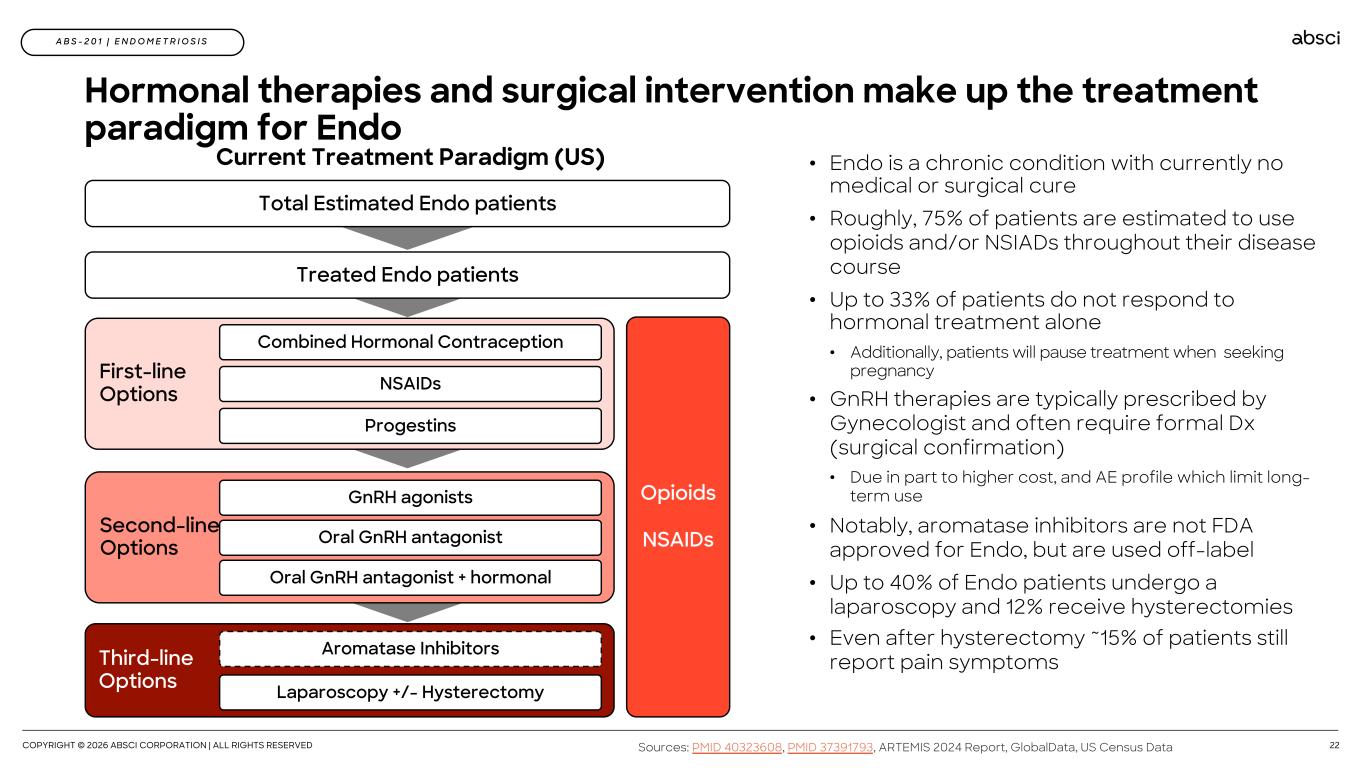
COPYRIGHT © 2026 ABSCI CORPORATION | ALL RIGHTS RESERVED 22 A B S - 2 0 1 | E N D O M E T R I O S I S Hormonal therapies and surgical intervention make up the treatment paradigm for Endo • Endo is a chronic condition with currently no medical or surgical cure • Roughly, 75% of patients are estimated to use opioids and/or NSIADs throughout their disease course • Up to 33% of patients do not respond to hormonal treatment alone • Additionally, patients will pause treatment when seeking pregnancy • GnRH therapies are typically prescribed by Gynecologist and often require formal Dx (surgical confirmation) • Due in part to higher cost, and AE profile which limit long- term use • Notably, aromatase inhibitors are not FDA approved for Endo, but are used off-label • Up to 40% of Endo patients undergo a laparoscopy and 12% receive hysterectomies • Even after hysterectomy ~15% of patients still report pain symptoms Sources: PMID 40323608, PMID 37391793, ARTEMIS 2024 Report, GlobalData, US Census Data Current Treatment Paradigm (US) Treated Endo patients First-line Options Combined Hormonal Contraception NSAIDs Progestins Second-line Options GnRH agonists Oral GnRH antagonist Oral GnRH antagonist + hormonal Total Estimated Endo patients Opioids NSAIDs Third-line Options Aromatase Inhibitors Laparoscopy +/- Hysterectomy
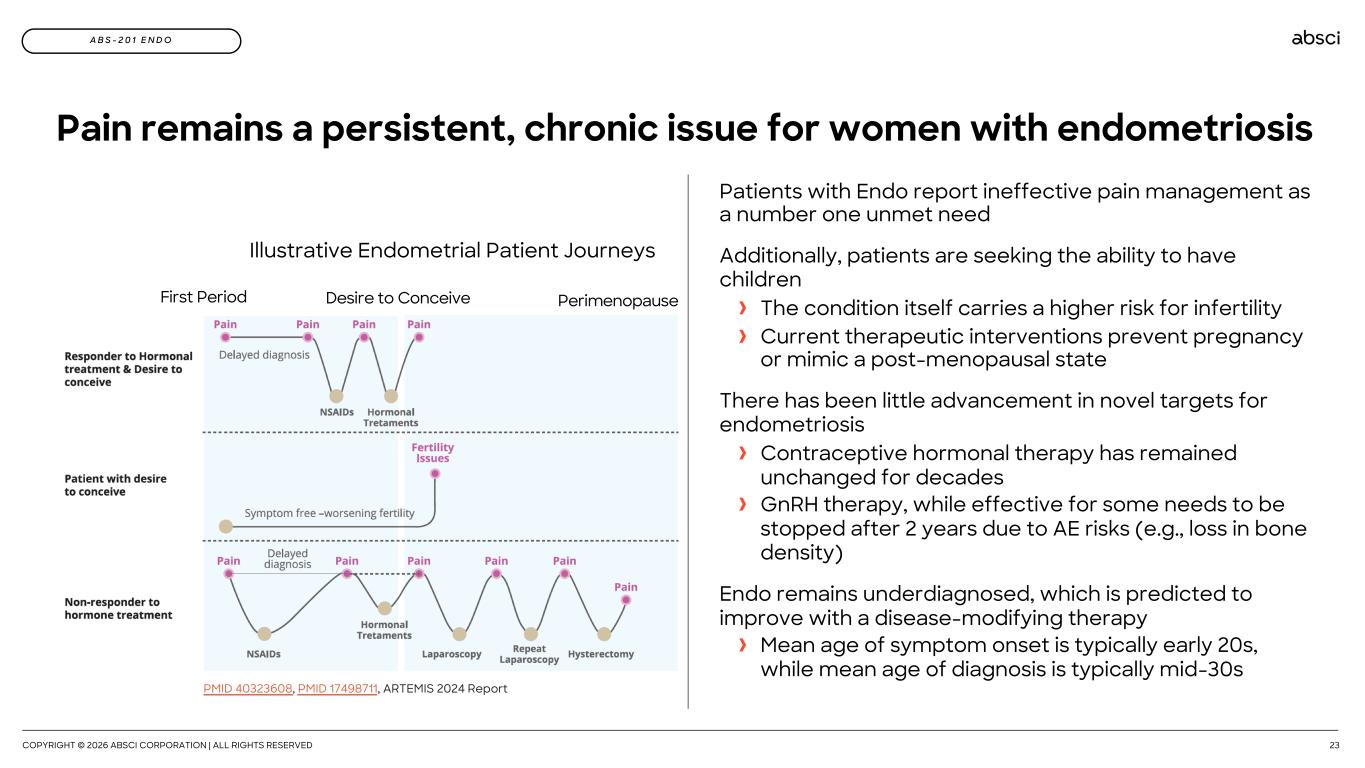
COPYRIGHT © 2026 ABSCI CORPORATION | ALL RIGHTS RESERVED 23 Pain remains a persistent, chronic issue for women with endometriosis A B S - 2 0 1 E N D O Illustrative Endometrial Patient Journeys First Period Desire to Conceive Perimenopause PMID 40323608, PMID 17498711, ARTEMIS 2024 Report Patients with Endo report ineffective pain management as a number one unmet need Additionally, patients are seeking the ability to have children The condition itself carries a higher risk for infertility Current therapeutic interventions prevent pregnancy or mimic a post-menopausal state There has been little advancement in novel targets for endometriosis Contraceptive hormonal therapy has remained unchanged for decades GnRH therapy, while effective for some needs to be stopped after 2 years due to AE risks (e.g., loss in bone density) Endo remains underdiagnosed, which is predicted to improve with a disease-modifying therapy Mean age of symptom onset is typically early 20s, while mean age of diagnosis is typically mid-30s
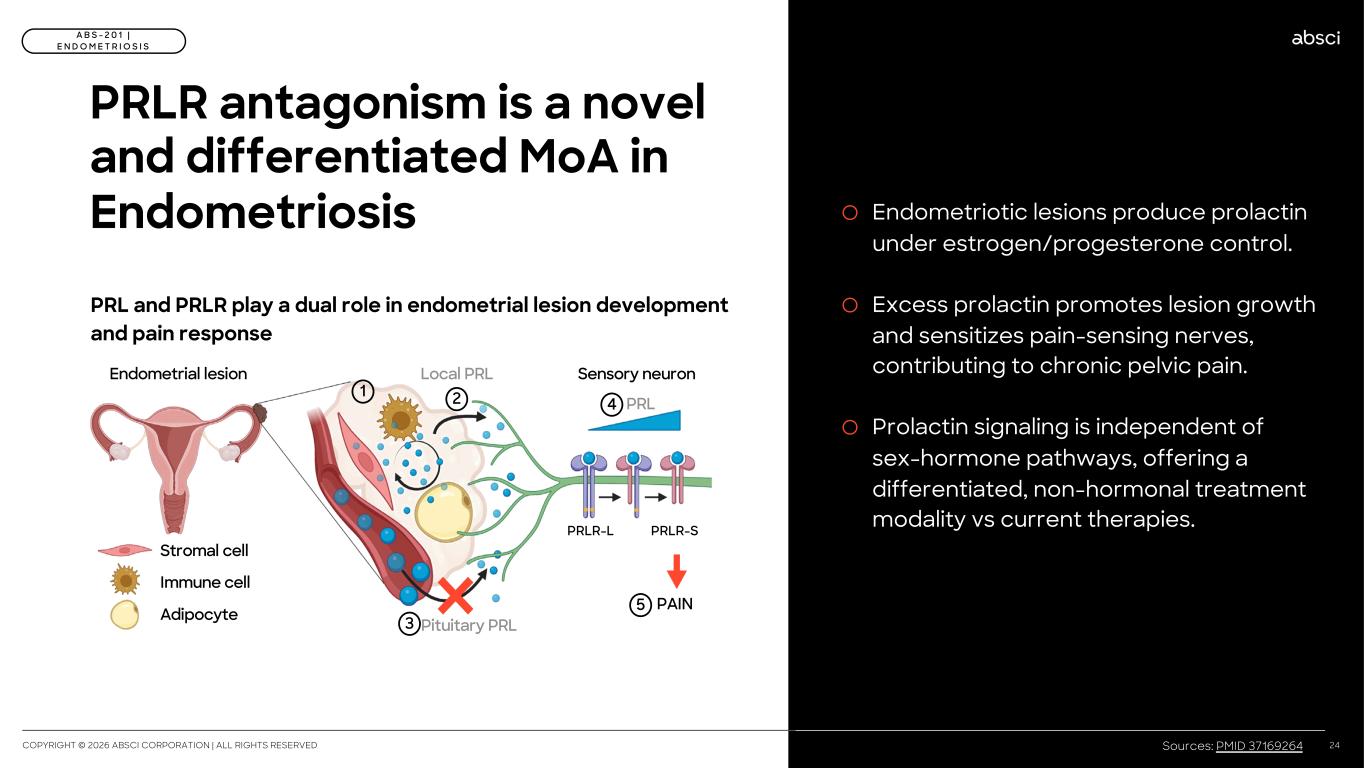
o Endometriotic lesions produce prolactin under estrogen/progesterone control. o Excess prolactin promotes lesion growth and sensitizes pain-sensing nerves, contributing to chronic pelvic pain. o Prolactin signaling is independent of sex-hormone pathways, offering a differentiated, non-hormonal treatment modality vs current therapies. COPYRIGHT © 2026 ABSCI CORPORATION | ALL RIGHTS RESERVED 24 A B S - 2 0 1 | E N D O M E T R I O S I S PRLR antagonism is a novel and differentiated MoA in Endometriosis PRL and PRLR play a dual role in endometrial lesion development and pain response Stromal cell Immune cell Adipocyte PRL 1 2 Endometrial lesion Local PRL PRLR-L PRLR-S Sensory neuron PAIN Pituitary PRL3 5 4 Sources: PMID 37169264
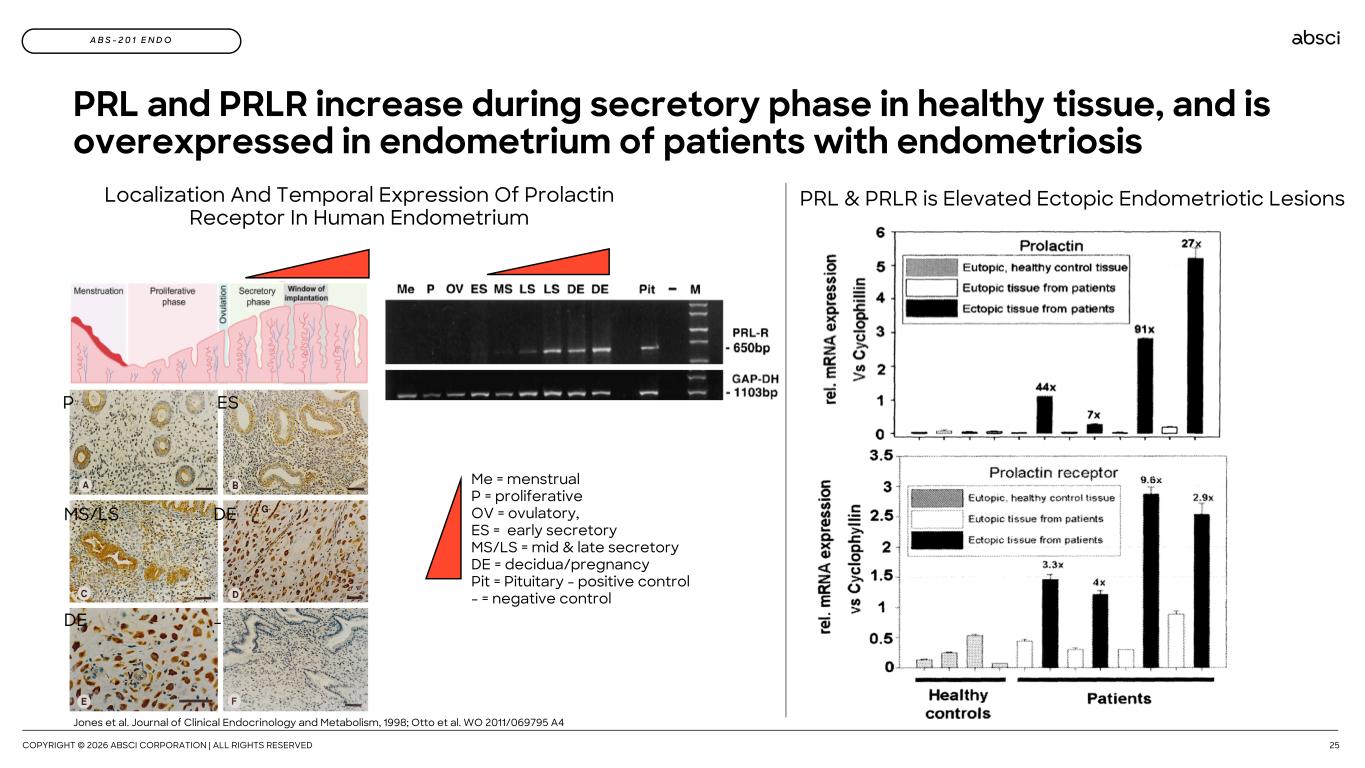
COPYRIGHT © 2026 ABSCI CORPORATION | ALL RIGHTS RESERVED 25 A B S - 2 0 1 E N D O Localization And Temporal Expression Of Prolactin Receptor In Human Endometrium PRL and PRLR increase during secretory phase in healthy tissue, and is overexpressed in endometrium of patients with endometriosis Me = menstrual P = proliferative OV = ovulatory, ES = early secretory MS/LS = mid & late secretory DE = decidua/pregnancy Pit = Pituitary - positive control - = negative control P ES MS/LS DE DE - PRL & PRLR is Elevated Ectopic Endometriotic Lesions Jones et al. Journal of Clinical Endocrinology and Metabolism, 1998; Otto et al. WO 2011/069795 A4
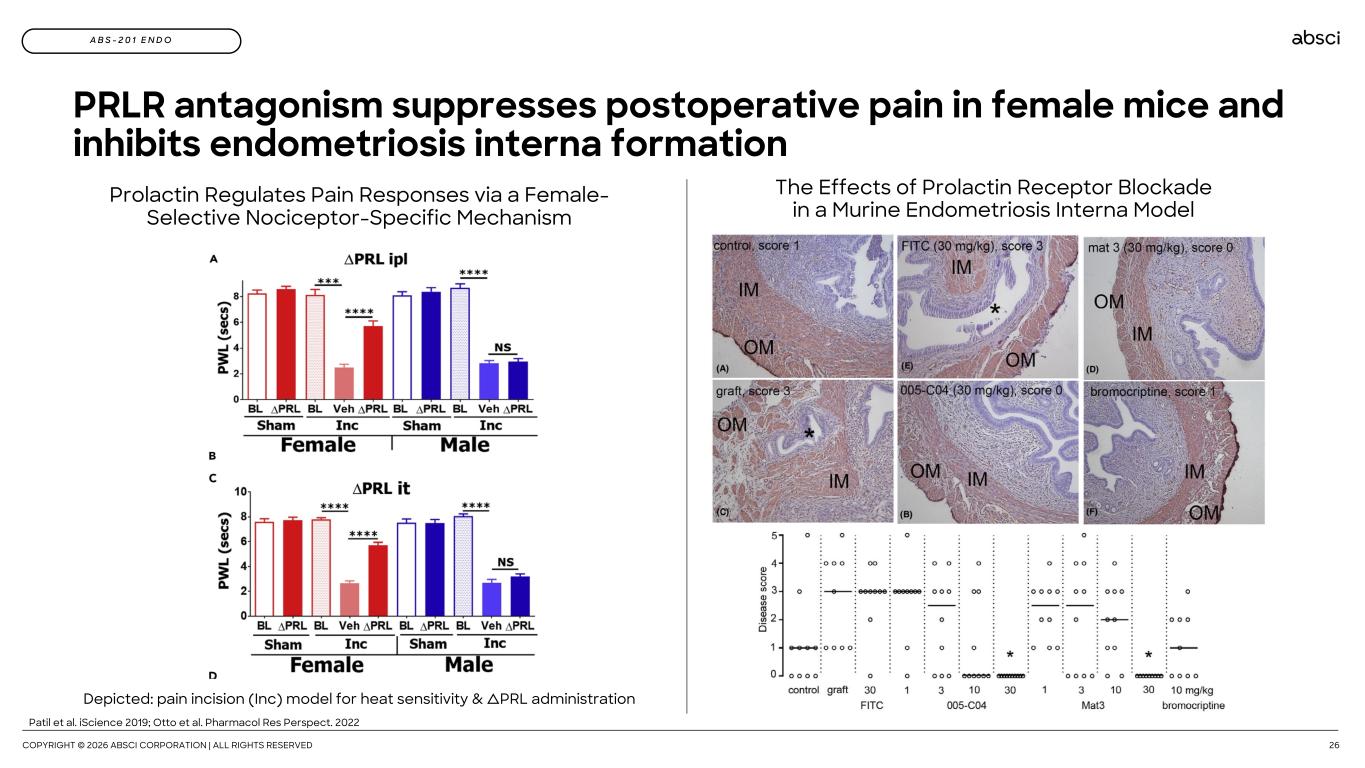
COPYRIGHT © 2026 ABSCI CORPORATION | ALL RIGHTS RESERVED 26 A B S - 2 0 1 E N D O Prolactin Regulates Pain Responses via a Female- Selective Nociceptor-Specific Mechanism PRLR antagonism suppresses postoperative pain in female mice and inhibits endometriosis interna formation The Effects of Prolactin Receptor Blockade in a Murine Endometriosis Interna Model Patil et al. iScience 2019; Otto et al. Pharmacol Res Perspect. 2022 Depicted: pain incision (Inc) model for heat sensitivity & ∆PRL administration
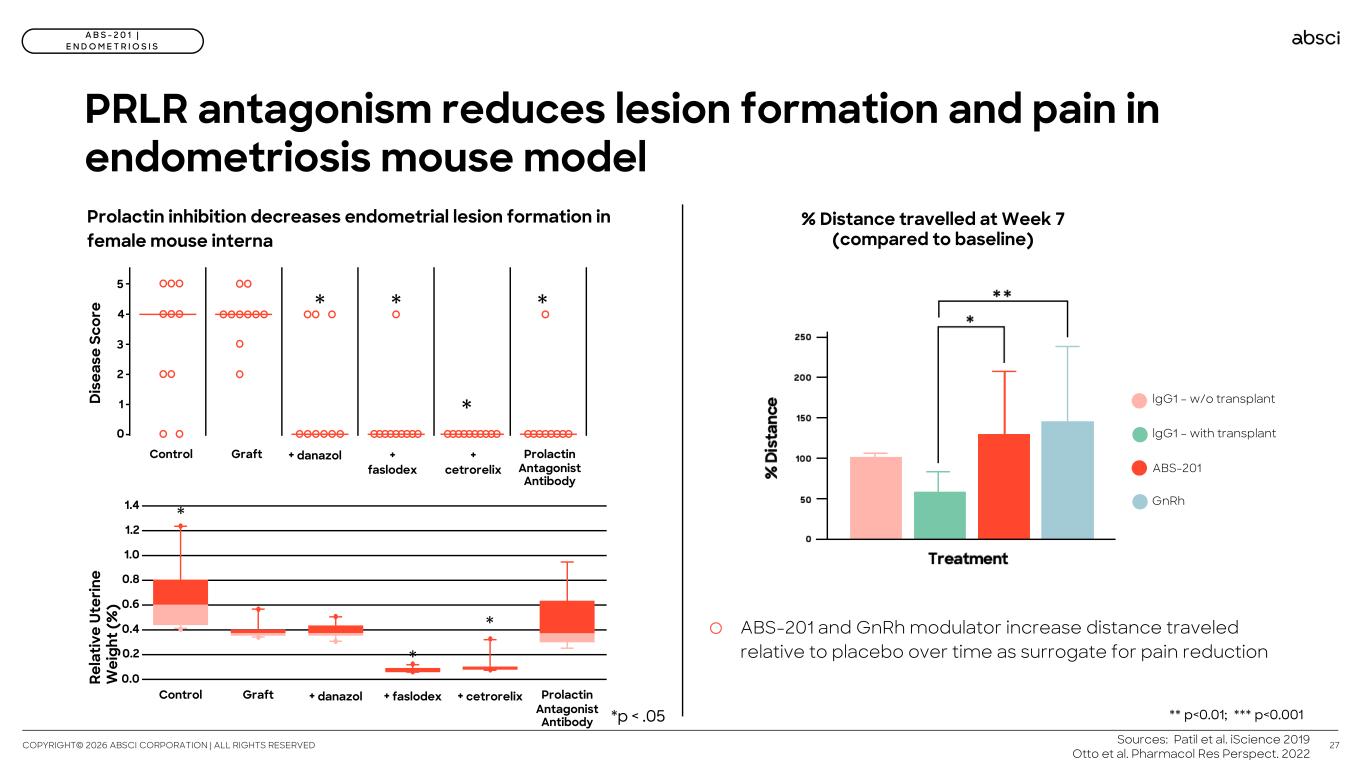
PRLR antagonism reduces lesion formation and pain in endometriosis mouse model 27 A B S - 2 0 1 | E N D O M E T R I O S I S COPYRIGHT© 2026 ABSCI CORPORATION | ALL RIGHTS RESERVED * 1 2 3 4 5 0 * * *D is ea se S co re Control Graft + danazol + faslodex + cetrorelix Prolactin Antagonist Antibody Prolactin inhibition decreases endometrial lesion formation in female mouse interna Re la tiv e Ut er in e W ei gh t ( % ) 0.0 0.2 0.4 0.6 0.8 1.0 1.2 1.4 * Control Graft + danazol + faslodex + cetrorelix Prolactin Antagonist Antibody * * Sources: Patil et al. iScience 2019 Otto et al. Pharmacol Res Perspect. 2022 % Distance travelled at Week 7 (compared to baseline) lgG1 – w/o transplant lgG1 – with transplant ABS-201 GnRh o ABS-201 and GnRh modulator increase distance traveled relative to placebo over time as surrogate for pain reduction *p < .05 ** p<0.01; *** p<0.001
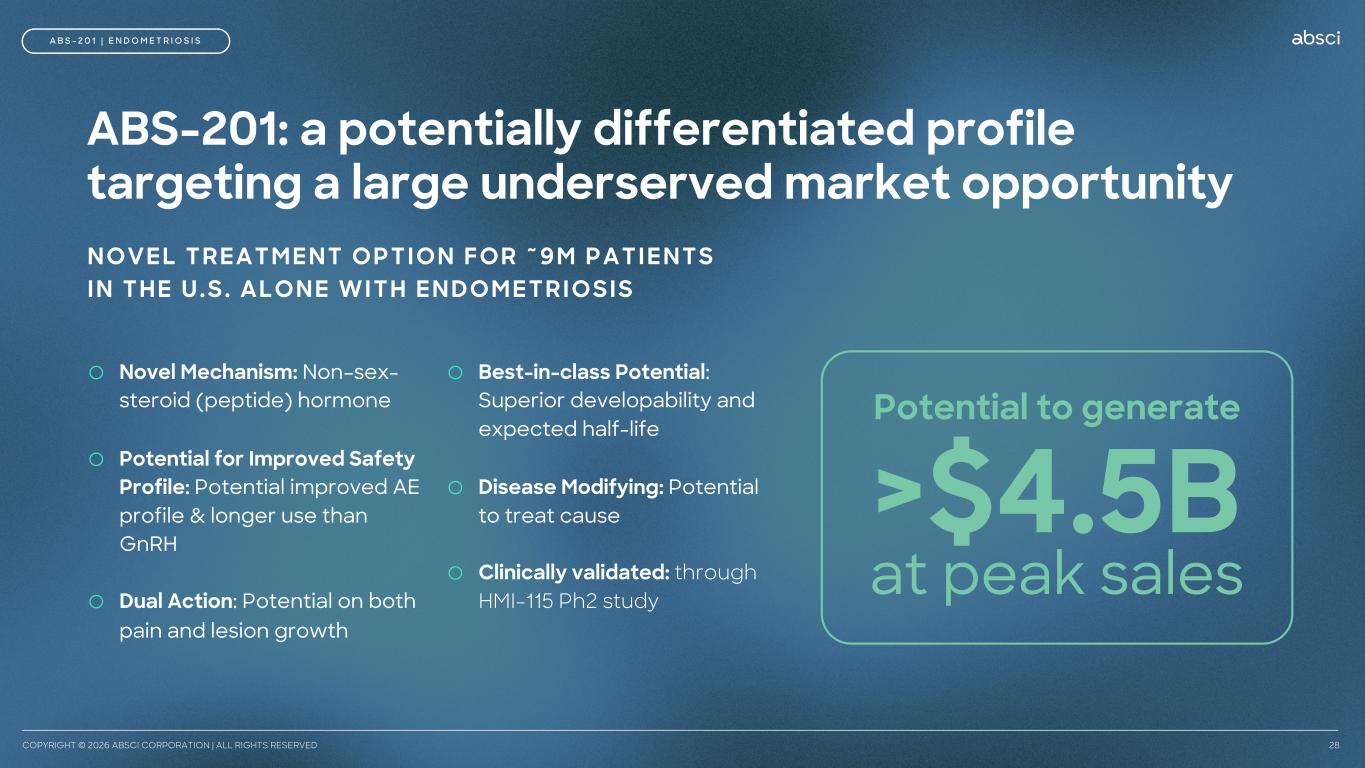
COPYRIGHT © 2026 ABSCI CORPORATION | ALL RIGHTS RESERVED 28 >$4.5B at peak sales Potential to generate A B S - 2 0 1 | E N D O M E T R I O S I S ABS-201: a potentially differentiated profile targeting a large underserved market opportunity NOVEL TREATMENT OPTION FOR ~9M PATIENTS IN THE U.S. ALONE WITH ENDOMETRIOSIS o Novel Mechanism: Non–sex- steroid (peptide) hormone o Potential for Improved Safety Profile: Potential improved AE profile & longer use than GnRH o Dual Action: Potential on both pain and lesion growth o Best-in-class Potential: Superior developability and expected half-life o Disease Modifying: Potential to treat cause o Clinically validated: through HMI-115 Ph2 study
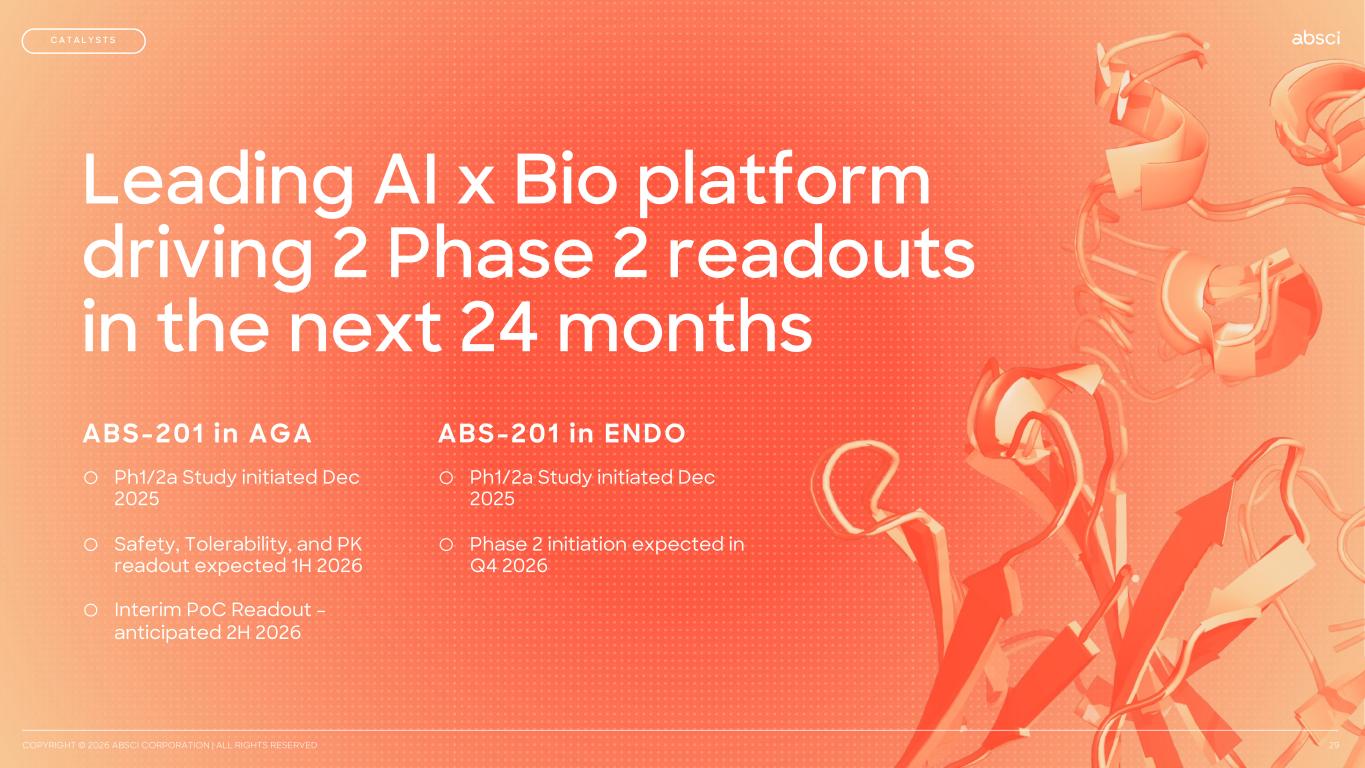
Leading AI x Bio platform driving 2 Phase 2 readouts in the next 24 months COPYRIGHT © 2026 ABSCI CORPORATION | ALL RIGHTS RESERVED 29 C A T A L Y S T S ABS-201 in AGA o Ph1/2a Study initiated Dec 2025 o Safety, Tolerability, and PK readout expected 1H 2026 o Interim PoC Readout – anticipated 2H 2026 ABS-201 in ENDO o Ph1/2a Study initiated Dec 2025 o Phase 2 initiation expected in Q4 2026
CONFIDENTIAL AND PROPRIETARY | COPYRIGHT © 2026 ABSCI CORPORATION | ALL RIGHTS RESERVED 30PYRIGH © 2026 ABSCI CORPORATION | ALL RIGHTS RE ERVED Powered by Absci’s Leading AI Platform
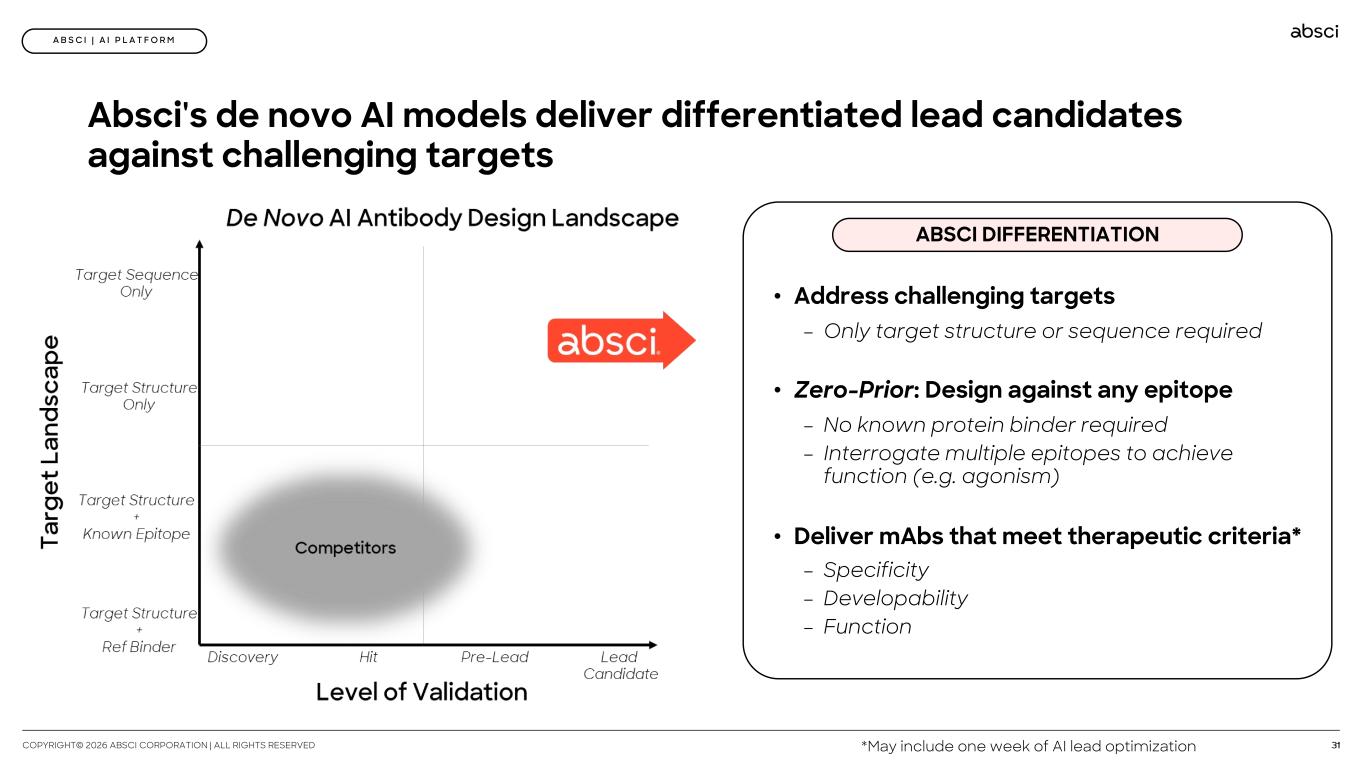
31COPYRIGHT© 2026 ABSCI CORPORATION | ALL RIGHTS RESERVED A B S C I | A I P L A T F O R M Absci's de novo AI models deliver differentiated lead candidates against challenging targets *May include one week of AI lead optimization • Address challenging targets – Only target structure or sequence required • Zero-Prior: Design against any epitope – No known protein binder required – Interrogate multiple epitopes to achieve function (e.g. agonism) • Deliver mAbs that meet therapeutic criteria* – Specificity – Developability – Function ABSCI DIFFERENTIATION
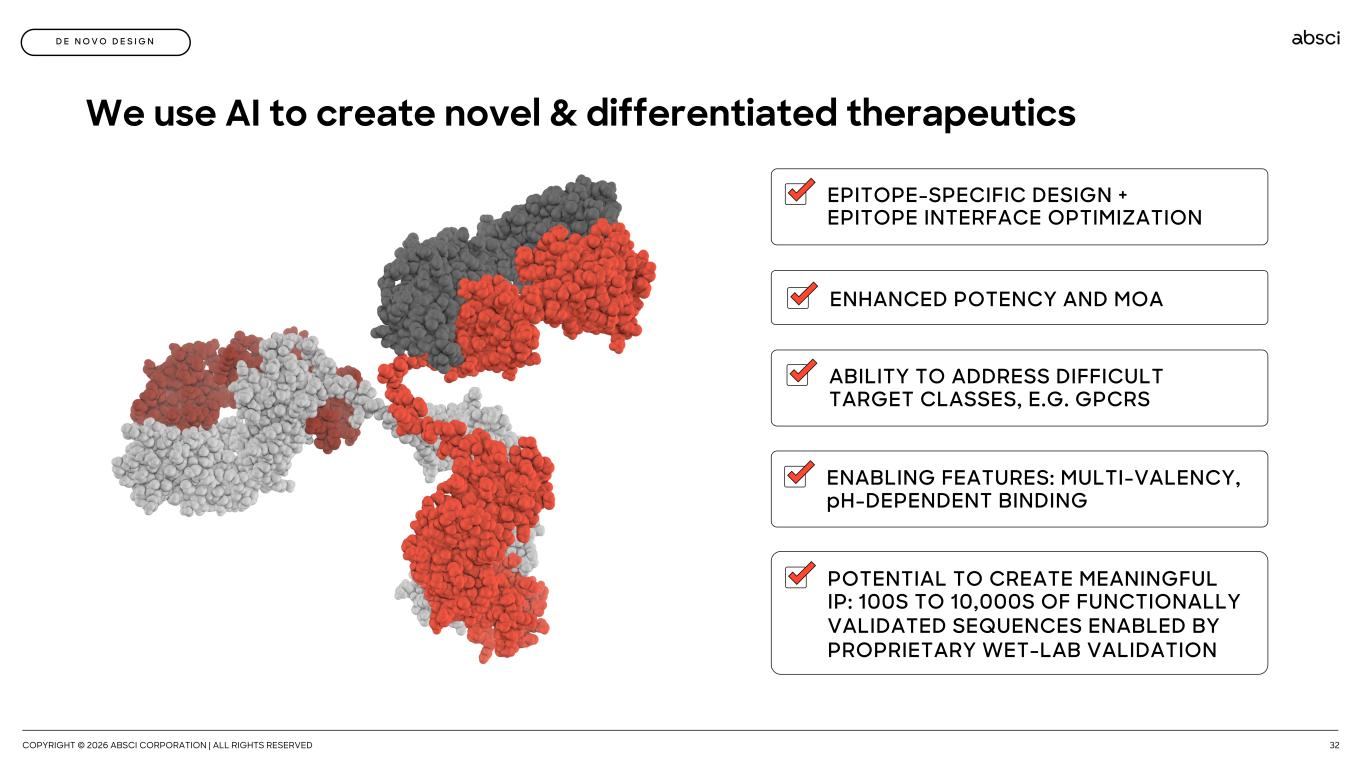
COPYRIGHT © 2026 ABSCI CORPORATION | ALL RIGHTS RESERVED 32 D E N O V O D E S I G N We use AI to create novel & differentiated therapeutics ENABLING FEATURES: MULTI-VALENCY, pH-DEPENDENT BINDING ABILITY TO ADDRESS DIFFICULT TARGET CLASSES, E.G. GPCRS EPITOPE-SPECIFIC DESIGN + EPITOPE INTERFACE OPTIMIZATION POTENTIAL TO CREATE MEANINGFUL IP: 100S TO 10,000S OF FUNCTIONALLY VALIDATED SEQUENCES ENABLED BY PROPRIETARY WET-LAB VALIDATION ENHANCED POTENCY AND MOA
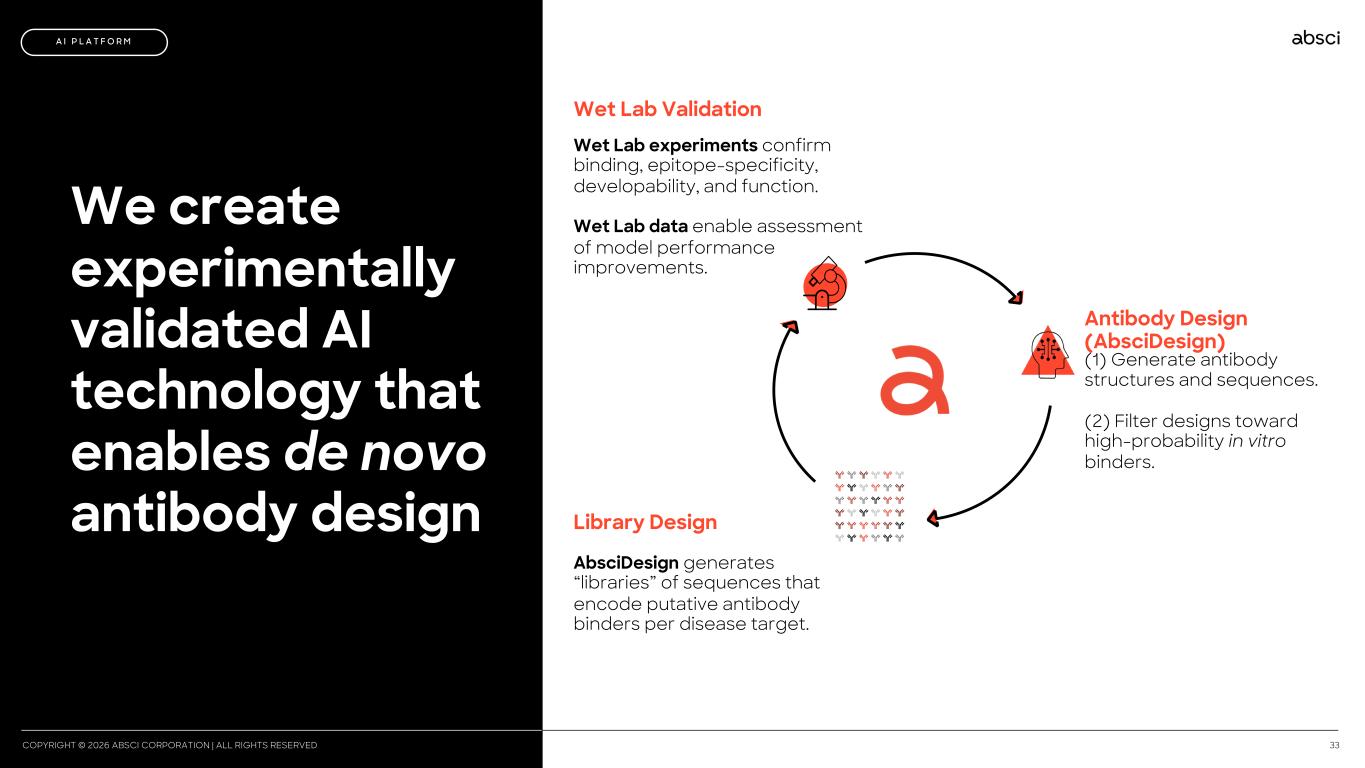
COPYRIGHT © 2026 ABSCI CORPORATION | ALL RIGHTS RESERVED 33 We create experimentally validated AI technology that enables de novo antibody design A I P L A T F O R M Antibody Design (AbsciDesign) Library Design Wet Lab Validation (1) Generate antibody structures and sequences. (2) Filter designs toward high-probability in vitro binders. AbsciDesign generates “libraries” of sequences that encode putative antibody binders per disease target. Wet Lab experiments confirm binding, epitope-specificity, developability, and function. Wet Lab data enable assessment of model performance improvements.
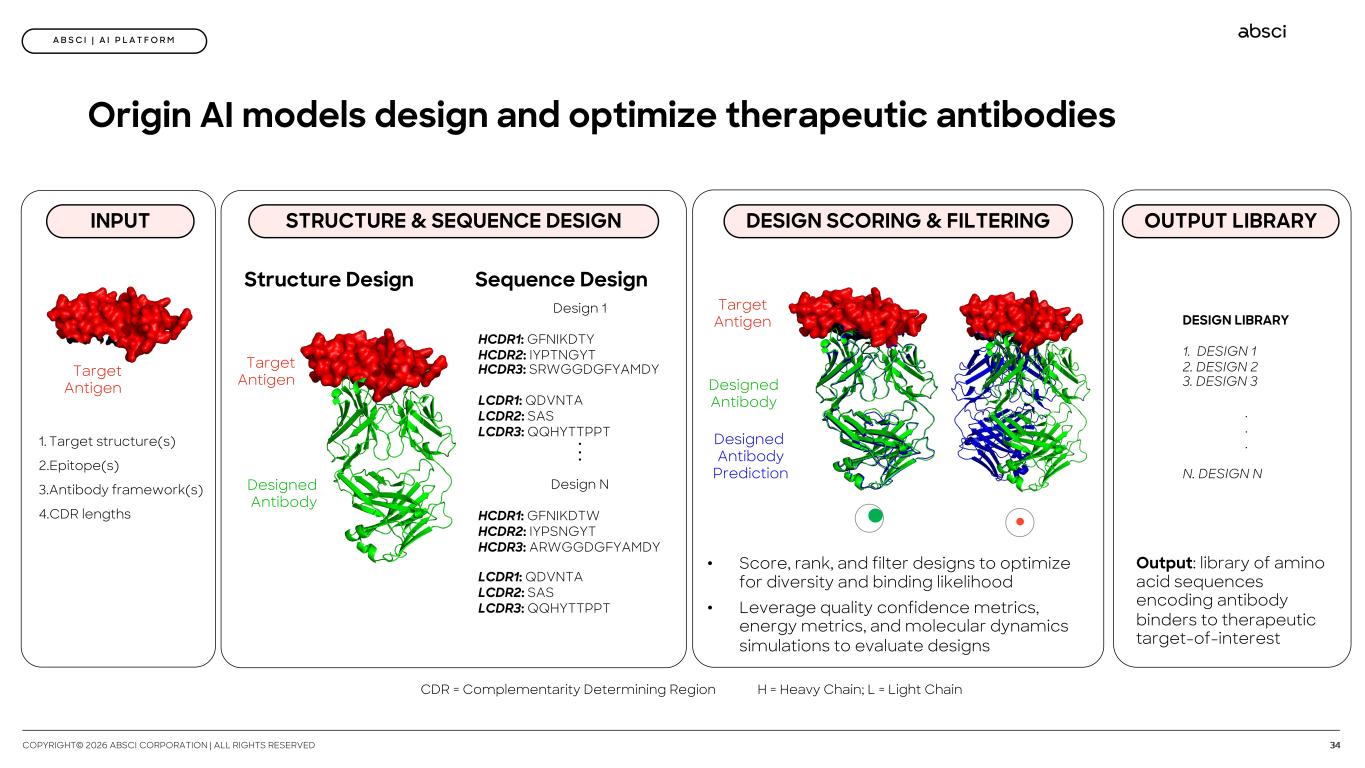
34COPYRIGHT© 2026 ABSCI CORPORATION | ALL RIGHTS RESERVED A B S C I | A I P L A T F O R M 1. Target structure(s) 2.Epitope(s) 3.Antibody framework(s) 4.CDR lengths CDR = Complementarity Determining Region H = Heavy Chain; L = Light Chain Design 1 HCDR1: GFNIKDTY HCDR2: IYPTNGYT HCDR3: SRWGGDGFYAMDY LCDR1: QDVNTA LCDR2: SAS LCDR3: QQHYTTPPT... Design N HCDR1: GFNIKDTW HCDR2: IYPSNGYT HCDR3: ARWGGDGFYAMDY LCDR1: QDVNTA LCDR2: SAS LCDR3: QQHYTTPPT Designed Antibody Target Antigen Structure Design Sequence Design • Score, rank, and filter designs to optimize for diversity and binding likelihood • Leverage quality confidence metrics, energy metrics, and molecular dynamics simulations to evaluate designs Designed Antibody Designed Antibody Prediction Target Antigen Target Antigen Origin AI models design and optimize therapeutic antibodies INPUT STRUCTURE & SEQUENCE DESIGN DESIGN SCORING & FILTERING OUTPUT LIBRARY DESIGN LIBRARY 1. DESIGN 1 2. DESIGN 2 3. DESIGN 3 . . . N. DESIGN N Output: library of amino acid sequences encoding antibody binders to therapeutic target-of-interest žŸ
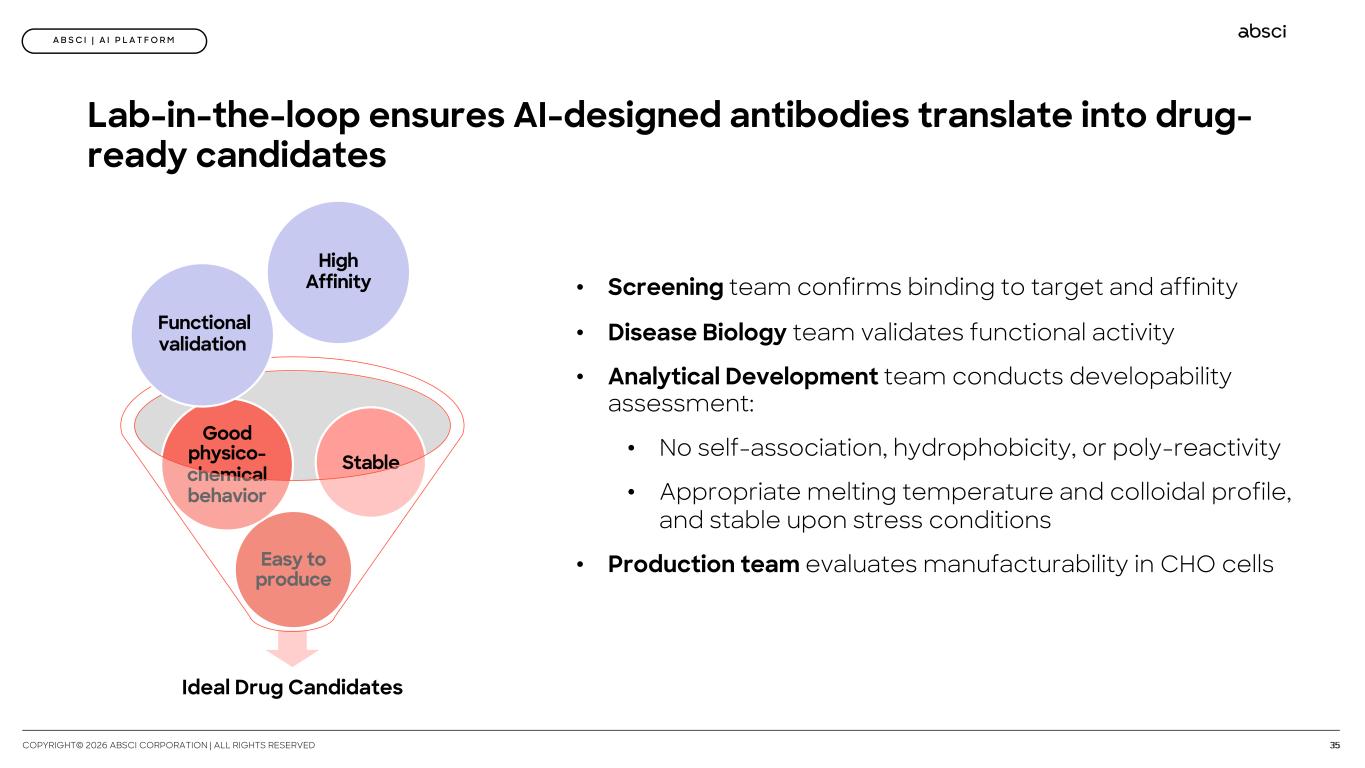
35COPYRIGHT© 2026 ABSCI CORPORATION | ALL RIGHTS RESERVED A B S C I | A I P L A T F O R M Lab-in-the-loop ensures AI-designed antibodies translate into drug- ready candidates Ideal Drug Candidates Easy to produce Good physico- chemical behavior Stable High Affinity Functional validation • Screening team confirms binding to target and affinity • Disease Biology team validates functional activity • Analytical Development team conducts developability assessment: • No self-association, hydrophobicity, or poly-reactivity • Appropriate melting temperature and colloidal profile, and stable upon stress conditions • Production team evaluates manufacturability in CHO cells
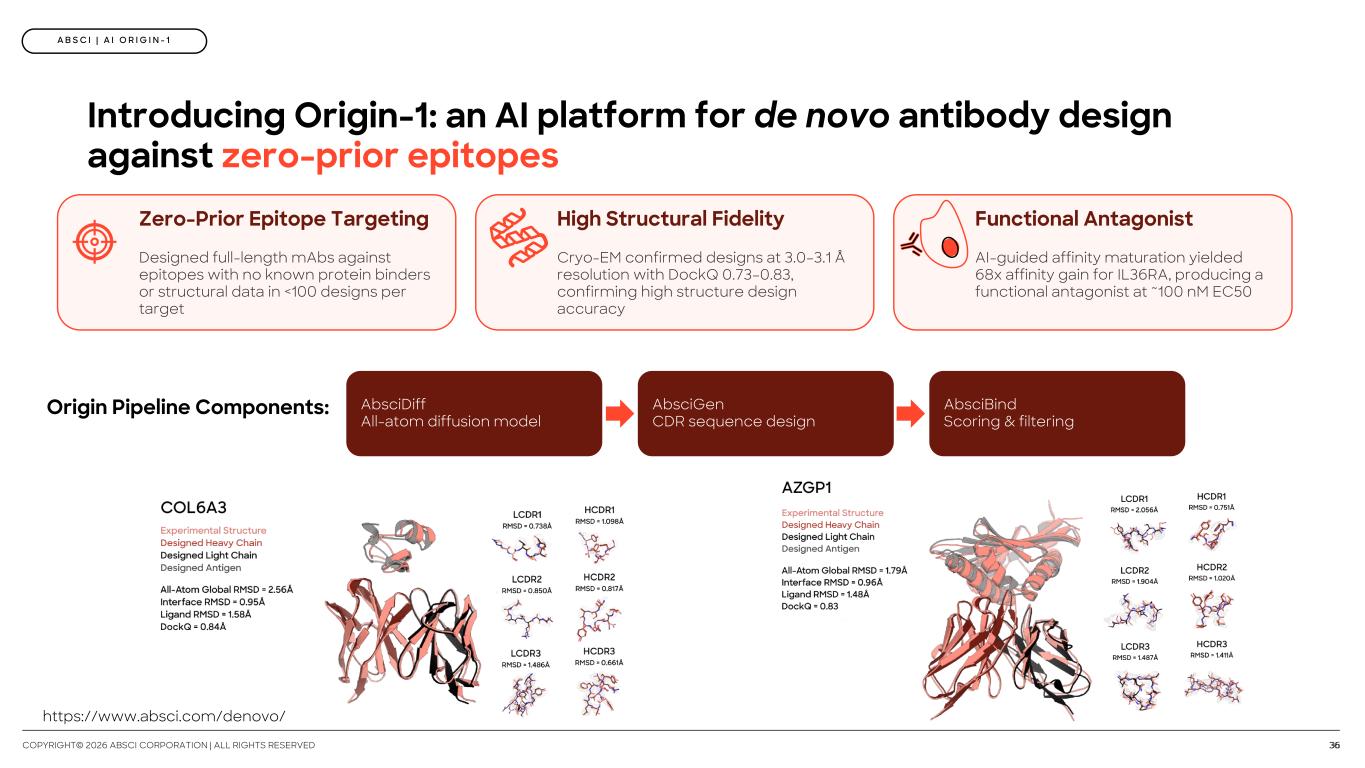
36COPYRIGHT© 2026 ABSCI CORPORATION | ALL RIGHTS RESERVED Introducing Origin-1: an AI platform for de novo antibody design against zero-prior epitopes Zero-Prior Epitope Targeting Designed full-length mAbs against epitopes with no known protein binders or structural data in <100 designs per target High Structural Fidelity Cryo-EM confirmed designs at 3.0–3.1 Å resolution with DockQ 0.73–0.83, confirming high structure design accuracy Functional Antagonist AI-guided affinity maturation yielded 68x affinity gain for IL36RA, producing a functional antagonist at ~100 nM EC50 Origin Pipeline Components: AbsciDiff All-atom diffusion model AbsciGen CDR sequence design AbsciBind Scoring & filtering A B S C I | A I O R I G I N - 1 https://www.absci.com/denovo/
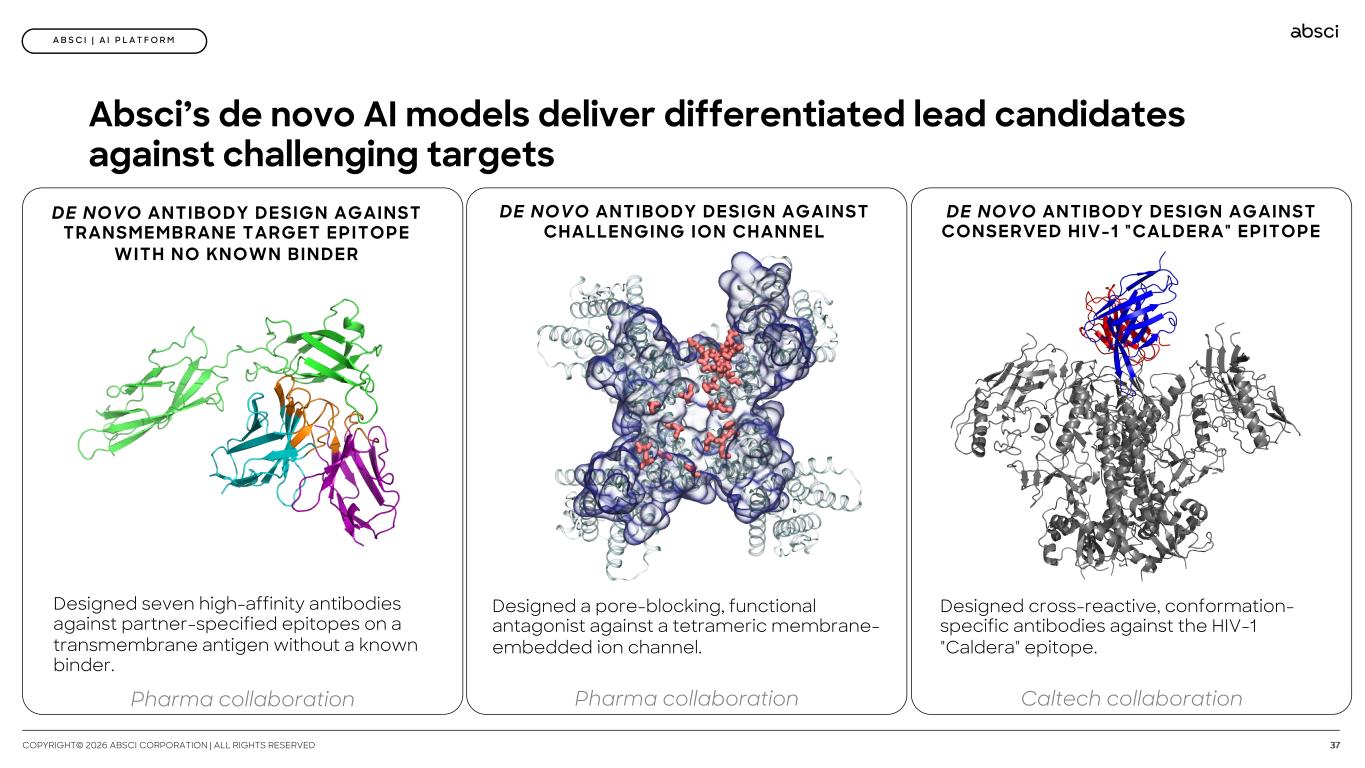
37COPYRIGHT© 2026 ABSCI CORPORATION | ALL RIGHTS RESERVED A B S C I | A I P L A T F O R M Absci’s de novo AI models deliver differentiated lead candidates against challenging targets DE NOVO ANTIBODY DESIGN AGAINST TRANSMEMBRANE TARGET EPITOPE WITH NO KNOWN BINDER Designed seven high-affinity antibodies against partner-specified epitopes on a transmembrane antigen without a known binder. Pharma collaboration DE NOVO ANTIBODY DESIGN AGAINST CHALLENGING ION CHANNEL Designed a pore-blocking, functional antagonist against a tetrameric membrane- embedded ion channel. Pharma collaboration DE NOVO ANTIBODY DESIGN AGAINST CONSERVED HIV-1 "CALDERA" EPITOPE Designed cross-reactive, conformation- specific antibodies against the HIV-1 "Caldera" epitope. Caltech collaboration
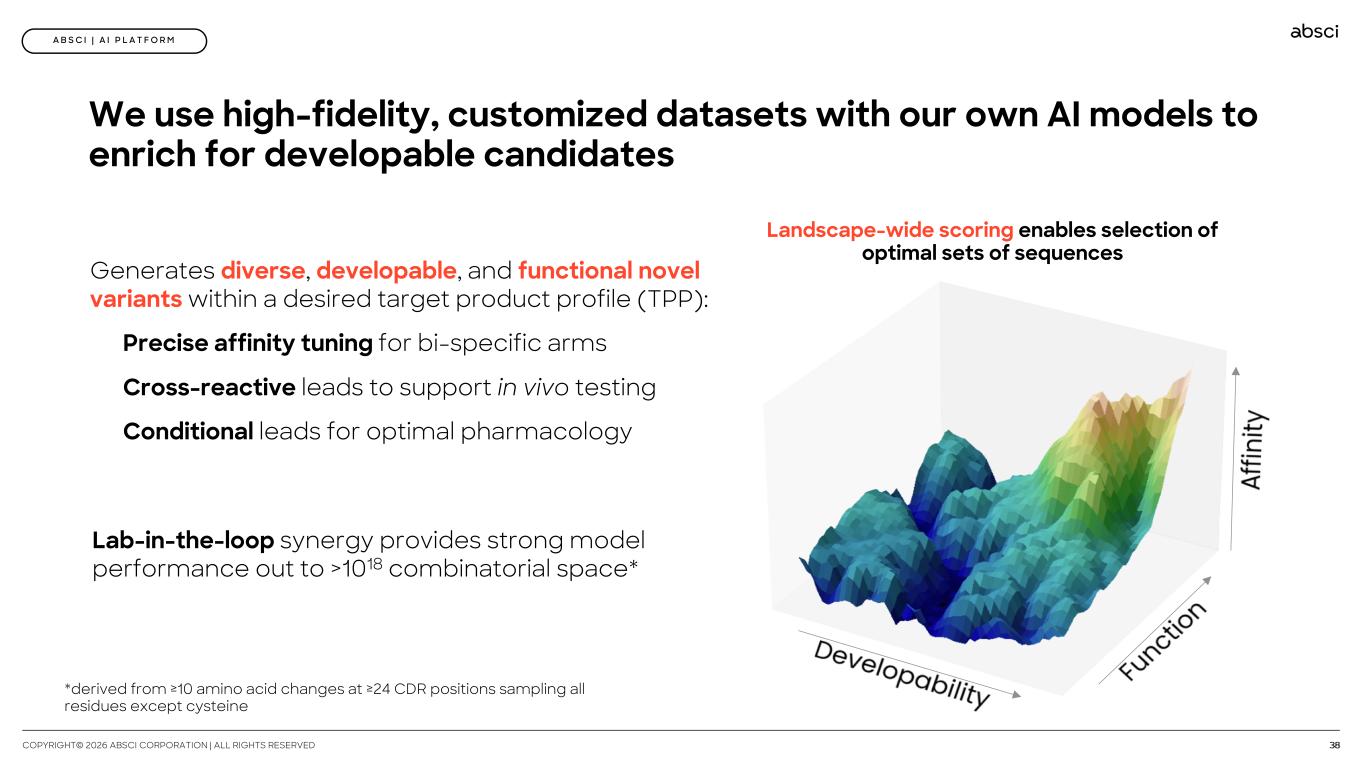
38COPYRIGHT© 2026 ABSCI CORPORATION | ALL RIGHTS RESERVED A B S C I | A I P L A T F O R M We use high-fidelity, customized datasets with our own AI models to enrich for developable candidates Lab-in-the-loop synergy provides strong model performance out to >1018 combinatorial space* Generates diverse, developable, and functional novel variants within a desired target product profile (TPP): Precise affinity tuning for bi-specific arms Cross-reactive leads to support in vivo testing Conditional leads for optimal pharmacology Landscape-wide scoring enables selection of optimal sets of sequences *derived from ≥10 amino acid changes at ≥24 CDR positions sampling all residues except cysteine
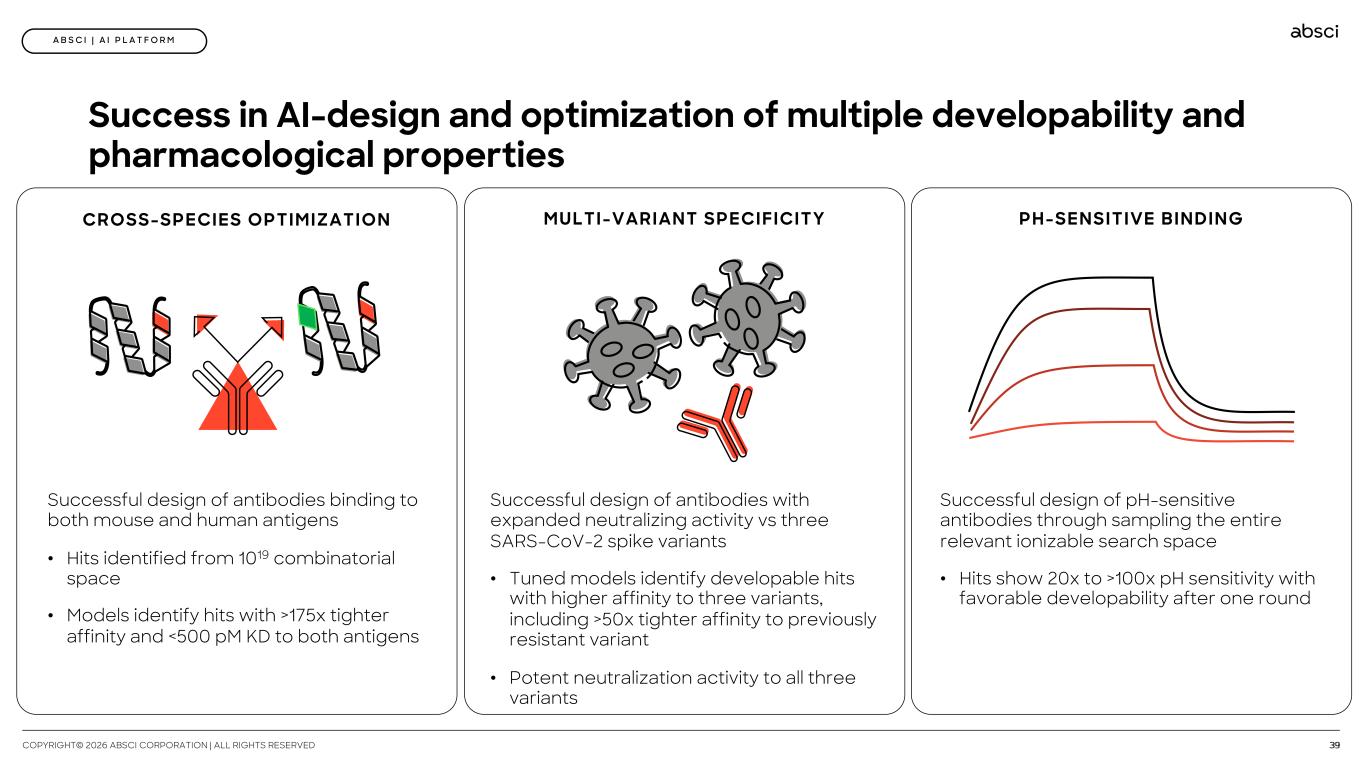
39COPYRIGHT© 2026 ABSCI CORPORATION | ALL RIGHTS RESERVED A B S C I | A I P L A T F O R M Success in AI-design and optimization of multiple developability and pharmacological properties CROSS-SPECIES OPTIMIZATION Successful design of antibodies binding to both mouse and human antigens • Hits identified from 1019 combinatorial space • Models identify hits with >175x tighter affinity and <500 pM KD to both antigens MULTI-VARIANT SPECIFICITY Successful design of antibodies with expanded neutralizing activity vs three SARS-CoV-2 spike variants • Tuned models identify developable hits with higher affinity to three variants, including >50x tighter affinity to previously resistant variant • Potent neutralization activity to all three variants PH-SENSITIVE BINDING Successful design of pH-sensitive antibodies through sampling the entire relevant ionizable search space • Hits show 20x to >100x pH sensitivity with favorable developability after one round
Track record of industry-leading partnerships A I D R U G C R E A T I O N ™ P A R T N E R S H I P S O U R P A R T N E R S H I P F O C U S 25+ PARTNERED PROGRAMS TO DATE • Challenging Targets / Epitopes • Differentiated TPPs • Mono or Multi-specific Formats A B S C I | P A R T N E R S H I P S U P P O R T I N G C O M P U T E C O L L A B O R A T I O N S Trademarks, service marks or trade names referred to herein are the intellectual property of their respective owners. Use of this IP does not imply affiliation, endorsement or sponsorship of any kind 40COPYRIGHT © 2026 ABSCI CORPORATION | ALL RIGHTS RESERVED
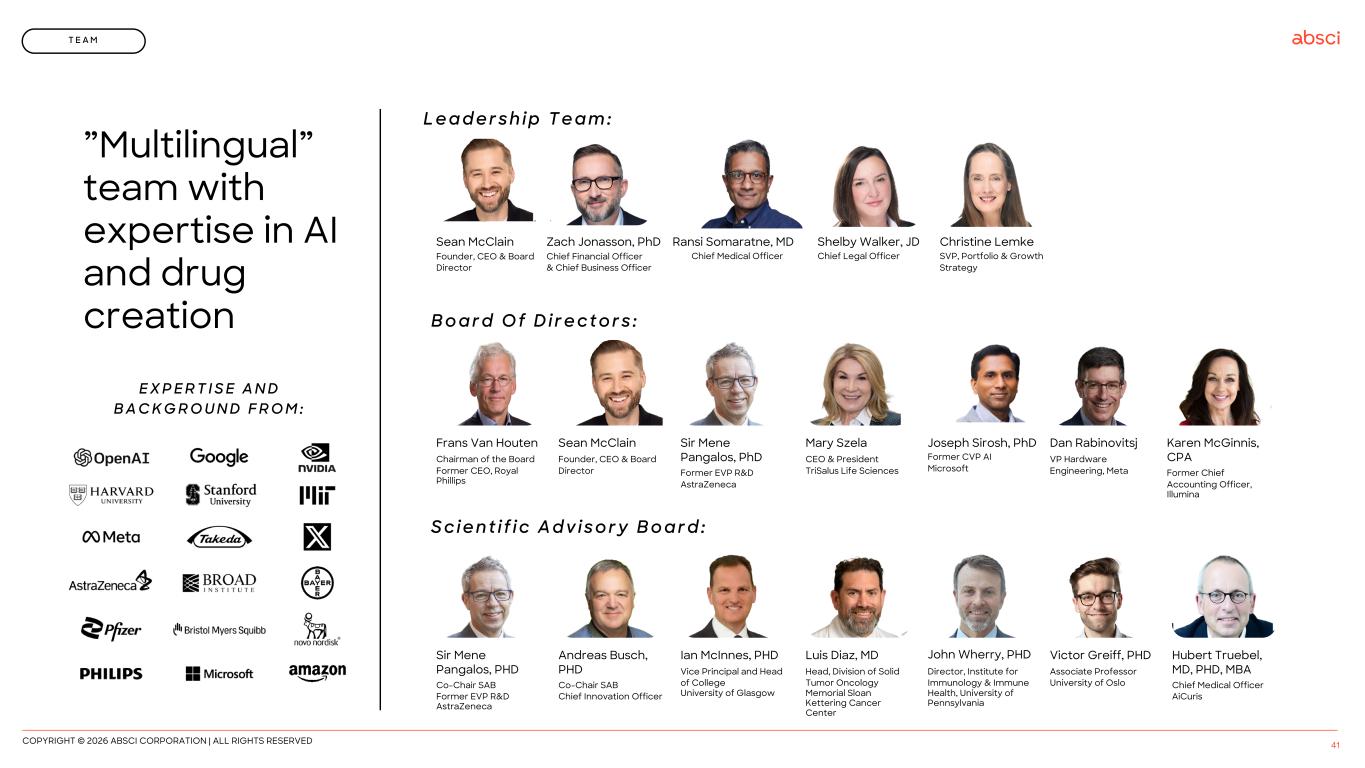
”Multilingual” team with expertise in AI and drug creation COPYRIGHT © 2026 ABSCI CORPORATION | ALL RIGHTS RESERVED 41 T E A M Sean McClain Founder, CEO & Board Director Zach Jonasson, PhD Chief Financial Officer & Chief Business Officer Shelby Walker, JD Chief Legal Officer Christine Lemke SVP, Portfolio & Growth Strategy L e a d e r s h i p T e a m : Sean McClain Founder, CEO & Board Director Sir Mene Pangalos, PhD Former EVP R&D AstraZeneca Mary Szela CEO & President TriSalus Life Sciences Joseph Sirosh, PhD Former CVP AI Microsoft Dan Rabinovitsj VP Hardware Engineering, Meta Karen McGinnis, CPA Former Chief Accounting Officer, Illumina Frans Van Houten Chairman of the Board Former CEO, Royal Phillips B o a r d O f D i r e c t o r s : Andreas Busch, PHD Co-Chair SAB Chief Innovation Officer Ian McInnes, PHD Vice Principal and Head of College University of Glasgow Luis Diaz, MD Head, Division of Solid Tumor Oncology Memorial Sloan Kettering Cancer Center John Wherry, PHD Director, Institute for Immunology & Immune Health, University of Pennsylvania Victor Greiff, PHD Associate Professor University of Oslo Hubert Truebel, MD, PHD, MBA Chief Medical Officer AiCuris Sir Mene Pangalos, PHD Co-Chair SAB Former EVP R&D AstraZeneca S c i e n t i f i c A d v i s o r y B o a r d : Ransi Somaratne, MD Chief Medical Officer E X P E R T I S E A N D B A C K G R O U N D F R O M :
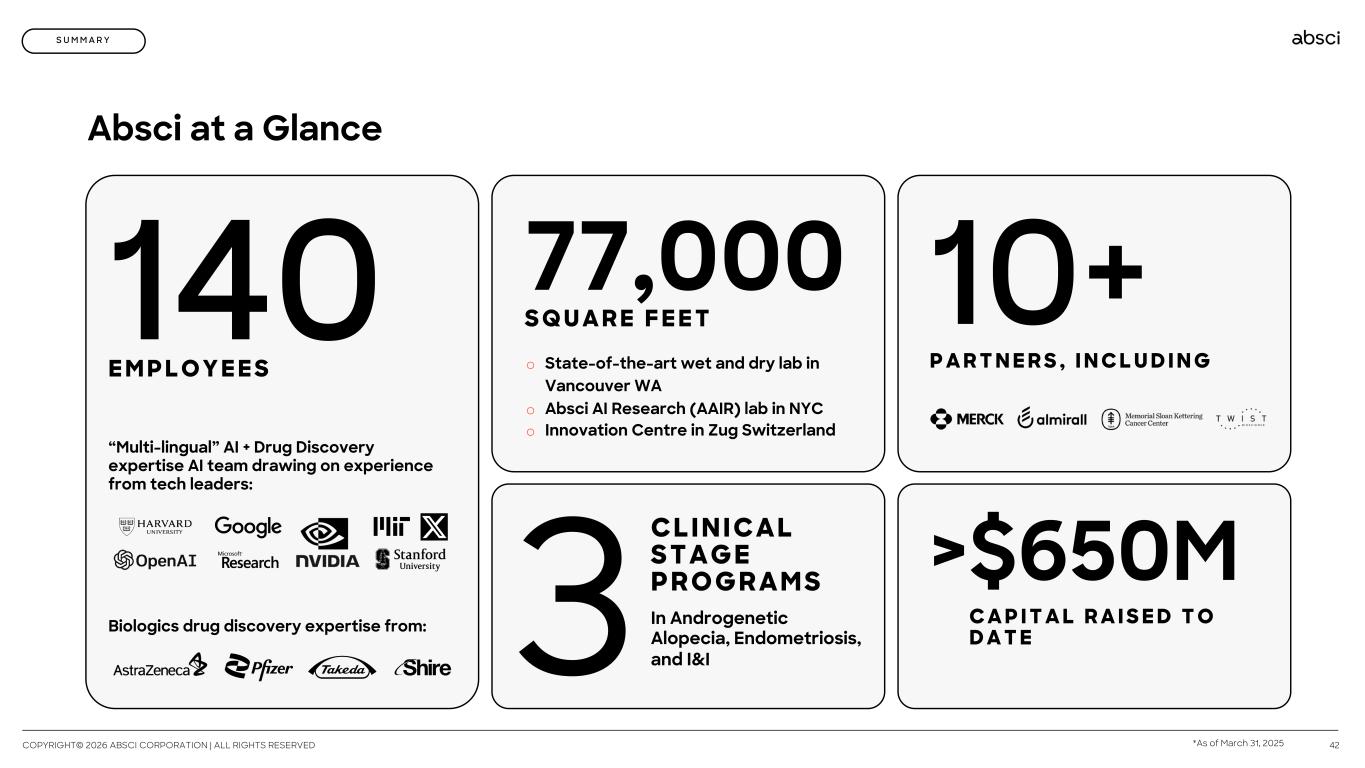
42 140 E M P L O Y E E S Biologics drug discovery expertise from: “Multi-lingual” AI + Drug Discovery expertise AI team drawing on experience from tech leaders: 77,000 S Q U A R E F E E T o State-of-the-art wet and dry lab in Vancouver WA o Absci AI Research (AAIR) lab in NYC o Innovation Centre in Zug Switzerland 3 CLI NI CAL STAGE PR O GR AMS In Androgenetic Alopecia, Endometriosis, and I&I >$650M C A P I T A L R A I S E D T O D A T E 10+ P A R T N E R S , I N C L U D I N G Absci at a Glance S U M M A R Y COPYRIGHT© 2026 ABSCI CORPORATION | ALL RIGHTS RESERVED *As of March 31, 2025
Generative AI Re(Generative) Biology A B S C I C O R P O R A T I O N 2 0 2 6 A L L R I G H T S R E S E R V E D
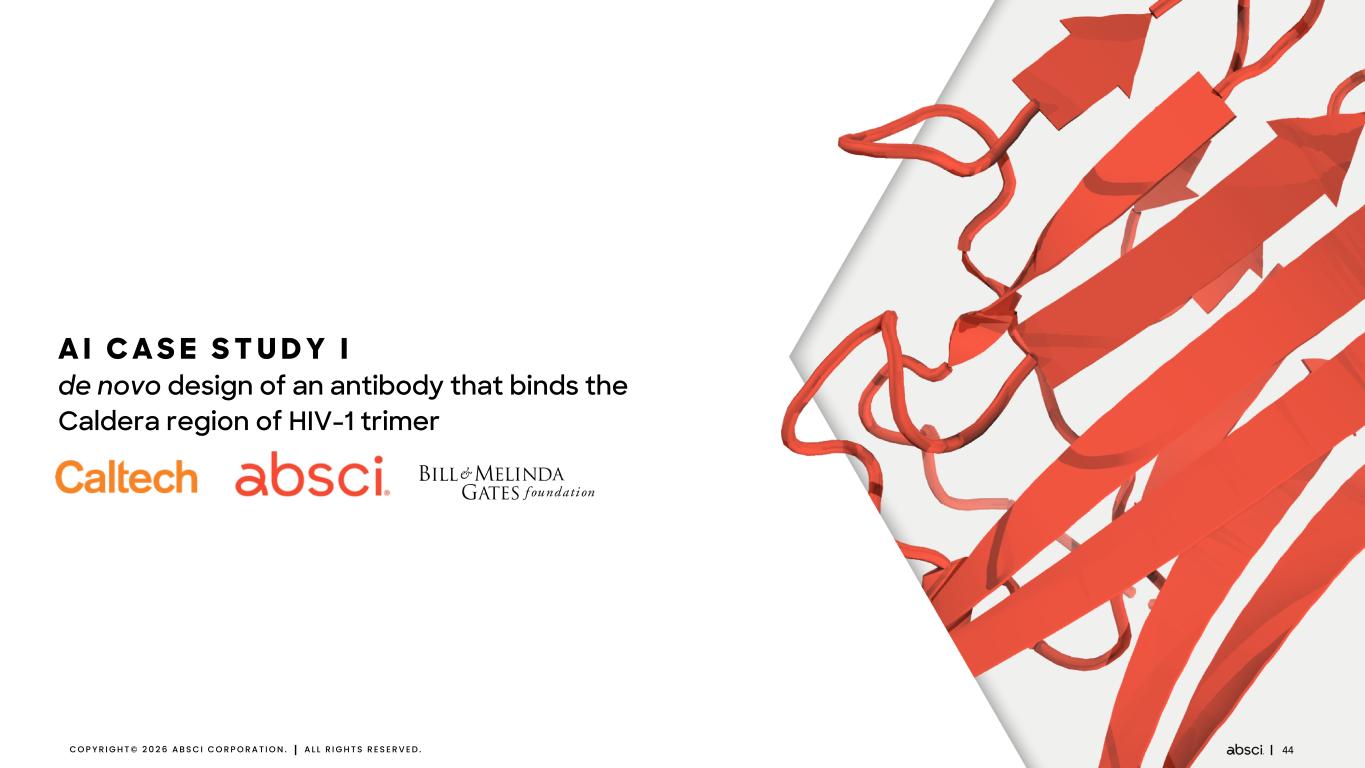
44C O P Y R I G H T © 2 0 2 6 A B S C I C O R P O R A T I O N . A L L R I G H T S R E S E R V E D . A I C A S E S T U D Y I de novo design of an antibody that binds the Caldera region of HIV-1 trimer
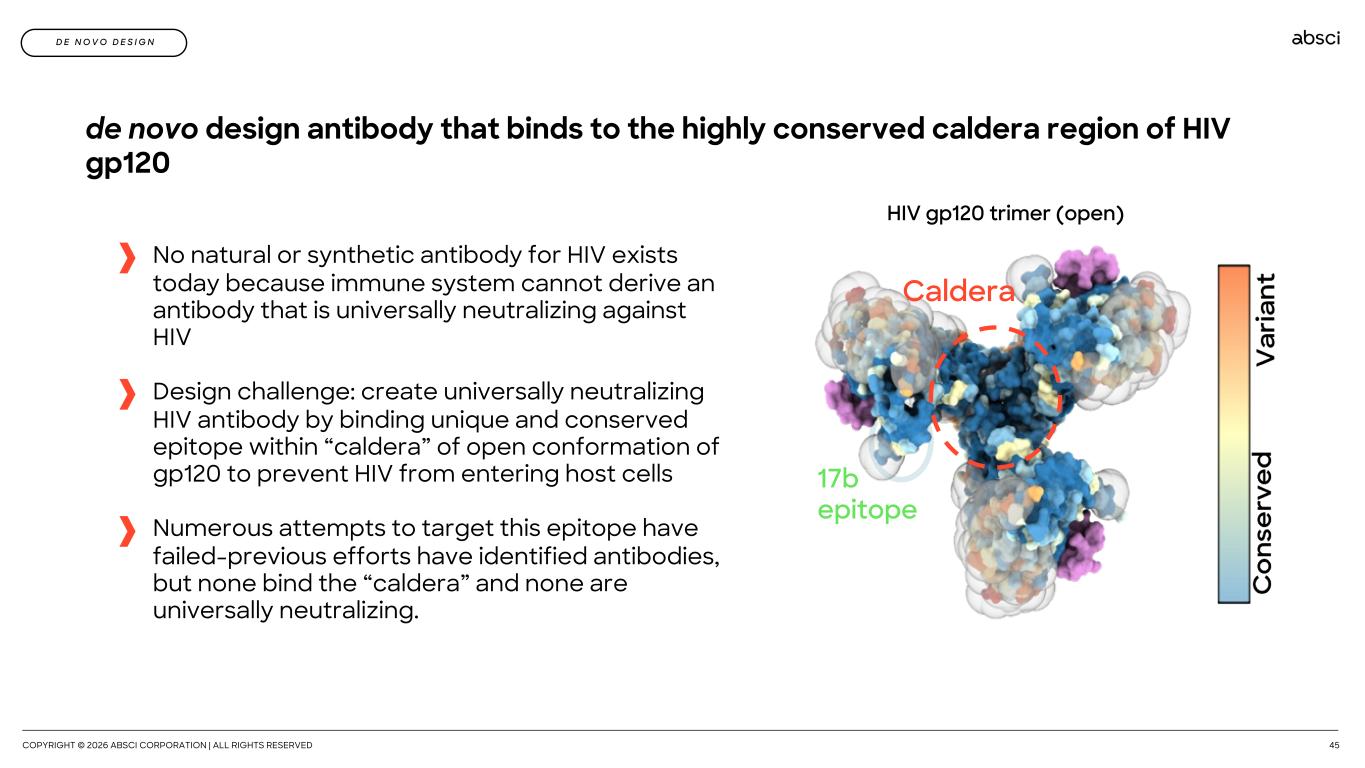
COPYRIGHT © 2026 ABSCI CORPORATION | ALL RIGHTS RESERVED 45 No natural or synthetic antibody for HIV exists today because immune system cannot derive an antibody that is universally neutralizing against HIV Design challenge: create universally neutralizing HIV antibody by binding unique and conserved epitope within “caldera” of open conformation of gp120 to prevent HIV from entering host cells Numerous attempts to target this epitope have failed-previous efforts have identified antibodies, but none bind the “caldera” and none are universally neutralizing. D E N O V O D E S I G N de novo design antibody that binds to the highly conserved caldera region of HIV gp120 17b epitope Caldera HIV gp120 trimer (open)
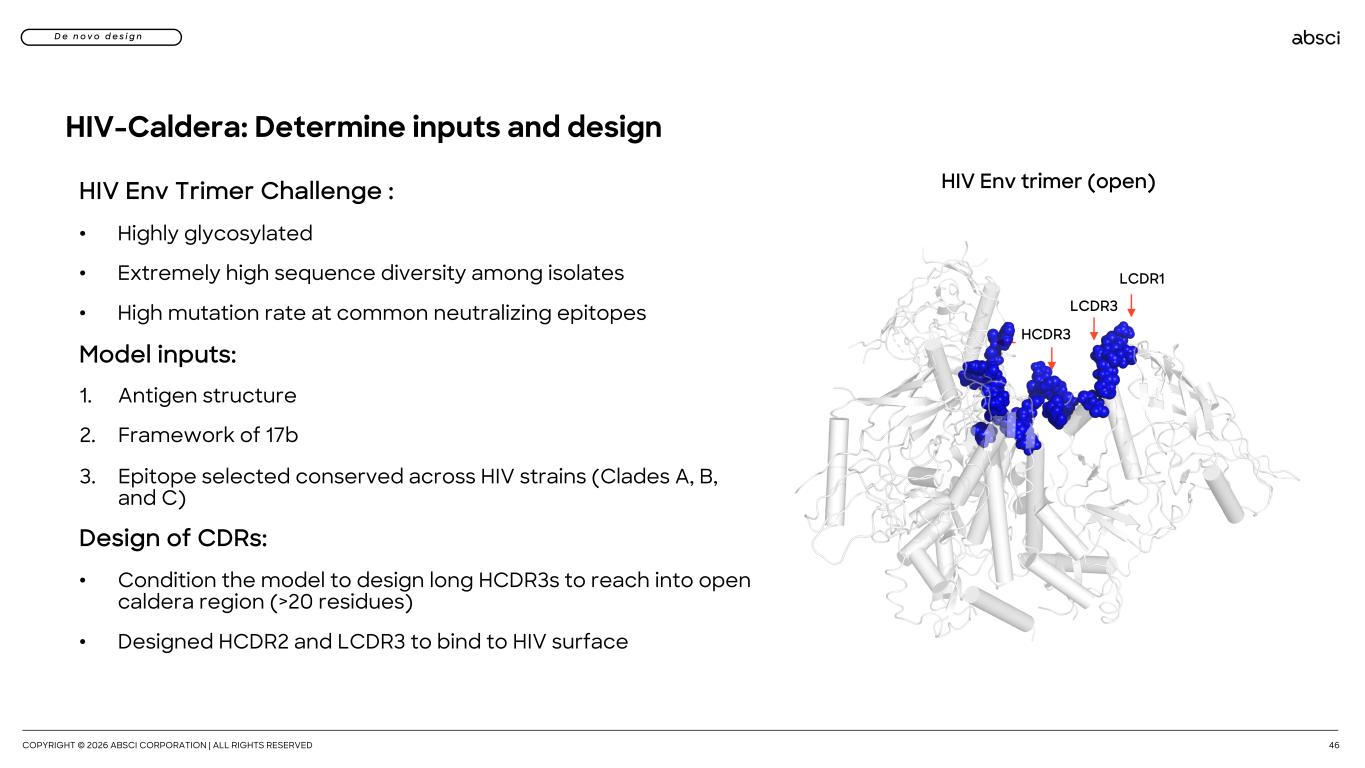
COPYRIGHT © 2026 ABSCI CORPORATION | ALL RIGHTS RESERVED 46 D e n o v o d e s i g n HIV-Caldera: Determine inputs and design HIV Env Trimer Challenge : • Highly glycosylated • Extremely high sequence diversity among isolates • High mutation rate at common neutralizing epitopes Model inputs: 1. Antigen structure 2. Framework of 17b 3. Epitope selected conserved across HIV strains (Clades A, B, and C) Design of CDRs: • Condition the model to design long HCDR3s to reach into open caldera region (>20 residues) • Designed HCDR2 and LCDR3 to bind to HIV surface HIV Env trimer (open) HCDR3 LCDR1 LCDR3
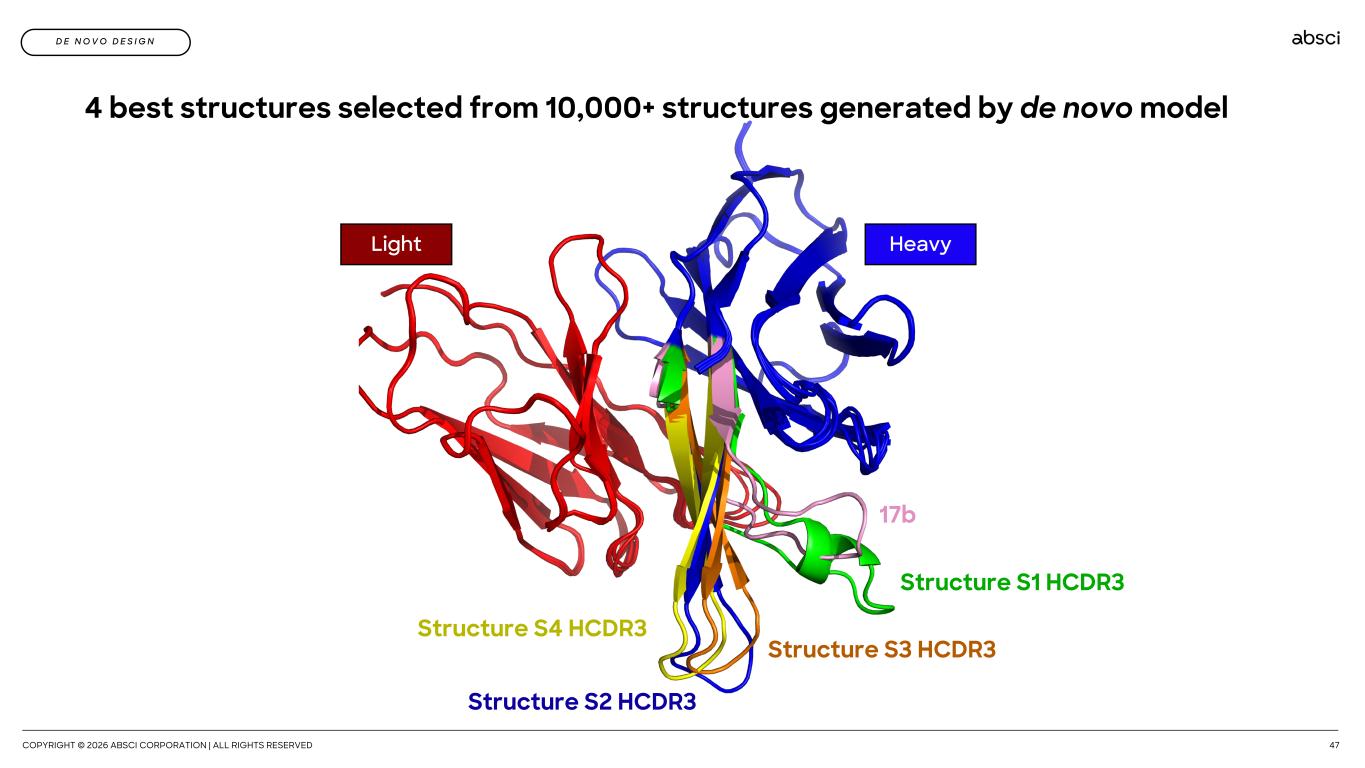
COPYRIGHT © 2026 ABSCI CORPORATION | ALL RIGHTS RESERVED 47 D E N O V O D E S I G N 4 best structures selected from 10,000+ structures generated by de novo model 17b Structure S1 HCDR3 Structure S3 HCDR3 Structure S2 HCDR3 Structure S4 HCDR3 HeavyLight
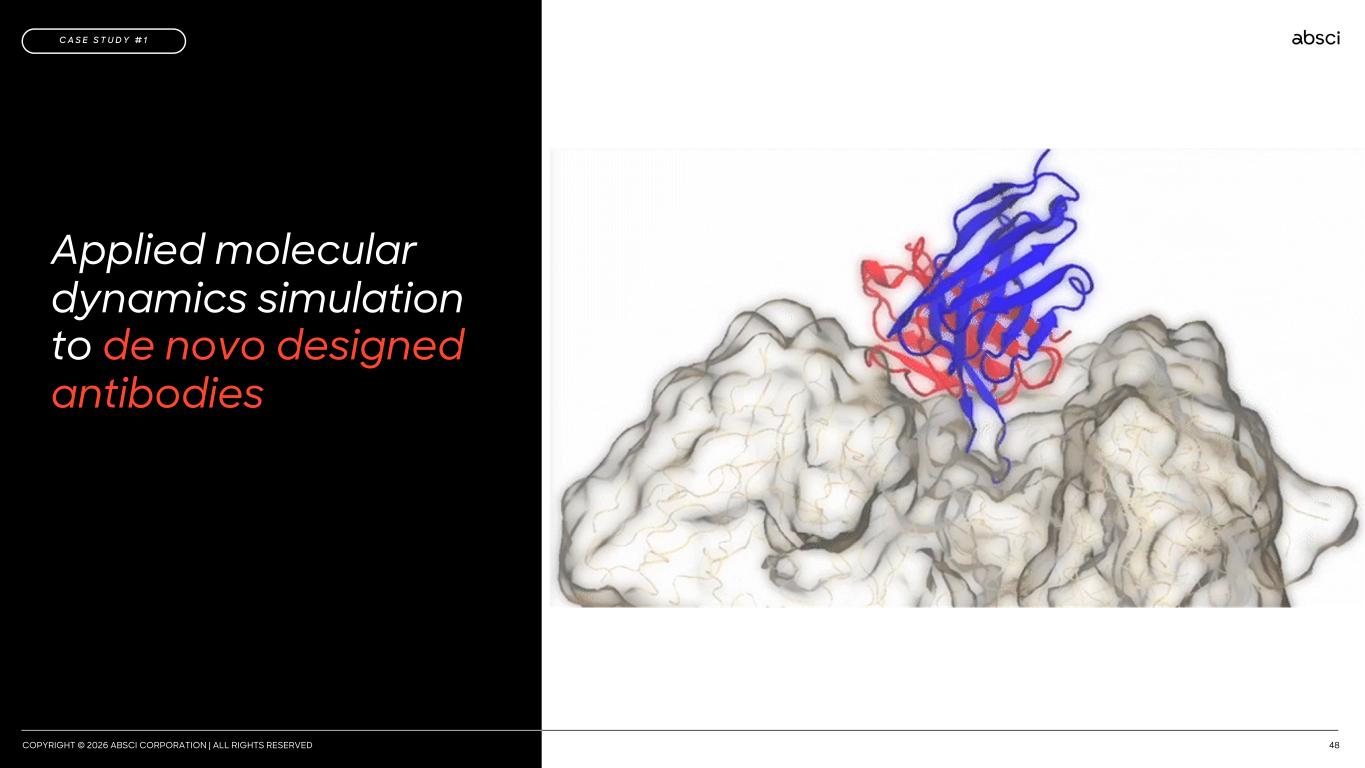
COPYRIGHT © 2026 ABSCI CORPORATION | ALL RIGHTS RESERVED 48 2024 20252024 2025 2026 Applied molecular dynamics simulation to de novo designed antibodies C A S E S T U D Y # 1
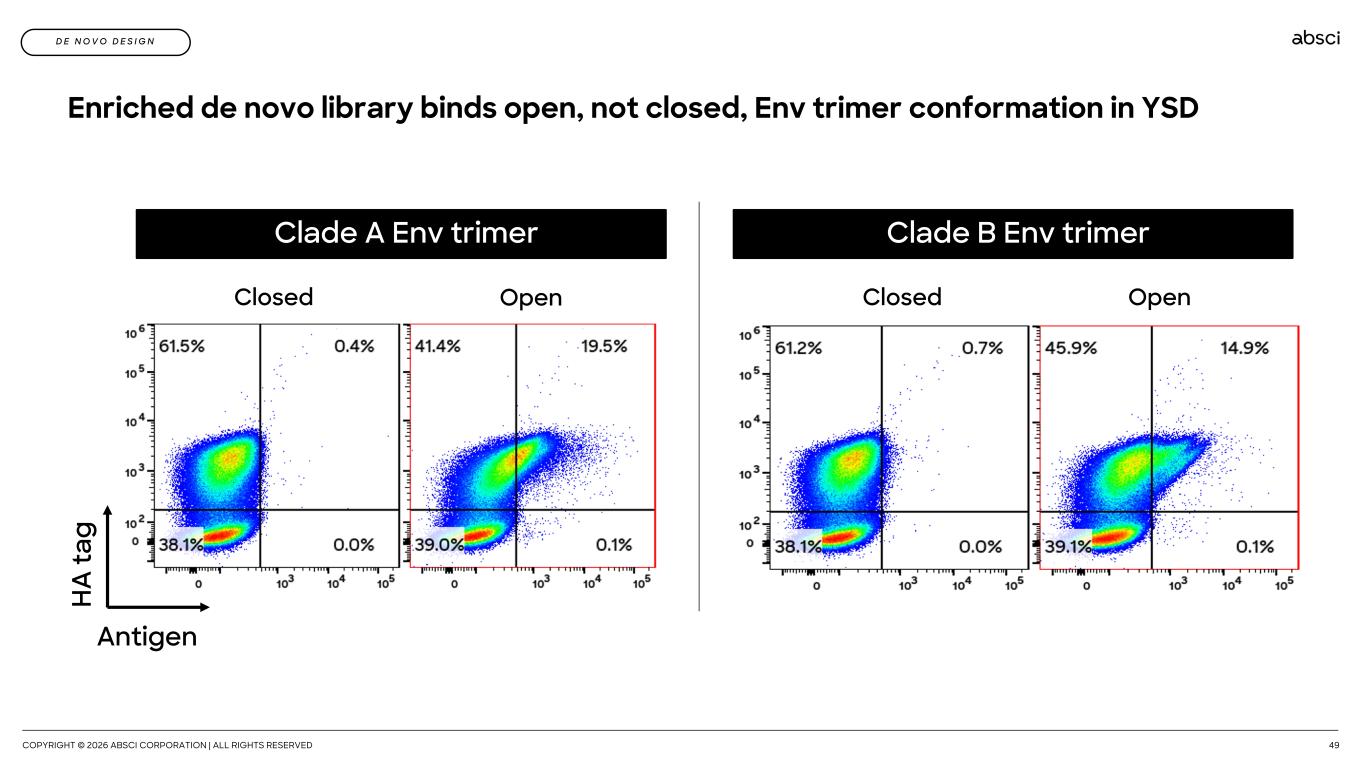
COPYRIGHT © 2026 ABSCI CORPORATION | ALL RIGHTS RESERVED 49 H A ta g Antigen Clade A Env trimer Closed Open Enriched de novo library binds open, not closed, Env trimer conformation in YSD Closed Open Clade B Env trimer D E N O V O D E S I G N
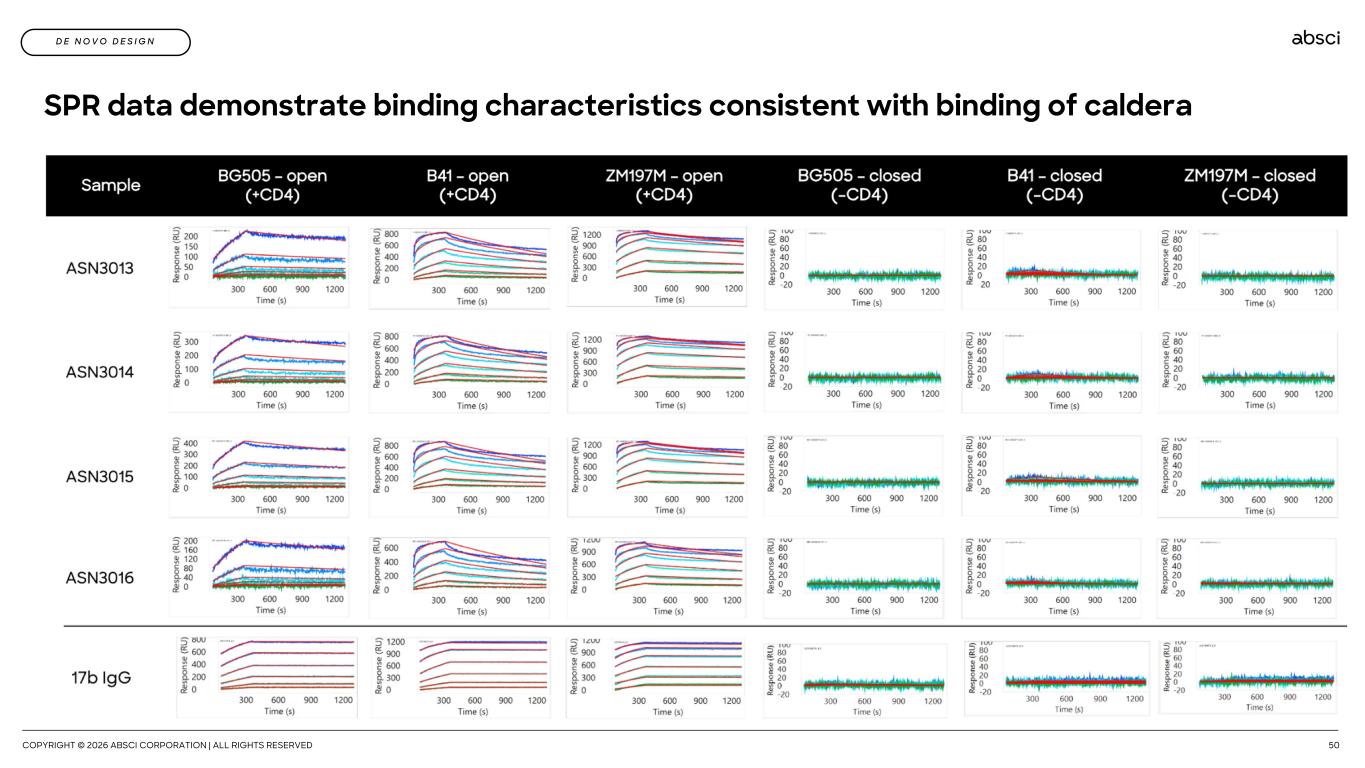
COPYRIGHT © 2026 ABSCI CORPORATION | ALL RIGHTS RESERVED 50 D E N O V O D E S I G N SPR data demonstrate binding characteristics consistent with binding of caldera
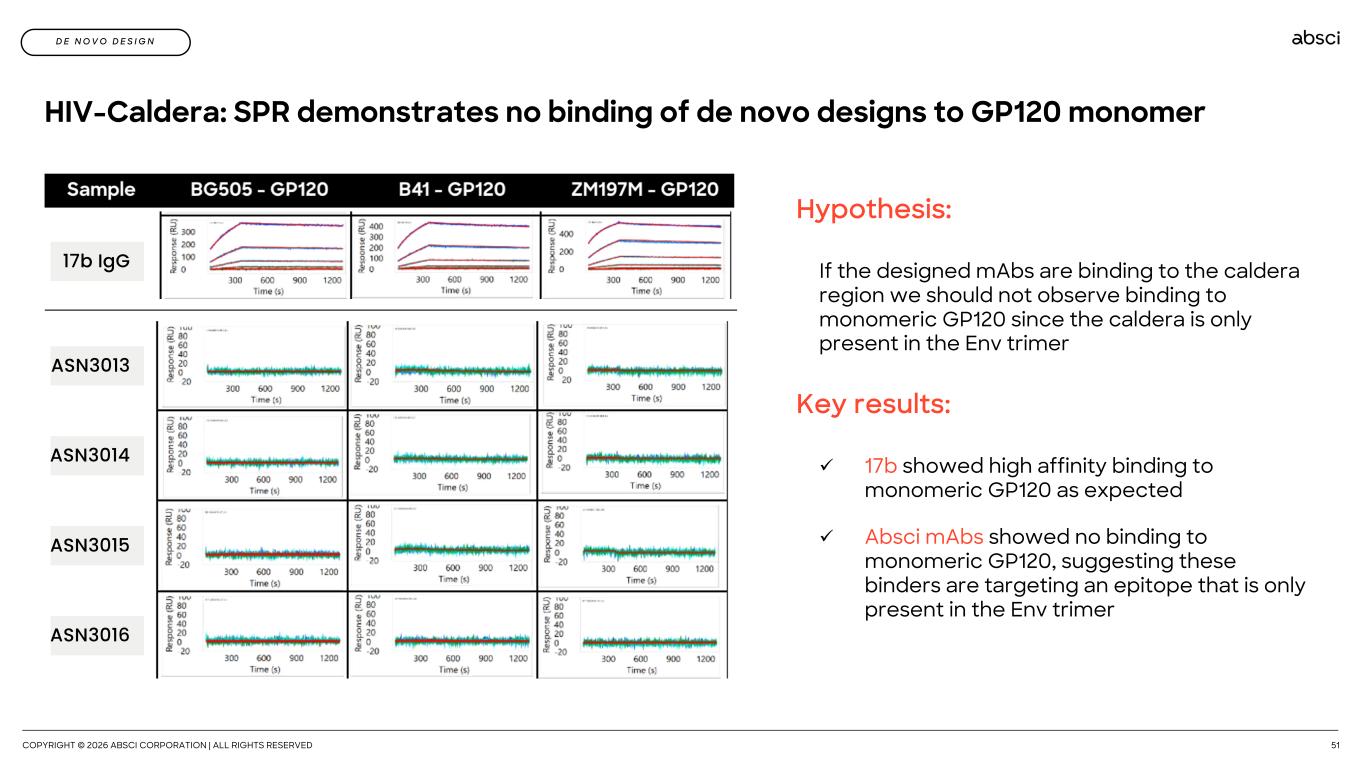
COPYRIGHT © 2026 ABSCI CORPORATION | ALL RIGHTS RESERVED 51 HIV-Caldera: SPR demonstrates no binding of de novo designs to GP120 monomer Hypothesis: If the designed mAbs are binding to the caldera region we should not observe binding to monomeric GP120 since the caldera is only present in the Env trimer Key results: ü 17b showed high affinity binding to monomeric GP120 as expected ü Absci mAbs showed no binding to monomeric GP120, suggesting these binders are targeting an epitope that is only present in the Env trimer ASN3013 ASN3014 ASN3015 ASN3016 17b IgG D E N O V O D E S I G N
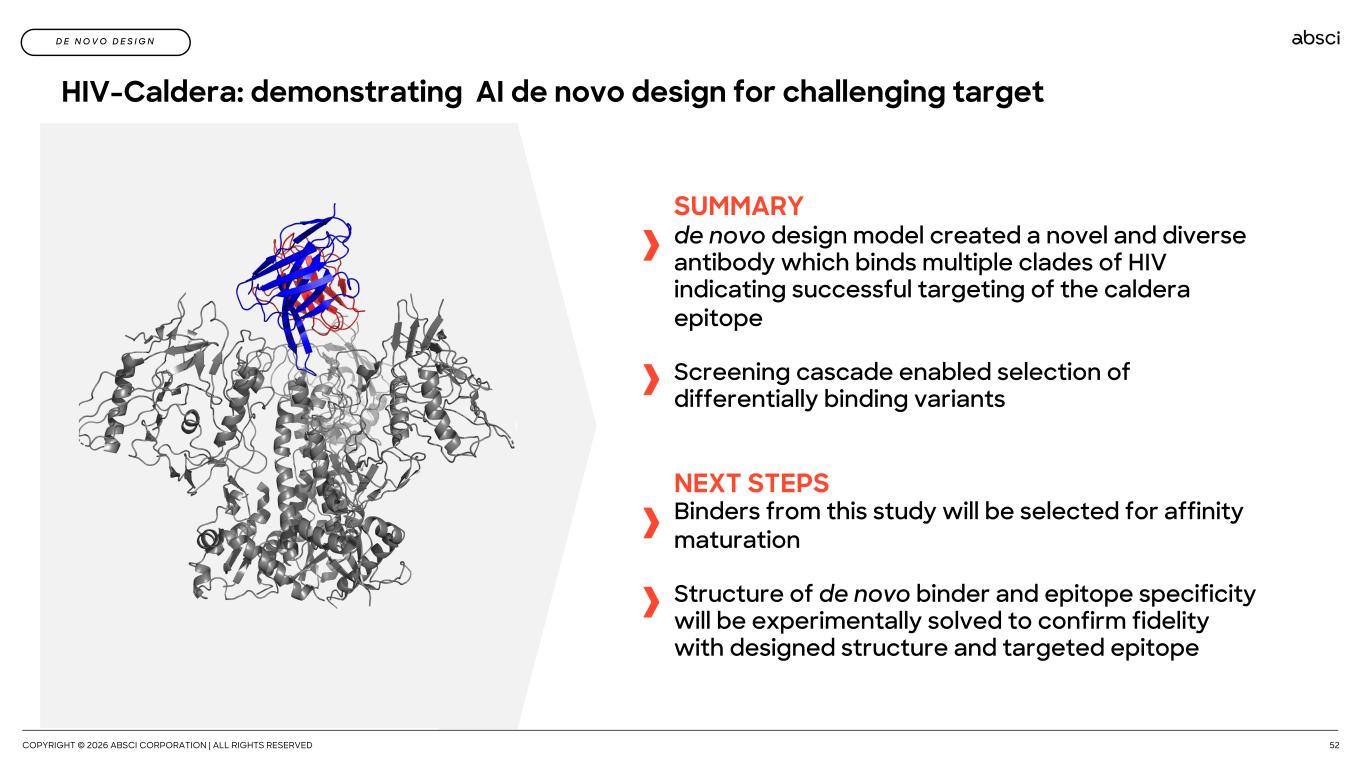
COPYRIGHT © 2026 ABSCI CORPORATION | ALL RIGHTS RESERVED 52 HIV-Caldera: demonstrating AI de novo design for challenging target SUMMARY de novo design model created a novel and diverse antibody which binds multiple clades of HIV indicating successful targeting of the caldera epitope Screening cascade enabled selection of differentially binding variants NEXT STEPS Binders from this study will be selected for affinity maturation Structure of de novo binder and epitope specificity will be experimentally solved to confirm fidelity with designed structure and targeted epitope D E N O V O D E S I G N
53C O P Y R I G H T © 2 0 2 6 A B S C I C O R P O R A T I O N . A L L R I G H T S R E S E R V E D . AI CASE STUDY I I A I O p t i m i z a t i o n f o r p H s e n s i t i v i t y
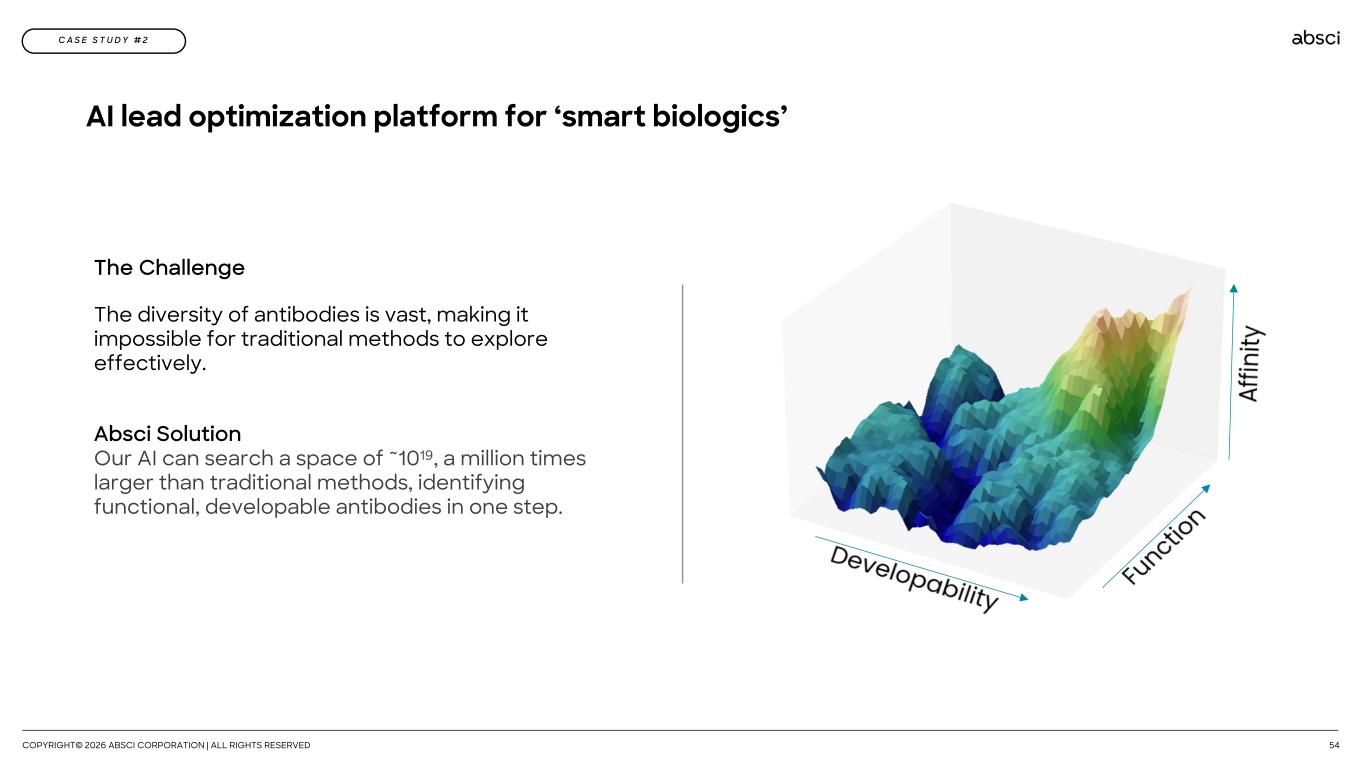
AI lead optimization platform for ‘smart biologics’ COPYRIGHT© 2026 ABSCI CORPORATION | ALL RIGHTS RESERVED 54 C A S E S T U D Y # 2 The Challenge The diversity of antibodies is vast, making it impossible for traditional methods to explore effectively. Absci Solution Our AI can search a space of ~1019, a million times larger than traditional methods, identifying functional, developable antibodies in one step.
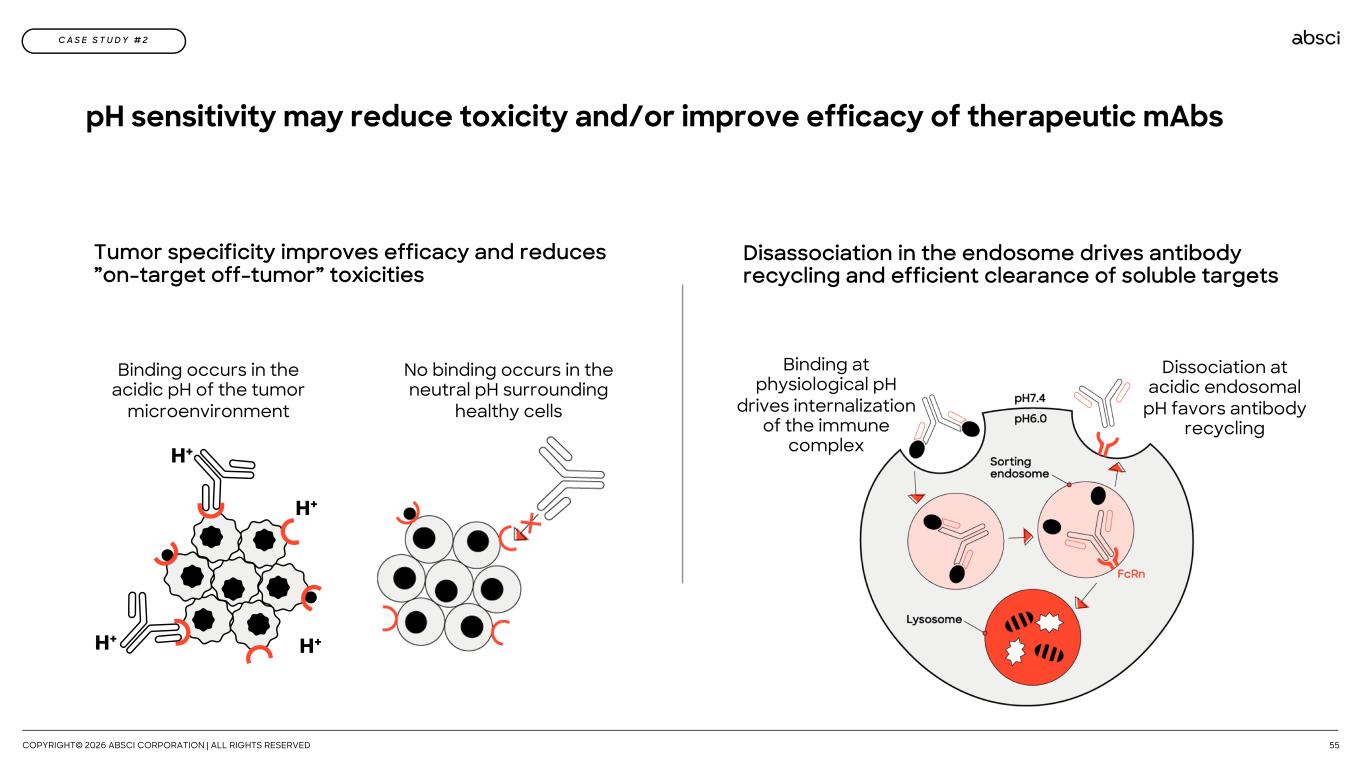
pH sensitivity may reduce toxicity and/or improve efficacy of therapeutic mAbs COPYRIGHT© 2026 ABSCI CORPORATION | ALL RIGHTS RESERVED 55 C A S E S T U D Y # 2 Tumor specificity improves efficacy and reduces ”on-target off-tumor” toxicities Binding occurs in the acidic pH of the tumor microenvironment No binding occurs in the neutral pH surrounding healthy cells Disassociation in the endosome drives antibody recycling and efficient clearance of soluble targets Dissociation at acidic endosomal pH favors antibody recycling Binding at physiological pH drives internalization of the immune complex
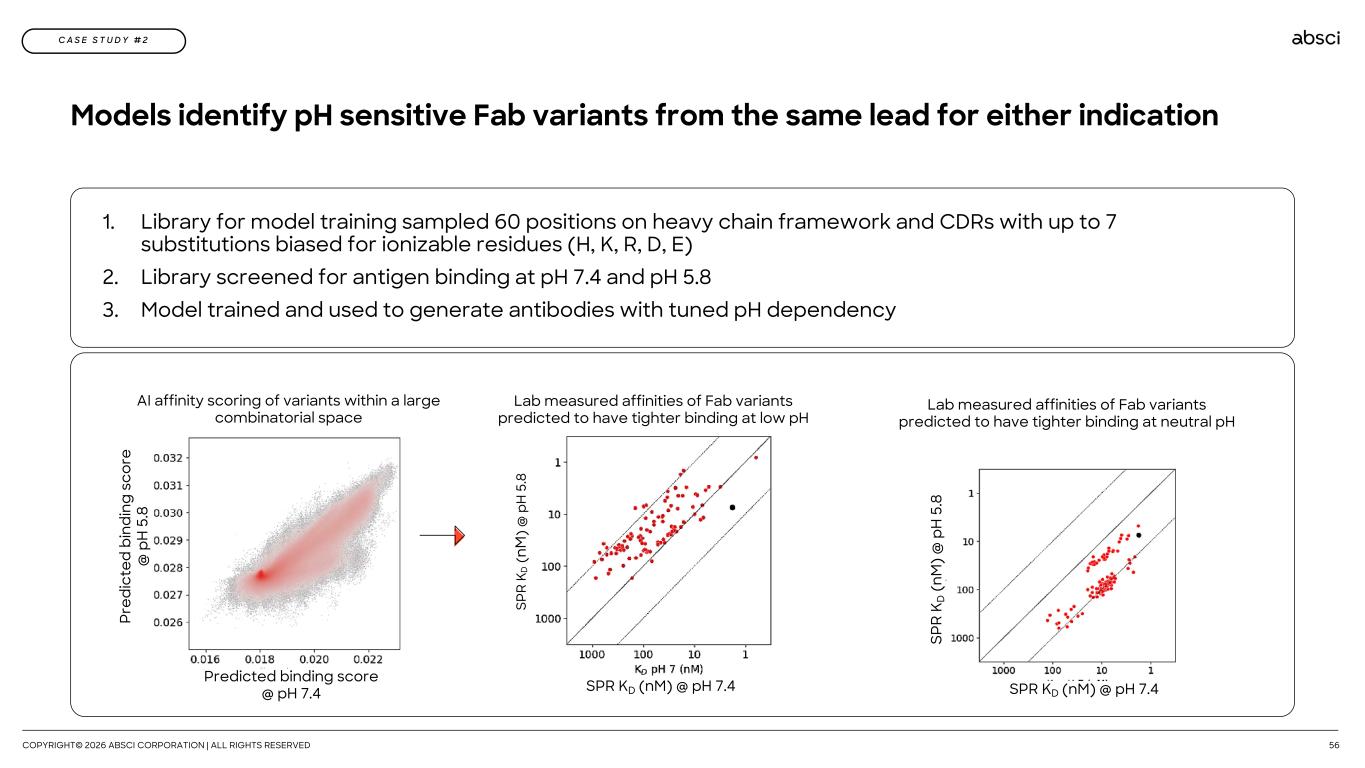
Models identify pH sensitive Fab variants from the same lead for either indication COPYRIGHT© 2026 ABSCI CORPORATION | ALL RIGHTS RESERVED 56 C A S E S T U D Y # 2 1. Library for model training sampled 60 positions on heavy chain framework and CDRs with up to 7 substitutions biased for ionizable residues (H, K, R, D, E) 2. Library screened for antigen binding at pH 7.4 and pH 5.8 3. Model trained and used to generate antibodies with tuned pH dependency Pr ed ic te d bi nd in g sc or e @ p H 5 .8 Predicted binding score @ pH 7.4 AI affinity scoring of variants within a large combinatorial space SP R K D (n M ) @ p H 5 .8 SPR KD (nM) @ pH 7.4 Lab measured affinities of Fab variants predicted to have tighter binding at low pH Lab measured affinities of Fab variants predicted to have tighter binding at neutral pH SP R K D ( nM ) @ p H 5 .8 SPR KD (nM) @ pH 7.4
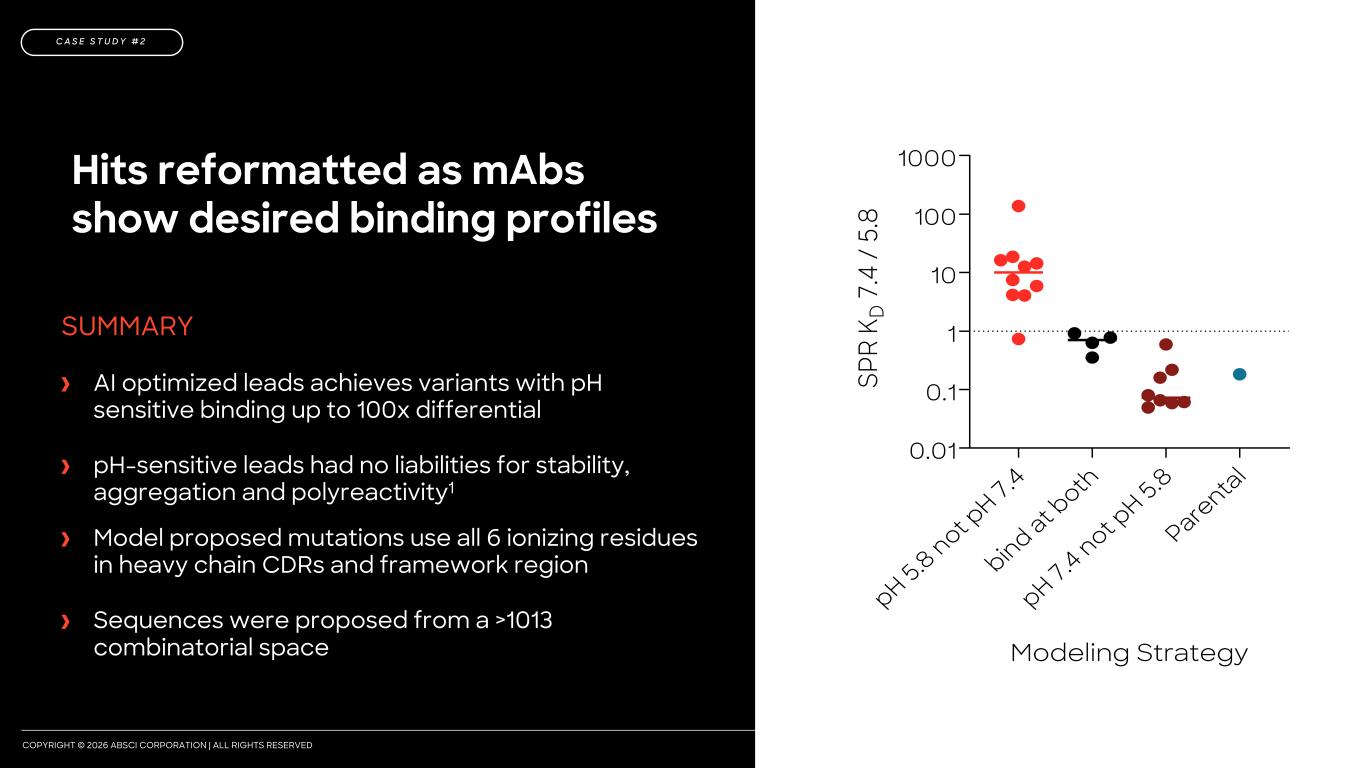
COPYRIGHT © 2026 ABSCI CORPORATION | ALL RIGHTS RESERVED 2024 20252024 2025 2026 Hits reformatted as mAbs show desired binding profiles SUMMARY AI optimized leads achieves variants with pH sensitive binding up to 100x differential pH-sensitive leads had no liabilities for stability, aggregation and polyreactivity1 Model proposed mutations use all 6 ionizing residues in heavy chain CDRs and framework region Sequences were proposed from a >1013 combinatorial space pH 5.8 not p H 7.4 bind at b oth pH 7.4 not p H 5.8 Pare ntal 0.01 0.1 1 10 100 1000 Modeling Strategy SP R K D 7 .4 / 5. 8 SOURCE: 1 Data provided in appendix C A S E S T U D Y # 2
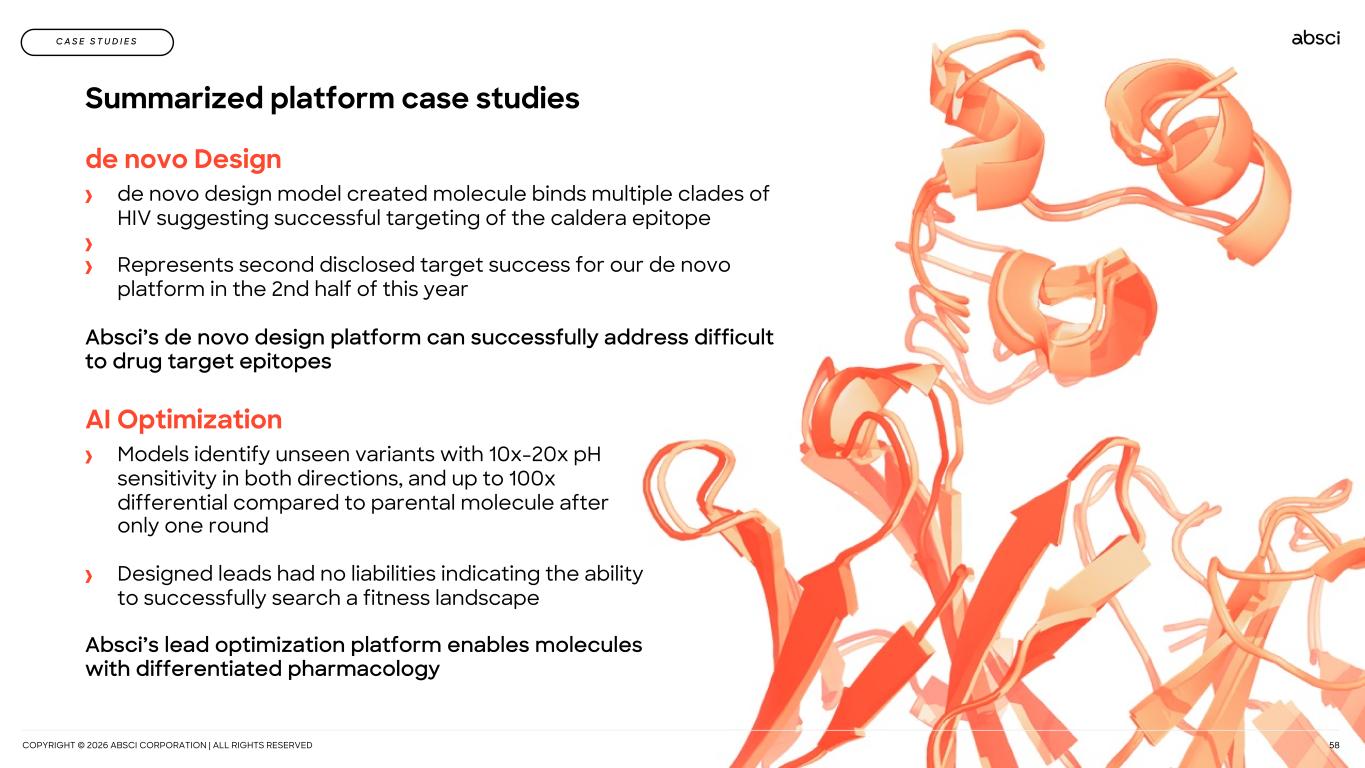
COPYRIGHT © 2026 ABSCI CORPORATION | ALL RIGHTS RESERVED 58 Summarized platform case studies C A S E S T U D I E S de novo Design de novo design model created molecule binds multiple clades of HIV suggesting successful targeting of the caldera epitope Represents second disclosed target success for our de novo platform in the 2nd half of this year Absci’s de novo design platform can successfully address difficult to drug target epitopes space AI Optimization Models identify unseen variants with 10x-20x pH sensitivity in both directions, and up to 100x differential compared to parental molecule after only one round Designed leads had no liabilities indicating the ability to successfully search a fitness landscape Absci’s lead optimization platform enables molecules with differentiated pharmacology space