
THE SCIENCE TO OVERCOME INFLAMMATION CORPORATE PRESENTATION JANUARY 2026
Disclaimer Statements in this Presentation that are not statements of historical fact are forward-looking statements. Such forward-looking statements include, without limitation, statements regarding the development of ozureprubart (RPT904), including the expected timing of clinical trials and the availability of data therefrom and regulatory interactions; the therapeutic potential of ozureprubart; the potential commercial opportunity for ozureprubart; the ability to obtain necessary regulatory approvals; and pricing and reimbursement. Words such as "believe," "anticipate," "plan," "expect," "will," "may," “could,” "upcoming,“ “projected,” "milestone," "potential," "target" or the negative of these terms or similar expressions are intended to identify forward-looking statements, though not all forward-looking statements necessarily contain these identifying words. These forward-looking statements are based on the current beliefs of the Company's management with respect to future events and trends and are subject to known and unknown risks and uncertainties that may cause our actual performance or achievements to be materially different from any future performance or achievements expressed or implied by the forward-looking statements in this Presentation. Risks and uncertainties that may cause actual results to differ materially include: risks inherent in the initiation, progress and completion of clinical trials and clinical development of our product candidates; the risk that clinical trials may have unsatisfactory outcomes; risks associated with preclinical development of product candidates; regulatory authorities, including the U.S. Food and Drug Administration (FDA) may not agree with our interpretation of the data from clinical trials of our drug candidates; we may decide, or regulatory authorities may require us, to conduct additional clinical trials or to modify our ongoing clinical trials; we may experience delays in the commencement, enrollment, completion or analysis of clinical testing for our drug candidates, or significant issues regarding the adequacy of our clinical trial designs or the execution of our clinical trials may arise, which could result in increased costs and delays, or limit our ability to obtain regulatory approval; our drug candidates may not receive regulatory approval or be successfully commercialized; unexpected adverse side effects or inadequate therapeutic efficacy of our drug candidates could delay or prevent regulatory approval or commercialization; uncertainties inherent in the conduct of clinical trials, our reliance on third parties over which we may not always have full control; our ability to enter into strategic partnerships on commercially reasonable terms; our ability to obtain additional financing; the uncertainty regarding the macroeconomic environment and other risks and uncertainties that are described in the “Risk Factors” section of our most recent Form 10-Q filed with the Securities and Exchange Commission (the “SEC”), and any current and periodic reports filed thereafter. These forward-looking statements should not be taken as forecasts or promises nor should they be taken as implying any indication, assurance or guarantee that any assumptions on which such forward-looking statements have been made are correct or exhaustive or, in the case of such assumptions, fully stated in the Presentation. You are cautioned not to place undue reliance on these forward-looking statements, which speak only as of the date this Presentation is given. Although we believe that the beliefs and assumptions reflected in the forward-looking statements are reasonable, we cannot guarantee future performance or achievements. Except as required by law, we undertake no obligation to update publicly any forward-looking statements for any reason after the date of this Presentation. This Presentation discusses drug candidates that are under clinical study and which have not yet been approved for marketing by the FDA. No representation is made as to the safety or effectiveness of any drug candidates for any use for which such drug candidates are being studied. This Presentation also contains estimates and other statistical data made by independent parties and by us relating to market size and other data about our industry. These data involve a number of assumptions and limitations, and you are cautioned not to give undue weight to such estimates. In addition, projections, assumptions and estimates of our future performance and the future performance of the markets in which we operate are necessarily subject to a high degree of uncertainty and risk.
RAPT Therapeutics is Developing Transformative Therapies for High-Value Inflammatory Diseases Ozureprubart (RPT904) is a novel next-generation omalizumab bio-better anti-IgE antibody designed for less frequent dosing and greater compliance and potential for broader efficacy than omalizumab Potential to transform treatment of Food Allergies (FA) and Chronic Spontaneous Urticaria (CSU), estimated >$40B and >$5B market opportunities in the US Positive Phase 2 data in CSU with 16-week durability support best-in-class profile across multiple indications Multiple milestones over next two years RAPT Phase 2b FA trial initiated; data expected 1H 2027 Phase 3 CSU trial planned initiation 2H 2026 Company well funded with cash runway projected through multiple clinical milestones including Phase 2b food allergy data
RAPT Accomplishments and Milestones Fueled Momentum in 2025 Clinical Development Received FDA clearance for IND for ozureprubart and initiated Phase 2b clinical trial in food allergy Reported positive Phase 2 data in CSU (Jeyou) supporting 16-week durability and best-in-class profile Organizational Development Named Lori Lyons-Williams, an executive with significant commercialization experience, as board chair Expanded board of directors with Scott Braunstein, MD and Ashley Dombkowski, PhD, two industry veterans with extensive experience in drug development Named Jessica Savage, MD, MHS, an industry vet focused on food allergy, VP Clinical Development Completed $265M follow-on offering to extend cash runway to mid-2028 Expanded pipeline with selection of next-generation CCR4 development candidate
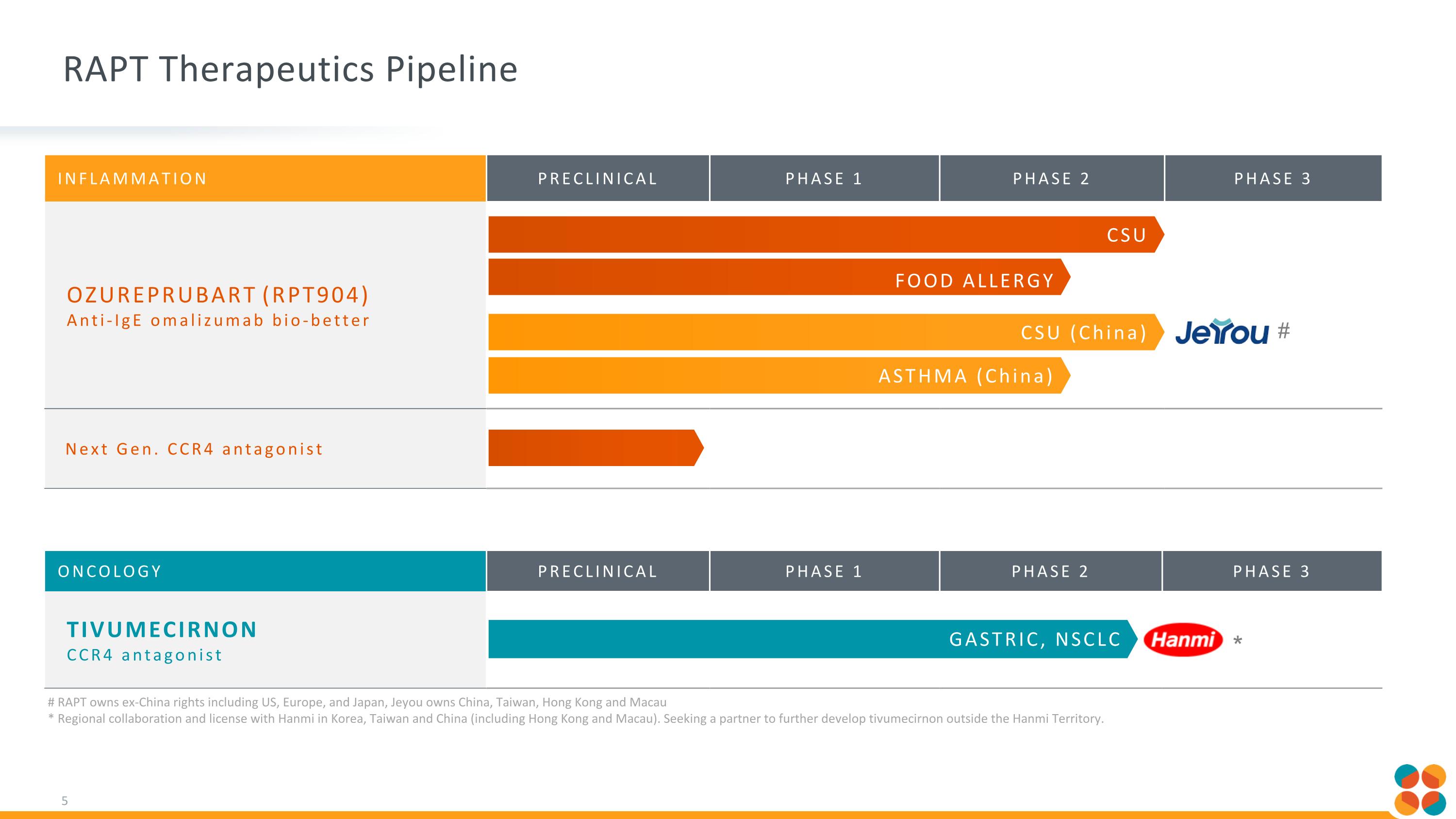
INFLAMMATION PRECLINICAL PHASE 1 PHASE 2 PHASE 3 OZUREPRUBART (RPT904) Anti-IgE omalizumab bio-better Next Gen. CCR4 antagonist RAPT Therapeutics Pipeline ONCOLOGY PRECLINICAL PHASE 1 PHASE 2 PHASE 3 TIVUMECIRNON CCR4 antagonist * GASTRIC, NSCLC ASTHMA (China) CSU (China) FOOD ALLERGY CSU # # RAPT owns ex-China rights including US, Europe, and Japan, Jeyou owns China, Taiwan, Hong Kong and Macau * Regional collaboration and license with Hanmi in Korea, Taiwan and China (including Hong Kong and Macau). Seeking a partner to further develop tivumecirnon outside the Hanmi Territory.

Ozureprubart Potential to Transform the Treatment of Allergic Diseases
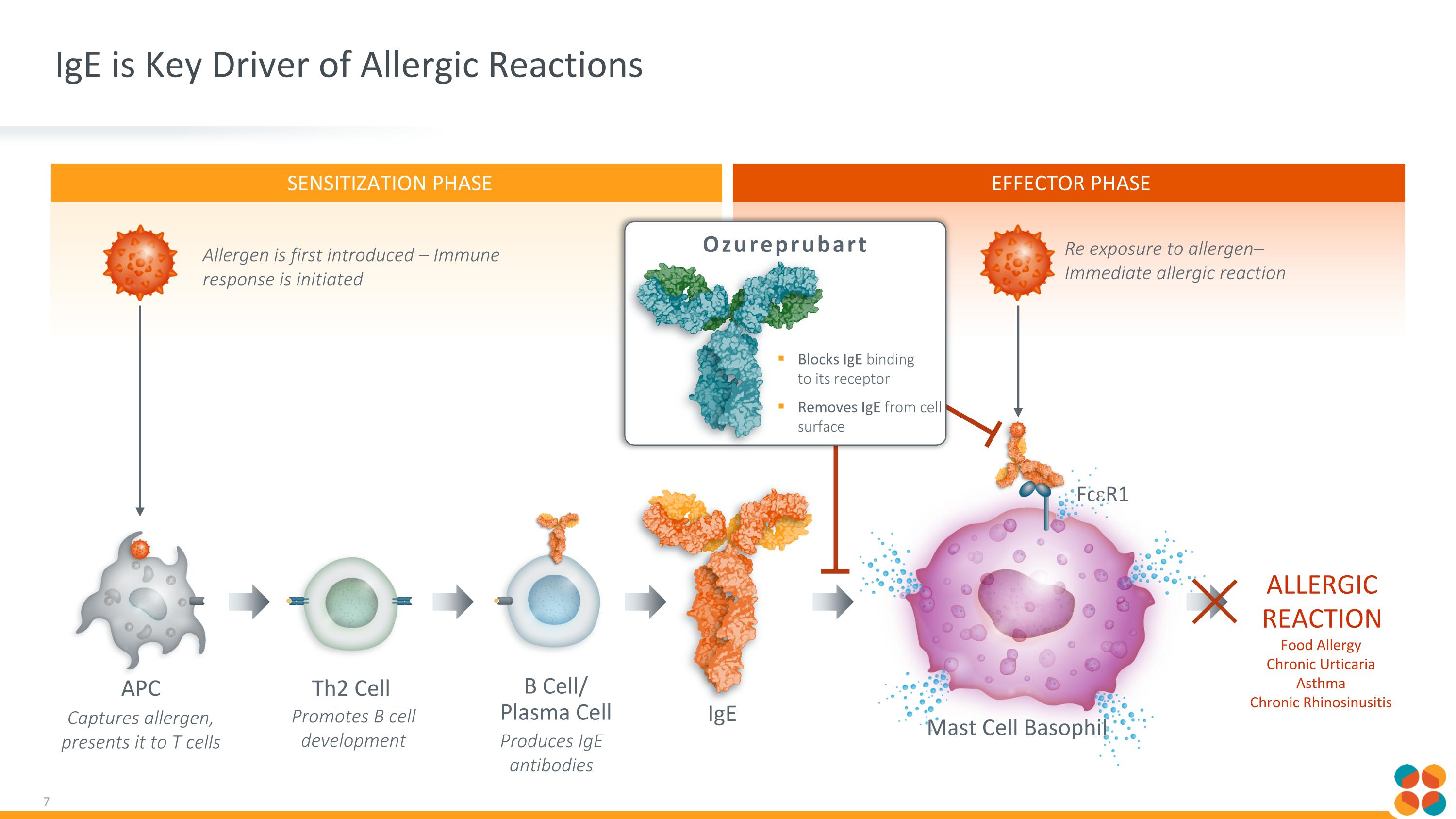
SENSITIZATION PHASE EFFECTOR PHASE IgE is Key Driver of Allergic Reactions Allergen is first introduced – Immune response is initiated Captures allergen, presents it to T cells Promotes B cell development Produces IgE antibodies Th2 Cell B Cell/ Plasma Cell APC ALLERGIC REACTION Food Allergy Chronic Urticaria Asthma Chronic Rhinosinusitis FceR1 Re exposure to allergen– Immediate allergic reaction Mast Cell Basophil IgE Blocks IgE binding to its receptor Removes IgE from cell surface Ozureprubart
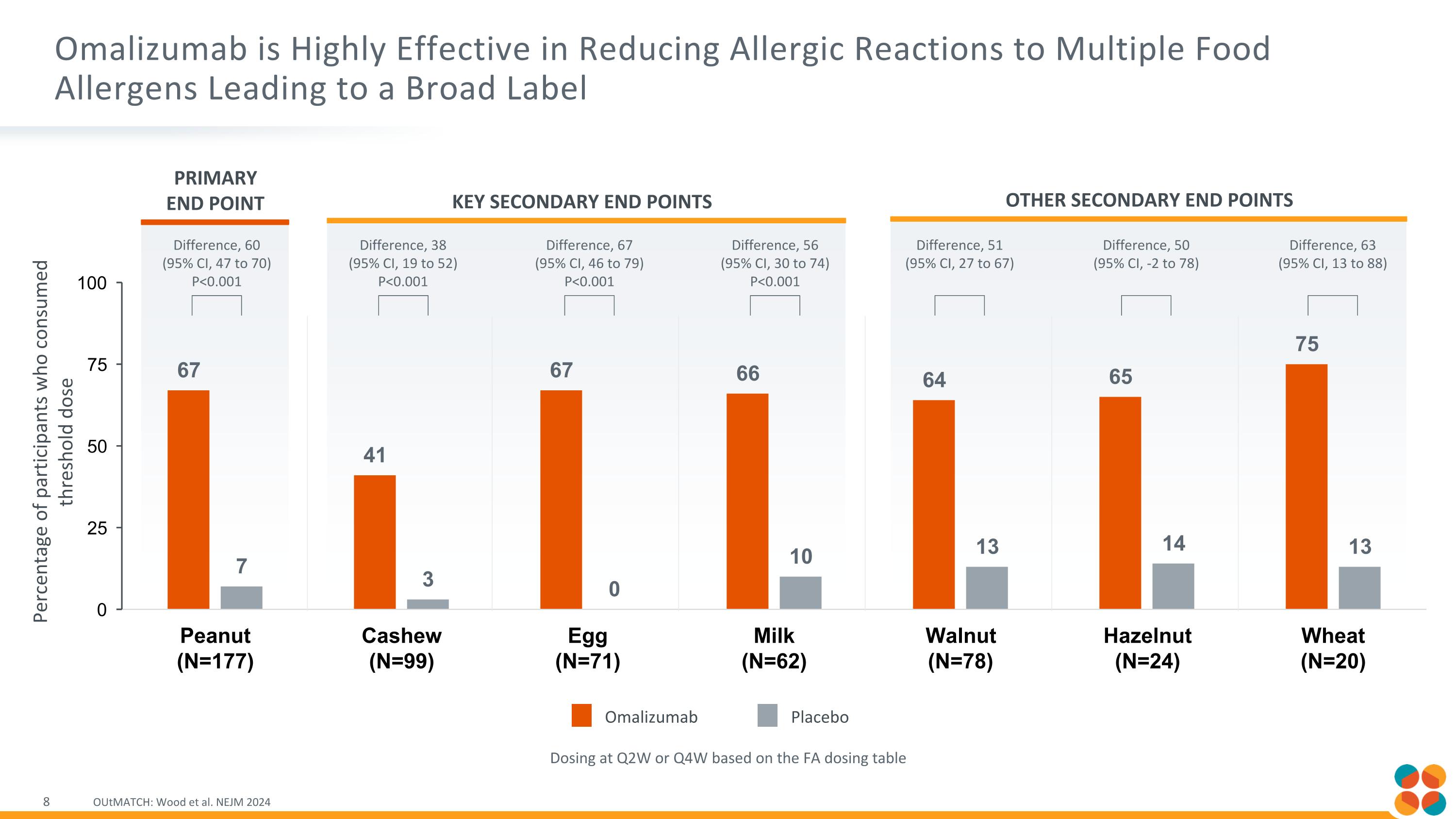
Omalizumab is Highly Effective in Reducing Allergic Reactions to Multiple Food Allergens Leading to a Broad Label OUtMATCH: Wood et al. NEJM 2024 Dosing at Q2W or Q4W based on the FA dosing table Primary End Point Key secondary End Points other secondary End Points Difference, 60 (95% CI, 47 to 70) P<0.001 Difference, 38 (95% CI, 19 to 52) P<0.001 Difference, 67 (95% CI, 46 to 79) P<0.001 Difference, 56 (95% CI, 30 to 74) P<0.001 Difference, 51 (95% CI, 27 to 67) Difference, 50 (95% CI, -2 to 78) Difference, 63 (95% CI, 13 to 88) Omalizumab Placebo Percentage of participants who consumed threshold dose
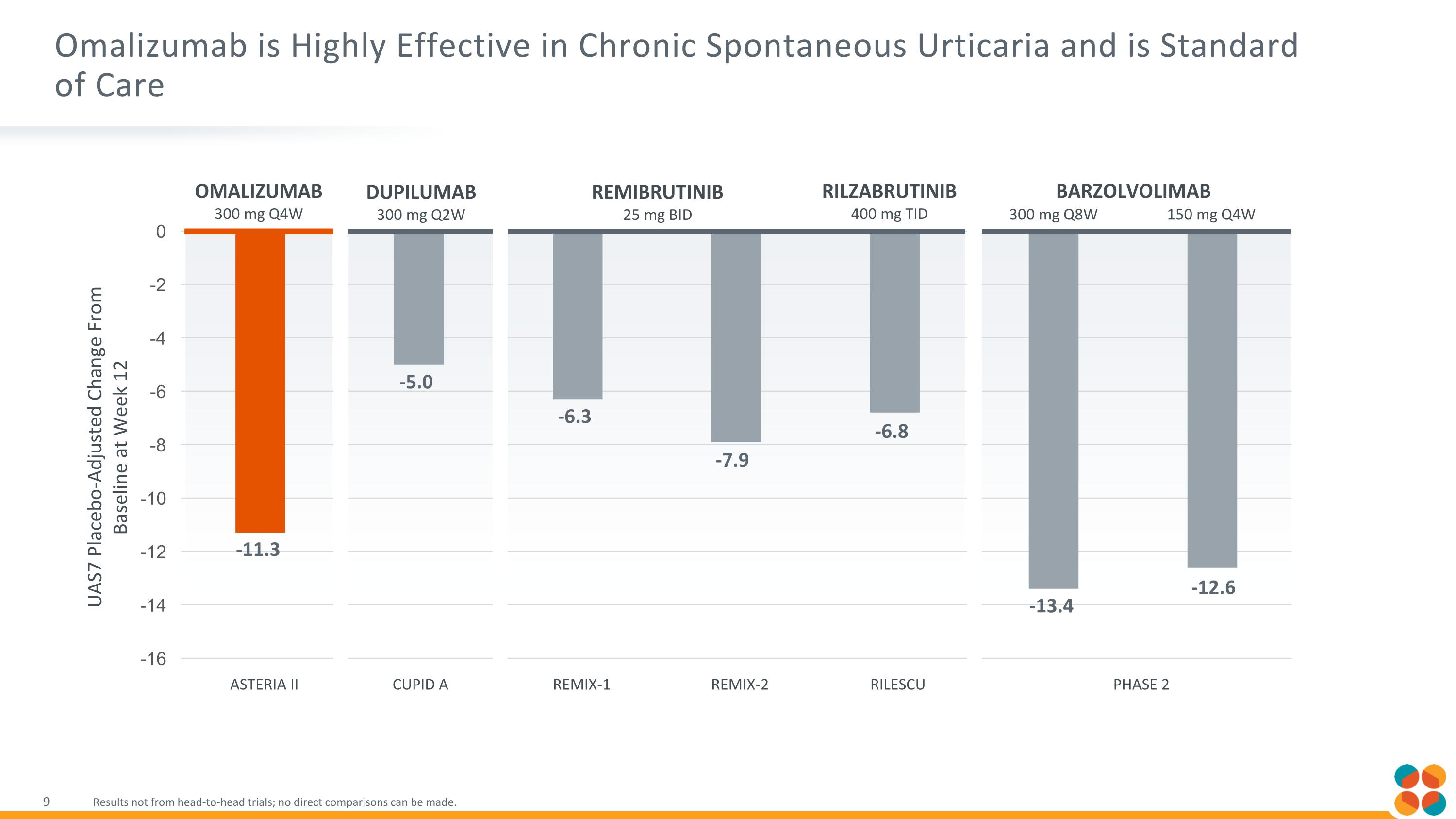
Omalizumab is Highly Effective in Chronic Spontaneous Urticaria and is Standard of Care Results not from head-to-head trials; no direct comparisons can be made. Omalizumab 300 mg Q4W REMIBRUTINIB 25 mg BID DUPILUMAB 300 mg Q2W -11.3 -5.0 -6.3 -7.9 -6.8 -13.4 -12.6 REMIX-1 REMIX-2 RILZABRUTINIB 400 mg TID BARZOLVOLIMAB 300 mg Q8W 150 mg Q4W ASTERIA II CUPID A RILESCU PHASE 2 UAS7 Placebo-Adjusted Change From Baseline at Week 12
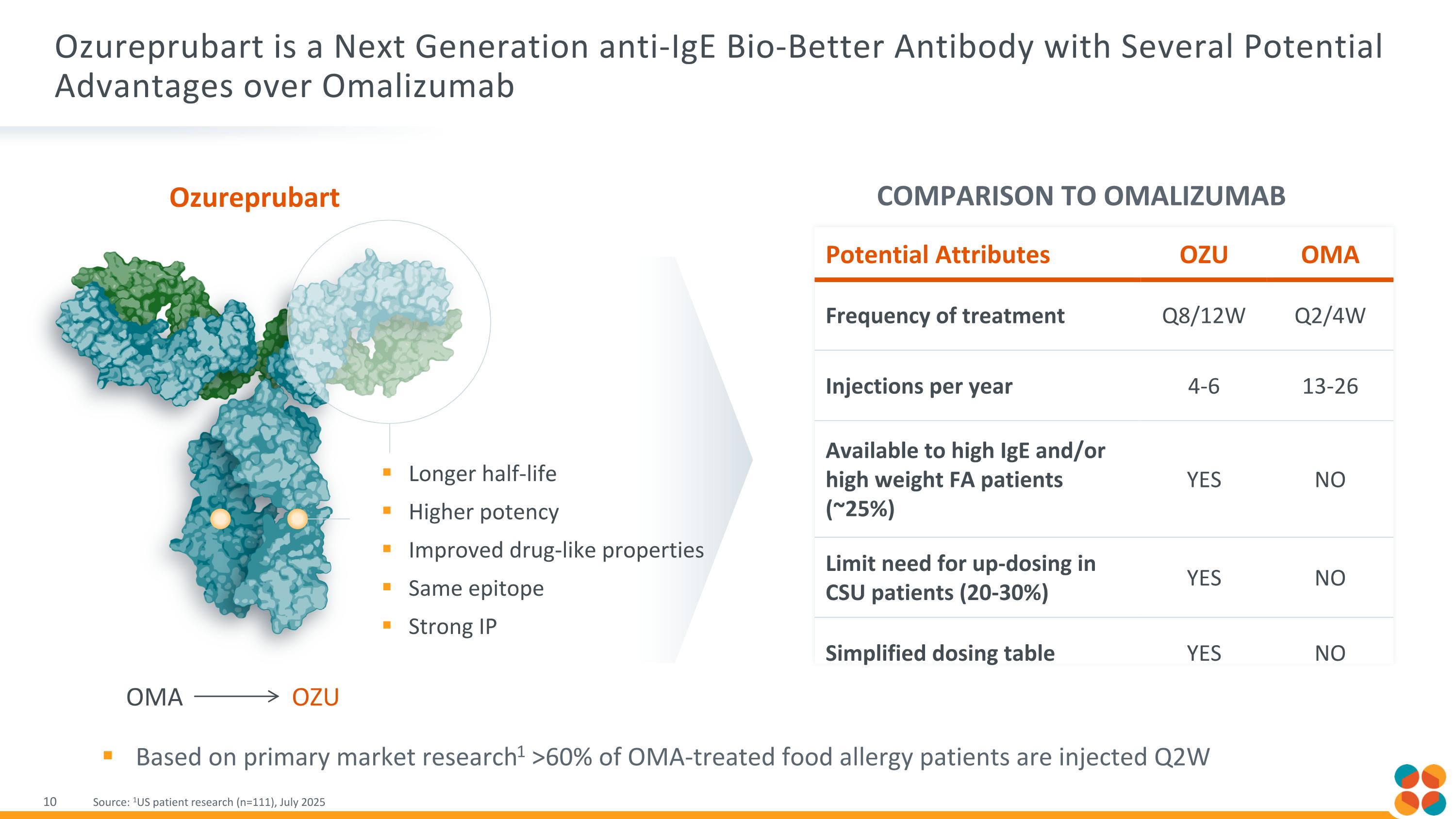
Potential Attributes OZU OMA Frequency of treatment Q8/12W Q2/4W Injections per year 4-6 13-26 Available to high IgE and/or high weight FA patients (~25%) YES NO Limit need for up-dosing in CSU patients (20-30%) YES NO Simplified dosing table YES NO Ozureprubart is a Next Generation anti-IgE Bio-Better Antibody with Several Potential Advantages over Omalizumab Source: 1US patient research (n=111), July 2025 Longer half-life Higher potency Improved drug-like properties Same epitope Strong IP Ozureprubart COMPARISON TO OMALIZUMAB OMA OZU Based on primary market research1 >60% of OMA-treated food allergy patients are injected Q2W
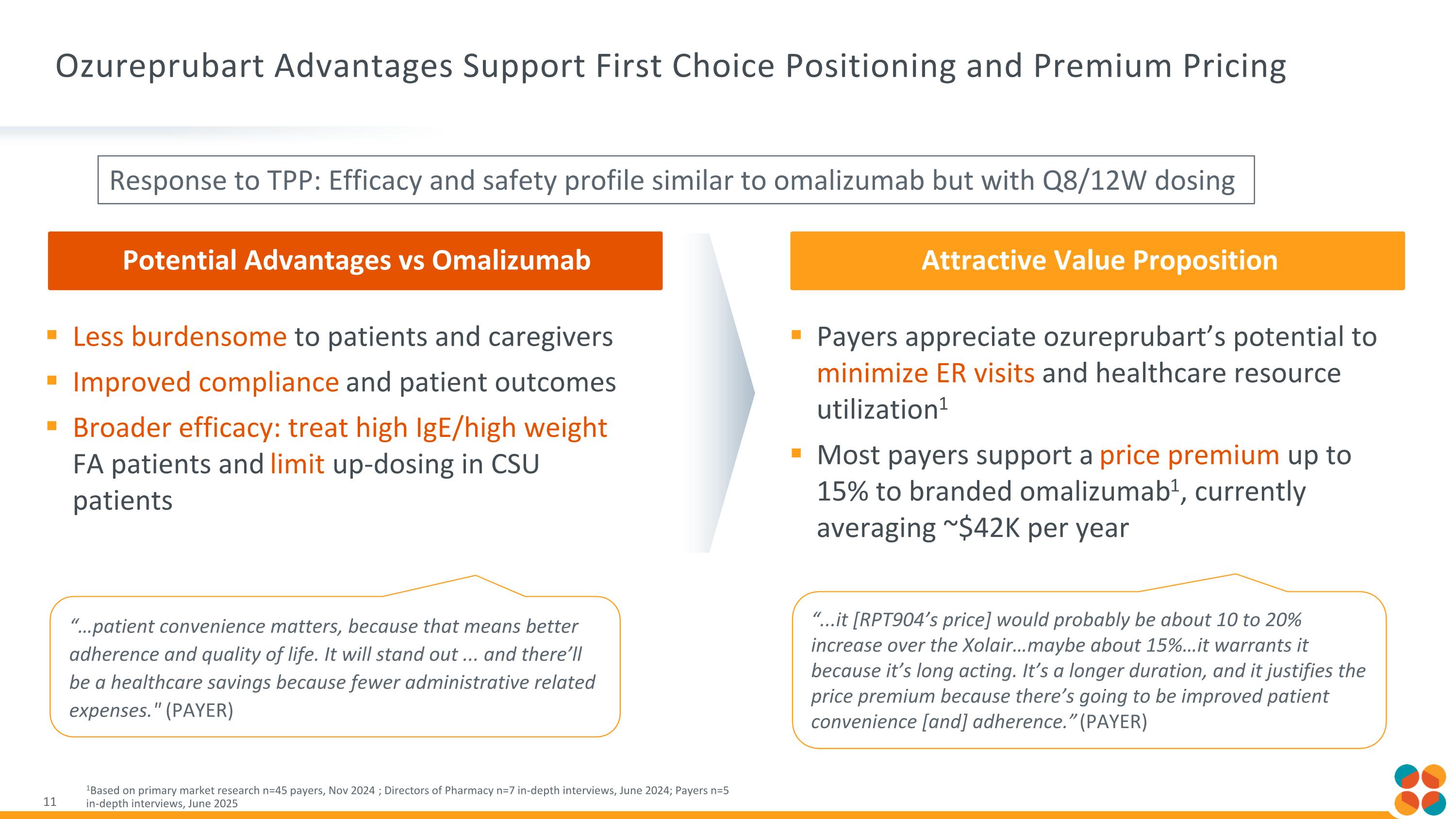
Potential Advantages vs Omalizumab Ozureprubart Advantages Support First Choice Positioning and Premium Pricing 1Based on primary market research n=45 payers, Nov 2024 ; Directors of Pharmacy n=7 in-depth interviews, June 2024; Payers n=5 in-depth interviews, June 2025 Well Positioned to Be First Choice Attractive Value Proposition Less burdensome to patients and caregivers Improved compliance and patient outcomes Broader efficacy: treat high IgE/high weight FA patients and limit up-dosing in CSU patients Payers appreciate ozureprubart’s potential to minimize ER visits and healthcare resource utilization1 Most payers support a price premium up to 15% to branded omalizumab1, currently averaging ~$42K per year “...it [RPT904’s price] would probably be about 10 to 20% increase over the Xolair…maybe about 15%…it warrants it because it’s long acting. It’s a longer duration, and it justifies the price premium because there’s going to be improved patient convenience [and] adherence.” (PAYER) “…patient convenience matters, because that means better adherence and quality of life. It will stand out ... and there’ll be a healthcare savings because fewer administrative related expenses." (PAYER) Response to TPP: Efficacy and safety profile similar to omalizumab but with Q8/12W dosing Attractive Value Proposition
Ozureprubart in Food Allergy Addressing high unmet needs as the potential preferred food allergy therapy
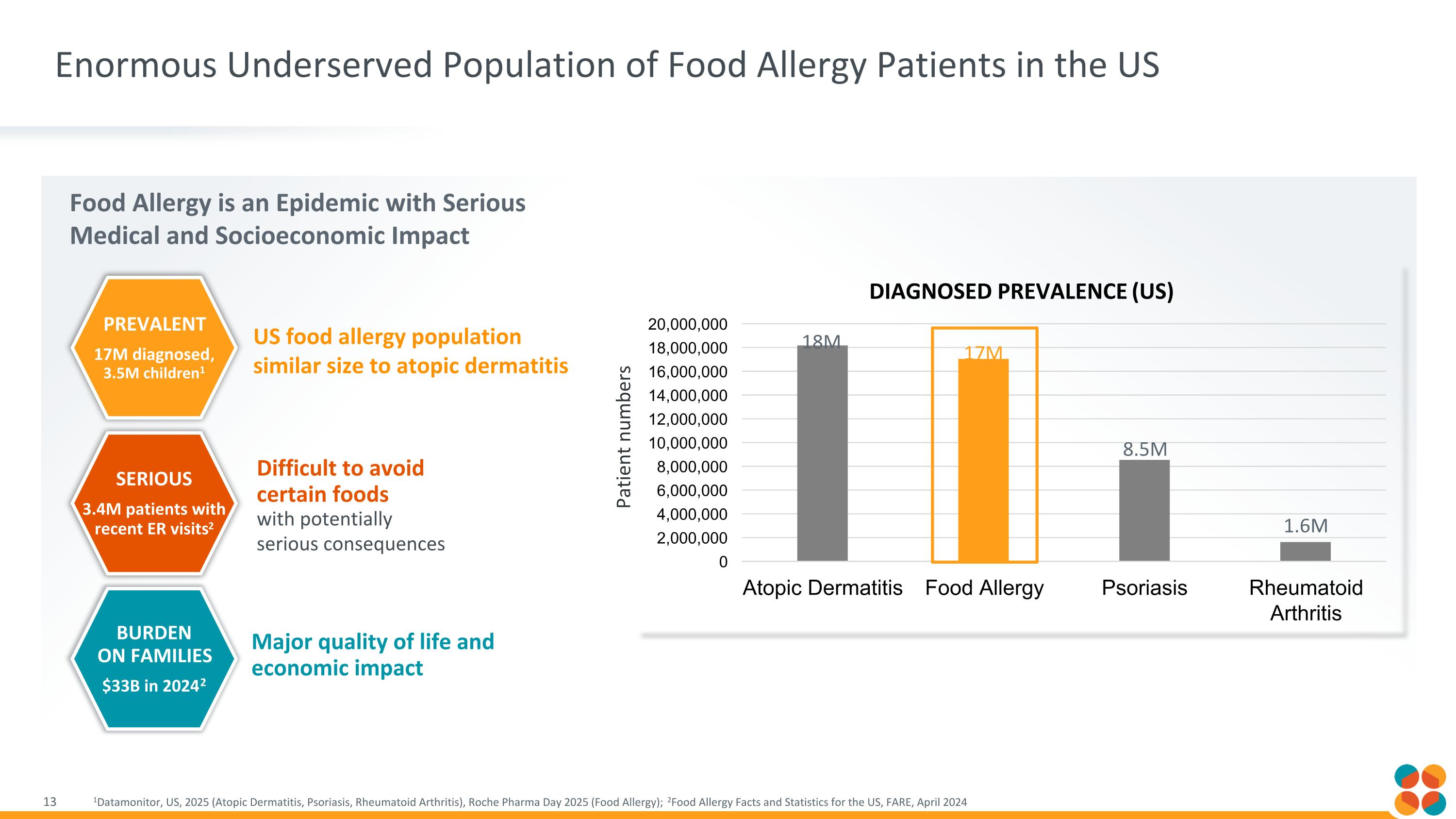
Enormous Underserved Population of Food Allergy Patients in the US 1Datamonitor, US, 2025 (Atopic Dermatitis, Psoriasis, Rheumatoid Arthritis), Roche Pharma Day 2025 (Food Allergy); 2Food Allergy Facts and Statistics for the US, FARE, April 2024 Patient numbers Food Allergy is an Epidemic with Serious Medical and Socioeconomic Impact SERIOUS 3.4M patients with recent ER visits2 Difficult to avoid certain foods with potentially serious consequences BURDEN ON FAMILIES $33B in 20242 PREVALENT 17M diagnosed, 3.5M children1 US food allergy population similar size to atopic dermatitis Major quality of life and economic impact 18M 17M 8.5M 1.6M
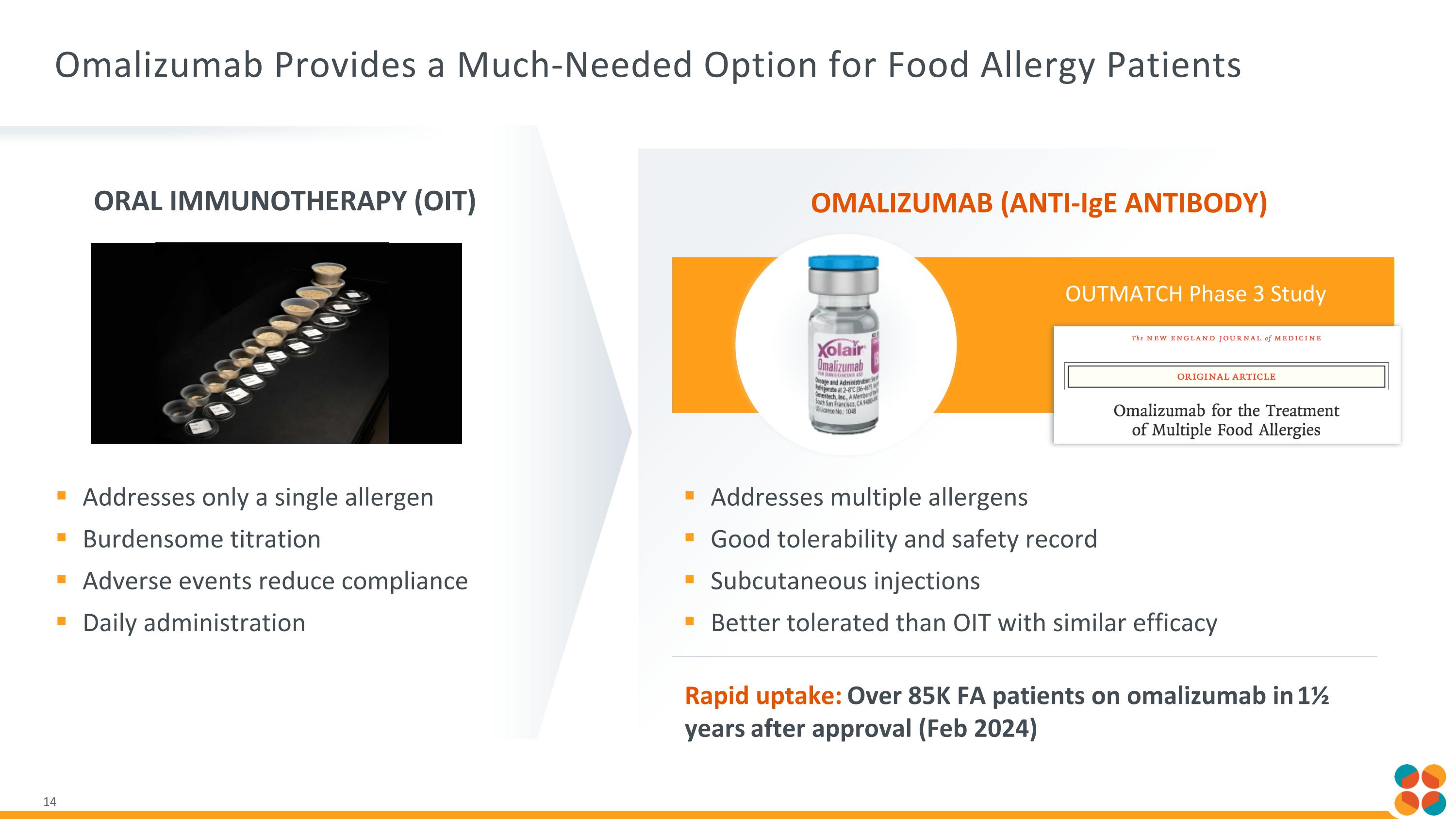
OUTMATCH Phase 3 Study Omalizumab Provides a Much-Needed Option for Food Allergy Patients Addresses multiple allergens Good tolerability and safety record Subcutaneous injections Better tolerated than OIT with similar efficacy Addresses only a single allergen Burdensome titration Adverse events reduce compliance Daily administration Rapid uptake: Over 85K FA patients on omalizumab in 1½ years after approval (Feb 2024) Oral Immunotherapy (OIT) Omalizumab (Anti-IgE antibody)
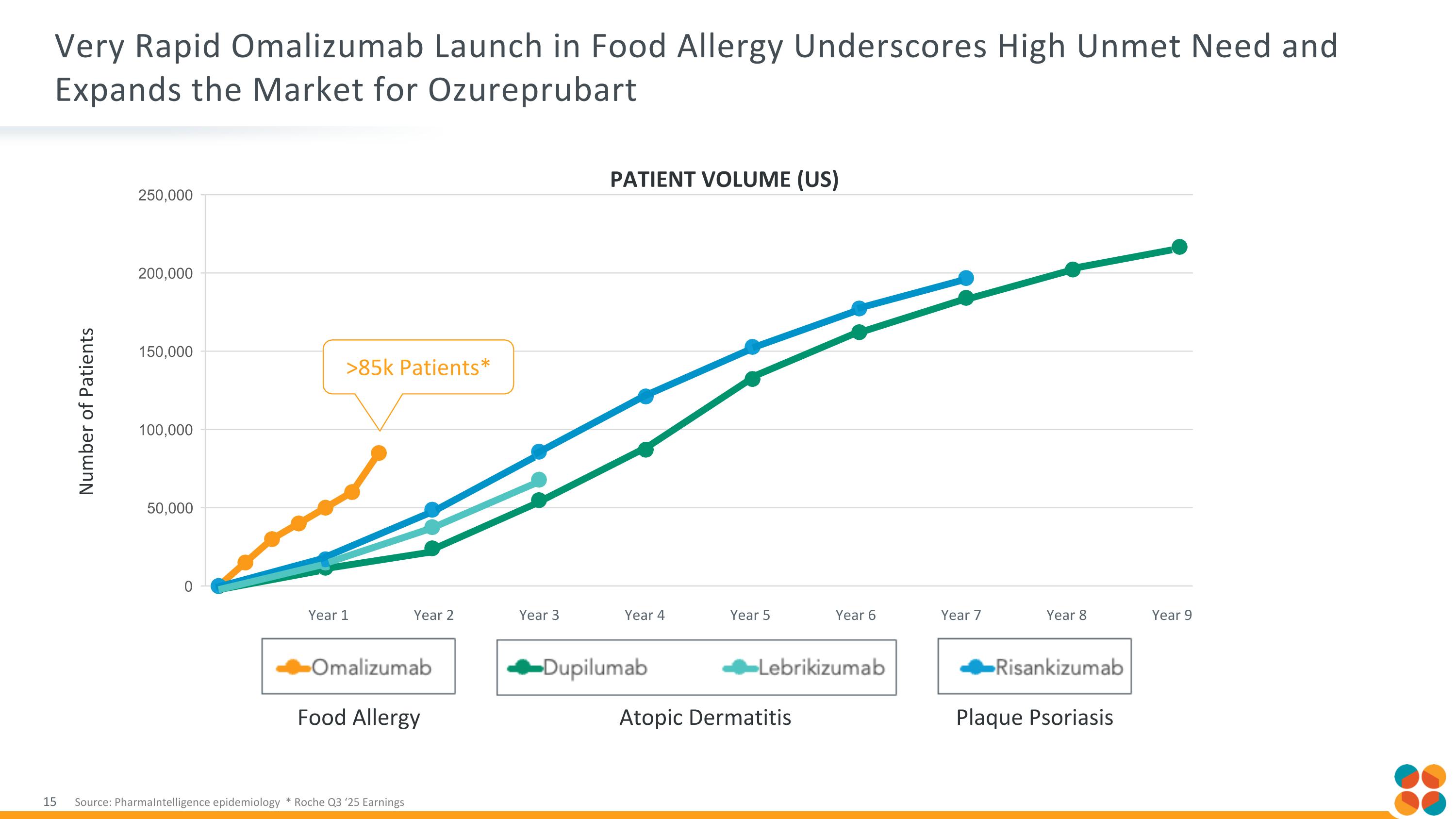
Very Rapid Omalizumab Launch in Food Allergy Underscores High Unmet Need and Expands the Market for Ozureprubart Source: PharmaIntelligence epidemiology * Roche Q3 ‘25 Earnings Atopic Dermatitis Plaque Psoriasis Food Allergy Number of Patients PATIENT VOLUME (US) Year 1 Year 2 Year 3 Year 4 Year 5 Year 6 Year 7 Year 8 Year 9 >85k Patients*
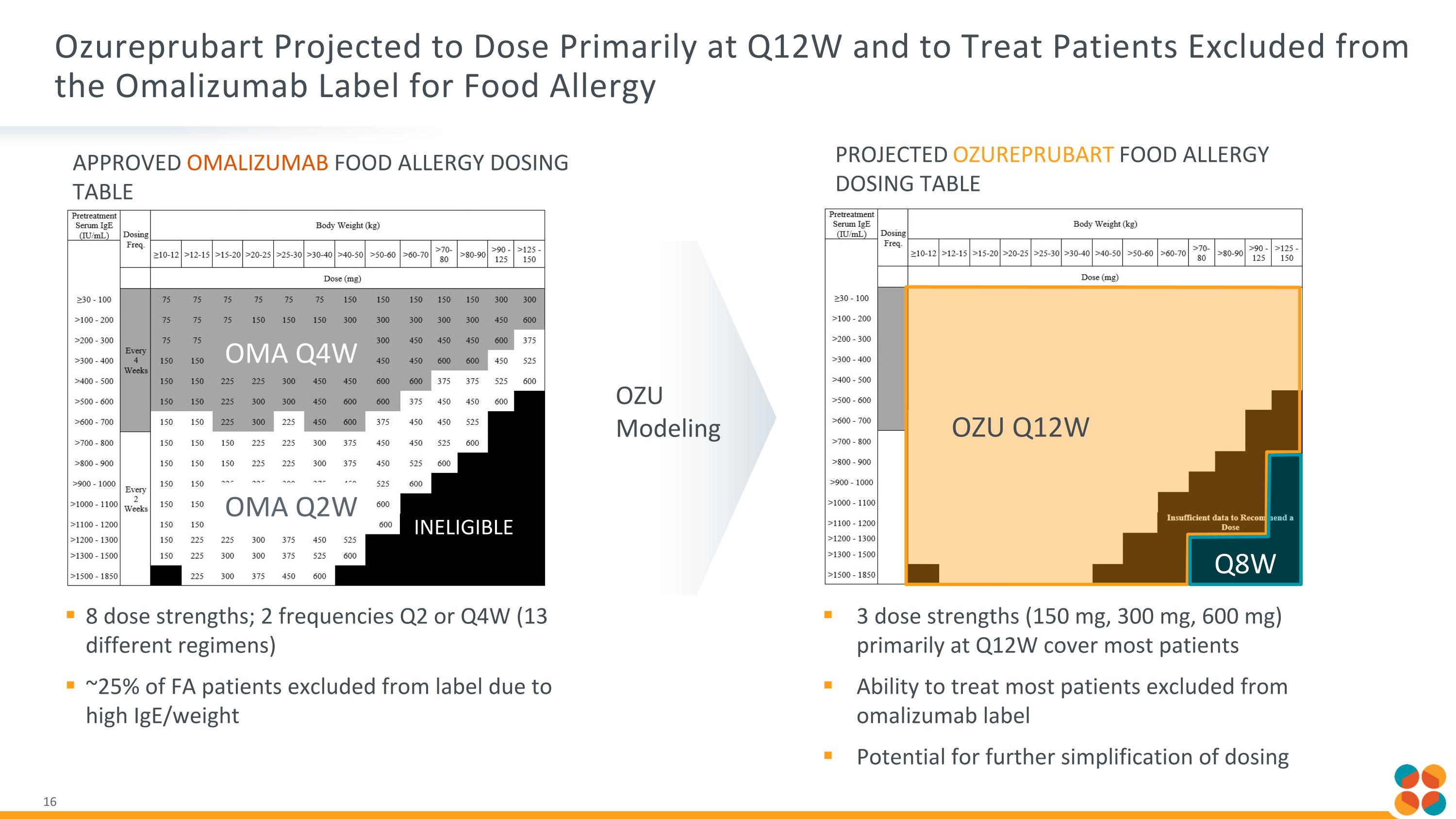
Ozureprubart Projected to Dose Primarily at Q12W and to Treat Patients Excluded from the Omalizumab Label for Food Allergy 8 dose strengths; 2 frequencies Q2 or Q4W (13 different regimens) ~25% of FA patients excluded from label due to high IgE/weight APPROVED OMALIZUMAB FOOD ALLERGY DOSING TABLE 3 dose strengths (150 mg, 300 mg, 600 mg) primarily at Q12W cover most patients Ability to treat most patients excluded from omalizumab label Potential for further simplification of dosing OZU Modeling PROJECTED OZUREPRUBART FOOD ALLERGY DOSING TABLE OZU Q12W Q8W OMA Q4W OMA Q2W INELIGIBLE
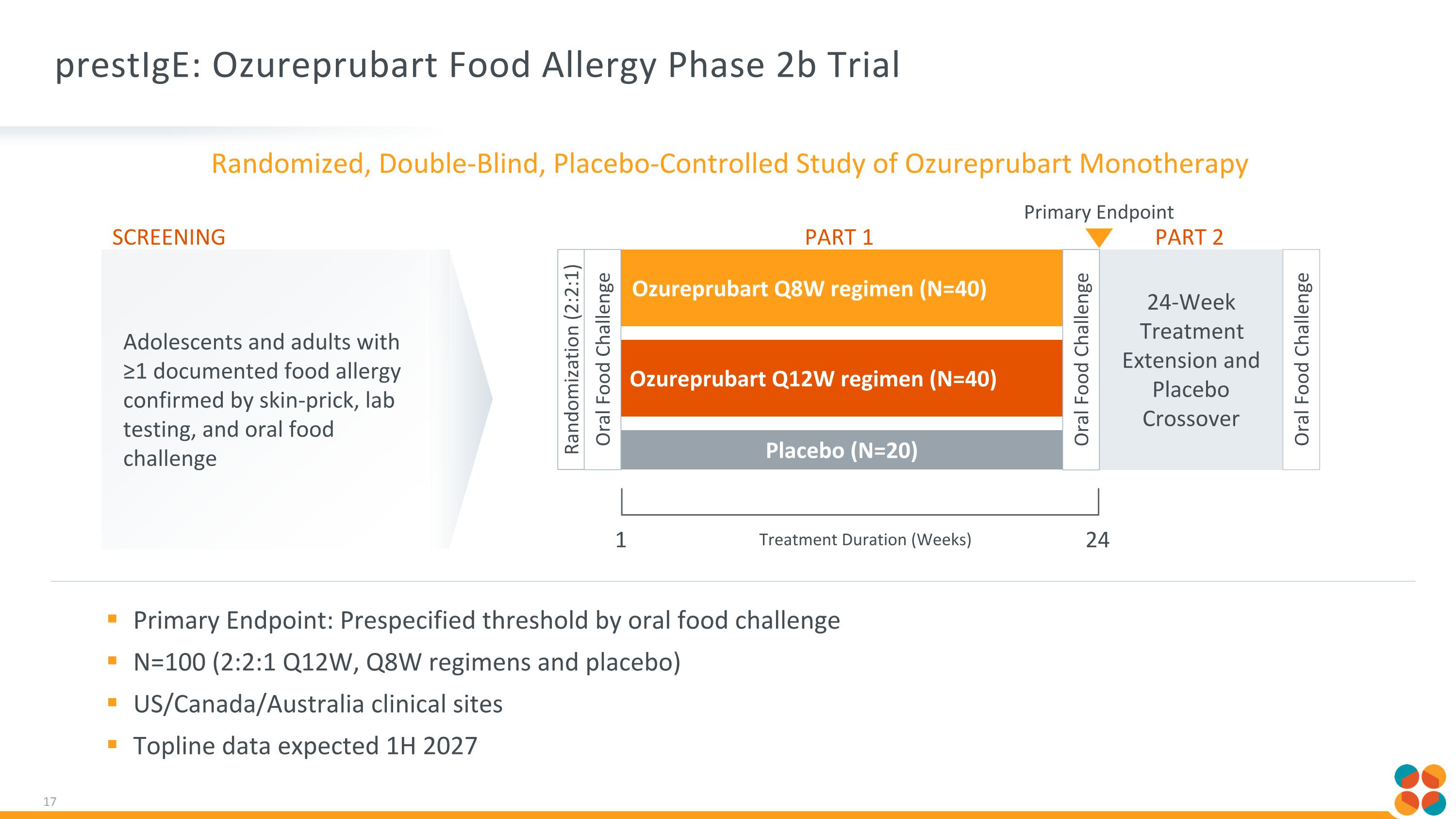
prestIgE: Ozureprubart Food Allergy Phase 2b Trial Primary Endpoint: Prespecified threshold by oral food challenge N=100 (2:2:1 Q12W, Q8W regimens and placebo) US/Canada/Australia clinical sites Topline data expected 1H 2027 24-Week Treatment Extension and Placebo Crossover Ozureprubart Q12W regimen (N=40) Adolescents and adults with ≥1 documented food allergy confirmed by skin-prick, lab testing, and oral food challenge Screening Ozureprubart Q8W regimen (N=40) Placebo (N=20) Randomization (2:2:1) PART 1 1 Treatment Duration (Weeks) Oral Food Challenge 24 Oral Food Challenge Oral Food Challenge Primary Endpoint Randomized, Double-Blind, Placebo-Controlled Study of Ozureprubart Monotherapy PART 2
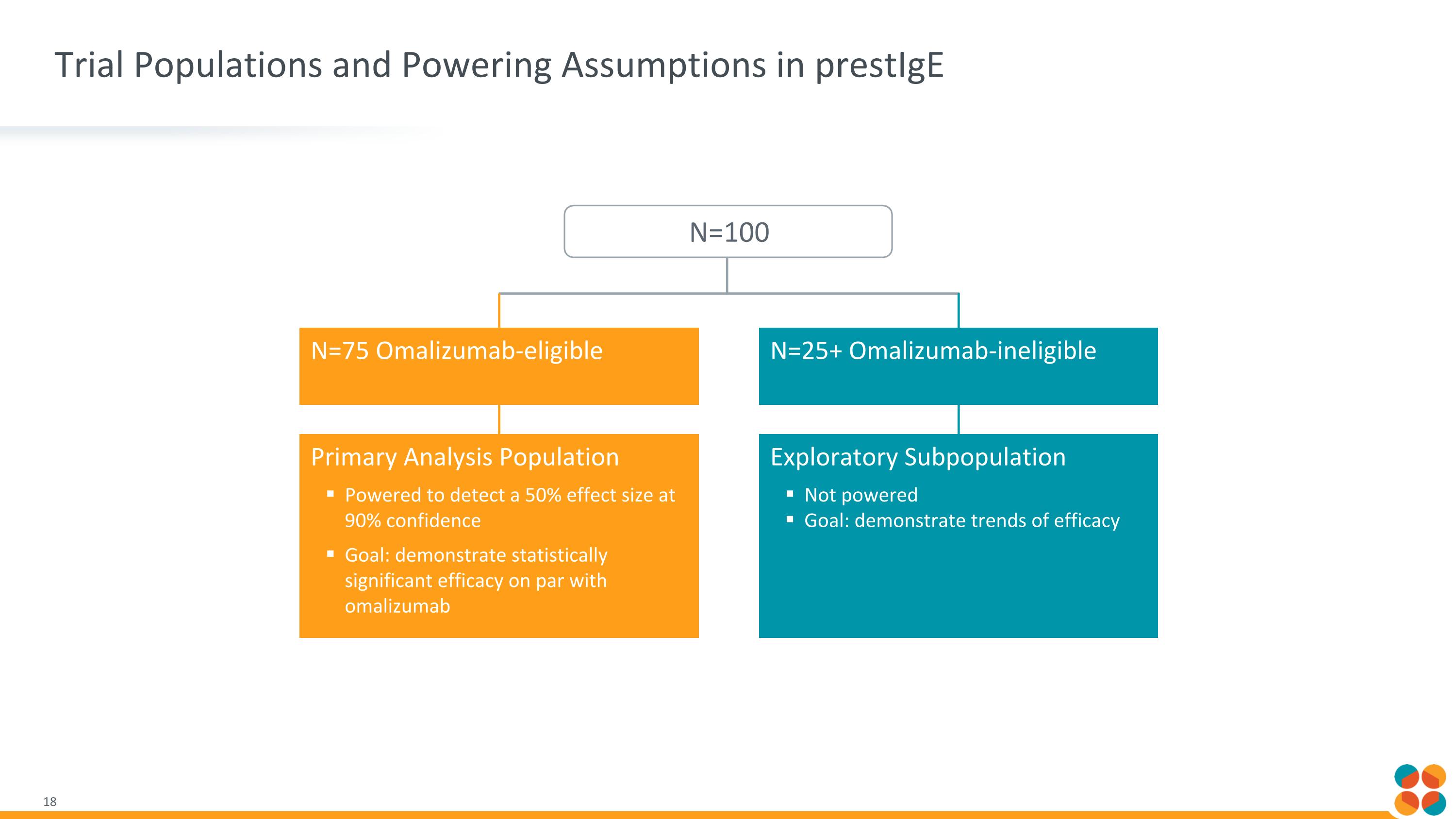
Trial Populations and Powering Assumptions in prestIgE N=75 Omalizumab-eligible N=25+ Omalizumab-ineligible Primary Analysis Population Powered to detect a 50% effect size at 90% confidence Goal: demonstrate statistically significant efficacy on par with omalizumab Exploratory Subpopulation Not powered Goal: demonstrate trends of efficacy N=100

Ozureprubart in CSU Potential to become the preferred advanced therapy in patients with CSU
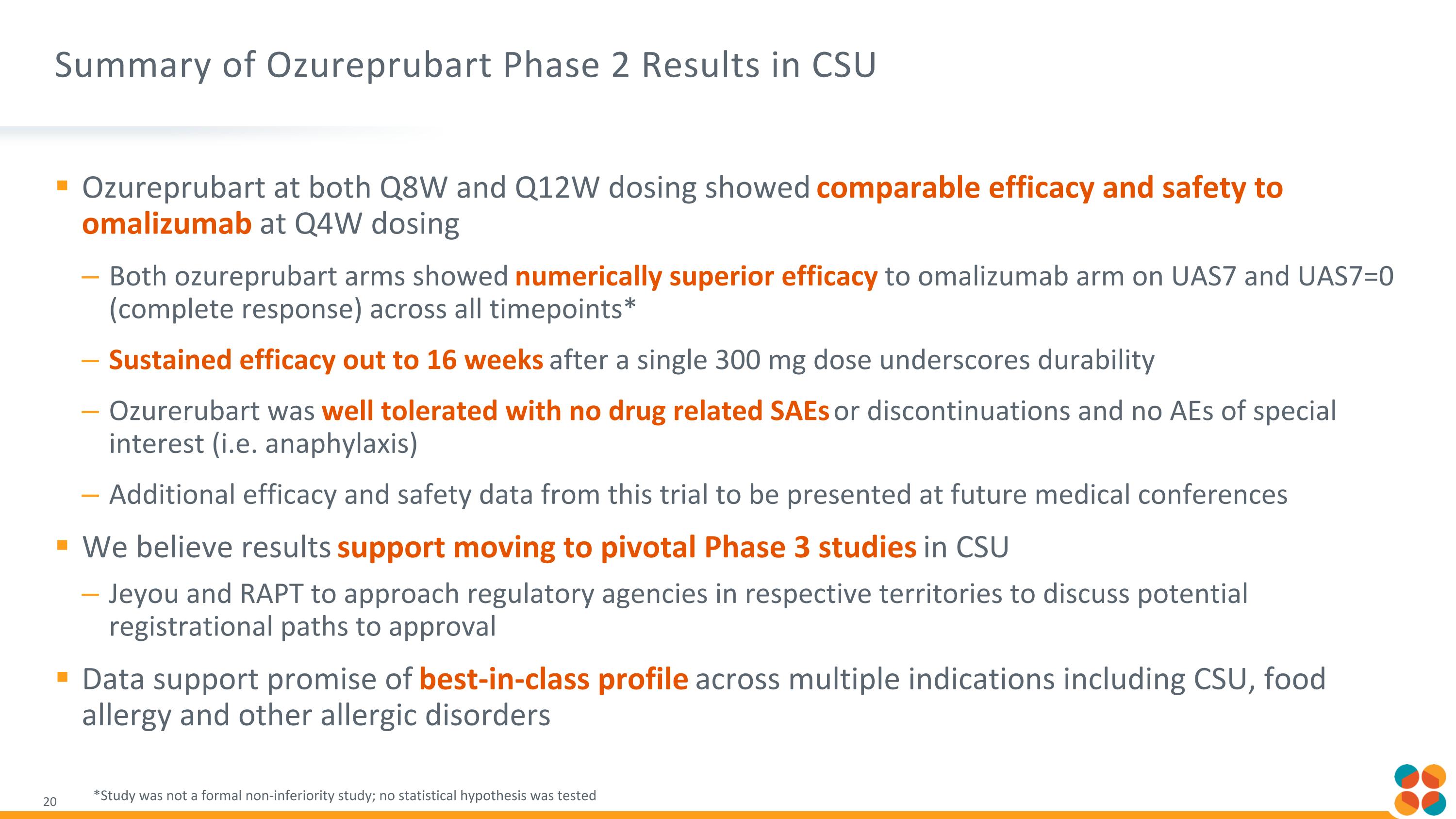
Summary of Ozureprubart Phase 2 Results in CSU Ozureprubart at both Q8W and Q12W dosing showed comparable efficacy and safety to omalizumab at Q4W dosing Both ozureprubart arms showed numerically superior efficacy to omalizumab arm on UAS7 and UAS7=0 (complete response) across all timepoints* Sustained efficacy out to 16 weeks after a single 300 mg dose underscores durability Ozurerubart was well tolerated with no drug related SAEs or discontinuations and no AEs of special interest (i.e. anaphylaxis) Additional efficacy and safety data from this trial to be presented at future medical conferences We believe results support moving to pivotal Phase 3 studies in CSU Jeyou and RAPT to approach regulatory agencies in respective territories to discuss potential registrational paths to approval Data support promise of best-in-class profile across multiple indications including CSU, food allergy and other allergic disorders *Study was not a formal non-inferiority study; no statistical hypothesis was tested
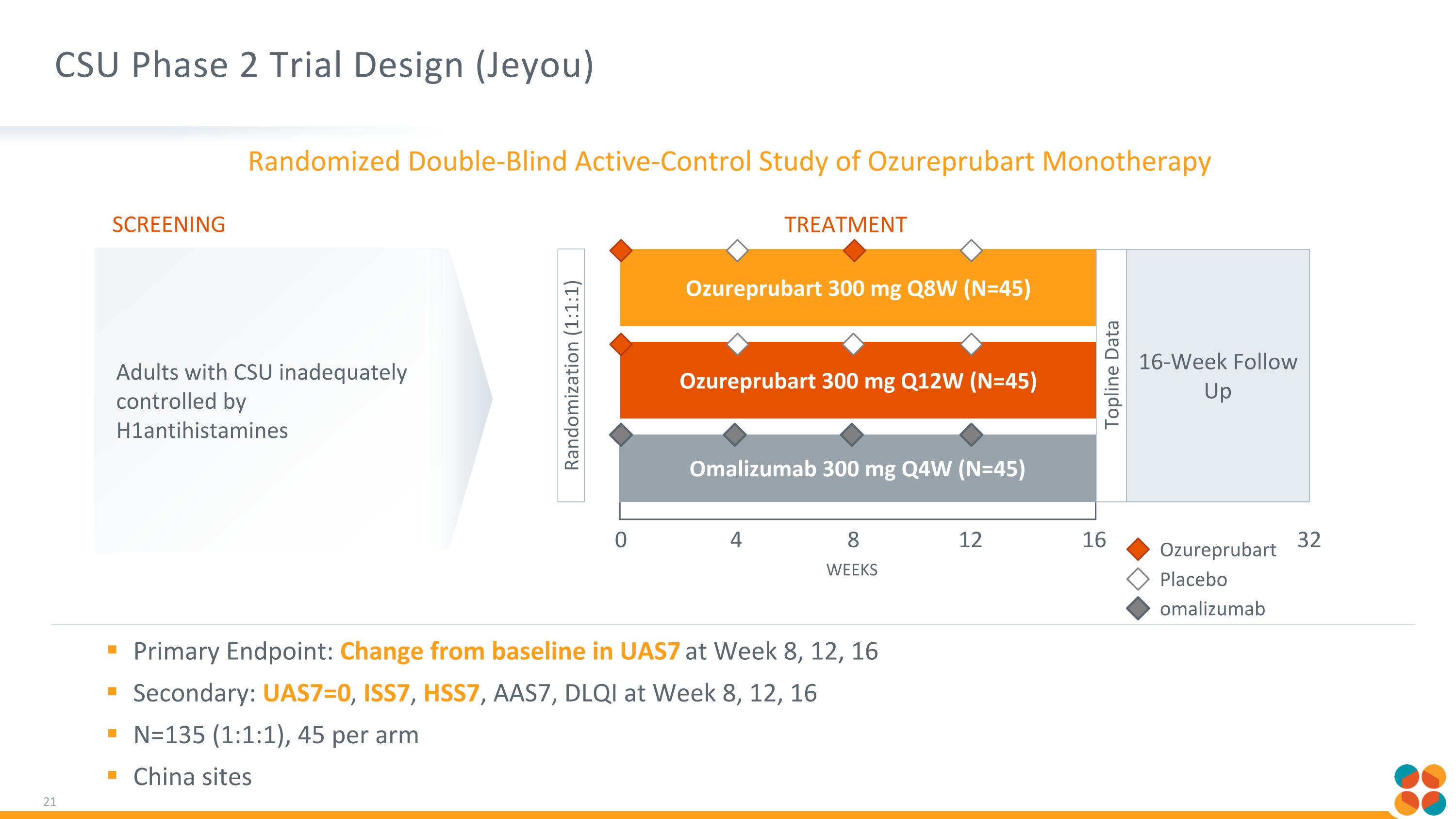
CSU Phase 2 Trial Design (Jeyou) Primary Endpoint: Change from baseline in UAS7 at Week 8, 12, 16 Secondary: UAS7=0, ISS7, HSS7, AAS7, DLQI at Week 8, 12, 16 N=135 (1:1:1), 45 per arm China sites 16-Week Follow Up Ozureprubart 300 mg Q12W (N=45) Ozureprubart 300 mg Q8W (N=45) Omalizumab 300 mg Q4W (N=45) Randomization (1:1:1) 0 WEEKS 16 4 8 12 32 Topline Data Ozureprubart Placebo omalizumab Screening Treatment Adults with CSU inadequately controlled by H1antihistamines Randomized Double-Blind Active-Control Study of Ozureprubart Monotherapy
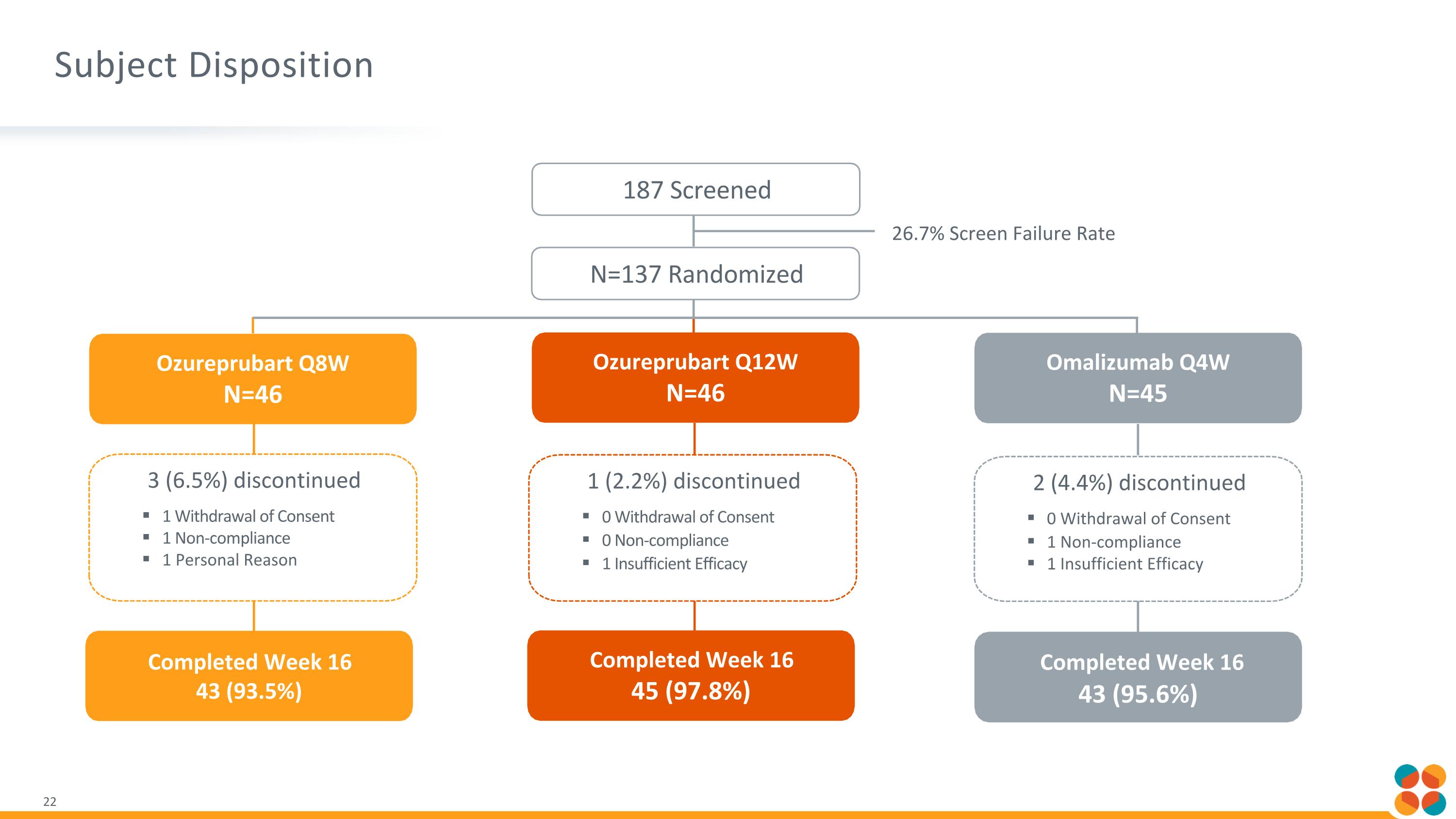
Subject Disposition 187 Screened Omalizumab Q4W N=45 Completed Week 16 43 (95.6%) N=137 Randomized Ozureprubart Q8W N=46 3 (6.5%) discontinued 1 Withdrawal of Consent 1 Non-compliance 1 Personal Reason 2 (4.4%) discontinued 0 Withdrawal of Consent 1 Non-compliance 1 Insufficient Efficacy Completed Week 16 43 (93.5%) Ozureprubart Q12W N=46 1 (2.2%) discontinued 0 Withdrawal of Consent 0 Non-compliance 1 Insufficient Efficacy Completed Week 16 45 (97.8%) 26.7% Screen Failure Rate
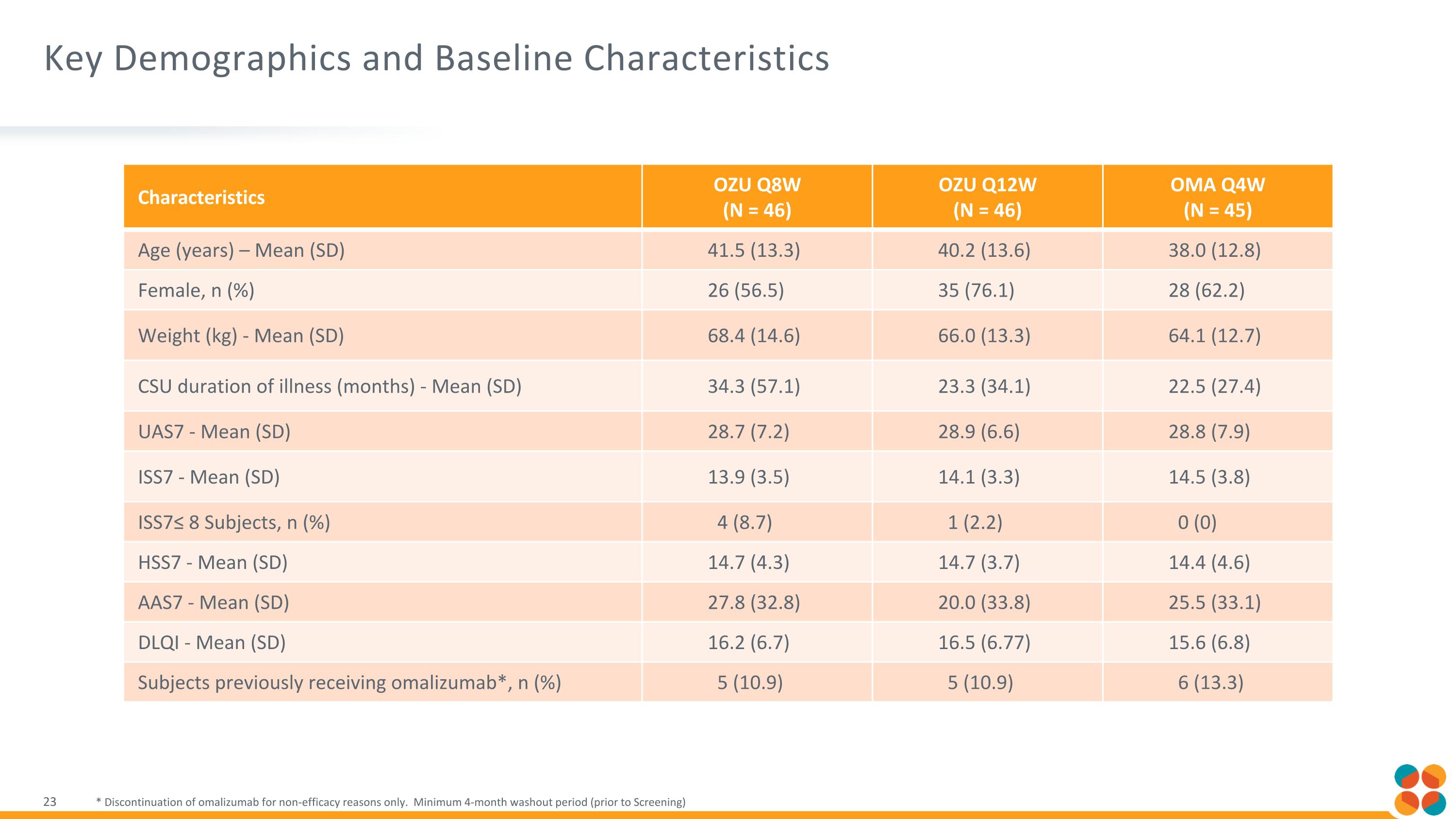
Key Demographics and Baseline Characteristics * Discontinuation of omalizumab for non-efficacy reasons only. Minimum 4-month washout period (prior to Screening) Characteristics OZU Q8W (N = 46) OZU Q12W (N = 46) OMA Q4W (N = 45) Age (years) – Mean (SD) 41.5 (13.3) 40.2 (13.6) 38.0 (12.8) Female, n (%) 26 (56.5) 35 (76.1) 28 (62.2) Weight (kg) - Mean (SD) 68.4 (14.6) 66.0 (13.3) 64.1 (12.7) CSU duration of illness (months) - Mean (SD) 34.3 (57.1) 23.3 (34.1) 22.5 (27.4) UAS7 - Mean (SD) 28.7 (7.2) 28.9 (6.6) 28.8 (7.9) ISS7 - Mean (SD) 13.9 (3.5) 14.1 (3.3) 14.5 (3.8) ISS7≤ 8 Subjects, n (%) 4 (8.7) 1 (2.2) 0 (0) HSS7 - Mean (SD) 14.7 (4.3) 14.7 (3.7) 14.4 (4.6) AAS7 - Mean (SD) 27.8 (32.8) 20.0 (33.8) 25.5 (33.1) DLQI - Mean (SD) 16.2 (6.7) 16.5 (6.77) 15.6 (6.8) Subjects previously receiving omalizumab*, n (%) 5 (10.9) 5 (10.9) 6 (13.3)
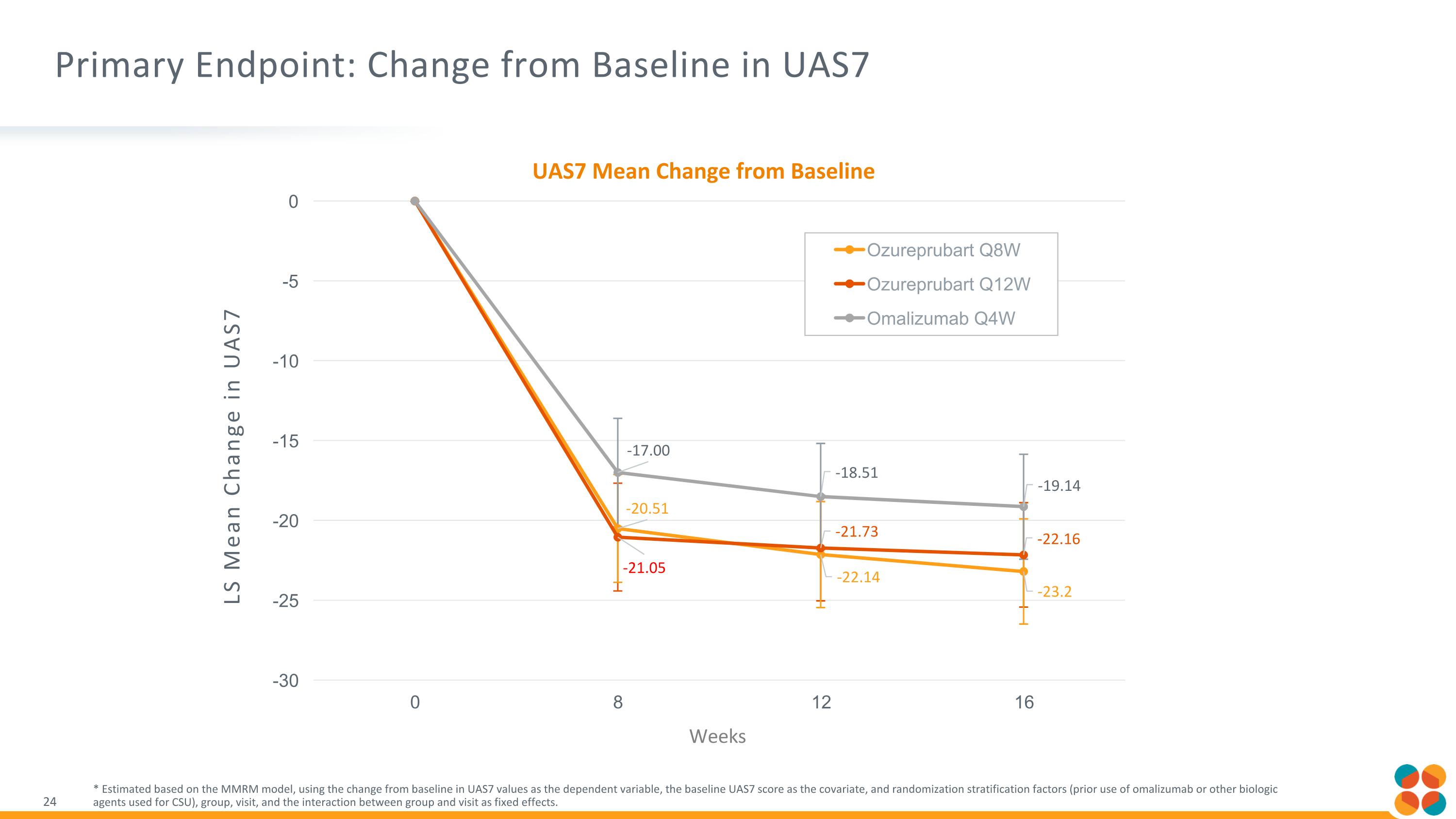
Primary Endpoint: Change from Baseline in UAS7 * Estimated based on the MMRM model, using the change from baseline in UAS7 values as the dependent variable, the baseline UAS7 score as the covariate, and randomization stratification factors (prior use of omalizumab or other biologic agents used for CSU), group, visit, and the interaction between group and visit as fixed effects. LS Mean Change in UAS7 Weeks UAS7 Mean Change from Baseline
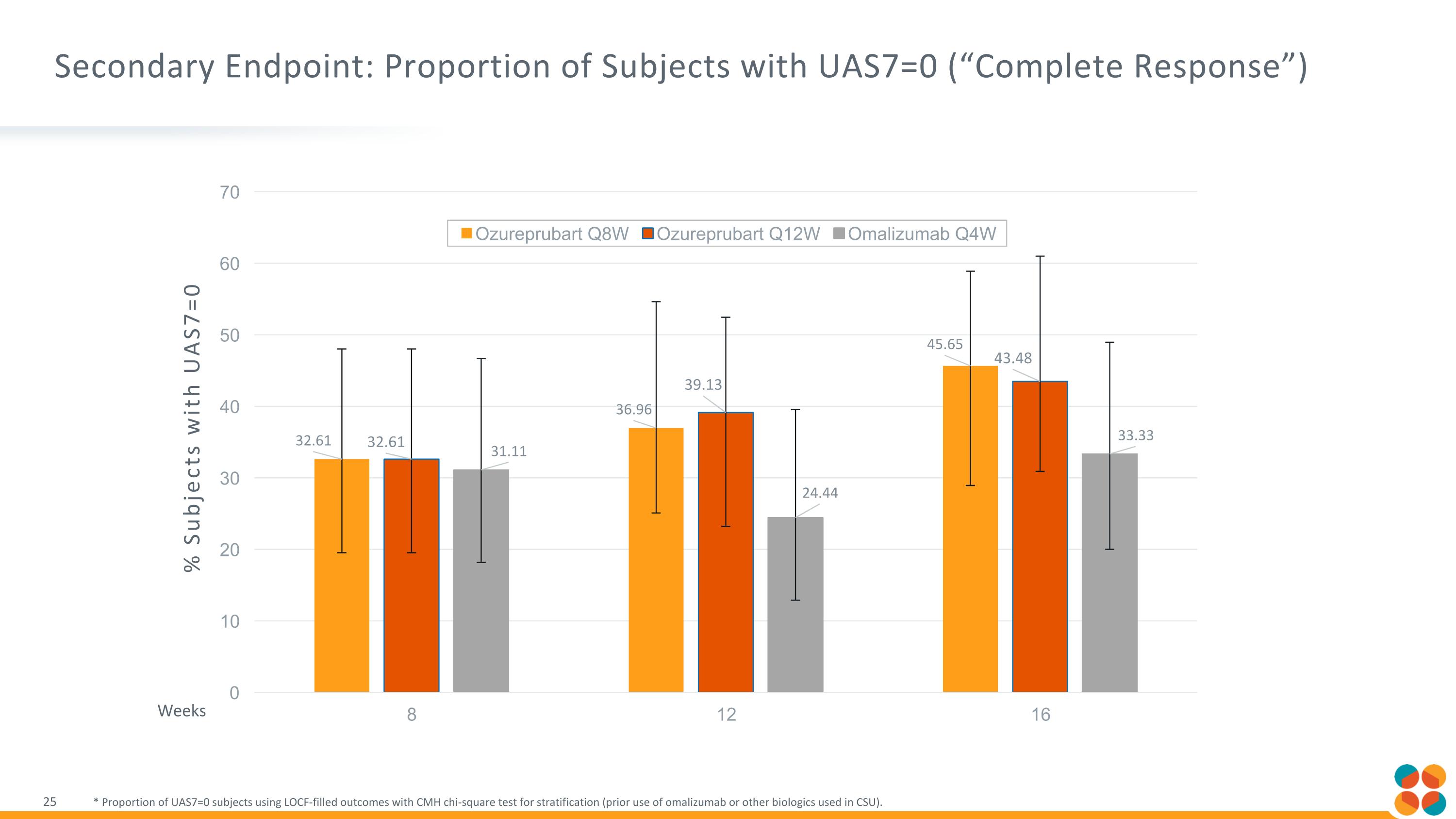
Secondary Endpoint: Proportion of Subjects with UAS7=0 (“Complete Response”) * Proportion of UAS7=0 subjects using LOCF-filled outcomes with CMH chi-square test for stratification (prior use of omalizumab or other biologics used in CSU). % Subjects with UAS7=0 Weeks
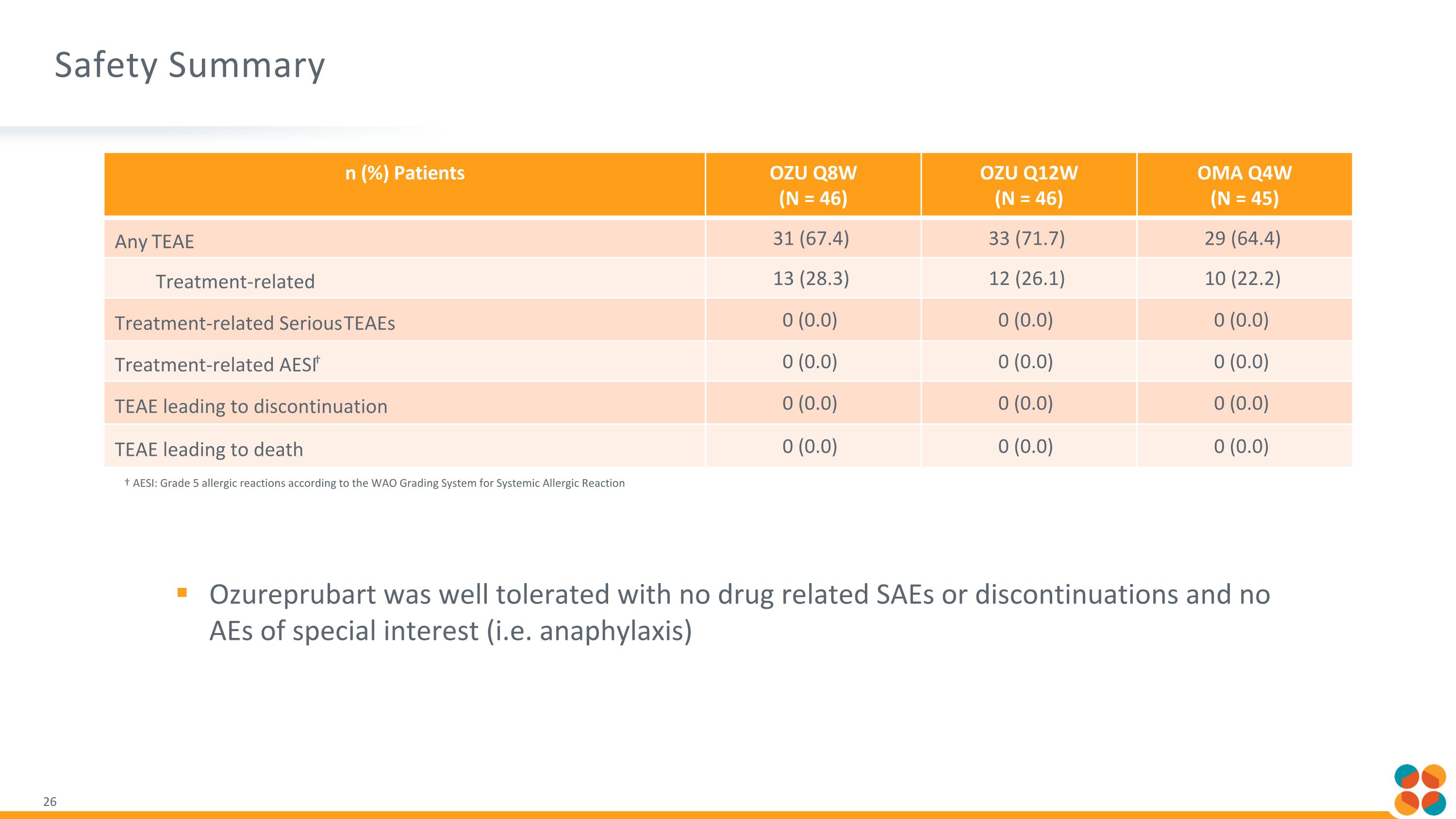
Safety Summary † AESI: Grade 5 allergic reactions according to the WAO Grading System for Systemic Allergic Reaction n (%) Patients OZU Q8W (N = 46) OZU Q12W (N = 46) OMA Q4W (N = 45) Any TEAE 31 (67.4) 33 (71.7) 29 (64.4) Treatment-related 13 (28.3) 12 (26.1) 10 (22.2) Treatment-related Serious TEAEs 0 (0.0) 0 (0.0) 0 (0.0) Treatment-related AESI† 0 (0.0) 0 (0.0) 0 (0.0) TEAE leading to discontinuation 0 (0.0) 0 (0.0) 0 (0.0) TEAE leading to death 0 (0.0) 0 (0.0) 0 (0.0) Ozureprubart was well tolerated with no drug related SAEs or discontinuations and no AEs of special interest (i.e. anaphylaxis)
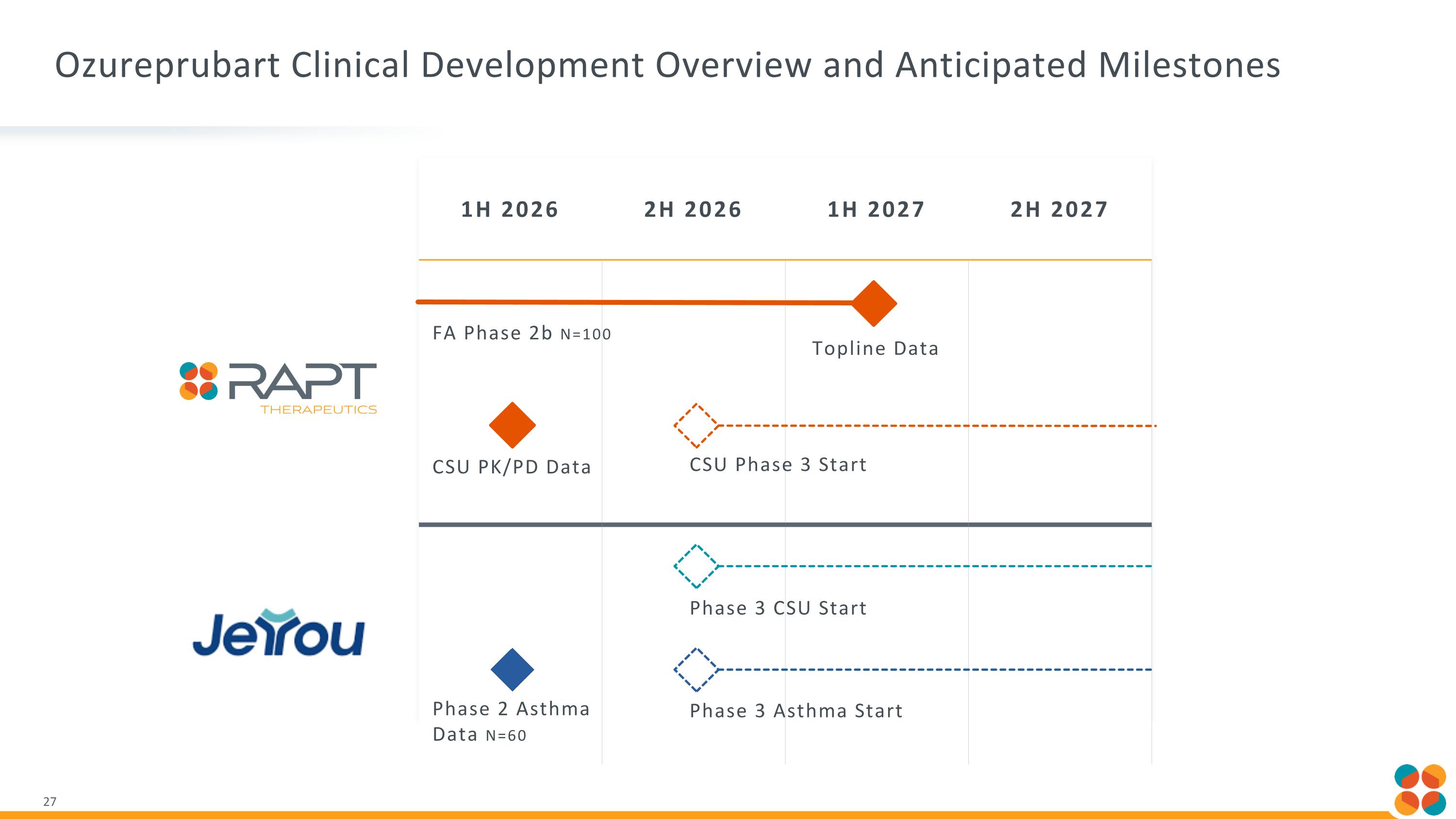
1H 2026 2H 2026 1H 2027 2H 2027 FA Phase 2b N=100 Topline Data CSU Phase 3 Start Ozureprubart Clinical Development Overview and Anticipated Milestones Phase 2 Asthma Data N=60 Phase 3 CSU Start Phase 3 Asthma Start CSU PK/PD Data

Thank You Please visit www.rapt.com