Pociredir PIONEER Study: 20 mg Cohort ASH Data Release December 7, 2025
Disclaimer and Notice This presentation contains “forward-looking statements” of Fulcrum Therapeutics, Inc. (Fulcrum or Fulcrum Therapeutics) within the meaning of the Private Securities Litigation Reform Act of 1995 that involve substantial risks and uncertainties, including express or implied statements regarding regarding the significance of initial results from the 20 mg cohort, Fulcrum’s goals for pociredir, pociredir’s best-in-class potential for the treatment of sickle cell disease, pociredir’s ability to induce fetal hemoglobin, the durability or clinical relevance of early HbF and hemolysis improvements, vaso-occlusive crises during the 12-week treatment period, and the timing of data releases, as well as timing and outcomes of meetings with the U.S. Food and Drug Administration, among others. All statements, other than statements of historical facts, contained in this presentation, including express or implied statements regarding Fulcrum's strategy, future operations, future financial position, prospects, plans and objectives of management, are forward-looking statements. The words “anticipate,” “believe,” “continue,” “could,” “estimate,” “expect,” “intend,” “may,” “plan,” “potential,” “predict,” “project,” “should,” “target,” “will,” “would” and similar expressions are intended to identify forward-looking statements, although not all forward-looking statements contain these identifying words. Any forward-looking statements are based on management’s current expectations of future events and are subject to a number of risks and uncertainties that could cause actual results to differ materially and adversely from those set forth in, or implied by, such forward-looking statements. These risks and uncertainties include, but are not limited to, risks associated with Fulcrum’s ability to continue to advance pociredir and its other product candidates in clinical trials, including enrollment and completion; estimating the potential patient population and/or market for Fulcrum's product candidates; interpreting initial clinical data, including the risk that early data (such as week 6 data from the 20 mg cohort) may not be predictive of full cohort results, later timepoints, or future studies; replicating in clinical trials positive results found in preclinical studies and/or earlier-stage clinical trials pociredir and any other product candidates; obtaining, maintaining or protecting intellectual property rights related to Fulcrum’s product candidates; managing expenses; and raising the substantial additional capital needed to achieve its business objectives, among others. For a discussion of other risks and uncertainties, and other important factors, any of which could cause Fulcrum's actual results to differ from those contained in the forward-looking statements, see the “Risk Factors” section, as well as discussions of potential risks, uncertainties and other important factors, in Fulcrum's most recent filings with the Securities and Exchange Commission. In addition, the forward-looking statements included in this presentation represent Fulcrum's views as of the date hereof and should not be relied upon as representing Fulcrum's views as of any date subsequent to the date hereof. Fulcrum anticipates that subsequent events and developments will cause Fulcrum's views to change. While Fulcrum may elect to update these forward-looking statements at some point in the future, Fulcrum specifically disclaims any obligation to do so.
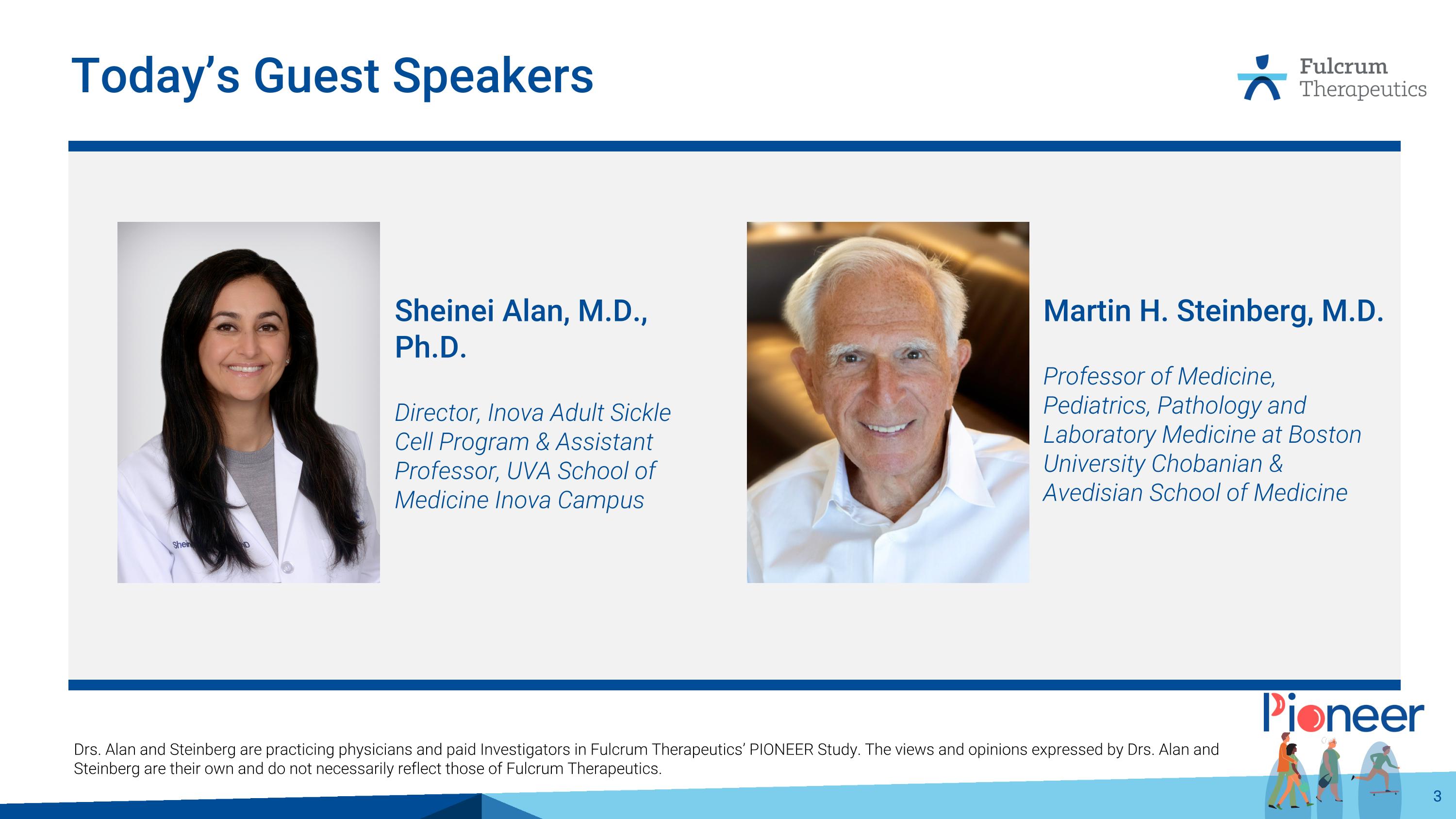
Today’s Guest Speakers Drs. Alan and Steinberg are practicing physicians and paid Investigators in Fulcrum Therapeutics’ PIONEER Study. The views and opinions expressed by Drs. Alan and Steinberg are their own and do not necessarily reflect those of Fulcrum Therapeutics. Sheinei Alan, M.D., Ph.D. Director, Inova Adult Sickle Cell Program & Assistant Professor, UVA School of Medicine Inova Campus Martin H. Steinberg, M.D. Professor of Medicine, Pediatrics, Pathology and Laboratory Medicine at Boston University Chobanian & Avedisian School of Medicine
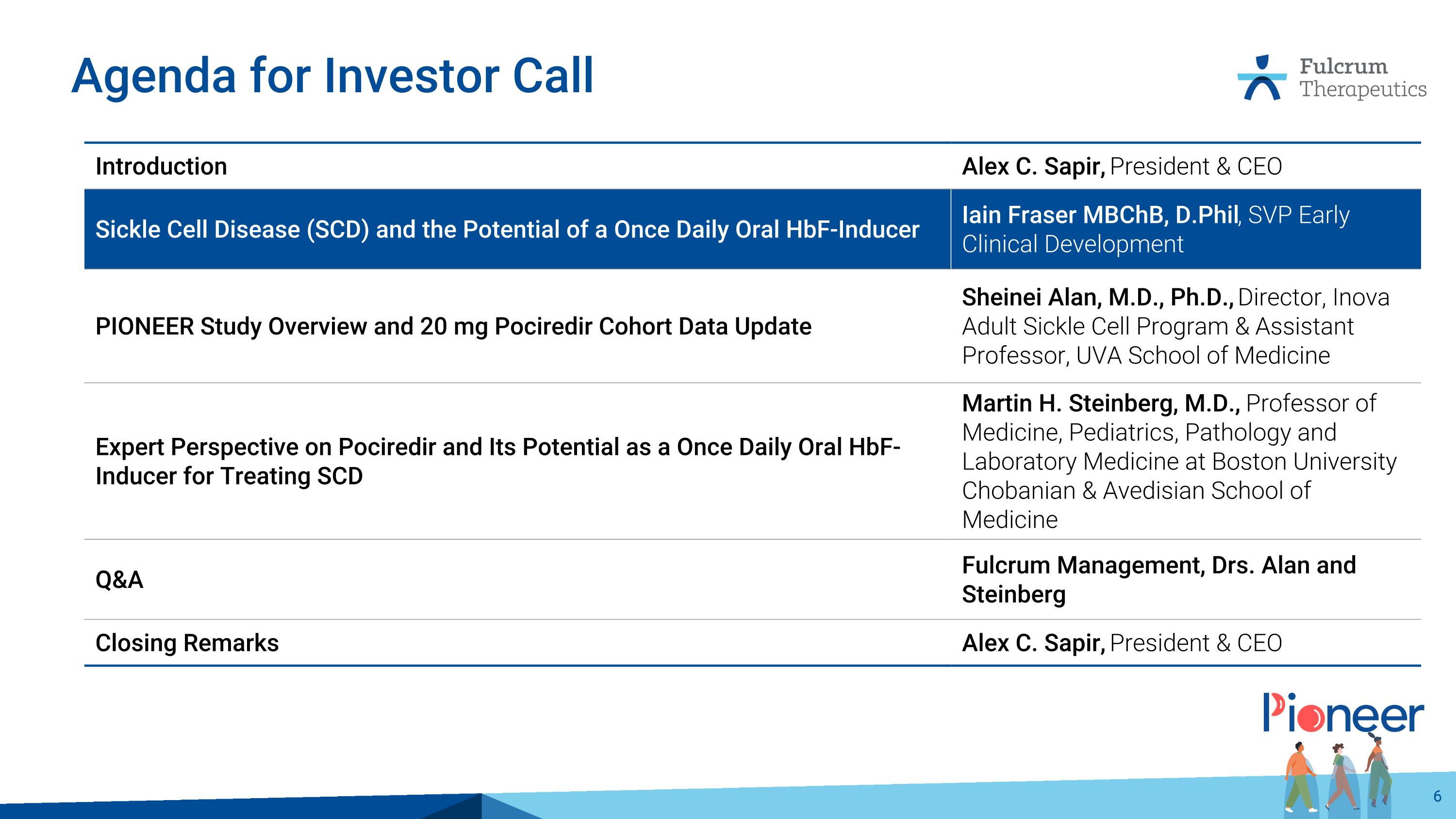
Agenda for Investor Call Introduction Alex C. Sapir, President & CEO Sickle Cell Disease (SCD) and the Potential of a Once Daily Oral HbF-Inducer Iain Fraser MBChB, D.Phil, SVP Early Clinical Development PIONEER Study Overview and 20 mg Pociredir Cohort Data Update Sheinei Alan, M.D., Ph.D., Director, Inova Adult Sickle Cell Program & Assistant Professor, UVA School of Medicine Expert Perspective on Pociredir and Its Potential as a Once Daily Oral HbF-Inducer for Treating SCD Martin H. Steinberg, M.D., Professor of Medicine, Pediatrics, Pathology and Laboratory Medicine at Boston University Chobanian & Avedisian School of Medicine Q&A Fulcrum Management, Drs. Alan and Steinberg Closing Remarks Alex C. Sapir, President & CEO
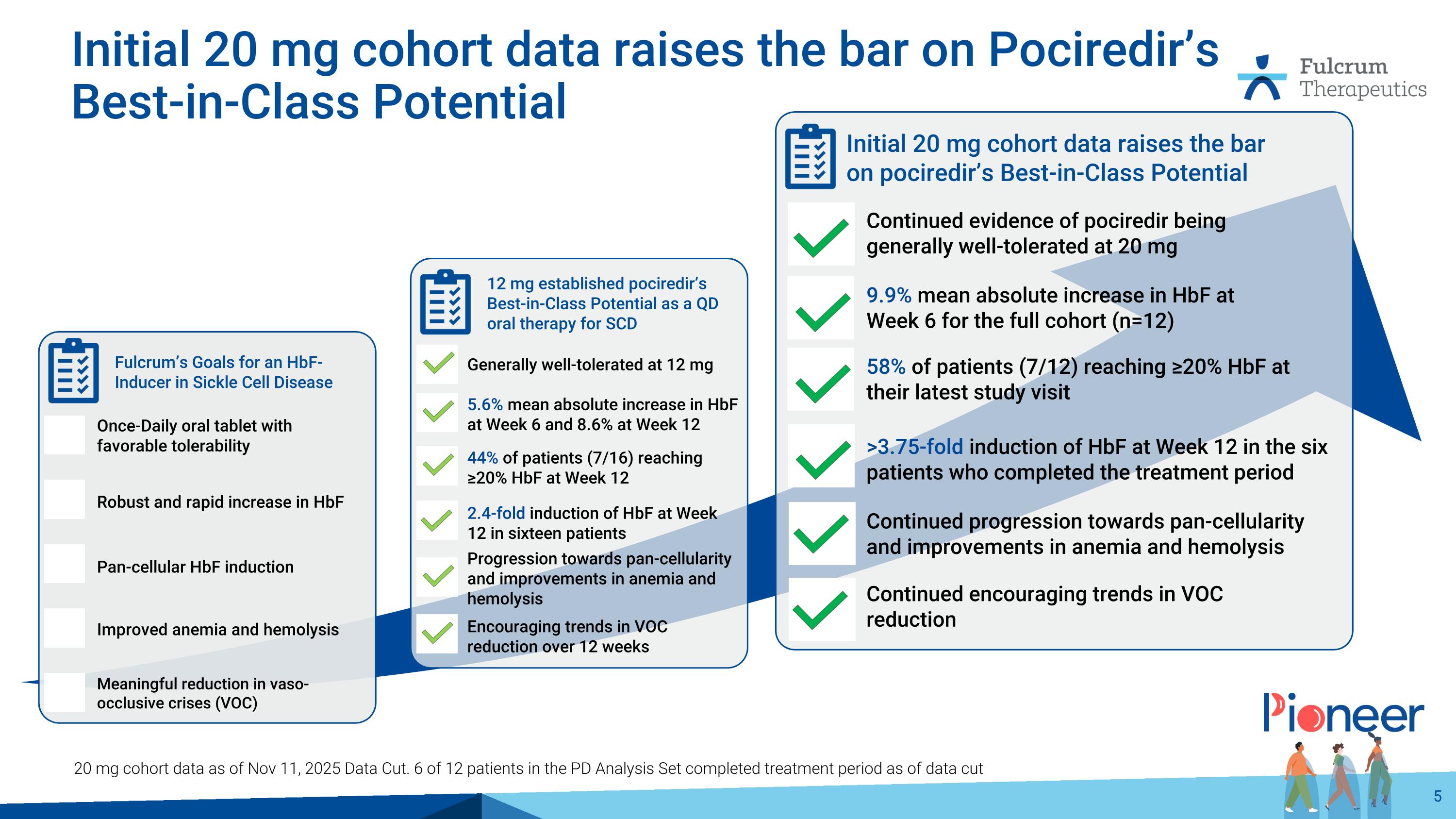
Initial 20 mg cohort data raises the bar on Pociredir’s Best-in-Class Potential 20 mg cohort data as of Nov 11, 2025 Data Cut. 6 of 12 patients in the PD Analysis Set completed treatment period as of data cut Pan-cellular HbF induction Robust and rapid increase in HbF Improved anemia and hemolysis Meaningful reduction in vaso-occlusive crises (VOC) Once-Daily oral tablet with favorable tolerability Fulcrum’s Goals for an HbF-Inducer in Sickle Cell Disease 2.4-fold induction of HbF at Week 12 in sixteen patients 5.6% mean absolute increase in HbF at Week 6 and 8.6% at Week 12 Progression towards pan-cellularity and improvements in anemia and hemolysis Encouraging trends in VOC reduction over 12 weeks Generally well-tolerated at 12 mg 12 mg established pociredir’s Best-in-Class Potential as a QD oral therapy for SCD 9.9% mean absolute increase in HbF at Week 6 for the full cohort (n=12) Continued evidence of pociredir being generally well-tolerated at 20 mg Initial 20 mg cohort data raises the bar on pociredir’s Best-in-Class Potential Continued progression towards pan-cellularity and improvements in anemia and hemolysis Continued encouraging trends in VOC reduction >3.75-fold induction of HbF at Week 12 in the six patients who completed the treatment period 58% of patients (7/12) reaching ≥20% HbF at their latest study visit 44% of patients (7/16) reaching ≥20% HbF at Week 12
Agenda for Investor Call Introduction Alex C. Sapir, President & CEO Sickle Cell Disease (SCD) and the Potential of a Once Daily Oral HbF-Inducer Iain Fraser MBChB, D.Phil, SVP Early Clinical Development PIONEER Study Overview and 20 mg Pociredir Cohort Data Update Sheinei Alan, M.D., Ph.D., Director, Inova Adult Sickle Cell Program & Assistant Professor, UVA School of Medicine Expert Perspective on Pociredir and Its Potential as a Once Daily Oral HbF-Inducer for Treating SCD Martin H. Steinberg, M.D., Professor of Medicine, Pediatrics, Pathology and Laboratory Medicine at Boston University Chobanian & Avedisian School of Medicine Q&A Fulcrum Management, Drs. Alan and Steinberg Closing Remarks Alex C. Sapir, President & CEO
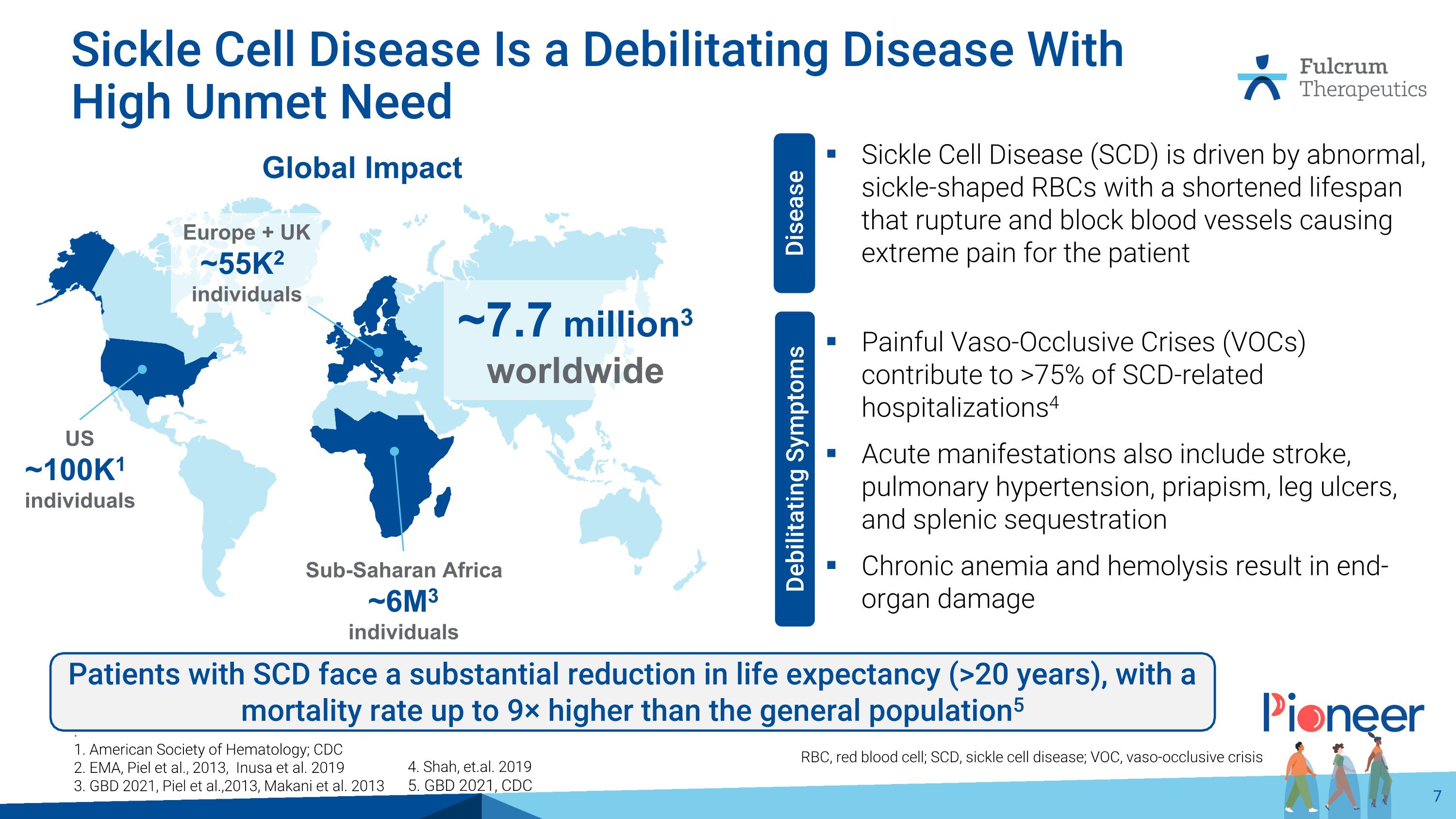
Sickle Cell Disease Is a Debilitating Disease With High Unmet Need Sickle Cell Disease (SCD) is driven by abnormal, sickle-shaped RBCs with a shortened lifespan that rupture and block blood vessels causing extreme pain for the patient Painful Vaso-Occlusive Crises (VOCs) contribute to >75% of SCD-related hospitalizations4 Acute manifestations also include stroke, pulmonary hypertension, priapism, leg ulcers, and splenic sequestration Chronic anemia and hemolysis result in end-organ damage . 1. American Society of Hematology; CDC 2. EMA, Piel et al., 2013, Inusa et al. 2019 3. GBD 2021, Piel et al.,2013, Makani et al. 2013 US ~100K1 individuals Sub-Saharan Africa ~6M3 individuals Global Impact ~7.7 million3 worldwide Europe + UK ~55K2 individuals Disease Debilitating Symptoms Patients with SCD face a substantial reduction in life expectancy (>20 years), with a mortality rate up to 9× higher than the general population5 RBC, red blood cell; SCD, sickle cell disease; VOC, vaso-occlusive crisis 4. Shah, et.al. 2019 5. GBD 2021, CDC
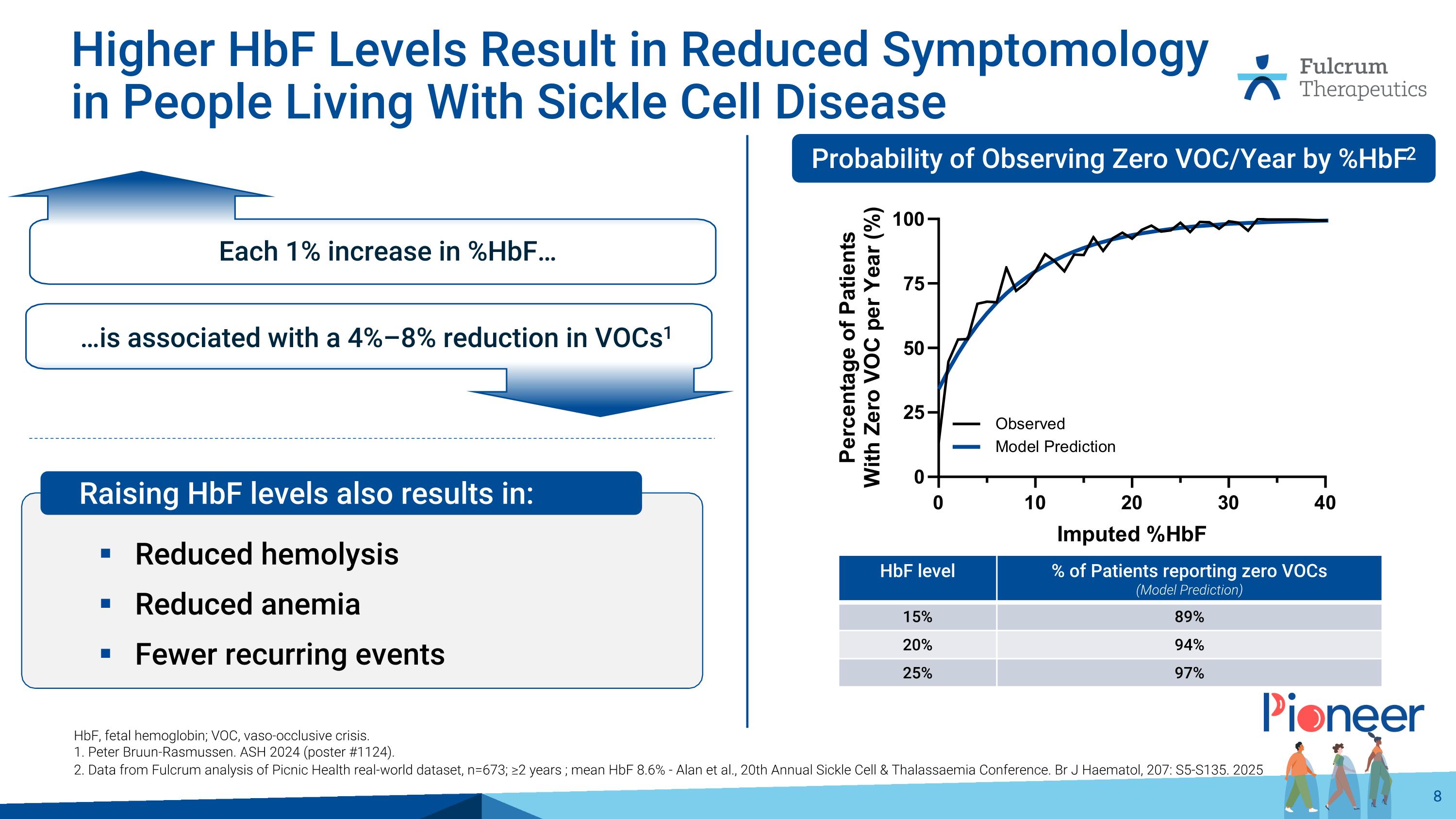
Higher HbF Levels Result in Reduced Symptomology in People Living With Sickle Cell Disease Reduced hemolysis Reduced anemia Fewer recurring events HbF, fetal hemoglobin; VOC, vaso-occlusive crisis. 1. Peter Bruun-Rasmussen. ASH 2024 (poster #1124). 2. Data from Fulcrum analysis of Picnic Health real-world dataset, n=673; ≥2 years ; mean HbF 8.6% - Alan et al., 20th Annual Sickle Cell & Thalassaemia Conference. Br J Haematol, 207: S5-S135. 2025 Probability of Observing Zero VOC/Year by %HbF2 Each 1% increase in %HbF… …is associated with a 4%–8% reduction in VOCs1 Raising HbF levels also results in: HbF level % of Patients reporting zero VOCs (Model Prediction) 15% 89% 20% 94% 25% 97%
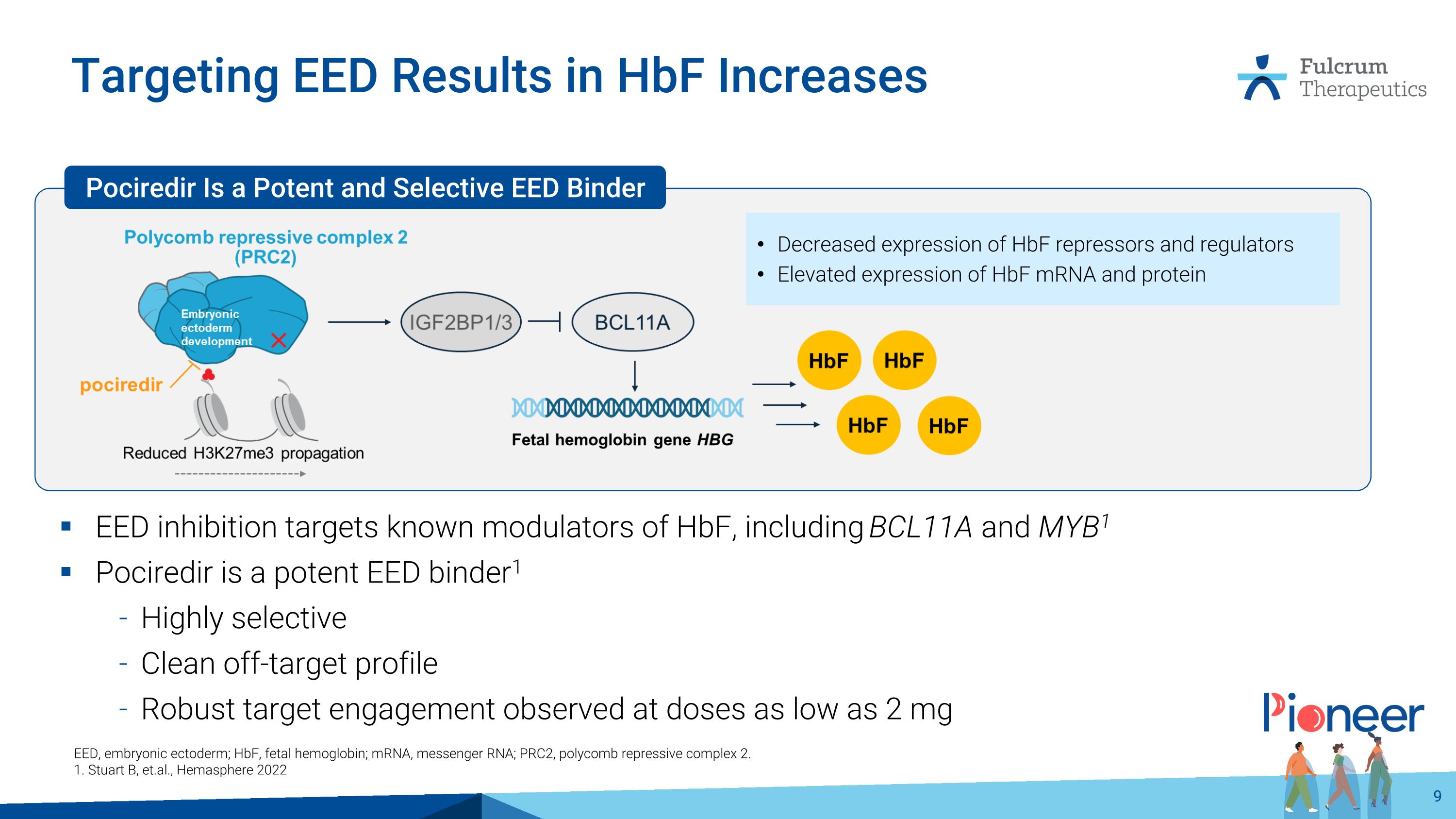
Targeting EED Results in HbF Increases EED inhibition targets known modulators of HbF, including BCL11A and MYB1 Pociredir is a potent EED binder1 Highly selective Clean off-target profile Robust target engagement observed at doses as low as 2 mg EED, embryonic ectoderm; HbF, fetal hemoglobin; mRNA, messenger RNA; PRC2, polycomb repressive complex 2. 1. Stuart B, et.al., Hemasphere 2022 Pociredir Is a Potent and Selective EED Binder Decreased expression of HbF repressors and regulators Elevated expression of HbF mRNA and protein
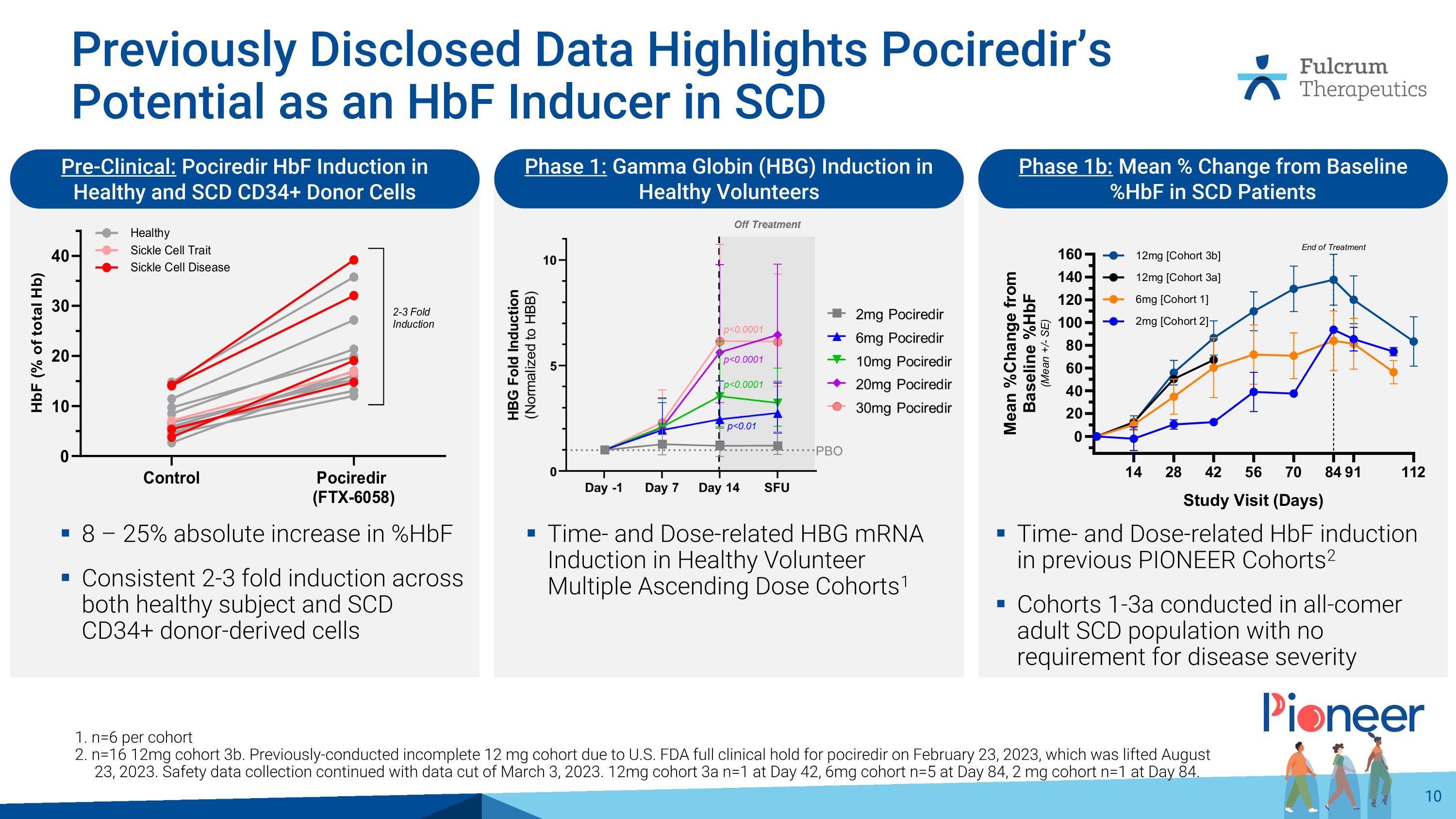
Previously Disclosed Data Highlights Pociredir’s Potential as an HbF Inducer in SCD 1. n=6 per cohort 2. n=16 12mg cohort 3b. Previously-conducted incomplete 12 mg cohort due to U.S. FDA full clinical hold for pociredir on February 23, 2023, which was lifted August 23, 2023. Safety data collection continued with data cut of March 3, 2023. 12mg cohort 3a n=1 at Day 42, 6mg cohort n=5 at Day 84, 2 mg cohort n=1 at Day 84. Pre-Clinical: Pociredir HbF Induction in Healthy and SCD CD34+ Donor Cells Phase 1: Gamma Globin (HBG) Induction in Healthy Volunteers Phase 1b: Mean % Change from Baseline %HbF in SCD Patients 8 – 25% absolute increase in %HbF Consistent 2-3 fold induction across both healthy subject and SCD CD34+ donor-derived cells Time- and Dose-related HBG mRNA Induction in Healthy Volunteer Multiple Ascending Dose Cohorts1 Time- and Dose-related HbF induction in previous PIONEER Cohorts2 Cohorts 1-3a conducted in all-comer adult SCD population with no requirement for disease severity
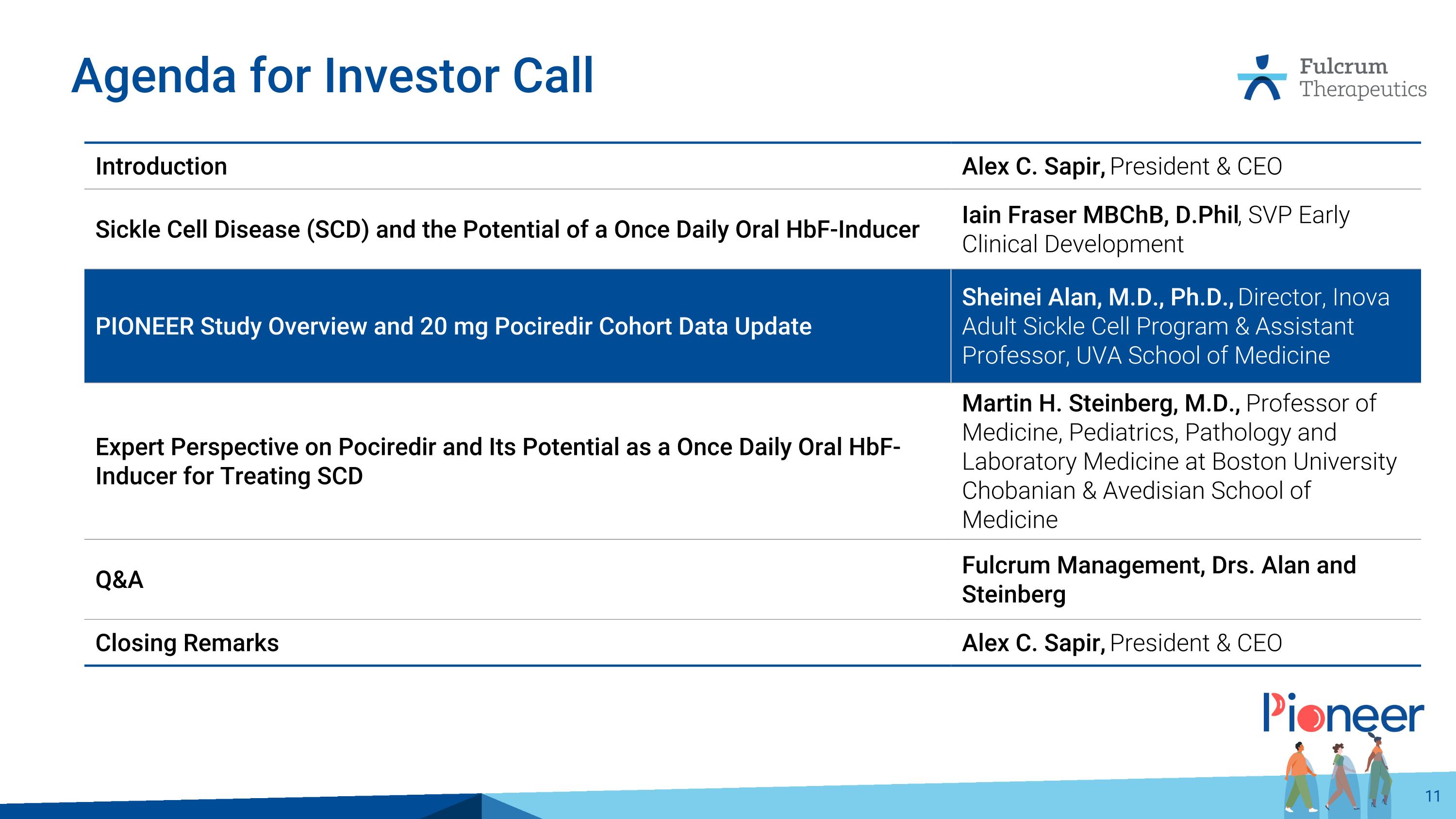
Agenda for Investor Call Introduction Alex C. Sapir, President & CEO Sickle Cell Disease (SCD) and the Potential of a Once Daily Oral HbF-Inducer Iain Fraser MBChB, D.Phil, SVP Early Clinical Development PIONEER Study Overview and 20 mg Pociredir Cohort Data Update Sheinei Alan, M.D., Ph.D., Director, Inova Adult Sickle Cell Program & Assistant Professor, UVA School of Medicine Expert Perspective on Pociredir and Its Potential as a Once Daily Oral HbF-Inducer for Treating SCD Martin H. Steinberg, M.D., Professor of Medicine, Pediatrics, Pathology and Laboratory Medicine at Boston University Chobanian & Avedisian School of Medicine Q&A Fulcrum Management, Drs. Alan and Steinberg Closing Remarks Alex C. Sapir, President & CEO
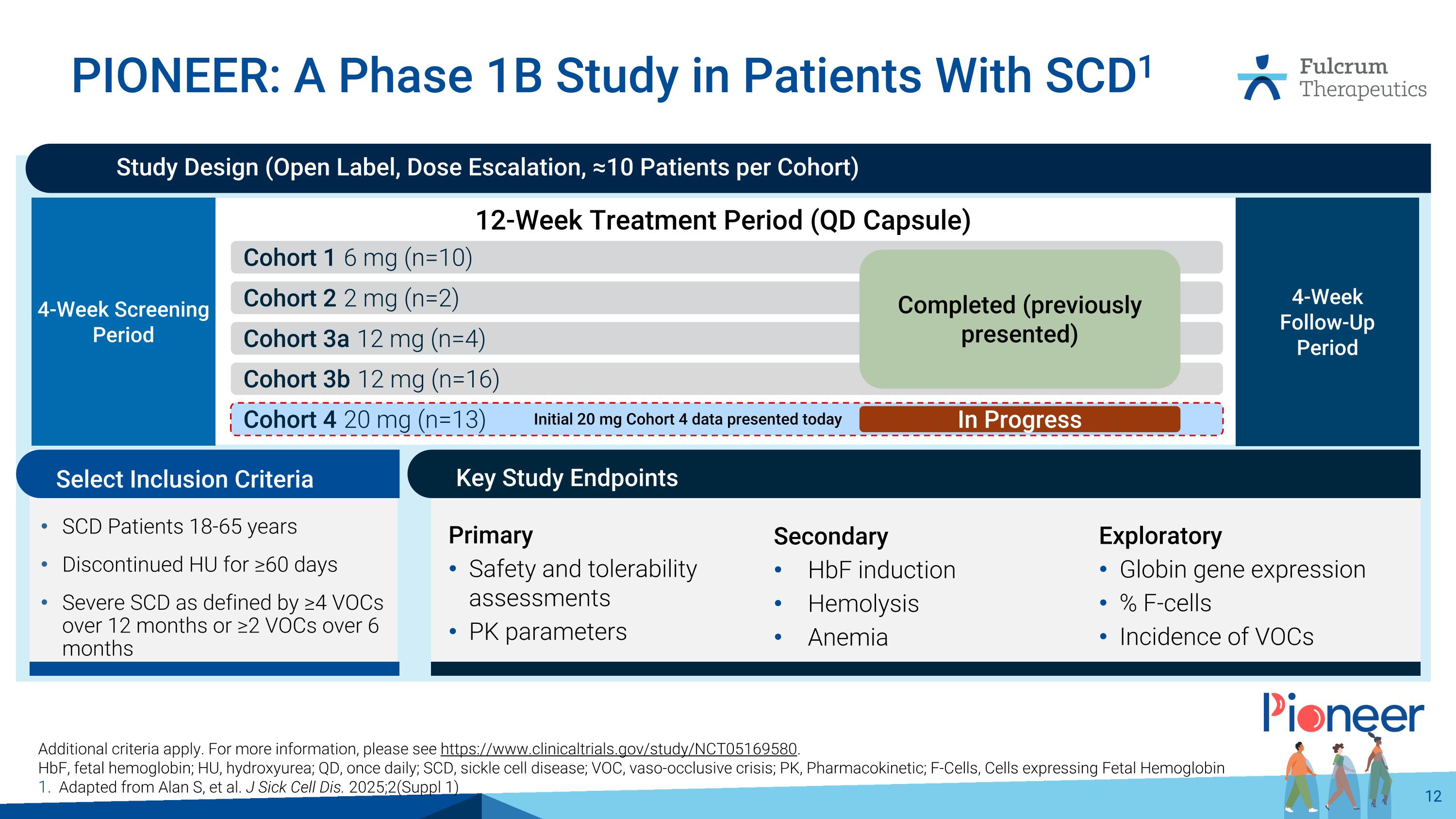
PIONEER: A Phase 1B Study in Patients With SCD1 Additional criteria apply. For more information, please see https://www.clinicaltrials.gov/study/NCT05169580. HbF, fetal hemoglobin; HU, hydroxyurea; QD, once daily; SCD, sickle cell disease; VOC, vaso-occlusive crisis; PK, Pharmacokinetic; F-Cells, Cells expressing Fetal Hemoglobin Adapted from Alan S, et al. J Sick Cell Dis. 2025;2(Suppl 1) Study Design (Open Label, Dose Escalation, ≈10 Patients per Cohort) 12-Week Treatment Period (QD Capsule) 4-Week Screening Period 4-Week Follow-Up Period Cohort 1 6 mg (n=10) Cohort 2 2 mg (n=2) Cohort 3b 12 mg (n=16) Cohort 4 20 mg (n=13) In Progress Initial 20 mg Cohort 4 data presented today Cohort 3a 12 mg (n=4) Completed (previously presented) Key Study Endpoints SCD Patients 18-65 years Discontinued HU for ≥60 days Severe SCD as defined by ≥4 VOCs over 12 months or ≥2 VOCs over 6 months Select Inclusion Criteria Secondary HbF induction Hemolysis Anemia Primary Safety and tolerability assessments PK parameters Exploratory Globin gene expression % F-cells Incidence of VOCs
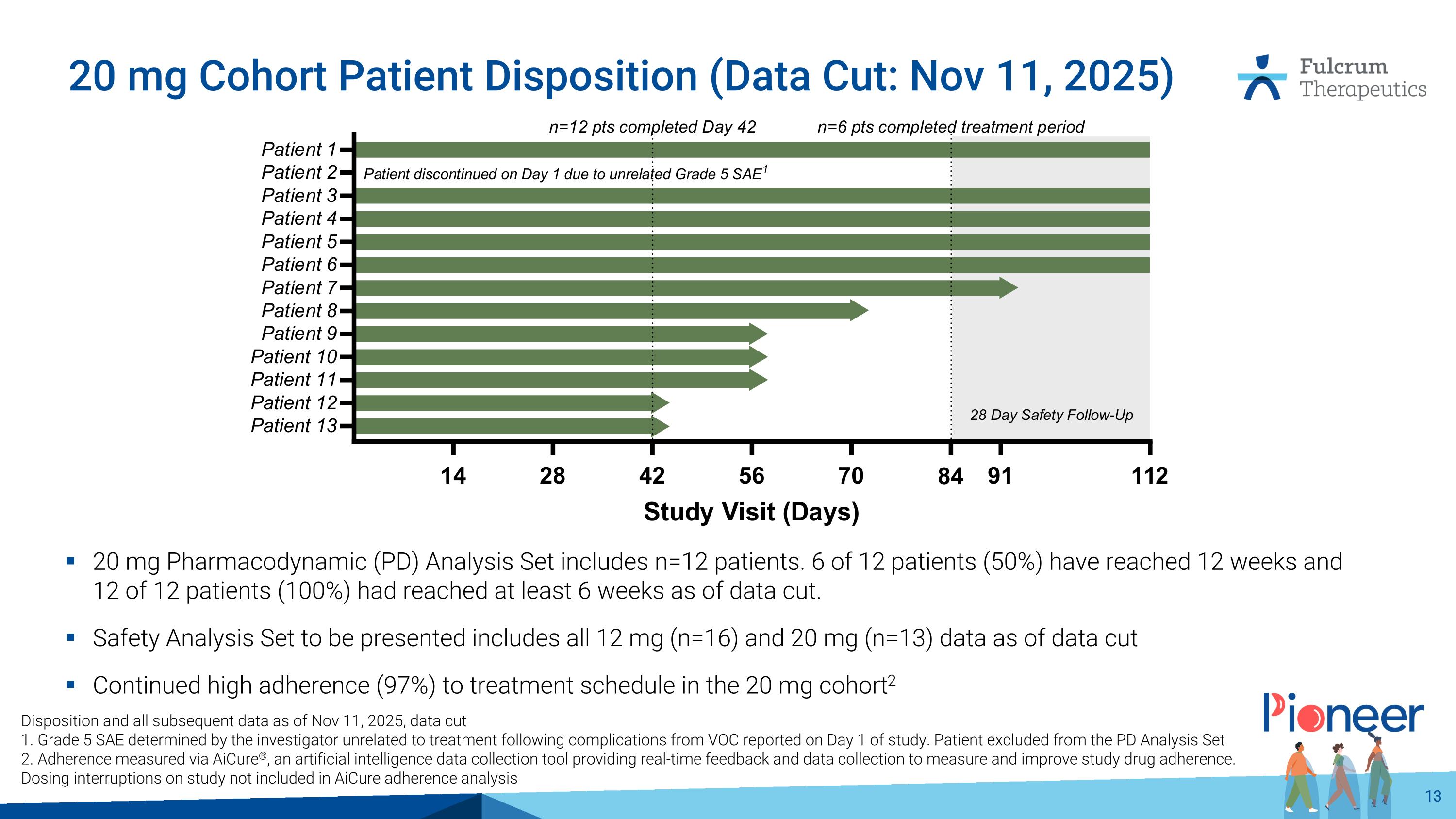
20 mg Cohort Patient Disposition (Data Cut: Nov 11, 2025) 20 mg Pharmacodynamic (PD) Analysis Set includes n=12 patients. 6 of 12 patients (50%) have reached 12 weeks and 12 of 12 patients (100%) had reached at least 6 weeks as of data cut. Safety Analysis Set to be presented includes all 12 mg (n=16) and 20 mg (n=13) data as of data cut Continued high adherence (97%) to treatment schedule in the 20 mg cohort2 Disposition and all subsequent data as of Nov 11, 2025, data cut 1. Grade 5 SAE determined by the investigator unrelated to treatment following complications from VOC reported on Day 1 of study. Patient excluded from the PD Analysis Set 2. Adherence measured via AiCure®, an artificial intelligence data collection tool providing real-time feedback and data collection to measure and improve study drug adherence. Dosing interruptions on study not included in AiCure adherence analysis
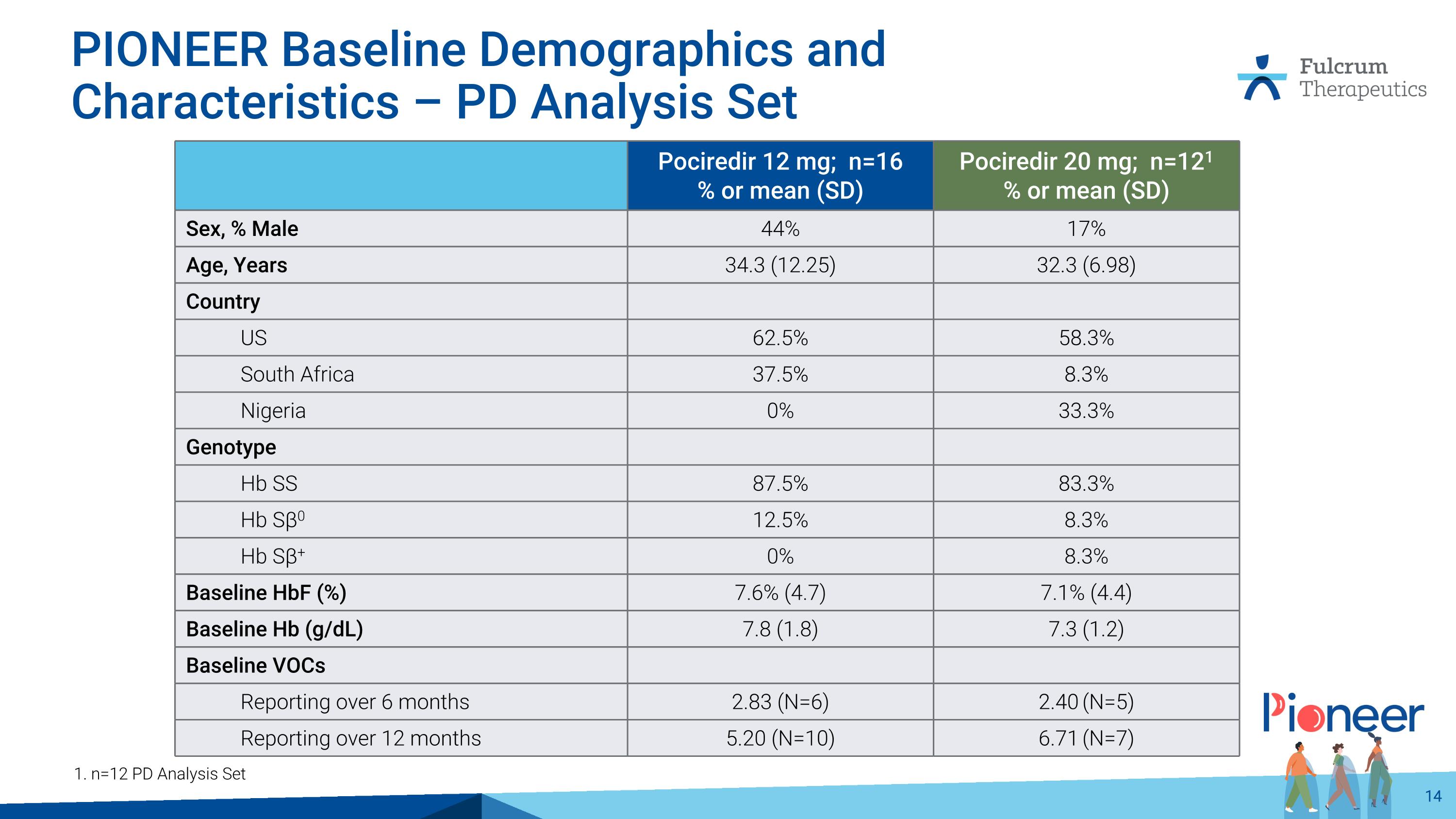
PIONEER Baseline Demographics and Characteristics – PD Analysis Set 1. n=12 PD Analysis Set Pociredir 12 mg; n=16 % or mean (SD) Pociredir 20 mg; n=121 % or mean (SD) Sex, % Male 44% 17% Age, Years 34.3 (12.25) 32.3 (6.98) Country US 62.5% 58.3% South Africa 37.5% 8.3% Nigeria 0% 33.3% Genotype Hb SS 87.5% 83.3% Hb Sβ0 12.5% 8.3% Hb Sβ+ 0% 8.3% Baseline HbF (%) 7.6% (4.7) 7.1% (4.4) Baseline Hb (g/dL) 7.8 (1.8) 7.3 (1.2) Baseline VOCs Reporting over 6 months 2.83 (N=6) 2.40 (N=5) Reporting over 12 months 5.20 (N=10) 6.71 (N=7)
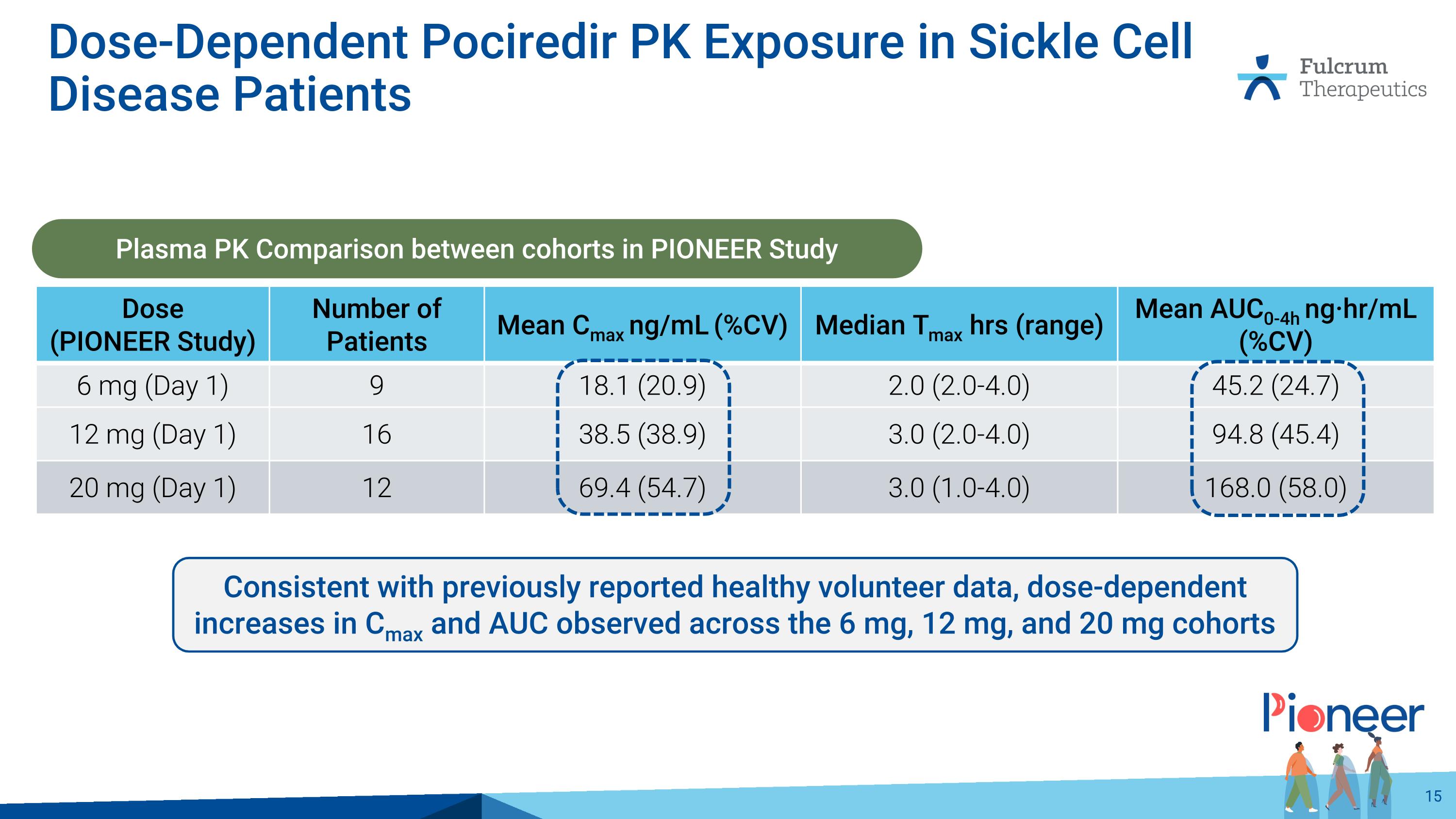
Dose-Dependent Pociredir PK Exposure in Sickle Cell Disease Patients Dose (PIONEER Study) Number of Patients Mean Cmax ng/mL (%CV) Median Tmax hrs (range) Mean AUC0-4h ng·hr/mL (%CV) 6 mg (Day 1) 9 18.1 (20.9) 2.0 (2.0-4.0) 45.2 (24.7) 12 mg (Day 1) 16 38.5 (38.9) 3.0 (2.0-4.0) 94.8 (45.4) 20 mg (Day 1) 12 69.4 (54.7) 3.0 (1.0-4.0) 168.0 (58.0) Plasma PK Comparison between cohorts in PIONEER Study Consistent with previously reported healthy volunteer data, dose-dependent increases in Cmax and AUC observed across the 6 mg, 12 mg, and 20 mg cohorts
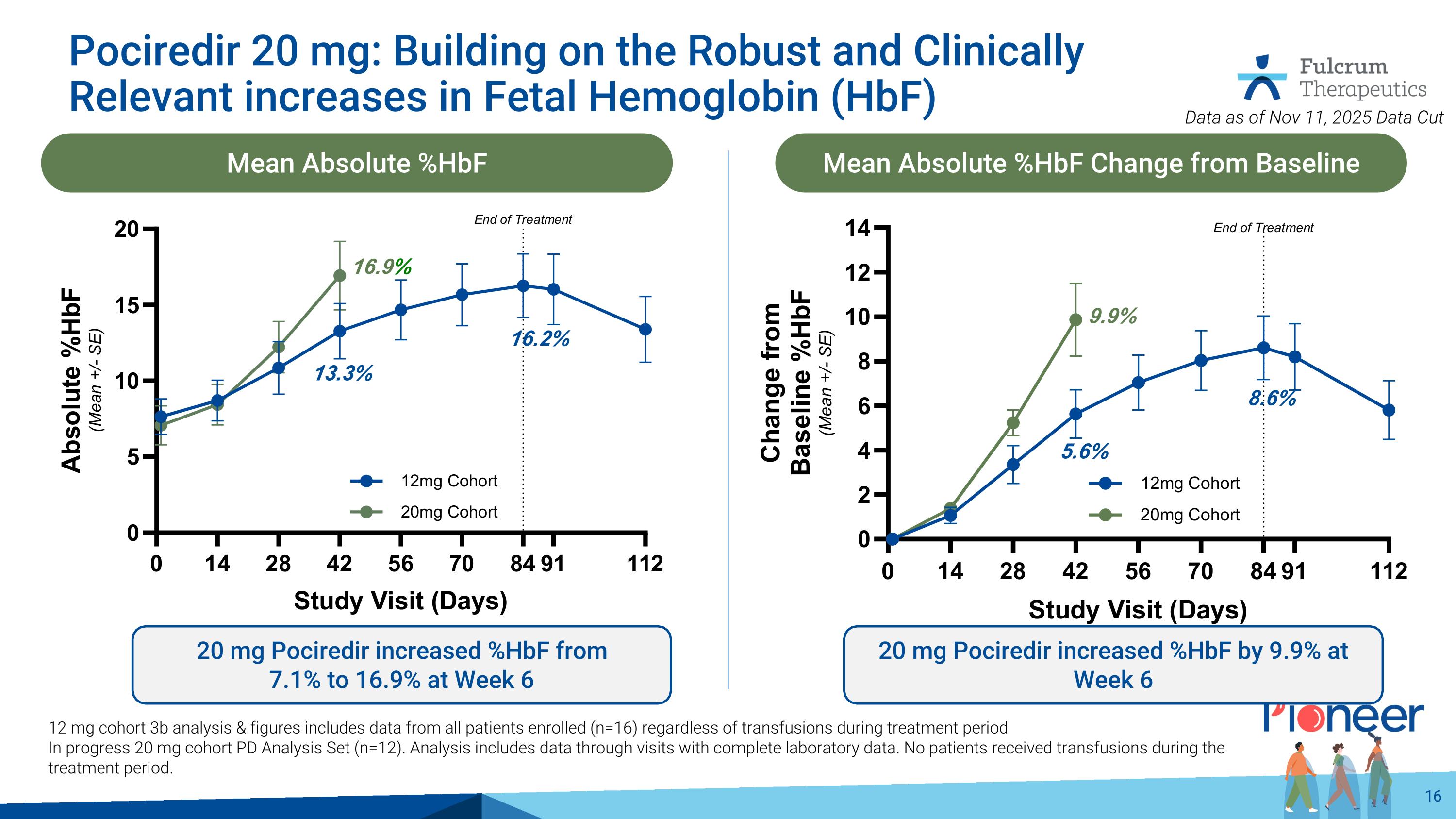
Pociredir 20 mg: Building on the Robust and Clinically Relevant increases in Fetal Hemoglobin (HbF) Mean Absolute %HbF Mean Absolute %HbF Change from Baseline 20 mg Pociredir increased %HbF from 7.1% to 16.9% at Week 6 20 mg Pociredir increased %HbF by 9.9% at Week 6 12 mg cohort 3b analysis & figures includes data from all patients enrolled (n=16) regardless of transfusions during treatment period In progress 20 mg cohort PD Analysis Set (n=12). Analysis includes data through visits with complete laboratory data. No patients received transfusions during the treatment period. 8.6% 9.9% 16.2% 16.9% 5.6% 13.3% Data as of Nov 11, 2025 Data Cut
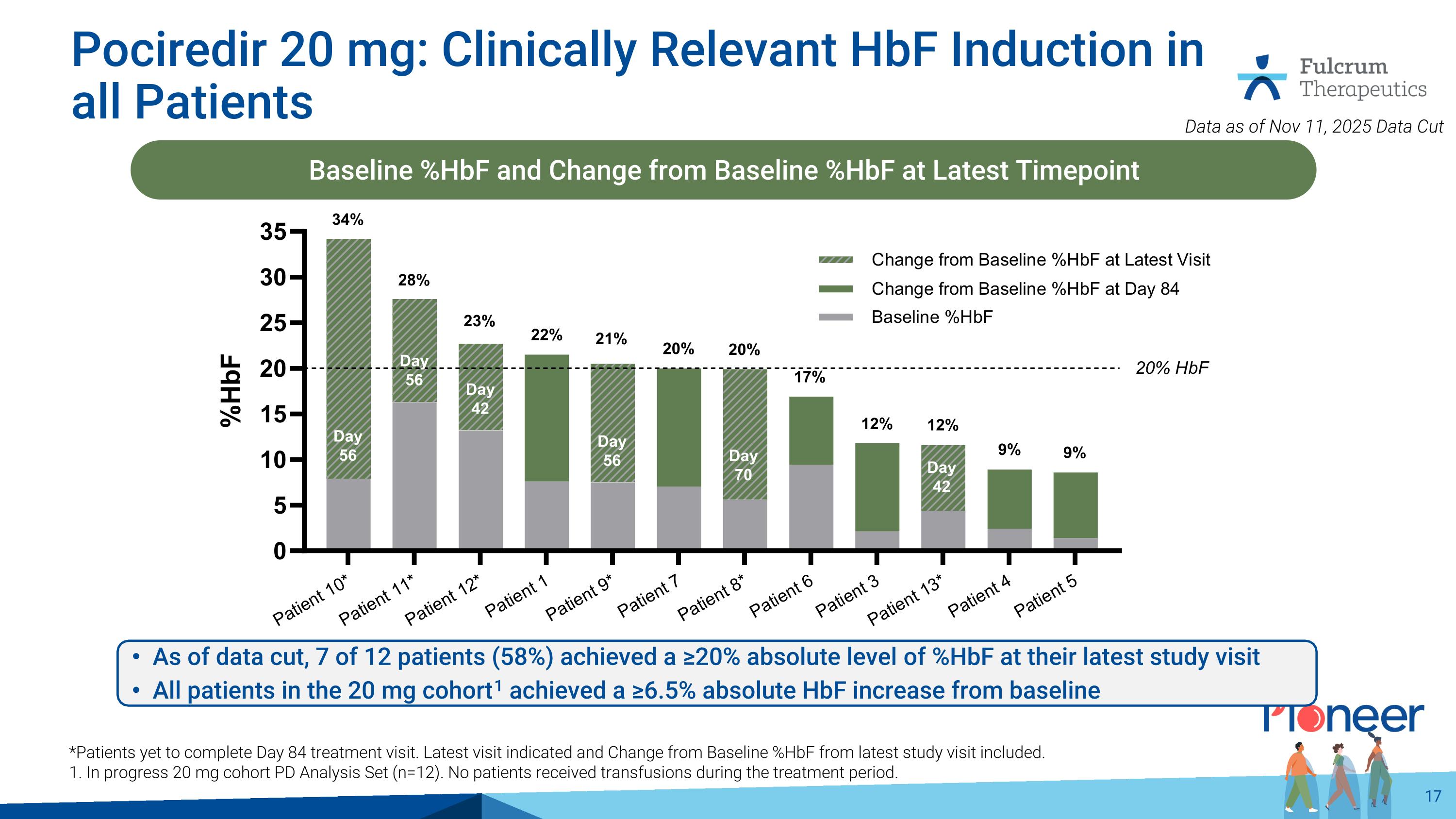
Pociredir 20 mg: Clinically Relevant HbF Induction in all Patients *Patients yet to complete Day 84 treatment visit. Latest visit indicated and Change from Baseline %HbF from latest study visit included. 1. In progress 20 mg cohort PD Analysis Set (n=12). No patients received transfusions during the treatment period. Baseline %HbF and Change from Baseline %HbF at Latest Timepoint 34% 28% 23% 22% 21% 20% 20% 17% 12% 9% 9% 12% As of data cut, 7 of 12 patients (58%) achieved a ≥20% absolute level of %HbF at their latest study visit All patients in the 20 mg cohort1 achieved a ≥6.5% absolute HbF increase from baseline Day 56 Day 56 Day 56 Day 42 Day 70 Day 42 Data as of Nov 11, 2025 Data Cut
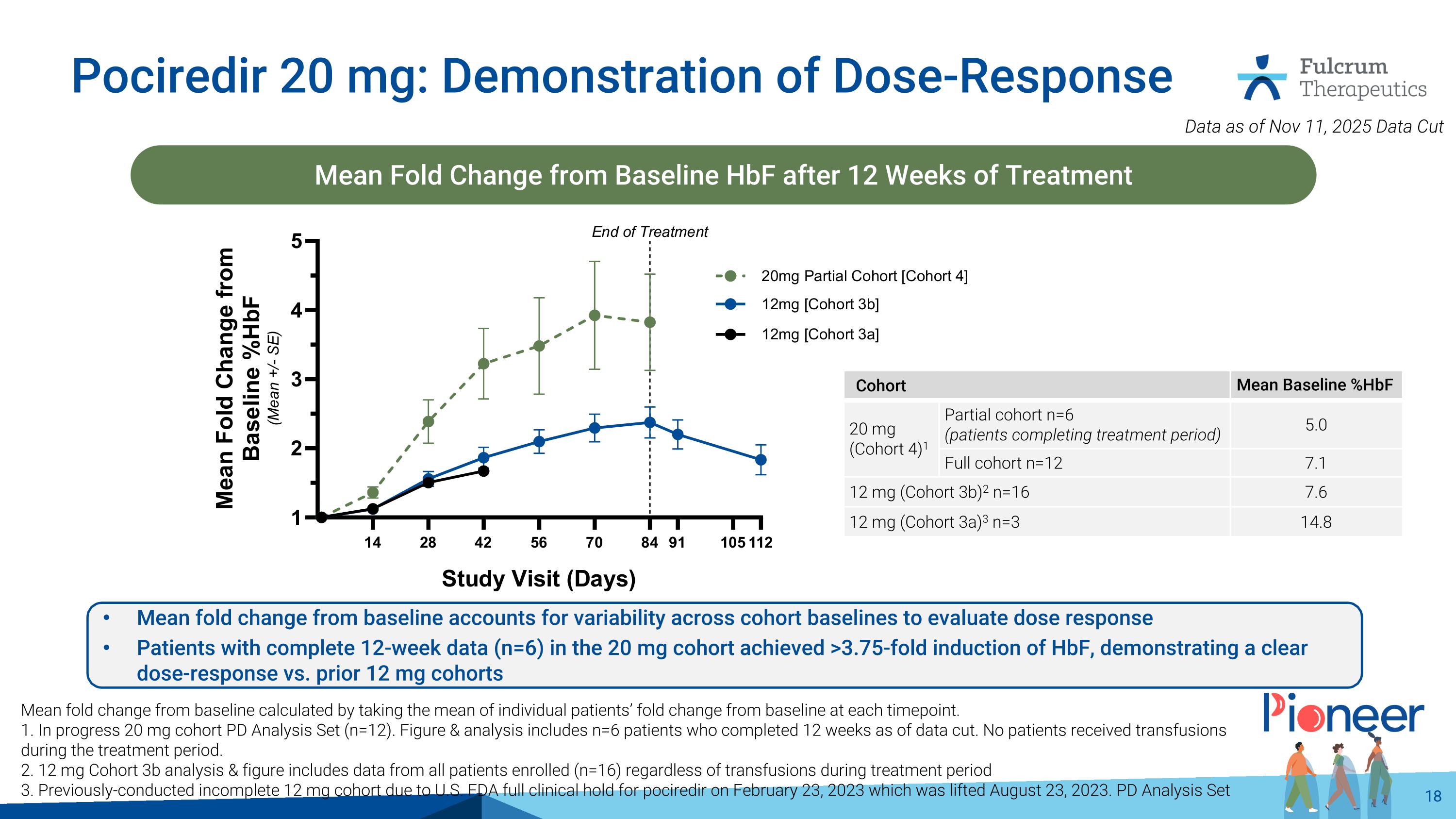
Pociredir 20 mg: Demonstration of Dose-Response Mean fold change from baseline calculated by taking the mean of individual patients’ fold change from baseline at each timepoint. 1. In progress 20 mg cohort PD Analysis Set (n=12). Figure & analysis includes n=6 patients who completed 12 weeks as of data cut. No patients received transfusions during the treatment period. 2. 12 mg Cohort 3b analysis & figure includes data from all patients enrolled (n=16) regardless of transfusions during treatment period 3. Previously-conducted incomplete 12 mg cohort due to U.S. FDA full clinical hold for pociredir on February 23, 2023 which was lifted August 23, 2023. PD Analysis Set Mean Fold Change from Baseline HbF after 12 Weeks of Treatment Mean fold change from baseline accounts for variability across cohort baselines to evaluate dose response Patients with complete 12-week data (n=6) in the 20 mg cohort achieved >3.75-fold induction of HbF, demonstrating a clear dose-response vs. prior 12 mg cohorts Data as of Nov 11, 2025 Data Cut Cohort Mean Baseline %HbF 20 mg (Cohort 4)1 Partial cohort n=6 (patients completing treatment period) 5.0 Full cohort n=12 7.1 12 mg (Cohort 3b)2 n=16 7.6 12 mg (Cohort 3a)3 n=3 14.8
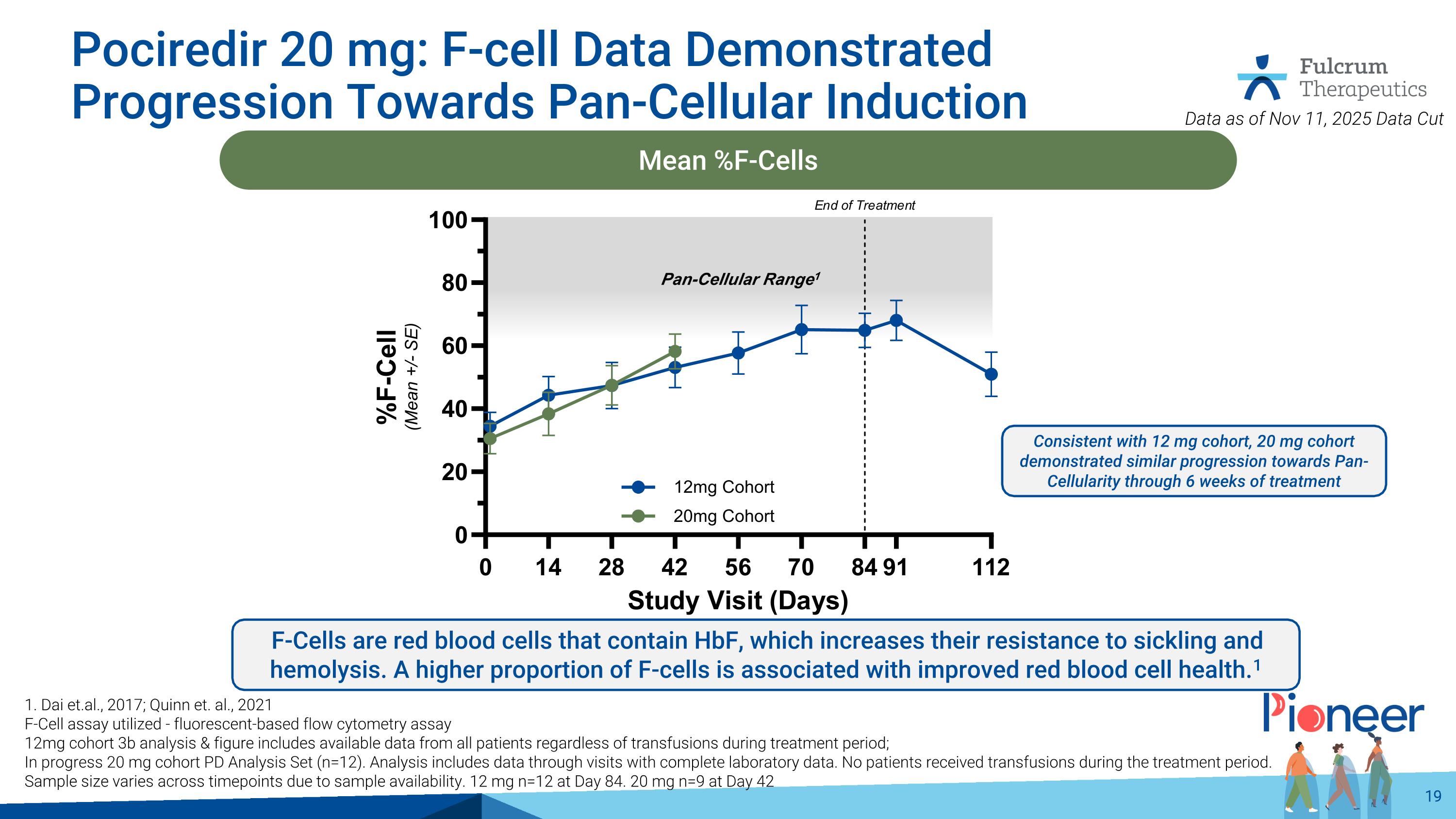
Pan-Cellular Range1 Pociredir 20 mg: F-cell Data Demonstrated Progression Towards Pan-Cellular Induction 1. Dai et.al., 2017; Quinn et. al., 2021 F-Cell assay utilized - fluorescent-based flow cytometry assay 12mg cohort 3b analysis & figure includes available data from all patients regardless of transfusions during treatment period; In progress 20 mg cohort PD Analysis Set (n=12). Analysis includes data through visits with complete laboratory data. No patients received transfusions during the treatment period. Sample size varies across timepoints due to sample availability. 12 mg n=12 at Day 84. 20 mg n=9 at Day 42 Mean %F-Cells Consistent with 12 mg cohort, 20 mg cohort demonstrated similar progression towards Pan-Cellularity through 6 weeks of treatment F-Cells are red blood cells that contain HbF, which increases their resistance to sickling and hemolysis. A higher proportion of F-cells is associated with improved red blood cell health.1 Data as of Nov 11, 2025 Data Cut
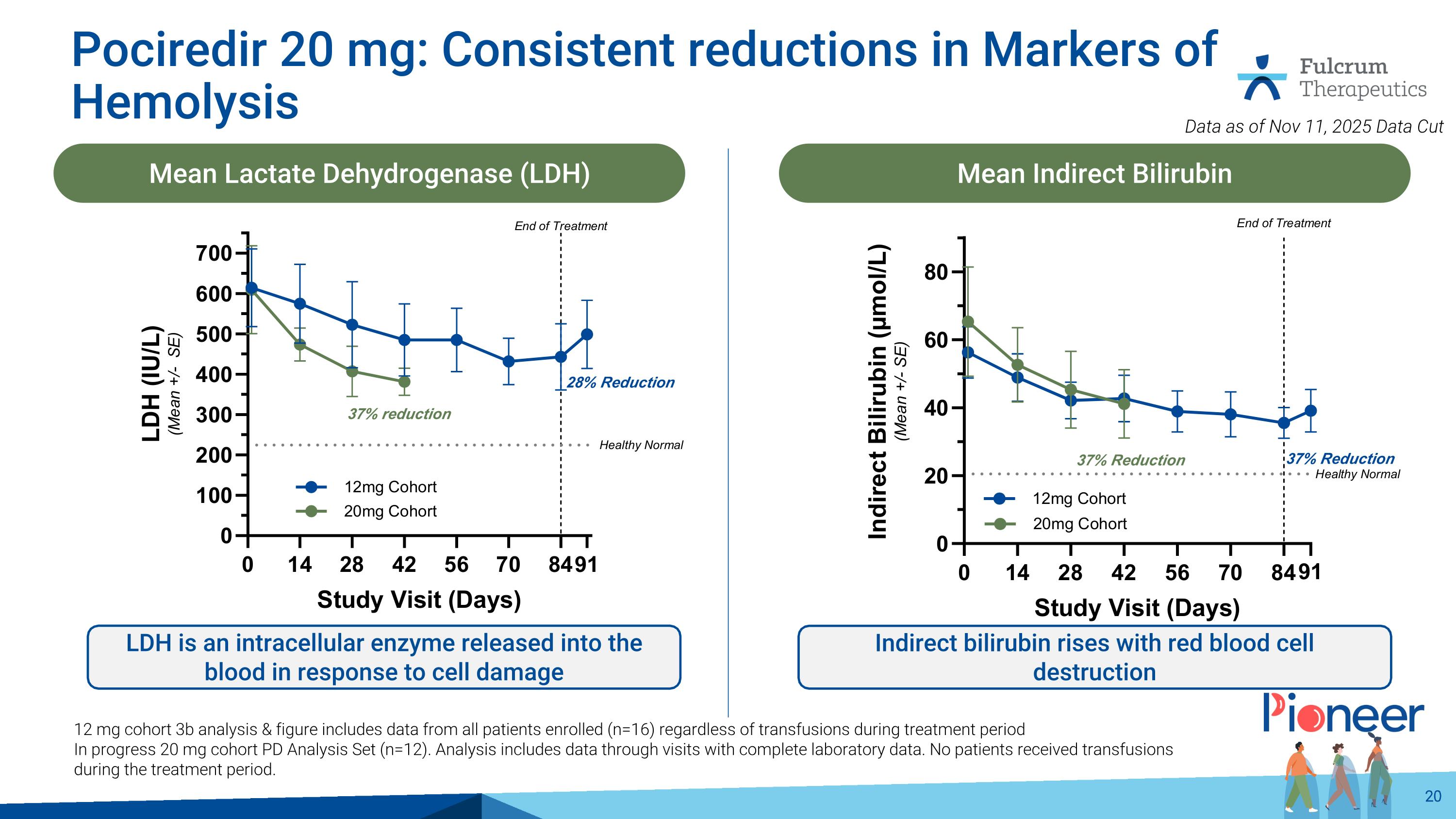
Pociredir 20 mg: Consistent reductions in Markers of Hemolysis Mean Indirect Bilirubin Mean Lactate Dehydrogenase (LDH) LDH is an intracellular enzyme released into the blood in response to cell damage Indirect bilirubin rises with red blood cell destruction 12 mg cohort 3b analysis & figure includes data from all patients enrolled (n=16) regardless of transfusions during treatment period In progress 20 mg cohort PD Analysis Set (n=12). Analysis includes data through visits with complete laboratory data. No patients received transfusions during the treatment period. 28% Reduction 37% reduction 37% Reduction 37% Reduction Data as of Nov 11, 2025 Data Cut
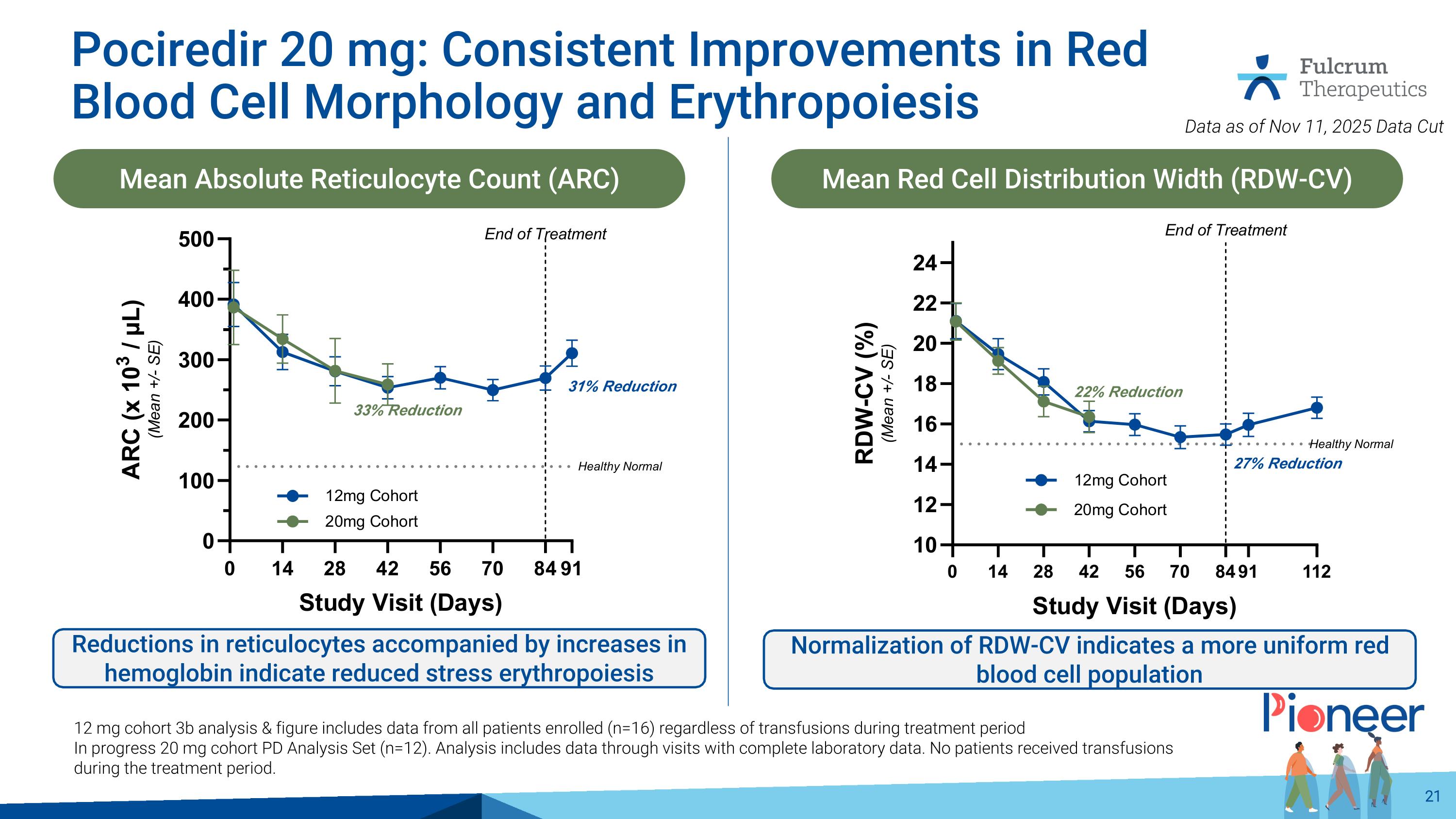
Pociredir 20 mg: Consistent Improvements in Red Blood Cell Morphology and Erythropoiesis Mean Absolute Reticulocyte Count (ARC) Mean Red Cell Distribution Width (RDW-CV) Reductions in reticulocytes accompanied by increases in hemoglobin indicate reduced stress erythropoiesis Normalization of RDW-CV indicates a more uniform red blood cell population 12 mg cohort 3b analysis & figure includes data from all patients enrolled (n=16) regardless of transfusions during treatment period In progress 20 mg cohort PD Analysis Set (n=12). Analysis includes data through visits with complete laboratory data. No patients received transfusions during the treatment period. 31% Reduction 33% Reduction 27% Reduction 22% Reduction Data as of Nov 11, 2025 Data Cut
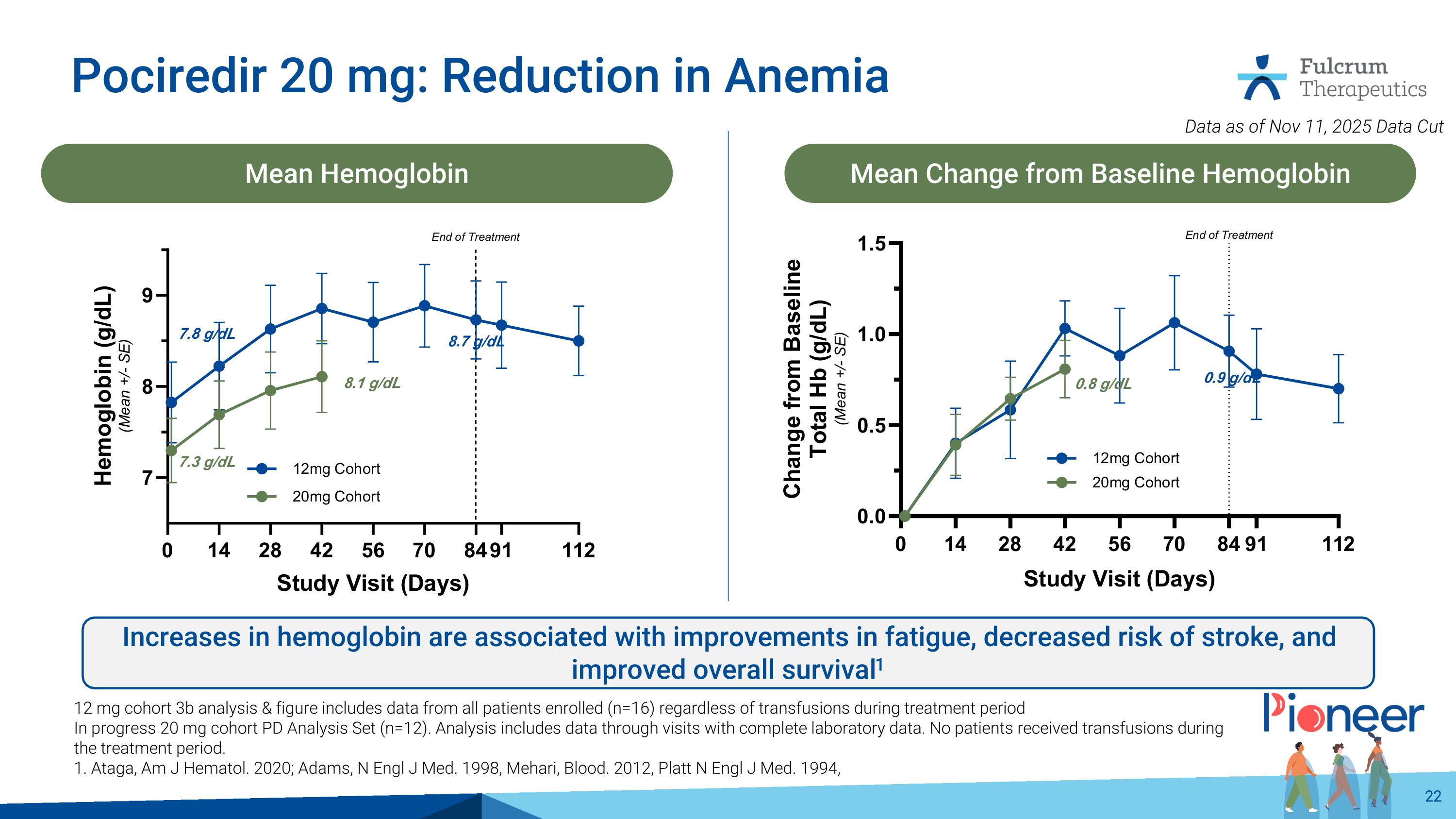
Pociredir 20 mg: Reduction in Anemia Mean Hemoglobin Mean Change from Baseline Hemoglobin Increases in hemoglobin are associated with improvements in fatigue, decreased risk of stroke, and improved overall survival1 12 mg cohort 3b analysis & figure includes data from all patients enrolled (n=16) regardless of transfusions during treatment period In progress 20 mg cohort PD Analysis Set (n=12). Analysis includes data through visits with complete laboratory data. No patients received transfusions during the treatment period. 1. Ataga, Am J Hematol. 2020; Adams, N Engl J Med. 1998, Mehari, Blood. 2012, Platt N Engl J Med. 1994, 7.8 g/dL 7.3 g/dL 8.7 g/dL 8.1 g/dL 0.9 g/dL 0.8 g/dL Data as of Nov 11, 2025 Data Cut
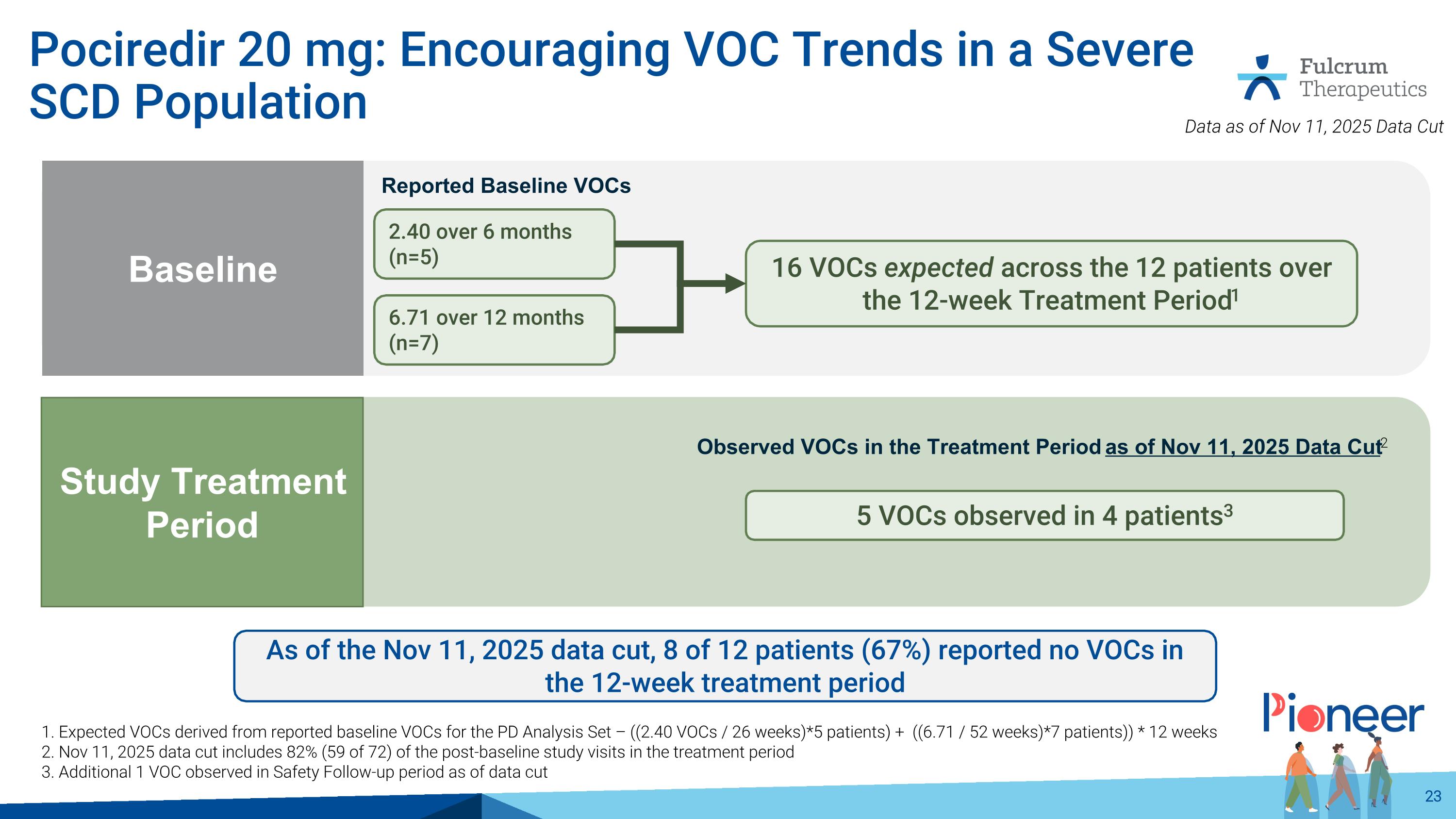
Pociredir 20 mg: Encouraging VOC Trends in a Severe SCD Population 1. Expected VOCs derived from reported baseline VOCs for the PD Analysis Set – ((2.40 VOCs / 26 weeks)*5 patients) + ((6.71 / 52 weeks)*7 patients)) * 12 weeks 2. Nov 11, 2025 data cut includes 82% (59 of 72) of the post-baseline study visits in the treatment period 3. Additional 1 VOC observed in Safety Follow-up period as of data cut As of the Nov 11, 2025 data cut, 8 of 12 patients (67%) reported no VOCs in the 12-week treatment period Reported Baseline VOCs 2.40 over 6 months (n=5) 6.71 over 12 months (n=7) 16 VOCs expected across the 12 patients over the 12-week Treatment Period1 Study Treatment Period Baseline 5 VOCs observed in 4 patients3 Observed VOCs in the Treatment Period as of Nov 11, 2025 Data Cut2 Data as of Nov 11, 2025 Data Cut
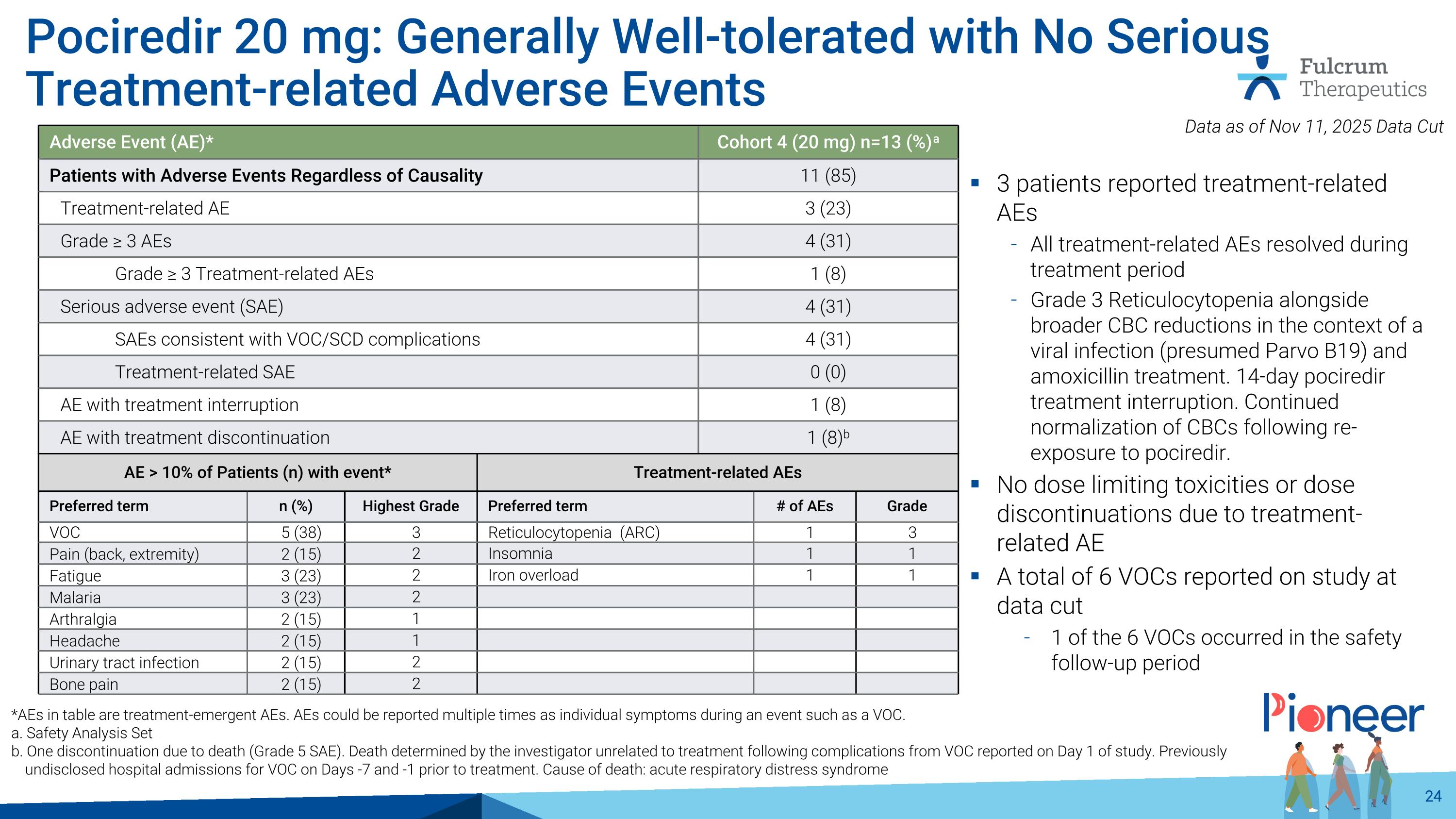
Pociredir 20 mg: Generally Well-tolerated with No Serious Treatment-related Adverse Events AE > 10% of Patients (n) with event* Treatment-related AEs Preferred term n (%) Highest Grade Preferred term # of AEs Grade VOC 5 (38) 3 Reticulocytopenia (ARC) 1 3 Pain (back, extremity) 2 (15) 2 Insomnia 1 1 Fatigue 3 (23) 2 Iron overload 1 1 Malaria 3 (23) 2 Arthralgia 2 (15) 1 Headache 2 (15) 1 Urinary tract infection 2 (15) 2 Bone pain 2 (15) 2 *AEs in table are treatment-emergent AEs. AEs could be reported multiple times as individual symptoms during an event such as a VOC. a. Safety Analysis Set b. One discontinuation due to death (Grade 5 SAE). Death determined by the investigator unrelated to treatment following complications from VOC reported on Day 1 of study. Previously undisclosed hospital admissions for VOC on Days -7 and -1 prior to treatment. Cause of death: acute respiratory distress syndrome 3 patients reported treatment-related AEs All treatment-related AEs resolved during treatment period Grade 3 Reticulocytopenia alongside broader CBC reductions in the context of a viral infection (presumed Parvo B19) and amoxicillin treatment. 14-day pociredir treatment interruption. Continued normalization of CBCs following re-exposure to pociredir. No dose limiting toxicities or dose discontinuations due to treatment-related AE A total of 6 VOCs reported on study at data cut 1 of the 6 VOCs occurred in the safety follow-up period Adverse Event (AE)* Cohort 4 (20 mg) n=13 (%)a Patients with Adverse Events Regardless of Causality 11 (85) Treatment-related AE 3 (23) Grade ≥ 3 AEs 4 (31) Grade ≥ 3 Treatment-related AEs 1 (8) Serious adverse event (SAE) 4 (31) SAEs consistent with VOC/SCD complications 4 (31) Treatment-related SAE 0 (0) AE with treatment interruption 1 (8) AE with treatment discontinuation 1 (8)b Data as of Nov 11, 2025 Data Cut
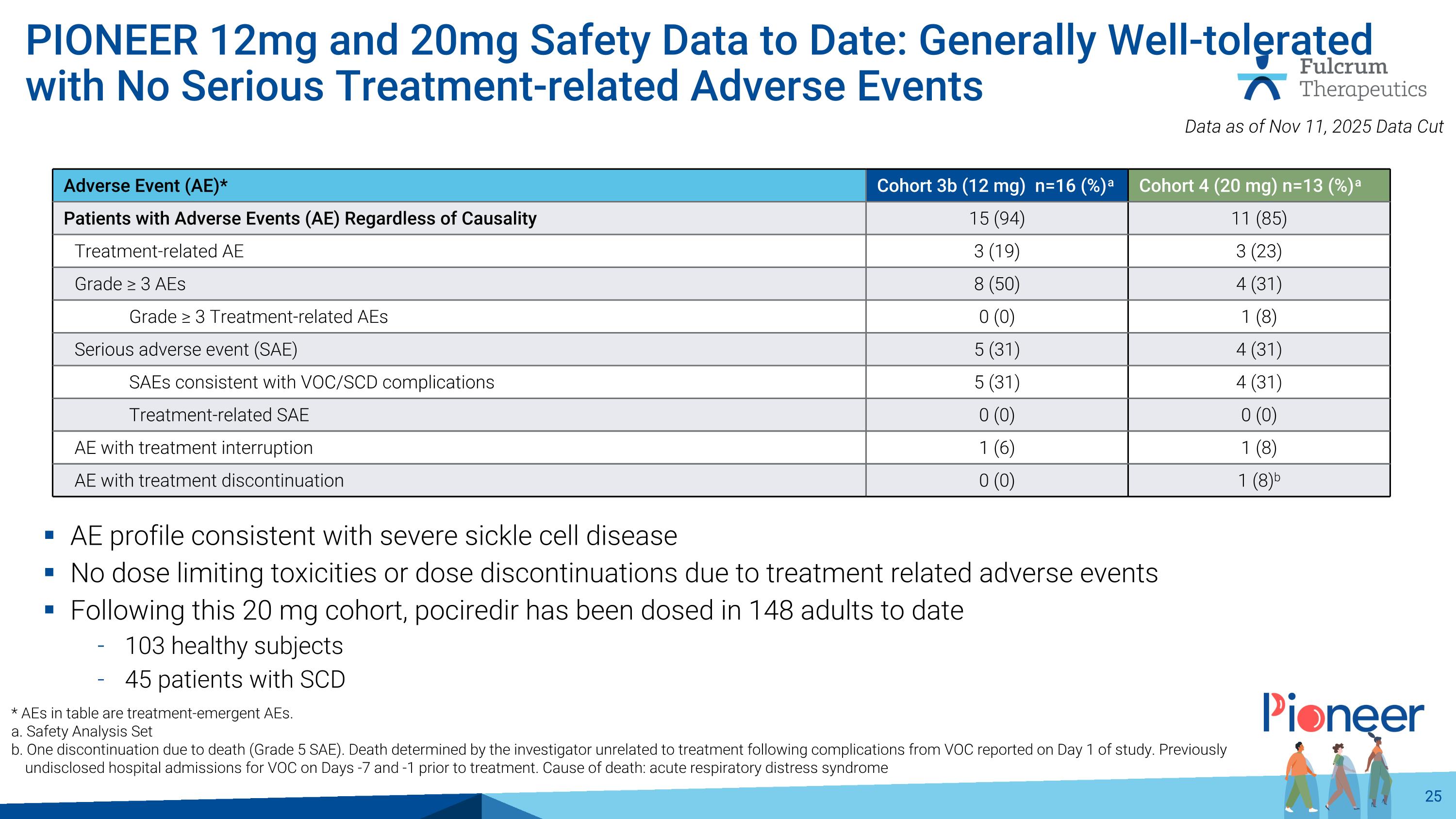
* AEs in table are treatment-emergent AEs. a. Safety Analysis Set b. One discontinuation due to death (Grade 5 SAE). Death determined by the investigator unrelated to treatment following complications from VOC reported on Day 1 of study. Previously undisclosed hospital admissions for VOC on Days -7 and -1 prior to treatment. Cause of death: acute respiratory distress syndrome AE profile consistent with severe sickle cell disease No dose limiting toxicities or dose discontinuations due to treatment related adverse events Following this 20 mg cohort, pociredir has been dosed in 148 adults to date 103 healthy subjects 45 patients with SCD PIONEER 12mg and 20mg Safety Data to Date: Generally Well-tolerated with No Serious Treatment-related Adverse Events Adverse Event (AE)* Cohort 3b (12 mg) n=16 (%)a Cohort 4 (20 mg) n=13 (%)a Patients with Adverse Events (AE) Regardless of Causality 15 (94) 11 (85) Treatment-related AE 3 (19) 3 (23) Grade ≥ 3 AEs 8 (50) 4 (31) Grade ≥ 3 Treatment-related AEs 0 (0) 1 (8) Serious adverse event (SAE) 5 (31) 4 (31) SAEs consistent with VOC/SCD complications 5 (31) 4 (31) Treatment-related SAE 0 (0) 0 (0) AE with treatment interruption 1 (6) 1 (8) AE with treatment discontinuation 0 (0) 1 (8)b Data as of Nov 11, 2025 Data Cut
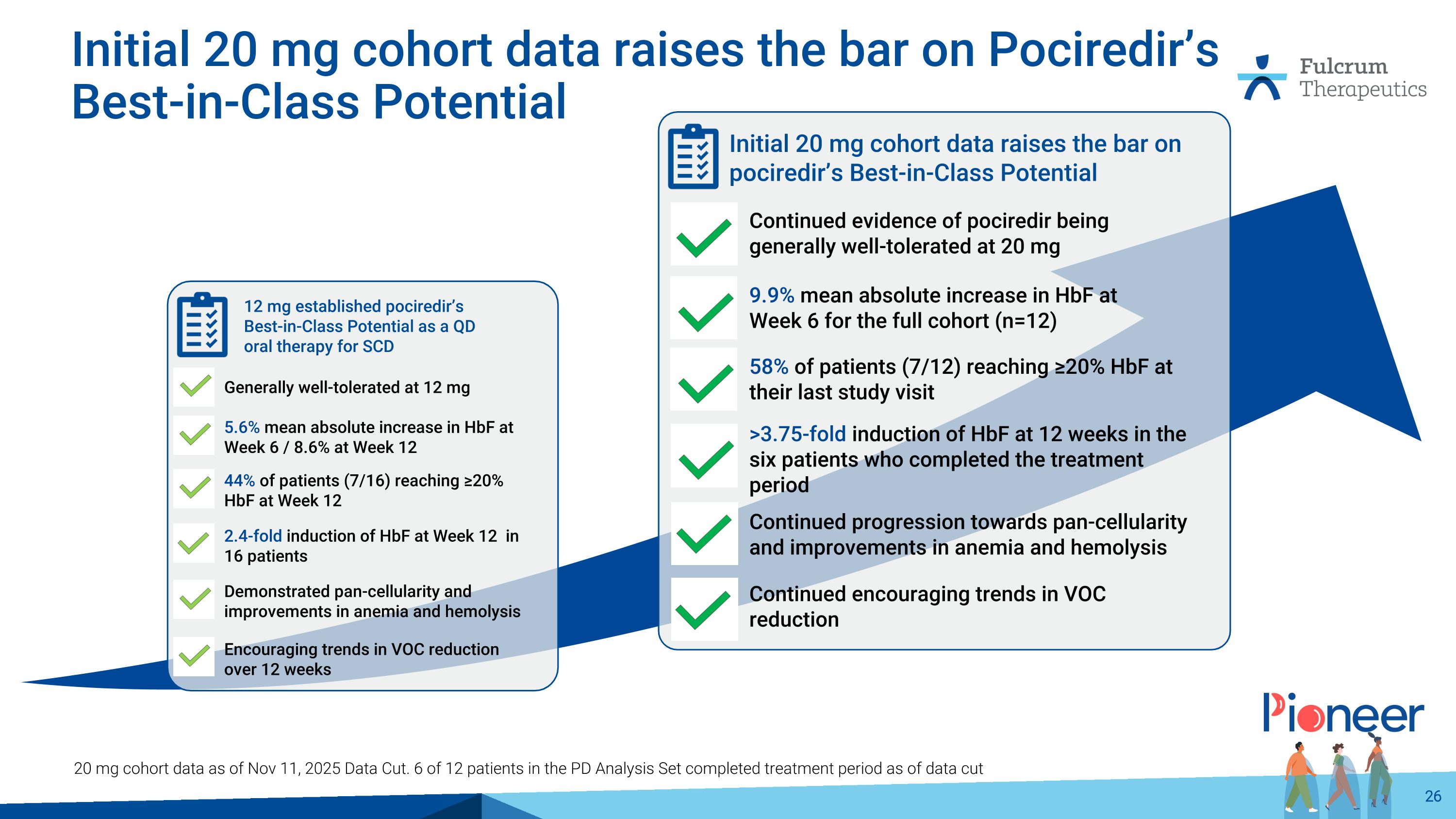
Initial 20 mg cohort data raises the bar on Pociredir’s Best-in-Class Potential 20 mg cohort data as of Nov 11, 2025 Data Cut. 6 of 12 patients in the PD Analysis Set completed treatment period as of data cut 2.4-fold induction of HbF at Week 12 in 16 patients 5.6% mean absolute increase in HbF at Week 6 / 8.6% at Week 12 Demonstrated pan-cellularity and improvements in anemia and hemolysis Encouraging trends in VOC reduction over 12 weeks Generally well-tolerated at 12 mg 12 mg established pociredir’s Best-in-Class Potential as a QD oral therapy for SCD 9.9% mean absolute increase in HbF at Week 6 for the full cohort (n=12) Continued evidence of pociredir being generally well-tolerated at 20 mg Initial 20 mg cohort data raises the bar on pociredir’s Best-in-Class Potential Continued progression towards pan-cellularity and improvements in anemia and hemolysis Continued encouraging trends in VOC reduction >3.75-fold induction of HbF at 12 weeks in the six patients who completed the treatment period 58% of patients (7/12) reaching ≥20% HbF at their last study visit 44% of patients (7/16) reaching ≥20% HbF at Week 12
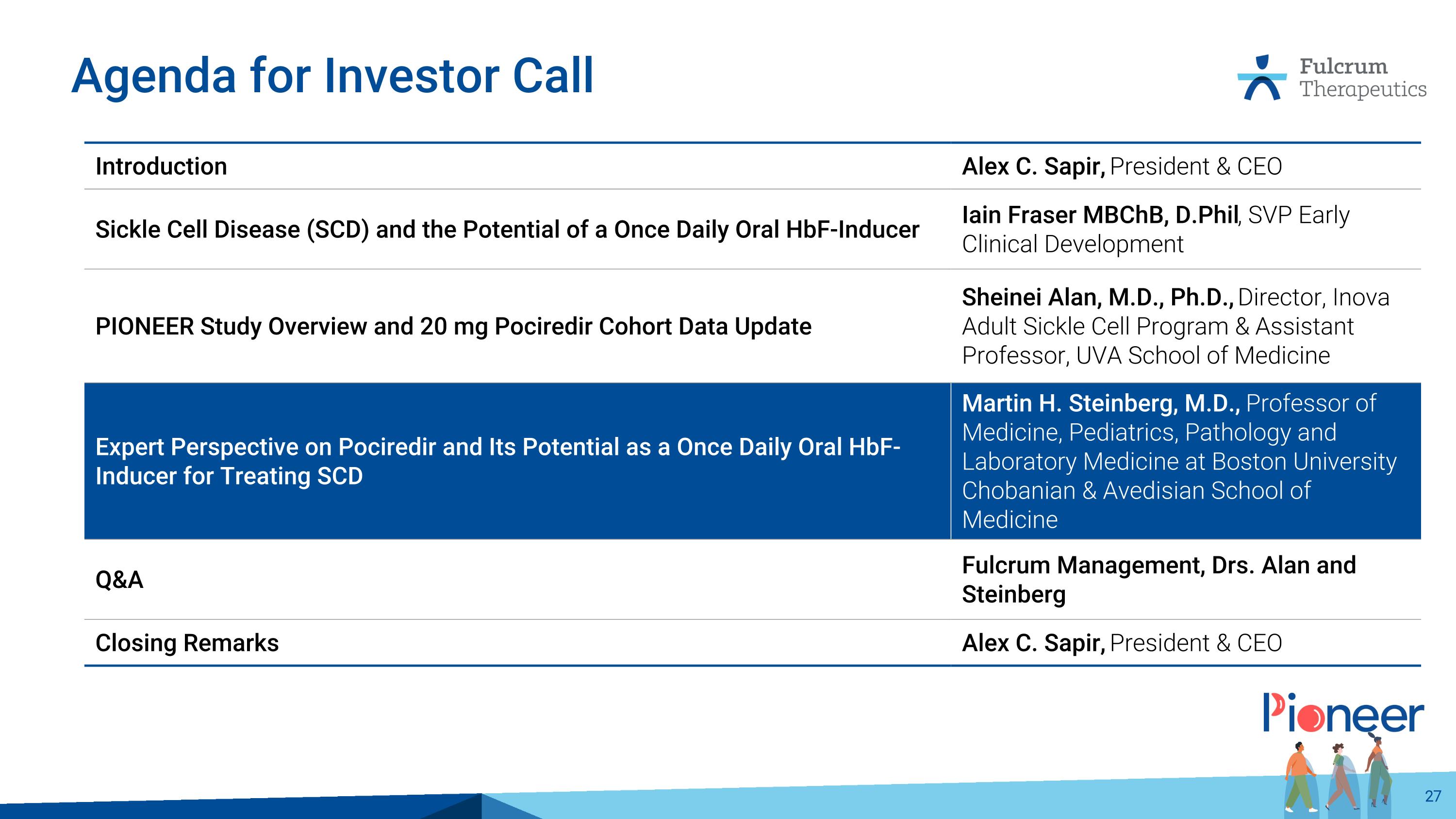
Agenda for Investor Call Introduction Alex C. Sapir, President & CEO Sickle Cell Disease (SCD) and the Potential of a Once Daily Oral HbF-Inducer Iain Fraser MBChB, D.Phil, SVP Early Clinical Development PIONEER Study Overview and 20 mg Pociredir Cohort Data Update Sheinei Alan, M.D., Ph.D., Director, Inova Adult Sickle Cell Program & Assistant Professor, UVA School of Medicine Expert Perspective on Pociredir and Its Potential as a Once Daily Oral HbF-Inducer for Treating SCD Martin H. Steinberg, M.D., Professor of Medicine, Pediatrics, Pathology and Laboratory Medicine at Boston University Chobanian & Avedisian School of Medicine Q&A Fulcrum Management, Drs. Alan and Steinberg Closing Remarks Alex C. Sapir, President & CEO
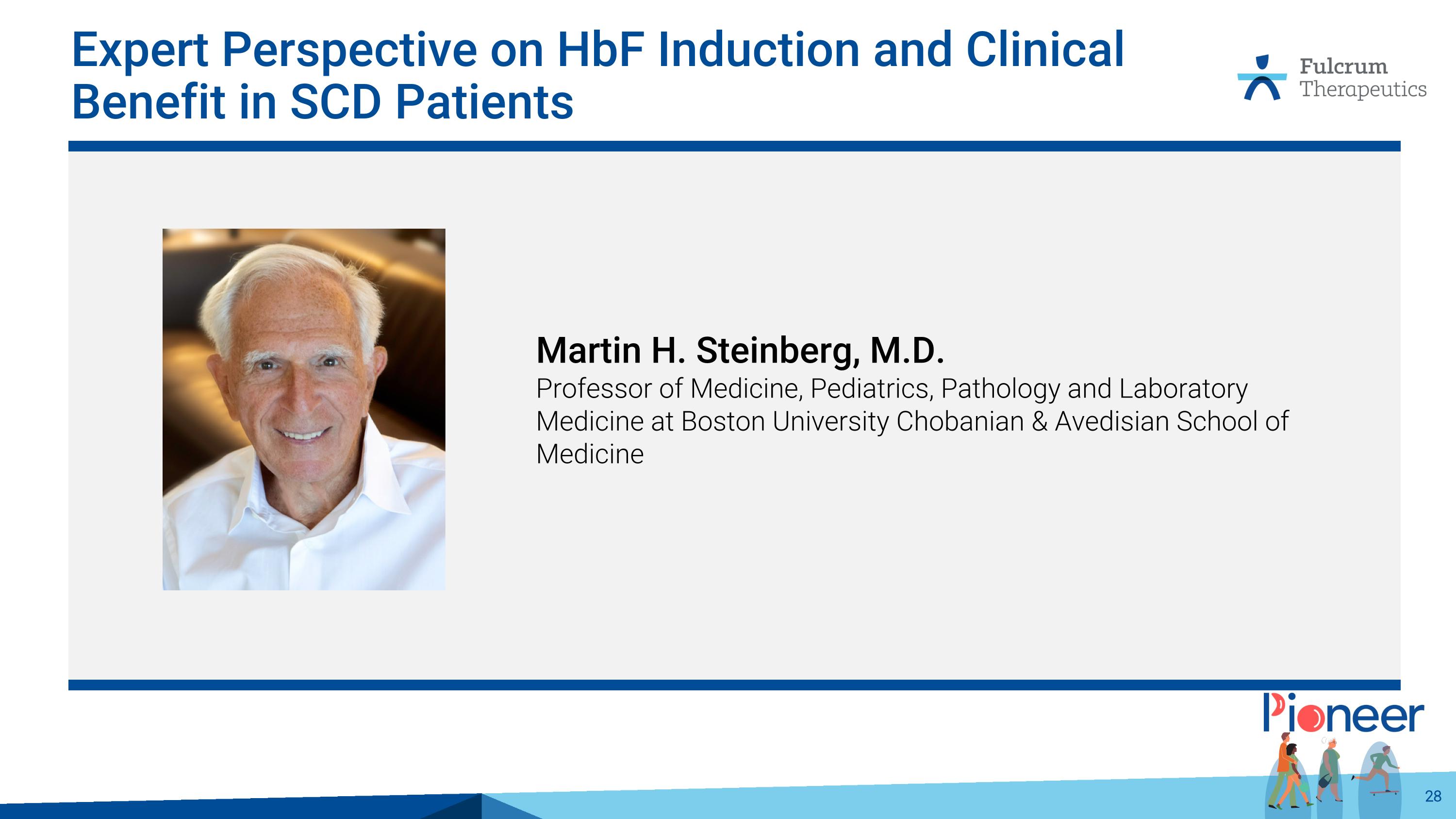
Expert Perspective on HbF Induction and Clinical Benefit in SCD Patients Martin H. Steinberg, M.D. Professor of Medicine, Pediatrics, Pathology and Laboratory Medicine at Boston University Chobanian & Avedisian School of Medicine
20 mg cohort advancing Pociredir to next program milestones Key Next Steps Complete 20 mg Cohort and share updated results in Q1 2026 Prepare for End of Phase 1 meeting with FDA anticipated in H1 2026 Begin enrolling PIONEER patients in Open Label Extension (OLE) study in H1 2026 Continue finalizing a planned registrational study (pending regulatory feedback) to commence in H2 2026

Q&A

We thank the patients, caregivers, investigators and their staff who participated in PIONEER