REGISTRATION
STATEMENT PURSUANT TO SECTION 12(b) OR (g) OF THE SECURITIES
EXCHANGE ACT OF 1934
OR
☒
ANNUAL REPORT
PURSUANT TO SECTION 13 OR 15(d) OF THE SECURITIES EXCHANGE ACT OF
1934
For the fiscal year ended December 31,
2020
OR
☐
TRANSITION
REPORT PURSUANT TO SECTION 13 OR 15(d) OF THE SECURITIES EXCHANGE
ACT OF 1934
For the transition period from
__________________ to __________________.
OR
☐
SHELL COMPANY
REPORT PURSUANT TO SECTION 13 OR 15(d) OF THE SECURITIES EXCHANGE
ACT OF 1934
Date of event requiring this shell company
report __________________.
Commission file number
001-38376
Central Puerto S.A.
(Exact name of
Registrant as specified in its charter)
Port Central S.A.
(Translation of
Registrant’s name into English)
REPUBLIC OF ARGENTINA
(Jurisdiction of incorporation or
organization)
Avenida Thomas Edison 2701
C1104BAB Buenos Aires
Republic of Argentina
(Address of
principal executive offices)
Enrique Terraneo
Avenida Thomas Edison 2701
C1104BAB Buenos Aires
Republic of Argentina.
Facsimile: +54 (11)
4317-5900
Email: inversores@centralpuerto.com
(Name, Telephone, E-mail and/or Facsimile
number and Address of Company Contact Person)
Securities registered or to be registered
pursuant to Section 12(b) of the Act.
Title of each class
Trading Symbol
Name of each exchange on which registered
American Depositary Shares, each representing 10 common shares of
Central Puerto S.A.*
CEPU
New York Stock Exchange*
*
Not for trading, but only in connection with the
registration of American Depositary Shares pursuant to the
requirements of the New York Stock Exchange.
i
Securities
registered or to be registered pursuant to Section 12(g) of
the Act.
None
Securities for
which there is a reporting obligation pursuant to
Section 15(d) of the Act.
None
Indicate the number
of outstanding shares of each of the issuer’s classes of
capital or common stock as of the close of the period covered by
the annual report.
Title of each class
Outstanding at December 31, 2020
Common shares, nominal value Ps.1.00 per share
1,514,022,256
Indicate by check
mark if the registrant is a well-known seasoned issuer, as defined
in Rule 405 of the Securities Act.
Yes ☐
No ☒
If this report is
an annual or transition report, indicate by check mark if the
registrant is not required to file reports pursuant to Section 13
or 15(d) of the Securities Exchange Act of 1934.
Yes
☐
No ☒
Indicate by check
mark whether the registrant (1) has filed all reports required
to be filed by Section 13 or 15(d) of the Securities Exchange
Act of 1934 during the preceding 12 months (or for such
shorter period that the registrant was required to file such
reports), and (2) has been subject to such filing requirements
for the past 90 days.
Yes
☒
No ☐
Indicate by check
mark whether the registrant has submitted electronically every
Interactive Data File required to be submitted and posted pursuant
to Rule 405 of Regulation S-T (Sec.232.405 of this
chapter) during the preceding 12 months (or for such shorter
period that the registrant was required to submit and post such
files).
Yes
☒
No ☐
Indicate by check
mark whether the registrant is a large accelerated filer, an
accelerated filer, a non-accelerated filer, or an emerging growth
company. See definition of “large accelerated filer,”
“accelerated filer,” and “emerging growth
company” in Rule 12b-2 of the Exchange Act.
Large accelerated
filer
☐
Accelerated filer
☒
Non-accelerated filer
☐
Emerging growth company ☐
If an emerging
growth company that prepares its financial statements in accordance
with U.S. GAAP, indicate by check mark if the registrant has
elected not to use the extended transition period for complying
with any new or revised financial accounting standards†
provided pursuant to Section 13(a) of the Exchange Act.
☐
† The term
“new or revised financial accounting standard” refers
to any update issued by the Financial Accounting Standards Board to
its Accounting Standards Codification after April 5,
2012.
Indicate by check
mark whether the registrant has filed a report on and attestation
to its management’s assessment of the effectiveness of its
internal control over financial reporting under Section 404(b) of
the Sarbanes-Oxley Act (Sec. 15 U.S.C. 7262(b)) by the registered
public accounting firm that prepared or issued its audit report.
☒
Indicate by check
mark which basis of accounting the registrant has used to prepare
the financial statements included in this filing:
U.S. GAAP
☐
International Financial Reporting Standards as
issued Other
☐
by the
International Accounting Standards Board ☒
If
“Other” has been checked in response to the previous
question, indicate by check mark which financial statement item the
registrant has elected to follow.
Item 17
☐
Item 18 ☐
If this is an
annual report, indicate by check mark whether the registrant is a
shell company (as defined in Rule 12b-2 of the Exchange
Act).
Yes
☐
No ☒
(APPLICABLE ONLY TO
ISSUERS INVOLVED IN BANKRUPTCY PROCEEDINGS DURING THE PAST FIVE
YEARS)
Indicate by check
mark whether the registrant has filed all documents and reports
required to be filed by Sections 12, 13 or 15(d) of the Securities
Exchange Act of 1934 subsequent to the distribution of securities
under a plan confirmed by a court.
In this annual
report, except where otherwise indicated or where the context
otherwise requires:
●
“Argentine Corporate Law” refers to
Law No. 19,550, as amended;
●
“Authorized Generators” refers to
electricity generators that do not have contracts in the term
market in any of its methods;
●
“BCRA” refers to the Argentine
Central Bank.
●
“BYMA” refers to Bolsas y Mercados Argentinos
S.A.;
●
“CAMMESA” refers to Compañía Administradora del Mercado
Mayorista Eléctrico Sociedad Anónima. See
“Item 4.B, Business Overview— The Argentine Electric
Power Sector—General Overview of Legal
Framework—CAMMESA;”
●
“CNV” refers to the Comisión Nacional de Valores, the
Argentine Securities Commission;
●
“COD” refers to Commercial Operation
Date, the day in which a generation unit is authorized by CAMMESA
(in Spanish, “Habilitación Comercial”) to sell
electric energy through the grid under the applicable commercial
conditions;
●
“CTM” refers to Centrales Térmicas Mendoza
S.A.;
●
“CVO” refers to the thermal plant
Central Vuelta de
Obligado;
●
“CVO Agreement” refers to the
Agreement for Project Management and Operation, Increase of Thermal
Generation Availability and Adaptation of Remuneration for
Generation 2008-2011” executed on November 25, 2010 among the
Secretariat of Energy and Central Puerto along with other electric
power generators;
●
“CVOSA” refers to Central Vuelta de Obligado
S.A.;
●
“Ecogas” refers collectively to
Distribuidora de Gas Cuyana
(“DGCU”) and Distribuidora de Gas del Centro
(“DGCE”);
●
“Energía Base” refers to the
regulatory framework established under Resolution SE No. 95/13, as
amended, and, from February 2017 to February 2019, regulated by
Resolution SEE No. 19/17, from March 2019 to January 2020,
regulated by Resolution No. 1/19 of the Secretary of Renewable
Resources and Electric Market of the National Ministry of Economy
and since February 2020 regulated by Resolution No. 31/20 of the
Secretary of Energy. See “Item 4.B, Business
Overview—The Argentine Electric Power
Sector;”
●
“Energía Plus” refers to the
regulatory framework established under Resolution SE No. 1281/06,
as amended. See “Item 4.B, Business Overview—The
Argentine Electric Power Sector—Structure of the
Industry—Energía Plus;”
●
“FODER” refers to Fondo para el Desarrollo de Energías
Renovables (Fund for the Development of Renewable Energies).
See “Item 4.B, Business Overview—The Argentine Electric
Power Sector —Structure of the Industry—Renewable
Energy Program”
●
“FONINVEMEM” or “FONI”
refers to the Fondo para
Inversiones Necesarias que Permitan Incrementar la Oferta de
Energía Eléctrica en el Mercado Eléctrico
Mayorista (the Fund for Investments Required to Increase the
Electric Power Supply) and similar programs, including the CVO
Agreement. See “Item 4.B, Business Overview—The
Argentine Electric Power Sector—Structure of the
Industry—The FONINVEMEM and Similar
Programs;”
●
“FONINVEMEM Plants” refers to the
plants José de San Martín, Manuel Belgrano and Vuelta de
Obligado;
●
“FX Market” refers to the foreign
exchange market;
●
“HPDA” refers Hidroeléctrica Piedra del Águila
S.A., the corporation that previously owned the Piedra del
Águila plant;
●
“IEASA” refers to Integración Energética Argentina
S.A.;
●
“IGCE” refers to Inversora de Gas del Centro
S.A.;
●
“IGCU” refers to Inversora de Gas Cuyana
S.A.;
●
“La Plata Plant Sale” refers to the
sale of the La Plata plant to YPF EE, effective as of January 5,
2018. For further information on the La Plata Plant Sale, see
“Item 4.A. History and development of the Company—La
Plata Plant Sale;”
●
“La Plata Plant Sale Effective Date”
is January 5, 2018. For further information on the La Plata Plant
Sale Effective Date, see “Item 4.A. History and development
of the Company—La Plata Plant Sale;”
●
“LPC” refers to La Plata Cogeneración S.A., the
corporation that owned the La Plata plant prior to us;
●
“LVFVD” refers to liquidaciones de venta con fecha de
vencimientos a definir, or receivables from CAMMESA without
a fixed due date. See “Item 4.B, Business
Overview—FONINVEMEM and Similar Programs;”
●
“MATER” refers to Term Market for
Renewable Energy Resolution No. 281-E/17;
●
“PPA” refers to Power Purchase
Agreements, power capacity and energy supply agreements for a
defined period of time or energy quantity;
●
“Resolution SRRyME No. 1/19” refers
to the resolution No. 1/19 issued on March 1, 2019 by the Secretary
of Renewable Resources and Electric Markey of the National Ministry
of Economy by which the Secretary modified the remuneration scheme
(for capacity and energy) applicable to Authorized Generators
(electricity generators which do not have contracts in the term
market in any of its modalities) acting in the WEM;
●
“Resolution 31/20” or “Res.
31/20” refers to the resolution No. 31/20 issued on February
27, 2020 by the Secretary of Energy of the National Ministry of
Production Development by which the Secretary modified the
remuneration scheme (for capacity and energy) applicable from
February 1, 2020, to Authorized Generators (electricity generators
which do not have contracts in the term market in any of its
modalities) acting in the WEM;
v
●
“SADI” refers to the Argentine
Interconnection System;
●
“sales under contracts” refers
collectively to (i) term market sales of energy under contracts
with private and public sector counterparties, (ii) sales of energy
sold under the Energía Plus and (iii) sales of energy under
the RenovAr Program;
●
the “spot market” refers to energy
sold by generators to the WEM and remunerated by CAMMESA pursuant
to the framework in place prior to the Energía Base. See
“Item 4.B, Business Overview—The Argentine Electric
Power Sector—Structure of the Industry—Electricity
Dispatch and Spot Market Pricing prior to Resolution SE No.
95/13;”
●
“YPF” refers to YPF S.A.,
Argentina’s state-owned oil and gas company;
●
“YPF EE” refers to YPF Energía
Eléctrica S.A., a subsidiary of YPF; and
●
“WEM” refers to the Argentine
Mercado Eléctrico
Mayorista, the wholesale electric power market. See
“Item 4.B, Business Overview—The Argentine Electric
Power Sector—General Overview of Legal
Framework—CAMMESA.”
PRESENTATION
OF FINANCIAL AND OTHER INFORMATION
Financial
Statements
We maintain our
financial books and records and publish our consolidated financial
statements (as defined below) in Argentine pesos, which is our
functional currency. This annual report contains our audited
consolidated financial statements as of December 31, 2020 and 2019
and for each of the years ended December 31, 2020, 2019, and 2018
(our “Audited Consolidated Financial Statements”),
which were approved by our board of directors (our “Board of
Directors”) on April 26, 2021.
We prepare our
Audited Consolidated Financial Statements in Argentine pesos and in
conformity with the IFRS as issued by the IASB.
In accordance with
IAS 29, the restatement of the financial statements is necessary
when the functional currency of an entity is the currency of a
hyperinflationary economy. To define a hyperinflationary state, IAS
29 provides a series of non-exclusive guidelines that consist of
(i) analyzing the behavior of the population, prices, interest
rates and wages before the evolution of price indexes and the loss
of the currency’s purchasing power, and (ii) as a
quantitative characteristic, verifying if the three-year cumulative
inflation rate approaches or exceeds 100%. Due to macroeconomic
factors, the triennial inflation was above that figure in 2018 and
Argentina has been considered hyperinflationary since July 1, 2018.
Such conditions remained during 2019 and 2020. See “Risks
Relating to Argentina—As of July 1st, 2018, the
Argentine Peso qualifies as a currency of a hyperinflationary
economy and we are required to restate our historical financial
statements to apply inflationary adjustments, which could adversely
affect our results of operations and financial condition and those
of our Argentine subsidiaries” and “—If the
current levels of inflation do not decrease, the Argentine economy
could be adversely affected.”
Therefore, our
Audited Consolidated Financial Statements included herein,
including the figures for the previous periods (this fact not
affecting the decisions taken on the financial information for such
periods), and, unless otherwise stated, the financial information
included elsewhere in this annual report, were restated to consider
the changes in the general purchasing power of the functional
currency of the Company (Argentine peso) pursuant to IAS 29 and
General Resolution no. 777/2018 of the CNV. Consequently, the
consolidated financial statements are stated in the current
measurement unit as of December 31, 2020. The information included
in our Audited Consolidated Financial Statements is not comparable
to the consolidated financial statements previously published by
us. For further information, see “Item 5.A. Operating
Results—Factors Affecting our Results of
Operations—Inflation” and Note 2.1.2 to our Audited
Consolidated Financial Statements.
We remind investors
that we are required to file financial statements and other
periodic reports with the CNV because we are a public company in
Argentina. Investors can access our historical financial statements
published in Spanish on the CNV’s website at www.cnv.gob.ar.
The information found on the CNV’s website is not a part of
this annual report. Investors are cautioned not to place undue
reliance on our financial statements not included in this annual
report.
Currency
and Rounding
All references
herein to “pesos,” “Argentine pesos” or
“Ps.” are to Argentine pesos, the legal currency of
Argentina. All references to “U.S. dollars,”
“dollars” or “US$” are to U.S. dollars. All
references to “SEK$” are to Swedish krona. A
“billion” is a thousand million.
Solely for the
convenience of the reader, we have translated certain amounts
included in this annual report from pesos into U.S. dollars, unless
otherwise indicated, using the seller rate for U.S. dollars quoted
by the Banco de la Nación Argentina for wire transfers
(divisas) as of December
31, 2020, of Ps.84.15 per US$1.00. The Federal Reserve Bank of New
York does not report a noon buying rate for pesos. The U.S. dollar
equivalent information presented in this annual report is provided
solely for the convenience of the reader and should not be
construed to represent that the peso amounts have been, or could
have been or could be, converted into U.S. dollars at such rates or
at any other rate. See “Item 3.A. Selected Financial
Data—Exchange Rates.”
6
Certain figures
included in this annual report and in the Audited Consolidated
Financial Statements contained herein have been rounded for ease of
presentation. Percentage figures included in this annual report
have in some cases been calculated on the basis of such figures
prior to rounding. For this reason, certain percentage amounts in
this annual report may vary from those obtained by performing the
same calculations using the figures in this annual report and in
the consolidated financial statements contained herein. Certain
other amounts that appear in this annual report may not sum due to
rounding.
Market
Share and Other Information
The information set
forth in this annual report with respect to the market environment,
market developments, growth rates and trends in the markets in
which we operate is based on information published by the Argentine
federal and local governments through the Instituto Nacional de Estadísiticas y
Censos (the National Statistics and Census Institute, or
“INDEC”), the Ministry of Interior, the Ministry of
Energy, the Banco Central de la
República Argentina (the “Argentine Central
Bank”, or “Central Bank”) CAMMESA, the
Dirección General de
Estadística y Censos de la Ciudad de Buenos Aires
(General Directorate of Statistics and Census of the City of Buenos
Aires) and the Dirección
Provincial de Estadística y Censos de la Provincia de San
Luis (Provincial Directorate of Statistics and Census of the
Province of San Luis), as well as on independent third-party data,
statistical information and reports produced by unaffiliated
entities, as well as on our own internal estimates. In addition,
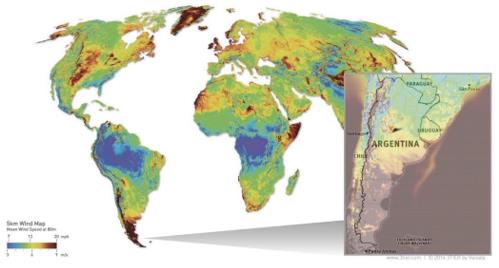
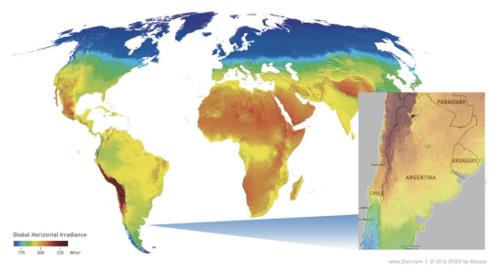
this annual report contains information from Vaisala, Inc.
(“Vaisala - 3 Tier”), a company that develops,
manufactures and markets products and services for environmental
and industrial measurement.
This annual report
also contains estimates that we have made based on third-party
market data. Market studies are frequently based on information and
assumptions that may not be exact or appropriate.
Although we have no
reason to believe any of this information or these sources are
inaccurate in any material respect, we have not verified the
figures, market data or other information on which third parties
have based their studies, nor have we confirmed that such third
parties have verified the external sources on which such estimates
are based. Therefore, we do not guarantee, nor do we assume
responsibility for, the accuracy of the information from
third-party studies presented in this annual report.
This annual report
also contains estimates of market data and information derived
therefrom which cannot be gathered from publications by market
research institutions or any other independent sources. Such
information is based on our internal estimates. In many cases there
is no publicly available information on such market data, for
example from industry associations, public authorities or other
organizations and institutions. We believe that these internal
estimates of market data and information derived therefrom are
helpful in order to give investors a better understanding of the
industry in which we operate as well as our position within this
industry. Although we believe that our internal market observations
are reliable, our estimates are not reviewed or verified by any
external sources. These may deviate from estimates made by our
competitors or future statistics provided by market research
institutes or other independent sources. We cannot assure you that
our estimates or the assumptions are accurate or correctly reflect
the state and development of, or our position in, the
industry.
FORWARD-LOOKING
STATEMENTS
This annual report
contains estimates and forward-looking statements, principally in
“Item 3.D. Risk Factors,” “Item 4.B. Business
Overview” and “Item 5. Operating and Financial Review
and Prospects.”
Our estimates and
forward-looking statements are mainly based on our current beliefs,
expectations and estimates of future courses of action, events and
trends that affect or may affect our business and results of
operations. Although we believe that these estimates and
forward-looking statements are based upon reasonable assumptions,
they are subject to several risks and uncertainties and are made in
light of information currently available to us.
Many important
factors, in addition to those discussed elsewhere in this annual
report, could cause our actual results to differ substantially from
those anticipated in our forward-looking statements, including,
among other things:
●
changes in general economic, financial,
business, political, legal, social or other conditions in
Argentina;
●
changes in conditions elsewhere in Latin America
or in either developed or emerging markets;
●
changes in capital markets in general that may
affect policies or attitudes toward lending to or investing in
Argentina or Argentine companies, including volatility in domestic
and international financial markets;
●
the impact of political developments and
uncertainties relating to political and economic conditions in
Argentina, including the policies of the new government in
Argentina, on the demand for securities of Argentine
companies;
●
increased inflation;
●
fluctuations in exchange rates, including a
significant devaluation of the Argentine peso;
●
changes in the law, norms and regulations
applicable to the Argentine electric power and energy sector,
including changes to the current regulatory frameworks, changes to
programs established to incentivize investments in new generation
capacity and reductions in government subsidies to
consumers;
●
our ability to develop our expansion projects
and to win awards for new potential projects;
7
●
increases in financing costs or the inability to
obtain additional debt or equity financing on attractive terms,
which may limit our ability to fund new activities;
●
government intervention, including measures that
result in changes to the Argentine labor market, exchange market or
tax system;
●
adverse legal or regulatory disputes or
proceedings;
●
changes in the price of energy, power and other
related services;
●
changes in the prices and supply of natural gas
or liquid fuels;
●
changes in the amount of rainfall and
accumulated water;
●
changes in environmental regulations, including
exposure to risks associated with our business
activities;
●
risks inherent to the demand for and sale of
energy;
●
the operational risks related to the generation,
as well as the transmission and distribution, of electric
power;
●
ability to implement our business strategy,
including the ability to complete our construction and expansion
plans in a timely manner and according to our budget;
●
competition in the energy sector, including as a
result of the construction of new generation capacity;
●
exposure to credit risk due to credit
arrangements with CAMMESA;
●
our ability to retain key members of our senior
management and key technical employees;
●
the effects of a pandemic or epidemic, such as
COVID-19, and any subsequent mandatory regulatory restrictions or
containment measures;
●
our relationship with our employees;
and
●
other factors discussed under “Item
3.D.—Risk Factors” in this annual report.
The words
“believe,” “may,” “will,”
“aim,” “estimate,” “continue,”
“anticipate,” “intend,”
“expect,” “forecast” and similar words are
intended to identify forward-looking statements. Forward-looking
statements include information concerning our possible or assumed
future results of operations, business strategies, financing plans,
competitive position, industry environment, potential growth
opportunities, the effects of future regulation and the effects of
competition. Forward-looking statements speak only as of the date
they were made, and we do not undertake any obligation to update
publicly or to revise any forward-looking statements after we
distribute this annual report because of new information, future
events or other factors, except as required by applicable law. In
light of the risks and uncertainties described above, the
forward-looking events and circumstances discussed in this annual
report might not occur and do not constitute guarantees of future
performance. Because of these uncertainties, you should not make
any investment decisions based on these estimates and
forward-looking statements.
The following
tables present selected consolidated financial data for us as of
the dates and for the periods indicated. You should read this
information in conjunction with our Audited Consolidated Financial
Statements and related notes beginning on page F-1, and the
information under “Item 5.A Operating Results” included
elsewhere in this annual report.
The selected
consolidated financial data as of December 31, 2020 and 2019 and
for the years ended December 31, 2020, 2019 and 2018 has been
derived from our Audited Consolidated Financial Statements included
in this annual report . Prior period amounts have been restated to
reflect the La Plata plant operations as discontinued operations in
all periods presented. Please see Note 21 to our Audited
Consolidated Financial Statements for further information on how we
have accounted for the La Plata Plant Sale in our Audited
Consolidated Financial Statements. Our historical results are not
necessarily indicative of our future results. Our Audited
Consolidated Financial Statements have been audited by Pistrelli,
Henry Martin y Asociados S.R.L. (a member firm of Ernst & Young
Global), an independent registered public accounting firm, whose
audit report is included elsewhere in this annual
report.
We maintain our
financial books and records and publish our Audited Consolidated
Financial Statements in Argentine pesos, which is our functional
currency. We prepare our Audited Consolidated Financial Statements
in Argentine pesos and in conformity with IFRS as issued by the
IASB.
In accordance with
IAS 29, the restatement of the financial statements is necessary
when the functional currency of an entity is the currency of a
hyperinflationary economy. To define a hyperinflationary state, IAS
29 provides a series of non-exclusive guidelines that consist of
(i) analyzing the behavior of the population, prices, interest
rates and wages before the evolution of price indexes and the loss
of the currency’s purchasing power, and (ii) as a
quantitative characteristic, verifying if the three-year cumulative
inflation rate approaches or exceeds 100%. Due to macroeconomic
factors, the triennial inflation was above that figure in 2018 and
Argentina has been considered hyperinflationary since July 1, 2018.
Such conditions remained during 2019 and 2020. See “Risks
Relating to Argentina—As of July 1st, 2018, the
Argentine Peso qualifies as a currency of a hyperinflationary
economy and we are required to restate our historical financial
statements to apply inflationary adjustments, which could adversely
affect our results of operations and financial condition and those
of our Argentine subsidiaries” and “—If the
current levels of inflation do not decrease, the Argentine economy
could be adversely affected.”
Therefore, our
Audited Consolidated Financial Statements included herein,
including the figures for the previous periods (this fact not
affecting the decisions taken on the financial information for such
periods), and, unless otherwise stated, the financial information
included elsewhere in this annual report, were restated to consider
the changes in the general purchasing power of the functional
currency of the Company (Argentine peso) pursuant to IAS 29 and
General Resolution no. 777/2018 of the CNV. Consequently, the
financial statements are stated in the current measurement unit as
of December 31, 2020. The information included in our Audited
Consolidated Financial Statements, is not comparable to the
financial statements previously published by us. For further
information, see “Item 5.A. Operating Results—Factors
Affecting our Results of Operations—Inflation” and Note
2.1.2 to our Audited Consolidated Financial
Statements.
The selected
consolidated statement of comprehensive income data for the years
ended December 31, 2017 and 2016 and the selected consolidated
statement of financial position data as of December 31, 2018 and
2017 have been restated pursuant to IAS 29 to reflect the effect of
hyperinflation in Argentina. As a result of such restatement, the
selected financial information included in this annual report
differ from previously reported financial information.
The selected
consolidated statement of financial position as of December 31,
2016 has not been presented as it cannot be provided on a restated
basis without unreasonable effort or expense.
Solely for
convenience of the reader, Peso amounts as of and for the year
ended December 31, 2020 have been translated into U.S.
dollars. The rate used to translate such amounts as of December 31,
2020 was Ps. 84.15 to US$1.00, which was the reference exchange
rate reported by the Banco de la Nación Argentina for wire
transfers (divisas) as of
December 30, 2020. The U.S. dollar equivalent information presented
in this annual report is provided solely for the convenience of the
reader and should not be construed to represent that the Peso
amounts have been, or could have been or could be, converted into,
U.S. dollars at such rates or any other rate. See “Item 3.A.
Selected Financial Data—Exchange Rates.”
9
Selected
Consolidated Statement of Comprehensive Income Data
Year Ended December
31,
(in thousands of
US$)(1)
(in thousands of
Ps.)
2020
2020
2019
2018
2017
2016
Continuing operations
Revenues
452,860
38,108,160
48,957,223
29,875,727
20,185,893
14,752,213
Cost of
sales
(199,827)
(16,815,404)
(25,807,727)
(13,584,983)
(10,888,492)
(10,430,004)
Gross income
253,033
21,292,756
23,149,496
16,290,744
9,297,401
4,322,209
Administrative and
selling expenses
(35,325)
(2,972,603)
(3,585,133)
(2,909,663)
(2,212,102)
(1,869,412)
Other operating
income
167,540
14,098,495
24,986,160
27,692,377
1,947,814
4,867,624
Other operating
expenses
(5,432)
(457,084)
(368,606)
(278,290)
(293,489)
(360,116)
Impairment of property,
plant and equipment and intangible assets
(47,728)
(4,016,305)
(5,996,233)
-
-
-
CVO receivables
update
-
-
-
23,072,749
-
-
Operating income
332,088
27,945,259
38,185,684
63,867,917
8,739,624
6,960,305
Loss on net monetary
position
13,776
1,159,246
(3,310,603)
(8,452,938)
(318,131)
(3,846,415)
Finance
income
61,317
5,159,795
4,902,024
4,775,371
3,264,602
1,830,225
Finance
expenses
(264,969)
(22,297,137)
(21,680,208)
(13,195,831)
(2,514,510)
(2,538,162)
Share of the profit of
associates
1,292
108,750
1,515,649
2,249,648
2,456,602
885,149
Income before income tax from continuing
operations
143,504
12,075,913
19,612,546
49,244,167
11,628,187
3,291,102
Income tax for the
year
(60,820)
(5,117,975)
(7,821,606)
(13,831,383)
(2,264,292)
(2,107,722)
Net income for the year from continuing
operations
82,684
6,957,938
11,790,940
35,412,784
9,363,895
1,183,380
Discontinued operations
Income after tax for the
year from discontinued operations
-
-
-
578,393
1,657,152
1,690,064
Net income for the year
82,684
6,957,938
11,790,940
35,991,177
11,021,047
2,873,444
Other comprehensive
income, net
65
5,504
(43,661)
(405,481)
(1,090,881)
749,567
Total comprehensive income for the
year
82,749
6,963,442
11,747,279
35,585,696
9,930,166
3,623,011
Number of Outstanding Shares (basic and
diluted)
1,505,170,408
1,505,170,408
1,505,170,408
1,505,170,408
1,505,170,408
1,505,170,408
Net income per share (basic and
diluted)
0.05
4.58
7.97
24.38
7.37
1.93
Net income per share from continuing operations
(Ps.)
0.05
4.58
7.97
23.99
6.26
0.79
Cash dividend per share (Ps.) in nominal
terms
-
-
0.71
0.70
0.79
0.24
Dividend declaration date
-
-
November 22, 2019
April 27, 2018
August 15, 2017
October 26, 2016
Foreign exchange rate as of the dividend
declaration date (2)
Ps.
per US$)
-
-
59.77
20.54
17.07
15.21
Convenience translation of cash dividend per
share (US$) in nominal terms (2)
-
-
0.011879
0.034080
0.046280
0.015784
(1)
Solely for the convenience of the reader, peso
amounts as of December 31, 2020 have been translated into U.S.
dollars at the exchange rate as of December 30, 2020 of Ps. 84.15
to US$1.00. See “Exchange Rates” and
“Presentation of Financial and Other Information” for
further information on recent fluctuations in exchange
rates.
(2)
Peso amounts have been translated into U.S.
dollars at the exchange rate quoted by Banco de la Nación
Argentina for wire transfers as of the date of each dividend
declaration date.
Selected
Consolidated Statement of Financial Position
As
of
December
31,
(in thousands of
US$)(1)
(in thousands of
Ps.)
2020
2020
2019
2018
2017
Capital
stock
17,992
1,514,022
1,514,022
1,514,022
1,514,022
Equity
1,004,294
84,511,349
80,528,240
68,962,230
35,668,859
Total
Assets
1,882,229
158,389,608
161,729,542
119,918,386
71,936,527
(1)
Solely for the convenience of the reader, peso
amounts as of December 31, 2020 have been translated into U.S.
dollars at the exchange rate as of December 30, 2020 of Ps.84.15 to
US$1.00. See “—Exchange Rates” and
“Presentation of Financial and Other Information” for
further information on recent fluctuations in exchange
rates.
10
As
of December 31,
(in thousands of
US$)(1)
(in thousands of
Ps.)
2020
2020
2019
2018
2017
Non-current assets
Property, plant and
equipment
941,018
79,186,695
77,187,266
47,262,315
36,548,741
Intangible
assets
80,144
6,744,106
9,623,488
4,681,205
4,164,699
Investment in
associates
55,425
4,664,005
4,697,625
4,185,081
3,832,827
Trade and other
receivables (2)
349,377
29,400,051
33,012,927
34,915,071
8,046,350
Other non-financial
assets
5,753
484,116
938,261
467,184
39,335
Deferred tax
asset
7,821
658,121
196,275
-
6,275
Inventories
1,169
98,380
-
156,416
149,083
Total non-current assets
1,440,707
121,235,474
125,655,842
91,667,272
52,787,310
Current assets
Inventories
9,557
804,226
895,252
462,619
407,629
Other non-financial
assets
10,699
900,361
1,369,911
1,036,942
1,456,183
Trade and other
receivables(2)
222,639
18,735,089
21,293,677
22,155,483
12,008,500
Other financial
assets
167,276
14,076,309
10,481,099
4,114,493
3,434,502
Cash and cash
equivalents
3,312
278,698
2,033,761
481,577
274,065
Total current assets
413,483
34,794,683
36,073,700
28,251,114
17,580,879
Assets held for sale
28,039
2,359,451
-
-
1,568,338
Total assets
1,882,229
158,389,608
161,729,542
119,918,386
71,936,527
Equity and liabilities
Equity
Capital
stock
17,992
1,514,022
1,514,022
1,514,022
1,514,022
Adjustment to capital
stock
304,455
25,619,864
25,619,864
25,619,864
25,619,860
Legal
reserve
45,610
3,838,044
3,238,426
802,934
340,279
Voluntary
reserve
576,112
48,479,823
36,092,233
9,228,001
2,135,903
Retained
earnings
(23,365)
(1,966,148)
-
30,817,962
4,620,644
Accumulated other
comprehensive income
81,966
6,897,425
12,987,208
-
435,609
Non-controlling
interests
1,525
128,319
1,076,487
979,447
1,002,542
Total equity
1,004,295
84,511,349
80,528,240
68,962,230
35,668,859
Non-current liabilities
Other non-financial
liabilities
62,440
5,254,302
5,928,471
4,102,456
1,449,263
Other loans and
borrowings
366,546
30,844,867
41,777,839
10,898,713
4,572,403
Borrowings from
CAMMESA
-
-
-
2,103,297
3,263,909
Compensation and
employee benefits liabilities
3,739
314,612
312,142
310,938
349,710
Previsions
540
45,403
12,512
-
-
Deferred income tax
liabilities
106,951
8,999,900
8,590,917
10,038,705
8.056,777
Total non-current
liabilities
540,216
45,459,084
56,621,881
27,454,109
17,692,062
Current liabilities
Trade and other
payables
30,248
2,545,492
8,031,529
3,623,043
3,145,375
Other non-financial
liabilities
26,752
2,251,198
2,361,153
3,478,487
2,039,771
Other loans and
borrowings
239,150
20,124,461
10,926,497
1,408,757
5,420,598
Borrowings from
CAMMESA
-
-
-
3,796,747
1,563,388
Compensation and
employee benefits liabilities
12,108
1,018,919
951,227
819,216
999,258
Income tax
payable
29,046
2,444,250
2,271,636
9,250,121
3,391,487
Provisions
414
34,855
37,379
1,125,676
1,278,510
Total current liabilities
337,718
28,419,175
24,579,421
23,502,047
17,838,387
Liabilities directly associated to the assets
held for sale
-
-
-
-
737,219
Total liabilities
877,934
73,878,259
81,201,302
50,956,156
36,267,668
Total equity and
liabilities
1,882,229
158,389,608
161,729,542
119,918,386
71,936,527
(1)
Solely for the convenience of the reader, peso
amounts as of December 31, 2020 have been translated into U.S.
dollars at the exchange rate as of December 30, 2020 of Ps.84.15 to
US$1.00. See “—Exchange Rates” and
“Presentation of Financial and Other Information” for
further information on recent fluctuations in exchange
rates.
(2)
Trade and other receivables include receivables
from CAMMESA. See “Item 5. Operating and Financial Review and
Prospects—Liquidity and Capital Resources,” and
“—Receivables from CAMMESA.”
Exchange
Rates
From April 1, 1991
until the end of 2001, Law No. 23,928 (the “Convertibility
Law”) established a regime under which the Central Bank was
obliged to sell U.S. dollars at a fixed rate of one peso per U.S.
dollar. On January 6, 2002, the Argentine Congress enacted the
Public Emergency Law, formally ending the regime of the
Convertibility Law, abandoning over ten years of U.S. dollar-peso
parity and eliminating the requirement that the Central
Bank’s reserves in gold, foreign currency and foreign
currency denominated debt be at all times equivalent to 100% of the
monetary base.
The Public
Emergency Law, which was in effect until December 31, 2017, granted
the Argentine Government the power to set the exchange rate between
the peso and foreign currencies and to issue regulations related to
the FX Market. Following a brief period during which the Argentine
Government established a temporary dual exchange rate system,
pursuant to the Public Emergency Law, the peso has been allowed to
float freely against other currencies since February 2002. However,
the Argentine Central Bank has had the power to intervene in the
exchange rate market by buying and selling foreign currency for its
own account, a practice in which it engaged on a regular basis.
Particularly since 2011, the Argentine Government has increased
controls on exchange rates and the transfer of funds into and out
of Argentina.
11
With the tightening
of exchange controls beginning in late 2011, in particular with the
introduction of measures that allowed limited access to foreign
currency by private sector companies and individuals (such as
requiring an authorization of tax authorities to access the foreign
currency exchange market), the implied exchange rate, as reflected
in the quotations for Argentine securities that trade in foreign
markets, compared to the corresponding quotations in the local
market, increased significantly over the official exchange rate.
Most of the foreign exchange restrictions were gradually lifted in
since December 2015, and on May 19, 2017, the Central Bank issued
Communication “A” 6244, which substantially modified
the applicable foreign exchange regulations and eliminated the set
of restrictions for accessing the FX Market. As a result of the
elimination of the limit amount for the purchase of foreign
currency without specific allocation or need of prior approval the
substantial spread between the official exchange rate and the
implicit exchange rate derived from securities transactions has
substantially decreased. In addition, by virtue of the 2018 IMF
Agreement, from October 1, 2018, the Central Bank introduced an
exchange rate band. The peso’s exchange rate with respect to
the U.S. Dollar was allowed to fluctuate between Ps.34.00 and
Ps.44.00 per US$1.00 (range that was adjusted daily at an annual
rate of 3% until December 2018, and for the first quarter of 2019,
was adjusted daily at an annual rate of 2%) without the Central
Bank’s intervention. On April 29, 2019, the Monetary Policy
Counsel (Comité de
Política Monetaria) of the Central Bank (the
“COPOM”) decided to introduce changes to the monetary
policy, with an aim to reducing volatility in the FX Market. After
the results in the primary elections in August 2019, the peso
devalued almost 30% and the share price of listed companies
collapsed approximately 38%. The ‘Country Risks’ peaked
to one of the highest levels in Argentine history, placing itself
above 2000 points on August 28, 2019. As a consequence of the
aforementioned effects, in order to control the currency outflow
and restrict exchange rate fluctuations, the Central Bank
re-implemented exchange controls, in hopes of strengthening the
normal functioning of the economy, fostering a prudent
administration of the exchange market, reducing the volatility of
financial variables and containing the impact of the variations of
financial flows on the real economy. For a description of the
measures adopted by the Argentine Government and the Central Bank
beginning September 1, 2019, see “Item 10.D.—Exchange
Controls.”
After several years
of moderate variations in the nominal exchange rate, since 2012,
the peso has depreciated significantly with respect to the U.S.
dollar. In 2017, 2018, 2019 and 2020, the peso depreciated
approximately 17.36%, 102.16% and 58.86% and 40.59%, respectively,
in each case, with respect to the U.S. dollar. The peso depreciated
approximately 10.48% from December 31, 2020 through April 21, 2021
( see “Item 3.D. Risk Factors—Risk Relating to
Argentina—Significant fluctuations in the value of the peso
could adversely affect the Argentine economy and, in turn,
adversely affect our results of operations”). For a
description of the measures adopted by the Argentine Government and
the Central Bank beginning September 1, 2019, see “Item
10.D.—Exchange Controls.”
The following table
sets forth the annual high, low, average and period-end exchange
rates for the periods indicated, expressed in pesos per U.S. dollar
and not adjusted for inflation. There can be no assurance that the
peso will not depreciate or appreciate again in the future. The
Federal Reserve Bank of New York does not report a buying rate for
pesos.
Exchange Rates
High(1)
Low(1)
Average(1)(2)
Period-end(1)
2016
16.0300
13.2000
14.8403
15.8900
2017
19.2000
15.1900
16.5704
18.6490
2018
41.2500
18.4100
28.1762
37.7000
2019
60.4000
36.9000
48.2802
59.8900
2020
October
78.3200
76.2500
77.5800
78.3200
November
81.3100
78.6900
79.9400
81.3100
December
84.1500
81.4300
82.6400
84.1500
2021
January
87.3300
84.7000
85.9800
87.3300
February
89.8200
87.6000
88.7014
89.8200
March
92.0000
90.0900
91.0943
92.0000
April (3)
92.9700
92.0000
92.5160
92.9700
(1)
Pesos to U.S. dollars exchange rate as quoted by
the Banco de la Nación Argentina for wire transfers
(divisas).
(2)
Average of the exchange rates based on working
day’s averages for each month.
You should carefully consider the risks
described below, as well as the other information in this annual
report. Our business, results of operations, financial condition or
prospects could be materially and adversely affected if any of
these risks occurs, and as a result, the market price of our common
shares and ADSs could decline. The risks described below are those
known to us and that we currently believe may materially affect
us.
12
Risks
Relating to Argentina
Substantially all of our revenues are generated in Argentina and
thus are highly dependent on economic and political conditions in
Argentina
Central Puerto is
an Argentine corporation (sociedad
anónima). All our assets and operations are located in
Argentina. Accordingly, our financial condition and results of
operations depend to a significant extent on macroeconomic,
regulatory, social and political conditions prevailing in
Argentina, including the level of growth, inflation rates, foreign
exchange rates, interest rates and international developments and
conditions that may affect Argentina. In the past, some governments
increased direct intervention in the Argentine economy, including
the implementation of expropriation measures, price controls,
exchange controls and changes in laws and regulations affecting
foreign trade and investment. These measures had a material adverse
effect on private sector entities, including us. It is possible
that similar measures could be adopted by the current or future
Argentine Government or that economic, social and political
developments in Argentina, over which we have no control, could
have a material adverse effect on the Argentine economy and, in
turn, adversely affect our financial condition and results of
operations. See “Management’s Discussion and Analysis
of Financial Condition and Results of Operations—Factors
Affecting our Results of Operations—Argentine Economic
Conditions and the impact of COVID-19.”
The Argentine economy remains vulnerable and any significant
decline could adversely affect our results of
operations
The Argentine
economy has experienced significant volatility in recent decades,
characterized by periods of low or negative growth, high levels of
inflation and currency devaluation. Sustainable economic growth in
Argentina is dependent on a variety of factors, including the
international demand for Argentine exports, the stability and
competitiveness of the peso against foreign currencies, confidence
among consumers and foreign and domestic investors, a stable rate
of inflation, national employment levels and the circumstances of
Argentina’s regional trade partners.
Argentina’s
economy contracted during 2020 and the country’s economy
remains vulnerable and unstable, as reflected by the following
economic conditions:
●
inflation remains high and may continue at
similar levels in the future; according to a report published by
INDEC, cumulative consumer price inflation from December 2019 to
December, 2020 was 36.1%, and inflation during January 2021,
February and March 2021, was 4.0%, 3.6% and 4.8%,
respectively;
●
according to the revised calculation of the 2004
Gross Domestic Product (“GDP”) published by the INDEC
in March 2017, which forms the basis for the real GDP calculation
for every year after 2004, GDP decreased by 2.3% in 2016 (as
compared to 2015). According to the INDEC, GDP for 2017 increased
by 2.9% while it decreased by 2.5% in 2018 and by 2.2% in 2019.
According to the revised calculation published by the INDEC on
March 23, 2020, GDP decreased by 9% in 2020 compared to 2019.
Argentina’ s GDP performance has depended to a significant
extent on high commodity prices which are volatile in the
short-term and beyond the control of the Argentine Government and
private sector;
●
Argentina’s public debt as a percentage of
GDP remains high;
●
the discretionary increase in public
expenditures has resulted, and could continue to result, in a
fiscal deficit;
●
investment as a percentage of GDP remains
low;
●
a significant number of protests or strikes
could take place, as has occurred in the past, which could
adversely affect various sectors of the Argentine
economy;
●
energy or natural gas supply may not be
sufficient to supply industrial activity (thereby limiting
industrial development) and consumption;
●
unemployment and informal employment remain
high, according to INDEC, unemployment rate during the fourth
quarter of 2020 was 11%; and
●
in the climate created by the above mentioned
conditions, demand for foreign currency could grow, generating a
capital flight effect as in recent years.
Argentina’s
fiscal imbalances, its dependence on foreign revenues to cover its
fiscal deficit, and material rigidities that have historically
limited the ability of the economy to absorb and adapt to external
factors, have added to the severity of the current
crisis.
Furthermore, during
the opening session of the National Congress, on March 1, 2021,
President Alberto Fernández stated that he intends to convert
all public utility tariffs to Argentine pesos. However, to this
date, no regulation has been enacted nor is clear the scope of such
regulations regarding PPA with CAMMESA which are priced in U.S.
dollars. We cannot assure that our subsidiaries’ PPAs will
not be affected by any potential regulation issued in line with the
abovementioned statement, which in turn could have a material
adverse effect on our financial condition and results of
operations.
13
In addition, in
September 2019, in light of the economic instability and the
significant devaluation that followed the primary elections as
described below, the Argentine government and the Central Bank
adopted a series of measures reinstating foreign exchange controls,
which apply with respect to access to the FX Market by residents
for savings and investment purposes abroad, the payment of external
financial debts, the payment of dividends in foreign currency
abroad, payments of goods and services in foreign currencies,
payments of imports of goods and services, and the obligation to
repatriate and settle for pesos the proceeds from exports of goods
and services, among others. Other financial transactions such as
derivatives and securities related operations, were also covered by
the new foreign exchange regime. Following the change in
government, the new administration extended the validity of such
measures, which were originally in effect until December 31, 2019,
and established further restrictions by means of the recently
enacted Solidarity Law (as defined below), including a new tax on
certain transactions involving the purchase of foreign currency by
both Argentine individuals and entities. We cannot assure you that
the official exchange rate will not fluctuate significantly in the
future. There can be no assurances regarding future modifications
to exchange controls. Exchange controls could adversely affect our
financial condition or results of operations and our ability to
meet our foreign currency obligations and execute our financing
plans. Furthermore, the Central Bank measures to protect its
international reserves could adversely affect our normal
operations, capital investments plan, financial conditions and
ability to pay our debt obligations.
As in the recent
past, Argentina’s economy may be adversely affected if
political and social pressures inhibit the implementation by the
Argentine Government of policies designed to control inflation,
generate growth and enhance consumer and investor confidence, or if
policies implemented by the Argentine Government that are designed
to achieve these goals are not successful. These events could
materially adversely affect our financial condition and results of
operations.
Any further
decline in economic growth, increased economic instability or
expansion of economic policies and measures taken by the Argentine
Government to control inflation or address other macroeconomic
developments that affect private sector entities such as us, all
developments over which we have no control, could have an adverse
effect on our financial condition or results of
operations.
Certain risks are inherent in any investment in a company operating
in a developing country such as Argentina
Argentina is
developing country and investing in developing countries generally
carries risks. These risks include political, social and economic
instability that may affect Argentina’s economic results
which can stem from many factors, including the
following:
●
high interest rates;
●
abrupt changes in currency values;
●
high levels of inflation;
●
exchange controls;
●
wage and price controls;
●
changes in performing contracts;
●
regulations to import equipment and other
necessities relevant for operations;
●
changes in governmental economic, administrative
or tax policies; and
●
political and social tensions.
Any of these
factors, as well as volatility in the capital markets, may
adversely affect our business, results of operations, financial
condition, the value of our ADSs, and our ability to meet our
financial obligations.
Economic and political developments in Argentina and future
policies of the Argentine Government, may affect the economy, as
well as the operations of the energy industry, including the
operations of Central Puerto
Since assuming
office on December 10, 2019, the Fernandez administration has
announced and implemented several significant economic and policy
reforms (see “Item 4. Information of the Company—Recent
Political and Economic Developments in Argentina.”),
including those related to public health concerns derived from the
COVID-19 pandemic crisis and its scale and duration discussed
elsewhere herein which remain uncertain but have had and could
continue to have impact our earnings, cash flow and financial
condition. As of the date of this annual report, the long-term
impact of these measures and any future measures taken by the
current administration on the Argentine economy as a whole and the
energy sector in particular remains uncertain.
As of the date of
this annual report, the impact that these measures and any future
measures taken by the current administration will have on the
Argentine economy as a whole and the electric power industry cannot
be fully assessed or predicted. We have no control over the
implementation and cannot predict the outcome of reforms to the
regulatory framework that governs our operations neither guarantee
that these reforms will be implemented or implemented in a manner
that will benefit our business. The failure of these measures to
achieve their intended goals could adversely affect the Argentine
economy, which, in turn may have an adverse effect on our financial
condition and results of operations.
In addition, we
cannot assure you that future economic, regulatory, social and
political developments in Argentina will not impair our business,
financial condition or results of operations, or cause the market
value of our shares to decline.
14
In the event of any
economic, social or political crisis, companies operating in
Argentina may face the risk of strikes, expropriation,
nationalization, mandatory amendment of existing contracts, and
changes in taxation policies including tax increases and
retroactive tax claims. In addition, Argentine courts have
sanctioned modifications on rules related to labor matters,
requiring companies to assume greater responsibility for the
assumption of costs and risks associated with sub-contracted labor
and the calculation of salaries, severance payments and social
security contributions. Since we operate in a context in which the
governing law and applicable regulations change frequently, also as
a result of changes in government administrations, it is difficult
to predict if and how our activities will be affected by such
changes.
We cannot assure
you that future economic, regulatory, social and political
developments in Argentina will not adversely affect our business,
financial condition or results of operations, or cause the decrease
of the market value of our securities.
If the current levels of inflation do not decrease, the Argentine
economy could be adversely affected
Historically,
inflation has materially undermined the Argentine economy and the
Argentine government’s ability to create conditions that
permit growth. In recent years, Argentina has experienced high
inflation rates. See “—The credibility of several
Argentine economic indices has been called into question, which has
led to a lack of confidence in the Argentine economy and could
affect your evaluation of the market value of the ADSs”
below.
During 2016, the
City of Buenos Aires CPI inflation rate was 41.05%. During 2017,
the INDEC’s CPI inflation rate was recorded at 24.8%. The CPI
for 2018 was 47.64%, for 2019 was 53.83% and for 2020 was 36.1%.
According to the market expectations survey published by the
Central Bank, this tendency is expected to persist, as expectations
for 2021 CPI are around 50%. In the past, the Argentine Government
has implemented programs to control inflation and monitor prices
for essential goods and services, including the freezing of the
price of certain supermarket products and price support
arrangements agreed between the Argentine Government and private
sector companies in several industries and markets. Such programs
did not address the structural causes of inflation and generally
did not reduce inflation.
High inflation
rates affect Argentina’s foreign competitiveness, social and
economic inequality, negatively impacts employment, consumption and
the level of economic activity and undermine confidence in
Argentina’s banking system, which could further limit the
availability of and access by local companies to domestic and
international credit.
Inflation remains a
challenge for Argentina given its persistent nature in recent
years. Inflation in Argentina has contributed to a material
increase in our costs of operation, in particular labor costs, and
negatively impacted our financial condition.
Inflation rates
could escalate in the future, and there is uncertainty regarding
the effects that the measures adopted, or that may be adopted in
the future, by the Argentine Government to control inflation may
have. As of the date of this annual report, since our sales under
Energía Base are denominated in Argentine pesos, any further
increase in the rate of inflation that is not coupled with a
corresponding increase in our tariffs, or a delay in such tariff
increase, would decrease our revenues in real terms and adversely
affect our results of operations. In December 2020, the Argentine
Government decreed the initiation of a comprehensive rate review
for services rendered by providers of public transportation and
distribution services of electric energy and natural gas under
federal jurisdiction. The renegotiation of the current tariffs is
expected to be completed within a two year period and will be
conducted by ENRE and the Federal Natural Gas Regulatory Agency
(the “ENARGAS”) respectively, enabling citizen
participation mechanisms. Current rates were extended for an
additional 90 calendar days or until the new transitory tariff
schedules come into effect, which ENRE and ENARGAS are empowered to
agree upon until they reach a definitive renegotiation agreement
with the licensees. In addition, the intervention of ENRE and
ENARGAS is extended until the earlier of December 31, 2021 or the
completion of the rate renegotiation. See “—Government
intervention may adversely affect the Argentine economy and, as a
result, our business and results of operations.” Increased
inflation could adversely affect the Argentine economy, which in
turn may have an adverse effect on our financial condition and
results of operations. See “Item 5.A. Operating
Results—Factors Affecting Our Results of
Operations—Inflation.”
As of July 1,
2018, the Argentine Peso qualifies as a currency of a
hyperinflationary economy and we are required to restate our
historical financial statements to apply inflationary adjustments,
which could adversely affect our results of operations and
financial condition and those of our Argentine
subsidiaries.
Pursuant to the
International Accounting Standard 29, Financial Reporting in
Hyperinflationary Economies (“IAS 29”), the financial
statements of entities whose functional currency is that of a
hyperinflationary economy must be adjusted for the effects of
changes in a general price index. IAS 29 does not prescribe when
hyperinflation arises and the International Accounting Standards
Board (“IASB”) does not identify specific
hyperinflationary jurisdictions. However, IAS 29 provides a series
of non-exclusive guidelines that consist of (i) analyzing the
behavior of the population, prices, interest rates and wages before
the evolution of price indexes and the loss of the currency’s
purchasing power, and (ii) as a quantitative characteristic,
verifying if the three-year cumulative inflation rate approaches or
exceeds 100%. In June 2018, the International Practices Task Force
of the Centre for Quality (“IPTF”), which monitors
countries experiencing high inflation, categorized Argentina as a
country with projected three-year cumulative inflation rate greater
than 100%. In addition, certain qualitative macroeconomic factors
provided under IAS 29 were also identified. Therefore, Argentine
companies using IFRS, such as us, are required to apply IAS 29 to
their financial statements for periods ending on and after July 1,
2018.
15
Adjustments to
reflect inflation, including tax indexation, such as those required
by IAS 29, were originally prohibited pursuant to the
Convertibility Law. In addition, Decree No. 664/03, issued by the
Argentine Government, instructed regulatory authorities, such as
the CNV, to accept only financial statements reported in constant
currency. However, on December 4, 2018, Law 27,468 (“Law
27,468”) abrogated Decree No. 664/03 and amended the
Convertibility Law indicating that the prohibition of inflation
adjustments no longer applies to financial statements submitted for
regulatory purposes. Certain regulatory authorities, such as the
CNV, now require that financial statements for periods ended on and
after December 31, 2018 should be adjusted for inflation pursuant
to IAS 29. As a result, our Audited Consolidated Financial
Statements included in this annual report, including the figures
for the previous periods (this fact not affecting the decisions
taken on the financial information for such periods), and, unless
otherwise stated, the financial information included elsewhere in
this annual report, were restated to consider the changes in the
general purchasing power of the functional currency of the Company
(Argentine peso) pursuant to IAS 29 and General Resolution No.
777/2018 of the CNV.
Accordingly, we
have recognized a gain regarding the effect of adjustment by
inflation of Ps 1,159 million for 2020 and a loss of Ps. 3,311
million and Ps.8,453 million in our financial statements for the
years ended 2020, 2019, and 2018, respectively. See Note 2.1.2 to
our financial statements.
Law 27,468 also
substituted the wholesale price index (“WPI”) for the
CPI as the index to benchmark tax indexation, and modified the
standards for triggering the tax indexation procedure. In addition,
Law 27,468 provides that during the first three years beginning on
January 1, 2018, tax indexation will be required if the variation
of the CPI exceeds 55% in 2018, 30% in 2019 and 15% in 2020. On
December 23, 2019, the National Congress enacted Law No. 27,541
Ley de Solidaridad Social y
Reactivación Productiva en el Marco de la Emergencia
Pública (the “Solidarity Law”), which,
among other measures amended the periods which the tax indexation
should be allocated. According to the Solidarity Law, the positive
or negative result generated by the application of the inflation
adjustment corresponding to the first and second fiscal year
beginning on January 1, 2019, shall be charged one sixth (1/6) in
that fiscal year and the remaining five sixths (5/6), in equal
parts, in the next five fiscal years. For 2020 and 2019, we
recorded a net loss of Ps. 1,520 million and 505 million,
respectively, in our Income Tax line item of our Statement of
Income regarding the application of the above-mentioned tax
inflation adjustment.
We cannot
predict the full future impact that any modifications in the
application of the tax indexation procedure and related adjustments
will have on our financial statements, or the effects on our
effective tax rate or on our business, results of operations and
financial condition.
The credibility of several Argentine economic indices has been
called into question, which has led to a lack of confidence in the
Argentine economy and could affect your evaluation of the market
value of the ADSs
Between 2007 and
2015, the INDEC, the Argentine Government’s principal
statistical agency, underwent institutional and methodological
reforms that gave rise to controversy regarding the reliability of
the information that it produced. Reports published by the IMF had
stated that their staff used alternative measures of inflation for
macroeconomic surveillance, including data produced by private
sources, which have shown inflation rates considerably higher than
those published by the INDEC between 2007 and 2015. The IMF also
censured Argentina for failing to make sufficient progress, as
required under the Articles of Agreement of the IMF, in adopting
remedial measures to address the quality of official data,
including inflation and GDP data.
On January 8, 2016,
based on its determination that the INDEC had failed to produce
reliable statistical information, particularly with respect to its
CPI, GDP, foreign trade and poverty data, the Macri administration
declared the national statistical system and the INDEC in a state
of administrative emergency through December 31, 2016, which was
not renewed. The INDEC suspended publication of certain statistical
data until it completed reorganization of its technical and
administrative structure to recover its ability to produce
sufficient and reliable statistical information. During the first
six months of this reorganization period, the INDEC published
official CPI figures published by the City of Buenos Aires and the
Province of San Luis for reference. On June 29, 2016, the INDEC
published a report that included revised GDP data for the years
2004 through 2015. Among other adjustments, in calculating GDP for
2004, the INDEC made changes to the composition of GDP that
resulted in a downward adjustment of approximately 12% for that
year. In calculating real GDP for subsequent years based on the
revised 2004 GDP, the INDEC used deflators that are consistent with
its revised methodology to calculate inflation. By understating
inflation in the past, the INDEC had overstated growth in real
terms. The adjustments made by the INDEC resulted in a
determination of real GDP growth for the period 2004-2014 of 44.8%,
as opposed to a 63% growth in real terms for the same period
resulting from the information used prior to June 29,
2016.
Following the
publication of revised data and a new inflation index, on November
9, 2016, the IMF lifted the censorship against Argentina, stating
that the country had resumed the publication of data in a manner
consistent with its obligations under the Articles of Agreement of
the IMF.
The Argentine
Government’s reforms seek to produce official data that meets
international standards. To be effective, however, reforms require
certain implementation steps and the timely collection of data, the
success of which may be outside of the Argentine Government’s
control. If these reforms cannot be successfully implemented, such
failure may adversely affect the Argentine economy, by undermining
consumer and investor confidence. The INDEC’s past or future
data may be materially revised to reveal a different economic or
financial situation in Argentina, which could affect
investors’ perception of Argentina, including the market
value of the ADSs. In addition, the failure or delays in
implementing the expected changes may impair other measures taken
by the Central Bank to tackle inflation. This, in turn, could have
a negative impact on Argentina’s economy and, as a result,
could have an adverse effect on our ability to access international
capital markets to finance our operations and growth, adversely
affecting our results of operations and financial
condition.
16
On February 27,
2020, the Secretariat of Energy issued Resolution 31/20, which
replaces the regulatory framework for Energía Base applicable
from February 1, 2020. This Resolution established prices set in
Argentine pesos, and adjusted monthly with the following formula:
(i) 60% of the CPI, plus (ii) 40% of the WPI. However, on April 8,
2020, the Secretary of Energy instructed CAMMESA to postpone until
further notice the application of Annex VI of Res.31/20, related to
the price update mechanism described under “Item 4.B.
Business Overview—The Argentine Electric Power
Sector—Remuneration Scheme—The Current Remuneration
Scheme” (“Annex VI”). Accordingly, CAMMESA did
not apply the price update mechanism since the March 2020 monthly
payments under Energy Base. The postponement of the price update
mechanism has resulted in a material adverse effect on our business
and results of operations, as tariffs continued to be fixed in
pesos while inflation, devaluation and operating costs have
increased significantly.
Any further delay
or failure to reinstate the price update mechanism described above
or deficiency in quality of official data for the CPI and WPI
indexes, that significantly underestimates the real inflation in
the country, may imply a reduction in our revenues under
Energía Base, which may grow less than our costs, affecting
our results from operations.
Significant fluctuations in the value of the peso could adversely
affect the Argentine economy and, in turn, adversely affect our
results of operations
The depreciation of
the peso has had,and may continue to have a negative impact on the
ability of certain Argentine businesses to service their foreign
currency-denominated debt, lead to inflation, significantly reduce
real wages and jeopardize the stability of businesses, such as
ours, whose success depends on domestic market demand and adversely
affect the Argentine Government’s ability to honor its
foreign debt obligations. After several years of moderate
variations in the nominal exchange rate, the peso depreciated more
than 30% with respect to the U.S. dollar in each of 2013 and 2014.
In 2015, the peso depreciated approximately 52% with respect to the
U.S. dollar, including a 10% depreciation from January 1, 2015 to
September 30, 2015 and a 38% depreciation during the last quarter
of the year, mainly concentrated after December 16, 2015 once the
Macri administration eliminated exchange controls. In 2016, 2017,
2018, 2019 and 2020, the peso depreciated approximately 21.86%,
17.36%, 102.16%, 58.86% and 40.59% respectively, in each case, with
respect to the U.S. dollar. The peso depreciated approximately
10.48% from December 30, 2020 through April 21, 2021. On April
21, 2021, the exchange rate was Ps. 92.97 to US$1.00, as quoted by
the Banco de la Nación Argentina for wire transfers
(divisas).
As a result of the
increased volatility of the Argentine peso (see “Item 3.A.
Selected Financial Data—Exchange Rates”), the previous
Argentine Government announced several measures aimed at restoring
market’s confidence and stabilize the value of the Argentine
peso. Measures implemented by the previous Argentine Government
included, among others, a stand-by agreement between Argentina and
the IMF, which was approved on June 20, 2018 by the IMF’s
Executive Board (the “2018 IMF Agreement”), increase of
interest rates and sale of the Central Bank’s foreign
currency reserves. By virtue of the 2018 IMF Agreement, a new
regime was established. This regime established a strict control of
the local monetary base, in an attempt to reduce the demand for
foreign currency. As of October 1, 2018, the Central Bank
introduced an exchange rate band. The peso’s exchange rate
with the U.S. Dollar could fluctuate between Ps.34.00 and Ps.44.00
per US$1.00 (range that was adjusted daily at an annual rate of 3%
until December 2018, and for the first quarter of 2019, was
adjusted daily at an annual rate of 2%) without the Central
Bank’s intervention. On April 29, 2019, the COPOM decided to
introduce changes to the monetary policy, with an aim to reducing
volatility in the FX Market. After the results in the primary
elections in August 2019, the peso devalued almost 30% and the
share price of listed companies collapsed 38%. The ‘Country
Risks’ peaked to one of the highest levels in Argentine
history, placing itself above 2000 points on August 28, 2019. As a
consequence of the aforementioned effects, in order to control the
currency outflow and restrict exchange rate fluctuations, the
Central Bank re-implemented exchange controls, in hopes of
strengthening normal functioning of the economy, fostering a
prudent administration of the exchange market, reducing the
volatility of financial variables and containing the impact of the
variations of financial flows on the real economy.
The ability of the
Argentine Government to stabilize the exchange market and restore
economic growth is uncertain. The Argentine macroeconomic
environment, in which we operate, was affected by the depreciation
referred to above, which affected our financial and economic
position. If the Peso depreciates further, all the negative effects
on the Argentine economy related to such depreciation could recur,
with adverse consequences to our business, financial condition and
results of operations. In addition, a further depreciation of the
Argentine Peso against the U.S. dollar may also have an adverse
impact on our capital expenditure program and increase the
Argentine Peso amount of our trade liabilities and financial debt
denominated in U.S. dollars. As of December 31, 2020, approximately
69.66% of our liabilities were denominated in U.S.
dollars.
In addition, the
Republic’s future tax revenue and fiscal results may be
insufficient to meet its debt service obligations and the Republic
may have to rely in part on additional financing from domestic and
international capital markets, the IMF and other potential
creditors, in order to meet future debt service obligations. In the
future, the Republic may not be able or willing to access
international or domestic capital markets, which could have a
material adverse effect on the Republic’s ability to make
payments on its outstanding public debt, and in turn, could
materially adversely affect our financial condition and results of
operations. See “—Argentina’s ability to obtain
financing from international markets is limited, which could affect
its capacity to implement reforms and sustain economic growth, and
may negatively impact our financial condition or cash
flows.”
17
A depreciation of
the Argentine Peso against the U.S. dollar may also have an adverse
impact on our capital expenditure program and increase the
Argentine Peso amount of our trade liabilities and financial debt
denominated in foreign currencies. We cannot predict whether and to
what extent the value of the peso could depreciate or appreciate
against the U.S. dollar and the way in which any such fluctuations
could affect our business. See “—We may be unable to
refinance our outstanding indebtedness, or the refinancing terms
may be materially less favorable than their current terms, which
would have a material adverse effect on our business, financial
condition and results of operations.” As of December 31,
2020, approximately 69.66% of our liabilities were denominated in
foreign currencies. However, the Company remains highly exposed to
risks associated with the fluctuation of the Argentine Peso,
therefore, a devaluation of the Argentine Peso could have a
material adverse effect on our financial condition and results of
operations.
Government intervention may adversely affect the Argentine economy
and, as a result, our business and results of
operations
Previous
administrations increased state intervention in the Argentine
economy, including through expropriation and nationalization
measures, price controls and pervasive exchange
controls.
In 2008, the
national administration absorbed and replaced the former private
pension system for a public “pay as you go” pension
system. As a result, all resources administered by the private
pension funds, including significant equity interests in a wide
range of listed companies, were transferred to a separate fund
(Fondo de Garantía de
Sustentabilidad, or the “FGS”) to be
administered by the National Social Security Administration
(Administración Nacional de
la Seguridad Social, or the “ANSES”). The
dissolution of the private pension funds and the transfer of their
financial assets to the FGS have had important repercussions on the
financing of private sector companies. Debt and equity instruments
that previously could be placed with pension fund administrators
are now entirely subject to the discretion of the ANSES. Since
acquiring equity interests in privately owned companies, through
the process of replacing the pension system, the ANSES is entitled
to designate representatives of the Argentine Government to the
boards of directors of those entities. Pursuant to Decree No.
1,278/12, issued by the Executive branch on July 25, 2012, the
ANSES’s representatives must report directly to the Ministry
of Economy and are subject to a mandatory information-sharing
regime, under which, among other obligations, the representatives
must immediately inform the Ministry of Economy of the agenda for
each board of directors’ meeting and provide related
documentation.
In May 2013, the
Argentine Congress passed a law providing for the expropriation of
51% of the share capital of YPF (Yacimientos Petroliferos Fiscales
S.A.), the principal Argentine oil company, which shares
were owned by Repsol, S.A. and its affiliates. In February 2015,
the Argentine Government sent a bill to the Argentine Congress to
revoke certain train concessions, return the national rail network
to state control and provide authority to review all concessions
currently in effect. The bill was enacted on May 20, 2015 as
Law No. 27,132.
In addition, on
September 23, 2015 the Argentine Congress passed Law
No. 27,181, which limits the sale of the Argentine
Government’s shares held in Argentine companies without prior
approval of two-thirds of the members of the Argentine Congress,
except for the Argentine Government’s shareholding in YPF.
That law has been abrogated by the new Administration through the
Tax Amnesty Law.
Moreover, during a
judicial reorganization procedure, the current administration
intended to intervene in the main producer of soymeal livestock,
Vicentin S.A.I.C. Even though the Argentine Government abandoned
the expropriation project, we cannot assure you that similar
measures will not be adopted in the future, including in response
to the COVID-19 pandemic and social unrest, such as expropriation,
nationalization, intervention by the CNV, forced renegotiation or
modification of existing contracts, new taxation policies,
establishment of prices, changes in laws, regulations and policies
affecting foreign trade and investments.
In the future, the
Argentine government could re-introduce regulations that result in
an increased government intervention. It is widely reported by
private sector economists that expropriations, price controls,
exchange controls and other direct involvement by previous
governments in the economy had an adverse impact on the level of
investment in Argentina, the access of Argentine companies to the
international capital markets and Argentina’s commercial and
diplomatic relations with other countries. Further actions taken by
the Argentine Government concerning the economy, including
decisions with respect to interest rates, taxes, price controls,
salary increases, provision of additional employee benefits and
foreign exchange controls could continue to have a material adverse
effect on Argentina’s economic growth and in turn affect our
financial condition and results of operations. Moreover, any
additional Argentine Government policies established to preempt, or
in response to, social unrest could adversely and materially affect
the economy, and therefore our business, results of operations and
financial condition.
Government measures, as well as pressure from labor unions, could
require salary increases or added benefits, all of which could
increase companies’ operating costs
In the past, the
Argentine Government has passed laws and regulations forcing
privately owned companies to maintain certain wage levels and
provide added benefits for their employees. Additionally, both
public and private employers have been subject to strong pressure
from the workforce and trade unions to grant salary increases and
certain worker benefits.
Labor relations in
Argentina are governed by specific legislation, such as labor Law
No. 20,744 and Collective Bargaining Law No. 14,250,
which, among other things, dictate how salary and other labor
negotiations are to be conducted. Every industrial or commercial
activity is regulated by a specific collective bargaining agreement
(“CBA”) that groups companies together according to
industry sectors and by trade unions. While the process of
negotiation is standardized, each chamber of industrial or
commercial activity separately negotiates the increases of salaries
and labor benefits with the relevant trade union of such commercial
or industrial activity.
18
In addition, each
company is entitled, regardless of union-negotiated mandatory
salary increases, to give its employees additional merit increase
or variable compensation scheme.
Argentine
employers, both in the public and private sectors, have experienced
significant pressure from their employees and labor organizations
to increase wages and to provide additional employee benefits. Due
to the high levels of inflation, employees and labor organizations
are demanding significant wage increases. In August 2018, the
National Labor Ministry resolved to increase the minimum salary to
Ps.12,500 in four stages: an increase (i) to Ps.10,700 in
September 2018, (ii) to Ps.11,300 in December 2018, (iii) to
Ps.11,900 in March 2019, and to 12,500 in June 2019.
Through Decree No.
610/2019, a staggered increase of the minimum salary was approved
as follows: (i) Ps.14,125 as of August 1, 2019; (ii) Ps.15,625 as
of September 1, 2019; and (iii) Ps.16,875 as of October 1, 2019.
Afterwards, on October 2020, minimum salary was raised by
Resolution 4/2020 of the Ministry of Labor, Employment and Social
Security, with a staggered increase of three stages: (i) to Ps.
18,900 as of October 2020, (ii) to Ps. 20,857 as of December 2020
and (iii) to Ps. 21,600 as of March 2021. In addition, the
Argentine government has arranged various measures to mitigate the
impact of inflation in wages. In December 2019, the Argentine
government issued Decree No. 34/2019, which established that in
case of dismissals without cause during six (6) months after the
publication in the official gazette of such Decree, employees have
the right to collect double indemnification, which was extended by
Decree No. 39/2021 until 31 December, 2021. Decree No. 34/2019 was
enacted due to the economical emergency and the increase of the
unemployment, and its aim was to dissuade employers to dismiss
personnel. This measure was further reinforced through Decree No.
329/2020, issued amid the COVID-19 pandemic crisis, by virtue of
which dismissals without cause or with cause under the argument of
force majeure or lack of/reduction of work not imputable to the
employer were prohibited for 60 days (this last cause also applies
for temporary suspensions), prohibition that was extended until
April 25, 2021. Also, in January 2020, the Argentine Government
issued Decree No. 14/2020 which established a general increase for
all employees of Ps.3,000 in January 2020, and an additional amount
of Ps.1,000 in February 2020 (total Ps.4,000 as from February
2020).
Furthermore,
through Decree No. 332/2020 dated April 2, 2020, the administration
of Alberto Fernandez created the "Emergency Assistance Program for
Labor and Production" for employers and workers affected by the
health emergency, consisting of among other matters, a
comprehensive unemployment benefit system. For further information
related to this "Emergency Assistance Program for Labor and
Production" please see “Item 4. Information of the Company -
Recent Developments- Measures Designed to Address the Covid-19
Outbreak”.
In the future, the
Argentine Government could take new measures requiring salary
increases or additional benefits for workers, and the labor force
and labor unions may apply pressure for such measures. Any such
increase in wage or worker benefit could result in added costs and
reduced results of operations for Argentine companies, including
us. Such added costs could adversely affect our business, financial
condition and result of operations.
Exchange controls and restrictions on capital inflows and outflows
could limit the availability of international credit and could
threaten the financial system, adversely affecting the Argentine
economy and, as a result, our business
In 2001 and 2002,
Argentina imposed exchange controls and transfer restrictions,
substantially limiting the ability of companies to retain foreign
currency or make payments abroad. After 2002, these restrictions,
including those requiring the Central Bank’s prior
authorization for the transfer of funds abroad to pay principal and
interest on debt obligations, were substantially eased through
2007. In addition to the foreign exchange restrictions applicable
to outflows, in June 2005 the Argentine Government adopted various
rules and regulations that established restrictive controls on
capital inflows into Argentina, including a requirement that, for
certain funds remitted into Argentina, an amount equal to 30% of
the funds must be deposited into an account with a local financial
institution as a U.S. dollar deposit for a one-year period without
any accrual of interest, benefit or other use as collateral for any
transaction.
From 2011 and until
December 2015, the Argentine Government increased controls on the
sale of foreign currency and the acquisition of foreign assets by
local residents, limiting the possibility of transferring funds
abroad. Furthermore, under regulations issued since 2012 certain
foreign exchange transactions were subject to prior approval by the
Federal Administration of Public Income (“AFIP”).
Through a combination of foreign exchange and tax regulations,
previous administrations significantly curtailed access to the FX
Market by individuals and private-sector entities. In addition,
during the years preceding 2015, the Central Bank exercised a
de facto prior approval
power for certain foreign exchange transactions otherwise
authorized to be carried out under the applicable regulations, such
as dividend payments or repayment of principal of intercompany
loans as well as the import of goods, by means of regulating the
amount of foreign currency available to companies to conduct such
transactions. The number of exchange controls introduced in the
past gave rise to an unofficial U.S. dollar trading market, and the
peso/U.S. dollar exchange rate in such market substantially
differed from the official peso/U.S. dollar exchange rate. See
“Exchange Controls.”
Additionally, the
level of international reserves deposited with the Central Bank
significantly decreased from US$47.4 billion as of November 1, 2011
to US$25.6 billion as of December 31, 2015, resulting in a reduced
capacity of the Argentine Government to intervene in the FX Market
and to provide access to such markets to private sector entities
like us. The Macri administration announced a program intended to
increase the level of international reserves deposited with the
Central Bank through the execution of certain agreements with
several Argentine and foreign entities. As a result of the measures
taken under such program and due to the issuance by the Argentine
Government of US$16.5 billion and US$2.75 billion of new debt
securities in the international capital markets on April 22, 2016
and July 6, 2016, respectively, the level of international reserves
increased to US$38.8 billion as of December 31, 2016. As of
December 31, 2020, the level of international reserves of the
Central Bank totaled US$39.4 billion.
19
The previous
administration gradually implemented a series of reforms related to
the foreign exchange restrictions, including certain currency
controls, to provide greater flexibility and access to the FX
Market. On August 8, 2016 the Central Bank issued Communication
“A” 6037, which substantially modified the applicable
foreign exchange regulations and eliminated the set of restrictions
for accessing the FX Market. Effective as of July 1, 2017, pursuant
to Communication “A” 6244, all regulations that
restricted access to the FX Market were repealed, leaving in place
only the obligation to comply with a reporting regime. Pursuant to
Communication “A” 6401, dated December 26, 2017, a new
reporting regime was created, pursuant to which the “Survey
on the issuance of foreign notes and liabilities by the financial
and private non-financial sector,” established by
Communication “A” 3602, and the “Survey on direct
investments,” established by Communication “A”
4237, were replaced by a unified report on direct investments and
debt. Moreover, by virtue of Communication “A” 6443,
which came into force as of March 1, 2018, any company from any
sector, which usually operates through the Exchange Market can act
as an exchange agency by only registering in the exchange
operators’ registry. Argentine residents must comply with the
reporting regime, even when the funds have not been sold in the FX
Market and/or there is no expectation to access the FX Market in
the future in relation to the funds that must be
reported.
Since September
2019, with the purpose of strengthening the normal functioning of
the economy, fostering a prudent administration of the exchange
market, reducing the volatility of financial variables and
containing the impact of the variations of financial flows on the
real economy, the Argentine Government has reinstated foreign
exchange restrictions. The new controls apply with respect to
access to the FX Market by residents for savings and investment
purposes abroad, the payment of dividends in foreign currency
abroad, payments of imports of goods and services, and the
obligation to repatriate and settle for pesos the proceeds from
exports of goods and services, among others. In that regard, we
have access to the FX Market to pay dividends to non-resident
shareholders, without the prior consent of the Central Bank subject
that the total amount of transfers executed through the exchange
market regulated by the Central Bank for payment of dividends to
non-resident shareholders may not exceed 30% of the total value of
any new capital contributions made in the company that had been
entered and settled through such exchange market as from January
17, 2020. The total amount paid to non-resident shareholders shall
not exceed the corresponding amount denominated in Argentine pesos
that was determined by the shareholders' meeting. For further
information, see “Exchange Controls.”
Also, pursuant to
Communications “A” 7106, September 15, 2020, the
Argentine Central Bank issued regulations (“FX Regulatory
Restrictions 7106”) pursuant to which any Argentine debtor
that has scheduled principal payments of indebtedness due between
October 15, 2020 and March 31, 2021 and payable in foreign currency
(subject to certain exceptions), is required, in order to access to
the official exchange market, to file with the Argentine Central
Bank a refinancing plan in respect of such indebtedness, which
shall fulfill certain conditions established in the regulation,
such as the following (i) the net amount for which the debtor shall
have access to the official foreign exchange market to meet its
foreign currency denominated payments of principal shall not exceed
40% of the aggregate principal amount due between October 15, 2020
and March 31, 2021 and (ii) the remaining principal amount is
required to be deferred such that the repayment of the deferred
principal amounts is due on average two years later than the
originally scheduled principal amortization payments. The
installments under the Loan from Citibank N.A., JP Morgan Chase
Bank N.A. and Morgan Stanley Senior Funding INC. (the
“Brigadier Lopez Loan”) becoming due between December
2020 and March 2021 were under the scope of such
regulation.
In compliance with
FX Regulatory Restrictions 7106, the Company presented to the
Argentine Central Bank a new repayment schedule for the Brigadier
Lopez Loan, which included the refinancing of the first two
principal installments, each for a sum of US$ 36 million,which were
payable on December 14, 2020 and March 12, 2021. On December 14,
2020, the Company entered into a forbearance agreement with the
creditors of the Brigadier Lopez Loan by means of which the
creditors agreed not to take any judicial or extrajudicial action
to claim their rights of collection under the such loan and to
negotiate in good faith certain modifications. On December 22,
2020, the Company signed a waiver and amendment to the Brigadier
Lopez Loan, modifying, among others, the amortization schedule so
as to comply with the requirements established by Communication
“A” 7106, partially postponing installments becoming
due in December 2020 and March 2021, extending the final payment
term to June 2023, including monthly amortizations as from January
2021 until January 2022, and keeping the amortizations in the
initial schedule for June, September and December 2021, each of
them equal to 20% of capital. In December 2020, 40% of the
installment for such month was paid, complying with the regulations
in force and the abovementioned amendment. Amongst others, the
amendment involves a 200 basis points increase in the interest
rates as from December 12, 2020. The amendment of the Brigadier
Lopez Loan contains a more restrictive covenant package than under
the original loan, which includes a prohibition to make dividends
payment during 2021 and a US$ 25 million maximum allowed for
dividend payment in 2022. Moreover, a collateral agreement was
signed, which includes the pledge on turbines of Brigadier
López Thermal Station, a mortgage on the land in which such
power station is located and a LVFDV passive collection collateral
assignment.
FX Regulatory
Restrictions 7106 were extended until December 31, 2021 by
Communication “A” 7230. The installments under the
Brigadier Lopez Loan due on June, September and December 2021 will
be under the scope of the provisions of such regulation. As a
consequence, as of the date of this annual report, we are
maintaining negotiations with creditor banks with the aim of
rescheduling installments becoming due in June, September and
December 2021. For more information see “Item 5.A. Operating
Results—Indebtedness—Loan from Citibank N.A., JP Morgan
Chase Bank N.A. and Morgan Stanley Senior Funding INC.” We
cannot assure you whether we will be able to refinance such
installments in accordance with the Argentine Central Bank
requirements or that the Argentine Central Bank will extend these
restrictions, or adopt any other similar restrictions, in the
future. We also cannot assure you that we will not have to
refinance any of our other outstanding indebtedness in the future,
or that a refinancing agreement will be reached nor that the terms
of the refinancing will not be materially less favorable than the
terms of our current loans. See “—We may be unable to
refinance our outstanding indebtedness, or the refinancing terms
may be materially less favorable than their current terms, which
would have a material adverse effect on our business, financial
condition and results of operations.”If any future exchange
controls are imposed, or interpretations of existing or future
exchange regulations are adopted, that further restrict access to
the FX Market. See “Exchange Controls.”
20
As in prior years,
the exchange controls introduced gave rise to an unofficial U.S.
dollar trading market. As of the date of this annual report, the
peso/U.S. dollar exchange rate in such market substantially differs
from the official peso/U.S. dollar exchange rate.
The Argentine
government could maintain a single official exchange rate or create
multiple exchange rates for different types of transactions,
substantially modifying the applicable exchange rate at which we
acquire currency to service our outstanding foreign currency
denominated liabilities.
In the future the
Argentine Government could impose further exchange controls,
transfer restrictions or restrictions on the movement of capital
and/or take other measures in response to capital flight or a
significant depreciation of the peso, which could limit our ability
to access the international capital markets and impair our ability
to make interest, principal or dividend payments abroad. Such
measures could lead to renewed political and social tensions and
undermine the Argentine Government’s public finances, which
could adversely affect Argentina’s economy and prospects for
economic growth and consequently, adversely affect our business and
results of operations.
Argentina’s ability to obtain financing from international
markets is limited, which could affect its capacity to implement
reforms and sustain economic growth, and may negatively impact our
financial condition or cash flows
After
Argentina’s default on certain debt payments in 2001, the
government successfully restructured 92% of the debt through two
debt exchange offers in 2005 and 2010. Nevertheless, holdout
creditors filed numerous lawsuits against Argentina in several
jurisdictions, including the United States, Italy, Germany and
Japan, asserting that Argentina failed to make timely payments of
interest and/or principal on their bonds, and seeking judgments for
the face value of and/or accrued interest on those bonds. Judgments
were issued in numerous proceedings in the United States, Germany
and Japan. Although creditors with favorable judgments did not
succeed, with a few minor exceptions, in enforcing on those
judgments, as a result of decisions adopted by the New York courts
in support of those creditors in 2014, Argentina was enjoined from
making payments on its bonds issued in the 2005 and 2010 exchange
offers unless it satisfied amounts due to the holders of defaulted
bonds. The Argentine government took several steps intended to
continue servicing the bonds issued in the 2005 and 2010 exchange
offers, which had limited success. Holdout creditors continued to
litigate and succeeded in preventing the Argentine government from
regaining market access.
Between
February and April 2016, the Argentine Government entered
into agreements in principle with certain holders of defaulted debt
and put forward a proposal to other holders of defaulted debt,
including those with pending claims in U.S. courts, which resulted
in the settlement of substantially all remaining disputes and
closure to 15 years of litigation. On April 22, 2016,
Argentina issued bonds for US$16.5 billion, and applied US$9.3
billion of the proceeds to satisfy payments under the settlement
agreements reached with holders of defaulted debt. Since then,
substantially all of the remaining claims under defaulted bonds
have been settled.
As of the date of
this annual report, although litigation initiated by bondholders
that have not accepted Argentina’s settlement offer continues
in several jurisdictions, the size of the claims involved has
decreased significantly.
In addition, since
2001 foreign shareholders of some Argentine companies, initiated
claims for substantial amounts before the International Centre for
Settlement of Investment Disputes (“ICSID”) against
Argentina, pursuant to the arbitration rules of the United
Nations Commission on International Trade Law. Claimants allege
that certain measures of the Argentine government issued during the
economic crisis of 2001 and 2002 were inconsistent with the norms
or standards set forth in several bilateral investment treaties by
which Argentina was bound at the time. To date, several of these
disputes have been settled, and a significant number of cases are
in process or have been temporarily suspended by the agreement of
the parties.
Between 2016 and
early 2018, Argentina regained access to the market and incurred
approximately in US$96.3 billion of additional debt. However, as a
result of various external and internal factors, during the first
half of 2018, access to the market became increasingly onerous. On
May 8, 2018, the Macri administration announced that the
Argentine Government would initiate negotiations with the IMF with
a view to entering into a stand-by credit facility that would give
Argentina access to financing by the IMF. On June 7, 2018, the
Argentine government and the IMF staff reached an understanding on
the terms of the SBA for disbursements totaling approximately US$50
billion, which was approved by the IMF’s Executive Board on
June 20, 2018. The SBA was intended to provide support to the Macri
administration’s economic program, helping build confidence,
reduce uncertainties and strengthen Argentina’s economic
prospects. On June 22, 2018 the Argentine government made a first
drawing of approximately US$15 billion under the SBA. To date,
Argentina has received disbursements under the SBA for US$44
billion. Notwithstanding the foregoing, the current administration
has publicly announced that they will refrain from requesting
additional disbursements under the agreement, and instead vowed to
renegotiate its terms and conditions in good faith.
Following the
execution of the SBA, in August 2018, Argentina faced an unexpected
bout of volatility affecting emerging markets generally. In
September 2018, the Macri administration discussed with the IMF
staff further measures of support in the face of renewed financial
volatility and a challenging economic environment. On October 26,
2018, in light of the adjustments to fiscal and monetary policies
announced by the Argentine government and the Central Bank, the
IMF’s Executive Board allowed the Argentine government to
draw the equivalent of US$5.7 billion, bringing total disbursements
since June 2018 to approximately US$20.6 billion, approved an
augmentation of the SBA increasing total assets to approximately
US$57.1 billion for the duration of the program through 2021 and
the front loading of the disbursements. Under the revised SBA, IMF
resources for Argentina in 2018-19 increased by US$18.9 billion.
IMF disbursements for the remainder of 2018 more than doubled
compared to the original IMF-supported program, to a total of
US$13.4 billion (in addition to the US$15 billion disbursed in June
2018). Disbursements in 2019 were also nearly doubled, to US$22.8
billion, with US$5.9 billion planned for 2020-21.
21
On August 28, 2019,
the Macri administration issued a decree deferring the scheduled
payment date for 85% of the amounts due on short-term notes
maturing in the fourth quarter of 2019, governed by Argentine law,
and held by institutional investors. Of the deferred amounts, the
decree stated that 30% would be repaid 90 days after the original
payment date and the remaining 70% would be repaid 180 days after
the original payment date, except for payments under Lecaps due
2020 held domestically, which would be repaid entirely 90 days
after the original payment date. Amounts due on short-term notes
held by individual investors would be paid as originally scheduled.
In December 2019, the Fernández administration further
extended payments of a series of short term notes denominated in
U.S. dollars until the end of August 2020, which were held by
institutional investors.
Moreover, in
December 2019, the Fernández administration further extended
by decree payments of a series of short term Argentine-law governed
treasury notes denominated in U.S. dollars held by institutional
investors through August 2020. Additionally, on February 11, 2020,
the Argentine government decreed the extension of maturity to
September 30, 2020 of a dollar-linked treasury note governed by
Argentine law, which had been originally subscribed to a large
extent with U.S. dollar remittances, to avoid a payment with
Argentine pesos that would have required significant sterilization
efforts by the monetary authority. Also in February 2020, the
Argentine Congress enacted a law enabling the government to take
all necessary steps toward rendering the Argentine sovereign debt
governed by foreign law sustainable. On February 19, 2020 the IMF
staff issued a statement concluding that in light of the
developments and the materialization of certain risks to debt
sustainability that were considered during the previous Debt
Sustainability Analysis (DSA) published in July 2019, the IMF staff
assesses Argentina’s debt to be unsustainable. Accordingly,
the IMF staff stated that “a definitive debt
operation—yielding a meaningful contribution from private
creditors—is required to help restore debt sustainability
with high probability”.
On March 13, 2020,
the Minister of Economy addressed a letter to the Paris Club
members expressing Argentina’s decision to postpone until May
5, 2021 the US$2.1 billion payment originally due on May 5, 2020,
in accordance with the terms of the settlement agreement the
Republic had reached with the Paris Club members on May 29, 2014
(the “Paris Club 2014 Settlement Agreement”). In
addition, on April 7, 2020, the Minister of Economy sent the Paris
Club members a proposal to modify the existing terms of the Paris
Club 2014 Settlement Agreement, seeking mainly an extension of the
maturity dates and a significant reduction in the interest
rate.
On April 5, 2020,
the Argentine Government enacted Decree No. 346/2020 (i) deferring
the payments of principal and interest on certain of its foreign
currency bonds governed by Argentine law until December 31, 2020,
or until such earlier date as the Ministry of Economy may
determine, taking into account the degree of advance in the process
designed to restore the sustainability of Argentina’s public
debt, and (ii) authorizing the Ministry of Economy to conduct
liability management transactions or exchange offers, or to
implement restructuring measures affecting foreign currency bonds
governed by Argentine law which payments have been deferred
pursuant to such Decree.
On April 21, 2020,
Argentina invited holders of approximately US$ 66.5 billion
aggregate principal amount of its foreign currency external bonds
to exchange such bonds for new bonds. The invitation contemplated
the use of collective action clauses included in the terms and
conditions of such bonds, whereby the decision by certain
majorities would bind holders that do not tender into the exchange
offer. On August 31, 2020 it announced that it had obtained
bondholder consents required to exchange and or modify 99.01% of
the aggregate principal amount outstanding of all series of
eligible bonds invited to participate in the exchange offer. The
restructuring settled on September 4, 2020. As a result of the
invitation, the average interest rate paid by Argentina’s
foreign currency external bonds was lowered to 3.07%, with a
maximum rate of 5.0%, compared to an average interest rate of 7.0%
and maximum rate of 8.28% prior to the invitation. In addition, the
aggregate amount outstanding of Argentina’s foreign currency
external bonds was reduced by 1.9% and the average maturity of such
bonds was extended.
On August 18, 2020,
Argentina offered holders of its foreign currency bonds governed by
Argentine law to exchange such bonds for new bonds, on terms that
were equitable to the terms of the invitation made to holders of
foreign law-governed bonds. On September 18, 2020, Argentina
announced that holders representing 99.4% of the aggregate
principal amount outstanding of all series of eligible bonds
invited to participate in the local exchange offer had
participated. As a result of the exchange offer, the average
interest rate paid by Argentina’s foreign currency bonds
governed by Argentine law was lowered to 2.4%, compared to an
average interest rate of 7.6% prior to the exchange. In addition,
the exchange offer extended the average maturity of such
bonds.
During 2020,
Argentina sought to preserve the normal functioning of the local
capital market for debt denominated in pesos, which it considers a
key factor for the development of the domestic capital market. In
particular, during this period, the Argentine government sought to
recover the Treasury’s financing capacity, create conditions
for the development of the domestic capital markets and generate
savings instruments with positive and sustainable real rates, in
turn reducing its monetary financing needs and expanding the depth
of the local debt market and the participation of relevant
institutional investors. In addition, the Treasury expanded its
menu of financing instruments to obtain the funds needed to cover
its 2020 financial needs and to design the 2021 financial program
according to the guidelines outlined in the 2021
budget.
As of the date of
this annual report, the Argentine government has initiated
negotiations with the IMF in order to renegotiate the principal
maturities of the US$ 44.1 billion disbursed between 2018 and 2019
under the SBA, originally planned for the years 2021, 2022 and
2023. We cannot assure whether the Argentine Government will be
successful in the negotiations with that agency, which could affect
its ability to implement reforms and public policies and boost
economic growth, nor the impact of the result that renegotiation
will have in Argentina's ability to access international capital
markets (and indirectly in our ability to access those markets), in
the Argentine economy or in our economic and financial situation or
other conditions that could affect our results and operations or
businesses. In addition, there can be no assurances that
Argentina’s credit ratings will be maintained or that they
will not be downgraded, suspended or cancelled. Any credit rating
downgrade, suspension or cancellation for Argentina’s
sovereign debt may have an adverse effect on the Argentine economy
and our business operations.
22
Without renewed
access to the financial market the Argentine government may not
have the financial resources to implement reforms and boost growth,
which could have a significant adverse effect on the
country’s economy and, consequently, on our activities.
Likewise, Argentina’s inability to obtain credit in
international markets could have a direct impact on the
Company’s ability to access those markets to finance its
operations and its growth, including the financing of capital
investments, which would negatively affect our financial condition,
results of operations and cash flows. In addition, we cannot
predict the outcome of any future restructuring of Argentine
sovereign debt. Any new event of default by the Argentine
government could negatively affect their valuation and repayment
terms, as well as have a material adverse effect on the Argentine
economy and, consequently, our business and results of
operations.
High public expenditures could result in long-lasting adverse
consequences for the Argentine economy
In recent years,
the Argentine Government has substantially increased public
expenditures. In 2017, 2018, and 2019, national public sector
expenditures increased by 21.8%, 22.4% and 37.2% year over year,
respectively (measured in nominal Argentine pesos) and
the government reported a
primary fiscal deficit of 3.8%, 2.4% and 3.8% of GDP, according to
the Argentine Ministry of Treasury. In 2020, national public sector
expenditures increased by 48.9%, and the government reported a primary fiscal
deficit of 6.5%% of GDP. During recent years, the Argentine
Government has resorted to the Central Bank and to the ANSES to
alleviate part of its funding requirements. Moreover, the primary
fiscal balance could be negatively affected in the future if public
expenditures continue to increase at a rate higher than revenues
due to, for example, social security benefits, financial assistance
to provinces with financial problems and increased spending on
public works and subsidies, including subsidies to the energy and
transportation sectors. A further deterioration in fiscal accounts
could negatively affect the government’s ability to access
the long-term financial markets and could in turn result in more
limited access to such markets by Argentine companies.
Additionally, a further deterioration in fiscal accounts could
affect the Argentine Government’s ability to continue
subsidies for consumers in the energy sector.
A decline in international prices for Argentina’s main
commodity exports could have an adverse effect on Argentina’s
economic growth
Argentina’s
financial recovery from the 2001-2002 crisis occurred in a context
of price increases for Argentina’s commodity exports, such as
soy. High commodity prices contributed to the increase in Argentine
exports and to high government tax on revenues from export
withholdings. However, the reliance on the export of certain
commodities has caused the Argentine economy to be more vulnerable
to fluctuations in their prices.
A continuing
decline in the international prices for Argentina’s main
commodity exports or any future climatic conditions that may have
an adverse effect in agriculture could have a negative impact on
the levels of government revenues and the government’s
ability to service its sovereign debt, and could either generate
recessionary or inflationary pressures, depending on the
government’s reaction. Either of these results would
adversely impact Argentina’s economy and, therefore, our
financial condition.
The novel coronavirus could have an adverse effect on our business
operations and financial conditions
In late December
2019 a notice of pneumonia originating from Wuhan, Hubei province
(COVID-19, caused by a novel coronavirus) was reported to the World
Health Organization, with cases soon confirmed in multiple
provinces in China, as well as in other countries. On March 11,
2020, the World Health Organization characterized the COVID-19 as a
pandemic. Several measures have been undertaken by the Argentine
government and other governments around the globe, including the
use of quarantine, screening at airports and other transport hubs,
travel restrictions, suspension of visas, nation-wide lockdowns,
closing of public and private institutions, suspension of sport
events, restrictions to museums and tourist attractions and
extension of holidays, among many others. However, the virus
continues to spread globally and, as of the date of this annual
report, has affected more than 192 countries and territories around
the world, including Argentina. To date, the outbreak of the novel
coronavirus has caused significant social, operational, economic
and market disruption. The long-term effects to the global economy
and the Company of epidemics and other public health crises, such
as the on-going novel coronavirus crisis, are difficult to assess
or predict, and may include a further decline in the market prices
of our shares and ADSs, risks to employee health and safety, risks
for the deployment of our services, reduction in the demand of
energy, and delays or suspensions in the construction of our
expansion projects, among others. The prolonged restrictive
measures, including policies limiting the efficiency and
effectiveness of our operations such as home office policies, put
in place in order to control the outbreak of the novel coronavirus
or any other outbreak of a contagious disease or other adverse
public health development that may occur in the future, has had,
and may continue to have, or may in the future have, a material and
adverse effect on our business operations. It is unclear whether
these challenges and uncertainties will be contained or resolved,
and what effects they may have on the global political and economic
conditions in the long term. Additionally, we cannot predict how
the disease will continue to evolve in Argentina, including
consequences of new outbreaks and new strains of coronavirus that
have appeared, or the effectiveness of the vaccination campaign,
nor anticipate what additional restrictions the Argentine
government may impose. A sustained or prolonged coronavirus
outbreak and the emergence of new strains of coronavirus for which
current vaccines may be less effective, could exacerbate the
factors described in this “Risk Factors” section and
intensify the impact on our business and results of
operations.
23
On March 19, 2020,
President Alberto Fernández issued Decree No. 297/2020,
establishing a period of preventive and mandatory social isolation,
or quarantine as a public health measure aimed at addressing the
effects of the COVID-19 pandemic (the “Quarantine”).
The decree imposed a nation-wide mandatory lockdown, initially
until March 31, 2020, whereby only exceptional and essential
activities and internal travel are allowed, deployment of security
forces for the enforcement of lockdown. The mandatory lockdown
ordered by Decree No. 297/2020, was effective between March 20 and
March 31, 2020, inclusive, that was subsequently extended on
several occasions until November 9, 2020, the date on which the
measure of “social, preventive and obligatory
distancing” (“DISPO”) took effect in most of the
country, although certain urban agglomerates, departments and
parties in some provinces were maintained under the preventive and
mandatory social isolation, in both cases until November 29, 2020.
The DISPO period was accompanied by a series of relaxations to the
originally imposed limitations, such as the circulation without the
need of an enabling certificate between the areas subject to the
DISPO, the performance of economic, industrial, commercial, or
service activities, which have an operating protocol approved by
the health authorities, and artistic and sporting activities under
certain circumstances. As of the date of this annual report,
different regions of Argentina have switched between the Quarantine
and DISPO periods, depending on the epidemiological situation of
each area. In addition, as a consequence of the worsening of the
epidemiological situation in Argentina, as well as the large
increase in the number of daily COVID-19 cases, the Executive
Branch continues to tighten the measures required to tackle the
rising in coronavirus cases.
On April 8, 2021,
by means of the Decree No. 235/2020, the Argentine Government
established new general prevention measures focused on mitigating
the spread of COVID-19. The prevention measures will be in place
until April 30, 2021, inclusive. By means of Article 11 of the
Decree, the following activities were suspended throughout the
national territory during the entire duration of the Decree: (i)
group travel for various purposes, and (ii) activities and social
gatherings in private homes of more than 10 persons. In addition,
the decree established a series of sanitary parameters to define
which districts and departments of Argentina will qualify as
"places of epidemiological and sanitary risk" and the suspension of
the following activities in those regions during the entire term of
the decree: (i) activities and social meetings in private homes;
(ii) activities and social gatherings in outdoor public spaces of
more than 20 people; (iii) the practice of sports in closed places
where more than 10 people participate or that do not allow
maintaining the minimum distance of 2 meters between participants,
with certain exceptions; (iv) activities of casinos, bingos,
discotheques and party halls; and (v) gastronomic premises between
11:00 p.m. and 6:00 a.m. the following day. In addition, the Decree
established a new traffic restriction between midnight and 6:00
a.m. the following day in those places with high epidemiological
and sanitary risk. On the other hand, the same decree provided for
the extension until April 30, 2021 inclusive of the border closure
provided for by Decree No. 274/20 (as extended and supplemented).
On April 14, 2021, new measures were announced for the Metropolitan
Area of Buenos Aires, among them, the restriction of traffic
between 8:00 p.m. and 6:00 a.m., the suspension of classes and of
recreational, social, cultural, sports and religious activities
carried out in closed places. In line with this, on April 16, 2021,
Decree No. 241/21 was published in the Official Gazette which
established, among other issues, (i) to extend the suspension of
the duty of attendance at the workplace for the persons covered by
the terms of Resolution No. 207/20, extended by Resolution No.
296/20, and amended by Resolution No. 60/21 of the Ministry of
Labor, Employment and Social Security; (ii) to provide for the
suspension of on-site classes and non-school on-site educational
activities at all levels and in all its modalities in the
agglomerate of the Metropolitan Area of Buenos Aires (AMBA), from
April 19 to April 30, 2021, inclusive; (iii) to provide for the
suspension, during the term of the referred decree, of commercial
centers and shopping malls, all sports, recreational, social,
cultural and religious activities carried out in closed
environments, commercial premises, except for the exceptions set
forth in Article 20 of the decree, between 7:00 p.m. and 6:00 a.m.,
and all other activities carried out in closed environments,
commercial premises, except for the exceptions set forth in Article
20 of the decree, between 7:00 p.m. and 6:00 a.m., gastronomic
premises (restaurants, bars, etc. ), between 7:00 p.m. and 6:00
a.m. the following day, except for home delivery and pick-up at the
establishment in nearby premises, while between 6:00 a.m. and 7:00
p.m., gastronomic establishments may only serve their customers in
outdoor spaces; (iv) to provide that the public urban and
interurban passenger transportation service may only be used by
persons involved in the activities, services and situations
included in the terms of Article 11 of Decree No. 125/21; and (v)
to establish the restriction to circulate from 8:00 p.m. to 6:00
a.m. of the following day in the agglomerate of the AMBA. The
Quarantine and related restrictive measures had and are further
expected to have a deep impact in the Argentine economy, including
drastic reduction in the demand and supply of goods and services,
increase in the unemployment rate and poverty levels, businesses
bankruptcies, disruption in the payment chain, among many others.
Although the Argentine government has adopted measures intended to
alleviate the situation (see “Item 4––Recent
Developments- Measures Designed to Address the Covid-19
Outbreak”), such measures are expected to significantly
increase the governments’ fiscal deficit. If that increase in
the deficit is financed with monetary emission, it is highly
possible that it will lead to an increase in the rate of inflation
and disruptions in the foreign exchange markets.
Pursuant to Decree
297/2020, minimum shifts ensuring the operation and maintenance of
electric energy generators were exempted from the Quarantine.
Although our operations personnel was allowed to continue their
activities under certain health and sanitary precautions, the rest
of our staff continued working remotely.
Initially, the
construction of energy infrastructure, including our ongoing
expansion projects, was not included as an exemption to the
Quarantine. On April 7, 2020, the construction of private sector
energy infrastructure was included as an essential activity, and
consequently, after taking the necessary precautions, the
construction resumed on April 9, 2020 for La Genoveva I, and on
April 27, 2020 for Terminal 6-San Lorenzo.
24
As an additional
measure to contain the expansion of COVID-19, international travel
(except for certain specific repatriation flights) was suspended
for several months. As of the date of this annual report, reception
of international flights from certain countries is restricted, in
accordance with Administrative Decision No. 2252/20, extended by
Administrative Decisions Nos. 2/21, 44/21, 155/21 and 219/21, which
was also complemented by Administrative Decision No. 268/21, and
Administrative Decision No. 342/21 until April 30,
2021.
We have identified
the following items where this crisis has and may have an impact in
the Company:
Operations – Power
generation
●
Reduction in the
electric energy dispatched. Due to the Quarantine, most of
the businesses in Argentina, especially in the industrial sector,
have not been able to continue operating normally. According to
information from CAMMESA, at the beginning of the Quarantine the
total electric energy demand had significantly declined. At the
time, this reduction had an impact in the Company’s termal
energy generation, in particular our units with higher heat rate
(less eficient) under the Energia Base Regulatory
Framework
●
Increased delays
in payments and/or risk of uncollectability from our private
clients. Despite the fact that CAMMESA is paying its
obligations, the reduced economic activity due to the Quarantine
may also affect the cash flows of CAMMESA and of our private
clients and it may increase the delays in their payments and the
risk of uncollectabilty of private clients. (See “Item 3.D
Risk Factors—Risks Relating to Argentina—We have, in
the recent past, been unable to collect payments, or to collect
them in a timely manner, from CAMMESA and other customers in the
electric power sector”). Due to the COVID-19 pandemic crisis,
we have experienced, and we expect to continue experiencing delays
in certain payments from CAMMESA. For these delays, we received
interests from CAMMESA. Payments related to PPAs under the Renovar
Regulatory Framework have not suffered delays. See
“—The novel coronavirus could have an adverse effect on
our business operations and financial
conditions.”
●
Greater
dependency of CAMMESA on subsidies from the Argentine
government. CAMMESA’s cash flows depend on (i)
payments from electric energy distribution companies, and (ii)
subsidies from the Argentine government. Due to the Law 27,132,
tariffs that eligible end users pay to some public utilities under
federal jurisdiction, including electric energy distribution
companies, were frozen for 180 days until June 30, 2019 (See
Item 4. Information of the Company- Recent Political and
Economic Developments in Argentina). Furthermore, the Argentine
government established a 180-day period, beginning on March 1,
2020, in which the suspension of the electric energy distribution
service is not permitted, upon the beneficiary’s failure to
pay less than three consecutive invoices, from March 1, 2020. As a
consequence, electric energy distribution companies may see a
reduction in their collections from clients, which may reduce their
payments to CAMMESA, which in turn, may increase CAMMESA’s
dependency on subsidies received from the Argentine government to
pay for electric energy generation, including payments to electric
energy generation companies, such as Central Puerto.
●
Personnel
safeguard. We have set a protocol with multiple measures to
protect the health of all our operations and maintenance personnel.
Some of those measures include: a) the isolation of the teams that
operate our different units, preventing contact between different
teams; b) the avoidance of contact between personnel from different
shifts; c) the use of extra protection, and additional sanitary
measures; d) using virtual meetings; e) identifying key personnel
in order to have the necessary back-up teams should a contingency
arise and keeping all non-essential working remotely; f) drafting
and publication of health and safety plans and/or protocols both
for the plants in operation and works in development. These
measures have been effective to protect our personnel, and at the
date of these annual report, a low level of contagion has been
registered within the Company’s personnel.
●
Lack of
necessary supplies/equipment, or delays in supplies. The
Quarantine may also affect the provision of essential supplies.
Although the provision of the necessary supplies is also considered
an essential activity under the enacted emergency framework and we
usually keep a stock of spare parts, we cannot assure you that the
provision of the necessary supplies will not be affected.
Furthermore, measures taken by foreign countries in which some of
our supplies and spare parts for our units are produced, may also
affect our stock of spare parts. Any delay in the provision of
essential equipment or supplies may affect our
operations.
Projects under
construction/development
The COVID-19
outbreak has had an impact on the projects that were and are under
construction as of the date of this annual report.
25
Since the issuance
of Administrative Decision 468/2020 abovementioned, the project
construction activities were resumed. This required the
implementation of health safety measures according to the requests
established and recommended by health authorities. As a result, a
procedure and a protocol were drafted, which must be complied with
by the personnel, contractors and subcontractors. On February 21,
2020, Vestas Argentina S.A. (“Vestas”) the supplier of
the wind turbines of the La Genoveva I wind project, notified the
Company that the COVID-19 outbreak affected its manufacturing
activities worldwide, causing delays on the supply chain for the
delivery of certain Chinese-origin manufacturing components
required for the completion of the wind turbines. In its
communication, Vestas did not specify the specific impact this
situation may have on the agreed upon schedule. However, based on
that communication, we reasonably expected delays on the
project’s completion. Therefore, we sent a notice to CAMMESA
with the updates received from Vestas in accordance with the force
majeure clauses of the PPA to avoid potential penalties should the
project suffer unexpected and unforeseen delays. On April 7, 2020,
CAMMESA acknowledged receipt of our notice and requested a report
on the consequences that the force majeure events have had on the
schedule.The Company has sent to CAMMESA several notices informing
the impact this force majeure event had on the project and the
measures taken within the COVID-19 protocol abovementioned,
reaffirming its request to abstain from imposing sanctions for the
delays, and requesting to obtain an extension in the commercial
operation date of the wind farm. The main events impacting on the
project execution schedule were the following: i) delays in the
international manufacturing and delivery, ii) delays in the
manufacturing and/or supply of local equipment, components and
parts, iii) restrictions on the transport of material and
components, iv) restrictions on the working methods due to
compliance with COVID-19 health protocols that reduce the
productivity of processes and tasks, and v) the borders lockdown
that prevent foreign specialists from entering to conduct assembly
or installation processes and for the start-up. In this regard, on
June 10, 2020, the Secretariat of Energy ordered CAMMESSA to
temporarily suspend the calculation of the terms set forth for the
projects that had not obtained the commercial authorization, among
which wind farm La Genoveva is included, for a maximum postponement
term of six months from March 12 to September 12, 2020. Therefore,
the committed commercial authorization of the wind farm was
extended until November 22, 2020. Even though the Quarantine was
lifted for private sector energy infrastructure construction on
April 7, 2020, we have experienced delays on our project schedule.
After taking the necessary precautions, the construction was
resumed on April 9, 2020 for La Genoveva I. On November 21, 2020,
La Genoveva I commenced full commercial operation and previously
had two partial commissionings on September 11, 2020 and October
30, 2020 for 50.4 MW and 33.6 MW, respectively.
The Quarantine also
affected the construction of the Terminal 6-San Lorenzo thermal
plant, which was suspended on March 20, 2020, scheduled to be
completed in September 2020. After the Quarantine was lifted, we
resumed activities on April 27, 2020 taking the necessary
precautions. However, due to the precautionary measures mentioned
above, we expected that the completion of the project was going to
be delayed. Additionally, travel restrictions and national borders
lockdown imposed by the Argentine Government, among others, delayed
the arrival of necessary personnel for the project, some of which
were expected to arrive from countries affected by the outbreak.
Therefore, we sent a notice to CAMMESA informing about this
situation to avoid potential penalties should the project suffer
unexpected and unforeseen delays. We notified CAMMESA and the
Energy Secretariat on the situation and requested: (i) the
suspension of agreement terms as from March 20, 2020 and until the
situation is normalized, and (ii) abstention of the imposision of
any sanctions in case the Company cannot meet the agreed upon
deadlines on the wholesale demand agreement entered into with
CAMMESA mentioned in Note 22.7 of our Audited Consolidated
Financial Statements due to force
majeure reasons. In this sense, on June 10, 2020, the
Secretariat of Energy ordered CAMMESSA to temporarily suspend the
calculation of the terms set forth for certain that had not
obtained the commercial authorization, among which the cogeneration
Terminal 6 - San Lorenzo project is included, for a maximum term of
six months, starting on March 12, 2020 and ending on September 12,
2020. Therefore, the committed commercial authorization of the
thermal plant was extended until March 5, 2021. On July 15, 2020,
we communicated the Secretariat of Energy and CAMMESA, that the
temporary suspension was not sufficient to comply with the new
terms under the wholesale demand agreement since the restrictions
imposed by the Argentine Government to tackle COVID-19 hindered the
work activities of the cogeneration unit Terminal 6 - San Lorenzo.
On September 10, 2020, the Undersecretariat of Electrical Energy
granted a new suspension of the terms for the commercial
authorization of the projects starting on September 12, 2020 and
ending on November 25, 2020, subject to certain requirements. We
requested CAMMESA and the Secretariat of Energy the extension of
the new commercial authorization of the project Terminal 6 - San
Lorenzo until July 30, 2021. On November 21, 2020, the plant
obtained partial commissioning of its gas turbine (269,5 MW) to
operate with natural gas and sell energy under the spot market
regulation (Res. 31/2020).
The effects of the
COVID-19 crisis pose challenges to our expansion plans for the
Brigadier López plant and the development of the El Puesto
solar farm, delaying the start of construction of these projects,
not only because of the restrictions to the construction mentioned
above, but also due to lower energy demand and difficulties to
obtain the necessary financing for the projects in the current
market situation. As of the date of this annual report, the
continued impact of the COVID-19 crisis in the development of these
projects is uncertain, and it may result in us not being able to
construct or develop these projects. Delays or failure to develop
these projects could result in economic penalties, an increase in
our financial needs and could also cause our financial returns on
new investments to be lower than expected, which could materially
adversely affect our financial condition and results of operations.
For further information on see “Item 3D. Risk
Factors—Risks Relating to our Business— Factors beyond
our control may affect or delay the completion of the awarded
projects, or alter our plans for the expansion of our existing
plants”. In addition, the COVID-19 crisis may reduce the
possibility of new expansion projects and opportunities, for which
the company has purchased 3 gas turbines. Item 5.A Operating
Results—Factors Affecting our Results from
Operations—Expansion of Our Generating Capacity.
26
Access to the Capital and Financial
Markets
Due to the
Argentine sovereign debt restructuring ongoing process and to the
outbreak of COVID-19, access to the capital and financial markets
in Argentina and/or in foreign markets may also be substantially
reduced. See “—Argentina’s ability to obtain
financing from international markets is limited, which could affect
its capacity to implement reforms and sustain economic growth, and
may negatively impact our financial condition or cash flows,”
any further deterioration of the current economic situation may
result in a deterioration of the Company’s finances, in a
context of lack of access or substantial reduction of credit
availability in the financial markets, which could affect our
financial condition and results of operation.
Natural gas distribution operating
segment
Additionally, the
COVID-19 pandemic crisis may also affect the results from our
natural gas distribution affiliates. Although such economic
activity was exempt from the Quarantine, the economic downturn
caused by this measure is expected to reduce volumes distributed to
clients. Moreover, some measures adopted by the Argentine
Government to mitigate the effects of the COVID-19 outbreak in the
economy are also expected to affect Ecogas’ financial
performance, which had already been affected by the 180-day tariff
freeze established by Law 27,132, which was in effect until June
30, 2019 (See Item 4. Information of the Company- Recent
Political and Economic Developments in Argentina). The Argentine
Government established a 180-day period, beginning on March 1,
2020, where the suspension of the natural gas service is not
permitted, upon the beneficiary’s failure to pay less than
three consecutive invoices, from March 1, 2020. This measure is
only applicable to certain users identified in the decree adopting
it. This measure has resulted in, and may continue to result in,
delays and/ or the uncollectability of payments from such
clients.”
Furthermore, some
of the clients may not have access to electronic payment platforms
and may typically pay in cash, which may be an obstacle for their
ability to pay the bills on time due to the mandatory
Quarantine.That suspension period was subsequently extended until
December 31, 2020. Moreover, tariff increases remain suspended as
of the date of this annual report In the year ended December 31,
2019, IGCE (including a direct interest in DGCE) accounted for
11.80% of our consolidated net income (see Item 4.B. Business
Overview—Our Affiliates— Ecogas Group - Inversora de
Gas del Centro S.A. (IGCE)”.
Finally, any
additional measure taken by Argentina or any foreign country to
mitigate the effects of the COVID-19 crisis, may directly or
indirectly affect our operations, projects under
construction/development or our results of operation and financial
condition.
For further
information see “Item 4.A.—Recent
Developments—Measures Designed to Address the Covid-19
Outbreak”.
The Argentine economy could be adversely affected by economic
developments in other markets and by more general
“contagion” effects
Weak, flat or
negative economic growth of any of Argentina’s major trading
partners, such as Brazil, China or the United States, could have a
material adverse effect on Argentina’s trade balance and
adversely affect Argentina’s economic growth. The economic
performance of other trading partners such as Chile, Spain and
Canada may also affect Argentina’s trade
balance.
The economy of
Brazil, Argentina’s largest export market and the principal
source of imports, has experienced heightened negative pressure due
to the uncertainties stemming from ongoing political crisis and
extensive corruption investigations. Although the Brazilian economy
slightly expanded by 1.1% during 2019 and decreased 5.8% during
2020, a deterioration of economic conditions in Brazil may reduce
demand for Argentine exports and create advantages for Brazilian
imports. In October 2018, candidate Jair Bolsonaro was elected
president of Brazil. As a result, uncertainty and expectations have
increased in relation to the future management of the president
who, might include substantial economic reforms and changes in
Brazil’s foreign policy, as stated during his campaign. A
further deterioration of economic conditions in Brazil could reduce
the demand for Argentine exports and generate advantages for
Brazilian imports. There is a possibility that continued
uncertainty with respect to Brazil’s economic and political
conditions or the occurrence of an economic and political crisis in
Brazil might result in an impact on the Argentine economy, and in
turn, have a material adverse effect on our business, financial
condition and result of operations. Notwithstanding the foregoing,
Argentina’s energy exportation to Brazil increased by 1079%
in 2020 with respect to 2019
The Argentine
economy may be affected by “contagion” effects.
International investors’ reactions to events occurring in one
developing country sometimes appear to follow a
“contagion” pattern, in which an entire region or
investment class is disfavored by international investors. In the
past, the Argentine economy has been adversely affected by such
contagion effects on several occasions, including the 1994 Mexican
financial crisis, the 1997 Asian financial crisis, the 1998 Russian
financial crisis, the 1999 depreciation of the Brazilian real, the
2001 collapse of Turkey’s fixed exchange rate regime and the
global financial crisis that began in 2008.
The Argentine
economy may also be affected by conditions in developed economies,
such as the United States, that are significant trading partners of
Argentina or have influence over world economic cycles. If
interest rates increase significantly in developed economies,
including the United States, Argentina and its developing economy
trading partners, such as Brazil, could find it more difficult and
expensive to borrow capital and refinance existing debt, which
could adversely affect economic growth in those countries.
Decreased growth on the part of Argentina’s trading partners
could have a material adverse effect on the markets for
Argentina’s exports and, in turn, adversely affect economic
growth. Any of these potential risks to the Argentine economy could
have a material adverse effect on our business, financial condition
and result of operations.
27
During August 2018,
an increase in inflation and a sustained deficit in current
accounts, as well as the protectionist measures taken by the United
States, doubling the tariffs on steel and aluminum from Turkey,
caused a collapse of the Turkish lira against the Dollar that
triggered a wave of sales of assets from emerging markets and the
significant fall in the prices of shares from these markets,
generating a contagion effect in international markets and several
stock exchanges in the world, including Argentina.
In July 2019, the
Common Market of the South (“MERCOSUR”) signed a
strategic partnership agreement with the European Union (the
“EU”), which is expected to enter into force during
2021, once approved by the relevant legislatures of each member
country. The objective of this agreement is to promote investments,
regional integration, increase the competitiveness of the economy
and achieve an increase in GDP. However, the effect that this
agreement could have on the Argentine economy and the policies
implemented by the Argentine Government is uncertain. Regarding
other free trade agreements negotiations, the Fernandez
administration announced on April 24, 2020 that it would stop
participating in negotiations for MERCOSUR trade agreements with
countries such as South Korea, Singapore, Lebanon, Canada and
India, excluding those already concluded with the EU.
On January 31,
2020, the United Kingdom (“UK”) withdrew from the EU
(“Brexit”). The UK’s membership in the EU single
market ended on December 31, 2020. On December 24, 2020, the UK and
the EU announced that they had struck a new bilateral trade and
cooperation agreement governing the future relationship between the
UK and the EU (the “EU-UK Trade and Cooperation
Agreement”) which was formally approved by the 27 member
states of the EU on December 29, 2020 and by the UK parliament on
December 30, 2020. As of the date hereof, the EU-UK Trade and
Cooperation Agreement is expected to be formally ratified by the EU
parliament during the second quarter of 2021.
The EU-UK Trade and
Cooperation Agreement provides some clarity with respect to the
intended shape of the future relationship between the UK and the EU
and some detailed matters of trade and cooperation. The impact of
Brexit on our results of operations is unclear and its long-term
effects remain uncertain. Brexit could lead to additional
political, legal and economic instability in the European Union and
produce a negative impact on the commercial exchange of Argentina
with that region.
On November 3,
2020, Mr. Joe Biden was elected president of the United States. The
results of the presidential election are expected to restore
certainty and predictability regarding the relationship between the
United States and other countries, including with respect to the
trade policies, treaties, government regulations and tariffs that
could apply to trade between the United States and other nations,
that had been impaired by the Trump administration. However, we
cannot predict how that will evolve, nor the effect that any
measure taken by the Biden administration could cause on global
economic conditions and the stability of global financial markets.
Furthermore, the ongoing trade dispute between United States and
China due to tariffs placed on goods traded between them, might
have a potential impact in trade-dependent countries such as
Argentina.
These developments,
or the perception that any of them could occur, may have a material
adverse effect on global economic conditions and the stability of
global financial markets. Any of these factors could depress
economic activity and restrict our access to suppliers and have a
material adverse effect on our business, financial condition and
results of operations.
The Argentine banking system may be subject to instability which
may affect our operations
In recent years,
the Argentine financial system grew significantly with a marked
increase in loans and private deposits, showing a recovery of
credit activity. Although the financial system’s deposits
continue to grow in nominal terms, they are mostly short-term
deposits and the sources of medium and long-term funding for
financial institutions are currently limited. In 2020, although
nominal private deposits in pesos increased 85.2% year-over-year
(fueled by the growth of savings, current accounts with a 105.3%
and 82.6% increase, respectively) and nominal time deposits
increased approximately 86.7% year-over-year, such nominal
increases did not match inflation for the period. Peso-denominated
loans increased approximately 19.3% during 2020. During the same
period, loans in foreign currency (composed mainly of corporate
loans) evidenced a decrease of 49.3% at the end of 2020. In 2020,
private and public deposits in U.S. dollars declined by
14.4%.
Financial
institutions are particularly subject to significant regulation
from multiple regulatory authorities, all of whom may, among other
things, establish limits on commissions and impose sanctions on the
financial institutions. The lack of a stable regulatory framework,
or changes to such regulatory framework by the government, could
impose significant limitations on the activities of the financial
institutions and could induce uncertainty with respect to the
financial system stability.
The persistence of
the current economic crisis or the instability of one or more of
the larger banks, public or private, could have a material adverse
effect on the prospects for economic growth and political stability
in Argentina, resulting in a loss of consumer confidence, lower
disposable income and fewer financing alternatives for consumers.
These conditions would have a material adverse effect on us by
resulting in lower usage of our services, lower sales of devices
and the possibility of a higher level of uncollectible accounts or
increase the credit risk of the counterparties regarding the
Company investments in local financial institutions.
Exchange controls
and restrictions on transfers abroad and capital inflows limit the
availability of international credit.
28
Failure to adequately address actual and perceived risks of
institutional deterioration and corruption may adversely affect
Argentina’s economy and financial condition, which in turn
could adversely affect our business, financial condition and
results of operations
A lack of a solid
institutional framework and corruption have been identified as, and
continue to be, a significant problem for Argentina. In
Transparency International’s 2020 Corruption Perceptions
Index survey of 180 countries, Argentina was ranked 78, down from
66 in the previous survey in 2019. In the World Bank’s Doing
Business 2020 report, Argentina ranked 126 out of 190 countries,
down from 119 in 2019.Recognizing that the failure to address these
issues could increase the risk of political instability, distort
decision-making processes and adversely affect Argentina’s
international reputation and ability to attract foreign investment,
the prior administration had adopted several measures aimed at
strengthening Argentina’s institutions and reducing
corruption. These measures included the reduction of criminal
sentences in exchange for cooperation with the government in
corruption investigations, increased access to public information,
the seizing of assets from corrupt officials, and establishing a
corporate criminal liability regime for corruption offenses aimed
at promoting anticorruption compliance,, among others. The current
Argentine Government’s ability to implement them, or promote
further transparency and integrity measures is uncertain in a
highly polarized political context.Argentina’s political
environment has historically influenced, and continues to
influence, the performance of the country’s economy.
Political crises have affected and continue to affect the
confidence of investors and the general public, which have
historically resulted in economic deceleration and heightened
volatility in the securities with underlying Argentine risk. The
recent economic instability in Argentina has contributed to a
decline in market confidence in the Argentine economy as well as to
a deteriorating political environment.
In addition,
various ongoing investigations into allegations of money laundering
and corruption being conducted by the Office of the Argentine
Federal Prosecutor, including the largest such investigation, known
as “Los Cuadernos de las Coimas,” or “the
Chauffeur's Books” have negatively impacted the Argentine
economy and political environment. Certain government officials of
previous administrations as well as high ranked officers of
companies holding government contracts or concessions have faced or
are currently facing allegations of corruption and money laundering
as a result of these investigations. These individuals are alleged
to have accepted or paid, as applicable, bribes by means of
kickbacks on contracts granted by the government to several
infrastructure, energy and construction companies. The proceeds
from these kickbacks allegedly financed the political campaigns of
political parties forming the government from 2011 to 2015. These
funds were unaccounted for or not publicly disclosed and were
allegedly used to personally enrich certain individuals. Several
senior politicians, including members of Congress, and high-ranking
executives and officers of major companies in Argentina (i) have
been arrested on account of various charges relating to corruption,
(ii) entered into plea agreements with prosecutors and (iii) have
resigned or been removed from their positions. The potential
outcome of the Chauffer’s Books as well as other ongoing
corruption-related investigations is uncertain, but they have
already had an adverse impact on the reputation of those companies
that have been implicated, as well as on the general market
perception of the economy, political environment and the capital
markets in Argentina. We have no control over and cannot predict
for how long the corruption investigations will continue nor
whether such investigations or allegations (or any other future
investigations or allegations) will lead to further political and
economic instability. In addition, we cannot predict the outcome of
any such allegations nor their effect on the different sectors of
the Argentine economy. See also “—We are subject to
anticorruption, anti-bribery, anti-money laundering and other laws
and regulations.”
Risks
Relating to the Electric Power Sector in Argentina
The Argentine Government has intervened in the electric power
sector in the past, and is likely to continue
intervening
Historically, the
Argentine Government has played an active role in the electric
power industry through the ownership and management of state-owned
companies engaged in the generation, transmission and distribution
of electric power. Since 1992 and the privatization of several
state-owned companies, the Argentine Government has reduced its
control over the industry. However, as is the case in most other
countries, the Argentine electric power industry remains subject to
strict regulation and government intervention. Moreover, to address
the Argentine economic crisis of 2001 and 2002, the Argentine
Government adopted Law No. 25,561 (the “Public Emergency
Law”) and other regulations, which made a number of material
changes to the regulatory framework applicable to the electric
power sector. These changes have had significant adverse effects on
electric power generation, distribution and transmission companies
and included the freezing of distribution margins, the revocation
of adjustment and inflation indexation mechanisms for tariffs, a
limitation on the ability of electric power distribution companies
to pass on to the consumer increases in costs due to regulatory
charges and the introduction of a new price-setting mechanism in
the WEM, all of which had a significant impact on electric power
generators and caused substantial price differences within the
market.
Previous
administrations intervened in the electric power industry by, for
example, granting temporary margin increases, proposing a new
tariff regime for residents of poverty-stricken areas, increasing
remunerations earned by generators for capacity, operation and
maintenance services, creating specific charges to raise funds that
are transferred to government-managed trust funds that finance
investments in generation and distribution infrastructure and
mandating investments for the construction of new generation plants
and the expansion of existing transmission and distribution
networks.
For example, in
March 2013, pursuant to Resolution No. 95/13, issued by the former
Secretariat of Energy, the Argentine Government suspended the
renewal of sales contracts in the term market and execution of new
agreements in the WEM, and ordered that any demand not satisfied by
Argentine generators must be directly supplied by CAMMESA. As a
result, Argentine generators are required to supply capacity and
energy to CAMMESA at prices fixed by the former Secretariat of
Energy.
29
When the previous
administration assumed office, the Argentine Government initiated
significant reforms to the Argentine electric power industry. On
December 16, 2015, the Macri administration declared a state of
emergency with respect to the national electric power system that
remained in effect until December 31, 2017. The state of emergency
allowed the Argentine Government to take actions designed to
guarantee the supply of electric power in Argentina, such as
instructing the Ministry of Energy and Mining to elaborate and
implement, with the cooperation of all federal public entities, a
coordinated program to guarantee the quality and security of the
electric power system and rationalize public entities’
consumption of energy. In addition, the Argentine Government and
certain provincial governments have approved significant price
adjustments and tariff increases applicable to certain generation
and distribution companies. Following the tariff increases,
preliminary injunctions suspending such increases were requested by
customers, politicians and non-governmental organizations that
defend customers’ rights, which preliminary injunctions were
granted by Argentine courts. Among the different rulings in this
respect, two recent rulings issued by the Second Division of the
Federal Court of Appeals for the City of La Plata and a federal
judge from the San Martín district court led to the suspension
of end-users tariff increases of electric power in the Province of
Buenos Aires and in the whole territory of Argentina, respectively.
Pursuant to these injunctions, (i) the end-user tariff increases
granted as of February 1, 2016 were suspended retroactively to that
date, (ii) end-user bills sent to customers were not to include the
increase and (iii) the amounts already collected from end-users as
a consequence of consumption recorded before these rulings had to
be reimbursed. However, on September 6, 2016, the Supreme Court
denied these injunctions that suspended end-users electric power
tariff increases, arguing formal objections and procedural defects
and therefore, as of the date of this annual report, increases of
the electric power end-users tariffs are not
suspended.
Pursuant to
Resolution No. 522/16, the ENRE ordered a public hearing to be held
to evaluate the proposals for the full tariff review filed by
EDENOR and EDESUR for the period from January 1, 2017 to December
31, 2021. The hearing was held on October 28, 2016. A non-binding
public hearing was conducted by the Ministry of Energy and Mining
and the ENRE to discuss tariff proposals submitted by distribution
companies covering the greater Buenos Aires area (with
approximately 15 million inhabitants), including Edenor, for the
2017-2021 period within the framework of the RTI. Following such
hearing, on January 31, 2017, the ENRE issued Resolution No. 63/17,
pursuant to which such administrative authority approved the
tariffs to be applied by EDENOR. In the same sense, Resolution No.
64/17 approved EDESUR’s tariffs.
On February 1,
2017, the ENRE enacted several resolutions, which, among other
policy changes, implemented a reduction of electric power tariff
subsidies and an increase in electric power tariffs for residential
customers. Such increases ranged between 61% and 148%, depending on
to the amount of the consumer’s electric power
consumption.
Regarding
transmission tariffs, seven public hearings were held pursuant to
Resolutions Nos. 601/16, 602/16, 603/16, 604/16, 605/16, 606/16 and
607/16 of the ENRE. In such public hearings, the tariff proposals
filed by transmission companies Transener S.A., Distrocuyo S.A.,
Transcomahue S.A., Ente Provincial de Energía de Neuquén,
Transba S.A., Transnea S.A., Transnoa S.A. and Transpa S.A. for the
period from January 1, 2017 to December 31, 2021 were evaluated.
Pursuant to Resolutions Nos. 66/17, 68/17, 69/17, 71/17, 73/17,
75/17, 77/17 and 79/17, the ENRE approved the new applicable
tariffs for such companies.
Additionally, in
March 2016, the Secretariat of Electric Energy enacted Resolution
SEE No. 22/16, through which it adjusted the electric power prices
for the sale of energy by generation companies under the
Energía Base. See “Management’s Discussion and
Analysis of Financial Condition and Results of
Operations—Factors Affecting Our Results of
Operations—Our Revenues—The Energía Base.”
The Secretariat of Electric Energy cited the fact that WEM prices
have been distorted and discourage private sector investment in
power generation and that it was necessary to raise tariffs to
partially compensate for increasing operation and maintenance costs
and to improve the cash flow generation capacity of these
companies. On February 1, 2017, the tariff revision process was
completed and the new tariff scheme for the following five-year
period was enacted.
In a change of its
criteria on policies applied in the electric power industry, on
April 17, 2019, the Macri Administration announced that the tariffs
applied by electricity distribution companies would not be
increased during the rest of 2019. On February 22, 2021, Secretary
of Energy issued Resolution 131, increasing 89% wholesale energy
price purchased by Distribution companies for the supply of large
customers.
In addition, on
March 1, 2019, by means of Resolution SRRyME No. 1/19, the
Argentine Government reduced prices for power capacity and energy
under Energía Base, which had been previously increased by
Resolution SEE No. 19/17. Furthermore, on February 27, 2020, the
Secretary of Energy of the National Ministry of Production
Development issued Resolution 31/20, which abrogated Resolution No.
1/19, reducing the remuneration scheme applicable from February 1,
2020 for Authorized Generators in the Wholesale Electricity Market,
establishing Energía Base prices in Argentine pesos. We cannot
assure you that further reductions of these tariffs will not occur
in the future. See “Item 4.B. Business Overview—The
Argentine Electric Power Sector—Remuneration Scheme—The
Current Remuneration Scheme.”
The Argentine
Government has also established public bidding processes for the
development of new generation projects from both thermal and
renewable sources. These measures aim not only to satisfy domestic
electric power demand, but also to promote investments in the
electric power sector and improve the economic situation of the
WEM, which, as discussed above, has faced challenges since
2001.
Notwithstanding the
recent measures adopted by the Argentine Government, we cannot
guarantee that the expected changes to the electric power sector
will happen as expected, within the anticipated timeframe or at
all. It is possible that certain measures may be adopted by the
Argentine Government that could have a material adverse effect on
our business and results of operations, or that the Argentine
Government may adopt emergency legislation similar to the Public
Emergency Law or other similar resolutions in the future that could
have a direct impact on the regulatory framework of the electric
power industry and indirectly adversely affect the electric power
generation industry, and therefore, our business, financial
condition and results of operations.
30
On December 23,
2019, the Solidarity Law was passed, by which the economic,
financial, administrative, social, sanitary, tariff and energetic
emergency was declared. In connection to our business such law
provides that (i) natural gas tariffs and energy tariffs to the end
user under federal jurisdiction shall remain unchanged for one
hundred and eighty (180) days, commencing on December 23, 2019, and
(ii) empowered the Executive branch to renegotiate tariffs under
federal jurisdiction, either within the framework of the current
comprehensive tariff reviews or through an extraordinary revision,
in accordance with Law No. 24,065 (Régimen de Energía
Eléctrica). In addition, the Solidarity Law also
entitles the Executive branch to intervene the ENARGAS and the
Federal Electricity Regulatory Agency (“ENRE”). In that
context, the ENRE was intervened by virtue of Decree No. 277/2020
until December 31, 2020. By virtue of Decree No. 1,020/2020, the
Executive branch established the begginig of the tariff revision
negotiations (for transmission and distribution companies under
federal jurisdiction) and extended the intervention of the ENRE for
one more year or until the tariff revision process ends, whichever
comes first. Likewise, on January 19, 2021, through Resolutions No.
16/2021 and 17/2021, the ENRE formally began the procedure for the
temporary adjustment of tariffs of public energy transmission and
distribution activities under federal jurisdiction, with the
objective of establishing transitional tariffs, until a final
renegotiation agreement is reached.
For further updates
on the Argentine Government role in the electric power sector,
please see “Item 4––Recent
Developments”.
Electricity generators, distributors and transmitters have been
materially and adversely affected by emergency measures adopted in
response to Argentina’s economic crisis of 2001 and 2002,
many of which remain in effect
Since the Argentine
economic crisis of 2001 and 2002, Argentina’s electric power
sector has been characterized by government regulations and
policies that have resulted in significant distortions in the
electric power market, particularly with respect to prices,
throughout the whole value chain of the sector (generation,
transmission and distribution). Historically, Argentine electric
power prices were calculated in U.S. dollars and margins were
adjusted periodically to reflect variations in relation to costs.
In January 2002, the Public Emergency Law authorized the Argentine
Government to renegotiate its public utility contracts. Under this
law, the Argentine Government revoked provisions in the public
utility contracts related to the adjustment and inflation
indexation mechanism. Instead, the tariffs on such contracts were
frozen and converted from their original U.S. dollar values to
Argentine pesos at a rate of Ps.1.00 per US$1.00. For further
information on the changes to the legal framework of the Argentine
electric power industry caused by the Public Emergency Law, see
“The Argentine Electric Power Sector.”
These measures,
coupled with the effect of high inflation and the depreciation of
the peso in recent years, led to a significant decline in revenues
and a significant increase of costs in real terms, which could no
longer be recovered through margin adjustments or market
price-setting mechanisms. This situation, in turn, led many public
utility companies to suspend payments on their financial debt
(which continued to be denominated in U.S. dollars despite the
pesification of revenues), effectively preventing these companies
from obtaining further financing in the domestic or international
credit markets and making additional investments.
After declaring a
state of emergency with respect to the national electrical system,
the Argentine Government increased electric power tariffs in the
WEM under the Energía Base. Preliminary injunctions suspending
such increases were requested by customers, politicians and
non-governmental organizations, and recent rulings suspended the
increases in the whole territory of Argentina. On September 6,
2016, the Supreme Court denied these injunctions that suspended
end-users electric power tariff increases, and a public hearing to
evaluate the proposals for a full tariff review filed by EDENOR and
EDESUR was held on October 28, 2016. The tariff increases were
approved on January 31, 2017. In addition, the Argentine Government
issued Resolution SE No. 21/16 calling for a public bid process for
the installation of new generation capacity from both thermal and
renewable sources, offering generators U.S. dollar-denominated
rates linked to generation costs for newly available generation
capacity. However, tariffs under the Energía Base remain well
below historical levels and as of February 1, 2020 the Secretary of
Energy established Energía Base prices in Argentine pesos .
These measures, or any future measures, may not be sufficient to
address the existing structural problems, and measures similar to
those adopted during the economic crisis may be enacted in the
future.
On March 1, 2019,
by means of Resolution SRRyME No. 1/19, the Argentine Government
reduced prices for power capacity and energy under Energía
Base, which had been previously increased by Resolution SEE No.
19/17. Furthermore, on
February 27, 2020, the Secretary of Energy of the National Ministry
of Production Development issued Resolution 31/20, which abrogated
Resolution No. 1/19, reducing the remuneration scheme applicable
from February 1, 2020 for Authorized Generators in the Wholesale
Electricity Market, establishing Energía Base prices in
Argentine pesos. We cannot assure you that further reductions of
these tariffs will not occur in the future. See “Item 4.B.
Business Overview—The Argentine Electric Power
Sector—Remuneration Scheme—The Current Remuneration
Scheme.”
See
“—The Argentine Government has intervened in the
electric power sector in the past, and is likely to continue
intervening.”
We have, in the recent past, been unable to collect payments, or to
collect them in a timely manner, from CAMMESA and other customers
in the electric power sector
For the years ended
December 31, 2020 and 2019, approximately 94% and 96%,
respectively, of our total revenues came from our sales to CAMMESA.
In addition, we receive significant cash flows from CAMMESA in
connection with the FONINVEMEM and similar programs. Payments to us
by CAMMESA, depend upon payments that CAMMESA in turn receives from
other WEM agents such as electric power distributors as well as
subsidies from the Argentine Government.
31
Regarding the CVO
Agreement, effective as of March 20, 2018, CAMMESA granted the CVO
Commercial Approval in the WEM, as a combined cycle, of the thermal
plant Central Vuelta de Obligado, which entitled us to receive the
collection of the trade receivables under the CVO Agreement. A PPA
between the CVO Trust and CAMMESA, through which the CVO Trust
makes energy sales and, consequently, receives the cash flow to pay
the trade receivables, had to be signed to start the
collections.
The PPA agreement
was signed on February 7, 2019, with retroactive effect to March
20, 2018.
As a result, the
original amortization schedule from the CVO Agreement is in full
force and effect.
During 2019, we
collected Ps. 11.5 billion in CVO receivables, measured in current
amounts as of December 31, 2020. Subsequent installments have been
collected on their respective due dates. During 2020, we collected
Ps. 6.3 billion in CVO receivables, measured in current amounts as
of December 31, 2020.
We also receive
payments under term market contracts with CAMMESA and FONI trade
receivables (only during 2019, as all remaining receivables were
collected), which are denominated in U.S. dollars, and converted
into Argentine pesos, at the exchange rate of the day prior to the
due date of such monthly transaction or installment.
In recent years,
due to regulatory conditions and long periods of frozen tariffs in
Argentina’s electric power sector that affected the
profitability and economic viability of power utilities, certain
WEM agents defaulted on their payments to CAMMESA, which adversely
affected CAMMESA’s ability to meet its payment obligations
with electric power generators, including us. As a consequence of
delays in payments that CAMMESA received from other WEM agents, we
also saw delays in the payments we received under the Energía
Base, receiving payments from CAMMESA within approximately 90 days
of month-end, rather than the required 42 days after the date of
billing. Such payment delays resulted in higher working capital
requirements that we would typically finance with our own financing
sources. From September 2016 to November 2017 CAMMESA has paid
without delays, and since then, there were periods in which CAMMESA
experienced delays in paying (for further information on the
duration of these delays see “Item 11. Quantitative and
Qualitative Disclosures about Market Risk—Credit
Risk”). For example, for the monthly transaction related to
Energía Base and thermal PPAs of December 2020, with due date
on February 10, 2021, we collected , 24.01% on March 5, 2021,
51.72% on March 15, 2021, and the rest on March 31, 2021. For these
delays, we received interests from CAMMESA. Payments related to
PPAs under the Renovar Regulatory Framework have not suffered
delays. CAMMESA may once again be unable to make payments to
generators both in respect of energy dispatched and generation
capacity availability on a timely basis or in full, which may
substantially and adversely affect our financial position and the
results of our operations.
Due to the COVID-19
pandemic crisis, we have experienced, and we expect to continue
experiencing delays in certain payments from CAMMESA. See
“—The novel coronavirus could have an adverse effect on
our business operations and financial
conditions.”
Electricity demand may be affected by tariff increases, which could
lead generation companies like us to record lower
revenues
During the 2001 and
2002 economic crisis, electric power demand in Argentina decreased
due to the decline in the overall level of economic activity and
the deterioration in the ability of many consumers to pay their
electric power bills. In the years following the 2001 and 2002
economic crisis, electric power demand experienced significant
growth, increasing at an estimated average of approximately 3.86%
per annum from 2002 through 2015 (despite a decline in 2009), due
to its reduced cost as a result of certain energy subsidies,
freezing of margins and elimination of inflation adjustment
provisions in distribution concessions. In March 2016, the
Argentine Government unified and increased wholesale energy prices
for all consumption in Argentina, eliminated certain energy
subsidies and implemented an incentive plan (through discounts) for
residential customers whose electric power consumption is at least
10.00% lower than their consumption for the same month of the
previous year.These measures may have caused a reduction in energy
demand in Argentina. Demand of electric energy decreased 2.3% in
2016, increased 2.7% in 2017, and decreased 2.5%, 2.16%, and 1.3 %
in 2018, 2019 and 2020, respectively, in each case, with respect to
the previous year. Any significant increase in energy prices to
consumers (whether through a tariff increase or through a cut in
consumer subsidies) could result in a decline in demand for the
energy that we generate. Any material adverse effect on electric
power demand, in turn, could lead electric power generation
companies, like us, to record lower revenues and results of
operations than currently anticipated.
Argentina has certain energy transmission and distribution
limitations that adversely affect the capacity of electric power
generators to deliver all of the energy they are able to produce,
which results in reduced sales
The energy that
generators can deliver to the transmission system for the further
delivery to the distribution system at all times depends on the
capacity of the transmission and distribution systems that connects
them to it. In the past, the transmission and distribution system
operated at near full capacity and both transmission and
distributors were not be able to guarantee an increased supply of
electric power to their customers. In the past years, the
increase in demand for electric power resulted in blackouts in
Buenos Aires and other cities around Argentina, which resulted in
excess capacity for generators. As a result, the amount of
hydroelectric energy and thermal energy generated was larger than
what the transmission and distribution systems are capable of
transmitting or distributing. Any transmission or distribution
limitation for generators could reduce the energy sold, which could
adversely affect our financial condition.
32
Our equipment, facilities and operations are subject to
environmental, health and safety regulations
Our generation
business is subject to federal and provincial laws, as well as to
the supervision of governmental agencies and regulatory authorities
in charge of enforcing environmental laws and policies. We operate
in compliance with applicable laws and in accordance with
directives issued by the relevant authorities and CAMMESA; however,
it is possible that we could be subject to controls, which could
result in penalties to be imposed on us, such as the termination of
the HPDA Concession Agreement. In addition, future environmental
regulations could require us to make investments to comply with the
requirements set by the authorities, instead of making other
scheduled investments and, as a result, could have a material
adverse effect on our financial condition and our results of
operations.
We operate in a heavily regulated sector that imposes significant
costs on our business, and we could be subject to fines and
liabilities that could have a material adverse effect on our
results of operations
We are subject to a
wide range of federal, provincial and municipal regulations and
supervision, including laws and regulations pertaining to tariffs,
labor, social security, public health, consumer protection, the
environment and competition. Furthermore, Argentina has 23
provinces and one autonomous city (the City of Buenos Aires), each
of which, under the Argentine National Constitution, has power to
enact legislation concerning taxes, environmental matters and the
use of public space. Within each province, municipal governments
can also have powers to regulate such matters. Although the
generation of electric power is considered an activity of general
interest (actividad de
interés general) subject to federal legislation, since
our facilities are located throughout various provinces, we are
also subject to provincial and municipal legislation. Future
developments in the provinces and municipalities concerning taxes
(including sales, security and health and general services taxes),
environmental matters, the use of public space or other matters
could have a material adverse effect on our business, results of
operations and financial condition. Compliance with existing or
future legislation and regulations could require us to make
material expenditures and divert funds away from planned
investments in a manner that could have a material adverse effect
on our business, results of operations and financial
condition.
In addition, our
failure to comply with existing regulations and legislation, or
reinterpretations of existing regulations and new legislation or
regulations, such as those relating to fuel and other storage
facilities, volatile materials, cyber security, emissions or air
quality, hazardous and solid waste transportation and disposal and
other environmental matters, or changes in the nature of the energy
regulatory process may subject us to fines and penalties and have a
significant adverse impact on our financial results.
A cyberattack could adversely affect our business, balance sheet,
results of operations and cash flow
We depend on the
efficient and uninterrupted operation of our inter-plant
communication systems, for which we have all our links redundant,
providing greater security and minimizing the risks of outage.
Additionally, we have redundant links with CAMMESA. Temporary or
long-lasting failures of our inter-plant communication systems,
including their links redundant, could have a material adverse
effect on our operations. In general, information security risks
have increased in recent years as a result of the proliferation of
new and more sophisticated technologies and also due to cyberattack
activities. As part of our development and initiatives, more
equipment and systems have been connected to the Internet. We also
rely on digital technology including information systems to process
financial and operational information. Due to the critical nature
of our infrastructure and our business and the increased
accessibility allowed through the Internet connection, we could
face an increased risk of cyberattacks such as computer break-ins,
phishing, identity theft and other disruptions that could
negatively affect the security of information stored in and
transmitted through our computer systems and network
infrastructure. In the event of a cyberattack, we could experience
an interruption of our commercial operations, material damage and
loss of customer information; a substantial loss of income,
suffering response costs and other economic losses; and it could
subject us to more regulation and litigation and damage to our
reputation. Although we intend to continue to implement security
technology devices and establish operational procedures to prevent
disruption resulting from, and counteract the negative effects of
cybersecurity incidents, it is possible that not all of our current
and future systems are or will be entirely free from vulnerability
and these security measures will not be successful. Accordingly,
cybersecurity is a material risk for us and a cyber-attack could
adversely affect our business, results of operations and financial
condition.
Our power plants are subject to the risk of mechanical or
electrical failures and any resulting unavailability may affect our
ability to fulfill our contractual and other commitments and thus
adversely affect our business and financial
performance
Our power
generation units are at risk of mechanical or electrical failure
and may experience periods of unavailability affecting our ability
to generate electric power. For example, certain of our
turbogenerators at the Puerto Complex, including generators 5, 6, 7
and 8, began operating in the 1960s and are, therefore, over 50
years old. Because of their age, these generators may face a higher
risk of mechanical or electrical failure. Our combined cycle plant
located in the Puerto Complex has suffered major failures in the
past, for example in the rotor of one of the gas turbines and in
the generator. From April 11th, 2020 through
July 15th, 2020, our
Combined Cycle located in Luján de Cuyo, Mendoza, ran out of
service due to an explosion followed by fire in one of the main
Transformers. Our two 60 MW steam turbines also located in Mendoza
ran on limited capacity during 2020 due to mechanical failures in
the boilers. These failures have adversely affected our results of
operations.Any other unplanned unavailability of our generation
facilities may adversely affect our financial condition or results
of operations.
33
Risks arise for our business from technological change in the
energy market
The energy market
is subject to far-reaching technological change, both on the
generation side and on the demand side. For example, with respect
to energy generation, the development of energy storage devices
(battery storage in the megawatt range) or facilities for the
temporary storage of power through conversion to gas (so-called
“power-to-gas-technology”), the increase in energy
supply due to new technological applications such as fracking or
the digitalization of generation and distribution networks should
be mentioned.
New technologies to
increase energy efficiency and improve heat insulation, for the
direct generation of power at the consumer level, or that improve
refeeding (for example, by using power storage for renewable
generation) may, on the demand side, lead to structural market
changes in favor of energy sources with low or zero carbon dioxide
emissions or in favor of decentralized power generation, (for
instance, via small-scale power plants within or close to
residential areas or industrial facilities.)
If our business is
unable to react to changes caused by new technological developments
and the associated changes in market structure, our equity,
financial or other position, or our results, operation and
business, could be materially and adversely affected.
We may face competition
The power
generation markets in which we operate are characterized by
numerous strong and capable participants, many of which may have
extensive and diversified developmental or operating experience
(including both domestic and international) and financial resources
similar to or significantly greater than ours. See “Item 4.B.
Business Overview—Competition.” An increase in
competition could cause reductions in prices and increase
acquisition prices for fuel, raw materials and existing assets and,
therefore, adversely affect our results of operations and financial
condition.
We compete with
other generation companies for the megawatt of capacity that are
allocated through public auction processes. On October 7, 2016, the
Ministry of Energy finalized the auction process for the
installation of new renewable energy units and granted awards in
the amount of 1,108.65 MW, including one biomass project, 12 wind
energy projects and four solar energy projects. Of these, we were
awarded one wind energy project for 99 MW of generating capacity at
the price of US$61.50 per MWh. On October 31, 2016, the Ministry of
Energy and Mining, pursuant to Resolution No. 252/16, launched
Round 1.5 of the RenovAR Program as a continuation of Round 1 and
on November 25, 2016, granted awards in the amount of 1281.5 MW,
including 10 wind energy projects and 20 solar energy projects. Of
these, we were awarded one wind energy project for 48 MW of
generating capacity at the price of US$59.38 per MWh. Following
Rounds 1 and 1.5 of the RenovAR Program, the Ministry of Energy and
Mining pursuant to Resolution No. 275/17, which launched Round 2 of
the program on August 17, 2017, granted awards in the amount of
2,043 MW of renewable power capacity. We submitted bids for Round 2
of the RenovAR Program on October 19, 2017 and, on November 29,
2017, we were awarded a wind energy project called, “La
Genoveva I,” which allowed us to add an additional capacity
of 86.6 MW to our portfolio and to continue to build a presence in
the renewable energies sector.
The Secretariat of
Electric Energy, pursuant to Resolution SEE No. 287-E/17, called
for proposals for supply of electric power to be generated through
existing units, the conversion of open combined cycle units into
closed combined cycle units or the installation of co-generation
units. We submitted bids on August 9, 2017, and, on September 25,
2017, we were awarded the two co-generation projects. Our Terminal
6 San Lorenzo and Luján de Cuyo projects have the following
two sources of income: (i) electric power and electric energy sales
to CAMMESA through PPAs with a 15-year term which are priced in
U.S. dollars and (ii) steam sales pursuant to separate steam supply
agreements with T6 Industrial S.A. and YPF, respectively, which are
priced in U.S. dollars.
In addition, in
2015 and 2016, we acquired four heavy-duty, highly efficient gas
turbines and 130 hectares of land in the north of the Province of
Buenos Aires.One of the Siemens gas turbines is currently installed
in the San Lorenzo Cogeneration project, delivering electricity to
the market, and we expect that in the short term it will deliver
steam to Terminal 6 facilities. The remaining two Siemens units are
stored in Germany and we are evaluating sales possibilities. As a
result, as of December 31, 2020, these two turbines were classified
as property, plant and equipment available for sale, as described
in Note 22.5 of our Audited Consolidated Financial Statements. With
respect to the GE gas turbine, which is already in Argentina, we
are considering it for potential projects in the future and
analyzing other prospects. However, there is uncertainty about the
feasibility of new projects that would enable the use of the
acquired turbines. We have recorded a charge for the impairment of
the two Siemens gas turbines and the GE gas turbine in the
consolidated income statement for the year ended December 31, 2020.
For more information, see Note 2.5 to our Audited Consolidated
Financial Statements and “Item 5.A. Operating
Results—Critical Accounting Policies—Impairment of
Property, Plant and Equipment”.
We and our
competitors are connected to the same electrical grid that has
limited capacity for transportation, which, under certain
circumstances, may reach its capacity limits. Therefore, new
generators may connect, or existing generators may increase, their
outputs and dispatch more electric power to the same grid that
would prevent us from delivering our energy to our customers. In
addition, the Argentine Government (or any other entity on its
behalf) might not make the necessary investments to increase the
system’s capacity, which, in case there is an increase of
energy output, would allow us and existing and new generators to
efficiently dispatch our energy to the grid and to our customers.
As a result, an increase in competition could affect our ability to
deliver our product to our customers, which would adversely affect
our business, results of operations and financial
condition.
34
Our business is subject to risks arising from natural disasters,
catastrophic accidents and terrorist attacks
Our generation
facilities, or the third-party fuel transportation or electric
power transmission infrastructure that we rely on, may be damaged
by flooding, fires, earthquakes and other catastrophic disasters
arising from natural or accidental or intentional human causes. We
could experience severe business disruptions, significant decreases
in revenues based on lower demand arising from catastrophic events,
or significant additional costs to us not otherwise covered by
business interruption insurance clauses. There may be an important
time lag between a major accident, catastrophic event or terrorist
attack and our definitive recovery from our insurance policies,
which typically carry non-recoverable deductible amounts, and in
any event are subject to caps per event. In addition, any of these
events could cause adverse effects on the energy demand of some of
our customers and of consumers generally in the affected market.
Some of these considerations, could have a material adverse effect
on our business, financial condition and our result of
operations.
We may be subject to expropriation or similar risks
All or
substantially all our assets are located in Argentina. We are
engaged in the business of power generation and, as such, our
business or our assets may be considered by the government to be a
public service or essential for the provision of a public service.
Therefore, our business is subject to political uncertainties,
including expropriation or nationalization of our business or
assets, loss of concessions, renegotiation or annulment of existing
contracts, and other similar risks.
In such an event,
we may be entitled to receive compensation for the transfer of our
assets. However, the price received may not be sufficient, and we
may need to take legal actions to claim appropriate compensation.
Our business, financial condition and results of our operations
could be adversely affected by the occurrence of any of these
events.
Changes in regulatory frameworks under which we sell our
electricity may affect our financial condition and results of
operations
We currently sell
our capacity availability and electricity under various regulatory
frameworks, including the Energía Base and Energía Plus.
See “Item 4.B. Business Overview—Our Customers”
and “Item 4.B. Business Overview—The Argentine Electric
Power Sector.”
On December 16,
2016, the Argentine Government declared a state of emergency with
respect to the national electrical system until December 31, 2017,
which was followed by the adoption of certain measures, including
increased electric power tariffs in the WEM under the Energía
Base. In a change of its criteria on policies applied in the
electric power industry, on April 17, 2019, the Argentine
government announced that the tariffs applied by electricity
distribution companies would not be increased during the rest of
2019.
On March 1, 2019,
by means of Resolution SRRyME No. 1/19, the Argentine Government
reduced prices for power capacity and energy under Energía
Base, which had been previously increased by Resolution SEE No.
19/17. Furthermore, on
February 27, 2020, the Secretary of Energy of the National Ministry
of Production Development issued Resolution 31/20, which abrogated
Resolution No. 1/19, reducing the remuneration scheme applicable
from February 1, 2020 for Authorized Generators in the Wholesale
Electricity Market, establishing Energía Base prices in
Argentine pesos. See “Item 4.B. Business Overview—The
Argentine Electric Power Sector—Remuneration Scheme—The
Current Remuneration Scheme.”
In April 2019, the
Argentine Government announced that tariffs would not be increased
for the rest of the year, suspending increases projected for May
and August 2019. The Government absorbed the cost of such delays on
tariffs updates. On February 22, 2021, Secretary of Energy issued
Resolution 131, increasing by 89% the wholesale energy price
purchased by Distribution companies for the supply of large
customers.
The Solidarity Law
enacted on December 23, 2019 declared the economic, financial,
administrative, social, sanitary, tariff and energetic emergency
and, from February 1, 2020, the Argentine government established a
new remuneration scheme for Authorized Generators in the Wholesale
Electricity Market, setting Energía Base prices in Argentine
pesos (see “Item 4.B. Business Overview—The Argentine
Electric Power Sector—Remuneration Scheme—The Current
Remuneration Scheme.”)The Solidarity Law froze tariffs
applied by distribution and transmission companies under federal
jurisdiction for a 180-day period, at the values effective as of
December 23, 2019. In addition, the Solidarity Law empowered the
Executive branch to renegotiate tariffs effective as of such date
aiming to reduce the tariff burden placed on households, stores and
industrial facilities for the year 2020. Through the Solidarity
Law, the Argentine Government also invited provinces to freeze and
review tariffs applied by distribution and transmission companies
under provincial jurisdiction.
On December 16,
2020, the Executive branch issued Decree No. 1020/2020, which
establishes the beginning of the tariffs revision negotiations for
gas and energy transmission and distribution companies under
federal jurisdiction. Likewise, on January 19, 2021, through
Resolutions No. 16/2021 and 17/2021, the ENRE formally began the
procedure for the temporary adjustment of tariffs of energy
transmission and distribution activities under federal
jurisdiction, with the objective of establishing transitional
tariffs, until a final renegotiation agreement is
reached.
35
We cannot assure
what further changes the Argentine Government may make to
Energía Base or the other regulatory frameworks under which we
sell power availability or electricity, nor that these changes will
not negatively impact our results of operations. Moreover, we
cannot assure you under what regulatory framework we will be able
to sell our generation capacity and electricity in the future. Any
further changes in the current applicable laws and regulations, or
adverse judicial or administrative interpretations of such laws and
regulations, will may adversely affect our results of operations.
In addition, some of the measures proposed by the new government
may also generate political and social opposition, which may in
turn prevent the new government from adopting such measures as
proposed.
The factors
mentioned above for both our operation of power generation and the
projects under construction/development, may also lead to an
impairment of property, plant and equipment and intangible assets,
related to a reduction in the assessed value-in-use of certain
assets that may exceed their previously-recorded book
value.
Risks
Relating to Our Business
Our results depend largely on the compensation established by the
Secretariat of Electric Energy and received from
CAMMESA
Since the enactment
of Resolution SE No. 95/13, issued by the former Secretariat of
Electric Energy, as amended, our compensation has depended largely
on the compensation determined by energy output and availability.
This resolution was replaced in February 2017 by Resolution SEE No.
19/17, issued by Secretariat of Electric Energy, which in turn was
replaced by the Resolution SRRyME No. 1/19. Furthermore, on
February 27, 2020, the Secretary of Energy of the National Ministry
of Production Development issued Resolution 31/20, which abrogated
Resolution No. 1/19, reducing the remuneration scheme applicable
from February 1, 2020 for Authorized Generators in the Wholesale
Electricity Market, establishing Energía Base prices in
Argentine pesos. We cannot assure you that further reductions of
these tariffs will not occur in the future. See “Item 4.B.
Business Overview—The Argentine Electric Power
Sector—Remuneration Scheme—The Current Remuneration
Scheme.”
Except for sales
under contracts, revenues from energy production are calculated and
paid by CAMMESA pursuant to a fixed and variable prices system
arising from the Resolution 31/20, and set in Argentine pesos. See
“Item 5.A. Operating Results—Factors Affecting Our
Results of Operations—Our Revenues—The Energía
Base” and “Item 3.D. Risk Factors—Risks Relating
to the Electric Power Sector in Argentina—We have, in the
recent past, been unable to collect payments, or to collect them in
a timely manner, from CAMMESA and other customers in the electric
power sector.” The tariffs under the Energía Base had
been increased in February, May and November 2017 pursuant to
Resolution SEE No. 19/17. However, on March 1, 2019, pursuant to
Resolution SRRyME No. 1/19 the prices for power capacity and energy
under Energía Base were decreased. Further, on February 27,
2020, the Secretary of Energy of the National Ministry of
Production Development issued Resolution 31/20, which abrogated
Resolution No. 1/19, reducing the remuneration scheme applicable
from February 1, 2020, for Authorized Generators in the Wholesale
Electricity Market, establishing Energía Base prices in
Argentine pesos. See “Item 4.B. Business Overview—The
Argentine Electric Power Sector—Remuneration Scheme—The
Current Remuneration Scheme.”
On April 8, 2020,
the Secretary of Energy instructed CAMMESA to postpone until
further notice the application of the mechanism for updating the
prices of energy and capacity provided for in Annex VI of
Resolution 31/20. Since the settlement of the transction due on
March 2020, CAMMESA has not applied the aforementioned mechanism,
which has caused and may continue to cause a material adverse
effect on our business and results of operations.
As a result of this
system, our revenues are highly dependent on actions taken by
regulatory authorities. The continued suspension of price update
mechanisms, lack of regulated tariffs increases by the Argentine
Government and/or delays to implement such increases in a timely
manner could have a material adverse effect on our revenues and, as
a result, our results of operations.
Factors beyond our control may affect or delay the completion of
the awarded projects, or alter our plans for the expansion of our
existing plants
With regards to our
renewable energy projects, following Rounds 1 and 1.5 of the
RenovAR Program, the former Ministry of Energy and Mining pursuant
to Resolution No. 275/17, launched Round 2 of the program on August
17, 2017 and granted awards in the amount of 2,043 MW of renewable
power capacity. We submitted bids for Round 2 of the RenovAR
Program and were awarded a wind energy project called, “La
Genoveva I,” which allowed us to add an additional capacity
of 88.20 MW to our portfolio. The original commitment for the COD
for this plant was scheduled for May 2020, which was delayed due to
the COVID-19 crisis. The regulatory authority granted various
extensions regarding the date of commercial opeartions date of
projects affected by the COVID-19 crisis (including the La Genoveva
I project). On November 21, 2020, La Genoveva I project obtained
the commercial authorization for the total capacity of the wind
farm. For further information see “Item 3.D Risk
Factors—Risk Relating to Our Business—The novel
coronavirus could have an adverse effect on our business operations
and financial conditions”.
Furthermore, the
Secretariat of Electric Energy, pursuant to Resolution SEE No.
287-E/17, called for proposals for supply of electric power to be
generated through existing units, the conversion of open combined
cycle units into closed combined cycle units or the installation of
co-generation units. On September 25, 2017, we were awarded the two
co-generation projects. Terminal 6 San Lorenzo and Luján de
Cuyo projects have the following two sources of income: (i)
electric power sales to CAMMESA through PPAs with a 15-year term
which are priced in U.S. dollars; and (ii) steam sales pursuant to
separate steam supply agreements with T6 Industrial S.A. and YPF,
respectively, which are also priced in U.S. dollars. Lujan de Cuyo
project started operations in October 2019.
36
The COD of the
Terminal 6 San Lorenzo project as closed combined cycle was
originally scheduled for May 22, 2020. On September 2, 2019,
pursuant to Resolution SRRYME 25/2019, the generation companies
that had projects under construction under Resolution SEE No.
287-E/17 were invited to confirm their expected COD, which became
the New Committed COD (in Spanish, Nueva Fecha de Habilitación Comercial
Comprometida or NFHCC). If a generator decided to inform a
New Committed COD, it would not have been subject to penalties
under the PPA contracts entered into with CAMMESA, unless the
actual COD exceeded the New Committed COD. Accordingly, on October
1, 2019, we informed CAMMESA that our New Committed COD was
September 1, 2020 for Terminal 6-San Lorenzo and on December 18,
2019, CAMMESA and the Company entered into an amendment to the
PPA.
However, due to the
outbreak of COVID-19, the COD of this plant as closed combined
cycle may be further delayed. Accordingly, we sent a notice to
CAMMESA informing about this situation to avoid potential
penalties. The Company has requested, both CAMMESA and the
Secretariat of Energy, the extension of the new commercial
authorization of Terminal 6 - San Lorenzo until July 30, 2021. For
further information see “Item 3.D Risk Factors—Risk
Relating to Our Business—The novel coronavirus could have an
adverse effect on our business operations and financial
conditions”.
With regards to
projects currently under development or new potential projects,
several factors may affect, delay or cancel the completion of such
projects currently under development or new projects: a) sustained
or prolonged COVID-19 outbreak, a resurgence or the emergence of a
new strain of coronavirus for which current vaccines may be less
effective and their respective effects, b) the economic recession
in Argentina, c) the decrease in demand of electric energy, d) the
lack of available financing, and e) the reduction in the prices of
electric energy for power units under Energía Base beginning
in February 2020 (Res. 31/20), among others.
Regarding our
projects currently under development, in June 2019, Central Puerto
was awarded the acquisition of the Brigadier Lopez Power plant from
IAESA (formerly ENARSA), pursuant to the National and International
Public Tender No. CTBL 1/2018. The Company purchased the Brigadier
López Power Plant and assumed certain assets and liabilities
relating to such plant. In 2010, ENARSA began the construction of
the plant and in 2012 reached the Commercial Operation Date (COD)
of the open cycle Gas Turbine with a capacity of 280.50 MW,
completing the first stage of the project. In accordance to the
Public Tender No. CTBL 1/2018, Central Puerto acquired the plant
with the objective of installing the existing steam turbine, which
will add a capacity of 140 MW in a combined cycle configuration,
reaching a total capacity of 420 MW. Such expansion does not have a
committed date to be completed. As of the date of this annual
report, due to the factors mentioned above, the plant’s
expansion has not begun yet.
Furthermore, in
August 2018, Central Puerto purchased the solar project El Puesto,
located in the Province of Catamarca. This solar energy project is
authorized to sell up to 12 MW of power to private purchasers under
MATER. The original committed COD for this project was August 2020.
According to the provisions of Resolution No. 281-E/17, which
regulates the MATER projects, Central Puerto has provided CAMMESA
with a first demand guarantee of US$250,000 per MW. The committed
COD may be extended for a period of up to one hundred eighty (180)
days by CAMMESA, if the following conditions are met:
a) the extension is
requested at least thirty (30) days before the expiration of the
original term and it is proven that one hundred and eighty (180)
days before said expiration the project reached at least a progress
in the construction of sixty percent (60%), or
b) regardless of
the progress achieved in the construction, the extension is
requested before the expiration of the term and, together with the
request, the amount of pesos equivalent to one thousand five
hundred US dollars per megawatt for every thirty (30) days of
requested extension is paid to CAMMESA. The request and payment may
be made every thirty (30) days and for each thirty (30) days
extension requested, for a maximum of one hundred eighty (180) days
of extension;
c) in the cases
contemplated in a) and b) above, with the first request for an
extension, the first demand guarantee is increased by US$62,500 per
megawatt.
Before the
expiration of the extension of up to one hundred and eighty (180)
days previously provided, the project holders may request CAMMESA
for an additional extension, for a maximum period of three hundred
sixty (360) days, regardless of the progress in the construction
achieved. Along with the request, they must pay CAMMESA the amount
of pesos equivalent to four thousand five hundred United States
dollars (US$ 4,500) per megawatt for each thirty (30) days of
extension requested. The request and payment may be made every
thirty (30) days and for the period of extension requested, for a
maximum of three hundred sixty (360) days of
extension.
If Central Puerto
fails to timely achieve the committed COD, including the extensions
that Central Puerto may have requested, the Company may be subject
to penalties.However, as of the date of this annual report, due to
the factors mentioned above, the construction has not begun. In
this regard, the Association of Electric Energy Generators of the
Republic of Argentina (Asociación de Generdores de Energía
Eléctrica de la República Argentina, AGEERA), and
the chamber that groups all the electric power generators of the
country, and Wind Chamber of Argentina (Cámara Eólica Argentina), a
chamber that groups wind power generators, from which, in both
cases, Central Puerto is part of, have formally informed CAMMESA of
the consequences that the Quarantine and the rest of the measures
to contain the COVID-19 pandemic crisis, have and may potentially
have on the projects under construction and requested that such
circumstances should be taken into account in terms of the schedule
of each projects, in order to avoid penalties due to the
extraordinary circumstances. We cannot assure that such penalties
could be effectively avoided.
37
Delays in
construction or commencement of operations of expanded capacity in
our existing power plants or our new power plants could lead to an
increase in our financial needs and also cause our financial
returns on new investments to be lower than expected, which could
materially adversely affect our financial condition and results of
operations. Furthermore, delays in the commencement of operation of
our three gas turbines has negatively affected its estimated
recoverability. See “Item 5.A. Operating
Results—Critical Accounting Policies—Impairment of
Property, Plant and Equipment”.
Factors that may
impact our ability to commence operations at our existing power
plants, expand their power capacity or build new power plants
include: (i) the failure of contractors to complete or commission
the facilities or auxiliary facilities by the agreed-upon date or
within budget; (ii) the unexpected delays of third parties such as
gas or electric power distributors in providing or agreeing to
project milestones in the construction or development of necessary
infrastructure linked to our generation business; (iii) the delays
or failure by our turbine suppliers in providing fully operational
turbines in a timely manner; (iv) difficulty or delays in obtaining
the necessary financing in terms satisfactory to us or at all; (v)
delays in obtaining regulatory approvals, including environmental
permits; (vi) court rulings against governmental approvals already
granted, such as environmental permits; (vii) shortages or
increases in the price of equipment reflected through change
orders, materials or labor; (viii) opposition by local and/or
international political, environmental and ethnic groups; (ix)
strikes; (x) adverse changes in the political and regulatory
environment in Argentina; (xi) unforeseen engineering,
environmental and geological problems; (xii) adverse weather
conditions, natural disasters, accidents or other unforeseen
events, and (xiii) the Covid-19 pandemic crisis (See “Item
3.D. Risk Factors—Risks Relating to Argentina”, in
particular “—the Novel Coronavirus could have an
adverse effect on our business operations and financial
conditions”, which describes the potential impact of COVID-19
over certain of our projects.”). Any cost overruns could be
material. In addition, any of these other factors may cause delays
in the completion of expanded capacity at our existing power plants
or the construction of our new power plant, which could have a
material adverse effect on our business, financial condition and
results of operations. These delays may also result in short-term
sanctions by CAMMESA and, in extreme cases, sanctions for the
duration of the contract.
Our business may require substantial capital expenditures for
ongoing maintenance requirements and the expansion of our installed
generation capacity
Incremental capital
expenditures may be required to fund ongoing maintenance necessary
to maintain our power generation and operating performance and
improve the capabilities of our electric power generation
facilities. Furthermore, capital expenditures will be required to
finance the cost of our current and future expansion of our
generation capacity. If we are unable to finance any such capital
expenditures in terms satisfactory to us or at all, our business
and the results of our operations and financial condition could be
adversely affected. Our financing ability may be limited by market
restrictions on financing availability for Argentine companies. See
“—Risk Relating to Argentina— Argentina’s
ability to obtain financing from international markets is limited,
which could affect its capacity to implement reforms and sustain
economic growth, and may negatively impact our financial condition
or cash flows” and “Item 4.B. Business
Overview.”
Covenants in
our indebtedness could adversely restrict our financial and
operating flexibility
Some of our current
indebtedness (including the debt of our subsidiaries, some of which
is guaranteed by us) includes, and our future indebtedness may
include, affirmative and restrictive covenants that limit our
ability to create liens, incur additional indebtedness, making
capital expenditures, dispose of our assets, pay dividends or
consolidate, merge or sell part of our businesses, and require us
to maintain certain financial ratios. See “Item 5.B.
Liquidity and Capital Resources—Indebtedness.” These
restrictions may limit our ability to operate our business and may
prohibit or limit our ability to enhance our operations or take
advantage of potential business opportunities as they arise. The
breach of any of these covenants or the failure to meet any of such
conditions could result in a default under the relevant
indebtedness. Our ability to comply with these covenants may be
affected by events beyond our control, including prevailing
economic, financial and industry conditions. If any such default
occurs, the holders of such indebtedness may elect (after the
expiration of any applicable notice or grace periods) to declare
all outstanding amounts, together with accrued and unpaid interest
and other amounts payable thereunder, to be immediately due and
payable. Further, any such default occurs, it could could, in turn,
result in a default and acceleration of our other outstanding debt
obligations, which would have a further material adverse effect on
our business, ability to meet our payment obligations, financial
condition, and results of operations. If any of our debt were to be
accelerated, our assets may not be sufficient to repay in full that
debt or any other debt that may become due as a result of that
acceleration.
We may be
unable to refinance our outstanding indebtedness, or the
refinancing terms may be materially less favorable than their
current terms, which would have a material adverse effect on our
business, financial condition and results of
operations.
Factors beyond our
control may impair our ability to meet our debt obligations or
increase the cost of financing, which in turn, could have a
material adverse effect on our cash flow, results of operations and
overall financial position. For instance, in December 2020, the
Company refinanced the terms of the Brigadier Lopez Loan from
Citibank N.A., JP Morgan Chase Bank N.A. and Morgan Stanley Senior
Funding INC to comply with Communications “A” 7106 of
the Argentine Central Bank, and is currently mainaining
negotiations with such creditor banks with the aim of rescheduling
installments becoming due in June, September and December 2021 to
comply with Communication “A” 7230 of the Argentine
Central Bank. See “—Exchange controls and restrictions
on capital inflows and outflows could limit the availability of
international credit and could threaten the financial system,
adversely affecting the Argentine economy and, as a result, our
business” and “—Significant fluctuations in the
value of the peso could adversely affect the Argentine economy and,
in turn, adversely affect our results of operations.” The
amendment of Brigadier Lopez Loan contains a more restrictive
covenant package than under the original loan. See”Item 5.A.
Operating Results—Indebtedness—Loan from Citibank N.A.,
JP Morgan Chase Bank N.A. and Morgan Stanley Senior Funding
INC.”
38
There is no
assurance that we will be able to extend the maturity or otherwise
refinance our outstanding indebtedness, or that we may be required
to agree to refinancing terms that may be materially less favorable
than the terms of our current loans. Any amendment to or
refinancing of our indebtedness could result in higher interest
rates and may require us to comply with more burdensome restrictive
covenants, which may have a material adverse effect on our
business, ability to meet our payment obligations, financial
condition, and results of operations.
If we are
unable to refinance our debt in favorable terms, we may be forced
to reduce or delay capital expenditures seek additional equity
capital, restructure our debt, curtail or eliminate our cash
dividend to stockholders, or sell assets. Non-payment of our
obligations or any other default under any of our debt instruments
could, in turn, result in a default and acceleration of our other
outstanding debt obligations, which would have a further material
adverse effect on our business, ability to meet our payment
obligations, financial condition, and results of operations. If any
of our debt were to be accelerated, our assets may not be
sufficient to repay in full that debt or any other debt that may
become due as a result of that acceleration.
The non-renewal or early termination of the HPDA Concession
Agreement would adversely affect our results of
operations
The HPDA Concession
Agreement executed between us and the Argentine Government,
pursuant to which we are permitted to operate our Piedra del
Águila plant, expires on December 29, 2023 and does not
provide for an automatic renewal. This plant has a total installed
capacity of 1,440 MW, and it represented approximately 24% of our
total electric energy generation, and 12.34% of our total revenues
in 2020 (or 17.72% excluding income related to the self-supplied
fuel under Res. 70/18). We currently intend to renew the HPDA
Concession Agreement prior to its expiration. If the HPDA
Concession Agreement expires without renewal, we will be required
to revert the assets to the Argentine Government. The HPDA
Concession Agreement also contains various requirements related to
the operation of the hydroelectric plant and compliance with laws
and regulations. The non-performance of the HPDA Concession
Agreement could give rise to certain penalties and even the
termination of the concession. If the concession were terminated,
it would be granted to a new company organized by the Argentine
Government and a tender offer would be carried out for selling the
new company’s shares of stock. The proceeds to be received by
us in such tender offer would be calculated based on a formula in
which the proceeds of the tender decrease as the expiration of the
concession term comes closer. Any non-renewal or early termination
of the HPDA Concession Agreement would materially and adversely
affect our financial condition and results of
operation.
Our interests in TJSM, TMB and CVOSA will be significantly
diluted
As of December 31,
2020, we had a 30.8752% interest in TJSM and a 30.9464% interest in
TMB, both companies that are engaged in managing the purchase of
equipment, building, operating and maintaining power plants
constructed under the FONINVEMEM program. We have the right to name
two out of nine directors on the board of directors of each
company. As of the date of this annual report, we also own 56.19%
of CVOSA, the company that operates the thermal power plant in
Timbúes.
After ten years of
operations, TJSM and TMB are entitled to receive property rights to
such power plants from the respective trusts currently holding such
power plants. At such time, the term of the trusts expires and the
Argentine Government, that financed part of the construction,
should be incorporated as a shareholder of TJSM and TMB.
Consequently, our interests in TJSM and TMB will be significantly
diluted. In the case of TMB and TJSM, the ten-year period expired
on January 7, 2020 and on February 2, 2020, respectively. From such
dates, during the following 90-days, TJSM and TMB and their
shareholders had to perform all the necessary acts to allow the
Argentine Government to receive the corresponding shares in the
equity stake of TJSM and TMB that their contributions entitle the
Argentine Government to receive.
On January 3, 2020,
before the aforementioned 90 days period commenced, the Argentine
Government sent a notice to the Company (together to TSM, TMB and
to other generation companies that are shareholders of TJSM and
TMB) stating that, in accordance with FONINVEMEM Agreement, TJSM
and TMB should perform all necessary acts to incorporate the
Argentine Government as shareholder of both companies, claiming, in
each case, the following equity interest rights: 65.006% in TMB and
68.826% in TJSM.
On January 9, 2020,
the Company, together with the other generation companies,
shareholders of TJSM and TMB, replied such notice stating that the
Argentine Government’s equity interest claims did not
correspond with the contributions made for the construction of the
power plants under the terms of the FONINVEMEM Agreement that give
rights to claim such equity interest. On March 4, 2020, the
Argentine Government reiterated its previous claim to the
Company.
In March 2020,
Central Puerto filed an administrative appeal against the Argentine
Government challenging their acts referred to above (the
“Claim”). Pursuant to this Claim, the position of the
shareholders of TJSM and TMB is that the Argentine Government
equity interest in each of the companies should be lower but its
incorporation as a shareholder in such companies is
unchallenged. Therefore, even
if we are successful with our Claim, our interests on TJSM and TMB
will be significantly diluted. Further, TJSM and TMB invoked the
restrictions imposed by the Argentine Government since March 20,
2020 to address the outbreak of COVID-19 as a force majeure event
that made the above mentioned 90-day period impossible to comply
with.
On May 4, 2020 and
May 8, 2020, the extraordinary shareholders’ meetings of TMB
and TJSM, respectively, approved the incorporation of the Argentine
Government as shareholder of TJSM and TMB. In each of the
extraordinary shareholders’ meetings, the approved equity
interest that was approved was the equity interest that the
Argentine Government claims that it is entitled to, which is:
65.006% in TMB and 68.826% in TJSM. The subscription of the
Argentine Government´s shares in TMB and TJSM should be
accepted by the Argentine Government.
39
In each of the
shareholders’ meetings, Central Puerto (and other
shareholders), made the corresponding reservation of rights to
continue with the Claim, and expressly stated that the
incorporation of the Argentine Government as a shareholder in TMB
and TJSM was approved for the sole purpose of achieving the
transfer of the trust assets -which includes, among others, the
power plants- from the respective trusts to TJSM and
TMB.
On March 11, 2021,
the Argentine Government has subscribed its shares and the equity
of the shareholders of TJSM and TMB were diluted. In the case of
our equity interest, from 30.8752% to 9,6269% in TJSM and from
30.9464% to 10,8312% in TMB.
Additionally, on
January 7, 2020 and on January 9, 2020, Central Puerto, together
with the other shareholders of TJSM and TMB (as guarantors within
the framework and the limits stated by the FONINVEMEM Agreement,
the Note SE no. 1368/05 and the trust agreements), BICE, TJSM, TMB
and the Energy Secretariat amended the Operation and Maintenance
Agreement of the Manuel Belgrano Thermal Facility (the “TMB
OMA”) and the Operation and Maintenance Agreement of the San
Martín Thermal Facility ( the “TJSM OMA”),
respectively. The amendments to the TMB OMA and TJSM OMA extended
the agreements until each of the trust’s liquidation
effective date.
In the case of
CVOSA, when the CVO Trust term expires after ten years of operation
of the respective power plant the Argentine Government will be
incorporated as shareholder, with a stake of at least 70% pursuant
to FONINVEMEM arrangements for CVOSA. The dilution of our interest
in TJSM and TMB could reduce our income from these power plants,
adversely affecting our results of operations. Similar consequences
will take place when the Argentine Government incorporates as a
shareholder of CVOSA and our equity interest in that company is
diluted. See “Item 4.B. Business Overview—FONINVEMEM
and Similar Programs.”
Future changes in the rainfall amounts in the Limay River basin
could adversely affect the revenues from the Piedra del Águila
concession and, therefore, our financial results
As a hydroelectric
facility, Piedra del Águila depends on the availability of
water resources in the Limay River basin for electric power
generating purposes, which in turn depends on the rainfall amounts
in the area and water from thaw. In 1996, 2007, 2012 and 2020, and
in particular in 1998, 1999 and 2016, the area experienced
record-low rainfall levels. Lack of water resulted in lower
electric power generation and, therefore, lower revenue. However,
rainfall levels, and therefore electric generation, were
significantly higher than average during 1995, 2001, 2002, 2005 and
2006. For further information about Piedra del Águila’s
seasonality, see “Item 4.B. Business
Overview—Seasonality.”
In the event of
critically low water levels, the Intergovernmental Basin Authority,
which is in charge of managing the basin of the Limay, Neuquén
and Negro rivers, is entitled to manage the water flows according
to its flow control standards, which could result in lower water
resources for us, which in turn, would result in decreased
generation activities. Further, under the HPDA Concession
Agreement, we are not entitled to receive any compensation for
revenue losses as a result of such actions.
The Limay River
basin’s flow may not be sufficient to maintain a regular
generation level at Piedra del Águila and the enforcement
authority may implement unfavorable measures for Piedra del
Águila, and therefore, for us, which could adversely affect
our financial condition and our results of operations.
Our ability to operate wind farms profitably is highly dependent on
suitable wind and associated weather conditions
The energy
generated by, and the profitability of, wind farms are highly
dependent on climate conditions, particularly wind conditions,
which can vary materially across locations, seasons and years.
Variations in wind conditions at wind farm sites occur as a result
of daily, monthly and seasonal fluctuations in wind currents and,
over the longer term, as a result of more general climate changes
and shifts. Because turbines will only operate when wind speeds
fall within certain specific ranges that vary by turbine type and
manufacturer, if wind speeds fall outside or towards the lower end
of these ranges, energy output at our wind farms would
decline.
If in the future
the wind resource in the areas where our wind farms are located is
lower than expected, electricity production at such wind farms
would be lower than expected and consequently could materially
adversely affect our results of operations.
Our insurance policies may not fully cover damage, and we may not
be able to obtain insurance against certain risks
We maintain
insurance policies intended to mitigate our losses due to customary
risks. These policies cover our assets against loss for physical
damage, loss of revenue and also third-party liability. However, we
may not have sufficient insurance to cover any particular risk or
loss. If an accident or other event occurs that is not covered by
our current insurance policies, such as cybersecurity risk, we may
experience material losses or have to disburse significant amounts
from our own funds, all of which could have a material adverse
effect on our operations and financial position. In addition, an
insufficiency in our insurance policies could have an adverse
effect on us. In such case, our financial condition and our results
of operations could be adversely affected. See “Item 4.B.
Business Overview—Insurance.”
40
Our generation operations require us to handle hazardous elements
such as fuels, which could potentially result in damage to our
facilities or injuries to our personnel
Although we comply
with all applicable environmental safety laws and best practices,
any accident involving the fuels with which we operate could have
adverse environmental consequences and could damage our industrial
facilities or our personnel. See “—Our power plants are
subject to the risk of mechanical or electrical failures and any
resulting unavailability may affect our ability to fulfill our
contractual and other commitments and thus adversely affect our
business and financial performance.”
Any structural
damage to the dam or any other structure located in any of our
hydroelectric plants could compromise its electric power generating
capacity. Any generation constraints resulting from structural
damage could have a material adverse effect on our financial
condition and results of operations.
We may be exposed to lawsuits and or administrative proceedings
that could adversely affect our financial condition and results of
operations
In the ordinary
course of our business we enter into agreements with CAMMESA and
other parties. Litigation and/or regulatory proceedings are
inherently unpredictable, and excessive verdicts do occur. Adverse
outcomes in lawsuits and investigations could result in significant
monetary damages, including indemnification payments, or injunctive
relief that could adversely affect our ability to conduct our
business and may have a material adverse effect on our financial
condition and results of operations.
Energy demand is seasonal, largely due to climate
conditions
Energy demand
fluctuates according to the season and climate conditions may
materially and adversely impact energy demand. During the summer
(December through March), energy demand may increase significantly
due to the need for air conditioning and, during winter (June
through August), energy demand may fluctuate according to the
needs for lighting and heating. As a result, seasonal changes could
materially and adversely affect the demand for energy and,
consequently, affect our results of operations and financial
condition (in particular sales derived from the Energía Plus
regulatory framework, which depend on demand rather than on
capacity committed under contract).
We may undertake acquisitions and investments to expand or
complement our operations that could result in operating
difficulties or otherwise adversely affect our financial conditions
and results of operations
In order to expand
our business, from time to time, we may carry out acquisitions and
investments which offer added value and are consistent with or
complementary to our business strategy.
For example, in
2015, we acquired: (i) a direct and indirect interest of 24.99% in
DGCU’s stock capital; and (ii) a direct and indirect interest
of 44.10% of DGCE’s stock capital, both of which operate in a
highly regulated industry. Following the Merger between IGCE, IGCU,
RPBC and MAGNA (See Item 4.A - Merger between IGCE, IGCU, RPBC and
MAGNA), as of the date of this annual report, we hold a 42.31%
interest in IGCE, the controlling company of DGCU and DGCE. IGCE
holds a 51.00% interest in DGCU, and therefore, we indirectly hold
a 21.5781% equity interest in DGCU. As of the date of this annual
report, we hold a 42.31% interest in IGCE and a direct 17.20%
interest in DGCE. Therefore, we hold, directly and indirectly, a
40.593199% interest in DGCE.
The results of
these companies’ operations are influenced by the applicable
regulatory framework and the interpretation and enforcement of such
regulatory framework by ENARGAS, the governmental authority created
to regulate privatized natural gas transmission and distribution
companies. Their licenses are subject to revocation under certain
circumstances. If any of these events were to occur, it could have
a material adverse effect on them and, as a result, on us. In
connection with potential acquisition and investment transactions,
we may be exposed to various risks, including those arising from:
(i) not having accurately assessed the value, future growth
potential, strengths, weaknesses and potential profitability of
potential acquisition targets; (ii) difficulties in successfully
integrating, operating, maintaining or managing newly-acquired
operations, including personnel; (iii) unexpected costs of such
transactions; (iv) difficulties in obtaining the necessary
financing and successfully reaching any required financial closing;
or (v) unexpected contingent or other liabilities or claims that
may arise from such transactions. If any of these risks were to
materialize, it could adversely affect our financial condition and
results of operations.
If we were to acquire another energy company in the future, such
acquisition could be subject to the Argentine Antitrust
Authority’s approval
The Antitrust Law
No. 27,442 provides that any transactions involving the
acquisition, transfer or control of another company’s assets
will be subject to the Autoridad
Nacional de la Competencia (“Argentine Antitrust
Authority”) prior consent and approval in the event that the
sum of the total turnover of all the companies involved exceeds the
equivalent of one hundred million (100,000,000) “mobile
units” (which value is actualized annualy in line with the
IPC).
The Argentine
Antitrust Authority will determine whether any acquisition subject
to its prior approval negatively impacts competitive conditions in
the markets in which we compete or adversely affects consumers in
these markets. Although we are not contemplating any business
combination as of the date of this annual report, if the Argentine
Antitrust Authority were to reject any business combination or if
such authority were to take any action to impose conditions or
performance commitments on us as part of the approval process for
any business combination, it could adversely affect our financial
condition and results of operations and prevent us from achieving
the anticipated benefits of such acquisition.
41
We depend on senior management and other key personnel for our
current and future performance
Our current and
future performance depends to a significant degree on our qualified
senior management team, and on our ability to attract and retain
qualified management. Our future operations could be harmed if any
of our senior executives or other key personnel ceased working for
us. Competition for senior management personnel is intense, and we
may not be able to retain our personnel or attract additional
qualified personnel. The loss of a member of senior management may
require the remaining executive officers to divert immediate and
substantial attention to fulfilling his or her duties and of
seeking a replacement. Any inability to fill vacancies in our
senior executive positions on a timely basis could harm our ability
to implement our business strategy, which would harm our business
and results of operations.
We could be affected by material actions taken by the trade
unions
Although we have
stable relationships with our work force, in the past we
experienced organized work stoppages and strikes, and we may face
such work stoppages or strikes in the future. Labor claims are
common in the Argentina energy sector, and in the past, unionized
employees have blocked access and caused damages to the facilities
of various companies in the industry. Moreover, we have no
insurance coverage for business interruptions caused by
workers’ actions, which could have an adverse effect on our
results of operations.
Moreover, the
Argentine government has enacted laws and regulations requiring
private sector companies to maintain certain salary levels and
provide their employees with additional benefits. On December 13,
2019, the Argentine Government published a Decree of Necessity and
Urgency No. 34/2019 ("Decree 34/2019") declaring the public
emergency in labor matters for a term of 180 days as from the date
of its entry into force. In this context, during the term of the
labor emergency, in the event of dismissal without cause of an
employee hired prior to such Decree 34/2019, the affected workers
would be entitled to receive an amount equal to the double
severance payment that is required under the legislation in force,
including all the indemnification items originated on the occasion
of the termination of the employment relationship. This requirement
was not applicable to employees hired after the entry into force of
Decree 34/2019. The provisions of Decree 34/2019 are not applicable
within the scope of the National Public Sector as defined in
Section 8 of Law No. 24,156, as amended, regardless of the legal
regime to which the personnel of the agencies, companies,
enterprises or entities comprising it are subject to. The public
emergency in labor matters established by Decree 34/2019 and the
double severance payment requirement were successively extended by
Decrees of Necessity and Urgency No. 528/2020, 961/2020 and
39/2021, until December 31, 2021. Decree No. 39/2021 also extended
the prohibition of dismissals without cause and on the grounds of
lack or reduction of work and force majeure for a term of 90
calendar days as from the expiration of the term established by
Decree No. 891/2020, (i.e., April 25, 2021), and extended the
prohibition of suspensions on the grounds of force majeure or lack
or reduction of work for a term of 90 calendar days as from the
expiration of the term established by such Decree No. 891/2020.
(i.e., April 25, 2021),
We are subject to anticorruption, anti-bribery, anti-money
laundering and other laws and regulations
We are subject to
anti-corruption, anti-bribery, anti-money laundering and other laws
and regulations. We may be subject to investigations and
proceedings by authorities for alleged infringements of these laws.
Although we perform compliance processes and maintain internal
control systems, these proceedings may result in fines or other
liabilities and could have a material adverse effect on our
reputation, business, financial conditions and result of
operations. If any such subsidiaries, employees or other persons
engage in fraudulent, corrupt or other unfair business practices or
otherwise violate applicable laws, regulations or internal
controls, we could become subject to one or more enforcement
actions or otherwise be found to be in violation of such laws,
which may result in penalties, fines and sanctions and in turn
adversely affect our reputation, business, financial condition and
result of operations.
Our ability to generate electricity at our thermal generation
plants partially depends on the availability of natural gas and, to
a lesser extent, liquid fuel
The supply and
price of natural gas and liquid fuel used in our thermal generation
plants has been in the past, and may in the future be, affected by,
among other things, the availability of natural gas and liquid fuel
in Argentina, given the current shortage of natural gas supply,
especially during the winter, and declining reserves in Argentina.
In particular, many oil and gas fields in Argentina are mature and
due to the current economic scenario have not been subject to
significant investment into development and exploration activities
and, therefore, reserves are likely to be depleted.
CAMMESA is in
charge of managing and supplying all fuels required to run our
thermal plants. If in the future we were to become required to
purchase our own natural gas or liquid fuel from third parties, we
cannot assure you that we will be able to purchase natural gas or
liquid fuel at prices that are fully reimbursable by CAMMESA and,
even if CAMMESA accepted to reimburse us for such amounts, it may
be uncertain when such reimbursements would occur. In addition,
natural gas delivery depends on the infrastructure (including barge
facilities, roadways and natural gas pipelines) available to serve
each generation facility. As a result, our thermal plants are
subject to the risks of disruptions or curtailments in the fuel
delivery chain and infrastructure. Any such disruption or
curtailment may result in the unavailability, or higher prices, of
natural gas or liquid fuel. Moreover, if in the future we are
required to purchase our own natural gas or liquid fuel from third
parties at prices that are not fully reimbursable by CAMMESA, such
situation may have a material adverse effect on our financial
condition and results of operations. Resolution No. 70/2018 enabled
generators to purchase fuel in the open market. However, since the
enactment of Resolution No. 12/2019, the effectiveness of Section 8
of Resolution No. 95/2013 and Section 4 of Resolution No. 529/2014
was reinstated, centralizing fuel purchases through
CAMMESA.
42
We may be adversely affected by changes in LIBOR reporting
practices or the method in which LIBOR is determined
As of December 31,
2020, we had trade receivables under the CVO Agreement for
US$405.69 million (including VAT and accrued interests) after the
CVO Commercial Approval which were indexed to the London Interbank
Offered Rate (“LIBOR”). Furthermore, as of December 31,
2020, we had the following outstanding loans with maturity dates
after 2021 indexed to LIBOR:
●
Loan with Kreditanstalt für Wiederaufbau
(“KfW”) for US$41.67 million;
●
CP Achiras and CP La Castellana Loans from the
IIC—IFC Facilities for US$126.85 million;
●
Vientos La Genoveva S.A.U. Loan from the IFC for
US$72.87 million;
●
Loan from Banco de Galicia y Buenos Aires S.A.
to CPR Energy Solutions S.A.U. (wind farm La Castellana II) for
US$10.86 million;
●
Loan from Banco Galicia y Buenos Aires S.A. to
our subsidiary Vientos La Genoveva II S.A.U. for US$32.22 million;
and
●
the Brigadier López Financial Trust
Agreement (as defined below) for US$124.8 million.
●
Loan from Citibank, N.A., JPMorgan Chase Bank,
N.A. and Morgan Stanley Senior Funding, Inc. to Central Puerto for
US$164.24 million
In July 2017, the
U.K. Financial Conduct Authority (the “FCA”) announced
its intention to phase out LIBOR by the end of 2021 (the “FCA
Announcement”). The FCA Announcement formed part of ongoing
global efforts to reform LIBOR and other major interest rate
benchmarks. Further, the Alternative Reference Rates Committee, a
steering committee comprised of large U.S. financial institutions,
has proposed replacing USD-LIBOR with a new index calculated by
shortterm repurchase agreements, the Secured Overnight Financing
Rate. At this time, the nature and overall timeframe of the
transition away from LIBOR is uncertain and no consensus exists as
to what rate or rates may become accepted alternatives to
LIBOR.
It is not possible
to predict the further effect of the rules of the FCA, any changes
in the methods by which LIBOR is determined, or any other reforms
to LIBOR that may be enacted in the United Kingdom, the European
Union or elsewhere. Any such developments may cause LIBOR to
perform differently than in the past or cease to exist. It is also
not possible to predict whether the global COVID-19 crisis will
have further effects on the LIBOR transition plans. In addition,
any other legal or regulatory changes made by the FCA, ICE
Benchmark Administration Limited, the European Money Markets
Institute (formerly Euribor-EBF), the European Commission or any
other successor governance or oversight body, or future changes
adopted by such body, in the method by which LIBOR is determined or
the transition from LIBOR to a successor benchmark may result in,
among other things, a sudden or prolonged increase or decrease in
LIBOR, a delay in the publication of LIBOR, and changes in the
rules or methodologies in LIBOR, which may discourage market
participants from continuing to administer or to participate in
LIBOR’s determination, and, in certain situations, could
result in LIBOR no longer being determined and published. If a
published U.S. Dollar LIBOR rate is unavailable after 2021,
the interest rates on our debt which is indexed to LIBOR will be
determined using various alternative methods, any of which may
result in interest obligations which are more than or do not
otherwise correlate over time with the payments that would have
been made on such debt if U.S. Dollar LIBOR was available in
its current form. Further, the same costs and risks that may lead
to the discontinuation or unavailability of U.S. Dollar LIBOR
may make one or more of the alternative methods impossible or
impracticable to determine. In addition, we may be adversely
affected or we may need to renegotiate the terms of our credit
agreement to replace LIBOR with the new standard that is
established, if any, or to otherwise agree with the trustees or
agents under such facilities or instruments on a new means of
calculating interest. Any of these proposals or consequences could
have a material adverse effect on our financing costs or in the
valuation of the trade receivables under the CVO
Agreement.
Risks
Relating to our Shares and ADSs
It may be difficult for you to obtain or enforce judgments against
us
We are incorporated
in Argentina. All of our directors and executive officers reside
outside the United States, and substantially all of our and their
assets are located outside the United States. As a result, it may
not be possible for you to effect service of process within the
United States upon these persons or to enforce judgments against
them or us in U.S. courts. We have been advised by our special
counsel, Bruchou, Fernández Madero & Lombardi, that there
is doubt as to the enforceability in original actions in Argentine
courts of liabilities predicated solely on U.S. federal securities
laws and as to the enforceability in Argentine courts of judgments
of U.S. courts obtained in actions predicated upon the civil
liability provisions of U.S. federal securities laws. The
enforcement of such judgments will be subject to compliance with
certain requirements under Argentine law, such as Articles 517
through 519 of the Argentine Code of Civil and Commercial
Procedure, including the condition that such judgments do not
violate the principles of public policy of Argentine Law, as
determined by an Argentine court. In addition, an Argentine court
will not order an attachment on property located in Argentina and
determined by such court to be essential for the provision of a
public service.
43
Restrictions on transfers of foreign exchange and the repatriation
of capital from Argentina may impair your ability to receive
dividends and distributions on, and the proceeds of any sale of,
shares underlying the ADSs
In 2001 and 2002
Argentina imposed exchange controls and transfer restrictions,
substantially limiting the ability of companies to retain foreign
currency or make payments abroad, including payments of dividends.
In addition, new regulations were issued in the last quarter of
2011, which significantly curtailed access to the FX Market by
individuals and private sector entities. More recently, in December
2015 the Macri administration lifted many of the foreign exchange
restrictions imposed in 2011, including the lifting of certain
restrictions for the repatriation of portfolio investment by
non-resident investors. As a consequence, with respect to the
proceeds of any sale of common shares underlying the ADSs, as of
the date of this annual report, the conversion from pesos into U.S.
dollars and the remittance of such U.S. dollars abroad is not
subject to prior approval of the Argentine Central Bank, provided
that the foreign beneficiary is either a natural or legal person
residing in or incorporated and established in jurisdictions,
territories or associated states that are considered
“cooperators for the purposes of fiscal
transparency.”
After almost four
years of unrestricted capital flows, the Argentine Government
reimposed restrictions on the conversion of Argentine currency into
foreign currencies and on the remittance to foreign investors of
proceeds from their investments in Argentina. Beginning in
September 2019, the Argentine Government implemented monetary and
foreign exchange control measures that included restrictions on the
transfer of funds abroad, including dividends, without prior
approval by the Central Bank or fulfillment of certain
requirements. In such a case, the Depositary for the ADSs may hold
the Argentine pesos it cannot convert for the account of the ADS
holders. In addition, any future adoption by the Argentine
Government of restrictions to the movement of capital out of
Argentina may affect the ability of our foreign shareholders and
holders of ADSs to obtain the full value of their shares and ADSs,
and may adversely affect the market value of the ADSs.
We will be traded on more than one market and this may result in
price variations; in addition, investors may not be able to easily
move shares for trading between such markets
Our common shares
are listed on the BYMA and, since February 2, 2018, our ADSs are
listed on the NYSE. Any markets that may develop for our common
shares or for the ADSs may not have liquidity and the price at
which the common shares or the ADSs may be sold is
uncertain.
Trading in the ADSs
or our common shares on these markets takes place in different
currencies (U.S. dollars on the NYSE and pesos on the BYMA), and at
different times (resulting from different time zones, different
trading days and different public holidays in the United States and
Argentina). The trading prices of the securities on these two
markets may differ due to these and other factors. Any decrease in
the price of our common shares on the BYMA could cause a decrease
in the trading price of the ADSs on the NYSE. Investors could seek
to sell or buy our shares to take advantage of any price
differences between the markets through a practice referred to as
arbitrage. Any arbitrage activity could create unexpected
volatility in both our share prices on one exchange, and the ADSs
available for trading on the other exchange. In addition, holders
of ADSs will not be immediately able to surrender their ADSs and
withdraw the underlying common shares for trading on the other
market without effecting necessary procedures with the ADS
Depositary. This could result in time delays and additional cost
for holders of ADSs.
Under Argentine Corporate Law, shareholder rights may be fewer or
less well defined than in other jurisdictions
Our corporate
affairs are governed by our bylaws and by the Argentine Corporate
Law, which differ from the legal principles that would apply if we
were incorporated in a jurisdiction in the United States (such as
Delaware or New York), or in other jurisdictions outside Argentina.
Thus, the rights of holders of our ADSs or holders of our common
shares under the Argentine Corporate Law to protect their interests
relative to actions by our Board of Directors may be fewer and less
well defined than under the laws of those other jurisdictions.
Although insider trading and price manipulation are illegal under
Argentine law, the Argentine securities markets may not be as
highly regulated or supervised as the U.S. securities markets or
markets in some of the other jurisdictions. In addition, rules and
policies against self-dealing and regarding the preservation of
shareholder interests may be less well defined and enforced in
Argentina than in the United States, or other jurisdictions outside
Argentina, putting holders of our common shares and the ADSs at a
potential disadvantage.
Holders of our common shares and the ADSs located in the United
States may not be able to exercise preemptive or accretion
rights
Under the Argentine
Corporate Law, if we issue new shares as part of a capital
increase, our shareholders may have the right to subscribe to a
proportional number of shares to maintain their existing ownership
percentage. Rights to subscribe for shares in these circumstances
are known as preemptive rights. In addition, shareholders are
entitled to the right to subscribe for the unsubscribed shares
remaining at the end of a preemptive rights offering on a pro rata
basis, known as accretion rights. Upon the occurrence of any future
increase in our capital stock, United States holders of common
shares or ADSs will not be able to exercise the preemptive and
related accretion rights for such common shares or ADSs unless a
registration statement under the Securities Act is effective with
respect to such common shares or ADSs or an exemption from the
registration requirements of the Securities Act is available. We
are not obligated to file a registration statement with respect to
those common shares or ADSs. We may not file such a registration
statement, or an exemption from registration may not be available.
Unless those common shares or ADSs are registered or an exemption
from registration applies, a U.S. holder of our common shares or
ADSs may receive only the net proceeds from those preemptive rights
and accretion rights if those rights can be sold by the ADS
Depositary; if they cannot be sold, they will be allowed to lapse.
Furthermore, the equity interest of holders of common shares or
ADSs located in the United States may be diluted proportionately
upon future capital increases.
44
Voting rights, and other rights, with respect to the ADSs are
limited by the terms of the deposit agreement
Holders may
exercise voting rights with respect to the common shares underlying
ADSs only in accordance with the provisions of the deposit
agreement. There are no provisions under Argentine law or under our
bylaws that limit ADS holders’ ability to exercise their
voting rights through the ADS Depositary with respect to the
underlying common shares, except if the ADS Depositary is a foreign
entity and it is not registered with the IGJ. The ADS Depositary is
registered with the IGJ. However, there are practical limitations
upon the ability of ADS holders to exercise their voting rights due
to the additional procedural steps involved in communicating with
such holders. For example, Argentine Capital Markets Law requires
us to notify our shareholders by publications in certain official
and private newspapers of at least 20 and no more than 45
days in advance of any shareholders’ meeting. ADS holders
will not receive any notice of a shareholders’ meeting
directly from us. In accordance with the deposit agreement, we will
provide the notice to the ADS Depositary, which will in turn, if we
so request, as soon as practicable thereafter provide to each ADS
holder:
●
the notice of such meeting;
●
voting instruction forms; and
●
a statement as to the manner in which
instructions may be given by holders.
To exercise their
voting rights, ADS holders must then provide instructions to the
ADS Depositary how to vote the shares underlying ADSs. Because of
the additional procedural step involving the ADS Depositary, the
process for exercising voting rights will take longer for ADS
holders than for holders of our common shares. Except as described
in this annual report, holders of the ADS will not be able to
exercise voting rights attaching to the ADSs.
Also, Section 7.6
of the deposit agreement provides that each of the parties to the
deposit agreement (including, without limitation, each holder and
beneficial owner) waives, to the fullest extent permitted by
applicable law, any and all right to trial by jury in any legal
proceeding against us and/ or the ADS Depositary. This provision
may have the effect of limiting and discouraging lawsuits against
us and/ or the ADS Depositary. Moreover, you may not be able to
exercise your right to vote and you may have no legal remedy if the
shares underlying your ADSs are not voted as you
requested.
The relative volatility and illiquidity of the Argentine securities
markets may substantially limit our ADS holders’ ability to
sell common shares underlying the ADSs at the price and time they
desire
Investing in
securities that trade in developing countries, such as Argentina,
often involves greater risk than investing in securities of issuers
in the United States (see “Risks Relating to
Argentina—Certain risks are inherent in any investment in a
company operating in a developing country such as
Argentina”). The Argentine securities market is substantially
smaller, less liquid, more concentrated and can be more volatile
than major securities markets in the United States and is not as
highly regulated or supervised as some of these other markets.
There is also significantly greater concentration in the Argentine
securities market than in major securities markets in the United
States. During December 2020, the ten largest Argentine companies
in terms of their weight in the MERVAL index represented
approximately 77.3% of its composition. Accordingly, although
holders of our ADSs are entitled to withdraw the common shares
underlying the ADSs from the ADS Depositary at any time, their
ability to sell such shares at a price and time at which they wish
to do so may be substantially limited. Furthermore, new capital
controls imposed by the Central Bank could have the effect of
further impairing the liquidity of the BYMA by making it
unattractive for non-Argentines to buy shares in the secondary
market in Argentina. See “Item 10.D.—Exchange
Controls.”
If there are substantial sales of our common shares or the ADSs,
the price of the common shares or of the ADSs could
decline
Sales of
substantial number of our common shares or the ADSs could cause a
decline in the market price of our common shares. In addition, if
our significant shareholders, directors and members of senior
management listed in “Item 6. Directors, Senior Management
and Employees—Senior Officers”, who, as of April 21,
2021, own in aggregate 0.10%of our outstanding common shares, sell
our common shares or the ADSs or the market perceives that they
intend to sell them, the market price of our common shares or the
ADSs could drop significantly. Also, in 2017 the Argentine
Government authorized the then Ministry of Energy and Mining to
promote the measures necessary to proceed with the sale, assignment
or transfer of the equity interest owned by the Argentine
Government in power plants, including its interest in our Company
(representing 8.25% of our outstanding shares Up to date, any
such sale, assignment or transfer has not occurred and seems
unlikely to occur, though we cannot completely rule out that it may
happen See “Item 4.B. Business Overview—The Argentine
Electric Power Sector—General Overview of Legal
Framework—Changes to the Electric Power Sector under the
Macri Administration.”
Our shareholders may be subject to liability for certain votes of
their securities
Our shareholders
are not liable for our obligations. Instead, shareholders are
generally liable only for the payment of the shares they subscribe.
However, shareholders who have a conflict of interest with us and
who do not abstain from voting may be held liable for damages to
us, but only if the transaction would not have been approved
without such shareholders’ votes. Furthermore, shareholders
who willfully or negligently vote in favor of a resolution that is
subsequently declared void by a court as contrary to Argentine
Corporate Law or our bylaws may be held jointly and severally
liable for damages to us or to other third parties, including other
shareholders.
45
As a foreign private issuer, we are exempt from a number of rules
under the U.S. securities laws and are permitted to file less
information with the Commission than a U.S. company. This may limit
the information available to holders of our ADSs
We are a
“foreign private issuer,” as defined in the SEC’s
rules and regulations and, consequently, we are not subject to all
of the disclosure requirements applicable to companies organized
within the United States. For example, we are exempt from certain
rules under the Exchange Act that regulate disclosure obligations
and procedural requirements related to the solicitation of proxies,
consents or authorizations applicable to a security registered
under the Exchange Act. In addition, our officers and directors are
exempt from the reporting and “short-swing” profit
recovery provisions of Section 16 of the Exchange Act and related
rules with respect to their purchases and sales of our securities.
Moreover, while we expect to submit quarterly interim consolidated
financial data to the Commission under cover of the
Commission’s Form 6-K, we are not required to file periodic
reports and financial statements with the Commission as frequently
or as promptly as U.S. public companies. Accordingly, there may be
less information concerning our company publicly available than
there is for U.S. public companies.
As a foreign private issuer, we are not subject to certain NYSE
corporate governance rules applicable to U.S. listed
companies
We rely on a
provision in the NYSE Listed Company Manual that allows us to
follow Argentine law with regard to certain aspects of corporate
governance. This allows us to follow certain corporate governance
practices that differ in significant respects from the corporate
governance requirements applicable to U.S. companies listed on the
NYSE.
For example, we are
exempt from NYSE regulations that require a listed U.S. company,
among other things, to:
●
have a majority of our board of directors be
independent;
●
establish a nominating and compensation composed
entirely of independent directors;
●
adopt and disclose a code of business conduct
and ethics for directors, officers and employees; and
●
have an executive session of solely independent
directors each year.
The market price for our common shares or ADSs could be highly
volatile
The market price
for our common shares or the ADSs after the global offering is
likely to fluctuate significantly from time to time in response to
factors including:
●
fluctuations in our periodic operating
results;
●
changes in financial estimates, recommendations
or projections by securities analysts;
●
changes in conditions or trends in our
industry;
●
changes in the economic performance or market
valuation of our competitors;
●
announcements by our competitors of significant
acquisitions, divestitures, strategic partnerships, joint ventures
or capital commitments;
●
events affecting equities markets in the
countries in which we operate;
●
legal or regulatory measures affecting our
financial conditions;
●
departures of management and key personnel;
or
●
potential litigation or the adverse resolution
of pending litigation against us or our subsidiaries.
Volatility in the
price of our common shares or the ADSs may be caused by factors
outside of our control and may be unrelated or disproportionate to
our operating results. In particular, announcements of potentially
adverse developments, such as proposed regulatory changes, new
government investigations or the commencement or threat of
litigation against us, as well as announced changes in our business
plans or those of competitors, could adversely affect the trading
price of our common shares or the ADSs, regardless of the likely
outcome of those developments or proceedings. Moreover, statements
made about our Company, whether publicly or in private, may be
misconstrued, particularly if read out of context.
Broad market and
industry factors could adversely affect the market price of our
common shares or ADSs at any time, regardless of our actual
operating performance.
If we fail to maintain an effective system of internal control over
financial reporting, we may not be able to accurately report our
financial results or prevent fraud. As a result, shareholders could
lose confidence in our financial and other public reporting, which
would harm our business and the trading price of our common
shares.
Effective internal
controls over financial reporting are necessary for us to provide
reliable financial reports and, together with adequate disclosure
controls and procedures, are designed to prevent fraud. Any failure
to achieve and maintain effective internal controls over financial
reporting, implement required new or improved controls, or
difficulties encountered in their implementation could cause us to
fail to meet our reporting obligations, which in turn could have a
material adverse effect on our business and our common shares or
the ADSs. In addition, any testing by us or any subsequent testing
by our independent registered public accounting firm conducted in
connection with Section 404 of the Sarbanes-Oxley Act of 2002, may
reveal deficiencies in our internal controls over financial
reporting that are deemed to be material weaknesses or that may
require prospective or retroactive changes to our financial
statements or identify other areas for further attention or
improvement. Matters impacting our internal controls may cause us
to be unable to report our financial information on a timely basis
and thereby subject us to adverse regulatory consequences,
including sanctions by the SEC. There also could be a negative
reaction in the financial markets due to a loss of investor
confidence in us and the reliability of our consolidated financial
statements. Confidence in the reliability of our consolidated
financial statements also could suffer if we or our independent
registered public accounting firm were to report a material
weakness in our internal controls over financial reporting. This
could in turn limit our access to capital markets and possibly,
harm our results of operations, and lead to a decline in the
trading price of our common shares or the ADSs.
46
We will be required
to disclose changes made in our internal controls and procedures
and our management will be required to assess the effectiveness of
these controls annually. An independent assessment of the
effectiveness of our internal controls could detect problems that
our management’s assessment might not. Undetected material
weaknesses in our internal controls could lead to financial
statement restatements and require us to incur the expense of
remediation.
The protections afforded to minority shareholders in Argentina are
different from and more limited than those in the United States and
may be more difficult to enforce
Under Argentine
law, the protections afforded to minority shareholders are
different from, and much more limited than, those in the United
States. For example, the legal framework with respect to
shareholder disputes, such as derivative lawsuits and class
actions, is less developed under Argentine law than under U.S. law
as a result of Argentina’s short history with these types of
claims and few successful cases. In addition, there are different
procedural requirements for bringing these types of shareholder
lawsuits. As a result, it may be more difficult for our minority
shareholders to enforce their rights against us or our directors or
controlling shareholder than it would be for shareholders of a U.S.
company.
Holders of our common shares may determine not to pay any
dividends
In accordance with
the Argentine Corporate Law, after allocating at least 5% of our
annual net earnings to constitute a mandatory legal reserve, we may
pay dividends to shareholders out of net and realized profits, if
any, as set forth in our consolidated financial statements prepared
in accordance with IFRS. The approval, amount and payment of
dividends are subject to the approval by our shareholders at our
annual ordinary shareholders’ meeting. The approval of
dividends requires the affirmative vote of a majority of the
shareholders entitled to vote at the meeting. As a result, we
cannot assure you that we will be able to generate enough net and
realized profits so as to pay dividends or that our shareholders
will decide that dividends will be paid.
Pursuant to the
terms of the amendment to the Brigadier Lopez Loan between the
Company and Citibank N.A., JP Morgan Chase Bank N.A. and Morgan
Stanley Senior Funding INC. dated December 22, 2020 the Company is
precluded from making dividends payment during 2021 and limited to
a maximum of US$ 25 million in dividends payment for 2022. For more
information see “Item 5.A. Operating
Results—Indebtedness—Loan from Citibank N.A., JP Morgan
Chase Bank N.A. and Morgan Stanley Senior Funding
INC.”
We may be a passive foreign investment company for U.S. federal
income tax purposes
A non-U.S.
corporation will be considered a passive foreign investment
company, which we refer to as a PFIC, for U.S. federal income tax
purposes in any taxable year in which 75% or more of its gross
income is “passive income” or 50% or more of its assets
(determined based on a quarterly average) constitute “passive
assets.” The determination as to whether a non-U.S.
corporation is a PFIC is based upon the application of complex U.S.
federal income tax rules (which are subject to differing
interpretations), the composition of income and assets of the
non-U.S. corporation from time to time and, in certain cases, the
nature of the activities performed by its officers and
employees.
Based upon our
current and projected income, assets and activities, we do not
expect to be considered a PFIC for our current taxable year or for
future taxable years. However, because the determination of whether
we are a PFIC will be based upon the composition of our income,
assets and the nature of our business, as well as the income,
assets and business of entities in which we hold at least a 25%
interest, from time to time, and because there are uncertainties in
the application of the relevant rules, there can be no assurance
that we will not be considered a PFIC for any taxable
year.
If we are a PFIC
for any taxable year during which a U.S. Holder, as defined in
“Item 10.E. Taxation—Certain United States Federal
Income Tax Considerations,” holds the ADSs or common shares,
the U.S. Holder might be subject to increased U.S. federal income
tax liability and to additional reporting obligations. See
“Item 10.E. Taxation—Certain United States Federal
Income Tax Considerations—Passive Foreign Investment
Company.” U.S. Holders are encouraged to consult their own
tax advisors regarding the applicability of the PFIC rules to their
purchase, ownership and disposition of the ADSs or common
shares.
The requirements of being a public company may strain our resources
and distract our management, which could make it difficult to
manage our business
Since the global
offering, we are required to comply with various regulatory and
reporting requirements, including those required by the Commission
in addition to our existing reporting requirements by the CNV.
Complying with these reporting and regulatory requirements will be
time consuming, resulting in increased costs to us or other adverse
consequences. As a public company, we are subject to the reporting
requirements of the Exchange Act, and the requirements of the
Sarbanes-Oxley Act, as well as to the Argentine Law No. 26,831 (as
amended and supplemented from time to time, the “Argentine
Capital Markets Law”) and CNV rules. These requirements may
place a strain on our systems and resources. The Exchange Act
applicable to us requires that we file annual and current reports
with respect to our business and financial condition. Likewise, CNV
rules require that we make annual and quarterly filings and that we
comply with disclosure obligations including current reports. The
Sarbanes-Oxley Act requires that we maintain effective disclosure
controls and procedures and internal controls over financial
reporting. To maintain and improve the effectiveness of our
disclosure controls and procedures, we committed significant
resources, hired additional staff and provided additional
management oversight. These activities may divert
management’s attention from other business concerns, which
could have a material adverse effect on our business, results of
operations and financial condition.
Recent
Political and Economic Developments in Argentina
Mr. Alberto
Fernández was selected as the presidential candidate for the
Frente de Todos coalition
at the mandatory primary elections held in Argentina on August 11,
2019, and elected president in the runoff national presidential
elections that took place in Argentina on October 27, 2019, with
the Frente de Todos
coalition earning approximately 48.24% of the votes. Mr.
Fernández took office on December 10, 2019.
The main reforms
introduced by the Alberto Fernandez administration include the
following:
●
Public Debt and
its Sustainability: The Executive branch is authorized to
perform all necessary acts to recover and ensure the sustainability
of the Argentine public debt. In addition, the Argentine Government
was authorized to issue debt securities to the Central Bank for an
amount of up to US$4.517 billion in exchange for reserves to be
applied solely to meet Argentina’s foreign
currency-denominated debt obligations. The Fernández
administration has successfully restructured its foreign
law-governed dollar-denominated debt, with an adhesion (of 93.55%,
which due to the collective action clauses raised the restructuring
to 99%), by September 2020. On August 17, 2020, Argentina amended
the invitation to incorporate bondholders’ feedback and on
August 31, 2020 it announced that it had obtained
bondholders’ consents required to exchange and or modify
99.01% of the aggregate principal amount outstanding of all series
of eligible bonds invited to participate in the exchange offer. The
invitation settled on September 4, 2020. As a result of the
invitation, the average interest rate paid by Argentina’s
foreign currency external bonds was lowered to 3.07%, with a
maximum rate of 5.0%, compared to an average interest rate of 7.0%
and maximum rate of 8.28% prior to the invitation. In addition, the
aggregate amount outstanding of Argentina’s foreign currency
external bonds was reduced by 1.9% and the average maturity of such
bonds was extended. Regarding Argentine law-governed debt, on April
5, 2020, the Argentine government enacted Decree No. 346/2020 (i)
deferring the payments of principal and interest on certain of its
foreign currency bonds governed by Argentine law until December 31,
2020, or until such earlier date as the Federal Ministry of Economy
may determine, taking into account the degree of advance in the
process designed to restore the sustainability of Argentina’s
public debt, and (ii) authorizing the Federal Ministry of Economy
to conduct liability management transactions or exchange offers, or
to implement restructuring measures affecting foreign currency
bonds governed by Argentine law which payments have been deferred
pursuant to such Decree. On August 18, 2020, Argentina offered
holders of its foreign currency bonds governed by Argentine law to
exchange such bonds for new bonds, in terms that were equitable to
the terms of the invitation made to holders of foreign law-governed
bonds. On September 18, 2020, Argentina announced that holders
representing 99.4% of the aggregate principal amount outstanding of
all series of eligible bonds invited to participate in the local
exchange offer had participated. As a result of the exchange offer,
the average interest rate paid by Argentina’s foreign
currency bonds governed by Argentine law was lowered to 2.4%,
compared to an average interest rate of 7.6% prior to the exchange.
In addition, the exchange offer extended the average maturity of
such bonds.
●
Declaration of
emergency and tariff revision. The Solidarity Law, declared
a public emergency in economic, financial, fiscal, administrative,
social security, tariff, energy and social matters, and under the
terms of Article 76 of the Argentine Constitution, delegates to the
executive branch a series of powers, establishing different bases
and terms for such purpose. In this context, the executive branch
may introduce exceptional measures in the energy market, similar to
those already experienced during the term of the Public Emergency
Law, while authorizing it to intervene the ENRE and the ENARGAS for
a term of one year. This implies that the executive branch may
appoint, at its discretion, intervening officers in charge of
decision making in lieu of the elected authorities according to the
procedure regulated in each case. In that context, the ENRE was
intervened by virtue of Decree No. 277/2020 until December 31,
2020. In turn, the enacted Solidarity Law provides that natural gas
tariffs (transportation and distribution) under federal
jurisdiction will remain unadjusted for one hundred and eighty
(180) days as from the effective date of the law and invites the
provinces to adhere to this policy. It also empowers the executive
power to renegotiate tariffs under federal jurisdiction, either
within the framework of the Integral Tariff Revisions in force or
by means of an extraordinary revision, pursuant to the provisions
of Law No. 24,076. Additionally, the Solidarity Law provides for a
cap of eight percent (8%) for the rate applicable to hydrocarbons,
insisting that the export duty may not decrease the wellhead value
for the calculation and payment of royalties. By means of Decree
No. 1020/2020 dated December 16, 2020, the Argentine Government
extended the term for the maintenance of electric power and natural
gas tariffs established in Solidarity Law, extended by Decree No.
543/2020 from its expiration date and for an additional term of
ninety (90) calendar days or until the new transitory tariff charts
resulting from the Transitional Tariff Regime for the public
services of transportation and distribution of natural gas and
electric energy under federal jurisdiction enter into force,
whichever occurs first, with the corresponding scopes in each case.
In line with the above, the aforementioned Decree provided for the
beginning of the renegotiation of the comprehensive tariff revision
in force corresponding to the providers of the public utilities of
transportation and distribution of electric power and natural gas
under federal jurisdiction, within the framework of the provisions
of Solidarity Law within the framework of the Public Emergency,
establishing that the term of the renegotiation may not exceed two
(2) years from the effective date of Decree No. 1020/2020,
suspending until then the agreements corresponding to the
respective integral tariff revisions in force with the scopes
determined by the regulatory entities in each case. Likewise, by
means of such Decree, the intervention of ENARGAS and ENRE provided
respectively by Decrees No. 277/2020, 278/2020 and 963/2020 was
extended, including mandates and appointments, for a period of one
(1) year as from its expiration or until the renegotiation of the
tariff revision provided by Decree No. 1020/2020 is completed,
whichever occurs first. Likewise, on January 19, 2021, through
Resolutions No. 16/2021 and 17/2021, the ENRE formally began the
procedure for the temporary adjustment of tariffs of public energy
transmission and distribution activities under federal
jurisdiction, with the objective of establishing transitional
tariffs, until a final renegotiation agreement is
reached.
48
●
Tax
Obligations: The income tax, personal assets tax, credit and
debit in banks tax, export and import duties and social security
tax rates were modified to increase rates, and a new tax refund
system was approved. Furthermore, the Solidarity Law introduced the
Impuesto Para una Argentina
Inclusiva y Solidaria (“PAIS Tax”) a special tax
applicable to certain foreign exchange transactions. The
Fernández administration also implemented a regularization
plan of tax obligations for micro, small and medium enterprises
(MSMEs). On August 13, 2020, the bill proposed by the executive
branch regarding the application of the moratorium on tax, customs
and social security debts for human and legal persons in the
context of the COVID-19 pandemic was sanctioned. In this way, a
debt regularization regime was established which will allow
self-employed persons, single-taxpayers and companies to access a
payment plan for debts accumulated up to July 31, 2020 and at the
same time, it established rewards for taxpayers who comply with the
law. Those who have financial assets abroad and do not repatriate
at least 30% within 60 days will be excluded from the possibility
of accessing the regime. In addition, on an emergency basis and for
one time only an extraordinary and obligatory contribution was
created. Such contribution applies on the assets in existence at
the date of entry into force of Law No. 27,605 (i.e. December 18,
2020) of the following persons: (i) Argentine resident individuals
and undivided estates, for their assets located in the country and
abroad. Also included are those individuals of Argentine
nationality whose domicile or residence is in "non-cooperative
jurisdictions" or "null or low tax jurisdictions" according to the
terms of the Income Tax Law, and (ii) individuals and undivided
estates residing abroad (except those mentioned in the previous
point) for their assets located in the country. In both cases,
these individuals will be exempted from this extraordinary
contribution when the total value of their assets, included and
valued according to the personal assets tax law terms, regardless
of the treatment they have against such tax and without any
non-taxable minimum threshold deduction, does not exceed Ps.
200,000,000, inclusive.
●
Labor
Emergency. Among the measures adopted by the administration
of Alberto Fernández in the context of the prevailing
economic, political and social instability in Argentina, on
December 13, 2019, Decree 34/2019 was published by means of which
the public emergency in labor matters was declared for a term of
180 days as from its entry into force. In this context, during the
term of the labor emergency, in the event of dismissal without
cause with respect to hires entered into prior to such Decree
34/2019, the affected workers would be entitled to receive double
the corresponding severance payment in accordance with the
legislation in force, such duplication including all the
indemnification items originated on the occasion of the termination
of the employment relationship and was not be applicable to the
hires entered into after the entry into force of Decree 34/2019.
The provisions of Decree 34/2019 are not applicable within the
scope of the National Public Sector as defined in Section 8 of Law
No. 24,156, as amended, regardless of the legal regime to which the
personnel of the agencies, companies, enterprises or entities
comprising it are subject to. The public emergency in labor matters
established by Decree 34/2019 was successively extended by Decrees
of Necessity and Urgency No. 528/2020, 961/2020 and 39/2021,
maintaining until December 31, 2021 the severance payment
duplication. Decree No. 39/2021 also extended the prohibition of
dismissals without cause and on the grounds of lack or reduction of
work and force majeure for a term of 90 calendar days as from the
expiration of the term established by Decree No. 891/2020, and
extended the prohibition of suspensions on the grounds of force
majeure or lack or reduction of work for a term of 90 calendar days
as from the expiration of the term established by such Decree No.
891/2020.
●
Administrative
procedures. Decree No. 298/2020 declared the suspension of
deadlines in administrative procedures until March 31, 2020, with
the sole exception of those procedures related to the sanitary
emergency declared by Solidarity Law, as extended by Decree No.
260/2020 and its amending and complementary rules, and all
procedures carried out under the National Administration
Procurement Regime approved by Decree No. 1023/01 and its amending
rules. Such suspension was successively extended until November 29,
2020, in the latter case by means of Decree No. 876/2020, which
established that, as from November 30, 2020, the course of the
deadlines would be resumed, within the administrative and other
special procedures that were duly suspended.
●
Judicial Reform
bill. On July 30, 2020 the executive branch submitted to the
National Congress a bill proposing the reform of the organization
and competence of the Federal Justice with seat in the City of
Buenos Aires and in the provinces. In addition to the presentation
of the bill, the Argentine Government issued Decree No. 635/2020
dated July 29, 2020, which promotes the creation of the "Advisory
Council for the Strengthening of the Judiciary and the Public
Prosecutor's Office". As of the date of this report, the bill has
been approved by the Chamber of Senators and is currently in the
Chamber of Deputies, being inspected under the committees of
Constitutional Affairs, Justice and Budget and
Finance.
Since assuming
office, the Fernandez administration has announced and executed
other economic and policy reforms, including: (i) the extension of
exchange control measures previously enacted; (ii) the extension of
the maturity of U.S. Dollar-denominated Letes; (ii) the reduction
in, and subsequent price freeze on, the prices of medicines ; (iii)
the suspension of the 2018 Fiscal Consensus to increase the
provinces’ fiscal autonomy; and (iv) a price freeze on public
transportation fares in the metropolitan area of Buenos
Aires.
49
Furthermore, in
response to the increasing economic uncertainty that has affected
Argentina in 2019, the Central Bank has deployed a number of
monetary measures aimed at containing the volatility of the Peso /
U.S. dollar exchange rate and the outflow of foreign reserves. In
October 2019, the Central Bank introduced new norms regulating
natural and legal persons’ access to the FX Market, including
monthly limits on purchases of foreign currency for individuals in
Argentina. Restrictions established by the Central Bank on foreign
exchange were successively increased.
See “Item
3.D. Risk Factors— Risks Relating to Argentina—Economic
and political developments in Argentina and future policies of the
Argentine Government, may affect the economy, as well as the
operations of the energy industry, including the operations of
Central Puerto” and “Item 10.D.—Exchange
Controls.”
Recent
Developments
Appointment of New Chief Executive Officer and
Chief Financial Officer
On March 31, 2021,
Mr. Jorge Rauber stepped down as Chief Executive Officer of the
Company due to personal reasons. Mr. Fernando Bonnet, our then
Chief Operating Officer, was appointed Chief Executive Officer
effective as of April 1, 2021. Mr. Enrique Terraneo was appointed
Chief Financial Officer of the Company, effective as of April 12,
2021. Mr. Terraneo was part of the Company’s finance team for
12 years.
Shareholders General
Meeting
On March 15, 2021,
the Board of Directors of Central Puerto convened the Annual
General Meeting of Shareholders and a Special Shareholders’
Meeting for April 30, 2021 to discuss the following items of the
agenda:
1.
Consideration of holding the remote
Shareholder’s Meeting, as per the terms of RG CNV No.
830/2020.
2.
Appointment of two shareholders to sign the
minutes.
3.
Consideration of the Annual Report and its
exhibit, the Consolidated Statement of Income, the Consolidated
Statement of Comprehensive Income, the Consolidated Statement of
Financial Position, the Consolidated Statement of Changes in
Equity, the Consolidated Statement of Cash Flow, the Notes to the
Consolidated Financial Statements and Exhibits, the Separate
Statement of Income, the Separate Statement of Comprehensive
Income, the Separate Statement of Financial Position, the Separate
Statement of Changes in Equity, the Separate Statement of Cash
Flow, Notes to the Separate Financial Statements, Brief, Auditor
Report, and Statutory Auditing Committee Report, all of them for
the period ended December 31, 2020.
4.
Consideration of the income (loss) for the
period and the Board of Director’s proposal that consists on
assigning: a) the amount of Ps. 344,596 to the statutory
reserve; and b) the amount of Ps. 6,547,325 from remaining
balance of the income for the period to the increase of the
Optional Reserve under article 70 of the Argentine Corporate Law,
which can be destined to the following: (i) the investment projects
that are already committed and/or (ii) future investments to be
made by the Company and/or Subsidiaries related to the new asset
acquisition projects of approved by the Board of Directors and/or
(iii) to the payment of dividends according to the evolution of the
financial condition of the Company and pursuant to the
Company’s Dividends Distribution Policy in force.
Consideration and approval of payment of the Profit-Sharing Bond
stated by Sections 12 and 33 of the Bylaws.
5.
Consideration of the Board of Directors
performance during the period ended December 31, 2020.
6.
Consideration of the Statutory Audit Committee
performance during the period ended December 31, 2020.
7.
Consideration of the remuneration of the
Company’s Board of Directors for the period ended December
31, 2020 within the limit of profits in accordance with article 261
of the Argentine Corporate Law and CNV Regulations. Consideration
of the advanced payment of fees to the Board of Directors for the
period closing next December 31, 2021.
8.
Consideration of the remuneration of the members
of the Statutory Audit Committee for the period ended December 31,
2020 and the fee scheme for the period closing December 31,
2021.
9.
Fixing of the number of Deputy Directors and
appointment of Directors and Deputy Directors. Continuity of the
current Chairman until the appointment by the Board of Directors of
the Company.
10.
Appointment of the Statutory Audit Committee
members and deputy members for the period closing December 31,
2021.
11.
Consideration of the remuneration of the
external accountant of the Company regarding the annual accounting
documents for the period ended December 31, 2020.
12.
Appointment of the external accountant and of
the deputy external accountant for the period closing December 31,
2021 and the fixing of its remuneration.
13.
Approval of the annual budget for the
functioning of the Audit Committee.
50
14. Consideration
of the amendment of Section 14 of the Bylaws in order to include
the possibility to hold Shareholders’ Meeting
remotely.
15. Granting of
authorizations
Measures Designed to Address the Covid-19
Outbreak
In late December
2019, a novel form of a pneumonia first noticed in Wuhan, Hubei
province (COVID-19, caused by a new strain of coronavirus) was
reported to the World Health Organization, with cases soon
confirmed in multiple provinces in China, as well as in other
countries. On March 11, 2020, the World Health Organization
characterized the COVID-19 as a pandemic. Several measures have
been undertaken by governments of the countries where the
coronavirus has affected broad swathes of the population, such as
the countries of the European Union, the United Kingdom, the United
States of America, South Korea and Japan, among others, to control
the coronavirus, including mandatory quarantines, travel
restrictions to and from the above listed countries by air carriers
and foreign governments.
On March 19, 2020,
President Alberto Fernandez issued Decree No. 297/2020, by which he
established a "preventive and mandatory social isolation"
("Quarantine") as a public health measure to contain the effects of
the COVID-19 outbreak. The decree established that during the
Quarantine measure people should remain in their homes from zero
hours on March 20, 2020 until March 31, 2020 including a series of
exceptions with scope to activities considered "essential" and,
therefore, excluded from such restrictions. This decree provides
for the possibility of extending this period for as long as
necessary according to the epidemiological situation. These
measures were extended by Decrees No. 325/2020, 355/2020, 408/2020,
459/2020, 493/2020, 520/2020, 576/2020, 605/2020, 641/2020,
677/2020, 714/2020, 755/2020, 755/2020, 792/2020, 814/2020,
875/2020, 956/2020, 985/2020, 1,033/2020 and 4/2021 although their
scope may vary in the different geographical areas of the country.
As of the date of this report, some areas of the country are
currently on a stage of “preventive and mandatory social
distancing” (“Social Distancing”) and other areas
are on the Quarantine stage. There is uncertainty with respect to
the duration of these measures and whether Argentine government
will reestablish any restrictive measures even after deciding to
lift tham.
In line with the
announced objectives of mitigating the impact of the Coronavirus
outbreak in Argentina, curbing its spread and preserving
Argentina's public health, the administration of Alberto Fernandez
has taken several measures. Some of the measures taken by the
Argentine Government to combat the COVID-19 pandemic have resulted,
among other things, in the disruption of private and public
infrastructure, business closures, companies being forced to close
or significantly limit their operations and the adoption of
measures to perform remote work, all measures that have an adverse
impact on our businesses.
In turn, due to the
extension of the Quarantine measures, by means of Decree No.
298/2020, the Argentine Government established the suspension of
deadlines for administrative procedures until March 31, 2020,
except for those administrative procedures related to the emergency
declared by Solidarity Law, as extended by Decree No. 260/2020 and
its amending and supplementary regulations, and all procedures
carried out under the National Administration Procurement Regime
approved by Decree No. 1023/2001 and its amending rules. Such
suspension was continuously extended until November 29, 2020, in
the latter case, through Decree No. 876/2020, which established the
resumption, as from November 30, 2020, of the deadlines within the
administrative procedures and other special procedures that were
duly suspended.
Through
Communication "A" 6942, the Central Bank resolved that financial
and exchange entities were not be able to open their branches for
public attention until March 31, 2020. In addition, it postponed
the electronic clearing of checks and the payment of installments
of bank loans maturing during the Quarantine period. This
Communication was amended by Communication "A" 6949, which allowed
financial entities to open from April 3, 2020 inclusive to serve
customers who are beneficiaries of social security benefits and
pensions included in the Argentine Integrated Social Security
System (SIPA) or those whose administrative entity corresponds to
provincial jurisdictions or the City of Buenos Aires, or
beneficiaries of benefits, plans or aid programs paid by the ANSES
or any other payment administrator entity. Additionally, it
postponed the accrual of punitive interest on those loans granted
by financial entities, with unpaid balances, and with installments
due between April 1, 2020 and June 30, 2020. In turn, Decree No.
312/2020 dated March 25, 2020 prohibited the closing and/or
disqualification of bank accounts, as well as the imposition of
fines until April 30, 2020.
Through Decrees No.
309/2020 and 310/2020, both dated March 25, 2020, the Alberto
Fernandez administration provided for: (i) a non-remunerative
monetary benefit of Ps. 10,000, for unemployed, informal workers,
single-taxpayers registered in categories 'A' and 'B', social
single-taxpayers and workers in private homes, whose family group
does not receive any other income; and (ii) an extraordinary
subsidy of Ps.3,000 to the beneficiaries of SIPA social security
benefits, to the beneficiaries of the “universal pension for
the elderly”, to the beneficiaries of non-contributory
pensions for old age, disability, mothers of 7 or more children,
and other ex gratia pensions paid by the ANSES.
By means of Decree
No. 319/2020 of March 30, 2020, the Argentine Government (i) froze
as of March 2020 the value of the monthly installments of mortgage
loans for real estate used as a single dwelling; and (ii) suspended
until September 30, 2020 judicial or extrajudicial foreclosures and
the statute of limitations and expiration of the instance in
foreclosure and pledge loan processes updated by the Acquisition
Value Unit (UVA). Such rule was extended by Decree No. 767/2020
until January 31, 2021.
51
On April 1, 2020,
Decree No. 329/2020 prohibited dismissals without just cause and on
the grounds of lack or reduction of work and force majeure; and
suspensions on the grounds of force majeure or lack or reduction of
work, both measures for a term of 60 days as from the publication
of such decree. Said provision was extended by subsequent decrees,
and is currently in force according to Decree
891/2020.
Through Decree No.
332/2020 dated April 2, 2020, the administration of Alberto
Fernandez created the "Emergency Assistance Program for Labor and
Production" ("ATP") for employers, and workers affected by the
health emergency, consisting of obtaining one or more of the
following benefits, among others: (i) the postponement or reduction
of up to 95% of the payment of employer contributions to the SIPA;
(ii) a Compensatory Wage Allowance; and (iii) a comprehensive
unemployment benefit system. Decree No. 376/2020 dated April 20,
2020 expands the subjects reached and the benefits included in
Decree No. 332/2020, highlighting: (i) the inclusion of a zero-rate
credit for persons adhered to the Simplified Regime for Small
Taxpayers and for self-employed workers, with a subsidy of 100% of
the total financial cost; (ii) the extension of the range of
beneficiaries of the Compensatory Wage Allowance paid by the
National State to all workers in a relationship of dependence in
the private sector; (iii) the creation of the Argentine Guarantee
Fund (FoGAR) to guarantee the credits mentioned in (i); and (iv)
the creation of an unemployment insurance between Ps. 6,000 and Ps.
10,000. Also, on July 27, 2020, Decree No. 621/2020 issued by the
executive branch was published, which provides new rules regarding
the benefits of the ATP. In this sense, companies will be able to
enjoy a Subsidized Rate Credit which will consist of a financing
whose amount, calculated per employee, will be 120% of 1 (one)
Minimum Vital and Mobile Wage, and may not exceed the net
remuneration of each worker of the month in question. On the other
hand, subjects that meet one or more of the following criteria will
be eligible for the benefits of the ATP: (i) critically affected
economic activities in the geographical areas where they are
developed; (ii) relevant number of workers infected by COVID-19 or
in mandatory isolation or with work dispensation for being in risk
group or family care obligations related to COVID-19; and (iii)
actual reduction in turnover after March 12, 2020. The Chef de
Cabinet may: (i) extend the benefits of Decree No. 621/2020 totally
or partially, modifying the universe of activities, companies and
workers affected, prior intervention of the ATP Committee,
considering the evolution of the economic situation, up to and
including September 30, 2020; and (ii) establish, prior
intervention of the Committee, special conditions for sectors and
activities critically affected by the COVID-19 pandemic,
considering its seasonal aspects. However, for activities
critically affected by the social distancing measures, even when
the preventive and mandatory social isolation has ended, the
benefits were extended up to and including December
2020.
Additionally, on
August 13, 2020, the bill promoted by the executive branch on the
moratorium extended to tax, customs and social security debts for
individuals and legal entities in the context of the COVID-19
pandemic was approved. In this context, a debt regularization
regime was established which will allow self-employed persons,
single-taxpayers and companies to access a payment plan for tax and
social security debts accumulated until July 31, 2020, and at the
same time it provided for rewards for taxpayers who comply with the
law.
On the other hand,
in the context of the crisis caused by the COVID-19 pandemic,
several bills were filed to amend Law No. 24,522 (as amended and
supplemented, the "Argentine Bankruptcy Law ") in order to mitigate
the effects of the decrease in the income of companies, their
equity vulnerability, breach of contracts and possible speculative
actions and the impact on the solvency of the companies caused by
the pandemic. Finally, on July 31, 2020, the Chamber of Deputies
approved a bill that proposes the suspension until March 31, 2021
of the computation of procedural terms in all proceedings governed
by the Argentine Bankruptcy Law, and in the case of new lawsuits
initiated as from the effective date of the law, the term will be
180 days and the judge may, at the request of the debtor, under the
conditions established by such law, extend it once only for an
additional sixty days. The bill was finally approved by the Chamber
of Senators on October 15, 2020 with modifications, among them the
suspension of the procedural terms was extended until June 30,
2021, a paragraph was added to include in the regulation the
bankruptcy proceedings that have been initiated since the
declaration of the sanitary emergency by the executive branch and
an article was included that invites the provinces to adhere to the
initiative, so that the Senate General Legislation Committee
announced the regulation must return to the Chamber of Deputies in
second review to modify one of its articles.
See “Item 3.D
Risk Factors— Risk Relating to Our Business —The novel
coronavirus could have an adverse effect on our business operations
and financial conditions”
Central Puerto S.A.
(“Central Puerto” or the “Company”) is
incorporated as a sociedad
anónima under the laws of Argentina. Our principal
executive offices are located at Avenida Thomas Edison 2701,
C1104BAB Buenos Aires, Republic of Argentina. Our telephone number
is +54 (11) 4317-5900.
We were
incorporated pursuant to Executive Decree No. 122/92 on February
26, 1992. We were formed in connection with the privatization
process involving Servicios
Eléctricos del Gran Buenos Aires (“SEGBA”)
in which SEGBA’s electric power generation, transportation,
distribution and sales activities were privatized. We were
registered with the Public Registry of Commerce of the City of
Buenos Aires on March 13, 1992 and created for a term of 99 years
from the date of such registration.
52
In April 1992,
Central Puerto, the consortium-awardee, took possession over
SEGBA’s Central Nuevo Puerto (“Nuevo Puerto”) and
Central Puerto Nuevo (“Puerto Nuevo”) plants, and we
began operations. In November 1999, the Puerto combined cycle
plant, which was built on lands owned by Nuevo Puerto in the City
of Buenos Aires, started to operate. In 2001, Central Puerto was
acquired by the French company, Total S.A. At the end of 2006,
Sociedad Argentina de Energía
S.A. (“SADESA”) acquired a controlling interest
in Central Puerto.
Our shares are
listed on the BYMA and, since February 2, 2018, have been listed on
the NYSE under the symbol “CEPU.”
The SEC maintains
an internet site that contains reports and other information
regarding issuers who, like us, file electronically with the SEC.
The address of that website is http://www.sec.gov. Central Puerto
routinely posts important information for investors in the Investor
Relations support section on its website, www.centralpuerto.com.
From time to time, Central Puerto may use its website as a channel
of distribution of material Company information. Accordingly,
investors should monitor Central Puerto’s Investor Support
website, in addition to following the Company’s press
releases, SEC filings, public conference calls and webcasts. The
information contained on, or that may be accessed through, the
Company’s website is not incorporated by reference into, and
is not a part of, this annual report.
The below chart
illustrates the development of our company through the years and
the important milestones for Central Puerto and for the companies
that were absorbed in the 2014 Merger and 2016 Merger:
The 2014 Merger
On October 1, 2014,
we merged with three operating companies under the common control
of SADESA: (i) HPDA, (ii) CTM and (iii) LPC. The purpose of the
merger was to optimize operations and achieve synergies among the
businesses. We refer to this merger as the “2014
Merger.” Following the 2014 Merger, each of HPDA, CTM and LPC
were dissolved.
Prior to the 2014
Merger, we owned and operated three thermal generation plants for
electric power generation located within one complex in the City of
Buenos Aires. Our Nuevo Puerto and Puerto Nuevo thermal generation
plants are equipped with five steam turbine-generator units in the
aggregate and have an installed capacity of 360 MW and 589MW,
respectively. The third plant, the Puerto combined cycle plant has
two gas turbines, two heat recovery steam generators and a steam
turbine, and it has a total installed capacity of 765 MW. Prior to
the 2014 Merger, we had a total installed capacity of 1,714 MW and
were already one of the major SADI electric power
generators.
As a result of the
2014 Merger, we added the Luján de Cuyo plant, the La Plata
plant, which, effective as of January 5, 2018, we sold to YPF EE
(for further information see “Item 4.A. History and
development of the Company—La Plata Plant Sale”), and
the Piedra del Águila hydroelectric complex.
As of December 31,
2020, we owned and operated five thermal generation plants, one
hydroelectric generation plant and seven wind farms, for the
generation of electric power in Argentina. We had a combined
installed capacity of 4,709 MW and have significantly improved our
position as a major SADI electric power generator, producing
approximately 12.5% of the energy generated by private sector SADI
generators in 2020
53
Hidroeléctrica
Piedra del Águila S.A. (HPDA)
HPDA was a
sociedad anónima
(corporation) incorporated in 1993 that operated the Piedra del
Águila hydroelectric complex with an installed capacity of
1,440MW since it started commercial operation in 1993. HPDA entered
into the HPDA Concession Agreement (as defined below) to operate
and maintain the Piedra del Águila hydroelectric complex, and
the HPDA Concession Agreement was assigned to us during the 2014
Merger. For further information regarding the HPDA and the HPDA
Concession Agreement, see “—Electricity Generation from
our Hydroelectric Complex—Piedra del
Águila.”
HPDA’s
controlling shareholder was Hidroneuquén S.A.
(“HNQ”), a company that was under the control of the
SADESA group, which held a 59.00% interest. The remaining
shareholders were: (i) the Argentine Government (26.00% interest),
(ii) the Province of Neuquén (13.00% interest) and (iii)
HPDA’s Employee Stock Ownership Program (2.00% interest).
HPDA held 21.00% of the shares of CVOSA, the company that operates
the thermal power plant in Timbúes. Following the 2014 Merger,
CVOSA became our subsidiary.
Centrales
Térmicas Mendoza S.A. (CTM)
CTM was a
sociedad anónima
(corporation) incorporated in 1993 focused on electric power
generation and steam production. Before the 2014 merger, CTM was
focused on two primary activities: electric power generation and
steam production. CTM owned the Luján de Cuyo plant located in
Luján de Cuyo in the Province of Mendoza, which began
commercial operation in 1971. With the installation of its first
two steam turbines, had an installed capacity of 509 MW and was the
top producer of electric power in the Cuyo region. For further
information regarding CTM’s operations that were transferred
to us in the 2014 Merger, see “—Electricity Generation
from our Thermal Generation Plants—Luján de Cuyo
plant.”
CTM’s
controlling shareholder was Operating S.A. (“OSA”), a
company that was under the control of the SADESA group and which
held a 94.10% interest. The other shareholder was Empresa Mendocina
de Energía SAPEM, which held the remaining 5.89% interest. CTM
held a minority interest in CVOSA, representing 9.36% of its
capital stock.
Distribuidora de Gas Cuyana S.A. (DGCU) and Distribuidora de Gas
del Centro S.A. (DGCE)
In addition, on
January 7, 2015, acting individually, but simultaneously with other
investors, we acquired non-controlling equity interests in DGCU
(whose shares are listed on BYMA) and DGCE. Considering the direct
and indirect interests, we acquired (i) a 22.49% equity stake in
DGCU and (ii) a 39.69% equity stake in DGCE.
DGCU
DGCU was
incorporated in 1992 by the Argentine Government as part of the
privatization of Gas del Estado S.E. (“GES”). The
Executive branch enacted Executive Order No. 2,453 in December
1992, whereby it granted a utility license to DGCU to distribute
Natural gas through the networks in the provinces of Mendoza, San
Juan and San Luis, for a term of 35 years from the date of taking
possession (which occurred on December 28, 1992) with an option to
extend it for ten additional years.
In December 1992, a
transfer agreement was executed to transfer 60.00% of DGCU’s
shares. The agreement was entered into among the Argentine
Government, GES, the Province of Mendoza and IGCU, which formed the consortium that
became the successful bidder in the bidding process at such time.
On such date, GES transferred to DGCU the assets used in the
licensed utility service, net of liabilities, as an irrevocable
capital contribution pursuant to Executive Orders No. 1,189/92 and
2,453/92, and DGCU took possession of the facilities and commenced
operations.
Following the
Merger between IGCE, IGCU, RPBC and MAGNA (See Item 4.A - Merger
between IGCE, IGCU, RPBC and MAGNA), as of the date of this annual
report, IGCE holds a 51.00 % interest in DGCU, and we hold a 42.31%
interest in IGCE. Therefore, we indirectly hold a 21.5781% equity
interest in DGCU.
DGCE
DGCE was
incorporated in 1992 by the Argentine Government as part of the
privatization of GES. The Executive branch enacted Executive Order
No. 2,454/92 in December 1992, whereby it granted a utility license
to DGCE to distribute natural gas through the networks in the
provinces of Córdoba, Catamarca and La Rioja for a term of 35
years from the date of taking possession (which occurred on
December 28, 1992) with an option to extend it for ten additional
years.
In December 1992, a
transfer agreement was executed to transfer 60.00% of DGCE’s
shares. The agreement was entered into among the Argentine
Government, GES and IGCE, which formed the consortium that became
the successful bidder in the bidding process at such time. On such
date, GES. transferred to DGCE the assets used in the licensed
utility service, net of liabilities, as an irrevocable capital
contribution pursuant to Executive Orders No. 1,189/92 and
2,454/92, and DGCE took possession of the facilities and commenced
operations.
As of the date of
this annual report, we hold a 42.31% interest in IGCE and a direct
17.20% interest in DGCE. Therefore, we hold, both directly and
indirectly, a 40.590781% in DGCE.
54
IGCE is the
controlling shareholder of Energía Sudamericana S.A.
(“ESSA”), which is a private company not listed in any
commercial stock exchange, and which prepares its financial
statements in accordance with Argentine GAAP. However, there are no
relevant differences between Argentine GAAP applicable to ESSA and
the IFRS that we apply to our financial statements. ESSA’s
principal activity is the sale of natural gas. We also own a 2.45 %
direct equity interest in ESSA.
Ecogas had a gas
distribution network covering 34,606 km and served approximately
1,368,871 customers as of December 31, 2020. In 2020, Ecogas
distributed an average of 12,18 million cubic meters of natural gas
per day; and in 2019, Ecogas distributed an average of 13.33
million cubic meters of natural gas per day. This volume of
distribution represented approximately 14.40% and 14.93% of the gas
delivered by all the distribution companies in Argentina in 2020
and in 2019, respectively, according to data from
Ecogas.
At a meeting of our
shareholders on December 16, 2016, in accordance with the strategic
objective of focusing on assets within the energy industry, the
shareholders considered a potential sale of our equity interests in
Ecogas, but voted to postpone the decision. We are currently
assessing various strategic opportunities regarding DGCU and DGCE,
including a possible partial or total sale of our equity interest
in them. On January 26, 2018, the shareholders of DGCE approved the
admission of DGCE to the public offering regime in Argentina. On
March 14, 2018, the Company authorized the offer of up to
10,075,952 common class B shares of DGCE, in a potential public
offering authorized by the CNV, subject to market conditions. This
authorization was encompassed within the February 23, 2018
authorization of the Board of Directors for the sale of up to
27,597,032 common B shares of DGCE. However, due to market
conditions, DGCE shareholders decided to postpone the offer. On
October 24, 2019, the CNV notified DGCE the cancellation of the
authorization for the public offering.
Control Acquisition by Tender Offer of Third Parties in respect of
DGCU shares
On January 7, 2015,
the Company acquired 49% of interests in IGCU, the parent company
of DGCU and, as a result, the Company held indirectly 24.49% of
DGCU’s capital stock. Following this acquisition, Magna,
RPBC, Central Puerto and Mr. Federico Tomasevich (jointly, the
“Offerors”) resolved to participate proportionally in
the tender offer for DGCU’s shares with voting rights that
were publicly listed on the BYMA in order to acquire the remaining
outstanding shares of DGCU that the Offerors did not already own.
On October 30, 2015, the board of directors of the CNV approved the
tender offer. Upon termination of the offer in January 2016, since
no acceptances were tendered, no shares were acquired in this
tender offer. During 2019, IGCE absorbed IGCU, RPBC and MAGNA. As
of the date of this annual report, we own a 42.31% interest in IGCE
and, as a result, we indirectly hold a 21.58% equity interest in
DGCU. For further information on the merger of IGCE and IGCU, see
“— Merger between IGCE, IGCU, RPBC and
MAGNA.”
Merger between IGCE, IGCU, RPBC and MAGNA
On March 28, 2018,
the Board of Directors of IGCE, IGCU, RPBC Gas S.A.
(“RPBC”) and Magna Inversiones S.A.
(“Magna”), approved the Preliminary Merger Agreement
(Compromiso Previo de
Fusión) of the aforementioned companies (the
“Merger”), in which IGCE will act as the surviving
company and IGCU, RPBC and Magna, as absorbed
companies.
On August 9, 2019,
ENARGAS issued resolution No.
RESFC-2019-458-APN-DIRECTORIO#ENARGAS, approving the merger in the
terms of such resolution.
On September 12,
2019 the merger was registered with the Public Registry of the City
of Buenos Aires (Inspección
General de Justicia).
The 2016 Merger
On January 1, 2016,
we merged with three holding companies: (i) SADESA, (ii) HNQ and
(iii) OSA. The purpose of the merger was to reorganize and optimize
our corporate structure. As a result of the merger, we reduced our
share capital from Ps.199,742,158 to Ps.189,252,782. We refer to
this merger as the “2016 Merger.” Following the 2016
Merger, each of SADESA, HNQ and OSA were dissolved.
SADESA was a
holding company with control over Central Puerto, HNQ and OSA that,
prior to the 2016 Merger, held a 26.18% direct interest in Central
Puerto, a 63.73% interest in HNQ, a 96.79% interest in OSA and a
5.10% direct interest in Proener S.A.U. HNQ was a holding company
that prior to the 2016 Merger held a 17.74% interest in Central
Puerto. OSA was a holding company that prior to the 2016 Merger
held a 30.39% interest in Central Puerto, a 94.90% interest in
Proener S.A.U. and a 20.00% interest in TGM. TGM is dedicated to
the operation, maintenance and commercialization of an
international gas pipeline between Argentina and
Brazil.
55
La
Plata Plant Sale
On December 20,
2017, YPF EE accepted our offer to sell the La Plata plant for a
total sum of US$31.5 million (without VAT), subject to certain
conditions. On February 8, 2018, after such conditions were met,
the plant was transferred to YPF EE, including generation assets,
personnel and agreements related to the operation and/or
maintenance of the La Plata plant’s assets, with effective
date January 5, 2018. Consequently, as of December 31, 2017, the La
Plata plant was classified as a disposal group held for sale and
its respective results were classified for the years ended December
31, 2018, and 2017 as discontinued operations. See “Item 5.A.
Operating Results—Factors Affecting our Results of
Operations—Sale of the La Plata Plant” and Note 21 to
our Audited Consolidated Financial Statements.The contract between
us and Transportadora de Gas del Sur (“TGS”) for the
natural gas transportation capacity has remained effective after
the sale of the La Plata plant. Pursuant to the terms of our
agreement with YPF EE, we resell our gas transportation capacity to
YPF EE through the resale system established by Resolution ENARGAS
419/97. The resale under such system is open to third parties and
consequentially does not ensure that YPF EE will receive the gas
transportation capacity needed to operate the La Plata plant.
Therefore, on January 25, 2018, we requested to be registered with
the Ministry of Energy and the ENARGAS as a natural gas marketer to
permit the resale of our gas transportation capacity to YPF EE
without the risk of intervention from interested third parties. On
July 20, 2018, we were effectively registered as natural gas
marketer.1 As of the date of this annual report, the delivery of
the transportation capacity to YPF EE is done through the
“Resale” mechanism.
Renewable
energy projects
In 2016, we
incorporated a subsidiary, CP Renovables S.A. (“CP
Renovables”), to develop, renewable energy generation
projects. As of the date of this annual report, the company
participated in the Renovar Rounds 1.0 and 1.5, in which it was
awarded with the La Castellana I, Achiras projects with 20-year PPA
contracts with CAMMESA, each of the projects constructed by CP La
Castellana S.A.U. (a subsidiary of CP Renovables S.A.) and CP
Achiras (a subsidiary of CP Renovables S.A.). La Genoveva I is a
project from RenovAr 2.0 developed constructed and operated by
Vientos La Genoveva I (a subsidiary of Central Puerto
S.A.).
In August 2018 and
September 2018, respectively, the La Castellana I and Achiras wind
farms started operations. The original COD of the La Genoveva I was
expected for May 2020, but due to the outbreak of COVID-19, the
construction of the plant was temporarily suspended, which resulted
in delays in the COD. On November 21, 2020, La Genoveva I commenced
full commercial operations. See “Item 3D. Risk
Factors—Risks Relating to our Business— Factors beyond
our control may affect or delay the completion of the awarded
projects, or alter our plans for the expansion of our existing
plants.”
In addition, the
Ministry of Energy and Mining through Resolution 281-E/ 2017,
established the regulatory framework that allows Large Users to
purchase renewable energy from private generating companies and the
conditions for granting “dispatch priority” that allows
such transactions to take place and ensures that the private
generating companies will not be restricted in the future in its
generation dispatch (see “Item 4.B. Business
Overview—The Argentine Electric Power Sector—Resolution
No. 281-E/17: The Renewable Energy Term Market in
Argentina”). In July 2019, , December 2019/January 2020/March
2020, and February 2020, the wind farms La Castellana II (developed
by CP Energy Solutuons S.A.U.), Manque (CP Manque S.A.U.), and Los
Olivos (CP Los Olivos S.A.U.), respectively, reached their COD. La
Genoveva II is a project from RenovAr 2.0 developed constructed and
operated by Vientos La Genoveva II (a subsidiary of Central Puerto
S.A.) which commenced operations on September 2019.As of the date
of this annual report, we have already entered into long-term PPA
contracts with private customers for 100% of the estimated energy
generation capacity of our term market renewable energy projects
developed under Resolution No. 281-E/17 regulatory
framework.
Luján de Cuyo and Terminal 6-San Lorenzo thermal cogeneration plants
In 2017, the
Secretariat of Electric Energy, pursuant to Resolution SEE No.
287-E/17, called for proposals for the supply of electric power to
be generated through the installation of co-generation units, among
others. We submitted bids on August 9, 2017, and, on September 25,
2017, we were awarded two co-generation projects, the Terminal
6-San Lorenzo and the Luján de Cuyo projects, which each of
these projects will represent two additional sources of income to
the Company: (i) electric power sales to CAMMESA through 15-year
term PPAs which are priced in U.S. dollars; and (ii) steam sales
pursuant to separate steam supply agreements negotiated with
private offtakers.
On October 5, 2019,
the Luján de Cuyo cogeneration project started
operations.
As of the date of
this annual report, the Terminal 6-San Lorenzo project is in a very
advanced stage of construction. On November 21, 2020, the plant
obtained partial commissioning of its gas turbine (269,5 MW) to
operate with natural gas and sell energy under the spot market
regulation (Res. 31/2020) and the expected COD for the project was
scheduled for September 2020. However, due to the outbreak of
COVID-19, the project experienced delays. See “Item 3D. Risk
Factors—Risks Relating to our Business— Factors beyond
our control may affect or delay the completion of the awarded
projects, or alter our plans for the expansion of our existing
plants.”
56
Purchase
of the Brigadier López Plant
On June 14, 2019
Central Puerto, through an offer presented in a local and foreign
public tender called by IEASA, purchased the Brigadier López
Plant. The transference includes: a) personal property, recordable
personal property, facilities, machines, tools, spare parts, and
other assets used in connection with the operation of the Brigadier
López Plant; b) IEASA’s contractual position in certain
existing contracts (including Turbogas and Turbosteam supplying
contracts with CAMMESA and the Brigadier López Financial Trust
Agreement (as defined below), among others); c) permits and
authorizations in effect related to the Brigadier López Plant
operation; and d) Brigadier López Plant
employees.
The Brigadier
López Plant has installed a Siemens gas turbine of 280.5 MW.
According to the tender specifications and conditions, the project
already has the boiler and a steam turbine to reach the closing of
the combined cycle, which is expected to generate 420 MW in total.
The works for the closing of the combined cycle are pending. See
“Item 3D. Risk Factors—Risks Relating to our
Business— The novel coronavirus could have an adverse effect
on our business operations and financial
conditions”.
We are one of the
largest private sector power generation companies in Argentina, as
measured by generated power, according to data from CAMMESA. In the
year ended December 31, 2020, we generated a total of 14,300 net
GWh of power, representing approximately 12.5% of the power
generated by private sector generation companies in the country
during such period, according to data from CAMMESA. We had an
installed capacity of 4,709 MW as of December 31,
2020.
We have a
generation asset portfolio that is geographically and
technologically diversified. Our facilities are distributed across
the City of Buenos Aires and the provinces of Buenos Aires,
Córdoba, Mendoza, Neuquén, Río Negro and Santa Fe.
We use conventional and renewable technologies (including hydro
power) to generate power, and our power generation assets include
combined cycle, gas turbine, steam turbine, co-generation,
hydroelectric, and wind turbines.
The following table
presents a brief description of the power plants we owned and
operated as of December 31, 2020.
Power plant
Location
Installed capacity
(MW)
Technology
Puerto Nuevo(1)
City of Buenos
Aires
589.00
Steam
turbines
Nuevo Puerto(1)
City of Buenos
Aires
360.00
Steam
turbines
Puerto combined
cycle(1)
City of Buenos
Aires
798.00
Combined
cycle
Luján de Cuyo
plant
Province of
Mendoza
576.3
Steam turbines, gas
turbines, two cycles and mini-hydro turbine generator,
producing electric power and steam
Brigadier López
plant
Province of Santa
Fe
280.50
Gas turbine
San Lorenzo
plant
Province of Santa
Fe
291
Gas turbine
Piedra del Águila
plant
Piedra del Águila
(Limay River, bordering provinces of Neuquén and Río
Negro)
1,440.00
Hydroelectric
plant
La Castellana I wind
farm(2)
Province of Buenos
Aires
100.80
Wind
turbines
La Castellana II wind
farm(2)
Province of Buenos
Aires
15.20
Wind
turbines
La Genoveva I wind
farm(2)
Province of Buenos
Aires
88.20
Wind
turbines
La Genoveva II wind
farm(2)
Province of Buenos
Aires
41.80
Wind
turbines
Achiras wind
farm(2)
Province of
Córdoba
48.00
Wind
turbines
Manque wind
farm(2)
Province of
Córdoba
57.00
Wind
turbines
Los Olivos wind
farm(2)
Province of
Córdoba
22.80
Wind
turbines
Total
4,709 MW
(1)
Part of the “Puerto Complex” as
defined in “Business.”
(2)
La Castellana I, La Castellana II, Achiras,
Manque, Los Olivos, La Genoveva I and La Genoveva II wind farms are
owned by CP La Castellana S.A.U., CPR Energy Solutions S.A.U., CP
Achiras S.A.U., CP Manque S.A.U., CP Los Olivos S.A.U., CP Vientos
La Genoveva S.A.U. and Vientos La Genoveva II S.A.U., respectively,
the first five of which are fully owned subsidiaries of CP
Renovables S.A. while the last one is a fully owned subsidiary of
Central Puerto S.A. As of the date of this annual report, we own a
100% interest in CP Renovables. See “Item 4.B. Business
Overview—Our Subsidiaries”.
In addition, we
participate in two arrangements known as the FONINVEMEM and the CVO
Agreement, which are managed by CAMMESA at the instruction of the
Secretariat of Energy (for further information see “Item 4.B.
Business Overview—FONINVEMEM and Similar Programs”).
The Argentine Government created the FONINVEMEM with the purpose of
repaying power generation companies, like us, the existing
receivables for electric power sales between 2004 and 2011 and
funding the expansion and development of new power capacity. As a
result of our participation in the CVO arrangement, we receive
monthly payments for certain of our outstanding receivables with
CAMMESA. As of the date of this report, there are no outstaing
receivables under the FONINVEMEM agreement. Additionally, we have
an equity interest in the companies that operate the FONINVEMEM and
CVO Agreement’s new combined cycle projects, which will be
entitled to have an ownership of the combined cycle
projects.
During 2020, we
collected Ps. 0.3 billion from FONINVEMEM receivables, and Ps. 6.3
billion from CVO receivables, in each case measured in current
amounts as of December 31, 2020.
57
As of December 31,
2020, we held equity interests in the companies that operate the
following FONINVEMEM thermal power plants:
Power
plant
Operating
Company
Location
Installed
capacity (MW)
Technology
% Interest in
the operating company(1)
San Martín
Termoeléctrica José de
San Martín S.A. (TJSM)
Timbúes, Province of Santa
Fe
865
Combined cycle plant, which became
operational in 2010
30.8752%
to be reduced to
9,6269%2)
Manuel Belgrano
Termoeléctrica Manuel Belgrano
S.A. (TMB)
Campana, Province of Buenos
Aires
873
Combined cycle plant, which became
operational in 2010
30.9464%
to be reduced to
10,8312%(2)
Vuelta de
Obligado
Central Vuelta de Obligado S.A.
(CVOSA)
Timbúes, Province of Santa
Fe
816
Combined cycle plant, which became
operational in March 2018
56.1900%
(1)
In each case, we are the private sector
generator with the largest ownership stake.
(2)
On May 4, 2020 and May 8, 2020, the
extraordinary shareholders’ meetings of TMB and TJSM,
respectively, approved the incorporation of the Argentine
Government as shareholder of TMB and TJSM. On March 11, 2021, the
Secretariat of Energy notified TJSM and TMB the acceptance on
behalf of the Argentine Government, of the corresponding shares,
representing its interest in such companies. In addition, we have
challenged the Argentine Government’s percentaje of equity
interest in TMB and TJSM, but the outcome of such challenge is
still uncertain. Even if we are successful with that challenge, our
interests on TJSM and TMB will be significantly diluted. See
“Risk Factors— Risks Relating to Our Business—Our
interests in TJSM, TMB and CVOSA will be significantly
diluted.”.
After ten years
operating each company (which occurred on February 2, 2020 for
TJSM, January 7, 2020 for TMB and will occur on March 20, 2028 for
CVOSA), each company is entitled to receive property rights to such
power plants from the respective trusts currently holding such
power plants. Since the Argentine government financed part of the
construction, it will be incorporated as a shareholder of TJSM, TMB
and CVOSA, and our interests in TJSM, TMB and CVOSA significantly
diluted. See “Item 3.D. Risk Factors—Risks Relating to
Our Business—Our interests in TJSM, TMB and CVOSA will be
significantly diluted.”
On January 3, 2020,
the Argentine Government sent a notice to the Company stating that,
in accordance with FONINVEMEM Agreement, TJSM and TMB should
perform all necessary acts to incorporate the Argentine Government
as shareholder of both companies, claiming, in each case, the
following equity interest rights: 65.006% in TMB and 68.826% in
TJSM.
On January 9, 2020,
Central Puerto, together with the other generation companies,
shareholders of TJSM and TMB, replied such notice stating that the
Argentine Government’s equity interest claims does not
correspond with the contributions made for the construction of the
power plants under the terms of the FONINVEMEM Agreement that give
rights to claim such equity interest. On March 4, 2020, the
Argentine Government reiterated its previous claim to the
Company.
In March 2020, the
Company filed the Claim against the Argentine Government
challenging their acts referred to above. Pursuant to this Claim,
the position of the shareholders of TJSM and TMB is that the
Argentine Government equity interest in each of the companies
should be lower but its incorporation as a shareholder in such
companies is unchallenged.Therefore, even if we are successful with
our Claim, our interests on TJSM and TMB will be significantly
diluted. Further, TJSM and TMB invoked the restrictions imposed by
the Argentine Government since March 20, 2020 to address the
outbreak of COVID-19 as a force majeure event that made the above
mentioned 90-day period impossible to comply with.
On May 4, 2020 and
May 8, 2020, the extraordinary shareholders’ meetings of TMB
and TJSM, respectively, approved the incorporation of the Argentine
Government as shareholder of TJSM and TMB. within each of the
extraordinary shareholders’ meetings, the approved equity
interest that was approved was the equity interest that the
Argentine Government claims that it is entitled to, which is:
65.006% in TMB and 68.826% in TJSM. The subscription of the
Argentine Government´s shares in TMB and TJSM should be
accepted by the Argentine Government.
In each of the
shareholders’ meetings, Central Puerto (and other
shareholders), made the corresponding reservation of rights to
continue with the Claim, and expressly stated that the
incorporation of the Argentine Government as a shareholder in TMB
and TJSM was approved for the sole purpose of achieving the
transfer of the trust assets -which includes, among others, the
power plants- from the respective trusts to TJSM and
TMB.
On March 11, 2021,
the Argentine Government has subscribed its shares and the equity
of the shareholders of TJSM and TMB were diluted. In the case of
our equity interest, from 30.8752% to 9,6269% in TJSM and from
30.9464% to 10,8312% in TMB.
Additionally, on
January 7, 2020 and on January 9, 2020 the Company, together with
the other shareholders of TJSM and TMB (as guarantors within the
framework and the limits stated by the FONINVEMEM Agreement, the
Note SE no. 1368/05 and the trust agreements), BICE, TJSM, TMB and
the Energy Secretariat amended the TMB OMA, and the TJSM OMA,
respectively. The amendments to the TMB OMA and TJSM OMA extended
the agreements until each of the trust’s liquidation
effective date.
In the case of
CVOSA, when the CVO Trust term expires after ten years of operation
of the respective power plant the Argentine Government will be
incorporated as shareholder, with a stake of at least 70% pursuant
to FONINVEMEM arrangements for CVOSA. The dilution of our interest
in TJSM and TMB could reduce our income from these power plants,
adversely affecting our results of operations. Similar consequences
will take place when the Argentine Government incorporates as a
shareholder of CVOSA and our equity interest in that company is
diluted. See “Item 4.B. Business Overview—FONINVEMEM
and Similar Programs.”
58
The following set
of graphs shows our total assets under the FONINVEMEM
program:
(1)
Future ownership structure of the operating
companies in is subject to the Claim that the Company filed against
the Argentine government”Item 3.D. Risk Factors—Our
interests in TJSM, TMB and CVOSA will be significantly
diluted.”
Source: TJSM, TMB
and CVOSA
The following
graphic breaks down where our plants and power investments were
located in Argentina as of December 31, 2020, and their installed
capacity:
59
_____________
(1)
“Assets under construction” refers
to (a) the San Lorenzo Plant, which started to operate in November
2020 and it is under construction the combined cycle; (b) the
Brigadier López plant expansion project has not commenced as
of the date of this annual report (see Item 3D. Risk
Factors—Risks Relating to our Business— Factors beyond
our control may affect or delay the completion of the awarded
projects, or alter our plans for the expansion of our existing
plants). As of the date of this annual report, we have an aggregate
installed capacity of 4,709 MW.
(2)
“FONINVEMEM Plants” refers to the
plants José de San Martín, Manuel Belgrano and Vuelta de
Obligado that we expect to be transferred from FONINVEMEM trusts to
the operating companies, TJSM, TMB and CVOSA, respectively. For a
description of when we expect this transfer to occur and other
information, see “Item 4.B. Business
Overview—FONINVEMEM and Similar Programs.”
(3)
Power capacity numbers have been rounded. The
power capacity with respect to the assets under construction is the
expected power capacity of the plant, which may differ from the
awarded capacity.
In the year ended
December 31, 2020, we had revenues for continuing operations of
Ps.38.1 billion (or US$ 452.9 million).
In the year ended
December 31, 2020, we sold approximately 85.41% of our electric
energy sales (in MWh) under the Energía Base. Sales under
Energía Base accounted for 45.85% of our revenues in the year
ended December 31, 2020. In the year ended December 31, 2016,
tariffs under the Energía Base were paid by CAMMESA based on a
fixed and variable costs system which was determined by the former
Secretariat of Electric Energy pursuant to Resolution SE No. 95/13,
as amended. These tariffs were adjusted annually, denominated in
pesos, and remained unchanged throughout the year. From February
2017 to February 2019, the Energía Base was regulated by
Resolution SEE No. 19/17, which replaced Resolution SE No. 95/13,
as amended. Resolution SEE No. 19/17 increased the Energía
Base’s tariffs and denominated them in U.S. dollars. From
March 2019 to and including January 2020, Energía Base was
regulated by Resolution SRRyME No. 1/19, which abrogated Resolution
SE No. 19/17. Resolution SRRyME No. 1/19 decreased the tariffs for
the energy and power. On February 27, 2020, the Secretariat of
Energy issued Resolution 31/20, which replaces the regulatory
framework for Energía Base applicable from February 1, 2020.
The main changes were:
●
Prices are set in Argentine pesos.
●
Initial variable energy price although
denominated in Argentine pesos, remained almost unchanged. The
applicable exchange rate between the new price in Argentine pesos
and the previous price in U.S. dollars was Ps.60 per U.S. dollar,
similar to the average exchange rate during January, 2020 of Ps.
60.01 per US dollar.
●
Initial power price for energy from thermal
units were approximately reduced by16% and set in Argentine
pesos.
●
Generation units with less than 30% Utilization
Factor in the last twelve months receive 60% of the price, compared
to up to 70% before. Additionally, if the Utilization Factor is
between the 30-70% threshold the generation units receive a linear
proportion between 60 and 100% of the power price, and if the
Utilization Factor is 70% or greater, the generation units receive
100% of the price.
●
Initial fixed power price for hydroelectric
plants was approximately reduced by 45 % and set in Argentine
pesos.
●
A new remuneration scheme for peak demand hours
generation was established to partially mitigate the fixed power
price, taking into consideration the equipment the generating
company has.
●
The prices set in pesos will have a monthly
adjustment with the following formula: (i) 60% of the CPI, plus
(ii) 40% of the WPI.
However, on April
8, 2020, the Secretary of Energy instructed CAMMESA to postpone
until further notice the application of Annex VI, related to the
price update mechanism described under “Item 4.B. Business
Overview—The Argentine Electric Power
Sector—Remuneration Scheme—The Current Remuneration
Scheme”. Thus, since the settlement of the transaction due on
March 2020, CAMMESA has not applied the adjustment mechanism. The
non-application of the aforementioned Annex VI had an adeverse
effect on the operational results of the Company .
Under the
Energía Base, the fuel required to produce the energy we
generate is supplied by CAMMESA free of charge, and the price we
receive as generators, for sales not made under term contracts, is
determined by the Resolution SE No. 31/2020 without accounting for
the fuel CAMMESA supplies. Our compensation under the Energía
Base depends to a large extent on the availability and energy
output of our plants, and in the case of the thermal units, the
Utilization Factor of each machine.
On November 7,
2018, pursuant to Res. SEE 70/18, the Argentine Government
authorized generators to purchase their own fuel for assets under
the Energía Base Regulatory framework. If generation companies
opt to take this option, CAMMESA values and pays the generators
their respective fuel costs in accordance with the Variable Costs
of Production (CVP) declared by each generator to CAMMESA. The
agency in charge of dispatch (Organismo Encargado del Despacho or
“OED” using the Spanish acronym) -CAMMESA- continued to
supply the fuel for those generation companies that do not elect to
take this option. In accordance to Res. SEE 70/18, in November
2018, we started purchasing fuel for our Luján de Cuyo
combined cycle, and in December 2018, for all our thermal
units.
On December 27,
2019, the Ministry of Productive Development issued Resolution MDP
No. 12/2019, repealing Res. SEE No. 70/18 and restoring Art. 8 of
Res. SE 95/2013. Beginning January 2020, CAMMESA became the only
fuel supplier for generation companies, except for (i) thermal
units that had prior commitments with CAMMESA for energy supply
contracts with their own fuel management and (ii) thermal units
under the Energía Plus regulatory framework, authorized under
Resolution SE No.1281/05 to supply energy to large private
users.
60
Additionally, we
have sales under contracts, including (i) term market sales under
contract, (ii) MATER sales under contracts, (iii) Energía Plus
sales under contract; and (iii) sales of energy under the RenovAr
Program.
Term market sales
under contract include sales of electric power under negotiated
contracts with private and public sector counterparties. MATER
sales under contracts include sales of electric power under
negotiated contracts with private and public sector counterparties
generated exclusively from renewable energy plants. In all cases,
sales under contracts generally involve PPAs with customers and are
contracted in U.S. dollars. Prices in term market sales under
contracts from thermal units and Energía Plus contracts
include price of fuel used for generation, cost of which is assumed
by the generator, or include such cost as a component of the sale
that is charged to the client. For terms longer than one year,
these contracts typically include electric power price updating
mechanisms in case of fuel price variations or the generator being
required to use liquid fuels in the event of a shortage of natural
gas. For further information regarding our main clients for term
market sales under contract, see “Business—Our
Customers.” Term market sales under contract, and MATER sales
under contracts accounted 5,9% and 3,8% of our electric power sales
(in MWh) and 29.46% and 7.42% of our revenues for the year ended
December 31, 2020, respectively.
In our Luján
de Cuyo plant, we are also permitted to sell a minor portion (up to
16 MW) of our generation capacity and electric power under
negotiated contracts with private sector counterparties under the
Energía Plus, to encourage private sector investments in new
generation facilities. Energía Plus sales under contracts
accounted for 0,07% of our electric power sales (in MWh) and 0.51%
of our revenues for the year ended December 31, 2020. These
contracts typically have one to two year terms, are denominated in
U.S. dollars and are paid in pesos at the exchange rate as of the
date of payment. Under the rules and regulations of the
Energía Plus, the generator buys the fuel to cover the
committed demand of electric power and supplies the electric power
to large electric power consumers at market prices, denominated in
U.S. dollars, previously agreed between the generator and its
clients.
RenovAr sales under
contracts include sales of electric power generated exclusively
from renewable energy plants under negotiated contracts with public
sector counterparties. We have long term contracts signed with
CAMMESA. Prices under these PPA’s are in U.S. dollars and
guaranteed by the FODER. In the RenovAr Program, our subsidiaries,
Achiras, La Castellana I and La Genoveva I entered in a 20-year PPA
with CAMMESA that establishes that 100% of the generation of the
contracted capacity of the wind farm will be sold to CAMMESA at the
awarded price plus the respective incentive and adjustment factors
which increases the awarded price approximately by 10% to 15%. See
“Item 4.B, Business Overview—The Argentine Electric
Power Sector —Structure of the Industry—Renewable
Energy Program”. Sales under RenovAr Program accounted for
4,8% of our electric power sales (in MWh) and 10.88% of our
revenues for the year ended December 31, 2020. See “Item 4.B.
Business Overview—The Argentine Electric Power
Sector.”
We also produce
steam. As of December 31, 2020, we had an installed capacity of 125
tons per hour. Steam sales accounted for 2.79% of our revenues for
the year ended December 31, 2020. Our production of steam for the
year ended December 31, 2020 was 1,082 thousand metric tons. Our
Luján de Cuyo plant, supplies steam under negotiated contracts
with YPF.
Our Luján de
Cuyo plant has new a combined heat and power (CHP) unit in place,
which started operations on October 5, 2019, replacing the previous
CHP, and supplies up to 125 metric tons per hour of steam to
YPF’s refinery in Luján de Cuyo under a steam supply
agreement. This contract is denominated in U.S. dollars, but can be
adjusted in the event of variations in U.S. dollar-denominated
prices for fuel necessary for power generation. This new steam
supply contract with YPF was entered into on December 15, 2017 for
a period of 15 years and replaced the contract in place with YPF.
For further information on the steam supply agreements with YPF for
the Luján de Cuyo plant, see “Item 5.A. Operating
Results—Factors Affecting Our Results of
Operations—Sales Under Contracts, Steam Sales and Others
—Steam supply to YPF—Luján de Cuyo
plant”.
The contract
between us and Transportadora de Gas del Sur (“TGS”)
for the natural gas transportation capacity has remained effective
after the sale of the La Plata plant. Pursuant to the terms of our
agreement with YPF EE, we resell our gas transportation capacity to
YPF EE through the resale system established by Resolution ENARGAS
419/97. The resale under such system is open to third parties and
consequentially does not ensure that YPF EE will receive the gas
transportation capacity needed to operate the La Plata plant.
Therefore, on January 25, 2018, we requested to be registered with
the Ministry of Energy and the ENARGAS as a natural gas trader to
permit the resale of our gas transportation capacity to YPF EE
without the risk of intervention from interested third parties. On
July 20, 2018, we were effectively registered as natural gas
trader. As of the date of this annual report, the delivery of the
transportation capacity to YPF EE is done through the
“Resale” mechanism The resale to YPF EE of our natural
gas transportation capacity accounted for 1.04% of our revenues for
the year ended December 31, 2020.
In addition, we
have income derived from the operating fee that we receive for the
management of the Central Vuelta de Obligado plant. The income from
the management of the Central Vuelta de Obligado plant accounted
for 2.04% of our revenues for the year ended December 31,
2020.
61
The following graph
breaks down our revenues from continuing operations in the year
ended December 31, 2020 by regulatory framework:
Source: Central
Puerto.
(1)
Includes (i) sales of energy and power to
CAMMESA remunerated under Resolution No. 95, Resolution No.
19/2017, and Res. SE 1/2019 (ii) spot sales of energy and power to
CAMMESA not remunerated under Resolution No. 95 (as amended), and
(iii) remuneration under Resolution No. 724/2008 relating to
agreements with CAMMESA to improve existing Argentine power
generation capacity (see “Item 4.B. Business
Overview—The Argentine Electric Power
Sector—Remuneration Scheme—The Previous Remuneration
Schemes—Resolution SEE 70/18—Option to purchase fuel
for units under Energía Base Regulatory Framework.”).
See “Item 4.B. Business Overview—The Argentine Electric
Power Sector—Structure of the Industry—Shortages in the
Stabilization Fund and Responses from the Argentine
Government—The National Program.”
Note: From February
27, 2020, a new remuneration scheme for Energía Base
applicable from February 1, 2020 came into effect with Resolution
31/20. For further information see “Item 4.B. Business
Overview—The Argentine Electric Power
Sector—Remuneration Scheme—The Current Remuneration
Scheme.”
62
The following graph
breaks down our electric energy sales from continuing operations in
the year ended December 31, 2020 by regulatory framework, in
MWh:
Source: Central
Puerto.
Note: From February
27, 2020, a new remuneration scheme for Energía Base
applicable from February 1, 2020 came into effect with Resolution
No. 31/2020. For further information see “Item 4.B.
Business Overview—The Argentine Electric Power
Sector—Remuneration Scheme—The Current Remuneration
Scheme.”
In 2015 and 2016,
we acquired four heavy-duty, highly efficient gas turbines: (i) one
General Electric gas turbine with a capacity of 373 MW; (ii) two
Siemens gas turbines, each with a capacity of 298 MW; and (iii) one
Siemens gas turbine with a capacity of 291 MW, which we installed
in our Terminal 6 San Lorenzo co-generation project, which
commenced operations on November 21, 2020 as open cycle. Currently
we are carrying out the construction to operate the project as
closed combined cycle. Given the current uncertainties in the
global and Argentine economy in connection with the outbreak of the
COVID-19, we are evaluating the possibility to sell the remaining
two Siemens units stored in Germany. As a result, as of December
31, 2020, these two turbines were classified as property, plant and
equipment available for sale, as described in Note 22.5 of our
Audited Consolidated Financial Statements. With respect to the GE
gas turbine, which is already in Argentina, we are considering it
for potential projects in the future and analyzing other prospects.
However, it is uncertain whether there will be new projects or
other prospects that would enable us to use the GE gas turbine. We
have recorded a charge for the impairment of the two Siemens gas
turbines and the GE gas turbine in the consolidated income
statement for the year ended December 31, 2020. For more
information, see Note 2.5 to our Audited Consolidated Financial
Statements and “Item 5.A. Operating Results—Critical
Accounting Policies—Impairment of Property, Plant and
Equipment”.Additionally, we have also acquired 130 hectares
of land in the north of the Province of Buenos Aires, in a location
that provides excellent conditions for fuel delivery and access to
power transmission lines.
We also own
long-term significant non-controlling investments in companies that
have utility licenses to distribute natural gas through their
networks in the provinces of Mendoza, San Juan, San Luis,
Córdoba, Catamarca and La Rioja. Considering our direct and
indirect interests, we hold (i) a 21.58% equity stake in DGCU and
(ii) a 40.59% equity stake in DGCE (Ecogas). Ecogas has a gas
distribution network covering 34,606 km and as of December 31,
2020, served approximately 1,368,871 customers. In 2020, Ecogas
distributed an average of 12.18 million cubic meters of natural gas
per day; and in 2019, Ecogas distributed an average of 13.33
million cubic meters of natural gas per day. This volume of
distribution represented approximately 14.40% and 14.93% of the gas
delivered by all the distribution companies in Argentina in 2020
and in 2019, respectively, according to data from Ecogas. In the
year ended December 31, 2020 our interest in Ecogas produced Ps.
98.9 million in share of profit of an associate, which represented
1.42% of our net income for such period.
63
At a meeting of our
shareholders on December 16, 2016, in accordance with the strategic
objective of focusing on assets within the energy industry, the
shareholders considered a potential sale of our equity interests in
Ecogas to Magna Energía S.A. but voted to postpone the
decision. We are currently assessing various strategic
opportunities regarding DGCU and DGCE, including a possible partial
or total sale of our equity interest in them. On January 26, 2018,
the shareholders of DGCE approved the admission of DGCE to the
public offering regime in Argentina. On March 14, 2018, the Company
authorized the offer of up to 10,075,952 common class B shares of
DGCE, in a potential public offering authorized by the CNV, subject
to market conditions. This authorization was encompassed within
February 23, 2018 authorization of the Board of Directors for the
sale of up to 27,597,032 common B shares of DGCE. However, due to
market conditions, DGCE shareholders decided to postpone the offer.
On October 24, 2019, the CNV notified DGCE the cancellation of the
authorization for the public offering.
Through Resolution
No. 17,949 dated January 7, 2016, the CNV granted a conditional
authorization for the Company to enter the public offering regime
through the issuance of simple, non-negotiable obligations.
convertible into shares and the creation of a global program for
the issuance of negotiable obligations (the “Program”)
and, on March 16, 2016, the CNV decided to give effect to the
Resolution. On September 9, 2019, the Company's Assembly resolved
to approve the voluntary withdrawal of the Company from the Public
Offering Regime in which it was, stating that the Company has not
issued negotiable obligations, as well as the cancellation of the
Program. On October 24, 2019, the CNV notified the Company of joint
signature CNV Resolution No. RESFC-2019-20506-APN-DIR # CNV of the
same date, through which it resolved to cancel, as of the date of
Resolution , the authorization granted to make a public offering of
its Negotiable Obligations, due to the lack of outstanding
securities. Likewise, having the Shareholders' Meeting of January
26, 2018 resolved to approve the application of the Company to join
the Public Offering of shares, the CNV authorized the Public
Offering of class “B” shares (Resolutions No. 19,384
and No. 19,391 dated March 1, 2018 and March 8, 2018,
respectively); However, the selling shareholders decided to
postpone the offering, due to market reasons. Consequently, the
CNV, on October 24, 2019, notified the Company of the CNV
Resolution of joint signature No. RESFC-2019-20511-APN-DIR # CNV of
the same date, through which it was resolved to cancel, as of that
date, the authorization granted to the Company to make a public
offering of its shares, due to the absence of placement of the
negotiable securities.
Our
Competitive Strengths
We believe that we
have achieved a strong competitive position in the Argentine power
generation sector primarily as a result of the following
strengths:
●
One of the largest private sector power
companies in Argentina. We are one of the largest private
sector power generation companies in Argentina, as measured by
power generated, according to data from CAMMESA. In the year ended
December 31, 2020, we generated a total of 14,300 net GWh of power
for continuing operations. As of December 31, 2020, we had an
installed generating capacity of 4,709 MW. Our leading position
allows us to develop a range of sales and marketing strategies,
without depending on any one market in particular. Additionally,
our size within the Argentine market positions us well to take
advantage of future developments as investments are made in the
electric power generation sector. Our ample installed capacity is
also an advantage, as we have enough capacity to support large,
negotiated contracts.
The following
graphs shows the SADI’s total power generation by private
companies and market share for 2020 (grouped by related companies
and subsidiaries):
Source: CAMMESA.
(i) Enel includes Enel Generación Costanera S.A., Central Dock
Sud S.A. and Enel Generación El Chocón S.A.; (ii) Pampa
Energía includes Central Térmica Güemes S.A.,
Central Térmica Loma la Lata S.A., Inversora Piedra Buena
S.A., Inversora Diamante S.A., CTG and Inversora Nihuiles, and
Petrobras Argentina S.A.; and (iii) AES Argentina Generación
includes Central Térmica San Nicolás S.A. and
Hidroeléctrica Alicurá S.A.
64
●
High quality assets with strong operational
performance. We have a variety of high-quality power
generation assets, including combined cycle turbines, gas turbines,
steam turbines, wind farms, hydroelectric technology and steam and
power co-generation technology, with a combined installed
generating capacity of 4,709 MW, as of the date of this annual
report. Our efficiency levels compare favorably to those of our
competitors due to our efficient technologies. The following chart
shows the efficiency level for the period between January 2020 and
December 2020 of each of our generating units compared to our main
competitors based on heat rate, which is the amount of energy used
by an electric power generator or power plant to generate one kWh
of electric power.
Source:
CAMMESA.
The following chart
shows the availability ratio of our thermal assets as compared to
the market average:
Source: Central
Puerto, CAMMESA. 1Average market
availability for thermal units.
We have long-term
maintenance contracts with the manufacturers of our combined cycle
units and co-generation plants with the largest capacity, namely
the Puerto combined cycle unit (CEPUCC), the LDCUDCC25 combined
cycle unit at the Luján de Cuyo plant, the Brigadier
López gas turbine (BLOPTG01) and the co-generation units at
the Luján de Cuyo plant (LDCUTG23, LDCUTG24, LDCUTG26,
LDCUTG27) and our windfarms, under which the manufacturers provide
maintenance using best practices recommended for such units. Our
remaining units receive maintenance through our highly trained and
experienced personnel, who strictly follow the recommendations and
best practices established by the manufacturers of such units. We
are also capable of generating power from several sources of fuel,
including natural gas, diesel oil and fuel oil. In addition, in
recent years we have invested in adapting our facilities to be able
to generate power from biofuels, and we have developed business
relationships over the years with strategic companies from the oil
and gas and the biofuel sectors. Our power generation units are
also favorably positioned along the system’s power dispatch
curve (the WEM marginal cost curve) as a result of our
technologically diverse power generation assets and high level of
efficiency in terms of fuel consumption, which ensures ample
dispatch of energy to the system, even when taking into account new
capacity additions expected in the coming years that were awarded
pursuant to auctions to increase thermal generation capacity and
capacity from renewable energy sources.
●
Diversified and strategically located power
sector assets. Our business is both geographically
and technologically diverse. Our assets are critical to the
Argentine electric power network due to the flexibility provided by
the large fuel storage capacity, which allows us to store 32,000
tons of fuel oil (enough to cover 6.3 days of consumption) and
20,000 tons of gas oil (enough to cover 5.7 days of consumption) at
our thermal generation plants, in addition to our access to deep
water docks, our dam water capacity and our ability to store energy
for 45 days operating at full capacity at Piedra del Águila.
The prices for power transmission are regulated and based on the
distance from the generating company to the user, among other
factors. In this regard, our thermal power plants are strategically
located in important city centers or near some of the
system’s largest customers, which constitutes a significant
competitive advantage. For example, approximately 38% of Argentine
energy consumption was concentrated within the metropolitan area of
Buenos Aires during 2020 according to the monthly report of
December 2020 prepared by CAMMESA. Because the lack of capacity in
SADI limits the efficient distribution of energy generated in other
geographic areas, our generation plants in Buenos Aires and Mendoza
are essential to the supply of energy to meet the high demand in
these areas. In addition, this need to generate energy close to a
high consumption area in Argentina means that our plants are less
affected by the installation of new capacity in other
regions.
The diversification
of our fuel sources enables us to generate energy in different
contexts, as shown in the following chart:
Source: Central
Puerto
(1)
Luján de Cuyo’s Siemens Combined
Cycle unit (306 MW installed capacity) is CEPU’s only unit
relying exclusively on natural gas.
●
Expansion of the current installed
capacity. We
have taken steps to improve our strategic position as a leader
among conventional power generation technologies by expanding our
thermal generation and renewable energy capacity.
Thermal Generation. In 2015 and 2016, we acquired
four heavy-duty, highly efficient gas turbines: (i) one General
Electric gas turbine with a capacity of 373 MW; (ii) two Siemens
gas turbines, each with a capacity of 298 MW; and (iii) one Siemens
gas turbine with a capacity of 291 MW. We also acquired 130
hectares of land in the north of the Province of Buenos Aires. For
example, we are currently using a Siemens gas turbine, with a
capacity of 291 MW, for the Terminal 6 San Lorenzo co-generation
project. Given the current uncertainties in the global and
Argentine economy in connection with the outbreak of the COVID-19,
we are evaluating the possibility to sell the remaining two Siemens
units stored in Germany. As a result, as of December 31, 2020,
these two turbines were classified as property, plant and equipment
available for sale, as described in Note 22.5 of our Audited
Consolidated Financial Statements. With respect to the GE gas
turbine, which is already in Argentina, we are considering it for
potential projects in the future and analyzing other prospects.
However, it is uncertain whether there will be new projects or
other prospects that would enable us to use the GE gas turbine. We
have recorded a charge for the impairment of the two Siemens gas
turbines and the GE gas turbine in the consolidated income
statement for the year ended December 31, 2020. For more
information, see Note 2.5 to our Audited Consolidated Financial
Statements and “Item 5.A. Operating Results—Critical
Accounting Policies—Impairment of Property, Plant and
Equipment”.
In addition, in
2018, we acquired two additional Siemens gas turbines with a
capacity of 56 MW for a purchase price of SEK$381.37 million
(which, converted at the exchange rate quoted by the Central Bank
as of the date of each payment, equals US$45.46 million) for our
Luján de Cuyo project, which started commercial operations on
October 5, 2019.
65
The Secretariat of
Electric Energy, pursuant to Resolution SEE No. 287-E/17, called
for proposals for supply of electric power to be generated through
existing units, the conversion of open cycle units into combined
cycle units or the installation of co-generation units. We
submitted bids on August 9, 2017, and, on September 25, 2017, we
were awarded two co-generation projects at Terminal 6 San Lorenzo
(with an awarded electric capacity of 330 MW and 317 MW for the
winter and summer, respectively) and Luján de Cuyo (with an
awarded electric capacity of 93 MW and 89 MW for the winter and
summer, respectively), which started operations on October 5, 2019,
seven weeks ahead of the committed COD.
Renewable
Generation.
In connection with
our renewable energy efforts, Law No. 27,191, provides that Large
Users, whose demand exceeds 300 KW of average annual power, should
comply with the obligation to purchase renewable energy by entering
into a contract with a generating company or through
self-generation. The Ministry of Energy and Mining through
Resolution 281-E/ 2017, established the regulatory framework that
allows Large Users to purchase renewable energy from private
generating companies and the conditions for granting the
“dispatch priority” that allows such transactions to
take place and ensures that the private generating companies will
not be restricted in the future in its generation dispatch (see
“Item 4.B. Business Overview—The Argentine Electric
Power Sector—Resolution No. 281-E/17: The Renewable Energy
Term Market in Argentina”). As of the date of this annual
report, we have already signed long-term PPA contracts with private
customers for 100% of the estimated energy generation capacity of
our term market renewable energy projects developed under
Resolution No. 281-E/17 regulatory framework and our seven wind
farms commenced commercial operations.
We cannot assure
you that the Argentine Government will open new auction processes,
or our bids will be successful or that we will be able to enter
into PPAs in the future. See “Item 3D. Risk
Factors—Risks Relating to our Business— Factors beyond
our control may affect or delay the completion of the awarded
projects, or alter our plans for the expansion of our existing
plants.”
●
Stable cash flow generation, partially
supported by U.S. dollar denominated cash
flows. Part
of our cash flows are denominated in US dollars mainly from (a)
long term contracts (PPAs) with CAMMESA, and (b) contracts signed
directly under Energía Plus framework, MATER and Steam Sales.
Such payments principally depend on two factors: (i) the
availability of power capacity (in the case of thermal units) and
(ii) the amount of power or steam generated. All variables have
been relatively stable in recent years, as a result of the
diversified technology and high efficiency of our power generation
units. In addition, our cash flows have little exposure to the fuel
price changes as the fuel needed to produce the energy under the
Energía Base is supplied by CAMMESA without charge and our
term market sales under contracts typically include price
adjustment mechanisms based on fuel price variations, if
applicable. During the year ended December 31, 2020, we received
Ps.14.51 billion (US$172.4 million) in U.S. dollar-denominated
payments, taking into account the exchange rate of December 31,
2020 as quoted by Banco de la Nación Argentina for wire
transfers) in principal and in interest for these receivables
(including VAT).
During 2020, we
collected Ps. 0.3 billion from FONINVEMEM receivables, and Ps. 6.3
billion from the CVO receivables, in each case measured in current
amounts as of December 31, 2020.
●
Adequate financial position. We
benefit from an adequate financial position, operating efficiency
and a relative low level of indebtedness, allowing us to deliver on
our business growth strategy and create value for our shareholders.
In terms of our financial position, our total cash and cash
equivalents and current other financial assets was Ps. 14.36
billion as of December 31, 2020 (approximately US$167,3 million).
As of the date of this annual report, we also have uncommitted
lines of credit with commercial banks, totaling approximately Ps.
8.95 billion.
●
Solid and experienced management team with a
successful track record in delivering growth. Our
executive officers have vast experience and a long track record in
corporate management with, on average, 18 years of experience in
the industry. Our management has diverse experience navigating
different business cycles, markets and sectors, as evidenced by the
growth and expansion we have undergone since the early 1990s. They
also have a proven track record in acquisitions and accessing
financial markets. On June 14, 2019, Central Puerto, in the context
of a local and foreign public tender called by IEASA, which had
been awarded to the Company, purchased the Brigadier López
Plant. Our management successfully obtained US$180 million loan
from Citibank N.A., JP Morgan Chase Bank N.A. and Morgan Stanley
Senior Funding INC. to fulfill the acquisition. “See Item
5.B. Liquidity and Capital Resources—Indebtedness—Loan
from Citibank N.A., JP Morgan Chase Bank N.A. and Morgan Stanley
Senior Funding INC.”
Additionally,
during 2018, 2019 and 2020, our management also obtained financing
for the expansion of our installed capacity from multilateral
credit agencies, export credit agencies, commercial banks and the
local securities market, as described in “Item 5.B. Liquidity
and Capital Resources—Indebtedness.”
In addition, in
2015, jointly with an investment consortium, we acquired
non-controlling equity interests in Ecogas, which distributes
natural gas through its network covering 30,939 km and serving
approximately 1,283,095 customers as of December 31, 2020, further
diversifying our interest in the sector. We believe that our
management team has been successful in identifying attractive
investment opportunities, structuring innovative business plans and
completing complex transactions efficiently.
66
Our management has
significant in-country know-how, with professionals who have taken
an active role in project development and construction, developing
private and public investment plans with both Argentine and
international partners. In addition, our management team has
business experience at the international and national level, are
familiar with the operation of our assets in a constantly changing
business environment and are strongly committed to our day-to-day
decision-making process.
Finally, our
executive officers have a solid understanding of Argentina’s
historically volatile business environment. They have built and
maintained mutually beneficial and long-lasting relationships with
a diversified group of suppliers and customers and have cultivated
relationships with regulatory authorities.
●
Strong corporate governance. We
have adopted a corporate governance code to put into effect
corporate governance best practices, which are based on strict
standards regarding transparency, efficiency, ethics, investor
protection and equal treatment of investors. The corporate
governance code follows the guidelines established by the CNV. We
have also adopted a code of ethics and an internal conduct code
designed to establish guidelines with respect to professional
conduct, morals and employee performance. In addition, the majority
of our Board of Directors qualifies as “independent” in
accordance with the criteria established by the CNV, which may
differ from the independence criteria of the NYSE and
NASDAQ.
Our
Business Strategy
We seek to
consolidate and grow our position in the Argentine energy industry
by maintaining our existing asset base and by acquiring and
developing new assets related to the sector. The key components of
our strategy are as follows:
●
Consolidating our leading position in the
energy sector. We seek to consolidate our position in
the energy sector by analyzing value-generating alternatives
through investments with a balanced approach to profitability and
risk exposure. We are committed to maintaining our high operating
standards and availability levels. To this end, we follow a strict
maintenance strategy for our units based on recommendations from
their manufacturers, and we perform periodic preventive and
predictive maintenance tasks. We plan to focus our efforts on
optimizing our current resources from a business, administrative
and technological perspective, in addition to capitalizing on
operating synergies from the plants currently under construction
that rely on similar systems, know-how, customers and
suppliers.
●
Becoming a leading company in renewable energy
in Argentina. Several research studies from
organizations such as the Cámara Argentina de Energías
Renovables suggest that Argentina has a significant
potential in renewable energy (mainly in wind and solar energy). We
also believe that renewable energy will become a larger part of the
installed capacity in Argentina. The Ministry of Energy and Mining,
through Law No. 27,191, has established a target for renewable
energy sources to account for 20% of Argentina’s electric
power consumption by December 31, 2025. We intend to capitalize on
this opportunity by expanding our investments into renewable energy
generation. In order to achieve this goal, we are strengthening our
renewable energy portfolio. In August 2018, September 2018, July
2019, September 2019, December 2019/January 2020, February 2020 and
November 2020 our wind farms La Castellana I, Achiras, La
Castellana II, La Genoveva II, Manque, Los Olivos and La Genoveva I
started operations, respectively. Additionally, we are also
exploring several other options to diversify our generation assets
to include sustainable power generation sources (see Item 3D. Risk
Factors—Risks Relating to our Business— Factors beyond
our control may affect or delay the completion of the awarded
projects, or alter our plans for the expansion of our existing
plants). In 2016, we formed our subsidiary, CP Renovables, to
develop, construct and operate renewable energy generation
projects.
●
Maintaining an adequate financial position and
sound cash flow levels. We have a relatively low
level of debt, which reflects our adequate financial position and
additional debt capacity. We believe our adequate financial
position is the result of our responsible financial policies and
stable cash flows. We seek to preserve our current cash flow levels
in the coming years by, among other things, keeping a rigorous
maintenance program for our production units, which we expect will
help us continue the positive operational results we have
experienced, particularly with regard to our electric power
dispatch availability. We intend to fund our expansion plans
primarily with loan arrangements, such as credit facilities and
project financing or capital markets in the case of our renewable
energy projects. Each of CP La Castellana, CP Achiras, CPR Energy
Solutions, Vientos La Genoveva I, Vientos La Genoveva II, entered
into long term loans to fund the development of renewable energy
projects they were awarded and to purchase wind turbines. We also
obtained a long term loan from Kreditanstalt für Wiederaufbau
(“KfW”) to support the construction of the new
Luján de Cuyo cogeneration project, and a loan from Citibank
N.A., JP Morgan Chase Bank N.A. and Morgan Stanley Senior Funding
INC. to purchase the Brigadier López plant. Additionally,
Manque and Los Olivos issued a bond in the local market. See
“Item 5.A. Operating Results—Indebtedness.” We
expect that the new capacity from these projects will allow us to
further increase our cash flow, while enhancing our financial
position.
67
Our
Subsidiaries
Central Vuelta de Obligado S.A.
CVOSA is a private,
unlisted company, engaged in managing the purchase of equipment and
building, operating and maintaining the CVOSA power plant that was
constructed and began operations in March 20, 2018 under a program
substantially similar to the FONINVEMEM program. In the year ended
December 31, 2020, CVOSA accounted for 2.62% of our consolidated
net income.
We have 56.19 % of
the voting rights in CVOSA, which grants us the power to
unilaterally approve resolutions for which a majority is required
at the relevant shareholders meeting. However, pursuant to a
shareholders’ agreement entered into among Endesa Costanera
S.A., Hidroeléctrica El Chocón S.A., Central Dock Sud
S.A. (the “Other CVOSA Shareholders”) and us, we will
only be able to approve the following decisions with the
affirmative vote of the Other CVOSA Shareholders: (i) entering into
a merger, spin-off, transformation or liquidation; (ii) increasing
or decreasing the capital stock; (iii) receiving capital
contributions; (iv) entering into transactions with related
parties; (v) amending the bylaws; (vi) entering into an operating
and maintenance agreement for the Vuelta de Obligado power plant;
(vii) approving the trust agreement in connection with the Vuelta
de Obligado power plant and its amendments; (viii) filing any
lawsuit against any governmental authorities, CAMMESA and/or the
FONINVEMEM trust fund currently holding the Vuelta de Obligado
power plant; (ix) entering into engineering services, gas supply
and transportation agreements; and (x) entering into a power
purchase agreement with CAMMESA for the Vuelta de Obligado power
plant. If such decisions are to be decided at a board of
directors’ meeting, they can only be approved with the
affirmative vote of at least one member of the board of directors
appointed by the Other CVOSA Shareholders.
The board of
directors of CVOSA consists of four members, two of which are
appointed by us and the remaining two, by the Other CVOSA
Shareholders. In addition, we have the right to appoint the
chairman of the board of directors of CVOSA, who has double vote in
case of a tie. In addition, we have the right to appoint one member
of the supervisory committee of CVOSA.
Pursuant to the
terms of the FONINVEMEM agreement relating to the Vuelta de
Obligado power plant, on the tenth anniversary of the start of
operations of the Vuelta de Obligado power plant, which occurred on
March 20, 2018, all governmental entities that financed the
construction of the Vuelta de Obligado power plant have the right
to be incorporated as shareholders of CVOSA, which in turn may
dilute our interest in CVOSA. See “Item 3.D. Risk
Factors—Risks Relating to Our Business—Our interests in
TJSM, TMB and CVOSA will be significantly diluted.” If such
dilution were to occur, we may no longer control
CVOSA.
Proener S.A.U.
Proener S.A.U. is a
private, unlisted company. We hold a 100.00% interest in Proener
S.A.U., a company engaged in investment activities, including the
energy sector,, both domestically in Argentina and internationally.
In the year ended December 31, 2020, Proener S.A.U. accounted for a
loss equaling 0.17% of our consolidated net income.
Central Aimé Painé S.A.
Central Aimé
Painé S.A. is a private, unlisted company. We hold a 97.00%
interest in Central Aimé Painé S.A., a company engaged in
managing the purchase of equipment and building, operating, and
maintaining power plants, both domestically in Argentina and
internationally. On November 18, 2020, the shareholders and
directors of Central Aimé Painé S.A. approved the
dissolution without liquidation of the company. It is currently
being processed before the Public Registry of Commerce.In the year
ended December 31, 2020, Central Aimé Painé S.A. did not
account for any of our consolidated net income.
CP Renovables S.A.
In 2016, we formed
a subsidiary, CP Renovables S.A. (“CP Renovables”), to
develop, construct and operate renewable energy generation
projects. As of the date of this annual report, we directly own a
95.74395122% interest in CP Renovables. The remaining interest is
owned through CPR Energy Solutions S.A.U. (0.399601756%) and
Vientos La Genoveva II S.A.U. (3.85644702%).
On June 24, 2020,
our Board of Directors authorized the purchase of 30% of the
capital stock of the subsidiary CP Renovables S.A. from Mr.
Guillermo Pablo Reca. On June 24, 2020, we acquired 993,993,952
shares, at a value of US Dollars 0.034418 per share, which were
fully paid through the transfer of financial assets. Based on the
Audit Committee’s report, the Board of Directors determined
that such transaction was an arm´s length transaction. As a
result of this transaction, as of the date of this annual report,
the Company´s consolidated interest in the subsidiary CP
Renovables S.A. amounts to 100% of its capital stock.
This transaction
was accounted as a transaction with non-controlling interest in
accordance with IFRS 10. Consequently, the difference of 1,966,148
between the book value of the non-controlling interest at the
transaction date and the fair market value of the consideration
paid was directly recognized in equity and attributed to holders of
the parent company.
CP Renovables S.A.
invests in renewable energy assets. In the year ended December 31,
2020, CP Renovables S.A. accounted for a gain, equaling 45.29% of
our consolidated net income.
CP Achiras S.A.U.
CP Achiras S.A.U.
is a private, unlisted company. CP Renovables S.A. holds a 100%
interest in the capital stock of CP Achiras S.A.U., a company
engaged in the generation and commercialization of electric power
through renewable sources. In the year ended December 31, 2020, CP
Achiras accounted for a gain equaling 7.73% of our consolidated net
income.
CPR Energy Solutions S.A.U. (previously known as “CP Achiras
S.A.U.”)
CPR Energy
Solutions S.A.U. is a private, unlisted company. CP Renovables
holds a 100% interest in the capital stock of CPR Energy Solutions
S.A.U., a company engaged in generation and commercialization of
electric power through renewable sources. In the year ended
December 31, 2020, CPR Energy Solutions S.A.U. account for a gain
of 1.24% of our consolidated net income.
CP Patagones S.A.U.
CP Patagones S.A.U.
is a private, unlisted company. CP Renovables holds a 100% interest
in the capital stock of CP Patagones S.A.U., a company engaged in
generation and commercialization of electric power through
renewable sources. In the year ended December 31, 2020, CP
Patagones S.A.U. did not account for any of our consolidated net
income.
CP La Castellana S.A.U.
CP La Castellana is
a private, unlisted company. CP Renovables holds a 100% interest in
the capital stock of CP La Castellana, a company engaged in
generation and commercialization of electric power through
renewable sources. In the year ended December 31, 2020, CP La
Castellana accounted for a gain equaling 10.65% of our consolidated
net income.
Vientos La Genoveva S.A.U.
Vientos La Genoveva
S.A.U. is a private, unlisted company. On March 7, 2018, our
subsidiary CP Renovables S.A. acquired 100% of the equity interests
in Vientos La Genoveva S.A. and, on that same date, transformed it
into a S.A.U. On August 6, 2018, we purchased from our subsidiary,
CP Renovables S.A., 100% of the equity interests in Vientos La
Genoveva S.A.U. Vientos La Genoveva is a company engaged in
generation and commercialization of electric power through
renewable sources. In the year ended December 31, 2020, Vientos La
Genoveva accounted for a loss equaling 14.89% of our consolidated
net income.
Vientos La Genoveva II S.A.U.
Vientos La Genoveva
II S.A.U. is a private, unlisted company. On June 28, 2018, our
subsidiary CP Renovables S.A. acquired 100% of the equity interests
in Vientos La Genoveva II S.A. and, and was later transformed it
into a S.A.U. On August 6, 2018, we purchased from our subsidiary,
CP Renovables S.A., 100% of the equity interests in Vientos La
Genoveva II S.A.U. In the year ended December 31, 2020, Vientos La
Genoveva accounted for a gain equaling 5.18% of our consolidated
net income.
CP Manque S.A.U.
CP Manque S.A.U. is
a private, unlisted company. CP Renovables holds a 100% interest in
the capital stock of CP Manque S.A.U., a company engaged in
generation and commercialization of electric power through
renewable sources. In the year ended December 31, 2020, CP Manque
S.A.U. accounted for a gain of 0.77% of our consolidated net
income.
CP Los Olivos S.A.U.
CP Los Olivos
S.A.U. is a private, unlisted company. CP Renovables holds a 100%
interest in the capital stock of CP Los Olivos S.A.U., a company
engaged in generation and commercialization of electric power
through renewable sources. In the year ended December 31, 2020, CP
Los Olivos S.A.U. accounted for a gain of 2.40% of our consolidated
net income.
Our
Affiliates
Termoeléctrica José de San Martín S.A. (TJSM) and
Termoeléctrica Manuel Belgrano S.A. (TMB)
TJSM and TMB are
private, unlisted companies, which are engaged in managing the
purchase of equipment, and building, operating and maintaining the
San Martín and Belgrano power plants, respectively, each
constructed under the FONINVEMEM program. In the year ended
December 31, 2020, TJSM and TMB accounted for a gain of 1.26% and
loss of 0.03% of our consolidated net income,
respectively.
As of December 30,
2020, we had 30.8752% of the voting rights in TJSM and 30.9464% of
the voting rights in TMB, while we did not have control over these
companies, pursuant to a shareholders’ agreement entered into
among Endesa Costanera S.A., Hidroeléctrica El Chocón
S.A. Central Dock Sud S.A, AES Argentina Generación S.A.,
Central Dique S.A. and us, certain material actions can only be
approved with our affirmative vote, such as, among others, entering
into power purchase agreements with CAMMESA, engineering services
agreements, gas supply and transportation agreements, and
transactions with related parties.
68
The board of
directors of each of TJSM and TMB consists of nine members, one of
which are appointed by us. In addition, we have the right to
appoint one alternate member of the supervisory committee of each
company
After ten years of
operations, TJSM and TMB are entitled to receive property rights to
such power plants from the respective trusts currently holding such
power plants. At such time, the term of the trusts expires and the
Argentine Government, that financed part of the construction,
should be incorporated as a shareholder of TJSM and TMB.
Consequently, our interests in TJSM and TMB will be significantly
diluted. In the case of TMB and TJSM, the ten-year period expired
on January 7, 2020 and on February 2, 2020, respectively. From such
dates, during the following 90-days, TJSM and TMB and their
shareholders have to perform all the necessary acts to allow the
Argentine Government to receive the corresponding shares in the
equity stake of TJSM and TMB that their contributions entitle the
Argentine Government to receive.
On January 3, 2020,
the Argentine Government sent a notice to the Company (and to other
generation companies that are shareholders of TJSM and TMB) stating
that, in accordance with FONINVEMEN Agreement, TJSM and TMB should
perform all necessary acts to incorporate the Argentine Government
as shareholder of both companies, claiming, in each case, the
following equity interest rights: 65.006% in TMB and 68.826% in
TJSM.
On January 9, 2020,
the Company, together with the other generation companies,
shareholders of TJSM and TMB, replied such notice stating that the
Argentine Government’s equity interest claims does not
correspond with the contributions made for the construction of the
power plants under the terms of the FONINVEMEM Agreement that give
rights to claim such equity interest. On March 4, 2020, the
Argentine Government reiterated its previous claim to the
Company.
In March 2020,
Central Puerto filed the Claim against the Argentine Government
challenging their acts referred to above. Pursuant to this Claim,
the position of the shareholders of TJSM and TMB is that the
Argentine Government equity interest in each of the companies
should be lower but its incorporation as a shareholder in such
companies is unchallenged. Therefore, even if we are successful
with our Claim, our interests on TJSM and TMB will be significantly
diluted. Further, TJSM and TMB invoked the restrictions imposed by
the Argentine Government since March 20, 2020 to address the
outbreak of COVID-19 as a force majeure event that made the above
mentioned 90-day period impossible to comply with.
On May 4, 2020 and
May 8, 2020, the extraordinary shareholders’ meetings of TMB
and TJSM, respectively, approved the incorporation of the Argentine
Government as shareholder of TJSM and TMB. In each of the
extraordinary shareholders’ meetings, the approved equity
interest that was approved was the equity interest that the
Argentine Government claims that it is entitled to, which is:
65.006% in TMB and 68.826% in TJSM. The subscription of the
Argentine Government´s shares in TMB and TJSM should be
accepted by the Argentine Government.
In both
shareholders’ meetings, Central Puerto (and other
shareholders), made the corresponding reservation of rights to
continue with the Claim, and expressly stated that the
incorporation of the Argentine Government as a shareholder in TMB
and TJSM was approved for the sole purpose of achieving the
transfer of the trust assets -which includes, among others, the
power plants- from the respective trusts to TJSM and
TMB.
On March 11, 2021,
the Argentine Government has subscribed its shares and the equity
of the shareholders of TJSM and TMB were diluted. In the case of
our equity interest, from 30.8752% to 9,6269% in TJSM and from
30.9464% to 10,8312% in TMB.
Additionally, on
January 7, 2020 and on January 9, 2020 Central Puerto, together
with the other shareholders of TJSM and TMB (as guarantors within
the framework and the limits stated by the FONINVEMEM Agreement,
the Note SE no. 1368/05 and the trust agreements), BICE, TJSM, TMB
and the Energy Secretariat amended the TMB OMA, and the TJSM OMA,
respectively. The amendments to the TMB OMA and TJSM OMA extended
the agreements until each of the trust’s liquidation
effective date.
In the case of
CVOSA, when the CVO Trust term expires after ten years of operation
of the respective power plant the Argentine Government will be
incorporated as shareholder, with a stake of at least 70% pursuant
to FONINVEMEM arrangements for CVOSA. The dilution of our interest
in TJSM and TMB could reduce our income from these power plants,
adversely affecting our results of operations. Similar consequences
will take place when the Argentine Government incorporates as a
shareholder of CVOSA and our equity interest in that company is
diluted. See “Item 4.B. Business Overview—FONINVEMEM
and Similar Programs.”
Ecogas Group -
Inversora de Gas del Centro S.A. (IGCE)
IGCE is a private,
unlisted company. Its only significant assets are a 55.29% interest
in DGCE, a company engaged in the distribution of natural gas in
the provinces of Córdoba, La Rioja and Catamarca. and a 51.00%
interest in DGCU, a company engaged in the distribution of natural
gas in the provinces of Mendoza, San Juan and San Luis. During
2019, IGCE absorbed IGCU, RPBC and MAGNA. For further information
on the merger of IGCE and IGCU, see “Item 4.A—Merger
between IGCE, IGCU, RPBC and MAGNA.”
As of the date of
this annual report, we hold a 42.31% interest in IGCE and a direct
17.20% interest in DGCE. Therefore, we hold, both directly and
indirectly, a 40.59% of DGCE’s capital stock and indirectly
have a 21.58% interest in DGCU’s capital stock.
69
In the year ended
December 31, 2020, IGCE (including a direct interest in DGCE)
accounted for a gain of 1.42% of our consolidated net income (see
“Item 4.A. History and development of the
Company—Distribuidora de Gas Cuyana S.A. (DGCU) and
Distribuidora de Gas del Centro S.A. (DGCE)” and “Item
4.A. History and development of the Company—Preliminary
Merger Agreement between IGCE, IGCU, RPBC and
MAGNA”).
Transportadora de Gas del Mercosur S.A. (TGM)
TGM is a private,
unlisted company. We hold a 20.00% interest in the capital stock of
TGM, which owns a natural gas pipeline extending from Aldea
Brasilera (in the Province of Entre Rios) to Paso de los Libres (in
the Province of Corrientes). In the year ended December 31, 2020,
TGM accounted for a loss equaling 0.23% of our consolidated net
income.
The remaining
80.00% is owned by Total Gas y Electricidad Argentina S.A.
(32.68%), Tecpetrol S.A. (21.79)%, RPM Gas S.A. (14.63%) and
Compañía General de Combustibles S.A.
(10.90%).
The pipeline is
approximately 450 km long and its transportation capacity reaches
up to 15 million cubic meters per day. In 2009, TGM terminated its
contract with YPF, TGM’s only customer at the time, as a
result of YPF’s repeated breaches. On December 22, 2017, YPF
agreed to pay TGM, without recognizing any facts or rights, US$114
million in order to end TGM’s claim against YPF. On April 16,
2018, TGM distributed dividends in the amount of Ps1,153.20 million
(US$57.03 million), from which we received Ps.230.64 million
(approximately US$11,4 million as of such date).
Energía Sudamericana S.A.
Energía
Sudamericana S.A. is a private, unlisted company, engaged in
natural gas commercialization. We hold a 2.45% direct interest in
the capital stock of Energía Sudamericana S.A., plus a 41.06%
indirect interest in its capital stock, through our equity interest
in IGCE. In the year ended December 31, 2020, Energía
Sudamericana S.A. did not account for a material portion of our net
income.
COySERV S.A.
COySERV S.A. is a
private, unlisted company, engaged in services and constructions
related to the gas industry. We hold a 11.97%% indirect interest in
the capital stock of COySERV S.A., through our equity interests in
IGCE, DGCE and DGCU. In the year ended December 31, 2020, COySERV
S.A. did not account for a material portion of our net
income
The breakdown for
the Company’s total net income for the year ended December
31, 2020 is as follows: (i) Proener S.A.U. accounted for a loss
equaling 0.17% of our consolidated net income; (ii) CP Renovables
accounted for a gain, equaling 45.29% of our consolidated net
income; (iii) CP Achiras accounted for a gain equaling 7.73% of our
consolidated net income; (iv) CP La Castellana accounted for a gain
equaling 10.65% of our consolidated net income; (v) TJSM accounted
for a gain of 1.26% of our consolidated net income; (vi) TMB
accounted for a loss of 0,03% of our consolidated net income; (vii)
the Ecogas Group, which includes IGCE (including a direct interest
in DGCE) accounted for a gain of 1.42% of our consolidated net
income; (viii) Vientos La Genoveva accounted for a loss equaling
14.89% of our consolidated net income; (ix) Vientos la Genoveva II
accounted for a gain equaling 5.18% of our consolidated net income;
(x) Manque accounted for a gain of 0.77% of our consolidated net;
income; (xi) Los Olivos accounted for a gain of 2.40% of our
consolidated net income; (xii) CPR Energy Solutionsaccount for a
gain of 1.24% of our consolidated net income (xiii) TGM accounted
for a loss equaling 0.23% of our consolidated net income; (xiv)
CVOSA accounted for 2.62% of our consolidated net income; and (xvi)
Central Puerto (on an unconsolidated basis, excluding profits from
associates and subsidiaries) accounted for 61.96% of our
consolidated net income.
Business
Overview
All of our
operations are concentrated in thirteen plants in Argentina, and
our portfolio can be divided into two types of electric power
generation plants: (i) electric power generation from conventional
sources and (ii) electric power generation from renewable
sources.
The table below
details certain operating features regarding our power generation
assets for the periods indicated:
70
Continuing
operations:
For the year ended December
31,
2020
2019
2018
Generation—GWh/year
Puerto
Complex
6,796
7,108
7,053
Luján de Cuyo
plant
2,686
2,959
2,996
Brigadier López
plant (3)
71
127
-
Terminal 6
12
-
-
Piedra del Águila
plant
3,435
3,920
4,209
La Castellana I wind
farm (2)
437
418
148
la Castellana II wind
farm (2)
74
33
-
Achiras wind farm
(2)
213
202
73
Manque wind farm
(2)
228
18
-
Olivos wind farm
(2)
87
-
-
La Genoeva I wind farm
(2)
99
-
-
La Genoveva II wind farm
(2)
190
58
-
Total
14,329
14,849
14,479
Sales under the Energía Base and electric
power sales on the spot market—GWh/year
Puerto
Complex
6,073
7,073
7,027
Luján de Cuyo
plant
1,932
2,722
2,923
Brigadier López
plant (3)
-
-
Terminal 6
-
-
-
Piedra del Águila
plant
3,435
3,920
4,209
La Castellana I wind
farm (2)
-
-
-
la Castellana II wind
farm (2)
-
-
-
Achiras wind farm
(2)
-
-
-
Manque wind farm
(2)
-
-
-
Olivos wind farm
(2)
-
-
-
La Genoeva I wind farm
(2)
-
-
-
La Genoveva II wind farm
(2)
-
-
-
Total
12,146
13,715
14,159
Sales under contracts and Power Purchase
Agreements—GWh/year
Puerto
Complex
18
38
30
Luján de Cuyo
plant
774
237
86
Brigadier López
plant (3)
71
127
-
Terminal 6
-
-
-
Piedra del Águila
plant
-
-
La Castellana I
Achiras(2)
437
418
148
la Castellana II
(2)
71
33
-
Achiras (2)
213
202
73
Manque (2)
212
18
-
La Genoveva II
(2)
180
58
-
Olivos wind farm
(2)
79
-
-
La Genoeva I wind farm
(2)
46
-
-
Total
2,100
1,133
344
Energy
purchases—GWh/year
Puerto
Complex
1
2
3
Luján de Cuyo
plant
3
-
14
Brigadier López
plant (3)
-
-
-
Piedra del Águila
plant
-
-
-
La Castellana I
(2)
-
-
-
La Catellana II
(2)
-
-
-
Achiras (2)
-
-
-
Manque (2)
-
-
-
La Genoveva II
(2)
-
-
-
Total
4
2
17
Steam production (metric
tons/year)
Luján de Cuyo
plant
1,081,959
1,031,044
1,102,515
Total
1,081,959
1,031,044
1,102,515
Natural gas consumption—MMm3/year
Puerto
Complex
1,097
1,417
1,301
Luján de Cuyo
plant
553
587
599
Brigadier López
plant (3)
12
30
-
Total
1,662
2,034
1,900
Gas oil consumption—thousands of
m3/year
Puerto
Complex
119
48
84
Luján de Cuyo
plant
-
-
-
Brigadier López
plant (3)
8
9
-
Total
126
57
84
Fuel oil consumption—thousands of
tons/year
Puerto
Complex
269
80
288
Luján de Cuyo
plant
11
6
33
Brigadier López
plant (3)
-
-
-
Total
279
86
321
Availability—% per
year(1)
Puerto
Complex
93,32%
93.90%
87.90%
Luján de Cuyo
plant
71,89%
89.38%
89.77%
Brigadier López
plant (3)
96,14%
97.25%
N/A
Piedra del Águila
plant
97,78%
96.68%
100%
Weighted average for thermal
units(1)
88,70%
93.22%
88.77%
Weighted average for thermal and hydro
plants(1)
91,94%
94.46%
92.76%
71
Source:
CAMMESA.
(1)
Weighted average based on the power capacity of
each unit without considering renewable energy units, which do not
receive payments tied to their availability.
(2)
La Castellana I, La Castellana II, Achiras,
Manque, and La Genoveva II wind farms are owned by CP La Castellana
S.A.U., CPR Energy Solutions S.A.U., CP Achiras S.A.U., CP Manque
S.A.U., and Vientos La Genoveva II S.A.U., respectively, the first
four of which are fully owned subsidiaries of CP Renovables S.A.
while the last one is a fully owned subsidiary of Central Puerto
S.A. As of the date of this annual report, we own a 100% interest
in CP Renovables. See “Item 4.B. Business Overview—Our
Subsidiaries”. As of December 31, 2019, Manque wind farm had
an installed capacity of 38 MW. On January 23, 2020 the capacity of
the plant was increased to 53.20 MW, and on March 3, 2019, it was
increased to 57 MW, the total power of the project. This increase
in the power capacity of the plant was not included in the table
above.
As of December 31,
2019, La Castellana II wind farm had an authorized installed
capacity of 14.40 MW. On February 21, 2020 CAMMESA granted the
authorization to increase the output to the grid for up to 15.20
MW. This increase in the plant’s power capacity was not
included in the table above.
On February 21,
2020, Los Olivos wind farm was granted the commercial authorization
by CAMMESA for up to a power capacity of 22.80 MW, which is not
included in the table above.
Discontinued
operations(1):
For the year ended December
31,
2020
2019
2018 (1)
Generation—GWh/year
La Plata
plant
-
-
10
Total
-
-
10
Sales under the Energía Base and electric
power sales on the spot market—GWh/year
La Plata
plant
-
-
10
Total
-
-
10
Sales under
contract—GWh/year
La Plata
plant
-
-
-
Total
-
-
-
Energy
purchases—GWh/year
La Plata
plant
-
-
-
Total
-
-
-
Steam production (metric
tons/year)
La Plata
plant
-
-
19,392
Total
-
-
19,392
Natural gas consumption—MMm3/year
-
La Plata
plant
-
4
Total
-
-
4
Gas oil consumption—thousands of
m3/year
La Plata
plant
-
-
-
Total
-
-
-
Fuel oil consumption—thousands of
tons/year
La Plata
plant
-
-
-
Total
-
-
-
Availability—% per year(1)
La Plata
plant
-
100%
Source:
CAMMESA.
(1)
Effective as of January 5, 2018, we sold the La
Plata plant to YPF EE. For further information, see “Item
4.A. History and development of the Company—La Plata Plant
Sale”. Figures only include information through January 5,
2018.
Additionally, the
table below details shows the availability features regarding the
three FONINVEMEM Plants for 2020:
Source: Central
Puerto, CAMMESA
72
The following graph
shows the evolution of Central Puerto’s electric power
generation for the period 2013-2020:
Source: CAMMESA.
The graph (i) includes generation of companies that were absorbed
by Central Puerto in 2014 (see Business Section—The 2014
merger) and (ii) excludes the La Plata plant, which effective as of
January 5, 2018, we sold to YPF EE. For further information, see
“Item 4.A. History and development of the Company—La
Plata Plant Sale”.) The reduction of the year 2018, was
influenced by (i) the sale of the La Plata Plant, and (ii) a
3-months long-term maintenance in our Puerto Combined Cycle
(765MW).
Electricity
Generation from our Thermal Generation Plants
As of December 31,
2020, we owned five thermal generation plants across three
complexes: Puerto Complex, Brigadier Lopez and Luján de
Cuyo.
Puerto Complex
Our Puerto Complex
is composed of two facilities, Nuevo Puerto, including the Puerto
combined cycle plant, and Puerto Nuevo (collectively, the
“Puerto Complex”), located in the port of the City of
Buenos Aires on the bank of the Río de la Plata. The two
facilities are close to one another inside a complex of 246,475
square meters with a total installed capacity of 1,714 MW. Nuevo
Puerto’s facilities (which includes both the Nuevo Puerto
plant and the Puerto combined cycle plant) has 70,518 square
meters. Puerto Nuevo has approximately 92,370 square
meters.
Nuevo
Puerto’s facilities were completed in 1926 and Puerto
Nuevo’s facilities were completed in 1930. The two facilities
were merged into a single company in the 1980s within SEGBA, which
was later converted to Central Puerto after the privatization in
1992.
Nuevo Puerto is
located at Av. Thomas Edison 2001/2151 in the City of Buenos Aires
in the northern part of the complex and has two conventional steam
turbine generator sets (steam turbine units 5 and 6). The plant is
capable of running on natural gas and fuel oil and has a current
installed capacity of 360 MW.
The Puerto combined
cycle plant was built at Nuevo Puerto’s facilities and
commenced commercial operations in 2000. The Puerto combined cycle
plant has an installed capacity of 765 MW and is composed of two
General Electric 9FA gas turbines, two heat recovery steam
generators and a General Electric D11 steam turbine. The Puerto
combined cycle plant is one of the most modern and efficient plants
in Argentina and is capable of running on natural gas and gas oil.
In addition, since 2011, the facilities were modified to allow for
the use of a blend of up to 20.00% gas oil and biodiesel when
running on liquid fuel.
Puerto Nuevo is
located at Av. Thomas Edison 2701 in the City of Buenos Aires in
the southern part of the complex and has three conventional steam
turbine generator sets (steam turbine units 7, 8 and 9). The plant
is capable of running on natural gas and fuel oil and has an
installed capacity of 589 MW.
Technology. The steam turbine
generators at both facilities include turbines with high, medium
and low-pressure stages that run on superheated steam from a
dedicated conventional heat generator. The steam turbine generator
works on a cycle. Water flows towards a heat generator that creates
steam. The expansion of the steam makes the turbine rotate,
triggering an electric power producing generator. Once the steam
has been used in the turbine, it is collected in condensers where
it returns to its liquid form, and the water flows again towards
the heat generator to produce more steam and feed the turbine
again.
73
The combined cycle
technology is one of the most efficient fossil fuel-based electric
power generation technologies available. It works by first feeding
each gas turbine with a mix of fuel and air. The gas that is
produced from this process expands rapidly due to combustion and
the generator and turbine ultimately convert the resulting
rotational energy into electric power. The exhaust gas from each
turbine is collected and channeled to a heat recovery steam
generator that uses the heat energy contained in the gas turbine
exhaust gas to produce steam. The steam that is produced is
injected into a steam turbine where it expands and transmits energy
to the turbine, which converts the energy into electric power
through a generator. Similar to the case of a conventional steam
turbine, the steam is condensed and sent back to the circuit to
produce more steam.
Location. The Puerto Complex is
located inside the port of the City of Buenos Aires and has a
right-of-way to use the port facilities, allowing it to receive and
store fuel on a large scale. The liquid fuel (gas oil, fuel oil and
biodiesel) is delivered by ships that dock near the premises, where
the fuel is directly unloaded at the complex. To provide operating
flexibility, the Puerto Nuevo and Nuevo Puerto facilities have
underground connection systems, which are used to move fuel between
plants based on each plant’s delivery needs.
The Puerto
Complex’s location on the bank of the Río de la Plata is
also convenient in terms of water supply, which is a basic input
for our plants. Water is integral both for creating steam and
cooling the generation units. Puerto Nuevo and Nuevo Puerto have
water treatment facilities that are capable of taking water from
the river and delivering it at the quality required for each stage
of the electric power generation process.
We currently own
the property where the Nuevo Puerto, Puerto combined cycle and
Puerto Nuevo plants are located.
Supply. The electric power
produced at each plant is delivered to the SADI through a
transformer belonging to our generation units. The transformer
adjusts the generator output voltage to the voltage required by the
network. The electric power is delivered at 132 KV sub-stations
neighboring the plants, which are currently operated by Edenor S.A.
(the holder of the electric power distribution concession in the
area where the Puerto Complex is located).
Luján de Cuyo Plant
The Luján de
Cuyo plant is located in Luján de Cuyo, Mendoza and has an
installed capacity of 595.32MW. The plant began operating in
1971.
Technology. The Luján de
Cuyo plant has eleven generating units, six gas turbines, four
steam turbines and a mini-hydroelectric turbine (which began
operating in 2013). The plant has a total installed capacity of
595.32 MW.
The main generator
is a combined cycle unit composed of a Siemens gas turbine (TG25)
and a Sköda steam turbine (TV15). We believe this is
state-of-the-art technology is and our combined cycle unit is
highly efficient.
The plant also has
a combined heat and power (CHP) unit in place, which commenced
operations on October 5, 2019. This unit supplies up to 125 tons
per hour of steam to YPF’s refinery in Luján de Cuyo
under a steam provision contract. The plant has two Siemens gas
turbines (TG26 and TG27) and two heat recovery steam generators.
The steam flows into YPF’s facilities through a steam duct
that connects the plant to the refinery. Both gas turbines can
operate on natural gas or gas oil.
The Luján de
Cuyo plant also has two Alstom-branded Frame5-type gas turbines
(TG23 and TG24). Prior to the commencement of operation of units
TG26 and TG 27 described above, TG23 and TG24 supplied steam to the
YPF Luján de Cuyo refinery in a combined heat and power
(cogeneration) configuration. Beginning October 5, 2019, TG23 and
TG24 have been set up to work in an open cycle configuration Both
gas turbines can operate on natural gas or gas oil.
The Luján de
Cuyo plant also had an ABB combined cycle unit in place composed of
two gas turbines (TG21, TG22) and a steam turbine (TV14), which
operates on natural gas or gas oil, or on blends of gas oil and
biodiesel (up to 30.00%). Since TG21 had been out of service since
2014, we petitioned CAMMESA an authorization to disconnect this
unit from the WEM, which was granted in April 2019. Additionally,
we requested the disconnection of the steam turbine unit TV14, due
to the low power output capacity of the unit, which was granted in
October 2019. The technical characteristics of TG22 allow it to
operate as an open cycle gas turbine. As a result, only the power
capacity of TG22 was taken into account for the purpose of
describing the total capacity of the Luján de Cuyo plant in
this annual report.
In 2013, a mini
hydroelectric turbine began operations under the GENREN program, a
renewable energy program sponsored by the Ministerio de Planificación
(Planning Ministry), (currently the Ministry of Energy). The
operation consists of a turbine and a 1 MW Ossberger generator and
relies on the waterfall inside the Luján de Cuyo plant’s
premises to generate energy. The waterfall is connected to the
Mendoza River, and the water from the waterfall is channeled
towards the plant to cool the steam turbine
condensers.
In 2013, we also
made the necessary investments to generate and sell electric power
in the Energía Plus. To such end, we augmented the
combined-cycle facilities (TG25-TV15) to increase the power of the
generator assembly by 16 MW. Under the rules and regulations of the
Energía Plus, the generator buys the fuel to cover the
committed demand of electric power and supplies the energy to large
electric power consumers at market prices, denominated in U.S.
dollars, previously agreed between the generator and its clients.
Under these agreements, the generator needs to have a contract for
the supply of fuel for generation purposes to cover the committed
demand.
74
Location. The plant is located
inside the Provincial Industrial park in Luján de Cuyo,
Mendoza. The plant is close to other industrial facilities,
including YPF’s Luján de Cuyo refinery.
The premises on
which the Luján de Cuyo plant is located are on the banks of
the Mendoza River, a major river in the Mendoza province. The
Luján de Cuyo plant’s access to water from the Mendoza
River provides it with a source of water to supply the generation
process and to cool the condensers. The facility has a water
treatment plant with production levels suitable to meet its
requirements.
Supply. The electric power
generated by the units installed in the Luján de Cuyo plant is
delivered to the SADI through a connection between the network and
the Luján de Cuyo 132 KV sub-station, which is adjacent to the
plant. The sub-station is operated by Distrocuyo, an operator of
the trunk pipeline system from the Cuyo region. Steam is delivered
to YPF pursuant to separate contract (apart from the La Plata plant
YPF agreement) through a short pipeline that connects our
Luján de Cuyo plant with YPF’s adjacent Luján de
Cuyo refinery.
Because the
Luján de Cuyo plant is land-locked, liquid fuels must be
transported by land, typically by truck. To accommodate the fuel
supply chain, the plant has an unloading area for trucks with
facilities equipped to receive gas oil, fuel oil and biodiesel. YPF
is required to supply natural gas to be used on-site, and, in the
event of a shortage, YPF is required to supply gas oil for up to 45
days per year. The location of the YPF-owned Luján de Cuyo
refinery makes the logistics process easier due to the proximity of
the Luján de Cuyo refinery to the Luján de Cuyo
plant.
Brigadier López Plant
Brigadier
López power plant is located in the Sauce Viejo Industrial
Park, in the city of Sauce Viejo, Santa Fe. The plant has an
installed capacity of 280.5 MW and has been in operation since
August 2012.
In 2010, the public
sector power generation company IAESA (formerly named ENARSA) began
the construction of the plant. In 2012, ENARSA set the COD of the
open cycle Gas Turbine, completing the first stage of the project.
In June 2019, Central Puerto acquired the plant, with the objective
to install a steam turbine, which was already acquired, with an
installed capacity of up to 140 MW in a combined cycle
configuration together with the existing gas turbine. As of the
date of this annual report, the facilities construction of the
combined cycle plant is pending (see Item 3D. Risk
Factors—Risks Relating to our Business— Factors beyond
our control may affect or delay the completion of the project, or
alter our plans for the expansion of our existing plants” and
“Item 3D. Risk Factors—Risks Relating to our
Business—The novel coronavirus could have an adverse effect
on our business operations and financial
condition”)
Technology: The Brigadier Lopez
Power Plant has one operating power generation unit, with 280.5 MW
of installed capacity (which could reach up to 420 MW of total
capacity, operating as a combined cycle unit). This generating unit
is composed of a modern Siemens Gas Turbine (TG01) model SGT5-4000
F and an air-cooled Siemens power generator, model SG 1000A. The
Gas Turbine can operate both on natural gas and gas oil (diesel
oil).
In addition, the
plant has at its location a 140 MW Steam Turbine model SST-900 RH
Dual Casing and a Heat Recovery Steam Generator, installation of
which has not been completed as of the date of this annual report.
Under a combined cycle configuration, the Brigadier Lopez plant
would operate as a highly efficient combined cycle, increasing both
its efficiency and total power capacity.
Location: The plant is located
in the Sauce Viejo Industrial Park, nearby many other industrial
facilities. Sauce Viejo industrial park is located on the National
Highway N° 11, 20 km from Santa Fe City, capital of the
province of Santa Fe. This location is highly convenient due to its
accessibility and logistic advantages.
Furthermore, the
Brigadier López power plant is located on the banks of the
Coronda River, one of the major branches of the Paraná River.
Such access from the Coronda River provides a source of water
supply for the generation process and the steam turbine’s
condenser. The facility has a water treatment plant with production
levels suitable to meet its requirements.
Supply: The electric power
generated by the units installed in the Brigadier Lopez power plant
is delivered to the SADI, first through a high voltage power
transformer, and then through the Brigadier Lopez 132 kV power
sub-station. While the transformer is property of Central Puerto,
the sub-station is operated by EPE Santa Fe (holder of the electric
distribution and transmission concession in the Province of Santa
Fe). The transformer changes the generator’s voltage output
to meet the required voltage of the electrical grid, and the
sub-station serves as an interface between the Brigadier Lopez
plant and the overhead transmission lines connected to the
SADI.
The plant operates
most of the time using natural gas. It is connected to the main gas
pipeline (GNEA) through a 19 km dedicated pipeline that guarantees
supply of natural gas. Alternatively, the plant can also be
operated using liquid fuels which must be transported by land,
typically by truck. To accommodate the fuel supply chain, the plant
has an unloading area for trucks with facilities equipped to
receive and deliver gas oil. Alternatively, the plant also has a
dock (operation not available yet), that will be capable of
receiving liquid fuels transported by ship.
75
Maintenance
The plants have
repair shops, warehouses and facilities suitable for the operation
and maintenance of the units. Maintenance of the plants is
coordinated with CAMMESA to avoid shortage in the power grid.
Repair and maintenance procedures are key to the success of our
business and are conducted according to unit type by either our own
staff or under long-term service agreements executed with leading
global companies in the construction and maintenance of thermal
generation plants, such as (i) General Electric, which is in charge
of the maintenance of the Puerto combined cycle plant and part of
the Luján de Cuyo-based units, and (ii) Siemens, which is in
charge of the maintenance of the combined cycle and the new
cogeneration unit based in Luján de Cuyo, under a contract
that includes the provision of parts and labor.
Under long-term
service agreements, suppliers provide materials, spare parts, labor
and on-site engineering guidance in connection with scheduled
maintenance activities, in accordance with the applicable technical
recommendations.
Our own staff is in
charge of the maintenance of the steam turbine generator sets. We
maintain an inventory of the necessary spare parts on-site, which
ensures the immediate availability of parts when needed. This
reduces the time it takes to replace the spare parts while ensuring
a supply of spare parts that may no longer be available in the
market.
Our accurate
planning of in-house maintenance and outsourced maintenance by
General Electric and Siemens under the long-term service agreements
allows us to minimize downtime and reduce the government-imposed
outage rate of the units, thus maximizing their
efficiency.
Fuel and Water Supply for Thermal Generation
Our conventional
resource plants operate on three different types of fuel: (i)
natural gas in all units, (ii) fuel oil in the steam turbines
exclusively and (iii) gas oil in the gas turbines and combined
cycle units. In addition, a mix of bio-diesel and gas oil may be
used in certain percentages in our dual combined cycle
units.
The table below
shows the potential consumption (calculated as the standard
consumption declared by CAMMESA based on the unit
manufacturer’s specifications, assuming the unit produces
energy throughout the entire day) of fossil fuel by the units in
the conventional resource plants we owned as of December 31,
2020:
Plant
Unit
Natural gas (thousands of m3/day)
Gas oil (m3/day)
Fuel oil (tons/day)
Puerto combined
cycle
CEPUCC11
1,720
1,821
-
Puerto combined
cycle
CEPUCC12
1,720
1,821
-
Nuevo
Puerto
NPUETV05
794
-
710
Nuevo
Puerto
NPUETV06
1,610
-
1,445
Puerto
Nuevo
PNUETV07
980
-
867
Puerto
Nuevo
PNUETV08
1,337
-
1,174
Puerto
Nuevo
PNUETV09
1,601
-
1,432
Subtotal Puerto Complex
9,763
3,643
5,628
Luján de
Cuyo
LDCUCC25
1,418
-
-
Luján de
Cuyo
LDCUTV11
447
-
411
Luján de
Cuyo
LDCUTV12
457
-
409
Luján de
Cuyo
LDCUTG22
282
286
-
Luján de
Cuyo
LDCUTG23
70
68
-
Luján de
Cuyo
LDCUTG24
70
68
-
Luján de
Cuyo
LDCUTG26
203
198
-
Luján de
Cuyo
LDCUTG27
203
198
-
Subtotal Luján de Cuyo
plant
3,150
818
820
Brigadier
López
BLOPTG01
1,758
1,811
0
Subtotal Brigadier
López
1,758
1,811
0
Terminal 6
TER6CC11
1,665
1,720
Subtotal Terinal
6
1,665
1,720
Total Central Puerto
16,336
7,9928
6,449
Source: CAMMESA.
Definitive Seasonal Programming February – April
2021
Our exposure to
changes in fuel prices is limited because, under the existing
regulations, the necessary fuel to produce our base energy is
supplied by CAMMESA without any charge. In the case of our PPA
contracts, variations in the cost of fuel are taken into account to
determine the price of the electric power sold. The price that the
generators receive for this energy is determined by the Secretariat
of Electric Energy, without provisions for the price of the fuel
supplied.
With respect to
water consumption, water has an associated cost only in certain
specific cases since we produce the necessary water with our own
facilities. In the case of the supply of steam to YPF’s
Luján de Cuyo plant in Mendoza, we pay for the water when the
water consumption thresholds set forth in the contract with YPF are
exceeded.
76
Electricity
Generation from our Hydroelectric Complex
Piedra del Águila
The Piedra del
Águila hydroelectric complex is the largest private sector
hydroelectric generation complex in Argentina. It was completed in
1994 and is located approximately 1,200 kilometers to the southwest
of Buenos Aires at the edge of Limay River and on the border of the
Neuquén and Río Negro provinces. Piedra del Águila
has an installed capacity of 1,440 MW from four 360 MW generating
units.
Piedra del
Águila has a gravity dam made of concrete, with a maximum
height of 170 meters from its foundation, a power plant with four
generating turbines of 360 MW each, intake and pipeline works, a
spillway with an unloading capacity of 10,000 cubic meters per
second, river diversion works, unloading equipment with a capacity
of 1,500 cubic meters per second, and construction facilities,
including access roads, a bridge and electric power supply. The dam
is designed to be able to accommodate two additional turbines of
360 MW, although, as of the date of this annual report, we do not
plan to have them installed (they would provide the plant with
increased power to supply demand peaks, but would not change the
electric power generated per year since such generation depends on
river water levels).
Water resources
allow Piedra del Águila to generate an average of 4,586 GWh
per year (based on historical operations between 1994 and 2020,
exclusive of electric power generated for internal use). During
this period, the maximum generation in a single year was 7,333GWh
in 2006 and the lowest was 2,351GWh in 2016.
The following table
shows the electric power generated by Piedra del Águila during
the period 1994-2020:
Source:
CAMMESA
The Dam. The Piedra del
Águila dam is composed of approximately 2.8 million cubic
meters of waterproof concrete. It is 860 meters long and
approximately 170 meters high (from its foundation). The storage
capacity of the dam totals 12 billion cubic meters, out of which
six billion cubic meters are usable, which would allow for 45
days’ generation at a capacity of 1,440 MW on a 24-hour
basis.
Safety of the Paleochannel. On
the left bank of the dam there is a fluvial valley filled with
basalt, which we refer to as the “paleochannel.” This
natural structure consists of the second part of the river closing,
which was made waterproof to ensure stability. The paleochannel
contained a potential leakage zone on the left bank. To mitigate
risks associated with this potential leakage zone, a number of
works were performed to reduce drainage gradients and ensure
stability prior to the initial filling of the dam:
●
Cutoff
Curtain: To make the alluvial fill between the bedrock and
the basalt contact area watertight, a cutoff curtain was created
through grouting and chemical injections from horizontal tunnels of
about 1,200 meters in length that were dug into the
massif.
●
Diaphragm
Wall: This is a transition concrete structure of about 150
meters in length that connects the cutoff curtain to the
dam.
●
Drainage
Curtain: This is a horizontal tunnel of over 400 meters in
length dug in the rock massif that covers the entire transversal
section of the paleochannel, from which drillings were performed to
capture the leakage water that passes the cutoff
curtain.
●
Drainage
Wells: These consist of five vertical wells of about 40
meters in depth and five meters in diameter located in a downstream
area of the drainage curtain, from which sub-horizontal holes were
drilled directed towards the basalt-alluvium contact to capture the
water draining through such highly permeable zone.
77
●
Pumping
System: This consists of ten electric pumps installed in a
gallery located in the amphitheater (the area at the bottom of the
paleochannel massif) intended to maintain piezometric levels of one
of the existing aquifers in the alluvium at predetermined levels to
ensure the zone stability.
The Power plant. The
hydroelectric generation plant is located at the foot of the dam
and has four Francis-type turbines with corresponding generators,
transformers for each generator and operating, control and
auxiliary equipment. The turbines are hydraulic turbines composed
of vertical axes with a spiral steel casing. Each turbine has a
rated capacity of 360 MW and a rated hydraulic load of 350 cubic
meters per second and is designed to rotate at 125
rpm.
Each generator has
a corresponding set-up transformer of 500 kV, which consists of a
dual guide rod system, with a single SF-6 iron-isolated switch, to
which all generating units are connected. The switch is connected
to the SADI’s transformer substation through two transmission
lines. Energy is delivered at Piedra del Águila’s 500 KV
plant, which is operated by Compañía de Transporte de
Energía Eléctrica en Alta Tensión S.A.
(“Transener”), which owns, operates and maintains the
largest high voltage electric power transmission system in
Argentina.
During the
shutdowns and start-ups of the power plant, there are two 13.2 kV
lines in place that serve as auxiliary service related to the local
distribution network operated by Neuquén’s energy
regulatory authorities, two back-up generators, and two 110V
stationary batteries, each of which is capable of supplying
electric power.
The operation and
maintenance of a hydroelectric plant are relatively simple compared
to the labor-intensive requirements of thermal plants. To operate
the plant, we mainly monitor the water flow, the electric power
generation and the related equipment. The plant’s operations
staff is organized into several departments: (i) civil engineering
(in charge of monitoring the equipment and the dam structure); (ii)
operations (in charge of monitoring the delivery of the electric
power); (iii) special services and technical support; and (iv)
administration. Our employees are in charge of plant
maintenance.
Operation and
maintenance of the hydroelectric plant are managed in accordance
with manufacturers’ recommendations and industry standards.
To monitor management of the plant, we use performance metrics
specified in Standard 762 of the Institute of Electrical and
Electronics Engineers (IEEE).
All ordinary
operation and maintenance tasks are performed by company personnel.
Electromechanical maintenance of generators and auxiliary equipment
focuses on fault prediction and prevention and is intended to
minimize corrective maintenance and maximize availability of the
generators.
Generators are
operated in accordance with the requirements of the Organismo Encargado del Despacho (OED)
(the “Dispatching Agency”) and in compliance with the
Normas de Manejo de Aguas
(NMA) (Water Management
Standards). Water management and dam operation are overseen by the
Autoridad Interjurisdiccional de
Cuencas (Intergovernmental Basin Authority).
The status of the
dam and paleochannel is audited every five years by an independent
expert panel under the supervision of the Organismo Regulador de Seguridad de
Presas (ORSEP) (Dam Safety Regulator). Fish and water
quality are also monitored in the dam and tributaries at least four
times per year.
The HPDA Concession Agreement.
We entered into a concession agreement with the Argentine
Government that expires on December 29, 2023 (the “HPDA
Concession Agreement”). Under the HPDA Concession Agreement,
we are entitled to generate and sell electric power and use certain
state-owned property, including the plant and its water resources.
We can use the plant solely for the purpose of generating electric
power. The Argentine Government and the Intergovernmental Basin
Authority are entitled to allocate or use in any other manner the
current or future water resources without any obligation to
compensate us. The HPDA Concession Agreement and the rights granted
therein may not be assigned without the Argentine
Government’s prior consent. Upon the expiration of the
concession term, the Argentine Government will recover possession
of the plant without any obligation to compensate us. We currently
intend to seek the renewal of the HPDA Concession Agreement prior
to its expiration.
Below we summarize
certain terms of the HPDA Concession Agreement:
●
Operations: We are required to comply
with certain standards and conduct certain activities, including
maintaining Ps.2.7 million as a guarantee, maintaining the plant
and complying with certain safety and environmental obligations,
contributing to a repair fund, maintaining books and maintaining
insurance, among others.
●
Mandatory
works: The Argentine Government may require us to carry out
works jointly funded by it and us.
●
Fees and
royalties: The Intergovernmental Basin Authority is entitled
to a fee of 2.50% of the plant’s revenues, and the provinces
of Río Negro and Neuquén are entitled to royalties of
12.00% of such revenues.
●
Indemnity: The Argentine Government
indemnifies us in certain circumstances, including, among others,
for damages or repairs that are not attributable to us or our
agents and damages caused by downstream waters, in each case
subject to certain conditions. We also indemnify the Argentine
Government in certain circumstances.
●
Fines:
Any delay or failure by us to comply with the provisions of the
HPDA Concession Agreement or the regulations concerning the
generation and sale of electric power may result in fines imposed
by the applicable regulatory authorities, calculated as a
percentage of the plant annual revenues, depending on the type of
breach. The Argentine Government may require that CAMMESA make
payment of the fines directly to the Argentine Government out of
proceeds from the electric power sold in the WEM.
78
●
Termination: We and the Argentine
Government may terminate the HPDA Concession Agreement in certain
circumstances in which we fail to perform our obligations under the
agreement and in which we are subject to fines or do not comply
with the certain laws and regulations, among others.
Supply. Substantially all of
the electric power produced by Piedra del Águila and other
generators in the Comahue area is transported to locations where
demand is higher. Demand is highest primarily in the Buenos Aires
metropolitan area, which is located some 1,200 kilometers away from
the plant. The distribution system from the Comahue region
comprises two corridors with a total of four 500 kV transmission
lines (the last of them started to operate in December 1999), in
addition to a fifth line that connects Comahue to the Cuyo region,
which started to operate in September 2011. Since the end of the
construction of these last two lines, the plants in the Comahue
region have been able to use the entire generation
capacity.
Relationship with Provincial
Governments. As members of the governing body of the
Intergovernmental Basin Authority, the governments of Neuquén
and Río Negro are involved in the regulatory oversight of the
water resources used by Piedra del Águila. In accordance with
the HPDA Concession Agreement and Section 43 of Law No. 15,336, we
are required to pay a 12.00% royalty on the revenues derived from
electric power generation. This royalty is distributed between the
provinces of Neuquén and Río Negro in equal parts. The
government of Neuquén owns a 4.13 % stake in us.
Electricity
Generation from our Wind Generation Plants
As of the date of
this annual report we operate seven wind farms: La Castellana I and
II and Achiras, Manque, Los Olivos and La Genoveva I and
II.
La Castellana I Wind Farm
La Castellana I is
a wind farm operated by CP La Castellana S.A.U., a wholly-owned
subsidiary of CP Renovables, in which we have a majority interest.
The wind farm is located in the south of the province of Buenos
Aires, near the cities of Villarino and Bahía Blanca, and
started its operations in August 2018.
It has a total
installed capacity of 100.80 MW, from 32 wind turbines, supplied
from Nordex-Acciona, of 3.15 MW each.
Achiras Wind Farm
Achiras is a wind
farm operated by CP Achiras S.A.U., a wholly-owned subsidiary of CP
Renovables, in which we have a majority interest. The wind farm is
located in the east of the province of Córdoba, near the city
of Achiras, and started its operations in September
2018.
It has a total
installed capacity of 48 MW, from 15 wind turbines, supplied from
Nordex-Acciona, of 3.2 MW each.
La Castellana
II Wind Farm
La Castellana II is
a wind farm operated by CPR Energy Solutions S.A.U., a wholly-owned
subsidiary of CP Renovables, in which we have a majority interest.
The wind farm is located in the south of the province of Buenos
Aires, near the cities of Villarino and Bahía Blanca, and
started its operations in July 2019.
It has a total
installed capacity of 15.20 MW, from 4 wind turbines, supplied by
Vestas, of 3.6 MW each.
Manque Wind
Farm
Manque is a wind
farm operated by CP Manque S.A.U., a wholly-owned subsidiary of CP
Renovables, in which we have a majority interest. The wind farm is
located in the east of the province of Córdoba, near the city
of Achiras, and started its operations partially in December 2019
(38MW), in January 2020 (15.2 MW), and fully in March 2020
(3.8MW).
It has a total
installed capacity of 57 MW, from 15 wind turbines, supplied by
Vestas, of 3.80 MW each.
Los Olivos
Wind Farm
Los Olivos is a
wind farm operated by CP Los Olivos S.A.U., a wholly-owned
subsidiary of CP Renovables, in which we have a majority interest.
The wind farm is located in the east of the province of
Córdoba, near the city of Achiras, and started its operations
in February 2020.
It has a total
installed capacity of 22.8 MW, from 6 wind turbines, supplied from
Vestas, of 3.8 MW each.
79
La Genoveva I
Wind Farm
La Genoveva I is a
wind farm operated by Vientos La Genoveva I S.A.U., a wholly-owned
subsidiary of CP Renovables, in which we have a majority interest.
The wind farm is located in the south of the province of Buenos
Aires, near the town of Cabildo and 30 km to the northwest of the
city of Bahía Blanca, and started its operations in November
2020.
It has a total
installed capacity of 88.2 MW, from 21 wind turbines, supplied from
Vestas, of 4.2 MW each.
La Genoveva II
Wind Farm
La Genoveva II is a
wind farm operated by Vientos La Genoveva II S.A.U., a wholly-owned
subsidiary of CP Renovables, in which we have a majority interest.
The wind farm is located in the south of the province of Buenos
Aires, near the town of Cabildo and 30 km to the northwest of the
city of Bahía Blanca, and started its operations in September
2019.
It has a total
installed capacity of 41.80 MW, from 11 wind turbines, supplied by
Vestas, of 3.8 MW each.
FONINVEMEM
and Similar Programs
Following
Argentina’s economic crisis in 2001 and 2002 and the
subsequent devaluation of the peso, there were significant
imbalances between the electric power prices generators received
and their operating costs. As resources in the country’s
Stabilization Fund, a fund administered by CAMMESA intended to make
up for fluctuations between the seasonal price paid by distributors
and the spot price in the WEM, became scarce due to the Argentine
Government’s decision to maintain seasonal prices (the energy
prices paid by distributors) below the spot price paid to
generators, the Argentine Government, through a series of
resolutions, fixed a set of priorities with respect to payments
made from this fund. This resulted in a system under which
generators collected payment for only variable generation costs and
power capacity, while the resulting monthly obligations to
generators for the unpaid balance were to be considered
LVFVD.
In 2004, through
Resolution SE No. 826/2004, generators with receivables due to the
lack of funds in the Stabilization Fund (including us) were invited
to participate in forming the FONINVEMEM, created by Resolution SE
No. 712/04. The FONINVEMEM allowed electric energy generators to
link the collection of their outstanding receivables relating to
electric power sales to CAMMESA from January 2004 through December
2006 to one or more combined cycle projects, with a right to
receive payment of their receivables once the new combined cycle
plants built with FONINVEMEM financing become
operational.
In December 2004,
we agreed to participate in the creation of the FONINVEMEM. We
entered into an agreement on October 17, 2005, which stated that
generators would receive (i) their receivables relating to sales of
electric power from January 2004 through December 2006, amounting
to US$157 million in our case, plus an interest rate of 360-day LIBOR
plus 1.00% in 120 equal,
consecutive monthly installments and (ii) their proportional equity
interest in the generating companies formed for such projects, TJSM
and TMB, which are in charge of managing the purchase of equipment,
and of building, operating and maintaining each of the new power
plants, and after ten years of operation would receive the property
of these plants. The generation plants are not owned by TJSM and
TMB but rather owned by two trusts, created by the Argentine
Government, that receive revenue from the sale of electric power
generated by the plants, among others, to repay the LVFVD
receivables.
On October 16,
2006, we entered into two pledge agreements with the former
Secretariat of Electric Energy to guarantee our performance
obligations in favor of the two trusts under certain construction
management and operation management agreements and provided as
collateral: (a) 100% of our shares in TJSM and TMB and (b) 50% of
the rights conferred by our LVFVD receivables for the duration of
the construction management agreement and the operation management
agreement.
On July 13, 2007,
we agreed to include 50.00% of our total receivables relating to
the sale of electric power to CAMMESA from January through December
2007 in the FONINVEMEM arrangement, which totaled US$30.3 million.
These receivables are also reimbursed in 120 equal, consecutive
monthly installments starting from the commercial launch date of
the plants, converted into U.S. dollars at the applicable exchange
rate pursuant to the FONINVEMEM arrangement, with an interest rate
of 360-day LIBOR plus 2.00%. We received no additional equity
interest in TJSM and TMB as a result of the inclusion of these
additional receivables in the FONINVEMEM arrangement.
After the
commercial authorization was granted to the Manuel Belgrano power
plant (on January 7, 2010) and the San Martín power plant (on
February 2, 2010), we started to collect monthly payments of the
receivables. As of December 31, 2020, there is no balance owed to
us under the FONINVEMEM arrangement relating to the sale of
electric power to CAMMESA from 2004 through 2007 During the year
ended December 31, 2020, we received Ps. 0.3 billion As of December
31, 2020, we owned 30.8752% of TJSM and 30.9464% of TMB. The
operating companies have a variable revenue (US$1.00 per MW
generated) and a fixed revenue to compensate for their operating
costs. In 2020, we received dividends from our equity interests in
TJSM and TMB in the amount of Ps.74.7 million and Ps.60.4 million,
respectively.
After 10 years of
operation the termination of the PPAs of TJSM and TMB (which
occurred on February 2, 2020 and January 7, 2020, respectively), we
have collected the full amount of our receivables related with
these two power plants. At such time, the term of the trusts
expired and the Argentine Government, that financed part of the
construction, it will be incorporated as a shareholder of TJSM and
TMB. Consequently, our interests in TJSM and TMB will be
significantly diluted. See “Item 3.D. Risk
Factors—Risks Relating to Our Business—Our interests in
TJSM, TMB and CVOSA will be significantly diluted.”
Furthermore, each company is entitled to receive property rights to
such power plants from the respective trusts currently holding such
power plants.
80
From such dates,
during the following 90-days, TJSM and TMB and their shareholders
have to perform all the necessary acts to allow the Argentine
Government to receive the corresponding shares in the equity stake
of TJSM and TMB that their contributions entitle the Argentine
Government to receive.
On January 3, 2020,
the Argentine Government sent a notice to the Company (and to other
generation companies that are shareholders of TJSM and TMB) stating
that, in accordance with FONINVEMEN Agreement, TJSM and TMB should
perform all necessary acts to incorporate the Argentine Government
as shareholder of both companies, claiming, in each case, the
following equity interest rights: 65.006% in TMB and 68.826% in
TJSM.
On January 9, 2020,
Central Puerto, together with the other generation companies,
shareholders of TJSM and TMB, replied such notice stating that the
Argentine Government’s equity interest claims does not
correspond with the contributions made for the construction of the
power plants under the terms of the FONINVEMEM Agreement that give
rights to claim such equity interest. On March 4, 2020, the
Argentine Government reiterated its previous claim to the
Company.
In March 2020, the
Company filed the Claim against the Argentine Government
challenging their acts referred to above. Pursuant to this Claim,
the position of the shareholders of TJSM and TMB is that the
Argentine Government equity interest in each of the companies
should be be lower but its incorporation as a shareholder in such
companies is unchallenged.Therefore, even if we are successful with
our Claim, our interests on TJSM and TMB will be significantly
diluted. Further, TJSM and TMB invoked the restrictions imposed by
the Argentine Government since March 20, 2020 to address the
outbreak of COVID-19 as a force majeure event that made the above
mentioned 90-day period impossible to comply with.
On May 4, 2020 and
May 8, 2020, the extraordinary shareholders’ meetings of TMB
and TJSM, respectively, approved the incorporation of the Argentine
Government as shareholder of TJSM and TMB. In each of the
extraordinary shareholders’ meetings, the approved equity
interest that was approved was the equity interest that the
Argentine Government claims that it is entitled to, which is:
65.006% in TMB and 68.826% in TJSM. In both shareholders’
meetings, Central Puerto (and other shareholders), made the
corresponding reservation of rights to continue with the Claim, and
expressly stated that the incorporation of the Argentine Government
as a shareholder in TMB and TJSM was approved for the sole purpose
of achieving the transfer of the trust assets -which includes,
among others, the power plants- from the respective trusts to TJSM
and TMB. The subscription of the Argentine Government´s shares
in TMB and TJSM should be accepted by the Argentine
Government.
On March 11, 2021,
the Argentine Government has subscribed its shares and the equity
of the shareholders of TJSM and TMB were diluted. In the case of
our equity interest, from 30.8752% to 9,6269% in TJSM and from
30.9464% to 10,8312% in TMB.
Additionally, on
January 7, 2020 and on January 9, 2020 the Company, together with
the other shareholders of TJSM and TMB (as guarantors within the
framework and the limits stated by the FONINVEMEM Agreement, the
Note SE no. 1368/05 and the trust agreements), BICE, TJSM, TMB and
the Energy Secretariat amended the TMB OMA, and the TJSM OMA,
respectively. The amendments to the TMB OMA and TJSM OMA extended
the agreements until each of the trust’s liquidation
effective date.
With respect to the
LVFVD corresponding to the sales of electric power to CAMMESA from
2008 to 2011, on December 28, 2010, our Board of Directors approved
an agreement with the former Secretariat of Electric Energy that
established, among other agreements, a framework to determine a
mechanism to settle receivables accrued by generators over the
2008-2011 period. For that purpose, (i) the construction of the new
generation plant, CVOSA, was agreed upon, with receivables earned
from January 1, 2008 through December 31, 2011 to be paid starting
as of the commercial launch date of the CVOSA plant’s
combined cycle unit; (ii) a managing company for this project,
CVOSA, was created in which we hold a controlling interest and
(iii) a trust was created by the Argentine Government to hold the
property of the plant under construction. The combined cycle unit
commenced operations on March 20, 2018.
After the CVOSA
power plant became operational, in the case of receivables accrued
between 2008 and September 2010, the amount due was converted into
U.S. dollars at the exchange rate effective at the date of the CVO
agreement (i.e., November 25, 2010), which was Ps.3.97 per U.S.
dollar. Additionally, certain receivables that accrued after
September 2010 and that were also included in the CVO Agreement,
were converted into U.S. dollars at the exchange rate effective at
the due date of each monthly sale transaction. The total estimated
amount due to us under the Agreement for the LVFVD 2008-2011 is
US$548 million (including VAT), plus the accrued interest after the
CVO Commercial Approval. As a result of the conversion of the LVFVD
into U.S. dollars detailed in the previous paragraph, we had a
one-time gain, before income tax, of Ps.23.07 billion, measured in
current unit as of December 31, 2020 (or Ps. 16.7 billion,
expressed in nominal terms), which was recognized by us in the
consolidated income statement for the year ended December 31, 2018.
under “CVO receivables update”. Under the CVO
Agreement, we are entitled to receive payment for the LVFVD
2008-2011 receivables in the form of 120 equal, consecutive monthly
installments, starting from March 20, 2018, the date of
commencement of commercial operations of the combined cycle plant,
bearing interest at a nominal annual rate of 30-day LIBOR
plus 5.00%. The U.S.
denominated monthly payments under the CVO Agreement are payable in
pesos, converted at the applicable exchange rate in place at the
time of each monthly payment.
As of March 20,
2018, CAMMESA granted the CVO Commercial Approval in the WEM, as a
combined cycle, of the thermal plant Central Vuelta de Obligado. A
PPA between the CVO Trust and CAMMESA, through which the CVO Trust
makes energy sales and, consequently, receives the cash flow to pay
the trade receivables, had to be signed in order to start the
collections.
The PPA agreement
was signed on February 7, 2019, with retroactive effect to March
20, 2018.
81
As a result, the
original amortization schedule from the CVO Agreement is in full
force and effect.
During 2020 and
2019, we collected Ps. 6.3 billion and 11.5 billion, respectively
in CVO receivables, in each case measured in current amounts as of
December 31, 2020
In accordance with
the CVO agreements, after the first ten years of operation,
ownership of the combined cycle plants will be transferred from the
trust to the operating companies, and the operating companies will
begin to receive revenues from the sale of electric power generated
by the plants. At such time, since the Argentine government
financed part of the construction, it will be incorporated as
shareholder of CVOSA, and our interests in CVOSA will be
significantly diluted. Although the effect of the potential
dilution has also not yet been defined for the same reasons, the
Argentine government’s stake in CVOSA will be at least 70%
due to an agreement between the parties.
Any dilution of our
interest in TJSM, TMB or CVOSA could reduce our income, which could
adversely affect our results of operations. See “Item 4.B.
Business Overview—FONINVEMEM and Similar Programs.” See
“Item 3.D. Risk Factors—Our interests in TJSM, TMB and
CVOSA will be significantly diluted.”
Market
Area and Distribution Network
Market Area
Our plants are
located at various locations in Argentina. All of them are
connected to the SADI, enabling coverage for residential and
industrial users nationwide.
Puerto plants: The Puerto Nuevo, Nuevo
Puerto and Puerto combined cycle plants are situated in a unique
location within the port of the City of Buenos Aires, one of the
most populated metropolitan areas in the world, which reduces costs
arising from lost power during transmission. In addition, the
plants have three docks for unloading liquid fuels from large
vessels, thus facilitating the supply of fuel.
Piedra del Águila Hydroelectric
Complex: the Piedra del Águila hydroelectric complex is
located on the Limay river, which serves as the border between the
Provinces of Río Negro and Neuquén. The dam is close to
the city of Neuquén and is able to supply energy to cities far
from the complex through existing transmission lines.
Brigadier López plant: The
Brigadier López Plant is located in the province of Santa Fe,
near the City of Sauce Viejo.
Terminal 6-San Lorenzo plant: The
Terminal 6 San Lorenzo Plant is located in the province of Santa
Fe, near the City of San Lorenzo.
Luján de Cuyo plant: The
Luján de Cuyo plant is located within YPF’s Luján
de Cuyo refinery and supplies steam to such refinery. This location
enables it to obtain gas oil supplies from the refinery itself in
case of natural gas shortages.
La Castellana I and II Wind Farms: La
Castellana I and II wind farms are located in the province of
Buenos Aires, near the cities of Villarino and Bahía
Blanca.
La Genoveva I and II Wind Farms: La
Genoveva I and II wind farms are located in the province of Buenos
Aires, near the town of Cabildo and the city of Bahía
Blanca.
Achiras Wind Farm: Achiras wind farm is
located in the province of Córdoba, near the City of
Achiras.
Manque Wind Farm: Manque wind farm is
located in the province of Córdoba, near the City of
Achiras.
Los Olivos Wind Farm: Los Olivos wind
farm is located in the province of Córdoba, near the City of
Achiras.
El Puesto Solar Farm Project: El Puesto
Project solar farm is located in the province of Catamarca, near
the City of Santa María.
Manuel Belgrano plant: The Manuel
Belgrano plant is located in the province of Buenos Aires, near the
City of Campana.
San Martín plant: The San
Martín Plant is located in the province of Santa Fe, near the
City of Timbúes.
Vuelta de Obligado plant: The Vuelta de
Obligado Plant is located in the province of Santa Fe, near the
City of Timbúes.
Distribution Network
All of our plants
are connected to the SADI, which allows us to reach almost all the
users in the country. The SADI permits interaction among all agents
in the Argentine WEM and allows generating companies to dispatch
power to Large Users and distributors through the transmission
companies. The system is regulated and allows participation of all
WEM agents (generators, transmission companies, distributors, Large
Users and the Argentine Government through CAMMESA), thus
preventing discrimination among any involved
participants.
82
The prices for
power transmission are regulated and based on the distance from the
generating company to the user, among other factors. In this
regard, our thermal power plants are strategically located in
important city centers or near some of the system’s largest
customers (e.g.,
YPF’s refineries), which constitutes a significant
competitive advantage.
Our
Customers
For
the year ended December 31,
Modality continuing
operations
Main
clients
2020
(in
thousands of Ps.)
percentage of
revenues
Energía
Base(1)
(Resolution SRRyME 1/19; Res. SE No. 19/2017, SGE 70 and
95/2013, as amended)(2) (3)
CAMMESA
17,473,763
45.85%
RenovAr Program sales
under contracts
CAMMESA
4,144,528
10.88%
Term market sales under
contracts
CAMMESA,
Compañía Mega S.A., IEASA
11,226,928
29.46%
(MATER sales under
contracts
Cervecería y
Maltería Quilmes (subsidiary of AB Inbev); San Miguel
A.G.I.C.I y F.; Banco de Galicia y Buenos Aires S.A.; Minera
Alumbrera Limited (subsidiary of Glencore in Argentina); Banco
Supervielle S.A.
2,828,607
7.42%
Energía Plus sales
under contracts
Pirelli Neumáticos
S.A., Banco de Galicia y Buenos Aires S.A., PBBPolisur S.A.,
Metrive S.A., Pet Food Saladillo S.A., Banco Supervielle
S.A.
195,725
0.51%
Steam sales
YPF
1,064,771
2.79%
Other
YPF
394,841
1.04%
Revenues from CVO
thermal plant management
Fideicomiso Central
Vuelta de Obligado
778,997
2.04%
(1)
From February 27, 2020, a new remuneration
scheme for Energía Base applicable from February 1, 2020 came
into force with Resolution 31/20. For further information see
“Item 4.B. Business Overview—The Argentine Electric
Power Sector—Remuneration Scheme—The Current
Remuneration Scheme.”
(2)
Includes income under Res. SEE 70/18. See
“Item 4.B. Business Overview—The Argentine Electric
Power Sector—Remuneration Scheme—The Previous
Remuneration Schemes—Resolution SEE 70/18—Option to
purchase fuel for units under Energía Base Regulatory
Framework.”
(3)
Includes sales of energy and power not
remunerated under Resolution No. 95 and, See “Item 4.B.
Business Overview—The Argentine Electric Power
Sector—Structure of the Industry—Shortages in the
Stabilization Fund and Responses from the Argentine
Government—The National Program” and “Item 5.A.
Operating Results—Our Revenues—The Energía
Base.”
For a discussion of
the different regulatory regimes under which we sell our electric
power, see “Operating and Financial Review and
Prospects—Factors Affecting our Results of
Operation—Our Revenues” and “Item 4.B. Business
Overview—The Argentine Electric Power Sector—Structure
of the Industry.”
Seasonality
Seasonality of Electricity Generation by Thermal
Facilities
The following
graphic breaks down our average thermal energy production from our
continuing operations over the last four years on a month-by-month
basis:
Source:
CAMMESA
83
Seasonality of Water Resources and Electricity Generation of Piedra
del Águila
The availability of
water is the key factor for determining Piedra de
Águila’s electric power generation capacity and is tied
to annual and seasonal changes in rains in the upstream mountain
area of Piedra del Águila. Water levels generally increase
between May and December due to the winter rains and the spring
thaw, and we are able to produce more energy over such
periods.
The following
graphic breaks down our average hydroelectric energy production
over the last four years on a month-by-month basis:
Source:
CAMMESA
Seasonality of Wind Resources and Electricity Generation of Achiras
La Castellana I, La Castellana II, Manque and La Genoveva II wind
farms
The availability of
wind resources is the key factor for determining Achiras I and La
Castellana I wind farms electric power generation capacity and is
tied to annual and seasonal changes in wind speed in the areas
where each farm is located. Wind speed is generally higher between
May and September and we are able to produce more energy over such
periods.
The following
graphic shows the energy production of our wind farms on a
month-by-month since inception and until December
2020:
Competition
The demand for
electric power in Argentina is served by a variety of generation
companies, both state-owned and private-owned. These companies
pursue the right to supply generation capacity and electric power
and to develop projects to serve the demand for electric power in
Argentina. Some of our foreign competitors are substantially larger
and have substantially greater resources than our company. Because
of the significant gap between the demand and supply of electric
power in Argentina, voluntary and forced blackouts at times of
seasonal peak consumption have occurred. During 2018 (and
particularly, on February 28, 2018, pursuant to CAMMESA’s
records), there was a historic demand peak recorded totaling 26.3
GW, which was supplied by 24.6 GW of capacity domestically (out of
a total installed capacity of 36.9 GW) without energy imports from
neighboring countries.In 2020, 1,204 GWh of energy were imported,
representing a 56% decrease in energy imports as compared to
2019.
84
Our primary
competitors in the electric power generation market are the Enel
group, AES Argentina Generación S.A. (an affiliate of the AES
Corporation), Pampa Energía S.A, and YPF EE S.A.
Below we detail the
installed capacity of the main private sector generators in
Argentina, as of December 31 2020:
Company and
subsidiaries
Power (MW)
Central
Puerto
4,709(1)(2)
The AES
Corporation
4,348(3)
Grupo Enel
4,015(4)(2)
Pampa Energía
S.A.
4,774(5)
YPF EE
2,610(6)
Sources: (1) Based
on the documentation officially declared to CAMMESA by Central
Puerto for continuing operations (2) Based on company’s
financial statements as of and for the year ended December 31, 2020
and data from CAMMESA. (3) Based on data form CAMMESA. Accounts for
only assets located in Argentina, operated by any of the following
subsidiaries: AES Argentina Generación S.A., AES Juramento
S.A., AES Alicura S.A., AES Parana S.A. and Termoandes S.A. (4)
Based on data from CAMMESA. Includes Enel Generación Costanera
S.A., Enel Generación El Chocón S.A. and a 40.00% stake
of Grupo Enel in Central Dock Sud S.A. (5) Based on company’s
financial statements as of and for the year ended on December 31,
2019. (6) Based on data from CMMESA.
The following
graphs break down the market share of electric power generation
supplied by private sector companies in Argentina as of December
31, 2020, based on data published by CAMMESA:
Source:
CAMMESA
The following
graphs break down total market share of electric power generation
supply and the market share from thermal units (from both private
and public sector generators) in Argentina as of December 31, 2020,
based on data published by CAMMESA:
Source:
CAMMESA
85
Source:
CAMMESA
The following table
shows the installed capacity in terms of MW assigned to each
regulatory framework (Energía Base, Energía Plus,
Resolution No. 220/07) for us and each of our main competitors as
of December 31, 2020:
In MW
Energía Base
(Res. 1/2019 and 1/2020)
Energía Plus (Res.
1281/06)
Power Purchase Agreements Under Res.
220/07
Power Purchase Agreements Under Res.
21/17
Power Purchase Agreements Under Res.
287/17
Term market for renewable energy
(MATER)
RenovAr
Total
Central
Puerto(1)
3.652
16
280
-
384
137
237
4.709
AES Argentina
Group
3.049
416
-
-
-
120
180
3.765
ENEL Group
4.015
-
-
-
-
-
-
4.015
Pampa Energía
S.A.(2)
3.294
113
479
305
381
101
100
4.774
YPF EE
1.435
-
284
381
289
222
-
2.610
Our efficiency
levels compare favorably to those of our competitors due to our
efficient technologies. The following chart shows the efficiency
level of our most important generating units compared to the units
of the rest of the market based on heat rate, which is the amount
of energy used by an electrical generator or power plant to
generate one kWh of electric power:
Source:
CAMMESA’s seasonal programing
86
We are also one of
the largest consumers of natural gas in Argentina’s electric
power sector, as well as the one of the largest consumers of fuel
oil, gas oil and biodiesel. Although CAMMESA is our current
supplier of biodiesel, we have developed business relationships
over the years with strategic companies from the oil and gas and
the biofuel sectors, and in the past have participated in certain
joint ventures with some of them.
Insurance
We carry commercial
and personal insurance coverage for all power generation plants,
placed at different geographical locations within Argentina. The
following list includes all the insurance risk
covered:
1.
Operational All Risks
- Including Material Damage &
Machinery Breakdown and Business Interruption (Loss of
Profits)
This coverage
protects against unexpected events due to a sudden or accidental
cause, including weather, fire and natural disasters, that may
damage property or fixed assets (Material Damage); and Mechanical
and Electrical breakdown events that may cause sudden and
unforeseen physical loss or damage to machinery (Machinery
Breakdown) that is operational; any of which may damage our ability
to generate power, including coverage for consequential Loss of
Profits (Business Interruption) for a maximum period of 18
months.
2.
Commercial General
Liability
This coverage
protects against the claims from third parties arising out of
bodily injury or death and property damage resulting from the
insured activities including Premises, Operations, Products and/or
Completed operations. The coverage limit is up to US$ 10,000,000
per occurrence.
3.
Commercial Excess Liability
(CPSA only)
This coverage
protects against the same risks described in the previous bullet
point but covers “in excess” of the coverage limit of
the underlying primary insurance for a combined limit (concurrent
in all locations) of up to US$50,000,000.
4.
Port Operators Liability
(CPSA only)
Covers CPSA´s
liability to third parties for Personal Injury or Property Damage
as a result of an occurrence or event in connection with day to day
Port Operator Activities.
5.
Director and Officers Liability
(CPSA only)
This policy covers
individuals for claims made against them while serving on a board
of directors and/or as an officer and it is payable to those
directors and officers of a company, or to the organization(s)
itself, as indemnification (or reimbursement) for losses or
advancement of defense costs in the event an insured suffers such a
loss as a result of a legal action brought for alleged wrongful
acts in their capacity as directors and officers.
6.
Motor Vehicle + Mobile
Equipment
CPSA and its
subsidiaries carry cover for all its fleet vehicles as well as
trucks and mobile equipment for daily operation. The coverage goes
from basic third-party liability in mobile equipment to
Comprehensive Coverage in some cars (theft, fire, hail, vandalism,
property and vehicle damage).
7.
Worker´s
Compensation
This coverage
provides wage replacement and medical benefits to employees injured
in the course of employment and/or while commuting to and from
work.
8.
Compulsory Life
Insurance
This coverage is
provided by the employer and guarantees the payment of a death
benefit to named beneficiaries upon the death of the insured
(employee).
9.
Optional Term Life
Insurance
This is an optional
and additional coverage the employer pays over the basic Compulsory
Life insurance in order to guarantee its employees the payment of
24 additional wages in case of death. This is part of an employee
Benefits plan.
10.
Ocean & Inland Transit All
Risks (floating
policy)
Transit Coverage
for an annual period during all stages of transit and delivery,
whether marine, on the dock, by air or inland transportation from
anywhere in the world to anywhere within the argentine territory
and vice versa. Premiums are paid monthly at an Ex-Post basis.
11.
Commercial Business
Combined
This is a tailored
policy to cover specifically the offices and warehouses owned by
CPSA in the city of Neuquén, Piedra del Águila Town and
Piedra del Águila Hydroelectric Dam. This is a comprehensive
business coverage in a single policy, bringing together a range of
the covers: Employers’ liability, Public liability, Product
liability, Legal expenses, material damage and theft, Goods in
transit and others.
87
12.
Construction All Risks / Erection All
Risks (CAR/EAR)
This is a
non-standard policy that provides coverage for property damage and
third-party injury or damage claims during construction projects.
We carry this insurance every time we undertake a new
construction.
13.
Compulsory Environmental Pollution
Insurance
This coverage
protects against third party personal injury; third party property
losses; ecological damage and costs incurred in provision of
emergency services and environmental clean-up.
We believe that the
level of insurance and reinsurance coverage we maintain is
reasonably adequate in the light of the risks we are exposed to and
is comparable to the level of insurance and reinsurance coverage
maintained by other similar companies doing business in the same
industry.
Environment
As of the date of
this annual report, we are not involved in pending or threatened
judicial proceedings in connection with environmental
issues.
As of the date of
this annual report, we have obtained or have applied for the
environmental permits required by the applicable environmental
regulations and our environmental management plans have been
approved by the applicable regulatory authorities. To maintain high
environmental standards, we carry out periodic controls in
accordance with applicable legislation.
We have developed a
broad environmental compliance and management program, which is
subject to periodic internal and external audits by TÜV
Rheinland.
In July 2019,
TÜV Rheinland completed a series of ISO recertification audits
and we got the following certificates:
Standard: ISO
14001:2015
Certificate
Registr. No.: 01 10406 1629668
Certificate Holder:
Central Puerto S.A. Av. Tomas Edison 2701 Ciudad Autónoma de
Buenos Aires Argentina
Scope: Generation
of electric energy from: hydraulic energy, termal energy (gaseous
and liquid fuls), wind energy. Steam production.
Validity: The
certificate es valid from 2019-07-13 until 2022-07-12
Including the
locations:
No:
Name/Location
Scope
1
Central
Planta Buenos Aires
Av.
Thomas Edison 2701Ciudad Autónoma de Buenos
Aires
Generation of
electric energy from: termal energy (gaseous and liquid
fuls).
2
Central
Mendoza
Parque
Industrial Provincial, Ruta 84 s/n, Lujan de Cuyo, Provincia de
Mendoza
Generation of
electric energy from: termal energy (gaseous and liquid fuls).
Steam production.
3
Central
Hidroeléctrica Piedra del ÁguilaRuta Nacional 237, Km
1450.58315 Piedra del ÁguilaProvincia de
Neuquén
Generation of
electric energy from: hydraulic energy
5
Parque
Eólico Achiras, Lote 325, Parcela 1274 (Latitud 33°
12’ 44,23’’S, Longitud 65° 5’
16,52’’O), Achiras, Córdoba –
Argentina
Generation of
electric energy from: wind energy.
6
Parque
Eólico La Castellana, Camino rural a la altura de la RN 3, Km
712,5 (Latitud 38° 38’22,40’’ S, Longitud
62° 43’1,04’’ O), Villarino, Buenos Aires -
Argentina
Generation of
electric energy from: wind energy.
7
Central
Puerto S.A. – Planta Brigadier López
Ruta 11
Km 455
3017
Parque Industrial Sauce Viejo, Calle 8, Colectora
Norte
Santa
Fe - Argentina
Generation of
electric energy from: termal energy (gaseous and liquid
fuls).
8
Parque
Eólico La Castellana II
Ruta 3
km 712,5 sobre camino vecinal, Villarino, Buenos Aires -
Argentina.
Generation of
electric energy from: wind energy.
9
Parque
Eólico La Genoveva II
Ruta 51
Km 705, Cabildo, Buenos Aires - Argentina
Generation of
electric energy from: wind energy.
10
Parque
Eólico Manque (Latitud 33°13'35.26"S; Longitud
65° 4'38.69"O), Achiras. Córdoba –
Argentina
Generation of
electric energy from: wind energy.
11
Parque
Eólico Los Olivos (Latitud 33°13'50.34"S; Longitud
65° 2'59.94"O) Achiras. Córdoba - Argentina
Generation of
electric energy from: wind energy.
88
Additionally,
pursuant to Section 22 of Argentina’s Environmental Policy
Law No. 25,675, any individual or legal entity, whether public or
private, engaged in activities that endanger the environment,
ecosystems and their constituent elements, including us, must carry
insurance for an amount sufficient to cover the cost of repairing
the damages such individual or legal entity may cause. We fully
comply with this regulation.
Security
and Health
In managing
occupational safety and health we seek to protect people and our
own and third parties’ property, assuming that:
●
all accidents and occupational diseases can be
prevented;
●
compliance with applicable occupational and
health standards is the responsibility of all individuals
participating in activities in our facilities; and
●
raising awareness among individuals contributes
to the welfare at the workplace and to the improved individual and
collective development of the members of the work
community.
Our commitment to
ongoing improvement compels us to review the sufficiency of our
current policy and its stated goals on an ongoing basis to ensure
conformance to the changes required by the market and the
applicable laws.
In July 2019,
TÜV Rheinland completed a series of ISO and OHSAS
recertification audits and we got the following
certificates:
Standard: ISO
9001:2015
Certificate
Registr. No.: 01 10006 1629668
Certificate Holder:
Central Puerto S.A. Av. Tomas Edison 2701 Ciudad Autónoma de
Buenos Aires Argentina
Scope: Generation
of electric energy from: hydraulic energy, termal energy (gaseous
and liquid fuls), wind energy.
Validity: The
certificate es valid from 2019-07-13 until 2022-07-12
Including the
locations:
No:
Name/Location
Scope
1
Central
Planta Buenos Aires
Av.
Thomas Edison 2701Ciudad Autónoma de Buenos
Aires
Generation of
electric energy from: termal energy (gaseous and liquid
fuls).
2
Central
Mendoza
Parque
Industrial Provincial, Ruta 84 s/n, Lujan de Cuyo, Provincia de
Mendoza
Generation of
electric energy from: termal energy (gaseous and liquid
fuls).
3
Central
Hidroeléctrica Piedra del ÁguilaRuta Nacional 237, Km
1450.58315 Piedra del ÁguilaProvincia de
Neuquén
Generation of
electric energy from: hydraulic energy
5
Parque
Eólico Achiras, Lote 325, Parcela 1274 (Latitud 33°
12’ 44,23’’S, Longitud 65° 5’
16,52’’O), Achiras, Córdoba –
Argentina
Generation of
electric energy from: wind energy.
6
Parque
Eólico La Castellana, Camino rural a la altura de la RN 3, Km
712,5 (Latitud 38° 38’22,40’’ S, Longitud
62° 43’1,04’’ O), Villarino, Buenos Aires -
Argentina
Generation of
electric energy from: wind energy.
7
Central
Puerto S.A. – Planta Brigadier López
Ruta 11
Km 455
3017
Parque Industrial Sauce Viejo, Calle 8, Colectora
Norte
Santa
Fe - Argentina
Generation of
electric energy from: termal energy (gaseous and liquid
fuls).
8
Parque
Eólico La Castellana II
Ruta 3
km 712,5 sobre camino vecinal, Villarino, Buenos Aires -
Argentina.
Generation of
electric energy from: wind energy.
9
Parque
Eólico La Genoveva II
Ruta 51
Km 705, Cabildo, Buenos Aires - Argentina
Generation of
electric energy from: wind energy.
10
Parque
Eólico Manque (Latitud 33°13'35.26"S; Longitud
65° 4'38.69"O), Achiras. Córdoba –
Argentina
Generation of
electric energy from: wind energy.
11
Parque
Eólico Los Olivos (Latitud 33°13'50.34"S; Longitud
65° 2'59.94"O) Achiras. Córdoba - Argentina
Generation of
electric energy from: wind energy.
89
Standard: BS OHSAS
18001:2007
Certificate
Registr. No.: 01 11306 1629668
Certificate Holder:
Central Puerto S.A. - Central Hidroeléctrica Piedra del
Águila Ruta Nacional 237, Km 1450.5
8315 Piedra del
Águila- Neuquén Argentina
Scope: Generation
of electric energy from: hydraulic energy and termal energy
(gaseous and liquid fuls.
Validity: The
certificate es valid from 2019-07-143 until 2021-03-11
Including the
locations:
No:
Name/Location
Scope
1
Central Hidroeléctrica Piedra del
Águila
Ruta Nacional 237, Km 1450.5
8315 Piedra del Águila
Provincia de Neuquén
Generation of electric energy from: hydraulic
energy
2
Central Puerto S.A.
– Planta Brigadier López
Ruta 11 Km
455
3017 Parque
Industrial Sauce Viejo, Calle 8, Colectora Norte
Santa Fe -
Argentina
Generation of electric energy from: termal
energy (gaseous and liquid fuls).
Integrated
Management System with ISO Certifications
Our management has
put an integrated management system (“IMS”) in place
for its electric power and steam generation plants in order to meet
the needs and requirements of our internal policies and goals, as
well as the needs and requirements of our clients, the applicable
laws and regulations and ISO standards, namely, ISO 9001/2015
(quality), ISO 14001/2005 (environment) and OHSAS (Occupational
Health and Safety Assessment Series) 18001/2007 (occupational
safety and health). Our IMS is certified by renowned international
entities and audited from time to time, as required by the
aforementioned standards.
The IMS seeks to
achieve the following goals:
●
equip the plants with useful and proactive
management tools;
●
ensure process quality;
●
satisfy clients’
requirements;
●
pursue ongoing improvement in
processes;
●
safeguard people and our own and third
party’s property;
●
prevent pollution;
●
make efficient use of resources;
●
preserve the ecological balance;
and
●
improve life quality.
We identify the
processes and the necessary support for the accurate operation of a
sustainable, participatory and bureaucracy-free IMS that is useful
for implementing the principles established by management with
respect to environmental, quality, and occupational safety and
health policies and for ensuring the availability of human,
material and financial resources. We have used a management model
based on planning-doing-checking-acting in order to guarantee the
maintenance and ongoing improvement of the IMS in our facilities,
which involves one or several of the following
systems:
●
Quality Management System
●
Environmental Management System
●
Occupational Safety and Health Management
System
The individual
scope of the IMS at each plant is as follows:
●
Puerto Complex:
●
Nuevo Puerto plant: Environmental Management
System with ISO 14001/2015 certificate and Quality Management
System with ISO 9001/2015 certificate
●
Puerto Nuevo plant: Environmental Management
System with ISO 14001/20015 certificate and Quality Management
System with ISO 9001/2015 certificate
●
Puerto combined cycle plant: Environmental
Management System with ISO 14001/2015 certificate and Quality
Management System with ISO 9001/2015 certificate
Certification
body:
90
From 2004 through
2015: IRAM
From 2016-2022:
TÜV Rheinland
●
Luján de Cuyo plant: Environmental
Management System with ISO 14001/2015 certificate and Quality
Management System with ISO 9001/2015 certificate
Certification
body:
From 2004 through
2015: SGS
From 2016 through
2022: TÜV Rheinland
●
Piedra del Águila plant: Environmental
Management System with ISO 14001/2004 certificate, Quality
Management System with ISO 9001/2008 certificate and Occupation
Safety and Health Management System with OHSAS 18001/2007(through
March, 2021) certificate
Certification
body:
From 2004 through
2015: IRAM
From 2016 through
2022: TÜV Rheinland
●
Brigadier López plant: Environmental
Management System with ISO 14001/2004 certificate, Quality
Management System with ISO 9001/2008 certificate and Occupation
Safety and Health Management System with OHSAS 18001/2007 (through
March 2021) certificate
Certification
body:
From 2019 through
2022: TÜV Rheinland
●
Wind Farms Achiras, La Castellana I, La
Castellana II and La Genoveva II: Environmental Management System
with ISO 14001/2004 certificate, Quality Management System with ISO
9001/2008 certificate.
∗
Certification body:
From 2019 through
2022: TÜV Rheinland
It is our policy
that the IMS be reviewed upon a change to our organizational
structure, operating procedures, processes or facilities and that
it be updated as applicable. Once updated, the IMS is subject to a
comprehensive review considering the existing interrelations to
avoid overlap or omissions. Where no changes have occurred, the IMS
is reviewed every five years, unless a new version of the reference
ISO or OHSAS standards is released during that period, in which
case the IMS is adjusted to conform to the new
standards.
The
Argentine Electric Power Sector
The following is a summary of certain matters
relating to the electric power industry in Argentina, including
provisions of Argentine laws and regulations applicable to the
electric power industry and to us. This summary is not intended to
constitute a complete analysis of all laws and regulations
applicable to the electric power industry. Investors are advised to
review the summary of such laws and regulations published by the
Ministry of Energy and Mining (former Secretariat of Electric
Energy) (www.minem.gob.ar), CAMMESA (www.cammesa.com.ar) and the Ente Nacional Regulador de la
Electricidad (Argentine Electricity Regulatory Entity, or
“ENRE”) (www.enre.gob.ar) and to consult their respective business and
legal advisors for a more detailed analysis. None of the
information on such websites is incorporated by reference into this
annual report.
History
During the majority
of the second half of the 20th century, the assets and operation of
the Argentine electric power sector were controlled by the
Argentine Government. By 1990, virtually all of the electric power
supply in Argentina was controlled by the public sector (97% of
total generation). The Argentine Government had assumed
responsibility for the regulation of the industry at the national
level and controlled all of the national electric power companies.
In addition, several Argentine provinces operated their own
electric power companies. As part of the economic plan adopted by
former President Carlos Menem, the Argentine Government undertook
an extensive privatization program of all major state-owned
industries, including those in the electric power generation,
transmission and distribution sectors. Argentine Law No. 23,696
passed in 1989 (the “Federal Reform Law”) declared a
state of emergency for all public services and authorized the
Argentine Government to reorganize and privatize public companies.
The privatization had two ultimate objectives: first, to reduce
tariffs and improve service quality through free competition in the
market, and second, to avoid the concentration of control of each
of the three subsectors of the market in a small group of
participants and thereby reduce their ability to fix prices.
Separate limitations and restrictions for each subsector were
imposed in order to reach these goals. In accordance with the
Federal Reform Law, Decree No. 634/1991 established guidelines for
the decentralization of the electric power industry, for the basic
structure of the electric power market, and for the participation
of private sector companies in the generation, transmission,
distribution and administration sub-sectors.
91
General
Overview of Legal Framework
Key Statutes and Complementary Regulations
The body of rules
that constitutes the basic regulatory framework of the Argentine
electric power sector currently in force are the following: (i) Law
No. 15,336, enacted on September 20, 1960, as amended by Law No.
24,065, passed on December 19, 1991, partially promulgated by
Decree No. 13/92, and regulated by Decree No. 1398/92 and Decree
No. 186/95 (collectively, the “Regulatory Framework”),
(ii) Law 24,065 implemented privatizations of government-owned
companies in the electric power sector and separated the industry
vertically into four categories: generation, transmission,
distribution and demand, and it also provided for the organization
of the WEM (described in greater detail below) based on the
guidelines set forth in Decree No. 634/91; and (iii) Decree No.
186/95 also created the notion of “participant,” among
which it is worth mentioning the “trader,” which is
defined as a company that is not a WEM agent but trades electric
power in bulk.
ENRE
Law No. 24,065 also
created the Ente Nacional de
Regulador de la Electricidad (Argentine National Electricity
Regulator) (ENRE) as an autonomous entity within the scope of the
former Secretariat of Electric Energy (currently, the Ministry of
Productive Development), the main duties of which are as follows:
(a) enforcing the Regulatory Framework and controlling the
rendering of public services and the performance of the obligations
set forth in the concession contracts at a national level; (b)
issuing the regulations applicable to the WEM agents; (c) setting
forth the basis for calculation of tariffs and approving the tariff
schedules of transmission and distribution companies holding
national concessions; (d) authorizing electrical conduit easements;
and (e) authorizing the construction of new facilities. Besides,
Law No. 24,065 has entrusted ENRE with a jurisdictional activity.
Any dispute arising between WEM agents should be subject to prior
compulsory jurisdiction of ENRE (subject to further judicial
review).
Pursuant to Decree
No. 258/16, the Executive branch appointed four interim members of
the ENRE’s board of directors, and ordered the Ministry of
Energy and Mining to put in place an open call (convocatoria abierta) to select the
members of the ENRE’s board of directors.
Section 6 of the
Solidarity Law, authorizes the Executive branch to intervene the
ENRE’s board for one year. In that context, the ENRE was
intervened by virtue of Decree No. 277/2020 until December 31,
2020. By virtue of Decree No. 1,020/2020, the Executive branch
established the begginig of the tariff revision negotiations (for
transmission and distribution companies under federal jurisdiction)
and extended the intervention of the ENRE for one more year or
until the tariff revision process ends, whichever comes first.
Likewise, on January 19, 2021, through Resolutions No. 16/2021 and
17/2021, the ENRE formally began the procedure for the temporary
adjustment of tariffs of public energy transmission and
distribution activities under federal jurisdiction, with the
objective of establishing transitional tariffs, until a final
renegotiation agreement is reached.
The Secretary of Energy
In addition to the
ENRE, another of the main regulatory entities in Argentina is the
Secretary of Energy. The S.E was transferred to the scope of the
Minsitry of Economy from Ministry of Productive Development through
Decree No. 732/2020. Its role is defined in Law No. 24,065 and
Decree No. 50/2019. Pursuant to Decree No. 732/2020, its main
duties are:
●
to participate in the drafting and
implementation of national energy policies;
●
to enforce the laws governing the development of
the activities within its scope of competence;
●
to participate in the drafting of policies and
regulations governing public services within the scope of its
competence;
●
to oversee the entities and agencies governing
works and public service concessionaries;
●
to engage in drafting regulations concerning
licenses issued by the federal government or the provinces for
public services within the scope of its competence;
●
to oversee the regulatory entities and agencies
of privatized areas or areas operating under concessions within the
scope of its competence; and
●
to enforce the Regulatory Framework and to
oversee the regulations governing tariffs, fees, duties and
taxes.
Pursuant to
Resolution No. 64/18, the former Ministry of Energy and Mining
delegated some of its duties to the Undersecretariat of Electric
Energy. Such delegated duties include:
●
amending the Rules to Access the Electricity
Transportation System Existing Capacity and
Enlargement;
●
regulating the International Interconnection
Transmission System (the “IITS”);
●
amending the rules governing the
Procedures;
●
defining power and energy amounts and other
technical parameters that distributors and Large Users are required
to meet to access the WEM and authorizing the entry of new players
to the WEM;
●
authorizing electric power imports and
exports;
●
rendering final administrative decisions with
respect to appeals brought against the ENRE’s resolutions,
which are the last administrative remedies that can be filed in
order to review the ENRE’s resolutions (the next step is a
judicial appeal);
●
exercising the duties of the Ministry of Energy
and Mining within the Federal Electricity Council; and
●
administering the Provinces’ Special Fund
for Electricity Development created by Section 33 of Law No.
15,336.
92
Moreover, the
former Ministry of Energy and Mining delegated to the
Undersecretariat of Electric Energy the duties of the former
Secretariat of Electric Energy pursuant to Sections 35, 36 and 37
of Law No. 24,065, through Resolution No. 64/18. These duties
include:
●
representing the state-owned equity interest in
CAMMESA;
●
defining the rules governing
CAMMESA;
●
ensuring transparency and equity;
●
determining the overall operating and
maintenance costs that would allow fully or partially state-owned
generation and transportation companies to maintain service
quality, continuity and safety; and
●
administering the Stabilization
Fund.
Pursuant to Law
22,520 as modified by Resolution 50/2019 and Decree 732/2020, this
duties are now carried out by the Secretary of Energy, under the
jurisdiction of the Ministry of Economy.
WEM (Wholesale Electricity Market)
Pursuant to Section
35 of Law No. 24,065 and other regulations, the Despacho Nacional de Cargas (National
Dispatch Board) must be structured as a corporation. CAMMESA was
created for such purpose (Decree No. 1192/92) and to coordinate the
technical and administrative supply and demand of electric power
within a real-time operation system, centralizing and processing
information produced by the WEM agents. CAMMESA also acts as a
collection entity for all WEM agents.
The WEM consists
of:
1.
a term market, where contractual quantities,
prices and conditions are freely agreed upon among sellers and
buyers;
2.
a spot market, where prices are established on
an hourly basis based on the economic production cost, represented
by the short-term marginal cost measured at the system’s load
center (market node); and
3.
a quarterly stabilization system of spot market
prices, intended for the purchases of electric power by
distributors.
The following chart
shows the relationships among the various actors in the
WEM:
Procedures for the Programming of Operation, Dispatch and Price
Calculation
For the purposes of
implementing the provisions set forth in the Regulatory Framework,
a set of regulatory provisions were issued, through former
Secretariat of Electric Energy Resolution No. 61 of April 29, 1992,
which are referred to as the “Procedures for the Programming
of Operation, Dispatch and Price Calculation” (the
“Procedures”). The Procedures have been amended,
supplemented and extended by subsequent resolutions issued by the
former Secretariat of Electric Energy.
CAMMESA
CAMMESA is a
not-for-profit corporation. The shareholders of CAMMESA each hold
twenty percent stakes and are as follows: the Argentine Government
(represented by the Secretariat of Energy) and the four
associations representing the different segments of the electric
power sector (generation, transmission, distribution and Large
Users).
CAMMESA is managed
by a board of directors composed of ten regular directors and up to
ten alternate directors, which are appointed by its shareholders.
Each of the associations that represent the different segments of
the electric power sector is entitled to appoint two regular
directors and two alternate directors. The two remaining regular
directors of CAMMESA are the Secretariat of Electric Energy, who
serves as chairman of the board and an independent member who acts
as vice chairman, appointed at a meeting of the shareholders. The
decisions adopted by the board of directors of CAMMESA require the
affirmative vote of a majority of the directors present at the
meeting, including the affirmative vote of the chairman of the
board.
93
CAMMESA is in
charge of:
●
managing the SADI in accordance with the
Regulatory Framework, which includes:
●
determining the technical and economic dispatch
of electric power (including determining the schedule of production
of all generation plants of a power system to balance the
production with the demand) at the SADI;
●
maximizing system security and the quality of
electric power supplied;
●
minimizing wholesale prices in the spot
market;
●
planning energy capacity requirements and
optimizing energy use in accordance with the rules set forth
periodically by the Secretariat of Electric Energy;
and
●
monitoring the operation of the term market and
administering the technical dispatch of electric power under the
agreements entered into in that market.
●
acting as agent of the various WEM
participants;
●
purchasing and selling electric power from or to
other countries by performing the relevant import/export
transactions within the framework of existing agreements between
Argentina and bordering countries and/or among WEM agents and third
parties from bordering countries; and
●
carrying out the commercial administration and
dispatch of fuels for the WEM generation plants.
In addition to the
responsibilities mentioned above, under current applicable
regulations, CAMMESA has been tasked with the role of acquiring and
supplying the fuel for the electric power sold under the
Energía Base free of cost to the generators.
Since January 1,
2021, and as a result of the implementation of the
“GasAr” Plan (Plan Gas IV), the Ministry of Energy
established through Resolution 354/20 dated 12/1/2020, that those
authorized Generators to carry out self-management of fuel in the
MEM, and therefore not reached by resolutions 95/2013 and 529/2014,
they may assign to CAMMESA the operational management of the gas
volumes contracted with producers with gas volumes awarded in the
Gas Plan IV and / or the gas transportation service / s contracted
with Natural Gas carriers and / or Distribution companies, so that
said contracts (volumes and transportation of natural gas) are
assigned for their consumption in thermal generation in such a way
to minimize the total costs of supplying the MEM
CAMMESA’s
operating costs are funded by means of the mandatory contributions
of all WEM participants.
On the other hand,
the Ministry of Energy, through Resolution 354/20, established,
among other things, that as long as the Plan “GasAr”
(Plan Gas IV) remains in force, the Generators of the MEM will be
able to adhere to the centralized dispatch, assigning to CAMMESA
the contracts that they had with natural gas producers or
transporters, in order for said contracts to be used by the
Dispatch Agency (OED) based on the dispatch criteria.
Likewise, Res.
354/20 established that generating agents that have obligations to
supply their own fuel under the framework of Resolution No.
287/2017, will have the option of canceling such obligations and
the consequent recognition of their associated costs, having to
preserve the maintenance of the respective transport capacity for
the purposes of its management in the centralized dispatch, as long
as CAMMESA determines the convenience of having it.
Provincial
Regulatory Powers
Provinces can (and
do) regulate the electrical system within their territories, and
are enforcement authorities in charge of granting and controlling
electric power distribution concessions within their territories.
Nonetheless, if a provincial electric power market participant is
connected to the SADI, it must also comply with federal
regulations. In general terms, provinces have followed federal
regulatory guidelines and have established similar regulatory
institutions. In addition, isolated provincial electric power
systems are very rare, and most provincial market participants are
connected to the SADI and buy and sell electric power in the WEM,
which falls within the regulatory powers of the Argentine
Government.
Pursuant to
Sections 6 and subsequent Sections of Law No. 15,336, electric
power generation, whatever its source, transformation or
transmission, is subject to exclusive federal jurisdiction
when:
1.
it is related to national security;
2.
it is aimed to be used in the trade of electric
power between different jurisdictions and districts inside the
country (e.g., between two
different provinces or between the City of Buenos Aires and a
province);
3.
it is correlated to a place that is exclusively
under jurisdiction of the Argentine Congress;
94
4.
it is related to hydroelectric or tidal energy
facilities that need to be connected between them or with others of
the same or different source for a rational and economic use of
them;
5.
it is connected to the SADI in any spot of the
country;
6.
it is related with the trade of electric power
with a foreign nation; or
7.
it is related to electric power plants that use
or transform nuclear or atomic energy.
This exclusive
federal jurisdiction implies, among other things, that provinces
have limited taxing and police powers when generation,
transformation and transmission facilities of electric power are
involved.
Structure
of the Industry
Generation and the WEM
According to Law
No. 24,065, electric power generation is classified as an activity
of general interest associated with the provision of the public
service of transmission and distribution of electric power, but
conducted within the framework of a competitive market. As a result
of the privatization and incorporation of new market players, the
generation sector, even after a consolidation process that took
place over the past few years, has a competitive structure with at
least five major companies of similar size: (i) Central Puerto;
(ii) Endesa Argentina S.A. (which includes Endesa Costanera S.A.,
Central Dock Sud S.A. and Hidroeléctrica el Colochón
S.A.); (iii) Pampa Energía S.A. (which includes Central
Térmica Güemes S.A., Central Térmica Loma la Lata
S.A., Inversora Piedra Buena S.A., Inversora Diamante S.A., CTG and
Inversora Nihuiles, and the plants formerly owned by Petrobras
Argentina S.A., which were merged into Pamos Energía S.A.) and
(iv) AES Argentina Generación S.A. (which includes Central
Térmica San Nicolás S.A. and Hidroeléctrica
Alicurá S.A.). In addition, a significant portion of the
generation sector is controlled by state-owned and state-controlled
companies (e.g.,
Yacyretá, Salto Grande, Atucha and Embalse and YPF) and other
private sector generators (e.g., Orazul, Albanesi and
Capex).
Thermal electric
power generators (i.e.,
generation using natural gas, liquid fuels derived from oil, such
as gas oil and fuel oil or coal) do not need a concession granted
by the government to operate, whereas hydroelectric power
generators do need a concession granted by the government to be
able to use water sources. Typical terms included in concession
agreements include the right to use water resources and facilities
for a fixed amount of time (e.g., thirty years), in cases where the
dam is owned by the Argentine Government or an Argentine provincial
government, and the option to extend or renew the concession period
for a fixed number of years. Usually, the concessionaire must make
a one-time initial payment to the Argentine Government or an
Argentina provincial government in exchange for the rights granted
in the concession and periodically must pay a fee and/or royalties
to the respective provincial government where the river is located
in exchange for the use of this water resource. Normally, these
periodic fees vary according to the amount of energy
generated.
As of the date of
this annual report, following the enactment of Resolution SE No.
95/2013, Large Users operating in the term market purchase electric
power through agreements with CAMMESA, except for those power
purchase agreements executed under the scope of Resolution No.
281/2017 –which created the Renewable Energy Term Market-.
See “Item 4.B. Business Overview— The Argentine
Electric Power Sector—Remuneration Scheme—The Previous
Remuneration Scheme” below.
Electricity Dispatch and Spot Market Pricing prior to Resolution SE
No. 95/13
According to the
Regulatory Framework, an electric power generators’
remuneration is a function of two components: (1) a variable
component, based on quantity of energy sold in the market, and (2)
a fixed component that aims to remunerate the generator for each MW
of capacity of its units available per hour in the WEM, regardless
of the consumption of the electric power generated by such units.
The value of the fixed component depends on, among other things,
the connection node to which the unit connects to the
SADI.
In accordance with
the spot market that was in place prior to Energía Base,
electric power is traded at prices reflecting supply and demand.
CAMMESA dispatches the available power units based on the variable
costs of production determined by the generation agents, either
based on the cost of fuel or the price of water determined,
dispatching the most efficient power units first. The spot market
price is determined by CAMMESA on an hourly basis at a specific
geographic location, referred to as the “market node,”
which is located in the system’s load center at Ezeiza,
Province of Buenos Aires. The energy price consists of a value
referred to as the “marginal system price” or
“market price,” and represents the economic cost of
generating the next MWh to satisfy an increase in demand at the
same value. The seasonal price fixing system is directly related to
the quarterly average prices of the spot market.
CAMMESA is
regulated in a manner that is intended to keep operating costs low
and to optimize prices. Pursuant to the regulations and procedures
enforced by the Ministry of Energy and Mining, CAMMESA applies
optimization models in accordance with applicable regulations,
based on weather estimates, dam levels, rain forecasts for the
following months and the availability of nuclear plants and thermal
machines. These optimization models are aimed at keeping operating
costs at the lowest possible level while satisfying the expected
daily demand for electric power.
95
To meet electric
power demand, CAMMESA organizes and coordinates the electric power
dispatch of generators by prioritizing power units with a lower
variable production cost, followed by those with a higher variable
production cost, until all electric power demand has been
satisfied. Generators must inform CAMMESA of the thermal generation
plants’ variable production costs, which depend on the
availability of different types of fuels provided by CAMMESA
(e.g., natural gas, fuel
oil and gas oil).
With respect to
demand, CAMMESA calculates the typical hourly consumption curves
taking into account the limitations of the transmission grid, the
needs of distributors, Large Users and self-generators that
purchase energy in the WEM, and demand from interconnected
importing countries that only receive energy if there is excess
supply in Argentina.
As a result of this
process, CAMMESA defines an optimal market price, which results
from adding the variable cost of transmission from the
generator’s connection point to the market node to the
accepted variable production cost.
The procedure
described above is used to project the future needs of the SADI and
WEM. However, often projections and actual market conditions
differ, which creates differences between purchases by distributors
at seasonal prices and payments to generators for energy sales at
the spot price.
The Stabilization Fund
Energy prices are
passed on to end-users through the public utility distribution
companies. To fix prices for end-users, CAMMESA analyzes electric
power supply and demand for the period for which the price is being
calculated. The seasonal price is a fixed quarterly price. The
Regulatory Framework created the Stabilization Fund that absorbs
the differences between the seasonal price and the spot price in
the WEM. When the seasonal price is higher than the spot price,
there is an accumulated surplus in the Stabilization Fund. Any
surplus is used to offset
any losses resulting from periods during which the spot price have
been higher than the seasonal price.
Through the enacted
Resolution No. 7/16, the former Ministry of Energy and Mining
suspended any transfer of funds from the Stabilization Fund to
EDENOR and EDESUR intended to fund these companies’ planned
works, which would have been implemented through financing
agreements with CAMMESA and funded by the Stabilization
Fund.
Developments since the Public Emergency Law No. 25,561
Since the approval
of the Public Emergency Law on January 6, 2002, a series of
temporary provisions amended the original mechanism for the
determination of prices in the WEM. The measures adopted pursuant
to the Public Emergency Law also distorted this mechanism: in spite
of an increase in the spot price, the seasonal price remained
frozen for all users until 2004, when a partial adjustment was
adopted that did not affect residential demand. As a result, the
amounts collected based on seasonal prices have been lower than the
amounts based on spot prices, therefore increasing the
Stabilization Fund deficit.
Resolution No. 6/16
issued by the Ministry of Energy and Mining on January 27, 2016
sought to gradually implement a standardization program of several
macroeconomic variables, foster the efficient and rational use of
electric power and ensure that the appropriate conditions are in
place to benefit from private sector investments in the
sector’s activities and segments. Pursuant to this
resolution, the Ministry of Energy and Mining acknowledged the gap
between actual costs and prevailing prices. However, on the basis
of social policy, the Ministry of Energy and Mining had fixed a new
seasonal price for the WEM that is still below actual supply
costs.
The former Ministry
of Energy and Mining also created incentives for residential
customers to save electric power, which consist of lower tariffs
for users who reduce their consumption over a given period compared
to the same period during the previous year and fixed a social
tariff to be applied to certain sectors of demand.
Import and Export Transactions
Pursuant to Decree
No. 974/97, import and export transactions are conducted through
the IITS, a public service subject to the concession granted by the
former Secretariat of Electric Energy. Under such system, through
Resolution No. 348/99, the former Secretariat of Electric Energy
granted Interandes Sociedad
Anónima a concession for the IITS through the
Güemes Transmission System, which connects the Central de
Salta Thermal Generation plant located in Güemes, Salta, with
the Sico Border Crossing, on the border with the Republic of
Chile.
All import and
export transactions conducted through the term market require the
prior authorization of the Secretariat of Electric Energy and
CAMMESA.
Transmission and Distribution
Pursuant to Law No.
24,065, transmission and distribution activities are regulated as
public services due to the fact that they are natural monopolies.
The Argentine Government has granted concessions to private
entities conducting these activities, subject to certain
conditions, such as service quality standards and fixing the
tariffs they are entitled to collect for their
services.
Electricity
transmission is comprised of (i) a high-voltage transmission system
(operated by the company Transener, which is currently
co-controlled by the Eling Group, Transelec and Integración
Energética Argentina S.A. -formerly known as IEASA), which
connects the main electric power production and consumption areas
allowing the transmission of electric power between different
Argentine regions and (ii) several regional trunk systems, which
transmit electric power within a particular region and connect the
generators, distributors and Large Users that operate in such
region.
96
Electricity
distribution is regulated only at the federal level for the City of
Buenos Aires and the districts in the metropolitan areas of Greater
Buenos Aires. EDENOR operates in the northern area of both the City
of Buenos Aires and Greater Buenos Aires, and EDESUR operates in
the southern area of both the City of Buenos Aires and Greater
Buenos Aires. In the rest of the country, the electric power
distribution service is regulated at the provincial level and
subject to concession granted by provincial authorities. Section
124 of Law No. 27,467 established that both EDENOR and EDESUR would
be transferred to the regulatory jurisdiction of the Province of
Buenos Aires and the City of Buenos Aires, as applicable. However,
such transfer was not implemented, and was later suspended by the
Solidarity Law that established that until December 31, 2020, the
ENRE will retain its regulatory powers over such
companies.
Transmission
services are rendered by concessionaires that operate and use high
and medium voltage transmission lines. Transmission services
consist of the transformation and transmission of electric power
from generators’ delivery points to distributors’ or
Large Users’ reception points. Law No. 24,065 provides that
energy transmission companies must be independent from other WEM
participants and prohibits them from purchasing or selling electric
energy.
Distribution
companies are in charge of supplying electric power to end-users
who cannot contract with an independent electric power supply
source due to their consumption levels, such as residential
end-users.
The main
characteristics of concession contracts for the transmission and
distribution of electric power are: (i) service quality standards
with penalties that are applied in case of breach; (ii) a
concession term of 95 years for the monopoly of the supply service
in a supply area or network, divided into “management
periods,” with an initial term of 15 years and subsequent
terms of ten years (at the end of each management period, the
Argentine Government must call for bids to sell the majority stake
of the corresponding transmission or distribution company); and
(iii) tariffs fixed based on economic criteria with a price cap
system and predefined processes regarding their calculation and
adjustment.
Tariffs
The tariffs charged
by electric power transmission companies include: (i) a connection
charge, (ii) a transmission capacity charge and (iii) a charge for
actually transmitted energy. In addition, transmission companies
may receive income derived from the expansion of the system.
Transmission tariffs are passed on to final users through the
distributors.
The amounts that
distribution companies charge to end-users include: (i) the price
for the purchase of energy in the WEM (the seasonal price as
described above), (ii) transmission costs, (iii) the value-added
for distribution (“VAD”), which compensates the
distributor, and (iv) taxes. The VAD is the marginal cost of
providing services, including the network development and
investment costs, operation maintenance and commercialization
costs, as well as depreciation and a reasonable return on the
invested capital. The tariffs determined as set forth above must
enable an efficient distributor to cover its operating costs,
finance the renovation and improvement of its facilities, satisfy
increasing demand, comply with established quality standards and
obtain a reasonable return, while also enabling such distributor to
comply with certain operating efficiency standards and operate in a
manner consistent with the amounts it has invested and the national
and international risks inherent in its operations.
Pursuant to
Resolution No. 7/16, issued by the Ministry of Energy and Mining,
the ENRE must complete a full tariff review and adjust the VAD in
EDENOR’s and EDESUR’s tariff schedules. To such end, it
must apply the social tariff scheme (the “Transition Tariff
Scheme”) set forth in the renegotiation agreements ratified
by Decrees Nos. 1957/06 and 1959/06 and executed by EDENOR and
EDESUR (the “Renegotiation Agreements”), on the one
hand, and the Unidad de
Renegociación y Análisis de Contratos de Servicios
Públicos (Renegotiation and Analysis of Public Services
Contracts Unit, “UNIREN”), on the other
hand.
Pursuant to
Resolution No. 1/16, the ENRE approved EDENOR and EDESUR’s
tariff schedules in accordance with the Transition Tariff Scheme,
subject to a subsequent full tariff review, which has been
applicable since February 1, 2016. The new tariff schedules include
differential tariffs based on consumption and the social tariff.
Following the tariff increases, preliminary injunctions suspending
such increases were requested by customers, politicians and
non-governmental organizations that defend customers’ rights,
being granted by Argentine courts. Among the different rulings in
this respect, two rulings issued by the Second Division of the
Federal Courts of Appeals for the City of La Plata and a federal
judge from the San Martín district court led to the suspension
of end-users tariff increases of electric power in the Province of
Buenos Aires and in the whole territory of Argentina, respectively.
Pursuant to these injunctions, (i) the end-user tariff increases
granted as of February 1, 2016 were suspended retroactively to that
date, (ii) end-user bills sent to customers were not to include the
increase and (iii) the amounts already collected from end-users as
a consequence of consumption recorded before these rulings had to
be reimbursed. However, on September 6, 2016, the Supreme Court
denied these injunctions that suspended end-users electric power
tariff increases, arguing formal objections and procedural defects
and therefore.
Pursuant to
Resolution No. 522/16, the ENRE ordered a public hearing to be held
to evaluate the proposals for the full tariff review filed by
EDENOR and EDESUR for the period January 1, 2017 – December
31, 2021. The hearing was held on October 28, 2016.
Following such
hearing, on January 31, 2017, the ENRE issued Resolution No. 63/17,
by virtue of which such administrative authority approved the
tariffs to be applied by EDENOR. In the same sense, Resolution No.
64/17 approved EDESUR’s tariffs.
97
Regarding
transmission tariffs, seven public hearings were held pursuant to
Resolutions Nos. 601/16, 602/16, 603/16, 604/16, 605/16, 606/16,
607/16 of the ENRE. In such public hearings, the tariff proposals
filed by transmission companies Transener S.A, Distrocuyo S.A.,
Transcomahue S.A., Ente Provincial de Energía de Neuquén,
Transba S.A., Transnea S.A., Transnoa S.A., and Transpa S.A. for
the period January 1, 2017 – December 31, 2021 were
evaluated. Pursuant to Resolutions Nos. 66/17, 68/17, 69/17, 71/17,
73/17, 75/17, 77/17 and 79/17, the ENRE approved the new applicable
tariffs of such companies.
In April 2019, the
Argentine Government announced that tariffs would not be increased
for the rest of the year, suspending increases projected for May
and August 2019. The Government absorbed the cost of such delays on
tariffs updates. On February 22, 2021, Secretary of Energy issued
Resolution 131, increasing by 89% the wholesale energy price
purchased by Distribution companies for the supply of large
customers.
The Solidarity Law
froze tariffs applied by distribution and transmission companies
under federal jurisdiction for a 180-day period, at the values
effective as of December 23, 2019. In addition, the Solidarity Law
empowered the Executive branch to renegotiate tariffs effective as
of such date aiming to reduce the tariff burden placed on
households, stores and industrial facilities for the year
2020.
Through the
Solidarity Law, the Argentine Government also invited provinces to
freeze and review tariffs applied by distribution and transmission
companies under provincial jurisdiction.
Moreover, Decree
No. 311/2020 established the prohibition for distribution companies
(among other public services concessionaries) to suspend the
relevant services to certain end users -considered more vulnerable-
in the event of default or non-payment of up to seven (7)
consecutive or alternate invoices. Such measure was later extended
by Decree No. 756/2020 and On June 19, 2020, through Decree No.
543/2020, the tariff freeze decided through the Solidarity Law was
further extended for 180 additional days from the expiration of the
previous term.
On December 16,
2020, the Executive branch issued Decree No. 1020/2020, which
establishes the beginning of the tariffs revision negotiations for
gas and energy transmission and distribution companies under
federal jurisdiction. Likewise, on January 19, 2021, through
Resolutions No. 16/2021 and 17/2021, the ENRE formally began the
procedure for the temporary adjustment of tariffs of energy
transmission and distribution activities under federal
jurisdiction, with the objective of establishing transitional
tariffs, until a final renegotiation agreement is
reached.
Large Users
The WEM classifies
Large Users of energy into three categories: (i) Grandes Usuarios Mayores (Major Large
Users, or “GUMAs”), (ii) Grandes Usuarios Menores (Minor Large
Users, or “GUMEs”) and (iii) Grandes Usuarios Particulares
(Particular Large Users, or “GUPAs”).
GUMAs are users
with a maximum capacity equal to or greater than 1 MW and a minimum
annual energy consumption of 4,380 MWh. These users are required to
contract at least 50.00% of their demand and purchase the rest from
the spot market. Their transactions in the spot market are invoiced
by CAMMESA.
GUMEs are users
with a maximum capacity ranging from 0.03 to 2 MW. They are not
required to have any minimum annual demand. These users are
required to contract all of their demand and do not affect any
transactions in the spot market.
GUPAs are users
with a minimum capacity of 0.030 MW and a maximum of 0.1 MW. They
are not required to have any minimum annual demand. These users are
required to contract all of their demand and do not operate in the
spot market.
Traders
Since 1997, traders
have been authorized to participate in the WEM by intermediating
block sales of energy. Currently, there are thirty one authorized
traders in the WEM.
Vertical and Horizontal Restrictions
The WEM agents are
subject to vertical restrictions, pursuant to Law No. 24,065 and
Decree No. 1398/92, according to which:
1.
neither a generation or distribution company nor
a Large User or any of its controlled companies or its controlling
company, can be an owner or a majority shareholder of a
transmission company or the controlling entity of a transmission
company. Nevertheless, the Executive branch may authorize a
generation or distribution company or a Large User to build, at its
own cost and for its own need, a transport network for which it
will establish the modality and form of operation.
2.
the holder of a distribution concession cannot
be the owner of generation units; however, the shareholders of the
electric power distributor may own generation units, either by
themselves or through any other entity created with the purpose of
owning or controlling generation units; and
3.
no transmission company may purchase or sell
electric energy.
98
Section 33 of the
Argentine Corporate Law states that “companies are considered
as controlled by others when the holding company, either directly
or through another company: (1) holds an interest, under any
circumstance, that grants the necessary votes to control the
corporate will in board meetings or ordinary shareholders’
meetings; or (2) exercises a dominant influence as a consequence of
holding shares, quotas or equity interest or due to special linkage
between the companies.” However, we cannot assure you that
the electric power regulators will apply this standard of control
in implementing the restrictions described above. According to the
ENRE resolutions, a company controlled by or controlling an
electric power transmission company is a company that owns more
than 51% of the voting shares of the controlled company and
exercises a majority control.
Both electric power
transmitters and distributors are also subject to horizontal
restrictions. The horizontal restrictions applicable to
transmission companies are the following:
1.
two or more transmission companies can merge
into or be part of a same economic group only if they obtain an
express approval from the ENRE; such approval is also necessary
when a transmission company intends to acquire shares in another
electric power transmission company;
2.
pursuant to the terms of the concession
agreement that govern the transmission of electric power through
transmission lines above 132 kv and below 140 kv, the transmission
service is rendered exclusively in the specific areas indicated in
such agreement; and
3.
pursuant to the terms of the concession
agreement of the company that renders electric power transmission
services through lines with voltage equal to or higher than 220 kv,
the service must be rendered exclusively and without territorial
restrictions, throughout Argentina.
The horizontal
restrictions applicable to electric power distribution companies
are the following:
1.
two or more distribution companies can merge
into or be part of a same economic group only if they obtain an
express approval from the ENRE; such approval is also be necessary
when a distribution company intends to acquire shares in another
electric power distribution company; and
2.
the distribution service is rendered within the
areas specified in the respective concession
contracts.
The Impact of the Public Emergency Law No. 25,561 of 2001 and its
Implementation
The electric power
sector has been significantly affected by the Public Emergency Law
and the measures adopted as a consequence thereof. As a result of
the law, electric power transmission and distribution tariffs were
converted into pesos and frozen for more than six years. They were
only subject to limited and small-scale increases.
The contract
renegotiation process provided for by the Public Emergency Law for
public contracts subject to federal jurisdiction, including the
concessions granted for electric power transmission and
distribution in the City of Buenos Aires and La Plata, progressed
very slowly. After more than five years of negotiations, electric
power transmission and distribution companies have reached an
agreement with the Argentine Government with the participation of
the UNIREN, which was created within the scope of the Ministries of
Economy and Federal Planning, Public Investment and Services. As a
result of these negotiations, transmission tariffs were subject to
the abovementioned limited and small-scale increases.
In the distribution
sector, the Renegotiation Agreements provided for limited increases
in income and to a portion of the tariffs (namely, the VAD). Such
increases were generally applied to commercial and industrial
users, while a comprehensive review of tariffs that would include
residential users has been proposed on several occasions. This
delay in updating rates caused an imbalance in the payments that
distributors made to CAMMESA and those charged by the generators to
CAMMESA, which resulted in shortages in the stabilization fund and
delays in payments to generators. See “—Shortages in
the Stabilization Fund and Responses from the Argentine
Government.”
The UNIREN was
dissolved through Decree No. 367/16, dated February 17, 2016, which
provided that the procedures for renegotiating works and public
service contracts should take place within the scope of the
ministries governing such contracts. Furthermore, this decree
empowers the competent ministries, jointly with the Ministry of
Economy and Public Finance, to execute partial contractual
Renegotiation Agreements and apply interim tariff and price
adjustments as necessary to ensure the continuity of the respective
ordinary services until full contractual Renegotiation Agreements
are entered into, which must take into account the outcomes of the
full tariff review.
Shortages in the Stabilization Fund and Responses from the
Argentine Government
The shortage in the
supply of natural gas has also had a significant impact on the
industry. Because Resolution SE No. 240/03 provides that the spot
price must be calculated as if there were no natural gas supply
shortage, electric power generators have not been able to pass
increases in the price of fuel on to buyers. This situation has led
to the depletion of the Stabilization Fund, which has resulted in
the inability to pay the electric power generators’
bills.
99
As a result of the
deficit in funds required to pay WEM agents, the Secretariat of
Electric Energy issued Resolution No. 406/03. Section 4 of such
resolution provides that if there are insufficient resources, the
order of priority to settle debts owed to WEM creditors should be
the following: (i) the amounts due as receivables payable to the
unified fund created by Section 37 of Law No. 24,065; (ii) the
monthly income to be allocated to the WEM funds and accounts; (iii)
the amount necessary to pay for the receivables of WEM agents once
the remuneration items set forth in subsections (iv), (v) and (vi)
have been paid; (iv) the items related to the payment of
remuneration for the capacity and services rendered to the WEM; (v)
the amounts pertaining to: (a) the energy produced and delivered in
the hourly spot market valued at its operating cost based on the
variable production costs declared and approved for thermal
generation plus all the
relevant transmission charges, (b) the energy produced and
delivered at the hourly spot market by hydroelectric plants, valued
at the representative average operation and maintenance cost of a
hydroelectric power plant established in Annex 26 to the Procedures
plus the total amount of
the relevant transmission charges (Ps.2 per MW per hour), (c) the
remuneration payable to electric power transmission companies and
(d) the additional providers of technical transmission services
that are not distributors and have receivables in the WEM in
connection with the transactions of Large Users in the market; and
(vi) the commitments assumed in relation to Annexes II, III, IV of
Resolution SE No. 01/03.
To overcome these
problems and take into account the forecasts of the future increase
in demand, the Argentine Executive branch launched different
programs and policies promoting the availability of new generation
capacity. For example, the Energía Plus and Energía
Distribuida programs were implemented to encourage private sector
investments in new generation facilities, allowing owners to sell
the energy produced at prices sufficient to cover the cost of the
projects plus a reasonable
profit. The purpose of these measures is not only to overcome the
energy shortage situation but also to add installed capacity to
satisfy the steady growth in demand that is expected in the short
and medium term.
The FONINVEMEM and Similar Programs
In 2004, the
Argentine Government, seeking to increase generation capacity,
created the FONINVEMEM (Resolution SE No. 712/2004), a fund to be
administered by CAMMESA. Its purpose is to raise funds to be
invested in energy generation projects. To provide capital for the
FONINVEMEM, the former Secretariat of Electric Energy invited all
WEM participants holding LVFVDs that originated from January 2004
to December 2006 to contribute these credits to the FONINVEMEM. In
the initial stages of the FONINVEMEM, generators were entitled to
participate in the construction of two new 800 MW combined cycle
thermal generation plants. Consequently, on December 13, 2005, the
generation companies TMB and TJSM were created.
The FONINVEMEM
reimburses the private sector contributors the amount of their
contributed receivables in 120 equal, consecutive monthly
installments starting from the commercial launch date of the
plants, converted into U.S. dollars at the rate effective as of the
date of the applicable agreement, with interest at the interest
rate specified in the applicable agreement for each project. For
further information, see “Item 4.B. Business Overview
—FONINVEMEM and Similar Programs.”
Subsequently, in
2010, a new agreement with WEM generators was entered into to
promote new electric power generation to satisfy the increase in
the energy and capacity demand and also to facilitate the
settlement of the generators’ receivables from CAMMESA for
electric power sales. Within the framework of such agreement,
Central Puerto and the Endesa and Duke groups submitted a project
for the construction of a thermal combined cycle plant named
Central Vuelta de Obligado, in Timbúes, Province of Santa Fe,
and, in turn, The AES Group submitted a project for the
construction of Central Guillermo Brown, located in Bahía
Blanca, Province of Buenos Aires. In connection with the former,
the generation company CVOSA was created.
Resolution SE No. 146/2002
Resolution SE No.
146 of October 23, 2002 provides that any generator that needs to
perform major or extraordinary maintenance works and needs
resources for such works may request financing, subject to the
availability of funds and the performance of the conditions set
forth by such rule.
Energía Plus
In September 2006,
the former Secretariat of Electric Energy issued Resolution No.
1281/06 which created the Energía Plus Service, in an effort
to respond to the sustained increase in energy demand and to foster
new private sector interested parties to invest fresh capital into
the energy sector in order to generate new energy
sources.
The resolution
provided that:
1.
The energy available in the market will be used
primarily to serve residential customers, public lighting, public
entities and industrial and commercial users whose energy demand is
at or below 300 kW and that have not entered into term
contracts.
2.
GUMAs, GUMEs and large customers of distribution
companies (in all cases with consumption equal or higher than 300
kilowatts) must satisfy any consumption in excess of their base
demand (equal to their demand in 2005) with energy from the
Energía Plus service, consisting of the supply of additional
energy generation from new generators and generation agents,
co-generators or self-generators that are not agents of the WEM or
who, as of the date of publication of the resolution, were not
interconnected with the WEM. The price required to pay for excess
demand, if not previously contracted for under the Energía
Plus, was originally fixed to be equal to the marginal cost of
operation. The marginal cost is equal to the generation cost of the
last generation unit transmitted to supply the incremental demand
from electric power at any given time. With the Energía Plus,
the price has been amended to for GUMAs and GUMEs and has been
maintained for large customers of distribution companies for their
excess demand (Note No. 111/16 issued by the Secretariat of
Electric Energy).
100
Distributed Energy (Energía Distribuida)
Resolution 220/07
Pursuant to
Resolution No. 220/07, the Secretariat of Energy authorized the
execution of Electricity Supply Agreements (“ESAs”)
between the WEM (represented by CAMMESA) and companies that offer
additional generation to the system (i.e., the so-called offer of additional
generation and associated energy from generation, co-generation and
self-generation agents that, as of the date of publication of the
resolution, were not WEM agents or did not have the generation
facilities to commit to such supply). ESAs are applicable to all
such projects for additional energy generation that involved the
participation of the Argentine Government or IEASA or those that be
determined by the former Ministry of Federal Planning, Public
Investment and Services (currently, the Ministry of Productive
Development).
Resolution No.
220/07 sets forth the standard terms of ESAs,
including:
1.
Effective
Term: Maximum of ten years.
2.
Parties: The company whose offer has been
approved by the former Secretariat of Electric Energy, as seller,
and the WEM as a whole, represented by CAMMESA, as
buyer.
3.
Remuneration: To be determined based on the
costs accepted by the former Secretariat of Electric Energy and
approved by the former Ministry of Planning.
4.
Delivery
Point: The
connection node of the plant with the SADI.
5.
Remedies: The ESAs must include remedies
for breach based on the effect that the unavailability of the units
committed under the ESAs may have on the proper supply of the
electric power demand in the SADI.
6.
Dispatch: The machines and plants assigned
to the ESAs will generate electric power to the extent they are
dispatched by CAMMESA.
Furthermore, such
resolution details the requirements that the additional generation
offers must meet for an ESA to be executed. The respective
investment projects must be submitted to the Secretariat of
Electric Energy and include the following information: (i) the
units to be approved that will assume the commitment; (ii)
guaranteed availability of the units; (iii) the offered duration of
the ESAs; (iv) the effective term of the offer; (v) the
availability of capacity committed for the period offered in MW;
the former Secretariat of Electric Energy may establish committed
capacity value limits; and (vi) a breakdown of fixed and variable
costs, in particular, those related to the funding used for the
installation of the new capacity offered and supporting documents
of such breakdown, along with backing documentation.
Based on the
information provided, the Secretariat of Electric Energy must
evaluate the submitted offers and inform CAMMESA of those that are
accepted for contracts, expressly stating the annual payment amount
for the installation costs to be considered and/or the calculation
method to be applied for such purposes, as well as the fixed or
variable costs associated with the ESAs. The Secretariat of
Electric Energy then must send CAMMESA the text of the contract to
be executed and the methodology that should be used for its
inclusion in the economic transactions of the WEM.
The capacity
assigned and the energy supplied in connection with the ESAs will
be compensated by means of a monthly payment calculated based on
the annual installation costs to be considered, and the fixed and
variable costs required for the proper operation of the committed
equipment, based on a method that must be defined in the relevant
agreement.
The generation
agents that are parties to the ESAs must meet all the requirements
set forth in the Procedures, including determining the variable
production costs and water costs of the units committed in
accordance with the methods in force and the maximum costs
acknowledged pursuant to Resolution No. 220/07.
As long as
Resolution SE No. 406/2003 is applicable, the payment obligations
under the ESAs will have the payment priority provided in
subsection (e) of Section 4 of Resolution SE No.
220/07.
To reduce the risk
arising from payment for sales under the ESAs, the costs associated
with such agreements must have payment priority over the
receivables of other agents in the market. In this context, the
order of priority to be applied for the settlement of payment
obligations derived from such contracts must be equal to or higher
than thermal generators’ obligations in respect of operating
costs. In other words, the recovery of costs associated with the
ESAs must have at least the same priority level as the recovery,
for instance, of the costs of fuel used for the generation of
electric power that is already installed.
Pursuant to
Resolution SE No. 1836/07, the former Secretariat of Energy
instructed CAMMESA to execute with IEASA the ESAs pertaining to
energy projects located in specific sites communicated in each case
by such secretariat, approving, as Annex I, the sample contract to
be executed and providing for the specific conditions of each ESA
that should be approved by the former Secretariat of Electric
Energy.
101
Law No. 27,424 (and related Decree No.
986/2018).
Law No. 27,424,
enacted in 2017, established the “Régimen de Fomento a la Generación
Distribuida de Energía Renovable Integrada a la Red
Eléctrica Pública” (i.e. Promotion of
Distributed Energy from Renewable Sources Regime). Law No. 27,424
was later implemented through Decree No. 986/18 (both Law No.
27,424 and Decree No. 986/2018, its amendments and its
complementary regulations, the “Promotion
Regime”).
The Promotion
Regime sets forth the policies and contractual terms for the
generation of electricity from renewable sources by users of the
electricity distribution service, either for self-consumption or,
eventually, for the supply of additional energy to the
grid.
It also established
the obligation of the electricity distribution companies to allow
such energy supply by the abovementioned user-generators, securing
free access to the distribution grid. Distributed generation of
electricity from renewable sources was declared of national
interest.
The goal of the
Promotion Regime is to achieve 1.000 MW of installed capacity
within twelve (12) years as of the day in which Decree No. 986/2018
came into force (November 3, 2018).
Every user of the
distribution service has the right to install equipment to generate
power from renewable energy sources to a capacity equal to the one
contracted and demanded to its own distributor, provided such
user-generator falls within the scope of section 6 of Law No.
27,424 and subject to the distributor’s previous
authorization. In the event the user-generator intends to install a
larger capacity, a special authorization shall be requested to the
corresponding distributor.
After obtaining the
abovementioned authorization, the user-generator and the
distributor shall execute a Distributed Electricity Generation
Agreement, under the terms of the Promotion Regime. Pursuant to it,
the distributor shall enable the user-generator’s facilities
to supply energy to the grid.
In case of
controversies among the distributor and the user-generator, Law No.
27,424 establishes that the latter can bring its claim before the
competent regulatory entity.
The compensation
and remuneration scheme for the supplied energy shall be
administered by the distributor in the following
terms:
(a)
The user-generator shall receive a tariff for
the supply of each kilowatt per hour (KW/h) delivered to the grid,
as of the moment the measuring equipment is installed by the
distributor. The pricing shall be in Argentine pesos. The
applicable tariff scheme was approved by ENRE Resolution No.
189/2019 (see “Tariff Scheme – ENRE Resolution No.
189/2019” below).
(b)
In the usual bills for the provision of
electricity, the distributor shall reflect the energy provided to
the user-generator, and the energy supplied by the user-generator
to the grid, with the price for each KW/h. The user-generator shall
pay the net value before taxes. No additional tax charges can be
made over the energy supplied by the user-generator. In the event
there is a surplus amount in favor of the user-generator, a credit
against the distributor will be accounted for further periods. If
such surplus amounts accrue for a certain period of time, a
retribution can be requested to the distributor.
(c)
Profits from supplying electricity to the grid
by user-generators with up to 300kw of contracted capacity, in
compliance with the regulations, will be exempt from income taxes
and value added taxes.
The current
enforcement authority of the Promotion Regime is the Secretary of
Energy. Among other things, such authority is empowered to: (i)
establish the technical and administrative standards for the
approval of distributed energy projects; (ii) establish the
requirements to be fulfilled to authorize the connection to the
grid requested to distributors by user-generators; (iii) establish
the value of the tariff for the supply of electricity through
distributed energy projects; (iv) establish the general guidelines
of the Distributed Electricity Generation Agreements to be executed
among distributors and users-generators.
Any breach of the
distributors obligations under the Promotion Regimen will be
subject to sanctions, and the user-generator will have a right for
compensation.
The Promotion
Regime also created the “Fondo Fiduciario para el Desarrollo de la
Generación Distribuida de Energías
Renovables” (“FODIS”), with the purpose of
granting loans, incentive, guarantees, capital contributions and
acquisition of other financial instruments, destined to the
implementation of systems of distributed generation from renewable
resources.
The Federal
Government (through the enforcement authority of the Promotion
Regime) would be the FODIS Trustor, while the selected public bank
would be the Trustee. The Beneficiaries would be all the people
domiciled in Argentina and businesses incorporated in Argentina,
whose projects of distributed generation have obtained approval
from the FODIS authorities, pursuant to the applicable
regulations.
102
The FODIS model
agreement was approved by means of Disposition No. 62/2019 of the
former Undersecretariat of Renewable Energy and Energetic
Efficiency. Such disposition also named Banco de Inversión y
Comercio Exterior (BICE) as the FODIS Trustee.
Activities
performed within the FODIS are subject to tax
benefits.
Finally, the
Promotion Regime also sets forth the “Régimen de Fomento para la
Fabricación Nacional de Sistemas, Equipos e insumos para la
Generación Distribuida a partir de fuentes
renovables” (“FANSIGED”), currently under
the orbit of the Ministry of Productive Development.
FANSIGED will be
applicable for ten (10) years as of the enactment of the Promotion
Regime (2017). The National Executive Branch can extend it for an
additional 10-year term.
The activities
falling within the scope of the FANSIGED are research, design,
development, investment in capital goods, production, certification
and installation services for the distributed generation of energy
from renewable sources.
A series of tax
benefits are applicable under the FANSIGED.
Micro, small and
medium size companies incorporated in Argentina, who develop any of
the activities falling within the scope of the FANSIGED can adhere
to the regime.
Resolution No.
314/2018 also created the Registro
Nacional de Usuarios-Generadores de Energías Renovables
(RENUGER), applicable to projects who obtained the Certificate of
User-Generator and are included in the Promotion
Regime.
Resolution No.
314/2018 approved further regulations to the Promotion Regime,
which include, among others:
(i)
The distinction between Small User-Generators
(up to 3 kW of capacity), Medium User-Generators (from 3 KW up to
300 kW of capacity) and Large User-Generators (from 300 KW up to 2
MW of capacity).
(ii)
The procedure to follow for the connection of
user-generators, and technical criteria.
(iii)
The guidelines for the execution of Distributed
Electricity Generation Agreements, setting forth the parties’
rights and obligations, causes for suspension, and causes for
termination.
(iv)
Specifications for the measurement
systems.
(v)
Billing and compensation
mechanisms.
(vi)
Further regulations for the promotional benefits
regime.
The former
Undersecretariat of Renewable Energy and Energetic Efficiency
issued Disposition No. 28/2019 to complement the provisions of
Resolution No. 314/2018.
Tariff Scheme – ENRE Resolution
No. 189/2019
ENRE Resolution No.
189/2019 approved the applicable tariffs to User-Generators for the
supply of energy to the grid as of May 2019, valued in Argentine
pesos per hourly kilowatt ($/kwh):
User-Generator
$/kwh
Residential
2.062
General
2.206
T2
2.206
Tariff 3 - BT < 300 kW contracted capacity
Variable
Fee “Pico”
2.311
Variable
Fee “Resto”
2.206
Variable
Fee “Valle”
2.103
Tariff 3 - MT < 300 kW contracted capacity
Variable
Fee “Pico”
2.197
Variable
Fee “Resto”
2.097
Variable
Fee “Valle”
1.998
Tariff 3 - AT < 300 kW contracted capacity
Variable
Fee “Pico”
2.106
Variable
Fee “Resto”
2.011
Variable
Fee “Valle”
1.916
103
Tariff 3 - BT >= 300 kW contracted capacity
Variable
Fee “Pico”
3.346
Variable
Fee “Resto”
3.198
Variable
Fee “Valle”
3.049
Tariff 3 - MT >= 300 kW contracted capacity
Variable
Fee “Pico”
3.18
Variable
Fee “Resto”
3.039
Variable
Fee “Valle”
2.898
Tariff 3 - AT >= 300 kW contracted capacity
Variable
Fee “Pico”
3.049
Variable
Fee “Resto”
2.914
Variable
Fee “Valle”
2.779
The National Program
In this context,
the former Secretariat of Electric Energy issued Resolution No.
724/2008, which authorized the execution of WEM committed supply
agreements associated with the repair or repowering of diesel
generation groups and related equipment with WEM generation agents.
The compensation to be received by the seller will be paid
according to the payment priority provided in subsection (e) of
Section 4 of Resolution SE No. 406/03.
On November 11,
2009, Resolution SE No. 762/2009, which created the National
Hydroelectric Works Program (the “National Program”),
was published in the Official Gazette.
The purpose of the
National Program is to promote and support the construction of
hydroelectric plants within Argentina through the creation of
funding sufficient to assure the repayment of investments made and
loans provided in such framework.
Within this
framework, the Argentine Government has provided that CAMMESA and
the WEM generation agents to be determined by the Ministry of
Energy and Mining may enter into electric power supply agreements
in respect of the energy generated by the hydroelectric works that
are part of the National Program. One of the purposes of the supply
agreements for hydroelectric works is to repay the investments made
and the loans used to complete all hydroelectric works included in
the National Program.
The standard term
of such agreements may be of up to 15 years, but such agreements
may be extended by the Ministry of Energy and Mining. Upon
expiration of such term, each hydroelectric plant that is part of
the National Program may sell the energy generated by it at the
price then specified by the WEM.
The terms and
conditions of the agreements were determined by the former
Secretariat of Electric Energy taking into account principles of
economic reasonableness, equity and operating benefits for the
electric power system as a whole, according to which it will
qualify the hydroelectric works to be executed within the scope of
the National Program.
ESAs with IEASA
Resolution SE No.
712/09 approved the sample contracts to be executed between CAMMESA
and ENARSA –now IEASA for the supply of electric power
derived from renewable sources generated under the contracts
awarded in ENARSA’s Bidding Process No. 1/09.
Resolution SE No.
712/09 also added Annex 39 and replaced Annex 40 of the Procedures.
In this regard, the new Annex 39 sets forth the guidelines for
renewable energy generation, excluding hydroelectric and wind
energy, while Annex 40 set forth the guidelines for wind power
generation.
Regarding the
contracts to be awarded, prior to their execution, ENARSA had to
carry out certain efforts with the former Secretariat of Electric
Energy to obtain approval for the generation availability offer
pursuant to which it intends to execute each agreement with
CAMMESA.
Based on the
assessment of the requests received, the former Secretariat of
Electric Energy will consider the merits of contracting for the
availability of generation and related energy, instruct CAMMESA to
execute a contract with those parties whose requests have been
accepted and send the text of the contract to be executed with the
specific provisions for each contract.
The main
characteristics of these sample contracts approved by Resolution SE
No. 712/09 are the following:
1.
The energy supplied must be generated by
designated machines in conformity with CAMMESA’s dispatch
requirements and must be adequate for the generator’s
capacity.
2.
The term of the contracts must be for a maximum
of 15 years, which may be extended for a maximum term of 18
additional months.
104
3.
In cases of contracts for energy generated from
renewable sources other than biofuels (such as wind and solar
energy), no capacity payment is provided. In these cases, the
consideration shall consist of the payment for the energy supplied,
a management charge and the payment of a portion of fixed costs
(charges for transport, expenses, fees and other charges
specifically provided for). The price of the energy supplied shall
remain constant throughout the term of the specific
contract.
4.
A guarantee fund will be established to ensure
the performance of the obligations under the ESAs, which shall be
set up by CAMMESA, until reaching a limit of 10.00% of the future
obligations assumed under each of the contracts at which point the
fund ceases to accumulate funds
Resolution SE No.
108/2011, dated April 13, 2011, authorized the execution of new
ESAs between CAMMESA, on behalf of the WEM, and certain parties
offering availability of electric power generation using the
renewable sources set forth in Law No. 26,190 that meet the
following requirements:
1.
at the time of the publication of Resolution No.
108/2011, such parties do not have the generation facilities to be
committed under such offers or, having completed the
interconnection to the WEM, have not committed their availability
of generation and related energy under any form of contract;
and
2.
they present projects where the Argentine
Government, IEASA or other generation agents have an
interest.
The remuneration is
paid on a monthly basis in U.S. dollars and is determined based on
the costs and annual income acknowledged by the former Secretariat
of Electric Energy. For such purposes, the fixed and variable
installation costs required for the proper operation of the
committed equipment shall be considered based on the method
determined in each ESA.
Both SE Resolutions
712/2009 (except Annex 39 and 40) and 108/2011 were abolished by
Ministry of Energy and Mining.
Renewable Energy Program
In recent years,
Argentina has prioritized the generation of electric power from
renewable sources. In such regard, it has not only issued
regulations intended to regulate and incorporate this type of
energy into the WEM, but it has also promoted it by granting
incentives in the form of tax benefits and preferential or
subsidized tariffs.
To promote
renewable energy, Law No. 26,190 was enacted in December 2006 and
approved the National Promotional Regime for the Use of Sources of
Renewable Energy destined to Electric Production (the
“Promotional Regime”). The renewable energy sources
provided for in this system include wind, solar, geothermal, tidal,
hydraulic (hydroelectric power plants up to 30 MW), biomass,
landfill gas, sewage-treatment plant gas and biogas (except for the
uses provided for in Law No. 26,093 on biofuels). The purpose of
Law No. 26,190 is to increase the proportion of energy provided by
renewable energy sources to 8% of the national electric power
consumption within ten years from its effective date. Law No.
26,190 also established a system of investments for the
construction of new works intended to generate electric power from
renewable energy sources, which will remain in force for a term of
ten years. The system set forth by Law No. 26,190 has been excluded
from the general remuneration scheme regulated by Resolution No. 95
(as described below).
The beneficiaries
of this system are individuals and legal entities that hold
investments and concessions for new renewable energy generation
works in Argentina that have been approved by the enforcement
authority. The energy must be intended for the WEM and the project
must be related to the rendering of public services.
On September 23,
2015, Law No. 26,190 was amended by Law No. 27,191. The amendments
seek to establish a legal framework to increase investments in
renewable energies and foster the diversification of the electric
power generation mix, increasing the participation of renewable
sources. To such end, the law, among other things:
1.
sets renewable energies consumption targets for
all of Argentina’s electric power consumers, as minimum
percentages of renewable energies electric power that they are
required to consume as of December 31 of the following years: 8%
for 2017, 12% for 2019, 16% for 2021, 18% for 2023, and 20% for
2025;
2.
amends and expands the tax benefits for eligible
projects;
3.
establishes the FODER as a trust fund for which
the Argentine Government serves as the trustor, Banco de
Inversión y Comercio Exterior (BICE) serves as the trustee and
the owners of the approved investment projects are the
beneficiaries. The trust fund must allocate the trust assets to
extend credit, make capital contributions and acquire all such
other financial instruments as required for the execution and
financing of eligible projects involving electric power generation
from renewable sources; and
4.
establishes obligations for Large Users and
large demand: clients of electric power distribution providers or
distribution agents with capacity demand equal to or higher than
300 KW must meet gradual goals through self-generation or otherwise
purchase such electric power from generators (directly or through
electric power distributors or brokers or from the wholesale market
operator CAMMESA), at a price which may not exceed an average of
US$113/MWh until March 30, 2018, and thereafter at a price
determined by Ministry of Energy and Mining. In this respect the
Ministry of Energy and Mining by means of Resolution 281-E/2017,
established the regulatory framework that allows Large Users to
purchase renewable energy from private generating
companies.
105
Pursuant to Decree
No. 531/16, the Argentine Government set forth general guidelines
and principles for the development of energy projects, by
delegating the procedures for compliance with energy goals, bids or
auctions for the implementation of the FODER to the Ministry of
Energy and Mining, particularly to the Undersecretary of Renewable
Energies. The most important aspects of these regulations are as
follows:
1.
The former Ministry of Energy and Mining must be
the enforcement authority of the law. (currently the Secretary of
Energy)
2.
The system is applicable to projects for the
construction of new facilities or for expanding or upgrading
existing ones, the acquisition of new or second-hand equipment, to
the extent new assets, works and other services are used for the
project and are directly connected to the project. Access to the
system is allowed for projects for which, after having been
selected under Resolutions Nos. 220/2007, 712/2009 and 108/2011 set
forth by the former Secretariat of Electric Energy, construction
has not yet begun and that have been selected by the enforcement
authority and the executed agreement is terminated. Projects for
which construction has begun may also be eligible to the extent
amendments to the executed contracts are allowed, as required by
the enforcement authority. The enforcement authority must establish
the merit order for projects that have been approved and determine
the granting of the promotional benefits for each
project.
3.
The goals established by the law must be audited
annually commencing on December 31, 2018. Users are allowed a 10%
margin of error per year for achieving the goals related to energy
consumption from renewable sources established by the
law.
4.
The enforcement authority must establish the
terms and conditions under which it will allocate a portion of the
funds of FODER’s financing account to finance the development
projects of the value chain of local production of power generating
equipment, using renewable energy sources, parts or
components.
Tax Benefits Under Law No. 26,190
The former regime
includes the following tax benefits:
●
Early refund of the VAT on the project’s
new depreciable assets: the VAT as invoiced to the beneficiaries on
the purchase, production, manufacture or final import of capital
goods or the execution of infrastructure works shall be credited
against other taxes by the AFIP as soon as at least three fiscal
periods have elapsed, as counted from the fiscal period in which
the investments were made, or it shall be recoverable in the term
provided upon approving the project, under conditions and with the
guarantees set forth in that respect.
●
Accelerated asset depreciation for purposes of
income tax: the beneficiaries may apply depreciations on the
investments associated with the projects subsequent to their
approval and under the terms set forth therein. These depreciations
are subject to a differential treatment depending on their timing,
within the first, second or third twelve-month period after project
approval. This alternative is subject to the condition that the
assets are to remain as property of the project holder for at least
three years.
●
Non-calculation of the minimum presumed income
tax provided by Law No. 25,063 on the assets allocated to the
projects initiated under the system created by the renewable energy
law: this benefit applies to the three fiscal periods preceding the
completion of the relevant project. The assets must be connected to
the relevant project and must be acquired by the company after the
approval of the project.
The regime also
provides for certain additional compensation. In that regard, the
projects will be entitled to an additional compensation equivalent
to US$0.015 per KW/h payable to the generators that produce
electric power from renewable sources, except in the case of
solar-based electric power, for which generators will collect
US$0.9 per KW/h. Such additional compensation will be paid
according to: (i) fuel substitution, (ii) the involvement of
Argentine industries and job creation opportunities and (iii) the
amount of time it takes to launch the project.
Tax benefits under Law No. 27,191
The Promotional
Regime includes the following tax benefits:
1.
Early refund of VAT and accelerated depreciation
of assets for income tax purposes, with beneficiaries being able to
apply for both benefits simultaneously, subject to reduced benefits
based on the actual commencement date of the project’s
execution.
2.
Extension to ten years of the tax loss carry
forward term. Tax loss carry forwards arising from the promoted
activity may only be set off against net income arising from the
same activity.
3.
Exclusion of assets connected to the activity
subject to the Promotional Regime from the taxable base related to
the minimum presumed income tax until the eighth fiscal year
following the project’s commencement (inclusive of the first
year). Excluded assets are those connected to the project subject
to the Promotional Regime and included in the owner’s net
worth after the approval of such project.
106
4.
A 10% exemption on tax on the dividends
distributed by the companies that own the projects subject to the
Promotional Regime, which are reinvested in new infrastructure
projects within Argentina.
5.
Tax certificate applicable to the payment of
income tax, VAT, minimum presumed income tax and excise taxes for
an amount equal to 20% of the value of components of
electromechanical facilities made in Argentina, provided that at
least 60% of the components (excluding civil works) are made in
Argentina. Where there is insufficient or a lack of production in
Argentina, the percentage is reduced to 30%. The assignment of the
tax certificate is conditioned upon the fact that the taxpayer
cannot have liquidated debts due and payable to the
AFIP.
6.
Other benefits, including the possibility of
shifting increased costs arising from tax increases to the price of
the renewable energy sold; exemption from import duties and the
statistical rate for the import of new capital assets, special
equipment and related parts and components that are necessary for,
among other things, the execution of the project; and the exemption
from special taxes, fees and royalties of any jurisdiction imposed
on the access to and use of renewable sources of energy within
participating jurisdictions until December 31, 2025, excluding
potential fees payable on the use of the state-owned land where the
projects are based.
7.
Those who wish to participate in the Promotional
Regime must waive the benefits afforded by previous systems under
Laws No. 25,019 and 26,360, and the projects that benefitted from
such systems may only have access to the Promotional Regime if the
works committed under the contracts executed thereunder have not
commenced as of the date of the application.
Changes to the Electric Power Sector under the Macri
Administration
On December 15,
2015, the Executive branch declared a state of emergency with
respect to the Argentine electric power sector until December 31,
2017. Pursuant to Decree No. 134/2015, the Ministry of Energy and
Mining (as well as its successors) must:
1.
prepare and put in place a plan of action
addressing the issues affecting the electric power generation,
transportation and distribution sectors within its jurisdiction in
order to adjust the quality and safety of the electric power supply
and ensure the supply of electric power under suitable technical
and economic conditions; and
2.
work in coordination with other agencies of the
Argentine Government to develop a program for the efficient use of
energy.
The Ministry of
Energy and Mining set forth Resolutions No. 6 and No. 7 under this
scheme.
Additionally, on
October 31, 2017, the Executive branch issued Decree No. 882/2017
ordering the restructuring of the Argentine Government’s
energy sector assets aimed at the reduction of government
participation.
Pursuant to the
Decree 882/2017, the Ministry of Energy and Mining was mandated to
execute the merger of ENARSA and Emprendimientos Energéticos
Binacionales S.A (EBISA). EBISA is a company responsible for
selling the electricity generated by certain binational energy
projects in which the Argentine Government is a party. In
accordance with the provisions of such decree, ENARSA would absorb
EBISA and would change its name to IEASA. Through Resolution
11-E/2018, the Ministry of Energy and Mining instructed the boards
of directors of the aforementioned companies to carry out all
diligences necessary to perform the merger.
According to Decree
No. 882/2017, IEASA will also be responsible for continuing certain
energy infrastructure public work projects previously performed by
the Ministry of Energy and Mining (acting as a contracting entity).
Pursuant to such decree, the Ministry of Energy and Mining can also
assign to IEASA with any other public work project to be performed
by such ministry.
Through Decree No.
882/2017, the Executive branch granted IEASA a concession to
develop the Condor Cliff and La Barrancosa hydroelectric power
plants.
Decree No. 882/2017
also instructed the Ministry of Energy and Mining (acting as a
shareholder of IEASA), to implement the necessary measures so that
IEASA sells, assigns or transfers its assets, rights and/or shares
(as the case may be) related to Ensenada Barragan, Brigadier
López and Manuel Belgrano II thermal power plants and
Compañía Inversora de Transmisión Eléctrica
CITELEC S.A.
Pursuant to Decree
No. 882/2017, the Ministry of Energy and Mining was also instructed
to implement the necessary measures and procedures to execute the
sale, assignment or transfer (as the case may be) of (i) the
Argentine Government’s shares in Central Puerto S.A equity
and the equity of other energy companies (Central Dique S.A,
Central Térmica Güemes S.A, Centrales Térmicas
Patagónicas S.A, TRANSPA and Dioxitek S.A), (ii) the rights
held by the Argentine Government regarding the following power
plants, companies and shares: Termoeléctrica Manuel Belgrano,
Termoeléctrica José de San Martín (Central
Timbúes), Termoeléctrica Vuelta de Obligado and
Termoeléctrica Guillermo Brown.
The subsequent
sales and transfers, must contemplate public and competitive
procedures which must protect the rights established in the
companies’ bylaws and related corporate and contractual
documentation.
107
The bidding terms
and conditions of the bidding contest to transfer Ensenada Barragan
and Brigadier Lopez power plants were approved by means of
Resolution No. 289/2018 of the Ministry of Energy. We submitted
offers for both power plants, and on February 27, 2019, and we were
notified that we had been awarded Brigadier López Power Plant,
which was effectively transferred on June 14, 2019.
On June 14, 2019
the transfer agreement for the production unit part of Brigadier
López Plant and for the premises on which the Brigadier
López Plant is located, was executed, also including: a)
personal property, recordable personal property, facilities,
machines, tools, spare parts, and other assets used in connection
with the operation of the Brigadier López Plant; b)
IEASA’s contractual position in the following contracts: (i)
Turbogas and Turbosteam supplying contracts with CAMMESA, (ii) the
Brigadier López Financial Trust Agreement (as defined below),
(iii) the long term maintenance agreement with Siemens, (iv) the
spare part sales agreement with Siemens, (iv) insurance contracts.
and the, among others); c) permits and authorizations in effect
related to the Brigadier López Plant operation; and d)
Brigadier López Plant employees.
The Brigadier
López Plant has a 280.50 MW Siemens gas turbine installed. It
is expected that such gas turbines will be supplemented with a
boiler and a steam turbine to complete the combined cycle, which
will allow the Brigadier López Plant to generate 420 MW in the
aggregate. The installation of all necessary items for the
completion of the combined cycle have not been finalized as of the
date of this annual report (see Item 3D. Risk Factors—Risks
Relating to our Business— Factors beyond our control may
affect or delay the completion of the project, or alter our plans
for the expansion of our existing plant).
Under the
above-mentioned trust agreement (the “Brigadier López
Financial Trust Agreement”), Central Puerto replaced IEASA as
the trustor of the Brigadier López Financial Trust Agreement,
and BICE Fideicomisos is the trustee. The financial debt balance of
the trust as of June 14, 2019 was US$154,662,725. The amount paid
on June 14, 2019 amounted to US$165,432,500, formed by a cash
amount of US$155,332,500, plus an amount of US$10,100,000 settled
through the assignment of LVFVD to IEASA.
Under the terms of
the trust agreement, the financial debt accrues interest at an
annual rate equal to the greater of (i) LIBOR plus 5% or (ii) 6.25%
and amortizes principal on a monthly basis. BICE Fideicomisos as
the trustee, is in charge of the administration, and pays such
debt, using for that purpose the proceeds from certain components
of the sales of Brigadier Lopez power plant that were assigned to
the Brigadier López Financial Trust Agreement and are paid
monthly directly from CAMMESA to the Brigadier López Financial
Trust Agreement. Additionally, there is a reserve account founded,
for a total amount of two monthly debt services. In case of
insolvency by the Brigadier López Financial Trust Agreement,
creditors have no recourse against other assets of Central Puerto.
As of March 25, 2021, there are 17 instalments remaining to
amortize and the financial debt balance amounts to US$69.44
million.
Changes to the Electric Power Sector under the Fernández
Administration
As of the date of
this annual report, the following measures have been adopted in the
electric power sector since the elected administration took office
on December 10, 2019:
●
The Governmental Secretariat of Energy
–under the jurisdiction of the former Ministry of Treasury-
was reorganized as the Secretariat of Energy –within the
scope of the Ministry of Economy
●
Tariff increases that were to be implemented
pursuant to current regulations, were suspended.
●
By means of the Solidarity Law, tariffs applied
by distribution and transmission companies under federal
jurisdiction were frozen for 180 days, at the values in force as of
the day in which the law came into force (December 21st,
2019).
●
The Executive branch was empowered to
renegotiate tariffs effective as of December 21, 2019 with the aim
of reducing the tariff burden placed on households, stores and
industrial facilities for 2020 and said process was formally began
by the ENRE.
●
The transfer of EDENOR and EDESUR to the
jurisdictions of the City of Buenos Aires and the Province of
Buenos Aires, as applicable, was suspended. Therefore, such
companies still remain under the regulatory power of the national
government
●
On December 27, 2019, the Ministry of Productive
Development issued Resolution MDP No. 12/2019, repealing Resolution
SGE No. 70/2018 and restoring Art. 8 of Res. SE 95/2013. Beginning
in January 2020, CAMMESA became the only fuel supplier for
generation companies, except for (i) thermal units that had prior
commitments with CAMMESA for energy supply contracts with their own
fuel management and (ii) thermal units under the Energía Plus
regulatory framework, authorized under Resolution SE No.1281/05 to
supply energy to large private users.
●
On February 27, 2020, the Secretariat of Energy
issued Resolution 31/20 applicable from February 1, 2020, which
replaces the regulatory framework for Energía Base, changing
the energy and power capacity prices for the units under this
regulatory framework.
●
Resolution Secretariat of Energy 354 of December
1, 2020. Through this resolution it was established, mainly among
other things, that as from the validity of the “GasAr”
Plan (Plan Gas IV), the MEM Generators will be able to adhere to
the centralized dispatch, assigning to CAMMESA the operational
management of the contracts that these have with producers awarded
with gas volumes in the Plan Gas IV and / or with natural gas
transporters and / or distributors, so that said contracts are used
by the Dispatch Agency (OED) in order to minimize total costs
supply criteria for the MEM dispatch criteria and for a given
priority of dispatch of natural gas according to its origin
(Natural Gas from Plan Gas IV natural gas imprinted from Bolivia by
IEASA, LNG and the rest of natural gas in local basins outside the
Plan Gas IV). In particular,Res. 354 also established that
generating agents that have obligations to supply their own fuel
within the framework of Resolution No. 287/2017, will have the
option to nullify the aforementioned obligation, having to preserve
the maintenance of the respective transport capacity for the
purposes of its management in the centralized dispatch, as long as
CAMMESA determines the convenience of having it.
108
For the details of
this regulation see “Item 4.B. Business Overview—The
Argentine Electric Power Sector—Remuneration Scheme—The
Current Remuneration Scheme.”
●On January 19, 2021, the
ENRE initiated, with the enactment of Resolutions 16/2021 and
17/2021, the proceedings for the transitory adjustments of the
tariffs of the public utilities of distrbution and transportation
of energy, with the purpose of establishing a Transitional Tariff
Regime, until a Final Renegotiation Agreement is
reached.
● On
January 21, 2021 the SE created through Resolution 40/2021 two
regimes:
(i) a
“Special Regime for the Regularization of Obligations”
for the debts maintained with CAMMESA and/or with the WEM of the
electricity distributors agents of the MEM, whether for energy
consumption, power, interest and/or penalties, accumulated as of
September 30, 2020;
(ii) a
“Special Credits Regime” for those electricity
distributors that, being WEM agents, do not register debt with
CAMMESA and/or the WEM or are considered within reasonable values
in relation to their level of transactions as of September 30,
2020;
● Both
regimes will be implemented through the signing of particular
“Actas Acuerdo” that will be signed between the
electric power distributors agents of the WEM and its granting
authority and/or control entity and the SE, where the treatment of
the entirety of the comprised debt and the obligations to which the
distributor will be subject.
● By
means of Resolution No 53/2021, issued on March 3, 2021, the ENRE
called for a public hearing to discuss the “Transition Tarff
Regime” to be applied by EDENOR and EDESUR, all within the
integral tariff revision process
●
Later, on March 5, 2021, ENRE issued Resolution 58/2021.Through
this Resolution, ENRE instructed EDENOR and EDESUR issue the
invoices for the electricity distribution public service including
only the amounts due for consumption in the invoiced period, and
separately, inform debts originated or accrued during the mandatory
quarantine (ASPO) and the social distancing measure (DISPO),
without contemplating interests. It also ordered both distributors
to refrain from suspending the supply of their services due to
amounts owed up to February 28, 2021.
Call for Bids for New Thermal Generation Capacity and Associated
Electricity Generation
Pursuant to Decree
No. 134/15 and Resolution No. 6/16 set forth by the Ministry of
Energy and Mining, the Secretariat of Electric Energy issued
Resolution No. 21/16 (“Resolution No. 21”) calling for
bids for thermal generation capacity and associated electric power
generation. The energy was to be made available in the WEM to meet
essential demand requirements beginning with the following seasons:
summer 2016/2017, winter 2017 and summer 2017/2018.
Resolution No. 21
provided for the following bid specifications:
1.
Bids may only be submitted to CAMMESA by such
parties that already were, or had simultaneously submitted an
application to the Secretariat of Electric Energy to become,
generation, co-generation or self-generation agents of the WEM
under the terms of the Procedures.
2.
Bids had to be for projects to install new
generation capacity, in addition to the expected capacity for the
period in which commercial operation of the project was
committed.
3.
Bidders did not have to offer pre-existing
generation units that were connected to the SADI or units in which
the power capacity being offered was already committed and
partially performed under agreements approved by the former
Secretariat of Electric Energy. If, in the case of the latter,
there was no partial performance of the agreements and bidders
submitted bids under Resolution No. 21, CAMMESA had to submit the
matter to the former Secretariat of Electric Energy.
4.
Bids did not have to commit, at each proposed
connection point, a generation capacity lower than 40 MW and the
net power of each generating unit for such location did not have to
be lower than 10 MW.
5.
The committed equipment had to be capable of
running on two types of fuel and be able to operate on either of
them as needed by the WEM economic dispatch. If there was ongoing
and unlimited availability of a given fuel or if deemed
logistically beneficial by the bidder, bidders had to submit an
alternative offer with generating equipment capable of running on a
single type of fuel.
6.
There was no pre-established ceiling for the
capacity of power that could be offered and the location of the
projects could be freely chosen, but both the capacity and the
location of the projects was limited by the capacity of the
transmission system and the supply of fuel.
7.
For each generating unit at the proposed
interconnection spot, bidders had to offer a price for power
availability (expressed in U.S. dollars per month) and a price for
the electric power generated (expressed in U.S. dollars per hour),
estimating the value of non-fuel related variables for each type of
fuel on which the power plant was able to run and the related
committed maximum specific consumption stated in kilocalories per
kilowatt-hour.
109
8.
Bidders were required to submit evidence of full
compliance with applicable environmental laws, including but not
limited to the related statement of Environmental Impact and
Environmental Impact Study.
9.
Bids had to be submitted in two envelopes. One
envelope had to include technical information in connection with
the availability of the power being offered. The other envelope had
to include the bid price for the committed power availability and
the electric power generated, the maximum specific consumption
being offered, the committed due date by which the generation
capacity being offered would have been commercially available for
service, the requested term for the contract, the bid bond and the
pro forma guarantee of
compliance with the committed due date.
10.
Before submitting the bids, the Secretariat of
Electric Energy could specify or supplement the contents of
Resolution No. 21 and the information and documents to be
submitted.
The agent whose bid
was finally accepted was required to enter into a contract for the
sale of electric power generation capacity availability and the
related generated electric power in the WEM (a “wholesale
demand contract”) with the distribution agents and Large
Users of the WEM represented by CAMMESA.
Resolution No. 21
sets forth the guidelines for wholesale demand contracts, which
included, among other things, the following terms: (i) the
contractual term is required to be between five and ten years; (ii)
the maximum specific consumption of each generating unit by type of
fuel used is required to be lower than 2,500 kilocalories per
kilowatt-hour; (iii) a set of remedies are required to be defined
for failures to comply with the committed availability of
generation capacity; (iv) the supply of and recognition of the cost
of fuel used by the machines and power plants involved is required
to be included in accordance with applicable regulations; (v)
contracts are required to have first priority in payment and rank
equally with existing supply agreements with the Banco de
Inversión y Comercio Exterior (BICE) in its role as trustee of
the trusts “Central Termoeléctrica Manuel
Belgrano” and “Central Termoeléctrica
Timbúes” since January and February 2010, respectively,
and priority in payment must rank equally with payment obligations
in respect of liquid fuel purchases for electric power generation;
and (vi) the contracts are required to include other features
stemming from the provisions of Resolution No. 21.
The bids submitted
are required to be reviewed by CAMMESA following the methodology
established by the Secretariat of Electric Energy. This methodology
included following a streamlined simulation model of the expected
operation of the generation units committed in each bid, taking
into account certain requirements set forth by Resolution No. 21.
The bid assessment process is required to consider the risks of
undelivered electric power expected for the summer 2016/2017,
winter 2017 and summer 2017/2018, estimating the value the early
incorporation of the generation capacity being offered would have
for the electric power system. Bids are required to be ordered and
selected based on the increasing costs each of them would have on
the electric power system. CAMMESA is required to assess and report
to the Secretariat of Electric Energy the costs that each of the
bids deemed acceptable under the approved methodology would
represent for the system and, if applicable, the bids that have
been excluded at such stage for their failure to meet the bid
specifications.
CAMMESA was
required to issue the commercial documentation deemed necessary for
making payments to selling agents under such wholesale demand
contracts during the term of the emergency declared under Decree
No. 134/15 or until the enactment of regulations governing the
transfer to the selling agents of the responsibility to issue such
commercial documentation.
As long as such
duty is performed by CAMMESA, it must document and certify to the
selling agent the proportional part that Large Users and
distributors must pay for the electric power they consume to
initiate summary collection proceedings.
As required by
Resolution No. 21, CAMMESA prepared the terms of reference that
govern the call for bids under Resolution No. 21, with such terms
of reference having been approved by Note 161/16 set forth by the
Secretariat of Electric Energy.
In accordance to
Resolution No.21, the Secretariat of Electric Energy received bids
for 6,611 MW and awarded an aggregate amount of 2,871
MW.
Pursuant to
Resolution No. 155/16 and Resolution No. 216/16, the Secretariat of
Electric Energy authorized CAMMESA to subscribe the wholesale
demand contracts with every winning bidder, for 1,915 MW with an
average price of US$21.833/MW-month, and for 956 MW with an average
price of US$19.907/MW-month, respectively. In addition, through
Resolution No. 387/16, the Secretary of Electric Energy authorized
CAMMESA to execute additional wholesale demand contracts for two
generation projects (one for 100 MW and the other for 137
MW).
Resolution 287/2017 of the Secretary of Electricity
Through Resolution
No. 287/2017, of May 11, 2017, the Secretariat of Energy called for
a new thermal power tender for the execution of long-term power
purchase agreements. The tender focuses on combined cycle
conversion projects and co-generation project.
110
The main features
of the tender were as follows (further requirements and conditions
apply):
a)
Combined cycle conversion projects had to be
related to thermal power plants (i) existing at that time or near
to reach commercial operation in simple cycle mode; (ii) with low
specific consumption; (iii) with the possibility of improving its
efficiency once converted into a combined cycle; (iv) that its
conversion did not affect the current grid transmission capacity
(being any required expansion to be borne by the bidder); (v) which
had the appropriate fuel infrastructure system to guarantee
permanent operation of the combined cycle; and (vi) with, in
principle, a maximum construction term of 30 months.
b)
Co-generation projects (i) had to be efficient,
(ii) did not affect the current grid transmission capacity, (iii)
had to guarantee its own principal and alternative permanent fuel
supply, and (iv) had to entail, in principle, a maximum
construction term of 30 months.
c)
15 year PPAs extension.
d)
CAMMESA-as the offtaker, acting on behalf of
distributors and large users of the Argentine Wholesale Electricity
Market. The PPAs might be proportionally assigned to large users
and distributors at a later stage.
e)
The generator would receive both a fixed
capacity payment (subject to power availability) and a variable
payment for actual power supplied to the grid.
f)
Prices under the PPAs should be established in
US dollars. However, CAMMESA should make payment in Argentine pesos
at the prevailing exchange rate on the business day immediately
before the payment date established in the sales liquidation
document issued by CAMMESA.
g)
Payments under the PPAs will benefit from a
priority payment mechanism (equal to the one established for the
payment of fuel costs for power generation).
h)
Within three months after execution of the PPAs,
CAMMESA had to constitute a Payment Guarantee Fund to guarantee the
obligations undertaken under each PPA. It should cover six months
of the estimated capacity payments under each PPA. The Secretariat
of Electricity should provide the specifics with respect to the
Fund’s constitution and administration.
PPA’s were
awarded to different projects, by means of Resolutions No. 820/2017
and 926/2017 of the Secretary of Electricity.
RenovAR (Round 1, Round 1.5 and Round 2): Bidding Process for
Renewable Energy Generation Projects
After carrying out
a public consultation period to submit comments and suggestions to
the preliminary version of the bidding terms and PPAs and due to
the proximity of the period for submitting bids to the “Round
1” from the RenovAR Program, Presidential Decree No. 882/16,
published on July 22, 2016 in the Official Gazette on the grounds
of “necessity or urgency,” which decree has modified
and established different precisions regarding the legal framework
for the Promotional Regime.
Below are the main
measures introduced by the Decree No. 882/16:
1.
Fiscal Quota: For the year ended December 31,
2016, a budget of US$1,700,000,000 was approved in order to be
allocated to the promotional benefits under the Promotional Regime.
In case the specified budget is not allocated in full in 2016, it
will be automatically transferred to the following
year.
2.
PPAs term: In order to recover the investment
and obtain a reasonable return, the PPAs will have a maximum term
of 30 years.
3.
Put and Call Options: The PPAs may grant rights
to: (a) the Argentine Government to purchase the power generation
or their assets upon material breaches of the contract that
constitute ground for termination; the purchase price will be lower
than the unamortized investment at the time the option is
exercised; and (b) the owner of the project to sell the power
generation or their assets upon the occurrence of any of the
“grounds for put option” for a price, which in no case
may exceed the unamortized investment at the time the option is
exercised.
4.
PPAs are subject to Argentine private
law.
5.
Choice of Forum: In the event of any dispute
concerning the interpretation or execution of the PPAs for disputes
arising out of the contracts signed between the Argentine
Government or the FODER with the beneficiaries of the Promotional
Regime, alternative dispute resolution methods from Argentina or
abroad can be included in the PPAs.
6.
FODER: As a result of the Decree No. 13/2015 in
which the Ministry of Energy and Mining was established, the Decree
No. 882/16 replaced paragraphs 2, 3, 7, 8 and 9 of Section 7 of Law
27,191 and proceeded to modify the Argentine Government’s
role in the FODER, establishing the Ministry of Energy and Mining
as trustor and trustee of the FODER. It also granted power to the
Minister of Energy and Mining (or his designee or replacement) to
approve the trust agreement of the FODER and sign the trust
agreement with the trustee.
111
7.
Guarantee of payment for put option: The decree
empowers the Ministry of Treasury and Public Finance to issue and
deliver treasury bills to the FODER (up to a maximum nominal value
of US$3,000,000,000 or its equivalent in other currencies) for and
on behalf of the Ministry of Energy and Mining and to guarantee the
payment in the event that the owner exercises the put option and
sells the generation plant.
Resolution No.
136/16, issued by the Ministry of Energy and Mining and published
in the Official Gazette on July 26, 2016, launched the public
auction process for submitting bids for Round 1 of the RenovAR
Program. Resolution No. 136/16 also approved both the bidding terms
and conditions of the above-mentioned auction and the PPAs with
CAMMESA.
According to the
terms and conditions of such bid, the relevant PPAs shall include
the following features and provisions:
1.
Purpose: The purpose of the agreement must be to
supply the amount of electric power associated with the new
equipment for electric power generation from renewable sources to
the WEM beginning on the date on which the power plant is permitted
to operate in the WEM until the termination of the contractual
term.
2.
Seller: The generation, co-generation or
self-generation agent of the WEM whose bid is accepted pursuant to
the provisions of this resolution and supplementary regulations set
forth by the Secretariat of Electric Energy.
3.
Buyer: CAMMESA, on behalf of the distribution
agents and Large Users of the WEM (until such role is reassigned
among distribution agents or Large Users of the WEM), in order to
meet the goals of renewable energy source contribution set since
December 31, 2017 for the demand of electric power in the
WEM.
4.
Term: Up to twenty years from the date on which
operations commence.
5.
Type and technology of the energy to be
supplied.
6.
Electricity committed to be delivered per
year.
7.
Generation capacity of each unit and total
installed capacity committed.
8.
Remuneration to be received by the seller and
paid by the buyer for the electric power to be supplied, determined
on the basis of the bid price in U.S. dollars per megawatt/hour
(US$/MWh).
9.
The terms and conditions of the seller’s
contractual performance guarantee.
10.
The point of delivery of the electric power
purchased shall be the connection node to the SADI.
11.
The remedies for contractual
breach.
12.
The enforcement of the guarantee for payment
through FODER’s escrow account.
13.
Contracts for the purchase of electric power
shall have first priority in payment and rank equally with payments
to the WEM.
On September 5,
2016, after concluding the period for submitting bids to the first
round of the RenovAr Program, the Minister of Energy and Mining,
Juan José Aranguren, and the Undersecretary of Renewable
Energies, Sebastián Kind, pursuant to Resolution No. E 205/16
signed by the Minister of Energy and Mining, announced that 123
bids were submitted, requesting 6,346 MW (six times more than
1,000MW originally tendered), of which 105, a total of
approximately 5,209 MW, were technically qualified. This consisted
of 42 wind projects with a total installed capacity of
approximately 2,780 MW, 50 solar projects with a total installed
capacity of approximately 2,304 MW and 13 biomass, biogas and small
hydroelectric power projects with a total installed capacity of
approximately 35 MW.
Pursuant to
Resolution No. 213-E/16 of the Minister of Energy and Mining, the
results of the tender were published on October 7, 2016. A total of
29 projects with a total installed capacity of 1,141.51 MW, located
in nine different provinces were awarded:
●
12 wind projects for a total installed capacity
of 707 MW, with a weighted average price of US$59.39/MWh, a minimum
price of US$49.10/MWh and a maximum price of
US$67.20/MWh;
●
four solar projects for total installed capacity
of approximately 400 MW, with a weighted average price of
US$59.75/MWh, a minimum price of US$59.00/MWh and a maximum price
of US$60.00/MWh;
●
five small hydro projects for total installed
capacity of 11.37 MW, all at a price of US$105/MWh;
●
six biogas projects with a total installed
capacity of approximately 8.64 MW, with a weighted average price of
US$154 /MWh, a minimum price of US$118/MWh and a maximum price of
US$160/MWh; and
●
two biomass projects, for a total installed
capacity of 14.5 MW, both at a price of US$110/MWh.
112
Round 1.5 of the RenovAr Program: Public Bid Process for New
Renewable Energy Generation Units
In October 2016,
the Ministry of Energy and Mining also issued Resolution No.
252-E/16, calling for national and international bids under round
1.5 of the RenovAr Program to auction an additional 600 MW of
renewable energy (400 MW of wind and 200 MW of solar). On November
11, 2016, CAMMESA began analyzing the technical aspects of the bids
that were filed, which included 47 projects totaling 2,486.4
MW.
Pursuant to
Resolution No. 281-E/16 of the Minister of Energy and Mining, the
results of the tender were published on November 25, 2016. A total
of 30 projects with a total installed capacity of 1,281.53 MW,
located in 12 different provinces were awarded:
●
ten wind projects for a total installed capacity
of 765.35 MW, with a weighted average price of US$53.34/MWh, a
minimum price of US$46/MWh and a maximum price of US$59.38/MWh;
and
●
20 solar projects for total installed capacity
of approximately 516.18 MW, with a weighted average price of
US$54.94/MWh, a minimum price of US$48.00/MWh and a maximum price
of US$59.20/MWh.
Round 2 of the RenovAr Program: Public Bid Process for New
Renewable Energy Generation Units
Following Rounds 1
and 1.5 of the RenovAR Program, the Ministry of Energy and Mining
pursuant to Resolution No. 275/17, launched Round 2 of the program
on August 17, 2017 and granted awards in the amount of 2,043 MW of
renewable power capacity.
We submitted bids
for Round 2 of the RenovAR Program on October 19, 2017 and, on
November 29, 2017, we were awarded a wind energy project called,
“La Genoveva I,” which will allow us to add an
additional capacity of 86.6 MW to our portfolio and to continue to
build a presence in the renewable energies sector. The original
commitment for the COD for this plant was scheduled for May 2020.
However, due to the effect of the COVID-19 crisis, we expect delays
in the construction of this plant. For further information see
“Item 3.D Risk Factors—Risk Relating to Our
Business—The novel coronavirus could have an adverse effect
on our business operations and financial
conditions.”
Round 2.5 of the RenovAr Program: Public Bid Process for New
Renewable Energy Generation Units
After Round 2.0,
the Ministry of Energy and Mining issued Resolution No. 473/2017 of
November 30, 2017, which launched Round 2.5. The companies invited
to participate in this new round were those companies that filed
bids in Round 2.0 and were unsuccessful due to a small
margin.
As a result of
Round 2.5 by means of Resolution 488-E/2017 of the Ministry of
Energy and Mining, issued on December 19, 2017, 22 additional
projects (totaling 634.3 MW of projected power) were
awarded.
Round 3.0 of the RenovAr Program: Public Bid Process for New
Renewable Energy Generation Units
Through Resolution
No. 100/2018, dated November 14, 2018, the Government Secretary of
Energy launched Round 3.0 of the RenovAr program and issued the
bidding terms and conditions ruling such bidding
contest.
In this new round,
participants can submit bids with respect to electricity projects
of no more than 10MW of capacity each, regardless of the applicable
technology (wind, solar, etc.). The total capacity to be awarded in
this round is 400MW of renewable energy.
On August 2, 2019,
pursuant to Disposition SSERyEE 91/2019 the awarding of the PPAs
was decided for a total of 259 MW
Pursuant to the
RenovAR regulatory framework, we were awarded with 3 wind projects:
La Castellana I in Round 1, Achiras in Round 1.5 and La Genoveva I
in Round 2.0. The wind farm La Castellana I reached commercial
operation date (COD), in August 2018, and Achiras reached
commercial operation date on September 2018 while La Genoveva I on
November 2020. The following table shows the main characteristics
of each of the wind farms:
La
Castellana I
Achiras
La
Genoveva I
Location
Province of Buenos
Aires
Province of
Córdoba
Province of Buenos
Aires
Status
In
operation
In
operation
In
operation
Commercial operation
date / Expected commercial operation date
August 2018
September
2018
November 21,
2020
Awarded power capacity
in the bidding process(1)
99 MW
48 MW
86.60MW
Current/Expected power
capacity (1)
100.80 MW
48 MW
88.2 MW
Regulatory
Framework
RenovAr 1.0
RenovAr 1.5
RenovAr 2.0
Awarded price per
MWh
US$61.50
US$59.38
US$40.90
Contract
length
20 years, starting from
commercial operation
20 years, starting from
commercial operation
20 years, starting from
commercial operation
Power purchase agreement
signing date
January
2017
May 2017
July 2018
Number of
units
32 wind
turbines
15 wind
turbines
21 wind
turbines
Wind turbine
provider
Acciona
Windpower—Nordex
Acciona
Windpower—Nordex
Vestas
(1)
The companies that were awarded with project
during the bidding process were authorized pursuant to the
conditions of such bidding process to introduce minor changes in
the power capacity of the project
113
Remuneration
Scheme
The Current Remuneration Scheme
On February 27,
2020, the Secretary of Energy of the National Ministry of
Production Development issued Resolution 31/20, which abrogated
Resolution No. 1/19, reducing the remuneration scheme applicable
from February 1, 2020 for Authorized Generators in the Wholesale
Electricity Market.
Remuneration of thermal generators
Resolution 31/20
sets forth, regarding generation from thermal sources, that
authorized thermal generators will be remunerated for (i) monthly
available capacity and (ii) energy.
Remuneration for
available capacity is comprised of (i) a minimum price associated
to the real available capacity (DRP) and (ii) a price for
guaranteed capacity according to the fulfilment of an offered
guaranteed capacity availability (DIGO). DIGO is the capacity
availability offered by an authorized thermal generator for each
“g” generation unit for each DIGO period (which are:
(a) summer period: December-January-February, (b) winter period:
June-July-August, (c) remaining periods: (c1) March-April-May, (c2)
September-October-November). The power remuneration will be
affected according to the Utilization Factor (FU) of the generation
unit.
Remuneration for
energy will be the sum of two items: (i) Generated Energy and (ii)
Operated Energy (associated to the rotating power in each hour).
The hourly volume of Operated Energy must correspond with the
optimal dispatch for the fulfilment of energy and reserves
assigned. Remuneration for energy is determined at the connection
node of the generator.
In addition,
Resolution 31/20 introduced a new remuneration criteria, concerning
the first 25 (HMRT-1) and second 25 (HMRT-2) hours of maximum
thermal dispatch (“HMRT”) in the month, also
establishing a distinction between the summer period, the winter
period and the remaining periods.
All remuneration
prices are set in Argentine pesos with a monthly adjustment
parameter, considering IPIM and IPC indices, according with the
following formula:
where
“IPIM”:
WPI, published by INDEC
“IPC”:
CPI, published by INDEC
However, on April
8, 2020, the Secretary of Energy may have instructed CAMMESA to
postpone until further notice the application of Annex VI, related
to the price update mechanism described under “Item 4.B.
Business Overview—The Argentine Electric Power
Sector—Remuneration Scheme—The Current Remuneration
Scheme”. Accordingly, CAMMESA did not not receive any further
notice from Secretary of Energy, therefore update mechanism never
took place.
Remuneration for Available Capacity: the
base price to remunerate capacity from thermal sources will be
determined pursuant to the following values of capacity base price
(PrecBasePot), price of guaranteed capacity (PrecPotDIGO) and
Utilization Factor (FU):
Technology / Scale
PrecBasePot
(Ps./MW-month)
Combined-cycle Large
> 150 MW
100,650
Combined-cycle Small
<= 150 MW
112,200
Steam Turbine Large >
100 MW
143,550
Steam Turbine Small
<= 100 MW
171,600
Gas Turbine Large >
50 MW
117,150
Gas Turbine Small <=
50 MW
151,800
Internal Combustion
Engines<=42MW
171,600
Technology/Scale
PrecPotDIGO
(Ps./MW-month)
Winter and Summer
Remaining periods
Combined-cycle Large
> 150 MW
360,000
270,000
Combined-cycle Small
<= 150 MW
360,000
270,000
Steam Turbine Large >
100 MW
360,000
270,000
Steam Turbine Small
<= 100 MW
360,000
270,000
Gas Turbine Large >
50 MW
360,000
270,000
Gas Turbine Small <=
50 MW
360,000
270,000
Internal Combustion
Engines<=42MW
420,000
330,000
114
Utilization
Factor (FU):
In each
“n” month of economic transactions a FU will be
calculated for each generation unit (“g”), which is
defined as:
FUgn =
GenAñoMóvn / (DRPg.n.prom x hs año
móvil)
Being DRPg.n.prom:
the average real available capacity of the generation unit
“g” in the mobile year prior to the “n”
month in which the declaration of economic transaction (DTE) is
issued.
Being mes =
month.
Being kFM = hours
of the month outside the agreed maintenance, divided by the hours
of the month.
Being Hs año
móvil: the total hours of the mobile year prior to the
“n” month in which the DTE is issued.
Being
GenAñoMovn: the total generation of the generation unit
“g” in the mobile year prior to the “n2”
month in which the DTE is issued.
In addition to the
abovementioned, the remuneration for available capacity will also
depend on the real available capacity (DRP), which is the average
monthly availability corresponding to the “m” month of
each generation unit (“g”) that is not under programmed
and agreed maintenance and that will be calculated for thermal
authorized generators considering the hourly values registered
during the month. The application in the calculation for the
“m” month will be made taking into consideration the
values registered during the month.
Following the
abovementioned, Resolution No. 31/20 sets forth that the monthly
remunerating for available capacity shall be proportional to the
monthly availability, the Utilization Factor of the generation unit
and a price that will vary periodically.
In that sense, the
resolution under comment differences remuneration of generators
that do not declare DIGO from generators that do declare
it.
In case of
generators that do not declare DIGO, the remuneration is the DRP of
the month valued at the capacity base price mentioned above.
Availability is calculated detracting forced unavailable capacity
and unavailable power due to agreed or programmed maintenance
works.
REM BASE
(Ps./month) = PrecBasePot * DRP (MW) * kFM
Being kFM: hours of
the month outside agreed maintenance/hours of the
month
In case of
generators that declare DIGO, their remuneration for offered
guaranteed capacity is a remuneration of available capacity (with
cap as physical magnitude to be computed in the DIGO) that is
valued as PrecPotDIGO (Ps./MW-month) according to
following:
REM DIGO
(Ps./month) = MAX {REM BASE; DRP (MW) * kFM * PrecPotDIGO * DRP /
DIGO}
Being kFM = hours
of the month outside of agreed maintenance/hours of the
month
The total
remuneration for available capacity of generators will depend on
whether they declared DIGO or not.
Total
Remuneration for Available Capacity for Generators that do not
declare DIGO: Total remuneration for available
capacity will be calculated, for generators that do not declare
DIGO, exclusively pursuant to the concepts explained above and its
application will be made considering the Utilization Factor
(FU):
●
If FU < 30% REM TOT (Ps./month) = REM BASE *
0.6
●
If 30 %<= FU < 70% REM TOT (Ps./month) =
REM BASE * (FU * 0.3)
●
If FU >= 70% REM TOT (Ps./month) = REM
BASE
115
Total
Remuneration for Available Capacity for Generators that declare
DIGO: The sum of the remunerations mentioned above
and its application will be made considering the Utilization Factor
(FU):
●
If FU < 30% REM TOT (Ps./month) = REM DIGO *
0.6
●
If 30 %<= FU < 70% REM TOT (Ps./month) =
REM DIGO * (FU * 0.3)
●
If FU >= 70% REM TOT (Ps./month) = REM
DIGO
The following
picture show the effect of FU on Available Capacity
Remuneration:
Energy
Remuneration
Energy remuneration
is comprised of two items: (i) generated energy and (ii) operated
energy. This remuneration is determined at the connection node of
the generator.
Remuneration
for Generated Energy
For conventional
thermal generation, a maximum value (depending on the kind of fuel
used by the generation unit “g”) will be considered in
concept of non-fuel variable costs (CostoOYMxComb), as indicated in the
below chart, for the energy delivered in each hour:
Technology/Scale
CostoOYMxComb
Natural Gas (Ps./MWh)
FuelOil/GasOil
(Ps./MWh)
BioComb (Ps./MWh)
Mineral Coal
(Ps./MWh)
Combined-cycle Large
> 150 MW
240
420
600
–
Combined-cycle Small
<= 150 MW
240
420
600
–
Steam Turbine Large >
100 MW
240
420
600
720
Steam Turbine Small
<= 100 MW
240
420
600
720
Gas Turbine Large >
50 MW
240
420
600
–
Gas Turbine Small <=
50 MW
240
420
600
–
Internal Combustion
Engines<=42MW
240
420
720
–
Remuneration
for Operated Energy
Operated Energy
remuneration is 84 $/MWh and applies to the addition of rotating
capacity along the month. When a generating unit is operating under
forced condition, requested by the generator, Operated Energy
remuneration will be determined considering only 60% of its
installed capacity.
Maximum Thermal Dispatch
Hours
Maximum Thermal
Dispatch Hours (HMRT) applies to the average delivered capacity
during the 25 hours of HMRT in the relevant month, earlier
described as HMRT-1 and HMRT-2.
116
Remuneration price
“PrecPHMRT” is 37,500 Ps./MW, and is affected by
seasonal factor FRPHMRT, as indicated in the following
chart:
HMRT
FRPHMRT
Summer
Autumn
Winter
Spring
HMRT-1
1.2
0.2
1.2
0.2
HMRT-2
0.6
–
0.6
–
Remunertion during
HMRT (RemPHMRT) for thermal plants is determined as:
Being Potgemhrt1:
average generated capacity during HMRT-1.
Being Potgemhrt2:
average generated capacity during HMRT-2.
Remuneration of hydroelectrical generators
Remuneration of
authorized hydroelectrical generators is comprised of (i) a payment
for monthly available capacity and (ii) a payment for energy (which
is comprised of two items: (a) generated energy and (b) operated
energy).
Remuneration
for Available Capacity
This remuneration
will depend on the DRP and a capacity base price. The latter will
be determined pursuant to the following values considering the
technology of the generation unit and its size.
Technology/Scale
Capacity Base Price (PrecBasePot)
(Ps./MW-month)
Large HI Units with P
> 300 MW
99,000
Medium size HI Units
with P > 120 and < 300 MW
132,000
Small HI Units with P
> 50 and <
120 MW
181,500
Renewable HI Units with
P < 50
MW
297,000
Large HB pumping Units
with P > 300 MW
99,000
Medium size HB pumping
Units with P > 120 and < 300 MW
132,000
DRP is the average
monthly available capacity corresponding to the “m”
month of each generation unit (“g”) that is not under
programed and agreed maintenance and that will be calculated for
hydroelectrical authorized generators considering the monthly
average real availability determined independently from the real
level of the dam or the inputs and expenditures. The application in
the calculations for month “m” is made taking into
consideration the values registered in the month. In the case of
hydroelectrical pumping units (HB), it must be considered, for the
evaluation of its availability, both the corresponding to its
operation as a turbine in all the hours of the period, as well as
its availability as pump in all the hours of the
period.
Following the
abovementioned, remuneration of availability capacity (REM PBASE
Ps./month) is calculated pursuant to the following
formula:
REM PBASE
(Ps./month) = PrecBasePot * DRP (MW) * kFM
Being kFM: hours of
the month outside agreed maintenance/hours of the
month
Remuneration
for Energy
This remuneration,
which is determined at the connection node of the generator, is
comprised of two items (i) remuneration for generated energy and
(ii) remuneration for operated energy.
With respect to the
remuneration for generated energy, in each hour, the price of the
energy generated will be 210 Ps./MWh.
Regarding
remuneration for operated energy, generators will receive a monthly
remuneration, represented by the integration of hourly powers in
the period, equal to 84 Ps./MWh. The hourly volume of operated
energy must correspond to the optimal dispatch for the fulfilment
of energy and reservoirs assigned.
With relation to
hydroelectrical pumping plants operating as a synchronic
compensator, the price of the energy generated will be 60 Ps./MVAr
and 84 Ps-/MWh for its operated energy.
117
Maximum Thermal Dispatch
Hours
This remuneration
is applicable to the average operated available capacity of a
hydroelectrical power plants during the 25 HMRT indicated as HMRT1
and HMRT2.
HMRT Remuneration
Technology/Scale
PrecPOHMRT
Ps./MW-HMRT
Hydro >300
MW
25.700
Hydro >120 and <=
300 MW
32.500
Hydro > 50 and <=
120 MW
32.500
Renewable Hydro < 50
MW
32.500
Pump > 300
MW
32.500
Pump > 120 and <=
300 MW
32.500
Remuneration price
“PrecPOHMRT”, is affected by seasonal factor FRPHMRT,
as indicated in the following chart:
HMRT
FRPHMRT
Summer
Autumn
Winter
Spring
HMRT-1
1.2
0.2
1.2
0.2
HMRT-2
0.6
–
0.6
–
Remuneration during
HMRT “RemPOHMRT” for hydroelectrical power plants is
determined as follows:
Being Potopmhrt1:
average operated capacity during HMRT-1.
Being Potgemhrt2:
average operated capacity during HMRT-2.
Other generating technologies in the spot market
Resolution 31/20
sets forth that energy generated form non-conventional resources
(solar, eolic, biomass, biogas) will be priced at 1680 Ps./MWh for
its generated energy.
Following this, the
Non-Conventional Energy Remuneration will be calculated by the
hourly integration in the month of the energy generated by
generation unit “g” in each hour “h”
(EGengh) by PENC in that hour:
REM ENC ($/month) =
∑h.month (PENC * EGengh)
Generation coming
from units that are in a stage prior to commercial authorization
will be granted 50% of the corresponding remuneration until
reaching such authorization.
The Previous Remuneration Schemes
Resolution SE No. 1/19
On February 28,
2019, the Secretary of Renewable Resources and Electric Market of
the National Ministry of Economy issued the Resolution SRRyME No.
1/19. Resolution SRRyME No. 1/19 establishes that Authorized
Generators are those who do not have contracts in the term market
in any of its modalities.
Remuneration of thermal generators
The Resolution
SRRyME No. 1/19 sets forth, regarding generation from thermal
sources, that authorized thermal generators were remunerated for
(i) monthly available capacity and (ii) energy.
Remuneration for
available capacity was comprised of (i) a minimum price associated
to the real available capacity (DRP) and (ii) a price for
guaranteed capacity according to the fulfilment of an offered
guaranteed capacity availability (DIGO). DIGO is the capacity
availability offered by an authorized thermal generator for each
“g” generation unit for each DIGO period (which are:
(a) summer period: December-January-February, (b) winter period:
June-July-August, (c) remaining periods: (c1) March-April-May, (c2)
September-October-November). The power remuneration was affected
according to the Utilization Factor (FU) of the generation
unit.
Remuneration for
energy was the sum of two items: (i) Generated Energy and (ii)
Operated Energy (associated to the rotating power in each hour).
The hourly volume of Operated Energy had to correspond with the
optimal dispatch for the fulfilment of energy and reserves
assigned. Remuneration for energy is determined at the connection
node of the generator.
118
Remuneration for Available Capacity: the
base price to remunerate capacity from thermal sources was
determined pursuant to the following values of capacity base price
(PrecBasePot), price of guaranteed capacity (PrecPotDIGO) and
Utilization Factor (FU):
Technology / Scale
PrecBasePot
(US$/MW-month)
CC big P > 150
MW
3,050
CC small P ≤ 150
MW
3,400
ST big P > 100
MW
4,350
ST small P >50
MW
5,200
GT big P>
50 MW
3,550
GT small P ≤ 50
MW
4,600
Internal Combustion
Engines
5,200
Period
PrecPotDIGO
(US$/MW-month)
Summer:
December-January-February
7,000
Winter: June –
July – August
7,000
Remaining
periods
5,500
Utilization
Factor (FU):
In each
“n” month of economic transactions a FU was calculated
for each generation unit (“g”), which was defined
as:
FUgn =
GenAñoMóvn / (DRPg.n.prom x hs año
móvil)
Being DRPg.n.prom:
the average real available capacity of the generation unit
“g” in the mobile year prior to the “n”
month in which the declaration of economic transaction (DTE) is
issued.
Being mes =
month.
Being kFM = hours
of the month outside the agreed maintenance, divided by the hours
of the month.
Being Hs año
móvil: the total hours of the mobile year prior to the
“n” month in which the DTE is issued.
Being
GenAñoMovn: the total generation of the generation unit
“g” in the mobile year prior to the “n2 month in
which the DTE is issued.
In addition to the
abovementioned, the remuneration for available capacity was also
depend on the real available capacity (DRP), which was the average
monthly availability corresponding to the “m” month of
each generation unit (“g”) that was not under
programmed and agreed maintenance and that was calculated for
thermal authorized generators considering the hourly values
registered during the month. The application in the calculation for
the “m” month will be made taking into consideration
the values registered during the month.
Following the
abovementioned, Resolution No. 1/19 sets forth that the monthly
remunerating for available capacity shall be proportional to the
monthly availability, the Utilization Factor of the generation unit
and a price that will vary periodically.
In that sense, the
resolution under comment differenced remuneration of generators
that do not declare DIGO from generators that do declare
it.
In case of
generators that did not declare DIGO, the remuneration was the DRP
of the month valued at the capacity base price mentioned above.
Availability was calculated detracting forced unavailable capacity
and unavailable power due to agreed or programmed maintenance
works.
REM BASE ($/month)
= PrecBasePot * DRP (MW) * kFM
Being kFM: hours of
the month outside agreed maintenance/hours of the
month
In case of
generators that declared DIGO, their remuneration for offered
guaranteed capacity was a remuneration of available capacity (with
cap as physical magnitude to be computed in the DIGO) that was
valued as PrecPotDIGO ($/MW-month) according to
following:
REM DIGO ($/month)
= MAX {REM BASE; DRP (MW) * kFM * PrecPotDIGO * DRP /
DIGO}
Being kFM = hours
of the month outside of agreed maintenance/hours of the
month
The total
remuneration for available capacity of generators will depend on
whether they declared DIGO or not.
Total
Remuneration for Available Capacity for Generators that do not
declare DIGO: Total remuneration for available
capacity will be calculated, for generators that do not declare
DIGO, exclusively pursuant to the concepts explained above and its
application was made considering the Utilization Factor
(FU):
●
If FU < 30% REM TOT ($/month) = REM BASE *
0.7
●
If 30 %<= FU < 70% REM TOT ($/month) = REM
BASE * (FU * 0.75 + 0.475)
●
If FU >= 70% REM TOT ($/month) = REM
BASE
Total
Remuneration for Available Capacity for Generators that declare
DIGO: The sum of the remunerations mentioned above
and its application was made considering the Utilization Factor
(FU):
●
If FU < 30% REM TOT ($/mes) = REM DIGO *
0.7
●
If 30 %<= FU < 70% REM TOT ($/mes) = REM
DIGO * (FU * 0.75 + 0.475)
●
If FU >= 70% REM TOT ($/mes) = REM
DIGO
Energy
Remuneration
Energy remuneration
was comprised of two items: (i) generated energy and (ii) operated
energy. This remuneration is determined at the connection node of
the generator.
Remuneration
for Generated Energy
For conventional
thermal generation, a maximum value (depending on the kind of fuel
used by the generation unit “g”) was considered in
concept of non-fuel variable costs (CostoOYMxComb), as indicated in the
below chart, for the energy delivered in each hour:
Technology/Scale
CostoOYMxComb
Natural Gas (US$/MWh)
FuelOil/GasOil
(US$/MWh)
BioComb (US$/MWh)
Mineral Coal
(US$/MWh)
CC big P > 150
MW
4
7
10
-
CC small P < 150
MW
4
7
10
-
TV big P > 100
MW
4
7
10
12
TV small P < 100
MW
4
7
10
12
TG big P > 50
MW
4
7
10
-
TG small P < 50
MW
4
7
10
-
Internal Combustion
Engines
4
7
10
-
The values
expressed in the above chart was the maximum that should be
recognized as non-fuel variable cost (CVNC) in the production
variable cost (CVP) declarations for generators that operate with
their own fuel. For each generation unit that was subject to its
own supply of fuel, which is being required to dispatch and did not
have the fuel pursuant to which it was requested to dispatch, such
generation unit loosed its dispatch ranking until (in case of being
necessary) CAMMESA provided the necessary fuel for its operation.
In this last case, the generator was only remunerated for Generated
Energy, 50% of the corresponding CVNC.
Remuneration
for Operated Energy
Generators received
a monthly remuneration for Operated Energy, represented by the
integration of the hourly powers in the period, valued at 1.4
US$/MWh for each kind of fuel used by the generation unit. For each
generation unit subject to its own supply of fuel, which was
required to dispatch and does not have the fuel pursuant to which
was requested to dispatch, such generation unit lose its dispatch
ranking until (in case of being necessary) CAMMESA provided the
necessary fuel for its operation. In this last case, Operated
Energy was acknowledged up to the Generated Energy of the
generation unit and the valorization price of such Operated Energy
was reduced in 50%.
Remuneration of hydroelectrical generators
Remuneration of
authorized hydroelectrical generators was comprised of (i) a
payment for monthly available capacity and (ii) a payment for
energy (which was comprised of two items: (a) generated energy and
(b) operated energy).
120
Remuneration
for Available Capacity
This remuneration
depended on the DRP and a capacity base price. The latter will be
determined pursuant to the following values considering the
technology of the generation unit and its size.
Technology/Scale
Capacity Base Price (PrecBasePot)
(US$/MW-month)
Large HI Units with P
> 300 MW
3,000
Medium size HI Units
with P > 120 and < 300 MW
4,000
Small HI Units with P
> 50 and <
120 MW
5,500
Renewable HI Units with
P < 50
MW
9,000
Large HB pumping Units
with P > 300 MW
1,500
Medium size HB pumping
Units with P > 120 and < 300 MW
2,500
DRP was the average
monthly available capacity corresponding to the “m”
month of each generation unit (“g”) that was not under
programed and agreed maintenance and that was calculated for
hydroelectrical authorized generators considering the monthly
average real availability determined independently from the real
level of the dam or the inputs and expenditures. The application in
the calculations for month “m” is made taking into
consideration the values registered in the month. In the case of
hydroelectrical pumping units (HB), it was considered, for the
evaluation of its availability, both the corresponding to its
operation as a turbine in all the hours of the period, as well as
its availability as pump in all the hours of the
period.
Following the
abovementioned, remuneration of availability capacity (REM PBASE
($/month)) was calculated pursuant to the following
formula:
REM PBASE ($/month)
= PrecBasePot * DRP (MW) * kFM
Being kFM: hours of
the month outside agreed maintenance/hours of the
month
Remuneration
for Energy
This remuneration,
which was determined at the connection node of the generator, was
comprised of two items (i) remuneration for generated energy and
(ii) remuneration for operated energy.
With respect to the
remuneration for generated energy, in each hour, the price of the
energy generated was 3.5 US$/MWh.
Regarding
remuneration for operated energy, generators received a monthly
remuneration, represented by the integration of hourly powers in
the period, equal to 1.4 US$/MWh. The hourly volume of operated
energy corresponded to the optimal dispatch for the fulfilment of
energy and reserves assigned.
With relation to
hydroelectrical pumping plants operating as a synchronic
compensator, they were granted a 1.0 US$/MVAr for the MVAr
exchanged with the grid in required hours.
Generators using alternative sources
Generators using
alternative sources will be remunerated for the energy supplied
(Non-Conventional Energy Remuneration, REM ENC).
Resolution SRRyME
No. 1/19 set forth that energy generated form non-conventional
resources (solar, eolic, biomass, biogas) was priced at US$28/MWh
(Non-Conventional Energy Price, PENC).
Following this, the
Non-Conventional Energy Remuneration was calculated by the hourly
integration in the month of the energy generated by generation unit
“g” in each hour “h” (EGengh) by PENC in
that hour:
REM ENC ($/month) =
∑h.month (PENC * EGengh)
Generation coming
from units that were in a stage prior to commercial authorization
were granted 50% of the corresponding remuneration until reaching
such authorization.
Resolution SEE 70/18 - Option to purchase fuel
for units under Energía Base Regulatory
Framework
On November 7,
2018, pursuant to Res. SE 70/18, the Argentine Government
authorized generators to purchase their own fuel for assets under
the Energía Base Regulatory framework. If generation companies
opt to take this option, CAMMESA values and pays the generators
their respective fuel costs in accordance with the Variable Costs
of Production (CVP) declared by each generator to CAMMESA. The
agency in charge of dispatch (Organismo Encargado del Despacho or
“OED” using the Spanish acronym) -CAMMESA- continued to
supply the fuel for those generation companies that do not elect to
take this option. In accordance to Res. SEE 70/18, in November
2018, we started purchasing fuel for our Luján de Cuyo
combined cycle, and in December 2018, for all our thermal
units.
121
On December 27,
2019, the Ministry of Productive Development issued Resolution MDP
No. 12/2019, repealing Resolution SGE No. 70/2018 and restoring
Art. 8 of Res. SE 95/2013. Beginning January 2020, CAMMESA became
the only fuel supplier for generation companies, except for (i)
thermal units that had prior commitments with CAMMESA for energy
supply contracts with their own fuel management and (ii) thermal
units under the Energía Plus regulatory framework, authorized
under Resolution SE No.1281/05 to supply energy to large private
users.
On December 1,
2020, the Ministry of Energy issued Resolution No. 354/20, which
implies a decision to the operational management of natural gas in
the WEM as a result of the implementation of the Gas IV Plan or
Plan "GasAr". This implies (i) establishing a priority for the
dispatch of natural gas according to its origin (Natural gas from
Plan Gas 4, natural gas imprinted from Bolivia by IEASA, LNG and
the rest of natural gas in local basins outside the Plan Gas IV
scheme), and (ii) that those Generators authorized to carry out
self-management of fuel in the WEM, and therefore not reached by
resolutions 95/2013 and 529/2014, may assign to CAMMESA the
operational management of the volumes of gas contracted with
producers with volumes of gas awarded in the Gas 4 Plan and the gas
transportation service (s) contracted with carriers and / or
Natural Gas Distributors, so that said contracts (volumes and
transportation of natural gas) are assigned to its consumption in
thermal generation in such a way as to minimize the total supply
costs of the WEM. In this way, all the natural gas and the
transportation and distribution service associated with the WEM
will be managed operationally and optimized by
CAMMESA.
Resolution SEE No. 19/17
On January 27,
2017, the Secretariat of Electric Energy issued Resolution SEE No.
19/17 (published in the Official Gazette on February 2, 2017),
replacing Resolution SE No. 95/13, as amended. As explained above,
Resolution SEE No. 19/17 was abrogated by Resolution SRRyME No.
1/19.
Pursuant to
Resolution SEE No. 19/17, the Secretariat of Electric Energy
established that electric power generators, co-generators and
self-generators acting as agents in the WEM operating conventional
thermal power plants, might submit guaranteed availability offers
(ofertas de disponibilidad
garantizada) in the WEM. Pursuant to these offers, these
generation companies might commit specific capacity and power
output, provided that such capacity and energy had not been
committed under PPAs entered into in accordance with Resolutions
Nos. 1193/05, 1281/06, 220/07, 1836/07 and 200/09 of the former
Secretary of Energy, Resolution No. 21 of the Secretariat of
Electric Energy, and Resolutions Nos. 136/16 and 213/16 of the
Ministry of Energy and Mining, as well as PPAs subject to a
differential remuneration scheme established or authorized by the
Ministry of Energy and Mining. Offers had to be accepted by CAMMESA
(acting on behalf of the WEM agents demanding electric power),
acting as the purchaser of the power under the guaranteed
availability agreements (compromisos de disponibilidad
garantizada). Resolution SEE No. 19/17 established that such
agreements may be assigned to electricity distribution companies
and Large Users of the WEM once the state of emergency of the
electric power sector in Argentina elapses (according to Decree No.
134/2015, such emergency expired on December 31, 2017). Generator
agents fully or wholly-owned by the Argentine Government were
excluded from the scope of Resolution SEE No. 19/17.
The term of the
guaranteed availability agreements were 3 years, and their general
terms and conditions were established in Resolution SEE No.
19/17.
According to such
regulation, the remuneration in favor of the generator was
calculated in U.S. dollars pursuant to the formulas and values set
forth in the aforementioned resolution and comprised (i) a price
for the monthly capacity availability, and (ii) a price for the
power generated and operated.
Resolution SEE No.
19/17 also established that WEM agents that operate conventional
hydroelectric power plants, pumped hydroelectric power plants and
power plants using other energy resources shall be remunerated for
the energy and capacity of their generation units in accordance
with the values set forth in such resolution, and provided that
such energy and capacity that had not been committed under PPAs
entered into in accordance to Resolutions Nos. 1193/05, 1281/06,
220/07, 1836/07 and 200/09 of the former Secretary of Energy,
Resolution No. 21/16 of the Secretariat of Electric Energy, and
Resolutions Nos. 136/16 and 213/16 of the Ministry of Energy and
Mining.
The abrogated
remuneration scheme established by Resolution SEE No. 19/17
included the following items:
(1) Price for
Available Capacity
The price for
capacity availability was divided into a minimum price associated
with Actual Available Capacity (“DispReal,” in
Spanish), a Base Price tied to the achievement of the Guaranteed
Bid Capacity (“DIGO”, in Spanish), and an additional
maximum price tied to the achievement of an Allocated Capacity
(“DIGOasig,” in Spanish), plus an additional increase in the unit
price to deal with situations of maximum thermal demand from the
system. Below is a detail of the tariffs applicable to these
technologies:
Unit
Power (MW)
Minimum capacity price (US$/MW per
month)
Base capacity price May-Oct 2017 (US$/MW per
month)
Base capacity price after Nov 2017 (US$/MW per
month)
Additional capacity price May-Oct 2017 (US$/MW
per month)
Additional capacity price after Nov 2017 (US$/
MW per month)
TG
P<50
4,600
6,000
7,000
1,000
2,000
TV
P<100
5,700
6,000
7,000
1,000
2,000
P>100
4,350
6,000
7,000
1,000
2,000
CC
P<150
3,400
6,000
7,000
1,000
2,000
P>150
3,050
6,000
7,000
1,000
2,000
HI
P>300
N/A
2,000
2,000
500
1,000
122
Thermal
Generation:
For thermal units,
the price for Available Capacity was calculated as
follows:
If a generator did
not submit the DIGO or DIGOasig, the price for available capacity
was equal to the Minimum Price (“REM MIN” in
Spanish):
REM MIN (US$/month)
= Minimum Capacity Price * DispReal (MW) * kM
where:
kM = accounts for
hours of the month minus scheduled maintenance hours of the
month.
For thermal units
that report the DIGO and DIGOasig, the Price for Total Available
Capacity = Base Price + Additional Price, where:
●
Base Price:
●
If DispReal ≥ DIGO, then Base Price was
equal to (DispReal – DIGO) * kM * Minimum Capacity Price +
DIGO * Base Capacity Price * kM.
●
If DispReal < DIGO, then Base Price was equal
to the greater of (i) REM MIN or (ii) DispReal * Base Capacity
Price * kM * DispReal/DIGO.
●
Additional Price (REM ADC):
●
If DispReal – DIGO ≥ DIGOasig,
Additional Price was equal to DIGOasig * Additional Capacity Price
* kM.
●
If DispReal – DIGO < DIGOasig, then
Additional Price was equal to 0.
where:
kM = accounts for
hours of the month minus scheduled maintenance hours of the
month.
Hydroelectric
Generation
For hydroelectric
units, the price for Available Capacity was calculated as
follows:
●
Base Price was equal to Base Capacity Price *
(DispReal + scheduled maintenance), and
●
Additional Price was equal to Additional
Capacity Price * DispReal
Unlike thermal
units, hydroelectric units charge for these items, either
dispatched or not (regardless of the reservoir level), to the
extent they were not under forced unavailability.
(2) Price for
Generated and Operated Power
Generated power
Operated power
Unit
Natural gas
Liquids
Biodiesel
Hydro
Natural gas
Liquids
Biodiesel
Hydro
US$/MWh
US$/MWh
US$/MWh
US$/MWh
US$/MWh
US$/MWh
US$/MWh
US$/MWh
GT
5.0
8.0
11.0
2.0
2.0
2.0
ST
5.0
8.0
11.0
2.0
2.0
2.0
CC
5.0
8.0
11.0
2.0
2.0
2.0
HI
P>300MW
3.5
1.4
Operated Power
means the integral function of the hourly power capacity dispatched
during the period, including all power and reserves allocated to
that generator. The hourly energy of Operated Power was consistent
with the optimal dispatch for the achievement of the allocated
power and reserves.
Efficiency
Incentives
On a quarterly
basis, actual fuel consumption was compared to reference
consumption for each unit and fuel type. The percentage difference
was added to increase the value of Generated Power from the
respective fuel plus the
fuel related to Operated Power and was recognized as an additional
amount only in the case of power generated with the fuel supplied.
The base price was not affected by increased consumption. Reference
values for specific consumption were as follows:
Natural gas
Alternative fuels
Unit
kcal/kWh
kcal/kWh
GT
2,400
2,600
ST
2,600
2,600
Large CC (>180
MW)
1,680
1,820
Other CC
1,880
2,000
123
Resolutions SE Nos. 95/13 and 529/14 and Amending
Regulations
On March 26, 2013,
the Official Gazette published Resolution No. 95/2013 issued by the
former Secretariat of Electric Energy (“Resolution No.
95”), which established a contracting and remuneration scheme
for all generation, co-generation and self-generation agents of the
WEM, except for the binational hydroelectric power plants and
nuclear generators, as well as the capacity and electric power
produced by the generation, co-generation and self-generation
agents of the WEM that had been committed within the framework of
contracts regulated by the former Secretariat of Electric Energy
through Resolutions SE No. 1193 of October 7, 2005, No. 1281 of
September 4, 2006, No. 220 of January 18, 2007, No. 1836 of
November 27, 2007, No. 200 of March 16, 2009, No. 712 of October 9,
2009, No. 762 of November 5, 2009, No. 208 of March 29, 2011 and
No. 137 of April 25, 2011, Law No. 27,191, as well as any other
type of electric power supply agreements with a differential price
scheme established by the former Secretariat of Electric
Energy.
In addition, to
optimize and minimize the costs of the supply of fuels to the WEM
generation plants, the dispatch agency (CAMMESA) centralized the
commercial management and dispatch of fuels. As from the date of
publication of Resolution No. 95, and upon termination of the
contractual relationships between the WEM agents and their
providers of fuels and related supplies, such operation costs shall
no longer be recognized by CAMMESA.
This remuneration
scheme governed the economic transactions conducted between
February 2013 and January 2017, when it was replaced by Resolution
SEE No. 19/17. However, the effective application of such system to
each particular generator required that the generator waive each
court or administrative claim brought by it against the Argentine
Government, the former Secretariat of Electric Energy (now the
Ministry of Energy and Mining) and CAMMESA, in connection with the
2008-2011 Agreement and/or Resolution SE No. 406/03. If such
requirements had not been met, generators would not have access to
the above referenced remuneration scheme, or to the previous
scheme, which remains in effect.
This remuneration
scheme was comprised of three items: (i) fixed costs remuneration,
(ii) variable costs remuneration and (iii) additional remuneration.
Additional remuneration was composed of two items: (i) additional
remuneration allocated to the generator, which was settled and paid
to the generator, and (ii) additional remuneration allocated to the
trust, which was included in a trust fund that provides financing
to new infrastructure projects in the electric power
sector.
Furthermore,
Resolution No. 95 temporarily suspended the inclusion of new
contracts in the term market and determined that once those
existing prior to the issuance of such resolution have been
terminated, the Large Users of the WEM had the obligation to
acquire their electric power demand from CAMMESA, subject to the
conditions set forth by the former Secretariat of Electric Energy
to that effect. The generators received remuneration based on the
method set forth by Resolution No. 95. On August 20, 2013, the
former Secretariat of Electric Energy implemented a payment
priority mechanism whereby CAMMESA distributed the amounts it
received directly from WEM Large Users for the supply of their
demand among the generators included in Resolution No. 95. Such
amounts were allocated primarily to pay the remuneration of the
generators according to the following scheme: first to cover fixed
costs, then variable costs and finally the direct additional
remuneration.
As it concerns the
generation of electric power from renewable sources, Law No. 27,191
excluded the enforcement of regulations that limit the execution of
contracts in the term market.
Pursuant to
Resolution SE No. 2053/13, the new remuneration scheme was
established in a particular way for each of the agents as from the
day on which the corresponding generators withdraw all of the
administrative and judicial claims against the Argentine Government
and CAMMESA regarding (i) the “Acuerdo Para La Gestión Y Operación
De Proyectos, Aumento De La Disponibilidad De Generacion
Térmica Y Adaptación De La Remuneración De La
Generación 2008-2011 (Acuerdo 2008-2011)” issued
by the former Secretariat of Electric
Energy and
generators from the WEM, on November 25, 2010 and (ii) Resolution
No. 406/03 of the former Secretariat of Electric
Energy.
On May 31, 2013,
Central Puerto, HPDA and CTM complied with the terms of Resolution
No. 95. LPC informed the former Secretariat of Electric Energy of
its intention to comply with the scheme described above with
amendments to certain sections. However, as of the date of this
annual report, the former Secretariat of Electric Energy has not
given an answer to these amendments. Therefore, the new
remuneration scheme described above is not applicable to LPC and,
consequently, the previous regulation remains in force. As of
December 31, 2017, the La Plata plant was classified as a disposal
group held for sale and its respective results for years ended
December 31, 2018 and 2017 as discontinued operations in our
Audited Consolidated Financial Statements. Effective as of January
5, 2018, we sold the La Plata plant to YPF EE. For further
information, see “Item 4.A. History and development of the
Company—La Plata Plant Sale”.
On May 23, 2014,
the Official Gazette published Resolution SE No. 529 issued by the
former Secretariat of Electric Energy, which updated the
remuneration amounts fixed in Resolution No. 95 for all generation,
co-generation and self-generation agents of the WEM included in
such resolution.
In addition,
Resolution No. 529 included a new scheme of non-recurring
maintenance remuneration, which shall become effective once major
maintenance costs are incurred related to the equipment of such
thermal power plants, and subject to approval by the Secretariat of
Electric Energy. Until such non-recurring maintenance works are
carried out and approved by the Secretariat of Electric Energy, the
non-recurring maintenance remuneration shall be documented as a
sale settlement with a maturity date to be determined.
124
On July 17, 2015,
the Secretariat of Electric Energy set forth Resolution SE No. 482
whereby: (i) it replaced Annexes I, II, III, IV and V to Resolution
SE No. 529 (which amended Resolution No. 95), updating the
remuneration amounts fixed therein; (ii) amended the calculation of
transmission variable charges applicable to hydroelectric and
renewable generators; (iii) incorporated an additional item
referred to as “Funds for FONINVEMEM 2015- 2018’s
Investments” (“FONINVEMEM 2015-2018 Funds”); (iv)
included a remuneration item referred to as “FONINVEMEM
2015-2018 Direct Remuneration” applicable to units installed
within the framework of FONINVEMEM 2015-2018; (v) new specific
contributions scheme for generators involved in investment projects
approved by the former Secretariat of Electric Energy and a new
incentive scheme for energy production and operational efficiency
for a certain group of generators; and (vi) amended the payment
method of the fixed costs remuneration and the non-recurring
maintenance remuneration.
The Secretariat of
Electric Energy amended the remuneration scheme established by
Resolution No. 482 through Resolution SEE No. 22/16.
Resolution SE No. 95/13 Remuneration Scheme
The remuneration
scheme of Resolution SE No. 95/13, as amended by Resolution SEE No.
22/16, included the following items:
(1) Fixed Costs
Remuneration
The fixed costs
remuneration was determined on a monthly basis assuming the
following prices (applicable as of
February 2016):
Technology and scale
Pesos/MW-hrp(1)
Gas turbine units with
power (P) < 50 Mw (small)
152.3
Gas turbine units with
power (P) > 50 Mw (large)
108.8
Steam turbine units with
power (P) < 100 Mw (small)
180.9
Steam turbine units with
power (P) > 100 Mw (large)
129.2
Combined cycle units
with power (P) < 150 Mw (small)
101.2
Combined cycle units
with power (P) > 150 Mw (large)
84.3
Hydroelectric units with
power (P) < 30 Mw (renewable)
299.2
Hydroelectric units with
power (P) 30 to 120 Mw (small)
227.5
Hydroelectric units with
power (P) 120 Mw to 300 Mw (medium)
107.8
Hydroelectric units with
power (P) > 300 Mw (large)
59.8
Internal combustion
motors
180.9
Wind farms
-
Solar photovoltaic power
plants
-
Biomass and
biogas—solid urban waste
-
(1)
MW-hrp means the power available during the time
of the day defined in advance by the authorities in the seasonal
programing.
The calculation
methodology to determine the fixed costs remunerations for the
relevant generation agents with conventional thermal generation
equipment (gas turbine, steam turbine and combined cycle) varied
depending on the Registered Availability (A), Target Availability
(TA) of the technology, Historical Availability (HA) and the season
of the year.
The formula defined
a base percentage to be applied to the fixed costs remuneration,
based on the following values:
Combined cycle units
June – July – August –
December – January – February
March – April – May –
September – October –
November
A >
95.00%
110.00%
100.00%
85.00% < A ≤
95.00%
105.00%
100.00%
75.00% < A ≤
85.00%
85.00%
85.00%
A ≤
75.00%
70.00%
70.00%
Steam turbine units
June – July – August –
December – January – February
March – April – May –
September – October –
November
A >
90.00%
110.00%
100.00%
80.00% < A ≤
90.00%
105.00%
100.00%
70.00% < A ≤
80.00%
85.00%
85.00%
Combined cycle units
June – July – August –
December – January – February
March – April – May –
September – October –
November
A ≤
70.00%
70.00%
70.00%
Internal combustion
motors
June – July – August –
December – January – February
March – April –May –
September – October –
November
A >
90.00%
110.00%
100.00%
80.00% < A ≤
90.00%
105.00%
100.00%
70.00% < A ≤
80.00%
85.00%
85.00%
A ≤
70.00%
70.00%
70.00%
Fifty percent of
the difference between the generator’s Registered
Availability (A) and Historical Availability (HA) is added to or
subtracted from the base percentage. In other words, for each
percentage point of variation in the generator’s A vis-a-vis
its HA, the fixed costs remuneration percentage would vary by half
a percentage point. The percentages had to be between those
expected for each period (110.00/110.00% for the highest and 70.00%
for the lowest).
125
Pursuant to
Resolution No. 482, the Target Availability value was determined in
relation to the available power typically available under normal
temperature conditions.
Historical
Availability values for each group was determined on the basis of
the registered availability in the period from 2011 to 2015. At the
end of each year, the resulting amount was added to the base until
there are five years. In the case of the units incorporated since
February 2016, the minimum value of each technology was taken as a
Target Availability value.
(2) Variable Costs
Remuneration
A new variable
costs remuneration scheme (excluding fuel costs) was established in
lieu of the variable maintenance costs and other non-fuel related
variable costs defined under Resolution SE No. 1/2003. It was
calculated on a monthly basis and was a function of the energy
generated by type of fuel:
Operates on:
Liquid fuels
Classification
Natural gas
Oil and gas FO/GO
Biofuel (BD)
Carbon (C)
Pesos/MWh
Gas turbine units with
power (P) < 50 Mw (small)
46.3
81.1
154.3
-
Gas turbine units with
power (P) > 50 Mw (large)
46.3
81.1
154.3
-
Steam turbine units with
power (P) < 100 Mw (small)
46.3
81.1
154.3
139.0
Steam turbine units with
power (P) > 100 Mw (large)
46.3
81.1
154.3
139.0
Combined cycle units
with power (P) < 150 Mw (small)
46.3
81.1
154.3
-
Combined cycle units
with power (P) > 150 Mw (large)
46.3
81.1
154.3
-
Hydroelectric units with
power (P) < 30 Mw (renewable)
-
36.7
-
-
Hydroelectric units with
power (P) 30 to 120 Mw (small)
-
36.7
-
-
Hydroelectric units with
power (P) 120 Mw to 300 Mw (medium)
-
36.7
-
-
Hydroelectric units with
power (P) > 300 Mw (large)
-
36.7
-
-
Internal combustion
motors
74.1
111.2
148.3
-
Wind farms
-
112.0
-
-
Solar photovoltaic power
plants
-
126.0
-
-
Biomass and
biogas—solid urban waste
Equal to the applicable
thermal technology and scale provided above
The calculation of
the remuneration applicable to pump hydroelectric power plants took
into account both the electric power generated and the electric
power used for pumping.
(3) Additional
Remuneration
A portion of the
remuneration was paid directly to the relevant generation agents,
while the other portion was to be set aside for a trust fund and
reinvested in new infrastructure projects in the electric power
sectors as defined by the Secretariat of Electric
Energy.
Additional
remuneration was calculated on a monthly basis and was a function
of total electric power generated.
Allocated to:
Technology and scale
Relevant generation agent
Pesos/MWh
Trust fund Pesos/MWh
Gas turbine units with
power (P) < 50 Mw (small)
13.7
5.9
Gas turbine units with
power (P) > 50 Mw (large)
11.7
7.8
Steam turbine units with
power (P) < 100 Mw (small)
13.7
5.9
Steam turbine units with
power (P) > 100 Mw (large)
11.7
7.8
Combined cycle units
with power (P) < 150 Mw (small)
13.7
5.9
Combined cycle units
with power (P) > 150 Mw (large)
11.7
7.8
Hydroelectric units with
power (P) = 50 Mw (renewable)
84.2
14.9
Hydroelectric units with
power (P) 50 to 120 Mw (small)
84.2
14.9
Hydroelectric units with
power (P) 120 Mw to 300 Mw (medium)
59.4
39.6
Hydroelectric units with
power (P) > 300 Mw (large)
54.0
36.0
Internal combustion
motors
13.7
5.9
Wind farms
-
-
Solar photovoltaic power
plants
-
-
Biomass and biogas
– solid urban waste
-
-
The remuneration
detailed above was the total remuneration receivable by the
relevant generation agents, minus the electric power and power
committed in the term market or under other similar agreements, at
market value, except for the specific contracts referred to above
and the deduction of any other fee or service to be borne by such
agents.
For the purposes of
the above paragraph, the relevant generation agents are required to
submit, for each transaction month, an affidavit with supporting
documents duly certified by an external auditor, where they shall
report all invoices issued for their commitments in the term
market, to be compared to the deductions made in the economic
transactions completed by CAMMESA. If any difference arouse from
such comparison in the sums of money invoiced by any relevant
generation agent in favor of such agent, CAMMESA invoiced the
difference to such agent.
126
(4) Non-recurring
Maintenance Remuneration
In addition to the
remuneration items indicated above, Resolution SE No. 529 created a
new category named non-recurring maintenance remuneration for
relevant generation agents to be applied to economic transactions
carried out since February 2014 and calculated on a monthly basis,
based on the total electric power generated. Such remuneration
shall be documented as a sale settlement with a maturity date to be
determined and paid to a fund administered by CAMMESA and was
exclusively allocated to finance major maintenance activities
subject to approval by the Secretariat of Electric
Energy.
Technology and scale
Maintenance
remuneration
(Pesos/MWh)
Gas turbine units with
power (P) < 50 Mw
45.1
Gas turbine units with
power (P) > 50 Mw
45.1
Steam turbine units with
power (P) = 100 Mw
45.1
Steam turbine units with
power (P) > 100 Mw
45.1
Combined cycle units
with power (P) = 150 Mw
39.5
Combined cycle units
with power (P) > 150 Mw
39.5
Hydroelectric units with
power (P) = 50 Mw
16.0
Hydroelectric units with
power (P) 50 to 120 Mw
16.0
Hydroelectric units with
power (P) 120 Mw to 300 Mw
16.0
Hydroelectric units with
power (P) > 300 Mw
10.0
Internal combustion
motors
45.1
Wind farms
-
Solar photovoltaic power
plants
-
Biomass and
biogas—solid urban waste
-
Pursuant to
Resolution No. 482 and Resolution No. 22, the non-recurring
maintenance remuneration was calculated taking into consideration
(i) the accumulated energy generated in the preceding year and (ii)
the number of times that the applicable units starts as per the
request of CAMMESA.
(5)
“Production” and “Operational Efficiency”
Incentives
The incentive
scheme consisted of an increase in the variable costs remuneration,
upon compliance with certain conditions.
The
“Production” incentive consisted of an increase of 15%
or 10% in the variable costs remuneration of thermal units
operating with liquid fuels or coal, respectively, when their
aggregate production in the calendar year exceeded 25% to 50%,
respectively, of their production capacity with liquid fuel or
coal, as applicable.
The
“Operational Efficiency” incentive consisted of an
additional remuneration equal to the variable costs remuneration
and corresponds to the difference in percentage terms between
actual consumption and reference consumption fixed for each type of
technology unit and fuel. These values were compared on a quarterly
basis. Increased consumption does not affect the base remuneration
for variable costs.
The reference
values of specific consumption are as follows:
Technology
Natural gas
Kcal/kWh
Alternative fuels (FO/GO/C)
Kcal/kWh
Gas turbine
2,400
2,600
Steam
turbine
2,600
2,600
Internal combustion
motors
2,150
2,300
Combined cycles (GT >
180 MW)
1,680
1,820
Other combined
cycles
1,880
2,000
(6) FONINVEMEM
2015-2018 Funds
Pursuant to the
“Acuerdo para la Gestión y Operación de Proyectos,
Aumento de la Disponibilidad de Generación Térmica y
Adaptación de la Remuneración de la Generación
2015-2018” (the “2015-2018 Generators
Agreement”), Resolution No. 482 included a specific
contribution referred to as “Funds for FONINVEMEM
2015-2018’s Investments” to be allocated to the
execution of works under such framework. The FONINVEMEM 2015-2018
Funds will be allocated to generators with projects approved by the
Secretariat of Electric Energy and will automatically and
retroactively be distributed by CAMMESA upon the execution of the
related supply and construction contracts. Pursuant to Resolution
SE No. 482, the FONINVEMEM 2015-2018 Funds do not vest rights for
the generator and may be reallocated by the Secretariat of Electric
Energy in the event of failures to comply with the supply or
construction contracts, with no claim rights
whatsoever.
The following table
shows a detail of the FONINVEMEM 2015-2018 Funds:
Technology and scale
Funds for investments
2015-2018
(Pesos/MWh)
Gas turbine units with
power (P) = 50 Mw (small)
15.8
Gas turbine units with
power (P) > 50 Mw (large)
15.8
Steam turbine units with
power (P) = 100 Mw (small)
15.8
Steam turbine units with
power (P) > 100 Mw (large)
15.8
Combined cycle units
with power (P) = 150 Mw (small)
15.8
Combined cycle units
with power (P) > 150 Mw (large)
15.8
Hydroelectric units with
power (P) = 50 Mw (renewable)
6.3
Hydroelectric units with
power (P) 50 to 120 Mw (small)
6.3
Hydroelectric units with
power (P) 120 Mw to 300 Mw (medium)
6.3
Hydroelectric units with
power (P) > 300 Mw (large)
6.3
Internal combustion
motors
15.8
Wind farms
-
Solar photovoltaic power
plants
-
Biomass and
biogas—solid urban waste
-
(7) FONINVEMEM
2015-2018 Direct Remuneration
The FONINVEMEM
2015-2018 Direct Remuneration consisted of an additional
remuneration to units being installed within the framework of
FONINVEMEM 2015-2018 and is equal to 50% of the generators’
direct additional remuneration. This remuneration will start to be
paid from the commercial launch date of the unit for up to ten
years since such date.
Resolution
No. 281-E/17: The Renewable Energy Term Market in
Argentina
On August 22, 2017,
the Ministry of Energy and Mining published Resolution No. 281-E/17
(“Resolution No. 281”) for the Renewable Energy Term
Market (private PPAs between generators and Large Users,
self-generation, co-generation and traders).
Resolution No. 281
seeks to promote and encourage a dynamic participation in the term
market and to foster the increase of private agreements between the
WEM’s agents and participants. Its aim is to provide a
feasible alternative for the purchase of energy to tenders by
CAMMESA.
Resolution No. 281
makes it possible for Large Users to comply with their renewable
energy consumption quotas through either (i) the joint purchase
system (i.e., through
CAMMESA), (ii) the execution of a private PPA or (iii) the
development of a self-generation project or a co-generation
project.
As a general
principle, PPAs executed in the term market (outside the joint
purchase system) may be freely negotiated between the parties with
respect to term, priorities, prices and other contractual
conditions.
Section 7 of
Resolution No. 281 provides that, in the case of curtailment, the
following power generation plants will have (i) equal dispatch
priority between them and (ii) first dispatch priority over
renewable generation projects operating in the term market without
an assigned dispatch priority:
1.
run-of-the-river hydropower plants and renewable
power plants having commenced commercial operation prior to January
1, 2017;
2.
power plants supplying energy pursuant to PPAs
executed in connection with Resolutions No. 712/2009 or No.
108/2011 having commenced commercial operation prior to January 1,
2017;
3.
renewable power plants supplying energy pursuant
to PPAs executed with CAMMESA through the RenovAr Program
(e.g., the La Castellana
Project and the Achiras Project);
4.
renewable power plants supplying energy pursuant
to Resolution MINEM No. 202/2016; and
5.
renewable power plants operating in the term
market (e.g., private PPAs)
which have obtained dispatch priority in accordance with the regime
established pursuant to Resolution No. 281.
Only the expansion
of the abovementioned projects need to file the request for
dispatch priority with CAMMESA, who will then evaluate submissions
on a quarterly basis and prepare a list of granted dispatch
priorities in interconnection points or transmission corridors with
restrictions to the transmission capacity.
Evolution
of Supply and Demand in the Argentine Energy Sector
Structure
Structural Characteristics of the Energy Sector
The evolution of
the demand and the energy consumption in Argentina is correlated
with the evolution of the GDP, which implies that the higher the
economic growth, the higher the energy demand. For example, the
historical growth of energy consumption was of 2.89% annually over
the past 60 years, with an annual average of 2.0%% since 2002,
although between 2002 and 2020 the economic growth rose to an
average of 2.6%annually.
127
The growth of
energy consumption during the last decade is similar to the
historical average, since it was not driven by a large increase in
consumption of the industrial sector, but predominantly by that of
the residential and commercial sectors, as noted in the consumption
parameters of gas, gasoline and especially electric
power.
The elasticity of
energy consumption in relation to the GDP during the last two
decades is lower than in earlier decades, so restrictions on energy
demand or the need for energy imports, if domestic supply is
insufficient, could increase if the industrial sector expands in
the future.
The restrictions on
the supply of certain energy products such as natural gas in the
last cycle of high economic growth and the relatively moderate
growth in energy demand in broad terms, are based primarily on
problems related to the supply of these energy products and also on
a significant growth of the demand of the residential and
commercial segments in a context of weak industrial activity with
few new expansions of greater productive capacity for large energy
consumers.
The structure of
electric energy consumption in Argentina is strongly dependent on
hydrocarbons, at approximately 61.36% in 2020, compared to 61.06%
in 2019, 63.86% in 2018 and 64.87% in 2017.
Large amounts of
natural gas, liquefied natural gas and gas oil are imported in
order to try to satisfy demand. During 2019 such imports decreased,
mainly due to an increase in the domestic production of natural
gas. However, demand for natural gas is usually unsatisfied during
the winter in the industrial segment and in the thermoelectric
generation segment. In certain circumstances, the Argentine
Government has imposed restrictions on consumption because of the
lack of adequate supply of gas to supply other segments that do not
have the capacity to replace natural gas with other fuels (among
others, propane, butane and fuel).
Although current
energy consumption in Argentina signals a dependence on
hydrocarbons, we believe that Argentina is currently undergoing an
important shift to a more modern and diversified energy mix arising
from the inclusion of renewable energy into the mix, in accordance
with the requirements set forth in Law No. 27,191 of
2015.
Source: Secretariat
of Energy
As a summary, the
following characteristics are specific to energy demand and supply
in Argentina:
●
Atypical structure, with a bias towards oil and
gas, which is a characteristic of countries with large reserves of
hydrocarbons such as Middle Eastern countries, Russia, African
oil-producing countries and Venezuela.
●
54% of the energy supply is dependent on natural
gas, which is higher than in most countries that have a large
surplus production of
natural gas.
●
Stagnation in the local energy supply since
investments in recent years in the oil and gas sector have been
insufficient to effectively increase domestic supply enough to
satisfy the demand.
●
Enhanced demand due to the abnormally low prices
of gas and electric power in the residential and commercial sectors
during the 2012-2016 period, which caused the growth rate of
residential energy consumption to be higher than the usual trend,
which was partially reverted during the 2017-2019
period.
128
Structure
of the Electric Power Supply in Argentina
The nominal
installed capacity in Argentina was reported by CAMMESA to be
41,951 MW as of December 31, 2020. However, the operational
electric power generation capacity effectively available at any
given time could be estimated at around 32,274 MW as an average of
2020. Availability estimated by CAMMESA for thermal units is
approximately 82% due to the lack of proper fuel supply,
difficulties in achieving nominal efficiency and unavailability of
several generating units under maintenance. Moreover, the
generation supply depends heavily on liquid fuel use that
diminishes capacity availability and there are certain transmission
restrictions.
Over recent
decades, the Argentine government (spanning administrations with
different ideological orientation) has favored the deployment of
thermoelectric generating units. One reason for this is that these
units require smaller capital investments and take less time to
deploy compared to other types of generating units. The increased
dependency on hydrocarbons for these new power plants was not
considered a disadvantage, since the required fuels have always
been produced in Argentina and the production has always been
predictable and growing. However, the constant deployment of
thermoelectric generation has increased the demand for fossil
fuels, particularly those based on natural gas, and has led to
shortages and the imposition of certain restrictions on the
provision to thermal generators of locally produced
fuels.
During the 1990s,
private sector investors also concentrated their investments in
thermoelectric generation, almost without exception. The economic
crisis of 2002 accelerated even more the tendency to invest in
thermoelectric plants, given their lower cost of startup. After the
crisis of 2002, investments in the electrical sector continued
mainly with state intervention, expanding the installed capacity
based on thermoelectric generation but without meeting the
increasing demand. The financial constraints of the Argentine
Government in the last decades, the high amount of capital needed
and the long periods necessary to develop the projects have
negatively impacted on the decision of the Argentine Government to
invest and deploy hydroelectric and nuclear power plants. In
addition, the recurrent fiscal crises of the recent past have
forced the Argentine Government to delay or cancel major projects
that would have increased and diversified Argentina’s
generation capacity.
Nominal Power Generation Capacity
Nominal power
generation capacity is dominated by thermoelectric generation. A
considerable number of thermoelectric power units experience high
levels of unavailability, especially during the winter, due to fuel
provision restrictions.
In the summer of
2018, the maximum power consumed reached 26,320 MW on February 8.
The local power availability amounted to 27,123 MW plus a reduced spinning reserve (which
consists of a pool of rotating machines that could dispatch 1,895
MW, if needed).
There are three
main centers of electric power supply in Argentina:
●
Buenos Aires-Greater Buenos
Aires-Coastline
●
Comahue
●
Northeast Argentina
Electric power
supply and demand were linked in the past by a radial system to
Buenos Aires. This system presented risks of instability in various
regions whose demand had grown but had insufficient local
generation (e.g., Cuyo,
Northwest Argentina in Salta, Central and Greater Buenos Aires).
For this reason, the Argentine Government changed the system and
now is using a peripheral system. The Argentine Government has made
very large investments in a substantial expansion of electric
transmission, totaling 500 kV. Such investments include laying
peripheral high voltage lines totaling 550 kV (that may not have an
immediate economic impact but will have positive effects on the
system in the long-term) in the following locations:
●
Northeast and northwest Argentina
●
Comahue-Cuyo
●
Southern Patagonia
129
The following chart
shows the development of electric power generation by type of
source:
Source:
CAMMESA
The following chart
shows the development of electric power generation capacity by type
of source:
Source:
CAMMESA
130
Renewable Energy Generation in Argentina
Certain regions of
Argentina benefit from levels of wind or sunlight that provide a
strong potential for renewable energy generation. The maps below
show the mean wind speed at 80 meters of elevation and the average
global horizontal irradiance in Argentina,
respectively.
Average Wind Speeds
Source: Vaisala -
3Tier
Average Global Horizontal Solar Irradiance
(GHI)
Source: Vaisala -
3Tier
The Structure of Electric Power Demand in Argentina
Electric power
demand depends to a significant extent on economic and political
conditions prevailing from time to time in Argentina, as well as
seasonal factors. In general, the demand for electric power varies
depending on the performance of the Argentine economy, as
businesses and individuals generally consume more energy and are
better able to pay their bills during periods of economic stability
or growth. As a result, electric power demand is affected by
Argentine Governmental actions concerning the economy, including
with respect to inflation, interest rates, price controls, foreign
exchange controls, taxes and energy tariffs.
131
The following chart
shows the demand for electric power in 2020 by customer
type:
Source:
CAMMESA
The following chart
shows the evolution of the demand for electric power over the last
several years:
Source:
CAMMESA
The following chart
shows the power demand from November 2006 to February
2020:
Source:
CAMMESA
132
The correlation
between the evolution of GDP and electric power demand is strong,
although when there is a strong reduction of the GDP, electric
power demand falls relatively little. It should also be noted that,
in an environment of low economic growth, electric power demand
grows at rates higher than the GDP, as shown below:
Source: CAMMESA,
INDEC
CAMMESA divides
Argentina into regions that have similar characteristics in terms
of demand, socio-economic characteristics and electric subsystems.
Such regions are: (i) the City of Buenos Aires and its suburbs,
(ii) the Province of Buenos Aires, (iii) Santa Fe and Northwest
Buenos Aires, (iv) the Center, (v) the Northwest, (vi) Cuyo, (vii)
the Northeast, (viii) Comahue and (ix) Patagonia.
Demand is
significantly concentrated in the areas of the City of Buenos
Aires, the Province of Buenos Aires, Santa Fe and Northwest Buenos
Aires, which comprises approximately 61 % of the demand. Changes to
the concentration of the demand structure are not substantial over
the period of measurement.
The chart below
shows electricity demand by region for 2020:
Source:
CAMMESA
Seasonality also
has a significant impact on the demand for electric power, with
electric power consumption peaks in summer and winter. The impact
of seasonal changes in demand is registered primarily among
residential and small commercial customers. The seasonal changes in
demand are attributable to the impact of various climatological
factors, including weather and the amount of daylight time, on the
usage of lights, heating systems and air conditioners.
The impact of
seasonality on industrial demand for electric power is less
pronounced than on the residential and commercial sectors for
several reasons. First, different types of industrial activity by
their nature have different seasonal peaks, such that the effect of
climate factors on them is more varied. Second, industrial activity
levels tend to be more significantly affected by the economy, and
with different intensity levels depending on the industrial
sector.
133
Energy demand
throughout the hours of each month grew in 2006, reflecting a sharp
increase in industrial activity and mass consumption in the
economy. Such demand declined due to restrictions on industrial
power consumption in the winter of 2007, and the international
crisis at the end of 2008 and early 2009. However, such decline in
consumption reversed between mid-2011 and 2016 due to a growth in
demand. Between 2016 and 2018, electricity demand remained stable,
and decreased in 2019 due to a general decrease of the economic
activity in Argentina.For 2020, electricity demand continued to
decrease due to a decline in economic activity and the impact of
COVID-19.
A direct annual
analysis—as opposed to a twelve-month moving average, which
is useful to show inertial trend changes (i.e., the underlying trend that
includes only a few months and therefore better shows gradual
changes to stability)—shows growth rates in energy demand
during 2010 and early 2011, with an abrupt slowdown (including
negative values) in 2012 and, after the winter of 2012, an increase
in energy demand during 2013. In December 2013 and January 2014,
there was exponential growth in demand by residential and
commercial consumers due to the heat wave that hit the central
region of Argentina during those periods. In December 2014, the
demand growth trend was reversed with a sharp drop in demand with
the return of normal temperatures. The demand for electric power in
the residential sector resumed a high growth trend in 2015. In
2016, residential consumers demand increased 4.5%, despite moderate
increases in rates to a small portion of consumers. During 2017,
2018, 2019 and 2020, residential demand decreased 2.03%, increased
1.99%, decreased 2.80%, and increased 8%, respectively, as compared
to the same period the previous year, in the case of the decrease
during 2019, due to a GRP drop of 2.20% in 2019 . In 2020, due to
the Quarantine and other restrictive measures taken by the
Argentine Government, citizens had to work remotely and thus
staying at their houses for longer periods of time. Schools and
universities were closed for most part of 2020. On the other hand,
during 2020 there was no residential electricity tariff increase
and services cuts due to non-payment was suspended, which may have
contributed to residential users consuming more
electricity.
During 2017, 2018,
2019 and 2020 total demand of electricity of WEM agents decreased
0.6%, increased 0.40%, decreased 3.1% and decreased 1.3%%,
respectively, as compared to the same period the previous year,
while the GDP increased 2.7%, decreased 2.5%, decreased 2.20% and
decreased 9.9%, respectively.
In addition to the
growth of energy demand during the 2011-2016, which placed pressure
on the supply of fuels to thermal plants, demand also affects the
availability of generation plants to meet peak demand for power at
nighttime during the winter or during the afternoon in the
summer.
To minimize the
risks of sudden interruptions to the residential and commercial
segment in 2013, there were scheduled supply interruptions in
December 2013 and January 2014, which was similar to what occurred
in the winter of 2010 and 2011, but did not reach the extraordinary
levels of the winter of 2007. No interruptions were necessary in
2012. During the summer and winter of 2015, it was not necessary to
apply restrictions to industrial consumers to supply residential
electric power demand, although there were some forced
interruptions due to certain problems with electrical distribution.
However, during February 2016, certain restrictions to consumption
of an approximate amount of 1,000 MW were applied by CAMMESA and
the Ministry of Energy and Mining due to the above average
temperatures recorded in February 2016.
During January and
February 2016 there were successive high peaks of consumption of
electric power for a business day, after two years of not
surpassing the previous record reached in January 23, 2014. A peak
of consumption of 25,380 MW was reached on February 12, 2016, but
restrictions were implemented to the demand of the distributors of
Buenos Aires, Greater Buenos Aires and La Plata. A new peak of
consumption of 26,320 MW was reached on February 8, 2018, without
major demand restrictions.
In addition, on
January 29, 2019 a new electric energy consumption record was
reached with a total of 544.4 GWh consumed, but no restrictions on
demand, as the ones mentioned above, were implemented.
Power and energy consumption
records
Previous records
New records
Variation
(%)
Variation
(MW)
Peak of electric power capacity
(MW)
Working day
Feb 24,
2017
25,628
Feb 8,
2018
26,320
2.7
692
Saturday
Feb 25,
2017
22,390
Dec 30,
2017
22,543
0.7
153
Sunday
Jan, 2015
21,024
Dec 27,
2015
21,973
4.5
949
Energy (GWh)
Variation
(%)
Variation
(GWh)
Working day
Feb 8,
2018
543.0
Jan 29,
2019
544.4
0.3
1.4
Saturday
Jan 18,
2014
477.9
Dec 30,
2017
478.4
0.1
0.5
Sunday
Dec 27,
2015
432.9
Feb 26,
2017
437.6
1.1
4.7
Source:
CAMMESA
The peak demand of
power of February 8, 2018 was covered with a thermal supply of
17,023 MW, a hydroelectric supply of 8,335MW, nuclear supply of 912
MW, and renewable energy supply of 50 MW. The peak demand of energy
of January 29, 2019 was covered with a thermal supply of 354 GWh, a
hydroelectric supply of 157 GWh, a nuclear supply of 8 GWh, a
renewable energy supply of 16 GWh, and an importation supply of 9,5
GWh.
134
As with the case of
natural gas, the strong seasonality of electric power demand in
Argentina—both in terms of energy and power—influences
the needs for investment since investments are made to meet the
maximum peak winter demand, which generates significant
surpluses at other times of
the year that cause lower costs and competition in those periods.
The maximum demand for electric power is during the afternoon or
evening hours in summer. In the case of winter, the maximum demand
is generally during the evening, due to the high use of electric
heaters that are preferred by consumers because of the differential
cost and simplicity in comparison with natural gas
heaters.
It is important to
note that not all the generation capacity is actually available at
times of peak demand. Both in summer and especially in winter,
there is an effective generation capacity to meet the demand. The
effective capacity available (which means the capacity actually
available) is significantly lower than the nominal installed
capacity.
Despite all
efforts, it is unlikely for there to be complete nominal capacity
available at any given time. Instead, the power generation capacity
industry generally anticipates and takes into account a percentage
of unavailability that can range between approximately 20% and
25%.
This critical
variable is central to the efforts made by CAMMESA and the
generators to invest in the proper maintenance of the units.
Although the unavailability factor over the long-term in the
thermal plants in Argentina has historically been approximately
30%, it fell below 20% for a period in the early 2000s. In general,
the unavailability factor of the hydroelectric plants in Argentina
is not significant. The Yacyretá hydroplant capacity considers
the available power for Argentina, 2,745 MW. The total capacity of
Yacyretá is 3100 MW, achievable at maximum level and with the
units at full capacity. In the nuclear sector, historical
unavailability has been important because of the periodic
maintenance that units have to go through. In particular, the
Embalse nuclear plant commenced, starting in January 1, 2016, a
two-year period in which it was not in operation. Additionally, the
Atucha II nuclear plant, which was generating energy on a trial
basis since 2015, received its commercial authorization during the
first half of 2016, adding a nominal capacity of 745 MW to the
SADI.
Energy generation
may be influenced by the physical and economic capacity to provide
fuel to thermoelectric generators. In recent years and until 2014
fuel prices increased the generating cost, although the fall in oil
and fuel prices significantly reduced such cost in 2015 and 2016.
The lack of local production of natural gas led to an increased use
of fuel oil and gas oil in those generating plants with TS and TG
units, in addition to imports of gas and LNG. Most of the TS units
are shipped with fuel oil, and only the Central Térmica San
Nicolas can burn coal, in addition to fuel oil or natural gas. TS
or TG groups that operate in combined-cycle are included in this
area in previous tables.
Fuel availability
is a factor that contributes to technical unavailability. The costs
and logistics for importing and supplying fuel oil, gas oil, and
coal instead of natural gas are key to the future availability of
thermal units, and will continue to be important if the current
international conditions are maintained. Since 2007 the limited
supply of natural gas in winter caused a large increase in
consumption of fuel oil and gas oil, with record prices in the
first half of 2008. Prices of liquid fuels decreased in 2009 due to
the international crisis and then increased between 2010 and
mid-2014 from the third quarter of 2014 until the first quarter of
2016, liquid fuel prices decreased sharply, with moderate increases
after that (while remaining lower than the first half of 2014).
Prices generally recovered through the years up to the first half
of 2018, and since then have decreased. In the first quarter of
2020, there was a sudden drop in the prices due to COVID-19. Prices
have been recovering since then, but have remained lower than the
peak of 2018.
Fuel Consumption for Commercial Electric Power
Generation
Source: CAMMESA,
Company analysis
After the winter of
2014, there was a sharp drop in international oil prices that led
to reduced thermoelectric generation costs. Due to the shortage of
gas, there was an increase in the amount of alternative fuels used
to generate electric power, which since 2016, has been almost
completely reverted, as shown in the chart above, mainly due to
higher natural gas production from non-conventional oil fields.
Thermoelectric generation is expected to continue to make up a
larger portion of the energy mix in the coming six years as a
result of the 2.9 GW of new electric generation
capacity.
135
The price for
generation of CAMMESA constitutes an effective price only to
certain segments of the electric power market, especially
industrial consumers, with the exception of those that are
commercially supplied by electric power distributors.
Anti-Money
Laundering
Anti-Money Laundering and Terrorism Financing
Regime
The concept of
money laundering is generally used to denote transactions aimed at
introducing funds from illicit activities into the institutional
system and thus transform gains from illegal activities into assets
of a seemingly legitimate source.
Terrorist financing
is the act of providing funds for terrorist activities. This may
involve funds raised from legitimate sources, such as personal
donations and profits from businesses and charitable organizations,
as well as from criminal sources, such as drug trade, weapons and
other goods smuggling, fraud, kidnapping and
extortion.
On April 13, 2000,
the National Congress passed Law No. 25,246, (subsequently amended
and complemented, (the “AML/ CFT Law”), which created
at the national level the Anti- Money Laundering and Terrorism
Financing Regime (“AML/CFT Regime”), criminalizing
money laundering, creating and designating the UIF as the
enforcement authority of the regime, and establishing the legal
obligation for various public and private sector entities and
professionals to provide information and cooperate with the
UIF.
The UIF is a
decentralized agency that operates with autonomy and financial
independency under the Ministry of Economy, and its mission is to
prevent and deter the crimes of money laundering and terrorist
financing.
The following are
certain provisions relating to the AML/CFT Regime established by
the AML/ CFT Law and its amending and complementary provisions,
including regulations issued by the UIF, and the CNV and the
Central Bank. It is recommended that investors consult their own
legal advisors and read the AML/ CFT Law and its complementary
regulations.
Money laundering and terrorist financing in
the Argentine Criminal Code
(a) Money
laundering
Section 303 of the
Argentine Criminal Code (the “ACC”) defines money
laundering as a crime committed whenever a person converts,
transfers, manages, sells, encumbers, conceals or in any other way
puts into circulation in the market, property derived from an
unlawful act, with the possible consequence that the origin of the
original property or the subordinate property acquires the
appearance of a lawful origin, either in a single act or by the
repetition of various acts linked to each other. Section 303 of the
ACC establishes the following penalties:
(i) If
the amount of the operation exceeds Ps.300,000, imprisonment for a
term of three (3) to ten (10) years and fines of two to ten times
the amount of the operation shall be imposed. This penalty will be
increased by one third of the maximum and half of the minimum,
when:
(a) the
person performs the act on an habitual basis or as a member of an
illicit association constituted for the continuous commission of
acts of this nature;
(b) the
person is a public official who committed the act in the exercise
or on the occasion of his/her functions. In this case, he/she shall
also be subject to a penalty of special disqualification of three
to ten years. The same penalty shall be imposed to anyone who has
acted in the exercise of a profession or occupation requiring
special qualification.
(ii) Anyone
who receives money or other property from a criminal offense for
the purpose of applying them in an operation as described above,
which gives them the possible appearance of a lawful origin, shall
be punished with imprisonment for a term of six (6) months to three
(3) years.
(iii) If
the value of the goods does not exceed Ps. 300,000, the penalty
shall be imprisonment for a term of six months to three
years.
(b) Penalties
for legal persons.
Furthermore,
Section 304 of the ACC provides that when the criminal acts have
been committed in the name of, or with the intervention of, or for
the benefit of a legal person, the following sanctions shall be
imposed to the entity jointly or alternatively:
(i) fine
of two (2) to ten (10) times the value of the property subject to
the offense;
(ii) total
or partial suspension of activities, which in no case shall exceed
ten (10) years;
(iii) debarment
for public tenders or bidding processes or any other State-related
activities, which in no case shall exceed ten (10)
years;
136
(iv) dissolution
and liquidation of the legal person when it was created for the
sole purpose of committing the offense, or such acts constitute the
main activity of the entity;
(v) loss
or suspension of any State benefit that it may have;
(vi) publication
of an extract of the condemnatory sentence at the expense of the
legal entity.
In order to
calibrate these sanctions, the Court will take into account the
failure to comply with internal rules and procedures, the omission
of vigilance over the activity of the authors and participants; the
extent of the damage caused, the amount of money involved in the
commission of the offense, the size, nature and economic capacity
of the legal entity. In the cases in which it is essential to
maintain the operational continuity of the entity, or of a public
work, or particular service, the sanctions of suspension of
activities or dissolution and liquidation of the legal person shall
not be applicable.
(c) Terrorism
financing
Section 306 of the
ACC criminalizes the financing of terrorism. This offense is
committed by any person who directly or indirectly collects or
provides property or money, with the intention of it being used, or
in the knowledge that it will be used, in full or in
part:
(i) to
finance the commission of acts which have the aim of terrorising
the population or compelling national public authorities or foreign
governments or agents of an international organisation to perform
or refrain from performing an act (according to section 41.5 of the
ACC);
(ii) by
an organisation committing or attempting to commit crimes for the
purpose set out in (i);
(iii) by
an individual who commits, attempts to commit or participates in
any way in the commission of offenses for the purpose set out in
(i).
The penalty is
imprisonment for a term of five (5) to fifteen (15) years and a
fine of two (2) to ten (10) times the amount of the operation.
Likewise, the same penalties shall apply to legal persons as
described for the crime of money laundering.
Reporting Subjects obliged to inform and
collaborate with the UIF
The AML/CFT Law, in
line with international AML/CFT standards, not only designates the
UIF as the agency in charge of preventing money laundering and
terrorism financing, but also establishes certain obligations to
various public and private sector entities and individuals, which
are designated as Reporting Subjects (“Sujetos obligados”), which are
legally bound to inform and collaborate with the UIF.
In accordance with
the AML/ CFT Law and the regulations complementing it, the
following persons, among others, are Reporting Subjects before the
UIF:
(i) banks,
financial entities and insurance companies;
(ii) exchange
agencies and natural and legal persons authorized by the Central
Bank to intervene in the purchase and sale of foreign currency with
funds in cash or checks issued in foreign currency or through the
use of debit or credit cards or in the transfer of funds within or
outside the national territory;
(iii) settlement
and clearing agents, trading agents; natural and/or legal persons
registered with the CNV acting in the placement of investment funds
or other collective investment products authorized by such agency;
crowdfunding companies, global investment advisors and the legal
persons acting as financial trustees whose trust securities are
authorized for public offering by the CNV, and the agents
registered by the above mentioned controlling agency that intervene
in the placement of negotiable securities issued within the
framework of the above mentioned financial trusts;
(iv) government
organizations such as the Central Bank, the Federal Public Revenue
Administration (“AFIP”, as per its acronym in Spanish),
the Superintendence of Insurance of the Nation (“SSN”,
as per its acronym in Spanish), the CNV and the IGJ;
and
(v) professionals
in the area of economic sciences and notaries public.
The Reporting
Subjects have the following duties:
(i) obtaining
from clients’ documents that indisputably prove their
identity, legal status, domicile and other information, concerning
their operations needed to accomplish the intended activity (know
your customer policy);
137
(ii) conduct
due diligence procedure on their clients and report any suspicious
operation or fact (which, in accordance with the usual practices of
the area involved, as well as the experience and competence of the
Reporting Subjects, are operations that are attempted or completed
which were previously identified as unusual operations by the
regulated entity, as well as any operation without economic or
legal justification or of unusual or unjustified complexity,
whether performed in isolated or repeated manner, regardless of the
amount); and
(iii) refraining
from disclosing to the client or third parties the actions being
conducted in compliance with the AML/ CFT Law. Within the framework
of suspicious operation report analysis, Reporting Subjects shall
not object disclosure to UIF of any information required from them
alleging that such information is subject to banking, stock market
or professional secrecy or confidentiality agreements of a legal or
contractual nature.
Pursuant to Annex I
of Resolution No. 154/2018 of the UIF (which establishes the
supervision and inspection mechanism of the UIF), both the Central
Bank and the CNV are considered “Specific Control
Agencies”(“Órganos de Contralor
Específico”). In such capacity, they must
collaborate with the UIF in the evaluation of compliance with
AML/CFT procedures by the Reporting Subjects subject to their
control. For these purposes, they are entitled to supervise,
monitor and inspect these entities. Denial or obstruction of
inspections by the Reporting Subjects may result in administrative
penalties by the UIF and criminal penalties.
The Central Bank
and the CNV must also comply with the AML/CFT regulations
established by the UIF, including the reporting of suspicious
transactions. In turn, Reporting Subjects regulated by these
agencies are subject to UIF Resolutions No. 30/2017 and 21/2018,
respectively. Such regulations provide guidelines that such
entities shall adopt and apply to manage, in accordance with their
policies, procedures and controls, the risk of being used by third
parties for criminal purposes of money laundering and financing of
terrorism.
Essentially, the
aforementioned regulations (the consolidated texts of which were
subsequently approved by UIF Resolution No. 156/18), change the
formal regulatory compliance approach to a risk-based approach
(“RBA”), based on the revised recommendations issued by
the Financial Action Task Force (the “FATF”) in 2012,
in order to ensure that the implemented measures are proportional
to the identified risks. Therefore, the Reporting Subjects shall
identify and evaluate their risks and, based on this, adopt
measures for the management and mitigation of such risks, in order
to more effectively prevent money laundering and terrorist
financing. Likewise, the provisions of UIF Resolution No. 4/17
established the possibility of conducting special due diligence
procedures with respect to clients supervised abroad (formerly
called “international investors”) and local clients who
are Reporting Subjects to the UIF.
Asset Freezing Regime
Decree No. 918/2012
establishes the procedures for the freezing of assets linked to
terrorism financing, and the creation and maintenance procedures
(including the inclusion and removal of suspected persons) for
registries created in accordance with the relevant United Nations
Security Council’s resolutions.
Additionally, UIF
Resolution No. 29/2013, regulates the implementation of Decree No.
918/2012 and establishes: (i) the procedure to report suspicious
transactions of terrorism financing and the persons obligated to do
so, and (ii) the administrative freezing of assets procedure on
natural or legal persons or entities designated by the United
Nations Security Council pursuant to Resolution 1267 (1999) and
subsequent, or linked to criminal actions under Section 306 of the
Argentine Criminal Code, both prior to the report issued pursuant
to UIF Resolutions No. 121 and 229, and as mandated by the UIF
after receiving such report.
In order to help
the Reporting Subjects to fulfill these duties, Executive Decree
No. 489/2019 created the Public Registry of Persons and Entities
linked to acts of Terrorism and its Financing (RePET, for its
acronym in Spanish), which is an official database that includes
the consolidated list of the United Nations Security
Council.
Politically Exposed
Persons
Resolution No.
134/2018 of the UIF (amended by Resolutions No. 15/2019 and
128/2019), establishes the rules that Reporting Parties must follow
regarding clients that are Politically Exposed Persons
(PEPs).
Following the
aforementioned RBA, Resolution 134/2018 establishes that Reporting
Parties must determine the level of risk at the time of beginning
or continuing the contractual relationship with a PEP, and must
take due diligence measures, adequate and proportional to the
associated risk and the operation or operations
involved.
In addition, the
UIF has issued the Guide for the management of risks of money
laundering and financing of terrorism in relation to customers (and
ultimate beneficiaries) that are PEPs, which sets up guidelines for
Reporting Parties in order to comply with the Resolution No.
134/2018.
138
CNV Regulations
The CNV regulations
stipulate, among other provisions, that the Reporting Subjects
under its control shall only perform the operations provided for
under the public offering system when these operations are
performed or ordered by persons constituted, domiciled or resident
in countries, domains, jurisdictions, territories or associated
states not considered to be non-cooperative or high risk by the
FATF.
Similarly, they
establish the payment modalities and control procedures for the
reception and delivery of funds from and to clients.
Central Bank Rules
Pursuant to
Communication “A” 6399 of the Central Bank, as amended
and supplemented, including without limitation, by Communication
“A” 6709, Reporting Subjects must keep - for a period
of 10 years - written records of the procedure applied in each case
for the discontinuation of a client's operations. Among these
records, they shall keep a copy of any notification sent to the
customer requesting further information and/or documentation, the
corresponding notices of receipt and the documents identifying the
officials who took part in the decision, in accordance with the
respective procedural manuals.
Tax Amnesty System
The voluntary
system of declaration under the Tax Amnesty Lawand its Regulatory
Decree No. 895/16 (jointly the “Tax Amnesty System”)
established that the information voluntarily submitted under such
system may be used for the investigation and punishment of the
crimes of money laundering and financing of terrorism. For such
purpose, the UIF has the power to communicate information to other
public intelligence or investigation agencies, based on a previous
resolution of the UIF’s President and provided that there are
serious, precise and concordant indications of the commission of
money laundering and/or terrorism financing crimes. Furthermore,
the AFIP remains obliged to report to the UIF suspicious operations
detected within the framework of the Tax Amnesty System and to
provide it with all information required by it, not being able to
oppose fiscal secrecy.
Corporate Criminal Liability
Law
The Corporate
Criminal Liability Law No. 27,401 sets forth a criminal liability
regime applicable to legal entities involved in certain corruption
offenses directly or indirectly committed in their name, on their
behalf or in their interest and from which a benefit may arise. The
individual offenders may be employees or third parties — even
unauthorized third parties, provided that the company ratified the
act, even tacitly.
For an extensive
analysis of the money laundering regime in effect as of the date of
this annual report, investors should consult legal counsel and read
Title XIII, Book 2 of the Argentine Criminal Code and any
regulations issued by the UIF, the CNV and the Central Bank in
their entirety. For such purposes, interested parties may visit the
websites of the Argentine Ministry of Economy, at www.argentina.gob.ar/economia,
the Argentine Ministry of Justice and Human Rights, at www.infoleg.gob.ar, the UIF, at
www.argentina.gob.ar/uif, the
CNV, at www.argentina.gob.ar/cnv, or
the Central Bank, at www.bcra.gov.ar. The
information found on such websites is not a part of this annual
report.
The following
diagram illustrates our organizational structure as of the date of
this annual report. Percentages indicate the ownership interest
held.
(1)
Percentages reflect our equity interests in the
operating companies TJSM, TMB and CVO. After the plants have been
operational for ten years, their ownership will be transferred to
the operating companies. For further information, see “Item
4.B. Business Overview—FONINVEMEM and Similar
Programs.”
(2)
Percentages indicate direct and, through
Inversora de Gas del Centro S.A. -IGCE-, indirect investments of
the Company in DGCU, DGCE.
(3)
The percentage for Energía Sudamericana
S.A., includes a 2.45% direct interest plus a 41.06% indirect
interest in its capital stock, through our equity interest in IGCE.
The percentage for Coyserv S.A. includes a 32.21% indirect interest
in its capital stock, through our equity interest in IGCE, DGCE and
DGCU.
(4)
See “Item 4.B. Business overview—Our
Subsidiaries”
For further
information on our subsidiaries, see “Item 4.B. Business
overview—Our Subsidiaries.”
Most of our
property, plant and equipment is intended to be used in the
generation of electric power and 100.00% of it is located in
Argentina.
We have no
significant assets under capital lease or lease
agreements.
140
The following table
provides certain information regarding the operation of our power
plants that we owned as of December 31, 2020:
Site
Plant
Unit
Installed
capacity
Type
Fuel type
(if any)
Puerto Complex
1,7447
MW
Puerto Nuevo plant
589
MW
PNUETV07
145
MW
Thermal
NG /
FO
PNUETV08
194
MW
Thermal
NG /
FO
PNUETV09
250
MW
Thermal
NG /
FO
Nuevo Puerto plant
360
MW
NPUETV05
110
MW
Thermal
NG /
FO
NPUETV06
250
MW
Thermal
NG /
FO
Puerto combined
cycle plant
798
MW
CEPUCC GE
798
MW
Thermal
NG /
GO
Piedra del Águila
1,440
MW
Piedra del Águila
plant
1,440
MW
PAGUHI
1,440
MW
Hydroelectric
Luján de Cuyo
MW
Luján de Cuyo plant
MW
LDCUCC25
5
MW
Thermal
NG
LDCUTG23
22.80
MW
Thermal
NG /
GO
LDCUTG24
22.80
MW
Thermal
NG /
GO
LDCUTV11
60
MW
Thermal
NG /
FO
LDCUTV12
60
MW
Thermal
NG /
FO
LDCUTG22
24.2
MW
Thermal
NG /
GO
LDCUTG26
47.25
MW
Thermal
NG /
GO
LDCUTG27
48.07
MW
Thermal
NG /
GO
LDCUHI
1
MW
Hydroelectric
Brigadier López
280.5
MW
Brigadier López plant
BLOPTG01
280.5
MW
Thermal
NG /
GO
Terminal 6
Terminal 6 plant
TER6TG01
291
MW
Thermal
NG/
GO
La Genoveva
130
La Genoveva II wind farm
88.2
La Genoveva II wind farm
GNV2EO
41.80
MW
Wind
La Castellana
116
MW
Wind
La Castellana I wind farm
LCASEO
100.80
MW
Wind
La Castellana II wind farm
LCA2EO
15.2
MW
Wind
Achiras
127,8
MW
Achiras wind farm
ACHIEO
48
MW
Wind
Manque wind farm
MANQEO
57
MW
Wind
Los Olivos wind farm
OLIVEO
22.8
MW
Wind
Reference: NG:
natural gas; FO: fuel oil; GO: gas oil
La Castellana I, La
Castellana II, Achiras, Manque, Los Olivos, La Genoveva II and La
Genoveva I wind farms are owned by CP La Castellana S.A.U., CPR
Energy Solutions S.A.U., CP Achiras S.A.U., CP Manque S.A.U., CP
Los Olivos S.A.U, Vientos La Genoveva II S.A.U, and Vientos La
Genoveva I S.A.U., respectively, the first five of which are fully
owned subsidiaries of CP Renovables S.A. while the last two are a
fully owned subsidiary of Central Puerto S.A. See “Item 4.B.
Business Overview—Our Subsidiaries”.
We believe that all
of our production facilities are in good operating condition. We
believe that we have satisfactory title to our plants and that our
facilities are in accordance with standards generally accepted in
the electric power industry. As of December 31, 2020, the
consolidated net book value of our property, plant and equipment
was Ps.79.2 billion.
The following table
lists the value of our property, plant and equipment as of December
31, 2020:
Main Item
As of December 31,
2020
(in thousands of Ps.)
Lands and
buildings
8,352,907
Electric power
facilities
28,767,973
Wind
turbines
21,710,239
Gas
turbines
1,038,135
Construction in
progress
18,336,337
Others
981,104
Total
79,186,695
For information on
our plants under construction, see “Item 5.A Operating
Results—Expansion of Our Generating
Capacity.”
This section
contains forward-looking statements that involve risks and
uncertainties. Our actual results may differ materially from those
discussed in the forward-looking statements as a result of various
factors, including, without limitation, those set forth in
“Forward-looking Statements,” “Item 3.D Risk
Factors,” and the matters set forth in this annual report
generally.
This discussion
should be read in conjunction with our Audited Consolidated
Financial Statements which are included elsewhere in this annual
report.
Financial
Presentation
We maintain our
financial books and records and publish our consolidated financial
statements in Argentine pesos, which is our functional currency.
Our Audited Consolidated Financial Statements are prepared in
Argentine pesos and in accordance with the IFRS as issued by the
IASB.
Factors
Affecting Our Results of Operations
Argentine Economic Conditions
We are an Argentine
sociedad anónima
(corporation). Substantially all of our assets and operations and
our customers are located in Argentina. Accordingly, our financial
condition and results of operations depend to a significant extent
on macroeconomic and political conditions prevailing from time to
time in Argentina.
As Central Puerto
is affected by the conditions of Argentina’s economy, which
have historically been volatile, and have negatively and materially
affected the financial condition and prospects of multiple
industries, including the electric power sector, the following
discussion may not be indicative of our future results of
operations, liquidity or capital resources.
The following table
sets forth information about certain economic indicators in
Argentina for the periods indicated. For information regarding the
reliability of this data and why we present three measurements of
inflation, see “Item 3.D. Risk Factors—Risks Relating
to Argentina—The credibility of several Argentine economic
indices has been called into question, which has led to a lack of
confidence in the Argentine economy and could affect your
evaluation of the market value of the ADSs.”
2016
2017
2018
2019
2020
Economic activity
Nominal GDP in current
US$(1)
(in millions of US$)
554,448
642,413
516,981
448,431
321.108
Real
gross domestic investment(2) (pesos of 2004)
(% change) as % of GDP
(3.78)%
9.30%
(3.39)%
14.04%
-3.47%
Price indexes and exchange rate
information
INDEC
CPI (% change)(3)
16.9%
24.8%
47.6%
53.8%
36.1%
Economic activity
Inflation (as measured by the
City of Buenos Aires CPI) (% change)(4)
41.0%
26.1%
45.50%
50.60%
30.5%
Inflation (as measured by the
Province of San Luis CPI) (% change)(4)
31.5%
24.3%
50.00%
57.60%
41.8%
Wholesale price index (WPI) (%
change)
34.5%(5)
18.8%
73.50%
58.50%
35.4%
Nominal exchange
rate(5)
(in Ps./US$ at period end)
15.89
18.65
37.70
58.89
84.15
Sources: Ministry
of Public Works of Argentina, Banco de la Nación Argentina and
Instituto Nacional de Censos y Estadísticas
(INDEC).
(1)
Calculations based on the nominal GDP in pesos
as reported by INDEC in December 2018, divided by the average
nominal Ps./US$ exchange rate for each period as reported by the
Banco de la Nación Argentina.
(2)
Calculations for years 2016 through 2020 based
on real gross domestic investment (pesos of 2004) and GDP as
reported by INDEC in March 2021
(3)
The INDEC authorities, that took office in
December 2015, declared an emergency with respect to
Argentina’s statistics system. In this respect, the
INDEC’s website warns that the statistical information
published from January 2007 through December 2015 should be
considered with caution, except for that information which has been
revised in 2016, as expressly stated in by the INDEC on its
website. The INDEC, pursuant to the authority conferred by
Regulations 181/15 and 55/16, initiated the research required in
order to restore the regularity of procedures for data collection,
its processing, the development of economic indicators and their
dissemination. The CPI for 2016 contains the data from April to
December 2016 (the only published data).
(4)
On January 8, 2016, based on its determination
that the INDEC had failed to produce reliable statistical
information, including with respect to CPI, the Macri
administration declared the national statistical system and the
INDEC in a state of administrative emergency through December 31,
2016. The INDEC implemented certain methodological reforms and
adjusted certain macroeconomic statistics on the basis of these
reforms. See “Item 3.D. Risk Factors—The credibility of
several Argentine economic indices has been called into question,
which has led to a lack of confidence in the Argentine economy and
could affect your evaluation of the market value of the
ADSs.” During the first six months of this reorganization
period, the INDEC published official CPI figures published by the
City of Buenos Aires and the Province of San Luis for reference,
which we include here.
(5)
Pesos to U.S. dollars exchange rate as quoted by
the Banco de la Nación Argentina for wire transfers
(divisas).
142
According to the
revised data published by the INDEC on March 21, 2017, in 2012,
Argentina’s real GDP dropped 1.0%. This economic contraction
was attributed to local and external factors, primarily the
deceleration of growth in developing economies, including
Argentina’s principal trading partners, and an extended
drought affecting agricultural production. Following the
contraction in 2012, Argentina’s real GDP recovered in 2013,
growing 2.4% as compared to 2012, as domestic demand in 2013 helped
to offset weak demand from the rest of the world. In 2014,
Argentina’s real GDP decreased 2.5%, compared to 2013,
reflecting the impact of the deceleration of growth in developing
economies on Argentina’s exports, growing uncertainty in the
financial sector and fluctuations in foreign exchange
rates.
In 2016,
Argentina’s GDP decreased 2.1%, primarily as the result of
(i) an increase of 5.8% in imports of goods and services rather
than consumption of internal production and (ii) a decrease of 5.8%
in gross investments. These factors were partially offset by an
increase of 5.3% in exported goods and services.
During 2017, as
compared to 2016, Argentina’s GDP increased 2.7%, primarily
as the result of (i) an increase of a 12.2% in gross investments,
(ii) a 4% increase in private consumption and (iii) a 2.7% increase
in public consumption (iv) a 1.7% increase in exports. These
factors were partially offset by an increase of 15.4% in
imports.
During 2018, as
compared to 2017, Argentina’s GDP decreased 2.5%, primarily
as the result of (i) a decrease of a 5.8% in gross investments,
(ii) a 2.4% decrease in private consumption and (iii) a 3.3%
decrease in public. These factors were partially offset by a
decrease of 5.1% in imports.
During 2019, as
compared to 2018, Argentina’s GDP decreased 2.2%, primarily
as the result of a 15.9% decrease in capital goods investments, a
6.4% decrease in private sector consumption, and a 1.5% decrease in
public consumption. These factors were partially offset by a 9.4%
increase in exports and a 18.7% decrease in imports.
During 2020 as
compared to 2019, Argentina’s GDP decreased 9.9%, primarily
as the result of a 13% decrease in capital goods investments, a
13.1% decrease in private sector consumption, and a 4.7% decrease
in public consumption and a 17.7% decrease in exports and a 18.1%
/decrease in imports.
As of the date of
this annual report, the country faces significant challenges,
including the need to attract investments in capital goods that
will permit sustainable growth and reduce inflationary pressures,
as well as renegotiate utility contracts and resolve the current
energy crisis. See “Item 3.D. Risk Factors—Risks
Relating to Argentina”, in particular “—the Novel
Coronavirus could have an adverse effect on our business operations
and financial conditions”, which describes the potential
impact of COVID-19 over certain of our projects, which could have a
material adverse impact on our financial condition and results of
operations, “Item 3.D. Risk Factors—Risks relating to
our business— Factors beyond our control may affect or delay
the completion of the awarded projects, or alter our plans for the
expansion of our existing plants” and “Item
5.B—Liquidity and Capital Resources”.
In light of these
uncertainties, the long-term evolution of the Argentine economy
remains uncertain. The real GDP growth rate decreased in 2019, and
the inflation rate was 53.83%. In 2020, the real GDP growth rate
decreased, and the inflation rate was 36.1%.
During 2019,
aggregate economic activity in Argentina was mainly affected by
periods of volatility in the exchange rate and financial
indicators, which increased after the primary elections held in
August. After a modest economic recovery registered through the
second quarter of the year, the financial turmoil in the third
quarter generated a double dip in the activity. In general terms,
most economic sectors were adversely affected by the general
macroeconomic context to different degrees (with the exception of
the agricultural sector that outperformed significantly). During
2020, aggregate economic activity in Argentina was mainly affected
by COVID-19 and the quarantine measuares imposed causing a sharp
drop in activity as many industries closed. In the third quarter of
2020 and due to a more flexible quarantine, aggregate economic
activity started to recovered by with levels below the ones before
que COVID-19 crisis.
Inflation
Argentina has faced
and continues to face inflationary pressures. From 2012 to date,
Argentina experienced increases in inflation as measured by CPI and
WPI that reflected the continued growth in the levels of private
consumption and economic activity (including exports and public and
private sector investment), which applied upward pressure on the
demand for goods and services.
During periods of
high inflation, effective wages and salaries tend to fall and
consumers adjust their consumption patterns to eliminate
unnecessary expenses. The increase in inflationary risk may erode
macroeconomic growth and further limit the availability of
financing, causing a negative impact on our operations. See
“Item 3.D. Risk Factors—Risks Relating to
Argentina—If the current levels of inflation do not decrease,
the Argentine economy could be adversely
affected.”
Inflation increases
also have a negative impact on our cost of sales, selling expenses
and administrative expenses, in particular our payroll and social
security charges. We cannot give any assurance that increased costs
as a result of inflation will be offset in whole or in part with
increases in prices for the energy we produce.
143
IAS 29,
Financial Reporting in
Hyperinflationary Economies, requires that financial
statements of any entity whose functional currency is the currency
of a hyperinflationary economy, whether based on the historical
cost method or on the current cost method, be stated in terms of
the measuring unit current at the end of the reporting period. Even
though the standard does not establish an absolute rate at which
hyperinflation is deemed to arise, it is common practice to
consider there is hyperinflation where changes in price levels are
close to or exceed 100% on a cumulative basis over the last three
years, along with other several macroeconomic-related qualitative
factors.
Due to
macroeconomic factors, the triennial inflation was above that
figure in 2018 and Argentina has been considered hyperinflationary
since July 1, 2018. Such conditions remained during 2019 and 2020.
See “Risks Relating to Argentina—As of July
1st,
2018, the Argentine Peso qualifies as a currency of a
hyperinflationary economy and we are required to restate our
historical financial statements to apply inflationary adjustments,
which could adversely affect our results of operations and
financial condition and those of our Argentine subsidiaries”
and “—If the current levels of inflation do not
decrease, the Argentine economy could be adversely
affected.”
Therefore, our
financial statements as of and for the year ended December 31,
2020, including the figures for the previous periods (this fact not
affecting the decisions taken on the financial information for such
periods), and unless otherwise stated, the financial information
included elsewhere in this annual report, have been restated to
consider the changes in the general purchasing power of the
functional currency of the Company (Argentine peso) pursuant to IAS
29 and General Resolution no. 777/2018 of the CNV.
Furthermore, as a
consequence of the application of IAS 29, maintaining net monetary
assets generates loss of purchasing power, provided that such items
are not subject to an adjustment mechanism that compensates to some
extent such loss. This loss is booked in the statement of
comprehensive income.
Accordingly, we
have recognized a gain regarding the effect of adjustment by
inflation of Ps 1,159 million for 2020 and we have recognized a
loss of Ps. 3,311 million and Ps.8,453 million in our financial
statements for the years ended , 2019, and 2018, respectively. See
Note 2.1.2 to our financial statements.
Law 27,468 also
substituted the wholesale price index (“WPI”) for the
CPI as the index to benchmark tax indexation and modified the
standards for triggering the tax indexation procedure. In addition,
Law 27,468 provides that during the first three years beginning on
January 1, 2018, tax indexation will be required if the variation
of the CPI exceeds 55% in 2018, 30% in 2019 and 15% in 2020. The
Solidarity Law amended the periods which the tax indexation should
be allocated. According to the Solidarity Law, the positive or
negative result generated by the application of the inflation
adjustment corresponding to the first and second fiscal year
beginning on January 1, 2019, shall be charged one sixth (1/6) in
that fiscal year and the remaining five sixths (5/6), in equal
parts, in the next five fiscal years. For 2020 and 2019, we
recorded a net loss of Ps. 1,520 million and Ps. 505 million,
respectively, in our Income Tax line item of our Statement of
Income regarding the application of the above-mentioned tax
inflation adjustment.
The Impact of
COVID-19
On March 11, 2020,
the World Health Organization characterized the COVID-19 as a
pandemic. Hence, several measures have been undertaken by the
Argentine government and other governments around the globe;
however, the virus continues to spread globally and, as of the date
of these financial statements, it has affected more than 150
countries and territories around the world, including Argentina. To
date, the outbreak of the novel coronavirus has caused significant
social, operational, economic and market disruption. The prolonged
restrictive measures, including policies limiting the efficiency
and effectiveness of our operations such as home office policies,
put in place in order to control the outbreak of COVID-19 has had,
and may continue to have, a material and adverse effect on the our
business operations. It is unclear whether these challenges and
uncertainties will be contained or resolved, and what effects it
may continue to have on the global political and economic
conditions in the long term.
Additionally, how
the disease will evolve in Argentina cannot be predicted, nor what
additional restrictions the Argentine government may impose can be
anticipated.
On March 19, 2020,
President Alberto Fernández issued Decree No. 297/2020,
establishing a Quarantine. The decree imposed a nation-wide
mandatory lockdown, initially until March 31, 2020, whereby only
exceptional and essential activities and internal travel are
allowed, deployment of security forces for the enforcement of
lockdown. The mandatory lockdown ordered by Decree No. 297/2020,
was effective between March 20 and March 31, 2020, inclusive, that
was subsequently extended on several occasions until November 9,
2020, the date on which the measure of DISPO took effect in most of
the country, although certain urban agglomerates, departments and
parties in some provinces were maintained under the preventive and
mandatory social isolation, in both cases until November 29, 2020.
The DISPO period was accompanied by a series of relaxations to the
originally imposed limitations, such as the circulation without the
need of an enabling certificate between the areas subject to the
DISPO, the performance of economic, industrial, commercial or
service activities, which have an operating protocol approved by
the health authorities, and artistic and sporting activities under
certain circumstances. As of the date of this annual report,
different regions of Argentina have switched between the Quarantine
and DISPO periods, depending on the epidemiological situation of
each area. In addition, due to the worsening of the epidemiological
situation in Argentina, as well as the large increase in the number
of daily COVID-19 cases, the Executive Branch continues to tighten
the measures required to tackle the rising in coronavirus
cases.
144
On April 8, 2021,
by means of the Decree No. 235/2020, the Argentine Government
established new general prevention measures focused on mitigating
the spread of COVID-19. The prevention measures will be in place
until April 30, 2021, inclusive. By means of Article 11 of the
Decree, the following activities were suspended throughout the
national territory during the entire duration of the Decree: (i)
group travel for various purposes, and (ii) activities and social
gatherings in private homes of more than 10 persons. In addition,
the decree established a series of sanitary parameters to define
which districts and departments of Argentina will qualify as
"places of epidemiological and sanitary risk" and the suspension of
the following activities in those regions during the entire term of
the decree: (i) activities and social meetings in private homes;
(ii) activities and social gatherings in outdoor public spaces of
more than 20 people; (iii) the practice of sports in closed places
where more than 10 people participate or that do not allow
maintaining the minimum distance of 2 meters between participants,
with certain exceptions; (iv) activities of casinos, bingos,
discotheques and party halls; and (v) gastronomic premises between
11:00 p.m. and 6:00 a.m. the following day. In addition, the Decree
established a new traffic restriction between midnight and 6:00
a.m. the following day in those places with high epidemiological
and sanitary risk. On the other hand, the same decree provided for
the extension until April 30, 2021 inclusive of the border closure
provided for by Decree No. 274/20 (as extended and supplemented).
On April 14, 2021, new measures were announced for the Metropolitan
Area of Buenos Aires, among them, the restriction of traffic
between 8:00 p.m. and 6:00 a.m., the suspension of classes and of
recreational, social, cultural, sports and religious activities
carried out in closed places. In line with this, on April 16, 2021,
Decree No. 241/21 was published in the Official Gazette which
established, among other issues, (i) to extend the suspension of
the duty of attendance at the workplace for the persons covered by
the terms of Resolution No. 207/20, extended by Resolution No.
296/20, and amended by Resolution No. 60/21 of the Ministry of
Labor, Employment and Social Security; (ii) to provide for the
suspension of on-site classes and non-school on-site educational
activities at all levels and in all its modalities in the
agglomerate of the Metropolitan Area of Buenos Aires (AMBA), from
April 19 to April 30, 2021, inclusive; (iii) to provide for the
suspension, during the term of the referred decree, of commercial
centers and shopping malls, all sports, recreational, social,
cultural and religious activities carried out in closed
environments, commercial premises, except for the exceptions set
forth in Article 20 of the decree, between 7:00 p.m. and 6:00 a.m.,
and all other activities carried out in closed environments,
commercial premises, except for the exceptions set forth in Article
20 of the decree, between 7:00 p.m. and 6:00 a.m., gastronomic
premises (restaurants, bars, etc. ), between 7:00 p.m. and 6:00
a.m. the following day, except for home delivery and pick-up at the
establishment in nearby premises, while between 6:00 a.m. and 7:00
p.m., gastronomic establishments may only serve their customers in
outdoor spaces; (iv) to provide that the public urban and
interurban passenger transportation service may only be used by
persons involved in the activities, services and situations
included in the terms of Article 11 of Decree No. 125/21; and (v)
to establish the restriction to circulate from 8:00 p.m. to 6:00
a.m. of the following day in the agglomerate of the
AMBA.
As an additional
measure to contain the expansion of COVID-19, international travel
(except for certain specific repatriation flights) was suspended
for several months. As of the date of this annual report, reception
of international flights from certain countries is restricted, in
accordance with Administrative Decision No. 2252/20, extended by
Administrative Decisions Nos. 2/21, 44/21, 155/21 and 219/21, which
was also complemented by Administrative Decision No. 268/21, and
Administrative Decision No. 342/21 until April 30,
2021.
Pursuant to Decree
297/2020, minimum shifts ensuring the operation and maintenance of
electric energy generators were exempted from the Quarantine.
Although operations personnel could continue their activities,
under certain health and sanitary precautions, the rest of the
personnel continued working remotely. Furthermore, on April 7,
2020, pursuant to Administrative Decision 468/2020 issued by the
chief of staff, the construction of private sector energy
infrastructure was included within the activities exempted from the
ASPO.
We have identified
the following items where this crisis has had, and may continue to
have, an impact in the Company
Operations - Power
generation
Reduction in the
electric energy dispatched. Due to the Quarantine, most of the
businesses in Argentina, especially in the industrial sector, have
not been able to continue operating normally. According to
information from CAMMESA, at the beginning of Quarantine the total
electric energy demand had significantly declined. At the time,
this reduction had an impact in our thermal energy generation, in
particular our units with higher heat rate (less
efficient).
Despite the fact
that CAMMESA is paying its obligations, the reduced economic
activity due to the Quarantine may also affect the cash flow of
CAMMESA and our private clients and it may increase the delays in
their payments and the risk of uncollectability of private
clients.
Personnel safeguard.
The Quarantine may
also affect the provision of essential supplies. Although the
provision of the necessary supplies is also considered an essential
activity under the enacted emergency framework and usually a stock
of spare parts is kept as backup, the Company cannot assure that
the provision of the necessary supplies will not be affected.
Furthermore, the measures taken by foreign countries in which some
of our supplies and spare parts are produced, may also affect our
stock of spare parts. Any delay in the provision of essential
equipment or supplies may affect the Company’s
operations.
145
Projects under
construction/development
COVID-19 outbreak
has had an impact on the projects that were and are under
construction. Therefore, there have been delays in the completion
dates originally set.
Since the issuance
of Administrative Decision 468/2020 abovementioned, the project
construction activities were resumed. This required the
implementation of health safety measures according to the requests
established and recommended by health authorities. As a result, a
procedure and a protocol were drafted, which must be complied with
by the personnel, contractors and subcontractors.
Regarding wind farm
La Genoveva, on February 21, 2020, Vestas Argentina S.A. notified
the Company that the COVID-19 outbreak affected its manufacturing
activities worldwide, causing delays on the supply chain for the
delivery of certain Chinese-origin manufacturing components
required for the completion of the wind turbines. In its
communication, Vestas Argentina S.A. did not specify the specific
impact this situation may have on the agreed upon schedule.
However, based on that communication, delays on the project’s
completion was reasonably expected. Therefore, the Company sent a
notice to CAMMESA reporting the updates received from Vestas
Argentina S.A., in accordance with the force majeure clauses of the
Supply of Renewable Electrical Energy entered into with CAMMESA, in
order to avoid potential penalties should the project suffer
unexpected and unforeseen delays. On April 7, 2020, CAMMESA
acknowledged receipt of that notice and asked for a report on the
consequences that the force majeure events have had on the schedule
of the project. The construction of the wind farm has been resumed
on April 9, 2020. Since then, the Company has sent to CAMMESA
several notices informing: the impact this force majeure event had
on the project and the measures taken within the COVID-19 protocol
abovementioned, reaffirming its request to abstain from imposing
sanctions for the delays, and requesting to obtain an extension in
the commercial operation date of the wind farm. The main events
impacting on the project execution schedule were the following: i)
delays in the international manufacturing and delivery, ii) delays
in the manufacturing and/or supply of local equipment, components
and parts, iii) restrictions on the transport of material and
components, iv) restrictions on the working methods due to
compliance with COVID-19 health protocols that reduce the
productivity of processes and tasks, and v) the borders lockdown
that prevent foreign specialists from entering to conduct assembly
or installation processes and for the start-up. In this regard, on
June 10, 2020, the Secretariat of Energy ordered CAMMESSA to
temporarily suspend the calculation of the terms set forth for the
projects that had not obtained the commercial authorization, among
which wind farm La Genoveva is included, for a maximum postponement
term of six months from March 12 to September 12, 2020. Therefore,
the committed commercial authorization of the wind farm was
extended until November 22, 2020. Finally, on November 21, 2020,
the commercial authorization for the total capacity of the farm was
granted.
The Quarantine also
affected the construction of the Terminal 6-San Lorenzo thermal
plant. After the Quarantine was lifted according to Administrative
Decision 468/2020, construction was resumed on April 27, 2020.
Additionally, as mentioned above, travel restrictions and national
borders lockdown imposed by the government, among others, delayed
the arrival of necessary personnel for the project, some of which
were expected to arrive from countries affected by the outbreak.
Therefore, the Company notified CAMMESA and the Energy Secretariat
on the situation and requested: (i) the suspension of agreement
terms as from March 20, 2020 and until the situation is normalized,
and (ii) the non-application of sanctions for the case in which the
Company cannot comply with the committed dates on the wholesale
demand agreement entered into with CAMMESA, so as to avoid possible
sanctions stemming from a delay in the completion of the project
due to unforeseen and inevitable reasons. In this sense, on June
10, 2020, the Secretariat of Energy ordered CAMMESA to temporarily
suspend the calculation of the terms set forth for those projects
that had notobtained the commercial authorization, among which the
cogeneration station Terminal 6 - San Lorenzo is included, for a
maximum postponement term of six months from March 12 to September
12, 2020. Therefore, the committed commercial authorization of the
thermal plant was extended until March 5, 2021. On July 15, 2020,
the Company communicated the Secretariat of Energy, with copy to
CAMMESA, that the temporary suspension of the terms is not
sufficient to comply with the new terms under the wholesale demand
agreement since the numerous measures adopted due to COVID-19
generated a strong slowdown in all the activities related to the
work of the cogeneration unit Terminal 6 - San Lorenzo. Dated
September 10, 2020, the Undersecretariat of Electrical Energy
granted a new suspension of the terms for the commercial
authorization of the projects between September 12, 2020 and
November 25, 2020, being subject to certain requirements to be
fulfilled before CAMMESA. The Company has requested, both CAMMESA
and the Secretariat of Energy, the extension of the new commercial
authorization of the project “Terminal 6 - San Lorenzo”
until July 30, 2021. On November 21, 2020, the open cycle
commercial operation started. As of the date of this annual report
the necessary works for finishing the project are in
course.
The effects of the
COVID-19 crisis pose challenges to the beginning of works for
closing of the combined cycle at the Brigadier López plant and
the development of the El Puesto solar farm, delaying the start of
construction of these projects, not only because of the
restrictions to the construction mentioned above, but also due to
lower energy demand and difficulties to obtain the necessary
financing for projects in the current market
situation.
In addition, the
COVID-19 crisis may reduce the possibility of new projects that
would enable the use of our gas turbines held in the
suppliers´ facilities and in the facilities of our Nuevo
Puerto power station.
Access to Capital Markets
Due to the outbreak
of COVID-19, access to the capital and financial markets in
Argentina and/or in foreign markets may also be substantially
reduced. Although cash flow and liquidity is deemed sufficient to
meet our working capital, debt service obligations and capital
expenditure requirements, any further deterioration of the current
economic situation may result in a deterioration of the
Company´s finances, in a context of lack of access or
substantial reduction of credit availability in the financial
markets.
146
Natural gas distribution operating
segment
Additionally, the
Covid-19 pandemic crisis may also affect the natural gas
distribution associate’s income (ECOGAS Group). Although such
economic activity was exempt from the Quarantine, the economic
downturn as a consequence of this measure is expected to reduce the
volumes distributed to the clients. Moreover, some measures adopted
by the Argentine government to mitigate the effects of the Covid-19
outbreak in the economy are also expected to affect ECOGAS Group
financial performance. For example, the government has ruled a
180-day period, starting on March 1, 2020, where the suspension of
the natural gas service is not permitted, upon certain
circumstances and limited to certain users; that period was
subsequently extended until December 31, 2020. Moreover, tariff
increases remain suspended as of the date of this annual
report.
We will continue
taking all the available measures to mitigate the effects that the
Covid-19 pandemic crisis has or may have on the operations, the
projects undergoing and the Comapy’s financial
position.
Foreign Currency Fluctuations
We are exposed to
exchange rate risk in connection with the U.S. dollar to the
Argentine peso exchange rate, as part of our capital expenditures,
financial obligations and operating expenditures are denominated in
U.S. dollars. See “Item 3.D. Risk Factors—Risks
Relating to Argentina—Significant fluctuations in the value
of the peso could adversely affect the Argentine economy and, in
turn, adversely affect our results of operations” and
“Item 10.D. Exchange Controls.”
The devaluation of
the peso with respect to the U.S. dollar totaled 21.86% in 2016,
17.36% in 2017, 102.16% in 2018, 58.86% in 2019 and 40.67% in
2020.
As of December 31,
2020, we did not have derivatives that met the requirements
established by IFRS to be designated as an effective hedge for this
particular risk. As of December 31, 2020, we had trade receivable,
financial assets available-for-sale, financial assets at fair value
through profit or loss, cash and short-term investments denominated
in foreign currency totaling US$469.0 million, while at the same
time we had liabilities denominated in foreign currency totaling
US$611.6 million.
Any significant
depreciation of the peso would result in an increase in the cost of
servicing our debt and in the cost of imported supplies or
equipment and, therefore, may have a material adverse effect on our
results of operations. With respect to fuels used in connection
with the energy we sell under the Energía Base (which
represented around 45.86% of our energy sales in terms of output in
2020), the exposure to changes in fuel prices is not material
since, under current applicable regulation, the fuel for the
electric power sold under the Energía Base is required to be
acquired from and supplied by CAMMESA, free of any cost to us;
hence, it is not currently an integral part of the price charged by
the generator.
The Argentine
Government has taken measures to stabilize the foreign exchange
situation, restrictions to the purchase of foreign currency, and in
some cases, an additional tax. For further information, see
“Item 10.D. Exchange Controls.”
Our Revenues
The following chart
shows a breakdown of our revenues from continuing operations for
the periods indicated:
2020
2019
2018
(in
thousands
of Ps.)
Percentage
of revenues
(in
thousands
of Ps.)
Percentage
of revenues
(in
thousands
of Ps.)
Percentage
of revenues
Energía
Base (Resolution SE No. 19/2017, SGE 70 and
95/2013, as amended)(1)
17,473,763
45.86%
37,273,808
76.14%
26,530,179
88.80%
Sales
under contracts(2)
18,395,788
48.27%
10,007,294
20.44%
1,878,157
6.29%
Steam
sales (3)
1,064,771
2.79%
591,732
1.21%
515,089
1.72%
Resale of gas transport and
distribution capacity
394,841
1.04%
389,746
0.80%
406,058
1.36%
Revenues from CVO thermal
plant management
778,997
2.04%
694,643
1.41%
546,244
1.83%
Total revenues from ordinary
activities
38,108,160
100%
48,957,223
100%
29,875,727
100%
(1)
Includes (i) sales of energy and power to
CAMMESA remunerated under Resolution No. 95, Resolution No.
19/2017, and Res. SE 1/2019, Res SE 31/2020 (ii) spot sales of
energy and power to CAMMESA not remunerated under Resolution No. 95
(as amended), (iii) remuneration under Resolution No. 724/2008
relating to agreements with CAMMESA to improve existing Argentine
power generation capacity and (iv) income related to Res. SEE
70/18. See “Item 4.B. Business Overview—The Argentine
Electric Power Sector—Structure of the
Industry—Shortages in the Stabilization Fund and Responses
from the Argentine Government—The National
Program.”
(2)
Includes (i) term market sales under
contracts, (ii) energy sold under the Energía Plus,
contracts under the MATER framework and (iii) RenovAr Program sales
under contracts (for further information regarding term market
sales under contract, see “Item 4.B. Business
Overview—Our Customers”).
(3)
Includes steam sold under steam sale contract
with YPF from the Luján de Cuyo Plant.
147
Beginning in
February 2020, sales under contracts are regulated by Resolution
31/20. From February 2019 to January, 2020, sales under the
Energía Base were regulated by Resolution SRRyME No. 1/19,
from February 2017 to February 28, 2019, sales under the
Energía Base were regulated by the Resolution SEE No. 19/17,
which replaced Resolution SE No. 95/13, as modified by Resolution
SE No. 529/14, Resolution SE No. 482/15 (the “Resolution No.
482”) and Resolution SEE No. 22/16, and denominated the
relevant rates in U.S. dollars. In the year ended December 31,
2018, we sold over 97.68% of the electric power we generated and
derived 88.80% of our revenues under the Energía Base. In the
year ended December 31, 2019, we sold over 92.37% of the electric
power we generated and derived 76.14% of our revenues under the
Energía Base. In the year ended December 31, 2020, we sold
over 85% of the electric power we generated and derived 45.85% of
our revenues under the Energía Base. We also continue to sell
a portion of electric power in the spot market under the regulatory
framework established prior to the Energía Base. For further
information see “Item 4.B. Business Overview—The
Argentine Electric Power Sector—Remuneration Scheme—The
Current Remuneration Scheme.”
In addition, we
sell generation capacity and electric power under negotiated
contracts with private sector counterparties under the Energía
Plus and other outstanding contracts with private sector
counterparties that were entered into prior to the implementation
of the Energía Base (both shown under the line item
“Sales under contracts”). Sales under contracts
generally involve PPAs with customers and are contracted in U.S.
dollars. The prices in these contracts include the price of fuel
used for generation, the cost of which is assumed by the generator.
For terms longer than one year, these contracts typically include
electric power price updating mechanisms in the case of fuel price
variations or if the generator is required to use liquid fuels in
the event of a shortage of natural gas.
Below we summarize
key aspects of our most significant sources of revenue, which
include: (i) the Energía Base, (ii) contracts with YPF for
energy and steam, and (iii) electric power sold on the spot
market.
The Energía Base
The Energía
Base accounts for our largest source of revenue. Resolution SE No.
95/13, which was enacted in February 2013, changed the manner in
which electric power was remunerated in the spot market and
established the Energía Base. From February 2017 to February
28, 2019 (included), sales under the Energía Base were
regulated by Resolution SEE No. 19/17. Since March 1, 2019, the
Energía Base sales have been regulated by Resolution SRRyME
No. 1/19. and finally, since February 2020 Energía Base Sales
are regulated by Resolution SE No 31/20.
Under Resolution SE
No. 95/13, as amended, the applicable regulatory entity (as of the
date of this annual report, the Secretariat of Electric Energy and
in prior years the former Secretariat of Electric Energy) set
electric power prices that were updated annually.
Effective February
2014 and 2015, prices were increased by the enforcement authority
through Resolution SE No. 529/14 (“Resolution No. 529”)
and Resolution SE No. 482/15, respectively. These increases were
intended to allow generators to cover, at least in part, increases
in business costs resulting from inflation and the currency
devaluation. However, in light of the fact that the resolutions
failed to provide a pricing mechanism with a pre-established
frequency, the adjustments were discretionary.
Within this
framework, in March 2016, the Secretariat of Electric Energy
enacted Resolution SEE No. 22/16, whereby it adjusted the electric
power prices established through Resolution SE No. 95/13. These
adjustments became effective as of February 2016. In reference to
the rationale for this resolution, the Secretariat of Electric
Energy noted that it was enacted “for the sole purpose of
supporting the operation and maintenance of affected equipment and
power plants on a provisional basis, until the regulatory measures
being considered by the Executive branch come into force
progressively with the aim of returning the WEM to
normal.”
On January 27,
2017, the Secretariat of Electric Energy issued Resolution SEE No.
19/17 (published in the Official Gazette on February 2, 2017),
which replaced Resolution SE No. 95/13, as amended.
Pursuant to this
resolution, which was in effect until February 28, 2019 (included),
the Secretariat of Electric Energy established that electric power
generators, co-generators and self-generators acting as agents in
the WEM and which operate conventional thermal power plants, may
make guaranteed availability offers (ofertas de disponibilidad garantizada)
in the WEM. Pursuant to these offers, these generation companies
may commit specific capacity and power output of the generation,
provided that such capacity and energy had not been committed under
PPAs entered into in accordance with (i) Resolutions Nos. 1193/05,
1281/06, 220/07, 1836/07 and 200/09 of the former Secretary of
Energy, (ii) Resolution No. 21/16 of the Secretariat of Electric
Energy and (iii) Resolutions Nos. 136/16 and 213/16 of the Ministry
of Energy and Mining, as well as PPAs subject to a differential
remuneration scheme established or authorized by the Ministry of
Energy and Mining. The offers must be accepted by CAMMESA (acting
on behalf of the WEM agents demanding electric power), which entity
will be the purchaser of the power under the guaranteed
availability agreements (compromisos de disponibilidad
garantizada). Resolution SEE No. 19/17 established that such
agreements may be assigned to electricity distribution companies
and Large Users of the WEM once the state of emergency of the
electric power sector in Argentina has ended (according to Decree
No. 134/1995, such emergency was declared until December 31, 2017).
Generator agents fully or wholly-owned by the Argentine government
were excluded from the scope of Resolution SEE No.
19/17.
148
The term of the
guaranteed availability agreements in Resolution SEE No. 19/17 was
3 years, and their general terms and conditions were established in
Resolution SEE No. 19/17.
The remuneration in
favor of the generator was calculated in U.S. dollars pursuant to
the formulas and values set forth in the aforementioned resolution,
and comprises of (i) a price for the monthly capacity availability
and (ii) a price for the power generated and operated. See
“Item 4.B. Business Overview—The Argentine Electric
Power Sector—Remuneration Scheme—The Previous
Remuneration Scheme—Resolution SEE No.
19/17.”
Resolution SEE No.
19/17 also established that WEM agents that operate conventional
hydroelectric power plants, pumped hydroelectric power plants and
power plants using other energy resources shall be remunerated for
the energy and capacity of their generation units in accordance
with the values set forth in such resolution, and provided that
such energy and capacity has not been committed under PPAs entered
into in accordance to Resolutions Nos. 1193/05, 1281/06, 220/07,
1836/07 and 200/09 of the former Secretary of Energy, Resolution
No. 21/16 of the Secretariat of Electric Energy, and Resolutions
Nos. 136/16 and 213/16 of the Ministry of Energy and
Mining.
On November 11,
2018, the Secretariat of Energy issued Resolution SGE No. 70/2018,
which substitutes Art. 8 of Res. SE 95/2013. This new resolution
allows electric energy generators, self-generators, and
cogenerators acting in the WEM to purchase their own fuel. However,
prior commitments assumed by generators with CAMMESA for energy
supply contracts are not altered by this new regulation. If
generation companies opt to take this option, CAMMESSA will value
and pay the generators their respective fuel costs in accordance
with the Variable Costs of Production (CVP) declared by each
generator to CAMMESA. According to CAMMESA’s procedure, the
machines with the lower CVPs are dispatched first, and
consequently, may produce more electric energy. The Agency in
Charge of Dispatch (Organismo Encargado del Despacho or
“OED” using the Spanish acronym) -CAMMESA- will
continue to supply the fuel for those generation companies that do
not elect to take this option.
On December 27,
2019, the Ministry of Productive Development issued Resolution MDP
No. 12/2019, repealing Resolution SGE No. 70/2018 and restoring
Art. 8 of Res. SE 95/2013. Beginning January 2020, CAMMESA became
the only fuel supplier for generation companies, except for (i)
thermal units that had prior commitments with CAMMESA for energy
supply contracts with their own fuel management and (ii) thermal
units under the Energía Plus regulatory framework, authorized
under Resolution SE No.1281/05 to supply energy to large private
users.
During 2020,
Central Puerto purchased the necessary fuel (natural gas) for the
operation of some of its thermal units, as shown
below:
Month (of 2020)
m3
m3
m3
ene-20
18,088,392
-
-
feb-20
16,072,372
-
-
mar-20
14,878,904
1,347,914
-
abr-20
18,432,877
494,651
-
may-20
18,656,982
-
-
jun-20
17,998,719
-
-
jul-20
19,668,405
184,674
-
ago-20
19,373,108
2,087,863
-
sep-20
17,802,098
2,136,118
-
oct-20
15,576,045
2,181,899
41,589
nov-20
17,809,551
2,168,889
1,930,951
dic-20
18,302,991
2,079,354
-
Total 2020
212,660,444
12,681,362
1,972,540
Prices for sales of
energy under Resolution SE No. 95/13 framework were set and paid in
pesos, while prices under Resolution SEE No. 19/17 were set in U.S.
dollars and paid in pesos at the exchange rate as of day prior to
the due date of each monthly sale of energy under Resolution SEE
No. 19/17. In both cases, prices do not include the cost of fuel
as, under these regulations, they are provided to the applicable
generation company by CAMMESA free of charge.
Payments by CAMMESA
to generators related to the sale of energy under the Energía
Base during each month are due 42 days following the end of such
month. As a result of delays in payments from distributors due to
frozen tariffs, since 2012 we have seen a delay in the full payment
for the monthly transactions by CAMMESA, which completes their
monthly payment on average 68 days following the end of the
relevant month, and on occasion as many as 101 days following the
end of the month. However, from September 2016 to November 2017
CAMMESA has paid without delays, and since then, there were short
periods in which CAMMESA experienced delays in paying. (for further
information on the duration of these delays see “Item 11.
Quantitative and Qualitative Disclosures about Market
Risk—Credit Risk”).
From March 1, 2019,
a new remuneration scheme for Energía Base came into force
with Resolution SRRyME No. 1/19, which decreased the prices
for power capacity and energy sold for these units.
149
On February 27,
2020, the Secretariat of Energy issued Resolution 31/20 applicable
from February 1, 2020, which replaces the regulatory framework for
Energía Base. The main changes were:
●
Prices are set in Argentine pesos.
●
Initial variable energy price although
denominated in Argentine pesos, remained almost unchanged. The
applicable exchange rate between the new price in Argentine pesos
and the previous price in U.S. dollars was Ps.60 per U.S. dollar,
similar to the average exchange rate during January 2020, of Ps.
60.01 per US dollar.
●
Initial power price for energy from thermal
units were approximately reduced by16% and set in Argentine
pesos.
●
Generation units with less than 30% Utilization
Factor in the last twelve months receive 60% of the price, compared
to up to 70% before. Additionally, if the Utilization Factor is
between the 30-70% threshold the generation units receive a linear
proportion between 60 and 100% of the power price, and if the
Utilization factor is 70% or greater, the generation units receive
100% of the price.
●
Initial fixed power price for hydroelectric
plants was approximately reduced by 45 % and set in Argentine
pesos.
●
A new remuneration scheme for peak demand hours
generation was established to partially mitigate the fixed power
price, taking into consideration the equipment the generating
company has.
●
The prices set in pesos will have a monthly
adjustment with the following formula: (i) 60% of the CPI, plus
(ii) 40% of the WPI (Stated in Annex VI of the Resolution
31).
However, the
Secretary of Energy instructed CAMMESA to postpone until further
notice the application of Annex VI, related to the price update
mechanism described under “Item 4.B. Business
Overview—The Argentine Electric Power
Sector—Remuneration Scheme—The Current Remuneration
Scheme”. Accordingly, CAMMESA did not receive any further
notice from Secretary of Energy, therefore update mechanism never
took place. The postponement of the price update mechanism has
resulted in a material adverse effect on our business and results
of operations, as tariffs continued to be fixed in pesos while
inflation, devaluation and operating cost have increased
significantly.
For further
information see “Item 4.B. Business Overview—The
Argentine Electric Power Sector—Remuneration Scheme—The
Current Remuneration Scheme” and “—The Previous
Remuneration Scheme.”
Electric Power Sold on the Spot Market
Until October 31,
2017, when our contract with YPF for the purchase of electric power
expired, in the La Plata plant we sold the energy in excess of
YPF’s demand on the spot market under the regulatory
framework in place prior to Resolution SE No. 95/13. See
“Item 4.B. Business Overview—The Argentine Electric
Power Sector—Structure of the Industry—Generation and
the WEM—Electricity Dispatch and Spot Market Pricing prior to
Resolution SE No. 95/13.”
The remuneration
that generators receive for electric power sales in the spot market
under such prior framework is determined on an hourly basis by
CAMMESA (pursuant to Resolutions Nos. 1/2003 and 240/2003 of the
Secretary of Energy and Annex 5 of the Procedures), and it is
comprised of (i) the price for the electric power sold (which price
varies according to the technology of the generation unit and its
power capacity and the connection node in which the generator is
connected to the grid and the generation costs in which they incur)
and (ii) a price for the power capacity of the generations units
made available by the generator in order to supply the electric
power. Both prices are determined by CAMMESA. In order to determine
such electric power prices, CAMMESA takes into account certain
costs, mainly: (i) fuel costs (applying, according to Resolution
No. 240/2003, the cost of the acquisition of natural gas,
regardless of whether or not the generation units run on natural
gas or another kind of fuel, and assuming full availability of
natural gas) and (ii) maintenance and operation costs.
According to the
abovementioned Resolution No. 240/2003, if CAMMESA has to impose
restrictions on the electric power demand, the maximum applicable
spot price of the electric power would be Ps.120 per MWh. Because
most generators use other types of fuel, not just natural gas, the
spot price they receive for the electric power sold, pursuant to
the abovementioned regulations, usually does not cover the variable
costs incurred in order to generate and supply electric power. To
make up such difference, those generators are further compensated
by a stabilization fund (“Stabilization Fund”), which
was created to absorb the differences between the seasonal price
and the spot price in the WEM. However, because of shortages in the
Stabilization Fund, payments out of the fund for such compensation
is subject to the application of the payment priorities set forth
in Resolution No. 406/03 by the Secretary of Energy. For further
information, see “Item 4.B. Business Overview—The
Argentine Electric Power Sector—Structure of the
Industry—Shortages in the Stabilization Fund and Responses
from the Argentine Government.”
Within our
financial line item for electric power sold in the spot market, we
also include the revenues that we receive from CAMMESA under
Resolution No. 724/2008, relating to agreements with CAMMESA to
improve existing power generation capacity. Under agreements
entered into with CAMMESA under Resolution No. 724/2008, we
committed to maintain certain minimum levels of monthly
availability for each unit specified in the agreements for a period
of seven years, during which time we are entitled to receive
monthly U.S. dollar-denominated payments. In the event a particular
unit falls below the minimum level of monthly availability, the
monthly payment for that unit is reduced accordingly.
150
Following the La
Plata Plant Sale Effective Date, we no longer sell electric power
on the spot market in the La Plata plant.
As of December 31,
2017, the La Plata plant was classified as a disposal group held
for sale and its respective results for years ended December 31,
2018, and 2017 as discontinued operations in our Audited
Consolidated Financial Statements. Effective as of January 5, 2018,
we sold the La Plata plant to YPF EE. For further information, see
“Item 4.A. History and development of the Company—La
Plata Plant Sale”.
Sales Under Contracts, Steam Sales and Others
Agreement for supplying energy and steam to YPF and purchasing fuel
from YPF—La Plata plant
We had an agreement
with YPF for supplying energy and steam that expired on October 31,
2017, with respect to energy supply, and terminated on the La Plata
Plant Sale Effective Date, with respect to steam supply. Pursuant
to this agreement, YPF (i) purchased, until October 31, 2017,
electric power produced by the La Plata plant, and until La Plata
Plant Sale Effective Date, (ii) purchased all the steam produced by
the La Plata plant and (iii) supplied the La Plata plant with all
the necessary gas oil and natural gas for the operation of the
plant. YPF also supplied the water in the conditions required to be
converted into steam, which was then delivered to YPF through a
connecting steam duct. We were in charge of maintaining and
operating the co-generation plant.
The power supplied
to YPF was 73 MW (out of a total installed capacity of the La Plata
plant of 128 MW) throughout the contract term, under take-or-pay
(TOP) conditions with respect to the energy produced. This power
was delivered to three different YPF plants through the SADI: (i)
41 MW for the La Plata refinery, (ii) 22 MW for the Luján de
Cuyo refinery and (iii) 10 MW for the Ensenada petrochemical
complex. This contract is denominated and invoiced in U.S. dollars,
but can be adjusted in the event of variations in U.S.
dollar-denominated fuel prices for fuel necessary for power
generation.
As of December 31,
2017, the La Plata plant was classified as a disposal group held
for sale and its respective results for years ended December 31,
2018 and 2017 as discontinued operations in our Audited
Consolidated Financial Statements. Effective as of January 5, 2018,
we sold the La Plata plant to YPF EE. For further information, see
“Item 4.A. History and development of the Company—La
Plata Plant Sale”.
Steam supply to YPF—Luján de Cuyo plant
Under a 20-year
contract signed in 1999, we supplied YPF the steam generated at our
Luján de Cuyo plant by the “Alstom” units with
inputs provided by YPF under a take-or-pay contract. On February 8,
2018, we entered into an agreement to extend this steam supply
agreement with YPF for a period of up to 24 months from January 1,
2019 under the same terms and conditions or until the new
co-generation unit begins operations, whatever happened first. On
December 15, 2017, we also executed a new steam supply contract
with YPF for a period of 15 years in order to replace our existing
contract with YPF after the commencement of operations of the new
co-generation unit, which started operations on October 5, 2019,
replacing the previous combined heat and power (CHP), and supplies
up to 125 metric tons per hour of steam to YPF’s refinery in
Luján de Cuyo under a steam supply agreement. This contract is
denominated and invoiced in U.S. dollars, but can be adjusted in
the event of variations in U.S. dollar-denominated prices for fuel
necessary for power generation. For further information on the
steam supply agreements with YPF for the Luján de Cuyo plant,
see “Item 5.A. Operating Results—Factors Affecting Our
Results of Operations—Sales Under Contracts, Steam Sales and
Others —Steam supply to YPF—Luján de Cuyo
plant”.
Steam supply to T6 Industrial S.A.—Terminal 6 San Lorenzo
plant
On December 27,
2017, we entered into a steam supply agreement with T6 Industrial
S.A. for the new co-generation unit at our Terminal 6 San Lorenzo
plant.
Resale of natural gas transportation capacity
The contract
between us and TGS for the natural gas transportation capacity has
remained effective after the La Plata Plant Sale. Pursuant to the
terms of our agreement with YPF EE, we resell our gas
transportation capacity to YPF EE through the resale system
established by Resolution ENARGAS 419/97. The resale under such
system is open to third parties and consequentially does not ensure
that YPF EE will receive the gas transportation capacity needed to
operate the La Plata plant. Therefore, on January 25, 2018, we
requested to be registered with the Ministry of Energy and the
ENARGAS as a natural gas seller to permit the resale of our gas
transportation capacity to YPF EE without the risk of intervention
from interested third parties. On July 20, 2018, we were
effectively registered as natural gas sellers.
Electric Power Demand and Supply
Demand for electric
power depends, to a significant extent, on economic and political
conditions prevailing from time to time in Argentina, as well as
seasonal factors. In general, the demand for electric power varies
depending on the performance of the Argentine economy, as
businesses and individuals generally consume more energy and are
better able to pay their bills during periods of economic stability
or growth. As a result, electric power demand is affected by
Argentine Governmental actions concerning the economy, including
with respect to inflation, interest rates, price controls, taxes
and energy tariffs.
151
Following the
2001-2002 economic crisis, demand for electric power in Argentina
grew consistently each year driven by the economic recovery and
frozen tariffs. During 2014, electric power demand grew 0.98%
compared to 2013, from 125,239 GWh to 126,467 GWh. During 2015,
electric power demand grew 4.45% compared to 2014, from 126,467 GWh
to 132,110 GWh, while during 2016, electric power demand grew 0.65%
to 132,970 GWh. A new 26,320 MW record of capacity load was
registered on February 8, 2018, which was 3.7% above the peak for
2016.On January 29, 2019 there was a new record for energy demand
for a business day of 544.4 GWh.
Electricity
generation increased by 2.2% in 2020, from 131,246 GWh in 2019 to
134,171 GWh in 2020. Electricity generation decreased by 4.54% in
2019, from 137,482 GWh in 2018 to 131,246 GWh in 2019. Electricity
generation increased by 0.75% in 2018, from 136,465 GWh in 2017 to
137,482 in 2018.
The chart below
shows the supply of electric power in Argentina by source,
including generation within Argentina from hydroelectric, thermal,
nuclear, renewables, as well as electric power imported from
neighboring countries (net of exports):
Source:
CAMMESA.
The following chart
shows the demand of energy for the year ended December 31,
2020:
Demand by region for year
2020
Total
Generation of Central
Puerto plants(2)(3)
Energy
Puerto Complex
Luján de Cuyo
Plant
Brigadier López
Plant
Terminal 6 Plant
Piedra
del Águila Plant
La Castellana
La Castellana II
Achiras
Los Olivos
Manque
La Genoveva I
La Genoveva II
Demand (1)
MWh
%
MWh
%
MWh
%
MWh
%
MWh
%
MWh
%
MWh
%
MWh
%
MWh
%
MWh
%
MWh
%
MWh
%
Great Buenos Aires
Area
48.385.733
6.796.036
14,0%
-
-
-
-
-
-
-
-
-
-
-
-
-
-
-
-
-
-
-
-
-
Litoral
15.344.771
-
-
-
70.533
0,5%
12.498
0,1%
-
-
-
-
-
-
-
-
-
-
-
-
-
-
-
Province of Buenos Aires
14.474.361
-
-
-
-
-
-
-
-
-
437.246
3,0%
73.547
0,5%
-
-
-
-
-
98.995
0,7%
190.410
0,5%
Center
11.086.185
-
-
-
-
-
-
-
-
-
-
-
-
-
212.656
1,9%
87.423
0,8%
228.103
2,1%
-
-
-
-
Northwest
10.433.016
-
-
-
-
-
-
-
-
-
-
-
-
-
-
-
-
-
-
-
-
Northeast
9.604.816
-
-
-
-
-
-
-
-
-
-
-
-
-
-
-
-
-
-
-
-
-
-
Cuyo
7.948.205
-
2.686.028
33,8%
-
-
-
-
-
-
-
-
-
-
-
-
-
-
-
-
-
-
-
Patagonia
5.212.520
-
-
-
-
-
-
-
-
-
-
-
-
-
-
-
-
-
-
-
-
-
Comahue
4.816.402
-
-
-
-
-
-
-
3.435.186
71,3%
-
-
-
-
-
-
-
-
-
-
-
-
-
(1)
Demand data for 2020.
(2)
Generation data for 2020.
(3)
Generation by Central Puerto
plants.
During 2020,
thermal generation continued to be the main source of electricity
supply, contributing 82,333 GWh (61.4%), followed by hydroelectric
generation net of pumping, which contributed 29,093 GWh (21.7%),
nuclear generation, which contributed 10,011 GWh (7.5%) and
photovoltaic and wind generation, which contributed 12,734 GWh
(9.5%). There were also imports to cover domestic demand, in the
amount of 1,204 GWh (8.9% of the total energy supplied, 56% lower
than in 2019) from Uruguay, Paraguay and Brazil, and exports to
Brazil in the amount of 3,089Wh (1.083% higher than in 2019) and
transmission losses in the amount of 4,392 GWh (1.08% lower than in
2019).
152
Hydroelectric
generation in 2020 registered a 17.7% decrease when compared to
2019, mainly due to a decrease of water levels, while thermal
generation registered an increase of 2.7% mainly due to lower
domestic demand, and the introduction of new renewable energy
units. Nuclear generation registered a 26.3% increase when compared
to 2019, due to higher generation availability in 2020, as compared
to 2019. In this sense, thermal generation continued to be the main
source for the supply of electric power, fueled both by natural gas
and by liquid fuels (diesel oil and fuel oil), as well as mineral
coal, mainly during the winter months. Finally, renewable energy
generation increased 63% as compared to 2019, mainly due to the
introduction of new wind and solar farms.
During 2020,
generation facilities increased their installed capacity from
39,704 MW in 2019 to 41,951 MW. This increase was caused mainly by
the commencement of operations of new thermal and renewable energy
units.
The State of Emergency of the Argentine Electric Power
Sector
In December 2015,
the prior administration enacted Decree No. 134/2015 declaring the
state of emergency of the Argentine electric power sector until
December 31, 2017. Pursuant to such decree, the Ministry of Energy
was entrusted with the duties of developing and putting in place an
action plan in connection with the electric power generation,
transportation and distribution segments in order to improve the
quality and security of electric power supply and guarantee the
provision of this public service under suitable technical and
economic conditions. These goals required additional investments in
the several sectors of the productive chain in order to accommodate
Argentina’s electric power supply and demand, which represent
both a challenge and an opportunity for the sector’s
players.
With respect to
electric power generation, the Ministry of Energy publicly noted in
2016 the need for new generating capacity, which it stated should
be addressed by the expansion of thermal and renewable energy
sources by private sector companies, and, consequently, it took
measures to boost generation capacity in order to ensure the supply
of electric power and reduce the need for imports from neighboring
countries. In this respect, the Ministry of Energy stressed that
the country needed to incorporate 10 GW of generating capacity from
conventional energy sources and 10 GW of generating capacity from
renewable sources in order to meet increasing demand over the next
ten years. Due to the situation of the industrial sector and the
macroeconomic situation in Argentina, which led to a decrease in
the demand of electric energy generation, it is unclear if the
current administration will continue to pursue that
goal.
Public Bid Process for Thermal Energy Generation Units
Pursuant to
Resolution SEE No. 21/16, the Secretariat of Electric Energy called
for bids to install new thermal generation units to become
operational between Summer 2016/2017 (some of which are now
operational) and Summer 2017/2018. The power generation companies
awarded the bids entered into a PPA with CAMMESA, denominated in
U.S. dollars, and electric power and capacity from these units will
be remunerated at the price indicated in the bid and under the
terms established in Resolution SEE No. 21/16.
Pursuant to
Resolution SEE No. 287-E/17, the Argentine Government called for
proposals for the supply of electric power to be generated through
existing units, the conversion of open combined cycle units into
closed combined cycle units or the installation of co-generation
units. The main objectives behind this process were to (i) increase
the supply of electric power generation from thermal generation
units and (ii) strengthen the reliability of the Argentine electric
power system with efficient generation units that have their own
permanent and guaranteed fuel supply thus reducing the need for
electric transportation and lowering the costs of the Argentine
Government and the WEM.
Public Bid Process for New Renewable Energy Generation
Units
On March 22, 2016,
the Secretariat of Electric Energy called for bids to install 1,000
MW of new renewable energy units (the “RenovAR
Program”). This bid process is governed by Law No. 27,191 and
Decree No. 531/16, which encouraged the increase of energy
generation from renewable sources by providing, among other things,
significant tax benefits. See “Item 4.B. Business
Overview—The Argentine Electric Power Sector—Structure
of the Industry—RenovAR (Round 1, Round 1.5 and Round 2):
Bidding Process for Renewable Energy Generation
Projects.”
During 2015,
electric power generation from renewable sources was 0.4% of the
total supply of electric power in Argentina. As established in
Section 2 of the Law referenced above, the purpose of this law is
to have these renewable energy sources account for, at least, 8% of
Argentina’s electric power consumption by December 31, 2017.
During the second stage of the “National System for the
Promotion of the Use of Renewable Energy Sources for Electricity
Production,” the goal is to have renewable energy sources
account for 12% of Argentina’s electric power consumption by
December 31, 2019, 16% by December 31, 2021, 18% by December 31,
2023 and 20% by December 31, 2025, pursuant to Law No.
27,191.
The above framework
provides a significant growth opportunity in the field of clean and
renewable energies, especially considering that Large Users will be
required to purchase energy from renewable sources in the same
percentages mentioned above, and will be subject to penalties if
they do not comply with these requirements.
153
Resolution No.
136/16, issued by the Ministry of Energy and Mining and published
in the Official Gazette on July 26, 2016, launched the public
auction process for submitting bids for Round 1 of the RenovAR
Program. On October 7, 2016, the Ministry of Energy and Mining
finalized the auction process for the installation of new renewable
energy units and, under Resolution No. 136/16, granted awards in
the amount of 1,108.65 MW, with an average price of US$59.58,
including one biomass project, 12 wind energy projects and four
solar energy projects. Of these, we were awarded one wind energy
project for 99 MW of generating capacity at the price of US$61.50
per MWh, as further explained below in “Expansion of Our
Generating Capacity.”
On October 31, 2016
the Ministry of Energy and Mining, pursuant to Resolution No.
252/16, launched Round 1.5 of the RenovAR Program as a continuation
of Round 1. On November 25, 2016, the Ministry of Energy and Mining
finalized the auction process for the installation of new renewable
energy units and, under Resolution No. 281/16, granted awards in
the amount of 1281.5 MW, with an average price of US$53.98 per MWh,
including 10 wind energy projects and 20 solar energy projects. Of
these, we were awarded one wind energy project for 48 MW of
generating capacity at the price of US$59.38 per MWh, as further
explained below in “Proposed Expansion of Our Generation
Capacity.”
Following Rounds 1
and 1.5 of the RenovAR Program, the Ministry of Energy and Mining
pursuant to Resolution No. 275/17, launched Round 2 of the program
on August 17, 2017 and granted awards in the amount of 2,043 MW of
renewable power capacity.
We submitted bids
for Round 2 of the RenovAR Program on October 19, 2017 and, on
November 29, 2017, we were awarded a wind energy project called,
“La Genoveva I,” which will allow us to add an
additional capacity of 86.6 MW to our portfolio and to continue to
build a presence in the renewable energies sector. On January 11,
2018 and February 21, 2018, Vientos La Genoveva S.A. acquired a
usufruct over the land where La Genoveva I is located. On March 23,
2018, CP Renovables acquired Vientos La Genoveva S.A. and, on the
same date, transformed it into a S.A.U. On August 6, 2018, Central
Puerto acquired Vientos La Genoveva I from its subsidiary CP
Renovables.
Expansion of Our Generating Capacity
The chart below
shows the evolution of our power generating capacity since
2016:
Source: Central
Puerto
(1)
Effective as of January 5, 2018, we sold the La
Plata plant to YPF EE. For further information, see “Item
4.A. History and development of the Company—La Plata Plant
Sale.”
(2)
On June 14, 2019 we purchased the Brigadier
López plant.
154
As of the date of
this annual report, we have an aggregate installed capacity of
4,709 MW.
Currently, although
power capacity is considered to be enough to supply the demand,
there is a need for the incorporation of new efficient capacity in
Argentina, from both conventional and renewable sources, in order
to replace old inefficient units.
In recent years, we
acquired 130 hectares of land in the north of the Province of
Buenos Aires, in a convenient location for fuel delivery and future
potential connection to power transmission lines. However, we
cannot predict if or when the Argentine Government will open new
auctions of new capacity and because of the competition among
generation companies in these auction processes, we cannot predict
whether we will be awarded the projects and whether we will be able
to utilize these assets as intended.
Pursuant to
Resolution SEE No. 287-E/17, the Argentine Government called for
proposals for the supply of electric power to be generated through
existing units, the conversion of open combined cycle units into
closed combined cycle units or the installation of co-generation
units. The main objectives behind this process were to (i) increase
the supply of electric power generation from thermal generation
units and (ii) strengthen the reliability of the Argentine electric
power system with efficient generation units that have their own
permanent and guaranteed fuel supply thus reducing the need for
electric transportation and lowering the costs of the Argentine
Government and the WEM.
We submitted a bid
on September 25, 2017, and as a result, we were awarded one
co-generation projects. The Terminal 6 San Lorenzo will represent
the following potential sources of income: (i) electric power sales
to CAMMESA through PPAs with a 15-year term which are priced in
U.S. dollars; and (ii) steam sales pursuant to separate steam
supply agreements, which are priced in U.S. dollars. We executed
the PPAs with CAMMESA on January 4, 2018. We executed the steam
supply agreements with T6 Industrial S.A. and YPF on December 27,
2017 and December 15, 2017, respectively.
Terminal 6 San
Lorenzo
Location
San
Lorenzo, Province of Santa Fe (within the Terminal 6 agroindustrial
complex)
Committed Commercial operation
date(1)
September 2020
Estimated total capital
expenditure (excluding VAT)(2)
US$284 million
Awarded power
capacity
330
MW (for the winter)
317 MW (for the summer)
Expected/current power
capacity(2)
391
MW
Technical
configuration
Co-generation system with one
gas turbine and one steam turbine
Electric energy
segment:
Awarded electric capacity
price per MW of installed capacity
US$17,000 per
month
Awarded generated energy price
(without fuel cost recognition)
US$8.00 per MWh for natural
gas operation and US$10.00 per MWh for gas oil
operation
Contract length
15
years
PPA
signing date
January 4, 2018
Steam
segment:
Steam
production capacity
350
tons per hour
Steam
buyer
T6
Industrial S.A.
Contract length
15
years
(1)
The original commercial operation date (COD)
committed with CAMMESA for Terminal 6 San Lorenzo wase May 22, 2020
On December 18, 2019, CAMMESA and the Company entered into an
amendment to the Terminal 6 San Lorenzo PPA, establishing a New
Committed COD, for September 1, 2020 (see more information in this
section). Due to uncertainties mentioned in this annual report (see
Item 3D. Risk Factors—Risks Relating to our Business Factors
beyond our control may affect or delay the completion of the
awarded projects, or alter our plans for the expansion of our
existing plants) we cannot estimate if the New Committed COD would
be timely met. On March 27, 2020, we informed CAMMESA of this
circumstance in order to avoid potential penalties should the
project suffer unexpected and unforeseen delays.
(2)
As of December 31, 2020, the executed capital
expenditures for the Terminal 6 San Lorenzo project was Ps. 18.48
billion, plus the applicable value added tax.
(3)
The companies that were awarded projects during
the bidding process were authorized pursuant to the conditions of
such bidding process to exceed the power capacity of the contracts.
The excess of power generated, if any, is remunerated under the
Energía Base provisions.
The COD of the
Terminal 6 San Lorenzo project was originally scheduled for May 22,
2020. On September 2, 2019, pursuant to Resolution SRRYME 25/2019,
the generation companies that had projects under construction under
Resolution SEE No. 287-E/17 were invited to confirm their expected
COD, which will become the New Committed COD (in Spanish,
Nueva Fecha de Habilitación
Comercial Comprometida or NFHCC). If generator decided to
inform a New Committed COD, they would not have been subject to
penalties under the PPA contracts entered into with CAMMESA, unless
the actual COD exceeded the New Committed COD.
Accordingly, on
October 1, 2019, we informed CAMMESA that, our New Committed COD
was September 1, 2020 for Terminal 6-San Lorenzo and on December
18, 2019, CAMMESA and the Company entered into an amendment to the
PPA.
155
However, due to the
outbreak of COVID-19, the COD of this plant may be further delayed.
On November 21, 2020, the plant obtained partial commissioning of
its gas turbine (269,5 MW) to operate with natural gas and sell
energy under the spot market regulation (Res. 31/2020). (See Item
3D. Risk Factors—Risks Relating to our Business—
Factors beyond our control may affect or delay the completion of
the awarded projects, or alter our plans for the expansion of our
existing plants).
We are also
currently exploring several other options to diversify our
generation assets to include sustainable power generation sources.
As of the date of this annual report, CAMMESA granted the energy
dispatch priority for La Castellana II (15.20 MW), for Manque
(previously a part of Achiras II) (57 MW), Los Olivos (22.82 MW)
((previously a part of Achiras II), La Genoveva II (41.80MW). As of
the date of this annual report, we have already signed long-term
PPA contracts with private customers for 100.00% % of the estimated
energy generation capacity of our wind farm term market projects
(considering the median -Percentile 50%- of the expected energy
production) developed under Resolution No. 281-E/17 regulatory
framework.
We believe we are
well-positioned to identify and execute new growth opportunities.
However, we cannot assure you that the Argentine Government will
open new auction processes or that our bids will be successful or
that we will be able to enter into new PPAs in the future. See
“Item 3D. Risk Factors—Risks Relating to our
Business— Factors beyond our control may affect or delay the
completion of the awarded projects, or alter our plans for the
expansion of our existing plants.”
Sale of the La Plata Plant
On December 20,
2017, YPF EE accepted our offer to sell the La Plata plant for a
total sum of US$31.5 million (without VAT), subject to certain
conditions. On February 8, 2018, after such conditions were met,
the plant was transferred to YPF EE, including generation assets,
personnel and agreements related to the operation and/or
maintenance of La Plata plant’s assets, with effective date
January 5, 2018. Consequently, as of December 31, 2017, the La
Plata plant was classified as a disposal group held for sale and
its respective results were classified for the years ended December
31, 2018 and 2017 as a discontinued operation.
Presentation
of Financial Statements in Pesos
Critical
Accounting Policies
This discussion and
analysis of our financial condition and results of operations is
based upon our Audited Consolidated Financial Statements, which
have been prepared in accordance with IFRS. The preparation of our
Audited Consolidated Financial Statements requires us to make
estimates and judgments that affect the reported amounts of assets,
liabilities, revenues and expenses and related disclosure of
contingent liabilities.
Critical accounting
policies are those that reflect significant judgments, estimates or
uncertainties and could potentially lead to materially different
results under different assumptions and conditions. We base our
estimates on historical experience and on various other assumptions
that we believe to be reasonable under the circumstances, the
results of which form the basis for making judgments about the
carrying values of assets and liabilities that are not readily
apparent from other sources. Existing circumstances and assumptions
about future developments, however, may change due to market
changes or circumstances arising beyond our control. Such changes
are reflected in the assumptions when they occur. Therefore, actual
results may differ from these estimates under different assumptions
or conditions. These assumptions are reviewed at the end of each
reporting period.
We have described
below what we believe are our most critical accounting policies
that involve a high degree of judgment and/or estimates and the
methods of their application. For further information on the
accounting policies and the methods used in the preparation of the
Audited Consolidated Financial Statements, see Note 2.2 to our
Audited Consolidated Financial Statements.
Impairment of Property, Plant and Equipment and Intangible
Assets
We assess at each
reporting period-end whether there is an existing event or one that
took place after the reporting period and provides additional
evidence of conditions that existed at the end of the reporting
period, indicates that an individual component or a group of
property, plant and equipment and/or intangible assets with limited
useful lives may be impaired. If any indication exists, the Company
estimates the asset’s recoverable amount. An asset’s
recoverable amount is the higher of the fair value less costs to
sell, and the value-in-use. That amount is determined for an
individual asset, unless the asset does not generate cash inflows
that are largely independent of those from other assets or groups
of assets; in which case, such assets are considered together as a
cash-generating unit (“CGU”).
Where the carrying
amount of an individual asset or CGU exceeds its recoverable
amount, the individual asset or CGU, as the case may be, is
considered impaired and is written down to its recoverable
amount.
In assessing value
in use of an individual asset or CGU, the estimated future cash
flows are discounted to their present value using a pre-tax
discount rate that reflects current market assessments of the time
value of money and the risks specific to the individual asset or
CGU, as the case may be.
156
In determining fair
value less costs to sell, recent market transactions are taken into
account, if available. If no such transactions can be identified,
an appropriate valuation model is used, including obtaining
appraisals from valution specialits. These calculations are
verified by valuation multiples, quoted values for similar assets
on active markets and other available fair value indicators, if
any.
We base our
impairment calculation on detailed budgets and forecast
calculations which are prepared separately for each of the
Company’s CGU to which the individual assets are allocated.
These detailed budgets and forecast calculations generally cover a
five-year period. For longer periods, if applicable, a long-term
growth rate may be calculated and applied to project future cash
flows after the fifth year. Budgets and calculations related to
Complejo Hidroeléctrico Piedra del Águila are limited to
the term of the concession contract.
Impairment losses
of continuing operations are recognized in a specific line of the
consolidated statement of income.
In addition, for
the assets for which an impairment loss had been booked, as of each
reporting period-end, an assessment is made whether there is any
indication that previously recognized impairment losses may no
longer exist or may have decreased.
Should there be
such triggering event, the Company makes an estimate of the
recoverable amount of the individual asset or of the cash
generating unit, as the case may be.
A previously
recognized impairment loss is reversed only if there has been a
change in the assumptions used to determine the individual assets
or CGU’s recoverable amount since the last impairment loss
was recognized. The reversal is limited so that the carrying amount
of the asset or CGU does not exceed its recoverable amount, nor
exceed the carrying amount that would have been determined, net of
the related depreciation or amortization, had no impairment loss
been recognized for the asset or CGU in prior periods. Such
reversal is recognized in the statement of income in the same line
in which the related impairment charge was previously recognized
(generally under the cost of sales or other operating expenses),
unless the asset is carried at a revalued amount, in which case,
the reversal is treated as a revaluation increase.
We have identified
as indicators of potential impairment of our property, plant and
equipment and our intangible assets with limited useful life, the
drop in the Company´s share price, the current economic
uncertainties, the suspension of the spot market price update
mechanism established by Resolution 31 and, regarding to the
Company´s gas turbines, the uncertainty about new projects
that would enable the use of the acquired turbines.
In order to measure
the recoverability of its property, plant and equipment and its
intangible assets with a limited useful life that present
indicators of impairment, with the exception of the generating
groups classified as “Turbines”, we estimated the value
in use of such assets. As a result of the recoverability analysis,
we determined that the net book value of the assets related to the
segment of electric power generation from renewable sources and the
assets related to the thermal power stations Puerto Nuevo and Nuevo
Puerto, cogeneration unit Luján de Cuyo, cogeneration unit
Terminal 6 San Lorenzo and hydroelectric power station Piedra del
Águila, did not exceed their recoverable value as at December
31, 2020.
CGUs Thermal
Station Brigadier López and Luján de Cuyo Combined Cycle
Power Plant
We determined that
the net book value of the assets related to Thermal Station
Brigadier López exceeded its recoverable value by
approximately 2,183 million. Therefore, an impairment loss was
recognized in the consolidated statement of income for the year
ended December 31, 2020 as “Impairment of property, plant and
equipment and intangible assets”. The impairment was
allocated on a pro-rata basis to property, plant and equipment by
approximately 1,584 million to "Electric power facilities", "Lands
and buildings", "Construction in progress" and "Others" and to
intangible assets by approximately 599.2 million. After recognizing
this impairment, the net book value of property, plant and
equipment and intangible assets related to Thermal Station
Brigadier López amounted to approximately 9,244.6 million and
3,496.9 million, respectively.
In addition, we
determined that the net book value of the assets related to the
Luján de Cuyo Combined Cycle Power Plant exceeded its
recoverable value by approximately 332.8 million. Therefore, an
impairment loss was recognized in the consolidated statement of
income for the year ended December 31, 2020 as “Impairment of
property, plant and equipment and intangible assets”. The
impairment was allocated on a pro-rata basis to “Electric
power facilities”, “Lands and buildings” and
“Others”. After recognizing such impairment, the net
book value of property, plant and equipment of Luján de Cuyo
Combined Cycle Power Plant is approximately 2,382.7
million.
The Company
estimated the recoverable value considering probability weighted
scenarios in relation with the evolution of prices for energy and
power, the completion date of the Thermal Station Brigadier
López cycle closing and the macroeconomic variables regarding
exchange rate and inflation. This approach required preparing
scenarios with different estimations of the expected cash flows
considering such variables and assigning occurrence probabilities,
based on our experience and expectations about the outcome of the
uncertainties involved.
Key assumptions to
estimate the value in use are the following:
157
Gross margin: the
margin has been determined for the budgeted period (5 years) based
on the energy prices included in Resolution 31 and applicable
energy supply signed agreements, whereas the cost of sale was
determined based on the costs incurred in the past. The most
relevant cost was the plant maintenance, which was estimated with
the provisions from the agreements in force with the supplier
Siemens S.A. No growth rates were considered after the budgeted
period, pursuant to IAS 36.
Discount rate: it
represents the current market assessment of the specific risks of
the Company, taking into consideration the time-value of money.
Discount rate calculation is based on the circumstances of the
market participants and it is derived from the weighted average
cost of capital (WACC). The WACC rate takes into consideration both
debt and equity. The cost of equity is derived from the expected
return on investment by market participant investors, whereas the
cost of debt is based on the conditions of the debt which market
participants could access to. The specific risks of the operational
segment are incorporated by applying individual beta factors, which
are annually assessed from the available public information of the
market.
The post-tax
discount rates used for determining the value in use as of December
31, 2020 and 2019 were 13.4% and 12.3%, respectively, for the year
2021 and 2020 cashflows, and 13.7% and 12.6%, respectively, for the
following years cashflows.
Any increase in the
discount rate would result in an additional impairment
loss.
Macroeconomic
variables: estimated inflation and devaluation rates, as well as
exchange rates, were obtained from external sources, which are well
known consulting firms dedicated to the local and global economic
analysis, widely experienced in the market. An increase in
inflation rates over devaluation rates, regarding the variables
considered for the determination of the value in use, would result
in an additional impairment loss.
Turbines
We assessed the
recoverability of our turbines as individual assets as at December
31, 2020, and determined that the net book value of the generating
group General Electric, which is stored in the facilities of Nuevo
Puerto power station, and the two generating groups Siemens, which
are stored in the supplier’s facilities, exceeded their
recoverable value by approximately 1,500.2 million. In order to
determine the recoverable value of such generating groups, we
considered the fair value less costs of sale approach, basing the
estimation on a purchase offer received under the framework of
negotiations for the sale of the generation groups Siemens,
considering that such offer represented the fair value of the
turbines, while in the case of the generating group General
Electric the fair value less costs of sale estimation was based in
the valuation performed by a hired independent specialist, adding
an estimation of the necessary costs for the sale of the asset in
the international market, pursuant to the customs and tax
regulations in force and considering the history of operations of
purchase and sale of similar assets.
The value
determined for the turbines is a fair value hierarchy Level 3,
using the market approach technique. The fair value of the turbines
is sensitive to the following key assumptions: the reference values
of transactions which involve similar gas turbines, considering the
value per kW of power at the date of the valuation, of comparable
equipment, taking into account technical variables, brand and
model, geographic location, preservation status, use, year of
origin, among others.
The impairment loss
related to the above-mentioned turbines was recognized as
“Impairment of property, plant and equipment and intangible
assets” in the consolidated statement of income for the year
ended December 31, 2020. After the impairment, the net book value
of the General Electric and Siemens generation groups amounts to
approximately 1,038.1 million and 2,359.5 million,
respectively.
As of December 31,
2020, the Siemens generation groups were classified as property,
plant and equipment available for sale, since the conditions
described in Note 2.2.19 of the financial statements for the year
ended December 31, 2020 were fulfilled as of that
date.
Turbines, Thermal
Station Brigadier López and Luján de Cuyo Combined Cycle
Power Plant belong to the electric power generation from
conventional sources operating segment.
New standards and interpretations
adopted
As from the fiscal
year beginning January 1, 2020, we have applied for the first time
certain new and/or amended standards and interpretations as issued
by the IASB. A brief description of the new and/or amended
standards and interpretations adopted by us and their impact on
these consolidated financial statements, are presented
below.
Amendments to IFRS 3: Definition of a business
In October 2018,
the IASB issued amendments to the definition of a business through
IFRS 3 “Business combinations” to make it easier for
companies to decide whether activities and assets they acquire are
a business or not. The standard clarifies the minimum requirements
for the existence of a business, removes the test on whether market
participants can replace the missing elements; it adds a guide to
help companies evaluate if an acquired process is significant; it
reduces the definitions of a business and results, and it
introduces an optional concentration test of reasonable value. New
examples were provided together with the amendments.
Since amendments
are applied prospectively to the transactions or other events that
occur on the date of the first application or later, the Company
has not been affected by these amendments on the transition
date.
158
Amendments to IAS 1 and to IAS 8: Definition of
material
In October 2018,
IASB issued amendments to IAS 1 “Presentation of Financial
Statements” and to IAS 8 “Accounting Policies, Changes
in Accounting Estimates and Errors” to align the definition
of “material” through the standards and to clarify
certain aspects of the definition. The new definition establishes
that: “Information is material if omitting, misstating or
obscuring it could reasonably be expected to influence decisions
that the primary users of general purpose financial statements make
on the basis of those financial statements, which provide financial
information about a specific reporting entity.”
The amendment to
the definition of material did not have a significant impact on the
consolidated financial statements of the Company.
IFRS
Standards and Interpretations Issued but not yet
Effective
The following new
and/or amended standards and interpretations have been issued but
were not effective as of the date of issuance of our Audited
Consolidated Financial Statements. In this sense, only the new
and/or amended standards and interpretations that the Company
expects to be applicable in the future are indicated. In general,
the Company intends to adopt these standards, as applicable, when
they become effective.
Classification of debts as current and
non-current (amendment to IAS 1)
On January 23,
2020, the IASB issued an amendment to IAS 1 - Presentation of
financial statements that affects the classification of debts as
current and non-current. The amendments affect the requirements of
IAS 1 for debt presentations.
Specifically, it
clarifies the criteria for the classification of debt as
non-current. The application date of the amendment was fixed for
the periods commenced as from January 1, 2023, with retroactive
application. We are assessing the impact of these modifications in
the presentation of debts.
IAS 16 - Property, plant and equipment
(“PP&E”) - Proceeds before intended
use
In May 2020, the
IASB issued an amendment to IAS 16, which prohibits entities from
deducting from the cost of PP&E the proceeds from the sale of
elements produced while such asset is brought to working conditions
for its intended use. On the contrary, the entity will recognize
the proceeds for the sale of such items, as their production costs,
in the income for the period.
Such amendment will
enter into force for the annual periods commencing as from January
1, 2022 and must be applied retrospectively to PP&E items
available for their use as from the commencement of the first
period presented when the Company applies the modification for the
first time.
These amendments
are not expected to have a significant impact on the
Company.
NIC 37: “Onerous contracts: Cost of
fulfilling a contract”
In May 2020, the
IASB issued amendments to IAS 37 to specify which costs an entity
must include when assessing whether a contract is
onerous.
The amendments
clarify the meaning of “costs to fulfill a contract”.
Costs which are directly related to a contract of goods or services
supply include both the incremental costs and the costs allocation
directly related to the contract activities.
Amendments are
effective for the annual periods commencing as from January 1,
2022.
These modifications
are not expected to have a significant impact on the
Company.
Interest Rate Benchmark Reform – Phase 2:
Amendments to IFRS 9, IAS 39, IFRS 7, IFRS 4 and IFRS
16
The U.K. Financial
Conduct Authority (FCA), which is the competent authority for the
regulation of benchmarks in the UK, advocated a transition away
from reliance on London Interbank Offered Rate
(“LIBOR”) to alternative reference rates and stated
that it would no longer persuade or compel banks to submit rates
for the calculation of the LIBOR rates after 2021 (the “FCA
Announcement”). The FCA Announcement formed part of ongoing
global efforts to reform LIBOR and other major interest rate
benchmarks. At this time, the nature and overall timeframe of the
transition away from LIBOR is uncertain and no consensus exists as
to what rate or rates may become accepted alternatives to
LIBOR.
In this sense, the
IFRS amendments provide temporary reliefs which address the
financial reporting effects when an interbank offered rate (IBOR)
is replaced with an alternative nearly risk-free interest rate
(RFR).
The amendments
include the following practical expedients:
• A practical
expedient to require contractual changes, or changes to cash flows
that are directly required by the reform, to be treated as changes
to a floating interest rate, equivalent to a movement in a market
rate of interest
159
• Permit
changes required by IBOR reform to be made to hedge designations
and hedge documentation without the hedging relationship being
discontinued
• Provide
temporary relief to entities from having to meet the separately
identifiable requirement when an RFR instrument is designated as a
hedge of a risk component
As of December 31,
2020, we had trade receivables under the CVO Agreement, mentioned
in Note 1.2.a to the accompanying consolidated financial
statements, and outstanding loans with maturity dates after 2021,
which were indexed to the LIBOR.
These amendments
are effective for annual periods beginning on or after 1 January
2021 and early application is permitted. As of the date of this
financial statements, the Group is evaluating the future potential
impact of these amendments.
Results
of Operations for the Years Ended December 31, 2020, 2019 and
2018
We discuss below:
(i) our results of operations for the year ended December 31, 2020
as compared with our results of operations for the year ended
December 31, 2019; and (ii) our results of operations for the year
ended December 31, 2019 as compared with our results of operations
for the year ended December 31, 2018.
On February 8,
2018, we transferred the La Plata plant to YPF EE, with an
effective date as of January 5, 2018. Consequently, we present its
respective results for the year ended December 31, 2018, as
discontinued operations. See “Item 4.A. History and
development of the Company—La Plata Plant
Sale.”
Year ended December
31,
Change December 31,
2020
2019
2018
2020/2019
2019/2018
(in thousands of
Ps.)
(in
percentages)
Revenues
38,108,160
48,957,223
29,875,727
(22.16%)
63.87%
Cost of
sales
(16,815,404)
(25,807,727)
(13,584,983)
(34.84%)
89.97%
Gross income
21,292,756
23,149,496
16,290,744
(8.02%)
42,10%
Administrative and
selling expenses
(2,972,603)
(3,585,133)
(2,909,663)
(17.09%)
23.21%
Impairment of property,
plant and equipment and intangible assets
(4,016,305)
(5,996,233)
-
(33.02%)
-
Other operating
income
14,098,495
24,986,160
27,692,377
(43.57%)
(9.77%)
Other operating
expenses
(457,084)
(368,606)
(278,290)
24.00%
32.45%
CVO receivables
update
-
-
23,072,749
N/A
(100.00%)
Operating income
27,945,259
38,185,684
63,867,917
(26.82%)
(40.21%)
Loss on net monetary
position
1,159,246
(3,310,603)
(8,452,938)
(135.02%)
(60.83%)
Finance
income
5,159,795
4,902,024
4,775,371
5.26%
2.65%
Finance
expenses
(22,297,137)
(21,680,208)
(13,195,831)
2.85%
64.30%
Share of the profit of
associates
108,750
1,515,649
2,249,648
(92.82%)
(32.63%)
Income before income tax fromcontinuing
operations
12,075,913
19,612,546
49,244,167
(38.43%)
(60.17%)
Income tax for the
year
(5,117,975)
(7,821,606)
(13,831,383)
(34.57%)
(43.45%)
Net income for the year from continuing
operations
6,957,938
11,790,940
35,412,784
(40.99%)
(66.70%)
Discontinued
operations
Income after tax
for the year from discontinued operations
-
-
578,393
N/A
N/A
Net income for the year
6,957,938
11,790,940
35,991,177
(40.99%)
(67.24%)
Revenues from continuing operations
Year ended December
31,
Change December 31,
2020
2019
2018
2020/2019
2019/2018
(in thousands of
Ps.)
(in
percentages)
Energía
Base (1)
17,473,763
37,273,808
26,530,179
(53.12%)
40.50%
Sales
under contracts(2)
18,395,788
10,007,294
1,878,157
83.82%
432.83%
Steam
sales(3)
1,064,771
591,732
515,089
79.94%
14.88%
Resale of gas transport and
distribution capacity
394,841
389,746
406,058
1.31%
(4.02%)
Revenues from CVO thermal
plant management
778,997
694,643
546,244
12.14%
27.17%
Total revenues from ordinary
activities
38,108,160
48,957,223
29,875,727
(22.16%)
63.87%
(1)
Includes (i) sales of energy and power to
CAMMESA remunerated under Resolution No. 95, Resolution No.
19/2017, Res. SE 1/2019 and Res.SE 31/2020 (ii) spot sales of
energy and power to CAMMESA not remunerated under Resolution No. 95
(as amended), (iii) remuneration under Resolution No. 724/2008
relating to agreements with CAMMESA to improve existing Argentine
power generation capacity and (iv) income under Res. SEE 70/18 (see
“Item 4.B. Business Overview—The Argentine Electric
Power Sector—Remuneration Scheme—The Previous
Remuneration Schemes—Resolution SEE 70/18—Option to
purchase fuel for units under Energía Base Regulatory
Framework.”).
160
(2)
Includes (i) term market sales under contracts
and, (ii) energy sold under the Energía Plus, (iii ) contracts
under the MATER framework and (iv) RenovAr Program sales under
contracts (for further information regarding term market sales
under contract, see “Item 4.B. Business Overview—Our
Customers”) (for further information regarding term market
sales under contract, see “Item 4.B. Business
Overview—Our Customers”).
(3)
Includes steam sold under steam sale contract
with YPF from the Luján de Cuyo Plant.
2020 Compared to 2019
Revenues from
continuing operations in 2020 totaled Ps.38.11 billion, a 22.16%
decrease from Ps. 48.96 billion in 2019. This decrease was
primarily attributable to:
1.
the abrogation of Resolution No. 70/2018
mentioned above, on December 30, 2019, which resulted on fuel
remuneration for units under Energía Base regulatory framework
(and other related concepts) amounting to Ps. 1.3 billion during
2020, compared to Ps. 14.9 billion in 2019 (when Res. 70/18 was in
force). Also, revenues were negatively impacted by a price
reduction due to Res. 31/2020.
Excluding fuel
remuneration, revenues for 2020 would have been Ps. 36.8 billion,
an 8% increase compared to Ps. 34.1 billion of 2019. This increase
was mainly due to:
1.
An 83.82% increase in sales under contracts,
which amounted to Ps. 18.4 billion during the 2020, as compared to
Ps. 10 billion in 2019, mainly due to the operation during the full
period of La Castellana II (15.2 MW), La Genoveva II (41.8 MW) wind
farms that commenced their commercial operations during the 3Q2019,
and Manque (57 MW), Los Olivos (22.8 MW) and La Genoveva I (88.2
MW), which started operations during December 2019 (partially),
February, and November 2020, respectively. Also due to Brigadier
Lopez and Lujan de Cuyo’s COD.
2.
An 79.94% increase in the steam sales, mainly
due to the new Luján de Cuyo cogeneration unit, which totaled
Ps. 1.1 billion in 2020, compared to Ps. 0.6 billion of
2019.
3.
This increase was partially offset by a decrease
in spot sales/Energía Base (Revenues from Resolution 1,
Resolution 31, Resolution 19, SGE Resolution 70/2018 and
amendments) which, without considering the remuneration associated
to the self-procured fuel under Res. 70/18 mentioned above, were
Ps. 16.2 billion in 2020 as compared to Ps. 22.4 billion in 2019,
mainly due to the a decrease in prices for units under the
Energía Base Regulatory framework established by Res. 31/2020,
in force since February 1, 2020, and the suspension of Annex VI of
such resolution (monthly price adjustment procedure) instructed by
the Secretariat of Energy to CAMMESA on April 8, 2020.
4.
To a lesser extent, spot sales/Energía Base
were also affected by (i) a decrease in machine availability for
thermal units which was 89% during 2020, compared to 93% in 2019,
mainly due to a significative failure in the main transformer of
the Siemens branded combined cycle which returned to service on
July 16, 2020, some steam turbines from Lujan de Cuyo operated most
of the year with power limitation and certain failures in the
combined cycle of Puerto’s complex during June and October
2020, and the unavailability for some of the steam turbines of the
Puerto, (ii) a 12% decrease in energy generation form the hydro
plant Piedra del Águila due to lower waterflow in the Limay
and Collón Curá rivers.
2019 Compared to 2018
Revenues from
continuing operations in 2019 totaled Ps. 48.96 billion, a 63.87 %
increase from Ps. 29.88 billion in 2018. This increase was
primarily attributable to:
1. A 40.50% increase in our revenues from
electric power sold under Energía Base, which amounted to Ps.
37.27 billion during the year ended December 31, 2019,
compared to Ps. 26.53 billion during the year ended December
31, 2018, mainly explained by (i) an increase in the exchange rate
for 2019 higher than the inflation for the period, which impacted
directly on tariffs set in U.S. dollars, in terms of Argentine
pesos current at the end of the reporting period. As a reference,
during 2019, the foreign exchange rate increased 58.86 % and the
inflation rate was 53.83%, while during 2018 the foreign exchange
rate increased 102.2% and the inflation rate was 47.64%, (ii)
an increase in fuel remuneration for units under Energía Base
regulatory framework (and other related concepts), which amounted
to Ps. 14.88 billion during the year ended December 31, 2019 (see
“Item 5.A.—Factors Affecting Our Results of
Operations—Our Revenues—The Energía Base”),
compared to Ps. 4.07 billion during the year ended December 31,
2018. The increase in our revenues from electric power sold under
Energía Base was partially offset by the tariff decrease
established by Res. 1/19, which set lower prices for energy
generation and generation availability than from that applied
during 2018.
2. a 432.83% increase in our revenues from sales
under contracts (including the Energía Plus contracts, which
are denominated in U.S. dollars), which amounted to Ps. 10.01
billion during the year ended December 31, 2019, compared to
Ps. 1.88 billion during the year ended December 31, 2018,
primarily attributable to (a) Ps. 4.74 billion in revenues
from the Brigadier Lopez plant, which we acquired in 2019, (b) the
commencement of operations during 2019 of the co-generation project
Luján de Cuyo, which generated revenues totaling Ps. 797.62
million, (c) the commencement of operations during 2019 of
the wind farm projects La Castellana II, La Genoveva II and Manque,
which generated Ps. 533.45 million in revenues, in the
aggregate, and (d) a 58.86% devaluation of the peso with respect to
the U.S. dollar in 2019, offset by an inflation rate of 53.83%
during 2019, while during 2018 the foreign exchange rate increased
102.2% and the inflation rate was 47.64%;
3. a 14.88% increase in our revenues from steam
sales to YPF from our Luján de Cuyo Plant, which amounted to
Ps. 591.73 million during the year ended December 31, 2019,
compared to Ps. 515.09 million during the year ended December 31,
2018, primarily attributable to a 58.86% devaluation of the peso
with respect to the U.S. dollar in 2019, offset by an inflation
rate of 53.83% during 2019, while during 2018 the foreign exchange
rate increased 102.2% and the inflation rate was 47.64%, and by a
6.48% decrease in the quantity of steam sold (1,031,044 tons in
2019 as compared to 1,102,515 tons in 2018).
161
Cost of Sales from continuing operations
Year ended
December 31,
Change December
31,
2020
2019
2018
2020/2019
2019/2018
(in thousands of
Ps.)
(in
percentages)
Inventories at the beginning of the
year
1,091,527
619,038
556,717
76.33%
11.19%
Purchases
3,650,420
14,143,878
4,596,440
(74.19%)
207.71%
Operating
expenses:
Compensation to
employees
2,890,592
3,225,925
2,871,250
(10.39%)
12.35%
Other long-term employee
benefits
104,394
93,700
58,833
11.41%
59.26%
Depreciation of property, plant and
equipment
3,620,674
2,681,250
2,392,834
35.04%
12.05%
Amortization of intangible
assets
2,334,299
1,934,797
732,317
20.65%
164.20%
Purchase of energy and
power
143,435
127,500
92,459
12.5%
37.90%
Fees and compensation for
services
939,144
580,305
518,961
61.84%
11.82%
Maintenance
expenses
1,762,492
1,788,105
1.007.394
(1.43%)
77.50%
Consumption of materials and spare
parts
512,160
642,269
337,785
(20.26%)
90.14%
Insurance
716,242
469,846
505,715
52.44%
(7.09%)
Levies and
royalties
448,404
523,254
467,184
(14.30%)
12.00%
Taxes and
assessments
51,550
46,248
42,826
11.46%
7.99%
Taxes on bank account
transactions
6,546
6,704
5,183
(2.36%)
29.35%
Other
5,872
16,435
18,120
(64.27%)
(9.30%)
Inventories at the end of the
year
(1,462,347)
(1,091,527)
(619,035)
33.97%
76.33%
Total cost of
sales
16,815,404
25,807,727
13,584,983
(34.84%)
89.97%
2020 Compared to 2019
Cost of sales from
continuing operations during the year ended December 31, 2020
totaled Ps.16.82 billion, a 34.84% decrease from Ps.25.81 billion
during the year ended December 31, 2019. This decrease was mainly
the result of:
1.
a Ps. 10.5 billion or 74.19% decrease in
purchases of materials and spare parts by Central
Puerto.
2019 Compared to 2018
Cost of sales from
continuing operations during the year ended December 31, 2019
totaled Ps.25.81 billion, a 89.97% increase from Ps. 13.58 billion
during the year ended December 31, 2018. This increase was
primarily the result of:
1.
a Ps. 9.55 billion,
or 207.71%, increase in purchases of materials and spare parts by
Central Puerto;
2.
a Ps. 1.20 billion,
or 164.20%, increase in amortization of intangible assets mainly
due to the amortization of intangible assets associated to the
acquisition of the Brigadier Lopez plant; and
3.
a Ps. 56.07
million, or 12.00%, increase in levies and royalties associated to
the increase in revenues from the Piedra del Águila Plant
mainly due to the increases in the quantity of energy
sold.
Gross Income from continuing operations
2020 Compared to 2019
Gross income from
continuing operations during the year ended December 31, 2020
totaled Ps.21.29 billion, a 8.02% decrease from Ps. 23.15 billion
during the year ended December 31, 2019, due to the reasons
mentioned above. Gross margin for the year ended December 31, 2020
was 55.87%, compared to a gross margin of 47.29% during the same
period in 2019.
2019 Compared to 2018
Gross income from
continuing operations during the year ended December 31, 2019
totaled Ps. 23.15 billion, a 42.10% increase from Ps. 16.29 billion
during the year ended December 31, 2018, due to the reasons
mentioned above. Gross margin for the year ended December 31, 2019
was 47.29%, compared to a gross margin of 54.53% during the same
period in 2018.
Administrative and Selling Expenses from continuing
operations
2020 Compared to 2019
Administrative and
selling expenses from continuing operations during the year ended
December 31, 2020 totaled Ps.2,973 million, a 17.09% decrease from
Ps.3,585 million during the year ended December 31, 2019. This
decrease was primarily the result of:
1.
a Ps. 406.2 million or 47.49% decrease in taxes
on bank account transactions as a result of the revenue drop during
the year ended December 31, 2019; and
162
2.
a Ps. 214.6 million or 21.24% decrease in fees
and compensation for services.
2019 Compared to 2018
Administrative and
selling expenses from continuing operations during the year ended
December 31, 2019 totaled Ps. 3,585 million, a 23.21% increase from
Ps. 2,910 million during the year ended December 31, 2018. This
increase was primarily the result of:
1.
a Ps.318.62 million, or 59.35%, increase
in taxes on bank account transactions as a result of the revenue
increase during the year ended December 31, 2019; and
2.
a Ps. 292.15 million, or 40.68%, increase in
fees and compensation for services.
Impairment of property, plant and equipment and intangible
assets
2020 Compared to 2019
In 2020, we
recorded a Ps. 4.02 billion impairment of property, plant and
equipment and intangible assets charge, mainly related to a
reduction in the assessed value-in-use of certain assets that
exceeded their previously recorded book value, mainly related to
our Brigadier López plant and intangible assets associated to
it, our Lujan de Cuyo Combined Cycle plant and some of the gas
turbines that the company holds for potential new projects. Some of
the factors that influenced this reduction were the limited useful
life of these assets, the drop in the Company’s stock price,
the current economic uncertainties, the suspension of the spot
market price update mechanism established by Resolution 31, and in
the particular case of the Company’s gas turbines, the
uncertainty about the feasibility of new projects that would enable
the use of the acquired turbines. For further information, see
“Item 5.A. Operating Results - Critical Accounting Policies -
Impairment of property, plant and equipment and intangible
assets.”
In 2019, we
recorded a Ps. 6.00 billion impairment of property, plant and
equipment and intangible assets charge, mainly related to a
reduction in the assessed value-in-use of certain assets that
exceeded their previously recorded book value, mainly related to
our Brigadier López plant and intangible assets associated to
it and some of the gas turbines that the company holds for
potential new projects. Some of the factors that influenced this
reduction were the limited useful life of these assets, the drop in
the Company´s stock price, the current economic uncertainties,
the conversion of the electric and power spot market tariff into
Argentine pesos, and in the particular case of the Company’s
gas turbines, the uncertainty about the feasibility of new projects
that would enable the use of the acquired turbines. For further
information, see “Item 5.A. Operating Results - Critical
Accounting Policies - Impairment of property, plant and equipment
and intangible assets.”
2019 Compared to 2018
In 2019, we
recorded a Ps. 6.00 billion impairment of property, plant and
equipment and intangible assets charge, mainly related to a
reduction in the assessed value-in-use of certain assets that
exceeded their previously recorded book value, mainly related to
our Brigadier López plant and intangible assets associated to
it and some of the gas turbines that the company holds for
potential new projects. Some of the factors that influenced this
reduction were the limited useful life of these assets, the drop in
the Company´s stock price, the current economic uncertainties,
the conversion of the electric and power spot market tariff into
Argentine pesos, and in the particular case of the Company’s
gas turbines, the uncertainty about the feasibility of new projects
that would enable the use of the acquired turbines. For further
information, see Item 5.A. Operating Results - Critical Accounting
Policies - Impairment of property, plant and equipment and
intangible assets.
In 2018, we did not
record any Impairment of property, plant and equipment and
intangible assets charge.
Other Operating Income from continuing operations
2020 Compared to 2019
Other operating
income from continuing operations in the year ended December 31,
2020 totaled Ps. 14.10 billion, a 43.57% decrease from Ps. 24.99
billion in the year ended December 31, 2019. This decrease was
primarily the result of:
1.
a Ps. 5.3 billion, or 32.47%, decrease in
foreign exchange gains from trade payables and receivables, net
denominated in U.S. dollars mainly due to a 40.67% devaluation of
the peso with respect to the U.S. dollar in 2020 while during 2019
the foreign exchange rate increased 59.07%; and
2.
a Ps. 5.7 billion, or 64.53%, decrease in
interests from trade payables and receivables.
163
2019 Compared to 2018
Other operating
income from continuing operations in the year ended December 31,
2019 totaled Ps. 24.99 billion, a 9.77% decrease from Ps. 27.69
billion in the year ended December 31, 2018. This decrease was
primarily the result of:
1.
a Ps. 7.66 billion, or 32.09%, decrease in
foreign exchange gains from trade payables and receivables, net
denominated in U.S. dollars mainly as a result of: (a) a 58.86%
devaluation of the peso with respect to the U.S. dollar in 2019,
which was offset by an inflation rate of 53.83% during 2019, while
during 2018 the foreign exchange rate increased 102.2% and the
inflation rate was 47.64%, and (b) a decrease in trade payables and
receivables, net denominated in U.S. dollars (which totaled
US$670.76 million as of December 31, 2019, as compared to US$765.85
million of net trade payables and receivables as of December 31,
2018).
2.
A Ps. 5.36 billion, or 157.69%, increase
in interests from trade payables and receivables, mainly as a
result of the increase in our revenues from continuing operations
due to the reasons mentioned above.
Other Operating Expenses from
continuing operation
2020 Compared to 2019
Other operating
expenses from continuing operations in the year ended December 31,
2020 totaled Ps.457.08 million, a 24.00% increase from Ps.368.61
million in the year ended December 31, 2019. This increase was
primarily the result of an increase of Ps. 373.1 million in in
interest, which was partially offset by a Ps. 274.6 million
decrease in charges related to discount of tax
credits.
2019 Compared to 2018
Other operating
expenses from continuing operations in the year ended December 31,
2019 totaled Ps. 368.61 million, a 32.45% increase from Ps. 278.29
million in the year ended December 31, 2018. This increase was
primarily the result of an increase of Ps. 304.81 million in
charges related to the discount on tax credits, which was partially
offset by a Ps. 179.27 million decrease in charges related to the
provision for lawsuits and claims.
Operating Income from continuing operations
2020 Compared to 2019
For the reasons
explained above, operating income from continuing operations in the
year ended December 31, 2020 totaled Ps.27.945 billion, a 26.82%
decrease from Ps.38.19 billion in the year ended December 31, 2019.
This is mainly explained by a decrease in CVO and FONI receivables
and minor currency exchange differences of those
receivables.
2019 Compared to 2018
For the reasons
explained above, operating income from continuing operations in the
year ended December 31, 2019 totaled Ps. 38.19 billion, a 40.21 %
decrease from Ps. 63.87 billion in the year ended December 31,
2018. This is mainly explained by a Ps. 6.00 billion increase in
impairment of property, plant and equipment and intangible assets
and due to a decrease in CVO receivables registered as of December
31, 2018.
Finance Income from continuing operations
2020 Compared to 2019
Finance income from
continuing operations in the year ended December 31, 2020 totaled
Ps.5.16 billion, a 5.26% increase from Ps.4.90 billion in the year
ended December 31, 2019. This increase was primarily the result
of:
1.
an increase in net income on financial assets at
fair value through profit or loss, totaling Ps. 5.03 billion in the
year ended December 31, 2020, compared to Ps. 4.86 million in the
year ended December 31, 2019.
2.
An increase in interest gains, totaling Ps.
128.69 million in the year ended December 31, 2020, compared to Ps.
40.14 million in the year ended December 31, 2019.
2019 Compared to 2018
Finance income from
continuing operations in the year ended December 31, 2019 totaled
Ps. 4.90 billion, a 2.65% increase from Ps. 4.78 billion in the
year ended December 31, 2018. This increase was primarily the
result of:
1.
a foreign exchange difference totaling Ps. 3.14
billion in the year ended December 31, 2019, compared to Ps. 2.79
billion in the year ended December 31, 2018; and
2.
an increase in net income on financial assets at
fair value through profit or loss, totaling Ps. 1.72 billion in the
year ended December 31, 2019, compared to Ps. 1.07 billion in the
year ended December 31, 2018, due to an increase in financial
assets bearing interest;
3.
which was partially offset by a Ps. 809.2
million decrease in net income on disposal of financial assets at
fair value through other comprehensive income (net of amounts
corresponding to turnover tax).
164
Finance Expenses from continuing operations
2020 Compared to 2019
Finance expenses
from continuing operations in the year ended December 31, 2020
totaled Ps.22.30 billion, a 2.85% increase from Ps.21.68 billion in
the year ended December 31, 2019. This increase was primarily the
result of foreign exchange differences on loans and borrowings
which amounted Ps.17.32 billion in the year ended December 31,
2020, a 5.76% increase compared to Ps.16.38 billion in the year
ended December 2019, partially offset by a decrease in interest on
loans, totaling Ps.3.64 billion in the year ended December 31,
2020, compared to Ps.4.37 billion in the year ended December 31,
2019, driven by a decrease in financial loans.
2019 Compared to 2018
Finance expenses
from continuing operations in the year ended December 31, 2019
totaled Ps. 21.68 billion, a 64.30% increase from Ps. 13.20 billion
in the year ended December 31, 2018. This increase was primarily
the result of foreign exchange differences on loans and borrowings
which amounted Ps. 16.38 billion in the year ended December 31,
2019, a 64.14% increase compared to Ps. 9.98 billion in the year
ended December 2018, and an increase in interest on loans, totaling
Ps. 4.37 billion in the year ended December 31, 2019, compared to
Ps. 3.1 billion in the year ended December 31, 2018, driven by an
increase in financial loans.
Share of the Profit of Associates from continuing
operations
2020 Compared to 2019
Share of the profit
of associates from continuing operations in the year ended December
31, 2020 totaled Ps.0.11 billion, a 92.82% decrease from Ps.1.52
billion in the year ended December 31, 2019. This decrease was
primarily the result of (a) a profit of Ps. 98.99 million from our
interest in Ecogas through IGCE, DGCE and IGCU in the year ended
December 31, 2020, as compared to Ps. 1.39 billion in the year
ended December 31, 2019 and (b) a loss of Ps. 15.86 million from
our interest in TGM in the year ended December 31, 2020, as
compared to a loss of Ps.9.1 million in the year ended. December
31, 2019
2019 Compared to 2018
Share of the profit
of associates from continuing operations in the year ended December
31, 2019 totaled Ps. 1.52 billion, a 32.63% decrease from Ps. 2.25
billion in the year ended December 31, 2018. This decrease was
primarily the result of (a) a profit of Ps. 1.39 billion from our
interest in Ecogas through IGCE, DGCE and IGCU in the year ended
December 31, 2019, as compared to Ps. 2.12 billion in the year
ended December 31, 2018 and (b) a loss of Ps. 9.11 million from our
interest in TGM in the year ended December 31, 2019, due to weak
demand for its natural gas transportation services, as compared to
a loss of Ps.5.5 million in the year ended December 31,
2018.
Income Tax from continuing operations
2020 Compared to 2019
Income tax from
continuing operations in the year ended December 31, 2020 totaled
Ps.5.12 billion, a 34.57% decrease from Ps.7.82 billion in the year
ended December 31, 2019. This decrease was primarily the result of
decreased taxable income in the year ended December 31, 2020. Our
effective tax rate for 2020 and 2019 was 42.38% and 39.88%,
respectively.
2019 Compared to 2018
Income tax from
continuing operations in the year ended December 31, 2019 totaled
Ps. 7.82 billion, a 43.45% decrease from Ps. 13.82 billion in the
year ended December 31, 2018. This decrease was primarily the
result of decreased taxable income in the year ended December 31,
2019. Our effective tax rate for 2019 and 2018 was 39.88% and
28.09%, respectively.
Law 27,468 also
substituted the wholesale price index (“WPI”) for the
CPI as the index to benchmark tax indexation, and modified the
standards for triggering the tax indexation procedure. In addition,
Law 27,468 provides that during the first three years beginning on
January 1, 2018, tax indexation will be required if the variation
of the CPI exceeds 55% in 2018, 30% in 2019 and 15% in 2020. The
Solidarity Law amended the periods which the tax indexation should
be allocated. According to the Solidarity Law, the positive or
negative result generated by the application of the inflation
adjustment corresponding to the first and second fiscal year
beginning on January 1, 2019, shall be charged one sixth (1/6) in
that fiscal year and the remaining five sixths (5/6), in equal
parts, in the next five fiscal years. For 2019, we recorded a net
loss of Ps.579.96 million in our Income Tax line item of our
Statement of Income regarding the application of the
above-mentioned tax inflation adjustment.
Net Income for the Year from continuing operations
2020 Compared to 2019
For the reasons
described above, net income from continuing operations for the year
ended December 31, 2020 totaled Ps.6.96 billion, a 40.99% decrease
from Ps. 11.79 billion in the year ended December 31,
2019.
165
2019 Compared to 2018
For the reasons
described above, net income from continuing operations for the year
ended December 31, 2019 totaled Ps. 11.79 billion, a 66.70%
decrease from Ps. 35.41 billion in the year ended December 31,
2018.
Income after tax for the year from discontinued
operations
On December 20,
2017, YPF EE accepted our offer to sell the La Plata plant for a
total sum of US$31.5 million (without VAT), subject to certain
conditions. On February 8, 2018, and effective as of January 5,
2018, Central Puerto transferred to YPF EE ownership of La Plata
plant, including generation assets, personnel and agreements
related to the operation and/or maintenance of La Plata
plant’s assets. See “Item 4.A. History and development
of the Company—La Plata Plant Sale” and Note 21 to our
Audited Consolidated Financial Statements. Consequently, as of
December 31, 2017, the La Plata plant was classified as a disposal
group held for sale and its respective results for the years ended
December 31, 2018, 2017 and 2016, as discontinued
operations.
2020 Compared to 2019
There was no income
after tax for the year from discontinued operations in the year
ended December 31, 2020.
2019 Compared to 2018
There was no income
after tax for the year from discontinued operations in the year
ended December 31, 2019.
Net Income for the Year
2020 Compared to 2019
For the reasons
described above, net income for the year ended December 31, 2020
totaled Ps.6.96 billion, a 40.99% decrease from Ps.11.79 billion in
the year ended December 31, 2019.
2019 Compared to 2018
For the reasons
described above, net income for the year ended December 31, 2019
totaled Ps.11.79 billion, a 67.24% decrease from Ps.35.99 billion
in the year ended December 31, 2018.
As of December 31,
2020, we had cash and cash equivalents of Ps.0.3 billion, and other
current financial assets of Ps.14 billion. See Note 16 and 14.6 to
our Audited Consolidated Financial Statements.
Our primary sources
of liquidity have been cash flows from operating activities, cash
flows from the proceeds of the sale of our temporary investments,
cash flows from loans and other financing agreements (mainly with
CAMMESA) and financing provided by equipment suppliers or service
providers.
Our receivables
from CAMMESA also are an important source of liquidity for us. As
of December 31, 2020, our receivables from CAMMESA totaled Ps.43.2
billion.
Our primary cash
requirements have been in connection with payments under loans and
other financing agreements (mainly with CAMMESA), employees’
salaries, operating and maintenance expenses and fixed assets
investments, taxes and other overhead expenses. See “Item
5.A.—The State of Emergency of the Argentine Electricity
Sector—Expansion of our Generating
Capacity.”
Our loans and other
borrowings contain customary covenants for facilities of each type,
including: (i) certain limitations on consolidations, mergers and
sales of assets; (ii) restrictions on incurring additional
indebtedness; (iii) restrictions on paying dividends; (iv)
limitations on making capital expenditures and (v) restrictions on
the incurrence of liens. Certain events of default and covenants
are subject to certain thresholds and exceptions. For the
description on the covenants and more information about each of the
loans, please see “Item 5.B Liquidity and Capital Resources -
Indebtedness.” We do not expect these restrictions to have a
material impact on our ability to meet our cash obligations. As of
the date of this annual report, we are in compliance with all of
our debt covenants.
The Company does
not discard the option to pursue potential financing alternatives,
if the conditions are favorable.
As of the date of
this annual report, we also have uncommitted lines of credit with
commercial banks, totaling approximately Ps. 8.95
billion.
We believe that our
sources of liquidity, will be sufficient to meet our working
capital, debt service and capital expenditure requirements for the
foreseeable future. However, any further deterioration of the
current economic situation may result in a deterioration of the
Company’s finances, in a context of lack of access or
substantial reduction of credit availability in the financial
markets, which could affect our financial condition and results of
operation. See “Item 3.D Risk Factors— Risk Relating to
Our Business —The novel coronavirus could have an adverse
effect on our business operations and financial
conditions”
166
Receivables
from CAMMESA
We hold receivables
in the form of LVFVD for the unpaid balances from CAMMESA relating
to the sale of electric power to CAMMESA from 2008 to 2011. For
further information, see “Item 4.B. Business
Overview—FONINVEMEM and Similar Programs.” Under the
FONINVEMEM and similar arrangements, we are entitled to collect our
receivables, including interest, in monthly installments over ten
years starting from, the commercial launch date of the CVOSA
combined cycle. For further information, see “Item 4.B.
Business Overview—FONINVEMEM and Similar
Programs.”
Following the
commercial authorizations granted to the Manuel Belgrano power
plant (on January 7, 2010) and the San Martín power plant (on
February 2, 2010), we started to collect monthly payments of the
receivables relating to the sale of electric power to CAMMESA from
January 2004 through December 2007. As of December 31, 2020, there
was no balance owed to us under the FONINVEMEM arrangement relating
to the sale of electric power to CAMMESA from 2004 through 2007
During the year ended December 31, 2020, we received Ps. 0.3
billion (US$3.98 million in U.S. dollar-denominated payments) in
principal and interest for these receivables (including
VAT).
As of March 20,
2018, CAMMESA granted the CVO Commercial Approval in the WEM, as a
combined cycle, of the thermal plant Central Vuelta de Obligado,
which entitled us to receive the collection of the trade
receivables under the CVO Agreement. A PPA between the CVO Trust
and CAMMESA, through which the CVO Trust makes energy sales and,
consequently, receives the cash flow to pay the trade receivables,
had to be signed in order to start the collections. The PPA
agreement was signed on February 7, 2019, with retroactive effect
to March 20, 2018. As a result, the original amortization schedule
from the CVO Agreement is in full force and effect. As of December
31, 2020, the CVO “LVFVD 2008-2011 receivables” totaled
Ps.34.1 billion.
After the CVOSA
power plant became operational, in the case of receivables accrued
between 2008 and September 2010, the amount due was converted into
U.S. dollars at the exchange rate effective at the date of the CVO
Agreement (i.e., November 25, 2010), which was Ps.3.97 per U.S.
dollar. Additionally, certain receivables that accrued after
September 2010 and that were also included in the CVO Agreement,
were converted into U.S. dollars at the exchange rate effective at
the due date of each monthly sale transaction. The total estimated
amount due was US$548 million plus accrued interests after the CVO
Commercial Approval. As a result of the conversion of the LVFVD
into U.S. dollars detailed in the previous paragraph, we had a
one-time income, before income tax, in relation to the increase in
value due to the novation of the LVFVD 2008-2011 receivables to US
dollars as of March 20, 2018 (due to the combined effect of
exchange rate variation and the application of LIBOR rate plus a 5%
margin), of Ps.23.07 billion, measured in current unit as of
December 31, 2020 (or Ps. 7.96 billion, expressed in nominal
terms), which was recognized by us in the consolidated income
statement for the year ended December 31, 2018. under “CVO
receivables update”. The U.S. denominated monthly payments
under the CVO Agreement are payable in pesos, converted at the
applicable exchange rate in place at the time of each monthly
payment.
During 2019, we
collected Ps. 11.5 billion in CVO receivables , measured in current
amounts as of December 31, 2020. During 2020, we collected Ps. 6.3
billion in CVO receivables, measured in current amounts as of
December 31, 2020.
Additionally, we
held receivables in the form of LVFVD for the unpaid balances from
CAMMESA relating to the sale of electric power to CAMMESA under the
additional trust remuneration concept since 2012. On September 3,
2019, CAMMESA and Central Puerto (in accordance with a general
offer made to all generators) entered into a final agreement to
settle the LVFVD receivables balance. As a result, a 18% reduction
of principal amount and accrued interest as of such date was
achieved. Moreover, the Company waived any complaint related to
such receivables. Pursuant to the agreement, during September 2019,
the Company collected Ps. 2,471.0 million and booked a net profit
of Ps. 5,325.8 million, which was recognized in “Interest
earned from customers” under the item “Other operating
income” of the 2020 annual consolidated income
statement.
For further
information regarding sales relating to additional trust
remuneration and non-recurring maintenance, see “Item 5.A.
Operating Results—Our Revenues—The Energía
Base” and “Item 4.B. Business Overview—The
Argentine Electric Power Sector—Remuneration Scheme—The
Previous Remuneration Scheme.”
Cash
Flows
The following table
sets forth our cash flows from our operating, investing and
financing activities for the periods indicated:
Year ended December
31,
(in thousands of
Ps.)
2020
2019
2018
Net cash flows provided
by operating activities
19,293,617
16,301,236
7,761,468
Net cash flows used in
investing activities
(17,288,158)
(37,989,089)
(10,618,696)
Net cash provided by
(used in) financing activities
(3,683,362)
23,324,003
1,439,636
Increase (Decrease) in cash and cash
equivalents, net
(1,677,903)
1,636,150
(1,417,592)
167
Net Cash Provided by Operating Activities
2020 Compared to 2019
Net cash provided
by operating activities increased by 18.36% to Ps.19.29 billion for
the year ended December 31, 2020, from Ps.16.30 billion for the
year ended December 31, 2019. The increase was primarily driven by
(i) increased revenues as a result of an increase in the exchange
rate for 2020, which impacted directly on tariffs set in U.S.
dollars, an increase in our revenues from sales under contracts and
an increase in our revenues from steam sales; and (ii) a decrease
in interest collected from clients which amounted to Ps. 3.11
billion in 2020 as compared to Ps. 6.58 million in 2019. This was
partially offset by a decrease in the income tax paid in 2020,
which amounted to Ps. 3.36 billion, as compared to Ps. 13.17
billion in 2019.
2019 Compared to 2018
Net cash provided
by operating activities increased by 110.03% to Ps. 16.30 billion
for the year ended December 31, 2019, from Ps. 7.76 billion for the
year ended December 31, 2018. The increase was primarily driven by
(i) increased revenues as a result of an increase in the exchange
rate for 2019, which impacted directly on tariffs set in U.S.
dollars, an increase in our revenues from sales under contracts and
an increase in our revenues from steam sales; and (ii) an increase
in interest collected from clients which amounted to Ps. 6.58
billion in 2019 as compared to Ps. 92.90 million in 2018. This was
partially offset by an increase in the income tax paid in 2019,
which amounted to Ps. 13.18 billion, as compared to Ps. 8.88
billion in 2018.
Net Cash Used in Investing Activities
2020 Compared to 2019
Net cash used in
investing activities decreased by 54.49% to Ps.17.29 billion for
the year ended December 31, 2020, from Ps.37.99 billion for the
year ended December 31, 2019. The decrease was primarily driven by
a decrease in increase in payments for purchases of property, plant
and equipment which amounted to Ps 11.97 billion primarly for the
construction of the wind farms La Genoveva I, Manque, Los Olivos
and Terminal 6 San Lorenzo cogeneration plants, compared to the
payments of Ps. 23.83 billion in 2019.
2019 Compared to 2018
Net cash used in
investing activities increased by 257.76% to Ps. 37.99 billion for
the year ended December 31, 2019, from Ps. 10.62 billion for the
year ended December 31, 2018. The increase was primarily driven by
(i) an increase in payments for purchases of property, plant and
equipment which amounted to Ps. 23.83 billion primarily for the
construction of the wind farms La Genoveva I, La Genoveva II,
Manque, Los Olivos and La Castellana II and for the construction of
the Luján de Cuyo and Terminal 6 San Lorenzo cogeneration
plants as compared to payments and upfront payments of Ps. 14.58
billion in 2018 primarily for the construction of the wind farms
Achiras and La Castellana and for the construction of the
Luján de Cuyo and Terminal 6 San Lorenzo cogeneration plants;
and (ii) the acquisition of the Thermal Plant Brigadier López
which amounted to Ps. 11.53 billion.
Net Cash provided by (Used in) Financing Activities
2020 Compared to 2019
Net cash used in
financing activities totaled Ps.3.68 billion for the year ended
December 31, 2020, compared to Ps. 23.32 billion in net cash
provided by financing activities during the year ended December 31,
2019. This variation was primarily driven by (i) long-term loans
received in the amount of Ps. 4.13 billion in 2020, as compared to
Ps. 28.22 billion received in 2019 and (ii) an increase in interest
and other financial costs paid in 2020, which amounted to Ps. 3.50
billion, as compared to Ps. 2.71 billion in 2019. This was
partially offset by an increase in long-term loans paid, totaling
Ps. 3.23 billion in 2020, compared to Ps. 1.58 billion of
2019.
2019 Compared to 2018
Net cash provided
by financing activities totaled Ps. 23.32 billion for the year
ended December 31, 2019, compared to Ps. 1.44 billion in net cash
provided by financing activities during the year ended December 31,
2018. This variation was primarily driven by long-term loans
received in the amount of Ps. 28.22 billion in 2019, as compared to
Ps. 9.16 billion received in 2018. This was partially offset by an
increase in interest and other financial costs paid in 2019, which
amounted to Ps. 2.71 billion, as compared to Ps. 0.97 billion in
2018.
168
Capital
Expenditures
The following table
sets forth our capital expenditures for the years ended December
31, 2020, 2019 and 2018.
Year ended December
31,
(in thousands of
Ps.)
2020
2019
2018
Land and
buildings
5,165
1,440,902
13,585
Electric power
facilities
104,185
11,539,267
1,704,348
Gas
turbines
-
-
402,004
Construction in
progress
11,223,599
24,117,611
12,407,995
Other
119,375
85,152
46,150
Total
11,452,324
37,182,932
14,574,082
In the year ended
December 31, 2020, we made total capital expenditures of Ps.11.45
billion, compared to Ps. 37.18 billion in 2019. During these years,
the main additions to fixed assets and land were in connection with
proposed projects for the expansion of our installed capacity.
During the year ended December 31, 2020, our main capital
expenditure was the construction of Terminal 6-San Lorenzo thermal
projects, and the renewable projects , Manque, Los Olivos and La
Genoveva I.
In the year ended
December 31, 2019, we made total capital expenditures of Ps. 37.18
billion, compared to Ps. 14.57 billion in 2018. During these years,
the main additions to fixed assets and land were in connection with
proposed projects for the expansion of our installed capacity and
the purchase of the Brigadier López plant. During the year
ended December 31, 2019, our main capital expenditure was the
acquisition of the Brigadier López plant, and the construction
of the Luján de Cuyo and Terminal 6-San Lorenzo thermal
projects, and the renewable projects La Castellana II, La Genoveva
II, La Genoveva I, Manque and Los Olivos.
We have funded our
capital expenditures with proceeds from debt issuances and cash
generated from our operations.
Additionally,
capital expenditures estimated for our projects under development
are approximately US$120 million for the expansion of the Brigadier
López plant and US$12 million for the expansion of the El
Puesto solar farm. However, due to the uncertainties mentioned in
this report we cannot estimate when these capital expenditures will
be made. Depending on the timing for the construction of these
projects, we may finance these capital expenditures using cash
flows from our operations and/or using external financing sources.
See “Item 3D. Risk Factors—Risks Relating to our
Business— Factors beyond our control may affect or delay the
completion of the awarded projects, or alter our plans for the
expansion of our existing plants.”
Equity interests in DGCU and DGCE
In addition to the
expenditures on physical assets, on July 23, 2014, we executed
agreements to purchase, directly and indirectly, subject to certain
conditions, equity interests in DGCU and DGCE, jointly with an
investment consortium. On January 7, 2015, all acquisition-related
conditions established in the agreement were met, and the shares
were transferred to us.
Taking into account
both direct and indirect interests involved, we acquired (i) an
interest equivalent to 21.58% of DGCU’s capital stock and
(ii) an interest equivalent to 40.59% of DGCE’s capital
stock.
In addition, as
provided for by Argentine Capital Markets Law and CNV regulations,
and given our controlling interest in DGCU shared with the
consortium of buyers described above, our Board of Directors
decided to proportionally participate in a tender offer by the
consortium of buyers for all of DGCU’s outstanding shares
issued and not owned, directly or indirectly, by us or by of any of
the members of the consortium of buyers. On October 30, 2015, the
board of directors of the CNV approved the tender offer. Upon
termination of the tender offer in January 2016, since no
acceptances were tendered, no shares were acquired in this tender
offer.
At a meeting of our
shareholders on December 16, 2016, in accordance with the strategic
objective of focusing on assets within the energy industry, the
shareholders considered a potential sale of our equity interests in
Ecogas, but voted to postpone the decision. We are currently
assessing various strategic opportunities regarding DGCU and DGCE,
including a possible partial or total sale of our equity interest
in them. On January 26, 2018, the shareholders of DGCE approved the
admission of DGCE to the public offering regime in Argentina. On
March 14, 2018, the Company authorized the offer of up to
10,075,952 common class B shares of DGCE, in a potential public
offering authorized by the CNV, subject to market conditions. This
authorization was encompassed within the February 23, 2018
authorization of the Board of Directors for the sale of up to
27,597,032 common B shares of DGCE. However, due to market
conditions, DGCE shareholders decided to postpone the offer. On
October 24, 2019, the CNV notified DGCE the cancellation of the
authorization for the public offering.
169
Indebtedness
As of December 31,
2020, our total indebtedness was Ps.50.97 billion of which
approximately 97.8% was denominated in U.S. dollars and the balance
in pesos. The following table shows our indebtedness as of such
dates:
December 31,
2020
(in thousands of US$)
(in thousands of Ps.)
Current debt
239.150
20,124,461
Non-Current debt
366.546
30,844,867
Borrowing from Kreditanstalt für Wiederaufbau
(“KfW”)
On March 26, 2019
the Company entered into a loan agreement with KfW for an amount of
US$56 million in relation to the acquisition of two gas turbines,
equipment and related services relating to the Luján de Cuyo
project described in Note 22.7 to our Audited Consolidated
Financial Statements. In accordance with the terms of the
agreement, the loan accrues an annual interest equal to LIBOR plus
1.15% and it is amortizable quarterly in 47 equal and consecutive
installments as from the day falling six months after the
commissioning of the gas turbines and equipment, which occurred on
October 5, 2019.
Pursuant to the
loan agreement, among other obligations, Central Puerto has agreed
to maintain a debt ratio of (a) as of December 31, 2019 of no more
than 4.00:1.00 and (b) as from that date, no more than 3.5:1.00. As
of December 31, 2020, the Company has complied with that
requirement.
During fiscal year
2019, the planned disbursements for this loan were completed for a
total of US$ 55.2 million.
As of December 31,
2020, the balance of this loan amounts to US$ 41.67 million,
approximately equivalent to Ps. 3.5 billion.
Loan from Citibank N.A., JP Morgan Chase Bank N.A. and Morgan
Stanley Senior Funding INC.
On September 12,
2019, the Company entered into a loan agreement with Citibank N.A.,
JP Morgan Chase Bank N.A. and Morgan Stanley Senior Funding INC.
for US$180 million to fund the acquisition of the Thermal Plant
Brigadier López (See Note 22.10 to our Audited Consolidated
Financial Statements) (the “Brigadier Lopez Loan”), as
well as to fund future capital expenditures and other
expenses.
Pursuant to the
agreement, Brigadier Lopez Loan accrues an adjustable annual
interest rate based on LIBOR plus margin.
Pursuant to the
loan agreement, among other obligations, Central Puerto has agreed
to maintain (i) a debt ratio of no more than 2.25:1.00; (ii) an
interest coverage ratio of no more than 3.50:1.00 and (iii) and a
minimum equity of US$500 million. As of December 31, 2020, the
Company complied with such obligations.
On September 15,
2020, BCRA issued Communication “A” 7106 (“FX
Regulatory Restrictions 7106”) pursuant to which any
Argentine debtor that has scheduled principal payments of
indebtedness due between October 15, 2020 and March 31, 2021 and
payable in foreign currency (subject to certain exceptions), is
required, in order to access to the official exchange market, to
file with the BCRA a refinancing plan in respect of such
indebtedness, which shall fulfill certain conditions established in
the regulation, such as the following (i) the net amount for which
the debtor shall have access to the official foreign exchange
market to meet its foreign currency denominated payments of
principal shall not exceed 40% of the aggregate principal amount
due between October 15, 2020 and March 31, 2021 and (ii) the
remaining principal amount is required to be deferred such that the
repayment of the deferred principal amounts is due on average two
years later than the originally scheduled principal amortization
payments. The installments under Brigadier Lopez Loan becoming due
between December 2020 and March 2021 were under the scope of such
regulation.
In compliance with
FX Regulatory Restrictions 7106, the Company presented to the BCRA
a new repayment schedule for the Brigadier Lopez Loan, which
included the refinancing of the first two principal installments,
each for a sum of US$ 36 million,which were payable on December 14,
2020 and March 12, 2021. On December 14, 2020, the Company entered
into a forbearance agreement with the creditors of the Brigadier
Lopez Loan by means of which the creditors agreed not to take any
judicial or extrajudicial action to claim their rights of
collection under the such loan and to negotiate in good faith
certain modifications. On December 22, 2020, the Company signed a
waiver and amendment to the Brigadier Lopez Loan, modifying, among
others, the amortization schedule so as to comply with the
requirements established by Communication “A” 7106,
partially postponing installments becoming due in December 2020 and
March 2021, extending the final payment term to June 2023,
including monthly amortizations as from January 2021 until January
2022, and keeping the amortizations in the initial schedule for
June, September and December 2021, each of them equal to 20% of
capital. In December 2020, 40% of the installment for such month
was paid, complying with the regulations in force and the
abovementioned amendment. Amongst others, the amendment involves a
200 basis points increase in the interest rates as from December
12, 2020.
The amendment of
the Brigadier Lopez Loan contains a more restrictive covenant
package than under the original loan, which includes a prohibition
to make dividends payment during 2021 and a US$ 25 million maximum
allowed for dividends payment in 2022. Moreover, a collateral
agreement was signed, which includes the pledge on turbines of
Brigadier López Thermal Station, a mortgage on the land in
which such power station is located and a LVFDV passive collection
collateral assignment.
FX Regulatory
Restrictions 7106 were extended until December 31, 2021 by
Communication “A” 7230. The installments under the
Brigadier Lopez Loan due in June, September and December 2021 will
be under the scope of the provisions of such regulation. As a
consequence, as of the date of this annual report, the Company is
maintaining negotiations with creditor banks with the aim of
rescheduling installments becoming due in June, September and
December 2021.
As of December 31,
2020, the balance of the loan amounts to US$164.24 million,
approximately Ps.13.82 billion.
See “Item
3.D. Risk Factors—Risks Relating to Argentina—Exchange
controls and restrictions on capital inflows and outflows could
limit the availability of international credit and could threaten
the financial system, adversely affecting the Argentine economy
and, as a result, our business” and “ —Risks
Relating to Our Business—We may be unable to refinance our
outstanding indebtedness, or the refinancing terms may be
materially less favorable than their current terms, which would
have a material adverse effect on our business, financial condition
and results of operations.”
Brigadier López Financial Trust
On June 14, 2019 we
purchased the Brigadier López Plant from IEASA. As part of the
deal, Central Puerto replaced IEASA as the trustor of the Brigadier
López Financial Trust Agreement. The trustee of the Brigadier
López Financial Trust Agreement is BICE
Fideicomisos.
Under the terms of
the trust agreement, the financial debt accrues interest at an
annual rate equal to the greater of (i) LIBOR plus 5% or (ii)
6.25%. BICE Fideicomisos as the trustee, is in charge of the
administration, and pays such debt, using for that purpose the
proceeds from certain components of the sales of Brigadier Lopez
power plant that were assigned to the Brigadier López
Financial Trust Agreement and are paid monthly directly by CAMMESA
to the Brigadier López Financial Trust Agreement.
Additionally, there is a reserve account, for a total amount
equivalent to two monthly debt services. In case of insolvency of
the Brigadier López Financial Trust, creditors have no
recourse against the assets of Central Puerto other than the
components of the sales of Brigadier Lopez power plant that were
assigned to the Trust.
The financial debt
balance of the trust as of December 2020 amounts to US$81.7
million, approximately Ps. 6.9 billion and 20 monthly installments
remain to be amortized.
Loans from the IIC—IFC Facilities
CP La Castellana
On October 20,
2017, CP La Castellana entered into a common terms agreement with
(i) the Inter-American Investment Corporation, (ii) the
Inter-American Investment Corporation, acting as agent for the
Inter-American Development Bank, (iii) the Inter-American
Investment Corporation, as agent of the Inter-American Development
Bank, in its capacity as administrator of the Canadian Climate Fund
for the Private Sector of the Americas, and (iv) the International
Finance Corporation (collectively, the “senior
lenders”) to provide loans for a total amount of up to
US$100,050,000 (the “IIC—IFC Facility I”), from
which US$5 million will accrue interest at an annual rate equal to
LIBOR plus 3.5% and the rest at LIBOR plus 5.25%, and shall be
repaid in 52 quarterly equal installments. Several other agreements
and related documents, such as the guarantee and sponsor support
agreement, where we will fully, unconditionally and irrevocably
guarantee, as primary obligor, all payment obligations assumed
and/or to be assumed by CP La Castellana until the project reaches
the commercial operation date (the “Guarantee and Sponsor
Support Agreement I”), hedge agreements, guarantee trust
agreements, a share pledge agreement, an asset pledge agreement
over the wind turbines, direct agreements and promissory notes have
been executed.
Pursuant to the
Guarantee and Sponsor Support Agreement I, among other customary
covenants for this type of facilities, we committed, until the La
Castellana project completion date, to maintain (i) a leverage
ratio of (a) until (and including) December 31, 2018, not more than
4.00:1.00; and (b) thereafter, not more than 3.5:1.00; and (ii) an
interest coverage ratio of not less than 2.00:1.00. In addition,
our subsidiary, CP Renovables, and we, upon certain conditions,
agreed to make certain equity contributions to CP La
Castellana.
We also agreed to
maintain, unless otherwise consented to in writing by each senior
lender, ownership and control of the CP La Castellana as follows:
(i) until the La Castellana project completion date, (a) we shall
maintain (x) directly or indirectly, at least seventy percent (70%)
beneficial ownership of CP La Castellana; and (y) control of CP La
Castellana; and (b) CP Renovables shall maintain (x) directly,
ninety-five percent (95%) beneficial ownership of CP La Castellana;
and (y) control of CP La Castellana. In addition, (ii) after La
Castellana project completion date, (a) we shall maintain (x)
directly or indirectly, at least fifty and one tenth percent
(50.1%) beneficial ownership of each of CP La Castellana and CP
Renovables; and (y) control of each of CP La Castellana and CP
Renovables; and (b) CP Renovables shall maintain control of CP La
Castellana
170
On August 18, 2018,
La Castellana I wind farm reached the commercial operation date. La
Castellana “project completion date” is defined in the
common terms agreement as the date in which the commercial
operation date has occurred and certain other conditions have been
met, which is expected to occur several months after the commercial
operation date. For further information on La Castellana project
see “Item 5.A. Operating Results—Factors Affecting Our
Results of Operations—Expansion of Our Generating
Capacity.”
As of the date of this annual report, the IIC-IFC Facility
disbursements have been fully received.
CP Achiras
On January 17,
2018, CP Achiras entered into a common terms agreement with (i) the
Inter-American Investment Corporation, (ii) the Inter-American
Investment Corporation, acting as agent for the Inter-American
Development Bank, (iii) the Inter-American Investment Corporation,
as agent of the Inter-American Development Bank, in its capacity as
administrator of the Canadian Climate Fund for the Private Sector
of the Americas, and (iv) the International Finance Corporation
(collectively, the “senior lenders”) to provide loans
for a total amount of up to US$50,700,000 (the “IIC—IFC
Facility II” and together with the IIC—IFC Facility I,
the “IIC—IFC Facilities”), from which
US$10,000,000 will accrue interest at an annual rate equal to LIBOR
plus 4.0%, US$20,000,000 will accrue interest at an annual rate
equal to LIBOR plus 5.25% and the remaining amount at a rate
reflecting the cost at which the International Finance Corporation
can provide U.S. dollar funding at a fixed interest rate plus
5.25%, and shall be repaid in 52 quarterly installments. Several
other agreements and related documents, such as the guarantee and
sponsor support agreement, where we will fully, unconditionally and
irrevocably guarantee, as primary obligor, all payment obligations
assumed and/or to be assumed by CP Achiras until the project
reaches the commercial operation date (the “Guarantee and
Sponsor Support Agreement II” and together with Guarantee and
Sponsor Support Agreement I, the “Guarantor and Sponsor
Support Agreements”), guarantee trust agreements, a share
pledge agreement, a mortgage, an asset pledge agreement over the
wind turbines, direct agreements and promissory notes have been
executed.
Pursuant to the
Guarantee and Sponsor Support Agreement II, among other customary
covenants for this type of facilities, we committed, until the
Achiras project completion date, to maintain (i) a leverage ratio
of (a) until (and including) December 31, 2018, not more than
4.00:1.00; and (b) thereafter, not more than 3.5:1.00; and (ii) an
interest coverage ratio of not less than 2.00:1.00. In addition,
our subsidiary, CP Renovables, and we, upon certain conditions,
agreed to make certain equity contributions to CP
Achiras.
We also agreed to
maintain, unless otherwise consented to in writing by each senior
lender, ownership and control of the CP Achiras as follows: (i)
until the Achiras project completion date, (a) we shall maintain
(x) directly or indirectly, at least seventy percent (70%)
beneficial ownership of CP Achiras; and (y) control of CP Achiras;
and (b) CP Renovables shall maintain (x) directly, ninety-five
percent (95%) beneficial ownership of CP Achiras; and (y) control
of CP Achiras. In addition, (ii) after Achiras project completion
date, (a) we shall maintain (x) directly or indirectly, at least
fifty and one tenth percent (50.1%) beneficial ownership of each of
CP Achiras and CP Renovables; and (y) control of each of CP Achiras
and CP Renovables; and (b) CP Renovables shall maintain control of
CP Achiras.
On September 20,
2018, the Achiras wind farm reached the commercial operation date.
The Achiras “project completion date” is defined in the
common terms agreement as the date in which the commercial
operation date has occurred and certain other conditions have been
met, which is expected to occur several months after the commercial
operation date. For further information on the Achiras project see
“Item 5.A. Operating Results—Factors Affecting Our
Results of Operations—Expansion of Our Generating
Capacity.”
As of the date of
this annual report, the IIC-IFC Facility disbursements have been
fully received.Our loans under the IIC—IFC Facilities (see
“Item 5.B.—Loans from the IIC—IFC
Facilities”) contain customary covenants for facilities of
this type, including: (i) certain limitations on consolidations,
mergers and sales of assets; (ii) restrictions on incurring
additional indebtedness; (iii) restrictions on paying dividends;
(iv) limitations on making capital expenditures and (v)
restrictions on the incurrence of liens. Certain events of default
and covenants in the IIC—IFC Facilities are subject to
certain thresholds and exceptions described in the agreements
relating to the IIC—IFC Facilities. We do not expect these
restrictions to have a material impact on our ability to meet our
cash obligations. As of the date of this annual report, we are in
compliance with all of our debt covenants.
As of December 31,
2020, the balance under the CP Achiras and CP La Castellana Loans
from the IIC—IFC Facilities was US$126.85 million,
approximately equivalent to Ps. 10.67 billion as of that
date.
Loan from the IFC to the subsidiary Vientos La
Genoveva S.A.U.
On June 21, 2019,
Vientos La Genoveva S.A.U., a subsidiary of the Company, entered
into a loan agreement with IFC on its own behalf, as Eligible Hedge
Provider and as an implementation entity of the Managed Co-Lending
Portfolio Program (MCPP) administered by IFC, for the construction
of the wind Farm La Genoveva I, for a principal amount of US$76.1
million.
Pursuant to the
terms of the agreement, the loan accrues interest at an annual rate
equal to LIBOR plus 6.50%,and amortizes quarterly in 55
installments from November 15, 2020.
171
Other related
agreements and documents, such as the Guarantee and Sponsor Support
Agreement (the “Guarantee Agreement” by which Central
Puerto completely, unconditionally and irrevocably guarantees, as
the main debtor, all payment obligations undertaken by Vientos La
Genoveva S.A.U until the project reaches the project completion
date) hedging agreements, guarantee trusts, guarantee agreements on
shares, guarantee agreements on wind turbines, direct agreements
and promissory notes have been signed.
Pursuant to the
Guarantee Agreement, among other customary covenants for this type
of facilities, Central Puerto has committed, until the project
completion date, to maintain (i) a leverage ratio of not more than
3.5:1.00; and (ii) an interest coverage ratio of not less than
2.00:1.00. In addition, Central Puerto, upon certain conditions,
agreed to make certain equity contributions to Vientos La Genoveva
S.A.U. As of December 31, 2020, the Company has met the
requirements described in (i) and (ii) above.
On November 22,
2019, Vientos La Genoveva S.A.U. received a disbursement of US$76.1
million for the total amount of the loan.
As of December 31,
2020, the principal amount outstanding under such loan was US$72.87
million, approximately equivalent to Ps.6.13 billion.
Loan from Banco de Galicia y Buenos Aires S.A. to CPR Energy
Solutions S.A.U. (wind farm La Castellana II)
On May 24, 2019,
CPR Energy Solutions S.A.U. (subsidiary of the Company) entered
into a loan agreement with Banco de Galicia y Buenos Aires S.A. to
fund the construction of the wind farm “La Castellana
II” for a principal amount of US$12.5 million.
According to the
agreement, the loan accrues interest at an annual fixed rate equal
to 8.5% during the first twelve months, and has a 0.5% step-up each
year, up to 11% on the 61st monthly interest
payment date, where it remains until maturity, and it is
amortizable in 25 quarterly installments as from May 24, 2020.
Other agreements and related documents, like the Collateral (in
which Central Puerto totally, unconditionally and irrevocably
guarantees, as main debtor, all the payment obligations assumed by
CPR Energy Solutions S.A.U. until total fulfillment of the
guaranteed obligations or until the project reaches the commercial
operation date, what happens first), guarantee agreements on
shares, guarantee agreements on wind turbines, promissory notes and
other agreements have been executed.
Pursuant to the
Collateral, among other obligations, Central Puerto has agreed to
maintain a debt ratio of no more than 3.75:1.00 until the date of
completion of the project. In addition, Central Puerto, under
certain conditions, agreed to make capital contributions, directly
or indirectly, to subsidiary CPR Energy Solutions S.A.U. Moreover,
Central Puerto has agreed to maintain, unless otherwise consented
to in writing by the lender, the ownership (directly or indirectly)
and control over CPR Energy Solutions S.A.U. As of December 31,
2020, the Company has complied with such obligations.
On May 24, 2019 the
loan was fully disbursed. As of December 31, 2020, the principal
amount outstanding under such loan was US$10.86 million,
approximately equivalent to Ps.0.9 million.
Loan from Banco Galicia y Buenos Aires S.A. to subsidiary Vientos
La Genoveva II S.A.U.
On July 23, 2019,
subsidiary Vientos La Genoveva II S.A.U. entered into a loan
agreement with Banco de Galicia y Buenos Aires S.A. for the
construction of the La Genoveva II wind farm for a principal amount
of US$37.5 million.
According to the
agreement, the loan accrues interest at an annual rate of LIBOR
plus 5.95%, and amortizes in
26 quarterly
installments beginning on April 23, 2020.
Other agreements
and related documents, like the Collateral (in which Central Puerto
totally, unconditionally and irrevocably guarantees, as main
debtor, all the payment obligations assumed by Vientos La Genoveva
II S.A.U.
until total
fulfillment of the guaranteed obligations or until the project
reaches the commercial operation date, what happens first),
guarantee agreements on shares and promissory notes have been
signed, while guarantee agreements on wind turbines and direct
agreements are in the process of being issued, as per the terms
defined by the loan agreement.
Pursuant to the
Collateral, among other obligations, Central Puerto has agreed,
until the project termination date, to maintain a debt ratio of no
more than 3.75:1.00. Moreover, Central Puerto, under certain
conditions, agreed to make capital contributions to subsidiary
Vientos La Genoveva II S.A.U. Moreover, Central Puerto has agreed
to maintain, unless otherwise consented to in writing by the
lender, the ownership (directly or indirectly) and control over
Vientos La Genoveva II S.A.U. As of December 31, 2020, the Company
has complied with such obligations.
On July 23, 2019,
the loan was fully disbursed. As of December 31, 2020, the
principal amount outstanding under such loan was US$32.22 million,
approximately equivalent to Ps.2.71 billion.
172
Banco Macro S.A. short-term loan
On October 25 and
28, the Company entered into a loan agreement with Banco Macro S.A.
for an amount of Ps. 1 billion to be used in the commercial
business of the Company.
Under the terms of
the agreement, this loan accrues a variable three-month interest
rate of “pure BADLAR” rate (in Spanish
“BADLAR pura o sin
corrección”), plus 10%; and has a bullet
amortization in one year.
On October 28,
2019, the loan funds were completely disbursed. On June 19, 2020,
the loan´s balance was paid in advance.
CP Manque S.AU. and CP Los Olivos S.A.U. Program of Corporate
Bond
On August 26, 2020,
under Resolution No. RESFC-2020 - 20767 - APN.DIR#CNVM, the public
offering of the Global Program for the Co-Issuance of Simple
Corporate Bonds (not convertible into shares) by CP Manque S.A.U.
and CP Los Olivos S.A.U. (both subsidiaries of CPR, and together
the “Co-issuers”) for the amount of up to US$
80,000,000 was authorized. By virtue of such program, the
Co-Issuers may issue corporate bonds, of different class and/or
series, that may qualify as social, green and sustainable
marketable securities under the criteria established by CNV in that
regard.
Within the
framework of the mentioned program, dated September 2, 2020,
Corporate Bonds Class I were issued for an amount of US$ 35.160.000
at a fix 0% interest rate expiring on September 2, 2023; and
Corporate Bonds Class II were issued for 1.109.925 at a variable
interest rate equivalent to BADLAR rate, plus an applicable margin
of 0.97% expiring on September 2, 2021.
On June 24, 2020,
the Board of Directors of CPSA decided to guarantee unconditionally
the co-emission of corporate bonds of its subsidiaries CP Manque
S.A.U. and CP Los Olivos S.A.U. (the “Guarantee”). The
Guarantee is an obligation with a common guarantee, not
subordinated and unconditional of the Company, and shall have at
all times, the same priority rank regarding the non-guaranteed and
unsubordinated obligations, present and future, of the Company. The
Guarantee was instrumented through the signature of the Company in
its capacity as co-signer of the permanent global certificates
deposited in Caja de Valores S.A., in which the Corporate Bonds
Class I and Corporate Bonds Class II of CP Manque S.AU. and CP Los
Olivos S.AU. are represented.
Item 5.C
Research and
Development, patents and licenses, etc.
We do not have any
significant policies or projects relating to research and
development, and we own no patents or licenses.
The following
discussion includes forward-looking statements based on our
management’s current beliefs, expectations and estimations.
Forward-looking statements involve inherent risks and
uncertainties. Our future operating and financial performance may
differ materially from these forward-looking statements, including
due to many factors outside of our control. We do not undertake any
obligation to update forward-looking statements in the event of
changed circumstances or otherwise. For further information, see
“Forward-Looking Statements” and “Item
3.D.—Risk Factors” in this annual report.
We expect that our
operating and financial performance in the future will benefit from
the increases we expect in our power generation capacity. We have
been awarded three wind farm projects under the RenovAr Program
(Achiras with 48 MW of awarded electric capacity, La Castellana
with 99 MW of awarded electric capacity and La Genoveva I with 86.6
MW of awarded electric capacity) and two co-generation projects
(Terminal 6 San Lorenzo with an awarded electric capacity of 330 MW
and 317 MW for the winter and summer, respectively, and Luján
de Cuyo with an awarded electric capacity of 93 MW and 89 MW for
the winter and summer, respectively). Two of our wind farms,
Achiras and La Castellana, commenced their operations in September
and August 2018, respectively, while La Genoveva I commenced its
operation in November 2020. Luján de Cuyo cogeneration project
commenced operations during October 2019. As of the date of this
annual report, due to the uncertainties mentioned in this report
(see Item 3D. Risk Factors—Risks Relating to our
Business— Factors beyond our control may affect or delay the
completion of the awarded projects, or alter our plans for the
expansion of our existing plants) the COD for the Terminal 6 San
Lorenzo cogeneration project is scheduled for the third quarter of
2021 when was originally expected for September 2020. The
development of new projects involves risks and we cannot assure you
that this project will commence operations on time and on budget,
nor can we assure you that this project will perform as expected.
For a description of these awarded projects and of our expected
capital expenditures in connection with them, see “Item 5.A.
Operating Results—Factors Affecting Our Results of
Operations—Expansion of Our Generating Capacity”.
Additionally, on July 2019, September 2019, December 2019/January
2020/March 2020, and February 2020, the wind farms La Castellana II
(developed by CP Energy Solutuons S.A.U.), La Genoveva II
(developed by Vientos La Genoveva II S.A.U.), Manque (CP Manque
S.A.U.), and Los Olivos (CP Los Olivos S.A.U.), respectively,
reached their COD. As of the date of this annual report, we have
already entered into long-term PPA contracts with private customers
for 100% of the estimated energy generation capacity of our term
market renewable energy projects developed under Resolution No.
281-E/17 regulatory framework. (see “Item 4.B. Business
Overview—The Argentine Electric Power Sector—Resolution
No. 281-E/17: The Renewable Energy Term Market in
Argentina”). On June 14, 2019, Central Puerto, in the context
of a local and foreign public tender called by IEASA, which had
been awarded to the Company, purchased the Brigadier López
Plant which was transferred on that date. The Brigadier López
Plant currently has a Siemens gas turbine of 280.5 MW. According to
the tender specifications and conditions, it is expected to
supplement the gas turbine with a boiler and a steam turbine to
reach the closing of the combined cycle, which is expected to
generate 420 MW in total. The works for the closing of the combined
cycle are pending. However, the effects of the COVID-19 crisis pose
challenges to our expansion plans for the Brigadier López
plant not only because of the restrictions to the construction, but
also due to lower energy demand and difficulties to obtain the
necessary financing for the projects in the current markets
situation. As of the date of this annual report, the continued
impact of the COVID-19 crisis in the development of our projects is
uncertain, and it may result in us not being able to construct or
develop such projects. See “Item 3D. Risk Factors—Risks
Relating to our Business— The novel coronavirus could have an
adverse effect on our business operations and financial
conditions.”
173
The following new
projects have their prices set in US dollars, providing a
protection against the depreciation of the argentine currency: a)
plants under RenovAR regulatory framework, La Castellana I,
Achiras, and La Genoveva I , b), Terminal 6-San Lorenzo (currently
under construction) and the cogeneration of the Luján de Cuyo
plant under Res. 287/17, and c) the Brigadier López plant,
have PPAs with CAMMESA. The steam sales from the units, Terminal
6-San Lorenzo (currently under construction) and the cogeneration
of the Luján de Cuyo plant under Res. 287/17, have long term
contracts with private offtakers. Furthermore, the PPAs under the
MATER regulatory framework, La Castellana II, Manque, Los Olivos,
and La Genoveva II, also have PPAs with private
offtakers.
However, due to the
effects of the COVID-19 outbreak, we experienced delays in the COD
of project Terminal 6-San Lorenzo currently under construction. For
further information see “Item 3.D Risk Factors— Risk
Relating to Our Business —The novel coronavirus could have an
adverse effect on our business operations and financial
conditions”. Furthermore, several factors have affected our
plans for the projects currently under development, Brigadier
López and El Puesto: a) the effects of the outbreak of
COVID-19, b) the economic recession in Argentina, c) the decrease
in demand of electric energy, d) the lack of available financing,
and e) the reduction in the prices of electric energy for power
units under Energía Base beginning in February 2020 (Res.
31/20, among others. The same factors have affected, and may
continue to affect, the possibility of new expansion projects and
opportunities, for which the company had purchased one General
Electric gas turbine with a capacity of 373 MW, two Siemens gas
turbines, each with a capacity of 298 MW and 130 hectares of land
in the north of the Province of Buenos Aires. See “Item 5.A
Operating Results—Factors Affecting our Results from
Operations—Expansion of Our Generating Capacity.” We
are evaluating the possibility to sell the two Siemens units. As a
result, as of December 31, 2020, these two turbines were classified
as property, plant and equipment available for sale, as described
in Note 22.5 of our Audited Consolidated Financial Statements. With
respect to the GE gas turbine, it is uncertain whether there will
be new projects or other prospects that would enable us to use the
GE gas turbine. We have recorded a charge for the impairment of the
two Siemens gas turbines and the GE gas turbine in the consolidated
income statement for the year ended December 31, 2020. For more
information, see Note 2.5 to our Audited Consolidated Financial
Statements and “Item 5.A. Operating Results—Critical
Accounting Policies—Impairment of Property, Plant and
Equipment”.In terms of energy tariffs, the Argentine
Government has announced that it will maintain the energy tariffs
without changes. We believe that the possibility to see changes in
these tariffs in order to cut off subsidies and narrow the gap
between the whole price of generating electric energy and the price
paid by the demand after that date is highly dependent on the
outcome of the COVID-19 pandemic crisis, and the path of the
recovery of economic activity after the Quarantine measures are
lifted. In February 2020, Energía Base tariffs were reduced
significantly by Res. 31/20 compared to the tariffs in effect at
the beginning of the year, and prices for this segment were set in
Argentine pesos. Although Res. 31/20 included a monthly update
mechanism taking into account a mix between CPI and WPI, on April
8, 2020, the Secretary of Energy instructed CAMMESA to postpone
until further notice the application of Annex VI, related to the
price update mechanism described under “Item 4.B. Business
Overview—The Argentine Electric Power
Sector—Remuneration Scheme—The Current Remuneration
Scheme”. Accordingly, CAMMESA did not apply the price update
mechanism for the March 2020 monthly payments under Energy Base.
The postponement of the price update mechanism has resulted in a
material adverse effect on our business and results of operations,
as tariffs continued to be fixed in pesos while inflation,
devaluation and operating cost have increased
significantly.
The changes made to
the Enegía Base Regulatory Framework may help the Argentine
Government’s fiscal deficit reduction, since it may reduce
the subsidies needed for the sector. We have no control over these
tariffs and cannot assure that the Argentine Government will
restore term market sales under contracts for conventional energy.
See “Item 3.D. Risk Factors—Risks Relating to the
Electric Power Sector in Argentina—The Argentine Government
has intervened in the electric power sector in the past, and is
likely to continue intervening” and “Item
3.D.—Risk Factors—Risks Relating to Our
Business—Our results depend largely on the compensation
established by the Secretariat of Electric Energy and received from
CAMMESA”.
In terms of the
performance of our plants, we estimate that our existing plants
will achieve availability factors consistent with their average
historical performances over the past ten years and in the case of
our expansion co-generation and potential combined cycle projects
that the plants will achieve availability factors consistent with
the assurances provided by our vendors. We also estimate that the
capacity factor of our hydro plant will be consistent with its
historical average performance since the plant was awarded its
concession in 1994 and that the capacity factor of our wind farm
projects will be consistent with our wind studies that have been
certified by renowned international experts. However, we cannot
assure you that the expected availability factors and capacity
factor will be consistent with past performance or with the
assurances provided by vendors.
A substantial
portion of our remuneration is currently based on fixed capacity
and not generation levels. According to Cammesa, electricity demand
in Argentina decreased 1.3% due to the COVID-19 pandemic crisis and
the Quarantine, following a 3.1% decrease in 2019. The operation of
our various units involves risks and we cannot assure you that we
will achieve the same performance achieved in the past, in the
future. See “Item 3D. Risk Factors—Risks Relating to
our Business— Factors beyond our control may affect or delay
the completion of the awarded projects, or alter our plans for the
expansion of our existing plants.” and “Item
3.D.—Risk Factors—Risks Relating to the Electric Power
Sector in Argentina—Our power plants are subject to the risk
of mechanical or electrical failures and any resulting
unavailability may affect our ability to fulfill our contractual
and other commitments and thus adversely affect our business and
financial performance”.
174
Additionally, our
steam production, which was affected by the La Plata Plant Sale,
was affected by Terminal 6-San Lorenzo COD delays, originally
scheduled for September 2020. This was partillay offset with the
steam production from our Luján de Cuyo plant which started
operations in October 2019.
The concession for
our hydro plant expires in December 2023 and we believe that we are
well-positioned to achieve the extension of this concession.
However, since the HPDA Concession Agreement does not contain a
clause for an automatic renewal, we cannot assure you that we will
achieve the extension of the concession or be awarded with a new
concession, for our operation of the Piedra del Águila plant
(“Item 3.D.—Risk Factors—Risks Relating to Our
Business—The non-renewal or early termination of the HPDA
Concession Agreement would adversely affect our results of
operations”).
Regarding the
collections from CAMMESA, from September 2016 to November 2017
CAMMESA has paid without delays, and since then, there were periods
in which CAMMESA experienced delays in paying (for further
information on the duration of these delays see “Item 11.
Quantitative and Qualitative Disclosures about Market
Risk—Credit Risk”). For example, for the monthly
transaction related to Energía Base and thermal PPAs. For
example, for the monthly transaction related to Energía Base
and thermal PPAs. As of December 2020, with due date on February
10, 2021, we collected , 24.01%% on March 5, 2021, 51.72% on March
15, 2021, and the rest on March 31, 2021.For these delays, we are
entitled to receive interests from CAMMESA. Payments related to
PPAs under the Renovar Regulatory Framework have not suffered
delays. CAMMESA may once again be unable to make payments to
generators both in respect of energy dispatched and generation
capacity availability on a timely basis or in full, which may
substantially and adversely affect our financial position and the
results of our operations.
As of March 20,
2018, CAMMESA granted the CVO Commercial Approval in the WEM, as a
combined cycle, of the thermal plant Central Vuelta de Obligado,
which entitled us to receive the collection of the trade
receivables under the CVO Agreement. A PPA between the CVO Trust
and CAMMESA, through which the CVO Trust makes energy sales and,
consequently, receives the cash flow to pay the trade receivables,
had to be signed in order to start the collections.
The PPA agreement
was signed on February 7, 2019, with retroactive effect to March
20, 2018.
During 2019, we
collected Ps. 11.5 billion in CVO receivables , measured in current
amounts as of December 31, 2020. During 2020, we collected Ps. 6.3
billion in CVO receivables, measured in current amounts as of
December 31, 2020.
In terms of our
main costs, on November 7, 2018, pursuant to Res. SEE 70/18, the
Argentine Government authorized generators to purchase their own
fuel for assets under the Energía Base Regulatory framework.
However, prior commitments assumed by generators with CAMMESA for
energy supply contracts are not altered by this new regulation. If
generation companies opted to take this option, CAMMESSA will value
and pay the generators their respective fuel costs in accordance
with the Variable Costs of Production (CVP) declared by each
generator to CAMMESA.
In accordance to
Res. SEE 70/18, in November 2018, we started purchasing fuel for
our Luján de Cuyo combined cycle, and in December 2018, for
all our thermal units. During 2019 we were able to obtain a
positive gross margin on these fuel purchases since we were able to
benefit from better fuel prices than the reference pass-through
values provided by CAMMESA, given our scale as one of the largest
private sector power companies in Argentina, as measured by
generated power, according to data from CAMMESA, and the diverse
and strategic location of our power sector assets (see “Item
4.A. History and development of the Company—Our Competitive
Strengths”).
On December 27,
2019, the Ministry of Productive Development issued Resolution MDP
No. 12/2019, repealing Resolution SGE No. 70/2018 and restoring
Art. 8 of Res. SE 95/2013. Beginning January 2020, CAMMESA became
the only fuel supplier for generation companies, except for (i)
thermal units that had prior commitments with CAMMESA for energy
supply contracts with their own fuel management and (ii) thermal
units under the Energía Plus regulatory framework, authorized
under Resolution SE No.1281/05 to supply energy to large private
users.
We also assume an
increase in our number of employees related to our new projects,
but we believe that salaries will remain in line with current
levels. We cannot assure you that our operating or other costs will
not increase at higher rates. See “Item 3.D. Risk
Factors—Risks Relating to Argentina—Government
measures, as well as pressure from labor unions, could require
salary increases or added benefits, all of which could increase
companies’ operating costs”, “Item
3.D.—Risk Factors—Risks Relating to the Electric Power
Sector in Argentina—We operate in a heavily regulated sector
that imposes significant costs on our business, and we could be
subject to fines and liabilities that could have a material adverse
effect on our results of operations” and “Item
3.D.—Risk Factors—Risks Relating to Our
Business—Our ability to generate electricity at our thermal
generation plants partially depends on the availability of natural
gas and, to a lesser extent, liquid fuel.”
As of December 31,
2020, we did not have any off-balance sheet arrangement as defined
in Form 20-F not disclosed in our Audited Consolidated Financial
Statements.
The table below
identifies the principal amounts of our main contractual
obligations from continuing operations, their currency of
denomination, remaining maturity and interest rate and the
breakdown of payments due, as of December 31, 2020. Peso amounts
have been translated from U.S. dollar amounts at the seller rate
for U.S. dollars quoted by the Banco de la Nación Argentina
for wire transfers (divisas) on December 30, 2020 of Ps.
84.15 to US$1.00.
Payment
and Purchase Obligations
Payments due by period
Currency
Maturity
Total as of December 31,
2020
Less than 1
year
1
– 3 years
3
– 5 years
More than 5
years
(in thousands of Ps.)
Bank debt
(1)
Pesos
Ene-21
1,030,667
1,030,667
-
-
-
KFW Luján de Cuyo
cogeneration Loan
U.S.
dollars
Dec.24
4,548,774
449,940
882,575
754,598
2,461,661
Citibank N.A., JP Morgan
and Morgan Stanley Brigadier Lopez Loan
U.S.
dollars
Sep.24
15,603,710
12,044,140
3,559,570
--
-
Brigadier López
Financial Trust t
U.S.
dollars
Aug.22
7,244,351
4,485,197
2,759,154
-
-
IIC-IFC La Castellana
Loan
U.S.
dollars
Nov.31
10,144,629
1,165,294
2,184,403
1,990,567
4,804,365
IIC-IFC Achiras
Loan
U.S.
dollars
Feb.32
5,274,094
593,367
1,113,567
1,016,569
2,550,591
Banco Galicia La
Castellan II Loan
U.S.
dollars
May.26
1,210,789
222,375
442,467
424,414
121,533
Banco Galicia La
Genoveva II loan
U.S.
dollars
May.26
3,258,006
630,884
1,117,953
1,069,129
440,040
IFC La Genoveva I
Loan
U.S.
dollars
May.34
10,215,201
787,093
1,595,574
1,577,954
6,254,580
Bond Class I
Manque
U.S.
dollars
Sep.23
2,033,064
-
2,033,064
-
-
Bond Class II
Manque
Pesos
Sep.21
911,469
911,469
-
-
-
Bond Class I Los
Olivos
U.S.
dollars
Sep.23
925,650
-
925,650
-
-
Bond Class II Los
Olivos
Pesos
Sep.21
467.335
467.335
-
-
-
Maintenance contracts
thermal plants (long-term service agreements)(2)
U.S.
dollars
Varies
12,399,804
1,962,398
4,234,652
2,379,405
3,823,349
Wind Farms’
Operation and Maintenance contracts (2)
U.S.
dollars
Varies
3,084,267
471,793
969,221
891,609
751,644
Natural gas
contracts(3)
U.S.
dollars
Varies
142,128,948
4,713,542
16,554,169
15,809,787
105,051,450
Gas transmission and
distribution contracts(4)
Pesos and U.S.
dollars
Varies
72,408,721
1,749,452
6,102,197
2,588,854
61,968,218
Provincial fees and
royalties(5)
Pesos
Dec.23
2,804,298
696,751
2,107,547
-
-
Construction of San
Lorenzo Terminal 6 and Brigadier Lopez power plants
U.S.
dollars
24,209,938
3,535,884
20,349,367
324,687
-
Long-term benefits to
employees
Pesos
2040
314,612
83,511
34,805
45,064
151,232
(1)
Mainly short-term loan with Banco Santander that
amounts to Ps. 697 million in principal and with Banco Patagonia
that amounts to Ps. 299 million in principal.
(2)
The General Electric combined cycle maintenance
contract expires on December 31, 2024; the Siemens combined cycle
(Luján de Cuyo) maintenance contract expires on September 30,
2024; the new Luján de Cuyo cogeneration unit maintenance
contract expires on October 31, 2034, the Terminal 6 San Lorenzo
cogeneration unit maintenance contract expires 15 years after the
start of the commercial operation, which is excptect to occur in
the third quarter of 2021 the Achiras and La Castellana maintenance
contract expires in September 2028; the La Genoveva II maintenance
contract expires in October 2024; the La Genoveva I, La Castellana
II, Manque and Los Olivos maintenance contract expires after 5
years of the provisional acceptance certificate. Due to the
outbreak of COVID-19, and the measures adopted by the government to
contain it, the project is expected to be delayed. See “Item
3D. Risk Factors—Risks Relating to our Business—
Factors beyond our control may affect or delay the completion of
the awarded projects, or alter our plans for the expansion of our
existing plants. The amounts listed above depend, in part, on the
generation of the applicable machinery and the type of fuel used,
and we have made certain assumptions with respect to these factors,
among others, utilizing models and software provided by CAMMESA,
for purposes of estimating the amounts included in the table
above.
(3)
We have a contract for the purchase of natural
gas for the new Luján de Cuyo cogeneration unit that expires
in October, 2034, and a contract for the purchase of natural gas
for the Terminal 6 San Lorenzo that expires in September 2035. The
amounts listed above depend, in part, on the generation of the
applicable machinery and the type of fuel used, and we have made
certain assumptions with respect to these factors, among others,
utilizing models and software provided by CAMMESA, for purposes of
estimating the amounts included in the table above.
(4)
The amounts listed above depend, in part, on the
generation of the applicable machinery, and we have made
assumptions with respect to this factor, among others, utilizing
models and software provided by CAMMESA, for purposes of estimating
the amounts included in the table above.
(5)
Based on our internal estimates of the electric
power generated by the Piedra del Águila plant, with expected
future water flows.
176
Sales Obligations
The table below
identifies the principal amounts of our main sales obligations from
continuing operations and corresponding payments due to us as of
December 31, 2020 and the breakdown of when payments are due. The
below obligations are not derived from the Energía Base. With
respect to electric power sales, we agree to supply power to
customers or purchase the energy for the customer. With respect to
steam sales, we agree to provide a certain volume of energy
production per hour (except during scheduled maintenance). In the
event we cannot offer the agreed upon volume of energy in
connection with our steam sales, we must pay penalties. Electric
power sales and steam sales are denominated in U.S. dollars and
were converted into pesos below at Ps. 84.15 to US$1.00, which was
the exchange rate quoted by the Banco de la Nación Argentina
for U.S. dollars for wire transfers (divisas) as of December 30,
2020.
Expected revenue by
period
Total at December 31,
2020
Less than
1 year
1 – 3
years
3 – 5
years
More than
5 years
(in thousands of
Ps.)
Electric power
sales(1)
142,184,663
6,025,842
11,907,605
11,841,203
112,410,013
Steam sales(1)
44,328,648
1,702,543
6,072,439
6,287,708
30,265,958
Total
186,513,311
7,728,385
17,980,044
18,128,911
142,675,971
(1)
Prices are generally determined by agreements or
formulas based on future market prices. Estimated prices used to
calculate the monetary equivalent of these sales obligations for
purposes of the table are based on current market prices as of
December 31, 2020, and expected generation and demand estimated at
that date, and may not reflect actual future prices of these
commodities, or the real demand. Accordingly, the peso amounts
provided in this table with respect to these obligations are
provided for illustrative purpose only, and are fixed for the
entire period. The amounts above are based on internal estimates of
demand from our customers, based on prior years, and they do not
include the agreements for the sale of energy entered into after
December 31, 2020.
See the discussion
at the beginning of this annual report under the heading
“Forward-Looking Statements” for forward-looking
statement safe harbor provisions.
We are managed by
our Board of Directors in accordance with the Argentine Corporate
Law. Our Board of Directors makes management decisions, as well as
those expressly set forth in the Argentine Corporate Law, our
bylaws and other applicable regulations. In addition, our Board of
Directors is responsible for carrying out shareholders’
resolutions and fulfilling particular tasks expressly delegated by
the shareholders.
According to our
bylaws, our Board of Directors must be composed of 11 directors,
and our shareholders may also appoint an equal or lesser number of
alternate directors. As of the date of this annual report, our
Board of Directors is composed of 11 directors and 11 alternate
directors. All of our directors reside in Argentina.
Directors and their
alternates are appointed for a term of one year by our shareholders
during our annual shareholders’ meetings. Directors may be
reelected. Shareholders are entitled to elect up to one-third of
the vacant seats by cumulative voting pursuant to Section 263 of
the Argentine Corporate Law. Pursuant to Section 257 of the
Argentine Corporate Law, the directors maintain their positions
until the following annual ordinary shareholders’ meeting
where directors are appointed.
The latest election
relating to our Board of Directors took place at the ordinary
shareholders’ meeting held on April 30, 2020.
During the first
board meeting after directors have been appointed, they must
appoint a chairman and vice-chairman of the board. The
vice-chairman would automatically and temporarily replace the
chairman in the event that the chairman is absent, resigns, dies,
is incapacitated or disabled, removed or faces any other impediment
to serve as chairman. A new chairman must be elected within ten
days from the seat becoming vacant. The election of a new chairman
must take place only if the situation that gives rise to the
re-election is expected to be irreversible during the remaining
term of office.
According to
Section 26 of our bylaws, our Board of Directors has the broadest
powers and authorities in connection with our direction,
organization and administration, with no limitations other than
those set forth by the applicable laws and regulations. The
chairman is our legal representative.
177
The following table
sets forth the current composition of our Board of
Directors:
Name
Title
Date of first appointment
to the board
Date of expiration of
current term
Date of birth
Osvaldo Arturo
Reca
Chairman of
the Board
April
5, 2011
December 31, 2020
December 14, 1951
Guillermo Rafael
Pons*
Director
April
30, 2020
December 31, 2020
September 22,
1964
Miguel Dodero
Director
September 21,
2015
December 31, 2020
February 16, 1955
José Luis
Morea*
Director
April
30, 2019
December 31, 2020
October 19, 1954
Juan
José Salas*
Director
September 21,
2015
December 31, 2020
February 23, 1960
Diego
Gustavo Petracchi
Director
April
27, 2018
December 31, 2020
July
17, 1972
Tomas
Peres
Director
April
27, 2018
December 31, 2020
December 31, 1983
Tomás José
White*
Director
April
27, 2018
December 31, 2020
May
18, 1957
Cristián Lopez
Saubidet
Director
April
15, 2009
December 31, 2020
September 26,
1974
Jorge
Eduardo Villegas*
Director
April
28, 2017
December 31, 2020
January 9, 1949
Marcelo Atilio
Suvá
Director
July
22, 2008
December 31, 2020
July
27, 1948
Oscar
Luis Gosio*
Alternate
Director
July
11, 2007
December 31, 2020
August 17, 1954
Justo
Pedro Sáenz
Alternate
Director
April
10, 2008
December 31, 2020
May
2, 1958
Adrián Gustavo
Salvatore
Alternate
Director
April
27, 2018
December 31, 2020
April
26, 1967
Javier Alejandro
Torre
Alternate
Director
April
27, 2018
December 31, 2020
April
19, 1967
Rubén Omar
López
Alternate
Director
April
27, 2018
December 31, 2020
April
17, 1964
José Manuel
Pazos
Alternate
Director
September 21,
2015
December 31, 2020
September 14,
1971
Enrique Gonzalo
Ballester*
Alternate
Director
April
28, 2017
December 31, 2020
January 19, 1954
Juan
Pablo Gauna Otero
Alternate
Director
April
28, 2017
December 31, 2020
October 10, 1976
Diego
Federico Cerdeiro*
Alternate
Director
April
27, 2018
December 31, 2020
May
30, 1976
Gabriel Enrique
Ranucci*
Alternate
Director
April
30, 2020
December 31, 2020
April
7, 1974
Jorge
Anibal Rauber
Alternate
Director
April
27, 2018
December 31, 2020
July
18, 1969
*
Independent directors according to CNV rules,
which differ from NYSE requirements for U.S. issuers.
Note:
Notwithstanding expiration of current term, under the company,
bylaws, directors continue to serve in their capacity until the
next shareholders’ meeting.
The following are
the academic and professional backgrounds of the members of our
Board of Directors. The business address of each of the members of
our Board of Directors is Avda. Thomas Edison 2701, Buenos Aires,
Argentina.
Osvaldo Arturo
Reca holds a degree in Engineering from the
Universidad Católica Argentina. He also received an advanced
degree in 1977 from North Carolina State University in the United
States. He has been a member of our Board of Directors since 2011.
From 1980 to 1984, he was a shareholder and director of
Ingeniería de Avanzada S.A., a company engaged in the
deployment of sanitary and gas facilities for housing developments.
From 1984 to 1989, he served as general manager of Dufalp S.A., a
leading company within the clothing industry (“Dufour”
was its principal brand). From 1989 to 2002, Mr. Reca served as
commercial, operating and planning manager of Alpargatas S.A., a
leading company in the clothing and footwear industry. He then
developed an agricultural project for cereal and oilseeds
production. He also served as vice chairman of HPDA from 2012 to
2015 and as a director of Transportadora de Gas del Norte S.A.,
Edesur S.A. and PB Distribución S.A. In addition, he currently
serves as chairman of the board of directors of DGCE, DGCU, IGCE
and Energía Sudamericana S.A. He also serves as director of
Coyserv S.A.
Guillermo Rafael
Pons hold a degree in Accounting from the
National University of Comahue, completed a Master in Business
Administration at the International Business School, and has a
postgraduate degree in Comprehensive Risk Management at the
University of San Andres. He served as Secretary of Finance of the
Municipality of Neuquén and was Director General of
Administration of the Ministry of Government and Justice of
Neuquén and Administrative Manager of the Executing Unit of
External Financing, in the Province of Neuquén. He was hired
as a Consultant by the Superintendency of Economic Management of
the Province of Rio Negro, by the IDB, Aguas Rionegrinas,
Legislature of Rio Negro, UNDP, and was an Accounting Advisor at
Banco Provincia del Neuquén S.A. He was Director of the
Pension Fund for Professionals in Economic Sciences and Vice
President of the College of Accountants of Cipolletti, both in the
Province of Rio Negro. He joined Banco Provincia del Neuquén
S.A. in 2012, as Assigned to the General Management, and in 2013 he
was appointed Deputy General Manager of Risk Management and
Regulatory Compliance. On December 10, 2019, he was appointed
Minister of Economy and Infrastructure of the Province of
Neuquén.
Miguel Dodero
holds a degree in Business Administration from the Universidad de
Buenos Aires. He has been a member of our Board of Directors since
2015. He has previous work experience at Agencia Marítima
Dodero S.A. and Compañía Argentina de Navegación
Intercontinental S.A. He served as chairman of Dodero Inmobiliaria
y Mandataria S.A. from 1990 to September 2014. Mr. Dodero has been
chairman of M. Dodero Compañía de Servicios S.A. since
1989 and of Full Logistics S.A. since 2008, as well as a
shareholder of both companies. In addition, he currently serves as
a director of IGCE, DGCU and DGCE.
178
José Luis
Morea holds a degree in Political Science from
the Universidad Católica Argentina. He completed postgraduate
studies in SME Management at IAE. Between 1980 and 1990 he held
executive positions in communication companies, mainly in Editorial
Atlántida and Videomega. From 1990 to 1995 he served as
Executive Director in San Ciriaco, with operations in the
agricultural sector, and later as General Manager of Espro S.A., a
company dedicated to the production and export of agriculture
products. From 1999 to 2001 he became General Manager of Tecnovital
S.A., a fruit export company. In 2001, he founded North Bay
Argentina S.A., a company in which he serves as Chairman and
General Manager. North Bay S.A. has become one of the main
blueberry exporters and producers in Argentina. Together with other
partners, he created Servifrío Ezeiza SA, a logistics and cold
storage company in which he serves as Director. He is also Director
of North Bay Peru S.A. and of North Bay Produce Inc. in the United
States. He served in this group until 2013. In 2014 he joins La
Gloriosa SA as Blueberries Project Manager, developing a high-tech
enterprise in Virasoro, Corrientes, until December 2018. Between
2016 and 2018 he served as Director of Transportadora de Gas
Cuyana. He has been a member of our Board of Directors since 2019.
Since 2020, he has been a consultor in projects and high-tech
agricultural developments for Adblick Hidroponia S.A. and Club
Agtech S.A.
Juan José
Salas holds
a degree in Engineering from the Universidad de La Plata. He has
been a member of our Board of Directors since 2015. From 1983 to
1984, he completed postgraduate studies at the Instituto de Altos
Estudios Empresariales. From 2010 to 2015, Mr. Salas has also
served as operations and information systems manager of Autopistas
del Sol S.A. Since 2017 he serves as COO and CTO at Autopistas
Urbanas S.A.
Diego Gustavo
Petracchi holds a degree in Economics from the
Universidad Católica Argentina and a Master in Science of
Management (Sloan Program) from Stanford University. He is
currently developing a project in the senior living (residences for
adults) business. He is the founder and currently serves as Chief
Executive Officer of Yugen S.A. From 2006 to 2015, he was a
director of NDM Holding (Valle de las Leñas S.A.), a Company
engaged in tourism, real state and agribusiness. He has also served
as a director of Nieves de Mendoza S.A., Santa Rosa del Monte S.A.,
Rio Lobo S.A., Valles Mendocinos S.A. In addition, from 1995 to
2006, he worked in different positions, including Vice President,
in Prefinex S.A., a company that provides financial advisory
services.
Tomas Peres holds
a degree in Business Administration from the Universidad de San
Andrés. From 2007 to 2009 he worked in the audit
department of KPMG. From 2009 to 2015 he worked at Ultrapetrol
American Barge Line, first as bunker responsible, and then as chief
of commercial planning. He currently serves as an advisor of
the Ministry of Transport of the Republic of Argentina Director of
Inversora de Gas del Centro S.A. and Energía Sudamericana
S.A.
Tomás José
White holds a degree in Accounting from the
Universidad Católica Argentina. From 1977 to 1984 he served as
director in several private companies in the construction industry,
such as Bemba S.A., Sumarge S.A. and Din S.A. From 1996 to 1998 he
also served as a director of Empresa Amanco SA. Since 2000 he is
the chairman of Celestal SAIC. Since 2019 he owns interests and is
the chairman of BEP SRL, a company involved in the plastic
industry.
Marcelo Suvá
holds a degree in Economics from the Universidad Católica
Argentina. He has served as alternate director of our Board of
Directors since 2008. He was shareholder of Coinvest SA, a private
equity company, as well as of MBA Banco de Inversiones S.A.
(currently known as Lazard Argentina SA), a leading Argentine
investment bank, where he was also member of its Board of Directors
and took part in various M&A transactions. He also served as
Director of HNQ. In addition, he serves as a manager of RMPE and
Director of PB Distribución S.A. and Distrilec Inversora S.A.
He also serves as Alternate Director of IGCE SA, DGCU SA, DGCE SA
and RPS Consultores S.A., and as liquidator of RPM Gas SA. He
currently serves as chairman of RPE Distribución SA and Hidro
Distribución SA. He is also Chairman of the Governing Board at
Universidad Austral.
Cristian López
Saubidet holds a degree in Industrial
Engineering from the Instituto Tecnológico de Buenos Aires
(ITBA) and a Master’s degree in Business Administration from
the University of California, Los Angeles. He has been a member of
our Board of Directors since 2009. From 2005 to 2008, he worked for
HSBC USA Inc. within the consumer loans and mortgages group. From
1998 to 2005, Mr. Saubidet worked as a consultant at Mckinsey &
Co. Currently, he serves as director in many companies, including
Patagonia Gold Corp, Agropecuaria Cantomi S.A., Plusener S.A., and
San Miguel S.A., in which he has been member of the Executive
Committee since 2014.
Jorge Eduardo
Villegas holds a degree in law from the
Universidad de Buenos Aires. Since his graduation, he has worked as
a lawyer in the private sector, independently through his own law
firm, Estudio Jorge Villegas & Asociados. Mr. Villegas also
currently serves as the chairman of Agropecuaria Los Potros
S.A.
Oscar Luis
Gosio holds a degree in Accounting from
the Universidad de Buenos Aires. He has served as alternate
director of our Board of Directors since 2007. He is currently the
principal partner at Gosio, Medina & Asociados, a company that
provides audit, accounting and tax services. He is also the
chairman and partner of Agropecuaria Huen Loo S.A. since 2008, a
company engaged in the agriculture business, as well as the
President of the Instituto de Hermanos Cristianos, which is focused
on education (Colegio Cardenal Newman) since 2014. Mr. Gosio also
serves as a director of Asociación Argentina de Criadores de
Corriedale. In addition, he is syndic in several companies of the
agriculture industry.
179
Justo Pedro
Sáenz completed the “Advanced
Management Program” at The Wharton School, University of
Pennsylvania in the United States. He has served as alternate
director of our Board of Directors since 2008. From 2007 to 2016,
he served as administration and human resources manager of Central
Puerto, and since 2016 he serves as administration manager of
Central Puerto. From 2005 to 2007, he worked at Cima Investments in
the new business area. From 2003 to 2005, he served as Chief
Financial Officer of Banco de Servicios y Transacciones S.A. In
2002, he co-founded Idun Inversiones S.A. From 2000 to 2001, he
held the position of partner and finance manager of Softbank Latin
America Ventures, Venture Capital Fund. From 1984 to 2000, he
worked at Merchant Bankers Asociados, MBA Banco de Inversiones and
MBA Sociedad de Bolsa. He has been a partner of Merchant Bankers
Asociados since 1992, which was affiliated with Salomon Brothers
and the investment company of Nicholas Brady, former U.S. Secretary
of Treasury. In addition, he currently serves as a director of
Proener S.A.U., Vientos La Genoveva S.A.U. and Vientos La Genoveva
II S.A.U., and as an alternate director of IGCE, DGCU, DGCE, CP
Renovables S.A., CP Patagones S.A.U., CP Achiras S.A.U., CP La
Castellana S.A.U., CPR Energy Solutions S.A.U., CP Manque S.A.U. y
CP Los Olivos S.A.U.
Adrián Gustavo
Salvatore holds a degree in law from the
Universidad de Buenos Aires and an MBA in a joint degree from the
Universidad del Salvador (Argentina) and the Universidad de Deusto
(Spain). From 1993 to 1997 he worked at the legal and regulatory
department of ESEBA, where he was in charge of the process of
privatizing the company. From 1997 to 2003, he worked as legal
manager at COMESA, Comercializadora de Energía, and in 2003 he
joined the law firm Bruchou, Fernández Madero, Lombardi &
Mitrani, as part of their regulatory and public services
department. He has worked in the regulatory department of Central
Puerto since 2008, and he currently serves as Institutional
Relations Director, also serves as a director in several companies
such as Termoeléctrica Manuel Belgrano S.A. and Inversora de
Gas del Centro S.A., as well as alternate director of Distribuidora
de Gas Cuyana S.A. and Distribuidora de Gas del Centro S.A. He is
also the chairman of Proener S.A.U., and vice-chairman of
Termoeléctrica José de San Martín S.A., Central
Vuelta de Obligado S.A. and Central Aimé Painé
S.A.
Javier Alejandro
Torre holds a degree in Human Resources from
the University of Buenos Aires and a Master in Business
Administration from the University of Buenos Aires. From 2011 to
2016, he was human resources manager of Argentine operations in
LyondellBasell. He has been our human resources manager since 2016.
He previously worked at ExxonMobil for almost 20 years, where he
held different positions in the commercial and human resources
areas.
Rubén Omar
López holds a degree in Electrical
Engineering from the Universidad Tecnológica Nacional. He also
holds a postgraduate degree in Business Management from Universidad
de Buenos Aires. From 2013 to 2019, he was our planning and
regulation manager, from 2019 to April 2020 he was our Strategic
Planning Director. Since April 2020, he is our Renewable Energy
Manager. He has more than 30 years of experience in the utilities
sector, where he has held different positions both in technical and
commercial areas. In addition, he currently serves as director of
EDESUR S.A. and alternate director of Distrilec Inversora S.A. He
currently serves as Chairman of: CP Achiras S.A.U., CP La
Castellana S.A.U., CPR Energy Solutions S.A.U., Central Aimé
Painé S.A., Vientos La Genoveva S.A.U., Vientos La Genoveva II
S.A.U., CP Manque S.A.U. and CP Los Olivos S.A.U., In addition, he
has been a director in Compañía Administradora del
Mercado Mayorista Eléctrico (CAMMESA) since 2015 to August
2019.
José Manuel
Pazos holds a degree in law from the
Universidad Católica Argentina. He also holds a postgraduate
degree in Utilities’ Economic Regulation from the Universidad
Austral. He has served as General Counsel, Head of Legal Area and
alternate director of our Board of Directors since 2015. From 1997
to 2002, he served as lawyer of the Argentine Secretariat of Energy
and Emprendimientos Binacionales S.A. (EBISA), and, from 2003 to
2014, he worked for the law firm, Bruchou, Fernández Madero
& Lombardi. Between 2007 and 2008, he worked for Simpson
Thacher & Bartlett LLP in New York. Currently he serves as
alternate director of Distrilec Inversora S.A., CP Renovables S.A.,
CP Achiras S.A.U., CPR Energy Solutions S.A.U., CP La Castellana
S.A.U., CP Patagones S.A.U., Vientos La Genoveva S.A.U., Vientos La
Genoveva II S.A.U., CP Manques S.A.U. and CP Los Olivos
S.A.U.
Enrique Gonzalo
Ballester holds a degree in Economics from the
Universidad Católica Argentina and a Master of Science (MSc)
of the University of London. From 1995 to 2016, he served as senior
operator in the department of finance of Banco de Galicia y Buenos
Aires S.A. Since 1990, he has served as director of various
companies. He currently serves as an alternate director of Quenuma
S.A., Lanceros Civicos S.A. and Guardia Cívica
S.A.
Juan Pablo
Gauna Otero holds a degree in
Accounting from the Universidad Argentina JF Kennedy. In addition,
he took graduate level courses in Executive Business Administration
in IAE Business School, GIP program in strategy at Harvard Business
School, GIP program in innovation (IESE University, New York) and
holds a post-graduate degree from the University of Buenos Aires in
administration and management of SMEs (small and medium-sized
enterprises). From 1997 to 2002, he served as senior accountant of
Banco Privado de Inversiones. From 2003 to 2009, he served as
finance manager of Big Bloom SA (Wanama and John L Cook). From 2010
to 2012, he served as finance manager of BTM Argentina. He is
currently a member of the boards of directors of the following
companies: Patagonia Gold S.A. (mining), Minera Minamalu S.A.
(mining), Cheyenne S.A. (air taxi services), Plusener S.A.
(energy), MB Holding S.A, Huemeles SA (mining), Leleque
Explotación (mining), Agropecuaria Cantomi SA (Agriculture),
Enter Bar Sa (polo club), Motion Ventures SAS (innovation &
technology) and (Mojame SA), as well as a syndic of Minera Aquiline
Argentina S.A. and Delta del Plata S.A. In addition, Mr. Otero
currently serves as accountant of Agropecuaria Cantomi
S.A.
180
Diego Federico
Cerdeiro holds a degree in Business
Administration from the Universidad de San Andrés, a
post-graduate degree in Finance of the same university and a MBA
from the Wharton School of the University of Pennsylvania. From
1998 to 2005, he worked as senior credit officer at the branch of
Bayerische Vereinsbank AG (now Unicredit) in Argentina. From 2007
to 2017 he worked in the United States at Morgan Stanley, McKinsey
& Co., and served as CFO and Board Member of ChenMed, a
fast-growing healthcare company. In 2017, Federico returned to
Argentina as CFO of Biosidus and since 2018, he serves as CEO of a
Family Office where he manages a portfolio of companies and
investments.
Gabriel Enrique
Ranucci holds a Law degree received from the
University of Belgrano in 1999. Since 2001 he joined as Legal
Advisor of the Subsecretariat of Public Revenues of the Province of
Neuquén, until 2012. From 2012 to 2015 he was appointed
Director General of Legal of the Provincial Directorate of Revenues
of the Province of Neuquén. From 2015 to 2017 he was appointed
Provincial Director of Legal Affairs and Concessions dependent on
the Subsecretariat of Public Revenues of the Province of
Neuquén. From December 10, 2017 to the present, he has been
appointed as Administrative Technical Coordinator of the Ministry
of Energy and Natural Resources of the Province of
Neuquén.
Jorge Anibal
Rauber holds a degree in Electrical
Engineering from the Universidad Nacional de la Plata and
post-graduate degrees in Electrical Market Management from the
Instituto Tecnológico de Buenos Aires (ITBA) and in Business
from the Universidad Di Tella. From 2006 to 2012, Mr. Rauber worked
as general manager of AES Argentina Generación S.A. From 2016
to 2017, he served as general manager of Subterráneos de
Buenos Aires Sociedad del Estado. He currently serves as
vice-chairman of Termoeléctrica José de San Martin S.A.
From 2017 to March, 2021, Mr. Rauber served as Chief Executive
Officer of Central Puerto.
Duties and
Liabilities of Directors
Directors have the
obligation to perform their duties with the loyalty and the
diligence of a prudent businessperson. Under Section 274 of the
Argentine Corporate Law, directors are jointly and severally liable
to the company, the shareholders and third parties for the improper
performance of their duties, for violating any law or the bylaws or
regulations, if any, and for any damage to these parties caused by
fraud, abuse of authority or gross negligence. The following are
considered integral to a director’s duty of loyalty: (i) the
prohibition on using corporate assets and confidential information
for private purposes; (ii) the prohibition on taking advantage, or
allowing another to take advantage, by action or omission, of the
business opportunities of the corporation; (iii) the obligation to
exercise board powers only for the purposes for which the law, the
corporation’s bylaws or the shareholders’ or the board
of directors’ resolutions were intended; and (iv) the
obligation to take strict care so that acts of the board do not go,
directly or indirectly, against the corporation’s interests.
A director must inform the board of directors and the Supervisory
Committee of any conflicting interest he or she may have in a
proposed transaction and must abstain from voting
thereon.
In general, a
director will not be held liable for a decision of the board of
directors, even if that director participated in the decision or
had knowledge of the decision, if (i) there is written evidence of
the director’s opposition to the decision and (ii) the
director notifies the Supervisory Committee of that opposition.
However, both conditions must be satisfied before the liability of
the director can be contested before the board of directors, the
Supervisory Committee or the shareholders or relevant authority or
the commercial courts.
Section 271 of the
Argentine Corporate Law allows directors to enter into agreements
with the company that relate to such director’s activity and
under arms’ length conditions. Agreements that do not satisfy
any of the foregoing conditions must have prior approval of the
board of directors (or the Supervisory Committee in the absence of
board quorum), and must be notified to the shareholders at a
shareholders’ meeting. If the shareholders reject the
agreement, the directors or the members of the supervisory
committee, as the case may be, shall be jointly and severally
liable for any damages to the company that may result from such
agreement. Agreements that do not satisfy the conditions described
above and are rejected by the shareholders are null and void,
without prejudice to the liability of the directors or members of
the Supervisory Committee for any damages to the
company.
The acts or
agreements that a company enters into with a related party
involving a relevant amount shall fulfill the requirements set
forth in Section 72 and 73 of Argentine Capital Markets Law. Under
Section 72, the directors and syndics (as well as their ascendants,
descendants, spouses, brothers or sisters and the companies in
which any of such persons may have a direct or indirect ownership
interest) are deemed to be a related party. A relevant amount is
considered to be an that which exceeds 1.00% of the net worth of
the company as per the latest balance sheet. The board of directors
or any of its members shall require from the audit committee a
report stating if the terms of the transaction may be reasonably
considered adequate in relation to normal market conditions. The
company may proceed with the report of two independent evaluating
firms that shall have informed them about the same matter and about
the other terms of the transaction. The board of directors shall
make available to the shareholders the report of the audit
committee or of the independent evaluating firms, as the case may
be, at the main office on the business day after the board’s
resolution was adopted and shall communicate such fact to the
shareholders of the company in the respective market bulletin. The
vote of each director shall be stated in the minutes of the board
of directors approving the transaction. The transaction shall be
submitted to the approval of the shareholders of the company when
the audit committee or both evaluating firms have not considered
the terms of the transaction to be reasonably adequate in relation
to normal market conditions. In the case where a shareholder
demands compensation for damages caused by a violation of Section
73, the burden of proof shall be placed on the defendant to prove
that the act or agreement was in accordance market conditions or
that the transaction did not cause any damage to the company. The
transfer of the burden of proof shall not be applicable when the
transaction has been approved by the board of directors with the
favorable opinion of the audit committee or the two evaluating
firms.
181
We may initiate
causes of action against directors if so decided at a meeting of
the shareholders. If a cause of action has not been initiated
within three months of a shareholders’ resolution approving
its initiation, any shareholder may start the action on behalf of
and on the company’s account. A cause of action against the
directors may be also initiated by shareholders who object to the
approval of the performance of such directors if such shareholders
represent, individually or in the aggregate, at least 5.00% of the
company’s capital stock.
Except in the event
of our mandatory liquidation or bankruptcy, shareholder approval of
a director’s performance, or express waiver or settlement
approved by the shareholders’ meeting, terminates any
liability of a director vis-à-vis the company, provided that
shareholders representing at least 5.00% of the company’s
capital stock do not object and provided further that such
liability does not result from a violation of law or the
company’s bylaws.
Under Argentine
law, the board of directors is in charge of the company’s
management and administration and, therefore, makes any and all
decisions in connection therewith, as well as those decisions
expressly provided for in the Argentine Corporate Law, the
company’s bylaws and other applicable regulations.
Furthermore, the board of directors is responsible for the
execution of the resolutions passed in shareholders’ meetings
and for the performance of any particular task expressly delegated
by the shareholders.
Meetings,
Quorum, Majorities
Pursuant to Section
23 of our bylaws, our Board of Directors’ meetings require a
quorum of an absolute majority of its members. Our Board of
Directors functions and acts upon the majority vote of its members
present at its meetings either physically or via
videoconferencing.
Our Board of
Directors’ minutes must be drafted and signed by directors
and syndics who are present at the meeting within five days from
the date on which it was held. Members of our Supervisory Committee
must register in the minutes the names of the directors who have
participated in the meeting remotely and that the decisions made
therein were made in accordance with the law. The minutes must
include the statements from directors participating in person and
remotely and must state their respective votes on each decision
made.
The chairman, or
the individual acting in lieu of the chairman pursuant to
applicable law, may call meetings when deemed convenient, or when
so required by any director or the supervisory committee. The
meeting must be called within five days from the request;
otherwise, the meeting may be called by any of the directors. Our
Board of Directors’ meetings must be called in writing and
notice thereof must be given to the address reported by each
director. The notice must indicate the date, time and place of the
meeting and the meeting agenda. Business that is not included in
the notice may be discussed at the meeting only to the extent all
permanent directors are present and have cast their unanimous
vote.
Compensation
Our shareholders
fix our directors’ compensation, including their salaries and
any additional wages arising from the directors’ permanent
performance of any administrative or technical activity.
Compensation of our directors is regulated by the Argentine
Corporate Law and the CNV regulations. Any compensation paid to our
directors must have been previously approved at an ordinary
shareholders’ meeting. Article 261 of the Argentine Corporate
Law provides that the compensation paid to all directors and
syndics in a year may not exceed 5.00% of net income for such year,
if the company is not paying dividends in respect of such net
income. The Argentine Corporate Law increases the annual limitation
on director compensation to up to 25.00% of net income based on the
amount of dividends, if any, that are paid. In the case of
directors that perform duties at special commissions or perform
administrative or technical tasks, the aforementioned limits may be
exceeded if a shareholders’ meeting so approves, such issue
is included in the agenda, and is in accordance with the
regulations of the CNV. In any case, the compensation of all
directors and members of the Supervisory Committee requires
shareholders’ ratification at an ordinary shareholders’
meeting.
Certain of our
directors perform managerial, technical and administrative
functions. We compensate directors who perform such functions for
their roles both as directors and as executive
officers.
During the annual
ordinary shareholders’ meeting convened for April 30, 2021,
the shareholders will consider the approval of the directors’
fees that amounted to a total of Ps.12,510,000 for services
rendered in 2020, which were paid in 2020.
As of the date of
this annual report, neither we, nor any of our affiliates, have
entered into any agreement that provides for any benefit or
compensation to any director after expiration of his or her
term.
Independence
Criteria of Directors
In accordance with
the provisions of Section 4, Chapter I, Title XII
“Transparencia en el
Ámbito de la Oferta Pública” and Section 11,
Chapter III, Title II “Órganos de Administración y
Fiscalización, Auditoría Externa” of the CNV
rules, we are required to report to the shareholders’
meeting, prior to vote the appointment of any director, the status
of such director as either “independent” or
“non-independent.” At present José Luis Morea,
Juan José Salas, Tomas José White, Jorge Eduardo
Villegas, Oscar Luis Gosio, Guillermo Rafael Pons, Gonzalo
Ballester, Federico Cerdeiro and Gabriel Enrique Ranucci are
independent members of our Board of Directors according to the
criteria established by the CNV, which may differ from the
independence criteria of the NYSE and NASDAQ. See “Item
6.—Audit Committee” for further details about
independence requirements of the members of our Audit Committee at
the time of the offering.
182
Corporate Governance
We have adopted a
corporate governance code to put into effect corporate governance
best practices, which are based on strict standards regarding
transparency, efficiency, ethics, investor protection and equal
treatment of investors. The corporate governance code follows the
guidelines established by the CNV. We have also adopted a Code of
Business Conduct designed to establish guidelines with respect to
professional conduct, morals and employee performance.
Senior Officers
The following table
sets forth the current composition of our management
team:
Name
Title
Date of first appointment to
position
Date of Birth
Fernando Roberto
Bonnet(1)
CEO
2021
March 23, 1977
Enrique Terraneo(2)
CFO
2021
October 13, 1974
Eduardo Nitardi
Engineering
Director
2016
July 18, 1955
Alberto Francisco
Minnici
Production and Combined Cycle
Plant Manager
2015
April 14, 1965
José María
Saldungaray
Fuel
Supply Planning Manager
2014
February 18, 1967
Justo
Pedro Sáenz(3)
Administration
Manager
2007
May
2, 1958
José Manuel
Pazos
General Counsel, Head of Legal
Area
2015
September 14,
1971
Rubén Omar
López
Renewable Energy
Manager
2019
April 17, 1964
Gabriel Omar Ures
Commercial
Director
2018
December 31, 1978
Leonardo Marinaro
Legal
Affairs Manager
2007
April 25, 1963
Javier Alejandro
Torre
Human
Resources Manager
2016
April 19, 1967
Adrián Gustavo
Salvatore
Institutional Relations
Director
2019
April 26, 1967
Martín Fernández
Barbiero
Compliance and Internal Audit
Manager
2009
April 28, 1971
Leonardo Katz
Director de Planificación
Estratégica
2020
March 24, 1970
(1)
On March 31, 2021, Mr. Jorge Rauber stepped down
as Chief Executive Officer of the Company due to personal reasons.
Mr. Fernando Bonnet, our then Chief Operating Officer, was
appointed Chief Executive Officer effective as of April 1,
2021.
(2)
Mr. Enrique Terraneo was appointed Chief
Financial Officer of the Company, effective as of April 12,
2021.
(3)
From 2007 to 2016, he served as administration
and human resources manager of Central Puerto, and since 2016 he
serves as administration manager of Central Puerto.
The following are
the academic and professional backgrounds of our senior management.
The business address of each of the members of our senior
management team is Avda. Thomas Edison 2701, Buenos Aires,
Argentina.
Fernando Roberto Bonnet holds a degree
in Accounting from the Universidad Nacional de Buenos Aires. In
addition, from 2009 to 2010, he took a graduate level course in
Executive Business Administration in IAE Business School,
Universidad Austral. Since April 1, 2021, he serves as the Chief
Executive Officer of our company. From March 2020 to March 2021, he
served as the Chief Operating Officer of our company. He has served
as CFO of our company since 2010 (position that he continues to
hold until his replacement is appointed) and, from 2008 to 2010, he
also served as tax manager. He served as tax manager of Ernst &
Young Argentina. Mr. Bonnet currently serves as vice-chairman of
Proener S.A.U. and CP Renovables S.A He currently serves as an
alternate director of CP Achiras S.A.U., CPR Energy Solutions
S.A.U., CP La Castellana S.A.U., CP Patagones S.A.U., Vientos La
Genoveva S.A.U., Vientos La Genoveva II S.A.U., Central Aimé
Painé S.A., CP Manques S.A.U. and CP Los Olivos
S.A.U.
Enrique Terraneo holds a degree in
Accounting from the Universidad Nacional de Buenos Aires. In
addition, from 2009 to 2010, he took a graduate level course in
Executive Business Administration in IAE Business School,
Universidad Austral. Since April 2021, he serves as Chief Financial
Officer of our company. Previously, he served as new business
manager in Lartirigoyen y Cia. From 2019 to 2020, he served as CFO
of Banco de Inversion y Comercio Exterior. Between 2006 and 2019,
he served as finance managerof our company. He served as audit
manager of Ernst & Young Argentina.
Eduardo Luis Nitardi holds a degree in
Mechanical-Electric Engineering from the Universidad Nacional de
Córdoba. In addition, from March 1999 to November 2000, he
took a graduate level course of Master in Administration of the WEM
in Instituto Tecnológico de Buenos Aires. From March 2002 to
November 2002, Mr. Nitardi took a graduate level course in
Direction Development in IAE Business School, Universidad Austral.
Mr. Nitardi has 39 years of experience in the electric power
industry both in the transmission and electric power generation
segments. He has served as Central Puerto’s Engineering
Director since 2016. Previously, he served as CEO of CVOSA from
2012 to 2015, planning and works manager of Central Puerto since
2011 to 2012, and Technical Director in Transener S.A. since 2008
to 2011. He served as technical manager in the same company since
1997 to 2008.
Alberto Francisco Minnici holds a
degree in Electrical Engineering from the Universidad
Tecnológica Nacional. Mr. Minnici has 31 years of experience
in the electric power industry. He has served as Central
Puerto’s Production and Combined Cycle Plant Manager since
2015. Previously, he served as Plant Operations Manager of the
Puerto Complex from 2012 to 2015 and as Plant Operations Manager of
the combined cycle plant of the Puerto Complex located in the City
of Buenos Aires from 2008 to 2012, among other positions within
Central Puerto.
183
José María Saldungaray holds
a degree in Electrical Engineering from the Universidad Nacional
del Sur, Bahía Blanca, Argentina. He has been our planning
manager since 2014. He currently serves as alternate director of
Proener S.A.U., Vientos la Genoveva S.A.U. and Vientos La Genoveva
II S.A.U. He also served as commercial manager of HPDA and was a
member of the board of directors of Centrales Térmicas Mendoza
S.A. and LPC.
Gabriel Omar Ures holds a degree in
Systems Engineering from the Universidad Abierta Interamericana. He
also holds a Postgraduate degree in Gas and Electricity
Administration in Instituto Tecnológico de Buenos Aires (ITBA)
and a Management Program from the Darden Business School of the
University of Virginia, United States. He started his professional
career in 1997 and has over 21 years of experience working in the
Argentine power sector. Among other positions, he held managerial
positions in Hidroeléctrica Alicura, was commercial director
of AES Argentina Generación, General Manager of
Termoeléctrica Manuel Belgrano (from 2013 to 2018), Commercial
Manager in Central Dock Sud (YPF EE). Additionally, he was a
director of various companies and industry chambers, including
AGEERA (Asociación de
Generadores de Energía Eléctrica de la República
Argentina) where he has been elected as President for 5
consecutive terms (2012/2017) after holding the Vice Presidency. He
currently serves as director of CAMMESA and Termoeléctrica
Manuel Belgrano S.A.
Leonardo Marinaro holds a degree in law
from the Universidad Católica Argentina. He has been our legal
affairs manager since 2007. Mr. Marinaro has served as director of
LPC, CTM and Edesur S.A. He is currently a director of CP
Renovables S.A., Vientos La Genoveva S.A.U. and Vientos La Genoveva
II S.A.U., and alternate director of Proener S.A.U., Central Vuelta
de Obligado S.A., TMB, TJSM, Distrilec Inversora S.A., Central
Aimé Painé S.A., DGCE, IGCE, and Energía
Sudamericana S.A.
Martín Fernández Barbiero
holds a degree in Accounting from the Universidad Nacional de
Buenos Aires and a Master in Business Administration (MBA) from
Universidad de San Andrés. He also completed an international
certification program in Compliance from the Universidad Austral
(IAE). He has served as Internal Auditor Manager of Central Puerto
since 2008 and since 2018, he was also appointed as Compliance
Officer. Before Central Puerto he worked for CMS Energy as
Internal Auditor Manager and SOX Compliance Manager among other
positions between 1999 and 2007.
Leonardo Katz: holds a degree in
Industrial Engineering from the Universidad Nacional de Salta. He
also received an MBA degree in 2001 from Universidad del CEMA. He
has more than 20 years of experience in the Generation sector. He
has been the General Manager of Central Vuelta de Obligado S.A., in
charge of the completion of the project and the closing of
commercial litigation, currently remain as a Chairman. Previously
Mr Katz served in Central Puerto as Planning and Investments
Manager (Dec’15 to Dec’19), Head of Internal Investment
Planning (Apr’07-Dec’15). He served as Latam Senior
Market Analyst since Set’97 in CMS Energy an American company
who used to have assets in Argentina and Latam. He is a Director in
the FONINVEMEN Projects since its completion.
For the biography
of Mr. Justo Pedro Sáenz, José Manuel Pazos, Rubén
Omar López, Javier Alejandro Torre and Adrián Salvatore
see “Item 6.—Board of Directors.”
Compensation
In 2020, our
management received compensation and fees totaling Ps. 160.31
million (in nominal values), of which Ps. 38.1 million consisted of
an annual bonus. The annual bonus to management is normally between
three and four times their salaries and is based on certain
performance thresholds related to the amount of work performed and
the importance of such work to our business. We also compensate
directors who perform managerial, technical and administrative
functions for their roles both as directors and as executive
officers.
Audit Committee
Under the SEC rules
applicable to corporate governance, we are required to maintain an
audit committee.
Pursuant to
Argentine Capital Markets Law and its implementing regulations, we
are required to have an audit committee consisting of at least
three members of our Board of Directors with experience in
business, finance, accounting, banking and audit matters. Under CNV
regulations, at least a majority of the members of the audit
committee must be independent directors under CNV
standards.
On April 16, 2017,
CNV issued Resolution No. 730/2018, which modified the criteria and
requirements applicable for directors of companies admitted to the
public offering regime of its shares. The main changes introduced
by Resolution No. 730/2018 are as follows:
Independent
directors will cease to be independent after 10 years of holding a
position of director but will be eligible to return to their
independent status three years after leaving office.
The threshold
constituting a “significant participation” has been
reduced from a 15% holding of capital stock to a 5% holding of
capital stock;
184
The following
criteria preclude a person from being considered
“independent”: (i) being connected with the company or
the company´s shareholders that have (direct or indirect)
significant participations, or being connected with companies in
which the aforementioned shareholders have (direct or indirect)
significant participations; (ii) maintaining a frequent
professional relation, of relevant nature and volume, with, or
receiving remuneration or fees from, the company, its shareholders
who have a (direct or indirect) significant participation, or
companies in which the aforementioned shareholders have (direct or
indirect) significant participations; (iii) maintaining a
significant participation, through the possession of shares of the
capital stock and/or the votes, in the company and/or in another
company in which the company has a significant participation; (iv)
on a regular basis, selling and/or providing goods and/or services
of relevant nature and volume (directly or indirectly) to the
company or to shareholders that have (direct or indirect)
significant participations; (v) being the director, CEO,
administrator or principal executive for a non-profit organization
which has received funds in amounts exceeding those established by
Resolution No. 30/2011 of the UIF (currently equivalent to Ps.
300,000) from the company or its parent company; (vi) receiving any
payments from the company or companies of the same group other than
fees as a director or dividends as shareholder; and (vii) being a
member of the administrative or supervisory committee and/or
holding a significant participation (directly or indirectly) with
respect to one or more companies that are registered as Agente de
Negociación, Agente de Liquidación y Compensación
y/o Agente de Corretaje de Valores Negociables.
It is necessary to
comply with all the conditions of independence set forth above for
at least three years before the appointment. Our Audit Committee is
composed of three members designated by our Board of Directors. Mr.
Juan José Salas, Mr. José Luis Morea and Mr. Tomas White
are independent under Rule 10A-3 of the Exchange Act (“Rule
10A-3”) and applicable NYSE standards, which are different
from the general test for independence of board and committee
members. Our board of directors has determined that Mr. Tomas White
qualifies as a financial expert within the meaning of the rules
adopted by the Commission relating to the disclosure of financial
experts on audit committees in periodic filings pursuant to the
Exchange Act.
Independence
Requirements under Commission Rule 10-A3
Pursuant to NYSE
Rule 303A.06, we are required to have an audit committee that
complies with Rule 10-A3. Under rule 10-A3, we are required to
comply with certain independent standards. Each member of the audit
committee must be independent and a member of the board of
directors. Pursuant to Rule 10-A3, in order to be considered
“independent”, a member of an audit committee of a
listed issuer may not, other than in his or her capacity as a
member of the audit committee, the board of directors, or any other
board committee:
accept directly or
indirectly any consulting, advisory, or other compensatory fee from
the issuer or any subsidiary thereof. Compensatory fees do not
include the receipt of fixed amounts of compensation under a
retirement plan (including deferred compensation) for prior service
with the listed issuer (provided that such compensation is not
contingent in any way on continued service); or
be an affiliated
person of the issuer or any subsidiary thereof.
Additionally, as of
the date of this annual report, all members of our Audit Committee
satisfy the independence requirements of the Commission and NYSE
applicable to the audit committees of foreign private issuers. The
members of our Audit Committee are entitled to annual compensation
in the form of a fixed salary. Our Audit Committee also has two
alternate members, and both are independent under Rule 10A-3 and
applicable NYSE standards.
A quorum for a
decision by the Audit Committee will require the presence of a
majority of its members and matters will be decided by the vote of
a majority of those present at the meeting. A chairman of the
committee must be appointed during the first meeting after members
of the committee have been appointed. The chairman of the committee
may cast two votes in the case of a tie. Pursuant to our bylaws,
the committee will pass resolutions by the affirmative vote of the
majority of members present. Decisions of the Audit Committee will
be recorded in a special corporate book and will be signed by all
members of the committee who were present at the meeting. Pursuant
to Section 17 Chapter III Title II of the CNV rules, the Audit
Committee must hold at least one regularly scheduled meeting every
three months.
Pursuant to
Argentine Capital Markets Law, the Audit Committee, among other
things:
●
advises on the Board of Directors’
proposal for the designation of external independent accountants
and ensure their independence;
●
oversees our internal control mechanisms and
administrative and accounting procedures and assesses the
reliability of all financial and other relevant information filed
with the CNV and other entities to which we report;
●
oversees our information policies concerning
risk management;
●
provides the market with complete information on
transactions in which there may be a conflict of interest with
members of our various corporate bodies or controlling
shareholders;
●
advises on the reasonableness of fees or stock
option plans for our directors and managers proposed by the Board
of Directors;
●
advises on our fulfillment of legal requirements
and the reasonableness of the terms of the issuance of shares or
other instruments that are convertible into shares in cases of
capital increase in which pre-emptive rights are excluded or
limited;
185
●
verifies the fulfillment of any applicable rules
of conduct; and
●
issues opinions on related-party transactions
under certain circumstances and files such opinions with regulatory
agencies as required by the CNV in the case of possible conflicts
of interest.
Additionally, the
Audit Committee is required to prepare an annual working plan and
present it to the Board of Directors and the Supervisory Committee.
Members of the Board of Directors, members of the Supervisory
Committee and external independent accountants are required to
attend the meetings of the Audit Committee if the Audit Committee
so requests it, and are required to grant the Audit Committee full
cooperation and information. The Audit Committee is entitled to
hire experts and counsel to assist it in its tasks and has full
access to all of our information and documentation.
The following chart
shows the members of our Audit Committee according to the
resolution passed at the Board of Directors’ meeting held on
May 27, 2020
Name
Title
Date of first appointment to
position
Date of birth
Status(1)
Tomás José
White
Chairman
May
14, 2018
May
18, 1957
Independent
Juan
José Salas
Member
May
6, 2016
February 23, 1960
Independent
José Luis
Morea
Member
May
13, 2019
October 19, 1954
Independent
Jorge
Eduardo Villegas
Alternate Member
May
11, 2017
January 9, 1949
Independent
Oscar
Luis Gosio
Alternate Member
July
12, 2007
August 17, 1954
Independent
(1)
Status based on rules of the CNV and the
Commission.
For the biographies
of the members of our Audit Committee, see “Item
6.—Board of Directors.”
Supervisory Committee
We have a
monitoring body called the supervisory committee
(“Supervisory Committee”). Our Supervisory Committee
consists of three syndics and three alternate syndics appointed by
shareholders at our annual ordinary shareholders’ meeting.
The syndics and their alternates are elected for a period of one
year, and are vested with the powers set forth by the Argentine
Corporate Law and other applicable legal provisions. Any
compensation paid to our syndics must have been previously approved
at an ordinary shareholders’ meeting. The term of office of
the members of the Supervisory Committee expired on December 31,
2020
Members of our
Supervisory Committee are also authorized to attend Board of
Directors’ and shareholders’ meetings, call
extraordinary shareholders’ meetings and investigate claims
brought in writing by shareholders who own more than 2.00% of our
outstanding shares. Pursuant to the Argentine Corporate Law, only
lawyers and accountants admitted to practice in Argentina and
domiciled in Argentina or civil partnerships composed of such
persons may serve as syndics in an Argentine sociedad anónima, or limited
liability corporation. Following the registration of the 2016
Merger, members of our Supervisory Committee may call for an
ordinary shareholders’ meeting, in the specific cases
provided by law, as deemed necessary by any of them, or otherwise
when so required by shareholders representing no less than 5.00% of
our capital stock. Pursuant to Section 294 of the Argentine
Corporate Law, our Supervisory Committee must review our books and
records, when deemed convenient and at a minimum on a quarterly
basis.
Following the
registration of the amendment to our bylaws dated June 3, 2015, our
Supervisory Committee holds meetings and makes decisions with the
presence and affirmative vote of at least two of its members,
notwithstanding the rights granted by law to the dissenting syndic.
Before the registration of the 2016 Merger, meetings of the
Supervisory Committee could be called by any of its members, its
meetings were held with the attendance of all of its members and
decisions were adopted by a majority of votes, notwithstanding the
rights granted by law to the dissenting syndic.
Our Supervisory
Committee must hold meetings at least once a month. Meetings may
also be called at the request of any of its members within five
days from the date the request is submitted to the chairman of our
Supervisory Committee or our Board of Directors, as the case may
be. Notice of all meetings must be given in writing to the address
indicated by each syndic at the time of holding
office.
Our Supervisory
Committee must be presided over by one of its members, elected by a
majority of votes, at the first meeting held every year. At that
time, the member who will act in lieu of the chairman in his or her
absence shall also be elected. The chairman represents our
Supervisory Committee before our Board of Directors.
186
The following chart
shows the members of our Supervisory Committee according to the
resolution passed at the annual ordinary shareholders’
meeting held on April 30, 2020. According to Technical Resolution
No. 15 of the Argentine Federation of Professional Counsel of
Economic Sciences and Section III, Chapter III of Title II of the
CNV rules, all of our syndics and alternate syndics are
independent.
Name
Office
Date of first appointment to
position
Profession
Date of birth
Carlos C. Adolfo
Halladjian
Syndic
April
16, 2013
Public Accountant
March
8, 1977
Eduardo Antonio
Erosa
Syndic
April
16, 2013
Public Accountant
October 6, 1958
Juan
Antonio Nicholson
Syndic
April
27, 2018
Lawyer
July
21, 1947
Horacio Ricardo
Erosa
Alternate Syndic
April
16, 2013
Public Accountant
December 23, 1961
Carlos Adolfo
Zlotnitzky
Alternate Syndic
September 21,
2015
Public Accountant
April
4, 1981
Lucas
Nicholson
Alternate Syndic
April
27, 2018
Lawyer
October 9, 1985
The following are
the academic and professional backgrounds of our Supervisory
Committee members:
Carlos C. Adolfo
Halladjian holds a degree in Accounting, magna
cum laude, from the Universidad de Buenos Aires. He has served as a
syndic of our Supervisory Committee since 2013. He has been a
partner of the Halladjian y Asociados accounting firm since 2010.
He serves as syndic of the following companies: Proener S.A.U.,
CVOSA, TJSM, Empresa Distribuidora Sur Sociedad Anónima
(EDESUR S.A), RPBC Gas S.A., CP Renovables, Magna Asset Management
S.A., Central Aimé Painé S.A, CP La Castellana S.A.U., CP
Achiras S.A.U., PB Distribución S.A, RPE Distribución
S.A., CP Patagones S.A.U., Central Aimé Painé S.A.,
Vientos La Genoveva S.A.U. and Vientos La Genoveva II S.A.U., as
well as an alternate syndic of the following companies: IGCE, DGCU,
DGCE, Energía Sudamericana S.A., COYSERV S.A., CP Manque
S.A.U. and CP Los Olivos S.A.U.
.Eduardo Antonio
Erosa holds a degree in Accounting from the
Universidad Católica Argentina in 1985. He has served as a
syndic of our Supervisory Committee since 2013. He currently is
President of the Board of Directors of Compañía Argentina
de Navegación de Ultramar S.A. In addition, he is an alternate
syndic of LE Capital S.R.L and Central Aimé Painé
S.A.
Juan Antonio
Nicholson holds a degree in law from the
Universidad de Buenos Aires, where he also was adjunct professor of
Commercial Law. He is partner at the law firm Nicholson y Cano
Abogados. He served as a director and syndic of several companies.
Since 2005 he has been a syndic of HSBC Bank Argentina. He is also
president of el Tunalito S.A. Since 2018 he serves as a member of
our Supervisory Committee
Horacio Ricardo
Erosa holds a degree in Accounting from the
Universidad de Buenos Aires. He has served as an alternate syndic
of our Supervisory Committee since 2013. He is currently Chairman
of the board of directors of Compañía Argentina de
Navegación de Ultramar S.A. and also serves as syndic of LE
Capital S.R.L. and Central Aimé Painé S.A.
Carlos Adolfo
Zlotnitzky holds a degree in Accounting from
the Universidad de Buenos Aires. He has served as an alternate
syndic of our Supervisory Committee since 2015. He works as an
independent accountant and tax and accounting advisor for both
legal entities and individuals. He currently serves as alternate
syndic of DGCE, DGCU, IGCE, Central Aimé Painé S.A. ESSA,
CP Manques S.A.U. and CP Los Olivos S.A.U.
Lucas Nicholson
holds a degree in law from the Universidad del Salvador. In
addition, he took a graduate level course in legal framework of
agribusiness in the Universidad Austral. From 2011 to 2016, he
worked at the law firm Nicholson & Cano in their corporate and
competition law departments. In 2016, together with Santiago
Williams and Agustín Ibarzábal, he founded WIN Abogados.
In addition, he currently serves as syndic of IGCE, Energía
Sudamericana S.A., DGCE, COyServ S.A., and, since 2018, alternate
syndic of Central Puerto S.A.
Compensation
During the annual
ordinary shareholders’ meeting convened for April 30, 2021,
the shareholders will consider the approval of the Supervisory
Committee’s fees of Ps.950,000 (in nominal terms) for
services rendered in 2020.
Family
Relationships
Mr. Eduardo Antonio
Erosa and Mr. Horacio Ricardo Erosa are brothers, and serve as
Syndic and Alternative Syndic, respectively, on our Supervisory
Committee. Mr. Juan Antonio Nicholson is the father of Lucas
Nicholson, and serve as Syndic and Alternate Syndic, respectively,
on our Supervisory Committee. Mr. Diego Gustavo Petracchi and Tomas
Peres are cousins, and serve as Directors, on our Board of
Directors.
187
Share
Ownership
The table below
sets forth information concerning the share ownership of our
directors and members of our administrative, supervisory or
management bodies as of April 19, 2021.
Name
Title
Shares
% of shares
Marcelo
Suvá
Alternate
Director
1,500,000
0.10%
Fernández Barbiero,
Martín
Compliance and Internal
Audit Manager
285
0.00%
Leonardo
Katz
Director de
Planificación Estratégica
2,675
0.00%
Enrique
Terraneo
CFO
4,000
0.00%
Employees
We had 885
employees as of December 31, 2020, 894 employees as of December 31,
2019, and 803 employees as of December 31, 2018.
The following table
breaks down the number of our employees and their affiliation with
unions for the periods indicated:
Year
Union
Puerto Complex
La Plata
Luján de Cuyo
Piedra del Águila
Brigadier López
Terminal 6-San Lorenzo
CP Renovables
CP La Castellana
CP Achiras
VientosLa Genoveva
CVOSA
2017
Subtotal outside CBA
68
3
10
4
—
—
1
3
3
-
—
—
—
APSEE
104
2
—
—
—
—
—
—
—
-
—
LYF
360
23
—
—
—
—
—
—
—
-
—
FATLYF
—
—
89
47
—
—
—
—
—
-
—
APUAYE
—
—
16
5
—
—
—
—
—
-
—
Subtotal under CBA
464
25
105
52
—
—
1
5
5
-
40
Total
532
28
115
56
—
—
1
5
5
-
78
2018
Subtotal outside CBA
116
—
11
4
—
—
1
5
5
-
38
APJAE
—
—
—
—
—
—
—
—
—
-
6
APSEE
100
—
—
—
—
—
—
—
—
-
—
LYF
336
—
—
—
—
—
—
—
—
-
—
FATLYF
—
—
83
43
—
—
—
—
—
-
34
APUAYE
—
—
16
5
—
—
—
—
—
-
—
Subtotal under CBA
436
—
99
48
—
—
1
5
5
-
40
Total
552
—
110
52
—
—
1
3
5
-
78
2019
Subtotal outside CBA
119
—
9
4
0
11
1
6
4
-
31
—
6
APJAE
—
—
—
—
—
—
—
—
—
-
6
APSEE
91
—
—
—
—
—
—
—
—
-
—
LYF
327
—
—
—
—
—
—
—
—
-
—
FATLYF
—
—
81
41
71
21
—
—
—
-
34
APUAYE
—
—
16
5
—
2
—
—
—
-
8
Subtotal under CBA
418
—
97
46
71
29
0
0
0
-
48
Total
537
—
106
50
71
40
1
6
4
-
79
188
2020
Subtotal outside CBA
107
-
9
4
-
16
-
6
4
1
31
APJAE
-
-
-
-
-
6
-
-
-
-
6
APSEE
92
-
-
-
-
-
-
-
-
-
-
LYF
322
-
-
-
-
-
-
-
-
-
-
FATLYF
-
-
80
43
71
21
-
-
-
-
34
APUAYE
-
-
16
5
-
2
-
-
-
-
8
Subtotal under CBA
414
-
96
48
71
29
-
-
-
-
48
Total
521
-
105
52
71
45
-
6
4
1
79
Note: APSEE:
Asociación del Personal Superior de Empresas de
Energía
LYF: Luz y Fuerza
FATLYF:
Federación Argentina de
Trabajadores de Luz y Fuerza
APUAYE:
Asociación de Profesionales
del Agua y la Energía Eléctrica
The CBA entered
into with the several unions that have members working at our sites
include the terms and conditions that govern the employment
contracts of the workers affiliated with each of these unions. Some
of the most relevant terms and conditions of these agreements
include the positions that are included in and excluded from
bargaining, work schedules, salary levels and additional amounts
payable on the basis of the worker’s job, working days and
leaves, among other things.
Matters that are
not specifically agreed upon in collective bargaining are governed
by the applicable labor laws in Argentina.
The CBAs are
entered into for a specific term and may be renewed by the parties.
If not renewed, they may remain in place under the principle of
survival of repealed laws set forth in the CBA Law No.
14,250.
As of April 21,
2021, we had 1,514,022,256 outstanding shares of common stock with
a par value of Ps.1.00 per share. Each share of common stock is
entitled to one vote. We do not have any preferred shares
outstanding and only have one class of common shares outstanding.
8,851,848, or 0.58%, of our common shares are held by our
subsidiary, Proener S.A.U.
The following table
sets forth certain information known to us concerning the
beneficial ownership over 5% or more of our common shares as of
April April 21, 2021 (except as set forth below).
Beneficial Owner
Shares
% of shares
Plusener S.A.(3)
158,073,984
10.44%
Argentine
Government
124,949,112
8.25%
Guillermo Pablo
Reca(2)
176,225,624
11.64%
Eduardo José
Escasany(2)
77,643,863
5.13%
Senior Management and
Directors**
1,502,960
0.10%
Other
Shareholders(1)
975,626,713
64.44%
Total
1,514,022,256
100.00%
**
Marcelo Suvá Enrique Terraneo, Leonardo
Katz and Martín Fernández Barbiero each own less than 1%
of the outstanding common stock.
(1)
No other shareholder, has beneficial ownership
of more than 5% of our common shares. None of our senior officers
own any of our common shares.
(2)
According to Schedules 13G filed with the
Commission by each of the beneficial owners on February 14,
2021.
(3)
According to Schedules 13G filed with the
Commission by Plusener S.A. on February 6, 2020.
On February 2,
2018, we completed our initial public offering on the NYSE.
The table below sets forth information regarding the changes in the
percentage ownership held by our major shareholders during the past
three years.
As of January 11,
2018
As of April 24, 2018
Shareholder
Number of shares held
% of shares
Number of shares held
% of shares
Guillermo Pablo
Reca
206,325,624
13.63%
176,225,624
11.64%
Eduardo José
Escasany
154,201,690
10.18%
77,471,913
5.12%
As of April 21,
2021, we had approximately 35,968,751 ADSs
outstanding.
189
We are not able to
determine the number of record holders of our ADSs as of such date,
as we are only aware of the Depositary Trust Company and its
nominee as record holders. In addition, it is not practicable for
us to determine the number of our ADSs or common shares
beneficially owned in the United States. Likewise, we cannot
readily ascertain the domicile of the final beneficial holders
represented by ADS record holders in the United States or the
domicile of any of our foreign shareholders who hold our common
shares, either directly or indirectly.
As of the date of
this annual report, there are no agreements in place which, if
enforced on a subsequent date, may result in a change of
control.
On December 16,
2016, at a meeting of our shareholders, our shareholders decided to
reduce the voluntary reserve by Ps.1,324,769,474 and capitalize
such funds through the payment of a dividend in shares of seven new
shares of common stock with a par value of Ps.1.00 per share for
each outstanding share of common stock. Following such
capitalization and dividend of shares, and as of the date of this
annual report, we have 1,514,022,256 outstanding shares of common
stock with a par value of Ps.1.00 per share.
The table below
represents the evolution of our capital stock since January 1,
2015:
Argentine corporate
law permits directors of a corporation to enter into transactions
with such corporation provided that any such transactions are
consistent with prevailing market practice. The Argentine
Securities Law provides that corporations whose shares are publicly
listed in Argentina must submit to their respective audit
committees for approval of any transaction with a related party
involving an amount that exceeds 1.00% of the corporation’s
net worth.
On June 24, 2020,
our Board of Directors authorized the purchase of 30% of the
capital stock of the subsidiary CP Renovables S.A. from Mr.
Guillermo Pablo Reca. On June 24, 2020, we acquired 993,993,952
shares, at a value of US Dollars 0.034418 per share, which were
fully paid through the transfer of financial assets. Based on the
Audit Committee’s report, the Board of Directors determined
that such transaction was an arm´s length
transaction.
As a result of this
transaction, as of the date of this annual report, the
Company´s consolidated interest in the subsidiary CP
Renovables S.A. amounts to 100% of its capital stock.
This transaction
was accounted as a transaction with non-controlling interest in
accordance with IFRS 10. Consequently, the difference of 1,966,148
between the book value of the non-controlling interest at the
transaction date and the fair market value of the consideration
paid was directly recognized in equity and attributed to holders of
the parent.
This way, the
Company´s consolidated interest in the subsidiary CP
Renovables S.A. amounts to 100% of the capital stock as at December
31, 2020.
Except as set forth
below and as otherwise permitted under applicable law, we are
currently not party to any transactions with, and have not made any
significant loans to, any of our directors, key management
personnel or other related persons, and have not provided any
guarantees for the benefit of such persons, nor are there any such
transactions contemplated with any such persons.
Management
Assistance Agreement
A member of our
Board of Directors, Marcelo Suvá, is also a manager and
director of RMPE. In addition, Guillermo Pablo Reca holds a 70.65%
interest in RMPE and currently serves as regular director and
chairman of RMPE. RMPE (formerly known as SADESA Servicios S.A.)
provides certain administrative, financial, commercial, human
resources and general management services to us under the terms of
the management assistance proposal dated November 30, 2007, as
amended and assigned (the “Assistance Proposal”). The
Assistance Proposal was valid for five years as of December 1,
2007, was automatically extended for another five-year period until
December 1, 2017 and has been extended recently for another
five-year period until December 1, 2022. We must pay a fee equal to
one and a half percent (1.50%) of our annual gross sales revenues
carried out as a result of our main activities. The amounts accrued
under this agreement in years ended December 31, 2020, 2019, and
2018 were Ps. 544.4 million, Ps. 489.1 million, and Ps. 334.9
million million, respectively. Other than the management assistance
services we receive from RMPE, a lease between us, as lessor, and
RMPE, as lessee, involving monthly payment of Ps.18,000, and the
directorship of one member of our Board of Directors (Marcelo
Suvá), we have no related party relationship with . For more
information on the related party transactions with RMPE, see Note
16 to our Audited Consolidated Financial Statements.
Consolidated
Statements and Other Financial Information.
See Item 18 and our
Audited Consolidated Financial Statements as of December 31, 2020
and for the years ended December 31, 2020, 2019, and 2018 included
in this annual report.
Legal
Proceedings
Income Tax for Fiscal Year 2014
In February 2015
Central Puerto, for itself and as the successor company of
Hidroeléctrica Piedra del Águila (HPDA) (the merged
company) filed income tax returns for the nine-month period ended
September 30, 2014, applying the adjustment for inflation mechanism
established by the Argentine Income Tax Law. In addition, the
Company filed its income tax return for the three-month period
ended December 31, 2014, applying the same adjustment for inflation
mechanism established by the Argentine Income Tax Law. Based on the
opinion of legal counsel and on the IFRIC accounting guidelines, we
concluded that it is probable that the Argentine tax authority may
accept the Company’s interpretation, thus not requiring to
register a liability under such item with respect to income tax
determination for fiscal year 2014.
Action for Recovery—Income Tax Refund for Fiscal Period
2010
In December 2014,
Central Puerto, as merging company and continuing company of HPDA,
filed action for recovery with the tax authorities regarding the
income tax for the fiscal period 2010 that amounted to Ps. 67,383
thousand at historical, which was incorrectly entered by HPDA. This
recourse action seeks to recover the income tax entered by HPDA in
accordance with the lack of application of the inflation -
adjustment mechanism established by the Income Tax Law. In December
2015, the term stated by Law no. 11 683 elapsed, Central Puerto
brought a contentious-administrative claim before the National
Court to ask for its right to obtain the income tax
recovery
In October 2018,
Central Puerto was served notice of the judgment issued by the
Federal Contentious-Administrative Court No. 5, which granted the
right to recourse. The judgment ordered tax authorities to return
the amount of Ps. 67,612 thousand (at historical values) to the
Company plus the interest stated in the Central Bank Communication
14290 and ordered that legal cost must be borne by the defendant.
Such judgment was appealed by the National Tax Administration, and
on September 9, 2019, Division I of the National Court of Appeals
of the Federal Contentious- Administrative Court
(“CNACAF”) confirmed the appealed judgment. On
September 24, 2019, the National Tax Administration raised Federal
Extraordinary Appeal (“REF”) against CNACAF judgment,
which was replied by the Company. On October 29, 2019, CNACAF
granted the REF and sent the file to the Argentine Supreme Court,
where remains under analysis as of the date of this annual
report.
Action for recovery - Income Tax Refund for Fiscal Years 2009, 2011
and 2012
In December 2015,
the Company filed a claim before the Argentine Tax Authorities in
relation to income tax for the fiscal year 2009, in the amount of
Ps. 20,395 thousand at historical values. By filling such action,
we intend to recover the excess amounts we paid due to the non
application of the the inflation adjustment as set forth in the
Argentine Income Tax Law. On April 22, 2016, after the term
required by Law No. 11,683 expired, the Company filed an action for
recovery for the amount claimed with the first instance tax
courtCNACAF. On September 27, 2019, the first instance tax court
rendered a judgment rejecting the Company’s complaint. Such
judgment was subsequently appealed by the Company on October 4,
2019 and, on March 11, 2020, the CNACAF revoked the first instance
tax court judgment, in favor of the Company’s claim.
Consequently, the Treasury filed an extraordinary appeal before the
argentine Supreme Court of Justice on August 3, 2020, which as of
the current date is subject to analysis.
In December 2017,
the Company, as merging and continuing company of HPDA, filed a
claim before the Argentine Tax Authorities for the recovery of Ps.
52,783 thousands at historical values paid in excess by HPDA on its
2011 fiscal year Income Tax fiscal period. By filling such action,
HPDA intends to recover the excess amounts paid due to the non
application of the inflation adjustment set forth in the Argentine
Income Tax Law. On April 1, 2019, such claim was rejected by
Argentine Tax Authorities. Therefore, the Company filed an
administrative and legal action on April 25, 2019.
In December 2018,
the Company filed two claims for recovery with AFIP. The first
claim was filed by the Company, as merging and continuing company
of HPDA, regarding the income tax for the fiscal year 2012 that
amounted to Ps. 62,331 thousand at historical values. The second
claim for recovery was filed by the Company regarding the income
tax for the same fiscal period that amounted to Ps. 33,265 thousand
at historical value which was entered in excess by the Company.
These actions seek to recover the income tax entered by HPDA and
the Company in accordance with the lack of application of the
inflation-adjustment mechanism aforementioned.On September 12,
2019, the Company filed both actions with the Federal Contentious-
Administrative Court against AFIP-DGI. in accordance with Section
82, paragraph “c” of Law no. 11,683 (restated text 1998
as amended), as the term established in the second paragraph of
Section 81 of such law had elapsed.
191
Action for recovery - Income Tax Refund for Fiscal Year
2015
On December 23,
2020, the Company submitted a claim before the Argentine Tax
Authorities in relation to income tax for the fiscal year 2015, for
the amount of Ps. 129,231 thousands at historical values. The
purpose of the claim for recovery is to obtain reimbursement of the
income tax paid by the Company due to the non application of the
inflation adjustment mechanism set forth in the Argentine Income
Tax Law.
Dividends
and Dividend Policy
The holders of ADSs
are entitled to receive dividends to the same extent as the owners
of our common shares. In August 2017, we declared dividends of Ps.
0.85 per ordinary share in cash. In April 2018, we declared
dividends of Ps. 0.70 per ordinary share in cash. In November 2019,
we paid Ps. 0.71 per ordinary share in dividends in
cash.
In the future, we
could decide to pay dividends in accordance with applicable law and
based on various factors then existing, including:
●
our financial condition, operating results and
current and anticipated cash needs;
●
our strategic plans, business prospects and
expansion capital expenditures;
●
general economic and business
conditions;
●
our strategic plans and business
prospects;
●
legal, contractual and regulatory restrictions
on our ability to pay dividends; and
●
other factors that our Board of Directors may
consider to be relevant.
Under the Argentine
Corporate Law, the declaration and payment of annual dividends, to
the extent that the company presents retained earnings in
accordance with IFRS and CNV regulations, are determined by
shareholders at the annual ordinary shareholders’ meeting. In
addition, under the Argentine Corporate Law, 5% of the net income
for the fiscal year calculated in accordance with IFRS and CNV
regulations must be appropriated by resolution adopted at
shareholders’ meetings to a legal reserve until such reserve
equals 20% of the capital stock. This legal reserve is not
available for distribution.
According to
Argentine tax laws, any dividend distributed in cash for the net
results obtained during tax periods starting after January 1, 2018
and up to December 31, 2019 (when the applicable corporate income
tax is 30%), is subject to a withholding dividend tax of 7% when
distributed to Argentine resident individuals or to non-Argentine
residents, while the net result obtained for the years starting
after January 1, 2020 and onwards (when the applicable corporate
income tax is 25%) will be subject to a withholding dividend tax of
13% when distributed to Argentine resident individuals or to
non-Argentine residents. In case of dividend distributions to
non-Argentine residents, a lower dividend withholding rate could
apply in case a treaty to avoid double taxation applies and to the
extent certain conditions are met.
As of the date of
this report, in accordance to the Central Bank regulations, we are
required to obtain a prior authorization in order to have access to
the FX Market to purchase the foreign currency (a step necessary to
make international transfers) to pay dividends. However, as of the
date of this annual report, there are no restriction to use the
cash and equivalents in foreign currency that the company may hold
in order to pay dividends to its shareholders.
Furthermore, as
from January 17, 2020, in accordance with Central Bank regulations,
access is granted to the FX Market exchange market to pay dividends
to non-resident shareholders, subject to the requirement that the
total amount of transfers executed through the FX Market for
payment of dividends to non-resident shareholders may not exceed
30% of the total value of any new capital contributions made in the
Company that had been entered and settled through such exchange
market. The total amount paid to non-resident shareholders may not
exceed the corresponding amount denominated in Argentine Pesos that
was determined by the related shareholders' meeting.
Amount
Available for Distribution
Dividends may be
lawfully declared and paid only out of our earnings stated in our
annual financial statements approved by the annual ordinary
shareholders’ meeting. Under the Argentine Corporate Law,
listed companies (such as ourselves) may distribute provisional
dividends or dividends in advance resulting from interim financial
statements.
Under the Argentine
Corporate Law and our bylaws, our annual net income (as adjusted to
reflect changes in prior years’ results) is allocated in the
following order: (i) to comply with our legal reserve requirement
of 5% of our net income until such reserve equals 20% of the
capital stock; (ii) for voluntary or contingent reserves, as may be
resolved from time to time by our shareholders at the annual
ordinary shareholders’ meeting; (iii) the remainder of the
net income for the year may be distributed as dividends on common
shares; and/or (iv) as otherwise decided by our shareholders at the
annual ordinary shareholders’ meeting.
Our Board of
Directors submits our financial statements for the preceding fiscal
year, together with reports thereon by our Supervisory Committee
and the independent accountants, at the annual ordinary
shareholders’ meeting for approval. Within four months of the
end of each fiscal year, an ordinary shareholders’ meeting
must be held to approve our annual financial statements and
determine the appropriation of our net income for such
year.
192
Under applicable
CNV regulations, cash dividends must be paid to shareholders within
30 days of the shareholders’ meeting approving such
dividends. In the case of stock dividends, shares are required to
be delivered within three months of our receipt of notice of the
authorization by the CNV for the public offering of the shares
relating to such dividends. The statute of limitations in respect
of the right of any shareholder to receive dividends declared by
the shareholders’ meeting is three years from the date on
which it has been made available to the shareholder.
The main subsequent
events occurred after the closing date of the annual financial
statements (December 31, 2020) are the following:
Communication “A” 7230 issued by
the Central Bank
On February 25,
2021, through Communication “A” 7230, the Central Bank
broadened the regulation scope of the previously issued
Communication “A” 7106 to all those debt installments
higher than US$2 million becoming due between April 1 and December
31, 2021. Consequently, as of the date of this annual report, we
are maintaining negotiations with Citibank N.A., JP Morgan Chase
Bank N.A. and Morgan Stanley Senior Funding INC with the aim of
rescheduling installments becoming due in June, September and
December 2021 according to the loan agreement signed with such
creditor banks. See “Item 3.D. Risk Factors—Risks
Relating to Argentina—Exchange controls and restrictions on
capital inflows and outflows could limit the availability of
international credit and could threaten the financial system,
adversely affecting the Argentine economy and, as a result, our
business” and “ —Risks Relating to Our
Business—We may be unable to refinance our outstanding
indebtedness, or the refinancing terms may be materially less
favorable than their current terms, which would have a material
adverse effect on our business, financial condition and results of
operations.”
Our common shares
are listed on the BYMA under the symbol “CEPU.” During
2020, the volume traded on the BYMA amounted to 138,573,489 shares.
The total number of shares subscribed and integrated on December
31, 2020 was 1,514,022,256, of which 100% were
listed and available to trade on the Buenos Ares Stock
Exchange.
On February 1,
2018, we completed our IPO and on February 2, 2018, our ADSs
representing our common shares began to trade on the NYSE under the
symbol “CEPU.” From January 1, 2020 to December 31,
2020 the volume of ADRs traded on the NYSE amounted to 45,705,700,
equivalent to 457,057,000 common shares.
Consequently, the
total trading volume of our common shares during 2020 was
595,630,589.
Below we provide certain information on our
capital stock and a brief summary of certain significant provisions
of our bylaws and the applicable laws and regulations in Argentina.
This summary is not intended to be comprehensive and is qualified
in its entirety by our bylaws and the applicable laws and
regulations in force in Argentina.
Capital
Stock
As of the date of
this annual report, our capital stock amounts to Ps.1,514,022,256
and is represented by 1,514,022,256 common shares with a par value
of Ps.1.00 and one voting right each, all of them having been fully
paid in and admitted to public offering
On December 16,
2016, at a meeting of our shareholders, our shareholders decided to
reduce the voluntary reserve by Ps.1,324,769,474 and capitalize
such funds through the payment of a dividend in shares of seven new
shares of common stock with a par value of Ps.1.00 per share for
each outstanding share of common stock. Following such
capitalization and dividend of shares, and as of the date of this
annual report, we have 1,514,022,256 outstanding shares of common
stock with a par value of Ps.1.00 per share.
As of the date of
this annual report, one of our subsidiaries holds 8,851,848 of our
common stock.
As of the date of
this annual report, we are not aware of any individuals who hold,
or who have agreed to hold, conditionally or otherwise, stock
options, with respect to our common shares
Articles
of Incorporation and Bylaws
We are a
corporation (sociedad
anónima) organized and existing pursuant to the laws of
Argentina. Our registered offices are domiciled in the City of
Buenos Aires, Argentina. Central Puerto was created through
Executive Decree No. 1222/92 dated February 26, 1992, in connection
with the privatization process of SEGBA, and was registered with
the Public Registry of Commerce on March 13, 1992 under No. 1,855
of Book 110, Volume A (Sociedades
Anónimas). Central Puerto was created for a term of
ninety-nine years as from its registration with the Public Registry
of Commerce.
Corporate
Purpose
Pursuant to Section
4 of our bylaws, Central Puerto was created to be engaged in any of
the following activities, either on its own account, or through or
in association with third parties, in Argentina or
abroad:
(a) producing,
transforming, carrying, distributing and selling electric power in
any of its forms, including, but not limited to, thermoelectric
power from non-renewable sources (coal, oil derivatives, natural
gas, uranium) and renewable sources, or from usable waste,
hydroelectric power (including mini and micro power plants),
thermonuclear power, wind power, geothermal power, offshore energy
(tidal power, wave power, ocean currents, ocean-thermal energy,
osmosis energy), solar energy (photovoltaic and thermal power) and
bioenergy (plant and animal biomass);
(b) producing,
storing and using hydrogen technologies in any of its available
forms of energy;
(c) engaging in the
exploration, exploitation, processing, purification,
transformation, refining, industrialization, storage, sale,
transportation, distribution, import and export of liquid (such as
oil) and/or gaseous hydrocarbons (such as natural gas), minerals
(such as mineral coal) and metals (such as uranium and lithium,
among others) and their respective direct or indirect
derivatives;
(d) engaging in the
production and exploitation of raw materials for biofuel production
(biodiesel and bioethanol), including their manufacturing, storage,
sale, distribution and transportation;
(e) engaging in the
processing, storage, sale, distribution and transportation and/or
use of: (i) agricultural waste and urban solid waste as a renewable
energy source and (ii) ordinary and special waste (solid, semisolid
and liquid) as a source of energy;
(f) obtaining,
storing, selling, distributing, carrying and/or using biogas as a
renewable energy source;
(g) processing raw
materials from fossil fuels (natural gas, raw gasoline) to obtain
basic (synthesis gas, benzene, toluene, etc.), intermediate
(ammoniac, ethanol, methanol, ethyl-benzene, etc.) and final
petrochemicals (fertilizers, resins, polyurethanes, detergents,
PET, etc.;) and
(h) engaging in the
research and development of energy technologies.
With respect to the
activities described in (a), (b), (c), (d), (e), (f), (g) and h)
above, and within the limitations set forth in our corporate
purpose, we have full legal capacity to (i) acquire rights, assume
obligations, and carry out any kind of acts that are not otherwise
prohibited by the applicable laws or by our bylaws; (ii) establish,
incorporate, partner with, or hold interests in legal entities of
whatsoever nature incorporated in Argentina or abroad (we may do so
by any available means, including but not limited to, capital
contributions, purchase of shares, bonds, debentures, notes or
other debt or equity securities, whether publicly or privately
held); and (iii) render services and/or undertake representations,
commissions, consignments, services and/or agencies for our benefit
or for the benefit of third parties, always within the scope of the
permitted activities under our corporate purpose as described in
(a), (b), (c), (d), (e), (f), (g) and (h) above.
194
Statutory
Provisions concerning our Board of Directors
Our board of
directors is comprised by eleven permanent directors, and an equal
or lower number of alternate directors. Directors will hold office
for one fiscal year and will be appointed at the
shareholders’ meeting. Shareholders are entitled to elect up
to one third of vacant seats on the board of directors by
cumulative voting as set forth in Section 263 of the Argentine
Corporate Law. The outcome of such voting will be computed per
candidate, specifying the number of votes for each of
them.
At the first
meeting held following the shareholders’ meeting at which the
members of the Board of Directors are renewed, the Board of
Directors will elect a chairman and a vice-chairman from among its
members. The vice-chairman will act in lieu of the chairman upon
the latter’s resignation, death, incapacity, disability,
removal or temporary or definitive absence, with a new chairman
having to be elected within ten days from the seat becoming vacant.
The election of a new chairman will take place only if the
situation that gives rise to the reelection is expected to be
irreversible during the remaining term of office. Pursuant to
Section 23 of our bylaws, Board of Directors’ meetings will
be held with the presence of an absolute majority of its members
and decisions will be made by majority of present votes. Board of
Directors’ meetings may also be held by videoconferencing, in
which case directors participating in person and remotely will be
computed in the calculation of the required quorum. Minutes of
Board of Director’s meetings will be drafted and signed by
directors and statutory auditors who were present at the meeting
within five days from the date in which it was held. Members of our
Supervisory Committee will register in the minutes the names of the
directors who have participated in the meeting remotely, and that
the decisions made therein were passed in accordance with the law.
The minutes will include the statements from directors
participating in person and remotely and will state their
respective votes on each decision made. If a Board of
Director’s meeting cannot be validly held because of the
number of vacant seats, even with the attendance of all deputy
directors of the same class, the Supervisory Committee will
designate substitutes to hold office until the election of
permanent members takes place, to which end an ordinary or class
shareholders’ meeting will be called for, as the case may be,
within ten days from the Supervisory Committee having made the
designations.
There are no
requirements as to the minimum number of meetings to be held by the
Board of Directors.
The chairman, or
the individual acting in lieu of the chairman pursuant to the law,
may call for meetings when so deemed convenient, or when so
required by any director or the supervisory committee. The meeting
will be called for within five days from the request; otherwise,
the meeting may be called for by any of the directors. The Board of
Director’s meetings will be called for in writing and notice
thereof must be given to the address reported by each director. The
notice will indicate the date, time and place of the meeting and
the meeting agenda. Business that is not included in the notice may
be discussed at the meeting only to the extent all permanent
directors are present and have cast their unanimous
vote.
Our Board of
Directors may hold meetings with the attendance of its members in
person or by videoconference or other simultaneous sound, imaging
or voice broadcasting media. The Board of Directors may hold
meetings with the attendance of its chairman or its substitute. Our
Board of Directors’ meetings will be held with the presence
of an absolute majority of its members and decisions will be made
by majority of present votes.
According to
Section 26 of our bylaws, our Board of Directors has the broadest
powers and authority in connection with the Company’s
direction, organization and administration, with no limitations
other than those set forth in the applicable laws and regulations.
The chairman is the legal representative of the
Company.
The Company’s
oversight shall be in charge of a Supervisory Committee to be
comprised by three (3) permanent and three (3) alternate statutory
auditors. Statutory auditors will be elected for one (1) fiscal
year and will be vested with the powers set forth by Argentine
Corporate Law and other applicable legal provisions.
Our Supervisory
Committee holds meetings and adopts decisions with the presence and
favorable vote of, at least, two of its members, notwithstanding
the rights granted by law to the dissenting statutory auditor.
Meetings of our Supervisory Committee may be called for by any of
its members. Prior to the registration of the amendments to the
bylaws of June 3, 2015, meetings of our Supervisory Committee were
held with the attendance of all of its members, and decisions were
adopted by majority of votes, notwithstanding the rights granted by
law to the dissenting statutory auditor.
Members of our
Supervisory Committee are also authorized to attend Board of
Director’s and shareholders’ meetings, call for
extraordinary shareholders’ meetings and investigate written
claims brought by shareholders who own more than two percent (2%)
of our outstanding shares. In accordance with the applicable laws,
members of the Supervisory Committee are required to be certified
public accountants or lawyers. Members of our Supervisory Committee
may call for an ordinary shareholders’ meeting, in the
specific cases provided by law, at any time at their discretion, or
otherwise when so required by shareholders representing no less
than five percent (5%) of our capital stock.
Members of our
Supervisory Committee are designated at the annual ordinary
shareholders’ meeting and will remain in office for one (1)
year. Pursuant to Section 294 of the Argentine Corporate Law, our
Supervisory Committee is required to review our books and records,
when deemed convenient and, at least, on a quarterly
basis.
195
Our Supervisory
Committee will hold meetings at least once a month; meetings may be
also called for at the request of any of its members, within five
(5) days from the date the request is submitted to the Chairman of
the Supervisory Committee or the Board of Directors, as the case
may be. Notice of all meetings shall be given in writing to the
address indicated by each Statutory Auditor at the time of holding
office.
Our Supervisory
Committee shall be presided over by one of its members, elected by
majority of votes, at the first meeting held every year. At that
time, the member who will act in lieu of the chairman in his/her
absence will also be elected. The chairman represents our
Supervisory Committee before the Board of Directors.
Rights,
Preferences and Restrictions attached to our Shares
According to our
bylaws, realized and liquid profits will be allocated in the
following order: (i) 5% to the legal reserve until reaching at
least 20% of our subscribed capital; (ii) Directors’ fees,
within the amounts set forth by Section 261 of the Argentine
Corporate Law, which may not be exceeded, and Statutory
Auditors’ fees; (iii) payment of dividends in connection with
the employee stock ownership plan; (iv) optional reserves and
provisions, at the discretion of the shareholders’ meeting;
and (v) the remaining balance shall be distributed as dividends
among shareholders, regardless of their class.
Shareholders’
Meetings
Shareholders’
meetings will be called for by publishing notices in the Official
Gazette and in one of Argentina’s major newspapers for five
(5) days, no less than twenty (20) and no more than forty five (45)
days in advance of the scheduled date for the meeting. The notice
will include the type of meeting, as well as the date, time and
place where it will be held and the agenda. Ordinary and
extraordinary shareholders’ meetings are subject to the
quorum and majorities required by Section 79 of the Capital Market
Law and Sections 243 and 244 of the Argentine Corporate
Law.
Shareholders’
Liability
In conformity with
Argentine law, shareholders’ liability for a company’s
losses is limited to the payment of their subscribed equity
holdings. However, shareholders who voted for a decision that was
then rendered null by a court for its being inconsistent with the
Argentine laws or the corporate bylaws (or operating agreement, if
any) might be held personally and jointly and severally liable for
the damages that may arise from such decision.
Conflicts
of Interest
Under the Argentine
laws, if a shareholder casts a vote in connection with a matter in
which it may have, directly or indirectly, interests that are
contrary to ours, such shareholder will be liable for damages, but
only to the extent such matter had not been approved but for the
vote of such shareholder. The Argentine laws also set forth that if
a member of our Board of Directors has interests in a business
operation that are contrary to our interests, such director will
report so to the Board of Directors and the Supervisory Committee
and will refrain from engaging in the discussion of that issue. If
that director acts in a manner that is contrary to the law, it will
be held personally and jointly and severally liable for the damages
that may arise from such director’s acts or
omissions.
Preemptive
and Accretion Rights
Pursuant to Section
194 of the Argentine Corporate Law, upon a potential capital
increase, each holder of common shares will be entitled to
preemptive rights in respect of the newly issued common shares on a
proportional basis to the number of shares already held. Preemptive
rights can be exercised beginning on the last notice posted in the
Official Gazette and in a major Argentine newspaper thirty (30)
days; provided, however, that such 30-day period may be reduced to
no less than ten (10) days, if so approved at an extraordinary
shareholders’ meeting.
Liquidation
Pursuant to our
bylaws, liquidation will be carried out by our Board of Directors
or the liquidators appointed at the shareholders’ meeting,
under the oversight of the Supervisory Committee.
Once liabilities
have been settled, including the expenses incurred in the
liquidation, the remaining balance will be distributed among
shareholders on a proportional basis to their respective holdings,
without regard to classes or categories.
Neither Argentine
law, our bylaws nor other corporate documents provide limitations
as to share ownership that might apply to us.
Term
According to our
bylaws, our company was created for a term of ninety-nine (99)
years since the registration date with the Public Registry of
Commerce. Such term may be extended by a decision made at an
extraordinary shareholders’ meeting.
196
Mandatory
Tender Offer Regime
We are subject to
the mandatory tender offer rules set forth in Argentine Capital
Markets Law, which provide that in certain circumstances a
mandatory tender offer (“OPA”) must be launched at an
equitable price with respect to some or all of a company’s
outstanding shares. Such circumstances giving rise to an OPA
include instances where a person individually or through concerted
action, has effectively acquired a controlling interest in a
company whose shares are admitted to the public offering regime.
The Argentine Capital Markets Law also provides that a person
acquires a controlling interest, individually or in concert with
other persons when (i) directly or indirectly reaches a percentage
of voting rights equal to or greater than 50% of the company,
excluding from the basis of calculation the shares that belong,
directly or indirectly, to the offeree company; or (ii) has reached
a shareholding of less than 50% of the voting rights of a company,
but acts as a controlling shareholder (a controlling shareholder
being understood as one that directly or indirectly, individually
or jointly, holds a shareholding that grants it the necessary votes
to form the corporate will in ordinary meetings or to elect or
revoke the majority of the directors or supervisory
directors).
In line with the
above CNV regulations set forth that an OPA applies in case of a
person effectively acquiring, individually or in concert with other
persons, a controlling interest in a listed company
whether:
●
through the acquisition of shares or
subscription rights or options granted by the issuing company
itself on those shares, convertible securities or other similar
securities which, directly or indirectly, may give the right to the
subscription and/or acquisition of securities, or conversion of
those shares with voting rights in that company;
●
through agreements with other holders of
securities that, in a concerted manner, grant the necessary votes
to form the corporate will in ordinary meetings or to elect or
revoke the majority of the directors or members of the supervisory
committee, as well as any other agreement that, for the same
purpose, regulates the exercise of voting rights in the
administrative organ or to whom the latter delegates the
management. The CNV regulations clarifys that (a) this assumption
will be applicable when (i) the parties to the agreement have
acquired the voting shares of the company, acting individually or
in concert within the 12 months prior to the signing of the
agreement; or (ii) when a new shareholder promotes and subscribes
an agreement with others in order to establish joint control of the
affected company by reason of its entry as a shareholder; and (b)
this situation shall not apply when a shareholding of less than 50%
is acquired in a controlling company of a listed company and there
is a prior agreement to which the new shareholder adheres,
occupying the position held by the selling shareholder, without any
change in the controlling company's shareholding in the target
company; or
●
in an indirect or supervening manner, including
the cases of mergers or other corporate
reorganizations.
In accordance with
the above, CNV regulations further provide that once the
controlling interest is reached such situation must be immediately
disclosed to the market by the affected company.
●
The Argentine Capital Markets Law provides that
the OPA procedure must be carried out after the takeover and the
the deadline for submitting the tender offer documents is one month
from the moment the controlling interest is reached. Accordingly
the OPA must be made within 90 calendar days from the date it
becomes mandatory
Determination
of the OPA Price
For an OPA in the
case of a change in control, the Argentine Capital Markets Law and
CNV regulations establish that the "equitable price" to be offered
will be determined as the higher of the following:
a)
the highest price that the offeror has paid or
agreed for the marketable securities subject to the offer during
the 12 months prior to the date of the agreement or payment that
allowed reaching the controlling interest, without considering
acquisitions of not significant volumes ─5 % or less of
the total trading volume on the trading floor of the day of
arrangement─, made at the quoted price, and including any
other additional consideration paid or agreed in relation to such
securities. For this assumption, the CNV regulations clarify that,
in case the final price is increased by subsequent adjustments, the
offered price must be recalculated and adjusted if it yields a
higher value. When such adjustment occurs after the end of the
offer period, the difference must be paid to those who accepted the
offer within 10 calendar days from the effective payment of the
increase and the average price of the marketable securities must be
adjusted.
b)
the average price of the marketable securities
subject to the offer during the six-month period immediately prior
to the date on which the offeror is obliged to publish the
announcement of the OPA by which the change in the controlling
interest is agreed. This last guideline will not apply when the
percentage of shares listed in a market authorized by the CNV
represents at least 25% of the issuer's capital stock and the
liquidity conditions set forth in CNV regulations are
met.
197
In the event of a
public offer for residual shareholdings due to near total control
or withdrawal of the public offer, the Argentine Capital Markets
Law establishes that the following price criteria must be
considered:
a)
the highest price that the offeror has paid or
agreed to pay for the marketable securities subject to the offer
during the 12 months prior to the intimation of the minority
shareholder or the unilateral declaration of acquisition in the
cases of companies subject to near-total control or since the
agreement to withdraw the public offer;
b)
the average price of the marketable securities
subject to the offer during the six-month period immediately
preceding the intimation of the minority shareholder or the
unilateral declaration of acquisition in the case of companies
subject to near-total control or since the agreement to withdraw
the public offer;
c)
the equity value of the shares, considering a
special delisting balance sheet, as the case may be;
d)
the value of the company valued according to
discounted cash flow criteria and/or indicators applicable to
comparable companies or businesses; and
e)
the liquidation value of the
company.
In these cases, the
"equitable price" offered may not be lower than the highest of
those indicated in points (a) and (b) of this
paragraph.
The CNV has a
period of 20 business days to decide on the request for
authorization of the OPA and to object to the price offered. This
period will be counted from the date all the documentation is
gathered and no new observations and requests for information are
made. The refusal of authorization and/or objection to the offered
price by the CNV may be challenged by the offeror by means of a
direct appeal before the Federal Courts of Appeals with
jurisdiction over commercial matters within 30 business days of
notification of the refusal. Minority shareholders may also object
to the price from the date of the announcement of the offer or the
filing of the withdrawal request and until the CNV's objection
period described above.
The offeror must
publish the OPA prospectus within 5 calendar days after the CNV's
formal approval of the tender offer. The period granted to
investors to accept or not the offer will be set between a minimum
of 10 business days and a maximum of 20 business days. In addition,
the offeror may grant an additional term of not less than 5
business days to the general closing date of the
offer.
Penalties
for Breach
The Argentine
Capital Markets Law provides that purchases in violation of such
regime will be declared irregular and ineffective for
administrative purposes by the CNV and cause the auction of the
shares acquired in violation of the applicable regulation, without
prejudice to the penalties that may correspond under CNV
regulations, such as restriction in the use of political rights
derived from its shares in the company.
Tender
Offer Regime in the Case of a Voluntary Withdrawal from the Public
Offering and Listing System in Argentina
Argentine Capital
Markets Law and CNV regulations also established that when a
company whose shares are publicly offered and listed in Argentina
agrees to withdraw voluntarily from the public offering and listing
system in Argentina, it must follow the procedures provided for in
the CNV’s regulations and it must likewise launch an OPA for
its aggregate shares or subscription rights or securities
convertible into shares of stock options under the terms provided
for in such regulation. It is not necessary to extend the public
offering to those shareholders that voted for the withdrawal at the
shareholders’ meeting.
The acquisition of
one’s own shares must be made with liquid and realized
profits or with free reserves, whenever paid up in full, and for
the amortization or disposition thereof, within the term set forth
in Section 221 of the Argentine Corporate Law and the company must
present the CNV with evidence that it has the necessary solvency to
effect such purchase and that the payment for the shares will not
affect its solvency.
According to
Section 98 of Argentine Capital Markets Law the price offered in
the case of a voluntary withdrawal from the public offering and
listing system in Argentina should be “equitable value”
as described above and take into account the relevant criteria of
Section 88 of Argentine Capital Markets Law.
Mandatory
or Voluntary Tender Offer in the Case of Near-total
Control
When a publicly
traded Argentine company becomes subject to near-total control any
minority shareholder may, at any time, request the controlling
person to make a tender offer to all the minority shareholders at
an “equitable price” under the terms of Section 88 of
this Argentine Capital Markets Law for near-total control
scenarios. In addition, within six (6) months from the date on
which the company has come under the near-total control of another
person, the latter may issue a unilateral declaration of
willingness to acquire all the remaining capital stock held by
third parties.
198
For the purposes of
the above, “near-total control” shall mean a
shareholder (or group of shareholders) becomes holder, directly or
indirectly, of 95% or more of the outstanding capital stock of a
publicly traded Argentine company, and “minority
shareholder” shall mean the holders of shares of any kind or
class, as well as the holders of all other securities convertible
into shares other than those of the controlling person(s). For
voluntary offers the price offered may be set by the offeror at its
discretion, but the guidelines and criteria applied for its
determination must be disclosed and, in such case, the valuation
report(s) taken into account must be published. The CNV shall not
issue an opinion in relation to the offered price, but shall only
formally approve the offer if it complies with the requirements
established by CNV regulations.
For information
concerning our material contracts, see “Item 4. Information
of the Company,” “Item 7.B. Related Party
Transactions” and “Item 5. B. Liquidity and Capital
Resources.”
On September 1,
2019, after the market disruptions caused by the results of the
primary elections, with the purpose of strengthening the normal
functioning of the economy, fostering a prudent administration of
the exchange market, reducing the volatility of financial variables
and containing the impact of the variations of financial flows on
the real economy, the Argentine government issued Decree No.
609/2019 whereby foreign exchange controls were temporarily
reinstated. The decree: (i) reinstated, originally until December
31, 2019, the exporters’ obligation to repatriate the
proceeds from exports of goods and services in the terms and
conditions set forth by the Central Bank’s implementing
regulations and settle for Pesos through the FX Market; and (ii)
authorized the Central Bank to (a) regulate access to the FX Market
for the purchase of foreign currency and outward remittances; and
(b) set forth regulations to avoid practices and transactions aimed
to circumvent, through the use of securities and other instruments,
the measures adopted through the decree. On the same date, the
Central Bank issued Communication “A” 6770, which was
subsequently amended and supplemented by further Central Bank
communications.
At present, foreign
exchange regulations have been consolidated in a single regulation,
Communication “A” 6844, as subsequently amended and
supplemented from time to time by Central Bank’s
communications (the “FX Regulations”). Below is a
description of the main exchange control measures implemented by
the FX Regulations:
Reporting Regime
On December 28,
2017, the BCRA replaced the reporting regimes set forth on
Communications “A” 3602 and “A” 4237 with
Communication “A” 6401 (and supplemental Communication
“A” 6795), a unified regime applicable from December
31, 2017 (the “External Assets and Liabilities Reporting
Regime”). Under such regime, Argentine residents (both legal
entities or natural persons) whose foreign assets or debts flow or
balance during the previous calendar year equal to or in excess of
the equivalent of US$1 million in Argentine Pesos are required to
report foreign holdings of (i) shares and other capital
participations; (ii) debt; (iii) financial derivatives; and (iv)
real estate, on an annual basis. Argentine residents whose foreign
assets or debts flow or balance during the previous calendar year
equal to or in excess of US$50 million in Argentine Pesos, are
required to comply with these reporting obligations on a quarterly
basis. From March 31, 2020, all residents with external liabilities
at the end of any quarter, or residents who have cancelled any of
its external liabilities during such period, must file the report
within 45 calendar days from the end of the quarter.
Residents whose
foreign assets or debts flow or balance equal to or in excess of
the equivalent of US$50 million in Argentine Pesos at the end of
each calendar year, are required to file within 180 calendar days
from December 31, an annual report where supplements, amendments or
confirmation of information contained in previously quarterly
filings can be included.
Access to the FX
Market for repayment of external financial indebtedness and other
transactions are conditioned to the debtor’s compliance with
the External Assets and Liabilities Reporting Regime.
Moreover, the
institutions authorized to deal in foreign exchange shall provide
the Argentine Central Bank, at the end of each business day and two
business days in advance, with information on transactions relative
to outflows through the FX Market in daily amounts equal to or
higher than the equivalent of US$ 50,000 (fifty thousand U.S.
Dollars).
Customers of
licensed institutions shall provide such institutions with
information sufficiently in advance so that they may comply with
the requirements under this reporting regime and, accordingly, to
the extent any further requirements set forth in the exchange
regulations are simultaneously satisfied, they may process the
exchange transactions.
Repatriation and settlement of the
proceeds of exports of goods.
In accordance with
section 7.1 of the FX Regulations, exporters must repatriate, and
settle in Argentine Pesos through the FX Market, the proceeds of
their exports of goods cleared through customs as from September 2,
2019. Additionally, exporters who carried out operations with
related counterparties (in which the importer is a company
controlled by the Argentine exporter), may request their respective
monitoring entities to extend the entry period up to 120 calendar
days. This extension will apply in cases where exports of more than
US$ 50,000,000 have been registered and the goods correspond to the
positions detailed in said standard (mainly related to the meat
industry).
199
Any foreign
currency amounts derived from insurance claims, to the extent that
they cover the value of the exported goods, are subject to the
obligation to repatriate and convert said amounts into pesos by
means of settlement in the FX Market within the applicable term for
the underlying export.
Although the FX
Regulations maintain the obligation to repatriate export proceeds
to Argentina through the FX Market, in accordance with section 2.6,
exporters are authorized to avoid the settlement in Argentine Pesos
to the extent that: (a) the funds are credited to
foreign-denominated accounts in the name of the exporter, opened at
local banks; (b) the funds are brought to Argentina within the
applicable period established; (c) the funds are simultaneously
applied to conduct payments for which the regulations grant access
to the FX Market, subject to any applicable caps; (d) if the funds
correspond to the proceeds of new external financial indebtedness
and are applied to the prepayment of foreign currency-denominated
loans with local banks, the new indebtedness must have a longer
average life than the local indebtedness, and (e) the mechanism is
tax-neutral.
Amounts collected
in foreign currency for insurance claims related to the exported
goods must also be repatriated and settled in Argentine Pesos in
the FX Market, up to the amount of the insured exported
goods.
Moreover, through
section 8 of the FX Regulations, the Argentine Central Bank
reinstated the export proceeds monitoring system, setting forth
rules governing such monitoring process and exceptions thereof.
Exporters will need to appoint a financial entity in charge of
monitoring compliance with the aforementioned
obligations.
Decree No. 661/2019
clarified that the collection of the export benefits set forth
under the Argentine Customs Code shall be subject to the exporter
complying with the repatriation and Argentine Peso settlement
obligations imposed by the new FX Regulations.
Finally, the FX
Regulations authorize the application of export proceeds to the
repayment of: (i) pre-export financings and export financings
granted or guaranteed by local financial entities; (ii) foreign
pre-export financings and export advances settled in the FX Market,
provided that the relevant transactions were entered into through
public deeds or public registries; (v) financings granted by local
financial entities to foreign importers; and (vi) financial
indebtedness under contracts executed prior to August 31, 2019
providing for cancellation thereof through the application abroad
of export proceeds. The application of export proceeds to the
repayment of other indebtedness shall be subject to Argentine
Central Bank approval.
Obligation to repatriate and settle in
Pesos the proceeds from exports of
services
Section 2.2 of the
FX Regulations imposes to exporters the obligation to repatriate,
and settle in the FX Market, the proceeds from exports of services
within 5 business days following payment thereof.
Sale
of non-financial non-produced assets
Pursuant to section
2.3 of the FX Regulations, the proceeds in foreign currency of the
sale of non-financial non-produced assets must be repatriated and
settled in Pesos in the FX Market within 5 business days following
either the perception of funds in the country or abroad, or their
accreditation in foreign accounts.
External financial
indebtedness
Section 2.4 of the
FX Regulations have reinstated the requirement to repatriate, and
settle in Argentine Pesos through the FX Market, the proceeds of
new financial indebtedness disbursed from and after September 1,
2019 as a condition for accessing the FX Market to make debt
service payments thereunder. Although the regulations do not
establish a specific term for repatriation, this requirement shall
be met any time prior to accessing the FX Market. The reporting of
the debt under the External Assets and Liabilities Reporting Regime
is also a condition to accessing the FX Market to repay debt
service.
Subject to
compliance with the aforementioned obligations, access to the FX
Market is granted for the repayment of debt services at maturity or
up to 3 business days in advance. In addition, as set forth by
section 3.5 of the FX Regulations, access to the FX Market for
prepayments will be granted, provided all of the following
conditions are met: (i) the prepayment is simultaneous with the
conversion of the new indebtedness to Pesos; (ii) the new
indebtedness has a higher average life than the outstanding of the
current debt being prepaid; and (iii) the first principal payment
under the new indebtedness is (a) at a later date and (b) for an
amount not greater than, the scheduled principal payment under the
existing debt being prepaid.
Moreover,
Communication “A” 7193 established that financial
entities will be required to obtain the prior consent of the
Central Bank to provide their clients with access to the FX Market
for payments, with regards to payment operations included in
Sections 3.1. to 3.11. and 4.4.2. of the FX Regulations (including
those that are specified through exchanges or arbitrations), to
individuals or entities included by the AFIP in the database of
“false” invoices or equivalent documents established by
such Agency. This requirement will not be applicable to access the
FX Market for the payment of financing in foreign currency granted
by local financial entities, including payments in foreign currency
made through credit or purchase cards.
200
Duly
registered securities that are denominated and payable in foreign
currency in Argentina
In accordance with
section 2.5 of the FX Regulations issued by the Argentine Central
Bank, resident debt issuers are granted access to the FX Market for
the payment at maturity of principal and interest under new duly
registered issuances of debt securities that are denominated and
payable in foreign currency in Argentina, to the extent they (i)
are fully subscribed in foreign currency, and (ii) the proceeds
from the issuance are settled through the FX Market. However, the
settlement of the proceeds from the issuance shall not be required
for the future access to the FX Market for repayment of domestic
issuances as provided in (ii) above, provided that certain
conditions are met (i.e., the proceeds are deposited in a local
foreign currency-denominated bank accounts and are simultaneously
applied to transactions having access to the FX Market, and the
mechanism is tax neutral, among others).
Payments of local debt securities
denominated in foreign currency among
residents
In accordance with
section 3.6 of the FX Regulations, access to the FX Market for the
payment of foreign currency denominated obligations between
Argentine residents executed from September 1, 2019 is subject to
prior approval from the Argentine Central Bank. With regard to
existing transactions as of such date, access is authorized;
provided that the relevant transactions were entered into through
public deeds or public registries. These prohibitions do not apply
to loans in foreign currency granted by local financial entities,
including payments of credit cards.
Access to the FX Market by security
trusts for principal and interest
payments.
Pursuant to section
3.7 of the FX Regulations, Argentine security trusts created to
guarantee principal and interest payments by resident debtors may
access the FX Market in order to make such payments at their
scheduled maturity, to the extent that, pursuant to the current
applicable regulations, the debtor would have had access to the FX
Market to make such payments directly. Also, subject to certain
conditions, a trustee may access the FX Market to guarantee certain
capital payments and interest on financial debt abroad and
anticipate access to it.
Specific
Provisions Regarding Access to the Exchange
Market
Residents are
authorized to access the FX Market for the payment of import of
goods in accordance with section 10.1 of the FX Regulations. This
regulation sets forth different requirements depending on whether
it relates to the payment of imports of goods with customs
clearance or the payments of import of goods pending customs
clearance. Also, the imports and import payments monitoring system
(SEPAIMPO) has been reinstated, setting forth rules governing such
monitoring process and exceptions thereof.
Pursuant to the FX
Regulations, the local importer must appoint a local financial
entity to act as a monitoring bank, which will be responsible for
verifying compliance with the applicable regulations, including,
among others, the liquidation of import financing and the entry of
imported goods.
Payment of services provided by
non-residents
Pursuant to section
3.2 of the FX Regulations, residents may access the FX Market for
payment of services provided by non-residents (except affiliates),
as long as it is verified that the operation has been declared, if
applicable, in the last presentation of the External Assets and
Liabilities Reporting Regime.
Access to the FX
Market for the prepayment of debts for services requires prior
authorization by the Argentine Central Bank. Such approval will be
also required to pay services rendered by foreign affiliates,
provided, however, that the following transactions will be
exempted:
(i)
in the case of credit card issuers, remittances
related to tourism and travel activities will be exempted, to the
extent that they do not relate to transactions requiring the
Argentine Central Bank’s prior approval as set forth in the
FX Regulations;
(ii)
collections of funds relating to services
rendered by non-residents to residents, made by local agents in
Argentina;
(iii)
expenses paid by local institutions to offshore
institutions in their ordinary course of business;
(iv) payments of
reinsurance premiums abroad, provided that the transfer abroad is
made in the name of a foreign beneficiary qualified by the
Argentine Superintendence of Insurance;
(v)
transfers made by travel assistance companies in
connection with health-coverage related losses arising from
services rendered abroad by third parties to their resident
customers; and
(vi) payments under
operating leases of vessels authorized by the Argentine Ministry of
Transport and solely intended to provide services to another
non-affiliated resident, provided that the amount payable abroad
does not exceed the amount paid by the latter, net of commissions,
reimbursement of expenses or other items that should be withheld by
the resident who makes the payment abroad.
201
Repayment of principal and interest of
imports of goods and services
Access to the FX
Market for the repayment of principal and interest of imports of
goods and services is granted provided that the operation has been
declared, if applicable, in the last overdue presentation of the
External Assets and Liabilities Reporting Regime.
Access to the FX
Market for the prepayment of debts for imports of goods and
services shall require prior authorization by the Argentine Central
Bank.
Payments of principal and interest of
foreign financial indebtedness
Section 7 of
Communication “A” 7106 of the Argentine Central Bank
establishes that debtors with scheduled principal payments maturing
between October 15, 2020 and March 31, 2021 relating
to
(i) foreign
financial indebtedness of the non-financial private sector with a
creditor who is not a counterparty related to the
debtor;
(ii) foreign
financial indebtedness on account of transactions of the debtor
and/or
(iii) issuances of
debt securities publicly registered in Argentina, denominated in
foreign currency, of private sector customers or of the financial
entities themselves,
must to submit a
refinancing plan to the Argentine Central Bank in line with the
following criteria (the “Refinancing
Plan”):
(a) debtors were
given access to the FX Market on the original maturity dates to
make payments of net principal amounts not exceeding forty percent
(40%) of the principal amounts due; and
(b) the balance of
the principal amount shall have to be refinanced, at least, by
means of a new foreign indebtedness with an average life of two (2)
years.
Further, section 7
of Communication “A” 7106 of the Central Bank provides
that, in addition to the refinancing granted by the original
creditor, proceeds from new foreign financial indebtedness with
other creditors shall also be computed, provided that the proceeds
obtained therefrom be transferred and settled through the FX
Market. In the case of issuances of debt securities publicly
registered in Argentina and denominated in foreign currency, new
issuances shall also be computed provided that certain conditions
are met. In addition, Communication “A” 7106
established that the Refinancing Plan was to be submitted to the
Argentine Central Bank before September 30, 2020 in respect of
repayments maturing on or before December 31, 2020. In turn, for
repayments maturing between January 1, 2021 and March 31, 2021, the
Refinancing Plans had to be submitted no later than thirty (30)
calendar days in advance of the due date for repayment of the
principal to be refinanced. The abovementioned provisions shall not
apply to: (i) indebtedness with international organizations or
associated agencies thereof or secured by them; (ii) indebtedness
granted to the debtor by official credit agencies or secured by
them; and (iii) when the amount for which access to the FX Market
is requested for repayment of principal under such indebtedness
does not exceed the equivalent of US$ 1,000,000 (one million U.S.
dollars) per calendar month, and US$ 2,000,000 (two million U.S.
dollars) in the case of access to the FX Market for the payment of
..principal as from April 1, 2021.
Additionally, by
virtue of the Communication “A” 7230, the Argentine
Central Bank established that the provisions of section 7 of
Communication "A" 7106 will be applicable to those debtors who have
scheduled principal maturities between April 1, 2021 and December
31, 2021 for the indebtedness detailed therein. In such case, the
refinancing plan must be submitted to the Argentine Central Bank
before March 15, 2021 for principal maturities scheduled between
April 1, 2021 and April 15, 2021. In the remaining cases, it must
be submitted at least 30 calendar days prior to the maturity of the
principal to be refinanced.
Lastly, it
established that the presentation of the plan provided for in
section 7 of such Communication shall not be necessary when the
maturities correspond to: i) indebtedness originated as from
01.01.2020 and whose funds have been deposited and settled in the
FX Market; ii) indebtedness originated on or after 01.01.2020 and
which constitute refinancing of principal maturities subsequent to
that date, to the extent that the refinancing has made it possible
to reach the parameters set forth in said point; and iii) the
remaining portion of maturities already refinanced to the extent
that the refinancing has made it possible to reach the parameters
set forth in said item.
Through
Communication “A” 7133 (amended by Communication
“A” 7196), the Argentine Central Bank provided
that:
(1) access to the
FX Market up to 45 calendar days prior to the maturity date for the
payment of principal of and interest on foreign financial debts or
debt securities publicly registered in Argentina and denominated in
foreign currency will be allowed if the prepayment is made by
virtue of a debt refinancing process that complies with the
provisions set forth in Communication “A” 7106
mentioned above and, additionally, when all of the following
conditions are met: (a) the amount of interest paid does not exceed
the amount of interest accrued on the refinanced indebtedness up to
the date the refinancing was settled, and (b) the accumulated
amount of the principal maturities of the new debt does not exceed
the amount that the principal maturities of the refinanced debt
would have accumulated;
202
(2) access to the
FX Market prior to the maturity date for payment of interest on
foreign financial debts or debt securities publicly registered in
Argentina and denominated in foreign currency will be allowed if
the prepayment is consummated as part of a process for the exchange
of debt securities issued by the customer and all of the following
conditions are met: (a) the amount paid before maturity corresponds
to interest accrued as at the closing date of the exchange; (b) the
average life of the new debt securities is longer than the
remaining average life of the exchanged security; and (c) the
accumulated amount of the principal maturities of the new
securities does not exceed at any time the amount that the
principal maturities of the exchanged securities would have
accumulated; and
(3) pursuant to the
provisions of section 7 of Communication “A” 7106
concerning scheduled principal repayments maturing between October
15, 2020 and March 31, 2021: (a) the Argentine Central Bank will
consider the Refinancing Plan established therein completed when
the debtor accesses the FX Market to pay off capital in an amount
exceeding 40% of the principal amount that was then due, to the
extent that the debtor settles currency on the FX Market as from
October 9, 2020, in an amount equal to or greater than the excess
over such 40%, on account of (i) foreign financial indebtedness,
(ii) issuance of debt securities publicly registered abroad, (iii)
issuance of debt securities publicly registered in Argentina and
denominated in foreign currency that meet the conditions set forth
in section 3.6.4 of Communication “A” 6844 of the
Argentine Central Bank, and (b) in the case of debt securities
publicly registered in Argentina or abroad, issued on or after
October 9, 2020, with an average life of not less than two years,
and the delivery of which to the creditors has allowed to reach the
parameters provided in the proposed Refinancing Plan, the foreign
currency settlement requirement was considered fulfilled for the
purposes of being allowed access to the FX Market for the service
of principal and interest thereon.
In line with the
Argentine Central Bank, the CNV issued General Resolution No. 861
to facilitate the refinancing of debt through the capital markets.
In this regard, the CNV provided that whenever the issuer intends
to refinance debt through an exchange offer or new issues of debt
securities, in both cases in exchange for or to be paid with debt
securities previously issued by the company and placed privately
and/or with preexisting credits against such company, the
requirement of placement through public offering will be regarded
as met if the new issue is underwritten in this way by the
creditors of the company whose debt securities without public
offering and/or preexisting credits represent a percentage that
does not exceed thirty percent (30%) of the aggregate amount
actually placed, and the remaining percentage is underwritten and
paid in cash or in kind by tendering debt securities originally
placed through public offering, or other debt securities publicly
offered and listed and/or traded on markets authorized by the CNV,
issued by the same company, by persons who are domiciled in
Argentina or in countries that are not included in the list of
non-cooperative jurisdictions for tax purposes, listed in section
24 of the Annex to Decree No. 862/2019 or anyone that may replace
it in the future. Additionally, General Resolution No. 861provided
for mandatory compliance with certain conditions to consider that
the public offering requirement has been met.
Payment of principal and interest on
registered debt securities with foreign
clearing
On February 4,
2021, the Argentine Central Bank issued Communication
“A” 7218, which provides access to the FX Market to
Argentine residents for the payment of principal and interest on
notes registered with foreign clearing and central securities
depository agencies issued as from February 5, 2021, which have
been partially settled with foreign currency in Argentina, to the
extent that all of the following conditions are met, (i) the
borrower provides evidence of exports made prior to the issuance of
the notes, or that the proceeds of the issuance of such notes were
used for making payments abroad; provided that one of the two (2)
conditions is met, access to the FX Market shall not require the
prior approval of the Argentine Central Bank; (ii) the average life
of the notes shall not be less than five (5) years; (iii) the first
payment of principal under the notes shall not occur before three
(3) years as from the issue date; (iv) the notes subscribed locally
in Argentina and settled locally with foreign currency shall not
exceed 25% of the aggregate amount of notes subscribed; and (v) all
of the funds of the offering shall be settled through the FX Market
prior to the borrower accessing the FX Market for the first time
for paying interest and/or principal under the notes.
Prepayment of financing denominated in
foreign currency granted by local financial
institutions
The Argentine
Central Bank’s prior approval shall be required to access the
FX Market to prepay foreign currency financing granted by local
financial institutions, unless they relate to payments of credit
card purchases made in foreign currency.
Payment of dividends and corporate
profits
In accordance with
section 3.4 of the FX Regulations, access is granted to the FX
Market to pay dividends to non-resident shareholders, subject to
the following conditions:
●
Maximum amounts: The total amount of transfers
made through the FX Market for payment of dividends to non-resident
shareholders may not exceed the 30% of the total value of the
capital contributions made in the relevant local company that
entered and settled through the FX Market as of January 17, 2020.
The total amount paid to non-resident shareholders shall not exceed
the corresponding amount denominated in Pesos determined by the
shareholders’ meeting to be distributed as
dividends.
●
Minimum Period: Access to the FX Market will
only be granted after a period of not less than thirty (30)
calendar days has elapsed as from the date of the settlement of the
last capital contribution that is taken into account for
determining the aforementioned 30% cap.
203
●
Documentation requirements: Dividends must be
the result of closed and audited balance sheets. When requesting
access to the FX Market for this purpose, evidence of the
definitive capitalization of capital contributions must be provided
or, if not available, evidence of filing of the process of
registration of the capital contribution before the Public Registry
shall be provided. In this case, evidence of the definitive
capitalization shall be provided within 365 calendar days from the
date of the initial filing with the Public Registry. If applicable,
the External Assets and Liabilities Reporting Regime shall have
been complied with.
Access to the FX Market by other
residents -excluding entities- for the formation of external assets
and for derivatives transactions
Section 3.10 of the
FX Regulations sets forth that access to the FX Market for the
build-up of foreign assets and for derivatives transactions by
local governments, mutual funds, other universalities established
in Argentina, requires prior authorization by the Argentine Central
Bank.
Derivatives
transactions
Section 4.4 of the
FX Regulations requires that derivatives transactions, including
payment of premiums, constitution of collateral and settlement of
futures, forwards, options and other derivatives, shall, as of
September 11, 2019, be made in local currency (i.e.,
Pesos).
Likewise, access to
the FX Market is granted for the payment of premiums and
settlements, margins and other collateral in connection with
interest rate hedge agreements for foreign debt declared and
validated, if applicable, in the External Assets and Liabilities
Reporting Regime, as long as such agreements do not cover higher
risks than external liabilities of the recorded debtor’s
interest rate risk being covered.
An entity
authorized to operate in the FX Market must be designated by the
debtor to track the operation and an affidavit must be provided in
which the debtor undertakes to repatriate and settle the funds that
are in favor of the local client as a result of such operation, or
as a result of the release of the funds of the constituted as
collateral, in Pesos within the following five (5) business
days.
Additional
Requirements Regarding Access to the Exchange
Market
On May 28, 2020,
the Argentine Central Bank issued Communication “A”
7030 , as amended by Communications “A” 7042, 7052,
7068, 7079, 7094, 7151, 7193 and 7239 (“Communication
7030”), which established additional requirements on outflows
made through the FX Market. Below is a brief description of such
measures:
(i)
Additional requirements on outflows through the
FX Market
In the case of
certain outflows made through the FX Market (i.e., payments of
imports and other purchases of goods abroad; payment of services
rendered by non-residents; remittances of profits and dividends;
payment of principal of and interest on external indebtedness;
payments of interest on debts for the import of goods and services;
payments of indebtedness in foreign currency owed by residents made
through trusts organized in Argentina to secure the provision of
services; payments under foreign currency-denominated debt
securities publicly registered in Argentina and liabilities in
foreign currency owed by residents; purchases of foreign currency
by resident individuals for the purpose of forming external assets,
providing family assistance and entering into derivative
transactions (other than those made by individuals on account of
the formation of external assets), purchase of foreign currency by
individuals to be simultaneously used to purchase real estate in
Argentina with a mortgage loan; purchase of foreign currency by
other residents (excluding financial institutions) to form external
assets and in connection with derivative transactions; other
purchases of foreign currency by residents for specific uses and
under interest rate hedge agreements in connection with liabilities
incurred by residents that have been reported and validated under
the External Assets and Liabilities Reporting Regime), the
financial institution shall obtain the Argentine Central
Bank’s prior approval before processing the transaction,
unless it has obtained an affidavit executed by the legal entity or
individual stating that, at the moment of accessing the local
exchange market:
a)
Holding foreign currency in Argentina and
non-holding of available external liquid assets. The customer shall
certify that all foreign currency in Argentina is available in
accounts with financial institutions and that the customer had no
external liquid assets available at the beginning of the day when
access to the market was requested in an amount higher than the
equivalent to US$ 100,000.
Communication 7030
provides a merely illustrative list of liquid external assets
including, among others, holdings of foreign currency bills and
coins, holdings of coined gold or gold bars for good delivery,
demand deposits with financial institutions abroad and other
investments that allow for immediate availability of foreign
currency including, for example, investments in external government
securities, funds held in investment accounts with investment
managers abroad, crypto-currency, funds in payment service
providers’ accounts, etc.
Available liquid
external assets are not understood to include those funds deposited
abroad that may not be used by the legal entity or individual as
they are reserve or security funds set up in compliance with the
requirements under borrowing agreements abroad or funds set up as
collateral under derivative transactions consummated
abroad.
204
If the legal entity
or individual had liquid external assets available in an amount
higher than the sum specified in the first paragraph, the financial
institution may also accept an affidavit provided it is satisfied
that such amount shall not be exceeded on the grounds that, either
partially or totally, such assets:
i.
were used during such day to make payments that
would have required access to the local exchange
market;
ii.
were transferred to the legal entity or
individual to a correspondent account of a local institution
licensed to deal in foreign exchange;
iii.
are funds deposited in bank accounts abroad from
collections of exports of goods and/or services or advances, pre-
or post-export financing of goods by non-residents, or from the
disposal of non-financial non-produced assets in respect of which
the term of 5 business days after collection has not yet expired;
or
iv.
are funds deposited in bank accounts abroad from
financial indebtedness abroad and the amount thereof does not
exceed the equivalent amount payable as principal and interest
within the next 120 calendar days.
The affidavit filed
by legal entities or individuals shall expressly indicate the value
of their liquid external assets available as of the beginning of
the day as well as the amounts allocated to each of the situations
described in paragraphs i) through iv), as applicable.
b)
New inflows and settlement of foreign currency
from collections of loans granted to third parties and time
deposits or sales of any asset, provided same were purchased and
granted after May 28, 2020. Customers’ affidavits shall
include a commitment to settle in the FX Market, within a term of
five business days upon being made available, those funds received
from abroad from the collection of loans granted to third parties,
the collection of a time deposit or the sale of any asset, provided
the asset had been purchased, the time deposit had been made or the
loan had been granted after May 28, 2020.
The filing of
affidavits shall not be required for outflows through the FX Market
in the following cases: (1) the exchange institution’s own
transactions, acting as customer; (2) payment of financing in
foreign currency granted by local financial institutions in
connection with purchases in foreign currency using credit or
shopping cards; and (3) payments abroad by credit card companies
that are not financial institution in connection with the use of
credit, shopping, debit or pre-paid cards issued in
Argentina.
Additionally,
Communication “B” 12082 of the Argentine Central Bank
established that, prior to allowing any outflow of funds abroad,
financial institutions are required to check the online system
implemented by the Argentine Central Bank to verify if the customer
that intends to access the FX Market is included in the list of
CUITs (Tax Identification Numbers) showing inconsistent foreign
exchange transactions.
(ii)
Payment of imports of goods by accessing the FX
Market until June 30, 2021.
In addition to
complying with the filing requirement as set forth in paragraph (i)
above, item 2 of Communication 7030 sets forth that, for the
purposes of accessing the FX Market to pay imports of goods or the
principal amount of debts arising from the import of goods, legal
entities and individuals shall obtain the Argentine Central
Bank’s prior approval, unless any of the following situations
occurs:
a)
The entity has received an affidavit from the
client stating that the total amount of payments associated with
its imports of goods processed through the exchange market during
2020, including the payment whose course is being requested, does
not exceed in more than US$ 1,000,000, the amount by which the
importer would have access to the exchange market when computing
the imports of goods that appear in his name in the system for
tracking payments of imports of goods (SEPAIMPO) and that were made
between January 1, 2020 and the day prior to accessing the FX
Market, plus the amount of payments made under other exceptions,
subtracting the amount pending to be entered into Argentina,
related to payments of imports with pending customs registration
made between September 1, 2019 and December 31, 2019, plus the
amount of payments made through the FX Market as of July 6, 2020,
corresponding to imports of goods entered by Particular Request or
Courier that have been shipped as of July 1, 2020, or which, having
been shipped previously, have not arrived in the country before
that date.
b)
In the case of a deferred payment or at sight
payment of imports corresponding to operations that have been
shipped as of July 1, 2020 or that, having been shipped previously,
did not have arrived in the country before that date.
c)
It is a payment associated with an operation not
included in section b) above, to the extent that it is destined to
the cancellation of a commercial debt for imports of goods with an
export credit agency or a foreign financial entity or that was
guaranteed by either of such entities.
d)
It is a payment made by: i) the public sector,
ii) entities in which the Argentine State has a majority
participation in the capital stock or in the making of major
corporate decisions or iii) trusts constituted with contributions
made by the national public sector.
e)
It is an imports payment with pending customs
entry registration, to be made by an entity in charge of the
provision of critical drugs to be entered by private request by the
beneficiary.
205
f)
It is an imports payment with pending customs
entry registration made for the purchase of COVID-19 detection kits
or other products with tariff positions that are included in the
list included in Decree No. 333/2020 as amended.
g)
The financial entity has received an affidavit
from the client stating that, including the advanced import payment
which is being requested, plus the amounts included in a), do not
exceed US$ 3,000,000 (three million US dollars) and that these
payments are related to imports of products related to the
provision of medication or other goods related to medical
assistance and/or health care directed to the population or
supplies that are necessary for their local
preparation.
h)
It is an advance payment of imports for the
purchase of capital goods. For this purpose, the tariff positions
classified as BK (Capital Goods) in the MERCOSUR Common
Nomenclature (Decree No. 690/02 and complementary regulations)
shall be considered. If capital goods and other goods that are not
capital goods are paid for in the same advance payment, the payment
may be channeled through this item to the extent that the former
represent at least 90% of the total value of the goods purchased
from the supplier in the transaction and the entity has a sworn
statement from the customer stating that the remaining goods are
spare parts, accessories or materials necessary for the operation,
construction or installation of the capital goods being
purchased.The intervening entity must verify compliance with the
remaining requirements established for the transaction by the
exchange regulations in force.
Prior to
authorizing payments for imports of goods, the intervening
financial entity must, in addition to requesting the client's
affidavit, verify that such statement is compatible with the
existing data in the Argentine Central Bank from the online system
implemented for this purpose.
The amount by which
importers can access the FX Market under the conditions established
within the framework of section 2 of Communication "A" 7030 will be
increased by the equivalent of 50% of the amounts that, the
importer settles through the FX Market as export advances or
pre-financing of exports from abroad with a minimum term of 180
days, as of October 2, 2020.
In the case of
transactions settled on or after March 19, 2021, access to the FX
Market for the remaining 50% will also be allowed to the extent
that the additional portion corresponds to payments of imports of
capital goods and/or goods that qualify as inputs for the
production of exportable goods. In this latter case, the entity
must have a sworn statement from the client regarding the type of
goods involved and their condition as inputs in the production of
goods to be exported.
(iii)
Access to the FX Market for payment of imports
of goods while submission of import clearance is
pending
Pursuant to
Communication “A” 7138, to access the FX Market for the
payment of imports of goods pending customs clearance, importers
are required (in addition to the other requirements in force under
the FX Regulations) to file a declaration through the Integral
Import Monitoring System (Sistema Integral de Monitoreo de
Importaciones or SIMI) showing the “SALIDA” status in
connection with the imported goods to the extent that such
declaration is required for the registration of the application for
import of goods for consumption.
(iv)
Access to the FX Market for prepayment of
imports
Communication
“A” 7138 clarified that, effective as of November 2,
2020, payments for imports of goods pending customs clearance made
between September 2, 2019 and October 31, 2019 will be considered
in default if they (A) relate to (i) payments on demand upon
presentation of shipping documents; (ii) payments of commercial
debts abroad; and (iii) payment of commercial guarantees for
imports of goods granted by local institutions, and (B) are not
regularized, that is, the customer failed to furnish evidence to
the institution in charge of monitoring such payment (up to the
amount paid) of the existence of (i) import clearance in its name
or in the name of a third party; (ii) the settlement on the FX
Market of currency associated with the return of the payment made;
(iii) other forms of regularization permitted under the FX
Regulations; and/or (iv) the Argentine Central Bank’s
acceptance of the total or partial regularization of the
transaction.
Importers will not
be allowed access to the FX Market to make new prepayments of
imported goods until such defaulted transactions are not
regularized.
(v)
Payments of principal under debts with related
counterparties until June 30, 2021
The Argentine
Central Bank’s prior approval is required to access the FX
Market to make payments abroad of principal of financial debts when
the creditor is a counterparty related to the debtor. This
requirement is applicable until June 30, 2021, pursuant to
Communication “A” 7239. Such requirement shall not
apply to the local financial institutions’ own
transactions.
Item 4 of
Communication “A” 7123 of the Argentine Central Bank
establishes that, for as long as the requirement to obtain prior
approval to access the FX Market to pay, at maturity, principal of
foreign financial indebtedness of the non-financial private sector
when the creditor is a counterparty related to the debtor continues
to be in place, such requirement will not be applicable if the
funds have been entered and settle through the FX Market as of
October 2, 2020 and the average life of the indebtedness is not
less than 2 (two) years.
206
(vi)
Extension of the term for outflows through the
FX Market in connection with the sale of securities to be settled
in foreign currency or transfers to foreign
depositaries
In the case of
outflows through the FX Market, including by means of swap or
arbitrage transactions, in addition to the requirements that apply
to each particular case, financial institutions shall request the
filing of an affidavit certifying that:
a)
on the day when access to the market is
requested and within the prior 90 calendar days no sales of
securities have been made via settlement of foreign currency or
transfers thereof to foreign depositaries; and
b)
the customer filing the affidavit undertakes to
refrain from selling securities to be settled in foreign currency
or transferring same to foreign depositaries since the day access
is requested and during a term of 90 calendar days.
The filing of the
affidavit shall not be required in case of outflows through the FX
Market in the following circumstances: 1) the financial
institution’s own transactions, acting as customer; 2)
payment of financing in foreign currency granted by local financial
institutions, including payments for purchases made in foreign
currency using credit or shopping cards; and 3) remittances abroad
in the name of individuals who are the recipients of retirement
and/or pension benefits paid by ANSES.
Communication "A"
7193
Through
Communication “A” 7193, the Argentine Central Bank
modified Section 2 of Communication “A” 7030 as
amended, that regulated the requirements to access the FX Market
for the payment of imports, in accordance with what is already
reflected in “—Payment of imports with access to the
exchange market until June 30, 2021.”
Additionally,
Communication “A” 7193 resolved to eliminate the
provisions of Section 10.3.2.5. of the FX Regulations, which
established a limit of US $ 2,000,000 per calendar month for
payments of outstanding debts as of August 31, 2019 related to
imports with related counterparties.
Likewise,
Communication “A” 7193 established that financial
entities will be required to obtain the prior consent of the
Argentine Central Bank to provide their clients with access to the
FX Market for payments, with regards to payment operations included
in Sections 3.1. to 3.11. and 4.4.2. of FX Regulations (including
those that are specified through exchanges or arbitrations), to
individuals or entities included by the AFIP in the database of
“false” invoices or equivalent documents established by
such Agency. This requirement will not be applicable to access the
FX Market for the payment of financing in foreign currency granted
by local financial entities, including payments in foreign currency
made through credit or purchase cards.
Communication “A”
7200
On January 6, 2021,
the Central Bank issued Communication “A” 7200,
established a new “Registry of exchange information of
exporters and importers.” Exporters and importers who, due to
their degree of significance of the volumes they operate, will have
to be registered in before April 30, 2021.
Beginning May 1,
2021, any payments done from Argentina through the FX Market, will
require the Central Bank’s prior authorization if done by
obligated entities that appear as “not registered” in
the Registry of exchange information of exporters and
importers.
Other Specific
Provisions
Access to the FX Market for savings or
investments purposes of individuals
Pursuant to section
3.8 of the FX Regulations, Argentine residents may access the FX
Market for the purposes of external assets’ formation, family
assistance or derivative operations (with some exceptions expressly
set forth) for up to U$S 200 (through debits to local bank
accounts) or U$S 100 (in cash) per person per month through all
authorized exchange entities. If the access entails a transfer of
the funds abroad, the destination account must be an account owned
by the same person.
In all cases, the
person shall be obligated to submit a sworn statement expressing
that the funds shall not be used for the secondary purchase of
securities within the following five (5) business days. In
addition, if an individual purchases securities through payment in
foreign currency, the same must have been held by the client for at
least 5 business days since the settlement of the transaction
before their subsequent sale or transfer to another depositary.
This minimum holding period shall not apply if the sale of the
securities is carried out in the same jurisdiction and the
settlement of the transactions is made in the same foreign
currency.
Effective as of
September 16, 2020, the Argentine Central Bank ordered under
Communication “A” 7106 that purchases in pesos made
abroad with a debit card and amounts in foreign currency acquired
by individuals in the FX Market as of September 1, 2020, for the
payment of obligations between residents under section 3.6 of the
FX Regulations, including payments for credit card purchases in
foreign currency, will be deducted, as from the subsequent calendar
month, from the US$ 200 monthly quota. If the amount of such
purchases exceeds the quota available for the following month or
such quota has been already absorbed by other purchases made since
September 1, 2020, such deduction will be made from the quotas of
the following months until completing the amount of those
purchases.
207
In addition,
pursuant to Communication “A” 7106 and effective as of
September 16, 2020, in order to allow access to the FX Market for
the formation of external assets, the relevant institution must be
provided with a customer’s affidavit whereby the customer
undertakes not to enter into securities transactions in Argentina
to be settled in foreign currency as from the time the customer
requests access to the FX Market and for 90 calendar days
thereafter.
The relevant
institution shall check the online system implemented by the
Argentine Central Bank to verify whether the person has not reached
the limits set for the applicable calendar month or has not
exceeded them in the previous calendar month and is thus entitled
to enter into the foreign exchange transaction, and shall request
the customer to provide an affidavit stating that such person is
not a beneficiary of any “Zero Interest-Rate Loans”
contemplated in section 9 of Decree No. 332/2020, as amended,
“Subsidized Loans for Companies” and/or “Zero
Interest-Rate Loans for Independent Workers Engaged in Cultural
Activities.”
In addition, for
the purpose of entering into derivative transactions relating to
the payment of premiums, creation of guarantees and payments of
futures, forwards, options and other derivatives, to the extent
they imply a payment in foreign currency, individuals shall be
required to obtain the Argentine Central Bank’s prior
approval.
Access to the local
exchange market is also allowed for the payment of premiums,
creation of guarantees and payment of interest rate hedge
agreements under obligations by residents vis-à-vis foreign
creditors that are reported and validated, as applicable, under the
External Assets and Liabilities Reporting Regime, provided that it
does not cover risks higher than the external liabilities actually
incurred by the debtor at the interest rate of the risk being
hedged through such transaction. The customer who accesses the
local market using this mechanism shall designate an institution
authorized to deal in the FX Market which shall follow up the
transaction and shall sign an affidavit committing to enter and
settle the funds payable to the local customer as a result of such
transaction or as a result of the release of the collateral money,
within 5 business days following the date such payment or
release.
Moreover, any
persons who received loans denominated in pesos directed to SMEs
listed in items 2 and 3 of Communication “A” 7006 of
the Argentine Central Bank shall request the Argentine Central
Bank’s previous authorization to access the FX Market to
enter into transactions for the purpose of forming external assets,
providing family assistance and entering into derivative
transactions or selling securities to be settled in foreign
currency or transferring such securities to other depositaries. The
applicable institution shall request customers willing to access
the FX Market to provide evidence of the referred authorization
from the Argentine Central Bank or an affidavit to the effect that
they are not beneficiaries of any financing listed in items 2 or 3
of Communication “A” 7006 of the Argentine Central
Bank.
The Argentine
Central Bank has also established that individuals benefitting from
the provisions of item 4 of Communication “A” 6949, as
supplemented, and section 2 of Decree No. 319/20 may not, until
repaying in full the financed amount or while the benefit regarding
the adjustment of the value of the installment continues, as
applicable, (i) access the FX Market for the purpose of forming
external assets, providing family assistance and entering into
derivative transactions; and (ii) arrange for the sale in Argentina
of securities with settlement in foreign currency or transfer them
to foreign depositaries
Access to the FX Market by
non-residents
In accordance with
section 3.12 the FX Regulations, prior approval by the Argentine
Central Bank will be required for access to the FX Market by
non-residents for the purchase of foreign currency, except for the
following operations: (a) international organizations and
institutions that perform functions of official export credit
agencies, (b) diplomatic representations and consular and
diplomatic personnel accredited in the country for transfers made
in the exercise of their functions, (c) representatives of courts,
authorities or offices, special missions, commissions or bilateral
bodies established by Treaties or International Agreements, in
which the Argentine Republic is part, to the extent that transfers
are made in the exercise of their functions, (d) foreign transfers
in the name of individuals who are beneficiaries of retirement
and/or pensions paid by the ANSES, for up to the amount paid by
said agency in the calendar month and to the extent that the
transfer is made to a bank account owned by the beneficiary in its
registered country of residence, (e) purchase of foreign currency
(in cash) by non-resident individuals for tourism and travel
expenses, up to a maximum amount of U$S100 dollars, to the extent
the financial entity can verify that the client has settled an
amount equal or higher than the sum to be purchased within 90 days
prior to the operation; and (f) transfers to offshore bank accounts
by individuals that are beneficiaries of pensions granted by the
National Government pursuant to Laws Nos. 24,043, 24,411 and
25,914, as supplemented.
Swap,
arbitrage and securities transactions
Financial
institutions may carry out currency swap and arbitrage transactions
with their customers in the following cases:
(i)
inflows of foreign currency from abroad, to the
extent that they do not relate to transactions subject to the
obligation to settle them in the FX Market. Financial institutions
shall allow inflows of foreign currency from abroad to be credited
into the accounts opened by the customer in foreign currency in
connection with these transactions;
(ii)
transfer of foreign currency abroad by
individuals from their local accounts denominated in foreign
currency to bank accounts held by such individuals abroad.
Financial institutions shall require an affidavit from the customer
stating that the customer has not sold any securities to be settled
in foreign currency in the local market within the past 5 business
days;
208
(iii)
transfer of foreign currency abroad by local
common depositaries of securities in connection with proceeds
received in foreign currency on account of services of principal
and interest on Argentine Treasury bonds, when such transaction
forms part of the payment procedure at the request of the foreign
common depositaries;
(iv) arbitrage
transactions not originated in transfers from abroad may be made
without any restrictions, to the extent that the funds are debited
from an account in foreign currency held by the customer with a
local financial institution. To the extent that the funds are not
debited from an account denominated in foreign currency held by the
customer, these transactions may be made by individuals, without
the Argentine Central Bank’s prior approval, up to the amount
allowed for the use of cash under items 3.8. and 3.12 of the FX
Regulations;
(v)
transfers of foreign currency abroad made by
individuals from their local accounts denominated in foreign
currency to offshore collection accounts up to an amount equivalent
to US$ 500 in any calendar month, provided that the individual
provides an affidavit stating that the transfer is made to assist
in the maintenance of Argentine residents who were forced to remain
abroad in compliance with the measures adopted in response to the
COVID-19 pandemic; and
(vi) all other swap
and arbitrage transactions may be made by customers without the
Argentine Central Bank’s prior approval to the extent that
they would be allowed without need of such approval in accordance
with other exchange regulations. This also applies to local common
depositaries of securities with respect to the proceeds received in
foreign currency as payments of principal of and interest on
foreign currency securities paid in Argentina.
If the transfer is
made in the same currency as that in which the account is
denominated, the financial institution shall credit or debit the
same amount as that received from or sent abroad. When the
financial institution charges a commission or fee for these
transactions, it shall be instrumented under a specifically
designated item.
In addition, any
person who has outstanding facilities in pesos under the scope of
Communications “A” 6937, “A” 6993,
“A” 7006, “A” 7082 of the Argentine Central
Bank, as supplemented (i.e., credit facilities at subsidized
interest rates) will be prevented from selling securities to be
settled in foreign currency or transferring such securities to
foreign depositaries, until such facilities have been fully
repaid.
Use
of export proceeds for the payment of new issuances of debt
securities
Pursuant to
Communication “A” 7196, as of January 7, 2021, proceeds
in foreign currency from exports of goods and services may be used
for the payment of principal and interest under new duly registered
issuances of debt securities, to the extent that:
●
such issuance corresponds to (i) an exchange of
debt securities, or (ii) the refinancing of foreign financial
indebtedness, concerning scheduled principal repayments maturing
between March 31, 2021, and December 31, 2022; and
●
considering the transaction as a whole, the
average life of new indebtedness is at least 18 months longer than
the principal and interest payments being refinanced which should
occur before December 31, 2022.
Use
of export proceeds for the payment of debts denominated in foreign
currency
Communication
“A” 7138 provides for cases in which proceeds in
foreign currency from exports of goods and services may be used for
the payment of certain debts denominated in foreign currency,
indicating that, if the conditions set forth in item 1 of
Communication “A” 7123 (relating to use of proceeds,
the timing of entry and settlement of funds on the FX Market and
the monitoring of the transaction by a local financial institution)
are met, proceeds in foreign currency from exports of goods and
services may be used for:
1. payments of
principal and interest of financial debts abroad with an average
life (considering services of both principal and interest) of not
less than one year.
2. the repatriation
of non-residents’ direct investments in companies that do not
control local financial institutions, provided that such
repatriation occurs after the date of completion and implementation
of the investment project and at least one year after the inflow of
the capital contribution through the FX Market.
In addition,
Communication “A” 7138 provided for new transactions
that may be paid out of foreign currency export
proceeds:
a) new issuances of
debt securities publicly registered in Argentina as of November 11,
2019 and denominated in foreign currency for which principal and
interest are payable in Argentina in foreign currency (to the
extent the proceeds have been obtained through the FX Market), with
an average life of not less than one year considering maturities of
both principal and interest,
b) new indebtedness
or direct investment capital contributions, the proceeds of which
have entered and settled, and have allowed to reach the parameters
provided in the Refinancing Plan under item 7 of Communication
“A” 7106;
c) new issuances of
debt securities publicly registered in Argentina or abroad issued
after October 9, 2020, with an average life of not less than two
years, the delivery of which allowed the issuer to reach the
parameters provided in its Refinancing Plan.
209
Export proceeds to guarantee new
indebtedness
Communication
“A” 7196 allows for proceeds from exports of goods and
services held in local or foreign financial institutions to
guarantee payment of new indebtedness entered into pursuant to
Communication "A" 7123 and has complied with the mandatory
repatriation and settlement obligation, as from January 7, 2021.
Funds in these accounts shall not exceed at any time 125% of the
principal and interest to be paid in the current month and the
following six calendar months, in accordance with the scheduled of
payments as agreed upon with the creditors. Funds exceeding such
amount must be repatriated and settled through the FX Market
subject to the applicable foreign exchange rules.
In the event the
financial agreement entered into requires the funds to be deposited
for a period exceeding that which has been established for its
mandatory settlement, the exporter may request this latter period
be extended up until five business day after the
former.
Access to the FX Market for the
constitution of guarantees
Residents may
access the FX Market for the constitution of guarantees in
connection to new indebtedness entered into as of January 7, 2021,
pursuant to the Communication "A" 7123 refinancing scheme, or in
connection to local trusts created to guarantee principal and
interest payments of such new indebtedness. Such guarantees are to
be held in local financial institutions or, in the event of foreign
indebtedness, in foreign financial institutions, in an amount equal
to that established in the agreement, pursuant to the following
conditions:
i.
concurrently to such access, foreign
currency-denominated funds are being repatriated and settled
through the FX Market and/or funds credited to the correspondent
account of a local financial institutions, and
ii.
the guarantees shall not exceed at any time 125%
of the principal and interest to be paid in the current month and
the following six calendar months, in accordance with the scheduled
of payments as agreed upon with the creditors.
Funds which are not
applied to the payment of principal and interest or the
conservation guarantee detailed herein must be settled through the
FX Market within five business days from its maturity
date.
Access to the FX Market for the
payment of new issuances of debt
securities
New duly registered
issuances of foreign-denominated debt securities, issued as of
January 7, 2021, intended to refinance pre-existing debt, when
seeking access to the FX Market for the payment of principal and
interest under such new indebtedness, shall be considered to have
complied with the obligation to mandatory settle through foreign
currency for an amount equivalent to the refinanced principal, the
interest accrued up to the date the refinancing was settled and, to
the extent that the new debt securities do not schedule principal
maturities before 2023, the interest that would accrue until
December 31, 2022 by the indebtedness which is refinanced in
advance and/or by the deferment of the refinanced principal and/or
by the interest which would accrue on the amounts so
refinanced.
Special regime for financings under
Plan Gas IV
On November 19,
2020, the Argentine Central Bank issued Communication
“A” 7168 which provided for specific regulations
applicable to transactions entered and settled through the FX
Market as of November 16, 2020 intended for the financing of
projects falling within the scope of the Plan Gas IV. In
particular, Communication “A” 7168 provides
that:
1) Institutions may
grant access to the FX Market to remit funds abroad in the nature
of dividends and profits to non-resident shareholders without the
prior consent of the Argentine Central Bank provided the following
conditions are met:
(i) the dividends
and profits arise from audited and closed financial
statements;
(ii) the total
amount to be paid as dividends and profits to non-resident
shareholders, including the payment then requested to be processed,
does not exceed the amount in local currency payable to them as per
the distribution approved by the shareholders’
meeting;
(iii) access occurs
not earlier than two calendar years from the date of the settlement
in the FX Market of the transaction that qualifies for inclusion in
this point; and
(iv) the
transaction is disclosed, if applicable, in the last filing due
under the External Assets and Liabilities Reporting
Regime.
2) Institutions may
grant access to the FX Market, without the prior consent of the
Argentine Central Bank, for the payment at maturity of principal
and interest services on foreign indebtedness provided that such
indebtedness has an average life of not less than two years and the
remaining requirements for principal and interest payments on
foreign financial indebtedness under the FX Regulations are
met.
210
3) Entities may
grant access to the FX Market, without the prior consent of the
Argentine Central Bank, for the repatriation of direct investments
made by non-residents up to the amount of direct investment
contributions settled on the FX Market as of November 16, 2020 as
long as all of the following conditions are met:
(i) the institution
has documentation that proves the effective inflow of the direct
investment in the resident company;
(ii) access occurs
not earlier than two years from the date of settlement on the FX
Market of the transaction that qualifies for inclusion in this
point;
(iii) in case of a
capital reduction and/or return of irrevocable contributions made
by the local company, the institution has documentation that proves
that the relevant legal mechanisms have been complied with and has
verified that the external liability in pesos generated as from the
date of the non-acceptance of the irrevocable contribution or the
capital reduction, as applicable, has been disclosed in the last
filing due under the External Assets and Liabilities Reporting
Regime.
In all cases, the
institution shall have documentation that allows it to verify the
genuineness of the transaction to be processed, that the funds were
used to finance projects falling under the scope of such plan and
the fulfilment of the other requirements set forth in the FX
Regulations.
Special regime under the investment
promotion regime for exports set forth by Decree No.
234/21
On April 8, 2021,
the Argentine Central Bank issued Communication “A” No.
7259 that states that proceeds of exports of goods under the
investment promotion regime for exports set forth by Decree No.
234/21 (the “Promotion
Regime”) might be applied, in the terms set by its
regulators, to the following transactions:
a) Payment of principal and
interests of debts arising from import of goods and services as
from the maturity date;
b) Payment of principal and
interests of debts connected to foreign financial debts as from the
maturity date;
c) Payment of profits and dividends
corresponding to closed and audited balance sheets;
and
d) Repatriation of direct
investments by non-residents in companies that are not controllers
of local financial entities.
Such applications
shall be admitted to the extent that the following conditions are
met:
1.
The amount applied does not exceed 20% of the
amount in foreign currency corresponding to the permit of export
whose charges are applied.
2.
The amount does not exceed 25% of the gross
amount of foreign currency settled through the FX Market for
financing the project that generated the applied exports. This
gross amount will be calculated based on the foreign currency
settled through the FX Market as of April 7, 2021
as (i) foreign
financial debts and (ii) foreign direct investments.
The settlements through the FX Market can only be computed after a
year has elapsed since such settlement was carried
out.
3.
Exporters who opt for this mechanism must
designate a local financial institution to monitor the project
included in the Promotion Regime.
Likewise,
Communication “A” 7259 sets forth that exports proceeds
that being eligible, are not simultaneously applied to the admitted
uses, may remain deposited until their application in foreign
correspondent accounts of local financial entities and/or in local
accounts in foreign currency of local financial entities. In the
event that the application had not taken place at the time of
expiration of the deadline for the settlement of exports proceeds
of the corresponding export permit, the exporter may request to the
monitoring entity the extension of the term until the date on which
it estimates the application will take place.
Local
collections for exports of on-board supplies to foreign flagged
means of transport (regimen de ranchos)
On February 5,
2021, the Argentine Central Bank issued Communication
“A” 7217, establishing that, regarding local
collections for exports of on-board (regimen de ranchos) supplies
to foreign flagged means of transport, it shall be considered that
the follow-up of the shipment permit is totally or partially
complied with, for an amount equivalent to the amount paid locally
in Pesos and/or in foreign currency to the exporter by a local
agent that owns the foreign flagged means of transport, as long as
the following conditions are met:
A)
The documentation allows to verify that the
delivery of the exported merchandise has taken place in the
country, that the local agent of the company that owns the foreign
flagged means of transport made the payment to the exporter locally
and in which currency the payment was made.
211
B) An entity shall
issue a certification stating that the company that owns the
foreign flagged means of transport would have had access to the FX
Market pursuant to Section 3.2.2. of the FX Regulations for the
equivalent amount in foreign currency which is intended to be
computed to the shipment permit.
The entity which
states the precedent shall previously verify compliance with all
the other requirements stablished in Section 3.2.2. of the FX
Regulations except for provisions of Section 3.13. and the local
agent of the company that owns the foreign flagged means of
transport shall have filed an affidavit stating that it has not
transferred or will transfer funds abroad for the proportional
amount of the operations included in the
certification.
C) In the event
that the funds have been received in the country in foreign
currency, a certification that the settlement of the funds through
the FX Market has been made is needed.
The local agent of
the company that owns the foreign flagged means of transport shall
not have used this mechanism for an amount greater than US$250,000
in the calendar month.
Argentine
Central Bank’s Reporting Systems
Advance
information on foreign exchange
transactions
The institutions
authorized to deal in foreign exchange shall provide the Argentine
Central Bank, at the end of each business day and two business days
in advance, with information on transactions relative to outflows
through the FX Market in daily amounts equal to or higher than the
equivalent of US$ 50,000 (fifty thousand U.S.
Dollars).
Customers of
licensed institutions shall provide such institutions with
information sufficiently in advance so that they may comply with
the requirements under this reporting regime and, accordingly, to
the extent any further requirements set forth in the exchange
regulations are simultaneously satisfied, they may process the
exchange transactions.
Other foreign
exchange regulations
Pursuant to General
Resolution No. 836/20, the CNV provided that mutual investment
funds in pesos shall invest at least 75% of their assets in
financial instruments and marketable securities issued in Argentina
exclusively in local currency. General Resolution No. 838/20
clarified that such requirement is not applicable to investments in
assets issued or denominated in foreign currency that are made and
paid in pesos and the interest and principal amounts whereof are
exclusively paid in pesos.
Under
Interpretation Criterion No. 17 (referring to General Resolution
No. 836/2020), the CNV established that new investments in assets
issued in foreign currency may be made only if the aggregate of the
assets listed in section 78, Article XV, Chapter III, Title XVIII
of the CNV Rules plus the rest of the assets issued in a currency
other than pesos does not exceed 25% of the assets of the relevant
mutual investment fund.
Pursuant to General
Resolution No. 878/2020, sales transactions of securities to be
settled in foreign currency and in a foreign jurisdiction will be
carried out provided that a minimum holding period of three
business days is observed to be counted as from the date such
securities are credited with the relevant depositary. As regards to
sales of securities to be settled in foreign currency and in a
local jurisdiction, the minimum holding period will be two business
days to be counted as from the date such securities are credited
with the relevant depositary. These minimum holding periods shall
not be applicable in the case of purchases of securities to be
settled in foreign currency.
In addition,
transfers of securities acquired from foreign depositaries to be
settled in pesos will be processed subject to a minimum holding
period of three business days counted as from the crediting thereof
with the depositary, unless such crediting results from a primary
placement of securities issued by the National Treasury or refers
to shares and/or Argentine deposit certificates (CEDEARs) traded on
markets regulated by the CNV. Settlement and clearing agents and
trading agents must verify compliance with the aforementioned
minimum holding period of the securities.
As regards incoming
transfers, General Resolution No. 878/2020 provided that securities
transferred by foreign depositaries and credited with a central
depositary may not be allocated to the settlement of transactions
in foreign currency and in a foreign jurisdiction until three
business days after such crediting into sub-account/s in the local
custodian. If such securities are allocated to the settlement of
transactions in foreign currency and in local jurisdiction, the
minimum holding period will be two business days after such
crediting into sub-account/s in the local custodian.
In addition, in the
price-time priority order matching segment, transactions for the
purchase and sale of fixed-income securities denominated and
payable in US dollars issued by Argentina under local laws by
sub-accounts subject to section 6 of the FX Regulations and that
are also regarded as qualified investors, the following
requirements must be observed:
212
(i) for the
aggregate of such securities, the nominal amount of securities
purchased and to be settled in pesos may not exceed the nominal
amount of securities sold and to be settled in pesos, on the same
trading day and for each customer sub-account;
(ii) for the
aggregate of such securities, the nominal amount of securities sold
and to be settled in foreign currency and in local jurisdiction may
not exceed the nominal amount of securities bought and to be
settled in such currency and jurisdiction, on the same trading day
and for each customer sub-account; and
(iii) for the
aggregate of such securities, the nominal amount of securities sold
and to be settled in foreign currency and in a foreign jurisdiction
may not exceed the nominal amount of securities bought and to be
settled in such currency and jurisdiction, on the same trading day
and for each sub-account.
Foreign
Exchange Criminal Regime
Any operation that
does not comply with the provisions of the FX Regulations is
subject to Law No. 19,359 of Foreign Exchange Criminal
Regime.
Notwithstanding the
above mentioned measures adopted by the current administration, the
Central Bank and the federal government in the future may impose
additional exchange controls that may further impact our ability to
transfer funds abroad and may prevent or delay payments that our
Argentine subsidiaries are required to make outside
Argentina.
Certain
United States Federal Income Tax Considerations
The following is a
summary of certain U.S. federal income tax considerations that may
be relevant to the purchase, ownership and disposition of common
shares or ADSs by a U.S. Holder (as defined below).
This summary is
based on provisions of the Internal Revenue Code of 1986, as
amended (the “Code”), and regulations, rulings
and judicial interpretations thereof, in force as of the date
hereof. Those authorities may be changed at any time, perhaps
retroactively, so as to result in U.S. federal income tax
consequences different from those summarized below. In addition,
this summary assumes that the deposit agreement, and all other
related agreements, will be performed in accordance with their
terms.
This summary is not
a comprehensive discussion of all of the tax considerations that
may be relevant to a particular investor’s decision to
purchase, hold, or dispose of common shares or ADSs. In particular,
this summary is directed only to U.S. Holders that hold common
shares or ADSs as capital assets and does not address tax
consequences to U.S. Holders who may be subject to special tax
rules, such as banks, brokers or dealers in securities or
currencies, traders in securities electing to mark to market,
financial institutions, insurance companies, tax exempt entities,
entities and arrangements treated as partnerships and the partners
therein, holders that own or are treated as owning 10% or more of
our shares by vote or value, persons holding common shares or ADSs
as part of a hedging or conversion transaction or a straddle,
nonresident alien individuals present in the United States for more
than 182 days in a taxable year, or persons whose functional
currency is not the U.S. dollar. Moreover, this summary does not
address state, local or foreign taxes, the U.S. federal estate and
gift taxes, or the Medicare contribution tax applicable to net
investment income of certain non-corporate U.S. Holders, or
alternative minimum tax consequences of acquiring, holding or
disposing of common shares or ADSs.
For purposes of
this summary, a “U.S.
Holder” is a beneficial owner of common shares or ADSs
that is an individual citizen or resident of the United States or a
U.S. domestic corporation or that otherwise is subject to U.S.
federal income taxation on a net income basis in respect of such
common shares or ADSs.
You should consult your own tax advisors about
the consequences of the acquisition, ownership, and disposition of
the common shares or ADSs, including the relevance to your
particular situation of the considerations discussed below and any
consequences arising under foreign, state, local or other tax
laws.
ADSs
In general, if you
are a U.S. Holder of ADSs, you will be treated, for U.S. federal
income tax purposes, as the beneficial owner of the underlying
common shares that are represented by those ADSs. Accordingly,
deposits or withdrawals of common shares for ADSs will not be
subject to U.S. federal income tax.
Taxation of Dividends
Subject to the
discussion below under “—Passive Foreign Investment
Company,” the gross amount of any distribution of cash
or property with respect to common shares or ADSs (including any
amount withheld in respect of Argentine withholding taxes) that is
paid out of our current or accumulated earnings and profits (as
determined for U.S. federal income tax purposes) will generally be
includible in a U.S Holder’s taxable income as ordinary
dividend income on the day on which the holder receives the
dividend, in the case of common shares, or the date the ADS
Depositary receives the dividends, in the case of ADSs, and will
not be eligible for the dividends-received deduction allowed to
corporations under the Code. To the extent that the amount of any
distribution exceeds our current and accumulated earnings and
profits for a taxable year, the distribution will first be treated
as a tax-free return of capital, causing a reduction in the tax
basis of the common shares or ADSs, and to the extent the amount of
the distribution exceeds your tax basis, the excess will generally
be taxed as capital gain recognized on a sale or
exchange.
213
We do not expect to
maintain calculations of our earnings and profits in accordance
with U.S. federal income tax principles. U.S. Holders therefore
should expect that distributions generally will be treated as
dividends for U.S. federal income tax purposes.
Dividends paid in a
currency other than U.S. dollars generally will be includible in a
U.S. Holder’s income in a U.S. dollar amount calculated by
reference to the exchange rate in effect on the day the holder
receives the dividends, in the case of common shares, or the date
the ADS Depositary receives the dividends, in the case of ADSs. Any
gain or loss on a subsequent sale, conversion or other disposition
of such non-U.S. currency (or on behalf of) by such U.S. Holder
generally will be treated as ordinary income or loss and generally
will be income or loss from sources within the United States. As
indicated in “Item 3.D. Risk Factors—Risks Relating to
our Shares and ADSs—Restrictions on transfers of foreign
exchange and the repatriation of capital from Argentina may impair
your ability to receive dividends and distributions on, and the
proceeds of any sale of, shares underlying the ADSs”, in
light of the current restrictions on conversion of Argentinean
currency into foreign currency, the Depositary for the ADSs may
hold the Argentine pesos it cannot convert for the account of the
ADS holders for a significant period of time. The subsequent
conversion of such Argentinean pesos into U.S. dollars may
therefore result in such income or loss. U.S. Holders should
consult their own tax advisors regarding the treatment of foreign
currency gain or loss, if any, on any foreign currency received
that is converted into U.S. dollars after it is
received.
Subject to certain
exceptions for short-term and hedged positions, the U.S. dollar
amount of dividends received by a non-corporate U.S. Holder with
respect to the common shares or ADSs will be subject to taxation at
a preferential rate if the dividends are “qualified
dividends” and certain other requirements are met. Dividends
paid on the common shares or ADSs will be treated as qualified
dividends if:
●
the common shares or ADSs are readily tradable
on an established securities market in the United States
and
●
we were not, for the year prior to the year in
which the dividend was paid, and are not, for the year in which the
dividend is paid, a passive foreign investment company (a
“PFIC”).
Our ADSs are listed
on the NYSE, and our ADSs will qualify as readily tradable on an
established securities market in the United States so long as they
are so listed and remain so listed. Based on our audited financial
statements and relevant market and shareholder data, we believe
that we were not treated as a PFIC for U.S. federal income tax
purposes with respect to our 2019 or 2020 taxable years. In
addition, based on our audited financial statements and our current
expectations regarding the value and nature of our assets, the
sources and nature of our income, and relevant market and
shareholder data, we do not anticipate becoming a PFIC for our
current taxable year or in the foreseeable future. U.S. Holders
should consult their own tax advisors regarding the availability of
the reduced dividend tax rate in light of their own particular
circumstances.
Because the common
shares are not themselves listed on a U.S. exchange, dividends
received with respect to common shares that are not represented by
ADSs may not be treated as qualified dividends. U.S. Holders should
consult their own tax advisors regarding the potential availability
of the reduced dividend tax rate in respect of common
shares.
U.S. Holders that
receive distributions of additional common shares or ADSs or rights
to subscribe for common shares or ADSs as part of a pro rata
distribution to all of our shareholders generally will not be
subject to U.S. federal income tax in respect of the
distributions.
Taxation of Dispositions of Common Shares or ADSs
Subject to the
discussion below under “—Passive Foreign Investment
Company,” if a U.S. Holder realizes gain or loss on
the sale, exchange or other disposition of common shares or ADSs,
that gain or loss will be capital gain or loss and generally will
be long-term capital gain or loss if the common shares or ADSs have
been held for more than one year. Long-term capital gain realized
by a non-corporate U.S. Holder generally is subject to taxation at
a preferential rate. The deductibility of capital losses is subject
to limitations.
Foreign Tax Credit Considerations
Dividend
distributions with respect to the common shares or ADSs generally
will be treated as “passive category” income from
sources outside the United States for purposes of determining a
U.S. Holder’s U.S. foreign tax credit limitation. Subject to
the limitations and conditions provided in the Code and the
applicable U.S. Treasury regulations, a U.S. Holder may be able to
claim a U.S. foreign tax credit against its U.S. federal income tax
liability in respect of any Argentine taxes withheld (to the extent
not exceeding the withholding rate applicable to the U.S. Holder)
from a dividend paid to such U.S. Holder if the tax is treated for
U.S. federal income tax purposes as imposed on the U.S. Holder.
Alternatively, the U.S. Holder may deduct such Argentine taxes from
its U.S. federal taxable income, provided that the U.S. Holder
elects to deduct rather than credit all foreign income taxes for
the relevant taxable year.
214
Any gain realized
on the sale or other disposition of common shares or ADSs will be
treated as income from U.S. sources for purposes of determining a
U.S. Holder’s U.S. foreign tax credit limitation. Therefore,
an investor generally would not be able to use the foreign tax
credit arising from any Argentine tax imposed on such disposition
unless such credit can be applied (subject to applicable
limitations) against tax due on other income treated as derived
from foreign sources. Taxes are only eligible for the foreign tax
credit if they are income taxes (or a tax paid in lieu of an income
tax). The Argentine capital gains tax will generally be treated as
an income tax (or a tax paid in lieu of an income tax) and thus
potentially eligible for the foreign tax credit, provided the U.S.
Holder has other income derived from foreign sources against which
the credit can be used (as discussed above). Asset taxes, such as
the Argentine personal assets tax (as described in
“—Material Argentine Tax Considerations—Personal
Assets Tax”), or Extraordinary Contribution (as described in
“—Material Argentine Tax Considerations—Solidary
and Extraordinary contribution to help moderate the effects caused
by the Pandemic”), generally will not be treated as income
taxes for U.S. federal income tax purposes. If the Argentine
personal assets tax or Extraordinary Contribution is not treated as
an income tax for U.S. federal income tax purposes, a U.S. Holder
generally would be unable to claim a foreign tax credit for any
Argentine personal assets tax or Extraordinary Contribution paid. A
U.S. Holder may be able to deduct the Argentine taxes discussed in
this paragraph in computing its U.S. federal income tax liability,
subject to applicable limitations (including, in the case of income
taxes, that the U.S. Holder elects to deduct rather than credit all
foreign income taxes for the relevant taxable year).
The rules with
respect to U.S. foreign tax credits are complex and involve the
application of rules that depend on a U.S. Holder’s
particular circumstances. Accordingly, U.S. Holders are urged to
consult their tax advisors regarding the availability of the U.S.
foreign tax credit under their particular
circumstances.
Passive Foreign Investment Company
Special tax rules
apply to U.S. Holders if we are a PFIC. In general, we will be a
PFIC in a particular taxable year if, after applying certain
look-through rules, either 75 percent or more of our gross income
for the taxable year is passive income, or 50 percent or more of
the value of our assets (determined on the basis of a quarterly
average) is attributable to assets that produce or are held for the
production of passive income. As discussed above, we believe that
we were not treated as a PFIC for U.S. federal income tax purposes
with respect to our 2020 taxable year, and we do not anticipate
becoming a PFIC for our current taxable year or in the foreseeable
future. The determination of whether we are a PFIC for any taxable
year depends on the classification of our income and assets, our
cash position and the nature of the activities performed by our
officers and employees. Because this determination is made
annually, it is possible that we may become a PFIC for the current
taxable year or for any future taxable year due to changes in the
composition of our income or assets.
If we are a PFIC
for the current taxable year or for a future taxable year during
which a U.S. Holder owns common shares or ADSs, the U.S. Holder
will be subject to a special tax at ordinary income rates on
certain “excess distributions” and on gain recognized
on the sale or other disposition of such holder’s common
shares or ADSs. For these purposes, distributions received in a
taxable year will be treated as excess distributions to the extent
that they are greater than 125% of the average annual distributions
received during the shorter of the three preceding taxable years or
the U.S. Holder’s holding period for the common shares or
ADSs. In addition, the amount of income tax on any excess
distributions or gains will be increased by an interest charge to
compensate for tax deferral, calculated as if the excess
distributions or gains were earned ratably over the period the U.S.
Holder held the common shares or ADSs. Classification as a PFIC may
also have other adverse tax consequences and subject a U.S. Holder
to certain reporting requirements. If we are a PFIC for our current
taxable year or in future taxable years, U.S. Holders may be able
to make certain elections that would mitigate the consequences of
our status as a PFIC, including by electing to mark common shares
or ADSs to market annually. U.S. Holders should consult their own
tax advisor regarding the U.S. federal income tax considerations
discussed above.
Specified Foreign Financial Assets
Certain individual
U.S. Holders that own “specified foreign financial
assets” with an aggregate value in excess of US$50,000 on the
last day of the taxable year or $75,000 at any time during the
taxable year are generally required to file an information
statement along with their tax returns, currently on Form 8938,
with respect to such assets. “Specified foreign financial
assets” include any financial accounts held at a non-U.S.
financial institution, as well as securities issued by a non-U.S.
issuer (which would include the common shares or ADSs) that are not
held in accounts maintained by financial institutions. Higher
reporting thresholds apply to certain individuals living abroad and
to certain married individuals. Regulations extend this reporting
requirement to certain entities that are treated as formed or
availed of to hold direct or indirect interests in specified
foreign financial assets based on certain objective criteria. U.S.
Holders who fail to report the required information could be
subject to substantial penalties. In addition, the statute of
limitations for assessment of tax would be suspended, in whole or
part. Prospective investors should consult their own tax advisors
concerning the application of these rules to their investment in
the common shares or ADSs, including the application of the rules
to their particular circumstances.
Backup Withholding and Information Reporting
Dividends paid on,
and proceeds from the sale, exchange or other disposition of, the
common shares or ADSs to a U.S. Holder generally will be subject to
the information reporting requirements of the Code and may be
subject to backup withholding unless the U.S. Holder provides an
accurate taxpayer identification number and makes any other
required certification or otherwise establishes an exemption.
Backup withholding is not an additional tax. The amount of any
backup withholding from a payment to a U.S. Holder will be allowed
as a refund or credit against the U.S. Holder’s U.S. federal
income tax liability, provided the required information is
furnished to the U.S. Internal Revenue Service in a timely
manner.
215
Material
Argentine Tax Considerations
The following
discussion is a summary of the material Argentine tax
considerations relating to the purchase, ownership and disposition
of our or ADSs. The following summary is based upon tax laws of
Argentina as in effect on the date of this document and is subject
to any change in Argentine law that may come into effect after such
date any change could apply retroactively and could affect the
continued validity of this summary.
This summary
considers the most relevant aspects of Argentine tax law as of the
date of this document, nevertheless, please note it does not
include all of the tax considerations that may be relevant to you
or your situation, particularly if you are subject to special tax
rules.
This summary does
not purport to be a comprehensive description of all the tax
considerations that may be relevant to a holder of such securities.
No assurance can be given that the courts or tax authorities
responsible for the administration of the laws and regulations
described in this report will agree with this interpretation. In
this regard, it is important to highlight that, due to recent
nature of certain modifications to Argentine tax law, it is not
possible to determine how the relatively new regulations will be
applied and/or construed by the tax authorities of Argentina.
Holders are encouraged to consult their tax advisors regarding the
tax treatment of our ADSs or common shares as it relates to their
particular situation.
Income Tax
Taxation on Dividends
Taxation applicable
on the distribution of dividends from Argentine Companies would be
as follows:
(i) Dividends originated in profits
obtained during tax periods initiated before January 1,
2018: no Argentine income tax withholding
(“ITW”) would apply except for the application of the
“Equalization Tax” (as defined below).
(ii) Dividends originated in profits
obtained during fiscal years initiated after January 1, 2018
and up to December 31, 2020:
-Non Argentine residents and Argentine
resident individuals and undivided estates: dividends on
Argentine shares would be subject to a 7% ITW on the amount of such
dividends (“Dividend Tax”).
-Argentine Entities (in general defined
as entities organized or incorporated under Argentine law, certain
traders and intermediaries, local branches of non-Argentine
entities, sole proprietorships and individuals carrying on certain
commercial activities in Argentina, the “Argentine
Entities”): no Dividend Tax should apply.
(iii) Dividends originated in profits
obtained during fiscal years initiated after January 1, 2021
onward:
-Non Argentine residents and Argentine
resident individuals (and undivided estates): subject to a
13% ITW on the amount of such dividends. In the case of
non-Argentine residents, the tax rate could be reduced pursuant to
applicable treaties to avoid double taxation in force between
Argentina and the jurisdiction of residence of the relevant
non-resident holder, provided all required conditions are met.
Please note that there is currently under analysis a bill proposing
maintaining the 7% ITW rate of Dividend Tax for tax periods
initiated after January 1, 2021.
-Argentine Entities: no Dividend Tax
should apply.
The Income Tax Law
provides a first in-first out rule pursuant to which distributed
dividends correspond to the former accumulated profits of the
distributing company.
Argentine
individuals and undivided estates located in Argentina are not
allowed to offset income arising from the distribution of dividends
on Argentine shares with other losses arising from other type of
operations. For Argentine individuals and undivided estates not
registered before the Argentine tax authorities as taxpayers for
income tax purposes as well as for non-Argentine residents, the
Dividend Tax withholding will be considered a final
payment.
The equalization
tax (the “Equalization Tax”) is applicable, for income
accrued in tax periods initiated before January 1st, 2018, when the
dividends distributed are higher than the “net accumulated
taxable income” of the immediate previous fiscal period from
when the distribution is made. In order to assess the “net
accumulated taxable income” from the income calculated by the
Income Tax Law, the income tax paid in the same fiscal period
should be subtracted and the local dividends received in the
previous fiscal period should be added to such income. The
Equalization Tax would be imposed as a 35% withholding tax on the
shareholder receiving the dividend. Dividend distributions made in
property (other than cash) would be subject to the same tax rules
as cash dividends. Stock dividends on fully paid shares
(“acciones liberadas”) are not subject to Equalization
Tax.
Holders are
encouraged to consult a tax advisor as to the particular Argentine
income tax consequences derived from profit distributions made on
ADSs or common shares.
216
Capital gains tax
According to Income
Tax regulations, the results derived from the transfer of shares,
quotas and other equity interests, titles, bonds and other
securities, are subject to Argentine income tax (unless an
exemption applies), regardless of the type of beneficiary who
realizes the gain are subject to the following tax
treatment:
-Argentine Entities: subject to income
tax on the net income at the applicable corporate rate (30% for
fiscal years initiated after January 1, 2018 and up to
December 31, 2020, and 25% for tax periods initiated after
January 1, 2021, and onwards). Please note that there is
currently under analysis a bill proposing the application of
progressive rates up to 35%. Losses arising from the sale of shares
can only be offset against income derived from the same type of
operations, for a five-year carryover period.
-Argentine Individuals and undivided
estates: Income obtained for the sale, exchange or other
disposition of common shares is exempt from capital gains tax in
the following cases: (i) when the shares are placed through a
public offering authorized by the CNV; and/or (ii) when the
shares are traded in stock markets authorized by the CNV, under
segments that ensure priority of price-time and interference of
offers; and/or (iii) when the sale, exchange or other
disposition of shares is made through a tender offer regime and/or
exchange of shares authorized by the CNV.
ADSs would not
qualify for the capital gains tax exemption indicated above, since
the referred conditions would not be met. If the exemption does not
apply, the income derived from the sale, exchange or other
disposition of ADSs (and shares, if applicable) is subject to
income tax at a 15% rate on net income, calculated under the
Argentine Income Tax Law rules. Losses arising from the sale of
non-exempt Argentine shares can only be offset by Argentine
individuals and undivided estates located in Argentina against
income derived from operations of the same source and type
(understanding by “type” the different concepts of
income included under each article of Chapter II, Title IV of the
Income Tax Law), for a five-year carryover period.
If Argentine
resident individuals and undivided estates located in Argentina
perform a conversion procedure of securities representing shares,
that do not meet the exemption requirements stated in the
conditions mentioned in points (i), (ii) and (iii) above, to
hold instead the underlying shares that do comply with said
requirements, such conversion would be considered a taxable
transfer of the securities representing shares for which the fair
market value by the time the conversion takes place should be
considered. The same tax treatment will apply if the conversion
process involves shares that do not meet the exemption requirements
stated above that are converted into securities representing shares
to which the exemption is applicable. Once the underlying shares or
securities representing shares are converted, the results obtained
from the sale, exchange, swap or any other disposition thereof
would be exempt from income tax provided that the conditions
mentioned in points (i), (ii) and (iii) of the paragraph above
are met. Pursuant to amendments introduced by Law N° 27,541,
it could also be construed that a capital gains exemption could
also apply for Argentine resident individuals and undivided estates
located in Argentina if the securities involved are listed on stock
exchanges or securities markets authorized by the CNV (although the
matter is not free from doubt and further clarifications should be
issued).
-Non Argentine Residents: non-Argentine
resident individuals or legal entities (“Foreign
Beneficiaries”) are exempt from income tax on the capital
gains derived from the sale of Argentine shares in the following
cases: (i) when the shares are placed through a public
offering authorized by the CNV; and/or (ii) when the shares
are traded in stock markets authorized by the CNV, under segments
that ensure priority of price-time and interference of offers;
and/or or (iii) when the sale, exchange or other disposition
of shares is made through a tender offer regime and/or exchange of
shares authorized by the CNV. The exemption applies to the extent
the Foreign Beneficiaries reside in a “cooperative
jurisdiction” and, in accordance with Section 90 of the
regulatory decree of the Income Tax Law, if their funds come from
“cooperative jurisdictions” (as defined below). Capital
gains obtained from the sale, exchange or other disposition of ADSs
by Foreign Beneficiaries, provided that they reside in a
cooperative jurisdiction and their funds come from cooperative
jurisdictions, are exempt from income tax on capital gains, to the
extent the underlying shares are authorized for public offering by
the CNV.
In case Foreign
Beneficiaries conduct a conversion process of shares that do not
meet the exemption requirements, into securities representing
shares that are exempt from income tax pursuant to the conditions
stated above, such conversion would be considered a taxable
transfer for which the fair market value by the time the conversion
takes place should be considered.
In case the
exemption is not applicable and the Foreign Beneficiaries are
resident in a cooperative jurisdiction and their funds were
channeled through cooperative jurisdictions, the gain derived from
the disposition of common shares or ADSs would be subject to
Argentine income tax at a 15% rate on the net capital gain or at a
13.5% effective rate on the gross price.
For Foreign
Beneficiaries resident in, or whose funds come from,
non-cooperative jurisdictions, the tax rate applicable to the sales
of shares and/or ADSs is assessed at 35% on a presumed net basis of
90% of the gross sale price.
General Resolution
(AFIP) N°4227/2018 provides different payment mechanisms for
the applicable tax on Foreign Beneficiaries, depending on the
specific circumstances of the sale transaction.
Holders are
encouraged to consult a tax advisor as to the particular Argentine
income tax consequences derived from holding and disposing of ADSs
or common shares and whether any different treatment under a treaty
to avoid double taxation could apply.
217
Tax treaties
Argentina has
signed tax treaties for the avoidance of double taxation with
Australia, Belgium, Bolivia, Brazil, Canada, Chile, Denmark,
Finland, France, Germany, Italy, Mexico, the Netherlands, Norway,
Russia, Spain, Sweden, Switzerland, the UK and the United Arab
Emirates. The agreement signed with Qatar was approved by the
National Congress on December 29, 2020 through Law No. 27,608
(published in the Official Gazette on January 15, 2021). The
treaties signed with China, Luxembourg, Turkey, Austria and Japan
are still undergoing the respective ratification procedures. There
is no tax treaty for the avoidance of double taxation in effect
between Argentina and the United States. Holders are encouraged to
consult a tax advisor as to the potential application of the
provisions of a treaty in their specific
circumstances.
Personal assets tax
For tax period
2019, onwards, Argentine entities, like us, have to pay the
personal assets tax corresponding to Argentine and foreign resident
individuals and foreign resident entities for the holding of
company shares by December 31 of each year. For Personal
Assets Tax purposes, Law N° 27,541 (published in the Official
Gazette on December 23, 2019) and Decree No. 99/2019 changed
the “domicile” criterion for the
“residence” criterion as stipulated under income tax
rules. For tax period 2019, inclusive, and onwards the applicable
tax rate is 0.50% and is levied on the proportional net worth value
(“valor patrimonial proporcional”) by December 31st of
each year, of the shares arising from the last balance sheet.
Pursuant to the Personal Assets Tax Law, the Argentine company is
entitled to seek reimbursement of such paid tax from the applicable
Argentine resident individuals and/or foreign resident
shareholders. The Argentine company may seek this reimbursement of
Personal Assets Tax by setting off the applicable tax against any
amount due to its shareholders or in any other way or, under
certain circumstances, waive its right under Argentine law to seek
reimbursement from the shareholders.
Holders are
encouraged to consult a tax advisor as to the particular Argentine
personal assets tax consequences derived from the holding of ADSs
or common shares.
Value added tax
The sale, exchange
or other disposition of our ADSs or common shares and the
distribution of dividends are exempted from the value added
tax.
Tax on debits and credits on Argentine bank
accounts
All credits and
debits originated in bank accounts held at Argentine financial
institutions, as well as certain cash payments, are subject to this
tax, which is assessed at a general rate of 0.6%. There are also
increased rates of 1.2% and reduced rates of 0.075%. According to
Section 45 of Law N° 27,541, the applicable rate of tax
on debits and credits on Argentine bank accounts (the
“TDC”) is doubled for certain cash withdrawals made by
certain Argentine legal entities. Owners of bank accounts subject
to the general 0.6% and taxpayers subject to the 1.2% tax rate may
consider 33% of the tax paid as a tax credit. The remaining amount
is deductible for income tax purposes. If lower rates were applied,
the available credit would be reduced to 20%.
TDC has certain
exemptions. Debits and credits in special checking accounts
(created under Communication “A” 3250 of the Argentine
Central Bank) are exempted from this tax if the accounts are held
by foreign legal entities and if they are exclusively used for
financial investments in Argentina. For certain exemptions and/or
tax rate reductions to apply, bank accounts must be registered with
the Tax Authority (AFIP-DGI) in accordance with AFIP’s
General Resolution No.3900/2016.
Pursuant to Law
No. 27,432 (published in the Official Gazette on
December 29, 2017), the TDC shall apply until
December 31, 2022, inclusive.
Tax on minimum presumed
income
Pursuant to Law
No. 27,260, passed by the Argentine Congress on June 29,
2016, the tax on minimum presumed income was eliminated for tax
periods beginning as of January 1, 2019.
PAIS Tax (“Impuesto para una Argentina
inclusiva y solidaria”)
Law N° 27,541
establishes, on an emergency basis and for the term of five fiscal
periods from the entry into force of said law (i.e.
December 23,2019), a federal tax applicable to certain
transactions for the purchase of foreign currency for saving
purposes or without a specific destination and other operations of
currency exchange and acquisition of services performed by
Argentine tax residents (individuals, undivided estates, legal
entities, among others). The applicable rate is, in general,
30%.
Investors should
consider the provisions that apply to them according to their
specific case.
In addition,
General Resolution (AFIP) N° 4815/2020 established on the
operations subject to PAIS Tax and for the taxpayers defined in
Article 36 of Law N° 27,541 that qualify as Argentine
residents, in the terms of Article 116 and subsequent of the Income
Tax Law, the application of a thirty-five percent (35%) collection
on the amounts in Ps. that, for each case, are detailed in Article
39 of the Law 27,541. Said collection will have the character of
payment on account and will be computable in the annual income tax
return or, where appropriate, the annual personal assets tax
return, corresponding to the fiscal period in which they were
incurred.
218
Solidary and Extraordinary contribution to
help moderate the effects caused by the
Pandemic
On an emergency
basis and for only one time, it was created an extraordinary,
obligatory contribution which applies on the assets of certain
individuals and undivided estates in existence at the date of entry
into force of Law N° 27,605 (i.e. December 18, 2020) (the
"Extraordinary Contribution").
The taxpayers
are:
Argentine residents: Argentine resident
individuals and undivided estates, for their assets located in the
country and abroad. Also included are those individuals of
Argentine nationality whose domicile or residence is in
"non-cooperative jurisdictions" or "null or low tax jurisdictions"
according to the terms of the Income Tax Law.
Non-Argentine residents: Individuals
and undivided estates residing abroad (except those mentioned in
the previous point) for their assets located in the
country.
The
individual’s residence by December 31, 2019 according to
Income Tax Law provisions shall be applicable for the purposes of
this Extraordinary Contribution.
In both cases,
these individuals will be exempted from this Extraordinary
Contribution when the total value of their assets, included and
valued according to the personal assets tax law terms, regardless
of the treatment they have against such tax and without any
non-taxable minimum threshold deduction, does not exceed Ps.
200,000,000, inclusive.
For those mentioned
in point a), the taxable base of this Extraordinary Contribution
will be determined considering the total value of their assets in
the country and abroad, as regulated by Law No.
27,541.
The Extraordinary
Contribution to be paid will be determined on the basis of a scale
and rates varying from 2% to 5.25%, depending on (i) the total
value of the assets and (ii) their location and (iii) whether the
taxpayer chooses to repatriated certain portion of its assets
within a certain period of time.
Holders are
encouraged to consult a tax advisor as to the particular
consequences in this tax, or the potential subsequent application
of this or a similar tax in the future, derived from the holding of
ADSs or common shares.
Gross turnover tax
This tax is a
provincial tax, which is also levied in the City of Buenos Aires,
applicable to gross revenues resulting from the regular and onerous
exercise of commerce, industry, profession, business, services or
any other onerous activity conducted on a regular basis within the
respective Argentine jurisdiction. Each of the provinces and the
City of Buenos Aires apply different tax rates depending on the
type of activity.
In addition, gross
turnover tax could be applicable on the transfer of ADSs or common
shares and on the perception of dividends to the extent, such
activity is conducted on a regular basis within an Argentine
province or within the City of Buenos Aires. However, under the Tax
Code of the City of Buenos Aires, any transaction with shares as
well as the perception of dividends are exempt from gross turnover
tax.
Holders of ADSs or
common shares are encouraged to consult a tax advisor as to the
particular gross turnover tax consequences of holding and disposing
of ADSs or common shares in the involved
jurisdictions.
Regimes for the Collection of Provincial Tax
Revenues on the Amounts Credited to Bank
Accounts
Different tax
authorities (i.e., City of Buenos Aires, Corrientes, Córdoba,
Tucumán, Province of Buenos Aires and Salta, among others)
have established collection regimes for gross turnover tax purposes
applicable to those credits verified in accounts opened at
financial entities, of any type and/or nature and including all
branch offices, irrespective of territorial location. These regimes
apply to those taxpayers included in the lists provided monthly by
the tax authorities of each jurisdiction. The applicable rates may
vary depending on the jurisdiction involved. Collections made under
these regimes shall be considered as a payment on account of the
gross turnover tax. Note that certain jurisdictions have excluded
the application of these regimes on certain financial transactions.
Holders of ADSs should consult a tax advisor regarding the
potential application of this collection regime.
Stamp tax
Stamp tax is a
provincial tax, which is also levied in the City of Buenos Aires,
applicable to the execution of onerous transactions within an
Argentine provincial jurisdiction or the City of Buenos Aires or
outside an Argentine provincial jurisdiction or the City of Buenos
Aires but with effects in such jurisdiction.
219
In the City of
Buenos Aires, acts or instruments related to the negotiation of
shares and other securities duly authorized for its public offering
by the CNV are exempt from stamp tax.
Holders of ADSs or
common shares are encouraged to consult a tax advisor as to the
particular stamp tax consequences arising in the involved
jurisdictions.
Other taxes
There are no
federal inheritance or succession taxes applicable to the
ownership, transfer or disposition of our ADSs or common
shares.
At the provincial
level, the province of Buenos Aires imposes a tax on free
transmission of assets, including inheritance, legacies, donations,
etc. For tax period 2021, any gratuitous transfer of property lower
than or equal to Ps.322,800 is exempt. This amount is increased to
Ps.1,344,000 in the case of transfers among parents, sons,
daughters and spouses. The amount to be taxed, which includes a
fixed component and a variable component that is based on
differential rates (which range from 1.6026% to 8.7840%), varies
according to the property value to be transferred and the degree of
kinship of the parties involved. Free transmission of ADSs or
common shares could be subject to this tax.
Holders of ADSs or
common shares are encouraged to consult a tax advisor as to the
particular tax consequences arising in the involved
jurisdictions.
Court tax
In the event that
it becomes necessary to institute enforcement proceedings in
relation to our ADSs or common shares in the federal courts of
Argentina or the courts sitting in the City of Buenos Aires, a
court tax (currently at a rate of 3.0%) will be imposed on the
amount of any claim brought before such courts. Certain court and
other taxes could be imposed on the amount of any claim brought
before the Province courts.
Non-cooperative jurisdictions and
Low-or-nil-tax jurisdictions
According to
Section 82 of act 27,430, for fiscal purposes, any reference
to “low tax or no tax countries” or
“non-cooperative countries” should be understood to be
“non-cooperative jurisdictions or low or nil tax
jurisdictions,” as defined in Section 19 and
Section 20 of the Income Tax Law.
Section 19 of
the Argentine Income Tax Law defines non-cooperative jurisdictions
as those countries or jurisdictions that do not have an agreement
in force with the Argentine government for the exchange of
information on tax matters or a treaty to avoid international
double taxation with a broad clause for the exchange of
information. Those jurisdictions that, having an agreement of this
type in force, do not effectively comply with the exchange of
information will also be considered as non-cooperative. The
aforementioned treaties and agreements must comply with
international standards of transparency and exchange of information
on fiscal matters to which the Argentine Republic has committed.
Section 24 of the regulatory decree of the Income Tax Law
establishes the list of jurisdictions deemed as
“non-cooperative” under Section 19 of the
aforementioned law.
In turn, Section 20
of the Argentine Income Tax Law defines low or nil tax
jurisdictions as those countries, domains, jurisdictions,
territories, associated states or special tax regimes in which the
maximum corporate income tax rate is lower than 60% of the
corporate income tax rate established in Section 73(a) of the
Income Tax Law.
Pursuant to
Section 25 of the regulatory decree of the Income Tax Law, for
purposes of determining the taxation level referred to in Article
20 of the Income Tax Law, taxpayers should consider the aggregate
corporate tax rate applicable in each jurisdiction, regardless of
the governmental level in which the taxes were levied. In turn,
“special tax regime” is understood as any regulation
orspecific scheme that departs from the general corporate tax
regime applicable in said country and results in an effective rate
below that stated under the general regime.
Holders of ADSs or
common shares are encouraged to consult a tax advisor as to the
particular tax consequences arising for them related to
non-cooperative jurisdictions or low-or-nil-tax
jurisdictions.
Incoming Funds Arising from Non-Cooperative or
Low or Nil Tax Jurisdictions
According to the
legal presumption under Section 18.2 of Law No. 11,683, as
amended, incoming funds from non-cooperative or low or nil
jurisdictions could be deemed unjustified net worth increases for
the Argentine party, no matter the nature of the operation
involved. Unjustified net worth increases are subject to the
following taxes:
•
income tax would be assessed at 110% of the
amount of funds transferred.
•
value added tax would be assessed at 110% of the
amount of funds transferred.
220
Although the
concept of “incoming funds” is not clear, it should be
construed as any transfer of funds:
(i) from an account
in a non-cooperative/low or nil tax jurisdiction or from a bank
account opened outside of a non-cooperative or low or nil tax
jurisdiction but owned by an entity located in a non-cooperative or
low or nil tax jurisdiction;
(ii) to a bank
account located in Argentina or to a bank account opened outside of
Argentina but owned by an Argentine party.
The Argentine party
may rebut such legal presumption by duly evidencing before the
Argentine tax authority that the funds arise from activities
effectively performed by the Argentine party or by a third party in
such jurisdiction, or that such funds have been previously
declared.
THE ABOVE SUMMARY
IS NOT INTENDED TO BE A COMPLETE ANALYSIS OF ALL TAX CONSEQUENCES
RELATING TO THE OWNERSHIP OR DISPOSITION OF ADSs OR COMMON SHARES.
HOLDERS ARE ENCOURAGED TO CONSULT THEIR TAX ADVISORS CONCERNING THE
TAX CONSEQUENCES ARISING IN EACH PARTICULAR CASE.
We are subject to
the information requirements of the Securities Exchange Act of
1934, as amended, or the Exchange Act. In accordance with these
requirements, we file reports and other information with the SEC.
These materials, including this annual report and the accompanying
exhibits, may be inspected and copied at the SEC’s Public
Reference Room at 100 F Street, N.E., Room 1580, Washington, D,C,
20549. Copies of the materials may be obtained from the SEC’s
Public Reference Room at prescribed rates. The public may obtain
information on the operation of the SEC’s Public Reference
Room by calling the SEC in the United States at 1-800-SEC-0330. In
addition, the SEC maintains an internet website that contains
filings, reports and other information regarding issuers who, like
us, file electronically with the SEC. The address of that website
is http://www.sec.gov.
We remind investors
that we are required to file financial statements and other
periodic reports with the CNV because we are a public company in
Argentina. Investors can access our historical financial statements
published in Spanish on the CNV’s website at www.cnv.gob.ar.
The information found on the CNV’s website is not a part of
this annual report. Investors are cautioned not to place undue
reliance on our financial statements or other information not
included in this annual report.
Quantitative and
Qualitative Disclosures about Market Risk
Financial Risk Management Goals and Policies
Our principal
financial liabilities comprise of bank loans and borrowings from
CAMMESA and trade and other payables. The main purpose of these
financial liabilities is to finance our operations. We have trade
and other receivables, and cash and cash equivalents that result
directly from our operations. We also have financial assets at fair
value through profit and loss.
Due to our business
activity, we are exposed to the following financial risks: market
risk, credit risk and liquidity risk. We continuously monitor these
risks to minimize the potential negative impact they could have on
our finances.
Market Risk
Market risk is the
risk of changes in the fair value or the future cash flows of
financial instruments due to fluctuations in market prices. The
market risks affecting our business include interest rate risk,
foreign currency risk and price risk.
Interest Rate Risk
See Note 20 to our
audited and consolidated Financial Statements for the period ended
December 31, 2020.
Interest rate sensitivity
See Note 20 to our
audited and consolidated Financial Statements for the period ended
December 31, 2020.
221
Foreign Currency Risk
See Note 20 to our
audited and consolidated Financial Statements for the period ended
December 31, 2020.
Foreign currency
sensitivity
See Note 20 to our
audited and consolidated Financial Statements for the period ended
December 31, 2020.
Price Risk
See Note 20 to our
audited and consolidated Financial Statements for the period ended
December 31, 2020.
Credit Risk
See Note 20 to our
audited and consolidated Financial Statements for the period ended
December 31, 2020.
See “Item
3.D.—Risk Factors—Risks Relating to Our
Business—Our results depend largely on the compensation
established by the Secretariat of Electric Energy and received from
CAMMESA” and “Item 3.D.—Risk Factors—Risks
Relating to the Electric Power Sector in Argentina—We have,
in the recent past, been unable to collect payments, or to collect
them in a timely manner, from CAMMESA and other customers in the
electric power sector.”
We are entitled to
receive payments from CAMMESA under the Energía Base within 42
days after the date of billing. In recent years, due to regulatory
conditions in Argentina’s electric power sector that affected
the profitability and economic viability of power utilities,
certain WEM agents defaulted on their payments to CAMMESA, which
adversely affected CAMMESA’s ability to meet its payment
obligations to electric power generators, including us. As a
consequence, in the past, we have seen CAMMESA pay within 92 days
of month-end, rather than the required 42 days after the date of
billing. Such payment delays would result in higher working capital
requirements than we would typically have to finance with our own
financing sources. However, this delay has been decreasing since
April 2016. From September 2016 to November 2017, CAMMESA has paid
without delays, and since then, there were short periods in which
CAMMESA experienced delays in paying.
For example, for
the monthly transaction related to Energía Base and thermal
PPAs. As of December 2020, with due date on February 10, 2021, we
collected , 24.01% on March 5, 2021, 51.72% on March 15, 2021, and
the rest on March 31, 2021. For these delays, we are entitled to
receive interests from CAMMESA. Payments related to PPAs under the
Renovar Regulatory Framework have not suffered delays. CAMMESA may
once again be unable to make payments to generators both in respect
of energy dispatched and generation capacity availability on a
timely basis or in full, which may substantially and adversely
affect our financial position and the results of our
operations.
The chart below
shows the payment cycle of CAMMESA (for sales under the
Energía Base) in terms of number of days after the due date
that CAMMESA took to pay the balances each month from September
2015 to December 2019:
Source: Central
Puerto
We are also
entitled to receive the foreign exchange difference accrued for the
term market contracts and FONI trade receivables, which are
denominated in U.S. dollars, between the last date of the month of
each monthly transaction of the term market contracts with CAMMESA
or FONI installments, and the day prior to the due date of such
monthly transaction or installment. These amounts should be paid
one day after the due date of the payment of each monthly
transaction or FONI installment. However, for the installments
corresponding to the January 2019–December 2019 period
CAMMESA had delays on such foreign exchange difference payments.
The foreign exchange difference on the January 2021 and February
2021 monthly transactions of the trade receivables for the term
market contracts from thermal units and FONI installments have not
been collected as of the date of this annual report.
222
Due to the COVID-19
pandemic crisis, we have experienced, and expect to continue
experiencing, delays in certain payments from CAMMESA.
Under our contracts
with YPF, we typically issue monthly invoices and YPF pays them
within 35 to 45 days after they are issued. Our invoices are issued
in U.S. dollars) and payments are made in pesos at the exchange
rate as of the date of the payment.
Under our PPAs
pursuant to Energía Plus, we typically issue monthly invoices
and the off-taker pays them within 20 to 30 days after they are
issued. The tariff for the energy sold is set in U.S. dollars. Our
invoices can be issued in U.S. dollars or pesos converted into U.S.
dollars, and are payable in pesos at the exchange rate as of the
date of the payment, with the off-taker in this second case
typically covering any exchange rate fluctuations as a result of
any payment delay through credit or debit payments.
With respect to the
FONINVEMEM program, after commercial authorization was granted to
the Manuel Belgrano power plant (on January 7, 2010) and the San
Martín power plant (on February 2, 2010), we started to
collect monthly partial payments of our outstanding receivables
from electric power sales from January 2004 through December 2007.
These receivables were denominated in U.S. dollars bearing interest
at LIBOR plus 1% (for receivables paid from the proceeds of the
Manuel Belgrano plant) and 2% (for receivables paid from the
proceeds of the “San Martín” power plant), and
payments were made in pesos at the exchange rate as of the date of
the payment.
During January and
February 2020 we collected the last installments from the total 120
installments that were established by TMB and TSM agreements,
respectively.
Regarding the CVO
Agreement, effective as of March 20, 2018, CAMMESA granted the CVO
Commercial Approval in the WEM, as a combined cycle, of the thermal
plant Central Vuelta de Obligado, which entitled us to receive the
collection of the trade receivables under the CVO Agreement. A PPA
between the CVO Trust and CAMMESA, through which the CVO Trust
makes energy sales and, consequently, receives the cash flow to pay
the trade receivables, had to be signed in order to start the
collections. The PPA agreement was signed on February 7, 2019, with
retroactive effect to March 20, 2018.
As a result, the
original amortization schedule from the CVO Agreement is in full
force and effect.
During 2019, we
collected Ps. 11.5 billion in CVO receivables , measured in current
amounts as of December 31, 2020.
During 2020, we
collected Ps. 6.3 billion in CVO receivables, measured in current
amounts as of December 31, 2020.
Liquidity
Risk
See Note 20
to our audited and consolidated Financial Statements for the period
ended December 31, 2021.
As an ADS holder,
you will be required to pay the following fees under the terms of
the deposit agreement:
Service
Fees
Issuance of ADSs (e.g., an
issuance of ADS upon a deposit of common shares, upon a change in
the ADS(s)-to-common share(s) ratio, or for any other reason),
excluding ADS issuances as a result of distributions of common
shares)
Up to
U.S. 5¢ per ADS issued
Cancellation of ADSs (e.g., a
cancellation of ADSs for delivery of deposited property, upon a
change in the ADS(s)-to-common share(s) ratio, or for any other
reason)
Up to
U.S. 5¢ per ADS cancelled
223
Service
Fees
Distribution of cash dividends
or other cash distributions (e.g., upon a sale of rights and other
entitlements)
Up to
U.S. 5¢ per ADS held
Distribution of ADSs pursuant
to (i) stock dividends or other free stock distributions, or (ii)
exercise of rights to purchase additional ADSs
Up to
U.S. 5¢ per ADS held
Distribution of securities
other than ADSs or rights to purchase additional ADSs (e.g., upon a
spin-off)
Up to
U.S. 5¢ per ADS held
ADS
Services
Up to
U.S. 5¢ per ADS held on the applicable record date(s)
established by the depositary bank
As an ADS holder
you will also be responsible to pay certain charges such
as:
●
taxes (including applicable interest and
penalties) and other governmental charges;
●
the registration fees as may from time to time
be in effect for the registration of common shares on the share
register and applicable to transfers of common shares to or from
the name of the custodian, the depositary bank or any nominees upon
the making of deposits and withdrawals, respectively;
●
certain cable, telex and facsimile transmission
and delivery expenses;
●
the expenses and charges incurred by the
depositary bank in the conversion of foreign currency;
●
the fees and expenses incurred by the depositary
bank in connection with compliance with exchange control
regulations and other regulatory requirements applicable to common
shares, ADSs and ADRs; and
●
the fees and expenses incurred by the depositary
bank, the custodian, or any nominee in connection with the
servicing or delivery of deposited property.
ADS fees and
charges for (i) the issuance of ADSs, and (ii) the cancellation of
ADSs are charged to the person for whom the ADSs are issued (in the
case of ADS issuances) and to the person for whom ADSs are
cancelled (in the case of ADS cancellations). In the case of ADSs
issued by the depositary bank into DTC, the ADS issuance and
cancellation fees and charges may be deducted from distributions
made through DTC, and may be charged to the DTC participant(s)
receiving the ADSs being issued or the DTC participant(s) holding
the ADSs being cancelled, as the case may be, on behalf of the
beneficial owner(s) and will be charged by the DTC participant(s)
to the account of the applicable beneficial owner(s) in accordance
with the procedures and practices of the DTC participants as in
effect at the time. ADS fees and charges in respect of
distributions and the ADS service fee are charged to the holders as
of the applicable ADS record date. In the case of distributions of
cash, the amount of the applicable ADS fees and charges is deducted
from the funds being distributed. In the case of (i) distributions
other than cash and (ii) the ADS service fee, holders as of the ADS
record date will be invoiced for the amount of the ADS fees and
charges and such ADS fees and charges may be deducted from
distributions made to holders of ADSs. For ADSs held through DTC,
the ADS fees and charges for distributions other than cash and the
ADS service fee may be deducted from distributions made through
DTC, and may be charged to the DTC participants in accordance with
the procedures and practices prescribed by DTC and the DTC
participants in turn charge the amount of such ADS fees and charges
to the beneficial owners for whom they hold ADSs.
In the event of
refusal to pay the depositary bank fees, the depositary bank may,
under the terms of the deposit agreement, refuse the requested
service until payment is received or may set off the amount of the
depositary bank fees from any distribution to be made to the ADS
holder. Certain of the depositary fees and charges (such as the ADS
services fee) may become payable shortly after the closing of the
ADS offering. Note that the fees and charges you may be required to
pay may vary over time and may be changed by us and by the
depositary bank. You will receive prior notice of such changes. The
depositary bank may reimburse us for certain expenses incurred by
us in respect of the ADR program, by making available a portion of
the ADS fees charged in respect of the ADR program or otherwise,
upon such terms and conditions as we and the depositary bank agree
from time to time. Accordingly, on January 18, 2019, we received
US$1,066,706.10 from the depositary bank.
(a) Evaluation of
Disclosure Controls and Procedures
Our company, under
the supervision and with the participation of our chief executive
officer and chief financial officer, has evaluated the
effectiveness of the design and operation of the Company’s
disclosure controls and procedures pursuant to 13a-15(e) of the
Exchange Act, as of December 31, 2020.
224
There are inherent
limitations to the effectiveness of any system of disclosure
controls and procedures, including the possibility of human error
and the circumvention or overriding of the controls and procedures.
Accordingly, even effective disclosure controls and procedures can
only provide reasonable assurance of achieving their control
objectives. Based upon their evaluation, our company’s Chief
Executive Officer and Chief Financial Officer concluded that as of
December 31, 2020, our disclosure controls and procedures were
effective to provide reasonable assurance of achieving their
control objectives.
(b) Management’s Report on Internal Control
over Financial Reporting
Our management is
responsible for establishing and maintaining adequate internal
control over financial reporting as defined in Rules 13a-15(f) and
15d-15(f) under the Securities Exchange Act of 1934. The
company’s internal control over financial reporting was
designed to provide reasonable assurance regarding the reliability
of financial reporting and the preparation of financial statements
for external purposes in accordance with International Financial
Reporting Standards (“IFRS”) as issued by the
International Accounting Standards Board. The company’s
internal control over financial reporting includes those policies
and procedures that:
(i)
pertain to the maintenance of records that, in
reasonable detail, accurately and fairly reflect the transactions
and dispositions of the assets of the company;
(ii)
provide reasonable assurance that transactions
are recorded as necessary to permit preparation of financial
statements in accordance with IFRS, and that receipts and
expenditures of the company are being made only in accordance with
authorizations of management and directors of the company;
and
(iii)
provide reasonable assurance regarding
prevention or timely detection of unauthorized acquisition, use or
disposition of the company’s assets that could have a
material effect on the financial statements.
Because of its
inherent limitations, internal control over financial reporting may
not prevent or detect misstatements. Also, projections of any
evaluation of effectiveness to future periods are subject to the
risk that controls may become inadequate because of changes in
conditions, or that the degree of compliance with the policies or
procedures may deteriorate.
Management assessed
the effectiveness of the company’s internal control over
financial reporting as of December 31, 2020. In making this
assessment, management used the criteria set forth by the Committee
of Sponsoring Organizations of the Treadway Commission (COSO) in
Internal Control-Integrated Framework (2013). Based on our
assessment and those criteria, management believes that the company
maintained effective internal control over financial reporting as
of December 31, 2020.
(c) Attestation
report of the registered public
accounting firm
Reference is made
to the report of Pistrelli, Henry Martin y Asociados S.R.L. (a
member firm of Ernst & Young Global) on page F-1 of this annual
report.
(d) Changes
in internal controls over
financial reporting
There was no change
in our internal control over financial reporting that occurred
during the period covered by this annual report that has materially
affected, or is reasonably likely to materially affect, our
internal control over financial reporting.
Mr. Tomás
José White is our audit committee’s financial expert. He
is an independent member of the audit committee under Rule 10A-3
and applicable NYSE standards.
We have adopted a
“Code of Business Conduct” (the “code”)
designed to establish guidelines with respect to professional
conduct, morals and employee performance. This code applies to all
directors, managers, heads and employees of the Company. The code
is posted on our website at
http://investors.centralpuerto.com/govdocs. In 2018, the code was
amended to comply with the requirements set forth in Argentine Law
No. 27.401 (the “Corporate Criminal Liability Law”),
which include that the Company’s employees while dealing with
public sector officers or agencies on behalf of the Company shall
act with due care and shall avoid, at all times, circumstances that
may be considered contrary to the public duties of such public
sector officers, illicit enrichment of such public sector officers,
bribery and influence-peddling, extortion and preparation of false
balance sheets and reports. On March 9, 2018, our Audit Committee
approved the amendment. In addition, we did not grant any waivers
to the code during the year ended December 31, 2020
Pistrelli, Henry
Martin y Asociados S.R.L. (a member firm of Ernst & Young
Global) acted as our independent registered public accounting firm
for the fiscal years ended December 31, 2020 and 2019. The
following tables sets forth the total amount billed to us and our
subsidiaries for the indicated fiscal years (stated in the current
measurement unit as of December 31, 2020):
2020
2019
(in thousands of Ps.)
Audit Fees
31,501
34,749
Tax Fees
1,265
1,544
All other
fees
-
-
Total
32,766
36,293
Audit fees are fees billed for
professional services rendered by the principal accountant for the
audit of the registrant’s annual consolidated financial
statements or services that are normally provided by the accountant
in connection with statutory and regulatory filings or engagements
for those fiscal years. It includes the audit of our annual
consolidated financial statements, the reviews of our quarterly
consolidated financial statements submitted to CNV and other
services that generally only the independent accountant reasonably
can provide, such as comfort letters, statutory audits, attestation
services, consents and assistance with and review of documents
filed with the SEC.
Tax fees are billed for professional
services related to tax compliance and tax advice for fiscal years
2020 and 2019, respectively.
All other fees are
billed for professional services related to assistance and training
on the implementation of certain internal control
procedures.
Audit Committee Pre-Approval Policies and
Procedures
Consistent with SEC
requirements regarding auditor independence, the Audit Committee
pre-approves services prior to commencement of the specified
service. Before any accountant is engaged to render audit or
non-audit services, the engagement must be approved by the Audit
Committee and the Audit Committee must pre-approve the provision of
services by our principal auditor prior to commencement of the
specified service. The Audit Committee has delegated the authority
to grant pre-approvals to auditors’ services to its
president. The decision of the president to pre-approve a service
is presented to the full Audit Committee at each of its scheduled
meetings.
All audit fees,
audit-related fees, tax fees and other fees, if any, are submitted
to our Audit Committee for prior approval. The Audit Committee
evaluates the scope of the work to be performed by our accountants
and the fees for such work prior to their engagement.
Consequently, 100% of the services and
fees rendered by our principal accountants in 2020 were approved by
the Audit Committee prior to their engagement to perform such
work.
Item 16.D
Exemptions from the
Listing Standards for Audit Committees
Not
applicable.
Item 16.E
Purchases of Equity
Securities by the Issuer and Affiliated Purchasers
Under NYSE rules,
foreign private issuers are subject to more limited corporate
governance requirements than U.S. domestic issuers. As a foreign
private issuer, we must comply with Sections 303A.06, 303A.11 and
303A.12(b) and (c) of the NYSE Listed Company Manual which set
forth the following corporate governance rules: (i) we must satisfy
the requirements of Rule 10A-3 of the Exchange Act relating to
audit committees; (ii) our CEO must promptly notify the NYSE in
writing after any executive officer becomes aware of any
non-compliance with the applicable NYSE corporate governance rules;
(iii) we must provide a brief description of any significant
differences between our corporate governance practices and those
followed by U.S. companies under NYSE listing standards; and (iv)
we must provide the NYSE with annual and interim written
affirmations as required under the NYSE corporate governance
rules.
226
The table below
briefly describes the significant differences between our Argentine
corporate governance rules and the NYSE corporate governance
rules:
Section
NYSE corporate governance rule for U.S.
domestic issuers
Argentine corporate governance
rules
303A.01
A
listed company must have a majority of independent directors.
“Controlled companies” are not required to comply with
this requirement.
A
listed company must have at least two independent directors who
form a majority of the Audit Committee.
303A. 02
No
director qualifies as “independent” unless the board of
directors affirmatively determines that the director has no
material relationship with the listed company (whether directly or
as a partner, shareholder, or officer of an organization that has a
relationship with the company), and emphasizes that the concern is
independence from management. The board is also required, on a case
by case basis, to express an opinion with regard to the
independence or lack of independence, of each individual
director.
Pursuant to CNV
Rules, a director is not independent if such director
is:
(a)  a
member of management or an employee of shareholders who hold
material holdings in the listed company or of other entities in
which these shareholders have material holdings or over which these
shareholders exercise a material influence;
(b)  is
currently an employee or has, in the last three years, been an
employee of the listed company;
(c)  a
person who has a professional relationship or is part of a company
or professional association that maintains professional relations
with, or that receives remunerations or fees (other than
directors’ fees) from, the listed company or from
shareholders that have material holdings in the listed company, or
with a company in which such shareholders have material holdings or
exercise a material influence;
(d)  a
person who has material holdings in the listed company or in an
entity that has material holdings in, or exercises a material
influence over, the listed company;
(e)  a
person who directly or indirectly provides goods or services to the
listed company or to shareholders that have material holdings in or
exercise a material influence over the listed company and receives
compensation for such services that is substantially higher than
that received as director of the listed company;
(f) the
member is married or is a family member to an individual who would
not qualify as independent.
(g) the member is
the director, CEO, administrator or principal executive from a
non-profit organization which had received funds for amounts
exceeding those established by Resolution No. 30/2011
of the UIF (currently equivalent to Ps.300,000), coming from the
company, or a parent company;
(h) a person who
receive any payments from the company or group companies other than
fees as a director or dividends as shareholder; or
(i) a member of the
administrative or supervisory committee and/or hold a significant
participation (directly or indirectly) with respect to one or more
companies that are registered as Agente de Negociación, Agente
de Liquidación y Compensación y/o Agente de Corretaje de
Valores Negociables.
It is necessary to
comply with the conditions of independence for at least three years
before the designation as a director.
The independent
directors will cease to be independent after 10 years of holding
its position of directors, and will be restored with its status of
independent three years after leaving office.
“Material
holdings” are shareholdings, either directly or indirectly,
that represent at least 5% of the capital stock of the relevant
entity, or a smaller percentage when the person has the right to
elect one or more directors per class of shares or by having
entered into agreements with other shareholders relating to the
governance and the management of the relevant entity or of its
controlling shareholders.
227
Section
NYSE corporate governance rule for U.S.
domestic issuers
Argentine corporate governance
rules
303A.03
The
non-management directors of a listed company must meet at regularly
scheduled executive sessions without management.
Neither Argentine
law nor our bylaws require the holding of such meetings and we do
not hold non-management directors meetings.
The Argentine
Corporate Law provides, however, that the board shall meet at least
once every three months, and according to our bylaws, whenever the
chairman considers necessary to convene for a meeting.
303A.04
A
listed company must have a nominating/corporate governance
committee composed entirely of independent directors, with a
written charter that covers certain minimum specified duties.
“Controlled companies” are not required to comply with
this requirement.
Neither Argentine
law nor our bylaws require the establishment of a
nominating/corporate governance committee. We do not have a
nominating/corporate governance committee.
Directors are
nominated and appointed by the shareholders.
303A.05
A
listed company must have a compensation committee composed entirely
of independent directors, with a written charter that covers
certain minimum specified duties. “Controlled
companies” are not required to comply with this
requirement.
Neither Argentine
law nor our bylaws require the establishment of a compensation
committee. We do not have a compensation committee.
The compensation of
our directors is determined at the annual ordinary
shareholders’ meeting. Additionally, the audit committee must
issue an opinion regarding the reasonableness and adequacy of such
compensation.
303A.06*
A
listed company must have an audit committee with a minimum of three
independent directors who satisfy the independence requirements of
Rule 10A-3, with a written charter that covers certain minimum
specified duties.
Argentine law
requires the audit committee be composed of three or more members
from the board of directors (with a majority of independent
directors), all of whom must be well-versed in business, financial
or accounting matters. In addition, we are required to satisfy the
audit committee requirements of Rule 10A-3.
The
responsibilities of an audit committee, as provided in Law No.
26,831 and the CNV standards, are essentially the same as those
provided for under Rule 10A-3, including, but not limited to, the
following:
(a)  advise
on the board of directors’ proposal for the designation of
external independent accountants and to ensure their
independence;
(b)  oversee
our internal control mechanisms and administrative and accounting
procedures and assess the reliability of all financial and other
relevant information filed with the CNV and other entities to which
we report;
(c)  oversee
our information policies concerning risk management;
(d)  provide
the market with complete information on transactions in which there
may be a conflict of interest with members of our various corporate
bodies or controlling shareholders;
(e)  advise
on the reasonableness of fees or stock option plans for our
directors and managers proposed by the board of
directors;
(f) advise
on our fulfillment of legal requirements and the reasonableness of
the terms of the issuance of shares or other instruments that are
convertible into shares in cases of capital increase in which
pre-emptive rights are excluded or limited;
(g)  verify
the fulfillment of any applicable rules of conduct;
and
(h)  issue
grounded opinions on related-party transactions under certain
circumstances and file such opinions with regulatory agencies as
required by the CNV in the case of possible conflicts of
interest.
228
Section
NYSE corporate governance rule for U.S.
domestic issuers
Argentine corporate governance
rules
303A.08
Shareholders must be given the
opportunity to vote on all equity-compensation plans and material
revisions thereto, with limited exemptions set forth in the NYSE
rules.
The
basic terms for any equity-based compensation plan should be
considered by the general shareholders’ meeting,
notwithstanding its power to delegate any decision to the board of
directors. We do not currently offer equity-based compensation to
our directors, executive officers or employees, and have no policy
on this matter.
303A.09
A
listed company must adopt and disclose corporate governance
guidelines that cover certain minimum specified
subjects.
Neither Argentine law nor our
bylaws require the adoption or disclosure of corporate governance
guidelines. The CNV Rules contain a recommended Code of Corporate
Governance for listed companies and the board of directors must
include on its annual report, the degree of compliance of such
code. We have adopted, as of May 26, 2011, a corporate governance
manual.
303A.10
A
listed company must adopt and disclose a code of business conduct
and ethics for directors, officers and employees, and promptly
disclose any waivers of the code for directors or executive
officers.
Neither Argentine law nor our
bylaws require the adoption or disclosure of a code of business
conduct. We, however, have adopted a code of business conduct and
ethics that applies to all of our employees.
303A.12
a) Each listed
company CEO must certify to the NYSE each year that he or she is
not aware of any violation by the company of NYSE corporate
governance listing standards.
b)* Each listed
company CEO must promptly notify the NYSE in writing after any
executive officer of the listed company becomes aware of any
non-compliance with any applicable provisions of this Section
303A.
c)* Each listed
company must submit an executed Written Affirmation annually to the
NYSE. In addition, each listed company must submit an interim
Written Affirmation as and when required by the interim Written
Affirmation form specified by the NYSE.
The
CNV Rules provide that each year the board of directors shall
include in the annual report included in the financial statement, a
report on the degree of compliance with the code of corporate
governance for listed companies included in the CNV Rules. In such
report, which shall be submitted to the CNV and published for the
general public, the board of directors must: (i) inform if it fully
complies with the guidelines and recommendations of the
aforementioned code of corporate governance; or (ii) explain the
reasons for which it complies only partially or it does not comply
with such principles and recommendations, and indicate if the
company intends to incorporate the principles and guidelines it
failed to adopt. To such end, the company must (a) adopt the
principles as general corporate governance guidelines and the
recommendations as a framework to adopt the principles within the
company; (b) notify compliance with each of the recommendations
included in the Corporate Governance Manual; (c) in case of
compliance include the required information in accordance with CNV
Rules; and (d) in case of partial or non-compliance, justify such
event and indicate the action plan for future years, or an
indication of the reasons for which the board of directors does not
consider appropriate or applicable to follow the recommendations
and guidelines provided in the CNV Rules.
*
We are required to comply with these rules under
the NYSE Listed Company Manual
*
We are required to conform the structure of the
Board of Directors to the independence criteria established in
article 11, Chapter III, Title II of the CNV Rules by the first
shareholders meeting held after December 31, 2018.
The registrant
hereby certifies that it meets all of the requirements for filing
on Form 20-F and that it has duly caused and authorized the
undersigned to sign this annual report on its
behalf.
CENTRAL PUERTO S.A.
By:
/s/ ENRIQUE
TERRANEO
Enrique
Terraneo
Chief
Financial Officer
Date:April 26,
2021.
233
INDEX
TO THE FINANCIAL STATEMENTS
Page
Audited
Consolidated Financial Statements of Central Puerto
S.A.
Report of the Independent Registered Public
Accounting Firm
F-1
Consolidated Statement of Income for the years
ended December 31, 2020, 2019, and 2018
F-5
Consolidated Statement of Comprehensive Income
for the years ended December 31, 2020, 2019, and 2018
F-6
Consolidated Statement of Financial Position as
of December 31, 2020 and 2019
F-7
Consolidated Statement of Changes in Equity for
the years ended December 31, 2020, 2019, and 2018
F-8
Consolidated Statement of Cash Flows for the
years ended December 31, 2020, 2019, and 2018
F-9
Notes to the Consolidated Financial
Statements
F-10
234
REPORT OF INDEPENDENT REGISTERED PUBLIC ACCOUNTING
FIRM
To the Shareholders and the Board of Directors of Central Puerto
S.A.
Opinion on Internal Control Over Financial Reporting
We have audited Central Puerto S.A. internal
control over financial reporting as of December 31,
2020, based on criteria established in Internal
Control - Integrated Framework issued by the Committee of
Sponsoring Organizations of the Treadway Commission (2013
framework), (the COSO criteria). In our opinion, Central Puerto
S.A. (the Company) maintained, in all material respects, effective
internal control over financial reporting as of December 31,
2020,
based on the COSO
criteria.
We also have audited, in accordance with the
standards of the Public Company Accounting Oversight Board (United
States) (PCAOB), the consolidated statements of financial position
of Central Puerto S.A. as of December 31, 2020 and 2019, the
related consolidated statements of income, comprehensive income,
changes in equity and cash flows for each of the three years in the
period ended December 31, 2020, and the related notes, and our
report dated April 26,
2021 expressed an unqualified
opinion thereon.
Basis for Opinion
The
Company’s management is responsible for maintaining effective
internal control over financial reporting and for its assessment of
the effectiveness of internal control over financial reporting
included in the accompanying Management’s Report on Internal
Control over Financial Reporting. Our responsibility is to express
an opinion on the Company’s internal control over financial
reporting based on our audit. We are a public accounting firm
registered with the PCAOB and are required to be independent with
respect to the Company in accordance with the U.S. federal
securities laws and the applicable rules and regulations of the
Securities and Exchange Commission and the PCAOB.
We
conducted our audit in accordance with the standards of the PCAOB.
Those standards require that we plan and perform the audit to
obtain reasonable assurance about whether effective internal
control over financial reporting was maintained in all material
respects.
Our
audit included obtaining an understanding of internal control over
financial reporting, assessing the risk that a material weakness
exists, testing and evaluating the design and operating
effectiveness of internal control based on the assessed risk, and
performing such other procedures as we considered necessary in the
circumstances. We believe that our audit provides a reasonable
basis for our opinion.
Definition and Limitations of Internal Control Over Financial
Reporting
A
company’s internal control over financial reporting is a
process designed to provide reasonable assurance regarding the
reliability of financial reporting and the preparation of financial
statements for external purposes in accordance with generally
accepted accounting principles. A company’s internal control
over financial reporting includes those policies and procedures
that (1) pertain to the maintenance of records that, in reasonable
detail, accurately and fairly reflect the transactions and
dispositions of the assets of the company; (2) provide reasonable
assurance that transactions are recorded as necessary to permit
preparation of financial statements in accordance with generally
accepted accounting principles, and that receipts and expenditures
of the company are being made only in accordance with
authorizations of management and directors of the company; and (3)
provide reasonable assurance regarding prevention or timely
detection of unauthorized acquisition, use, or disposition of the
company’s assets that could have a material effect on the
financial statements.
F-1
Because
of its inherent limitations, internal control over financial
reporting may not prevent or detect misstatements. Also,
projections of any evaluation of effectiveness to future periods
are subject to the risk that controls may become inadequate because
of changes in conditions, or that the degree of compliance with the
policies or procedures may deteriorate.
/s/
PISTRELLI, HENRY MARTIN Y ASOCIADOS S.R.L.
Member
of Ernst & Young Global
Buenos
Aires, Argentina April 26,
2021
F-2
REPORT OF INDEPENDENT REGISTERED PUBLIC ACCOUNTING
FIRM
To the
Shareholders and Board of Directors of Central Puerto
S.A.:
Opinion on the Financial Statements
We have
audited the accompanying consolidated statements of financial
position of Central Puerto S.A. (the “Company”) as of
December 31, 2020 and 2019, the related consolidated statements of
income, comprehensive income, changes in equity and cash flows for
each of the three years in the period ended December 31, 2020, and
the related notes (collectively referred to as the
“consolidated financial statements”). In our opinion,
the consolidated financial statements present fairly, in all
material respects, the financial position of the Company at
December 31, 2020 and 2019, and the results of its operations and
its cash flows for each of the three years in the period ended
December 31, 2020, in conformity with International Financial
Reporting Standards as issued by the International Accounting
Standards Board.
We also
have audited, in accordance with the standards of the Public
Company Accounting Oversight Board (United States)
(“PCAOB”), the Company's internal control over
financial reporting as of December 31, 2020, based on criteria
established in Internal Control-Integrated Framework issued by the
Committee of Sponsoring Organizations of the Treadway Commission
(2013 framework), and our report dated April 26, 2021 expressed an unqualified opinion thereon.
Basis for Opinion
These
financial statements are the responsibility of the Company's
management. Our responsibility is to express an opinion on the
Company’s financial statements based on our audits. We are a
public accounting firm registered with the PCAOB and are required
to be independent with respect to the Company in accordance with
the U.S. federal securities laws and the applicable rules and
regulations of the Securities and Exchange Commission and the
PCAOB.
We
conducted our audits in accordance with the standards of the PCAOB.
Those standards require that we plan and perform the audit to
obtain reasonable assurance about whether the financial statements
are free of material misstatement, whether due to error or fraud.
Our audits included performing procedures to assess the risks of
material misstatement of the financial statements, whether due to
error or fraud, and performing procedures that respond to those
risks. Such procedures included examining, on a test basis,
evidence regarding the amounts and disclosures in the financial
statements. Our audits also included evaluating the accounting
principles used and significant estimates made by management, as
well as evaluating the overall presentation of the financial
statements. We believe that our audits provide a reasonable basis
for our opinion.
Critical Audit Matter
The
critical audit matter communicated below is a matter arising from
the current period audit of the consolidated financial statements
that was communicated or required to be communicated to the audit
committee and that relates to accounts or disclosures that are
material to the financial statements, and involved our especially
challenging, subjective, or complex judgments. The communication of
the critical audit matter does not alter in any way our opinion on
the financial statements, taken as a whole, and we are not, by
communicating the critical audit matter below, providing a separate
opinion on the critical audit matter or on the accounts or
disclosures to which it relates.
Impairment of property, plant and equipment and intangible assets
Description of the Matter
As
reflected in the Company´s consolidated financial statements,
at December 31, 2020, the Company´s property, plant and
equipment (“PP&E”) and intangible assets were
Argentine
F-3
pesos
(“Ps.”) 79,187 million and Ps. 6,744 million,
respectively. As further described in Note 2.2.8 to the
consolidated financial statements, PP&E and intangible assets
are tested for impairment when an existing event or one that took
place after year end, and provides additional evidence of
conditions that existed at the end of the reporting period,
indicates than the recoverable value of the PP&E and/or
intangible assets amounts may be affected. For each individual
asset or cash generating unit (“CGU”) for which
impairment indicators are identified, management estimates the
recoverable amount for the asset or CGU, which is the higher of the
fair value less costs to sell and its value in use, and compares it
to the respective carrying amount. The Company estimated the fair
value less cost to sell of Turbines based on third party evidence
and external specialists’ valuation. The value in use for the
Company´s CGUs related to the Electric Power Generation from
conventional sources operating segment, was estimated based on
discounted future cash flows, which considered probability weighted
scenarios. During 2020, the Company recorded a Ps. 3,417 million
impairment loss on PP&E related to the Brigadier López
Thermal Generation Station, the Luján de Cuyo Combined Cycle
Power Plant and certain Turbines and a Ps. 599 million impairment
loss on its intangible assets related to the Brigadier López
Thermal Generation Station.
Auditing this area
is especially challenging because it involves a high degree of
auditor judgment in performing procedures to evaluate management
assumptions to determine the fair value less cost to sell and value
in use, such as prospective financial information (including market
inputs used in the determination of certain assets’ fair
value , expected inflation and exchange rates, the estimated growth
in energy market, future electricity prices and developments in the
regulatory framework), the use of different scenarios and the
discount rate, which are forward- looking and based upon
expectations about future economic and market
conditions.
How We Addressed the Matter in our Audit
We
obtained an understanding, evaluated the design, and tested the
operating effectiveness of controls over the Group’s
impairment assessment process, including controls over
management’s review of the significant assumptions described
above, the completeness and accuracy of the underlying data and
over the consistency of the discounted cash flow model used by the
Group.
To test
management´s impairment evaluation, our audit procedures
included, among others, assessing the methodologies used by
management, testing the underlying data and involving our internal
valuation specialists to assist in testing the significant
assumptions discussed above and the valuations in which the Company
based its determination of fair value less cost to sell. For
example, we compared the significant assumptions used by
management, such as expected inflation, exchange rates and future
energy prices and costs, to current available economic trends data
and known regulatory framework, and evaluated whether changes to
the Group’s estimation model or other factors affected the
significant assumptions. We also assessed historical accuracy of
management’s estimates and performed sensitivity analysis to
evaluate the changes in the value in use that would result from
changes in the underlying assumptions and tested the arithmetical
accuracy and internal logic of the discounted cash flows model. We
also assessed related disclosuresin the consolidated financial
statements.
/s/
PISTRELLI, HENRY MARTIN Y ASOCIADOS S.R.L.
Member
of Ernst & Young Global
We have
served as the Company’s auditor since 2002.
Buenos
Aires, Argentina April 26, 2021
F-4
CENTRAL
PUERTO S.A.
CONSOLIDATED STATEMENT OF INCOME
For the years
ended December 31,
Notes
2020
2019
2018
ARS
000
ARS
000
ARS
000
Continuing
operations
Revenues
5
38,108,160
48,957,223
29,875,727
Cost of
sales
6.1
(16,815,404)
(25,807,727)
(13,584,983)
Gross
income
21,292,756
23,149,496
16,290,744
Administrative and
selling expenses
6.2
(2,972,603)
(3,585,133)
(2,909,663)
Other operating
income
7.1
14,098,495
24,986,160
27,692,377
Other operating
expenses
7.2
(457,084)
(368,606)
(278,290)
Impairment of
property, plant and equipment and intangible assets
(4,016,305)
(5,996,233)
-
CVO receivables
update
14.1
-
-
23,072,749
Operating
income
27,945,259
38,185,684
63,867,917
Gain (loss) on net
monetary position
2.1.2
1,159,246
(3,310,603)
(8,452,938)
Finance
income
7.3
5,159,795
4,902,024
4,775,371
Finance
expenses
7.4
(22,297,137)
(21,680,208)
(13,195,831)
Share of the profit
of associates
3
108,750
1,515,649
2,249,648
Income
before income tax from continuing operations
12,075,913
19,612,546
49,244,167
Income tax for the
year
9
(5,117,975)
(7,821,606)
(13,831,383)
Net
income for the year from continuing operations
6,957,938
11,790,940
35,412,784
Discontinued
operations
Income after tax
for the year from discontinued operations
21
-
-
578,393
Net
income for the year
6,957,938
11,790,940
35,991,177
Attributable
to:
- Equity holders of
the parent
6,891,921
11,992,373
36,691,002
- Non-controlling
interests
66,017
(201,433)
(699,825)
6,957,938
11,790,940
35,991,177
Basic and diluted
earnings per share (ARS)
10
4.58
7.97
24.38
Basic and diluted
earnings per share from continuing operations (ARS)
10
4.58
7.97
23.99
F-5
CENTRAL PUERTO S.A.
CONSOLIDATED STATEMENT OF COMPREHENSIVE INCOME
For the years
ended December 31,
Notes
2020
2019
2018
ARS
000
ARS
000
ARS
000
Net
income for the year
6,957,938
11,790,940
35,991,177
Other
comprehensive income for the year
Other
comprehensive income to be reclassified to income in subsequent
periods
Loss on financial
assets at fair value through other comprehensive
income
8
-
-
(725,937)
Income tax related
to loss on financial assets at fair value through other
comprehensive income
9
-
-
290,328
Other
comprehensive income (loss) to be reclassified to income in
subsequent periods
-
-
(435,609)
Other
comprehensive income (loss) not to be reclassified to income in
subsequent periods
Remeasurement of
losses from long-term employee benefits
15.3
7,471
(59,403)
43,040
Income tax related
to remeasurement of losses from long-term employee
benefits
9
(1,967)
15,742
(12,912)
Other
comprehensive income (loss) not to be reclassified to income in
subsequent periods
5,504
(43,661)
30,128
Other
comprehensive income for the year
5,504
(43,661)
(405,481)
Total
comprehensive income for the year
6,963,442
11,747,279
35,585,696
Attributable
to:
- Equity holders of
the parent
6,897,425
11,948,712
36,285,521
- Non-controlling
interests
66,017
(201,433)
(699,825)
6,963,442
11,747,279
35,585,696
F-6
CENTRAL PUERTO S.A.
CONSOLIDATED STATEMENT OF FINANCIAL POSITION
12-31-2020
12-31-2019
Notes
ARS
000
ARS
000
Assets
Non-current
assets
Property, plant and
equipment
12
79,186,695
77,187,266
Intangible
assets
13
6,744,106
9,623,488
Investment in
associates
3
4,664,005
4,697,625
Trade and other
receivables
14.1
29,400,051
33,012,927
Other non-financial
assets
15.1
484,116
938,261
Inventories
11
658,121
196,275
Deferred tax
asset
9
98,380
-
121,235,474
125,655,842
Current
assets
Inventories
11
804,226
895,252
Other non-financial
assets
15.1
900,361
1,369,911
Trade and other
receivables
14.1
18,735,089
21,293,677
Other financial
assets
14.8
14,076,309
10,481,099
Cash and cash
equivalents
16
278,698
2,033,761
34,794,683
36,073,700
Property, plant and
equipment available for sale
22.5
2,359,451
-
Total
assets
158,389,608
161,729,542
Equity
and liabilities
Equity
Capital
stock
1,514,022
1,514,022
Adjustment to
capital stock
25,619,864
25,619,864
Legal
reserve
3,838,044
3,238,426
Voluntary
reserve
48,479,823
36,092,233
Other equity
accounts
(1,966,148)
-
Retained
earnings
6,897,425
12,987,208
Equity
attributable to holders of the parent
84,383,030
79,451,753
Non-controlling
interests
128,319
1,076,487
Total
equity
84,511,349
80,528,240
Non-current
liabilities
Other non-financial
liabilities
15.2
5,254,302
5,928,471
Loans and
borrowings
14.3
30,844,867
41,777,839
Compensation and
employee benefits liabilities
15.3
314,612
312,142
Provisions
18
45,403
12,512
Deferred income tax
liabilities
9
8,999,900
8,590,917
45,459,084
56,621,881
Current
liabilities
Trade and other
payables
14.2
2,545,492
8,031,529
Other non-financial
liabilities
15.2
2,251,198
2,361,153
Loans and
borrowings
14.3
20,124,461
10,926,497
Compensation and
employee benefits liabilities
15.3
1,018,919
951,227
Income tax
payable
2,444,250
2,271,636
Provisions
18
34,855
37,379
28,419,175
24,579,421
Total
liabilities
73,878,259
81,201,302
Total
equity and liabilities
158,389,608
161,729,542
F-7
CENTRAL
PUERTO S.A.
CONSOLIDATED STATEMENT OF CHANGES IN EQUITY
Attributable to
holders of the parent
Capital
stock
Retained
earnings
Face
value
Adjustment
to capital
stock
Legal
reserve
Voluntary
reserve
Other equity
accounts
Unappropriated
retained
earnings
Other
accumulated
comprehensive
income (loss)
Non-
controlling
interests
Total
ARS
000
ARS
000
ARS
000
ARS
000
ARS
000
ARS
000
ARS
000
ARS
000
As of January 1,
2020
1,514,022
25,619,864
3,238,426
36,092,233
-
12,987,208
-
1,076,487
80,528,240
Net income for the
year
-
-
-
-
-
6,891,921
-
66,017
6,957,938
Other comprehensive income for the
year
-
-
-
-
-
5,504
-
-
5,504
Total comprehensive income for the
year
-
-
-
-
-
6,897,425
-
66,017
6,963,442
Increase in legal
reserve
-
-
599,618
-
-
(599,618)
-
-
-
Increase in voluntary
reserve
-
-
-
12,387,590
-
(12,387,590)
-
-
-
Dividends in cash distributed by a
subsidiary (2)
-
-
-
-
-
-
-
(63,958)
(63,958)
Transaction with non-controlling
interest (Note 19)
-
-
-
-
(1,966,148)
-
-
(951,900)
(2,918,048)
Share-based
payments
-
-
-
-
-
-
-
1,673
1,673
As of December
31, 2020 (1)
1,514,022
25,619,864
3,838,044
48,479,823
(1,966,148)
6,897,425
-
128,319
84,511,349
As of January 1,
2019
1,514,022
25,619,864
802,935
9,228,000
-
30,817,963
-
979,444
68,962,228
Effect of IFRIC 23
adoption
-
-
-
-
-
1,029,939
-
-
1,029,939
As of January 1,
2019 (modified)
1,514,022
25,619,864
802,935
9,228,000
-
31,847,902
-
979,444
69,992,167
Net income for the
year
-
-
-
-
-
11,992,373
-
(201,433)
11,790,940
Other comprehensive income for the
year
-
-
-
-
-
(43,661)
-
-
(43,661)
Total comprehensive income for the
year
-
-
-
-
-
11,948,712
-
(201,433)
11,747,279
Increase in legal
reserve
-
-
2,435,491
-
-
(2,435,491)
-
-
-
Increase in voluntary
reserve
-
-
-
28,382,471
-
(28,382,471)
-
-
-
Dividends in
cash
-
-
-
(1,518,238)
-
8,556
-
-
(1,509,682)
Contributions from non-controlling
interests
-
-
-
-
-
-
-
263,994
263,994
Dividends in cash distributed by a
subsidiary (3)
-
-
-
-
-
-
-
(31,624)
(31,624)
Share-based
payments
-
-
-
-
-
-
-
66,106
66,106
As of December
31, 2019 (1)
1,514,022
25,619,864
3,238,426
36,092,233
-
12,987,208
-
1,076,487
80,528,240
As of January 1,
2018
1,514,022
25,619,864
340,279
2,135,903
-
4,620,523
435,609
1,002,541
35,668,741
Net income for the
year
-
-
-
-
-
36,691,002
-
(699,825)
35,991,177
Other comprehensive income for the
year
-
-
-
-
-
30,128
(435,609)
-
(405,481)
Total comprehensive income for the
year
-
-
-
-
-
36,721,130
(435,609)
(699,825)
35,585,696
Increase in legal
reserve
-
-
462,656
-
-
(462,656)
-
-
-
Increase in voluntary
reserve
-
-
-
7,092,097
-
(7,092,097)
-
-
-
Dividends in
cash
-
-
-
-
-
(2,968,937)
-
-
(2,968,937)
Contributions from non-controlling
interests
-
-
-
-
-
-
-
648,731
648,731
Share-based
payments
-
-
-
-
-
-
-
27,997
27,997
As of December
31, 2018 (1)
1,514,022
25,619,864
802,935
9,228,000
-
30,817,963
-
979,444
68,962,228
(1)
A subsidiary holds
8,851,848 common shares.
(2)
Distribution of
dividends in cash approved by the Shareholders’ Meeting of
the subsidiary Central Vuelta de Obligado S.A. held on April 28,
2020.
(3)
Distribution of
dividends in cash approved by the Shareholders’ Meeting of
the subsidiary Central Vuelta de Obligado S.A. held on April 23,
2019.
F-8
CENTRAL PUERTO S.A.
CONSOLIDATED STATEMENT OF CASH FLOWS
For the years
ended December 31,
2020
2019
2018
ARS
000
ARS
000
ARS
000
Operating
activities
Income for the year
before income tax from continuing operations
12,075,913
19,612,546
49,244,167
Income for the year
before income tax from discontinued operations
-
-
688,630
Income for the year
before income tax
12,075,913
19,612,546
49,932,797
Adjustments
to reconcile income for the year before income tax to net cash
flows:
Depreciation of
property, plant and equipment
3,620,674
2,681,584
2,392,834
Amortization of
intangible assets
2,334,299
1,934,797
732,317
Loss (gain) on
replacement/disposal of property, plant and equipment
-
-
218,597
Impairment of
property, plant and equipment and intangible assets
4,016,305
5,996,233
-
Discount of
accounts receivables and payables, net
30,194
304,798
-
CVO receivables
update
-
-
(23,072,749)
Interest earned
from customers
(3,107,561)
(8,760,658)
(3,399,669)
Trade and tax
interests lost
373,124
-
-
Finance
income
(5,159,795)
(4,902,024)
(4,775,371)
Finance
expenses
22,297,137
21,680,208
13,195,831
Share of the profit
of associates
(108,750)
(1,515,649)
(2,249,648)
Material and spare
parts impairments
42,935
42,977
(5,146)
Share-based
payments
1,673
66,106
27,997
Movements in
provisions, and long-term employee benefit plan
expense
135,257
110,407
-
Foreign exchange
difference for trade receivables
(10,952,248)
(16,217,459)
(23,882,362)
Income from the
sale of La Plata plant
-
-
(981,172)
Loss on net
monetary position
(12,354,183)
(16,235,780)
(6,171,733)
Working
capital adjustments:
Decrease in trade
and other receivables
14,505,539
17,383,420
10,863,251
Decrease (Increase)
in other non-financial assets and inventories
341,216
(1,624,563)
(64,399)
(Decrease) Increase
in trade and other payables, other non-financial liabilities and
liabilities from employee benefits
(8,171,729)
2,338,705
3,787,032
19,920,000
22,895,648
16,548,407
Trade and tax
interests paid
(373,124)
-
-
Interest received
from customers
3,111,680
6,578,193
92,898
Income tax
paid
(3,364,939)
(13,172,605)
(8,879,837)
Net
cash flows provided by operating activities
19,293,617
16,301,236
7,761,468
Investing
activities
Purchase of
property, plant and equipment
(11,970,431)
(23,830,786)
(14,574,020)
Acquisition of
thermal Station Brigadier López
-
(11,526,280)
-
Cash flows
generated from the sale of the La Plata plant
-
-
1,310,823
Dividends
received
140,984
1,003,449
2,031,631
(Acquisition) Sale
of financial assets, net
(5,458,711)
(3,635,472)
612,870
Net
cash flows used in investing activities
(17,288,158)
(37,989,089)
(10,618,696)
Financing
activities
Bank and investment
accounts overdrafts received (paid), net
(703,095)
1,998,624
(48,459)
Loans
received
4,132,003
28,216,736
9,162,446
Loans
paid
(3,229,307)
(1,576,414)
(4,387,751)
Direct financing
and loans refinancing costs
(323,478)
(1,324,244)
-
Interest and other
financial costs paid
(3,495,527)
(2,713,387)
(966,393)
Contributions from
non-controlling interests
-
263,994
648,731
Dividends
paid
(63,958)
(1,541,306)
(2,968,938)
Net
cash flows (used in) provided by financing activities
(3,683,362)
23,324,003
1,439,636
(Decrease)
Increase in cash and cash equivalents
(1,677,903)
1,636,150
(1,417,592)
Exchange difference
and other financial results
276,696
864,440
2,788,261
Monetary results
effect on cash and cash equivalents
(353,856)
(948,406)
(1,163,157)
Cash and cash
equivalents as of January 1
2,033,761
481,577
274,065
Cash
and cash equivalents as of December 31
278,698
2,033,761
481,577
F-9
CENTRAL PUERTO S.A.
NOTES TO THE CONSOLIDATED FINANCIAL STATEMENTS
1.
Corporate
information and main business
Central
Puerto S.A. (hereinafter the “Company”,
”we”, “us” or “CEPU”) and the
companies that make up the business group (hereinafter the
“Group”) form an integrated group of companies
pertaining to the energy sector. The Group is mainly engaged in
electric power generation.
CEPU
was incorporated pursuant to Executive Order No. 122/92. We were
formed in connection with privatization process involving Servicios
Eléctricos del Gran Buenos Aires S.A. (“SEGBA”) in
which SEGBA’s electricity generation, transportation,
distribution and sales activities were privatized.
On
April 1, 1992, Central Puerto S.A., the consortium-awardee, took
possession over SEGBA’s Nuevo Puerto and Puerto Nuevo plants,
and we began operations.
Our
shares are listed on the BCBA (“Buenos Aires Stock
Exchange”), and, since February 2, 2018, they are listed on
the NYSE (“New York Stock Exchange”), both under the
symbol “CEPU”.
In
order to carry out its electric energy generation activity the
Group owns the following assets:
-
Our Puerto complex
is composed of two facilities, Central Nuevo Puerto (“Nuevo
Puerto”) and Central Puerto Nuevo (“Puerto
Nuevo”), located in the port of the City of Buenos Aires. Our
Puerto complex’s facilities include steam turbines plants and
a Combined Cycle plant and has a current installed capacity of
1,714 MW.
-
Our Luján de
Cuyo plants are located in Luján de Cuyo, Province of Mendoza
and have an installed capacity of 571 MW and a steam generating
capacity of 125 tons per hour.
-
The Group also owns
the concession right of the Piedra del Águila hydroelectric
power plant located at the edge of Limay river in Neuquén
province. Piedra del Águila has four 360 MW generating
units.
-
The Group is
engaged in the management and operations of the thermal plants
José de San Martín and Manuel Belgrano through its equity
investees Termoeléctrica José de San Martín S.A.
(“TJSM”) and Termoeléctrica General Belgrano S.A.
(“TMB”). Those entities operate the two thermal
generation plants with an installed capacity of 865 MW and 873 MW,
respectively. Additionally, through its subsidiary Central Vuelta
de Obligado S.A. (“CVO”) the Group is engaged in the
operation of the thermal plant Central Vuelta de Obligado, with an
installed capacity of 816 MW.
-
The thermal station
Brigadier López located in Sauce Viejo, Province of Santa Fe,
with an installed power of 280.5 MW (open-cycle
operation).
-
The thermal
cogeneration plant Terminal 6 - San Lorenzo (currently under
construction), located in Puerto General San Martín, Santa Fe
Province, was commercially authorized on November 21, 2020, with
only its gas turbine with power of 269.5 MW (open-cycle). Once the
works are finished and the plant operates with combined cycle, it
will have an installed power of 330 MW and 340 tn/h of steam
production.
The
Group is also engaged in the natural gas distribution public sector
service in the Cuyo and Centro regions in Argentina, through its
equity investees belonging to ECOGAS Group.
On July
19, 2018, the National Gas Regulation Entity (Enargas) filed the
Company with the Registry of Traders and Trade Agreements of
Enargas.
Moreover,
through CP Renovables S.A. (“CPR”) and its
subsidiaries, Vientos La Genoveva S.A.U. and Vientos La Genoveva II
S.A.U. the Group takes part on the development and performance of
energy projects based on the use of renewable energy sources. In
this regard, as of the issuance date of these financial
statements,
F-10
CENTRAL PUERTO S.A.
the
Group has a total installed capacity of 373.8 MW of
commercially-authorized power from sources of renewable energy,
which is distributed as follows: (i) wind farm La Castellana 100.8
MW; (ii) wind farm La Castellana II 15.2 MW; (iii) wind farm La
Genoveva 88.2 MW; (iv) wind farm La Genoveva II 41.8 MW; (v) wind
farm Achiras 48 MW; (iv) wind farm Los Olivos 22.8 MW and (vii)
wind farm Manque 57 MW.
1.1.
Overview
of Argentine Electricity Market
Transactions
among different participants in the electricity industry take place
through the wholesale electricity market (“WEM”) which
is a market in which generators, distributors and certain large
users of electricity buy and sell electricity at prices determined
by supply and demand (“Term market”) and also, where
prices are established on an hourly basis based on the economic
production cost, represented by the short term marginal cost
measured at the system’s load center (“Spot
market”). CAMMESA (Compañía Administradora del
Mercado Mayorista Eléctrico Sociedad Anónima) is a
quasi-government organization that was established to administer
the WEM and functions as a clearing house for the different market
participants operating in the WEM. Its main functions include the
operation of the WEM and dispatch of generation and price
calculation in the Spot market, the real-time operation of the
electricity system and the administration of the commercial
transactions in the electricity market.
Following
Argentina’s economic crisis in 2001 and 2002 the costs of
generators were increasing as a result of the devaluation of the
Argentine peso and increasing fuel prices. As a result of the
freeze in end user tariffs combined with the higher generation
costs, CAMMESA began experiencing deficits as it was not able to
collect from the end users (via distributors) the full price of
electricity it owed to the generators. Given this structural
deficit, CAMMESA passed a series of regulations to keep the
electrical system operating despite the structural
deficit.
1.2.
Amendments
to WEM regulations
a)
Resolution
SE No. 406/03 and other regulations related to WEM
generators’ receivables
Resolution
406/03 issued in September 2003 enforced priority payments of
generator’s balances. Under the priority payment plan,
generators only collected the variable generation costs declared
and the payments for power capacity and the remaining payments on
these plants were delayed as there were not sufficient funds as a
result of the structural deficit. Resolution 406/03 established
that the resulting monthly obligations to generators for the unpaid
balance were to be considered payments without a fixed due date, or
“LVFVD receivables” using the Spanish acronym. Although
these obligations did not have a specified due date, the Resolution
provided that they would earn interest at an equivalent rate to the
one received by CAMMESA on its own cash investments, hereafter
“the CAMMESA rate”.
As a
result of this regulation, a portion of the invoices issued by
Company’s plants were not paid in full beginning in
2004.
Between
2004 and 2007, the Argentine government issued a series of
resolutions aimed at increasing thermal generation capacity while
at the same time providing a mechanism for generators to collect
their LVFVD receivables. These resolutions created funds called the
“FONINVEMEM” which were administered by trusts
(“the FONINVEMEM trust”) and made investments in two
thermal generation plants within Argentina. All WEM creditor agents
with LVFVD (including the Company) were invited to state formally
their decision to participate in forming the FONINVEMEM. The
Company, as most LVFVD generators, stated its decision to
participate in the creation of the FONINVEMEM with the
abovementioned receivables.
Within
this framework, generators created the companies
Termoeléctrica José de San Martín S.A.
(“TSM”) and Termoeléctrica Manuel Belgrano S.A.
(“TMB”), which are engaged in managing the purchase of
equipment, and building, operating and maintaining each new power
plant.
Under
these Resolutions, the FONINVEMEM trusts are the owner of the
Central Termoeléctrica San Martin and Central
Termoeléctrica Belgrano plants during the first ten years of
operations. Trusts are aimed at administrating,
each of them, 50% of the resources accrued under FONINVEMEM and
other funds for the purpose of financing the power stations. Under
these agreements, CAMMESA acts as a Trustor, Banco de
Inversión y Comercio Exterior (“BICE”) as Trustee,
the Secretariat of Energy as regulatory authority and TSM and TMB
as Trust Beneficiaries and the Company, with the remaining
shareholders of TSM and TMB, as guarantors of the obligations of
the latter.
F-11
CENTRAL PUERTO S.A.
The
trust agreements had to remain in force until the termination date
of the supply agreement that the Trustee - in representation of the
Trust - entered into with CAMMESA - as the purchasing party - that
had to remain valid for 10 years as from the date of the commercial
authorization of the power stations. Upon the termination of that
term, the trust assets must be transferred to TSM and TMB provided
that, prior to such transference, TSM and TMB and their
shareholders perform all the corporate acts necessary to allow
private contributors and/or the Argentine Government to receive
their correspondent shares in the capital of the power stations
pursuant to the terms of the agreement. Failure to comply with this
condition, holders of interest certificates (Argentine Government)
and the generators who are the current shareholders of TSM and TMB
shall be deemed as trust beneficiaries.
The
FONINVEMEM agreements established that the receivables mentioned
above will be paid by CAMMESA in 120 equal, consecutive monthly
installments commencing on the commercial operation date of the
plants. Also, the agreements established that the LVFVD receivables
would be collected converted to US dollar and began earning
interest at LIBOR plus a spread of 1% and 2%.
Once
Manuel Belgrano and San Martin plants were commissioned (on January
7, 2010 and February 2, 2010, respectively), CAMMESA began paying
the LVFVD receivables. On May 2010, CAMMESA informed the Company of
the payment plan, including the amount of accrued interest at the
CAMMESA rate which was added to the principal to be repaid in
monthly installments over a ten-year period. Upon receipt of the
payment schedule, the Company recognized accrued interest (related
to the CAMMESA rate). The Company also began recognizing LIBOR
interest income based on the contractual rate provided in the
Resolution and the conversion of the receivables into US dollar.
Since achieving commercial operations in 2010, CAMMESA have made
all scheduled contractual principal and interest payments in
accordance with the installment plan.
On
January 7, 2020, the supply agreement with TMB was terminated and
on February 2, 2020, the supply agreement with TSM was terminated,
therefore payments of the final installment of the 120 established
in the agreement for each power stations ceased. As a result, the
reimbursement for the LVFVD receivables is deemed completed. In
Note 3.1, the events that occurred after the termination of the
supply agreements with TMB and TSM are included.
Additionally,
in 2010 the Company approved a new agreement with the former
Secretariat of Energy (Central Vuelta Obligado, the “CVO
agreement”). This agreement established, among other
agreements, a framework to determine a mechanism to settle unpaid
trade receivables as per Resolution 406/03 accrued over the 2008 -
2011 period by the generators (“CVO receivables”) and
for that purpose, enabling the construction of a thermal combined
cycle plant named Central Vuelta de Obligado. The CVO agreement
established that the CVO receivables will be paid by CAMMESA in 120
equal and consecutive monthly installments. For the determination
of the novation of CVO credits, the following mechanism was
applied: the cumulative LVFVD (sale settlements with due date to be
defined) were converted to USD at the exchange rate established in
the agreement (ARS 3.97 per USD for the cumulative LVFVD until the
execution date of the CVO Agreement and the closing exchange rate
corresponding to each month for the LVFVD subsequently
accumulated), the LIBOR rate was applied plus a 5%
margin.
As from
March 20, 2018, CAMMESA granted the commercial operations as a
combined cycle of Central Vuelta de Obligado thermal power plant
(the “Commercial Approval”). The financial impact of
the Commercial Approval is described in Note 14.1.
Under
the agreement mentioned above, generators created the company
Central Vuelta de Obligado S.A., which is in charge of managing the
purchase of equipment, construction, operation and maintenance of
the Central Vuelta de Obligado thermal power plant.
On
March 26, 2013, the former Secretariat of Energy released
Resolution No. 95/2013 (“Resolution 95”), which affects
the remuneration of generators whose sales prices had been frozen
since 2003. This new regulation, which modified the current
regulatory framework for the electricity industry, is applicable to
generators with certain exceptions. It defined a new compensation
system based on compensating for fixed costs, non-fuel variable
costs and an additional remuneration. Resolution 95 converted the
Argentine electric market towards an “average cost”
compensation scheme. Resolution 95 applied to all Company’s
plants, excluding La Plata plant, which also sells energy in excess
of YPF’s demand on the Spot market pursuant to the framework
in place prior to Resolution 95.
In
addition, Resolution 95 addressed LVFVD receivables not already
included in any one of the FONINVEMEM trusts.
Thermal
units must achieve an availability target which varies by
technology in order to receive full fixed cost revenues. The
availability of all Company’s plants exceeds this market
average. As a result of Resolution 95, revenues to Company’s
thermal units increased, but the impact on hydroelectric plant
Piedra del Águila is dependent on hydrology. The new
Resolution also established that all fuels, except coal, are to be
provided by CAMMESA.
The
resolution also established that part of the additional
remuneration shall be not collected in cash rather it is
implemented through LVFDV and will be directed to a “New
Infrastructure Projects in the Energy Sector” which need to
be approved by the former Secretariat of the Energy.
Finally,
Resolution 95 suspended the inclusion of new contracts in the Term
market as well as their extension or renewal. Notwithstanding the
foregoing, contracts in force as at the effective date of
Resolution 95 will continue being managed by CAMMESA upon their
termination. As from such termination, large users should acquire
their supplies directly from CAMMESA. Also, Resolution 95
temporarily suspended the acquisition of fuel by the generation
agents. All fuel purchases for the generation of electric power are
centralized through CAMMESA.
On May
23, 2014, the Official Gazzette published Resolution No. 529/2014
issued by the former Secretariat of Energy (“Resolution
529”) which retroactively updated the prices of Resolution 95
to February 1, 2014, changed target availability and added a
remuneration for non-recurrence maintenance. This remuneration is
implemented through LVFDV and is aimed to cover the expenses that
the generator incurs when performing major maintenances in its
units.
On July
17, 2015, the Secretariat of Electric Energy set forth Resolution
No. 482/2015 (“Resolution 482”) which retroactively
updated the prices of Resolution 529 to February 1, 2015, and
created a new trust called “Recursos para las inversiones del
FONINVEMEM 2015-2018” in order to invest in new generation
plants. Company’s plants would receive compensation under
this program.
Finally,
on March 30, 2016, through Resolution No. 22/2016
(“Resolution 22”), the values set by Resolution 482
were updated to become effective as from the transactions of
February 2016.
c)
Resolution
No. 19/2017
On
January 27, 2017, the Secretariat of Electric Energy
(“SEE”) issued Resolution SEE No. 19/17 (published in
the Official Gazette on February 2, 2017) (Resolution 19), which
replaced Resolution 95, as amended. This resolution changes
electric energy generators remuneration methodology for
transactions operated since February 1, 2017.
Resolution
19 substantially amended the tariff scheme applicable, which was
previously governed by Resolution 22. Among its most significant
provisions, such resolution established: (a) that generation
companies would receive a remuneration of electric power generated
and available capacity, (b) gradual increases in tariffs effective
as of February, May and November 2017, (c) that the new tariffs
would be
F-13
CENTRAL PUERTO S.A.
denominated
in U.S. dollars, instead of Argentine pesos, thus protecting
generation companies from potential fluctuations in the value of
the Argentine peso and (d) 100% of the energy sales are collected
in cash by generators, eliminating the creation of additional LVFVD
receivables.
Pursuant
to this resolution, the Secretariat of Electric Energy established
that electricity generators, co-generators and self-generators
acting as agents in the WEM and which operate conventional thermal
power plants, may make guaranteed availability offers (ofertas de
disponibilidad garantizada) in the WEM. Pursuant to these offers,
these generation companies may commit specific capacity and power
output of the generation, provided that such capacity and energy
had not been committed under other power purchase agreements. The
offers must be accepted by CAMMESA (acting on behalf of the
electricity demanding agents of the WEM), who will be the purchaser
of the power under the guaranteed availability agreements
(compromisos de disponibilidad garantizada). The term of the
guaranteed availability agreements is 3 years, and their general
terms and conditions are established in Resolution 19.
Resolution
19 also establishes that WEM agents that operate hydroelectric
power plants shall be remunerated for the energy and capacity of
their generation units in accordance with the values set forth in
such resolution.
d)
SGE
(Secretaría de Gobierno de Energía) Resolution No.
70/2018 and Ministry of Productive Development Resolution No.
12/2019
On
November 6, 2018, Resolution No. 70/2018 of the SGE was published,
which resolution replaces Article 8 of Resolution issued by former
SE no. 95/2013. The new article allows MEM Generators,
Autogenerators and Cogenerators to obtain their own fuel. This does
not alter the commitments assumed by Generation Agents within the
context of MEM supply agreements with CAMMESA. It is established
that generation costs with their own fuel will be valued according
to the recognition mechanism of Average Variable Costs
(“CVP”) recognized by CAMMESA. The Resolution also
establishes that regarding those Generators not purchasing their
own fuel, CAMMESA will continue the commercial management and the
fuel supply.
Finally,
under Resolution No. 12/2019 by the Ministry of Productive
Development (published in the Official Gazette on December 30,
2019) fuel purchase for the generation of electric power is once
again centralized through CAMMESA, therefore repealing the effect
of Resolution No. 70/2018 of the former Secretariat of Energy, and
Section 8 of Resolution No. 95/2013 of the former Secretariat of
Energy and Section 4 of Resolution No. 529/2014 of the former
Secretariat of Energy are back in force.
e)
Resolution
of the Secretariat of Renewable Resources and Electricity Market
no. 1/2019
On
March 1, 2019 Resolution No. 1/2019 (“Resolution 1”) of
the Secretariat of Renewable Resources and Electricity Market was
published in the Official Gazette by virtue of which Resolution 19
was abolished. It establishes the new remuneration values of
energy, power and associated services for the affected generators,
as well as their application methodology. Its validity commences on
the date of its publication in the Official Gazette.
According
to Resolution 1, the approved remuneration system will be of
transitional application and until the following are defined and
gradually implemented: regulatory mechanisms aimed at reaching an
autonomous, competitive and sustainable operation that allows for
freedom of contract between supply and demand; and a technical,
economical and operative functioning for the integration of
different generation technologies so as to guarantee a reliable and
cost effective system.
The
following are the main changes introduced by Resolution 1 in
connection with Resolution 19:
Energy
Sale:
-
The price of energy
generated by thermal power stations is reduced. Therefore, the
price for energy generated with natural gas is of 4 USD/MWh and 7
USD/MWh for energy generated with liquid fuel.
-
The price of energy
operated by thermal power stations is reduced. Therefore, the price
for energy operated with any fuel is of 1.4 USD/MW.
F-14
CENTRAL PUERTO S.A.
-
The price for
energy generated from non-conventional energy sources (renewable
energies) is fixed at 28 USD/MWh.
Power
Sale:
-
DIGO price
(established by Resolution 19) goes from 7,000 USD/MW-month during
the twelve months of the year to 7,000 USD/MW-month the six months
of higher seasonal demand for electrical energy (December, January,
February, June, July and August) and to 5,500 USD/MW-month the
remaining months of the year (March, April, May, September, October
and November).
-
Some minimum values
of offered availability are reduced. Its compliance is subject to
the foregoing prices.
-
A weighting factor
is fixed for the foregoing prices, between 1 and 0.7, depending on
the use factor of the twelve months previous to each month of the
transaction.
The
energy purchase agreements entered into by the Group with CAMMESA
are not affected by the provisions of Resolution 1.
f)
Resolution
No. 31/2020 of the Secretariat of Energy
On
February 27, 2020, the Secretariat of Energy published in the
Official Gazette Resolution No. 31 (“Resolution 31”)
which sets forth the criteria to calculate the economic
transactions of energy and power that the generating parties
commercialize in the spot market, which is in force as from
February 1, 2020.
This
new regulation, contrary to Resolution 1, establishes all prices
for the remuneration of energy and power in Argentine pesos, and it
sets forth that the prices shall be adjusted on a monthly basis
with a formula based on the evolution of Consumer Price Index (IPC)
and the Domestic Wholesale Price Index (IPIM). New power prices are
generally reduced in relation to the current prices as at January
2020, and the energy prices remain equivalent, expressed in
Argentine pesos instead of US dollars. Finally, this regulation
introduces a new remuneration component which applies to the energy
generated during the first 50 hours of maximum thermal requirement
of the month (MTR, which is determined by the sum of the hours of
all the thermal generation of the system), it determines different
remuneration prices based on the season of the year and the energy
delivered during the first and second 25 hours of MTR.
Prices
established by Resolution 31 are listed below:
Energy
sale:
-
The price of the
energy generated by thermal power stations with natural gas is 240
$/MWh and with liquid fuel is 420 $/MWh. For hydraulic plants, the
price is 210 $/MWh.
-
The price of energy
operated by thermal power stations is 84 $/MWh for the energy
generate from any type of fuel, and the same applies for hydraulic
plants.
-
The price of energy
generated from non-conventional energy sources (renewable energies)
is 1,680 $/MWh.
-
The remuneration
price in MTR hours for thermal power stations is 37,500 $/MWh -
month, and in hydraulic power stations with power lower than 300 MW
is 32,500 $/MWh - month and in hydraulic power stations with power
higher than 300 MW, it is 27,500 $/MWh - month. The prices
aforementioned shall apply to the energy generated during the first
25 hours of MTR (HMRT-1) and to the next 25 hours of MTR (HMRT-2)
multiplied by the FRPHMRT factor, as indicated in the following
table:
Hours of
maximum
FRPHMRT
thermal
requirement
Summer
Autumn
Winter
Spring
HMRT-1
1.2
0.2
1.2
0.2
HMRT-2
0.6
0.0
0.6
0.0
F-15
CENTRAL PUERTO S.A.
Power
sale:
-
DIGO prices for
thermal generators will be 360,000 $/MW - month for the six months
of highest seasonal demand of electric energy (December, January,
February, June, July and August) and 270,000 $/MWh - month for the
remaining six months of the year (March, April, May, September,
October and November).
-
The Power Base
Price for hydraulic generators is:
Hidro
scale
PowerBasePrice
[$/MW-month]
Power > 300
MW
99,000
Power > 120 MW
and <= 300 MW
132,000
Power > 50 MW
and <= 120 MW
181,500
Even
though Resolution 31 implies a reduction in the energy sale income
in the spot market, there are no doubts regarding the ability of
the Company to continue as a going concern. Supply agreements
entered into by the Group with CAMMESA up to date and the
collection of CVO credits in US dollars shall remain unaffected by
the dispositions of Resolution 31.
On
April 8, 2020, the Company learned that the Secretariat of Energy
instructed CAMMESA to postpone until further notice the application
of the price update mechanism described in the second paragraph of
this note. Accordingly, CAMMESA did not apply the price update
mechanism to the energy and power sold since March 2020. The
Company is evaluating the effects that the non-application of such
mechanism would have, as well as the steps to be followed in this
regard.
g)
Secretariat
of Energy Resolution No. 354/2020
This
resolution established, among other things, that as from the
effectiveness of Plan “GasAr” (Plan Gas 4), Generators
of WEM may adhere to centralized dispatch, assigning CAMMESA such
contracts entered into with producers or transporters of natural
gas, so that such contracts are used by the Dispatch Entity (OED
for its acronym in Spanish), based on dispatch
criteria.
In
addition, this resolution established that generation agents who,
pursuant to Resolution No. 287/2017, have the obligation of
self-procuring fuel are able to deem such obligations null and
therefore, have their associated costs recognized, and they must
keep maintenance of the transport capacity for its management in
centralized dispatch, as long as CAMMESA determines the convenience
of having such.
2.
Basis
of preparation of the consolidated financial
statements
2.1.
Basis
of preparation
The
consolidated financial statements of the Group have been prepared
in accordance with International Financial Reporting Standards
(IFRS) as issued by the International Accounting Standards Board
(IASB).
The
attached financial statements have been prepared in order to be
included in a Securities and Exchange Commission
(“SEC”) filing and have been approved by the
Company’s Board of Directors on April 26, 2021.
These
consolidated financial statements provide comparative information
in respect of the previous years.
In
preparing these consolidated financial statements, the Group
applied the significant accounting policies, estimates and
assumptions described in Notes 2.2 and 2.3, respectively. Moreover,
the Group has adopted the changes in accounting policies described
in Note 2.4.
F-16
CENTRAL PUERTO S.A.
The
Group’s consolidated financial statements are presented in
Argentine pesos, which is the Group’s functional currency,
and all values have been rounded to the nearest thousand (ARS 000),
except when otherwise indicated.
2.1.1.
Basis
of consolidation
The
consolidated financial statements as of December 31, 2020 and 2019
and for each of the years ended December 31, 2020, 2019 and 2018,
include the financial statements of the Group formed by the parent
company and its subsidiaries: Central Vuelta de Obligado S.A.,
Vientos La Genoveva S.A.U., Vientos La Genoveva II S.A.U., Proener
S.A.U., CP Renovables S.A. and its subsidiaries.
Control
is achieved when the investor is exposed or entitled to variable
returns arising from its ownership interest in the investee, and
has the ability to affect such returns through its power over the
investee. Specifically, the investor controls an investee, if and
only if it has:
-
Power over the
investee (i.e. the investor has rights that entitle it to direct
the relevant activities of the investee).
-
Exposure or right
to variable returns arising from its ownership interest in the
investee.
-
Ability to exercise
its power over the investee to significantly affect its
returns.
Consolidation
of a subsidiary begins when the parent company obtains control over
the subsidiary and ends when the parent company loses control over
the subsidiary. The assets, liabilities, income and expenses of a
subsidiary acquired or sold during the fiscal year are included in
the consolidated financial statements from the date on which the
parent company acquired control of the subsidiary to the date on
which the parent company ceased to control the
subsidiary.
The
result for the fiscal year and each component of the other
comprehensive income (loss) are assigned to the owners of the
parent company and non-controlling interests, even if the results
of the non-controlling interests give rise to a debit balance. If
necessary, appropriate adjustments are made to the
subsidiaries’ financial statements so that their accounting
policies are in accordance with the Group’s accounting
policies. All assets and liabilities, equity, income, expenses and
cash flows within the Group that relate to transactions among the
members of the Group are completely eliminated in the consolidation
process.
A
change in ownership interest in a subsidiary, without loss of
control, is accounted for as an equity transaction. If the Group
loses control of a subsidiary, it cancels the carrying amount of
the assets (including goodwill) and related liabilities,
non-controlling interests and other equity components, while
recognizing the profit or loss resulting from the transaction in
the relevant income statement. Any retained residual interest is
recognized at its fair value.
2.1.2.
Measuring
unit
The
financial statements as at December 31, 2020, including the figures
for the previous periods (this fact not affecting the decisions
taken on the financial information for such periods) were restated
to consider the changes in the general purchasing power of the
functional currency of the Company (Argentine peso) pursuant to IAS
29. Consequently, the financial statements are stated in the
current measurement unit at the end of the reported
period.
In
accordance with IAS 29, the restatement of the financial statements
is necessary when the functional currency of an entity is the
currency of a hyperinflationary economy. To define a
hyperinflationary state, the IAS 29 provides a series of
non-exclusive guidelines that consist on (i) analyzing the behavior
of the population, prices, interest rates and wages before the
evolution of price indexes and the loss of the currency’s
purchasing power, and (ii) as a quantitative characteristic, which
is the most considered condition in practice, verifying if the
three-year cumulative inflation rate approaches or exceeds
100%.
F-17
CENTRAL PUERTO S.A.
Due to
different macroeconomic factors, the triennial inflation in 2020
was higher than such figure, as the goals of the Argentine
government, and other available projections, indicate that this
trend will not revert in the short term.
So as
to evaluate the mentioned quantitative condition and to restate the
financial statements, the Argentine Securities Commission
established that the series of indexes to be used in the IAS 29
application is the one established by the Argentine Federation of
Professional Councils in Economic Sciences.
Considering
the before mentioned index, the inflation was of 36.13%, 53.83% and
47.64% in the years ended December 31, 2020, 2019 and 2018,
respectively.
The
following is a summary of the effects of the IAS 29
application:
Restatement of the Balance Sheet
(i)
The monetary items
(those with a fixed face value in local currency) are not restated
since they are stated in the current measurement unit at the
closing date of the reported period. In an inflationary period,
keeping monetary assets causes the loss of purchasing power, and
keeping monetary liabilities causes gain in purchasing power as
long as those items are not tied to an adjustment mechanism
compensating those effects. The monetary loss or gain is included
in the income (loss) for the reported period.
(ii)
The assets and
liabilities subject to changes established in specific agreements
are adjusted in accordance with those agreements.
(iii)
Non-monetary items
measured at their fair values at the end of the reported period are
not restated to be included in the balance sheet; however, the
adjustment process must be completed to determine the income (loss)
produced for having those non-monetary items in the terms of a
uniform measurement unit.
As at
December 31, 2020, 2019 and 2018, the Company counted with the
following items measured with the current value method: the share
kept in foreign currency of the items Trade and other receivables,
Cash and cash equivalents, Loans and borrowings that accrue
interest, and Trade and other payables.
(iv)
Non-monetary items
at historical cost or at fair value of a date previous to the end
of the reported period are restated at rates reflecting the
variation occurred at the general level of prices from the
acquisition or revaluation date until the end of the reported
period; then the amounts restated for those assets are compared
with the corresponding recoverable values. Charges to the income
(loss) for the period due to property, plant and equipment
depreciation and intangible assets amortization, as well as other
non-monetary assets consumption are determined in accordance with
the new restated amounts.
As at
December 31, 2020, 2019 and 2018, the items subject to this
restatement process were the following:
-
Non-monetary items
measured at fair value of a date previous to the end of the
reported period: certain machines, equipment, turbogroups and
auxiliary equipment of the Property, Plant and Equipment item,
which were measured at their fair value as at January 1,
2011.
-
Non-monetary items
at historical cost: the remaining items of Property, Plant and
Equipment, Intangible assets, Investment in associates, Inventories
and Deferred income tax liabilities.
(v)
When borrowing
costs in non-monetary assets are capitalized in accordance with IAS
23, the share of those cost compensating the creditor for the
effects of inflation is not capitalized.
The
Company proceeded to the capitalization of borrowing costs as
stated in Note 2.2.6.
(vi)
The restatement of
the non-monetary assets in the terms of a current measurement unit
at the end of the reported period without an equivalent adjustment
for tax purposes leads to a temporary taxable difference and to the
recognition of a deferred-tax liability whose balancing entry is
recognized in the income (loss) for the period. For the next
reporting period, the deferred-tax items are restated for inflation
to determine the item on income (loss) for such period. In Note 9
the effects of this process are detailed.
F-18
CENTRAL PUERTO S.A.
Restatement of the statement of income (loss) and other
comprehensive income
(i)
The expenses and
income are restated as from the date of accountable entry,
including interest and currency exchange differences, except for
those items not reflecting or including in their determination the
consumption of assets measured in currency of purchasing power
previous to the consumption entry, which are restated taking into
account the origin date of the asset related to the item (for
example, depreciation, devaluation and other consumptions of assets
valued at historical cost); and except for income (loss) emerging
from comparing two measurements expressed in currency of purchasing
power of different dates. For such purpose, it is necessary to
identify the compared amounts, separately restate them and compare
them again, but with amounts already restated.
(ii)
The income (loss)
for exposure to change in purchasing power of currency (income
(loss) on net monetary position), originated by the keeping of
monetary assets and liabilities, is shown in a separate item of the
income (loss) for the period.
Restatement of the Statement of Changes in Equity
All the
components of equity are restated by applying the general prices
index as from the beginning of the period, and each variation of
such components is re-expressed as from the contribution date or as
from the moment in which such contribution was made through any
other form, with the exception of the account “Capital stock
-face value” which has been maintained for its nominal value
and the effects of their restatement can be found in the account
“Adjustment to capital stock”.
Restatement of the Statement of Cash Flows
IAS 29
sets forth that all the items of this section shall be restated in
terms of the current measurement unit at the closing date of the
reported period.
The
monetary result generated by cash and equivalents to cash are
stated in the Statement of Cash Flows separately from the cash
flows resulting from operation, investment and financing activities
as a specific item of the conciliation between the existence of
cash and cash equivalents at the beginning and at the end of the
period.
2.2.
Summary
of significant accounting policies
The
following are the significant accounting policies applied by the
Group in preparing its consolidated financial
statements.
2.2.1.
Classification
of items as current and non-current
The
Group classifies assets and liabilities in the consolidated
statement of financial position as current and non-current. An
entity shall classify an asset as current when:
-
it expects to
realize the asset, or intends to sell or consume it, in its normal
operating cycle;
-
it holds the asset
primarily for the purpose of trading;
-
it expects to
realize the asset within twelve months after the reporting period;
or
-
the asset is cash
or a cash equivalent unless the asset is restricted from being
exchanged or used to settle a liability for at least twelve months
after the reporting period.
All
other assets are classified as non-current. An entity shall
classify a liability as current when:
-
it is expected to
be settled in normal operating cycle;
-
It is held
primarily for the purpose of trading;
F-19
CENTRAL PUERTO S.A.
-
it is due to be
settled within twelve months after the reporting period;
or
-
there is no
unconditional right to defer the settlement of the liability for at
least twelve months after the reporting period.
All
other liabilities are classified as non-current.
Deferred
tax assets and liabilities are classified as non-current assets and
liabilities, in all cases.
2.2.2.
Fair
value measurement
The
Group measures certain financial instruments at their fair value at
each reporting date. In addition, the fair value of financial
instruments measured at amortized cost is disclosed in Note
14.5.
Fair
value is the price that would be received to sell an asset or paid
to transfer a liability in an orderly transaction between market
participants at the measurement date. The fair value measurement is
based on the presumption that the transaction to sell the asset or
transfer the liability takes place either:
-
in the principal
market for the asset or liability, or
-
in the absence of a
principal market, in the most advantageous market for the asset or
liability.
The
principal or the most advantageous market must be accessible to the
Group. The fair value of an asset or a liability is measured using
the assumptions that market participants would use when pricing the
asset or liability, assuming that market participants act in their
economic best interest.
A fair
value measurement of a non-financial asset takes into account a
market participant’s ability to generate economic benefits by
using the asset in its highest and best use or by selling it to
another market participant that would use the asset in its highest
and best use.
The
Group uses valuation techniques that are appropriate in the
circumstances and for which sufficient data are available to
measure fair value, maximizing the use of relevant observable
inputs and minimizing the use of unobservable inputs.
All
assets and liabilities for which fair value is measured or
disclosed in the consolidated financial statements are categorized
within the fair value hierarchy, described as follows, based on the
lowest level input that is significant to the fair value
measurement as a whole:
-
Level 1 input data:
quoted (unadjusted) prices in active markets for identical assets
or liabilities.
-
Level 2 input data:
valuation techniques with input data other than the quoted prices
included in Level 1, but which are observable for assets or
liabilities, either directly or indirectly.
-
Level 3 input data:
valuation techniques for which input data are not observable for
assets or liabilities.
2.2.3.
Transactions
and balances in foreign currency
Transactions
in foreign currencies are recorded by the Group at the related
functional currency rates prevailing at the date of the
transaction.
Monetary
assets and liabilities denominated in foreign currencies are
translated at the functional currency spot rate of exchange ruling
at the reporting period-end.
All
differences are taken to consolidated statement of income under
other operating income or expenses, or under finance income or
expenses, depending on the nature of assets or liabilities
generating those differences.
F-20
CENTRAL PUERTO S.A.
Non-monetary
items that are measured in terms of historical cost in a foreign
currency are translated using the exchange rates as at the dates of
the initial transactions. Non-monetary items measured by their fair
value in foreign currency are converted using exchange rates at the
date in which such fair value is determined.
2.2.4.
Revenue
recognition
2.2.4.1.
Revenue
from ordinary activities
IFRS 15
presents a five-step detailed model to explain revenue from
contracts with customers. Its fundamental principal lies on the
fact that an entity has to recognize revenue to represent the
transference of goods or services promised to the customers, in an
amount reflecting the consideration the entity expects to receive
in exchange for those goods or services at the moment of executing
the performance obligation. An asset is transferred when (or while)
the client gets control over such asset, defined as the ability to
direct the use and substantially obtain all the remaining benefits
of the asset. IFRS 15 requires the analysis of the
following:
-
If the contract (or
the combination of contracts) contains more than one promised good
or service, when and how such goods or services should be
granted.
-
If the price of the
transaction distributed to each performance obligation should be
recognized as revenue throughout time or at a specific moment.
According to IFRS 15, an entity recognizes revenue when the
performance obligation is satisfied, i.e. every time control over
those goods and services is transferred to the customer. The new
model does not include separate guidelines for the “sale of
goods” and the “rendering of services”; instead,
it requires that entities should evaluate whether revenue should be
recognized throughout time or at a specific moment, regardless of
the fact that it includes “the sale of goods” or
“the rendering of services”.
-
When the price
includes an estimation element of variable payments, how that will
affect the amount and the time to recognize such revenue. The
concept of variable payment estimation is broad. A transaction
price is considered as variable due to discounts, reimbursement,
credits, price concessions, incentives, performance bonus,
penalties and contingency agreements. The new model introduces a
big condition for a variable consideration to be considered as
revenue: only as long as it is very unlikely for a significant
change to occur in the cumulative revenue amount, when the
uncertainties inherent to the variable payment estimation are
solved.
-
When the incurred
cost to close an agreement and the costs to comply with it can be
recognized as an asset.
The
Company has a sole relevant revenue source, which consists on the
commercialization of energy produced in the spot market and under
the energy supply agreements, CAMMESA being its main
customer.
The
Company recognizes its sales revenue in accordance with the
availability of its machines’ effective power, the energy and
steam supplied; and as balancing entry, a sales receivable is
recognized, which represents the Company’s unconditional
right to consideration owed by the customer. Billing for the
service is monthly made by CAMMESA in accordance with the
guidelines established by SEE; and compensation is usually received
in a maximum term of 90 days. Therefore, no implicit financing
components are recognized. The satisfaction of the performance
obligation is done throughout time since the customer
simultaneously receives and consumes the benefits given by the
performance of the entity as the entity does it.
Revenues
from energy, power and steam sales are calculated at the prices
established in the respective contracts or at the prices prevailing
in the electricity market, according to the regulations in force.
These include revenues from the sale of steam, energy and power
supplied and not billed until the closing date of the reported
period, valued at the prices defined in the contracts or in the
respective regulations.
Additionally,
the Group recognizes the sales from contracts regarding the
supplied energy and the prices established in such contracts, and
as balancing entry it recognizes an account receivable. Such credit
represents the unconditional right the Company has to receive the
consideration owed by the customer. Billing
F-21
CENTRAL PUERTO S.A.
for the
service is monthly made by CAMMESA in the case of the contracts of
the wind farms La Castellana and Achiras and for the Energía
plus contract in accordance with the guidelines established by SEE;
and compensation is received in a maximum term of 90 days.
Therefore, no implicit financing components are recognized. For the
rest of the clients, billing is also monthly and done by the
Company; and compensation is received in a maximum term of 90 days.
Therefore, no implicit financing components are recognized. The
satisfaction of the performance obligation is done throughout time
since the customer simultaneously receives and consumes the
benefits given by the performance of the entity as the entity does
it.
The
Group recognizes revenues from resale and distribution of gas and
revenues for the monthly management of the thermal power plant CVO
in accordance with the monthly fees established in the respective
contracts and as balancing entry, it recognizes a sale credit. Such
credit represents the unconditional right the Company has to
receive the consideration owed by the customer. Billing for the
service is also monthly made by the Company and compensation is
generally received in a maximum term of 90 days. Therefore, no
implicit financing components are recognized.
The
detail of revenues from ordinary activities of the Group is
included in Note 5 to these consolidated financial
statements.
2.2.4.2.
Other
income and expenses - Interest
For all
financial assets and liabilities measured at amortized cost and
interest bearing financial assets classified as available for sale,
interest income or expense is recorded using the effective interest
rate method, which is the rate that exactly discounts the estimated
future cash payments or receipts through the expected life of the
financial instrument or a shorter period, where appropriate, to the
net carrying amount of the financial asset or liability. In
general, interest income and expense are included in finance income
and expenses in the consolidated statement of income, respectively,
unless they derive from operating items (such as trade and other
receivables or trade and other payables); in that case, they are
booked under other operating income and expenses, as the case may
be.
2.2.5.
Taxes
Current income tax
Current
income tax assets and liabilities for the year are measured at the
amount expected to be recovered from or paid to the taxation
authorities. The tax rates and tax laws used to compute those
amounts are those that are enacted or substantively enacted, at the
end of the reporting period. The statutory tax rate for the Group
for the fiscal year 2020 is 30%.
Current
income tax relating to items recognized directly in equity is
recognized in equity and not in the consolidated statement of
income.
Management
periodically assesses the positions taken in each tax report
regarding the situations in which the applicable tax regulations
are subject to interpretation, and it determines whether they must
be treated as uncertain tax treatment, and in such case, whether it
must be treated independently or collectively with one or more tax
treatments, pursuant to IFRIC 23. For these cases, we use the
approach which better predicts uncertainty and applies criteria to
identify and quantify uncertainties.
Deferred income tax
Deferred
income tax is provided using the liability method on temporary
differences at the end of the reporting period between the tax
bases of assets and liabilities and their related carrying
amounts.
Deferred
income tax liabilities are recognized for all taxable temporary
differences, except:
-
where the deferred
income tax liability arises from the initial recognition of
goodwill or of an asset or liability in a transaction that is not a
business combination and, at the time of the transaction, affects
neither the accounting profit nor taxable profit or
loss;
F-22
CENTRAL PUERTO S.A.
-
in respect of
taxable temporary differences associated with investments in
subsidiaries and associates, where the timing of the reversal of
the temporary differences can be controlled and it is probable that
the temporary differences will not reverse in the foreseeable
future.
Deferred
income tax assets are recognized for all deductible temporary
differences and tax carry forwards losses, to the extent that it is
probable that taxable profit will be available against which the
deductible temporary differences, and/or the tax losses carry
forward can be utilized, except:
-
where the deferred
income tax asset arises from the initial recognition of an asset or
liability in a transaction that is not a business combination and,
at the time of the transaction, affects neither the accounting
profit nor taxable profit or loss;
-
in respect of
deductible temporary differences associated with investments in
subsidiaries, associates and interests in joint ventures, deferred
income tax assets are recognized only to the extent that it is
probable that the deductible temporary differences will reverse in
the foreseeable future and taxable profit will be available against
which those differences can be utilized.
The
carrying amount of deferred income tax assets is reviewed at each
reporting period date and reduced against income or loss for the
period or other comprehensive income, as the case may be, to the
extent that it is no longer probable that sufficient taxable profit
will be available to allow all or part of the deferred income tax
asset to be utilized (recovered). Unrecognized deferred income tax
assets are reassessed at each reporting period date and are
recognized with a charge to income or other comprehensive income
for the period, as the case may be, to the extent that it has
become probable that future taxable profits will allow the deferred
income tax asset not previously recognized to be
recovered.
Deferred
income tax assets and liabilities are measured at undiscounted
nominal value at the tax rates that are expected to apply in the
year when the asset is realized or the liability is settled, based
on tax rates and tax laws that have been enacted or substantively
enacted at the reporting period date.
Deferred
income tax relating to items recognized outside profit or loss is
recognized outside profit or loss. Deferred income tax items are
recognized in correlation to the underlying transactions either in
other comprehensive income or directly in equity.
Deferred
income tax assets and deferred income tax liabilities are offset if
a legally enforceable right exists to set off current income tax
assets and liabilities and the deferred income taxes relate to the
same taxable entity and the same taxation authority.
Uncertaintites over income tax treatements
The
Group determines whether each tax treatment should be considered
independently or whether some tax treatments should be considered
together and uses an approach that provides better predictions of
the resolution of the uncertainty.
The
Group applies significant judgment when identifying uncertainties
on the income tax treatment. The Group evaluated whether the
Interpretation had an impact on its consolidated financial
statements, especially within the framework of tax inflation
adjustment in determining the tax income of mentioned
periods:
a)
Income tax return
for fiscal year 2014
In
February 2015 CPSA, for itself and as the successor company of
Hidroeléctrica Piedra del Águila (HPDA) (the merged
company) filed income tax returns for the nine-month period ended
September 30, 2014, applying the adjustment for inflation mechanism
established by the Argentine Income Tax Law. In addition, the
Company filed its income tax return for the three-month period
ended December 31, 2014, applying the same adjustment for inflation
mechanism established by the Argentine Income Tax Law.
F-23
CENTRAL PUERTO S.A.
b)
Action for recovery
- Income tax refund for fiscal period 2010
In
December 2014, the Company, as merging company and continuing
company of HPDA, raised a recourse action before fiscal authorities
regarding the income tax for the fiscal period 2010, which was
incorrectly entered by HPDA. This recourse action seeks to recover
the income tax entered by HPDA in accordance with the lack of
application of the inflation- adjustment mechanism established by
the Law on Income Tax. In December 2015, since the term stated by
Law no. 11,683 elapsed, the Company brought a
contentious-administrative claim before the National Court to ask
for its right to obtain the income tax recovery.
In
October 2018, the Company was served notice of the judgment issued
by the Federal Contentious- Administrative Court No. 5, which
granted the right to recourse. The judgment ordered tax authorities
to return the amount of 67,612 (at historical values) to the
Company plus the interest stated in the BCRA Communication 14290
and ordered that legal cost must be borne by the defendant. Such
judgment was appealed by the National Tax Administration, and on
September 9, 2019, Division I of the National Court of Appeals of
the Federal Contentious- Administrative Court
(“CNACAF”) confirmed the appealed judgment. On
September 24, 2019, the National Tax Administration raised Federal
Extraordinary Appeal (“REF”) against CNACAF judgment,
which was replied by the Company. On October 29, 2019, CNACAF
granted the REF and sent the file to the Argentine Supreme
Court.
c)
Action for recovery
- income tax refund for fiscal years 2009, 2011 and
2012
In
December 2015, the Company filed a petition with the Argentine Tax
Authorities for the recovery of income tax for the fiscal year
2009, in the amount of 20,395 at historical values which had been
incorrectly paid by the Company in excess of our income tax
liability. By filling such action, the Company seeks to recover the
excess income tax paid by CPSA due to the failure to apply the
adjustment for inflation set forth in the Argentine Income Tax Law.
On April 22, 2016, after the term required by Law No. 11,683
expired, the Company filed an action for recovery for the amount
claimed with the Argentinean Tax Court. On September 27, 2019, the
judge entered judgment rejecting the complaint filed by the
Company. Such judgment was appealed by the Company last October 4,
2019.
In
December 2017, the Company, as merging company and continuing
company of HPDA, filed a petition with the Argentine Tax
Authorities for the recovery of 52,783 at historical values paid in
excess by HPDA for payment of Income Tax for 2011 fiscal period.
The purpose of such action is to recover the income tax paid by
HPDA due to the failure to apply the adjustment for inflation
mechanism aforementioned. On April 1, 2019 such claim was rejected
by national fiscal authorities. Therefore, the Company filed an
administrative and legal action on April 25, 2019.
In
December 2018, the Company brought two administrative complaints of
recovery before AFIP: the first one was filed by the Company, as
merging company and continuing company of HPDA, regarding the
income tax for the fiscal period 2012 that amounted to 62,331 at
historical values, which was entered in excess by HPDA. The second
complaint was filed by the Company regarding the income tax for the
same fiscal period that amounted to 33,265 at historical values,
which was entered in excess by the Company. These recourse actions
seek to recover the income tax entered by HPDA and the Company in
accordance with the lack of application of the inflation-adjustment
mechanism aforementioned. On September 12, 2019, the Company filed
both recourse actions before the Federal Contentious-
Administrative Court against AFIP-DGI in accordance with Section
82, paragraph “c” of Law no. 11,683 (restated text 1998
as amended), as the term established in the second paragraph of
Section 81 of such law had elapsed.
d)
Action for recovery
- Income tax for the fiscal year 2015
On
December 23, 2020, the Company submitted before the fiscal
authorities an action for recovery of the income tax for the fiscal
year 2015 for the amount of 129,231 (at historical values) unduly
paid by CPSA. The purpose of the action for recovery is to obtain
reimbursement of the income tax paid by CPSA based on the lack of
application of the inflation adjustment mechanism set forth in the
Argentine Income Tax Act.
F-24
CENTRAL PUERTO S.A.
The
Group considered, based on the opinion of its legal advisors and on
the IFRIC 23 accounting guidelines: 1) regarding the income tax
2014 determination stated in a), that it is probable that tax
authorities will accept the position and, therefore, it is not
required to register a liability under such item, and 2) regarding
recourse actions for income tax, except for the case of recourse
action by HPDA for the fiscal period 2011, that it is also probable
that tax authorities will accept the positions adopted by the
Company; therefore, an asset has been recognized for such recourse
actions.
The
corresponding asset is included in the item “Other
non-financial assets” of Current Assets under “Income
Tax Credits” and it amounts to 193,282 as of December 31,
2020.
Other taxes related to sales and to bank account
transactions
Revenues
from recurring activities, expenses incurred and assets are
recognized excluding the amount of sales tax, as in the case of
value-added tax or turnover tax, or the tax on bank account
transactions, except:
-
where the tax
incurred on a sale or on a purchase of assets or services is not
recoverable from the taxation authority, in which case the sales
tax is recognized as part of the cost of acquisition of the asset
or as part of the expense item as the case may be;
-
receivables and
payables are stated including value-added tax.
The
charge for the tax on bank account transactions is presented in the
administrative and selling expenses line within the consolidated
statement of income.
The net
amount of the tax related to sales and to bank account transactions
recoverable from, or payable to, the taxation authority is included
as a non-financial asset or liability, as the case may
be.
2.2.6.
Property,
plant and equipment
Property,
plant and equipment are measured at the acquisition cost restated
according to Note 2.1.2, net of the cumulative depreciation and/or
the cumulative losses due to impairment, if any. This cost includes
the cost of replacing components of property, plant and equipment
and the cost for borrowings related to long-term construction
projects, as long as the requirements for their recognition as
assets are fulfilled.
When
significant parts of property, plant and equipment are required to
be replaced at intervals, the Group derecognizes the replaced part
and recognizes the new part with its own associated useful life and
depreciation. Likewise, when a major maintenance is performed, its
cost is recognized as a replacement if the conditions for the
recognition thereof as an asset are met. All other regular repair
and maintenance costs are recognized in the consolidated statement
of income as incurred.
Electric
power facilities and materials and spare parts related to the
Puerto Combined Cycle plant are depreciated on a unit-of-production
basis.
Electric
power facilities related to the Luján de Cuyo combined cycle
plant and cogeneration unit and the Brigadier Lopez thermal station
are depreciated on a straight-line basis over the total useful
lives estimated.
Electric
power facilities and auxiliary equipment of Piedra del Águila
hydroelectric power plant are depreciated on a straight-line basis
over the remaining life of the concession agreement of the
mentioned power plant.
The
depreciation of the remaining property, plant and equipment is
calculated on a straight-line basis over the total estimated useful
lives of the assets as follows:
-
Buildings: 5 to 50
years.
-
Wind turbines: 20
years.
F-25
CENTRAL PUERTO S.A.
-
Lands are not
depreciated.
-
Material and spare
parts: based on the useful life of related machinery and equipment
to be replaced.
-
Furniture, fixtures
and equipment: 5 to 10 years.
-
Others:3 to 5
years.
-
Turbines and
Construction in progress: they are not depreciated until they are
not in conditions of being used.
An item
of property, plant and equipment and any significant part initially
recognized is derecognized upon disposal or when no future economic
benefits are expected from its use or disposal. Any gain or loss
arising on derecognition of the asset (calculated as the difference
between the net disposal proceeds and the carrying amount of the
asset) is included in the consolidated statement of income when the
asset is derecognized.
The
residual values, useful lives and methods of depreciation are
reviewed at each reporting period end and adjusted prospectively,
if appropriate.
During
years ended December 31, 2020, 2019 and 2018, the Group capitalized
interest for an amount of 303,299, 231,235 and 289,145,
respectively. The rate used to capitalize interest corresponds to
the effective rate of specific loans used to finance the projects,
net of the share compensating the creditor for the effects of
inflation.
2.2.7.
Intangible
assets
Intangible
assets acquired separately are measured on initial recognition at
acquisition cost restated according to Note 2.1.2. The cost of the
intangible assets acquired in a business combination is their fair
value at the date of the acquisition. Following initial
recognition, intangible assets are carried at cost less accumulated
amortization (if they are considered as having finite useful lives)
and accumulated impairment losses, if any.
The
useful lives of intangible assets are assessed as either finite or
indefinite. The useful lives of the intangible assets recognized by
the Group are finite.
Intangible
assets with finite useful lives are amortized over their useful
economic lives. The amortization period and the amortization method
for an intangible asset with a finite useful life are reviewed at
least at the end of each reporting period. Changes in the expected
useful life or the expected pattern of consumption of the asset is
accounted for by changing the amortization period or method, as
appropriate, and are treated prospectively as changes in accounting
estimates. The amortization expense on intangible assets with
finite lives is recognized in the consolidated statement of income
in the expense category consistent with the function of the
intangible assets.
The
Group’s intangible assets are described in Note
13.
2.2.8.
Impairment
of property, plant and equipment and intangible assets
The
Group assesses at each reporting period-end whether an existing
event or one that took place after year end and provides additional
evidence of conditions that existed at the end of the reporting
period, indicates that an individual component or a group of
property, plant and equipment and/or intangible assets with limited
useful lives may be impaired. If any indication exists, the Group
estimates the asset’s recoverable amount. An asset’s
recoverable amount is the higher of the fair value less costs to
sell, and the value-in-use. That amount is determined for an
individual asset, unless the asset does not generate cash inflows
that are largely independent of those from other assets or groups
of assets; in which case, such assets are considered together as a
cash-generating unit (“CGU”).
Where
the carrying amount of an individual asset or CGU exceeds its
recoverable amount, the individual asset or CGU, as the case may
be, is considered impaired and is written down to its recoverable
amount.
F-26
CENTRAL PUERTO S.A.
In
assessing value in use of an individual asset or CGU, the estimated
future cash flows are discounted to their present value using a
pre-tax discount rate that reflects current market assessments of
the time value of money and the risks specific to the individual
asset or CGU, as the case may be.
In
determining fair value less costs to sell, recent market
transactions are taken into account, if available. If no such
transactions can be identified, an appropriate valuation model is
used including obtaining appraisals from valuation specialists.
These calculations are verified by valuation multiples, quoted
values for similar assets on active markets and other available
fair value indicators, if any.
The
Group bases its impairment calculation on detailed budgets and
forecast calculations which are prepared separately for each of the
Group’s CGU to which the individual assets are allocated.
These detailed budgets and forecast calculations generally cover a
five-year period. For longer periods, if applicable, a long-term
growth rate may be calculated and applied to project future cash
flows after the fifth year. Budgets and calculations related to
Complejo Hidroeléctrico Piedra del Águila are limited to
the term of the concession contract.
Impairment
losses of continuing operations are recognized in a specific line
of the consolidated statement of income.
In
addition, for the assets for which an impairment loss had been
booked, as of each reporting period-end, an assessment is made
whether there is any indication that previously recognized
impairment losses may no longer exist or may have
decreased.
Should
there be such triggering event, the Group makes an estimate of the
recoverable amount of the individual asset or of the cash
generating unit, as the case may be.
A
previously recognized impairment loss is reversed only if there has
been a change in the assumptions used to determine the individual
assets or CGU’s recoverable amount since the last impairment
loss was recognized. The reversal is limited so that the carrying
amount of the asset or CGU does not exceed its recoverable amount,
nor exceed the carrying amount that would have been determined, net
of the related depreciation or amortization, had no impairment loss
been recognized for the asset or CGU in prior periods. Such
reversal is recognized in the statement of income in the same line
in which the related impairment charge was previously recognized
(generally under the cost of sales or other operating expenses),
unless the asset is carried at a revalued amount, in which case,
the reversal is treated as a revaluation increase.
The
Group has identified as indicators of potential impairment of its
property, plant and equipment and its intangible assets with
limited useful life, the drop in the Company´s share price,
the current economic uncertainties, the suspension of the spot
market price update mechanism established by Resolution 31, as per
Note 1.2.f) and, regarding to the Company´s gas turbines, the
uncertainty about new projects that would enable the use of the
acquired turbines.
In
order to measure the recoverability of its property, plant and
equipment and its intangible assets with a limited useful life that
present indicators of impairment, with the exception of the
generating groups classified as “Turbines”, the Group
estimated the value in use of such assets. As a result of the
recoverability analysis, the Group determined that the net book
value of the assets related to the segment of electric power
generation from renewable sources and the assets related to the
thermal power stations Puerto Nuevo and Nuevo Puerto, cogeneration
unit Luján de Cuyo, cogeneration unit Terminal 6 San Lorenzo
and hydroelectric power station Piedra del Águila, did not
exceed their recoverable value as at December 31,
2020.
CGUs Thermal Station Brigadier López and Luján de Cuyo
Combined Cycle Power Plant
The
Group determined that the net book value of the assets related to
Thermal Station Brigadier López exceeded its recoverable value
by 2,183,301. Therefore, an impairment loss was recognized in the
consolidated statement of income for the year ended December 31,
2020 as “Impairment of property, plant and equipment and
intangible assets”. The impairment was allocated on a
pro-rata basis to property, plant and equipment by 1,584,097 to
"Electric power facilities", "Lands and buildings", "Construction
in progress" and
F-27
CENTRAL PUERTO S.A.
"Others"
and to intangible assets by 599,204. After recognizing this
impairment, the net book value of property, plant and equipment and
intangible assets related to Thermal Station Brigadier López
amounted to 9,244,582 and 3,496,869, respectively.
In
addition, the Group determined that the net book value of the
assets related to the Luján de Cuyo Combined Cycle Power Plant
exceeded its recoverable value by 332,818. Therefore, an impairment
loss was recognized in the consolidated statement of income for the
year ended December 31, 2020 as “Impairment of property,
plant and equipment and intangible assets”. The impairment
was allocated on a pro-rata basis to “Electric power
facilities”, “Lands and buildings” and
“Others”. After recognizing such impairment, the net
book value of property, plant and equipment of Luján de Cuyo
Combined Cycle Power Plant is 2,382,723.
The
Group estimated the recoverable value considering probability
weighted scenarios in relation with the evolution of prices for
energy and power, the completion date of the Thermal Station
Brigadier López cycle closing and the macroeconomic variables
regarding exchange rate and inflation. This approach required
preparing scenarios with different estimations of the expected cash
flows considering such variables and assigning occurrence
probabilities, based on the experience and expectations of the
Group about the outcome of the uncertainties involved.
Key
assumptions to estimate the value in use are the
following:
-
Gross margin: the
margin has been determined for the budgeted period (5 years) based
on the energy prices included in Resolution 31 and applicable
energy supply signed agreements, whereas the cost of sale was
determined based on the costs incurred in the past. The most
relevant cost was the plant maintenance, which was estimated with
the provisions from the agreements in force with the supplier
Siemens S.A. No growth rates were considered after the budgeted
period, pursuant to IAS 36.
-
Discount rate: it
represents the current market assessment of the specific risks of
the Company, taking into consideration the time-value of money.
Discount rate calculation is based on the circumstances of the
market participants and it is derived from the weighted average
cost of capital (WACC). The WACC rate takes into consideration both
debt and equity. The cost of equity is derived from the expected
return on investment by market participant investors, whereas the
cost of debt is based on the conditions of the debt which market
participants could access to. The specific risks of the operational
segment are incorporated by applying individual beta factors, which
are annually assessed from the available public information of the
market.
The
post-tax discount rates used for determining the value in use as of
December 31, 2020 and 2019 were 13.4% and 12.3%, respectively, for
the year 2021 and 2020 cashflows, and 13.7% and 12.6%,
respectively, for the following years cashflows.
Any
increase in the discount rate would result in an additional
impairment loss.
-
Macroeconomic
variables: estimated inflation and devaluation rates, as well as
exchange rates, were obtained from external sources, which are well
known consulting firms dedicated to the local and global economic
analysis, widely experienced in the market. An increase in
inflation rates over devaluation rates, regarding the variables
considered for the determination of the value in use, would result
in an additional impairment loss.
Turbines
The
Group assessed the recoverability of its turbines as individual
assets as at December 31, 2020, and determined that the net book
value of the generating group General Electric, which is stored in
the facilities of Nuevo Puerto power station, and the two
generating groups Siemens, which are stored in the supplier’s
facilities, exceeded their recoverable value by 1,500,186. In order
to determine the recoverable value of such generating groups, the
Group considered the fair value less costs of sale approach, basing
the estimation on a purchase offer received under the framework of
negotiations for the sale of the generation groups Siemens,
considering that such offer represented the fair value of the
turbines, while in the case of the generating group
F-28
CENTRAL PUERTO S.A.
General
Electric the fair value less costs of sale estimation was based in
the valuation performed by a hired independent specialist, adding
an estimation of the necessary costs for the sale of the asset in
the international market, pursuant to the customs and tax
regulations in force and considering the history of operations of
purchase and sale of similar assets.
The
value determined for the turbines is a fair value hierarchy Level
3, using the market approach technique. The fair value of the
turbines is sensitive to the following key assumptions: the
reference values of transactions which involve similar gas
turbines, considering the value per kW of power at the date of the
valuation, of comparable equipment, taking into account technical
variables, brand and model, geographic location, preservation
status, use, year of origin, among others.
The
impairment loss related to the above-mentioned turbines was
recognized as “Impairment of property, plant and equipment
and intangible assets” in the consolidated statement of
income for the year ended December 31, 2020. After the impairment,
the net book value of the General Electric and Siemens generation
groups amounts to 1,038,135 and 2,359,451,
respectively.
As of
December 31, 2020, the Siemens generation groups were classified as
property, plant and equipment available for sale, as described in
Note 22.5.
Turbines,
Thermal Station Brigadier López and Luján de Cuyo
Combined Cycle Power Plant belong to the electric power generation
from conventional sources operating segment.
2.2.9.
Financial
instruments. Presentation, recognition and measurement
A
financial instrument is any contract that gives rise to a financial
asset of one entity and a financial liability or equity instrument
of another entity.
2.2.9.1.
Financial
assets
Classification
According
to IFRS 9 “Financial instruments”, the Group classifies
its financial assets in three categories:
-
Financial assets at
amortized cost
A
financial asset is measured at amortized cost if both of the
following conditions are met: (i) the asset is held within a
business model whose objective is to hold assets in order to
collect contractual cash flows; and (ii) the contractual terms of
the financial asset give rise on specified dates to solely payments
of principal and interest.
Additionally,
and for those assets complying with the above-mentioned conditions,
IFRS 9 provides for the option of determining, at initial
recognition, an asset measured at fair value if doing so would
eliminate or significantly reduce a measurement or recognition
inconsistency, which would appear if the assets or liabilities
valuation or the recognition of their profits or losses are made on
different grounds. The Group has not classified a financial asset
at fair value using this option.
At the
closing of these consolidated financial statements, the financial
assets at amortized cost of the Group include certain cash elements
and cash equivalents and trade and other receivables.
-
Financial assets at
fair value through other comprehensive income
Financial
assets are measured at fair value through other comprehensive
income if they are held in a business model whose objective is
achieved by both collecting contractual cash flows and selling
financial assets.
At the
closing of these consolidated financial statements, the Group has
not financial assets at fair value through other comprehensive
income.
F-29
CENTRAL PUERTO S.A.
-
Financial assets at
fair value through profit or loss
Any
financial assets at fair value through profit or loss belong to a
residual category that includes the financial assets that are not
held in one of the two business models mentioned, including those
kept to negotiate and those classified at fair value at initial
recognition.
At the
closing of these consolidated financial statements, the financial
assets of the Group at fair value through profit or loss include
mutual funds, public debt securities, stocks and corporate bonds
accounted under other financial assets.
Recognition and measurement
The
purchase and sale of financial assets are recognized at the date on
which the Group commits to purchase or sale the asset.
Financial
assets valued at amortized cost are initially recognized at their
fair value plus cost of transaction. These assets accrue interest
according to the effective interest rate method.
Financial
assets valued at fair value through profit or loss and other
comprehensive income are initially recognized at fair value, and
transaction costs are recognized as expenses in the comprehensive
income statement. Subsequently, they are valued at fair value.
Changes in fair value and income from the sale of financial assets
at fair value through profit or loss and other comprehensive income
are recorded in Finance Income or Finance Expenses and Other
comprehensive income, respectively, in the consolidated statement
of income and comprehensive income, respectively.
In
general, the Group uses the transaction price to determine the fair
value of a financial instrument at the initial recognition. In the
rest of the cases, the Group only records revenue or loss at
initial recognition if the fair value of the instrument is
evidenced with other comparable and visible transactions of the
market for the same instrument or if it is based on a valuation
technique that only includes visible market data. Revenue or loss
not recognized at the initial recognition of a financial asset is
later recognized as long as they derive from a change in factors
(including time) in which the market participants consider
establishing the price.
The
profit or loss of debt instruments are measured at amortized cost
and are not determined in a hedge relationship. They are recognized
in profit or loss when the financial assets are removed or when
impairment is recognized; and during the amortization process using
the effective interest rate method. The Group only reclassifies all
investments in debt instruments when it changes the business model
used to manage those assets.
Derecognition of financial assets
A
financial asset (or, where applicable, a part of a financial asset
or part of a group of similar financial assets) is derecognized;
that is to say, it is deleted from the statement of financial
position, when:
-
the contractual
rights to receive cash flows from the asset have
expired;
-
the contractual
rights to receive cash flows from the asset have been transferred
or an obligation has been assumed to pay the received cash flows in
full without material delay to a third party under a
‘pass-through’ arrangement; and either (a) all the
risks and rewards of the asset have been transferred substantially,
or (b) all the risks and rewards of the asset have neither been
transferred nor retained substantially, but control of the asset
has been transferred.
When
the contractual rights to receive cash flows from an asset have
been transferred or a pass-through arrangement has been entered
into, but all of the risks and rewards of the asset have neither
transferred nor retained substantially and no control of it has
been transferred, such asset shall continue to be recognized to the
extent of the Group’s continuing involvement in it. In this
case, the Group shall also recognize the
F-30
CENTRAL PUERTO S.A.
associated
liability. The transferred asset and the associated liability are
measured on a basis that reflects the rights and obligations that
the Group has retained.
Impairment of financial assets
IFRS 9
establishes an “expected credit loss” model
(“ECL”). This requires the application of considerable
judgment with regard to how changes in economic factors affect ECL,
which is determined over a weighted average base. ECL results from
the difference between contractual cash flows and cash flows at
current value that the Group expects to receive.
The
impairment model set forth by IFRS 9 is applicable to the financial
assets measured at amortized value or at fair value through changes
in other comprehensive income, except for the investment in equity
securities and assets from the contracts recognized under IFRS
15.
Pursuant
to IFRS 9, loss allowances are measured using one of the following
bases:
-
The 12-month ECL:
these are expected credit losses that result from those default
events on the financial instrument that are possible within 12
months after the reporting date; and
-
Full lifetime
expected credit losses: these are expected credit losses that
result from all possible default events over the life of the
financial instrument.
Given
the nature of the clients with which the Group operates and on the
base of the foregoing criteria, the Group did not identify expected
credit losses.
With
regard to financial placements and according to the placement
policies in force, the Group monitors the credit rate and the
credit risk of these instruments. Pursuant to the analysis, the
Group did not identify the need to record impairment of these types
of instruments.
2.2.9.2.
Financial
liabilities
Initial recognition and subsequent measurement
Financial
liabilities are classified, at initial recognition, as financial
liabilities at fair value through profit or loss, loans and
borrowings, or as derivatives designated as hedging instruments in
an effective hedge ratio, as appropriate.
Financial
liabilities are initially recognized at their fair value, net of
the incurred transaction costs. Since the Group has no financial
assets whose characteristics require the fair value accounting,
according to IFRS, after the initial recognition, the financial
assets are valued at amortized cost. Any difference between the
amount received as financing (net of transaction costs) and the
reimbursement value is recognized in comprehensive income
throughout the life of the debt financial instrument using the
method of effective interest rate.
At the
closing of these consolidated financial statements, the financial
liabilities classified as loans and borrowings of the Group include
Trade and other payables, and Loans and borrowings that accrue
interest.
Derecognition of financial liabilities
A
financial liability is derecognized when the obligation under the
liability is discharged or cancelled or expires.
When an
existing financial liability is replaced by another from the same
lender on substantially different terms, or the terms of an
existing liability are substantially modified, such an exchange or
modification is treated as a derecognition of the original
liability and the recognition of a new liability, and the
difference in the respective carrying amounts is recognized as
finance income or costs in the statement of income, as the case may
be.
F-31
CENTRAL PUERTO S.A.
2.2.9.3.
Offsetting
financial assets and financial liabilities
Financial
assets and financial liabilities are offset, and the net amount
presented in the statement of financial position if, and only if,
there is a currently enforceable legal right to offset the
recognized amounts and there is an intention to settle on a net
basis, or to realize the assets and settle the liabilities
simultaneously.
2.2.9.4.
Financial
assets and liabilities with related parties
Assets
and liabilities with related parties are recognized initially at
fair value plus directly attributable transaction costs. As long as
credits and debts with related parties do not derive from
arms-length transactions, any difference arising at the initial
recognition between such fair value and the consideration given or
received in return shall be considered as an equity transaction
(capital contribution or payment of dividends, which will depend on
whether it is positive or negative).
Following
initial recognition, these receivables and payables are measured at
their amortized cost through the EIR method. The EIR amortization
is included in finance income or costs or other operating income or
expenses in the statement of income, depending on the nature of the
liability giving rise to it.
2.2.9.5.
Derivative
financial instruments and hedge accounting
Initial recognition and subsequent measurement
The
derivative financial instruments used by the Group are initially
recognized through their fair values at the date on which the
contract is entered into, and they are subsequently measured again
at their fair value. The derivative financial instruments are
accounted as financial assets when their fair value is positive and
as financial liabilities when their fair value is
negative.
The
method to recognize the loss or income from the change in fair
value depends on whether the derivative was determined as a hedge
instrument; in such case, on the nature of the item it is covering.
The Company can determine certain derivative as:
-
Fair value
hedge;
-
Cash flow
hedge;
At the
beginning of the transaction, the Group records the relationship
between the hedge instruments and items covered, as well as its
objectives for risk management and the strategy to make different
hedge operations. It also records its assessment, both at the
beginning and on a continuous base, on whether the derivatives used
in the hedge transactions are highly effective to compensate
changes in fair value or in the cash flows of the items
covered.
Fair value hedge
Changes
in fair value of derivatives determined and classified as fair
value hedge are recorded in the statement of comprehensive income
together with any change in the fair value of the covered asset or
liability attributable to the covered risk.
Cash flow hedge
The
effective part of changes in fair value of the derivatives
determined and classified as cash flow hedge are recognized in
Other comprehensive income. The loss or income related to the
non-effective part is immediately recognized in the statement of
comprehensive income within the Finance Expenses or Finance Income,
respectively.
The
cumulative amounts in Other comprehensive income are recorded in
the statement of comprehensive income in the periods in which the
item covered affects the comprehensive income. In the case of
interest
F-32
CENTRAL PUERTO S.A.
rates
hedge, this means the amounts recognized in equity are reclassified
as net finance income as interest is accrued on associated
debts.
As at
December 31, 2020, the Group has no hedging derivative
instruments.
Swap
contracts of interest rate are measured at their current value at
the closing of each period or fiscal year and are stated as assets
or liabilities depending on the rights and obligations emerging
from the respective contracts. Swap contracts were not designated
as hedge instruments and therefore are measured at fair value
through profit and loss. Changes in the accounting measure of swap
contracts are recognized in the consolidated statement of
income.
2.2.10.
Inventories
Inventories
are valued at the lower of restated acquisition cost and net
realizable value. In the estimation of recoverable values, the
purpose of the asset to be measured and the movements of items of
slow or scarce rotation are taken into account. Inventories balance
is not higher than its net realizable value at the corresponding
dates.
2.2.11.
Cash
and cash equivalents
Cash is
deemed to include both cash fund and freely-available bank deposits
on demand. Short-term deposits are deemed to include short-term
investments with significant liquidity and free availability that,
subject to no previous notice or material cost, may be easily
converted into a specific cash amount that is known with a high
degree of certainty upon the acquisition, are subject to an
insignificant risk of changes in value, maturing up to three months
after the date of the related acquisitions, and whose main purpose
is not investment or any other similar purpose, but settling
short-term commitments.
For the
purpose of the consolidated statement of financial position and the
consolidated statement of cash flows, cash and cash equivalents
comprise cash at banks and on hand and short-term investments
meeting the abovementioned conditions.
2.2.12.
Provisions
Provisions
are recognized when the Group has a present obligation (legal or
constructive) as a result of a past event, it is probable that an
outflow of resources embodying economic benefits will be required
to settle the obligation and a reliable estimate can be made of the
amount of the obligation. Where the Group expects some or all of a
provision to be reimbursed, for example under an insurance
contract, the reimbursement is recognized as a separate asset but
only when the reimbursement is virtually certain. The expense
relating to any provision is presented in the statement of income
under the item that better reflects the nature of the provision net
of any reimbursement to the extent that the latter is virtually
certain.
If the
effect of the time value of money is material, provisions are
discounted using a current pre-tax market rate that reflects, where
appropriate, the risks specific to the liability. Where discounting
is used, the increase in the provision due to the passage of time
is recognized as a finance cost in the statement of
income.
-
Provision for
lawsuits and claims
In the
ordinary course of business, the Group is exposed to claims of
different natures (e.g., commercial, labor, tax, social security,
foreign exchange or customs claims) and other contingent situations
derived from the interpretation of current legislation, which
result in a loss, the materialization of which depends on whether
one
F-33
CENTRAL PUERTO S.A.
more
events occur or not. In assessing these situations, Management uses
its own judgment and advice of its legal counsel, both internal and
external, as well as the evidence available as of the related
dates. If the assessment of the contingency reveals the likelihood
of the materialization of a loss and the amount can be reliably
estimated, a provision for lawsuits and claims is recorded as of
the end of the reporting period.
2.2.13.
Contingent
liabilities
A
contingent liability is: (i) a possible obligation that arises from
past events and whose existence will be confirmed only by the
occurrence or non-occurrence of one or more uncertain future events
not wholly within the control of the entity; or (ii) a present
obligation that arises from past events but is not recognized
because: (a) it is not probable that an outflow of resources
embodying economic benefits will be required to settle the
obligation; or (2) the amount of the obligation cannot be measured
with sufficient reliability.
A
contingent liability is not recognized in financial statements; it
is reported in notes, unless the possibility of an outflow of
resources to settle such liability is remote. For each type of
contingent liability as of the relevant reporting period-end dates,
the Group shall disclose (i) a brief description of the nature of
the obligation and, if possible, (ii) an estimate of its financial
impact; (iii) an indication of the uncertainties about the amount
or timing of those outflows; and (iv) the possibility of obtaining
potential reimbursements.
2.2.14.
Contingent
assets
A
contingent asset is a possible asset that arises from past events
and whose existence will be confirmed only by the occurrence or
non-occurrence of one or more uncertain future events not wholly
within the control of the Group.
A
contingent asset is not recognized in financial statements; it is
reported in notes only where an inflow of economic benefits is
probable. For each type of contingent asset as of the relevant
reporting period-end dates, the Group shall disclose (i) a brief
description of the nature thereof and, if possible, (ii) an
estimate of its financial impact.
2.2.15.
Employee
benefits
Employee
short-term benefits:
The
Group recognizes short-term benefits to employees, such as salary,
vacation pay, bonuses, among others, on an accrued basis and
includes the benefits arising from collective bargaining
agreements.
Post-employment
employee long-term benefits:
The
Group grants benefits to all trade-union employees when obtaining
the ordinary retirement benefit under the Argentine Integrated
Pension Fund System, based on multiples of the relevant
employees’ salaries.
The
amount recognized as a liability for such benefits includes the
present value of the liability at the end of the reporting period,
and it is determined through actuarial valuations using the
projected unit credit method.
Actuarial
gains and losses are fully recognized in other comprehensive income
in the period when they occur and immediately allocated to
unappropriated retained earnings (accumulated losses), and not
reclassified to income in subsequent periods.
The
Group recognizes the net amount of the following amounts as expense
or income in the statement of income for the reporting year: (a)
the cost of service for the current period; (b) the cost of
interest; (c) the past service cost, and (d) the effect of any
curtailment or settlement.
Other
long-term employee benefits:
The
Group grants seniority-based benefits to all trade-union employees
when reaching a specific seniority, based on their normal
salaries.
F-34
CENTRAL PUERTO S.A.
The
amount recognized as liabilities for other long-term benefits to
employees is the present value of the liability at the end of the
reporting period. The Group recognizes the net amount of the
following amounts as expense or income: (a) the cost of service for
the current period; (b) the cost of interest; (c) actuarial income
and loss, which shall be recognized immediately and in full; (d)
the past service cost, which shall be recognized immediately and in
full; and (e) the effect of any curtailment or
settlement.
2.2.16.
Share-based
payments
The
cost of share-based payments transactions that are settled with
equity instruments of one of our subsidiaries is determined by the
fair value at the date when the grant is made using an appropriate
valuation model.
This
cost is recognized in the consolidated financial statements under
employee benefits expense, together with a corresponding total
increase in non-controlling interest.
During
the years ended December 31, 2020, 2019 and 2018 the expense booked
in the consolidated financial statements under employee benefits
expense amounts to 1,673, 66,106 and 27,997,
respectively.
2.2.17.
Investment
in associates
The
Group’s investments in associates are accounted for using the
equity method. An associate is an entity over which the Group has
significant influence. Significant influence is the power to
participate in the financial and operating policy decisions of the
investee, but is neither control nor joint control.
According
to the equity method, investments in associates are originally
booked in the statement of financial position at cost, plus (less)
the changes in the Group’s ownership interests in the
associates’ net assets subsequent to the acquisition date. If
any, goodwill relating to the associate is included in the carrying
amount of the investment and is neither amortized nor individually
tested for impairment.
If the
cost of the investments is lower than the proportional share as of
the date of acquisition on the fair value of the associate’s
assets and liabilities, a gain is recognized in the period in which
the investment was acquired.
The
statement of income reflects the share of the results of operations
of the associates adjusted on the basis of the fair values
estimated as of the date on which the investment was incorporated.
When there has been a change recognized directly in the equity of
the associates, the Group recognizes its share of any changes and
includes them, when applicable, in the statement of changes in
equity.
The
Group’s share of profit of an associate is shown in a single
line on the main body of the consolidated statement of income. This
share of profit includes income or loss after taxes of the
associates.
The
financial information of the associates is prepared for the same
reporting period as the Group. When necessary, adjustments are made
to bring the accounting policies of the associates in line with
those of the Group.
After
application of the equity method, the Group determines whether it
is necessary to recognize impairment losses on its investment in
its associates. At each reporting date, the Group determines
whether there is objective evidence that the value of investment in
the associates has been impaired. If such was the case, the Group
calculates the amount of impairment as the difference between the
recoverable amount of the investment in the associates and its
carrying value, and recognizes the loss as “Share of losses
of an associate” in the statement of income.
Upon
loss of significant influence over the associate, the Group
measures and recognizes any retained investment at its fair value.
If such was the case, any difference between the carrying amounts
of the investment in the associate and the fair value on any
retained investment, as well as the disposal proceeds, are
recognized in the statement of income.
F-35
CENTRAL PUERTO S.A.
The
information related to associates is included in Note
3.
2.2.18.
Information
on operating segments
For
management purposes, the Group is organized in four different
business units to carry out its activities, as
follows:
-
Electric power
generation from conventional sources: the Group is engaged in the
production of electric power from conventional sources and its
sale.
-
Electric power
generation from renewable sources: the Group also is engaged in the
production of electric power from renewable sources and its
sale.
-
Natural gas
transport and distribution: through its equity investees companies
belonging to ECOGAS Group, the Group is engaged in the natural gas
distribution public sector service in the Cuyo and Centro regions
of Argentina and it is also engaged in the natural gas transport
sector service through its equity investee Company Transportadora
de Gas del Mercosur S.A. Also, the Company resells certain gas
transport and distribution capacity that was previously contracted
by the Company.
-
Management and
operations of therma plants: through its equity investees
Termoeléctrica José de San Martín S.A. and
Termoeléctrica Manuel Belgrano S.A. and its subsidiary Central
Vuelta de Obligado S.A. the Group is engaged in the management and
operations of these thermal plants.
The
Group has three reporting segments: production of electric power
from conventional sources, production of electric power from
renewable sources and natural gas transport and distribution.
Management and operations activities are included in others,
because the information is not material.
The
financial performance of segments is evaluated based on net income
and measured consistently with the net income disclosed in the
financial statements (Note 4).
2.2.19.
Non-current
assets held for sale and discontinued operations
The
Group classifies non-current assets and disposal groups as held for
sale if their carrying amounts will be recovered principally
through a sale transaction or its distribution to the shareholders
rather than through continuing use. Such assets are measured at the
lower of their carrying amount and fair value less costs to sell.
Costs to sell are the incremental costs directly attributable to
the disposal of an asset (disposal group), excluding finance costs
and income tax expense.
The
criteria for held for sale classification is regarded as met only
when the sale is highly probable and the asset or disposal group is
available for immediate sale in its present condition. Actions
required to complete the sale should indicate that it is unlikely
that significant changes to the sale will be made or that the
decision to sale will be withdrawn. Management must be committed to
the plan to sell the asset and the sale expected to be completed
within one year from the date of the classification.
Property,
plant and equipment and intangible assets are not depreciated or
amortized once classified as held for sale.
Assets
and liabilities classified as held for sale are presented
separately as current items in the consolidated statement of
financial position.
A
disposal group qualifies as discontinued operation if:
-
It is a component
of the Group that represents a cash generating unit or a group of
cash generating units,
-
it is classified as
held for sale or as for distribution to equity holders, or it has
already been disposed for distribution to the shareholders,
and;
F-36
CENTRAL PUERTO S.A.
-
it represents a
separate major line of business or geographical area of operations
or it is a subsidiary acquired exclusively with a view to
resale.
Discontinued
operations are excluded from the results of continuing operations
and are presented as a single amount as income or loss after tax
from discontinued operations in the consolidated statement of
income.
2.2.20.
Business
combinations
Business
combinations are accounted using the acquisition method when the
Group takes effective control of the acquired company.
The
Group will recognize in its financial statements the acquired
identifiable assets, the assumed liabilities, any non-controlling
interest and, if any, goodwill according to IFRS 3.
The
acquisition cost is measured as the aggregate of the transferred
consideration, measured at fair value on that date, and the amount
of any non-controlling interest in the acquiree. The Group will
measure the non-controlling interest in the acquiree at fair value
or at the proportional interest in the identifiable net assets of
the acquiree.
If the
business combination is made in stages, the Group will measure
again its previous holding at fair value at the acquisition date
and will recognize income or loss in the consolidated statement of
comprehensive income.
Goodwill
is measured at cost, as excess of the transferred consideration
regarding the acquired identifiable assets and the net assumed
liabilities of the Group. If this consideration is lower than the
fair value of the identifiable assets and of the assumed
liabilities, the difference is recognized in the consolidated
statement of comprehensive income.
As
described in Note 22.10, on June 14, 2019, the Company acquired the
Thermal Station Brigadier López (“the Station”)
and the real estate on which the Station is located. The fair value
of the identifiable assets and liabilities transferred at the date
of the acquisition, determined in accordance with IFRS 3, amounted
to 12,163,944.
The
business combination was accounted using the “acquisition
method” set forth in IFRS 3. As a result of the application
of such method, the Company considered that the consideration paid
was similar to the fair value of the assets and liabilities
acquired at the acquisition date. During fiscal year 2019, the
Company made the price allocation and the valuation at fair value
of the identifiable assets and the assumed liabilities based on an
independent assessment made by a specialist.
2.3.
Significant
accounting estimates and assumptions
The
preparation of the Group’s financial statements requires
management to make significant estimates and assumptions that
affect the recorded amounts of revenues, expenses, assets and
liabilities, and the disclosure of contingent liabilities, at the
end of the reporting period. In this sense, the uncertainties
related to the estimates and assumptions adopted could give rise in
the future to final results that could differ from those estimates
and require significant adjustments to the amounts of the assets
and liabilities affected.
The key
assumptions concerning the future and other key sources of
estimation uncertainty at the end of the reporting period, that
have a significant risk of causing a material adjustment to the
carrying amounts of assets and liabilities within the next
financial year, are described below. The Group based its accounting
assumptions and significant estimates on parameters available when
the financial statements were prepared. Existing circumstances and
assumptions about future developments, however, may change due to
market changes or circumstances arising beyond the control of the
Group. Such changes are reflected in the assumptions when they
occur.
F-37
CENTRAL PUERTO S.A.
Recoverability of property, plant and equipment and intangible
assets:
At each
closing date of the reported period, the Group evaluates if there
is any sign that the property, plant and equipment and/or
intangible assets with finite useful lives may have their value
impaired. Impairment exists when the book value of assets related
to the Cash Generating Unit (CGU) exceeds its recoverable value,
which is the higher between its fair value loss costs of sale of
such asset and value in use. The value in use is calculated through
the estimation of future cash flows discounted at their present
value through a discount rate that reflects the current assessments
of the market over the temporal value of money and the specific
risks of each CGU. Projection calculations cover a five-year
period. The recoverable value is sensitive to the used discount
rate, as well as the estimated inflows and the growth
rate.
2.4.
New
standards and interpretations adopted
As from
the fiscal year beginning January 1, 2020, the Group has applied
for the first time certain new and/or amended standards and
interpretations as issued by the IASB.
Below is a brief description of
the new and/or amended standards and interpretations adopted by the
Group and their impact on these consolidated financial
statements.
Amendments to IFRS 3: Definition of a business
In
October 2018, IASB issued amendments to the definition of a
business through IFRS 3 “Business combinations” to make
it easier for companies to decide whether activities and assets
they acquire are a business or not. The standard clarifies the
minimum requirements for the existence of a business, removes the
test on whether market participants can replace the missing
elements; it adds a guide to help companies evaluate if an acquired
process is significant; it reduces the definitions of a business
and results, and it introduces an optional concentration test of
reasonable value. New examples were provided together with the
amendments.
Since
amendments are applied prospectively to the transactions or other
events that occur on the date of the first application or later,
the Group has not been affected by these amendments on the
transition date.
Amendments to IAS 1 and to IAS 8: Definition of
material
In October 2018, IASB issued amendments to IAS 1
“Presentation of Financial Statements” and to IAS 8
“Accounting Policies, Changes in Accounting Estimates and
Errors” to align the definition of “material”
through the standards and to clarify certain aspects of the
definition. The new definition establishes that: “Information
is material if omitting, misstating or obscuring it could
reasonably be expected to influence decisions that the primary
users of general purpose financial statements make on the basis of
those financial statements, which provide financial information
about a specific reporting entity.”
The amendment to the definition of material has not had a
significant impact on the consolidated financial statements of the
Group.
2.5.
IFRS issued but not yet
effective
The following new and/or amended standards and interpretations have
been issued but were not effective as of the date of issuance of
these consolidated financial statements of the Group. In this
sense, only the new and/or amended standards and interpretations
that the Group expects to be applicable in the future are
indicated. In general, the Group intends to adopt these standards,
as applicable when they become effective.
F-38
CENTRAL PUERTO S.A.
Classification of debts as current and non-current (amendment to
IAS 1)
On
January 23, 2020, the IASB issued an amendment to IAS 1 -
Presentation of financial statements that affects the
classification of debts as current and non-current. The amendments
affect the requirements of IAS 1 for debt
presentations.
Specifically,
it clarifies the criteria for the classification of debt as
non-current. The application date of the amendment was fixed for
the periods commenced as from January 1, 2023, with retroactive
application. The Group is assessing the impact of these
modifications in the presentation of debts.
IAS 16 - Property, plant and equipment (“PP&E”) -
Proceeds before intended use
In May
2020, the IASB issued an amendment to IAS 16, which prohibits
entities from deducting from the cost of PP&E the proceeds from
the sale of elements produced while such asset is brought to
working conditions for its intended use. On the contrary, the
entity will recognize the proceeds for the sale of such items, as
their production costs, in the income for the period.
Such
amendment will enter into force for the annual periods commencing
as from January 1, 2022 and must be applied retrospectively to
PP&E items available for their use as from the commencement of
the first period presented when the Group applies the modification
for the first time.
These
amendments are not expected to have a significant impact on the
Group.
NIC 37: “Onerous contracts: Cost of fulfilling a
contract”
In May
2020, the IASB issued amendments to IAS 37 to specify which costs
an entity must include when assessing whether a contract is
onerous.
The
amendments clarify the meaning of “costs to fulfill a
contract”. Costs which are directly related to a contract of
goods or services supply include both the incremental costs and the
costs allocation directly related to the contract
activities.
Amendments
are effective for the annual periods commencing as from January 1,
2022.
These
modifications are not expected to have a significant impact on the
Group.
Interest Rate Benchmark Reform – Phase 2: Amendments to IFRS
9, IAS 39, IFRS 7, IFRS 4 and IFRS 16
The UK
Financial Conduct Authority (FCA), which is the competent authority
for the regulation of benchmarks in the UK, advocated a transition
away from reliance on London Interbank Offered Rate
(“LIBOR”) to alternative reference rates and stated
that it would no longer persuade or compel banks to submit rates
for the calculation of the LIBOR rates after 2021 (the “FCA
Announcement”). The FCA Announcement formed part of ongoing
global efforts to reform LIBOR and other major interest rate
benchmarks. At this time, the nature and overall timeframe of the
transition away from LIBOR is uncertain and no consensus exists as
to what rate or rates may become accepted alternatives to
LIBOR.
In this
sense, the IFRS amendments provide temporary reliefs which address
the financial reporting effects when an interbank offered rate
(IBOR) is replaced with an alternative nearly risk-free interest
rate (RFR).
The
amendments include the following practical expedients:
-
A practical
expedient to require contractual changes, or changes to cash flows
that are directly required by the reform, to be treated as changes
to a floating interest rate, equivalent to a movement in a market
rate of interest
-
Permit changes
required by IBOR reform to be made to hedge designations and hedge
documentation without the hedging relationship being
discontinued
-
Provide temporary
relief to entities from having to meet the separately identifiable
requirement when an RFR instrument is designated as a hedge of a
risk component
As of
December 31, 2020, the Group has trade receivables under the CVO
Agreement, described in Note 1.2.a), and outstanding loans
with maturity dates after 2021, which were indexed to the
LIBOR.
These
amendments are effective for annual periods beginning on or after 1
January 2021 and early application is permitted. As of the date of
these financial statements, the Group is evaluating the future
potential impact of these amendments.
F-39
CENTRAL PUERTO S.A.
3.
Investment
in associates
The
book value of investment in associates as of December 31, 2020 and
2019 amounts to:
12-31-2020
12-31-2019
ARS
000
ARS
000
Termoeléctrica
José de San Martin S.A.
39,811
88,419
Termoeléctrica
Manuel Belgrano S.A.
27,070
95,075
ECOGAS Group (Note
3.2)
4,482,447
4,383,459
Transportadora de
Gas del Mercosur S.A.
114,669
130,530
Others
8
142
4,664,005
4,697,625
The
share of the profit of associates for the years ended December 31,
2020, 2019 and 2018 amounts to:
2020
2019
2018
ARS
000
ARS
000
ARS
000
Termoeléctrica
José de San Martin S.A.
26,343
62,538
75,210
Termoeléctrica
Manuel Belgrano S.A.
(719)
60,939
61,206
ECOGAS Group (Note
3.2)
98,988
1,391,323
2,117,789
Transportadora de
Gas del Mercosur S.A.
(15,862)
(9,115)
(5,500)
Others
-
9,964
943
108,750
1,515,649
2,249,648
3.1.
TSM
and TMB
The
Group has an interest in TSM and TMB, which are engaged in managing
the purchase of equipment, and building, operating and maintaining
the power plants. TSM and TMB are private, unlisted
companies.
After
termination of the supply agreements with TSM and TMB dated
February 2, 2020 and January 7, 2020, respectively, trust
agreements also terminated. As from those dates, a 90-day period
commenced in which TSM and TMB and their shareholders had to
perform all the company acts necessary to allow the Argentine
Government to receive the corresponding shares in the capital of
TSM and TMB that their contributions give them rights
to.
On
January 3, 2020, i.e. before the aforementioned 90-day period
commenced, the Argentine Government (through the Ministry of
Productive Development) served notice to the Company (together with
TSM, TMB and their other shareholders and BICE, among others)
stating that, according to the Final Agreement for the
Re-adaptation of WEM, TSM and TMB shall perform the necessary acts
to incorporate the Argentine Government as shareholder of both
companies, acknowledging the same equity interest rights: 65.006%
in TMB and 68.826% in TSM.
On
January 9, 2020, the Company, together with the other generation
shareholders of TSM and TMB, rejected such act understanding that
the equity interest the Government claims does not correspond with
the contributions made for the construction of power stations and
that gave it right to claim such equity interest.
On
March 4, 2020, the Company was notified on two notes sent by the
Minister of Productive Development whereby he answered the one sent
by the Company on January 9, 2020 - mentioned above -, ratifying
the terms of the note notified to the Company on January 3, 2020.
In March 2020, the Company raised a reconsideration motion, with
higher supplementary appeal, against the Argentine
Government’s order for the acts mentioned above.
On May
4 and 8, 2020, the Company attended the Special Shareholder’s
Meetings of TMB and TSM, respectively, in which the admission of
the Argentine Government as shareholder of TSM and TMB was allowed,
in accordance with the shareholding interest claimed by the
Argentine Government. This with the sole
F-40
CENTRAL PUERTO S.A.
purpose
of complying with the precedent condition established in the
respective Trust Agreements, which stated that for the trusted
equity -comprised, among others, by the power plants- to be
transferred to the companies TSM and TMB in a 90-day period counted
as from the end of the supply agreements, such companies and their
shareholders (among which the Company is included) had to allow the
entrance of the Argentine Government in TSM and TMB, receiving the
same amount of shares representing the contributions made by the
Argentine Government for the construction of the plants and giving
it the right to claim such interest.
In both
cases, when the mentioned Shareholders’ Meetings were held,
through which the Argentine Government was allowed as shareholder
of TMB and TSM due to its interest claim, the Company made the
corresponding reservation of rights so as to continue the
abovementioned claims already commenced.
On
November 19, 2020, BICE (in its capacity as trustee of both trust
agreements) had the condition precedent established in the Trust
Agreements fulfilled since the necessary corporate acts for the
Argentine Government to be allowed as shareholder of TSM and TMB
were performed.
On March 11, 2021, the Argentine Government has subscribed its
shares and the equity of the shareholders of TSM and TMB was
diluted. This way, the Group´s equity interest in TSM and TMB
was changed from 30.8752% to 9.6269% and from 30.9464% to 10.8312%,
respectively.
On the
other hand, the Company, together with the other shareholders of
TSM and TMB (as guarantor within the framework and the limits
stated by the Final Agreement for the Re-adaptation of WEM, Note SE
no. 1368/05 and trust agreements), BICE, TSM, TMB and SE signed: a)
on January 7, 2020 an amendment addenda of the Operation and
Maintenance (“OMA”) of Thermal Plant Manuel Belgrano
and b) on January 9, 2020 an amendment addenda of the Operation and
Maintenance Agreement (“OMA”) of Thermal Plant San
Martín, to extend the operating period until the effective
transference of the trust’s liquidation equity.
The
values recorded in these financial statements for the investments
in TMB and TSM are detailed in Note 3. During the years ended
December 31, 2020, 2019 and 2018, the Company received cash
dividends from TMB and TSM for 140,984, 159,594 and 114,817,
respectively.
3.2.
Investments
in gas distribution
The
Group holds ownership interests of 42.31% in Inversora de Gas del
Centro S.A. (“IGCE”, the controlling company of
Distribuidora de Gas del Centro S.A. “DGCE” and
Distribuidora de Gas Cuyana S.A. “DGCU”) and 17.20% in
DGCE (from now on, “ECOGAS Group”). Consequently, the
Group holds, both directly and indirectly, a 40.59% of the capital
stock of DGCE, and, indirectly, a 21.58% interest in DGCU, both of
which are engaged in the distribution of natural gas. The Company
does not control such companies.
IGCE is
a private, unlisted company which holds a 55.29% equity interest in
DGCE, a company engaged in the distribution of natural gas in the
provinces of Cordoba, La Rioja and Catamarca, Argentine, and a 51%
equity interest in DGCU, a company engaged in the distribution of
natural gas in the provinces of Mendoza, San Juan and San
Luis.
During
September 2019, the Group received dividends of 278,868 from ECOGAS
Group. On October 31, 2019 the Group received dividends of 333,653
from ECOGAS Group.
3.3.
Transportadora
de Gas del Mercosur S.A.
The
Group has a 20% interest in Transportadora de Gas del Mercosur S.A.
(“TGM”). This Company has a gas pipeline that covers
the area from Aldea Brasilera (in the Province of Entre Ríos)
to Paso de los Libres (in the Province of Corrientes). In 2009, TGM
terminated its contract with YPF, which was its only client to
date, on the grounds of consecutive non-compliances. On December
22, 2017, YPF agreed to pay TGM USD 114,000,000 as full and final
settlement to cover all the complaints TGM claims against YPF. TGM
is a private unlisted company.
F-41
CENTRAL PUERTO S.A.
4.
Operating
segments
The
following provides summarized information of the operating segments
for the years ended December 31, 2020, 2019 and 2018:
2020
Electric Power
Generation from conventional sources
Electric Power
Generation from renewable sources
Natural Gas
Transport and Distribution (1) (2)
Others
(1)
Adjustments
and
Eliminations
Total
ARS
000
ARS
000
ARS
000
ARS
000
ARS
000
ARS
000
Revenues
29,730,812
7,203,510
28,798,655
1,763,992
(29,388,809)
38,108,160
Cost of sales
(14,200,480)
(1,885,064)
(23,560,823)
(1,429,153)
24,260,116
(16,815,404)
Administrative and selling
expenses
(2,555,522)
(417,081)
(6,284,509)
-
6,284,509
(2,972,603)
Other operating
income
13,661,591
436,904
797,927
844
(798,771)
14,098,495
Other operating
expenses
(322,577)
(129,459)
(214,812)
(5,048)
214,812
(457,084)
Impairment of property, plant and
equipment and intangible assets
(4,016,305)
-
-
-
-
(4,016,305)
Operating
income
22,297,519
5,208,810
(463,562)
330,635
571,857
27,945,259
Other (expenses)
income
(16,287,978)
(4,655,845)
(104,237)
(50,581)
111,320
(20,987,321)
Net income for the
segment
6,009,541
552,965
(567,799)
280,054
683,177
6,957,938
Share in the net
income for the segment
6,009,541
552,965
174,831
220,601
-
6,957,938
2019
Electric Power
Generation from conventional sources
Electric Power
Generation from renewable sources
Natural Gas
Transport and Distribution (1) (2)
Others
(1)
Adjustments
and
Eliminations
Total
ARS
000
ARS
000
ARS
000
ARS
000
ARS
000
ARS
000
Revenues
43,726,292
4,146,543
40,876,013
2,279,019
(42,070,644)
48,957,223
Cost of sales
(24,012,251)
(991,146)
(30,409,302)
(1,484,828)
31,089,800
(25,807,727)
Administrative and selling
expenses
(3,217,730)
(367,403)
(5,344,536)
-
5,344,536
(3,585,133)
Other operating
income
24,841,568
115,077
1,561,636
29,515
(1,561,636)
24,986,160
Other operating
expenses
(18,619)
(345,035)
(51,408)
(4,953)
51,409
(368,606)
Impairment of property, plant and
equipment and intangible assets
(5,996,233)
-
-
-
-
(5,996,233)
Operating
income
35,323,027
2,558,036
6,632,403
818,753
(7,146,535)
38,185,684
Other (expenses)
income
(24,098,436)
(3,752,595)
(2,639,712)
(220,440)
4,316,439
(26,394,744)
Net income for the
segment
11,224,591
(1,194,559)
3,992,691
598,313
(2,830,096)
11,790,940
Share in the net
income for the segment
11,224,590
(1,194,559)
1,425,682
335,227
-
11,790,940
2018
Electric Power
Generation from conventional sources
Electric Power
Generation from renewable sources
Natural Gas
Transport and Distribution (1) (2)
Others
(1)
Adjustments
and
Eliminations
Total
ARS
000
ARS
000
ARS
000
ARS
000
ARS
000
ARS
000
Revenues
27,668,291
1,255,133
35,814,016
2,310,511
(37,172,224)
29,875,727
Cost of sales
(12,537,161)
(369,781)
(23,774,779)
(1,388,806)
24,485,544
(13,584,983)
Administrative and selling
expenses
(2,698,128)
(211,535)
(4,238,997)
-
4,238,997
(2,909,663)
Other operating
income
27,504,031
156,662
482,279
31,684
(482,279)
27,692,377
Other operating
expenses
(126,170)
(149,150)
(117,284)
(2,971)
117,285
(278,290)
CVO receivables
update
23,072,749
-
-
-
-
23,072,749
Operating
income
62,883,612
681,329
8,165,235
950,418
(8,812,677)
63,867,917
Other (expenses)
income
(25,310,045)
(3,649,240)
(2,405,020)
(304,808)
3,213,980
(28,455,133)
Net income for the
segment
37,573,567
(2,967,911)
5,760,215
645,610
(5,598,697)
35,412,784
Share in the net
income for the segment
37,573,567
(2,967,911)
534,325
272,803
-
35,412,784
(1)
Includes
information from associates.
(2)
Includes income
(expenses) related to resale of gas transport and distribution
capacity.
F-42
CENTRAL PUERTO S.A.
Major customers
During
the years ended December 31, 2020, 2019 and 2018 revenues from
CAMMESA amounted to 94%, 96% and 93%, respectively, from total
Group revenues.
5.
Revenues
2020
2019
2018
ARS
000
ARS
000
ARS
000
Revenues from
Resolution 1, SEE 19, SGE Resolution 70/2018, and
amendments
17,473,763
37,273,808
26,530,179
Sales under
contracts
18,395,788
10,007,294
1,878,157
Steam
sales
1,064,771
591,732
515,089
Resale of gas
transport and distribution capacity
394,841
389,746
406,058
Revenues from CVO
thermal plant management
778,997
694,643
546,244
38,108,160
48,957,223
29,875,727
6.
Operating
expenses
6.1.
Cost
of sales
2020
2019
2018
ARS
000
ARS
000
ARS
000
Inventories at
beginning of each year
1,091,527
619,038
556,717
Purchases and
operating expenses for each year:
Purchases
3,650,420
14,143,878
4,596,440
Operating expenses
(Note 6.2)
13,535,804
12,136,338
9,050,861
17,186,224
26,280,216
13,647,301
Inventories at the
end of each year
(1,462,347)
(1,091,527)
(619,035)
16,815,404
25,807,727
13,584,983
6.2.
Operating,
administrative and selling expenses
2020
2019
2018
Accounts
Operating
expenses
Administrative
and
selling
expenses
Operating
expenses
Administrative
and selling expenses
Operating
expenses
Administrative
and selling expenses
ARS
000
ARS
000
ARS
000
ARS
000
ARS
000
ARS
000
Compensation to
employees
2,890,592
1,089,988
3,225,925
1,188,407
2,871,250
1,152,991
Other long-term employee
benefits
104,394
22,490
93,700
9,516
58,833
9,496
Depreciation of property, plant and
equipment
3,620,674
-
2,681,250
334
2,392,834
-
Amortization of intangible
assets
2,334,299
-
1,934,797
-
732,317
-
Purchase of energy and
power
143,435
-
127,500
-
92,459
2,915
Fees and compensation for
services
939,144
795,693
580,305
1,010,261
518,961
718,146
Maintenance
expenses
1,762,492
188,738
1,788,105
186,095
1,007,394
324,170
Consumption of materials and spare
parts
512,160
-
642,269
-
337,785
513
Insurance
716,242
31,585
469,846
17,848
505,715
7,353
Levies and
royalties
448,404
-
523,254
-
467,184
-
Taxes and
assessments
51,550
353,682
46,248
273,365
42,826
101,472
Tax on bank account
transactions
6,546
449,234
6,704
855,446
5,183
536,821
Others
5,872
41,193
16,435
43,861
18,120
55,786
Total
13,535,804
2,972,603
12,136,338
3,585,133
9,050,861
2,909,663
F-43
CENTRAL PUERTO S.A.
7.
Other
income and expenses
7.1.
Other
operating income
2020
2019
2018
ARS
000
ARS
000
ARS
000
Interest earned
from customers
3,107,561(1)
8,760,658(1)
3,399,669(1)
Foreign exchange
difference, net
10,952,248(2)
16,217,459(2)
23,882,362(2)
Recovery of
Insurance
-
-
380,060
Others
38,686
8,043
30,286
14,098,495
24,986,160
27,692,377
(1)
Includes 603,
32,246 and 72,029 related to receivables under FONINVEMEM I and II
Agreements for the years ended December 31, 2020, 2019 and 2018,
respectively. It also includes 1,609,116, 3,302,470 and 1,901,351
related to CVO receivables for the years ended December 31, 2020,
2019 and 2018, respectively.
(2)
Includes 20,328,
613,376 and 1,134,525 related to receivables under FONINVEMEM I and
II Agreements for the years ended December 31, 2020, 2019 and 2018,
respectively. It also includes 10,186,305, 14,669,903 and
17,330,579 related to CVO receivables for the years ended December
31, 2020, 2019 and 2018.
7.2.
Other
operating expenses
2020
2019
2018
ARS
000
ARS
000
ARS
000
Net charge related
to the provision for lawsuits and claims
(8,373)
(7,191)
(186,457)
Impairment of
material and spare parts
(42,935)
(42,977)
(79,363)
Net charge related
to the allowance for doubtful accounts
(2,458)
(13,161)
-
Charge related to
discount tax credits
(30,194)
(304,798)
-
Interests
(373,124)
-
-
Others
-
(479)
(12,470)
(457,084)
(368,606)
(278,290)
7.3.
Finance
income
2020
2019
2018
ARS
000
ARS
000
ARS
000
Interest
earned
128,688
40,138
108,278
Net income on
financial assets at fair value through profit or loss (1)
5,031,107
4,861,886
3,857,913
Net income on
disposal of financial assets at fair value through other
comprehensive income (1)
-
-
809,180
5,159,795
4,902,024
4,775,371
(1)
Net of 24,325,
130,743 and 75,591 corresponding to turnover tax for the years
ended December 31, 2020, 2019 and 2018, respectively.
7.4.
Finance
expenses
2020
2019
2018
ARS
000
ARS
000
ARS
000
Interest on loans
and borrowings from CAMMESA
(3,643,087)
(4,371,775)
(3,096,609)
Foreign exchange
differences
(17,318,661)
(16,376,119)
(9,976,689)
Bank commissions
for loans and others
(519,079)
(218,007)
(122,533)
Others
(816,310)
(714,307)
-
(22,297,137)
(21,680,208)
(13,195,831)
F-44
CENTRAL PUERTO S.A.
8.
Movements
from financial assets at fair value through other comprehensive
income
2020
2019
2018
ARS
000
ARS
000
ARS
000
Financial
assets at fair value through other comprehensive
income
Gain for the
year
-
-
134,408
Reclassification
adjustments to income
-
-
(860,345)
Loss
for financial assets at fair value through other comprehensive
income
-
-
(725,937)
9.
Income
tax
The
major components of income tax during the years ended December 31,
2020, 2019 and 2018, are the following:
Consolidated statements of income and comprehensive
income
Consolidated statement of income
2020
2019
2018
ARS
000
ARS
000
ARS
000
Current
income tax
Income tax charge
for the year
(4,830,128)
(9,469,106)
(11,553,747)
Adjustment related
to current income tax for the prior year
20,789
37,983
(11,068)
Deferred
income tax
Related to the net
variation in temporary differences
(308,636)
1,609,517
(2,266,568)
Income
tax
(5,117,975)
(7,821,606)
(13,831,383)
Consolidated statement of comprehensive income
2020
2019
2018
ARS
000
ARS
000
ARS
000
Income
tax for the year related to items charged or credited directly to
equity
Deferred income tax
income (expense)
(1,967)
15,742
277,416
Income
tax credited charged to other comprehensive income
(1,967)
15,742
277,416
The
reconciliation between income tax in the consolidated statement of
income and the accounting income multiplied by the statutory income
tax rate for the years ended December 31, 2020, 2019 and 2018, is
as follows:
2020
2019
2018
ARS
000
ARS
000
ARS
000
Income before
income tax from continuing operations
12,075,913
19,612,546
49,244,167
Income before
income tax from discontinued operations
-
-
688,630
Income
before income tax
12,075,913
19,612,546
49,932,797
At statutory income
tax rate of 30%
(3,622,774)
(5,883,765)
(14,979,839)
Share of the profit
of associates
(6,706)
238,468
(31,738)
Adjustment related
to current income tax for the prior year
20,789
37,983
(11,068)
Effect related to
statutory income tax rate change
631,781
111,766
384,451
IFRIC 23
effect
19,783
86,791
-
Effect related to
the discount of income tax payable
197,621
(762,741)
1,528,155
Loss on net
monetary position
(2,496,932)
(1,252,741)
(824,503)
Business
combination tax effects
-
(265,426)
-
Others
138,463
(131,941)
(7,078)
(5,117,975)
(7,821,606)
(13,941,620)
Income tax
attributable to continuing operations
(5,117,975)
(7,821,606)
(13,831,383)
Income tax
attributable to discontinued operations
-
-
(110,237)
(5,117,975)
(7,821,606)
(13,941,620)
F-45
CENTRAL PUERTO S.A.
Deferred income tax
Deferred
income tax relates to the following:
Consolidated
statement
of financial
position
Consolidated
statement of income from continuing operations and statement of
other comprehensive income
12-31-2020
12-31-2019
2020
2019
2018
ARS
000
ARS
000
ARS
000
ARS
000
ARS
000
Trade
receivables
3,239
4,886
(1,647)
3,531
20,564
Other financial
assets
(391)
(374,950)
374,559
(69,139)
(184,564)
Employee benefit
liability
110,005
108,942
1,063
17,923
(8,625)
Provisions and
others
(293,024)
62,041
(355,065)
38,955
(91,187)
Investments in
associates
(1,081,467)
(1,042,573)
(38,894)
(168,046)
(257,415)
Property, plant and
equipment - Material & spare parts - Intangible
assets
(5,381,990)
(6,228,344)
846,354
1,064,535
(1,101,428)
Deferred tax
income
(2,633,929)
(2,867,158)
233,229
947,039
(2,499,963)
Tax loss
carry-forward
2,401,868
2,251,545
150,323
295,767
1,856,050
Tax inflation
adjustment - Asset
186,962
611,466
(424,504)
611,466
-
Tax inflation
adjustment - Liability
(2,212,793)
(1,116,772)
(1,096,021)
(1,116,772)
-
Deferred
income tax (expense) income
(310,603)
1,625,259
(2,266,568)
Deferred
income tax liabilities, net
(8,901,520)
(8,590,917)
As of
December 31, 2020, the Group holds deferred assets from tax loss
carry-forward in its subsidiaries for 2,401,868 that can be
utilized against future taxable profit from such entities as
described below:
Expiration
year
2021
2022
2023
2024
2025
Total
ARS
000
ARS
000
ARS
000
ARS
000
ARS
000
ARS
000
CP Achiras
S.A.U.
146
9,932
280,241
148,430
42,753
481,502
CP La Castellana
S.A.U.
313
22,742
576,312
261,217
15,029
875,613
CPR Energy
Solutions S.A.U.
-
4
1,153
61,618
9,707
72,482
CP Manque
S.A.U.
-
-
-
69,620
177,671
247,291
CP Los Olivos
S.A.U.
-
-
-
3,220
39,564
42,784
Vientos La Genoveva
I S.A.U.
-
-
1,734
45,201
390,850
437,785
Vientos La Genoveva
II S.A.U.
-
-
49,888
156,775
53
206,716
CP Renovables
S.A.
-
-
-
-
34,942
34,942
Proener
S.A.U.
14
24
57
120
2,538
2,753
473
32,702
909,385
746,201
713,107
2,401,868
10.
Earnings
per share
Earnings
per share amounts are calculated by dividing net income for the
year attributable to equity holders of the parent by the weighted
average number of ordinary shares during the year, net number of
treasury shares.
There
are no transactions or items generating an effect of
dilution.
The
following reflects information on income and the number of shares
used in the earnings per share computations:
2020
2019
2018
ARS
000
ARS
000
ARS
000
Income
attributable to equity holders of the parent
Continuing
operations
6,891,921
11,992,373
36,112,609
Discontinued
operations
-
-
578,393
6,891,921
11,992,373
36,691,002
Weighted average
number of ordinary shares
1,505,170,408
1,505,170,408
1,505,170,408
F-46
CENTRAL PUERTO S.A.
There
have been no transactions involving ordinary shares or potential
ordinary shares between the reporting date and the date of issuance
of these consolidated financial statements that may produce a
dilution effect.
11.
Inventories
2020
2019
ARS
000
ARS
000
Non-current:
Materials and spare
parts
824,700
364,605
Provision for
obsolete inventory
(166,579)
(168,330)
658,121
196,275
Current:
Materials and spare
parts
783,889
882,658
Fuel
oil
7,461
10,157
Diesel
oil
12,876
2,437
804,226
895,252
12.
Property,
plant and equipment
Lands and
buildings
Electric power
facilities
Wind
turbines
Gas
turbines
Construction
in progress
(1)
Other
Total
ARS
000
ARS
000
ARS
000
ARS
000
ARS
000
ARS
000
ARS
000
Cost
01-01-2019
5,741,439
47,508,461
7,371,556
11,124,709
10,723,987
3,245,401
85,715,553
Additions
1,440,902
11,539,267
-
-
24,117,611
85,152
37,182,932
Transfers
1,412,519
825,047
6,074,115
(4,531,111)
(3,826,867)(3)
90
(46,207)
Disposals
-
-
-
-
-
(3,246)
(3,246)
12-31-2019
8,594,860
59,872,775
13,445,671
6,593,598
31,014,731
3,327,397
122,849,032
Additions
5,165
104,185
-
-
11,223,599
119,375
11,452,324
Transfers
1,207,819
9,950,779
9,782,105
(4,067,667)
(21,527,659)
532,835
(4,121,788)(2)
Disposals
-
-
-
-
-
(1,548)
(1,548)
12-31-2020
9,807,844
69,927,739
23,227,776
2,525,931
20,710,671
3,978,059
130,178,020
Lands and
buildings
Electric power
facilities
Wind
turbines
Gas
turbines
Construction
in
progress
Other
Total
ARS
000
ARS
000
ARS
000
ARS
000
ARS
000
ARS
000
ARS
000
Depreciation and
impairment
01-01-2019
1,027,859
34,434,565
163,359
-
-
2,827,456
38,453,239
Depreciation for the
year
170,841
2,010,313
446,348
-
-
54,082
2,681,584
Disposals and
impairment
-
1,318,269
-
1,695,826
1,516,091
(3,243)
4,526,943
12-31-2019
1,198,700
37,763,147
609,707
1,695,826
1,516,091
2,878,295
45,661,766
Depreciation for the
year
223,697
2,384,377
907,830
-
-
104,770
3,620,674
Disposals and
impairment
32,540
1,012,242
-
1,500,186
858,243
13,890
3,417,101
Transfers
-
-
-
(1,708,216)
-
-
(1,708,216)(4)
12-31-2020
1,454,937
41,159,766
1,517,537
1,487,796
2,374,334
2,996,955
50,991,325
Net book
value:
12-31-2020
8,352,907
28,767,973
21,710,239
1,038,135
18,336,337
981,104
79,186,695
12-31-2019
7,396,160
22,109,628
12,835,964
4,897,772
29,498,640
449,102
77,187,266
(1)
The Group has
capitalized borrowing costs for a total amount of 303,299, 231,235
and 289,145 during the years ended December 31, 2020, 2019 and
2018, respectively.
(2)
Includes 54,121
transferred to intangible assets related to transmission lines and
electrical substations that were transferred to electric energy
transport companies and 4,067,667 transferred to item "property,
plant and equipment available for sale" (see Note
22.5).
(3)
Includes 4,146,562
transferred from gas turbines to construction in progress because
the gas turbines were used in the co-generation project
“Terminal 6 San Lorenzo”, and (46,207) transferred to
intangible assets related to transmissions lines and electrical
substations that were transferred to electric energy transport
companies.
(4)
Transferred to item
"property, plant and equipment available for sale" (see Note
22.5).
F-47
CENTRAL PUERTO S.A.
13.
Intangible
assets
Concession
right
Transmission
lines and
electrical substations
for wind
farms
Turbogas and
turbosteam supply agreements for thermal station Brigadier
López
Total
ARS
000
ARS
000
ARS
000
ARS
000
Cost
01-01-2019
16,554,782
1,248,823
-
17,803,605
Additions
-
-
8,296,920
8,296,920
Transfers
-
46,207(1)
-
46,207
12-31-2019
16,554,782
1,295,030
8,296,920
26,146,732
Transfers
-
54,121(1)
-
54,121
12-31-2020
16,554,782
1,349,151
8,296,920
26,200,853
Amortization
and impairment
01-01-2019
13,103,637
42,086
-
13,145,723
Amortization for
the year
690,229
63,538
1,157,707
1,911,474
Impairment
-
-
1,466,047
1,466,047
12-31-2019
13,793,866
105,624
2,623,754
16,523,244
Amortization for
the year
690,229
66,977
1,577,093
2,334,299
Impairment
-
-
599,204
599,204
12-31-2020
14,484,095
172,601
4,800,051
19,456,747
Net
book value
12-31-2019
2,760,916
1,189,406
5,673,166
9,623,488
12-31-2020
2,070,687
1,176,550
3,496,869
6,744,106
(1)
Transferred from
property, plant and equipment. See below.
Concession right of Piedra del Águila hydroelectric power
plant
Includes
the amounts paid as consideration for rights relating to the
concession of Piedra del Águila hydroelectric power plant
awarded by the Argentine government for a 30-year term, until
December 29, 2023. The Group amortizes such intangible asset based
on straight-line basis over the remaining life of the concession
agreement.
For a
concession arrangement to fall within the scope of IFRIC 12, usage
of the infrastructure must be controlled by the concession grantor.
This requirement is met when the following two conditions are
met:
-
the grantor
controls or regulates what services the operator must provide with
the infrastructure, to whom it must provide them, and at what
price; and
-
the grantor
controls the infrastructure, i.e., retains the right to take back
the infrastructure at the end of the concession.
Upon
Resolution 95 passed by Argentine government the Company´s
concession right of Piedra del Águila hydroelectric power
plant met both conditions above.
The
main features of the concession contract are as
follows:
Control and regulation of prices by concession grantor:
Pricing schedule approved by grantor;
Remuneration paid by: CAMMESA;
Grant or guarantee from concession grantor:
None;
F-48
CENTRAL PUERTO S.A.
Residual value: Infrastructure returned to grantor for no
consideration at end of concession;
Concession end date: December 29, 2023;
IFRIC 12 accounting model: Intangible asset.
Fees and royalties: the Intergovernmental Basin Authority is
entitled to a fee of 2.5% of the plant’s revenues, and the
provinces of Rio Negro and Neuquén are entitled to royalties
of 12% of such revenues. For the years ended December 31, 2020,
2019 and 2018, the fees and royalties amounted 367,787, 329,714 and
312,291, respectively and they were shown in operating expenses in
the consolidated statement of income.
Contractual
capital investment obligations and obligations relating to
maintenance expenditure on infrastructure under concession are not
significant.
Transmission lines of wind farms Achiras and La
Castellana
The
Group finished the construction of wind farms La Castellana and
Achiras, whereby the Group agreed to build high and medium tension
lines and the electrical substation to connect the wind farms to
SADI, a part of which were given to the companies transporting the
energy in accordance with the respective contracts; therefore, such
companies are in charge of the maintenance of such transferred
installations. Consequently, the Group recognized intangible assets
for the works related to the construction of the described
equipments.
Electrical substation of wind farm La Genoveva II
During
2019 the Group finished the construction of wind farm La Genoveva
II, whereby the Group agreed to build the electrical substation
that feeds the connection of the wind farm to the SADI, a part of
which were given to the company transporting the energy; therefore,
such company is in charge of the maintenance of such transferred
installations. Consequently, the Group recognized intangible assets
for an amount of 33,722, which were transferred from property,
plant and equipment.
Electrical substation of wind farm La Genoveva
During
2020 the Group finished the construction of wind farm La Genoveva,
whereby the Group agreed to build the electrical substation that
feeds the connection of the wind farm to the SADI, a part of which
were given to the company transporting the energy; therefore, such
company is in charge of the maintenance of such transferred
installations. Consequently, the Group recognized intangible assets
for an amount of 50,122, which were transferred from property,
plant and equipment.
Turbogas and turbosteam supply agreements for Thermal Station
Brigadier López
During
fiscal year 2019, as a result of the business combination described
in Note 2.2.20, the Group recognized an intangible asset for
8,296,920 related to turbogas and turbosteam supply agreements
entered into with CAMMESA regarding Thermal Station Brigadier
López.
14.
Financial
assets and liabilities
14.1.
Trade
and other receivables
12-31-2020
12-31-2019
ARS
000
ARS
000
Non-current:
Trade receivables -
CAMMESA
29,218,290
33,012,869
Receivables from
shareholders
181,718
-
Guarantee
deposits
43
58
29,400,051
33,012,927
F-49
CENTRAL PUERTO S.A.
12-31-2020
12-31-2019
ARS
000
ARS
000
Current:
Trade receivables -
CAMMESA
14,022,779
18,784,168
Trade receivables -
YPF SA and YPF Energía Eléctrica SA
264,649
430,468
Trade receivables -
Large users
1,172,671
543,647
Receivables from
associates and other related parties
48
1,111
Other
receivables
3,288,809
1,551,366
18,748,956
21,310,760
Allowance for
doubtful accounts - Note 14.1.1.
(13,867)
(17,083)
18,735,089
21,293,677
For the
terms and conditions of receivables from related parties, refer to
Note 19.
Trade
receivables from CAMMESA accrue interest, once they become due. The
Group accrues interest on receivables from CAMMESA according to the
nature of the receivables, as follows:
FONINVEMEN I and II: The Company accrues interests according
to the explicit rate agreed in the corresponding agreements for the
passage of time.
CVO receivables: The Company accrues interests since the
Commercial Approval date and according to the rate agreed in the
CVO agreement, as described in Note 1.2.a).
Trade
receivables related to YPF and large users accrue interest as
stipulated in each individual agreement. The average collection
term is generally from 30 to 90 days.
FONINVEMEM I and II: The receivables under FONINVEMEM I and
II Agreements are included under “Trade receivables -
CAMMESA”. Such receivables are collected in 120 equal,
consecutive monthly installments beginning in February and January
2010, when Thermal Jose de San Martin and Thermal Manuel Belgrano
plants, commenced operations, respectively. Since those dates,
CAMMESA has made all payments of principal and interest in
accordance with the above-mentioned contractual
agreements.
During
the years ended December 31, 2020, 2019 and 2018 collections of
these receivables amounted to 335,306, 1,533,109 and 1,369,808,
respectively.
As
mentioned in Note 1.2.a), during January and February 2020 we
collected the last installments from the total 120 installments
that were established by TMB and TSM agreements,
respectively.
CVO receivables
As
described in Note 1.2.a), in 2010 the Company approved the
“CVO agreement” and as from March 20, 2018, CAMMESA
granted the “Commercial Approval”.
Receivables
under CVO agreement are disclosed under “Trade receivables -
CAMMESA”.
As a
consequence of the Commercial Approval and in accordance with the
CVO agreement, the Company collects the CVO receivables converted
in US dollars in 120 equal and consecutive installments. The
onetime estimated income (before income tax) in relation to the
increase in value due to the novation of CVO receivables to US
dollars as of March 20, 2018 (due to the combined effect of
exchange rate variation and the application of LIBOR rate plus a 5%
margin) reaches approximately 23,072,749 and it was recognized in
the consolidated income statement for the year ended December 31,
2018 under “CVO receivables update”.
CVO
receivables are expressed in USD and they accrue LIBOR interest at
a 5% rate.
During
the years ended December 31, 2020 and 2019, collections of CVO
receivables amounted to 6,298,451 and 11,498,992,
respectively.
F-50
CENTRAL PUERTO S.A.
The
information on the Group’s objectives and credit risk
management policies is included in Note 20.
The
breakdown by due date of trade and other receivables due as of the
related dates is as follows:
Past
due
Total
To
due
<90
days
90-180
days
180-270
days
270-360
days
>360
days
ARS
000
ARS
000
ARS
000
ARS
000
ARS
000
ARS
000
ARS
000
12-31-2020
48,149,007
45,113,817
3,008,214
2,343
12,653
27
11,953
14.1.1.
Allowance
for doubtful accounts
12-31-2020
12-31-2019
Item
At
beginning
Increases
Decreases
Recoveries
At
end
At
end
Allowance for doubtful accounts -
Trade and other receivables
17,083
11,566
(5,674)(1)
(9,108)
13,867
17,083
Total
12-31-2020
17,083
11,566
(5,674)
(9,108)
13,867
Total
12-31-2019
7,755
12,229
(2,901)(1)
-
17,083
(1)
Income (loss) on
net monetary position.
14.2.
Trade
and other payables
12-31-2020
12-31-2019
ARS
000
ARS
000
Current:
Trade and other
payables
2,398,457
7,572,934
Insurance
payable
118,828
431,375
Payables to
associates and other related parties
28,207
27,220
2,545,492
8,031,529
Trade
payables are non-interest bearing and are normally settled on
60-day terms.
The
information on the Group’s objectives and financial risk
management policies is included in Note 20.
For the
terms and conditions of payables to related parties, refer to Note
19.
14.3.
Loans
and borrowings
12-31-2020
12-31-2019
ARS
000
ARS
000
Non-current
Long-term loans for
project financing (Notes 14.3.1, 14.3.2, 14.3.3, 14.3.4, 14.3.5,
14.3.6 and 14.3.8)
26,955,655
41,371,875
Corporate bonds
(Note 14.3.9)
2,946,996
-
Derivative
financial liabilities not designated as hedging instrument -
Interest rate swap
942,216
405,964
30,844,867
41,777,839
F-51
CENTRAL PUERTO S.A.
12-31-2020
12-31-2019
ARS
000
ARS
000
Current
Long-term loans for
project financing (Notes 14.3.1,14.3.2, 14.3.3, 14.3.4, 14.3.5,
14.3.6 and 14.3.8)
17,676,024
8,906,268
Corporate bonds
(Note 14.3.9)
1,126,579
-
Derivative
financial liabilities not designated as hedging instrument - Stock
options
288,975
-
Short-term loans -
Banco Macro S.A. (Note 14.3.7)
-
1,521,951
Bank and investment
accounts overdrafts
1,032,883
498,278
20,124,461
10,926,497
14.3.1.
Loans
from the IIC-IFC Facility
On
October 20, 2017 and January 17, 2018, CP La Castellana S.A.U. and
CP Achiras S.A.U. (both of which are subsidiaries of CPR),
respectively, agreed on the structuring of a series of loan
agreements in favor of CP La Castellana S.A.U. and CP Achiras
S.A.U., for a total amount of USD 100,050,000 and USD 50,700,000,
respectively, with: (i) International Finance Corporation (IFC) on
its own behalf, as Eligible Hedge Provider and as an implementation
entity of the Intercreditor Agreement Managed Program; (ii)
Inter-American Investment Corporation (“IIC”), as
lender on its behalf, acting as agent for the Inter-American
Development Bank (“IDB”) and on behalf of IDB as
administrator of the Canadian Climate Fund for the Private Sector
in the Americas (“C2F”, and together with IIC and IDB,
“Group IDB”, and together with IFC, “Senior
Creditors”).
As of
the date of these financial statements, the loans disbursements
have been fully received by the Group.
In
accordance with the terms of the agreement subscribed by CP La
Castellana, USD 5 million accrue an interest rate equal to LIBOR
plus 3.5%, and the rest at LIBOR plus 5.25% and the loan is
amortizable quarterly in 52 equal and consecutive installments as
from February 15, 2019.
In
accordance with the terms of the agreement subscribed by CP
Achiras, USD 40.7 million accrue a fixed interest rate equal to
8.05%, and the rest accrue a 6.77% fixed interest rate. The loan is
amortizable quarterly in 52 equal and consecutive installments as
from May 15, 2019.
Other
related agreements and documents, such as the Guarantee and Sponsor
Support Agreement (the “Guarantee Agreement” by which
CPSA completely, unconditionally and irrevocably guarantees, as the
main debtor, all payment obligations undertaken by CP La Castellana
and CP Achiras until the projects reach the commercial operations
date) hedging agreements, guarantee trusts, a mortgage, guarantee
agreements on shares, guarantee agreements on wind turbines, direct
agreements and promissory notes have been signed.
Pursuant
to the Guarantee and Sponsor Support Agreement, among other
customary covenants for this type of facilities, we committed,
until each project completion date, to maintain (i) a leverage
ratio of (a) until (and including) December 31, 2018, not more than
4.00:1.00; and (b) thereafter, not more than 3.5:1.00; and (ii) an
interest coverage ratio of not less than 2.00:1.00. In addition,
our subsidiary, CPR, and we, upon certain conditions, agreed to
make certain equity contributions to CP La Castellana and CP
Achiras.
As of
December 31, 2020, the Group has met the requirements described in
(i) and (ii) above.
We also
agreed to maintain, unless otherwise consented to in writing by
each senior lender, ownership and control of the CP La Castellana
and CP Achiras as follows: (i) until each project completion date,
(a) we shall maintain (x) directly or indirectly, at least seventy
percent (70%) beneficial ownership of CP La Castellana and CP
Achiras; and (y) control of the CP La Castellana and CP Achiras;
and (b) CP Renovables shall maintain (x) directly, ninety-five
percent (95%) beneficial ownership of CP La Castellana and CP
Achiras; and (y) control of CP La Castellana and CP Achiras. In
addition, (ii) after each project completion date, (a) we shall
maintain (x) directly or indirectly, at least fifty and one tenth
percent (50.1%) beneficial ownership of each of
F-52
CENTRAL PUERTO S.A.
CP La
Castellana, CP Achiras and CP Renovables; and (y) control of each
of CP La Castellana, CP Achiras and CP Renovables; and (b) CP
Renovables shall maintain control of CP La Castellana and CP
Achiras. As of December 31, 2018, the Group has met such
obligations.
Under
the subscribed trust guarantee agreement, as at December 31, 2020
and 2019, there are trade receivables with specific assignment for
the amount of 2,791,980 and 787,866, respectively.
As of
December 31, 2020 and 2019, the balance of these loans amounts to
10,674,261 and 11,400,435, respectively.
14.3.2.
Borrowing
from Kreditanstalt für Wiederaufbau
(“KfW”)
On
March 26, 2019 the Company entered into a loan agreement with KfW
for an amount of USD 56 million in relation to the acquisition of
two gas turbines, equipment and related services relating to the
Luján de Cuyo project described in Note 22.7.
In
accordance with the terms of the agreement, the loan accrues an
interest equal to LIBOR plus 1.15% and it is amortizable quarterly
in 47 equal and consecutive installments as from the day falling
six months after the commissioning of the gas turbines and
equipment.
Pursuant
to the loan agreement, among other obligations, CPSA has agreed to
maintain a debt ratio of (a) as at December 31, 2020 of no more
than 4.00:1.00 and (b) as from that date, no more than 3.5:1.00. As
at December 31, 2020, the Company has complied with that
requirement.
During
2019 the disbursements for this loan were fully received for a
total amount of USD 55.2 million.
As at
December 31, 2020 and 2019, the balance of this loan amounts to
3,506,510 and 3,711,107, respectively.
14.3.3.
Loan
from Citibank N.A., JP Morgan Chase Bank N.A. and Morgan Stanley
Senior Funding INC.
On
September 12, 2019, the Company entered into a loan agreement with
Citibank N.A., JP Morgan Chase Bank N.A. and Morgan Stanley Senior
Funding INC. for USD 180 million to fund the acquisition of the
Thermal Station Brigadier López (See Note 22.10), as well as
to fund future capital expenses and other expenses.
Pursuant
to the agreement, this loan accrues an adjustable interest rate
based on LIBOR plus a margin.
Pursuant
to the loan agreement, among other obligations, CPSA has agreed to
maintain (i) a debt ratio of no more than 2.25:1.00; (ii) an
interest coverage ratio of no more than 3.50:1.00 and (iii) and a
minimum equity of USD 500 million. As at December 31, 2020, the
Company has complied with such obligations.
On June
14, 2019 the loan funds were fully disbursed.
As
mentioned in Note 24, on September 15, 2020, BCRA issued
Communication “A” 7106, which established certain
access restrictions to the foreign exchange market for the
repayment of the financial debt in which it allows payment of up to
40% of installments higher than USD 1 million becoming due between
October 15, 2020 and March 31, 2021, establishing that a
refinancing plan should be submitted for the outstanding amounts,
which shall fulfill certain conditions established in the
regulation, such as that repayment must have an average life higher
than 2 years. This way, the loan installments becoming due between
December 2020 and March 2021 were under the scope of the provisions
of such regulation.
On
December 22, 2020, the Company signed an amendment to the loan,
modifying, among others, the amortization schedule so as to comply
with the requirements established by Communication “A”
7106, partially postponing installments becoming due in December
2020 and March 2021, extending the final payment term to June 2023,
including monthly amortizations as from January 2021 until January
2022, and keeping the amortizations in the initial schedule for
June, September and December 2021, each of them equal to 20% of
capital. In December 2020, 40% of the installment for such month
was paid, complying with the regulations in force and the
abovementioned amendment. Amongst others, the amendment involves a
two basic points increase in the interest rates as from December
12, 2020.
F-53
CENTRAL PUERTO S.A.
Other
changes derived from the amendment include: a limitation to make
dividends payment during 2021, and a USD 25 million maximum allowed
for 2022. Moreover, a collateral agreement was signed, which
includes the pledge on turbines of Brigadier López Thermal
Station, a mortgage on the land in which such power station is
located and a LVFDV passive collection collateral
assignment.
As a
result of the described refinancing, the Company registered a
110,702 loss, included under the “Financial expenses”
item of the statement of income.
As a
consequence of BCRA Communication “A” 7230, mentioned
in Note 24, as of the issuance date of these financial statements,
the Company is beginning negotiations with creditor banks to
reschedule installments becoming due in June, September and
December 2021.
As at
December 31, 2020 and 2019, the balance of the loan amounts to
13,820,843 and 14,539,489, respectively.
14.3.4.
Loan
from the IFC to the subsidiary Vientos La Genoveva
S.A.U.
On June
21, 2019, Vientos La Genoveva S.A.U., a CPSA subsidiary, entered
into a loan agreement with IFC on its own behalf, as Eligible Hedge
Provider and as an implementation entity of the Managed Co-Lending
Portfolio Program (MCPP) administered by IFC, for an amount of USD
76.1 million.
Pursuant
to the terms of the agreement subscribed with Vientos La Genoveva
S.A.U., this loan accrues an interest rate equal to LIBOR plus
6.50% and it is amortizable quarterly in 55 installments as from
November 15, 2020.
Other
related agreements and documents, such as the Guarantee and Sponsor
Support Agreement (the “Guarantee Agreement” by which
CPSA completely, unconditionally and irrevocably guarantees, as the
main debtor, all payment obligations undertaken by Vientos La
Genoveva S.A.U until the project reaches the commercial operations
date) hedging agreements, guarantee trusts, guarantee agreements on
shares, guarantee agreements on wind turbines, direct agreements
and promissory notes have been signed.
Pursuant
to the Guarantee Agreement, among other customary covenants for
this type of facilities, CPSA has committed, until the project
completion date, to maintain (i) a leverage ratio of not more than
3.5:1.00; and (ii) an interest coverage ratio of not less than
2.00:1.00. In addition, CPSA, upon certain conditions, agreed to
make certain equity contributions to Vientos La Genoveva
S.A.U.
As of
December 31, 2020, the Group has met the requirements described in
(i) and (ii) above.
On
November 22, 2019 the loan funds were fully disbursed. As at
December 31, 2020 and 2019, the balance of the loan amounts to
6,132,411 and 6,060,294, respectively.
14.3.5.
Loan
from Banco de Galicia y Buenos Aires S.A. to CPR Energy Solutions
S.A.U.
On May
24, 2019, CPR Energy Solutions S.A.U. (subsidiary of CPR) entered
into a loan agreement with Banco de Galicia y Buenos Aires S.A. for
an amount of USD 12.5 million to fund the construction of the wind
farm “La Castellana II”.
According
to the executed agreement, this loan accrues a fixed interest rate
equal to 8.5% during the first year and it is amortizable quarterly
in 25 installments as from May 24, 2020.
Other
agreements and related documents, like the Collateral (in which
CPSA totally, unconditionally and irrevocably guarantees, as main
debtor, all the payment obligations assumed by CPR Energy Solutions
S.A.U. until total fulfillment of the guaranteed obligations or
until the project reaches the commercial operation date, what it
happens first) -, guarantee agreements on shares, guarantee
agreements on wind turbines, promissory notes and other agreements
have been executed.
F-54
CENTRAL PUERTO S.A.
Pursuant
to the Collateral, among other obligations, CPSA has agreed to
maintain a debt ratio of no more than 3.75:1.00 until the date of
completion of the project. In addition, CPSA, under certain
conditions, agreed to make capital contributions, directly or
indirectly, to subsidiary CPR Energy Solutions S.A.U. Moreover,
CPSA has agreed to maintain, unless otherwise consented to in
writing by the lender, the ownership (directly or indirectly) and
control over CPR Energy Solutions S.A.U. As at December 31, 2020,
the Company has complied with such obligations.
On May
24, 2019 the loan funds were fully disbursed. As at December 31,
2020 and 2019, the balance of this loan amounts to 913,973 and
1,011,289, respectively.
14.3.6.
Loan
from Banco Galicia y Buenos Aires S.A. to subsidiary Vientos La
Genoveva II S.A.U.
On July
23, 2019, subsidiary Vientos La Genoveva II S.A.U. entered into a
loan agreement with Banco de Galicia y Buenos Aires S.A. for an
amount of USD 37.5 million.
According
to the executed agreement, this loan accrues LIBOR plus 5.95% and
it is amortizable quarterly in 26 installments starting on the
ninth calendar month counted from the disbursement
date.
Other
agreements and related documents, like the Collateral (in which
CPSA totally, unconditionally and irrevocably guarantees, as main
debtor, all the payment obligations assumed by Vientos La Genoveva
II S.A.U. until total fulfillment of the guaranteed obligations or
until the project reaches the commercial operation date, what it
happens first) -, guarantee agreements on shares and promissory
notes have been signed, while guarantee agreements on wind turbines
and direct agreements are in process of being issued, under the
terms defined by the loan agreement.
Pursuant
to the Collateral, among other obligations, CPSA has agreed, until
the project termination date, to maintain a debt ratio of no more
than 3.75:1.00. Moreover, CPSA, under certain conditions, agreed to
make capital contributions to subsidiary Vientos La Genoveva II
S.A.U. Moreover, CPSA has agreed to maintain, unless otherwise
consented to in writing by the lender, the ownership (directly or
indirectly) and control over Vientos La Genoveva II S.A.U. As at
December 31, 2020, the Company has complied with such
obligations.
On July
23, 2019, the loan funds were fully disbursed. As of December 31,
2020 and 2019, the balance of this loan amounts to 2,711,190 and
3,053,500, respectively.
14.3.7.
Banco
Macro S.A. short-term loan
On
October 25 and 28, the Company entered into a loan agreement with
Banco Macro S.A. for an amount of 1,000,000 to be used in the
commercial business of the Company.
Under
the terms of the agreement, this loan accrues a variable
three-month interest rate based on pure BADLAR rate, plus a margin;
and it is completely amortized in a year.
On
October 28, 2019, the loan funds were fully disbursed. As of
December 31, 2019, the balance of this loan amounts to 1,521,951.
On June 19, 2020, the balance of this loan was fully paid in
advance.
14.3.8.
Financial
trust corresponding to Thermal Station Brigadier
López
Within
the framework of the acquisition of Thermal Station Brigadier
López, the Company assumed the capacity of trustor in the
financial trust previously entered into by Integración
Energética Argentina S.A., which was the previous owner of the
thermal station. The financial debt balance at the transfer date of
the thermal station was USD 154,662,725.
According
to the provisions of the trust agreement, the financial debt
accrues an interest rate equal to the LIBO rate plus 5% or equal to
6.25%, whichever is higher, and it is monthly amortizable. As of
December 31, 2020, 20 installments are to be amortized and the
financial debt balance amounts to 6,872,491. As of December 31,
2019, the balance of this loan amounted to 10,502,029.
F-55
CENTRAL PUERTO S.A.
Under
the subscribed trust guarantee agreement, as at December 31, 2020
and 2019, there are trade receivables with specific assignment for
the amounts of 394,707 and 759,400, respectively.
14.3.9
CP
Manque S.AU. and CP Los Olivos S.A.U. Program of Corporate
Bonds
On
August 26, 2020, under Resolution No. RESFC-2020 - 20767 -
APN.DIR#CNVM, the public offering of the Global Program for the
Co-Issuance of Simple Corporate Bonds (not convertible into shares)
by CP Manque S.A.U. and CP Los Olivos S.A.U. (both subsidiaries of
CPR, and together the “Co-issuers”) for the amount of
up to USD 80,000,000 was authorized. By virtue of such program, the
Co-Issuers may issue corporate bonds, of different class and/or
series, that may qualify as social, green and sustainable
marketable securities under the criteria established by CNV in that
regard.
Within
the framework of the mentioned program, on September 2, 2020,
Corporate Bonds Class I were issued for an amount of USD 35.160.000
at a fix 0% interest rate expiring on September 2, 2023; and
Corporate Bonds Class II were issued for 1.109.925 at a variable
interest rate equivalent to BADLAR, plus an applicable margin of
0.97% expiring on September 2, 2021.
On June
24, 2020, the Board of Directors of CPSA decided to guarantee
unconditionally the co-emission of corporate bonds of its
subsidiaries CP Manque S.A.U. and CP Los Olivos S.A.U. (the
“Guarantee”). The Guarantee is an obligation with a
common guarantee, not subordinated and unconditional. And, it shall
have, at all times, the same priority rank regarding the
non-guaranteed and unsubordinated obligations, present and future,
of the Company. The Guarantee was instrumented through the
signature of the Company in its capacity as co-signer of the
permanent global certificates deposited in Caja de Valores S.A., in
which the Corporate Bonds Class I and Corporate Bonds Class II of
CP Manque S.AU. and CP Los Olivos S.AU. are
represented.
14.3.10.
CPSA
Notes Program
On July
31, 2020, the Special Shareholders’ Meeting of the Company
approved the creation of a new global issuance program of corporate
bonds for a maximum amount of up to USD 500,000,000 (or its
equivalent in other currency), which shall be issued at short, mid
or long term, simple, not convertible into shares, under the terms
of the Corporate Bonds Act (the “Program”). Moreover,
the Board of Directors was granted the powers to determine and
establish the conditions of the Program and of the corporate bonds
to be issued under it provided they had not been expressly
determined at the Shareholders’ Meeting. On October 29, 2020,
CNV approved the creation of such program, which shall expire on
October 29, 2025, in accordance with the
regulations
in force.
The
information on the Group’s objectives and financial risk
management policies is included in Note 20.
14.4.
Changes
in liabilities arising from financing activities
01-01-2020
Payments
Non-cash
transactions
Disbursements
Other
12-31-2020
ARS
000
ARS
000
ARS
000
ARS
000
ARS
000
ARS
000
Non-current
liabilities
Loans and
borrowings
41,777,839
-
(20,783,892)
2,851,984
6,998,936
30,844,867
Current
liabilities
Loans and
borrowings
10,926,497
(6,299,174)
(9,309,363)
1,216,655
23,589,846
20,124,461
01-01-2019
Payments
Non-cash
transactions
Disbursements
Other
12-31-2019
ARS
000
ARS
000
ARS
000
ARS
000
ARS
000
ARS
000
Non-current
liabilities
Loans and
borrowings
10,898,713
-
(11,783,404)
25,894,340
16,768,190
41,777,839
Borrowings from
CAMMESA
2,103,297
-
(736,032)
-
(1,367,265)
-
Current
liabilities
Other loans and
borrowings
1,408,757
(1,326,566)
(4,378,349)
6,617,578
8,605,077
10,926,497
Borrowings from
CAMMESA
3,796,747
-
(7,023,304)
-
3,226,557
-
F-56
CENTRAL PUERTO S.A.
The
“Non-cash transactions” column includes: i) the effect
to cancel borrowings from CAMMESA under Resolution 146 with trade
receivables from CAMMESA related with remuneration from
non-recurring maintenance and ii) the income (loss) for exposure to
change in purchasing power of currency (Income (loss) on net
monetary position), which amounted to 30,093,255 and 16,161,753 as
of December 31, 2020 and 2019, respectively. The
“Other” column includes the effect of reclassification
of non-current portion to current due to the passage of time, the
foreign exchange movement and the effect of accrued but not yet
paid interest. The Group classifies interest paid as cash flows
from financing activities.
14.5.
Quantitative
and qualitative information on fair values
Information on the fair value of financial assets and liabilities
by category
The
following tables is a comparison by category of the carrying
amounts and the relevant fair values of financial assets and
liabilities.
Carrying
amount
Fair
value
12-31-2020
12-31-2019
12-31-2020
12-31-2019
ARS
000
ARS
000
ARS
000
ARS
000
Financial
assets
Trade and other
receivables
48,135,140
54,306,604
48,135,140
54,306,604
Other financial
assets
14,076,309
10,481,099
14,076,309
10,481,099
Cash and cash
equivalents
278,698
2,033,761
278,698
2,033,761
Total
62,490,147
66,821,464
62,490,147
66,821,464
Carrying
amount
Fair
value
12-31-2020
12-31-2019
12-31-2020
12-31-2019
ARS
000
ARS
000
ARS
000
ARS
000
Financial
liabilities
Loans and
borrowings
50,969,328
52,704,336
50,969,328
52,704,336
Total
50,969,328
52,704,336
50,969,328
52,704,336
Valuation techniques
The
fair value reported in connection with the abovementioned financial
assets and liabilities is the amount at which the instrument could
be exchanged in a current transaction between willing parties,
other than in a forced or liquidation sale. The following methods
and assumptions were used to estimate the fair values:
Management
assessed that the fair values of current trade receivables and
current loans and borrowings approximate their carrying amounts
largely due to the short-term maturities of these
instruments.
The
Group measures long-terms receivables at fixed and variable rates
based on discounted cash flows. The valuation requires that the
Group adopt certain assumptions such as interest rates, specific
risk factors of each transaction and the creditworthiness of the
customer.
Fair
value of quoted debt securities, mutual funds, stocks and corporate
bonds is based on price quotations at the end of each reporting
period.
The
fair value of the foreign currency forward contracts is calculated
based on appropriate valuation techniques that use market
observable data.
F-57
CENTRAL PUERTO S.A.
Fair value hierarchy
The
following tables provides, by level within the fair value
measurement hierarchy, as described in Note 2.2.2, the
Company’s financial assets, that were measured at fair value
on recurring basis as of December 31, 2020 and 2019:
Fair value
measurement using:
12-31-2020
Total
Level
1
Level
2
Level
3
ARS
000
ARS
000
ARS
000
ARS
000
Assets
measured at fair value
Financial assets at
fair value through profit or loss
Mutual
funds
789,291
789,291
-
-
Public debt
securities
12,146,740
12,146,740
-
-
Stocks and
corporate bonds
1,140,278
1,140,278
-
-
Total
financial assets measured at fair value
14,076,309
14,076,309
-
-
Liabilities
measured at fair value
Derivative
financial liabilities not designated as hedging
instruments
Interest rate
swap
942,216
-
942,216
-
Stock
options
288,975
288,975
-
-
Total
financial liabilities measured at fair value
1,231,191
288,975
942,216
-
Fair value
measurement using:
12-31-2019
Total
Level
1
Level
2
Level
3
ARS
000
ARS
000
ARS
000
ARS
000
Assets
measured at fair value
Financial assets at
fair value through profit or loss
Mutual
funds
5,766,320
5,766,320
-
-
Public debt
securities
4,714,779
4,714,779
-
-
Total
financial assets measured at fair value
10,481,099
10,481,099
-
-
Liabilities
measured at fair value
Derivative
financial liabilities not designated as hedging
instruments
Interest rate
swap
405,964
-
405,964
-
Total
financial liabilities measured at fair value
405,964
-
405,964
-
There
were no transfers between hierarchies and there were not
significant variations in assets values.
The
information on the Group’s objectives and financial risk
management policies is included in Note 20.
14.6.
Other
financial assets
12-31-2020
12-31-2019
Book
value
Book
value
ARS
000
ARS
000
Financial
assets at fair value through profit or loss
Public debt
securities
12,146,740
4,714,779
Mutual
funds
789,291
5,766,320
Stocks and
corporate bonds
1,140,278
-
14,076,309
10,481,099
F-58
CENTRAL PUERTO S.A.
The
information on the objectives and financial risk management
policies is included in Note 20.
14.7.
Financial
assets and liabilities in foreign currency
12-31-2020
12-31-2019
Account
Currency and
amount
(in
thousands)
Effective
exchange rate (1)
Book
value
Currency and
amount
(in
thousands)
Book
value
ARS
000
ARS
000
NON-CURRENT
ASSETS
Trade and other
receivables
USD
347,214
84.15(2)
29,218,050
USD
404,860
33,012,869
29,218,050
33,012,869
CURRENT
ASSETS
Cash and cash
equivalents
USD
3,016
83.95
253,193
USD
29,834
2,424,379
EUR
2
103.07
206
EUR
1
91
Other financial
assets
USD
32,679
83.95
2,743,403
USD
97,220
7,900,297
EUR
2,211
103.07
227,896
EUR
-
-
Trade and other
receivables
USD
67,034
84.15(2)
5,640,913
USD
79,002
6,441,940
USD
16,313
83.95
1,369,476
USD
8,837
718,116
10,235,087
17,484,823
39,453,137
50,497,692
NON-CURRENT
LIABILITIES
Loans and
borrowings
USD
376,638
84.15
31,694,088
USD
532,441
43,412,362
31,694,088
43,412,362
CURRENT
LIABILITIES
Loans and
borrowings
USD
215,618
84.15
18,144,255
USD
110,804
9,034,360
Trade and other
payables
USD
19,192
84.15
1,615,007
USD
22,537
1,837,545
EUR
121
103.53
12,527
EUR
291
26,633
19,771,789
10,898,538
51,465,877
54,310,900
USD: US
dollar.
EUR:
Euro.
(1)
At the exchange
rate prevailing as of December 31, 2020 as per Banco de la
Nación Argentina.
(2)
At the exchange
rate according to Communication “A” 3500 (wholesale)
prevailing as of December 31, 2020 as per the Argentine Central
Bank.
15.
Non-financial
assets and liabilities
15.1.
Other
non-financial assets
12-31-2020
12-31-2019
ARS
000
ARS
000
Non-current:
Tax
credits
286,323
758,751
Income tax
credits
193,282
173,499
Prepayments to
vendors
4,511
6,011
484,116
938,261
Current:
Upfront payments of
inventories purchases
118,366
289,778
Prepayment
insurance
116,652
593,985
Tax
credits
629,240
393,832
Other
36,103
92,316
900,361
1,369,911
F-59
CENTRAL PUERTO S.A.
15.2.
Other
non-financial liabilities
12-31-2020
12-31-2019
ARS
000
ARS
000
Non-current:
VAT
payable
5,077,447
5,672,279
Tax on bank account
transactions payable
176,855
256,192
5,254,302
5,928,471
Current:
VAT
payable
1,876,358
1,888,727
Turnover tax
payable
53,845
79,961
Income tax
withholdings payable
39,785
62,205
Concession fees and
royalties
62,918
85,609
Tax on bank account
transactions payable
215,982
184,592
Other
2,310
60,059
2,251,198
2,361,153
15.3.
Compensation
and employee benefits liabilities
12-31-2020
12-31-2019
ARS
000
ARS
000
Non-current:
Employee long-term
benefits
314,612
312,142
The
following tables summarize the components of net benefit expense
recognized in the consolidated statement of income as long-term
employee benefit plans and the changes in the long-term employee
benefit liabilities recognized in the consolidated statement of
financial position.
12-31-2020
12-31-2019
ARS
000
ARS
000
Benefit
plan expenses
Cost of
interest
22,996
17,754
Cost of service for
the current year
99,697
47,641
Past service
cost
-
37,719
Expense
recognized during the year
122,693
103,114
Defined
benefit obligation at beginning of year
312,142
310,617
Cost of
interest
88,216
38,641
Cost of service for
the current year
20,347
14,400
Past service
cost
-
37,719
Actuarial (gains)
losses
(7,471)
59,403
Benefits
paid
(15,759)
(40,149)
Decrease due to
gain on net monetary position
(82,863)
(108,489)
Defined
benefit obligation at end of year
314,612
312,142
The
main key assumptions used to determine the obligations as of
year-end are as follows:
Main key
assumptions used
2020
2019
Discount
rate
5,50%
5,50%
Increase in the
real annual salary
2,00%
2,00%
Turn over of
participants
0,73%
0,73%
F-60
CENTRAL PUERTO S.A.
A one
percentage point change in the discount rate applied would have the
following effect:
Increase
Decrease
ARS
000
ARS
000
Effect on the
benefit obligation as of the 2020 year-end
(24,754)
29,105
Effect on the
benefit obligation as of the 2019 year-end
(25,328)
29,849
A one
percentage point change in the annual salary assumed would have the
following effect:
Increase
Decrease
ARS
000
ARS
000
Effect on the
benefit obligation as of the 2020 year-end
27,115
(23,487)
Effect on the
benefit obligation as of the 2019 year-end
27,872
(24,089)
As of
December 31, 2020 and 2019, the Group had no assets in connection
with employee benefit plans.
12-31-2020
12-31-2019
ARS
000
ARS
000
Current:
Vacation and
statutory bonus
413,302
330,042
Contributions
payable
129,041
130,514
Bonus
accrual
445,068
484,316
Other
31,508
6,355
1,018,919
951,227
16.
Cash
and cash equivalents
For the
purpose of the consolidated statement of financial position and the
consolidated statement of cash flow, cash and short-term deposits
comprise the following items:
12-31-2020
12-31-2019
ARS
000
ARS
000
Cash at banks and
on hand
278,698
2,033,761
Bank
balances accrue interest at variable rates based on the bank
deposits daily rates. Short-term deposits are made for varying
periods of between one day and three months, depending on the
immediate cash requirements of the Group, and earn interest at the
respective fixed short-term deposit rates.
17.
Equity
reserves and dividends
Pursuant
to the Argentine Companies Act (Ley General de Sociedades) and the
bylaws, 5% of the income for the year must be allocated to the
legal reserve until such reserve reaches 20% of the capital
stock.
On
April 27, 2018, the Shareholders’ Meeting of the Company
approved the increase of the legal reserve in the amount of 462,656
and approved the distribution of dividends in cash amounting to ARS
0.70 per share (nominal value), which were paid on May 11, 2018,
allocating the remaining unallocated results as of December 31,
2017 to increase the voluntary reserve by 7,092,097 in order to
improve the solvency of the Company.
F-61
CENTRAL PUERTO S.A.
The
Company absorbed all cumulative negative unappropriated retaining
earnings existing as at January 1, 2017 which were a consequence of
the inflation adjustment. Such negative results were absorbed with
the balances of the accounts Voluntary Reserve, Special Reserve RG
CNV 609, Special Reserve Resolution IGJ 7/05, Legal Reserve,
Premiums, and with part of the balance of the account Adjustment to
Capital Stock.
On
April 30, 2019, the Shareholders’ Meeting of the Company
approved i) to restore the legal reserve balance to its value prior
to the absorption of the accumulated negative earnings resulting
from the inflation-adjustment, which had been carried out according
to the terms of RG no. 777/18 of the CNV for an amount of
3,238,426, ii) to increase the legal reserve in the amount of
2,435,491 and iii) to allocate the remaining unappropriated
earnings as of December 31, 2018 to increase the voluntary reserve
by 28,382,471 in order to increase the solvency of the
Company.
On
November 22, 2019, the Shareholders’ Meeting of the Company
decided to partially deallocate the voluntary reserve and to
destine the deallocated amount to the distribution of a cash
dividend for an amount equivalent to ARS 0.71 per share (nominal
value), which was paid on December 5, 2019.
On
April 30, 2020, the Shareholders’ Meeting of the Company
approved to increase the legal reserve in the amount of 599,618 and
to allocate the remaining unappropriated earnings as of December
31, 2019 to increase the voluntary reserve by
12,387,590.
Within
the framework of the amendment to the loan agreement with Citibank
N.A., JP Morgan Chase Bank N.A. and Morgan Stanley Senior Funding
INC -described in Note 14.3.3-, there is a restriction for the
payment of dividends during 2021 and a limitation of up to USD 25
million during 2022 until 80% of the loan’s principal and
interest are paid.
18.
Provisions
2020
2019
Item
At
beginning
Increases
Decreases
Recoveries
At
end
At
end
ARS
000
ARS
000
ARS
000
ARS
000
ARS
000
ARS
000
Provisions
Current
Provision for lawsuits and
claims
37,379
10,272
(10,897)(1)
(1,899)
34,855
37,379
12-31-2020
37,379
10,272
(10,897)
(1,899)
34,855
12-31-2019
1,125,676
7,191
(1,095,488)(2)
-
37,379
Non-current
Provision for wind farms
dismantling
12,512
36,055
(3,164)(1)
-
45,403
12,512
12-31-2020
12,512
36,055
(3,164)
-
45,403
12-31-2019
-
12,512
-
-
12,512
(1)
Relates to the
effect of the inflation for the year.
(2)
1,073,576 relates
to the adoption of IFRIC 23. The remaining effect relates to the
effect of the inflation for the year.
F-62
CENTRAL PUERTO S.A.
19.
Information
on related parties
The
following table provides the transactions performed for the years
ended December 31, 2020, 2019 and 2018, and the accounts payable
to/receivable from related parties as of December 31, 2020 and
2019:
Income
Expenses
Receivables
Payables
ARS
000
ARS
000
ARS
000
ARS
000
Associates:
Termoeléctrica
José de San Martín S.A.
12-31-2020
565
-
48
-
12-31-2019
644
-
366
-
12-31-2018
466
-
1,753
-
Distribuidora de
Gas Cuyana S.A.
12-31-2020
-
370,927
-
27,659
12-31-2019
-
590,500
-
26,270
12-31-2018
-
492,825
-
51,484
Energía
Sudamericana S.A.
12-31-2020
-
-
-
548
12-31-2019
-
-
-
746
12-31-2018
-
-
-
-
Transportadora de
Gas del Mercosur S.A.
12-31-2020
-
-
-
-
12-31-2019
-
-
-
-
12-31-2018
16,016
-
49
-
Related
companies:
RMPE Asociados
S.A.
12-31-2020
254
544,413
-
-
12-31-2019
242
489,127
-
-
12-31-2018
373
334,865
-
-
Coyserv
S.A.
12-31-2020
-
2,959
-
-
12-31-2019
-
42,118
745
204
12-31-2018
-
-
-
-
Total
12-31-2020
819
918,299
48
28,207
12-31-2019
886
1,121,745
1,111
27,220
12-31-2018
16,855
827,690
1,802
51,484
Balances and transactions with shareholders
As at
December 31, 2020, there is a balance of 181,718 due from
shareholders, corresponding to the tax on personal goods paid by
the Company as a substitute taxpayer.
On June
24, 2020, the Board of Directors of the Company authorized the
purchase of 30% of the capital stock of the subsidiary CP
Renovables S.A. from the non-controlling interest (a shareholder of
the Company), representing 993,993,952 shares, at a value of US
Dollars 0.034418 per share, which was fully paid through the
transfer of financial assets. Based on the Audit Committee’s
report, the Board of Directors determined that such transaction is
an arm´s
length
transaction.
This
transaction was accounted for as a transaction with non-controlling
interest in accordance with IFRS 10. Consequently, the difference
of 1,966,148 between the book value of the non-controlling interest
at the transaction date and the fair value of the consideration
paid was directly recognized in equity and attributed to holders of
the parent.
This
way, the Group´s consolidated interest in the subsidiary CP
Renovables S.A. amounts to 100% of the capital stock as at December
31, 2020.
F-63
CENTRAL PUERTO S.A.
Terms and conditions of transactions with related
parties
Balances
at the related reporting period-ends are unsecured and interest
free. There have been no guarantees provided or received for any
related party receivables or payables.
For the
years ended December 31, 2020, 2019 and 2018, the Group has not
recorded any impairment of receivables relating to amounts owed by
related parties. This assessment is undertaken at the end of each
reporting period by examining the financial position of the related
party and the market in which the related party
operates.
20.
Financial
risk management objectives and policies
-
Interest rate
risk
Interest
rate variations affect the value of assets and liabilities accruing
a fixed interest rate, as well as the flow of financial assets and
liabilities with floating interest rates.
The
Company´s risk administration policy is defined for the
purposes of reducing the effect of the purchasing power loss. Net
monetary positions during most of fiscal year 2020 were
liabilities. Therefore, the Company is not actually exposed to the
purchasing power loss risk. During most of 2019, net monetary
positions were assets. Therefore, the Company sought to mitigate
such risk with adjustment mechanisms through interest and exchange
differences. Consequently, during 2020, item "Gain / (loss) on net
monetary position” registered a net profit due to
inflation-exposure of monetary items; while in 2019, item "Gain
(loss) on net monetary position" registered a net loss due to
inflation-exposure of monetary items.
Interest rate sensitivity
The
following table shows the sensitivity of income before income tax
for the year ended December 31, 2020, to a reasonably possible
change in interest rates over the portion of loans bearing interest
at a variable interest rate, with all other variables held
constant:
Increase in
percentage
Effect on income
before income tax (Loss)
ARS
000
5%
(2,452,175)
Foreign currency
risk
Foreign
currency risk is the risk that the fair value or future cash flows
of a financial instrument will fluctuate because of changes in
foreign exchange rates.
The
Company is exposed to the foreign currency risk at an ARS/USD
ratio, mainly due to its operating activities, the investment
projects defined by the Company and the financial debt related to
the bank loans mentioned in Note 14.3. The Company does not use
derivative financial instruments to hedge such risk. As of December
31, 2020, the net balance exposed to this risk amounts to USD
142,681 thousand, since existing liabilities in foreign currency
for USD 611,593 thousand exceed receivables and cash and short-term
deposits in foreign currency for USD 468,912 thousand.
F-64
CENTRAL PUERTO S.A.
Foreign currency sensitivity
The
following table shows the sensitivity to a reasonably possible
change in the US dollar exchange rate, with all other variables
held constant, of income before income tax as of December 31, 2020
(due to changes in the fair value of monetary assets and
liabilities).
Change
in
USD
rate
Effect on income
before income tax (Loss)
ARS
000
10%
(1,201,220)
-
Price
risk
The
Company’s revenues depend on the electric power price in the
spot market and the production cost paid by CAMMESA. The Company
has no power to set prices in the market where it operates, except
for the income from agreements entered into in the Term Market,
where the price risk is reduced since normally prices are
negotiated above the spot market price.
Credit risk
Credit
risk is the risk that a counterparty will not meet its obligations
under a financial instrument or customer contract, leading to a
financial loss. The Company is exposed to credit risk from its
operating activities (primarily for trade receivables) and from its
financing activities, including holdings of government
securities.
-
Trade and other
receivables
The
Finance Department is in charge of managing customer credit risk
subject to policies, procedures and controls relating to the
Group’s credit risk management. Customer receivables are
regularly monitored. Although the Group has received no guarantees,
it is entitled to request interruption of electric power flow if
customers fail to comply with their credit obligations. In regard
to credit concentration, see Note 14.1. The need to book impairment
is analyzed at the end of each reporting period on an individual
basis for major clients. The allowance recorded as of December 31,
2020, is deemed sufficient to cover the potential impairment in the
value of trade receivables.
-
Cash and cash
equivalents
Credit
risk from balances with banks and financial institutions is managed
by the Group’s treasury department in accordance with
corporate policy. Investments of surplus funds are made only with
approved counterparties; in this case, the risk is limited because
high-credit-rating banks are involved.
-
Public and
corporate securities
This
risk is managed by the Company’s finance management according
to corporate policies, whereby these types of investments may only
be made in first-class companies and in instruments issued by the
federal or provincial governments.
Liquidity risk
The
Group manages its liquidity to guarantee the funds required to
support its business strategy. Short-term financing needs related
to seasonal increases in working capital are covered through
short-and medium-term bank credit lines.
F-65
CENTRAL PUERTO S.A.
The
table below summarizes the maturity profile of the Company’s
financial liabilities.
Less than 3
months
3 to 12
months
More
than
a
year
Total
ARS
000
ARS
000
ARS
000
ARS
000
12-31-2020
Loans and
borrowings
4,510,320
15,614,141
30,844,867
50,969,328
Trade and other
payables
2,545,492
-
-
2,545,492
7,055,812
15,614,141
30,844,867
53,514,820
12-31-2019
Loans and
borrowings
-
10,926,497
41,777,839
52,704,336
Trade and other
payables
8,031,529
-
-
8,031,529
8,031,529
10,926,497
41,777,839
60,735,865
Guarantees
In
connection with the concession right agreement described in Note
13, the Group granted a bank security to provide performance
assurance of its obligations in the amount of 9,143.
On
October 16, 2006, the Group entered into two pledge agreements with
the Secretariat of Energy to guarantee our performance obligations
in favor of the FONINVEMEM trusts under certain construction
management and operation management agreements and provided as
collateral: (a) 100% of our shares in TSM and TMB, and (b) 50% of
the rights conferred by our LVFVD receivables for the duration of
the construction management agreement and the operation management
agreement.
Likewise,
the Group entered into various guarantee agreements to provide
performance assurance of its obligations arising from the
agreements described in Notes 1.2.a), 14.3.1, 14.3.3, 14.3.4,
14.3.5, 14.3.6, 14.3.9 and 22.6.
21.
Discontinued
operations
As
mentioned in Note 22.8, on December 20, 2017 YPF Energía
Eléctrica S.A. (“YPF EE”) accepted the
Company´s offer to sell the La Plata plant. On February 8,
2018, the plant results were transferred to YPF EE effective as of
January 5, 2018. Consequently, the La Plata plant results were
classified as a discontinued operation as of December 31, 2018. The
results of La Plata plant for the year ended December 31, 2018 are
presented below:
2018
ARS
000
Revenues
35,919
Cost of
sales
(49,999)
Gross
(loss) income
(14,080)
Other operating
income
983,475
Operating
income
969,395
(Loss) on net
monetary position
(280,765)
Income
before tax from discontinued operations
688,630
Income tax for the
year
(110,237)
Income
for the year from discontinued operations
578,393
F-66
CENTRAL PUERTO S.A.
The net
cash flows of La Plata plant operation, are as
follows:
2018
ARS
000
Operating
activities
(14,080)
Earnings
per share:
2018
- Basic and diluted
income per share from discontinued operations
ARS
0.38
22.
Contracts,
acquisitions and agreements
22.1.
Maintenance
and service contracts
The
Group entered into long-term service agreements executed with
leading global companies in the construction and maintenance of
thermal generation plants, such as (i) General Electric, which is
in charge of the maintenance of the Puerto Combined Cycle plant,
and part of the Mendoza based units, and (ii) Siemens, which is in
charge of the maintenance of the combined cycle unit based in
Mendoza site.
Under
long-term service agreements, suppliers provide materials, spare
parts, labor and on-site engineering guidance in connection with
scheduled maintenance activities, in accordance with the applicable
technical recommendations.
22.2.
Agreement
for supplying electricity and steam to YPF
As from
January 1999 and for a 20-year term, our Luján de Cuyo plant
supplies 150 tons per hour of steam to YPF’s refinery in
Luján de Cuyo under a steam supply agreement. Under this
agreement YPF supplies the Luján de Cuyo plant with the fuel
and water needed for operation of the plant.
On
February 8, 2018, we signed an agreement to extend the
aforementioned agreement with YPF for a period of up to 24 months
or up to the start of commercial operation of the new Luján de
Cuyo co-generation unit, which is described in Note 22.7, whatever
occurs first. This way, this agreement was valid up to September
24, 2019 since the new cogeneration commenced supplying steam to
YPF on September 25, 2019, the new steam agreement entering into
force on October 5, 2019.
22.3.
Acquisition
of Siemens gas turbine
On
December 18, 2014, the Company acquired from Siemens a gas turbine
for electric power generation composed by a turbine and a generator
with 286 MW output power, and the proper ancillary equipment and
maintenance and assistance services. This equipment will be used in
the cogeneration project called "Terminal 6 San Lorenzo", which is
described in Note 22.7.
22.4.
Acquisition
of General Electric gas turbine
On
March 13th, 2015, the Company acquired a gas turbine from General
Electric and hired their specialized technical support services.
The unit is a gas turbine with 373 MW output power.
22.5.
Acquisition
of two Siemens gas turbines
On May
27th, 2016, the Company acquired from Siemens two gas turbines for
electric power generation composed by a turbine and a generator
with 298 MW output power, and the proper ancillary equipment and
maintenance and assistance services.
F-67
CENTRAL PUERTO S.A.
As of
December 31, 2020, these assets were classified under the item
“Property, plant and equipment available for sale”
since the conditions described in Note 2.2.19 were fulfilled as of
that date.
22.6.
Renewable
Energy generation farms
During
2018, the wind farms belonging to CP La Castellana S.A.U. and CP
Achiras S.A.U. (CPR subsidiaries) were commissioned, with a
capacity of 100.8 MW and 48 MW, respectively.
Likewise,
on July 17, 2019 the wind form “La Castellana II”
belonging to CPR Energy Solutions S.A.U. (a CPR subsidiary) was
commissioned, with a capacity of 14.4 MW, which was extended to
15.2 MW on February 21, 2020. Also, on September 14, 2019 the wind
farm belonging to the subsidiary Vientos La Genoveva II S.A.U. was
commissioned, with a capacity of 41.8 MW. Finally, on December 7,
2019 the wind form belonging to CP Manque S.A.U. (a CPR subsidiary)
was commissioned, with a capacity of 38 MW being the total
projected capacity of 57 MW; then, on January 23, 2020 the
commissioned capacity was extended to 53.2 MW; and finally, on
March 3, 2020 the remaining capacity was commissioned completing
the total 57 MW.
During
February 2020 the wind form belonging to CP Los Olivos S.A.U. (a
CPR subsidiary) was commissioned, with a capacity of 22.8
MW.
On
September 11, 2020, the partial authorization for the commercial
operation of 12 out of 21 wind turbines that form the wind farm La
Genoveva, with a maximum 50.4 MW power, was granted. Afterwards, on
October 30, 2020, 8 wind turbines were authorized for commercial
operation, reaching an 84 MW power. Finally, on December 21, 2020,
the commercial authorization for the total capacity of the farm
(88.2 MW) was granted, starting the energy supply under the
agreement entered into with CAMMESA, which is described in the
following paragraph.
In 2017
the Group entered into power purchase agreements with CAMMESA for
La Castellana and Achiras wind farms for a 20-year term as from the
launch of the commercial operations. Likewise, during 2018 the
Group entered into a power purchase agreement with CAMMESA for La
Genoveva wind farm for a 20-year term as from the launch of the
commercial operations at full capacity.
Regarding
wind farm La Castellana II, the Group entered into supply
agreements with Rayen Cura S.A.I.C. for a 7-year term and
approximately 35,000 MWh/year volume, with Metrive S.A. for a
15-year term and 12,000 MWh/year volume, with N. Ferraris for a
10-year term and 6,500 MWh/year volume and with Banco de Galicia y
Buenos Aires S.A. for a 10-year term to supply energy demand for
approximately 4,700 MWh/year.
Regarding
wind farm La Genoveva II, the Group entered into supply agreements
with Aguas y Saneamiento S.A. (AYSA) for a 10-year term from the
beginning of operations date of the wind farm and approximately
87.6 GWh/year volume, with PBB Polisur S.R.L. (Dow Chemical) for a
term of 6 years and an estimated volume of 80 GWh/year, with Farm
Frites for a 5-year term and 9.5 GWh/year volume and with BBVA for
a 5-year term and 6 GWh/year volume.
Regarding
wind farm Manque, the Group entered into a power purchase agreement
with Cervecería y Maltería Quilmes SAICAyG
(“Quilmes”) for the wind farm Manque for a 20-year term
as from the launch of the commercial operations and for an
estimated volume of 230 GWh per year.
Regarding
the wind farm Los Olivos, the Group entered into power purchase
agreements with S.A. San Miguel A.G.I.C.I. y F., Minera Alumbrera
Limited and SCANIA Argentina S.A.U. for a 10-year term as from the
launch of commercial operations, to supply them 8.7 GWh/year, 27.4
GWh/year and 20.2 GWh/year, respectively.
Acquisition and operation of wind turbines
The
Group has entered into agreements with Nordex Windpower S.A. for
the operation and maintenance of Achiras and La Castellana wind
farms for a 10-year term.
F-68
CENTRAL PUERTO S.A.
Moreover,
the Group has entered into agreements with Vestas Argentina S.A.
for the operation and maintenance of La Genoveva I, La Genoveva II,
La Castellana II, Manque and Los Olivos wind farms for a 5-year
term.
22.7.
Awarding
of co-generation projects
On
September 25, 2017, the Company was awarded through Resolution SEE
820/2017 with two co-generation projects called “Terminal 6
San Lorenzo” with a capacity of 330 MW and Luján de Cuyo
(within our Luján de Cuyo plant) with a capacity of 93
MW.
On
January 4, 2018, the Company entered into power purchase agreements
with CAMMESA for each of the mentioned projects for a 15-year term
as from the launch of commercial operations.
On
December 15, 2017, we executed a new steam supply contract with YPF
for a 15-year term that began when the new co-generation unit at
our Luján de Cuyo plant started operations.
Also,
on December 27, 2017, we entered into a steam supply agreement with
T6 Industrial S.A. for the new co-generation unit at our Terminal 6
San Lorenzo plant for a 15 year-term.
On
October 5, 2019, the commercial operation of the new cogeneration
unit Luján de Cuyo started. On November 21, 2020, the open
cycle commercial operation of cogeneration unit Terminal 6 San
Lorenzo started with an authorized power of 269.5 MW.
22.8.
Sale
of the La Plata plant
On
December 20, 2017, YPF EE, an YPF S.A. subsidiary, accepted the
Company´s offer to sell the La Plata plant, for a total sum of
USD 31.5 million, subject to closing customary conditions. On
February 8, 2018, after the conditions were met, the plant was
transferred to YPF EE effective as of January 5, 2018.
Consequently, during fiscal year ending December 31, 2018 the
Company has booked an income, before income tax, from discontinued
operations for 722,397, due to the sale of the mentioned
plant.
22.9.
Purchase
of natural gas for generation
As
accepted under Regulation SGE No. 70/2018 described in Note 1.2.d),
the Company reinstated its activities towards purchasing natural
gas as from late November 2018, in order to supply its generation
stations. As from December 2018, all natural gas used by the
Company was purchased to producers and distributors directly, as
well as the transported associated to those consumptions. The
Company’s main natural gas providers were YPF, Tecpetrol,
Total, Metroenergía and Pluspetrol, among others.
As from
December 30, 2020, as stated in Note 1.2.d), the Ministry of
Productive Development decided to centralize the purchase of fuel
to generate electrical energy through CAMMESA, repealing Resolution
No. 70/2018 of the former Secretariat of Energy. The scope of this
new measure is for the WEM generation units that commercialize
their energy and power in the spot market.
22.10.
Acquisition
of Thermal Station Brigadier López
In the
context of a local and foreign public tender called by
Integración Energética Argentina S.A.
(“IEASA”), which has been awarded to the Company, on
June 14, 2019 the transfer agreement of the production unit that is
part of Brigadier López Thermal Station and of the premises on
which the Station is located, was signed, including: a) production
unit for the Station, which includes personal property, recordable
personal property, facilities, machines, tools, spare parts, and
other assets used for the Station operation and use; b)
IEASA’s contractual position in executed contracts (including
turbogas and turbosteam supplying contracts with CAMMESA and the
financial trust agreement signed by IEASA as trustor, among
others); c) permits and authorizations in effect related to the
Station operation; and d) the labor relationship with the
transferred employees.
F-69
CENTRAL PUERTO S.A.
The
Station currently has a Siemens gas turbine of 280.5 MW. According
to the tender specifications and conditions, it is expected to
supplement the gas turbine with a boiler and a steam turbine to
reach the closing of the combined cycle, which will generate 420 MW
in total.
The
cycle closing works’ finishing is pending.
The
amount paid on June 14, 2019 amounted to USD 165,432,500, formed by
a cash amount of USD 155,332,500, plus an amount of USD 10,100,000
settled through the assignment of LVFVD to IEASA.
23.
Tax
integral inflation adjustment
Pursuant
to Law no. 27468, modified by Law no. 27430 as described in Note
24, to determine the amount of taxable net profits for fiscal years
commencing January 1, 2019, the inflation adjustment calculated on
the basis of the provisions set forth in the income tax law will
have to be added to or deducted from the fiscal year’s tax
result. This adjustment will only be applicable (a) if the variance
percentage of the consumers price index (“IPC”) during
the 36 months prior to fiscal year closing is higher than 100%, and
(b) for the first, second, and third fiscal year as from January 1,
2018, if the accumulated IPC variance is higher than 55%, 30% or
15% of such 100%, respectively. The positive or negative tax
inflation adjustment, depending on the case, corresponding to the
first, second and third period commenced as from January 1, 2018,
which must be calculated in case of verifying the statements on the
foregoing paragraphs (a) y (b), shall be charged in a sixth for
that fiscal period and the remaining five sixths, equally, in the
immediately following fiscal periods.
At
December 31, 2020, such conditions have been already met.
Consequently, the current and deferred income tax have been booked
in the fiscal year ended December 31, 2020, including the effects
derived from the application of the tax inflation adjustment under
the terms established by the income tax law.
24.
Measures
in the Argentine economy
During
December 2019, the Central Bank of Argentina (“BCRA”)
issued Communication “A” 6854 and “A” 6856
whereby the regulations on Abroad and Exchange Rate issued by BCRA
were extended, which included regulations on exports, imports and,
especially, the previous BCRA’s authorization to access the
foreign Exchange market for the transference of profits and
dividends.
Afterwards,
the BCRA issued Communication “A” 7030 -in force as
from May 29, 2020- setting forth the following measures to be taken
into account regarding exchange matters:
a)
Access to the
Foreign Exchange Market for the payment of imports of goods and
services, profits and dividends, commercial interests, capital
interests and interests from financing activities, acquisition of
external assets by legal entities, among others, shall need the
previous authorization from BCRA, except if the following can be
put on record -in return format-:
i.
That the totality
of their holdings are in local financial entities and that they do
not have net external assets available (e.g., government
securities, shares not listed, demand accounts, etc.).
ii.
That they commit to
settle in the Foreign Exchange Market, within 5 working days of
their availability, those funds received abroad originated in the
collection of loans granted to third parties, the collection of a
term deposit or the sale of any kind of asset, provided the asset
was acquired, the deposit was made or the loan granted after May
28, 2020.
b)
A previous
authorization shall be required to BCRA for the payment of imports
of goods (whether advanced or deferred) until June 30, 2020, taking
into account the exceptions mentioned in the
communication.
F-70
CENTRAL PUERTO S.A.
c)
BCRA’s
previous consent shall be required -until June 30, 2020- for the
access to the Foreign Exchange Market for the settlement of capital
services of financial indebtedness with foreign parties when the
creditor is a counterpart related to the debtor.
d)
The restriction to
access the Foreign Exchange Market is extended to 90 previous days
and 90 subsequent days if the operations of purchase and sale of
government securities were settled in foreign currency or through
transference abroad, which was set forth by Communication
“A” 7001.
Afterwards,
BCRA issued Communication “B” 12020 whereby it
communicated the standardized procedure to facilitate and speed up
the treatment of requests of previous consent to access the Foreign
Exchange Market to pay imports of goods, in accordance with
supplementary Communications “A” 7001 and
7030.
On June
25, 2020, BCRA issued Communication “A” 7052 whereby it
extended until July 31, 2020 the term described in the foregoing
paragraphs b) and c) and established that the following shall be
exempted from BCRA’s previous authorization: all deferred or
on demand payments of imports of goods corresponding to operations
shipped as from July 1, 2020 or those that having been shipped
before did not arrived to the country before that
date.
Through
successive communications, being Communication “A” 7151
the last one, the provisions on the foregoing paragraphs b) and c)
are still in force, the last extension being until June 30,
2021.
In
force as from September 16, 2020, Communication “A”
7106, issued by the BCRA, established, among other measures
referred to human persons, the need for refinancing the
international financial indebtedness for those loans from the
non-financial private sector with a creditor not being a related
counterparty of the debtor expiring between October 15, 2020 and
March 31, 2021. The affected legal entities were to submit before
the Central Bank a refinancing plan under certain criteria: that
the net amount for which the foreign exchange market was to be
accessed in the original terms did not exceed 40% of the capital
amount due for that period and that the remaining capital had been,
as a minimum, refinanced with a new external indebtedness with an
average life of 2 years. This point shall not be applicable when
indebtedness is taken from international entities and official
credit agencies, among others. On February 25, 2021, through
Communication “A” 7230, BCRA broadened the regulation
scope to all those debt installments higher than USD 2 million
becoming due between April 1 and December 31, 2021. The effects of
these regulations for the Company are described in Note
14.3.3.
Finally,
through Communication “A” 7138, the BCRA established
that as from October 16, 2020, debit operations for a daily amount
equal or exceeding USD 50,000 or its equivalent shall be reported
in the Advances Informative Regime for Foreign Exchange Operations
and that the term stated in the regulation in force shall be
fulfilled before accessing the Foreign Exchange
Market.
Moreover,
on December 23, 2019, Law no. 27,541 on “Social Solidarity
and Production Reactivation within the Public Emergency
framework” was published in the Official Gazette; and on
December 28, Decree no. 99/2019 was issued with the regulations for
the implementation of such law. The main measures in the law and
its regulations affecting the tax regime and the energy market are
the following:
Tax obligations
a)
Income
tax
Law no.
27,430 had established that for the fiscal period commenced as from
January 1, 2020, the corporate rate of income statement would be
reduced from 30% to 25% and that the additional tax on dividends or
profits distributed to human persons of Argentina and abroad would
increase from 7% to 13%. Law no. 27,541 cancels that rate change
and keeps the original 30% and 7%, up to the fiscal periods
commencing January 1, 2021 inclusive.
F-71
CENTRAL PUERTO S.A.
b)
Tax
on an inclusive and supportive Argentina (“impuesto
PAIS” [Country tax])
With
emergency character and for the term of five fiscal periods, a tax
with a 30% rate is established on the operations related to the
acquisition of foreign currency for saving, purchase of goods and
services in foreign currency and international transport of
passengers. Such tax extends to all residents of Argentina, whether
human persons or business entities. The tax does not have the
character of payment on account of any tax.
Energy Market
The Law
enables the Executive Branch to keep electricity and natural gas
rates under federal jurisdiction and to commence a re-negotiation
process for the revision of the integral rate in force or to start
an extraordinary revision as from the Law’s entering into
force date and for a maximum term of 180 days tending to a
reduction in the rate charge on homestead, stores and industries
for year 2020. Exercising delegated powers, the Argentine
Government announced the cancellation of all electricity and
natural gas rate update for the 180 days stated in the Law; this
cancellation was subsequently extended for another 180 days through
Decree No. 543/2020. In that sense, on February 27, 2020,
Resolution No. 31 issued by the Secretariat of Energy was
published, which resolution is described in Note
1.2.f).
It is
important to highlight the fact that these measures affect sales on
the spot market, but do not affect the agreements signed by the
Group with CAMMESA or other companies, which establish the
applicable rate table.
25.
COVID-19
On
March 11, 2020, the World Health Organization characterized the
COVID-19 as a pandemic. Hence, several measures have been
undertaken by the Argentine government and other governments around
the globe; however, the virus continues to spread globally and, as
of the date of these financial statements, it has affected more
than 150 countries and territories around the world, including
Argentina. To date, the outbreak of the novel coronavirus has
caused significant social and market disruption. Any prolonged
restrictive measures put in place in order to control an outbreak
of a contagious disease or other adverse public health development
may have a material and adverse effect on the Group’s
business operations. It is unclear whether these challenges and
uncertainties will be contained or resolved, and what effects they
may have on the global political and economic conditions in the
long term.
Additionally,
how the disease will evolve in Argentina cannot be predicted, nor
what additional restrictions the Argentine government may impose
can be anticipated.
In this
regard, on March 20, 2020 the Argentine Government issued Decree
No. 297/2020 establishing a preventive and mandatory social
isolation policy (“the Quarantine” or
“ASPO” -for its acronym in Spanish-, indistinctly) as a
public health measure to contain the effects of the COVID-19
outbreak. Such decree established that persons must refrain from
going to their workplaces, and may not travel along routes, roads
or public spaces. As from the adoption of the Quarantine, the
government has extended it in many opportunities and it has ordered
the preventive and mandatory social distancing (“DISPO”
-for its acronym in Spanish-) in some jurisdictions. As of the date
of these financial statements, the Argentine Government has
established additional health care measures that are in force until
April 30, 2021.
At the
time, as additional measure to contain the virus in Argentina,
international travel was suspended (except for certain specific
repatriation flights).
Pursuant
to Decree 297/2020, minimum shifts ensuring the operation and
maintenance of electric energy generators were exempted from the
Quarantine. Although operations personnel were allowed to continue
their
F-72
CENTRAL PUERTO S.A.
activities,
under certain health and sanitary precautions, the rest of the
personnel continued working remotely. Furthermore, on April 7,
2020, pursuant to Administrative Decision 468/2020 issued by the
Presidency of the Cabinet of Ministers, the construction of private
sector energy infrastructure was included within the activities
exempted from the ASPO.
Some of
the main identified impacts that this crisis has and may have in
the future for the Company are the following:
Operations - Power generation
-
Reduction in the electric energy
dispatched. Due to the Quarantine, most of the businesses in
Argentina, especially in the industrial sector, have not been able
to continue operating normally. According to information from
CAMMESA, at the beginning of Quarantine the total electric energy
demand had significantly declined. At the time, this reduction had
an impact in the Group´s thermal energy generation, in
particular our units with higher heat rate (less
efficient).
-
Increased delays in payments and/or risk of
uncollectability from the Group’s private clients.
Despite the fact that CAMMESA is paying its obligations, the
reduced economic activity due to the Quarantine may also affect the
cash flow of CAMMESA and our private clients and it may increase
the delays in their payments and the risk of uncollectability of
private clients.
-
Personnel safeguard. Multiple measures
to protect the health of all the Group´s operations and
maintenance personnel have been taken. Some of those measures
include: a) the isolation of the teams that operate the
Group’s different units preventing contact between different
teams, b) the avoidance of contact between personnel of different
shifts, c) the use of extra protection, and additional sanitary
measures, d) using virtual meetings, e) identify key personnel in
order to have the necessary back up teams should a contingency
arise, and keeping all non-essential personnel working remotely f)
drafting and publication of health and safety plans and/or
protocols both for the plants in operation and works in
development. These measures have been effective to protect the
Group’s personnel, and at the date of these financial
statements, a low contagion level has been registered within the
Group’s personnel.
-
Lack of necessary supplies/equipment, or delays
in supplies. The Quarantine may also affect the provision of
essential supplies. Although the provision of the necessary
supplies is also considered an essential activity under the enacted
emergency framework and usually a stock of spare parts is kept as
backup, the Company cannot assure that the provision of the
necessary supplies will not be affected. Furthermore, the measures
taken by foreign countries in which some of the Group’s
supplies and spare parts are produced, may also affect the
Group’s stock of spare parts. Any delay in the provision of
essential equipment or supplies may affect the Group’s
operations.
Projects under construction/development
COVID-19
outbreak has had an impact on the projects that were and are under
construction. Therefore, there have been delays in the completion
dates originally set.
Since
the issuance of Administrative Decision 468/2020 abovementioned,
the project construction activities were resumed. This required the
implementation of health safety measures according to the requests
established and recommended by health authorities. Regard being had
to the foregoing, a procedure and a protocol were drafted, which
have to be complied with by the personnel, contractors and
subcontractors.
Regarding
wind farm La Genoveva, on February 21, 2020, Vestas Argentina S.A.
notified the Group that the COVID-19 outbreak affected its
manufacturing activities worldwide, causing delays on the supply
chain for the delivery of certain Chinese-origin manufacturing
components required for the completion of the wind turbines. In its
communication, Vestas Argentina S.A. did not specify the specific
impact this situation may have on the agreed upon schedule.
However, delays on the project’s completion are reasonably
expected. The Group sent
F-73
CENTRAL PUERTO S.A.
a
notice to CAMMESA reporting the updates received from Vestas
Argentina S.A., in accordance with the force majeure clauses of the
Supply of Renewable Electrical Energy entered into with CAMMESA
described in Note 22.6, in order to avoid potential penalties
should the project suffer unexpected and unforeseen delays. On
April 7, 2020, CAMMESA acknowledged receipt of that notice and
asked for a report on the consequences that the force majeure
events have had on the schedule of the project. The construction of
the wind farm has been resumed on April 9, 2020. Since then, the
Company has sent to CAMMESA several notices informing: the impact
this force majeure event had on the project and the measures taken
within the COVID-19 protocol abovementioned; and, reaffirming the
request to not receiving sanctions for the delays, as well as the
request to obtain an extension in the commercial operation date of
the wind farm. The main events impacting on the project execution
schedule were the following: i) delays in the international
manufacturing and delivery, ii) delays in the manufacturing and/or
supply of local equipment, components and parts, iii) restrictions
on the transport of material and components, iv) restrictions on
the working methods due to compliance with COVID-19 health
protocols that reduce the productivity of processes and tasks, and
v) the borders lockdown that prevent foreign specialists from
entering to conduct assembly or installation processes and for the
start-up. In this regard, on June 10, 2020, the Secretariat of
Energy ordered CAMMESSA to temporarily suspend the calculation of
the terms set forth for the projects that had not obtained the
commercial authorization, among which wind farm La Genoveva is
included, for a maximum postponement term of six months from March
12 to September 12, 2020. Therefore, the committed commercial
authorization of the wind farm was extended until November 22,
2020. Finally, as per Note 22.6, on November 21, 2020, the
commercial authorization for the total capacity of the farm was
granted.
The
Quarantine also affected the construction of the Terminal 6-San
Lorenzo thermal plant described in Note 22.7. After the Quarantine
was lifted according to Administrative Decision 468/2020,
construction was resumed on April 27, 2020. Additionally, as
mentioned above, travel restrictions and national borders lockdown
imposed by the government, among others, may delay the arrival of
necessary personnel for the project, some of which were expected to
arrive from countries affected by the outbreak. The Company
notified CAMMESA and the Energy Secretariat on the situation and
requested: (i) the suspension of agreement terms as from March 20,
2020 and until the situation is normalized, and (ii) the
non-application of sanctions for the case in which the Company
cannot comply with the committed dates on the Wholesale Demand
Agreement entered into with CAMMESA mentioned in Note 22.7, so as
to avoid possible sanctions stemming from a delay in the completion
of the project due to unforeseen and inevitable reasons. In this
sense, on June 10, 2020, the Secretariat of Energy ordered CAMMESSA
to temporarily suspend the calculation of the terms set forth for
those projects that had not obtained the commercial authorization,
among which the cogeneration station Terminal 6 - San Lorenzo is
included, for a maximum postponement term of six months from March
12 to September 12, 2020. Therefore, the committed commercial
authorization of the thermal plant was extended until March 5,
2021. On July 15, 2020, the Company communicated the Secretariat of
Energy, with copy to CAMMESA, that the temporary suspension of the
terms is not sufficient to comply with the new terms under the
Wholesale Demand Agreement since the numerous measures adopted due
to COVID-19 generated a strong slowdown in all the activities
related to the work of the cogeneration unit Terminal 6 - San
Lorenzo. Dated September 10, 2020, the Undersecretariat of
Electrical Energy granted a new suspension of the terms for the
commercial authorization of the projects between September 12, 2020
and November 25, 2020, being subject to certain requirements to be
fulfilled before CAMMESA. The Company has requested, both CAMMESA
and the Secretariat of Energy, the extension of the new commercial
authorization of the project “Terminal 6 - San Lorenzo”
until July 30, 2021. On November 21, 2020, the open cycle
commercial operation started. As of the date of these financial
statements the necessary works for finishing the project are in
course.
The
effects of the COVID-19 crisis pose challenges to the beginning of
works for closing of the combined cycle at the Brigadier López
plant, delaying the start of construction of such project, not only
because of the restrictions to the construction mentioned above,
but also due to lower energy demand and difficulties to obtain the
necessary financing for projects in the current market
situation.
F-74
CENTRAL PUERTO S.A.
In
addition, the COVID-19 crisis may reduce the possibility of new
projects that would enable the use of the gas turbines included
under "Gas turbines" item within property, plant and equipment and
under "Property, plant and equipment available for sale"
item.
Access to Capital Markets
Due to
the outbreak of COVID-19, access to the capital and financial
markets in Argentina and/or in foreign markets may also be
substantially reduced. Although cash flow and liquidity of the
Group is deemed sufficient to meet the working capital, debt
service obligations and capital expenditure requirements, any
further deterioration of the current economic situation may result
in a deterioration of the Company´s finances, in a context of
lack of access or substantial reduction of credit availability in
the financial markets.
Natural gas distribution operating segment
Additionally,
the Covid-19 pandemic crisis may also affect the natural gas
distribution associate’s income (ECOGAS Group). Although such
economic activity was exempt from the Quarantine, the economic
downturn as a consequence of this measure is expected to reduce the
volumes distributed to the clients. Moreover, some measures adopted
by the Argentine government to mitigate the effects of the Covid-19
outbreak in the economy are also expected to affect ECOGAS Group
financial performance. For example, the government has ruled a
180-day period, starting on March 1, 2020, where the suspension of
the natural gas service is not permitted, upon certain
circumstances and limited to certain users; that period was
subsequently extended until December 31, 2020. Moreover, tariff
increases are suspended.
The
Group will continue taking all the available measures to mitigate
the effects that the Covid-19 pandemic crisis has or may have on
the operations, the projects undergoing and the Group´s
financial position.
26.
Subsequent
events
No
facts or operations, other than disclosed, occurred between the
closing date of the fiscal year and the date of issuance of these
financial statements that may significantly affect such financial
statements.