
Phase 3 PROSERA Topline Results February 2026
Forward Looking Statements This presentation contains forward-looking statements. All statements other than statements of historical facts contained in this presentation, including statements regarding our future results of operations and financial position, business strategy, prospective products, product approvals, research and development costs, timing and likelihood of success, plans and objectives of management for future operations, and future results of current and anticipated products, are forward-looking statements. In some cases, you can identify forward-looking statements by terms such as “may,” “will,” “should,” “expect,” “plan,” “anticipate,” “could,” “intend,” “target,” “project,” “contemplates,” “believes,” “estimates,” “predicts,” “potential” or “continue” or the negative of these terms or other similar expressions. These statements involve known and unknown risks, uncertainties and other important factors that may cause our actual results, performance or achievements to be materially different from any future results, performance or achievements expressed or implied by the forward-looking statements. These known risks and uncertainties are described in detail in our filings with the Securities and Exchange Commission (the “SEC”) from time to time. Because forward-looking statements are inherently subject to risks and uncertainties, some of which cannot be predicted or quantified and some of which are beyond our control, you should not rely on these forward-looking statements as predictions of future events. The events and circumstances reflected in our forward-looking statements may not be achieved or occur and actual results could differ materially from those projected in the forward-looking statements. Except as required by applicable law, we do not plan to publicly update or revise any forward-looking statements contained herein, whether as a result of any new information, future events, changed circumstances or otherwise. All forward-looking statements are qualified in their entirety by this cautionary statement, which is made under the safe harbor provisions of the Private Securities Litigation Reform Act of 1995 and we undertake no obligation to revise or update this presentation to reflect events or circumstances after the date hereof. This presentation also contains estimates and other statistical data made by independent parties and by us relating to market size and growth and other data about our industry. This data involves a number of assumptions and limitations, and you are cautioned not to give undue weight to such estimates. In addition, projections, assumptions, and estimates of our future performance and the future performance of the markets in which we operate are necessarily subject to a high degree of uncertainty and risk. 2
Call Participants 3 Faheem Hasnain — Co-Founder, Chairman, and Chief Executive Officer Bryan Giraudo — Chief Operating Officer & Chief Financial Officer Richard Aranda, M.D. — Chief Medical Officer Bob Smith — Chief Commercial Officer Rob Roscigno, Ph.D. — Senior Vice President of Clinical Development Caryn Peterson – Executive Vice President, Regulatory Affairs
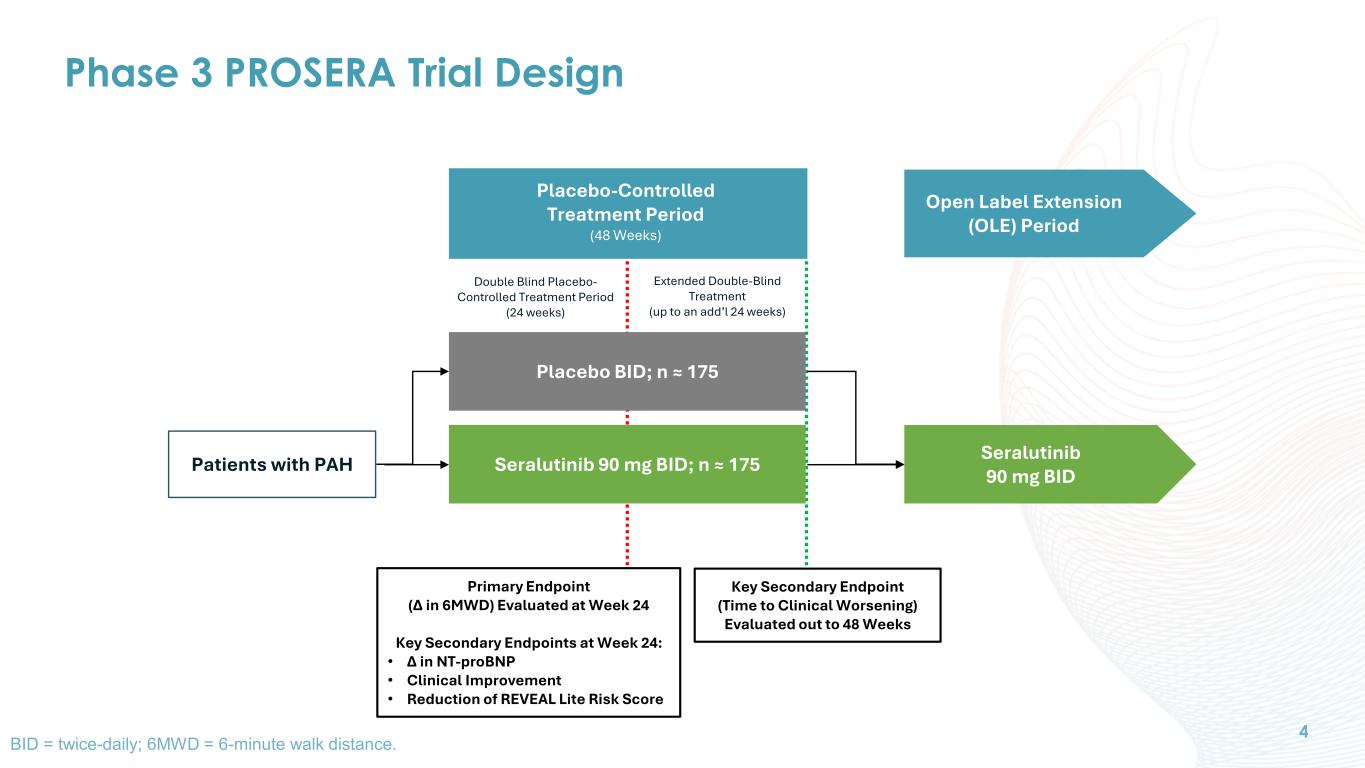
Phase 3 PROSERA Trial Design 4 Open Label Extension (OLE) Period Double Blind Placebo- Controlled Treatment Period (24 weeks) Patients with PAH Seralutinib 90 mg BID; n ≈ 175 Placebo BID; n ≈ 175 Seralutinib 90 mg BID Primary Endpoint (Δ in 6MWD) Evaluated at Week 24 Key Secondary Endpoints at Week 24: • Δ in NT-proBNP • Clinical Improvement • Reduction of REVEAL Lite Risk Score Key Secondary Endpoint (Time to Clinical Worsening) Evaluated out to 48 Weeks Placebo-Controlled Treatment Period (48 Weeks) Extended Double-Blind Treatment (up to an add’l 24 weeks) BID = twice-daily; 6MWD = 6-minute walk distance.
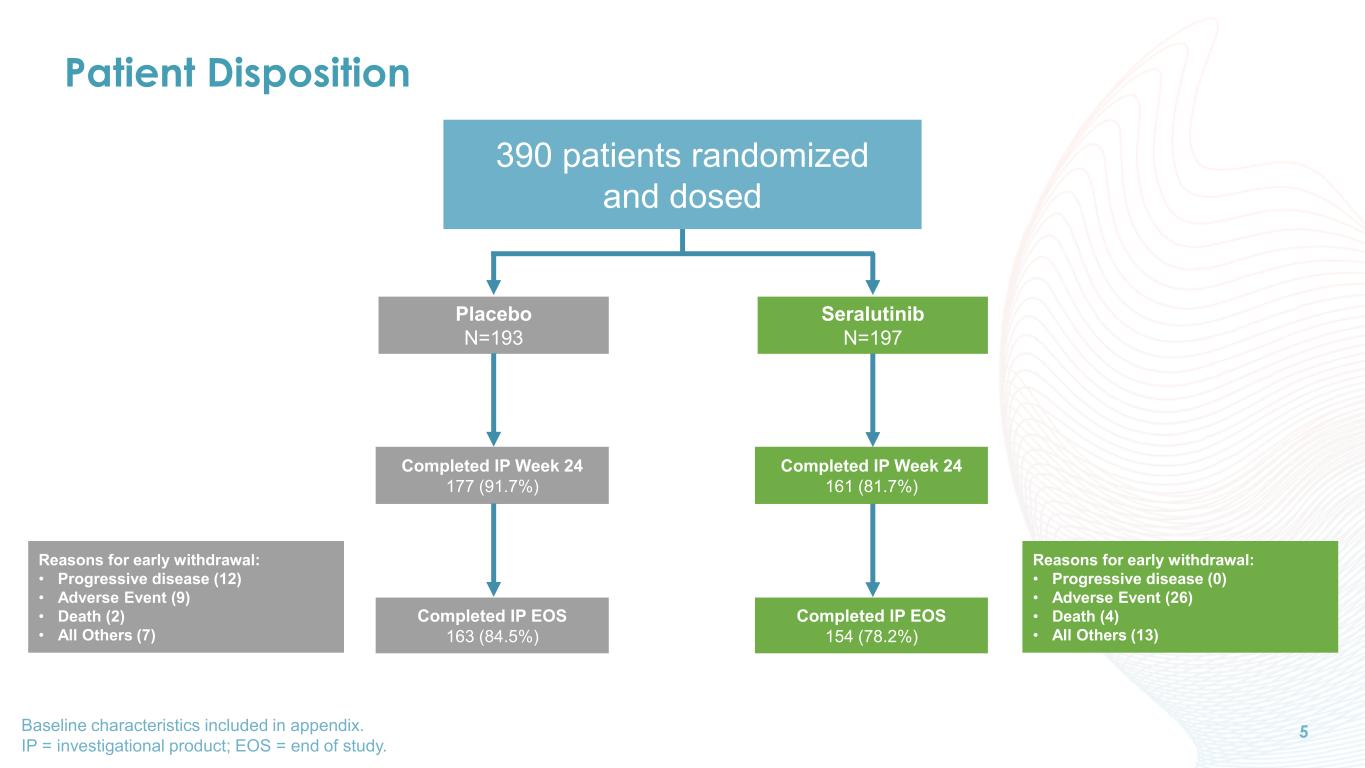
Patient Disposition 5 Placebo N=193 390 patients randomized and dosed Seralutinib N=197 Completed IP Week 24 177 (91.7%) Completed IP EOS 163 (84.5%) Completed IP Week 24 161 (81.7%) Completed IP EOS 154 (78.2%) Reasons for early withdrawal: • Progressive disease (12) • Adverse Event (9) • Death (2) • All Others (7) Reasons for early withdrawal: • Progressive disease (0) • Adverse Event (26) • Death (4) • All Others (13) Baseline characteristics included in appendix. IP = investigational product; EOS = end of study.

Results in Overall Patient Population 6
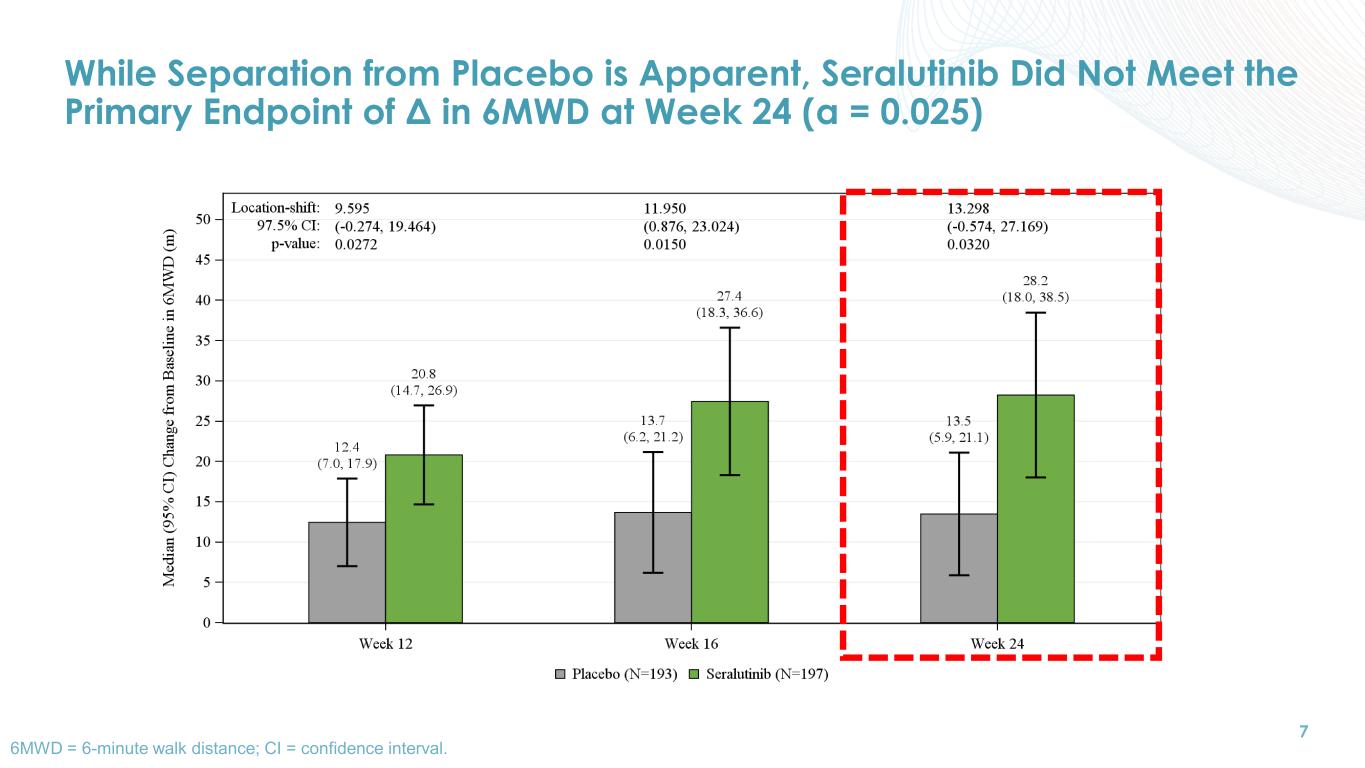
While Separation from Placebo is Apparent, Seralutinib Did Not Meet the Primary Endpoint of Δ in 6MWD at Week 24 (α = 0.025) 6MWD = 6-minute walk distance; CI = confidence interval. 7
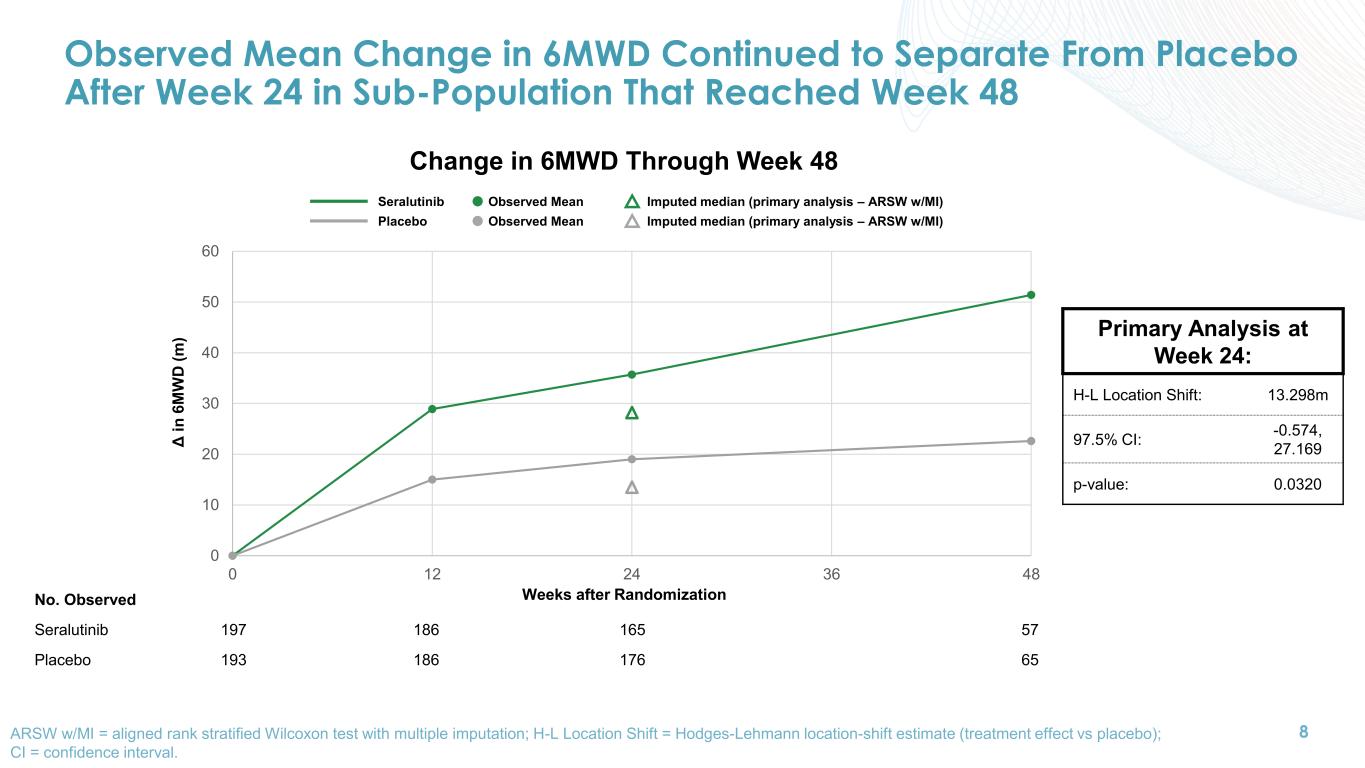
Observed Mean Change in 6MWD Continued to Separate From Placebo After Week 24 in Sub-Population That Reached Week 48 ARSW w/MI = aligned rank stratified Wilcoxon test with multiple imputation; H-L Location Shift = Hodges-Lehmann location-shift estimate (treatment effect vs placebo); CI = confidence interval. 8 No. Observed Seralutinib 197 186 165 57 Placebo 193 186 176 65 Weeks after Randomization Seralutinib Placebo Observed Mean Observed Mean Imputed median (primary analysis – ARSW w/MI) Imputed median (primary analysis – ARSW w/MI) Primary Analysis at Week 24: H-L Location Shift: 13.298m 97.5% CI: -0.574, 27.169 p-value: 0.0320 Change in 6MWD Through Week 48 Δ i n 6 M W D ( m ) 0 10 20 30 40 50 60 0 12 24 36 48
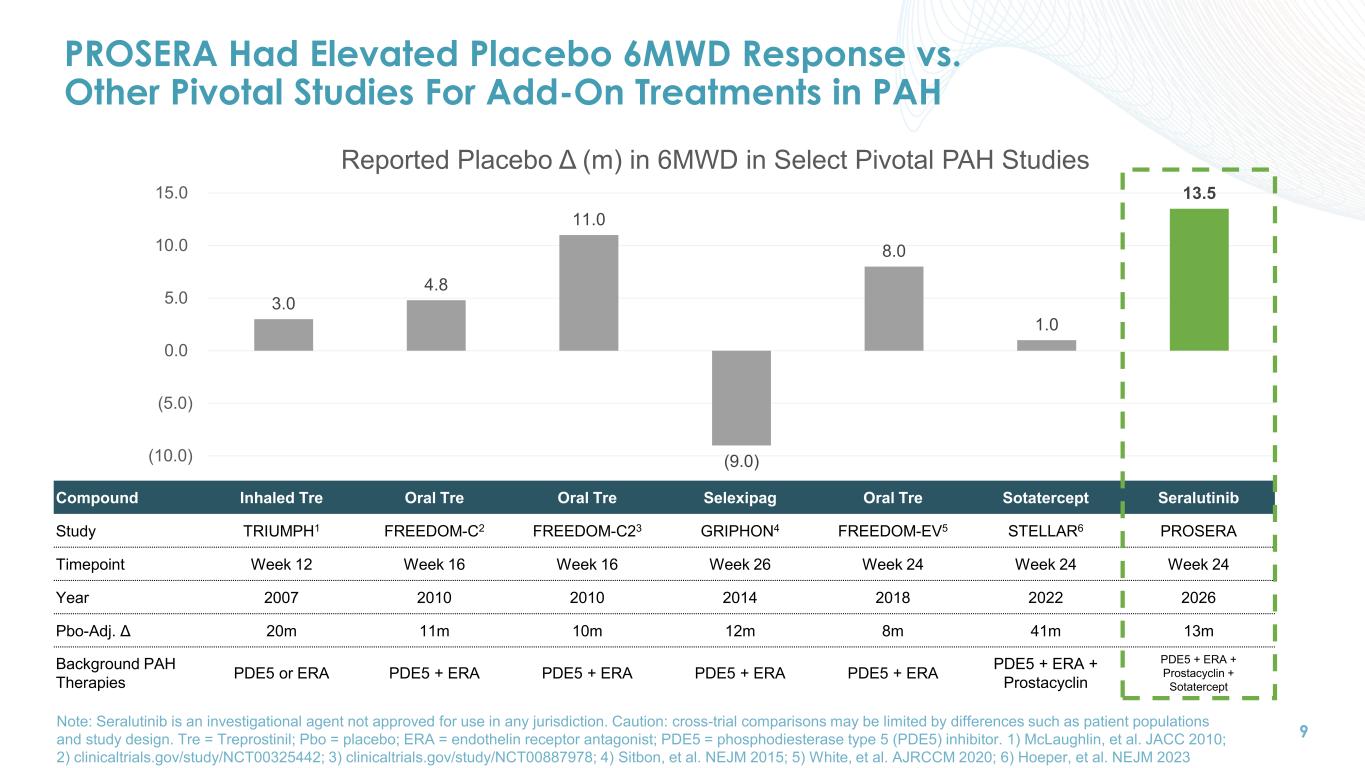
PROSERA Had Elevated Placebo 6MWD Response vs. Other Pivotal Studies For Add-On Treatments in PAH Note: Seralutinib is an investigational agent not approved for use in any jurisdiction. Caution: cross-trial comparisons may be limited by differences such as patient populations and study design. Tre = Treprostinil; Pbo = placebo; ERA = endothelin receptor antagonist; PDE5 = phosphodiesterase type 5 (PDE5) inhibitor. 1) McLaughlin, et al. JACC 2010; 2) clinicaltrials.gov/study/NCT00325442; 3) clinicaltrials.gov/study/NCT00887978; 4) Sitbon, et al. NEJM 2015; 5) White, et al. AJRCCM 2020; 6) Hoeper, et al. NEJM 2023 9 3.0 4.8 11.0 (9.0) 8.0 1.0 13.5 (10.0) (5.0) 0.0 5.0 10.0 15.0 Reported Placebo Δ (m) in 6MWD in Select Pivotal PAH Studies Compound Inhaled Tre Oral Tre Oral Tre Selexipag Oral Tre Sotatercept Seralutinib Study TRIUMPH1 FREEDOM-C2 FREEDOM-C23 GRIPHON4 FREEDOM-EV5 STELLAR6 PROSERA Timepoint Week 12 Week 16 Week 16 Week 26 Week 24 Week 24 Week 24 Year 2007 2010 2010 2014 2018 2022 2026 Pbo-Adj. Δ 20m 11m 10m 12m 8m 41m 13m Background PAH Therapies PDE5 or ERA PDE5 + ERA PDE5 + ERA PDE5 + ERA PDE5 + ERA PDE5 + ERA + Prostacyclin PDE5 + ERA + Prostacyclin + Sotatercept
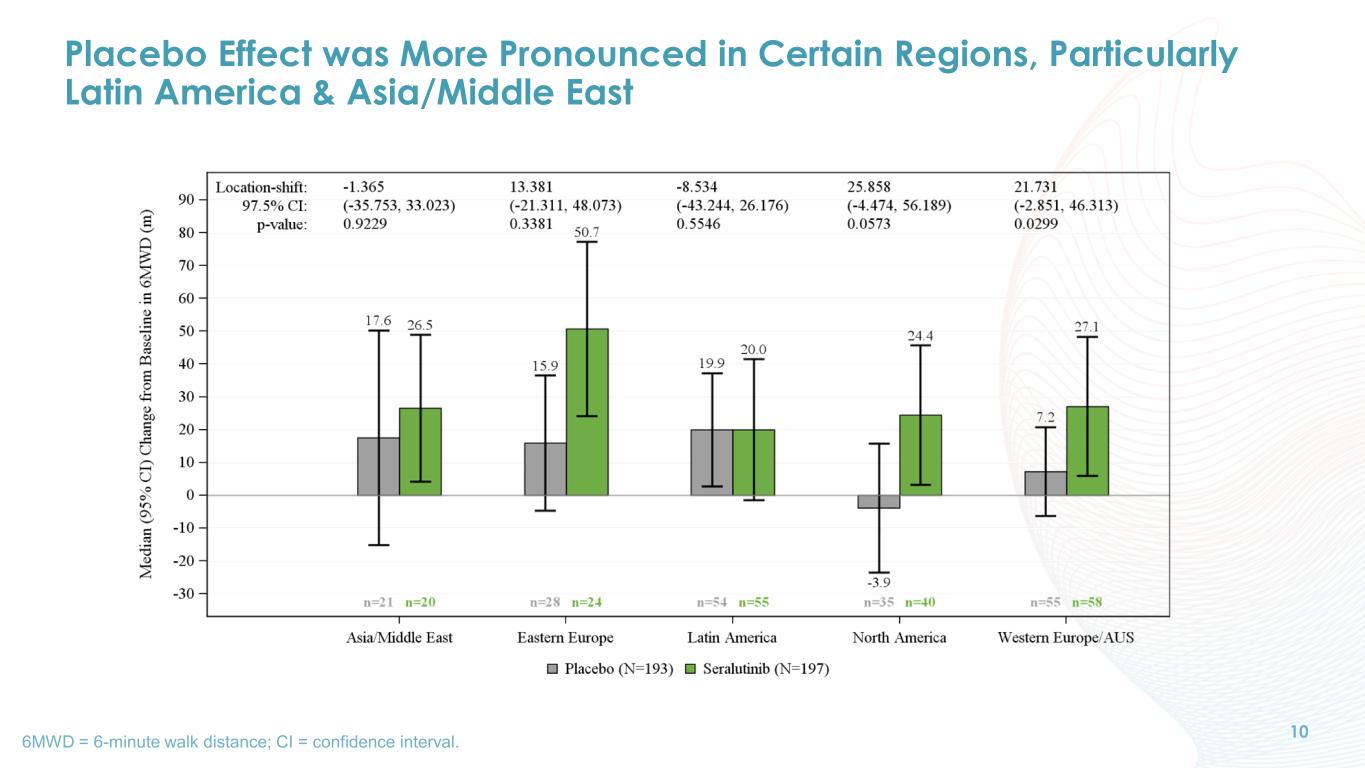
Placebo Effect was More Pronounced in Certain Regions, Particularly Latin America & Asia/Middle East 6MWD = 6-minute walk distance; CI = confidence interval. 10
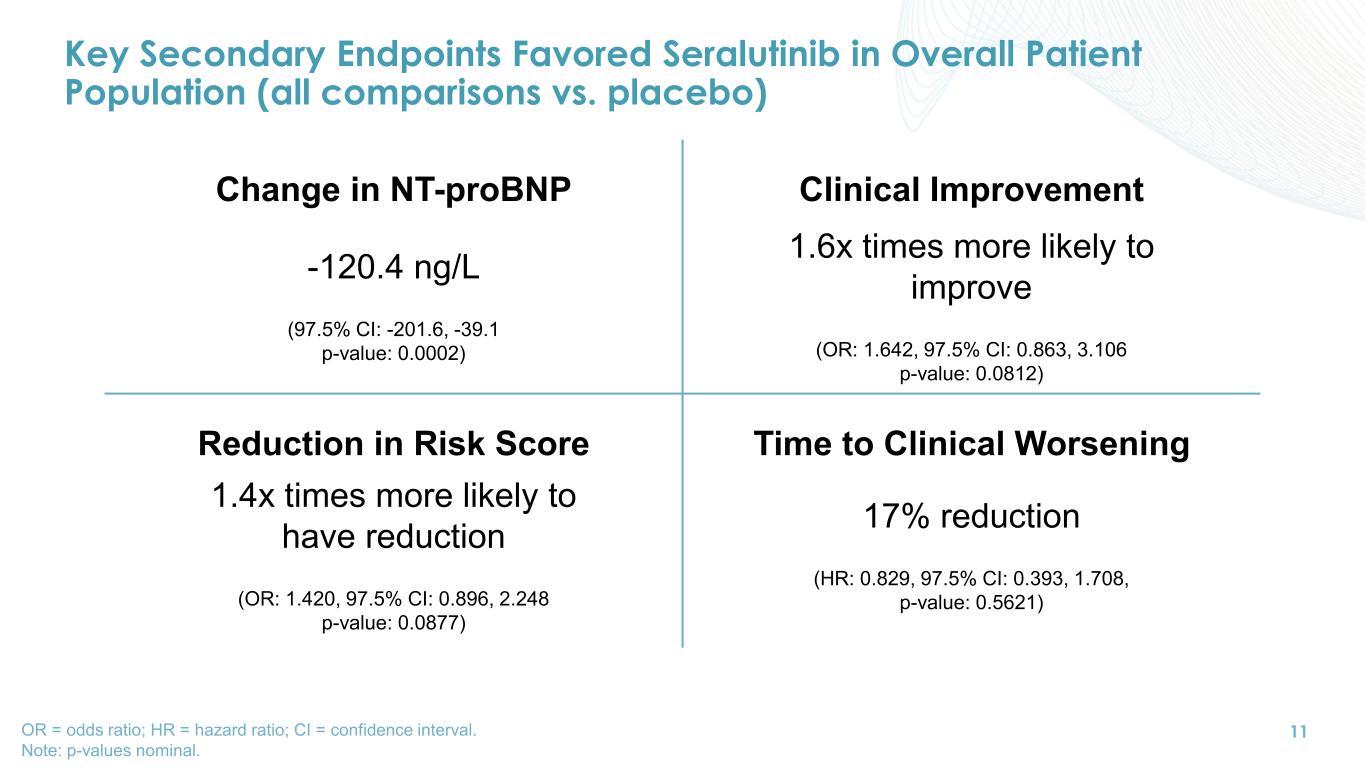
Key Secondary Endpoints Favored Seralutinib in Overall Patient Population (all comparisons vs. placebo) OR = odds ratio; HR = hazard ratio; CI = confidence interval. Note: p-values nominal. 11 Time to Clinical Worsening Change in NT-proBNP Clinical Improvement Reduction in Risk Score 17% reduction (HR: 0.829, 97.5% CI: 0.393, 1.708, p-value: 0.5621) -120.4 ng/L (97.5% CI: -201.6, -39.1 p-value: 0.0002) 1.6x times more likely to improve (OR: 1.642, 97.5% CI: 0.863, 3.106 p-value: 0.0812) 1.4x times more likely to have reduction (OR: 1.420, 97.5% CI: 0.896, 2.248 p-value: 0.0877)

Results in Prespecified Intermediate- and High-Risk Subgroup 12
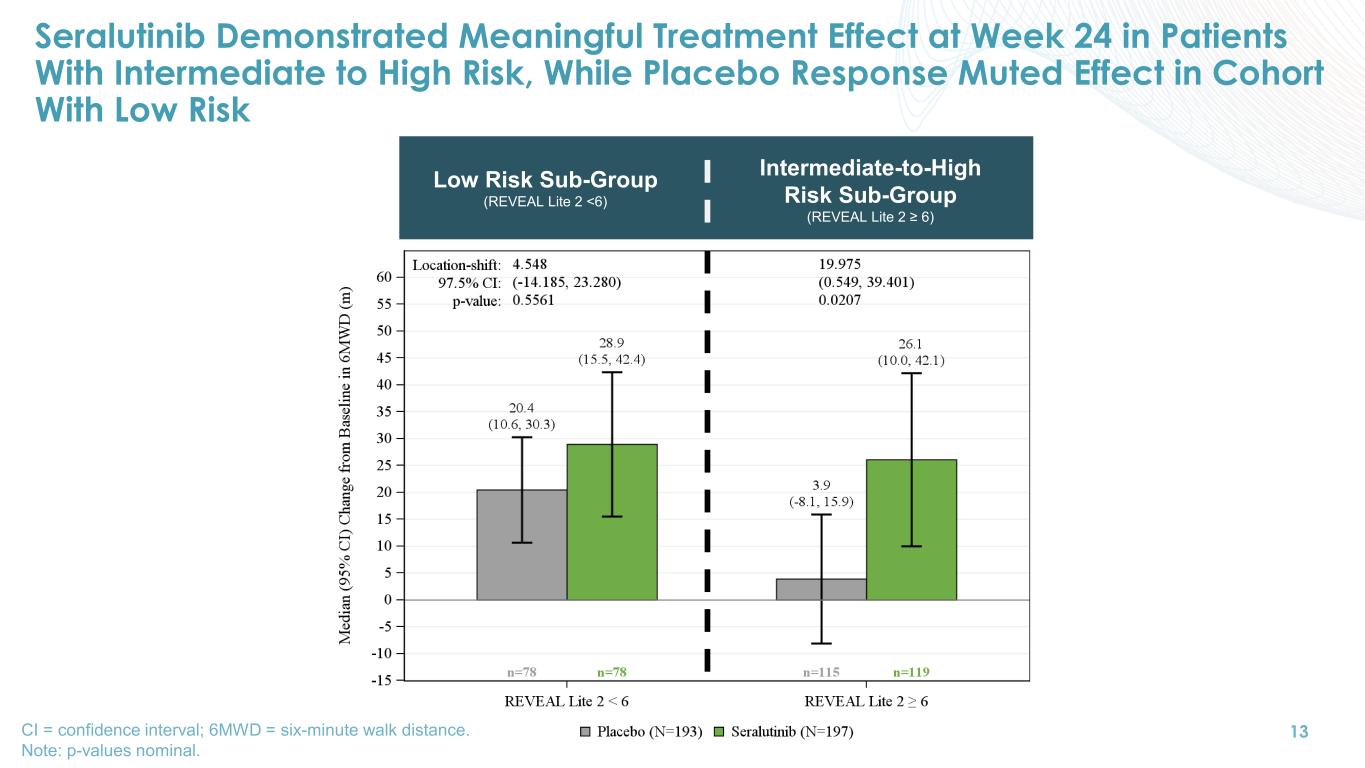
Seralutinib Demonstrated Meaningful Treatment Effect at Week 24 in Patients With Intermediate to High Risk, While Placebo Response Muted Effect in Cohort With Low Risk 13 Low Risk Sub-Group (REVEAL Lite 2 <6) Intermediate-to-High Risk Sub-Group (REVEAL Lite 2 ≥ 6) CI = confidence interval; 6MWD = six-minute walk distance. Note: p-values nominal.
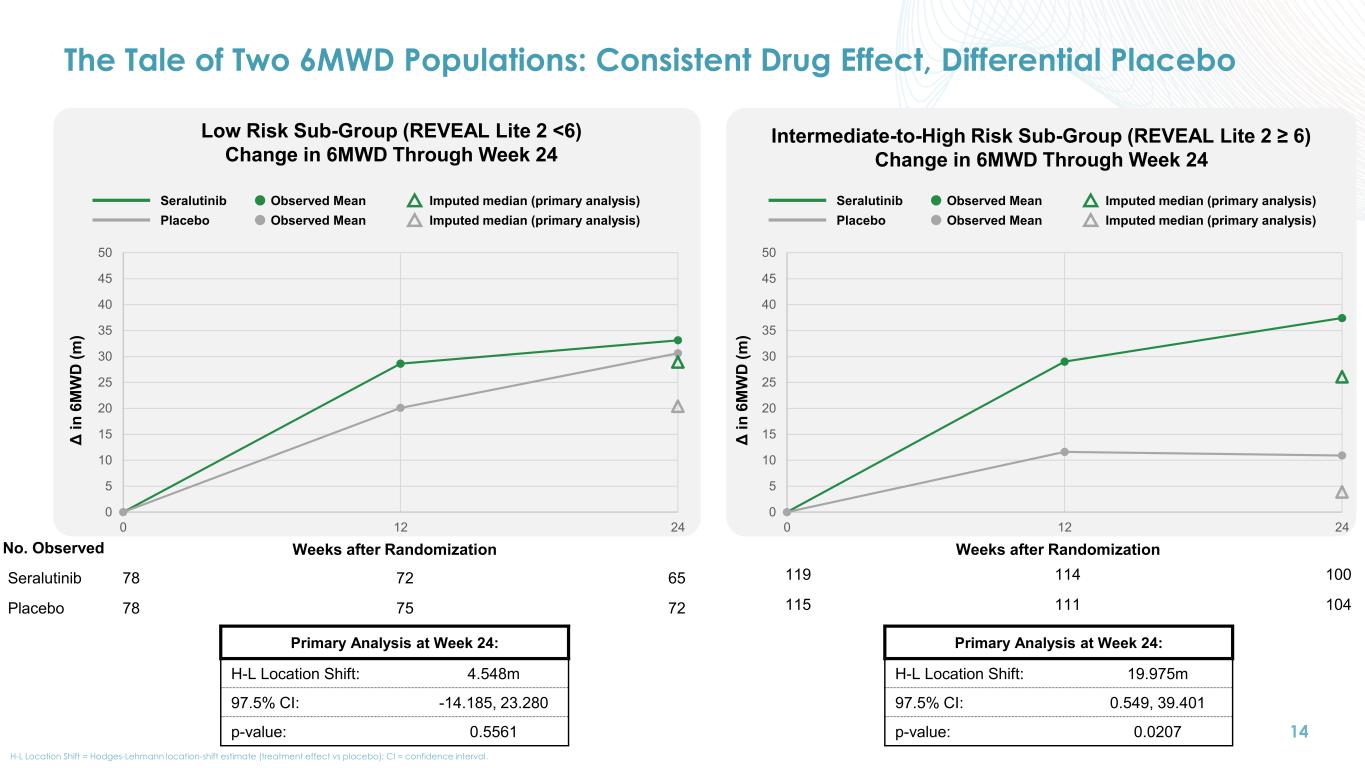
The Tale of Two 6MWD Populations: Consistent Drug Effect, Differential Placebo 14 No. Observed Seralutinib 78 72 65 Placebo 78 75 72 Weeks after Randomization Seralutinib Placebo Observed Mean Observed Mean Imputed median (primary analysis) Imputed median (primary analysis) Low Risk Sub-Group (REVEAL Lite 2 <6) Change in 6MWD Through Week 24 0 5 10 15 20 25 30 35 40 45 50 0 12 24 0 5 10 15 20 25 30 35 40 45 50 0 12 24 119 114 100 115 111 104 Weeks after Randomization Seralutinib Placebo Observed Mean Observed Mean Imputed median (primary analysis) Imputed median (primary analysis) Intermediate-to-High Risk Sub-Group (REVEAL Lite 2 ≥ 6) Change in 6MWD Through Week 24 Primary Analysis at Week 24: H-L Location Shift: 4.548m 97.5% CI: -14.185, 23.280 p-value: 0.5561 Primary Analysis at Week 24: H-L Location Shift: 19.975m 97.5% CI: 0.549, 39.401 p-value: 0.0207 Δ i n 6 M W D ( m ) Δ i n 6 M W D ( m ) H-L Location Shift = Hodges-Lehmann location-shift estimate (treatment effect vs placebo); CI = confidence interval.
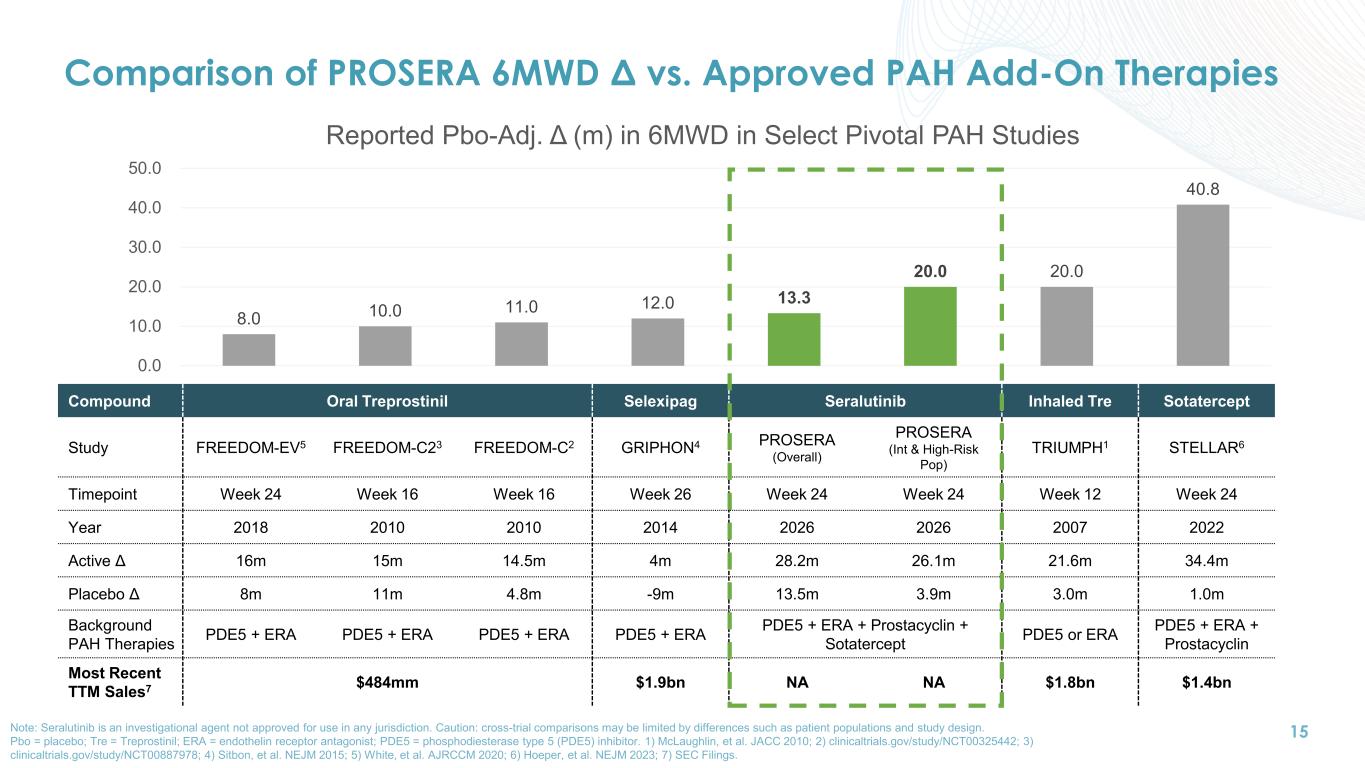
Comparison of PROSERA 6MWD Δ vs. Approved PAH Add-On Therapies Note: Seralutinib is an investigational agent not approved for use in any jurisdiction. Caution: cross-trial comparisons may be limited by differences such as patient populations and study design. Pbo = placebo; Tre = Treprostinil; ERA = endothelin receptor antagonist; PDE5 = phosphodiesterase type 5 (PDE5) inhibitor. 1) McLaughlin, et al. JACC 2010; 2) clinicaltrials.gov/study/NCT00325442; 3) clinicaltrials.gov/study/NCT00887978; 4) Sitbon, et al. NEJM 2015; 5) White, et al. AJRCCM 2020; 6) Hoeper, et al. NEJM 2023; 7) SEC Filings. 15 8.0 10.0 11.0 12.0 13.3 20.0 20.0 40.8 0.0 10.0 20.0 30.0 40.0 50.0 Reported Pbo-Adj. Δ (m) in 6MWD in Select Pivotal PAH Studies Compound Oral Treprostinil Selexipag Seralutinib Inhaled Tre Sotatercept Study FREEDOM-EV5 FREEDOM-C23 FREEDOM-C2 GRIPHON4 PROSERA (Overall) PROSERA (Int & High-Risk Pop) TRIUMPH1 STELLAR6 Timepoint Week 24 Week 16 Week 16 Week 26 Week 24 Week 24 Week 12 Week 24 Year 2018 2010 2010 2014 2026 2026 2007 2022 Active Δ 16m 15m 14.5m 4m 28.2m 26.1m 21.6m 34.4m Placebo Δ 8m 11m 4.8m -9m 13.5m 3.9m 3.0m 1.0m Background PAH Therapies PDE5 + ERA PDE5 + ERA PDE5 + ERA PDE5 + ERA PDE5 + ERA + Prostacyclin + Sotatercept PDE5 or ERA PDE5 + ERA + Prostacyclin Most Recent TTM Sales7 $484mm $1.9bn NA NA $1.8bn $1.4bn
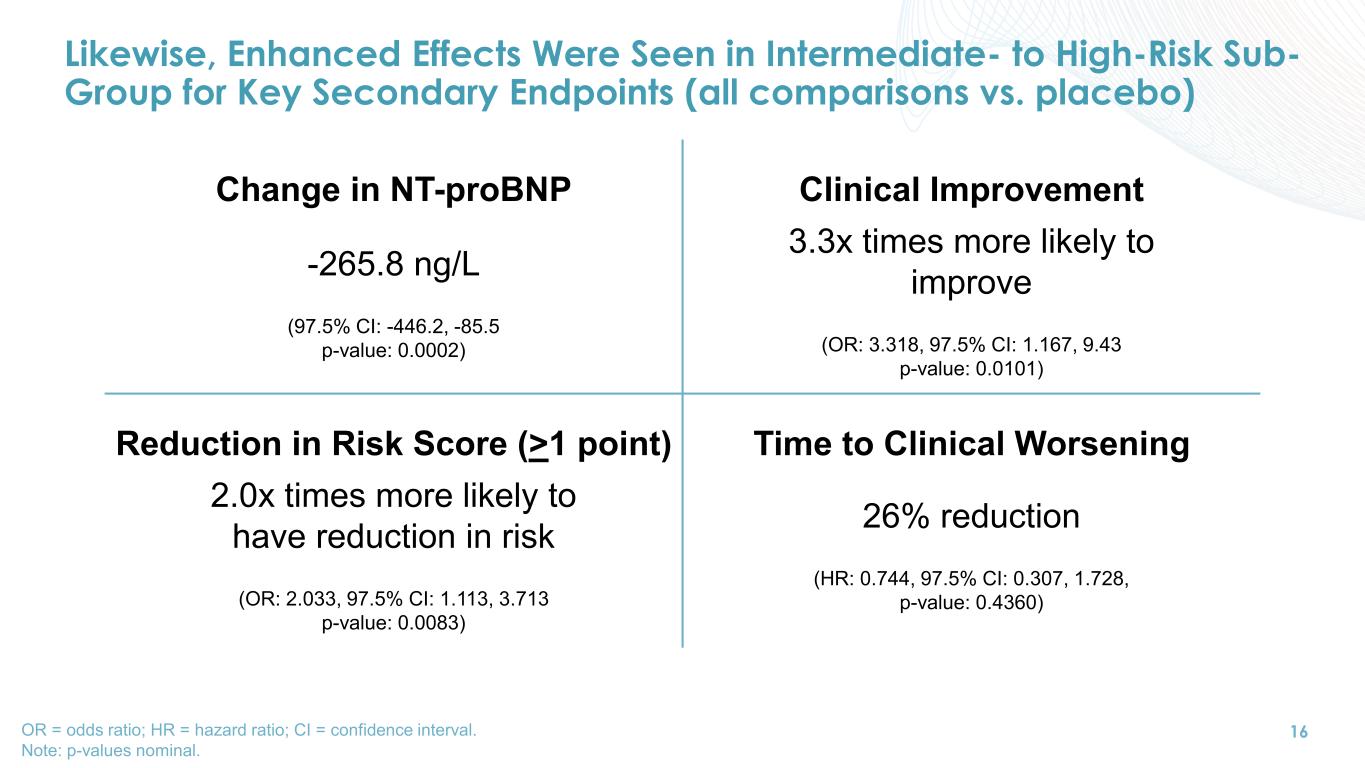
Likewise, Enhanced Effects Were Seen in Intermediate- to High-Risk Sub- Group for Key Secondary Endpoints (all comparisons vs. placebo) 16 Time to Clinical Worsening Change in NT-proBNP Clinical Improvement Reduction in Risk Score (>1 point) 26% reduction (HR: 0.744, 97.5% CI: 0.307, 1.728, p-value: 0.4360) -265.8 ng/L (97.5% CI: -446.2, -85.5 p-value: 0.0002) 3.3x times more likely to improve (OR: 3.318, 97.5% CI: 1.167, 9.43 p-value: 0.0101) 2.0x times more likely to have reduction in risk (OR: 2.033, 97.5% CI: 1.113, 3.713 p-value: 0.0083) OR = odds ratio; HR = hazard ratio; CI = confidence interval. Note: p-values nominal.

Safety & Tolerability Results 17
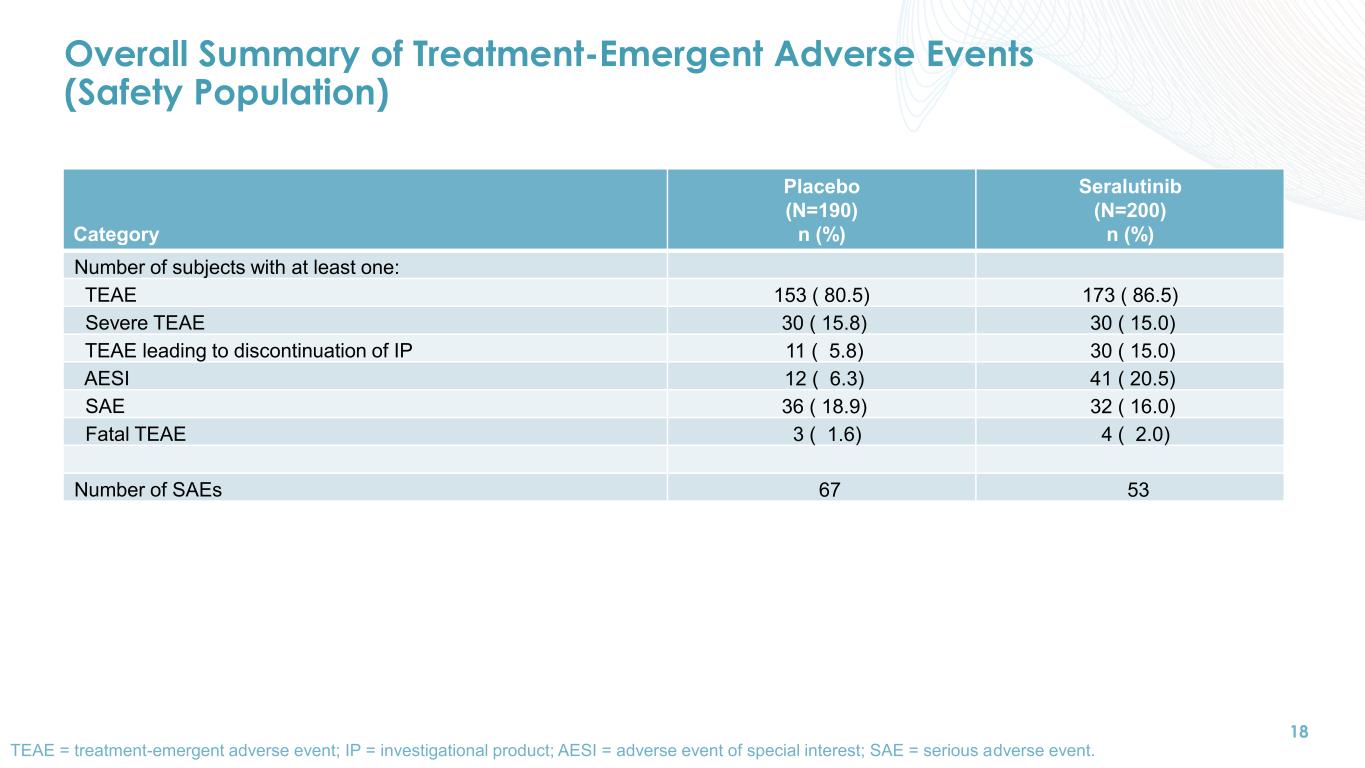
Overall Summary of Treatment-Emergent Adverse Events (Safety Population) TEAE = treatment-emergent adverse event; IP = investigational product; AESI = adverse event of special interest; SAE = serious adverse event. 18 Category Placebo (N=190) n (%) Seralutinib (N=200) n (%) Number of subjects with at least one: TEAE 153 ( 80.5) 173 ( 86.5) Severe TEAE 30 ( 15.8) 30 ( 15.0) TEAE leading to discontinuation of IP 11 ( 5.8) 30 ( 15.0) AESI 12 ( 6.3) 41 ( 20.5) SAE 36 ( 18.9) 32 ( 16.0) Fatal TEAE 3 ( 1.6) 4 ( 2.0) Number of SAEs 67 53
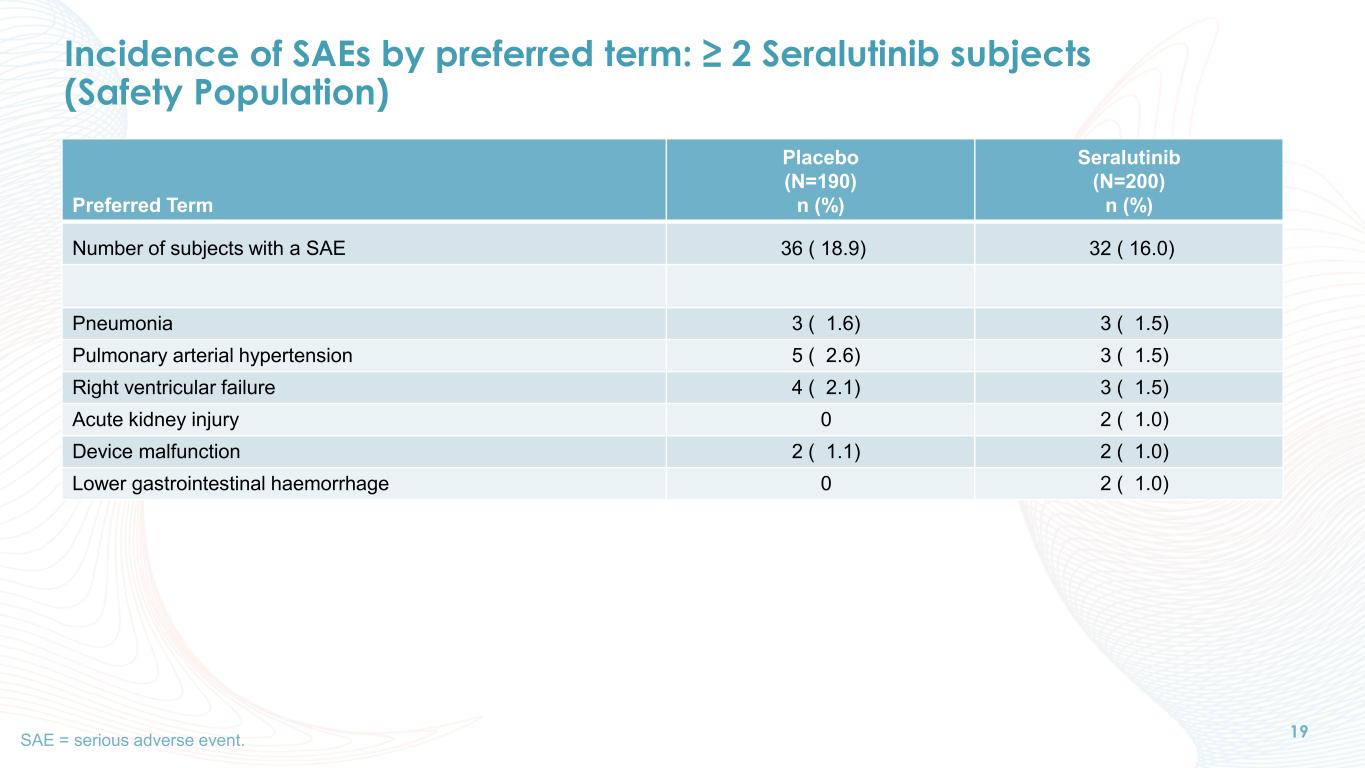
Incidence of SAEs by preferred term: ≥ 2 Seralutinib subjects (Safety Population) SAE = serious adverse event. 19 Preferred Term Placebo (N=190) n (%) Seralutinib (N=200) n (%) Number of subjects with a SAE 36 ( 18.9) 32 ( 16.0) Pneumonia 3 ( 1.6) 3 ( 1.5) Pulmonary arterial hypertension 5 ( 2.6) 3 ( 1.5) Right ventricular failure 4 ( 2.1) 3 ( 1.5) Acute kidney injury 0 2 ( 1.0) Device malfunction 2 ( 1.1) 2 ( 1.0) Lower gastrointestinal haemorrhage 0 2 ( 1.0)
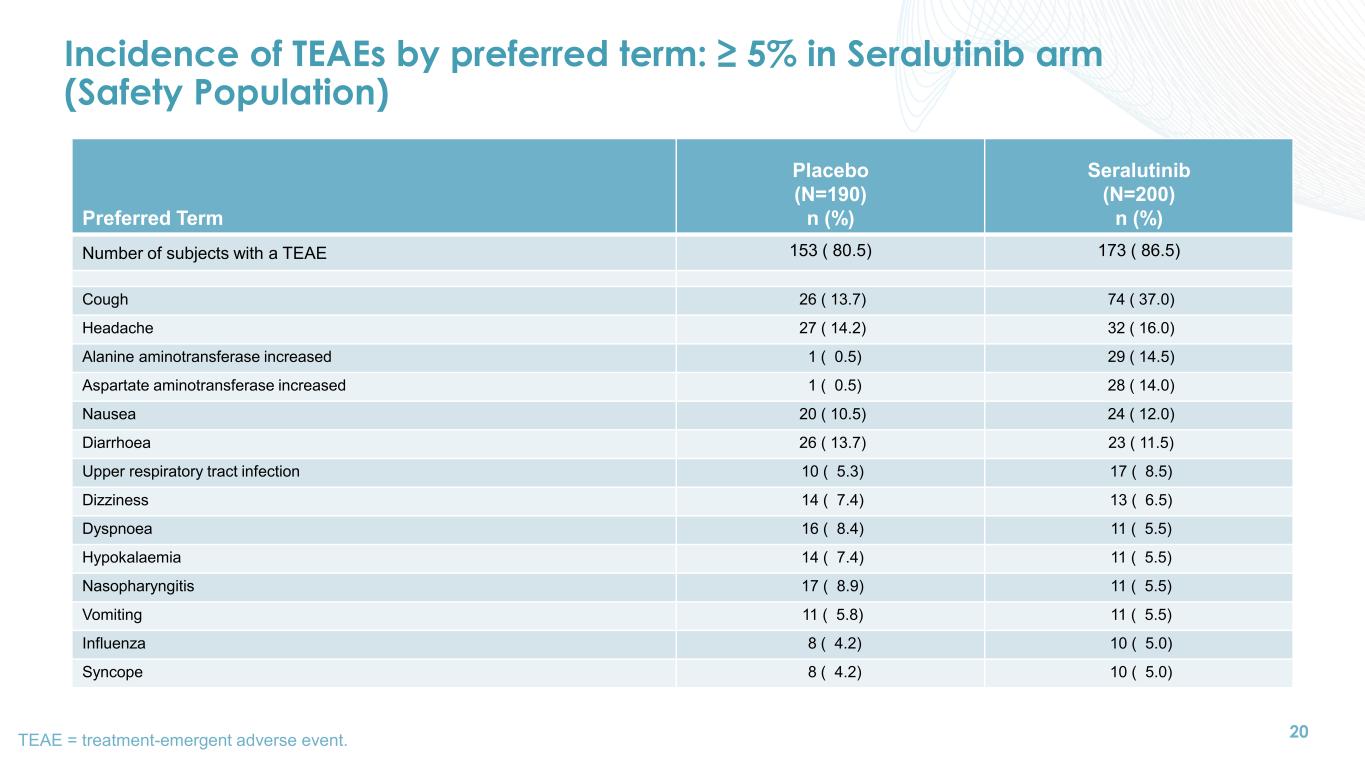
Incidence of TEAEs by preferred term: ≥ 5% in Seralutinib arm (Safety Population) TEAE = treatment-emergent adverse event. 20 Preferred Term Placebo (N=190) n (%) Seralutinib (N=200) n (%) Number of subjects with a TEAE 153 ( 80.5) 173 ( 86.5) Cough 26 ( 13.7) 74 ( 37.0) Headache 27 ( 14.2) 32 ( 16.0) Alanine aminotransferase increased 1 ( 0.5) 29 ( 14.5) Aspartate aminotransferase increased 1 ( 0.5) 28 ( 14.0) Nausea 20 ( 10.5) 24 ( 12.0) Diarrhoea 26 ( 13.7) 23 ( 11.5) Upper respiratory tract infection 10 ( 5.3) 17 ( 8.5) Dizziness 14 ( 7.4) 13 ( 6.5) Dyspnoea 16 ( 8.4) 11 ( 5.5) Hypokalaemia 14 ( 7.4) 11 ( 5.5) Nasopharyngitis 17 ( 8.9) 11 ( 5.5) Vomiting 11 ( 5.8) 11 ( 5.5) Influenza 8 ( 4.2) 10 ( 5.0) Syncope 8 ( 4.2) 10 ( 5.0)

Conclusion and Next Steps 21
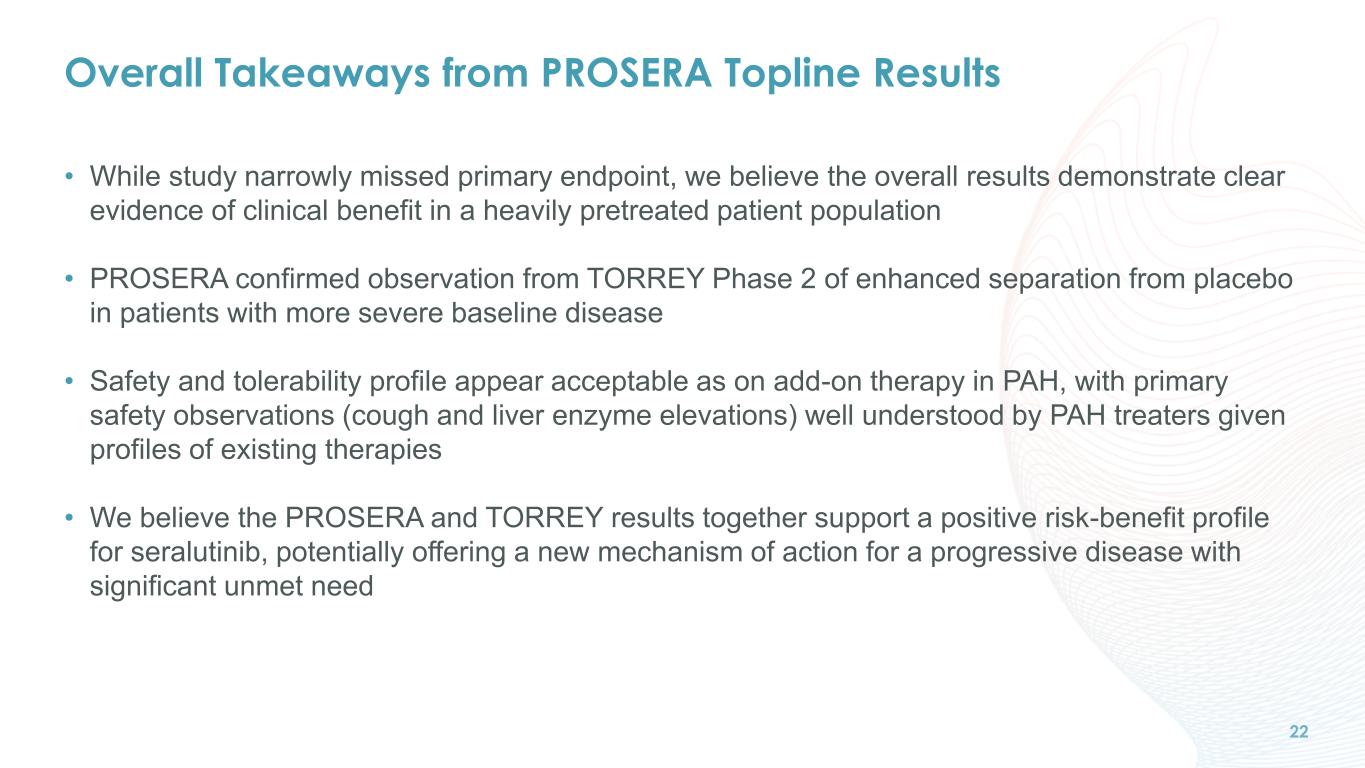
Overall Takeaways from PROSERA Topline Results • While study narrowly missed primary endpoint, we believe the overall results demonstrate clear evidence of clinical benefit in a heavily pretreated patient population • PROSERA confirmed observation from TORREY Phase 2 of enhanced separation from placebo in patients with more severe baseline disease • Safety and tolerability profile appear acceptable as on add-on therapy in PAH, with primary safety observations (cough and liver enzyme elevations) well understood by PAH treaters given profiles of existing therapies • We believe the PROSERA and TORREY results together support a positive risk-benefit profile for seralutinib, potentially offering a new mechanism of action for a progressive disease with significant unmet need 22
Next Steps CT FRI = computed tomography functional respiratory imaging. 23 • Complete our in-depth analyses of the PROSERA data across endpoints and subgroups, pending the results from the CT FRI substudy, expected in the coming weeks • Engage with the FDA to discuss the results to understand their perspective • Assess ramifications for seralutinib and Gossamer portfolio, including impacts on capital allocation
24 We are deeply grateful to the patients, investigators, and teams whose dedication advanced the development of seralutinib Thank you

Appendix
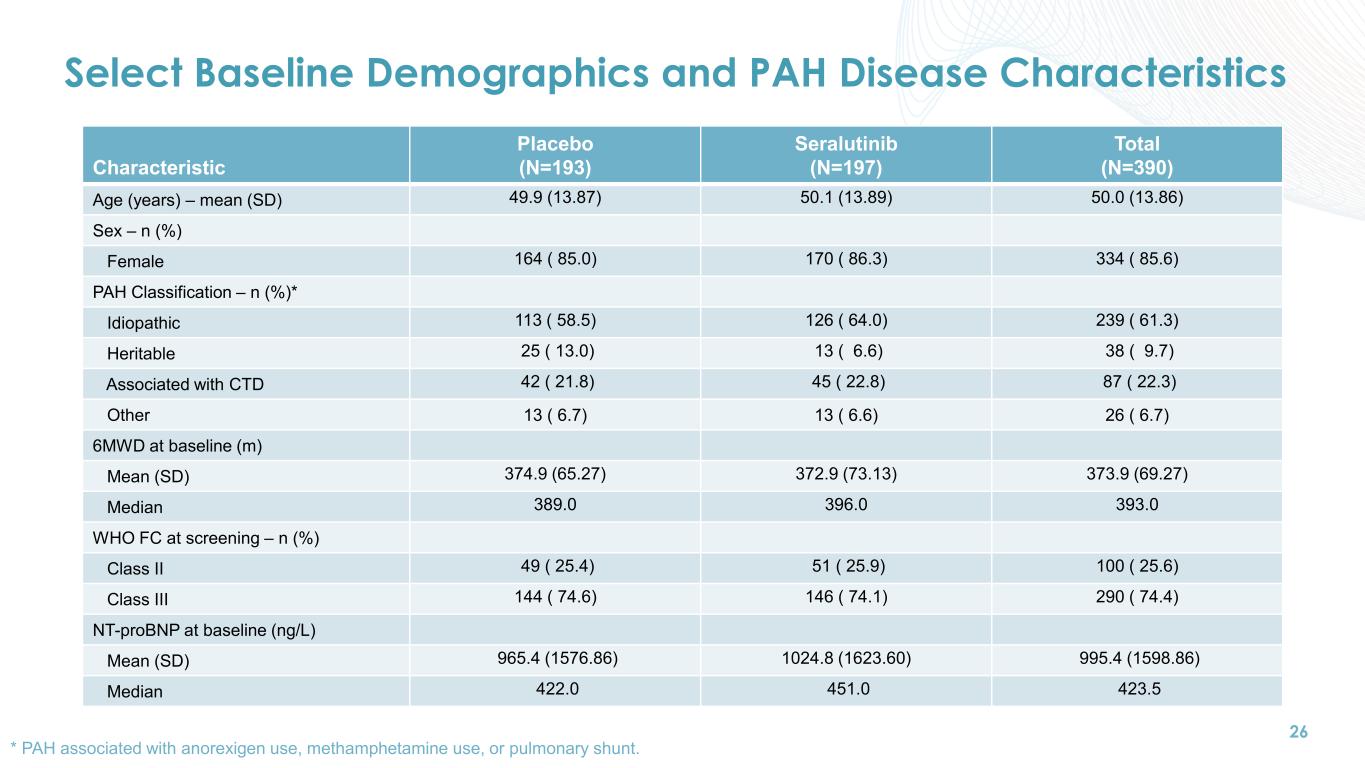
Select Baseline Demographics and PAH Disease Characteristics * PAH associated with anorexigen use, methamphetamine use, or pulmonary shunt. 26 Characteristic Placebo (N=193) Seralutinib (N=197) Total (N=390) Age (years) – mean (SD) 49.9 (13.87) 50.1 (13.89) 50.0 (13.86) Sex – n (%) Female 164 ( 85.0) 170 ( 86.3) 334 ( 85.6) PAH Classification – n (%)* Idiopathic 113 ( 58.5) 126 ( 64.0) 239 ( 61.3) Heritable 25 ( 13.0) 13 ( 6.6) 38 ( 9.7) Associated with CTD 42 ( 21.8) 45 ( 22.8) 87 ( 22.3) Other 13 ( 6.7) 13 ( 6.6) 26 ( 6.7) 6MWD at baseline (m) Mean (SD) 374.9 (65.27) 372.9 (73.13) 373.9 (69.27) Median 389.0 396.0 393.0 WHO FC at screening – n (%) Class II 49 ( 25.4) 51 ( 25.9) 100 ( 25.6) Class III 144 ( 74.6) 146 ( 74.1) 290 ( 74.4) NT-proBNP at baseline (ng/L) Mean (SD) 965.4 (1576.86) 1024.8 (1623.60) 995.4 (1598.86) Median 422.0 451.0 423.5
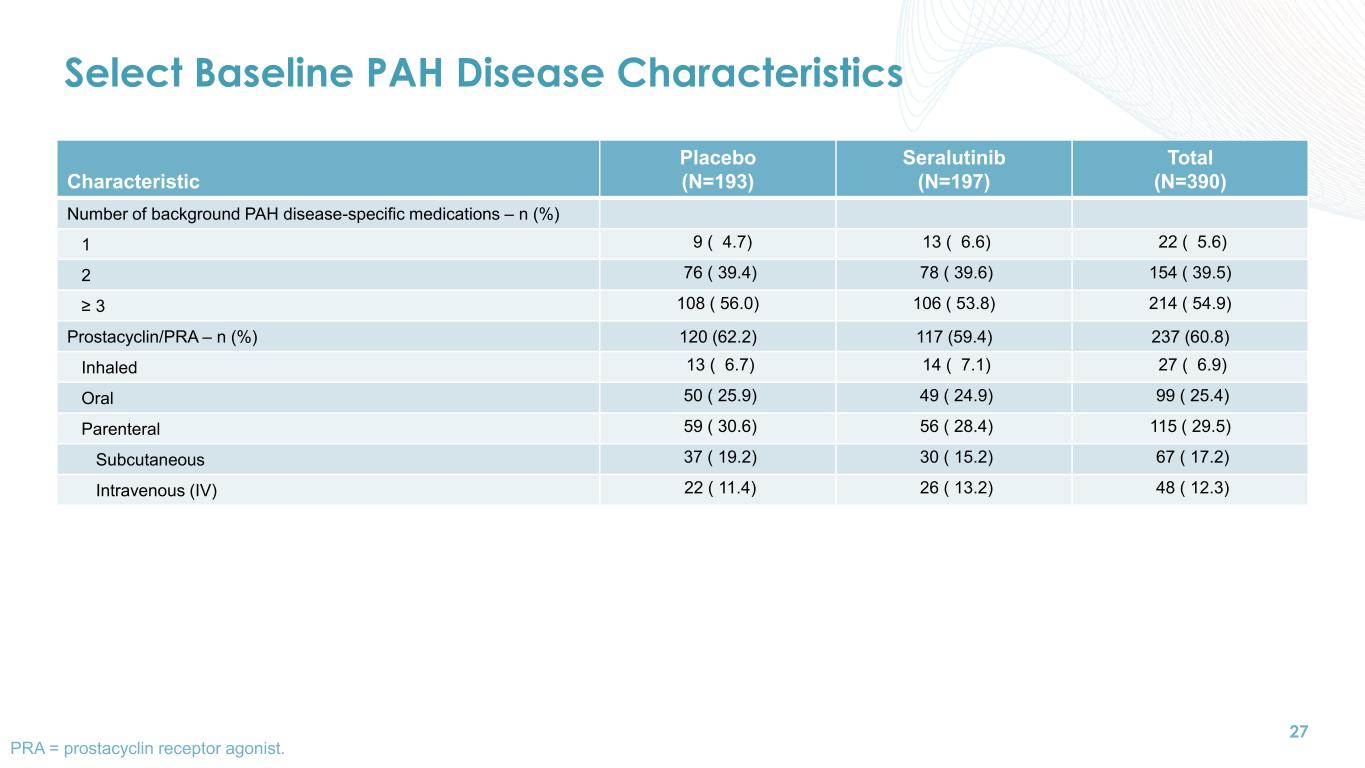
Select Baseline PAH Disease Characteristics PRA = prostacyclin receptor agonist. 27 Characteristic Placebo (N=193) Seralutinib (N=197) Total (N=390) Number of background PAH disease-specific medications – n (%) 1 9 ( 4.7) 13 ( 6.6) 22 ( 5.6) 2 76 ( 39.4) 78 ( 39.6) 154 ( 39.5) ≥ 3 108 ( 56.0) 106 ( 53.8) 214 ( 54.9) Prostacyclin/PRA – n (%) 120 (62.2) 117 (59.4) 237 (60.8) Inhaled 13 ( 6.7) 14 ( 7.1) 27 ( 6.9) Oral 50 ( 25.9) 49 ( 24.9) 99 ( 25.4) Parenteral 59 ( 30.6) 56 ( 28.4) 115 ( 29.5) Subcutaneous 37 ( 19.2) 30 ( 15.2) 67 ( 17.2) Intravenous (IV) 22 ( 11.4) 26 ( 13.2) 48 ( 12.3)