Please wait
Table of Contents

Filed Pursuant to Rule 424(b)(3)
Registration No. 333-291541

PROSPECTUS



LOGO

Jade Biosciences, Inc.

16,125,269 Shares

Common Stock

Offered by the Selling Stockholders


This prospectus relates to the proposed resale or other disposition by the selling stockholders identified herein (the “Selling Stockholders”) of up to (i) 13,368,164 shares (the “PIPE Shares”) of our common stock, par value $0.0001 per share (“Common Stock”), (ii) 1,402,092 shares of Common Stock issuable upon the exercise of pre-funded warrants (the “PIPE Pre-Funded Warrants”) and (iii) 1,355,013 shares of Common Stock (the “Existing Shares”) previously issued to a Selling Stockholder. The shares of Common Stock registered by this prospectus are referred to herein as the “Resale Shares.”

The PIPE Shares and the PIPE Pre-Funded Warrants were issued and sold to accredited investors in a private placement (the “October 2025 PIPE”), which closed on October 8, 2025. The Existing Shares consist of (i) 292,687 shares of Common Stock previously held by and (ii) 1,062,326 shares of Common Stock issued in the Pre-Closing Financing (as defined herein) to RA Capital Healthcare Fund, L.P. We are not selling any Resale Shares under this prospectus and will not receive any of the proceeds from the sale or other disposition of Resale Shares by the Selling Stockholders. Upon any exercise of the PIPE Pre-Funded Warrants by payment of cash, however, we will receive the nominal cash exercise price paid by the holders of the PIPE Pre-Funded Warrants. We intend to use those proceeds, if any, for general corporate purposes.

The Selling Stockholders may sell the Resale Shares on any national securities exchange or quotation service on which the securities may be listed or quoted at the time of sale, on the over-the-counter market, in one or more transactions otherwise than on these exchanges or systems, such as privately negotiated transactions, or using a combination of these methods, and at fixed prices, at prevailing market prices at the time of the sale, at varying prices determined at the time of sale, or at negotiated prices. See the disclosure under the heading “Plan of Distribution” elsewhere in this prospectus for more information about how the Selling Stockholders may sell or otherwise dispose of their Resale Shares hereunder.

The Selling Stockholders may sell any, all or none of the securities offered by this prospectus and we do not know when or in what amount the Selling Stockholders may sell their Resale Shares hereunder following the effective date of the registration statement of which this prospectus forms a part. Discounts, concessions, commissions and similar selling expenses attributable to the sale of the Resale Shares will be borne by the Selling Stockholder. We will pay certain fees and expenses (other than discounts, concessions, commissions and similar selling expenses) incident to the registration of the Resale Shares with the Securities and Exchange Commission (“SEC”).

You should carefully read this prospectus and any applicable prospectus supplement before you invest in any of the securities being offered.

Our Common Stock is traded on The Nasdaq Capital Market under the symbol “JBIO.” On November 12, 2025, the last reported sale price for our Common Stock was $10.00 per share.


An investment in our securities involves a high degree of risk. You should carefully consider the information under the heading “Risk Factors” beginning on page 8 of this prospectus and any applicable prospectus supplement.

We are a “smaller reporting company” and an “emerging growth company” under applicable federal securities laws and are subject to reduced public company reporting requirements.

Neither the SEC nor any state securities commission has approved or disapproved of these securities or determined if this prospectus is truthful or complete. Any representation to the contrary is a criminal offense.


The date of this prospectus is December 19, 2025
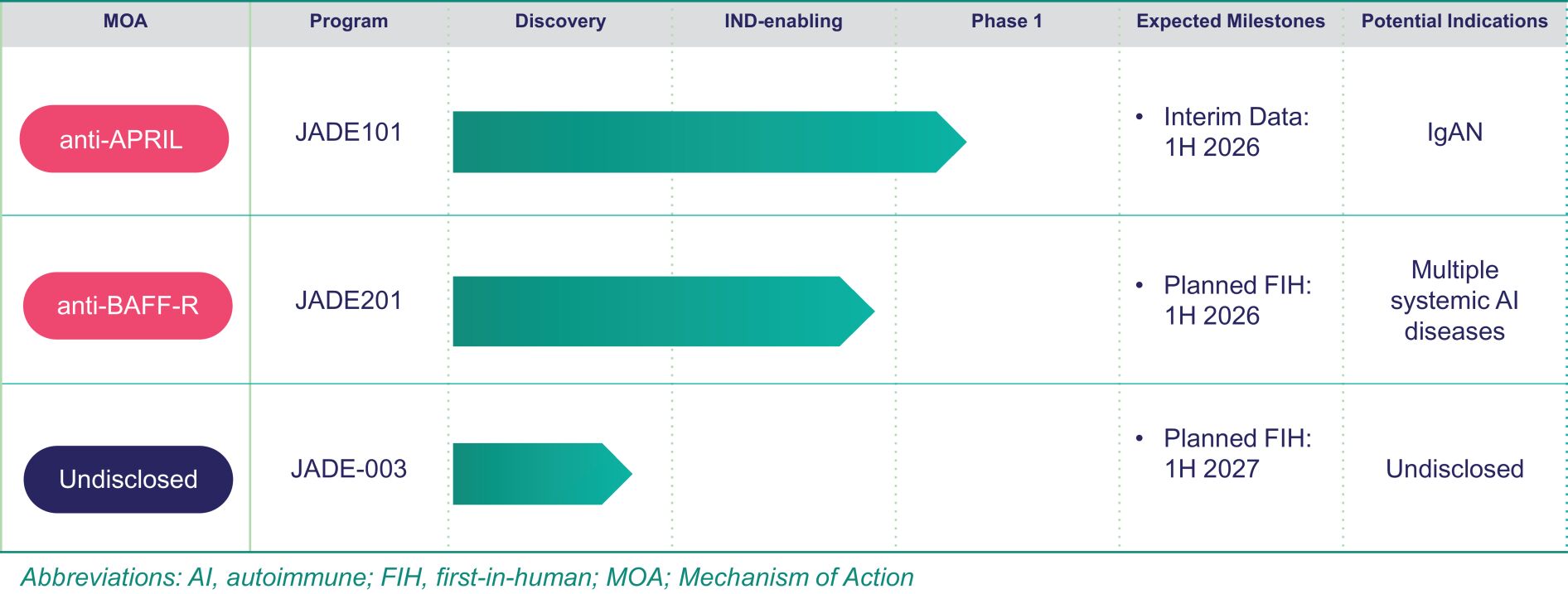

Table of Contents

TABLE OF CONTENTS


     PAGE  

ABOUT THIS PROSPECTUS

     ii  

CAUTIONARY STATEMENT CONCERNING FORWARD-LOOKING STATEMENTS

     iii  

PROSPECTUS SUMMARY

     1  

RISK FACTOR SUMMARY

     6  

RISK FACTORS

     8  

USE OF PROCEEDS

     51  

MANAGEMENT’S DISCUSSION AND ANALYSIS OF FINANCIAL CONDITION AND RESULTS OF OPERATIONS

     52  

QUANTITATIVE AND QUALITATIVE DISCLOSURES ABOUT MARKET RISK

     73  

BUSINESS

     74  

MANAGEMENT

     127  

EXECUTIVE COMPENSATION

     134  

AEROVATE EQUITY COMPENSATION PLAN INFORMATION

     142  

SECURITY OWNERSHIP OF CERTAIN BENEFICIAL OWNERS AND MANAGEMENT AND RELATED STOCKHOLDER MATTERS

     143  

CERTAIN RELATIONSHIPS AND RELATED PARTY TRANSACTIONS

     147  

SELLING STOCKHOLDERS

     154  

PLAN OF DISTRIBUTION

     160  

DESCRIPTION OF CAPITAL STOCK

     163  

LEGAL MATTERS

     168  

EXPERTS

     169  

WHERE YOU CAN FIND MORE INFORMATION

     170  

INDEX TO CONSOLIDATED FINANCIAL STATEMENTS

     F-1  


i


Table of Contents

ABOUT THIS PROSPECTUS

This prospectus is part of the registration statement that we filed with the SEC using a “shelf” registration process. Under this shelf registration process, the Selling Stockholders may, from time to time, sell the securities described in this prospectus in one or more offerings.

This prospectus contains information that you should consider when making your investment decision. Neither we, nor the Selling Stockholders, have authorized anyone to give any information or to make any representation other than those contained in this prospectus. The Selling Stockholders are offering to sell, and seeking offers to buy, our securities only in jurisdictions where it is lawful to do so. We have not authorized anyone to provide you with different information. This prospectus and any accompanying prospectus supplement do not constitute an offer to sell or the solicitation of an offer to buy any securities other than the securities described in any accompanying prospectus supplement or an offer to sell or the solicitation of an offer to buy such securities in any circumstances in which such offer or solicitation is unlawful. You should assume that the information appearing in this prospectus, any prospectus supplement and any related free writing prospectus is accurate only as of their respective dates. Our business, financial condition, results of operations and prospects may have changed materially since those dates.

In this prospectus, unless the context otherwise requires, the terms “Jade,” the “Company,” “we,” “us,” and “our” refer to Jade Biosciences, Inc., a Nevada corporation, and its consolidated subsidiaries.

This prospectus contains trade names, trademarks and service marks of others, which are the property of their respective owners. Solely for convenience, trademarks and trade names referred to in this prospectus may appear without the ® or TM symbols.


ii


Table of Contents

CAUTIONARY STATEMENT CONCERNING FORWARD-LOOKING STATEMENTS

This prospectus contains “forward-looking statements” within the meaning of Section 27A of the Securities Act of 1933, as amended (the “Securities Act”), and Section 21E of the Securities Exchange Act of 1934, as amended (the “Exchange Act”). These forward-looking statements involve a number of risks and uncertainties. We caution readers that any forward-looking statement is not a guarantee of future performance and that actual results could differ materially from those contained in the forward-looking statement. These statements are based on current expectations of future events.

All statements, other than statements of historical facts contained in this prospectus, including, without limitation, statements regarding: our future results of operations and financial position, business strategy, the length of time that we believe our existing cash resources will fund our operations, our market size, our competition, our potential growth opportunities, our clinical development activities and timeline, the efficacy and safety profile of our product candidates, the potential therapeutic benefits and economic value of our product candidates, the timing and results of preclinical studies and clinical trials, the expected impact of macroeconomic conditions, including inflation, increasing interest rates and volatile market conditions, as well as global events, including military conflicts and geopolitical tensions on our operations, and the receipt and timing of potential regulatory designations, approvals and commercialization of product candidates. Forward-looking statements generally relate to future events or our future financial or operating performance. The words “believe,” “may,” “will,” “potentially,” “estimate,” “continue,” “anticipate,” “predict,” “target,” “intend,” “could,” “would,” “should,” “project,” “plan,” “expect,” and similar expressions that convey uncertainty of future events or outcomes are intended to identify forward-looking statements, although not all forward-looking statements contain these identifying words.

These forward-looking statements are subject to a number of risks, uncertainties and assumptions. Moreover, we operate in a very competitive and rapidly changing environment, and new risks emerge from time to time. It is not possible for our management to predict all risks, nor can we assess the impact of all factors on our business or the extent to which any factor, or combination of factors, may cause actual results to differ materially from those contained in any forward-looking statements we may make. Factors that might cause such a difference are disclosed in the sections titled “Risk Factors” and “Management’s Discussion and Analysis of Financial Condition and Results of Operations.” You should evaluate all forward-looking statements made in this prospectus in the context of these risks and uncertainties. We caution you that the risks, uncertainties and other factors referred to in this prospectus may not contain all of the risks, uncertainties and other factors that may affect our future results and operations.

In addition, statements that “we believe” and similar statements reflect our beliefs and opinions on the relevant subject. These statements are based on information available to us as of the date of this prospectus. While we believe that such information provides a reasonable basis for these statements, such information may be limited or incomplete. Our statements should not be read to indicate that we have conducted an exhaustive inquiry into, or review of, all relevant information. These statements are inherently uncertain, and investors are cautioned not to unduly rely on these statements.

All subsequent written or oral forward-looking statements attributable to us or any person acting on our behalf are expressly qualified in their entirety by the cautionary statements contained or referred to in this section. We do not undertake any obligation to release publicly any revisions to these forward-looking statements to reflect events or circumstances after the date of this prospectus or to reflect the occurrence of unanticipated events, except as may be required under applicable U.S. securities laws. If we do update one or more forward-looking statements, no inference should be drawn that we will make additional updates with respect to those or other forward-looking statements.


iii


Table of Contents

PROSPECTUS SUMMARY

This summary may not contain all the information that you should consider before investing in securities. You should read the entire prospectus carefully, including the sections titled “Risk Factors” and “Management’s Discussion and Analysis of Financial Condition and Results of Operations,” and our consolidated financial statements and the related notes included elsewhere in this prospectus, before making an investment decision.

Company Overview

We are a clinical-stage biopharmaceutical company developing novel biologic therapies for patients living with autoimmune diseases. Our goal is to improve meaningfully upon the existing treatment paradigm through the delivery of improved dosing and convenience, a comparable safety profile, and potentially increased clinical activity. Our approach is to discover and efficiently develop biologics that address emerging targets supported by third-party clinical data and that overcome shortcomings of existing product candidates in development, such as potency, bioavailability, formulation, and pharmacokinetic properties.

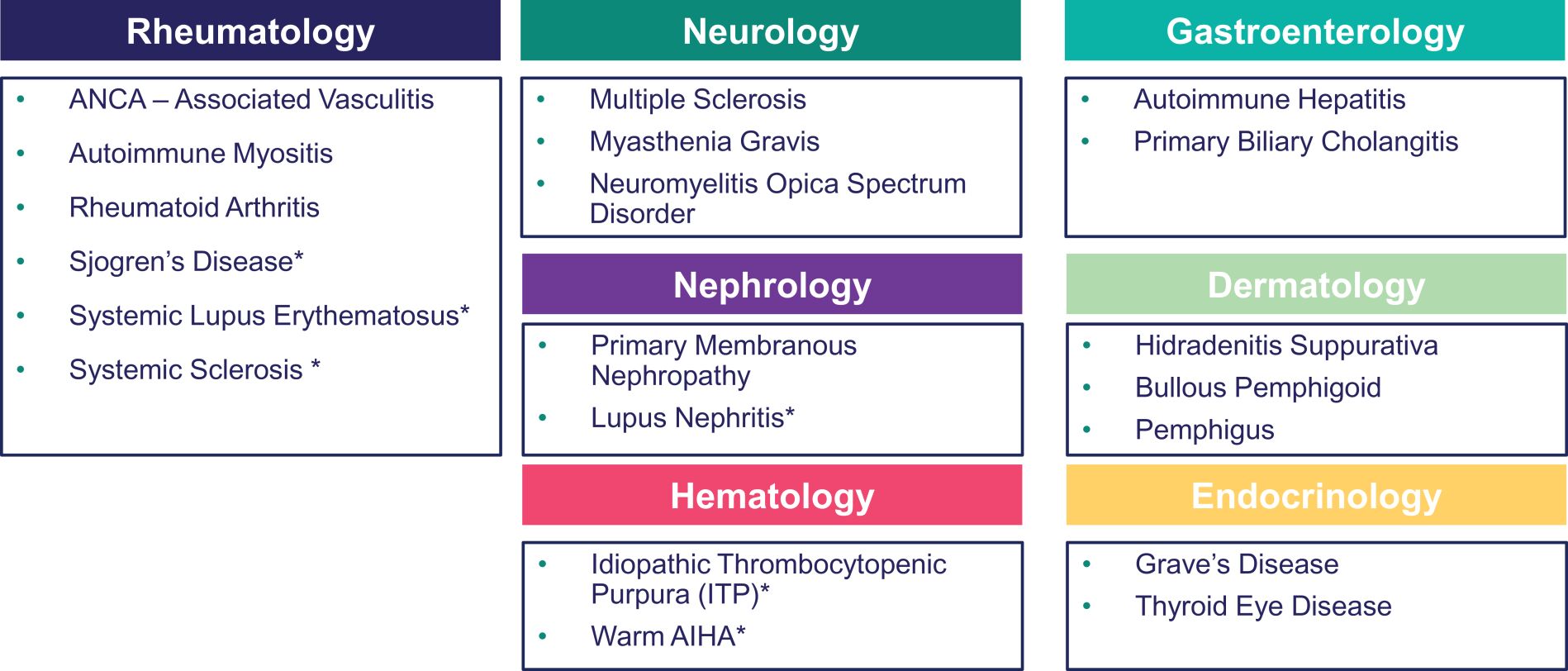
Our lead product candidate, JADE101, is a monoclonal antibody (“mAb”) targeting a cytokine called “A PRoliferation Inducing Ligand” (“APRIL”) that modulates plasma cell survival and immunoglobulin production, which we plan to initially develop for the treatment of IgA nephropathy (“IgAN”). Our second product candidate is JADE201, a mAb targeting B cell activating factor receptor (“BAFF-R”) for the treatment of multiple autoimmune disorders.

Business Combination of Aerovate and Pre-Merger Jade and Pre-Closing Financing

On April 28, 2025, we consummated (the “Closing”) the previously announced business combination pursuant to that certain Agreement and Plan of Merger (the “Merger Agreement”), dated as of October 30, 2024, by and among us (prior to the Merger, Aerovate Therapeutics, Inc., or “Aerovate”), Caribbean Merger Sub I, Inc. (“First Merger Sub”), Caribbean Merger Sub II, LLC (“Second Merger Sub”), and Jade Biosciences, Inc., a private Delaware corporation (“Pre-Merger Jade”). As part of the Closing, First Merger Sub merged with and into Pre-Merger Jade, with Pre-Merger Jade continuing as a wholly owned subsidiary of Aerovate and the surviving corporation of the merger (the “First Merger” and such time, the “First Effective Time”), and Pre-Merger Jade merged with and into Second Merger Sub, with Second Merger Sub being the surviving entity of the merger (the “Second Merger” and, together with the First Merger, the “Merger”). In connection with the Merger, Second Merger Sub changed its name to “Jade Biosciences, LLC” and Aerovate changed its name to “Jade Biosciences, Inc.” Subsequently, Jade Biosciences, LLC merged with and into Jade Biosciences, Inc.

In connection with the Merger, Pre-Merger Jade entered into a subscription agreement with certain new and existing investors of Pre-Merger Jade (the “Subscription Agreement”), pursuant to which Pre-Merger Jade issued and sold, and certain new and existing investors purchased, 43,947,116 shares of common stock of Pre-Merger Jade (“Pre-Merger Jade common stock”) and 12,305,898 pre-funded warrants, exercisable for 12,305,898 shares of Pre-Merger Jade common stock (“Pre-Merger Jade pre-funded warrants”), at a purchase price of $5.9407 per share or a purchase price of $5.9406 per Pre-Merger Jade pre-funded warrant, for an aggregate amount of $334.2 million, which included $95.0 million of proceeds previously received from the issuance of convertible notes and accrued interest of $8.3 million on such convertible notes and the conversion of the convertible notes into shares of Pre-Merger Jade common stock and Pre-Merger Jade pre-funded warrants (the “Pre-Closing Financing”). At the Closing, the shares of Pre-Merger Jade common stock and Pre-Merger Jade pre-funded warrants issued in the Pre-Closing Financing were converted into shares of Common Stock in accordance with the Exchange Ratio (as defined herein).


1


Table of Contents

Immediately prior to the consummation of the Merger, Aerovate effected a 1-for-35 reverse stock split of Aerovate common stock (as defined herein), which became legally effective on April 28, 2025 (the “Reverse Stock Split”). Following the Reverse Stock Split, and as a result of and upon the First Effective Time:


each then-outstanding share of Pre-Merger Jade common stock (including shares of Pre-Merger Jade common stock issued in connection with the Pre-Closing Financing) immediately prior to the First Effective Time (excluding shares cancelled pursuant to the Merger Agreement and excluding dissenting shares) automatically converted into the right to receive a number of shares of common stock, par value $0.0001, of Aerovate (prior to the effective time of the Merger, the “Aerovate common stock”) equal to an exchange ratio determined in accordance with the Merger Agreement (the “Exchange Ratio”);


each then-outstanding share of Series Seed Convertible Preferred Stock, par value $0.0001 per share, of Pre-Merger Jade (“Pre-Merger Jade preferred stock”) immediately prior to the First Effective Time (excluding shares cancelled pursuant to the Merger Agreement and excluding dissenting shares) automatically converted into the right to receive a number of shares of Series A Non-Voting Convertible Preferred Stock, par value $0.0001 per share (the “Series A Preferred Stock”), of Aerovate (which are each convertible into 1,000 shares of Common Stock) equal to the Exchange Ratio divided by 1,000;


each then-outstanding option to purchase Pre-Merger Jade common stock was assumed by Aerovate and was converted into an option to purchase shares of Common Stock, subject to adjustment as set forth in the Merger Agreement; and


each then-outstanding Pre-Merger Jade pre-funded warrant (including any Pre-Merger Jade pre-funded warrants issued in the Pre-Closing Financing) was converted into a pre-funded warrant to purchase shares of Common Stock (subject to adjustment as set forth in the Merger Agreement and the form of pre-funded warrant).

The Exchange Ratio was calculated using a formula intended to allocate existing Aerovate and Pre-Merger Jade securityholders a percentage of the Company. Based on Aerovate’s and Pre-Merger Jade’s values as of the date of the Merger Agreement and capitalization as of April 28, 2025, the Exchange Ratio (as adjusted for the Reverse Stock Split (as defined below)) was 0.6311 shares of Aerovate common stock for each share of Pre-Merger Jade common stock.

Private Placement of Common Stock, Preferred Stock and Pre-Funded Warrants

On October 8, 2025, we completed the October 2025 PIPE pursuant to the Securities Purchase Agreement dated October 6, 2025, by and among us and the Selling Stockholders (the “SPA”). The Selling Stockholders purchased (i) an aggregate of 13,368,164 PIPE Shares at a price per share of $9.14 and (ii) 1,402,092 PIPE Pre-Funded Warrants at a purchase price of $9.1399 per PIPE Pre-Funded Warrant, which represents the per share purchase price of the PIPE Shares less the $0.0001 per share exercise price for each PIPE Pre-Funded Warrant, for an aggregate purchase price of approximately $135 million.

The PIPE Pre-Funded Warrants will be exercisable at any time after the date of issuance. A holder of PIPE Pre-Funded Warrants may not exercise the warrant if the holder, together with its affiliates, would beneficially own more than 4.99% or 9.99%, as applicable, of the number of shares of Common Stock outstanding immediately after giving effect to such exercise. A holder of PIPE Pre-Funded Warrants may increase or decrease this percentage to a percentage not in excess of 19.99% by providing at least 61 days’ prior notice to us.

The sale of PIPE Shares and PIPE Pre-Funded Warrants was not registered under the Securities Act, and such sale was intended to be exempt from registration pursuant to Section 4(a)(2) of the Securities Act as a transaction by an issuer not involving a public offering.


2


Table of Contents

Corporation Information

Our principal executive offices are located at 221 Crescent Street, Building 23, Suite 105, Waltham, Massachusetts 02453, and our telephone number is (781) 312-3013. Our website address is www.jadebiosciences.com. Information contained on, or accessible through, our website is not incorporated by reference in this prospectus. We make our periodic and current reports available on our website, free of charge, as soon as reasonably practicable after such material is electronically filed with, or furnished to, the SEC. No portion of our website is incorporated by reference into this prospectus. We file our annual, quarterly and special reports, proxy statements and other information with the SEC. Our filings with the SEC are also available to the public on the SEC’s website at http://www.sec.gov. Our Common Stock is traded on The Nasdaq Capital Market under the symbol “JBIO.”


3


Table of Contents

The Offering


Shares Offered by the Selling Securityholders

Up to (i) 13,368,164 PIPE Shares, (ii) 1,402,092 shares of Common Stock issuable upon the exercise of PIPE Pre-Funded Warrants and (iii) 1,355,013 Existing Shares.


Terms of the Offering

The Selling Stockholders will determine when and how they will dispose of the shares of Common Stock and shares of Common Stock issuable upon the exercise of PIPE Pre-Funded Warrants registered under this prospectus for resale.


Shares Outstanding

As of September 30, 2025, there were 32,626,730 shares of our Common Stock outstanding.


Use of Proceeds

We will not receive any proceeds from the sale of the Resale Shares offered by the Selling Stockholders under this prospectus. The net proceeds from the sale of the Resale Shares offered by this prospectus will be received by the Selling Stockholders. Upon any exercise of the PIPE Pre-Funded Warrants by payment of cash, however, we will receive the nominal cash exercise price paid by the holders of the PIPE Pre-Funded Warrants. See the section titled “Use of Proceeds.”


Risk Factors

See the section titled “Risk Factors” and other information included in this prospectus for a discussion of factors that you should consider carefully before deciding to invest in our securities.


Stock Market Symbol

Our Common Stock is listed on The Nasdaq Capital Market under the symbol “JBIO.”

The number of issued and outstanding shares of Common Stock does not include the following, as of September 30, 2025 unless otherwise noted:


12,622,000 shares of Common Stock issuable upon the conversion of 12,622 shares of Series A Preferred Stock;


13,368,164 PIPE Shares issued subsequent to September 30, 2025 in the October 2025 PIPE;


1,402,092 shares of Common Stock issuable upon the exercise of PIPE Pre-Funded Warrants with an exercise price of $0.0001 per share issued subsequent to September 30, 2025 in the October 2025 PIPE;


7,375,394 shares of Common Stock issuable upon the exercise of 7,375,394 pre-funded warrants to acquire shares of Common Stock with an exercise price of $0.0001 per share;


7,449,487 shares of Common Stock issuable upon the exercise of stock options outstanding under the Jade Biosciences, Inc. 2024 Equity Incentive Plan with a weighted-average exercise price of $4.76 per share;


2,251,408 shares of Common Stock issuable upon the exercise of stock options outstanding under the Jade Biosciences, Inc. 2025 Stock Incentive Plan (the “2025 Plan”) with a weighted-average exercise price of $9.28 per share;


6,260,494 shares of Common Stock reserved for issuance under our 2025 Plan; and


4


Table of Contents
   

526,241 shares of Common Stock reserved for issuance under our 2025 Employee Stock Purchase Plan.

For additional information concerning the offering, see the section titled “Plan of Distribution.”


5


Table of Contents

RISK FACTOR SUMMARY

The following summarizes the principal factors that make an investment in the Company speculative or risky, all of which are more fully described in the Risk Factors section below. This summary should be read in conjunction with the Risk Factors section and should not be relied upon as an exhaustive summary of the material risks facing our business. The occurrence of any of these risks could harm our business, financial condition, results of operations and/or growth prospects or cause our actual results to differ materially from those contained in forward-looking statements we have made in this prospectus and those we may make from time to time. You should consider all the risk factors described in our public filings when evaluating our business.


We are a clinical stage biotechnology company with a limited operating history on which to assess our business; we have not completed any clinical trials, and we have no products approved for commercial sale, which may make it difficult to evaluate our current business and likelihood of success and viability.


We will require substantial additional capital to finance our operations in the future. If we are unable to raise such capital when needed, or on acceptable terms, we may be forced to delay, reduce and/or eliminate one or more of our development programs or future commercialization efforts.


We expect to continue to incur losses for the foreseeable future and may not be able to achieve or sustain profitability in the future. We have no products approved for sale, have not generated any revenue from our product candidates and may never generate revenue or become profitable.


We face competition from entities that have developed or may develop product candidates for the diseases addressed by our product candidates.


Our programs are in the clinical and preclinical stages of development and may fail in development or suffer delays that materially and adversely affect our viability. If we or our current or future collaborators are unable to complete development of or commercialize our product candidates, or experience significant delays in doing so, our business will be materially harmed.


We are substantially dependent on the success of JADE101, and our current and anticipated future clinical trials of such product candidate may not be successful.


If we do not achieve our projected development objectives in the time frames we announce and expect, the commercialization of our product candidates may be delayed, which may harm our reputation and prospects, increase our expenses and cause our stock price to decline.


Our approach to the discovery and development of our product candidates is unproven, and we may not be successful in our efforts to build a pipeline of product candidates with commercial value.


Preclinical and clinical development involves a lengthy and expensive process that is subject to delays and with uncertain outcomes, and results of earlier studies and trials may not be predictive of future clinical trial results. If our preclinical studies and clinical trials are not sufficient to support regulatory approval of any of our product candidates, we may incur additional costs or experience delays in completing, or ultimately be unable to complete, the development of such product candidate.


We may find it difficult to enroll patients in our clinical trials, particularly given the relatively small patient population and significant competition for patients who have the diseases for which JADE101 is being developed. If we encounter difficulties enrolling patients in our current clinical trial of JADE101 or future clinical trials, our clinical development activities could be delayed or otherwise adversely affected.


Preliminary, “topline” or interim data from our clinical trials that we announce or publish from time to time may change as more patient data become available and are subject to audit and verification procedures.


6


Table of Contents
   

We rely on collaborations and licensing arrangements with third parties, including Paragon Therapeutics, Inc. (“Paragon”). If we are unable to maintain these collaborations or licensing arrangements, or if these collaborations or licensing arrangements are not successful, our business could be negatively impacted.


We currently rely, and plan to rely in the future, on third parties to conduct and support our preclinical studies and clinical trials. If these third parties do not properly and successfully carry out their contractual duties or meet expected deadlines, we may not be able to obtain regulatory approval of or commercialize our product candidates.


We rely on the use of third-party contract manufacturing organizations (“CMOs”) to manufacture our product candidates, and we expect to continue to rely on third-party CMOs to produce our products, if approved. Our business could be adversely affected if we are unable to use third-party manufacturing suites or if the third-party manufacturers encounter difficulties in production.


In order to successfully implement our plans and strategies, we will need to grow the size of our organization and we may experience difficulties in managing this growth.


We may be subject to intellectual property lawsuits or may need to file lawsuits to protect our intellectual property, which could result in substantial costs and liability and prevent us from commercializing our potential products.


The regulatory approval processes of the U.S. Food and Drug Administration (“FDA”) and other comparable foreign regulatory authorities are lengthy, time-consuming and inherently unpredictable. If we are not able to obtain, or if there are delays in obtaining, required regulatory approvals for our product candidates, we will not be able to commercialize, or will be delayed in commercializing, our product candidates, and our ability to generate revenue will be materially impaired.


Litigation costs and the outcome of litigation could have a material adverse effect on our business.


The market price of our common stock has been and is expected to continue to be volatile.


We are governed by Nevada law and our articles of incorporation and bylaws, provisions of which have anti-takeover implications.


Because our articles of incorporation and bylaws limit the court in which you may bring an action against us, you may have difficulty obtaining a favorable judicial forum or you may incur more expense enforcing any rights which you may claim.


Conflicts of interest may arise between us and Paragon or us and Fairmount Funds Management LLC (“Fairmount”).


Our executive officers, directors and principal stockholders have the ability to control or significantly influence all matters submitted to our stockholders for approval.


7


Table of Contents

RISK FACTORS

Risks Related to Our Limited Operating History, Financial Position and Capital Requirements

We are a clinical stage biotechnology company with a limited operating history on which to assess our business; we have not completed any clinical trials, and we have no products approved for commercial sale, which may make it difficult to evaluate our current business and likelihood of success and viability.

We are a clinical stage biotechnology company with limited operating history. Since our inception, we have incurred operating losses with no corresponding revenue and have utilized substantially all of our resources to identify, license and develop our product candidates, organize and staff our company and provide other general and administrative support for our operations. We have no significant experience as a company in initiating, conducting or completing preclinical studies or clinical trials. In part because of this lack of experience, we cannot be certain that our preclinical studies or clinical trials will begin or be completed on time, if at all. In addition, we have not yet demonstrated an ability to obtain regulatory approvals, manufacture a commercial-scale product or arrange for a third party to do so on our behalf, or conduct sales, marketing and distribution activities necessary for successful product commercialization. Consequently, any predictions about our future success or viability may not be as accurate as they could be if we had a longer operating history.

In addition, as our business grows, we may encounter unforeseen expenses, restrictions, difficulties, complications, delays and other known and unknown factors. We will need to transition at some point from a company with an early research and development focus to a company capable of supporting larger scale clinical trials and eventually commercial activities. We may not be successful in such a transition.

We will require substantial additional capital to finance our operations in the future. If we are unable to raise such capital when needed, or on acceptable terms, we may be forced to delay, reduce and/or eliminate one or more of our development programs or future commercialization efforts.

Developing biotechnology products is a long, time-consuming, expensive and uncertain process that takes years to complete. We expect our expenses to increase in connection with our ongoing activities, particularly as we conduct preclinical studies and clinical trials of, and seek regulatory approval for our product candidates, advance discovery efforts with respect to our research and development programs, and advance any future programs and product candidates that we may license. Even if one or more of the programs that we develop is approved for commercial sale, we anticipate incurring significant costs associated with sales, marketing, manufacturing and distribution activities to launch any such product. Our expenses could increase beyond expectations if we are required by the FDA or other regulatory agencies to perform preclinical studies or clinical trials in addition to or more expansive than those that we currently anticipate. Because the design and outcome of our planned and anticipated clinical trials are highly uncertain, we cannot reasonably estimate the actual amount of funding that will be necessary to successfully complete the development and commercialization of any program we develop. Our future capital requirements depend on many factors, including but not limited to:


the scope, design, progress, results and costs of discovery, preclinical and clinical development for our product candidates;


the cost and timing of completion of clinical and commercial-scale manufacturing activities;


the costs and timing of preparing, filing and prosecuting patent applications, maintaining, defending and enforcing our intellectual property and proprietary rights, and defending intellectual property-related claims, including claims of infringement, misappropriation or other violations of third-party intellectual property;


the costs, timing and outcome of the regulatory review of our product candidates and obtaining the requisite regulatory approvals;


the costs of our future commercialization activities, either on our own or in collaboration with others, including product sales, marketing, manufacturing, and distribution for any product candidate for which we receive regulatory approval;


8


Table of Contents
   

the revenue, if any, received from commercial sales of product candidates for which we receive regulatory approval;


the success of our current or future collaborations, including our collaboration with Paragon pursuant to the Antibody Discovery and Option Agreement (as amended, the “Paragon Option Agreement”) with Paragon and Parade Biosciences Holding LLC (“Parade”) and our current and any future license agreements we enter into with Paragon;


Our ability to establish and maintain additional collaborations on favorable terms, if at all;


the extent to which we acquire or in-license products, intellectual property and technologies;


the costs of operational, financial and management information systems and associated personnel; and


the costs of operating as a public company.

As a result, we will require substantial additional funding to continue our operations. As of September 30, 2025, we had $50.1 million of cash and cash equivalents, and $148.8 million of investments. We expect that our existing cash and cash equivalents, and investments, combined with the gross proceeds of approximately $135.0 million from the October 2025 PIPE, will be sufficient to fund our operating expenses and capital expenditure requirements for at least twelve months from the date our unaudited condensed consolidated financial statements for the three months ended September 30, 2025 were issued. We will still need to raise additional capital to continue to fund our operations in the future. If we are unable to raise additional capital when needed, that could raise substantial doubt about our ability to continue as a going concern.

We may be required to seek additional funds sooner than planned through public or private equity offerings, debt financings, collaborations and licensing arrangements or other sources, and adequate additional financing may not be available to us on acceptable terms, or at all. Such financing may dilute our stockholders or the failure to obtain such financing may restrict our operating activities. Any additional fundraising efforts may divert our management from their day-to-day activities, which may adversely affect our business. To the extent that we raise additional capital through the sale of equity or convertible debt securities, the ownership interest of our stockholders will be diluted, and the terms may include liquidation or other preferences and anti-dilution protections that adversely affect the rights of our stockholders. Debt financing may result in the imposition of debt covenants, increased fixed payment obligations or other restrictions that may affect our business. If we raise additional funds through upfront payments or milestone payments pursuant to current or future collaborations with third parties, we may have to relinquish valuable rights to our product candidates, or grant licenses on terms that are not favorable to us. Our ability to raise additional capital may be adversely impacted by global macroeconomic conditions and volatility in the credit and financial markets in the United States and worldwide. Our failure to raise capital as and when needed or on acceptable terms would have a negative impact on our financial condition and our ability to pursue our business strategy, and we may have to delay, reduce the scope of, suspend or eliminate one or more of our product candidates, clinical trials or future commercialization efforts or cease our operations.

We expect to continue to incur losses for the foreseeable future and may not be able to achieve or sustain profitability in the future. We have no products approved for sale, have not generated any revenue from our product candidates and may never generate revenue or become profitable.

Investment in biotechnology product development is a highly speculative undertaking and entails substantial upfront capital expenditures and significant risks that any product candidate will fail to demonstrate adequate efficacy or an acceptable safety profile, gain regulatory approval and become commercially viable. We have no products approved for commercial sale, have not generated any revenue from product sales to date, and continue to incur significant research and development and other expenses related to our ongoing operations. We do not expect to generate product revenue unless or until we successfully complete preclinical and clinical development and obtain regulatory approval of, and then successfully commercialize, at least one of our product candidates.


9


Table of Contents

We may never succeed in these activities and, even if we do, may never generate revenues that are significant or large enough to achieve profitability. If we are unable to raise sufficient additional capital to advance a product candidate to commercialization or generate sufficient revenue through the sale of any approved products, we may be unable to continue operations without additional funding.

We have incurred significant net losses in each period since we commenced operations in June 2024. We generated net losses of $47.0 million for the period from June 18, 2024 (inception) to December 31, 2024. For the nine months ended September 30, 2025, we had net losses of $95.5 million. As of September 30, 2025, we had an accumulated deficit of $142.5 million. We expect to continue to incur losses for the foreseeable future. Our operating expenses and net losses may fluctuate significantly from quarter to quarter and year to year. We anticipate that our expenses will increase substantially if and as we:


advance our existing and future product candidates through preclinical and clinical development, including potential expansion into additional indications;


seek to identify additional product candidates;


maintain, expand, enforce, defend and protect our intellectual property portfolio;


seek, obtain and maintain regulatory and regulatory approvals for our product candidates;


seek to identify, establish and maintain additional collaborations and license agreements;


make milestone payments to Paragon under the Paragon Option Agreement and the license agreements with Paragon relating to JADE101 and JADE201 (together, the “Paragon License Agreements”), and under any additional future collaboration or license agreements that we enter into;


ultimately establish a sales, marketing and distribution infrastructure to commercialize any drug products for which we may obtain regulatory approval, either on our own or in collaboration with others;


generate revenue from commercial sales of product candidates for which we receive regulatory approval, if any;


hire additional personnel including research and development, clinical and commercial personnel;


adds operational, financial and management information systems and personnel, including personnel to support our product development;


acquire or in-licenses products, intellectual property and technologies;


establish clinical and commercial-scale current good manufacturing practices (“cGMP”) capabilities through a third-party or our own manufacturing facility; and


operate as a public company.

In addition, our expenses will increase if, among other things, we are required by the FDA or other regulatory authorities to perform clinical trials or studies in addition to, or different than, those that we currently anticipate, there are any delays in completing our clinical trials or the development of any of our product candidates, or there are any third-party challenges to our intellectual property or we need to defend against any intellectual property-related claim.

Even if we obtain regulatory approval for, and are successful in commercializing, one or more of our product candidates, we expect to incur substantial additional research and development and other expenditures to develop and market additional product candidates and/or to expand the approved indications of any marketed product. We may encounter unforeseen expenses, difficulties, complications, delays and other unknown factors that may adversely affect our business. The size of our future net losses will depend, in part, on the rate of future growth of our expenses and our ability to generate revenue.


10


Table of Contents

Our failure to become profitable would decrease our value and could impair our ability to raise capital, maintain our research and development efforts, expand our business and/or continue our operations. A decline in the value of our stock could also cause stockholders to lose all or part of their investment.

Risks Related to Our Discovery, Development and Commercialization

We face competition from entities that have developed or may develop product candidates for the diseases addressed by our product candidates.

The development and commercialization of drugs is highly competitive. Our product candidates, if approved, will face significant competition and our failure to effectively compete may prevent us from achieving significant market penetration. We compete with a variety of multinational biopharmaceutical companies, specialized biotechnology companies and emerging biotechnology companies, including Biogen Inc., Biohaven, Ltd., Calliditas Therapeutics AB, Climb Bio, Inc., Novartis AG, Otsuka Pharmaceutical Co., Ltd., Takeda Pharmaceutical Company Limited, Travere Therapeutics, Inc., Vera Therapeutics, Inc., Vertex Pharmaceuticals Incorporated, and Vor Biopharma Inc. as well as academic institutions, governmental agencies, and public and private research institutions, among others. Many of the companies with which we are currently competing or will compete against in the future have significantly greater financial resources and expertise in research and development, manufacturing, preclinical testing, conducting clinical trials, obtaining regulatory approvals, and regulatory approved products than we do, and are further along in the clinical development and/or commercialization process. Mergers and acquisitions in the pharmaceutical and biotechnology industry may result in even more resources being concentrated among a smaller number of our competitors. Smaller or early-stage companies may also prove to be significant competitors, particularly through collaborative arrangements with large and established companies. These competitors also compete with us in recruiting and retaining qualified scientific and management personnel, establishing clinical trial sites, raising capital, patient registration for clinical trials, establishing and defending rights to intellectual property, as well as in acquiring technologies complementary to, or necessary for, our product candidates.

Our competitors have developed or are developing, and may in the future develop, product candidates or products competitive with our product candidates. Competitive therapeutic treatments include those that have already been approved and accepted by the medical community and any potential new treatments, including those currently under clinical development. Our success will depend partially on our ability to develop and commercialize products that have a competitive safety, efficacy, dosing and/or presentation profile. Our commercial opportunity and success will be reduced or eliminated if competing products are safer, more effective, have a more attractive dosing profile or presentation or are less expensive than the products we develop, or if our competitors develop competing products or biosimilars that enter the market more quickly than we do and are able to gain market acceptance. Conversely, the lack of commercial success of other competing therapies may raise concerns about the financial viability of our product candidates.

In addition, because of the competitive landscape for autoimmune indications, including IgA nephropathy (“IgAN”), we may also face competition for establishing trial sites and clinical trial enrollment. Patient enrollment will depend on many factors, including if potential clinical trial patients choose to undergo treatment with approved products or enroll in competitors’ ongoing clinical trials for product candidates that are under development for the same indications as our product candidates. An increase in the number of approved products for the indications we are targeting with our product candidates will likely further exacerbate this competition. Our inability to enroll a sufficient number of patients could, among other impacts, delay our development timeline, which may further harm our competitive position.


11


Table of Contents

Our programs are in the clinical and preclinical stages of development and may fail in development or suffer delays that materially and adversely affect our viability. If we or our current or future collaborators are unable to complete development of or commercialize our product candidates, or experience significant delays in doing so, our business will be materially harmed.

We have no commercially approved products. Our programs are in the clinical and preclinical stages of development, and we have not completed any clinical trials. As a result, we expect it will be many years before we commercialize any product candidate, if ever. Our ability to achieve and sustain profitability depends on obtaining regulatory approvals for, and successfully commercializing, our product candidates, either alone or with third parties, and we cannot guarantee you that we will ever obtain regulatory approval for any of our product candidates. We have not yet demonstrated our ability to complete any clinical trials, obtain regulatory approvals, manufacture a commercial-scale product or arrange for a third party to do so on our behalf, or conduct sales and marketing activities necessary for successful product commercialization. Before obtaining regulatory approval for the commercial distribution of any product candidate, we or an existing or future collaborator must conduct extensive preclinical tests and clinical trials to demonstrate the safety and efficacy in humans of the product candidate.

We or our collaborators may experience delays in initiating or completing preclinical studies or clinical trials. We or our collaborators also may experience numerous unforeseen events during, or as a result of, any future preclinical studies or clinical trials that we could conduct that could delay or prevent our ability to receive regulatory approval or commercialize our product candidates, including:


regulators, such as the FDA, institutional review boards (“IRBs”) or comparable foreign regulatory authorities may not authorize us or our investigators to commence a clinical trial or conduct a clinical trial at a prospective trial site;


we may experience delays in reaching, or fail to reach, agreement on acceptable terms with prospective trial sites and prospective clinical research organizations (“CROs”), the terms of which can be subject to extensive negotiation and may vary significantly among different CROs and trial sites;


clinical trial sites may deviate from the trial protocol, fail to conduct trials in a compliant manner or drop out of a trial, which may require that we add new clinical trial sites or investigators or otherwise negatively impact the timing or integrity of our clinical trial(s);


clinical trials of any product candidates may fail to show safety or efficacy, or may produce negative or inconclusive results and we may decide, or regulators may require us, to conduct additional preclinical studies or clinical trials or we may decide to abandon a product development program;


the number of subjects required for clinical trials of any product candidates may be larger than we anticipate, especially if regulatory bodies require completion of non-inferiority or superiority trials, enrollment in these clinical trials may be slower than we anticipate or subjects may drop out of these clinical trials or fail to return for post-treatment follow-up at a higher rate than we anticipate;


our third-party contractors may fail to comply with regulatory requirements or meet their contractual obligations to us in a timely manner, or at all, or may deviate from the clinical trial protocol or suffer other quality or performance issues that negatively impact the timing or integrity of our clinical trial(s);


we may elect to, or regulators, IRBs or ethics committees may require that we or our investigators, suspend or terminate clinical research or trials for various reasons, including noncompliance with regulatory requirements or a finding that the participants in our clinical trials are being exposed to unacceptable health risks;


the cost of clinical trials of any of our product candidates may be greater than we anticipate;


the quality of our product candidates or other materials necessary to conduct clinical trials of our product candidates may be inadequate to initiate or successfully complete a given clinical trial;


12


Table of Contents
   

we may be unable to manufacture sufficient quantities of our product candidates for use in clinical trials;


reports from clinical testing of other therapies may raise safety or efficacy concerns about our product candidates;


we may fail to establish an appropriate safety profile for a product candidate based on clinical or preclinical data for such product candidates as well as data emerging from other therapies in the same class as our product candidates; and


the FDA or other regulatory authorities may require us to submit additional data, such as long-term toxicology studies, or impose other requirements before permitting us to initiate a clinical trial.

Commencing clinical trials in the United States is subject to acceptance by the FDA of an IND and finalizing the trial design based on discussions with the FDA. Commencing clinical trials in jurisdictions outside of the United States is similarly subject to acceptance by the applicable regulatory authority of clinical trial documentation following discussions with such authority. In the event that the FDA or other applicable regulatory authority requires us to complete additional preclinical studies or we are required to satisfy other FDA or foreign regulatory authority requests, respectively, prior to commencing clinical trials, the start of our first clinical trial for a product candidate may be delayed. Even after we receive and incorporate guidance from these regulatory authorities, the FDA or other regulatory authorities could disagree as to whether we have satisfied their requirements to commence any clinical trial or change their position on the acceptability of our trial design or the clinical endpoints selected, which may require us to complete additional preclinical studies or clinical trials, delay the enrollment of our clinical trials or impose stricter approval conditions than we currently expect. There are analogous processes and risks applicable to clinical trial applications in other countries, including New Zealand, Australia, countries in the EU and countries in Asia.

We may not have the financial resources to continue development of our product candidates if we experience any issues that delay or prevent regulatory approval of, or our ability to commercialize, our product candidates. We or our current or future collaborators’ inability to complete development of, or commercialize our product candidates, or significant delays in doing so, could have a material and adverse effect on our business, financial condition, results of operations and prospects.

We are substantially dependent on the success of JADE101, and our current and anticipated future clinical trials of such product candidate may not be successful.

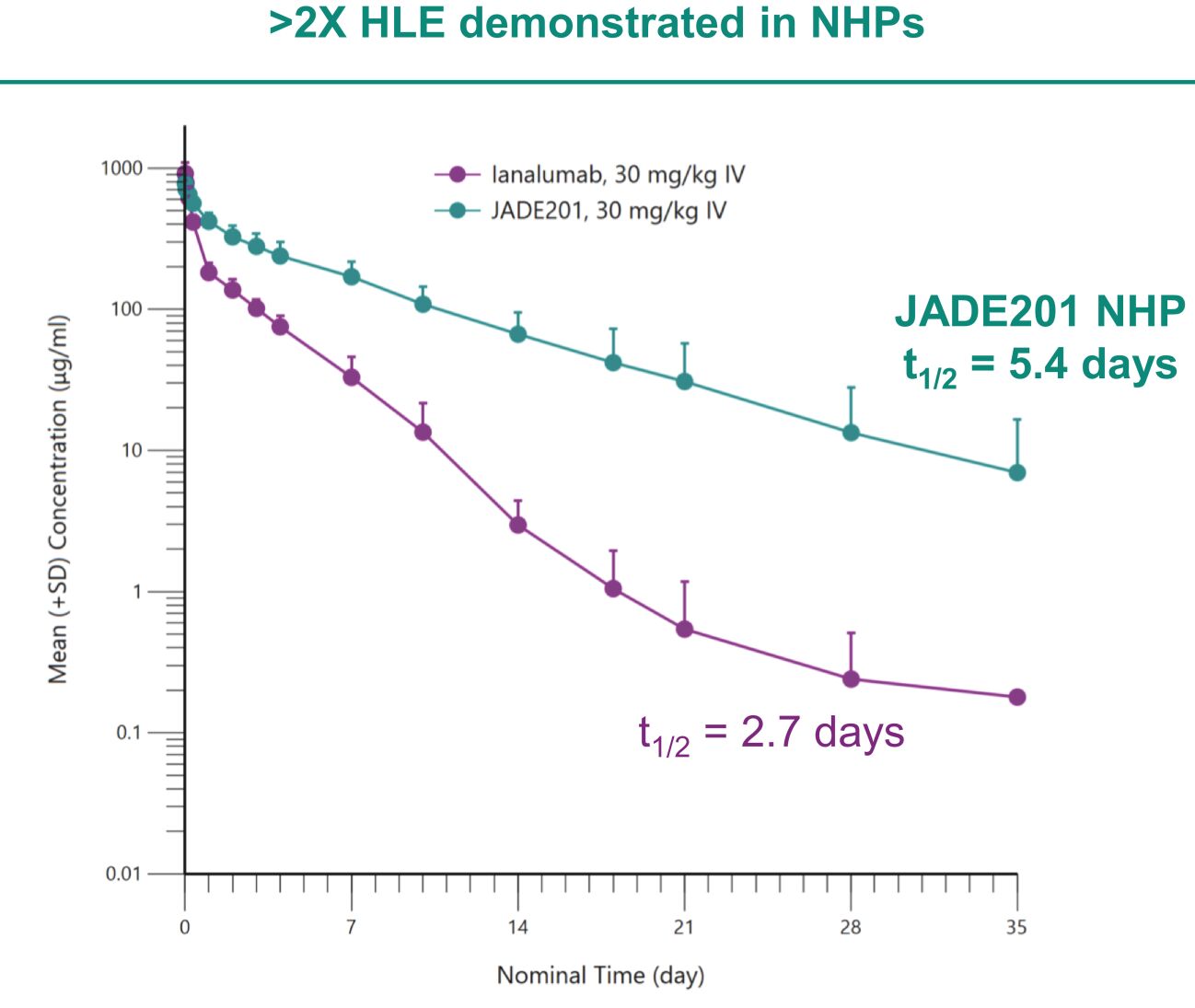
Our future success is substantially dependent on our ability to timely obtain regulatory approval for, and then successfully commercialize, JADE101. We are initially investing a majority of our efforts and financial resources into the research and development of this program. We initiated a Phase 1 clinical trial of JADE101 in healthy volunteers in New Zealand in August 2025. The success of JADE101 is dependent on observing suppression of IgA levels and improved pharmacokinetic properties compared to other anti-APRIL monoclonal antibody product candidates in clinical development. This is based in part on the assumption that the increased in vitro potency and improved pharmacokinetics observed in non-human primates (“NHPs”) will translate into a suppression of IgA levels and improved pharmacokinetic properties of JADE101 in humans, resulting in a more convenient dosing regimen. To the extent we do not observe this suppression of IgA levels or improved pharmacokinetic properties in our Phase 1 clinical trial of JADE101 or in additional clinical trials, it would significantly and adversely affect the clinical and commercial potential of JADE101.

Our product candidates will require additional clinical development, evaluation of clinical, preclinical and manufacturing activities, regulatory approval in multiple jurisdictions, substantial investment and significant marketing efforts before we generate any revenues from product sales. We are not permitted to market or promote these product candidates, or any other product candidates, before we receive regulatory approval from the FDA and comparable foreign regulatory authorities, and we may never receive such regulatory approvals.


13


Table of Contents

The success of our product candidates will depend on a variety of factors. We do not have complete control over many of these factors, including certain aspects of clinical development and the regulatory submission process, potential threats to our intellectual property rights, potential threats from the intellectual property rights of third parties and the manufacturing, marketing, distribution and sales efforts of any current or future collaborator. Accordingly, we cannot assure you that we will ever be able to generate revenue through the sale of these product candidates, even if approved. If we are not successful in obtaining regulatory approval and commercializing JADE101, JADE201 or future product candidates, or are significantly delayed in doing so, our business will be materially harmed.

If we do not achieve our projected development objectives in the time frames we announce and expect, the commercialization of our product candidates may be delayed which may harm our reputation and prospects, increase our expenses and cause our stock price to decline.

From time to time, we estimate the timing of the anticipated accomplishment of various scientific, clinical, regulatory and other product development goals, which we sometimes refer to as milestones. These milestones may include the commencement or completion of scientific studies and clinical trials, such as the expected timing for the initiation of our Phase 1 clinical trial of JADE201, the timing for receipt of clinical data, such as mechanistic clinical proof-of-concept data and data from the Phase 1 clinical trial of JADE101 in healthy volunteers, and the timing for the submission of regulatory filings. From time to time, we may publicly announce the expected timing of some of these milestones. All of these milestones are and will be based on numerous assumptions. The actual timing of these milestones can vary dramatically compared to our estimates, in many cases for reasons beyond our control. If we do not meet these milestones as publicly announced, or at all, our prospects and reputation may be adversely affected and our stock price may decline. Additionally, delays relative to our projected timelines are likely to cause overall expenses to increase, which may require us to raise additional capital sooner than expected and prior to achieving targeted development milestones.

The target patient population for the treatment of IgAN is small and has not been definitively determined, and if our estimates of the number of treatable patients is lower than expected, our potential revenues from sales of our product candidates, if approved, and our ability to achieve profitability would be compromised.

Our estimates of both the number of patients who have IgAN, as well as the subset of patients with the disease in a position to receive treatment from JADE101 (i.e., those with proteinuria > 0.5g/day), if approved, are based on our beliefs, and these estimates may prove to be incorrect. These estimates have been derived from a variety of sources, including scientific literature, input from physicians that treat patients with the diseases we are targeting, patient foundations and secondary market research databases. For example, our estimates of the prevalence of IgAN in certain geographies are based in part on the published prevalence of IgAN among patient populations in the United States split across ethnicities, and our own analyses of prevalence in Europe, and on published disease incidence rates for certain geographies and estimated for the populations of such geographies. Further, new studies may change the estimated incidence or prevalence of IgAN, and any regulatory approvals that we may receive for JADE101 may include limitations for use or contraindications that decrease the addressable patient population. Similar considerations would apply to estimates of patient population for target indications we select for JADE201 and any future product candidates. Accordingly, our target patient populations may turn out to be lower than expected, in which case the potential revenues from sales of our product candidates, if approved, would be lower than expected.

Our approach to the discovery and development of our product candidates is unproven, and we may not be successful in our efforts to build a pipeline of product candidates with commercial value.

Our approach to the discovery and development of our product candidates leverages well-established mechanisms of action and incorporates advanced antibody engineering to optimize half-life and other properties designed to overcome limitations of existing therapies, including increased binding affinity. Our product candidates are purposefully designed to improve upon existing product candidates and products while


14


Table of Contents

maintaining the same, well-established mechanisms of action. However, the scientific research that forms the basis of our efforts to develop product candidates using half-life extension technologies and to enhance efficacy through improved binding affinity, including monoclonal antibodies, is ongoing and may not result in viable product candidates. We have limited clinical data on product candidates utilizing monoclonal antibody half-life extension technologies, especially in autoimmune indications, demonstrating whether they are safe or effective for long-term treatment in humans. We also have no clinical data to indicate whether our modifications to enhance binding affinity translate into improved efficacy in humans. The long-term safety and efficacy of our product candidates compared to currently approved products is unknown.

We may ultimately discover that utilizing half-life extension technologies for our specific targets and indications and any product candidates resulting therefrom do not possess certain properties required for therapeutic effectiveness. We currently have only preclinical data regarding the increased half-life properties of our product candidates, and the same results may not be seen in humans. In addition, product candidates using half-life extension technologies may demonstrate different chemical and pharmacological properties in patients than they do in laboratory studies. This technology and any product candidates resulting therefrom may not demonstrate the same chemical and pharmacological properties in humans and may interact with human biological systems in unforeseen, ineffective or harmful ways. Many product candidates that appeared highly promising in preclinical studies or in early-stage clinical trials have failed when advanced into, or further in, clinical development.

In addition, other companies are developing drug products that utilize half-life extension technology in other targets and indications. The failure of those companies to demonstrate the safety and efficacy of their product candidates may be harmful to our business, financial condition, results of operations and prospects.

In addition, we may in the future seek to discover and develop product candidates that are based on novel targets and technologies that are unproven. If our discovery or business development activities fail to identify novel targets or technologies for drug development, or such targets or technologies prove to be unsuitable for treating human disease, we may not be able to develop viable additional product candidates. We and our existing or future collaborators may never receive approval to market and commercialize any product candidate. Even if we or an existing or future collaborator obtains regulatory approval, the approval may be for targets, disease indications or patient populations that are not as broad as we intended or desired or may require labeling that includes significant use or distribution restrictions or safety warnings. If the products resulting from our product candidates prove to be ineffective, unsafe or commercially unviable, our product candidates and pipeline would have little, if any, value, which would have a material and adverse effect on our business, financial condition, results of operations and prospects.

Preclinical and clinical development involves a lengthy and expensive process that is subject to delays and with uncertain outcomes, and results of earlier studies and trials may not be predictive of future clinical trial results. If our preclinical studies and clinical trials are not sufficient to support regulatory approval of any of our product candidates, we may incur additional costs or experience delays in completing, or ultimately be unable to complete, the development of such product candidate.

Before obtaining regulatory approval from regulatory authorities for the sale of any product candidate, we must complete preclinical studies and then conduct extensive clinical trials to demonstrate the safety and efficacy of our product candidate in humans. Our clinical trials may not be conducted as planned or completed on schedule, if at all, and failure can occur at any time during the preclinical study or clinical trial process. For example, we depend on the availability of NHPs to conduct certain preclinical studies that we are required to complete prior to submitting an IND and initiating clinical development. There is currently a global shortage of NHPs available for drug development. While we currently do not anticipate that this shortage will materially impact our costs or timelines, a continuing or future shortage could cause the cost of obtaining NHPs for our future preclinical studies to increase significantly or result in delays to our development timelines. Furthermore, a failure of one or more clinical trials can occur at any clinical trial phase. The outcome of preclinical studies and


15


Table of Contents

early-stage clinical trials may not be predictive of the success of later clinical trials. Moreover, preclinical and clinical data are often susceptible to varying interpretations and analyses, and many companies that have believed their product candidates performed satisfactorily in preclinical studies and clinical trials have nonetheless failed to obtain regulatory approval of their product candidates. In addition, we expect to rely on patients to provide feedback on measures such as measures of disease and quality of life, which are subjective and inherently difficult to evaluate. These measures can be influenced by factors outside of our control and can vary widely from day to day for a particular patient, and from patient to patient and from site to site within a clinical trial.

We cannot be sure that the FDA or comparable foreign regulatory authorities will agree with our clinical development plans. We plan to use the data from our Phase 1 trial of JADE101 in healthy volunteers to support additional clinical trials. However, there is no guarantee the data from such Phase 1 trial will support additional trials. If the FDA or comparable foreign regulatory authorities require us to conduct additional trials or enroll additional patients, our development timelines may be delayed. We cannot be sure that submission of an IND or similar foreign application will result in the FDA or comparable foreign regulatory authorities, as applicable, allowing clinical trials to begin in a timely manner, if at all. Moreover, even if these trials begin, issues may arise that could cause regulatory authorities to suspend or terminate such clinical trials. Events that may prevent successful or timely initiation or completion of clinical trials include: inability to generate sufficient preclinical, toxicology or other in vivo or in vitro data to support the initiation or continuation of clinical trials; delays in reaching a consensus with regulatory authorities on study design or implementation of the clinical trials; delays or failure in obtaining regulatory authorization to commence a trial; delays in reaching agreement on acceptable terms with prospective CROs and clinical trial sites, the terms of which can be subject to extensive negotiation and may vary significantly among different CROs and clinical trial sites; delays in identifying, recruiting and training suitable clinical investigators; delays in obtaining required IRB approval or positive ethics committee opinions at each clinical trial site; delays in manufacturing, testing, releasing, validating or importing/exporting sufficient stable quantities of our product candidates for use in clinical trials or the inability to do any of the foregoing; failure by our CROs, other third parties or us to adhere to clinical trial protocols; failure to perform in accordance with the FDA’s or any other regulatory authority’s good clinical practice (“GCP”) requirements or regulatory guidelines; changes to the clinical trial protocols; clinical sites deviating from trial protocol or dropping out of a trial; changes in regulatory requirements, guidance or clinical trial plans that require amending or submitting new clinical protocols; selection of clinical endpoints that require prolonged periods of observation or analyses of resulting data; transfer of manufacturing processes to new or larger-scale facilities and delays or failure by our CMOs or us to make any necessary changes to such manufacturing process; and third parties being unwilling or unable to satisfy their contractual obligations to us.

We could also encounter delays if a clinical trial is suspended or terminated by us, by the IRBs or ethics committees of the institutions in which such clinical trials are being conducted, by the Data Safety Monitoring Board, if any, for such clinical trial or by the FDA or comparable foreign regulatory authorities. Such authorities may suspend or terminate a clinical trial due to a number of factors, including failure to conduct the clinical trial in accordance with regulatory requirements or our clinical trial protocols, inspection of the clinical trial operations or trial site by the FDA or comparable foreign regulatory authorities resulting in the imposition of a clinical hold, unforeseen safety issues or adverse side effects, failure to demonstrate a benefit from the product candidate, changes in governmental regulations or administrative actions or lack of adequate funding to continue the clinical trial. If we are required to conduct additional clinical trials or other testing of our product candidates beyond those that we currently contemplate, if we are unable to successfully complete clinical trials of our product candidates, if the results of these trials are not positive or are only moderately positive or if there are safety concerns, our business and results of operations would be adversely affected.


16


Table of Contents

We may find it difficult to enroll patients in our clinical trials, particularly given the relatively small patient population and significant competition for patients who have the diseases for which JADE101 is being developed. If we encounter difficulties enrolling patients in our current clinical trial of JADE101 or future clinical trials, our clinical development activities could be delayed or otherwise adversely affected.

We may experience difficulties in patient enrollment in our current or future clinical trials for a variety of reasons. The timely completion of clinical trials in accordance with their protocols depends, among other things, on our ability to enroll a sufficient number of patients who remain in the trial until our conclusion. In particular, as a result of the inherent difficulties in diagnosing IgAN, an indication with relatively small patient populations, and the significant competition for recruiting patients with IgAN in clinical trials, there may be delays in enrolling the patients we need to complete clinical trials on a timely basis, or at all. In addition, because we are initially focused on developing product candidates for indications for which there is significant competition for recruiting patients, we may encounter similar challenges for patient enrollment when we commence clinical programs for additional product candidates in the future. Further, there are four recently approved products for the treatment of IgAN, with additional products likely to gain approval in the next year, and patients may decide, or physicians may recommend, to use such approved treatments instead of enrolling in clinical trials.

The enrollment of patients in future trials for any of our product candidates will depend on many factors, including:


size and nature of the patient population;


severity of the disease under investigation;


availability and efficacy of approved drugs for the disease under investigation;


patient eligibility and exclusion criteria for the trial in question;


patients’ and clinicians’ perceived risks and benefits of the product candidate under study;


if patients choose to enroll in clinical trials, rather than using approved products, or if our competitors have ongoing clinical trials for product candidates that are under development for the same indications as our product candidates, and patients instead enroll in such clinical trials;


efforts to facilitate timely enrollment in clinical trials;


patient referral practices of physicians;


the ability to monitor patients adequately during and after treatment;


proximity and availability of clinical trial sites for prospective patients; and


continued enrollment of prospective patients by clinical trial sites.

Additionally, the number of patients required for clinical trials of our product candidates may be larger than we anticipate, especially if regulatory bodies require the completion of non-inferiority or superiority trials. Even if we are able to enroll a sufficient number of patients for our future clinical trials, we may have difficulty maintaining patients in our clinical trials. Our inability to enroll or maintain a sufficient number of patients would result in significant delays in completing clinical trials or receipt of regulatory approvals and increased development costs or may require us to abandon one or more clinical trials altogether, which could cause our value to decline, limit our ability to obtain additional financing and otherwise harm our prospects.

Preliminary, “topline” or interim data from our clinical trials that we announce or publish from time to time may change as more patient data become available and are subject to audit and verification procedures.

From time to time, we may publicly disclose preliminary or topline data from our preclinical studies and clinical trials, which are based on a preliminary analysis of then-available data. The results and related findings and conclusions are subject to change following a more comprehensive review of the data. We also make


17


Table of Contents

assumptions, estimations, calculations and conclusions as part of our analyses of these data without the opportunity to fully and carefully evaluate complete data. As a result, the preliminary or topline results that we report may differ from future results of the same studies, or different conclusions or considerations may qualify such results, once additional data have been received and fully evaluated or subsequently made subject to audit and verification procedures.

Any preliminary or topline data should be viewed with caution until the final data are available. From time to time, we may also disclose interim data from our preclinical studies and clinical trials. Interim data are subject to the risk that one or more of the clinical outcomes may materially change as patient enrollment continues and more patient data become available or as patients from our clinical trials continue other treatments. Further, others, including regulatory authorities, may not accept or agree with our assumptions, estimates, calculations, conclusions or analyses or may interpret or weigh the importance of data differently, which could impact the value of the particular product candidate, the approvability or commercialization of the particular product candidate and of us as a company. In addition, the information we choose to publicly disclose regarding a particular preclinical study or clinical trial is based on what is typically extensive information, and you or others may not agree with what we determine is material or otherwise appropriate information to include in our disclosure. As a result, you or others may have reached different conclusions based on such extensive information in comparison to our publicly disclosed conclusion regarding a particular preclinical study or clinical trial. If the preliminary, topline or interim data that we report differ from actual results, or if others, including regulatory authorities, disagree with the conclusions reached, our ability to obtain approval for, and commercialize, our product candidates may be harmed, which could harm our business, operating results, prospects or financial condition.

Our current and future clinical trials or those of our current or future collaborators may reveal significant adverse events or undesirable side effects not seen in our preclinical studies and may result in a safety profile that could halt clinical development, inhibit regulatory approval or limit commercial potential or market acceptance of any of our product candidates.

Results of our clinical trials could reveal a high or unacceptable severity and prevalence of side effects, adverse events or unexpected characteristics. We have not yet completed any clinical trials in humans. If significant adverse events or other side effects are observed in any of our current or future clinical trials, we may have difficulty recruiting patients to such trials, patients may drop out of our trials, or we may be required to abandon the trials or our development efforts of one or more product candidates altogether. For example, although anti-APRIL monoclonal antibodies have been generally well tolerated in clinical trials to date, two cases of decreased Immunoglobulin G (“IgG”) levels to a threshold requiring dosing interruption mandated by the protocol were reported by Chinook Therapeutics in the ADU-CL-19 study, an ongoing phase 1/2 trial investigating BION-1301 (zigakibart) in patients with IgAN (NCT03945318). Infections were not reported in the patients with low IgG levels; however, low IgG levels are a known risk factor for increased infection risk. Because JADE101 will have a similar mechanism of action, it is possible that patients in our future clinical trials could exhibit decreased IgG levels, which could lead to infections. We, the FDA or other applicable regulatory authorities, or an IRB or ethics committee, may suspend any clinical trials of any product candidate at any time for various reasons, including a belief that subjects or patients in such trials are being exposed to unacceptable health risks or adverse side effects. Some potential products developed in the biotechnology industry that initially showed therapeutic promise in early-stage studies and trials have later been found to cause side effects that prevented their further development. Other potential products have shown side effects in preclinical studies, which side effects do not present themselves in clinical trials in humans. Even if the side effects do not preclude the product candidate from obtaining or maintaining regulatory approval, undesirable side effects may inhibit market acceptance of the approved product due to our tolerability versus other therapies. In addition, an extended half-life could prolong the duration of undesirable side effects, which could also inhibit market acceptance. Treatment-emergent adverse events could also affect patient recruitment or the ability of enrolled subjects to complete our clinical trials or could result in potential product liability claims. Potential side effects associated with our product candidates may not be appropriately recognized or managed by the treating medical staff, as


18


Table of Contents

toxicities resulting from our product candidates may not be normally encountered in the general patient population and by medical personnel. Any of these occurrences could harm our business, financial condition, results of operations and prospects significantly.

In addition, even if we successfully advance our product candidates or any future product candidate through clinical trials, such trials will only include a limited number of patients and limited duration of exposure to our product candidates. As a result, we cannot be assured that adverse effects of our product candidates will not be uncovered when a significantly larger number of patients are exposed to the product candidate after approval. Further, any clinical trials may not be sufficient to determine the effect and safety consequences of using our product candidates over a multi-year period.

If any of the foregoing events occur or if one or more of our product candidates prove to be unsafe, our entire pipeline could be affected, any of which would have a material adverse effect on our business, financial condition, results of operations and prospects.

We may expend our limited resources to pursue a particular program and fail to capitalize on programs that may be more profitable or for which there is a greater likelihood of success.

Because we have limited financial and managerial resources, we focus our research and development efforts on certain selected programs. For example, we are initially focused primarily on our initial product candidate, JADE101. As a result, we may forgo or delay pursuit of opportunities with other programs that later prove to have greater commercial potential. Our resource allocation decisions may cause us to fail to capitalize on viable commercial products or profitable market opportunities. Our spending on current and future research and development product candidates for specific indications may not yield any commercially viable product candidates. If we do not accurately evaluate the commercial potential or target market for a particular product candidate, we may relinquish valuable rights to that product candidate through collaboration, licensing or other royalty arrangements in cases in which it would have been more advantageous for us to retain sole development and commercialization rights to such product candidate. In addition, we select product candidates amongst a variety of potential product candidates from Paragon, and the product candidates we select may fail to be viable commercial products or the product candidates we do not select may have a greater likelihood of success.

Any approved products resulting from our current programs or any future program may not achieve adequate market acceptance among clinicians, patients, healthcare third-party payors and others in the medical community necessary for commercial success and we may not generate any future revenue from the sale or licensing of such products.

Even if regulatory approval is obtained for a product candidate resulting from one of our current or future programs, we may not gain market acceptance among physicians, healthcare professionals, patients, healthcare payors or the medical community. We may not generate or sustain revenue from sales of the product due to factors such as whether the product can be sold at a competitive cost and whether it will otherwise be accepted in the market. Market acceptance will depend on many factors, including factors that are not within our control. There are four recently approved products and product candidates in later stages of development for the treatment of IgAN, including Tarpeyo®, Filspari®, Fabhalta®, and Vanrafia®. Tarpeyo and Filspari both lead to modest benefits on kidney function. Vanrafia received accelerated approval in April 2025 for the treatment of IgAN based on interim results in IgAN patients. Vanrafia treatment led to a 36% decrease in urine protein creatinine ratio (“UPCR”) compared to placebo. Vanrafia’s long-term effect on kidney function stabilization has not yet been reported. However, JADE101 is designed to block the activity of APRIL and incorporate advanced antibody engineering to optimize half-life of antibodies targeting IgAN; to date, no such disease-modifying therapy that depletes pathogenic IgA and stabilizes kidney function has been approved by the FDA for the treatment of IgAN, though several such agents are in advanced clinical development and close to approval. Market participants with significant influence over acceptance of new treatments, such as clinicians and third-party payors, may not adopt a biologic that incorporates anti-APRIL antibodies and half-life extension for our targeted indication, and we


19


Table of Contents

may not be able to convince the medical community and third-party payors to accept and use, or to provide favorable reimbursement for, any programs developed by us or our existing or future collaborators. An extended half-life may make it more difficult for patients to change treatments and there is a perception that half-life extension could exacerbate side effects, each of which may adversely affect our ability to gain market acceptance. Market acceptance of our product candidates may be negatively impacted by potential poor performance of our competitors, including the occurrence of serious adverse events in such competitors’ clinical trials or failure by such competitors to obtain and maintain regulatory approval for their product candidates. Additionally, although we believe that the improved dosing and convenience we expect our product candidates to provide will improve market acceptance of such product candidates and that our candidates will have a competitive efficacy profile, our predictions may not be accurate and other competitive products may instead gain and hold the applicable market. Sales of medical products also depend on the willingness of clinicians to prescribe the treatment. We cannot predict whether clinicians, clinicians’ organizations, hospitals, other healthcare providers, government agencies or private insurers will determine that our product is safe, therapeutically effective, cost effective or less burdensome as compared with competing treatments. If any current or future product candidate is approved but does not achieve an adequate level of acceptance by such parties, we may not generate or derive sufficient revenue from that product candidate and may not become or remain profitable.

Certain of our programs may compete with our other programs, which could negatively impact our business and reduce our future revenue.

We are developing JADE101 for the treatment of IgAN and intend to develop JADE201 and our JADE-003 program for other autoimmune indications, and we may in the future develop programs for additional autoimmune indications. However, developing multiple product candidates for autoimmune indications may negatively impact our business if the product candidates compete with each other. For example, if multiple product candidates are conducting clinical trials at the same time, they could compete for the enrollment of patients. In addition, if multiple product candidates are approved for the same indication, they may compete for market share, which could limit our future revenue.

We plan to conduct clinical trials for product candidates at sites outside the United States, and the FDA may not accept data from trials conducted in such locations.

We are currently conducting our Phase 1 clinical trial of JADE101 in New Zealand, and we may choose to conduct one or more of our future clinical trials outside the United States in whole or in part. Although the FDA may accept data from clinical trials conducted outside the United States, acceptance of this data is subject to conditions imposed by the FDA. For example, the clinical trial must be well designed and conducted and performed by qualified investigators in accordance with ethical principles. The trial population must also adequately represent the U.S. population, and the data must be applicable to the U.S. population and U.S. medical practice in ways that the FDA deems clinically meaningful. In addition, while these clinical trials are subject to the applicable local laws, FDA acceptance of the data will depend on our determination that the trials also complied with all applicable U.S. laws and regulations. Many foreign regulatory authorities have similar requirements for clinical data gathered outside of their respective jurisdictions. In addition, such foreign trials would be subject to the applicable local laws of the foreign jurisdictions where the trials are conducted. There can be no assurance that the FDA or any comparable foreign regulatory authority will accept data from trials conducted outside of the United States or the relevant jurisdiction, as applicable. If the FDA or any comparable foreign regulatory authority does not accept such data, it would likely result in the need for additional trials, which would be costly and time-consuming and would delay or permanently halt our development of the applicable product candidates or delay or prevent regulatory approval for commercialization in the applicable jurisdiction. Even if the FDA or any comparable foreign regulatory authority accepted such data, it could require us to modify our planned clinical trials to receive clearance to initiate such trials in the United States or the relevant jurisdiction, as applicable, or to continue such trials once initiated.


20


Table of Contents

Further, conducting international clinical trials presents additional risks that may delay completion of our clinical trials. These risks include the failure of enrolled patients in foreign countries to adhere to clinical protocol as a result of differences in healthcare services or cultural customs that could restrict or limit our ability to conduct our clinical trials, the administrative burdens of conducting clinical trials under multiple sets of foreign regulations, foreign exchange fluctuations, diminished protection of intellectual property in some countries, as well as political and economic risks relevant to foreign countries.

Risks Related to Our Reliance on Third Parties

We rely on collaborations and licensing arrangements with third parties, including Paragon. If we are unable to maintain these collaborations or licensing arrangements, or if these collaborations or licensing arrangements are not successful, our business could be negatively impacted.

We rely on our collaboration with a third party, Paragon, for a substantial portion of our discovery capabilities and for the rights necessary to develop and commercialize our product candidates. In the future, we could also rely on additional licensing arrangements with third parties. For example, we have entered into the Paragon License Agreements. However, Paragon could terminate each of the Paragon License Agreements under certain circumstances, including our failure to make any payments owed to Paragon under the agreement or any uncured material breach of the agreement by us, in which event we may lose intellectual property rights and may not be able to develop or commercialize the product candidates covered by that agreement, including JADE101 or JADE201, as applicable.

Fairmount beneficially owns more than 5% of the Company’s capital, currently has two representatives appointed to the Board and beneficially owns more than 5% of Paragon.

Collaborations or licensing arrangements that we enter into may not be successful, and any success will depend heavily on the efforts and activities of such collaborators or licensors. If any of our collaborators or licensors experiences delays in performance of, or fails to perform, our obligations under our agreement with us, disagrees with our interpretation of the terms of such agreement or terminates their agreement with us, our pipeline and product candidates and development timeline could be adversely affected. If we fail to comply with any of the obligations under our collaborations or license agreements, including payment terms and diligence terms, our collaborators or licensors may have the right to terminate such agreements, in which event we may lose intellectual property rights and may not be able to develop, manufacture, market or sell the products covered by our agreements or may face other penalties under our agreements. Our collaborators and licensors may also fail to properly maintain or defend the intellectual property we have licensed from them, if required by our agreement with them, leading to the potential invalidation of our intellectual property, or they may even infringe upon our intellectual property rights, any of which could subject us to litigation or arbitration, which would be time-consuming and expensive and could harm our ability to commercialize our product candidates. In addition, collaborators could independently develop, or develop with third parties, products that compete directly or indirectly with our product candidates and products if the collaborators believe that the competitive products are more likely to be successfully developed or can be commercialized under terms that are more economically attractive than ours.

As part of our strategy, we plan to evaluate additional opportunities to enhance our capabilities and expand our development pipeline or add development or commercialization capabilities. We may not realize the benefits of such collaborations, alliances or licensing arrangements. Any of these relationships may require us to incur non-recurring and other charges, increase our near and long-term expenditures, issue securities that dilute our existing stockholders or disrupt our management and business.

We may face significant competition in attracting appropriate collaborators, and more established companies may also be pursuing strategies to license or acquire third-party intellectual property rights that we consider attractive. These companies may have a competitive advantage over us due to their size, financial


21


Table of Contents

resources and greater clinical development and commercialization capabilities. In addition, companies may be unwilling to assign or license rights to us, whether they perceive us to be a competitor or for other reasons. Whether we reach a definitive agreement for a collaboration will depend, among other things, upon our assessment of the collaborator’s resources and expertise, the terms and conditions of the proposed collaboration and the proposed collaborator’s evaluation of a number of factors. Collaborations are complex and time-consuming to negotiate, document and execute. In addition, consolidation among large pharmaceutical and biotechnology companies has reduced the number of potential future collaborators. We may not be able to negotiate additional collaborations on a timely basis, on acceptable terms or at all. If we fail to enter into collaborations and does not have sufficient funds or expertise to undertake the necessary development and commercialization activities, we may not be able to further develop our product candidates or bring them to market.

Risks associated with the in-licensing or acquisition of product candidates could cause substantial delays in the preclinical and clinical development of our product candidates.

We have relied and continues to rely on Paragon, and expect to rely on our future licensing partners, to (i) conduct research and development in accordance with the applicable protocol, legal, regulatory and scientific standards, (ii) accurately report the results of all preclinical trials conducted prior to our licensing or acquisition of the relevant product candidates and (iii) correctly collect and interpret the data from these trials. If the research and development processes or the results of the development programs prior to our licensing or acquisition of our product candidates prove to be unreliable, this could result in increased costs and delays in the development of our product candidates, which could adversely affect any future revenue from such product candidates, if approved.

We may also acquire or in-license additional product candidates for preclinical or clinical development in the future as we continue to build our pipeline. The risks associated with acquiring or in-licensing product candidates could result in delays in the commencement or completion of our preclinical studies and clinical trials, if they are ever commenced or completed, and our ability to generate revenues from our product candidates may be delayed. Please see the section titled “Risk Factors-Risks Related to Our Intellectual Property-If we are unable to obtain or maintain necessary rights to our programs through acquisitions and in-licenses, our business may be materially harmed” below for additional information regarding such risks.

We currently rely, and plan to rely in the future, on third parties to conduct and support our preclinical studies and clinical trials. If these third parties do not properly and successfully carry out their contractual duties or meet expected deadlines, we may not be able to obtain regulatory approval of or commercialize our product candidates.

We have utilized and plan to continue to utilize and depend upon independent investigators and collaborators, such as medical institutions, CROs, contract testing labs and strategic partners, to conduct and support our preclinical studies and clinical trials under agreements with us. We will rely heavily on these third parties over the course of our preclinical studies and clinical trials, and we control only certain aspects of their activities. As a result, we will have less direct control over the conduct, timing and completion of these preclinical studies and clinical trials and the management of data developed through preclinical studies and clinical trials than would be the case if we were relying entirely upon our own staff. Nevertheless, we are responsible for ensuring that each of our studies and trials is conducted in accordance with the applicable protocol, legal, regulatory and scientific standards, and our reliance on these third parties does not relieve us of our regulatory responsibilities. We and our third-party contractors and CROs are required to comply with GCP, which are regulations and guidelines enforced by the FDA and comparable foreign regulatory authorities for all of our product candidates in clinical development. If we or any of these third parties fail to comply with applicable GCP regulations, the clinical data generated in our clinical trials may be deemed unreliable and the FDA or comparable foreign regulatory authorities may require us to perform additional clinical trials before approving our marketing applications. We cannot assure you that upon inspection by a given regulatory


22


Table of Contents

authority, such regulatory authority will determine that any of our clinical trials comply with GCP. In addition, our clinical trials must be conducted with products manufactured in accordance with cGMP. Our failure to comply with these requirements may require us to repeat clinical trials, which would delay the regulatory approval process. Moreover, our business may be implicated if any of these third parties violates federal or state fraud and abuse or false claims laws and regulations or healthcare privacy and security laws, and foreign equivalents.

Any third parties conducting our clinical trials will not be our employees and, except for remedies available to us under our agreements with such third parties, we cannot control whether they devote sufficient time and resources to our programs. These third parties may encounter challenges hiring and retaining sufficient qualified personnel or they may be involved in mergers, acquisitions or similar transactions and may have relationships with other commercial entities, including our competitors, for whom they may also be conducting clinical trials or other product development activities, which could negatively affect their performance on our behalf and the timing thereof and could lead to products that compete directly or indirectly with our current or future product candidates. If these third parties do not successfully carry out their contractual duties or obligations or meet expected deadlines, if they need to be replaced or if the quality or accuracy of the clinical data they obtain is compromised due to the failure to adhere to our clinical protocols or regulatory requirements or for other reasons, our clinical trials may be extended, delayed or terminated and we may not be able to complete development of, obtain regulatory approval of or successfully commercialize our product candidates.

In addition, we plan to rely on foreign CROs and CMOs, including WuXi Biologics (Hong Kong) Limited (“WuXi Biologics (Hong Kong)”), for formulation and manufacturing of our Phase 1 clinical trial materials, and will likely continue to rely on foreign CROs and CMOs in the future. WuXi Biologics (Hong Kong) is a subsidiary or affiliate of WuXi Biologics, which was previously identified in the U.S. legislation proposed in 2024 known as the BIOSECURE Act as a biotechnology “company of concern.” The BIOSECURE Act as it was introduced in the House of Representatives in 2024 would have prohibited federal agencies from entering into procurement contracts with, as well as providing grants and loans to, an entity that uses biotechnology equipment or services from a biotechnology company of concern, and includes a grandfathering provision allowing biotechnology equipment and services provided or produced by named “biotechnology companies of concern” under a contract or agreement entered into before the effective date until January 1, 2032. The pathway and timing for the BIOSECURE Act or its provisions to become law is uncertain. Depending on whether the BIOSECURE Act becomes law, what the final language of the BIOSECURE Act includes, and how the law is interpreted by U.S. federal agencies, we could be potentially restricted from pursuing U.S. federal government business or grants in the future if we continue to use WuXi Biologics (Hong Kong) and if WuXi Biologics (Hong Kong) or other parties we contract with are identified as “biotechnology companies of concern” beyond the grandfathering period. Foreign CMOs may be the target of U.S. legislation, including a new version of the BIOSECURE Act, trade restrictions and other foreign regulatory requirements which could increase the cost or reduce the supply of material available to us, delay the procurement or supply of such material, restrict or even prohibit our ability to work with such CMOs, or have an adverse effect on our ability to secure significant commitments from governments to purchase potential therapies.

The biopharmaceutical industry in China is strictly regulated by the Chinese government. Changes to Chinese regulations or government policies affecting biopharmaceutical companies are unpredictable and may have a material adverse effect on our collaborators in China which could have an adverse effect on our business, financial condition, results of operations and prospects. In addition, the United States government has imposed significant tariffs on imports from China and other countries and may impose more restrictions on goods, including biologically derived substances, manufactured in or imported from China or other countries or impose other restrictions on companies’ ability to work with Chinese or other foreign counterparties. Evolving changes in China’s public health, economic, political, and social conditions and the uncertainty around China’s relationship with other governments, such as the United States and the UK, could also negatively impact our ability to manufacture our product candidates for our planned clinical trials or have an adverse effect on our ability to secure government funding, which could adversely affect our financial condition and cause us to delay


23


Table of Contents

our clinical development programs. Furthermore, if a version of the BIOSECURE Act becomes law, and one or more of our collaborators or vendors in China, including WuXi Biologics (Hong Kong), is deemed to be a biotechnology company of concern, our operations and financial condition may be negatively impacted as a result of any delays or increased costs arising from the trade restrictions and other foreign regulatory requirements affecting such collaborators. In addition, while we have established relationships with CROs and CMOs outside of China, moving to those suppliers in the event of a geopolitical instability affecting our collaborators in China could introduce delays into the development program.

We rely on the use of third-party CMOs to manufacture our product candidates, and we expect to continue to rely on third-party CMOs to produce our products, if approved. Our business could be adversely affected if we are unable to use third-party manufacturing suites or if the third-party manufacturers encounter difficulties in production.

We do not currently own any facility that may be used as our clinical-scale manufacturing and processing facility and must rely on CMOs to manufacture our product candidates. We have not yet caused our product candidates to be manufactured on a commercial scale and may not be able to do so for any of our product candidates, if approved. We currently have a single source for our supply of our product candidates and recently entered into an agreement with a second supplier. If there should be any disruption in such supply arrangement, including any adverse events affecting our sole supplier, or if we experience delays or difficulties in transferring, or are unable to successfully transfer, our manufacturing processes, it could have a negative effect on the clinical development of our product candidates and other operations while we work to identify and qualify an alternate supply source. We have limited control over the manufacturing process of, and may be dependent on, our contract manufacturing partners for compliance with cGMP requirements and any other regulatory requirements of the FDA or comparable foreign regulatory authorities for the manufacture of our product candidates. Beyond periodic audits, we have limited control over the ability of our CMOs to maintain adequate quality control, quality assurance and qualified personnel. If the FDA or another applicable regulatory authority does not approve these facilities for the manufacture of our product candidates or withdraws any approval in the future, we may need to find alternative manufacturing facilities, which would require the incurrence of significant additional costs and delays and materially adversely affect our ability to develop, obtain regulatory approval for or market our product candidates, if approved. We, or our future contract manufacturers, any current or future collaborators and their contract manufacturers could be subject to periodic unannounced inspections by the FDA, competent authorities of member states of the European Union (“EU Member States”) or other comparable foreign regulatory authorities, to monitor and ensure compliance with cGMP. Despite our efforts to audit and verify regulatory compliance, one or more of our third-party manufacturing vendors may be found on regulatory inspection by the FDA, competent authorities of EU Member States or other comparable foreign regulatory authorities to be noncompliant with cGMP regulations. Our failure, or the failure of our CMOs, to comply with applicable regulations could result in sanctions being imposed on us, including fines, injunctions, civil penalties, delays, suspension, variation or withdrawal of approvals, license revocation, seizures or recalls of product candidates or drugs, operating restrictions and criminal prosecutions, any of which could significantly and adversely affect supplies of our product candidates or products, if approved, and harm our business and results of operations.

Moreover, our CMOs may experience manufacturing difficulties due to resource constraints, supply chain issues, intellectual property disputes or as a result of labor disputes or unstable political environments. If any CMOs on which we will rely fail to manufacture quantities of our product candidates at quality levels necessary to meet regulatory requirements and at a scale sufficient to meet anticipated demand at a commercially reasonable cost, our business, financial condition and prospects could be materially and adversely affected. In addition, our CMOs are responsible for transporting temperature-controlled materials that can be inadvertently degraded during transport due to several factors, rendering certain batches unsuitable for trial use for failure to meet, among others, our integrity and purity specifications. We and any of our CMOs may also face product seizure or detention or refusal to permit the import or export of products. Our business could be materially adversely affected by business disruptions to our third-party providers that could materially adversely affect our


24


Table of Contents

anticipated timelines, potential future revenue and financial condition and increase our costs and expenses. Each of these risks could delay or prevent the completion of our preclinical studies and clinical trials or the approval of any of our product candidates by the FDA or comparable foreign regulatory authorities, result in higher costs or adversely impact commercialization of our product candidates.

Risks Related to Our Business and Operations

In order to successfully implement our plans and strategies, we will need to grow the size of our organization and we may experience difficulties in managing this growth.

We expect to experience significant growth in the number of our employees and the scope of our operations, particularly in the areas of preclinical and clinical drug development, technical operations, clinical operations and regulatory affairs. To manage our anticipated future growth, we must continue to implement and improve our managerial, operational and financial personnel and systems, expand our facilities and continue to recruit and train additional qualified personnel. Due to our limited financial resources and the limited experience of our management team working together in managing a company with such anticipated growth, we may not be able to effectively manage the expansion of our operations or recruit and train additional qualified personnel.

We are highly dependent on our key personnel and anticipate hiring new key personnel. If we are not successful in attracting and retaining highly qualified personnel, we may not be able to successfully implement our business strategy.

Our ability to compete in the highly competitive biotechnology and pharmaceutical industries depends upon our ability to attract and retain highly qualified managerial, scientific and medical personnel. We are highly dependent on our managerial, scientific and medical personnel, including our Chief Executive Officer, Chief Scientific Officer and Head of Research & Development and other key members of our leadership team. Although we have entered into employment agreements with our executive officers, each of them may terminate their employment with us at any time. We do not maintain “key person” insurance for any of our executives or other employees. The loss of the services of our executive officers or other key employees could impede the achievement of our research, development and commercialization objectives and seriously harm our ability to successfully implement our business strategy. Furthermore, replacing executive officers and key personnel may be difficult and may take an extended period of time. If we do not succeed in attracting and retaining qualified personnel, it could materially adversely affect our business, financial condition and results of operations. We could in the future have difficulty attracting and retaining experienced personnel and may be required to expend significant financial resources in our employee recruitment and retention efforts.

Our future growth may depend, in part, on our ability to operate in foreign markets, where we would be subject to additional regulatory burdens and other risks and uncertainties.

Our future growth may depend, in part, on our ability to develop and commercialize our product candidates, if approved, in foreign markets for which we may rely on collaboration with third parties. Recent and ongoing changes in the United States trade policy with foreign countries, including the continued uncertainty surrounding U.S. tariffs and potential retaliatory measures by foreign governments, may disrupt the global supply chain for biopharmaceutical products. For example, in September 2025, President Trump announced plans to impose 100% tariffs on imported branded or patented pharmaceuticals, unless the importing company is building U.S. manufacturing capacity. It is not yet clear whether these tariffs would apply to the importation of active pharmaceutical ingredients and possibly bulk drug products that are intended for use in clinical trials and not for commercial sale, which could increase the costs of materials for our clinical trials. Any direct tariffs, if imposed on pharmaceutical products, may result in increased costs for raw materials and contract manufacturing services, reduced ability to source critical CMOs, and a delay in our development timelines.

We are not permitted to market or promote any of our product candidates before we receive regulatory approval from the applicable foreign regulatory authority, and we may never receive such regulatory approval for


25


Table of Contents

any of our product candidates. To obtain separate regulatory approval in many other countries, we must comply with numerous and varying regulatory requirements of such countries regarding safety and efficacy and governing, among other things, clinical trials and commercial sales, pricing and distribution of our product candidates, if approved, and we cannot predict success in these jurisdictions. If we fail to comply with the regulatory requirements in international markets and receive applicable regulatory approvals, our target market will be reduced and our ability to realize the full market potential of our product candidates will be harmed and our business will be adversely affected. Moreover, even if we obtain approval of our product candidates and ultimately commercialize our product candidates in foreign markets, we would be subject to the risks and uncertainties, including the burden of complying with complex and changing foreign regulatory, tax, accounting and legal requirements and reduced protection of intellectual property rights in some foreign countries.

Our estimates of market opportunity and forecasts of market growth may prove to be inaccurate, and even if the markets in which we compete achieve the forecasted growth, our business may not grow at similar rates, or at all.

Our market opportunity estimates and growth forecasts are subject to significant uncertainty and are based on assumptions and estimates which may not prove to be accurate. Our estimates and forecasts relating to size and expected growth of our target market may prove to be inaccurate. Even if the markets in which we compete meet our size estimates and growth forecasts, our business may not grow at similar rates, or at all. Our growth is subject to many factors, including our success in implementing our business strategy, which is subject to many risks and uncertainties.

Our revenue will be dependent, in part, upon the size of the markets in the territories for which we gain regulatory approval, the accepted price for the product, the ability to obtain coverage and reimbursement and whether we own the commercial rights for that territory. If the number of our addressable patients is not as significant as we estimate, the indication approved by regulatory authorities is narrower than we expect or the treatment population is narrowed by competition, physician choice or treatment guidelines, we may not generate significant revenue from sales of such products, even if approved.

Our employees, independent contractors, consultants, commercial collaborators, principal investigators, CROs, CMOs, suppliers and vendors may engage in misconduct or other improper activities, including noncompliance with regulatory standards and requirements.

We are exposed to the risk that our employees, independent contractors, consultants, commercial collaborators, principal investigators, CROs, CMOs, suppliers and vendors acting for or on our behalf may engage in misconduct or other improper activities. Misconduct by these parties could include intentional, reckless or negligent conduct or disclosure of unauthorized activities to us that violates FDA regulations, including those laws requiring the reporting of true, complete and accurate information to the FDA, manufacturing standards, federal and state healthcare laws and regulations, and laws that require the true, complete and accurate reporting of financial information or data. In particular, sales, marketing and business arrangements in the healthcare industry are subject to extensive laws and regulations intended to prevent fraud, kickbacks, self-dealing and other abusive practices. These laws and regulations may restrict or prohibit a wide range of pricing, discounting, marketing and promotion, sales commission, customer incentive programs and other business arrangements. Misconduct by these parties could also involve the improper use of individually identifiable information, including, without limitation, information obtained in the course of clinical trials, which could result in regulatory sanctions and serious harm to our reputation. We have adopted a code of conduct, but it is not always possible to identify and deter misconduct by these parties and the precautions we take to detect and prevent this activity may not be effective in controlling unknown or unmanaged risks or losses or in protecting us from governmental investigations or other actions or lawsuits stemming from a failure to comply with these laws or regulations.


26


Table of Contents

Our internal information technology systems, or those of any of our CROs, manufacturers, other contractors or consultants, third party service providers, or existing or future collaborators, may fail or suffer security or data privacy breaches or other unauthorized or improper access to, use of, or destruction of our proprietary or confidential data, employee data or personal data, which could result in additional costs, loss of revenue, significant liabilities, harm to our brand and material disruption of our operations.

In the ordinary course of our business, we and the third parties upon which we rely collect, receive, store, process, generate, use, transfer, disclose, make accessible, protect, secure, dispose of, transmit, and share (collectively, “Process”) proprietary, confidential, and sensitive data, including personal data, intellectual property, trade secrets, and other sensitive data (collectively, “Sensitive Information”).

Despite the implementation of security measures in an effort to protect systems that store our information, given their size and complexity and the increasing amounts of information maintained on our internal information technology systems and those of our third-party CROs, other contractors (including sites performing our clinical trials), third party service providers and supply chain companies, and consultants, these systems are potentially vulnerable to breakdown or other damage or interruption from service interruptions, system malfunction, natural disasters, terrorism, war and telecommunication and electrical failures, as well as security breaches from inadvertent or intentional actions by our employees, contractors, consultants, business partners and/or other third parties, or from cyber-attacks by malicious third parties, which may compromise our system infrastructure or lead to the loss, destruction, alteration or dissemination of, or damage to, our data.

Some actors now engage and are expected to continue to engage in cyber-attacks, including without limitation nation-state actors for geopolitical reasons and in conjunction with military conflicts and defense activities. During times of war and other major conflicts, we, and the third parties upon which we rely, may be vulnerable to a heightened risk of these attacks, including retaliatory cyber-attacks, that could materially disrupt our systems and operations. In particular, severe ransomware attacks are becoming increasingly prevalent and can lead to significant interruptions in our operations, loss of sensitive data and income, reputational harm, and diversion of funds. Extortion payments may alleviate the negative impact of a ransomware attack, but we may be unwilling or unable to make such payments due to, for example, applicable laws or regulations prohibiting such payments.

To the extent that any disruption or security breach were to result in loss, destruction, unavailability, alteration or dissemination of, or damage to, our data or applications, or for it to be believed or reported that any of these occurred, we could incur liability and reputational damage and the development and commercialization of our product candidates could be delayed. Further, our insurance policies may not be adequate to compensate us for the potential losses arising from any such disruption in, or failure or security breach of, our systems or third-party systems where information important to our business operations or commercial development is stored.

Our remote workforce may create additional risks for our information technology systems and data because our employees work remotely and utilize network connections, computers, and devices working at home, while in transit and in public locations. Additionally, business transactions (such as acquisitions or integrations) could expose us to additional cybersecurity risks and vulnerabilities, as our systems could be negatively affected by vulnerabilities present in acquired or integrated entities’ systems and technologies.

While we have implemented security measures designed to protect against security incidents, there can be no assurance that these measures will be effective. We may be unable in the future to detect vulnerabilities in our information technology systems because such threats and techniques change frequently, are often sophisticated in nature, and may not be detected until after a security incident has occurred. Further, we may experience delays in developing and deploying remedial measures designed to address any such identified vulnerabilities. Applicable data privacy and security obligations may require us to notify relevant stakeholders of security incidents. Such disclosures are costly, and the disclosure or the failure to comply with such requirements could lead to adverse consequences.


27


Table of Contents

We rely on third-party service providers and technologies to operate critical business systems to Process Sensitive Information in a variety of contexts. Our ability to monitor these third parties’ information security practices is limited, and these third parties may not have adequate information security measures in place. If our third-party service providers experience a security incident or other interruption, we could experience adverse consequences. While we may be entitled to damages if our third-party service providers fail to satisfy their privacy or security-related obligations to us, any award may be insufficient to cover our damages, or we may be unable to recover such award. In addition, supply-chain attacks have increased in frequency and severity, and we cannot guarantee that third parties’ infrastructure in our supply chain or our third-party partners’ supply chains have not been compromised.

If we (or a third party upon whom we rely) experience a security incident or are perceived to have experienced a security incident, we may experience adverse consequences, such as government enforcement actions (for example, investigations, fines, penalties, audits, and inspections); additional reporting requirements and/or oversight; restrictions on Processing Sensitive Information (including personal data); litigation (including class claims); indemnification obligations; negative publicity; reputational harm; monetary fund diversions; interruptions in our operations (including availability of data); financial loss; and other similar harms. Security incidents and attendant consequences may cause stakeholders (including investors and potential customers) to stop supporting our platform, deter new customers from products, and negatively impact our ability to grow and operate our business.

Our contracts may not contain limitations of liability, and even where they do, there can be no assurance that limitations of liability in our contracts are sufficient to protect us from liabilities, damages, or claims related to our data privacy and security obligations. We cannot be sure that our insurance coverage will be adequate or sufficient to protect us from or to mitigate liabilities arising out of our privacy and security practices, that such coverage will continue to be available on commercially reasonable terms or at all, or that such coverage will pay future claims.

We are subject to stringent and changing laws, regulations and standards, and contractual obligations relating to privacy, data protection, and data security. The actual or perceived failure to comply with such obligations could lead to government enforcement actions (which could include civil or criminal penalties), fines and sanctions, private litigation and/or adverse publicity and could negatively affect our operating results and business.

We, and third parties we work with, are or may become subject to numerous domestic and foreign laws, regulations, and standards relating to privacy, data protection, and data security, the scope of which is changing, subject to differing applications and interpretations, and may be inconsistent among countries, or conflict with other rules. In addition, we are and may become subject to the terms of contractual obligations related to privacy, data protection, and data security. Our obligations may also change or expand as our business grows. The actual or perceived failure by us or third parties related to us to comply with such laws, regulations and obligations could increase our compliance and operational costs, expose us to regulatory scrutiny, actions, fines and penalties, result in reputational harm, lead to a loss of customers, result in litigation and liability, and otherwise cause a material adverse effect on our business, financial condition, and results of operations.

If we fail to comply with environmental, health and safety laws and regulations, we could become subject to fines or penalties or incur costs that could have a material adverse effect on the success of our business.

We are subject to numerous environmental, health and safety laws and regulations, including those governing laboratory procedures and the handling, use, storage, treatment and disposal of hazardous materials and wastes. Our operations may involve the use of hazardous and flammable materials, including chemicals and biological and radioactive materials. In addition, we may incur substantial costs in order to comply with current or future environmental, health and safety laws and regulations. These current or future laws and regulations may impair our research, development or commercialization efforts. Failure to comply with these laws and regulations also may result in substantial fines, penalties or other sanctions.


28


Table of Contents

We may be subject to adverse legislative or regulatory tax changes that could negatively impact our financial condition.

The rules governing U.S. federal, state and local income taxation are constantly under review by persons involved in the legislative process and by the Internal Revenue Service (“IRS”) and the U.S. Treasury Department. Changes to tax laws (which changes may have retroactive application) could adversely affect our stockholders or us. We assess the impact of various tax reform proposals and modifications to existing tax treaties in all jurisdictions where we have operations to determine the potential effect on our business and any assumptions we have made about our future taxable income. We cannot predict whether any specific proposals will be enacted, the terms of any such proposals or what effect, if any, such proposals would have on our business if they were to be enacted.

For example, the United States enacted the Inflation Reduction Act of 2022, which implements, among other changes, a 1% excise tax on certain stock buybacks. In addition, beginning in 2022, the Tax Cuts and JOBS Act (the “JOBS Act”) eliminated the previously available option to deduct research and development expenditures and requires taxpayers to amortize them generally over five years for research activities conducted in the United States and over fifteen years for research activities conducted outside the United States. July 4, 2025, the U.S. Congress enacted the One Big Beautiful Bill Act, which includes a provision restoring the immediate deductibility of domestic research and development expenditures. The impact of this newly enacted law on our tax position will depend on how the provision is implemented and interpreted by the IRS and other regulatory authorities. In addition, we have no assurance as to whether, when and how this provision may be subject to further amendment or repeal. Such changes, among others, may adversely affect our effective tax rate, results of operation and financial condition.

We may acquire businesses, product candidates or products, or form strategic alliances, in the future, and may not realize the benefits of such acquisitions.

We may acquire additional businesses or products, form strategic alliances, or create joint ventures with third parties that believe will complement or augment our existing business. If we acquire businesses with promising markets or technologies, we may not be able to realize the benefit of acquiring such businesses if we are unable to successfully integrate them with our existing operations and company culture. We may encounter numerous difficulties in developing, manufacturing and marketing any new product candidates or products resulting from a strategic alliance or acquisition that delay or prevent us from realizing their expected benefits or enhancing our business. There is no assurance that, following any such acquisition, we will achieve the synergies expected in order to justify the transaction, which could result in a material adverse effect on our business and prospects.

We maintain our cash at financial institutions, often in balances that exceed federally-insured limits. The failure of financial institutions could adversely affect our ability to pay our operational expenses or make other payments.

Our cash held in non-interest-bearing and interest-bearing accounts exceeds the FDIC insurance limits. If such banking institutions were to fail, we could lose all or a portion of those amounts held in excess of such insurance limitations. For example, the FDIC took control of Silicon Valley Bank in March 2023. The Federal Reserve subsequently announced that account holders would be made whole. However, the FDIC may not make all account holders whole in the event of future bank failures. In addition, even if account holders are ultimately made whole with respect to a future bank failure, account holders’ access to their accounts and assets held in their accounts may be substantially delayed. Any material loss that we may experience in the future or inability for a material time period to access our cash and cash equivalents could have an adverse effect on our ability to pay our operational expenses or make other payments, which could adversely affect our business.


29


Table of Contents

Risks Related to Our Intellectual Property

We do not currently own any issued patents or pending patent applications and we in-license rights to JADE101. Therefore, our ability to obtain and protect our patent rights, and protect other proprietary rights, is uncertain, exposing us to the possible loss of competitive advantage.

We will rely upon a combination of patents, trademarks, trade secret protection, copyrights and confidentiality agreements and the Paragon Option Agreement and the Paragon License Agreements to protect the intellectual property related to our programs and technologies and to prevent third parties from competing unfairly with us. Our success depends in large part on our ability to obtain and maintain patent protection for our product candidates and their uses, as well as our ability to operate without infringing on or violating the proprietary rights of others. We do not currently own any patents, but have licensed certain patent rights from Paragon under the Paragon License Agreements and expect to in the future prosecute underlying intellectual property for JADE101 and JADE201 and some or all of the in-licensed or owned product candidates that we develop. Paragon has filed patent applications directed to anti-APRIL monoclonal antibodies, including applications covering composition of matter, pharmaceutical formulations, and methods of using such antibodies, including JADE101. Paragon has also filed provisional patent applications directed to monoclonal antibodies that target BAFF-R, including applications covering the composition of matter, pharmaceutical formulations, and methods of using such antibodies, including JADE201. However, we may not be able to obtain or protect our intellectual property rights throughout the world and the legal systems in certain countries may not favor enforcement or protection of at least certain patents, trade secrets or other intellectual property. Filing, prosecuting, maintaining and defending patents on product candidates and other related inventions worldwide would be expensive and our intellectual property rights in some foreign jurisdictions can be less extensive than those in the United States; the reverse may also occur. As such, we may not have patents in all countries or all major markets and may not be able to obtain patents in all jurisdictions even if we or our licensor files patent applications to obtain such rights. Our competitors may operate in countries where we do not have patent protection and may be able to freely use our technologies and discoveries in such countries, at least to the extent not forbidden by law.

Our intellectual property portfolio is at an early stage. We do not currently own any issued patents or pending patent applications, and in-license our rights to JADE101 and JADE201. Our currently licensed or future optioned, in-licensed or owned patent applications may not result in patents being issued. Any issued patents may not afford sufficient protection of our product candidates or their intended uses against competitors, nor can there be any assurance that the patents issued will not be infringed, designed around, or invalidated by third parties, or effectively prevent others from commercializing competitive technologies, products or product candidates. Even if these patents are granted, they may be difficult to enforce. Further, any issued patents that we may license or own covering our product candidates could be narrowed or found invalid or unenforceable if challenged in court or before administrative bodies in the United States or abroad, including the USPTO. If we do not obtain patent coverage for the work we are conducting, or if we obtain such rights but they are invalidated or rendered unenforceable, we may be unable to exclude competitors from pursuing and marketing the same or similar product candidates. Other risks we face if we are not able to obtain and maintain patent coverage for our product candidates are the reduction in valuation of our product candidates, and ultimately of us as a company, by potential investors, and our inability to assert claims for infringement against third parties or counterclaim against such third parties or negotiate more advantageous settlement parameters. Further, if we encounter delays in our clinical trials or delays in obtaining regulatory approval, the period of time during which we could market our product candidates under patent protection would be reduced. Thus, the patents that we may own or license may not afford us any meaningful exclusivity period or competitive advantage.

In addition to seeking patents for some of our technology and product candidates, we may also rely on trade secrets, including unpatented know-how, technology and other proprietary information, to maintain our competitive position. Any disclosure, either intentional or unintentional, by our employees, the employees of third parties with whom we share our facilities or third-party consultants and vendors that we engage to perform research, clinical trials or manufacturing activities, or misappropriation by third parties (such as through a cybersecurity breach) of our trade secrets or proprietary information could enable competitors to duplicate or


30


Table of Contents

surpass our technological achievements, thus eroding our competitive position in our market. In order to protect our proprietary technology and processes, we rely in part on confidentiality agreements with our collaborators, employees, consultants, outside scientific collaborators and sponsored researchers and other advisors. These agreements may not effectively prevent disclosure of confidential information and may not provide an adequate remedy in the event of unauthorized disclosure of confidential information. We may need to share our proprietary information, including trade secrets, with future business partners, collaborators, contractors and others located in countries at heightened risk of theft of trade secrets, including through direct intrusion by private parties or state actors and those affiliated with or controlled by state actors. In addition, while we undertake reasonable efforts to protect our trade secrets and other confidential information from disclosure, others may independently discover trade secrets and proprietary information, and in such cases, we may not be able to assert any trade secret rights against such party. Costly and time-consuming litigation could be necessary to enforce and determine the scope of our proprietary rights and failure to obtain or maintain trade secret protection could adversely affect our competitive business position.

Lastly, if our trademarks and trade names are not registered or adequately protected, then we may not be able to build name recognition in our markets of interest and our business may be adversely affected.

If we are unable to obtain or maintain necessary rights to our programs through acquisitions and in-licenses, our business may be materially harmed.

Because our development programs currently do and may in the future require the use of proprietary rights held by third parties, the growth of our business will depend in part on our ability to acquire, in-license, or use these third-party proprietary rights. We may be unable to acquire or in-license any compositions, methods of use, processes or other third-party intellectual property rights from third parties that we identify as necessary for our programs. The licensing and acquisition of third-party intellectual property rights is a competitive area, and a number of more established companies may pursue strategies to license or acquire third-party intellectual property rights that we may consider attractive or necessary. These established companies may have a competitive advantage over us due to their size, capital resources and greater clinical development and commercialization capabilities. In addition, companies that perceive us to be a competitor may be unwilling to assign or license rights to us. We also may be unable to license or acquire third-party intellectual property rights on terms that would allow us to make an appropriate return on our investment or at all. If we are unable to successfully obtain rights to required third-party intellectual property rights or maintain intellectual property rights we obtain in the future, we may have to abandon development of the relevant program, which could have a material adverse effect on our business, financial condition, results of operations, and prospects.

While we have the right to control prosecution, defense, maintenance and enforcement of patents in-licensed under the Paragon License Agreements once the trigger for transfer of prosecution control is met, there may be times when rights for patents and patent applications relating to our product candidates are controlled by our future licensors or collaboration partners. For example, Paragon currently has the right to file patent applications and control prosecution with respect to any other inventions that may fall within the Paragon Option Agreement, including those that may apply to JADE-003. If we, Paragon or any of our future licensors or collaboration partners fail to prosecute, defend, maintain and enforce such patents and patent applications in a manner consistent with our best interests, including by payment of all applicable fees for patents covering our product candidates, we could lose our rights to the intellectual property or our exclusivity with respect to those rights, our ability to develop and commercialize those product candidates may be adversely affected and we may not be able to prevent competitors from making, using and selling competing products. In addition, even if we have the right to control prosecution of patents and patent applications we have licensed to and from third parties, including under the Paragon License Agreements following the point at which such control is assumed, we may still be adversely affected or prejudiced by actions or inactions of Paragon, additional licensees, or licensors and their counsel prior to the date upon which we assume control over patent prosecution. For example, prior to entering into the Paragon License Agreements, Paragon was responsible for the prosecution, defense, maintenance and enforcement of patents related to JADE101 and JADE201. Subsequent to entering into such license agreements,


31


Table of Contents

we control patent prosecution over JADE101 and JADE201 following the trigger for transfer of prosecution control for the applicable program to us.

Our future licensors may not be the sole and exclusive owners of all rights in the patents we may in-license. If other third parties have rights to our future in-licensed patents, they may be able to license such patents to our competitors, and our competitors could market competing products and technology. This could have a material adverse effect on our competitive position, business, financial condition, results of operations, and prospects.

It is possible that we may be unable to obtain licenses at a reasonable cost or on reasonable terms, if at all. Even if we are able to obtain a license, it may be non-exclusive, thereby giving our competitors access to the same technologies licensed to us. In that event, we may be required to expend significant time and resources to redesign our product candidates, or the methods for manufacturing them or to develop or license replacement technology, all of which may not be feasible on a technical or commercial basis. If we are unable to do so, we may be unable to develop or commercialize the affected product candidates, which could harm our business, financial condition, results of operations, and prospects significantly. We cannot provide any assurances that third-party patents do not exist which might be enforced against our product candidates, manufacturing methods or future products or methods resulting in either an injunction prohibiting our manufacture or future sales, or, with respect to our future sales, an obligation on our part to pay royalties and/or other forms of compensation to third parties, which could be significant.

Disputes may arise between us and our future licensors regarding intellectual property subject to a license agreement, including (but not limited to): the scope of rights granted under the license agreement and other interpretation-related issues; whether and the extent to which our technology and processes infringe on intellectual property of the licensor that is not subject to the licensing agreement; our right to sublicense patents and other rights to third parties; our right to transfer or assign the license; the inventorship and ownership of inventions and know-how resulting from the joint creation or use of intellectual property by our future licensors and us and our partners; and the priority of invention of patented technology. If we or our future licensors breach the terms of our license agreements, such breach may have a material adverse effect on our business and the commercialization efforts for our programs.

We may be subject to intellectual property lawsuits or may need to file lawsuits to protect our intellectual property, which could result in substantial costs and liability and prevent us from commercializing our potential products.

Because the intellectual property landscape in the biotechnology industry is rapidly evolving and interdisciplinary, it is difficult to conclusively assess our freedom to operate and guarantee that we can operate without infringing on or violating third party rights. If certain of our product candidates are ultimately granted regulatory approval, patent rights held by third parties could be alleged to render one or more of our product candidates infringing. If a third party successfully brings a claim against us, and our rights are not held invalid or unenforceable, we may be required to pay substantial damages, be forced to abandon any affected product candidate and/or seek a license from the patent holder. In addition, any intellectual property claims (e.g., patent infringement or trade secret misappropriation) brought against us, whether or not successful, may cause us to incur significant legal expenses and divert the attention of our management and key personnel from other business concerns. We cannot be certain that future patents, if filed and issued, owned or licensed by us will not be challenged by others, whether in the course of litigation or in agencies like the USPTO. Some of our competitors may be able to sustain the costs of complex intellectual property litigation more effectively than we can because they have substantially greater resources. In addition, any uncertainties resulting from the initiation and continuation of any litigation could have a material adverse effect on our ability to raise funds.

Competitors may infringe or otherwise violate our future patents, trademarks, copyrights or other intellectual property. To counter infringement or other violations, we may be required to file claims, which can be expensive and time-consuming. Any such claims could provoke these parties to assert counterclaims against


32


Table of Contents

us, including claims alleging that we infringe their patents or other intellectual property rights. In addition, in a patent infringement proceeding, a court or administrative body may decide that one or more of the patents we assert is invalid or unenforceable, in whole or in part, construe the patent’s claims narrowly or refuse to prevent the other party from using the technology at issue on the grounds that our patents do not cover the technology. Similarly, if we assert trademark infringement claims, a court or administrative body may determine that the marks we have asserted are invalid or unenforceable or that the party against whom we have asserted trademark infringement has superior rights to the marks in question. In such a case, we could ultimately be forced to cease use of such marks. In any intellectual property litigation, even if we are successful, any award of monetary damages or other remedy we receive may not be commercially valuable.

Further, we may be required to protect our future patents, if filed and issued, through procedures created to attack the validity of a patent at the USPTO. An adverse determination in any such submission or proceeding could reduce the scope or enforceability of, or invalidate, our patent rights, which could adversely affect our competitive position. Because of a lower evidentiary standard in USPTO proceedings compared to the evidentiary standard in United States federal courts necessary to invalidate a patent claim, a third party could potentially provide evidence in a USPTO proceeding sufficient for the USPTO to hold a claim invalid even though the same evidence would be insufficient to invalidate the claim if first presented in a district court action.

In addition, if our product candidates are found to infringe the intellectual property rights of third parties, these third parties may assert infringement claims against our future licensees or customers and other parties with whom we have business relationships and we may be required to indemnify those parties for any damages they suffer as a result of these claims, which may require us to initiate or defend protracted and costly litigation on behalf of licensees or other parties regardless of the merits of such claims. If any of these claims succeed, we may be forced to pay damages on behalf of those parties or may be required to obtain licenses for the products they use.

Furthermore, because of the substantial amount of discovery required in connection with intellectual property litigation or other legal proceedings relating to our intellectual property rights, there is a risk that some of our confidential information could be compromised by disclosure during this type of litigation or other proceedings.

Our success will depend in part on our and our current and future licensors’ ability to obtain, maintain and enforce patent protection for our licensed intellectual property.

Our success will depend in part on our and our current and future licensors’ (including Paragon’s) ability to obtain, maintain and enforce patent protection for our licensed intellectual property. After entry into the Paragon License Agreements, and once the trigger for transfer of prosecution control is met, we control the prosecution, maintenance, enforcement and defense of JADE101 and JADE201. Prior to entering into the Paragon License Agreements, Paragon held such rights. We, Paragon and our future licensors may not successfully prosecute the patent applications that cover our product candidates. Even if patents are issued in respect of these patent applications, we and our future licensors (including Paragon) may fail to maintain these patents, may determine not to pursue litigation against other companies that are infringing these patents, or may pursue such litigation less aggressively than we would. Without protection for any in-licensed intellectual property, other companies might be able to offer substantially identical products for sale, which could adversely affect our competitive business position and harm our business prospects.

We may be subject to claims that we have wrongfully hired an employee from a competitor or that our employees, consultants or independent contractors have wrongfully used or disclosed confidential information of third parties.

As is common in the biotechnology industry, in addition to our employees, we engage the services of consultants to assist us in the development of our product candidates. Many of these consultants, and many of our employees, were previously employed at, or may have previously provided or may be currently providing consulting services to, other biotechnology or pharmaceutical companies including our competitors or potential


33


Table of Contents

competitors. We could in the future be subject to claims that we or our employees have inadvertently or otherwise used or disclosed alleged trade secrets or other confidential information of former employers or competitors. Although we try to ensure that our employees and consultants do not use the intellectual property, proprietary information, know-how or trade secrets of others in their work for us, we may become subject to claims that we caused an employee to breach the terms of his or her non-competition or non-solicitation agreement, or that we or these individuals have, inadvertently or otherwise, used or disclosed the alleged trade secrets or other proprietary information of a former employer or competitor.

While we may litigate to defend against these claims, even if we are successful, litigation could result in substantial costs and could be a distraction to management and other employees. If our defenses to these claims fail, in addition to requiring us to pay monetary damages, a court could prohibit us from using technologies or features that are essential to our product candidates, if such technologies or features are found to incorporate or be derived from the trade secrets or other proprietary information of the former employers. Moreover, any such litigation or the threat thereof may adversely affect our reputation, our ability to form strategic alliances or sublicense our rights to collaborators, engage with scientific advisors or hire employees or consultants, each of which would have an adverse effect on our business, results of operations and financial condition. Even if we are successful in defending against such claims, litigation could result in substantial costs and be a distraction to management.

Changes to patent laws in the United States and other jurisdictions could diminish the value of patents in general, thereby impairing our ability to protect our products.

Changes in either the patent laws or interpretation of patent laws in the United States, including patent reform legislation such as the Leahy-Smith America Invents Act (the “Leahy-Smith Act”) could increase the uncertainties and costs surrounding the prosecution of our owned and in-licensed patent applications and the maintenance, enforcement or defense of our owned and in-licensed issued patents. The Leahy-Smith Act includes a number of significant changes to United States patent law. These changes include provisions that affect the way patent applications are prosecuted, redefine prior art, provide more efficient and cost-effective avenues for competitors to challenge the validity of patents, and enable third-party submission of prior art to the USPTO during patent prosecution and additional procedures to attack the validity of a patent at USPTO-administered post-grant proceedings, including post-grant review, inter partes review, and derivation proceedings. Assuming that other requirements for patentability are met, prior to March 2013, in the United States, the first to invent the claimed invention was entitled to the patent, while outside the United States, the first to file a patent application was entitled to the patent. After March 2013, under the Leahy-Smith Act, the United States transitioned to a first-to-file system in which, assuming that the other statutory requirements for patentability are met, the first inventor to file a patent application will be entitled to the patent on an invention regardless of whether a third party was the first to invent the claimed invention. As such, the Leahy-Smith Act and its implementation increased the uncertainties and costs surrounding the prosecution of our patent applications and the enforcement or defense of our issued patents, all of which could have a material adverse effect on our business, financial condition, results of operations and prospects. Additionally, there have been proposals for additional changes to the patent laws of the United States and other countries that, if adopted, could impact our ability to enforce our proprietary technology.

In addition, the patent positions of companies in the development and commercialization of biologics and pharmaceuticals are particularly uncertain. U.S. Supreme Court and U.S. Court of Appeals for the Federal Circuit rulings have narrowed the scope of patent protection available in certain circumstances and weakened the rights of patent owners in certain situations, including in the antibody arts. For example, the United States Supreme Court in Amgen, Inc. v. Sanofi (“Amgen”) recently held that Amgen’s patent claims to a class of antibodies functionally defined by their ability to bind a particular antigen were invalid for lack of enablement where the patent specification provided 26 exemplary antibodies, but the claimed class of antibodies covered a “vast number” of additional antibodies not disclosed in the specification. The Court stated that if patent claims are directed to an entire class of compositions of matter, then the patent specification must enable a person skilled in the art to make and use the entire class of compositions. This decision makes it unlikely that we will be granted U.S. patents with composition of matter claims as broad as Amgen’s directed to antibodies functionally defined


34


Table of Contents

by their ability to bind a particular antigen. Even if we are granted claims directed to functionally defined antibodies, it is possible that a third party may challenge our patents, when issued, relying on the reasoning in Amgen or other precedential court decisions. This combination of events has created uncertainty with respect to the validity and enforceability of patents once obtained. Depending on future actions by the U.S. Congress, the federal courts and the USPTO, the laws and regulations governing patents could change in unpredictable ways that could have a material adverse effect on our patent rights and our ability to protect, defend and enforce our patent rights in the future.

In addition, the U.S. Supreme Court’s July 2024 decision to overturn established case law giving deference to regulatory agencies’ interpretations of ambiguous statutory language has introduced uncertainty regarding the extent to which the FDA’s regulations, policies and decisions may become subject to increasing legal challenges, delays, and/or changes. We cannot predict the likelihood, nature or extent of government regulation that may arise from future legislation or administrative action, either in the United States or abroad. Geopolitical instability in the United States and in foreign countries could increase the uncertainties and costs surrounding the prosecution or maintenance of patent applications and the maintenance, enforcement or defense of issued patents. In addition, the Unified Patent Court (“UPC”) entered into force on June 1, 2023. The UPC is a common patent court that hears patent infringement and revocation proceedings effective for EU Member States. This could enable third parties to seek revocation of a European patent in a single proceeding at the UPC rather than through multiple proceedings in each of the jurisdictions in which the European patent is validated.

Although we do not currently own any European patents or applications, if we obtain or license such patents and applications in the future, any such revocation and loss of patent protection could have a material adverse impact on our business and our ability to commercialize or license our technology and products. Moreover, the controlling laws and regulations of the UPC will develop over time and may adversely affect our ability to enforce or defend the validity of any European patents we may obtain. We may decide to opt out from the UPC any future European patent applications that we may file and any patents we may obtain. If certain formalities and requirements are not met, however, such European patents and patent applications could be challenged for non-compliance and brought under the jurisdiction of the UPC. We cannot be certain that future European patents and patent applications will avoid falling under the jurisdiction of the UPC, if we decide to opt out of the UPC.

Obtaining and maintaining patent protection depends on compliance with various procedural, document submissions, fee payment and other requirements imposed by governmental patent agencies, and our patent protection could be reduced or eliminated for non-compliance with these requirements.

Periodic maintenance fees, renewal fees, annuities fees and various other governmental fees on patents and/or patent applications are due to be paid to the USPTO and foreign patent agencies in several stages over the lifetime of the patent and/or patent application. The USPTO and various foreign governmental patent agencies also require compliance with a number of procedural, documentary, fee payment and other similar provisions during the patent application process. While an inadvertent lapse can in many cases be cured by payment of a late fee or by other means in accordance with the applicable rules, there are situations in which noncompliance can result in abandonment or lapse of the patent or patent application, resulting in partial or complete loss of patent rights in the relevant jurisdiction. Non-compliance events that could result in abandonment or lapse of a patent or patent application include, but are not limited to, failure to respond to official actions within prescribed time limits, non-payment of fees and failure to properly legalize and submit formal documents. If we fail to maintain any future patents and patent applications, if filed and issued, covering our product candidates, our competitive position would be adversely affected.

We may not identify relevant third-party patents or may incorrectly interpret the relevance, scope or expiration of a third-party patent, which might adversely affect our ability to develop and market our products.

We cannot guarantee that any of our patent searches or analyses, including the identification of relevant patents, the scope of patent claims or the expiration of relevant patents, are complete or thorough, nor can we be


35


Table of Contents

certain that we have identified each and every third-party patent and pending application in the United States and abroad that is relevant to or necessary for the commercialization of our product candidates in any jurisdiction. The scope of a patent claim is determined by an interpretation of the law, the written disclosure in a patent, the patent’s prosecution history and in some cases certain extrinsic evidence of the meaning of terms in a claim. Our interpretation of the relevance or the scope of a patent or a pending application may be incorrect. For example, we may incorrectly determine that our products are not covered by a third-party patent or may incorrectly predict whether a third-party’s pending application will issue with claims of relevant scope. Our determination of the expiration date of any patent in the United States or abroad that we consider relevant may be incorrect. Our failure to identify and correctly interpret relevant patents may negatively impact our ability to develop and market our products.

In addition, because some patent applications in the United States may be maintained in secrecy until the patents are issued, patent applications in the United States and many foreign jurisdictions are typically not published until 18 months after filing, and publications in the scientific literature often lag behind actual discoveries, we cannot be certain that others have not filed patent applications for technology covered by our future issued patents or our pending applications, if filed, or that we were the first to invent the technology. Our competitors may have filed, and may in the future file, patent applications covering our products or technology similar to ours. Any such patent application may have priority over our future patent applications or patents, if filed and issued, which could require us to obtain rights to issued patents covering such technologies.

We may become subject to claims challenging the inventorship or ownership of our patents, if issued, and other intellectual property.

We may be subject to claims that former employees, collaborators or other third parties have an interest in our future patents, if filed and issued, or other intellectual property as an inventor or co-inventor. The failure to name the proper inventors on a patent application can result in the patents issuing thereon being invalid or unenforceable. Inventorship disputes may arise from conflicting views regarding the contributions of different individuals named as inventors, the effects of foreign laws where foreign nationals are involved in the development of the subject matter of the patent, conflicting obligations of third parties involved in developing our programs or as a result of questions regarding co-ownership of potential joint inventions. Litigation may be necessary to resolve these and other claims challenging inventorship and/or ownership. Alternatively, or additionally, we may enter into agreements to clarify the scope of our rights in such intellectual property. If we fail in defending any such claims, in addition to paying monetary damages, we may lose valuable intellectual property rights, such as exclusive ownership of, or right to use, valuable intellectual property. Such an outcome could have a material adverse effect on our business. Even if we are successful in defending against such claims, litigation could result in substantial costs and be a distraction to management and other employees.

Our current or future licensors may have relied on third-party consultants or collaborators or on funds from third parties, such as the U.S. government, such that our licensors are not the sole and exclusive owners of the patents we in-licensed. If other third parties have ownership rights or other rights to our in-licensed patents, they may be able to license such patents to our competitors, and our competitors could market competing products and technology. This could have a material adverse effect on our competitive position, business, financial condition, results of operations, and prospects.

Patent terms may be inadequate to protect our competitive position of our product candidates for an adequate amount of time.

Patents have a limited lifespan. In the United States, if all maintenance fees are timely paid, the natural expiration of a patent is generally 20 years from our earliest U.S. non-provisional filing date. Various extensions may be available, but the life of a patent, and the protection it affords, is limited. Even if patents covering our product candidates are obtained, once the patent life has expired, we may be open to competition from competitive products, including generics or biosimilars. Given the amount of time required for the development,


36


Table of Contents

testing and regulatory review of new product candidates, patents protecting such product candidates might expire before or shortly after such product candidates are commercialized. As a result, our owned and licensed patent portfolio may not provide us with sufficient rights to exclude others from commercializing products similar or identical to ours.

Our technology licensed from various third parties may be subject to retained rights.

Our future licensors may retain certain rights under the relevant agreements with us, including the right to use or license the licensed technology outside of the scope of our license, use the underlying technology for noncommercial academic and research use, to publish general scientific findings from research related to the technology, and to make customary scientific and scholarly disclosures of information relating to the technology. It is difficult to monitor whether our licensors limit their use of the technology to these uses, and we could incur substantial expenses to enforce our rights to our licensed technology in the event of misuse. In addition, while there are certain restrictions on Paragon’s ability to develop products that could be competitive with ours as more fully described in Note 11 to the unaudited condensed consolidated financial statements included elsewhere in this prospectus, these restrictions may not prevent the possible future license or development by Paragon of certain technology that could lead to product candidates competitive with ours. This could have a material adverse effect on our competitive position, business, financial condition, results of operations, and prospects.

Risks Related to Government Regulation

The regulatory approval processes of the FDA and other comparable foreign regulatory authorities are lengthy, time-consuming and inherently unpredictable. If we are not able to obtain, or if there are delays in obtaining, required regulatory approvals for our product candidates, we will not be able to commercialize, or will be delayed in commercializing, our product candidates, and our ability to generate revenue will be materially impaired.

The process of obtaining regulatory approvals, both in the United States and abroad, is unpredictable, expensive and typically takes many years following commencement of clinical trials, if approval is obtained at all, and can vary substantially based upon a variety of factors, including the type, complexity and novelty of the product candidates involved. We cannot commercialize product candidates in the United States without first obtaining regulatory approval from the FDA. Similarly, we cannot commercialize product candidates outside of the United States without obtaining regulatory approval from comparable foreign regulatory authorities. Before obtaining regulatory approvals for the commercial sale of our product candidates, including JADE101 and JADE201, we must demonstrate through lengthy, complex and expensive preclinical studies and clinical trials that our product candidates are both safe and effective for each targeted indication. Securing regulatory approval also requires the submission of information about the drug manufacturing process to, and inspection of manufacturing facilities by, the relevant regulatory authority. Further, our product candidates may not be effective, may be only moderately effective, may prove to have undesirable or unintended side effects, toxicities or other characteristics, or may fail to improve on the applicable standard of care, any of which may preclude our obtaining regulatory approval. The FDA and comparable foreign regulatory authorities have discretion in the approval process and may refuse to accept any application or may decide that our data are insufficient for approval and require additional preclinical, clinical or other data. Our product candidates could be delayed in receiving, or fail to receive, regulatory approval for many reasons, including: the FDA or comparable foreign regulatory authorities may disagree with the design or implementation of our clinical trials; we may be unable to demonstrate to the satisfaction of the FDA or comparable foreign regulatory authorities that a product candidate is safe and effective for our proposed indication; the results of clinical trials may not meet the level of statistical significance required by the FDA or comparable foreign regulatory authorities for approval; serious and unexpected drug-related side effects may be experienced by participants in our clinical trials or by individuals using drugs similar to our product candidates; we may be unable to demonstrate that a product candidate’s clinical and other benefits outweigh our safety risks; the FDA or comparable foreign regulatory authorities may disagree with our interpretation of data from preclinical studies or clinical trials; the data collected from clinical


37


Table of Contents

trials of our product candidates may not be acceptable or sufficient to support the submission of a BLA or other submission or to obtain regulatory approval in the United States or elsewhere, and we may be required to conduct additional clinical trials; the FDA or the applicable foreign regulatory authority may disagree regarding the formulation, labeling and/or the specifications of our product candidates; the FDA or comparable foreign regulatory authorities may fail to approve the manufacturing processes or facilities of third-party manufacturers with which we contract for clinical and commercial supplies; and the approval policies or regulations of the FDA or comparable foreign regulatory authorities may significantly change in a manner rendering our clinical data insufficient for approval.

Of the large number of drugs in development, only a small percentage successfully complete the FDA or applicable foreign regulatory approval processes and are commercialized. The lengthy approval process as well as the unpredictability of future clinical trial results may result in our failing to obtain regulatory approval to market our product candidates, which would significantly harm our business, results of operations and prospects.

If we were to obtain approval, regulatory authorities may approve any of our product candidates for fewer or more limited indications than we request, including failing to approve the most commercially promising indications, may grant approval contingent on the performance of costly post-marketing clinical trials, or may approve a product candidate with a label that does not include the labeling claims necessary or desirable for the successful commercialization of that product candidate. If we are not able to obtain, or if there are delays in obtaining, required regulatory approvals for our product candidates, we will not be able to commercialize, or will be delayed in commercializing, this could have a material adverse effect on our competitive position, business, financial condition, results of operations, and prospects. In addition, the FDA and foreign regulatory authorities may undergo leadership changes, change their policies, issue additional regulations or revise existing regulations, or take other actions, such as those implemented by the recently established Department of Government Efficiency, which may impact our clinical development plans or prevent or delay approval of our product candidates under development on a timely basis. Such policy or regulatory changes could impose additional requirements upon us that could delay our ability to obtain approvals and increase the costs of compliance. Since the start of President Trump’s administration in 2025, U.S. policy changes have been implemented at a rapid pace and additional changes are likely. It is difficult to predict how executive actions that may be taken under the current administration may affect the FDA’s ability to exercise its regulatory authority. If any actions impose constraints on the FDA’s ability to engage in routine oversight and product review activities in the normal course, our business may be negatively impacted. Additionally, federal government could adopt legislation, regulations or policies that adversely affect our business or create a more challenging and costly environment to pursue the development, approval and commercialization of our product candidates.

We may not be able to meet requirements for the chemistry, manufacturing and control of our product candidates.

In order to receive approval of our products by the FDA and comparable foreign regulatory authorities, we must show that we and our contract manufacturing partners are able to characterize, control and manufacture our drug products safely and in accordance with regulatory requirements. This includes manufacturing the active ingredient, developing an acceptable formulation, manufacturing the drug product, performing tests to adequately characterize the formulated product, documenting a repeatable manufacturing process, and demonstrating that our drug products meet stability requirements. Meeting these chemistry, manufacturing and control requirements is a complex task that requires specialized expertise. If we are not able to meet the chemistry, manufacturing and control requirements, we may not be successful in getting our products approved.

Our product candidates for which we intend to seek approval as biologics may face competition from biosimilars sooner than anticipated.

The ACA includes a subtitle called the Biologics Price Competition and Innovation Act of 2009 (“BPCIA”), which created an abbreviated approval pathway for biological products that are biosimilar to or interchangeable


38


Table of Contents

with an FDA-licensed reference biological product. Under the BPCIA, an application for a highly similar or “biosimilar” product may not be submitted to the FDA until four years following the date that the reference product was first approved by the FDA. In addition, the approval of a biosimilar product may not be made effective by the FDA until 12 years from the date on which the reference product was first approved. During this 12-year period of exclusivity, another company may still market a competing version of the reference product if the FDA approves a full BLA for the competing product containing the sponsor’s own preclinical data and data from adequate and well-controlled clinical trials to demonstrate the safety, purity and potency of their product.

We believe that any of our product candidates approved as biologics under a BLA should qualify for the 12-year period of exclusivity. However, there is a risk that this exclusivity could be shortened due to congressional action or otherwise, or that the FDA will not consider our product candidates to be reference products for competing products, potentially creating the opportunity for competition sooner than anticipated. Other aspects of the BPCIA, some of which may impact the BPCIA exclusivity provisions, have also been the subject of recent litigation. Moreover, the extent to which a biosimilar, once approved, will be substituted for any reference products in a way that is similar to traditional generic substitution for non-biological products is not yet clear, and will depend on a number of marketplace and regulatory factors that are still developing.

Even if we receive regulatory approval of our product candidates, we will be subject to extensive ongoing regulatory obligations and continued regulatory review, which may result in significant additional expense, and we may be subject to penalties if we fail to comply with regulatory requirements or experience unanticipated problems with our product candidates.

Any regulatory approvals that we may receive for our product candidates will require the submission of reports to regulatory authorities and surveillance to monitor the safety and efficacy of the product candidate, may contain significant limitations related to use restrictions for specified age groups, warnings, precautions or contraindications, and may include burdensome post-approval study or risk management requirements. For example, the FDA may require a risk evaluation and mitigation strategy, or REMS, in order to approve our product candidates, which could entail requirements for a medication guide, physician training and communication plans or additional elements to ensure safe use, such as restricted distribution methods, patient registries and other risk minimization tools. Comparable foreign regulatory authorities may impose similar requirements. In addition, if the FDA or comparable foreign regulatory authorities approve our product candidates, our product candidates and the activities associated with their development and commercialization, including their design, testing, manufacture, safety, efficacy, recordkeeping, labeling, storage, approval, advertising, promotion, sale, distribution, import and export will be subject to comprehensive regulation by the FDA and other regulatory agencies in the United States and by comparable foreign regulatory authorities. These requirements include submissions of safety and other post-marketing information and reports, registration, as well as on-going compliance with cGMPs and GCPs for any clinical trials that we conduct following approval. In addition, manufacturers of drug products and their facilities are subject to continual review and periodic, unannounced inspections by the FDA and other regulatory authorities for compliance with cGMPs. If we or a regulatory authority discovers previously unknown problems with a product, such as adverse events of unanticipated severity or frequency, or problems with the facilities where the product is manufactured, a regulatory authority may impose restrictions on that product, the manufacturing facility or us, including requiring recall or withdrawal of the product from the market or suspension of manufacturing, delays or restrictions on our ability to conduct clinical trials or delays or refusal to grant a marketing authorization, including full or partial clinical holds on ongoing or planned trials, restrictions on the manufacturing process, warning or untitled letters, civil and criminal penalties, injunctions, product seizures, detentions or import bans, suspension, withdrawal or variation of any marketing authorization that has been granted, voluntary or mandatory publicity requirements and imposition of restrictions on operations, including costly new manufacturing requirements. Similar penalties may apply in case of failure by us or by any of our third-party partners, including suppliers, manufacturers and distributors, to comply with FDA and EU laws and the related national laws of individual EU Member States and other applicable regulatory authorities governing the conduct of clinical trials, manufacturing approval, marketing authorization of medicinal products and marketing of such products, both before and after grant of a


39


Table of Contents

marketing authorization, statutory health insurance, bribery and anti-corruption or other applicable regulatory requirements, including administrative, civil or criminal penalties. The occurrence of any event or penalty described above may inhibit our ability to commercialize our product candidates and generate revenue and could require us to expend significant time and resources in response and could generate negative publicity.

Disruptions at the FDA, the SEC and other government agencies and regulatory authorities caused by funding shortages or global health concerns could hinder their ability to hire and retain key leadership and other personnel, prevent new products and services from being developed or commercialized in a timely manner or otherwise prevent those agencies from performing normal business functions on which the operation of our business may rely, which could negatively impact our business.

The ability of the FDA to review regulatory filings and our ability to commence human clinical trials can be affected by a variety of factors, including government budget and funding levels, ability to hire and retain key personnel and accept the payment of user fees, and statutory, regulatory and policy changes. Average review times at the agency have fluctuated in recent years as a result. In addition, government funding of the SEC, and other government agencies on which our operations may rely, including those that fund research and development activities is subject to the political process, which is inherently fluid and unpredictable.

Disruptions at the FDA and other agencies or comparable foreign regulatory authorities may also slow the time necessary for the review and approval of applications for clinical trial or marketing authorization, which would adversely affect our business. For example, in recent years, including in 2018, 2019 and 2025, the U.S. government shut down several times and certain regulatory agencies, such as the FDA and the SEC, had to furlough critical employees and stop critical activities. Additionally, action by the Trump administration to limit federal agency budgets or personnel may result in reductions to the FDA’s budget, employees, and operations, which may lead to slower response times and longer review periods, potentially affecting our ability to progress development of our product candidates or obtain regulatory approval for our product candidates. If a prolonged government shutdown occurs, it could significantly impact the ability of the FDA to timely review and process our regulatory submissions, which could have a material adverse effect on our business. Further, future government shutdowns could impact our ability to access the public markets and obtain necessary capital in order to properly capitalize and continue our operations.

If a prolonged government shutdown occurs, or if global health concerns prevent the FDA or other regulatory authorities from conducting their regular inspections, reviews, or other regulatory activities, it could significantly impact the ability of the FDA or other regulatory authorities to timely review and process our regulatory submissions, which could have a material adverse effect on our business.

We may face difficulties from healthcare and regulatory legislative reform measures.

Existing regulatory policies may change, and additional government regulations may be enacted that could prevent, limit or delay regulatory approval of our product candidates. We cannot predict the likelihood, nature or extent of government regulation that may arise from future legislation or administrative action, either in the United States or abroad. For example, the Trump administration has discussed several changes to the reach and oversight of the FDA, which could affect its relationship with the pharmaceutical industry, transparency in decision making and ultimately the cost and availability of prescription drugs. If we are slow or unable to adapt to changes in existing requirements or the adoption of new requirements or policies, or if we are not able to maintain regulatory compliance, we may lose any regulatory approval that we may have obtained and we may not achieve or sustain profitability.

Our business operations and current and future arrangements with investigators, healthcare professionals, consultants, third-party payors, patient organizations and customers will be subject to applicable healthcare regulatory laws, which could expose us to penalties.

Our business operations and current and future arrangements with investigators, healthcare professionals, consultants, third-party payors, patient organizations and customers may expose us to broadly applicable fraud


40


Table of Contents

and abuse and other healthcare laws and regulations. These laws may constrain the business or financial arrangements and relationships through which we conduct our operations, including how we research, market, sell and distribute our product candidates, if approved.

Ensuring that our internal operations and future business arrangements with third parties comply with applicable healthcare laws and regulations will involve substantial costs. If our operations are found to be in violation of any of these laws or any other governmental laws and regulations that may apply to us, we may be subject to significant penalties, including civil, criminal and administrative penalties, damages, fines, exclusion from government-funded healthcare programs, integrity oversight and reporting obligations to resolve allegations of non-compliance, disgorgement, individual imprisonment, contractual damages, reputational harm, diminished profits and the curtailment or restructuring of our operations. Further, defending against any such actions can be costly and time-consuming and may require significant personnel resources. Therefore, even if we are successful in defending against any such actions that may be brought against us, our business may be impaired.

Even if we are able to commercialize any product candidates, due to unfavorable pricing regulations and/or third-party coverage and reimbursement policies, we may not be able to offer such product candidates at competitive prices, which would seriously harm our business.

We intend to seek approval to market our product candidates in both the United States and in selected foreign jurisdictions. If we obtain approval in one or more foreign jurisdictions for our product candidates, we will be subject to rules and regulations in those jurisdictions. Our ability to successfully commercialize any product candidates that we may develop will depend in part on the extent to which reimbursement for these product candidates and related treatments will be available from government health administration authorities, private health insurers and other organizations. Government authorities and other third-party payors, such as private health insurers and health maintenance organizations, decide which medications they will pay for and establish reimbursement levels. Government authorities and other third-party payors have attempted to control costs by limiting coverage and the amount of reimbursement for particular medications. These entities may create preferential access policies for a competitor’s product, including a branded or generic/biosimilar product, over our products in an attempt to reduce their costs, which may reduce our commercial opportunity.

We are subject to U.S. and certain foreign export and import controls, sanctions, embargoes, anti-corruption laws, and anti-money laundering laws and regulations. We can face criminal liability and other serious consequences for violations, which can harm our business.

We are subject to export control and import laws and regulations, including the U.S. Export Administration Regulations, U.S. Customs regulations, various economic and trade sanctions regulations administered by the U.S. Treasury Department’s Office of Foreign Assets Controls, the U.S. Foreign Corrupt Practices Act of 1977, as amended, the U.S. domestic bribery statute contained in 18 U.S.C. § 201, the U.S. Travel Act, the USA PATRIOT Act, and other state and national anti-bribery and anti-money laundering laws in the countries in which we conduct activities. Governmental regulation of the import or export of our drug candidates, or our failure to obtain any required import or export authorization for our candidates, when applicable, could harm international operations. Furthermore, export control laws and economic sanctions prohibit the provision of certain items, technology, and services to countries, governments, and persons targeted by sanctions programs. Anti-corruption laws are interpreted broadly and prohibit companies and their employees, agents, contractors, and other collaborators from authorizing, promising, offering, or providing, directly or indirectly, improper payments or anything else of value to or from recipients in the public or private sector. We may engage third parties to sell our products outside the United States, to conduct clinical trials, and/or to obtain necessary permits, licenses, patent registrations, and other regulatory approvals. We have direct or indirect interactions with officials and employees of government agencies or government-affiliated hospitals, universities, and other organizations. We can be held liable for the corrupt or other illegal activities of our employees, agents, contractors, and other collaborators, even if we do not explicitly authorize or have actual knowledge of such activities. Any violations of the laws and regulations described above may result in substantial civil and criminal fines and penalties,


41


Table of Contents

imprisonment, the loss of export or import privileges, debarment, tax reassessments, breach of contract and fraud litigation, reputational harm, and other consequences.

Governments outside the United States tend to impose strict price controls, which may adversely affect our revenue, if any.

In some countries, particularly EU Member States, the pricing of prescription drugs is subject to governmental control. In these countries, pricing negotiations with governmental authorities can take considerable time after receipt of regulatory approval for a therapeutic. In addition, there can be considerable pressure by governments and other stakeholders on prices and reimbursement levels, including as part of cost containment measures. Political, economic and regulatory developments may further complicate pricing negotiations, and pricing negotiations may continue after reimbursement has been obtained. Reference pricing used by various EU Member States and parallel distribution, or arbitrage between low-priced and high-priced EU Member States, can further reduce prices. To obtain coverage and reimbursement or pricing approvals in some countries, we or future collaborators may be required to conduct a clinical trial or other studies that compare the cost-effectiveness of our product candidates to other available therapies in order to obtain or maintain reimbursement or pricing approval. Publication of discounts by third-party payors or authorities may lead to further pressure on the prices or reimbursement levels within the country of publication and other countries. If reimbursement of any product candidate approved for marketing is unavailable or limited in scope or amount, or if pricing is set at unsatisfactory levels, our business, financial condition, results of operations or prospects could be materially and adversely affected.

If we seek and are unable to obtain accelerated approval, the amount, size and duration of our clinical trials could be greater than planned, which could increase the expense, reduce the likelihood, and/or delay the timing of obtaining necessary regulatory approvals. Even if we receive accelerated approval, if confirmatory trials do not verify clinical benefit, or if we do not comply with rigorous post-approval requirements, such authorities may withdraw accelerated approval.

We may seek accelerated approval, or other expedited development, review or approval status, for our product candidates. Even if granted, there is no guarantee that receiving an expedited development, review or approval status from the FDA will lead to a faster development or regulatory review or approval process, and such status does not increase the likelihood that our product candidates will ultimately receive marketing approval. The FDA may grant accelerated approval to a product designed to treat a serious or life-threatening condition that provides meaningful therapeutic advantage over available therapies and demonstrates an effect on a surrogate endpoint or intermediate clinical endpoint that is reasonably likely to predict clinical benefit. If we choose to pursue accelerated approval, there can be no assurance that the FDA will agree that our proposed primary endpoint is an appropriate surrogate endpoint. Similarly, there can be no assurance that after subsequent FDA feedback that we will continue to pursue accelerated approval or any other form of expedited development, review, or approval, even if we initially decide to do so. Furthermore, if we submit an application for accelerated approval, there can be no assurance that such application will be accepted or that approval will be granted on a timely basis, or at all. The FDA also could require us to conduct further studies or trials prior to considering our application or granting approval of any type. We might not be able to fulfill the FDA’s requirements in a timely manner, which would cause delays, or approval might not be granted because our submission is deemed incomplete by the FDA. Accelerated approval may be contingent on the sponsor’s agreement to conduct, in a diligent manner, additional post-approval confirmatory studies to verify and describe the drug’s predicted effect on irreversible morbidity or mortality or other clinical benefit. Under the Food and Drug Omnibus Reform Act of 2022, the FDA may require, as appropriate, that such studies be underway prior to approval or within a specific time period after the date of approval for a product granted accelerated approval. The FDA may require that any such confirmatory study be initiated or substantially underway prior to the submission of an application for accelerated approval. Even if we receive accelerated approval from the FDA, we will be subject to rigorous post-approval requirements, including submission to the FDA of all promotional materials prior to their dissemination. The FDA could withdraw accelerated approval for multiple reasons, including our failure to conduct any required


42


Table of Contents

post-approval study with due diligence, or the inability of such study to confirm the drug’s predicted clinical benefit relative to its risks. A failure to obtain accelerated approval or any other form of expedited review or approval for a product candidate could result in a longer time period prior to commercializing such product candidate, increase the cost of development of such product candidate, and harm our competitive position in the marketplace. Comparable considerations apply outside of the United States.

General Risk Factors

We may become exposed to costly and damaging liability claims, when testing a product candidate in the clinical stage or at the commercial stage, and our product liability insurance may not cover all damages from such claims.

We are exposed to potential product liability and professional indemnity risks that are inherent in the research, development, manufacturing, marketing and use of pharmaceutical products. While we currently have no products that have been approved for commercial sale, the future use of a product candidate in clinical trials, and the sale of any approved products in the future, may expose us to liability claims. These claims may be made by patients that use the product or product candidate, healthcare providers, pharmaceutical companies, or others selling such product. Any claims against us, regardless of their merit, could be difficult and costly to defend and could materially and adversely affect the market for our products or any prospects for commercialization of our products. Although we intend to obtain product liability insurance for our future clinical trials, it is possible that our liabilities could exceed our insurance coverage or that in the future we may not be able to maintain insurance coverage at a reasonable cost or obtain insurance coverage that will be adequate to satisfy any liability that may arise. If a successful product liability claim or series of claims is brought against us for uninsured liabilities or in excess of insured liabilities, our assets may not be sufficient to cover such claims and our business operations could be impaired.

Litigation costs and the outcome of litigation could have a material adverse effect on our business.

From time to time, we may be subject to litigation claims through the ordinary course of our business operations regarding, but not limited to, securities litigation, employment matters, security of patient and employee personal information, contractual relations with collaborators and licensors and intellectual property rights. Litigation to defend ourselves against claims by third parties, or to enforce any rights that we may have against third parties, could result in substantial costs and diversion of our resources, causing a material adverse effect on our business, financial condition, results of operations or cash flows.

Our business could be adversely affected by economic downturns, inflation, fluctuating interest rates, natural disasters, public health crises, political crises, geopolitical events, or other macroeconomic conditions, which could have a material and adverse effect on our results of operations and financial condition.

The global economy, including credit and financial markets, has experienced extreme volatility and disruptions, including, among other things, diminished liquidity and credit availability, declines in consumer confidence, declines in economic growth, supply chain shortages, increases in inflation rates, fluctuating interest rates, and uncertainty about economic stability. Adverse macroeconomic conditions, including inflation, slower growth or recession, new or increased tariffs imposed by the U.S. government and potential retaliatory measures by foreign governments and other barriers to trade, especially in light of recent comments and executive orders made by the Trump administration, changes to fiscal and monetary policy or government budget dynamics (particularly in the pharmaceutical and biotech areas), government shutdowns, tighter credit, higher interest rates, volatility in financial markets, high unemployment, labor availability constraints, currency fluctuations and other challenges in the global economy have in the past adversely affected, and may in the future adversely affect, we and our business partners and suppliers. For example, the COVID-19 pandemic resulted in widespread unemployment, economic slowdown and extreme volatility in the capital markets. In addition, the U.S. has imposed and taken action to pause, resume or adjust tariffs on imports from a number of countries. Since


43


Table of Contents

February 2025, the United States government has imposed various tariffs on imports from most countries, including tariffs on imports from China and South Korea. In September 2025, President Trump announced plans to impose 100% tariffs on imported branded or patented pharmaceuticals, unless the importing company is building U.S. manufacturing capacity. It is not yet clear whether these tariffs would apply to the importation of active pharmaceutical ingredients and possibly bulk drug products that are intended for use in clinical trials and not for commercial sale, which could increase the costs of materials for our clinical trials. There still remains substantial uncertainty about the duration of existing tariffs and whether additional tariffs may be imposed, modified or suspended. Historically, tariffs have led to increased trade and political tensions. In response to tariffs, other countries have implemented retaliatory tariffs on U.S. goods. Uncertainty and political tensions as a result of trade policies could reduce trade volume, investment, technological exchange and other economic activities between major international economies, resulting in a material adverse effect on global economic conditions and the stability of global financial markets. The Federal Reserve has raised interest rates multiple times in recent years in response to concerns about inflation and it may raise them again. High interest rates, coupled with reduced government spending and volatility in financial markets, may increase economic uncertainty and affect consumer spending. Similarly, the ongoing military conflict between Russia and Ukraine and in the Middle East and rising tensions with China have created extreme volatility in the global capital markets and may have further global economic consequences, including disruptions of the global supply chain. Any such volatility and disruptions may adversely affect our business or the third parties on whom we rely. If the equity and credit markets deteriorate, including as a result of political unrest or war, it may make any necessary debt or equity financing more costly, more dilutive, or more difficult to obtain in a timely manner or on favorable terms, if at all. Increased inflation rates can adversely affect us by increasing our costs, including labor and employee benefit costs.

We may in the future experience disruptions as a result of such macroeconomic conditions, including delays or difficulties in initiating or expanding clinical trials and manufacturing sufficient quantities of materials. Any one or a combination of these events could have a material and adverse effect on our results of operations and financial condition.

Risks Related to the Ownership of Our Common Stock

The market price of our common stock has been and is expected to continue to be volatile.

The market price of our common stock has been and is expected to continue to be subject to significant fluctuations. Some of the factors that may cause the market price of our common stock to fluctuate include:


results of clinical trials and preclinical studies of our product candidates, or those of our competitors or our existing or future collaborators;


failure to meet or exceed financial and development projections we may provide to the public;


failure to meet or exceed the financial and development projections of the investment community;


if we do not achieve the perceived benefits of our recent merger as rapidly or to the extent anticipated by financial or industry analysts;


announcements of significant acquisitions, strategic collaborations, joint ventures or capital commitments by us or our competitors;


actions taken by regulatory agencies with respect to our product candidates, clinical studies, manufacturing process or sales and marketing terms;


disputes or other developments relating to proprietary rights, including patents, litigation matters, and our ability to obtain patent protection for our technologies;


additions or departures of key personnel;


significant lawsuits, including patent or stockholder litigation;


44


Table of Contents
   

if securities or industry analysts do not publish research or reports about our business, or if they issue adverse or misleading opinions regarding our business and stock;


changes in the market valuations of similar companies;


general market or macroeconomic conditions or market conditions in the pharmaceutical and biotechnology sectors;


sales of securities by us or our securityholders in the future;


if we fail to raise an adequate amount of capital to fund our operations or continued development of our product candidates;


trading volume of our common stock;


announcements by competitors of new commercial products, clinical progress or lack thereof, significant contracts, commercial relationships or capital commitments;


adverse publicity relating to precision medicine product candidates, including with respect to other products in such markets;


the introduction of technological innovations or new therapies that compete with our products and services; and


period-to-period fluctuations in our financial results.

Moreover, the stock markets in general have experienced substantial volatility that has often been unrelated to the operating performance of individual companies. These broad market fluctuations may also adversely affect the trading price of our common stock. In addition, a recession, depression or other sustained adverse market event could materially and adversely affect our business and the value of our common stock. In the past, following periods of volatility in the market price of a company’s securities, stockholders have often instituted class action securities litigation against such companies. Furthermore, market volatility may lead to increased shareholder activism if we experience a market valuation that activists believe is not reflective of our intrinsic value. Activist campaigns that contest or conflict with our strategic direction or seek changes in the composition of our board of directors could have an adverse effect on our operating results, financial condition and cash flows.

We are governed by Nevada law and our articles of incorporation and bylaws, provisions of which have anti-takeover implications.

We and our organizational documents are governed by Nevada law. Chapter 78 of the Nevada Revised Statutes contains provisions that may enable our board of directors to discourage, delay or prevent a change in our ownership or in our management. The combinations with interested stockholders provisions of the Nevada Revised Statutes, subject to certain exceptions, restrict our ability to engage in any combination with an interested stockholder for two years after the date a stockholder becomes an interested stockholder, unless either, prior to the stockholder becoming an interested stockholder, our board of directors approved the combination or transaction by which the stockholder first became an interested stockholder or the combination is approved by our board of directors and at least 60% of the outstanding voting power, excluding shares beneficially owned by the interested stockholder, its affiliates and associates. If the combination or acquisition was not so approved prior to the stockholder becoming an interested stockholder, the interested stockholder may effect a combination after the two-year period only if either the stockholder receives approval from at least a majority of the outstanding voting power, excluding shares beneficially owned by the interested stockholder, its affiliates or associates, or the consideration to be paid by the interested stockholder exceeds certain thresholds set forth in the statute. For purposes of the foregoing provisions, “interested stockholder” means either a person, other than us or our subsidiaries, who directly or indirectly beneficially owns 10% or more of the voting power of our outstanding voting shares, or one of our affiliates or associates which at any time within two years immediately before the date in question directly or indirectly beneficially owned 10% or more of the voting power of our outstanding shares.


45


Table of Contents

Because our articles of incorporation and bylaws limit the court in which you may bring an action against us, you may have difficulty obtaining a more favorable judicial forum or you may incur more expense enforcing any rights which you may claim as compared to another forum.

Our charter and our bylaws provide that, to the extent permitted by law, any person who acquires equity in our company shall be deemed to have notice and consented to the forum selection provision of our bylaws, which require actions to be brought only in state court in Clark County, Nevada, which may inhibit or deter stockholders’ actions (i) brought in the name of our company or on our behalf; (ii) asserting a claim for breach of any fiduciary duty owed by any of our directors, officers, employees or agents to us or our stockholders; (iii) arising or asserting a claim arising pursuant to any provision of NRS Chapters 78 or 92A or any provision of our articles of incorporation or bylaws; (iv) to interpret, apply, enforce or determine the validity of any provision of our articles of incorporation or bylaws; or (v) asserting a claim governed by the internal affairs doctrine. This exclusive forum provision may limit our stockholders’ ability to obtain what they believe to be a favorable judicial forum for disputes with us and our officers and directors. This provision does not apply to claims brought under the Securities Act of 1933, as amended (the “Securities Act”) or the Securities Exchange Act of 1934, as amended, (the “Exchange Act”).

Any person or entity purchasing or otherwise acquiring any interest in any of our securities shall be deemed to have notice of and consented to this provision. These exclusive-forum provisions may limit a stockholder’s ability to bring a claim in a judicial forum of its choosing for disputes with us or our directors, officers, or other employees, which may discourage lawsuits against us and our directors, officers, and other employees. If a court were to find either exclusive-forum provision in our bylaws to be inapplicable or unenforceable in an action, we may incur additional costs associated with resolving the dispute in other jurisdictions, which could harm our results of operations.

We will incur additional costs and increased demands upon management as a result of complying with the laws and regulations affecting public companies.

We will incur significant legal, accounting and other expenses as a public company, including costs associated with public company reporting obligations under the Exchange Act. Our executive officers and other personnel need to devote substantial time to comply with public company reporting requirements and additional applicable laws and obligations. Any changes we make to comply with these obligations may not be sufficient to allow us to satisfy our obligations as a public company on a timely basis, or at all. These reporting requirements, rules and regulations, coupled with the increase in potential litigation exposure associated with being a public company, could also make it more difficult for us to attract and retain qualified persons to serve on the board of directors or on board committees or to serve as executive officers, or to obtain certain types of insurance, including directors’ and officers’ insurance, on acceptable terms.

Once we are no longer a smaller reporting company or otherwise no longer qualify for applicable exemptions, we will be subject to additional laws and regulations affecting public companies that will increase our costs and the demands on management and could harm our operating results and cash flows.

We are subject to the reporting requirements of the Exchange Act, which require, among other things, that we file with the SEC, annual, quarterly and current reports with respect to our business and financial condition as well as other disclosure and corporate governance requirements. However, as a “smaller reporting company,” as such term is defined in Rule 12b-2 under the Exchange Act, in at least the near term, we may take advantage of exemptions from disclosure requirements and reduced disclosure obligations regarding executive compensation in our periodic reports and proxy statements. In addition, as a smaller reporting company with less than $100.0 million in annual revenue, we are not required to comply with the auditor attestation requirements of Section 404 of the Sarbanes-Oxley Act. Once we are no longer a smaller reporting company or otherwise no longer qualify for these exemptions, we will be required to comply with these additional legal and regulatory requirements applicable to public companies and will incur significant legal, accounting and other expenses to do so. If we are not able to comply with the requirements in a timely manner or at all, our financial condition or the


46


Table of Contents

market price of our common stock may be harmed. For example, if we or our independent auditor identifies deficiencies in our internal control over financial reporting that are deemed to be material weaknesses, we could face additional costs to remedy those deficiencies, the market price of our stock could decline or we could be subject to sanctions or investigations by the SEC or other regulatory authorities, which would require additional financial and management resources.

If we fail to maintain proper and effective internal controls, our ability to produce accurate financial statements on a timely basis could be impaired.

We are subject to the reporting requirements of the Exchange Act, the Sarbanes-Oxley Act and the rules and regulations of Nasdaq. The Sarbanes-Oxley Act requires, among other things, that we maintain effective disclosure controls and procedures and internal control over financial reporting. We must perform system and process evaluation and testing of our internal control over financial reporting to allow management to report on the effectiveness of our internal controls over financial reporting in our Annual Report on Form 10-K filing for that year, as required by Section 404 of the Sarbanes-Oxley Act. As a private company, prior to our recent merger, we were not required to document and test our internal controls over financial reporting nor had our management been required to certify the effectiveness of our internal controls and our auditors had not been required to opine on the effectiveness of our internal controls over financial reporting. We are required to incur substantial professional fees and internal costs to expand our accounting and finance functions and expend significant management efforts. We may experience difficulty in meeting these reporting requirements in a timely manner.

We may discover weaknesses in our system of internal financial and accounting controls and procedures that could result in a material misstatement of our financial statements. Our internal control over financial reporting will not prevent or detect all errors and all fraud. A control system, no matter how well designed and operated, can provide only reasonable, not absolute, assurance that the control system’s objectives will be met. Because of the inherent limitations in all control systems, no evaluation of controls can provide absolute assurance that misstatements due to error or fraud will not occur or that all control issues and instances of fraud will be detected.

If we are not able to comply with the requirements of Section 404 of the Sarbanes-Oxley Act, or if we are unable to maintain proper and effective internal controls, we may not be able to produce timely and accurate financial statements. If that were to happen, the market price of our common stock could decline and we could be subject to sanctions or investigations by Nasdaq, the SEC or other regulatory authorities.

We do not anticipate that we will pay any cash dividends in the foreseeable future.

The current expectation is that we will retain our future earnings, if any, to fund the growth of our business as opposed to paying dividends. As a result, capital appreciation, if any, of our common stock will be the sole source of gain, if any, for our stockholders for the foreseeable future.

Future sales of shares by existing stockholders could cause our stock price to decline.

If existing securityholders sell, or indicate an intention to sell, substantial amounts of our common stock in the public market after legal restrictions on resale in connection with our recent merger lapse, the trading price of our common stock could decline. In addition, shares of common stock that are subject to outstanding options will become eligible for sale in the public market to the extent permitted by the provisions of various vesting agreements and Rules 144 and 701 under the Securities Act. If these shares are sold, the trading price of our common stock could decline.

Our executive officers, directors and principal stockholders have the ability to control or significantly influence all matters submitted to our stockholders for approval.

Our executive officers, directors and principal stockholders, in the aggregate, beneficially own a significant portion of our outstanding shares of common stock (on a fully-diluted basis), subject to beneficial ownership


47


Table of Contents

limitations. As a result, if these stockholders were to choose to act together, they would be able to control or significantly influence all matters submitted to our stockholders for approval, as well as our management and affairs. For example, these stockholders, if they choose to act together, would control or significantly influence the election of directors and approval of any merger, consolidation or sale of all or substantially all of our assets. This concentration of voting power could delay or prevent an acquisition of us on terms that other stockholders may desire.

Conflicts of interest may arise between us and Paragon or us and Fairmount.

Paragon is a biotechnology company that performs research and development activities to discover and engineer novel antibody candidates for various therapeutic targets. Fairmount beneficially owns more than 5% of our capital, currently has two representatives appointed to our Board and beneficially owns more than 5% of Paragon. In addition, Paragon is the licensor of JADE101 and JADE201 and has granted us an exclusive option to an exclusive license with respect to the JADE-003 program. Specifically, we and Paragon have entered into the Paragon License Agreements and we, Paragon and Parade, an entity formed by Paragon to hold equity in us and share profits with certain employees of Paragon, have entered into the Paragon Option Agreement, pursuant to which we have the option to acquire exclusive rights to certain antibody candidates discovered and developed by Paragon with respect to our JADE-003 program. We have exercised the option with respect to JADE201. Although we have the right to control the prosecution, defense, maintenance and enforcement of the patents underlying the licenses we have obtained and in the future may obtain from Paragon in connection with the Paragon Option Agreement after entry into the applicable license agreement and the trigger for transfer of prosecution control is met, we rely on Paragon to obtain, maintain and enforce such patents prior to our exercise of the option and entry into a license agreement. We also reimburse Paragon for certain development costs related to our selected targets and will grant Parade warrants to purchase our common stock as part of the Paragon Option Agreement. Fairmount, an investment firm, that has launched and funded several biotechnology companies, including us, beneficially own 9.99% of our common stock assuming no conversion of the Series A Preferred Stock, which is non-voting, into common stock, and 19.99% assuming conversion of the Series A Preferred Stock into common stock (in each case, subject to beneficial ownership limitations and based on the number of shares of common stock outstanding as of September 30, 2025, and assuming no exercise of outstanding options).

Two of our non-employee directors, Tomas Kiselak and Chris Cain, are affiliated with Fairmount. Our third non-employee director, Lawrence Klein, is an executive officer at Oruka Therapeutics, Inc., another entity affiliated with Fairmount and Paragon. The remaining members of our board of directors are not affiliated with Fairmount or Paragon. Our relationship with Paragon, Parade, Fairmount and our non-employee directors may create, or may create the appearance of, conflicts of interest when we are faced with decisions that could have different implications for Paragon or Parade than the decisions have for us. For example, such conflicts may arise in connection with the selection of additional targets, the exercise of options under the Paragon Option Agreement, the negotiation of the terms of any future license agreements, the allocation of resources and expenses, the enforcement or defense of intellectual property rights, the pursuit of strategic partnerships or transactions, or the resolution of any disputes that may arise between us and Paragon or Parade. Furthermore, because Paragon and Fairmount have interests in other biotechnology companies that may compete with us or pursue similar or complementary product candidates or technologies, they may have an incentive to favor or support such other companies over us. These potential conflicts of interest may make it more difficult for us to favorably advance our business interests and may adversely affect our competitive position, business, financial condition, results of operations and prospects.

If equity research analysts do not publish research or reports, or publish unfavorable research or reports, about us, our business or our market, then our stock price and trading volume could decline.

The trading market for our common stock is influenced by the research and reports that equity research analysts publish about us and our business. Equity research analysts may elect to not provide research coverage


48


Table of Contents

of our common stock, and such lack of research coverage may adversely affect the market price of our common stock. In addition, we do not have any control over the analysts or the content and opinions included in their reports. The price of our common stock could decline if one or more equity research analysts downgrade our stock or issue other unfavorable commentary or research. If one or more equity research analysts cease coverage of us or fail to publish reports on us regularly, demand for our common stock could decrease, which in turn could cause our stock price or trading volume to decline.

Our ability to use net operating loss (“NOL”) carryforwards and other tax attributes may be limited, including as a result of our recent merger.

We do not expect to become profitable in the near future and may never achieve profitability. As of September 30, 2025, we had federal and state NOL carryforwards and federal and state research and development credits that may be used to offset future taxable income. Under current law, our U.S. federal NOLs incurred in tax years beginning after December 31, 2017 may be carried forward indefinitely, but the deductibility of such net operating loss carryforwards is limited to 80% of taxable income. It is uncertain if and to what extent various states will conform to federal law. In addition, under Sections 382 and 383 of the Internal Revenue Code (the “Code”), U.S. federal NOL carryforwards and other tax attributes may become subject to an annual limitation in the event of certain cumulative changes in ownership. An “ownership change” pursuant to Section 382 of the Code generally occurs if one or more stockholders or groups of stockholders who own at least 5% of a company’s stock increase their ownership by more than 50 percentage points over their lowest ownership percentage within a rolling three-year period. Our ability to utilize our net operating loss carryforwards and other tax attributes to offset future taxable income or tax liabilities may be limited as a result of ownership changes, including, as discussed above, in connection with our recent merger or other transactions. Similar rules may apply under state tax laws. If we earn taxable income, such limitations could result in increased future income tax liability to us, and our future cash flows could be adversely affected.

The class structure of our capital stock may limit your ability to influence corporate matters and may limit your visibility with respect to certain transactions.

The class structure of our capital stock may limit your ability to influence corporate matters. Holders of our common stock are entitled to one vote per share, while holders of the Series A Preferred Stock are not entitled to any votes. Nonetheless, each share of the Series A Preferred Stock may be converted at any time into 1,000 shares of our common stock at the option of our holder by providing written notice to us, subject to the limitations provided for in our articles of incorporation. Consequently, if holders of the Series A Preferred Stock exercise their option to make this conversion, this will have the effect of increasing the relative voting power of those prior holders of the Series A Preferred Stock, and correspondingly decreasing the voting power of the holders of our common stock, which may limit your ability to influence corporate matters. Additionally, stockholders who hold, in the aggregate, more than 10% of our common stock and Series A Preferred Stock, but 10% or less of our common stock, and are not otherwise an insider, may not be required to report changes in their ownership due to transactions in the Series A Preferred Stock pursuant to Section 16(a) of the Exchange Act, and may not be subject to the short-swing profit provisions of Section 16(b) of the Exchange Act.

We are an “emerging growth company” and we cannot be certain if the reduced disclosure requirements applicable to emerging growth companies will make our common stock less attractive to investors.

We are an “emerging growth company” as defined in the JOBS Act. As an emerging growth company, we are only required to provide two years of audited financial statements and management discussion and analysis of financial condition and results of operations disclosure. In addition, we are not required to obtain auditor attestation of reporting on internal control over financial reporting, have reduced disclosure obligations regarding executive compensation and are not required to hold non-binding advisory votes on executive compensation. We cannot predict whether investors will find our common stock to be less attractive as a result of our reliance on


49


Table of Contents

these exemptions. If some investors find our common stock to be less attractive as a result, there may be a less active trading market for our common stock and the price of the common stock may be more volatile.

We will remain an emerging growth company until the earliest of: (i) the end of the fiscal year in which we have total annual gross revenue of $1.235 billion; (ii) December 31, 2026; (iii) the date on which we issue more than $1.0 billion in non-convertible debt during the preceding three-year period; or (iv) the end of the fiscal year in which the market value of our common stock held by non-affiliates exceeds $700 million as of the last business day of our most recently completed second fiscal quarter.

Further, there is no guarantee that the exemptions available under the JOBS Act will result in significant savings. To the extent that we choose not to use exemptions from various reporting requirements under the JOBS Act, we will incur additional compliance costs, which may impact our financial condition.


50


Table of Contents

USE OF PROCEEDS

We are not selling any securities under this prospectus, and we will not receive any proceeds from the sale of the Resale Shares covered hereby. The net proceeds from the sale of the Resale Shares offered by this prospectus will be received by the Selling Stockholders. Some of the shares of Common Stock offered hereby are issuable upon the exercise of the PIPE Pre-Funded Warrants. Upon exercise of such PIPE Pre-Funded Warrants for cash, we will receive the nominal cash exercise price paid by the holders of the PIPE Pre-Funded Warrants. We intend to use those proceeds, if any, for general corporate purposes.

Subject to limited exceptions, the Selling Stockholders will pay any underwriting discounts and commissions and expenses incurred by the Selling Stockholders for brokerage, accounting, tax or legal services or any other expenses incurred by the Selling Stockholders in disposing of any of the Resale Shares. We will bear the costs, fees and expenses incurred in effecting the registration of the Resale Shares covered by this prospectus, including all registration and filing fees, Nasdaq listing fees and fees and expenses of our counsel and our independent registered public accounting firm.


51


Table of Contents

MANAGEMENT’S DISCUSSION AND ANALYSIS OF FINANCIAL CONDITION AND RESULTS OF OPERATIONS

You should read the following discussion and analysis of our financial condition and results of operations in conjunction with the consolidated financial statements and the related notes thereto and other financial information included elsewhere in this prospectus. This discussion contains forward-looking statements based upon current plans, estimates and beliefs related to future events and our future financial performance that involve risks, uncertainties and assumptions. Our actual results and the timing of events could differ materially from those discussed in these forward-looking statements as a result of various factors. Factors that could cause or contribute to these differences include, but are not limited to, those discussed below and elsewhere in this prospectus, particularly in the section titled “Risk Factors.” Please also see the section titled “Cautionary Statement Concerning Forward-Looking Statements.” As used in this prospectus, unless the context suggests otherwise, “we”, “us”, “our”, “the Company”, or “Jade” refer to Jade Biosciences, Inc. and its consolidated subsidiaries, taken as a whole.

Overview

We are a clinical-stage biopharmaceutical company developing novel biologic therapies for patients living with autoimmune diseases. Our goal is to improve meaningfully upon the existing treatment paradigm through the delivery of improved dosing and convenience, a comparable safety profile, and potentially increased clinical activity. Our approach is to discover and efficiently develop biologics that address emerging targets supported by third-party clinical data and that overcome shortcomings of existing product candidates in development, such as potency, bioavailability, formulation, and pharmacokinetic properties.

Our lead product candidate, JADE101, is a monoclonal antibody (“mAb”) targeting a cytokine called “A PRoliferation Inducing Ligand” (“APRIL”) that modulates plasma cell survival and immunoglobulin production, which we plan to initially develop for the treatment of IgA nephropathy (“IgAN”). Our second product candidate is JADE201, a mAb targeting B cell activating factor receptor (“BAFF-R”) for the treatment of multiple autoimmune disorders.

Since our inception, we have devoted substantially all of our resources to raising capital, organizing and staffing the company, business and scientific planning, conducting discovery and research activities, establishing arrangements with third parties, and providing general and administrative support for these operations. We do not have any products approved for sale and have not generated any revenue from product sales. To date, we have funded our operations primarily with proceeds from the issuance of convertible notes (“Convertible Notes”), from which we received gross proceeds of $80.0 million in July 2024 and $15.0 million in September 2024, $205.0 million in gross proceeds from the Pre-Closing Financing (as defined and described in “—Recent Developments—Pre-Closing Financing” below) and approximately $135.0 million in gross proceeds from the October 2025 PIPE (as defined and described in “—Recent Developments—Private Placement” below).

We have incurred operating losses since inception. Our ability to generate product revenue sufficient to achieve profitability will depend heavily on the successful development and eventual commercialization of JADE101, JADE201 and any future product candidates we may develop. We have generated net losses of $25.2 million for the three months ended September 30, 2025 and $95.5 million for the nine months ended September 30, 2025. As of September 30, 2025, we had an accumulated deficit of $142.5 million. For the nine months ended September 30, 2025, we used net cash of $61.0 million for our operating activities. We expect to continue to incur significantly increased expenses for the foreseeable future if and as we:


advance our existing and future research and development and discovery-related development of our JADE101, JADE201 and JADE-003 programs, including potential expansion into additional indications;


seek and identify additional research programs and product candidates and initiate discovery related activities and preclinical studies for those programs;


52


Table of Contents
   

complete future preclinical studies for our pipeline;


pursue investigational new drug applications or comparable foreign applications that allow commencement of our planned clinical trials or future clinical trials;


initiate enrollment and successfully complete clinical trials;


pursue positive results from our current and future clinical trials that support a finding of safety and effectiveness, an acceptable risk-benefit profile in the intended populations and a competitive efficacy, safety and half-life profile;


hire research and development, clinical, manufacturing and commercial personnel;


add operational, financial and management information systems and personnel;


experience any delays, challenges, or other issues associated with the preclinical and clinical development of our programs, including with respect to our regulatory strategies;


develop, maintain and enhance a sustainable, scalable, reproducible and transferable clinical and commercial-scale current good manufacturing practices (“cGMP”) capabilities through a third-party or our own manufacturing facility for our current and any future programs;


seek, obtain and maintain regulatory approvals for any product candidates for which we successfully complete clinical trials;


ultimately establish a sales, marketing and distribution infrastructure to commercialize any product candidates for which we may obtain regulatory approval;


generate revenue from commercial sales of product candidates for which we receive regulatory approval, if any;


pursue positive results from future clinical trials that support safety, tolerability and efficacy profile of any product we may develop in additional indications following approval in one indication;


maintain, expand, enforce, defend and protect our intellectual property portfolio and other intellectual property protection or regulatory exclusivity for any products we may develop and defend any intellectual property-related claims;


further acquire or in-license product candidates or programs, intellectual property and technologies;


maintain our current collaboration and establish and maintain any future collaborations, including making milestone, royalty or other payments thereunder; and


incur additional costs of operating as a public company, including increased costs of audit, legal, regulatory and tax-related services associated with maintaining compliance with an exchange listing and SEC requirements, director and officer insurance premiums and investor and public relations costs.

Any changes in the outcome of any of these variables with respect to the development of our current and any future programs could mean a significant change in the costs and timing associated with the development of such programs. For example, if the U.S. Food and Drug Administration or another comparable regulatory authority were to require us to conduct clinical trials beyond those that we currently anticipate will be required to complete clinical development and obtain regulatory approval of one or more product candidates, or if we experience significant delays in our preclinical studies or clinical trials, we would be required to expend significant additional financial resources and time to advance and complete clinical development. We may never obtain regulatory approval for any of our product candidates.

We will not generate revenue from product sales unless and until we successfully initiate and complete clinical development and obtain regulatory approval for any product candidates. If we obtain regulatory approval for any of our product candidates and do not enter into a commercialization partnership, we expect to incur significant expenses related to developing our commercialization capability to support product sales, manufacturing, marketing, and distribution.


53


Table of Contents

As a result of all the foregoing, we expect to need substantial additional funding to support our continued operations and growth strategy. Until such a time we can generate significant revenue from product sales, if ever, we expect to finance our operations through the sale of equity, debt financings or other capital sources, including collaborations with other companies or other strategic transactions. We may be unable to raise additional funds or enter into such other agreements on favorable terms, or at all. If we fail to raise capital or enter into such agreements as, and when needed, we may have to significantly delay, scale back or discontinue the development and commercialization of one or more of our programs.

Because of the numerous risks associated with product development, we are unable to accurately predict the timing or amount of increased expenses or when or if we will be able to achieve or maintain profitability. Even if we are able to generate product sales, we may not become profitable. If we fail to become profitable or are unable to sustain profitability on a continuing basis, then we may be unable to continue our operations at planned levels and be forced to reduce or terminate our operations.

As of September 30, 2025, we had cash and cash equivalents, and investments of $198.9 million. We expect that our existing cash and cash equivalents, and investments, combined with the gross proceeds of approximately $135.0 million from the October 2025 PIPE, will be sufficient to fund our operating expenses and capital expenditure requirements for at least twelve months from the date our unaudited condensed consolidated financial statements for the three months ended September 30, 2025 were issued. We expect to continue to incur substantial losses for the foreseeable future, and our transition to profitability will depend upon successful development, approval and commercialization of our product candidates and upon achievement of sufficient revenues to support our cost structure.

Recent Developments

The Merger

On April 28, 2025, we consummated the previously announced transaction (the “Closing”) pursuant to that certain Agreement and Plan of Merger, dated as of October 30, 2024 (the “Merger Agreement”), by and among Jade Biosciences, Inc., a private Delaware corporation (“Pre-Merger Jade”), Aerovate Therapeutics, Inc., a Delaware corporation (“Aerovate”), Caribbean Merger Sub I, Inc., a Delaware corporation and wholly-owned subsidiary of Aerovate (“First Merger Sub”), and Caribbean Merger Sub II, LLC, a Delaware limited liability company and wholly-owned subsidiary of Aerovate (“Second Merger Sub”). As part of the Closing, First Merger Sub merged with and into Pre-Merger Jade, with Pre-Merger Jade continuing as a wholly owned subsidiary of Aerovate and the surviving corporation of the merger (the “First Merger” and such time, the “First Effective Time”), and Pre-Merger Jade merged with and into Second Merger Sub, with Second Merger Sub being the surviving entity of the merger (the “Second Merger” and, together with the First Merger, the “Merger”). In connection with the Merger, Second Merger Sub changed its name to “Jade Biosciences, LLC” and Aerovate changed its name to “Jade Biosciences, Inc.” Subsequently, Jade Biosciences, LLC merged with and into Jade Biosciences, Inc. We are led by Pre-Merger Jade’s management team and focus on developing differentiated biologic therapies for patients living with autoimmune diseases.

Following the Reverse Stock Split (as defined below), which occurred immediately prior to the Closing of the Merger, and as a result of and upon the First Effective Time, (i) each then-outstanding share of common stock, par value $0.0001 per share, of Pre-Merger Jade (the “Pre-Merger Jade common stock”) (including shares of Pre-Merger Jade common stock issued in connection with the Pre-Closing Financing) immediately prior to the First Effective Time (excluding shares cancelled pursuant to the Merger Agreement and excluding dissenting shares) automatically converted into the right to receive a number of shares of common stock, par value $0.0001, of Aerovate (the “Company common stock” and prior to the effective time of the Merger, the “Aerovate common stock”) equal to an exchange ratio determined in accordance with the Merger Agreement (the “Exchange Ratio”), (ii) each then-outstanding share of Series Seed Convertible Preferred Stock, par value $0.0001 per share, of Pre-Merger Jade immediately prior to the First Effective Time (excluding shares cancelled pursuant to the


54


Table of Contents

Merger Agreement and excluding dissenting shares) automatically converted into the right to receive a number of shares of Series A Non-Voting Convertible Preferred Stock, par value $0.0001 per share, of Aerovate, which are each convertible into 1,000 shares of Company common stock, equal to the Exchange Ratio divided by 1,000, (iii) each then-outstanding option to purchase Pre-Merger Jade common stock was assumed by Aerovate and was converted into an option to purchase shares of Company common stock, subject to adjustment as set forth in the Merger Agreement, and (iv) each then-outstanding pre-funded warrant to purchase shares of Pre-Merger Jade common stock (including any pre-funded warrants to purchase shares of Pre-Merger Jade common stock issued in the Pre-Closing Financing) was converted into a pre-funded warrant to purchase shares of Company common stock (subject to adjustment as set forth in the Merger Agreement and the form of pre-funded warrant).

The Exchange Ratio was calculated using a formula intended to allocate existing Aerovate and Pre-Merger Jade security holders a percentage of the Company. Based on Aerovate’s and Pre-Merger Jade’s values as of the date of the Merger Agreement and capitalization as of April 28, 2025, the Exchange Ratio (as adjusted for the Reverse Stock Split (as defined below)) was 0.6311 shares of Aerovate common stock for each share of Pre-Merger Jade common stock.

The Merger was accounted for as a reverse recapitalization in accordance with U.S. GAAP. Under this method of accounting, Pre-Merger Jade was deemed to be the accounting acquirer for financial reporting purposes. This determination was primarily based on the fact that, immediately following the Merger: (i) Pre-Merger Jade stockholders owned a substantial majority of the voting rights in the combined company; (ii) Pre-Merger Jade’s largest stockholders retained the largest interest in the combined company; (iii) Pre-Merger Jade designated a majority of the initial members of the board of directors of the combined company; and (iv) Pre-Merger Jade’s executive management team became the management team of the combined company. Accordingly, for accounting purposes: (i) the Merger was treated as the equivalent of Pre-Merger Jade issuing stock to acquire the net assets of Aerovate, and (ii) the reported historical operating results of the combined company prior to the Merger are those of Pre-Merger Jade. See Note 3 to our unaudited condensed financial statements included elsewhere in this prospectus for additional information regarding the Merger.

Pre-Closing Financing

In connection with the Merger, Pre-Merger Jade entered into a subscription agreement with certain new and existing investors of Pre-Merger Jade, in order to provide Jade with additional capital for its development programs, pursuant to which Pre-Merger Jade issued and sold, and certain new and existing investors purchased, 43,947,116 shares of common stock of Pre-Merger Jade (“Pre-Merger Jade common stock”) and 12,305,898 pre-funded warrants, exercisable for 12,305,898 shares of Pre-Merger Jade common stock (“Pre-Merger Jade pre-funded warrants”), at a purchase price of $5.9407 per share or a purchase price of $5.9406 per pre-funded warrant, for an aggregate amount of $334.2 million, which included $95.0 million of proceeds previously received from the issuance of Convertible Notes (as defined herein) and accrued interest of $8.3 million on such Convertible Notes and the conversion of the Convertible Notes into shares of Pre-Merger Jade pre-funded warrants (the “Pre-Closing Financing”).

Under the Merger Agreement, these shares of Pre-Merger Jade common stock and Pre-Merger Jade pre-funded warrants were converted into shares of Company common stock and pre-funded warrants to purchase Company common stock in accordance with the Exchange Ratio.

Reverse Stock Split

Immediately prior to the consummation of the Merger, Aerovate effected a 1-for-35 reverse stock split of Aerovate common stock, which became legally effective on April 28, 2025 (the “Reverse Stock Split”). The Company common stock commenced trading on a post-Reverse Stock Split, post-Merger basis at the open of trading on April 29, 2025. All references to common stock, options to purchase common stock, outstanding common stock warrants, common stock share data, per share data, and related information contained in the


55


Table of Contents

condensed consolidated financial statements have been retrospectively adjusted to reflect the effect of the Reverse Stock Split for all periods presented, unless otherwise specifically indicated or the context otherwise requires.

Redomestication

On April 28, 2025, we changed our jurisdiction of incorporation from the State of Delaware to the State of Nevada (the “Redomestication”) pursuant to a plan of conversion. The Redomestication became effective on April 28, 2025.

The common stock of the Nevada Corporation resulting from the Redomestication continues to be traded on The Nasdaq Capital Market (“Nasdaq”) under the symbol “JBIO.” The Redomestication did not cause any interruption in the trading of such common stock.

Private Placement

On October 6, 2025, we entered into a Securities Purchase Agreement (the “Purchase Agreement”) for a private placement (the “October 2025 PIPE”) with certain investors (the “Purchasers”). Pursuant to the Purchase Agreement, the Purchasers purchased, for an aggregate purchase price of approximately $135 million, (i) an aggregate of 13,368,164 shares (the “Common Shares”) of our common stock at a price per share of $9.14, and (ii) pre-funded warrants (the “Pre-Funded Warrants”) to purchase an aggregate of 1,402,092 shares of our common stock at a purchase price of $9.1399 per Pre-Funded Warrant, which represents the per share purchase price of the Common Shares less the $0.0001 per share exercise price for each Pre-Funded Warrant. The Pre-Funded Warrants are exercisable at any time after the date of issuance. A holder of Pre-Funded Warrants may not exercise the warrant if the holder, together with its affiliates, would beneficially own more than 4.99% or 9.99%, as applicable, of the number of shares of our common stock outstanding immediately after giving effect to such exercise. A holder of Pre-Funded Warrants may increase or decrease this percentage to a percentage not in excess of 19.99% by providing at least 61 days’ prior notice to us.

Impact of General Economic Risk Factors on Our Operations

Uncertainty in the global economy presents significant risks to our business. We are subject to continuing risks and uncertainties in connection with the current macroeconomic environment, including increases in inflation, fluctuating interest rates, new or increased tariffs and other barriers to trade, changes to fiscal and monetary policy or government budget dynamics (particularly in the pharmaceutical and biotech areas), bank failures, geopolitical factors, including the ongoing conflicts between Russia and Ukraine and in the Middle East and the responses thereto and rising tensions with China, and supply chain disruptions. While we are closely monitoring the impact of the current macroeconomic and geopolitical conditions on all aspects of our business, including the impacts on our access to capital, ability to manufacture drug product, ability to conduct clinical trials, and our clinical trial participants, employees, suppliers, vendors and business partners, the ultimate extent of the impact on our business remains highly uncertain and will depend on future developments and factors that continue to evolve. Most of these developments and factors are outside our control and could exist for an extended period of time. We will continue to evaluate the nature and extent of the potential impacts to our business, results of operations, liquidity and capital resources. For additional information, see “Risk Factors.”

Components of Results of Operations

Revenue

To date, we have not generated revenue from any sources, including product sales, and do not expect to generate any revenue from the sale of products in the foreseeable future. If our development efforts for our product candidates are successful and result in regulatory approval, we may generate revenue in the future from product sales or payments from future collaboration or license agreements that we may enter into with third


56


Table of Contents

parties, or any combination thereof. We cannot predict if, when, or to what extent we will generate revenue from the commercialization and sale of our product candidates. We may never succeed in obtaining regulatory approval for any of our product candidates.

Operating Expenses

Our operating expenses consist of (i) research and development expenses and (ii) general and administrative expenses.

Research and Development

Research and development expenses consist primarily of costs incurred in connection with the research and development of our programs. These expenses include:


costs of funding research performed by third parties that conduct research and development activities on our behalf, including services rendered under the Antibody Discovery and Option Agreement (the “Paragon Option Agreement”) with Paragon Therapeutics, Inc. (“Paragon”) and Parade Biosciences Holding, LLC (“Parade”), with respect to JADE101 for the selected target APRIL, JADE201 for the selected target BAFF-R and our JADE-003 program, which has a currently undisclosed target;


expenses incurred in connection with continuing our current research programs and discovery- phase development of any programs we may identify, including under future agreements with third parties, such as consultants and contractors; and


personnel-related expenses, including recruiting costs, salaries, bonuses, benefits and equity-based compensation expense.

We expense research and development costs as incurred. For the three and nine months ended September 30, 2025, we recognized $5.8 million and $17.5 million of expenses, respectively, in connection with services provided by Paragon under the Paragon Option Agreement and the JADE101 License Agreement in our condensed consolidated statement of operations and comprehensive loss.

General and Administrative

General and administrative expenses consist primarily of personnel-related expenses, including recruiting costs, salaries, bonuses, benefits, and equity-based compensation, for individuals in our executive, finance, operations, human resources, legal, business development and other administrative functions. Other significant general and administrative expenses include legal fees relating to corporate matters and patent-related activities, insurance costs, information technology, and professional and consulting fees associated with accounting, audit, tax and investor and public relations.

We expect that our general and administrative expenses will increase substantially for the foreseeable future as we increase our headcount and establish office space to support our expected growth. We also incurred and expect to continue to incur increased expenses associated with becoming a public company, including increased costs of accounting, audit, legal, regulatory and tax related services associated with maintaining compliance with SEC requirements, additional director and officer insurance costs, and investor and public relations costs. We also expect to incur additional intellectual property-related expenses as we file patent applications to protect innovations arising from our research and development activities.

Other Income (Expense)

Other income primarily relates to interest income. Change in fair value of convertible notes payable relates to the fair value adjustment related to our Convertible Notes.


57


Table of Contents

Income Taxes

We have recorded a full valuation allowance against our net deferred tax assets at each balance sheet date, as we believe it is more likely than not that the benefit won’t be realized due to our cumulative losses generated to date and expectation of future losses.

Results of Operations for the Period from June 18, 2024 (Inception) to December 31, 2024

The following table summarizes our consolidated statement of operations and comprehensive loss for the period presented (in thousands):


     Period from
June 18, 2024
(Inception) to
December 31,
2024
 

Operating expenses


Research and development(1)

   $ 31,234  

General and administrative(2)

     4,304  


Total operating expenses

     35,538  


Loss from operations

     (35,538


Other income/(expense)


Interest income

   $ 1,159  

Change in fair value of convertible notes payable(3)

     (12,600


Total other expense, net

     (11,441


Net loss and comprehensive loss

   $ (46,979


(1)

Includes related party amount of $24,581 for the period from June 18, 2024 (inception) to December 31, 2024.

(2)

Includes related party amount of $959 for the period from June 18, 2024 (inception) to December 31, 2024.

(3)

Includes related party amount of $2,725 for the period from June 18, 2024 (inception) to December 31, 2024.


58


Table of Contents

Research and Development Expenses

The following table summarizes our research and development expenses incurred for the period presented (in thousands):


     Period from
June 18, 2024
(Inception) to
December 31,
2024
 

External research and development costs:


JADE101 external research and development costs(1)

   $ 22,992  

JADE201 external research and development costs(2)

     2,437  

JADE-003 external research and development costs(3)

     2,141  

Other research and development costs:


Personnel-related (including stock-based compensation)(4)

     3,509  

Other

     155  


Total research and development expenses

   $ 31,234  


(1)

Includes related party amount of $18,928 for the period from June 18, 2024 (inception) to December 31, 2024.

(2)

Includes related party amount of $2,435 for the period from June 18, 2024 (inception) to December 31, 2024.

(3)

Includes related party amount of $2,141 for the period from June 18, 2024 (inception) to December 31, 2024.

(4)

Includes related party amount of $1,077 for the period from June 18, 2024 (inception) to December 31, 2024.

Research and development expenses were $31.2 million for the period from June 18, 2024 (inception) to December 31, 2024 and consisted primarily of the following:


$18.9 million of research and development expense related to services rendered by Paragon under the Paragon Option Agreement and the JADE101 License Agreement, including $1.5 million of milestone payment paid to Paragon under exercise of the option to enter into the JADE101 License Agreement and nomination of a development candidate for APRIL;


$4.1 million of research and development expenses on chemistry, manufacturing, toxicology, and development costs for JADE101, including $3.1 million of chemistry and manufacturing costs for JADE-101 with a third-party contract research organization;


$2.4 million of research and development expense related to services rendered by Paragon under the Paragon Option Agreement for JADE201;


$2.1 million of research and development expense related to services rendered by Paragon under the Paragon Option Agreement for JADE-003;


$3.5 million of personnel-related costs related to recruiting costs, salaries, benefits, other compensation-related costs, and stock-based compensation expense of $1.3 million, including $1.1 million of stock-based compensation expense related to the Parade warrants; and


$0.2 million of other research and development expenses.


59


Table of Contents

General and Administrative Expenses

The following table summarizes our total general and administrative expenses for the period presented (in thousands):


     Period from
June 18, 2024
(Inception) to
December 31,
2024
 

Professional and consulting fees(1)

   $ 2,253  

Personnel-related (including stock-based compensation)(2)

     1,714  

Legal fees related to patent filings(3)

     304  

Other(4)

     33  


Total general and administrative expenses

   $ 4,304  


(1)

Includes related party amount of $81 for the period from June 18, 2024 (inception) to December 31, 2024.

(2)

Includes related party amount of $551 for the period from June 18, 2024 (inception) to December 31, 2024.

(3)

Includes related party amount of $304 for the period from June 18, 2024 (inception) to December 31, 2024.

(4)

Includes related party amount of $23 for the period from June 18, 2024 (inception) to December 31, 2024

General and administrative expenses were $4.3 million for the period from June 18, 2024 (inception) to December 31, 2024 and consisted primarily of the following:


$2.3 million of professional and consulting fees associated with accounting, audit, investor and public relations and legal fees due to an increase in our business activity and as we began preparing to become a public company, including reimbursement to Paragon for such services provided;


$1.7 million of personnel-related costs related to recruiting costs, salaries, benefits and other compensation-related costs, including stock-based compensation of $0.1 million; and


$0.3 million of legal fees related to Paragon associated with patent-related activities;


Less than $0.1 million of other business expenses.


60


Table of Contents

Results of Operations for the Three Months ended September 30, 2025 and September 30, 2024:

The following table summarizes our interim condensed consolidated statement of operations and comprehensive loss for the periods presented (in thousands):


     Three Months
Ended
September 30,
2025
     Three Months
Ended
September 30,
2024
     Increase /
(Decrease)
 

Operating expenses


Research and development(1)

   $ 22,010      $ 13,581      $ 8,429  

General and administrative(2)

     5,391        1,384        4,007  


Total operating expenses

     27,401        14,965        12,436  


Loss from operations

     (27,401      (14,965      (12,436

Other income / (expense):


Interest income

     2,254        388        1,866  

Change in fair value of Convertible Notes payable

            (1,700      1,700  

Other expense

     (28             (28


Total other income (expense), net

     2,226        (1,312      3,538  


Net loss

   $ (25,175    $ (16,277    $ (8,898


(1)

Includes related party amounts of $5.8 million for the three months ended September 30, 2025, and $13.1 million for the three months ended September 30, 2024.

(2)

Includes related party amounts of $0.2 million for the three months ended September 30, 2025, and $0.4 million for the three months ended September 30, 2024.

Research and Development Expenses

The following table summarizes our research and development expenses incurred for the period presented (in thousands):


     Three Months
Ended
September 30,
2025
     Three Months
Ended
September 30,
2024
     Increase /
(Decrease)
 

External research and development costs:


JADE101 external research and development costs(1)

   $ 6,035      $ 12,631      $ (6,596

JADE201 external research and development costs(2)

     6,720        259        6,461  

JADE-003 external research and development costs(3)

     1,605        301        1,304  

Other research and development costs:


Personnel-related (including stock-based compensation)(4)

     7,060        380        6,680  

Other

     590        10        580  


Total research and development expenses

   $ 22,010      $ 13,581      $ 8,429  


(1)

Includes related party amounts of $2.7 million for the three months ended September 30, 2025 and $12.5 million for the three months ended September 30, 2024.


61


Table of Contents
(2)

Includes related party amounts of $0.1 million for the three months ended September 30, 2025 and $0.3 million for the three months ended September 30, 2024.

(3)

Includes related party amounts of $1.6 million for the three months ended September 30, 2025 and $0.3 million for the three months ended September 30, 2024.

(4)

Includes related party amounts of $1.4 million for the three months ended September 30, 2025 and less than $0.1 million for the three months ended September 30, 2024.

Research and development expenses were $22.0 million for the three months ended September 30, 2025 and consisted primarily of the following:


$2.5 million of research and development expense related to the achievement of the first-in-human milestone for JADE101;


$0.2 million related to services rendered by Paragon under the Paragon Option Agreement and the JADE101 License Agreement for JADE101;


$1.1 million related to costs incurred in the early stages of our JADE101 Phase 1 clinical trial;


$1.3 million related to chemistry, manufacturing and controls related costs to manufacture our raw materials and for developing drug product for our future clinical trial for JADE101;


$1.0 million additional research and development costs related to JADE101;


$0.1 million of research and development expense related to services rendered by Paragon under the Paragon Option Agreement for JADE201;


$5.1 million relating to drug product for our expected future clinical trial of JADE201;


$1.4 million related to toxicology studies for JADE201;


$0.1 million additional research and development costs related to JADE201;


$1.6 million of research and development expense related to services rendered by Paragon under the Paragon Option Agreement in connection with JADE-003 discovery efforts;


$7.0 million of personnel-related costs related to recruiting costs, salaries, benefits, and other compensation-related costs, of which $1.0 million related to stock-based compensation expense, and an additional $1.4 million related to stock-based compensation expense related to the pre-funded warrants issuable to Parade under the Paragon Option Agreement (the “Parade Warrants”); and


$0.7 million of other research and development expenses.

Research and development expenses were $13.6 million for the three months ended September 30, 2024 and consisted primarily of the following:


$12.5 million related to services rendered by Paragon under the Paragon Option Agreement and the JADE101 License Agreement for JADE101;


$0.3 million of research and development expense related to services rendered by Paragon under the Paragon Option Agreement for JADE201;


$0.3 million of research and development expense related to services rendered by Paragon under the Paragon Option Agreement in connection with JADE-003 discovery efforts;


$0.4 million of personnel-related costs related to recruiting costs, salaries, benefits and other compensation-related costs, including stock-based compensation expense of less than $0.1 million; and


$0.1 million of other research and development costs.


62


Table of Contents

General and Administrative Expenses

The following table summarizes our total general and administrative expenses for the period presented (in thousands):


     Three Months
Ended
September 30,
2025
     Three Months
Ended
September 30,
2024
     Increase /
(Decrease)
 

Professional, consulting and other fees(1)

   $ 1,806      $ 1,370      $ 436  

Personnel-related (including stock-based compensation)

     3,585        14        3,571  


Total general and administrative expenses

   $ 5,391      $ 1,384      $ 4,007  


(1)

Includes related party amount of $0.2 million for the three months ended September 30, 2025.

General and administrative expenses were $5.4 million for three months ended September 30, 2025 and consisted primarily of the following:


$1.8 million of professional and consulting fees associated with accounting, audit, investor and public relations and legal fees due to an increase in our business activity and costs associated with being a public company;


$3.6 million of personnel-related costs related to recruiting costs, salaries, benefits and other compensation-related costs, including stock-based compensation of $1.8 million; and

General and administrative expenses were $1.4 million for the three months ended September 30, 2024, and consisted primarily of early general and administrative costs relating to professional and consulting fees as well as personnel costs.

Results of Operations for the Nine Months ended September 30, 2025 and the Period from June 18, 2024 (Inception) through September 30, 2024:

The following table summarizes our interim condensed consolidated statement of operations and comprehensive loss for the period presented (in thousands):


     Nine Months
Ended

September 30,
2025
     Period from
June 18, 2024
(Inception)
Through
September 30,
2024
     Increase /
(Decrease)
 

Operating expenses


Research and development(1)

   $ 64,580      $ 13,659      $ 50,921  

General and administrative(2)

     13,983        1,896        12,087  


Total operating expenses

     78,563        15,555        63,008  


Loss from operations

     (78,563      (15,555      (63,008

Other income / (expense):


Interest income

     4,697        388        4,309  

Change in fair value of convertible notes payable(3)

     (21,584      (1,700      (19,884

Other expense

     (28             (28


Total other income (expense), net

     (16,915      (1,312      (15,603


Net loss

   $ (95,478    $ (16,867    $ (78,611


63


Table of Contents
 
(1)

Includes related party amounts of $17.5 million for the nine months ended September 30, 2025 and $13.2 million for the period from June 18, 2024 (inception) through September 30, 2024.

(2)

Includes related party amounts of $0.3 million for the nine months ended September 30, 2025 and $0.9 million for the period from June 18, 2024 (inception) through September 30, 2024.

(3)

Includes related party amounts of $4.6 million for the nine months ended September 30, 2025 and $0.4 million for the period from June 18, 2024 (inception) through September 30, 2024.

Research and Development Expenses

The following table summarizes our research and development expenses incurred for the period presented (in thousands):


     Nine Months
Ended

September 30,
2025
     Period from
June 18, 2024
(Inception)
Through
September 30,
2024
     Increase /
(Decrease)
 

External research and development costs:


JADE101 external research and development costs(1)

     23,051        12,709        10,342  

JADE201 external research and development costs(2)

     20,230        259        19,971  

JADE-003 external research and development costs(3)

     3,264        301        2,963  

Other research and development costs:


Personnel-related (including stock-based compensation)(4)

     16,722        380        16,342  

Other

     1,313        10        1,303  


Total research and development expenses

   $ 64,580      $ 13,659      $ 50,921  


(1)

Includes related party amounts of $4.7 million for the nine months ended September 30, 2025 and $12.6 million for the period from June 18, 2024 (inception) through September 30, 2024.

(2)

Includes related party amounts of $5.8 million for the nine months ended September 30, 2025 and $0.3 million for the period from June 18, 2024 (inception) through September 30, 2024.

(3)

Includes related party amounts of $3.3 million for the nine months ended September 30, 2025 and $0.3 million for the period from June 18, 2024 (inception) through September 30, 2024.

(4)

Includes related party amounts of $3.9 million for the nine months ended September 30, 2025 and less than $0.1 million for the period from June 18, 2024 (inception) through September 30, 2024.

Research and development expenses were $64.6 million for the nine months ended September 30, 2025 and consisted primarily of the following:


$2.5 million of research and development expense related to the achievement of the first-in-human milestone for JADE101;


$2.2 million related to services rendered by Paragon under the Paragon Option Agreement and the JADE101 License Agreement for JADE101;


$5.5 million related to toxicology studies for JADE101;


$9.9 million related to chemistry, manufacturing and controls related costs to manufacture our raw materials and for developing drug product for our future clinical trial for JADE101;


64


Table of Contents
   

$1.6 million related to early clinical related spend for JADE101;


$1.4 million additional research and development costs related to JADE101;


$5.8 million of research and development expense related to services rendered by Paragon under the Paragon Option Agreement for JADE201, including $1.5 million for achievement of the nomination of a development candidate milestone;


$3.8 million related to toxicology studies for JADE201;


$10.8 million of manufacturing drug product for our expected future clinical trial of JADE201;


$3.3 million of research and development expense related to services rendered by Paragon under the Paragon Option Agreement in connection with JADE-003 discovery efforts;


$16.6 million of personnel-related costs related to recruiting costs, salaries, benefits, and other compensation-related costs, of which $2.8 million related to stock-based compensation expense, and an additional $3.9 million related to stock-based compensation expense related to the Parade Warrants; and


$1.4 million of other research and development expenses.

Research and development expenses were $13.7 million for the period from June 18, 2024 (inception) through September 30, 2024 and consisted primarily of the following:


$12.6 million related to services rendered by Paragon under the Paragon Option Agreement and the JADE101 License Agreement for JADE101;


$0.3 million of research and development expense related to services rendered by Paragon under the Paragon Option Agreement for JADE201;


$0.3 million of research and development expense related to services rendered by Paragon under the Paragon Option Agreement in connection with JADE-003 discovery efforts; and


$0.4 million of personnel-related costs related to recruiting costs, salaries, benefits and other compensation-related costs, including stock-based compensation expense of less than $0.1 million.

General and Administrative Expenses

The following table summarizes our total general and administrative expenses for the period presented (in thousands):


     Nine Months
Ended

September 30,
2025
     Period from
June 18, 2024
(Inception)
Through
September 30,
2024
     Increase /
(Decrease)
 

Professional, consulting and other fees(1)

   $ 5,722      $ 1,882      $ 3,840  

Personnel-related (including stock-based compensation)

     8,261        14        8,247  


Total general and administrative expenses

   $ 13,983      $ 1,896      $ 12,087  


(1)

Includes related party amounts of $0.3 million for the nine months ended September 30, 2025 and $0.2 million for the period from June 18, 2024 (Inception) through September 30, 2024.


65


Table of Contents

General and administrative expenses were $14.0 million for the nine months ended September 30, 2025 and consisted primarily of the following:


$5.7 million of professional and consulting fees associated with accounting, audit, investor and public relations and legal fees due to an increase in our business activity and costs associated with becoming and being a public company;


$8.3 million of personnel-related costs related to recruiting costs, salaries, benefits and other compensation-related costs, including stock-based compensation of $3.9 million;

General and administrative expenses were $1.9 million for the period from June 18, 2024 (inception) through September 30, 2024 and consisted primarily of early general and administrative costs relating to professional and consulting fees.

Liquidity and Capital Resources

Sources of Liquidity

Since our inception, we have incurred significant operating losses. We expect to incur significant expenses and operating losses for the foreseeable future as we continue the preclinical development of our programs and continue clinical development of JADE101. We have not yet commercialized any products and we do not expect to generate revenue from sales of products for several years, if at all. To date, we have funded our operations primarily with proceeds from the sale of our Convertible Notes and the Pre-Closing Financing. In July 2024, we received $80.0 million in gross proceeds from the issuance of our Convertible Notes, in September 2024 we received $15.0 million in gross proceeds for the issuance of additional Convertible Notes, and in April 2025 we received $205 million in gross proceeds from the Pre-Closing Financing. As of September 30, 2025, we had cash and cash equivalents of $50.1 million, and investments of $148.8 million. Additionally, we received approximately $135 million in gross proceeds related to the October 2025 PIPE which closed in October 2025.

Our primary use of cash is to fund the development of our product candidates and advance our pipeline. This includes both the research and development costs and the general and administrative expenses required to support those operations. Since we are currently a preclinical-stage biotechnology company, we have incurred significant operating losses since our inception and we anticipate such losses to increase as we continue to pursue clinical development of our product candidates, prepare for the potential commercialization of our product candidates, and expand our pipeline research and development efforts. We expect that our existing cash and cash equivalents will be sufficient to fund our operating expenses and capital expenditure requirements for at least twelve months from the date our unaudited condensed consolidated financial statements for the three months ended September 30, 2025 were issued. We will need to secure additional financing in the future to fund additional research and development, and before a commercial drug can be produced, marketed, and sold. If we are unable to obtain additional financing or generate license or product revenue, the lack of liquidity could have a material adverse effect on our company.


66


Table of Contents

Cash Flows

The following table summarizes our cash flows for the period presented (in thousands):


     Nine Months
Ended

September 30,
2025
     Period from
June 18, 2024
(Inception)
Through
September 30,
2024
 

Net cash used in operating activities

   $ (61,040    $ (6,802

Net cash used in investing activities

   $ (148,844      —   

Net cash provided by financing activities

     190,608        94,772  

Effect on exchange rates on cash and cash equivalents

     (4      —   


Net increase in cash and cash equivalents

   $ (19,280    $ 87,970  


     Period from
June 18, 2024
(Inception) to
December 31,
2024
 

Net cash used in operating activities

   $ (22,614

Net cash provided by financing activities

     92,000  


Net increase in cash and cash equivalents

   $ 69,386  


Net Cash Used in Operating Activities

For the nine months ended September 30, 2025, net cash used in operating activities was $61.0 million, which was primarily attributable to a net loss of $95.5 million, partially offset by non-cash charges of $32.1 million and changes in operating assets and liabilities of $2.3 million. Non-cash charges consisted of a $21.6 million increase in the fair value of convertible notes payable and $10.6 million increase in stock-based compensation expense. Net cash provided by changes in our operating activities consisted of a change of $7.4 million related to accrued expenses and other current liabilities, partially offset by a $3.5 million decrease in related party accrued expenses and other current liabilities and a $1.7 million increase in prepaid expenses. The increase in accrued expenses and other current liabilities was primarily due to an increase in our business activity and vendor invoicing and payments. The increase in prepaid expenses and other current assets was primarily due to prepaid research and development expenses with our contract research organization as well as prepaid contracts for our Directors and Officers liability insurance.

From June 18, 2024 (inception) to September 30, 2024, net cash used in operating activities was $6.8 million, which was primarily attributable to a net loss of $16.9 million, offset by non-cash charges of $10.1 million. From June 18, 2024 (inception) to December 31, 2024, net cash used in operating activities was $22.6 million, which was primarily attributable to a net loss of $47.0 million, partially offset by non-cash charges of $13.9 million and changes in operating assets and liabilities of $10.5 million. Non-cash charges consisted of a $12.6 million increase in the fair value of convertible notes payable and $1.3 million increase in stock-based compensation expense. Net cash provided by changes in our operating activities consisted of a $1.3 million increase in accounts payable, $4.0 million increase in accrued expenses and other current liabilities, and $5.5 million increase in related party accrued expenses and other current liabilities, partially offset by a $0.3 million increase in prepaid expenses and other current assets. The increase in accounts payable, accrued expenses and other current liabilities and amounts due to related parties was primarily due to an increase in our business activity, as well as vendor invoicing and payments. The increase in prepaid expenses and other current assets was primarily due to prepaid research and development expenses with our contract research organization.


67


Table of Contents

Net Cash Used in Investing Activities

For the nine months ended September 30, 2025, net cash used in investing activities was $148.8 million, which was driven by purchases of investments and leasehold improvements related to the lease of our Canadian office space.

Net Cash Provided by Financing Activities

For the nine months ended September 30, 2025, net cash provided by financing activities was $190.6 million, which primarily related to the $205.0 million in gross proceeds from the Pre-Closing Financing partially offset by $14.5 million of deferred offering costs.

From June 18, 2024 (inception) to September 30, 2024, net cash provided by financing activities was $94.8 million, consisting of $95.0 million of net proceeds from the issuance of the convertible notes, partially offset by $0.2 million of payments in deferred offering costs.

From June 18, 2024 (inception) to December 31, 2024, net cash provided by financing activities was $92.0 million, consisting of $95.0 million of net proceeds from the issuance of the convertible notes, partially offset by $3.0 million of payments in deferred offering costs.

Future Funding Requirements

To date, we have not generated any revenue from product sales. We do not expect to generate revenue from product sales unless and until we successfully complete preclinical and clinical development of, receive regulatory approval for, and commercialize a product candidate. We do not know when, or if, that will occur. We expect our expenses to increase substantially in connection with our ongoing activities, particularly as we advance the preclinical activities and studies and initiate clinical trials. In addition, if we obtain regulatory approval for any programs, we expect to incur significant expenses related to product sales, marketing, and distribution to the extent that such sales, marketing and distribution are not the responsibility of potential collaborators. Additionally, in conjunction with the Merger and going public, we expect to incur additional costs associated with operating as a public company.

Our funding requirements and timing and amount of our operating expenditures will depend on many factors, including, but not limited to:


the rate of progress in the development of our existing and future research and development and discovery-related development of our JADE101, JADE201 and JADE-003 programs, including potential expansion into additional indications;


the scope, progress, results and costs of additional research programs and product candidates and discovery-related activities and preclinical studies for those programs;


our ability to successfully file investigational new drug applications or comparable foreign applications and obtain authorization to commence our planned clinical trials or future clinical trials;


the costs of enrollment and successful completion of clinical trials;


the costs necessary to pursue positive results from our future clinical trials that support a finding of safety and effectiveness, an acceptable risk-benefit profile in the intended populations and a competitive efficacy, safety and half-life profile;


the costs of hiring research and development, clinical, manufacturing and commercial personnel;


the costs of adding operational, financial and management information systems and personnel;


the costs necessary to obtain regulatory approvals, if any, for any approved products in the United States and other jurisdictions, and the costs of post-marketing studies that could be required by regulatory authorities in jurisdictions where approval is obtained;


68


Table of Contents
   

the costs of developing, maintaining and enhancing sustainable, scalable, reproducible and transferable clinical and commercial-scale cGMP capabilities through a third-party or our own manufacturing facility for our programs;


the costs and timing of future commercialization activities, including establishing sales, marketing and distribution infrastructure to commercialize any product candidates, for any of our product candidates for which we receive regulatory approval;


the revenue, if any, received from commercial sales of our product candidates for which we receive marketing approval;


the costs and timing of preparing, maintaining, expanding, enforcing, defending and protecting our intellectual property rights and protection or regulatory exclusivity for any products we may develop and defending any intellectual property-related claims;


the timing and payment of milestone, royalty or other payments we must make pursuant to our existing and potential future collaborations and licensing arrangements with third parties;


the costs we incur in maintaining business operations;


the costs associated with being a public company, including costs of audit, legal, regulatory and tax- related services associated with maintaining compliance with an exchange listing and SEC requirements, director and officer insurance premiums and investor and public relations costs;


the effect of competing technological and market developments; and


the extent to which we acquire or invests in businesses, products and technologies, including entering into licensing or collaboration arrangements for programs.

Identifying potential programs and product candidates and conducting preclinical studies and clinical trials is a time consuming, expensive and uncertain process that takes years to complete, and we may never generate the necessary data or results required to obtain marketing approval and achieve product sales. In addition, our programs, if approved, may not achieve commercial success. Our commercial revenues, if any, will be derived from sales of products that we do not expect to be commercially available for many years, if ever. Accordingly, we will need to obtain substantial additional funds to achieve our business objectives.

Adequate additional funds may not be available to us on acceptable terms, or at all. We do not currently have any committed external source of funds. To the extent that we raise additional capital through the sale of equity or convertible debt securities, ownership interests will be diluted, and the terms of these securities may include liquidation or other preferences that adversely affect the rights of our existing stockholders. Additional debt financing and preferred equity financing, if available, may involve agreements that include covenants limiting or restricting our ability to take specific actions, such as incurring debt, making capital expenditures or declaring dividends and may require the issuance of warrants, which could potentially dilute ownership interests.

If we raise additional funds through strategic collaborations or licensing arrangements with third parties, we may have to relinquish valuable rights to our technologies, future revenue streams, research programs, or product candidates or grant licenses on terms that may not be favorable to us. If we are unable to raise additional funds through equity or debt financings when needed, we may be required to delay, limit or terminate our product development programs or any future commercialization efforts or grant rights to develop and market product candidates to third parties that we would otherwise prefer to develop and market ourself.

As of September 30, 2025 we had cash and cash equivalents, and investments of $198.9 million. We expect that our existing cash and cash equivalents, and investments, together with the proceeds from the October 2025 PIPE, will be sufficient to fund our operating plans for at least twelve months from the issuance of the condensed consolidated financial statements for the nine months ended September 30, 2025. We expect to continue to incur


69


Table of Contents

substantial losses for the foreseeable future, and our transition to profitability will depend upon successful development, approval and commercialization of our product candidates and upon achievement of sufficient revenues to support our cost structure.

Contractual Obligations and Other Commitments

We enter into contracts in the normal course of business with contract research organizations (“CROs”), contract manufacturing organizations (“CMOs”), and with other vendors for preclinical research studies, clinical trials, manufacturing, and other services and products for operating purposes. These contracts generally provide for termination on notice or may have a potential termination fee if the contract is cancelled within a specified time, and therefore, are cancellable contracts. We do not expect any such contract terminations and did not have any non-cancellable obligations under these agreements for the periods presented. See Notes 11, 12, 13, and 17 to the unaudited condensed consolidated financial statements included elsewhere in this prospectus in for further information on our contractual lease obligations for our office in Vancouver, Canada, and other commitments, including the commitments under the Paragon Option Agreement, JADE101 License Agreement and JADE201 License Agreement.

Critical Accounting Policies and Significant Judgments and Estimates

Our management’s discussion and analysis of our financial condition and results of operations is based on our financial statements, which have been prepared in accordance with U.S. GAAP. The preparation of these financial statements requires us to make estimates and assumptions that affect the reported amounts of assets and liabilities and the disclosure of contingent assets and liabilities at the date of the financial statements, as well as the reported revenues recognized and expenses incurred during the reporting periods. Our estimates are based on our historical experience and on various other factors that we believe are reasonable under the circumstances, the results of which form the basis for making judgments about the carrying value of assets and liabilities that are not readily apparent from other sources. Actual results may differ from these estimates under different assumptions or conditions.

While our significant accounting policies are described in more detail in Note 2 to our financial statements included elsewhere in this prospectus, we believe the following accounting policies used in the preparation of our condensed consolidated financial statements require the most significant judgments and estimates.

Research and Development Contract Costs Accruals

We record the costs associated with research studies and manufacturing development as incurred. These costs are a significant component of our research and development expenses, with a substantial portion of our ongoing research and development activities conducted by third-party service providers, including contract research organizations and contract manufacturing organizations, and our related party, Paragon.

We accrue for expenses resulting from obligations under the Paragon Option Agreement between Paragon, Parade, and us and agreements with CROs, CMOs, and other outside service providers for which payment flows do not match the periods over which materials or services are provided to us. Accruals are recorded based on estimates of services received and efforts expended pursuant to agreements established with Paragon, CROs, CMOs, and other outside service providers. These estimates are typically based on contracted amounts applied to the proportion of work performed and determined through analysis with internal personnel and external service providers as to the progress or stage of completion of the services. We make significant judgments and estimates in determining the accrual balance in each reporting period. In the event advance payments are made to Paragon, a CRO, CMO, or outside service provider, the payments will be recorded as a prepaid asset which will be expensed as the contracted services are performed. Changes in these estimates that result in material changes to our accruals could materially affect our results of operations. For the periods presented, we have not experienced any material deviations between accrued and actual research and development expenses.


70


Table of Contents

Stock-Based Compensation

We measure stock-based awards granted to employees, directors, and non-employees in the form of stock options to purchase shares of our common stock, based on their fair value on the date of the grant using the Black-Scholes model. We measure restricted common stock awards using the difference, if any, between the purchase price per share of the award and the fair value of our common stock at the date of grant. Compensation expense for those awards is recognized using the straight-line method over the requisite service period, which is generally the vesting period of the respective award for employees. Compensation expense for awards to non-employees with service-based vesting conditions is recognized in the same manner as if we had paid cash in exchange for the goods or services, which is generally over the vesting period of the award. We account for forfeitures as they occur. We classify our stock-based compensation expenses in the same manner in which the award recipient’s payroll costs are classified or in which the award recipient’s service payments are classified.

The Black-Scholes model uses inputs that are determined by our board of directors on the date of grant and assumptions we make for the volatility of stock-based awards, the expected term of stock-based awards, the risk-free interest rate for a period that approximates the expected term of our stock-based awards and our expected dividend yield. We have historically been a private company and lack company-specific historical and implied volatility information of our stock. Therefore, we estimate our expected stock volatility based on the historical volatility of a representative group of public companies in the biotechnology industry for a term equal to the remaining time of the expected term. The expected term of our stock options has been determined utilizing the “simplified” method for awards that qualify as “plain-vanilla” stock options. The risk-free interest rate is determined by reference to the U.S. Treasury yield curve for time periods approximately equal to the remaining contractual term of the options on the date of measurement. We have estimated a 0% dividend yield based on the expected dividend yield and the fact that we have never paid, and do not expect to pay, any cash dividends in the foreseeable future.

Determination of Fair Value of Common Stock

A public trading market for our common stock has been established in connection with the completion of the Merger and the Nasdaq listing of our common stock. As such, it is no longer necessary for our board of directors to estimate the fair value of our share awards in connection with our accounting for granted share-based awards or other such awards we may grant, as the fair value of our common stock and share-based awards is determined based on the quoted market price of our common stock.

Prior to the Merger, our pre-Merger common stock valuations were prepared by a third-party valuation firm using a hybrid method, including an option pricing method (“OPM”). The OPM treats common stock and preferred stock as call options on the total equity value of a company, with exercise prices based on the value thresholds at which the allocation among the various holders of a company’s securities changes. Under this method, the common stock has value only if the funds available for distribution to stockholders exceed the value of the preferred stock liquidation preferences at the time of the liquidity event, such as a strategic sale or a merger. The hybrid method is a probability-weighted expected return method (“PWERM”), where the equity value in one or more of the scenarios is calculated using an OPM. The PWERM is a scenario-based methodology that estimates the fair value of common stock based upon an analysis of future values for a company, assuming various outcomes. The common stock value is based on the probability-weighted present value of expected future investment returns considering each of the possible outcomes available as well as the rights of each class of stock. The future value of the common stock under each outcome is discounted back to the valuation date at an appropriate risk-adjusted discount rate and probability weighted to arrive at an indication of value for the common stock. A discount for lack of marketability of the common stock is then applied to arrive at an indication of value for the common stock.

The assumptions underlying these valuations represented management’s best estimate, which involved inherent uncertainties and the application of management’s judgment. As a result, if our pre-Merger common


71


Table of Contents

stock valuations had used significantly different assumptions or estimates, the fair value of our pre-Merger incentive shares and our share-based compensation expense could have been materially different.

Convertible Notes

Immediately prior to the effective time of the Merger, shares of Pre-Merger Jade common stock and Pre-Merger Jade pre-funded warrants were issued pursuant to the conversion of the Convertible Notes based on the aggregate principal amount of $95.0 million plus unpaid accrued interest divided by the conversion price in connection with the Pre-Closing Financing. As of September 30, 2025, there are no Convertible Notes outstanding. At the effective time of the Merger, the Pre-Merger Jade shares and warrants issued upon conversion of the Convertible Notes (including accrued interest) automatically converted into 9,433,831 shares of Jade Common Stock and 4,289,744 Jade pre-funded warrants.

Prior to the Closing, we accounted for our Convertible Notes under Accounting Standard Codification (“ASC”) No. 815, Derivatives and Hedging (“ASC 815”). Under ASC 815, the election can be made at the inception of a financial instrument to account for the instrument under ASC No. 825, Fair Value Measurements and Disclosures (Including the Fair Value Option) (“ASC 825” and the “Fair Value Option”). We performed an analysis of all of the terms and features of the Convertible Notes and have elected to address simplification and cost-benefit considerations to use the Fair Value Option to account for the Convertible Notes as we have identified embedded derivatives, such as automatic conversion upon closing of the Next Equity Financing and automatic conversion upon the event of a Corporate Transaction, both of which required bifurcation and separate accounting. The Convertible Notes were remeasured at fair value at each balance sheet date until conversion. Changes to the fair value of the Convertible Notes were recorded in other expense in the condensed consolidated statement of operations and comprehensive loss. There were no changes in fair value caused by instrument-specific credit risk. The analysis of the fair value of the Convertible Notes contained inherent assumptions related to the market interest rate, instrument-specific credit risk, the probability of alternate financing, change of control, initial public offering, maturity extension, and payment at original maturity. Due to the use of significant unobservable inputs, the overall fair value measurement of the Convertible Notes were classified as Level 3 while the Convertible Notes were outstanding.

Recently Issued Accounting Pronouncements

A description of recently issued accounting pronouncements that may potentially impact Jade’s financial position, results of operations or cash flows is disclosed in Note 2 to our financial statements and Note 2 to our unaudited condensed consolidated financial statements included elsewhere in this prospectus.

Off-Balance Sheet Arrangements

For the periods presented, we did not have any off-balance sheet arrangements, as defined in the rules and regulations of the SEC.


72


Table of Contents

QUANTITATIVE AND QUALITATIVE DISCLOSURES ABOUT MARKET RISK

We are a smaller reporting company, as defined by Rule 12b-2 under the Exchange Act and in Item 10(f)(1) of Regulation S-K, and are not required to provide the information under this item.


73


Table of Contents

BUSINESS

Company Overview

We are a clinical-stage biopharmaceutical company developing novel biologic therapies for patients living with autoimmune diseases. Our goal is to improve meaningfully upon the existing treatment paradigm through the delivery of improved dosing and convenience, a comparable safety profile, and potentially increased clinical activity. Our approach is to discover and efficiently develop biologics that address emerging targets supported by third-party clinical data and that overcome shortcomings of existing product candidates in development, such as potency, bioavailability, formulation, and pharmacokinetic properties.

Our lead product candidate, JADE101, is a monoclonal antibody (“mAb”) targeting a cytokine called “A PRoliferation Inducing Ligand” (“APRIL”) that modulates plasma cell survival and immunoglobulin production, which we plan to initially develop for the treatment of IgA nephropathy (“IgAN”). Our second product candidate is JADE201, a mAb targeting B cell activating factor receptor (“BAFF-R”) for the treatment of multiple autoimmune disorders.

Our Pipeline


LOGO

Figure 1. Our pipeline.

JADE101

JADE101 is a high affinity, extended half-life mAb designed to target APRIL, which plays a critical role in the development of IgAN and other autoimmune disorders. JADE101 has been engineered to address two key limitations of anti-APRIL mAb candidates in clinical development: potency and pharmacokinetic half-life. Increased APRIL binding affinity, improved potency in in vitro functional assays and an extended pharmacokinetic half-life in non-human primates (“NHPs”) have been observed in head-to-head preclinical studies of JADE101 compared to product candidates currently in clinical development that were manufactured based on public data. JADE101 is engineered with YTE half-life extension technology, an amino acid change in the fragment crystallizable (“Fc”) domain to modify the pH-dependent binding to the neonatal Fc receptor (“FcRn”) and increase serum half-life. As a result, it has a pharmacokinetic profile designed to support a subcutaneous “SQ”) injection every eight weeks or longer. We initiated a Phase 1 clinical trial of JADE101 in healthy volunteers in New Zealand in August 2025, with the aim of generating interim data, including mechanistic biomarker data, in the first half of 2026. Pending positive data from this trial, we expect to file an Investigational New Drug Application (“IND”) or foreign equivalent prior to the initiation of additional clinical trials. Assuming positive results, we plan to rapidly progress JADE101 into IgAN patient trials.


74


Table of Contents

JADE201

JADE201 is a half-life extended, afucosylated mAb that targets BAFF-R. It has a dual mechanism of action. First, via enhanced effector function, it directly kills B cells through antibody-dependent mechanisms, and second, by inhibiting BAFF signaling to block a critical activation and survival pathway for B cells. JADE201 incorporates half-life extension technology, which has the potential to significantly prolong its duration of action, by maintaining pharmacologic activity throughout the dosing interval. We plan to initiate a first-in-human clinical trial evaluating JADE201 in patients with rheumatoid arthritis in the first half of 2026.

Additional Pipeline Program

We have a third mAb program, JADE-003, designed to target an undisclosed pathway, and for which we are conducting preclinical research. We expect to initiate a first in human clinical trial for this program in the first half of 2027. Our initial approach is to identify opportunities in autoimmune disorders for which we believe there is strong clinical validation for a therapeutic mechanism to provide transformative benefit to patients, but where the existing solutions have shortcomings that may limit their impact.

Our Team, Investors, and Paragon Collaboration

We are led by an experienced management team. Our Chief Executive Officer, Tom Frohlich, brings deep experience in company building, business strategy, and product development. Before joining our company, he co-founded and served as Chief Operating Officer of Chinook Therapeutics, where he guided the company’s growth to its acquisition by Novartis AG (“Novartis”) in 2023. Our drug discovery and development efforts are led by Andrew King, BVMS, Ph.D., our Chief Scientific Officer & Head of Research and Development, who has extensive experience in autoimmune drug development, including IgAN, having previously served in a similar role at Chinook Therapeutics. Our remaining management team includes Bradford Dahms, Chief Financial Officer, who brings over 15 years of financial and strategic leadership experience across the biotechnology and investment banking sectors, and Elizabeth Balta, General Counsel & Corporate Secretary, who brings over twenty years of life sciences experience to our team.

We were founded by leading healthcare investor Fairmount Funds Management LLC (“Fairmount”) and launched to research and develop antibody candidates licensed from Paragon Therapeutics, Inc. (“Paragon”), an antibody discovery engine founded by Fairmount and led by industry veterans with extensive experience in drug discovery. Paragon is specifically focused on the discovery of biologics for patients with high unmet needs that can potentially overcome limitations of existing therapies. In July 2024, we entered into the Paragon Option Agreement with Paragon and Parade pursuant to which Paragon agreed to perform certain research activities to discover, generate, identify, and characterize monospecific antibody candidates directed to certain mutually agreed therapeutic targets of interest to us. The Paragon Option Agreement initially included one selected target for JADE101: APRIL. The Paragon Option Agreement was amended on September 27, 2024 to, among other things, include a target for each of JADE201 and JADE-003. Under the Paragon Option Agreement, we have the exclusive option to, on a research program-by-research program basis, be granted an exclusive, worldwide license to all of Paragon’s right, title, and interest in and to the intellectual property resulting from the applicable research program to develop, manufacture, and commercialize the antibodies and products directed to the selected target(s) (an “Option”). We have exercised the Options to acquire the intellectual property rights with respect to JADE101 and JADE201, and we have entered into license agreements with Paragon relating to these candidates. Our Option to acquire the intellectual property rights to JADE-003 remains currently unexercised.

Our strategy

Our goal is to discover and develop differentiated biologic therapies for patients living with autoimmune diseases. Our strategy to accomplish this goal includes:


Advance JADE101’s clinical development in IgAN. Preclinical studies indicate that JADE101 may have increased in vitro potency compared to other anti-APRIL product candidates in clinical


75


Table of Contents
 

development and improved pharmacokinetics in NHPs compared to sibeprenlimab. In August 2025, we initiated a Phase 1 clinical trial of JADE101 in healthy volunteers in New Zealand, and we anticipate mechanistic biomarker results confirming its anti-APRIL activity and pharmacokinetic properties in the first half of 2026. We believe that successful demonstration of anti-APRIL activity with IgA reductions in healthy volunteers, along with an extended half-life, has the potential to translate into clinical activity in IgAN patients in subsequent clinical trials. Pending positive data from this trial, we expect to file an IND or foreign equivalent prior to the initiation of additional clinical trials, and thereafter rapidly progress into IgAN patient trials.


Address the needs of patients with multiple autoimmune disorders by advancing JADE201 into the clinic. JADE201 is designed to work through a dual mechanism of action that directly addresses the key limitations of earlier B cell depletion strategies. First, it possesses enhanced cytotoxicity through increased effector function — afucosylation increases affinity between JADE201 and immune cell receptors, driving stronger antibody-dependent cellular cytotoxicity, or ADCC, activity, which is expected to enable potent, deep and sustained depletion of BAFF-R–expressing B cells. Second, it pharmacologically inhibits BAFF signaling through the BAFF receptor, blocking an important B cell activation and survival signal, and cutting off the compensatory response to upregulation of BAFF that typically follows B cell depletion. We believe that more potent, durable B cell depletion in a convenient, infrequent subcutaneous injection could enable JADE201 to demonstrate meaningful patient benefit across numerous autoimmune disorders. We plan to initiate a first-in-human clinical trial evaluating JADE201 in patients with rheumatoid arthritis in the first half of 2026.


Expand our pipeline by leveraging our expertise to bring additional product candidates into the clinic. We have an exclusive option to license JADE-003 and Paragon is conducting preclinical discovery services with respect to this program, including generating and testing potential antibody drug candidates directed to the JADE-003 undisclosed target. We plan to initiate a first-in-human clinical trial of JADE-003 in the first half of 2027. We may also explore opportunities to in-license other candidates which fit our strategy.


Maximize the value of JADE101 by exploring its potential in other autoimmune disorders. We believe targeting APRIL may have patient benefit in other autoimmune disorders. We are evaluating the feasibility of initiating a clinical trial in 2027 to explore JADE101 in one or more of these diseases.

IgAN disease background

IgAN is the most common primary glomerular disease in the world. IgAN is a progressive disease that is most often diagnosed before age 40 and can result in kidney failure. IgAN has an estimated incidence of at least 2.5 cases in every 100,000 adults, in studies spanning multiple countries, an estimate that likely underestimates the true prevalence since confirmatory diagnosis requires a kidney biopsy. The FDA estimates a U.S. prevalence for IgAN of 169,000, and the European Medicines Agency (“EMA”) estimates a European Union prevalence of 205,000, and Novartis estimates a Japan prevalence of 103,000 and China prevalence of 783,000, totaling a prevalence of over 1,000,000 globally. The prevalence of IgAN varies geographically with the highest prevalence in the Asia Pacific region.


76


Table of Contents

Within 20 years of diagnosis, between 20 – 50% of patients with IgAN progress to end-stage kidney disease (“ESKD”), a disease state requiring dialysis or kidney transplant for survival due to insufficient kidney function.


LOGO

Figure 2. IgAN is a progressive disease that results in kidney failure in the majority of patients.

In addition to the morbidity and mortality associated with ESKD, treatment of patients with ESKD has a significant economic burden. The costs of dialysis for a patient in the United States are typically between $100,000 and $275,000 annually and the cost of a kidney transplant can be over $450,000.

Underlying molecular cause

IgAN is an autoimmune kidney disease that is caused by the deposition of immune complexes containing IgA in the glomerular mesangium, the cellular structures supporting the tiny blood vessels of the glomeruli of the kidney that filter waste from the blood, leading to kidney injury. IgAN is commonly diagnosed following a respiratory tract infection, and the initiating pathogenic event is considered to be an aberrant mucosal immune response that leads to the excess production of an abnormal form of IgA that is deficient in sugar residues, called galactose-deficient IgA1 (“Gd-IgA1”). APRIL is thought to be a key driver of Gd-IgA1 overproduction in IgAN. Gd-IgA1 acts as an autoantigen and is recognized by circulating autoantibodies resulting in the formation of immune complexes which deposit in the glomerular mesangium of the kidney and trigger complement activation and an inflammatory response, leading to kidney injury. This injury results in leakage of protein across the filtration barrier of the kidney, leading to increased protein levels in the urine (proteinuria), an important measure of disease severity and predictor of risk of progression in IgAN. Over time, progressive injury can lead to a loss in the number of functional filtration units in the kidney, impairing the kidney’s ability to effectively filter the blood to clear waste products from the body, which can result in dialysis and/or kidney transplant in a subset of patients. Serum levels of creatinine are an important marker of this loss of filtration function and are used to calculate the estimated glomerular filtration rate (“eGFR”), a parameter that is used to assess the loss of kidney function over time in IgAN and other kidney diseases.

Current treatment options for IgAN

New international treatment guidelines have recently been published (KDIGO, 2025), emphasizing the importance of early diagnosis and recommending kidney biopsies for all adults with proteinuria levels of 0.5 g/d or higher when IgAN is suspected. The updated guidelines recommend initiating treatment or adding additional treatments in IgAN patients with proteinuria > 0.5 g/day and also establish more rigorous proteinuria treatment


77


Table of Contents

goals to below 0.5 g/d and preferably to below 0.3 g/d to minimize the lifetime risk for progressive kidney function decline. The recommended treatment approach advises targeting the underlying autoimmune disease pathogenesis of IgAN while simultaneously managing the nephron loss associated with progressive IgAN. Managing nephron loss involves optimizing supportive therapy, including blood pressure control, a low-sodium diet, and smoking cessation. Pharmacological approaches to this include renin–angiotensin–aldosterone system (“RAAS”) inhibitors, SGLT2 inhibitors and endothelin receptor antagonists. Current strategies recommended in the guidelines to reduce the formation of pathogenic immune complexes or the inflammatory injury in response to these immune complexes include delayed release or systemic steroids. However, these measures are not disease-modifying in the majority of patients. The updated guidelines direct the incorporation of treatments that have been proven to reduce pathogenic forms of IgA in the management of IgAN patients.

The FDA has recently approved four drugs to treat IgAN: Tarpeyo®, Filspari®, Fabhalta®, and Vanrafia®. Tarpeyo, marketed by Calliditas Therapeutics, which was recently acquired by Asahi Kasei Corporation, is a delayed release formulation of budesonide, a corticosteroid. Filspari, or sparsentan, is a dual endothelin and angiotensin II receptor antagonist marketed by Travere Therapeutics. Neither Tarpeyo nor Filspari are disease modifying. As a result, each provides only relatively modest reductions in proteinuria relative to control and neither has been shown to stabilize kidney function as eGFR has been observed to continue to decline while on treatment. Tarpeyo is only approved for a 9-month treatment course, due to the risk of significant adverse effects associated with long-term steroid use.

In August 2024, iptacopan, marketed as Fabhalta by Novartis, received accelerated approval for the treatment of IgAN based on interim results in high risk IgAN patients for whom iptacopan treatment was associated with a 38% decrease in urine protein creatinine ratio (“UPCR”) compared to placebo. Iptacopan is an inhibitor of the immune complement system and is approved to treat paroxysmal nocturnal hemoglobinuria, a rare disease of red blood cell destruction or hemolysis. Results from iptacopan provide support for the ability of anti-inflammatory drugs to reduce the kidney damage in IgAN, as anti-inflammatory drugs do not target overproduction of pathologic IgA, the primary cause of the disease.

In August 2025, atrasentan, marketed as Vanrafia by Novartis, received accelerated approval for the treatment of IgAN based on interim results in high risk IgAN patients for whom atrasentan treatment was associated with a 36% decrease in urine protein creatinine ratio (“UPCR”) compared to placebo. Atrasentan is an endothelin receptor antagonist. The long-term effect on kidney function stabilization has not yet been reported.

Currently available treatments do not produce large reductions in pathogenic IgA, nor result in eGFR stabilization long-term.

Emerging therapeutic approaches

Multiple emerging approaches attempt to address the underlying autoimmune nature of IgAN by targeting antibody-producing B cells. Therapies approved for other autoimmune indications that target B cells, such as rituximab, an anti-CD20 drug which depletes B cells, have been observed to have a minimal impact in IgAN. Specifically, B cell depletion with rituximab failed to reduce Gd-IgA1, anti-Gd-IgA1 autoantibody or proteinuria and did not preserve eGFR. This lack of activity is believed to be due to the loss of CD20 expression as B cells mature into antibody-producing plasma cells, which are thought to be the pathogenic cell type in IgAN. Furthermore, blisibimod, a BAFF-targeted peptibody, a type of fusion protein, was tested in IgAN and also observed to have a minimal impact in reducing either IgA or proteinuria from baseline through the first year of treatment in IgAN, which is directly comparable to the treatment duration available for other programs.


78


Table of Contents

Promising clinical results have been obtained, however, with therapies targeting plasma cell function and survival. Most notable are inhibitors of APRIL.


LOGO

Figure 3. Antibody-producing plasma cells are dependent on APRIL.

Potential of APRIL inhibitors to treat IgAN

APRIL has been shown to regulate the development of plasma cells, which are specialized B cells that secrete large amounts of immunoglobulins. APRIL is produced by various immune cells, including macrophages, dendritic cells, and activated T cells. APRIL exerts its effects through binding to its two receptors: B cell maturation antigen (“BCMA”), and transmembrane activator and calcium-modulating cyclophilin ligand interactor (“TACI”). These two receptors also bind to a related ligand called B cell activating factor from the tumor necrosis factor family, also known as “BAFF” or “BLyS.” In addition to these two receptors, BAFF also binds to the BAFF receptor, a binding event that is essential for both survival and maturation of immature B


79


Table of Contents

cells. Although BAFF and APRIL are structurally related, they bind to their receptors with different affinities and have distinct biological roles in regulating B cell function.


LOGO

Figure 4. BAFF and APRIL stimulate overlapping but non-identical B cell pathways.

Multiple product candidates that block the activity of BAFF and APRIL are in clinical development for the treatment of IgAN. Atacicept, in development by Vera Therapeutics, Inc. (“Vera Therapeutics”), and telitacicept, a product from RemeGen approved in China for the treatment of systemic lupus erythematosus (“SLE”), are biologics called fusion proteins that fuse the cytokine binding domain of the TACI receptor to the fragment crystallizable portion of an antibody. These fusion proteins bind to both BAFF and APRIL to prevent B cell activation via BAFF and block pathological antibody production via APRIL. In IgAN patients in a Phase 2 trial treated with telitacicept, circulating levels of IgA antibodies were observed to decrease by approximately 50% and patients had reductions in certain IgA immune complexes of over 60%. In a double-blind Phase 3 trial, a once weekly subcutaneous dose of 150 mg of atacicept led to a statistically significant, placebo-adjusted reduction in UPCR of 42% at week 36.

Povetacicept is a more potent, engineered TACI receptor fusion protein in development by Vertex. In an ongoing open-label Phase 2 trial, subcutaneous doses of 80 mg administered every four weeks were observed to reduce UPCR from baseline by approximately 64% at 48 weeks in seventeen treated patients in which stable kidney function was also observed as assessed by eGFR. Povetacicept is currently being evaluated in a global phase 3 clinical trial in IgAN patients.

These clinical trial results are part of a large body of scientific and third-party clinical evidence that points to the inhibition of APRIL and not BAFF as the primary mechanism of action of TACI fusion proteins in the treatment of IgAN, including:


An association of a genetic variant of APRIL with increased risk of developing IgAN has been identified by genome-wide association studies;


Elevated levels of APRIL are found in IgAN patients;


80


Table of Contents
   

Elevated levels of APRIL are correlated with disease severity;


APRIL promotes secretion of pathologic IgA from IgAN patient lymphocytes in ex vivo experiments;


IgA class switching can be driven by APRIL in vivo;


Knockout of the gene for APRIL decreases IgA levels in mice;


Overexpression of APRIL is sufficient to cause glomerular IgA deposition in mice;


Selective inhibitors of APRIL demonstrate activity in preclinical IgAN murine models and in IgAN patients; and


Selective inhibition of BAFF demonstrated minimal activity in a preclinical IgAN murine model and in IgAN patients.

Anti-APRIL products in development for the treatment of IgAN provide proof-of-concept data

Zigakibart and sibeprenlimab, two selective anti-APRIL mAbs, have been investigated in clinical trials in IgAN patients. Zigakibart, under development by Novartis, was well-tolerated in IgAN patients in an open-label Phase 2 trial in which rapid and sustained reductions in APRIL levels were observed. Zigakibart treatment resulted in lower levels of pathologic IgA levels and reduced proteinuria that continued to decline through two years of treatment. Stabilization of eGFR was observed through 100 weeks of treatment. No treatment-related serious adverse events were observed. A Phase 3 trial is now enrolling patients.

Similarly, sibeprenlimab, under development by Otsuka, led to significant reductions in pathogenic IgA and proteinuria in IgAN patients in a Phase 2 double-blind placebo-controlled trial. Initial UPCR reductions from baseline of over 60% in the 4 mg/kg and 8 mg/kg groups were observed following a 12-month treatment period with sibeprenlimab and were sustained for an additional four months following treatment discontinuation. No treatment-related serious adverse events were observed.


LOGO

Figure 5. Intravenous doses of sibeprenlimab led to significant and sustained reductions in UPCR in a Phase 2 trial in IgAN.


81


Table of Contents

At 12 months of treatment with 4 mg/kg or 8 mg/kg sibeprenlimab, eGFR was observed to stabilize, providing strong clinical validation of the potential for an anti-APRIL mAb to stabilize kidney function as measured by eGFR. In a Phase 3 clinical trial, Otsuka reported in June 2025 that sibeprenlimab achieved a statistically significant and clinically meaningful 51.2% (P<0.0001) reduction in UPCR at nine months of treatment when compared to placebo.

Clinical data from the most advanced anti-APRIL antibodies and TACI fusion proteins reveal that they have similar profiles with regard to pharmacodynamic biomarker responses, efficacy, tolerability, and dosing schedules. We believe that there is potential for a differentiated anti-APRIL product candidate without potentially unnecessary immunosuppression (via BAFF inhibition) to capture a sizable portion of the highly competitive emerging IgAN market.


LOGO

Figure 6. The most advanced anti-APRIL antibodies and TACI fusion proteins have similar activity in Phase 2 clinical trials. SC = subcutaneous; QW = once-weekly dosing; Q2W = once every other week dosing; Q4W = once-monthly dosing.

Our solution: JADE101

JADE101 is a selective humanized anti-APRIL mAb designed to build on the proof-of-concept validating data generated in clinical trials of sibeprenlimab and zigakibart in IgAN while addressing shortcomings which we believe will limit those antibodies’ clinical and commercial impact. We believe that JADE101 has the potential to deliver improved dosing and convenience, a comparable safety profile and potentially increased


82


Table of Contents

clinical activity through antibody modifications that improve potency and extend its half-life, as compared to the existing product candidates in development.


LOGO

Figure 7. Design of JADE101.

Increased potency

Through a series of in vitro selection and protein engineering steps, JADE101 was designed by targeting a series of antibodies with an affinity for APRIL that were at least five-fold higher in the same assay than other anti-APRIL product candidates manufactured based on published data.

The binding affinity to APRIL of JADE101, was measured using surface plasmon resonance. Serial dilutions of test antibodies were flowed over APRIL immobilized on sensor chips to assess binding kinetics and affinity. Binding at various concentrations was measured by an increase in resonance units and the dependence of the rate of binding with the concentration allowed the equilibrium dissociation constant (“KD”) to be determined. The smaller the KD value, the greater the binding affinity of the antibody for APRIL. JADE101 had a KD value approximately 755 times lower than that observed for sibeprenlimab, indicating higher binding affinity to APRIL for JADE101 compared to sibeprenlimab.

The increased affinity of JADE101 for APRIL was observed to have high potency in a series of in vitro competition binding and reporter cell assays. JADE101 has been observed to be a potent inhibitor of APRIL binding to BCMA and TACI receptors, as assessed in BCMA and TACI competition ELISA assays. JADE101 was also observed to be potent in blocking APRIL signaling in BCMA and TACI cellular reporter assays. We believe that this increased potency as a result of the greater binding affinity will facilitate the ability to maximally suppress APRIL signaling in IgAN patients as JADE101 is evaluated in its ongoing Phase 1 clinical trial.

Improved pharmacokinetics in preclinical studies

High molecular weight biologics, such as antibodies, are routinely dosed via intravenous or subcutaneous administration. Subcutaneous administration enables the potential for convenient self-administration at home. We believe that the disease-modifying impact and tolerability profile observed with anti-APRIL product candidates under clinical development provide the opportunity for an anti-APRIL product candidate, such as JADE101, to gain a competitive advantage based on a less frequent and more convenient subcutaneous dosing regimen.


83


Table of Contents

JADE101 has been engineered to have an extended half-life in the body based on specific modifications that have been shown to be effective in other therapies. One of these modifications, YTE substitution, significantly extends the half-life of antibodies by increasing their ability to be recycled.


LOGO

Figure 8. Illustration of a mAb without YTE half-life extension technology compared to Jade antibodies that employ YTE half-life extension technology.

While the half-life of an immunoglobulin G antibody is typically a few weeks, antibodies that are engineered with YTE half-life extension amino acid substitutions have half-lives that have been observed to be up to four-fold longer. Nirsevimab, a YTE-modified anti-RSV antibody marketed as Beyfortus® by Sanofi, has a half-life of 59 days in infants. APG777, a YTE-modified anti-IL-13 antibody in development for atopic dermatitis, has shown a half-life of approximately 75 days in a Phase 1 clinical trial in healthy volunteers, compared to an approximately 25day half-life shown by lebrikizumab in an earlier trial in healthy volunteers, a non-half-life extended anti-IL-13 antibody. ORKA-001, a YTE-modified mAb targeting IL-23p19 in development for plaque psoriasis, has an extended half-life of approximately 100 days in a Phase 1 trial in healthy volunteers, greater than three times that of riskankizumab.

In a single-dose study in NHPs dosed with JADE101, a more than three-fold increase in half-life was observed when compared to sibeprenlimab (manufactured based on published data).


84


Table of Contents

We believe that the extended half-life observed in NHPs with JADE101 has the potential to carry over into clinical development, as the half-life of other antibodies in NHPs, including those engineered to have extended half-lives, correlates with that observed in humans.


LOGO

Figure 9. Clinical stage YTE mAbs and non-YTE mAbs demonstrate half-life extension in both NHPs and humans.

Opportunity for JADE101 to have differentiated clinical activity

Compared to existing anti-APRIL mAbs in clinical development, two features of JADE101, its increased potency and half-life extension, have the potential to deliver improved dosing and convenience, a comparable safety profile and potentially increased clinical activity in IgAN. In a third-party Phase 2 trial, a clear increase in clinical remission with higher doses of intravenously administered sibeprenlimab was observed. At the highest dose of 8 mg/kg, 26% of patients were observed to be in clinical remission at 12 months, defined as proteinuria of less than 0.3 g/day.


LOGO

Figure 10. A dose-response in IgAN remission was observed in a Phase 2 trial of sibeprenlimab.


85


Table of Contents

Furthermore, the highest rates of clinical remission at the highest 8 mg/kg intravenous dose were accompanied by the deepest levels of APRIL suppression.


LOGO

Figure 11. The 8 mg/kg dose of sibeprenlimab demonstrated the deepest level of APRIL suppression in a third-party Phase 2 trial.

In the Phase 3 clinical trial of sibeprenlimab, a trial known as VISIONARY, the dosing regimen was changed from weight-based intravenous administration to a fixed subcutaneous dose of 400 mg administered every four weeks. Based on a single ascending dose trial with subcutaneous administration, the bioavailability of sibeprenlimab was reported to be approximately 75% of that observed in intravenous administration. Based on the average adult IgAN weight of approximately 85 kg reported in third-party global Phase 3 IgAN trials, we estimate that a subcutaneous dose of 400 mg would roughly correspond to an intravenous dose of less than 4 mg/kg in an average IgAN patient, a dose that did not maximally suppress APRIL or provide the highest levels of clinical activity. A body weight range of approximately 45 to 125 kg (95% confidence interval) has been reported in global third-party Phase 3 IgAN trials. For the higher body weight patients, the Phase 3 dosing regimen for sibeprenlimab would correspond to well below 4 mg/kg. JADE101’s increased potency, improved exposure through half-life extension and femtomolar affinity may provide an opportunity for patients to obtain incremental clinical benefit.

We believe that the longer half-life of JADE101 has the potential to require less frequent dosing and lead to potentially higher clinical activity as therapeutic levels of the antibody are expected to be maintained in a patient’s body for longer periods of time, as compared to other existing product candidates. Delivering improved clinical benefit with less frequent dosing would be less burdensome for IgAN patients and may also ultimately result in improved outcomes through better adherence.

Potential mechanism of action validation in a Phase 1 trial in healthy volunteers

Third-party clinical data generated with both anti-APRIL antibodies and TACI fusion proteins provides strong support for the value of Phase 1 clinical data to signal the clinical activity of these product candidates in IgAN patients. The ability to suppress IgA production in healthy volunteers has been shown to closely correlate with the ability to reduce IgA levels in IgAN patients. Furthermore, the level of reduction in IgA levels in IgAN patients correlates with improvements in kidney function, as measured by parameters such as UPCR. Based on these observations, reduction in IgA levels in healthy volunteers may serve as an early surrogate for IgAN clinical efficacy; in addition, such reduction serves as a critical validation for clinical development of candidates in IgAN. UPCR in IgAN patients was the basis for accelerated approval of budesonide, sparsentan, iptacopan and


86


Table of Contents

atasentan. In addition, Phase 1 clinical data may also characterize other pharmacokinetic properties such as half-life extension, subcutaneous bioavailability and immunogenicity.


LOGO

Figure 12. IgA reduction in healthy volunteers is a critical de-risking event for clinical development in IgAN.

JADE101 Development

Phase 1 Trial in Healthy Volunteers

In August 2025, we initiated a Phase 1 clinical trial of JADE101 in healthy volunteers in New Zealand. The JADE101 Phase 1 trial is a double-blind, placebo-controlled trial in healthy volunteers consisting of four cohorts in a single-ascending dose (“SAD”) design. Eight healthy volunteers, six treated with JADE101 and two treated with placebo, are expected to be enrolled in each cohort, for a total of 32 healthy adult subjects in the trial. The primary endpoints are safety and tolerability, and secondary endpoints include pharmacokinetics, pharmacodynamics, including APRIL, IgA, and other immunoglobulin levels, and immunogenicity.

We expect interim results to be available in the first half of 2026. Pending positive data from this trial, we expect to file an IND or foreign equivalent prior to the initiation of additional clinical trials.


LOGO

Figure 13. JADE101 Phase 1 healthy volunteer trial design. SAD = single ascending dose, SC = subcutaneous, MAD = multiple ascending dose.


87


Table of Contents

IgAN market opportunity

Current therapies for IgAN lack the efficacy needed to adequately treat the disease. A retrospective study of over 2,200 biopsy-confirmed IgAN patients in the United Kingdom found that, in over 70% of cases, decline in kidney function was not well-controlled, putting patients at risk for developing ESKD. Given the number of supportive care therapies prescribed to patients off-label, and the commercial success of only recently launched, non-disease modifying branded agents Tarpeyo and Filspari that have yet to achieve full market penetration, we believe that there is a meaningful market opportunity for a safe and effective therapeutic in IgAN in the United States. Much like other autoimmune markets, the IgAN market is expected to grow rapidly as new, more effective, potentially disease-modifying products are approved. We estimate a U.S. total addressable market opportunity of approximately $10 billion based on the current estimated number of IgAN patients, 60 - 75% of which have persistent proteinuria and would be eligible for new, disease-modifying therapies, and pricing that is comparable to existing therapies. As a reference, Tarpeyo is estimated to cost $160,000 annually, Filspari is estimated to cost $151,000 annually and Vanrafia is estimated to cost approximately $160,000 annually.

Expansion opportunities for JADE101

We believe targeting APRIL may have patient benefit in other autoimmune disorders. We are evaluating the feasibility of initiating a clinical trial in 2027 to explore JADE101 in one or more of these diseases.

JADE201

Background on B Cell Depletion in Autoimmune Disease

B cell depletion has been shown to be a validated approach in multiple autoimmune diseases. However, these therapies have important limitations:


They often achieve incomplete B cell depletion, sparing pathogenic autoreactive B cells in circulation and lymphoid and target organ tissues.


Residual B cells in secondary lymphoid tissues and/or ineffective depletion of B cells in ectopic lymphoid tissues after treatment.


Resistance and relapse risk as a result of elevated BAFF signaling that drives B cell repopulation and autoreactivity. Resistance mechanisms, particularly elevated BAFF after anti-CD20 therapy, enable autoreactive B cells to repopulate, undermining durability.


Some B cell depleting therapies, such as rituximab, are administered through intravenous infusions, which are inconvenient for patients.

Our Solution: JADE201

JADE201 is a half-life extended, afucosylated, anti-BAFF-R mAb designed to work through a dual mechanism of action that directly addresses the key limitations of earlier B cell depletion strategies:


Direct cytotoxicity through enhanced effector function. Afucosylation increases affinity between JADE201 and immune cell receptors, driving stronger antibody-dependent cellular cytotoxicity (“ADCC”) activity, which is expected to enable potent, deep and sustained depletion of BAFF-R–expressing B cells.


Pharmacologically blocking BAFF signaling by blocking the BAFF receptor. This process cuts off the compensatory response to upregulation of BAFF that typically follows B cell depletion. This additional mechanism is anticipated to be impactful where ADCC cannot be effectively engaged due to low receptor expression or in settings with sparse availability of effector cells, including NK cells. Blockade of BAFF will act to reduce B cell activation, proliferation, and inflammatory responses, and can ultimately drive B cell death, through starvation from this important pro-survival signal.


88


Table of Contents

We believe this dual mechanism may enable JADE201 to be well-suited for targeting tissue-resident B cells in lymphoid tissues and ectopic germinal centers, where autoreactivity is established and drives disease. Ianalumab, an afucosylated anti-BAFF-R being developed by Novartis, provided proof-of-concept in multiple clinical trials for overcoming these barriers, including clinical tissue B cell depletion.


LOGO

Figure 14. JADE201 mechanism of action.

JADE201 was designed to exhibit the pharmacologic properties of ianalumab, such as its high BAFF-R affinity and enhanced ADCC activity to deplete BAFF-R expressing B cell sub-populations. However, ianalumab has a relatively short human half-life of only ten days. We designed JADE201 to incorporate half-life extension to mitigate this limitation. These attributes provide the opportunity for extended receptor occupancy with the goal of delivering deeper, more durable B cell depletion with less frequent subcutaneous dosing. JADE201 incorporates glycoengineering to generate an afucosylated mAb to increase affinity between JADE201 and immune cell receptors, enabling enhanced ADCC mediated B cell depletion. JADE201 also contains the half-life extending LS modification in the Fc region to increase affinity to FcRN, promoting antibody recycling and an extended pharmacokinetic exposure.


LOGO

Figure 15. Design of JADE201. COM = composition of matter.


89


Table of Contents

JADE201 Preclinical profile

High BAFF-R binding affinity and functional activity in preclinical studies

Our preclinical data show that JADE201 successfully retained the desirable pharmacologic attributes of ianalumab, including its high affinity BAFF-R binding and blockade, with EC50 values in line with ianalumab across multiple assays, confirming that the addition of half-life extension did not compromise target binding or potency.

JADE201 also maintained effector function mediated B cell depletion in preclinical studies. We observed robust ADCC in both primary human B cells and the Raji B cell line. Importantly, binding to Fc receptors and C1q was preserved, ensuring effector functions were retained, despite the LS Fc modification.

Taken together, these data validate JADE201 as a high affinity anti-BAFF-R mAb with enhanced ADCC activity that is designed to preserve ianalumab’s proven biology, while successfully incorporating half-life extension into the antibody design. We believe this results in an optimized next-generation molecule designed to maintain potency and activity while potentially improving durability and patient convenience.

As shown in Figure 16 below, JADE201 successfully retained the high affinity BAFF-R binding of ianalumab, with EC50 values in line with ianalumab in human embryonic kidney (“HEK”) cells.


LOGO

Figure 16. Preclinical BAFF-R binding in HEK cells. MFI = mean fluorescence intensity, Ab Conc. = antibody concentration


90


Table of Contents

As shown in Figure 17 below, JADE201 successfully retained its high affinity BAFF-R blockade in a competition ELISA assay, with IC50 values in line with ianalumab.


LOGO

Figure 17. Preclinical BAFF-R blockade in a competition ELISA assay.

As shown in Figure 18 below, JADE201 also maintained effector function mediated B cell depletion. We observed robust ADCC in primary human B cells.


LOGO

Figure 18. Preclinical ADCC activity in human CD19+ B cells.


91


Table of Contents

Proof of concept of JADE201 in pharmacokinetic and pharmacodynamic results from NHPs

As shown in Figure 19, pharmacokinetics in NHPs were roughly dose-proportional across a wide range of doses from 0.001 to 10 mg/kg intravenously.


LOGO

Figure 19. Preclinical pharmacokinetic results of JADE201 in NHPs.

As shown in Figure 20 below, measures of BAFF-R occupancy were assessed, showing dose-dependent BAFF-R occupancy, both in terms of magnitude and duration of receptor coverage. Doses of one milligram per kilogram and higher approached complete BAFF-R occupancy.


LOGO

Figure 20. Preclinical BAFF-receptor occupancy in NHPs. RO = receptor occupancy, SEM = standard error of the mean.


92


Table of Contents

As shown in Figure 21 below, a single subcutaneous dose of JADE201 achieved dose-dependent, deep and sustained B cell depletion in NHPs.


LOGO

Figure 21. Preclinical B cell depletion in NHPs.


93


Table of Contents

JADE201 has demonstrated extended half-life in NHPs

In head-to-head NHP studies, JADE201 demonstrated an approximately two-fold increase in half-life relative to ianalumab. Ianalumab has a relatively short half-life in humans of approximately 10-days, and therefore the two-fold half-life increase in JADE201 has the potential to extend the duration of BAFF-R coverage with less frequent dosing.


LOGO

Figure 22. Pharmacokinetic data of JADE201 and ianalumab in NHPs.

JADE201 Development

Planned JADE201 Phase 1 trial in rheumatoid arthritis patients

In the first half of 2026, we plan to initiate a Phase 1 trial of JADE201 in rheumatoid arthritis patients. This Phase 1 trial will be a randomized, placebo-controlled, single ascending dose design. The trial aims to establish safety, tolerability, and pharmacokinetics. We will also measure biomarkers such as BAFF-R occupancy, soluble BAFF levels, and immunophenotype B cell subpopulations by flow cytometry to assess the depth and duration of depletion. Because rheumatoid arthritis patients respond rapidly to B cell depletion, we will also incorporate


94


Table of Contents

exploratory efficacy measures, such as DAS28, which may provide additional insight into JADE201’s therapeutic potential even at this early stage.


LOGO

Figure 23. JADE201 phase 1 trial design. SAD = single ascending dose, SC = subcutaneous

JADE201 future development

As shown in Figure 24, there are many indications across multiple therapeutic areas where B cell dependence is well-validated. We will focus on executing on our first-in-human trial in patients with rheumatoid arthritis, and assuming positive data from our Phase 1 trial, we will prioritize indications where we believe we can demonstrate the most significant patient benefit. We believe that the total addressable market for JADE201 exceeds 17 million patients and $80 billion.


LOGO

Figure 24: Potential indications for JADE201. *Ianalumab ongoing phase 3 trial; primary endpoint met in ianalumab Phase 3 trials in Sjogren’s Disease and ITP.

Our pipeline beyond JADE101 and JADE201

In selecting programs to add to our pipeline, we are focused on:


The potential for a product profile to be best-in-class and best-in-indication.


95


Table of Contents
   

The potential for the product to rapidly demonstrate clinical proof-of-concept.


High unmet need within the indications of interest.

Under the Paragon Option Agreement, we have an option to exclusively license certain Paragon intellectual property with respect to JADE-003. We have commenced preclinical development of the JADE-003 program and anticipate initiating a Phase 1 clinical trial in healthy volunteers in the first half of 2027. While our initial and primary focus is to in-license product candidates from Paragon, we may also from time to time explore the acquisition or in-licensing of product candidates from other third parties or identify and develop our own product candidates.

Our Collaboration, License and Services Agreements

Paragon Option Agreement

In July 2024, we entered into the Paragon Option Agreement with Paragon and Parade. Under the terms of the agreement, Paragon agreed to perform certain research activities to discover, generate, identify, and characterize antibodies directed to certain mutually agreed therapeutic targets of interest to us (each, a “Research Program”). The Paragon Option Agreement initially included one selected target for JADE101: APRIL. From time to time, we can choose to add additional targets by mutual agreement with Paragon and Parade. The Paragon Option Agreement was amended in September 2024 to, among other things, include a target for each of JADE201 and JADE-003.

We, Paragon, and Parade have developed a research plan for each target that includes design, modeling, synthesis, evaluation, and other mutually agreed activities (each, a “Research Plan”). Under the Paragon Option Agreement, we have an Option, on a Research Program-by-Research Program basis, to enter into a separate agreement with Paragon (a “License Agreement”) that will include an exclusive, worldwide license to all of Paragon’s right, title, and interest in and to the intellectual property resulting from the applicable Research Program to develop, manufacture, and commercialize the monospecific antibodies and products directed to the selected target(s). The Option with respect to each Research Program is exercisable at our sole discretion at any time during the period beginning on the initiation of activities under the associated Research Program and ending a specified number of days following the delivery of the data package from Paragon related to the results of the Research Program (an “Option Period”). There is no payment due upon exercise of an Option pursuant to the Paragon Option Agreement. Jade’s Option to acquire the intellectual property rights to JADE-003, currently remains unexercised.

Unless terminated earlier, the Paragon Option Agreement shall continue in force on a Research Program-by-Research Program basis until the later of: (i) the end of the Option Period for such Research Program, as applicable, if such Option is not exercised by us; (ii) if we exercise our Option with respect to a Research Program, but the parties are unable to finalize and execute a License Agreement within 30 days, the expiration of such 30-day period (subject to any mutually agreed extension of such period); and (iii) the expiration of the applicable Research Term (as defined under the Paragon Option Agreement). We may terminate the Paragon Option Agreement or any Research Program at any time for any or no reason upon 30 days’ prior written notice to Paragon; provided that we must pay certain unpaid fees due to Paragon upon such termination, as well as any non-cancellable obligations reasonably incurred by Paragon in connection with its activities under any terminated Research Program. Paragon may terminate the Paragon Option Agreement or a Research Program immediately upon written notice to us if, as a result of any action or failure to act by us or our affiliates, such Research Program or all material activities under the applicable Research Plan are suspended, discontinued or otherwise delayed for a certain consecutive number of months. Each party has the right to terminate the Paragon Option Agreement or any Research Program upon (i) 30 days’ prior written notice of the other party’s material breach that remains uncured for the 30-day period and (ii) the other party’s bankruptcy.


96


Table of Contents

Upon entering into the Paragon Option Agreement, we were required to pay Paragon an upfront amount of $5.6 million. This amount reflects the actual historical direct costs incurred by Paragon as well as a 20% mark-up on the direct costs to approximate the indirect costs incurred by Paragon from the inception of the APRIL program to the entry into the Paragon Option Agreement. Substantially all of the costs reflected in the upfront amount were incurred by Paragon between January 1, 2024 and the parties’ entry into the Paragon Option Agreement, and the remainder of the costs were incurred in the year ended December 31, 2023. Such direct costs were related to research and development activities. Of these upfront research and development costs, a total of $5.5 million was included in our consolidated statement of operations as research and development expense during the period from June 18, 2024 (inception) to December 31, 2024. Paragon had no investments, intangibles, debt, or other assets or liabilities related to the APRIL program aside from standard operating liabilities that were included in the upfront amount we paid to Paragon. Paragon’s cash flows related to the APRIL program were operating cash flows and this categorization is consistent with the presentation of R&D expense related cash flows, as presented on our consolidated statement of cash flows.

We are also required to pay Paragon for certain development fees and costs on a Research Program-by-Research Program basis. Under the Paragon Option Agreement, we are required to pay Paragon a one-time, non-refundable research initiation fee within 30 days following finalization of a Research Plan in the amount of $1.3 million for JADE101 and $1.0 million for each of JADE201 and JADE-003. Under the Paragon Option Agreement, on a Research Program-by-Research Program basis, we are required to make one-time non-refundable milestone payments to Paragon of up to a total of $22.0 million upon the achievement of certain clinical development and regulatory milestones. The JADE101, JADE201, and JADE-003 respective research plans were all finalized in November 2024. The total amount of $3.3 million of one-time nonrefundable research initiation fees related to our programs was recognized as research and development expense in our consolidated statement of operations and comprehensive loss during the period June 18, 2024 (inception) to December 31, 2024.

Upon exercise of the Option with respect to a Research Program, the parties are obligated to use reasonable efforts to finalize and execute a License Agreement within 30 days. Any License Agreement entered into with respect to a given Research Program is expected to be consistent with pre-negotiated terms attached to the Paragon Option Agreement and shall contain the same milestone payment obligations as the Paragon Option Agreement, provided that any milestone set in the Paragon Option Agreement that has not yet been achieved and is duplicated in such License Agreement shall no longer be achievable and payable under the terms of the Paragon Option Agreement and shall only be achievable under the terms of the License Agreement. For the avoidance of doubt, if a milestone is achieved and paid by us pursuant to the Paragon Option Agreement for a certain Research Program, then there shall be no milestone payment due for the achievement of such milestone under a subsequently executed License Agreement for such Research Program. Further, under a License Agreement, we would also be required to make royalty payments to Paragon in the low to mid-single-digit percentage range based on net sales of products, subject to certain reductions. The royalty term will terminate on a product-by-product and country-by-country basis upon the later of the expiration of the last-to-expire valid claim within the relevant patent rights or the twelfth anniversary of the first commercial sale of such product in such country.

Additionally, as part of the Paragon Option Agreement, on each of December 31, 2025 and December 31, 2026, we will grant Parade warrants to purchase a number of shares equal to 1.00% of our outstanding capital stock as of the date of the grant on a fully-diluted basis, with an exercise price equal to the fair market value of the underlying shares of our common stock on each respective grant date. Parade is an entity formed by Paragon as a vehicle to hold equity in our company in order to share profits with certain employees of Paragon and will not perform any substantive role under the Paragon Option Agreement other than to receive such warrants.


97


Table of Contents

JADE101 License Agreement

In October 2024, we entered into a License Agreement with Paragon (the “JADE101 License Agreement”), pursuant to which Paragon granted us a royalty-bearing, worldwide, exclusive and sublicensable license to use, make, sell, import, export and otherwise exploit certain monospecific antibodies and products targeting APRIL in the field of prophylaxis, palliation, treatment and diagnosis of human disease and disorders in all therapeutic areas (the “field”). Among other rights, Paragon specifically granted us a royalty-bearing, worldwide, exclusive and sublicensable in the field to Paragon’s patents covering the antibodies generated under the APRIL Research Plan performed by Paragon under the Option Agreement, and their method of use and method of manufacture. Under the terms of the JADE101 License Agreement, we are obligated to pay Paragon up to $22.0 million based on specific development and regulatory milestones, including a $1.5 million fee for nomination of a development candidate, which was paid in December 2024, and a further milestone payment of $2.5 million upon the first dosing of a human patient in a Phase 1 trial, which was paid in September 2025. On a product-by-product basis, we are obligated to pay sublicensing fees of up to approximately $20.1 million, mainly upon the achievement of commercial milestones. We will pay Paragon a low to mid-single-digit percentage royalty based on annual net sales of the products in the field, subject to a 30% reduction if there is no valid patent covering the product in the country. The royalty term ends on the later of (i) the twelfth anniversary of the date of first sale of a Company product or (ii) the expiration of the last-to-expire valid patent covering the product or the multispecific product in the country at issue.

In addition, the following paragraph summarizes other key terms of the JADE101 License Agreement. Paragon will not conduct any new campaigns that generate APRIL monospecific antibodies in the field for at least five years. We and Paragon may pursue the development and commercialization of multispecific antibodies and products directed to APRIL in the field, and we have a right of first negotiation for any such multispecific antibodies and products proposed by Paragon for a period of five years from the execution of the JADE101 License Agreement. The JADE101 License Agreement may be terminated on 60 days’ notice by us; on material breach without cure; and to the extent permitted by law, on a party’s insolvency or bankruptcy.

In December 2024, we completed our selection of our JADE101 development candidate , and we paid Paragon the related $1.5 million milestone payment and recorded the payment as research and development expense. In December 2024, we recorded a $0.1 million nonrefundable sublicensee fee under the JADE101 License Agreement as research and development expense. In August 2025, we recorded a $0.3 million nonrefundable sublicense fee related to a clinical development milestone under the JADE101 License Agreement as research and development expense. Additionally, we were obligated to pay Paragon $2.5 million following the first in human clinical trial dosing, which occurred in August 2025 and was paid in September 2025.

JADE201 License Agreement

In October 2025, we and Paragon entered into a License Agreement (the “JADE201 License Agreement”), pursuant to which Paragon granted us a royalty-bearing, worldwide, exclusive license to use, make, sell, import, export and otherwise exploit certain antibodies and products targeting BAFF-R in the field. Among other rights, Paragon specifically granted us a royalty-bearing, worldwide, exclusive and sublicensable in the field to Paragon’s patents covering the antibodies generated under the BAFF-R Research Plan performed by Paragon under the Option Agreement, and their method of use and method of manufacture. Under the terms of the JADE201 License Agreement, we are obligated to pay Paragon up to $22.0 million based on specific development, regulatory and clinical milestones for our first monospecific product to reach such milestones, including a $1.5 million fee for nomination of a development candidate, which was paid in April 2025, and a further milestone payment of $2.5 million upon the first dosing of a human patient in a Phase 1 trial. We will pay Paragon a low to mid-single-digit percentage royalty based on annual net sales of monospecific products in the field, subject to a 30% reduction if there is no valid patent covering the product in the country. The royalty term ends on the later of (i) the last-to-expire licensed patent or Company patent directed to the manufacture, use or sale of a licensed antibody in the country at issue or (ii) 12 years from the date of first sale of a Company product.


98


Table of Contents

In addition, the following paragraph summarizes other key terms of the License Agreement. Paragon will not conduct any new campaigns that generate anti-BAFF-R monospecific antibodies in the field for at least 5 years. Paragon may pursue the development and commercialization of multispecific antibodies and products directed at the BAFF-R target in the field, subject to certain rights held by us, and we have a right of first negotiation for any such multispecific antibodies and products proposed by Paragon for a period of five years from the execution of the JADE201 License Agreement. The Agreement may be terminated on 60 days’ notice by us; on material breach without cure; and to the extent permitted by law, on a party’s insolvency or bankruptcy.

In March 2025, we completed our selection of our development candidate for the JADE201 program, and we paid Paragon the related $1.5 million milestone payment and recorded the payment as research and development expense.

Biologics Master Services Agreement

In February 2025, we entered into an amended and restated biologics master services agreement (the “WuXi Biologics MSA”) with WuXi Biologics (Hong Kong) Limited (“WuXi Biologics (Hong Kong)”). The WuXi Biologics MSA governs certain development activities and current good manufacturing practice (“cGMP”) manufacturing and testing for our programs, on a non-exclusive, work order basis. Under the WuXi Biologics MSA, we are obligated to pay WuXi Biologics (Hong Kong) a service fee and all non-cancellable obligations in the amount specified in each work order associated with the agreement for the provision of services. WuXi Biologics (Hong Kong) is obligated to, among other things, (i) perform manufacturing services in accordance with applicable standards and law using personnel with appropriate qualifications, and to manufacture product in accordance with cGMP, (ii) comply with confidentiality and invention assignment provisions, (iii) notify us of regulatory visits or inspections and provide redacted copies of any report or written communication received from such authorities in connection therewith and (iv) assign to us all right, title and interest in to all intellectual property created or developed in connection with the provision of the services, and all intellectual property relating to such inventions, subject to certain exceptions.

The WuXi Biologics MSA terminates on the later of (i) February 3, 2030, or (ii) the completion of services under all work orders executed by the parties prior to February 3, 2030, unless terminated earlier. The term of each work order terminates upon completion of the services under such work order, unless terminated earlier. We can terminate the WuXi Biologics MSA or any work order (i) at any time upon 30 days’ prior written notice, (ii) immediately upon written notice if WuXi Biologics (Hong Kong) fails to obtain or maintain required material governmental licenses or approvals or (iii) immediately upon written notice in the event that any law is enacted that has, or could be reasonably expected to have, a material adverse effect on us or any product of ours that is the subject of the WuXi Biologics MSA, in each case, as a result of WuXi Biologics (Hong Kong) providing services under the WuXi Biologics MSA or us being a party to the WuXi Biologics MSA. Either party may terminate a work order (i) at any time upon six months’ prior notice with reasonable cause, provided however that if WuXi Biologics (Hong Kong) terminates a work order in such manner, no termination or cancellation fees shall be paid by us and (ii) immediately for cause upon (a) the other party’s material breach that remains uncured for 30 days after notice of such breach, (b) the other party’s bankruptcy or (c) a force majeure event that prevents performance for a period of at least 90 days.

Patheon Master Services Agreement

In June 2025, we entered into a master services agreement (the “Patheon MSA”) with Patheon Biologics LLC, a brand of Thermo Fisher Scientific, Inc. (“Patheon”). The Patheon MSA governs certain development activities and cGMP manufacturing and testing for JADE101, as well as future Company programs, on a non-exclusive, project agreement basis. Under the Patheon MSA, the Company is obligated to pay Patheon certain service fees and non-cancellable obligations in the amount specified in each project agreement executed under the Patheon MSA for the provision of services. Patheon is obligated to, among other things, (i) perform manufacturing services in accordance with applicable standards, laws, and instructions, including cGMP where


99


Table of Contents

applicable, (ii) comply with confidentiality and invention assignment provisions, (iii) notify the Company of regulatory visits or inspections and (iv) assign to the Company all right, title and interest in and to intellectual property created or developed in connection with the provision of the services, and intellectual property relating to such inventions, subject to certain exceptions. The Patheon MSA has an initial term of five years and automatically renews for additional three year periods unless either party gives notice of non-renewal before the end of the then-existing term. The term will extend (even if notice of non-renewal has been given) to allow for completion of services under any active project agreement. Unless the parties otherwise agree in a particular project agreement, the term of each project agreement shall commence on execution by both parties and terminate upon completion of the services thereunder. Notwithstanding the foregoing, the Company can terminate any project agreement upon prior written notice to Patheon for any business reason, subject to certain specified cancellation fees if applicable. In addition, either may terminate a project agreement in the event of bankruptcy or insolvency, uncured material breach or a force majeure event that prevents performance of a pending project agreement.

Cell Line License Agreement

On February 3, 2025, we entered into an amended and restated cell line license agreement (the “Cell Line License Agreement”) with WuXi Biologics Ireland Limited (“WuXi Biologics Ireland”). Under the Cell Line License Agreement, we received a non-exclusive, worldwide, sublicensable license to certain of WuXi Biologics Ireland’s patent rights, know-how, cell line, biological materials and media and feeds to develop, manufacture, have manufactured, make, have made, import, sell, keep, commercialize and otherwise deal in, use and exploit certain therapeutic products produced through the use of the cell lines licensed by WuXi Biologics Ireland under the Cell Lines License Agreement (the “WuXi Biologics Ireland Licensed Products”). JADE101 is, and we anticipate that JADE201 will be, manufactured using a cell line licensed under the Cell Line License Agreement. A cell line has not yet been selected for JADE-003.

In consideration for the license, we incurred a non-refundable license fee of $0.2 million and may incur additional non-refundable license fees of up to $0.1 million. Additionally, if we manufacture all of our commercial supplies of bulk drug product for a particular product with a manufacturer other than WuXi Biologics Ireland or its affiliates, we are required to make royalty payments to WuXi Biologics Ireland in an amount equal to a fraction of a single digit percentage of global net sales of the WuXi Biologics Ireland Licensed Products manufactured by a third-party manufacturer (the “Royalty”). If we manufacture part of our commercial supplies of the WuXi Biologics Ireland Licensed Products with WuXi Biologics Ireland or its affiliates, then the Royalty will be reduced accordingly on a pro rata basis. We have the option, at any time, to pay WuXi Biologics Ireland a non-refundable lump-sum royalty buyout payment on a drug product-by-drug product basis to extinguish future Royalty obligations with respect to such drug product.

The Cell Line License Agreement will continue indefinitely unless terminated (i) by us upon six months’ prior written notice and our payment of all undisputed amounts due to WuXi Biologics Ireland through the effective date of termination, (ii) by either party for a material breach by the other party that remains uncured for 60 days after written notice, (iii) by WuXi Biologics Ireland if we fail to make a payment and such failure continues for 30 days after receiving notice of such failure, or (iv) by either party upon the other party’s bankruptcy.

Competition

The biotechnology and biopharmaceutical industries are characterized by continuing technological advancement and significant competition. While we believe that our programs, technology, development experience and scientific knowledge provide us with competitive advantages, we face competition from major pharmaceutical and biotechnology companies, academic institutions, governmental agencies and public and private research institutions, among others. Any product candidates that we successfully develop and commercialize will compete with existing therapies and new therapies currently in clinical development or that


100


Table of Contents

may become available in the future. Many of the companies with which we are currently competing or will compete against in the future have significantly greater financial resources and expertise in research and development, manufacturing, preclinical testing, conducting clinical trials, obtaining regulatory approvals and marketing approved products than we do. Mergers and acquisitions in the pharmaceutical and biotechnology industry may result in even more resources being concentrated among a smaller number of our competitors. Smaller or early-stage companies may also prove to be significant competitors, particularly through collaborative arrangements with large and established companies. These competitors also compete with us in recruiting and retaining qualified scientific and management personnel, establishing clinical trial sites, patient enrollment for clinical trials as well as in acquiring technologies complementary to, or necessary for, our programs.

Key competitive factors affecting the success of all our product candidates, if approved, are likely to be efficacy, safety, convenience, dosing frequency, presentation, price, the level of competition and generic competition and the availability of reimbursement from government and other third-party payors. Some competitors have obtained regulatory approval for products and they or others may in the future also obtain regulatory approvals for products with similar or different mechanisms of action as compared with our product candidates more rapidly than we may obtain approval for our product candidates, which may result in our competitors establishing a strong market position before we are able to enter the market.

Specifically, there are several companies developing or marketing treatments that may be approved for the same indications and/or disease as our most advanced product candidate, JADE101, including major pharmaceutical companies, some of which use the same mechanism of action as JADE101. We do not yet have clinical data for any of our programs and there can be no assurance that our programs will have similar or superior results.

While there are no biologics currently approved for the treatment of IgAN, there are four small molecule drugs that have been approved: Tarpeyo, Filspari, Fabhalta and Vanrafia. Neither Tarpeyo nor Filspari are disease modifying. As a result, each provides only relatively modest reductions in proteinuria relative to control and neither has been shown to stabilize kidney function as eGFR continues to decline while on treatment. Tarpeyo is approved for a 9-month treatment course, due to the risk of significant adverse effects associated with long-term steroid use. While results from Fabhalta provide support for the ability of anti-inflammatory drugs to reduce the rate of IgAN kidney damage, anti-inflammatory drugs do not target overproduction of pathologic IgA, the primary cause of the disease. The treatment paradigm in IgAN is rapidly evolving and several companies, including Otsuka, Novartis, Vera Therapeutics, Vertex and Vor Bio, are developing therapeutics for IgAN currently in late-stage clinical development that are expected to be disease modifying in IgAN and direct competitors with JADE101. Climb Bio is also developing a therapeutic for IgAN that is currently in preclinical development and that is also a direct competitor with JADE101.

We do not yet have clinical data for JADE101 for the treatment of IgAN and there can be no assurance that our programs will have similar or superior results to those offered by the existing and evolving treatment landscape.

Manufacturing and Supply

We do not own or operate, and currently have no plans to establish, any manufacturing facilities. All of our preclinical and clinical drug supply development, manufacturing, storage, distribution and testing are outsourced to third-party manufacturers and facilities. Our manufacturing strategy enables us to more efficiently direct financial resources to the research, development and commercialization of programs rather than diverting resources to internally develop and maintain manufacturing facilities. As our programs advance through development, we expect to enter into longer-term commercial supply agreements with key suppliers and manufacturers to fulfill and secure our supply needs.


101


Table of Contents

Intellectual Property

Overview

We strive to protect the proprietary programs and technologies that we believe are important to our business, including seeking and maintaining patent protection intended to cover the composition of matter of our programs, our methods of use and manufacture, and other inventions.

We have filed patent applications directed to anti-APRIL antibodies and Paragon has filed provisional patent applications directed to BAFF-R, including applications covering composition of matter, pharmaceutical formulations, and methods of using such antibodies. A provisional patent application is an application filed in the USPTO for the purpose of securing an early date of priority for the applicant’s invention. The provisional application must include a written description of what the inventor has discovered, along with a drawing of the invention, but need not include patent claims, statements concerning or disclosing the prior art, or certain other formalities. A provisional patent application allows for an effective filing date to be established with regard to an invention, but once a provisional patent application is filed, either a corresponding non-provisional patent application or a petition to convert the provisional patent application into a non-provisional patent application must be filed within 12 months or such effective filing date will be lost.

The maximum term of a U.S. patent, excluding extensions and adjustments, begins on the effective filing date of the first non-provisional application claiming the patented invention and ending 20 years from that date. In essence, a provisional patent application provides a patent applicant two principal advantages over filing a non-provisional application. First, it allows the applicant to secure an earlier priority date for its invention than that of an equivalent non-provisional application — up to one year earlier than the filing date of a related non-provisional application. Second, since the term of a patent runs from the effective filing date of the first non-provisional application but does not begin upon filing a provisional application, filing a provisional application provides the applicant an additional year’s time to refine that invention before filing a related non-provisional application without surrendering the earlier priority date. Securing an earlier priority date both ensures that later inventors cannot obtain a patent to the same invention and provides protection against certain arguments that developments in the field arising after the priority date should prevent or invalidate the applicant’s invention.

If the non-provisional patent applications filed for JADE101 result in issued patents, such patents are expected to expire in 2045, without taking potential patent term adjustment or patent term extension into consideration. If we or Paragon timely file non-provisional patent applications in the United States and in countries outside of the United States with regard to Paragon’s JADE201 provisional patent applications and these non-provisional patent applications result in issued patents, such patents are expected to expire in 2046, without taking potential patent term adjustment or patent term extension into consideration.

Other IP Rights

In addition to patents, we rely upon unpatented trade secrets, know-how and continuing technological innovation to develop and maintain our competitive position. However, trade secrets and know-how can be difficult to protect. We seek to protect our proprietary information, in part by executing confidentiality agreements with our collaborators and scientific advisors, and non-competition, non-solicitation, confidentiality and invention assignment agreements with our employees and consultants. We have also executed agreements requiring assignment of inventions with selected scientific advisors and collaborators. The confidentiality agreements we enter into are designed to protect our proprietary information and the agreements or clauses requiring assignment of inventions to us are designed to grant us ownership of technologies that are developed through our relationship with the respective counterparty. We cannot guarantee, however, that we have executed such agreements with all applicable counterparties, that such agreements will not be breached, or that these agreements will afford us adequate protection of our intellectual property and proprietary rights. For more information, please see the section titled “Risk FactorsRisks Related to Our Intellectual Property” in this prospectus.


102


Table of Contents

Employees and Human Capital Resources

As of October 31, 2025, we had 53 full-time employees, 15 of whom have Ph.D. or M.D. degrees and are engaged in research and development. We also retain independent contractors, as needed, to support our organization’s needs. None of our employees are represented by labor unions or covered under collective bargaining agreements. We consider our relationship with our employees to be good.

We believe our employees are critical to our success and ability to achieve our business objectives. To that end, we are focused on retaining, developing and engaging our existing employees, and attracting high performing talent to join our team. Our rewards package (cash and equity-based compensation and 401(k) and health and welfare benefits plans) is a key tool in retaining, engaging and rewarding our team. We are also committed to the continued learning and development of our employees, which we believe will enable us to do our best work for patients. We encourage our team members to attend conferences and seminars and take continuing education courses to further their development.

We expect to continue to build our team to ensure we can effectively execute against our business plans.

Government Regulation

The FDA and other regulatory authorities at federal, state and local levels, as well as in foreign countries, extensively regulate, among other things, the research, development, testing, manufacture, quality control, import, export, safety, effectiveness, labeling, packaging, storage, distribution, record keeping, approval, advertising, promotion, marketing, post-approval monitoring and post-approval reporting of biologics such as those we are developing. We, along with our third-party contractors, will be required to navigate the various preclinical, clinical and commercial approval requirements of the governing regulatory authorities of the countries in which we conduct studies or seek approval or licensure of our product candidates. Generally, before a new therapeutic product can be marketed, considerable data demonstrating a biological product candidate’s quality, safety, purity and potency, must be obtained, organized into a format specific for each regulatory authority, submitted for review and approved by the regulatory authority. For biological product candidates, potency is similar to efficacy and is interpreted to mean the specific ability or capacity of the product, as indicated by appropriate laboratory tests or by adequately controlled clinical data obtained through the administration of the product in the manner intended, to effect a given result.

U.S. Biologics Regulation

In the United States, biological products (or “biologics”) are subject to regulation under the Federal Food, Drug, and Cosmetic Act (“FDCA”), the Public Health Service Act (“PHSA”) and other federal, state, local, and foreign statutes and regulations. The process of obtaining regulatory approvals and the subsequent compliance with appropriate federal, state, and local statutes and regulations requires the expenditure of substantial time and financial resources. Failure to comply with the applicable U.S. requirements at any time during the product development process, approval process or following approval may subject an applicant to administrative action and judicial sanctions. The process required by the FDA before biologic product candidates may be marketed in the United States generally involves the following:


completion of preclinical laboratory tests and animal studies performed in accordance with the FDA’s current Good Laboratory Practices (“GLP”) regulations;


submission to the FDA of an IND, which must become effective before clinical trials may begin and must be updated annually or when significant changes are made;


approval by an independent institutional review board (“IRB”), or ethics committee at each clinical site before the trial is commenced;


manufacture of the proposed biologic candidate in accordance with cGMPs;


103


Table of Contents
   

performance of adequate and well-controlled human clinical trials in accordance with good clinical practice (“GCP”) requirements to establish the safety, purity and potency of the proposed biologic product candidate for its intended purpose;


preparation of and submission to the FDA of a biologics license application (“BLA”), after completion of all pivotal clinical trials;


a determination by the FDA within 60 days of its receipt of a BLA to file the application for review;


satisfactory completion of an FDA Advisory Committee review, if applicable;


satisfactory completion of an FDA pre-approval inspection of the manufacturing facility or facilities at which the proposed product is produced to assess compliance with cGMPs, and to assure that the facilities, methods and controls are adequate to preserve the biological product’s continued safety, purity and potency, and of selected clinical investigation sites to assess compliance with GCPs; and


FDA review and approval of a BLA to permit commercial marketing of the product for particular indications for use in the United States.

Preclinical and Clinical Development

Prior to beginning any clinical trial with a product candidate, in the United States, we must submit an IND to the FDA. An IND is a request for authorization from the FDA to administer an investigational new drug product to humans. The central focus of an IND submission is on the general investigational plan and the protocol or protocols for preclinical studies and clinical trials. The IND also includes results of animal and in vitro studies assessing the toxicology, pharmacokinetics, pharmacology and pharmacodynamic characteristics of the product, chemistry, manufacturing and controls information, and any available human data or literature to support the use of the investigational product. An IND must become effective before human clinical trials may begin. The IND automatically becomes effective 30 days after receipt by the FDA, unless the FDA, within the 30-day period, raises safety concerns or questions about the proposed clinical trial. In such a case, the IND may be placed on partial or full clinical hold and the IND sponsor, and the FDA must resolve any outstanding concerns or questions before the clinical trial can begin. Submission of an IND therefore may or may not result in FDA authorization to begin a clinical trial.

Clinical trials involve the administration of the investigational product to human subjects under the supervision of qualified investigators in accordance with GCPs, which include the requirement that all research subjects provide their informed consent for their participation in any clinical trial. Clinical trials are conducted under protocols detailing, among other things, the objectives of the trial, the parameters to be used in monitoring safety and the effectiveness criteria to be evaluated. A separate submission to the existing IND must be made for each successive clinical trial conducted during product development and for any subsequent protocol amendments. Furthermore, an independent IRB representing each site proposing to conduct the clinical trial must review and approve the plan for any clinical trial and its informed consent form before the clinical trial begins at that site, and must monitor the trial until completed. Regulatory authorities, the IRB or the sponsor may suspend a clinical trial at any time on various grounds, including a finding that the subjects are being exposed to an unacceptable health risk or that the trial is unlikely to meet its stated objectives. Some studies also include oversight by an independent group of qualified experts organized by the clinical trial sponsor, known as a data safety monitoring board, which provides authorization for whether or not a trial may move forward at designated check points based on access to certain data from the trial and may halt the clinical trial if it determines that there is an unacceptable safety risk for subjects or other grounds, such as no demonstration of efficacy. There are also requirements governing the reporting of ongoing preclinical studies and clinical trials and clinical trial results to public registries.

For purposes of BLA approval, human clinical trials are typically conducted in three sequential phases that may overlap.


Phase 1. The investigational product is initially introduced into healthy human subjects or patients with the target disease or condition. These studies are designed to test the safety, dosage tolerance,


104


Table of Contents
 

absorption, metabolism and distribution of the investigational product in humans, the side effects associated with increasing doses, and, if possible, to gain early evidence on effectiveness.


Phase 2. The investigational product is administered to a limited patient population with a specified disease or condition to evaluate the preliminary efficacy, optimal dosages and dosing schedule and to identify possible adverse side effects and safety risks. Multiple Phase 2 clinical trials may be conducted to obtain information prior to beginning larger and more expensive Phase 3 clinical trials.


Phase 3. The investigational product is administered to an expanded patient population to further evaluate dosage, to provide statistically significant evidence of clinical efficacy and to further test for safety, generally at multiple geographically dispersed clinical trial sites. These clinical trials are intended to establish the overall risk/benefit ratio of the investigational product and to provide an adequate basis for product approval.

In some cases, the FDA may require, or companies may voluntarily pursue, additional clinical trials after a product is approved to gain more information about the product. These so-called Phase 4 studies may be made a condition to approval of the BLA. Concurrent with clinical trials, companies may complete additional animal studies and develop additional information about the biological characteristics of the product candidate, and must finalize a process for manufacturing the product in commercial quantities in accordance with cGMP requirements. The manufacturing process must be capable of consistently producing quality batches of the product candidate and, among other things, must develop methods for testing the identity, strength, quality and purity of the final product, or for biologics, the safety, purity and potency. Additionally, appropriate packaging must be selected and tested, and stability studies must be conducted to demonstrate that the product candidate does not undergo unacceptable deterioration over its shelf life.

A sponsor may choose, but is not required, to conduct a foreign clinical trial under an IND. When a foreign clinical trial is conducted under an IND, all IND requirements must be met unless waived. When the foreign clinical trial is not conducted under an IND, the sponsor must ensure that the trial complies with certain FDA regulatory requirements in order to use the trial as support for an IND or application for marketing approval or licensure, including that the trial was conducted in accordance with GCP, including review and approval by an independent ethics committee and use of proper procedures for obtaining informed consent from subjects, and the FDA is able to validate the data from the trial through an onsite inspection if the FDA deems such inspection necessary. The GCP requirements encompass both ethical and data integrity standards for clinical studies.

BLA Submission and Review

Assuming successful completion of all required testing in accordance with all applicable regulatory requirements, the results of product development, nonclinical studies and clinical trials are submitted to the FDA as part of a BLA requesting approval to market the product for one or more indications. The BLA must include all relevant data available from pertinent preclinical studies and clinical trials, including negative or ambiguous results as well as positive findings, together with detailed information relating to the product’s chemistry, manufacturing, controls, and proposed labeling, among other things. Data can come from company-sponsored clinical studies intended to test the safety and effectiveness of the product, or from a number of alternative sources, including studies initiated and sponsored by investigators. The submission of a BLA requires payment of a substantial application user fee to the FDA, unless a waiver or exemption applies.

Within 60 days following submission of the application, the FDA reviews a BLA submitted to determine if it is substantially complete before the agency accepts it for filing. The FDA may refuse to file any BLA that it deems incomplete or not properly reviewable at the time of submission and may request additional information. In this event, the BLA must be resubmitted with the additional information. Once a BLA has been accepted for filing, the FDA’s goal is to review standard applications within 10 months after the filing date, or, if the application qualifies for priority review, six months after the FDA accepts the application for filing. In both standard and priority reviews, the review process may also be extended by FDA requests for additional


105


Table of Contents

information or clarification. The FDA reviews a BLA to determine, among other things, whether a product is safe, pure and potent and the facility in which it is manufactured, processed, packed or held meets standards designed to assure the product’s continued safety, purity and potency. The FDA may convene an advisory committee to provide clinical insight on application review questions. The FDA is not bound by the recommendations of an advisory committee, but it considers such recommendations carefully when making decisions.

Before approving a BLA, the FDA will typically inspect the facility or facilities where the product is manufactured. The FDA will not approve an application unless it determines that the manufacturing processes and facilities are in compliance with cGMP requirements and adequate to assure consistent production of the product within required specifications. Additionally, before approving a BLA, the FDA will typically inspect one or more clinical sites to assure compliance with GCPs. If the FDA determines that the application, manufacturing process or manufacturing facilities are not acceptable, it will outline the deficiencies in the submission and often will request additional testing or information. Notwithstanding the submission of any requested additional information, the FDA ultimately may decide that the application does not satisfy the regulatory criteria for approval.

After the FDA evaluates a BLA and conducts inspections of manufacturing facilities where the investigational product and/or its drug substance will be produced, the FDA may issue an approval letter or a Complete Response letter. An approval letter authorizes commercial marketing of the product with specific prescribing information for specific indications. A Complete Response letter will describe all of the deficiencies that the FDA has identified in the BLA, except that where the FDA determines that the data supporting the application are inadequate to support approval, the FDA may issue the Complete Response letter without first conducting required inspections, testing submitted product lots and/or reviewing proposed labeling. In issuing the Complete Response letter, the FDA may recommend actions that the applicant might take to place the BLA in condition for approval, including requests for additional information or clarification. The FDA may delay or refuse approval of a BLA if applicable regulatory criteria are not satisfied, require additional testing or information and/or require post-marketing testing and surveillance to monitor safety or efficacy of a product.

If regulatory approval of a product is granted, such approval will be granted for particular indications and may entail limitations on the indicated uses for which such product may be marketed. For example, the FDA may approve the BLA with a risk evaluation and mitigation strategy (“REMS”) to ensure the benefits of the product outweigh its risks. A REMS is a safety strategy to manage a known or potential serious risk associated with a product and to enable patients to have continued access to such medicines by managing their safe use, and could include medication guides, physician communication plans, or elements to assure safe use, such as restricted distribution methods, patient registries and other risk minimization tools. The FDA also may condition approval on, among other things, changes to proposed labeling or the development of adequate controls and specifications. Once approved, the FDA may withdraw the product approval if compliance with pre- and post-marketing requirements is not maintained or if problems occur after the product reaches the marketplace. The FDA may require one or more Phase 4 post-market studies and surveillance to further assess and monitor the product’s safety and effectiveness after commercialization, and may limit further marketing of the product based on the results of these post-marketing studies.

Post-Approval Requirements

Any products manufactured or distributed by us pursuant to FDA approvals are subject to pervasive and continuing regulation by the FDA, including, among other things, requirements relating to record-keeping, reporting of adverse experiences, periodic reporting, product sampling and distribution, and advertising and promotion of the product. As part of the manufacturing process, the manufacturer is required to perform certain tests on each lot of the product before it is released for distribution. After a BLA is approved for a biological product, the product also may be subject to official lot release. If the product is subject to official release by the FDA, the manufacturer submits samples of each lot of product to the FDA together with a release protocol


106


Table of Contents

showing a summary of the history of manufacture of the lot and the results of all of the manufacturer’s tests performed on the lot. The FDA also may perform certain confirmatory tests on lots of some products before releasing the lots for distribution by the manufacturer. In addition, the FDA conducts laboratory research related to the regulatory standards on the safety, purity, and potency or effectiveness of biologics. After approval, most changes to the approved product, such as adding new indications or other labeling claims, are subject to prior FDA review and approval. There also are continuing user fee requirements, under which the FDA assesses an annual program fee for each product identified in an approved BLA. Biologic manufacturers and their subcontractors are required to register their establishments with the FDA and certain state authorities, and are subject to periodic unannounced inspections by the FDA and certain state authorities for compliance with cGMPs, which impose certain procedural and documentation requirements upon us and our third-party manufacturers. Changes to the manufacturing process are strictly regulated, and, depending on the significance of the change, may require prior FDA approval before being implemented. FDA regulations also require investigation and correction of any deviations from cGMPs and impose reporting requirements upon us and any third-party manufacturers that we may decide to use. Accordingly, manufacturers must continue to expend time, money and effort in the area of production and quality control to maintain compliance with cGMPs and other aspects of regulatory compliance.

The FDA may withdraw approval if compliance with regulatory requirements and standards is not maintained or if problems occur after the product reaches the market. Later discovery of previously unknown problems with a product, including adverse events of unanticipated severity or frequency, or with manufacturing processes, or failure to comply with regulatory requirements, may result in revisions to the approved labeling to add new safety information; imposition of post-market studies or clinical studies to assess new safety risks; or imposition of distribution restrictions or other restrictions under a REMS program. Other potential consequences include, among other things:


restrictions on the marketing or manufacturing of a product, complete withdrawal of the product from the market or product recalls;


fines, warning letters or holds on post-approval clinical studies;


refusal of the FDA to approve pending applications or supplements to approved applications, or suspension or revocation of existing product approvals;


product seizure or detention, or refusal of the FDA to permit the import or export of products;


consent decrees, corporate integrity agreements, debarment or exclusion from federal healthcare programs;


mandated modification of promotional materials and labeling and the issuance of corrective information;


the issuance of safety alerts, Dear Healthcare Provider letters, press releases and other communications containing warnings or other safety information about the product; or


injunctions or the imposition of civil or criminal penalties.

The FDA closely regulates the marketing, labeling, advertising and promotion of biologics. A company can make only those claims relating to safety and efficacy, purity and potency that are approved by the FDA and in accordance with the provisions of the approved label. The FDA and other governmental regulatory authorities actively enforce the laws and regulations prohibiting the promotion of off-label uses. Failure to comply with these requirements can result in, among other things, adverse publicity, warning letters, corrective advertising and potential civil and criminal penalties. Physicians may prescribe legally available products for uses that are not described in the product’s labeling and that differ from those tested by us and approved by the FDA. Such off-label uses are common across medical specialties. Physicians may believe that such off-label uses are the best treatment for many patients in varied circumstances. The FDA does not regulate the behavior of physicians in their choice of treatments. The FDA does, however, restrict manufacturer’s communications on the subject of off-label use of their products.


107


Table of Contents

Biosimilars and Reference Product Exclusivity

The BPCIA created an abbreviated approval pathway for biological products that are highly similar, or “biosimilar,” to or interchangeable with an FDA-approved reference biological product. The FDA has issued several guidance documents outlining an approach to review and approval of biosimilars.

Biosimilarity, which requires that there be no clinically meaningful differences between the biological product and the reference product in terms of safety, purity, and potency, is generally shown through analytical studies, animal studies, and a clinical trial or trials. Interchangeability requires that a product is biosimilar to the reference product and the product must demonstrate that it can be expected to produce the same clinical results as the reference product in any given patient and, for products that are administered multiple times to an individual, the biologic and the reference biologic may be alternated or switched after one has been previously administered without increasing safety risks or risks of diminished efficacy relative to exclusive use of the reference biologic. A product shown to be biosimilar or interchangeable with an FDA-approved reference biological product may rely in part on the FDA’s previous determination of safety and effectiveness for the reference product for approval, which can potentially reduce the cost and time required to obtain approval to market the product. Complexities associated with the larger, and often more complex, structures of biological products, as well as the processes by which such products are manufactured, pose significant hurdles to implementation of the abbreviated approval pathway that are still being worked out by the FDA. The FDA has issued two guidance documents intended to inform prospective applicants and facilitate the development of proposed biosimilars and interchangeable biosimilars, as well as to describe the FDA’s interpretation of certain statutory requirements added by the BPCIA.

Under the BPCIA, an application for a biosimilar product may not be submitted to the FDA until four years following the date that the reference product was first licensed by the FDA. In addition, the approval of a biosimilar product may not be made effective by the FDA until 12 years from the date on which the reference product was first licensed. During this 12-year period of exclusivity, another company may still market a competing version of the reference product if the FDA approves a full BLA for the competing product containing that applicant’s own preclinical data and data from adequate and well-controlled clinical trials to demonstrate the safety, purity and potency of its product. The BPCIA also created certain exclusivity periods for biosimilars approved as interchangeable products. At this juncture, it is unclear whether products deemed “interchangeable” by the FDA will, in fact, be readily substituted by pharmacies, which are governed by state pharmacy law.

A reference biologic is granted 12 years of exclusivity from the time of first licensure of the reference product. The first biologic product submitted under the abbreviated approval pathway that is determined to be interchangeable with the reference product has exclusivity against other biologics submitted under the abbreviated approval pathway for the lesser of (i) one year after the first commercial marketing, (ii) 18 months after approval if there is no legal challenge, (iii) 18 months after the resolution in the applicant’s favor of a lawsuit challenging the biologics’ patents if an application has been submitted, or (iv) 42 months after the application has been approved if a lawsuit is ongoing within the 42-month period. A biological product can also obtain pediatric market exclusivity in the United States. Pediatric exclusivity, if granted, adds six months to existing exclusivity periods and patent terms. This six-month exclusivity, which runs from the end of other exclusivity protection or patent term, may be granted based on the voluntary completion of a pediatric study in accordance with an FDA-issued “Written Request” for such a study.

The BPCIA is complex and continues to be interpreted and implemented by the FDA. In July 2018, the FDA announced an action plan to encourage the development and efficient review of biosimilars, including the establishment of a new office within the agency that will focus on therapeutic biologics and biosimilars. On December 20, 2020, Congress amended the PHSA as part of the COVID-19 relief bill to further simplify the biosimilar review process by making it optional to show that conditions of use proposed in labeling have been previously approved for the reference product, which used to be a requirement of the application. In addition, government proposals have sought to reduce the 12-year reference product exclusivity period. Other aspects of the BPCIA, some of which may impact the BPCIA exclusivity provisions, have also been the subject of recent


108


Table of Contents

litigation. As a result, the ultimate impact, implementation, and impact of the BPCIA is subject to significant uncertainty.

As discussed below, the Inflation Reduction Act of 2022 (“IRA”) is a significant new law that intends to foster generic and biosimilar competition and to lower drug and biologic costs.

Patent Term Extension

In the United States, after a BLA is approved, owners of relevant drug patents may apply for up to a five-year patent extension, which permits patent term restoration as compensation for the patent term lost during the FDA regulatory process. The allowable patent term extension is typically calculated as one-half the time between (1) the later of (a) the effective date of an IND and (b) issue date of the patent for which extension is sought, and (2) the submission date of a BLA, plus the time between BLA submission date and the BLA approval date, up to a maximum of five years. The time can be shortened if the FDA determines that the applicant did not pursue licensure with due diligence. The total patent term after the extension may not exceed 14 years from the date of product licensure. Only one patent applicable to a licensed biological product is eligible for extension and only those claims covering the product, a method for using it, or a method for manufacturing it may be extended, and the application for the extension must be submitted prior to the expiration of the patent in question. However, we may not be granted an extension because of, for example, failing to exercise due diligence during the testing phase or regulatory review process, failing to apply within applicable deadlines, failing to apply prior to expiration of relevant patents or otherwise failing to satisfy applicable requirements. Some, but not all, foreign jurisdictions possess patent term extension or other additional patent exclusivity mechanisms that may be more or less stringent and comprehensive than those of the United States.

Other Healthcare Laws and Compliance Requirements

Pharmaceutical companies are subject to additional healthcare regulation and enforcement by the federal government and by authorities in the states and foreign jurisdictions in which they conduct their business that may restrict certain general business and marketing practices. Such laws include, without limitation: the federal Anti-Kickback Statute (“AKS”); the federal False Claims Act (“FCA”); the Health Insurance Portability and Accountability Act of 1996 (“HIPAA”) and similar foreign, federal and state fraud, abuse and transparency laws.

The AKS prohibits, among other things, persons and entities from knowingly and willfully soliciting, receiving, offering or paying remuneration, to induce, or in return for, either the referral of an individual, or the purchase or recommendation of an item or service for which payment may be made under any federal healthcare program. The term remuneration has been interpreted broadly to include anything of value. The AKS has been interpreted to apply to arrangements between pharmaceutical manufacturers on one hand, and prescribers and purchasers on the other. The government often takes the position that to violate the AKS, only one purpose of the remuneration need be to induce referrals, even if there are other legitimate purposes for the remuneration. There are a number of statutory exceptions and regulatory safe harbors protecting some common activities from AKS prosecution, but they are drawn narrowly and practices that involve remuneration, such as consulting agreements, that may be alleged to be intended to induce prescribing, purchasing or recommending may be subject to scrutiny if they do not qualify for an exception or safe harbor. Our practices may not in all cases meet all of the criteria for protection under a statutory exception or regulatory safe harbor. Failure to meet all of the requirements of a particular applicable statutory exception or regulatory safe harbor does not make the conduct per se illegal under the AKS. Instead, the legality of the arrangement will be evaluated on a case-by-case basis based on a cumulative review of all of its facts and circumstances. A person or entity does not need to have actual knowledge of the statute or specific intent to violate it in order to have committed a violation. In 2025, the Department of Justice continued to apply the Supreme Court’s 2023 scienter framework in United States ex rel. Schutte v. SuperValu Inc. for FCA matters, focusing on a defendant’s subjective understanding and beliefs at the time of claim submission, thus expanding the use of the FCA against recipients of federal funds that allegedly misrepresented compliance with federal civil rights laws.


109


Table of Contents

Civil and criminal false claims laws, including the FCA, and civil monetary penalty laws, which can be enforced through civil whistleblower or qui tam actions, prohibit, among other things, individuals or entities from knowingly presenting, or causing to be presented, claims for payment of federal government funds, including in federal healthcare programs, that are false or fraudulent. Pharmaceutical and other healthcare companies have been prosecuted under these laws for engaging in a variety of different types of conduct that caused the submission of false claims to federal healthcare programs. Under the AKS, for example, a claim resulting from a violation of the AKS is deemed to be a false or fraudulent claim for purposes of the FCA.

HIPAA created additional federal criminal statutes that prohibit, among other things, executing a scheme to defraud any healthcare benefit program, including private third-party payors, and making false statements relating to healthcare matters. A person or entity does not need to have actual knowledge of the healthcare fraud statute implemented under HIPAA or specific intent to violate the statute in order to have committed a violation.

The FDCA addresses, among other things, the design, production, labeling, promotion, manufacturing, and testing of drugs, biologics and medical devices, and prohibits such acts as the introduction into interstate commerce of adulterated or misbranded drugs or devices. The PHSA also prohibits the introduction into interstate commerce of unlicensed or mislabeled biological products.

The U.S. federal Physician Payments Sunshine Act requires certain manufacturers of drugs, devices, biologics and medical supplies for which payment is available under Medicare, Medicaid or the Children’s Health Insurance Program, with specific exceptions, to annually report to the Centers for Medicaid & Medicare Services (“CMS”) information related to payments or other transfers of value to various healthcare professionals including physicians, physician assistants, nurse practitioners, clinical nurse specialists, certified nurse anesthetists, certified nurse-midwives, and teaching hospitals, as well as ownership and investment interests held by physicians and their immediate family members. Beginning on January 1, 2023, California Assembly Bill 1278 requires California physicians and surgeons to notify patients of the Open Payments database established under the federal Physician Payments Sunshine Act. In 2025, CMS continued incremental Open Payments program updates, published updates to data publication timelines, and expanded taxonomy lists for covered recipients, which may increase reporting and validation burdens for manufacturers and expand public transparency regarding transfers of value.

We are also subject to additional similar U.S. state and foreign law equivalents of each of the above federal laws, which, in some cases, differ from each other in significant ways, and may not have the same effect, thus complicating compliance efforts. If our operations are found to be in violation of any of such laws or any other governmental regulations that apply, we may be subject to penalties, including, without limitation, civil, criminal and administrative penalties, damages, fines, exclusion from government-funded healthcare programs, such as Medicare and Medicaid or similar programs in other countries or jurisdictions, integrity oversight and reporting obligations to resolve allegations of non-compliance, disgorgement, individual imprisonment, contractual damages, reputational harm, diminished profits and the curtailment or restructuring of our operations.

Data Privacy and Security

Numerous state, federal, and foreign laws govern the collection, dissemination, use, access to, confidentiality, and security of personal information, including health-related information. In the United States, numerous federal and state laws and regulations, including state data breach notification laws, state health information privacy laws, and federal and state consumer protection laws and regulations, govern the collection, use, disclosure, and protection of health-related and other personal information could apply to our operations or the operations of our partners. For example, HIPAA, as amended by the Health Information Technology for Economic and Clinical Health (“HITECH”), and their respective implementing regulations imposes privacy, security, and breach notification obligations on certain health care providers, health plans, and health care clearinghouses, known as covered entities, as well as their business associates and their covered subcontractors that perform certain services that involve using, disclosing, creating, receiving, maintaining, or transmitting


110


Table of Contents

individually identifiable protected health information for or on behalf of such covered entities. These requirements imposed by HIPAA and the HITECH Act on covered entities and business associates include entering into agreements that require business associates protect PHI provided by the covered entity against improper use or disclosure, among other things; following certain standards for the privacy of PHI, which limit the disclosure of a patient’s past, present, or future physical or mental health or condition or information about a patient’s receipt of health care if the information identifies, or could reasonably be used to identify, the individual; ensuring the confidentiality, integrity, and availability of all PHI created, received, maintained, or transmitted in electronic form, to identify and protect against reasonably anticipated threats or impermissible uses or disclosures to the security and integrity of such PHI; and reporting of breaches of PHI to individuals and regulators.

Entities that are found to be in violation of HIPAA may be subject to significant civil, criminal, and administrative fines and penalties and/or additional reporting and oversight obligations if required to enter into a resolution agreement and corrective action plan with the U.S. Department of Health and Human Services (“HHS”) to settle allegations of HIPAA non-compliance. A covered entity or business associate is also liable for civil money penalties for a violation that is based on an act or omission of any of its agents, which may include a downstream business associate, as determined according to the federal common law of agency. HITECH also increased the civil and criminal penalties applicable to covered entities and business associates and gave state attorneys general new authority to file civil actions for damages or injunctions in federal courts to enforce HIPAA and seek attorneys’ fees and costs associated with pursuing federal civil actions. To the extent that we submit electronic healthcare claims and payment transactions that do not comply with the electronic data transmission standards established under HIPAA and HITECH, payments to us may be delayed or denied. In addition, state health information privacy laws, such as California’s Confidentiality of Medical Information Act and Washington’s My Health My Data Act, govern the privacy and security of health-related information, specifically, may apply even when HIPAA does not and impose additional requirements.

Even when HIPAA and state health information privacy laws do not apply, according to the FTC and state Attorneys General, violating consumers’ privacy rights or failing to take appropriate steps to keep consumers’ personal information secure may constitute unfair acts or practices in or affecting commerce in violation of Section 5(a) of the Federal Trade Commission Act and state consumer protection laws.

In addition, certain state laws, such as the California Consumer Privacy Act of 2018, as amended by the California Privacy Rights Act of 2020 (“CCPA”), govern the privacy and security of personal information, including health-related information in certain circumstances, some of which are more stringent than HIPAA in various ways. Numerous other states have passed similar laws, but many differ from each other in significant ways and may not have the same effect, thus complicating compliance efforts. The CCPA applies to personal data of consumers, business representatives, and employees, and imposes obligations on certain businesses that do business in California, including to provide specific disclosures in privacy notices and affords rights to California residents in relation to their personal information. Health information falls under the CCPA’s definition of personal information where it identifies, relates to, describes, or is reasonably capable of being associated with or could reasonably be linked, directly or indirectly, with a particular consumer or household unless it is subject to HIPAA and is included under a new category of personal information, “sensitive personal information,” which is offered greater protection.

The numerous other comprehensive privacy laws that have passed or are being considered in other states, as well as at the federal and local levels also exempt some data processed in the context of clinical trials; but others exempt covered entities and business associations subject to HIPAA altogether, further complicating compliance efforts, and increasing legal risk and compliance costs for us and the third parties upon whom we rely.

There are also an increasing number of, and continuous change within, foreign laws regulating data privacy and security, such as Canada’s Personal Information Protection and Electronic Documents Act, Australia’s Privacy Act 1988, New Zealand’s Privacy Act 2020 and South Korea’s Personal Information Protection Act. In


111


Table of Contents

particular, when we conduct clinical trials, including in New Zealand, we need to comply with the applicable country data privacy and security laws with respect to the processing of clinical data, which impose obligations similar to those described below in the section titled “— Other Government Regulation Outside of the United StatesRegulation in the European UnionEuropean Data Laws” of this prospectus. Privacy and security laws, regulations, and other obligations are constantly evolving, may conflict with each other to complicate compliance efforts, and can result in investigations, proceedings, or actions that lead to significant civil and/or criminal penalties and restrictions on data processing.

In addition to government activity, privacy advocacy groups and technology and other industries are considering various new, additional or different self-regulatory standards that may place additional burden on us.

Coverage and Reimbursement

Significant uncertainty exists as to the coverage and reimbursement status of any pharmaceutical or biological product for which we obtain regulatory approval. Sales of any product, if approved, depend, in part, on the extent to which such product will be covered by third-party payors, such as federal, state, and foreign government healthcare programs, commercial insurance and managed healthcare organizations, and the level of reimbursement, if any, for such product by third-party payors. Decisions regarding whether to cover any of our product candidates, if approved, the extent of coverage and amount of reimbursement to be provided are made on a plan-by-plan basis. Further, no uniform policy for coverage and reimbursement exists in the United States, and coverage and reimbursement can differ significantly from payor to payor. Third-party payors often rely upon Medicare coverage policy and payment limitations in setting their own reimbursement rates, but also have their own methods and approval process apart from Medicare determinations. As a result, the coverage determination process is often a time-consuming and costly process that will require us to provide scientific and clinical support for the use of our product candidates to each payor separately, with no assurance that coverage and adequate reimbursement will be applied consistently or obtained in the first instance.

Third-party payors are increasingly challenging the prices charged for medical products and services, examining the medical necessity and reviewing the cost effectiveness of pharmaceutical or biological products, medical devices and medical services, in addition to questioning safety and efficacy. Adoption of price controls and cost-containment measures, and adoption of more restrictive policies in jurisdictions with existing controls and measures, could further limit sales of any product that receives approval. Decreases in third-party reimbursement for any product or a decision by a third-party not to cover a product could reduce physician usage and patient demand for the product.

In addition, companion diagnostic tests require coverage and reimbursement separate and apart from the coverage and reimbursement for their companion pharmaceutical or biological products. Similar challenges to obtaining coverage and reimbursement, applicable to pharmaceutical or biological products, will apply to companion diagnostics.

In addition, the U.S. government, state legislatures and foreign governments have continued implementing cost-containment programs, including price controls, restrictions on coverage and reimbursement and requirements for substitution of generic products. The IRA provides CMS with significant new authorities intended to curb drug costs and to encourage market competition. For the first time, CMS will be able to directly negotiate prescription drug prices and to cap out-of-pocket costs. Each year, CMS will select and negotiate a preset number of high-spend drugs and biologics that are covered under Medicare Part B and Part D that do not have generic or biosimilar competition. On August 15, 2024, CMS announced the agreed-upon reimbursement prices of the first 10 drugs that were subject to price negotiations. In January 2025, CMS announced a list of 15 additional drugs Medicare Part D drugs that will be subject to price negotiations. The IRA also provides a new “inflation rebate” covering Medicare patients that took effect in 2023 and is intended to counter certain price increases in prescriptions drugs. The inflation rebate provision requires drug manufacturers to pay a rebate to the federal government if the price for a drug or biologic under Medicare Part B and Part D increases faster than the


112


Table of Contents

rate of inflation. To support biosimilar competition, beginning in October 2022, qualifying biosimilars may receive a Medicare Part B payment increase for a period of five years. Separately, if a biologic drug for which no biosimilar exists delays a biosimilar’s market entry beyond two years, CMS will be authorized to subject the biologics manufacturer to price negotiations intended to ensure fair competition. Notwithstanding these provisions, the IRA’s impact on commercialization and competition remains largely uncertain.

Healthcare Reform

The United States and some foreign jurisdictions are considering or have enacted a number of reform proposals to change the healthcare system. There is significant interest in promoting changes in healthcare systems with the stated goals of containing healthcare costs, improving quality or expanding access. In the United States, the pharmaceutical industry has been a particular focus of these efforts and has been significantly affected by federal and state legislative initiatives, including those designed to limit the pricing, coverage, and reimbursement of pharmaceutical and biopharmaceutical products, especially under government-funded health care programs, and increased governmental control of drug pricing.

For example, the ACA, which was enacted in March 2010, substantially changed the way healthcare is financed by both governmental and private insurers in the United States, and significantly affected the pharmaceutical industry. The ACA contains a number of provisions of particular import to the pharmaceutical and biotechnology industries, including, but not limited to, those governing enrollment in federal healthcare programs, a new methodology by which rebates owed by manufacturers under the Medicaid Drug Rebate Program are calculated for drugs that are inhaled, infused, instilled, implanted or injected, and annual fees based on pharmaceutical companies’ share of sales to federal health care programs. Since its enactment, there have been judicial and Congressional challenges to certain aspects of the ACA, and we expect there will be additional challenges and amendments to the ACA in the future. For example, the IRA, among other things, extends enhanced subsidies for individuals purchasing health insurance coverage in ACA marketplaces through plan year 2025. The IRA also eliminates the “donut hole” under the Medicare Part D program beginning in 2025 by significantly lowering the beneficiary maximum out-of-pocket cost and creating a new manufacturer discount program.

Other legislative changes have been proposed and adopted since the ACA was enacted, including automatic aggregate reductions of Medicare payments to providers of on average 2% per fiscal year as part of the federal budget sequestration under the Budget Control Act of 2011. These reductions went into effect in April 2013 and, due to subsequent legislative amendments, will remain in effect until 2032 unless additional action is taken by Congress. In addition, the Bipartisan Budget Act of 2018, among other things, amended the Medicare Act (as amended by the ACA) to increase the point-of-sale discounts that manufacturers must agree to offer under the Medicare Part D coverage discount program from 50% to 70% off negotiated prices of applicable brand drugs to eligible beneficiaries during their coverage gap period, as a condition for the manufacturer’s outpatient drugs being covered under Medicare Part D.

Moreover, there has recently been heightened governmental scrutiny over the manner in which manufacturers set prices for their marketed products, which has resulted in several Congressional inquiries and proposed and enacted federal and state measures designed to, among other things, reduce the cost of prescription drugs, bring more transparency to product pricing, review the relationship between pricing and manufacturer patient programs, and reform government program reimbursement methodologies for drug products. For example, in May 2019, CMS adopted a final rule allowing Medicare Advantage Plans the option to use step therapy for Part B drugs, permitting Medicare Part D plans to apply certain utilization controls to new starts of five of the six protected class drugs, and requiring the Explanation of Benefits for Part D beneficiaries to disclose drug price increases and lower cost therapeutic alternatives, which went into effect on January 1, 2021. In response to the Biden administration’s October 2022 executive order, on February 14, 2023, HHS released a report outlining three new models for testing by the CMS Innovation Center which will be evaluated on their ability to lower the cost of drugs, promote accessibility, and improve quality of care. It is unclear whether the


113


Table of Contents

models will be utilized in any health reform measures in the future. Further, on December 7, 2023, the Biden administration announced an initiative to control the price of prescription drugs through the use of march-in rights under the Bayh-Dole Act. On December 8, 2023, the National Institute of Standards and Technology published for comment a Draft Interagency Guidance Framework for Considering the Exercise of March-In Rights which for the first time includes the price of a product as one factor an agency can use when deciding to exercise march-in rights. While march-in rights have not previously been exercised, it is uncertain if that will continue under the new framework.

Notwithstanding the IRA, continued legislative and enforcement interest exists in the United States with respect to specialty drug pricing practices. We expect regulators to continue pushing for transparency to drug pricing, reducing the cost of prescription drugs under Medicare, reviewing the relationship between pricing and manufacturer patient programs, and reforming government program reimbursement methodologies for drugs.

Other Government Regulation Outside of the United States

In addition to regulations in the United States, we are subject to a variety of regulations in other jurisdictions governing, among other things, research and development, clinical trials, testing, manufacturing, safety, efficacy, quality control, labeling, packaging, storage, record keeping, distribution, reporting, export and import, advertising, marketing and other promotional practices involving biological products as well as authorization, approval as well as post-approval monitoring and reporting of our products. Because biologically sourced raw materials are subject to unique contamination risks, their use may be restricted in some countries.

Whether or not we obtain FDA approval for a product, we must obtain the requisite approvals from regulatory authorities in foreign countries prior to the commencement of clinical trials or marketing of the product in those countries. Certain countries outside of the United States have a similar process that requires the submission of a clinical trial application much like the IND prior to the commencement of human clinical trials.

The requirements and process governing the conduct of clinical trials, including requirements to conduct additional clinical trials, product licensing, safety reporting, post-authorization requirements, marketing and promotion, interactions with healthcare professionals, pricing and reimbursement may vary widely from country to country. No action can be taken to market any product in a country until an appropriate approval application has been approved by the regulatory authorities in that country. The current approval process varies from country to country, and the time spent in gaining approval varies from that required for FDA approval. In certain countries, the sales price of a product must also be approved. The pricing review period often begins after market approval is granted. Even if a product is approved by a regulatory authority, satisfactory prices may not be approved for such product, which would make launch of such products commercially unfeasible in such countries.

Regulation in the European Union

European Data Laws

The collection and use of personal health data and other personal data in the EU is governed by the provisions of the European General Data Protection Regulation (EU) 2016/679 (GDPR), which came into force in May 2018, and related data protection laws in individual member states of the EU (“EU Member States”). The GDPR imposes a number of strict obligations and restrictions on the ability to process, including collecting, analyzing and transferring, personal data of individuals, in particular with respect to health data from clinical trials and adverse event reporting. The GDPR includes requirements relating to the legal basis of the processing (such as consent of the individuals to whom the personal data relates), the information provided to the individuals prior to processing their personal data, the notification obligations to the national data protection authorities and data subjects, the measures to be taken when engaging processors, and the security and confidentiality of the


114


Table of Contents

personal data. EU Member States may also impose additional requirements in relation to health, genetic and biometric data through their national legislation.

In addition, the GDPR imposes specific restrictions on the transfer of personal data to countries outside of the EU and in Iceland, Norway and Liechtenstein (together the European Economic Area (“EEA”)) that are not considered by the European Commission (“EC”) to provide an adequate level of data protection. Appropriate safeguards are required to enable such transfers. Among the appropriate safeguards that can be used, the data exporter may use the standard contractual clauses (“SCCs”). When relying on SCCs, data exporters are also required to conduct a transfer risk assessment to verify if anything in the law and/or practices of the third country may impinge on the effectiveness of the SCCs in the context of the transfer at stake and, if so, to identify and adopt supplementary measures that are necessary to bring the level of protection of the data transferred to the EU standard of essential equivalence. Where no supplementary measure is suitable, the data exporter should avoid, suspend or terminate the transfer With regard to the transfer of data from the EEA to the United States, on July 10, 2023, the EC adopted its adequacy decision for the EU-US Data Privacy Framework. On the basis of the new adequacy decision, personal data can flow from the EEA to U.S. companies participating in the framework. With regard to the transfer of data from EU to the United Kingdom (“UK”), personal data may freely flow from the EEA to the UK since the UK is deemed to have an adequate data protection level. However, the adequacy decisions include a “sunset clause” which entails that the decisions will automatically expire four years after their entry into force, unless renewed.

Failure to comply with the requirements of the GDPR and the related national data protection laws of the EU Member States may result in significant monetary fines for noncompliance of up to €20 million or 4% of the annual global revenues of the noncompliant company, whichever is greater, other administrative penalties and a number of criminal offenses for organizations and, in certain cases, their directors and officers, as well as civil liability claims from individuals whose personal data was processed. Data protection authorities from the different EU Member States may still implement certain variations, enforce the GDPR and national data protection laws differently, and introduce additional national regulations and guidelines, which adds to the complexity of processing personal data in the EU.

Furthermore, are specific requirements relating to processing health data from clinical trials, including public disclosure obligations provided in the EU Clinical Trial Regulation No. 536/2014 (“CTR”), EMA disclosure initiatives and voluntary commitments by industry. Failure to comply with these obligations could lead to government enforcement actions and significant penalties against us, harm to our reputation, and adversely impact our business and operating results.

On February 11, 2025, the European Union adopted Regulation (EU) 2025/327 establishing the European Health Data Space (“EHDS”), which imposes new obligations and liabilities on companies that handle electronic health data in the EU, including mandatory interoperability, logging, security and cross-border exchange requirements for electronic health record systems, expanded individual rights of access and control, and conditions and prohibitions on secondary uses of health data (e.g., for research or regulatory purposes), with staged implementation beginning in late 2025 and 2026. Compliance may require significant investments in technology, processes and governance, as well as engagement with national health data access bodies, and could limit companies’ ability to collect, process, transfer, or commercialize health data or delay product development and post-market activities. Failure to comply—or differing national implementations, enforcement actions or evolving guidance—could result in audits, restrictions, fines, litigation, reputational harm, interruption of operations and increased costs.

Additionally, following the UK’s withdrawal from the EU and the EEA, companies also have to comply with the UK’s data protection laws (including the UK GDPR (as defined in section 3(10) (as supplemented by section 205(4)) of the Data Protection Act 2018 (the DPA 2018)), the DPA 2018, and related data protection laws in the UK). Separate from the fines that can be imposed by the GDPR, the UK regime has the ability to fine up to the greater of £17.5 million or 4% of global turnover.


115


Table of Contents

Companies are subject to specific transfer rules under the UK regime which broadly mirror the GDPR rules. On February 2, 2022, the UK Secretary of State laid before the UK Parliament the international data transfer agreement (“IDTA”) and the international data transfer addendum to the EC’s standard contractual clauses for international data transfers (the “IDTA Addendum”) and a document setting out transitional provisions. The IDTA and IDTA Addendum came into force on March 21, 2022 and replaced the old SCCs for the purposes of the UK regime.

With regard to the transfer of personal data from the UK to the United States, the UK government has adopted an adequacy decision for the United States (the “UK-US Data Bridge”), which came into force on October 12, 2023. The UK-US Data Bridge recognizes the United States as offering an adequate level of data protection where the transfer is to a U.S. company participating in the EU-US Data Privacy Framework and the UK Extension to the EU-US Data Privacy Framework.

Drug and Biologic Development Process

Regardless of where they are conducted, all clinical trials included in applications for marketing authorization (“MA”) for human medicines in the EU/EEA must have been carried out in accordance with EU regulations. This means that clinical trials conducted in the EU/EEA have to comply with EU clinical trial legislation but also that clinical trials conducted outside the EU/EEA have to comply with ethical principles equivalent to those set out in the EEA, including adhering to international good clinical practice and the Declaration of Helsinki. The conduct of clinical trials in the EU is governed by the CTR, which entered into force on January 31, 2022. The CTR replaced the Clinical Trials Directive 2001/20/EC (“Clinical Trials Directive”) and introduced a complete overhaul of the existing regulation of clinical trials for medicinal products in the EU.

Under the former regime, which will expire after a transition period of three years, as outlined below in more detail, before a clinical trial can be initiated it must be approved in each EU member state where there is a site at which the clinical trial is to be conducted. The approval must be obtained from two separate entities: the National Competent Authority (“NCA”) and one or more Ethics Committees. The NCA of the EU Member States in which the clinical trial will be conducted must authorize the conduct of the trial, and the independent Ethics Committee must grant a positive opinion in relation to the conduct of the clinical trial in the relevant EU member state before the commencement of the trial. Any substantial changes to the trial protocol or other information submitted with the clinical trial applications must be submitted to or approved by the relevant NCA and Ethics Committees. Under the current regime all suspected unexpected serious adverse reactions to the investigated drug that occur during the clinical trial must be reported to the NCA and to the Ethics Committees of the EU member state where they occur.

A more unified procedure will apply under the new CTR. A sponsor will be able to submit a single application for approval of a clinical trial through a centralized EU clinical trials portal (the “CTIS”). One national regulatory authority (the reporting EU member state proposed by the applicant) will take the lead in validating and evaluating the application and consult and coordinate with the other concerned EU Member States. If an application is rejected, it may be amended and resubmitted through the EU clinical trials portal. If an approval is issued, the sponsor may start the clinical trial in all concerned EU Member States. However, a concerned EU member state may in limited circumstances declare an “opt-out” from an approval and prevent the clinical trial from being conducted in such member state. The CTR also aims to streamline and simplify the rules on safety reporting and introduces enhanced transparency requirements such as mandatory submission of a summary of the clinical trial results to the EU Database. The CTR foresees a three-year transition period. EU Member States will work in CTIS immediately after the system has gone live. Since January 31, 2023, submission of initial clinical trial applications via CTIS is mandatory, and CTIS servers as the single entry point for submission of clinical trial-related information and data. By January 31, 2025, all ongoing trials approved under the former Clinical Trials Directive will need to comply with the CTR and have to be transitioned to CTIS. On July 19, 2023, the EC published guidance concerning the steps to be taken in this transition. This guidance provides, among other things, that (i) documentation which was previously assessed will not be reassessed,


116


Table of Contents

(ii) templates that were developed and endorsed by the EU Clinical Trials Expert Group to provide compliance with the CTR do not need to be updated and (iii) there is no need to retrospectively create a site suitability form, which are only necessary for new trial sites.

Under both the former regime and the new CTR, national laws, regulations, and the applicable GCP and GLP standards must also be respected during the conduct of the trials, including the International Council for Harmonization of Technical Requirements for Pharmaceuticals for Human Use guidelines on GCP and the ethical principles that have their origin in the Declaration of Helsinki.

During the development of a medicinal product, the EMA and national regulators within the EU provide the opportunity for dialogue and guidance on the development program. At the EMA level, this is usually done in the form of scientific advice, which is given by the Committee for Medicinal Products for Human Use (“CHMP”) on the recommendation of the Scientific Advice Working Party. A fee is incurred with each scientific advice procedure but is significantly reduced for designated orphan medicines. Advice from the EMA is typically provided based on questions concerning, for example, quality (chemistry, manufacturing and controls testing), nonclinical testing and clinical studies, and pharmacovigilance plans and risk-management programs. Advice is not legally binding with regard to any future Marketing Authorization Application (“MAA”) of the product concerned.

Drug Marketing Authorization

In the EEA, after completion of all required clinical testing, pharmaceutical products may only be placed on the market after obtaining a MA. To obtain an MA of a drug under European Union regulatory systems, an applicant can submit an MAA through, amongst others, a centralized or decentralized procedure.To be used or sold in the UK, a drug must have an effective MA obtained by a centralized application through EMA or a national application. National applications are governed by the Human Medicines Regulations (SI 2012/1916). Applications are made electronically through the Medicines and Healthcare products Regulatory Agency (“MHRA”) Submissions Portal. The process from application to authorizations generally takes up to 210 days, excluding time taken to provide any additional information or data required by the MHRA.

On August 30, 2023, the MHRA published detailed guidance on its recently announced new International Reliance Procedure (“IRP”) for MAAs. The IRP applies since January 1, 2024 and replaces existing EU reliance procedures to apply for authorizations from seven international regulators (e.g., Health Canada, Swiss Medic, FDA, EMA, among others). The IRP allows medicinal products approved in other jurisdictions that meet certain criteria to undergo a fast-tracked MHRA review to obtain and/or update a MA in the UK.

Applicants can submit initial MAAs to the IRP, but the procedure can also be used throughout the lifecycle of a product for post-authorization procedures including line extensions, variations and renewals.

Centralized Authorization Procedure

The centralized procedure provides for the grant of a single MA that is issued by the EC following the scientific assessment of the application by the EMA that is valid for all EU Member States as well as in the three additional EEA member states (Norway, Iceland and Liechtenstein). The centralized procedure is compulsory for certain types of medicinal products, including for medicines developed by means of certain biotechnological processes, products designated as orphan medicinal products, advanced therapy medicinal products (gene therapy, somatic cell therapy, or tissue engineered medicines) and medicinal products with a new active substance indicated for the treatment of certain diseases (HIV/AIDS, cancer, neurodegenerative disorders, diabetes, auto-immune and viral diseases). For medicinal products containing a new active substance not yet authorized in the EEA before May 20, 2004 and indicated for the treatment of other diseases, medicinal products that constitute significant therapeutic, scientific or technical innovations or for which the grant of a MA through


117


Table of Contents

the centralized procedure would be in the interest of public health at EU level, an applicant may voluntarily submit an application for a MA through the centralized procedure.

Under the centralized procedure, the CHMP established at the EMA, is responsible for conducting the initial assessment of a drug. The CHMP is also responsible for several post-authorization and maintenance activities, such as the assessment of modifications or extensions to an existing MA. Under the centralized procedure, the timeframe for the evaluation of an MAA by the EMA’s CHMP is, in principle, 210 days from receipt of a valid MAA. However, this timeline excludes clock stops, when additional written or oral information is to be provided by the applicant in response to questions asked by the CHMP, so the overall process typically takes a year or more, unless the application is eligible for an accelerated assessment. Accelerated evaluation might be granted by the CHMP in exceptional cases, when a medicinal product is expected to be of a major public health interest, particularly from the point of view of therapeutic innovation. Upon request, the CHMP can reduce the time frame to 150 days if the applicant provides sufficient justification for an accelerated assessment. The CHMP will provide a positive opinion regarding the application only if it meets certain quality, safety and efficacy requirements. This opinion is then transmitted to the EC, which has the ultimate authority for granting MA within 67 days after receipt of the CHMP opinion.

Decentralized Authorization Procedure

Medicines that fall outside the mandatory scope of the centralized procedure have three routes to authorization: (i) they can be authorized under the centralized procedure if they concern a significant therapeutic, scientific or technical innovation, or if their authorization would be in the interest of public health; (ii) they can be authorized under a decentralized procedure where an applicant applies for simultaneous authorization in more than one EU member state; or (iii) they can be authorized in an EU member state in accordance with that state’s national procedures and then be authorized in other EU countries by a procedure whereby the countries concerned agree to recognize the validity of the original, national MA (mutual recognition procedure).

The decentralized procedure permits companies to file identical MA applications for a medicinal product to the competent authorities in various EU Member States simultaneously if such medicinal product has not received marketing approval in any EU Member State before. This procedure is available for pharmaceutical products not falling within the mandatory scope of the centralized procedure. The competent authority of a single EU Member State, the reference member state, is appointed to review the application and provide an assessment report. The competent authorities of the other EU Member States, the concerned member states, are subsequently required to grant a MA for their territories on the basis of this assessment. The only exception to this is where the competent authority of an EU Member State considers that there are concerns of potential serious risk to public health, the disputed points are subject to a dispute resolution mechanism and may eventually be referred to the EC, whose decision is binding for all EU Member States.

Risk Management Plan

All new MAAs must include a RMP describing the risk management system that a company will put in place and documenting measures to prevent or minimize the risks associated with the product. RMPs are continually modified and updated throughout the lifetime of the medicine as new information becomes available. An updated RMP must be submitted: (i) at the request of EMA or a national competent authority, or (ii) whenever the risk-management system is modified, especially as the result of new information being received that may lead to a significant change to the benefit-risk profile or as a result of an important pharmacovigilance or risk-minimization milestone being reached. The regulatory authorities may also impose specific obligations as a condition of the MA. Since October 20, 2023, all RMPs for centrally authorized products are published by the EMA, subject only to limited redactions.


118


Table of Contents

MA Validity Period

MA have an initial duration of five years. After these five years, the authorization may subsequently be renewed on the basis of a reevaluation of the risk-benefit balance. Once renewed, the MA is valid for an unlimited period unless the EC or the national competent authority decides, on justified grounds relating to pharmacovigilance, to proceed with only one additional five-year renewal. Applications for renewal must be made to the EMA at least nine months before the five-year period expires.

Any authorization which is not followed by the actual placing of the drug on the EU market (in case of centralized procedure) or on the market of the authorizing member state within three years after authorization ceases to be valid.

For the UK, the period of three years during which the drug has not been marketed in Great Britain will be restarted from the date of conversion to a Great Britain MA. Conversion refers to the procedure by which, as of January 1, 2021, MAs granted on the basis of a centralized procedure in the EU are only valid in Northern Ireland but not in Great Britain, whereas, prior EU authorizations have all been automatically converted into UK MAs effective in Great Britain only.

On the other hand, for the EU, in the case the drug has been marketed in the UK, the placing on the UK market before the end of the period starting when the UK left the EU on January 31, 2020 and ending on December 31, 2020 (the “Brexit Transition Period”) will be taken into account. If, after the end of the Brexit Transition Period, the drug is not placed on any other market of the remaining EU Member States, the three-year period will start running from the last date the drug was placed on the UK market before the end of the Brexit Transition Period.

Advanced Therapy Medicinal Products

In the EU, medicinal products, including advanced therapy medicinal products (“ATMP”) are subject to extensive pre- and post-market regulation by regulatory authorities at both the EU and national levels. ATMPs comprise gene therapy products, somatic cell therapy products and tissue engineered products, which are genes, cells or tissues that have undergone substantial manipulation and that are administered to human beings in order to cure, diagnose or prevent diseases or regenerate, repair or replace a human tissue. Pursuant to Regulation (EC) No 1394/2007, the Committee for Advanced Therapies (“CAT”) ) is responsible in conjunction with the CHMP for the evaluation of ATMPs. The CHMP and CAT are also responsible for providing guidelines on ATMPs. These guidelines provide additional guidance on the factors that the EMA will consider in relation to the development and evaluation of ATMPs and include, among other things, the preclinical studies required to characterize ATMPs . Although such guidelines are not legally binding, compliance with them is often necessary to gain and maintain approval for product candidates.

In addition to the mandatory RMP, the holder of a MA for an ATMP must put in place and maintain a system to ensure that each individual product and its starting and raw materials, including all substances coming into contact with the cells or tissues it may contain, can be traced through the sourcing, manufacturing, packaging, storage, transport and delivery to the relevant healthcare institution where the product is used.

Exceptional Circumstances/Conditional Approval

Similar to accelerated approval regulations in the United States, conditional MAs can be granted in the EU in exceptional circumstances. A conditional MA can be granted for medicinal products where, although comprehensive clinical data referring to the safety and efficacy of the medicinal product have not been supplied, a number of criteria are fulfilled: (i) the benefit/risk balance of the product is positive, (ii) it is likely that the applicant will be in a position to provide the comprehensive clinical data, (iii) unmet medical needs will be fulfilled by the grant of the MA and (iv) the benefit to public health of the immediate availability on the market of the medicinal product concerned outweighs the risk inherent in the fact that additional data are still required.


119


Table of Contents

Once a conditional MA has been granted, the MA holder must fulfil specific obligations within defined timelines. A conditional MA must be renewed annually, but it can be converted into a standard MA once the MA holder fulfils the obligations imposed and the complete data confirm that the medicine’s benefits continue to outweigh its risks

Data and Market Exclusivity

As in the United States, it may be possible to obtain a period of market and / or data exclusivity in the EU that would have the effect of postponing the entry into the marketplace of a competitor’s generic, hybrid or biosimilar product (even if the pharmaceutical product has already received a MA) and prohibiting another applicant from relying on the MA holder’s pharmacological, toxicological and clinical data in support of another MA for the purposes of submitting an application, obtaining MA or placing the product on the market. New Chemical Entities (“NCEs”) approved in the EU qualify for eight years of data exclusivity and 10 years of marketing exclusivity.

An additional non-cumulative one-year period of marketing exclusivity is possible if during the data exclusivity period (the first eight years of the 10-year marketing exclusivity period), the MA holder obtains an authorization for one or more new therapeutic indications that are deemed to bring a significant clinical benefit compared to existing therapies.

The data exclusivity period begins on the date of the product’s first MA in the EU. After eight years, a generic product application may be submitted and generic companies may rely on the MA holder’s data. However, a generic product cannot launch until two years later (or a total of 10 years after the first MA in the EU of the innovator product), or three years later (or a total of 11 years after the first MA in the EU of the innovator product) if the MA holder obtains MA for a new indication with significant clinical benefit within the eight-year data exclusivity period. Additionally, another noncumulative one-year period of data exclusivity can be added to the eight years of data exclusivity where an application is made for a new indication for a well-established substance, provided that significant preclinical or clinical studies were carried out in relation to the new indication. Another year of data exclusivity may be added to the eight years, where a change of classification of a pharmaceutical product has been authorized on the basis of significant pre-trial tests or clinical trials (when examining an application by another applicant for or holder of market authorization for a change of classification of the same substance the competent authority will not refer to the results of those tests or trials for one year after the initial change was authorized).

Products may not be granted data exclusivity since there is no guarantee that a product will be considered by the European Union’s regulatory authorities to include an NCE. Even if a compound is considered to be a NCE and the MA applicant is able to gain the prescribed period of data exclusivity, another company nevertheless could also market another version of the medicinal product if such company can complete a full MAA with their own complete database of pharmaceutical tests, preclinical studies and clinical trials and obtain MA of its product.

On April 26, 2023, the EC submitted a proposal for the reform of the European pharmaceutical legislation. The current draft envisages, e.g., a shortening of the periods of data exclusivity; however, there is currently neither a final version of this draft nor a date for its entry into force. While the European Parliament adopted its approving position on the reform on April 10, 2024, no further required legislative steps have been taken since.

Pediatric Development

In the EU, companies developing a new medicinal product are obligated to study their product in children and must therefore submit a pediatric improvement plan (“PIP”) together with a request for agreement to the EMA. The EMA issues a decision on the PIP based on an opinion of the EMA’s Pediatric Committee. Companies must conduct pediatric clinical trials in accordance with the PIP approved by the EMA, unless a


120


Table of Contents

deferral (e.g., until enough information to demonstrate its effectiveness and safety in adults is available) or waiver (e.g., because the relevant disease or condition occurs only in adults) has been granted by the EMA. The MAA for the medicinal product must include the results of all pediatric clinical trials performed and details of all information collected in compliance with the approved PIP, unless a waiver or a deferral has been granted, in which case the pediatric clinical trials may be completed at a later date. Medicinal products that are granted an MA on the basis of the pediatric clinical trials conducted in accordance with the approved PIP are eligible for a six-month extension of the protection under a supplementary protection certificate (if any is in effect at the time of approval) or, in the case of orphan medicinal products, a two-year extension of the orphan market exclusivity. This pediatric reward is subject to specific conditions and is not automatically available when data in compliance with the approved PIP are developed and submitted. An approved PIP is also required when a MA holder wants to add a new indication, medicinal form or route of administration for a medicine that is already authorized and covered by intellectual property rights.

In the UK, the MHRA has published guidance on the procedures for UK PIPs which, where possible, mirror the submission format and requirements of the EU system. EU PIPs remain applicable for Northern Ireland and EU PIPs agreed by the EMA prior to January 1, 2021 have been adopted as UK PIPs.

PRIME Designation

In March 2016, the EMA launched an initiative to facilitate development of product candidates in indications, often rare, for which few or no therapies currently exist. The Priority Medicines (“PRIME”) scheme is intended to encourage drug development in areas of unmet medical need and provides accelerated assessment of products representing substantial innovation reviewed under the centralized procedure. Products from small- and medium-sized enterprises may qualify for earlier entry into the PRIME scheme than larger companies on the basis of compelling non-clinical data and tolerability data from initial clinical trials. Many benefits accrue to sponsors of product candidates with PRIME designation, including but not limited to, early and proactive regulatory dialogue with the EMA, frequent discussions on clinical trial designs and other development program elements, and potentially accelerated marketing authorization application assessment once a dossier has been submitted. Importantly, once a candidate medicine has been selected for the PRIME scheme, a dedicated contact point and rapporteur from the CHMP or from CAT are appointed facilitating increased understanding of the product at EMA’s Committee level. A kick-off meeting with the CHMP/CAT rapporteur initiates these relationships and includes a team of multidisciplinary experts to provide guidance on the overall development plan and regulatory strategy. PRIME eligibility does not change the standards for product approval, and there is no assurance that any such designation or eligibility will result in expedited review or approval.

Post-Approval Regulation

Similar to the United States, both MA holders and manufacturers of medicinal products are subject to comprehensive regulatory oversight by the EMA, the EC and/or the competent regulatory authorities of the EU Member States. This oversight applies both before and after grant of manufacturing licenses and marketing authorizations. It includes control of compliance with EU good manufacturing practices rules, manufacturing authorizations, pharmacovigilance rules and requirements governing advertising, promotion, sale, and distribution, recordkeeping, importing and exporting of medicinal products.

Failure by us or by any of our third-party partners, including suppliers, manufacturers and distributors to comply with EU laws and the related national laws of individual EU Member States governing the conduct of clinical trials, manufacturing approval, MA of medicinal products and marketing of such products, both before and after grant of MA, statutory health insurance, bribery and anti-corruption or other applicable regulatory requirements may result in administrative, civil or criminal penalties. These penalties could include delays or refusal to authorize the conduct of clinical trials or to grant MA, product withdrawals and recalls, product seizures, suspension, withdrawal or variation of the MA, total or partial suspension of production, distribution, manufacturing or clinical trials, operating restrictions, injunctions, suspension of licenses, fines and criminal penalties.


121


Table of Contents

The holder of MA for a medicinal product must also comply with EU pharmacovigilance legislation and its related regulations and guidelines, which entail many requirements for conducting pharmacovigilance, or the assessment and monitoring of the safety of medicinal products.

These pharmacovigilance rules can impose on holders of MAs the obligation to conduct a labor intensive collection of data regarding the risks and benefits of marketed medicinal products and to engage in ongoing assessments of those risks and benefits, including the possible requirement to conduct additional clinical studies or post-authorization safety studies to obtain further information on a medicine’s safety, or to measure the effectiveness of risk-management measures, which may be time consuming and expensive and could impact our profitability. MA holders must establish and maintain a pharmacovigilance system and appoint an individual qualified person for pharmacovigilance, who is responsible for oversight of that system. Key obligations include expedited reporting of suspected serious adverse reactions and submission of Periodic Safety Update Reports (“PSURs”) in relation to medicinal products for which they hold MAs. The EMA reviews PSURs for medicinal products authorized through the centralized procedure. If the EMA has concerns that the risk benefit profile of a product has varied, it can adopt an opinion advising that the existing MA for the product be suspended, withdrawn or varied. The agency can advise that the MA holder be obliged to conduct post-authorization Phase 4 safety studies. If the EC agrees with the opinion, it can adopt a decision varying the existing MA. Failure by the MA holder to fulfill the obligations for which the EC’s decision provides can undermine the ongoing validity of the MA.

More generally, non-compliance with pharmacovigilance obligations can lead to the variation, suspension or withdrawal of the MA for the product or imposition of financial penalties or other enforcement measures.

The manufacturing process for pharmaceutical products in the European Union is highly regulated, and regulators may shut down manufacturing facilities that they believe do not comply with regulations. Manufacturing requires a manufacturing authorization, and the manufacturing authorization holder must comply with various requirements set out in the applicable EU laws, regulations and guidance, including Directive 2001/83/EC, Directive 2003/94/EC (repealed by Directive 2017/1572 on January 31, 2022),, Regulation (EC) No 726/2004 and the European Commission Guidelines for Good Manufacturing Practice. These requirements include compliance with EU cGMP standards when manufacturing pharmaceutical products and active pharmaceutical ingredients, including the manufacture of active pharmaceutical ingredients outside of the European Union with the intention to import the active pharmaceutical ingredients into the European Union. Amendments or replacements of at least Directive 2001/83/EC and Regulation (EC) No 726/2004 are part of the reform proposal for European pharmaceutical legislation. Similarly, the distribution of pharmaceutical products into and within the European Union is subject to compliance with the applicable EU laws, regulations and guidelines, including the requirement to hold appropriate authorizations for distribution granted by the competent authorities of the EU Member States. The manufacturer or importer must have a qualified person who is responsible for certifying that each batch of product has been manufactured in accordance with cGMP, before releasing the product for commercial distribution in the European Union or for use in a clinical trial. Manufacturing facilities are subject to periodic inspections by the competent authorities for compliance with cGMP.

Sales and Marketing Regulations

The advertising and promotion of our products is also subject to EU laws concerning promotion of medicinal products, interactions with physicians, misleading and comparative advertising and unfair commercial practices. In addition, other national legislation of individual EU Member States may apply to the advertising and promotion of medicinal products and may differ from one country to another. These laws require that promotional materials and advertising in relation to medicinal products comply with the product’s summary of product characteristics (“SmPC”) as approved by the competent regulatory authorities. The SmPC is the document that provides information to physicians concerning the safe and effective use of the medicinal product. It forms an intrinsic and integral part of the marketing authorization granted for the medicinal product. Promotion


122


Table of Contents

of a medicinal product that does not comply with the SmPC is considered to constitute off-label promotion. All advertising and promotional activities for the product must be consistent with the approved SmPC and therefore all off-label promotion is prohibited. Direct-to-consumer advertising of prescription-only medicines is also prohibited in the EU. Violations of the rules governing the promotion of medicinal products in the European Union could be penalized by administrative measures, fines and imprisonment. These laws may further limit or restrict the advertising and promotion of our products to the general public and may also impose limitations on our promotional activities with healthcare professionals.

EU regulation with regards to dispensing, sale and purchase of medicines has generally been preserved in the UK following Brexit, through the Human Medicines Regulations 2012. However, organizations wishing to sell medicines online need to register with the MHRA. Following Brexit, the requirements to display the common logo no longer apply to UK-based online sellers, except for those established in Northern Ireland.

Anti-Corruption Legislation

In the EU, interactions between pharmaceutical companies and physicians are also governed by strict laws, regulations, industry self-regulation codes of conduct and physicians’ codes of professional conduct both at EU level and in the individual EU Member States. The provision of benefits or advantages to physicians to induce or encourage the prescription, recommendation, endorsement, purchase, supply, order or use of medicinal products is prohibited in the European Union. The provision of benefits or advantages to physicians is also governed by the national anti-bribery laws of the EU Member States. Violation of these laws could result in substantial fines and imprisonment.

Payments made to physicians in certain EU Member States also must be publicly disclosed. Moreover, agreements with physicians must often be the subject of prior notification and approval by the physician’s employer, his/her regulatory professional organization, and/or the competent authorities of the individual EU Member States. These requirements are provided in the national laws, industry codes, or professional codes of conduct, applicable in the individual EU Member States. Failure to comply with these requirements could result in reputational risk, public reprimands, administrative penalties, fines or imprisonment.

In the UK, the pharmaceutical sector is recognized as being particularly vulnerable to corrupt practices, some of which fall within the scope of the Bribery Act 2010. Due to the Bribery Act 2010’s far-reaching territorial application, the potential penalized act does not have to occur in the UK to come within its scope. If the act or omission does not take place in the UK, but the person’s act or omission would constitute an offense if carried out there and the person has a close connection with the UK, an offense will still have been committed. The Bribery Act 2010 is comprised of four offenses that cover (i) individuals, companies and partnerships that give, promise or offer bribes, (ii) individuals, companies and partnerships that request, agree to receive or accept bribes, (iii) individuals, companies and partnerships that bribe foreign public officials, and (iv) companies and partnerships that fail to prevent persons acting on their behalf from paying bribes. The penalties imposed under the Bribery Act 2010 depend on the offence committed, harm and culpability and penalties range from unlimited fines to imprisonment for a maximum term of 10 years and in some cases both.

Regulations in the UK and Other Markets

The UK formally left the EU on January 31, 2020 and EU laws now only apply to the UK in respect of Northern Ireland as laid out in the Protocol on Ireland and Northern Ireland and as amended by the Windsor Framework sets out a long-term set of arrangements for the supply of medicines into Northern Ireland. The EU and the UK agreed on a trade and cooperation agreement, which includes provisions affecting the life sciences sector (including on customs and tariffs) specific provisions concerning pharmaceuticals, including the mutual recognition of GMP, inspections of manufacturing facilities for medicinal products and issued GMP documents. The TCA does not, however, contain wholesale mutual recognition of UK and EU pharmaceutical regulations and product standards.


123


Table of Contents

The UK government has adopted the Medicines and Medical Devices Act 2021 (“MMDA”) to enable the existing regulatory frameworks to be updated following the UK’s departure from the EU. The MMDA introduces regulation-making, delegated powers covering the fields of human medicines, clinical trials of human medicines, veterinary medicines and medical devices. The MHRA has since been consulting on future regulations for medicines and medical devices in the UK

The MMDA supplements the UK Medical Devices Regulations 2002 (the “UK Regulations”), which are based on the EU Medical Devices Directive as amended to reflect the UK’s post-Brexit regulatory regime. Notably, the UK Regulations do not include any of the revisions that have been made by the EU Medical Devices Regulation (EU) 2017/745, which has gained full application in all EU Member States since May 26, 2021, but is not applicable in the UK as “retained law”. Additionally, the MHRA launched a comprehensive consultation in 2021 with proposals to amend the regulatory framework for medical devices in the United Kingdom. The stated objectives of the proposals include expansion of the scope of the Regulations (for example, by expanding the in vitro diagnostic medical device definition to include software and other products, including products without an intended medical purpose but with similar functioning and risk profiles) and potentially through use of internationally recognized definitions (for example, by excluding products that contain viable biological substances and excluding food), remove trade barriers, further the availability of medical devices and improve the favorability of the UK market. The consultation period closed on November 25, 2021 and on June 26, 2022, the MHRA published a response to its consultation, which sets out the proposed new UK regulatory framework for medical devices and in vitro diagnostic medical devices. The proposals are intended to improve patient safety and public health through appropriate regulatory oversight, improve the traceability of medical devices, improve the regulation of the rules governing software and AI as medical devices and introduce alternative routes to market to ensure the UK aligns with any superior international best practices. Core aspects of the new framework are expected to apply from July 1, 2025 with appropriate transitional measures and the introduction of secondary legislation.

For other countries outside of the European Union, such as countries in Eastern Europe, Latin America or Asia, the requirements governing the conduct of clinical trials, product licensing, pricing and reimbursement vary from country to country. In all cases, the clinical trials must be conducted in accordance with GCP and the applicable regulatory requirements and the ethical principles that have their origin in the Declaration of Helsinki.

If we fail to comply with applicable foreign regulatory requirements, we may be subject to, among other things, fines, suspension of clinical trials, suspension or withdrawal of regulatory approvals, product recalls, seizure of products, operating restrictions and criminal prosecution.

Regulation of Medical Products in New Zealand

Clinical trials in New Zealand are regulated under the Medicines Act 1981 (“Medicines Act”) and Medicines Regulations 1984.

Clinical trial requirements

The New Zealand Medicines and Medical Devices Safety Authority (“Medsafe”) is the regulatory authority that administers the application and approval process for medicines and clinical trials in New Zealand (under delegation from the Director-General of Health). Approval from Medsafe is required in the following two circumstances:


before a medicine can be distributed in New Zealand — see “Approval for distribution” below; however, there is an exemption from this approval requirement for medicines that are imported or manufactured for the sole purpose of use in a clinical trial (including pharmacokinetic, bioequivalence and first-in-human studies); and


124


Table of Contents
   

for all clinical trials involving unapproved medicines carried out in New Zealand; however, if a medicine is already approved by Medsafe for distribution in New Zealand, then there is no separate requirement to obtain approval for clinical trials with that medicine (including if the medicine is being tested for a use not provided for under its existing authorization).

Medsafe also expects all clinical trials to be carried out in accordance with internationally accepted standards for good clinical practice as published by the EMA in its Guideline for Good Clinical Practice, to the extent that these standards are compatible with the Medicines Act.

Clinical trial approval process

The clinical trial approval process requires submission of an online application to Medsafe. The application must include information about the nature of the medicine, the purpose of the trial, details of the investigators conducting the trial, written consent to nomination from each investigator, copies of information supplied to the investigators, a protocol of the trial, and details of the sites and facilities used. The application must be made by the actual or intended importer, manufacturer, packer, or supplier of the medicine in New Zealand. Once approved, the applicant becomes the “sponsor” and assumes responsibility and legal liability for the trial in New Zealand.

Once an application is received, Medsafe provides it to the Health Research Council of New Zealand (“HRC”). One of two HRC standing committees will consider the application and make a recommendation to Medsafe as to whether the clinical trial should be approved (with or without conditions) or declined.

The Standing Committee on Therapeutic Trials considers pharmaceutical medicine trial applications, while the Gene Technology Advisory Committee considers applications for trials involving gene and other biotechnology therapies. Both standing committees undertake a similar scientific assessment process, and consider factors such as trial protocol and design, data collection, and general compliance with the Guideline for Good Practice before making a recommendation to Medsafe.

Ethical requirements

Medsafe expects all clinical trials to be approved by the Health and Disability Ethics Committee (“HDEC”), regardless of whether Medicines Act approval is required. HDEC reviews and approves applications and provides ongoing oversight of clinical trials to ensure alignment with good ethical practice. HDEC approval can be sought before, during, or after Medicines Act approval is sought from Medsafe.

Registration

A clinical trial’s sponsor may register a trial with the Australian New Zealand Clinical Trials Registry (“ANZCTR”), an online public registry of clinical trials undertaken in New Zealand, Australia, and elsewhere. While not mandatory, the ANZCTR is a recognized part of the World Health Organisation Registry Network and registration is encouraged by the World Health Organisation.

Approval for distribution

If a sponsor decides to distribute the new medicine product in New Zealand after the clinical trial, the sponsor must apply for distribution approval. This is separate to the approval process for clinical trials and involves submitting an application to Medsafe for consideration. Medsafe assesses the safety, efficacy, quality and risk profile of the medicine, and makes a recommendation to the Minister of Health as to whether the medicine should be approved for distribution (in practice, the Minister follows Medsafe’s recommendation).


125


Table of Contents

Properties and Facilities

We are a primarily remote company and do not maintain a physical headquarters. We believe this arrangement supports our current and near-term future anticipated needs. For administrative purposes, we lease office space in Vancouver, Canada and maintain a mailing address at 221 Crescent St., Building 23, Suite 105, Waltham, MA. As we expand, we believe that suitable additional alternative spaces will be available in the future on commercially reasonable terms, if required.

Legal Proceedings

From time to time, we may be involved in legal proceedings arising in the ordinary course of our business. We are not presently a party to or aware of any legal proceedings that, in the opinion of management, would have, individually or in the aggregate, a material adverse effect on our business, financial condition or results of operations. Regardless of outcome, litigation can have an adverse impact on us due to defense and settlement costs, diversion of management resources, negative publicity and reputational harm, and other factors.


126


Table of Contents

MANAGEMENT

Executive Officers and Directors

The following table sets forth the names, ages as of November 14, 2025, positions and biographical and other information of the individuals who currently serve as our directors and executive officers.


Name

   Age     

Position

Executive Officers:


Tom Frohlich

     50      Chief Executive Officer and Director

Andrew King, BVMS, Ph.D.

     46      Chief Scientific Officer and Head of Research & Development

Bradford Dahms

     37      Chief Financial Officer and Treasurer

Elizabeth Balta, J.D.

     55      General Counsel and Corporate Secretary

Non-Employee Directors:


Eric Dobmeier, J.D. (1)(3)

     57      Chair and Director

Chris Cain, Ph.D. (2)(3)

     41      Director

Tomas Kiselak (2)

     39      Director

Lawrence Klein, Ph.D. (1)(3)

     43      Director

Erin Lavelle (1)(2)

     48      Director


(1)

Member of the Audit Committee.

(2)

Member of the Compensation Committee.

(3)

Member of the Nominating & Corporate Governance Committee (“Governance Committee”).

Each executive officer serves at the discretion of the Board and holds office until their successor is duly appointed and qualified or until their earlier resignation or removal.

Executive Officers

Tom Frohlich. Mr. Frohlich has served as our Chief Executive Officer and as a member of our Board since October 2024. From June 2021 to October 2023, Mr. Frohlich served as Chief Operating Officer and, from January 2019 to June 2021, as Chief Business Officer at Chinook Therapeutics, Inc., a Nasdaq-listed biopharmaceutical company that was acquired by Novartis AG in August 2023, where he was responsible for strategy, business development, commercial planning, chemistry, manufacturing and controls, quality and program management. From April 2018 to October 2023, Mr. Frohlich also served as an Operating Principal and subsequently as an Entrepreneur in Residence at Versant Ventures, a healthcare investment firm, where he was responsible for company creation and due diligence. From April 2018 to December 2018, Mr. Frohlich served as the Senior Vice President of Business Development at Inception Sciences, Inc., a drug discovery engine co-founded with Versant Ventures. Prior to joining Inception Sciences, from 2014 to 2018, Mr. Frohlich held positions of increasing responsibility at Arbutus Biopharma (formerly Tekmira Pharmaceuticals) (Nasdaq: ABUS), a biopharmaceutical company, most recently as Vice President of Business Development from 2016 through 2018. Prior to joining Arbutus Biopharma, Mr. Frohlich worked internationally at Johnson & Johnson (NYSE: JNJ), a pharmaceutical and medical technology company, from 2007 through 2014, and at Merck & Co., Inc. (NYSE: MRK), a pharmaceutical company, from 1998 through 2006, in various roles leading commercial strategy across all stages of product development. Mr. Frohlich serves on the board of directors of Nested Therapeutics and Borealis Biosciences. Mr. Frohlich received a B.Sc. in Biochemistry from the University of Victoria and an M.B.A. from the University of Oxford.

We believe Mr. Frohlich is qualified to serve as a member of our Board because of his business development, operational and senior management experience in the biotechnology industry.


127


Table of Contents

Andrew King, BVMS, Ph.D. Dr. King has served as our Chief Scientific Officer & Head of Research and Development since August 2024. From June 2021 to October 2023, Dr. King served as Chief Scientific Officer and, from May 2019 to June 2021, as Head of Renal Discovery and Translational Medicine at Chinook Therapeutics, Inc., a Nasdaq-listed biopharmaceutical company that was acquired by Novartis AG in August 2023, where he was responsible for overseeing the discovery research, non-clinical development, translational medicine and early clinical development teams, and led late-stage clinical development strategy as chair or co-chair of the development review committee and as a sponsor representative on the company’s global Phase 3 clinical trial steering committees. Prior to joining Chinook, Dr. King served as the Executive Vice President of Discovery at BIOAGE Labs, a private biotechnology company and as the Senior Director of Discovery and Translational Biology at Ardelyx, Inc. (Nasdaq: ARDX), a biotechnology company, where he focused on delivering small molecule candidates for the treatment of cardio-renal diseases. Prior to Ardelyx, Inc., Dr. King was a Principal Research Scientist at AbbVie Inc. (NYSE: ABBV), where he led the Renal Discovery scientific strategy to treat chronic kidney disease after serving in positions of increasing responsibility at Abbott Laboratories (NYSE: ABT). Dr. King received a B.Sc. in Veterinary Biology from Murdoch University in Australia, a BVMS from Murdoch University in Australia and a Ph.D. in Pharmacology and Toxicology from Michigan State University.

Bradford Dahms. Mr. Dahms has served as our Chief Financial Officer and Treasurer since July 2025. Prior to joining the Company, he served as Chief Financial Officer and Chief Business Officer of IDRx, Inc., a private biotechnology company, from March 2024 until its acquisition by GSK plc in February 2025, where he oversaw the company’s financial operations, investor relations and business development functions. He also served as Chief Financial Officer of Theseus Pharmaceuticals, Inc., a Nasdaq-listed biotechnology company, from May 2021 until it was acquired by Concentra Biosciences, LLC in February 2024. While there, he led the company’s financial operations, investor relations and business development functions and also served as President and a director from December 2023 to February 2024. From September 2019 to May 2021, Mr. Dahms served as Chief Financial Officer of Selecta Biosciences Inc., a Nasdaq-listed biotechnology company, where he was responsible for financial operations, investor relations and business development. Prior to that, Mr. Dahms served as Senior Vice President – Healthcare Investment Banking at Cantor Fitzgerald & Co., an investment bank, from April 2014 to August 2019. He also served as an analyst at RBC Capital Markets from 2012 to 2014, and at JPMorgan Chase & Co. from 2010 to 2012. Mr. Dahms holds a Bachelor of Science degree in Economics, with honors, from The Ohio State University.

Elizabeth Balta, J.D. Ms. Balta has served as our General Counsel and Corporate Secretary since October 2024. From September 2021 to March 2024, Ms. Balta served as General Counsel of Icosavax, Inc., a Nasdaq-listed biotechnology company that was acquired by AstraZeneca plc in February 2024, where she led the Legal Affairs function overseeing corporate, transactional, intellectual property and compliance matters. From March 2016 to September 2021, Ms. Balta served as Associate General Counsel of Seagen, Inc., a Nasdaq-listed biotechnology company that was acquired by Pfizer, Inc. in 2023, where she led the Corporate Law function with responsibility for corporate governance, securities law compliance, corporate financings and support of Seagen’s commercial expansion in Europe. Prior to Seagen, Ms. Balta served in various legal roles of increasing responsibility at Oncothyreon (Nasdaq: ONTY), which subsequently was renamed Cascadian Therapeutics and was acquired by Seagen in 2018, Emergent Biosolutions (NYSE: EBS) and Trubion Pharmaceuticals (Nasdaq: TRBN), which was acquired by Emergent Biosolutions in October 2010. Ms. Balta received her B.A. in Human Biology from Stanford University and her J.D. from Harvard Law School.

Non-employee Directors

Chris Cain, Ph.D. Dr. Cain has served as a member of our Board since July 2024. Dr. Cain has served as Director of Research at Fairmount Funds Management LLC, a healthcare investment firm, since April 2020. Prior to Fairmount, Dr. Cain served in various positions, his most recent being Vice President, at healthcare funds, including Samsara BioCapital, LP, a biotherapeutics-focused venture capital fund, from February 2019 to February 2020, Apple Tree Partners, a life sciences-focused venture capital fund, from 2016 to January 2019,


128


Table of Contents

and, before that, RA Capital Management, an investment management company, where he invested in both public and emerging private biotechnology companies. Previously, Dr. Cain was a writer and editor at BioCentury Publications. He currently serves as a member of the board of directors of Cogent Biosciences, Inc. (Nasdaq: COGT), Viridian Therapeutics Inc. (Nasdaq: VRDN) and Galecto Inc. (Nasdaq: GLTO). He received a B.A. from the University of California, Santa Barbara and a Ph.D. in Biochemistry and Molecular Biology from the University of California, San Francisco.

We believe Dr. Cain is qualified to serve as a member of our Board because of his leadership, scientific, business and managerial experience in the biotechnology industry.

Eric Dobmeier, J.D. Mr. Dobmeier has served as a member of our Board since October 2024. Mr. Dobmeier has served as a Venture Partner at Samsara BioCapital, LP, a biotherapeutics-focused venture capital fund, since May 2024. From April 2019 to September 2023, Mr. Dobmeier served as President and Chief Executive Officer at Chinook Therapeutics, Inc., a Nasdaq-listed biopharmaceutical company that was acquired by Novartis AG in August 2023. Prior to that role, during 2018, Mr. Dobmeier served as President and Chief Executive Officer at Silverback Therapeutics, Inc., a Nasdaq-listed biopharmaceutical company that merged with ARS Pharmaceuticals, Inc. in 2022. From 2002 to 2017, Mr. Dobmeier held positions of increasing responsibility at Seagen, Inc., a Nasdaq-listed biotechnology company that was acquired by Pfizer, Inc. in 2023, most recently serving as Chief Operating Officer. Mr. Dobmeier currently serves as a member of the board of directors of Janux Therapeutics, Inc. (Nasdaq: JANX) and Structure Therapeutics, Inc. (Nasdaq: GPCR), and previously served as a member of the board of directors of Atara Biotherapeutics, Inc. (Nasdaq: ATRA) from March 2015 to June 2024 and Adaptive Biotechnologies (Nasdaq: ADPT) from September 2016 to March 2021. Mr. Dobmeier received his A.B. in History from Princeton University and his J.D. from the University of California, Berkeley School of Law.

We believe Mr. Dobmeier is qualified to serve as a member of our Board because of his leadership, business and managerial experience in the biotechnology industry and experience advising, investing in and serving as a director of biotechnology companies.

Tomas Kiselak. Mr. Kiselak has served as a member of our Board since July 2024. Mr. Kiselak is a Managing Member at Fairmount Funds Management LLC, a healthcare investment firm he co-founded in April 2016. Prior to Fairmount, Mr. Kiselak was a managing director at RA Capital Management, LLC, a healthcare and life science investment firm. Mr. Kiselak serves as the chairman of the board of directors of Viridian Therapeutics, Inc. (Nasdaq: VRDN) and as a member of the board of directors of Apogee Therapeutics, Inc. (Nasdaq: APGE), Spyre Therapeutics, Inc. (Nasdaq: SYRE) and Zenas BioPharma, Inc. (Nasdaq: ZBIO). Mr. Kiselak also serves as a director for several private companies. He received a B.S. in Neuroscience and Economics from Amherst College.

We believe Mr. Kiselak is qualified to serve as a member of our Board because of his experience advising and serving as a director of biotechnology companies and as a manager of funds specializing in the area of life sciences.

Lawrence Klein, Ph.D. Dr. Klein has served as a member of our Board since July 2024. Dr. Klein has served as Chief Executive Officer and as a member of the board of directors of Oruka Therapeutics, Inc. (formerly known as ARCA biopharma, Inc.) (Nasdaq: ORKA) (“Oruka”), a biotechnology company, since August 2024, and served as Chief Executive Officer and as a member of the board of directors of a private biotechnology company formerly known as Oruka Therapeutics, Inc. from February 2024 through the completion of the company’s business combination with Oruka in August 2024. From January 2023 to February 2024, Dr. Klein was a Partner at Versant Venture Management, LLC (“Versant”), a healthcare and biotechnology venture capital firm. Prior to Versant, Dr. Klein served in various positions at CRISPR Therapeutics AG (Nasdaq: CRSP), a biopharmaceutical company, including Chief Operating Officer from January 2020 to October 2022, Chief Business Officer from January 2019 to January 2020, Senior Vice President, Business


129


Table of Contents

Development and Strategy from November 2017 to December 2018 and as Vice President, Strategy from February 2016 to November 2017. Before joining CRISPR, Dr. Klein was an Associate Partner at McKinsey & Company, a global management consulting firm, from October 2014 to February 2016. Dr. Klein served as a member of the board of directors of Dyne Therapeutics, Inc. (Nasdaq: DYN) from September 2019 to May 2023 and of Jasper Therapeutics, Inc. (Nasdaq: JSPR) from September 2021 to June 2023. Dr. Klein received his B.S. in Biochemistry and Physics from the University of Wisconsin-Madison and his Ph.D. in Biophysics from Stanford University.

We believe Dr. Klein is qualified to serve as a member of our Board because of his business development, operational and senior management experience in the biotechnology industry and his academic expertise and accomplishments.

Erin Lavelle. Ms. Lavelle has served as a member of our Board since September 2024. From October 2023 until July 2024, Ms. Lavelle served as the Chief Operating Officer and Chief Financial Officer at ProfoundBio, Inc., a private biotechnology company that was acquired by Genmab A/S in May 2024. Prior to ProfoundBio, Ms. Lavelle served as Chief Operating Officer and Chief Financial Officer at Climb Bio, Inc. (formerly Eliem Therapeutics, Inc.) (Nasdaq: CLYM), a biotechnology company, from October 2020 to March 2023. From April 2018 to February 2020, Ms. Lavelle served as the Chief Operating Officer at Alder BioPharmaceuticals, Inc., a Nasdaq-listed biotechnology company that was acquired by H. Lundbeck A/S in October 2019. In addition to that role, she served as Alder’s appointed director for Vitaeris Inc., a privately held biotechnology company based in Vancouver, British Columbia, Canada. Prior to that, Ms. Lavelle served in various roles at Amgen Inc. (Nasdaq: AMGN) from 2003 to 2018, most recently serving as General Manager Taiwan from September 2017 to April 2018, as Executive Director, Japan Asia Pacific (Hong Kong) from May 2016 to September 2017, and Executive Director, Global Marketing Business Analytics and Insights from June 2014 to May 2016. She started her career as an investment banker in the healthcare group at Merrill Lynch & Co. Ms. Lavelle currently serves as a member of the board of directors of Avalyn Pharma Inc., Aviceda Therapeutics, Inc., Expedition Therapeutics Inc. and Rivus Pharmaceuticals, Inc., including audit chair of Avalyn and Rivus, and served as a member of the board of directors of Neoleukin Therapeutics, Inc., a Nasdaq-listed biopharmaceutical company, which later became Neurogene Inc. (Nasdaq: NGNE), from May 2020 to December 2023. Ms. Lavelle holds a Bachelor of Arts in Economics from Yale University.

We believe Ms. Lavelle is qualified to serve as a member of our Board because of her experience as an executive officer and director of life sciences companies, her expertise in finance and her background in business development and operations.

Family Relationships

There are no family relationships among any of our directors or executive officers.

Board Structure and Related Matters

Board Structure

Our business and affairs are managed under the direction of our Board. Our Board currently consists of six members. Each of our current directors will continue to serve until the election and qualification of their successor, or their earlier death, resignation or removal.

The authorized number of directors is determined from time to time solely by resolution of the Board. Our articles of incorporation and bylaws provide that our directors may be removed only with cause by the affirmative vote of not less than two thirds (2/3) of the voting power of the outstanding shares of capital stock entitled to vote in an election of directors. In addition, subject to the rights of any holders of preferred stock, only our Board is authorized to fill vacancies and any additional directorships resulting from an increase in the authorized number of directors.


130


Table of Contents

Our articles of incorporation establishes a classified Board consisting of three classes of directors with staggered three-year terms. Only one class of directors is elected at each annual meeting of our stockholders to succeed the directors of the same class whose terms are then expiring, with the other classes continuing for the remainder of their respective three-year terms. The terms of the directors will expire upon the election and qualification of successor directors at the annual meeting of stockholders to be held during the years 2028 for Class I directors, 2026 for Class II directors, and 2027 for Class III directors. Our Class I directors are Tomas Kiselak and Dr. Lawrence Klein; our Class II directors are Dr. Chris Cain and Tom Frohlich; and our Class III directors are Eric Dobmeier and Erin Lavelle.

Director Independence

Our Board has reviewed the independence of all directors in light of each director’s (or any family member’s, if applicable) affiliations with the Company and members of management, as well as significant holdings of our securities and all other facts and circumstances that the Board has deemed relevant in determining the independence of each director. The Board has determined that each of the directors other than Tom Frohlich, our current Chief Executive Officer, including Eric Dobmeier, Dr. Chris Cain, Tomas Kiselak, Lawrence Klein and Erin Lavelle, qualify as “independent directors” as defined by the Nasdaq listing rules.

Nasdaq listing rules have objective tests and a subjective test for determining who is an “independent director.” The subjective test states that an independent director must be a person who lacks a relationship that, in the opinion of the Board, would interfere with the exercise of independent judgment in carrying out the responsibilities of a director. The Board has not established categorical standards or guidelines to make these subjective determinations but considers all relevant facts and circumstances.

Board Leadership Structure

Our Board has designated Eric Dobmeier to serve as Chair of the Board. Although our governance documents do not require that we separate the Chief Executive Officer and Chair positions, our Board believes that having the positions be separate is the appropriate leadership structure for us at this time, as it helps facilitate independent Board oversight of management and allows the Chief Executive Officer to focus on strategy execution and managing the business while the Chair focuses on corporate governance and managing the Board.

Our Board recognizes that, depending on future circumstances, other leadership models, such as combining the roles of Chief Executive Officer and Chair, might be appropriate. Accordingly, our Board may periodically review its leadership structure. At any time when a non-independent director is serving as Chair, the independent directors will designate a lead independent director to preside at all meetings of the Board at which the Chair is not present, preside over executive sessions of the independent directors (which occur regularly throughout each year), serve as a liaison between the Chair and independent directors, and perform such additional duties as our Board may otherwise determine and delegate.

Role of our Board in Risk Oversight

We face a number of risks, including those described under the section titled “Risk Factors.” Our Board believes that risk management is an important part of establishing, updating and executing on our business strategy. Our Board, both as a whole and at the committee level, has oversight responsibility relating to risks that could affect the strategy, business objectives, compliance, operations and the financial condition and performance of the Company. Our Board focuses its oversight on the most significant risks facing the Company and on its processes to identify, prioritize, assess, manage and mitigate those risks. Our Board and its committees receive regular reports from members of our senior management on material risks to the Company, including strategic, operational, financial, legal and regulatory risks. While our Board has an oversight role, management is principally tasked with direct responsibility for managing and assessing risks and the implementation of processes and controls to mitigate their effects on the Company. Our Board believes its administration of its risk oversight function has not significantly impacted its selection of the current leadership structure.


131


Table of Contents

Board Committees

We currently have an Audit Committee, a Compensation Committee, and a Governance Committee. We believe that the functioning and composition of these committees complies with the requirements of Nasdaq listing rules and SEC rules and regulations. Each committee has the responsibilities described below.

Audit Committee

The Audit Committee currently comprises Erin Lavelle, Eric Dobmeier, and Dr. Lawrence Klein, each of whom qualifies as an independent director for Audit Committee purposes, as defined under the rules of the SEC and the applicable Nasdaq listing rules and has sufficient knowledge in financial and auditing matters to serve the Audit Committee. Ms. Lavelle chairs the Audit Committee and is an “audit committee financial expert” as defined in Item 407(d)(5)(ii) of Regulation S-K promulgated under the Securities Act.

The primary responsibilities of the Audit Committee are to oversee our accounting and financial reporting processes, including the audits of the financial statements, and the internal and external audit processes. The Audit Committee also oversees the system of internal controls established by management and our compliance with legal and regulatory requirements. The Audit Committee is also responsible for the review, consideration and approval or ratification of related party transactions. The Audit Committee further oversees the independent auditors, including their independence and objectivity. The Audit Committee is empowered to retain outside legal counsel and other advisors as it deems necessary or appropriate to assist it in fulfilling its responsibilities and to approve the fees and other retention terms of the advisors.

Compensation Committee

The Compensation Committee currently comprises Tomas Kiselak, Dr. Chris Cain and Erin Lavelle, each of whom qualifies as an independent director for Compensation Committee purposes, as defined under the rules of the SEC and the applicable Nasdaq listing rules. Mr. Kiselak chairs the Compensation Committee.

The primary responsibility of the Compensation Committee is to periodically review and approve the compensation and other benefits of our senior officers and directors. This includes reviewing and approving corporate goals and objectives relevant to the compensation of our Chief Executive Officer and other executive officers, evaluating the performance of these officers in light of the goals and objectives and setting or recommending to the Board the officers’ compensation. The Compensation Committee also administers and makes recommendations to the Board regarding equity incentive plans that are subject to the Board’s approval, in addition to approving the grant of equity awards under those plans.

Governance Committee

The Governance Committee currently comprises Dr. Lawrence Klein, Dr. Chris Cain and Eric Dobmeier, each of whom qualifies as an independent director, as defined under applicable Nasdaq listing rules. Dr. Klein chairs the Governance Committee.

The Governance Committee is responsible for engaging in succession planning for our Board, developing and recommending to the Board criteria for identifying and evaluating qualified director candidates and making recommendations to the Board regarding candidates for election or reelection to the Board at each annual stockholders’ meeting. In addition, the Governance Committee is responsible for overseeing corporate governance matters. The Governance Committee is also responsible for overseeing the structure, composition and functioning of the Board and its committees.


132


Table of Contents

Compensation Committee Interlocks and Insider Participation

None of the members of our Compensation Committee has at any time been an officer or employee of the Company. None of our executive officers currently serves, or in the past fiscal year has served, as a member of the board of directors or compensation committee of any entity that has one or more executive officers serving on our Board or Compensation Committee.

Code of Conduct and Ethics

The Board has adopted a Code of Conduct and Ethics that establishes the standards of ethical conduct applicable to all our directors, officers and employees. The full text of our Code of Conduct and Ethics is posted on our website at https://jadebiosciences.com/investors/governance/documents-and-committees/?docs. It addresses, among other matters, compliance with laws and policies, conflicts of interest, corporate opportunities, regulatory reporting, external communications, confidentiality requirements, insider trading, proper use of assets and how to report compliance concerns. Any amendments to the Code of Conduct and Ethics, or any waivers of its requirements, will be posted on our website to the extent required by applicable rules. The Audit Committee is responsible for applying and interpreting our Code of Conduct and Ethics in situations where questions are presented to it. Information contained on, or that can be accessed through, our website is not incorporated by reference into this prospectus, and you should not consider information on our website to be part of this prospectus.


133


Table of Contents

EXECUTIVE COMPENSATION

All of the information contained in the sections below generally relates to Aerovate compensation for fiscal years 2024 and 2023 and was included in the definitive proxy statement/prospectus filed on Form S-4 with the SEC and declared effective on March 25, 2025 (the “Proxy Statement/Prospectus”). Such information has not been adjusted to reflect the effects of the Reverse Stock Split. Since the date of the Proxy Statement/Prospectus, there have been several changes to our senior management, including the following:


Tim Noyes’ resignation as our Chief Executive Officer and termination of employment, effective as of April 28, 2025.


George Eldridge’s resignation as our Chief Financial Officer and termination of employment, effective as of April 28, 2025.


Tom Frohlich’s appointment as our Chief Executive Officer, effective as of April 28, 2025.


Andrew King’s appointment as our Chief Scientific Officer & Head of Research and Development, effective as of April 28, 2025.


Hetal Kocinsky’s appointment as our Chief Medical Officer, effective as of April 28, 2025, and Dr. Kocinsky’s termination of employment, effective as of September 9, 2025.


Jonathan Quick’s appointment as our Senior Vice President, Finance and Treasurer, effective as of April 28, 2025.


Bradford Dahms’ appointment as our Chief Financial Officer and Treasurer (succeeding Mr. Quick as our principal financial officer), effective as of July 14, 2025.


Elizabeth Balta’s appointment as our General Counsel and Corporate Secretary, effective as of April 28, 2025.

Aerovate’s named executive officers (the “Aerovate NEOs”) for the year ended December 31, 2024 are:


Named Executive Officer


Title

Timothy P. Noyes

   Former Chief Executive Officer(1)

George A. Eldridge

   Former Chief Financial Officer(1)

Hunter Gillies, M.B.Ch.B.

   Former Chief Medical Officer(2)

Timothy J. Pigot

   Former Chief Commercial Officer(3)
 
(1)

Messrs. Noyes’ and Eldridge’s employment with Aerovate was terminated without cause effective April 28, 2025.

(2)

Dr. Gillies’s employment with Aerovate was terminated without cause effective September 13, 2024.

(3)

Mr. Pigot’s employment with Aerovate was terminated without cause effective August 15, 2024.


134


Table of Contents

Summary Compensation Table

The following table presents information regarding the total compensation awarded to, earned by, and paid to the Aerovate NEOs for services rendered to Aerovate in all capacities for the fiscal years ended December 31, 2024 and 2023.


Name and Principal Position

   Year      Salary
($)
     Option
Awards
($)(1)
     Non-Equity
Incentive
Compensation
($)(2)
     All Other
Compensation
($)
    Total
($)
 

Timothy P. Noyes

     2024        641,000        2,750,536        —         —        3,391,536  

Former Chief Executive Officer

     2023        585,562        2,133,758        351,337        —        3,070,657  

George A. Eldridge

     2024        472,800        1,012,667        —         —        1,485,467  

Former Chief Financial Officer

     2023        445,000        1,474,223        213,600        —        2,132,823  

Hunter Gillies, M.B.Ch.B.

     2024        346,412        1,012,667        —         385,374 (3)      1,744,453  

Former Chief Medical Officer


Timothy J. Pigot

     2024        263,000        1,012,667        —         341,947 (3)      1,617,614  

Former Chief Commercial Officer

     2023        395,000        1,868,976        189,600        —        2,453,576  


(1)

The amounts reported represent the aggregate grant date fair value of the stock options awarded to the Aerovate NEOs, calculated in accordance with FASB ASC Topic 718 disregarding estimated forfeitures. The following range of assumptions were used in calculating the grant date fair value of awards during 2024: (i) expected volatility of 74% - 90%, (ii) expected term of 5.3 - 6.1 years, (iii) risk-free interest rate of 3.5% - 4.8%, (iv) an expected dividend yield of 0%, and (v) a stock price equal to the closing price of Aerovate’s common stock on the date of grant.

(2)

The amounts reported represent annual bonuses earned for the applicable fiscal year based on achievement of corporate performance measures and were paid in the first quarter of the following year.

(3)

These amounts represent the severance payments and benefits received by Dr. Gillies and Mr. Pigot following their respective terminations of employment, as described under “Narrative to Summary Compensation Table—Separation Agreements” below. Dr. Gillies’s severance is composed of nine months of his base salary ($366,789) and reimbursement of COBRA premiums, having an approximate cost equal to $18,585. Mr. Pigot’s severance is composed of nine months of his base salary ($315,600) and reimbursement of COBRA premiums, having an approximate cost equal to $26,347.

Narrative Disclosure to Summary Compensation Table

Base Salaries

Aerovate used base salaries to recognize the experience, skills, knowledge and responsibilities required of all its employees, including its named executive officers. Base salaries were reviewed annually, typically in connection with the annual performance review process, and adjusted from time to time taking into account individual market compensation rates, responsibilities, performance and experience. The following table sets forth the base salary for each Aerovate NEO as of December 31, 2024 (or the Aerovate NEO’s earlier separation date).


Named Executive Officer    Salary ($)  

Timothy P. Noyes

     641,000  

George A. Eldridge

     472,800  

Hunter Gillies, M.B.Ch.B.

     489,052  

Timothy J. Pigot

     420,800  


135


Table of Contents

Annual Bonuses

Aerovate paid cash bonuses to reward its executives for corporate performance and their individual performance over the fiscal year. The Aerovate NEOs were eligible to receive bonuses based on an established annual target. The Aerovate compensation committee believes such bonuses properly incentivize the Aerovate NEOs and allow Aerovate to remain competitive within the marketplace.

For 2024, the target bonuses were 55% of base salary for Mr. Noyes and 40% of base salary for each other Aerovate NEO.

Due to Aerovate’s financial situation, no bonuses were awarded for individual performance in the year ending December 31, 2024.

Equity Compensation

Although Aerovate did not have a formal policy with respect to the grant of equity incentive awards to its executive officers, Aerovate believes that equity grants provide its executives with a strong link to Aerovate’s long-term performance, create an ownership culture and help to align the interests of Aerovate’s executives and stockholders. In addition, Aerovate believes that equity grants with a time-based vesting feature promote executive retention because this feature incentivizes Aerovate’s executive officers to remain employed throughout the vesting period. In January 2024, each of the Aerovate NEOs received an annual grant of stock options to purchase the following shares of Aerovate common stock that vest over 48 equal monthly installments: (i) Mr. Noyes, 200,000 shares, (ii) Mr. Eldridge, 66,586 shares, (iii) Dr. Gillies, 66,586 shares, and (iv) Mr. Pigot, 66,586 shares.

In connection with the Merger, each stock option held by an Aerovate NEO that was in-the-money vested in full and was cancelled in exchange for the cash difference between $2.5269 and the applicable exercise price. Each out-of-the-money stock options held by an Aerovate NEO was cancelled for no consideration.

Employment Agreements

Timothy P. Noyes

Mr. Noyes was party to an employment agreement with Aerovate that provided for standard terms of employment, including base salary, annual bonus potential and benefits eligibility. In addition, the employment agreement provided for severance benefits for Mr. Noyes. In connection with a termination without Cause or resignation for Good Reason (each, as defined in Mr. Noyes’ employment agreement) (a “Qualifying Termination”), Mr. Noyes was entitled to the following benefits, subject to the execution and nonrevocation of a release in favor of Aerovate: (i) 12 months of base salary continuation and (ii) 12 months of Company-paid COBRA continuation benefits. Upon a Qualifying Termination within 12 months following a change in control of Aerovate, Mr. Noyes was entitled to the following benefits, in lieu of the aforementioned entitlements: (i) 18 months of base salary and 1.5x the target annual bonus for the year of termination, payable in lump sum, (ii) 18 months of Company-paid COBRA continuation benefits, and (iii) full accelerated vesting of all equity awards subject to time-based vesting conditions. If any payments would be subject to the excise tax imposed by Section 4999 of the Code, then such payments were required to be reduced to avoid the imposition of such excise tax, provided, however, that such reduction would only occur if the reduced payments, in the aggregate, were greater than the aggregate payments to be received absent such reduction but with the imposition of the excise tax.

Other Named Executive Officers

Aerovate also entered into an employment agreement with each other Aerovate NEO, which provided for standard terms of employment, including base salary, annual bonus potential and benefits eligibility. In addition,


136


Table of Contents

the employment agreements provided for the following severance benefits for each other Aerovate NEO in connection with Qualifying Termination, subject to the execution and nonrevocation of a release in favor of Aerovate: (i) nine months of base salary continuation and (ii) nine months of Company-paid COBRA continuation benefits. Upon a Qualifying Termination within 12 months following a change in control, each other Aerovate NEO was entitled to the following benefits, in lieu of the aforementioned entitlements: (i) 12 months of base salary and the target annual bonus for the year of termination, payable in lump sum, (ii) 12 months of Company-paid COBRA continuation benefits, and (iii) full accelerated vesting of all equity awards subject to time-based vesting conditions. If any payments would be subject to the excise tax imposed by Section 4999 of the Code, then such payments were required to be reduced to avoid the imposition of such excise tax, provided, however, that such reduction would only occur if the reduced payments, in the aggregate, ere greater than the aggregate payments to be received absent such reduction but with the imposition of the excise tax.

Separation Agreements

In connection with their terminations, Aerovate entered into separation agreements, including a general release of claims, with each of Dr. Gillies and Mr. Pigot. Dr. Gillies’s separation agreement provides for the following severance benefits in accordance with the terms of his employment agreement then in effect: (i) nine months of his base salary, in the total gross amount of $366,789, payable in equal installments over a nine-month period, and (ii) reimbursement of COBRA premiums for healthcare insurance coverage for up to nine months to the extent Dr. Gillies is eligible for and elects COBRA coverage, having an approximate cost equal to $18,585. Mr. Pigot’s separation agreement provides for the following severance benefits in accordance with the terms of his employment agreement then in effect: (i) nine months of his base salary, in the total gross amount of $315,600, payable in equal installments over a nine-month period, and (ii) reimbursement of COBRA premiums for healthcare insurance coverage for up to nine months to the extent Mr. Pigot is eligible for and elects COBRA coverage, having an approximate cost equal to $26,347.

In connection with Mr. Noyes’ separation on April 28, 2025, Aerovate and Mr. Noyes entered into a separation agreement (the “Noyes Separation Agreement”) pursuant to which Aerovate paid Mr. Noyes (i) a lump sum cash severance payment equal to $1,491,024, representing 18 months of his base salary and 1.5 times his target annual bonus and (ii) a lump sum payment of $102,020, representing 18 months of health insurance premiums. The separation payments were conditioned on Mr. Noyes not revoking the Noyes Separation Agreement.

In connection with Mr. Eldridge’s separation on April 28, 2025, Aerovate and Mr. Eldridge entered into a separation agreement (the “Eldridge Separation Agreement”) pursuant to which Aerovate paid Mr. Eldridge (i) a lump sum cash severance payment equal to $661,920, representing 12 months of his base salary and his target annual bonus and (ii) a lump sum payment of $63,125, representing 12 months of health insurance premiums. The separation payments were conditioned on Mr. Eldridge not revoking the Eldridge Separation Agreement.


137


Table of Contents

Outstanding Equity Awards at 2024 Fiscal Year-End

The following table sets forth information concerning outstanding equity awards held by each Aerovate named executive officer as of December 31, 2024. All equity awards set forth in the table below were granted under Aerovate’s 2018 Equity Incentive Plan (the “2018 Plan”) or Aerovate’s 2021 Stock Option and Incentive Plan (the “2021 Plan”).


Name

  Vesting
Commencement
Date
    Number of Securities
Underlying
Unexercised Options
(#) Exercisable
    Number of Securities
Underlying
Unexercised Options
(#) Unexercisable
    Option
Exercise
Price ($)
    Option
Expiration
Date
 

Timothy P. Noyes

    2/15/2021 (1)      281,707       61,674       2.14       4/1/2031  
    6/4/2021 (1)      243,659       10,594       2.14       4/1/2031  
    6/29/2021 (1)      237,300       33,900       14.00       6/29/2031  
    12/14/2021 (2)      153,375       51,126       10.61       12/13/2031  
    3/7/2023 (2)      60,841       78,226       23.03       3/6/2033  
    1/29/2024 (2)      45,833       154,167       18.10       1/28/2034  

George A. Eldridge

    3/22/2021 (1)      12,589       3,179       2.14       4/1/2031  
    6/4/2021 (1)      16,428       12,335       2.14       4/1/2031  
    6/29/2021 (1)      67,287       9,613       14.00       6/29/2031  
    12/14/2021 (2)      49,074       16,359       10.61       12/13/2031  
    2/7/2023 (2)      38,958       46,042       25.57       2/6/2033  
    1/22/2024 (2)      15,259       51,327       20.00       1/22/2034  

Hunter Gillies, M.B.Ch.B.(3)

    —        —        —        —        —   

Timothy J. Pigot(3)

    —        —        —        —        —   


(1)

25% of the shares subject to these stock options vested on the first anniversary of the vesting commencement date, and the remaining shares vest in equal monthly installments for the 36 months thereafter, subject to the Aerovate named executive officer’s continued service through the applicable vesting date.

(2)

These stock options vest in equal monthly installments for 48 months following the vesting commencement date, subject to the Aerovate named executive officer’s continued service through the applicable vesting date.

(3)

Neither Dr. Gillies nor Mr. Pigot held any unexercised stock options nor unvested stock awards as of December 31, 2024.

Additional Narrative Disclosure

Equity Grant Timing

The Aerovate compensation committee generally granted annual equity awards, including stock option grants to the Aerovate NEOs, in January each year. In addition, new hires received stock option grants at the time of their hiring. Eligible employees, including the Aerovate NEOs, could voluntarily enroll in Aerovate’s Employee Stock Purchase Plan and receive an option to purchase shares at a discount using payroll deductions accumulated during the prior six months, with purchase dates occurring in April and October. During 2024, the Aerovate compensation committee did not take into account any material nonpublic information when determining the timing and terms of equity incentive awards, and Aerovate did not time the disclosure of material nonpublic information for the purpose of affecting the value of executive compensation. During 2024, Aerovate did not grant stock options to the Aerovate NEOs during any period beginning four business days before and ending one business day after the filing or furnishing of a Form 10-Q, 10-K or 8-K that discloses material nonpublic information.


138


Table of Contents

401(k) Plan

Aerovate maintained a defined contribution employee retirement plan for its employees, including the Aerovate NEOs. The plan is intended to qualify as a tax-qualified 401(k) plan so that contributions to the 401(k) plan, and income earned on such contributions, are not taxable to participants until withdrawn or distributed from the 401(k) plan (except in the case of contributions under the 401(k) plan designated as Roth contributions). Under the 401(k) plan, each employee was fully vested in his or her deferred salary contributions and any qualified nonelective contributions made by Aerovate. Employee contributions were held and invested by the plan’s trustee as directed by participants. The 401(k) plan provided Aerovate with the discretion to match employee contributions, which it has not done to date.

Aerovate Non-Employee Director Compensation

All of the information contained in the sections below generally relates to compensation for Aerovate’s fiscal year 2024 and was included in the Proxy Statement/Prospectus. Such information has not been adjusted to reflect the effects of the Reverse Stock Split. Since the date of the Proxy Statement/Prospectus, there have been several changes to the composition of our Board, including the following:


Timothy Noyes, Habib Dable, Allison Dorval, David Grayzel, M.D., Mark Iwicki, Joshua Resnick, M.D. and Donald Santel resigned from our Board, effective as of April 28, 2025.


Tom Frohlich, Eric Dobmeier, J.D., Chris Cain, Ph.D., Tomas Kiselak, Lawrence Klein, Ph.D. and Erin Lavelle were appointed to our Board, effective as of April 28, 2025.

The following table shows for the fiscal year ended December 31, 2024, certain information with respect to the compensation of all non-employee directors of Aerovate. Directors who also served as employees received no additional compensation for their service as directors. During 2024, Mr. Noyes, the Aerovate Chief Executive Officer, received no additional compensation for his services as a director. See “Aerovate Executive Compensation—Summary Compensation Table” for more information about the compensation received by Mr. Noyes.


Name

   Fees Earned
or Paid in
Cash ($)(1)
     Option
Awards ($)(2)(3)
     Total ($)  

Habib J. Dable

     66,896        172,246        239,142  

Allison Dorval

     50,000        172,246        222,246  

David Grayzel, M.D.

     42,972        172,246        215,218  

Mark Iwicki

     60,000        172,246        232,246  

Maha Katabi, Ph.D.(4)

     35,597        —         35,597  

Joshua Resnick, M.D.

     39,000        172,246        211,246  

Donald J. Santel

     38,966        172,246        211,212  


(1)

Messrs. Dable and Santel and Drs. Grayzel and Katabi elected to receive their annual cash retainers of $62,500, $39,000, $43,000 and $47,500, respectively, as an additional grant of stock options. Mr. Dable was appointed to the Audit Committee in October 2024 and received in Q4 2024 compensation of $1,875 for such appointment. Dr. Katabi departed the Board in October 2024 and, accordingly, the amounts reported in this column relate to the portion of the fees earned for services in 2024 prior to her departure. Differences in the amount reported in the table differ slightly from these amounts as the value for equity granted in lieu of cash is reported in the table based on the grants’ value calculated in accordance with FASB ASC Topic 718.

(2)

The amounts reported represent the aggregate grant date fair value of the stock options awarded to Aerovate non-employee directors during 2024, calculated in accordance with FASB ASC Topic 718 disregarding estimated forfeitures. The following range of assumptions were used in calculating the grant date fair value of awards during 2024: (i) expected volatility of 70.0% - 89.8%, (ii) expected term of 5.3 - 6.0 years, (iii) risk-free interest rate of 3.6% - 4.5%, (iv) an expected dividend yield of 0%, and (v) a stock price equal to the closing price of Aerovate’s common stock on the date of grant.


139


Table of Contents
(3)

As of December 31, 2024, the Aerovate non-employee directors held the following number of outstanding options to acquire Aerovate common stock: Mr. Dable, 41,995; Ms. Dorval, 62,500; Dr. Grayzel, 77,810; Mr. Iwicki, 195,997; Dr. Katabi, 64,973; Dr. Resnick, 62,500; and Mr. Santel, 52,889. Dr. Katabi departed the Board in October 2024 and, accordingly, the stock option grant she received as an Aerovate non-employee director in 2024 did not vest, so no value is attributed to her for this grant.

(4)

Dr. Katabi resigned from the Aerovate board of directors effective October 6, 2024.

Non-Employee Director Compensation Policy

Pursuant to the Aerovate non-employee director compensation policy, Aerovate non-employee directors were eligible to receive the following cash retainers:


Annual Cash Retainer

   $ 35,000  

Annual Board Chair Retainer (in lieu of the Annual Cash Retainer)

   $ 65,000  

Audit Committee Retainers:


Chair

   $ 15,000  

Non-Chair Member

   $ 7,500  

Compensation Committee Retainers:


Chair

   $ 10,000  

Non-Chair Member

   $ 5,000  

Nominating and Corporate Governance Committee Retainers:


Chair

   $ 8,000  

Non-Chair Member

   $ 4,000  

Under the policy, Aerovate non-employee directors were permitted to elect, in lieu of the foregoing cash retainers, a stock option to acquire Aerovate common stock, with an aggregate grant date fair value equal to the foregone cash retainers. Such stock options vested in four equal quarterly installments following the date of grant.

The Aerovate non-employee director compensation policy also provided that, upon initial election to the Aerovate board of directors, each non-employee director would be granted an option to purchase 25,000 shares of Aerovate common stock, which would vest in equal monthly installments over three years from the date of grant, subject to continued service through the applicable vesting date. Additionally, on the date of each annual meeting of stockholders, each Aerovate non-employee director who continued following such meeting would be granted an annual option to purchase 12,500 shares of Aerovate common stock, which would vest in full on the earlier of (i) the first anniversary of the grant date or (ii) Aerovate’s next annual meeting of stockholders, subject to continued service through the applicable vesting date. Such awards were subject to full accelerated vesting upon the sale of the company.

Aerovate also reimbursed all reasonable out-of-pocket expenses incurred by directors for their attendance at meetings of the Aerovate board of directors or any committee thereof.


140


Table of Contents

2025 Director Compensation Program

On April 28, 2025, our Board approved an updated director compensation program for non-employee members of our Board that provides for the following annual cash retainers:


Annual Cash Retainers:


Chair

   $ 70,000  

Non-Chair Member

   $ 40,000  

Audit Committee Retainers:


Chair

   $ 15,000  

Non-Chair Member

   $ 7,500  

Compensation Committee Retainers:


Chair

   $ 12,000  

Non-Chair Member

   $ 6,000  

Nominating and Corporate Governance Committee Retainers:


Chair

   $ 10,000  

Non-Chair Member

   $ 5,000  

In connection with the Company’s annual meeting of stockholders, each non-employee member of the Board will receive an annual grant of stock options to purchase shares of Common Stock equal to 0.038% of the Company, which will vest on the earlier of the next annual shareholder meeting or the first anniversary of the date of grant. In addition, in connection with a non-employee director’s initial appointment to the Board, they will receive an initial grant of stock options to purchase shares of Common Stock equal to 0.077% of the Company, in connection with a director’s appointment to the Board, subject to vesting in equal monthly installments through the third anniversary of the date of grant.

All members of the Board are also reimbursed for reasonable and documented out-of-pocket travel and lodging expenses incurred in connection with attending meetings and activities of the Board and its committees.


141


Table of Contents

AEROVATE EQUITY COMPENSATION PLAN INFORMATION

The following table sets forth information as of December 31, 2024, for all of Aerovate’s equity compensation plans and has not been adjusted to reflect the effects of the Reverse Stock Split:


Plan Category

   Number of
Securities to be
Issued Upon
Exercise of
Outstanding
Options,
Warrants and
Rights
    Weighted
Average
Exercise Price of
Outstanding
Options,
Warrants and
Rights
     Number of Securities
Available for Future
Issuance Under Equity
Compensation Plans
 

Equity compensation plans approved by security holders(1)

     2,434,535 (2)    $ 11.93        4,545,584 (3)(4) 

Equity compensation plans not approved by security holders

     —        —         —   

Total

     2,434,535     $ 11.93        4,545,584  


(1)

Consists of Aerovate’s 2021 Plan, 2018 Plan, and 2021 Employee Stock Purchase Plan (“2021 ESPP”). Following Aerovate’s initial public offering, Aerovate has not and will not grant any awards under its 2018 Plan, but all outstanding awards under the 2018 Plan will continue to be governed by their existing terms. The shares of Aerovate common stock underlying any awards granted under the 2018 Plan or 2021 Plan that are forfeited, canceled, reacquired by Aerovate prior to vesting, satisfied without the issuance of stock, or otherwise terminated (other than by exercise) and the shares of Aerovate common stock that are withheld upon exercise of a stock option or settlement of such award to cover the exercise price or tax withholding will be added to the shares of Aerovate common stock available for issuance under the 2021 Plan.

(2)

Includes 2,434,535 shares of Aerovate common stock issuable upon the exercise of outstanding options. Does not include shares of restricted stock as they have been reflected in Aerovate’s total shares outstanding.

(3)

As of December 31, 2024, there were 4,144,366 shares available for future issuance under the 2021 Plan and 401,218 shares available for future issuance under the 2021 ESPP.

(4)

The 2021 Plan provides that the number of shares reserved and available for issuance under the plan will automatically increase each January 1, beginning on January 1, 2022, by an amount equal to the lesser of (i) 4% of the total number of outstanding shares of Aerovate common stock on the last trading day in December in the prior year or (ii) such lesser number as determined by Aerovate’s board of directors. Aerovate’s board of directors determined not to increase the number of shares available for issuance under the 2021 Plan on January 1, 2025. The 2021 ESPP provides that the number of shares reserved and available for issuance will automatically increase each January 1, beginning on January 1, 2022, by an amount equal to the lesser of (i) 1% of the total number of outstanding shares of Aerovate common stock on the last trading day in December in the prior year, or (ii) such lesser number as determined by Aerovate’s board of directors. On January 1, 2025, the number of shares available for issuance under the 2021 ESPP was not increased pursuant to this provision.


142


Table of Contents

SECURITY OWNERSHIP OF CERTAIN BENEFICIAL OWNERS AND MANAGEMENT AND RELATED STOCKHOLDER MATTERS

The following table sets forth information, to the extent known by us or ascertainable from public filings, with respect to the beneficial ownership of our Common Stock as of October 8, 2025 by:


each person or group of affiliated persons, who is known by us to be the beneficial owner of more than 5% of Common Stock;


each of our directors;


each of our named executive officers; and


all of our current directors and executive officers as a group.

The column entitled “Percentage of Shares Outstanding Beneficially Owned” is based on a total of 45,994,894 shares of our Common Stock outstanding as of October 8, 2025.

Beneficial ownership is determined in accordance with the rules and regulations of the SEC and includes voting or investment power with respect to the Common Stock. Shares of Common Stock subject to derivative securities that are currently exercisable/convertible or exercisable/convertible within 60 days of the date of this table are considered outstanding and beneficially owned by the person holding such securities for the purpose of calculating the percentage ownership of that person but not for the purpose of calculating the percentage ownership of any other person. Except as otherwise noted, the persons and entities in this table have sole voting and investing power with respect to all the shares of Common Stock beneficially owned by them, subject to community property laws, where applicable. Except as otherwise indicated in the table below, addresses of named beneficial owners are in care of Jade Biosciences, Inc., 221 Crescent Street, Building 23, Suite 105, Waltham, Massachusetts 02453.


Name of Beneficial Owner

   Number of
Shares

Beneficially
Owned
     Percentage
of Shares
Outstanding
Beneficially
Owned
 

5% Stockholders:


Entities affiliated with Fairmount Funds Management LLC(1)

     10,353,875        19.99

FMR LLC(2)

     6,894,005        14.99

Entities affiliated with Venrock Healthcare Capital Partners(3)

     4,747,445        9.99

RA Capital Healthcare Fund, L.P.(4)

     3,214,969        6.99

Entities Affiliated with Janus Henderson Investors US LLC(5)

     3,063,457        6.66

Entities Associated with Deep Track Capital Management(6)

     2,784,648        6.05

Named Executive Officers and Directors:


Tom Frohlich(7)

     479,172        1.03

Andrew King, BVMS, Ph.D.(8)

     460,619        1.00

Hetal Kocinsky, M.D.(9)

     46,556        *  

Eric Dobmeier, J.D.(10)

     25,218        *  

Chris Cain, Ph.D.

     —         —   

Tomas Kiselak(1)

     10,353,875        19.99

Lawrence Klein, Ph.D.(11)

     86,215        *  

Erin Lavelle(12)

     13,579        *  

Timothy P. Noyes

     532        *  

George Eldridge

     675        *  

Hunter Gillies, M.B.Ch.B.

     160        *  

Timothy J. Pigot

     36        *  

All current executive officers and directors as a group (9 persons)(13)

     11,456,505        22.37


143


Table of Contents
*

Less than 1%.

(1)

Consists of (i) (A) 1,897,677 shares of Common Stock, (B) 46,381 shares of Common Stock issuable upon the exercise of pre-funded warrants and (C) 5,754,000 shares of Common Stock issuable upon conversion of 5,754 shares of Series A Preferred Stock held by Fairmount Healthcare Fund II L.P. (“Fairmount Fund II”) and (ii) 2,655,817 shares of Common Stock held by Fairmount Healthcare Co-Invest IV L.P. (“Fairmount Fund IV”). Excludes (i) 4,888,778 shares of Common Stock issuable upon the exercise of pre-funded warrants and 855,047 shares of Common Stock issuable upon the exercise of PIPE Pre-Funded Warrants and (ii) 6,868,000 shares of Common Stock issuable upon the conversion of 6,868 shares of Series A Preferred Stock owned by Fairmount Fund II. The pre-funded warrants and the PIPE Pre-Funded Warrants are subject to a beneficial ownership limitation of 9.99% and the shares of Series A Preferred Stock are subject to a beneficial ownership limitation of 19.99%, which such limitations restrict Fairmount Funds Management LLC (“Fairmount”) and its affiliates from exercising that portion of the warrants and converting those shares of preferred stock that would result in Fairmount and its affiliates owning, after exercise or conversion, a number of shares of Common Stock in excess of the applicable ownership limitation. At such time as Fairmount and its affiliates beneficially own 9.0% or less of the shares of Common Stock, the beneficial ownership limitation applicable to the shares of Series A Preferred Stock will automatically reduce to 9.99%. Fairmount serves as investment manager for Fairmount Fund II and Fairmount Fund IV. Fairmount Fund II and Fairmount Fund IV have delegated to Fairmount the sole power to vote and the sole power to dispose of all securities held in Fairmount Fund II and Fairmount Fund IV’s portfolios. Because Fairmount Fund II and Fairmount Fund IV have divested themselves of voting and investment power over the securities they hold and may not revoke that delegation on less than 61 days’ notice, Fairmount Fund II and Fairmount Fund IV disclaim beneficial ownership of the securities they hold. As managers of Fairmount, Peter Harwin and Tomas Kiselak may be deemed to have voting and investment power over the shares held by Fairmount Fund II and Fairmount Fund IV. Fairmount, Mr. Harwin and Mr. Kiselak disclaim beneficial ownership of such shares, except to the extent of any pecuniary interest therein. The address of the entities and individuals listed is 200 Barr Harbor Drive, Suite 400, West Conshohocken, PA 19428.

(2)

All of the shares listed in the table above are owned by funds or accounts managed by direct or indirect subsidiaries of FMR LLC, all of which shares are beneficially owned, or may be deemed to be beneficially owned, by FMR LLC, certain of its subsidiaries and affiliates, and other companies. Abigail P. Johnson is a Director, the Chairman and the Chief Executive Officer of FMR LLC. Members of the Johnson family, including Abigail P. Johnson, are the predominant owners, directly or through trusts, of Series B voting common shares of FMR LLC, representing 49% of the voting power of FMR LLC. The Johnson family group and all other Series B shareholders have entered into a shareholders’ voting agreement under which all Series B voting common shares will be voted in accordance with the majority vote of Series B voting common shares. Accordingly, through their ownership of voting common shares and the execution of the shareholders’ voting agreement, members of the Johnson family may be deemed, under the Investment Company Act of 1940, to form a controlling group with respect to FMR LLC. The address of FMR LLC is 245 Summer Street, Boston, MA 02210.

(3)

Consists of (i) (A) 2,592,691 shares of Common Stock and (B) 1,527,081 shares of Common Stock issuable upon the exercise of pre-funded warrants held by Venrock Healthcare Capital Partners EG, L.P. (“VHCP EG”), (ii) 570,656 shares of Common Stock held by Venrock Healthcare Capital Partners III, L.P. (“VHCP III”), and (iii) 57,017 shares of Common Stock held by VHCP Co-Investment Holdings III, LLC (“VHCP Co-Investment III”). Excludes (i) 437,530, 432,415 and 43,204 shares of Common Stock issuable upon the exercise of the pre-funded warrants and (ii) 421,334, 114,278, and 11,433 shares of Common Stock issuable upon the exercise of PIPE Pre-Funded Warrants held by VHCP EG, VHCP III and VHCP Co-Investment III, respectively. The pre-funded warrants and PIPE Pre-Funded Warrants are subject to a beneficial ownership limitation of 9.99%, which such limitations restrict Venrock Healthcare Capital Partners (“Venrock”) and its affiliates from exercising that portion of the warrants that would result in Venrock and its affiliates owning, after exercise, a number of shares of the Common Stock in excess of the applicable ownership limitation. VHCP Management III, LLC (“VHCPM3”) is the sole general partner of VHCP III and the sole manager of VHCP Co-Investment III. VHCP Management EG, LLC (“VHCPM EG”) is the


144


Table of Contents
  sole general partner of VHCP EG. As voting members of VHCPM3 and VHCPM EG, Dr. Bong Koh and Nimish Shah may be deemed beneficial owners of any securities beneficially owned by VHCPM3 and VHCPM EG. The principal business address of each of these persons and entities is 7 Bryant Park, 23rd Floor, New York, NY 10018.
(4)

Consists of 3,214,969 shares of Common Stock held by RA Capital Healthcare Fund, L.P. (“RACHF”). RA Capital Healthcare Fund GP, LLC is the general partner of RACHF. RA Capital Management, L.P. (“RA Capital”) serves as investment adviser for RACHF and may be deemed a beneficial owner, for purposes of Section 13(d) of the Exchange Act, of any of the securities held by RACHF. The general partner of RA Capital is RA Capital Management GP, LLC, of which Dr. Peter Kolchinsky and Mr. Rajeev Shah are the controlling persons. RACHF has delegated to RA Capital the sole power to vote and the sole power to dispose of all securities held in RACHF’s portfolio, including the shares of Common Stock offered hereby. Because RACHF has divested itself of voting and investment power over the reported securities it holds and may not revoke that delegation on less than 61 days’ notice, RACHF disclaims beneficial ownership of the securities it holds for purposes of Section 13(d) of the Exchange Act and therefore disclaims any obligation to report ownership of such securities under Section 13(d) of the Exchange Act. As managers of RA Capital, Dr. Kolchinsky and Mr. Shah may be deemed beneficial owners, for purposes of Section 13(d) of the Exchange Act, of any of the securities beneficially owned by RA Capital. RA Capital, Dr. Kolchinsky and Mr. Shah disclaim beneficial ownership of any of the securities beneficially owned by RA Capital other than for the purpose of determining their obligations under Section 13(d) of the Exchange Act. The principal business address of the persons and entities listed above is 200 Berkeley Street, 18th Floor, Boston, MA 02116.

(5)

Consists of (i) 2,593,351 shares of Common Stock held by Janus Henderson Biotech Innovation Master Fund Limited (“Janus Master Fund”) and (ii) 470,106 shares of Common Stock held by Janus Henderson Biotech Innovation Master Fund II Limited (together with Janus Master Fund, the “Janus Funds”). Janus Henderson Investors US LLC (“Janus”) is an investment adviser registered under the Investment Advisers Act of 1940, as amended, that acts as investment adviser for each of the Janus Funds. Janus has the ability to make decisions with respect to the voting and disposition of the securities directly held by the Janus Funds subject to the oversight of the board of directors of each of the Janus Funds. Under the terms of its management contract with each of the Janus Funds, Janus has overall responsibility for directing the investments of each of the Janus Funds in accordance with the investment objective, policies, and limitations of each of the Janus Funds. Each of the Janus Funds has one or more portfolio managers appointed by and serving at the pleasure of Janus, and the portfolio managers may be deemed to exercise voting and investment discretion with respect to securities directly held by the Janus Funds. The portfolio managers for each of the Janus Funds are Andrew Acker, Daniel S. Lyons and Agustin Mohedas. The business address of each of the aforementioned parties is c/o Janus Henderson Investors US LLC, 151 Detroit Street, Denver, Colorado 80206.

(6)

Deep Track Capital, LP (“Deep Track”) is the investment manager of Deep Track Biotechnology Master Fund, Ltd. (“Deep Track Master Fund”). Deep Track Capital GP, LLC (“Deep Track GP”) is the general partner of Deep Track. David Kroin is the managing member of Deep Track GP. Deep Track, Deep Track Master Fund and Mr. Kroin have shared voting and dispositive power with respect to the securities. The business address of Deep Track is 200 Greenwich Avenue, 3rd Floor Greenwich, CT 06830, the business address of Deep Track Master Fund is c/o Walkers Corporate Limited, 190 Elgin Ave, George Town, KY1-9001, Cayman Islands, and the business address of Mr. Kroin is c/o Deep Track Capital, LP, 200 Greenwich Avenue, 3rd Floor Greenwich, CT 06830.

(7)

Includes 473,172 shares of Common Stock issuable upon the exercise of options that will vest within 60 days of the date of this table.

(8)

Includes (i) (A) 229,907 unvested shares of restricted Common Stock and (B) 114,956 shares of restricted Common Stock that have vested or will vest within 60 days of the date of this table and (ii) 115,756 shares of Common Stock issuable upon the exercise of options that will vest within 60 days of the date of this table.


145


Table of Contents
(9)

Includes 46,556 shares of Common Stock issuable upon the exercise of options exercisable within 60 days of the date of this table. Dr. Kocinsky departed from her position as Chief Medical Officer of the Company effective September 9, 2025.

(10)

Consists of 25,218 shares of Common Stock issuable upon the exercise of options that will vest within 60 days of the date of this table.

(11)

Consists of (i) 57,477 unvested shares of restricted Common Stock and (B) 28,738 shares of restricted Common Stock that have vested or will vest within 60 days of the date of this table.

(12)

Consists of 13,579 shares of Common Stock issuable upon the exercise of options that will vest within 60 days of the date of this table.

(13)

See Notes (1), (7), (8), (10), (11) and (12) above.


146


Table of Contents

CERTAIN RELATIONSHIPS AND RELATED PARTY TRANSACTIONS

As discussed in the “Certain Relationships and Related Party Transactions of the Combined Company” section of the Proxy Statement/Prospectus, the following is a description of each transaction involving (1) the Company since the Closing, including proposed transactions, (2) Pre-Merger Jade since June 18, 2024 (its inception) through the Closing, and (3) Aerovate, beginning on January 1, 2022, and in which:


the Company, Pre-Merger Jade, or Aerovate has been, or is to be, a participant;


the amount involved exceeded or will exceed the lesser of $120,000 and 1% of the average of either the Company’s, Pre-Merger Jade’s, or Aerovate’s assets (as the case may be); and


in which the directors, executive officers, former directors, former executive officers, director nominees and holders of more than 5% of capital stock of the Company, Pre-Merger Jade, or Aerovate (as the case may be), or other persons as may be required to be disclosed pursuant to Item 404 of Regulation S-K, had or will have a direct or indirect material interest.

Other than the compensation agreements and other arrangements disclosed above under the heading “Executive Compensation,” and the transactions described below, since the filing date of the Proxy Statement/Prospectus, there were no transactions or series of similar transactions to which Aerovate, Pre-Merger Jade, or the Company were a party in which the amount involved exceed $120,000 (or, if less, 1% of the average of Aerovate, Pre-Merger Jade, or the Company’s total asset amounts (as the case may be)) and in which any director, executive officer, holder of 5% or more of any class of Aerovate’s, Pre-Merger Jade’s or the Company’s capital stock (as the case may be) or any member of the immediate family of, or entities affiliated with, any of the foregoing persons, had a direct or indirect material interest.

Aerovate Transactions

Since January 1, 2022, there was not any transaction or series of similar transactions to which Aerovate was a party in which the amount involved exceeded, or will exceed, $120,000 (or, if less, 1% of the average of Aerovate’s total assets amounts at December 31, 2024 and 2023) and in which any director, executive officer, holder of 5% or more of any class of Aerovate’s capital stock or any member of the immediate family of, or entities affiliated with, any of the foregoing persons, had a direct or indirect material interest.

Indemnification Agreements

Aerovate entered into agreements to indemnify its directors and executive officers. These agreements, among other things, required Aerovate to indemnify those individuals for certain expenses (including attorneys’ fees), judgments, fines and settlement amounts reasonably incurred by such person in any action or proceeding, including any action by or in our right, on account of any services undertaken by such person on behalf of our company or that person’s status as a member of Aerovate’s board of directors to the maximum extent allowed under Delaware law.

Pre-Merger Jade Transactions

Private Placements of Securities

Initial Financing

In June 2024, Pre-Merger Jade completed a financing of Pre-Merger Jade preferred stock and Pre-Merger Jade common stock and issued and sold (i) an aggregate of 20,000,000 shares of Pre-Merger Jade preferred stock to Fairmount at a purchase price of $0.0001 per share per share and (ii) an aggregate of 5,000,000 shares of Pre-Merger Jade common stock to Paragon at a purchase price of $0.0001 per share, 2,500,000 of which Paragon subsequently contributed to Parade. Fairmount beneficially owns more than 5% of a class of our voting


147


Table of Contents

securities, has two seats on our Board and beneficially owns more than 5% of Paragon. Fairmount appointed Paragon’s board of directors and has the contractual right to approve the appointment of any executive officers of Paragon.

Convertible Note Financing

In July and September 2024, Pre-Merger Jade completed convertible note financings in which it issued and sold to certain investors an aggregate principal amount of $80 million and $15 million, respectively, in convertible notes at an interest rate of 12% per annum. The principal amount and all accrued interest under each convertible note were converted into a number of shares of Pre-Merger Jade common stock equal to the quotient obtained by dividing the purchase price by the conversion price in connection with the Pre-Closing Financing, which constituted a “Next Equity Financing” under the convertible notes. In the Pre-Closing Financing, the conversion price of the convertible notes was the product resulting from multiplying the price per share in the Next Equity Financing by 80%, or $4.75. The following table summarizes the purchases of Pre-Merger Jade convertible notes by related persons:


PURCHASER

   PRINCIPAL
AMOUNT
     INTEREST RATE
(PER ANNUM)
 

Entities affiliated with Fairmount

   $ 20,000,000.00        12

Pre-Closing Financing

On October 30, 2024, in connection with the execution of the Merger Agreement, Pre-Merger Jade entered into the Subscription Agreement to consummate the Pre-Closing Financing. Pursuant to the Subscription Agreement, the investors party thereto purchased 43,804,144 shares of Pre-Merger Jade common stock and 12,409,452 Pre-Merger Jade pre-funded warrants for gross proceeds of approximately $300.0 million (which includes $95.0 million of proceeds previously received from the issuance of the convertible notes and accrued interest on such notes which converted to 21,745,501 shares of Pre-Merger Jade common stock), immediately prior to the Closing and before the effect of the Reverse Stock Split. Five of the investors or their affiliates were beneficial holders of more than 5% of Pre-Merger Jade’s capital stock, and the table below sets forth the number of shares of Pre-Merger Jade common stock and Pre-Merger Jade pre-funded warrants purchased by such holders at the closing of the Pre-Closing Financing.


Participant

   Shares of
Jade
Common
Stock
     Pre-funded
Warrants of
Jade
     Total
Purchase
Price
 

Entities affiliated with Fairmount

     5,088,533        7,912,493      $ 77,235,616 (1) 

Entities affiliated with Venrock Healthcare Capital Partners

     5,088,532        3,872,587      $ 53,235,616 (2) 

Entities affiliated with FMR LLC

     4,713,224        —       $ 16,669,178  

Entities affiliated with Deep Track Capital

     4,700,886        —       $ 27,926,712 (3) 

Entities affiliated with Frazier Life Sciences

     2,805,912        —       $ 16,669,178 (4) 


(1)

Includes $20.0 million of proceeds previously received by Jade from the issuance of a convertible note and accrued interest on such note, with the remainder of the purchase price paid in cash.

(2)

Includes $20.0 million of proceeds previously received by Jade from the issuance of a convertible note and accrued interest on such note, with the remainder of the purchase price paid in cash.

(3)

Includes $15.0 million of proceeds previously received by Jade from the issuance of a convertible note and accrued interest on such note, with the remainder of the purchase price paid in cash.

(4)

Includes $10.0 million of proceeds previously received by Jade from the issuance of a convertible note and accrued interest on such note, with the remainder of the purchase price paid in cash.


148


Table of Contents

Company Transactions

October 2025 PIPE

On October 6, 2025, we entered into the SPA with certain Selling Stockholders to consummate the October 2025 PIPE. Pursuant to the SPA, the Selling Stockholders purchased (i) an aggregate of 13,368,164 shares of Common Stock at a price per share of $9.14 and (ii) pre-funded warrants to purchase an aggregate of 1,402,092 shares of Common Stock at a purchase price of $9.1399 per pre-funded warrant, which represents the per share purchase price of the PIPE Shares less the $0.0001 per share exercise price for each pre-funded warrant, for an aggregate purchase price of approximately $135 million. Three of the Selling Stockholders or their affiliates were beneficial holders of more than 5% of our capital stock, and the table below sets forth the number of PIPE Shares and PIPE Pre-Funded Warrants purchased by such holders at the closing of the October 2025 PIPE.


Participant

   Shares of
Common
Stock
     Pre-Funded
Warrants
     Total
Purchase
Price
 

Entities affiliated with Fairmount

     1,333,126        855,047      $ 19,999,816  

Entities affiliated with FMR LLC

     2,005,224        —       $ 18,327,748  

Entities affiliated with Venrock Healthcare Capital Partners

     —         547,045      $ 4,999,937  

Our Relationship with Paragon, Parade and Fairmount

We are party to the Paragon Option Agreement with Paragon and Parade and the JADE101 License Agreement (as defined herein) and JADE201 License Agreement (as defined herein) with Paragon. Fairmount beneficially owns more than 5% of a class of Jade’s voting securities, two of Jade’s directors are affiliated with Fairmount (Tomas Kiselak and Chris Cain) and Fairmount beneficially owns more than 5% of Paragon. Fairmount appointed Paragon’s board of directors and has the contractual right to approve the appointment of any executive officers of Paragon.

Paragon Option Agreement

In July 2024, we entered into the Paragon Option Agreement for the selected target, APRIL, for our initial research program, JADE101. The Paragon Option Agreement was amended in September 2024 to add two additional targets for JADE201 and JADE-003. Under the Paragon Option Agreement, we have the exclusive option (an “Option”), on a Research Program-by-Research Program (as defined below) basis, to enter into a separate agreement with Paragon consistent with a set of terms that are pre-negotiated and attached to the Paragon Option Agreement as an exhibit (a “License Agreement”). If we exercise an Option and finalize the related license agreement, we will be required to make non-refundable milestone payments to Paragon of up to $12.0 million under such license agreement upon the achievement of certain clinical development milestones, up to $10.0 million under such license agreement upon the achievement of certain regulatory milestones, as well as tiered royalty payments in the low-to-mid single-digits beginning on the first commercial sale of each developed product. From time to time, we can choose to add additional targets to the Paragon Option Agreement by mutual agreement with Paragon.

Under the terms of the Paragon Option Agreement, Paragon agreed to perform certain research activities to discover, generate, identify, and characterize one or more antibody candidates directed to certain mutually agreed therapeutic targets of interest to us (each, a “Research Program”). The Option with respect to each Research Program is exercisable at our sole discretion at any time during the period beginning on the initiation of activities under the associated Research Program and ending a specified number of days following the delivery of the data package from Paragon related to the results of the Research Program (an “Option Period”). The Paragon Option Agreement requires us, Paragon, and Parade to develop a research plan for each target that includes design, modeling, synthesis, evaluation, and other mutually agreed activities (each, a “Research Plan”), which activities may include performing preclinical studies. Paragon will perform the activities set forth in each Research Plan on


149


Table of Contents

the timelines set forth in such Research Plan and in compliance with a mutually agreed budget. Each Research Program will be overseen and coordinated by a joint development committee consisting of two employees from Jade and two employees from Paragon, with Jade and Paragon each having one vote with respect to decisions of the committee. When Paragon and Parade have produced an antibody against a selected target, and upon the completion of each Research Program, Paragon and Parade will deliver to us a data package that includes sequence information for all then-existing antibodies and information directed to such target. We, Paragon and Parade have developed a Research Plan for JADE101, JADE201, and JADE-003 consistent with the foregoing, and Paragon and Parade have delivered the respective antibodies in accordance with the Research Plans.

Any License Agreement entered into with respect to a given Research Program is expected to be consistent with pre-negotiated terms attached to the Paragon Option Agreement and shall contain the same milestone payment obligations as the Paragon Option Agreement, provided that any milestone set in the Paragon Option Agreement that has not yet been achieved and is duplicated in such License Agreement shall no longer be achievable and payable under the terms of the Paragon Option Agreement and shall only be achievable under the terms of the License Agreement. For the avoidance of doubt, if a milestone is achieved and paid by us pursuant to the Paragon Option Agreement for a certain Research Program, then there shall be no milestone payment due for the achievement of such milestone under a subsequently executed License Agreement for such Research Program. Further, under a License Agreement, we would also be required to make royalty payments to Paragon in the low to mid-single-digit percentage range based on net sales of products, subject to certain reductions. The royalty term will terminate on a product-by-product and country-by-country basis upon the later of the expiration of the last-to-expire valid claim within the relevant patent rights or the twelfth anniversary of the first commercial sale of such product in such country.

Unless terminated earlier, the Paragon Option Agreement shall continue in force on a Research Program-by-Research Program basis until the later of: (i) the end of the Option Period for such Research Program, as applicable, if such Option is not exercised by us; (ii) if we exercise our Option with respect to a Research Program, but the parties are unable to finalize and execute a License Agreement within 30 days, the expiration of such 30-day period (subject to any mutually agreed extension of such period); and (iii) the expiration of the applicable Research Term (as defined under the Paragon Option Agreement). We may terminate the Paragon Option Agreement or any Research Program at any time for any or no reason upon 30 days’ prior written notice to Paragon, provided that we must pay certain unpaid fees due to Paragon upon such termination, as well as any non-cancellable obligations reasonably incurred by Paragon in connection with its activities under any terminated Research Program. Paragon may terminate the Paragon Option Agreement or a Research Program immediately upon written notice to us if, as a result of any action or failure to act by us or our affiliates, such Research Program or all material activities under the applicable Research Plan are suspended, discontinued or otherwise delayed for a certain consecutive number of months. Each party has the right to terminate the Paragon Option Agreement or any Research Program upon (i) 30 days’ prior written notice of the other party’s material breach that remains uncured for the 30-day period and (ii) the other party’s bankruptcy.

Under the Paragon Option Agreement, we are responsible for any additional development costs incurred by Paragon relating to April, which totaled $0.2 million and $2.2 million for the three and nine months ended September 30, 2025, respectively, and $12.5 million and $12.6 million for the three months ended September 30, 2024 and the period of June 18, 2024 (Inception) through September 30, 2024, respectively. These costs were recognized as research and development expense in our condensed consolidated statement of operations and comprehensive loss. As of September 30, 2025, a total of $0.2 million related to APRIL remains in related party accrued expenses and other current liabilities in our condensed balance sheet.

Additionally, we are responsible for any additional development costs incurred by Paragon relating to JADE201, which totaled $0.1 million and $4.2 million for the three and nine months ended September 30, 2025 respectively, and $0.3 million for both of the three months ended September 30, 2024 and the period of June 18, 2024 (Inception) through September 30, 2024, respectively. These costs were recognized as research and development expense in our condensed consolidated statement of operations and comprehensive loss. As of


150


Table of Contents

September 30, 2025, a total of $0.1 million related to JADE201 remains in related party accrued expenses and other current liabilities in our condensed balance sheet.

Additionally, we are responsible for any additional development costs incurred by Paragon relating to JADE-003, which totaled $1.6 million and $3.4 million for the three and nine months ended September 30, 2025, respectively, and $0.3 million for both of the three months ended September 30, 2024 and the period of June 18, 2024 (Inception) through September 30, 2024. These costs were recognized as research and development expense in our condensed consolidated statement of operations and comprehensive loss. As of September 30, 2025, a total of $1.7 million related to JADE-003 remains in related party accrued expenses and other current liabilities in our condensed balance sheet.

Additionally, the Company incurred general and administrative expenses of $0.2 million for both the three and nine month periods ended September 30, 2025, and $0.4 million and $0.9 million for the three months ended September 30, 2024 and the period of June 18, 2024 (Inception) through September 30, 2024, respectively.

Additionally, as part of the Paragon Option Agreement, on each of December 31, 2025 and December 31, 2026, we will grant Parade warrants to purchase a number of shares equal to 1.00% of our outstanding capital stock as of the date of the grant on a fully-diluted basis, with an exercise price equal to the fair market value of the underlying shares of our Common Stock on each respective grant date. Parade is an entity formed by Paragon as a vehicle to hold equity in Jade in order to share profits with certain employees of Paragon and will not perform any substantive role under the Paragon Option Agreement other than to receive such warrants.

JADE101 License Agreement

In October 2024, we entered into a License Agreement with Paragon (the “JADE101 License Agreement”), pursuant to which Paragon granted us a royalty-bearing, worldwide, exclusive and sublicensable license to use, make, sell, import, export and otherwise exploit certain monospecific antibodies and products targeting APRIL in the field of prophylaxis, palliation, treatment and diagnosis of human disease and disorders in all therapeutic areas (the “field”). Among other rights, Paragon specifically granted us a royalty-bearing, worldwide, exclusive and sublicensable in the field to Paragon’s patents covering the antibodies generated under the APRIL Research Plan performed by Paragon under the Option Agreement, and their method of use and method of manufacture. Under the terms of the JADE101 License Agreement, we are obligated to pay Paragon up to $22.0 million based on specific development and regulatory milestones, including a $1.5 million fee for nomination of a development candidate, which was paid in December 2024, and a further milestone payment of $2.5 million upon the first dosing of a human patient in a Phase 1 trial, which was paid in September 2025. On a product-by-product basis, we are obligated to pay sublicensing fees of up to approximately $20.1 million, mainly upon the achievement of commercial milestones. We will pay Paragon a low to mid-single-digit percentage royalty based on annual net sales of the products in the field, subject to a 30% reduction if there is no valid patent covering the product in the country. The royalty term ends on the later of (i) the twelfth anniversary of the date of first sale of a Company product or (ii) the expiration of the last-to-expire valid patent covering the product or the multispecific product in the country at issue.

In addition, the following paragraph summarizes other key terms of the JADE101 License Agreement. Paragon will not conduct any new campaigns that generate APRIL monospecific antibodies in the field for at least five years. We and Paragon may pursue the development and commercialization of multispecific antibodies and products directed to APRIL in the field, and we have a right of first negotiation for any such multispecific antibodies and products proposed by Paragon for a period of five years from the execution of the JADE101 License Agreement. The JADE101 License Agreement may be terminated on 60 days’ notice by us; on material breach without cure; and to the extent permitted by law, on a party’s insolvency or bankruptcy.

In December 2024, we completed our selection of our JADE101 development candidate, and we paid Paragon the related $1.5 million milestone payment and recorded the payment as research and development


151


Table of Contents

expense. In December 2024, we recorded a $0.1 million nonrefundable sublicensee fee under the JADE101 License Agreement as research and development expense. In August 2025, we recorded a $0.3 million nonrefundable sublicense fee related to a clinical development milestone under the JADE101 License Agreement as research and development expense. Additionally, we were also obligated to pay Paragon $2.5 million following the first in human clinical trial dosing, which occurred in August 2025, was expensed in research and development costs, and was paid in September 2025.

JADE201 License Agreement

In October 2025, we and Paragon entered into a License Agreement (the “JADE201 License Agreement”), pursuant to which Paragon granted us a royalty-bearing, worldwide, exclusive license to use, make, sell, import, export and otherwise exploit certain antibodies and products targeting BAFF-R in the field. Among other rights, Paragon specifically granted us a royalty-bearing, worldwide, exclusive and sublicensable in the field to Paragon’s patents covering the antibodies generated under the BAFF-R Research Plan performed by Paragon under the Option Agreement, and their method of use and method of manufacture. Under the terms of the JADE201 License Agreement, we are obligated to pay Paragon up to $22.0 million based on specific development, regulatory and clinical milestones for our first monospecific product to reach such milestones, including a $1.5 million fee for nomination of a development candidate, which was paid in April 2025, and a further milestone payment of $2.5 million upon the first dosing of a human patient in a Phase 1 trial. We will pay Paragon a low to mid-single-digit percentage royalty based on annual net sales of monospecific products in the field, subject to a 30% reduction if there is no valid patent covering the product in the country. The royalty term ends on the later of (i) the last-to-expire licensed patent or Company patent directed to the manufacture, use or sale of a licensed antibody in the country at issue or (ii) 12 years from the date of first sale of a Company product.

In addition, the following paragraph summarizes other key terms of the License Agreement. Paragon will not conduct any new campaigns that generate anti-BAFF-R monospecific antibodies in the field for at least 5 years. Paragon may pursue the development and commercialization of multispecific antibodies and products directed at the BAFF-R target in the field, subject to certain rights held by us, and we have a right of first negotiation for any such multispecific antibodies and products proposed by Paragon for a period of five years from the execution of the JADE201 License Agreement. The Agreement may be terminated on 60 days’ notice by us; on material breach without cure; and to the extent permitted by law, on a party’s insolvency or bankruptcy.

In March 2025, we completed our selection of our development candidate for the JADE201 program, and we paid Paragon the related $1.5 million milestone payment and recorded the payment as research and development expense.

Indemnification Agreements and Insurance

We have entered into an indemnification agreement with each of our directors and senior officers and purchased directors’ and officers’ liability insurance. The indemnification agreements require us to indemnify our directors and officers to the fullest extent permitted under Nevada law.

Review, Approval or Ratification of Transactions with Related Parties

Prior to the Closing, Pre-Merger Jade did not have a formal policy regarding approval of transactions with related parties. All disclosable transactions with related parties that occurred prior to the Closing were approved by the directors not interested in such transactions, pursuant to Section 144(a)(1) of the Delaware General Corporation Law.

Our Board has adopted a written related person transactions policy. Under this policy, our executive officers, directors, nominees for election as a director, beneficial owners of more than 5% of our Common Stock,


152


Table of Contents

and any members of the immediate family of and any entity affiliated with any of the foregoing persons, are not permitted to enter into a material related person transaction with us without the review and approval of our Audit Committee. The policy provides that, subject to limited exceptions, any transaction, arrangement or relationship or series of similar transactions, arrangements or relationships in which (1) the aggregate amount involved since the beginning of the Company’s last completed fiscal year exceeds or is expected to exceed $120,000, (2) the Company or any of our subsidiaries is a participant, and (3) any related person has or will have a direct or indirect interest, will be presented to our Audit Committee for review, consideration and approval. In approving or rejecting any such proposal, our Audit Committee will consider the material facts and other factors it deems appropriate, including, but not limited to, whether the transaction is on terms no less favorable than terms generally available to an unaffiliated third party under the same or similar circumstances and the extent of the related person’s interest in the transaction.


153


Table of Contents

SELLING STOCKHOLDERS

This prospectus covers the resale or other disposition from time to time by the Selling Stockholders identified in the table below of up to an aggregate of 16,125,269 shares of our Common Stock. The Selling Stockholders may from time to time offer and sell any or all of the Resale Shares set forth below pursuant to this prospectus and any accompanying prospectus supplement.

On October 6, 2025, we entered into the SPA, pursuant to which we sold an aggregate of (i) 13,368,164 PIPE Shares at a purchase price of $9.14 per share and (ii) 1,402,092 PIPE Pre-Funded Warrants at a purchase price of $9.1399 per PIPE Pre-Funded Warrant, which represents the per share purchase price of the PIPE Shares less the $0.0001 per share exercise price for each PIPE Pre-Funded Warrant, for an aggregate purchase price of approximately $135.0 million. We are registering the Resale Shares to permit the Selling Stockholders and their pledgees, donees, transferees or other successors-in interest that receive their shares after the date of this prospectus to resell or otherwise dispose of the shares in the manner contemplated under “Plan of Distribution” herein. Except as otherwise disclosed herein, the Selling Stockholders do not have, and within the past three years have not had, any position, office or other material relationship with us.

The following table sets forth the names of the Selling Stockholders, the number of shares of our Common Stock owned by the Selling Stockholders, the number of shares of our Common Stock that may be offered under this prospectus and the number of shares of our Common Stock that will be owned after this offering by the Selling Stockholders assuming all of the shares registered for resale hereby are sold. The Selling Stockholders may sell some, all or none of their Resale Shares. We do not know how long the Selling Stockholders will hold the Resale Shares before selling them, and we currently have no agreements, arrangements or understandings with the Selling Stockholders regarding the sale or other disposition of any of the Resale Shares.

The information set forth below is based upon information obtained from the Selling Stockholders and upon information in our possession regarding the Existing Shares and the issuance of the PIPE Shares and shares of Common Stock issuable upon the exercise of the PIPE Pre-Funded Warrants in connection with the October 2025 PIPE. The percentages of Common Stock owned after the offering by each Selling Stockholder below are based on 45,994,894 shares of Common Stock outstanding as of October 8, 2025, and, for each Selling Stockholder, assumes exercise or conversion of only the pre-funded warrants or Series A Preferred Stock owned by such Selling Stockholder but not the pre-funded warrants or Series A Preferred Stock owned by any other Selling Stockholder.


Name of Selling Stockholders(1)

   Common
Stock
Beneficially
Owned
Before the
Offering
     Common
Stock that
May Be
Offered

Pursuant to
Prospectus
     Common
Stock
Beneficially
Owned
After the
Offering
 
                   Number      Percentage
(%)
 

Entities affiliated with Fairmount Funds Management LLC(2)

     10,353,875        2,188,173        10,900,576        19.99

Fidelity Select Portfolios: Biotechnology Portfolio(3)

     321,707        103,400        218,307        *  

Fidelity Advisor Series VII: Fidelity Advisor Biotechnology Fund(3)

     894,343        36,200        858,143        1.87

Fidelity Mt. Vernon Street Trust: Fidelity Series Growth Company Fund(3)

     268,190        125,304        142,886        *  

Fidelity Mt. Vernon Street Trust: Fidelity Growth Company Fund(3)

     1,013,730        471,080        542,650        1.18

Fidelity Growth Company Commingled Pool(3)

     1,371,077        632,198        738,879        1.61

Fidelity Mt. Vernon Street Trust: Fidelity Growth Company K6 Fund(3)

     308,104        139,032        169,072        *  


154


Table of Contents

Name of Selling Stockholders(1)

   Common
Stock
Beneficially
Owned
Before the
Offering
     Common
Stock that
May Be
Offered

Pursuant to
Prospectus
     Common
Stock
Beneficially
Owned
After the
Offering
 
                   Number      Percentage
(%)
 

Fidelity Securities Fund: Fidelity Small Cap Growth Fund(3)

     516,015        168,600        347,415        *  

Fidelity Securities Fund: Fidelity Small Cap Growth K6 Fund(3)

     231,258        84,100        147,158        *  

Fidelity Capital Trust: Fidelity Stock Selector Small Cap Fund(3)

     587,300        118,900        468,400        1.02

Fidelity Securities Fund: Fidelity Series Small Cap Opportunities Fund(3)

     513,700        101,200        412,500        *  

FIAM Target Date Small Cap Opportunities Commingled Pool(3)

     124,410        25,210        99,200        *  

Entities affiliated with Venrock Healthcare Capital Partners(4)

     4,747,445        547,045        4,808,161        9.99

RA Capital Healthcare Fund, L.P.(5)

     3,214,969        3,214,969        —         —   

Entities Affiliated with Janus Henderson Investors US LLC(6)

     3,063,457        3,063,457        —         —   

Entities Affiliated with Baker Bros. Advisors LP(7)

     1,641,137        1,641,137        —         —   

Avidity Private Master Fund I LP(8)

     1,400,708        273,522        1,127,186        2.44

Entities affiliated with Great Point Partners, LLC(9)

     1,124,940        492,341        632,599        1.38

Samsara BioCapital, LP(10)

     968,798        437,635        531,163        1.15

Entities affiliated with Aberdeen Investments(11)

     492,341        492,341        —         —   

Entities affiliated with Marshall Wace(12)

     778,993        778,993        —         —   

Affinity Healthcare Fund, LP13)

     439,776        374,459        65,317        *  

Point72 Associates, LLC(14)

     437,637        437,637        —         —   

Woodline Master Fund LP(15)

     82,056        82,056        —         *  
 
*

Less than 1%

(1)

To our knowledge, unless otherwise indicated, all persons named in the table above have sole voting and investment power with respect to their shares of Common Stock. Unless an address is provided below, the address for the holder is 221 Crescent St., Building 23, Suite 105, Waltham, MA 02453.

(2)

“Common Stock Beneficially Owned Before the Offering” consists of (i) (A) 564,551 shares of Common Stock previously held and 1,333,126 PIPE Shares, (B) 46,381 shares of Common Stock issuable upon the exercise of pre-funded warrants and (C) 5,754,000 shares of Common Stock issuable upon conversion of 5,754 shares of Series A Preferred Stock held by Fairmount Fund II and (ii) 2,655,817 shares of Common Stock previously held by Fairmount Fund IV. Excludes (i) 4,888,778 shares of Common Stock issuable upon the exercise of pre-funded warrants and 855,047 shares of Common Stock issuable upon the exercise of PIPE Pre-Funded Warrants and (ii) 6,868,000 shares of Common Stock issuable upon the conversion of 6,868 shares of Series A Preferred Stock owned by Fairmount Fund II. The pre-funded warrants and the PIPE Pre-Funded Warrants are subject to a beneficial ownership limitation of 9.99% and the shares of Series A Preferred Stock are subject to a beneficial ownership limitation of 19.99%, which such limitations restrict Fairmount and its affiliates from exercising that portion of the warrants and converting those shares of preferred stock that would result in Fairmount and its affiliates owning, after exercise or conversion, a number of shares of Common Stock in excess of the applicable ownership limitation. At such time as Fairmount and its affiliates beneficially own 9.0% or less of the shares of Common Stock, the beneficial ownership limitation applicable to the shares of Series A Preferred Stock will automatically reduce to 9.99%. Fairmount serves as investment manager for Fairmount Fund II and Fairmount Fund IV. Fairmount Fund II and Fairmount Fund IV have delegated to Fairmount the sole power to vote and the sole power to


155


Table of Contents
  dispose of all securities held in Fairmount Fund II and Fairmount Fund IV’s portfolios. Because Fairmount Fund II and Fairmount Fund IV have divested themselves of voting and investment power over the securities they hold and may not revoke that delegation on less than 61 days’ notice, Fairmount Fund II and Fairmount Fund IV disclaim beneficial ownership of the securities they hold. As managers of Fairmount, Peter Harwin and Tomas Kiselak may be deemed to have voting and investment power over the shares held by Fairmount Fund II and Fairmount Fund IV. Fairmount, Mr. Harwin and Mr. Kiselak disclaim beneficial ownership of such shares, except to the extent of any pecuniary interest therein. The address of the entities and individuals listed is 200 Barr Harbor Drive, Suite 400, West Conshohocken, PA 19428.
(3)

All of the shares listed in the table above are owned by funds or accounts managed by direct or indirect subsidiaries of FMR LLC, all of which shares are beneficially owned, or may be deemed to be beneficially owned, by FMR LLC, certain of its subsidiaries and affiliates, and other companies. Abigail P. Johnson is a Director, the Chairman and the Chief Executive Officer of FMR LLC. Members of the Johnson family, including Abigail P. Johnson, are the predominant owners, directly or through trusts, of Series B voting common shares of FMR LLC, representing 49% of the voting power of FMR LLC. The Johnson family group and all other Series B shareholders have entered into a shareholders’ voting agreement under which all Series B voting common shares will be voted in accordance with the majority vote of Series B voting common shares. Accordingly, through their ownership of voting common shares and the execution of the shareholders’ voting agreement, members of the Johnson family may be deemed, under the Investment Company Act of 1940, to form a controlling group with respect to FMR LLC. The address of FMR LLC is 245 Summer Street, Boston, MA 02210.

(4)

“Common Stock Beneficially Owned Before the Offering” consists of (i) (A) 2,592,691 shares of Common Stock previously held and (B) 1,527,081 shares of Common Stock issuable upon the exercise of pre-funded warrants held by VHCP EG, (ii) 570,656 shares of Common Stock previously held by VHCP III, and (iii) 57,017 shares of Common Stock previously held by VHCP Co-Investment III. Excludes (i) 437,530, 432,415 and 43,204 shares of Common Stock issuable upon the exercise of the pre-funded warrants and (ii) 421,334, 114,278, and 11,433 shares of Common Stock issuable upon the exercise of PIPE Pre-Funded Warrants held by VHCP EG, VHCP III and VHCP Co-Investment III, respectively. The pre-funded warrants and PIPE Pre-Funded Warrants are subject to a beneficial ownership limitation of 9.99%, which such limitations restrict Venrock and its affiliates from exercising that portion of the warrants that would result in Venrock and its affiliates owning, after exercise, a number of shares of the Common Stock in excess of the applicable ownership limitation. VHCPM3 is the sole general partner of VHCP III and the sole manager of VHCP Co-Investment III. VHCPM EG is the sole general partner of VHCP EG. As voting members of VHCPM3 and VHCPM EG, Dr. Bong Koh and Nimish Shah may be deemed beneficial owners of any securities beneficially owned by VHCPM3 and VHCPM EG. The principal business address of each of these persons and entities is 7 Bryant Park, 23rd Floor, New York, NY 10018.

(5)

“Common Stock Beneficially Owned Before the Offering” consists of (i) 1,355,013 Existing Shares and (ii) 1,859,956 PIPE Shares held by RACHF. RA Capital Healthcare Fund GP, LLC is the general partner of RACHF. RA Capital serves as investment adviser for RACHF and may be deemed a beneficial owner, for purposes of Section 13(d) of the Exchange Act, of any of the securities held by RACHF. The general partner of RA Capital is RA Capital Management GP, LLC, of which Dr. Peter Kolchinsky and Mr. Rajeev Shah are the controlling persons. RACHF has delegated to RA Capital the sole power to vote and the sole power to dispose of all securities held in RACHF’s portfolio, including the shares of Common Stock offered hereby. Because RACHF has divested itself of voting and investment power over the reported securities it holds and may not revoke that delegation on less than 61 days’ notice, RACHF disclaims beneficial ownership of the securities it holds for purposes of Section 13(d) of the Exchange Act and therefore disclaims any obligation to report ownership of such securities under Section 13(d) of the Exchange Act. As managers of RA Capital, Dr. Kolchinsky and Mr. Shah may be deemed beneficial owners, for purposes of Section 13(d) of the Exchange Act, of any of the securities beneficially owned by RA Capital. RA Capital, Dr. Kolchinsky and Mr. Shah disclaim beneficial ownership of any of the securities beneficially owned by RA Capital other than for the purpose of determining their obligations under Section 13(d) of the Exchange Act. The principal business address of the persons and entities listed above is 200 Berkeley Street, 18th Floor, Boston, MA 02116.


156


Table of Contents
(6)

“Common Stock Beneficially Owned Before the Offering” consists of (i) 2,593,351 PIPE Shares held by Janus Master Fund and (ii) 470,106 PIPE Shares held by Janus Henderson Biotech Innovation Master Fund II Limited (together with Janus Master Fund, the “Janus Funds”). Janus is an investment adviser registered under the Investment Advisers Act of 1940, as amended, that acts as investment adviser for each of the Janus Funds. Janus has the ability to make decisions with respect to the voting and disposition of the securities directly held by the Janus Funds subject to the oversight of the board of directors of each of the Janus Funds. Under the terms of its management contract with each of the Janus Funds, Janus has overall responsibility for directing the investments of each of the Janus Funds in accordance with the investment objective, policies, and limitations of each of the Janus Funds. Each of the Janus Funds has one or more portfolio managers appointed by and serving at the pleasure of Janus, and the portfolio managers may be deemed to exercise voting and investment discretion with respect to securities directly held by the Janus Funds. The portfolio managers for each of the Janus Funds are Andrew Acker, Daniel S. Lyons and Agustin Mohedas. The business address of each of the aforementioned parties is c/o Janus Henderson Investors US LLC, 151 Detroit Street, Denver, Colorado 80206.

(7)

“Common Stock Beneficially Owned Before the Offering” consists of (i) 138,540 PIPE Shares held by 667, L.P. (“667”) and (ii) 1,502,597 PIPE Shares held by Baker Brothers Life Sciences, L.P. (together with 667, the “Baker Funds”). Baker Bros. Advisors LP (“BBA”) is the management company and investment advisor to the Baker Funds and has sole voting and investment power with respect to these securities. Baker Bros. Advisors (GP) LLC (the “BBA GP”) is the sole general partner of BBA. Julian C. Baker and Felix J. Baker are managing members of the BBA GP. Julian C. Baker, Felix J. Baker, BBA and the BBA GP may be deemed to be beneficial owners of the securities directly held by the Baker Funds. Julian C. Baker, Felix J. Baker, BBA and the BBA GP disclaim beneficial ownership of all securities held by the Baker Funds, except to the extent of their pecuniary interest therein. The business address of BBA, BBA GP, Julian C. Baker and Felix J. Baker is 860 Washington Street, 3rd Floor, New York, NY 10014.

(8)

“Common Stock Beneficially Owned Before the Offering” consists of (i) 1,127,186 shares of Common Stock previously held and (ii) 273,522 PIPE Shares held by Avidity Private Master Fund I LP (“APMFI”), which is a Cayman exempted limited partnership. The general partner of APMFI is Avidity Capital Partners Fund (GP) LP, a Delaware limited partnership, whose general partner is Avidity Capital Partners (GP) LLC, a Delaware limited liability company. Avidity Partners Management LP, is the investment manager of APMFI. Avidity Partners Management (GP) LLC is the general partner of Avidity Partners Management LP. Michael Gregory is the managing member of Avidity Capital Partners (GP) LLC and Avidity Partners Management (GP) LLC. This individual may be deemed to have shared voting and investment power of the securities held by APMFI. This individual will disclaim beneficial ownership of such securities, except to the extent of his or her pecuniary interest therein. The address of APMFI is c/o Avidity Partners Management LP, 2828 N. Harwood Street, Suite 1220, Dallas, Texas 75201.

(9)

“Common Stock Beneficially Owned Before the Offering” consists of (i) (A) 436,493 shares of Common Stock previously held and (B) 339,715 PIPE Shares held by Biomedical Value Fund, L.P. (“BVF”) and (ii) (A) 196,106 shares of Common Stock previously held and (B) 152,626 PIPE Shares held by Biomedical Offshore Value Fund, Ltd. (“BOVF” and together with BVF, the “GPP Entities”). Great Point Partners, LLC (“GPP LLC”) is the investment manager of BVF and BOVF, and by virtue of such status may be deemed to be the beneficial owner of the shares held by the GPP Entities. Each of Dr. Jeffrey R. Jay, M.D., as Senior Managing Member of GPP LLC, and Ms. Lillian Nordahl, as Managing Director of GPP LLC, has voting and investment power with respect to shares held by the GPP Entities, and therefore may be deemed to be the beneficial owner of the shares held by the GPP Entities. Notwithstanding the above, GPP LLC, Dr. Jay and Ms. Nordahl disclaim beneficial ownership of the shares held by the GPP Entities except to the extent of their respective pecuniary interests. The principal business address of the GPP Entities is 165 Mason Street, 3rd Floor, Greenwich, CT 06830.

(10)

“Common Stock Beneficially Owned Before the Offering” consists of (i) 531,163 shares of Common Stock previously held and (ii) 437,635 PIPE Shares held by Samsara BioCapital, LP (“Samsara LP”). Samsara BioCapital GP, LLC (“Samsara GP”) is the sole general partner of Samsara LP and may be deemed to have voting and investment power over the securities held by Samsara LP. Dr. Srinivas Akkaraju is a managing


157


Table of Contents
  member of Samsara GP and may be deemed to have voting and dispositive power over the securities held by Samsara LP. The address of the above persons is 628 Middlefield Road, Palo Alto, CA 94301.
(11)

“Common Stock Beneficially Owned Before the Offering” consists of (i) 157,048 PIPE Shares held by Abrdn Life Sciences Investors and (ii) 335,293 PIPE Shares held Abrdn Healthcare Investors. The securities held by the foregoing stockholders may be deemed to be beneficially owned by Aberdeen Investments, which acts as each stockholders’ appointed advisor, and/or Jason Akus, the portfolio manager of such fund. Notwithstanding the foregoing, Aberdeen Investments, as advisor, and Mr. Akus disclaim beneficial ownership of the shares except to the extent of their respective pecuniary interest therein. The address of the selling stockholders is 28 State Street, 17th Floor, Boston MA 02110.

(12)

“Common Stock Beneficially Owned Before the Offering” consists of (i) 778,993 PIPE Shares held by Marshall Wace Investment Strategies – Eureka Fund (“MW Eureka Fund”) and (ii) 96,280 PIPE Shares held by MW XO Health Innovations Fund II (“MW Health Innovations Fund”). Marshall Wace, LLP is the investment manager of MW Eureka Fund, and Marshall Wace North America L.P. is the investment manager of MW Health Innovations Fund. No individual has ultimate beneficial ownership of the shares owned by such stockholders. The address of Marshall Wace LLP is George House, 131 Sloane Street, London SW1X 9AT, United Kingdom and the address of Marshall Wace North America L.P. is 66 Hudson Blvd E., New York, NY 10001.

(13)

“Common Stock Beneficially Owned Before the Offering” consists of (i) 65,317 shares of Common Stock previously held and (ii) 374,459 PIPE Shares held by Affinity Healthcare Fund, LP. (“Affinity”). Affinity Asset Advisors, LLC (“Affinity Advisor”) is the investment manager of Affinity and exercises investment discretion with regard to the shares of Common Stock owned by Affinity. Affinity and Affinity Advisor have the shared power to vote or to direct the vote and to dispose or direct the disposition of such shares of Common Stock owned by Affinity. Affinity Advisor may be deemed to be the beneficial owner of such shares of Common Stock owned by Affinity by virtue of its position as investment manager of Affinity. The address of Affinity is 450 Park Avenue, Suite 1403, New York, NY 10022.

(14)

“Common Stock Beneficially Owned Before the Offering” consists of 437,637 PIPE Shares held by Point72 Associates, LLC. Point72 Asset Management, L.P. maintains investment and voting power with respect to the securities held by certain investment funds it manages, including Point72 Associates, LLC. Point72 Capital Advisors, Inc. is the general partner of Point72 Asset Management, L.P. Mr. Steven A. Cohen controls each of Point72 Asset Management, L.P. and Point72 Capital Advisors, Inc. By reason of the provisions of Rule 13d-3 of the Exchange Act, each of Point72 Asset Management, L.P., Point72 Capital Advisors, Inc., and Mr. Cohen may be deemed to beneficially own the securities held by Point72 Associates, LLC that are disclosed herein. Each of Point72 Asset Management, L.P., Point72 Capital Advisors, Inc., and Mr. Cohen disclaims beneficial ownership of any such securities. The address for Point72 Associates, LLC is c/o Point72 Asset Management, L.P., 72 Cummings Point Road, Stamford, CT 06902.

(15)

“Common Stock Beneficially Owned Before the Offering” consists of 82,056 PIPE Shares held by Woodline Master Fund LP. Woodline Partners LP serves as the investment manager of Woodline Master Fund LP and may be deemed to be the beneficial owner of the shares. Woodline Partners LP disclaims any beneficial ownership of these shares. The address of the fund is 4 Embarcadero Center, Suite 3450, San Francisco, CA 94111.

Relationship with the Selling Stockholders

In addition to the SPA, in connection with the October 2025 PIPE, we entered into the RRA (as defined below) on October 8, 2025 with the Selling Stockholders. Certain of the October 2025 PIPE investors were, immediately prior to the closing of the October 2025 PIPE, or became holders of more than 5% of our Common Stock and were parties to the Pre-Closing Financing. See “Security Ownership of Certain Beneficial Owners and Management and Related Stockholder Matters.


158


Table of Contents

Registration Rights Agreement

On October 8, 2025, we entered into a registration rights agreement (the “RRA”) with the October 2025 PIPE investors. Pursuant to the RRA, we agreed to file a resale registration statement to register the Registrable Securities (as defined in the RRA) (the “Registration Statement”). This registration statement is being filed to satisfy our obligations under the RRA. We have agreed to use our commercially reasonable efforts to cause this Registration Statement to be declared effective by the SEC as soon as practicable.

We have also agreed, among other things, to indemnify the Selling Stockholders and each of their respective officers, directors, members, employees, partners, managers, stockholders, affiliates, investment advisors and agents, each person who controls any such Selling Stockholder and the officers, directors, members, employees, partners, managers, stockholders, affiliates, investment advisors and agents of each such controlling person from certain liabilities and pay all fees and expenses (excluding any legal fees of the selling holder(s), and any underwriting discounts and selling commissions) incident to our obligations under the RRA.


159


Table of Contents

PLAN OF DISTRIBUTION

We are registering the Resale Shares issued to the Selling Stockholders to permit the sale, transfer or other disposition of these shares by the Selling Stockholders or their donees, pledgees, transferees or other successors-in-interest from time to time after the date of this prospectus. We will not receive any of the proceeds from the sale by the Selling Stockholders of the Resale Shares. We will, or will procure to, bear all fees and expenses incident to our obligation to register the Resale Shares.

The Selling Stockholders, which as used herein includes donees, pledgees, transferees or other successors-in-interest selling shares of Common Stock or interests in shares of Common Stock received after the date of this prospectus from a Selling Stockholder as a gift, pledge, partnership distribution or other transfer, may, from time to time, sell, transfer or otherwise dispose of any or all of their shares of Common Stock or interests in shares of Common Stock on any stock exchange, market or trading facility on which the shares are traded or in private transactions. These dispositions may be at fixed prices, at prevailing market prices at the time of sale, at prices related to the prevailing market price, at varying prices determined at the time of sale, or at negotiated prices.

The Selling Stockholders may use any one or more of the following methods when disposing of shares or interests therein:


distributions to members, partners, stockholders or other equityholders of the Selling Stockholders;


ordinary brokerage transactions and transactions in which the broker-dealer solicits purchasers;


block trades in which the broker-dealer will attempt to sell the shares as agent, but may position and resell a portion of the block as principal to facilitate the transaction;


purchases by a broker-dealer as principal and resale by the broker-dealer for its account;


an exchange distribution in accordance with the rules of the applicable exchange;


privately negotiated transactions;


short sales and settlement of short sales entered into after the effective date of the registration statement of which this prospectus is a part;


through the writing or settlement of options or other hedging transactions, whether through an options exchange or otherwise;


broker-dealers may agree with the Selling Stockholders to sell a specified number of such shares at a stipulated price per share;


a combination of any such methods of sale; and


any other method permitted pursuant to applicable law.

The Selling Stockholders may, from time to time, pledge or grant a security interest in some or all of the shares of Common Stock owned by them and, if they default in the performance of their secured obligations, the pledgees or secured parties may offer and sell the shares of Common Stock, from time to time, under this prospectus, or under an amendment to this prospectus under Rule 424(b)(3) or other applicable provision of the Securities Act, amending the list of Selling Stockholders to include the pledgee, transferee or other successors in interest as Selling Stockholders under this prospectus. The Selling Stockholders also may transfer the shares of Common Stock in other circumstances, in which case the transferees, pledgees or other successors in interest will be the Selling Stockholders for purposes of this prospectus.

In connection with the sale of our Common Stock or interests therein, the Selling Stockholders may enter into hedging transactions with broker-dealers or other financial institutions, which may in turn engage in short


160


Table of Contents

sales of the Common Stock in the course of hedging the positions they assume. The Selling Stockholders may also sell shares of our Common Stock short and deliver these securities to close out their short positions, or loan or pledge the Common Stock to broker-dealers that in turn may sell these securities. The Selling Stockholders may also enter into option or other transactions with broker-dealers or other financial institutions or the creation of one or more derivative securities which require the delivery to such broker-dealer or other financial institution of shares offered by this prospectus, which shares such broker-dealer or other financial institution may resell pursuant to this prospectus (as supplemented or amended to reflect such transaction).

The aggregate proceeds to the Selling Stockholders from the sale of the Common Stock offered by them will be the purchase price of the Common Stock less discounts or commissions, if any. Each of the Selling Stockholders reserves the right to accept and, together with their agents from time to time, to reject, in whole or in part, any proposed purchase of Common Stock to be made directly or through agents. We will not receive any of the proceeds from this offering. Upon any exercise of the PIPE Pre-Funded Warrants by payment of cash, however, we will receive the exercise price of the PIPE Pre-Funded Warrants.

The Selling Stockholders also may resell all or a portion of the shares in open market transactions in reliance upon Rule 144 under the Securities Act, provided that they meet the criteria and conform to the requirements of that rule, or another available exemption from the registration requirements under the Securities Act.

The Selling Stockholders and any underwriters, broker-dealers or agents that participate in the sale of the Common Stock or interests therein may be “underwriters” within the meaning of Section 2(a)(11) of the Securities Act (it being understood that the Selling Stockholders shall not be deemed to be underwriters solely as a result of their participation in this offering). Any discounts, commissions, concessions or profit they earn on any resale of the shares may be underwriting discounts and commissions under the Securities Act. Selling Stockholders who are “underwriters” within the meaning of Section 2(a)(11) of the Securities Act will be subject to the prospectus delivery requirements of the Securities Act.

To the extent required, the shares of our Common Stock to be sold, the names of the Selling Stockholders, the respective purchase prices and public offering prices, the names of any agent, dealer or underwriter, and any applicable commissions or discounts with respect to a particular offer will be set forth in an accompanying prospectus supplement or, if appropriate, a post-effective amendment to the registration statement that includes this prospectus.

In order to comply with the securities laws of some states, if applicable, the Common Stock may be sold in these jurisdictions only through registered or licensed brokers or dealers. In addition, in some states the Common Stock may not be sold unless it has been registered or qualified for sale or an exemption from registration or qualification requirements is available and is complied with.

We have advised the Selling Stockholders that the anti-manipulation rules of Regulation M under the Exchange Act may apply to sales of shares in the market and to the activities of the Selling Stockholders and their affiliates. In addition, to the extent applicable, we will make copies of this prospectus (as it may be supplemented or amended from time to time) available to the Selling Stockholders for the purpose of satisfying the prospectus delivery requirements of the Securities Act. The Selling Stockholders may indemnify any broker-dealer that participates in transactions involving the sale of the shares against certain liabilities, including liabilities arising under the Securities Act.

We have agreed to indemnify the Selling Stockholders against liabilities, including liabilities under the Securities Act and state securities laws, relating to the registration of the shares offered by this prospectus.

We have agreed with the Selling Stockholders to use reasonable best efforts to cause the registration statement of which this prospectus constitutes a part to become effective and to remain continuously effective


161


Table of Contents

until the earlier of: (i) the date on which the Selling Stockholders shall have resold or otherwise disposed of all the shares covered by this prospectus and (ii) the date on which the shares covered by this prospectus no longer constitute “Registrable Securities” as such term is defined in the RRA, such that they may be resold by the Selling Stockholders without registration and without regard to any volume or manner-of-sale limitations and without current public information pursuant to Rule 144 under the Securities Act or any other rule of similar effect.


162


Table of Contents

DESCRIPTION OF CAPITAL STOCK

The following description of our capital stock and provisions of our articles of incorporation and bylaws are summaries and are qualified by reference to such articles of incorporation and bylaws and applicable provisions of Nevada corporate law. We have filed copies of these documents as exhibits to this Registration Statement.

General

Our authorized capital stock consists of 300,000,000 shares of Common Stock and 10,000,000 shares of preferred stock, par value $0.0001 per share (“Preferred Stock”), 12,622 of which are designated as Series A Preferred Stock.

Common Stock

Our articles of incorporation authorize the issuance of up to 300,000,000 shares of Common Stock. All outstanding shares of Common Stock are validly issued, fully paid and nonassessable.

Distribution Rights

Subject to preferences that may apply to any shares of Preferred Stock outstanding at the time, the holders of Common Stock are entitled to receive dividends and other distributions out of assets or funds legally available if our Board or an authorized committee thereof, in its discretion, determines to issue such dividends or make such other distributions and then only at the times and in the amounts that the Board may determine.

Voting Rights

Holders of Common Stock are entitled to one vote for each such share held of record on the applicable record date on each matter properly submitted to and voted on at a meeting of stockholders, except that holders of Common Stock shall not be entitled to vote on any amendment to the articles of incorporation that alters or changes the powers, preferences, rights or other terms of any outstanding class or series of Preferred Stock if the holders of the affected class(es) or series of such Preferred Stock are entitled to vote, either separately or together with the holders of one or more other such class(es) or series, on such amendment pursuant to the articles of incorporation (including any certificate of designation relating to such class(es) or series of Preferred Stock) or pursuant to the Nevada Revised Statutes (the “NRS”).

Classified Board

The number of directors shall be fixed by the Board. Other than any directors elected by the separate vote of the holders of any class or series of Preferred Stock, the members of the Board will be divided into three classes, designated as Class I, Class II and Class III, respectively, with directors assigned to each class by the Board. At each annual meeting of stockholders, directors will be elected for a full term of three years to succeed the directors of the class whose terms expire at such annual meeting (but at least one-fourth of the total number of the directors must be elected annually). Notwithstanding the foregoing, directors elected to each class will hold office until their successors are duly elected and qualified or until their earlier resignation, death or removal. Directors will be elected by a plurality of the votes properly cast.

No Preemptive or Similar Rights

The Common Stock is not entitled to preemptive rights, and is not subject to conversion, redemption or sinking fund provisions.


163


Table of Contents

Right to Received Liquidation Distributions

Upon our liquidation, dissolution or winding-up, the assets legally available for distribution to stockholders would be distributable ratably to and among the holders of Common Stock and any participating Preferred Stock outstanding at that time, subject to prior satisfaction of all outstanding debt and liabilities and the preferential rights of and the payment of liquidation preferences, if any, on any outstanding shares of Preferred Stock.

Preferred Stock

Under the terms of our articles of incorporation, the Board is authorized, subject to limitations prescribed by Nevada law, to issue up to 10,000,000 shares of Preferred Stock in one or more series, to establish and designate from time to time shares of Preferred Stock in one or more classes or series, to fix the number of shares to be included in each class or series and to fix the voting powers (if any), designations, powers, preferences, limitations, restrictions and relative rights of the shares of each series, in each case without further vote or action by our stockholders. Subject to any certificate of designation on file with the Nevada Secretary of State, the Board can also increase or decrease the number of shares of any series of Preferred Stock, but not below the number of shares of that series then outstanding, without any further vote or action by our stockholders. The Board may authorize the issuance of Preferred Stock with voting or conversion rights that could adversely affect the voting power or other rights of the holders of Common Stock. The issuance of Preferred Stock, while providing flexibility in connection with possible acquisitions and other corporate purposes, could, among other things, have the effect of delaying, deferring or preventing a change in control of the Company and might adversely affect the market price of the Common Stock and the voting and other rights of the holders of Common Stock.

Series A Non-Voting Convertible Preferred Stock

The Board has designated 12,622 shares of Preferred Stock as the Series A Preferred Stock. Holders of the Series A Preferred Stock are entitled to receive dividends and other distributions on shares of Series A Preferred Stock equal to, on an as-converted-to-Common Stock basis, and in the same form as dividends and other distributions (other than dividends on shares of Common Stock payable in the form of Common Stock) actually paid on shares of Common Stock when, as and if such distributions are paid on shares of Common Stock. Except as otherwise required by the Certificate of Designation or law, the Series A Preferred Stock does not have voting rights. However, as long as any shares of Series A Preferred Stock are outstanding, we will not, without the affirmative vote of the holders of a majority of the then-outstanding shares of the Series A Preferred Stock, (i) alter or change adversely the powers, preferences or rights given to the Series A Preferred Stock or alter or amend the Certificate of Designation, amend or repeal any provision of, or add any provision to, our articles of incorporation or bylaws, or file any certificate of designation (or any amendment thereto) relating to any series of Preferred Stock, in each case if such action would adversely alter or change the preferences, rights, privileges or powers of, or restrictions provided for the benefit of the Series A Preferred Stock, regardless of whether any of the foregoing actions will be by means of amendment to our articles of incorporation or by merger, consolidation, recapitalization, reclassification, conversion or otherwise, (ii) issue further shares of Series A Preferred Stock beyond those contemplated for issuance in the Merger Agreement (as defined in the Certificate of Designation) or increase or decrease (other than by conversion) the number of authorized shares of Series A Preferred Stock, (iii) at any time while at least 3,786 shares of Series A Preferred Stock remains issued and outstanding, consummate either: (A) any Fundamental Transaction (as defined in the Certificate of Designation) or (B) any merger or consolidation of the Company with or into another entity or any stock sale to, or other business combination in which the stockholders of the Company immediately before such transaction do not hold at least a majority on an as-converted-to-Common Stock basis of the capital stock of the Company, immediately after such transaction or (iv) enter into any agreement with respect to any of the foregoing that does not explicitly require the approval contemplated herein to consummate such transaction.

The Series A Preferred Stock ranks on parity with the Common Stock as to distributions of assets upon liquidation, dissolution or winding up of the Company, whether voluntarily or involuntarily. Each share of Series


164


Table of Contents

A Preferred Stock is convertible, at any time and from time to time, at the option of the holder of the Series A Preferred Stock, into 1,000 shares of Common Stock, subject to certain limitations (and subject further to adjustment as set forth in the Certificate of Designation), including that a holder of Series A Preferred Stock is prohibited from converting shares of Series A Preferred Stock into shares of Common Stock if, as a result of such conversion, such holder, together with its affiliates, would beneficially own more than a specified percentage (initially set at 19.99%) of the total number of shares of Common Stock outstanding or deemed to be outstanding immediately after giving effect to such conversion.

Anti-Takeover Provisions

Certain provisions of Nevada law, our articles of incorporation and our bylaws could have the effect of delaying, deferring, discouraging or preventing another person from acquiring control of us. These anti-takeover provisions, which are summarized below, may have the effect of discouraging proxy contests and takeover bids. They are also designed, in part, to encourage persons seeking to acquire control of us to negotiate first with the Board. We believe that the benefits of increased protection of its potential ability to negotiate with an unfriendly or unsolicited acquirer outweigh the disadvantages of discouraging a proposal to acquire us because negotiation of these proposals could result in an improvement of their terms.

Combinations with Interested Stockholder Statutes

Nevada’s “combinations with interested stockholders” statutes (NRS 78.411 to 78.444) provide that specified types of business “combinations” between certain Nevada corporations and any person deemed to be an “interested stockholder” of the corporation are prohibited for a period of two years following the date on which the person first became an interested stockholder unless:


prior to the date the person first became an interested stockholder, the Board approved either the combination or the transaction which resulted in the stockholder becoming an interested stockholder; or


at or after the time on which such stockholder becomes an interested stockholder, the combination is approved by the Board and 60% of the corporation’s voting power not beneficially owned by the interested stockholder, its affiliates and associates.

Furthermore, in the absence of prior approval, even after the two-year period described above, a combination remains prohibited for another two years unless (i) it is approved by the Board, the disinterested stockholders or a majority of the outstanding voting power not beneficially owned by the interested stockholder and its affiliates and associates or (ii) the terms of the combination satisfy certain fair value requirements. However, these statutes do not apply to any combination of a corporation and an interested stockholder after the expiration of four years after the person first became an interested stockholder.

An “interested stockholder” is any person who is (1) the beneficial owner, directly or indirectly, of 10% or more of the voting power of the outstanding voting shares of the corporation, or (2) an affiliate or associate of the corporation and at any time within the two previous years was the beneficial owner, directly or indirectly, of 10% or more of the voting power of the then-outstanding shares of the corporation. The definition of the term “combination” is sufficiently broad to cover most significant transactions between a corporation and an “interested stockholder”, including mergers and consolidations, sales, leases, exchanges, pledges, transfers or other dispositions of assets with a certain market value, earning power or net income, and share issuances with a certain market value.

These statutes generally apply to Nevada corporations with 200 or more stockholders of record. At this time, we do not have 200 or more stockholders of record. A Nevada corporation may elect in its articles of incorporation not to be governed by these particular laws, but if such election is not made in the corporation’s original articles of incorporation, the amendment (1) must be approved by the affirmative vote of the holders of


165


Table of Contents

stock representing a majority of the outstanding voting power of the corporation not beneficially owned by interested stockholders or their affiliates and associates, and (2) is not effective until 18 months after the vote approving the amendment and does not apply to any combination with a person who first became an interested stockholder on or before the effective date of the amendment. We do not have an opt-out election in our original articles of incorporation.

Acquisition of Controlling Interest Statutes

Nevada’s “acquisition of controlling interest” statutes (NRS 78.378 to 78.3793) prohibit an acquirer, under certain circumstances, from voting its shares of a corporation’s stock after crossing certain ownership threshold percentages, unless the acquirer obtains approval of the corporation’s disinterested stockholders. The statute specifies three thresholds: one-fifth or more but less than one-third, one-third but less than a majority, and a majority or more, of the outstanding voting power. Generally, once an acquirer crosses one of the above thresholds, those shares in an offer or acquisition and acquired within 90 days thereof become “control shares” and such control shares are deprived of the right to vote until disinterested stockholders restore the right. These provisions also provide that if control shares are accorded full voting rights and the acquiring person has acquired a majority or more of all voting power, all other stockholders who do not vote in favor of authorizing voting rights to the control shares are entitled to demand payment for the fair value of their shares in accordance with Nevada’s dissenter’s rights statutes.

A corporation may elect to not be governed by the acquisition of controlling interest statutes by making an election in its articles of incorporation or bylaws, provided that the opt-out election must be in place on the tenth day following the date an acquiring person has acquired a controlling interest, that is, crossing any of the three thresholds described above. We have opted out of the acquisition of controlling interest statutes in our bylaws.

Articles of Incorporation and Bylaw Provisions

Our articles of incorporation and bylaws include a number of provisions that could deter hostile takeovers or delay or prevent changes in control of us, including the following:


Board of Directors Vacancies: Our articles of incorporation and bylaws require that the Board, and not stockholders, fill any directorships that become vacant or are created by an increase in the authorized number of directors by the affirmative vote of a majority of the remaining directors or by the sole remaining director. In addition, pursuant to our bylaws, the number of directors constituting the Board is permitted to be set only by a resolution adopted by a majority vote of the Board. These provisions prevent a stockholder from increasing the size of the Board and then gaining control of the Board by filling the resulting vacancies with its own nominees. This makes it more difficult to change the composition of the Board but promotes continuity of management.


Classified Board: Our articles of incorporation provide that the Board is classified into three classes of directors, each with staggered three-year terms. A third party may be discouraged from making a tender offer or otherwise attempting to obtain control of us as it is more difficult and time consuming for stockholders to replace a majority of the directors on a classified board of directors.


Stockholder Action; Special Meetings of Stockholders: Our articles of incorporation and bylaws provide that stockholders may not take action by written consent, but may only take action at annual or special meetings of stockholders. As a result, a holder controlling a majority of our capital stock would not be able to amend our bylaws or remove directors without holding a meeting of stockholders called in accordance with our bylaws. Further, the bylaws provide that special meetings of stockholders may be called only by the Board, thus prohibiting a stockholder from calling a special meeting. These provisions might delay the ability of stockholders to force consideration of a proposal or for stockholders controlling a majority of our capital stock to take any action, including the removal of directors.


Advance Notice Requirements for Stockholder Proposals and Director Nominations: Our bylaws provide advance notice procedures for stockholders seeking to bring business before the annual


166


Table of Contents
 

meeting of stockholders or to nominate candidates for election as directors at the annual meeting of stockholders. Our bylaws also specify certain requirements regarding the form and content of a stockholder’s notice. These provisions might preclude stockholders from bringing matters before the annual meeting of stockholders or from making nominations for directors at the annual meeting of stockholders if the proper procedures are not followed. We expect that these provisions might also discourage or deter a potential acquirer from conducting a solicitation of proxies to elect the acquirer’s own slate of directors or otherwise attempting to obtain control of us.


No Cumulative Voting: The NRS provides that stockholders are not entitled to the right to cumulate votes in the election of directors unless a corporation’s articles of incorporation provides otherwise. Our articles of incorporation do not provide for cumulative voting.


Directors Removed Only for Cause: Our articles of incorporation provide that stockholders may remove directors only for cause, and only by the affirmative vote of the holders of not less than two-thirds (2/3) of the voting power of the outstanding stock entitled to vote in the election of directors.


Amendment of Charter Provisions: The affirmative vote of a majority of the voting power of the outstanding shares of capital stock entitled to vote, and the affirmative vote of a majority of the voting power of the outstanding shares of each class of capital stock entitled to vote thereon as a class, at a duly constituted meeting of stockholders called expressly for such purpose, is required to amend or repeal provisions of our articles of incorporation; provided, however, that the affirmative vote of not less than two-thirds (2/3) of the voting power of the outstanding shares of capital stock entitled to vote on such amendment or repeal, and the affirmative vote of not less than two-thirds (2/3) of the voting power of the outstanding shares of each class entitled to vote thereon as a class, shall be required to amend or repeal any provision of Article V (Stockholder Action), Article VI (Directors), Article VII (Limitation of Liability), Article VIII (Amendment of Bylaws) or Article IX (Amendment of Articles of Incorporation) of our articles of incorporation.


Issuance of Preferred Stock: The Board has the authority, without further action by the stockholders, to issue up to 10,000,000 shares of Preferred Stock with rights and preferences, including voting rights, designated from time to time by the Board. The existence of authorized but unissued shares of Preferred Stock enables the Board to render more difficult or to discourage an attempt to obtain control of us by merger, tender offer, proxy contest or other means.


Choice of Forum: Our bylaws provide that, unless we consent in writing to the selection of an alternative forum, the Eighth Judicial District Court of Clark County, Nevada (or, if such state court lacks jurisdiction, then any other state or federal district court located in the State of Nevada), shall be the sole and exclusive forum for any action, suit, proceeding or claim (i) brought in the name or right or on behalf of the Company, (ii) for or based upon a breach of any fiduciary duty owed by any director, officer, employee or agent of the Company in such capacity, (iii) arising pursuant to, or to interpret, apply, enforce or determine the validity of, any provision of NRS Title 7 (including without limitation NRS Chapters 78 and 92A), our articles of incorporation or bylaws, or as to which the NRS confers jurisdiction on the courts of the State of Nevada, or (iv) asserting a claim governed by the internal affairs doctrine. In addition, our bylaws also provide that the federal district courts of the United States are the exclusive forum for the resolution of any complaint asserting a cause of action arising under the Securities Act. These choice of forum provisions do not apply to claims brought to enforce a duty or liability created by the Exchange Act.

Transfer Agent and Registrar

The transfer agent and registrar for the Common Stock is Computershare Trust Company, N.A. The transfer agent’s address is 150 Royall Street, Suite 101, Canton, MA 02021, and its telephone number is (800) 344-5128.

Listing

The Common Stock is listed on The Nasdaq Capital Market under the symbol “JBIO.”


167


Table of Contents

LEGAL MATTERS

Certain legal matters, including the legality of the securities offered, under Nevada law have been passed upon for us by Brownstein Hyatt Farber Schreck, LLP, Las Vegas, Nevada. Additional legal matters may be passed upon for us or any underwriters, dealers or agents, by counsel that we will name in the applicable prospectus supplement.


168


Table of Contents

EXPERTS

The financial statements as of December 31, 2024 and June 18, 2024 and for the period from June 18, 2024 (inception) to December 31, 2024 included in this Prospectus have been so included in reliance on the report (which contains an explanatory paragraph relating to Jade Biosciences, Inc.’s ability to continue as a going concern as described in Note 1 to the financial statements) of PricewaterhouseCoopers LLP, an independent registered public accounting firm, given on the authority of said firm as experts in auditing and accounting.


169


Table of Contents

WHERE YOU CAN FIND MORE INFORMATION

We are subject to the informational requirements of the Exchange Act and are required to file annual, quarterly and other reports, proxy statements and other information with the SEC. The SEC maintains an Internet website (http://www.sec.gov) that contains reports, proxy and information statements, and various other information about us.

Information about us is also available at our website at http://www.jadebiosciences.com. You may access these materials free of charge as soon as reasonably practicable after they are electronically filed with, or furnished to, the SEC. However, the information on our website is not a part of this prospectus and is not incorporated by reference into this prospectus.

We have filed a registration statement on Form S-1 with the SEC relating to the securities covered by this prospectus. This prospectus is a part of the registration statement and does not contain all of the information in the registration statement. Whenever a reference is made in this prospectus to a contract or other document of ours, please be aware that the reference is only a summary and that you should refer to the exhibits that are part of the registration statement for a copy of the contract or other document. You may review a copy of the registration statement through the SEC’s website or our website.


170


Table of Contents

JADE BIOSCIENCES, INC.

INDEX TO FINANCIAL STATEMENTS


     Page  

Financial Statements as of and for the period June 18, 2024 (inception) to December 31, 2024


Report of Independent Registered Public Accounting Firm

     F-2  

Consolidated Balance Sheets

     F-3  

Consolidated Statements of Operations and Comprehensive Loss

     F-4  

Consolidated Statement of Preferred Stock and Stockholders’ Deficit

     F-5  

Consolidated Statement of Cash Flows

     F-6  

Notes to Consolidated Financial Statements

     F-7  

INDEX TO UNAUDITED CONDENSED CONSOLIDATED FINANCIAL STATEMENTS


Period as of and for the Nine Months Ended September 30, 2025


Condensed Consolidated Balance Sheets

     F-33  

Condensed Consolidated Statements of Operations and Comprehensive Loss

     F-34  

Condensed Consolidated Statement of Convertible Preferred Stock and Stockholders’ Equity (Deficit)

     F-35  

Condensed Consolidated Statements of Cash Flows

     F-36  

Notes to the Unaudited Condensed Consolidated Financial Statements

     F-37  


F-1


Table of Contents

Report of Independent Registered Public Accounting Firm

To the Board of Directors and Stockholders of Jade Biosciences, Inc.

Opinion on the Financial Statements

We have audited the accompanying consolidated balance sheets of Jade Biosciences, Inc. (the “Company”) as of December 31, 2024 and June 18, 2024, and the related consolidated statements of operations and comprehensive loss, convertible preferred stock and stockholders’ deficit and cash flows for the period from June 18, 2024 (inception) to December 31, 2024, including the related notes (collectively referred to as the “consolidated financial statements”). In our opinion, the consolidated financial statements present fairly, in all material respects, the financial position of the Company as of December 31, 2024 and June 18, 2024, and the results of its operations and its cash flows for the period from June 18, 2024 (inception) to December 31, 2024 in conformity with accounting principles generally accepted in the United States of America.

Substantial Doubt about the Company’s Ability to Continue as a Going Concern

The accompanying consolidated financial statements have been prepared assuming that the Company will continue as a going concern. As discussed in Note 1 to the consolidated financial statements, the Company has incurred significant operating losses and negative cash flows from operations since inception that raise substantial doubt about its ability to continue as a going concern. Management’s plans in regard to these matters are also described in Note 1. The consolidated financial statements do not include any adjustments that might result from the outcome of this uncertainty.

Basis for Opinion

These consolidated financial statements are the responsibility of the Company’s management. Our responsibility is to express an opinion on the Company’s consolidated financial statements based on our audits. We are a public accounting firm registered with the Public Company Accounting Oversight Board (United States) (PCAOB) and are required to be independent with respect to the Company in accordance with the U.S. federal securities laws and the applicable rules and regulations of the Securities and Exchange Commission and the PCAOB.

We conducted our audits of these consolidated financial statements in accordance with the standards of the PCAOB and in accordance with auditing standards generally accepted in the United States of America. Those standards require that we plan and perform the audits to obtain reasonable assurance about whether the consolidated financial statements are free of material misstatement, whether due to error or fraud.

Our audits included performing procedures to assess the risks of material misstatement of the consolidated financial statements, whether due to error or fraud, and performing procedures that respond to those risks. Such procedures included examining, on a test basis, evidence regarding the amounts and disclosures in the consolidated financial statements. Our audits also included evaluating the accounting principles used and significant estimates made by management, as well as evaluating the overall presentation of the consolidated financial statements. We believe that our audits provide a reasonable basis for our opinion.

/s/ PricewaterhouseCoopers LLP

Boston, Massachusetts

February 24, 2025 except for the effects of the reverse merger exchange ratio discussed in Note 1 to the financial statements, as to which the date is November 14, 2025.

We have served as the Company’s auditor since 2024.


F-2


Table of Contents

JADE BIOSCIENCES, INC.

CONSOLIDATED BALANCE SHEETS

(In thousands, except share and per share amounts)


     December 31,
2024
    June 18,
2024
 

ASSETS


Current assets


Cash and cash equivalents

   $ 69,386     $ —   

Related party subscription receivable

     —        3  

Prepaid expenses and other current assets

     268       —   


Total current assets

     69,654       3  

Other assets

     3,145       —   


Total assets

   $ 72,799     $ 3  


LIABILITIES, CONVERTIBLE PREFERRED STOCK AND STOCKHOLDERS’ DEFICIT


Current liabilities


Accounts payable

   $ 1,290     $ —   

Accrued expenses and other current liabilities

     4,125       —   

Related party accrued expenses and other current liabilities

     5,504       —   

Warrant liability, related party

     1,077       —   


Total current liabilities

     11,996       —   

Long-term liabilities


Convertible notes payable(1)

     107,600       —   


Total liabilities

     119,596       —   


Commitments and contingencies (Note 11)


Series Seed convertible preferred stock, $0.0001 par value; 20,000,000 shares authorized as of December 31, and June 18, 2024; 20,000,000 shares issued and outstanding as of December 31, 2024 and June 18, 2024, respectively; liquidation preference of $2 and $2 as of December 31, 2024 and June 18, 2024, respectively

     2       2  

Stockholders’ deficit


Common stock, $0.0001 par value; 40,000,000 shares authorized, 3,672,794 shares issued and outstanding as of each of December 31, 2024 and June 18, 2024

     1       1  

Additional paid-in capital

     179       —   

Accumulated deficit

     (46,979     —   


Total stockholders’ deficit

     (46,799     1  


Total liabilities, convertible preferred stock and stockholders’ deficit

   $ 72,799     $ 3  


(1)

Includes related party amount of $22.7 million.

The accompanying notes are an integral part of these consolidated financial statements.


F-3


Table of Contents

JADE BIOSCIENCES, INC.

CONSOLIDATED STATEMENT OF OPERATIONS AND COMPREHENSIVE LOSS

(In thousands, except share and per share amounts)


     Period from
June 18, 2024
(Inception) to
December 31, 2024
 

Operating expenses


Research and development(1)

   $ 31,234  

General and administrative(2)

     4,304  


Total operating expenses

     35,538  


Loss from operations

     (35,538


Other income / (expense)


Interest income

     1,159  

Change in fair value of convertible notes payable(3)

     (12,600


Total other expense, net

     (11,441


Net loss and comprehensive loss

   $ (46,979


Net loss per share attributable to common stockholders, basic and diluted

   $ (14.89


Weighted-average common shares outstanding, basic and diluted

     3,155,500  


(1)

Includes related party amount of $24.6 million for the period from June 18, 2024 (inception) to December 31, 2024 (see Note 13).

(2)

Includes related party amount of $1.0 million for the period from June 18, 2024 (inception) to December 31, 2024 (see Note 13).

(3)

Includes related party amount of $2.7 million for the period from June 18, 2024 (inception) to December 31, 2024 (see Note 13).

The accompanying notes are an integral part of these consolidated financial statements.


F-4


Table of Contents

JADE BIOSCIENCES, INC.

CONSOLIDATED STATEMENT OF CONVERTIBLE PREFERRED STOCK AND STOCKHOLDERS’ DEFICIT

(In thousands, except share amounts)


    Convertible
Preferred Stock
    Common Stock     Additional
Paid-in

Capital
    Accumulated
Deficit
    Total
Stockholders’

Deficit
 
    Shares     Amount     Shares     Amount  

Balances as of June 18, 2024 (inception)

    20,000,000     $ 2       3,672,794     $ 1     $ —      $ —      $ 1  

Stock-based compensation expense

    —        —        —        —        179       —        179  

Net loss

    —        —        —        —        —        (46,979     (46,979


Balances as of December 31, 2024

    20,000,000     $ 2       3,672,794     $ 1     $ 179     $ (46,979   $ (46,799


The accompanying notes are an integral part of these consolidated financial statements.


F-5


Table of Contents

JADE BIOSCIENCES, INC.

CONSOLIDATED STATEMENT OF CASH FLOWS

(In thousands)


     Period from
June 18, 2024
(Inception) to
December 31,

2024
 

Cash flows from operating activities:


Net loss

   $ (46,979

Adjustments to reconcile net loss to net cash used in operating activities:


Change in fair value of convertible notes payable

     12,600  

Stock-based compensation expense

     1,256  

Changes in operating assets and liabilities:


Prepaid expenses and other current assets

     (265

Accounts payable

     1,290  

Accrued expenses and other current liabilities

     3,980  

Related party accrued expenses and other current liabilities

     5,504  


Net cash used in operating activities

     (22,614


Cash flows from financing activities:


Proceeds from issuance of convertible notes payable(1)

     95,000  

Payment of deferred offering costs

     (3,000


Net cash provided by financing activities

     92,000  


Net increase in cash and cash equivalents

     69,386  

Cash and cash equivalents at beginning of period

     —   


Cash and cash equivalents at end of period

   $ 69,386  


Supplemental disclosure of non-cash financing activities:


Deferred offering costs in accrued expenses and other current liabilities

   $ 145  
 
(1)

Includes related party amount of $20.0 million for the period from June 18, 2024 (inception) to December 31, 2024.

The accompanying notes are an integral part of these consolidated financial statements.


F-6


Table of Contents

JADE BIOSCIENCES, INC.

NOTES TO CONSOLIDATED FINANCIAL STATEMENTS

1. Nature of the Business and Basis of Presentation

Background and Basis of Presentation

Jade Biosciences, Inc. (“Jade” or the “Company”) was established and incorporated under the laws of the state of Delaware on June 18, 2024. Jade was founded by healthcare investor Fairmount Funds Management LLC (“Fairmount”) and launched to research and develop antibody candidates licensed from Paragon Therapeutics, Inc. (“Paragon”), an antibody discovery engine founded by Fairmount. The Company currently operates as a virtual company, and thus, does not maintain a corporate headquarters or other significant facilities. Jade was formed to develop biologics to optimize the treatment of autoimmune diseases.

The Company is subject to risks and uncertainties common to early-stage companies in the biopharmaceutical industry, including, but not limited to, the ability to complete preclinical and clinical trials, the ability to obtain regulatory approval for product candidates, development by competitors of new technological innovations, dependence on key personnel, the ability to attract and retain qualified employees, reliance on third-party organizations, protection of proprietary technology, compliance with government regulations, product liability, uncertainty of market acceptance of products and the ability to raise additional capital to fund operations.

The Company’s potential product candidates will require approval from the U.S. Federal Food and Drug Administration or comparable foreign authorities prior to the commencement of commercial sales. There can be no assurance that the Company’s potential product candidates will receive all the required approvals. In addition, there can be no assurance that the Company’s potential product candidates, if approved, will be accepted in the marketplace, that any future product candidates can be developed or manufactured at an acceptable cost and with appropriate performance characteristics, or that such product candidates will be successfully marketed, if at all.

Aerovate Therapeutics, Inc., a Delaware corporation (“Aerovate”), and the Company entered into an Agreement and Plan of Merger (the “Merger Agreement”) on October 30, 2024, pursuant to which, among other matters, and subject to the satisfaction or waiver of the conditions set forth in the Merger Agreement, Caribbean Merger Sub I, Inc., a Delaware corporation, will merge with and into Jade, with Jade continuing as a wholly owned subsidiary of Aerovate and the surviving corporation of the merger (the “First Merger”), and Jade will merge with and into Caribbean Merger Sub II, LLC, a Delaware limited liability company (“Second Merger Sub”), with Second Merger Sub being the surviving entity of the merger (the “Second Merger” and, together with the First Merger, the “Merger”). In connection with the Merger, Second Merger Sub will change its corporate name to “Jade Biosciences, LLC” and Aerovate will change its name to “Jade Biosciences, Inc.” Aerovate following the Merger is referred to herein as the “combined company.” The combined company will be led by Jade’s management team and will focus on developing differentiated biologic therapies for patients living with autoimmune diseases.

At the effective time of the First Merger (the “First Effective Time”), (i) each share of Jade common stock (including shares of Jade common stock issued in the Jade pre-closing financing described below) will be converted into the right to receive a number of shares of Aerovate common stock equal to the exchange ratio set forth in the Merger Agreement (the “Exchange Ratio”) and (ii) each share of Jade Series Seed Convertible Preferred Stock, par value $0.0001 per share (the “Convertible Preferred Stock”), will be converted into the right to receive a number of shares of Aerovate Series A Non-Voting Convertible Preferred Stock equal to the exchange ratio divided by 1,000. If any shares of Jade common stock are unvested or subject to a repurchase option or risk of forfeiture at the First Effective Time (the “Jade restricted common stock”), then the shares of Aerovate common stock issued in exchange for such shares will to the same extent be unvested and subject to the same repurchase option or risk of forfeiture.


F-7


Table of Contents

On October 30, 2024, concurrent with the execution of the Merger Agreement, the Company entered into a subscription agreement (the “Subscription Agreement”) with certain investors pursuant to which the Company agreed to issue and sell to such investors in a private placement financing (the “Private Placement”) shares of the Company’s common stock and pre-funded warrants to purchase shares of the Company’s common stock at an estimated purchase price of $5.9407 per share of common stock and $5.9406 per pre-funded warrant (before giving effect to the Exchange Ratio), for gross proceeds of approximately $300.0 million (which includes $95.0 million of proceeds previously received from the issuance of convertible notes (the “Convertible Notes”)), which will precede the closing of the Merger. Shares of the Company’s common stock issued pursuant to the Private Placement will be converted into shares of Aerovate common stock in accordance with the exchange ratio at the effective time of the close of the transaction.

The consolidated financial statements and accompanying notes have been prepared in accordance with accounting principles generally accepted in the United States of America (“U.S. GAAP”).

On April 28, 2025 (the “Closing Date”), the Company consummated the previously announced transaction pursuant to the Merger Agreement. The Exchange Ratio was calculated as 0.6311 shares of Aerovate common stock for each share of Jade common stock (and 0.0006311 shares of Series A Preferred Stock for each share of Jade Series Seed Convertible Preferred Stock) on the Closing Date, which gives effect to a 1-for-35 reverse stock split of shares of Aerovate common stock immediately prior to the Merger. The par value per share and the number of authorized shares were not adjusted as a result of the Exchange Ratio. The shares of Company common stock underlying outstanding stock options, restricted stock awards, and other equity instruments were proportionately reduced and the respective exercise prices, if applicable, were proportionately increased in accordance with the terms of the agreements governing such securities. All references to common stock, options to purchase common stock, common stock share data, per share data, and related information contained in the consolidated financial statements have been retrospectively adjusted to reflect the effect of the Exchange Ratio for all periods presented, unless otherwise specifically indicated or the context otherwise requires.

Going Concern

The Company has evaluated whether there are certain conditions and events, considered in the aggregate, that raise substantial doubt about the Company’s ability to continue as a going concern within twelve months of the date that the consolidated financial statements are issued. As of December 31, 2024, the Company had $69.4 million in cash and cash equivalents.

The Company will devote substantially all of its resources to advancing the development of its programs, organizing and staffing the Company business planning, raising capital, and providing general and administrative support for these operations. Current and future programs will require significant research and development efforts, including preclinical and clinical trials, and regulatory approvals to commercialization. These efforts require significant amounts of additional capital, adequate personnel, and infrastructure. Even if the Company’s development efforts are successful, it is uncertain when, if ever, the Company will realize significant revenue from product sales. If the Company obtains regulatory approval for any of its potential product candidates and starts to generate revenue, it expects to incur significant expenses related to developing its internal commercialization capability to support product sales, marketing, and distribution.

As a result, the Company will need substantial additional funding to support its operating activities as it advances its potential product candidates through development, seeks regulatory approval and prepares for and, if any of its potential product candidates are approved, proceeds to commercialization. Until such time as the Company can generate significant revenue from product sales, if ever, the Company expects to finance its operating activities through a combination of equity offerings and debt financings. Adequate funding may not be available to the Company on acceptable terms, or at all.

If the Company is unable to obtain additional funding, the Company will assess its capital resources and may be required to delay, reduce the scope of or eliminate some or all of its planned operations, which may have


F-8


Table of Contents

a material adverse effect on the Company’s business, financial condition, results of operations and ability to operate as a going concern. The consolidated financial statements do not include any adjustments that may result if the Company is not able to continue as a going concern.

The Company has not generated any revenue from product sales or other sources and has incurred significant operating losses and negative cash flows from operations since inception. The Company has incurred a net loss of $47.0 million during the period from June 18, 2024 (inception) to December 31, 2024. As of December 31, 2024, the Company had an accumulated deficit of $47.0 million.

In July 2024, the Company received $80.0 million in gross proceeds from the issuance of Convertible Notes under the Purchase Agreement to several investors, of which Fairmount, through an affiliate fund, holds a Convertible Note with an initial principal amount of $20.0 million, which qualifies as a related party transaction (see Note 13). In September 2024, the Company received an additional $15.0 million in gross proceeds from issuing Convertible Notes to additional investors under the Purchase Agreement (see Note 5).

Concurrent with the execution of the Merger Agreement, certain parties have entered into the Subscription Agreement with Jade to purchase, prior to the consummation of the Merger, shares of Jade common stock and pre-funded warrants at an estimated purchase price of $5.9407 and $5.9406 per share (before giving effect to the Exchange Ratio), respectively, for aggregate gross cash proceeds of approximately $300.0 million, which includes the $95.0 million of Jade Convertible Notes previously issued. Shares of Jade common stock and pre-funded warrants to purchase shares of Jade common stock issued pursuant to the Subscription Agreement will be converted into shares of Aerovate common stock and pre-funded warrants to purchase shares of Aerovate common stock at the closing of the Merger per the Merger Agreement.

However, the completion of the transactions is subject to the satisfaction of customary closing conditions, and there are no assurances that such conditions will be achieved nor that such financing or other strategic transactions will be available on acceptable terms, or at all.

Based on its expectations of continuing operating losses and negative cash flows from operations for the foreseeable future, as of February 24, 2025, the date the Company’s consolidated financial statements are available to be issued, the Company has concluded that there is substantial doubt about its ability to continue as a going concern for at least 12 months from the date the consolidated financial statements are available to be issued.

The accompanying consolidated financial statements do not include any adjustments relating to the recoverability and classification of recorded asset amounts or the amounts and classification of liabilities that might result from the outcome of this uncertainty. Accordingly, the consolidated financial statements have been prepared on a basis that assumes the Company will continue as a going concern and which contemplates the realization of assets and satisfaction of liabilities and commitments in the ordinary course of business.

2. Summary of Significant Accounting Policies

Principles of Consolidation

In November 2024, the Company formed Jade Biosciences Canada ULC and Jade Biosciences Security Corporation, both of which are wholly owned subsidiaries. All intercompany balances and transactions have been eliminated in consolidation.

Use of Estimates

The preparation of the Company’s consolidated financial statements in conformity with U.S. GAAP requires management to make estimates, assumptions, and judgements that affect the reported amounts of assets and liabilities and the disclosure of contingent assets and liabilities at the date of the consolidated financial statements


F-9


Table of Contents

and the reported amounts of expenses during the reporting periods. Significant estimates and assumptions reflected within these consolidated financial statements include but are not limited to research and development expenses and related prepaid or accrued costs, the valuation of stock-based compensation awards and related expenses, and the valuation of outstanding convertible notes. The Company bases its estimates on known trends and other market-specific or other relevant factors that it believes to be reasonable under the circumstances. On an ongoing basis, management evaluates its estimates, as there are changes in circumstances, facts, and experience. Actual results may differ materially from those estimates or assumptions.

Segment Information

The Company operates and manages its business as a single segment for the purposes of assessing performance and making operating decisions. The Company’s chief executive officer, who is the chief operating decision maker (the “CODM”), reviews the Company’s financial information for purposes of evaluating financial performance and allocating resources (see Note 14).

Concentrations of Credit Risk

Financial instruments that potentially expose the Company to concentrations of credit risk primarily consist of cash. The Company maintains its cash balances at accredited financial institutions in amounts that, at times, may exceed federally insured limits. However, the Company has not experienced any losses on its deposits of cash.

The Company is dependent on third-party organizations to research, develop, manufacture, and process its potential product candidates for its development programs. The Company expects to continue to be dependent on a small number of manufacturers to supply it with its requirements for all products. The Company’s research and development programs could be adversely affected by a significant interruption in the supply of the necessary materials. A significant amount of the Company’s research and development activities are performed under its agreements with Paragon (see Note 10).

Cash and Cash Equivalents

The Company considers all highly liquid investments purchased with an original maturity of three months or less at the time of initial purchase to be cash equivalents. The cash equivalents were comprised of an investment in a money market fund. Interest income associated with the cash equivalents will be recorded as other income in the consolidated statement of operations and comprehensive loss.

Deferred Offering Costs

The Company capitalizes certain legal, professional, accounting, and other third-party fees that are directly associated with in-process equity financings as deferred offering costs until such financings are consummated. After the consummation of an equity financing, these costs are recorded as a reduction of the proceeds from the offering, either as a reduction of the carrying value of the preferred stock or in stockholders’ deficit as a reduction of additional paid-in capital generated as a result of the offering. Should the in-process equity financing be abandoned, the deferred offering costs would be expensed immediately as a charge to operating expenses in the consolidated statement of operations and comprehensive loss. As of December 31, 2024, deferred offering costs of $3.1 million were recorded as Other assets in the consolidated balance sheet.

Subscription receivable

The Company accounts for any notes received in exchange for common stock, including those with related parties as a subscription receivable, provided the note underlying the receivable is paid prior to the date the consolidated financial statements are available to be issued.


F-10


Table of Contents

Fair Value Measurements

Certain assets and liabilities are carried at fair value under U.S. GAAP. Fair value is defined as the exchange price that would be received for an asset or paid to transfer a liability (an exit price) in the principal or most advantageous market for the asset or liability in an orderly transaction between market participants on the measurement date. Valuation techniques used to measure fair value must maximize the use of observable inputs and minimize the use of unobservable inputs. Financial assets and liabilities carried at fair value are to be classified and disclosed in one of the following three levels of the fair value hierarchy, of which the first two are considered observable and the last is considered unobservable:


Level 1 - Quoted prices in active markets that are identical assets or liabilities.


Level 2 - Observable inputs (other than Level 1 quoted prices), such as quoted prices in active markets for similar assets or liabilities, quoted prices in markets that are not active for identical or similar assets or liabilities, or other inputs that are observable or can be corroborated by observable market data.


Level 3 - Unobservable inputs that are supported by little or no market activity that are significant to determining the fair value of the assets or liabilities, including pricing models, discounted cash flow methodologies, and similar techniques.

The Company’s cash equivalents are carried at fair value, determined according to the fair value hierarchy described above (see Note 3). The carrying values of the Company’s prepaid expenses and other current assets, accounts payable and accrued expenses and other current liabilities approximate their fair values due to their relatively short maturity periods. The Company has elected the fair value option (“FVO”) for its Convertible Notes. The analysis of the fair value of the Convertible Notes contains inherent assumptions related to the market interest rate, instrument-specific credit risk, the probability of alternate financing, change of control, initial public offering, maturity extension, and payment at original maturity.

Due to the use of significant unobservable inputs, the overall fair value measurement of the Convertible Notes is classified as Level 3.

Classification of Convertible Preferred Stock

The Company has classified the Convertible Preferred Stock outside of stockholders’ equity on the Company’s consolidated balance sheets because the holders of such stock have certain liquidation rights in the event of a Deemed Liquidation Event that, in certain situations, is not solely within the control of the Company and would require the redemption of the then-outstanding Convertible Preferred Stock.

The Convertible Preferred Stock is not redeemable, except in the event of deemed liquidation (see Note 6). Because the occurrence of a Deemed Liquidation Event is not currently probable, the carrying values of the Convertible Preferred Stock are not being accreted to their redemption values. Subsequent adjustments to the carrying values of the Convertible Preferred Stock would be made only when a Deemed Liquidation Event becomes probable.

Convertible Notes Payable

The Company performed an analysis of all of the terms and features of the Convertible Notes and has elected the FVO to account for the Convertible Notes to address simplification as the Company has identified embedded derivatives, such as automatic conversion upon the closing of a $25.0 million or greater financing event, including an initial public offering (a “Next Equity Financing”), and automatic conversion upon certain events (e.g., a sale of substantially all Company assets, a merger, etc.), both of which would require bifurcation and separate accounting. The Convertible Notes will be remeasured at fair value at each balance sheet date until repayment or conversion. Changes to the fair value of the Convertible Notes will be recorded in other income (expense), net in the Company’s consolidated statement of operations and comprehensive loss. The Company has also elected the option of combining interest expense and the change in fair value as a single line item within the


F-11


Table of Contents

Company’s consolidated statement of operations and comprehensive loss. Changes in fair value resulting from changes in instrument-specific credit risk, if any, will be recognized separately in other comprehensive loss.

Research and Development Contract Costs Accruals

The Company records the costs associated with research studies and manufacturing development as incurred. These costs are a significant component of the Company’s research and development expenses, with a substantial portion of the Company’s ongoing research and development activities conducted by third-party service providers, including contract research organizations (“CROs”) and contract manufacturing organizations (“CMOs”), and the Company’s related party Paragon (see Note 10).

The Company accrues for expenses resulting from obligations under its antibody discovery and option agreement (as amended, the “Paragon Option Agreement”) by and among the Company, Paragon and Parade Biosciences Holding LLC (“Parade”), an entity formed by Paragon as a vehicle to hold equity in the Company, and agreements with CROs, CMOs, and other outside service providers for which payment flows do not match the periods over which materials or services are provided to the Company. Accruals are recorded based on estimates of services received and efforts expended pursuant to agreements established with Paragon, CROs, CMOs, and other outside service providers. These estimates are typically based on contracted amounts applied to the proportion of work performed and determined through analysis with internal personnel and external service providers as to the progress or stage of completion of the services. The Company makes significant judgments and estimates in determining the accrual balance in each reporting period. In the event advance payments are made to Paragon, a CRO, CMO, or outside service provider, the payments will be recorded as a prepaid asset which will be expensed as the contracted services are performed. Changes in these estimates that result in material changes to the Company’s accruals could materially affect the Company’s results of operations. As of December 31, 2024, the Company has not experienced any material deviations between accrued and actual research and development expenses.

Research and Development Costs

Research and development costs are expensed as incurred. Research and development costs include amounts reimbursed to Paragon under the Paragon Option Agreement (see Note 10), salaries and bonuses, stock-based compensation, employee benefits, and external costs of vendors and consultants engaged to conduct research and development activities.

Nonrefundable advance payments for goods or services to be received in the future for use in research and development activities are recorded as prepaid expenses on the accompanying consolidated balance sheets. The prepaid amounts are expensed as the related goods are delivered or the services are performed, or when it is no longer expected that the goods will be delivered, or the services rendered. If nonrefundable advance payments represent a one-time cost for obtaining goods or services, with anticipated benefits to be utilized within a year of period-end, the payment is expensed immediately.

General and Administrative Expenses

General and administrative expenses consist primarily of salaries and bonuses, stock-based compensation, employee benefits, finance and administration costs, and professional fees.

Commitments and Contingencies

The Company may be subject to contingent liabilities, such as legal proceedings and claims, that arise in the ordinary course of business activities. The Company accrues for loss contingencies when losses become probable and are reasonably estimable. If the reasonable estimate of the loss is a range and no amount within the range is a better estimate, the minimum amount of the range is recorded as a liability on the consolidated balance sheets.


F-12


Table of Contents

The Company does not accrue for contingent losses that, in its judgment, are considered to be reasonably possible, but not probable; however, it discloses the range of reasonably possible losses. As of December 31, 2024, no liabilities were recorded for loss contingencies (see Note 11).

Stock-Based Compensation

The Company classifies stock-based compensation expense in its consolidated statement of operations and comprehensive loss in the same manner in which the award recipient’s payroll costs are classified or in which the award recipient’s service payments are classified.

The Company grants stock options and restricted stock awards that are subject to service-based vesting conditions. Compensation expense for awards to employees and directors with service-based vesting conditions is recognized using the straight-line method over the requisite service period, which is generally the vesting period of the respective award. Compensation expense for awards to non-employees with service-based vesting conditions is recognized in the same manner as if the Company had paid cash in exchange for the goods or services, which is generally over the vesting period of the award. Forfeitures are accounted for as they occur. As of each reporting date, the Company estimates the probability that specified performance criteria will be met and does not recognize compensation expense until it is probable that the performance-based vesting condition will be achieved. The Company has issued stock options and restricted common stock awards (“RSAs”) with service-based vesting conditions.

The Company measures all stock-based awards granted to employees, directors, and non-employees in the form of stock options to purchase shares of its common stock, based on the fair value of the awards on the date of grant using the Black-Scholes option-pricing model. The Company measures RSAs using the difference, if any, between the purchase price per share of the award and the fair value of the Company’s common stock at the date of grant.

The Company’s common stock valuations were prepared using a hybrid method, including an option pricing method (“OPM”). The OPM treats common stock and preferred stock as call options on the total equity value of a company, with exercise prices based on the value thresholds at which the allocation among the various holders of a company’s securities changes. Under this method, the common stock has value only if the funds available for distribution to stockholders exceed the value of the preferred stock liquidation preferences at the time of the liquidity event, such as a strategic sale or a merger. The hybrid method is a probability-weighted expected return method (“PWERM”), where the equity value in one or more of the scenarios is calculated using an OPM. The PWERM is a scenario-based methodology that estimates the fair value of common stock based upon an analysis of future values for the company, assuming various outcomes. The common stock value is based on the probability-weighted present value of expected future investment returns considering each of the possible outcomes available as well as the rights of each class of stock. The future value of the common stock under each outcome is discounted back to the valuation date at an appropriate risk- adjusted discount rate and probability weighted to arrive at an indication of value for the common stock. A discount for lack of marketability of the common stock is then applied to arrive at an indication of value for the common stock.

The assumptions underlying these valuations represented management’s best estimate, which involved inherent uncertainties and the application of management’s judgment. As a result, if the Company had used significantly different assumptions or estimates, the fair value of incentive shares and stock-based compensation expense could have been materially different.

Net Loss per Share Attributable to Common Stockholders

The Company applies the two-class method when computing net loss per share attributable to the Company’s common stockholders as the Company has issued shares that meet the definition of participating securities. The two-class method determines net loss per share for each class of common and participating securities according to dividends declared or accumulated and participation rights in undistributed earnings. The


F-13


Table of Contents

two-class method requires loss available to common stockholders for the period to be allocated between common and participating securities based upon their respective rights to share in the undistributed earnings as if all loss for the period had been distributed. The Company considers its Convertible Preferred Stock to be participating securities as, in the event a dividend is paid on common stock, the holders of Convertible Preferred Stock would be entitled to receive dividends on a basis consistent with the Company’s common stockholders. There is no allocation required under the two-class method during periods of loss since the participating securities do not have a contractual obligation to share in the losses of the Company.

Basic net loss per share attributable to common stockholders is computed by dividing the net loss attributable to the Company’s common stockholders by the weighted average number of common shares outstanding for the period, excluding potentially dilutive common shares. Diluted net loss per share attributable to common stockholders is computed by adjusting net loss attributable to common stockholders to reallocate undistributed earnings based on the potential impact of dilutive securities. Diluted net loss per share attributable to common stockholders is computed by dividing the diluted net loss by the weighted average number of common shares outstanding for the period, including potentially dilutive securities. For purposes of this calculation, the Company’s outstanding Convertible Preferred Stock, stock options to purchase common stock and unvested RSAs are considered potentially dilutive common shares.

The Company generated a net loss for the period presented. In periods in which the Company reports a net loss attributable to common stockholders, diluted net loss per share attributable to common stockholders is the same as basic net loss per share attributable to common stockholders since dilutive common shares are not assumed to have been issued if their effect is anti-dilutive.

Income Taxes

The Company accounts for income taxes using the asset and liability method, which requires the recognition of deferred tax assets and liabilities for the expected future tax consequences of events that have been recognized in the consolidated financial statements or in the Company’s tax returns. Deferred tax assets and liabilities are determined based on the differences between the financial statement basis and tax basis of assets and liabilities using enacted tax rates in effect for the years in which the differences are expected to reverse. Changes in deferred tax assets and liabilities are recorded in the provision for income taxes. The Company assesses the likelihood that its deferred tax assets will be recovered from future taxable income and, to the extent it believes, based upon the weight of available evidence, that it is more likely than not that all or a portion of the deferred tax assets will not be realized, a valuation allowance is established through a charge to income tax expense. The potential for recovery of deferred tax assets is evaluated by estimating the future taxable profits expected and considering prudent and feasible tax planning strategies.

The Company accounts for uncertainty in income taxes recognized in the consolidated financial statements by applying a two-step process to determine the amount of tax benefit to be recognized. First, the tax position must be evaluated to determine the likelihood that it will be sustained upon external examination by the taxing authorities. If the tax position is deemed more likely than not to be sustained, the tax position is then assessed to determine the amount of benefit to recognize in the consolidated financial statements. The amount of the benefit that may be recognized is the largest amount that has a greater than 50% likelihood of being realized upon ultimate settlement. The provision for income taxes includes the effects of any resulting tax reserves, or unrecognized tax benefits, that are considered appropriate as well as the related net interest and penalties. The Company had accrued no amounts for interest or penalties related to uncertain tax positions as of both June 18, 2024 and December 31, 2024. The Company did not have any uncertain tax positions as of both June 18, 2024 and December 31, 2024.


F-14


Table of Contents

Recently Adopted Accounting Pronouncements

In November 2023, the Financial Accounting Standards Board (“FASB”) issued Accounting Standards Update (“ASU”) No. 2023-07, Segment Reporting (Topic 280) (“ASU 2023-07”), which enhances the segment disclosure requirements for public entities on an annual and interim basis. Under this proposal, public entities will be required to disclose significant segment expenses that are regularly provided to the CODM and included within each reported measure of segment profit or loss. Additionally, current annual disclosures about a reportable segment’s profit or loss and assets will be required on an interim basis. Entities will also be required to disclose information about the CODM’s title and position at the Company along with an explanation of how the CODM uses the reported measures of segment profit or loss in their assessment of segment performance and deciding how to allocate resources. Finally, ASU 2023-07 requires all segment disclosures for public entities that have only a single reportable segment. The amendments in ASU 2023-07 are effective for fiscal years beginning after December 15, 2023, and interim periods within fiscal years beginning after December 15, 2024. Early adoption is permitted. The Company adopted and applied the new disclosure requirements in these consolidated financial statements (see Note 14).

Recently Issued Accounting Pronouncements

In December 2023, the FASB issued ASU 2023-09, Income Taxes (Topic 740): Improvements to Income Tax Disclosures. This ASU expands disclosures in an entity’s income tax rate reconciliation table and disclosures regarding taxes paid both in the U.S. and foreign jurisdictions. This update is effective beginning with the Company’s 2025 fiscal year annual reporting period. The Company is currently evaluating the impact of this standard on its consolidated financial statements.

In November 2024, the FASB issued ASU 2024-03, Income Statement-Reporting Comprehensive Income-Expense Disaggregation Disclosures (Subtopic 220-40): Disaggregation of Income Statement Expenses (“ASU 2024-03”). The amendments in ASU 2024-03 require public entities to disclose specified information about certain costs and expenses. ASU 2024-03 is effective for the Company’s annual reporting period beginning after December 15, 2026 and interim reporting periods beginning after December 27, 2027, with early adoption permitted. The Company is currently evaluating the impact of this standard on its consolidated financial statements.

3. Fair Value Measurements

The following table presents information about the Company’s assets and liabilities that are measured at fair value on a recurring basis as of December 31, 2024 and indicates the fair value hierarchy of the valuation inputs the Company utilized to determine the fair value (in thousands):


     December 31, 2024  
     Level 1      Level 2      Level 3      Total  

Assets


Money market fund

   $ 65,000      $ —       $ —       $ 65,000  


Total assets

   $ 65,000      $ —       $ —       $ 65,000  


Liabilities


Convertible notes payable, noncurrent

   $ —       $ —       $ 107,600      $ 107,600  


Total liabilities

   $ —       $ —       $ 107,600      $ 107,600  


Cash equivalents consist of money market funds, which were valued by the Company based on quoted market prices, which represent a Level 1 measurement within the fair value hierarchy. The Convertible notes payable are revalued at each remeasurement date using inputs that are generally unobservable and reflect management’s estimates of assumptions that market participants would use in pricing the liability, which


F-15


Table of Contents

represent a Level 3 measurement within the fair value hierarchy. For the period from June 18, 2024 (inception) to December 31, 2024, there were no transfers between Level 1, Level 2 and Level 3. There were no financial assets and liabilities that were measured on fair value at a recurring basis as of June 18, 2024 (inception).

The following table presents the changes in the fair value of the Level 3 Convertible notes payable (in thousands):


     Amounts  

Balance as of June 18, 2024

   $ —   

Convertible notes payable issuance

     95,000  

Change in fair value of Convertible notes payable

     12,600  


Balance as of December 31, 2024

   $ 107,600  


The Convertible notes payable in the table above consists of the fair value of an aggregate principal amount of $95.0 million, and a fair value adjustment of $12.6 million, which includes accrued interest of $4.7 million, in Convertible Notes which the Company issued and sold to certain investors. Each holder of Convertible Notes is expected to contribute the principal amount and all accrued interest under the applicable Convertible Note in exchange for the Company’s common stock or non-voting preferred stock in connection with a financing event under the Convertible Notes (see Note 5). The Company’s valuation of the Convertible Notes payable utilizes a scenario-based valuation analysis, which incorporated assumptions and estimates to value the Convertible Notes and a probability assessment of the achievement of the Next Equity Financing. The Company assesses these assumptions and estimates on a quarterly basis as additional information impacting the assumptions is obtained.

The Convertible Notes were issued on July 24, 2024 and September 30, 2024. The following table presents the significant assumptions related to the change in fair value for the period ending December 31, 2024:


Time from convertible notes issuance to Next Equity Financing (in years)

     0.58 - 0.77  

Probability of Next Equity Financing

     70.0

Time from convertible notes issuance to Next Equity Financing / prior to trade sale (in years)

     0.75 - 0.93  

Probability of Next Equity Financing / prior to trade sale

     30.0

Interest rate

     12.0

Discount rate

     64.7

4. Accrued Expenses and Other Current Liabilities

Accrued expenses and other current liabilities consisted of the following (in thousands):


     December 31, 2024  

Accrued research and development contract costs

   $ 2,791  

Accrued employee compensation and benefits

     804  

Accrued professional and consulting

     530  


   $ 4,125  


5. Convertible Notes Payable

In July 2024, the Company entered into a Convertible Note Purchase Agreement (the “Purchase Agreement”) with a series of investors, pursuant to which the Company issued Convertible Notes with an initial principal amount of $80.0 million (of which $20.0 million is from a related party). In September 2024, the


F-16


Table of Contents

Company received an additional $15.0 million in gross proceeds from issuing additional Convertible Notes to additional investors. The principal amount and all accrued interest of the Convertible Notes will automatically convert into the Company’s common stock or preferred stock in connection with the closing of a Next Equity Financing or other events (e.g., a sale of substantially all Company assets, a merger, etc.). The Convertible Notes accrue interest at a rate of 12.0% per annum, compounded annually. All unpaid interest and principal are scheduled to mature on December 31, 2026 (the “Maturity Date”). Prepayment is not permitted without prior written consent of the majority of the holders of the Convertible Notes. The principal payment along with the accrued interest on each Convertible Note is due in full on the Maturity Date. As of December 31, 2024, the Company had outstanding borrowings of $95.0 million under its Convertible Notes.

In connection with the automatic conversions described above, the Convertible Notes will convert into a number of shares of common stock equal to the quotient obtained by dividing the initial purchase price plus accrued and unpaid interest by the conversion price of the Convertible Notes, which is the product resulting from multiplying the price per share in the Next Equity Financing by 80%.

The Convertible Notes were recorded at the fair value of $95.0 million on the respective issuance dates and were remeasured to the fair value of $107.6 million as of December 31, 2024. The change in the fair value of the Convertible Notes of $12.6 million, which includes accrued interest of $4.7 million, was recorded within other expense, net on the Company’s consolidated statement of operations and comprehensive loss for the period from June 18, 2024 (inception) to December 31, 2024. There was less than $0.1 million of debt issuance cost incurred in connection with the Convertible Notes. This amount was recognized as general and administrative expense in the Company’s consolidated statement of operations and comprehensive loss during the period from June 18, 2024 (inception) to December 31, 2024.

6. Convertible Preferred Stock

On June 18, 2024, the Company issued 20,000,000 shares of the Convertible Preferred Stock to a related party, Fairmount Healthcare Fund II L.P., an affiliate fund of Fairmount, at a purchase price of $0.0001 per share for gross proceeds of less than $0.1 million.

Upon the issuance of the Convertible Preferred Stock, the Company assessed the embedded conversion and liquidation features of the securities as described below and determined that such features did not require the Company to separately account for these features as embedded derivatives.

As of December 31, 2024 and June 18, 2024, Convertible Preferred Stock consisted of the following (in thousands, except share amounts):


     December 31, 2024 and June 18, 2024  
     Preferred
Stock
Authorized
     Preferred
Stock
Issued and
Outstanding
     Carrying
Value
     Liquidation
Preference
     Common Stock
Issuable Upon
Conversion
 

Series Seed Preferred Stock

     20,000,000        20,000,000      $ 2      $ 2        12,622,000  


     20,000,000        20,000,000      $ 2      $ 2        12,622,000  


The holders of the Convertible Preferred Stock have the following rights and preferences:

Voting

The holders of Convertible Preferred Stock are entitled to vote, together with the holders of the Company’s common stock, on all matters submitted to stockholders for a vote. Each holder of outstanding shares of Convertible Preferred Stock is entitled to the number of votes equal to the number of shares of common stock into which the shares of preferred stock held by such holder are convertible as of the record date for determining


F-17


Table of Contents

stockholders entitled to vote on such matter. A majority vote of the holders of Convertible Preferred Stock is required to liquidate or dissolve the Company, amend the certificate of incorporation or bylaws in a manner that adversely affects the rights of the Convertible Preferred Stock, reclassify common stock or establish another class of capital stock (unless the same ranks junior to the Convertible Preferred Stock with respect to its rights), create shares that would rank senior to or authorize additional shares of Convertible Preferred Stock, declare a dividend or make a distribution.

In addition, the holders of shares of Convertible Preferred Stock are entitled to elect one director of the Company. The holders of shares of common stock and any other class or series of voting stock (including Convertible Preferred Stock), exclusively and voting together as a single class, are entitled to elect the balance of the total number of directors of the Company.

Conversion

Each share of Convertible Preferred Stock is convertible into common shares at the option of the holder, at any time, and without the payment of additional consideration by the holder. Additionally, in the event of a mandatory conversion, such as the Merger, each share of Convertible Preferred Stock will be automatically converted into shares of newly created non-voting preferred stock at the applicable conversion ratio then in effect upon (i) the closing of a firm-commitment underwritten public offering of the Company’s common stock at a price of at least $1.00 per share resulting in at least $50.0 million of gross proceeds to the Company, net of the underwriting discount and commissions, and (ii) the vote or written consent of the holders of a majority of the outstanding shares of preferred stock, voting as a single class. The rights, privileges, duties and obligations relating to the non-voting preferred stock are to be determined at the time of a mandatory conversion.

The conversion ratio of Convertible Preferred Stock is determined by dividing the original issue price by the conversion price in effect at the time of conversion. The original issue price is $0.0001 per share for Convertible Preferred Stock (in each case subject to appropriate adjustment in the event of any stock split, stock dividend, combination or other similar recapitalization and other adjustments as set forth in the Company’s certificate of incorporation, as amended and restated). The conversion price is $0.0001 per share for Convertible Preferred Stock. As of December 31, 2024, each outstanding share of Convertible Preferred Stock was convertible into common stock on a 1-for-0.6311 basis.

Dividends

The Company may not declare, pay or set aside any dividends on shares of any other class or series of capital stock of the Company (other than dividends on shares of common stock payable in shares of common stock) unless the holders of the Convertible Preferred Stock then outstanding first receive, or simultaneously receive, a dividend on each outstanding share of Convertible Preferred Stock in an amount at least equal to (i) in the case of a dividend being distributed to common stock or any class or series that is convertible into common stock, the equivalent dividend on an as-converted basis or (ii) in the case of a dividend on any class or series that is not convertible into common stock, a dividend equal to a dividend rate on Convertible Preferred Stock calculated based on the respective original issue price of Convertible Preferred Stock of $0.0001 per share. Dividends are non-cumulative. As of December 31, 2024, no cash dividends had been declared or paid by the Company.

Liquidation

In the event of any voluntary or involuntary liquidation, dissolution or winding up of the Company, or upon the occurrence of a Deemed Liquidation Event (as defined below), the holders of shares of Convertible Preferred Stock then outstanding are entitled to be paid out of the assets or funds of the Company available for distribution to stockholders before any payment is made to the holders of common stock. The holders of Convertible Preferred Stock are entitled to an amount equal to the greater of (i) the applicable original issue price per share of


F-18


Table of Contents

the Convertible Preferred Stock, plus any declared but unpaid dividends thereon, or (ii) the amount per share that would have been payable had all shares of Convertible Preferred Stock been converted into common stock immediately prior to such liquidation, dissolution, winding up or Deemed Liquidation Event. If upon any such liquidation event, the assets or funds of the Company available for distribution to stockholders are insufficient to pay the full amount to which they are entitled, then the holders of shares of Convertible Preferred Stock in preference to any distributions to common stock will share ratably in any distribution of the assets or funds available for distribution in proportion to the respective amounts which would otherwise be payable if it were paid in full.

Unless the holders of a majority in voting power of the then outstanding shares of Convertible Preferred Stock elect otherwise, a Deemed Liquidation Event shall include a merger or consolidation (other than one in which stockholders of the Company own a majority by voting power of the outstanding shares of the surviving or acquiring corporation) or sale, lease, transfer, exclusive license or other disposition of all or substantially all of the Company’s assets.

Redemption

The Convertible Preferred Stock does not have redemption rights, except for the contingent redemption upon the occurrence of a Deemed Liquidation Event.

7. Common Stock

As of December 31, 2024, the Company has the authority to issue a total of 40,000,000 shares of common stock at a par value of $0.0001 per share. As of December 31, 2024, 3,155,500 shares of common stock were issued and outstanding and 517,293 shares of common stock in connection with RSAs were issued and outstanding. Both the shares of common stock and RSAs were issued at par value in exchange for nominal cash. Each share of common stock entitles the holder to one vote, together with the holders of Convertible Preferred Stock, on all matters submitted to the stockholders for a vote. The holders of common stock are entitled to receive dividends, if any, as declared by the Company’s board of directors (the “Board of Directors”), subject to the preferential dividend rights of the holders of Convertible Preferred Stock.

As of December 31, 2024, there are 15,014,751 shares of common stock reserved for issuance for the potential conversion of shares of Convertible Preferred Stock into common stock and the exercise of outstanding stock options for common stock under the 2024 Plan (as defined below).

8. Stock-Based Compensation

2024 Equity Incentive Plan

On June 18, 2024, the Board of Directors approved the 2024 Equity Incentive Plan (the “2024 Plan”), under which the Company may grant stock options, restricted stock awards, restricted stock units, or other stock-based awards to its employees, officers, directors, consultants, and advisors. The 2024 Plan is administered by the Board of Directors, or, at the discretion of the Board of Directors, by a committee of the Board of Directors. The exercise prices, vesting and other restrictions are determined at the discretion of the Board of Directors, or its committee, if so delegated. Stock options granted under the 2024 Plan generally vest over four years, subject to the participant’s continued service, and expire after ten years. Upon adoption, the 2024 Plan authorized 86,215 shares of common stock reserved for issuance under the plan. On July 24, 2024, the Board of Directors approved an amendment to the 2024 Plan to increase the number of shares of common stock available for issuance under the 2024 Plan from 86,215 to 2,300,238. On November 20, 2024, the Board of Directors approved an amendment to the 2024 Plan to increase the number of shares of common stock available for issuance under the 2024 Plan from 2,300,238 to 8,067,789. As of December 31, 2024, the total number of shares of common stock reserved for issuance under the 2024 Plan was 2,392,751, with 5,675,025 shares of common stock available for future grants.


F-19


Table of Contents

Stock Option Valuation

The fair value of each stock option grant is estimated on the grant date using the Black-Scholes option-pricing model. The Company is a private company and lacks company-specific historical and implied volatility information. Therefore, it estimates its expected stock volatility based on the historical volatility of a publicly traded set of peer companies and expects to continue to do so until such time as it has adequate historical data regarding the volatility of its own traded stock price. For stock options with service-based vesting conditions, the expected term of the Company’s stock options has been determined utilizing the “simplified” method for awards that qualify as “plain-vanilla” stock options. The risk-free interest rate is determined by reference to the U.S. Treasury yield curve in effect at the time of grant of the award for time periods approximately equal to the expected term of the award. The expected dividend yield is based on the fact that the Company has never paid cash dividends on common stock and does not expect to pay any cash dividends in the foreseeable future.

The following table summarizes the weighted-average assumptions used in calculating the fair value of the awards for the period June 18, 2024 (inception) to December 31, 2024:


     Period from
June 18, 2024
(Inception) to
December 31, 2024
 

Expected volatility

     95.4

Expected term (in years)

     6.1  

Risk-free interest rate

     4.0

Expected dividend yield

     — 

Stock Options

The following table summarizes the stock option activity for the period from June 18, 2024 (inception) to December 31, 2024:


     Number of
Options
     Weighted
Average
Exercise
Price
     Weighted
Average
Remaining
Contractual
Term (Years)
     Aggregate
Intrinsic
Value (in
thousands)
 

Balance as of June 18, 2024 (inception)

     —       $ —         —       $ —   

Granted

     2,392,751        1.81        

Exercised

     —         —         

Forfeited

     —         —         


Balance as of December 31, 2024

     2,392,751      $ 1.81        9.8      $ 10,993  


Vested and expected to vest, December 31, 2024

     2,392,751      $ 1.81        9.8      $ 10,993  


Exercisable, December 31, 2024

     1,724      $ 0.49        9.7      $ 10  


The weighted average grant-date fair value of stock options granted for the period June 18, 2024 (inception) to December 31, 2024 was $1.43. The aggregate intrinsic value of stock options is calculated as the difference between the exercise price of the stock options and the fair value of the Company’s common stock for those stock options that had an exercise price lower than the fair value of the Company’s common stock.

Restricted Stock Awards

On June 18, 2024, the Board of Directors issued a total of 517,293 RSAs outside of the 2024 Plan to an employee, a director, and a consultant at a price of $0.001 per share.. Of the 517,293 RSAs issued on June 18, 2024, 86,215 RSAs were issued to a consultant in exchange for regulatory and strategic services provided to the


F-20


Table of Contents

Company and the issuance was determined to be a related party transaction (see Note 13). Such RSAs have service-based vesting conditions only and vest over a four-year period, during which time all unvested shares are subject to forfeiture by the Company in the event the holder’s service with the Company voluntarily or involuntarily terminates.

In September 2024, the Company cancelled 86,215 RSAs previously granted to a board member and concurrently regranted 86,215 RSAs to the board member at a nominal purchase price and a fair value of $0.49 per share.

The following table summarizes the RSA activity for the period from June 18, 2024 (inception) to December 31, 2024:


     Number of
RSAs
     Weighted
Average
Grant Date
Fair Value
 

Unvested balance as of June 18, 2024 (inception)

     517,293      $ —   

Granted

     —         —   


Unvested balance as of December 31, 2024

     517,293      $ —   

Parade Warrant Obligation

In July 2024, the Company entered into the Paragon Option Agreement with Paragon and Parade. Under the terms of the Paragon Option Agreement, Parade will be entitled to grants of warrants to purchase a number of shares equal to 1.00% of the then outstanding shares of the Company’s stock, on a fully diluted basis, on December 31, 2025 and December 31, 2026, at the fair market value determined by the Board of Directors (the “Parade Warrant Obligation”). The grant dates for the issuance of warrants are expected to be December 31, 2025 and December 31, 2026 as all terms of the award, including number of shares and exercise price, will be known by all parties. Parade’s research and discovery related activities has a service inception period for the grant preceding the grant date, with the full award being vested as of the grant date with no post-grant date service requirement. As of December 31, 2024, the estimated fair value of warrants to be granted on December 31, 2025 was $3.5 million. For the period from June 18, 2024 (inception) to December 31, 2024, $1.1 million was recognized as stock-based compensation expense related to the Parade Warrant Obligation. The warrants expected to be granted to Parade are liability-classified and after the initial recognition, the liability is adjusted to fair value at the end of each reporting period, with changes in fair value recorded in the consolidated statement of operations and comprehensive loss.

The following table summarizes the assumptions used in calculating the fair value of the warrant obligation as of December 31, 2024:


     As of December 31, 2024  

Expected volatility

     93.3

Expected term (in years)

     10  

Risk-free interest rate

     4.6

Expected dividend yield

     — 

Stock-Based Compensation Expense

The following table summarizes the classification of the Company’s stock-based compensation expense in the consolidated statement of operations and comprehensive loss (in thousands):


     Period from
June 18, 2024
(Inception) to
December 31, 2024
 

Research and development

   $ 1,161  

General and administrative

     95  


   $ 1,256  


F-21


Table of Contents

As of December 31, 2024, total unrecognized compensation cost related to the unvested stock options was $3.2 million, which is expected to be recognized over a weighted average period of approximately 3.7 years. As of December 31, 2024, total unrecognized compensation cost related to the unvested RSAs was less than $0.1 million, which is expected to be recognized over a weighted average period of 3.6 years. As of December 31, 2024, the unrecognized compensation cost related to the Parade Warrant Obligation was $2.4 million, which is expected to be recognized over a weighted average period of 1.0 year.

The following table summarizes the award types of the Company’s stock-based compensation expense in the consolidated statement of operations and comprehensive loss (in thousands):


     Period from
June 18, 2024
(Inception) to
December 31, 2024
 

Parade warrant obligation

   $ 1,077  

Stock options

     179  

Restricted stock awards

     —   


   $ 1,256  


9. Income Taxes

A reconciliation of the Company’s statutory income tax rate to the Company’s effective income tax rate is as follows:


     Period from
June 18, 2024
(Inception) to
December 31, 2024
 

Federal statutory income tax rate

     21.0

State income taxes, net of federal benefits

     0.3

Research and development credits

     0.5

Change in deferred tax asset valuation allowance

     (16.1 )% 

Fair market adjustments related to convertible notes

     (5.6 )% 

Other

     (0.1 )% 


Effective income tax rate

     0.0


Net deferred tax assets consisted of the following (in thousands):


     Period from
June 18, 2024
(Inception) to
December 31, 2024
 

Deferred tax assets


Net operating loss carryforwards

   $ 449  

Research and development credits

     255  

Capitalized start-up expenses

     396  

Accruals and reserves

     171  

Capitalized research and development expenses

     6,055  

Share-based compensation

     230  


Total deferred tax assets

     7,556  

Valuation allowance

     (7,556


Net deferred tax assets

   $ —   


F-22


Table of Contents

The Company had a federal net operating loss carryforward of $2.1 million for the period from June 18, 2024 (inception) to December 31, 2024. The Company had state net operating loss carryforwards of less than $0.1 million for the period from June 18, 2024 (inception) to December 31, 2024. The federal net operating loss carryforwards may be carried forward indefinitely. The state net operating loss carryforwards begin to expire in 2044.

Future realization of the tax benefits of existing temporary differences and net operating loss carryforwards ultimately depends on the existence of sufficient taxable income within the carryforward period. As of December 31, 2024, the Company performed an evaluation to determine whether a valuation allowance was needed. The Company considered all available evidence, both positive and negative, which included the results of operations for the current year. The Company determined that it is more likely than not that all of the deferred tax assets will not be realized. Accordingly, the Company maintained a full valuation allowance as of December 31, 2024.

For the period from June 18, 2024 (inception) to December 31, 2024, the valuation allowance increased primarily due to the increases in net operating loss carryforwards and research and development tax credit carryforwards. The changes in the valuation allowance were as follows (in thousands):


     Period from
June 18, 2024
(Inception) to
December 31, 2024
 

Valuation allowance as of June 18, 2024 (inception)

   $ —   

Increases recorded to income tax provision

     7,556  


Valuation allowance as of December 31, 2024

   $ 7,556  


The Tax Cuts and Jobs Act of 2017 resulted in significant changes to the treatment of research and developmental expenditures under Section 174 of the Internal Revenue Code of 1986, as amended (the “Code”). For tax years beginning after the year ended December 31, 2021, taxpayers are required to capitalize and amortize all research and development expenditures that are paid or incurred in connection with its trade or business. Specifically, costs for U.S. based research and development activities must be amortized over five years using a midyear convention. For the period from June 18, 2024 (inception) to December 31, 2024, the Company capitalized $24.9 million of research and development expenses.

Under Code Section 382, if a corporation undergoes an ownership change, the corporation’s ability to use its pre-change net operating loss carryforwards and other pre-change tax attributes to offset its post-change income may be limited. The Company has not completed a study to assess whether an ownership change has occurred or whether there have been multiple ownership changes since the Company became a loss corporation as defined in Section 382. Future changes in the Company’s capital ownership, which may be outside of the Company’s control, may trigger an ownership change. In addition, future equity offerings or acquisitions that have equity as a component of the purchase price could result in an ownership change. If an ownership change has occurred or does occur in the future, utilization of the net operating loss carryforwards or other tax attributes may be limited, which could potentially result in increased future tax liability for the Company.

The calculation of the Company’s tax liabilities involves dealing with uncertainties in the application of complex tax laws and regulations for both federal taxes and the many states in which the Company operates or does business in. ASC 740 states that a tax benefit from an uncertain tax position may be recognized when it is more likely than not that the position will be sustained upon examination, including resolutions of any related appeals or litigation processes, on the basis of the technical merits.


F-23


Table of Contents

The Company records uncertain tax positions as liabilities in accordance with ASC 740 and adjusts these liabilities when the Company’s judgment changes as a result of the evaluation of new information not previously available. Because of the complexity of some of these uncertainties, the ultimate resolution may result in a payment that is materially different from the Company’s current estimate of the unrecognized tax benefit liabilities. These differences will be reflected as increases or decreases to income tax expense in the period in which new information is available. For the period from June 18, 2024 (inception) to December 31, 2024, the Company has not recorded any uncertain tax positions in the Company’s consolidated financial statements.

The Company recognizes interest and penalties related to unrecognized tax benefits on the income tax expense line in the accompanying consolidated statement of operations and comprehensive loss. For the period from June 18, 2024 (inception) to December 31, 2024, no accrued interest or penalties are included on the related tax liability line in the consolidated balance sheets.

The Company files tax returns as prescribed by the tax laws of the jurisdictions in which it operates. In the normal course of business, the Company is subject to examination by federal and state jurisdictions, where applicable. There are currently no pending tax examinations. The Company’s tax years are still open under statute from inception.

10. Paragon Option Agreement

Paragon Option Agreement

In July 2024, the Company entered into an Antibody Discovery and Option Agreement with Paragon and Parade for the selected target, APRIL, for the Company’s initial research program, JADE-001, which was amended in September 2024 to add two additional undisclosed targets for additional research programs named JADE-002 and JADE-003. Under the Paragon Option Agreement, Jade has the exclusive option (an “Option”), on a Research Program-by-Research Program basis, to enter into a separate agreement with Paragon consistent with a set of terms that are pre-negotiated and attached to the Paragon Option Agreement as an exhibit (a “License Agreement”). If the Company exercises its options and finalizes the related license agreement, it will be required to make non-refundable milestone payments to Paragon of up to $12.0 million under each respective agreement upon the achievement of certain clinical development milestones, up to $10.0 million under each respective agreement upon the achievement of certain regulatory milestones, as well as tiered royalty payments in the low-to-mid single-digits beginning on the first commercial sale of each developed product. From time to time, the Company can choose to add additional targets by mutual agreement with Paragon.

Under the terms of the agreement, Paragon agreed to perform certain research activities to discover, generate, identify, and characterize one or more antibody candidates directed to certain mutually agreed therapeutic targets of interest to Jade (each, a “Research Program”). The Option with respect to each Research Program is exercisable at Jade’s sole discretion at any time during the period beginning on the initiation of activities under the associated Research Program and ending a specified number of days following the delivery of the data package from Paragon related to the results of the Research Program (an “Option Period”). The Paragon Option Agreement requires Jade, Paragon, and Parade to develop a research plan for each target that includes design, modeling, synthesis, evaluation, and other mutually agreed activities (each, a “Research Plan”), which activities may include performing preclinical studies. Paragon will perform the activities set forth in each Research Plan on the timelines set forth in such Research Plan and in compliance with a mutually agreed budget. Each Research Program will be overseen and coordinated by a joint development committee consisting of two employees from Jade and two employees from Paragon, with Jade and Paragon each having one vote with respect to decisions of the committee. When Paragon and Parade have produced an antibody against a selected target, and upon the completion of each Research Program, Paragon and Parade will deliver to Jade a data package that includes sequence information for all then-existing antibodies and information directed to such target. Jade, Paragon and Parade have developed a Research Plan for JADE-001 consistent with the foregoing, and Paragon and Parade have delivered an antibody against APRIL in accordance with such Research Plan.


F-24


Table of Contents

Unless terminated earlier, the Paragon Option Agreement shall continue in force on a Research Program-by-Research Program basis until the later of: (i) the end of the Option Period for such Research Program, as applicable, if such Option is not exercised by the Company; (ii) if the Company exercises its Option with respect to a Research Program, but the parties are unable to finalize and execute a License Agreement within 30 days, the expiration of such 30-day period (subject to any mutually agreed extension of such period); and (iii) the expiration of the applicable Research Term (as defined under the Paragon Option Agreement). The Company may terminate the Paragon Option Agreement or any Research Program at any time for any or no reason upon 30 days’ prior written notice to Paragon, provided that the Company must pay certain unpaid fees due to Paragon upon such termination, as well as any non-cancellable obligations reasonably incurred by Paragon in connection with its activities under any terminated Research Program. Paragon may terminate the Paragon Option Agreement or a Research Program immediately upon written notice to the Company if, as a result of any action or failure to act by the Company or its affiliates, such Research Program or all material activities under the applicable Research Plan are suspended, discontinued or otherwise delayed for a certain consecutive number of months. Each party has the right to terminate the Paragon Option Agreement or any Research Program upon (i) 30 days’ prior written notice of the other party’s material breach that remains uncured for the 30-day period and (ii) the other party’s bankruptcy.

Under the Paragon Option Agreement, the Company reimbursed Paragon $5.6 million for research and development costs that per the agreement were incurred by Paragon related to APRIL prior to entering into the Paragon Option Agreement and other costs incurred by Paragon to support the Company’s activities through June 30, 2024. Of this upfront research and development costs related to APRIL, a total of $5.5 million was recognized as research and development expense in the Company’s consolidated statement of operations and comprehensive loss during the period from June 18, 2024 (inception) to December 31, 2024. The Company paid $5.6 million to Paragon in August 2024. The Company is also required to pay Paragon for certain development fees and costs on a Research Program-by-Research Program basis. Under the Paragon Option Agreement, the Company is also responsible for any additional development costs incurred by Paragon, which from July 1, 2024 to December 31, 2024 totaled $10.8 million, of which $10.6 million was recognized as research and development expense in the Company’s consolidated statement of operations and comprehensive loss during the period from June 18, 2024 (inception) to December 31, 2024. An amount of $3.5 million is included in related party accrued expenses and other current liabilities within the Company’s consolidated balance sheet as of December 31, 2024. Under the Paragon Option Agreement, the Company is obligated to pay Paragon $1.3 million following finalization of the research plan for APRIL, which was paid in November 2024. Additionally, the Company is obligated to pay Paragon $1.5 million following nomination of a development candidate for APRIL, which was paid in December 2024. These amounts were recognized as research and development expense in the Company’s consolidated statement of operations and comprehensive loss during the period from June 18, 2024 (inception) to December 31, 2024.

The Company will reimburse Paragon $1.5 million for development costs related to JADE-002 incurred by Paragon through December 31, 2024, of which $1.4 million was recognized as research and development expense in the Company’s consolidated statement of operations and comprehensive loss during the period from June 18, 2024 (inception) to December 31, 2024. An amount of $1.2 million is included in related party accrued expenses and other current liabilities as of December 31, 2024. The Company paid $0.3 million of development costs related to JADE-002 in October 2024. Additionally, the Company was obligated to pay Paragon $1.0 million following the finalization of the research plan, which occurred in November 2024 and was paid in December 2024, as well as for subsequent development costs related to JADE-002. These amounts were recognized as research and development expense in the Company’s consolidated statement of operations and comprehensive loss during the period from June 18, 2024 (inception) to December 31, 2024.

The Company will reimburse Paragon $1.2 million for development costs related to JADE-003 incurred by Paragon through December 31, 2024. This amount was recognized as research and development expense in the Company’s consolidated statement of operations and comprehensive loss during the period from June 18, 2024 (inception) to December 31, 2024. An amount of $0.9 million is included in related party accrued expenses and


F-25


Table of Contents

other current liabilities as of December 31, 2024. The Company paid $0.3 million of development costs related to JADE-003 in October 2024. Additionally, the Company was obligated to pay Paragon $1.0 million following the finalization of the research plan, which was paid in December 2024, as well as for subsequent development costs related to JADE-003. These amounts were recognized as research and development expense in the Company’s consolidated statement of operations and comprehensive loss during the period from June 18, 2024 (inception) to December 31, 2024.

Any License Agreement entered into with respect to a given Research Program is expected to be consistent with pre-negotiated terms attached to the Paragon Option Agreement and shall contain the same milestone payment obligations as the Paragon Option Agreement, provided that any milestone set in the Paragon Option Agreement that has not yet been achieved and is duplicated in such License Agreement shall no longer be achievable and payable under the terms of the Paragon Option Agreement and shall only be achievable under the terms of the License Agreement. For the avoidance of doubt, if a milestone is achieved and paid by Jade pursuant to the Paragon Option Agreement for a certain Research Program, then there shall be no milestone payment due for the achievement of such milestone under a subsequently executed License Agreement for such Research Program. Further, under a License Agreement, Jade would also be required to make royalty payments to Paragon in the low to mid-single-digit percentage range based on net sales of products, subject to certain reductions. The royalty term will terminate on a product-by-product and country-by-country basis upon the later of the expiration of the last-to-expire valid claim within the relevant patent rights or the twelfth anniversary of the first commercial sale of such product in such country.

Additionally, as part of the Paragon Option Agreement, on each of December 31, 2025 and December 31, 2026, Jade will grant Parade warrants to purchase a number of shares equal to 1.00% of Jade’s outstanding capital stock as of the date of the grant on a fully-diluted basis, with an exercise price equal to the fair market value of the underlying shares of Jade common stock on each respective grant date. Parade is an entity formed by Paragon as a vehicle to hold equity in Jade in order to share profits with certain employees of Paragon and will not perform any substantive role under the Paragon Option Agreement other than to receive such warrants. The warrants are liability-classified and after the initial recognition, the liability is adjusted to fair value at the end of each reporting period, with changes in fair value recorded in the consolidated statement of operations and comprehensive loss (see Note 8).

The Company expenses the fees incurred under the Paragon Option Agreement as the associated costs are incurred when the underlying services are rendered. Such amounts are classified within research and development expenses in the accompanying consolidated statement of operations and comprehensive loss.

The Company concluded that the rights obtained under the Paragon Option Agreement represent an asset acquisition whereby the underlying assets comprise in-process research and development assets with no alternative future use. The Paragon Option Agreement did not qualify as a business combination because substantially all of the fair value of the assets acquired was concentrated in the exclusive license options, which represent a group of similar identifiable assets. The research initiation fees represent a one-time cost on a research program-by research program basis for accessing research services or resources with benefits that are expected to be consumed in the near term, therefore the amounts paid are expensed as part of research and development costs immediately. Amounts paid as reimbursements of on-going development cost, monthly development cost fee and additional development expenses incurred by Paragon due to work completed for selected targets prior to the effective date of the Paragon Option Agreement and Amendment to the Paragon Option Agreement that associated with services being rendered under the related Research Programs is recognized as research and development expense when incurred.

For the period from June 18, 2024 (inception) to December 31, 2024 the Company recognized $24.6 million of research and development expenses in connection with services provided by Paragon under the Paragon Option Agreement and the JADE-001 License Agreement (as defined below).


F-26


Table of Contents

JADE-001 License Agreement

On October 30, 2024, Jade entered into a License Agreement for all antibodies discovered, generated, identified or characterized by Paragon in the course of performing the JADE-001 research program directed to APRIL, antibodies created by Jade derived from the licensed antibodies and directed to APRIL, and products that comprise the foregoing with Paragon (the “JADE-001 License Agreement”) consistent with the pre-negotiated terms agreed to upon execution of the Paragon Option Agreement, pursuant to which Paragon granted Jade a royalty-bearing, worldwide, exclusive and sublicensable license with respect to certain inventions, patent rights, sequence information and other intellectual property rights related to monospecific antibodies directed at the APRIL target (the “Licensed Antibody Technology”) to use, make, sell, import, export and otherwise exploit certain monospecific antibodies and products targeting APRIL in the field of prophylaxis, palliation, treatment and diagnosis of human disease and disorders in all therapeutic areas (the “field”) and worldwide (the “territory”). Under the terms of the JADE-001 License Agreement, Jade is obligated to pay Paragon up to $22.0 million based on specific development and regulatory milestones, including a $1.5 million fee for nomination of a development candidate, which was paid in December 2024, and a further milestone payment of $2.5 million upon the first dosing of a human patient in a Phase 1 trial. Following the execution of the JADE-001 License Agreement, Jade is solely responsible for, and has sole authority and control over, all aspects of the development, manufacturing and commercialization of JADE-001, including regulatory strategy, communications, filings and activities (including clinical trials). In addition, the following summarizes other key terms of the JADE-001 License Agreement:


Paragon also granted Jade a royalty-bearing, worldwide, non-exclusive, sublicensable right and license under the Licensed Antibody Technology to use, make, sell, import, export or otherwise exploit certain multispecific antibodies and products targeting APRIL.


Paragon will not conduct any new campaigns that generate APRIL monospecific antibodies in the field for at least five years.


Paragon may pursue the development and commercialization of multispecific antibodies and products directed at the APRIL target in the field and in the territory, and Jade has a right of first negotiation for any such multispecific antibodies and products proposed by Paragon for a period of five years from the execution of the JADE-001 License Agreement. If Jade does not exercise its right of first negotiation, or if the parties are unable to agree on a definitive agreement, Paragon may proceed without any obligations to Jade with respect to the right of first negotiation, and Jade’s non-exclusive license will exclude any multispecific antibodies and products that were the subject of the right of first negotiation.


Jade will pay Paragon a low-to-mid single-digit percentage royalty based on annual net sales of the products in the field and in the territory, and a mid single-digit percentage royalty based on annual net sales of the multispecific products in the field and in the territory, subject to a 30% reduction if there is no valid patent covering the product in the country.


The royalty term ends on the later of (i) the twelfth anniversary of such date or (ii) the expiration of the last-to- expire valid patent covering the product or the multispecific product in the country at issue.


The JADE-001 License Agreement may be terminated on 60 days’ notice by Jade; on material breach without cure; and to the extent permitted by law, on a party’s insolvency or bankruptcy.


With respect to patents licensed to Jade under the JADE-001 License Agreement that have been filed as of the effective date of the JADE-001 License Agreement, Jade will control the preparing, filing, prosecuting and maintenance of such patents. With respect to patents filed after the effective date of the JADE-001 License Agreement, Paragon will control the preparing, filing, prosecuting and maintaining of such patents until the final deliverable for the relevant research program is delivered to Jade, after which Jade will control the preparing, filing, prosecuting and maintain of such patents.


Jade shall have the right to grant sublicenses under the JADE-001 License Agreement, provided that (i) any sublicense agreement is consistent with all relevant terms, conditions and restrictions of the JADE-001 License Agreement, (ii) Jade provides Paragon with a copy of each sublicense agreement


F-27


Table of Contents
 

and any amendments thereto within 30 days following execution thereof and (iii) Jade remains responsible for all payments and obligations due under the JADE-001 License Agreement.


On a product-by-product basis, Jade is obligated to pay sublicensing fees of up to approximately $20.1 million, mainly upon the achievement of commercial milestones. Jade has the option, during specified periods, to pay a non-refundable lump-sum buyout payment on a product-by-product basis to extinguish future milestone payment obligations with respect to such product.

In December 2024, Jade completed its selection of its development candidate for the JADE-001 program and paid Paragon the related $1.5 million milestone payment and recorded the payment as research and development expense in Jade’s consolidated statements of operations and comprehensive loss during the period June 18, 2024 (inception) to December 31, 2024. Jade recorded a $0.1 million nonrefundable sublicensee fee under the JADE-001 License Agreement as research and development expense in Jade’s consolidated statement of operations and comprehensive loss during the period June 18, 2024 (inception) to December 31, 2024.

Cell Line License Agreement

On February 3, 2025, the Company entered into an amended and restated cell line license agreement (the “Cell Line License Agreement”) with WuXi Biologics Ireland Limited (“WuXi Biologics Ireland”). Under the Cell Line License Agreement, the Company received a non-exclusive, worldwide, sublicensable license to certain of WuXi Biologics Ireland’s patent rights, know-how, cell line, biological materials and media and feeds to develop, manufacture, have manufactured, make, have made, import, sell, keep, commercialize and otherwise deal in, use and exploit certain therapeutic products produced through the use of the cell lines licensed by WuXi Biologics Ireland under the Cell Line License Agreement (the “WuXi Biologics Ireland Licensed Products”). JADE-001 is, and Jade anticipates that JADE-002 will be, manufactured using a cell line licensed under the Cell Line License Agreement. A cell line has not yet been selected for JADE-003.

In consideration for the license, the Company incurred a non-refundable license fee of $0.2 million in November 2024 which was recorded as research and development expense in the Company’s consolidated statement of operations and comprehensive loss during the period June 18, 2024 (inception) to December 31, 2024, and may incur additional non-refundable license fees up to $0.1 million. Additionally, if the Company manufactures all of its commercial supplies of bulk drug product for a particular product with a manufacturer other than WuXi Biologics Ireland or its affiliates, it is required to make royalty payments to WuXi Biologics Ireland in an amount equal to a fraction of a single digit percentage of global net sales of the WuXi Biologics Ireland Licensed Products manufactured by a third-party manufacturer (the “Royalty”). If the Company manufactures part of its commercial supplies of the WuXi Biologics Ireland Licensed Products with WuXi Biologics Ireland or its affiliates, then the Royalty will be reduced accordingly on a pro rata basis. The Company has the option, at any time, to pay WuXi Biologics Ireland a non-refundable lump-sum royalty buyout payment on a drug product-by-drug product basis to extinguish future Royalty obligations with respect to such drug product.

The Cell Line License Agreement will continue indefinitely unless terminated (i) by the Company upon six months’ prior written notice and its payment of all undisputed amounts due to WuXi Biologics Ireland through the effective date of termination, (ii) by either party for a material breach by the other party that remains uncured for 60 days after written notice, (iii) by WuXi Biologics Ireland if the Company fails to make a payment and such failure continues for 30 days after receiving notice of such failure, or (iv) by either party upon the other party’s bankruptcy.


F-28


Table of Contents

11. Commitments and Contingencies

401(k) Plan

The Company maintains a defined-contribution plan under Code Section 401(k) (the “401(k) Plan”). The 401(k) Plan covers all employees who meet defined minimum age and service requirements and allows participants to defer a portion of their annual compensation on a pre-tax basis. Matching contributions to the 401(k) Plan may be made at the discretion of management. For the period from June 18, 2024 (inception) to December 31, 2024, the Company has not recorded any expense related to 401(k) Plan match contributions.

Indemnification Agreements

In the ordinary course of business, the Company may provide indemnification of varying scope and terms to vendors, lessors, business partners and other parties with respect to certain matters including, but not limited to, losses arising out of breach of such agreements or from intellectual property infringement claims made by third parties. In addition, the Company has entered into indemnification agreements with each of its directors and executive officers that will require the Company, among other things, to indemnify them against certain liabilities that may arise by reason of their status or service as directors or executive officers. The maximum potential amount of future payments the Company could be required to make under these indemnification agreements is, in many cases, unlimited. To date, the Company has not incurred any material costs as a result of such indemnifications. The Company is not aware of any indemnification arrangements that could have a material effect on its financial position, results of operations or cash flows, and it has not accrued any liabilities related to such obligations in its consolidated financial statements as of December 31, 2024.

Legal Proceedings

From time to time, the Company may become involved in legal proceedings or other litigation relating to claims arising in the ordinary course of business. The Company accrues a liability for such matters when it is probable that future expenditures will be made and that such expenditures can be reasonably estimated. Significant judgment is required to determine both probability and estimated exposure amount. Legal fees and other costs associated with such proceedings are expensed as incurred. As of December 31, 2024, the Company was not a party to any material legal proceedings or claims.

12. Net Loss per Share

Basic and diluted net loss per share attributable to common stockholders was calculated as follows (in thousands, except share and per share amounts):


     Period from
June 18, 2024
(Inception) to
December 31, 2024
 

Numerator:


Net loss

   $ (46,979


Denominator:


Weighted-average common shares outstanding, basic and diluted

     3,155,500  


Net loss attributable to common stockholders, basic and diluted

   $ (14.89

For the computation of basic net loss per share attributable to common stockholders, the amount of weighted-average common shares outstanding excludes all shares of unvested restricted common stock as such shares are not considered outstanding for accounting purposes until vested.


F-29


Table of Contents

The Company’s potential dilutive securities have been excluded from the computation of diluted net loss per share as the effect would be to reduce the net loss per share. Therefore, the weighted-average number of common shares outstanding used to calculate both basic and diluted net loss per share attributable to common stockholders is the same. The Company excluded potential common shares from the computation of diluted net loss per share attributable to common stockholders for the period presented because including them would have had an anti-dilutive effect:


     Period from
June 18, 2024
(Inception) to
December 31, 2024
 

Convertible preferred stock (as converted to common stock)

     12,622,000  

Unvested restricted stock awards

     517,293  

Stock options to purchase common stock

     2,392,751  


     15,532,044  


13. Related Party Transactions

On June 18, 2024, the Board of Directors issued 86,215 RSAs to a consultant in exchange for regulatory and strategic services provided to the Company. The consultant is an employee of Fairmount, which is a related party of the Company.

Paragon and Parade each currently beneficially own more than 5% of the Company’s capital stock through their respective common stock holdings. For the period from June 18, 2024 (inception) to December 31, 2024, the Company recognized $24.6 million of expenses, recognized as research and development expense in the Company’s consolidated statement of operations and comprehensive loss, in connection with services provided by Paragon and Parade under the Paragon Option Agreement and JADE-001 License Agreement. For the period from June 18, 2024 (inception) to December 31, 2024, the Company recognized $1.0 million of expenses, recognized as general and administrative expense in the Company’s consolidated statement of operations and comprehensive loss, in connection with services provided by Paragon and Parade under the Paragon Option Agreement. As of December 31, 2024, the Company had $5.5 million in related party accrued expenses pertaining to services provided by Paragon and Parade under the Paragon Option Agreement and reimbursements of recruiting and start-up fees on its consolidated balance sheets. In addition, under the terms of the Paragon Option Agreement, Parade will be entitled to grants of warrants to purchase a number of shares equal to 1.00% of outstanding shares of the Company’s common stock, on a fully diluted basis, as of the date of the grants (see Note 8). The Company exercised its option for JADE-001 in October 2024. Under the terms of the JADE-001 License Agreement, Jade is obligated to pay Paragon up to $22.0 million based on specific development and regulatory milestones, including a $1.5 million fee for nomination of a development candidate and a further milestone payment of $2.5 million upon the first dosing of a human patient in a Phase 1 trial. If the Company exercises its options for JADE-002 and JADE-003, it will be required to make non-refundable milestone payments to Paragon of up to $12.0 million under each respective agreement upon the achievement of certain clinical development milestones, up to $10.0 million under each respective agreement upon the achievement of certain regulatory milestones, as well as tiered royalty payments in the low-to-mid single-digits beginning on the first commercial sale of each product developed.

Fairmount beneficially owns more than 5% of the Company’s capital, currently has two representatives appointed to the Board of Directors, and beneficially owns more than 5% of Paragon. In June 2024, the Company issued and sold an aggregate of 20,000,000 shares of Convertible Preferred Stock to Fairmount, at a purchase price of $0.0001 per share, for gross proceeds of less than $0.1 million (see Note 6). In July 2024, Fairmount entered into the Purchase Agreement with the Company and holds a Convertible Note with an initial principal amount of $20.0 million (see Note 5).


F-30


Table of Contents

The following is a summary of related party accrued expenses and other current liabilities (in thousands):


     December 31, 2024  

Reimbursable fees under the terms of the Paragon Option Agreement

   $ 5,430  

Paragon reimbursable legal fees

     74  


   $ 5,504  


14. Segment Reporting

The Company has one reportable segment relating to the research and development of its research programs, JADE-001, JADE-002 and JADE-003. The Company’s CODM, its Chief Executive Officer, manages the Company’s operations on a consolidated basis and uses consolidated net loss for the allocation of resources and the assessment of performance. Although the Company’s financial reporting package that is reviewed and approved by the CODM disaggregates significant expenses such as program-level external research and development costs, personnel costs, including stock-based compensation expense, and professional and consulting fees, all decisions made by the CODM are based upon reviewing operating metrics and performance indications at the Company-wide consolidated level and consolidated net loss. The CODM uses consolidated net loss to evaluate loss generated from the Company’s business activities in deciding how to allocate company resources and in monitoring budget versus actual results. Assets are also managed on a Company-wide consolidated basis.

The table below is a summary of the significant expenses categories regularly provided to the CODM (in thousands):


     Period from
June 18, 2024
(Inception) to
December 31, 2024
 

Operating Expenses


JADE-001 external research and development costs(1)

   $ 22,992  

JADE-002 external research and development costs(2)

     2,437  

JADE-003 external research and development costs(3)

     2,141  

Research and development personnel-related costs (including stock-based compensation)(4)

     3,509  

Other research and development costs

     155  

General and administrative personnel-related costs (including stock-based compensation)(5)

     1,714  

Professional and consulting fees(6)

     2,253  

Other general and administrative costs(7)

     337  


Total operating expenses

   $ 35,538  


15. Subsequent Events

The Company has evaluated events and transactions occurring subsequent to December 31, 2024 through February 24, 2025, the date at which the consolidated financial statements were available to be issued.


F-31


Table of Contents

Option Grants

In January 2025, the Company granted options for the purchase of an aggregate of 5,566,787 shares of common stock to employees and directors at an exercise price of $6.03 per share.

Vancouver Lease

On February 12, 2025, the Company entered into a lease agreement with Spire VA Limited Partnership (“Vancouver Lease”) for office space located in Vancouver, Canada. The lease commencement date is October 1, 2025 with an initial term of five years. The total lease payment is expected to be $1.7 million over the initial lease term.


F-32


Table of Contents

JADE BIOSCIENCES, INC.

CONDENSED CONSOLIDATED BALANCE SHEETS

(unaudited)

(In thousands, except share amounts)


     September 30,
2025
    December 31,
2024
 

Assets


Current assets:


Cash and cash equivalents

   $ 50,106     $ 69,386  

Investments

     148,799       —   

Prepaid expenses and other current assets

     2,455       268  


Total current assets

     201,360       69,654  

Property and equipment, net

     176       —   

Operating lease right-of-use asset

     740       —   

Other assets

     174       3,145  


Total assets

   $ 202,450     $ 72,799  


Liabilities, Convertible Preferred Stock and Stockholders’ Equity (Deficit)


Current liabilities:


Accounts payable

     1,350       1,290  

Accrued expenses and other current liabilities

     14,012       4,125  

Related party accrued expenses and other current liabilities

     2,048       5,504  

Warrant liability, related party

     4,947       1,077  


Total current liabilities

     22,357       11,996  

Long-term liabilities:


Convertible Notes payable(1)

     —        107,600  

Long-term lease liability

     747       —   

Total liabilities

     23,104       119,596  

Commitments and contingencies (Note 13)


Series Seed convertible preferred stock, $0.0001 par value; no shares and 20,000,000 shares authorized as of September 30, 2025 and December 31, 2024, respectively; no shares and 20,000,000 issued and outstanding as of September 30, 2025 and December 31, 2024, respectively; liquidation preference of $2 as of December 31, 2024 and none as of September 30, 2025, respectively

     —        2  

Stockholders’ equity (deficit):


Series A non-voting convertible preferred stock, $0.0001 par value; 12,622 and no
shares authorized as of September 30, 2025 and December 31, 2024, respectively; 12,622 shares and no shares issued and outstanding as of September 30, 2025 and December 31, 2024, respectively

     2       —   

Common stock, $0.0001 par value; 300,000,000 and 40,000,000 shares authorized as of September 30, 2025 and December 31, 2024, respectively; 32,626,730 and 3,672,794 shares issued and outstanding as of September 30, 2025 and
December 31, 2024, respectively

     3       1  

Additional paid-in capital

     321,769       179  

Accumulated other comprehensive income

     29       —   

Accumulated deficit

     (142,457     (46,979


Total stockholders’ equity (deficit)

     179,346       (46,799


Total liabilities, Series Seed convertible preferred stock and stockholders’ equity (deficit)

   $ 202,450     $ 72,799  


(1)

Includes related party amount of $22.7 million at December 31, 2024.

The accompanying notes are an integral part of these condensed consolidated financial statements.


F-33


Table of Contents

JADE BIOSCIENCES, INC.

CONDENSED CONSOLIDATED STATEMENTS OF OPERATIONS AND COMPREHENSIVE LOSS

(unaudited)

(In thousands, except share and per share amounts)


     Three Months
Ended
September 30,
2025
    Three Months
Ended
September 30,
2024
    Nine Months
Ended
September 30,
2025
    Period from
June 18, 2024
(Inception)
Through
September 30,
2024
 

Operating expenses:


Research and development(1)

   $ 22,010     $ 13,581     $ 64,580     $ 13,659  

General and administrative(2)

     5,391       1,384       13,983       1,896  


Total operating expenses

     27,401       14,965       78,563       15,555  


Loss from operations

     (27,401     (14,965     (78,563     (15,555

Other income (expense):


Interest income

     2,254       388       4,697       388  

Change in fair value of Convertible Notes payable(3)

     —        (1,700     (21,584     (1,700

Other expense

     (28     —        (28     —   


Total other income (expense), net

     2,226       (1,312     (16,915     (1,312


Net loss

     (25,175     (16,277     (95,478     (16,867


Other comprehensive loss:

         —     

Currency translation adjustment

     18       —        (6     —   

Unrealized gain on investments

     35       —        35       —   


Comprehensive loss

   $ (25,122   $ (16,277   $ (95,449   $ (16,867


Net loss per share attributable to common stockholders, basic and diluted

   $ (0.48   $ (5.16   $ (3.08   $ (5.35


Net loss per share attributable to Series A non-voting convertible preferred stockholders, basic and diluted

   $ (482.25   $ —      $ (3,081.78   $ —   


Weighted-average shares used in computing net loss per share attributable to common stockholders, basic and diluted

     39,584,489       3,155,500       23,816,586       3,155,500  


Weighted-average shares used in computing net loss per share attributable to Series A non-voting convertible preferred stockholders, basic and diluted

     12,622       —        7,166       —   


(1)

Includes related party amounts of $5.8 million and $17.5 million for the three and nine months ended September 30, 2025, respectively, and $13.1 million for the three months ended September 30, 2024 and $13.2 million for the period from June 18, 2024 (inception) through September 30, 2024 (see Note 15).

(2)

Includes related party amounts of $0.2 million for both the three and nine months ended September 30, 2025, and $0.4 million for the three months ended September 30, 2024 and $0.9 million for the period from June 18, 2024 (inception) through September 30, 2024 (see Note 15).

(3)

Includes related party amounts of $4.6 million for the nine months ended September 30, 2025, and none for the three months ended September 30, 2025. Includes related party amounts of $0.4 million for the period from June 18, 2024 (inception) through September 30, 2024 (see Note 15).

The accompanying notes are an integral part of these condensed consolidated financial statements.


F-34


Table of Contents

JADE BIOSCIENCES, INC.

CONDENSED CONSOLIDATED STATEMENT OF CONVERTIBLE PREFERRED STOCK AND STOCKHOLDERS’ EQUITY (DEFICIT)

(unaudited)

(In thousands, except share amounts)


    Series Seed
Convertible
Preferred Stock
    Series A
Convertible
Preferred Stock
    Common Stock     Additional
Paid-In
    Accumulated
Other
Comprehensive
    Accumulated     Total
Stockholders’
 
    Shares     Amount     Shares     Amount     Shares     Amount     Capital     Loss     Deficit     Equity
(Deficit)
 

Inception balance at June 18, 2024

    20,000,000     $ 2       —        —        3,672,794     $ 1     $ —      $ —      $ —      $ 1  

Net loss

    —        —        —        —        —        —        —        —        (590     (590


Balance at June 30, 2024

    20,000,000     $ 2       —      $ —        3,672,794     $ 1     $ —      $ —      $ (590   $ (589


Stock-based compensation

    —        —        —        —        —        —        3       —        —      $ 3  

Net loss

    —        —        —        —        —        —        —        —        (16,277     (16,277


Balance at September 30, 2024

    20,000,000     $ 2       —      $ —        3,672,794     $ 1     $ 3     $ —      $ (16,867   $ (16,863


Balance at December 31, 2024

    20,000,000     $ 2       —        —        3,672,794     $ 1     $ 179     $ —      $ (46,979   $ (46,799

Stock-based compensation

    —        —        —        —        —        —        1,458       —        —        1,458  

Net loss

    —        —        —        —        —        —        —        —        (38,169     (38,169


Balance at March 31, 2025

    20,000,000     $ 2       —      $ —        3,672,794     $ 1     $ 1,637     $ —      $ (85,148   $ (83,510


Exchange of Series Seed convertible preferred stock for Series A non-voting convertible preferred stock upon the closing of the reverse recapitalization

    (20,000,000   $ (2     12,622     $ 2       —        —        —        —        —        2  

Conversion of convertible notes (including accrued interest and discount) into common stock and pre-funded warrants upon the closing of the reverse recapitalization

    —        —        —        —        9,433,831       1       129,183       —        —        129,184  

Issuance of common stock and pre-funded warrants in the Pre-Closing Financing

    —        —        —        —        18,301,109       1       204,999       —        —        205,000  

Issuance costs of Pre-Closing Financing and reverse recapitalization

    —        —        —        —        —        —        (18,887     —        —        (18,887

Issuance of common stock to former stockholders of Aerovate in connection with the closing of the reverse recapitalization

    —        —        —        —        828,143       —        (448     —        —        (448

Issuance of common stock in connection with exercise of pre-funded warrants

    —        —        —        —        390,853       —        —        —        —        —   

Currency translation adjustment

            (24       (24

Stock-based compensation

    —        —        —        —        —        —        2,373       —        —        2,373  

Net loss

    —        —        —        —        —        —        —        —        (32,134     (32,134


Balance at June 30, 2025

    —      $ —        12,622     $ 2       32,626,730     $ 3     $ 318,857     $ (24   $ (117,282   $ 201,556  

Currency translation adjustment

    —        —        —        —        —        —        —        18       —        18  

Unrealized gain on investments

        —        —        —        —        —        35       —        35  

Stock-based compensation

    —        —        —        —        —        —        2,912       —        —        2,912  

Net loss

    —        —        —        —        —        —        —        —        (25,175     (25,175


Balance at September 30, 2025

    —      $ —        12,622     $ 2       32,626,730     $ 3     $ 321,769     $ 29     $ (142,457   $ 179,346  


The accompanying notes are an integral part of these condensed consolidated financial statements.


F-35


Table of Contents

JADE BIOSCIENCES, INC.

CONDENSED CONSOLIDATED STATEMENT OF CASH FLOWS

(unaudited)

(In thousands)


     Nine Months
Ended
September 30,
2025
    Period from
June 18, 2024
(Inception)
Through
September 30,
2024
 

Cash flows from operating activities:


Net loss

   $ (95,478   $ (16,867

Adjustments to reconcile net loss to net cash used in operating activities:


Change in fair value of Convertible Notes payable

     21,584       1,700  

Stock-based compensation

     10,613       27  

Non-cash lease expense

     57       —   

Accretion/amortization on investments

     (174     —   

Depreciation expense

     17       —   

Changes in operating assets and liabilities:


Prepaid expenses and other current assets

     (1,771     (215

Accounts payable

     60       298  

Accrued expenses and other current liabilities

     7,440       244  

Operating lease liabilities

     68       —   

Related party accrued expenses and other current liabilities

     (3,456     8,011  


Net cash used in operating activities

     (61,040     (6,802


Cash flows from investing activities:


Purchases of investments

     (148,592     —   

Payment of security deposit

     (59     —   

Purchases of property and equipment

     (193     —   


Net cash used in investing activities

     (148,844   $ —   


Cash flows from financing activities:


Proceeds from issuance of Convertible Notes payable(1)

     —        95,000  

Payment of deferred offering costs

     —        (228

Proceeds from the Pre-Closing Financing, net of 14,548 of offering costs

     190,452       —   

Cash acquired in connection with the reverse recapitalization

     156       —   


Net cash provided by financing activities

     190,608       94,772  


Effect on exchange rates on cash and cash equivalents

     (4  


Net (decrease) increase in cash and cash equivalents

     (19,280     87,970  

Cash and cash equivalents at beginning of period

     69,386       —   


Cash and cash equivalents at end of period

   $ 50,106     $ 87,970  


Supplemental disclosure of non-cash operating, investing, and financing activities:


Unpaid deferred offering costs

   $ 114     $ —   

Deferred offering costs reclassified from other assets to equity

   $ 2,998     $ —   

Deferred offering costs in accrued expenses and other current liabilities

   $ —      $ 306  

Deferred offering costs in accounts payable

   $ —      $ 625  

Operating lease liability arising from obtaining right-of-use asset

   $ 773     $ —   

Prepaids and other current assets acquired in connection with the reverse recapitalization

   $ 416     $ —   

Other liabilities assumed in connection with the reverse recapitalization

   $ (1,020   $ —   

Convertible note principal and non-cash accrued interest converted to common stock and pre-funded warrants

   $ 129,184     $ —   

Non-cash exchange of Series Seed Convertible Preferred Stock for Company Series A non-voting convertible preferred stock

   $ 2     $ —   


(1)

Includes related party amount of $20.0 million for the period from June 18, 2024 (inception) to September 30, 2024.

The accompanying notes are an integral part of these condensed consolidated financial statements.


F-36


Table of Contents

JADE BIOSCIENCES, INC.

NOTES TO CONDENSED CONSOLIDATED FINANCIAL STATEMENTS

(unaudited)

1. Nature of the Business and Basis of Presentation

Background and Basis of Presentation

Jade Biosciences, Inc. (“Jade” or the “Company”), formerly known as Aerovate Therapeutics, Inc., is the resulting company of the Merger and Redomestication discussed below. Prior to the Merger and Redomestication, the private corporation Jade Biosciences, Inc. (“Pre-Merger Jade”) was established and incorporated under the laws of the state of Delaware on June 18, 2024 (referred to in these notes as the inception of the Company). Jade is focused on developing best-in-class therapies to address critical unmet needs in autoimmune diseases. Its lead product candidate, JADE101, is a monoclonal antibody (“mAb”) targeting a cytokine called “A PRoliferation Inducing Ligand” (“APRIL”) that modulates plasma cell survival and immunoglobulin production, which the Company plans to initially develop for the treatment of IgA nephropathy (“IgAN”). Jade’s second product candidate is JADE201, a mAb targeting B cell activating factor receptor (“BAFF-R”) for the treatment of multiple autoimmune disorders, and is currently in pre-clinical development. Jade’s pipeline also includes JADE-003 which is designed to target an undisclosed pathway, and for which the Company’s is conducting preclinical research. Jade was launched based on assets licensed from Paragon Therapeutics Inc. (“Paragon”), an antibody discovery engine founded by healthcare investor Fairmount Funds Management LLC (“Fairmount”).

The accompanying unaudited interim condensed consolidated financial statements have been prepared in accordance with accounting principles generally accepted in the United States of America (“U.S. GAAP”) and pursuant to the rules and regulations of the U.S. Securities and Exchange Commission (“SEC”) regarding interim financial information. Accordingly, they do not include all of the information and notes required by U.S. GAAP for complete financial statements. In the opinion of the Company, the accompanying unaudited condensed consolidated financial statements contain all adjustments, consisting of only normal recurring adjustments, necessary for a fair statement of its financial position as of September 30, 2025, its results of operations for the three and nine months ended September 30, 2025 and for the three months ended September 30, 2024 and the period from June 18, 2024 (inception) through September 30, 2024 and cash flows for the nine months ended September 30, 2025 and for the period from June 18, 2024 (inception) through September 30, 2024. The condensed consolidated balance sheet at December 31, 2024 was derived from the audited annual financial statements but does not contain all of the footnote disclosures from the annual financial statements. The accompanying condensed consolidated financial statements include accounts of the Company and its wholly owned subsidiaries, Jade Biosciences Canada ULC, Jade Biosciences MA Security Corporation, and Aerovate MA Securities Corporation. All intercompany amounts are eliminated in consolidation.

Reverse Recapitalization and Pre-Closing Financing

On April 28, 2025 (the “Closing Date”), the Company consummated the previously announced transaction (the “Closing”) pursuant to that certain Agreement and Plan of Merger and Reorganization, dated as of October 30, 2024, (the “Merger Agreement”) by and among Pre-Merger Jade, Aerovate Therapeutics, Inc., a Delaware corporation (“Aerovate”), Caribbean Merger Sub I, Inc., a Delaware corporation and wholly-owned subsidiary of Aerovate (“First Merger Sub”), and Caribbean Merger Sub II, LLC, a Delaware limited liability company and wholly-owned subsidiary of Aerovate (“Second Merger Sub”). As part of the Closing, First Merger Sub merged with and into Pre-Merger Jade, with Pre-Merger Jade continuing as a wholly owned subsidiary of Aerovate and the surviving corporation of the merger (the “First Merger” and such time, the “First Effective Time”), and Pre-Merger Jade merged with and into Second Merger Sub, with Second Merger Sub being the surviving entity of the merger (the “Second Merger” and, together with the First Merger, the “Merger”). In connection with the Merger, Second Merger Sub changed its name to “Jade Biosciences, LLC” and Aerovate changed its name to “Jade Biosciences, Inc.” Subsequently, Jade Biosciences, LLC merged with and into Jade


F-37


Table of Contents

JADE BIOSCIENCES, INC.

NOTES TO CONDENSED CONSOLIDATED FINANCIAL STATEMENTS — Continued

(unaudited)


Biosciences, Inc. The combined company following the Merger is the “Company.” The Company is led by Pre-Merger Jade’s management team and focuses on developing differentiated biologic therapies for patients living with autoimmune diseases.

In accordance with an exchange ratio determined in accordance with the terms of the Merger Agreement (the “Exchange Ratio”), as a result of and upon the First Effective Time, (i) each then-outstanding share of common stock, par value $0.0001 per share, of Pre-Merger Jade (the “Pre-Merger Jade common stock”) (including shares of Pre-Merger Jade common stock issued in connection with the Pre-Closing Financing (as defined below)) immediately prior to the First Effective Time (excluding shares cancelled pursuant to the Merger Agreement and excluding dissenting shares) automatically converted into the right to receive a number of shares of common stock, par value $0.0001, of Aerovate (the “Company common stock” and prior to the effective time of the Merger, the “Aerovate common stock”) equal to the Exchange Ratio, (ii) each then-outstanding share of Series Seed Convertible Preferred Stock, par value $0.0001 per share, of Pre-Merger Jade (the “Pre-Merger Jade Series Seed Convertible Preferred Stock”) immediately prior to the First Effective Time (excluding shares cancelled pursuant to the Merger Agreement and excluding dissenting shares) automatically converted into the right to receive a number of shares of Series A Non-Voting Convertible Preferred Stock, par value $0.0001 per share, of Aerovate (the “Series A Preferred Stock”), which are each convertible into 1,000 shares of Company common stock, equal to the Exchange Ratio divided by 1,000, (iii) each then-outstanding option to purchase Pre-Merger Jade common stock was assumed by Aerovate and was converted into an option to purchase shares of Company common stock, subject to adjustment as set forth in the Merger Agreement, and (iv) each then-outstanding pre-funded warrant to purchase shares of Pre-Merger Jade common stock (including any pre-funded warrants to purchase shares of Pre-Merger Jade common stock issued in the Jade Pre-Closing Financing) was converted into a pre-funded warrant to purchase shares of Company common stock (subject to adjustment as set forth in the Merger Agreement and the form of pre-funded warrant).

The Exchange Ratio was calculated as 0.6311 shares of Aerovate common stock for each share of Pre-Merger Jade common stock (and 0.0006311 shares of Series A Preferred Stock for each share of Pre-Merger Jade Series Seed Convertible Preferred Stock) on the Closing Date, which gives effect to a 1-for-35 reverse stock split of shares of Aerovate common stock immediately prior to the Merger. The par value per share and the number of authorized shares were not adjusted as a result of the Exchange Ratio. The shares of Company common stock underlying outstanding stock options, restricted stock awards, and other equity instruments were proportionately reduced and the respective exercise prices, if applicable, were proportionately increased in accordance with the terms of the agreements governing such securities. All references to common stock, options to purchase common stock, common stock share data, per share data, and related information contained in the condensed consolidated financial statements have been retrospectively adjusted to reflect the effect of the Exchange Ratio for all periods presented, unless otherwise specifically indicated or the context otherwise requires.

Immediately prior to the completion of the Merger, and in order to provide Jade with additional capital for its development programs, Pre-Merger Jade entered into a subscription agreement with certain investors (the “Subscription Agreement”), pursuant to which Pre-Merger Jade issued and sold, and certain new and existing investors purchased, 43,947,116 shares of Pre-Merger Jade common stock and 12,305,898 pre-funded warrants, exercisable for 12,305,898 shares of pre-exchange Pre-Merger Jade common stock (before giving effect to the Exchange Ratio), at a purchase price of $5.9407 per share or $5.9406 per Pre-Merger Jade pre-funded warrant, for an aggregate amount of $334.2 million, which included $95.0 million of proceeds previously received from the issuance of Convertible Notes (as defined herein) and accrued interest of $8.3 million on such Convertible Notes and the related conversion of the Convertible Notes into shares of Pre-Merger Jade common stock and Pre-Merger Jade pre-funded warrants (the “Pre-Closing Financing”). At the Closing, based on the Exchange


F-38


Table of Contents

JADE BIOSCIENCES, INC.

NOTES TO CONDENSED CONSOLIDATED FINANCIAL STATEMENTS — Continued

(unaudited)


Ratio, the Pre-Merger Jade common stock and Pre-Merger Jade pre-funded warrants subscribed for were converted into the right to receive 27,734,940 shares of Aerovate common stock and 7,766,247 Aerovate pre-funded warrants.

The Merger was accounted for as a reverse recapitalization in accordance with U.S. GAAP. Under this method of accounting, Pre-Merger Jade was deemed to be the accounting acquirer for financial reporting purposes. This determination was primarily based on the fact that, immediately following the Merger: (i) Pre-Merger Jade stockholders owned a substantial majority of the voting rights in the combined company; (ii) Pre-Merger Jade’s largest stockholders retained the largest interest in the combined company; (iii) Pre-Merger Jade designated a majority of the initial members of the board of directors of the combined company; and (iv) Pre-Merger Jade’s executive management team became the management team of the combined company. Accordingly, for accounting purposes: (i) the Merger was treated as the equivalent of Pre-Merger Jade issuing stock to acquire the net assets of Aerovate, and (ii) the reported historical operating results of the combined company prior to the Merger are those of Pre-Merger Jade. Additional information regarding the Merger is included in Note 3.

Redomestication

On April 28, 2025, Jade changed its jurisdiction of incorporation from the State of Delaware to the State of Nevada (the “Redomestication”) pursuant to a plan of conversion. The Redomestication became effective on April 28, 2025.

The common stock of the Nevada corporation resulting from the conversion continues to be traded on The Nasdaq Capital Market (“Nasdaq”) under the symbol “JBIO.” The Redomestication did not cause any interruption in the trading of such common stock.

Liquidity and Going Concern

Since its inception, the Company has devoted substantially all of its resources to advancing the development of its portfolio of programs, organizing and staffing the Company, business planning, raising capital, and providing general and administrative support for these operations. Current and future programs will require significant research and development efforts, including preclinical and clinical trials, and, if the Company is successful in obtaining regulatory approval for one or more product candidates, significant commercialization efforts. Until such time as the Company can generate significant revenue from product sales, if ever, the Company expects to finance its operating activities principally through equity offerings.

The Company has not generated any revenue from product sales or other sources and has incurred significant operating losses and negative cash flows from operations since inception. The Company has incurred a net loss of $25.2 million and $95.5 million for the three and nine months ended September 30, 2025, respectively. For the nine months ended September 30, 2025, the Company used net cash of $61.0 million for its operating activities. As of September 30, 2025, the Company had cash and cash equivalents of $50.1 million, and investments of $148.8 million.

The Company expects that its research and development and general and administrative costs will continue to increase significantly, including in connection with conducting future pre-clinical activities and clinical trials and manufacturing for its product candidates and providing general and administrative support for its operations, including the costs associated with operating as a public company. The Company expects that its existing cash and cash equivalents, and investments of $198.9 million as of September 30, 2025, combined with gross


F-39


Table of Contents

JADE BIOSCIENCES, INC.

NOTES TO CONDENSED CONSOLIDATED FINANCIAL STATEMENTS — Continued

(unaudited)


proceeds from the Company’s recent financing of approximately $135 million, will be sufficient to fund its forecasted operating expenses and capital expenditure requirements for at least 12 months from the date these unaudited condensed consolidated financial statements were issued.

2. Summary of Significant Accounting Policies

The Company’s significant accounting policies are disclosed in Note 2 to its audited financial statements as of December 31, 2024 and June 18, 2024 and for the period from June 18, 2024 (inception) to December 31, 2024 and the related notes thereto included elsewhere in this prospectus. Since the date of those financial statements, there have been no changes to the Company’s significant accounting policies except as noted below.

Concentrations of Credit Risk

Financial instruments that potentially expose the Company to concentrations of credit risk primarily consist of cash, cash equivalents, and investments. The Company’s investment portfolio is comprised of money market funds, U.S. treasury securities, U.S. government-sponsored agency securities, commercial paper, and corporate debt securities. The Company maintains its deposits with accredited financial institutions in amounts that, at times, may exceed federally insured limits. However, the Company has not experienced any losses on its deposits and does not believe it is subject to unusual credit risk beyond the normal credit risk associated with commercial banking relationships.

The Company is dependent on third-party organizations to research, develop, manufacture, and process its potential product candidates for its development programs. The Company expects to continue to be dependent on a small number of manufacturers to supply it with its requirements for all products. The Company’s research and development programs could be adversely affected by a significant interruption in the supply of the necessary materials. A significant amount of the Company’s research and development activities are performed under its agreements with Paragon (see Note 11).

Cash and Cash Equivalents

The Company considers all highly liquid investments purchased with original maturities of 90 days or less from the date of purchase to be cash equivalents. Cash and cash equivalents may include cash held in banks and amounts held in interest-bearing money market funds, U.S. treasury securities, U.S. government-sponsored agency securities, commercial paper, and corporate debt securities.

Investments

The Company’s investments are comprised of U.S. treasury securities, U.S. government-sponsored agency securities, commercial paper and corporate debt securities. Investments are classified at the time of purchase, based on management’s intent, as held-to-maturity, available-for-sale, or trading. All of the Company’s marketable security investments are classified as available-for-sale securities and are reported at fair value. The cost of securities sold is determined on a specific identification basis, and realized gains and losses are included as a component of other income, net within the condensed consolidated statements of operations and comprehensive loss. Any premium or discount arising at purchase is amortized and/or accreted to interest income and/or expense over the life of the underlying marketable security. Unrealized gains and losses are included as a component of other comprehensive income (loss) within the condensed consolidated statements of operations and comprehensive loss.


F-40


Table of Contents

JADE BIOSCIENCES, INC.

NOTES TO CONDENSED CONSOLIDATED FINANCIAL STATEMENTS — Continued

(unaudited)


The Company assesses its available-for-sale securities for impairment under the available-for-sale security impairment model in the Financial Accounting Standards Board’s (“FASB”) Accounting Standards Update (“ASU”) 2016-13, Financial Instruments-Credit Losses (Topic 326): Measurement of Credit Losses on Financial Statements as of each reporting date in order to determine if a portion of any decline in fair value below carrying value is the result of a credit loss. The Company records credit losses for its available-for-sale securities in the condensed consolidated statements of operations and comprehensive loss as credit loss expense, which is limited to the difference between the fair value and the amortized cost of the security. To date, the Company has not recorded any credit losses on its available-for-sale securities. Declines in fair value below carrying value attributable to non-credit related factors are recorded as accumulated other comprehensive loss, which is a separate component of stockholders’ equity (deficit).

Comprehensive Loss

Comprehensive loss includes net loss as well as other changes in stockholders’ equity (deficit) that result from transactions and events other than those with stockholders. The Company’s unrealized gains and losses on investments and unrealized foreign exchange fluctuations represent the only components of other comprehensive loss that are excluded from the reported net loss and that are presented in the condensed consolidated statements of operations and comprehensive loss.

Fair Value Measurements

Certain assets and liabilities are carried at fair value under U.S. GAAP. Fair value is defined as the exchange price that would be received for an asset or paid to transfer a liability (an exit price) in the principal or most advantageous market for the asset or liability in an orderly transaction between market participants on the measurement date. Valuation techniques used to measure fair value must maximize the use of observable inputs and minimize the use of unobservable inputs. Financial assets and liabilities carried at fair value are to be classified and disclosed in one of the following three levels of the fair value hierarchy, of which the first two are considered observable and the last is considered unobservable:


Level 1—Quoted prices in active markets for identical assets or liabilities.


Level 2—Observable inputs (other than Level 1 quoted prices), such as quoted prices in active markets for similar assets or liabilities, quoted prices in markets that are not active for identical or similar assets or liabilities, or other inputs that are observable or can be corroborated by observable market data.


Level 3—Unobservable inputs that are supported by little or no market activity that are significant to determining the fair value of the assets or liabilities, including pricing models, discounted cash flow methodologies and similar techniques.

To the extent that the valuation is based on models or inputs that are less observable or unobservable in the market, the determination of fair value requires more judgment. A financial instrument’s level within the fair value hierarchy is based on the lowest level of any input that is significant to the fair value measurement.

Items measured at fair value on a recurring basis as of September 30, 2025 include cash equivalents and investments. The carrying values of the Company’s prepaid expenses and other current assets, accounts payable, and accrued expenses and other current liabilities approximate their fair values due to their relatively short maturity periods.

Foreign Currency and Currency Translation

Assets and liabilities in foreign currency amounts are translated into United States dollars at the exchange rate in effect on the condensed consolidated balance sheet date as a result of our Canadian foreign subsidiary


F-41


Table of Contents

JADE BIOSCIENCES, INC.

NOTES TO CONDENSED CONSOLIDATED FINANCIAL STATEMENTS — Continued

(unaudited)


with a functional currency of the Canadian Dollar. Income and expenses are translated at the average exchange rate in effect during the period. Unrealized translation gains and losses are recorded as a translation adjustment, which is included in the Company’s condensed consolidated statements of convertible preferred stock and stockholders’ equity (deficit) as a component of accumulated other comprehensive loss. Adjustments that arise from exchange rate changes on transactions denominated in a currency other than the functional currency are included in other expense, net in total expense, net in the Company’s condensed consolidated statements of operations and comprehensive loss.

Property and Equipment

Property and equipment are stated at cost less accumulated depreciation. Depreciation expense is recognized using the straight-line method over the estimated useful life of each asset as follows:


Estimated Useful Life

Leasehold improvements    Shorter of useful life or remaining term of related lease

Leases

The Company evaluates arrangements entered into to determine whether or not it includes a lease. At the lease commencement date, when control of the underlying asset is transferred from the lessor to the Company, the Company classifies a lease as either an operating or finance lease and recognizes a right-of-use (“ROU”) asset and a current and non-current lease liability, as applicable, in the balance sheet if the lease has a term greater than one year. Lease terms may include options to extend or terminate the lease when it is reasonably certain that the Company will exercise its option.

At the lease commencement date, operating lease liabilities and their corresponding ROU assets are recorded at the present value of future minimum lease payments over the expected remaining lease term. The Company determines the present value of lease payments using the implicit rate, if it is readily determinable, or the incremental borrowing rate for the lease term. As the Company’s leases do not provide an implicit rate, the Company uses its incremental borrowing rate to discount lease payments. The incremental borrowing rate represents an estimated rate of interest that the Company would have to pay to borrow equivalent funds on a collateralized basis at the lease commencement date. For operating leases, lease expense for lease payments is recognized on a straight-line basis over the lease term. For finance leases, lease expense includes amortization expense of the ROU asset recognized on a straight-line basis over the lease term and interest expense recognized on the finance lease liability. In addition, certain adjustments to the ROU asset may be required for items such as lease prepayments, incentives received or initial direct costs. As of September 30, 2025, the Company has one operating lease and no finance leases.

The Company accounts for lease and non-lease components related to operating leases as a single lease component. The Company has elected that costs associated with leases having an initial term of 12 months or less are recognized in the condensed consolidated statement of operations and comprehensive loss on a straight-line basis over the lease term and are not recorded on its condensed consolidated balance sheets. Variable lease expense is recognized as incurred and consists primarily of real estate taxes, utilities, and other office space related expenses.

Classification of Convertible Preferred Stock

Prior to the reverse recapitalization, Pre-Merger Jade had classified the Pre-Merger Jade Series Seed Convertible Preferred Stock outside of stockholders’ equity (deficit) on the Company’s condensed consolidated


F-42


Table of Contents

JADE BIOSCIENCES, INC.

NOTES TO CONDENSED CONSOLIDATED FINANCIAL STATEMENTS — Continued

(unaudited)


balance sheet because the holders of such stock had certain liquidation rights in the event of a deemed liquidation event that, in certain situations, was not solely within the control of Pre-Merger Jade and would require the redemption of the then-outstanding convertible preferred stock.

Upon the closing of the Merger, the Company converted the Pre-Merger Jade Series Seed Convertible Preferred Stock to Series A Preferred Stock and has classified the Series A Preferred Stock within stockholders’ equity (deficit) on its condensed consolidated balance sheet because the Series A Preferred Stock is not redeemable or puttable to the Company by the holder under any circumstances.

Net Loss per Share Attributable to Common Stockholders

Basic and diluted net loss attributable to stockholders per share is presented in conformity with the two-class method required for participating securities (Pre-Merger Jade Series Seed Convertible Preferred Stock). Basic earnings per share is computed by dividing net income available to each class of shares by the weighted-average number of shares of common stock and participating securities outstanding during the period. Pre-funded warrants were included as the exercise price is negligible and these warrants are fully vested and exercisable. Series A Preferred Stock shares the same characteristics as common stock and has no substantive preference attributed to them and, accordingly, has been considered a class of common stock in the computation of net loss per share regardless of their legal form.

Net loss is allocated to common stock based on its proportional ownership on an as-converted basis. Net loss is not allocated to participating securities as they do not have an obligation to fund losses. The weighted-average number of shares outstanding of common stock reflects changes in ownership over the periods presented.

Diluted net loss per share is computed by dividing the net loss attributable to stockholders adjusted for income (expenses), net of tax, related to any diluted securities, by the weighted-average number of shares of common stock and potentially dilutive securities outstanding for the period. For purposes of this calculation, stock options to purchase common stock, and unvested shares of restricted stock awards (“RSAs”) are considered potentially dilutive securities.

The Company generated a net loss for the periods presented. Accordingly, basic and diluted net loss per share is the same because the inclusion of the potentially dilutive securities would be anti-dilutive.

Recently Issued Accounting Pronouncements Not Yet Adopted

In December 2023, the FASB issued ASU 2023-09, Income Taxes (Topic 740): Improvements to Income Tax Disclosures. This ASU expands disclosures in an entity’s income tax rate reconciliation table and disclosures regarding taxes paid both in the U.S. and foreign jurisdictions. This update is effective beginning with the Company’s 2025 fiscal year annual reporting period. The Company is currently evaluating the impact of this standard on its consolidated financial statements.

In November 2024, the FASB issued ASU 2024-03, Income Statement-Reporting Comprehensive Income-Expense Disaggregation Disclosures (Subtopic 220-40): Disaggregation of Income Statement Expenses (“ASU 2024-03”). The amendments in ASU 2024-03 require public entities to disclose specified information about certain costs and expenses. ASU 2024-03 is effective for the Company’s annual reporting period beginning after December 15, 2026 and interim reporting periods beginning after December 15, 2027. The Company is currently evaluating the impact of this standard on its consolidated financial statements.


F-43


Table of Contents

JADE BIOSCIENCES, INC.

NOTES TO CONDENSED CONSOLIDATED FINANCIAL STATEMENTS — Continued

(unaudited)


In May 2025 the FASB issued ASU 2025-03, Business Combinations (Topic 805) and Consolidation (Topic 810): Determining the Accounting Acquirer in the Acquisition of a Variable Interest Entity (“ASU 2025-03”), which revises current guidance for determining the accounting acquirer for a transaction effected primarily by exchanging equity interests in which the legal acquiree is a variable interest entity that meets the definition of a business. The amendments require that an entity consider the same factors that are currently required for determining which entity is the accounting acquirer in other acquisition transactions. ASU 2025-03 is effective for the Company’s annual reporting periods beginning after December 15, 2026, and interim reporting periods within those annual reporting periods, with early adoption permitted. ASU 2025-03 is required to be applied prospectively. As of the date of these unaudited condensed consolidated financial statements, the Company has not early adopted ASU 2025-03, therefore it did not apply the amendment to the Merger which closed on April 28, 2025.

3. Reverse Recapitalization and Pre-Closing Financing

As described within the Reverse Recapitalization and Pre-Closing Financing section in Note 1, on April 28, 2025, the reverse Merger between Pre-Merger Jade and Aerovate was consummated. The Merger was accounted for as a reverse recapitalization in accordance with U.S. GAAP. At the effective time of the Merger, substantially all of the assets of Aerovate consisted of cash and cash equivalents and other non-operating assets and liabilities. No goodwill or intangible assets were recognized as a result of the Merger.

As part of the recapitalization, the Company acquired the assets and assumed the liabilities listed below (in thousands):


     Amount  

Cash and cash equivalents

   $ 156  

Prepaids and other current assets

     416  

Other current liabilities

     (1,020


Net liabilities assumed

   $ (448


4. Investments

The following is a summary of the Company’s investment portfolio (in thousands):


     As of September 30, 2025  
     Amortized
Cost
     Unrealized
gains
     Unrealized
losses
     Fair value  

Investments:


Current marketable securities:


U.S treasury securities

   $ 54,678      $ 12      $ (13    $ 54,677  

U.S. government-sponsored agency securities

     7,396        3        —         7,399  

Commercial paper

     5,878        1        (1      5,878  

Corporate debt securities

     80,813        42        (10      80,845  


Total

   $ 148,765      $ 58      $ (24    $ 148,799  


As of September 30, 2025, all of the Company’s investments are available to the Company for use in current operations. As a result, the Company has classified all of these securities as current assets even though the stated


F-44


Table of Contents

JADE BIOSCIENCES, INC.

NOTES TO CONDENSED CONSOLIDATED FINANCIAL STATEMENTS — Continued

(unaudited)


maturity of some individual securities may be one year or more beyond the balance sheet date. The following table shows the fair value of the Company’s investments, by contractual maturity, as of September 30, 2025 (in thousands):


     Due
within
one year
     Due after
one year
through
five years
     Total  

Contractual Maturities:


U.S. treasury securities

   $ 34,554      $ 20,123      $ 54,677  

U.S. government-sponsored agency securities

     7,399        —         7,399  

Commercial paper

     5,878        —         5,878  

Corporate debt securities

     42,534        38,311        80,845  


Total

         $ 148,799  


5. Fair Value Measurements

The following table presents information about the Company’s assets and liabilities that are measured at fair value on a recurring basis as of September 30, 2025 and December 31, 2024 and indicates the fair value hierarchy of the valuation inputs the Company utilized to determine the fair value (in thousands):


     September 30, 2025  
     Level 1      Level 2      Level 3      Total  

Cash equivalents:


Money market funds

   $ 35,468      $ —       $ —       $ 35,468  

U.S. treasury securities

     —         4,985        —         4,985  

Commercial paper

     —         2,982        —         2,982  

Corporate debt securities

     5,509        —         —         5,509  

Current investments:


U.S. treasury securities

     —         54,677        —         54,677  

U.S. government-sponsored agency securities

     4,032        3,367        —         7,399  

Commercial paper

     —         5,878        —         5,878  

Corporate debt securities

     77,824        3,021        —         80,845  


Total

   $ 122,833      $ 74,910      $ —       $ 197,743  


     December 31, 2024  
     Level 1      Level 2      Level 3      Total  

Assets:


Money market funds

   $ 65,000      $ —       $ —       $ 65,000  

Total assets

   $ 65,000      $ —       $ —       $ 65,000  

Liabilities


Convertible Notes payable, noncurrent

   $ —       $ —       $ 107,600      $ 107,600  


Total liabilities

   $ —       $ —       $ 107,600      $ 107,600  


As of September 30, 2025, cash equivalents consist of money market funds, and corporate debt securities, which were valued by the Company based on quoted market prices, which represent a Level 1 measurement


F-45


Table of Contents

JADE BIOSCIENCES, INC.

NOTES TO CONDENSED CONSOLIDATED FINANCIAL STATEMENTS — Continued

(unaudited)


within the fair value hierarchy. Additionally, cash equivalents consist of commercial paper and U.S. treasury securities, which was valued by the Company based on observable inputs, represent a Level 2 measurement within the fair value hierarchy.

Additionally, the Company has current investments including corporate debt securities and certain U.S. government-sponsored agency securities, which represent a Level 1 measurement within the fair value hierarchy. Furthermore, the Company has commercial paper, U.S. treasury securities, and certain U.S. government-sponsored agency securities which were valued by the Company based on observable inputs, which represent a Level 2 measurement within the fair value hierarchy.

For the period ended December 31, 2024, the Company had money market funds, which were valued by the Company based on quoted market prices, which represent a Level 1 measurement within the fair value hierarchy. Additionally, the Company had Convertible Notes payable, which were revalued at each remeasurement-date, prior to the conversion of the Convertible Notes into Pre-Merger Jade common stock and Pre-Merger Jade pre-funded warrants upon the Closing, using inputs that are generally unobservable and reflect management’s estimates of assumptions that market participants would use in pricing the liability, which represent a Level 3 measurement within the fair value hierarchy.

For the nine months ended September 30, 2025 and the period from June 18, 2024 (inception) to December 31, 2024, there were no transfers of assets or liabilities into or out of Level 3 of the fair value hierarchy.

The following table presents the changes in the fair value of the Level 3 Convertible Notes payable (in thousands):


     Amounts  

Balance as of December 31, 2024

     107,600  

Change in fair value of Convertible Notes payable

     21,584  

Conversion of convertible notes into common stock and pre-funded warrants upon the Closing

     (129,184


Balance as of September 30, 2025

   $ —   


The Convertible Notes payable in the table above consists of the fair value of an aggregate principal amount of $95.0 million, and a fair value adjustment of $34.2 million, which includes accrued interest of $8.3 million, in Convertible Notes which the Company issued and sold to certain investors. Each holder of Convertible Notes was expected to contribute the principal amount and all accrued interest under the applicable Convertible Note in exchange for the Company’s common stock or non-voting preferred stock in connection with a financing event under the Convertible Notes (see Note 7). As of December 31, 2024 the fair value of Convertible Notes was $107.6 million. The Company’s valuation of the Convertible Notes payable utilized a scenario-based valuation analysis, which incorporated assumptions and estimates to value the Convertible Notes and a probability assessment of the achievement of the Next Equity Financing (as defined in the Convertible Notes). The Company assessed these assumptions and estimates on a quarterly basis as additional information impacting the assumptions was obtained. Immediately prior to the effective time of the Merger, shares of Pre-Merger Jade common stock and pre-funded warrants were issued pursuant to the conversion of the Convertible Notes (including accrued interest), which automatically converted into 9,433,831 shares of Jade Common Stock and 4,289,744 Jade pre-funded warrants at the effective time of the Merger.


F-46


Table of Contents

JADE BIOSCIENCES, INC.

NOTES TO CONDENSED CONSOLIDATED FINANCIAL STATEMENTS — Continued

(unaudited)


The Convertible Notes were issued on July 24, 2024 and September 30, 2024. The following table presents the significant assumptions related to the change in fair value for the period ending December 31, 2024:


Time from Convertible Notes issuance to Next Equity Financing (in years)

     0.58 - 0.77  

Probability of Next Equity Financing

     90.0

Time from Convertible Notes issuance to Next Equity Financing / prior to trade sale (in years)

     0.75 - 0.93  

Probability of Next Equity Financing / prior to trade sale

     10.0

Interest rate

     12.0

Discount rate

     67.0

6. Accrued Expenses and Other Current Liabilities

Accrued expenses and other current liabilities consisted of the following (in thousands):


     September 30,
2025
     December 31,
2024
 

Accrued research and development contract costs

   $ 10,062      $ 2,791  

Accrued employee compensation and benefits

     3,104        804  

Accrued professional and consulting

     846        530  


   $ 14,012      $ 4,125  


7. Convertible Notes Payable

In July 2024, the Company entered into the Purchase Agreement with a series of investors, pursuant to which the Company issued the convertible notes (the “Convertible Notes”) with an initial principal amount of $80.0 million (of which $20.0 million is from Fairmount, a related party). In September 2024, the Company received an additional $15.0 million in gross proceeds from issuing additional Convertible Notes to additional investors. Under the terms of the Convertible Notes, the principal amount and all accrued interest of the Convertible Notes would automatically convert into the Company’s common stock, pre-funded warrants or preferred stock in connection with the closing of a Next Equity Financing or certain other events (e.g., a sale of substantially all Company assets, a merger, etc.). On April 28, 2025, this automatic conversion took place. The Convertible Notes accrued interest at a rate of 12.0% per annum, compounded annually. All unpaid interest and principal were scheduled to mature on December 31, 2026 (the “Maturity Date”). Prepayment was not permitted without prior written consent of the majority of the holders of the Convertible Notes. The principal payment along with the accrued interest on each Convertible Note was due in full on the Maturity Date.

In connection with the automatic conversion described above, the Convertible Notes were convertible into a number of shares of common stock equal to the quotient obtained by dividing the initial purchase price plus accrued and unpaid interest by the conversion price of the Convertible Notes, which is the product resulting from multiplying the price per share in the Next Equity Financing by 80% (“conversion price”).

There was less than $0.1 million of debt issuance cost incurred in connection with the Convertible Notes which was recognized in the financial statements for the period from June 18, 2024 (inception) to December 31, 2024. The Convertible Notes were recorded at the fair value of $95.0 million on the respective issuance dates and


F-47


Table of Contents

JADE BIOSCIENCES, INC.

NOTES TO CONDENSED CONSOLIDATED FINANCIAL STATEMENTS — Continued

(unaudited)


were remeasured to the fair value of $107.6 million as of December 31, 2024. The Convertible Notes were remeasured immediately prior to the Closing with a fair value of $129.2 million. For the nine months ended September 30, 2025, the change in fair value incurred was $21.6 million, which includes accrued interest of $3.6 million, and was recorded within other expense, net in the Company’s condensed consolidated statement of operations and comprehensive loss.

Immediately prior to the effective time of the Merger, the Convertible Notes converted into shares of Pre-Merger Jade common stock and Pre-Merger Jade pre-funded warrants based on the aggregate principal amount of $95.0 million plus unpaid accrued interest divided by the conversion price in connection with the Pre-Closing Financing. As of September 30, 2025, there were no Convertible Notes outstanding. At the effective time of the Merger, the Pre-Merger Jade shares and warrants issued upon conversion of the Convertible Notes (including accrued interest) automatically converted into 9,433,831 shares of Pre-Merger Jade common stock and 4,289,744 Pre-Merger Jade pre-funded warrants.

8. Convertible Preferred Stock and Stockholders’ Equity

Pre-Funded Warrants

In April 2025, pursuant to the Subscription Agreement and immediately prior to the Closing, certain new and current investors purchased Pre-Merger Jade pre-funded warrants, which, at the effective time of the Merger, were exercisable for 7,766,247 shares of Pre-Merger Jade Common Stock, at a price of $0.0001 per share. At the Closing, the Pre-Merger Jade common stock and Pre-Merger Jade pre-funded warrants were converted into shares of the Company common stock and Company pre-funded warrants, respectively.

The pre-funded warrants were recorded as a component of stockholders’ equity (deficit) within additional paid-in-capital and have no expiration date. As of September 30, 2025, 390,853 of the pre-funded warrants have been exercised and 7,375,394 pre-funded warrants remain outstanding.

Convertible Preferred Stock

In June 2024, Pre-Merger Jade issued 20,000,000 shares of Series Seed Convertible Preferred Stock to a related party, Fairmount Healthcare Fund II L.P., an affiliate fund of Fairmount, at a purchase price of $0.0001 per share for gross proceeds of less than $0.1 million.

Upon the issuance of the Series Seed Convertible Preferred Stock, the Company assessed the embedded conversion and liquidation features of the securities as described below and determined that such features did not require the Company to separately account for these features as embedded derivatives.

In April 2025, upon the Closing, the Pre-Merger Jade Series Seed Convertible Preferred Stock was converted to 12,622 shares of Series A Preferred Stock.

As of September 30, 2025, Series A Preferred Stock consisted of the following (in thousands, except share amounts):


     September 30, 2025  
     Preferred
Stock
Authorized
     Preferred
Stock
Issued and
Outstanding
     Carrying
Value
     Common
Stock
Issuable
Upon
Conversion
 

Series A Preferred Stock

     12,622        12,622      $ 2        12,622,000  


     12,622        12,622      $ 2        12,622,000  


F-48


Table of Contents

JADE BIOSCIENCES, INC.

NOTES TO CONDENSED CONSOLIDATED FINANCIAL STATEMENTS — Continued

(unaudited)


Pursuant to the Certificate of Designation of Preferences, Rights and Limitations of the Series A Preferred Stock (the “Series A Certificate of Designation”) filed in connection with the Redomestication, holders of Series A Preferred Stock are entitled to receive dividends on shares of Series A Preferred Stock equal to, on an as-if-converted-to-Company common stock basis, and in the same form as, dividends actually paid on shares of Company common stock. Except as provided in the Series A Certificate of Designation or as otherwise required by law, the Series A Preferred Stock does not have voting rights. The Series A Preferred Stock shall rank on parity with the Company common stock as to the distribution of assets upon any liquidation, dissolution, or winding-up of the Company. Each share of Series A Preferred Stock is convertible at the option of the holder, at any time, and without the payment of additional consideration by the holder. As of September 30, 2025, each outstanding share of Series A Preferred Stock was convertible into common stock at a ratio of approximately 1:1,000.

Common Stock

As of September 30, 2025, the Company has the authority to issue a total of 300,000,000 shares of common stock at a par value of $0.0001 per share. As of September 30, 2025, 32,626,730 shares of common stock, including 371,804 RSAs were issued and outstanding. Each share of common stock entitles the holder to one vote, together with the holders of Series A Preferred Stock, on all matters submitted to the stockholders for a vote. The holders of common stock are entitled to receive dividends, if any, as declared by the Company’s board of directors (the “Board of Directors”), subject to the preferential dividend rights of the holders of Series A Preferred Stock.

As of September 30, 2025, there were 36,485,024 shares of common stock reserved for issuance for the potential conversion of shares of Series A Preferred Stock into common stock, shares issuable under the exercise of pre-funded warrants, shares reserved under the 2025 Stock Plan (as defined below), shares reserved under the 2025 ESPP (as defined below), and exercise of outstanding stock options for common stock under the 2024 Plan.

9. Stock-Based Compensation

2024 Equity Incentive Plan

The Jade Biosciences, Inc. 2024 Equity Incentive Plan (“2024 Plan”) was adopted by the board of directors of Pre-Merger Jade on June 18, 2024. The 2024 Plan provided for Pre-Merger Jade to grant stock options, restricted stock awards and other stock-based awards to employees, officers, directors, consultants, and advisors. Stock options granted under the 2024 Plan generally vest over four years, subject to the participant’s continued service, and expire after ten years, although stock options have been granted with vesting terms of less than four years. As of September 30, 2025, there are no shares remaining for future grant under the 2024 Plan.

2025 Equity Incentive Plan

The Jade Biosciences, Inc. 2025 Stock Incentive Plan (“2025 Stock Plan”) was approved by the board of directors of Aerovate on February 19, 2025, and by Aerovate stockholders on April 16, 2025. The 2025 Stock Plan allows for the grant of stock options, stock appreciation rights, restricted stock awards, restricted stock units, other stock-based awards and incentive bonuses. The 2025 Stock Plan is administered by the Compensation Committee of the Board of Directors (the “Compensation Committee”) or another committee designated by the Board of Directors to administer the 2025 Stock Plan. Current employees, officers, non-employee directors, and other individual service providers of the Company and its subsidiaries are eligible to participate in the 2025 Stock Plan. The initial share pool under the 2025 Stock Plan is 8,018,700 shares of Company common stock, and as of September 30, 2025, there are 6,260,494 shares remaining in the pool. The shares that may be issued under


F-49


Table of Contents

JADE BIOSCIENCES, INC.

NOTES TO CONDENSED CONSOLIDATED FINANCIAL STATEMENTS — Continued

(unaudited)


the 2025 Stock Plan will be automatically increased on January 1 of each year beginning in 2026 and ending with a final increase on January 1, 2035 in an amount equal to 5% of the diluted stock (including Company common stock, preferred stock and unexercised pre-funded warrants) on the preceding December 31, unless a lower, or no, increase is determined by the Compensation Committee.

2025 Employee Stock Purchase Plan

The Jade Biosciences, Inc. 2025 Employee Stock Purchase Plan (the “ESPP”) was approved by the board of directors of Aerovate on February 19, 2025, and by Aerovate stockholders on April 16, 2025. The ESPP became effective on April 28, 2025 at which time 526,241 shares were reserved for issuance under the ESPP. The shares that may be issued under the ESPP will be automatically increased on January 1 of each year beginning in 2026 and ending with a final increase on January 1, 2035 in an amount equal to the lesser of 1% of the diluted stock (including Company common stock, preferred stock and unexercised pre-funded warrants) on the preceding December 31, or 2,000,000, unless a lower, or no, increase is determined by the Compensation Committee. As of September 30, 2025, no shares have been issued under the ESPP.

Stock Option Valuation

The following table summarizes the weighted-average assumptions used in calculating the fair value of the awards during the nine months ended September 30, 2025:


     Nine Months
Ended
September 30,
2025
 

Expected volatility

     95.62

Expected term (in years)

     6.07  

Risk-free interest rate

     4.35

Expected dividend yield

     — 

Stock Options

The following table summarizes the stock option activity for the nine months ended September 30, 2025:


     Number of
Options
     Weighted-
Average
Exercise
Price
     Weighted-
Average
Remaining
Contractual
Term
(Years)
     Aggregate
Intrinsic
Value
(in thousands)
 

Balance as of December 31, 2024

     2,392,751      $ 1.81        9.8      $ 10,993  

Granted

     7,818,195        6.97        

Exercised

     —         —         

Forfeited

     (510,051      4.77        

Outstanding at September 30, 2025

     9,700,895      $ 5.81        9.3      $ 29,305  


Options vested and exercisable as of September 30, 2025

     458,489      $ 3.67        8.3      $ 2,275  


The weighted average grant-date fair value of stock options granted for the nine months ended September 30, 2025 was $5.50 per option. The aggregate intrinsic value of stock options is calculated as the


F-50


Table of Contents

JADE BIOSCIENCES, INC.

NOTES TO CONDENSED CONSOLIDATED FINANCIAL STATEMENTS — Continued

(unaudited)


difference between the exercise price of the stock options and the fair value of the Company’s common stock for those stock options that had an exercise price lower than the fair value of the Company’s common stock.

Restricted Stock Awards

The Company’s RSAs have service-based vesting conditions only and vest over a four-year period or vest upon grant, during which time all unvested shares are subject to forfeiture by the Company in the event the holder’s service with the Company voluntarily or involuntarily terminates.

The following table summarizes the RSA activity for the nine months ended September 30, 2025:


     Number
of RSAs
     Weighted
Average
Grant
Date Fair
Value
 

Unvested balance as of December 31, 2024

     517,293      $ —   

Granted

     —         —   

Vested

     (145,489    $ —   

Forfeited

     —         —   


Unvested balance as of September 30, 2025

     371,804      $ —   


Parade Warrant Obligation

In July 2024, the Company entered into the Paragon Option Agreement (as defined below) with Paragon and Parade Biosciences Holding, LLC (“Parade”). Under the terms of the Paragon Option Agreement, Parade will be entitled to grants of warrants to purchase a number of shares equal to 1.00% of the then outstanding shares of the Company’s stock, on a fully diluted basis, on December 31, 2025 and December 31, 2026, at the fair market value determined by the Board of Directors (the “Parade Warrant Obligation”). The grant dates for the issuance of warrants are expected to be December 31, 2025 and December 31, 2026, as all terms of the award, including number of shares and exercise price, will be known by all parties. Parade’s research and discovery related activities has a service inception period for the grant preceding the grant date, with the full award being vested as of the grant date with no post-grant date service requirement. As of September 30, 2025, the estimated fair value of warrants to be granted on December 31, 2025 was $6.0 million. For the three and nine months ended September 30, 2025, the Company recognized $1.4 million and $3.9 million, respectively, as stock-based compensation expense related to the Parade Warrant Obligation. For each of the period June 18, 2024 (inception) to September 30, 2024 and the three months ended September 30, 2024 , less than $0.1 million was recognized as stock-based compensation expense related to the Parade Warrant Obligation. The warrants expected to be granted to Parade are liability-classified and after the initial recognition, the liability is adjusted to fair value at the end of each reporting period, with changes in fair value recorded in the condensed consolidated statements of operations and comprehensive loss within research and development.


F-51


Table of Contents

JADE BIOSCIENCES, INC.

NOTES TO CONDENSED CONSOLIDATED FINANCIAL STATEMENTS — Continued

(unaudited)


The following table summarizes the assumptions used in calculating the fair value of the warrant obligation for the three and nine months ended September 30, 2025:


     Nine Months
Ended
September 30,
2025
 

Expected volatility

     97.8

Expected term (in years)

     10.0  

Risk-free interest rate

     4.2

Expected dividend yield

     — 

Stock-Based Compensation Expense

The following table summarizes the classification of the Company’s stock-based compensation expense in the condensed consolidated statement of operations and comprehensive loss (in thousands):


     Three Months
Ended
September 30,
2025
     Nine Months
Ended
September 30,
2025
 

Research and development

   $ 2,452      $ 6,674  

General and administrative

     1,843        3,939  


Total

   $ 4,295      $ 10,613  


As of September 30, 2025, total unrecognized compensation cost related to the unvested stock options was $37.7 million, which is expected to be recognized over a weighted average period of approximately 3.1 years. As of September 30, 2025, total unrecognized compensation cost related to the unvested RSAs was less than less than $0.1 million, which is expected to be recognized over a weighted average period of 2.8 years. As of September 30, 2025, the unrecognized compensation cost related to the Parade Warrant Obligation was $1.1 million, which is expected to be recognized over a weighted average period of 0.3 years.

The following table summarizes the stock-based compensation based on type of award for the three and nine months ended September 30, 2025:


     Three Months
Ended
September 30,
2025
     Nine Months
Ended
September 30,
2025
 

Parade warrant obligation

   $ 1,383      $ 3,869  

Stock options

     2,912        6,744  


Total

   $ 4,295      $ 10,613  


10. Income Taxes

The Company records a provision or benefit for income taxes on pre-tax income or loss based on its estimated effective tax rate for the year. Given the Company’s uncertainty regarding future taxable income, the Company maintains a full valuation allowance on its deferred tax assets. There was no income tax expense recorded for the three and nine months ended September 30, 2025, or for the three months ended September 30, 2024 and the period from June 18, 2024 (inception) to September 30, 2024.


F-52


Table of Contents

JADE BIOSCIENCES, INC.

NOTES TO CONDENSED CONSOLIDATED FINANCIAL STATEMENTS — Continued

(unaudited)


On July 4, 2025, the One Big Beautiful Bill Act (“OBBBA”) was enacted in the U.S. The OBBBA includes significant provisions, such as the permanent extension of certain expiring provisions of the Tax Cuts and Jobs Act, modifications to the international tax framework, and the restoration of favorable tax treatment for certain business tax provisions. There is no impact to the Company’s quarterly financial statements as a result of the OBBBA and the Company will continue to monitor for future impacts of the Act.

11. Significant Agreements

Paragon Option Agreement

In July 2024, the Company entered into an Antibody Discovery and Option Agreement with Paragon and Parade (the “Paragon Option Agreement”) for the selected target, APRIL, for the Company’s initial research program, JADE101. The Paragon Option Agreement was amended in September 2024 to add two additional targets for JADE201 and JADE-003. Under the Paragon Option Agreement, Jade has the exclusive option (an “Option”), on a Research Program-by-Research Program (as defined below) basis, to enter into a separate agreement with Paragon consistent with a set of terms that are pre-negotiated and attached to the Paragon Option Agreement as an exhibit (a “License Agreement”). If the Company exercises an Option and finalizes the related license agreement, it will be required to make non-refundable milestone payments to Paragon of up to $12.0 million under such license agreement upon the achievement of certain clinical development milestones, up to $10.0 million under such license agreement upon the achievement of certain regulatory milestones, as well as tiered royalty payments in the low-to-mid single-digits beginning on the first commercial sale of each developed product. From time to time, the Company can choose to add additional targets to the Paragon Option Agreement by mutual agreement with Paragon.

Under the terms of the Paragon Option Agreement, Paragon agreed to perform certain research activities to discover, generate, identify, and characterize one or more antibody candidates directed to certain mutually agreed therapeutic targets of interest to Jade (each, a “Research Program”). The Option with respect to each Research Program is exercisable at Jade’s sole discretion at any time during the period beginning on the initiation of activities under the associated Research Program and ending a specified number of days following the delivery of the data package from Paragon related to the results of the Research Program (an “Option Period”). The Paragon Option Agreement requires Jade, Paragon, and Parade to develop a research plan for each target that includes design, modeling, synthesis, evaluation, and other mutually agreed activities (each, a “Research Plan”), which activities may include performing preclinical studies. Paragon will perform the activities set forth in each Research Plan on the timelines set forth in such Research Plan and in compliance with a mutually agreed budget. Each Research Program will be overseen and coordinated by a joint development committee consisting of two employees from Jade and two employees from Paragon, with Jade and Paragon each having one vote with respect to decisions of the committee. When Paragon and Parade have produced an antibody against a selected target, and upon the completion of each Research Program, Paragon and Parade will deliver to Jade a data package that includes sequence information for all then-existing antibodies and information directed to such target. Jade, Paragon and Parade have developed a Research Plan for JADE101, JADE201, and JADE-003 consistent with the foregoing, and Paragon and Parade have delivered the respective antibodies in accordance with the Research Plans.

Any License Agreement entered into with respect to a given Research Program is expected to be consistent with pre-negotiated terms attached to the Paragon Option Agreement and shall contain the same milestone payment obligations as the Paragon Option Agreement, provided that any milestone set in the Paragon Option Agreement that has not yet been achieved and is duplicated in such License Agreement shall no longer be achievable and payable under the terms of the Paragon Option Agreement and shall only be achievable under the


F-53


Table of Contents

JADE BIOSCIENCES, INC.

NOTES TO CONDENSED CONSOLIDATED FINANCIAL STATEMENTS — Continued

(unaudited)


terms of the License Agreement. For the avoidance of doubt, if a milestone is achieved and paid by Jade pursuant to the Paragon Option Agreement for a certain Research Program, then there shall be no milestone payment due for the achievement of such milestone under a subsequently executed License Agreement for such Research Program. Further, under a License Agreement, Jade would also be required to make royalty payments to Paragon in the low to mid-single-digit percentage range based on net sales of products, subject to certain reductions. The royalty term will terminate on a product-by-product and country-by-country basis upon the later of the expiration of the last-to-expire valid claim within the relevant patent rights or the twelfth anniversary of the first commercial sale of such product in such country.

Unless terminated earlier, the Paragon Option Agreement shall continue in force on a Research Program-by-Research Program basis until the later of: (i) the end of the Option Period for such Research Program, as applicable, if such Option is not exercised by the Company; (ii) if the Company exercises its Option with respect to a Research Program, but the parties are unable to finalize and execute a License Agreement within 30 days, the expiration of such 30-day period (subject to any mutually agreed extension of such period); and (iii) the expiration of the applicable Research Term (as defined under the Paragon Option Agreement). The Company may terminate the Paragon Option Agreement or any Research Program at any time for any or no reason upon 30 days’ prior written notice to Paragon, provided that the Company must pay certain unpaid fees due to Paragon upon such termination, as well as any non-cancellable obligations reasonably incurred by Paragon in connection with its activities under any terminated Research Program. Paragon may terminate the Paragon Option Agreement or a Research Program immediately upon written notice to the Company if, as a result of any action or failure to act by the Company or its affiliates, such Research Program or all material activities under the applicable Research Plan are suspended, discontinued or otherwise delayed for a certain consecutive number of months. Each party has the right to terminate the Paragon Option Agreement or any Research Program upon (i) 30 days’ prior written notice of the other party’s material breach that remains uncured for the 30-day period and (ii) the other party’s bankruptcy.

Under the Paragon Option Agreement, the Company is responsible for any additional development costs incurred by Paragon relating to APRIL, which totaled $0.2 million and $2.2 million for the three and nine months ended September 30, 2025, respectively, and $12.5 million and $12.6 million for the three months ended September 30, 2024 and the period of June 18, 2024 (Inception) through September 30, 2024, respectively. These costs were recognized as research and development expense in the Company’s condensed consolidated statement of operations and comprehensive loss. As of September 30, 2025, a total of $0.2 million related to APRIL remains in related party accrued expenses and other current liabilities in the Company’s condensed balance sheet.

Additionally, the Company is responsible for any additional development costs incurred by Paragon relating to JADE201, which totaled $0.1 million and $4.2 million for the three and nine months ended September 30, 2025 respectively, and $0.3 million for both of the three months ended September 30, 2024 and the period of June 18, 2024 (Inception) through September 30, 2024, respectively. These costs were recognized as research and development expense in the Company’s condensed consolidated statement of operations and comprehensive loss. As of September 30, 2025, a total of $0.1 million related to JADE201 remains in related party accrued expenses and other current liabilities in the Company’s condensed balance sheet.

Additionally, the Company is responsible for any additional development costs incurred by Paragon relating to JADE-003, which totaled $1.6 million and $3.4 million for the three and nine months ended September 30, 2025, respectively, and $0.3 million for both of the three months ended September 30, 2024 and the period of June 18, 2024 (Inception) through September 30, 2024. These costs were recognized as research and development expense in the Company’s condensed consolidated statement of operations and comprehensive loss. As of September 30, 2025, a total of $1.7 million related to JADE-003 remains in related party accrued expenses and other current liabilities in the Company’s condensed balance sheet.


F-54


Table of Contents

JADE BIOSCIENCES, INC.

NOTES TO CONDENSED CONSOLIDATED FINANCIAL STATEMENTS — Continued

(unaudited)


Additionally, the Company incurred general and administrative expenses of $0.2 million for both the three and nine month periods ended September 30, 2025, and $0.4 million and $0.9 million for the three months ended September 30, 2024 and the period of June 18, 2024 (Inception) through September 30, 2024, respectively.

Additionally, as part of the Paragon Option Agreement, on each of December 31, 2025 and December 31, 2026, Jade will grant Parade warrants to purchase a number of shares equal to 1.00% of Jade’s outstanding capital stock as of the date of the grant on a fully-diluted basis, with an exercise price equal to the fair market value of the underlying shares of Jade common stock on each respective grant date. Parade is an entity formed by Paragon as a vehicle to hold equity in Jade in order to share profits with certain employees of Paragon and will not perform any substantive role under the Paragon Option Agreement other than to receive such warrants.

JADE101 License Agreement

In October 2024, Jade entered into a License Agreement with Paragon (the “JADE101 License Agreement”), pursuant to which Paragon granted Jade a royalty-bearing, worldwide, exclusive and sublicensable license to use, make, sell, import, export and otherwise exploit certain monospecific antibodies and products targeting APRIL in the field of prophylaxis, palliation, treatment and diagnosis of human disease and disorders in all therapeutic areas (the “field”). Among other rights, Paragon specifically granted Jade a royalty-bearing, worldwide, exclusive and sublicensable in the field to Paragon’s patents covering the antibodies generated under the APRIL Research Plan performed by Paragon under the Option Agreement, and their method of use and method of manufacture. Under the terms of the JADE101 License Agreement, Jade is obligated to pay Paragon up to $22.0 million based on specific development and regulatory milestones, including a $1.5 million fee for nomination of a development candidate, which was paid in December 2024, and a further milestone payment of $2.5 million upon the first dosing of a human patient in a Phase 1 trial, which was paid in September 2025. On a product-by-product basis, we are obligated to pay sublicensing fees of up to approximately $20.1 million, mainly upon the achievement of commercial milestones. Jade will pay Paragon a low to mid-single-digit percentage royalty based on annual net sales of the products in the field, subject to a 30% reduction if there is no valid patent covering the product in the country. The royalty term ends on the later of (i) the twelfth anniversary of the date of first sale of a Company product or (ii) the expiration of the last-to-expire valid patent covering the product or the multispecific product in the country at issue.

In addition, the following paragraph summarizes other key terms of the JADE101 License Agreement. Paragon will not conduct any new campaigns that generate APRIL monospecific antibodies in the field for at least five years. Jade and Paragon may pursue the development and commercialization of multispecific antibodies and products directed to APRIL in the field, and Jade has a right of first negotiation for any such multispecific antibodies and products proposed by Paragon for a period of five years from the execution of the JADE101 License Agreement. The JADE101 License Agreement may be terminated on 60 days’ notice by us; on material breach without cure; and to the extent permitted by law, on a party’s insolvency or bankruptcy.

In December 2024, Jade completed its selection of the JADE101 development candidate, and Jade paid Paragon the related $1.5 million milestone payment and recorded the payment as research and development expense. In December 2024, Jade recorded a $0.1 million nonrefundable sublicensee fee under the JADE101 License Agreement as research and development expense. In August 2025, Jade recorded a $0.3 million nonrefundable sublicense fee related to a clinical development milestone under the JADE101 License Agreement as research and development expense. Additionally, the Company was also obligated to pay Paragon $2.5 million following the first in human clinical trial dosing, which occurred in August 2025, was expensed in research and development costs, and was paid in September 2025.


F-55


Table of Contents

JADE BIOSCIENCES, INC.

NOTES TO CONDENSED CONSOLIDATED FINANCIAL STATEMENTS — Continued

(unaudited)


JADE201 License Agreement

In October 2025, Jade and Paragon entered into a License Agreement (the “JADE201 License Agreement”), pursuant to which Paragon granted the Company a royalty-bearing, worldwide, exclusive license to use, make, sell, import, export and otherwise exploit certain antibodies and products targeting BAFF-R in the field. Among other rights, Paragon specifically granted Jade a royalty-bearing, worldwide, exclusive and sublicensable in the field to Paragon’s patents covering the antibodies generated under the BAFF-R Research Plan performed by Paragon under the Option Agreement, and their method of use and method of manufacture. Under the terms of the JADE201 License Agreement, Jade is obligated to pay Paragon up to $22.0 million based on specific development, regulatory and clinical milestones for Jade’s first monospecific product to reach such milestones, including a $1.5 million fee for nomination of a development candidate, which was paid in April 2025, and a further milestone payment of $2.5 million upon the first dosing of a human patient in a Phase 1 trial. Jade will pay Paragon a low to mid-single-digit percentage royalty based on annual net sales of monospecific products in the field, subject to a 30% reduction if there is no valid patent covering the product in the country. The royalty term ends on the later of (i) the last-to-expire licensed patent or Company patent directed to the manufacture, use or sale of a licensed antibody in the country at issue or (ii) 12 years from the date of first sale of a Company product.

In addition, the following paragraph summarizes other key terms of the License Agreement. Paragon will not conduct any new campaigns that generate anti-BAFF-R monospecific antibodies in the field for at least 5 years. Paragon may pursue the development and commercialization of multispecific antibodies and products directed at the BAFF-R target in the field, subject to certain rights held by Jade, and Jade has a right of first negotiation for any such multispecific antibodies and products proposed by Paragon for a period of five years from the execution of the JADE201 License Agreement. The Agreement may be terminated on 60 days’ notice by Jade; on material breach without cure; and to the extent permitted by law, on a party’s insolvency or bankruptcy.

In March 2025, Jade completed its selection of its development candidate for the JADE201 program, and Jade paid Paragon the related $1.5 million milestone payment and recorded the payment as research and development expense.

Cell Line License Agreement

On February 3, 2025, the Company entered into an amended and restated cell line license agreement (the “Cell Line License Agreement”) with WuXi Biologics Ireland Limited (“WuXi Biologics Ireland”). Under the Cell Line License Agreement, the Company received a non-exclusive, worldwide, sublicensable license to certain of WuXi Biologics Ireland’s patent rights, know-how, cell line, biological materials and media and feeds to develop, manufacture, have manufactured, make, have made, import, sell, keep, commercialize and otherwise deal in, use and exploit certain therapeutic products produced through the use of the cell lines licensed by WuXi Biologics Ireland under the Cell Line License Agreement (the “WuXi Biologics Ireland Licensed Products”). JADE101 is, and Jade anticipates that any future product candidates under the JADE101 and JADE201 programs will be, manufactured using a cell line licensed under the Cell Line License Agreement. A cell line has not yet been selected for the JADE-003 program.

In consideration for the license, the Company incurred a non-refundable license fee of $0.2 million in November 2024, which was recorded as research and development expense. Additionally, in June 2025 the Company incurred a non-refundable license fee of $0.1 million, which was recorded as research and development expense. Additionally, if the Company manufactures all of its commercial supplies of bulk drug product for a particular product with a manufacturer other than WuXi Biologics Ireland or its affiliates, it is required to make


F-56


Table of Contents

JADE BIOSCIENCES, INC.

NOTES TO CONDENSED CONSOLIDATED FINANCIAL STATEMENTS — Continued

(unaudited)


royalty payments to WuXi Biologics Ireland in an amount equal to a fraction of a single digit percentage of global net sales of the WuXi Biologics Ireland Licensed Products manufactured by a third-party manufacturer (the “Royalty”). If the Company manufactures part of its commercial supplies of the WuXi Biologics Ireland Licensed Products with WuXi Biologics Ireland or its affiliates, then the Royalty will be reduced accordingly on a pro rata basis. The Company has the option, at any time, to pay WuXi Biologics Ireland a non-refundable lump-sum royalty buyout payment on a drug product-by-drug product basis to extinguish future Royalty obligations with respect to such drug product.

The Cell Line License Agreement will continue indefinitely unless terminated (i) by the Company upon six months’ prior written notice and its payment of all undisputed amounts due to WuXi Biologics Ireland through the effective date of termination, (ii) by either party for a material breach by the other party that remains uncured for 60 days after written notice, (iii) by WuXi Biologics Ireland if the Company fails to make a payment and such failure continues for 30 days after receiving notice of such failure, or (iv) by either party upon the other party’s bankruptcy.

12. Leases

In February 2025, the Company entered into a noncancelable operating lease agreement for office space located in Vancouver, Canada. The lease commencement date is March 1, 2025, with an initial term of 67 months. The rent commencement date is October 1, 2025. The total lease payment is expected to be approximately $1.2 million of principal payments plus $0.4 million of interest payments over the initial lease term. Payments for rent are made in Canadian dollars and therefore subject to foreign exchange impact. Lease liabilities are based on the net present value of the remaining lease payments over the remaining lease term. In determining the present value of lease payments, the Company used its incremental borrowing rate when measuring operating lease liabilities as discount rates were not implicit or readily determinable.

As of September 30, 2025, the Company had $0.7 million of operating lease ROU asset and long-term lease liability of $0.7 million on its condensed consolidated balance sheets. As of September 30, 2025, the operating lease arrangement had a remaining lease term of 5.0 years and an internal borrowing rate of return of 14.24%. For the three and nine months ended September 30, 2025, the Company recorded operating lease expense of less than $0.1 million and $0.1 million, respectively, in general and administrative expenses in its condensed consolidated statements of operations and comprehensive loss. No lease payments were made during the three and nine months ended September 30, 2025 related to the Company’s Vancouver office space.

As of September 30, 2025, the total remaining operating lease payments included in the measurement of lease liabilities was as follows (in thousands):


Period ended December 31,       

2025 (remaining 3 months)

   $ 56  

2026

     226  

2027

     231  

2028

     236  

2029

     240  

Thereafter

     183  


Total maturities

   $ 1,172  

Less: Imputed interest

     (305


Total present value of operating lease liability

   $ 867  


F-57


Table of Contents

JADE BIOSCIENCES, INC.

NOTES TO CONDENSED CONSOLIDATED FINANCIAL STATEMENTS — Continued

(unaudited)


13. Commitments and Contingencies

401(k) Plan

The Company maintains a defined-contribution plan under Section 401(k) of the Internal Revenue Code of 1986 (the “401(k) Plan”). The 401(k) Plan covers all employees who meet defined minimum age and service requirements and allows participants to defer a portion of their annual compensation on a pre-tax basis. Matching contributions to the 401(k) Plan may be made at the discretion of management. For the three and nine months ended September 30, 2025 and the period from June 18, 2024 (Inception) through September 30, 2024, the Company has not recorded any expense related to 401(k) Plan match contributions.

Indemnification Agreements

In the ordinary course of business, the Company may provide indemnification of varying scope and terms to vendors, lessors, business partners and other parties with respect to certain matters including, but not limited to, losses arising out of breach of such agreements or from intellectual property infringement claims made by third parties. In addition, the Company has entered into indemnification agreements with each of its directors and executive officers that will require the Company, among other things, to indemnify them against certain liabilities that may arise by reason of their status or service as directors or executive officers. The maximum potential amount of future payments the Company could be required to make under these indemnification agreements is, in many cases, unlimited. To date, the Company has not incurred any material costs as a result of such indemnifications. The Company is not aware of any indemnification arrangements that could have a material effect on its financial position, results of operations or cash flows, and it has not accrued any liabilities related to such obligations in its condensed consolidated financial statements as of September 30, 2025.

Legal Proceedings

From time to time, the Company may become involved in legal proceedings or other litigation relating to claims arising in the ordinary course of business. The Company accrues a liability for such matters when it is probable that future expenditures will be made and that such expenditures can be reasonably estimated. Significant judgment is required to determine both probability and estimated exposure amount. Legal fees and other costs associated with such proceedings are expensed as incurred. As of September 30, 2025, the Company was not a party to any material legal proceedings or claims.

14. Net Loss per Share

Basic and diluted net loss per share attributable to common stockholders and Series A Preferred stockholders was calculated as follows (in thousands, except share and per share amounts):


     Three Months Ended
September 30, 2025
    Nine Months Ended
September 30, 2025
 
     Loss
Allocation
    Weighted
Average
Shares
Outstanding
     Loss Per
Share -
Basic and
Diluted
    Loss
Allocation
    Weighted
Average
Shares
Outstanding
     Loss Per
Share -
Basic and
Diluted
 

Common Stock

   $ (19,088     39,584,489      $ (0.48   $ (73,394     23,816,586      $ (3.08

Series A Preferred Stock (1)

     (6,087     12,622      $ (482.25     (22,084     7,166      $ (3,081.78


Net loss

   $ (25,175     $ (95,478  


F-58


Table of Contents

JADE BIOSCIENCES, INC.

NOTES TO CONDENSED CONSOLIDATED FINANCIAL STATEMENTS — Continued

(unaudited)


     Three Months Ended
September 30, 2024
    Period from June 18, 2024
(Inception) through September 30, 2024
 
     Loss
Allocation
    Weighted
Average
Shares
Outstanding
     Loss Per
Share -
Basic and
Diluted
    Loss
Allocation
    Weighted
Average
Shares
Outstanding
     Loss Per
Share -
Basic and
Diluted
 

Common Stock

   $ (16,277     3,155,500      $ (5.16   $ (16,867     3,155,500      $ (5.35


Net loss

   $ (16,277     $ (16,867  


(1) 

The weighted average number of shares of as-converted Series A Preferred Stock used in the loss allocation was 12,622,000 and 7,166,337 for the three and nine months ended September 30, 2025, respectively.

For the computation of basic net loss per share attributable to common stockholders, the amount of weighted-average common shares outstanding excludes all shares of unvested restricted common stock as such shares are not considered outstanding for accounting purposes until vested. The amount of weighted-average shares outstanding includes the pre-funded warrants as the exercise price is negligible and these warrants are fully vested and exercisable.

The Company’s potentially dilutive securities have been excluded from the computation of diluted net loss per share as the effect would be to reduce the net loss per share. Therefore, the weighted-average number of common shares outstanding used to calculate both basic and diluted net loss per share attributable to common stockholders is the same. The potentially dilutive securities are as follows:


     Three and
Nine Months
Ended
September 30,
2025
     Period from
June 18, 2024
(Inception)
through
September 30,
2024
 

Outstanding and unvested RSAs

     371,804        517,293  

Outstanding and issued common stock options

     9,700,895        125,357  

Series Seed convertible preferred stock (as converted)

     —         12,622,000  


Total

     10,072,699        13,264,650  


15. Related Party Transactions

Paragon and Parade each beneficially own less than 5% of the Company’s share capital through their respective holdings of Company’s common stock.

Fairmount beneficially owns more than 5% of the Company’s capital, currently has two representatives appointed to the board of directors and beneficially owns more than 5% of Paragon.


F-59


Table of Contents

JADE BIOSCIENCES, INC.

NOTES TO CONDENSED CONSOLIDATED FINANCIAL STATEMENTS — Continued

(unaudited)


The following is a summary of related party accounts payable and other current liabilities (in thousands):


     September 30,
2025
     December 31,
2024
 

Reimbursable fees under the terms of the Paragon Option Agreement

   $ 1,889      $ 5,430  

Paragon reimbursable legal fees

     159        74  


   $ 2,048      $ 5,504  


16. Segment Reporting

The Company has one reportable segment relating to the research and development of its programs, JADE101, JADE201, and JADE-003. The Company’s chief operating decision maker (“CODM”), its Chief Executive Officer, manages the Company’s operations on a consolidated basis and uses consolidated net loss for the allocation of resources and the assessment of performance. Although the Company’s financial reporting package that is reviewed and approved by the CODM disaggregates significant expenses such as program-level external research and development costs, personnel costs, including stock-based compensation expense, and professional and consulting fees, all decisions made by the CODM are based upon reviewing operating metrics and performance indicators at the Company-wide consolidated level and consolidated net loss. The CODM uses consolidated net loss to evaluate loss generated from the Company’s business activities in deciding how to allocate company resources and in monitoring budget versus actual results. Assets are also managed on a Company-wide consolidated basis.

The table below is a summary of the significant expenses categories regularly provided to the CODM (in thousands):


     Three Months
Ended
September 30,
2025
     Three Months
Ended
September 30,
2024
     Nine Months
Ended
September 30,
2025
     Period
June 18, 2024
(Inception)
Through
September 30,
2024
 

Operating expenses:


JADE101 external research and development costs

   $ 6,035      $ 12,631      $ 23,051      $ 12,709  

JADE201 external research and development costs

     6,720        259        20,230        259  

JADE-003 external research and development costs

     1,605        301        3,264        301  

Research and development personnel-related costs (including stock-based compensation)

     7,060        380        16,722        380  

Other research and development costs

     590        10        1,313        10  

General and administrative personnel-related costs (including stock-based compensation)

     3,585        14        8,261        14  

General and administrative professional, consulting, and other fees

     1,806        1,370        5,722        1,882  


Total operating expenses

   $ 27,401      $ 14,965      $ 78,563      $ 15,555  


F-60


Table of Contents

JADE BIOSCIENCES, INC.

NOTES TO CONDENSED CONSOLIDATED FINANCIAL STATEMENTS — Continued

(unaudited)


17. Subsequent Events

The Company has evaluated events occurring subsequent to September 30, 2025 through the date the condensed consolidated financial statements were issued to ensure that the condensed consolidated financial statements include appropriate disclosure of events both recognized as of September 30, 2025, and events which occurred subsequently but not recognized in the condensed consolidated financial statements. No subsequent events have occurred that require disclosure, except as disclosed elsewhere in the condensed consolidated financial statements and below.

Private Placement

On October 6, 2025, the Company entered into a Securities Purchase Agreement (the “Purchase Agreement”) for a private placement with certain investors (the “Purchasers”). Pursuant to the Purchase Agreement, the Purchasers purchased, for an aggregate purchase price of $135 million resulting in net proceeds of approximately $126.7 million, (i) an aggregate of 13,368,164 shares (the “Common Shares”) of the Company’s common stock, at a price per share of $9.14, and (ii) pre-funded warrants (the “Pre-Funded Warrants”) to purchase an aggregate of 1,402,092 shares of the Company’s common stock at a purchase price of $9.1399 per Pre-Funded Warrant, which represents the per share purchase price of the Common Shares less the $0.0001 per share exercise price for each Pre-Funded Warrant. The Pre-Funded Warrants are exercisable at any time after the date of issuance. A holder of Pre-Funded Warrants may not exercise the warrant if the holder, together with its affiliates, would beneficially own more than 4.99% or 9.99%, as applicable, of the number of shares of the Company’s common stock outstanding immediately after giving effect to such exercise. A holder of Pre-Funded Warrants may increase or decrease this percentage to a percentage not in excess of 19.99% by providing at least 61 days’ prior notice to the Company.

JADE201 License Agreement

On October 3, 2025, the Company and Paragon, entered into a license agreement (the “JADE201 License Agreement”), pursuant to which Paragon granted the Company a royalty-bearing, world-wide, exclusive license to develop, manufacture, commercialize or otherwise exploit certain antibodies and products targeting BAFF-R in the field of prophylaxis, palliation, treatment and diagnosis of human disease and disorders in all therapeutic areas (the “Field”). Additional details are included within footnote 11.


F-61