.2
Initial Results With IMA402, a PRAME - Targeted T - cell Receptor (TCR) - based Bispecific T - cell Engager (TCER) in Advanced Solid Tumors Dirk Schadendorf 1 , Jessica C. Hassel 2 , Philipp Harter 3 , Ralf Gutzmer 4 , Mathilde Jalving 5 , Lisa Zimmer 6 , Yenny Angela 4 , Daniel Heudobler 7 , Frederik Marmé 8 , Brigitte Rack 9 , Tim Schutte 10 , Silvia Spoerl 11 , Gertraud Stocker 12 , Giovanna Fiore 13 , Kerstin Guenther 13 , Sarah Missel 13 , Olga Veremchuk 13 , Cedrik M. Britten 13 , Carsten Reinhardt 13 , Martin Wermke 14 Prof. Dr. Dirk Schadendorf Rapid Oral Presentation Abstract #8465 1 Clinic for Dermatology, University Hospital Essen, Essen, Germany; 2 University Hospital Heidelberg, Department of Dermatology, Heidelberg, Germany; 3 Kliniken Essen Mitte, Department of Gynecology and Gynecologic Oncology, Essen, Germany; 4 Department of Dermatology, Johannes Wesling Medical Center Minden, Ruhr University Bochum, Minden, Germany; 5 Department of Medical Oncology, University Medical Centre Groningen, Groningen, The Netherlands; 6 Dermatology, University of Duisburg - Essen, Essen, Germany; 7 Department of Internal Medicine III, Hematology and Oncology, University Hospital Regensburg, Regensburg, Germany; 8 University Medical Center Mannheim, Medical Faculty Mannheim, Heidelberg University, Mannheim, Germany; 9 Department of Gynecology and Obstetrics, Ulm University Hospital, Ulm, Germany; 10 Department of Medical Oncology, The Netherlands Cancer Institute, Amsterdam, The Netherlands; 11 Department of Internal Medicine - Haematology and Oncology, University Hospital Erlangen, Friedrich - Alexander - University Erlangen - Nürnberg (FAU), Erlangen, Germany; 12 Department of Oncology, Gastroenterology, Hepatology, and Pulmonology, University of Leipzig Medical Center, Leipzig, Germany ; 13 Immatics Biotechnologies GmbH, Tuebingen, Germany; 14 TU Dresden, Carl - Gustav - Carus Faculty of Medicine, NCT/UCC Early Clinical Trial Unit, Dresden, Germany Copies of this presentation obtained through QR, AR and/or text key codes are for personal use only and may not be reproduced without written permission of the authors
Content of this presentation is copyright and responsibility of the author. Permission is required for re - use. 2 Declaration of Interests Advisory board, consulting, speaker’s honoraria: AstraZeneca, BioAlta , BioNTech, BMS, Boehringer Ingelheim, Daiichi Sankyo, EeBeTe , Formycon , ImCheck , Immatics , Immunocore, IOBioTech , Iovance , Ipsen, Merck - Serono, Moderna, MSD, Neracare , Novartis, Philogen , Pierre Fabre, Regeneron, Replimune , SkylineDx Research funding: BMS, MSD Prof. Dr. Dirk Schadendorf ; Abstract #8465
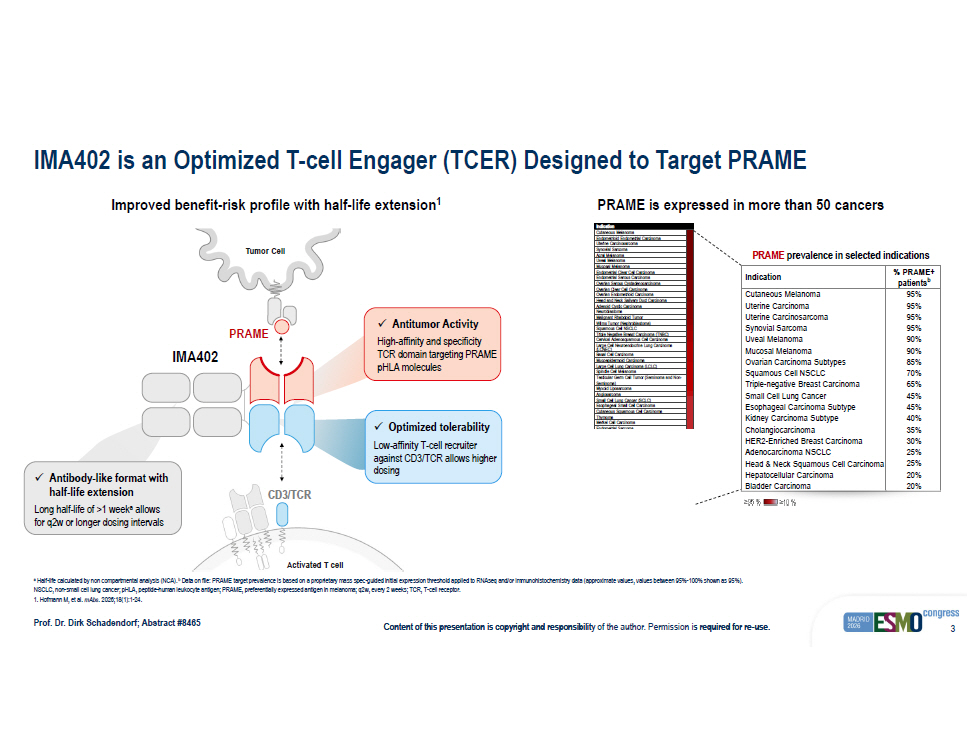
3 Content of this presentation is copyright and responsibility of the author. Permission is required for re - use. Indication Cutaneous Melanoma Endometrioid Endometrial Carcinoma Uterine Carcinosarcoma Synovial Sarcoma Acral Melanoma Uveal Melanoma Mucosal Melanoma Endometrial Clear Cell Carcinoma Endometrial Serous Carcinoma Ovarian Serous Cystadenocarcinoma Ovarian Clear Cell Carcinoma Ovarian Endometrioid Carcinoma Head and Neck Salivary Duct Carcinoma Adenoid Cystic Carcinoma Neuroblastoma Malignant Rhabdoid Tumor Wilms Tumor (Nephroblastoma) Squamous Cell NSCLC Triple Negative Breast Carcinoma (TNBC) Cervical Adenosquamous Cell Carcinoma Large Cell Neuroendocrine Lung Carcinoma (LCNEC) Basal Cell Carcinoma Mucoepidermoid Carcinoma Large Cell Lung Carcinoma (LCLC) Spindle Cell Melanoma Testicular Germ Cell Tumor (Seminoma and Non - Seminoma) Myxoid Liposarcoma Angiosarcoma Small Cell Lung Cancer (SCLC) Esophageal Small Cell Carcinoma Cutaneous Squamous Cell Carcinoma Thymoma Merkel Cell Carcinoma Endometrial Sarcoma Esophageal Squamous Carcinoma Esophageal Adenosquamous Carcinoma Kidney Renal Papillary Cell Carcinoma Malignant Peripheral Nerve Sheath Tumor (MPNST) Cholangiocarcinoma Cervical Adenocarcinoma Head and Neck Salivary Gland Carcinoma Osteosarcoma HER2 - Enriched Breast Carcinoma Embryonal Rhabdomyosarcoma Adenosquamous NSCLC Diffuse Large B - cell Lymphoma (DLBCL) Sarcomatoid Carcinoma of the Lung Adenocarcinoma NSCLC Head and Neck Squamous Cell Carcinoma (HNSCC) Alveolar Rhabdomyosarcoma Ovarian Mucinous Carcinoma Adrenocortical Carcinoma Kidney Renal Clear Cell Carcinoma Hepatocellular Carcinoma Bladder Urothelial Carcinoma Cervical Squamous Cell Carcinoma Non - Squamous Anal Carcinoma Pancreatic Neuroendocrine Adenocarcinoma Prostate Neuroendocrine Adenocarcinoma Liposarcoma Undifferentiated Pleomorphic Sarcoma Acute Myeloid Leukemia (AML) Ewing Sarcoma Ovarian Leiomyosarcoma Breast Carcinoma, Luminal A Breast Carcinoma, Luminal B Squamous Anal Carcinoma Stomach Adenocarcinoma Esophageal Adenocarcinoma Fibrosarcoma Anaplastic Thyroid Carcinoma (…) IMA402 is an Optimized T - cell Engager (TCER) Designed to Target PRAME a Half - life calculated by non compartmental analysis (NCA). b Data on file: PRAME target prevalence is based on a proprietary mass spec - guided initial expression threshold applied to RNAseq and/or immunohistochemistry data (approximate values, values between 95% - 100% shown as 95%). NSCLC, non - small cell lung cancer; pHLA , peptide - human leukocyte antigen; PRAME, preferentially expressed antigen in melanoma; q2w, every 2 weeks; TCR, T - cell receptor . 1. Hofmann M, et al. mAbs . 2026;18(1):1 - 24. ≥95 % ≥10 % PRAME prevalence in selected indications % PRAME+ patients b Indication 95% Cutaneous Melanoma 95% Uterine Carcinoma 95% Uterine Carcinosarcoma 95% Synovial Sarcoma 90% Uveal Melanoma 90% Mucosal Melanoma 85% Ovarian Carcinoma Subtypes 70% Squamous Cell NSCLC 65% Triple - negative Breast Carcinoma 45% Small Cell Lung Cancer 45% Esophageal Carcinoma Subtype 40% Kidney Carcinoma Subtype 35% Cholangiocarcinoma 30% HER2 - Enriched Breast Carcinoma 25% Adenocarcinoma NSCLC 25% Head & Neck Squamous Cell Carcinoma 20% Hepatocellular Carcinoma 20% Bladder Carcinoma Improved benefit - risk profile with half - life extension 1 PRAME is expressed in more than 50 cancers Content of this presentation is copyright and responsibility of the author. Permission is required for re - use. CD3/TCR Activated T cell Tumor Cell PRAME IMA402 x Antitumor Activity High - affinity and specificity TCR domain targeting PRAME pHLA molecules x Antibody - like format with half - life extension Long half - life of >1 week a allows for q2w or longer dosing intervals x Optimized tolerability Low - affinity T - cell recruiter against CD3/TCR allows higher dosing Prof. Dr. Dirk Schadendorf ; Abstract #8465
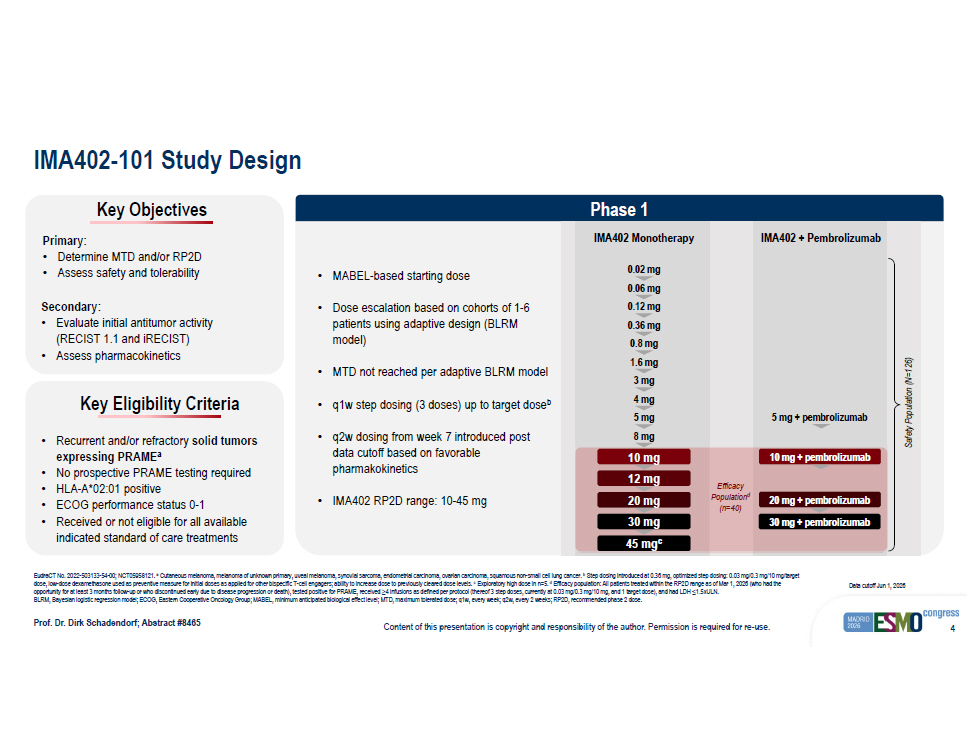
4 Content of this presentation is copyright and responsibility of the author. Permission is required for re - use. IMA402 - 101 Study Design Prof. Dr. Dirk Schadendorf ; Abstract #8465 EudraCT No. 2022 - 503133 - 54 - 00; NCT05958121. a Cutaneous melanoma, melanoma of unknown primary, uveal melanoma, synovial sarcoma, endometrial carcinoma, ovarian carcinoma, sq uamous non - small cell lung cancer. b Step dosing introduced at 0.36 mg, optimized step dosing: 0.03 mg/0.3 mg/10 mg/target dose, low - dose dexamethasone used as preventive measure for initial doses as applied for other bispecific T - cell engagers; abili ty to increase dose to previously cleared dose levels. c Exploratory high dose in n=5. d Efficacy population: All patients treated within the RP2D range as of Mar 1, 2026 (who had the opportunity for at least 3 months follow - up or who discontinued early due to disease progression or death), tested positive for PRAME, received ≥4 infusions as defined per protocol (thereof 3 step doses, currently at 0.03 mg/0.3 mg/10 mg, and 1 target dose), and had LDH ≤1.5xULN . BLRM, Bayesian logistic regression model; ECOG, Eastern Cooperative Oncology Group; MABEL, minimum anticipated biological eff ect level; MTD, maximum tolerated dose; q1w, every week; q2w, every 2 weeks; RP2D, recommended phase 2 dose. Data cutoff Jun 1, 2026 Key Eligibility Criteria Key Objectives Primary: • Determine MTD and/or RP2D • Assess safety and tolerability Secondary: • Evaluate initial antitumor activity (RECIST 1.1 and iRECIST ) • Assess pharmacokinetics • Recurrent and/ or refractory solid tumors expressing PRAME a • No prospective PRAME testing required • HLA - A*02:01 positive • ECOG performance status 0 - 1 • Received or not eligible for all available indicated standard of care treatments • MABEL - based starting dose • Dose escalation based on cohorts of 1 - 6 patients using adaptive design (BLRM model) • MTD not reached per adaptive BLRM model • q1w step dosing (3 doses) up to target dose b • q2w dosing from week 7 introduced post data cutoff based on favorable pharmakokinetics • IMA402 RP2D range: 10 - 45 mg Phase 1 0.36 mg 0.8 m g 3 m g 5 m g 0.12 mg 1.6 mg 0.06 mg 0.02 mg 8 mg 4 mg 12 mg 20 mg 30 m g 10 m g 45 m g c Efficacy Population d (n=40) Safety Population (N=126) IMA402 Monotherapy IMA402 + Pembrolizumab 10 m g + pembrolizumab 5 m g + pembrolizumab 2 0 m g + pembrolizumab 30 m g + pembrolizumab
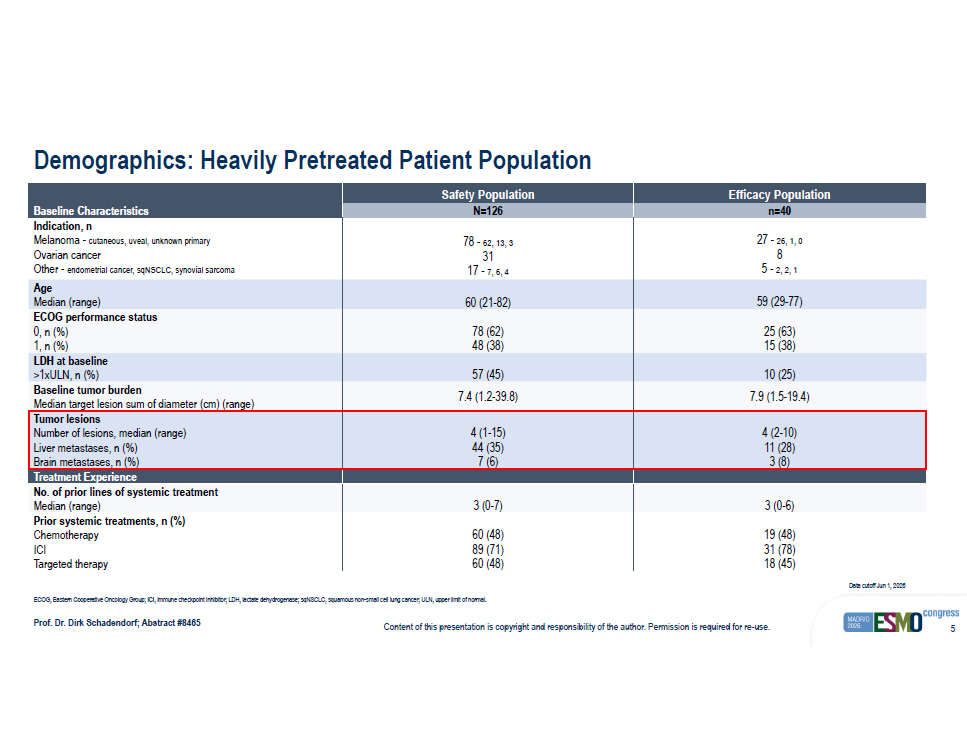
5 Content of this presentation is copyright and responsibility of the author. Permission is required for re - use. Demographics: Heavily Pretreated Patient Population Prof. Dr. Dirk Schadendorf ; Abstract #8465 ECOG, Eastern Cooperative Oncology Group; ICI, immune checkpoint inhibitor; LDH, lactate dehydrogenase; sqNSCLC , squamous non - small cell lung cancer; ULN, upper limit of normal. Efficacy Population Safety Population n=40 N=126 Baseline Characteristics 27 - 26, 1, 0 8 5 - 2, 2, 1 78 - 62, 13, 3 31 17 - 7, 6, 4 Indication, n Melanoma - cutaneous, uveal, unknown primary Ovarian cancer Other - endometrial cancer, sqNSCLC, synovial sarcoma 59 (29 - 77) 60 (21 - 82) Age Median (range) 25 (63) 15 (38) 78 (62) 48 (38) ECOG performance status 0, n (%) 1, n (%) 10 (25) 57 (45) LDH at baseline >1xULN, n ( %) 7.9 (1.5 - 19.4) 7.4 (1.2 - 39.8) Baseline tumor burden Median target lesion sum of diameter (cm) (range) 4 (2 - 10) 11 (28) 3 (8) 4 (1 - 15) 44 (35) 7 (6) Tumor lesions Number of lesions, median (range) Liver metastases, n (%) Brain metastases, n (%) Treatment Experience 3 (0 - 6) 3 (0 - 7) No. of prior lines of systemic treatment Median (range) 19 (48) 31 (78) 18 (45) 60 (48) 89 (71) 60 (48) Prior systemic treatments, n (%) Chemotherapy ICI Targeted therapy Data cutoff Jun 1, 2026
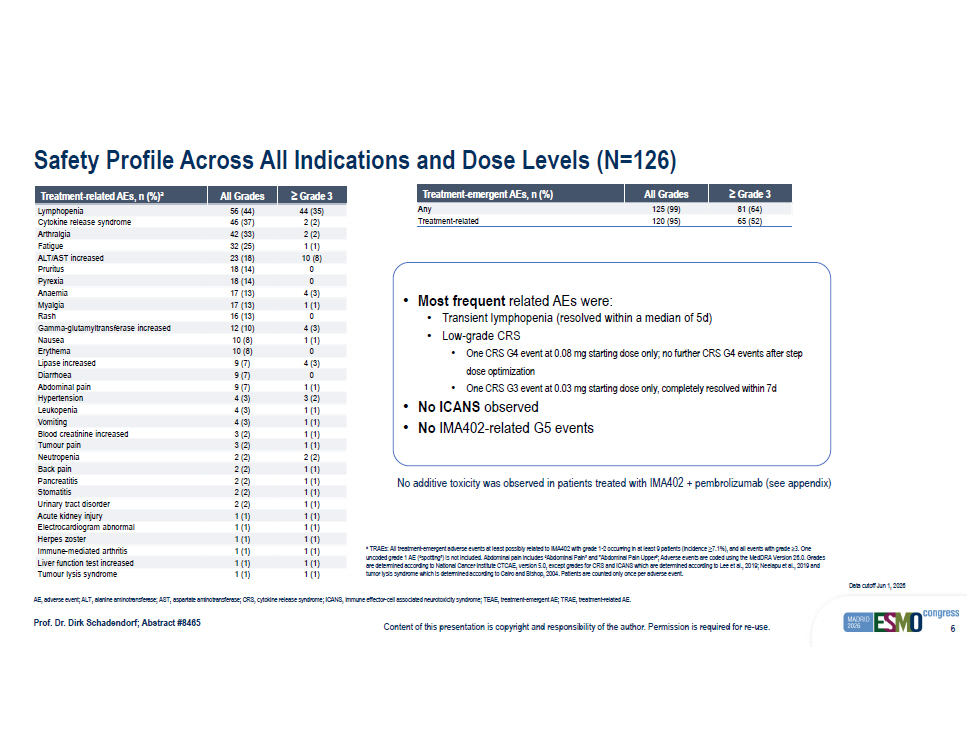
6 Content of this presentation is copyright and responsibility of the author. Permission is required for re - use. Safety Profile Across All Indications and Dose Levels (N=126) Prof. Dr. Dirk Schadendorf ; Abstract #8465 a TRAEs: All treatment - emergent adverse events at least possibly related to IMA402 with grade 1 - 2 occurring in at least 9 patient s (incidence ≥7.1% ) , and all events with grade ≥ 3. One uncoded grade 1 AE (“ spotting ”) is not included. Abdominal pain includes “Abdominal Pain” and "Abdominal Pain Upper ”; Adverse events are coded using the MedDRA Version 26.0. Grades are determined according to National Cancer Institute CTCAE, version 5.0, except grades for CRS and ICANS which are determine d a ccording to Lee et al., 2019; Neelapu et al., 201 9 and tumor lysis syndrome which is determined according to Cairo and Bishop, 2004. Patients are counted only once per adverse event. Data cutoff Jun 1, 2026 • Most frequent related AEs were: • Transient lymphopenia (resolved within a median of 5d) • Low - grade CRS • One CRS G4 event at 0.08 mg starting dose only; no further CRS G4 events after step dose optimization • One CRS G3 event at 0.03 mg starting dose only, completely resolved within 7d • No ICANS observed • No IMA402 - related G5 events No additive toxicity was observed in patients treated with IMA402 + pembrolizumab (see appendix) AE, adverse event; ALT, alanine aminotransferase; AST, aspartate aminotransferase; CRS, cytokine release syndrome; ICANS, imm une effector - cell associated neurotoxicity syndrome; TEAE, treatment - emergent AE; TRAE, treatment - related AE. ≥ Grade 3 All Grades Treatment - related AEs, n (%) a 44 (35) 56 (44) Lymphopenia 2 (2) 46 (37) Cytokine release syndrome 2 (2) 42 (33) Arthralgia 1 (1) 32 (25) Fatigue 10 (8) 23 (18) ALT/AST increased 0 18 (14) Pruritus 0 18 (14) Pyrexia 4 (3) 17 (13) Anaemia 1 (1) 17 (13) Myalgia 0 16 (13) Rash 4 (3) 12 (10) Gamma - glutamyltransferase increased 1 (1) 10 (8) Nausea 0 10 (8) Erythema 4 (3) 9 (7) Lipase increased 0 9 (7) Diarrhoea 1 (1) 9 (7) Abdominal pain 3 (2) 4 (3) Hypertension 1 (1) 4 (3) Leukopenia 1 (1) 4 (3) Vomiting 1 (1) 3 (2) Blood creatinine increased 1 (1) 3 (2) Tumour pain 2 (2) 2 (2) Neutropenia 1 (1) 2 (2) Back pain 1 (1) 2 (2) Pancreatitis 1 (1) 2 (2) Stomatitis 1 (1) 2 (2) Urinary tract disorder 1 (1) 1 (1) Acute kidney injury 1 (1) 1 (1) Electrocardiogram abnormal 1 (1) 1 (1) Herpes zoster 1 (1) 1 (1) Immune - mediated arthritis 1 (1) 1 (1) Liver function test increased 1 (1) 1 (1) Tumour lysis syndrome ≥ Grade 3 All Grades Treatment - emergent AEs, n (%) 81 (64) 125 (99) Any 65 (52) 120 (95) Treatment - related
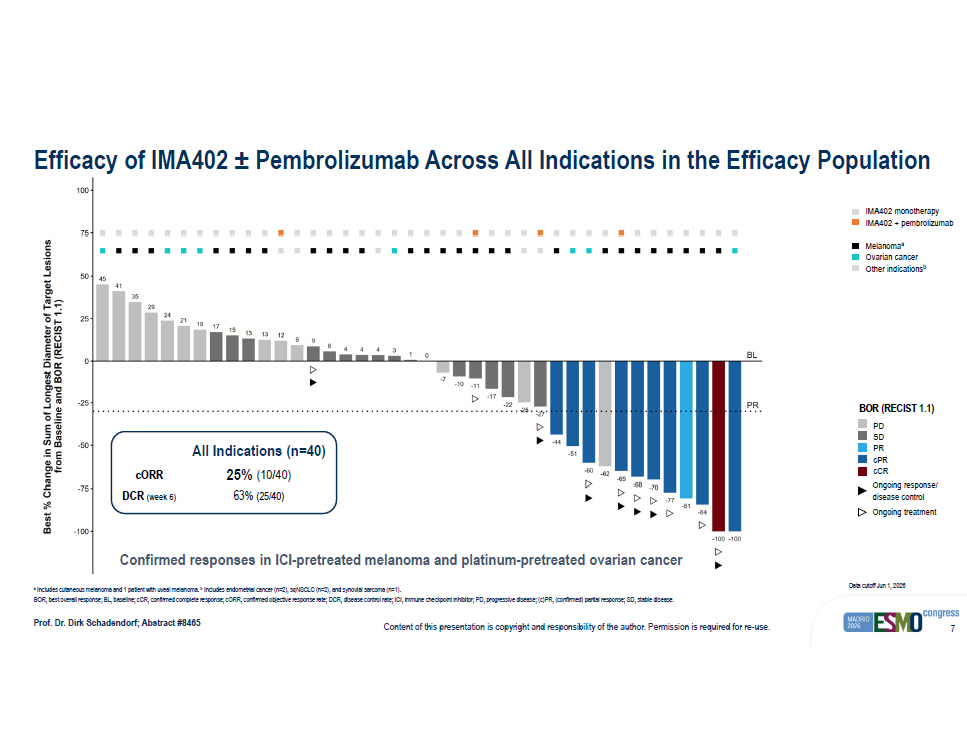
Content of this presentation is copyright and responsibility of the author. Permission is required for re - use. 7 Efficacy of IMA402 “ Pembrolizumab Across All Indications in the Efficacy Population Prof. Dr. Dirk Schadendorf ; Abstract #8465 a Includes cutaneous melanoma and 1 patient with uveal melanoma. b Includes endometrial cancer (n=2), sqNSCLC (n=2), and synovial sarcoma (n=1). BOR, best overall response; BL, baseline; cCR , confirmed complete response; cORR , confirmed objective response rate; DCR, disease control rate; ICI, immune checkpoint inhibitor; PD, progressive disease; (c )PR , (confirmed) partial response; SD, stable disease. Data cutoff Jun 1, 2026 IMA402 monotherapy IMA402 + pembrolizumab All Indications (n=40) 25% (10/40) cORR 63% (25/40) DCR (week 6) Melanoma a Ovarian cancer Other indications b BOR (RECIST 1.1) PD SD PR cPR cCR Ongoing response/ disease control Ongoing treatment Confirmed responses in ICI - pretreated melanoma and platinum - pretreated ovarian cancer
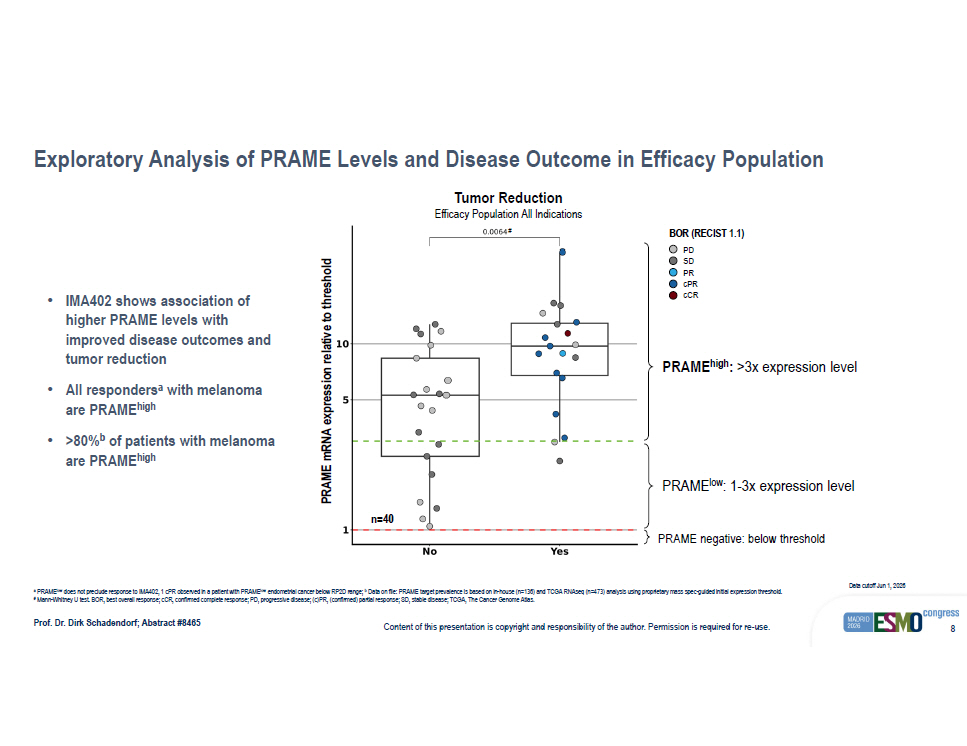
8 Content of this presentation is copyright and responsibility of the author. Permission is required for re - use. Exploratory Analysis of PRAME Levels and Disease Outcome in Efficacy Population Prof. Dr. Dirk Schadendorf ; Abstract #8465 a PRAME low does not preclude response to IMA402, 1 cPR observed in a patient with PRAME low endometrial cancer below RP2D range; b Data on file: PRAME target prevalence is based on in - house (n=136) and TCGA RNAseq (n=473) analysis using proprietary mass spec - guided initial expression threshold. # Mann - Whitney U test . BOR, best overall response; cCR , confirmed complete response; PD, progressive disease; (c)PR, (confirmed) partial response; SD, stable disease; TCGA, The Ca nce r Genome Atlas. Data cutoff Jun 1, 2026 PRAME mRNA expression relative to threshold PRAME low : 1 - 3x expression level PRAME high : >3x expression level PRAME negative: below threshold • IMA402 shows association of higher PRAME levels with improved disease outcomes and tumor reduction • All responders a with melanoma are PRAME high • >80% b of patients with melanoma are PRAME high BOR (RECIST 1.1) PD SD PR cPR cCR n=40 Tumor Reduction Efficacy Population All Indications #
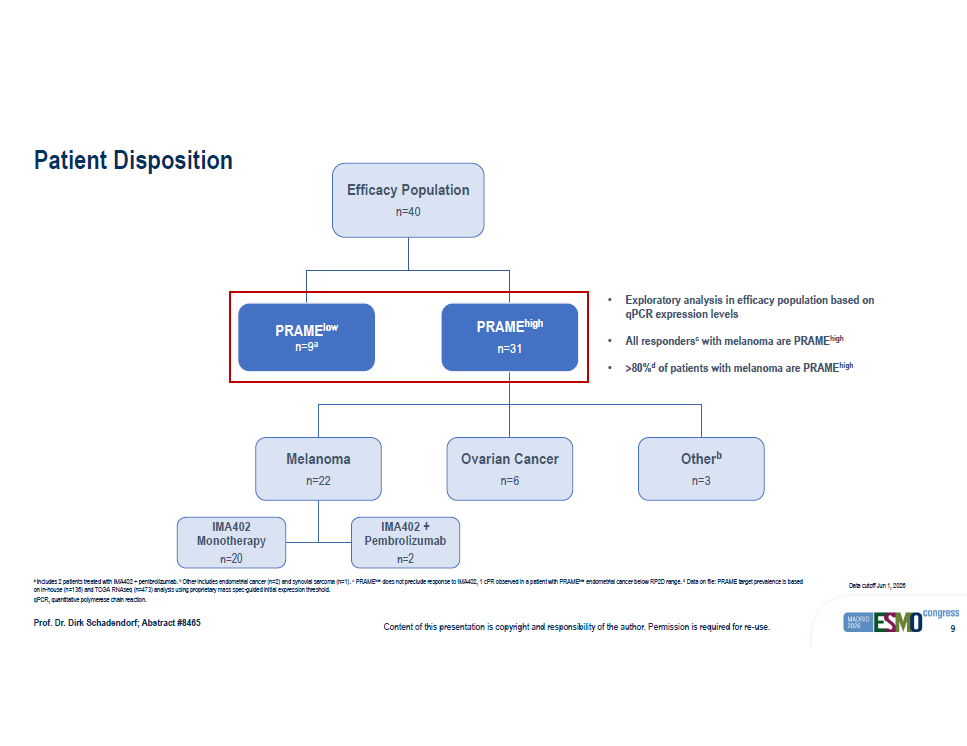
Content of this presentation is copyright and responsibility of the author. Permission is required for re - use. 9 Efficacy Population n=40 PRAME low n=9 a PRAME high n=31 Melanoma n=22 IMA402 Monotherapy n=20 IMA402 + Pembrolizumab n=2 Ovarian Cancer n=6 Other b n=3 Patient Disposition Prof. Dr. Dirk Schadendorf ; Abstract #8465 a Includes 2 patients treated with IMA402 + pembrolizumab. b Other includes endometrial cancer (n=2) and synovial sarcoma (n=1). c PRAME low does not preclude response to IMA402, 1 cPR observed in a patient with PRAME low endometrial cancer below RP2D range. d Data on file: PRAME target prevalence is based on in - house (n=136) and TCGA RNAseq (n=473) analysis using proprietary mass spec - guided initial expression threshold. qPCR, quantitative polymerase chain reaction. Data cutoff Jun 1, 2026 • Exploratory analysis in efficacy population based on qPCR expression levels • All responders c with melanoma are PRAME high • >80% d of patients with melanoma are PRAME high
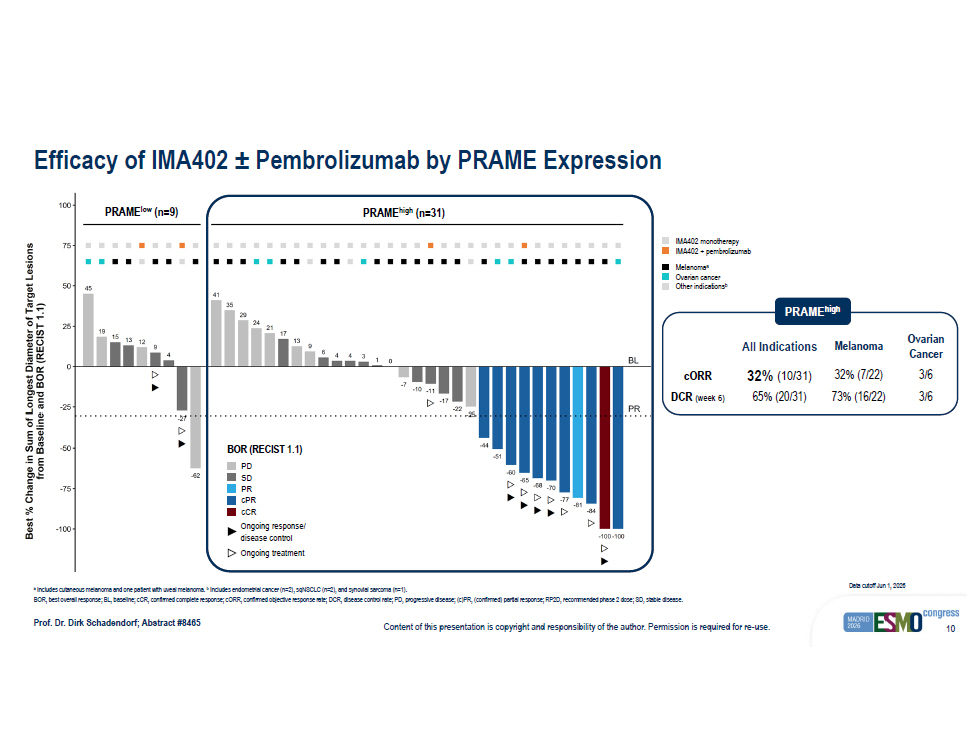
Content of this presentation is copyright and responsibility of the author. Permission is required for re - use. 10 Efficacy of IMA402 “ Pembrolizumab by PRAME Expression Prof. Dr. Dirk Schadendorf ; Abstract #8465 PRAME low (n=9) PRAME high (n=31) IMA402 monotherapy IMA402 + pembrolizumab Melanoma a Ovarian cancer Other indications b BOR (RECIST 1.1) PD SD PR cPR cCR Ongoing response/ disease control Ongoing treatment Ovarian Cancer Melanoma All Indications 3/6 32% (7/22) 32% (10/31) cORR 3/6 73% (16/22) 65% (20/31) DCR (week 6) Data cutoff Jun 1, 2026 a Includes cutaneous melanoma and one patient with uveal melanoma. b Includes endometrial cancer (n=2), sqNSCLC (n=2), and synovial sarcoma (n=1). BOR, best overall response; BL, baseline; cCR , confirmed complete response; cORR , confirmed objective response rate; DCR, disease control rate; PD, progressive disease; (c)PR, (confirmed) partial response; RP 2D, recommended phase 2 dose; SD, stable disease. PRAME high
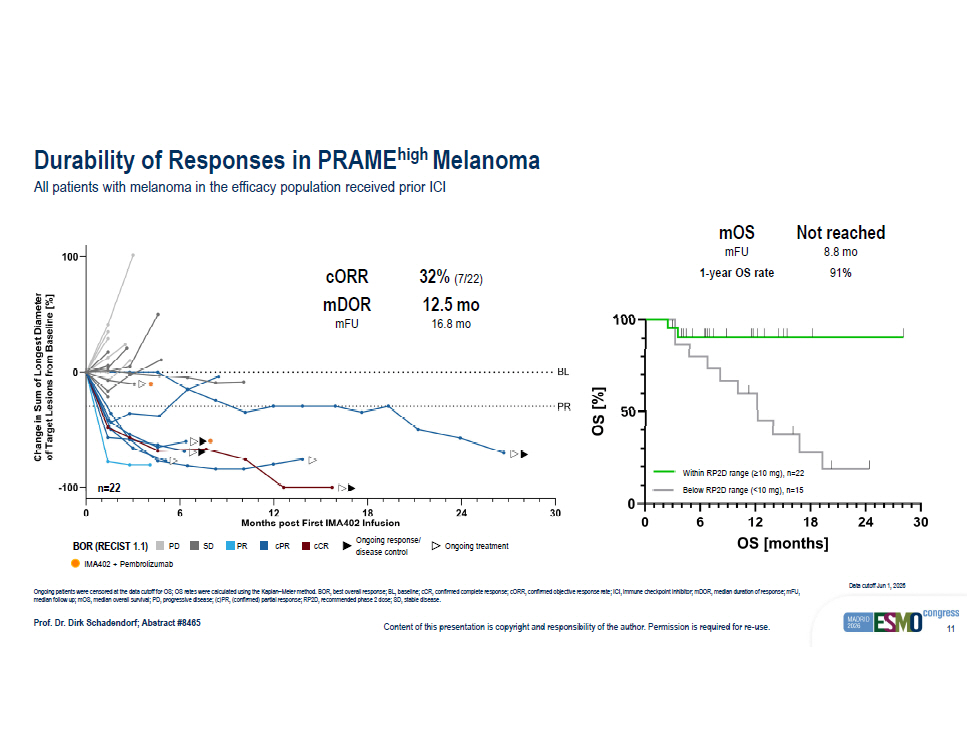
Content of this presentation is copyright and responsibility of the author. Permission is required for re - use. 11 Durability of Responses in PRAME high Melanoma Prof. Dr. Dirk Schadendorf ; Abstract #8465 Ongoing patients were censored at the data cutoff for OS; OS rates were calculated using the Kaplan – Meier method. BOR, best over all response; BL, baseline; cCR , confirmed complete response; cORR , confirmed objective response rate; ICI, immune checkpoint inhibitor; mDOR , median duration of response; mFU , median follow up; mOS , median overall survival; PD, progressive disease; (c)PR, (confirmed) partial response; RP2D, recommended phase 2 dose; SD, sta ble disease. Data cutoff Jun 1, 2026 32% (7/22) cORR 12.5 mo 16.8 mo mDOR mFU All patients with melanoma in the efficacy population received prior ICI n=22 IMA402 + Pembrolizumab Not reached 8.8 mo mOS mFU 91% 1 - year OS rate Within RP2D range ( ≥ 10 mg), n=22 Below RP2D range (<10 mg), n=15 BOR (RECIST 1.1) PD Ongoing response/ disease control Ongoing treatment SD PR cPR cCR
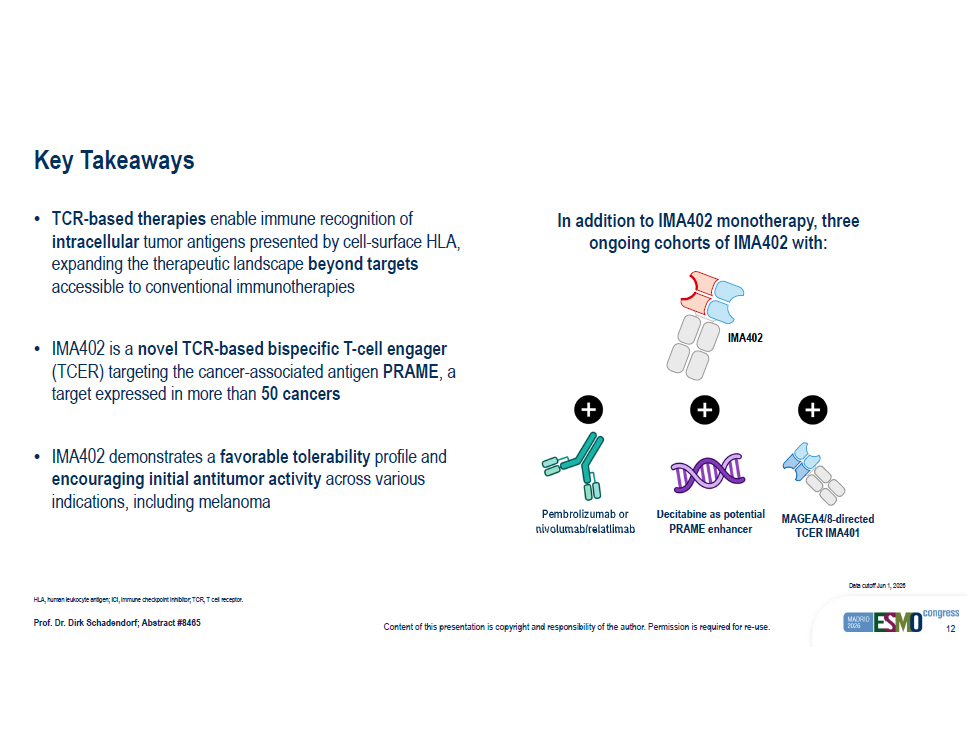
Content of this presentation is copyright and responsibility of the author. Permission is required for re - use. 12 Key Takeaways • TCR - based therapies enable immune recognition of intracellular tumor antigens presented by cell - surface HLA, expanding the therapeutic landscape beyond targets accessible to conventional immunotherapies • IMA402 is a novel TCR - based bispecific T - cell engager (TCER) targeting the cancer - associated antigen PRAME , a target expressed in more than 50 cancers • IMA402 demonstrates a favorable tolerability profile and encouraging initial antitumor activity across various indications, including melanoma HLA, human leukocyte antigen; ICI, immune checkpoint inhibitor; TCR, T cell receptor. Data cutoff Jun 1, 2026 In addition to IMA402 monotherapy, three ongoing cohorts of IMA402 with: MAGEA4/8 - directed TCER IMA401 Decitabine as potential PRAME enhancer Pembrolizumab or nivolumab/ relatlimab IMA402 Prof. Dr. Dirk Schadendorf ; Abstract #8465
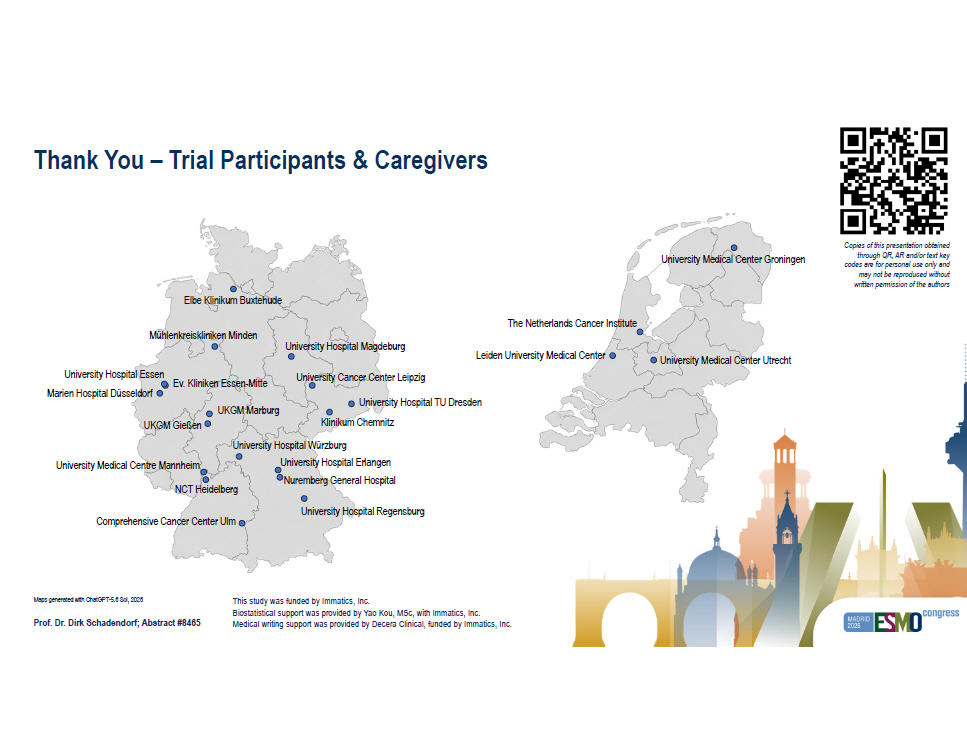
Thank You – Trial Participants & Caregivers University Hospital Würzburg University Medical Center Utrecht Marien Hospital Düsseldorf Mühlenkreiskliniken Minden Klinikum Chemnitz Ev. Kliniken Essen - Mitte NCT Heidelberg University Hospital Regensburg University Medical Center Groningen Nuremberg General Hospital Leiden University Medical Center University Medical Centre Mannheim Comprehensive Cancer Center Ulm University Hospital Essen The Netherlands Cancer Institute University Cancer Center Leipzig University Hospital Magdeburg University Hospital TU Dresden Maps generated with ChatGPT - 5.6 Sol, 2026 University Hospital Erlangen UKGM Marburg Elbe Klinikum Buxtehude UKGM Gießen This study was funded by Immatics , Inc. Biostatistical support was provided by Yao Kou, MSc, with Immatics , Inc. Medical writing support was provided by Decera Clinical, funded by Immatics , Inc. Copies of this presentation obtained through QR, AR and/or text key codes are for personal use only and may not be reproduced without written permission of the authors Prof. Dr. Dirk Schadendorf ; Abstract #8465

APPENDIX Prof. Dr. Dirk Schadendorf ; Abstract #8465
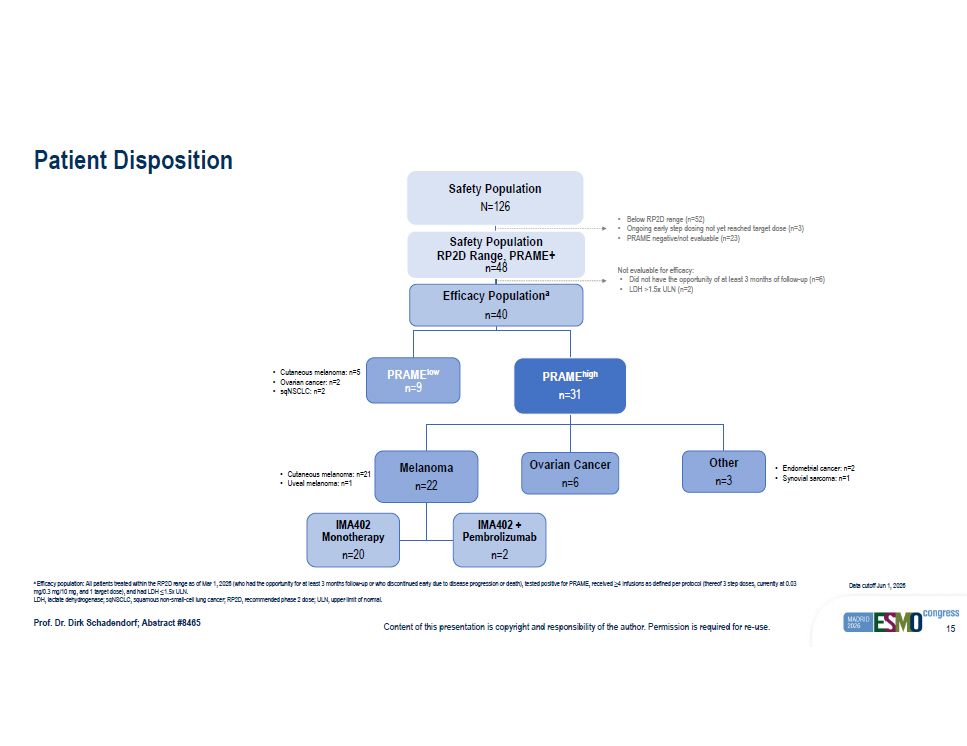
Content of this presentation is copyright and responsibility of the author. Permission is required for re - use. 15 Patient Disposition Prof. Dr. Dirk Schadendorf ; Abstract #8465 Data cutoff Jun 1, 2026 Safety Population N=126 Safety Population RP2D Range, PRAME+ n=48 Efficacy Population a n=40 PRAME low n=9 PRAME high n=31 Melanoma n=22 IMA402 Monotherapy n=20 IMA402 + Pembrolizumab n=2 Ovarian Cancer n=6 Other n=3 Not evaluable for efficacy: • Did not have the opportunity of at least 3 months of follow - up (n=6) • LDH >1.5x ULN (n=2) • Below RP2D range (n=52) • Ongoing early step dosing not yet reached target dose (n=3) • PRAME negative/not evaluable (n=23) • Cutaneous melanoma: n=5 • Ovarian cancer: n=2 • sqNSCLC : n=2 • Cutaneous melanoma: n=21 • Uveal melanoma: n=1 • Endometrial cancer: n=2 • Synovial sarcoma: n=1 a Efficacy population: All patients treated within the RP2D range as of Mar 1, 2026 (who had the opportunity for at least 3 mon ths follow - up or who discontinued early due to disease progression or death), tested positive for PRAME, received ≥4 infusions as defined per protocol (thereof 3 step doses, currently at 0.03 mg/0.3 mg/10 mg, and 1 target dose), and had LDH ≤1.5x ULN . LDH, lactate dehydrogenase; sqNSCLC , squamous non - small - cell lung cancer; RP2D, recommended phase 2 dose; ULN, upper limit of normal.
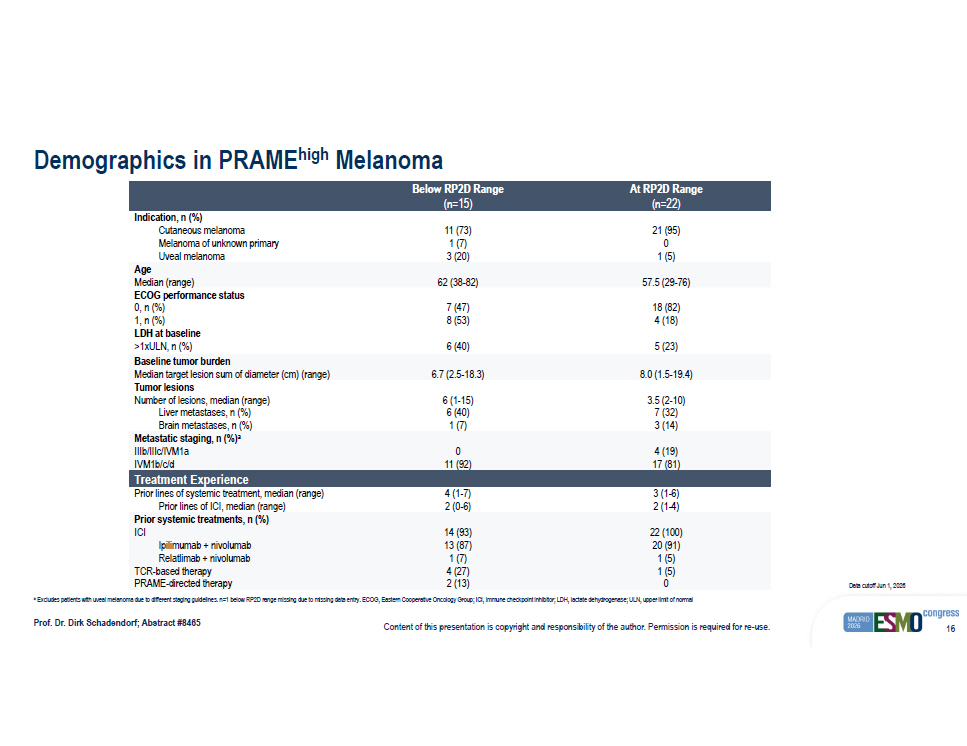
16 Content of this presentation is copyright and responsibility of the author. Permission is required for re - use. Demographics in PRAME high Melanoma Prof. Dr. Dirk Schadendorf ; Abstract #8465 a Excludes patients with uveal melanoma due to different staging guidelines. n=1 below RP2D range missing due to missing data e nt ry. ECOG, Eastern Cooperative Oncology Group; ICI, immune checkpoint inhibitor; LDH, lactate dehydrogenase; ULN, upper limit of normal Data cutoff Jun 1, 2026 At RP2D Range (n=22) Below RP2D Range (n=15) 21 (9 5 ) 0 1 (5) 11 (73) 1 (7) 3 (20) Indication, n (%) Cutaneous melanoma Melanoma of unknown primary Uveal melanoma 5 7.5 (29 - 76) 62 (38 - 82) Age Median (range) 18 (82) 4 (18) 7 (47) 8 (53) ECOG performance status 0, n (%) 1, n (%) 5 (23) 6 (40) LDH at baseline >1xULN, n ( %) 8.0 (1.5 - 19.4) 6.7 (2.5 - 18.3) Baseline tumor burden Median target lesion sum of diameter (cm) (range) 3.5 (2 - 10) 7 (32) 3 (14) 6 (1 - 15) 6 (40) 1 (7) Tumor lesions Number of lesions, median (range) Liver metastases, n (%) Brain metastases, n (%) 4 (1 9 ) 1 7 (8 1 ) 0 1 1 (9 2 ) Metastatic staging, n (%) a IIIb/IIIc/IVM1a IVM1b/c/d Treatment Experience 3 (1 - 6) 2 (1 - 4) 4 (1 - 7) 2 (0 - 6) Prior lines of systemic treatment, median (range) Prior lines of ICI, median (range) 22 (100) 20 (91) 1 (5) 1 (5) 0 14 (93) 13 (87) 1 (7) 4 (27) 2 (13) Prior systemic treatments, n (%) ICI Ipilimumab + nivolumab Relatlimab + nivolumab TCR - based therapy PRAME - directed therapy
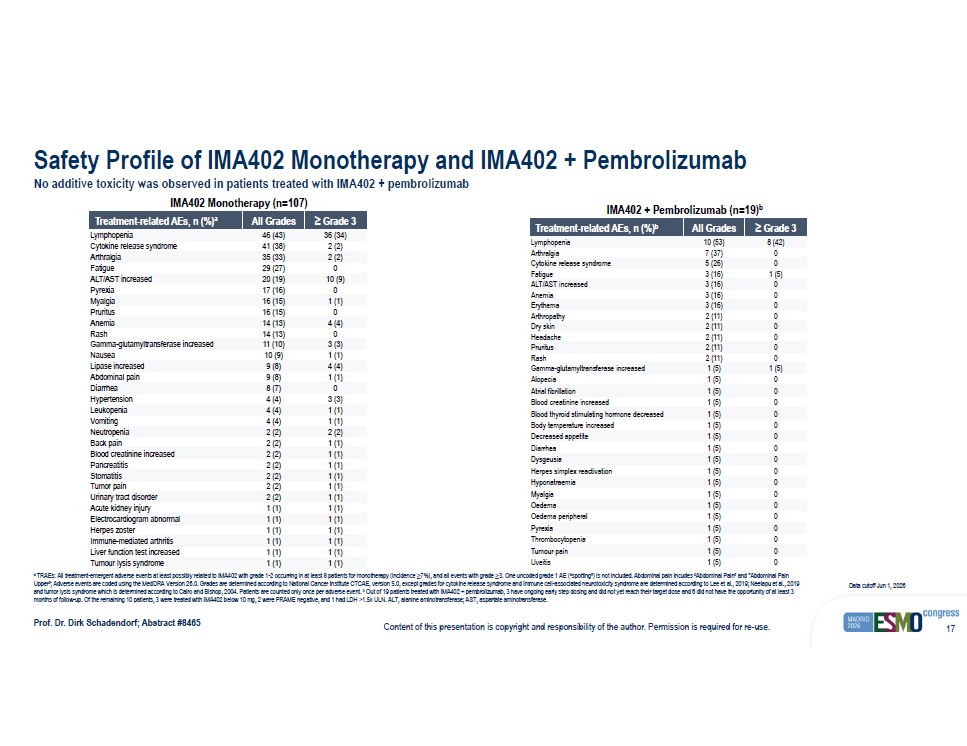
17 Content of this presentation is copyright and responsibility of the author. Permission is required for re - use. Safety Profile of IMA402 Monotherapy and IMA402 + Pembrolizumab Prof. Dr. Dirk Schadendorf ; Abstract #8465 Data cutoff Jun 1, 2026 IMA402 Monotherapy (n=107) No additive toxicity was observed in patients treated with IMA402 + pembrolizumab ≥ Grade 3 All Grades Treatment - related AEs, n (%) a 36 (34) 46 (43) Lymphopenia 2 (2) 41 (38) Cytokine release syndrome 2 (2) 35 (33) Arthralgia 0 29 (27) Fatigue 10 (9) 20 (19) ALT/AST increased 0 17 (16) Pyrexia 1 (1) 16 (15) Myalgia 0 16 (15) Pruritus 4 (4) 14 (13) Anemia 0 14 (13) Rash 3 (3) 11 (10) Gamma - glutamyltransferase increased 1 (1) 10 (9) Nausea 4 (4) 9 (8) Lipase increased 1 (1) 9 (8) Abdominal pain 0 8 (7) Diarrhea 3 (3) 4 (4) Hypertension 1 (1) 4 (4) Leukopenia 1 (1) 4 (4) Vomiting 2 (2) 2 (2) Neutropenia 1 (1) 2 (2) Back pain 1 (1) 2 (2) Blood creatinine increased 1 (1) 2 (2) Pancreatitis 1 (1) 2 (2) Stomatitis 1 (1) 2 (2) Tumor pain 1 (1) 2 (2) Urinary tract disorder 1 (1) 1 (1) Acute kidney injury 1 (1) 1 (1) Electrocardiogram abnormal 1 (1) 1 (1) Herpes zoster 1 (1) 1 (1) Immune - mediated arthritis 1 (1) 1 (1) Liver function test increased 1 (1) 1 (1) Tumour lysis syndrome IMA402 + Pembrolizumab (n=19) b a TRAEs: All treatment - emergent adverse events at least possibly related to IMA402 with grade 1 - 2 occurring in at least 8 patients for monotherapy (incidence ≥7%), and all events with grade ≥3. One uncoded grade 1 AE (“ spotting ”) is not included. Abdominal pain incudes “Abdominal Pain” and "Abdominal Pain Upper ”; Adverse events are coded using the MedDRA Version 26.0. Grades are determined according to National Cancer Institute CTCAE , v ersion 5.0, except grades for cytokine release syndrome and Immune cell - associated neurotoxicity syndrome are determined accordi ng to Lee et al., 2019; Neelapu et al., 201 9 and tumor lysis syndrome which is determined according to Cairo and Bishop, 2004. Patients are counted only once per adverse eve nt. b Out of 19 patients treated with IMA402 + pembrolizumab, 3 have ongoing early step dosing and did not yet reach their target d ose and 6 did not have the opportunity of at least 3 months of follow - up. Of the remaining 10 patients, 3 were treated with IMA402 below 10 mg, 2 were PRAME negative, and 1 had LDH >1.5x ULN. ALT, alanine aminotransferase; AST, aspartate aminotransferase. ≥ Grade 3 All Grades Treatment - related AEs, n (%) b 8 (42) 10 (53) Lymphopenia 0 7 (37) Arthralgia 0 5 (26) Cytokine release syndrome 1 (5) 3 (16) Fatigue 0 3 (16) ALT/AST increased 0 3 (16) Anemia 0 3 (16) Erythema 0 2 (11) Arthropathy 0 2 (11) Dry skin 0 2 (11) Headache 0 2 (11) Pruritus 0 2 (11) Rash 1 (5) 1 (5) Gamma - glutamyltransferase increased 0 1 (5) Alopecia 0 1 (5) Atrial fibrillation 0 1 (5) Blood creatinine increased 0 1 (5) Blood thyroid stimulating hormone decreased 0 1 (5) Body temperature increased 0 1 (5) Decreased appetite 0 1 (5) Diarrhea 0 1 (5) Dysgeusia 0 1 (5) Herpes simplex reactivation 0 1 (5) Hyponatraemia 0 1 (5) Myalgia 0 1 (5) Oedema 0 1 (5) Oedema peripheral 0 1 (5) Pyrexia 0 1 (5) Thrombocytopenia 0 1 (5) Tumour pain 0 1 (5) Uveitis
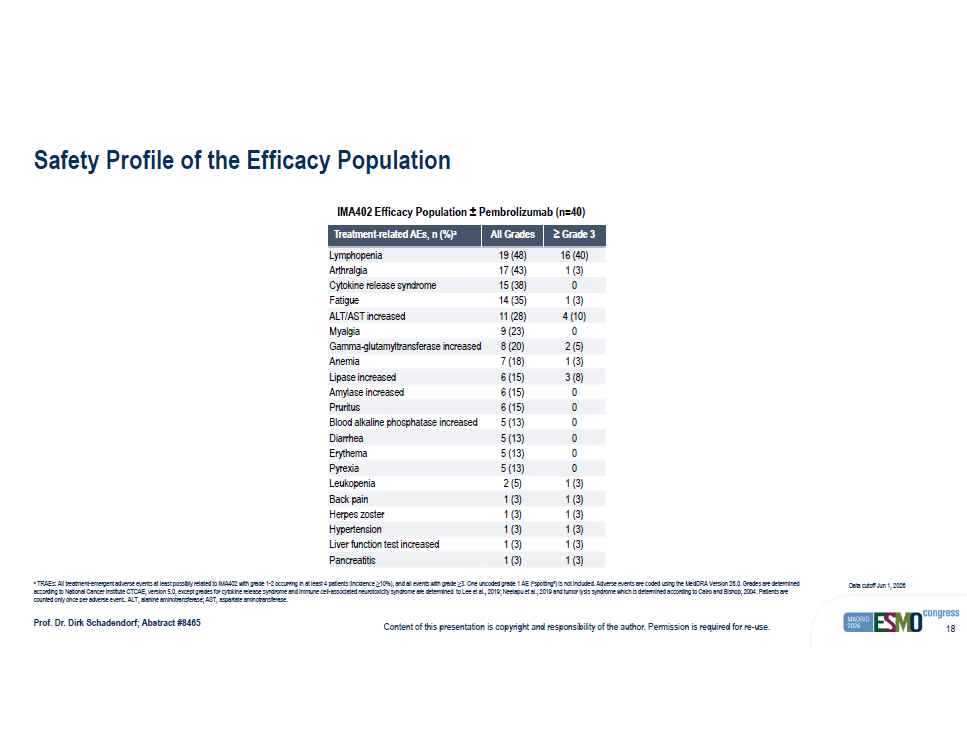
18 Content of this presentation is copyright and responsibility of the author. Permission is required for re - use. Safety Profile of the Efficacy Population Prof. Dr. Dirk Schadendorf ; Abstract #8465 IMA402 Efficacy Population ± Pembrolizumab (n=40) a TRAEs: All treatment - emergent adverse events at least possibly related to IMA402 with grade 1 - 2 occurring in at least 4 patient s (incidence ≥10%), and all events with grade ≥3. One uncoded grade 1 AE (“ spotting ”) is not included. Adverse events are coded using the MedDRA Version 26.0. Grades are determined according to National Cancer Institute CTCAE, version 5.0, except grades for cytokine release syndrome and Immune cell - associate d neurotoxicity syndrome are determined to Lee et al., 2019; Neelapu et al., 201 9 and tumor lysis syndrome which is determined according to Cairo and Bishop, 2004. Patients are counted only once per adverse event.. ALT, alanine aminotransferase; AST, aspartate aminotransferase. Data cutoff Jun 1, 2026 ≥ Grade 3 All Grades Treatment - related AEs, n (%) a 16 (40) 19 (48) Lymphopenia 1 (3) 17 (43) Arthralgia 0 15 (38) Cytokine release syndrome 1 (3) 14 (35) Fatigue 4 (10) 11 (28) ALT/AST increased 0 9 (23) Myalgia 2 (5) 8 (20) Gamma - glutamyltransferase increased 1 (3) 7 (18) Anemia 3 (8) 6 (15) Lipase increased 0 6 (15) Amylase increased 0 6 (15) Pruritus 0 5 (13) Blood alkaline phosphatase increased 0 5 (13) Diarrhea 0 5 (13) Erythema 0 5 (13) Pyrexia 1 (3) 2 (5) Leukopenia 1 (3) 1 (3) Back pain 1 (3) 1 (3) Herpes zoster 1 (3) 1 (3) Hypertension 1 (3) 1 (3) Liver function test increased 1 (3) 1 (3) Pancreatitis
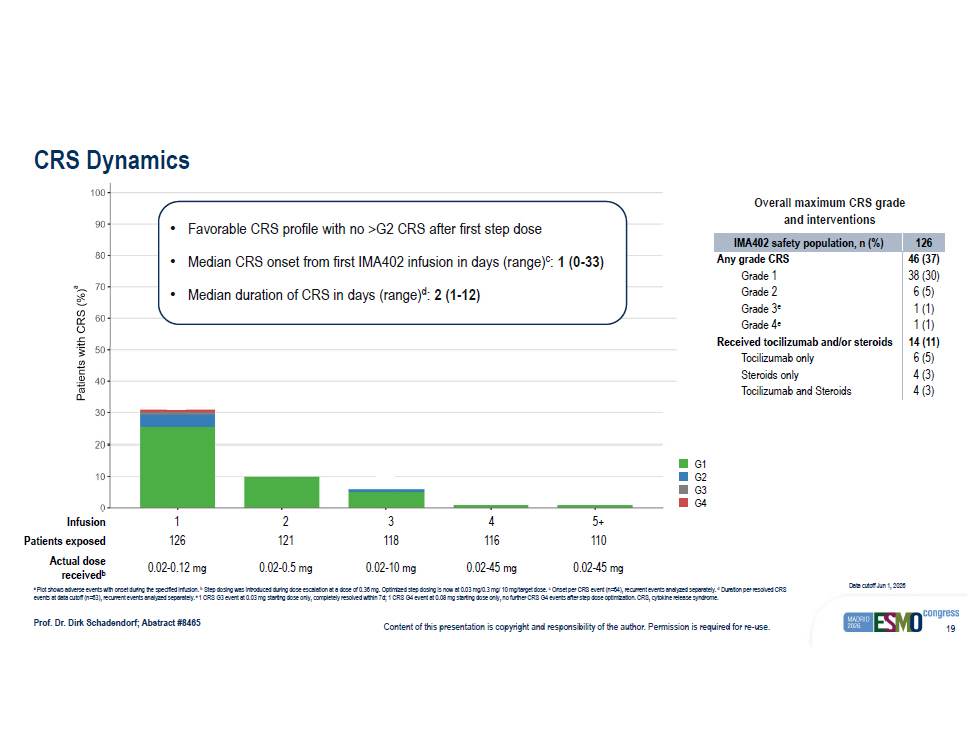
19 Content of this presentation is copyright and responsibility of the author. Permission is required for re - use. CRS Dynamics Prof. Dr. Dirk Schadendorf ; Abstract #8465 • Favorable CRS profile with no > G2 CRS after first step dose • Median CRS onset from first IMA402 infusion in days (range) c : 1 (0 - 33) • Median d uration of CRS in days (range) d : 2 (1 - 12) Data cutoff Jun 1, 2026 G1 G2 G3 G4 5+ 4 3 2 1 Infusion 110 116 118 121 126 Patients exposed 0.02 - 45 mg 0.02 - 45 mg 0.02 - 10 mg 0.02 - 0.5 mg 0.02 - 0.12 mg Actual dose received b a a Plot shows adverse events with onset during the specified infusion. b Step dosing was introduced during dose escalation at a dose of 0.36 mg. Optimized step dosing is now at 0.03 mg/0.3 mg/ 10 mg /t arget dose. c Onset per CRS event (n=64), recurrent events analy z ed separately . d Duration per resolved CRS events at data cutoff (n=63), recurrent events analyzed separately. e 1 CRS G3 event at 0.03 mg starting dose only, completely resolved within 7d; 1 CRS G4 event at 0.08 mg starting dose only, no fu rther CRS G4 events after step dose optimization. CRS, cytokine release syndrome. 126 IMA402 safety population , n (%) 46 ( 37 ) A ny grade CRS 38 ( 30 ) Grade 1 6 ( 5 ) Grade 2 1 (1) Grade 3 e 1 (1) Grade 4 e 14 (11) Received t ocilizumab and/or s teroids 6 (5) T ocilizumab only 4 (3) Steroids only 4 (3) Tocilizumab and Steroids Overall maximum CRS grade and interventions
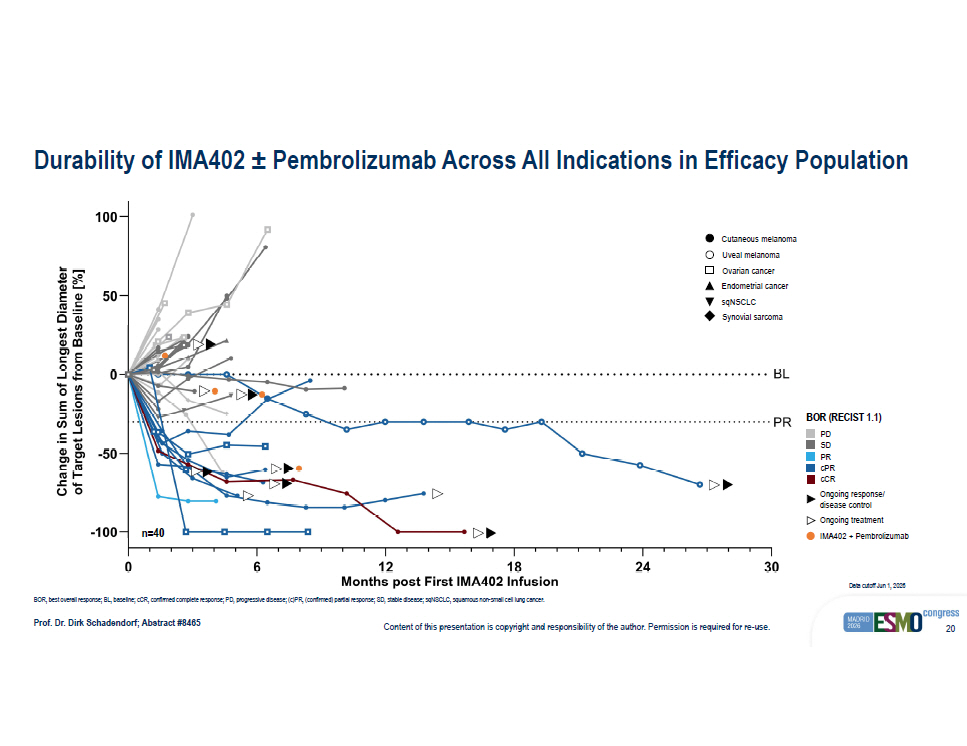
20 Content of this presentation is copyright and responsibility of the author. Permission is required for re - use. Durability of IMA402 “ Pembrolizumab Across All Indications in Efficacy Population Prof. Dr. Dirk Schadendorf ; Abstract #8465 BOR, best overall response; BL, baseline; cCR , confirmed complete response; PD, progressive disease; (c)PR, (confirmed) partial response; SD, stable disease; sqNSCLC , squamous non - small cell lung cancer. Data cutoff Jun 1, 2026 Cutaneous melanoma Uveal melanoma Ovarian cancer Endometrial cancer sqNSCLC Synovial sarcoma BOR (RECIST 1.1) PD SD PR cPR cCR Ongoing response/ disease control Ongoing treatment IMA402 + Pembrolizumab n= 40
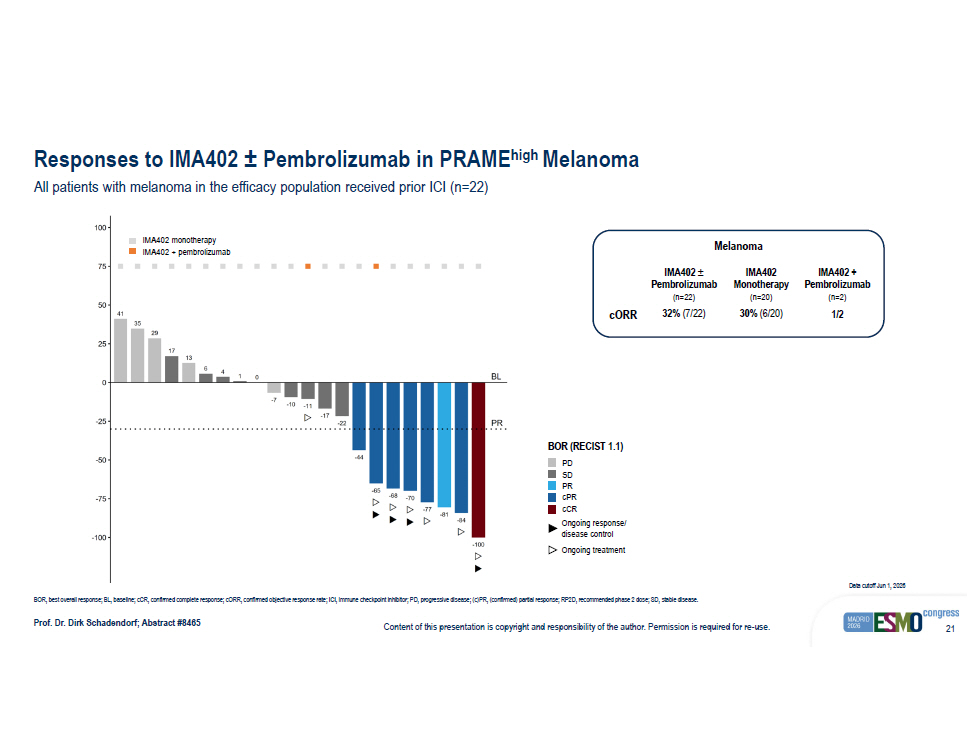
21 Content of this presentation is copyright and responsibility of the author. Permission is required for re - use. Responses to IMA402 “ Pembrolizumab in PRAME high Melanoma Prof. Dr. Dirk Schadendorf ; Abstract #8465 BOR, best overall response; BL, baseline; cCR , confirmed complete response; cORR , confirmed objective response rate; ICI, immune checkpoint inhibitor; PD, progressive disease; (c)PR, (confirmed) partial re spo nse; RP2D, recommended phase 2 dose; SD, stable disease. Data cutoff Jun 1, 2026 All patients with melanoma in the efficacy population received prior ICI (n=22) Melanoma IMA402 + Pembrolizumab (n=2) IMA402 Monotherapy (n=20) IMA402 ± Pembrolizumab (n=22) 1/2 30% (6/20) 32% (7/22) cORR BOR (RECIST 1.1) PD SD PR cPR cCR Ongoing response/ disease control Ongoing treatment IMA402 monotherapy IMA402 + pembrolizumab
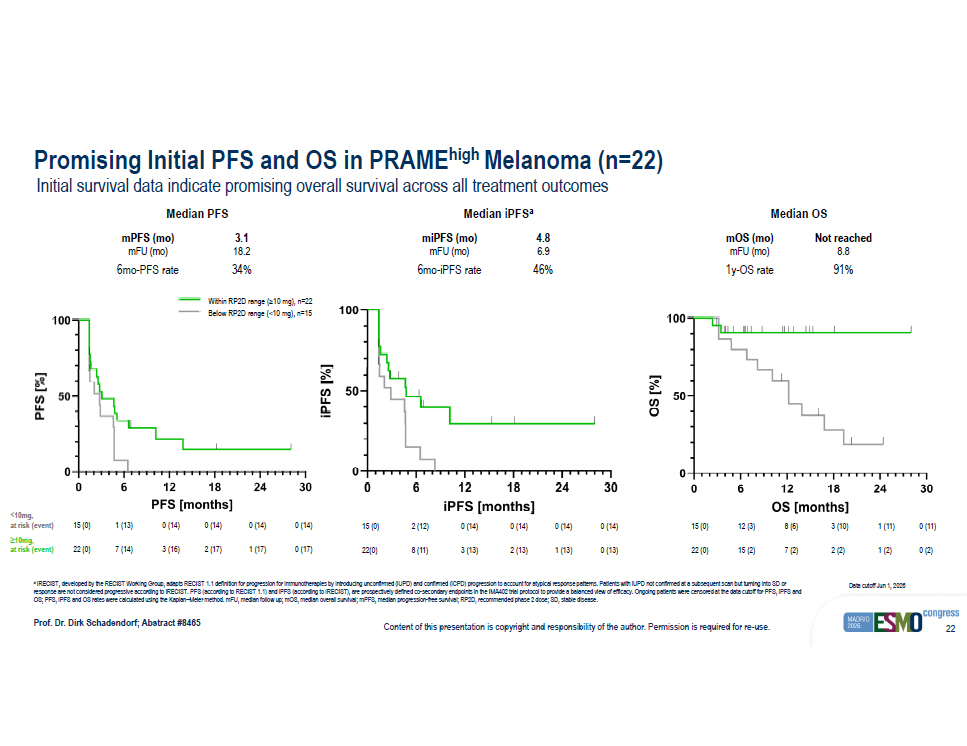
22 Content of this presentation is copyright and responsibility of the author. Permission is required for re - use. a iRECIST , developed by the RECIST Working Group, adapts RECIST 1.1 definition for progression for immunotherapies by introducing unco nfi rmed ( iUPD ) and confirmed ( iCPD ) progression to account for atypical response patterns. Patients with iUPD not confirmed at a subsequent scan but turning into SD or response are not considered progressive according to iRECIST . PFS (according to RECIST 1.1) and iPFS (according to iRECIST ), are prospectively defined co - secondary endpoints in the IMA402 trial protocol to provide a balanced view of efficacy. Ongoing patients were censored at the data cutoff for PFS, iPFS and OS; PFS, iPFS and OS rates were calculated using the Kaplan – Meier method. mFU , median follow up; mOS , median overall survival; mPFS , median progression - free survival; RP2D, recommended phase 2 dose; SD, stable disease. Promising Initial PFS and OS in PRAME high Melanoma (n=22) Prof. Dr. Dirk Schadendorf ; Abstract #8465 Data cutoff Jun 1, 2026 Median PFS Median iPFS a Median OS 3.1 18.2 mPFS (mo) mFU (mo) 34% 6mo - PFS rate 4.8 6.9 miPFS (mo) mFU (mo) 46% 6mo - iPFS rate Not reached 8.8 mOS (mo) mFU (mo) 91% 1y - OS rate Initial survival data indicate promising overall survival across all treatment outcomes 0 (14) 0 (14) 0 (14) 0 (14) 1 (13) 15 (0) <10mg, at risk (event) 0 (17) 1 (17) 2 (17) 3 (16) 7 (14) 22 (0) ≥ 10mg, at risk (event) 0 (14) 0 (14) 0 (14) 0 (14) 2 (12) 15 (0) 0 (13) 1 (13) 2 (13) 3 (13) 8 (11) 22(0) 0 (11) 1 (11) 3 (10) 8 (6) 12 (3) 15 (0) 0 (2) 1 (2) 2 (2) 7 (2) 15 (2) 22 (0) Within RP2D range ( ≥ 10 mg), n=22 Below RP2D range (<10 mg), n=15
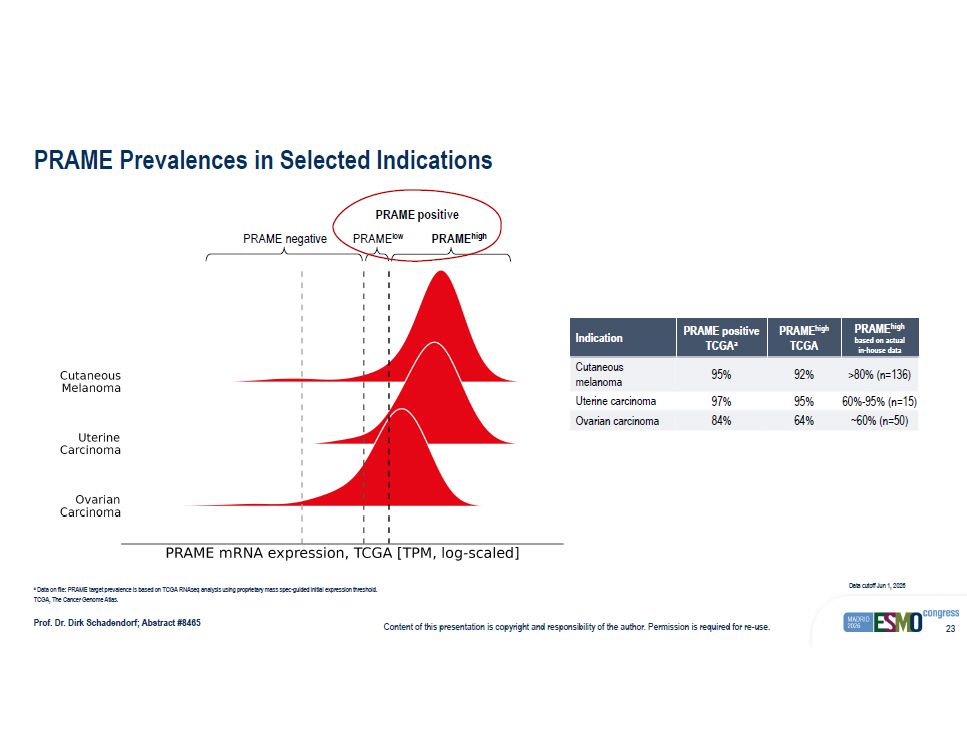
23 Content of this presentation is copyright and responsibility of the author. Permission is required for re - use. PRAME Prevalences in Selected Indications Prof. Dr. Dirk Schadendorf ; Abstract #8465 a Data on file: PRAME target prevalence is based on TCGA RNAseq analysis using proprietary mass spec - guided initial expression th reshold. TCGA, The Cancer Genome Atlas. Data cutoff Jun 1, 2026 PRAME negative PRAME low PRAME high PRAME positive PRAME high based on actual in - house data PRAME high TCGA PRAME positive TCGA a Indication >80% (n=136) 92% 95% Cutaneous melanoma 60% - 95% (n=15) 95% 97% Uterine carcinoma ~60% (n=50) 64% 84% Ovarian carcinoma
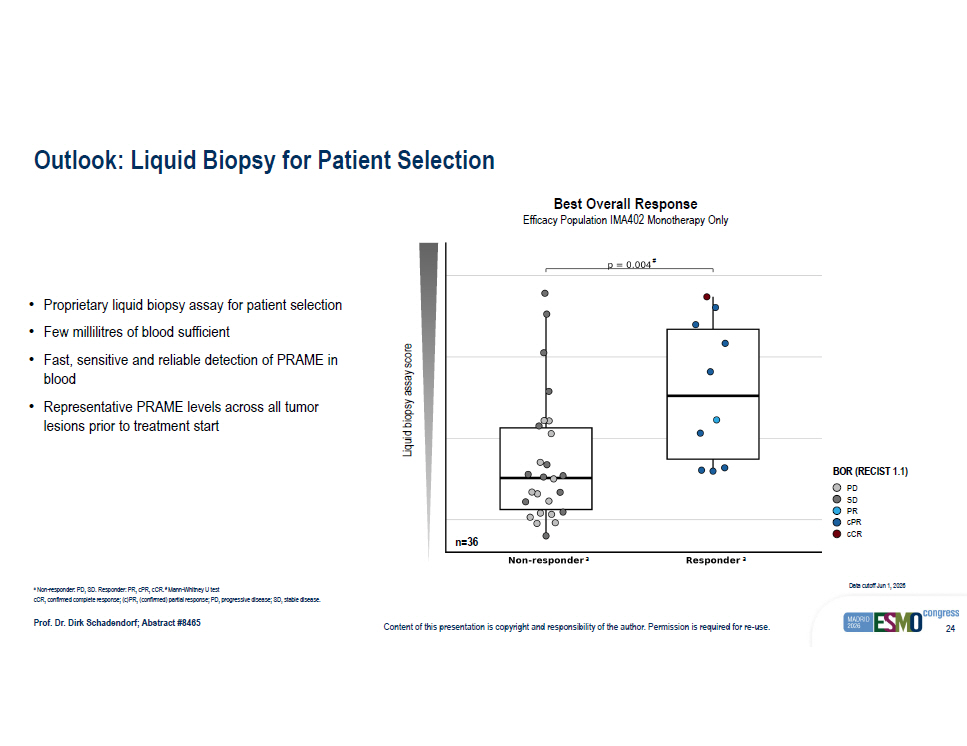
24 Content of this presentation is copyright and responsibility of the author. Permission is required for re - use. Outlook: Liquid Biopsy for Patient Selection Prof. Dr. Dirk Schadendorf ; Abstract #8465 a Non - responder: PD, SD. Responder: PR, cPR , cCR . # Mann - Whitney U test cCR , confirmed complete response; (c)PR, (confirmed) partial response; PD, progressive disease; SD, stable disease. Data cutoff Jun 1, 2026 • Proprietary liquid biopsy assay for patient selection • Few millilitres of blood sufficient • Fast, sensitive and reliable detection of PRAME in blood • Representative PRAME levels across all tumor lesions prior to treatment start Best Overall Response Efficacy Population IMA402 Monotherapy Only BOR (RECIST 1.1) PD SD PR cPR cCR n=36 Liquid biopsy assay score a a #
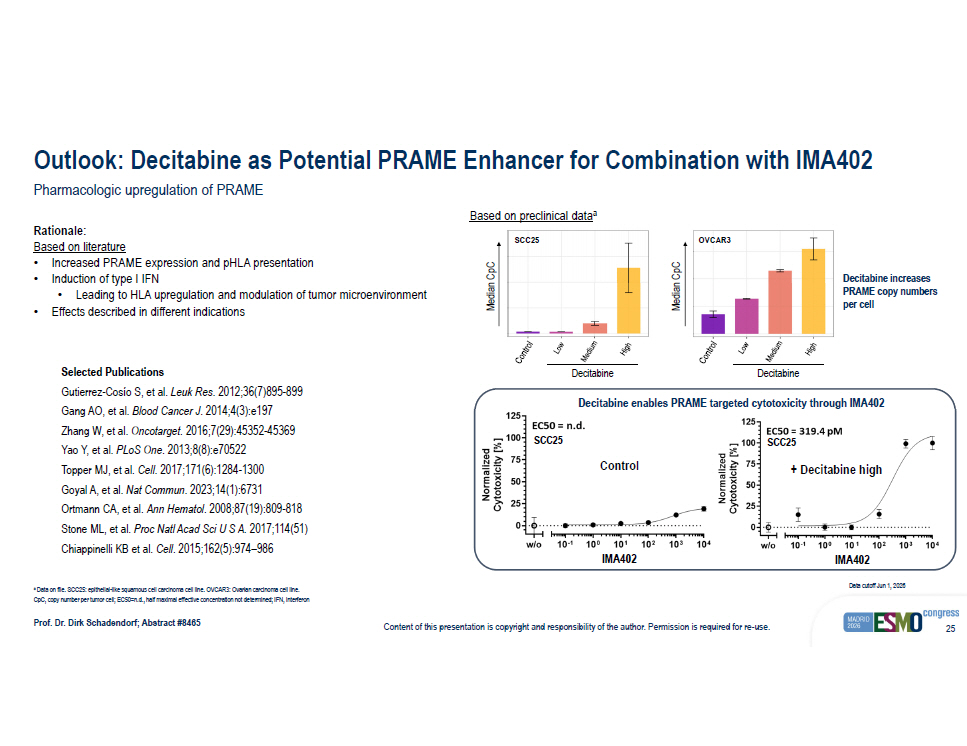
25 Content of this presentation is copyright and responsibility of the author. Permission is required for re - use. Outlook: Decitabine as Potential PRAME Enhancer for Combination with IMA402 Prof. Dr. Dirk Schadendorf ; Abstract #8465 a Data on file. SCC25: epithelial - like squamous cell carcinoma cell line. OVCAR3: Ovarian carcinoma cell line. CpC , copy number per tumor cell; EC50=n.d., half maximal effective concentration not determined; IFN, interferon Data cutoff Jun 1, 2026 Pharmacologic upregulation of PRAME Rationale: Based on literature • Increased PRAME expression and pHLA presentation • Induction of type I IFN • Leading to HLA upregulation and modulation of tumor microenvironment • Effects described in different indications Based on preclinical data a Median CpC Decitabine SCC25 OVCAR3 Median CpC Decitabine Decitabine increases PRAME copy numbers per cell SCC25 SCC25 Control + Decitabine high IMA402 IMA402 Decitabine enables PRAME targeted cytotoxicity through IMA402 Selected Publications Gutierrez - Cosío S, et al. Leuk Res . 2012;36(7)895 - 899 Gang AO, et al. Blood Cancer J . 2014;4(3):e197 Zhang W, et al. Oncotarget . 2016;7(29):45352 - 45369 Yao Y, et al. PLoS One. 2013;8(8):e70522 Topper MJ, et al. Cell . 2017;171(6):1284 - 1300 Goyal A, et al. Nat Commun . 2023;14(1):6731 Ortmann CA, et al. Ann Hematol . 2008;87(19):809 - 818 Stone ML, et al. Proc Natl Acad Sci U S A. 2017;114(51) Chiappinelli KB et al. Cell . 2015;162(5):974 – 986
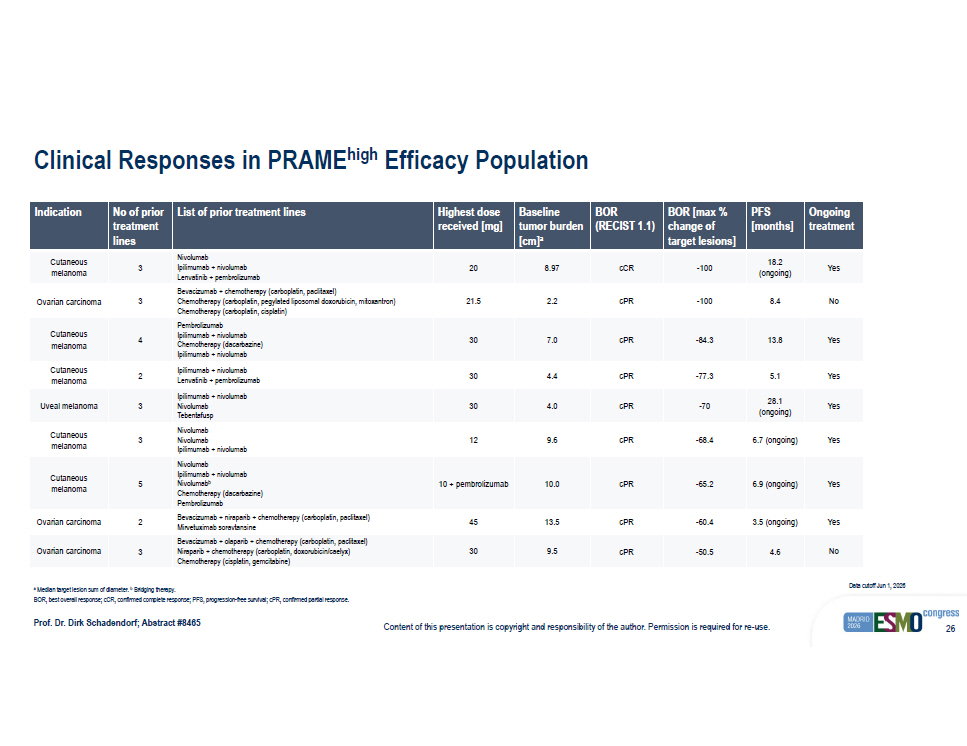
26 Content of this presentation is copyright and responsibility of the author. Permission is required for re - use. Clinical Responses in PRAME high Efficacy Population Prof. Dr. Dirk Schadendorf ; Abstract #8465 a Median target lesion sum of diameter. b Bridging therapy. BOR, best overall response; cCR , confirmed complete response; PFS, progression - free survival; cPR , confirmed partial response. Data cutoff Jun 1, 2026 Ongoing treatment PFS [months] BOR [max % change of target lesions] BOR (RECIST 1.1) Baseline tumor burden [cm] a Highest dose received [mg] List of prior treatment lines No of prior treatment lines Indication Yes 18.2 (ongoing) - 100 cCR 8.97 20 Nivolumab Ipilimumab + nivolumab Lenvatinib + pembrolizumab 3 Cutaneous melanoma No 8.4 - 100 cPR 2.2 21.5 Bevacizumab + chemotherapy (carboplatin, paclitaxel) Chemotherapy (carboplatin, p egylated liposomal doxorubicin , mitoxantron) Chemotherapy (carboplatin, cisplatin) 3 Ovarian carcinoma Yes 13.8 - 84.3 cPR 7.0 30 Pembrolizumab Ipilimumab + nivolumab Chemotherapy (dacarbazine) Ipilimumab + nivolumab 4 Cutaneous melanoma Yes 5.1 - 77.3 cPR 4.4 30 Ipilimumab + nivolumab Lenvatinib + pembrolizumab 2 Cutaneous melanoma Yes 28.1 (ongoing) - 70 cPR 4.0 30 Ipilimumab + nivolumab Nivolumab Tebentafusp 3 Uveal melanoma Yes 6.7 (ongoing) - 68.4 cPR 9.6 12 Nivolumab Nivolumab Ipilimumab + nivolumab 3 Cutaneous melanoma Yes 6.9 (ongoing) - 65.2 cPR 10.0 10 + pembrolizumab Nivolumab Ipilimumab + nivolumab Nivolumab b Chemotherapy (dacarbazine) Pembrolizumab 5 Cutaneous melanoma Yes 3.5 (ongoing) - 60.4 cPR 13.5 45 Bevacizumab + niraparib + chemotherapy (carboplatin, paclitaxel) Mirvetuximab soravtansine 2 Ovarian carcinoma No 4.6 - 50.5 cPR 9.5 30 Bevacizumab + olaparib + chemotherapy (carboplatin, paclitaxel) Niraparib + chemotherapy (carboplatin, doxorubicin/caelyx) Chemotherapy (cisplatin, gemcitabine) 3 Ovarian carcinoma
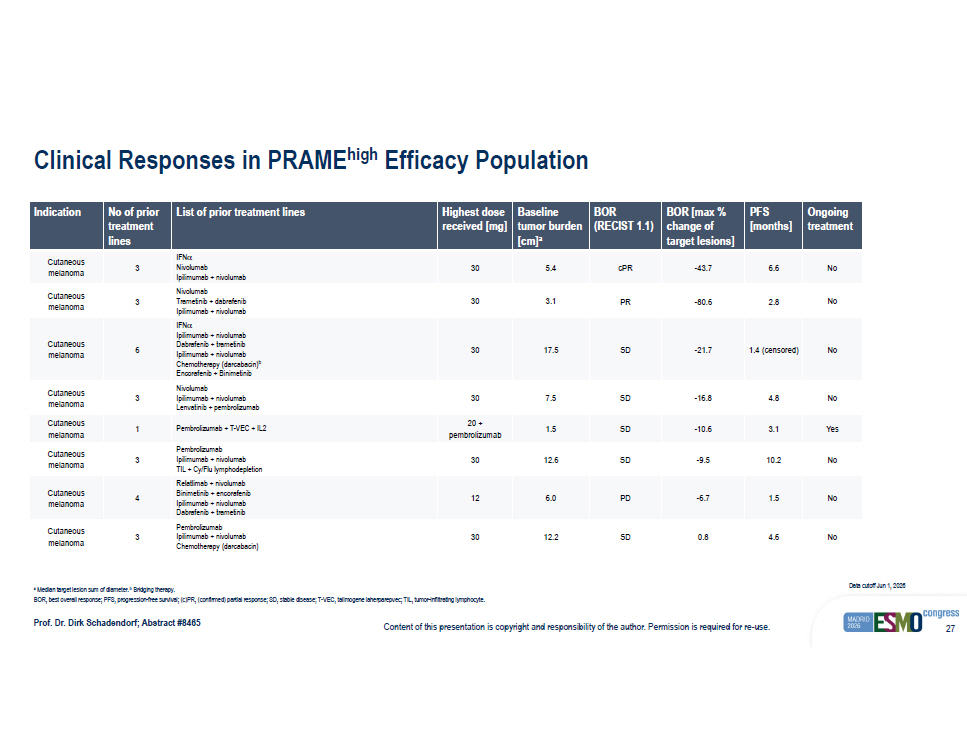
27 Content of this presentation is copyright and responsibility of the author. Permission is required for re - use. Clinical Responses in PRAME high Efficacy Population Prof. Dr. Dirk Schadendorf ; Abstract #8465 a Median target lesion sum of diameter. b Bridging therapy. BOR, best overall response; PFS, progression - free survival; (c)PR, (confirmed) partial response; SD, stable disease; T - VEC, talimogene laherparepvec ; TIL, tumor - infiltrating lymphocyte. Data cutoff Jun 1, 2026 Ongoing treatment PFS [months] BOR [max % change of target lesions] BOR (RECIST 1.1) Baseline tumor burden [cm] a Highest dose received [mg] List of prior treatment lines No of prior treatment lines Indication No 6.6 - 43.7 cPR 5.4 30 IFN Nivolumab Ipilimumab + nivolumab 3 Cutaneous melanoma No 2.8 - 80.6 PR 3.1 30 Nivolumab Trametinib + dabrafenib Ipilimumab + nivolumab 3 Cutaneous melanoma No 1.4 (censored) - 21.7 SD 17.5 30 IFN Ipilimumab + nivolumab Dabrafenib + trametinib Ipilimumab + nivolumab Chemotherapy ( darcabacin ) b Encorafenib + Binimetinib 6 Cutaneous melanoma No 4.8 - 16.8 SD 7.5 30 Nivolumab Ipilimumab + nivolumab Lenvatinib + pembrolizumab 3 Cutaneous melanoma Yes 3.1 - 10.6 SD 1.5 20 + pembrolizumab Pembrolizumab + T - VEC + IL2 1 Cutaneous melanoma No 10.2 - 9.5 SD 12.6 30 Pembrolizumab Ipilimumab + nivolumab TIL + Cy/Flu lymphodepletion 3 Cutaneous melanoma No 1.5 - 6.7 PD 6.0 12 Relatlimab + nivolumab Binimetinib + encorafenib Ipilimumab + nivolumab Dabrafenib + trametinib 4 Cutaneous melanoma No 4.6 0.8 SD 12.2 30 Pembrolizumab Ipilimumab + nivolumab Chemotherapy (darcabacin) 3 Cutaneous melanoma
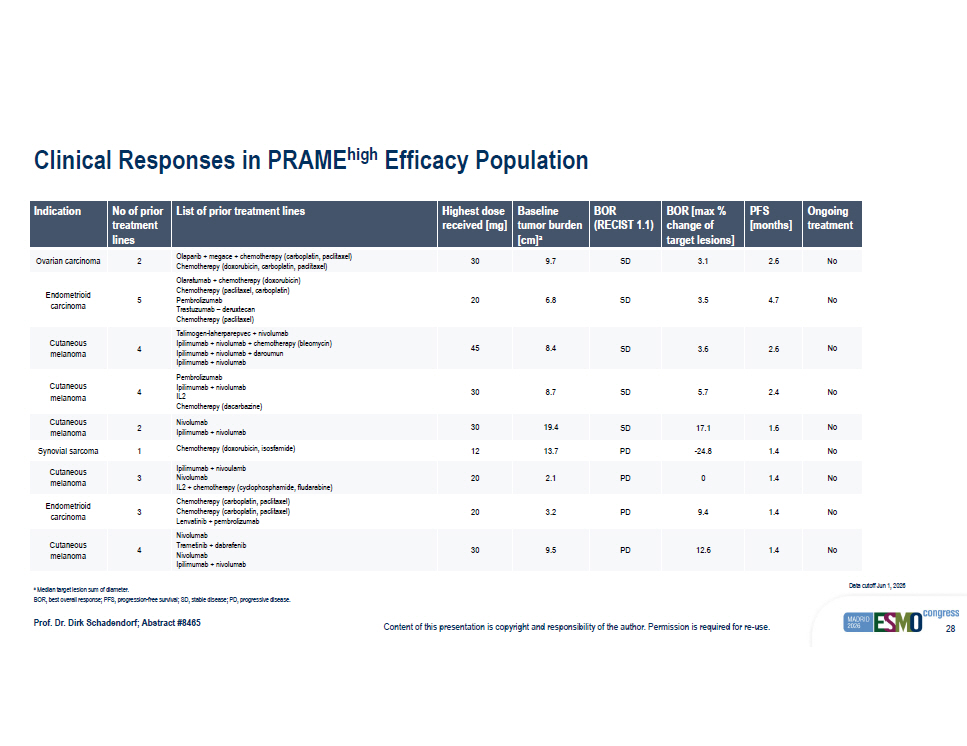
28 Content of this presentation is copyright and responsibility of the author. Permission is required for re - use. Clinical Responses in PRAME high Efficacy Population Prof. Dr. Dirk Schadendorf ; Abstract #8465 a Median target lesion sum of diameter. BOR, best overall response; PFS, progression - free survival; SD, stable disease; PD, progressive disease. Data cutoff Jun 1, 2026 Ongoing treatment PFS [months] BOR [max % change of target lesions] BOR (RECIST 1.1) Baseline tumor burden [cm] a Highest dose received [mg] List of prior treatment lines No of prior treatment lines Indication No 2.6 3.1 SD 9.7 30 Olaparib + megace + chemotherapy (carboplatin, paclitaxel) Chemotherapy (doxorubicin, carboplatin, paclitaxel) 2 Ovarian carcinoma No 4.7 3.5 SD 6.8 20 Olaratumab + chemotherapy (doxorubicin) Chemotherapy (paclitaxel, carboplatin) Pembrolizumab Trastuzumab – deruxtecan Chemotherapy (paclitaxel) 5 Endometrioid carcinoma No 2.6 3.6 SD 8.4 45 Talimogen - laherparepvec + nivolumab Ipilimumab + nivolumab + chemotherapy (bleomycin) Ipilimumab + nivolumab + daroumun Ipilimumab + nivolumab 4 Cutaneous melanoma No 2.4 5.7 SD 8.7 30 Pembrolizumab Ipilimumab + nivolumab IL2 Chemotherapy (dacarbazine) 4 Cutaneous melanoma No 1.6 17.1 SD 19.4 30 Nivolumab Ipilimumab + nivolumab 2 Cutaneous melanoma No 1.4 - 24.8 PD 13.7 12 Chemotherapy (doxorubicin, isosfamide) 1 Synovial sarcoma No 1.4 0 PD 2.1 20 Ipilimumab + nivoulamb Nivolumab IL2 + chemotherapy (cyclophosphamide, fludarabine) 3 Cutaneous melanoma No 1.4 9.4 PD 3.2 20 Chemotherapy (carboplatin, paclitaxel) Chemotherapy (carboplatin, paclitaxel) Lenvatinib + pembrolizumab 3 Endometrioid carcinoma No 1.4 12.6 PD 9.5 30 Nivolumab Trametinib + dabrafenib Nivolumab Ipilimumab + nivolumab 4 Cutaneous melanoma
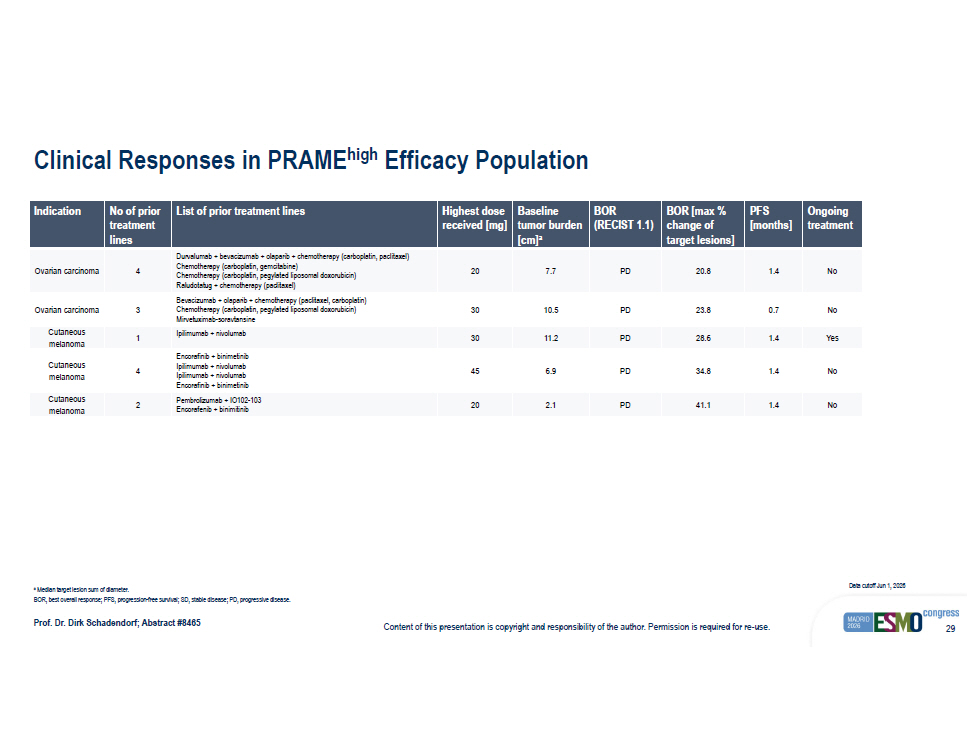
29 Content of this presentation is copyright and responsibility of the author. Permission is required for re - use. Clinical Responses in PRAME high Efficacy Population Prof. Dr. Dirk Schadendorf ; Abstract #8465 a Median target lesion sum of diameter. BOR, best overall response; PFS, progression - free survival; SD, stable disease; PD, progressive disease. Data cutoff Jun 1, 2026 Ongoing treatment PFS [months] BOR [max % change of target lesions] BOR (RECIST 1.1) Baseline tumor burden [cm] a Highest dose received [mg] List of prior treatment lines No of prior treatment lines Indication No 1.4 20.8 PD 7.7 20 Durvalumab + bevacizumab + olaparib + chemotherapy (carboplatin, paclitaxel) Chemotherapy (carboplatin, gemcitabine) Chemotherapy (carboplatin, p egylated liposomal doxorubicin ) Raludotatug + chemotherapy (paclitaxel) 4 Ovarian carcinoma No 0.7 23.8 PD 10.5 30 Bevacizumab + olaparib + chemotherapy (paclitaxel, carboplatin) Chemotherapy (carboplatin, p egylated liposomal doxorubicin ) Mirvetuximab - soravtansine 3 Ovarian carcinoma Yes 1.4 28.6 PD 11.2 30 Ipilimumab + nivolumab 1 Cutaneous melanoma No 1.4 34.8 PD 6.9 45 Encorafinib + binimetinib Ipilimumab + nivolumab Ipilimumab + nivolumab Encorafinib + binimetinib 4 Cutaneous melanoma No 1.4 41.1 PD 2.1 20 Pembrolizumab + IO102 - 103 Encorafenib + binimitinib 2 Cutaneous melanoma