|
1 |
Dear shareholders,
We’re excited to provide an update on our activities over the past quarter.
Eagle Line Update
Eagle Line is our highly automated pilot production line to demonstrate scalable production of our solid-state lithium-metal battery technology. In Q1, we completed installation of the Eagle Line and commenced start-up operations. We are producing initial volumes of QSE-5 cells, and we have been working to continuously improve all aspects of Eagle Line functionality, such as equipment uptime, line throughput, control systems, data integration and process stability.
We have been integrating advanced AI models into the Eagle Line, and we have seen substantive progress on cell quality and reliability. Combined with sophisticated in-line metrology, we have improved real-time control to enable enhanced cell performance. We believe that the increased capacity of the Eagle Line will help drive a virtuous cycle of higher data volume, more rapid learning cycles and increasing production quality.
In addition to demonstrating scalable production, Eagle Line will help enable customer shipments of QSE-5 cells. In Q2 we plan to ramp QSE-5 cell production to support customer programs across automotive and other applications.
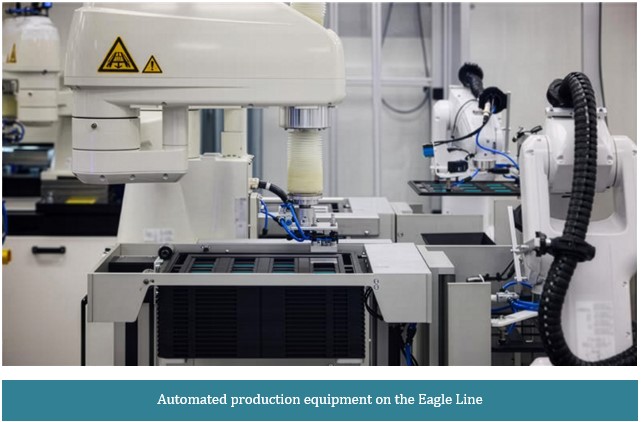
Automated production equipment on the Eagle Line
|
2 |
Commercial Update
Automotive
Development work for EV applications remains our core focus and our largest source of customer billings. We continue to work closely with the Volkswagen Group’s PowerCo as we advance through the phases of our automotive commercialization roadmap. The next phase is field testing: cells from the Eagle Line will be put through a demanding set of real-world test conditions, and the customer feedback will be used to learn and iterate.
Beyond our work with Volkswagen, in Q1 we shipped cells to an automotive JDA partner for testing. We continue to work through our two JDAs with Top-10 global automotive OEMs to bring our solid-state lithium-metal technology into their vehicle programs.
In addition, this quarter we successfully completed our technology evaluation with another Top-10 global automotive OEM customer. As part of this evaluation, their engineers performed hands-on evaluation of our technology and ran competitive benchmarking tests against other solid-state technology approaches. With the success of the technology evaluation, we are moving into the next phase of this engagement: joint development activities with the ultimate goal of deploying QS technology in their automotive and other applications.
QS Ecosystem
The QS ecosystem is the cornerstone of our capital-light business model. By teaming up with world-class companies across the value chain, we can bring our technology to global scale faster and more efficiently. These alliances are a force multiplier for our commercialization efforts as we distribute our technology know-how to trusted partners. We continue to work closely with both Murata Manufacturing and Corning on scaling up production of our solid ceramic separator using our groundbreaking Cobra process. QS engineers are holding regular technical meetings with Murata and Corning across multiple parallel workstreams as we work to develop and build the global value chain necessary for GWh-scale production of QS technology to serve automotive and other customers. Our ecosystem partners are also investing in QS-proprietary hardware and systems to produce our ceramic separator, and we see this as a clear sign of their commitment to our ecosystem as well as a source of customer billings. In Q1 we recorded our first customer billings from our ecosystem. |
“We’re optimistic that we can help customers deliver a better battery at a competitive price. That’s huge – not just for EVs, but for consumer electronics, medical devices, military applications, and even grid storage applications. The demand for batteries is growing exponentially. We’re excited to bring our solutions to the forefront.”
- Jamie Huang-Chu,
|
|
3 |
New Markets
In addition to our automotive business, we are ramping up our engagements in new markets. We believe our high performance solid-state design has compelling attributes to address the evolving energy-storage needs of AI data centers, where conventional lithium-ion technology faces safety and performance limitations. Driven by massive compute demand, data centers are transitioning to 800V DC designs and adopting power systems architecture and technology from the electric vehicle industry. We see this as a natural fit for our no-compromise solid-state battery. In-rack energy storage and power delivery for AI data centers is a large and fast-growing market, and the higher energy density of our battery technology can enable increased compute density of AI data centers.
In addition, we have seen strong customer interest in our battery technology from global players in the military, aerospace and government sectors. Our battery technology unlocks step-change improvements to both energy density and power simultaneously; combined with the superior safety of our solid-state design, this is a highly attractive combination for these advanced applications. Our anode-free architecture also has supply-chain benefits. Conventional lithium-ion batteries require graphite that is almost exclusively sourced from China. In contrast, our battery design is graphite-free, eliminating a major pain point for defense applications.
Ross Niebergall
Mark Maybury |
This quarter we welcomed experienced defense executive Dr. Ross Niebergall to our board of directors. He has decades of experience leading R&D and technology commercialization in defense applications for defense primes including L3Harris and Raytheon. He holds a PhD in Mathematics from the University of Notre Dame. “QS technology has the potential to be a transformative force across many different applications. I’m excited to join the board and help guide the company through the next stages of its commercialization journey.”
In addition, we added Dr. Mark Maybury, former Chief Scientist of the U.S. Air Force, to our strategic advisory board. He currently serves as Vice President, Commercialization at Lockheed Martin. He holds a PhD in Computer Science from the University of Cambridge with a focus on artificial intelligence. “QuantumScape's battery technology offers compelling advantages for both industrial and defense applications – from superior energy density and faster charging to enhanced safety in demanding operational environments. I'm excited to join QuantumScape's advisory board and support the commercialization of its groundbreaking solid-state battery technology."
|
Financial Outlook
GAAP operating expenses and GAAP net loss in Q1 were $109.2M and $100.8M respectively. Adjusted EBITDA loss was $63.2M in Q1, in line with expectations. For full-year 2026, we reiterate our Adjusted EBITDA loss guidance of between $250M and $275M. A table reconciling GAAP net loss and Adjusted EBITDA is available in the financial statement at the end of this shareholder letter.
|
4 |
Capital expenditures in the first quarter were $10.0M. Q1 capex was primarily composed of final payments related to the Eagle Line. For full-year 2026, we reiterate our capex guidance of between $40M and $60M.
Customer billings for Q1 were $11.0M, representing a mix of customer development activities and ecosystem partner payments. Customer billings as a metric represents the total value of all invoices issued by QS to our customers and partners in the period, regardless of accounting treatment. As a reminder, customer billings may vary from quarter to quarter due to fluctuations in activity as we progress through various phases of engagement. “Customer billings” is a key operational metric meant to give insight into customer activity and future cash inflows. The metric is not a substitute for revenue under U.S. GAAP. We ended Q1 with $904.7M in liquidity and will remain prudent with our strong balance sheet going forward.
As always, we encourage investors to read more on our financial information, business outlook, and risk factors in our quarterly and annual SEC filings on our investor relations website.
Strategic Outlook
Today, the world’s energy system is experiencing rapid change. The way we produce, store and use energy is undergoing a once-in-a-century transformation. From electric vehicles and AI data centers to grid storage, drones and aerospace, the future of the world economy is being built on electrotech.
To give just one example: the speed of change and growth in the AI data center market is breathtaking. The technology of the past is struggling to keep up, and innovations in energy storage are essential to this transformational change. Thanks to our years of careful planning, consistent execution and constancy of vision, QS is in the middle of this electrotech story.
From geopolitical disruptions to the energy system and supply chain risks for critical materials to the explosive growth of electrification across the world economy, the tailwinds for our technology have never been stronger. We believe we have the differentiated technology, world-class team, ecosystem partners and customer relationships to capitalize on this revolution.
Even as we tackle the challenges still ahead, we are motivated by a market opportunity that is global in scale and growing every day. We look forward to updating you on our progress over the months to come.
|
|
Dr. Siva Sivaram |
Kevin Hettrich |
|
5 |
QuantumScape Corporation
Condensed Consolidated Balance Sheets (Unaudited)
(In Thousands)
|
|
March 31, |
|
|
December 31, |
|
||
|
|
2026 |
|
|
2025 |
|
||
Assets |
|
|
|
|
|
|
||
Current assets |
|
|
|
|
|
|
||
Cash and cash equivalents |
|
$ |
145,068 |
|
|
$ |
230,524 |
|
Marketable securities |
|
|
759,636 |
|
|
|
740,283 |
|
Prepaid expenses and other current assets |
|
|
11,178 |
|
|
|
10,835 |
|
Total current assets |
|
|
915,882 |
|
|
|
981,642 |
|
Property and equipment, net |
|
|
240,213 |
|
|
|
251,449 |
|
Right-of-use assets - operating lease |
|
|
33,207 |
|
|
|
34,078 |
|
Right-of-use assets - finance lease |
|
|
23,919 |
|
|
|
19,394 |
|
Other assets |
|
|
15,870 |
|
|
|
21,593 |
|
Total assets |
|
$ |
1,229,091 |
|
|
$ |
1,308,156 |
|
Liabilities and stockholders’ equity |
|
|
|
|
|
|
||
Current liabilities |
|
|
|
|
|
|
||
Accounts payable |
|
$ |
7,361 |
|
|
$ |
11,819 |
|
Accrued liabilities |
|
|
15,417 |
|
|
|
14,521 |
|
Accrued compensation and benefits |
|
|
12,463 |
|
|
|
26,969 |
|
Operating lease liability, short-term |
|
|
4,852 |
|
|
|
4,653 |
|
Finance lease liability, short-term |
|
|
3,675 |
|
|
|
3,584 |
|
Total current liabilities |
|
|
43,768 |
|
|
|
61,546 |
|
Operating lease liability, long-term |
|
|
33,337 |
|
|
|
34,481 |
|
Finance lease liability, long-term |
|
|
27,320 |
|
|
|
28,282 |
|
Other liabilities |
|
|
15,000 |
|
|
|
14,874 |
|
Total liabilities |
|
|
119,425 |
|
|
|
139,183 |
|
Total stockholders’ equity |
|
|
1,109,666 |
|
|
|
1,168,973 |
|
Total liabilities and stockholders’ equity |
|
$ |
1,229,091 |
|
|
$ |
1,308,156 |
|
|
6 |
QuantumScape Corporation
Condensed Consolidated Statements of Operations and Comprehensive Loss (Unaudited)
(In Thousands, Except per Share Amounts)
|
|
Three Months Ended March 31, |
|
|||||
|
|
2026 |
|
|
2025 |
|
||
Operating expenses: |
|
|
|
|
|
|
||
Research and development |
|
$ |
84,570 |
|
|
$ |
95,589 |
|
General and administrative |
|
|
24,609 |
|
|
|
27,986 |
|
Total operating expenses |
|
|
109,179 |
|
|
|
123,575 |
|
Loss from operations |
|
|
(109,179 |
) |
|
|
(123,575 |
) |
Other income (expense): |
|
|
|
|
|
|
||
Interest expense |
|
|
(478 |
) |
|
|
(528 |
) |
Interest income |
|
|
8,890 |
|
|
|
9,769 |
|
Other income (expense) |
|
|
(25 |
) |
|
|
80 |
|
Loss before income taxes |
|
|
(100,792 |
) |
|
|
(114,254 |
) |
Income tax (provision) benefit |
|
|
(7 |
) |
|
|
(169 |
) |
Net loss |
|
|
(100,799 |
) |
|
|
(114,423 |
) |
Other comprehensive income (loss): |
|
|
|
|
|
|
||
Unrealized loss on marketable securities |
|
|
(1,028 |
) |
|
|
(328 |
) |
Total comprehensive loss |
|
|
(101,827 |
) |
|
|
(114,751 |
) |
|
|
|
|
|
|
|
||
Basic and Diluted net loss per share |
|
$ |
(0.16 |
) |
|
$ |
(0.21 |
) |
Basic and Diluted weighted-average common shares outstanding |
|
|
611,013 |
|
|
|
548,006 |
|
|
7 |
QuantumScape Corporation
Condensed Consolidated Statements of Cash Flows (Unaudited)
(In Thousands)
|
|
Three Months Ended March 31, |
|
|||||
|
|
2026 |
|
|
2025 |
|
||
Operating activities |
|
|
|
|
|
|
||
Net loss |
|
$ |
(100,799 |
) |
|
$ |
(114,423 |
) |
Adjustments to reconcile net loss to net cash used in operating activities: |
|
|
|
|
|
|
||
Depreciation and amortization |
|
|
14,760 |
|
|
|
18,335 |
|
Amortization of right-of-use assets and non-cash lease expense |
|
|
2,554 |
|
|
|
2,046 |
|
Accretion of discounts on marketable securities |
|
|
(4,498 |
) |
|
|
(5,048 |
) |
Stock-based compensation expense |
|
|
30,509 |
|
|
|
40,639 |
|
Other |
|
|
454 |
|
|
|
40 |
|
Changes in operating assets and liabilities: |
|
|
|
|
|
|
||
Prepaid expenses and other current assets and other assets |
|
|
(412 |
) |
|
|
472 |
|
Accounts payable, accrued liabilities and accrued compensation and benefits |
|
|
(880 |
) |
|
|
(1,532 |
) |
Operating lease liability and other liabilities |
|
|
(1,199 |
) |
|
|
(1,278 |
) |
Net cash used in operating activities |
|
|
(59,511 |
) |
|
|
(60,749 |
) |
Investing activities |
|
|
|
|
|
|
||
Purchases of property and equipment |
|
|
(9,980 |
) |
|
|
(5,835 |
) |
Proceeds from maturities of marketable securities |
|
|
231,953 |
|
|
|
281,220 |
|
Purchases of marketable securities |
|
|
(247,836 |
) |
|
|
(213,352 |
) |
Other |
|
|
174 |
|
|
|
— |
|
Net cash (used in) provided by investing activities |
|
|
(25,689 |
) |
|
|
62,033 |
|
Financing activities |
|
|
|
|
|
|
||
Proceeds from exercise of stock options |
|
|
614 |
|
|
|
11,182 |
|
Proceeds from issuance of common stock, net of issuance costs paid |
|
|
— |
|
|
|
1,007 |
|
Principal payment for finance lease |
|
|
(870 |
) |
|
|
(784 |
) |
Net cash (used in) provided by financing activities |
|
|
(256 |
) |
|
|
11,405 |
|
Net (decrease) increase in cash, cash equivalents and restricted cash |
|
|
(85,456 |
) |
|
|
12,689 |
|
Cash, cash equivalents and restricted cash at beginning of period |
|
|
244,179 |
|
|
|
158,914 |
|
Cash, cash equivalents and restricted cash at end of period |
|
$ |
158,723 |
|
|
$ |
171,603 |
|
Supplemental disclosure |
|
|
|
|
|
|
||
Cash paid for interest |
|
$ |
478 |
|
|
$ |
528 |
|
Purchases of property and equipment, not yet paid |
|
$ |
3,905 |
|
|
$ |
4,624 |
|
Common stock issuance costs, not yet paid |
|
$ |
— |
|
|
$ |
110 |
|
|
8 |
Net Loss to Adjusted EBITDA
Adjusted EBITDA is a non-GAAP supplemental measure of operating performance that does not represent and should not be considered an alternative to operating loss or cash flow from operations, as determined by GAAP. Adjusted EBITDA is defined as net income (loss) before interest expense, income tax expense, non-controlling interest, revaluations, impairments, stock-based compensation, depreciation and amortization expense, and other non-recurring charges. We use Adjusted EBITDA to measure the operating performance of our business, excluding specifically identified items that we do not believe directly reflect our core operations and may not be indicative of our recurring operations. Adjusted EBITDA may not be comparable to similarly titled measures provided by other companies due to potential differences in methods of calculations. A reconciliation of Adjusted EBITDA to net loss is as follows:
($ in Thousands) |
|
Three Months Ended |
|
|||||
|
|
2026 |
|
|
2025 |
|
||
GAAP net loss attributable to Common Stockholders |
|
$ |
(100,799 |
) |
|
$ |
(114,423 |
) |
Interest expense (income), net |
|
|
(8,412 |
) |
|
|
(9,241 |
) |
Other expense (income), net |
|
|
25 |
|
|
|
(80 |
) |
Income tax provision (benefit) |
|
|
7 |
|
|
|
169 |
|
Stock-based compensation |
|
|
30,509 |
|
|
|
40,639 |
|
Non-GAAP operating loss |
|
$ |
(78,670 |
) |
|
$ |
(82,936 |
) |
Depreciation and amortization expense(1) |
|
|
15,425 |
|
|
|
18,376 |
|
Adjusted EBITDA |
|
$ |
(63,245 |
) |
|
$ |
(64,560 |
) |
(1) Depreciation and amortization expense for the three months ended March 31, 2026 includes immaterial accelerated depreciation and write-off of property and equipment no longer in use.
Management’s Use of Non-GAAP Financial Measures
This letter includes certain non-GAAP financial measures as defined by SEC rules. These non-GAAP financial measures are in addition to, and not a substitute for or superior to, measures of financial performance prepared in accordance with U.S. GAAP. There are a number of limitations related to the use of these non-GAAP financial measures versus their nearest GAAP equivalents. For example, other companies may calculate non-GAAP financial measures differently or may use other measures to evaluate their performance, all of which could reduce the usefulness of our non-GAAP financial measures as tools for comparison. We urge you to review the reconciliations of our non-GAAP financial measures to the most directly comparable U.S. GAAP financial measures set forth in this letter, and not to rely on any single financial measure to evaluate our business.
|
9 |
Forward-Looking Statements
This letter contains “forward-looking statements” within the meaning of the federal securities laws based on management’s current expectations, assumptions, and available information about future events as of the date of this letter. All statements, other than historical facts, including those about the Company’s anticipated commercial and operational milestones, financial outlook, and strategic objectives, particularly concerning its battery technology development, benefits and performance, collaborations and partnerships, market expansion and goals, including the scaling of the Eagle Line and Cobra process, automotive and licensing commercialization strategies, expansion into new applications, including AI data centers, military, aerospace, and government applications, and the 2026 technology roadmap, among others, are forward-looking statements. Words like “may,” “will,” “can,” “estimate,” “permit,” “expect,” “plan,” “believe,” “designed to,” “seek,” “allow,” “focus,” “potential,” “target,” “forecast,” “should,” “would,” “could,” “continue,” “intend,” “anticipate,” “enable,” “work toward,” “prospective,” “future,” “up to,” “outlook,” and the negative of such terms and other similar expressions identify forward-looking statements, though not all forward-looking statements include these words.
These forward-looking statements are not guarantees of future performance and are subject to a number of risks, uncertainties, and assumptions, including but not limited to, the following: Technological development risks, including significant delays or technical challenges replicating and scaling performance from earlier low-volume sample cells, achieving the quality, consistency, reliability, safety, cost, and throughput required for commercial production, developing a cell architecture meeting all technical requirements and customer expectations, or achieving further advancements beyond the QSE-5 platform or meeting the requirements of our technology roadmap; Production risks, including encountered or potential delays, unforeseen technical issues, and other obstacles in developing, acquiring, installing, and operating new equipment for automated or continuous flow processes like Cobra and the Eagle Line, including vendor delays, supply chain disruptions, and challenges in demonstrating scalable cell output on the Eagle Line or achieving the efficiencies necessary to support customer integration; Personnel risks, including potential delays and cost overruns in hiring and retaining the talent needed to expand development and production, including under the amended Collaboration Agreement with PowerCo; Infrastructure and supply chain risks, including challenges building out or scaling the Eagle Line and establishing supply relationships for required materials, components, or equipment, including in contract manufacturing relationships; Commercialization risks, where delays in increasing sample production have previously slowed our development, and such delays could affect our sample delivery and delay or prevent successful demonstration, commercialization of our products, field testing, tailored product solutions for vehicle programs, entry into the IP License Agreement with PowerCo, or engagement with new partners across the battery value chain; Risks related to our relationship with Volkswagen and PowerCo, which could adversely affect our business and future prospects, including potential delays, difficulties, and technical challenges collaborating to industrialize our battery technology; Milestone and licensing risks, including delays or difficulties meeting technical milestones, particularly those linked to program payments or required to trigger entry into the IP License Agreement and royalty prepayment, or difficulties in achieving the performance, quality, consistency, reliability, safety, cost and throughput required for commercial production and sale, scaling up the Eagle Line as a manufacturing blueprint to enable licensing partners to successfully bring our technology to gigawatt-hour scale in their own facilities, or readying our technology platform for transfer to prospective licensees, any of which could cause prospective customers and partners not to purchase cells or license our technology; Operational and commercial restrictions, as certain agreements and relationships currently or may in the future restrict our operations, commercialization, and revenue; Partnership and collaboration risks, as while our collaboration with Murata Manufacturing, Corning Incorporated, and other partners across the battery value chain could accelerate industrialization of our solid-state battery technology, there is no assurance these engagements, including investment in QS-proprietary hardware and systems, will progress beyond initial phases or achieve intended outcomes; Cost control risks, including the inability to control costs tied to our operations and the components needed to build solid-state battery cells at competitive prices; Financial risks, including exceeding current spend expectations, requiring additional fundraising, including in public markets, which may dilute our investors’ ownership, or related to our customer billings, such as disputes or delays in payments and the consistency of billings; Market and economic risks, including the inability to successfully adapt our technology for or penetrate new high-value markets beyond the automotive sector, including AI data centers, military, aerospace, and government applications, many of which remain at an early stage of customer engagement, with no assurance that customer interest will convert to development agreements, purchase commitments, or revenue, difficulties from changes in our economic and financial conditions, market conditions affecting demand for our technology, regulatory changes or changes to broader economic conditions, among other factors, potentially hindering success in the battery industry or undermining confidence in our long-term business among partners and customers; Competition risks from major manufacturers, automotive OEMs, and new entrants, including conventional lithium-ion battery suppliers, in developing and commercializing solid-state battery technology; and Intellectual property risks, where the inability to protect or assert our intellectual property could harm our business and competitive position.
The foregoing list of factors is not exhaustive. We caution readers not to place undue reliance on any forward-looking statements, which speak only as of their date. Except as required by law, we disclaim any duty to update forward-looking statements. If assumptions prove incorrect, actual results and projections could differ materially from those in forward looking statements. Additional information about these and other factors that could materially affect our actual results can be found in our SEC filings, available at www.sec.gov.
|
10 |