Vascular Anomalies Update May 2026 .2
Disclaimer This presentation contains forward-looking statements within the meaning of the Private Securities Litigation Reform Act of 1995, as amended, including, without limitation, implied and express statements regarding the progress, timing and results of the clinical development of the programs across our portfolio, including the expected timing of data readout and other clinical and developmental milestones; the expected therapeutic benefits of our programs, and potential safety, efficacy and tolerability; the potential of our product candidates, including zovegalisib, to address a major unmet medical need; expectations regarding our pipeline and operating plan; the competitive landscape and potential commercialization and market opportunities for our product candidates; expectations regarding current and future interactions with the U.S. Food and Drug Administration (FDA) or other regulatory authorities and the timing of any regulatory updates or approvals, and any related actions or decisions; our plans to develop, manufacture and commercialize our current product candidates; the potential to combine zovegalisib with other products; and the implementation of our business model and strategic plans for our business, current product candidates and any future product candidates. The words “may,” “might,” “will,” “could,” “would,” “should,” “plan,” “anticipate,” “intend,” “believe,” “expect,” “estimate,” “seek,” “predict,” “future,” “project,” “potential,” “continue,” “target” and similar words or expressions, or the negative thereof, are intended to identify forward-looking statements, although not all forward-looking statements contain these identifying words. Any forward-looking statements in this presentation are based on management's current expectations and beliefs and are subject to a number of risks, uncertainties and important factors that may cause actual events or results to differ materially from those expressed or implied by any forward-looking statements contained in this presentation, including, without limitation, risks associated with: the impact of global economic uncertainty, geopolitical instability and conflicts, or public health epidemics or outbreaks of an infectious disease on countries or regions in which we have operations or do business; significant political, trade, or regulatory developments, such as tariffs, beyond our control; the timing and anticipated results of our clinical trials, strategy, future operations and profitability; the delay or pause of any current or planned clinical trials or the development of our drug candidates; the risk that the preliminary results of our preclinical or clinical trials may not be predictive of future or final results in connection with future clinical trials of our product candidates; our ability to successfully demonstrate the safety and efficacy of our drug candidates; the timing and outcome of our planned interactions with regulatory authorities; and obtaining, maintaining and protecting our intellectual property. These and other risks, uncertainties and important factors are described in the section entitled "Risk Factors" in our most recent Annual Report on Form 10-K and Quarterly Report on Form 10-Q, as well as any subsequent filings with the Securities and Exchange Commission. Any forward-looking statements represent our views only as of the date of this presentation and we undertake no obligation to update or revise any forward-looking statements, whether as a result of new information, the occurrence of certain events or otherwise. We may not actually achieve the plans, intentions or expectations disclosed in our forward-looking statements, and you should not place undue reliance on our forward-looking statements. No representations or warranties (expressed or implied) are made about the accuracy of any such forward-looking statements. Certain information contained in this presentation relates to or is based on studies, publications, surveys and other data obtained from third-party sources and our own internal estimates and research. While we believe these third-party studies, publications, surveys and other data to be reliable as of the date of this presentation, we have not independently verified, and make no representation as to the adequacy, fairness, accuracy or completeness of, any information obtained from third-party sources. In addition, no independent source has evaluated the reasonableness or accuracy of our internal estimates or research and no reliance should be made on any information or statements made in this presentation relating to or based on such internal estimates and research. This presentation contains trademarks, trade names and service marks of other companies, which are the property of their respective owners.
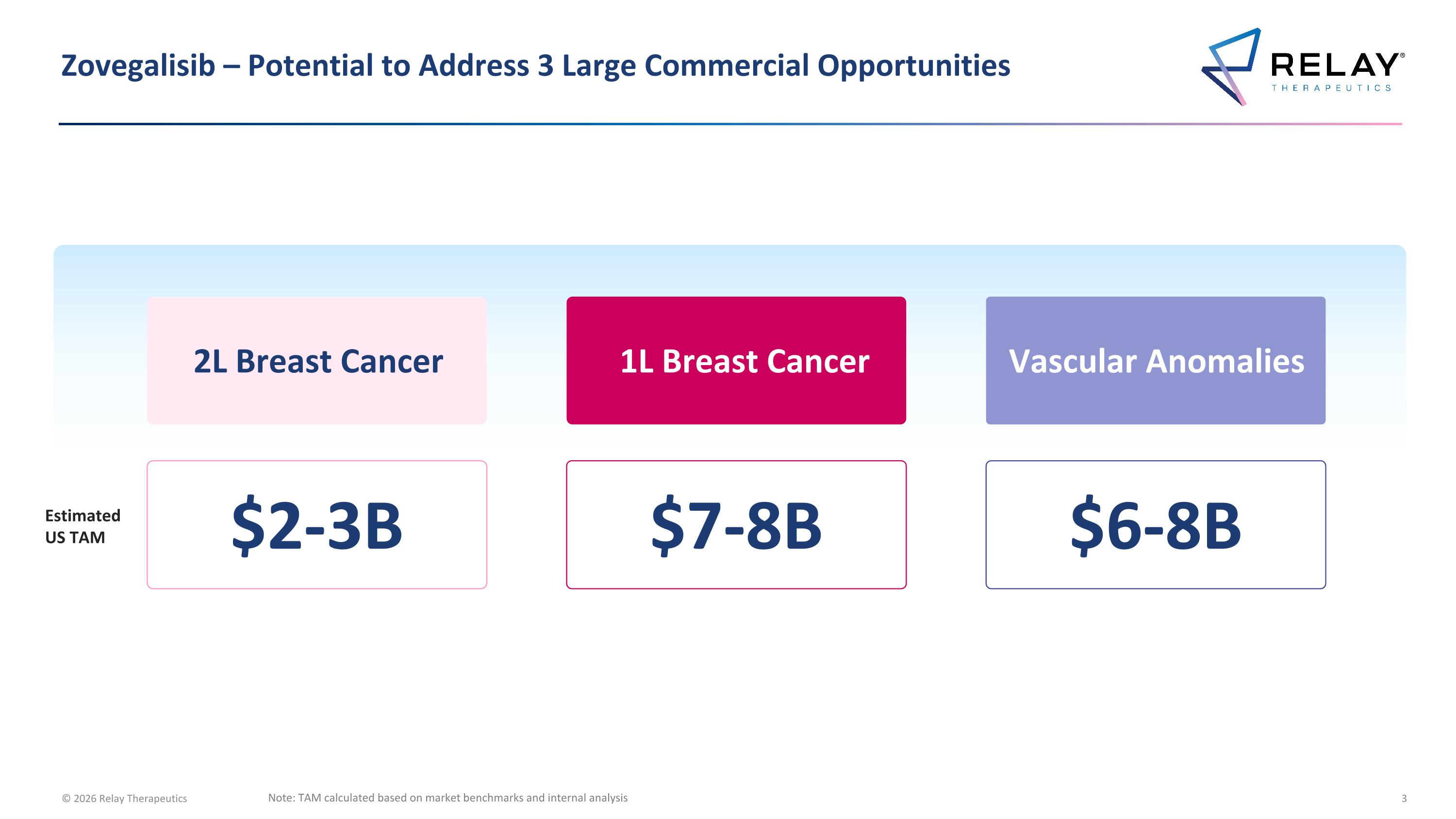
Zovegalisib – Potential to Address 3 Large Commercial Opportunities $2-3B $7-8B $6-8B 2L Breast Cancer 1L Breast Cancer Vascular Anomalies Note: TAM calculated based on market benchmarks and internal analysis Estimated US TAM
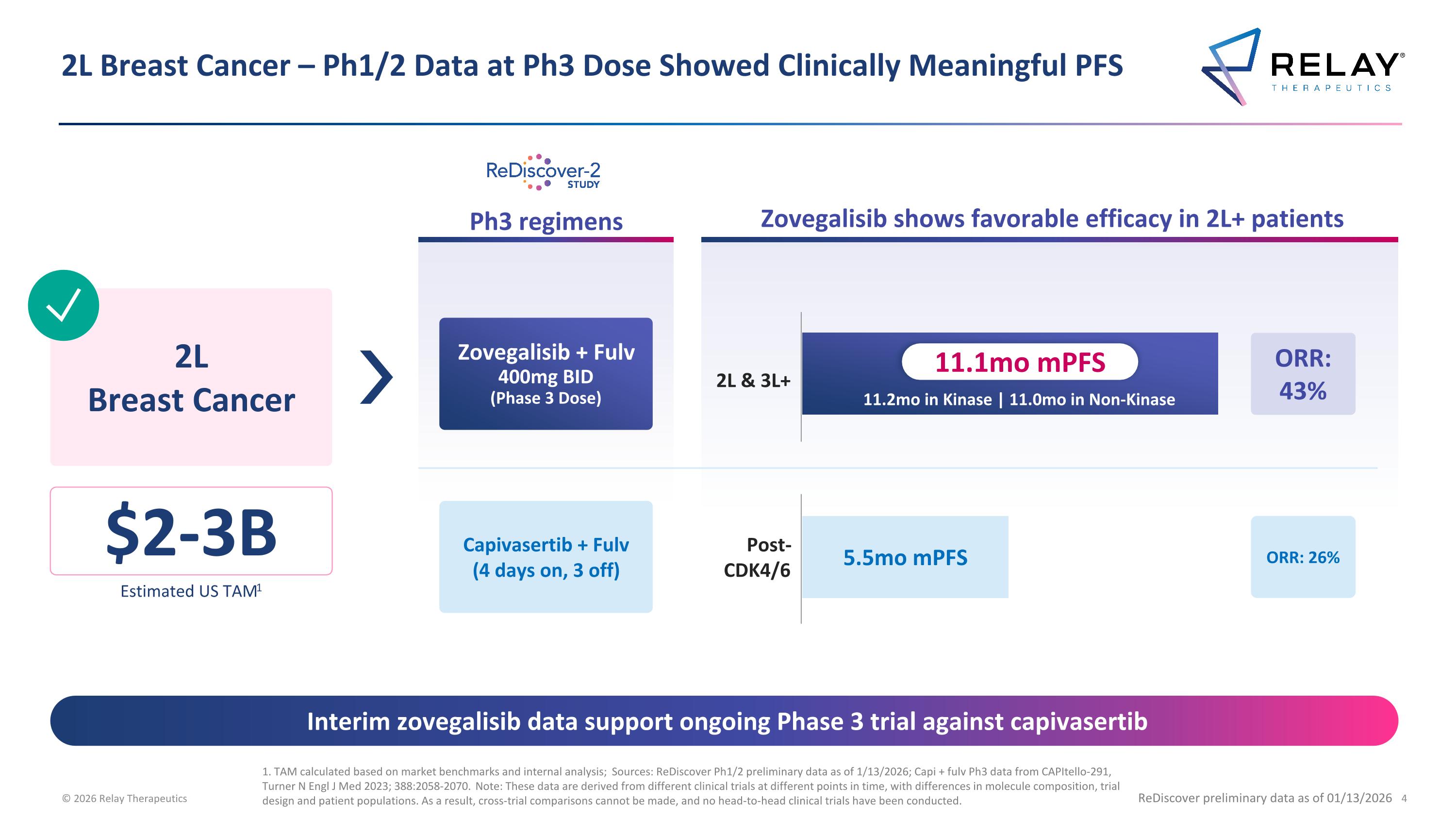
2L Breast Cancer – Ph1/2 Data at Ph3 Dose Showed Clinically Meaningful PFS 2L Breast Cancer $2-3B Capivasertib + Fulv (4 days on, 3 off) Zovegalisib + Fulv 400mg BID (Phase 3 Dose) Ph3 regimens Zovegalisib shows favorable efficacy in 2L+ patients Interim zovegalisib data support ongoing Phase 3 trial against capivasertib 2L & 3L+ Post-CDK4/6 ORR: 43% ORR: 26% 5.5mo mPFS 11.1mo mPFS 11.2mo in Kinase | 11.0mo in Non-Kinase 1. TAM calculated based on market benchmarks and internal analysis; Sources: ReDiscover Ph1/2 preliminary data as of 1/13/2026; Capi + fulv Ph3 data from CAPItello-291, Turner N Engl J Med 2023; 388:2058-2070. Note: These data are derived from different clinical trials at different points in time, with differences in molecule composition, trial design and patient populations. As a result, cross-trial comparisons cannot be made, and no head-to-head clinical trials have been conducted. Estimated US TAM1 ReDiscover preliminary data as of 01/13/2026
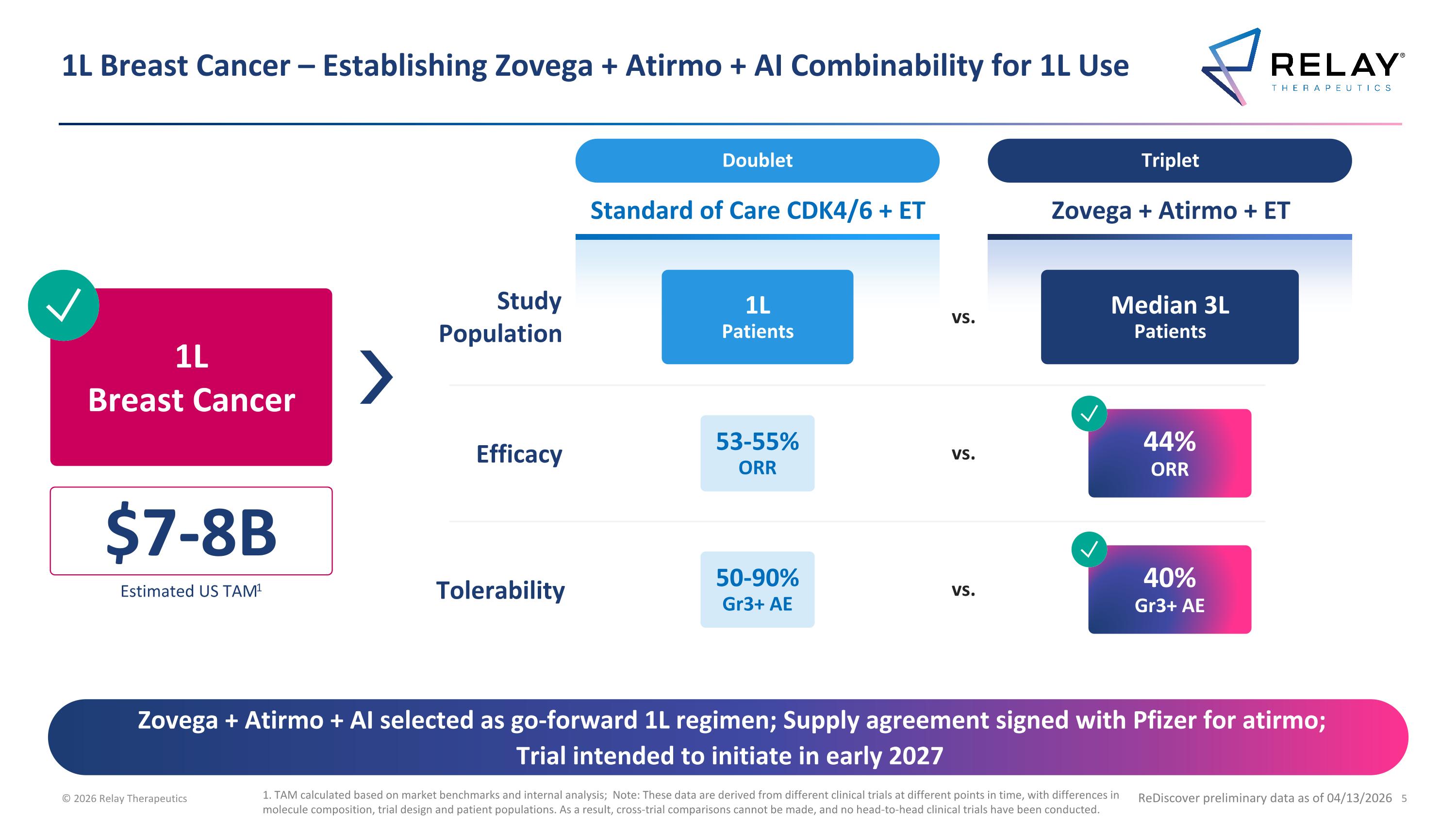
1L Breast Cancer – Establishing Zovega + Atirmo + AI Combinability for 1L Use 44% ORR Standard of Care CDK4/6 + ET vs. 40% Gr3+ AE 50-90% Gr3+ AE vs. Zovega + Atirmo + AI selected as go-forward 1L regimen; Supply agreement signed with Pfizer for atirmo; Trial intended to initiate in early 2027 Efficacy Tolerability Zovega + Atirmo + ET Triplet Doublet ReDiscover preliminary data as of 04/13/2026 53-55% ORR Study Population 1L Patients Median 3L Patients vs. 1L Breast Cancer $7-8B Estimated US TAM1 1. TAM calculated based on market benchmarks and internal analysis; Note: These data are derived from different clinical trials at different points in time, with differences in molecule composition, trial design and patient populations. As a result, cross-trial comparisons cannot be made, and no head-to-head clinical trials have been conducted.
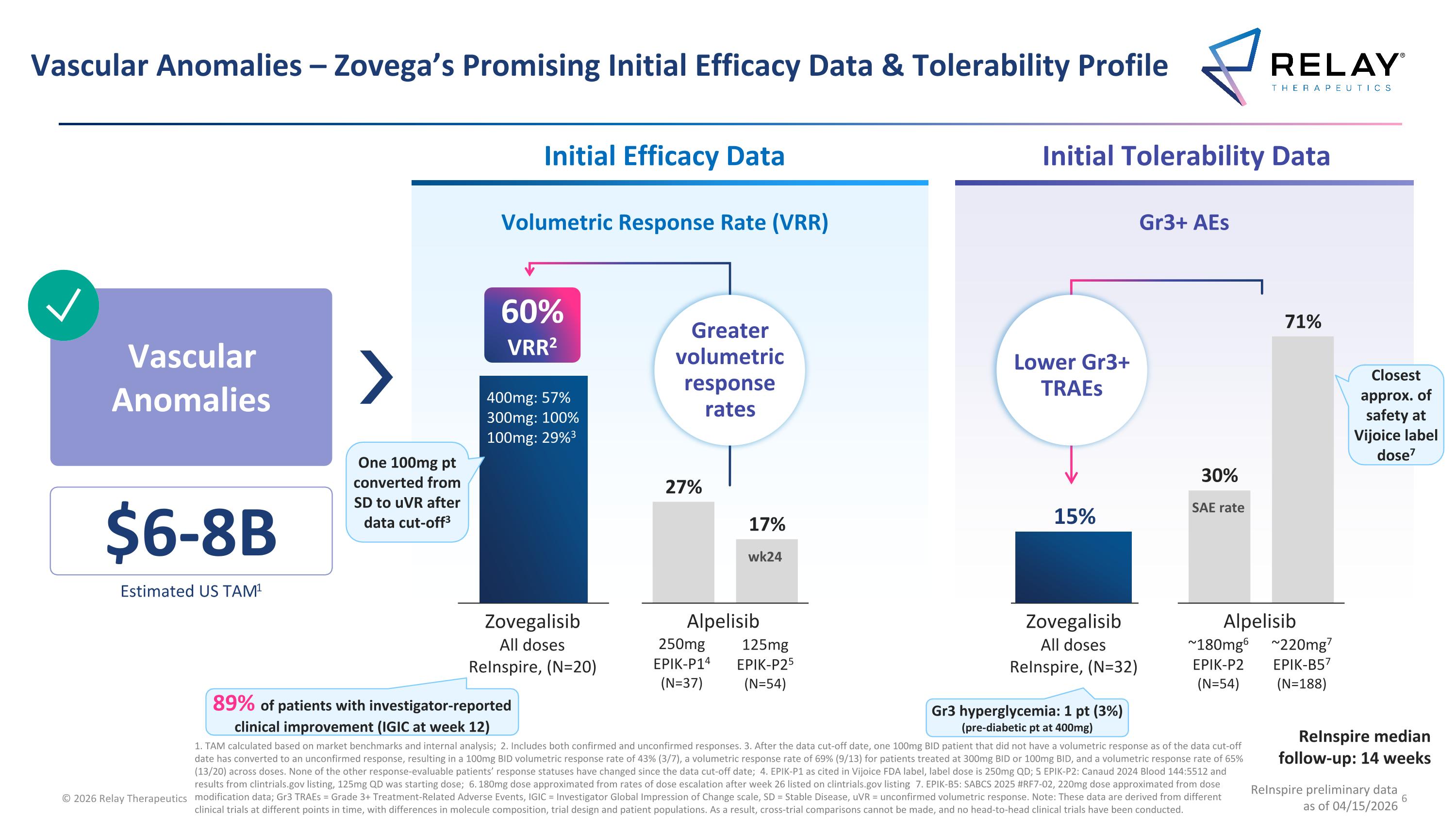
Vascular Anomalies – Zovega’s Promising Initial Efficacy Data & Tolerability Profile Vascular Anomalies $6-8B Initial Efficacy Data Initial Tolerability Data Zovegalisib All doses ReInspire, (N=20) ReInspire median follow-up: 14 weeks 250mg EPIK-P14 (N=37) 125mg EPIK-P25 (N=54) Alpelisib ~180mg6 EPIK-P2 (N=54) ~220mg7 EPIK-B57 (N=188) Alpelisib 60% VRR2 400mg: 57% 300mg: 100% 100mg: 29%3 Zovegalisib All doses ReInspire, (N=32) Gr3 hyperglycemia: 1 pt (3%) (pre-diabetic pt at 400mg) Lower Gr3+ TRAEs Greater volumetric response rates Closest approx. of safety at Vijoice label dose7 Volumetric Response Rate (VRR) Gr3+ AEs Estimated US TAM1 ReInspire preliminary data as of 04/15/2026 1. TAM calculated based on market benchmarks and internal analysis; 2. Includes both confirmed and unconfirmed responses. 3. After the data cut-off date, one 100mg BID patient that did not have a volumetric response as of the data cut-off date has converted to an unconfirmed response, resulting in a 100mg BID volumetric response rate of 43% (3/7), a volumetric response rate of 69% (9/13) for patients treated at 300mg BID or 100mg BID, and a volumetric response rate of 65% (13/20) across doses. None of the other response-evaluable patients’ response statuses have changed since the data cut-off date; 4. EPIK-P1 as cited in Vijoice FDA label, label dose is 250mg QD; 5. EPIK-P2: Canaud 2024 Blood 144:5512 and results from clintrials.gov listing, 125mg QD was starting dose; 6. 180mg dose approximated from rates of dose escalation after week 26 listed on clintrials.gov listing; 7. EPIK-B5: SABCS 2025 #RF7-02, 220mg dose approximated from dose modification data; Gr3 TRAEs = Grade 3+ Treatment-Related Adverse Events, IGIC = Investigator Global Impression of Change scale, SD = Stable Disease, uVR = unconfirmed volumetric response. Note: These data are derived from different clinical trials at different points in time, with differences in molecule composition, trial design and patient populations. As a result, cross-trial comparisons cannot be made, and no head-to-head clinical trials have been conducted. SAE rate wk24 89% of patients with investigator-reported clinical improvement (IGIC at week 12) One 100mg pt converted from SD to uVR after data cut-off3
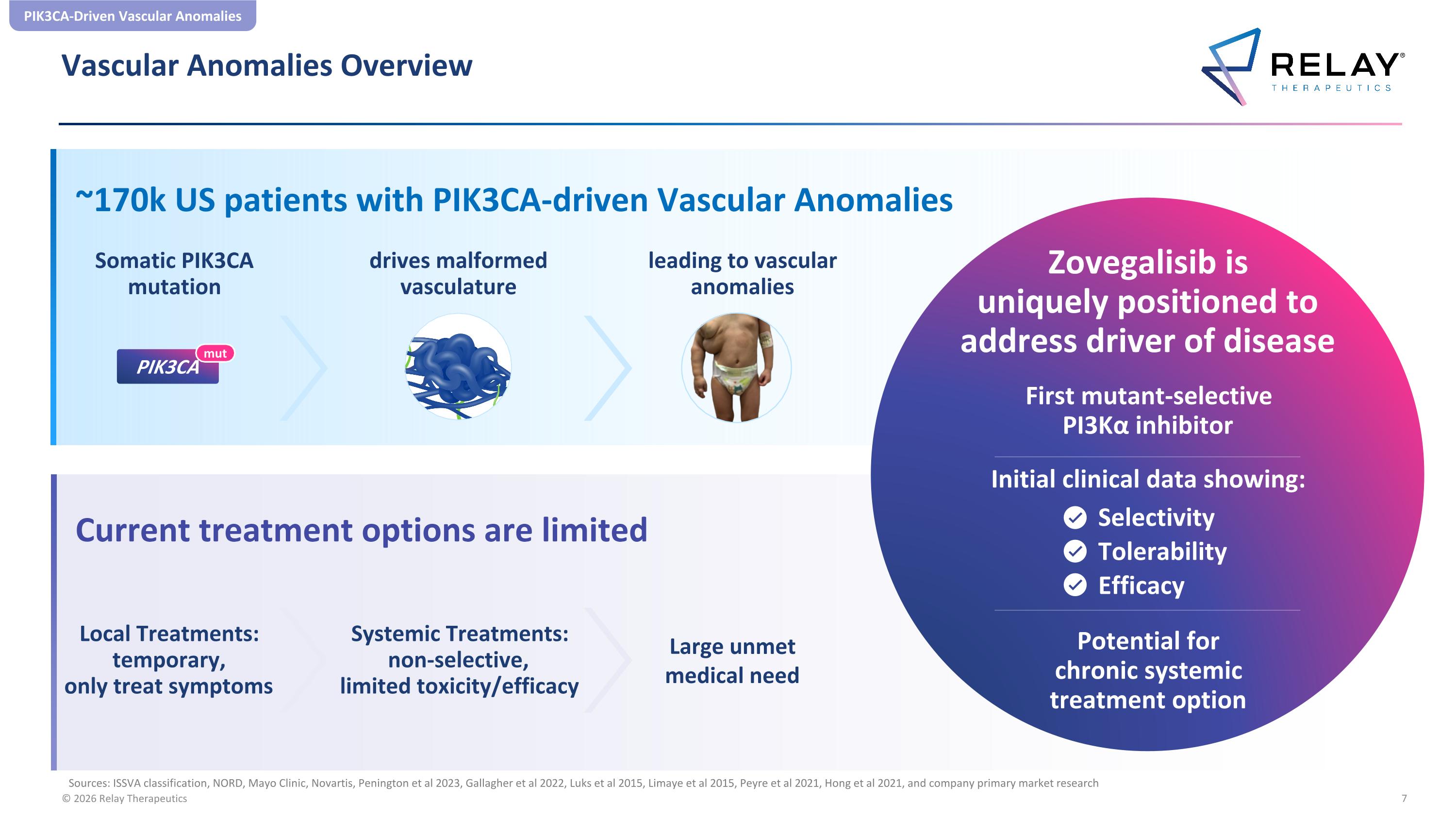
~170k US patients with PIK3CA-driven Vascular Anomalies leading to vascular anomalies drives malformed vasculature Somatic PIK3CA mutation Vascular Anomalies Overview Local Treatments: temporary, only treat symptoms Systemic Treatments: non-selective, limited toxicity/efficacy Large unmet medical need Current treatment options are limited First mutant-selective PI3Kα inhibitor Potential for chronic systemic treatment option Zovegalisib is uniquely positioned to address driver of disease Selectivity Tolerability Efficacy PIK3CA mut Sources: ISSVA classification, NORD, Mayo Clinic, Novartis, Penington et al 2023, Gallagher et al 2022, Luks et al 2015, Limaye et al 2015, Peyre et al 2021, Hong et al 2021, and company primary market research Initial clinical data showing: PIK3CA-Driven Vascular Anomalies
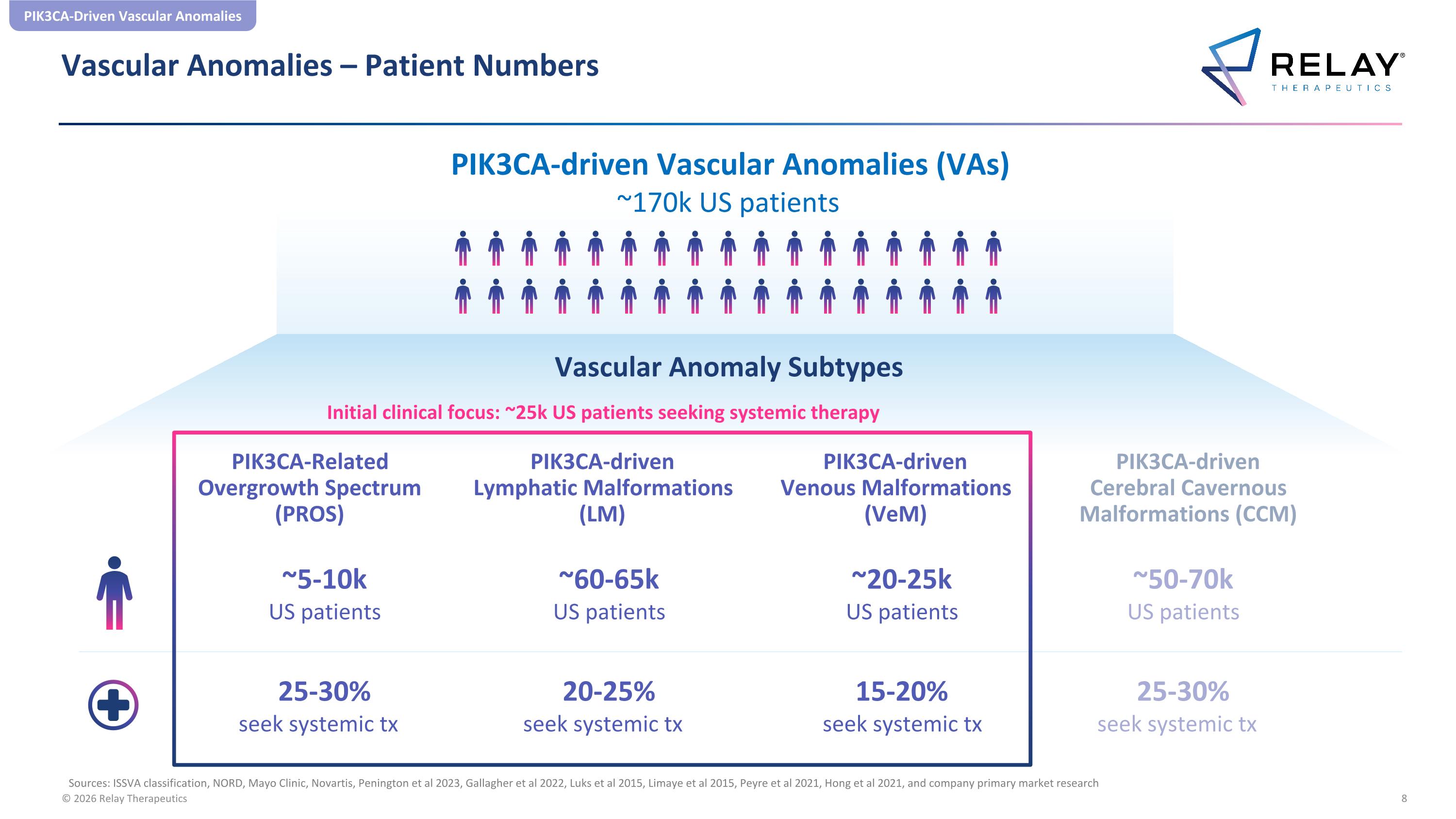
Vascular Anomalies – Patient Numbers ~60-65k US patients ~5-10k US patients 25-30% seek systemic tx 20-25% seek systemic tx ~20-25k US patients 15-20% seek systemic tx ~50-70k US patients 25-30% seek systemic tx PIK3CA-driven Vascular Anomalies (VAs) ~170k US patients PIK3CA-Related Overgrowth Spectrum (PROS) PIK3CA-driven Lymphatic Malformations (LM) PIK3CA-driven Venous Malformations (VeM) PIK3CA-driven Cerebral Cavernous Malformations (CCM) Vascular Anomaly Subtypes Sources: ISSVA classification, NORD, Mayo Clinic, Novartis, Penington et al 2023, Gallagher et al 2022, Luks et al 2015, Limaye et al 2015, Peyre et al 2021, Hong et al 2021, and company primary market research Initial clinical focus: ~25k US patients seeking systemic therapy PIK3CA-Driven Vascular Anomalies
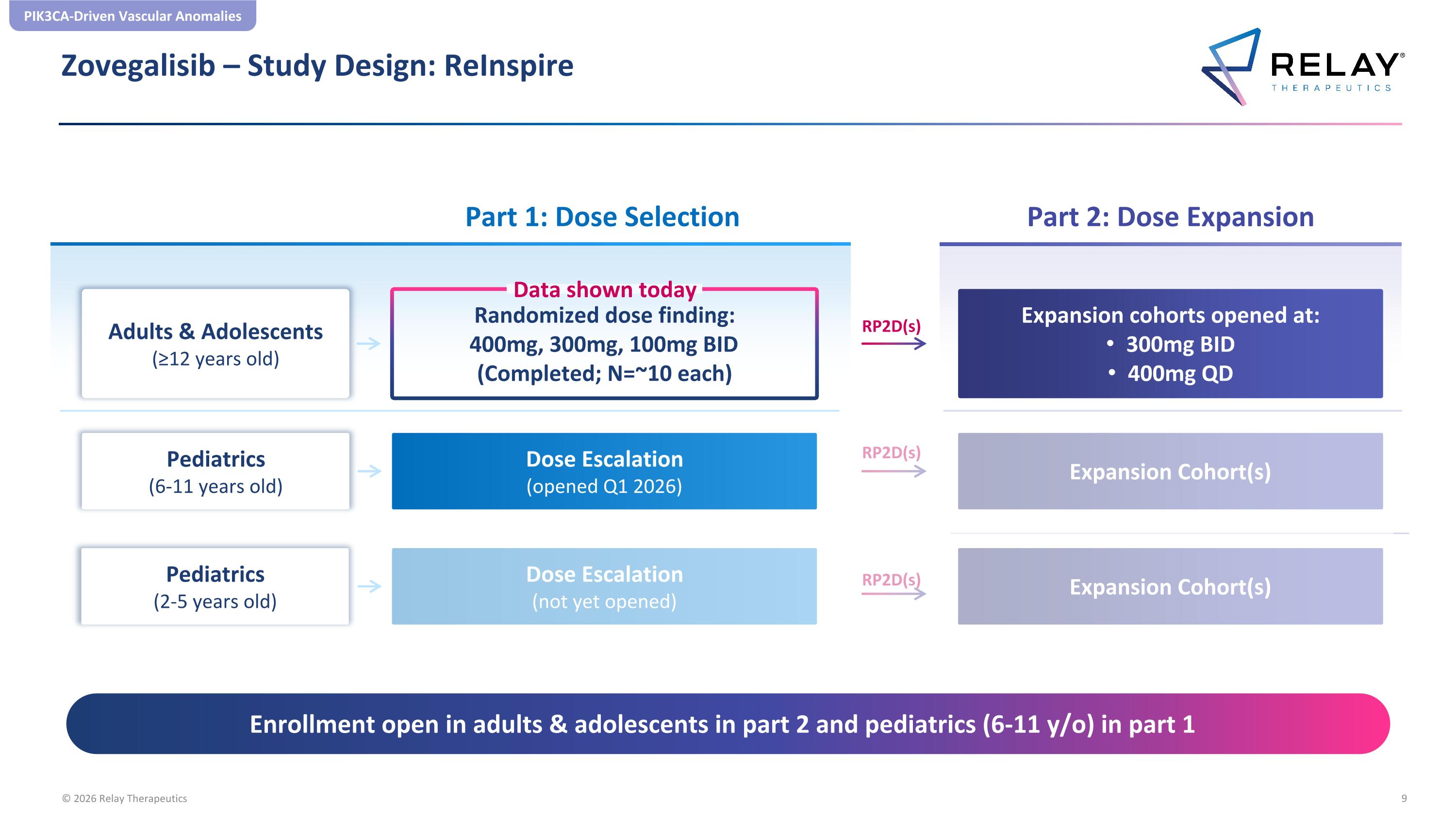
Zovegalisib – Study Design: ReInspire Part 1: Dose Selection Part 2: Dose Expansion Expansion cohorts opened at: 300mg BID 400mg QD Randomized dose finding: 400mg, 300mg, 100mg BID (Completed; N=~10 each) Data shown today RP2D(s) RP2D(s) Expansion Cohort(s) Enrollment open in adults & adolescents in part 2 and pediatrics (6-11 y/o) in part 1 PIK3CA-Driven Vascular Anomalies RP2D(s) Expansion Cohort(s) Dose Escalation (opened Q1 2026) Dose Escalation (not yet opened) Adults & Adolescents (≥12 years old) Pediatrics (6-11 years old) Pediatrics (2-5 years old)
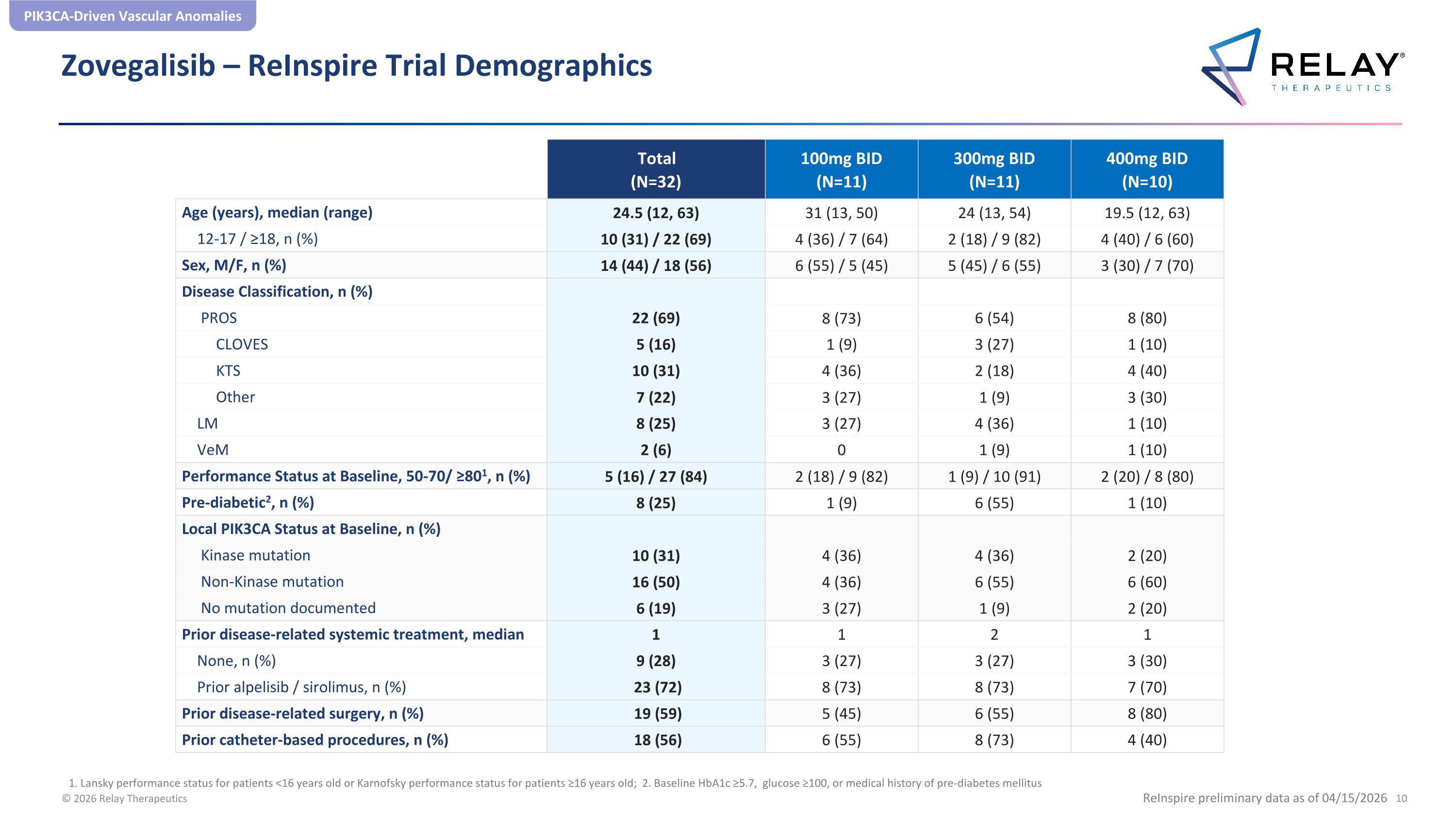
Zovegalisib – ReInspire Trial Demographics Total (N=32) 100mg BID (N=11) 300mg BID (N=11) 400mg BID (N=10) Age (years), median (range) 24.5 (12, 63) 31 (13, 50) 24 (13, 54) 19.5 (12, 63) 12-17 / ≥18, n (%) 10 (31) / 22 (69) 4 (36) / 7 (64) 2 (18) / 9 (82) 4 (40) / 6 (60) Sex, M/F, n (%) 14 (44) / 18 (56) 6 (55) / 5 (45) 5 (45) / 6 (55) 3 (30) / 7 (70) Disease Classification, n (%) PROS 22 (69) 8 (73) 6 (54) 8 (80) CLOVES 5 (16) 1 (9) 3 (27) 1 (10) KTS 10 (31) 4 (36) 2 (18) 4 (40) Other 7 (22) 3 (27) 1 (9) 3 (30) LM 8 (25) 3 (27) 4 (36) 1 (10) VeM 2 (6) 0 1 (9) 1 (10) Performance Status at Baseline, 50-70/ ≥801, n (%) 5 (16) / 27 (84) 2 (18) / 9 (82) 1 (9) / 10 (91) 2 (20) / 8 (80) Pre-diabetic2, n (%) 8 (25) 1 (9) 6 (55) 1 (10) Local PIK3CA Status at Baseline, n (%) Kinase mutation 10 (31) 4 (36) 4 (36) 2 (20) Non-Kinase mutation 16 (50) 4 (36) 6 (55) 6 (60) No mutation documented 6 (19) 3 (27) 1 (9) 2 (20) Prior disease-related systemic treatment, median 1 1 2 1 None, n (%) 9 (28) 3 (27) 3 (27) 3 (30) Prior alpelisib / sirolimus, n (%) 23 (72) 8 (73) 8 (73) 7 (70) Prior disease-related surgery, n (%) 19 (59) 5 (45) 6 (55) 8 (80) Prior catheter-based procedures, n (%) 18 (56) 6 (55) 8 (73) 4 (40) 1. Lansky performance status for patients <16 years old or Karnofsky performance status for patients ≥16 years old; 2. Baseline HbA1c ≥5.7, glucose ≥100, or medical history of pre-diabetes mellitus ReInspire preliminary data as of 04/15/2026 PIK3CA-Driven Vascular Anomalies
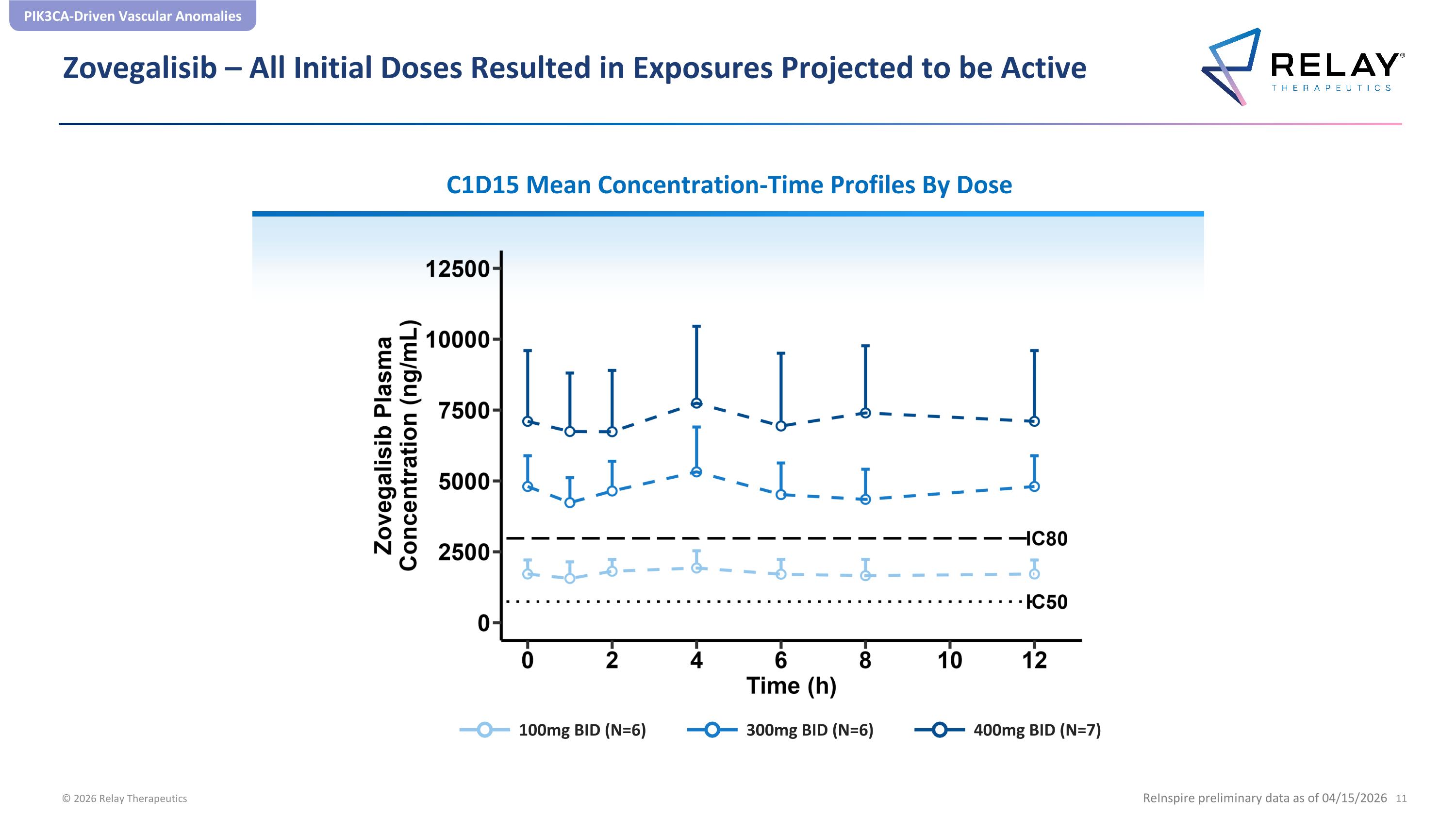
Zovegalisib – All Initial Doses Resulted in Exposures Projected to be Active PIK3CA-Driven Vascular Anomalies ReInspire preliminary data as of 04/15/2026 C1D15 Mean Concentration-Time Profiles By Dose 400mg BID (N=7) 300mg BID (N=6) 100mg BID (N=6)
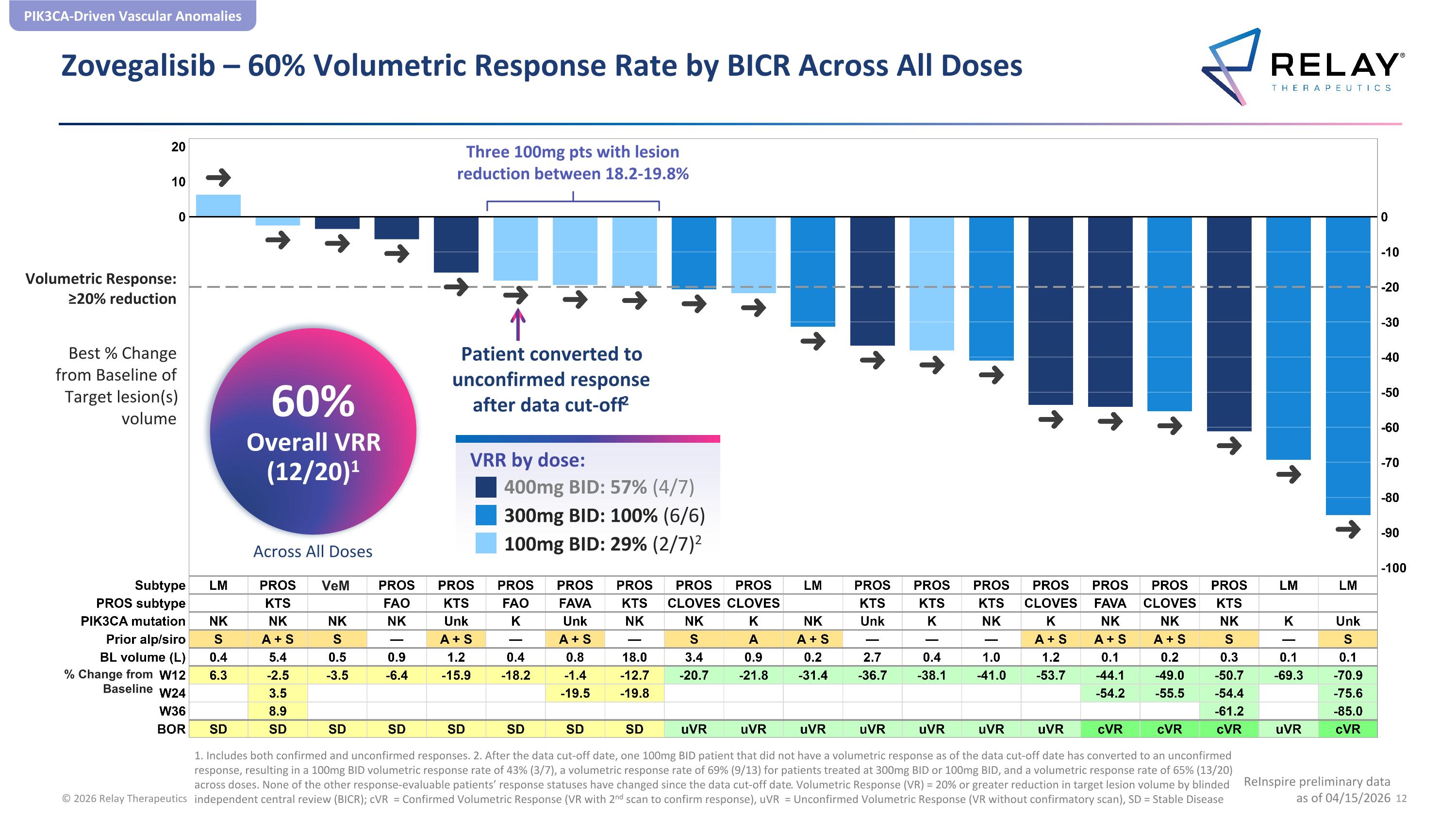
Zovegalisib – 60% Volumetric Response Rate by BICR Across All Doses PIK3CA-Driven Vascular Anomalies 60% Overall VRR (12/20)1 Across All Doses VRR by dose: 400mg BID: 57% (4/7) 300mg BID: 100% (6/6) 100mg BID: 29% (2/7)2 1. Includes both confirmed and unconfirmed responses. 2. After the data cut-off date, one 100mg BID patient that did not have a volumetric response as of the data cut-off date has converted to an unconfirmed response, resulting in a 100mg BID volumetric response rate of 43% (3/7), a volumetric response rate of 69% (9/13) for patients treated at 300mg BID or 100mg BID, and a volumetric response rate of 65% (13/20) across doses. None of the other response-evaluable patients’ response statuses have changed since the data cut-off date. Volumetric Response (VR) = 20% or greater reduction in target lesion volume by blinded independent central review (BICR); cVR = Confirmed Volumetric Response (VR with 2nd scan to confirm response), uVR = Unconfirmed Volumetric Response (VR without confirmatory scan), SD = Stable Disease Best % Change from Baseline of Target lesion(s) volume Volumetric Response: ≥20% reduction ReInspire preliminary data as of 04/15/2026 % Change from Baseline VeM Three 100mg pts with lesion reduction between 18.2-19.8% Patient converted to unconfirmed response after data cut-off2
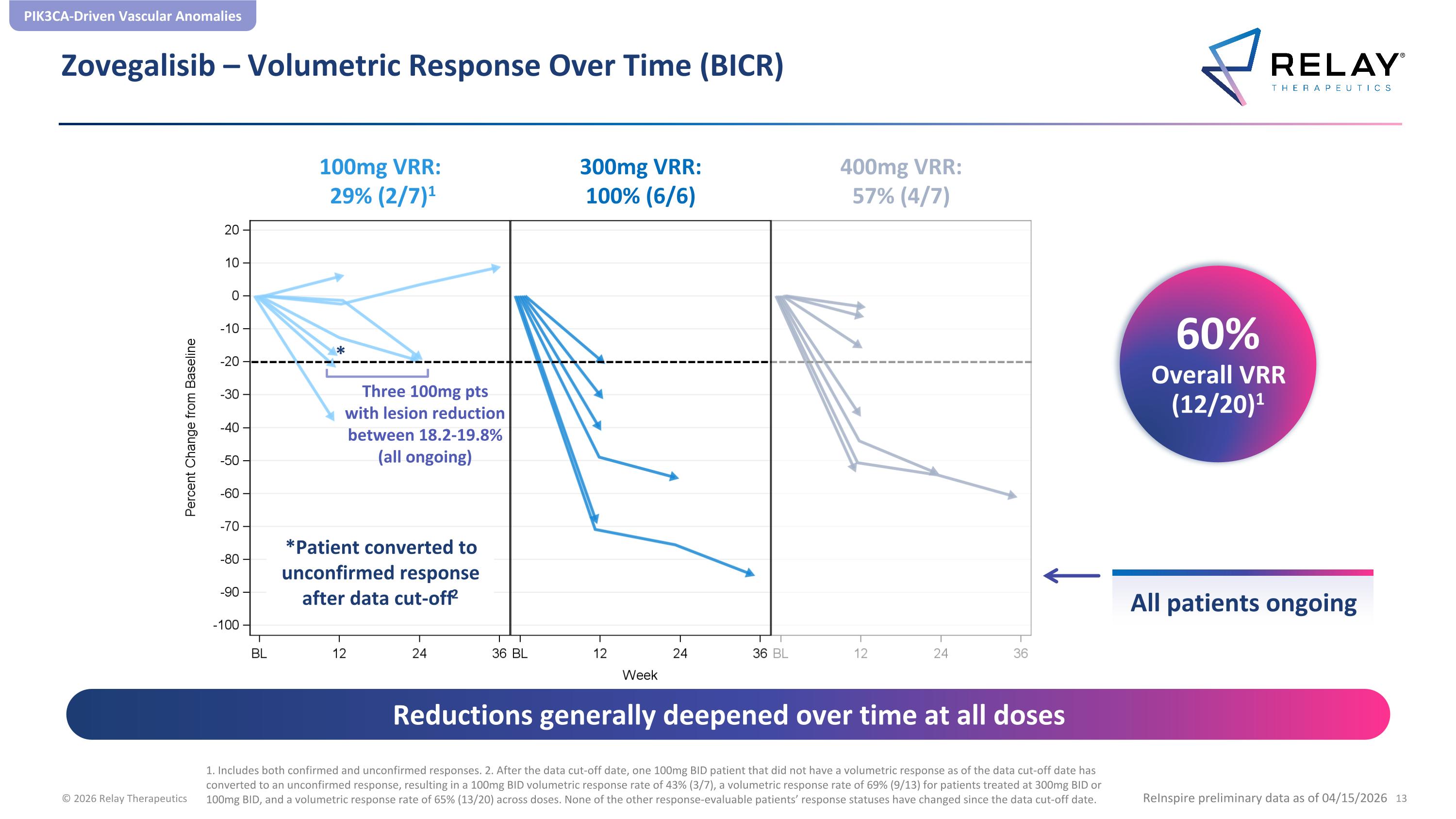
Zovegalisib – Volumetric Response Over Time (BICR) PIK3CA-Driven Vascular Anomalies 60% Overall VRR (12/20)1 Three 100mg pts with lesion reduction between 18.2-19.8% (all ongoing) All patients ongoing ReInspire preliminary data as of 04/15/2026 400mg VRR: 57% (4/7) 300mg VRR: 100% (6/6) 100mg VRR: 29% (2/7)1 1. Includes both confirmed and unconfirmed responses. 2. After the data cut-off date, one 100mg BID patient that did not have a volumetric response as of the data cut-off date has converted to an unconfirmed response, resulting in a 100mg BID volumetric response rate of 43% (3/7), a volumetric response rate of 69% (9/13) for patients treated at 300mg BID or 100mg BID, and a volumetric response rate of 65% (13/20) across doses. None of the other response-evaluable patients’ response statuses have changed since the data cut-off date. *Patient converted to unconfirmed response after data cut-off2 * Reductions generally deepened over time at all doses
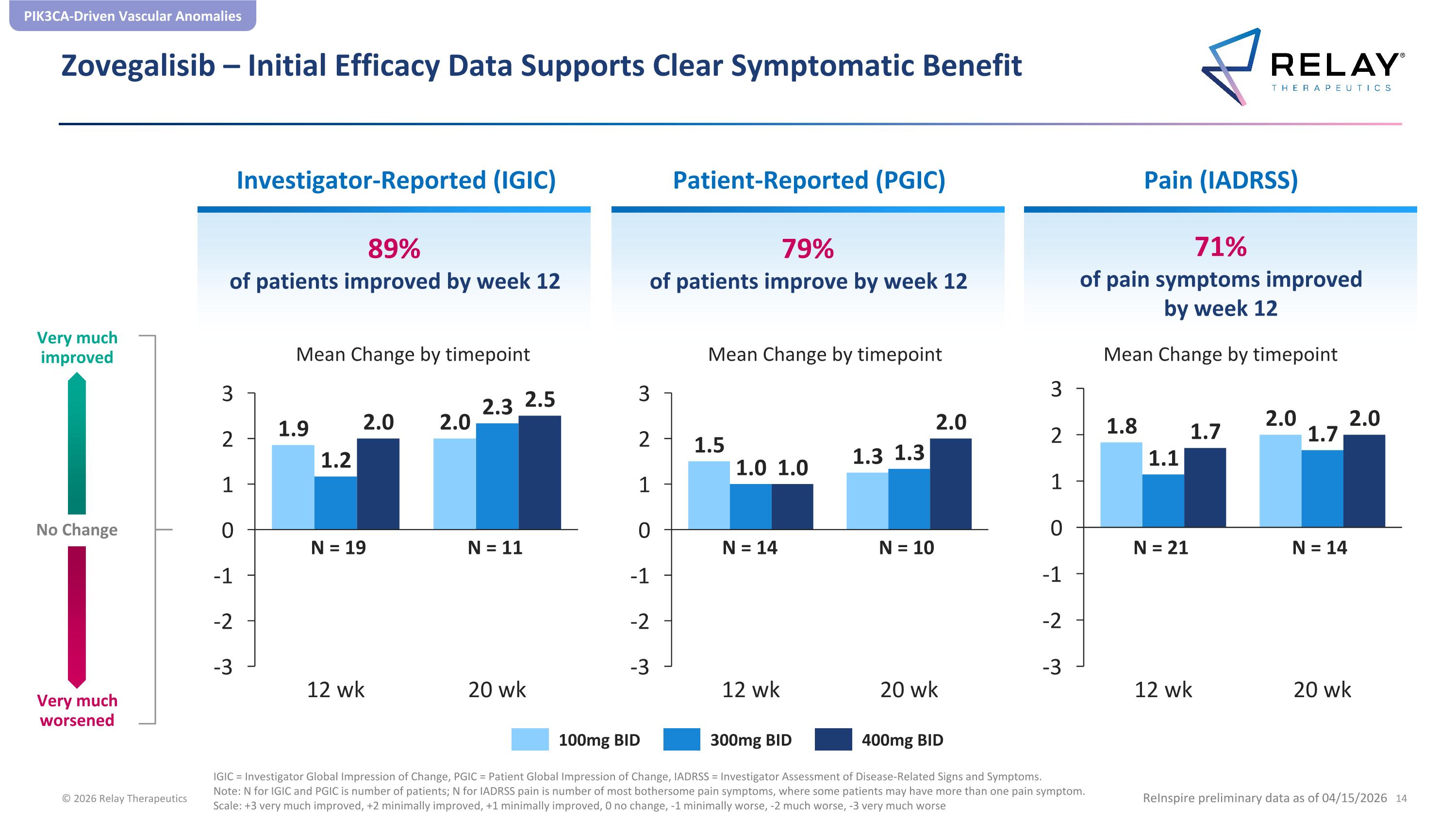
12 wk 20 wk 12 wk 20 wk 12 wk 20 wk Zovegalisib – Initial Efficacy Data Supports Clear Symptomatic Benefit Investigator-Reported (IGIC) Patient-Reported (PGIC) Pain (IADRSS) Very much improved Very much worsened IGIC = Investigator Global Impression of Change, PGIC = Patient Global Impression of Change, IADRSS = Investigator Assessment of Disease-Related Signs and Symptoms. Note: N for IGIC and PGIC is number of patients; N for IADRSS pain is number of most bothersome pain symptoms, where some patients may have more than one pain symptom. Scale: +3 very much improved, +2 minimally improved, +1 minimally improved, 0 no change, -1 minimally worse, -2 much worse, -3 very much worse 100mg BID 300mg BID 400mg BID 89% of patients improved by week 12 79% of patients improve by week 12 71% of pain symptoms improved by week 12 N = 19 N = 11 N = 14 N = 10 N = 14 N = 21 Mean Change by timepoint Mean Change by timepoint Mean Change by timepoint ReInspire preliminary data as of 04/15/2026 No Change PIK3CA-Driven Vascular Anomalies
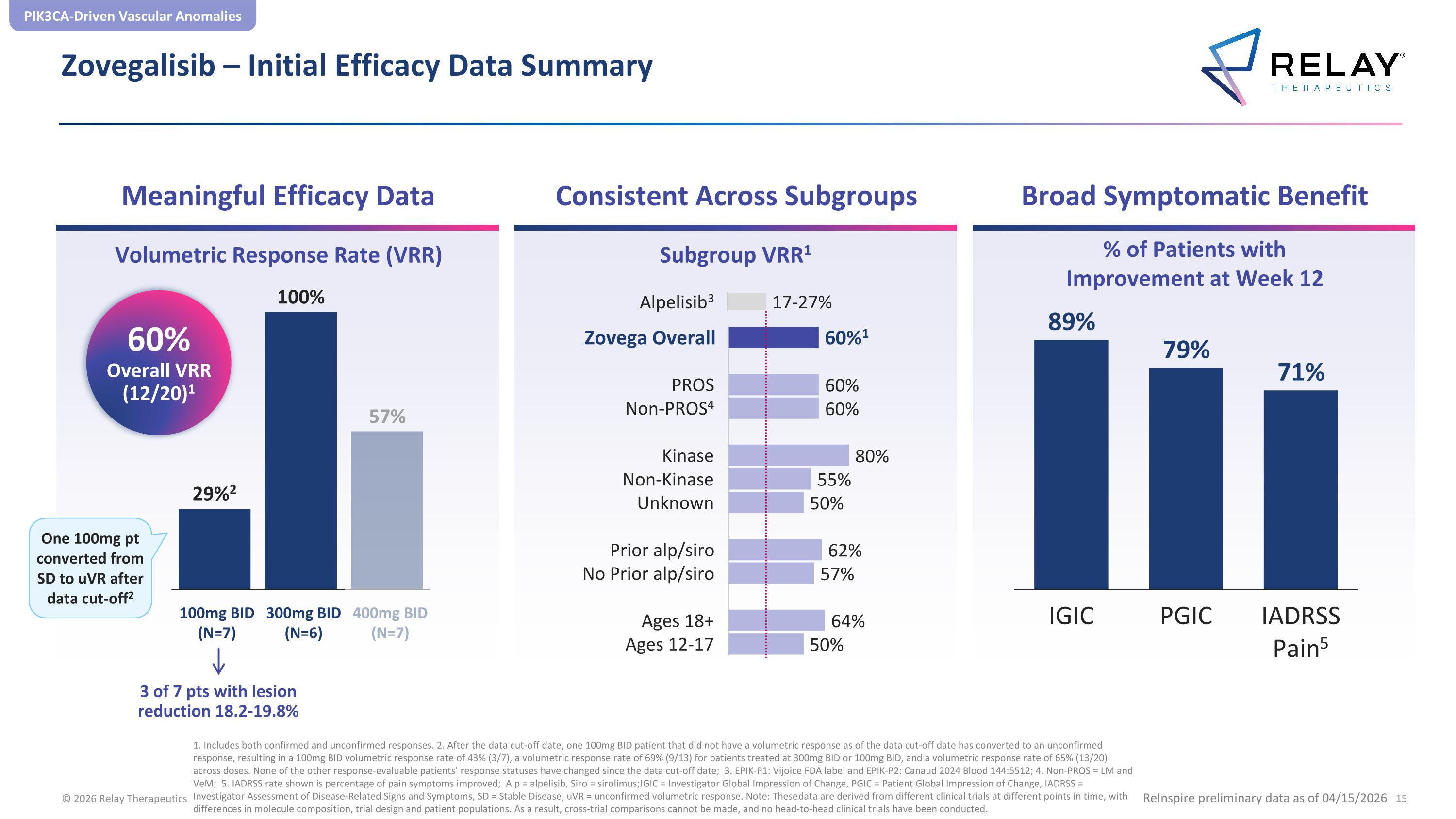
Zovegalisib – Initial Efficacy Data Summary 29%2 100mg BID (N=7) 300mg BID (N=6) 400mg BID (N=7) 60% Overall VRR (12/20)1 Zovega Overall PROS Non-PROS4 Kinase Non-Kinase Unknown Prior alp/siro No Prior alp/siro Ages 18+ Ages 12-17 60%1 Alpelisib3 17-27% Subgroup VRR1 Consistent Across Subgroups Broad Symptomatic Benefit IGIC PGIC IADRSS Pain5 % of Patients with Improvement at Week 12 Meaningful Efficacy Data 1. Includes both confirmed and unconfirmed responses. 2. After the data cut-off date, one 100mg BID patient that did not have a volumetric response as of the data cut-off date has converted to an unconfirmed response, resulting in a 100mg BID volumetric response rate of 43% (3/7), a volumetric response rate of 69% (9/13) for patients treated at 300mg BID or 100mg BID, and a volumetric response rate of 65% (13/20) across doses. None of the other response-evaluable patients’ response statuses have changed since the data cut-off date; 3. EPIK-P1: Vijoice FDA label and EPIK-P2: Canaud 2024 Blood 144:5512; 4. Non-PROS = LM and VeM; 5. IADRSS rate shown is percentage of pain symptoms improved; Alp = alpelisib, Siro = sirolimus; IGIC = Investigator Global Impression of Change, PGIC = Patient Global Impression of Change, IADRSS = Investigator Assessment of Disease-Related Signs and Symptoms, SD = Stable Disease, uVR = unconfirmed volumetric response. Note: These data are derived from different clinical trials at different points in time, with differences in molecule composition, trial design and patient populations. As a result, cross-trial comparisons cannot be made, and no head-to-head clinical trials have been conducted. ReInspire preliminary data as of 04/15/2026 3 of 7 pts with lesion reduction 18.2-19.8% Volumetric Response Rate (VRR) PIK3CA-Driven Vascular Anomalies One 100mg pt converted from SD to uVR after data cut-off2
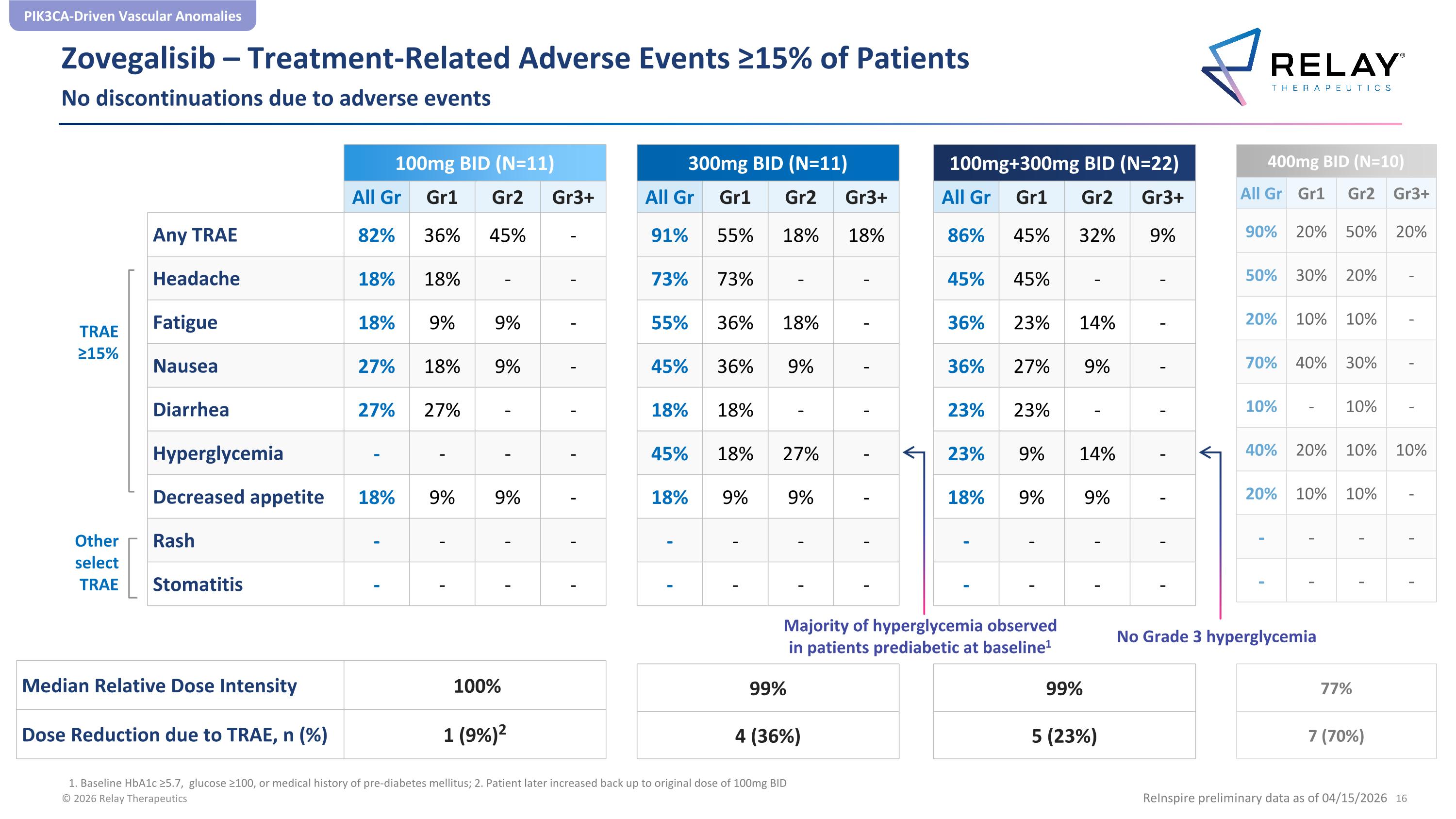
100mg BID (N=11) All Gr Gr1 Gr2 Gr3+ Any TRAE 82% 36% 45% - Headache 18% 18% - - Fatigue 18% 9% 9% - Nausea 27% 18% 9% - Diarrhea 27% 27% - - Hyperglycemia - - - - Decreased appetite 18% 9% 9% - Rash - - - - Stomatitis - - - - Zovegalisib – Treatment-Related Adverse Events ≥15% of Patients No discontinuations due to adverse events 300mg BID (N=11) All Gr Gr1 Gr2 Gr3+ 91% 55% 18% 18% 73% 73% - - 55% 36% 18% - 45% 36% 9% - 18% 18% - - 45% 18% 27% - 18% 9% 9% - - - - - - - - - 100mg+300mg BID (N=22) All Gr Gr1 Gr2 Gr3+ 86% 45% 32% 9% 45% 45% - - 36% 23% 14% - 36% 27% 9% - 23% 23% - - 23% 9% 14% - 18% 9% 9% - - - - - - - - - 400mg BID (N=10) All Gr Gr1 Gr2 Gr3+ 90% 20% 50% 20% 50% 30% 20% - 20% 10% 10% - 70% 40% 30% - 10% - 10% - 40% 20% 10% 10% 20% 10% 10% - - - - - - - - - PIK3CA-Driven Vascular Anomalies Majority of hyperglycemia observed in patients prediabetic at baseline1 Median Relative Dose Intensity 100% Dose Reduction due to TRAE, n (%) 1 (9%)2 99% 4 (36%) 99% 5 (23%) 77% 7 (70%) 1. Baseline HbA1c ≥5.7, glucose ≥100, or medical history of pre-diabetes mellitus; 2. Patient later increased back up to original dose of 100mg BID ReInspire preliminary data as of 04/15/2026 TRAE ≥15% Other select TRAE No Grade 3 hyperglycemia
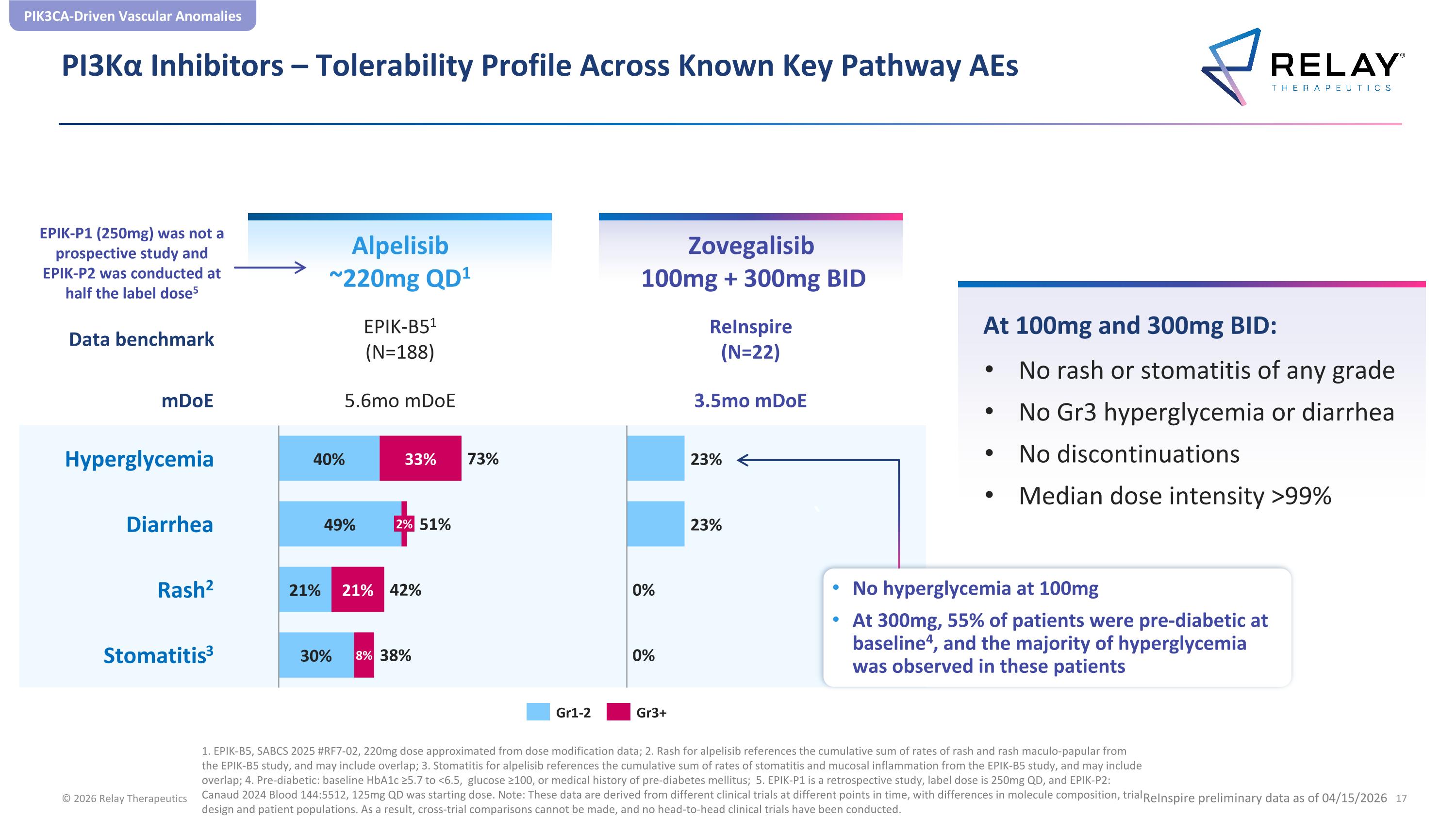
Data benchmark EPIK-B51 (N=188) ReInspire (N=22) mDoE 5.6mo mDoE 3.5mo mDoE Hyperglycemia Diarrhea Rash2 Stomatitis3 PI3Kα Inhibitors – Tolerability Profile Across Known Key Pathway AEs Gr1-2 Gr3+ Zovegalisib 100mg + 300mg BID Alpelisib ~220mg QD1 2% 73% 51% 42% 38% 0% 0% ReInspire preliminary data as of 04/15/2026 PIK3CA-Driven Vascular Anomalies At 100mg and 300mg BID: No rash or stomatitis of any grade No Gr3 hyperglycemia or diarrhea No discontinuations Median dose intensity >99% 1. EPIK-B5, SABCS 2025 #RF7-02, 220mg dose approximated from dose modification data; 2. Rash for alpelisib references the cumulative sum of rates of rash and rash maculo-papular from the EPIK-B5 study, and may include overlap; 3. Stomatitis for alpelisib references the cumulative sum of rates of stomatitis and mucosal inflammation from the EPIK-B5 study, and may include overlap; 4. Pre-diabetic: baseline HbA1c ≥5.7 to <6.5, glucose ≥100, or medical history of pre-diabetes mellitus; 5. EPIK-P1 is a retrospective study, label dose is 250mg QD, and EPIK-P2: Canaud 2024 Blood 144:5512, 125mg QD was starting dose. Note: These data are derived from different clinical trials at different points in time, with differences in molecule composition, trial design and patient populations. As a result, cross-trial comparisons cannot be made, and no head-to-head clinical trials have been conducted. ` No hyperglycemia at 100mg At 300mg, 55% of patients were pre-diabetic at baseline4, and the majority of hyperglycemia was observed in these patients EPIK-P1 (250mg) was not a prospective study and EPIK-P2 was conducted at half the label dose5
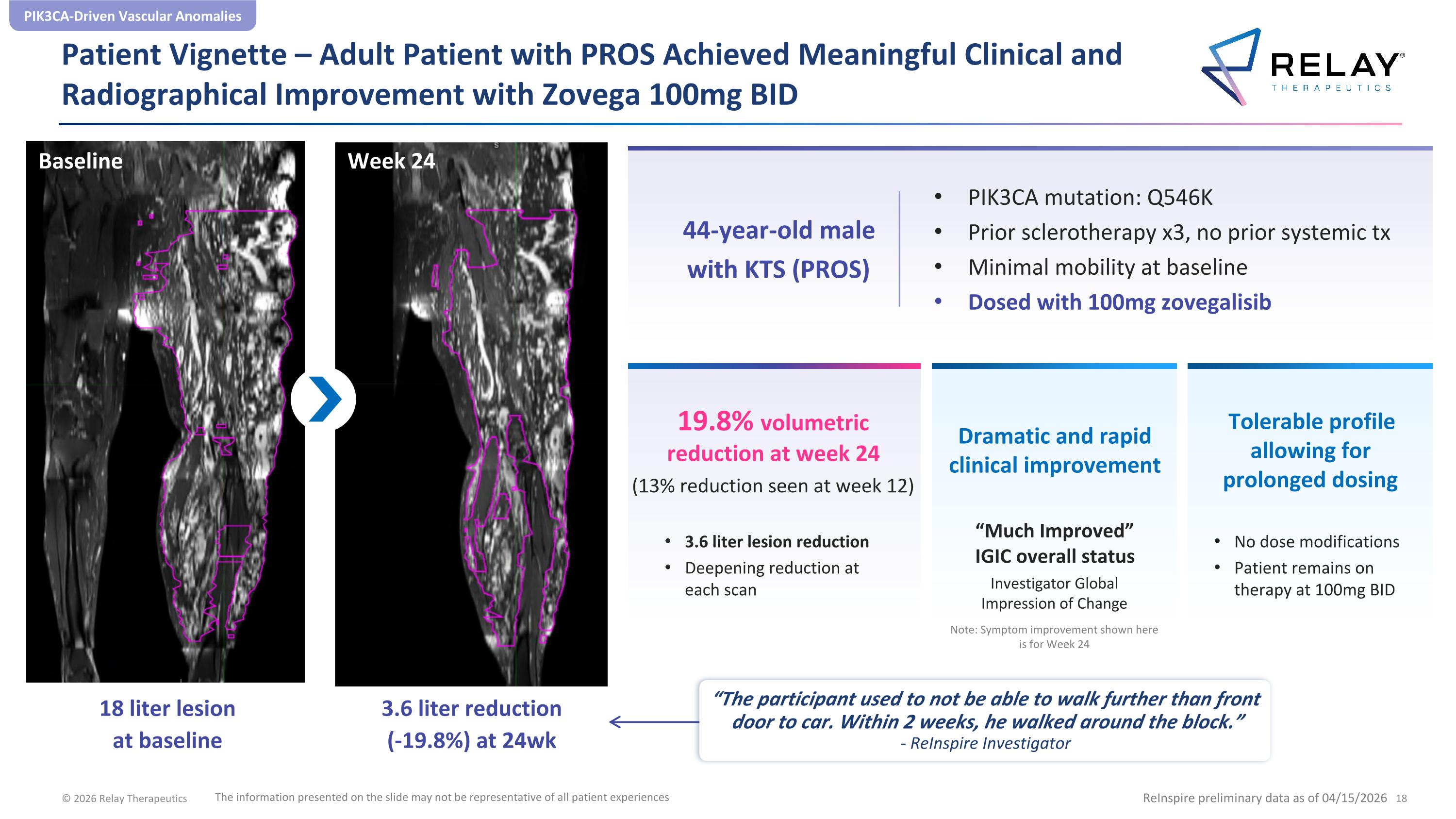
Patient Vignette – Adult Patient with PROS Achieved Meaningful Clinical and Radiographical Improvement with Zovega 100mg BID PIK3CA-Driven Vascular Anomalies 44-year-old male with KTS (PROS) PIK3CA mutation: Q546K Prior sclerotherapy x3, no prior systemic tx Minimal mobility at baseline Dosed with 100mg zovegalisib 19.8% volumetric reduction at week 24 (13% reduction seen at week 12) 3.6 liter lesion reduction Deepening reduction at each scan Baseline Week 24 18 liter lesion at baseline 3.6 liter reduction (-19.8%) at 24wk Dramatic and rapid clinical improvement “Much Improved” IGIC overall status Investigator Global Impression of Change Tolerable profile allowing for prolonged dosing No dose modifications Patient remains on therapy at 100mg BID “The participant used to not be able to walk further than front door to car. Within 2 weeks, he walked around the block.” - ReInspire Investigator Note: Symptom improvement shown here is for Week 24 ReInspire preliminary data as of 04/15/2026 The information presented on the slide may not be representative of all patient experiences
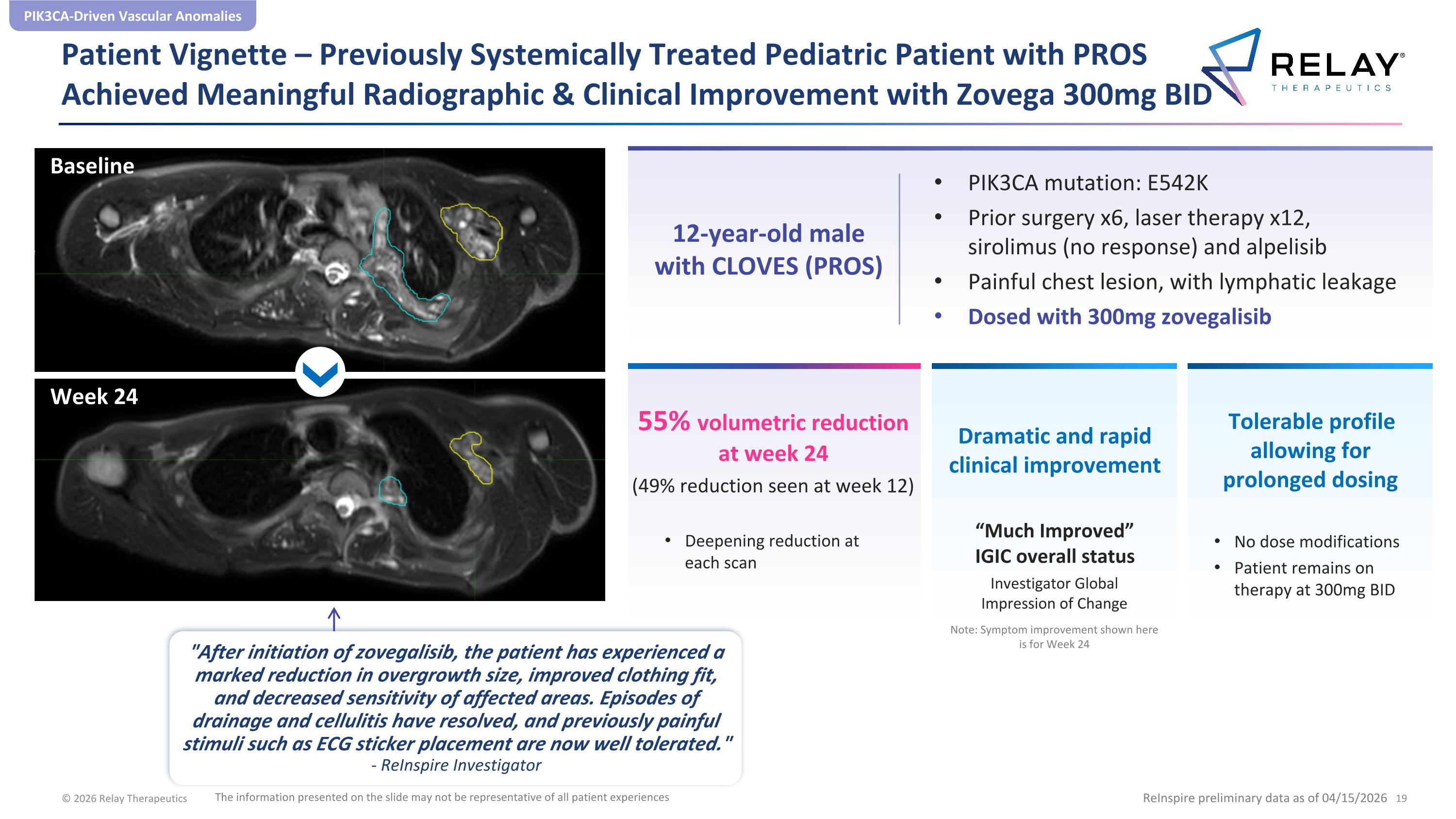
Patient Vignette – Previously Systemically Treated Pediatric Patient with PROS Achieved Meaningful Radiographic & Clinical Improvement with Zovega 300mg BID PIK3CA-Driven Vascular Anomalies 12-year-old male with CLOVES (PROS) PIK3CA mutation: E542K Prior surgery x6, laser therapy x12, sirolimus (no response) and alpelisib Painful chest lesion, with lymphatic leakage Dosed with 300mg zovegalisib 55% volumetric reduction at week 24 (49% reduction seen at week 12) Dramatic and rapid clinical improvement “Much Improved” IGIC overall status Investigator Global Impression of Change Tolerable profile allowing for prolonged dosing No dose modifications Patient remains on therapy at 300mg BID Note: Symptom improvement shown here is for Week 24 ReInspire preliminary data as of 04/15/2026 The information presented on the slide may not be representative of all patient experiences Baseline Week 24 "After initiation of zovegalisib, the patient has experienced a marked reduction in overgrowth size, improved clothing fit, and decreased sensitivity of affected areas. Episodes of drainage and cellulitis have resolved, and previously painful stimuli such as ECG sticker placement are now well tolerated." - ReInspire Investigator Deepening reduction at each scan
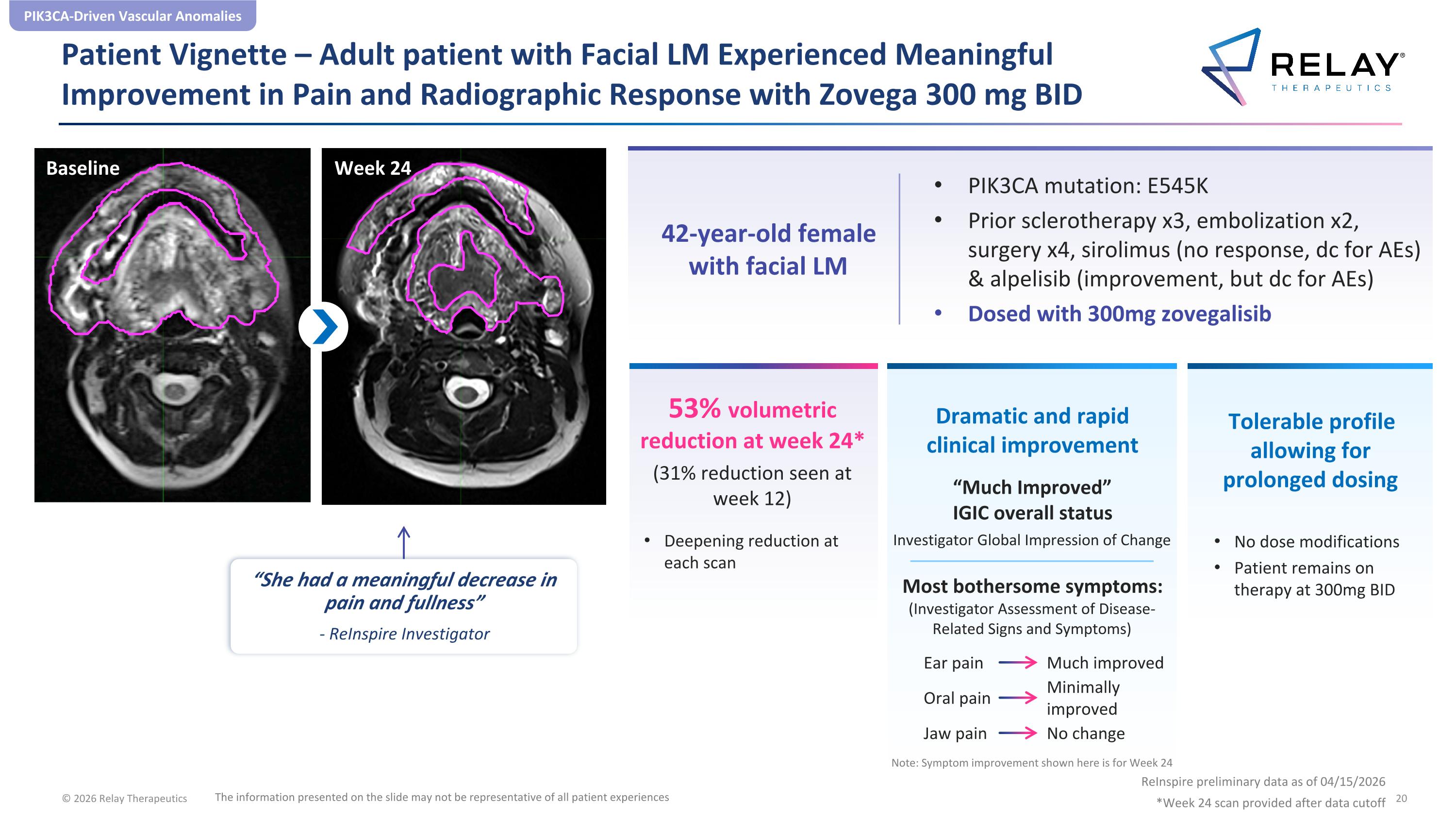
Patient Vignette – Adult patient with Facial LM Experienced Meaningful Improvement in Pain and Radiographic Response with Zovega 300 mg BID PIK3CA-Driven Vascular Anomalies 42-year-old female with facial LM PIK3CA mutation: E545K Prior sclerotherapy x3, embolization x2, surgery x4, sirolimus (no response, dc for AEs) & alpelisib (improvement, but dc for AEs) Dosed with 300mg zovegalisib 53% volumetric reduction at week 24* (31% reduction seen at week 12) Deepening reduction at each scan Dramatic and rapid clinical improvement “Much Improved” IGIC overall status Investigator Global Impression of Change Tolerable profile allowing for prolonged dosing No dose modifications Patient remains on therapy at 300mg BID Note: Symptom improvement shown here is for Week 24 The information presented on the slide may not be representative of all patient experiences “She had a meaningful decrease in pain and fullness” - ReInspire Investigator Week 24 Baseline Ear pain Much improved Oral pain Jaw pain No change Most bothersome symptoms: (Investigator Assessment of Disease-Related Signs and Symptoms) Minimally improved *Week 24 scan provided after data cutoff ReInspire preliminary data as of 04/15/2026
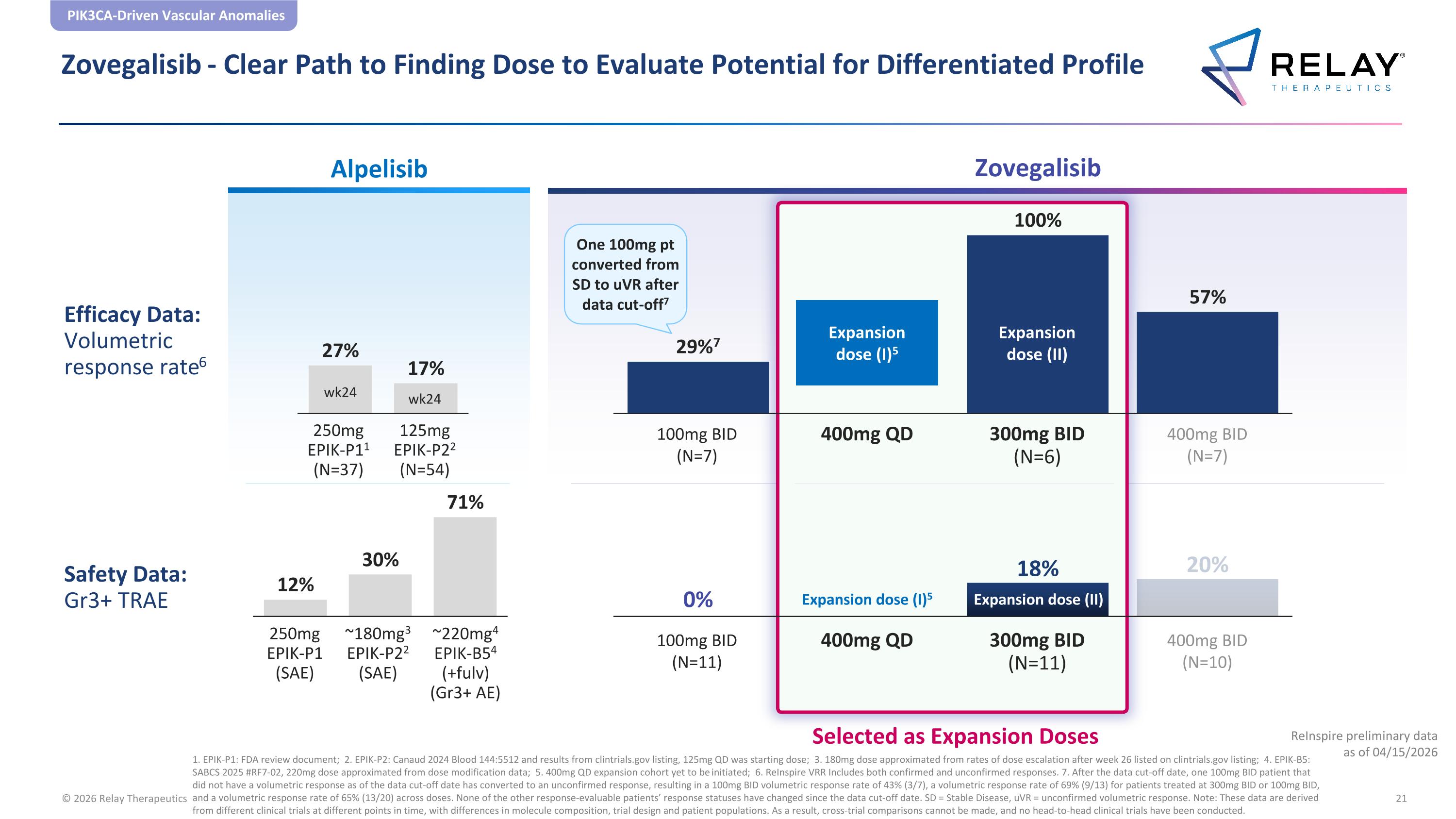
Zovegalisib - Clear Path to Finding Dose to Evaluate Potential for Differentiated Profile Zovegalisib Alpelisib 29%7 0% 100mg BID (N=7) 400mg QD 300mg BID (N=6) 400mg BID (N=7) 100mg BID (N=11) 400mg QD 300mg BID (N=11) 400mg BID (N=10) 250mg EPIK-P1 (SAE) ~180mg3 EPIK-P22 (SAE) ~220mg4 EPIK-B54 (+fulv) (Gr3+ AE) 250mg EPIK-P11 (N=37) 125mg EPIK-P22 (N=54) Efficacy Data: Volumetric response rate6 Safety Data: Gr3+ TRAE Selected as Expansion Doses ReInspire preliminary data as of 04/15/2026 PIK3CA-Driven Vascular Anomalies Expansion dose (I)5 Expansion dose (I)5 wk24 wk24 Expansion dose (II) Expansion dose (II) 1. EPIK-P1: FDA review document; 2. EPIK-P2: Canaud 2024 Blood 144:5512 and results from clintrials.gov listing, 125mg QD was starting dose; 3. 180mg dose approximated from rates of dose escalation after week 26 listed on clintrials.gov listing; 4. EPIK-B5: SABCS 2025 #RF7-02, 220mg dose approximated from dose modification data; 5. 400mg QD expansion cohort yet to be initiated; 6. ReInspire VRR Includes both confirmed and unconfirmed responses. 7. After the data cut-off date, one 100mg BID patient that did not have a volumetric response as of the data cut-off date has converted to an unconfirmed response, resulting in a 100mg BID volumetric response rate of 43% (3/7), a volumetric response rate of 69% (9/13) for patients treated at 300mg BID or 100mg BID, and a volumetric response rate of 65% (13/20) across doses. None of the other response-evaluable patients’ response statuses have changed since the data cut-off date. SD = Stable Disease, uVR = unconfirmed volumetric response. Note: These data are derived from different clinical trials at different points in time, with differences in molecule composition, trial design and patient populations. As a result, cross-trial comparisons cannot be made, and no head-to-head clinical trials have been conducted. One 100mg pt converted from SD to uVR after data cut-off7
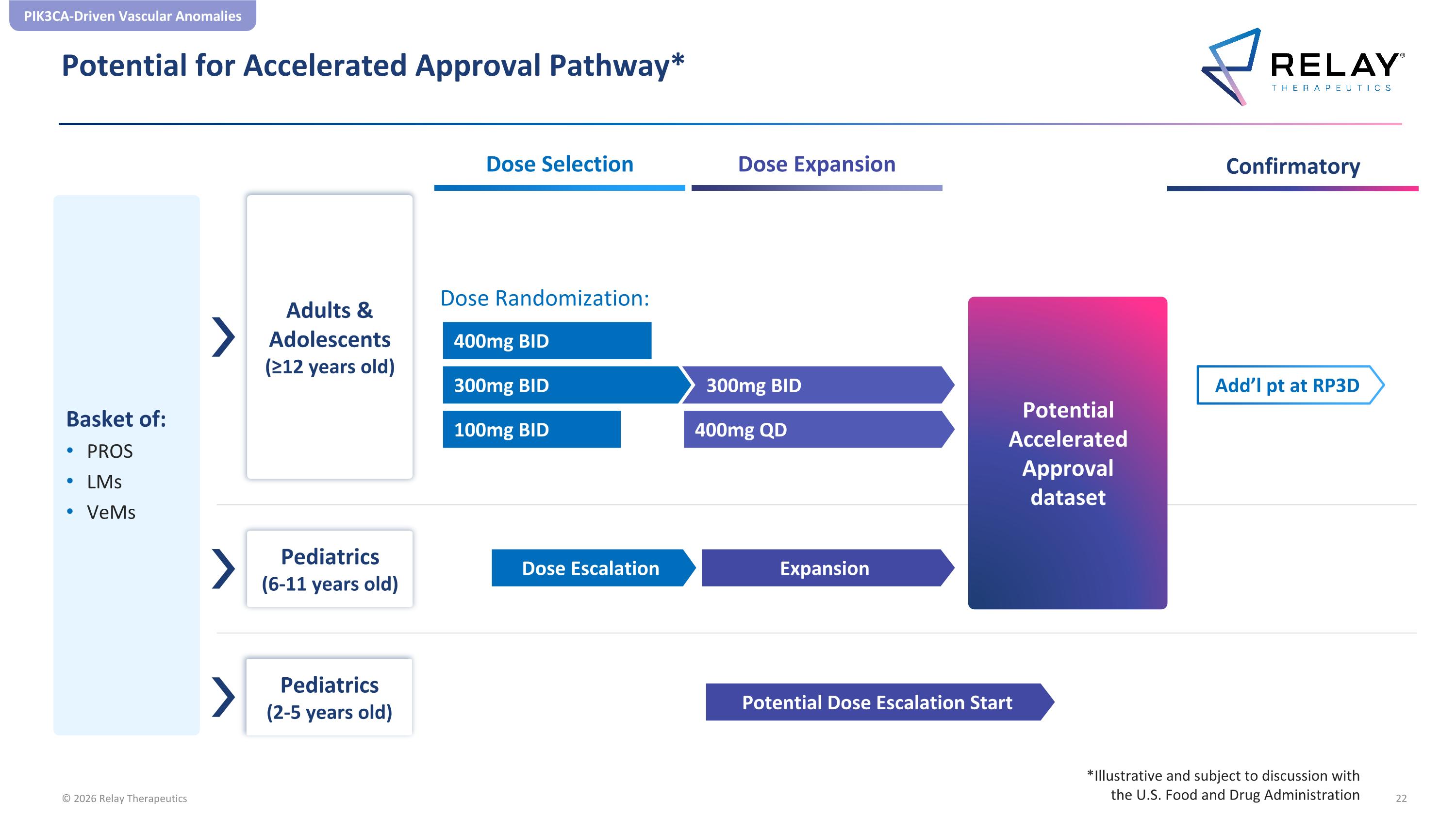
Potential for Accelerated Approval Pathway* *Illustrative and subject to discussion with the U.S. Food and Drug Administration PIK3CA-Driven Vascular Anomalies Potential Accelerated Approval dataset Basket of: PROS LMs VeMs Adults & Adolescents (≥12 years old) Pediatrics (6-11 years old) Dose Selection Dose Expansion Confirmatory Add’l pt at RP3D Dose Escalation Expansion Pediatrics (2-5 years old) Potential Dose Escalation Start 300mg BID 400mg QD 400mg BID 100mg BID 300mg BID Dose Randomization:
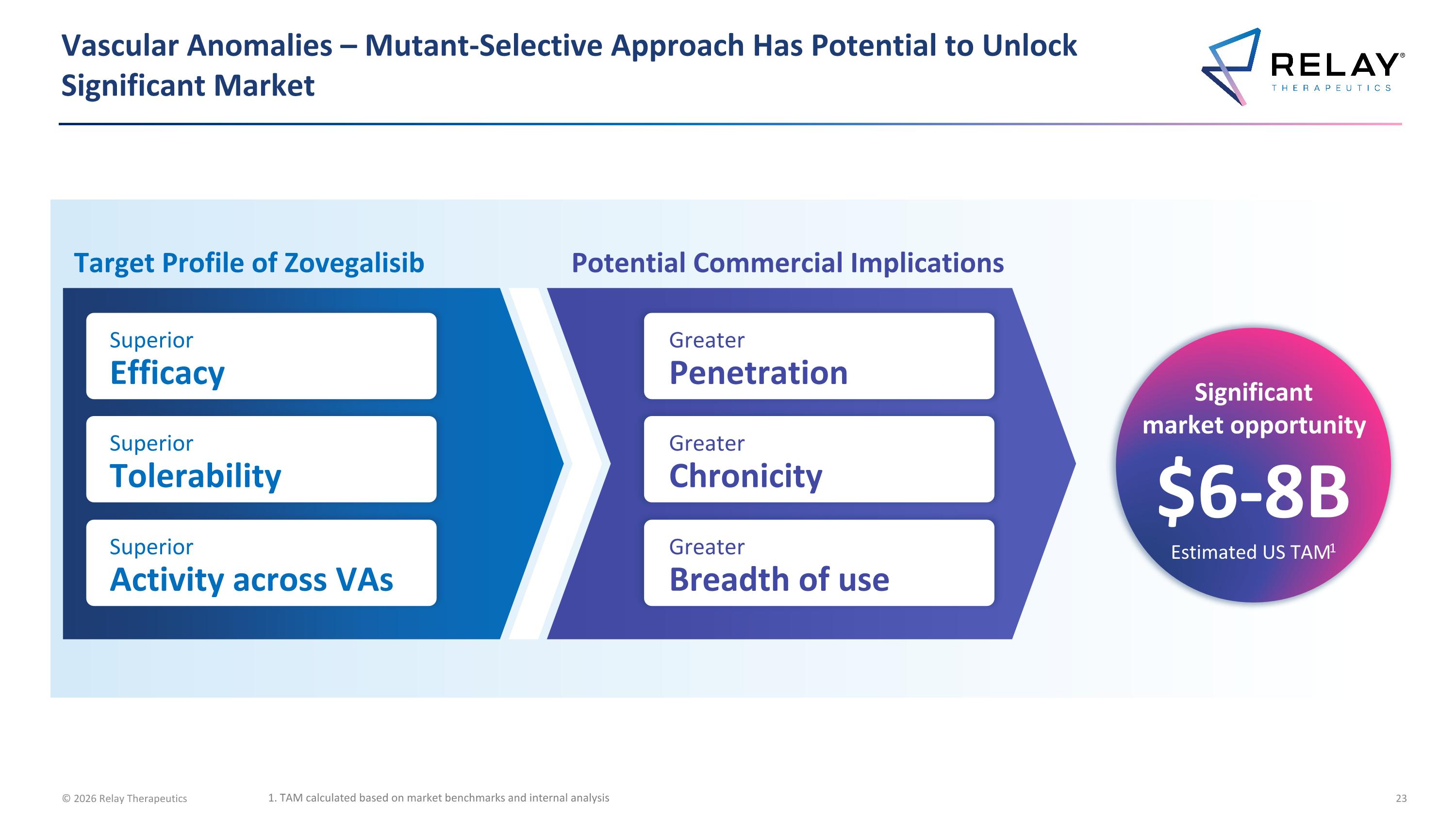
Vascular Anomalies – Mutant-Selective Approach Has Potential to Unlock Significant Market Target Profile of Zovegalisib 1. TAM calculated based on market benchmarks and internal analysis Potential Commercial Implications Significant market opportunity $6-8B Estimated US TAM1 Superior Efficacy Superior Tolerability Superior Activity across VAs Greater Penetration Greater Chronicity Greater Breadth of use
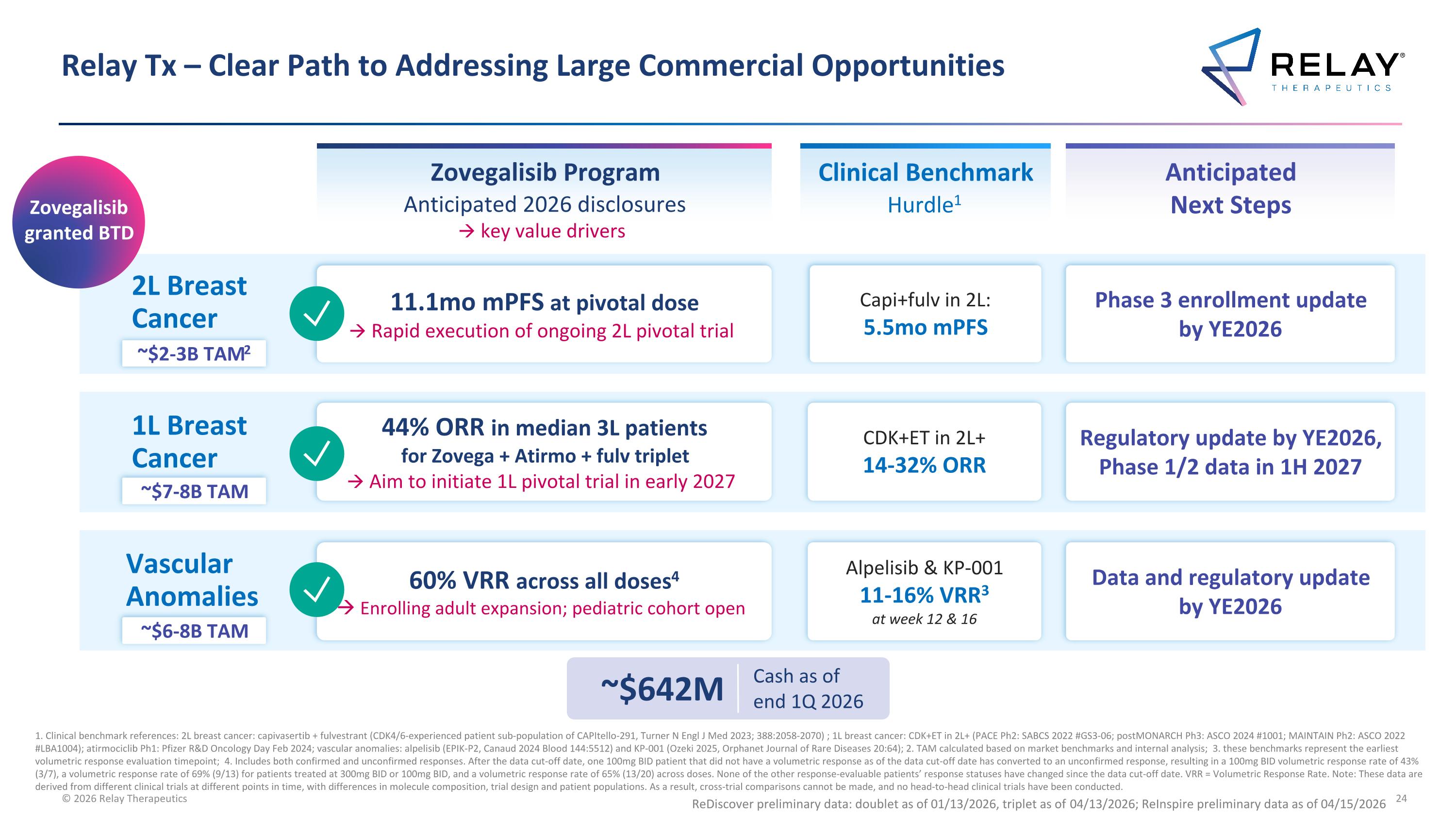
Relay Tx – Clear Path to Addressing Large Commercial Opportunities 2L Breast Cancer 1L Breast Cancer Vascular Anomalies Zovegalisib granted BTD ~$2-3B TAM2 ~$7-8B TAM ~$6-8B TAM Capi+fulv in 2L: 5.5mo mPFS Alpelisib & KP-001 11-16% VRR3 at week 12 & 16 CDK+ET in 2L+ 14-32% ORR 11.1mo mPFS at pivotal dose Rapid execution of ongoing 2L pivotal trial 60% VRR across all doses4 Enrolling adult expansion; pediatric cohort open 44% ORR in median 3L patients for Zovega + Atirmo + fulv triplet Aim to initiate 1L pivotal trial in early 2027 Anticipated Next Steps Anticipated 2026 disclosures key value drivers Zovegalisib Program Hurdle1 Clinical Benchmark Phase 3 enrollment update by YE2026 Data and regulatory update by YE2026 Regulatory update by YE2026, Phase 1/2 data in 1H 2027 ReDiscover preliminary data: doublet as of 01/13/2026, triplet as of 04/13/2026; ReInspire preliminary data as of 04/15/2026 ~$642M Cash as of end 1Q 2026 1. Clinical benchmark references: 2L breast cancer: capivasertib + fulvestrant (CDK4/6-experienced patient sub-population of CAPItello-291, Turner N Engl J Med 2023; 388:2058-2070) ; 1L breast cancer: CDK+ET in 2L+ (PACE Ph2: SABCS 2022 #GS3-06; postMONARCH Ph3: ASCO 2024 #1001; MAINTAIN Ph2: ASCO 2022 #LBA1004); atirmociclib Ph1: Pfizer R&D Oncology Day Feb 2024; vascular anomalies: alpelisib (EPIK-P2, Canaud 2024 Blood 144:5512) and KP-001 (Ozeki 2025, Orphanet Journal of Rare Diseases 20:64); 2. TAM calculated based on market benchmarks and internal analysis; 3. these benchmarks represent the earliest volumetric response evaluation timepoint; 4. Includes both confirmed and unconfirmed responses. After the data cut-off date, one 100mg BID patient that did not have a volumetric response as of the data cut-off date has converted to an unconfirmed response, resulting in a 100mg BID volumetric response rate of 43% (3/7), a volumetric response rate of 69% (9/13) for patients treated at 300mg BID or 100mg BID, and a volumetric response rate of 65% (13/20) across doses. None of the other response-evaluable patients’ response statuses have changed since the data cut-off date. VRR = Volumetric Response Rate. Note: These data are derived from different clinical trials at different points in time, with differences in molecule composition, trial design and patient populations. As a result, cross-trial comparisons cannot be made, and no head-to-head clinical trials have been conducted.